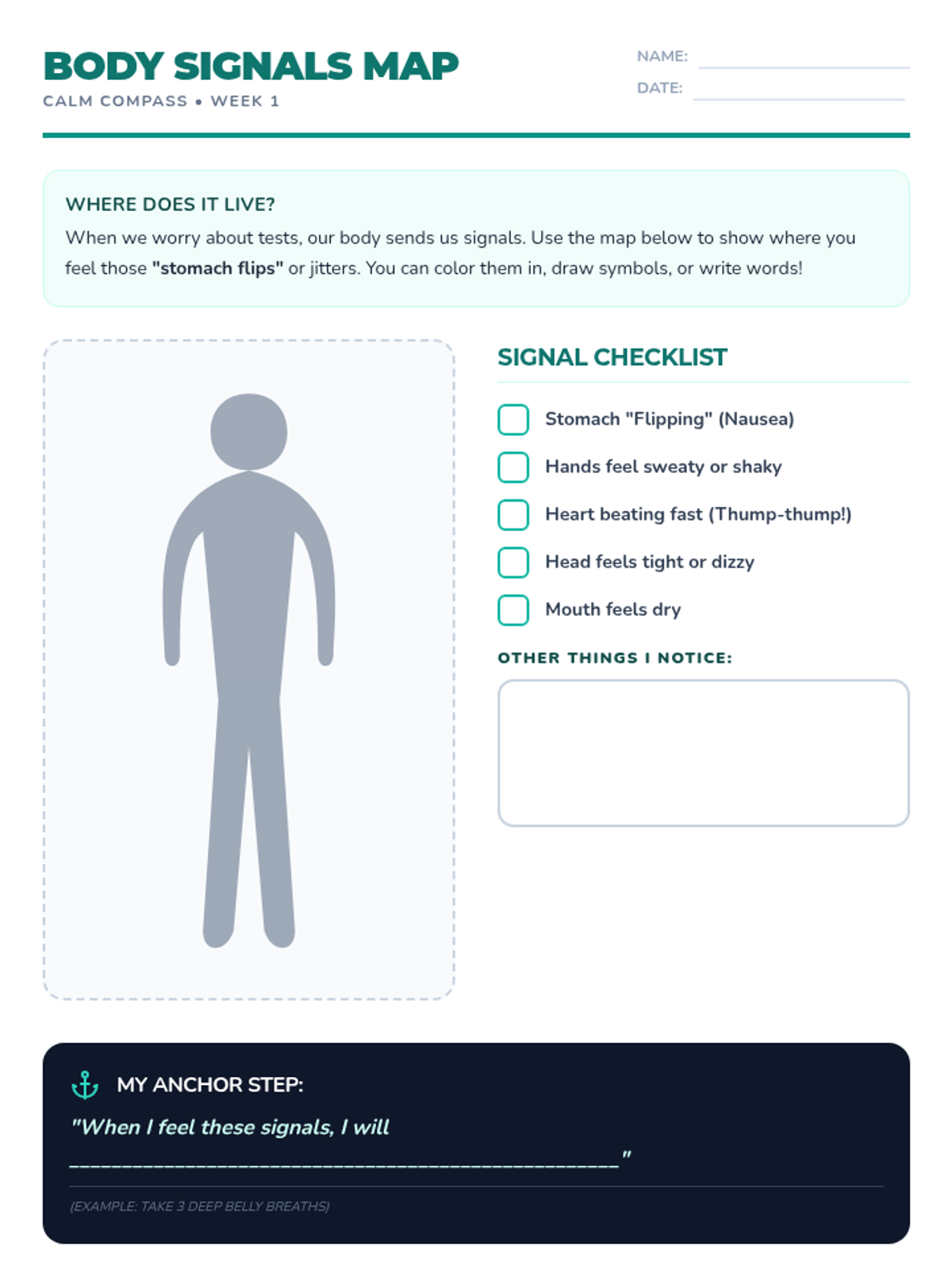
Students identify unique physical warning signs in their bodies that indicate an emotion is escalating toward a peak.
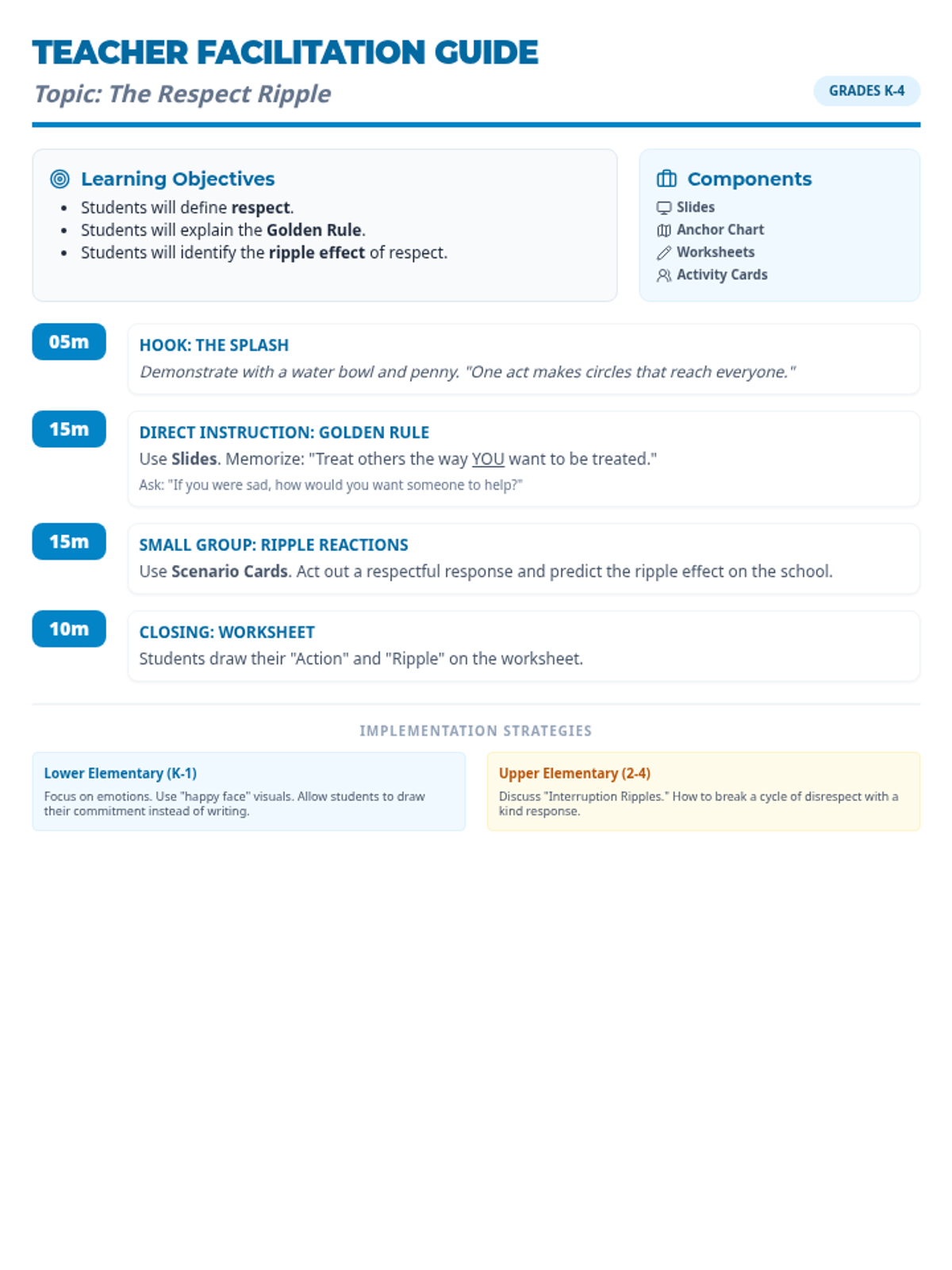
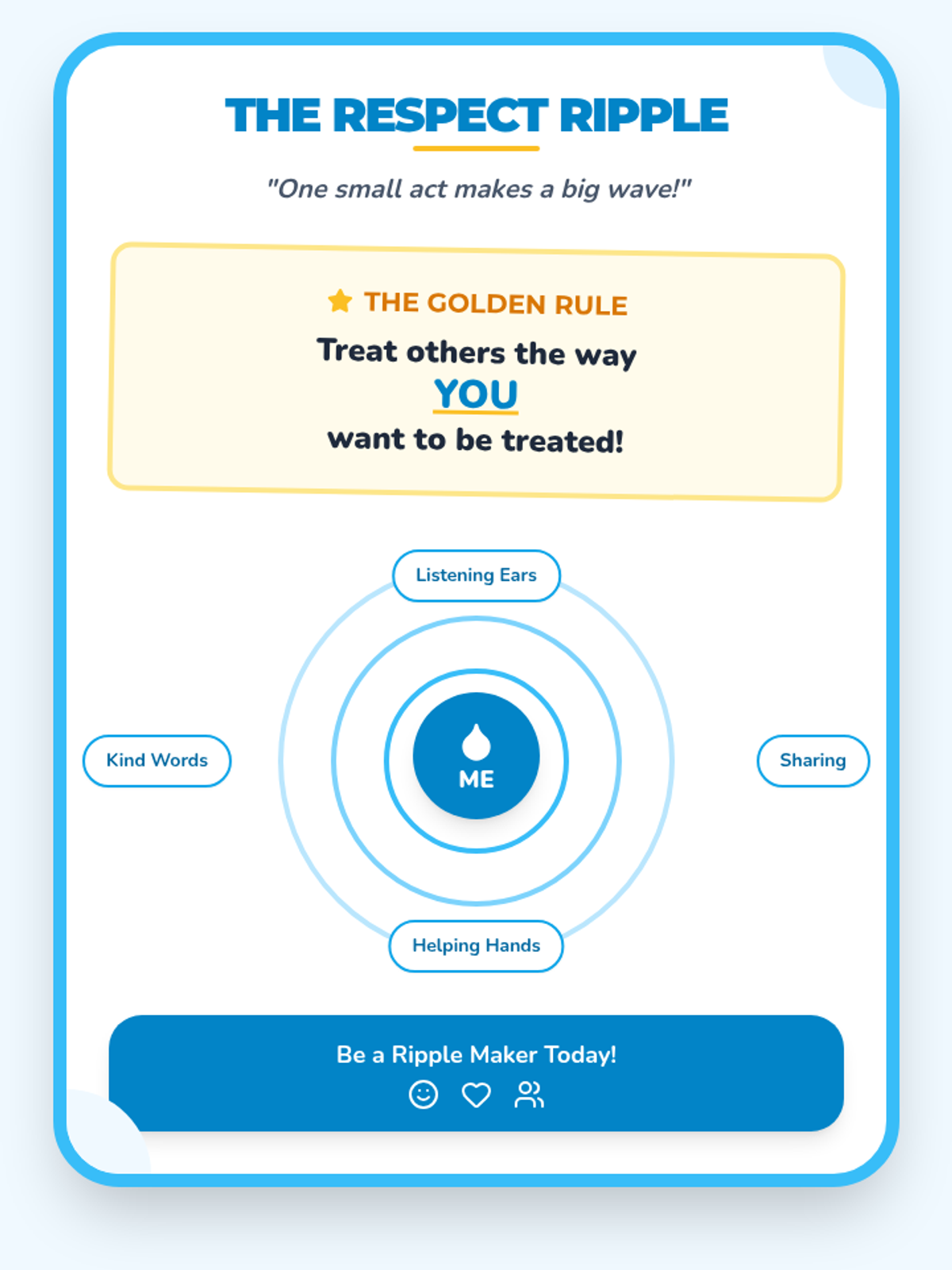
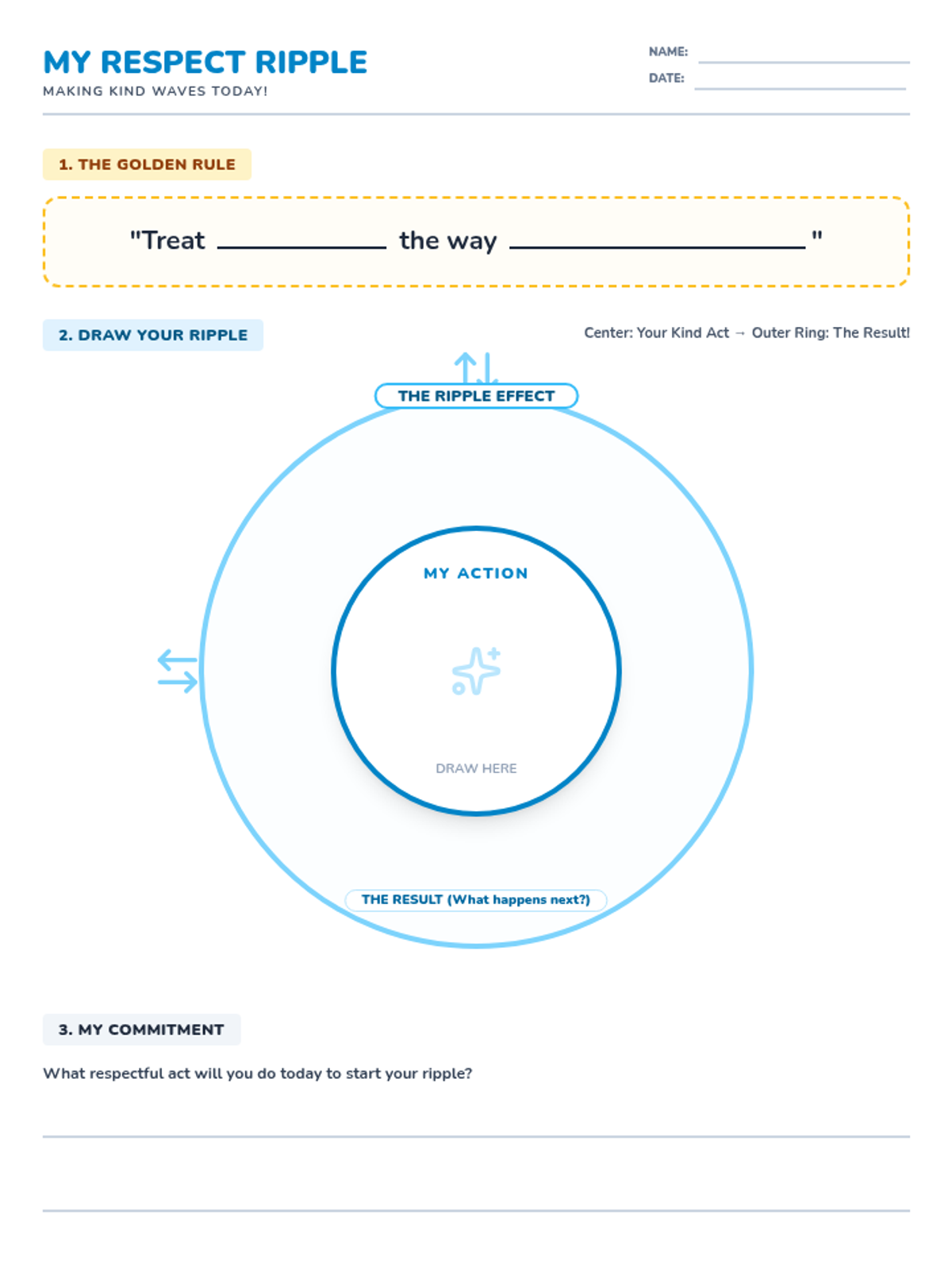
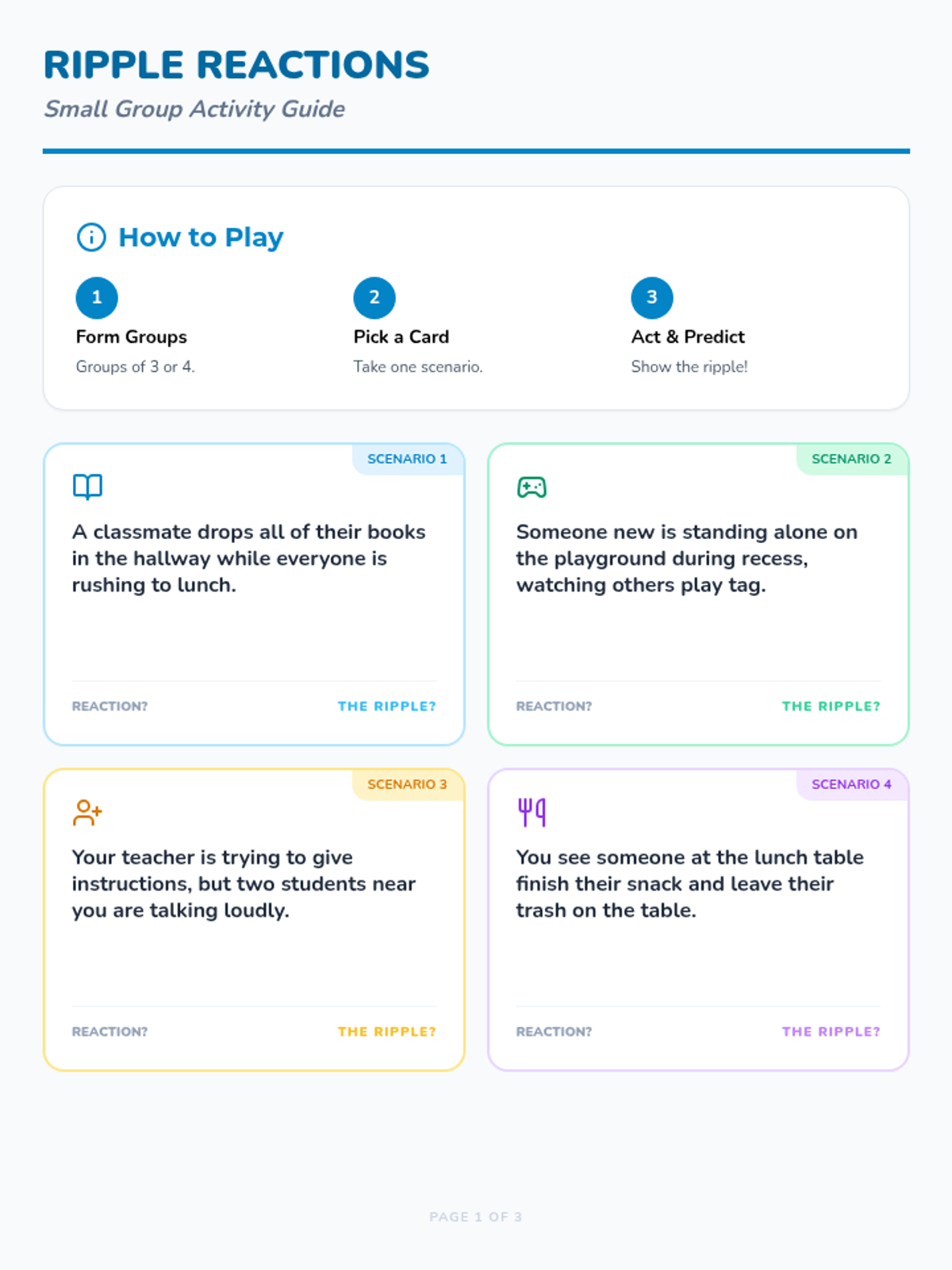
A comprehensive lesson on respect for K-4 students, focusing on the Golden Rule and the 'ripple effect' of kind actions. Includes a visual slide deck, teacher's guide, student worksheet, anchor chart, and small group activity cards.
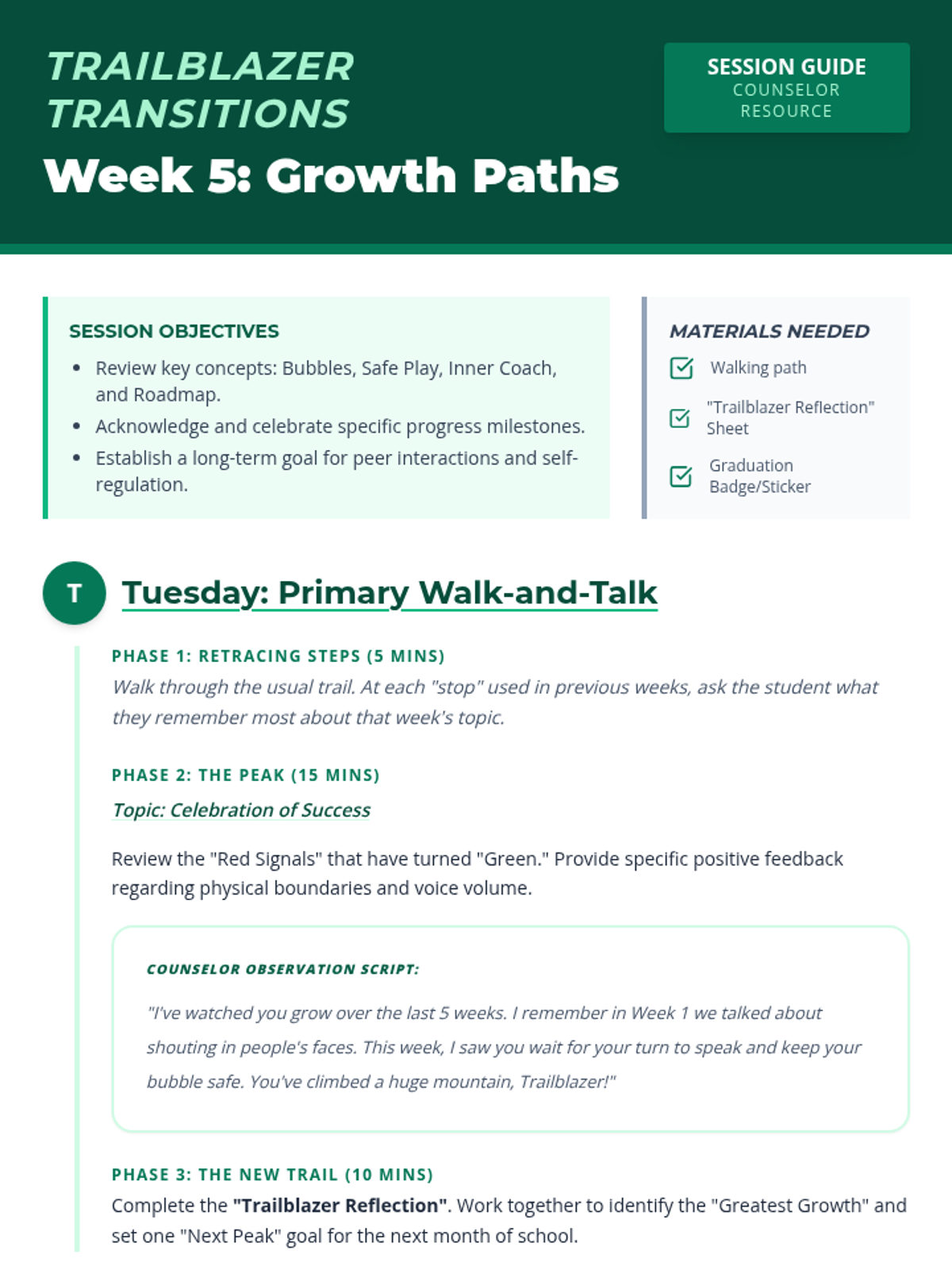
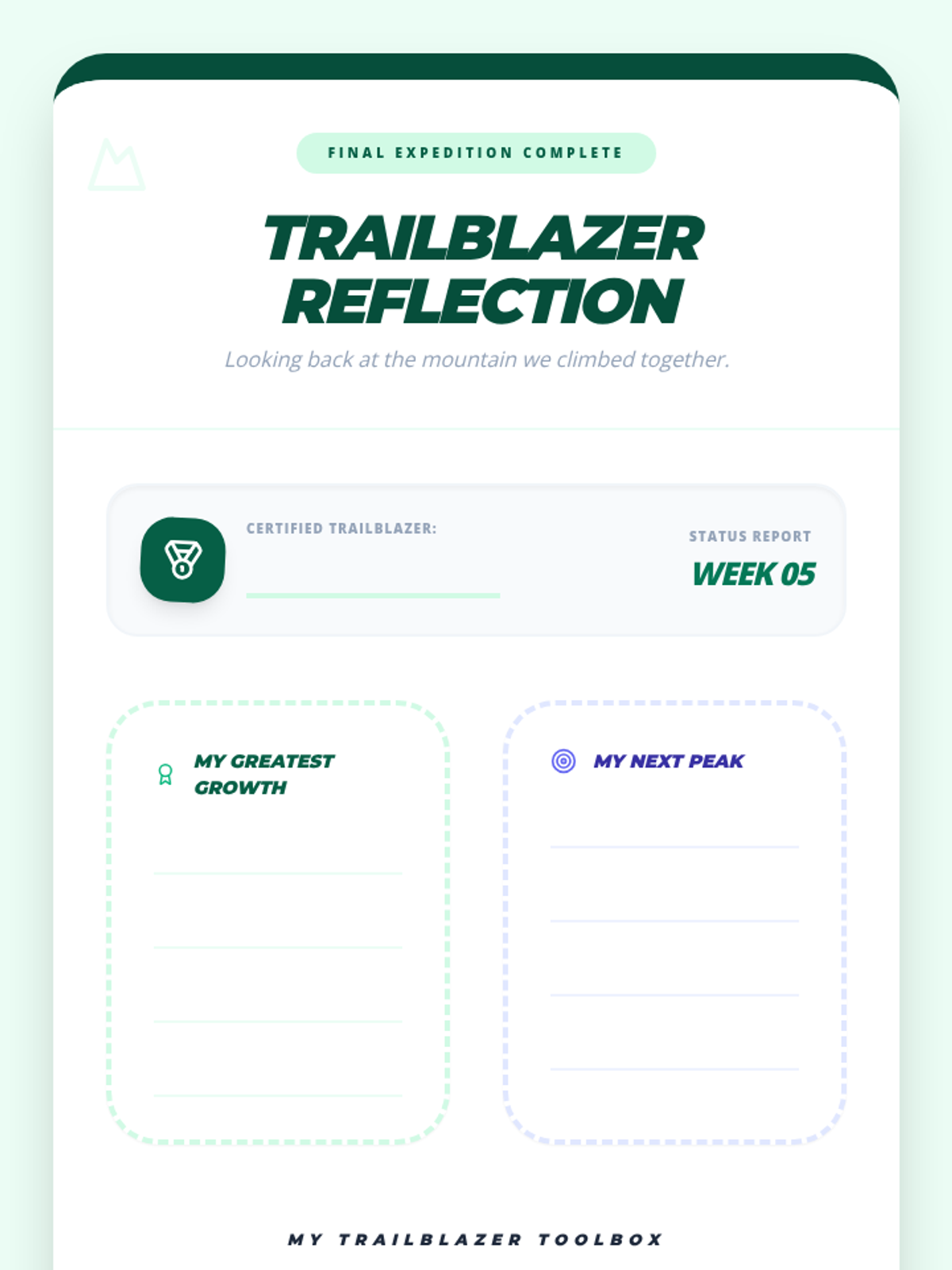
Consolidates learning from the previous weeks and sets goals for continued social-emotional success.
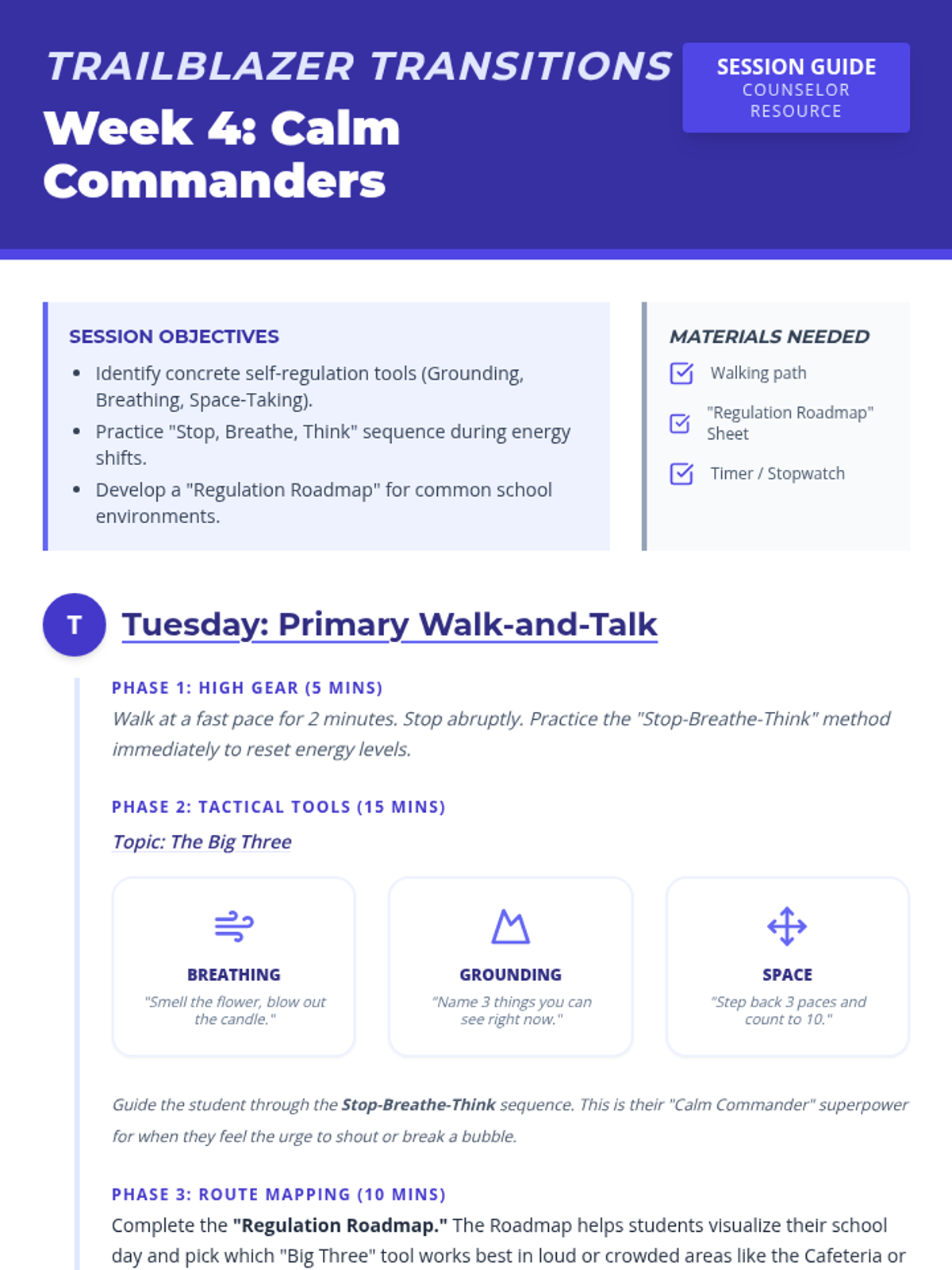
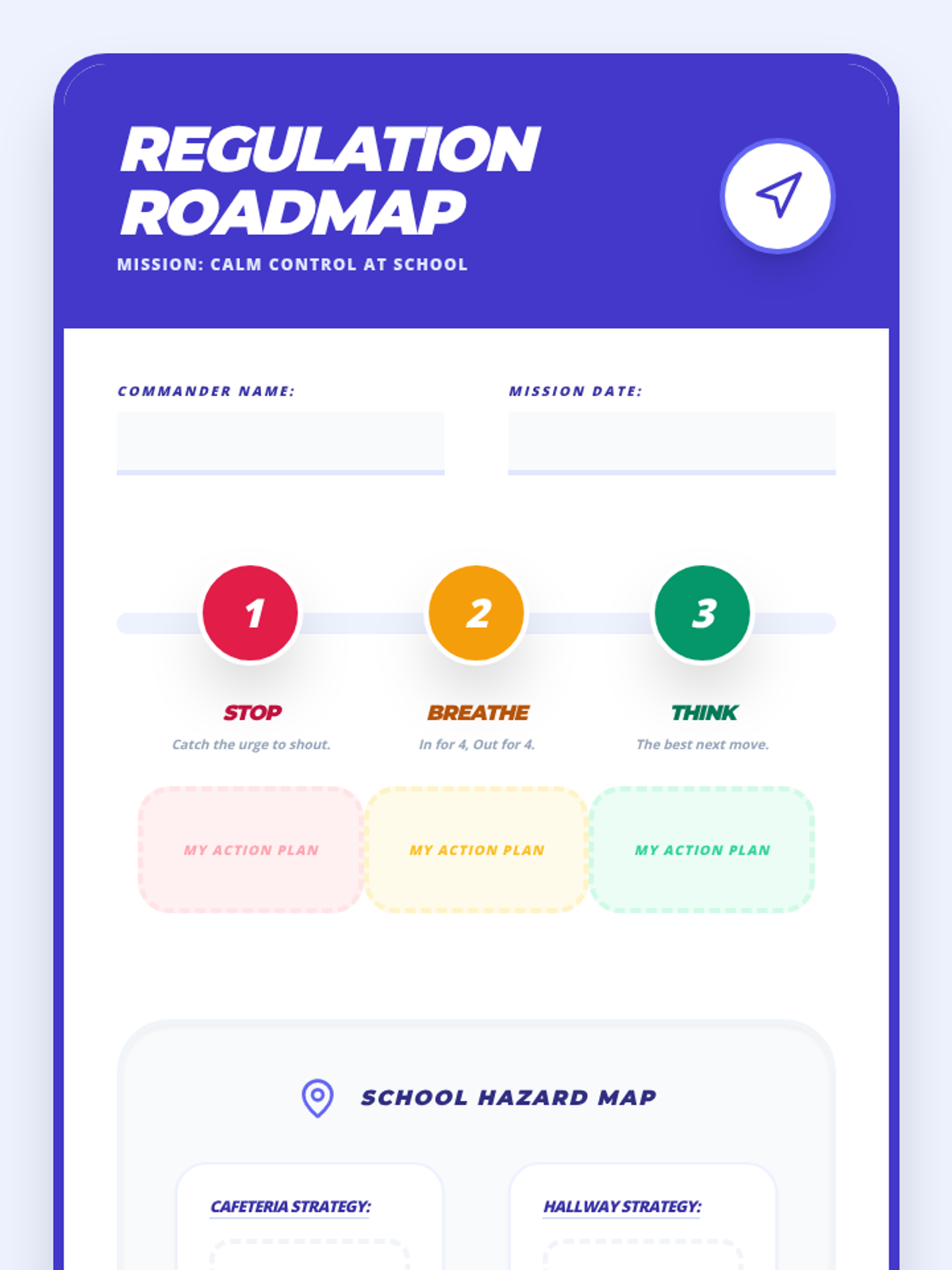
Teaches concrete self-regulation strategies and provides tools for emotional regulation.
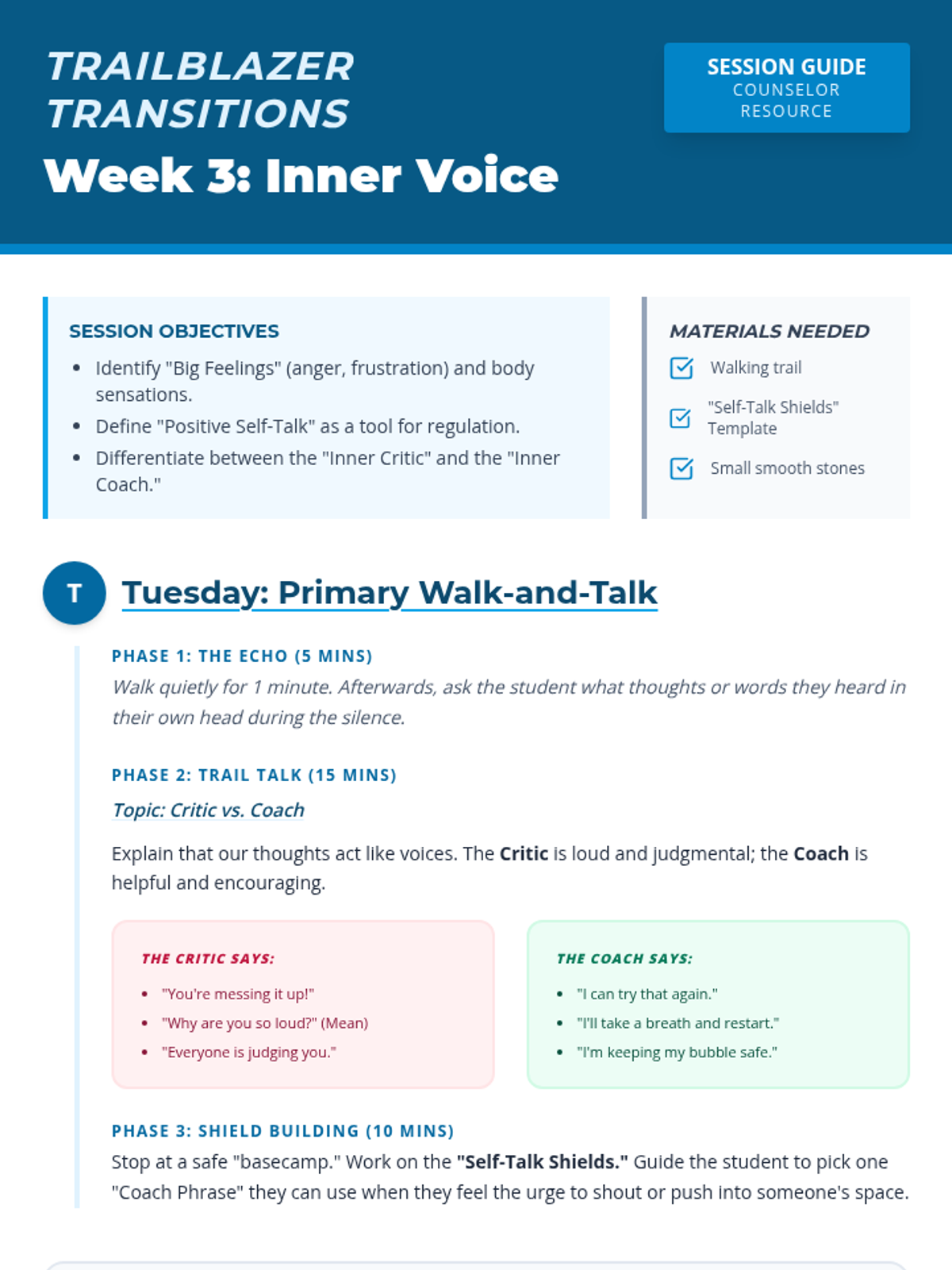
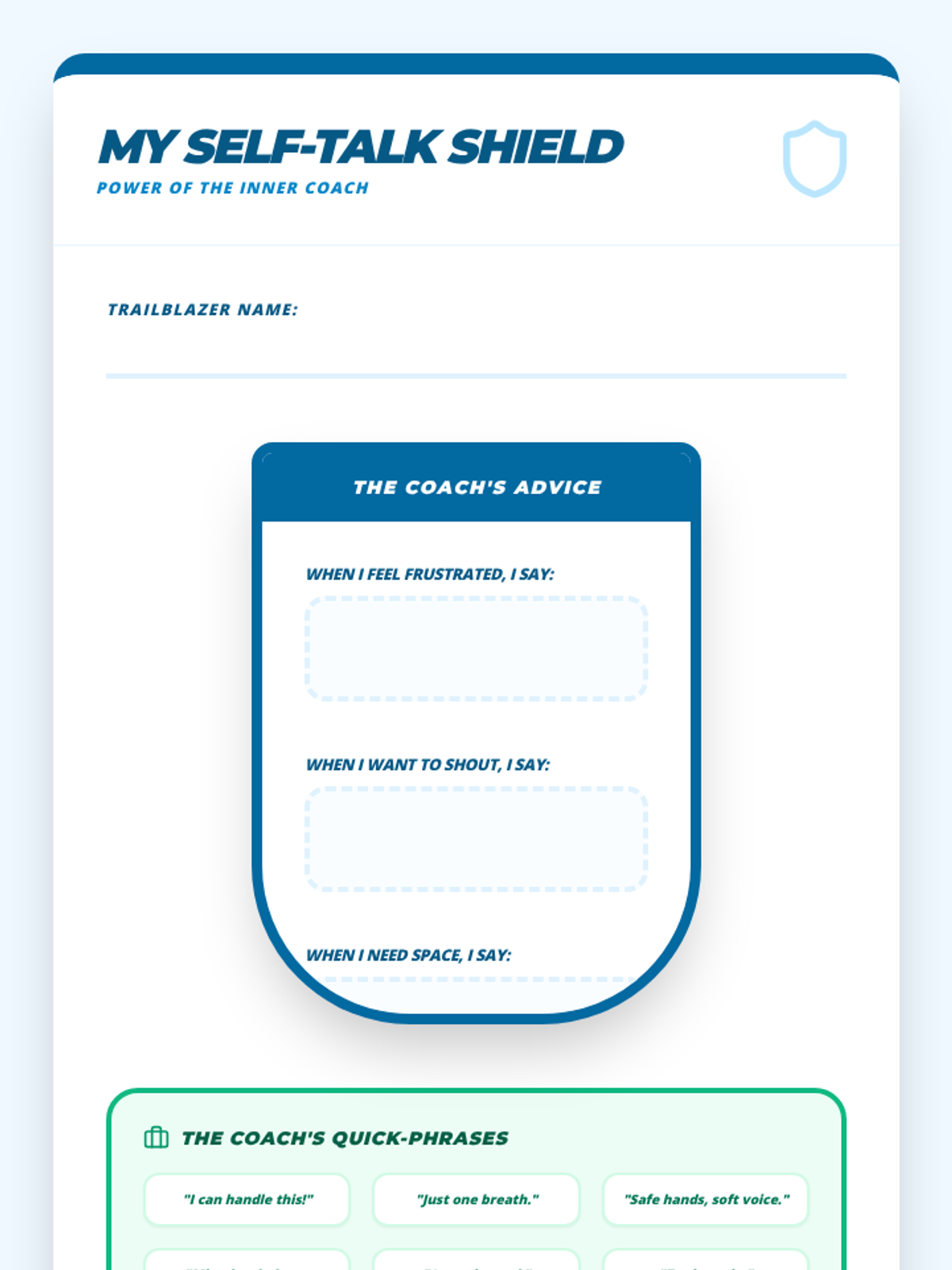
Explores emotional awareness and the power of positive self-talk to manage frustration.
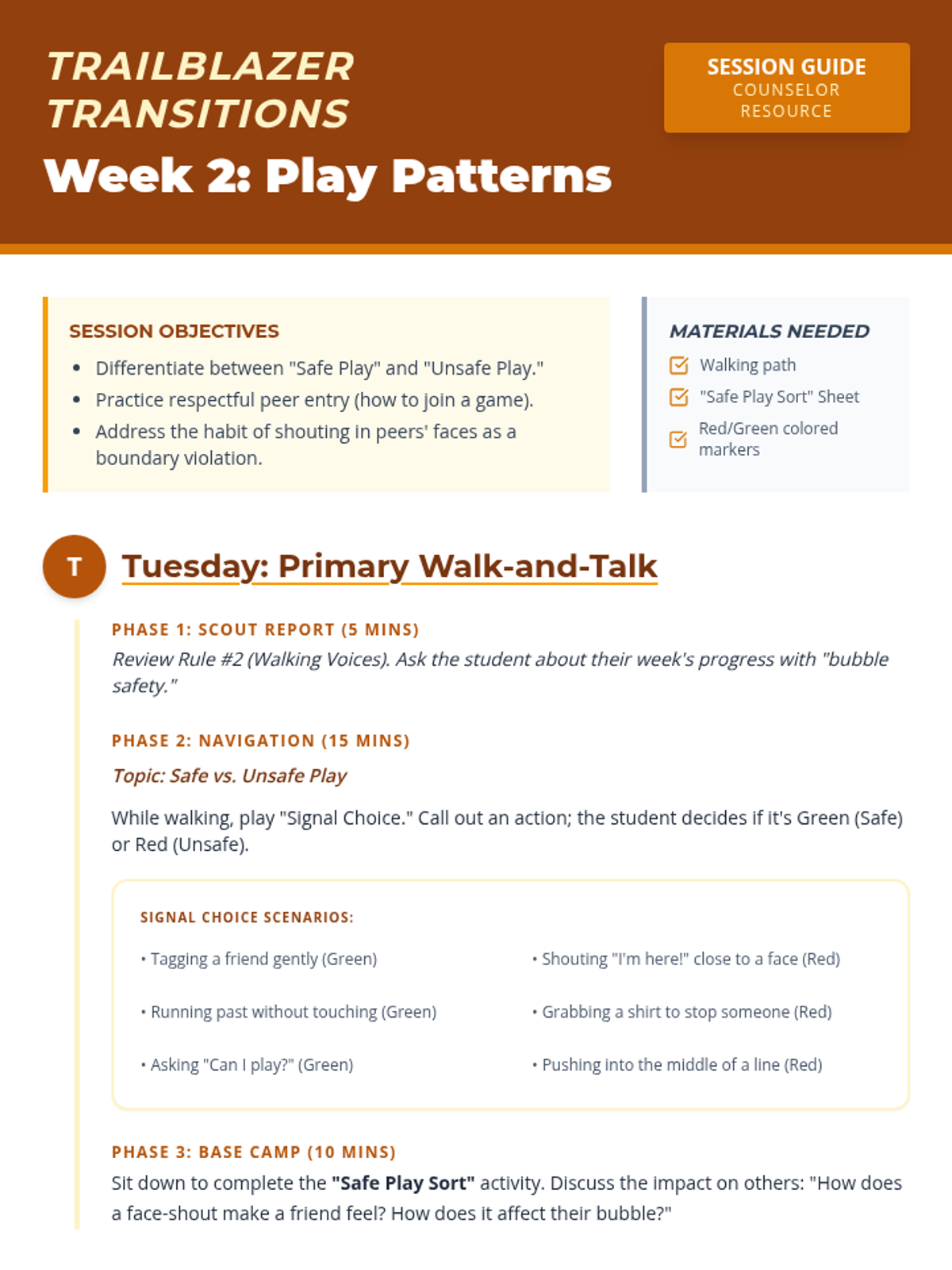
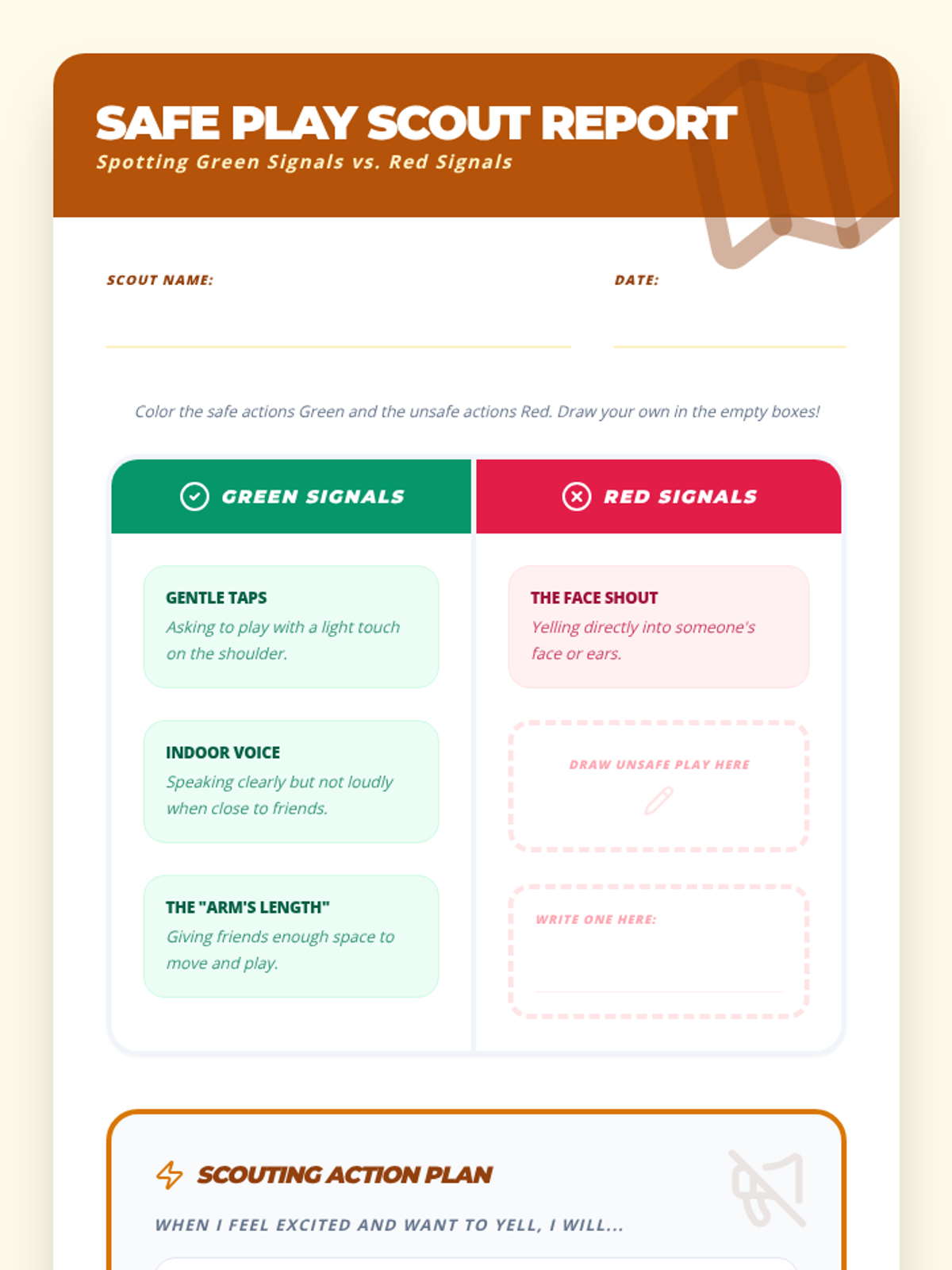
Focuses on distinguishing between safe and unsafe play, specifically addressing peer interactions like shouting and physical contact.
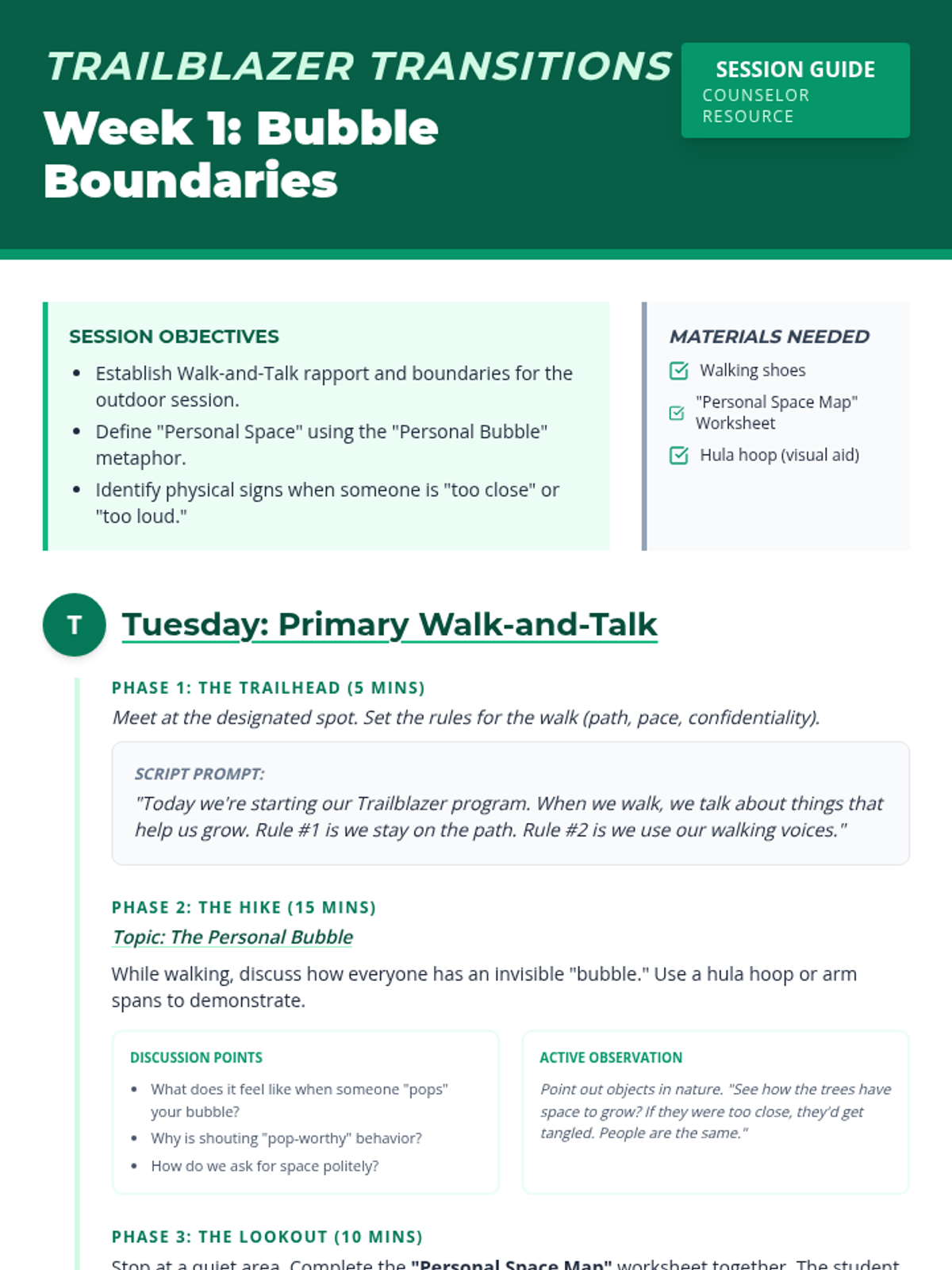
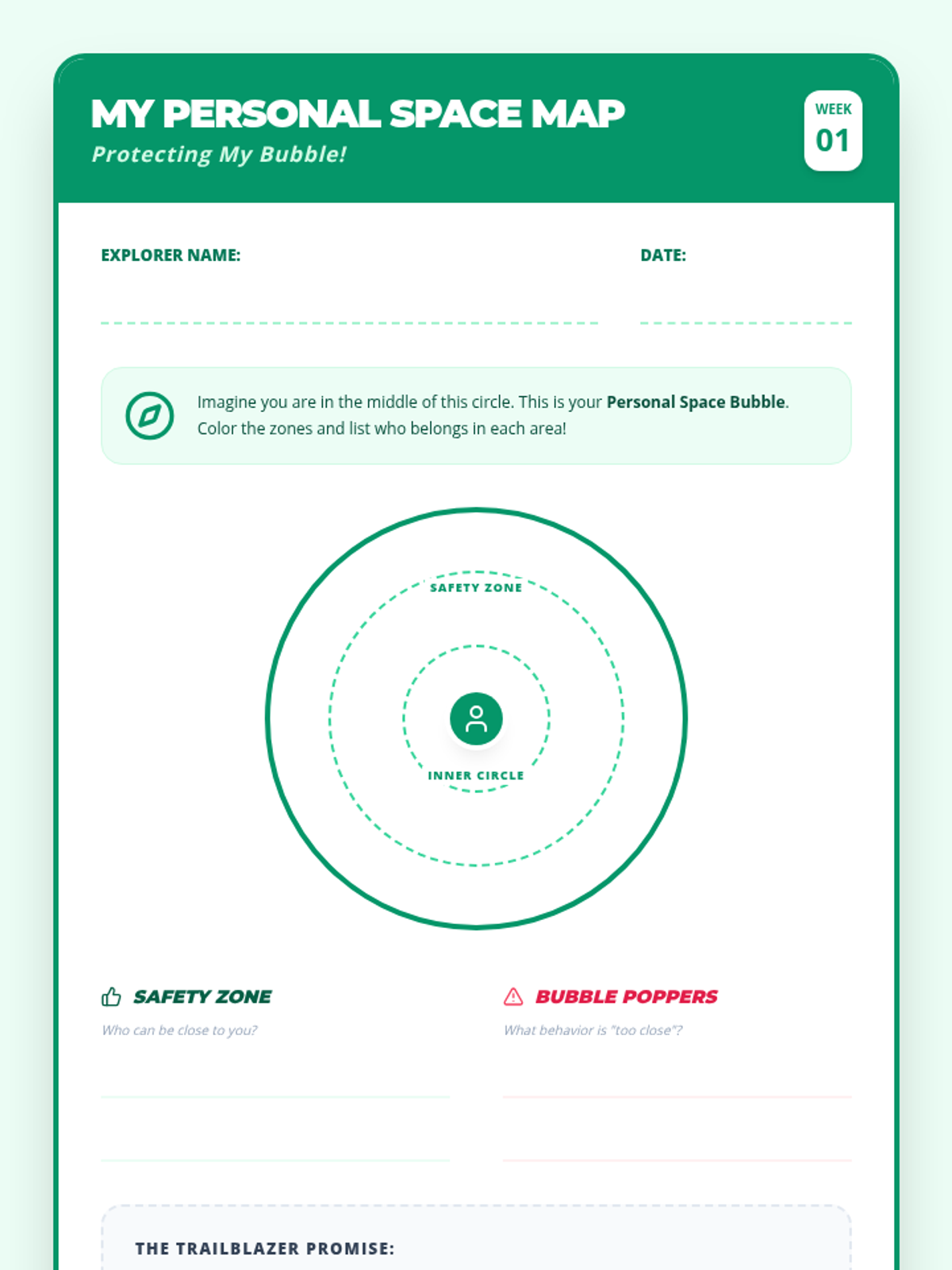
Introduces the concept of personal space and 'bubbles' while establishing the walk-and-talk routine.
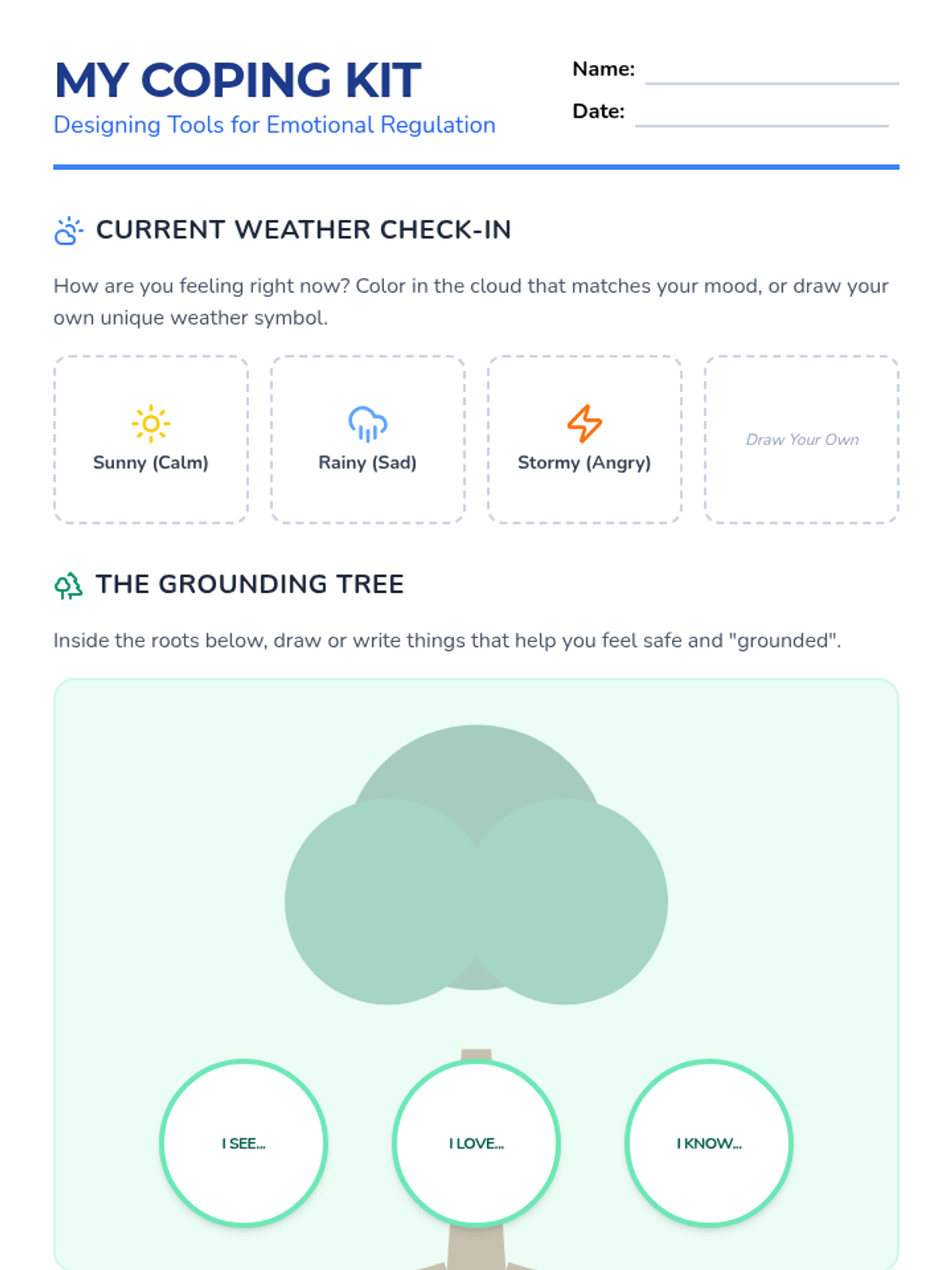
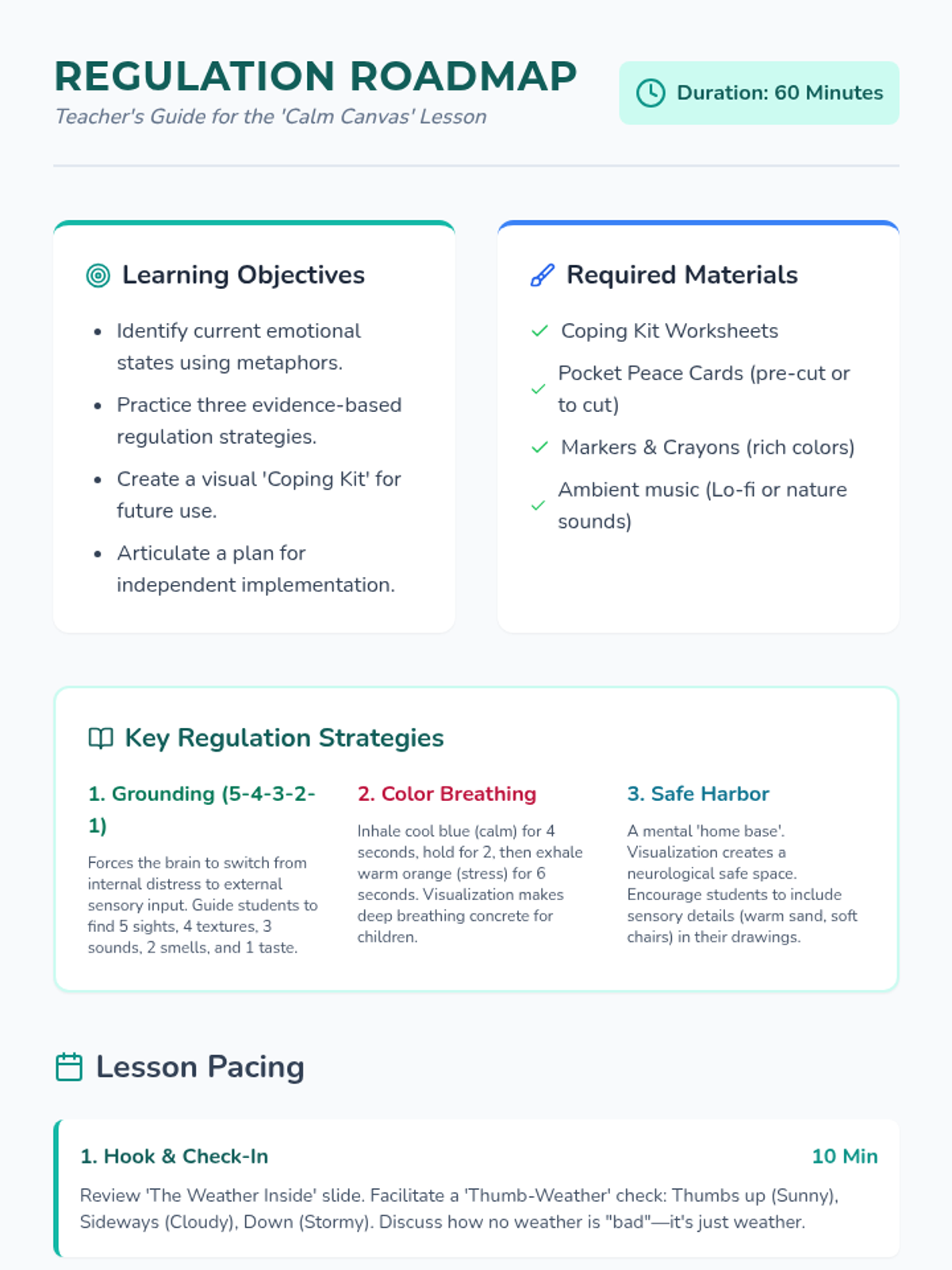
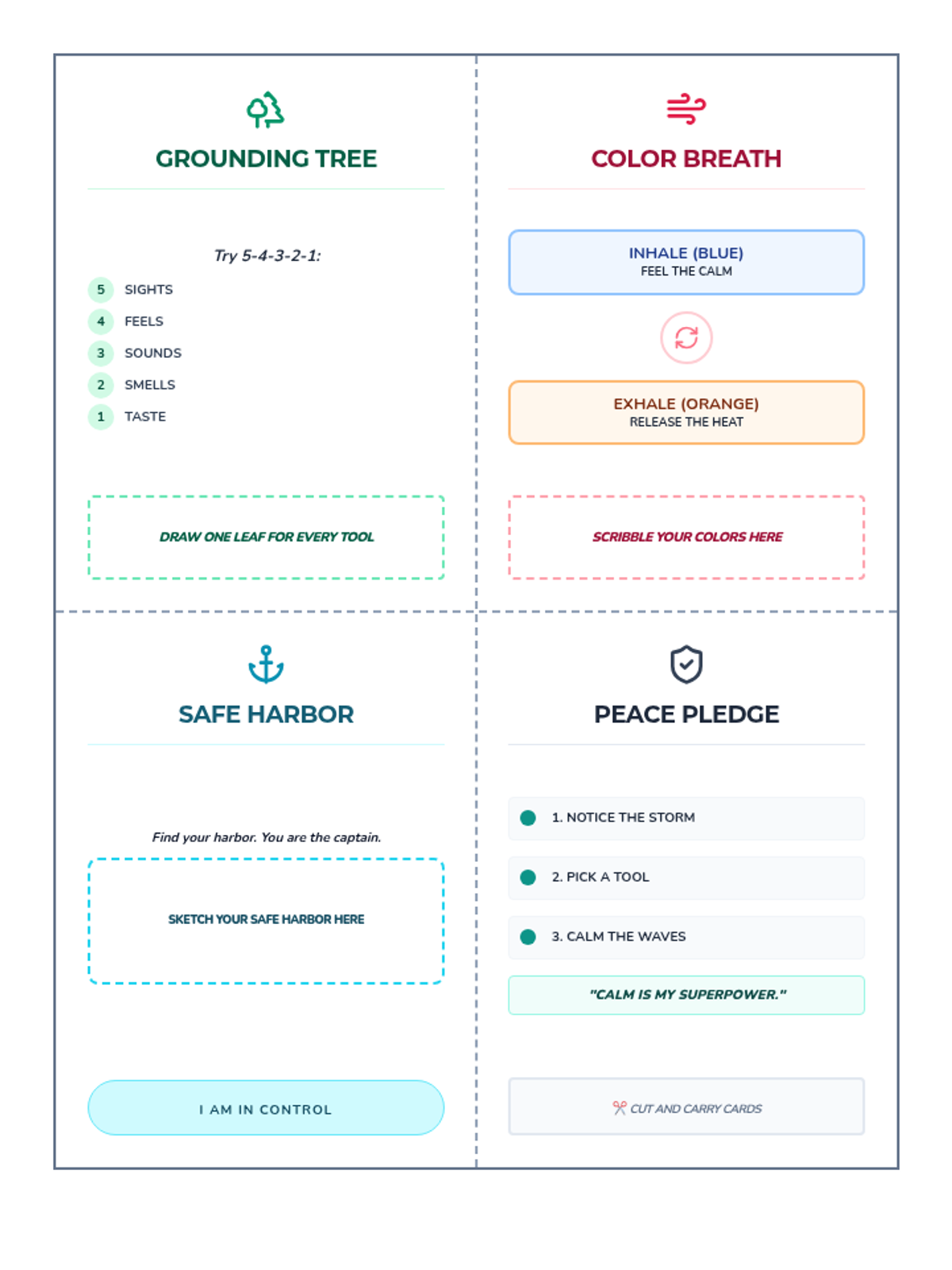
A creative art-based lesson where students learn to identify their emotional states and build a personalized 'coping kit' of regulation strategies using markers and crayons.
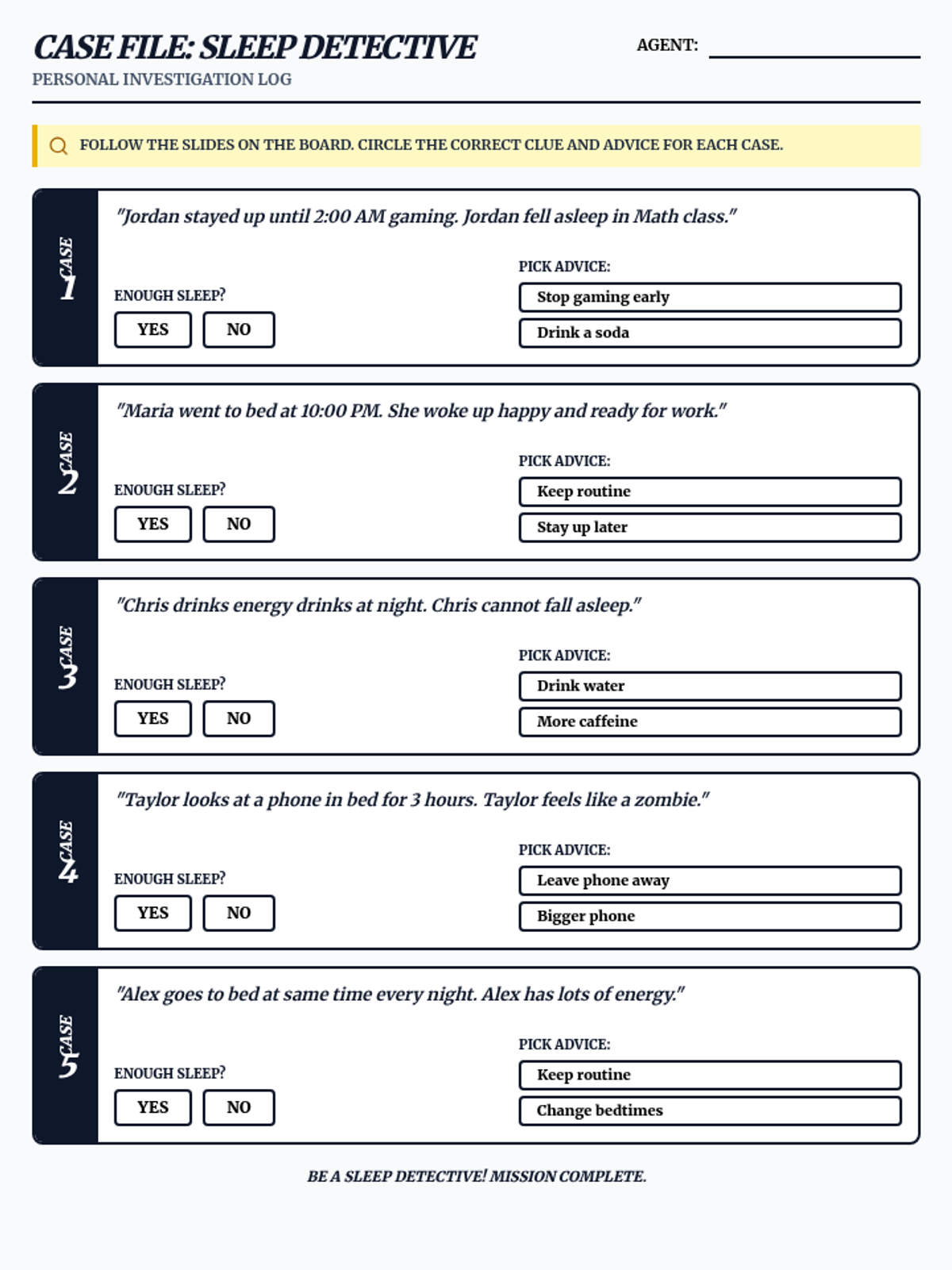
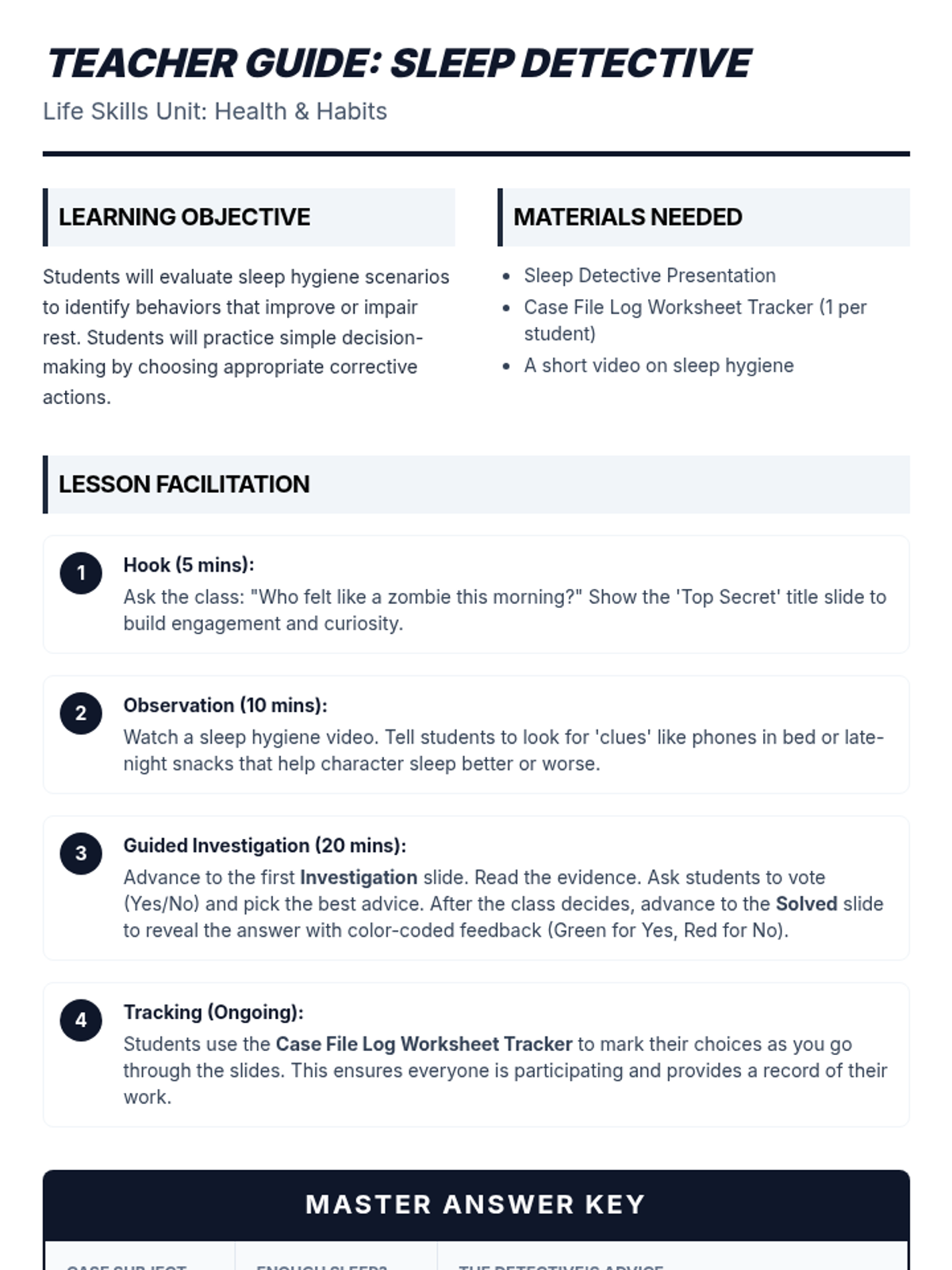
A life skills lesson where students become 'Sleep Detectives' to analyze habits and identify healthy sleep patterns using visual scenarios and simple decision-making.
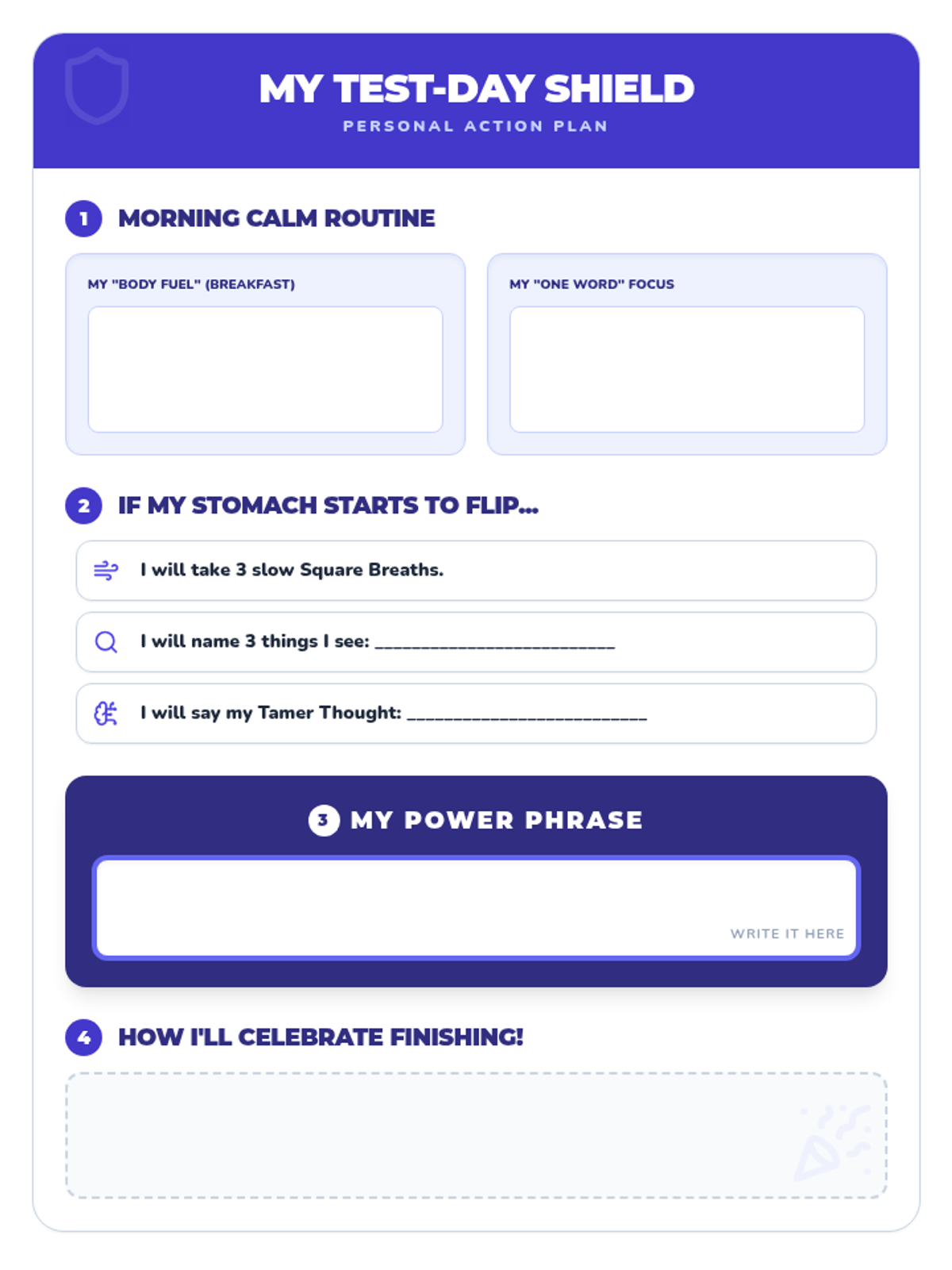
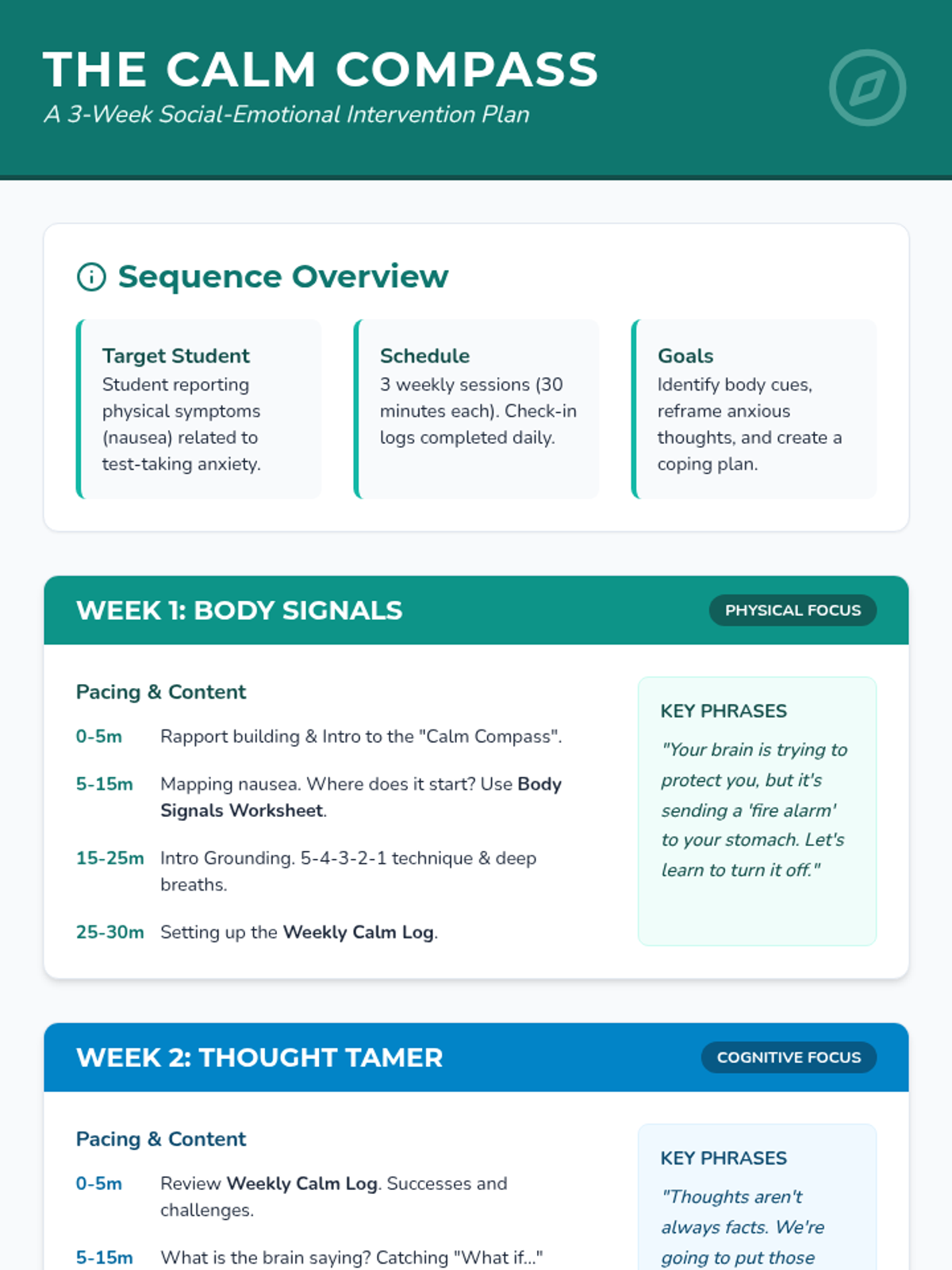
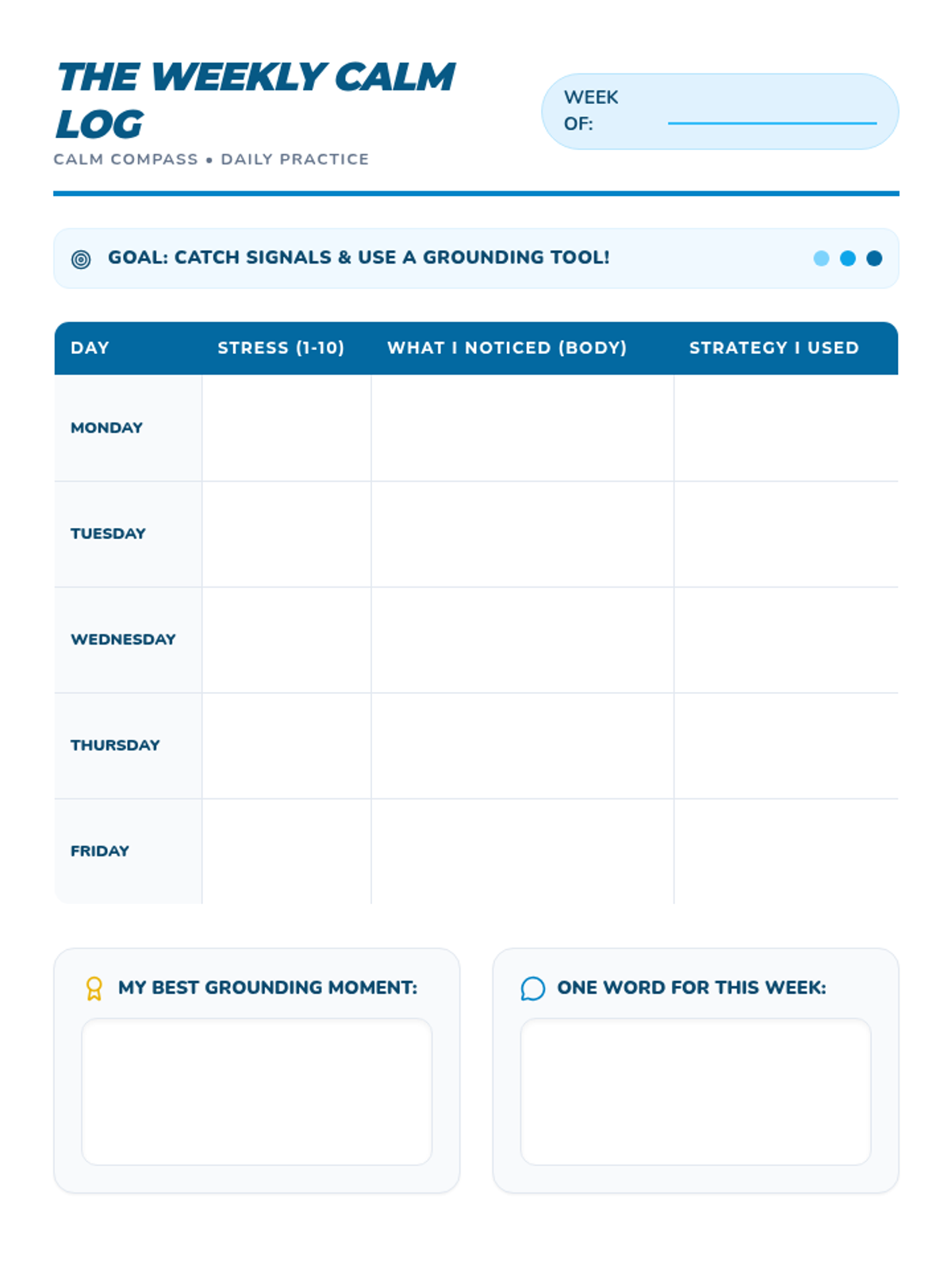
Integrates physical and cognitive strategies into a concrete, visual game plan for upcoming tests.
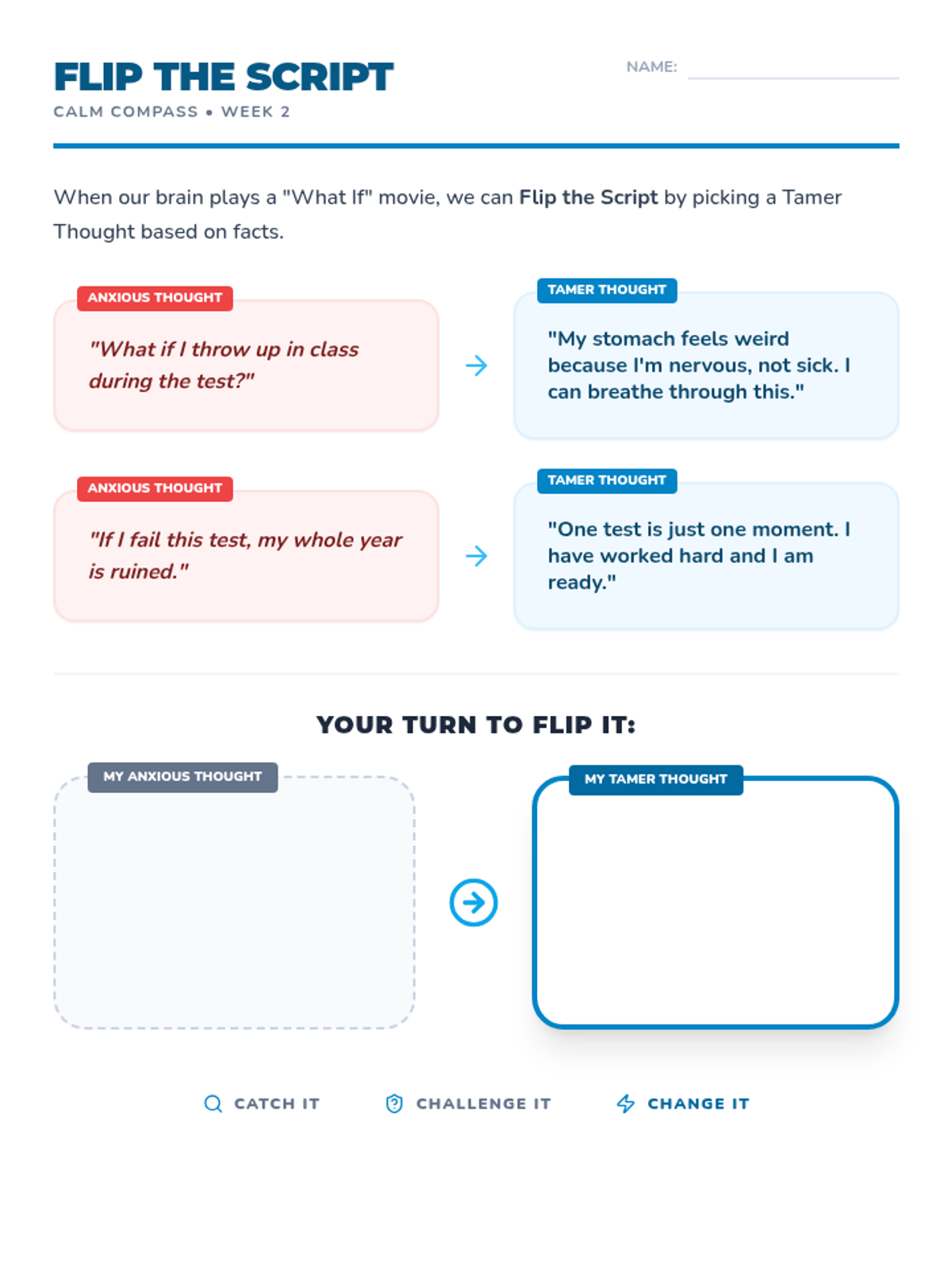
Explores the thoughts behind the physical feelings, teaching the student how to catch and reframe anxious 'what if' thinking.
Focuses on identifying the physical manifestations of anxiety, particularly the 'stomach flip' sensation, and introduces grounding techniques.
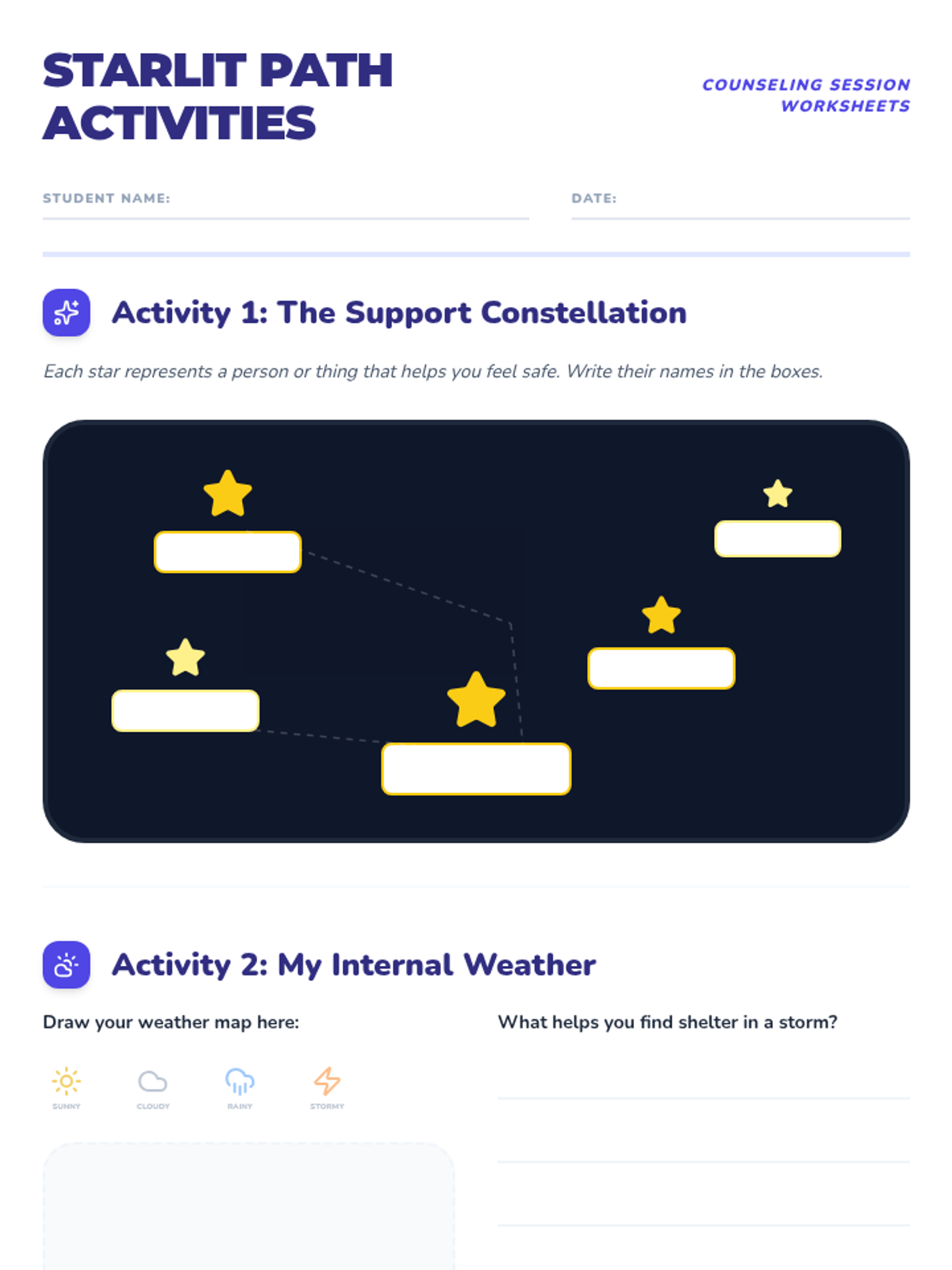
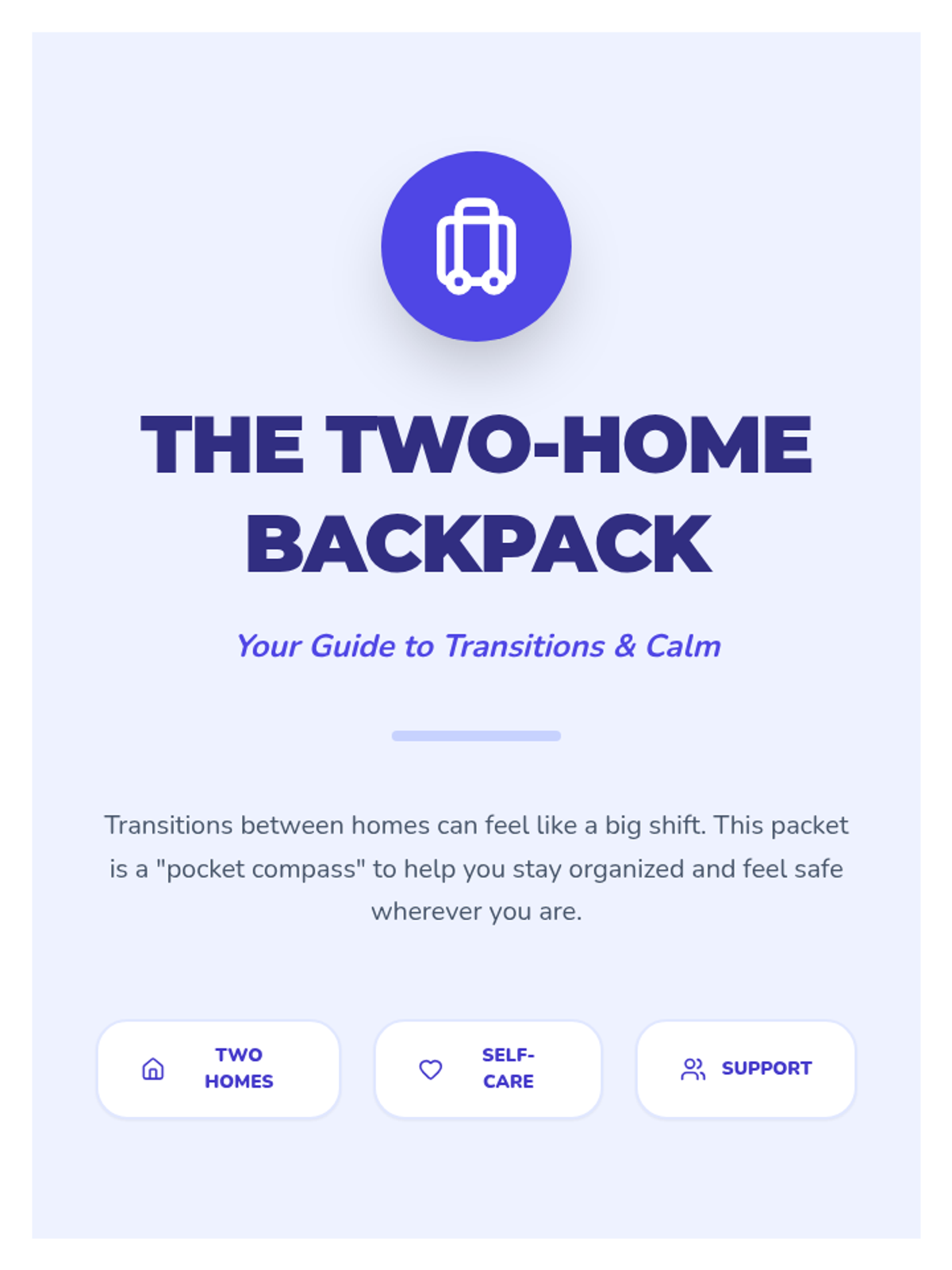
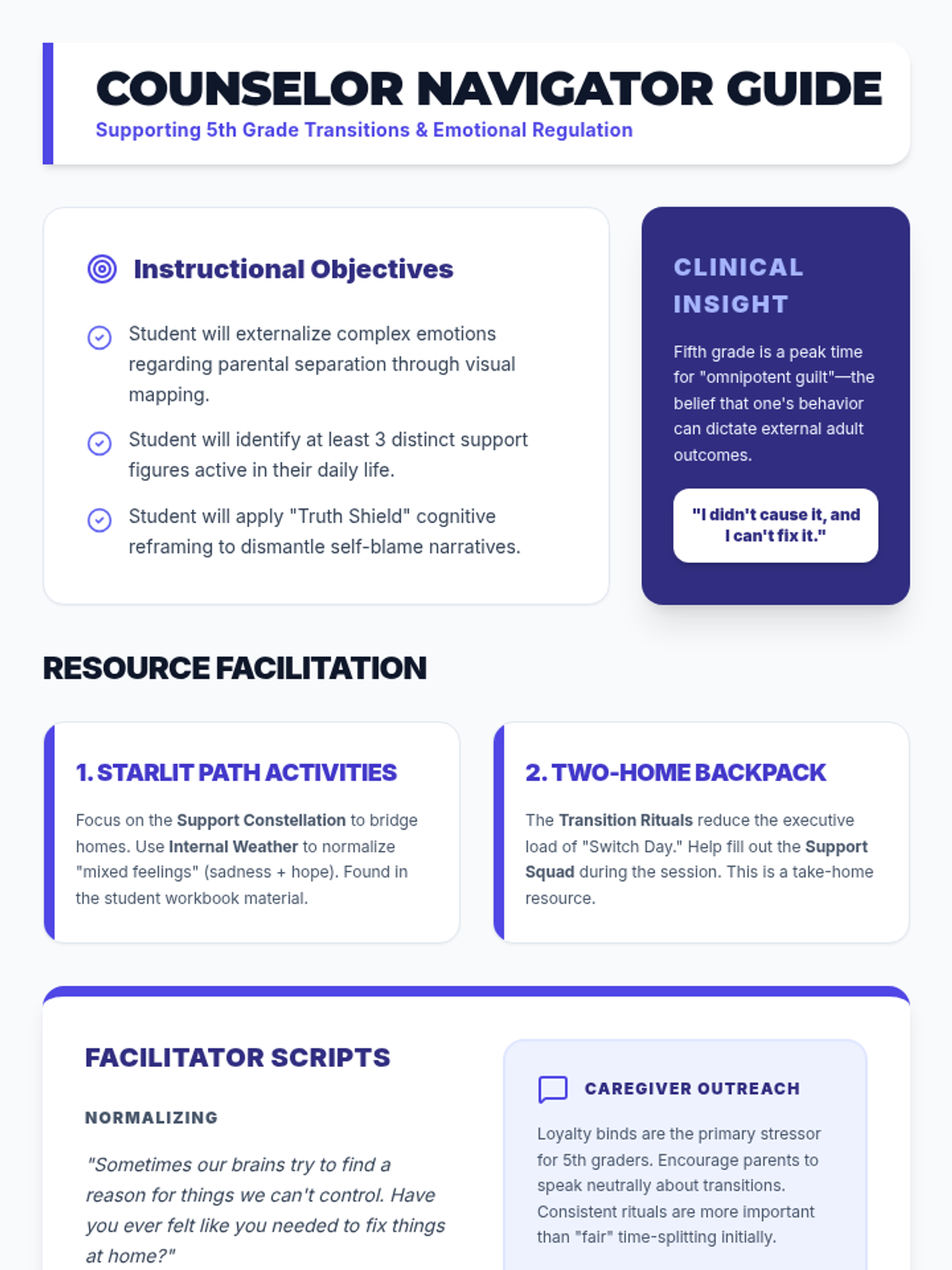
A comprehensive counseling framework designed for a 5th-grade student navigating parental separation. This lesson focuses on emotional regulation, identifying support networks, managing transitions between homes, and reinforcing that the separation is not the child's fault.
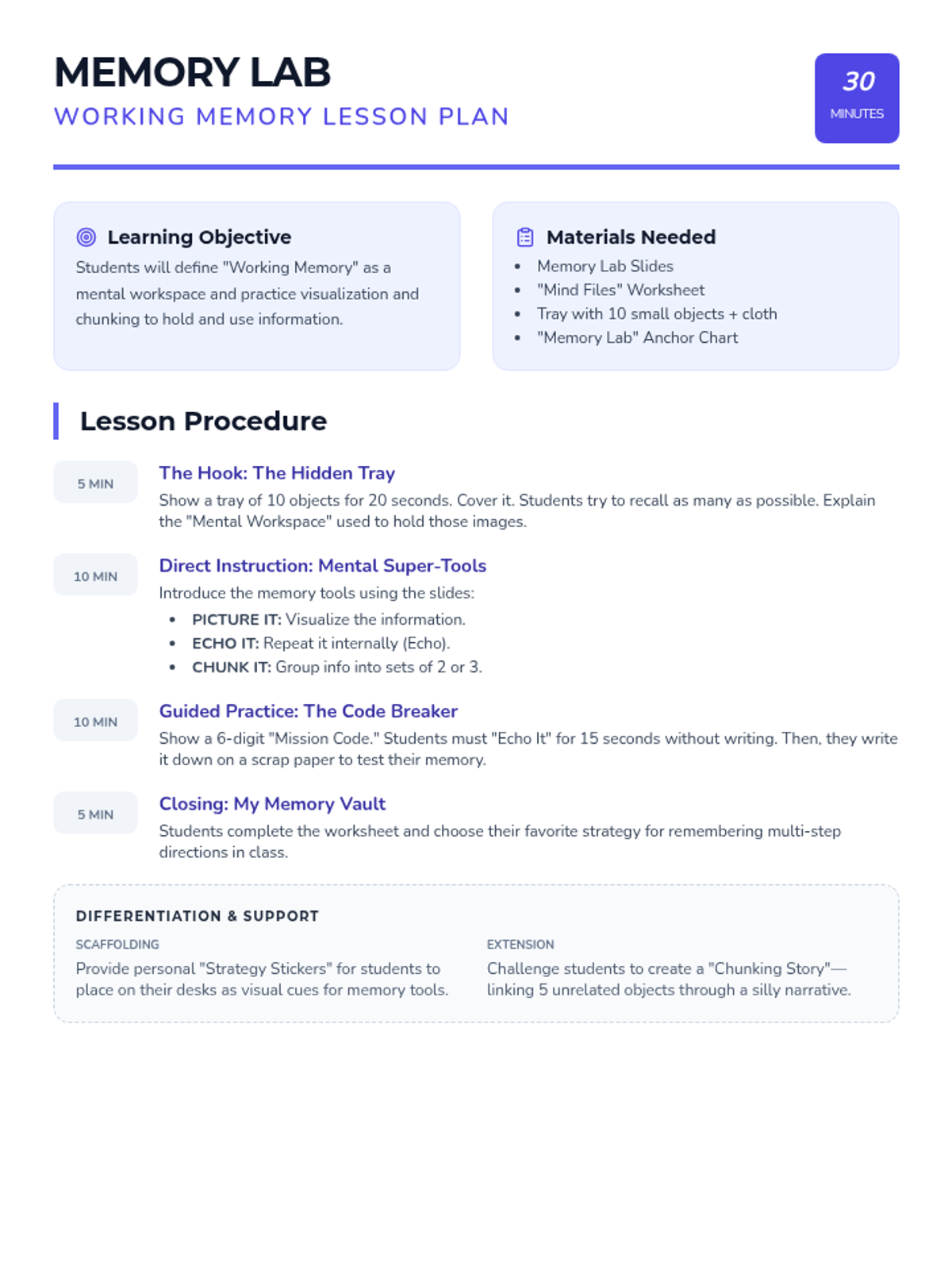
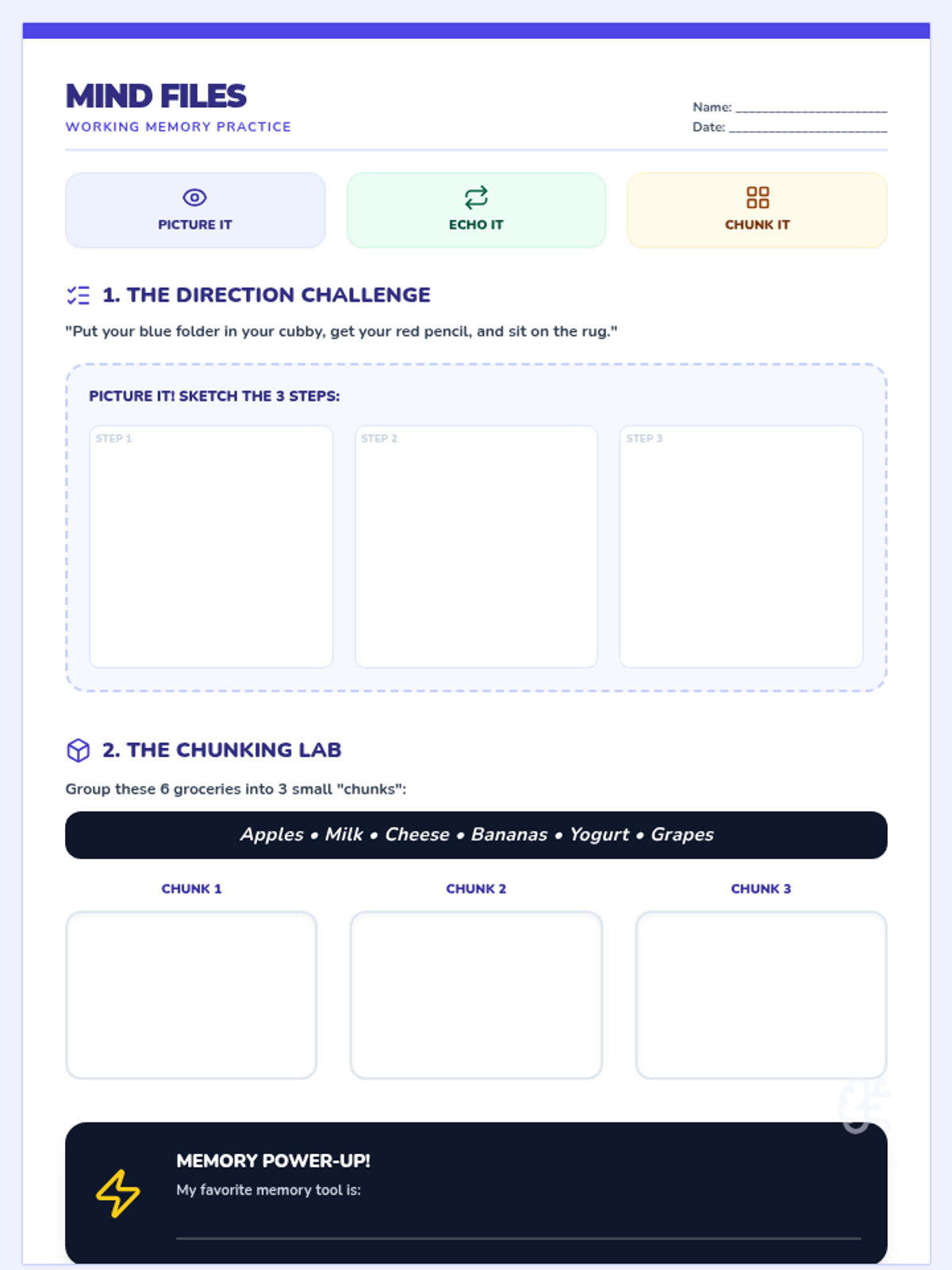
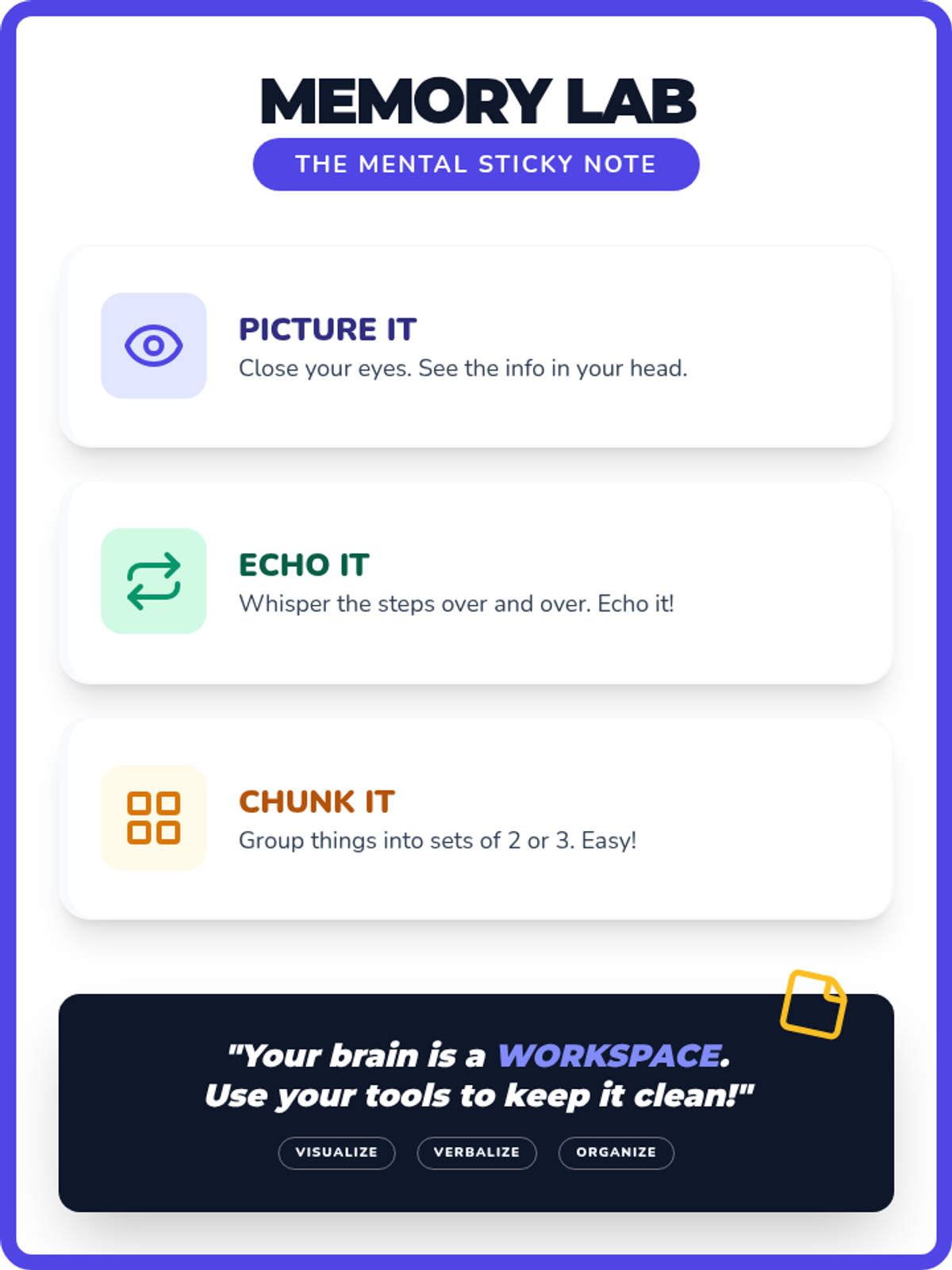
Students discover techniques like visualization and chunking to hold and manipulate information in their 'Memory Lab'.
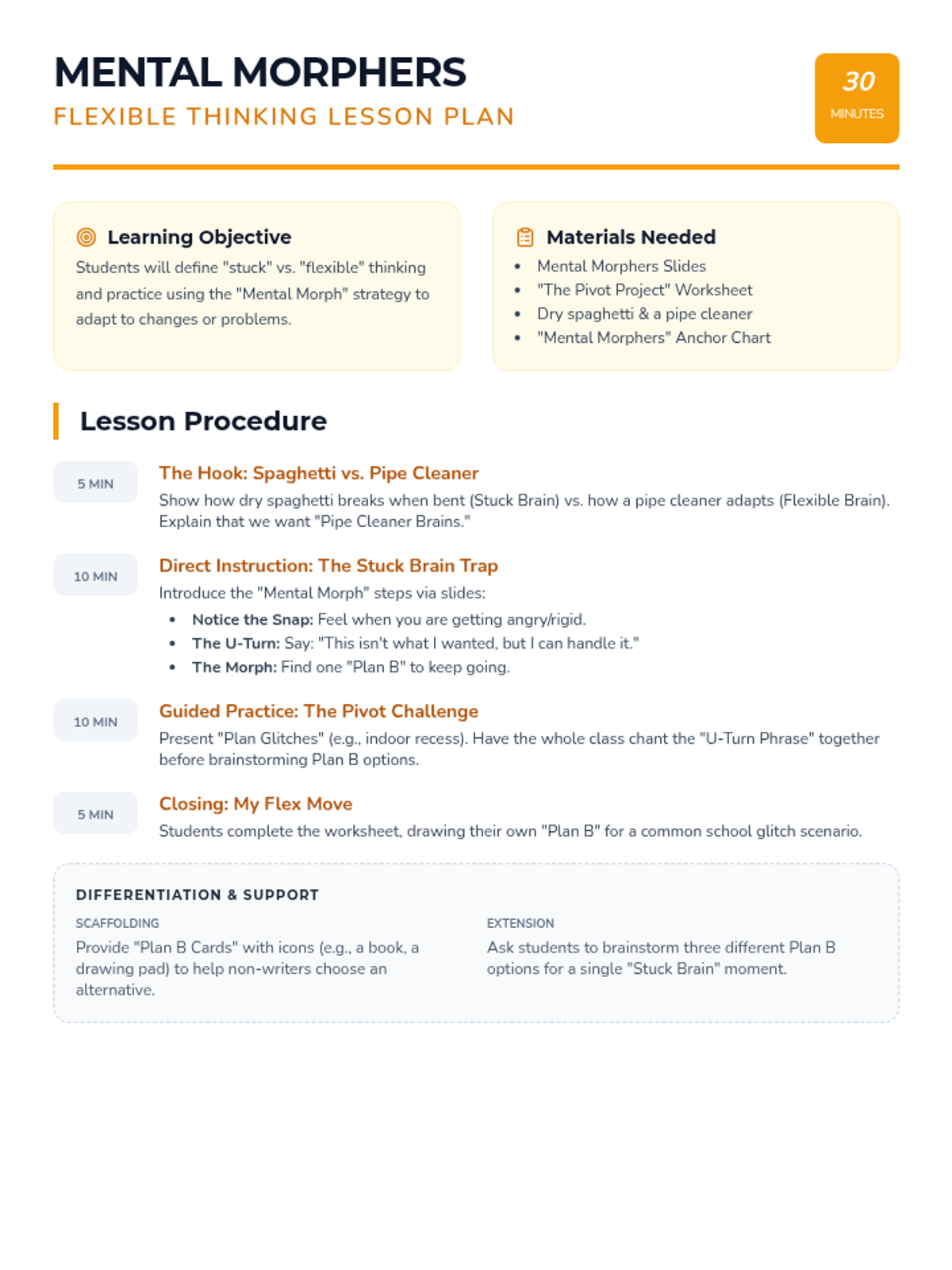
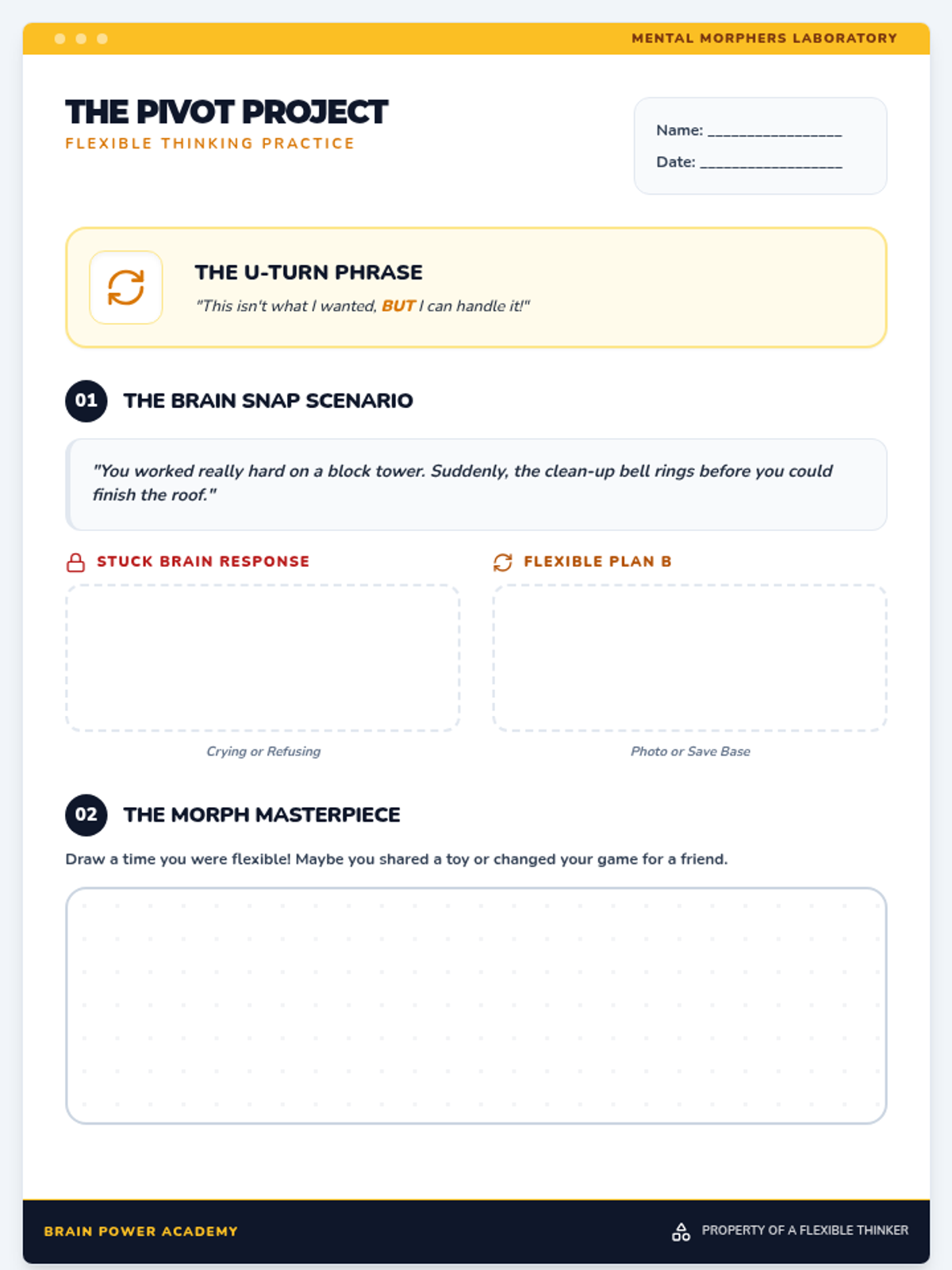
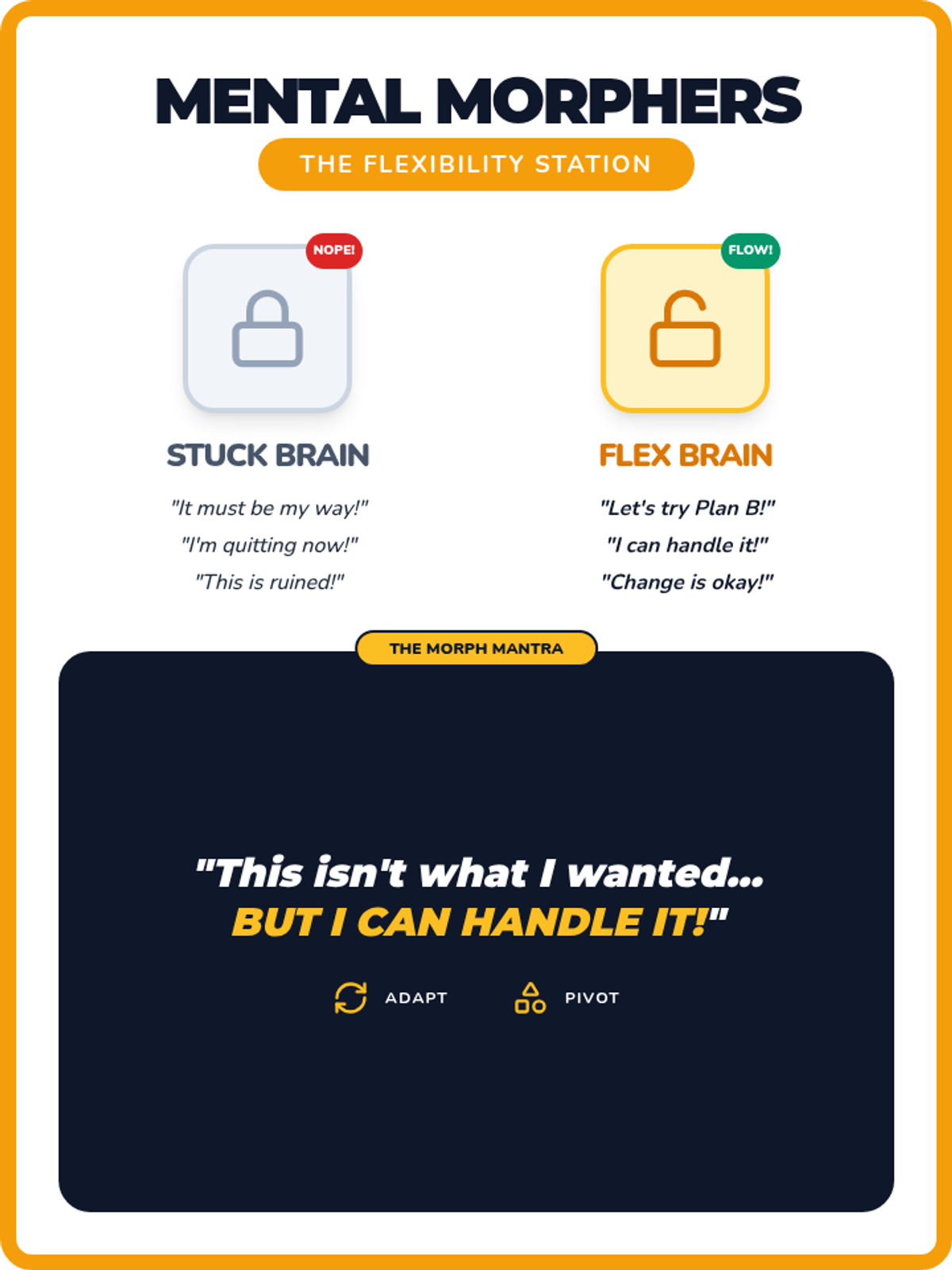
Students practice adapting to changes and seeing things from different perspectives using 'Mental Morphers' strategies.
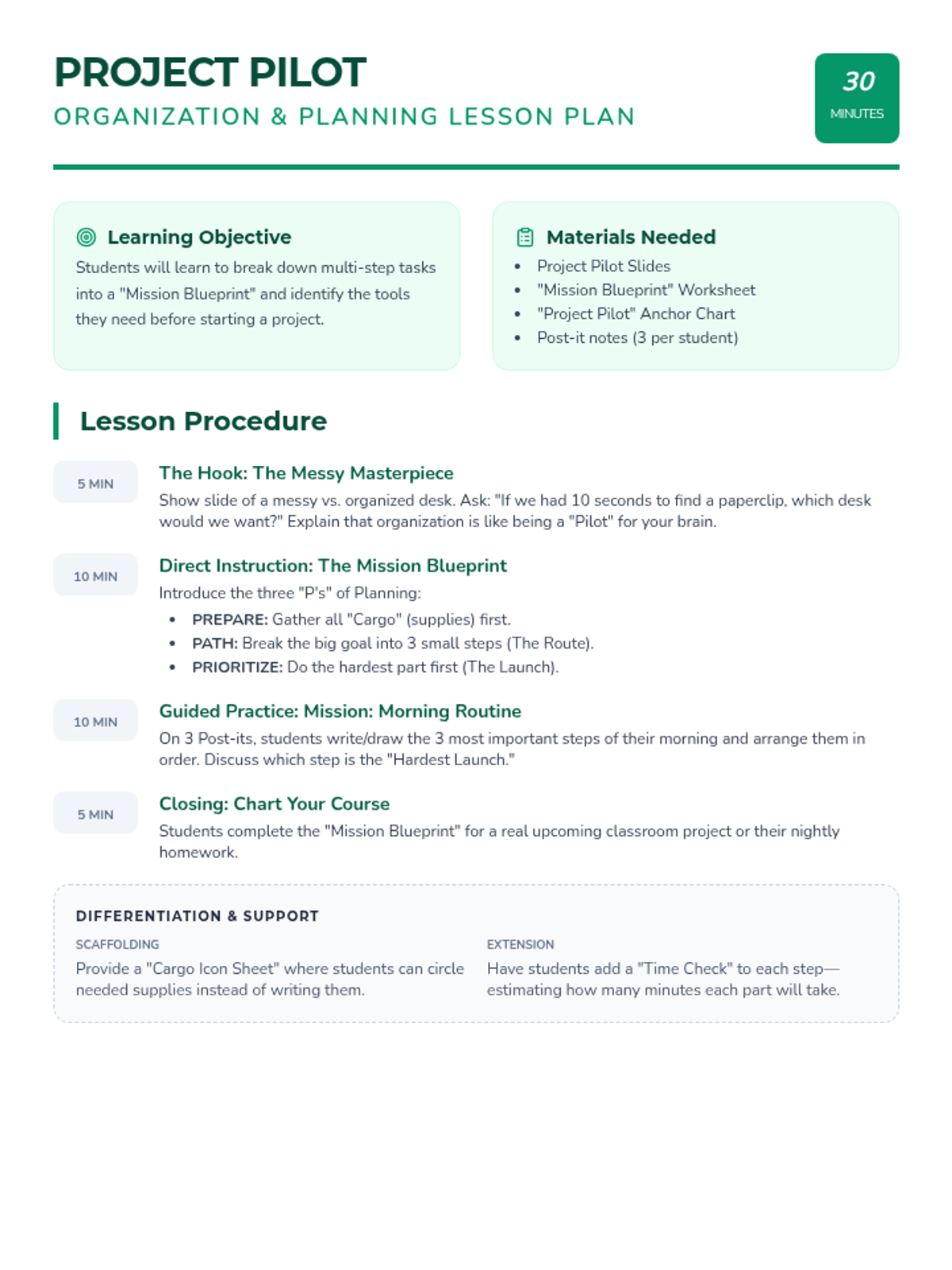
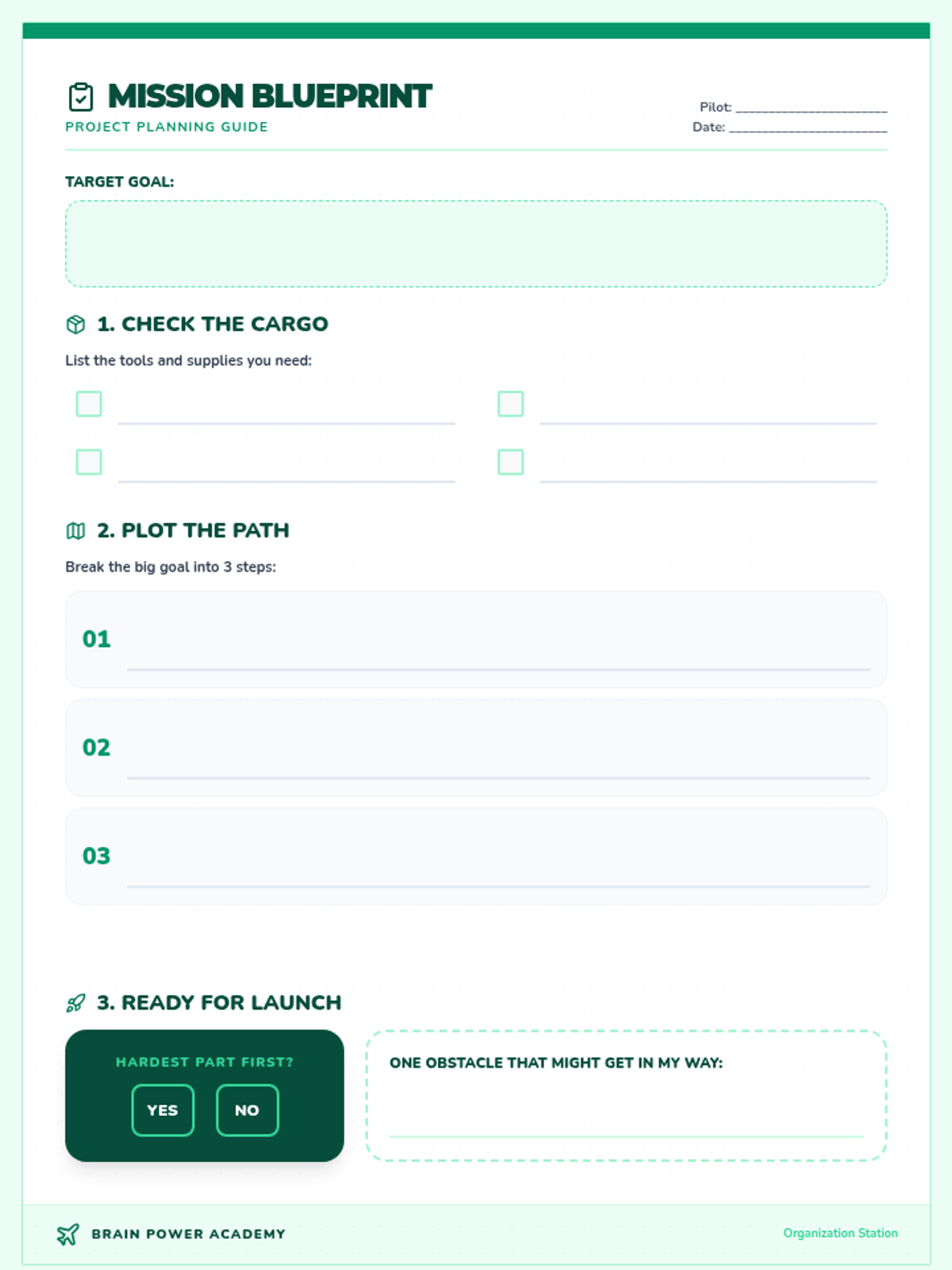
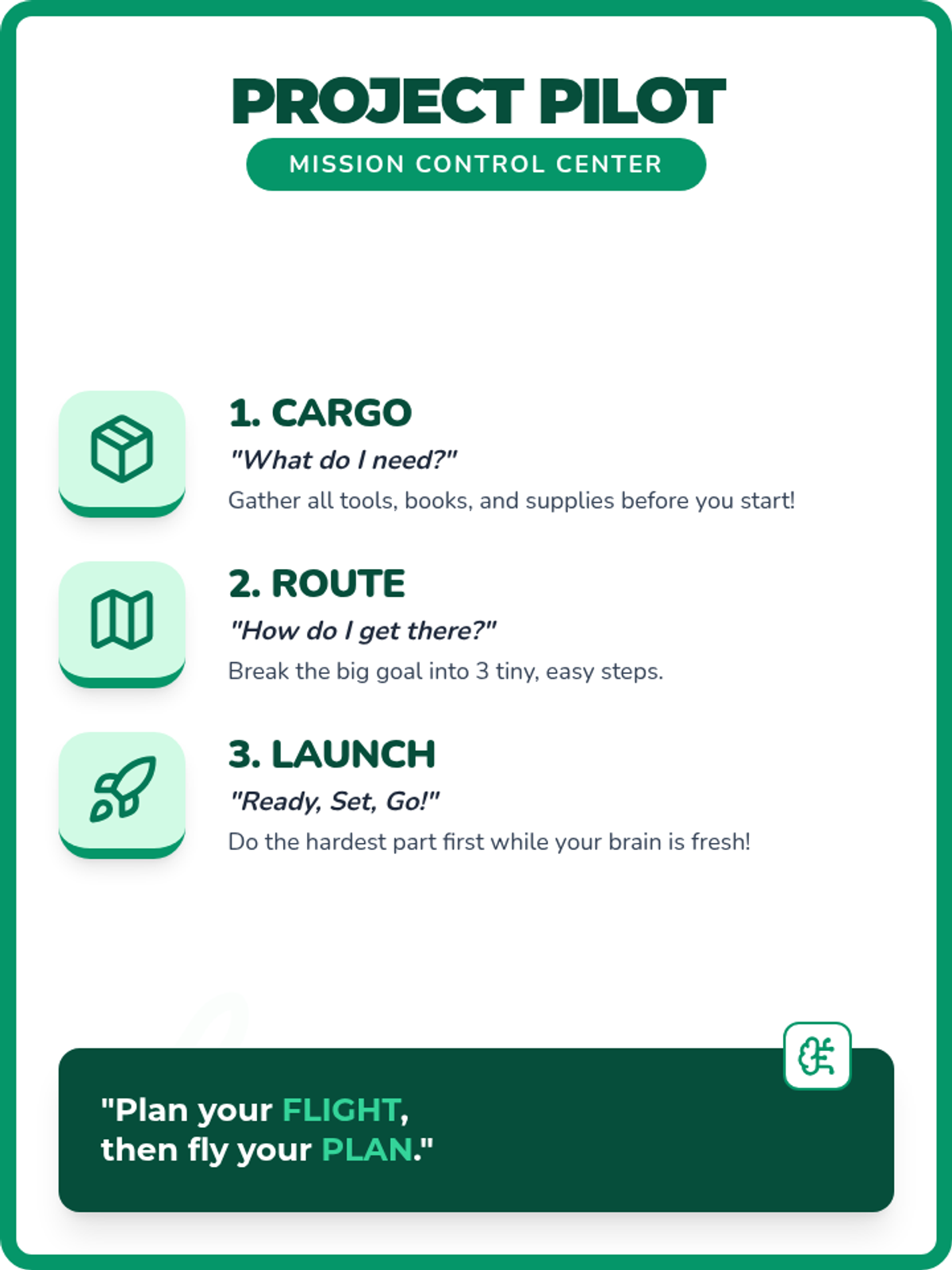
Students explore how to break big tasks into small steps and organize their tools for success using the 'Mission Blueprint' method.
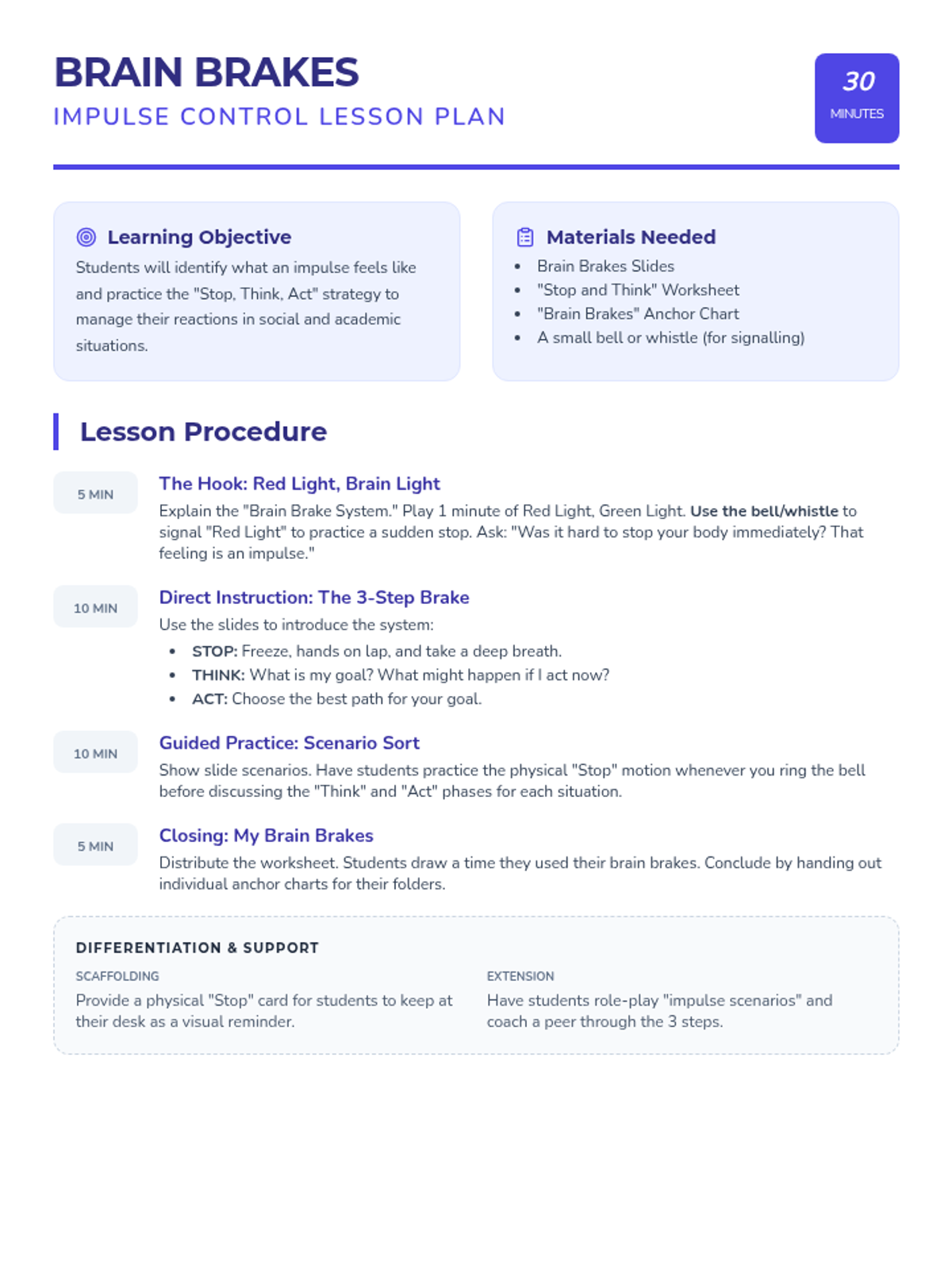
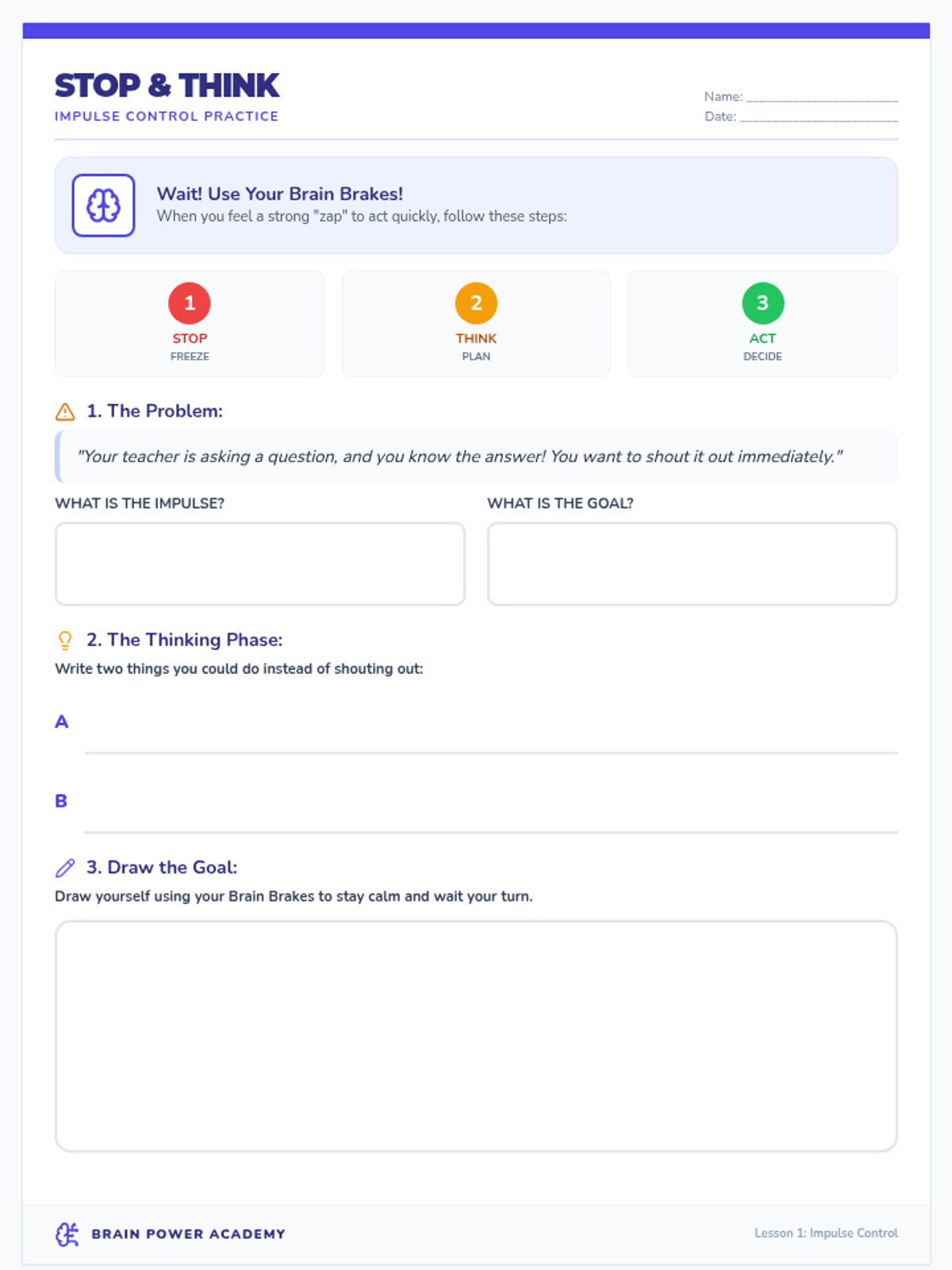
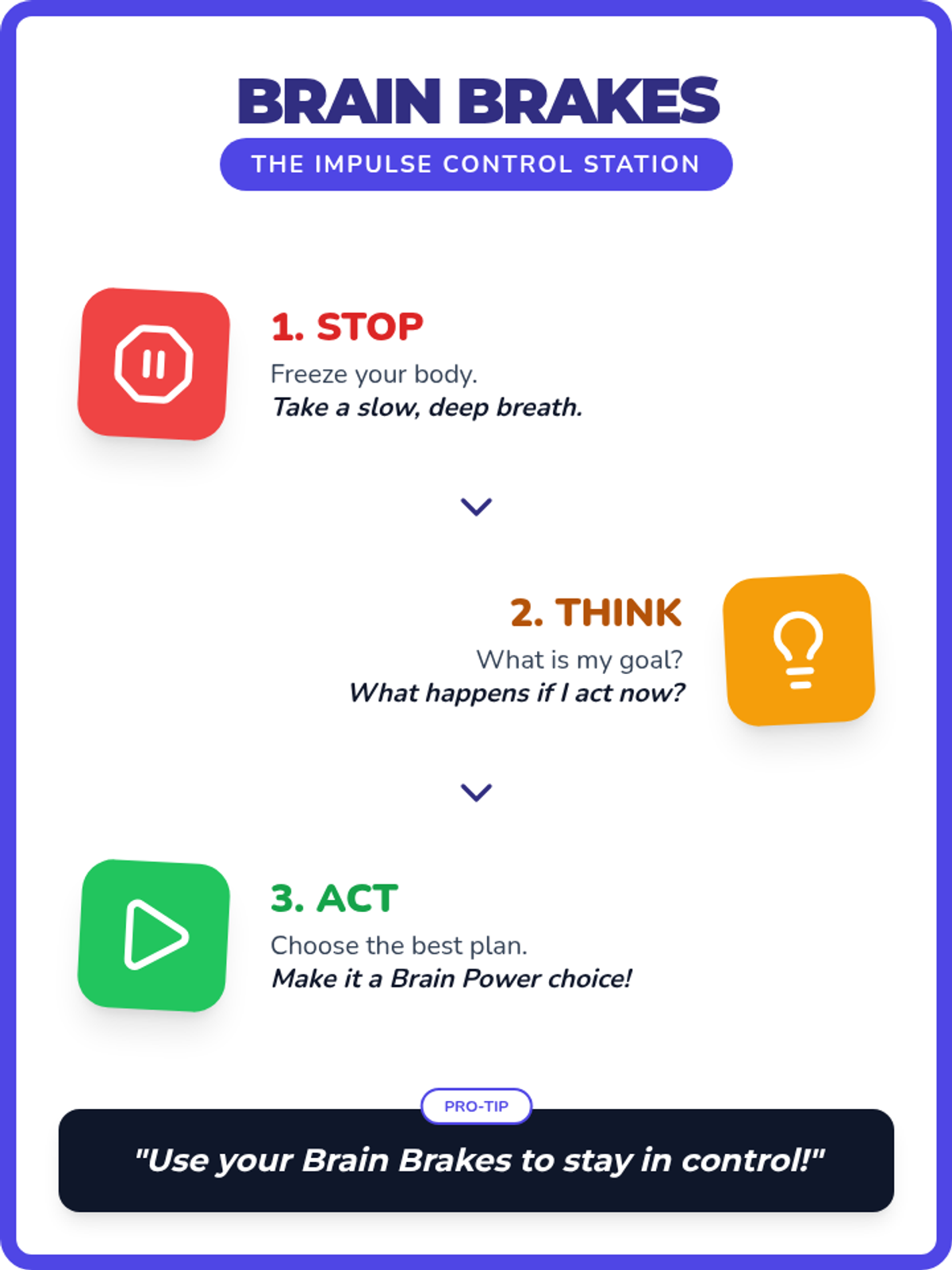
Students learn to identify impulsive urges and practice the 'Stop, Think, Act' strategy using the metaphor of 'Brain Brakes'.