A fast-paced 25-minute lesson designed for 7th graders to master active listening through the lens of a 'secret agent' training program. Students learn to distinguish hearing from listening and practice paraphrasing and clarifying questions.
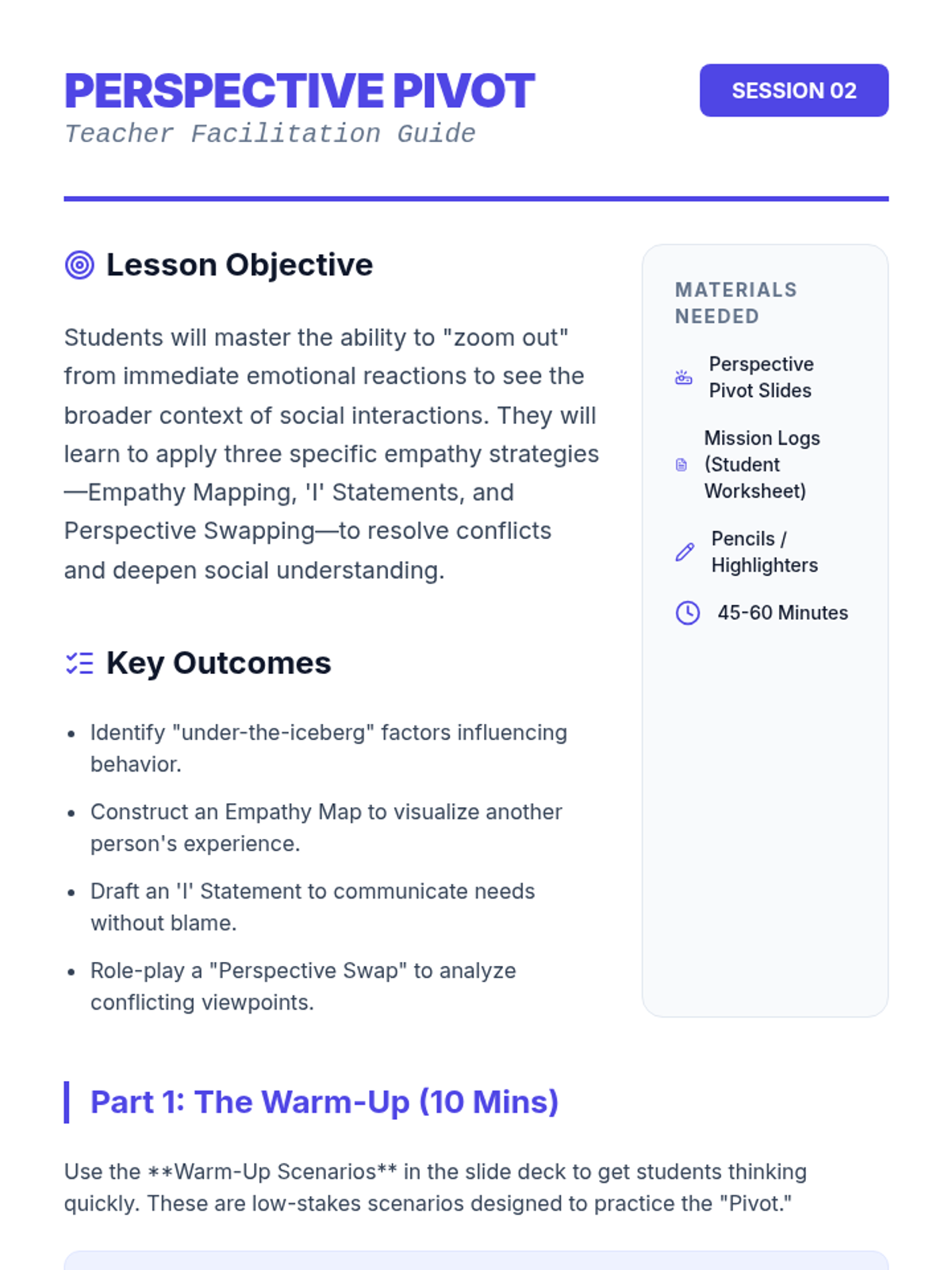
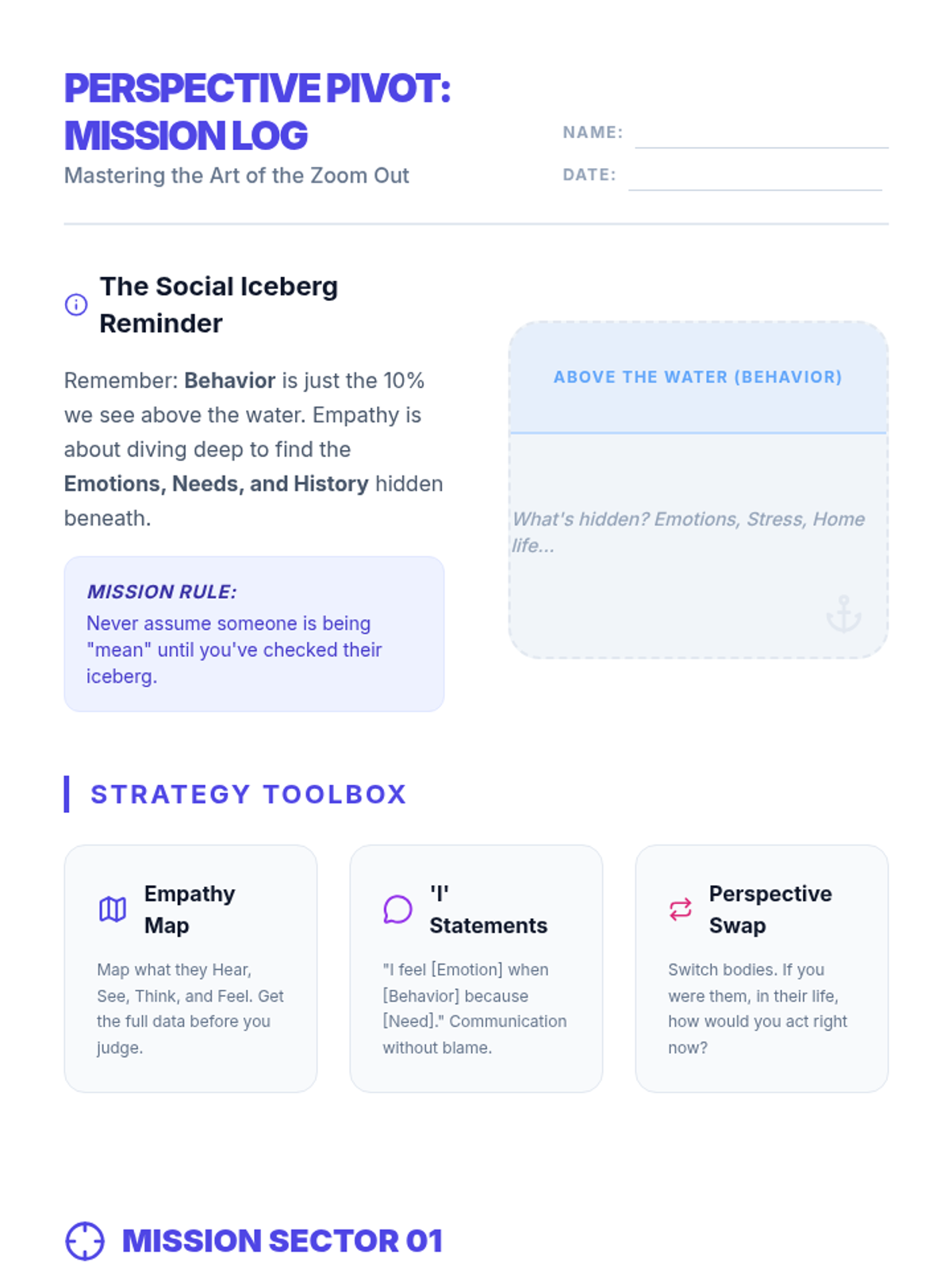
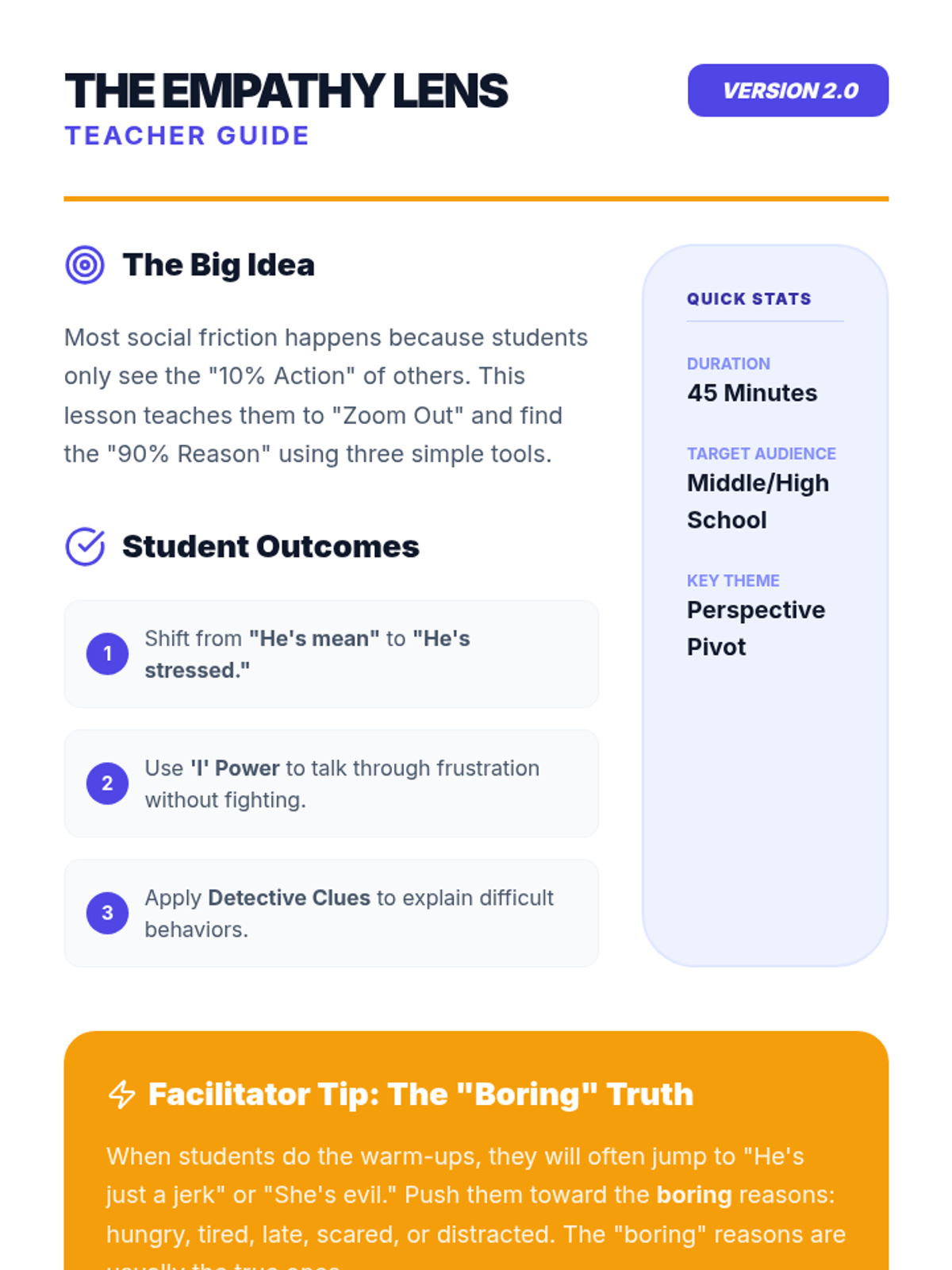
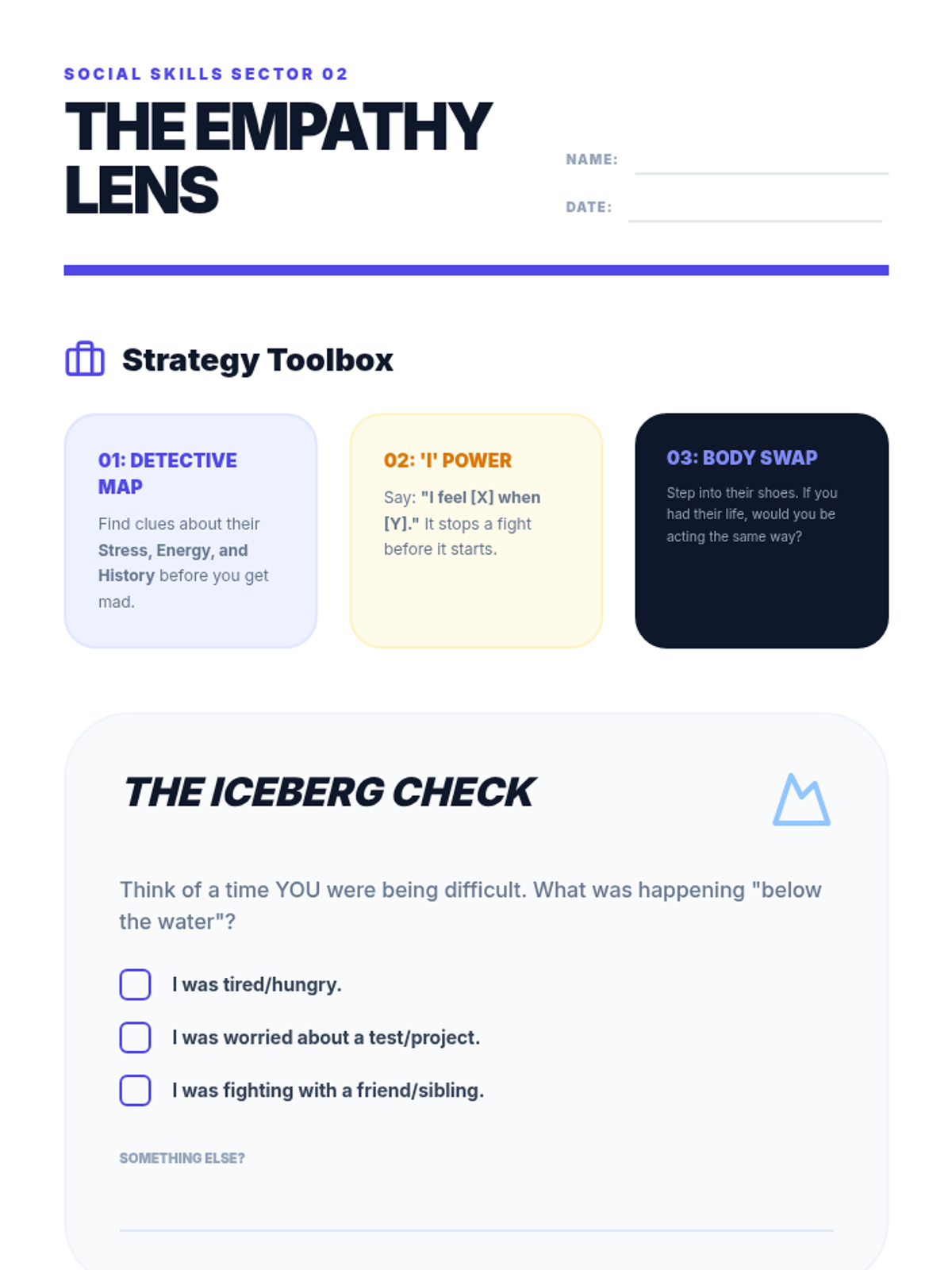
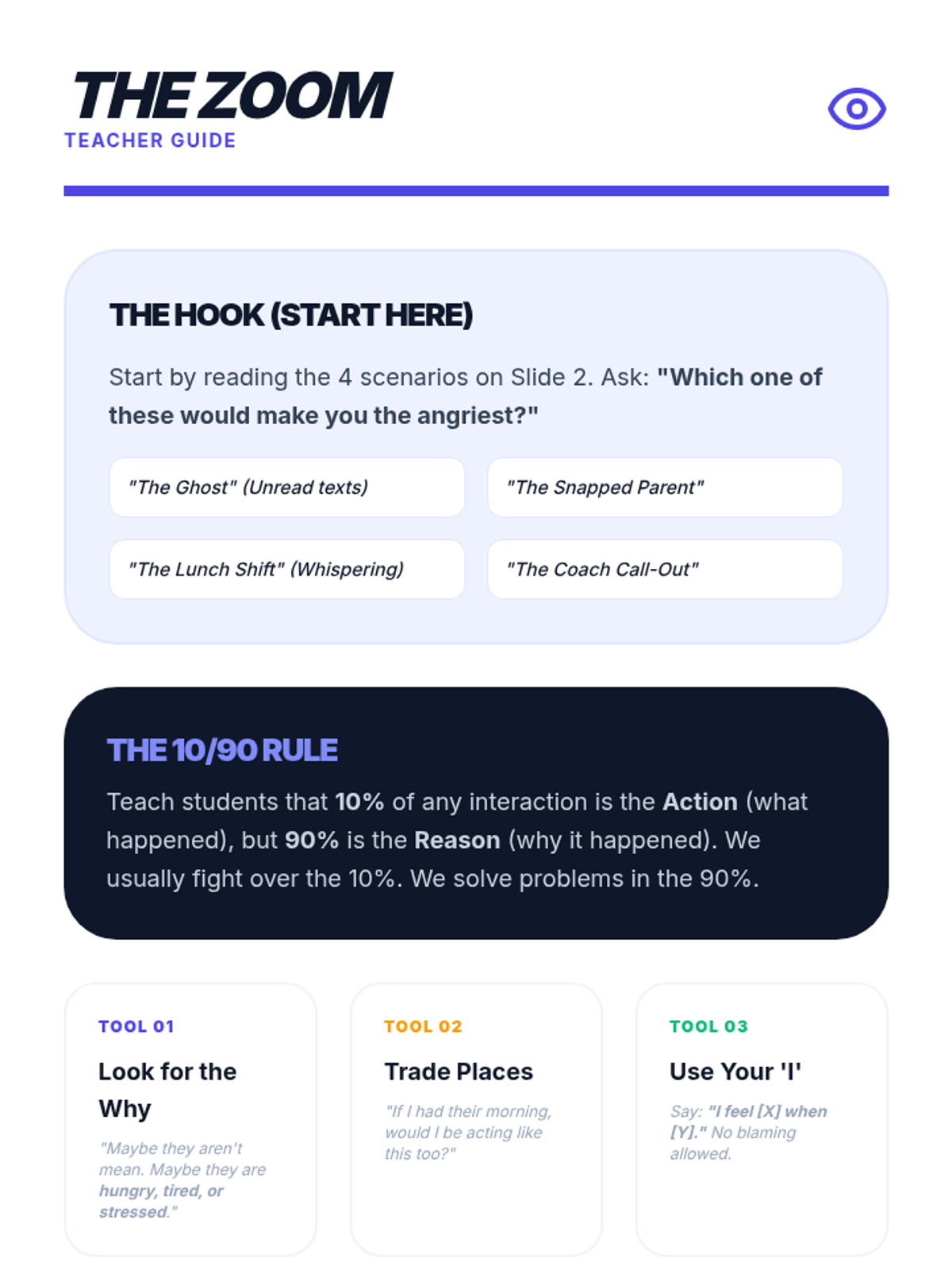
An expanded lesson on mastering empathy through the 'Perspective Lens' metaphor. Students explore warm-up scenarios, learn concrete strategies (Empathy Mapping, 'I' Statements, Role-Playing), and apply them to complex social situations.
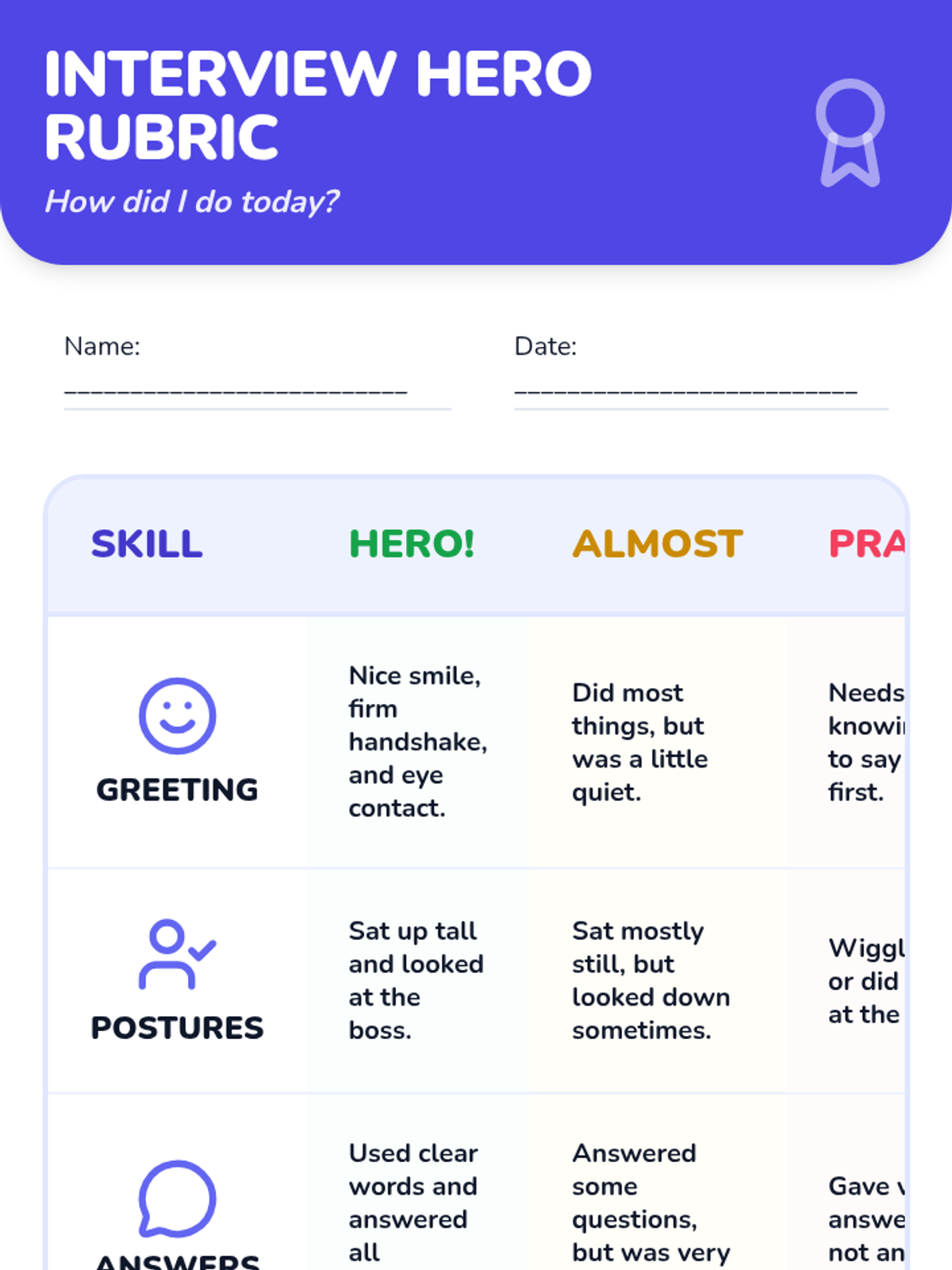
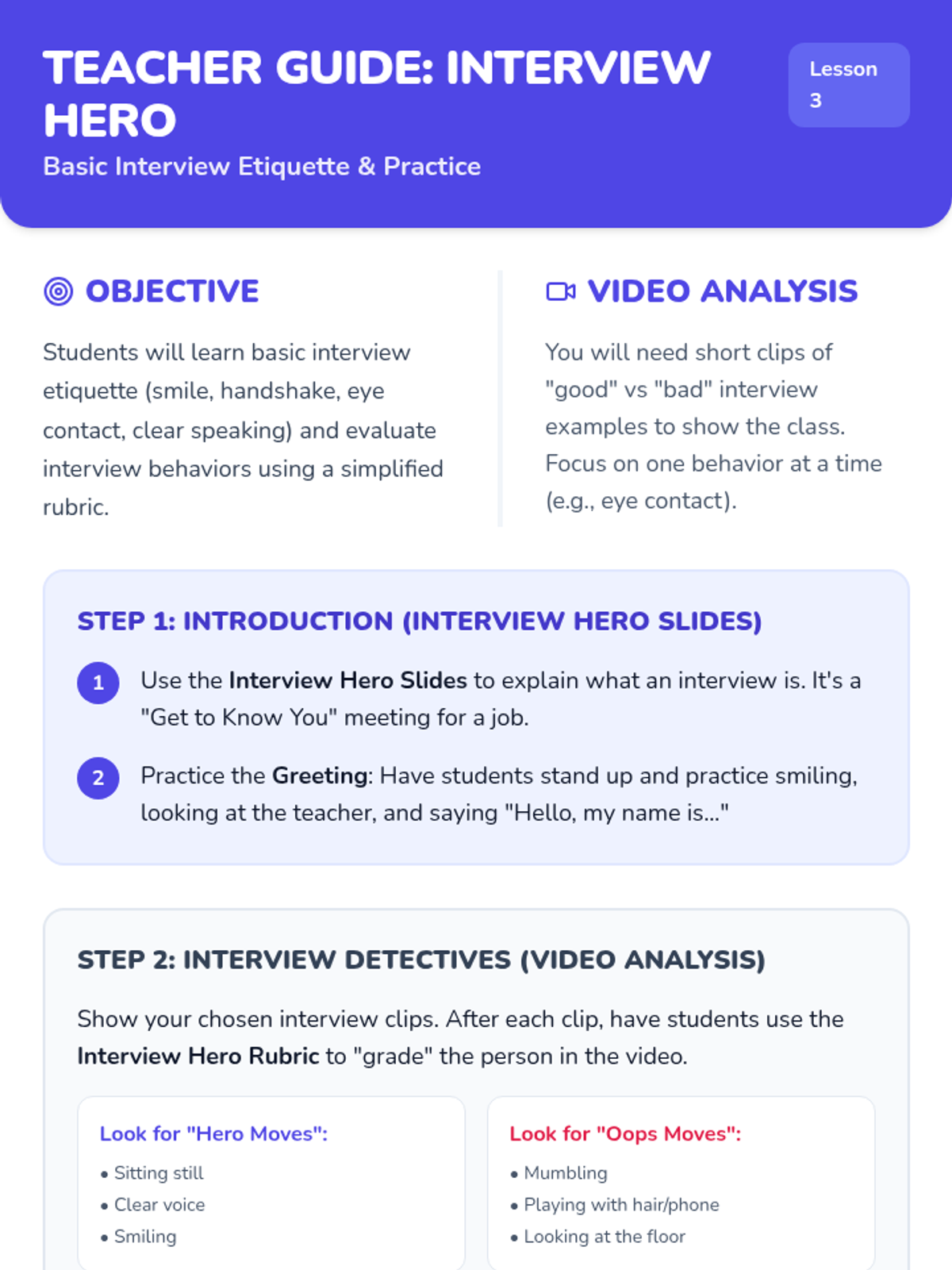
Students practice interview etiquette and evaluate interview behaviors using a simplified rubric and video analysis of common interview mistakes.
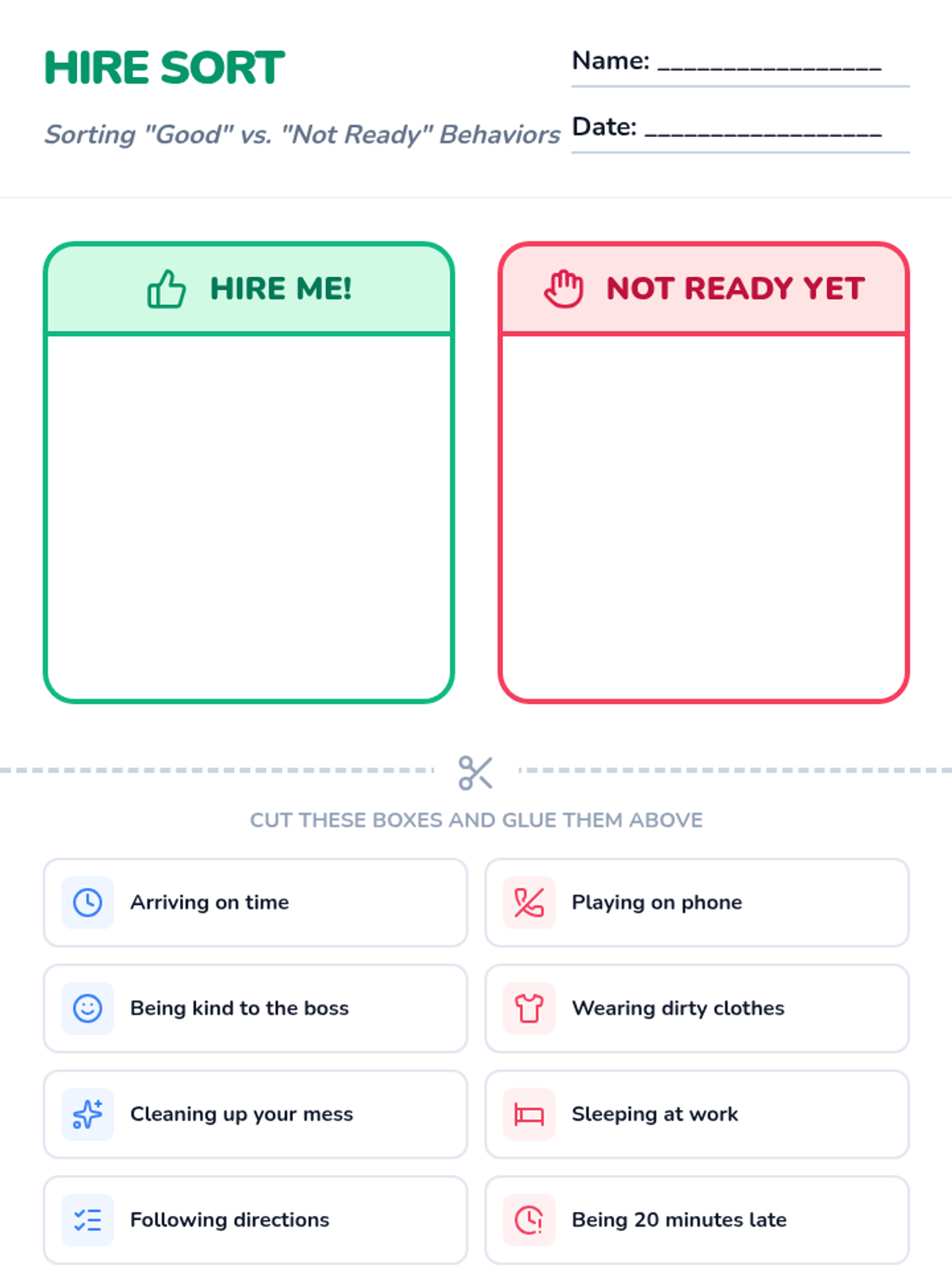
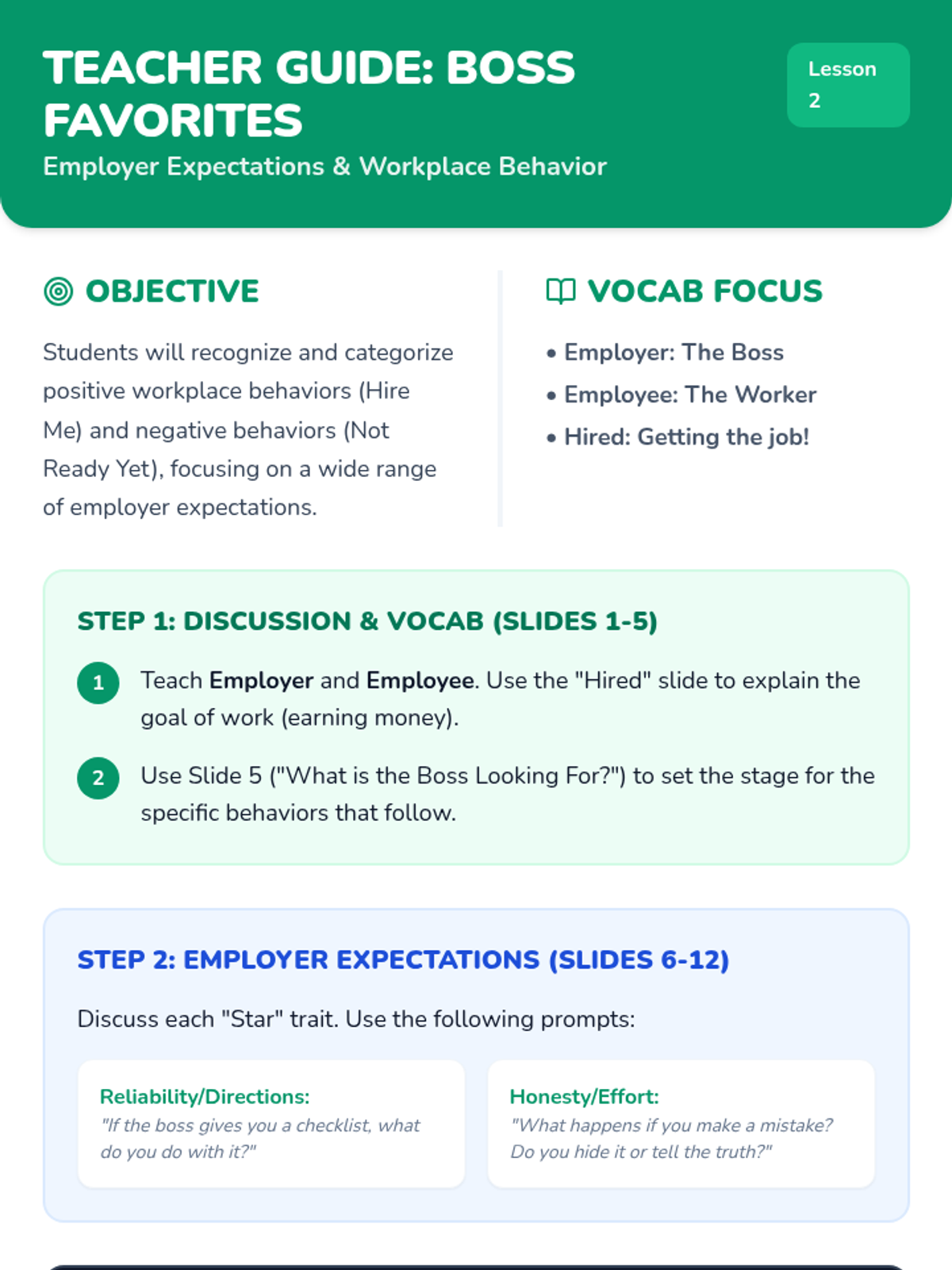
Students explore qualities that make a "good employee," such as punctuality, hygiene, and teamwork, through a "Hire vs. Not Ready Yet" behavior sorting activity.
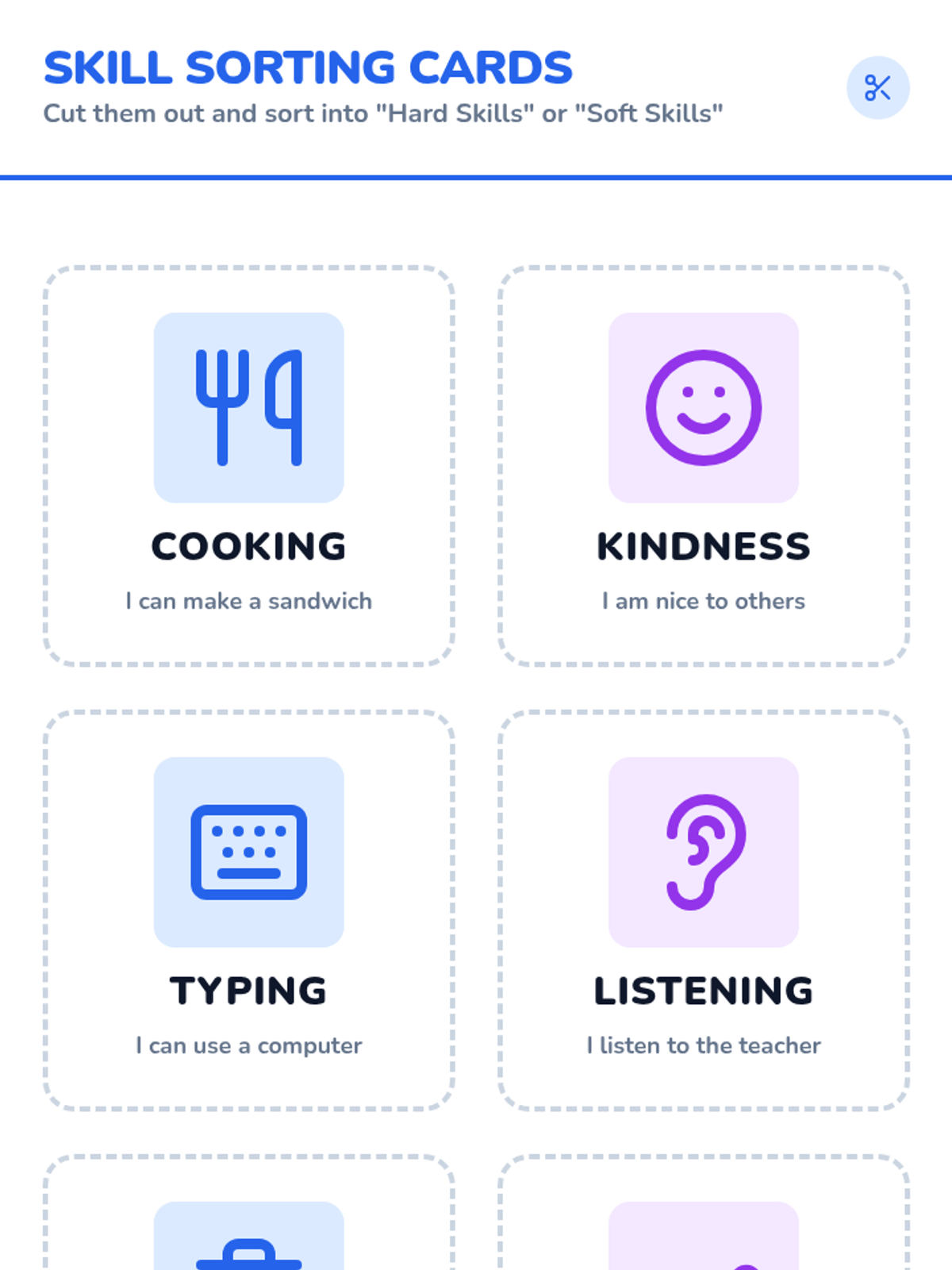
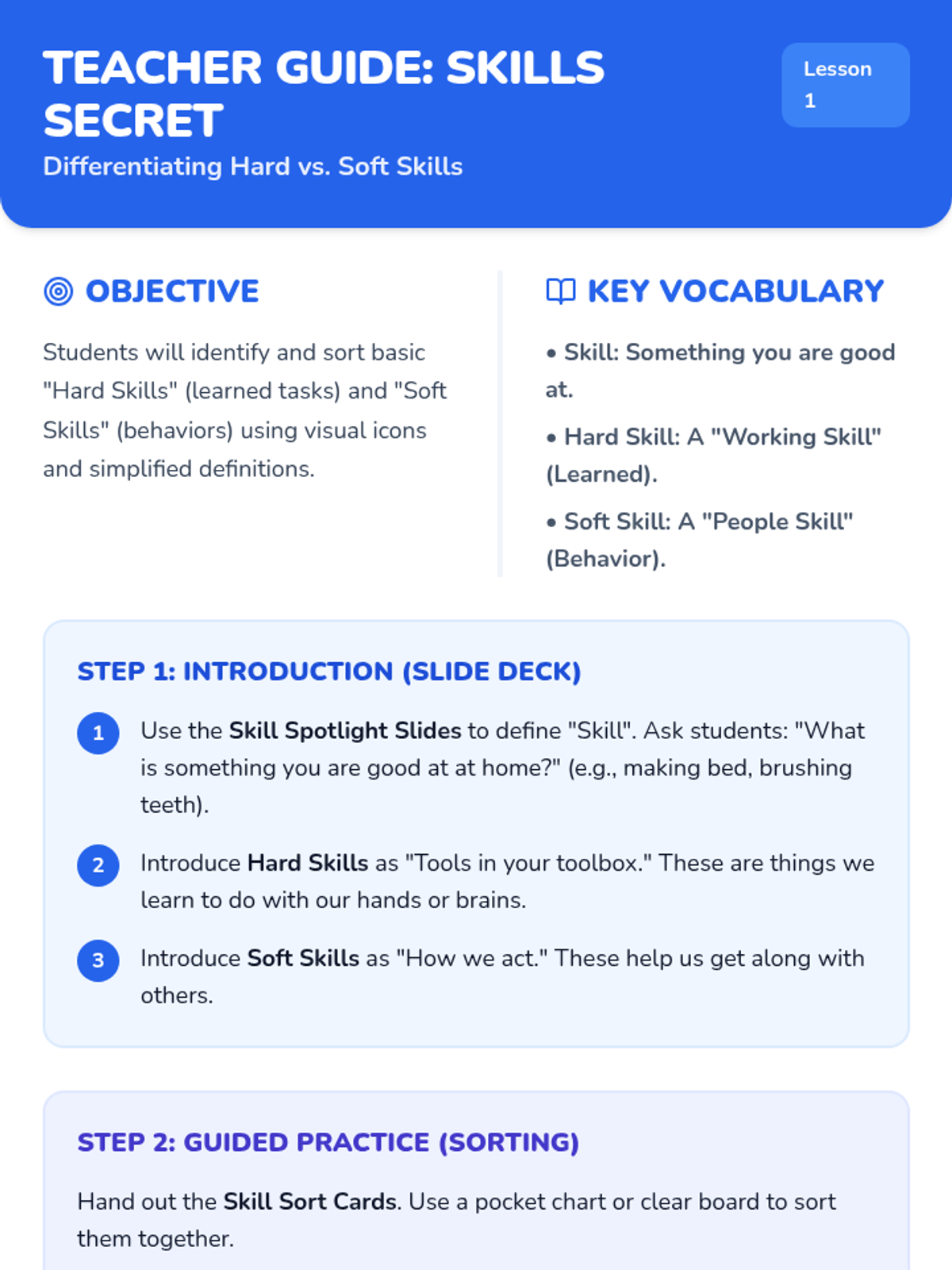
Students will differentiate between hard skills (learned tasks) and soft skills (people skills) using visual aids and sorting activities tailored for low cognitive ability levels.
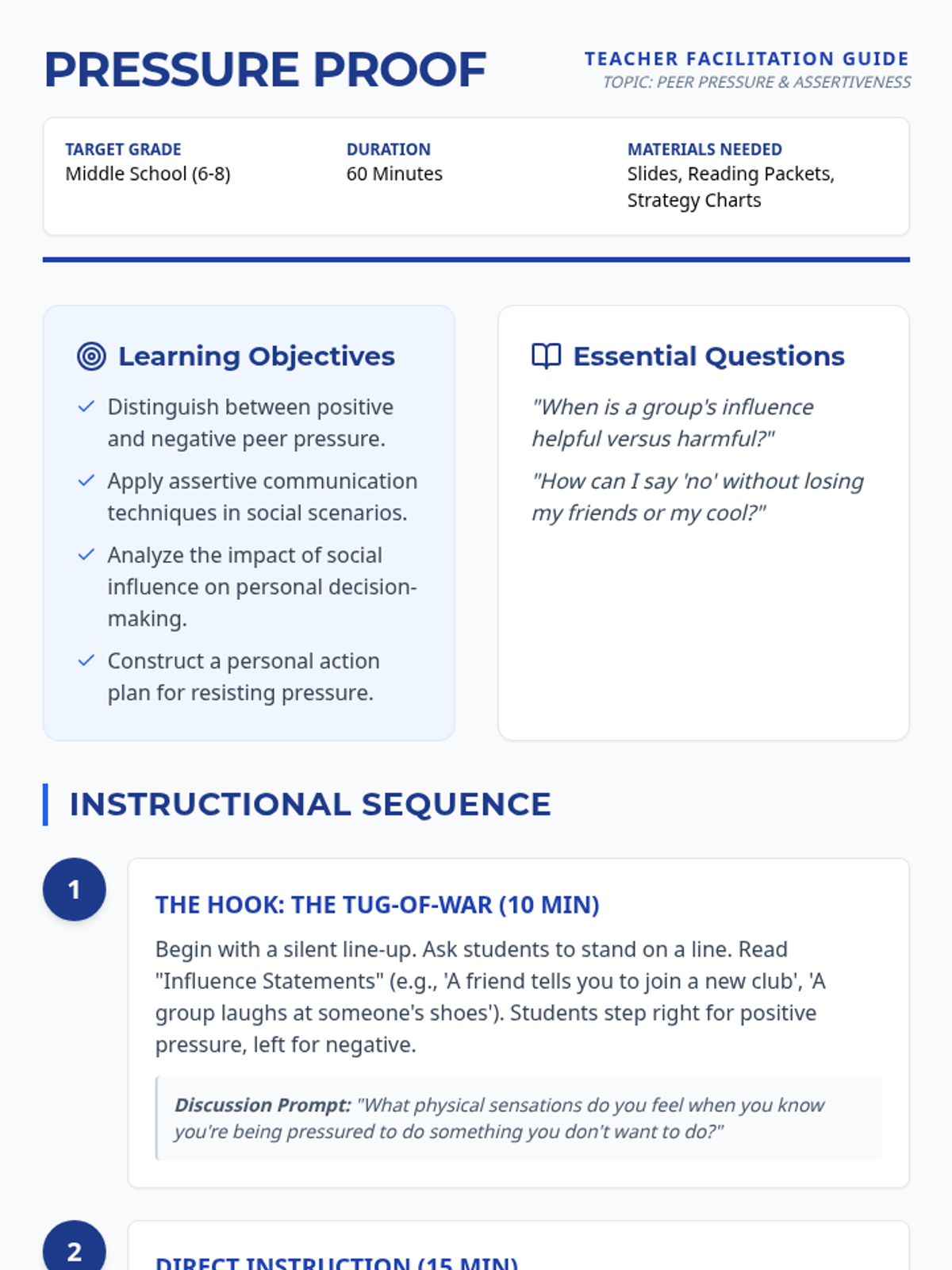
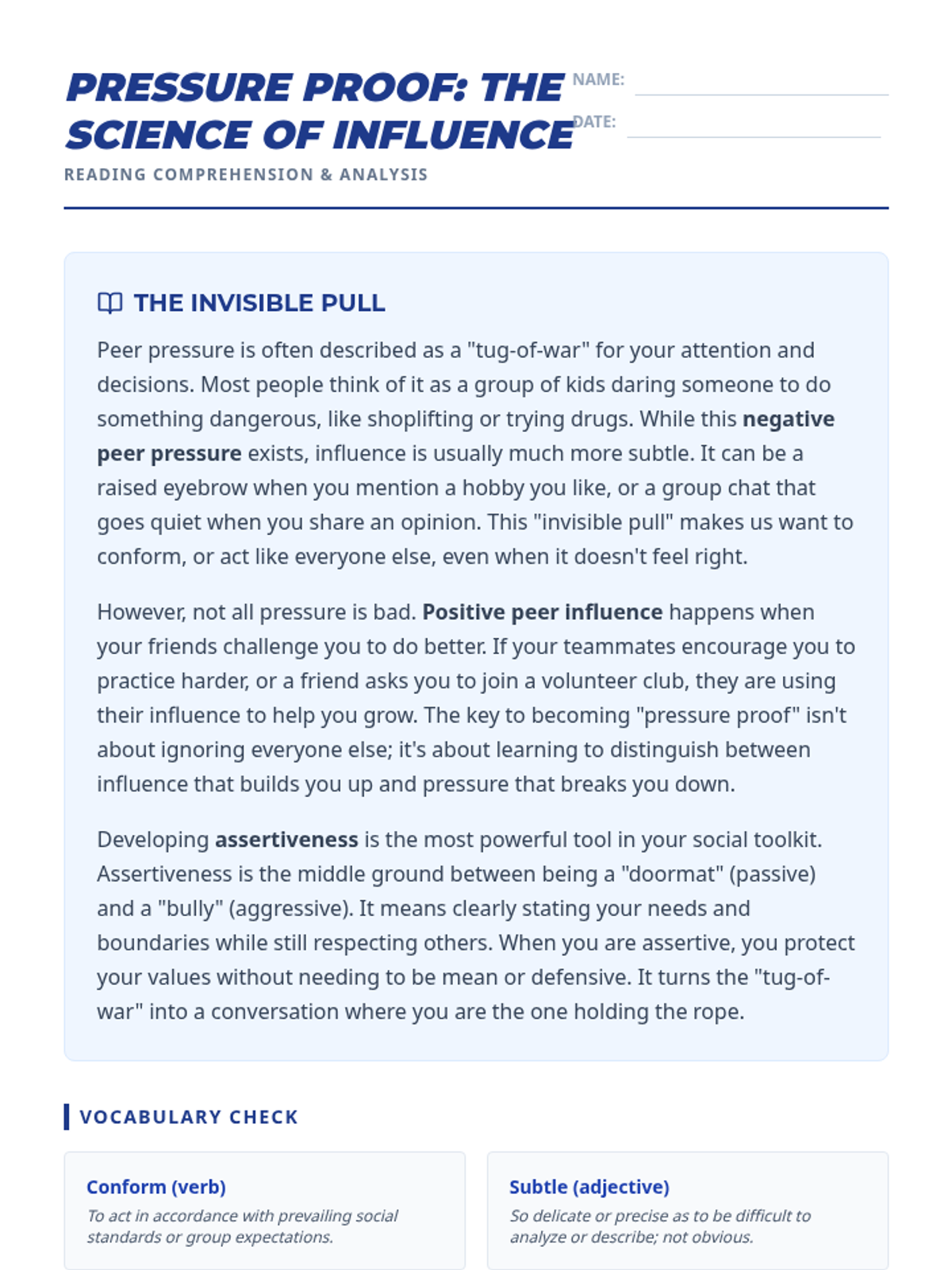
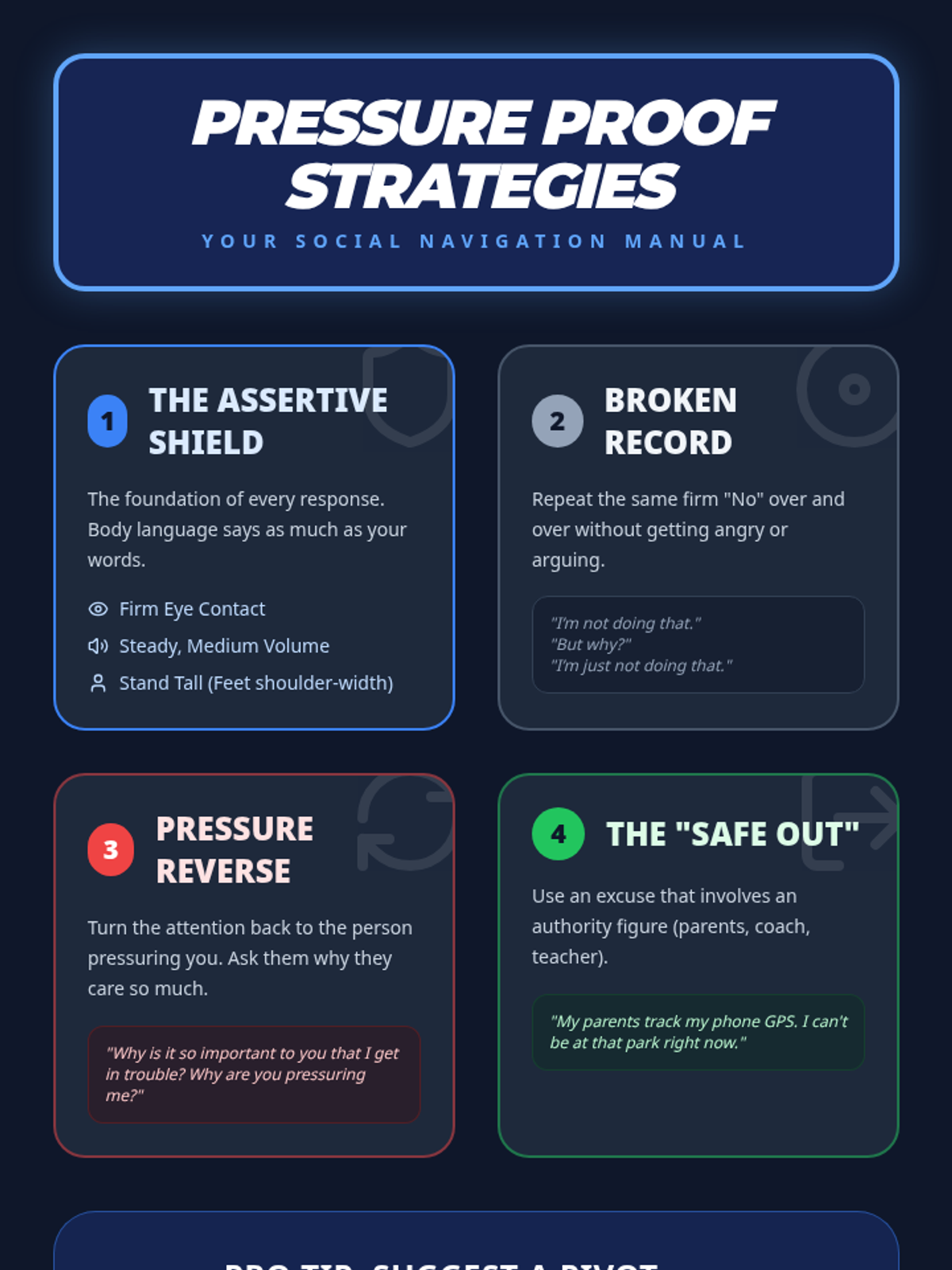
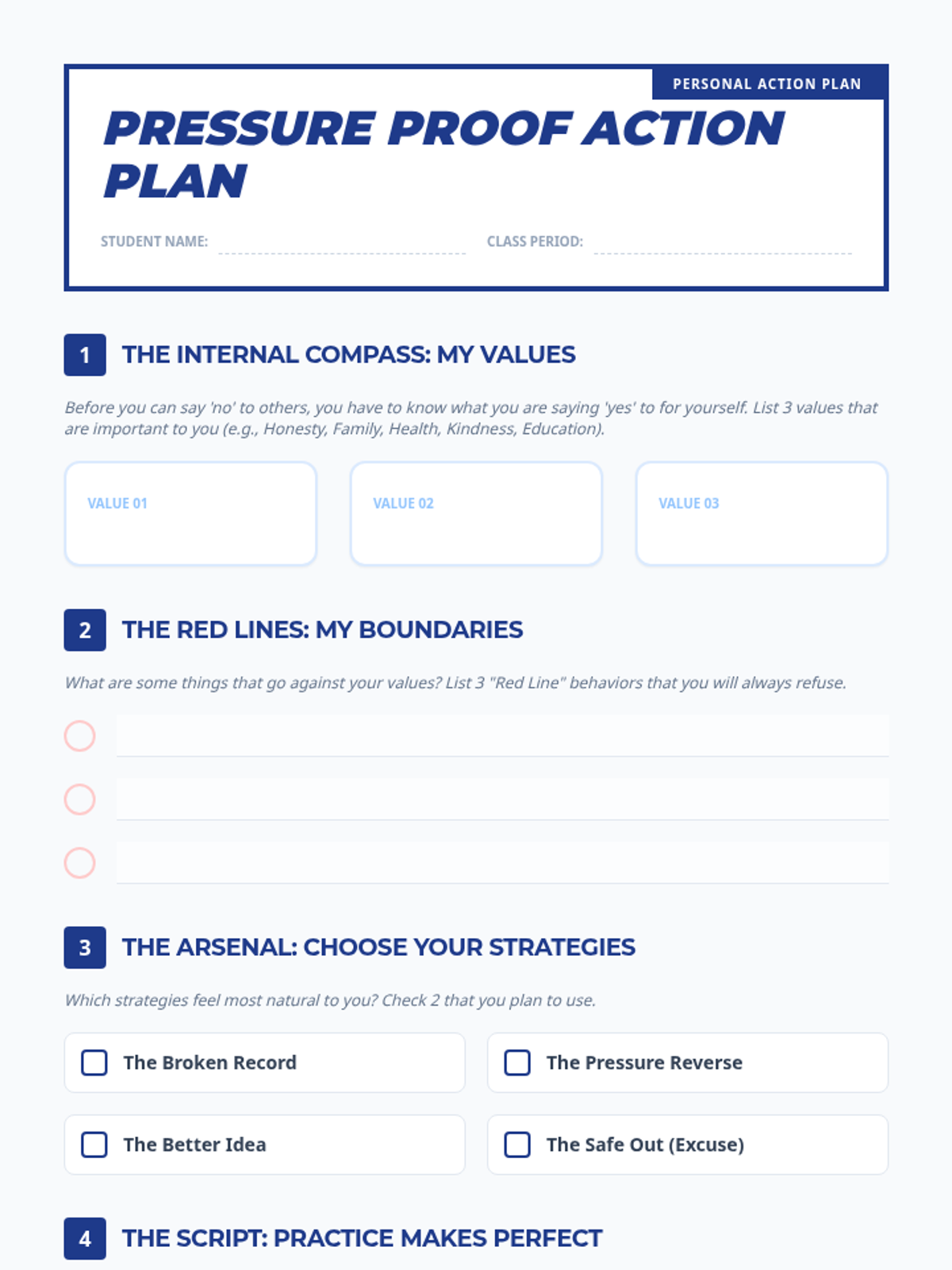
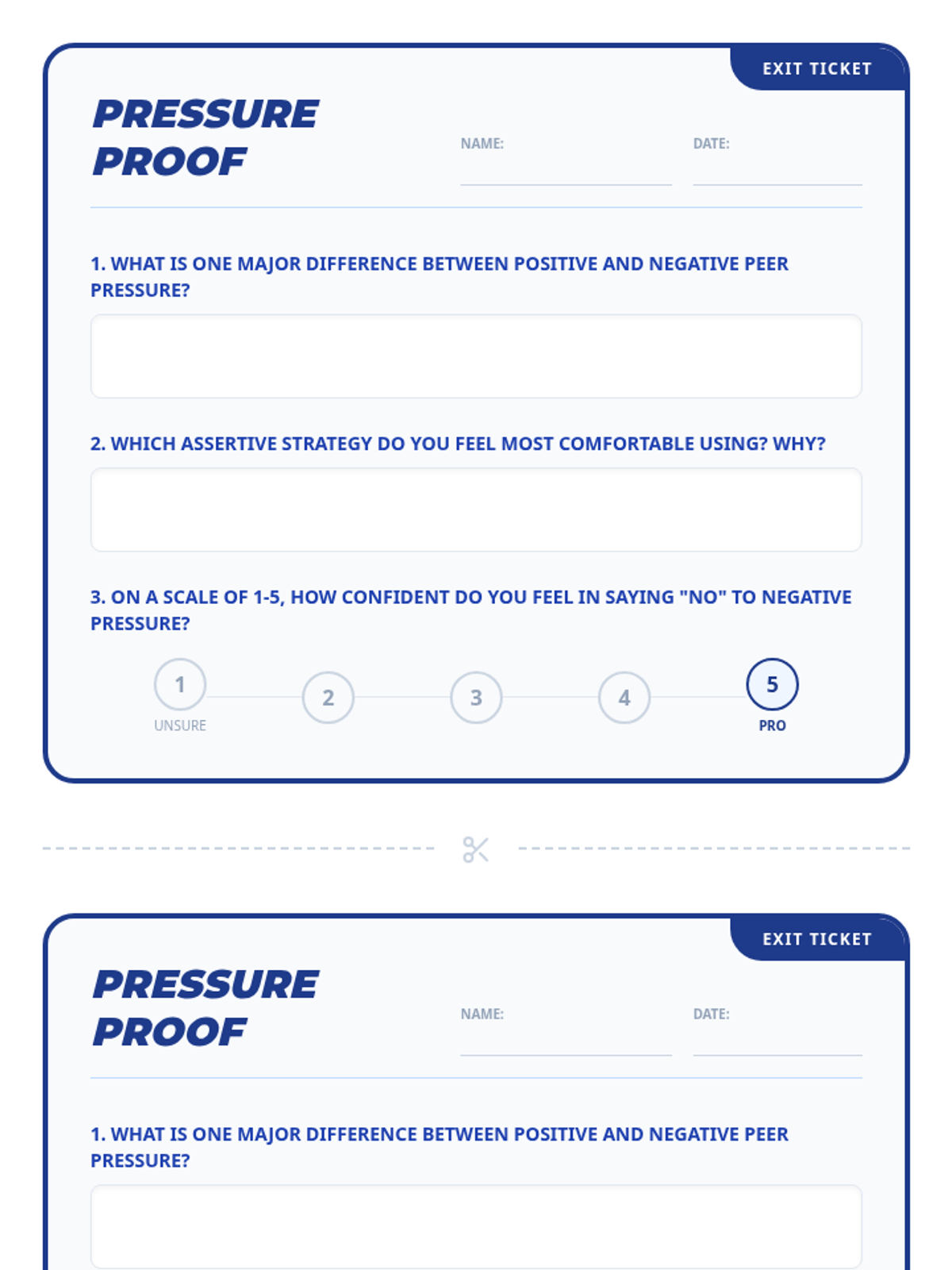
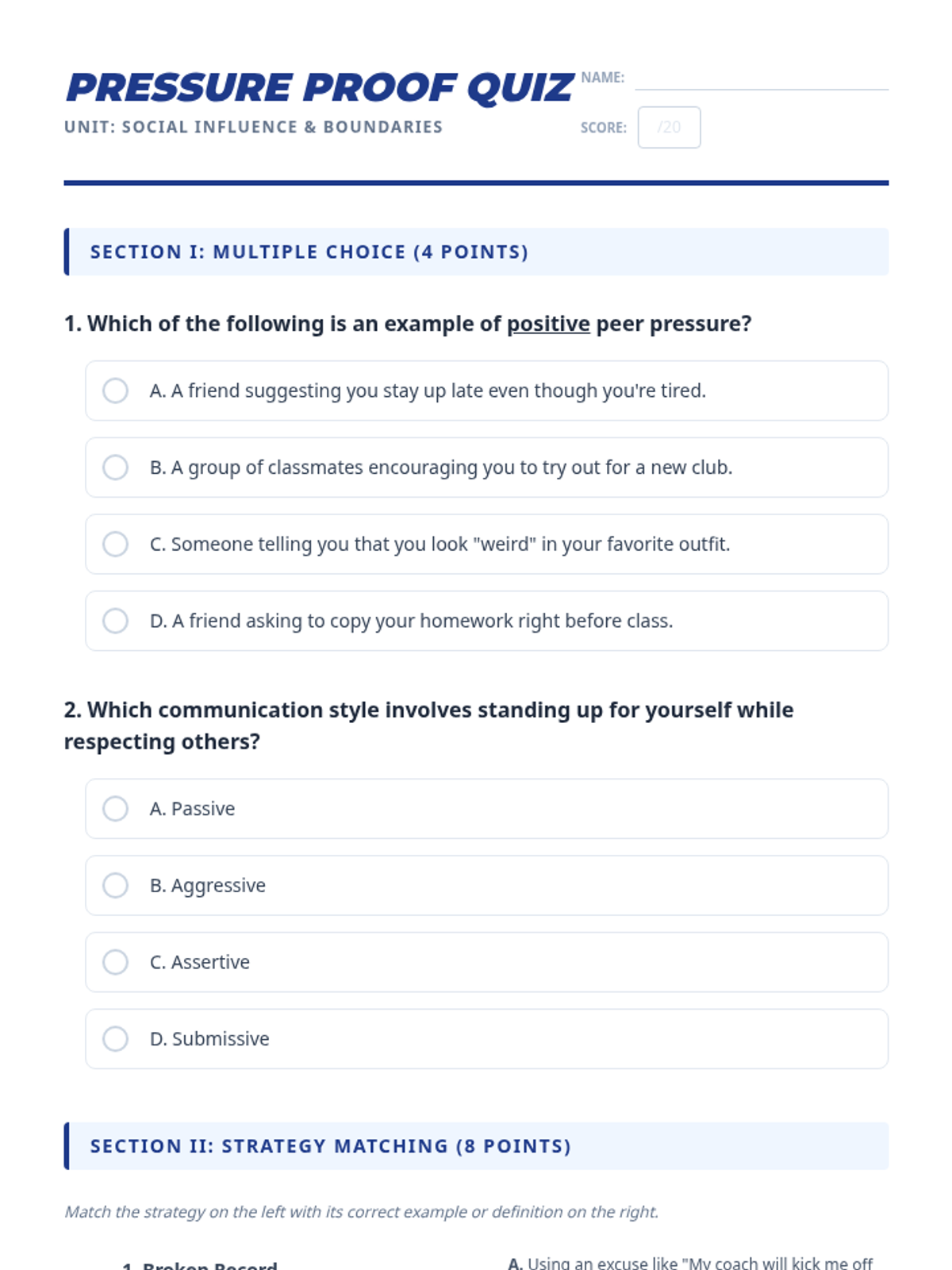
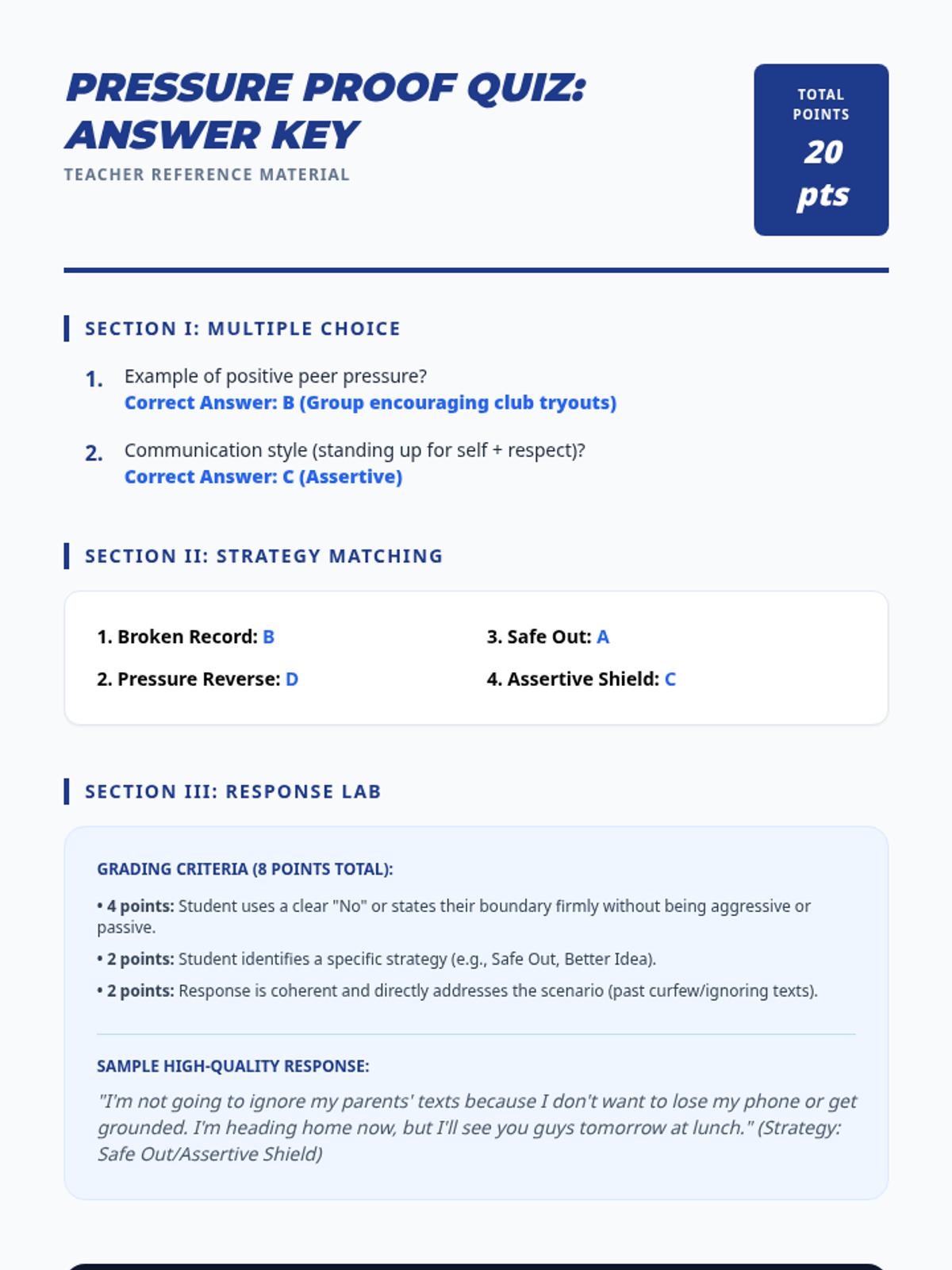
A comprehensive lesson designed to help students identify, navigate, and resist negative peer pressure while recognizing positive influence. Students will practice assertive communication and develop personal strategies for staying true to their values.
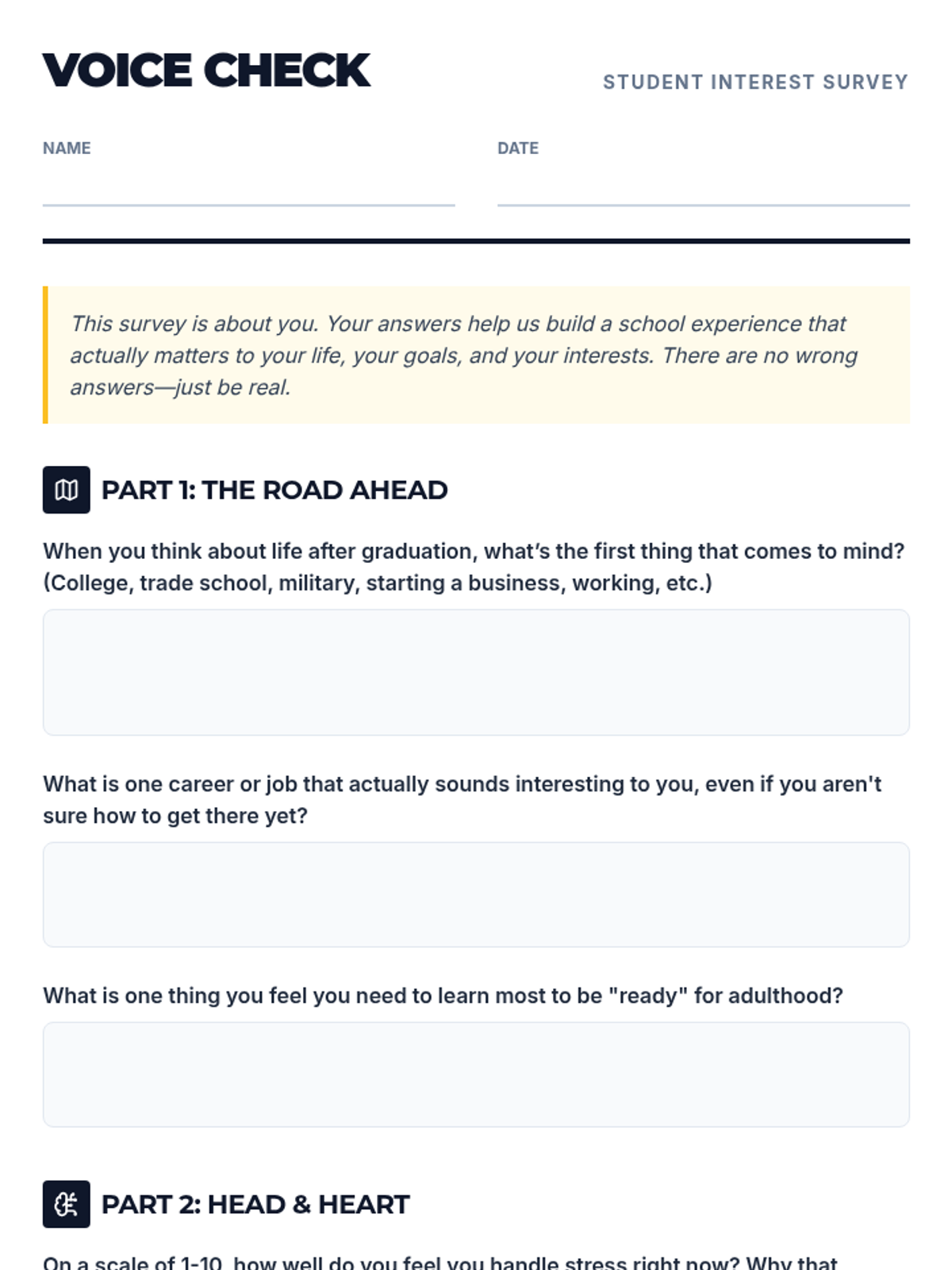
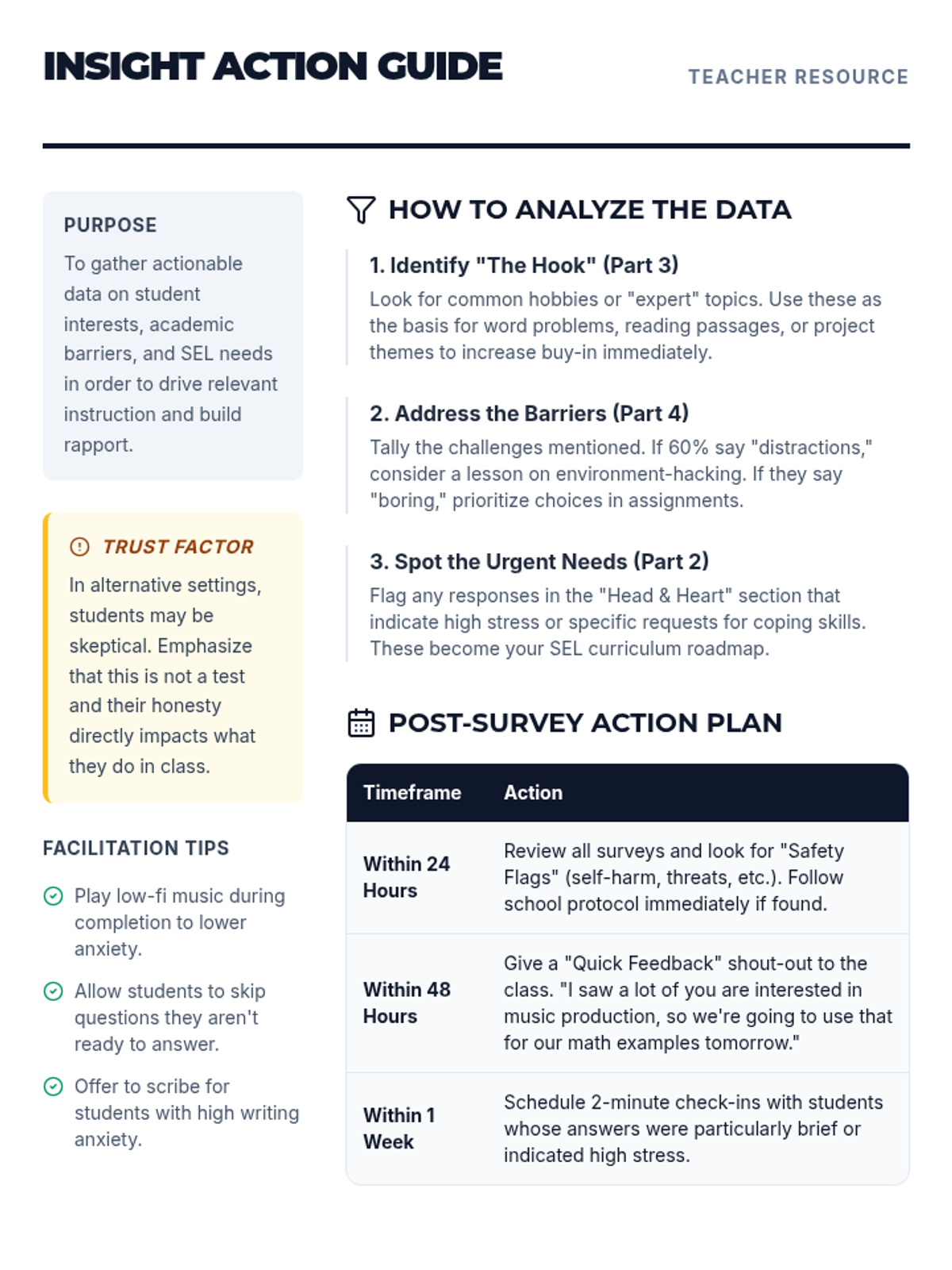
A set of materials designed to gather meaningful input from students in alternative education settings to tailor instruction and support to their specific needs and interests.
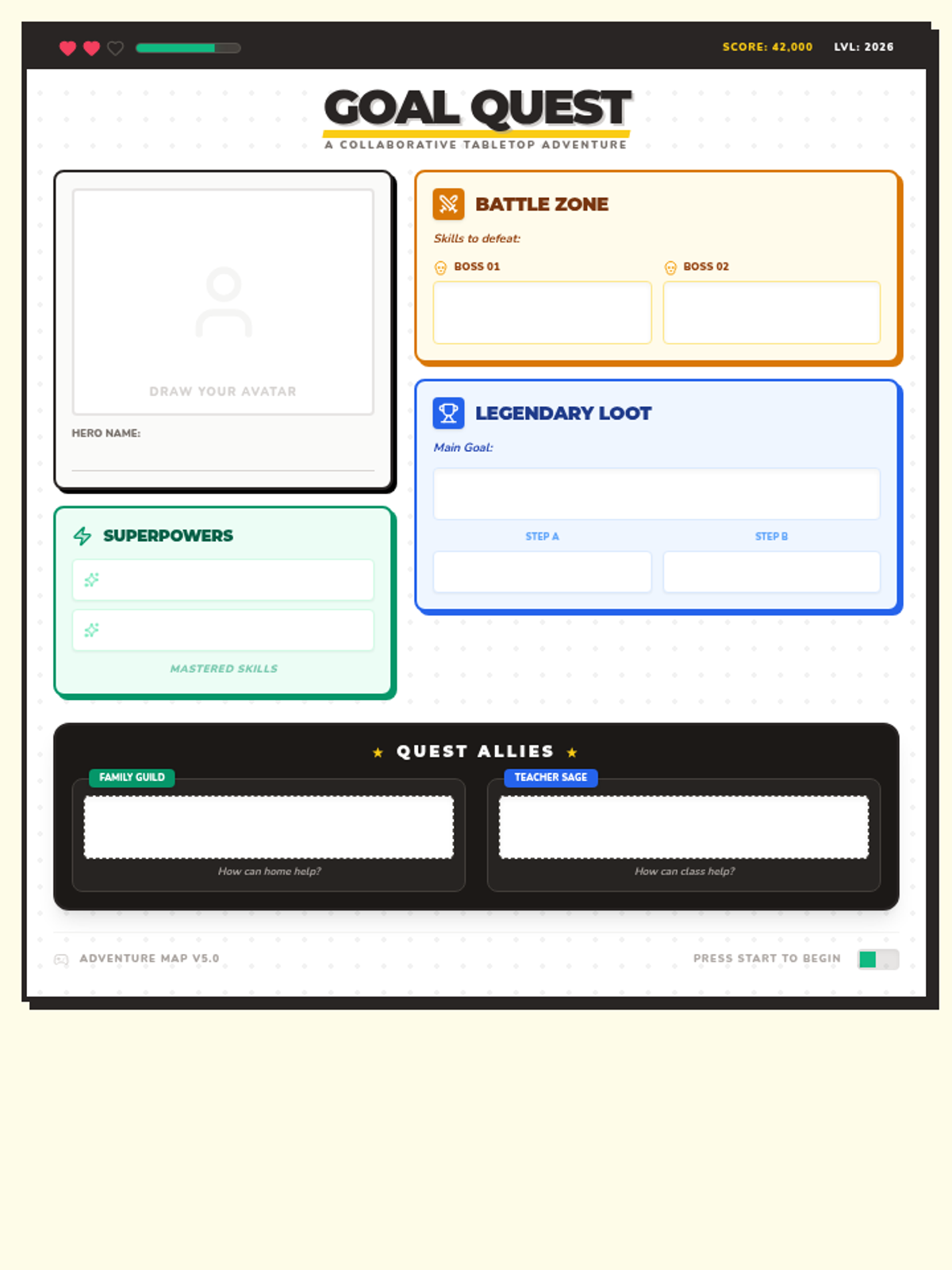
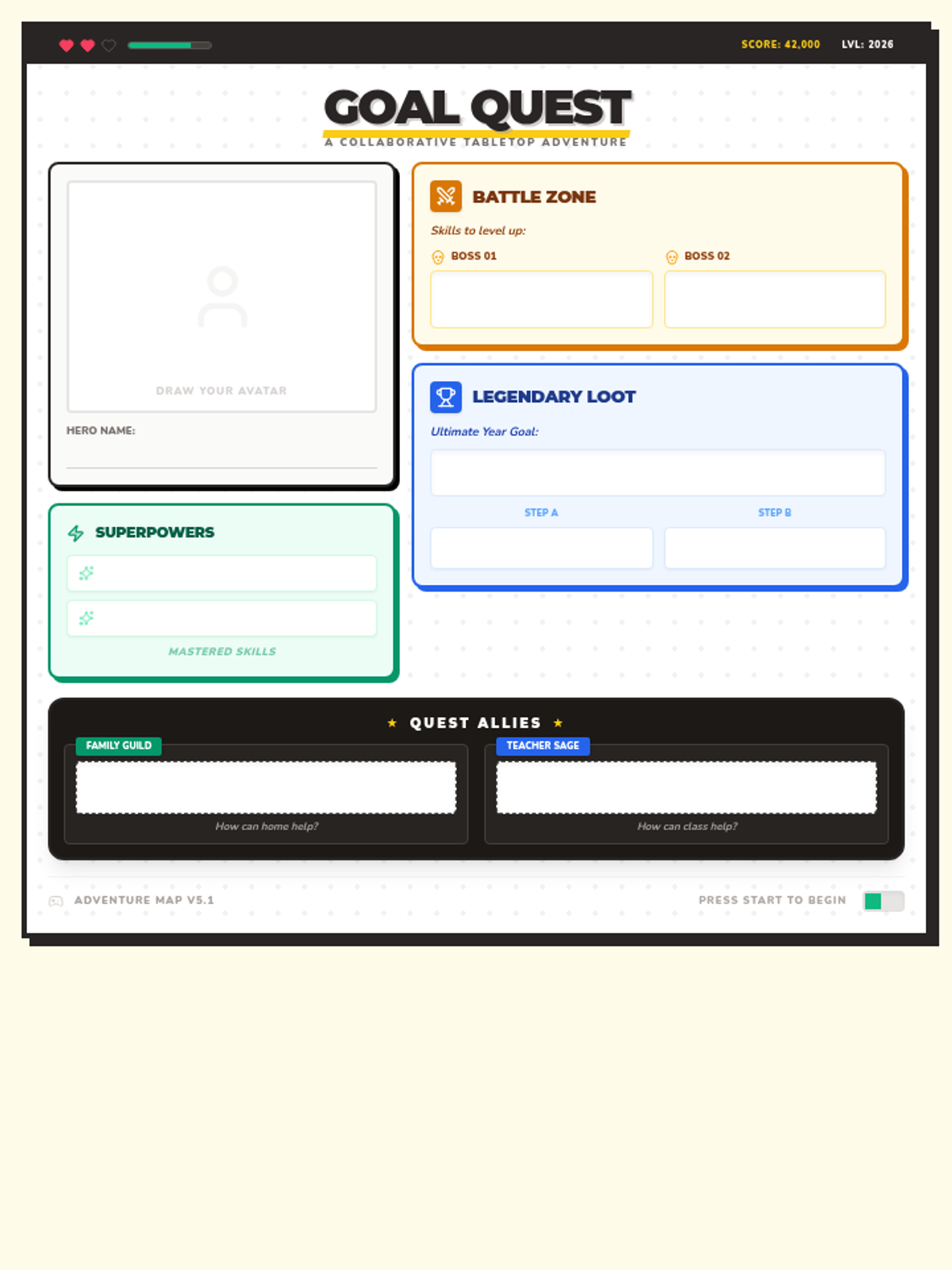
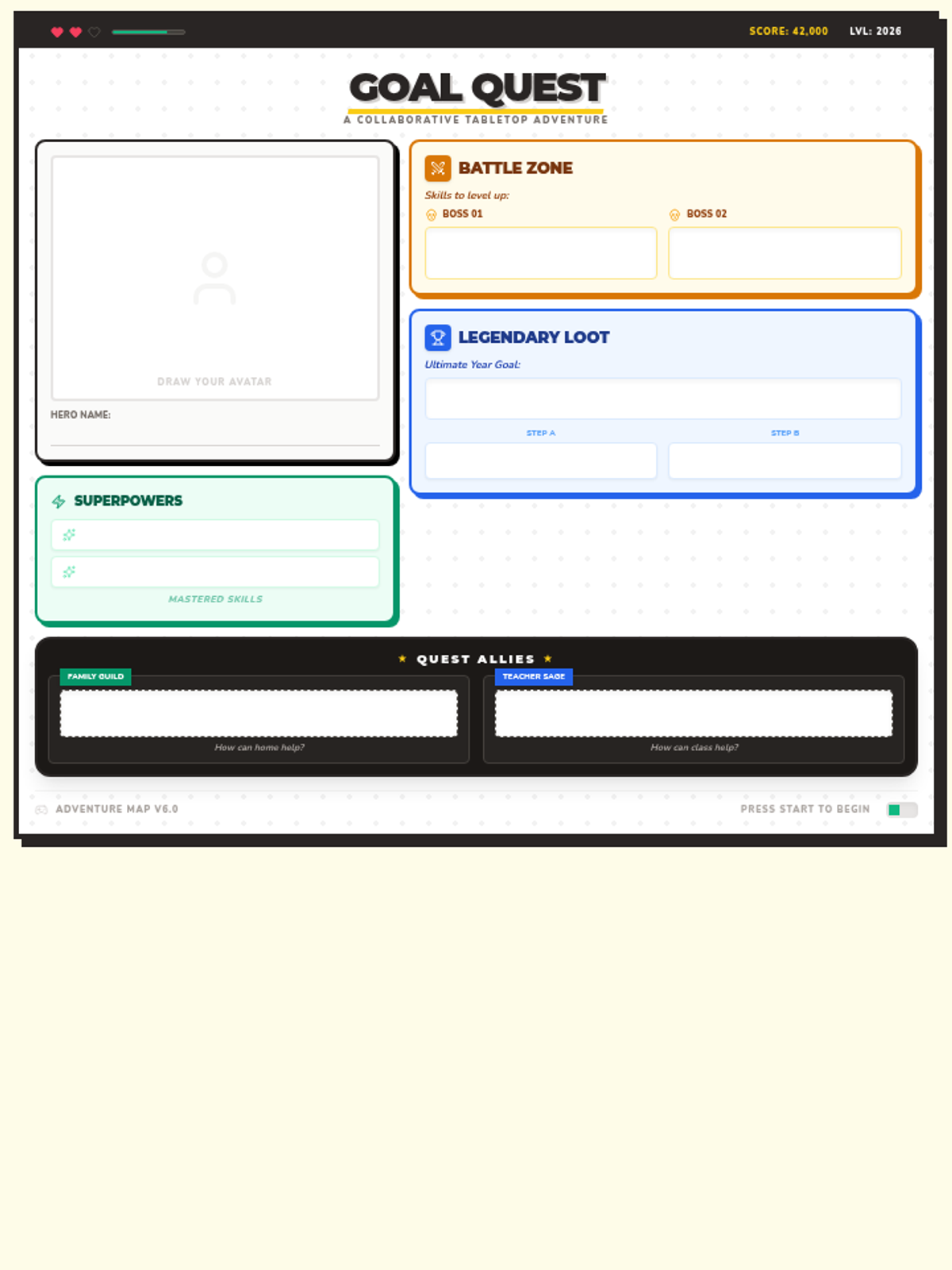
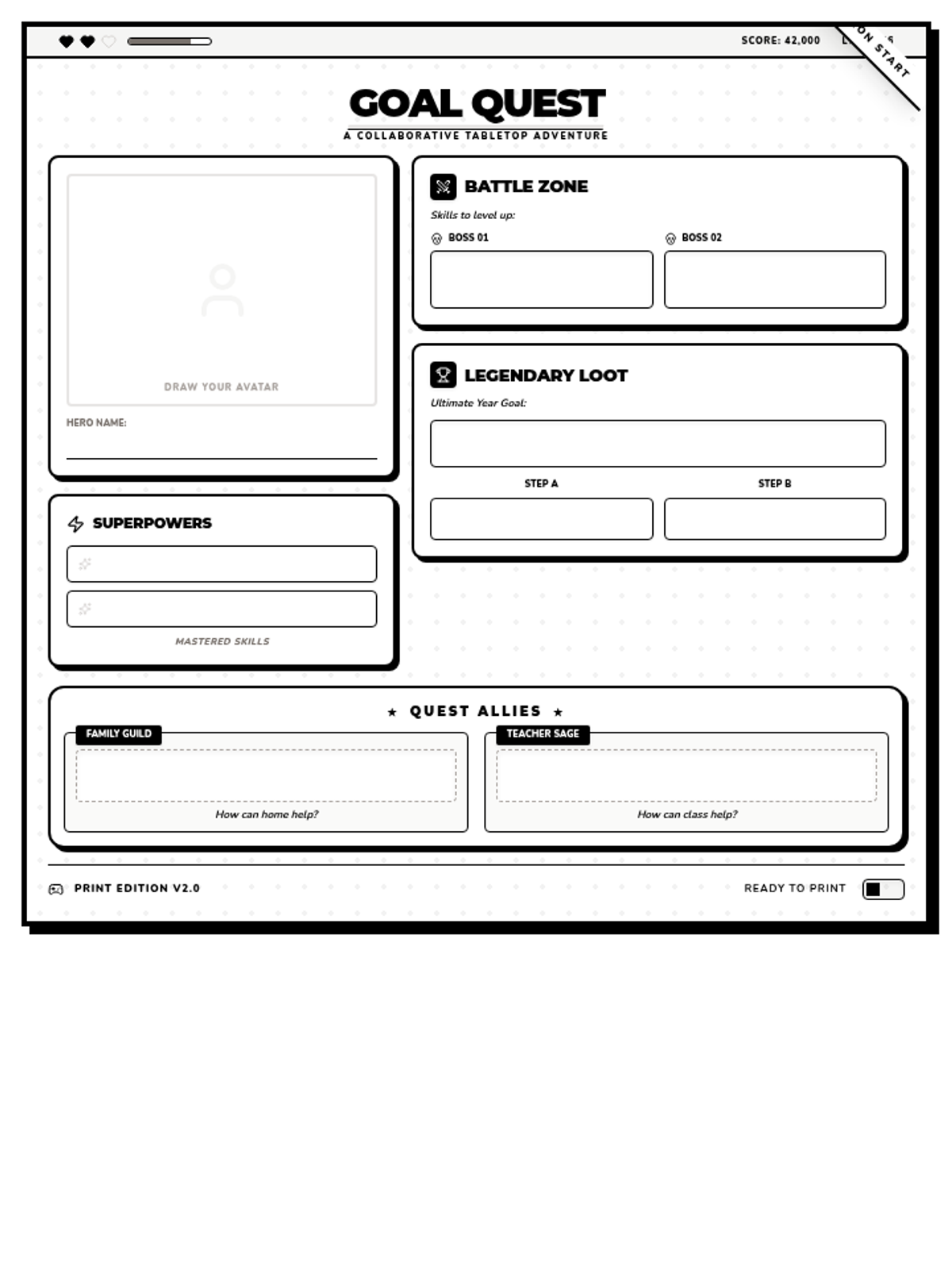
A game-inspired goal-setting activity designed for parent-teacher conferences, focusing on identifying student strengths and growth areas through a 'future quest' lens.
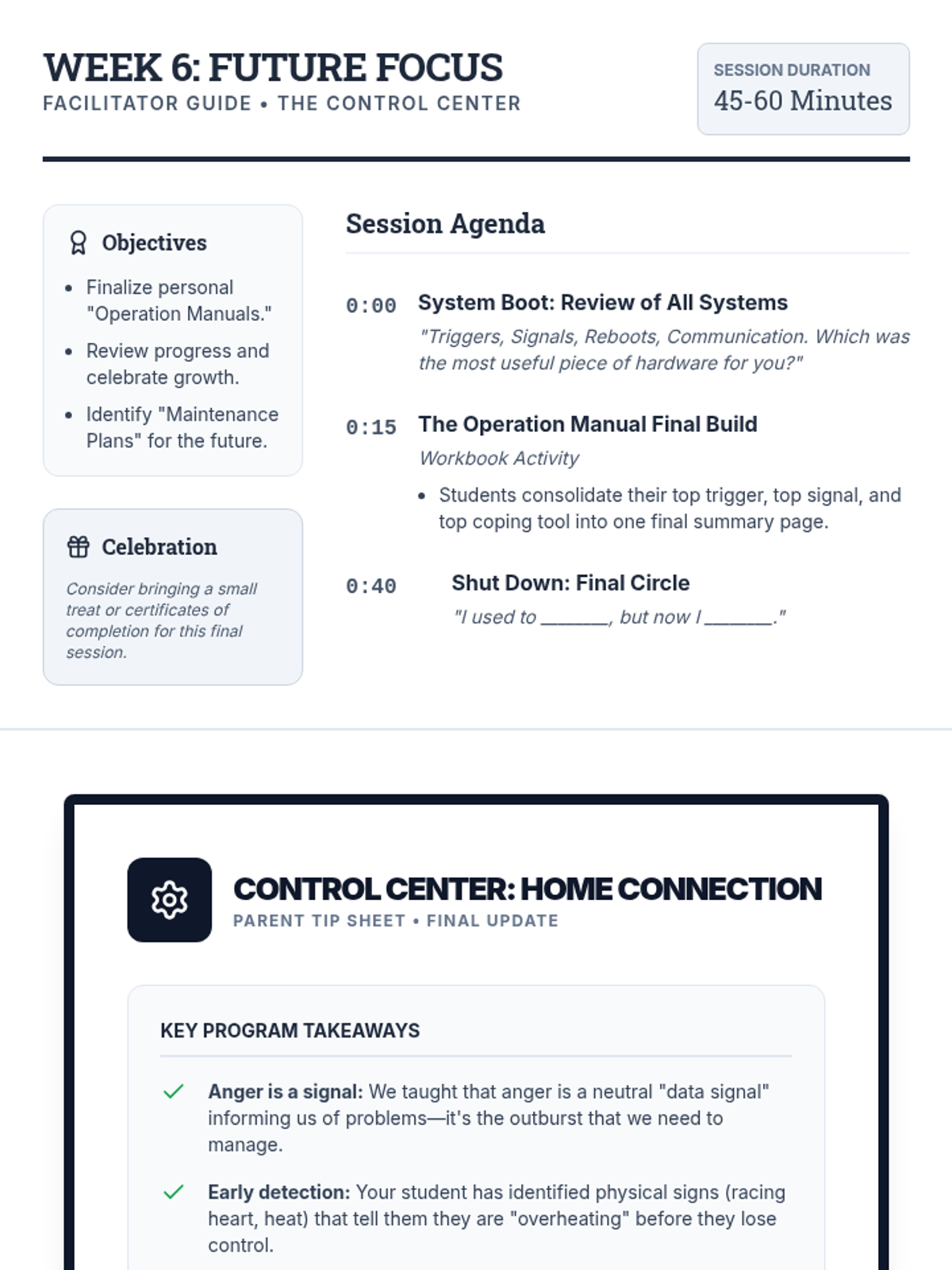
Focuses on long-term maintenance, reflecting on growth, and creating a personalized 'Operation Manual' for future challenges.
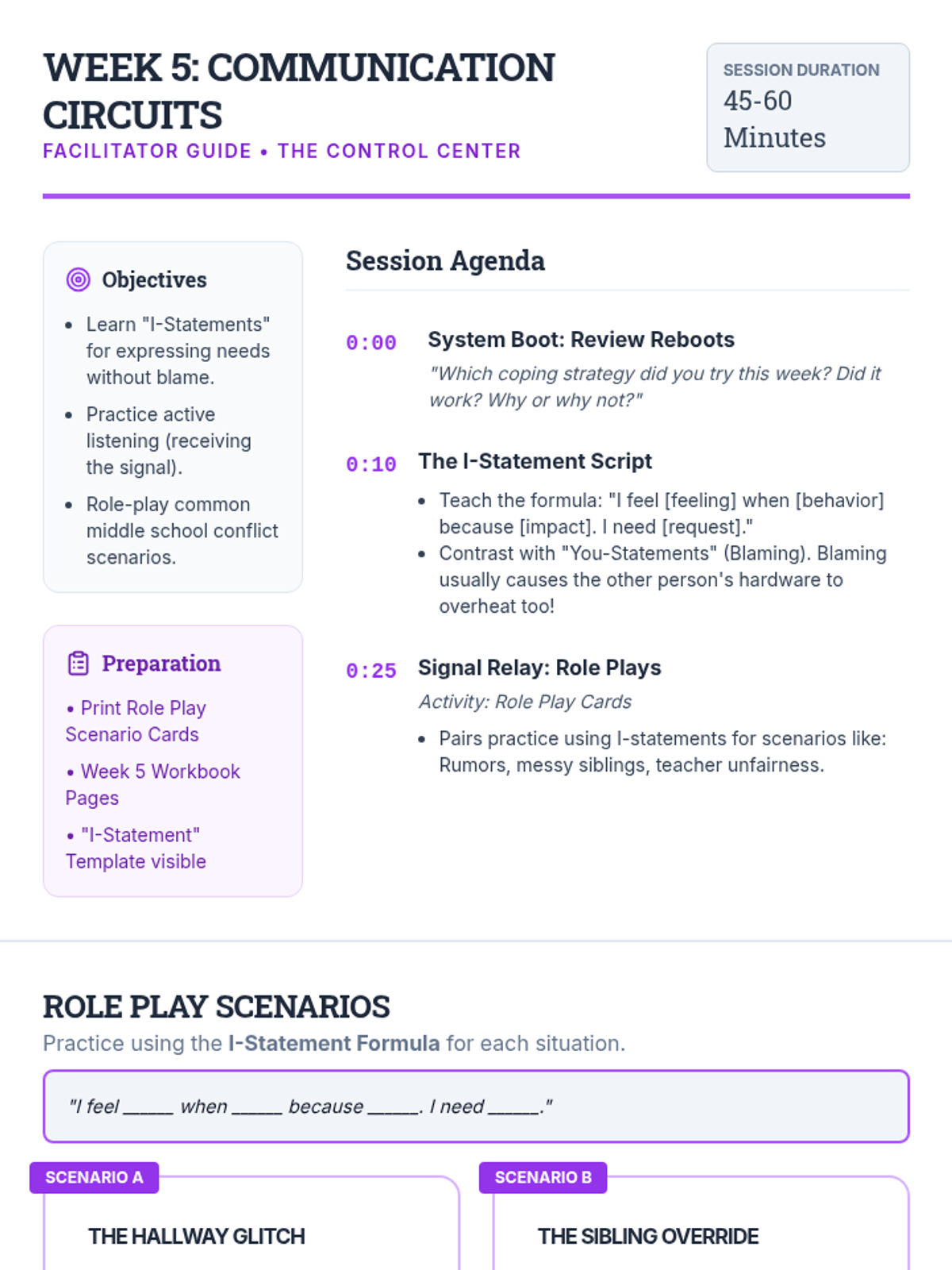
Teaches effective communication tools like 'I' statements and active listening to resolve conflicts without overheating.
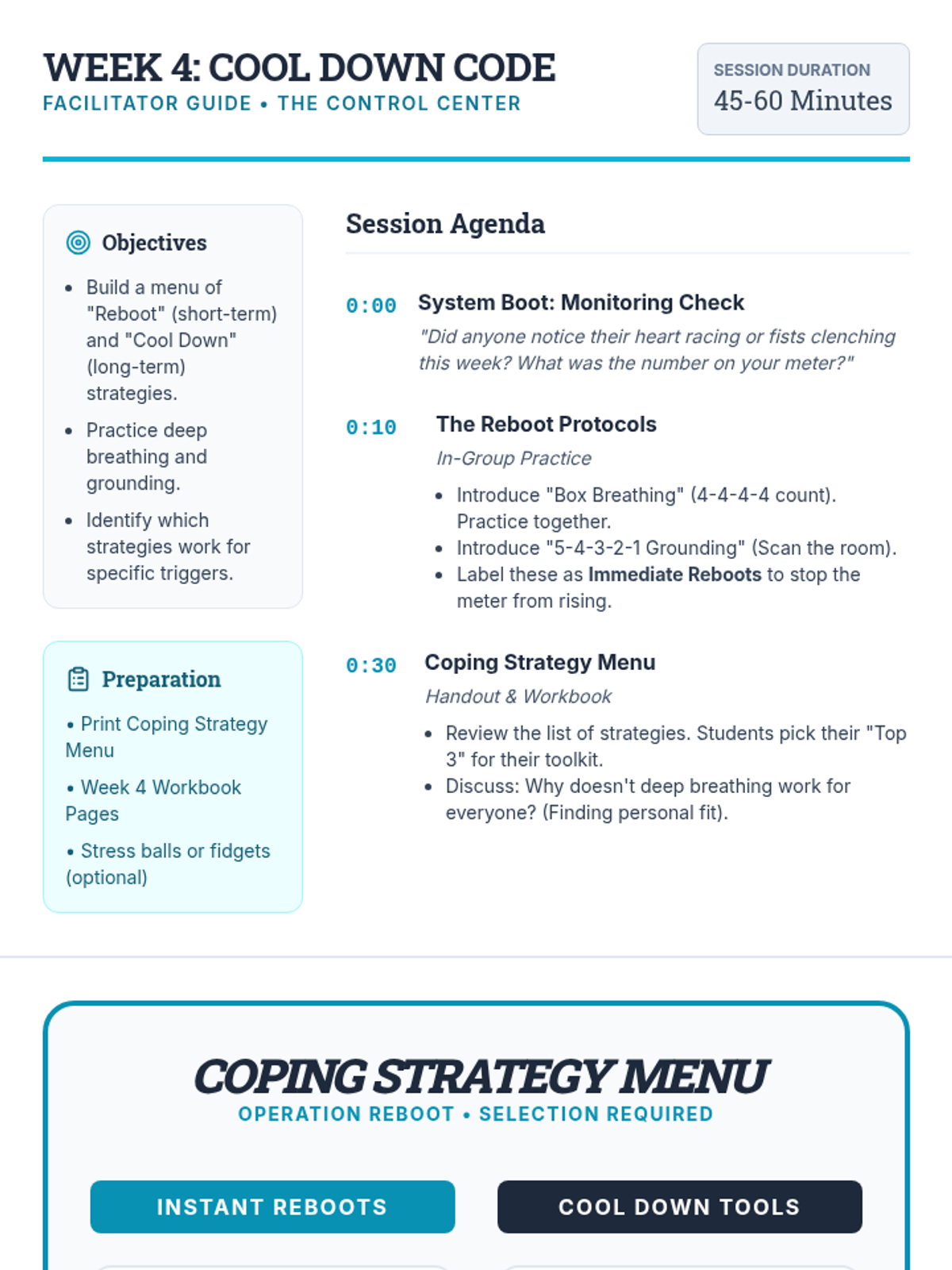
Equips students with a menu of healthy coping mechanisms and relaxation techniques to 'downgrade' the anger signal.
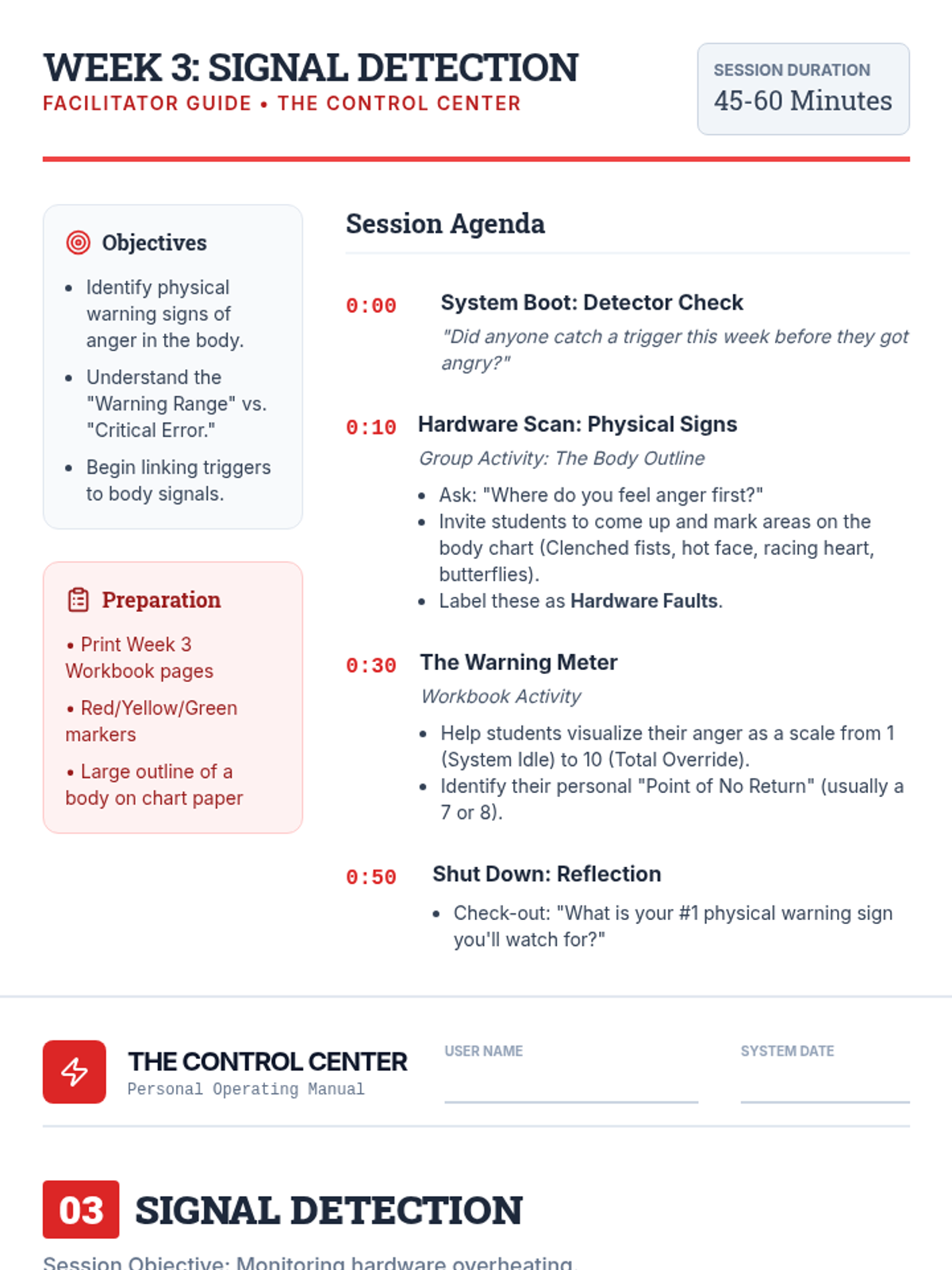
Focuses on the internal hardware signals (physical warning signs) that occur before an outburst and introduces immediate 'reboot' strategies.
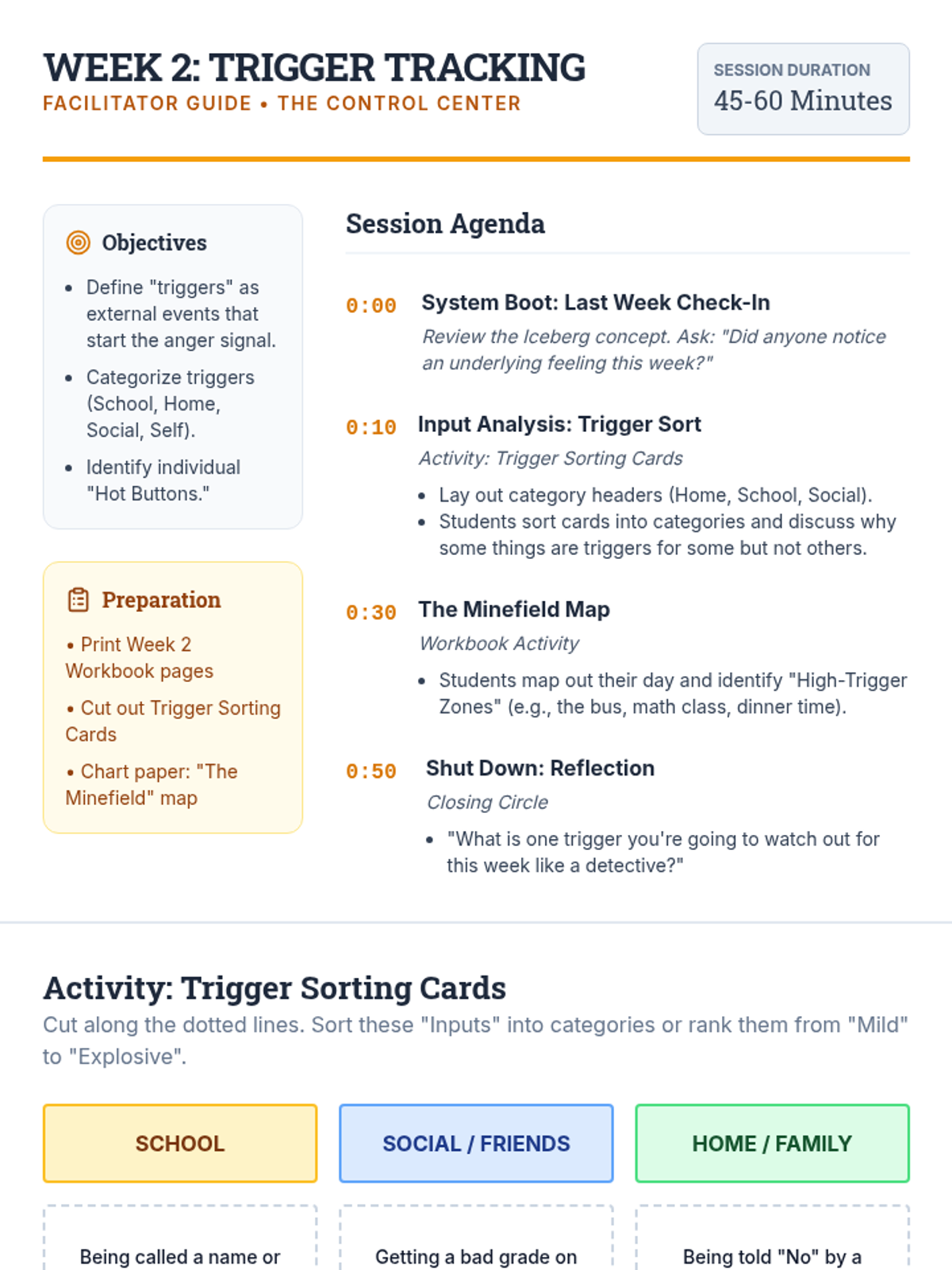
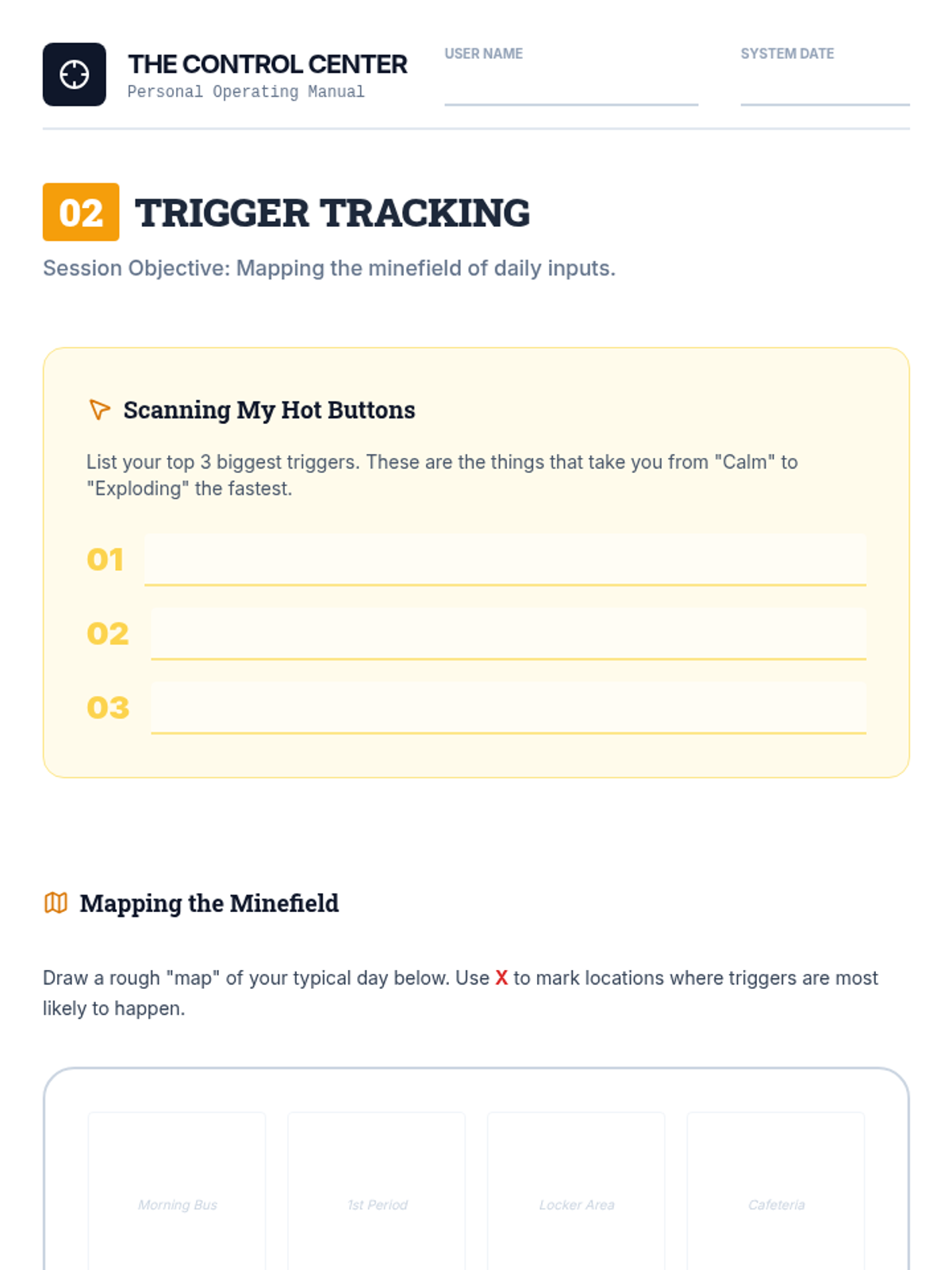
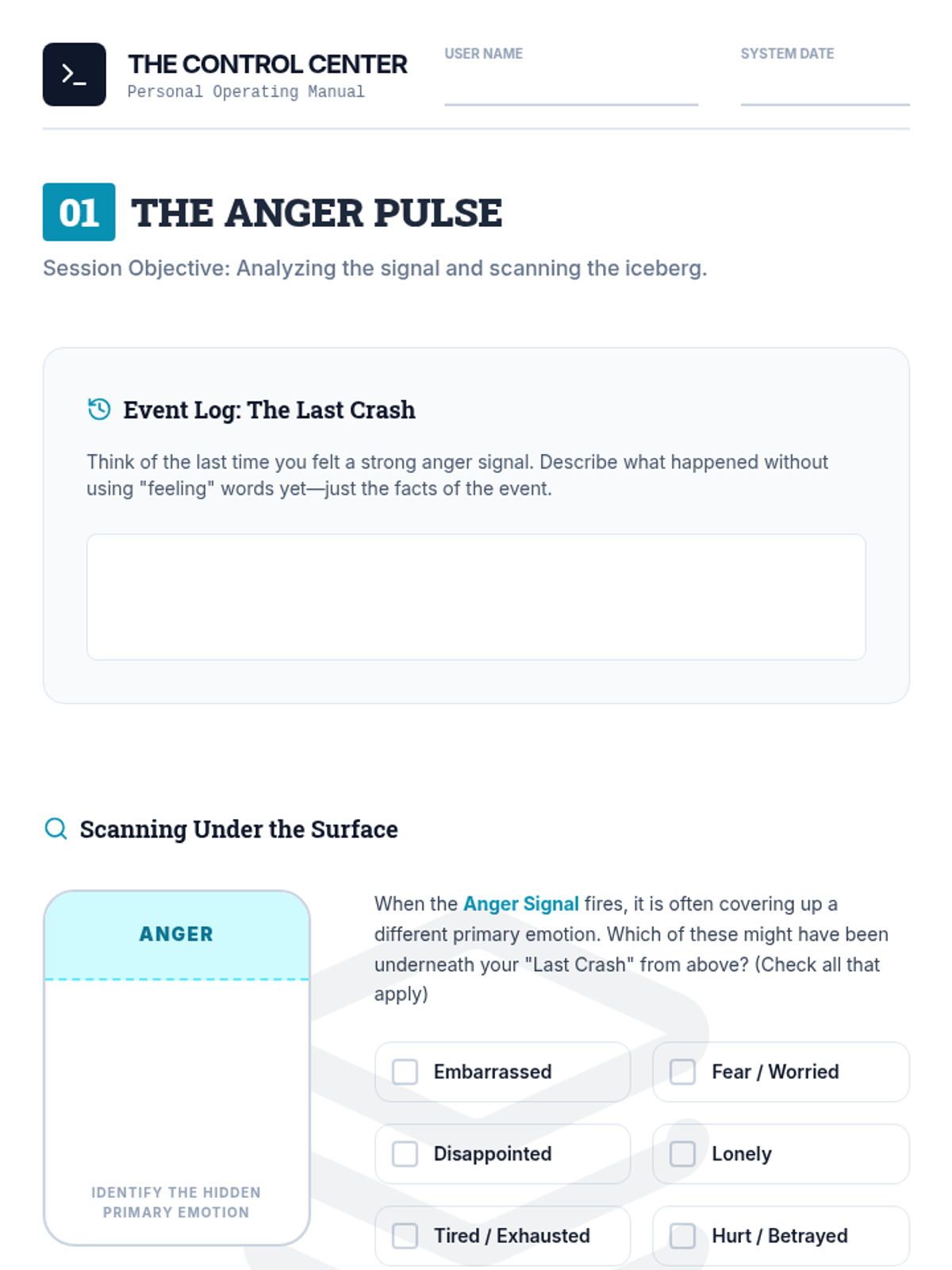
Helps students identify the external 'inputs' (triggers) that activate their anger signals and explores the 'Anger Iceberg' of underlying emotions.
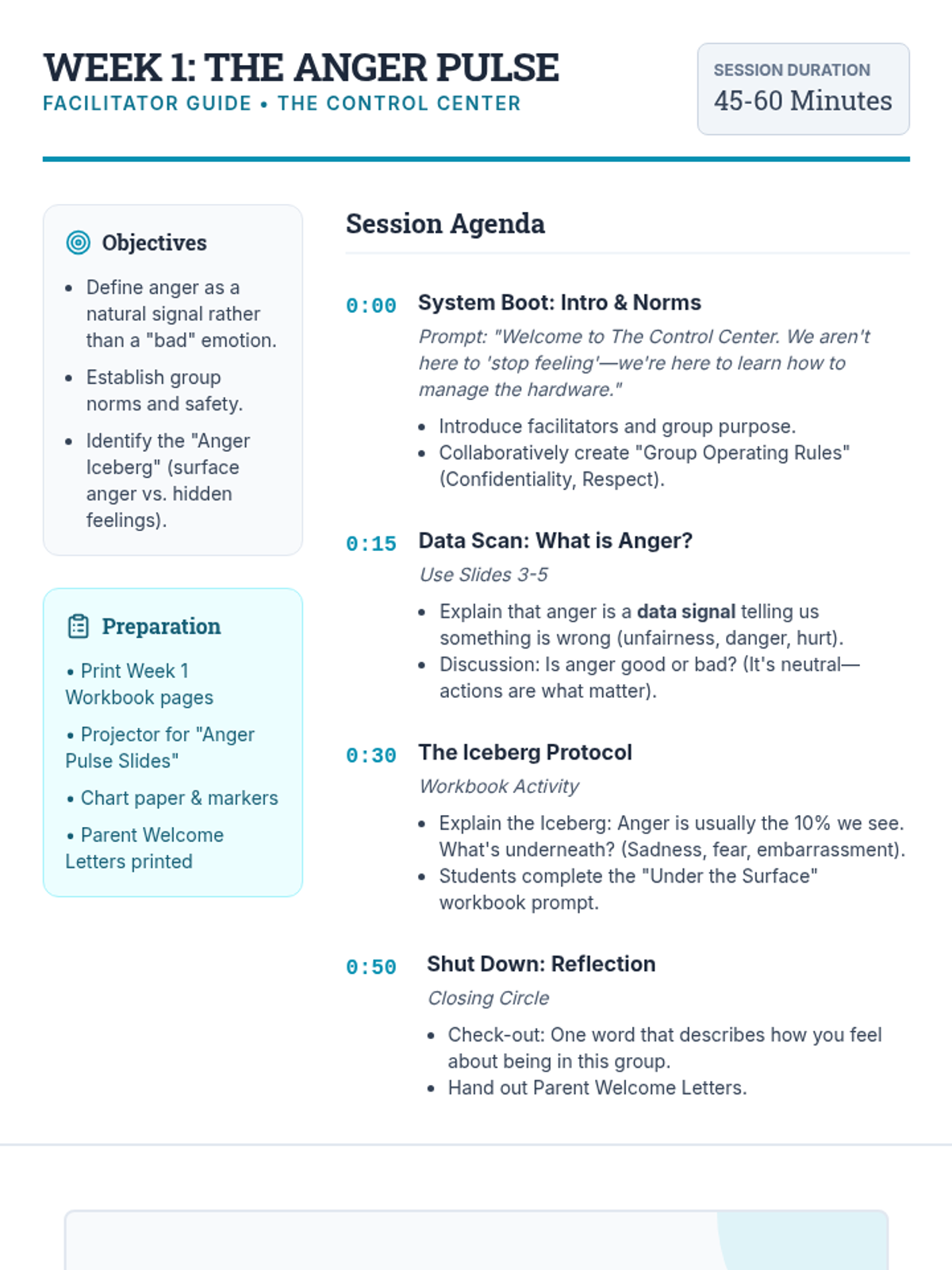
Introduces the concept of anger as a data signal, explores the impact of anger on our 'operating systems', and establishes group norms.
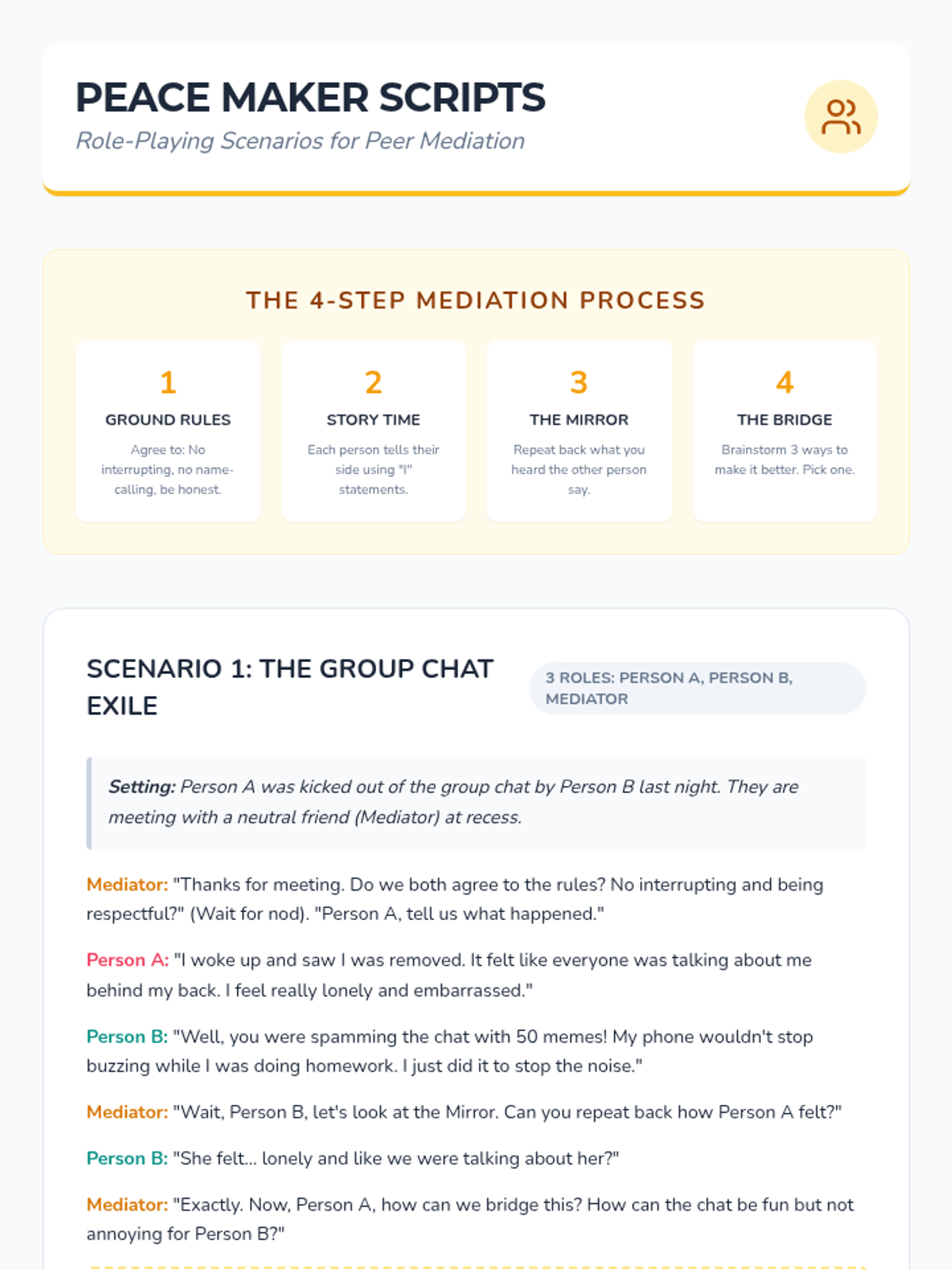
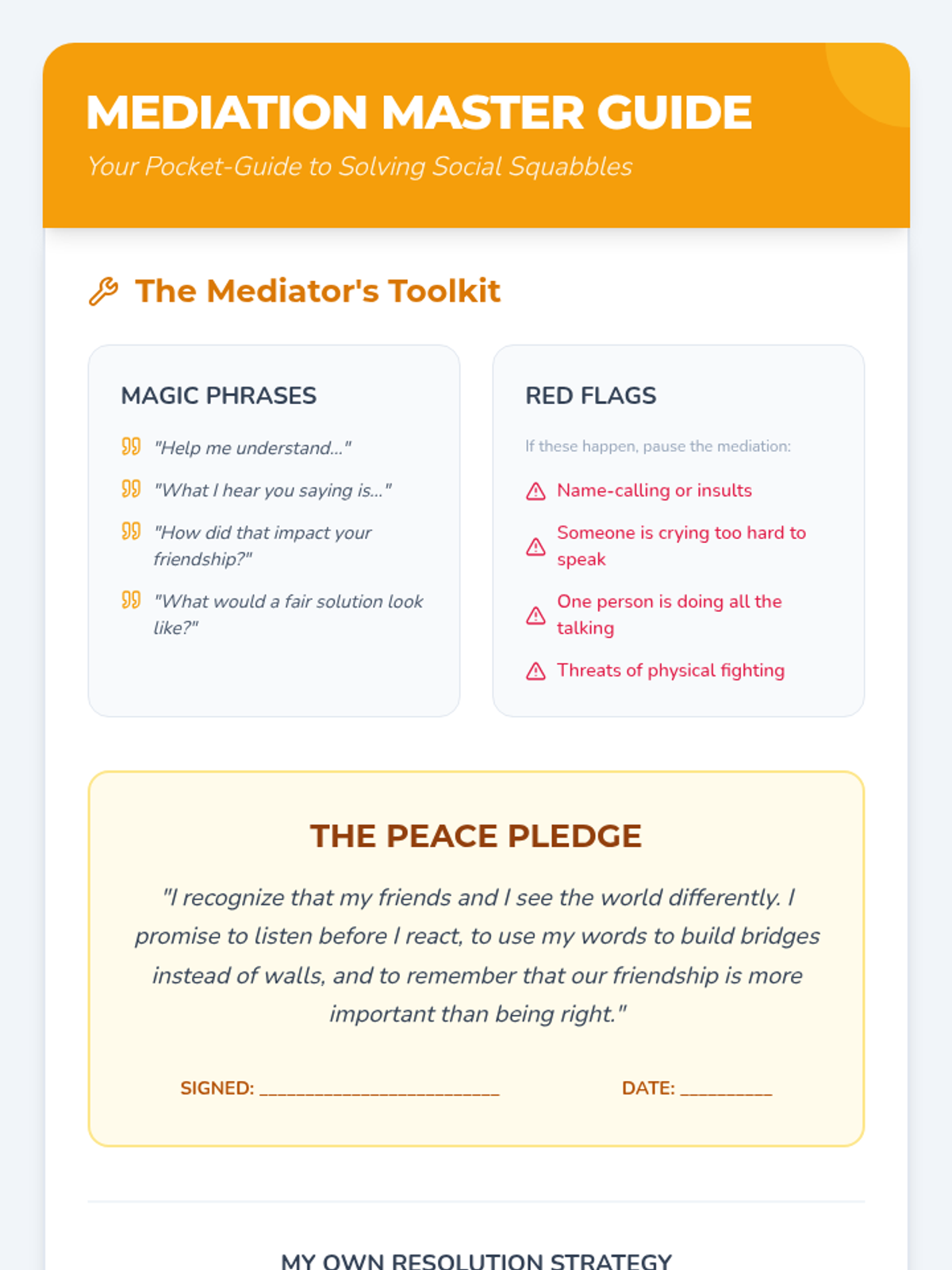
Teaches concrete peer mediation steps and provides role-play opportunities to practice resolving real-world social scenarios.
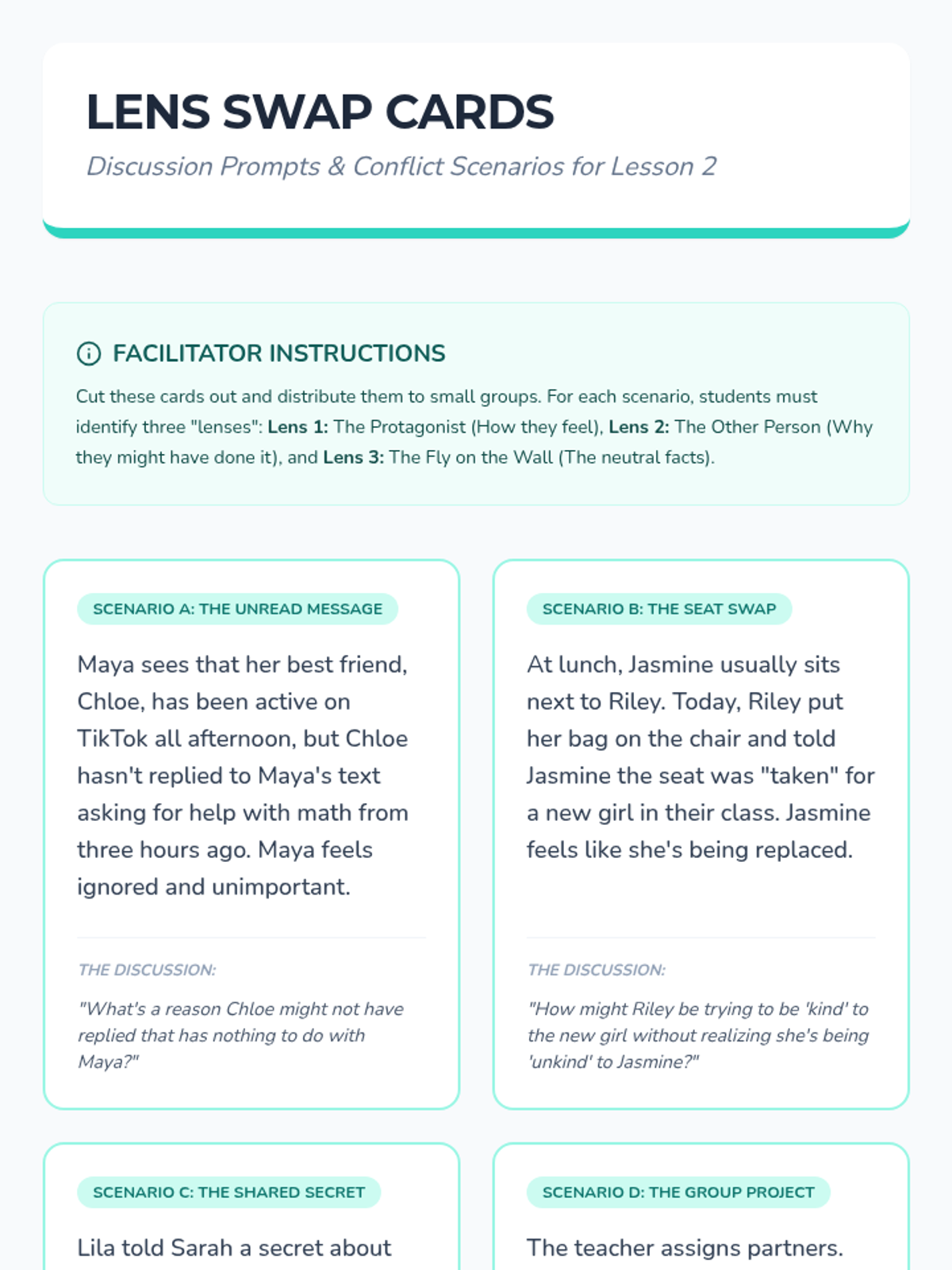
Explores the 'multiple truths' in every conflict, helping students see through others' eyes to find common ground.
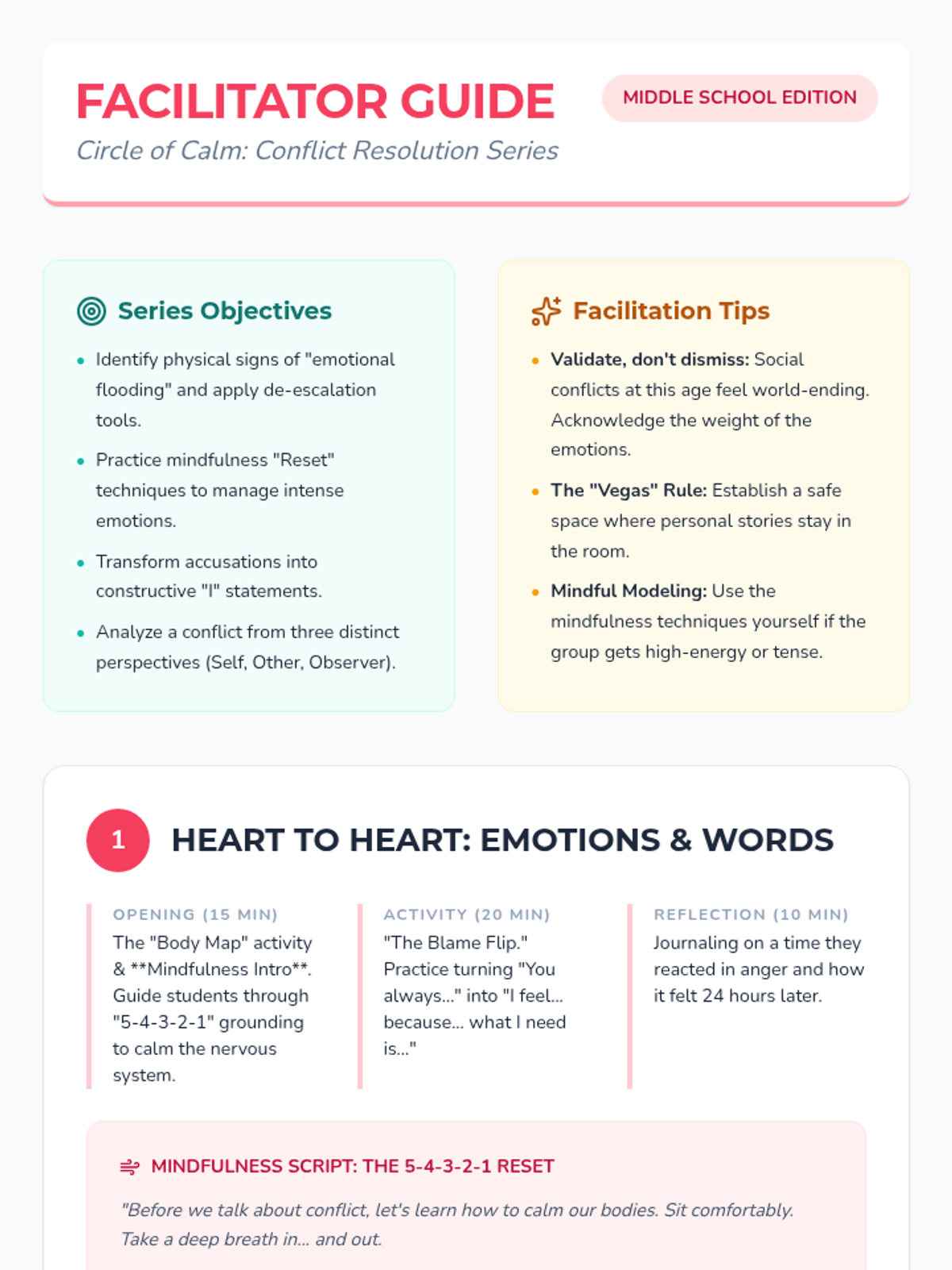
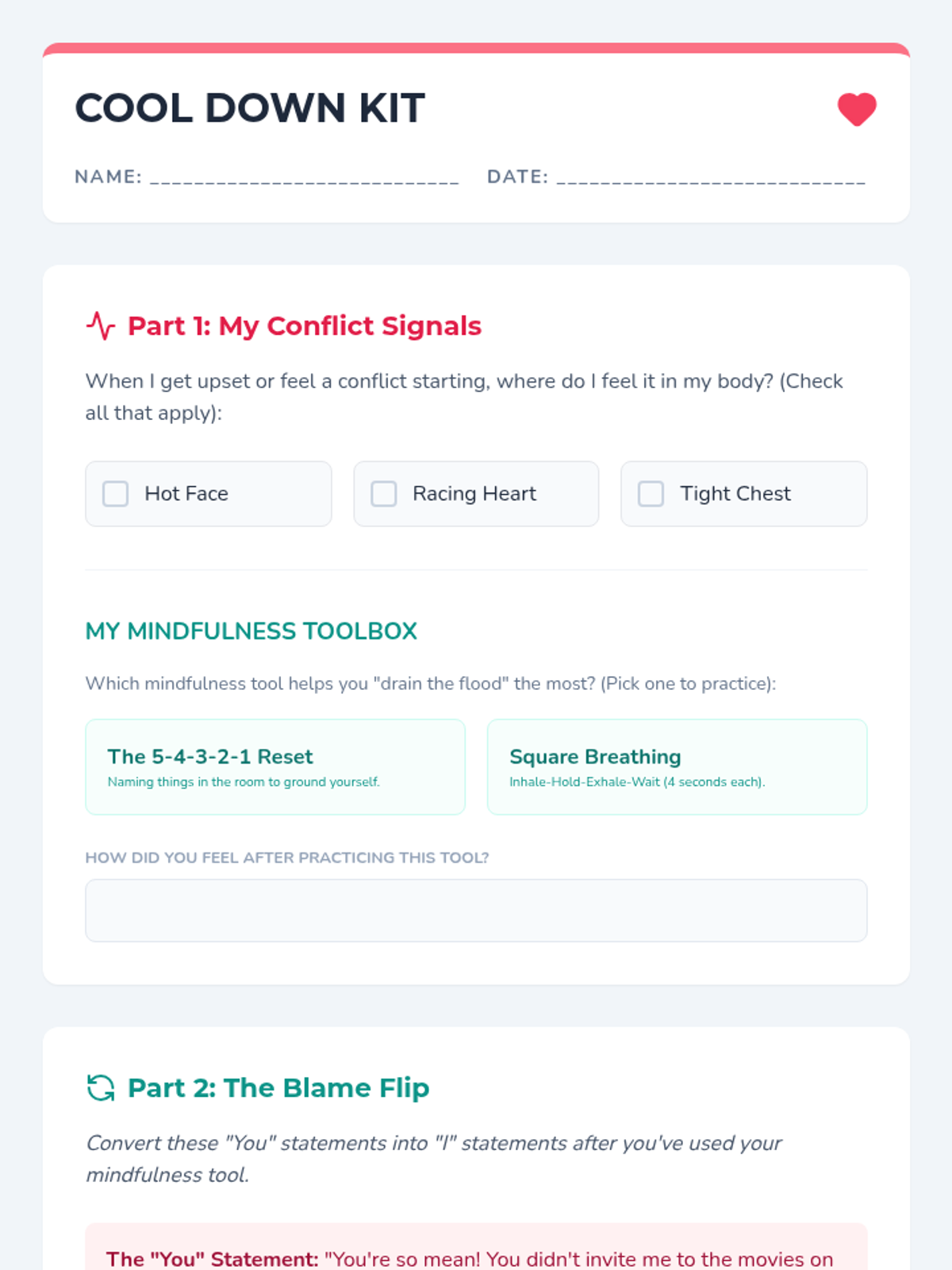
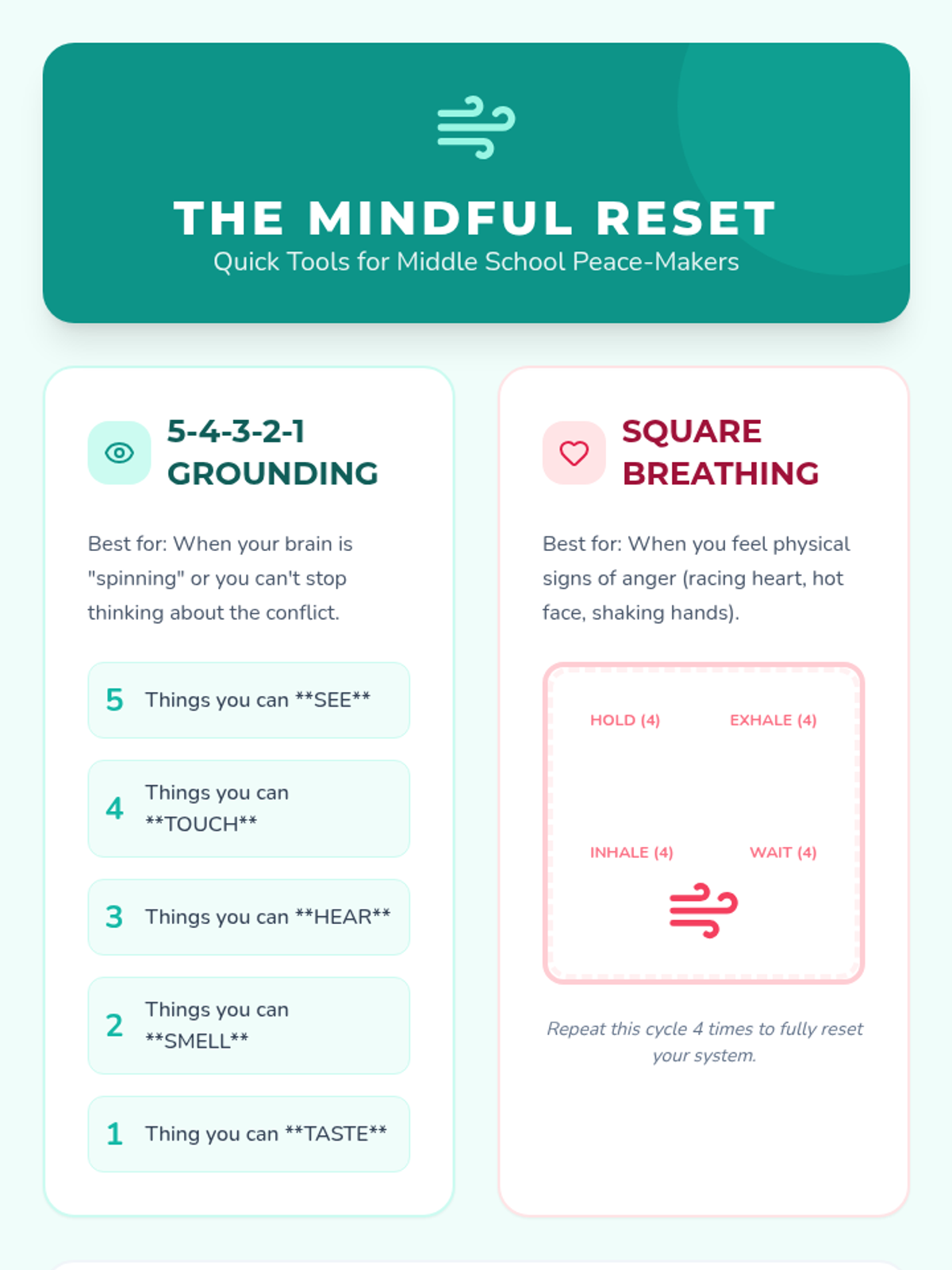
Focuses on identifying emotional triggers during conflict and mastering 'I' statements to express needs without escalation.
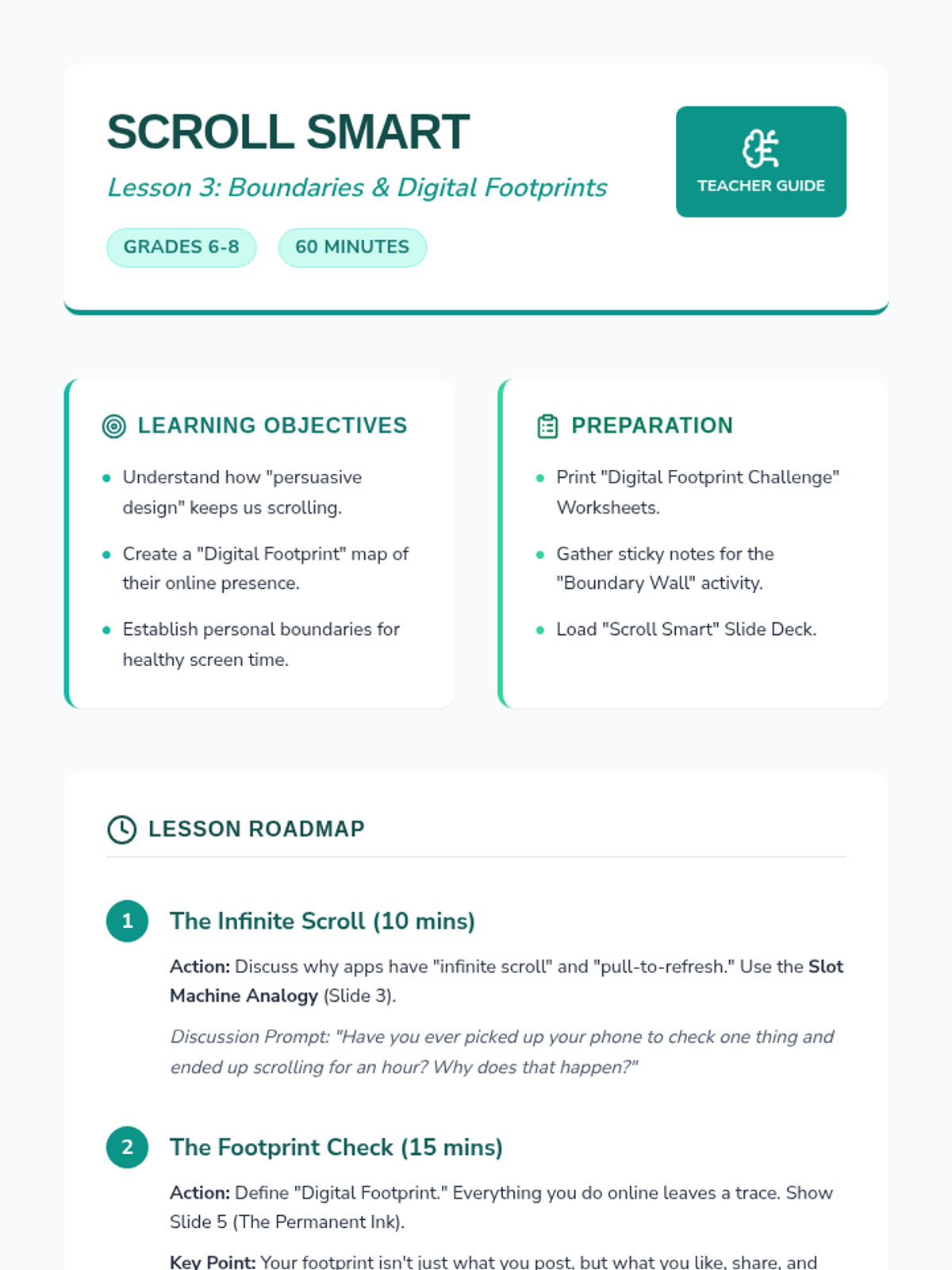
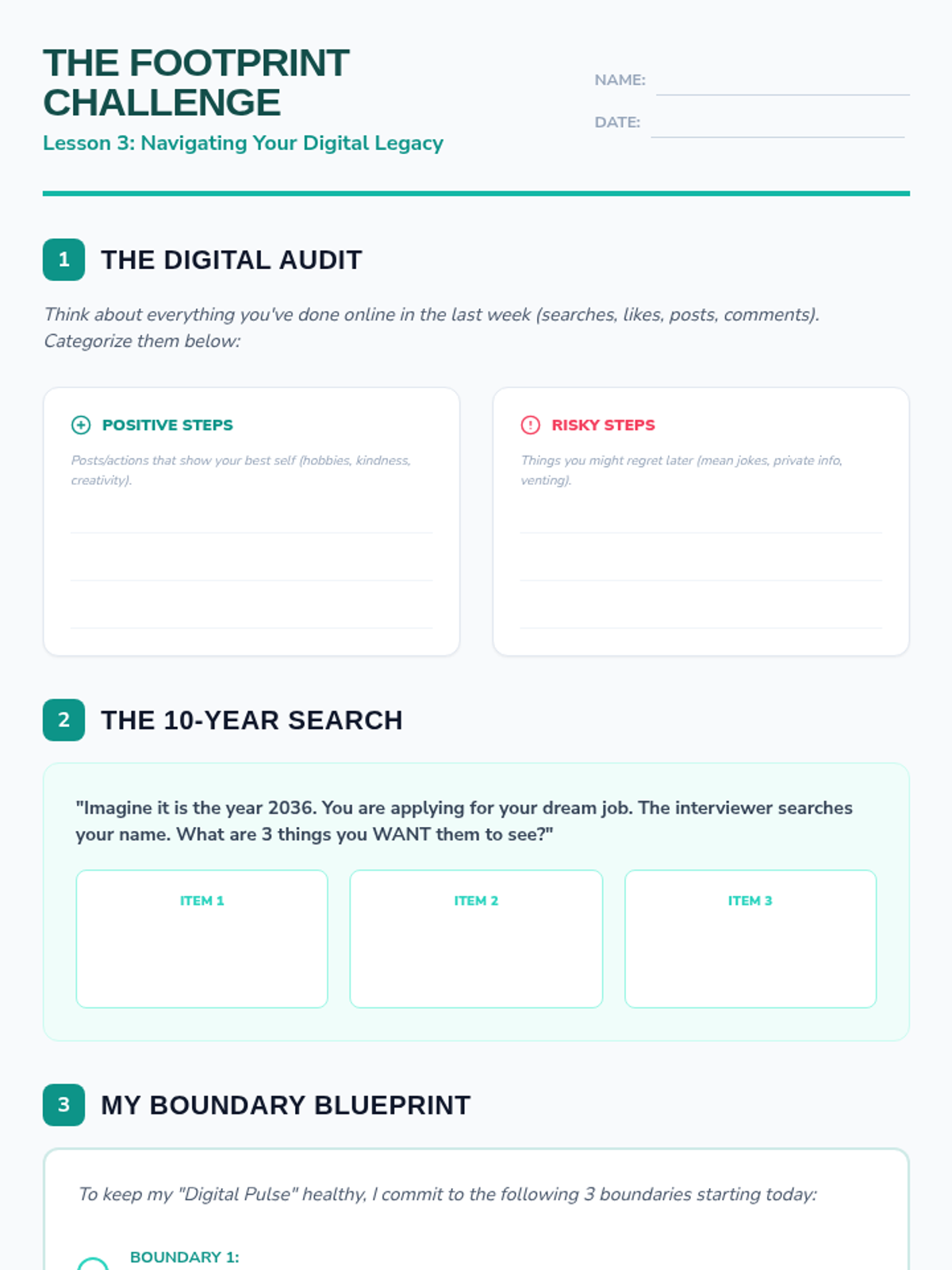
Focuses on setting healthy screen time boundaries, understanding digital footprints, and practicing positive digital citizenship.
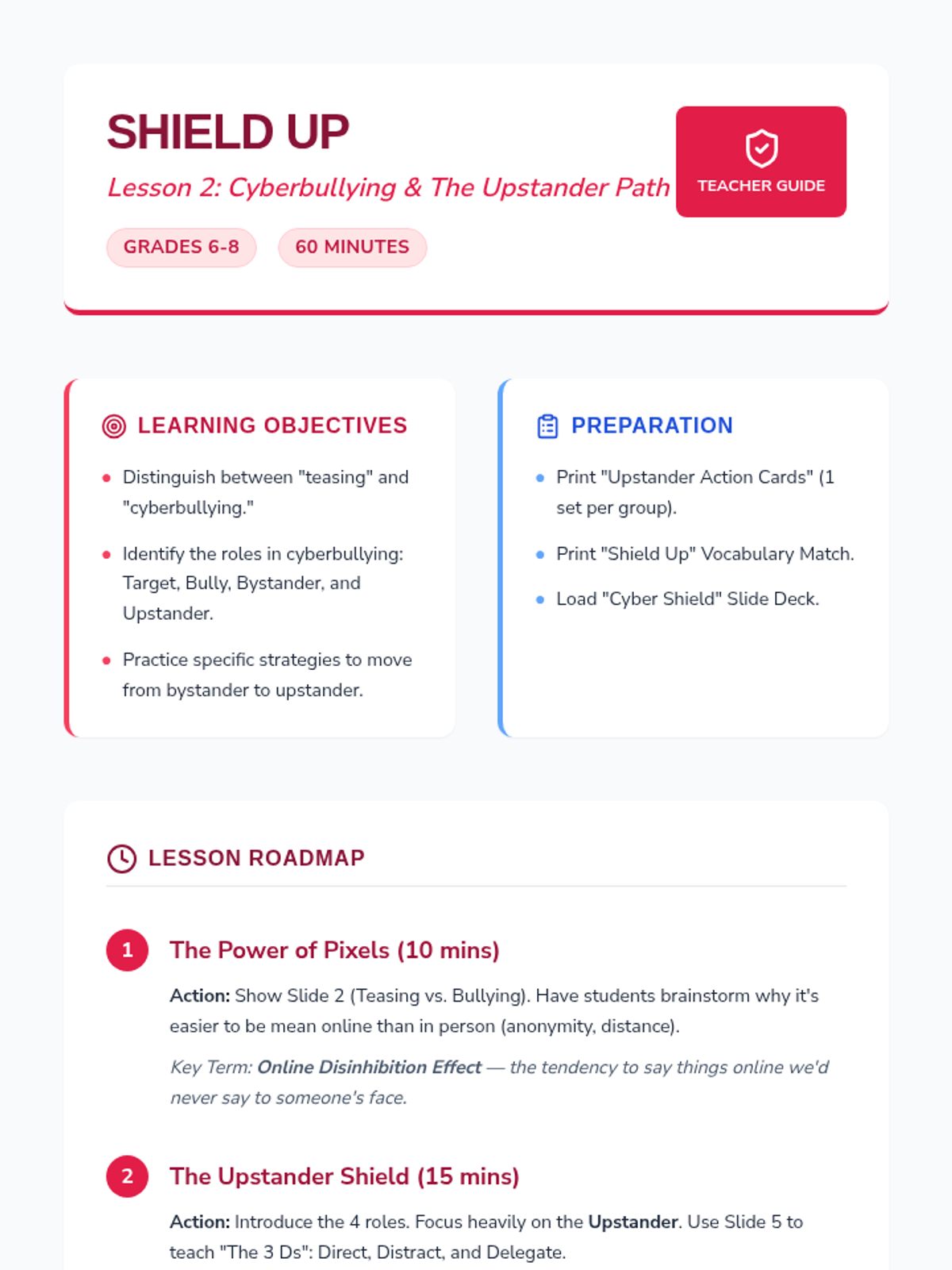
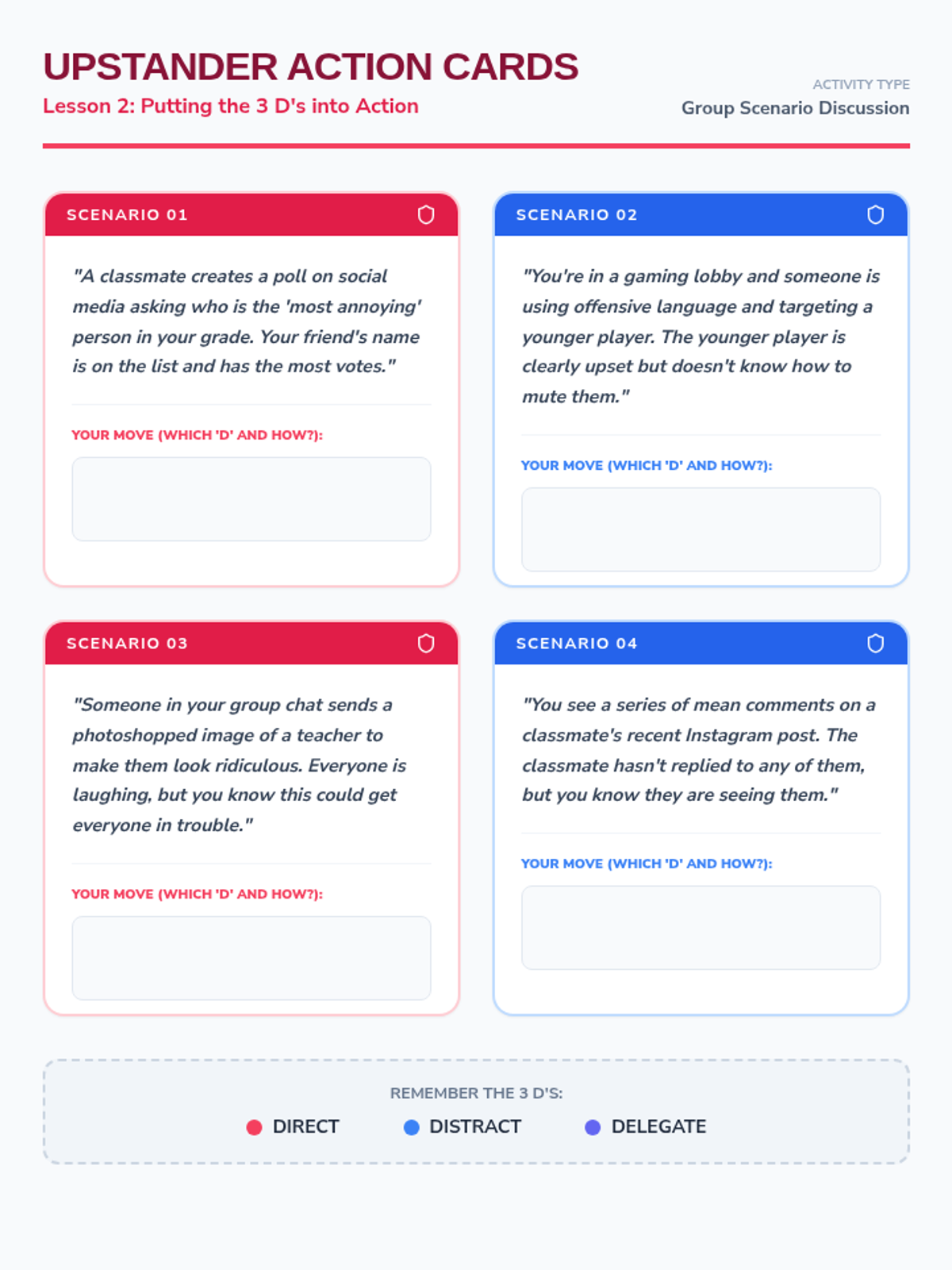
Equips students with tools to identify cyberbullying, move from bystander to upstander, and navigate online conflict safely.