A high-speed lesson teaching students how to estimate the doubling time of investments using the Rule of 72 mental math shortcut. Students compare mental estimates with exact logarithmic calculations to understand the rule's power and limitations.
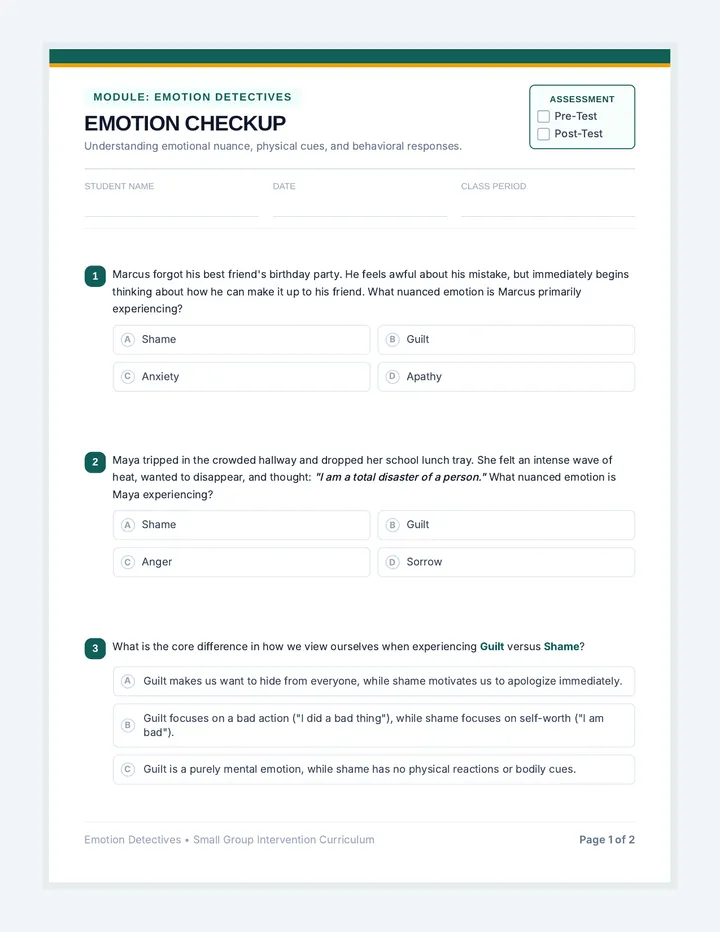
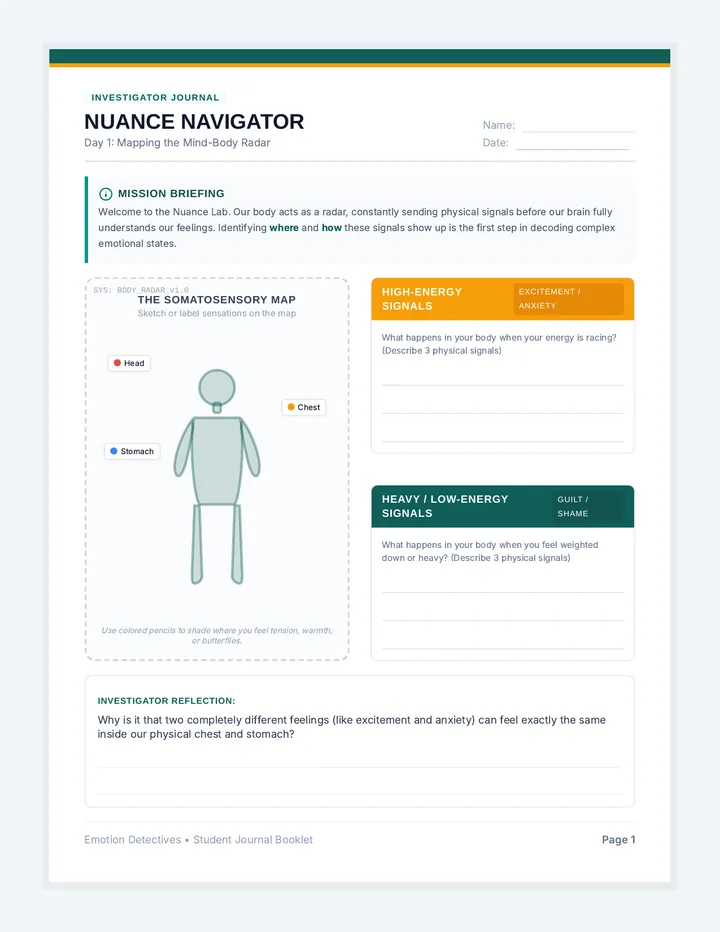
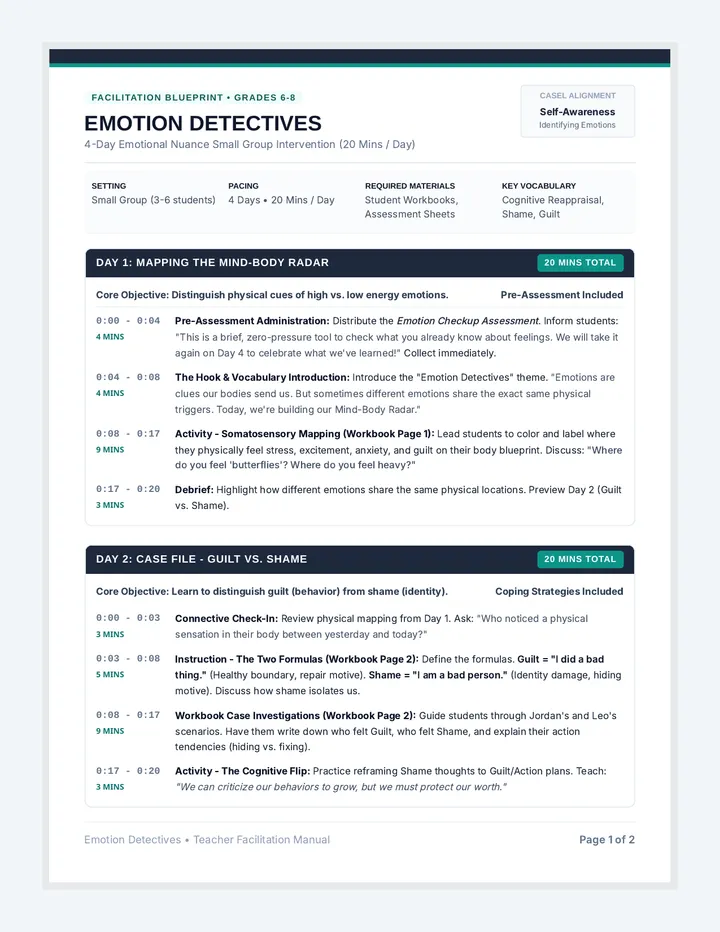
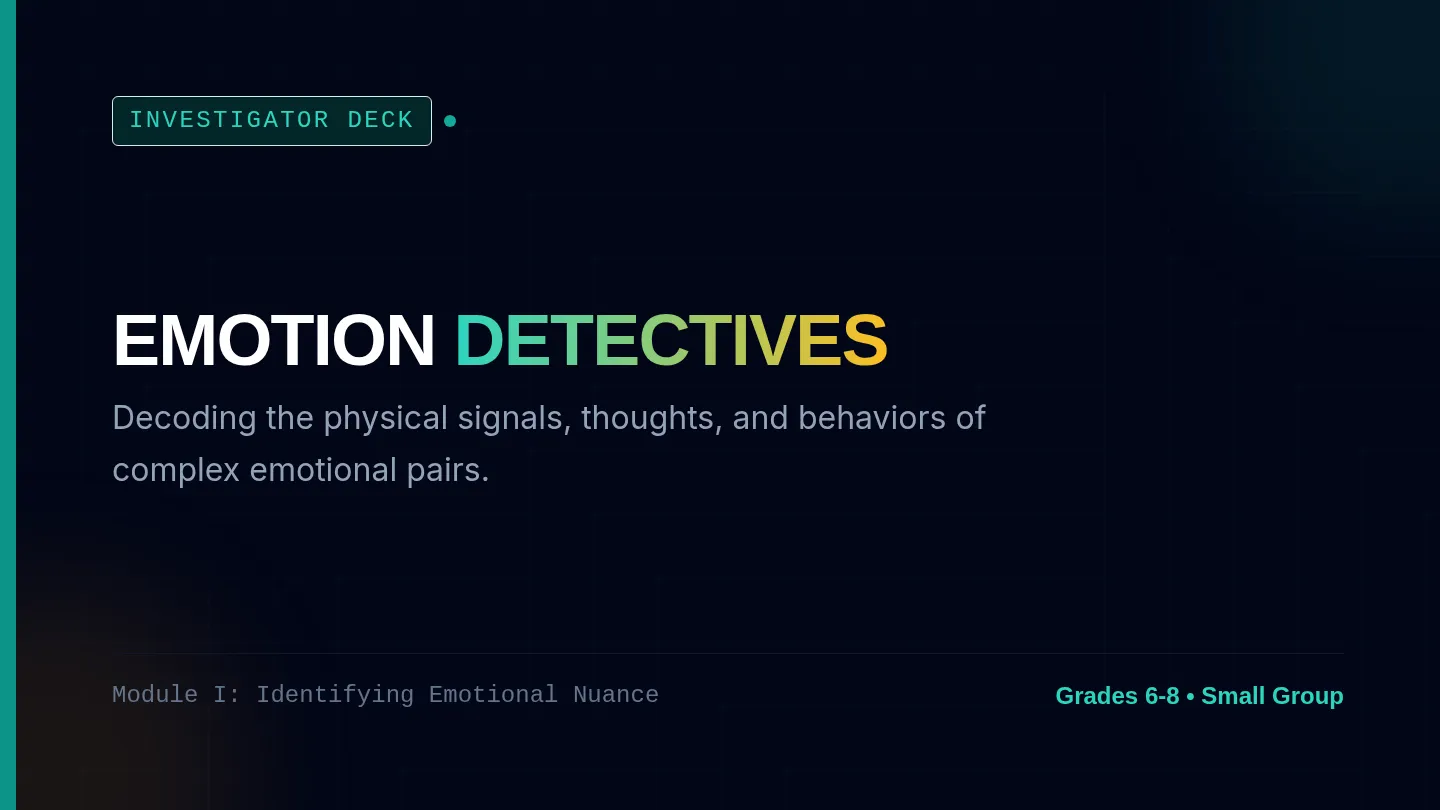
A 4-day small group intervention for grades 6-8 focusing on self-awareness and emotional nuance. Students explore the physical, cognitive, and behavioral distinctions between complex emotional pairs like guilt versus shame and excitement versus anxiety.
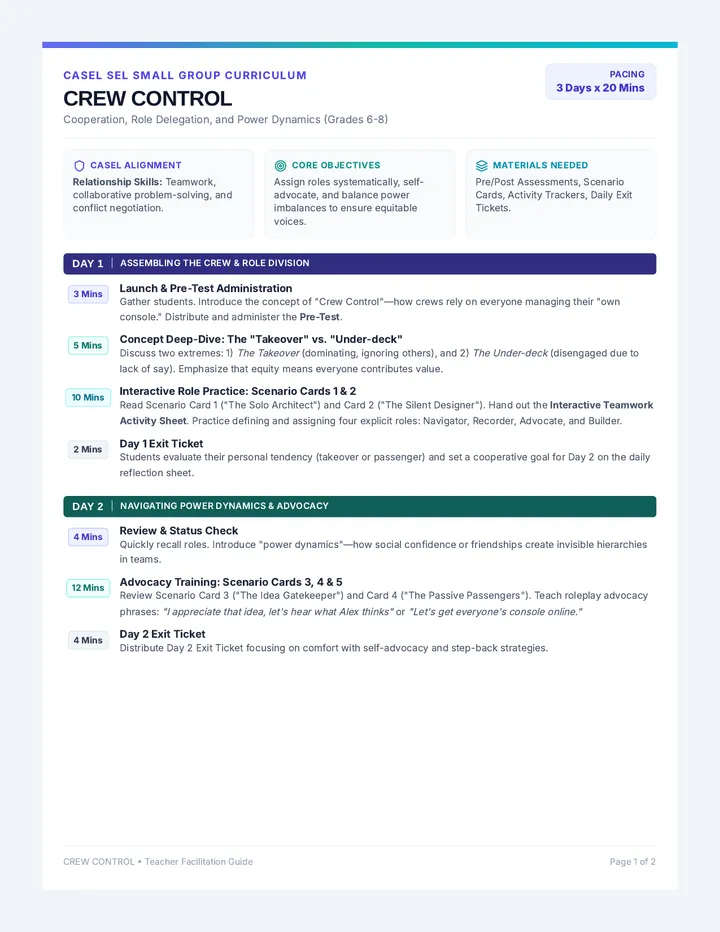
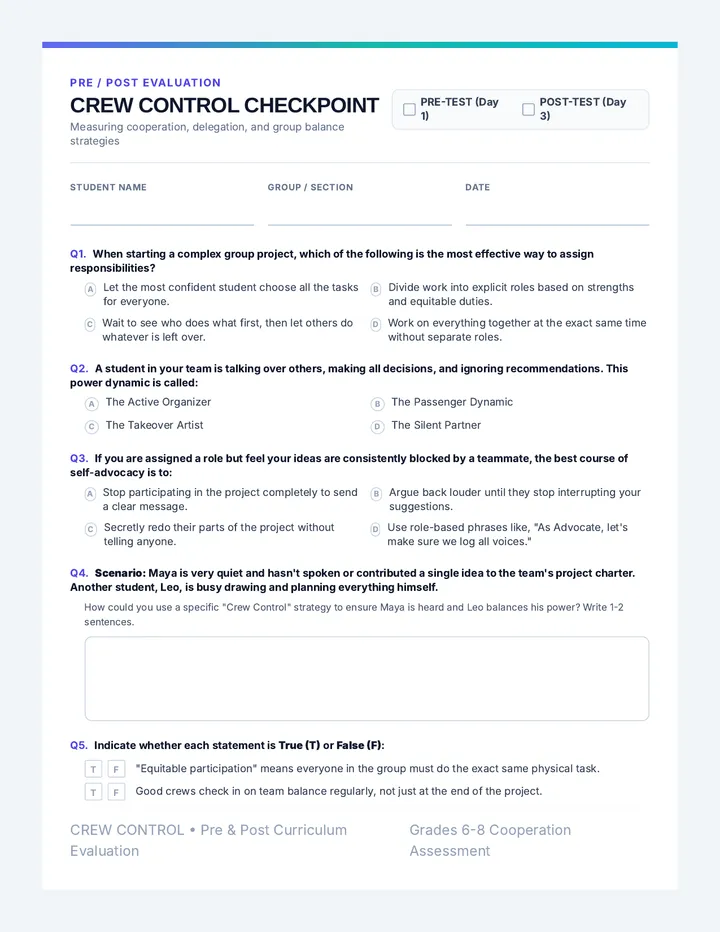
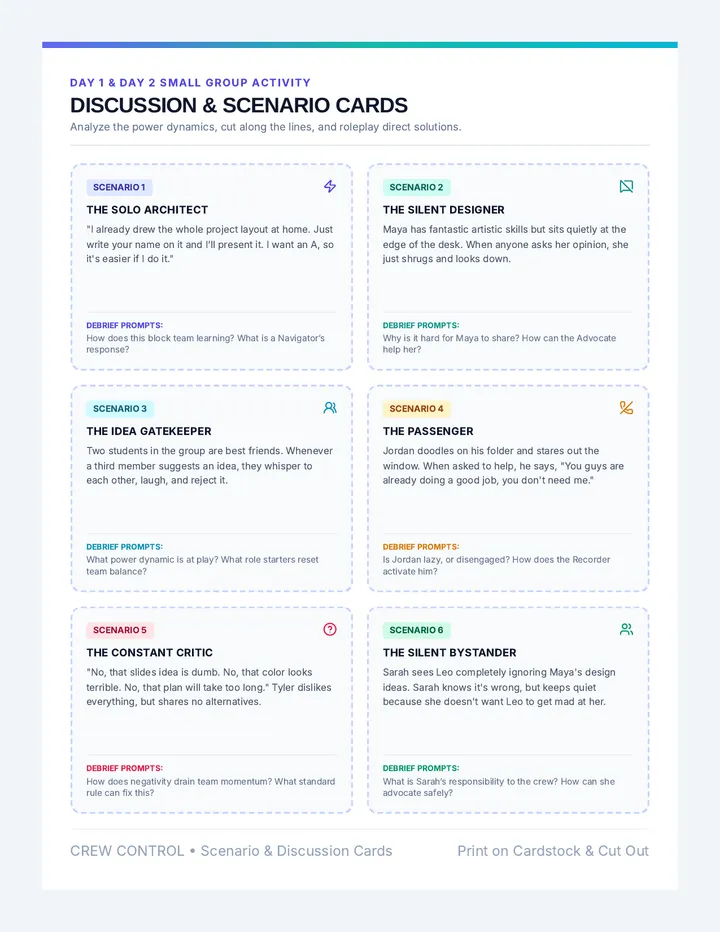
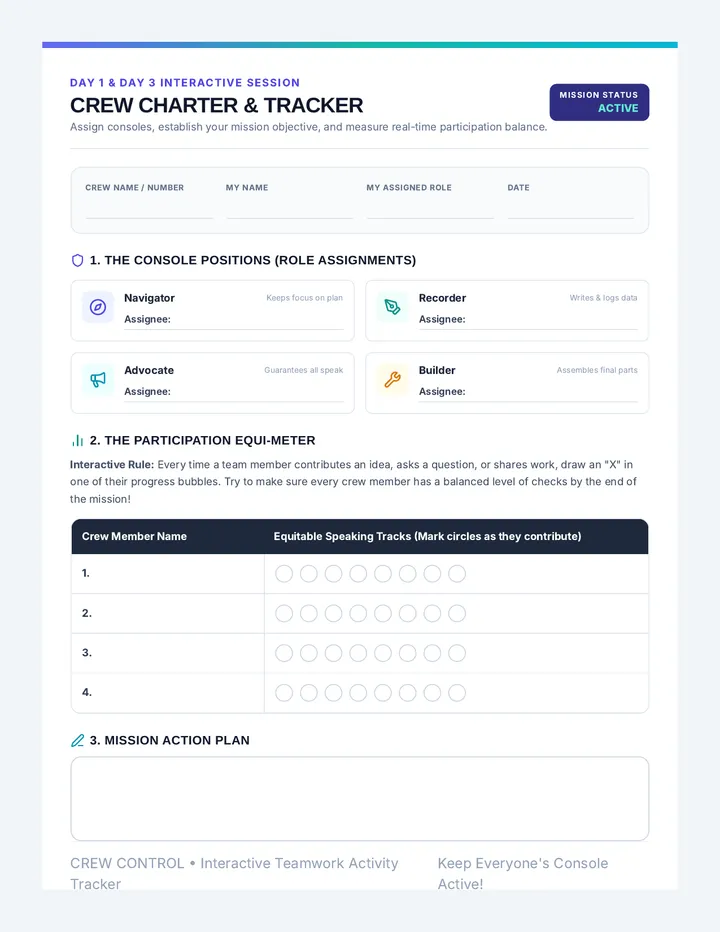
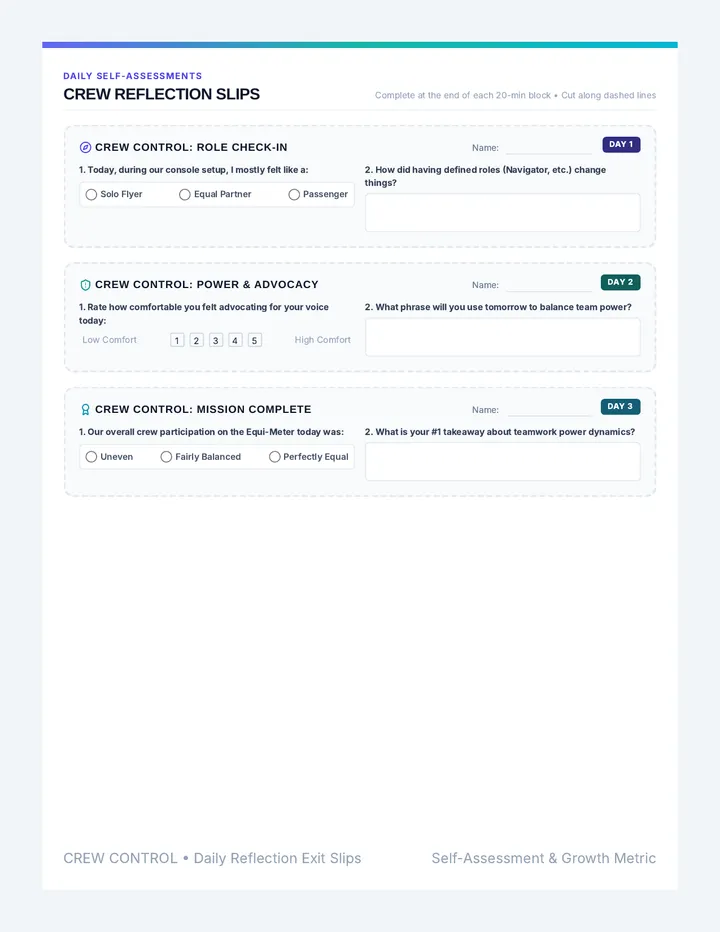
A cohesive 3-day small group curriculum that teaches middle school students how to coordinate project responsibilities, self-advocate, and address dominance or passivity to ensure equitable participation.
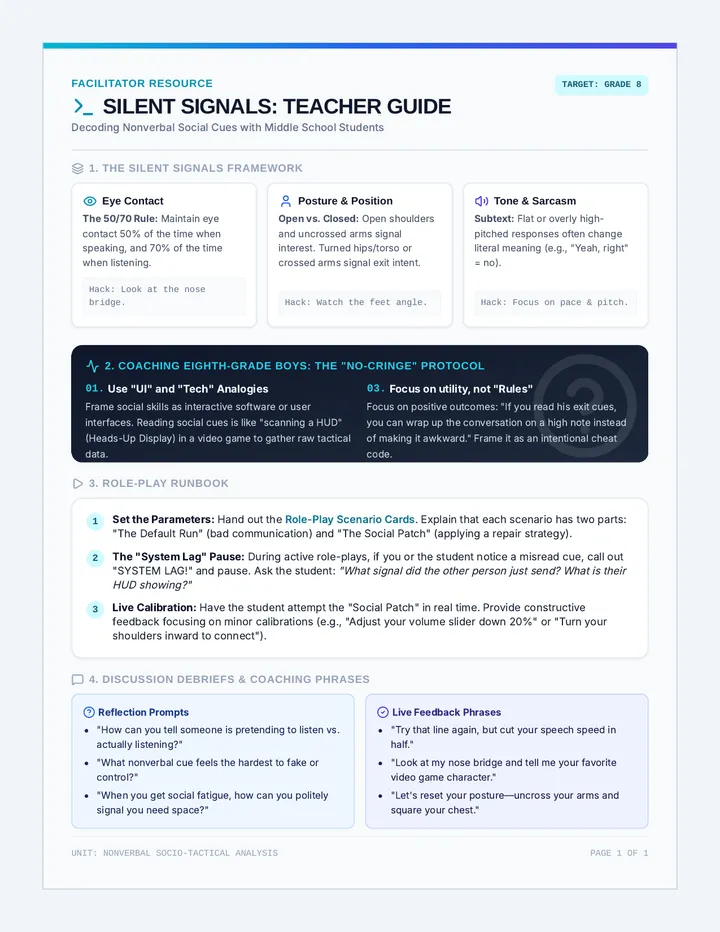
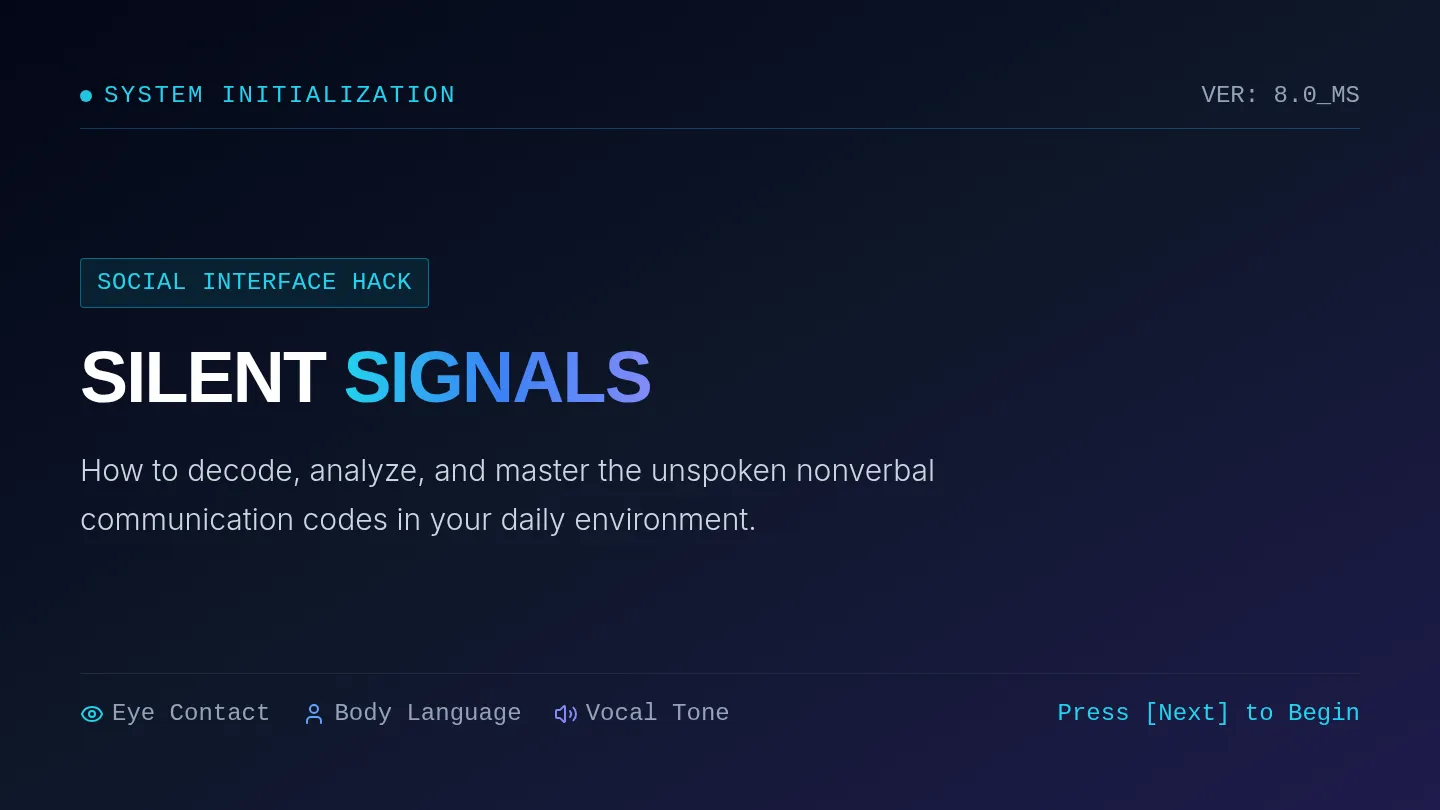
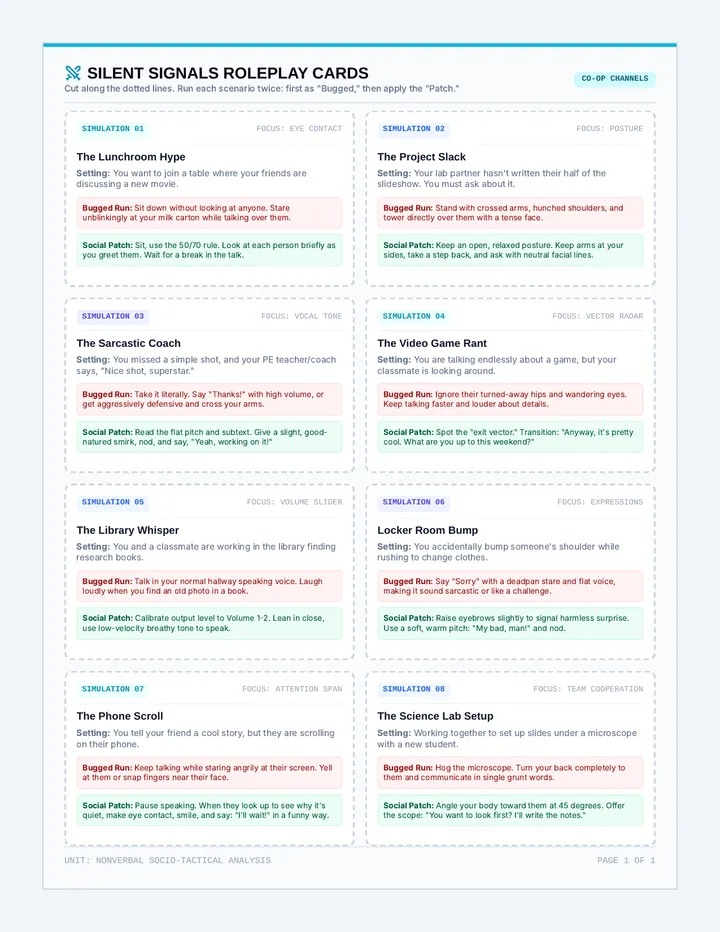
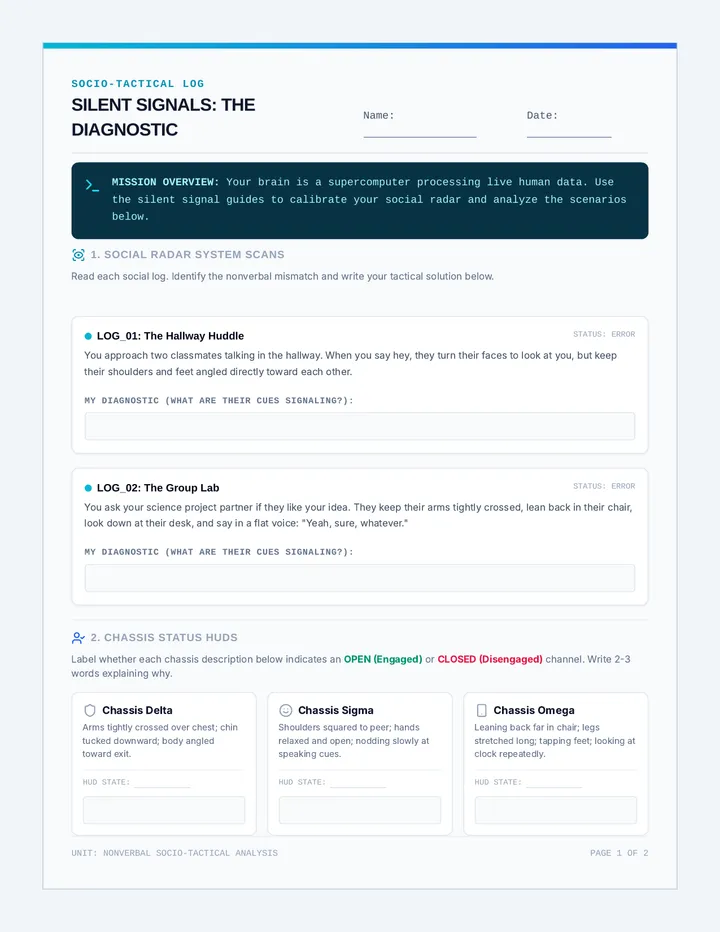
A practical, high-interest social skills lesson designed to help eighth-grade students decode and master silent communication cues: eye contact patterns, body language, and tone of voice. Contains slide-based instruction, role-play challenges, interactive worksheets, and an educator facilitation guide.
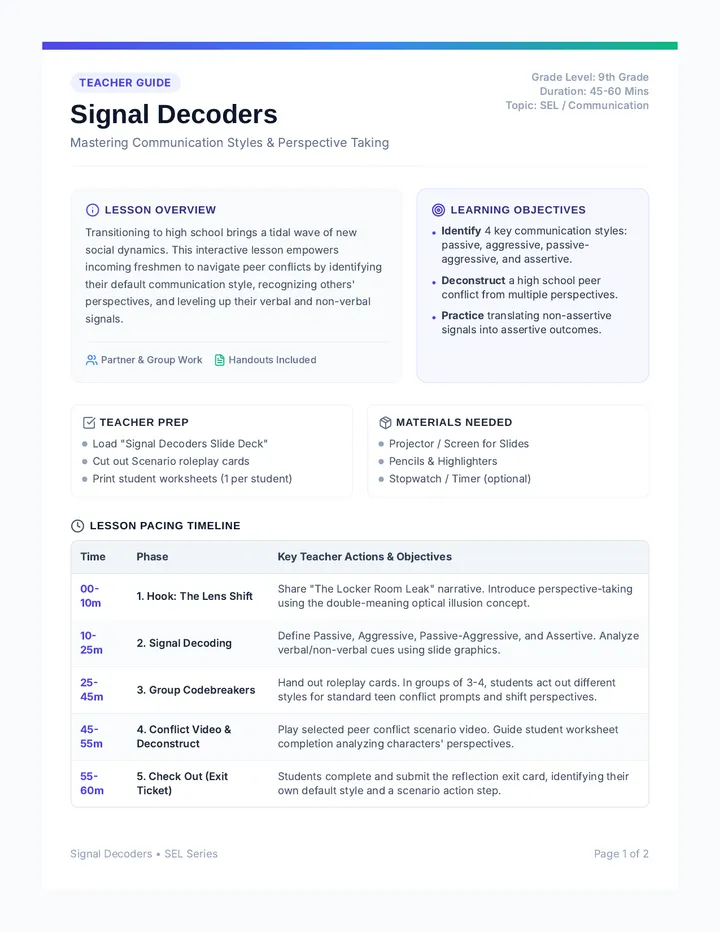
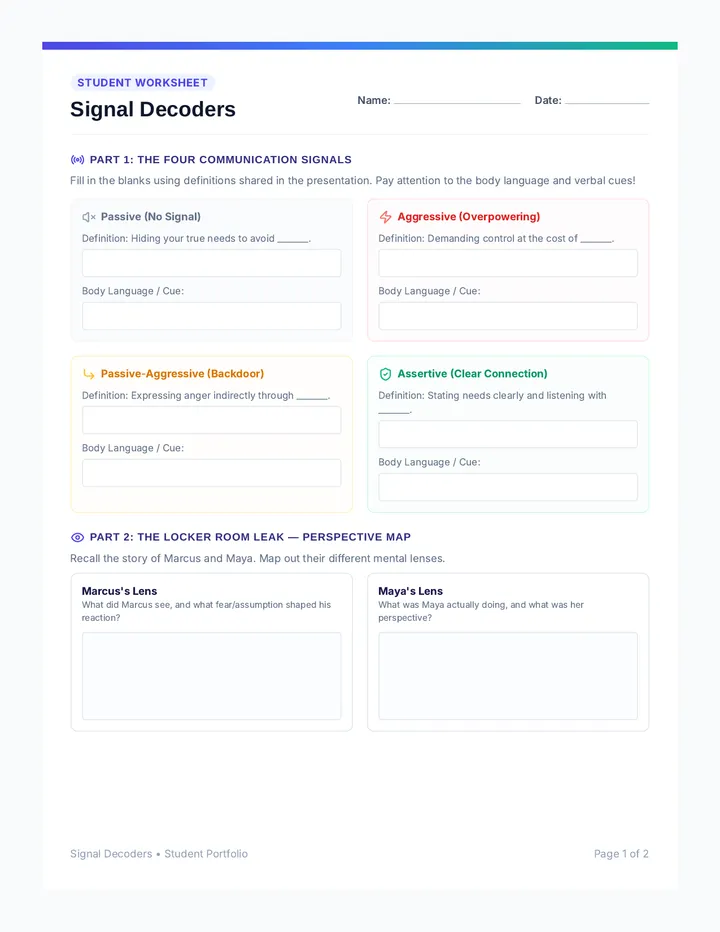
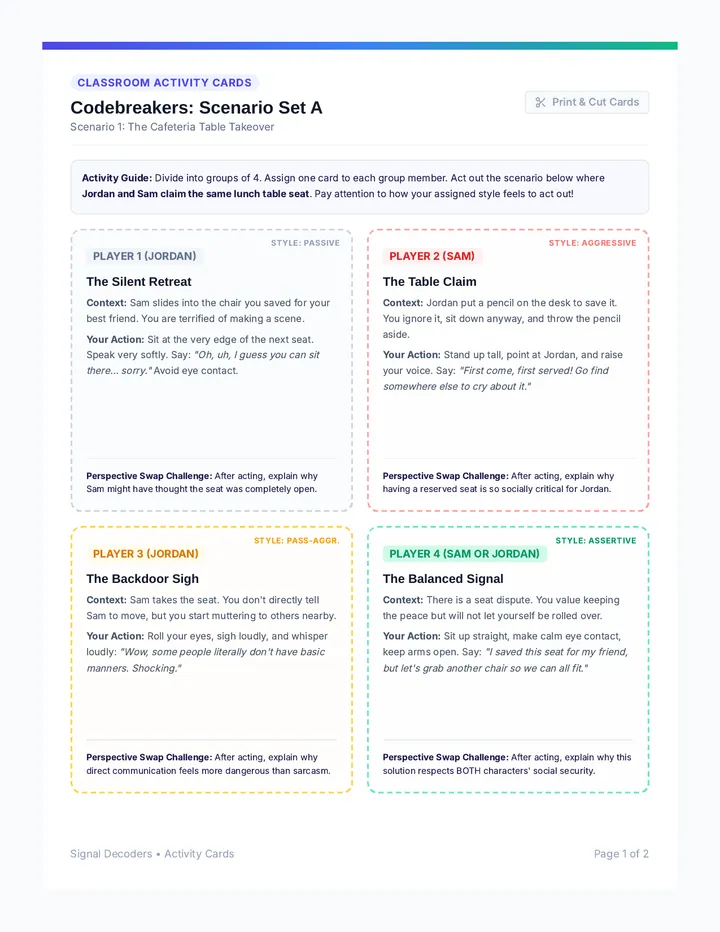
A high-energy, interactive lesson introducing incoming freshmen to the four communication styles (Passive, Aggressive, Passive-Aggressive, Assertive) and perspective-taking. Students analyze scenarios, roleplay reactions, and learn to align their signals for clear communication in high school.
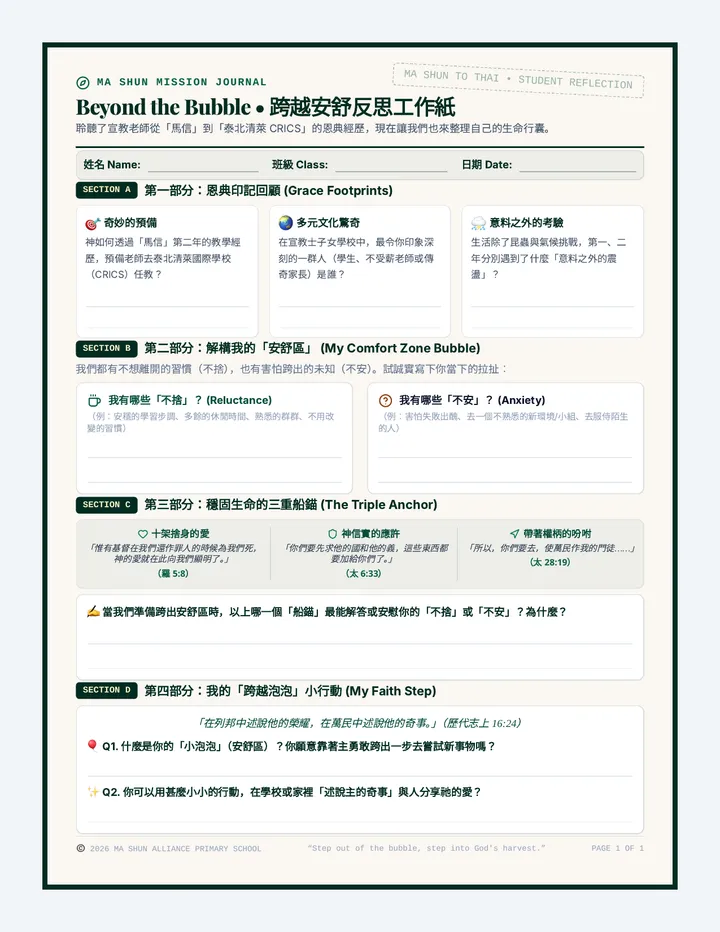
A testimony-based lesson exploring the journey of stepping out of one's comfort zone, overcoming fears through faith, and embracing God's mission in Thailand.
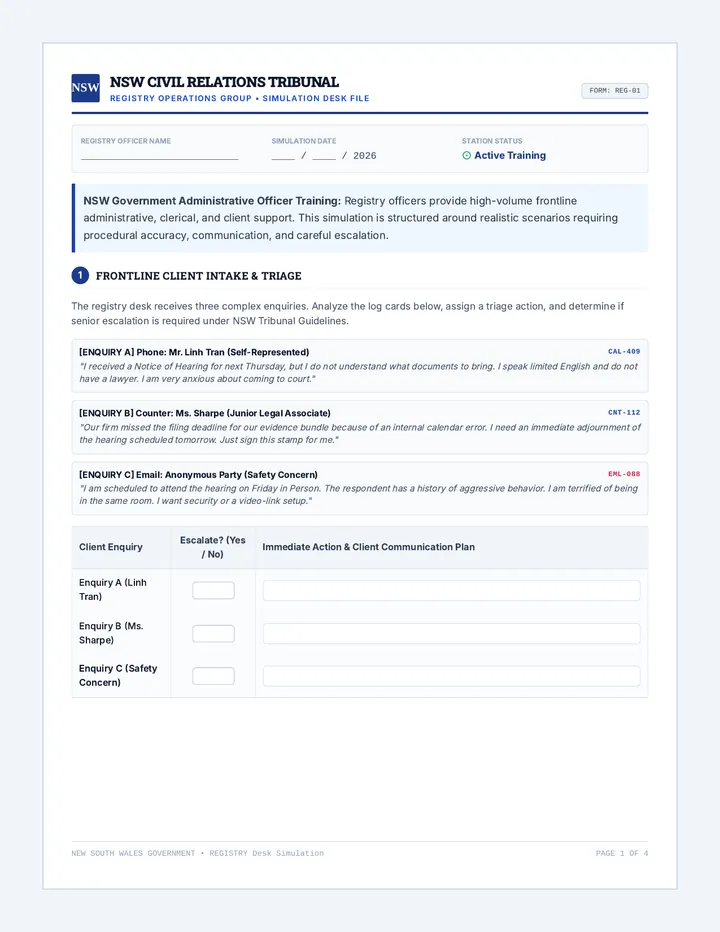
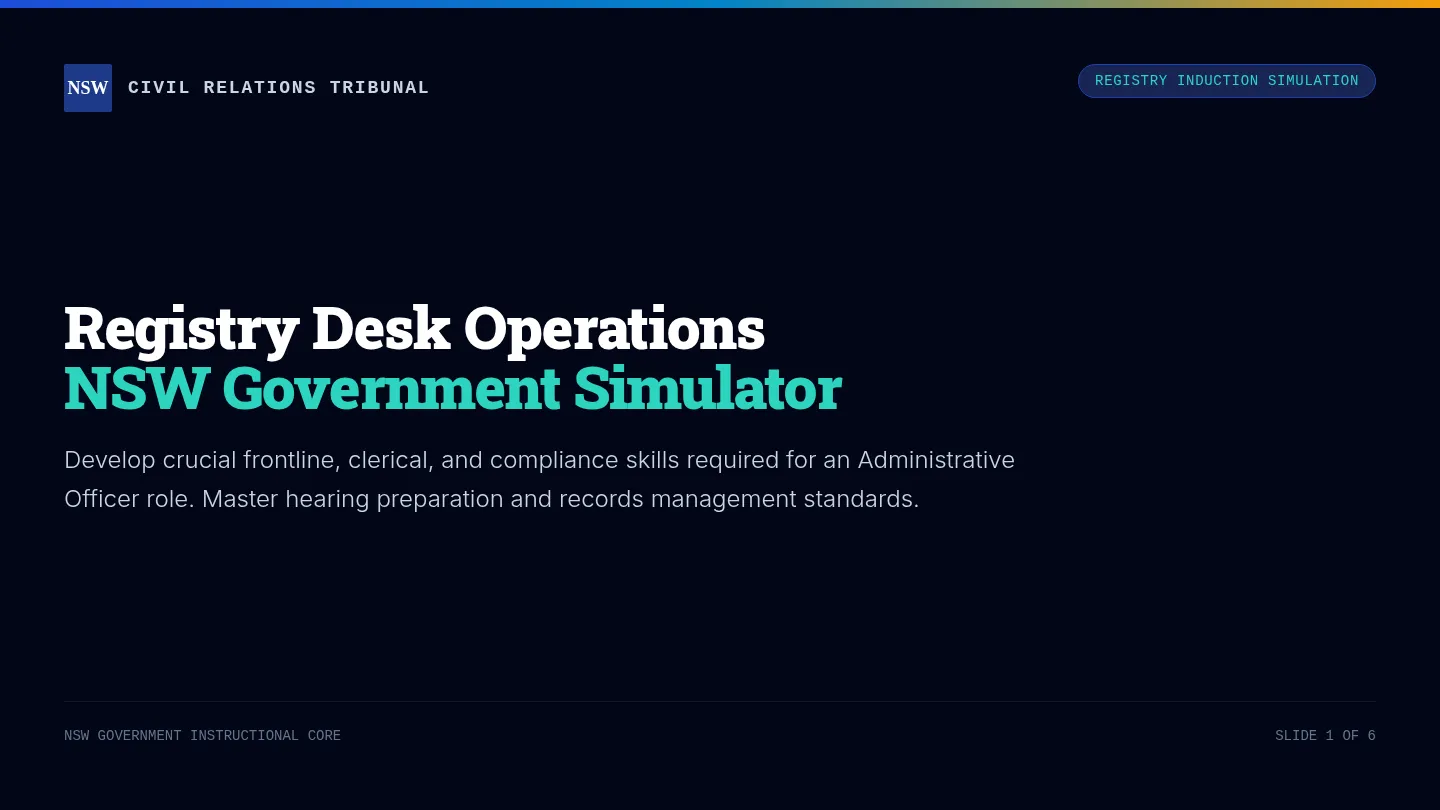
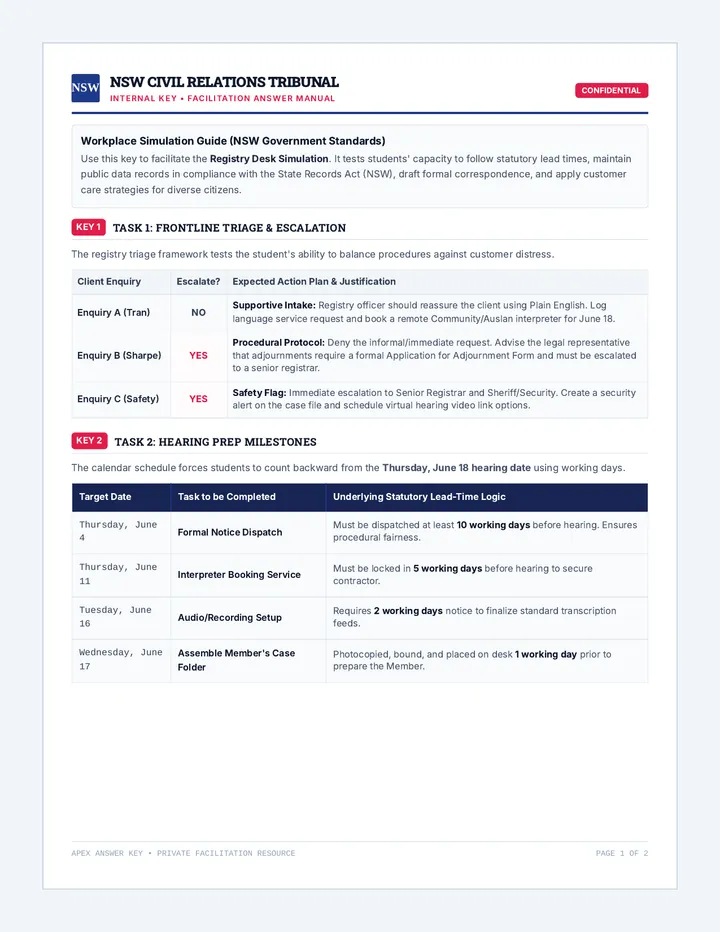
A highly realistic administrative simulation based on a NSW Government registry officer role. Trains students in frontline client support, tribunal hearing preparation, records management compliance, and protocol-driven correspondence.
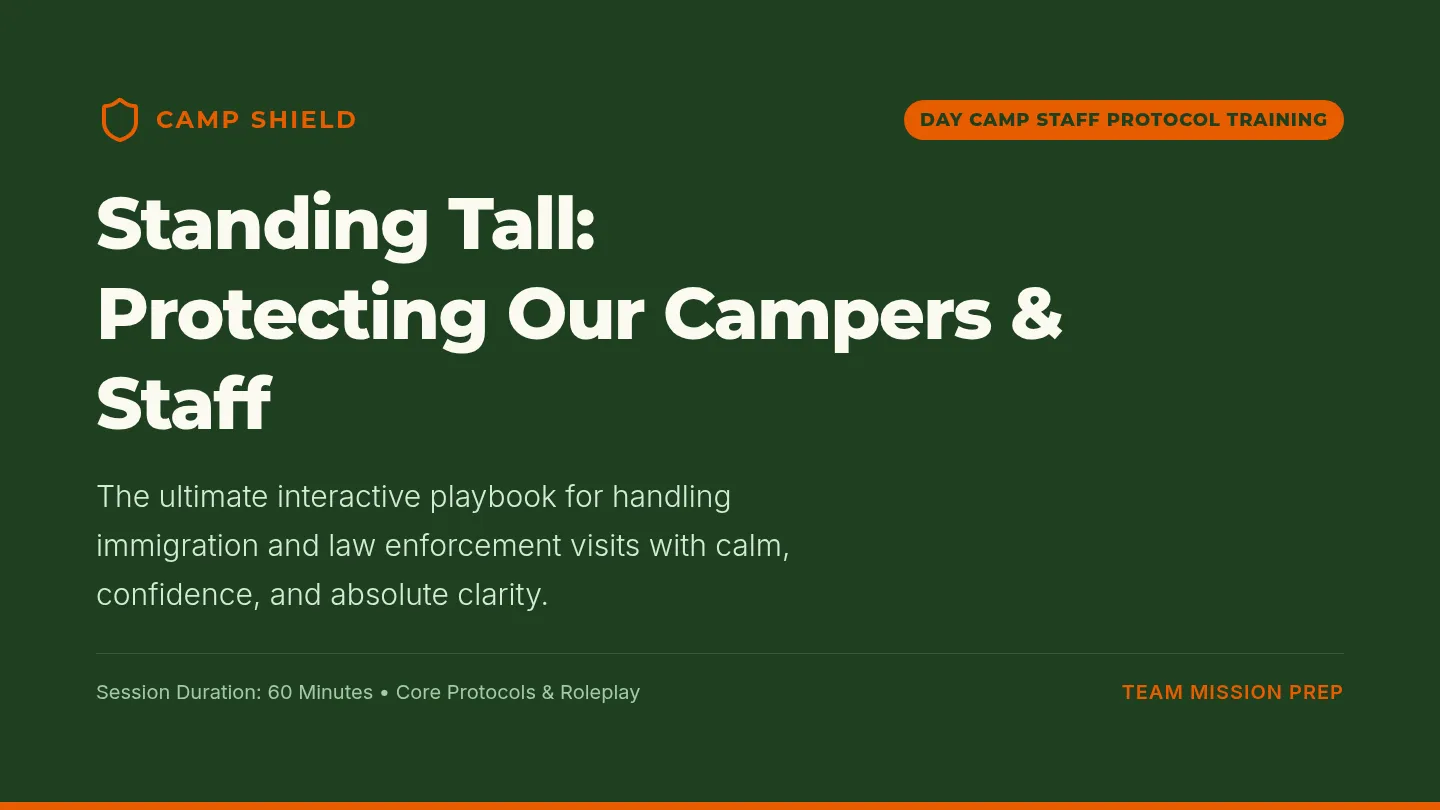
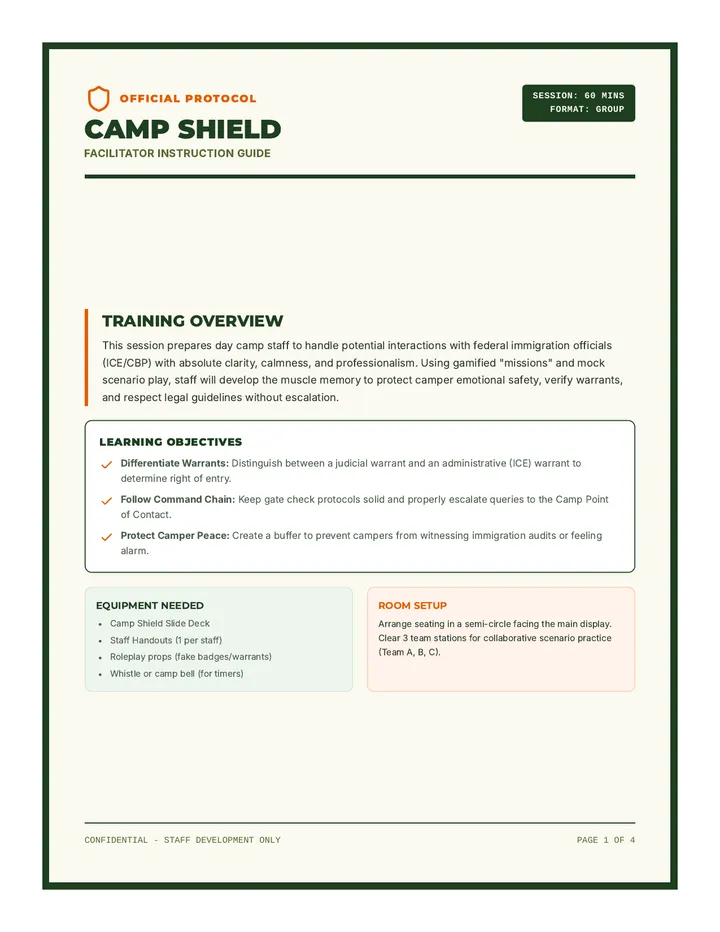
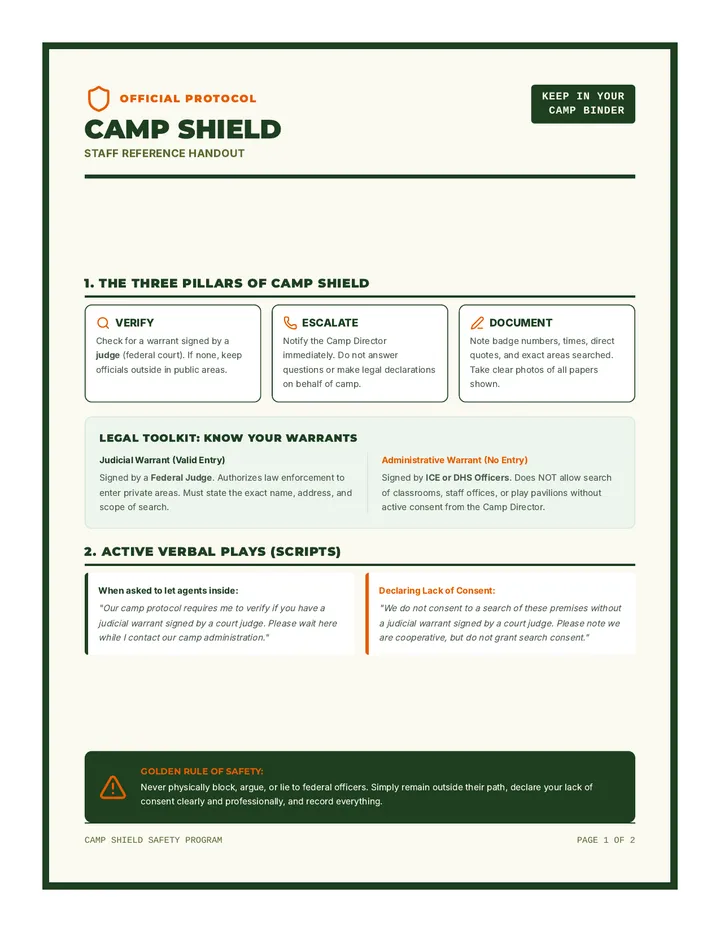
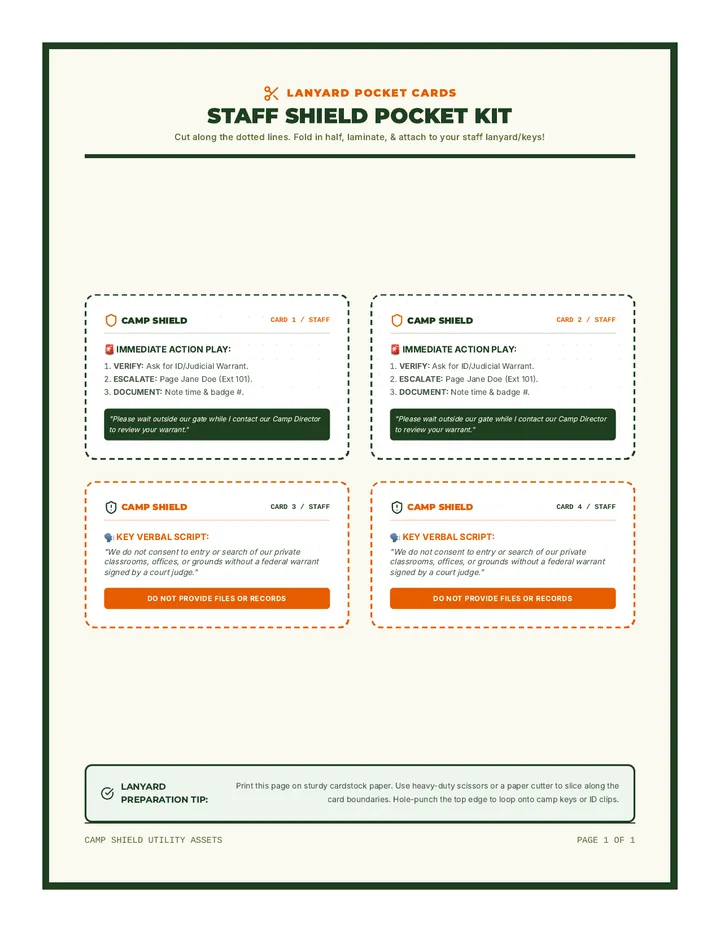
A comprehensive, scenario-based training lesson to prepare camp staff on safety, communication, and legal protocols if ICE or immigration officials arrive at camp. Equips staff with actionable toolkits, step-by-step guides, and interactive roleplay scenarios.
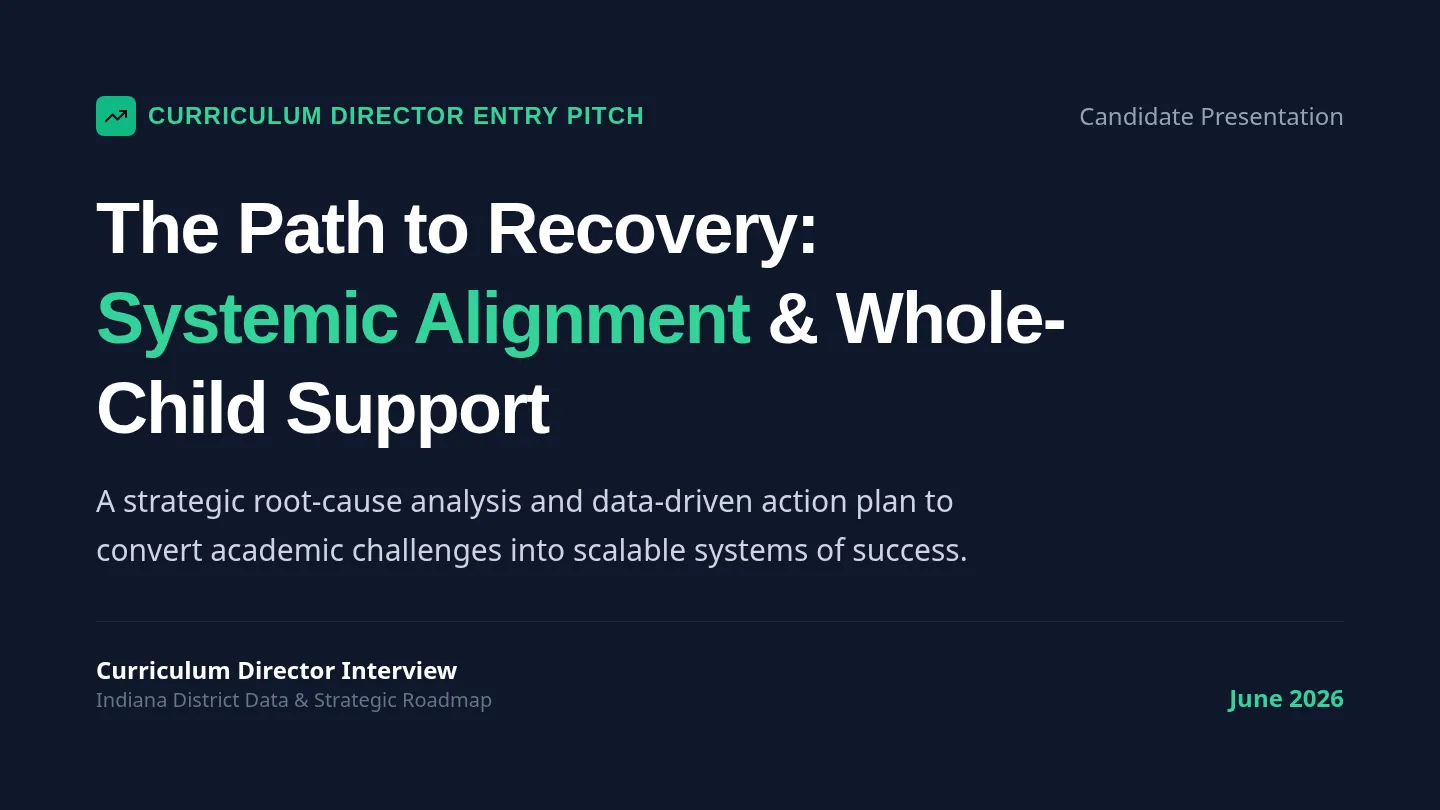
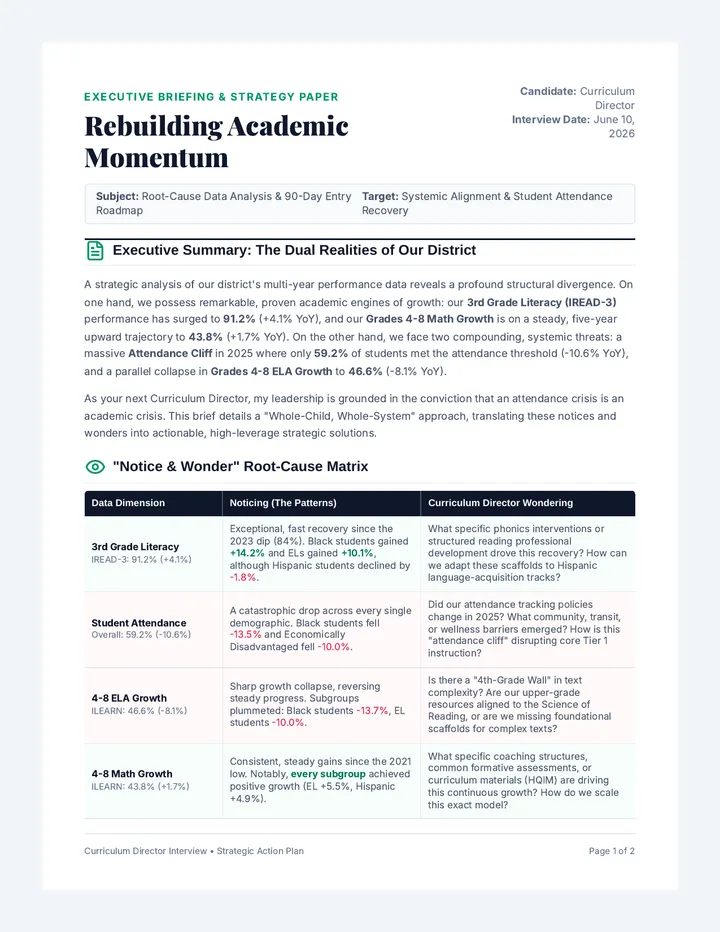
A comprehensive interview package featuring a slide deck and an executive briefing handout, detailing a data-driven action plan and 90-day entry roadmap for curriculum leadership.
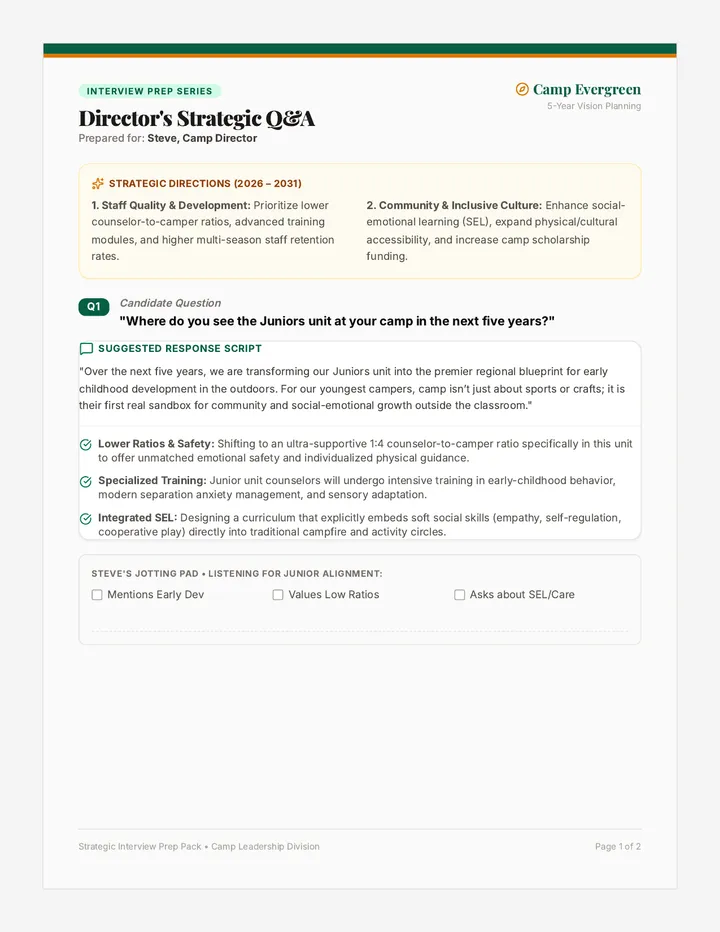
Resources and guides to prepare camp leadership and directors for candidate interviews, stakeholder meetings, and strategic alignment sessions.
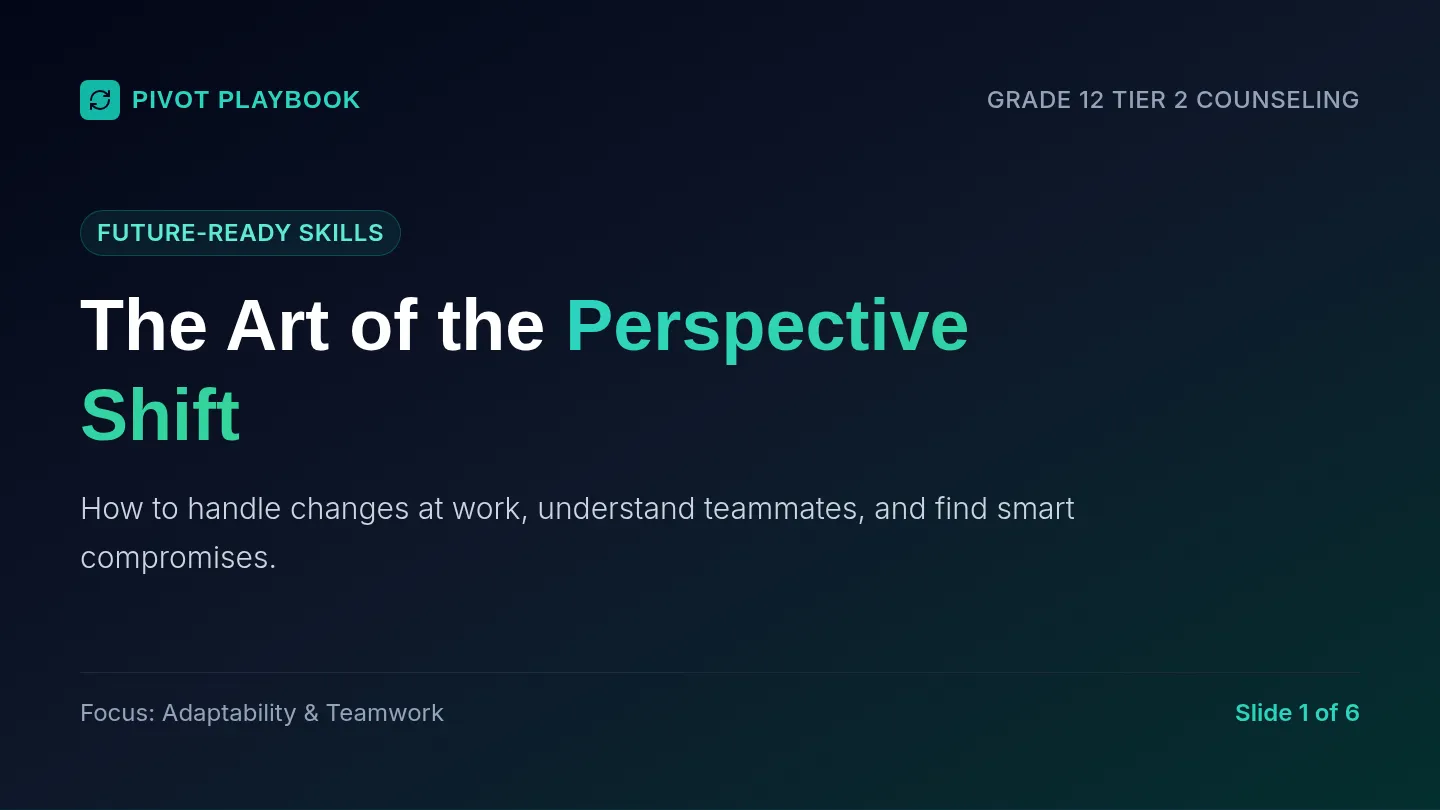
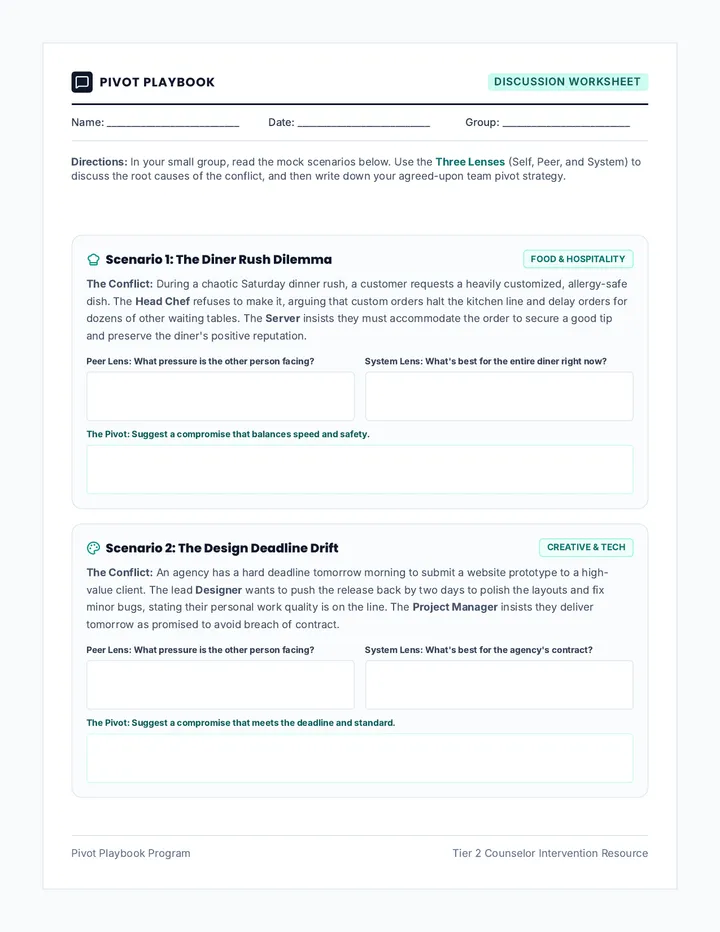
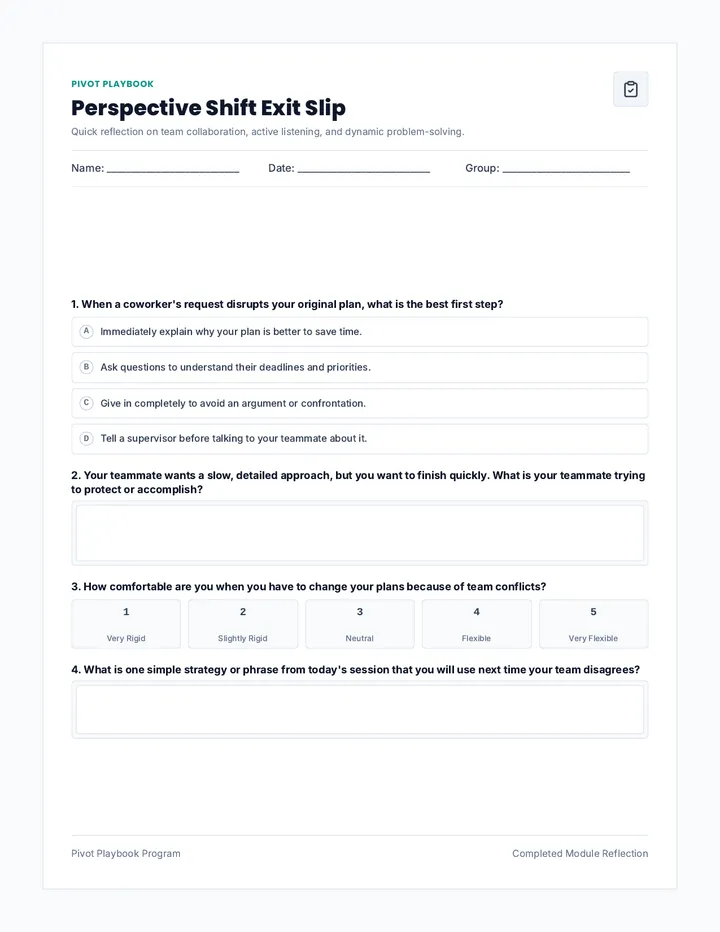
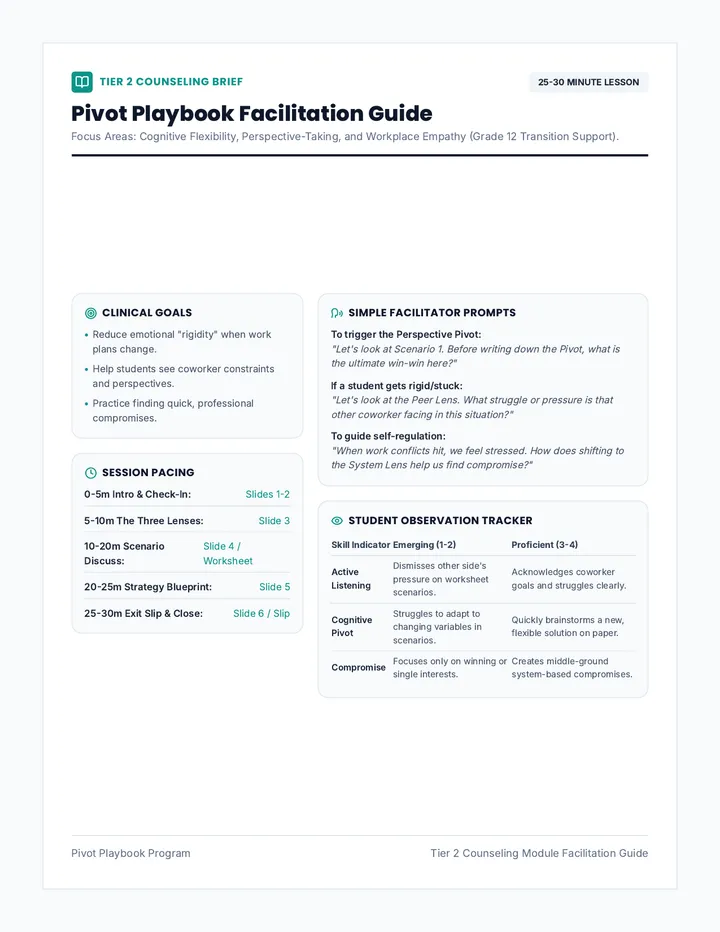
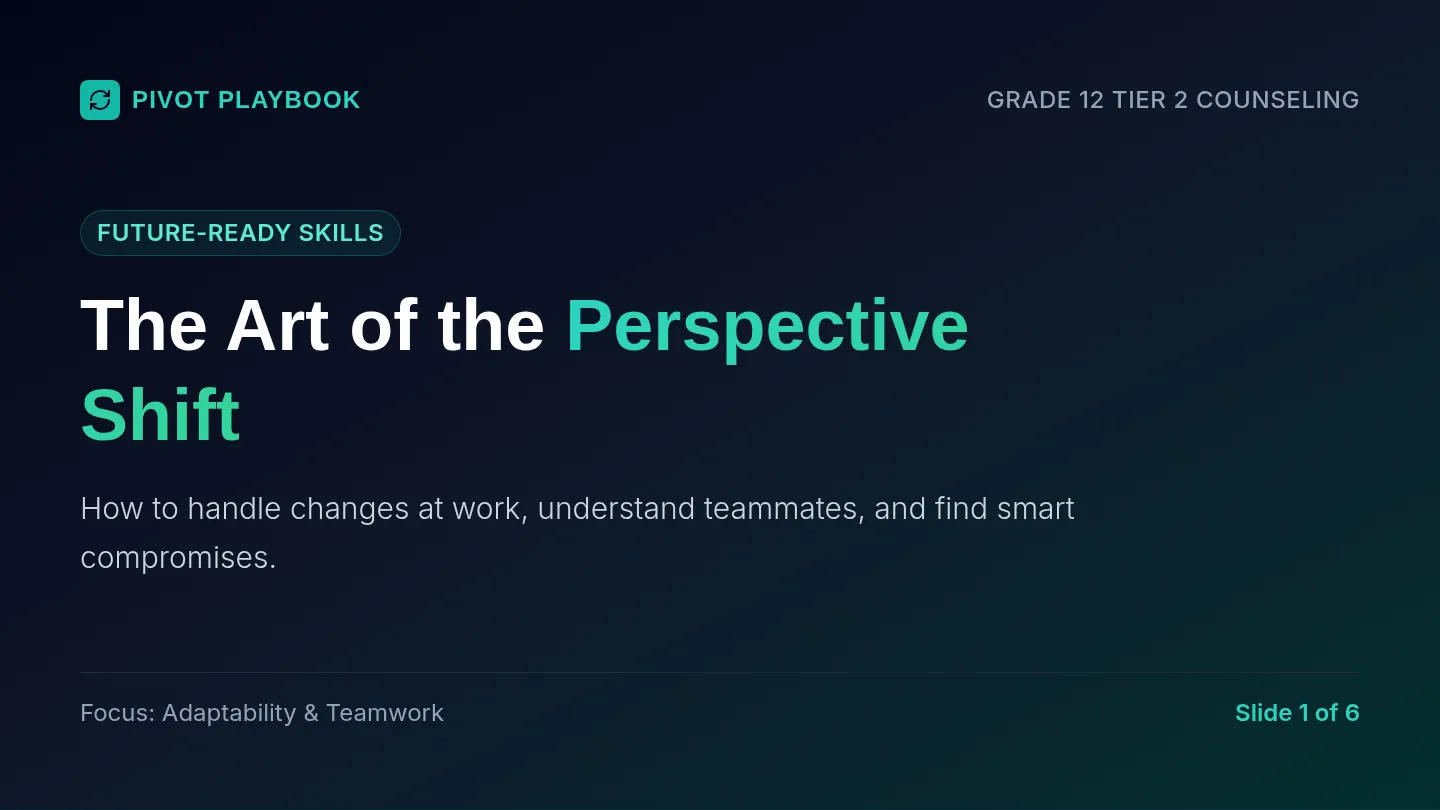
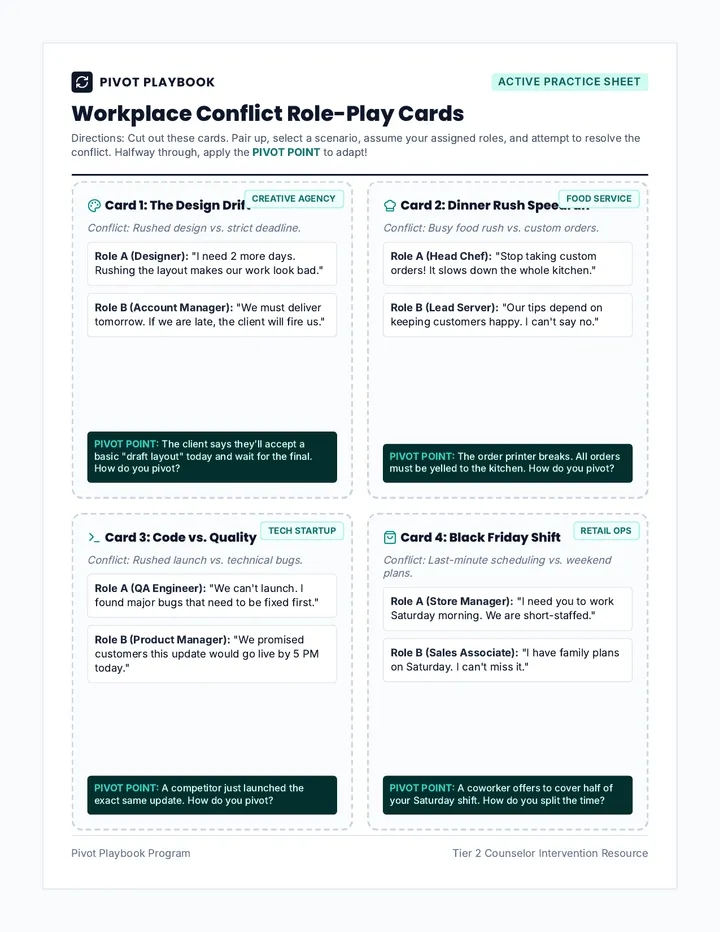
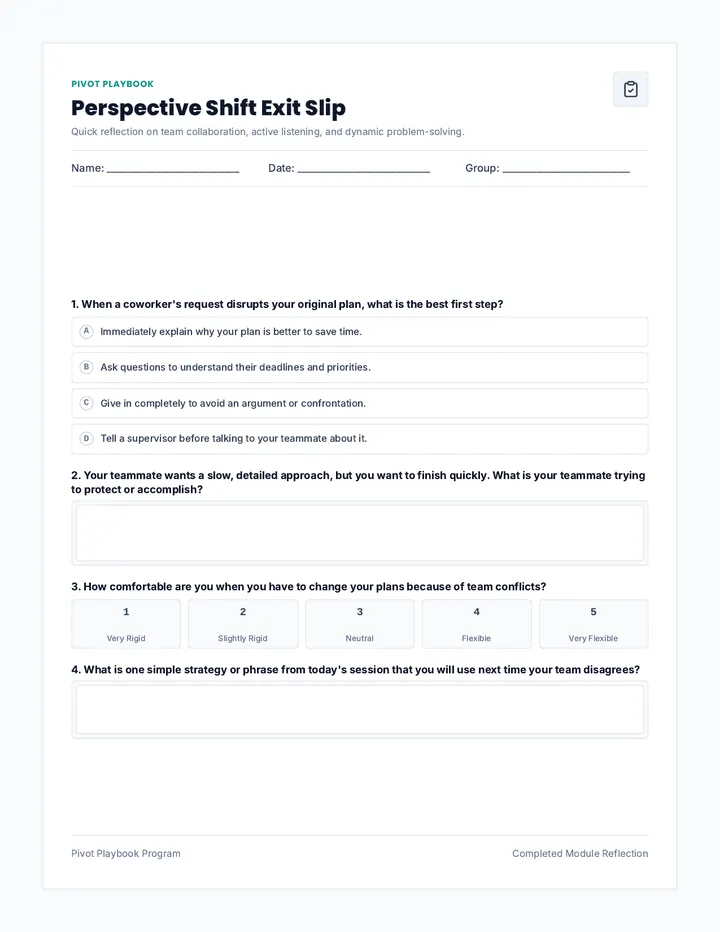
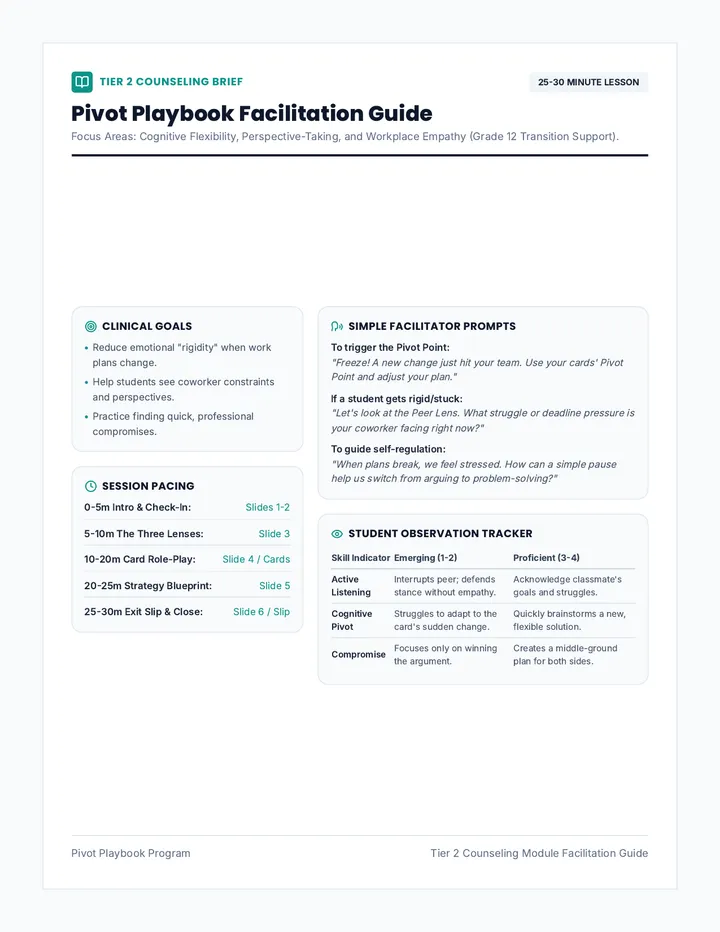
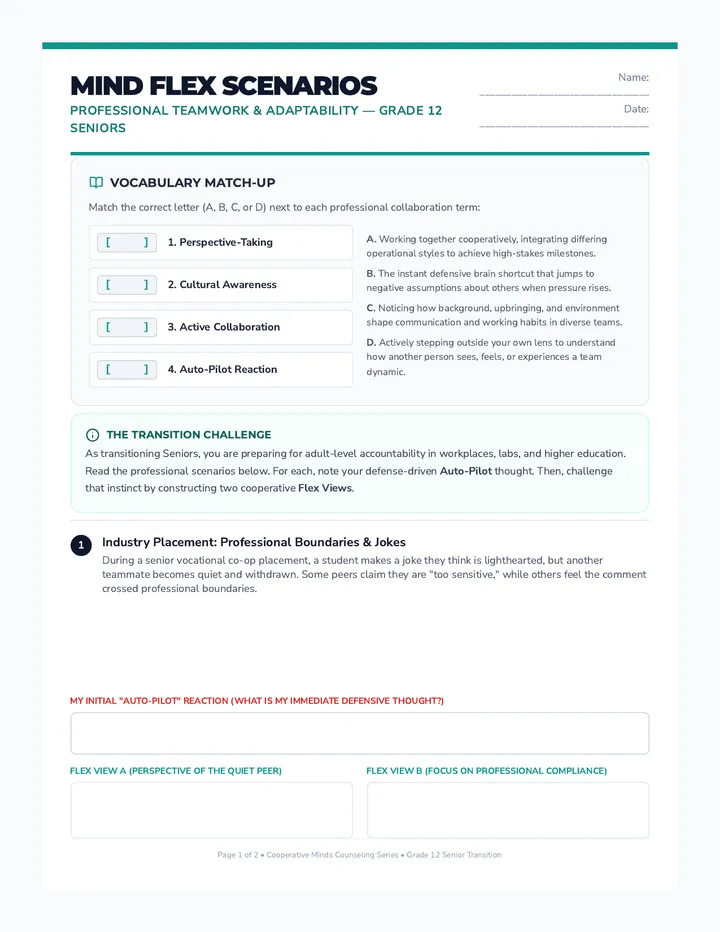
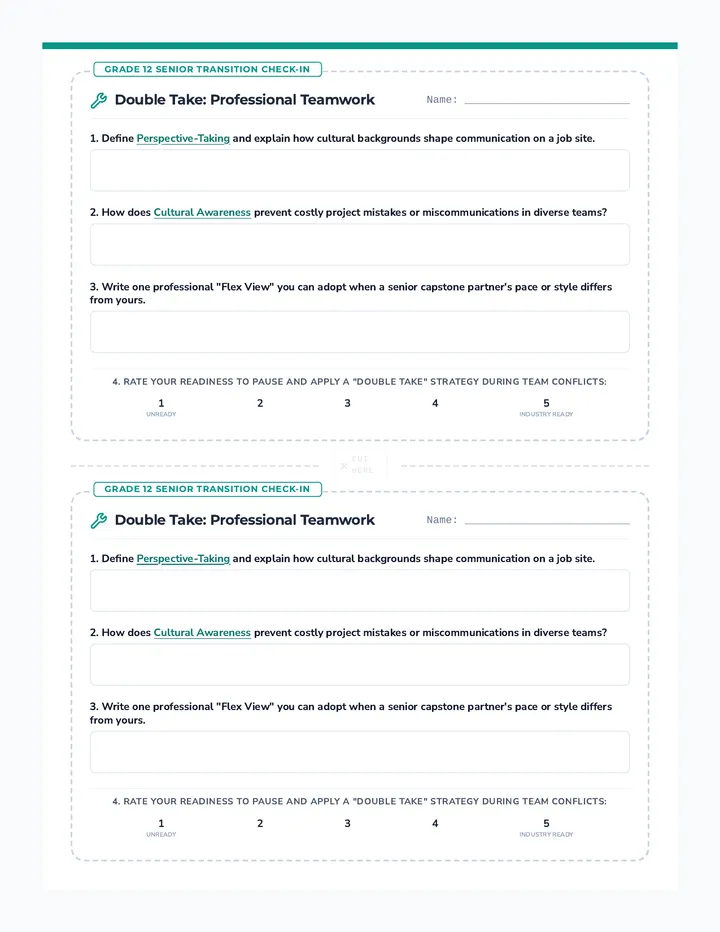
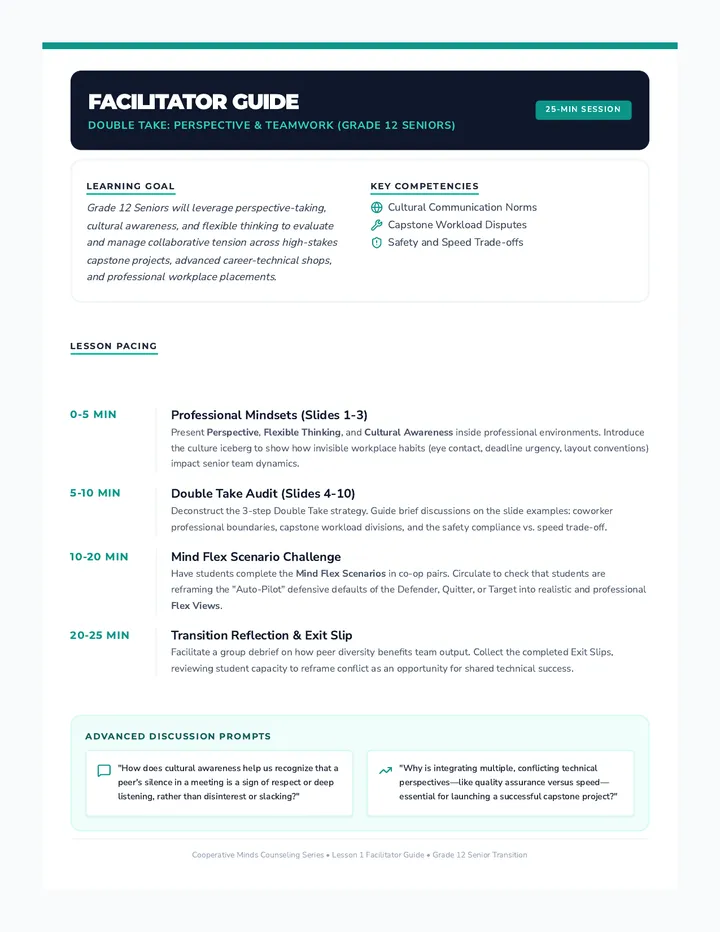
A 25-minute, highly interactive Tier 2 counseling lesson designed to cultivate adaptability, multi-perspective thinking, and constructive workplace communication in high school seniors preparing for professional transitions.
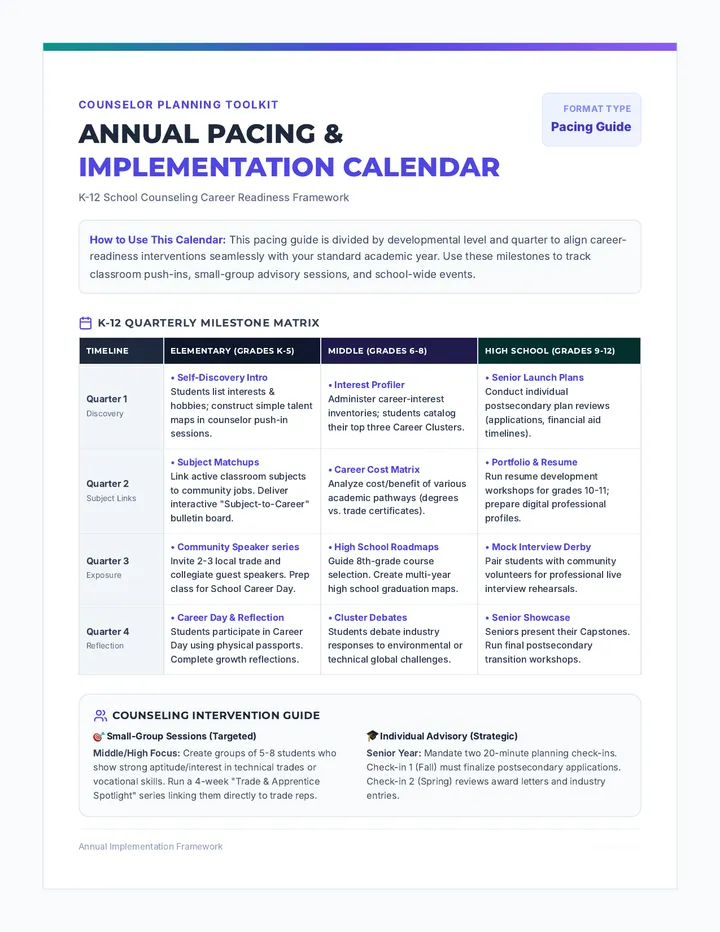
Actionable planning resources, school-wide career day guides, and implementation templates for school counselors to deploy career readiness curricula.
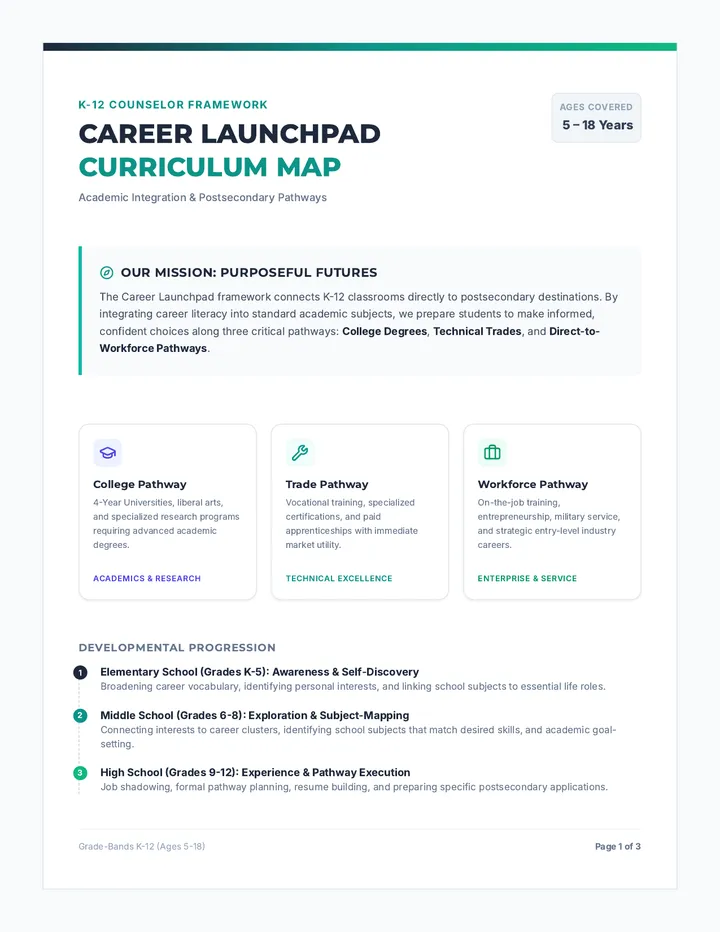
High-level scope, sequence, and developmental milestones for elementary, middle, and high school career exploration. This framework links classroom subjects to real-world college, trade, and workforce pathways.
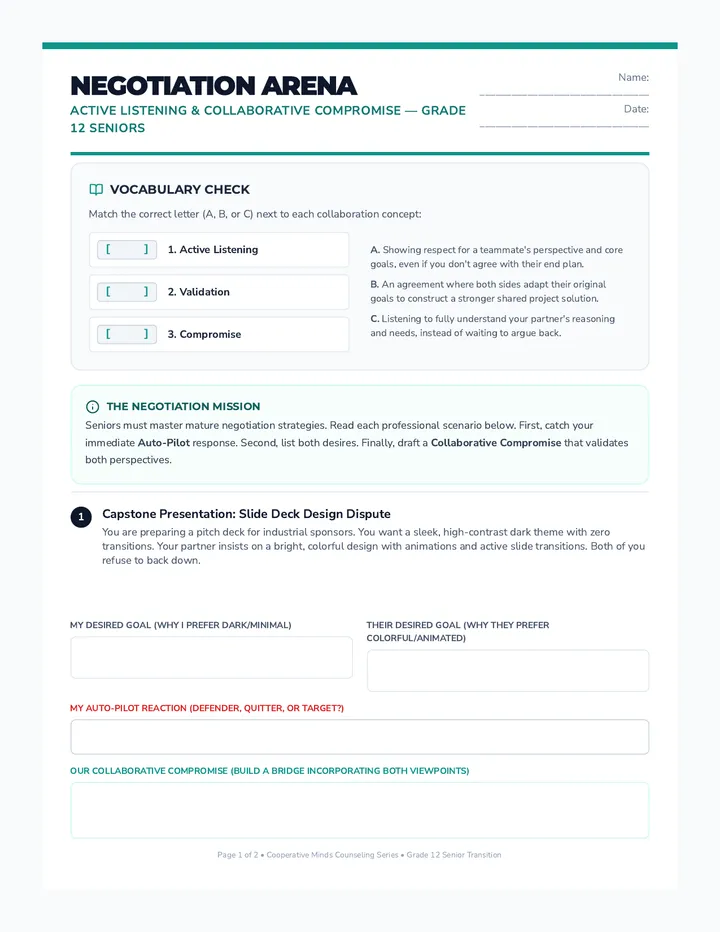
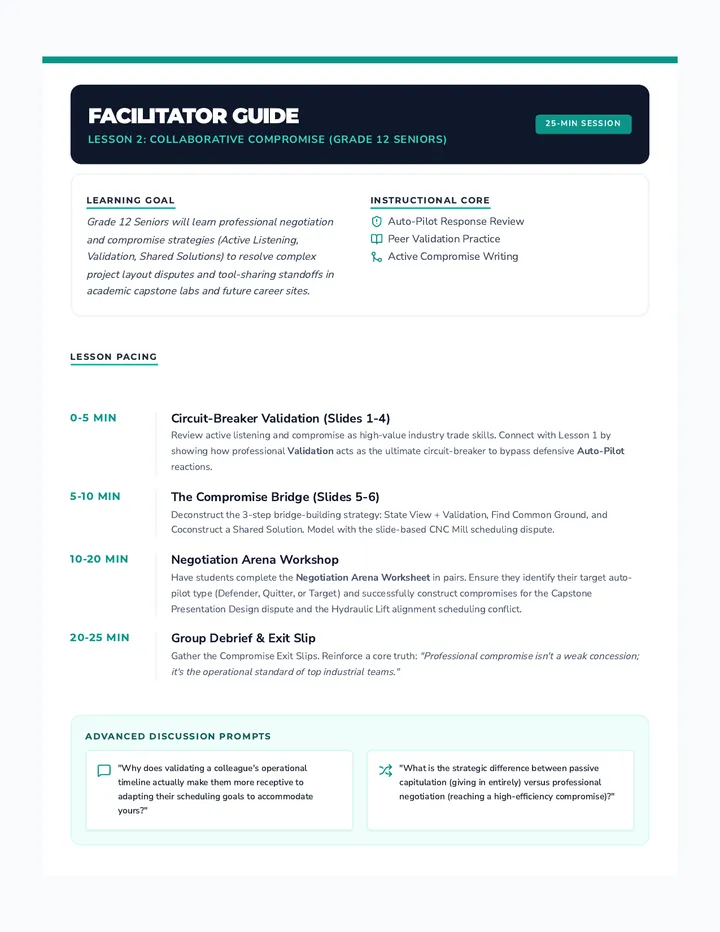
A 25-minute counseling lesson for transitioning Seniors focusing on professional communication, validation, and compromise frameworks to resolve high-stakes project friction on senior shop floors and collaborative teams.
A 25-minute small group counseling lesson focused on perspective-taking and professional teamwork for transitioning Seniors. Students learn how understanding different workplace perspectives and using flexible thinking helps resolve advanced capstone and professional shop floor conflicts.
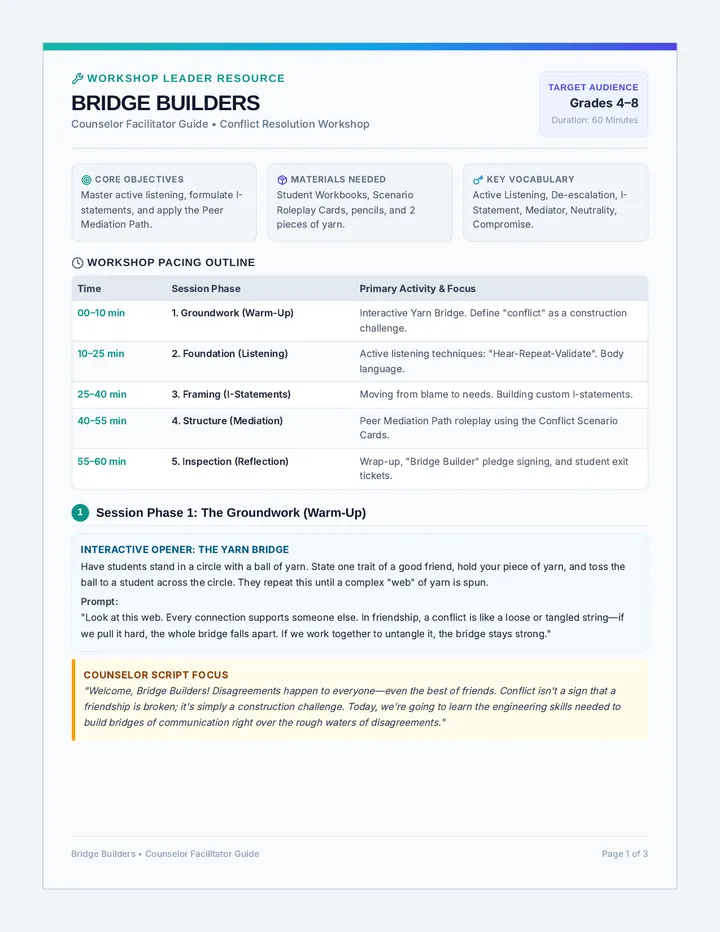
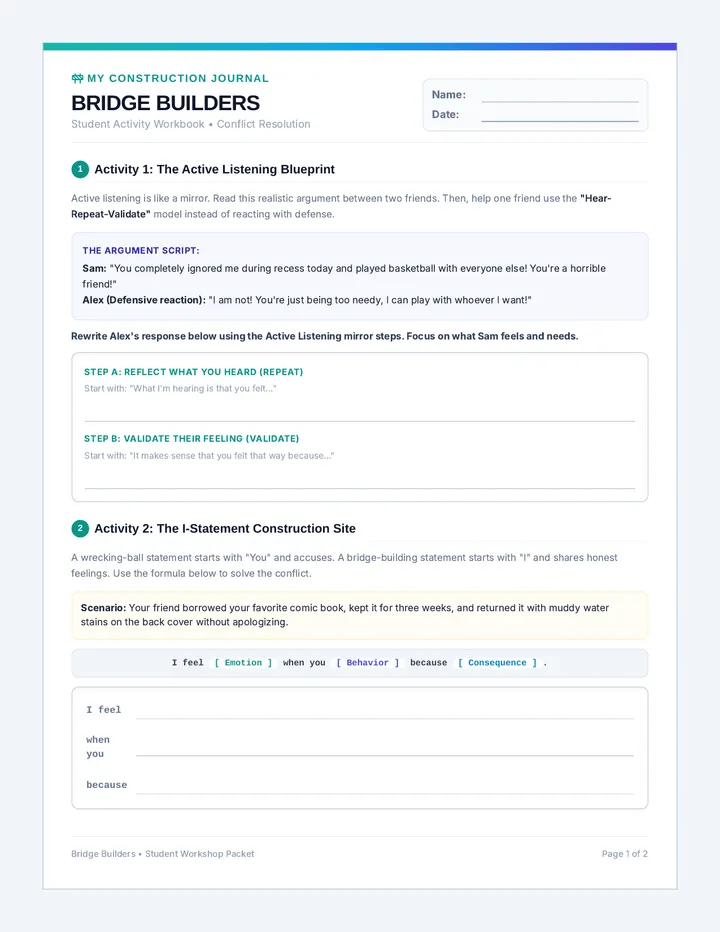
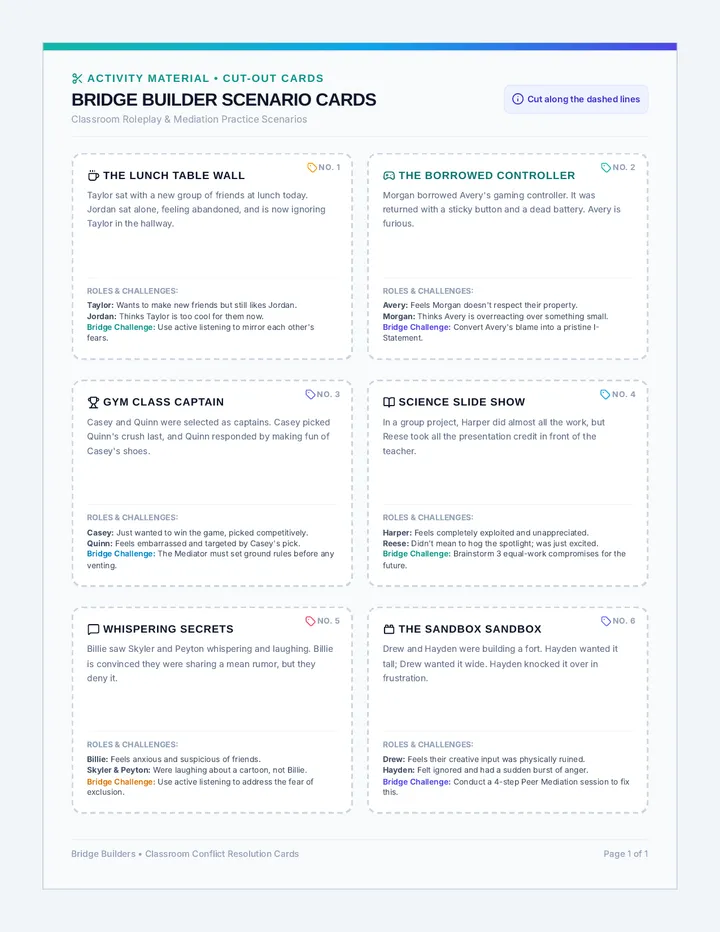
An interactive workshop teaching students essential conflict resolution skills, active listening techniques, and peer mediation frameworks to build stronger, more empathetic friendships.
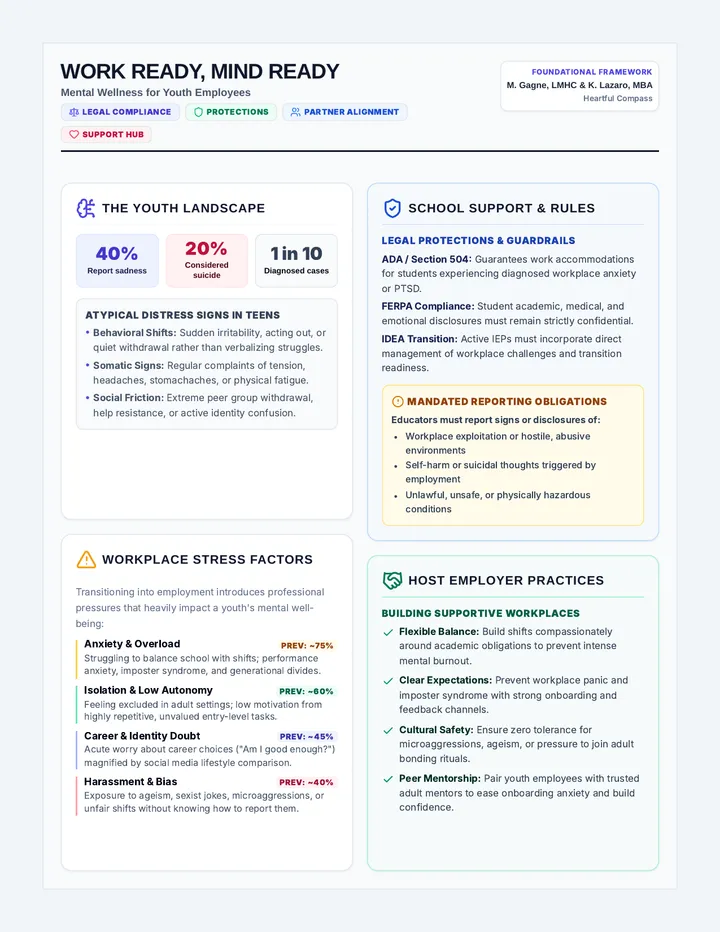
A guide and resource hub focused on equipping educators and employers with strategies to support youth employee mental health and ensure legal compliance. This lesson bridges the gap between school preparation and real-world employment stressors.
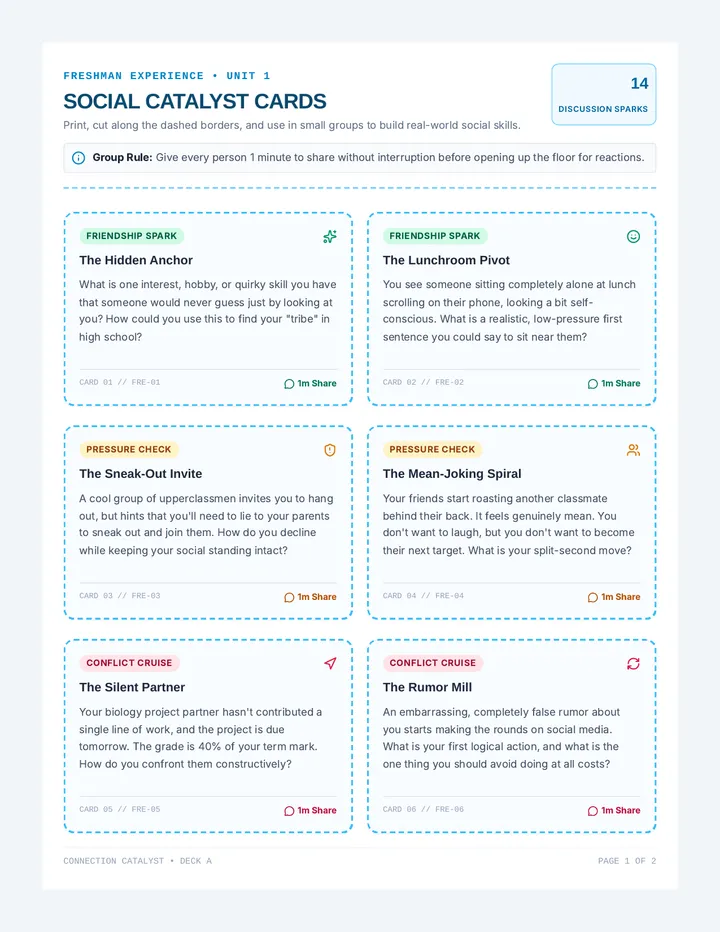
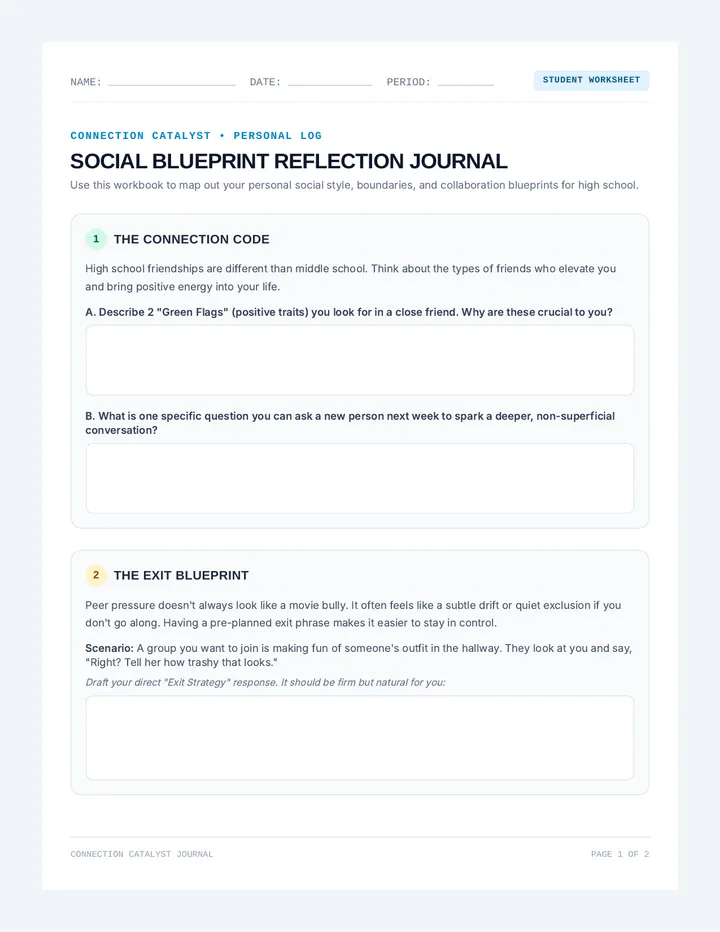
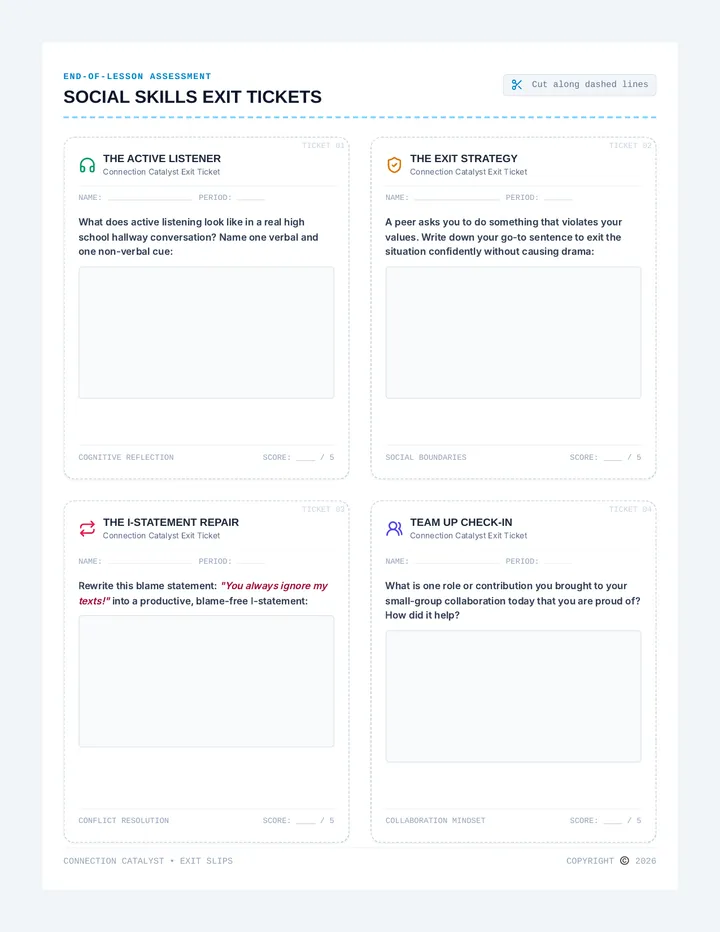
A dynamic social-emotional learning lesson designed for high school freshmen to master relationship and social skills. Students explore techniques for initiating friendships, navigating peer pressure, resolving conflicts constructively, and collaborating effectively in high school environments.
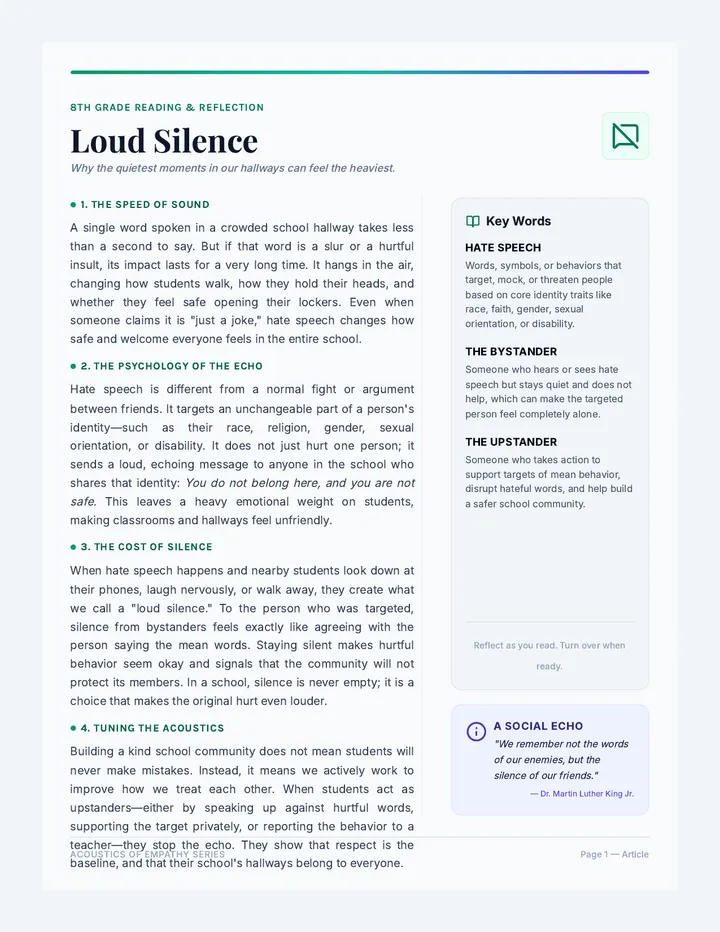
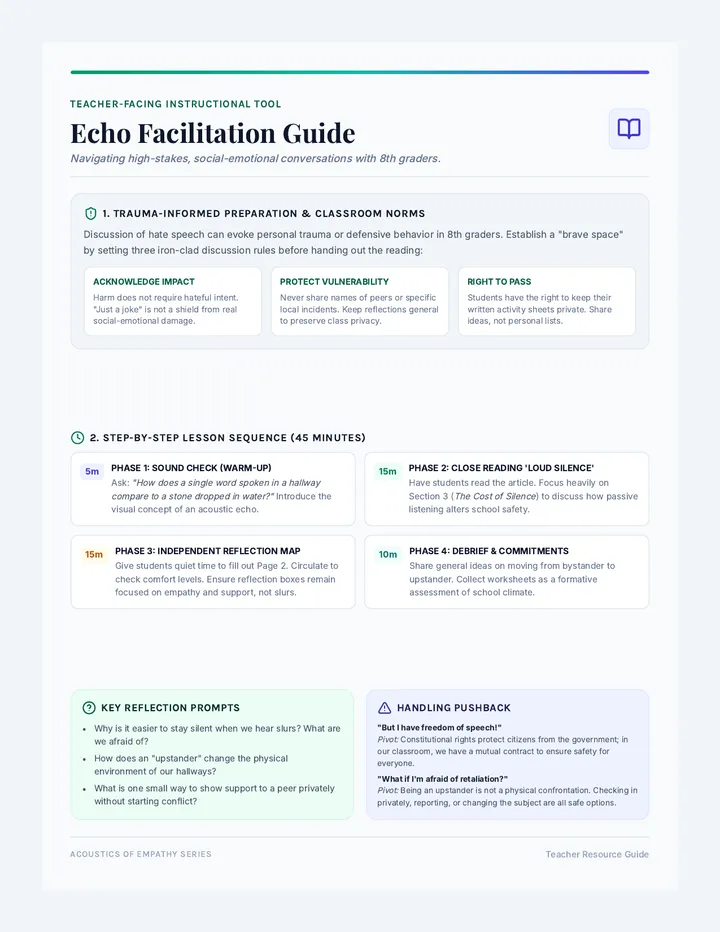
An 8th-grade lesson focusing on the social-emotional impact of hate speech and fostering a supportive school community. Students read an engaging, age-appropriate article and complete a reflective worksheet to map the impact of words and make personal commitments to inclusivity.
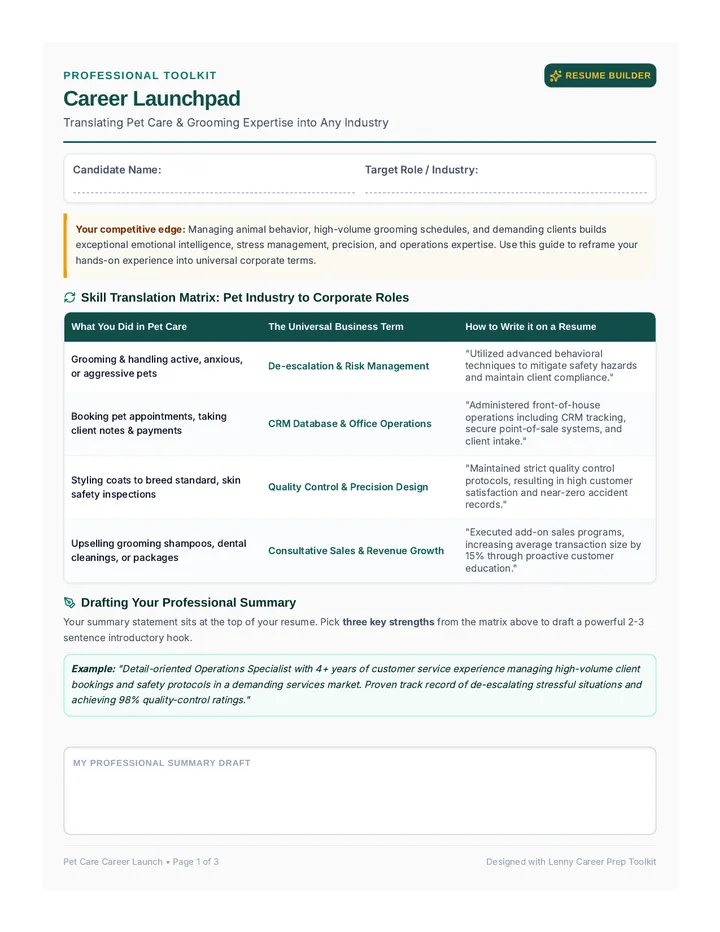
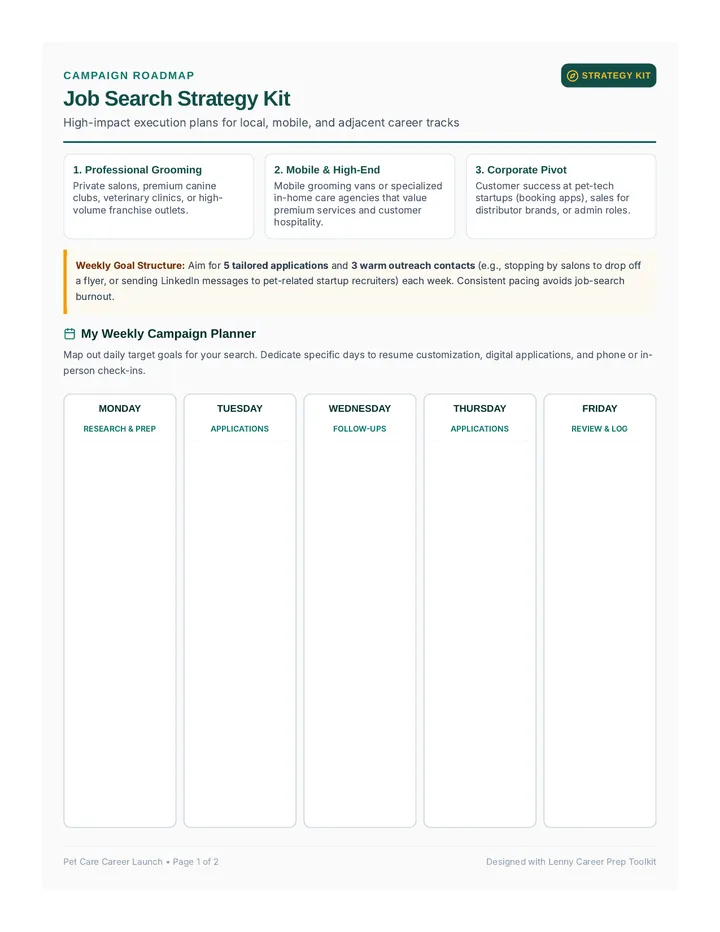
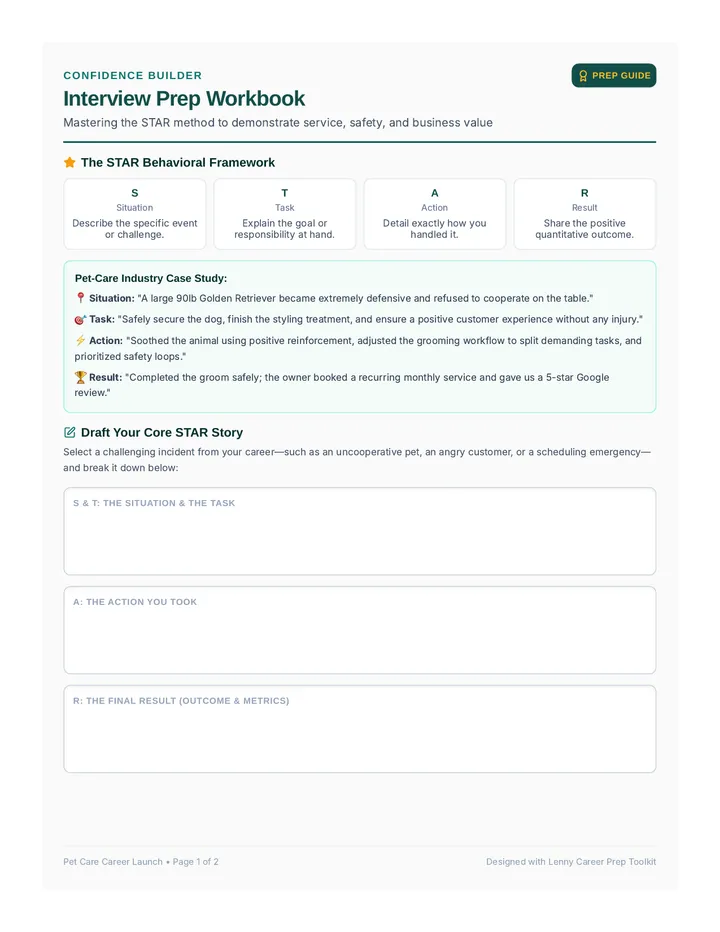
A comprehensive job-seeker toolkit designed specifically for pet care and dog grooming professionals. It includes a tailored Resume & Cover Letter Builder, a Job Search Strategy Kit with trackers, and an Interview Prep Workbook to help candidates transition into new roles or elevate their pet care careers.
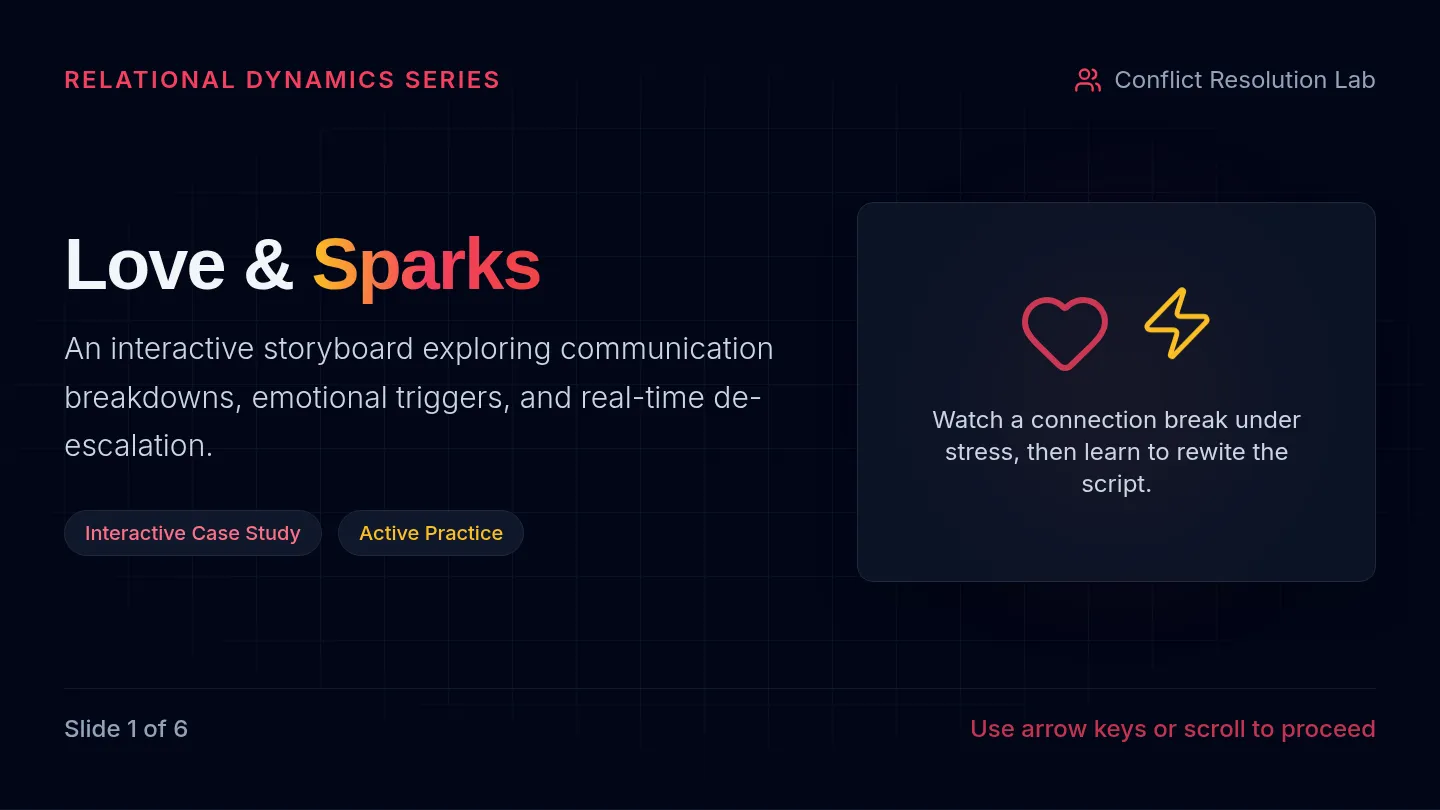
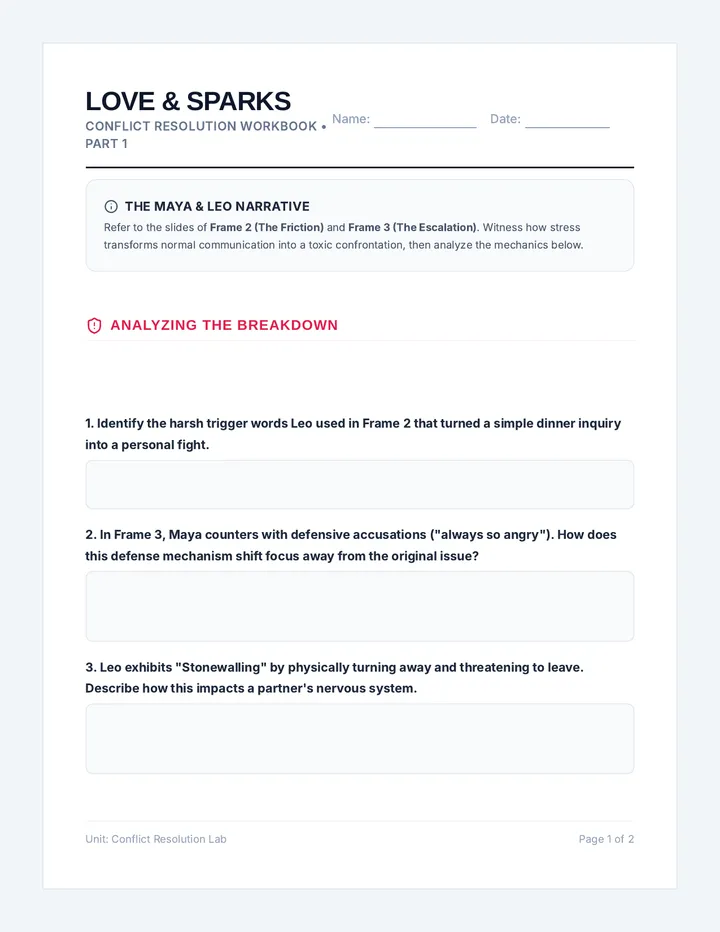
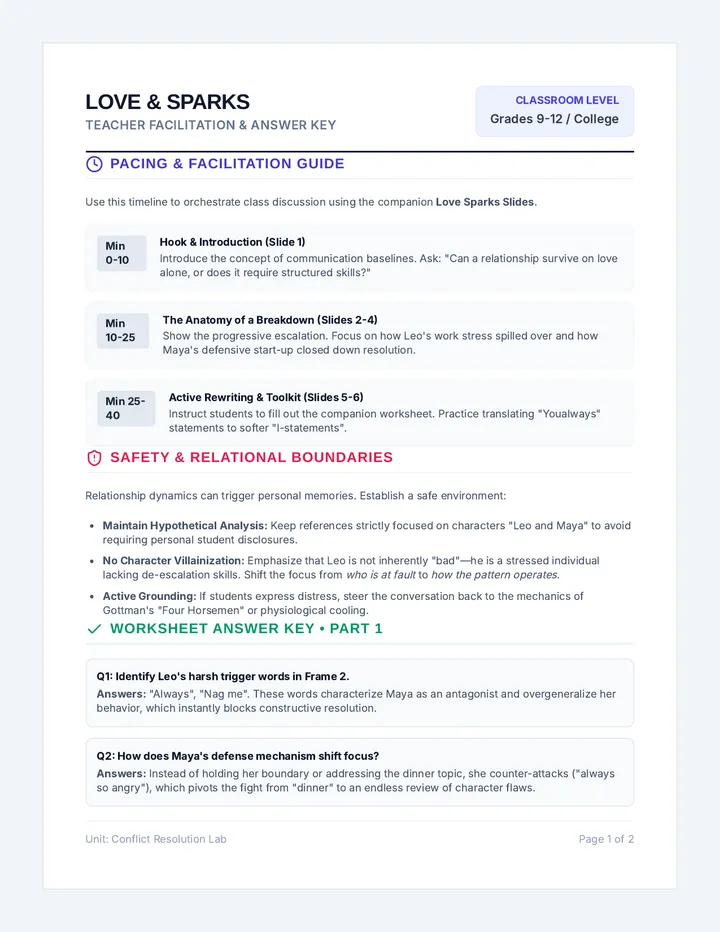
An instructional lesson centered on identifying communication breakdowns, analyzing relational friction, and applying active de-escalation strategies. Features interactive storyboard-driven slides and activities.
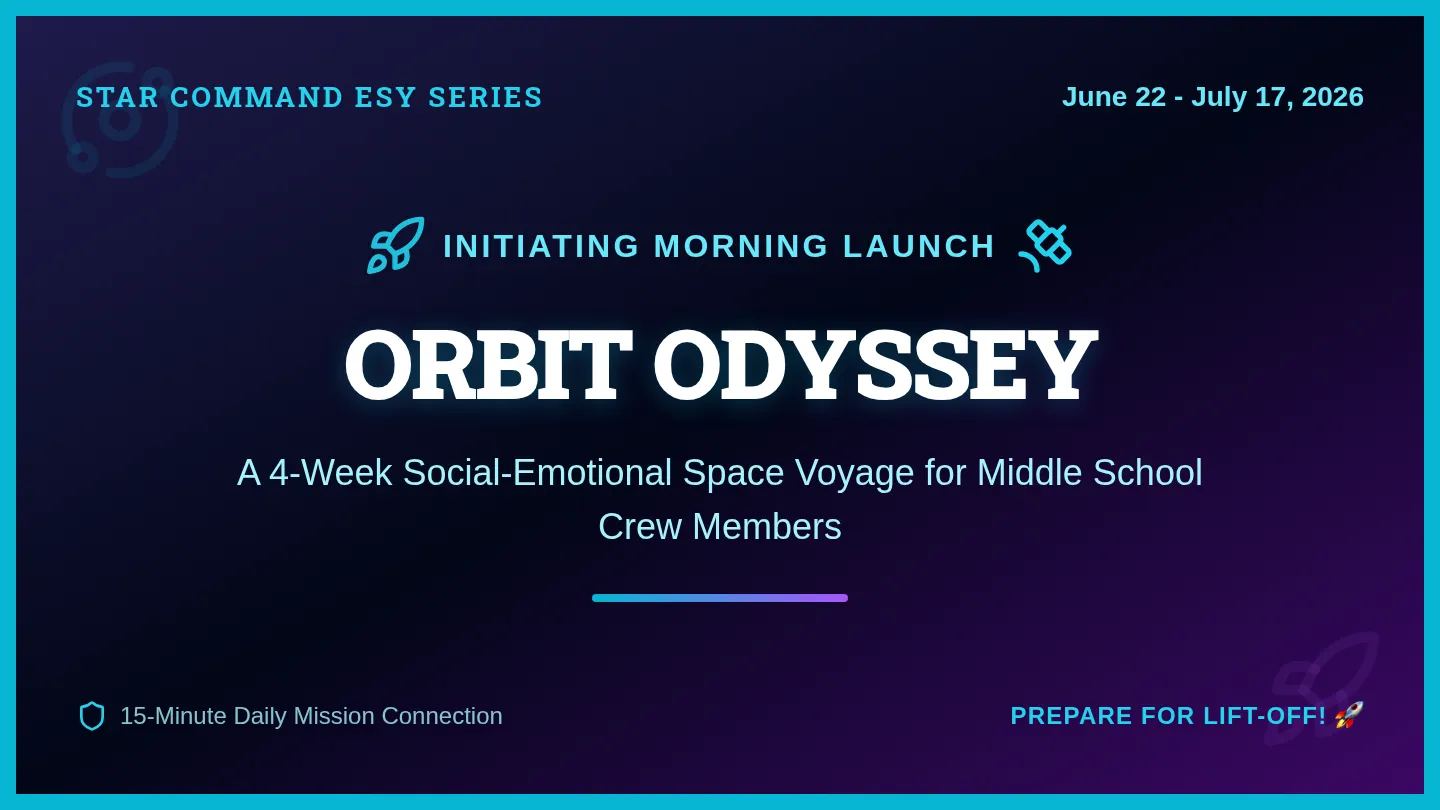
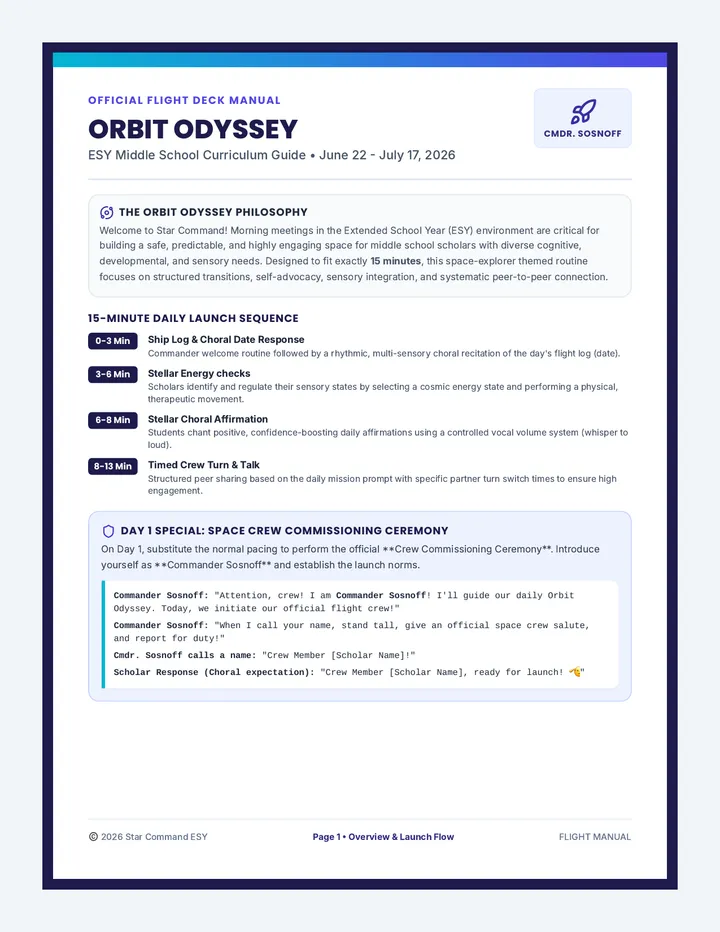
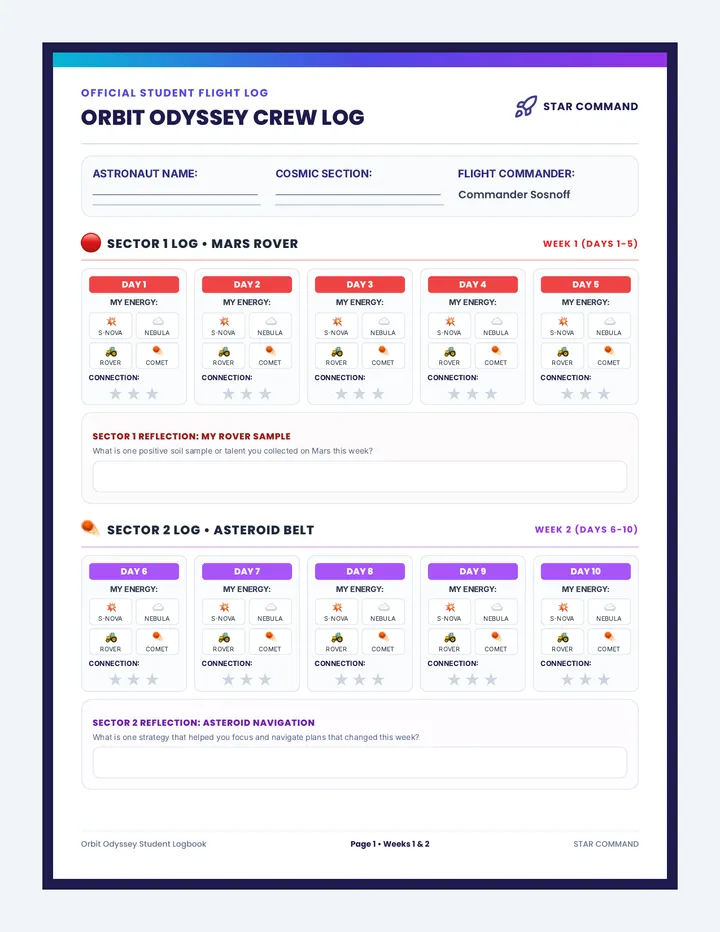
A 4-week space explorer themed morning meeting series for middle school ESY scholars with disabilities. Led by Commander Sosnoff, it covers Mars Rover, Asteroid Navigation, Saturn Rings, and Nebula sectors with calendar ship logs, cosmic energy checks, stellar affirmations, and turn-and-talk communication prompts.
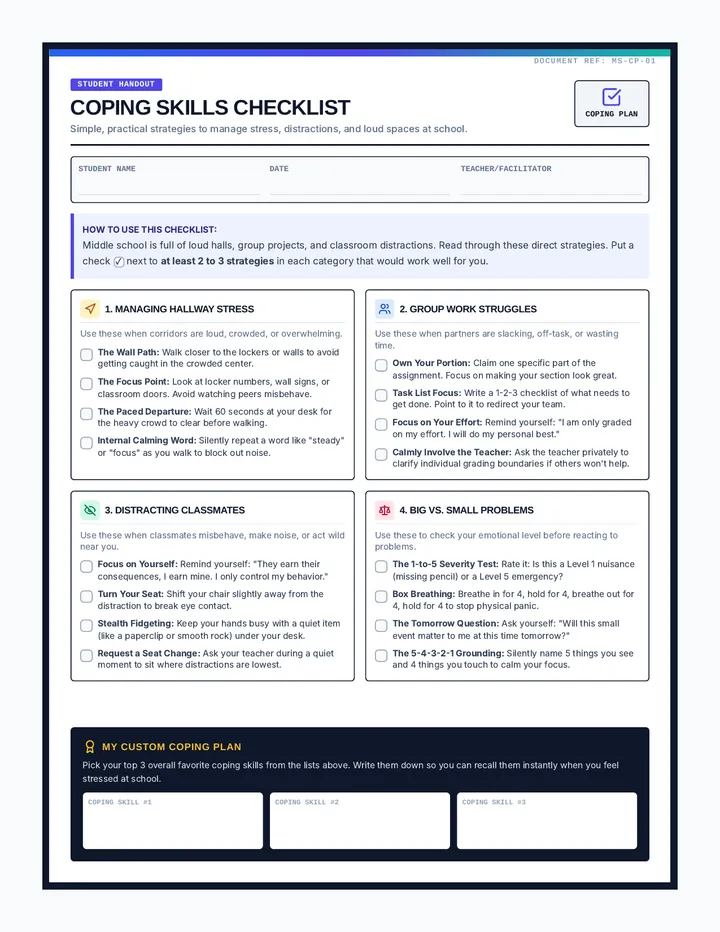
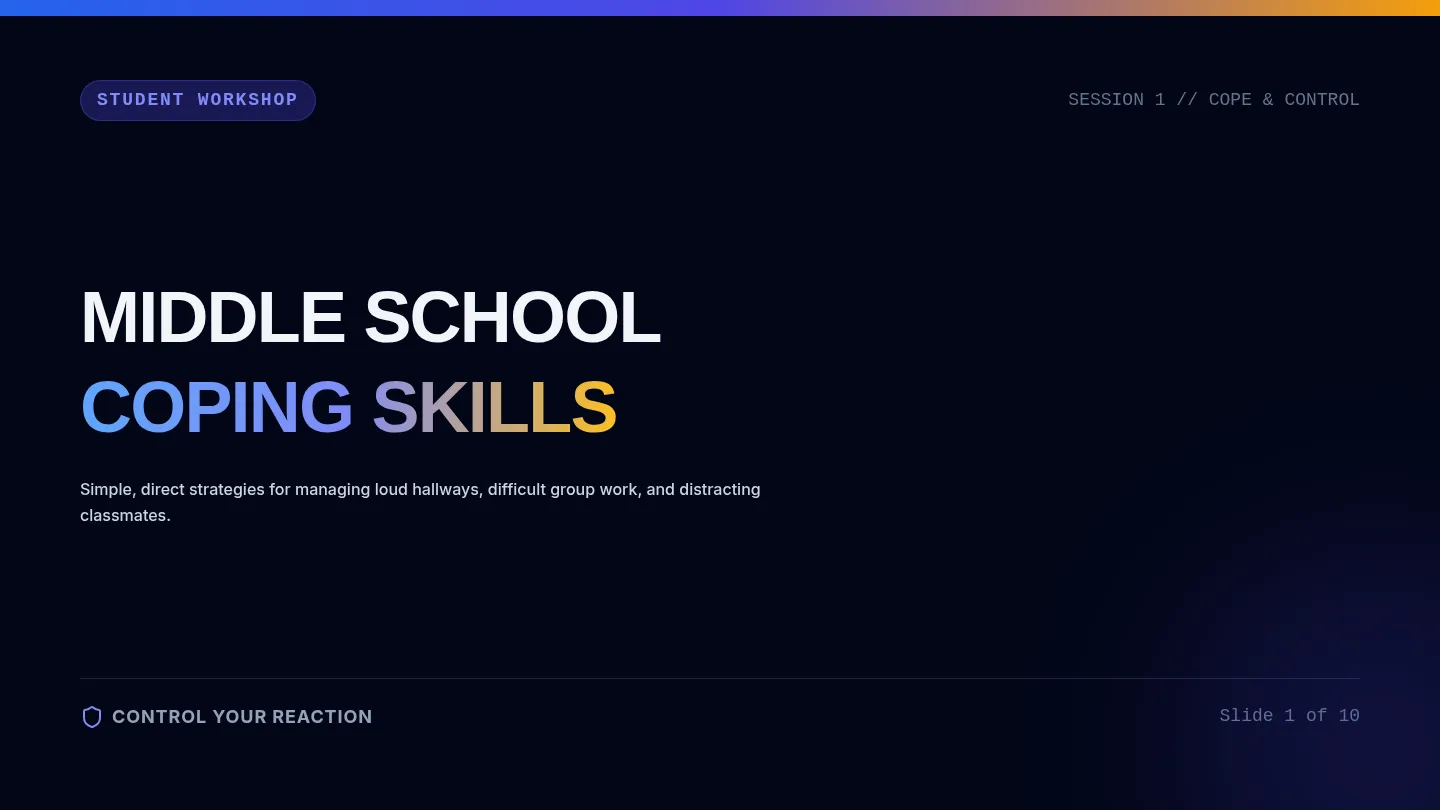
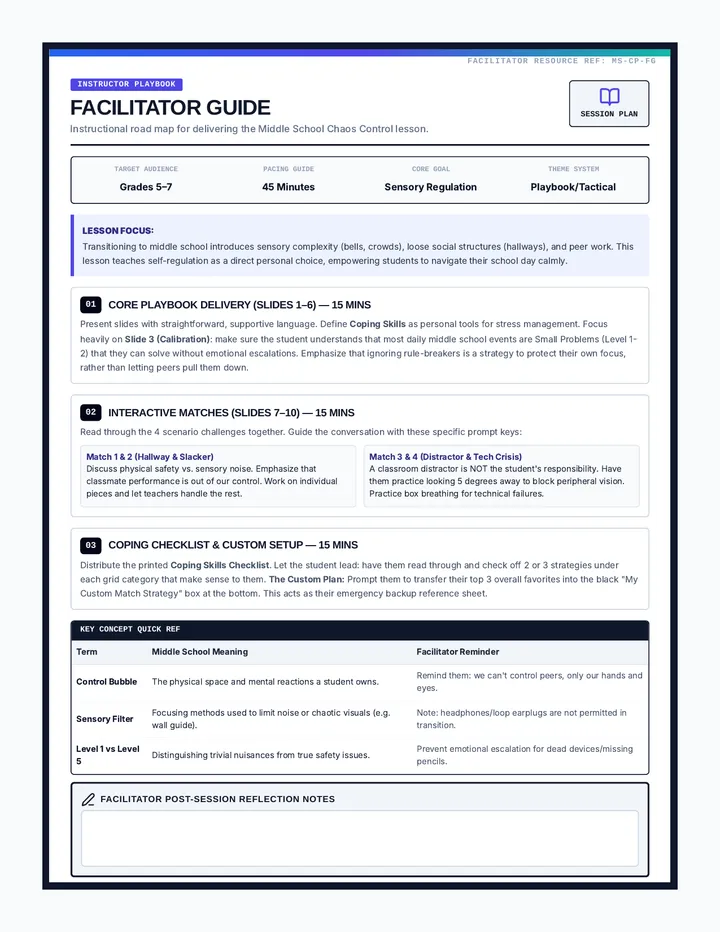
A interactive and engaging lesson designed to equip transitioning middle school students with coping strategies for handling sensory overload, rule-breaking peers, and group work frustrations. Includes an 10-slide presentation, a highly visual coping checklist, and a detailed facilitator guide.
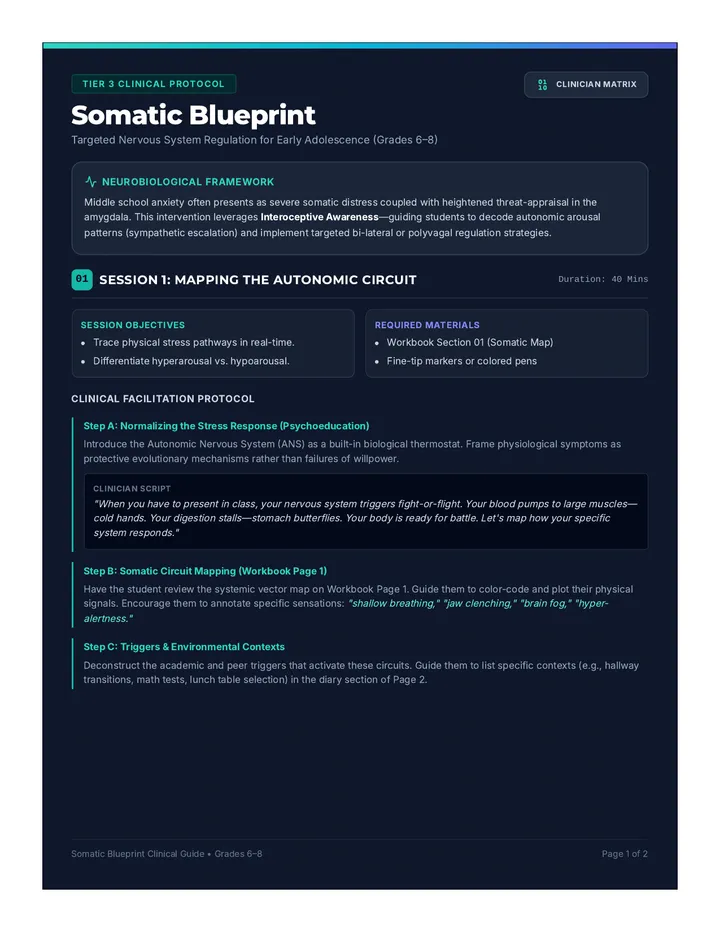
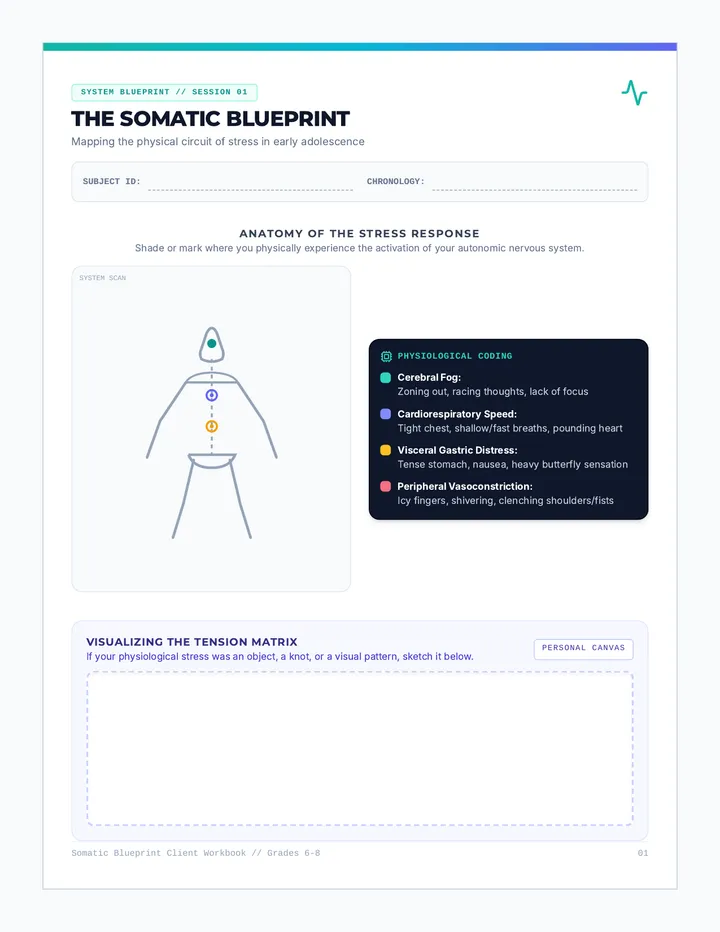
A Tier 3 individual counseling intervention designed for 7th graders (ages 12-13) to map physical stress patterns, analyze neurological escalation, and construct customized coping matrices.
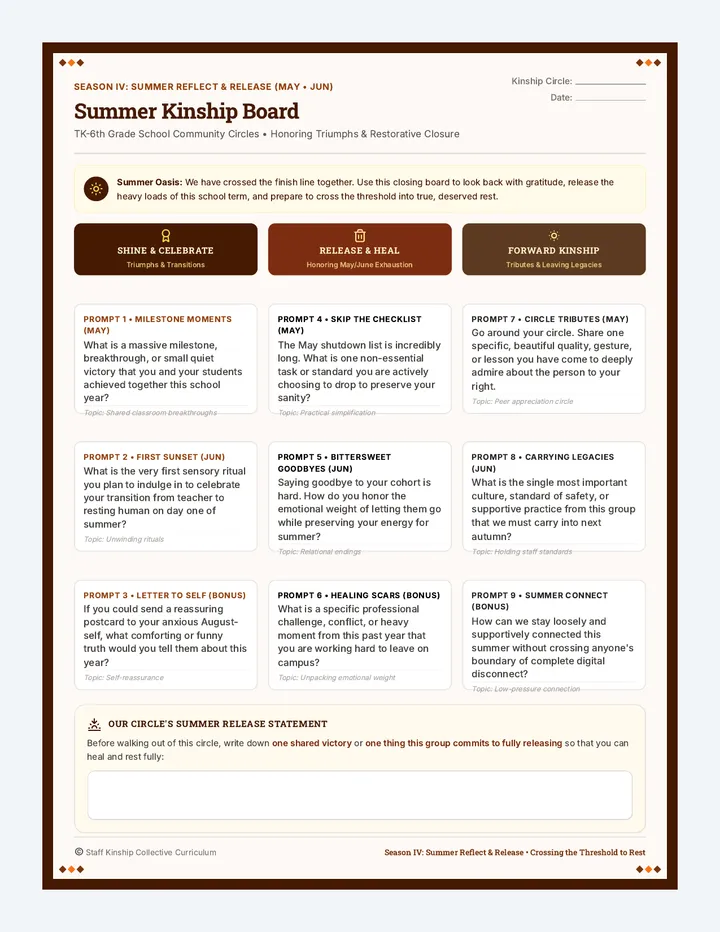
Celebrates collective triumphs, reflective learning, and restorative closure as the school year draws to an end (May, June).
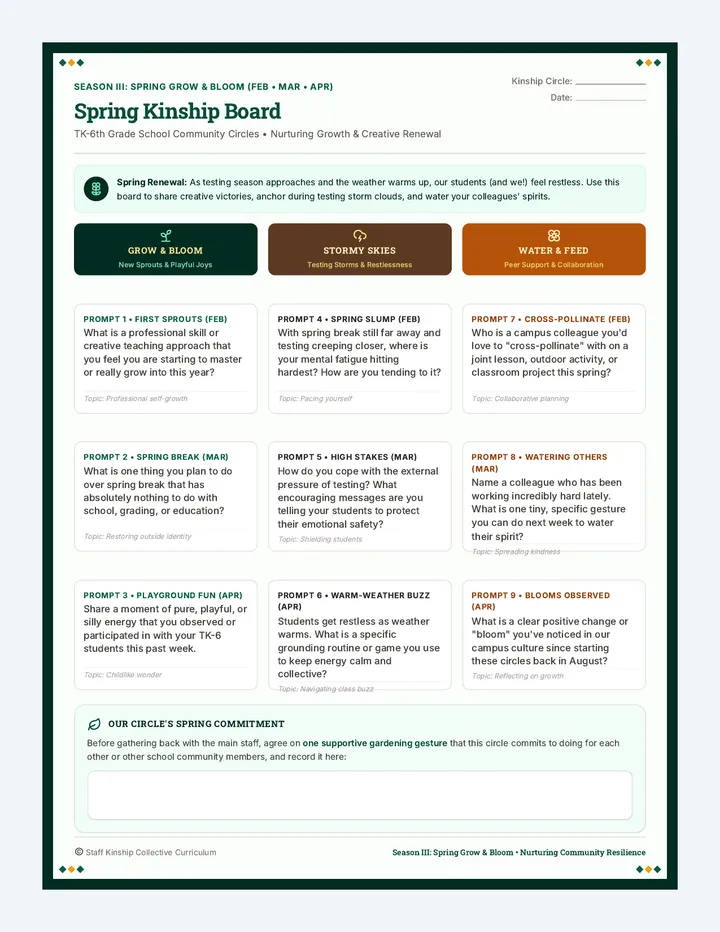
Fosters professional empathy, creative renewal, and navigating high-stakes testing season with collaborative support and grace (February, March, April).
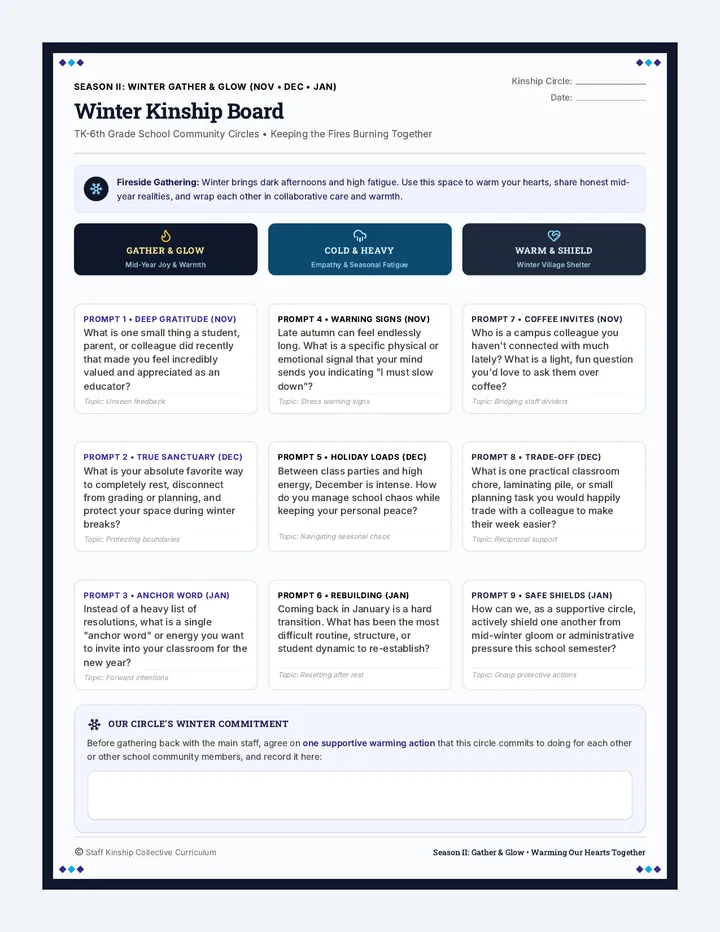
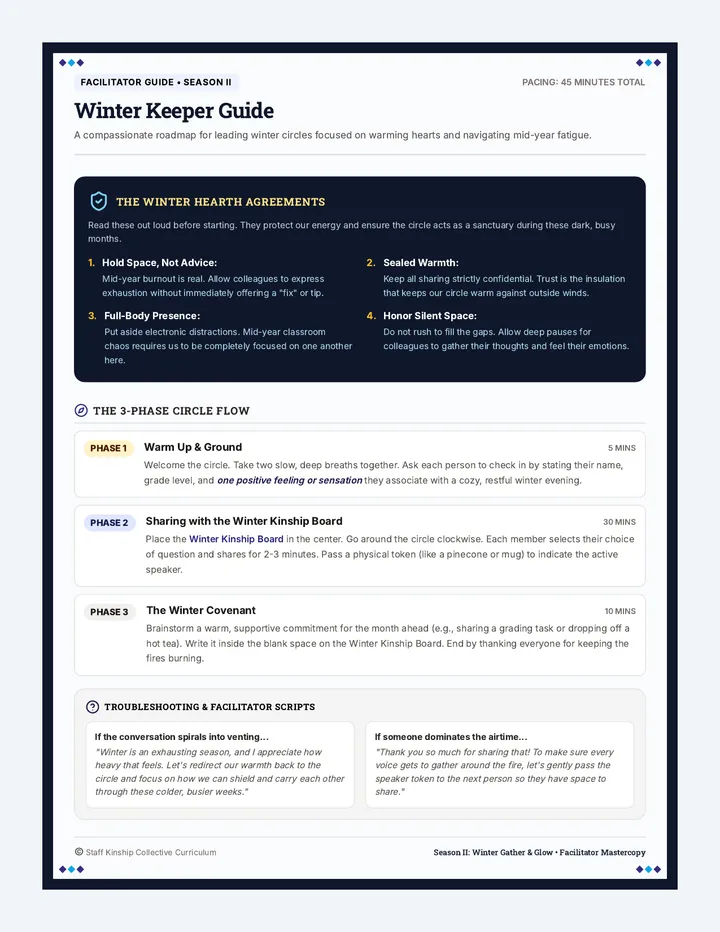
Explores themes of collective healing, mid-year fatigue management, peer-to-peer gratitude, and warming up school culture during the winter months (November, December, January).
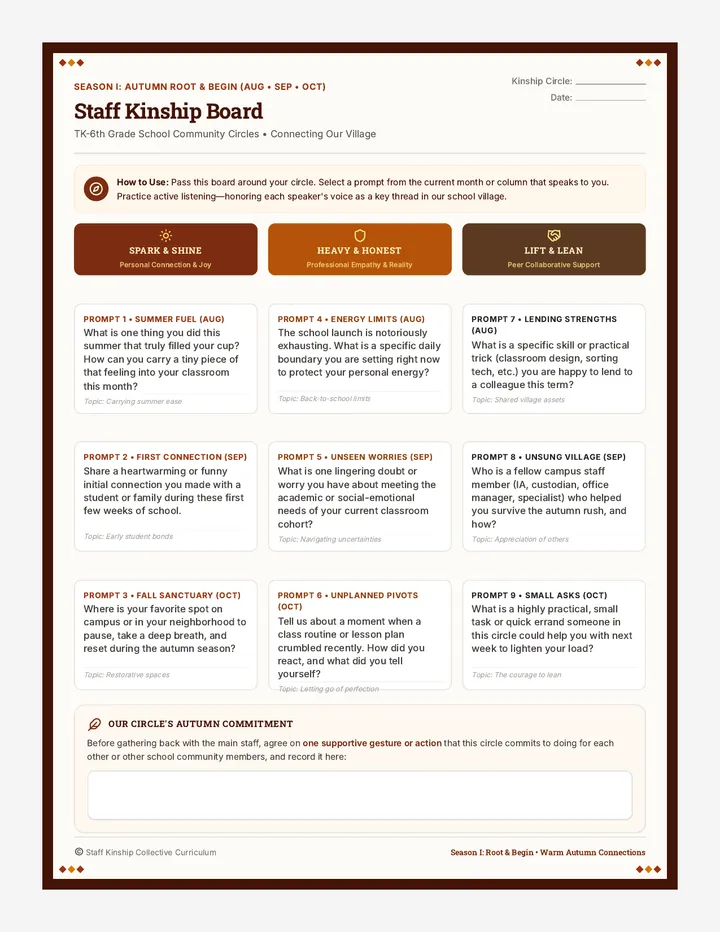
Focuses on establishing group trust, sharing summer transitions, and setting supportive baseline agreements for the start of the school year (August, September, October).
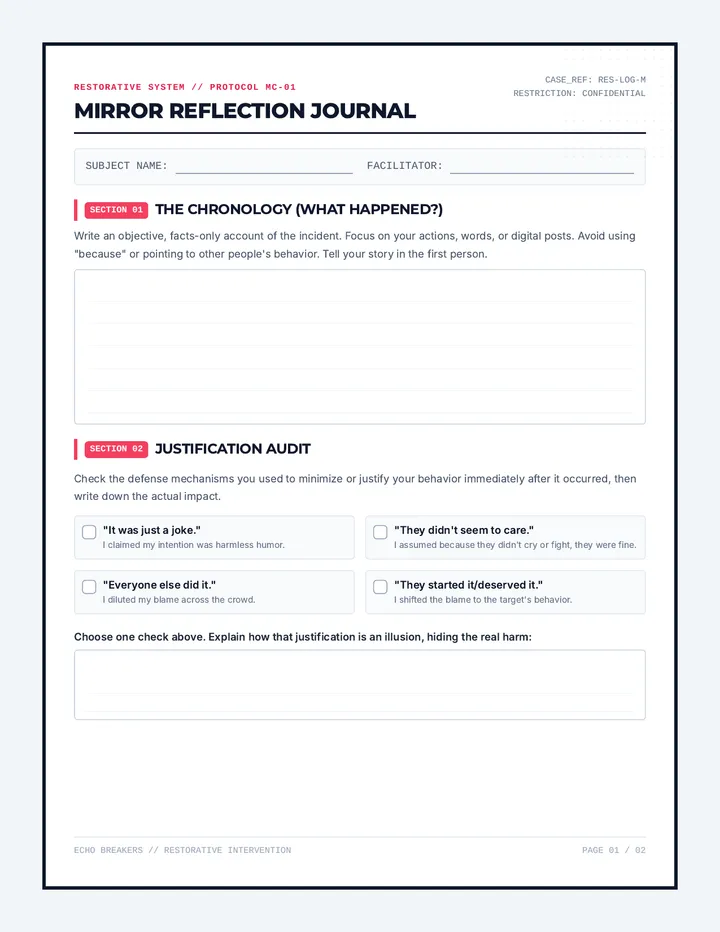
A restorative, intervention-focused lesson designed to address active bullying, social exclusion, or bystander behaviors. Provides a structured, objective, and deeply empathetic framework for restorative justice, self-reflection, and behavior correction.
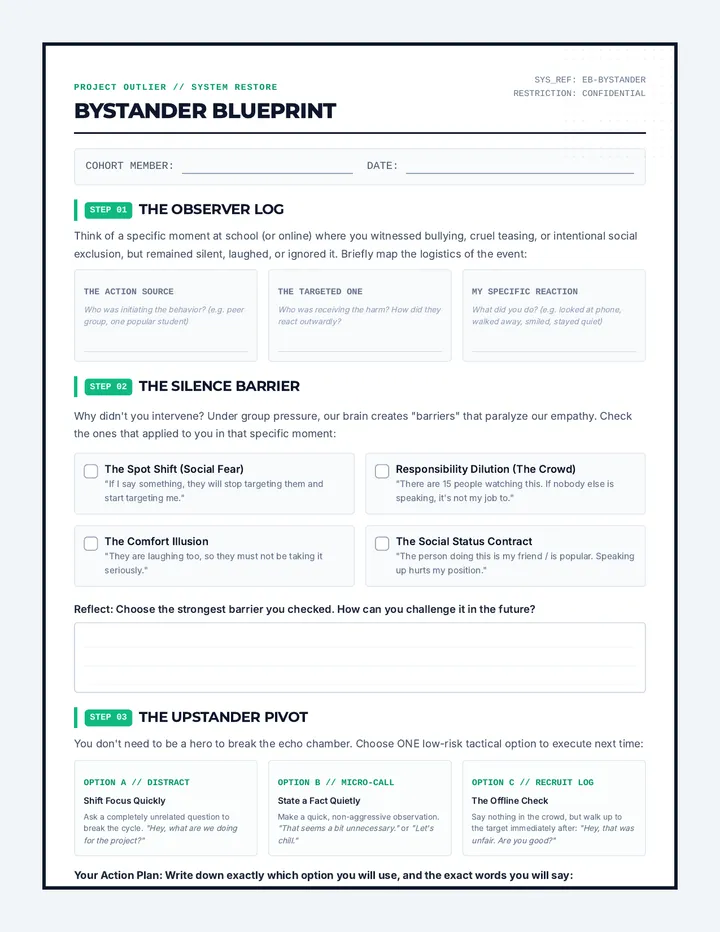
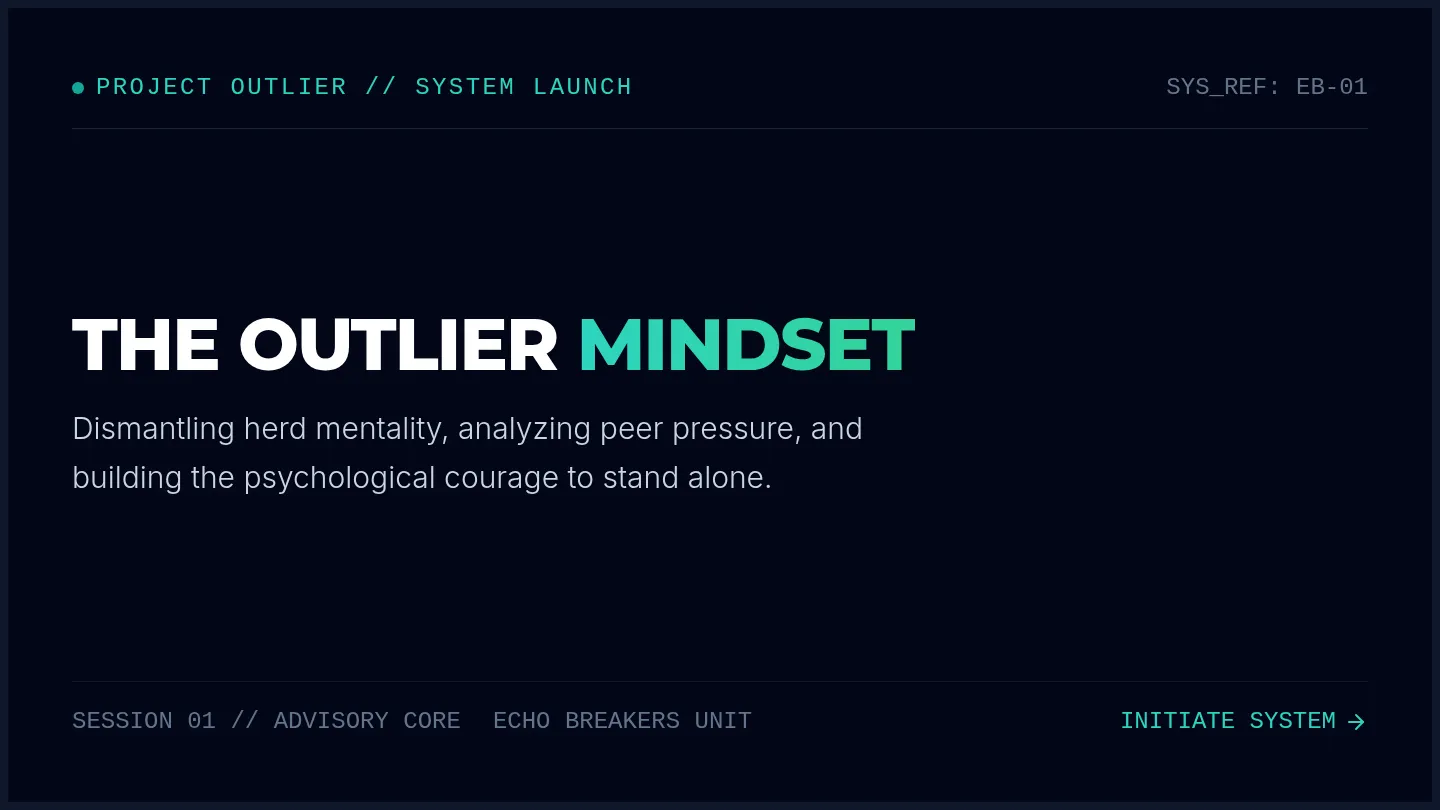
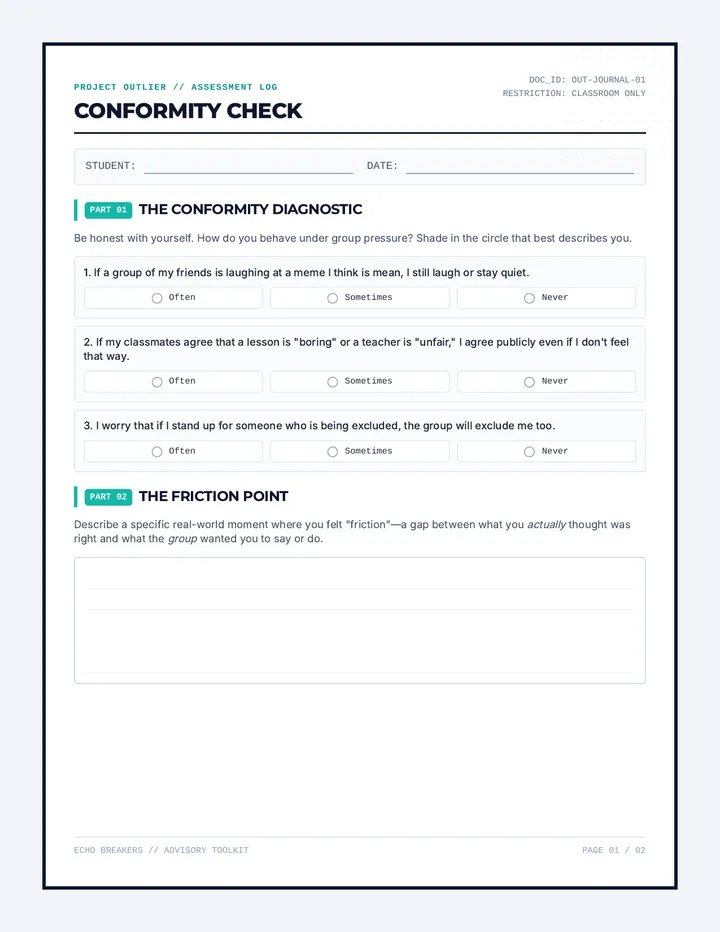
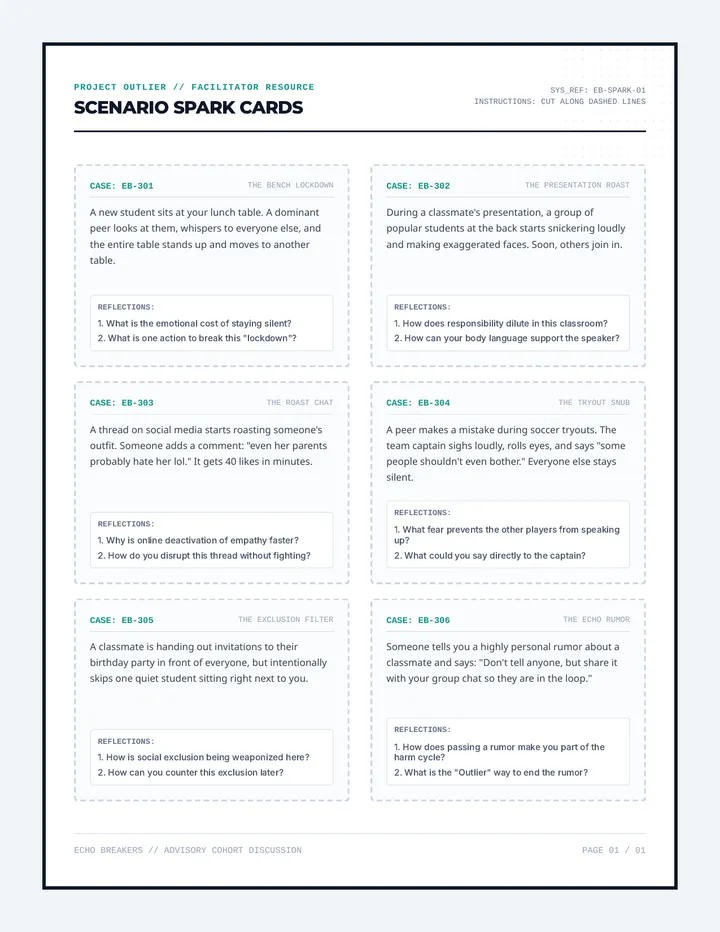
A preventative Advisory-focused lesson that analyzes peer pressure, the psychological mechanics of herd mentality, and the courage required to stand alone. Students engage in self-reflection, case analysis, and scenario-based writing prompts to develop an 'outlier' mindset.
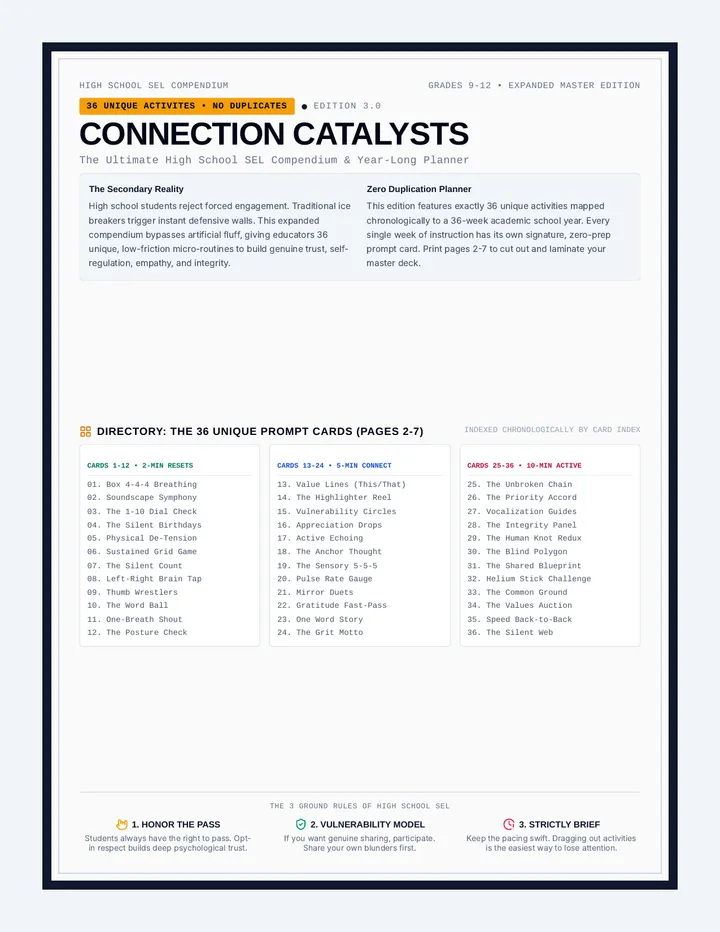
A powerful social-emotional learning lesson series designed for high school teachers to foster relationship-building, self-regulation, active communication, self-awareness, and integrity through quick daily classroom routines.
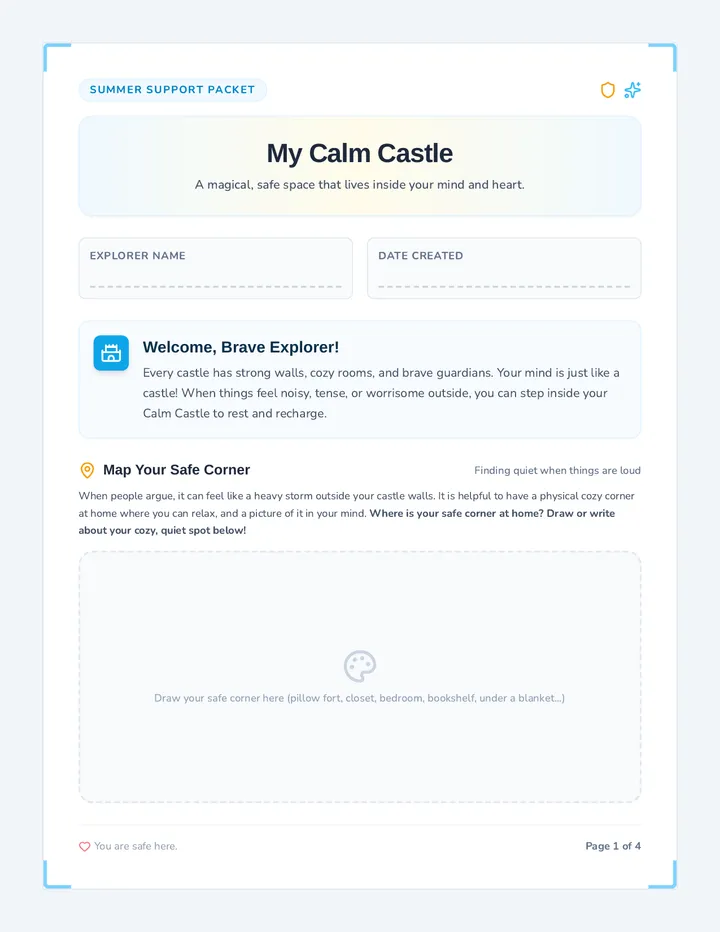
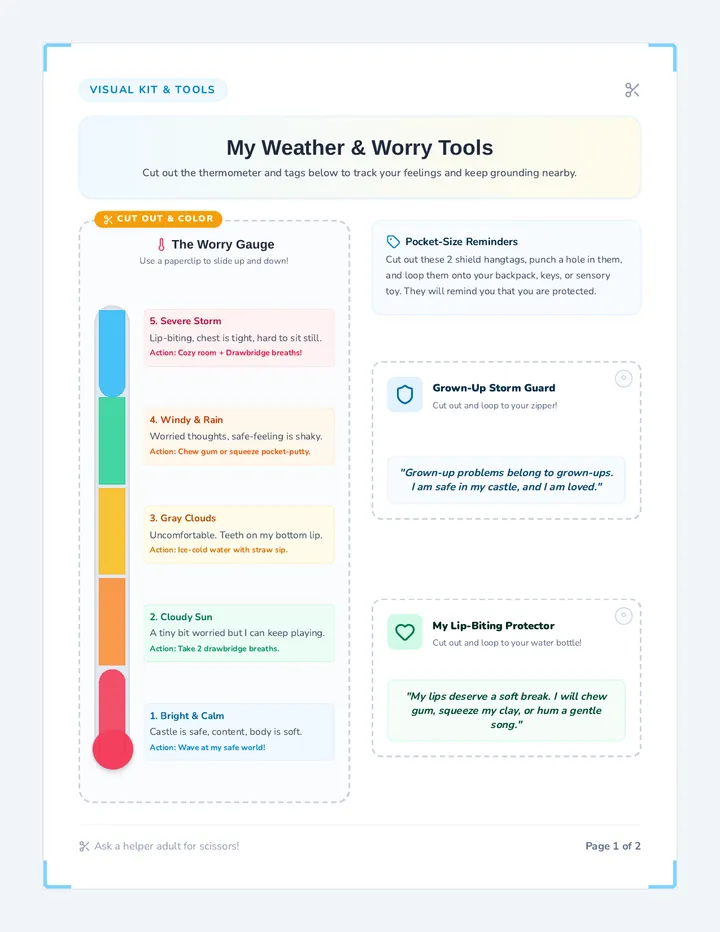
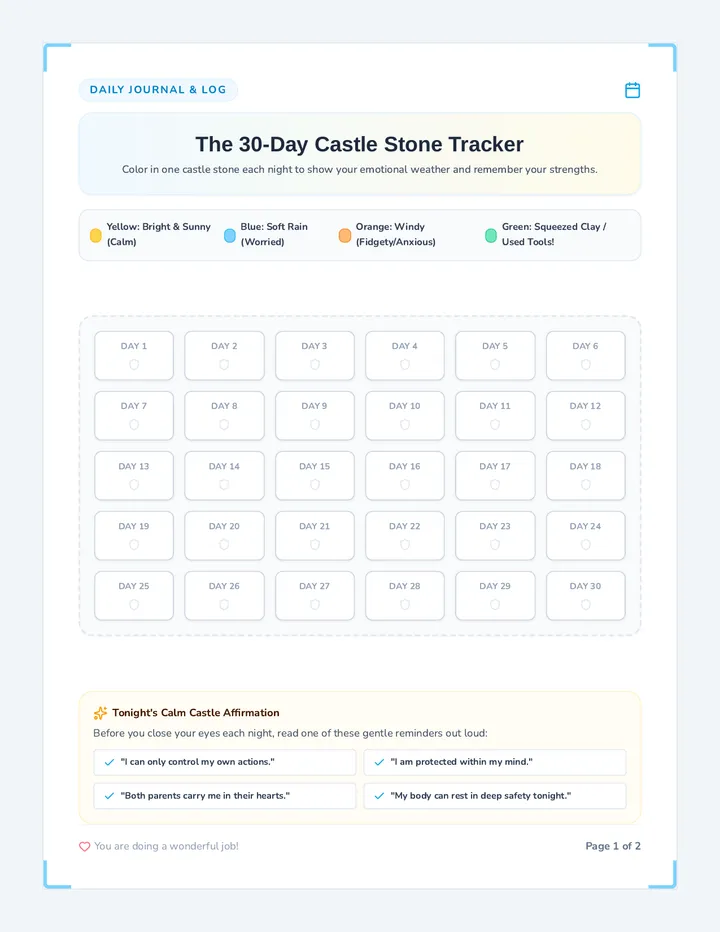
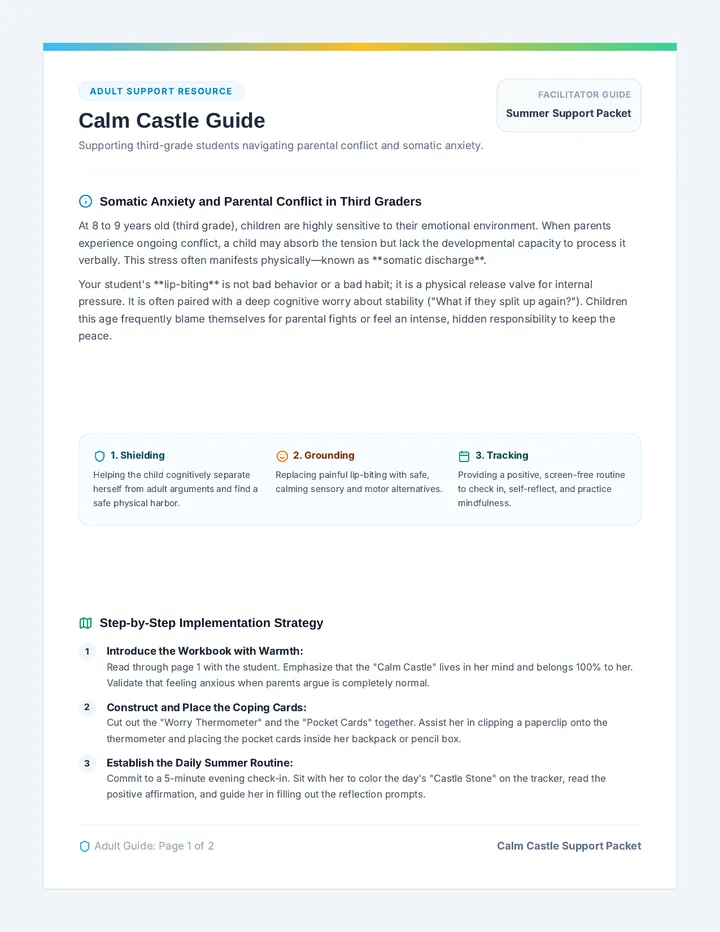
A comprehensive summer support packet for a third-grade student experiencing anxiety and worry due to parental conflict. Includes a child-friendly workbook, coping cards, a daily tracker, and a guide for supporting adults.
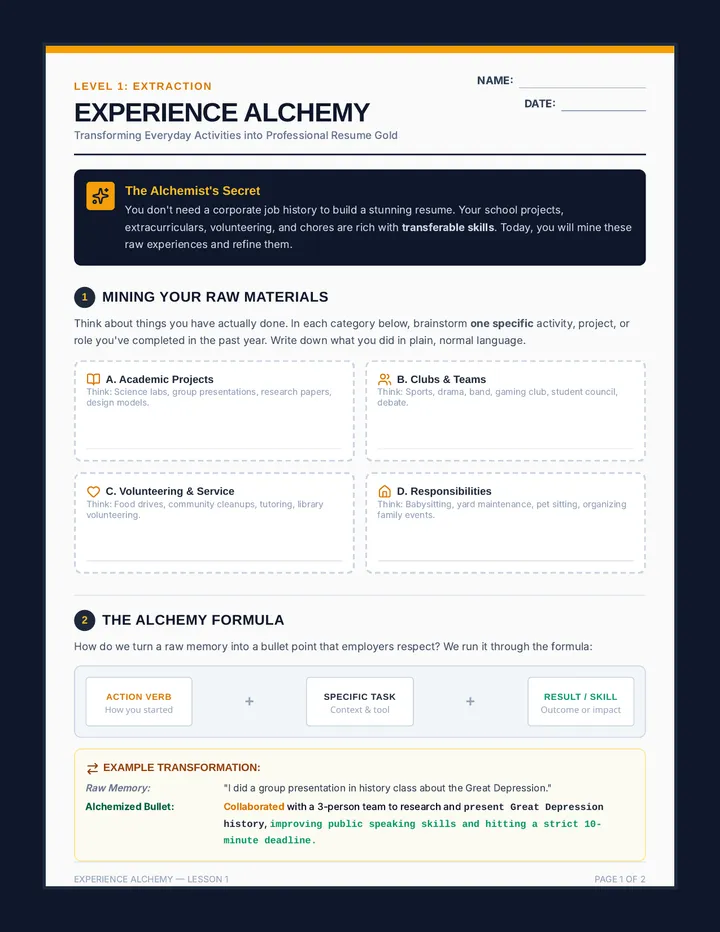
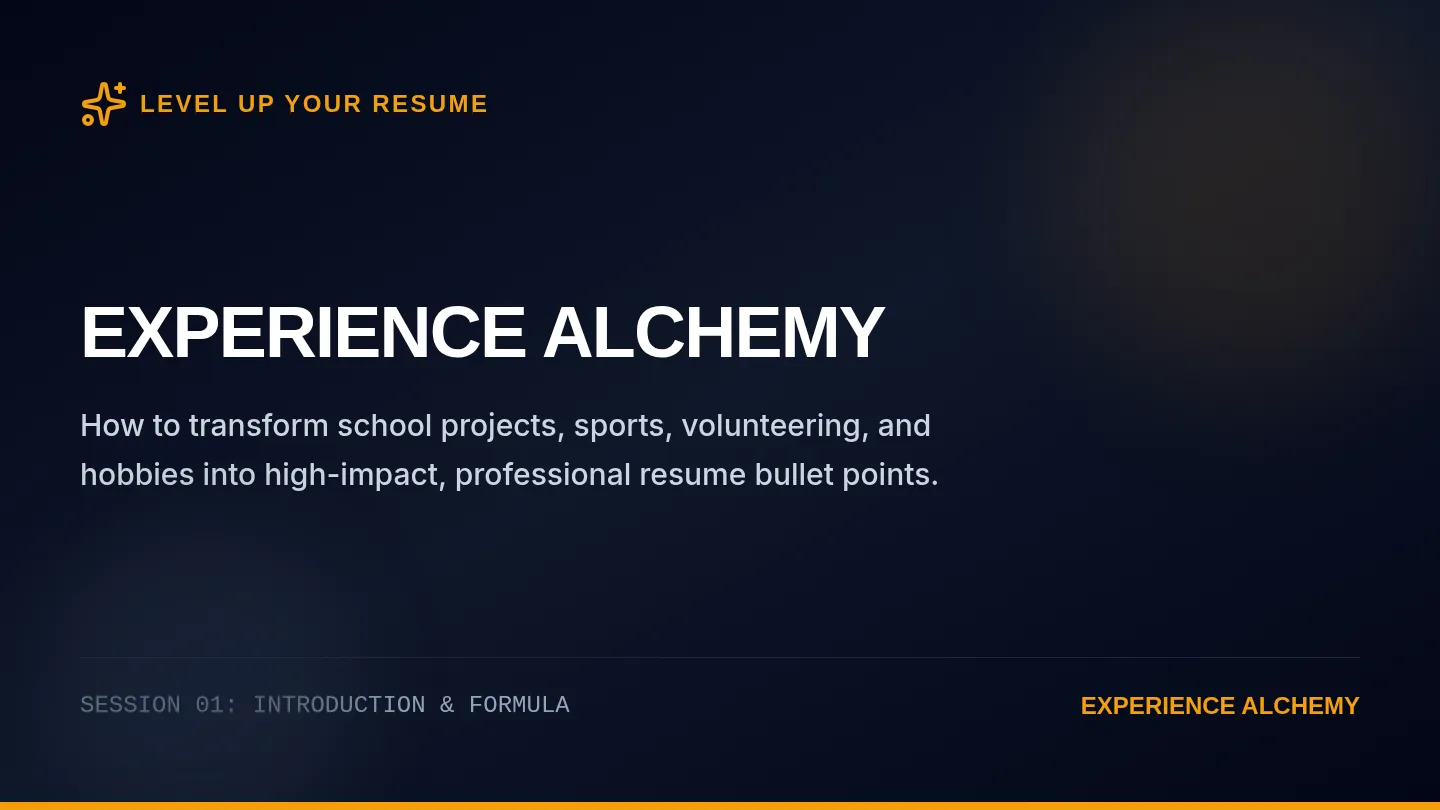
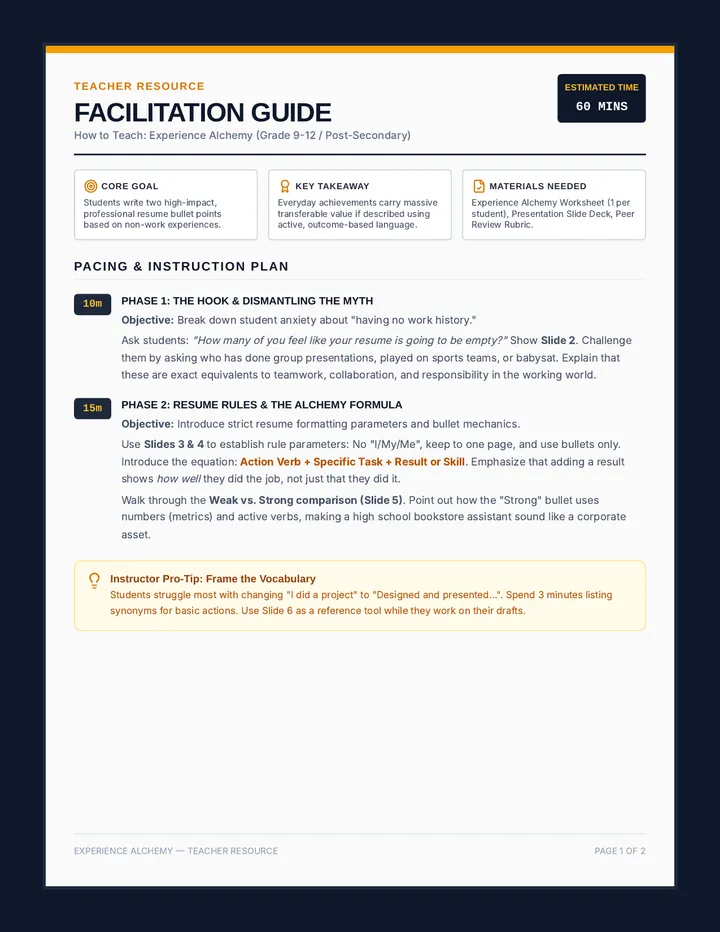
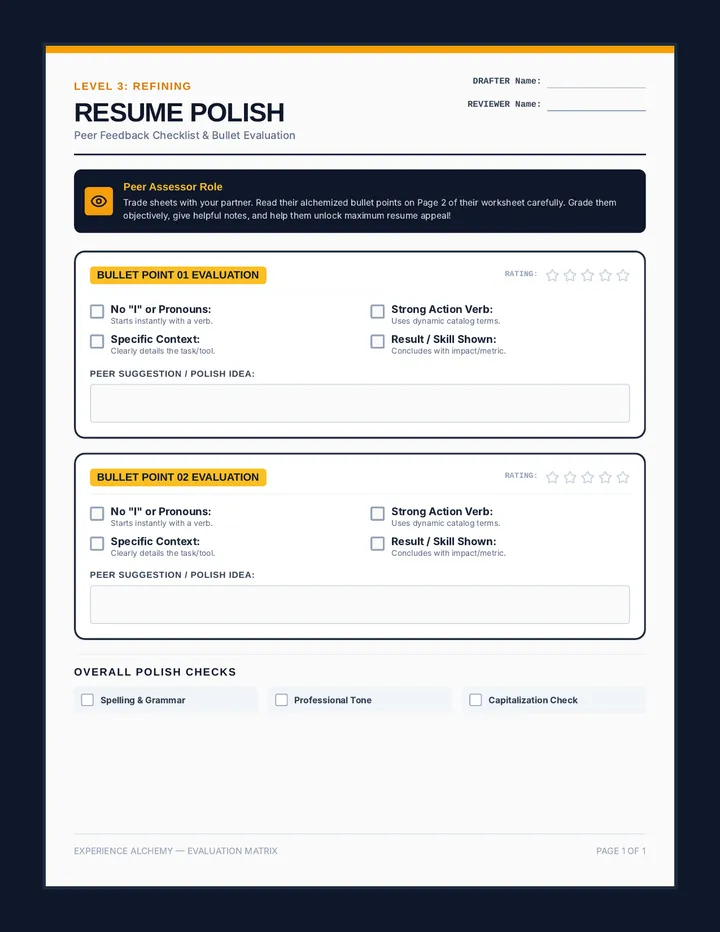
A complete lesson designed for first-time job seekers (students) to transform their school projects, volunteering, and extracurricular activities into professional resume bullet points. Includes a structured teacher guide, instructional presentation slides, a student drafting worksheet, and a peer feedback checklist.
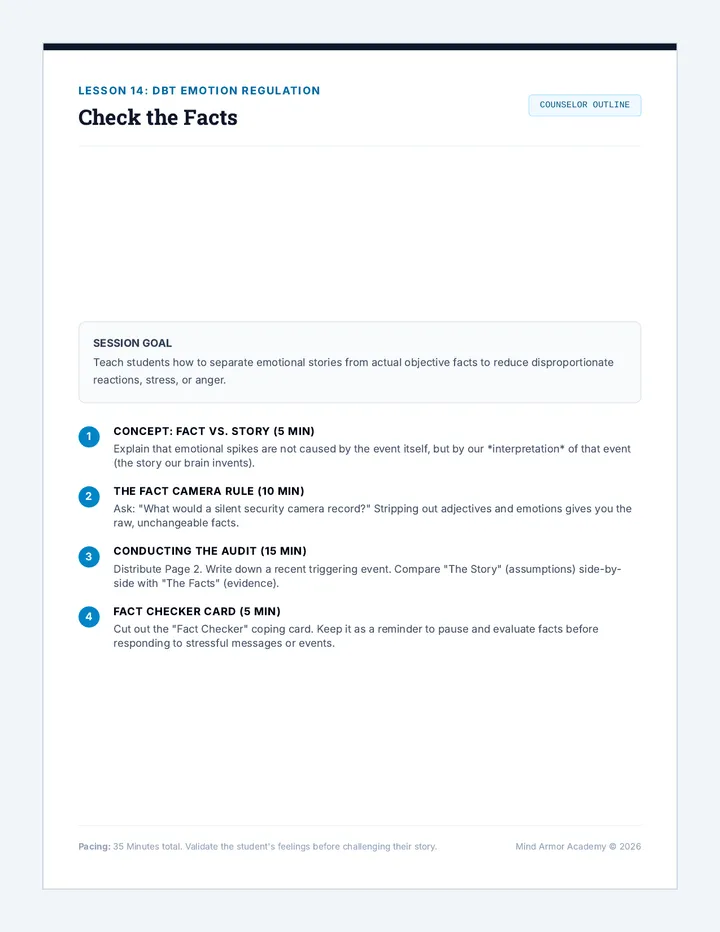
DBT emotion regulation session teaching 'Check the Facts' to verify if emotional reactions match the actual objective facts of a school or social situation.
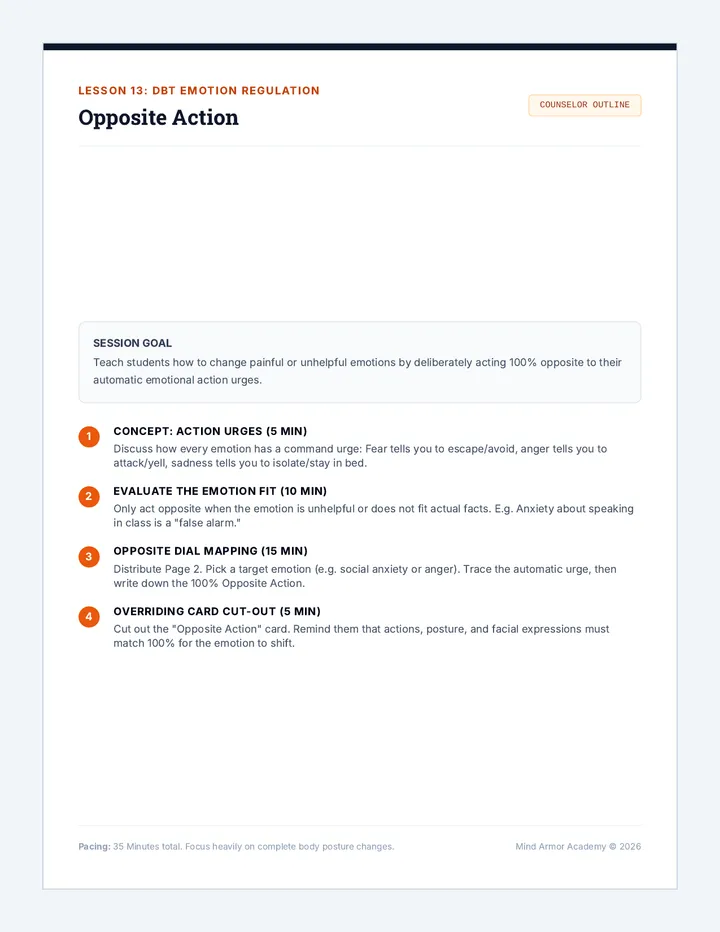
DBT emotion regulation session teaching 'Opposite Action' to change painful or unhelpful emotions by deliberately acting contrary to emotional urges.
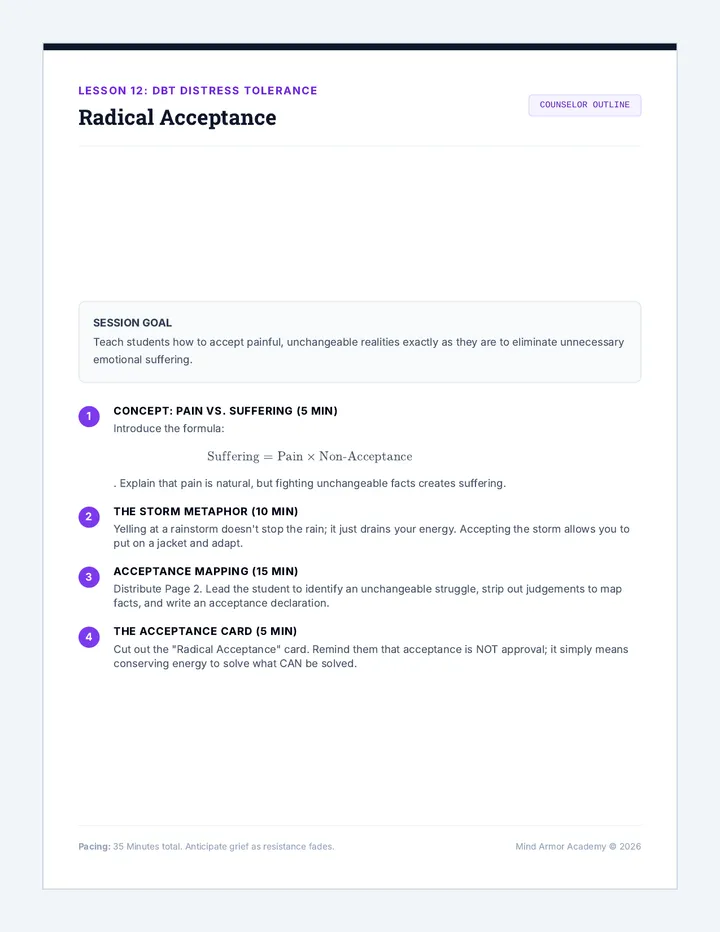
DBT distress tolerance session teaching 'Radical Acceptance' to tolerate painful realities that cannot be changed immediately without making them worse.
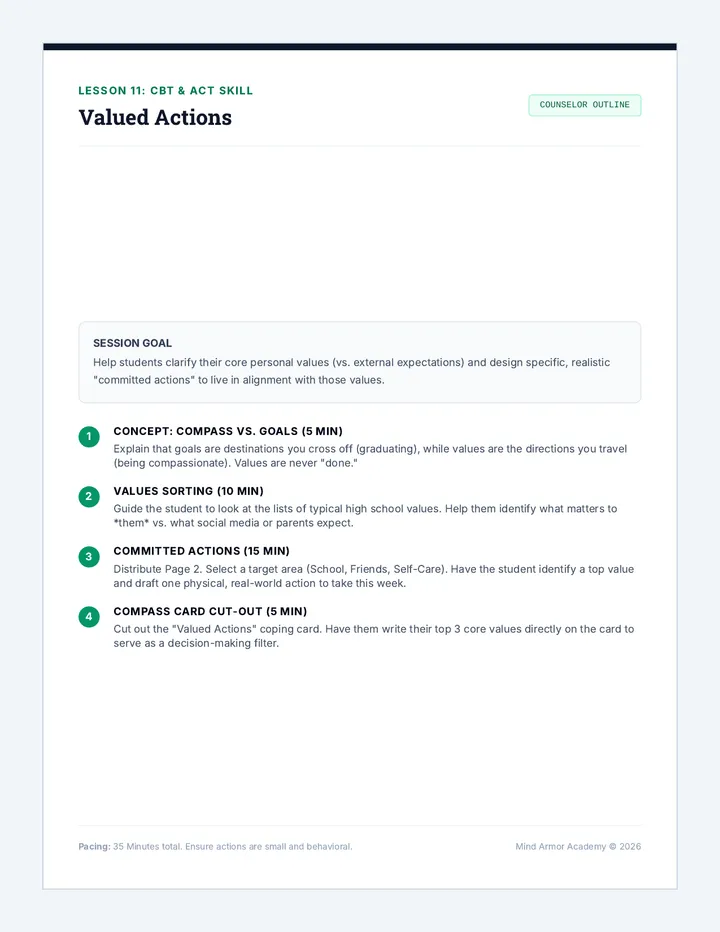
CBT and ACT session focusing on identifying core personal values and taking committed action steps toward them in school and life.
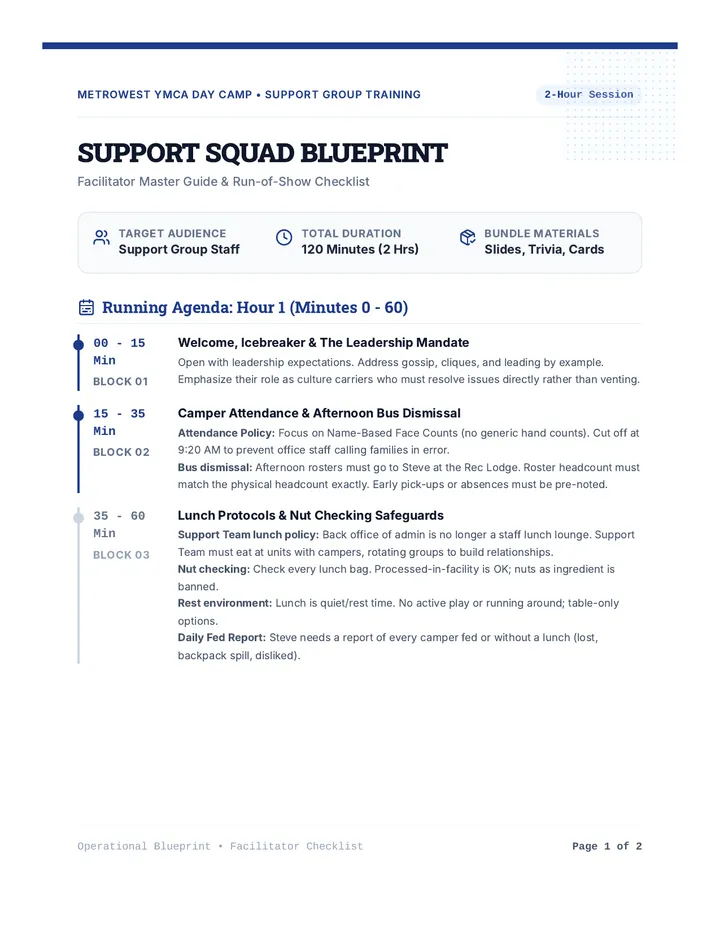
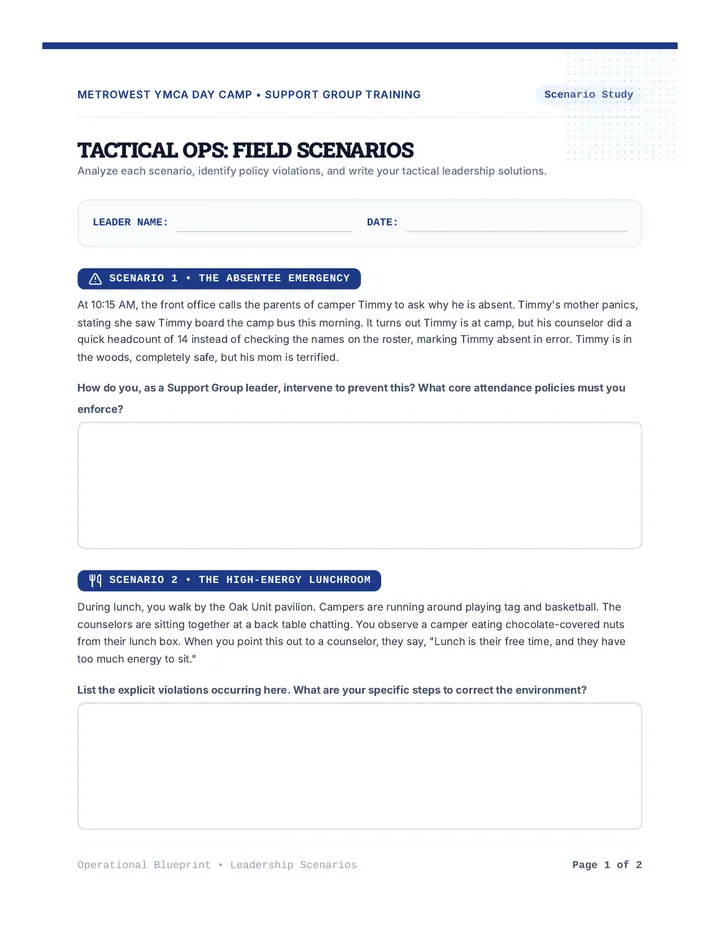
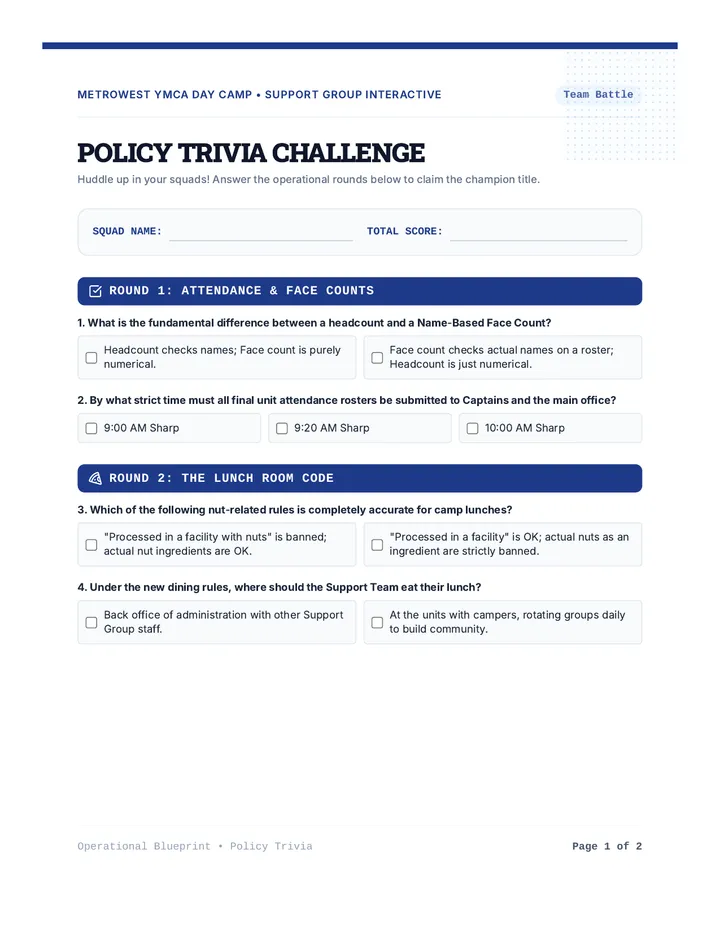
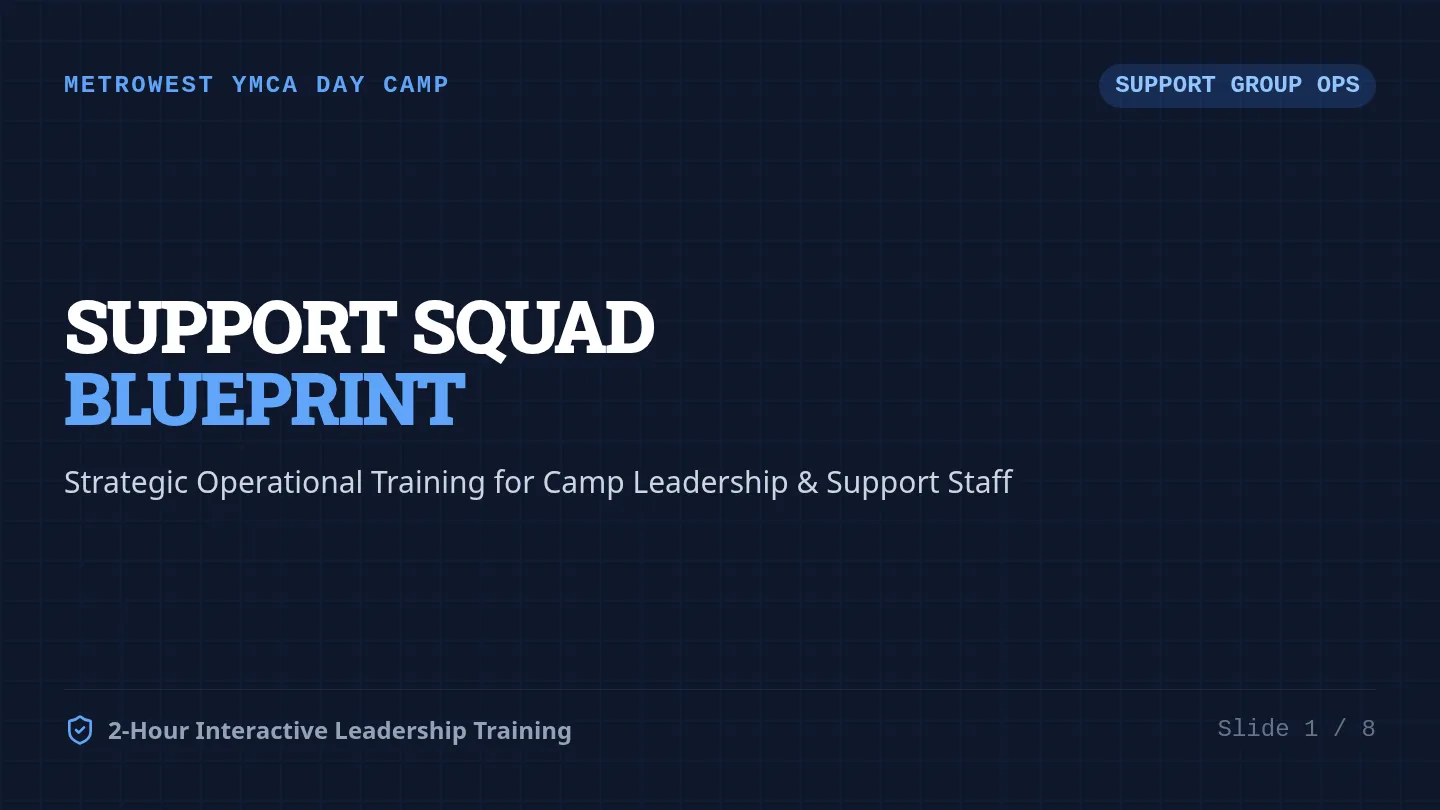
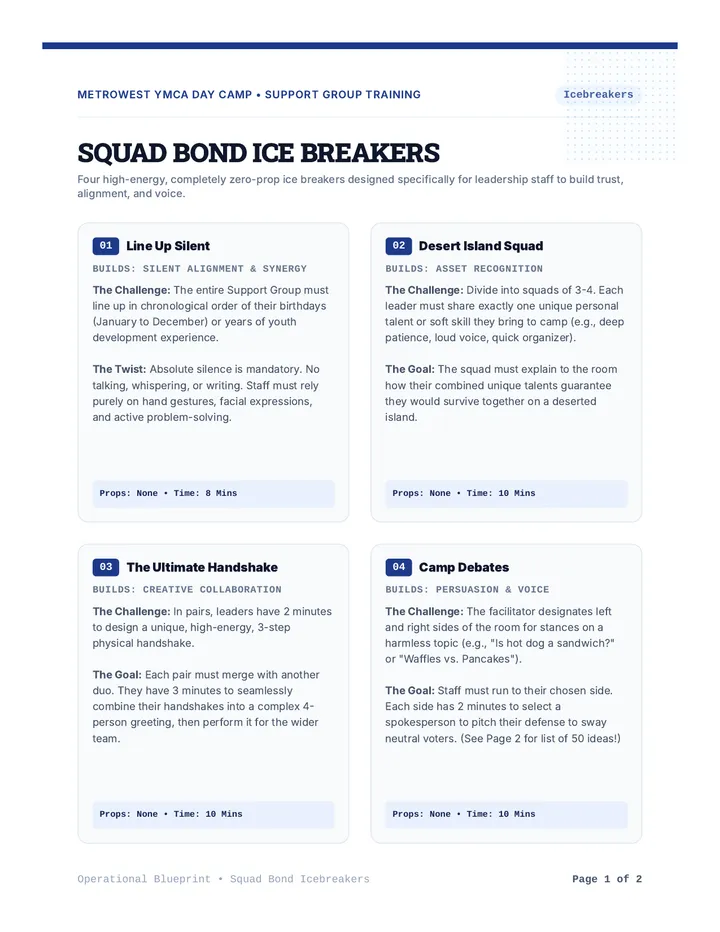
A comprehensive, 2-hour interactive leadership training program for Camp MetroWest Day Camp Support Group staff. Covers critical operations, safety procedures, lunch expectations, attendance standards, and digital reporting protocols.
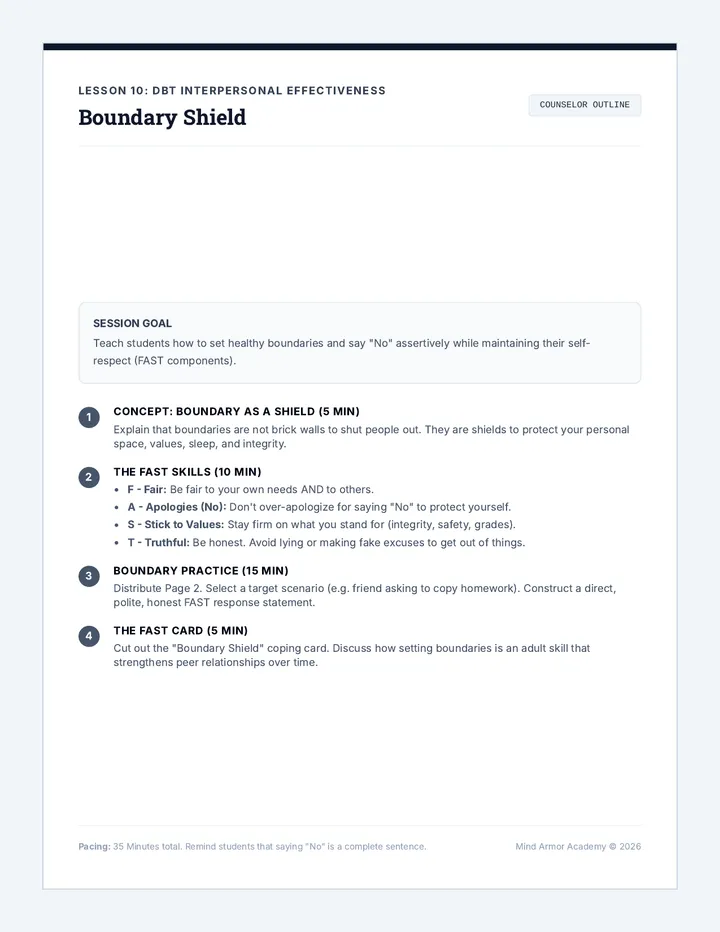
Interpersonal effectiveness session covering DBT FAST skills (Fair, Apologies, Stick to values, Truthful) to build self-respect and set healthy personal boundaries with peers.
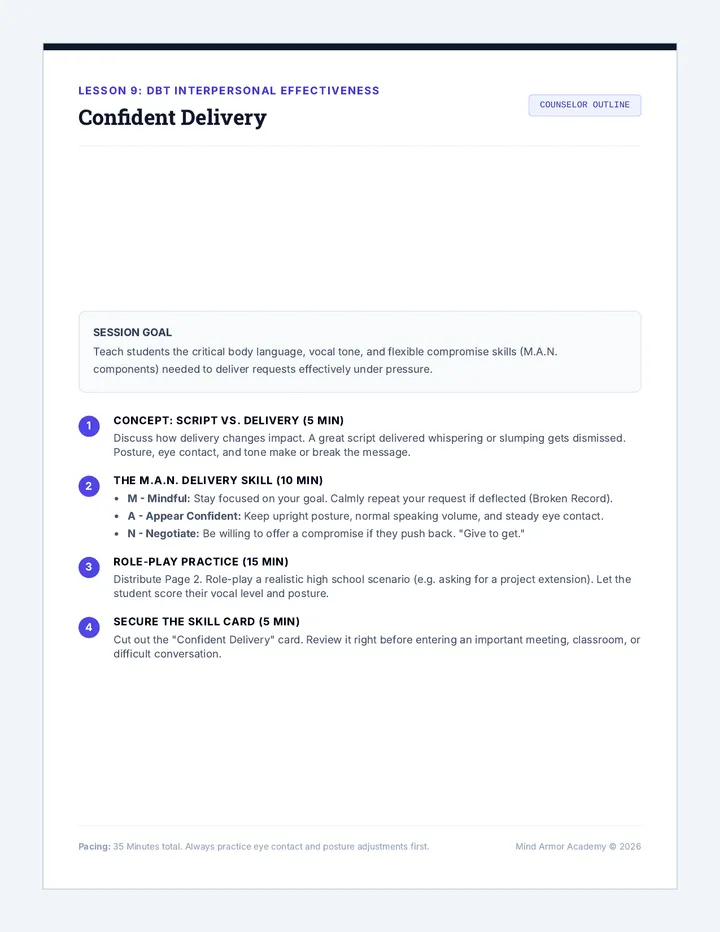
Interpersonal effectiveness session covering the second half of DBT DEAR MAN (Mindful, Appear confident, Negotiate) to guide active communication delivery and conflict negotiation.
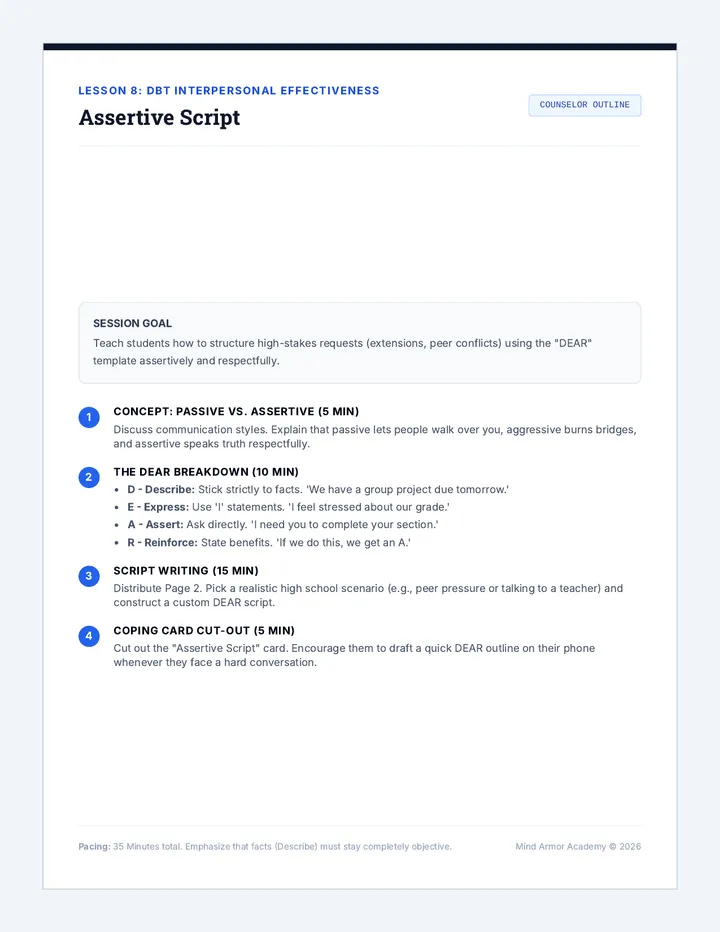
Interpersonal effectiveness session covering the first half of DBT DEAR MAN (Describe, Express, Assert, Reinforce) to teach structured assertive communication.
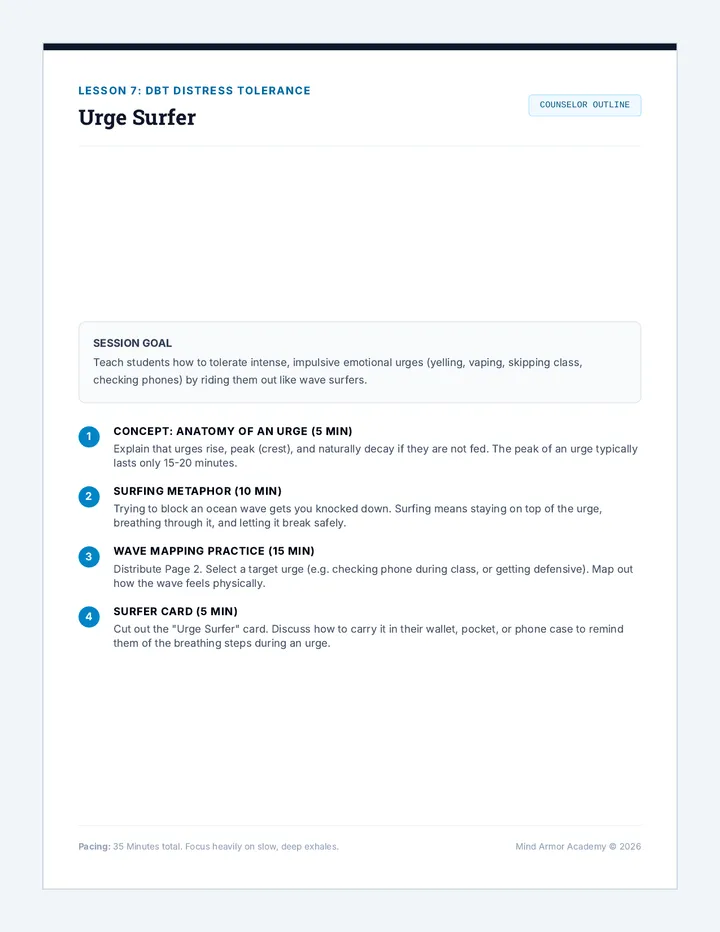
DBT session focusing on the 'Urge Surfing' technique to ride out intense emotional impulses and urges without acting on them destructively.
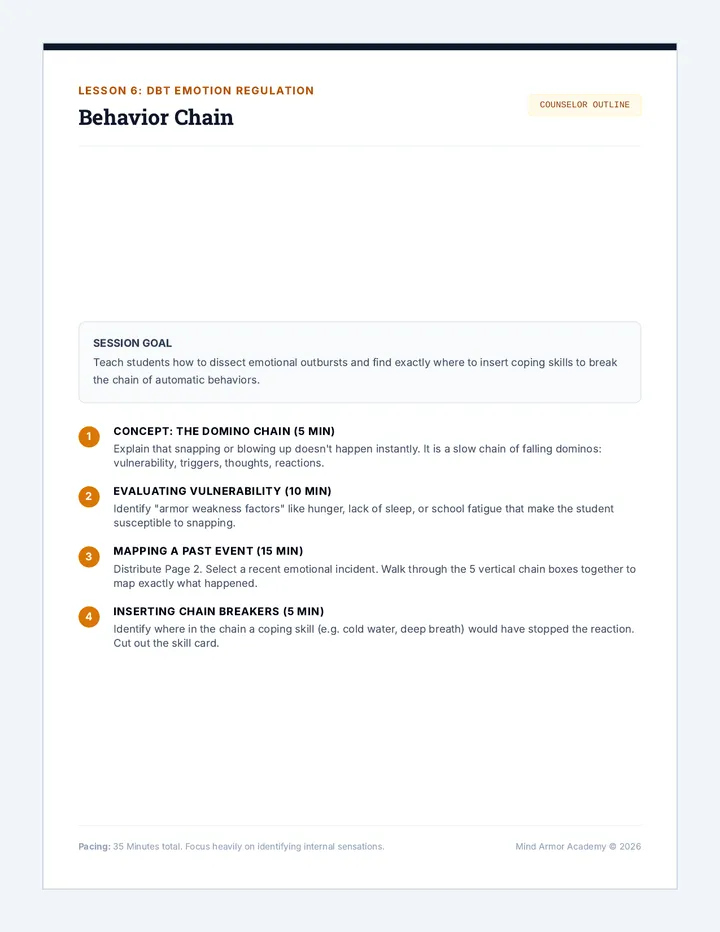
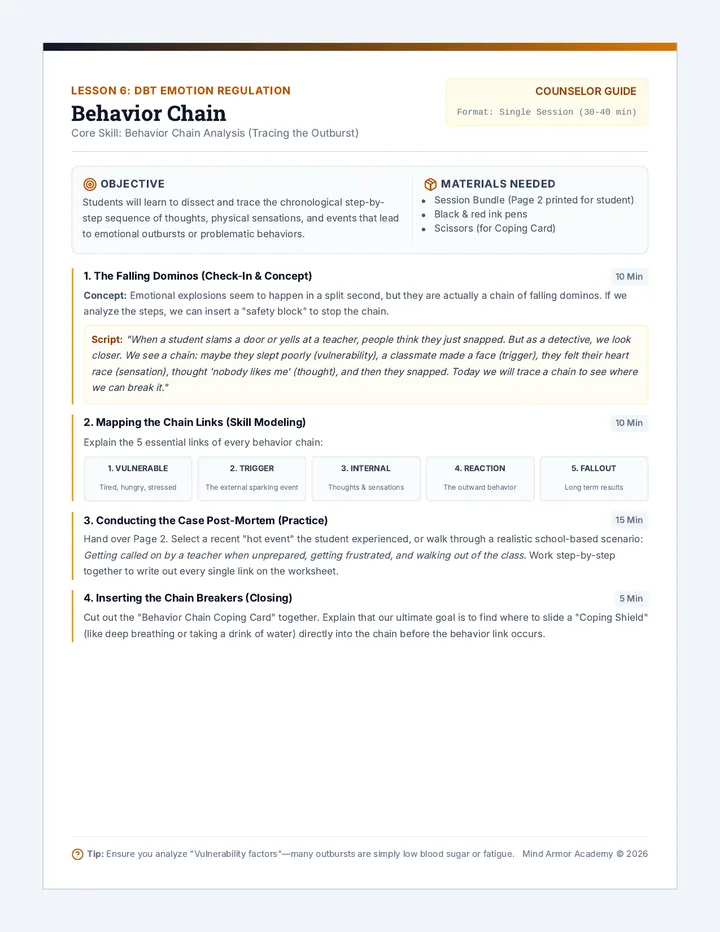
DBT session focusing on Behavior Chain Analysis to trace the sequence of events, thoughts, physical sensations, and actions that lead to emotional outbursts.
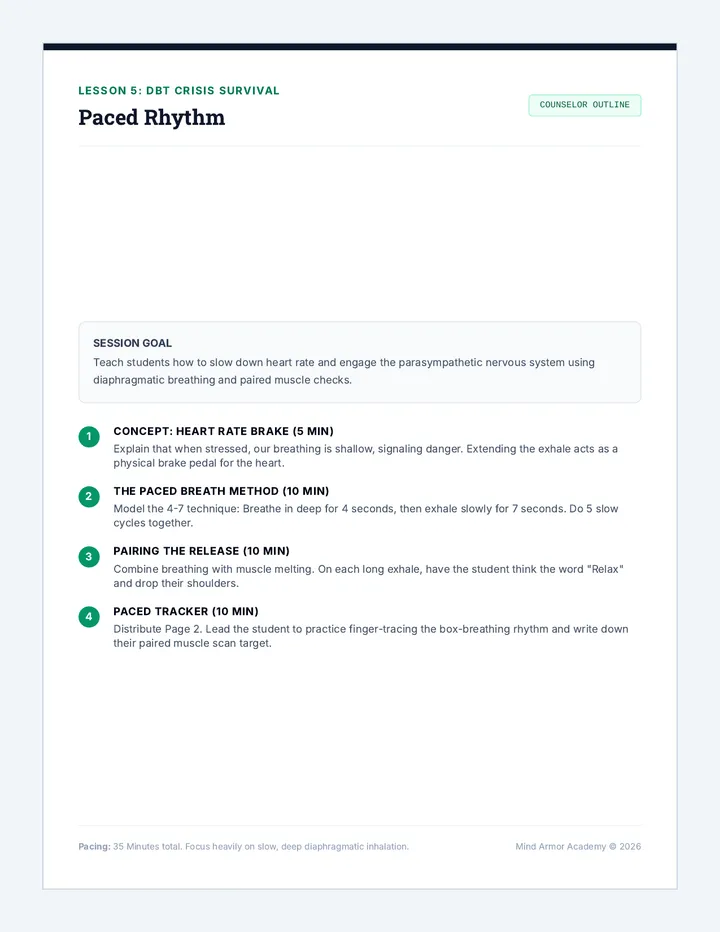
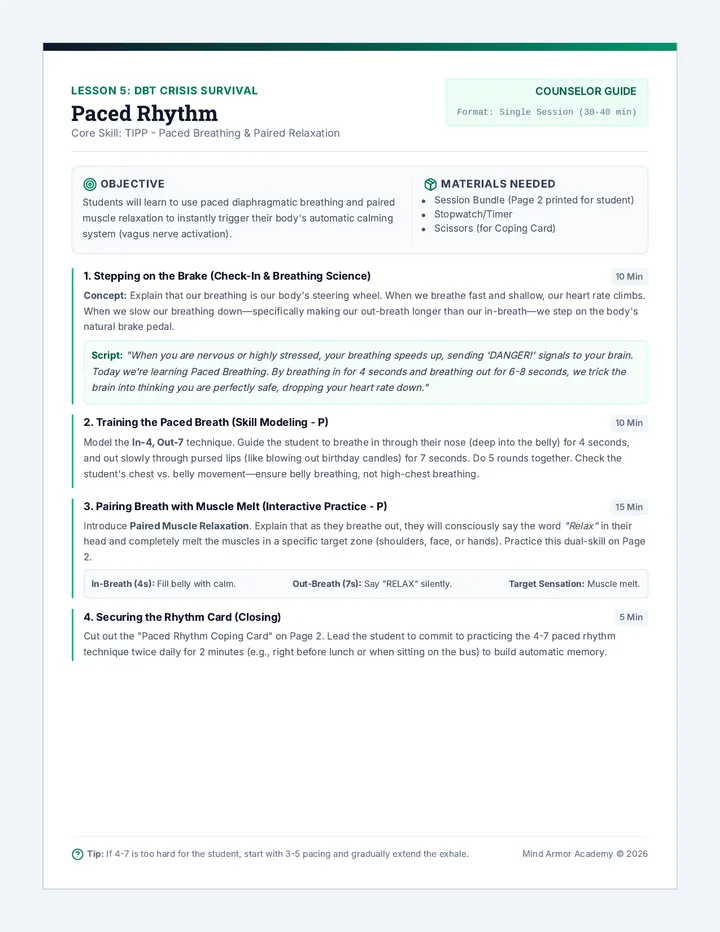
DBT crisis survival session focusing on the TIPP skills, specifically Paced breathing and Paired muscle relaxation to activate the parasympathetic nervous system.
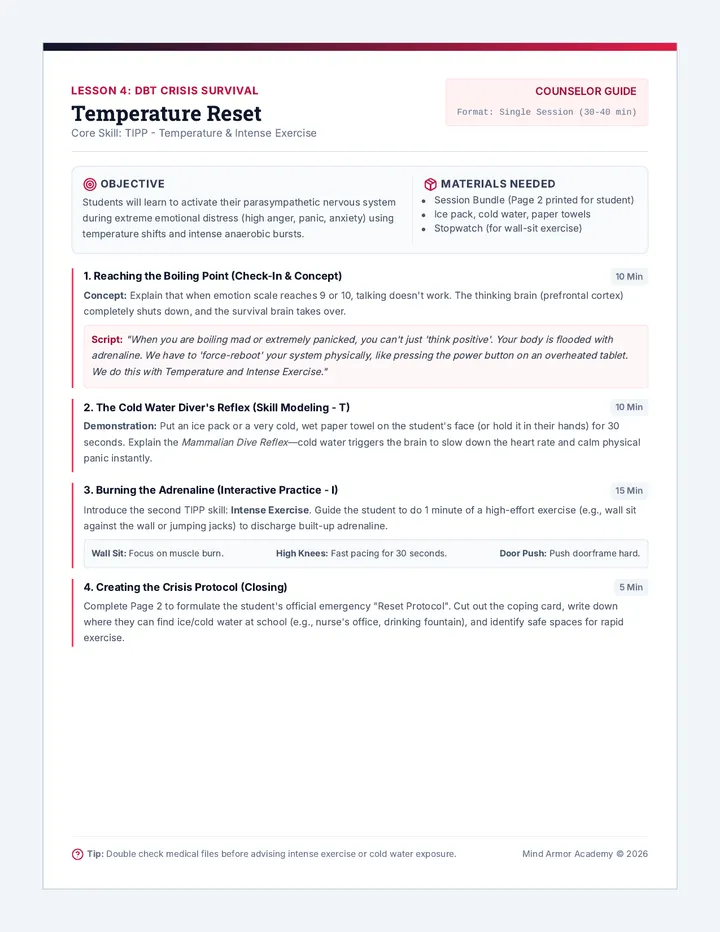
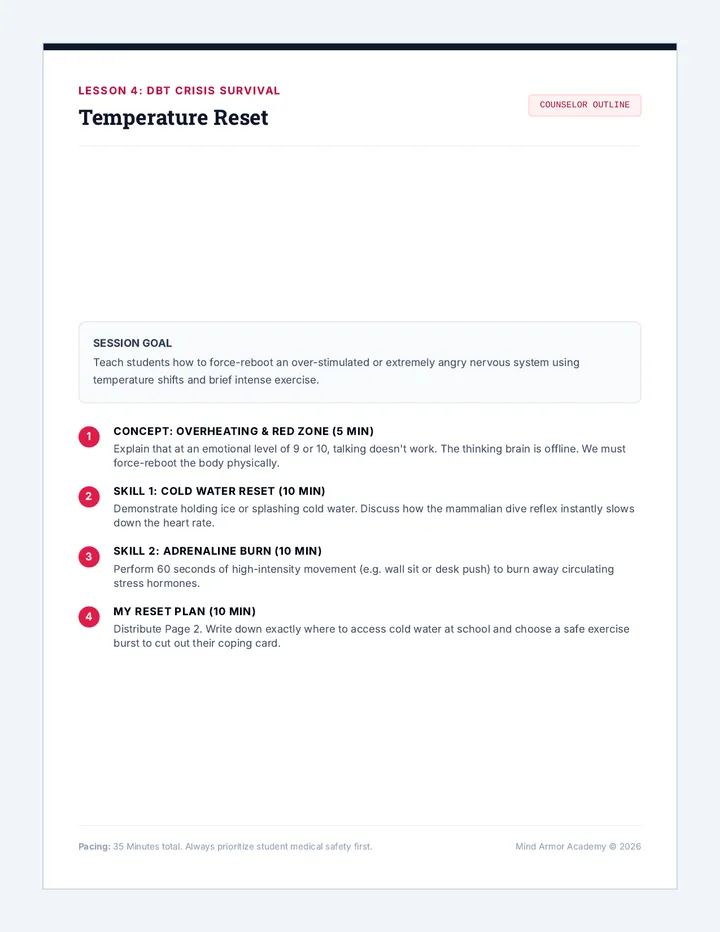
DBT crisis survival session focusing on the TIPP skills, specifically Temperature shift and Intense exercise to down-regulate the nervous system.
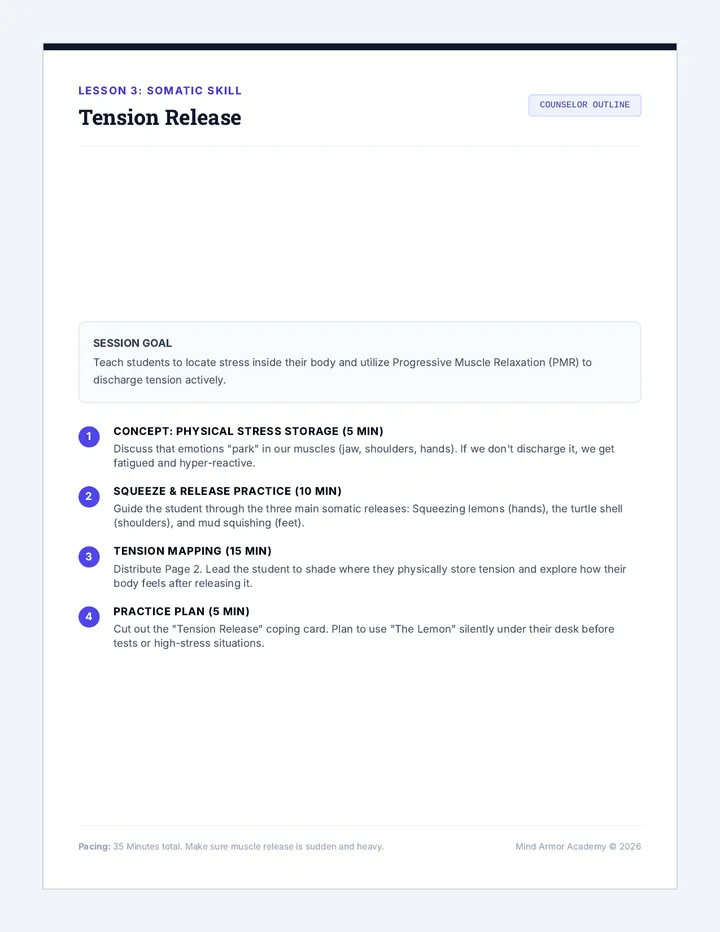
Somatic and relaxation session focusing on Progressive Muscle Relaxation (PMR) and diaphragmatic breathing to release physical stress.
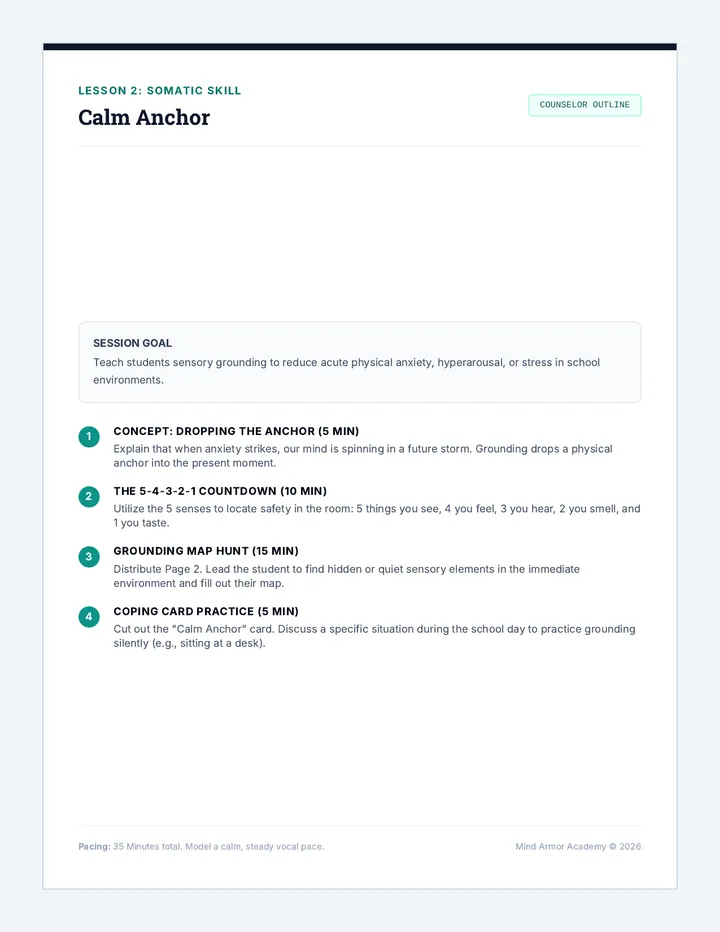
Somatic grounding session utilizing sensory-based techniques to de-escalate anxiety and hyperarousal in school situations.
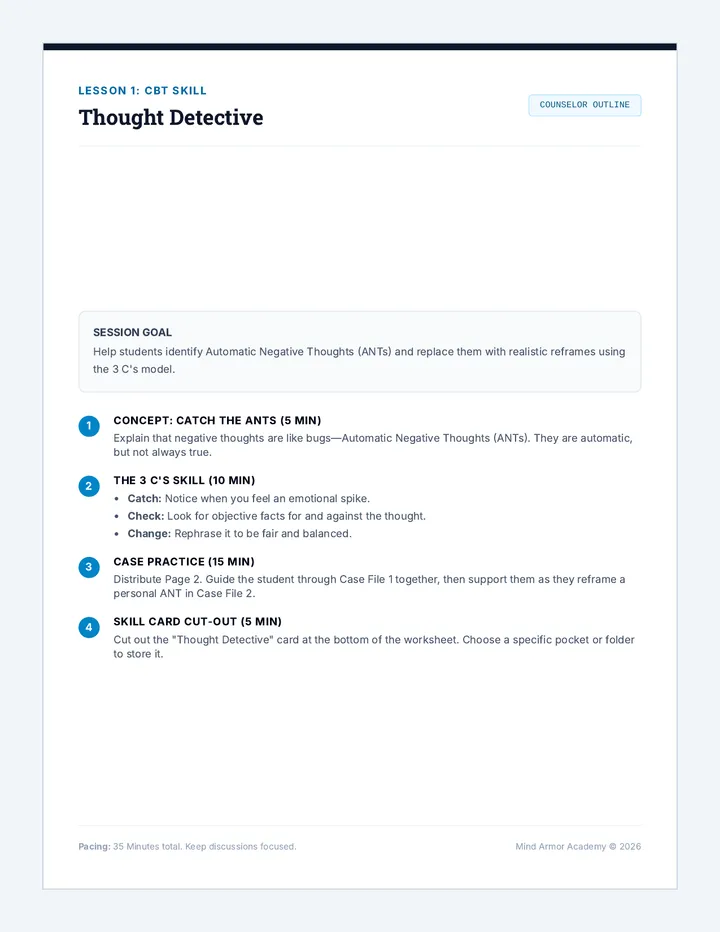
CBT session focusing on identifying automatic negative thoughts (ANTs) and cognitive reframing techniques using a 'Thought Detective' metaphor.
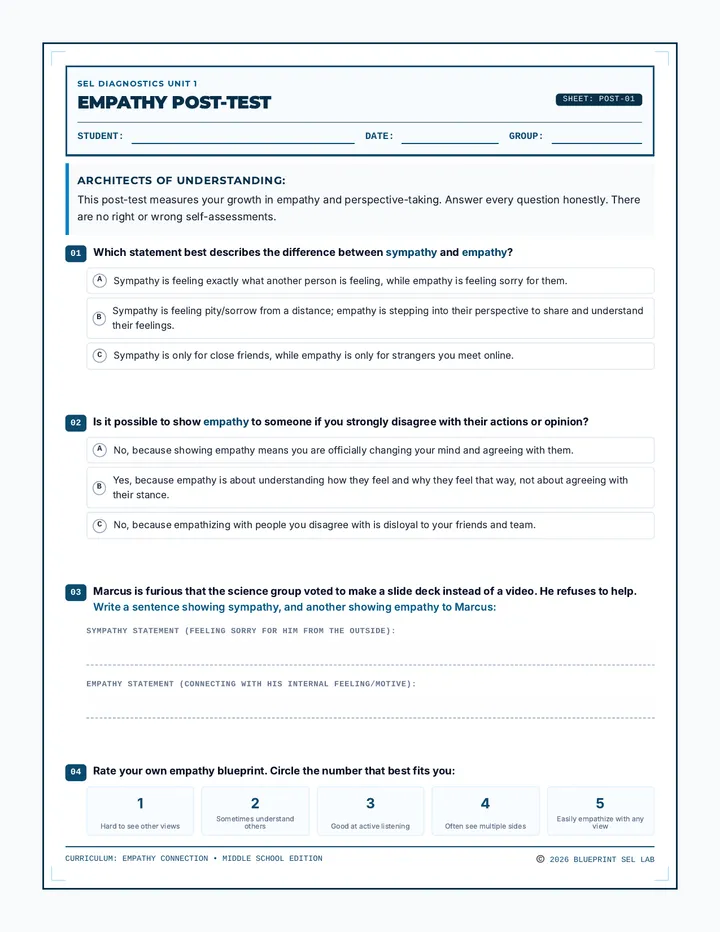
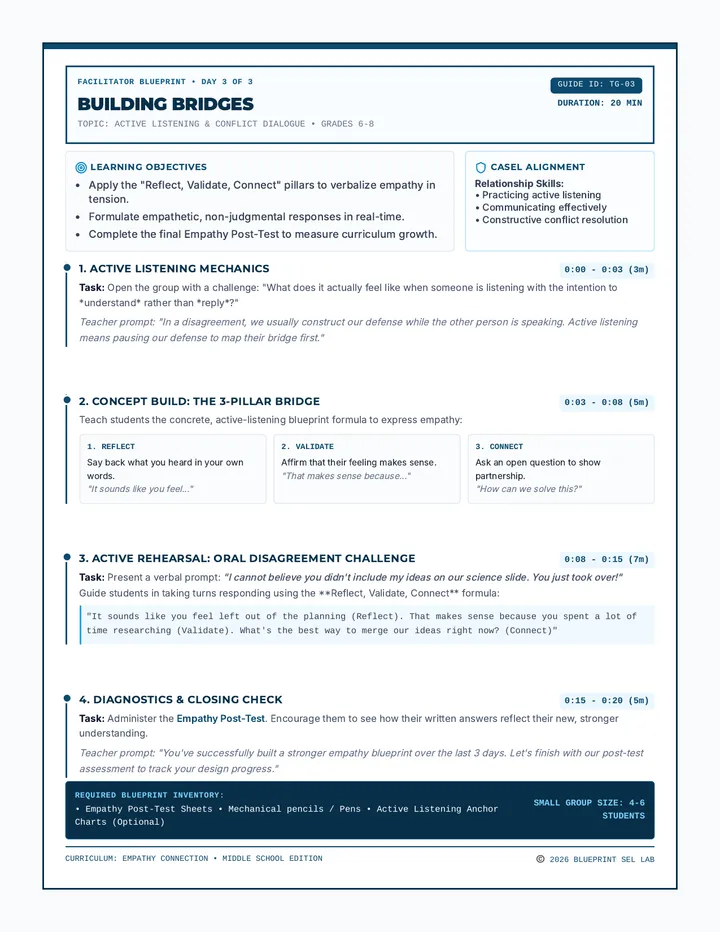
Day 3 of the Empathy Connection curriculum. Students apply active listening skills to complex disagreement scenarios, practice expressing empathy, and take the post-test assessment.
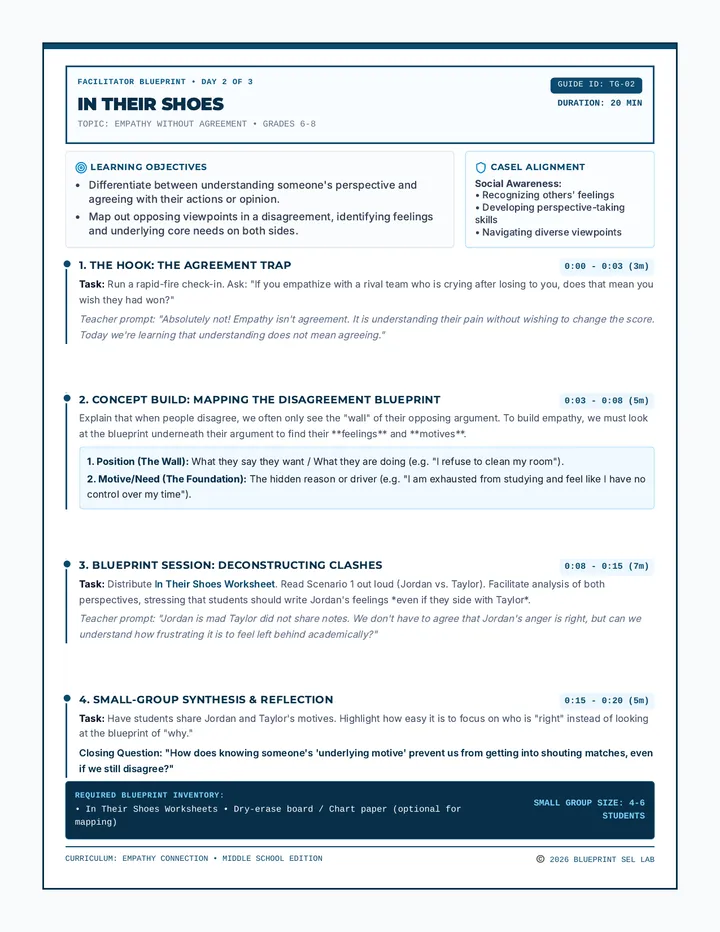
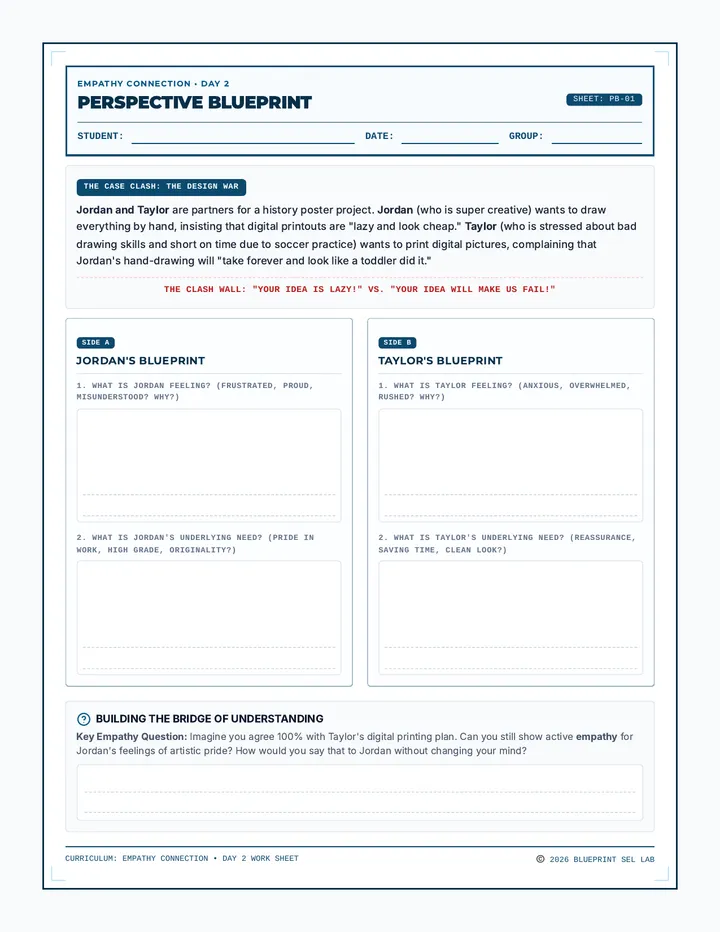
Day 2 of the Empathy Connection curriculum. Students engage in perspective-taking, learning that understanding another person's feelings and motives does not require agreeing with their point of view.