Students compare 'Total Tax' vs. 'Tax Withheld' to determine the outcome of their return. They learn the concept of overpayment leading to a refund and underpayment leading to a tax bill.
A small group session for 6th-grade girls focused on building self-confidence by navigating social dynamics, understanding peer pressure, and identifying healthy friendship traits.
This lesson provides middle and high school teachers with actionable strategies for managing students who sleep in class, moving from frustration to empathetic problem-solving. It covers root causes, immediate intervention techniques, and long-term support systems.
The final session focuses on maintaining healthy social boundaries, the role of forgiveness in growth, and group closure.
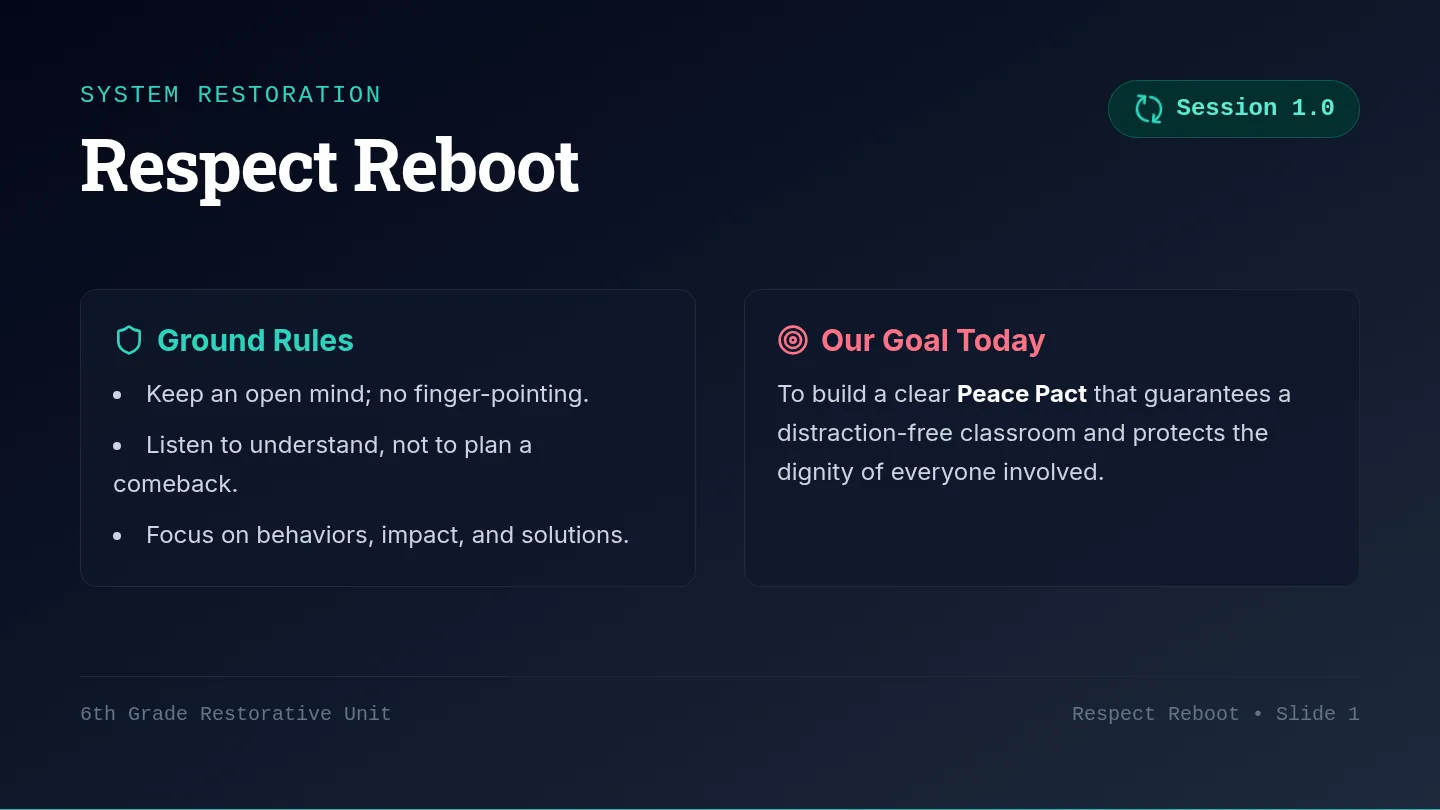
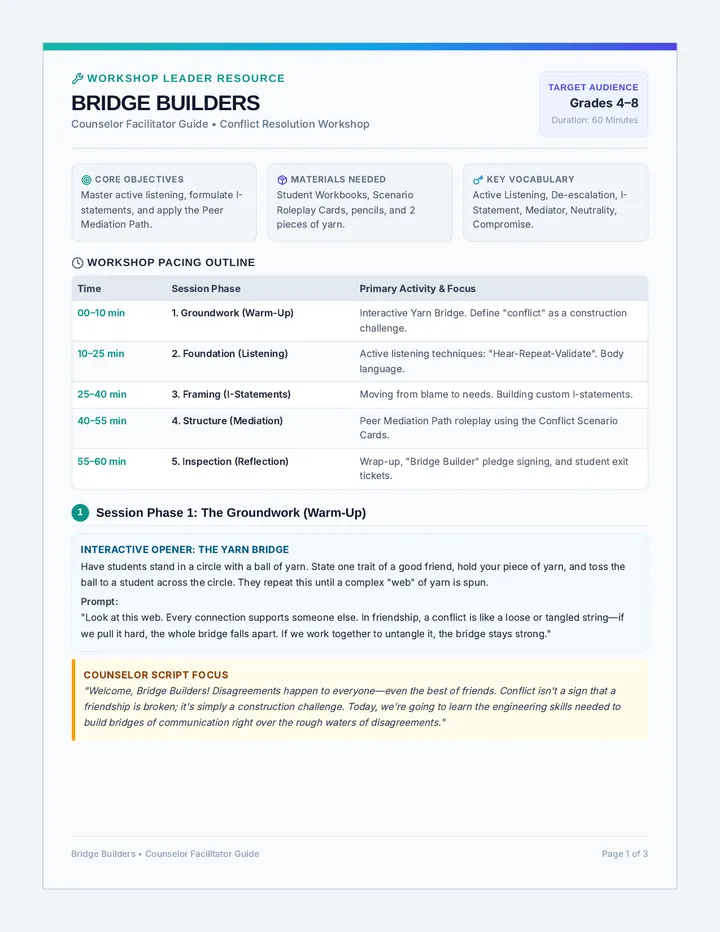
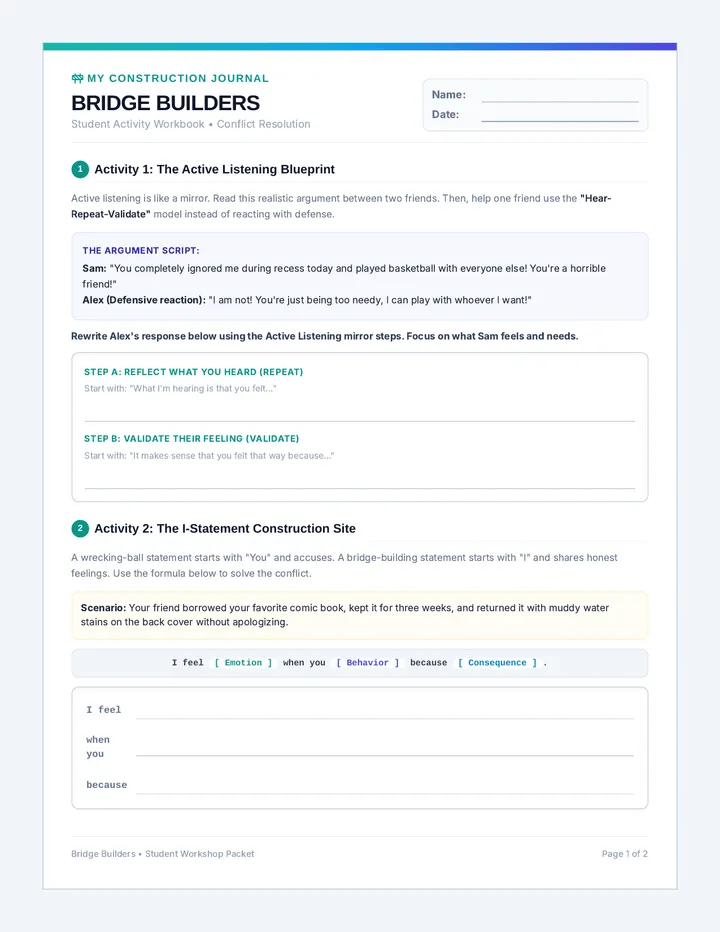
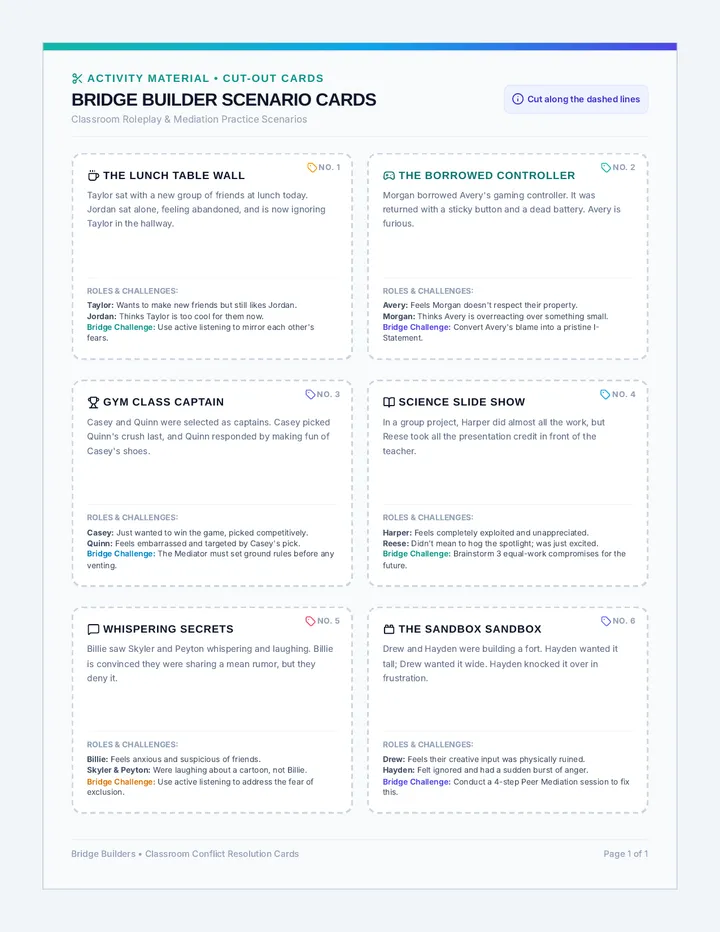
Students apply a conflict mediation model to realistic middle school scenarios, focusing on sustainable compromise and healthy boundaries.
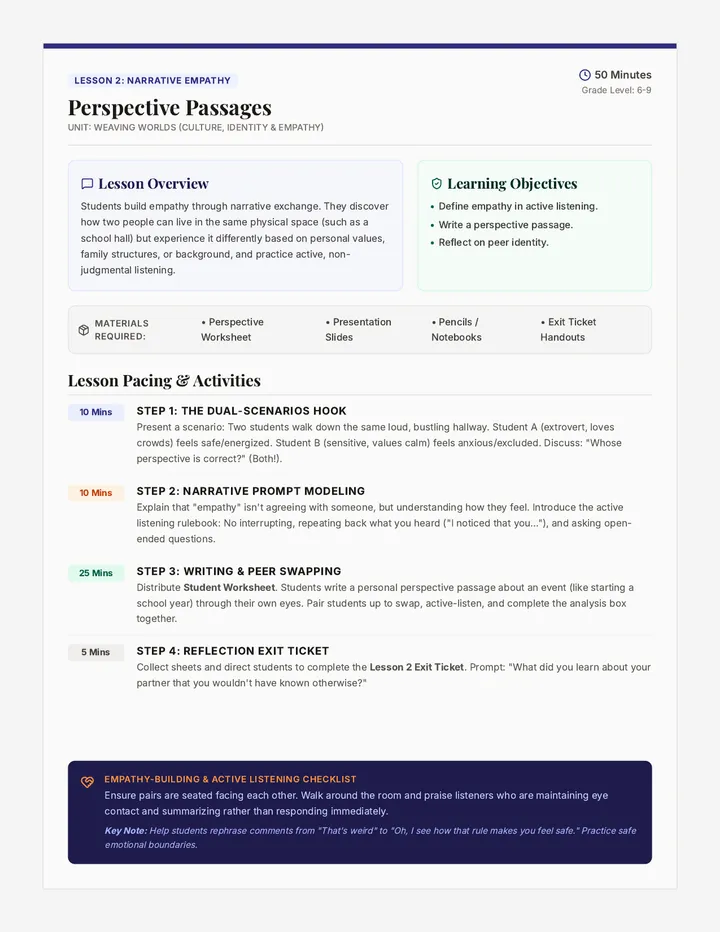
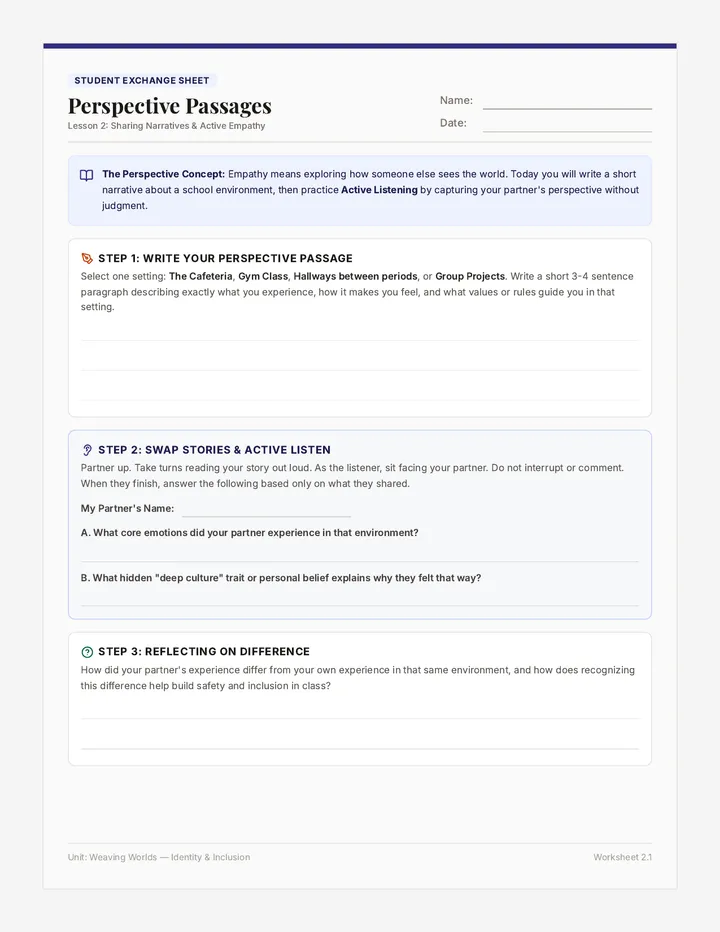
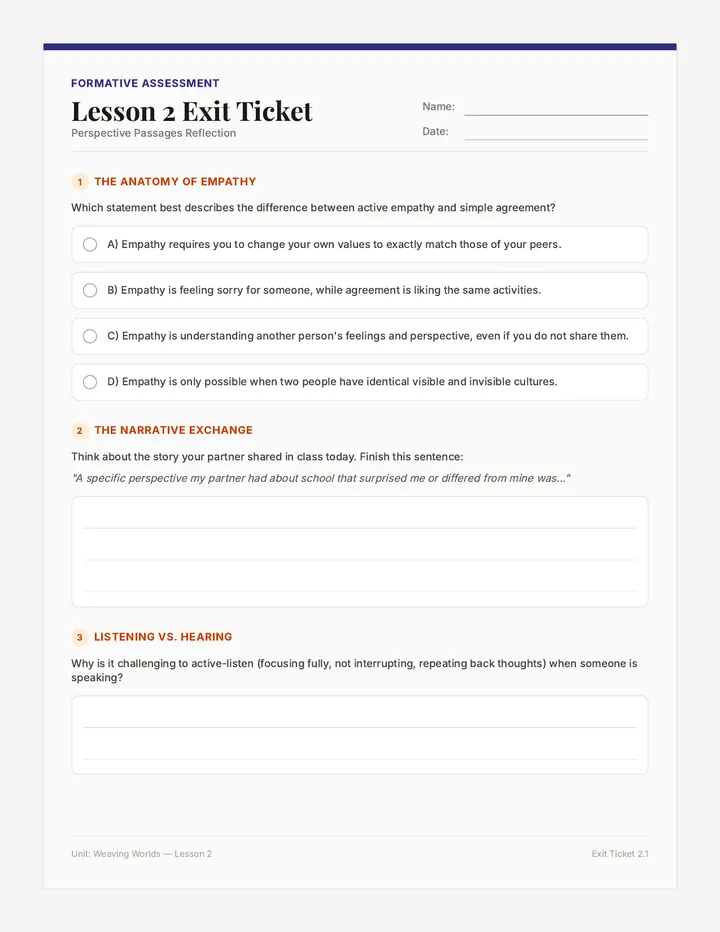
Students practice advanced perspective-taking to navigate complex social situations and understand the role of perception in peer groups.
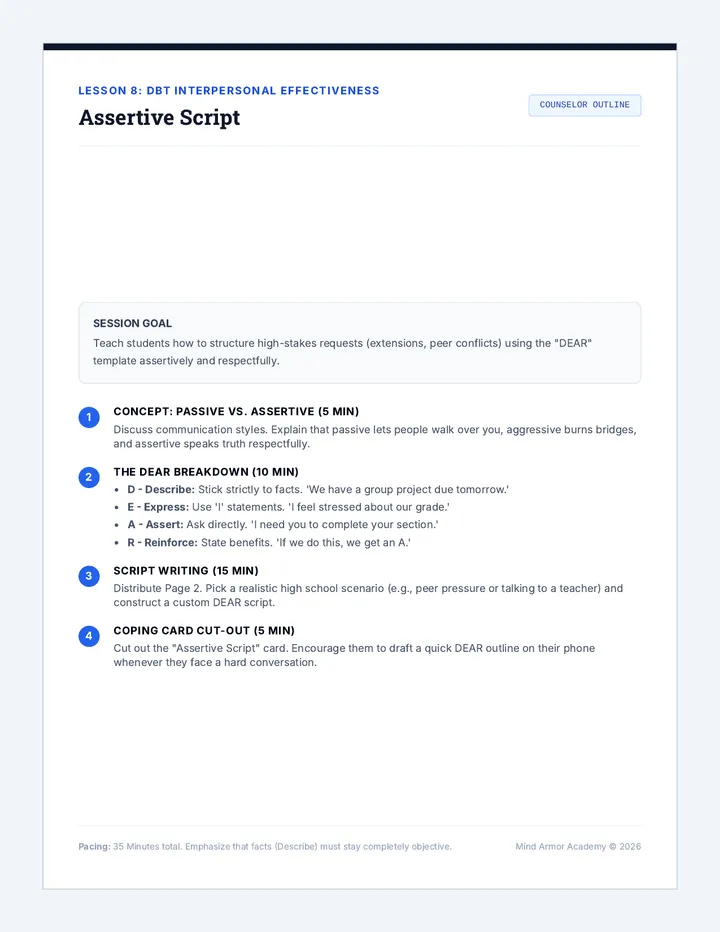
This lesson focuses on assertive communication and the impact of digital tone, teaching students to advocate for their needs without aggression.
Students analyze common middle school conflict triggers, including digital drama and social hierarchy, distinguishing between surface behaviors and underlying needs.
Students identify the core values that ground healthy friendships and analyze the difference between 'situational friends' and 'value-based friends.'
A practical budgeting lesson focused on selecting essential apartment items within a $100 limit, supporting IEP goals for functional math and decision-making.
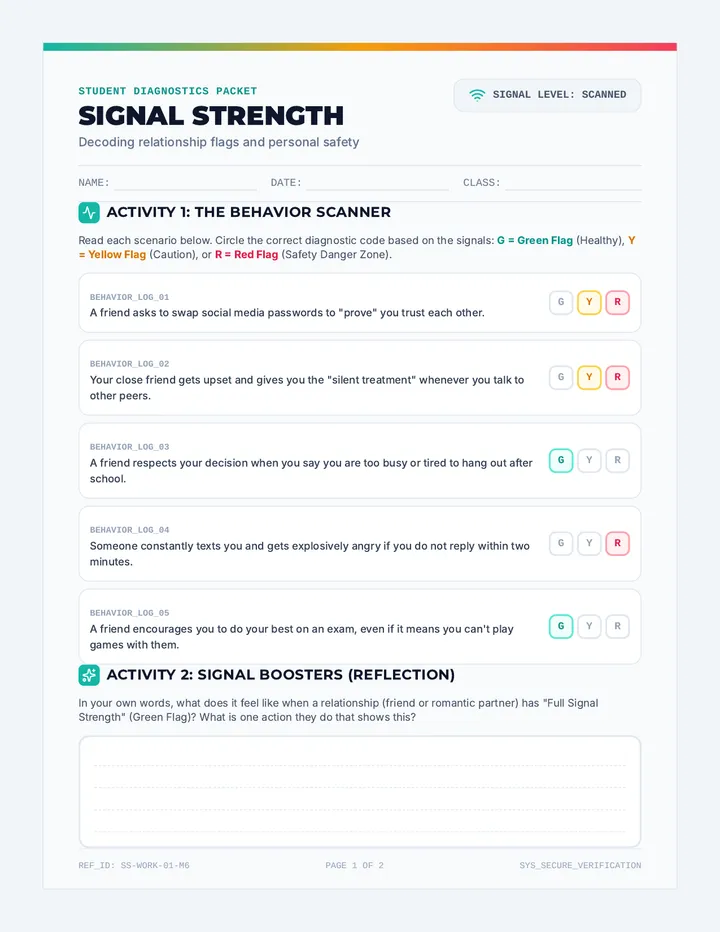
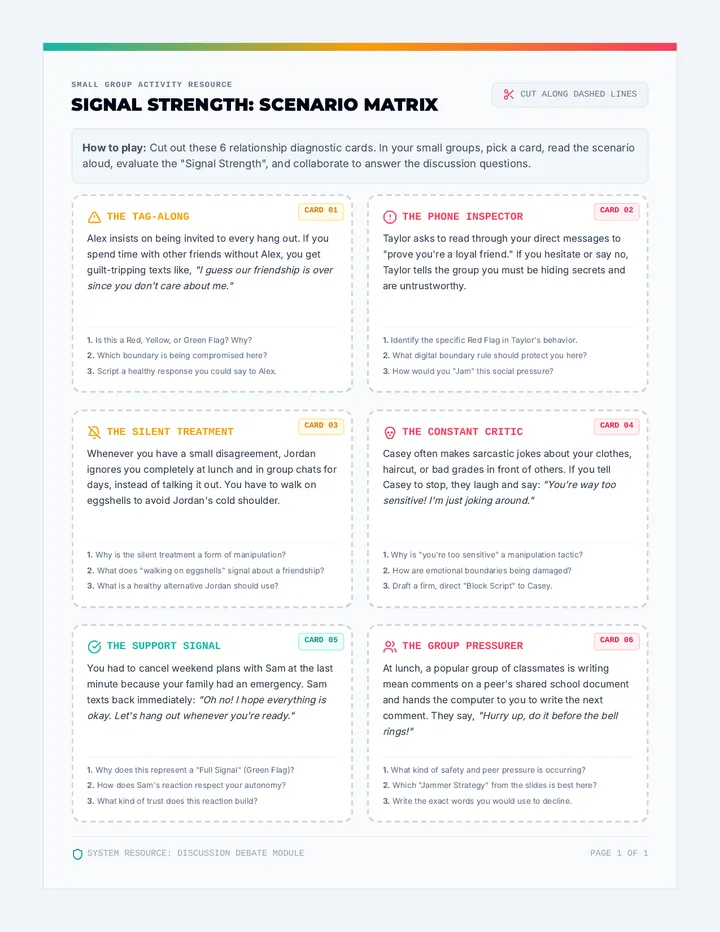
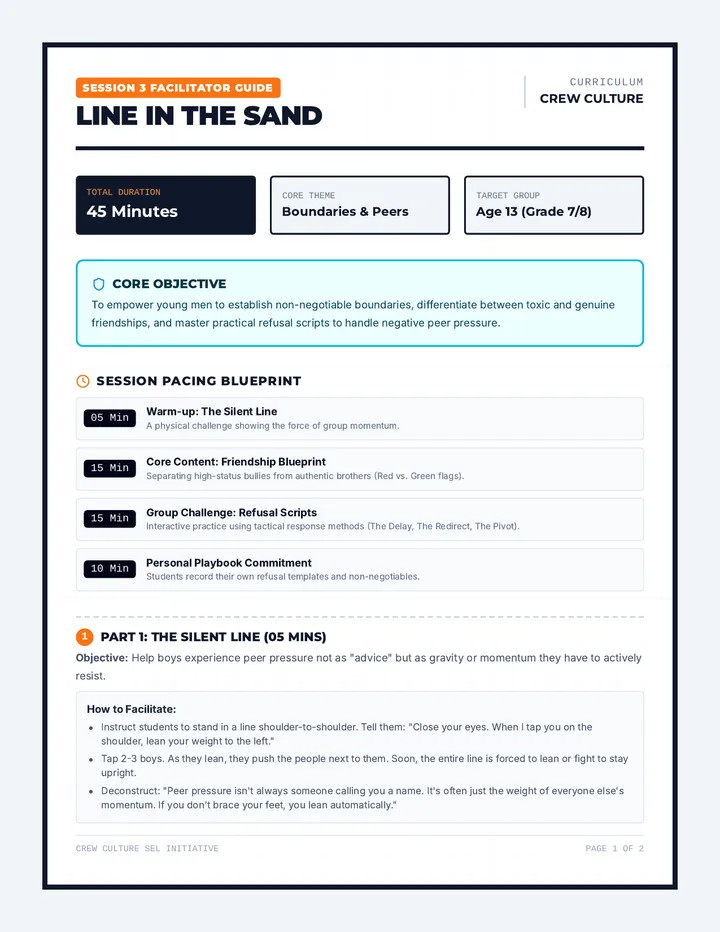
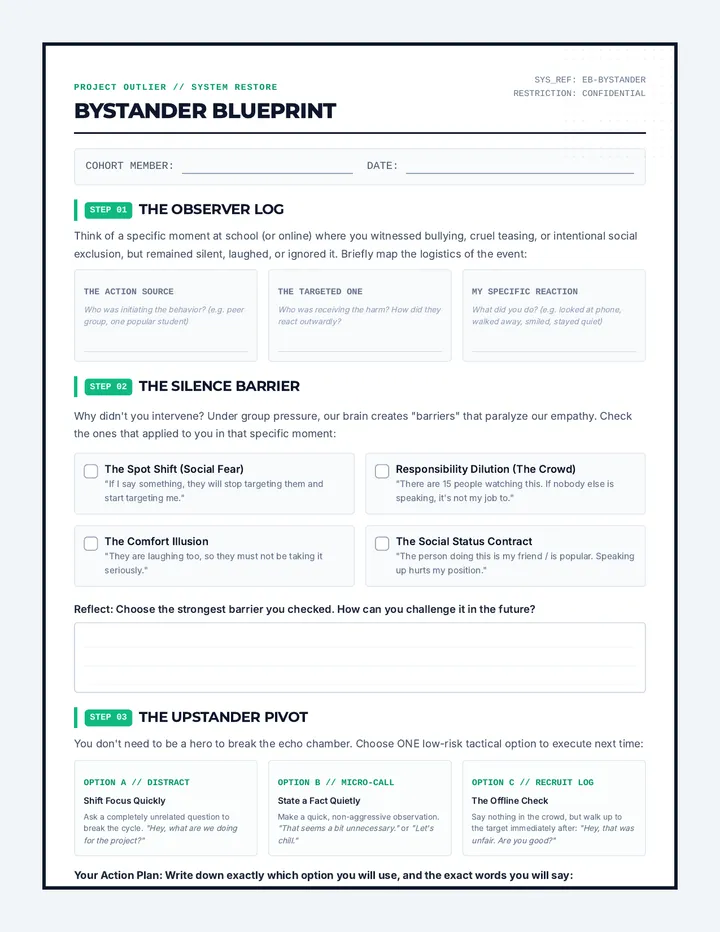
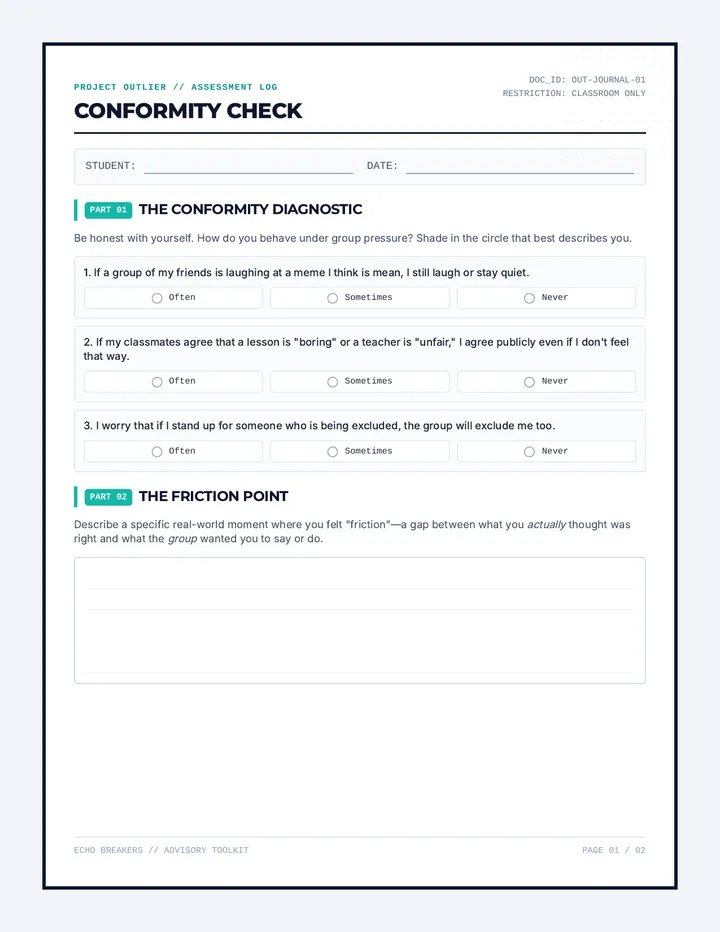
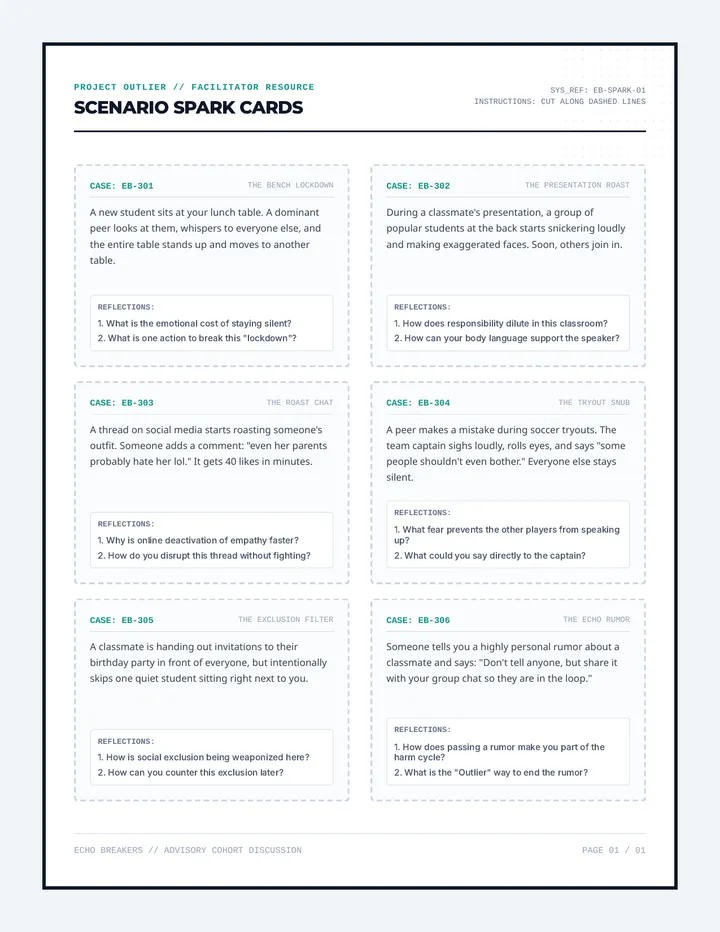
A comprehensive small-group session guide and set of resources designed to help students navigate peer pressure in social, academic, and physical safety situations.
A lesson designed to help newcomer Portuguese students and native English speakers master the art of assertive communication using 'I' statements in classroom settings.
A comprehensive lesson designed to help 5th-grade students, particularly boys, develop and apply coping strategies for common academic stressors like testing, public speaking, and difficult assignments.
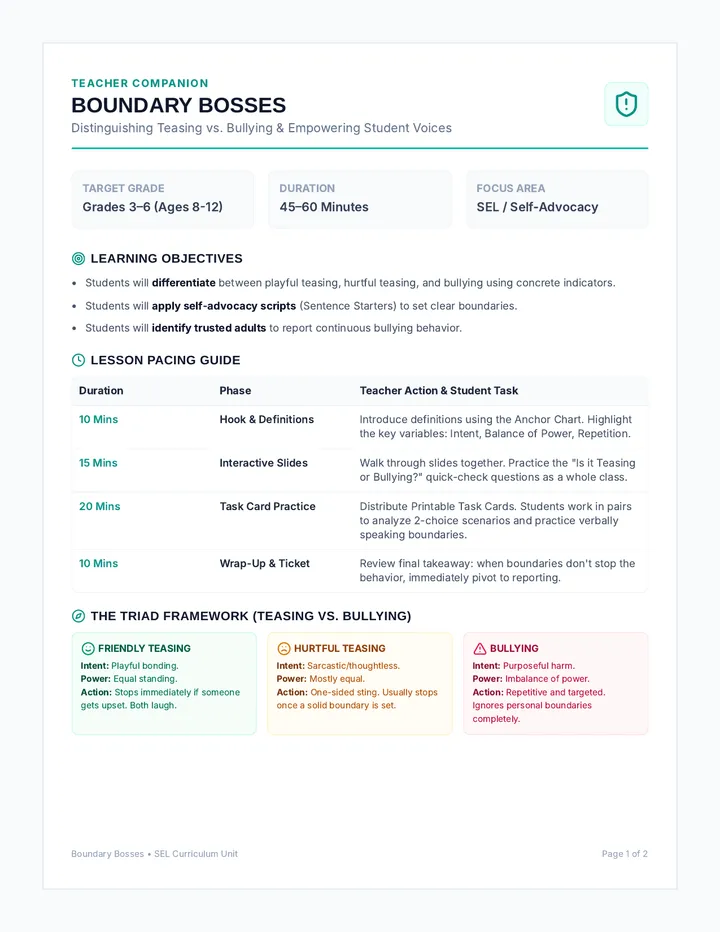
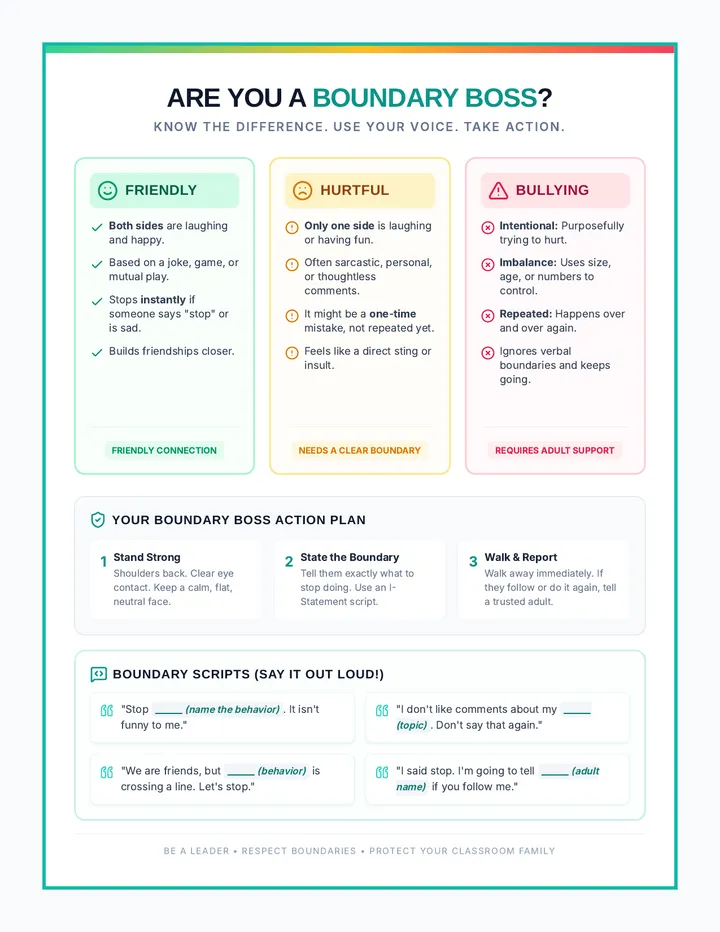
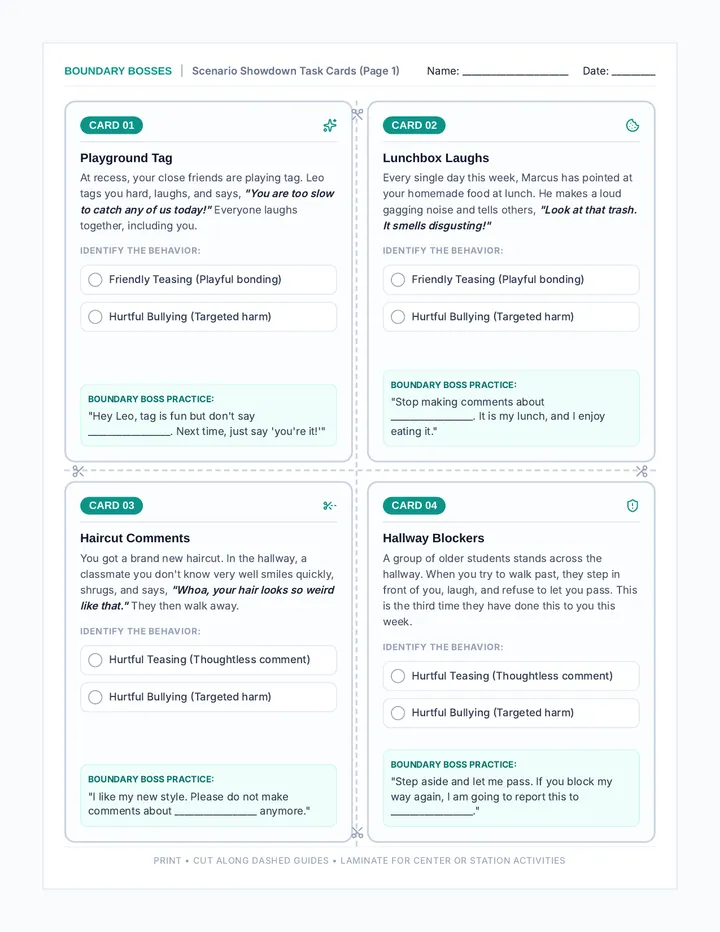
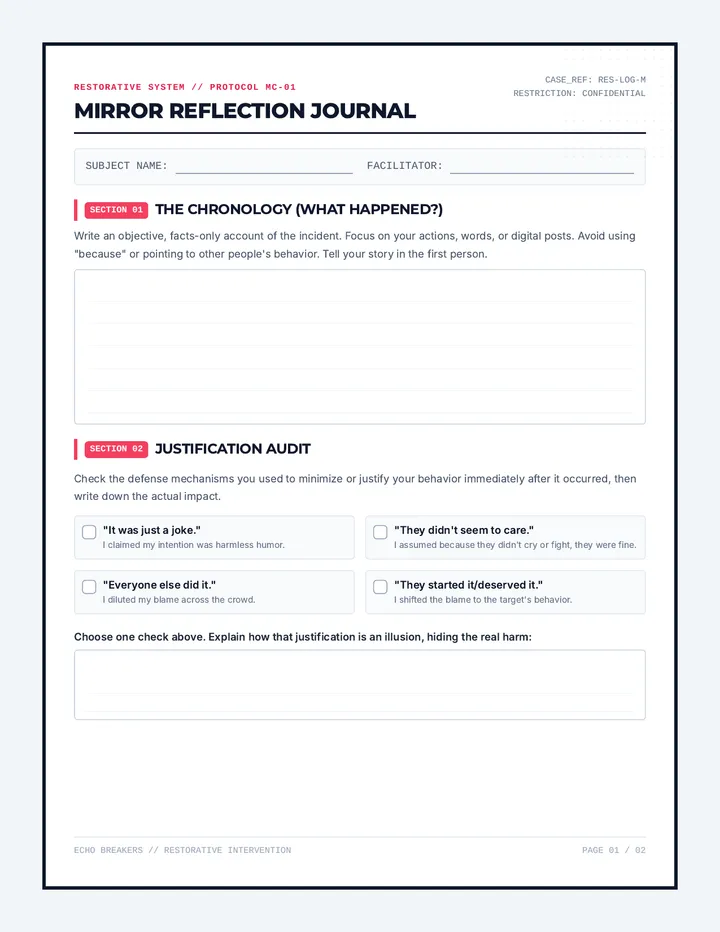
A social skills lesson for 6th grade students focused on empathy and distinguishing between playful joking and mean-spirited behavior using the 'Intent vs. Impact' perspective-taking model.
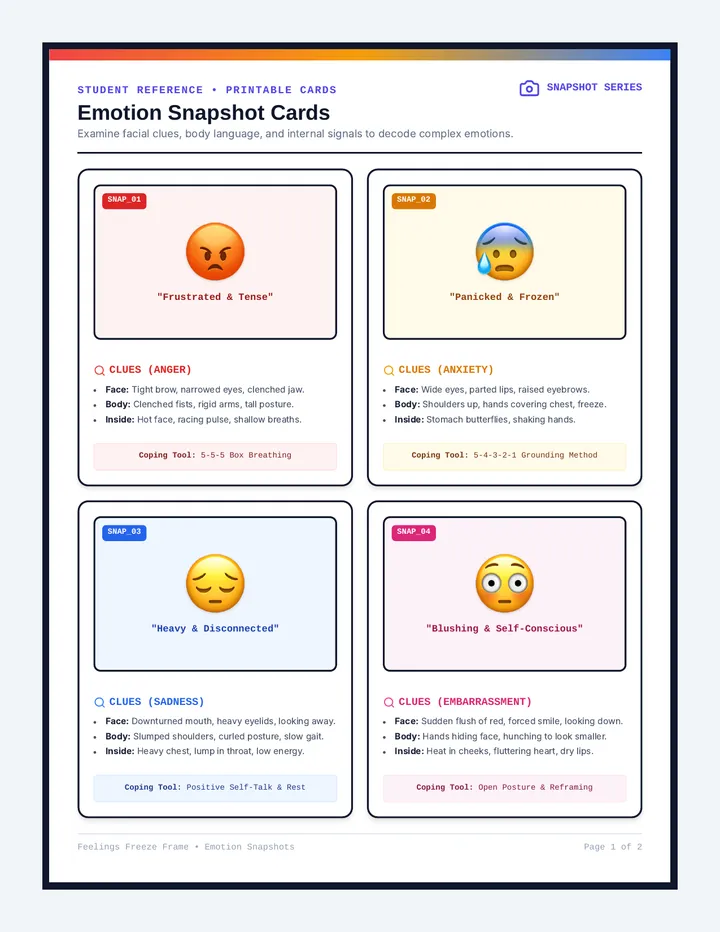
A lesson focused on identifying emotional zones and selecting appropriate self-regulation strategies for classroom and social scenarios.
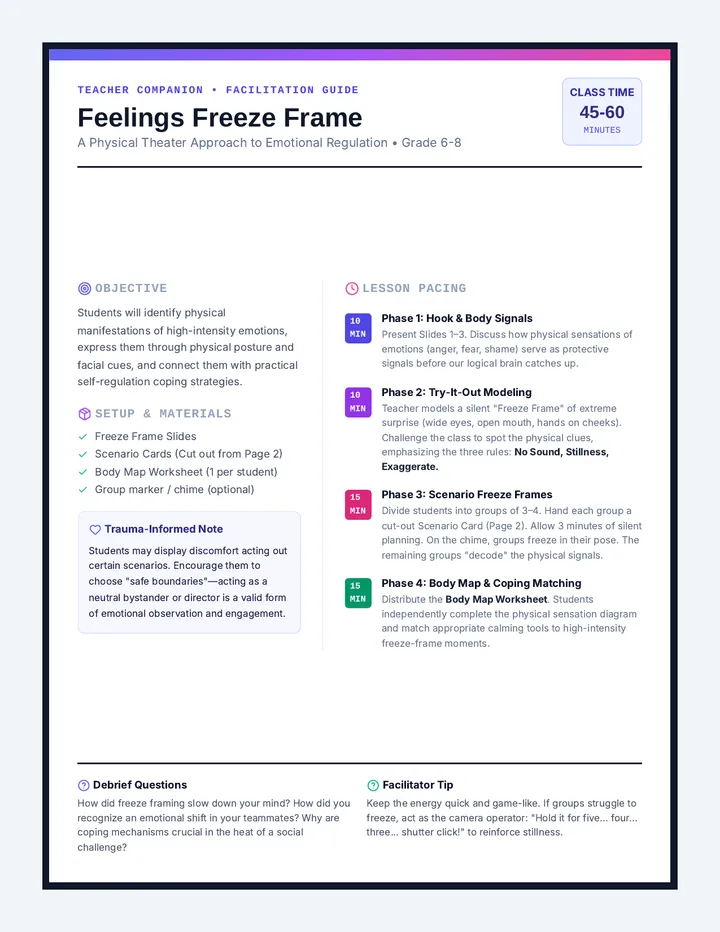
A comprehensive training session for school counselors on teaching effective grounding techniques to students, focusing on sensory, movement, nature-based, and breathing strategies.
A 30-minute individual counseling session designed for a middle school student navigating the challenges of living with a sibling with mental illness. The session focuses on validation, identifying circles of control, and practical coping strategies.
A 30-minute social skills lesson for 6th graders focused on using 'Fear vs. Fact' self-talk to overcome the anxiety of asking for help in the classroom.
A focused 30-minute intervention lesson designed for middle school students to recognize avoidance behaviors and develop healthier coping strategies for social and academic triggers.
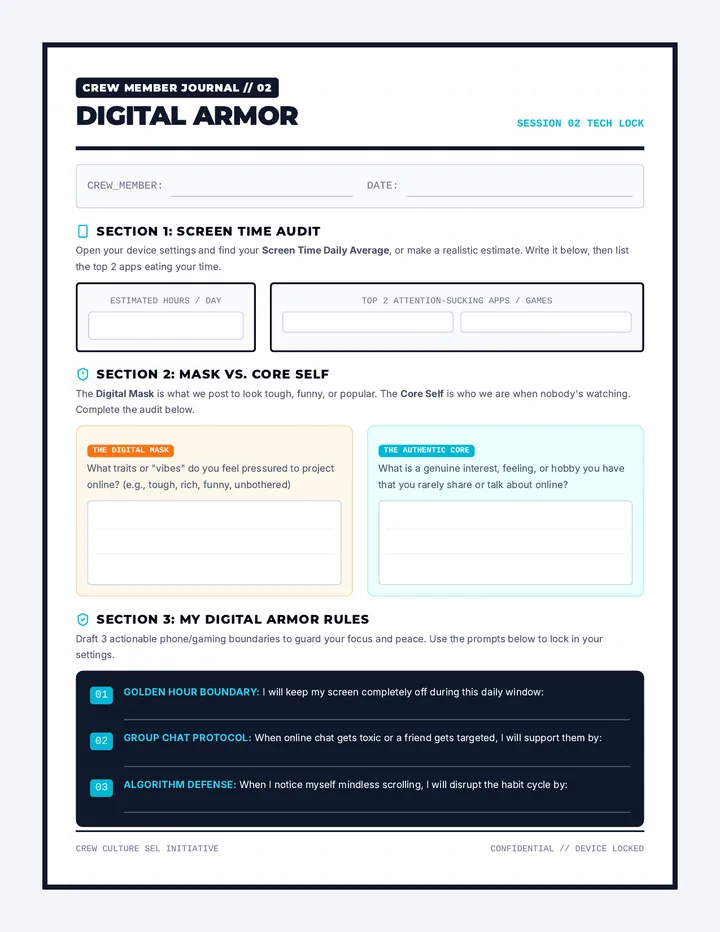
A lesson designed to help students understand the impact of excessive screen time and develop healthy, sustainable digital habits through reflection and goal-setting.
Day 5 covers staying focused and not contributing to classroom distractions.
Day 4 teaches students how to avoid drama and rumors by taking a 'detour'.
Day 3 addresses how to ignore peer corrections and focus on one's own work.
Day 2 focuses on the 'exit strategy' for walking away from rising conflict.
Day 1 focuses on staying out of others' conversations and 'ear-dropping' awareness.
A comprehensive emotional regulation toolkit for students to manage testing anxiety using maritime-themed grounding techniques and cognitive reframing.
A quick 10-minute introduction to box breathing, a powerful stress-relief technique, featuring a guided video and classroom practice.
A comprehensive preparation lesson for the ILEARN assessment, focusing on test-taking strategies, physical readiness, and emotional regulation through a high-energy gaming theme.
A foundational digital literacy intervention designed for SLIFE students to master essential school platforms like Canvas, ClassLink, and school email. This lesson includes a diagnostic screener, instructional slides, and a progress-tracking passport for students.
A high-energy, 20-minute session focusing on discovering personality-based leadership strengths and applying them through a rapid-fire teamwork challenge. Students identify their 'Secret Agent' leadership style and practice collaboration in diverse groups.
This lesson introduces the concept of the 'Waiting Gap' and provides practical tools for managing the physical and emotional urge to act instantly. Includes worksheets on specific classroom scenarios and a movement-based activity for building delayed gratification.
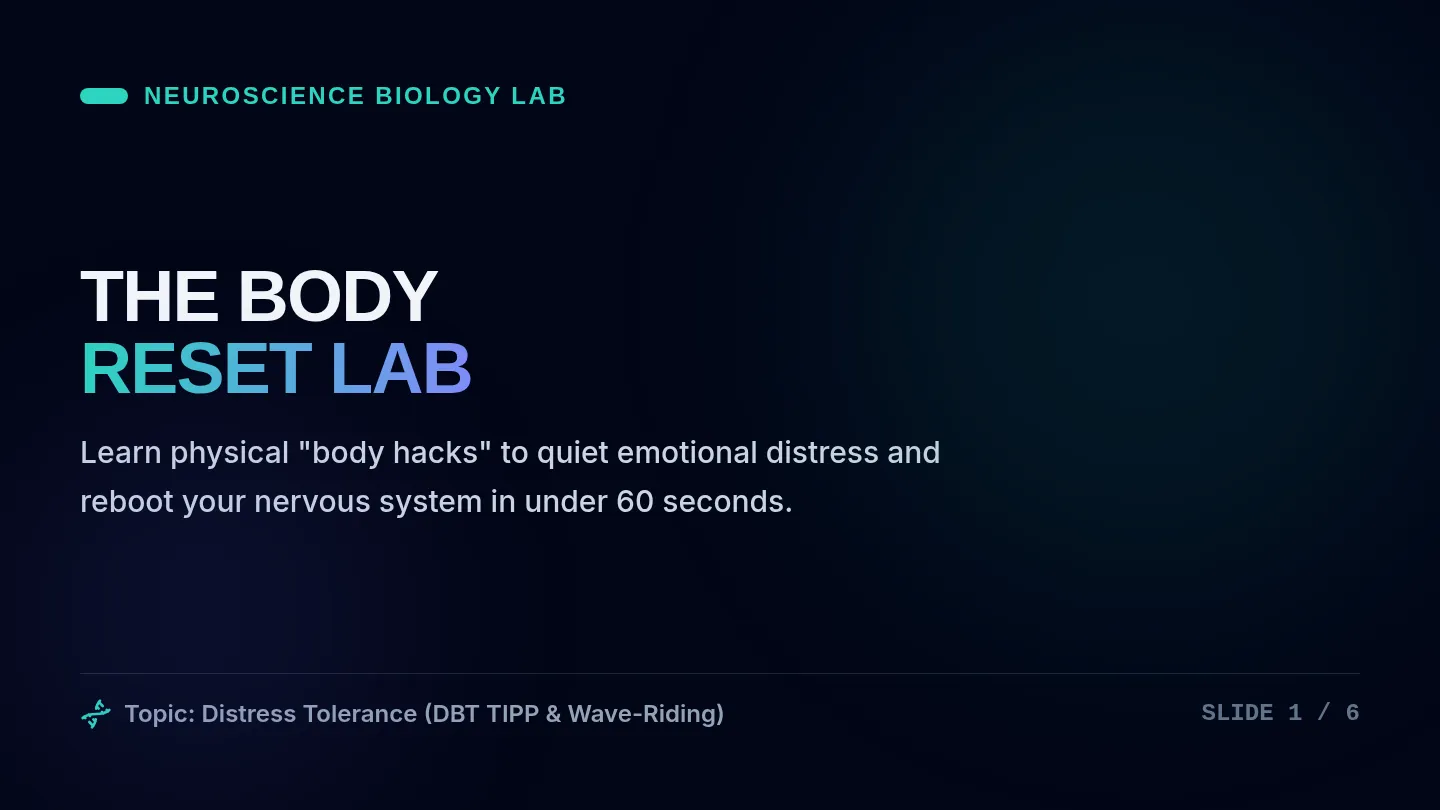
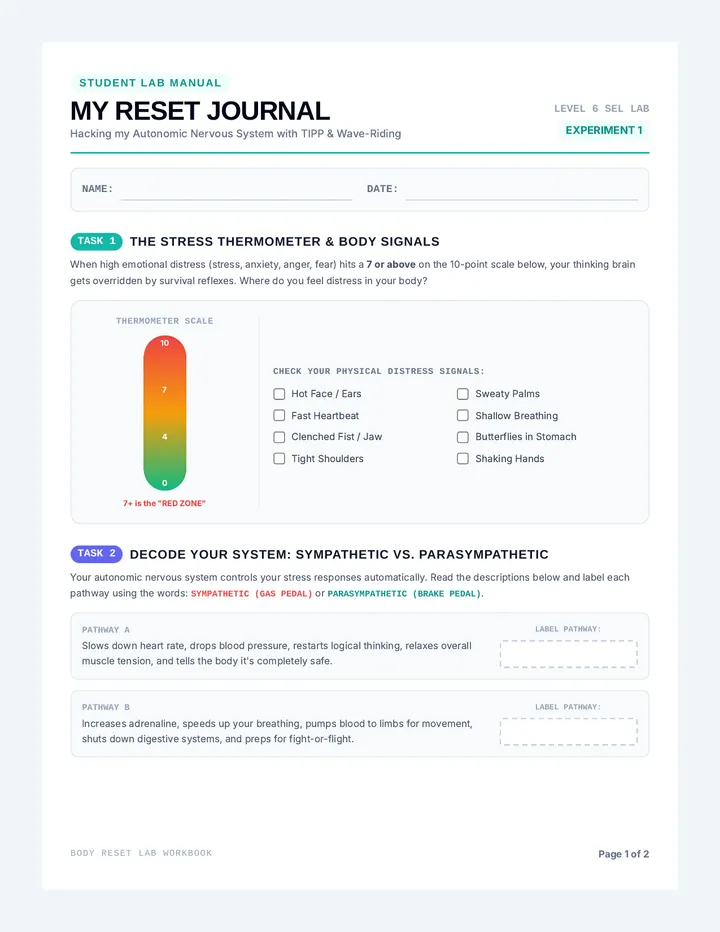
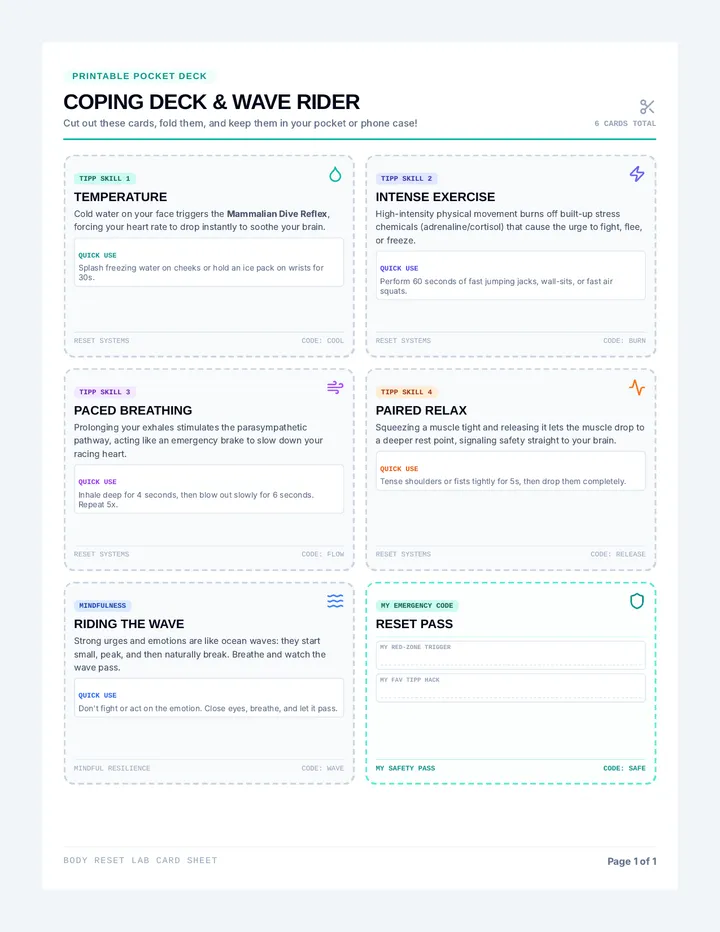
A science-themed lesson that teaches students to manage test anxiety by treating their physical stress responses as laboratory experiments, testing different 'calm-down formulas' to find their personal best stress-neutralizers.
Students explore a futuristic high school hallway and tech lab to identify 'glitches' in social communication. They learn to decode body language and facial expressions in complex social situations.
A lesson for middle schoolers on the art of professional email communication, focusing on scheduling meetings with clarity and courtesy.
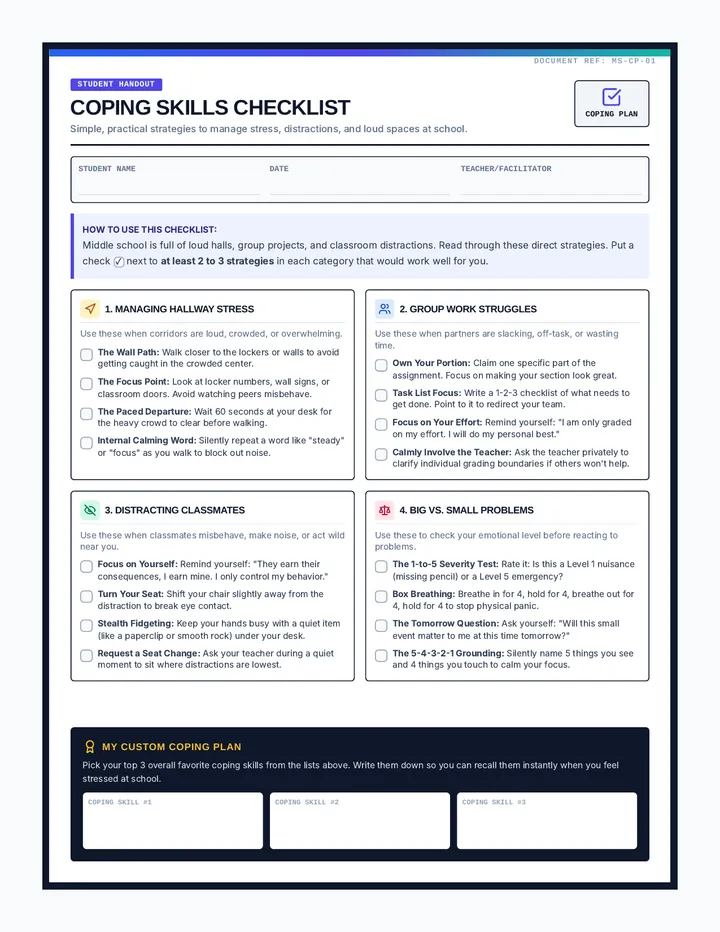
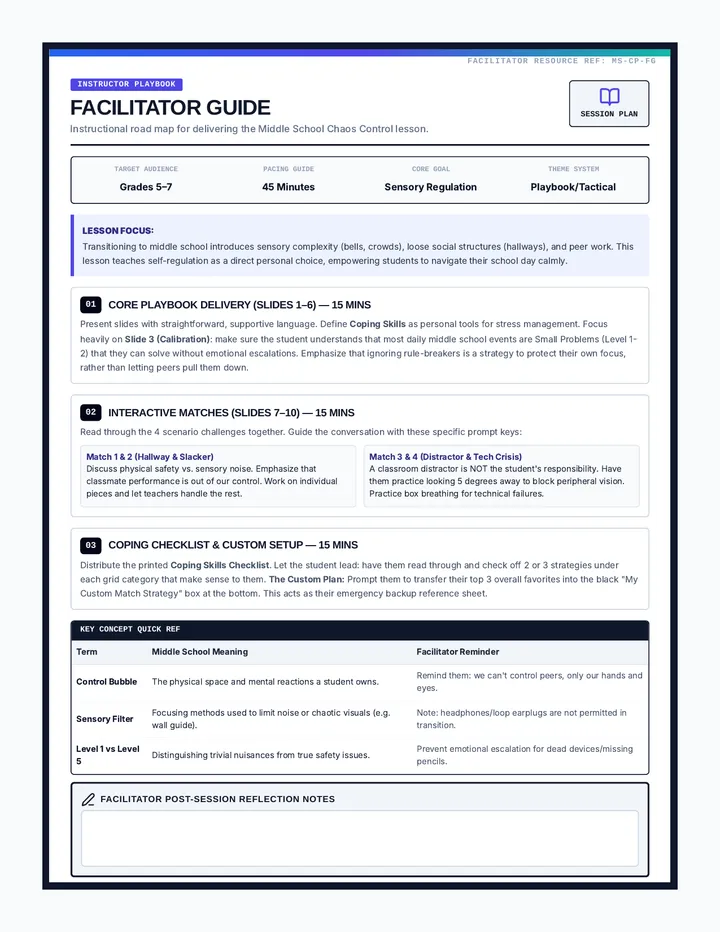
A comprehensive lesson on self-regulation where students identify stress triggers and build a personalized toolkit of mindfulness and grounding strategies.
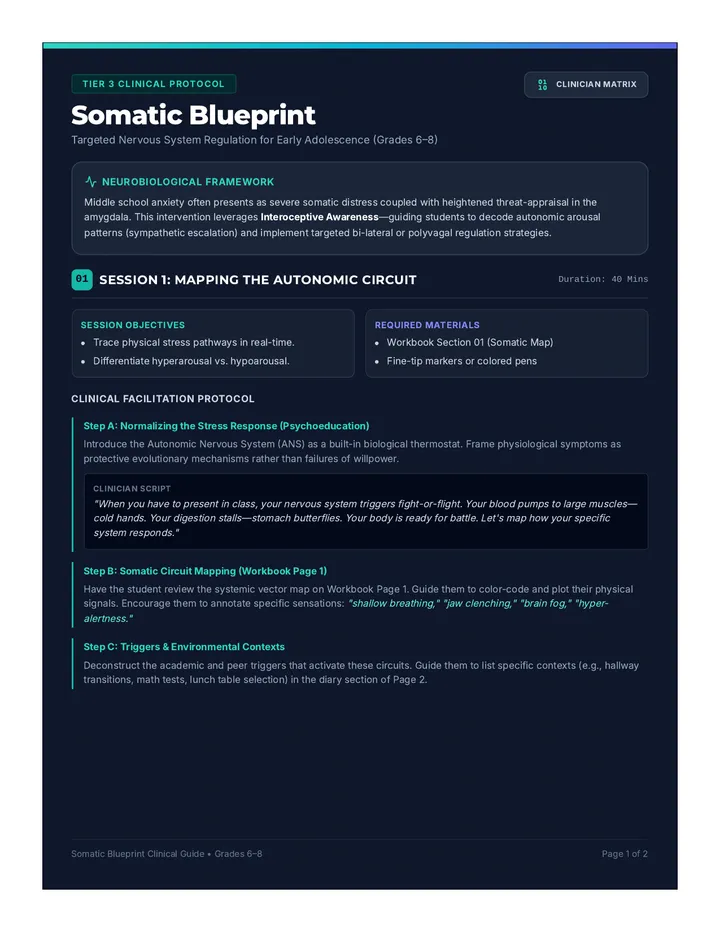
Students explore personal stress triggers and develop a personalized toolkit of mindfulness and grounding strategies through hands-on stations and reflective journaling.
A sensitive and supportive lesson designed to help students navigate anxiety regarding the loss of loved ones through nature metaphors, expressive art, and identifying support systems.
A lesson for 6th grade students focused on identifying how tone and misunderstandings lead to conflict between friends, featuring practical strategies for resolution.
A lesson focused on equipping students with practical strategies to maintain focus and persistence during difficult or monotonous tasks.
A supportive lesson for middle schoolers focused on developing self-compassion and the ability to forgive oneself after mistakes or difficult days. Students learn to identify their inner critic and cultivate a kind, supportive inner voice.
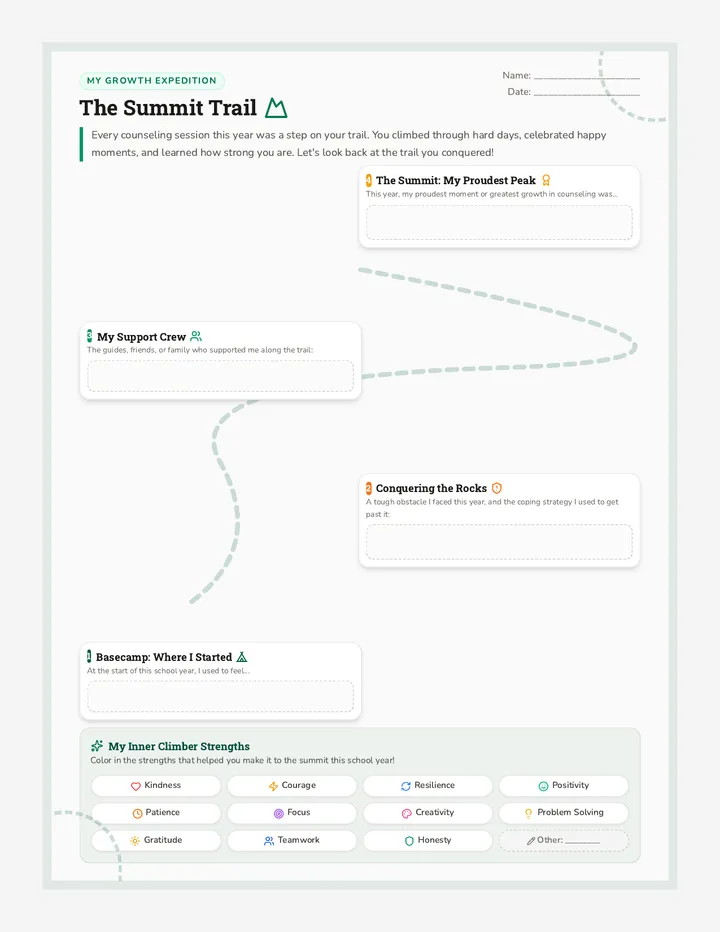
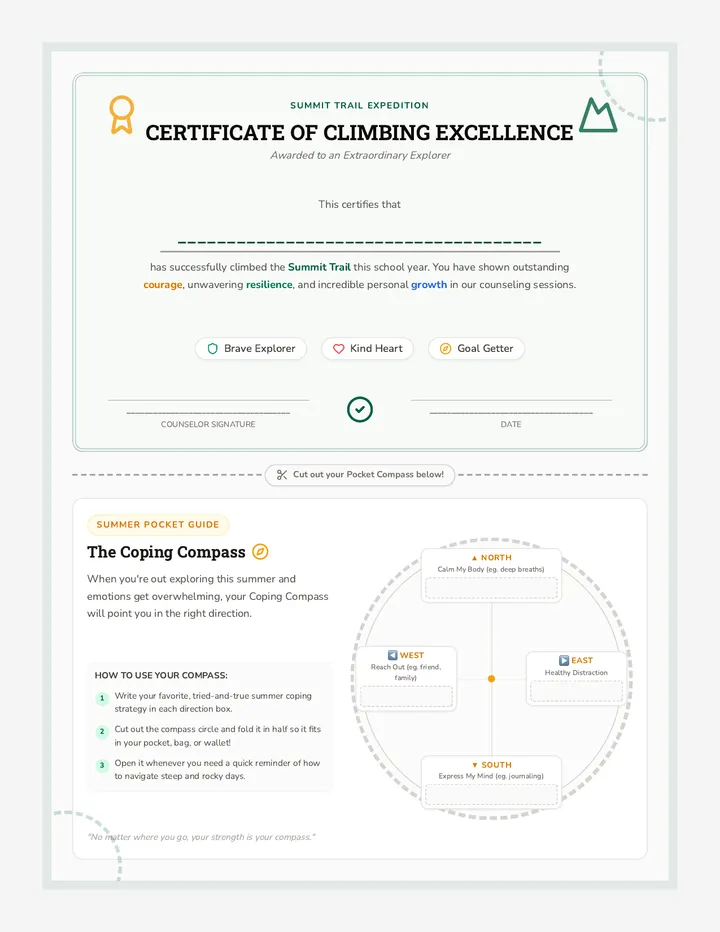
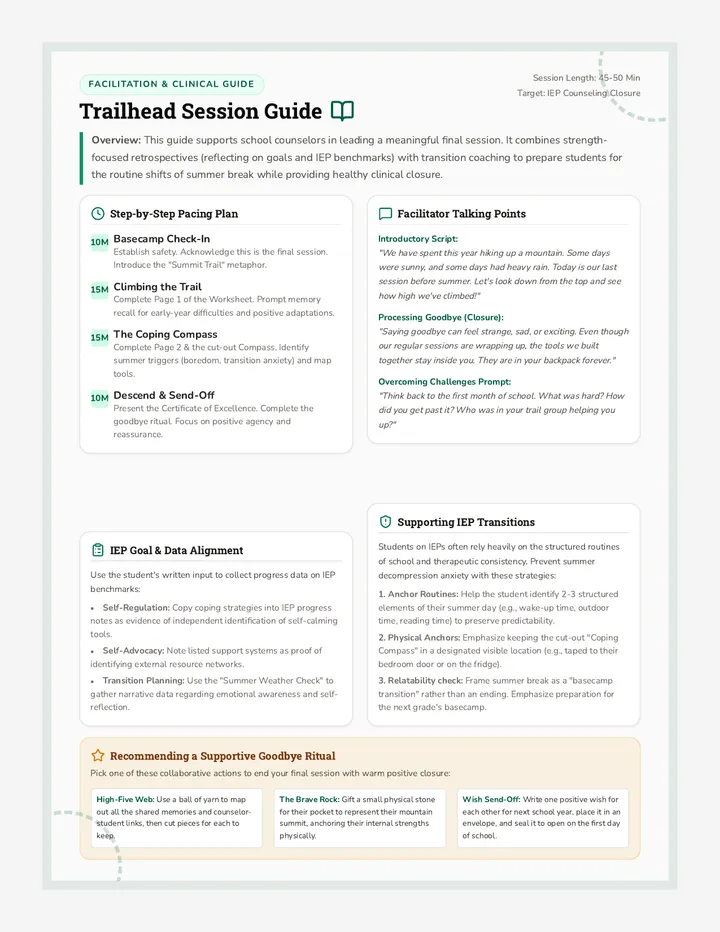
A lesson designed for 6th-8th grade special education students to learn the fundamentals of setting and tracking personal and academic goals using a mountain-climbing metaphor. Students will learn to break large objectives into manageable 'basecamp' steps to build confidence and self-advocacy.
A comprehensive mindfulness workshop designed to equip 3rd-6th grade students with practical tools to manage testing anxiety, focusing on physiological awareness and cognitive reframing.
This lesson helps middle school students identify sensory triggers associated with seasonal energy shifts and develop a personalized regulation roadmap of calming and focusing strategies. Students explore the physiology of 'spring fever' and create a practical toolkit for maintaining focus during high-energy periods.
A social-emotional learning lesson focused on finding commonalities with peers through structured conversation. Students use conversation cards to discover shared interests and build connections.
A dynamic conversation game where students practice active listening and non-verbal communication through 'Talker' prompts and 'Listener' challenges. Students learn to recognize and use body language to show they are truly engaged in a conversation.
A quick, high-impact lesson designed to empower 6th graders with a simple 3-step strategy for asking teachers for help effectively and confidently.
A comprehensive session focused on uncovering internal drivers, setting meaningful academic goals, and building social-emotional resilience through motivation strategies.
Finalizing the daily routine by creating a 'construction schedule' to keep the joy architecture maintained over time.
Exploring the importance of social connections and kindness as 'common areas' that make the building of joy stronger for everyone.
Introducing mindfulness techniques as 'ventilation' for the mind, helping students stay present and clear-headed.