A 30-minute Tier 1 lesson designed to help high school students identify red flags in dating relationships and develop safe, respectful response strategies.
Summarizes the program and supports students in launching a tangible project or action plan to improve their school community.
Empowers students to identify areas for improvement in their school environment and brainstorm collaborative solutions for positive change.
Focuses on academic self-management and executive functioning skills to help students become more effective and efficient learners.
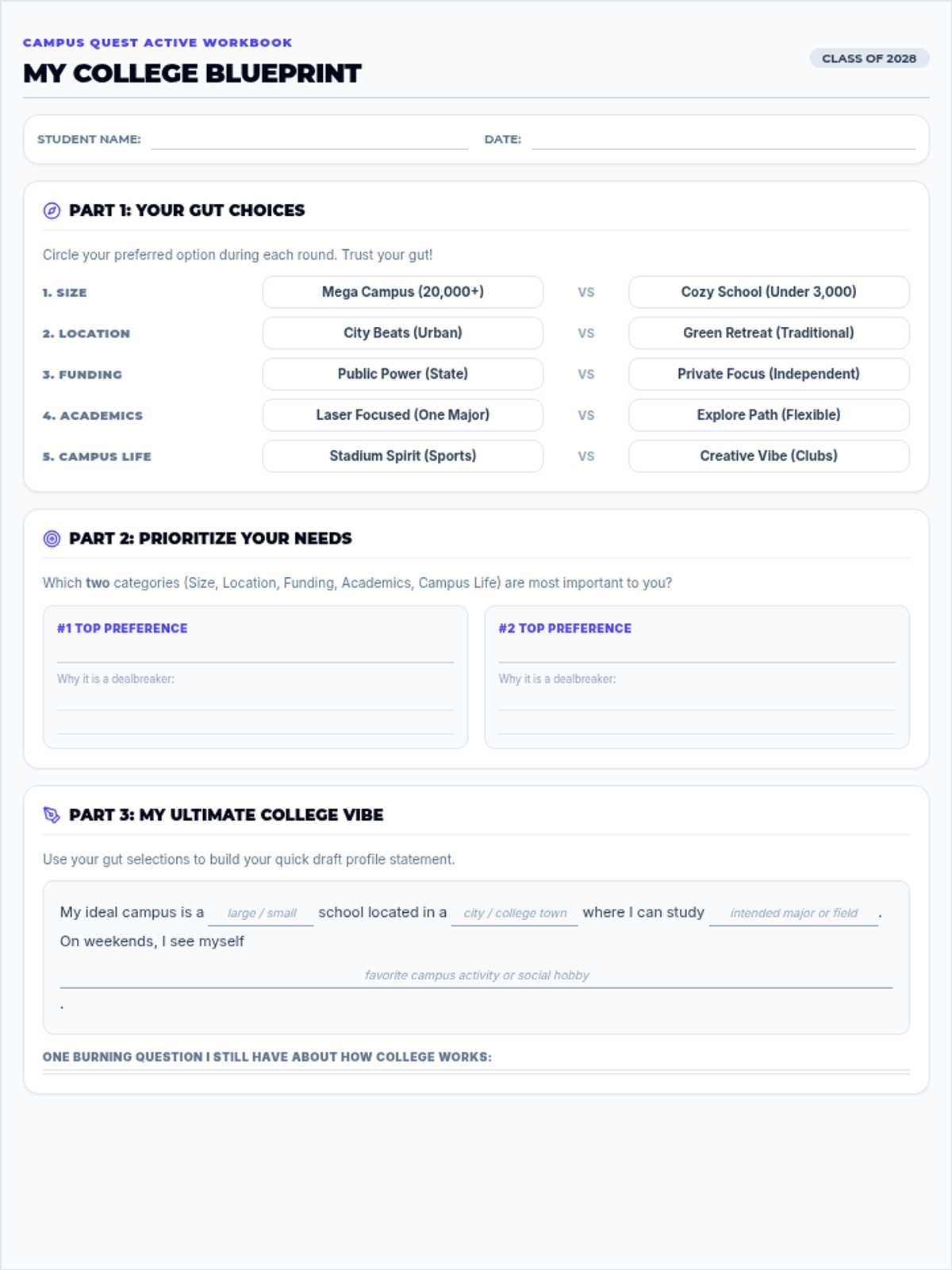
Introduces the group, sets expectations, and explores college aspirations through a "blueprint" metaphor, focusing on ASCA mindset standards.
A comprehensive recovery program for 10th graders focusing on taking ownership of their actions, understanding the consequences of their choices, and mastering time management through a structured project.
A comprehensive lesson on navigating the employment process, from resume building and interviewing to the nuances of disability disclosure and workplace communication.
A comprehensive lesson designed to help students identify personal emotional triggers, understand the physiological link between emotions and reactions, develop practical coping strategies, and communicate their needs effectively to others.
A high-energy, 30-minute resilience workshop for 9th graders focusing on the ABC model of cognitive reframing to turn setbacks into growth opportunities.
A collection of low-prep, high-engagement lunchtime activities designed for middle and high schoolers to build social-emotional skills in confined spaces. Activities focus on lighthearted debate, creative collaboration, and quick self-reflection.
A one-on-one lesson designed to empower students with self-advocacy skills, focusing on communicating needs in healthcare, setting personal boundaries, and navigating new environments.
A 20-minute 1:1 session for 11th graders focusing on strategic disengagement and conflict resolution through high-stakes roleplay and discussion. This lesson emphasizes personal autonomy and 'winning the long game' by choosing when and how to exit a conflict.
Explores the nuance of respect and communication across different contexts. Students learn to navigate authority figures with agency and self-advocacy, using specific communication tools to bridge the gap between their needs and adult expectations.
Focuses on the foundational concept of trust as a dynamic resource that can be built or depleted through consistent actions. Staff learn to model trustworthiness, while students identify what makes an adult 'trust-worthy' and how to build their own credibility.