Real Talk Skills Teacher Guide Real Talk Skills
Teacher Facilitation Guide
Tier 1 Classroom Lesson
7th Grade | 30 Minutes
Why This Matters
Soft skills like clear communication, effective teamwork, and empathy are vital for positive relationships and real-world success. Practicing these skills in 7th grade fosters confident, collaborative learners who can navigate complex social environments with self-awareness and social awareness.
Learning Objectives
Identify and define communication, teamwork, and empathy.
Practice active listening through paraphrasing and open-ended questioning.
Collaborate in a group task to build consensus and assign roles.
Demonstrate empathy in role-play scenarios.
Prep & Materials
Time to Prep
10 minutes
Materials Needed
• Whiteboard & markers
• Timer or stopwatch
• Scenario Cards (cut out)
• Empathy Meter Charts
• Teamwork Worksheets
• Active Listening Checklists
Tip: Arrange tables in groups of four before students arrive.
Instructional Sequence
Step 01
Introduction & Goals
5 MIN
Greet students and introduce the "Soft Skills Superpowers": Communication, Teamwork, and Empathy.
Write definitions on the board:
Communication: Sharing ideas clearly and listening actively.
Teamwork: Working together toward a common goal.
Empathy: Understanding how others feel.
Step 02
Active Listening Warm-Up
7 MIN
Distribute the Active Listening Checklist.
Assign Speaker/Listener roles in pairs.
Speaker: Shares a recent personal story for 1 minute.
Listener: Must use the checklist to paraphrase and ask one open question.
Switch roles and repeat. Debrief how it felt to be heard.
Step 03
Teamwork Challenge
10 MIN
Form groups of 4 and distribute Teamwork Challenge Worksheets.
Challenge: Build the tallest paper tower with limited supplies (e.g., 5 sheets of paper, 1ft tape).
Assign roles: Facilitator, Recorder, Builder, Timekeeper.
Teams must plan for 2 minutes before building. Share one success and one improvement area afterward.
Step 04
Scenario Role-Play
5 MIN
Hand out Scenario Cards and Empathy Meter Charts.
Groups perform a 1-minute skit of their scenario.
Audience uses the Empathy Meter to rate the demonstration.
Briefly discuss: "How was empathy shown in this interaction?"
Step 05
Reflection & Goal Setting
3 MIN
Lead a whole-class discussion: Which skill felt most natural? Which was toughest? Have students write one "Real Talk Goal" for the week on the board or in their journals.
Real Talk Skills Presentation Real Talk Skills
Master Your Social Superpowers
7th Grade Communication & Teamwork
Today's Mission
01
Practice clear communication and active listening.
02
Build effective teamwork in a group challenge.
03
Show empathy in real-world interactions.
What Are Soft Skills?
Communication
Sharing ideas clearly and listening actively to others.
Teamwork
Working together, sharing roles, and supporting your crew.
Empathy
Understanding and caring about how others are feeling.
Active Listening Warm-Up
1 The Instructions
• Pair up: Speaker & Listener
• Speaker: Share a story (1 min)
• Listener: Use the checklist
• Switch roles and repeat
Checklist Snapshot
Maintain eye contact
No interrupting
Paraphrase ("So, you're saying...")
Ask an open question
Teamwork Challenge
The Goal
Build the Tallest Paper Tower in 8 Minutes!
Assign Roles
Facilitator: Lead the discussion
Recorder: Take notes and sketch
Builder: Primary "hands-on" person
Timekeeper: Watch the clock
Strategy Tips
Plan before you build
Listen to every idea
Pivot if things fail
Scenario Role-Play
The Task
Get your scenario card
Plan a 1-minute skit
Perform for the class
Audience: Use the Empathy Meter!
Empathy Meter
Rate 1 to 5
"How well did they understand and respond to feelings?"
Debrief & Reflection
The Big Questions
Which skill felt easiest? Which was most challenging?
Personal Goal
How will you use one of these "superpowers" this week?
Real Talk = Real Growth
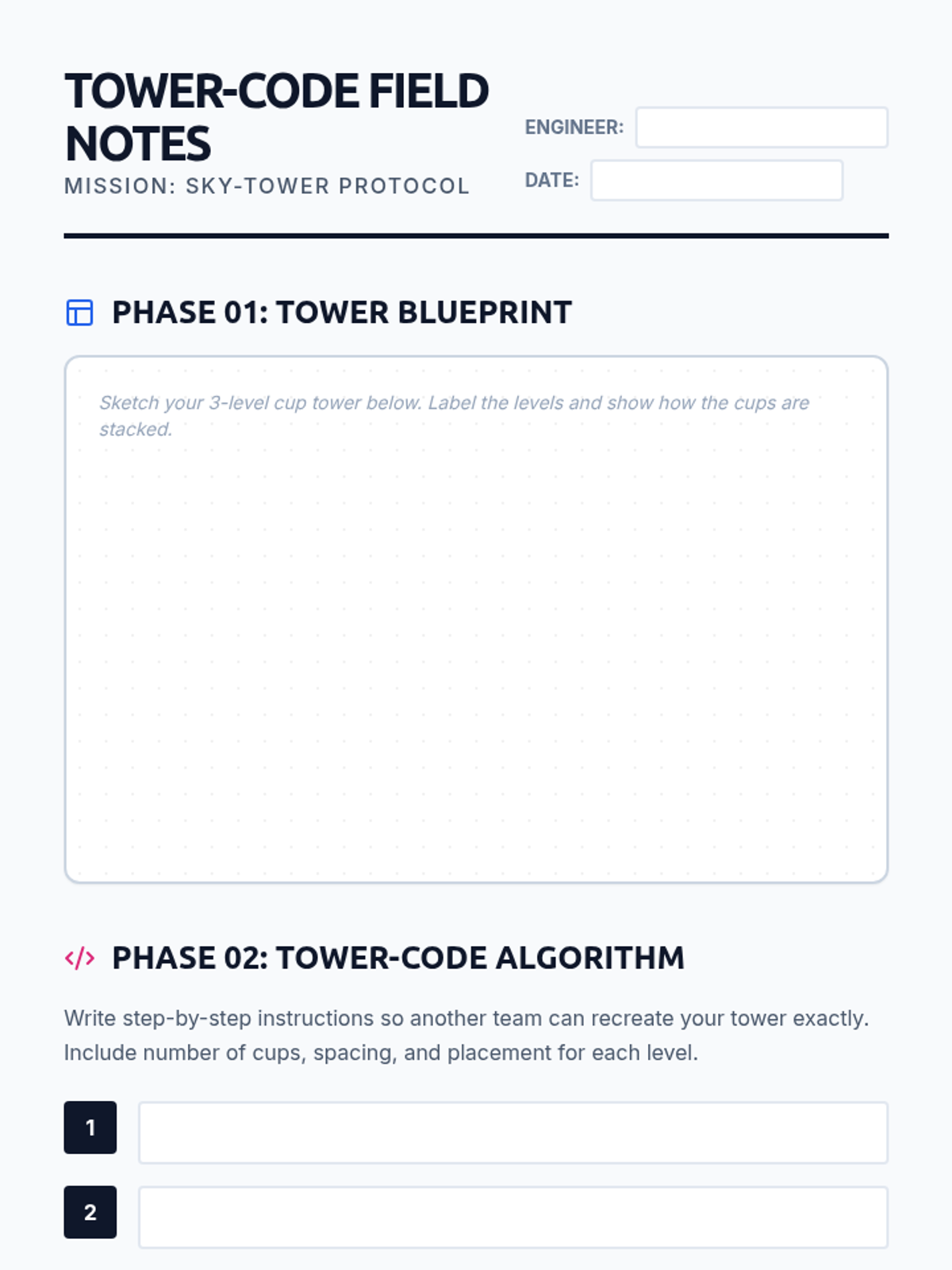
Teamwork Challenge Worksheet Teamwork Challenge
Paper Tower Mission
Group Name / Members
Date
1
Role Assignment
Facilitator
Recorder
Builder
Timekeeper
2
Design Sketch
Draw your tower structure here
3
Plan of Action
Steps to build:
4
Teamwork Reflection
A. What communication strategies did your team use?
B. What worked well?
C. What obstacles did you face?
D. If you could redo this, what is ONE thing you would change?
5
Class Share-Out
One Team Success:
One Area to Improve:
Soft Skills Scenario Cards Soft Skills Scenario Cards
Cut along the dotted lines. Distribute one card per group.
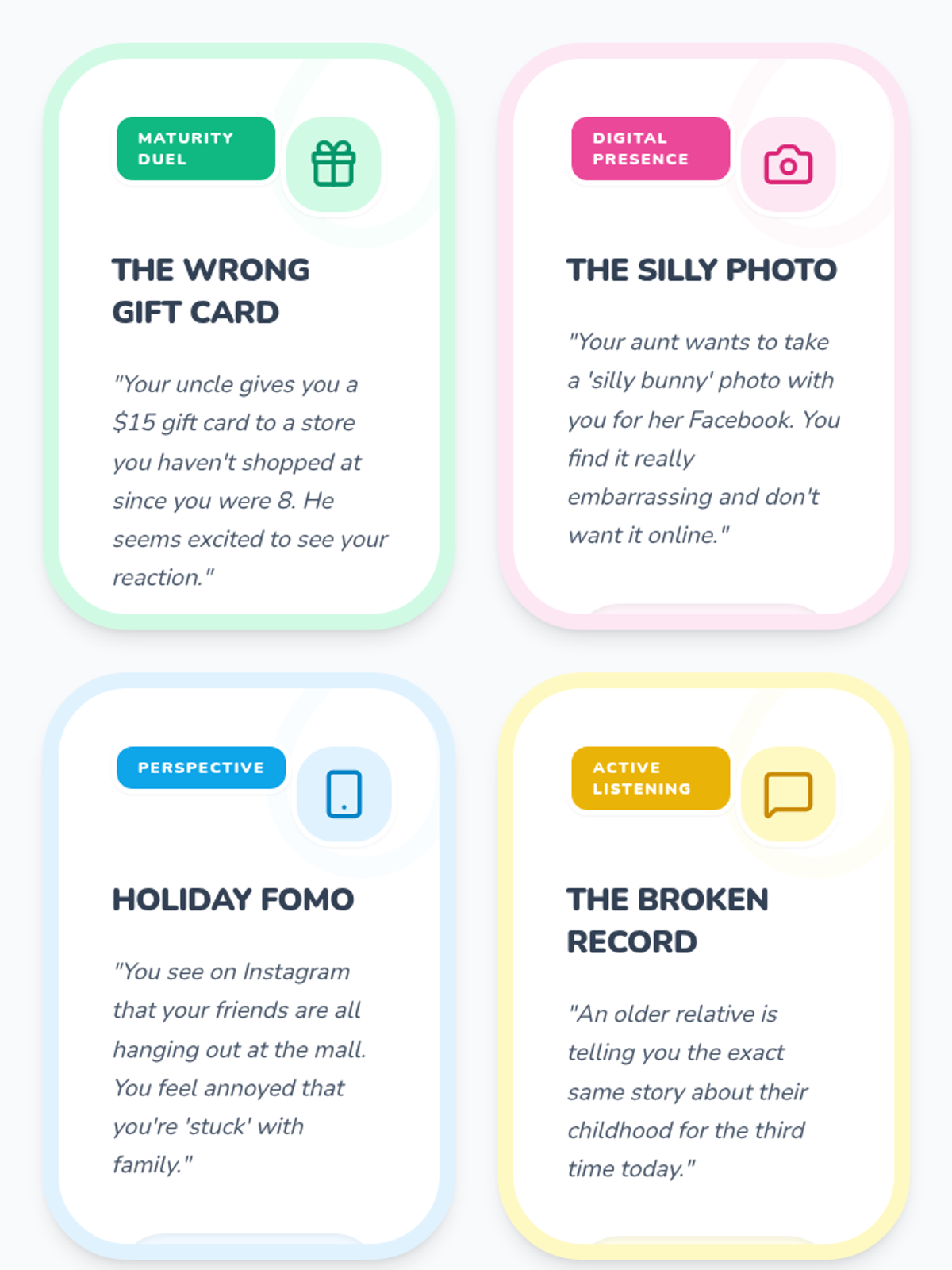
Card 1
Clarifying Instructions
"Your group received confusing directions for a classroom project. Role-play how you would ask questions, confirm details, and ensure everyone understands the task."
Communication
Card 2
Resolving Conflict
"Two teammates want different approaches for the same assignment. Role-play how to listen to each other, share ideas respectfully, and reach a decision together."
Teamwork Communication
Card 3
Missing Supplies
"One member forgot to bring essential materials, and time is running out. Role-play how to address the problem kindly, redistribute tasks, and keep moving."
Teamwork Empathy
Card 4
The New Student
"A new classmate seems nervous and isolated. Role-play how to introduce yourselves, ask open questions, and show empathy to help them feel included."
Empathy Communication
Card 5
Nervous Presenter
"A teammate is anxious about speaking in front of the class. Role-play how to offer support, share tips, and boost their confidence."
Empathy Teamwork
Card 6
Sharing Leadership
"Your group needs a facilitator for a debate activity, but no one is volunteering. Role-play how to communicate roles and encourage participation."
Teamwork Communication
Soft Skills Reflection Rubric Soft Skills Reflection Rubric
Use this to evaluate student growth and self-awareness.
Total Score
____ / 12
Criteria 4 – Exemplary 3 – Proficient 2 – Developing 1 – Beginning
Clarity of Expression
Writing & Organization
| Reflection is exceptionally clear, well-organized, and concise; ideas flow logically. | Reflection is clear and organized; most ideas are easy to follow. | Reflection is somewhat clear but may be disorganized or vague in parts. | Reflection lacks clarity; ideas are hard to follow or poorly organized. |
|
Depth of Reflection
Analysis & Examples
| Provides insightful analysis; identifies multiple personal strengths and areas for growth with examples. | Offers solid analysis; identifies at least one strength and one area for growth with examples. | Shows limited analysis; mentions strengths or challenges but lacks depth or concrete examples. | Reflection is superficial; statements are general with no supporting examples. |
|
Application to Action
Future Goal Setting
| Proposes specific, realistic goals and clear action steps for applying soft skills in future situations. | Suggests general goals or steps for future application. | Mentions intentions to apply skills but lacks specificity or realistic steps. | No clear plan for applying skills beyond today’s lesson. |
Teacher Comments Empathy Meter Chart Empathy Meter Chart
Role-Play Observations
Name
Date
Instructions
Watch each group's scenario role-play carefully. Rate how well they demonstrated empathy (understanding and responding to feelings) on a scale of 1 to 5. Write one positive thing you noticed about their interaction.
Scenario # / Title Empathy Rating One Positive Note 1. Clarifying Instructions 1
2
3
4
5
|
|
| 2. Resolving Disagreement |
1
2
3
4
5
|
|
| 3. Missing Supplies |
1
2
3
4
5
|
|
| 4. Welcoming New Student |
1
2
3
4
5
|
|
| 5. Nervous Presenter |
1
2
3
4
5
|
|
| 6. Sharing Leadership |
1
2
3
4
5
|
|
| 7. Handling Hurt Feelings |
1
2
3
4
5
|
|
| 8. Planning Class Event |
1
2
3
4
5
|
|
Soft Skills Superpowers: Empathy Mission
Active Listening Checklist Active Listening Checklist
Communication Superpower
Name
"Use this checklist during your partner conversation. Put a check mark (✔) next to each behavior you practice."
Behavior ✔ Notes / Examples Face the speaker and maintain eye contact
|
| Avoid interrupting; let the speaker finish |
|
|
| Paraphrase the speaker's words |
|
"So, what I heard you say was..."
|
| Ask one open-ended question |
|
"How did that make you feel?"
|
| Provide supportive verbal cues |
|
"I see," "Go on," "Interesting..."
|
Post-Chat Reflection
1. Which active listening behavior was easiest for you to practice?

2. Which behavior was most challenging, and how can you improve it?
3. How did using this checklist affect your understanding of your partner’s story?
Real Talk Skills • 7th Grade Tier 1 Lesson