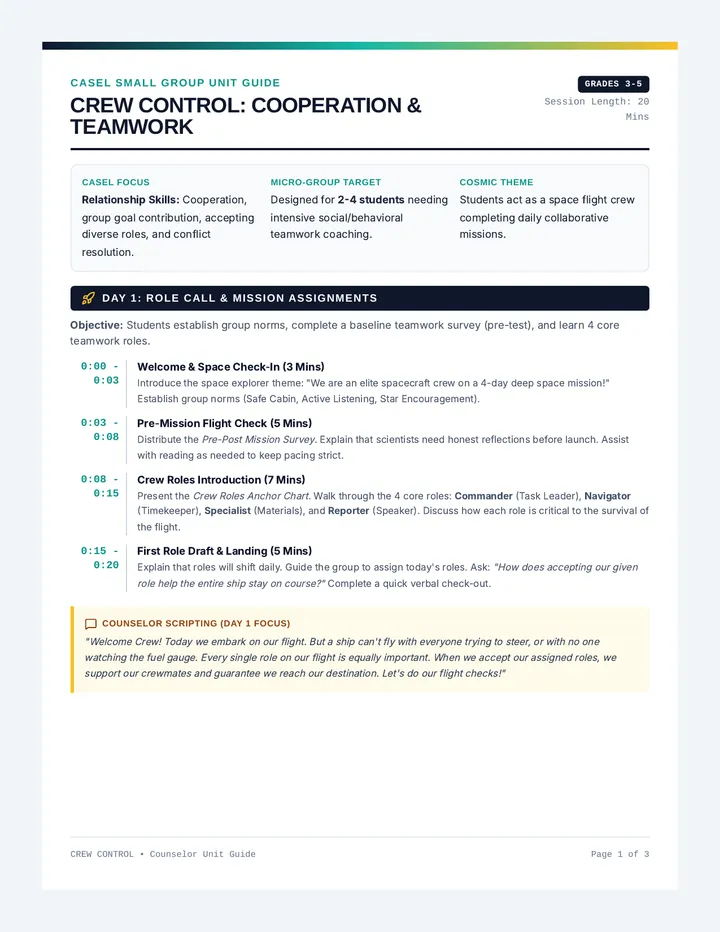
Reach Out and Shine Lesson Plan
A comprehensive 30-minute lesson plan for educators, outlining the prep, objectives, and step-by-step instructions for the 'Reach Out & Shine!' lesson.
Reach Out and Shine Slide Deck
A bright, engaging 8-slide presentation with actionable tips, visual cues, and encouraging messages to guide the 'Reach Out & Shine!' lesson.
Reach Out and Shine Teacher Script
A detailed instructional script for the teacher, providing timed sections, display cues for the slide deck, and specific dialogue prompts to guide the lesson.
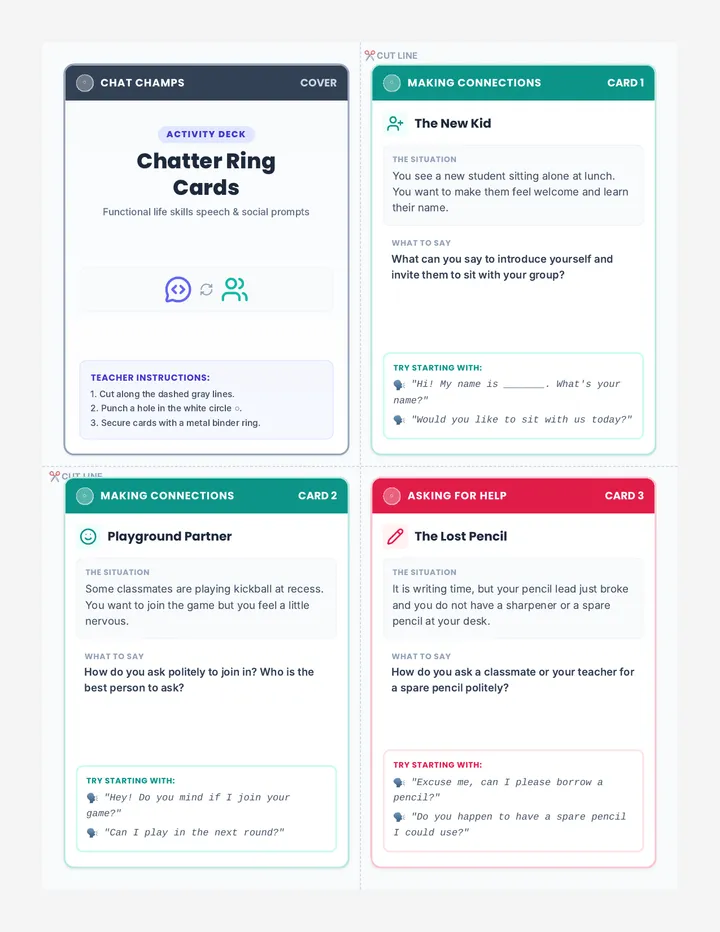
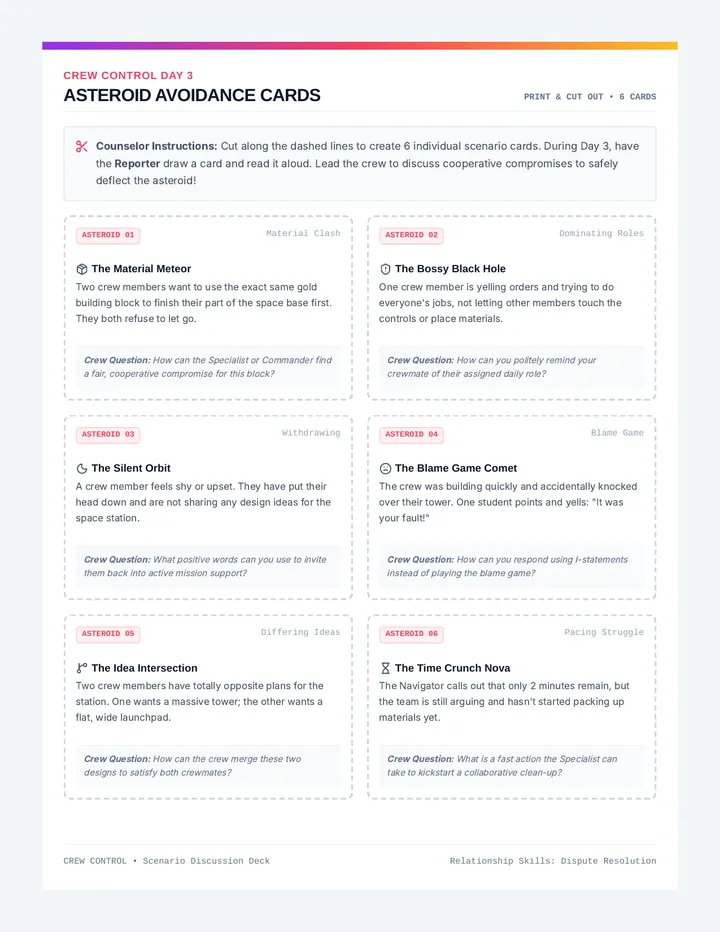
Role Play Scenarios Activity
A role-play activity sheet with multiple scenarios for students to practice initiating social contact and asking for help.
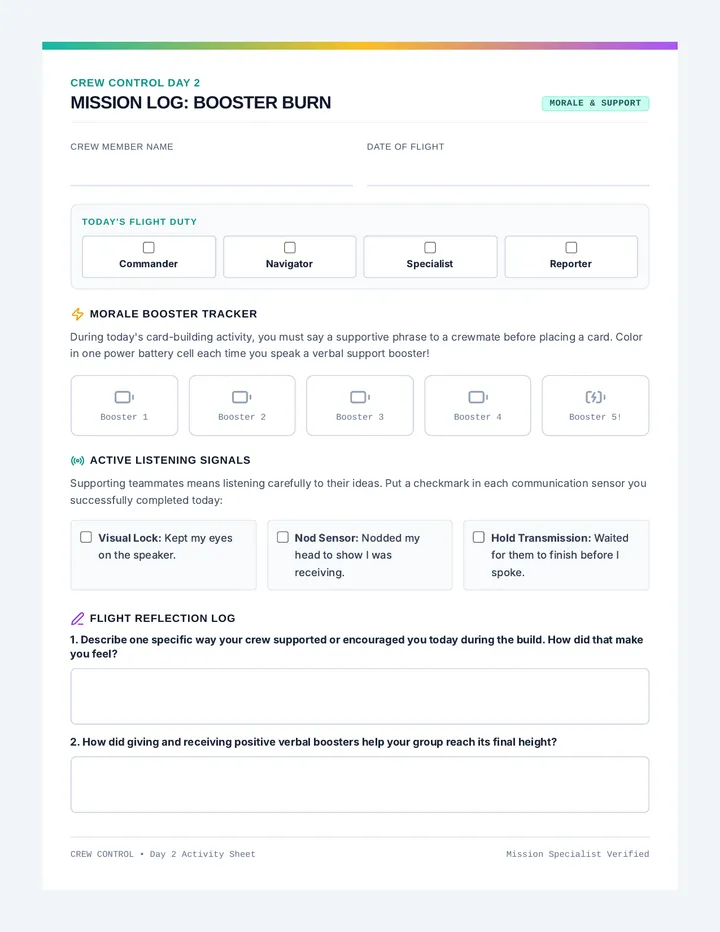
My Shine Journal
A personal reflection journal for students to record their learning, set goals, and check in on their feelings about using social skills.
Reach Out and Shine Exit Ticket
A quick exit ticket to gauge student understanding and confidence in applying the social skills learned during the lesson.