Students discover the power of open-ended questions by transforming 'Yes/No' questions into 'Tell me more' questions.
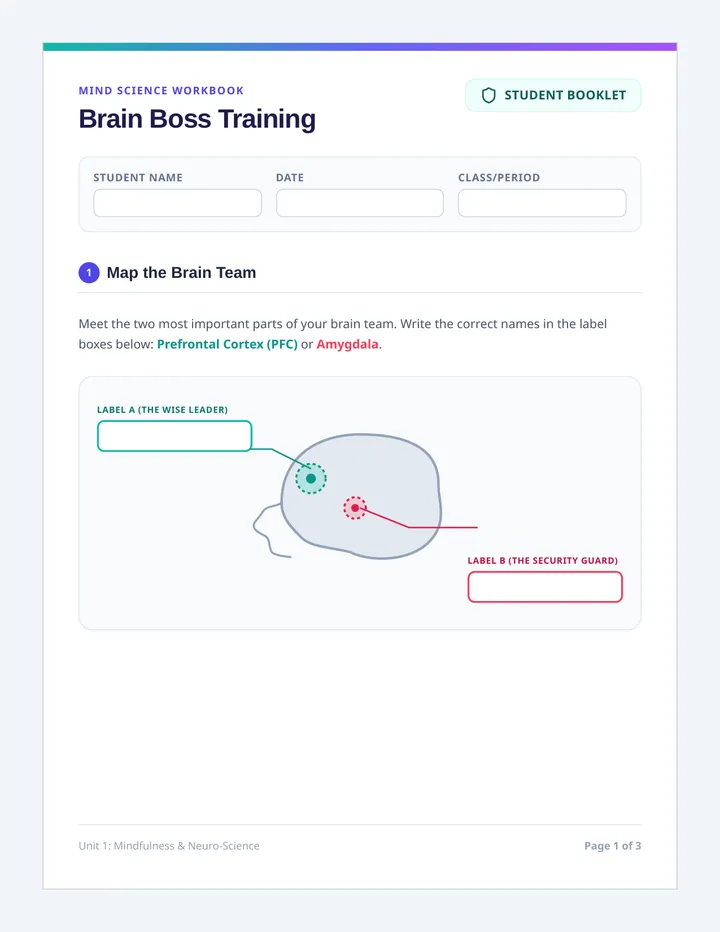
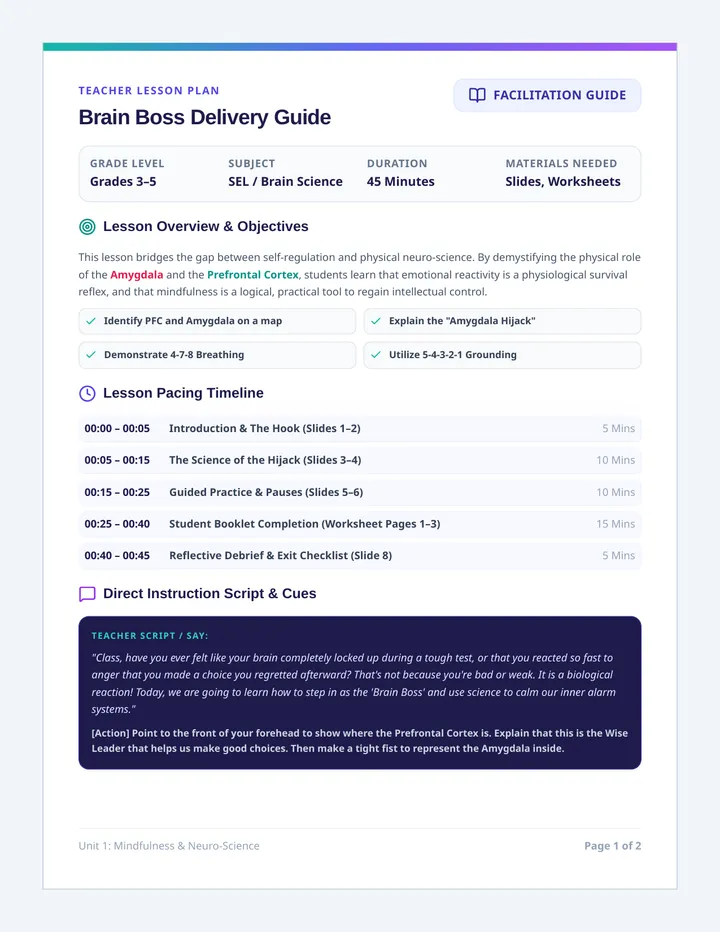
An explicit teaching lesson for Upper Elementary (grades 3-5) that introduces mindfulness through brain science, explaining the roles of the amygdala and prefrontal cortex, and provides concrete self-regulation strategies.
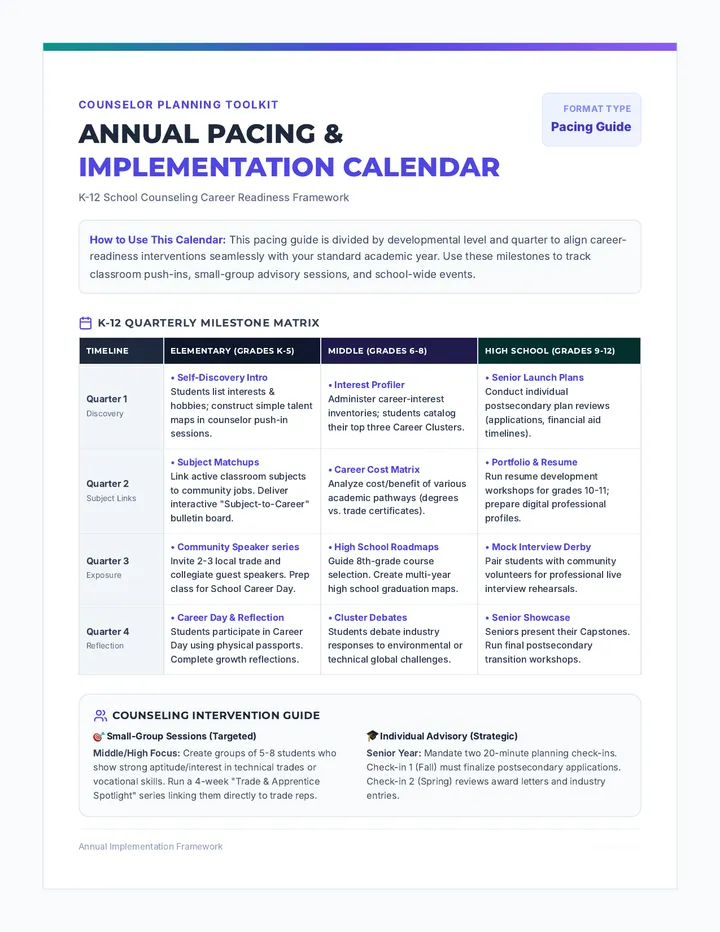
Actionable planning resources, school-wide career day guides, and implementation templates for school counselors to deploy career readiness curricula.
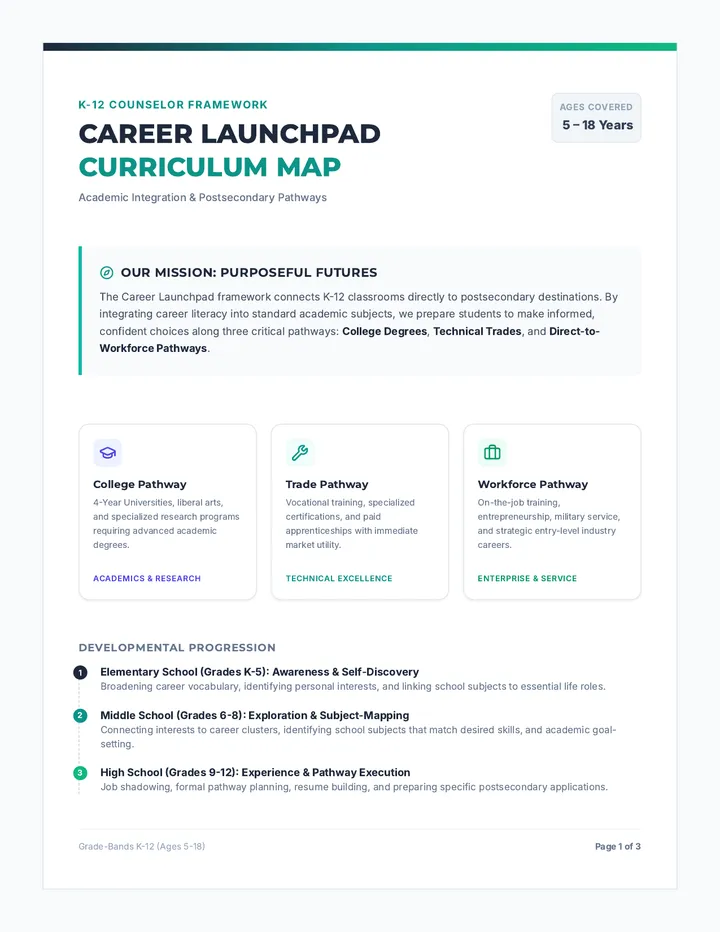
High-level scope, sequence, and developmental milestones for elementary, middle, and high school career exploration. This framework links classroom subjects to real-world college, trade, and workforce pathways.
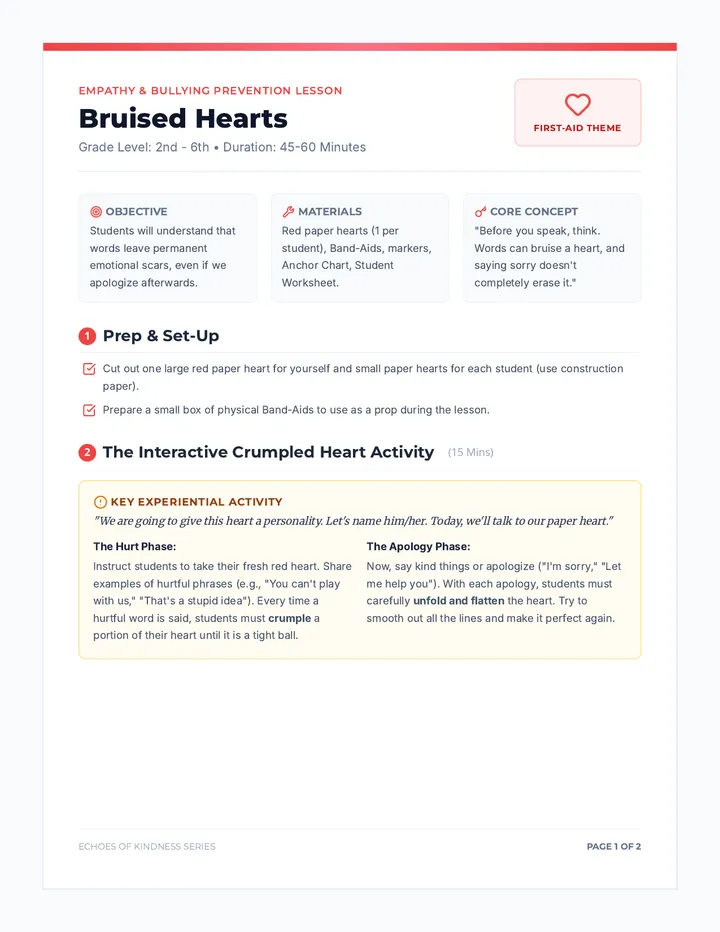
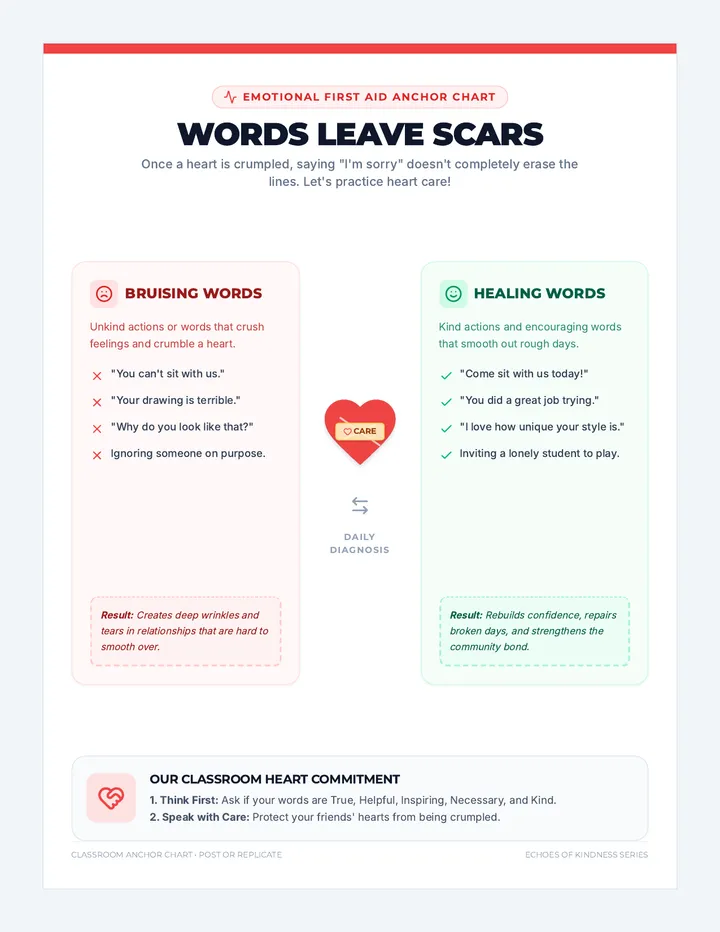
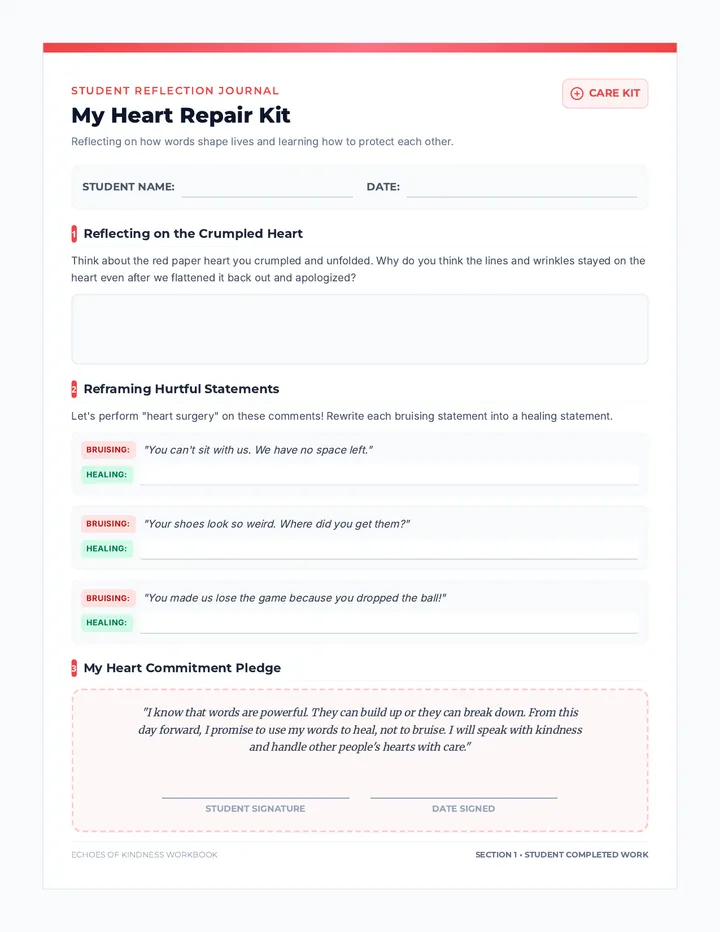
A powerful kindness and bullying prevention lesson exploring how hurtful words affect others and how we can repair hearts. Students engage in a paper-heart crumbling activity to visually understand the lasting impact of unkindness.
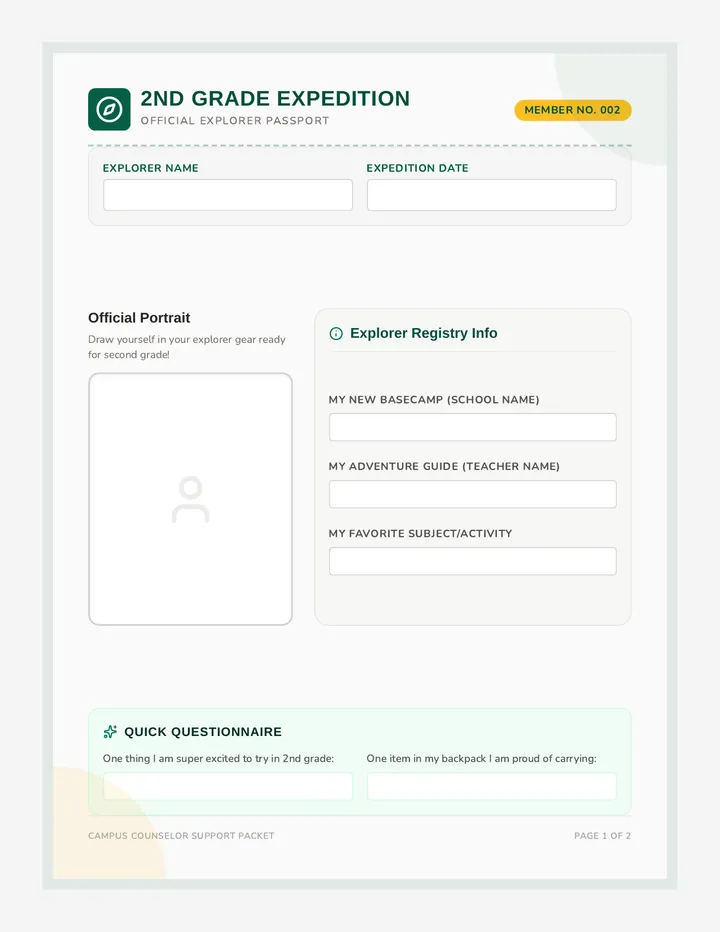
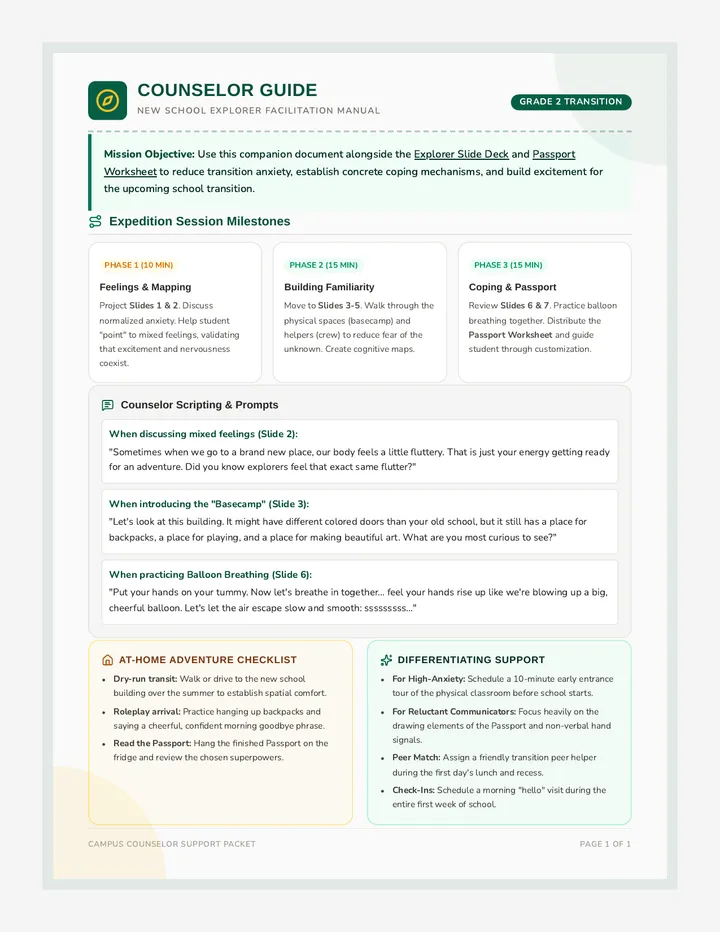
A transition support unit designed for rising 2nd graders entering a new school. Includes a social story presentation, a personal passport worksheet, and a counselor guidance document.
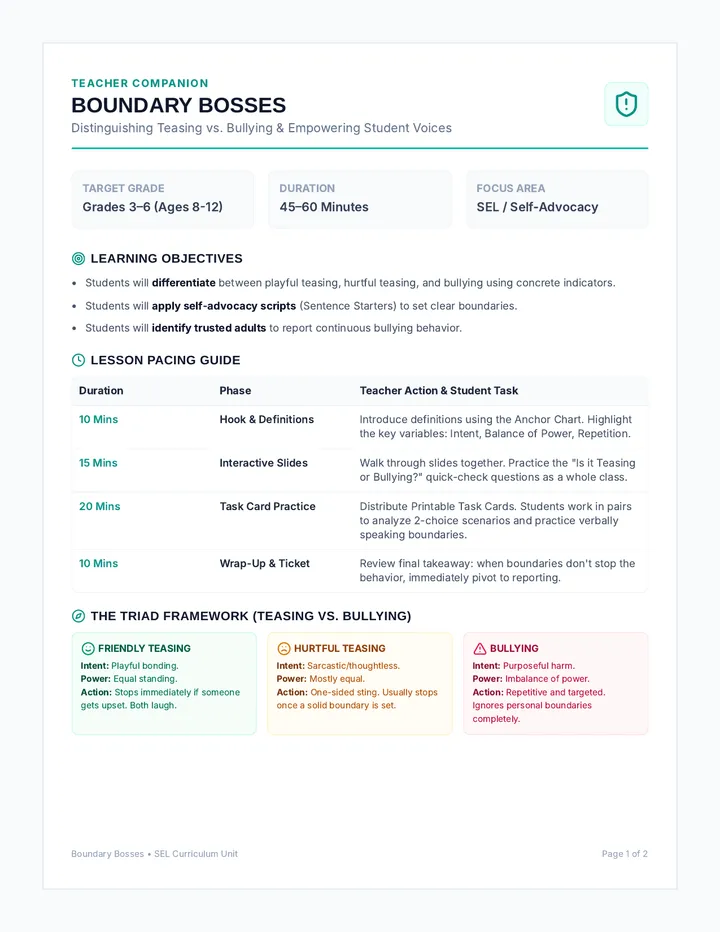
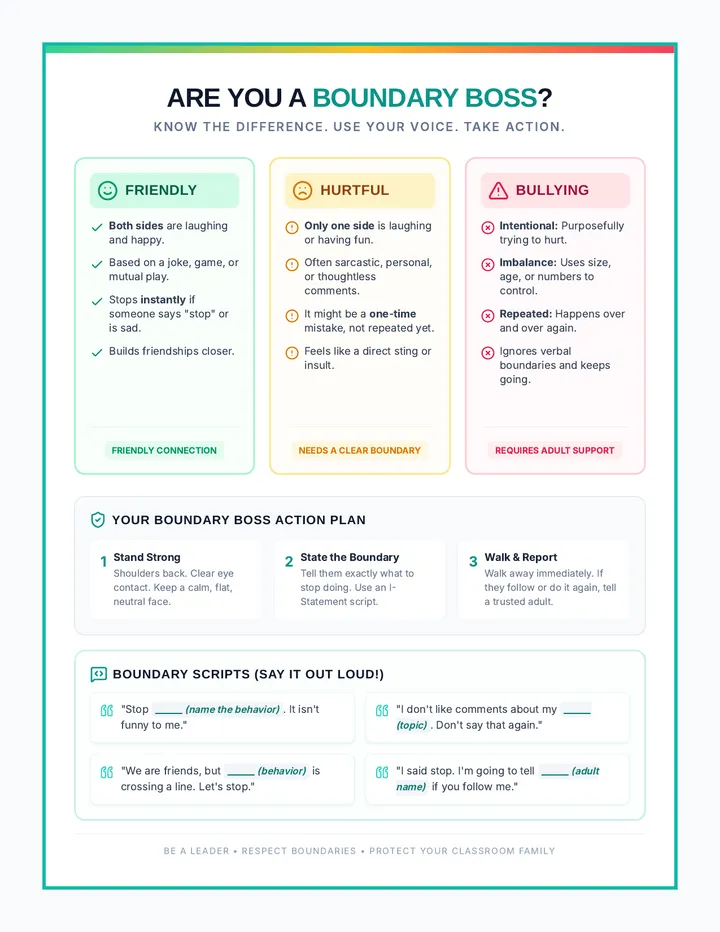
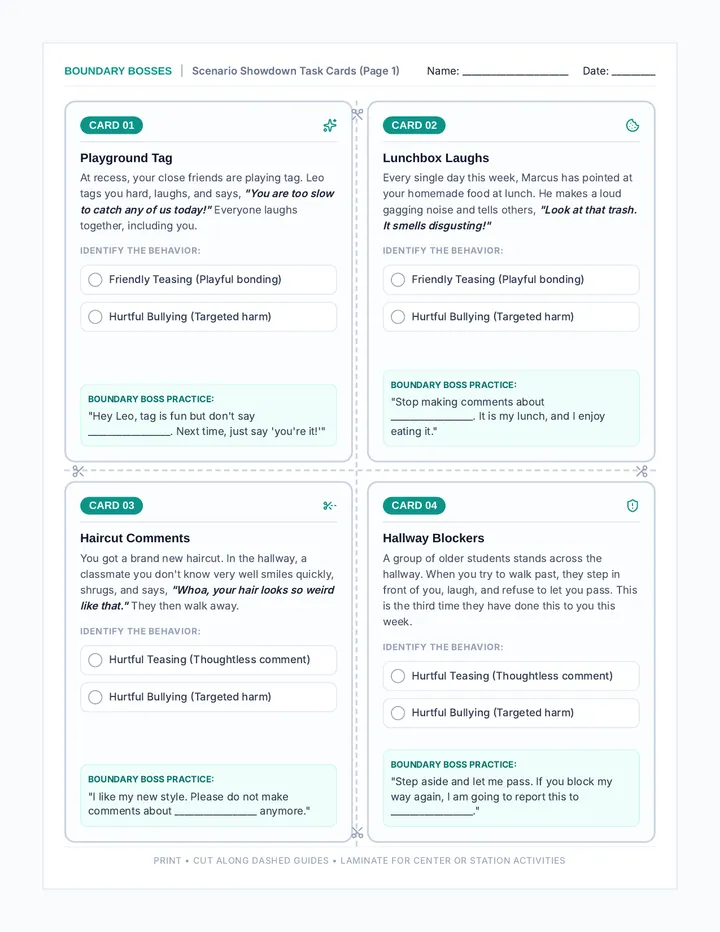
A comprehensive lesson helping students distinguish between friendly teasing, hurtful teasing, and bullying, while teaching concrete self-advocacy strategies and verbal boundary setting.
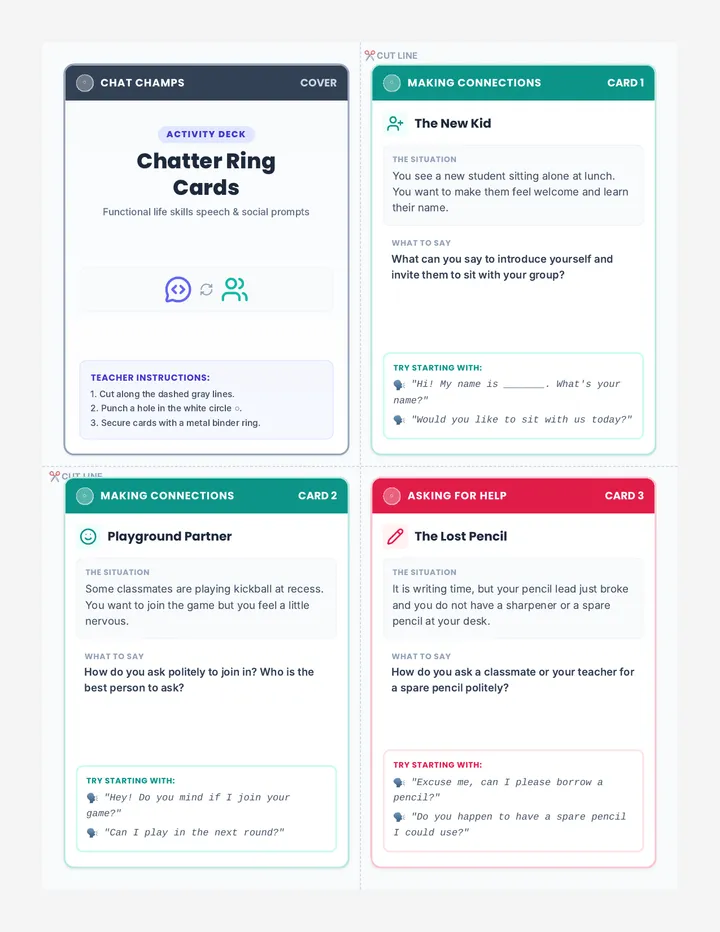
A lesson focused on equipping elementary students with functional verbal communication skills for everyday real-world interactions. Students practice through guided peer discussions, roleplays, and task cards.
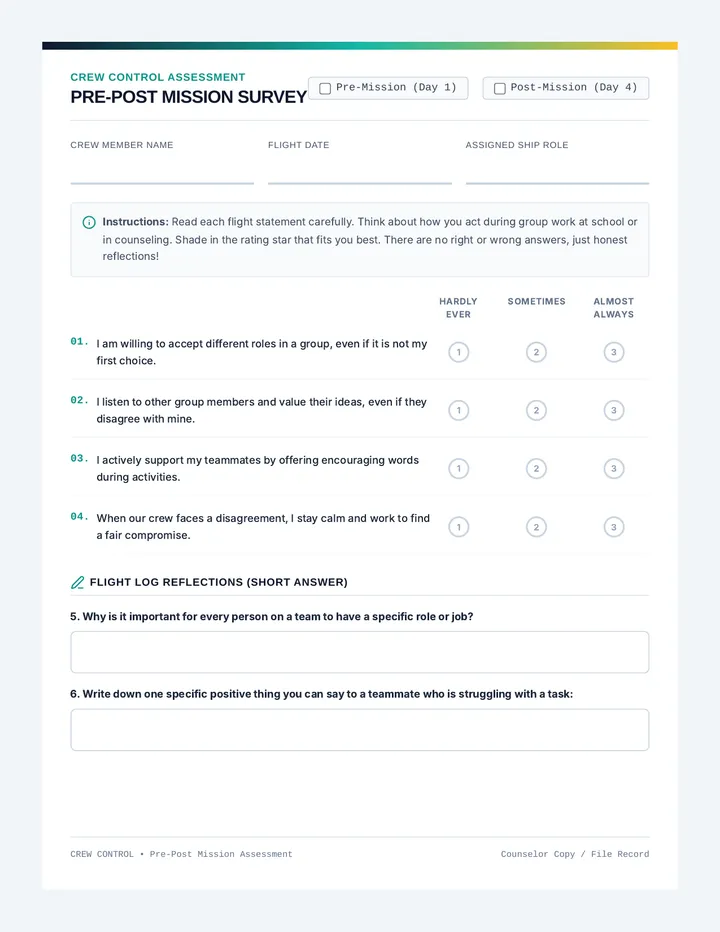
Consolidates learning with a collaborative micro-build challenge, group self-reflection, and administration of the identical post-test.
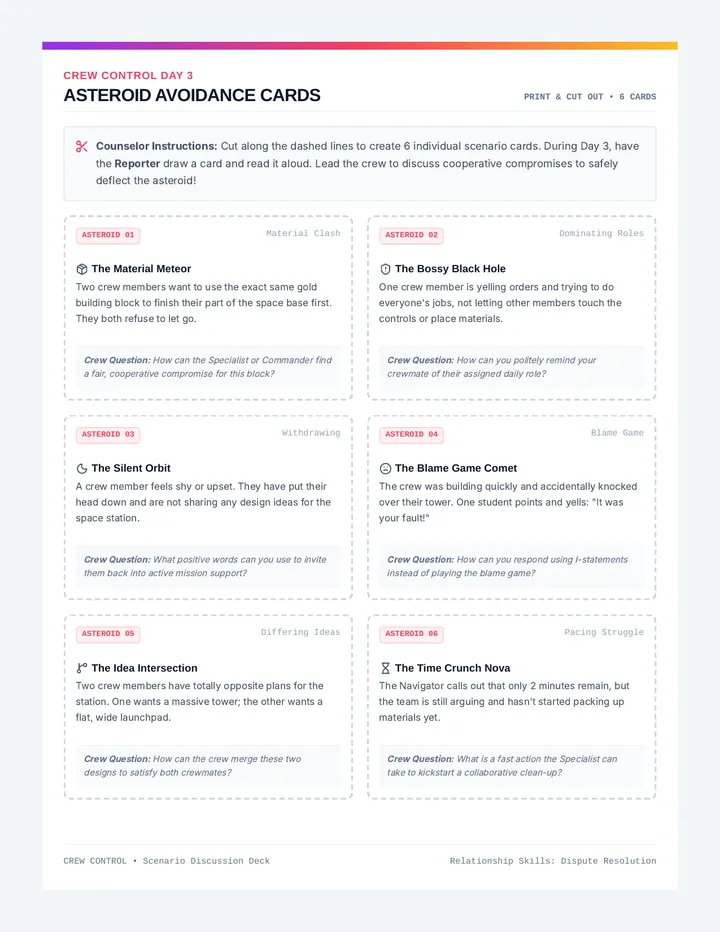
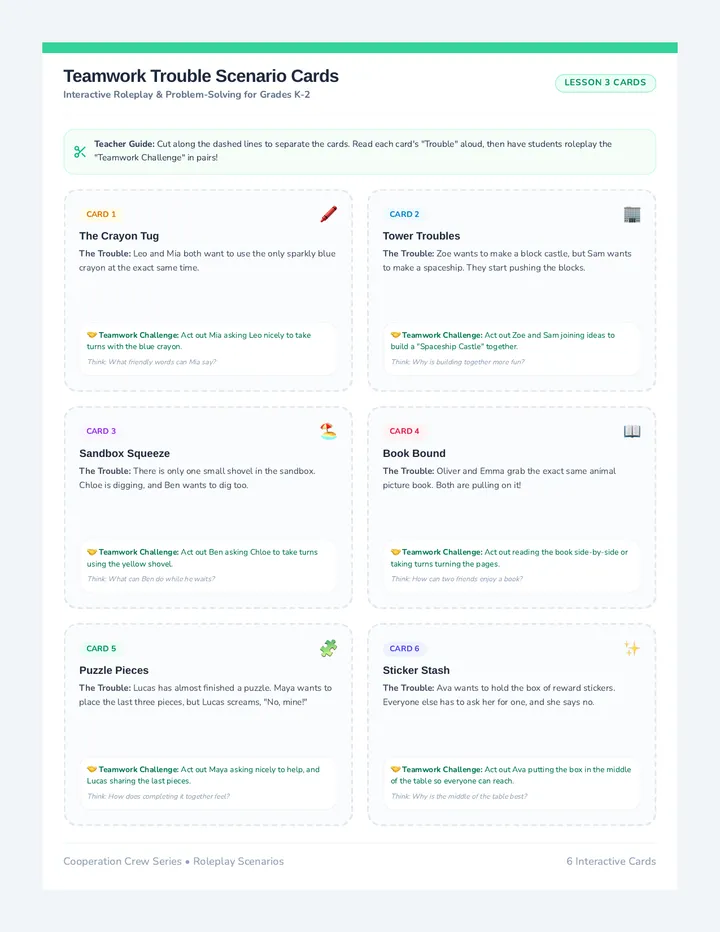
Focuses on identifying and navigating group conflicts (such as disagreements or resource sharing) using interactive discussion cards.
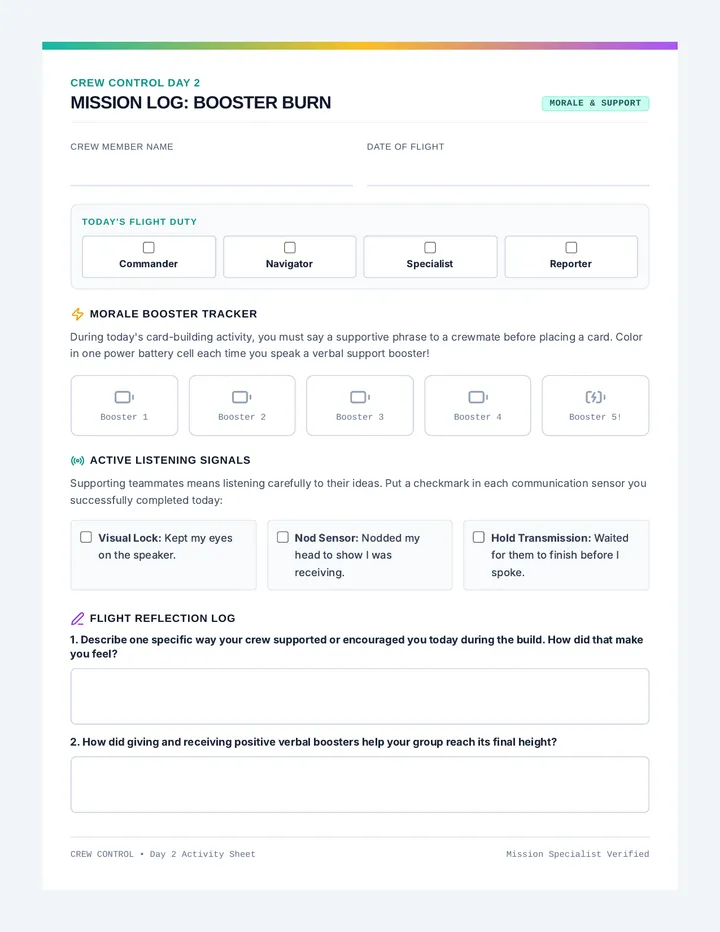
Focuses on positive peer reinforcement, active listening, and supporting teammates through verbal encouragement and collaborative challenge completion.
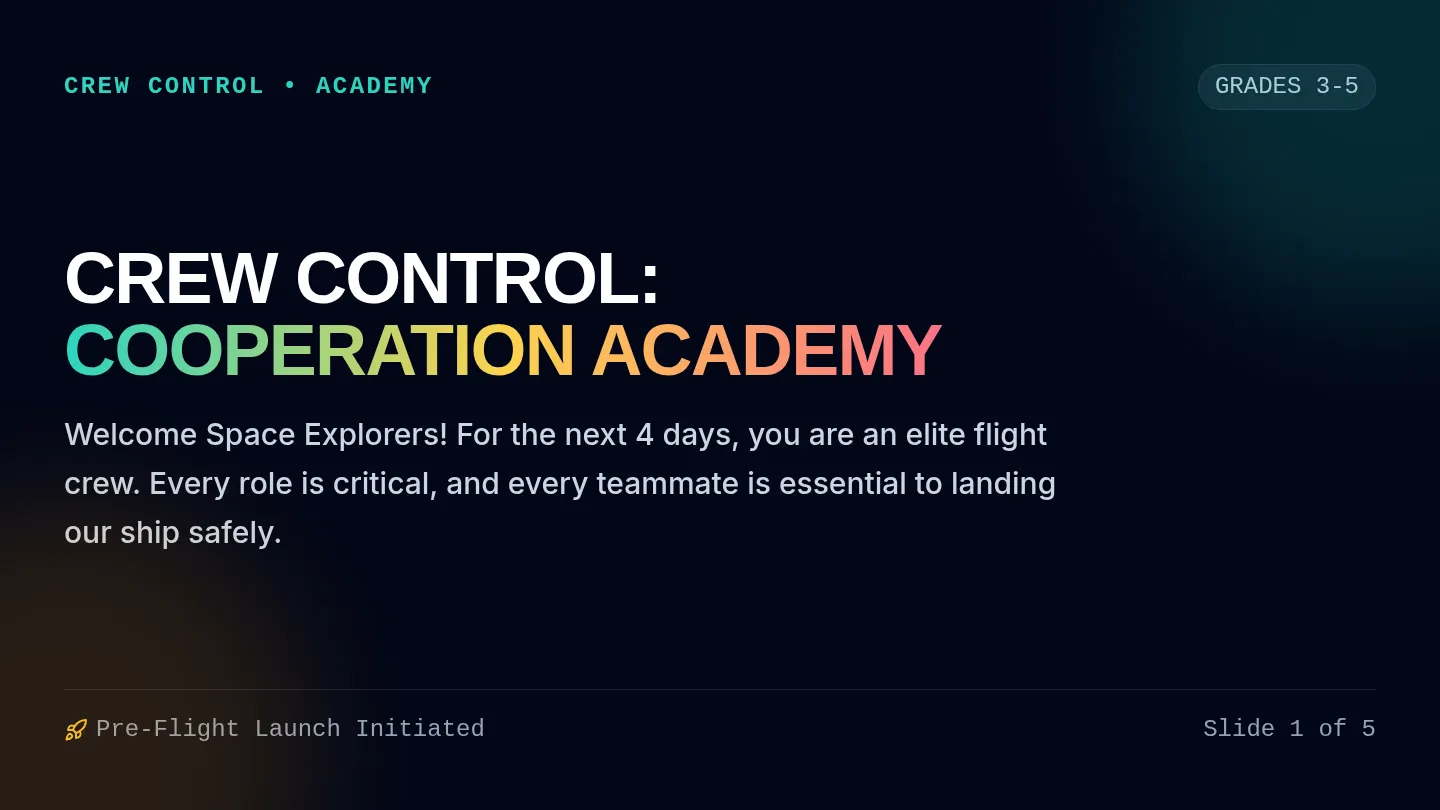
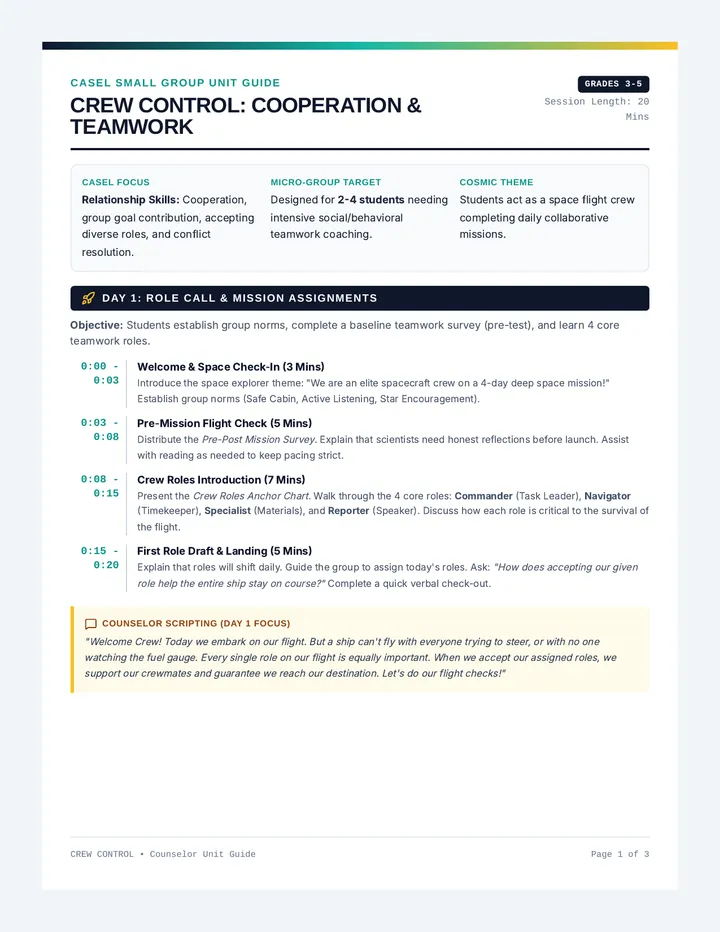
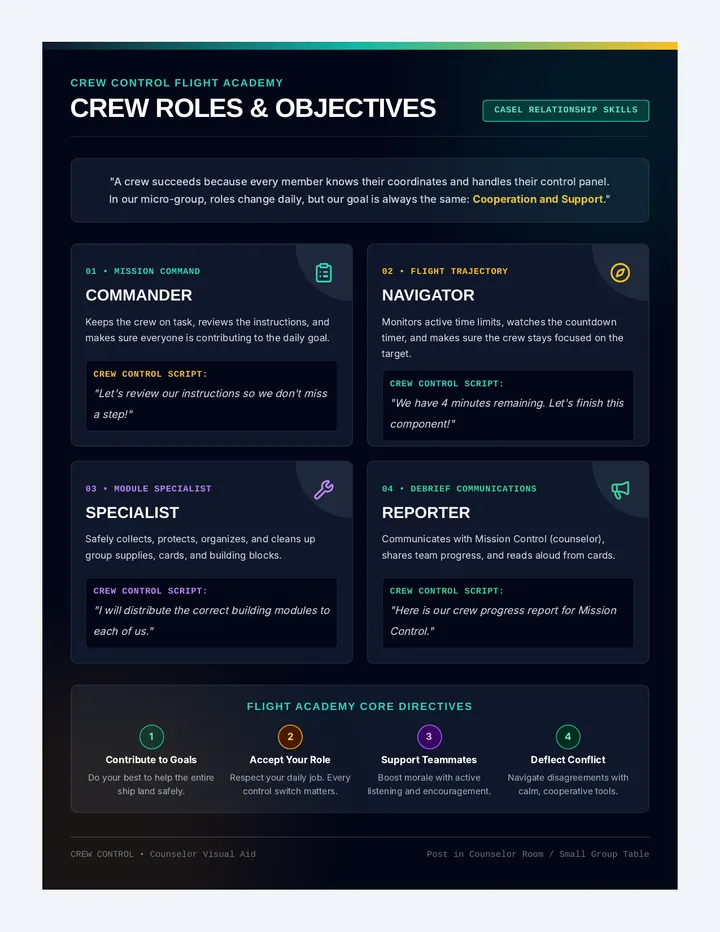
Focuses on setting group norms, administering the pre-test, and introducing the core teamwork roles (Commander, Navigator, Specialist, Reporter) using a retro space-explorer theme.
Day 3 focuses on cooperative group work to solve dilemmas, acting out teamwork scenarios, and completing the visual post-test to evaluate progress.
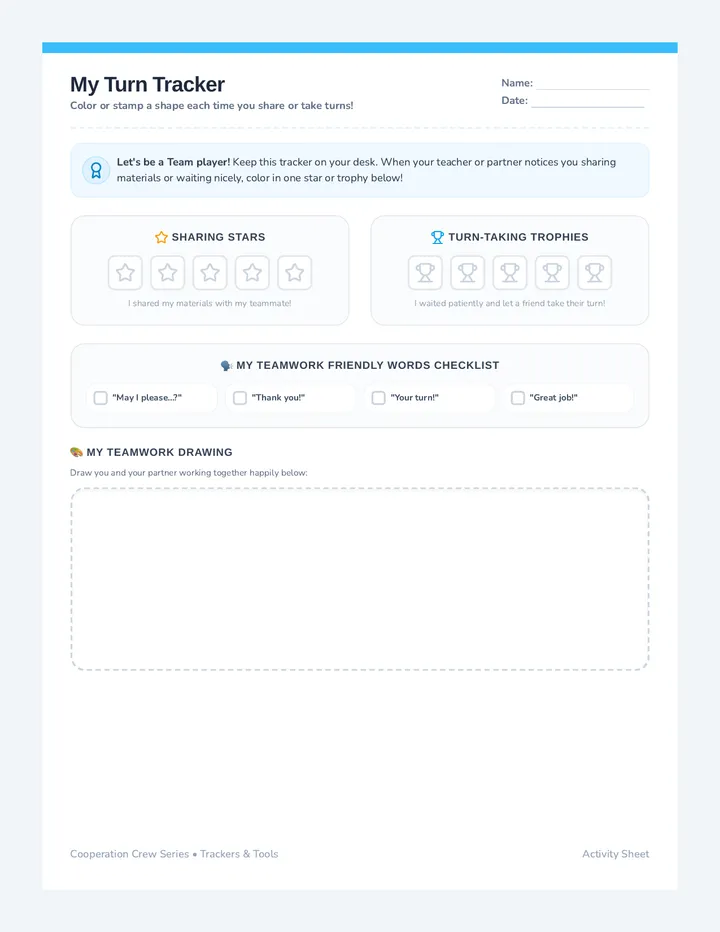
Day 2 emphasizes structured turn-taking, active waiting strategies, and practicing self-regulation with a physical tracker during small-group play.
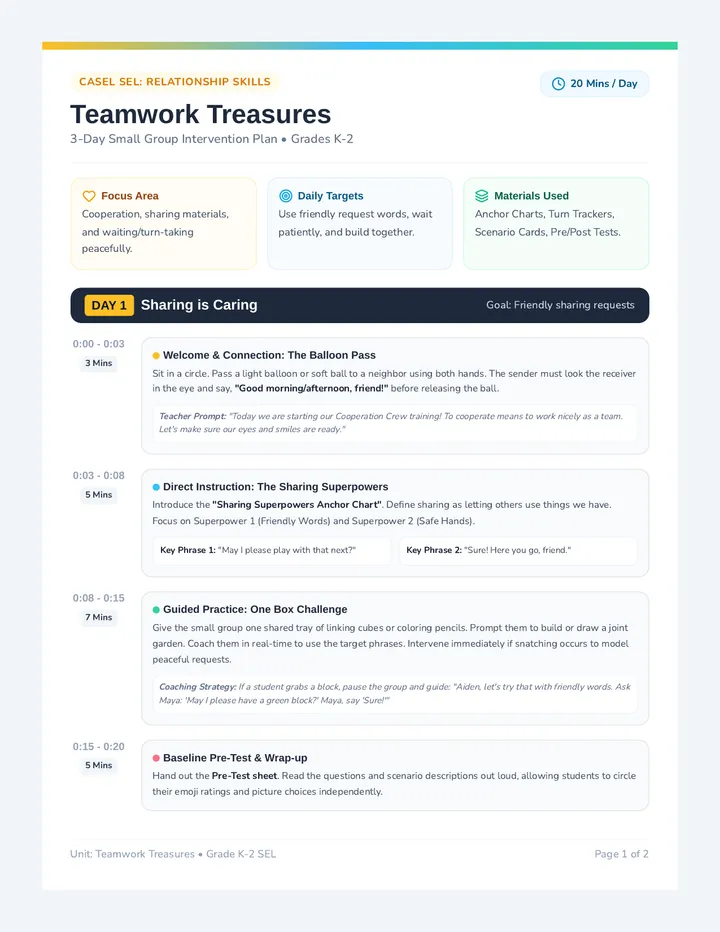
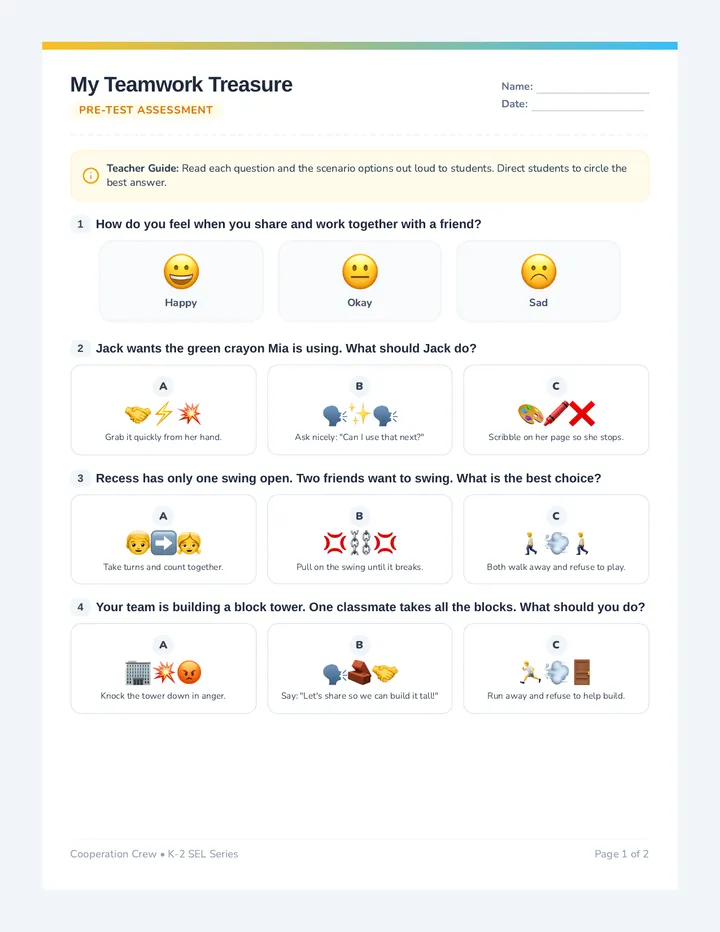
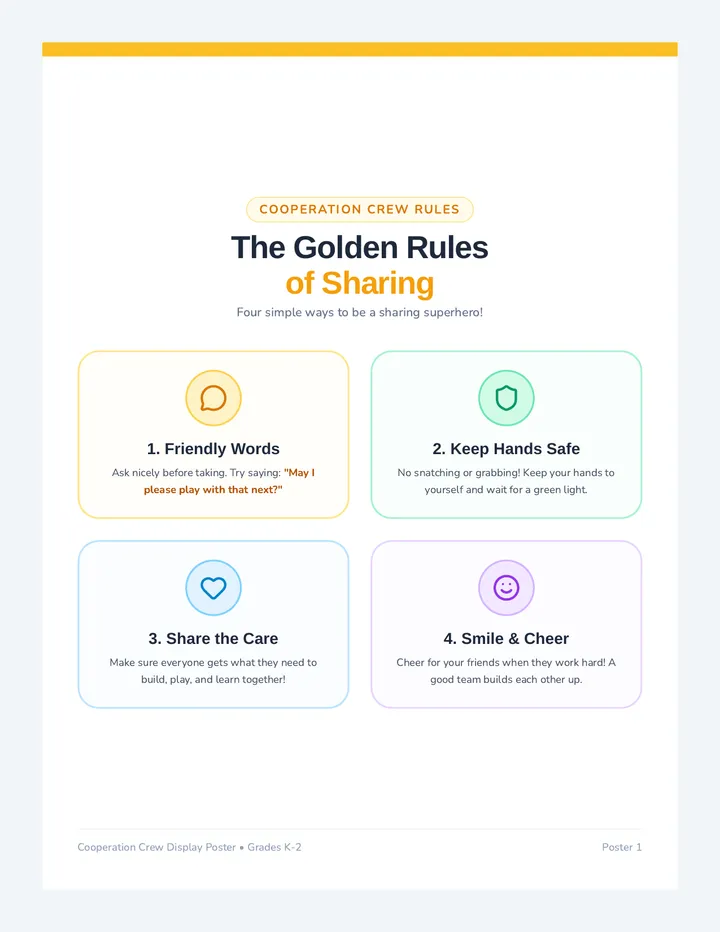
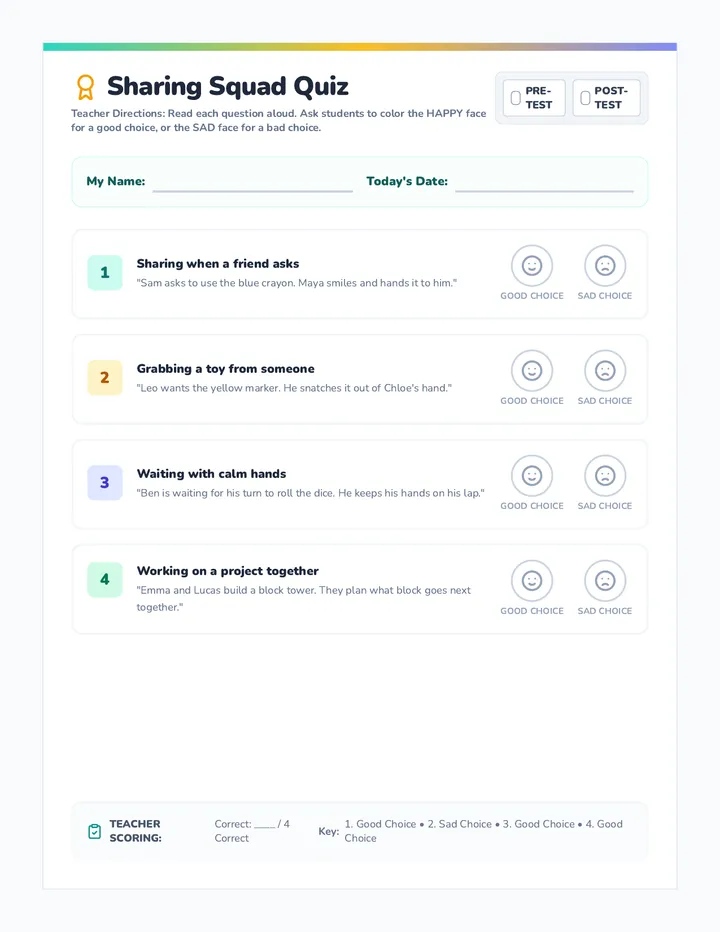
Day 1 focuses on the golden rules of sharing materials, using friendly request phrases, and administering the baseline visual pre-test.
Day 3 of the Sharing Squad small-group intervention. Students combine their sharing and turn-taking skills to complete a collaborative puzzle drawing peacefully, followed by a graduation ceremony.
Day 2 of the Sharing Squad small-group intervention. Students focus on the concept of wait time and turn-taking through interactive games and a physical "Turn Tracker" token activity.
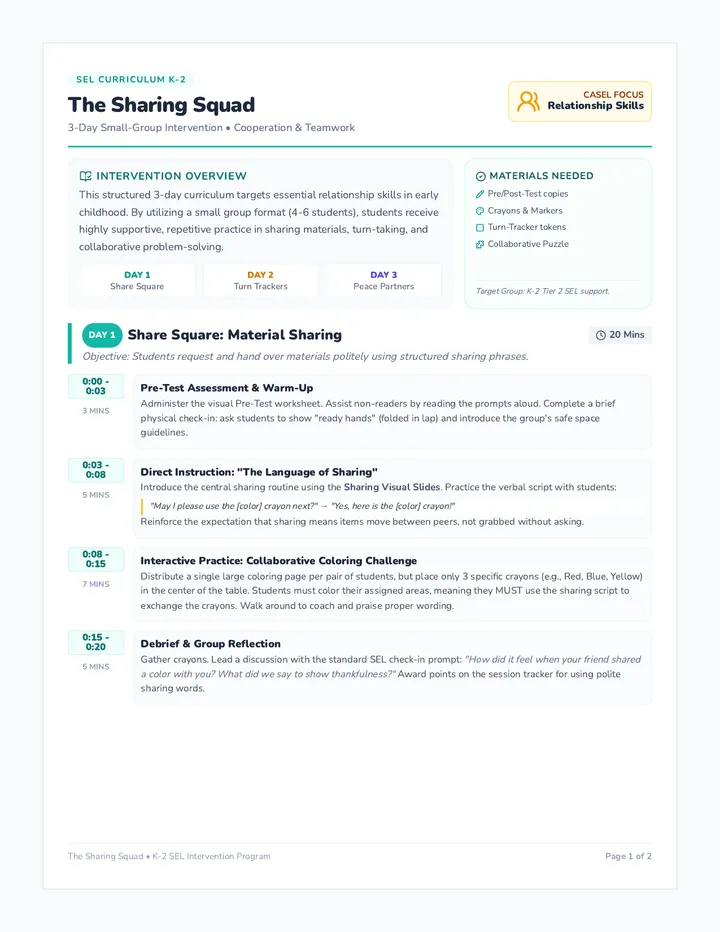
Day 1 of the Sharing Squad small-group intervention. Students learn the importance of sharing art materials, practice key sharing phrases, and complete a collaborative coloring challenge.
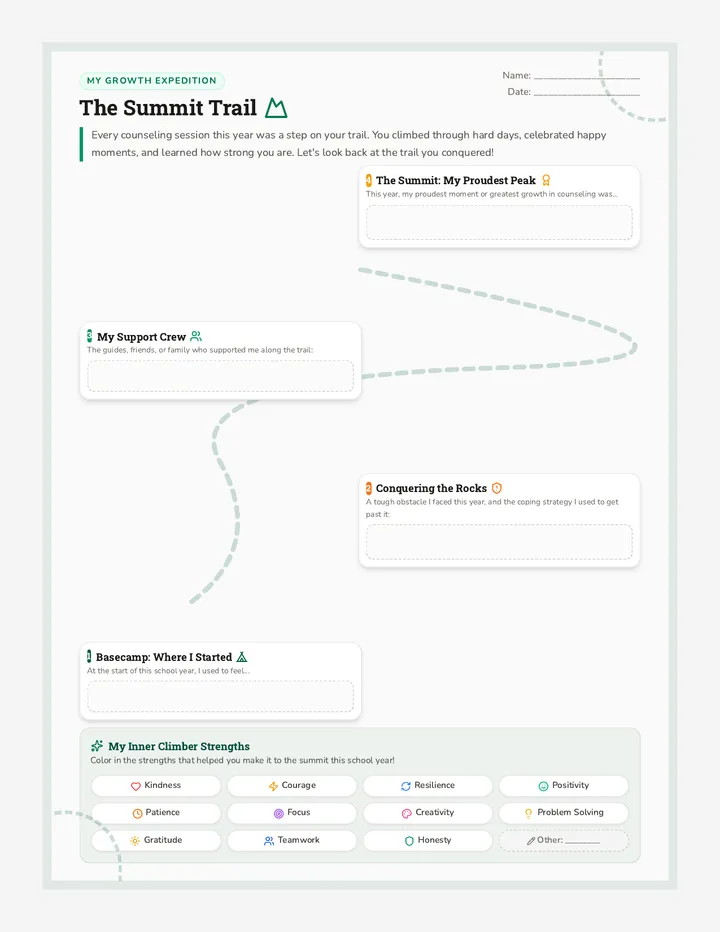
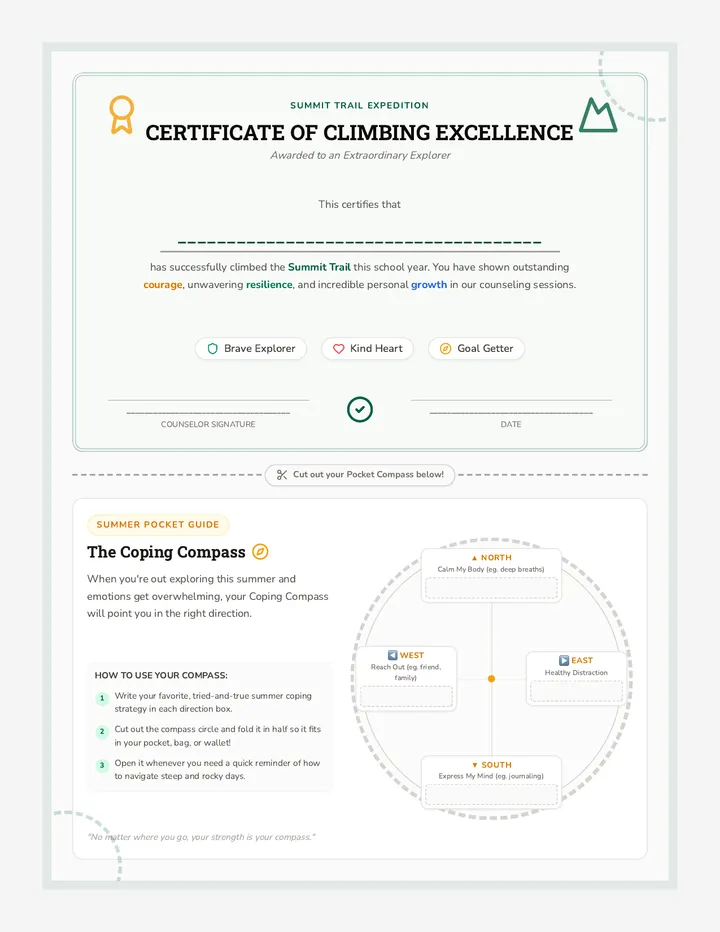
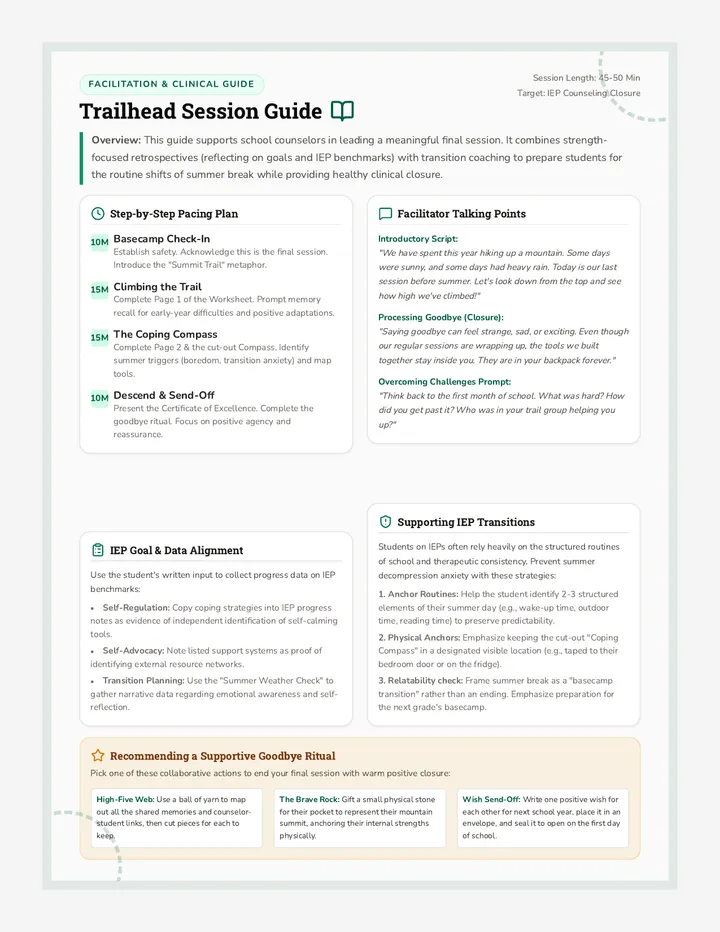
A supportive, mountain-trail-themed final counseling session designed for students on IEPs to celebrate their personal growth, develop summer coping strategies, set future goals, and process closure with their counselor.
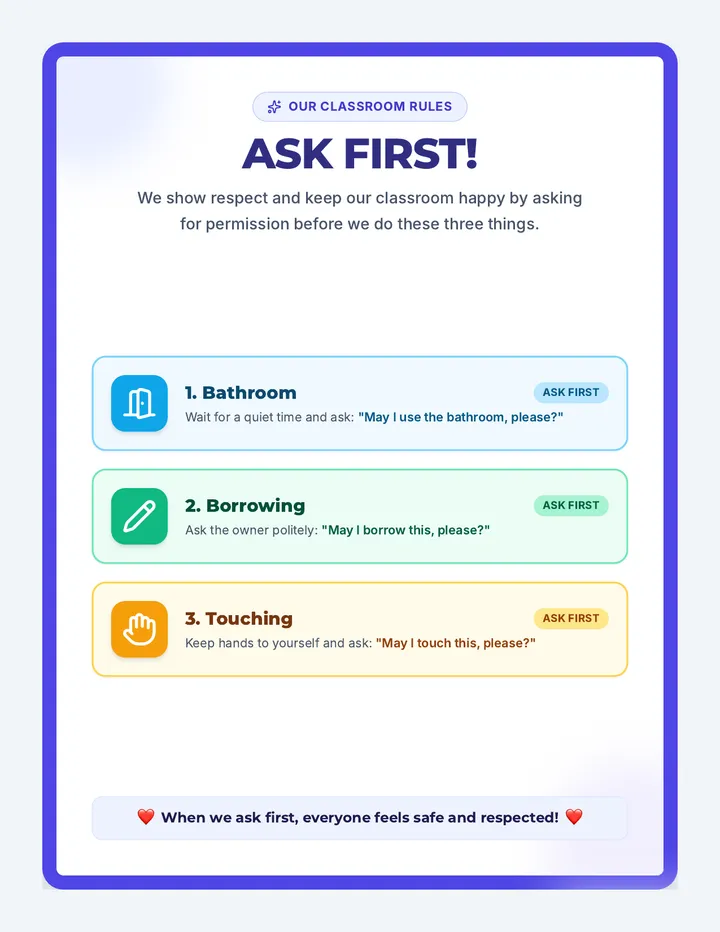
A collection of visual guides and posters to teach and remind elementary students how and when to ask for permission for daily routines.
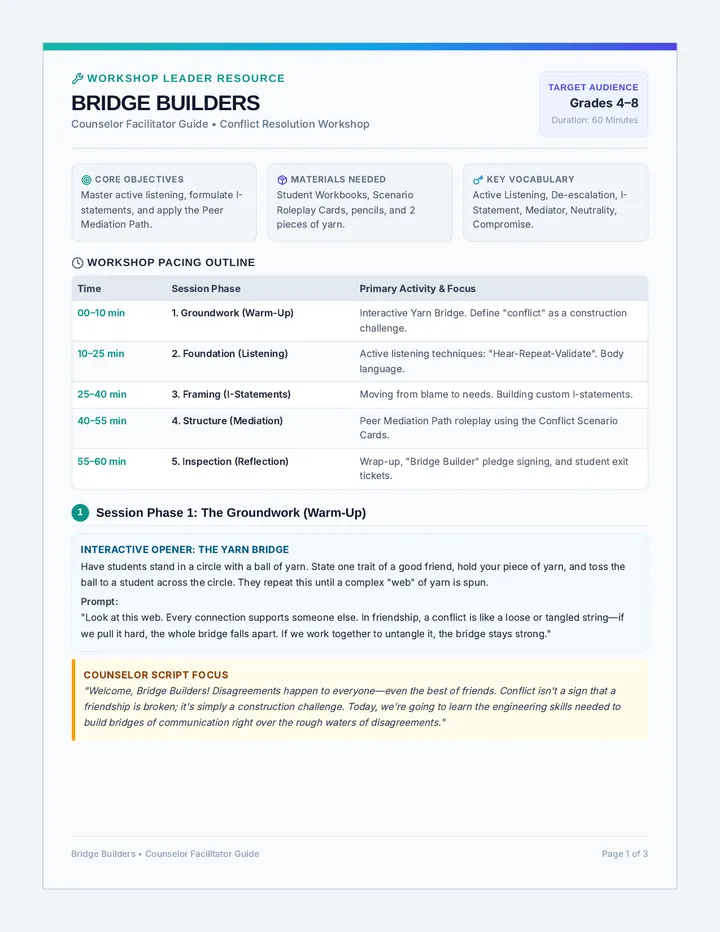
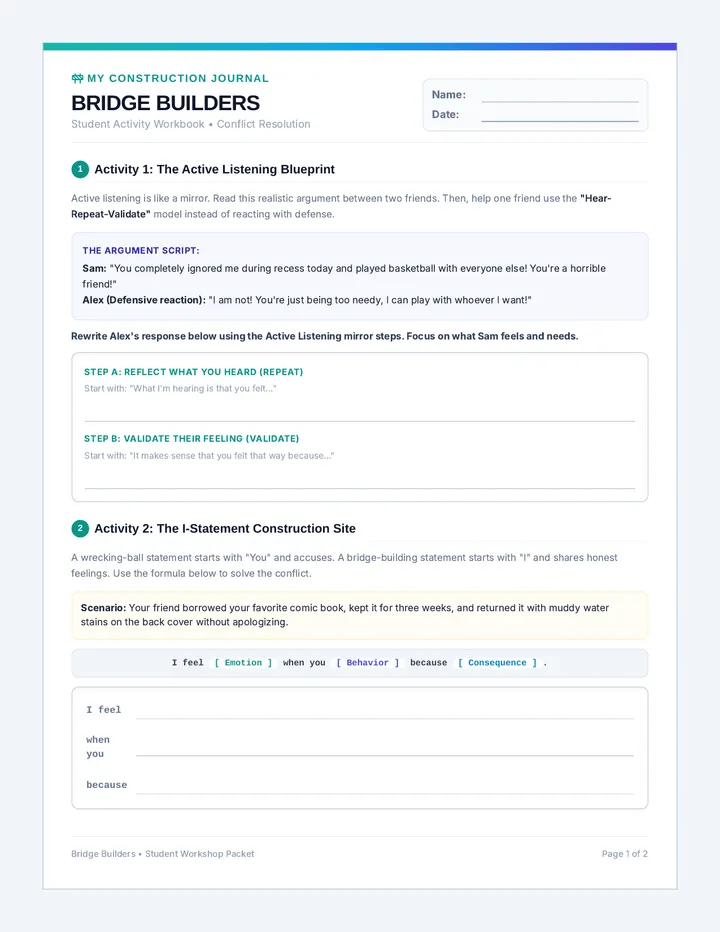
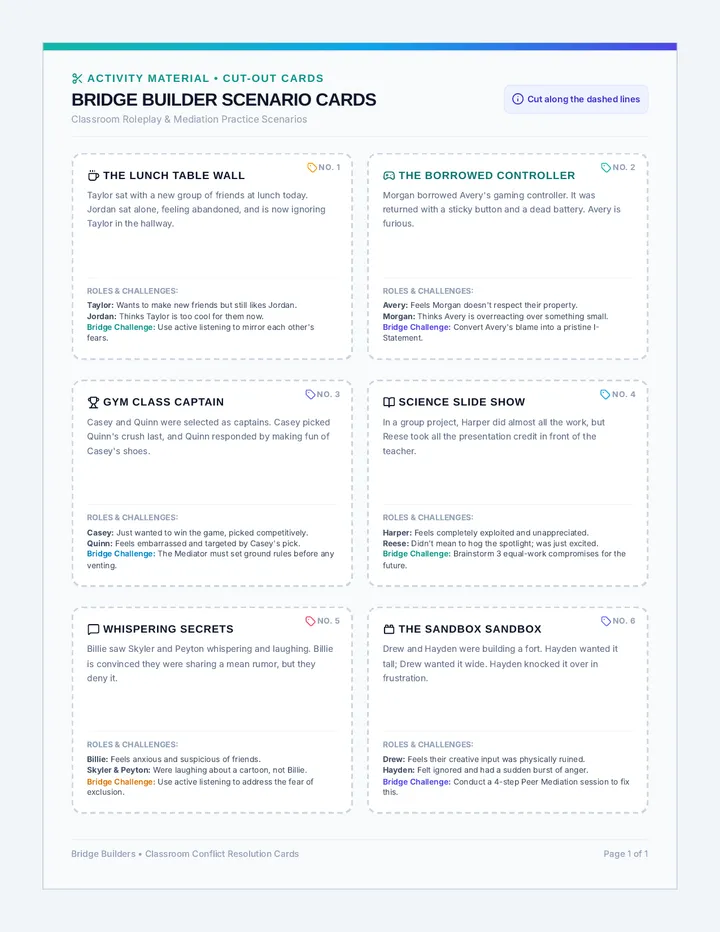
An interactive workshop teaching students essential conflict resolution skills, active listening techniques, and peer mediation frameworks to build stronger, more empathetic friendships.
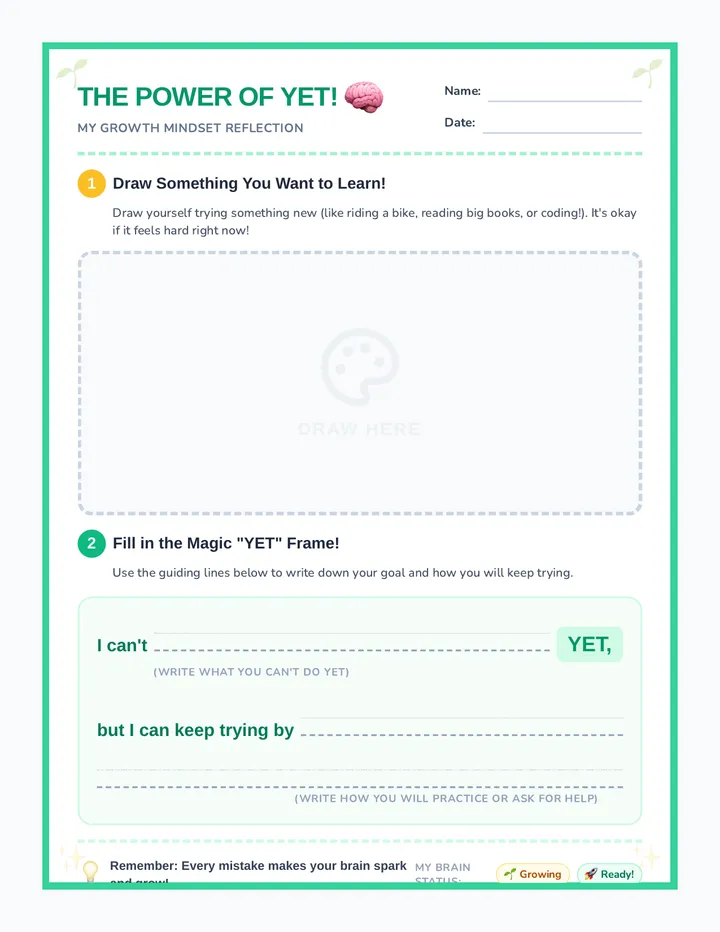
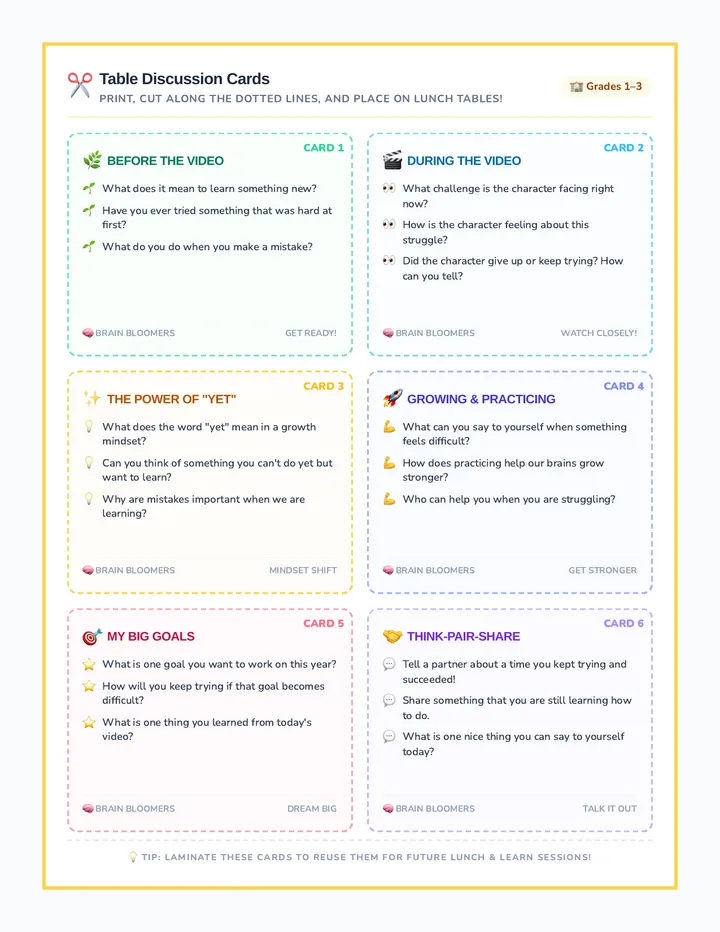
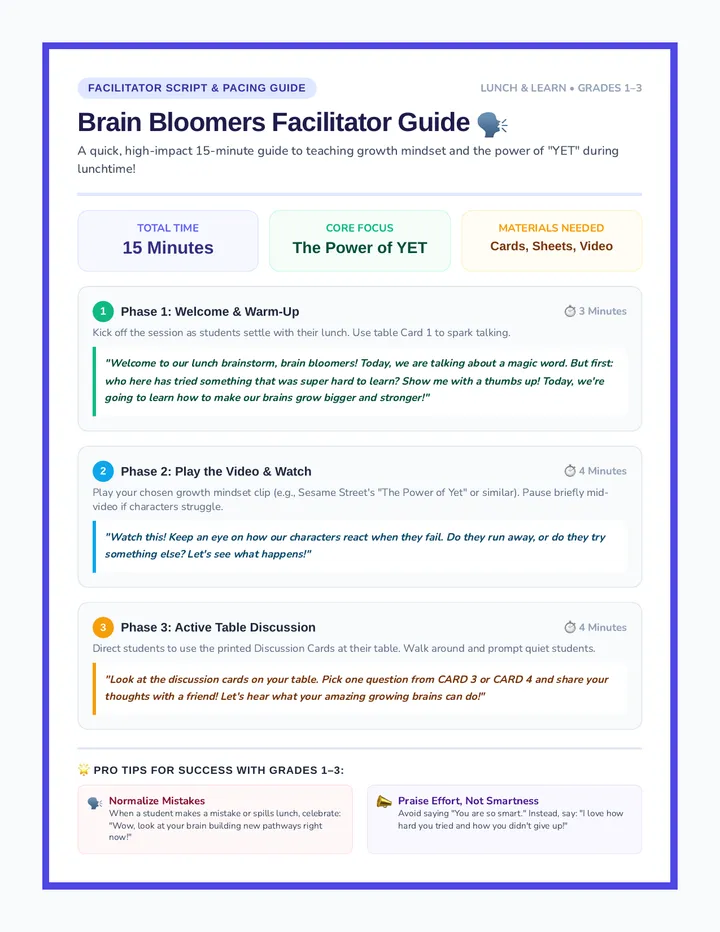
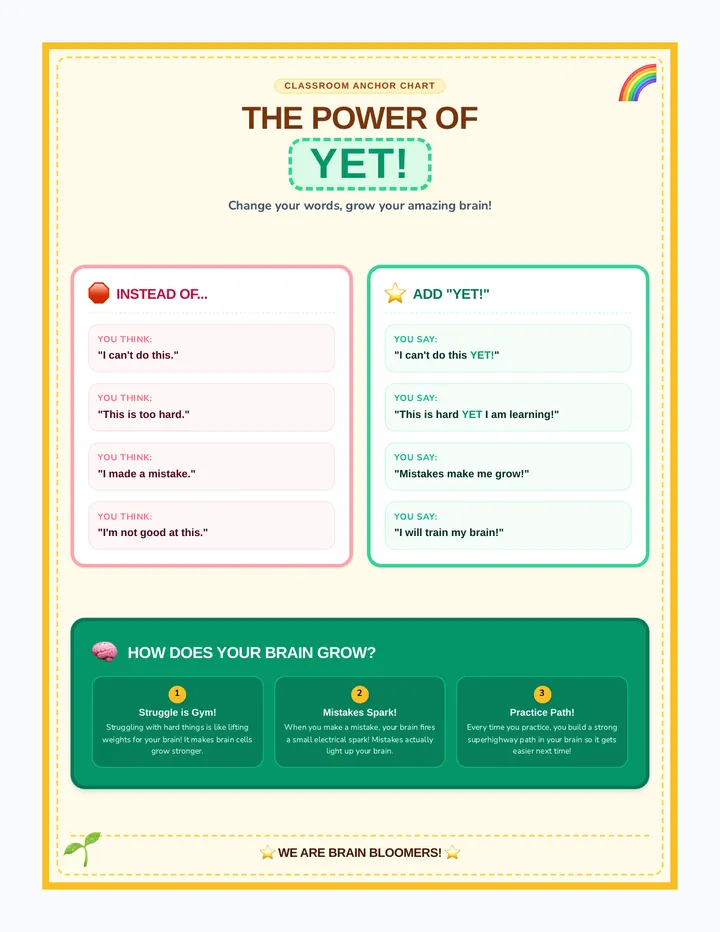
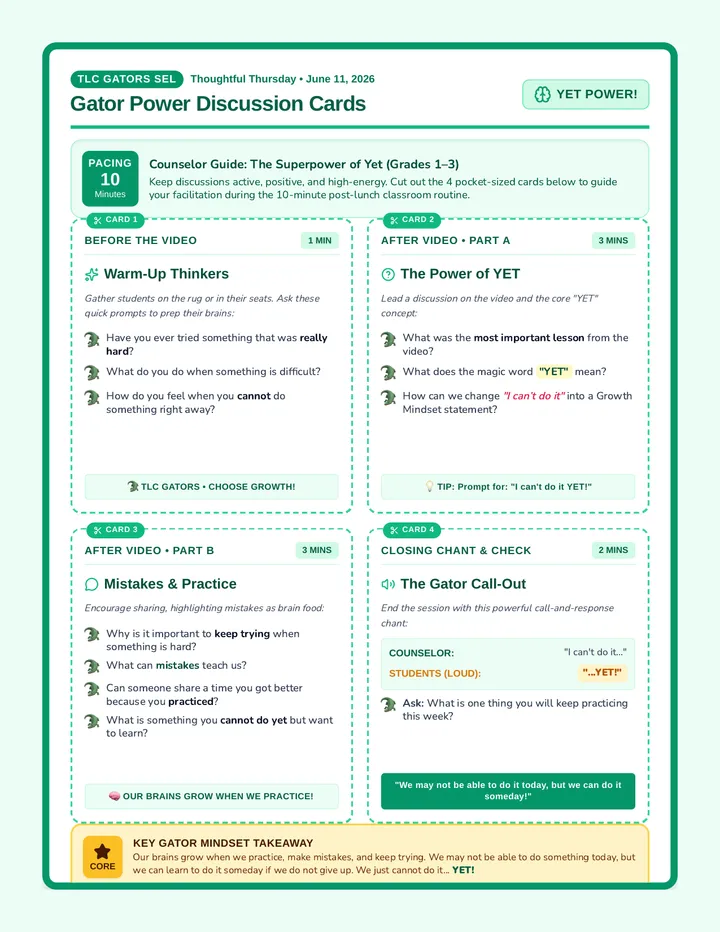
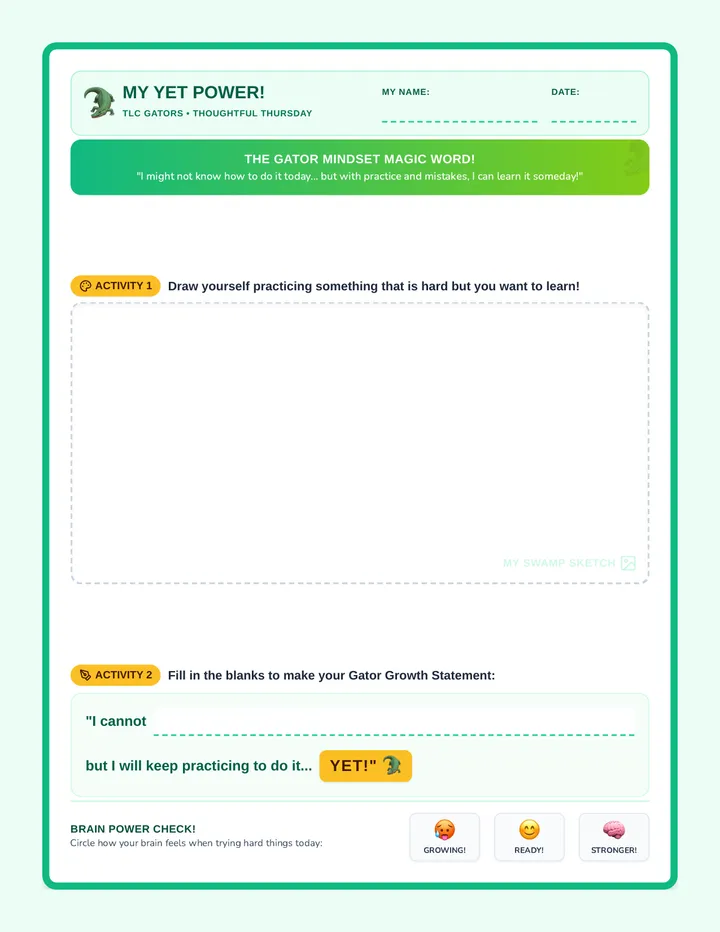
A highly interactive Lunch & Learn lesson for 1st-3rd graders focusing on growth mindset and 'The Power of Yet'. Includes a student worksheet, printable table discussion cards, a facilitator script, and a colorful classroom anchor chart.
A quick, high-impact SEL lesson designed for Grades 1–3 to introduce the concept of a growth mindset through the 'Superpower of Yet' using the TLC Gators school mascot.
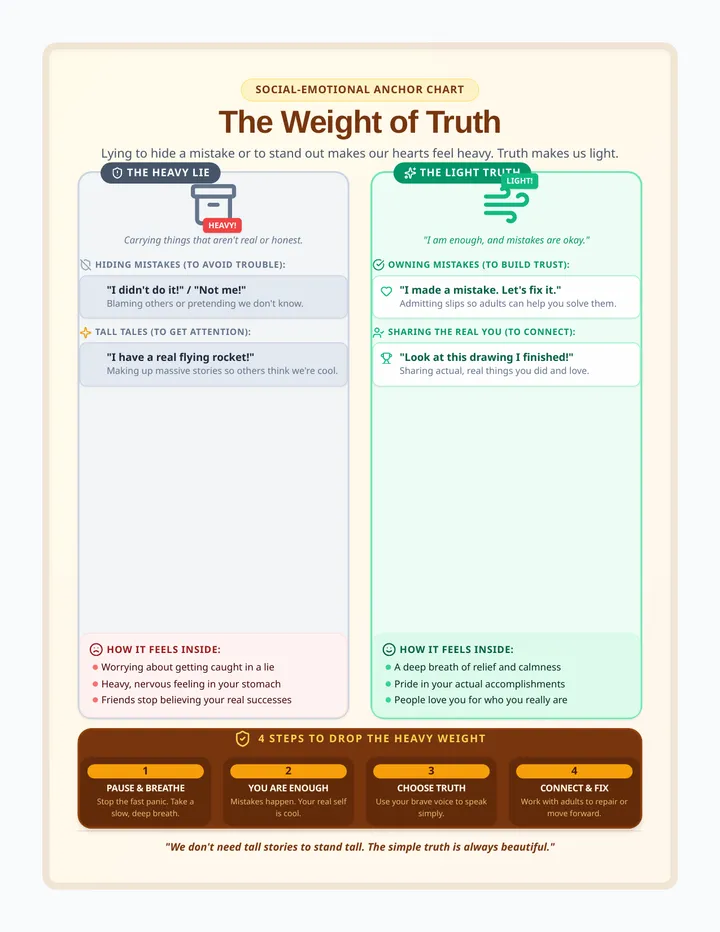
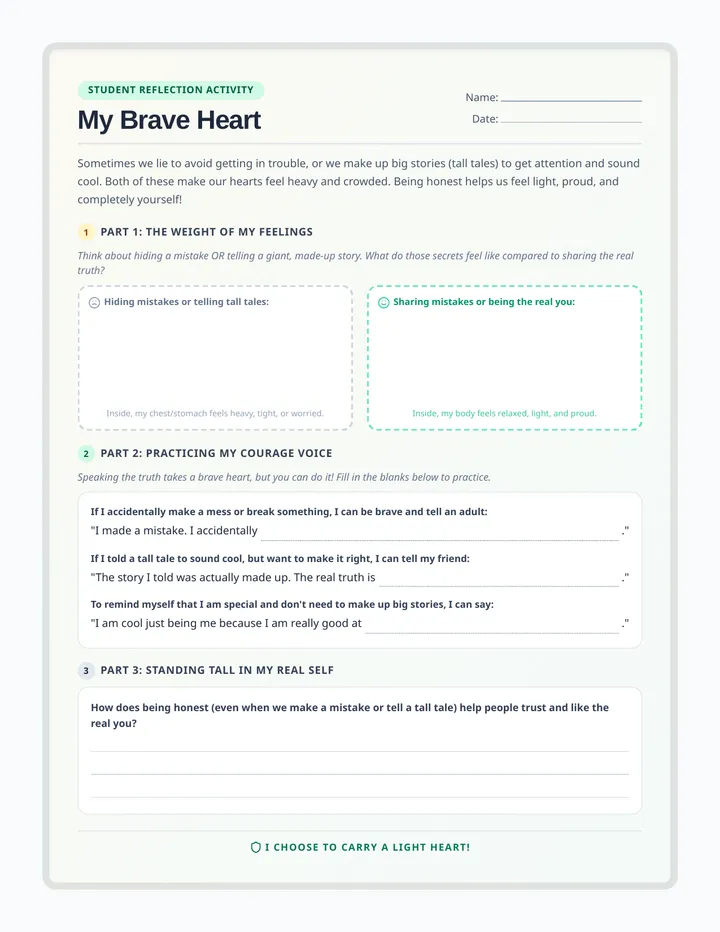
A 15-minute restorative social-emotional learning lesson for third graders struggling with lying to avoid consequences. It helps students understand that hiding mistakes with lies creates a heavy emotional burden, while speaking the truth—even when it requires great courage—brings relief, lightness, and restores trust.
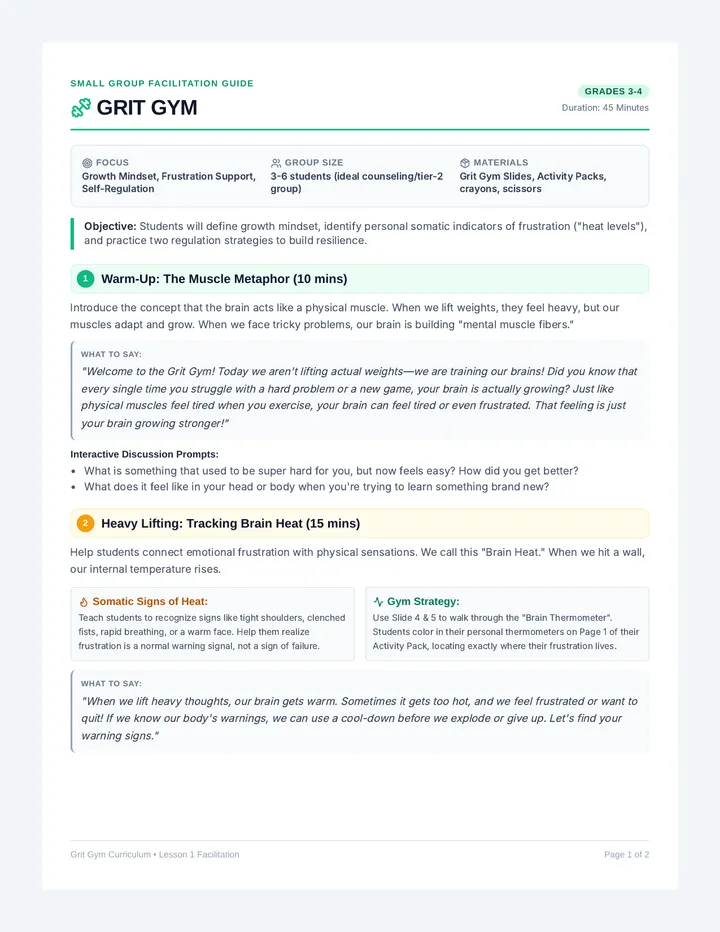
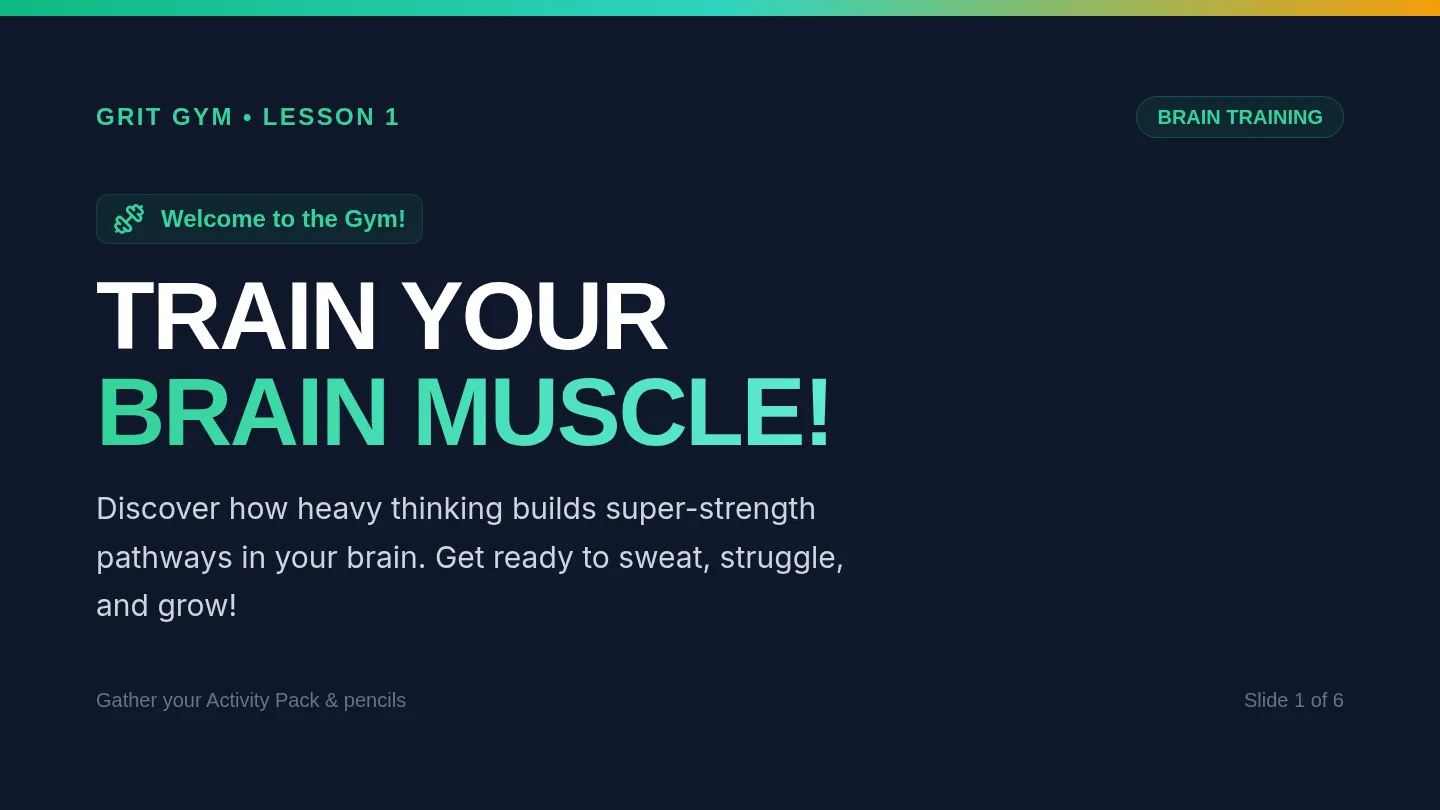
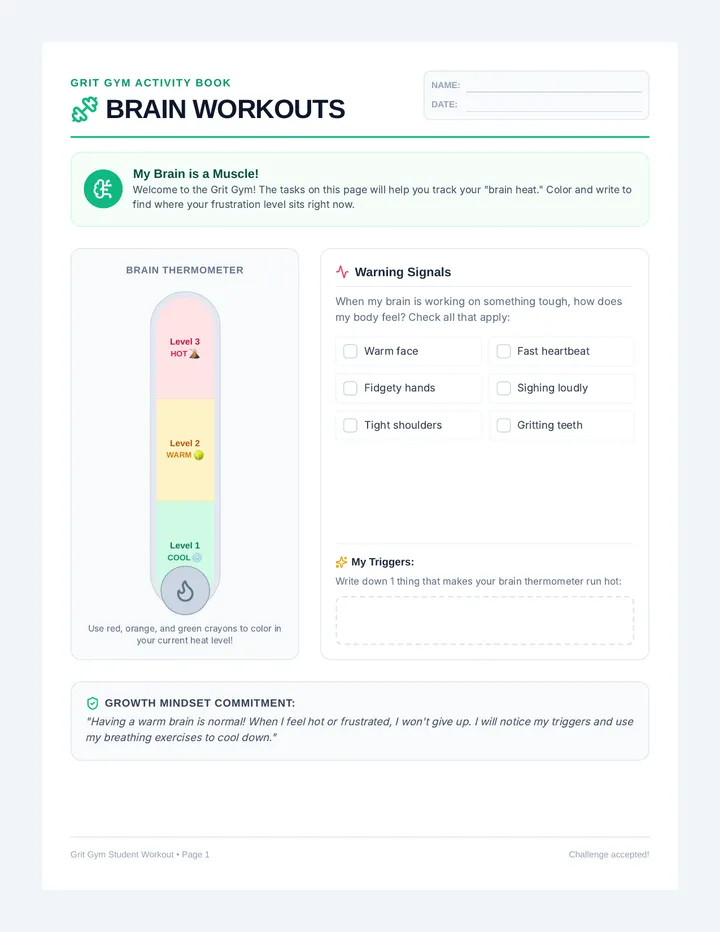
A growth mindset and emotional regulation lesson designed for 3rd and 4th-grade small groups. Students discover how the brain strengthens through challenge, identify their frustration 'heat level', and practice concrete self-regulation exercises like tactical breathing and constructive self-talk.
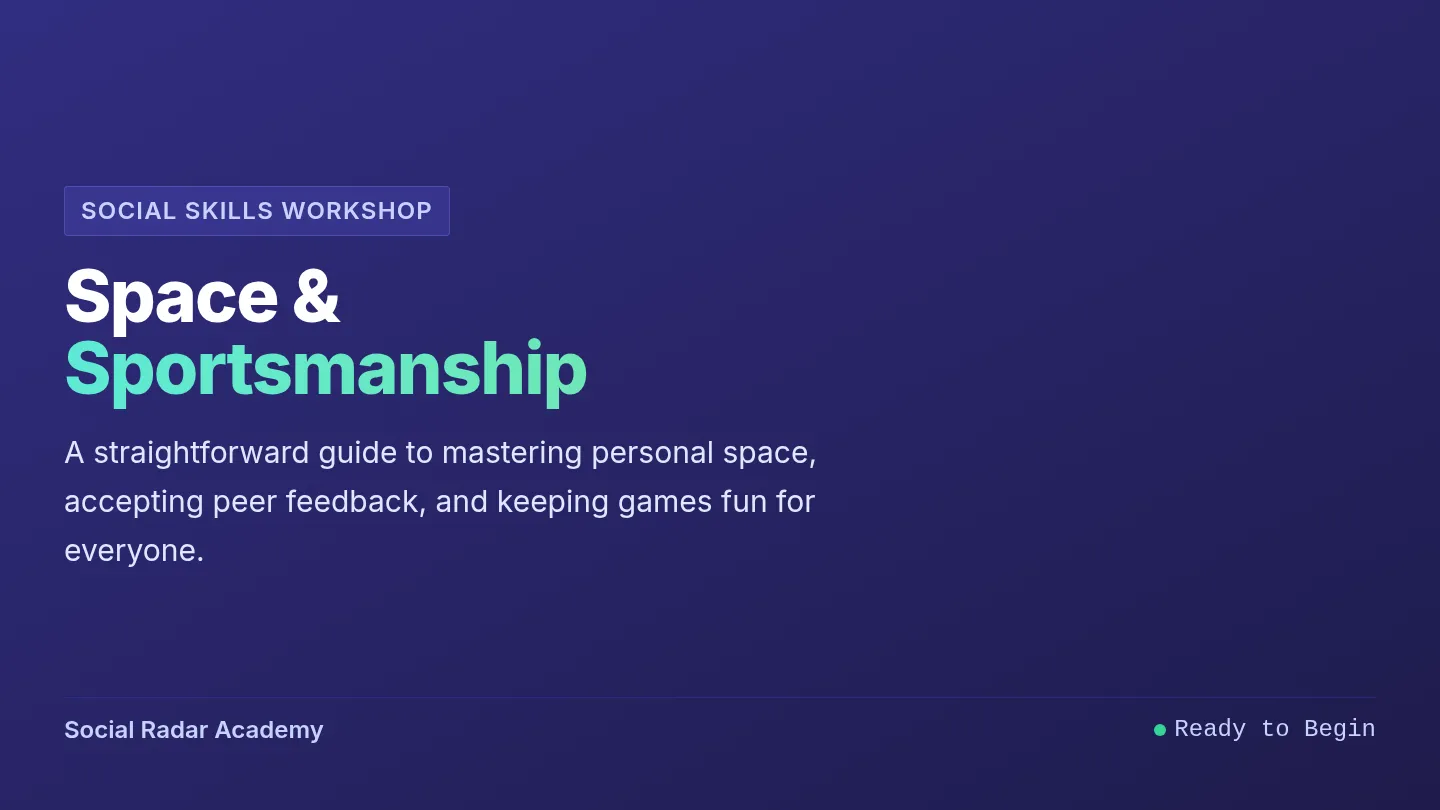
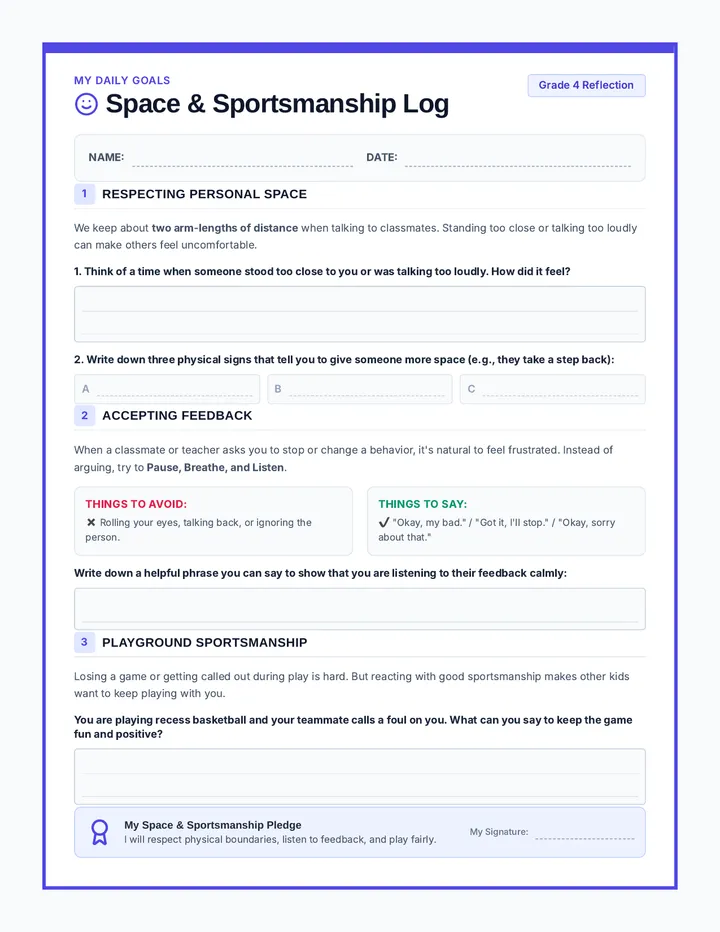
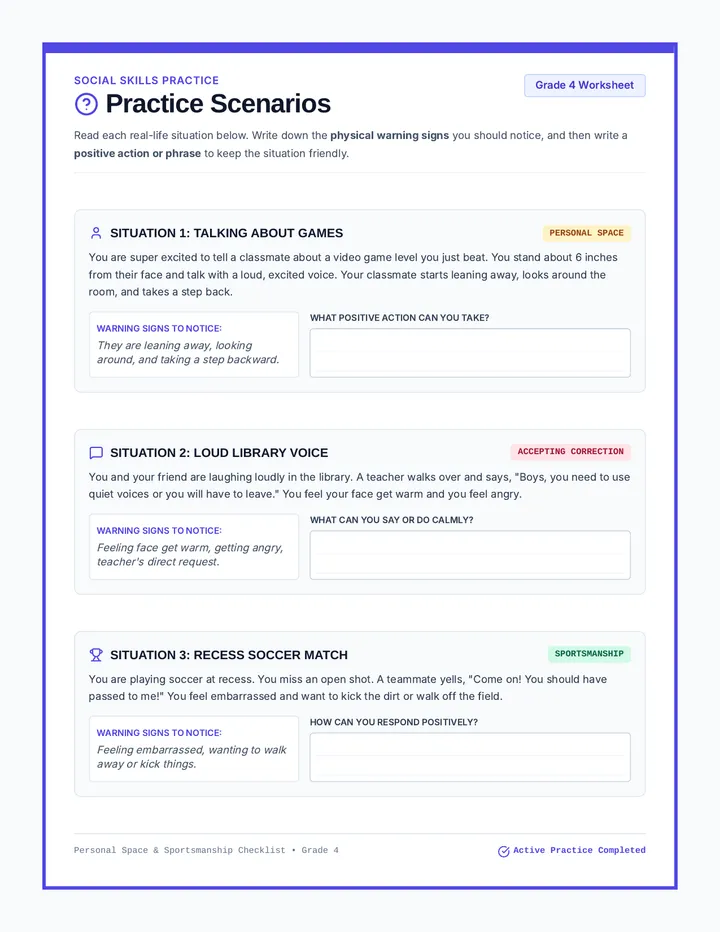
A game-themed social-emotional learning lesson for 4th-grade students to master conversational boundaries, accept feedback, and handle sportsmanship during play using the concept of a 'Social Radar'.
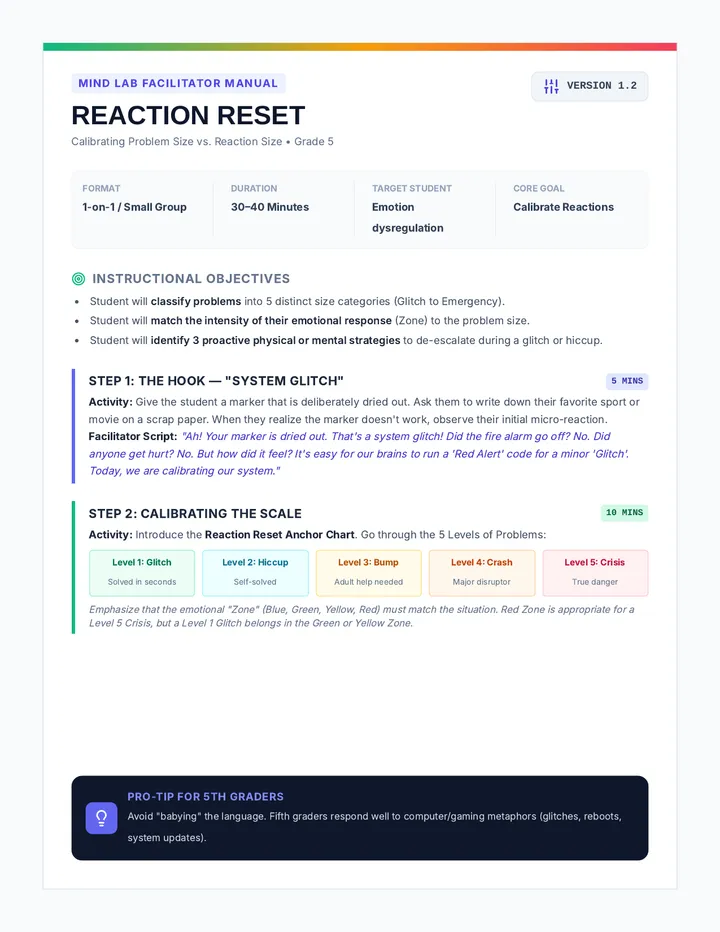
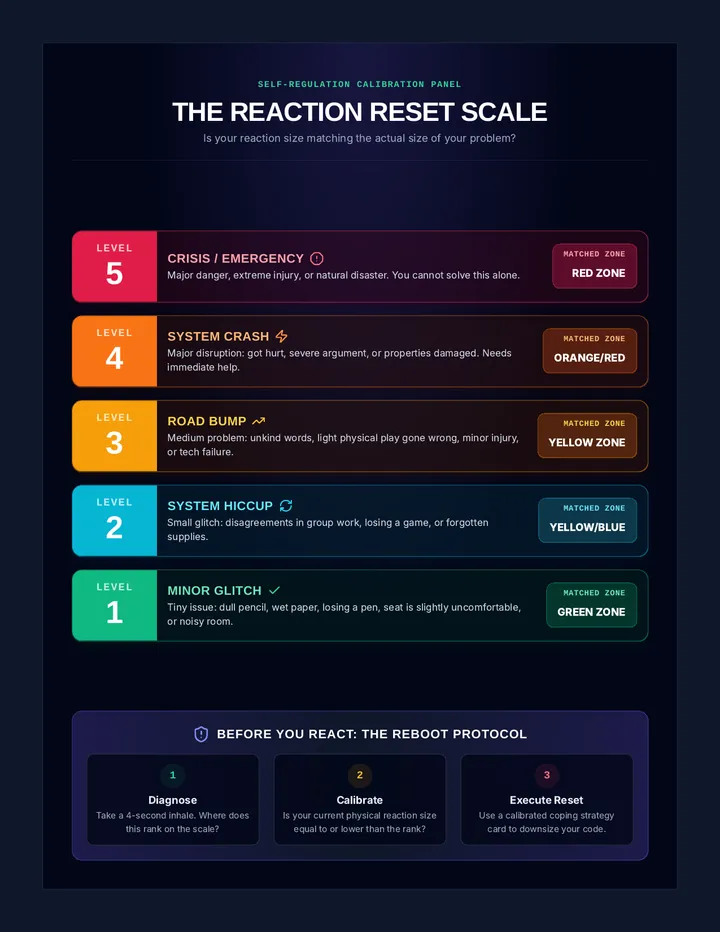
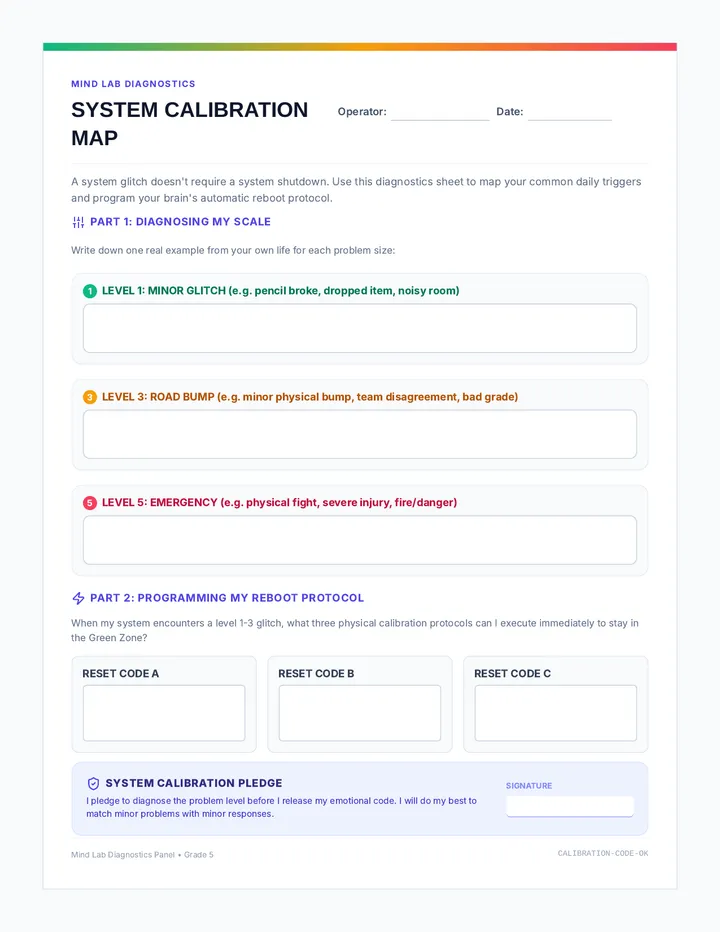
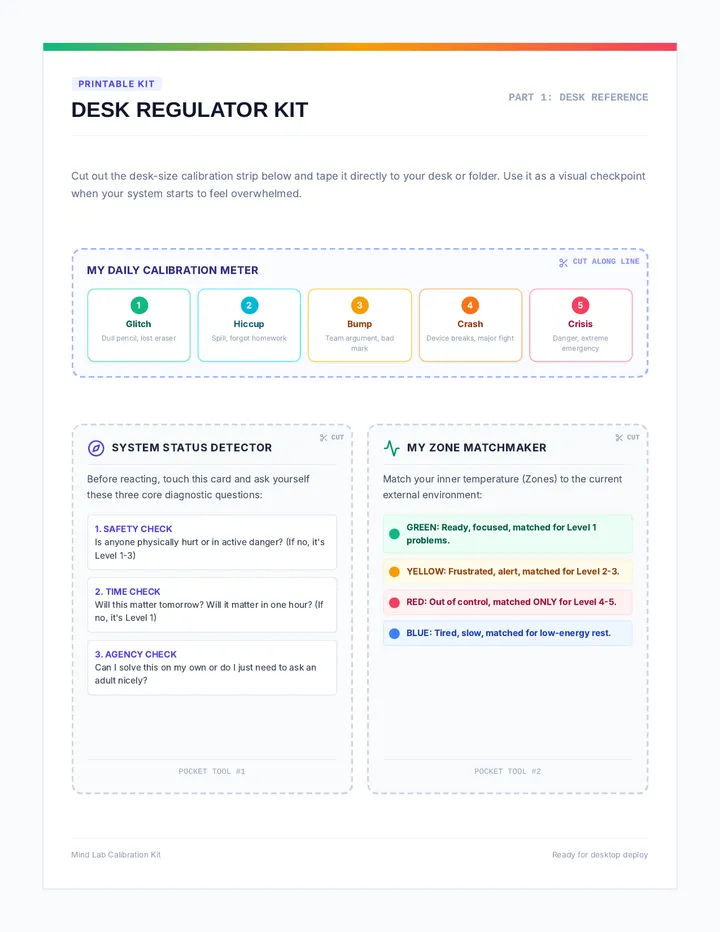
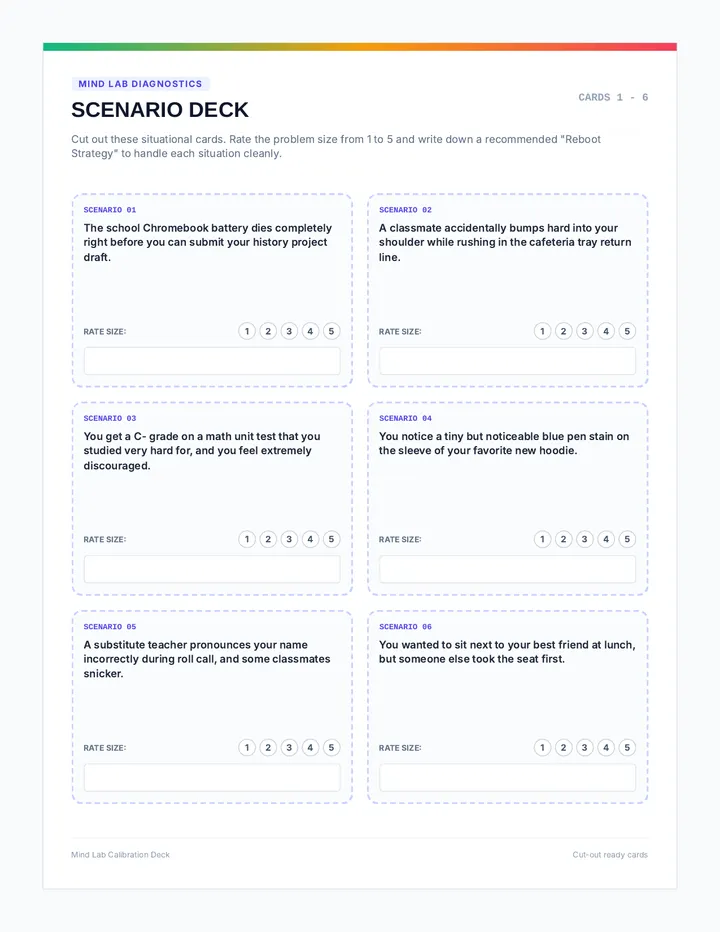
A comprehensive self-regulation lesson bundle designed for 5th graders to match the size of their reactions to the size of their problems, blending the 'Size of the Problem' scale with the 'Zones of Regulation' framework.
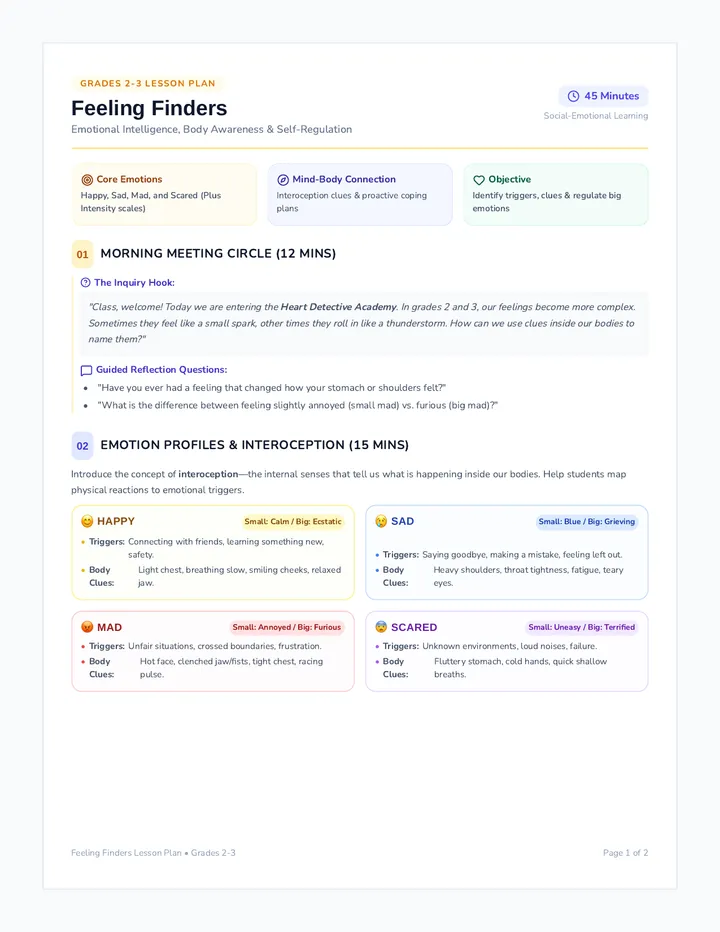
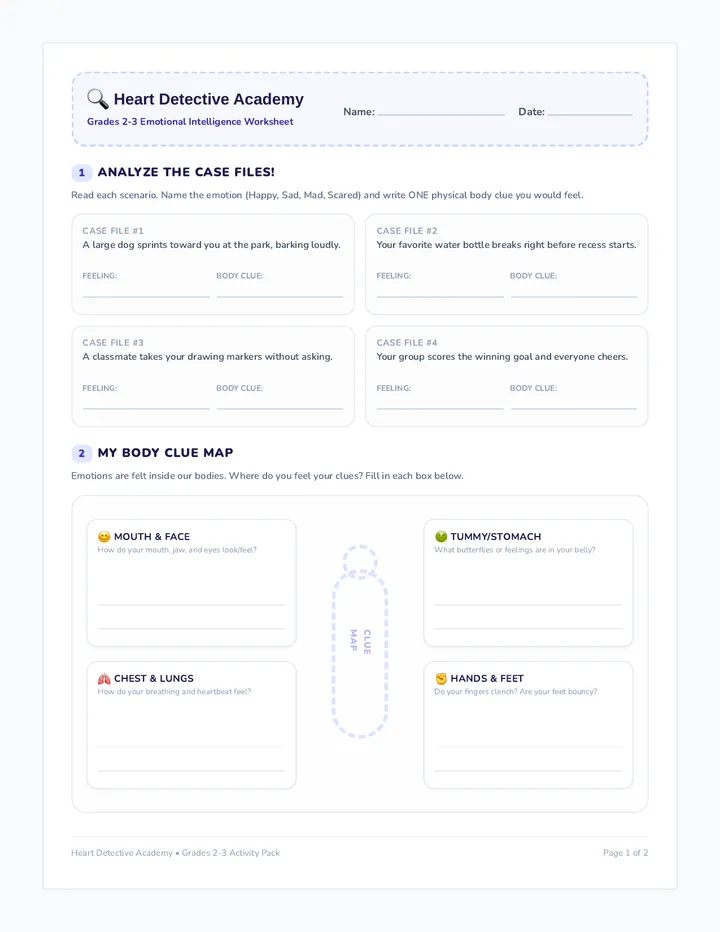
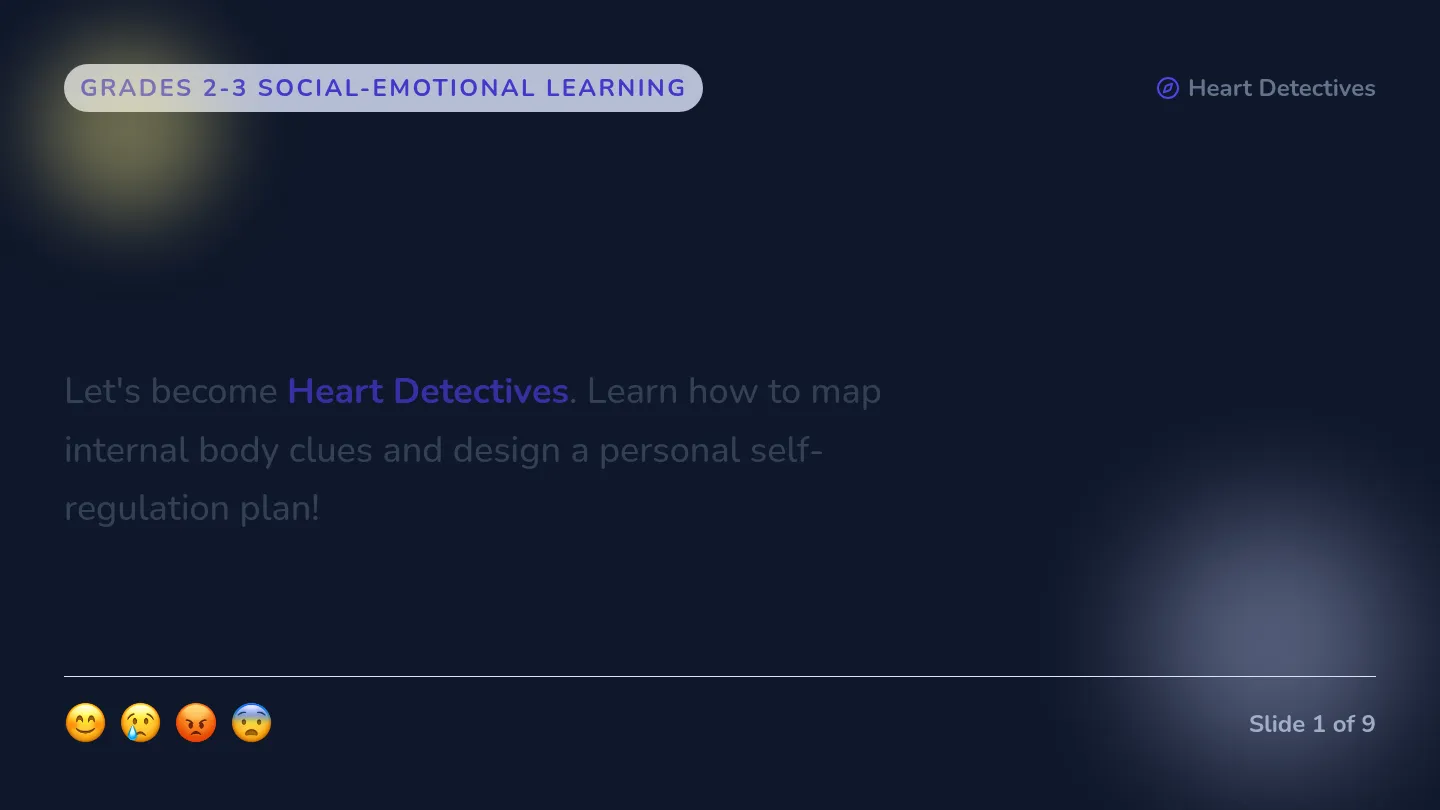
A nurturing and interactive social-emotional learning lesson for grades 2-3 designed to help students identify happy, sad, mad, and scared feelings. It focuses on physical body clues, facial expressions, and written reflection on coping strategies and self-regulation.