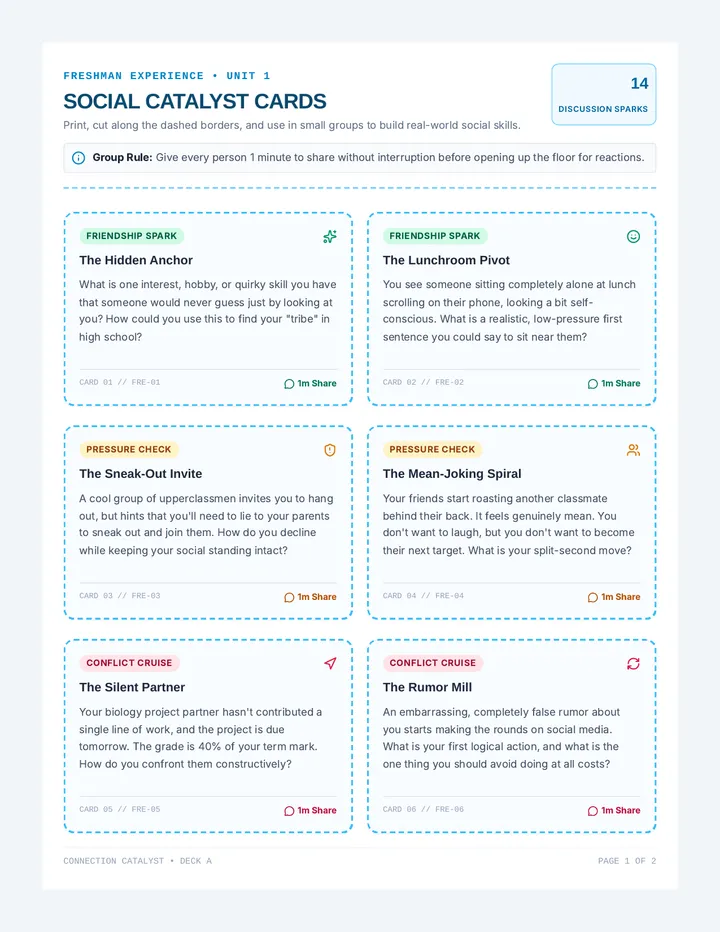
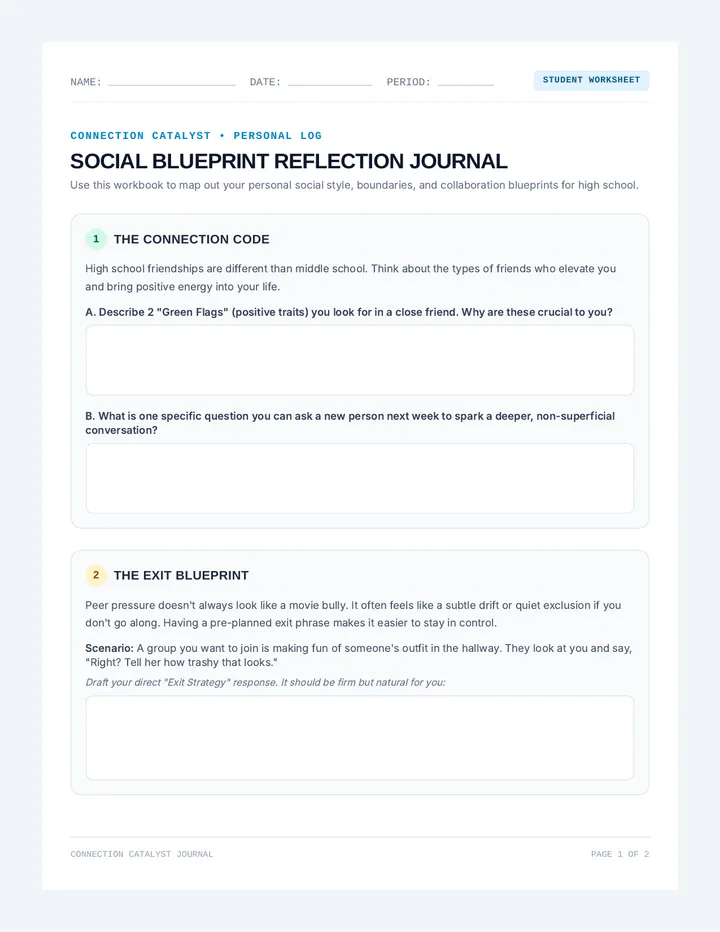
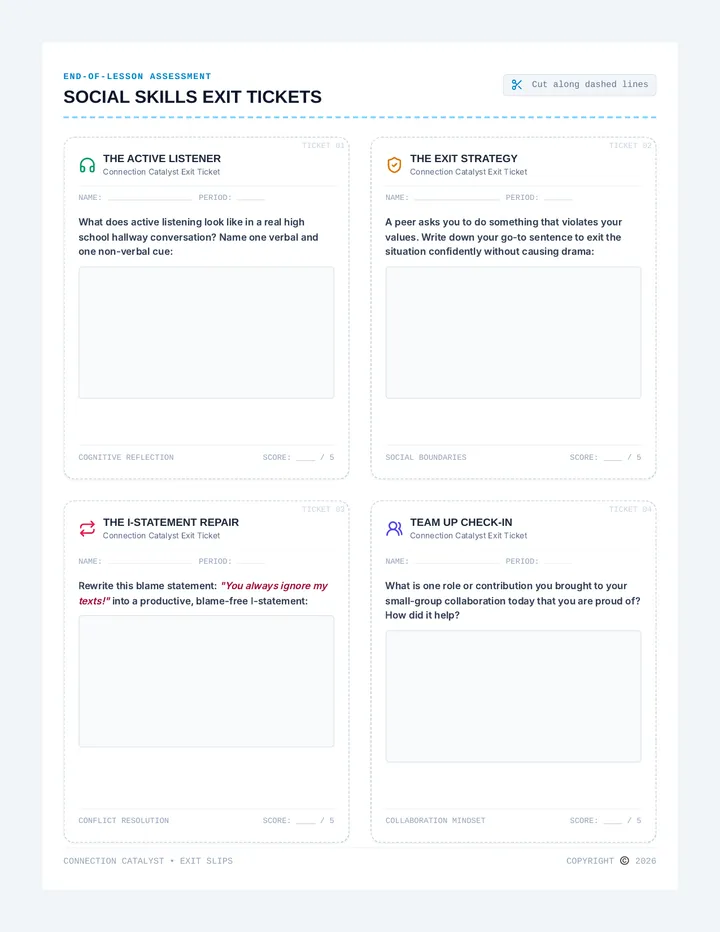
Students learn to categorize tasks using the Eisenhower Matrix to distinguish between what is truly important and what is merely urgent.
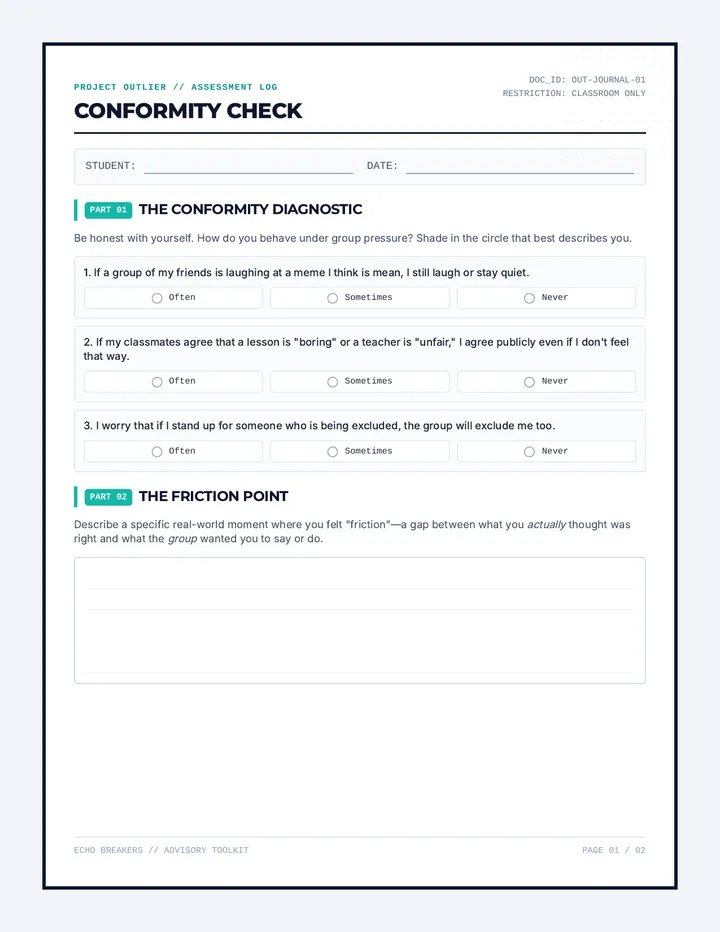
A 45-minute independent lesson for 8th graders focusing on the neurobiology of impulse control, identifying peer pressure tactics, and applying the 'Remote Control' strategy through a structured reflection paper.
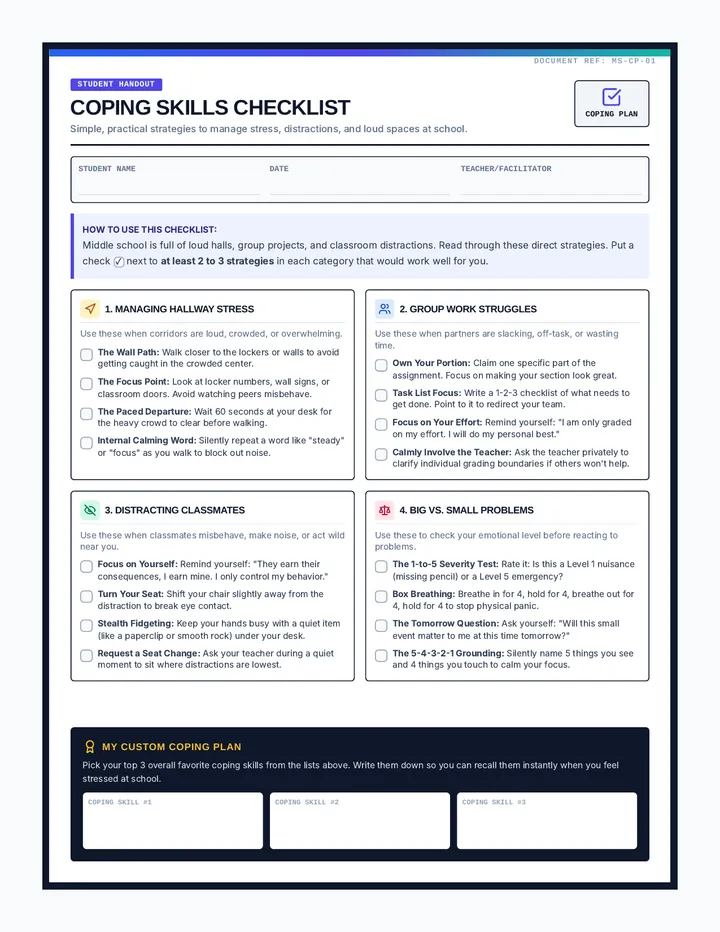
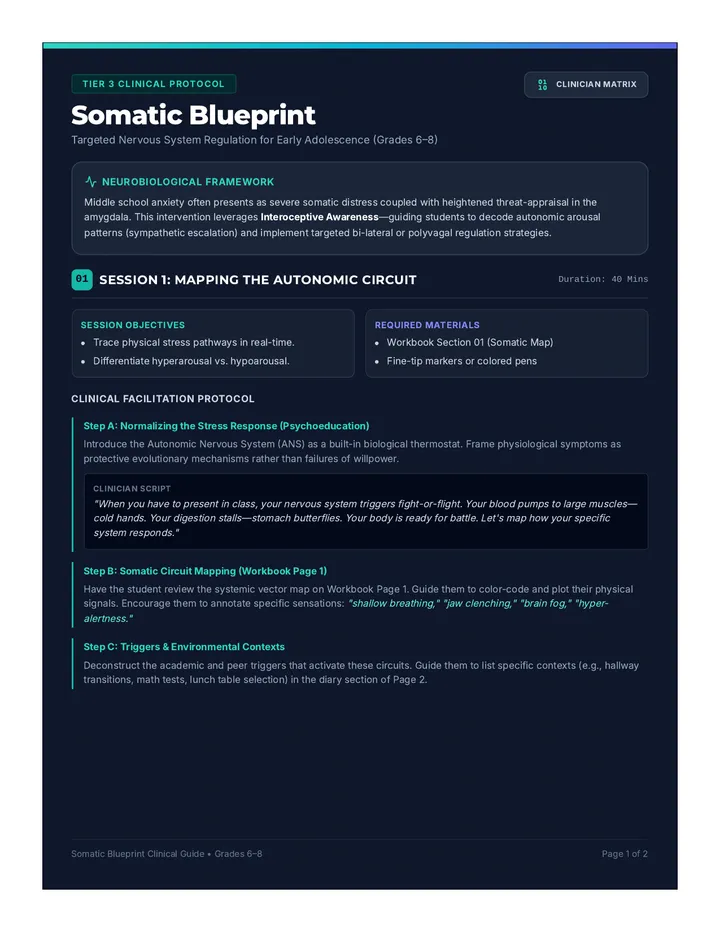
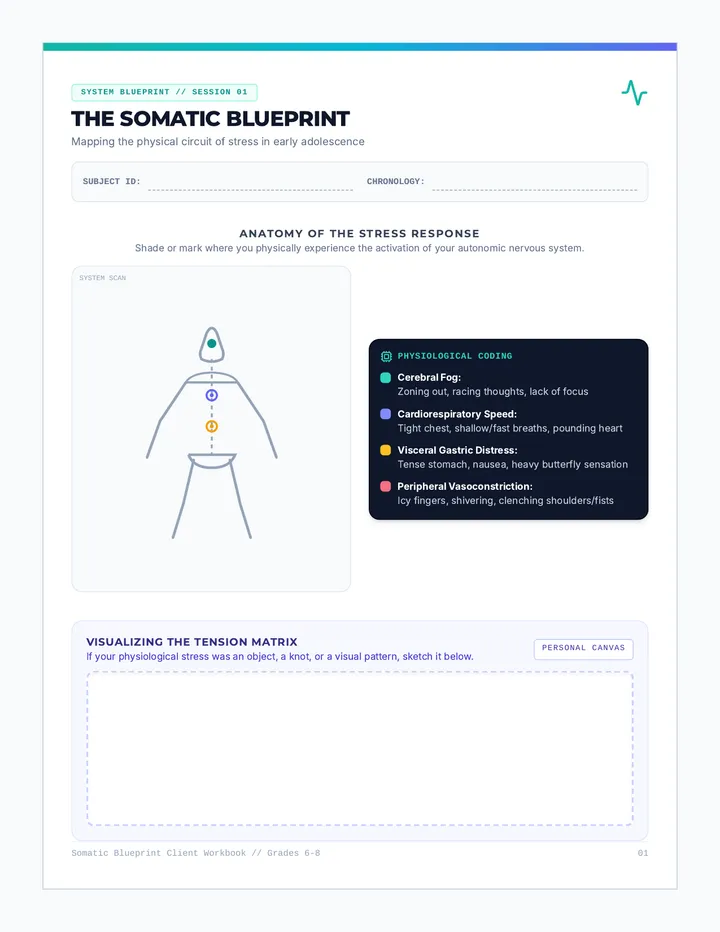
A lesson designed to help students understand the mechanics of anxiety, identify their own triggers, and build a practical toolkit for managing stress in a school environment.
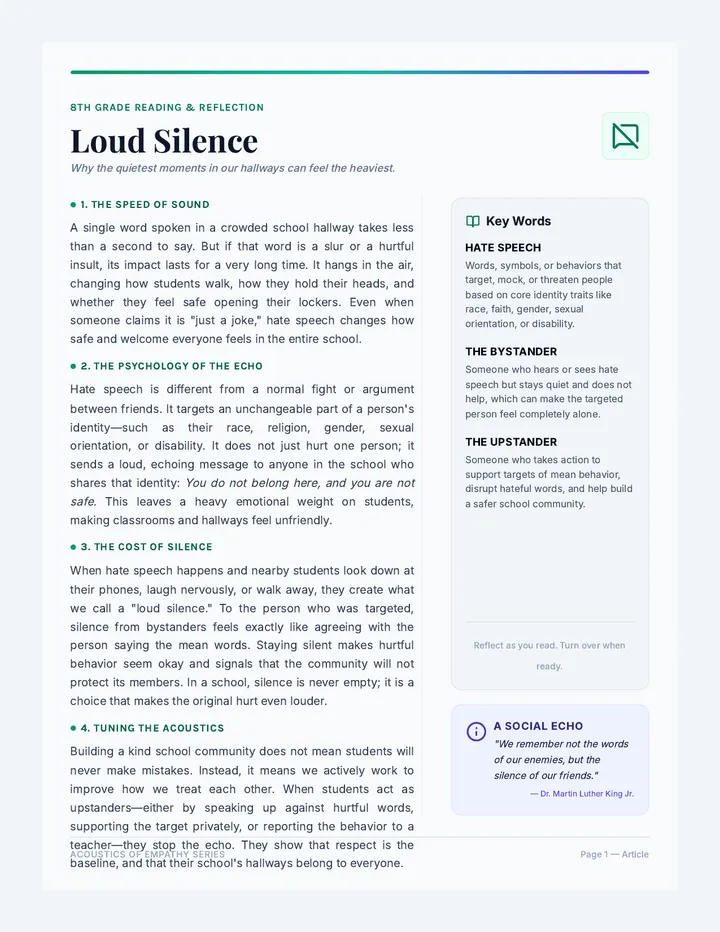
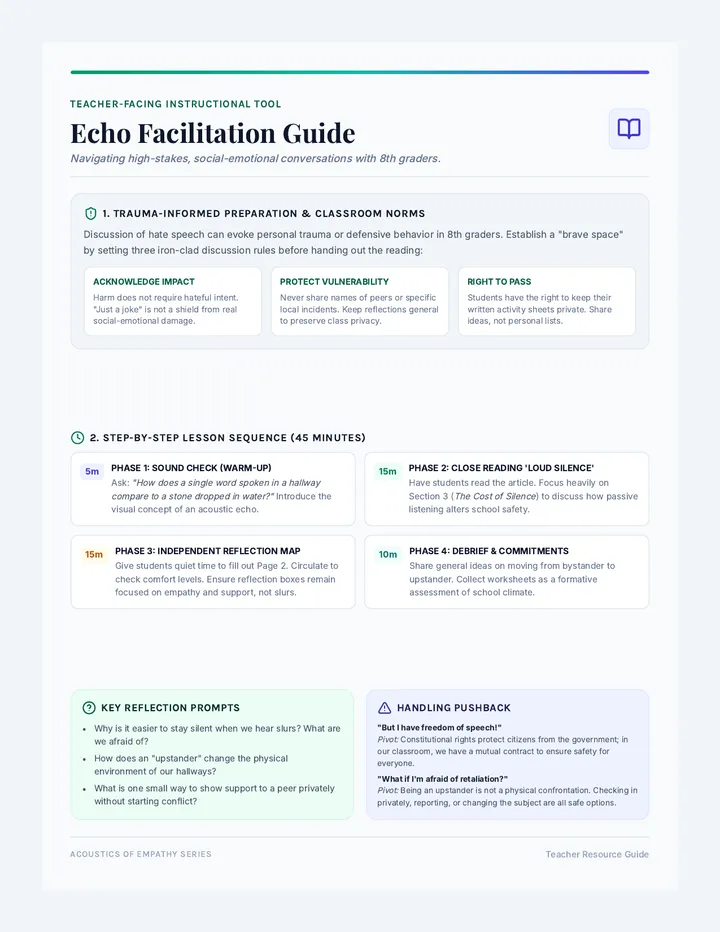
Explores the serious nature of race-based teasing and microaggressions, concluding with a personal commitment to restorative action and intervention.
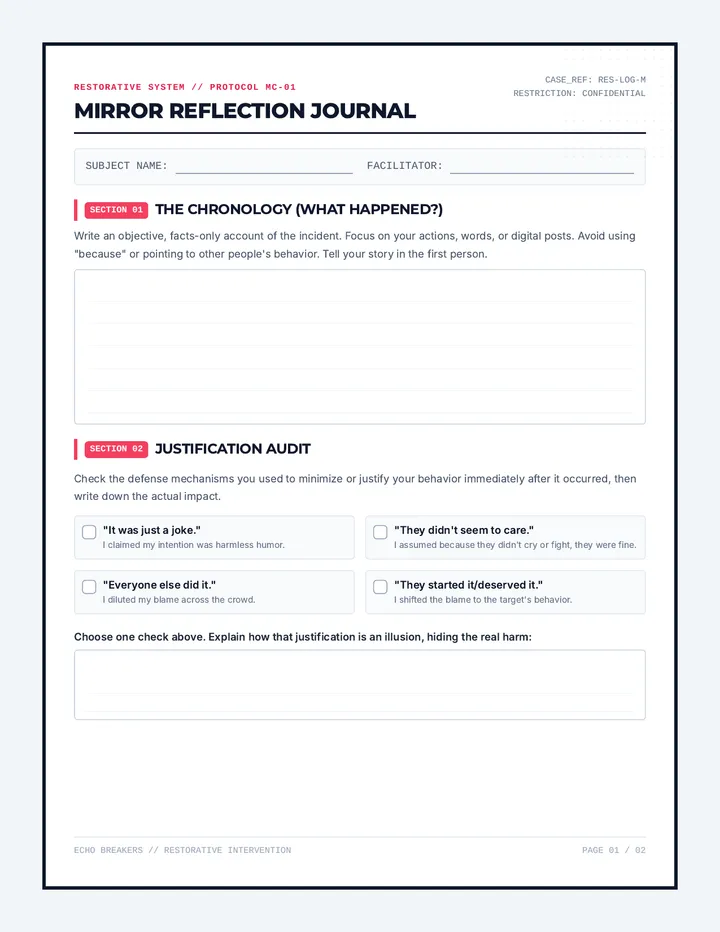
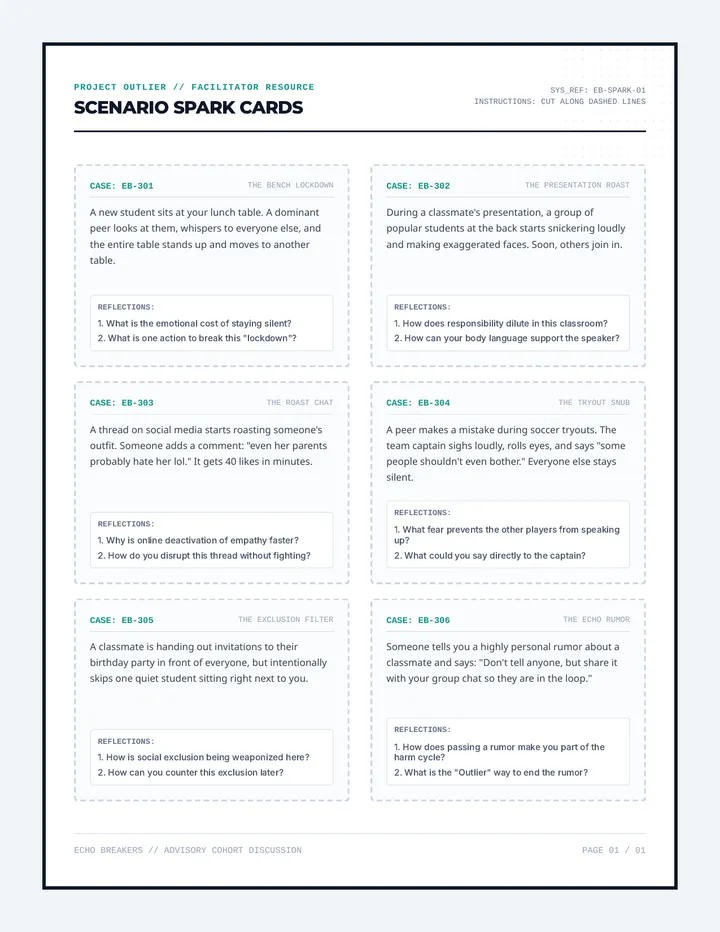
Focuses on the impact of appearance-based teasing, exploring the difference between intent and impact through case studies and empathy mapping.
Focuses on celebrating progress, recognizing growth in confidence, and establishing long-term self-support habits.
Focuses on identifying negative thought patterns and actively reframing them with positive, evidence-based self-talk.
Focuses on breaking down overwhelming tasks into manageable steps and using self-talk to navigate "stuck" moments.
Focuses on identifying current emotional states and introducing the concept of positive affirmations to build a foundation for self-regulation.
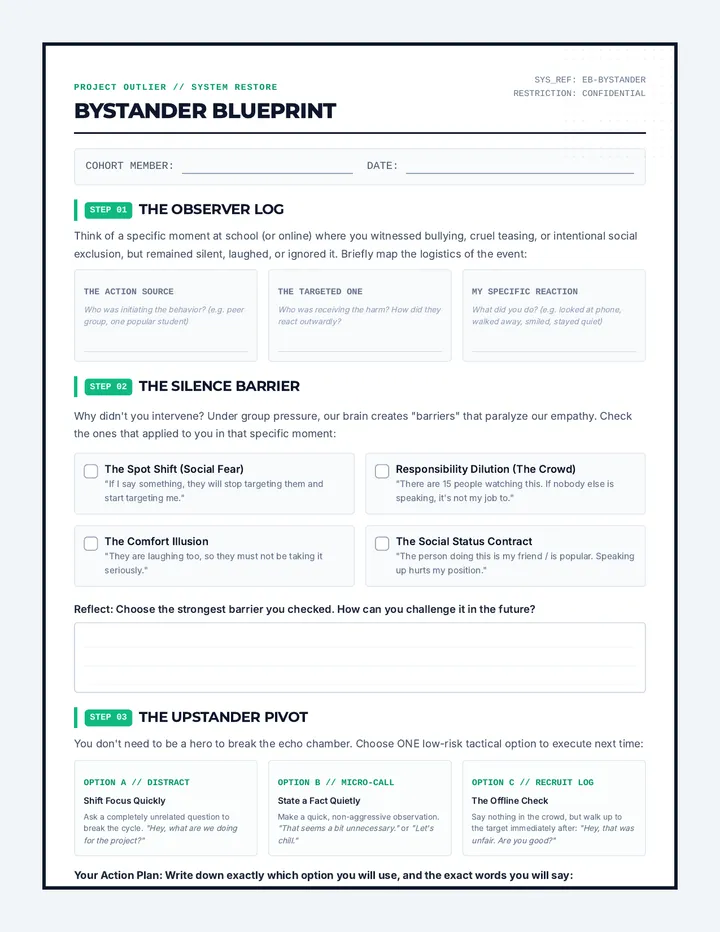
A 45-minute lesson designed for middle schoolers to navigate the social complexities of group chats, focusing on digital empathy, tone interpretation, and being a supportive 'upstander' in digital spaces.