This lesson helps students navigate social rejection by teaching them how to calmly handle a friend saying 'no' and successfully finding a new person or group to play with.
A comprehensive restorative justice toolkit focused on honesty and integrity for middle schoolers, featuring circle scripts, reflection sheets, and trust-rebuilding plans.
Students learn to regulate high-energy enthusiasm and practice inclusive play. This lesson introduces the 'Sunshine Scale' for self-monitoring intensity and the 'Open Gate' concept to encourage group play rather than exclusive pairs.
A 30-minute lesson for 2nd and 3rd graders focused on identifying big feelings (anxiety, sadness, anger) and practicing specific coping strategies through a collaborative small-group game.
This lesson introduces grades 4-5 students to body positivity and neutrality, focusing on celebrating diversity and providing strategies to combat body-based bullying. Students will learn to appreciate their bodies for what they can do and practice being 'Upstanders' in social situations.
A clean and direct lesson designed to help 5th graders master self-advocacy through 'I' statements. Students learn confidence-building strategies and practice real-world communication in a clear, supportive environment.
A social-emotional learning lesson focused on body neutrality, self-acceptance, and celebrating diversity using Tyler Feder's book "Bodies Are Cool." Students reflect on what makes their own bodies unique and functional.
A 1st-grade lesson on self-esteem and inner beauty inspired by the book 'Stand Tall, Molly Lou Melon.' Students explore positive character traits and create a hands-on 'Inner Beauty Bloom' craft to celebrate their unique qualities.
A hands-on introduction to basic budgeting and grocery shopping. Students practice identifying prices, comparing costs, and making simple purchasing decisions using dollars and cents with high visual support.
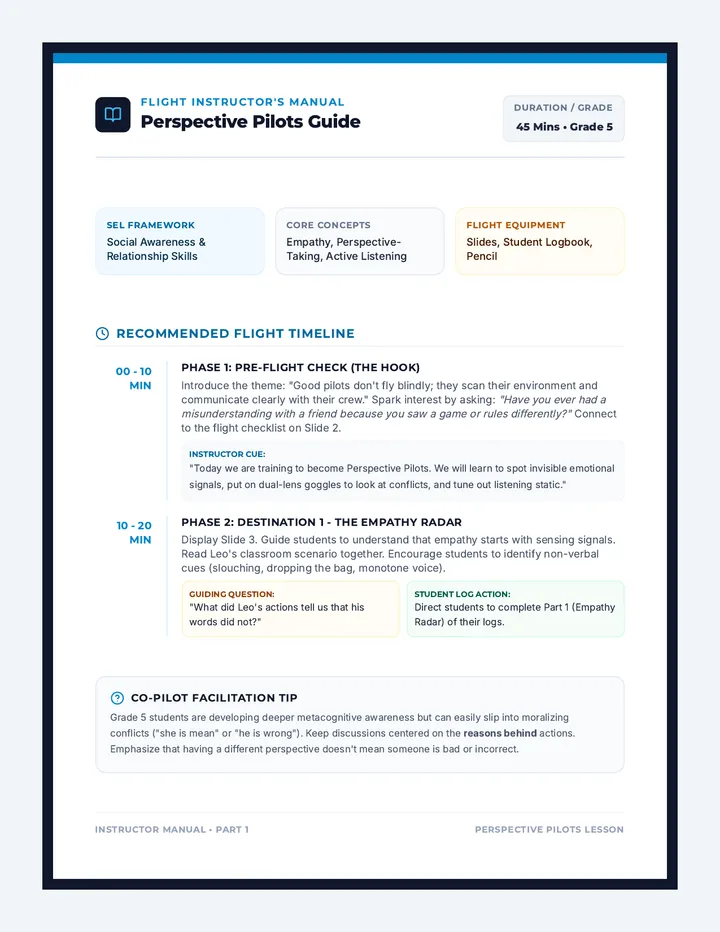
A 30-minute SEL lesson for 3rd-5th graders focusing on the power of perspective-taking and empathy through the metaphor of walking in someone else's shoes. Students explore how different experiences shape how we see the world.