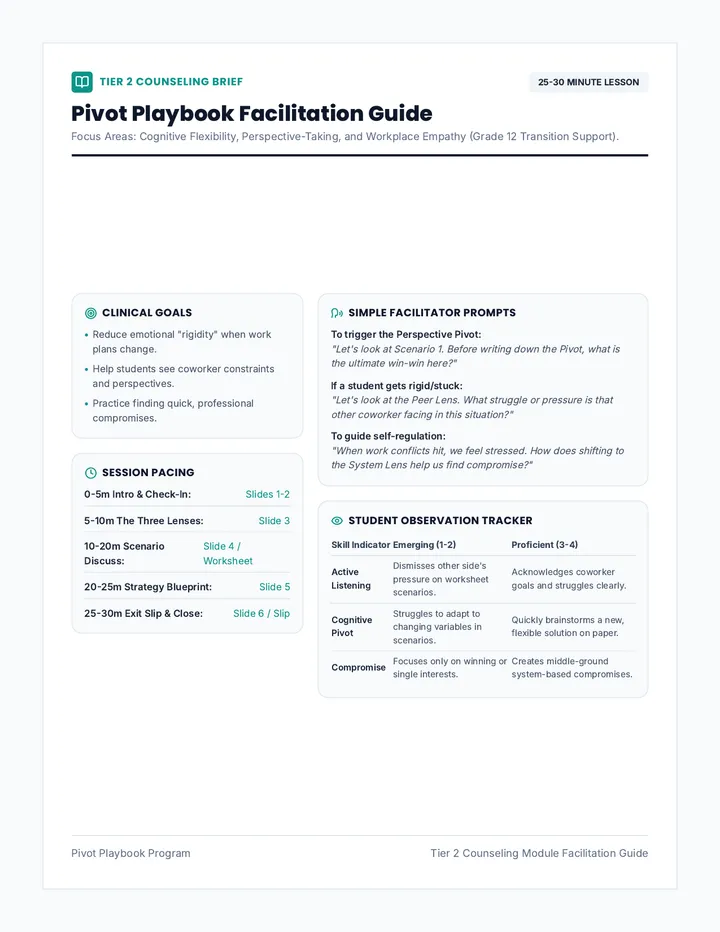
Synthesizing their understanding of psychology and values, students create a personal manifesto outlining their non-negotiables and the psychological reminders they will use to stay strong.
A small group social-emotional learning lesson focused on identifying and applying coping skills to common school-based stressors. Kindergarteners will practice choosing between breathing, asking for help, taking a break, and accepting "no".
An analysis of the financial decisions made in the film Goodfellas, focusing on high-risk income, the "bust-out" business model, and the long-term costs of illicit wealth.
Students master the technical side of search, from basic search engine mechanics to advanced database filters and professional inquiry tools.
Focuses on the art of inquiry, teaching students how to transform broad interests into specific research questions and effective search keywords.
Students explore the modern information landscape, learning to distinguish between library resources, databases, and the open web across various academic levels.
Analyze workplace culture, professional communication, and business ethics through the lens of the high-stakes fashion industry in 'The Devil Wears Prada'. Students will explore how technology facilitates modern business and the ethical dilemmas of rapid-fire corporate environments.
Students learn the importance of professional document formatting and hierarchy, setting up a formal business proposal template with structured headings and standardized typography.
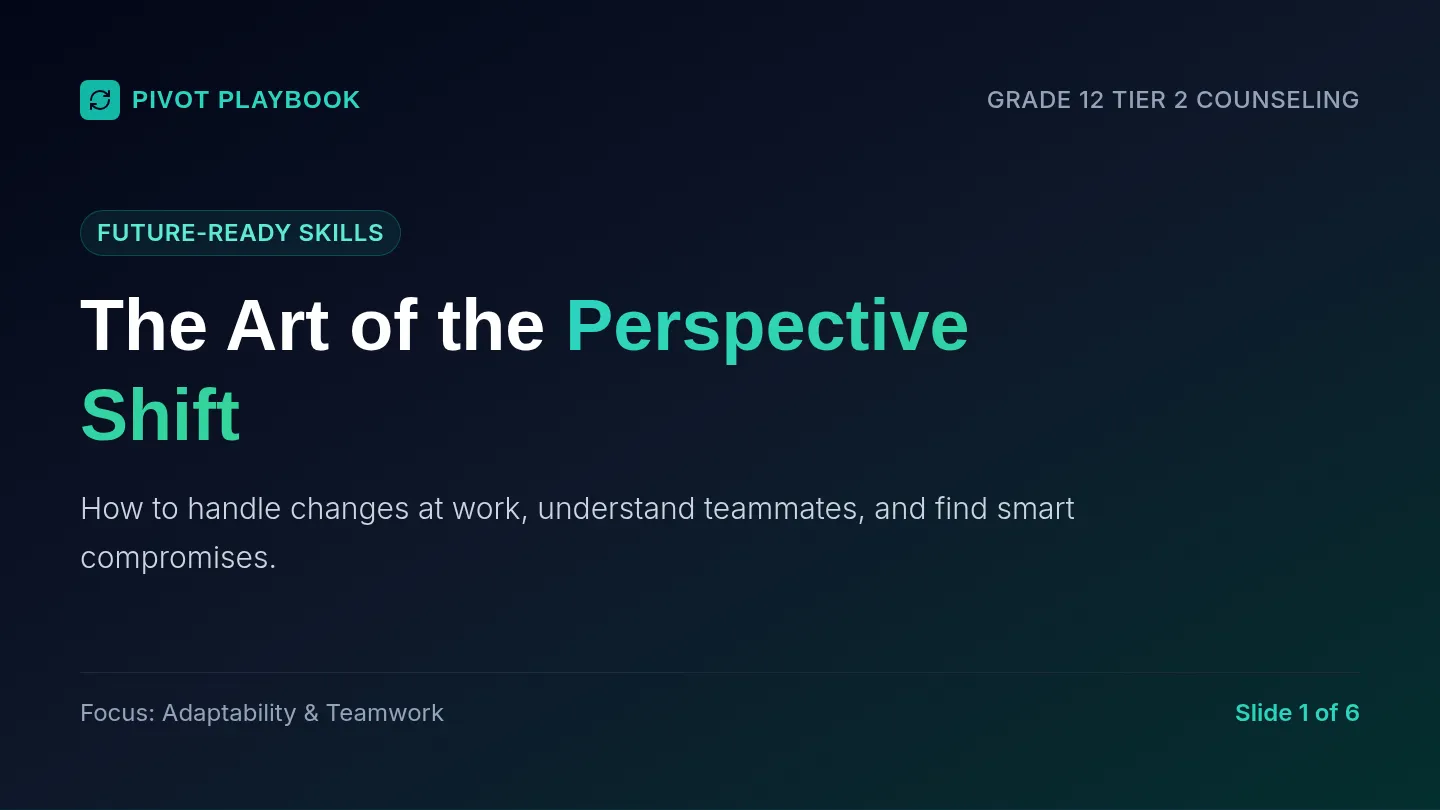
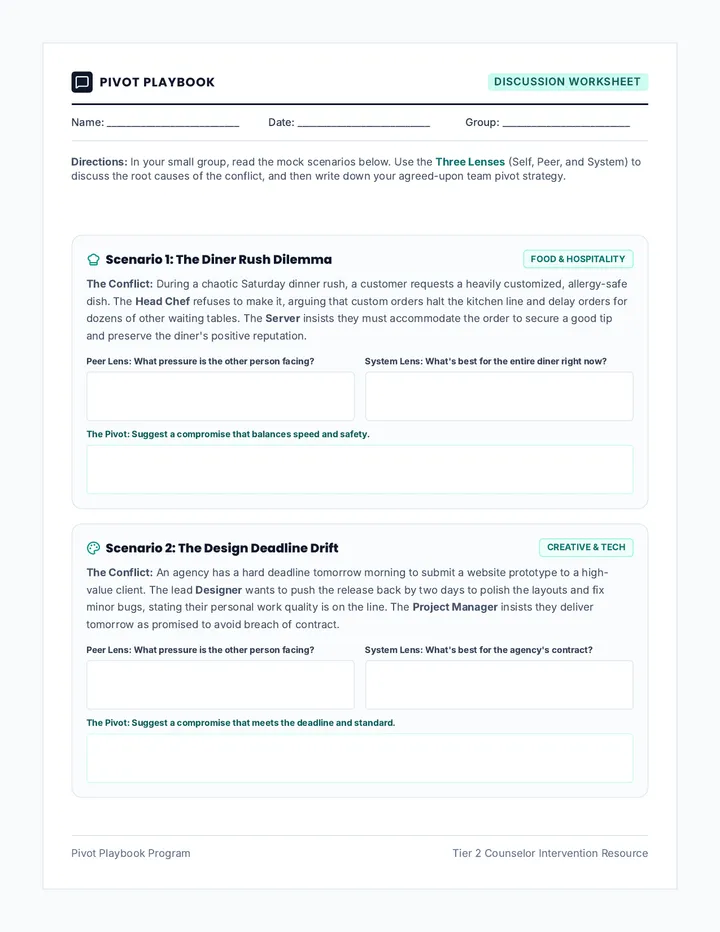
Students conduct a market research sprint, interviewing classmates to validate their product ideas and learning to 'pivot' based on real user feedback and data synthesis.
Students learn the difference between leading and open-ended questions, developing a research table and interview script to gather unbiased feedback from potential customers.
Students explore the concepts of target markets and customer empathy, moving from personal preferences to identifying specific user needs and mapping out a "Day in the Life" for their ideal customer.
A gentle lesson for Kindergarteners focusing on personal space, body boundaries, and appropriate ways to show affection to friends.
Students explore the fundamental economic concepts of scarcity and opportunity cost, applying them to product development by making difficult trade-offs between competing features within a limited resource budget.
Students learn to identify consumer "pain points" as opportunities for innovation, moving from recognizing everyday frustrations to conceptualizing business solutions.
A high-energy, supportive lesson for Pre-K students focused on developing a growth mindset and perseverance through interactive games and positive self-talk modeling.