A 45-minute STEAM lesson for 4th-6th graders that uses puzzles and challenges to teach the value of persistence and learning from failure.
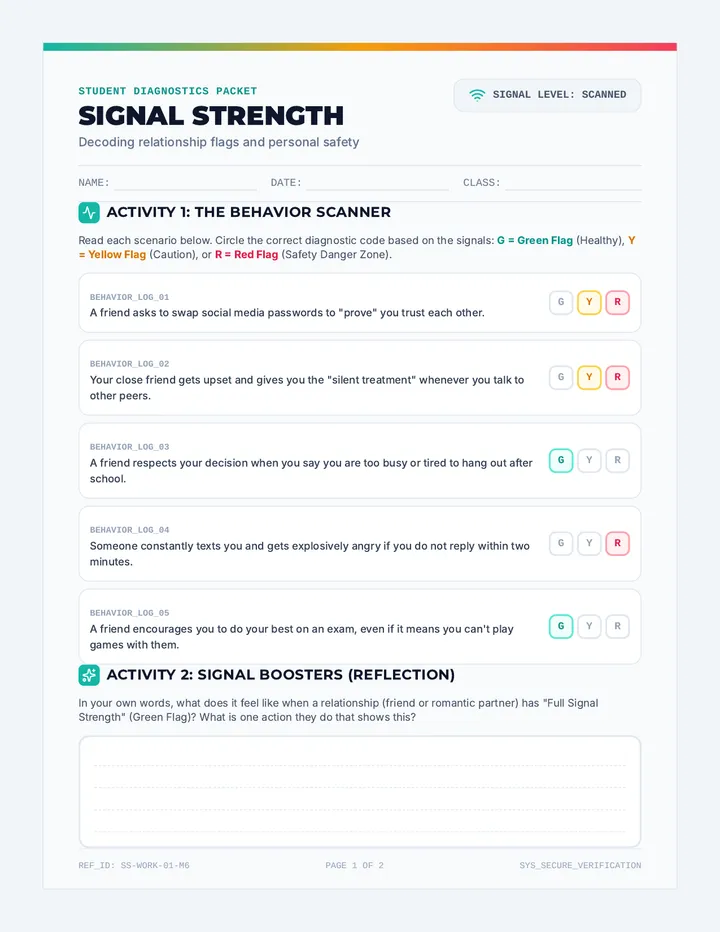
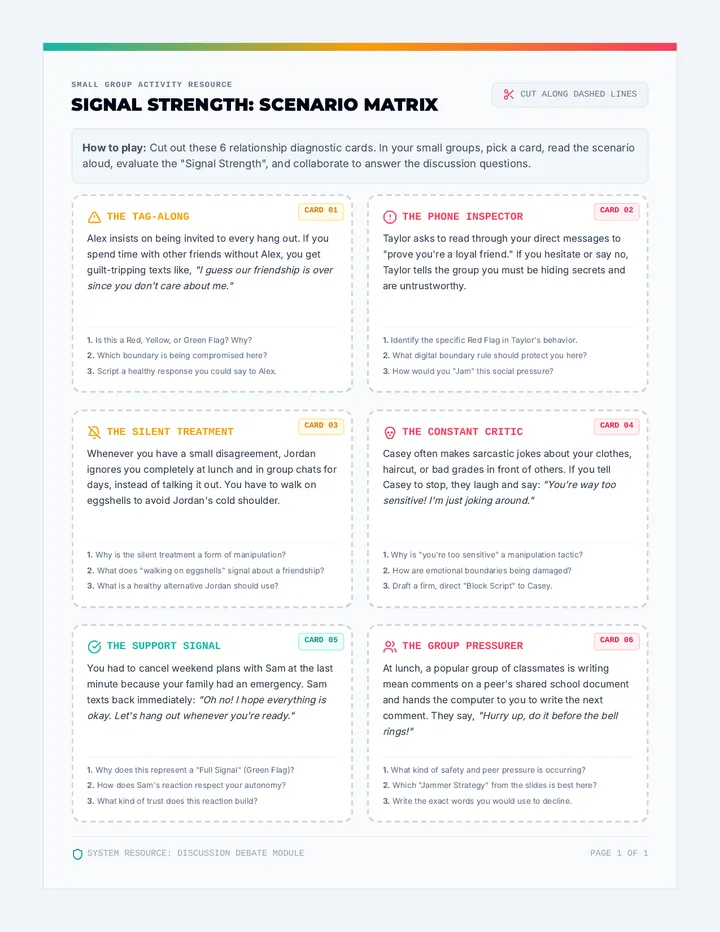
A middle school counseling lesson on healthy relationships and personal safety. Students learn to decode relationship signals, identify red and yellow flags, map their personal boundaries, and practice navigating peer pressure through interactive discussions and guided reflections.
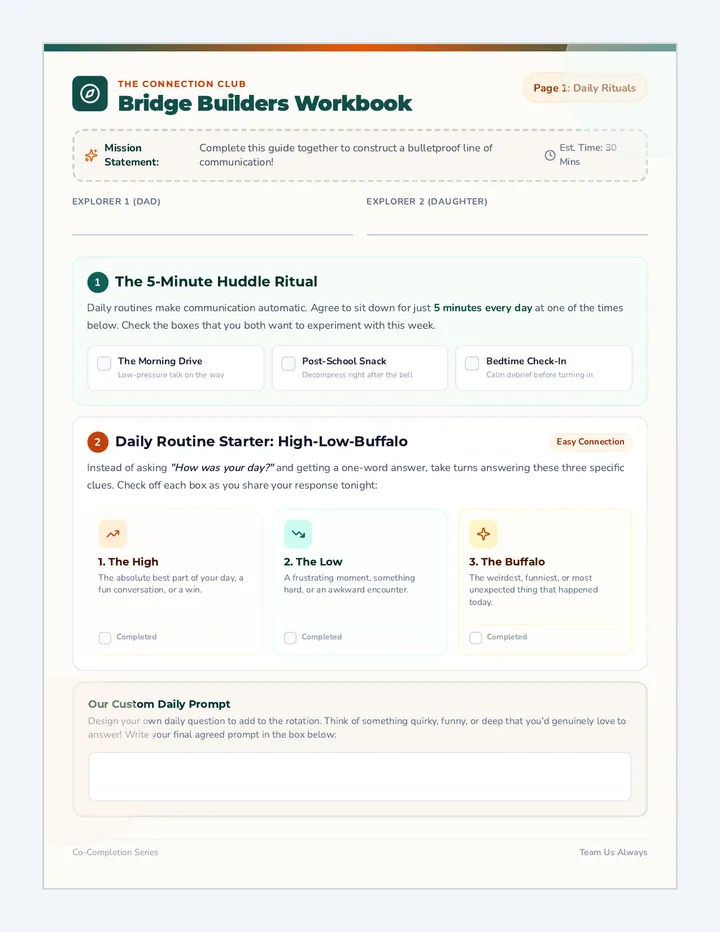
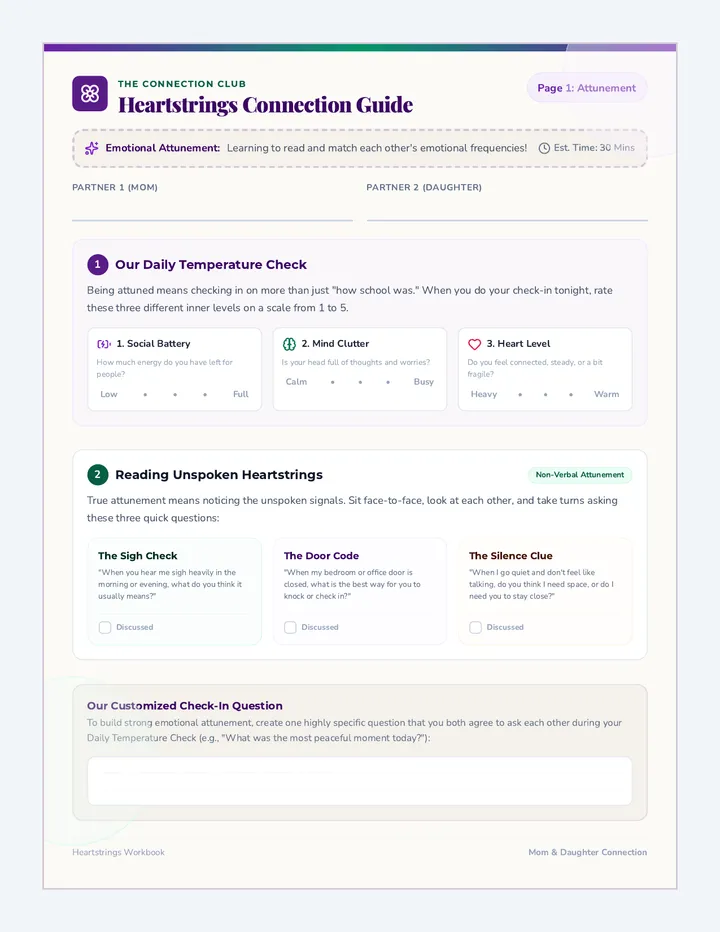
A high-quality co-completion toolkit for parents and 11-year-old pre-teens. Focuses on active listening, emotional attunement, conflict de-escalation, and establishing daily connection rituals.
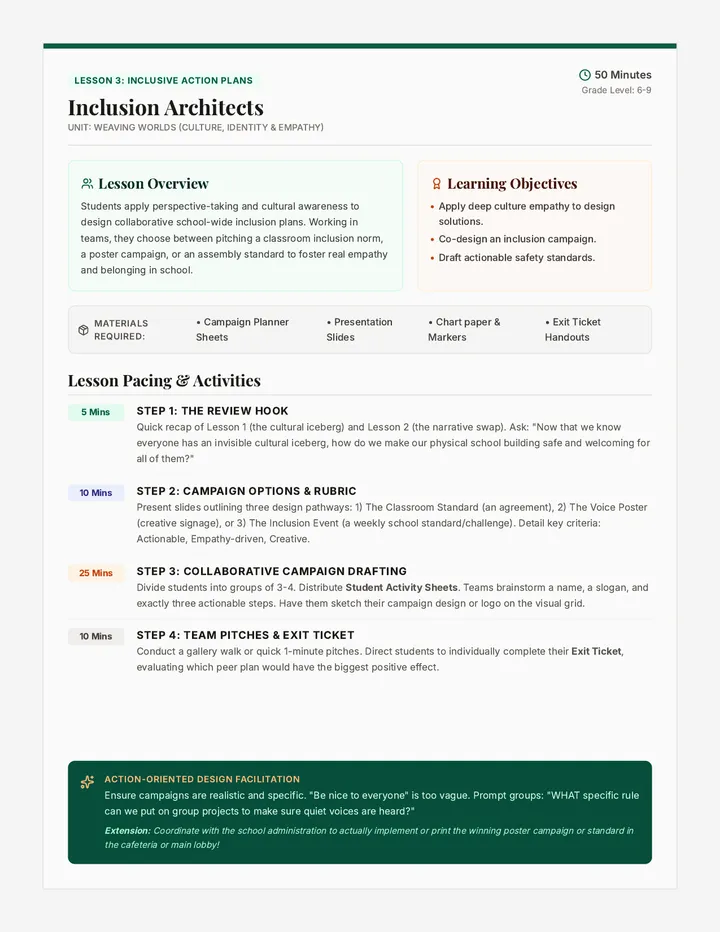
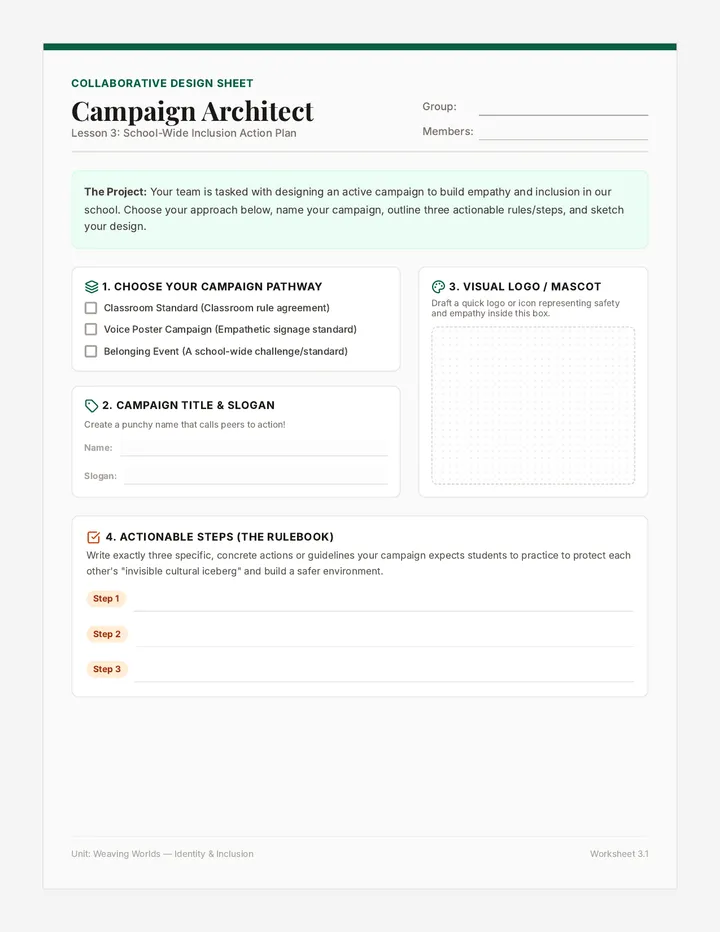
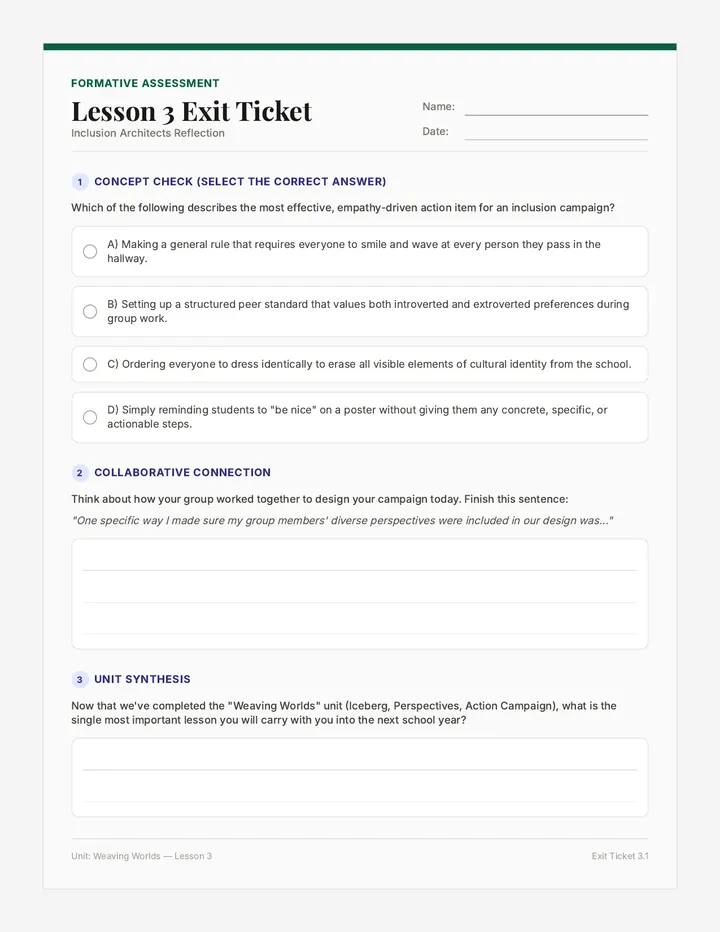
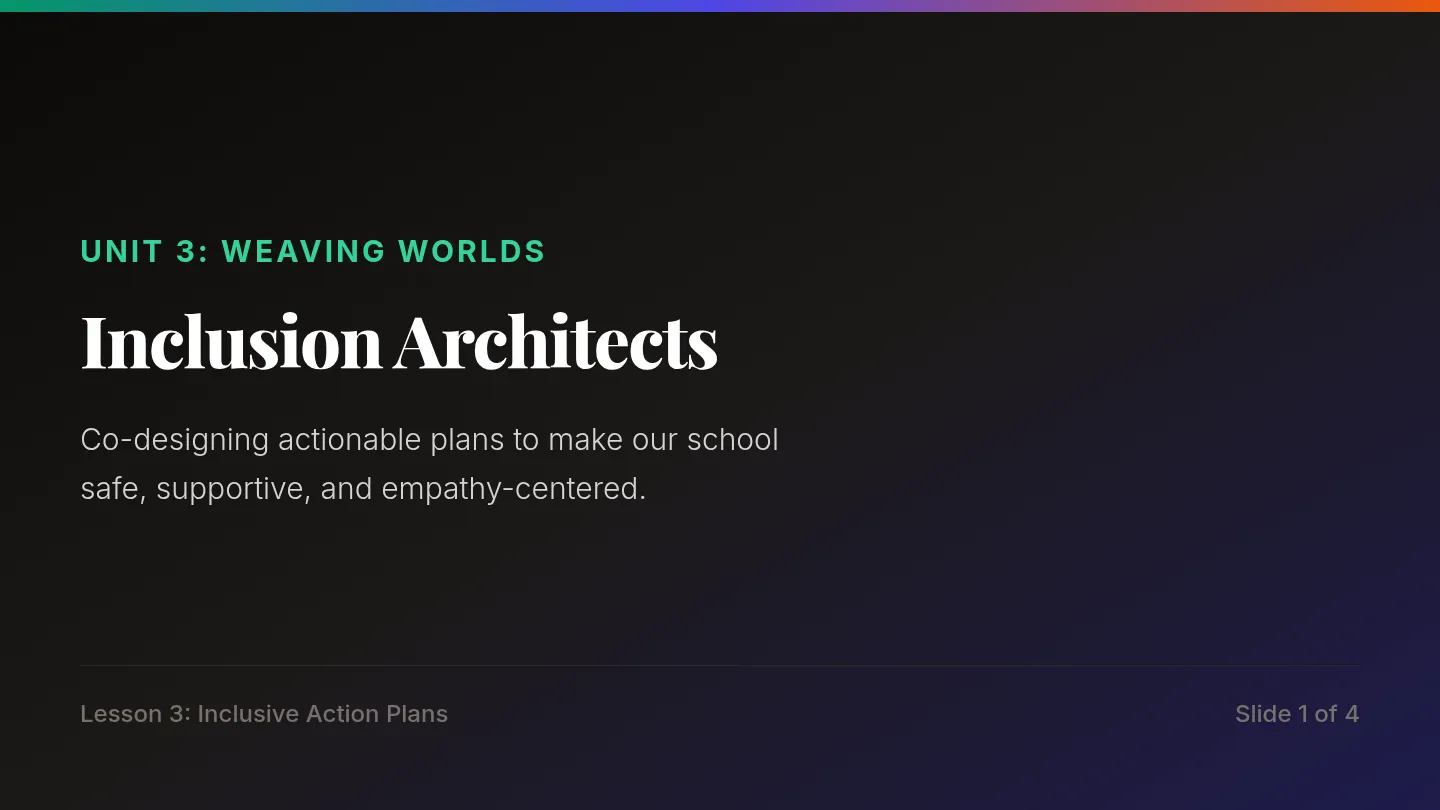
Students apply their deep listening and empathy skills to design a school-wide inclusion campaign or classroom standard, designing collaborative action items.
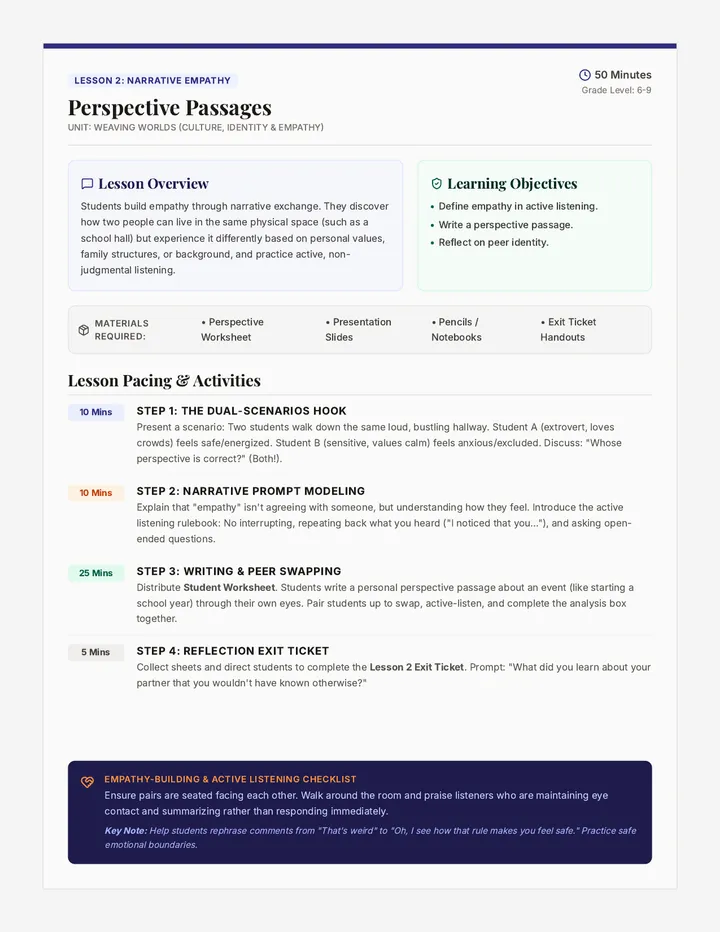
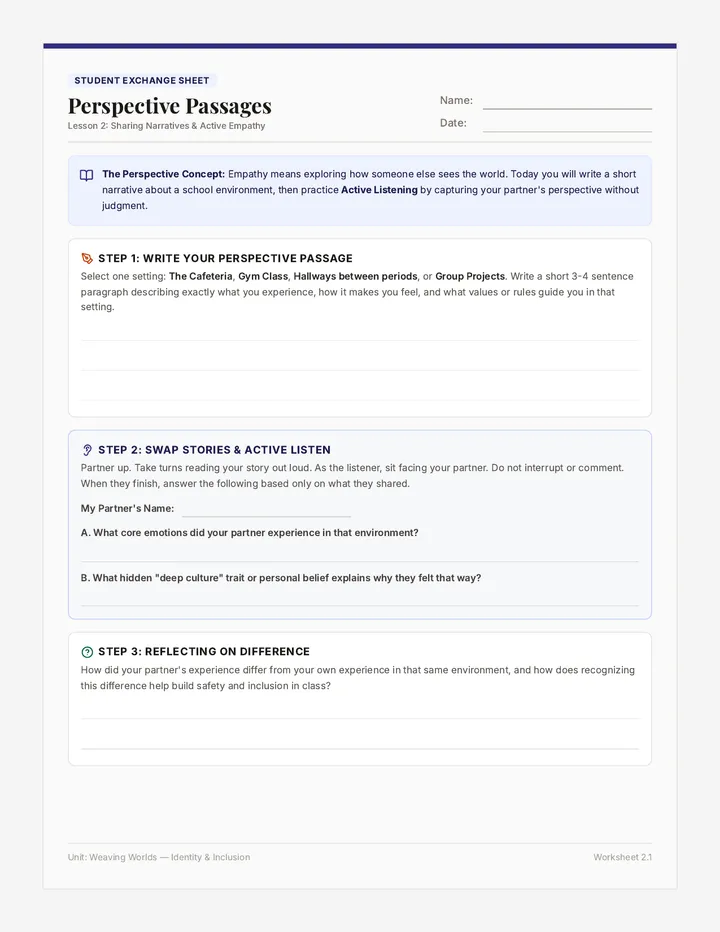
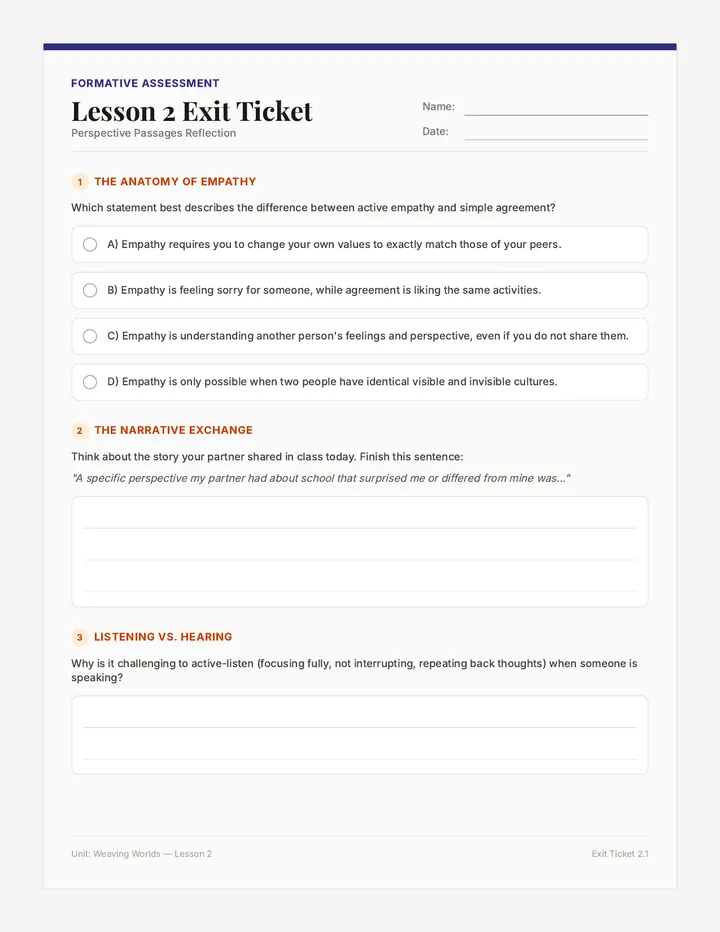
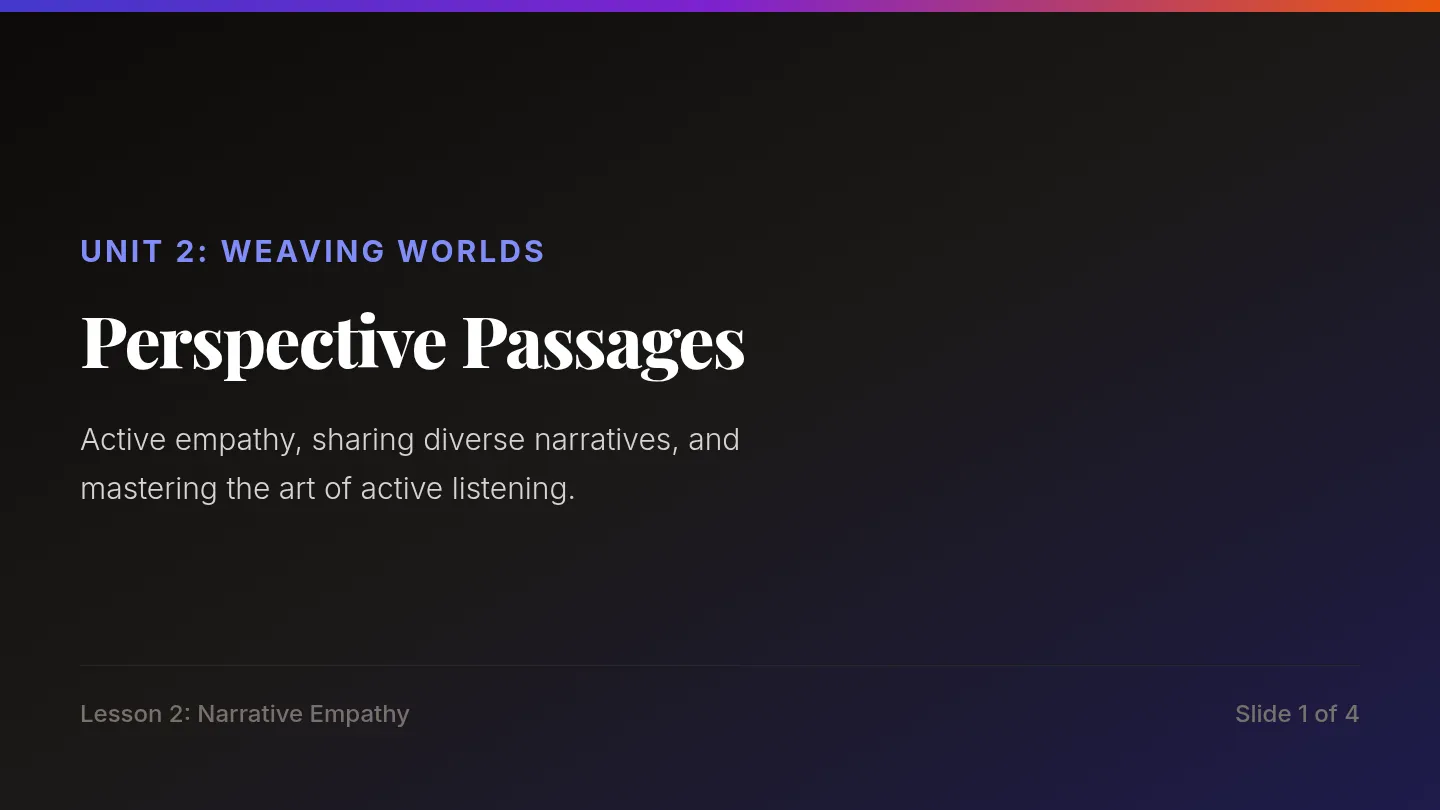
Students engage in active empathy and narrative exchange, analyzing how personal experiences and cultural backgrounds shape our perspectives of shared environments.
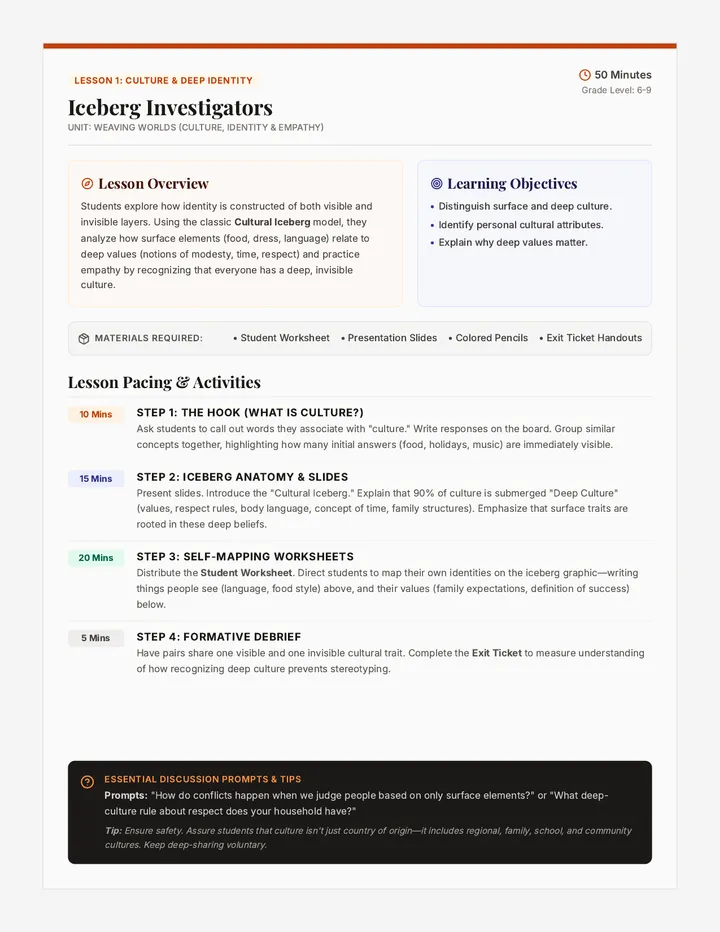
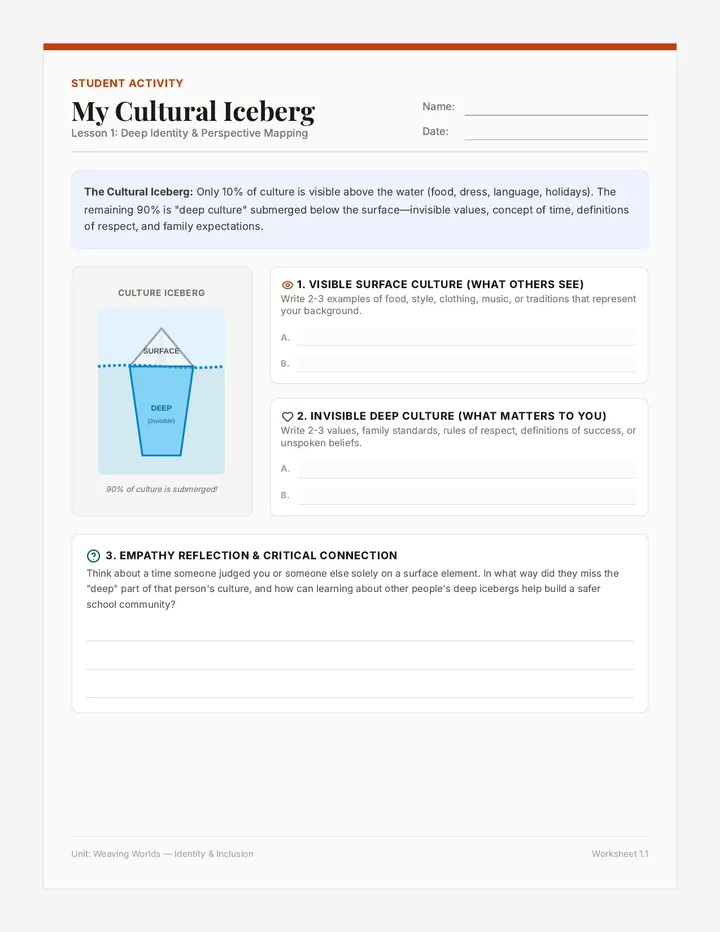
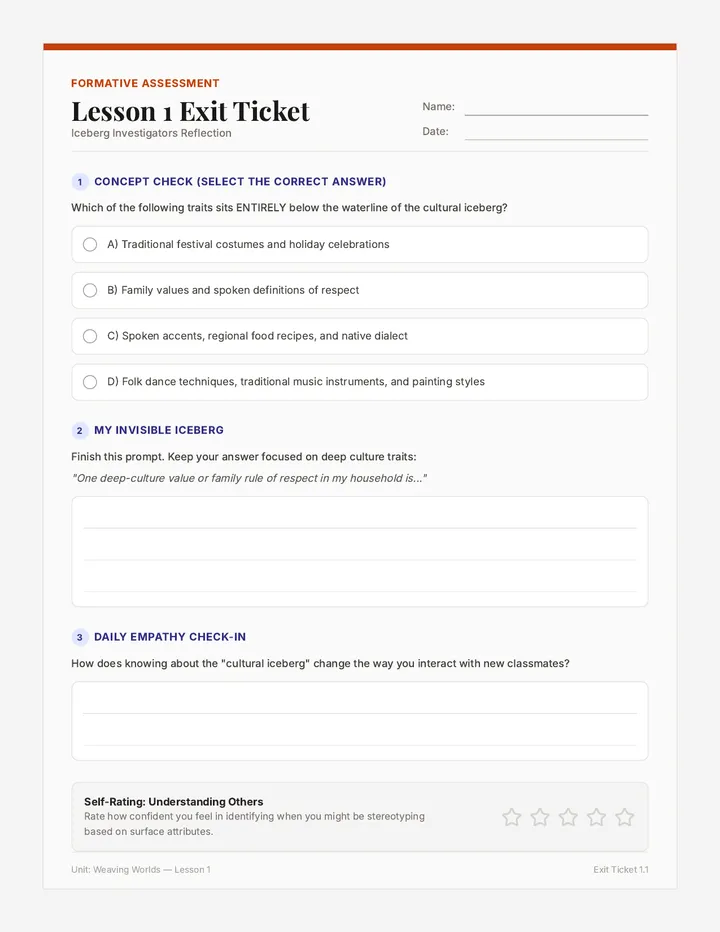
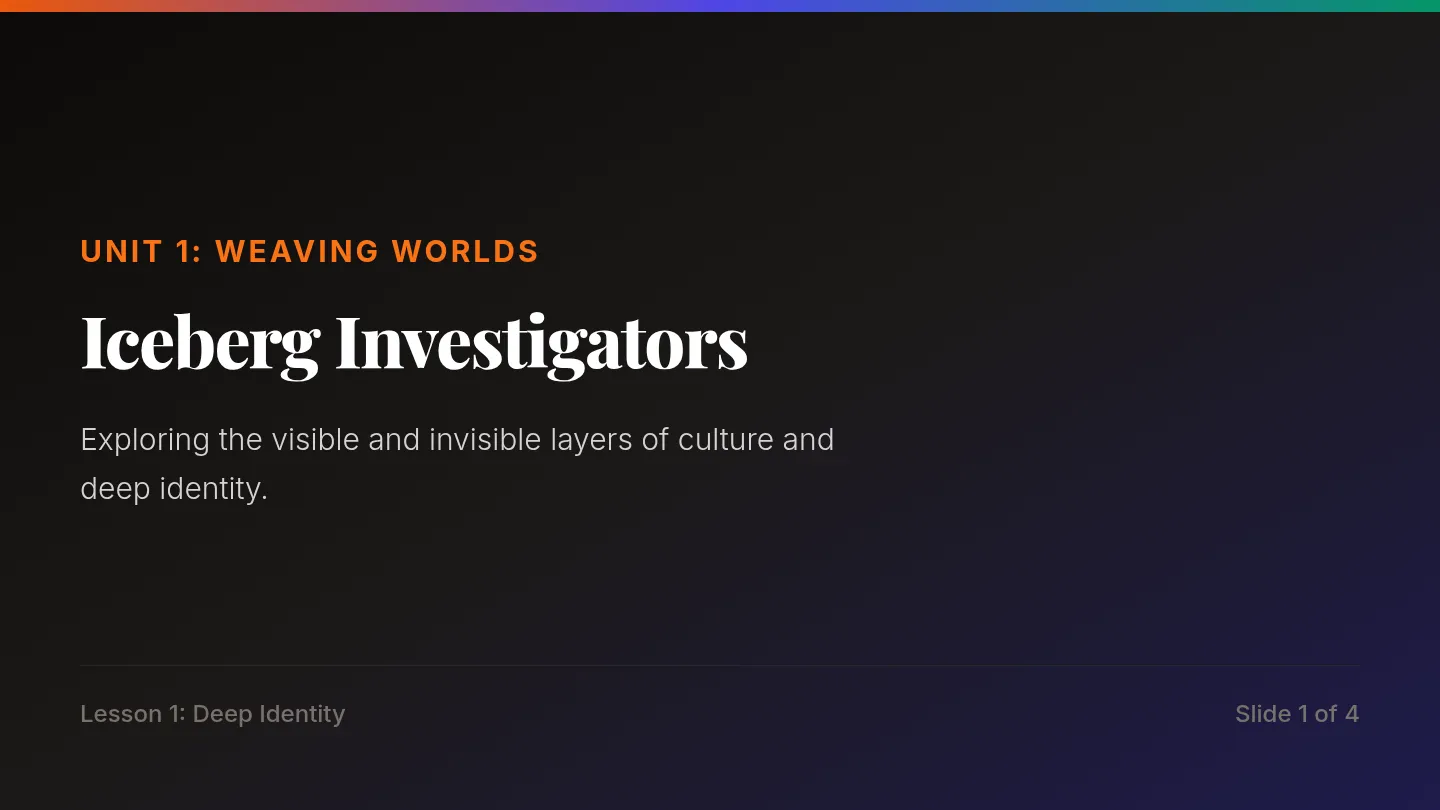
Students explore the concept of the cultural iceberg, distinguishing between visible elements of culture and deep, invisible values, to recognize the richness of identity.
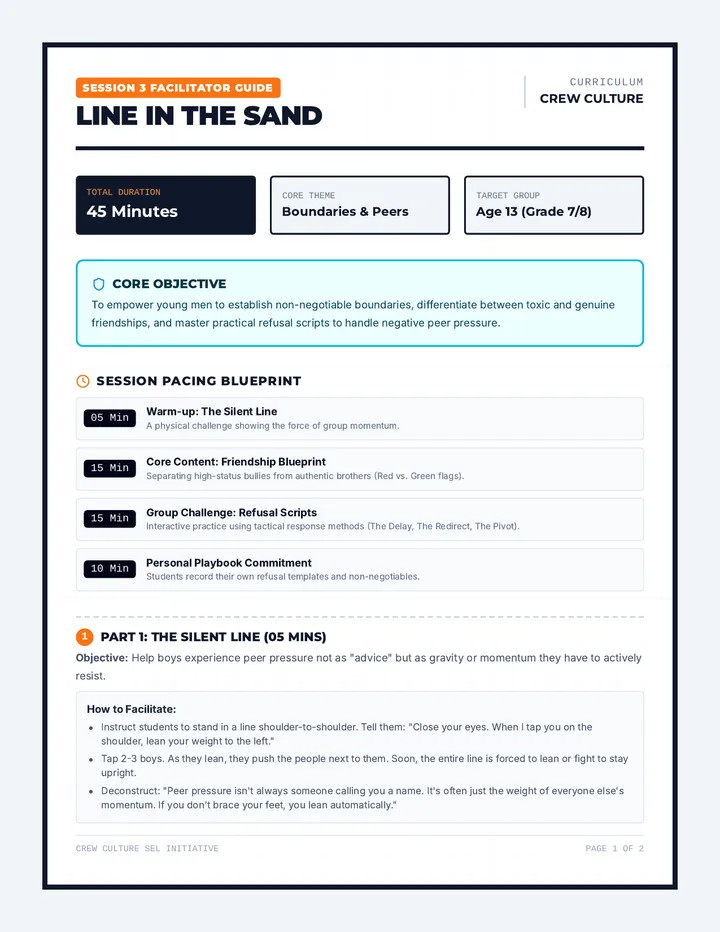
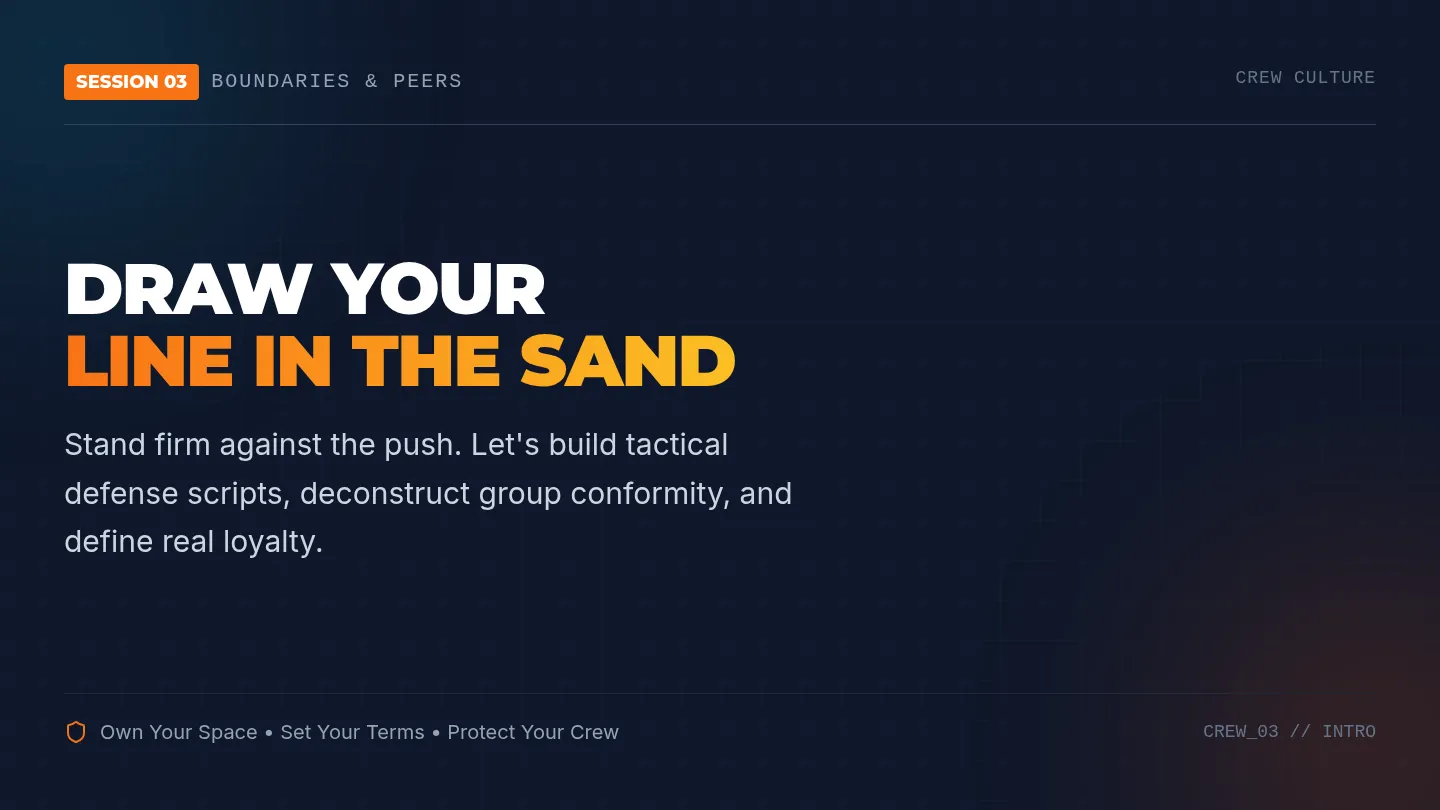
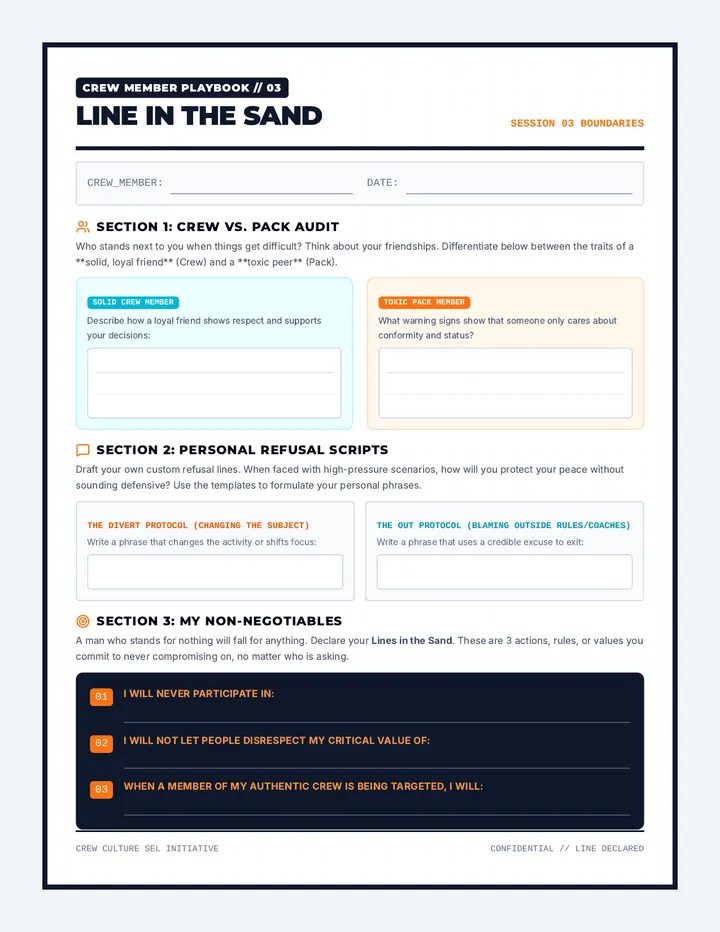
Students learn to set healthy boundaries, navigate peer pressure, and establish what authentic trust looks like in real-world friendships.
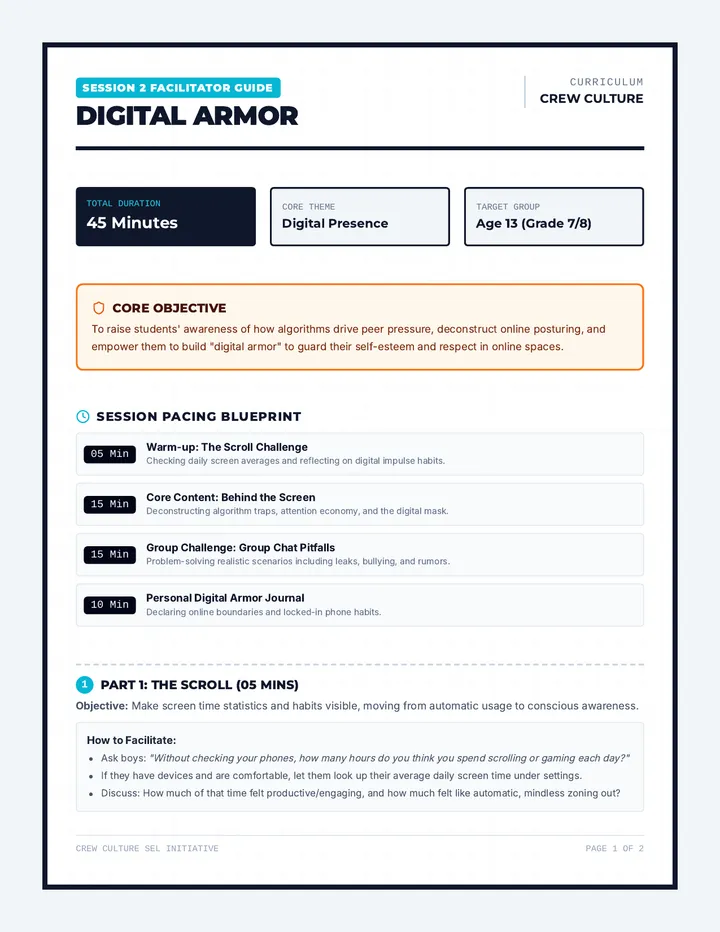
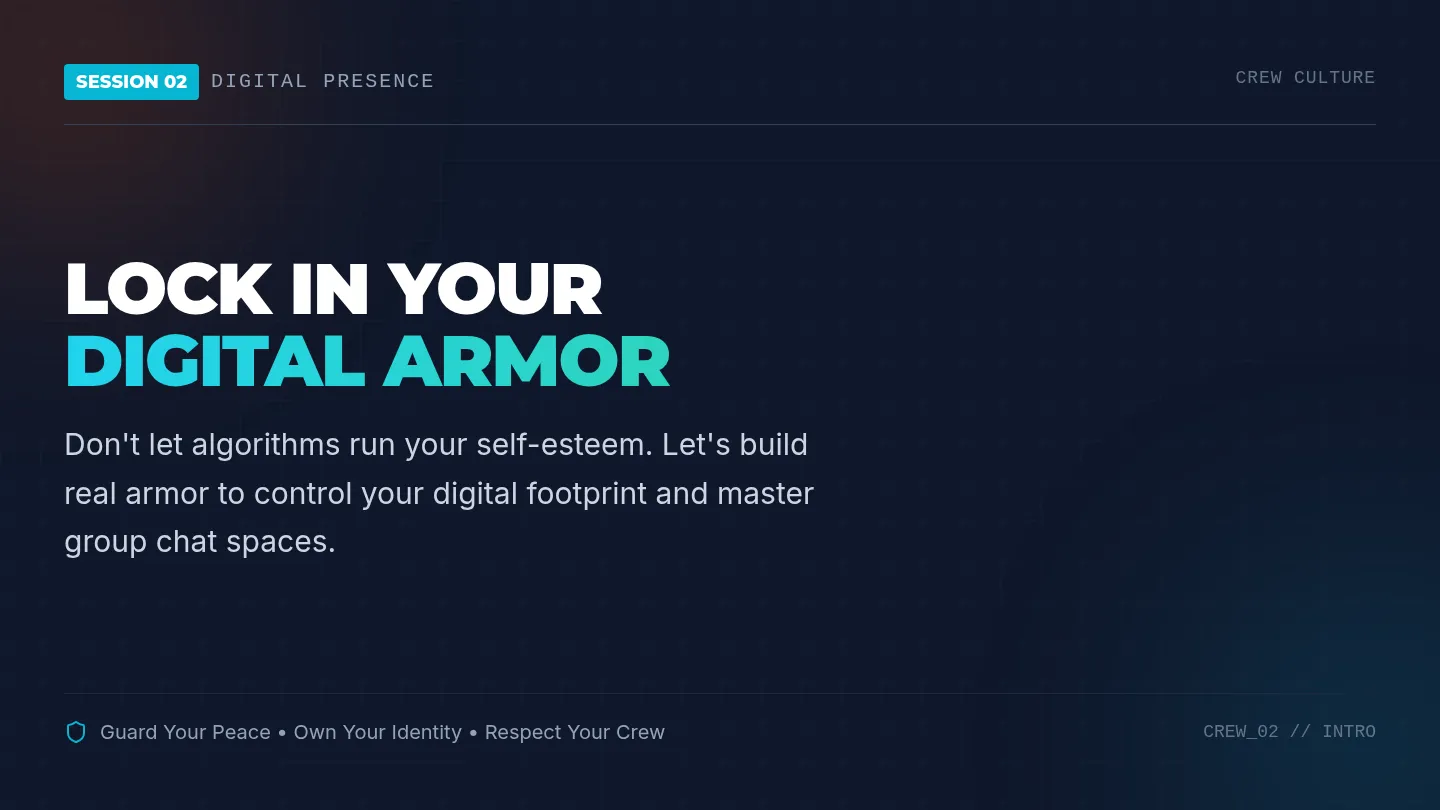
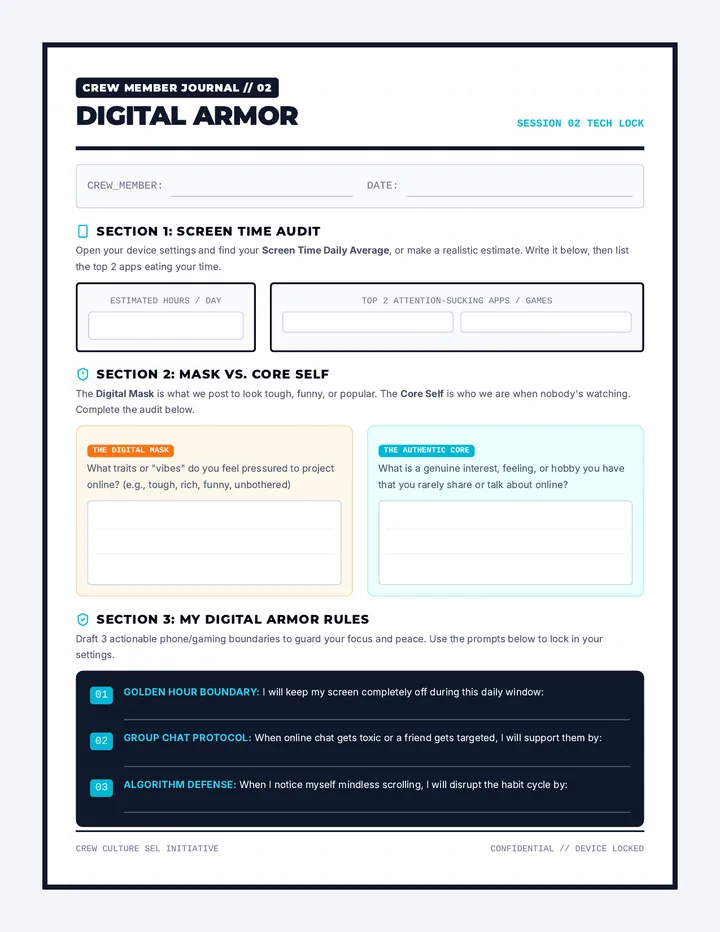
Students analyze their digital footprint, discuss modern social media pressures, and learn how to align their online actions with their offline values.
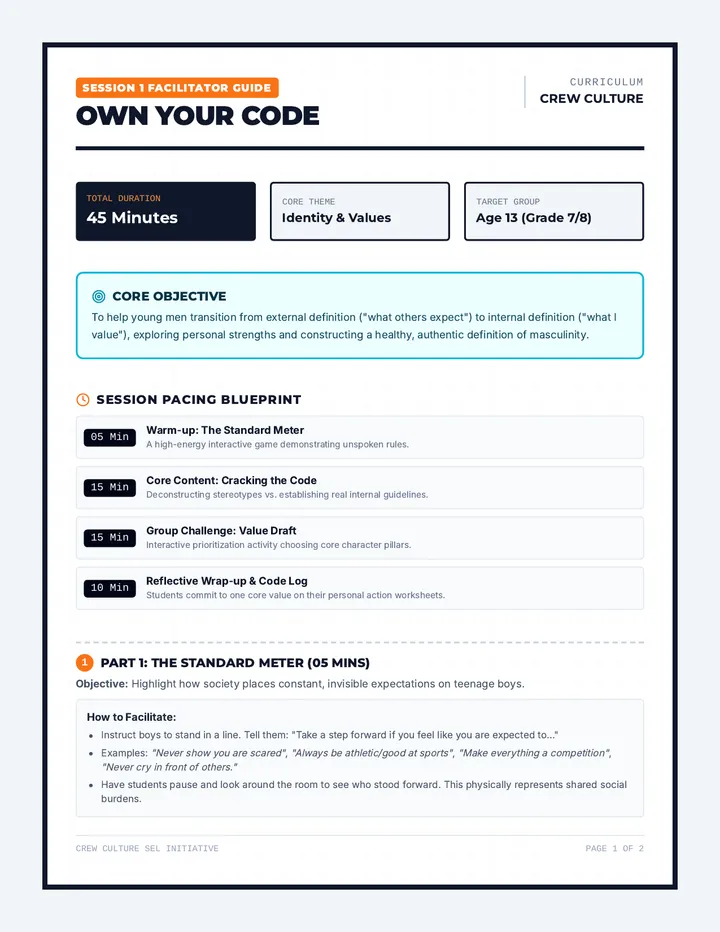
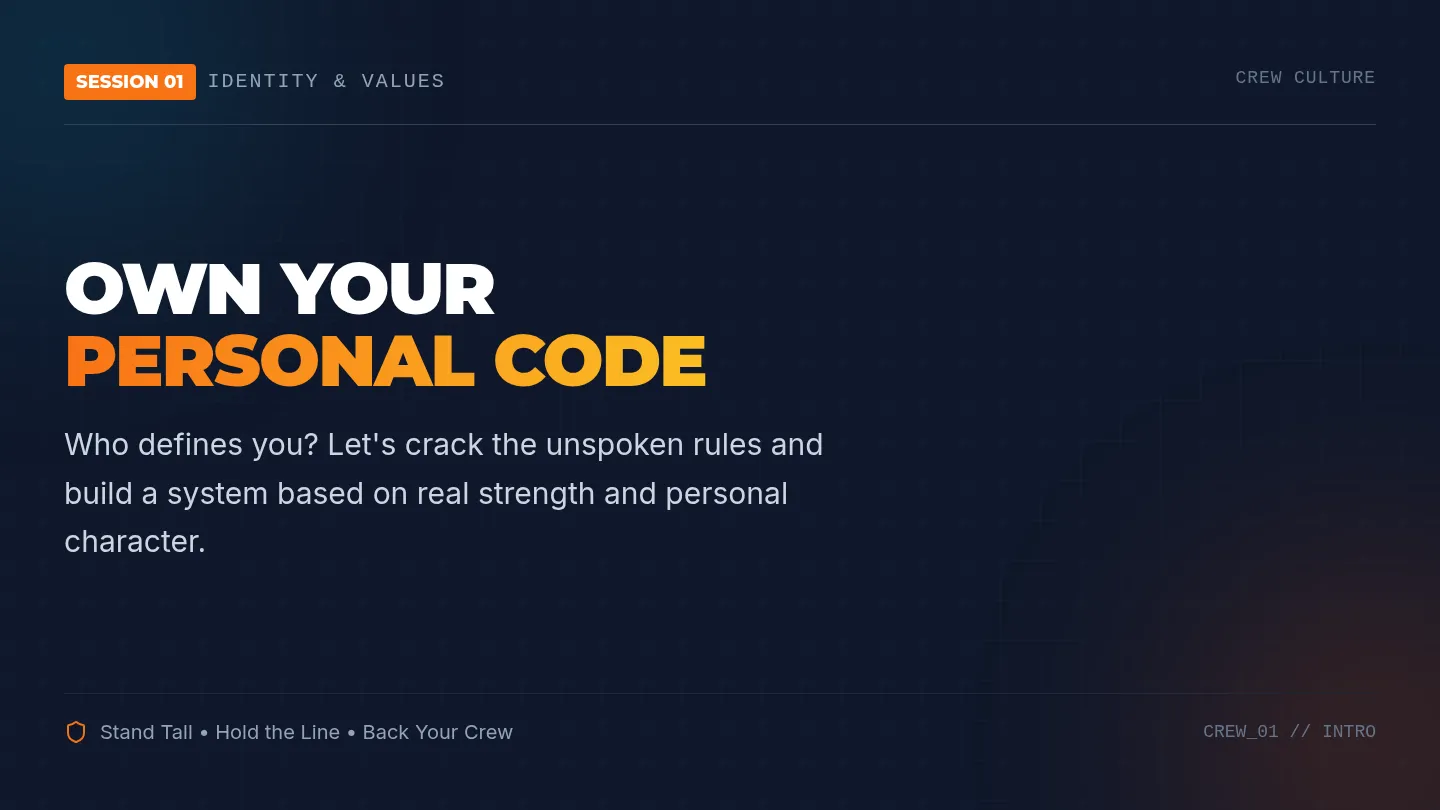
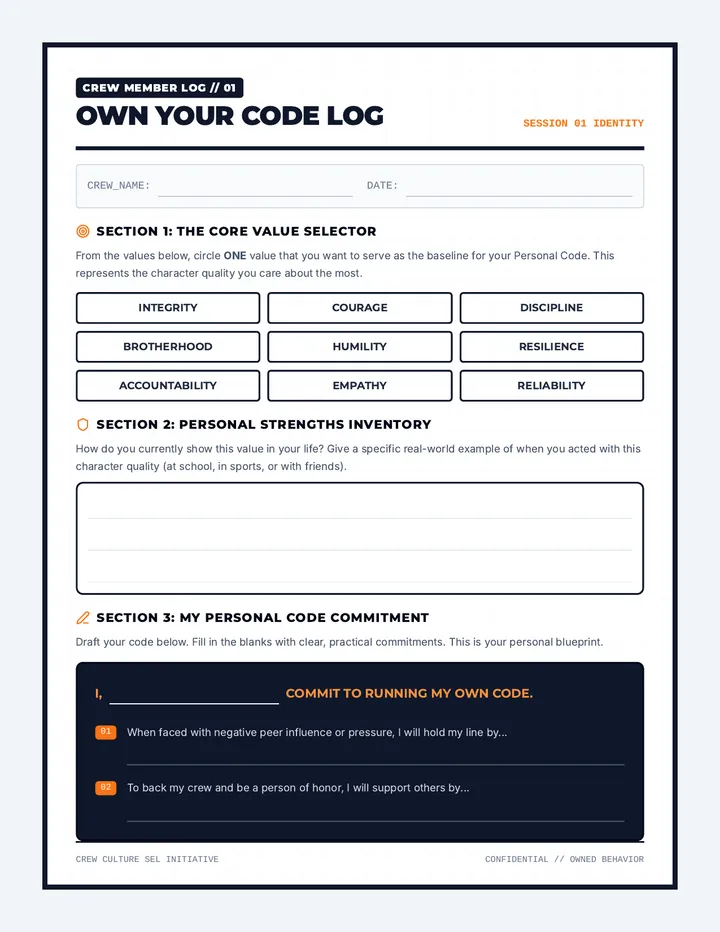
Students explore their personal identity, core values, and what healthy masculinity looks like in their daily lives.
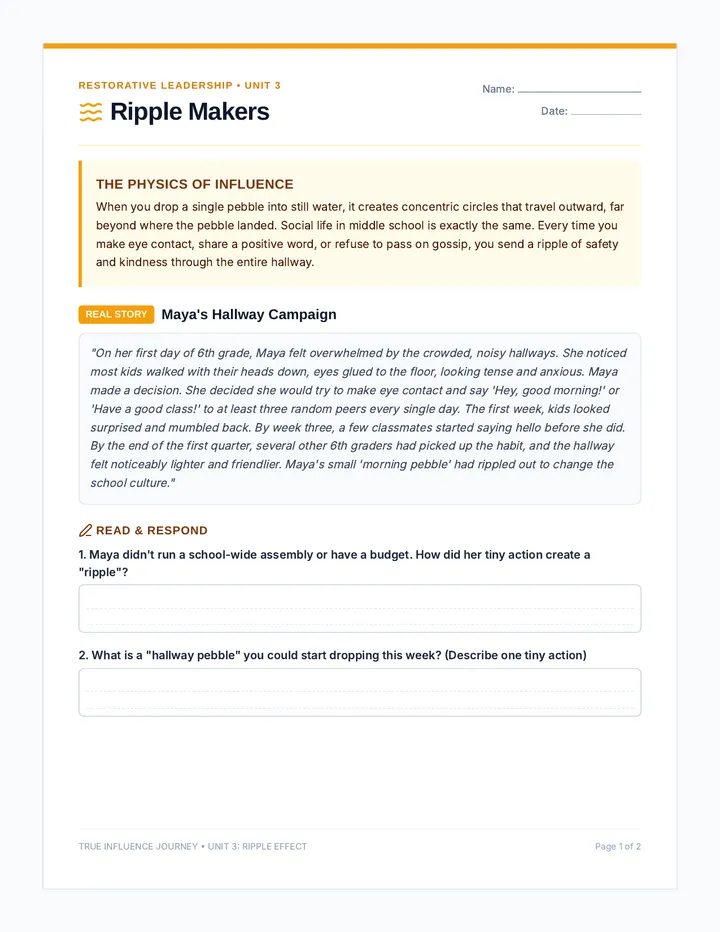
Focuses on creating a sustainable positive culture through daily small actions, prompting students to track their leadership and reflect on how positive behavior spreads. Features read-and-respond profiles of real student leaders.
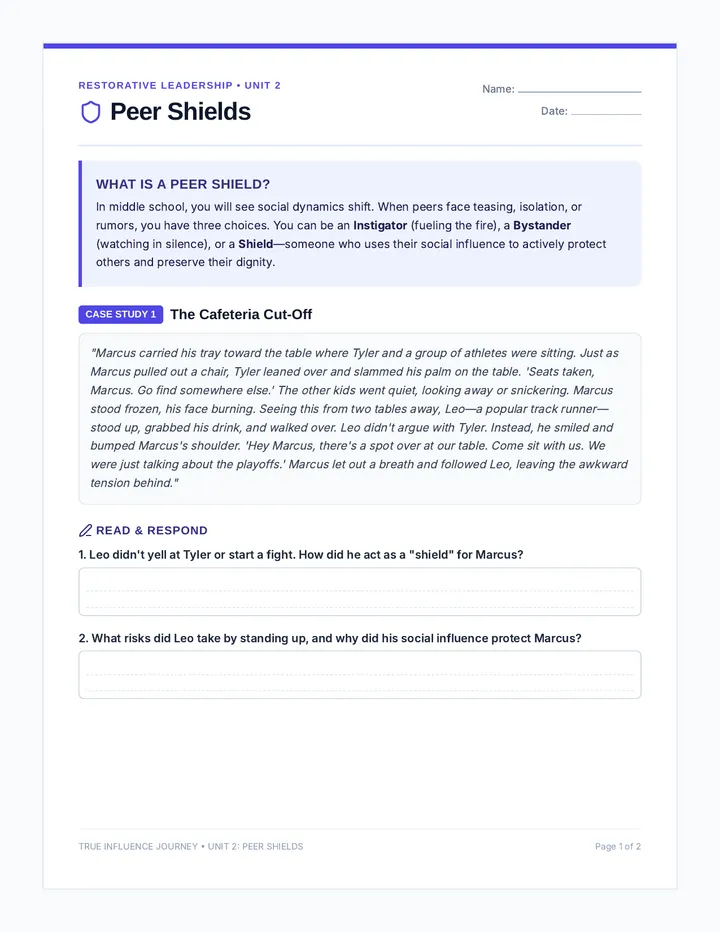
Students explore what it means to be a 'shield' for peers in middle school rather than a passive bystander or an instigator. Features narrative read-and-respond case studies on standing up to social exclusion and rumors.
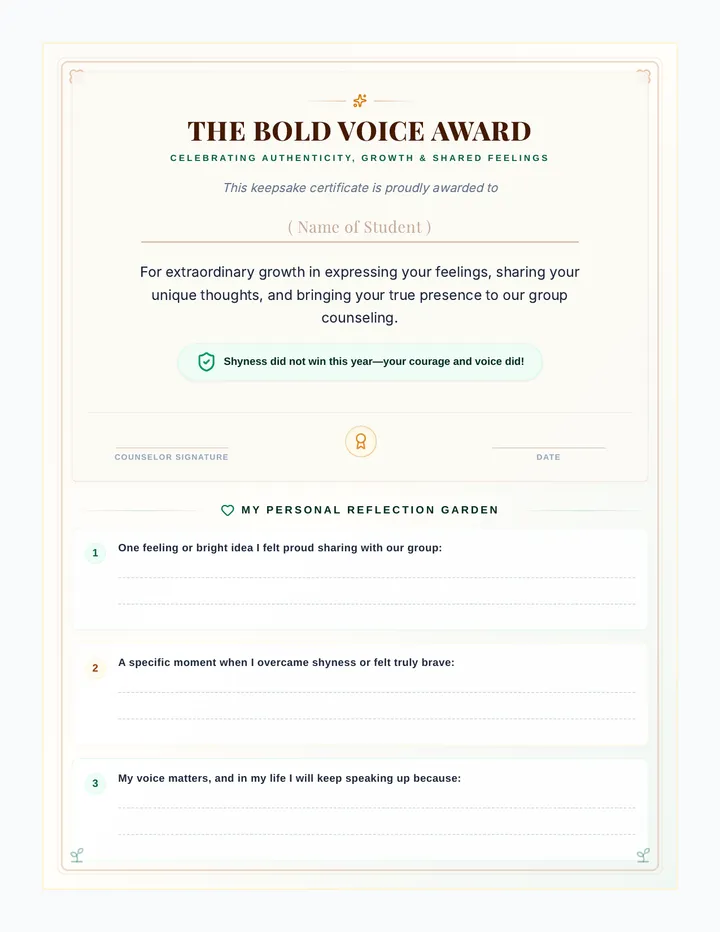
A reflective counseling lesson celebrating emotional expression, triumph over shyness, and setting intentions for speaking up with confidence in group settings.
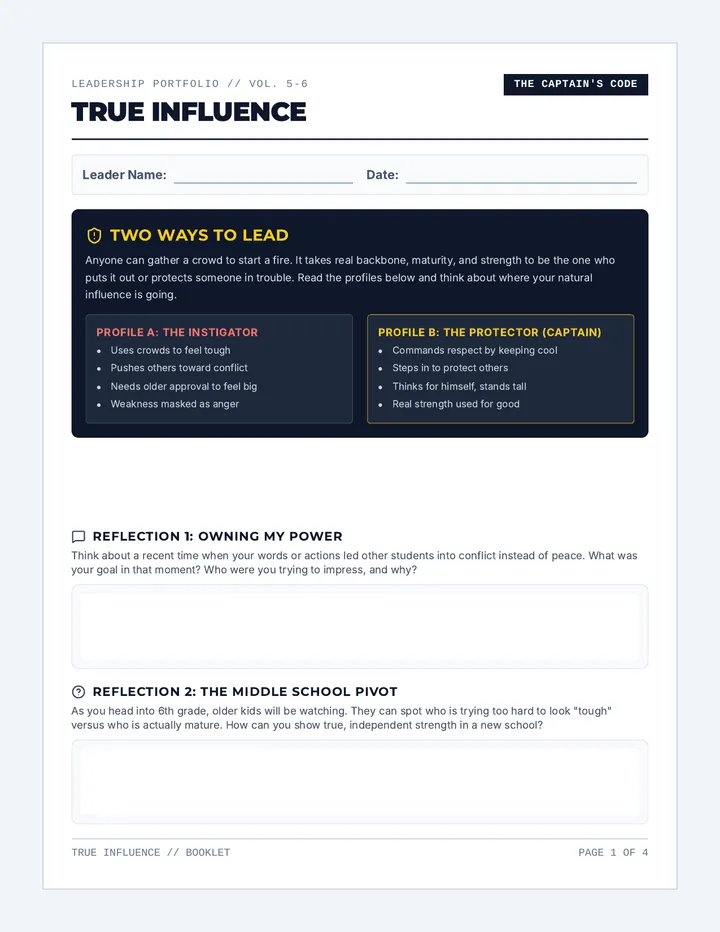
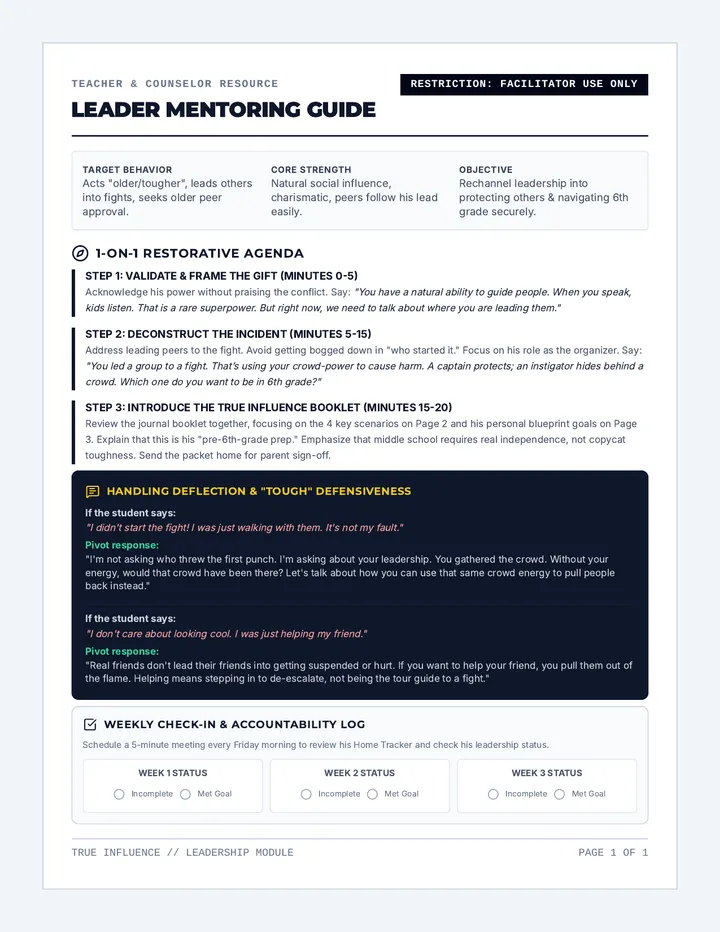
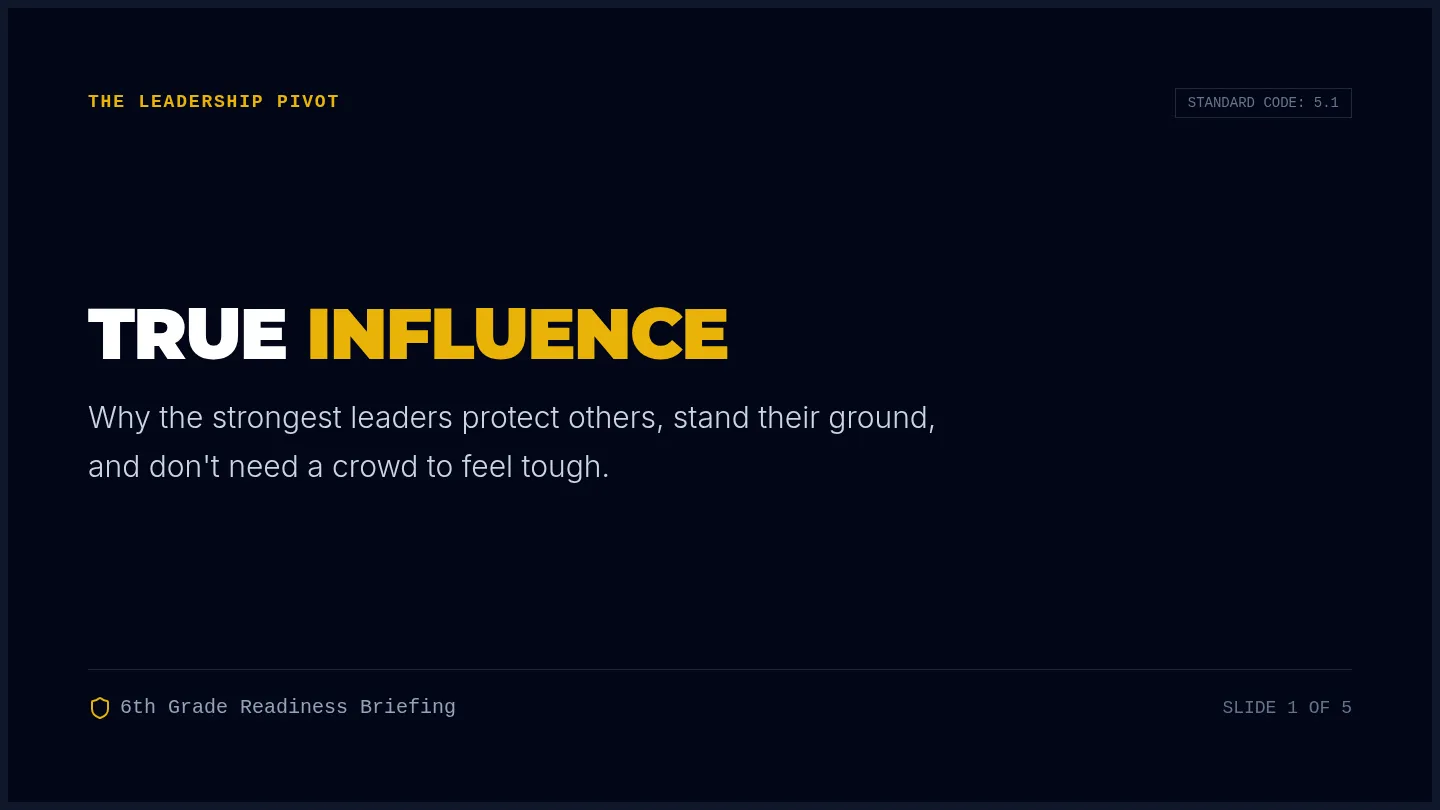
A restorative leadership module designed for a 5th-grade student transitioning to middle school. Focuses on channeling natural social influence into positive leadership, specifically protecting and looking out for others, rather than leading peers into conflict.
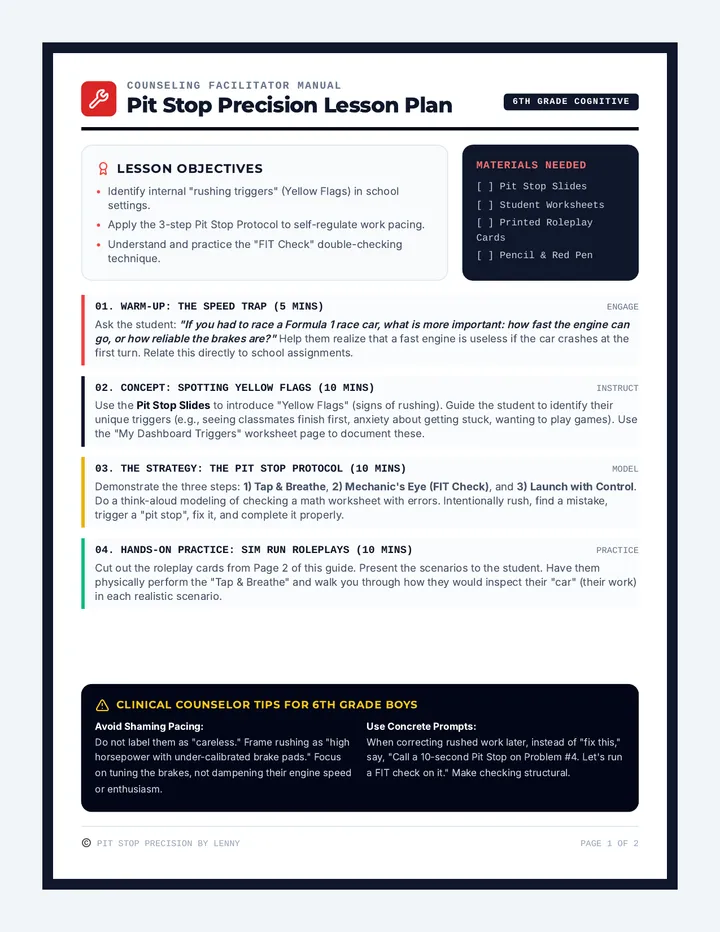
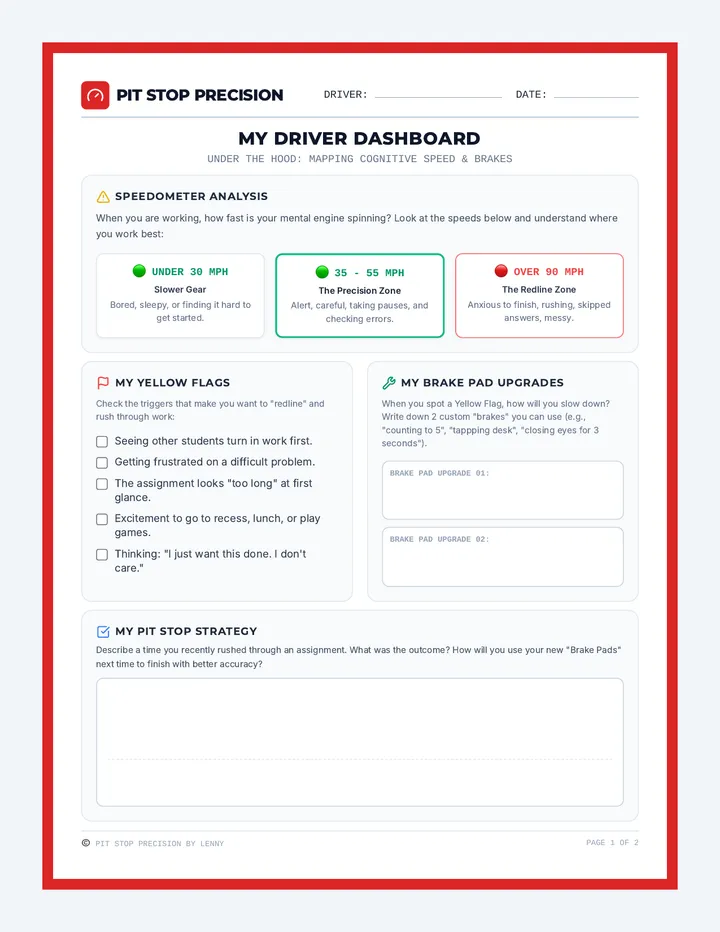
A counseling and self-regulation lesson for middle school students, using a high-octane racing 'Pit Stop' metaphor to teach self-control, persistence, and double-checking work instead of rushing.
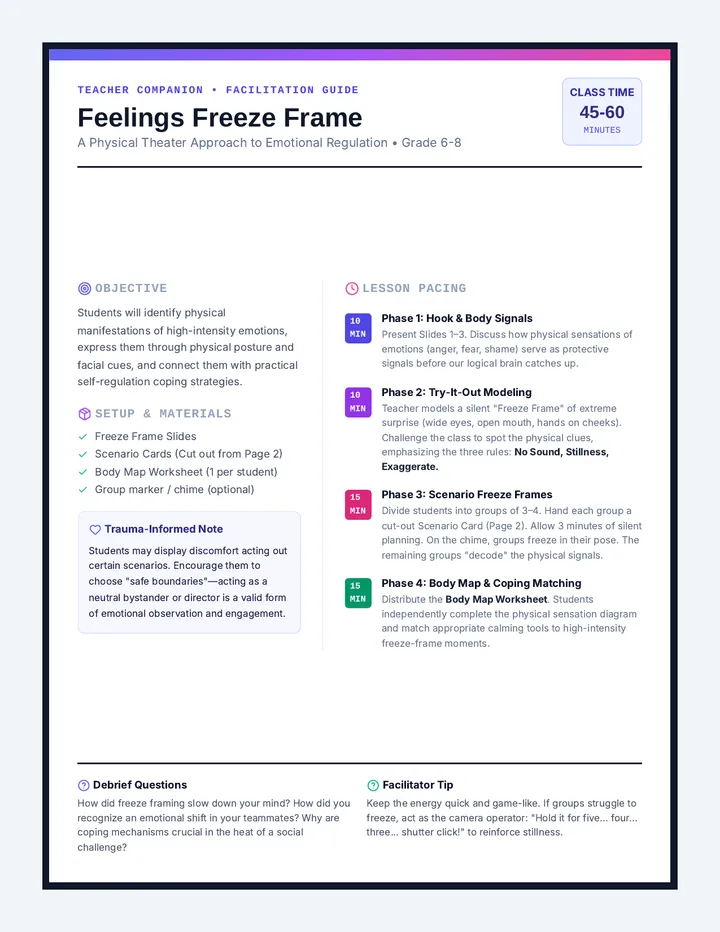
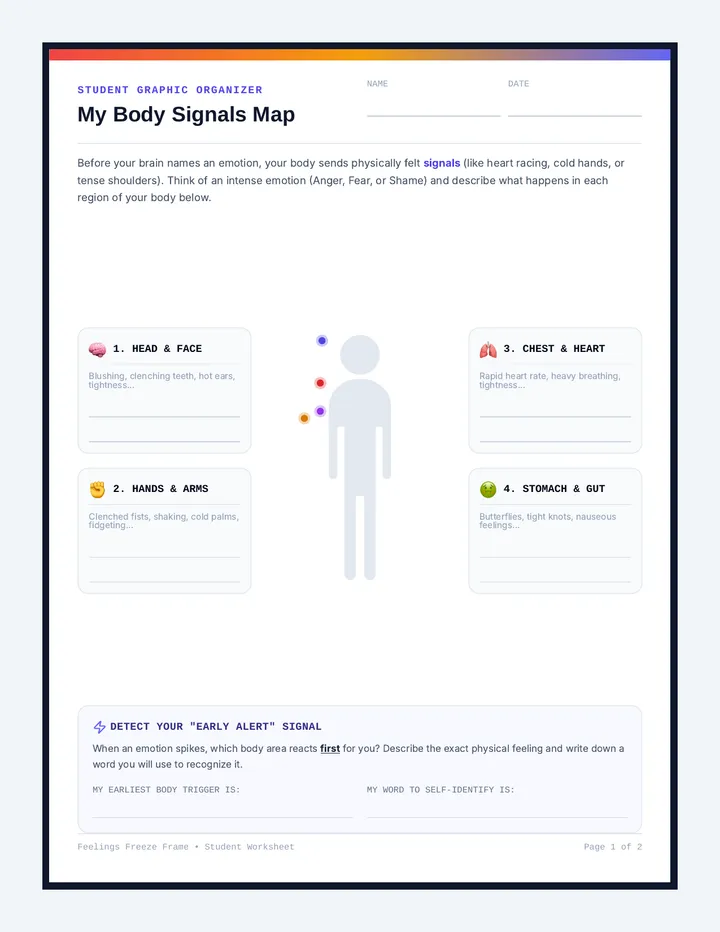
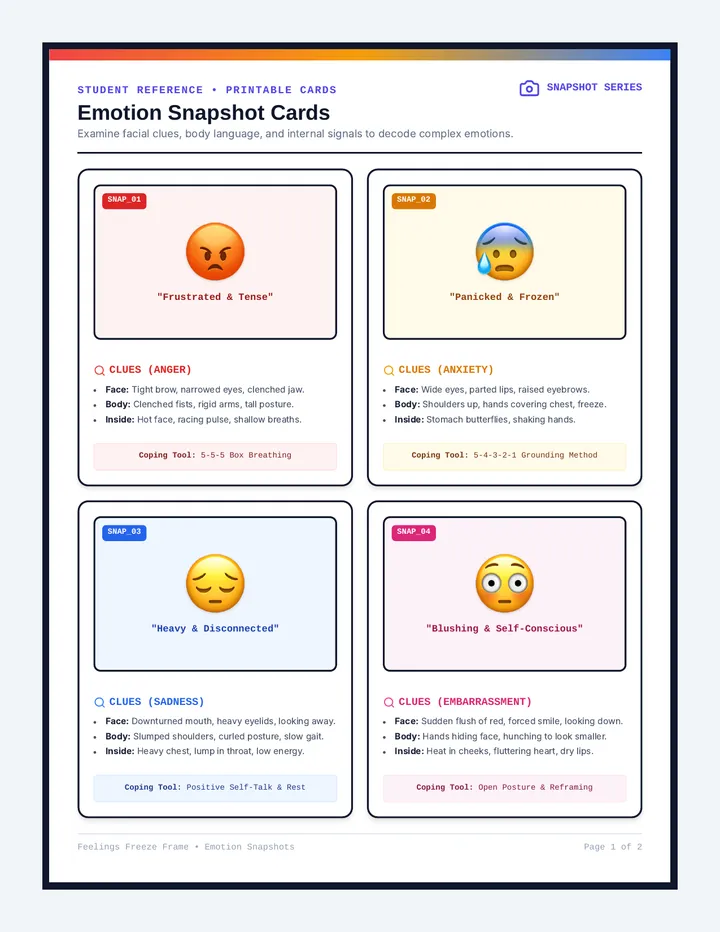
A comprehensive middle school lesson bundle on emotional literacy and self-regulation. Students explore physical sensations of high-intensity emotions, act out relatable scenarios in freeze frames, and match coping strategies using printable cards and graphic organizers.
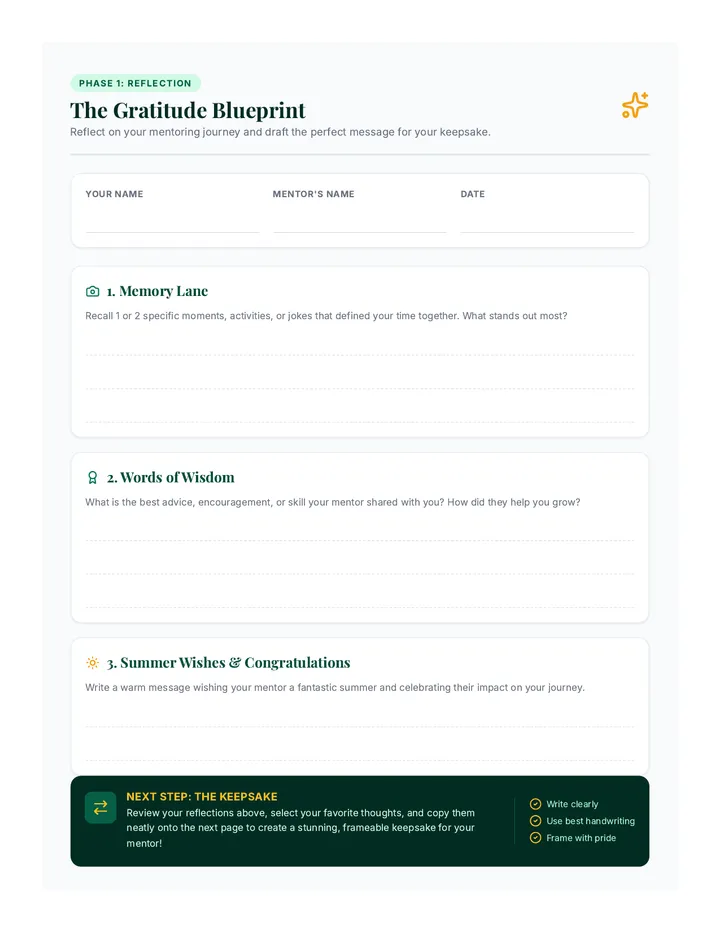
A heartfelt lesson designed to guide mentees through reflecting on their journey with their mentors, writing meaningful thank-you messages, and creating a beautiful framed keepsake.
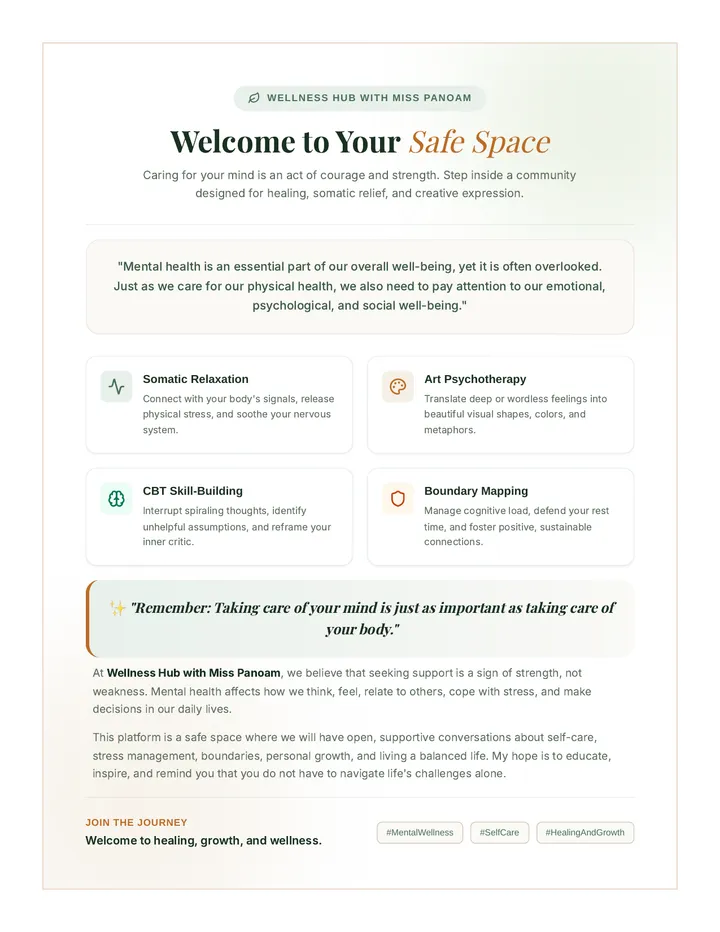
An elegant, welcoming visual announcement page introducing the Wellness Hub with Miss Panoam, designed for counseling psychology, art therapy, and somatic mindfulness support.
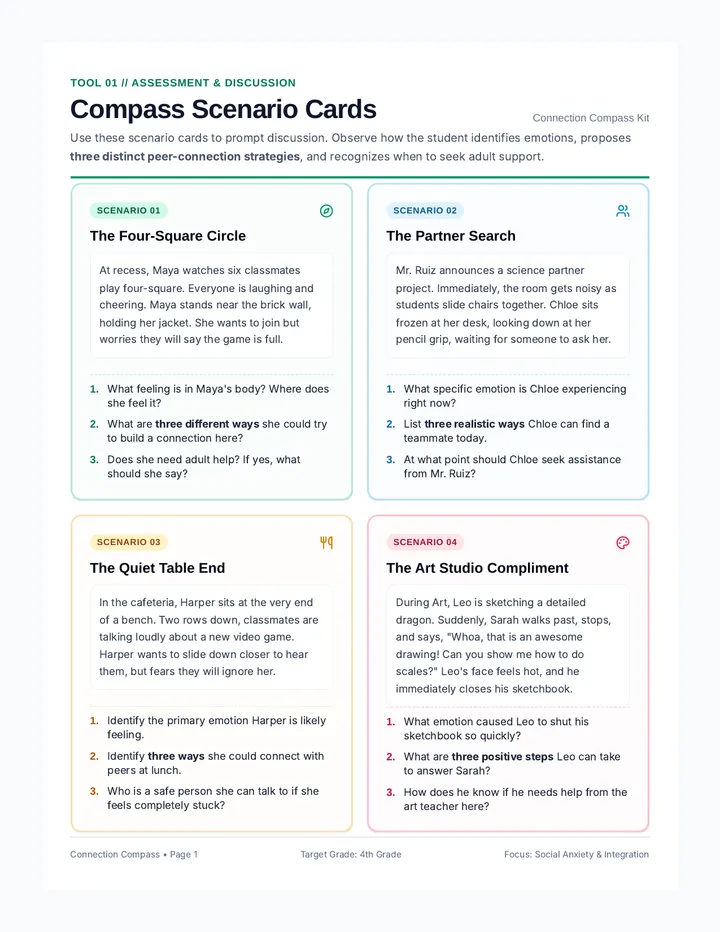
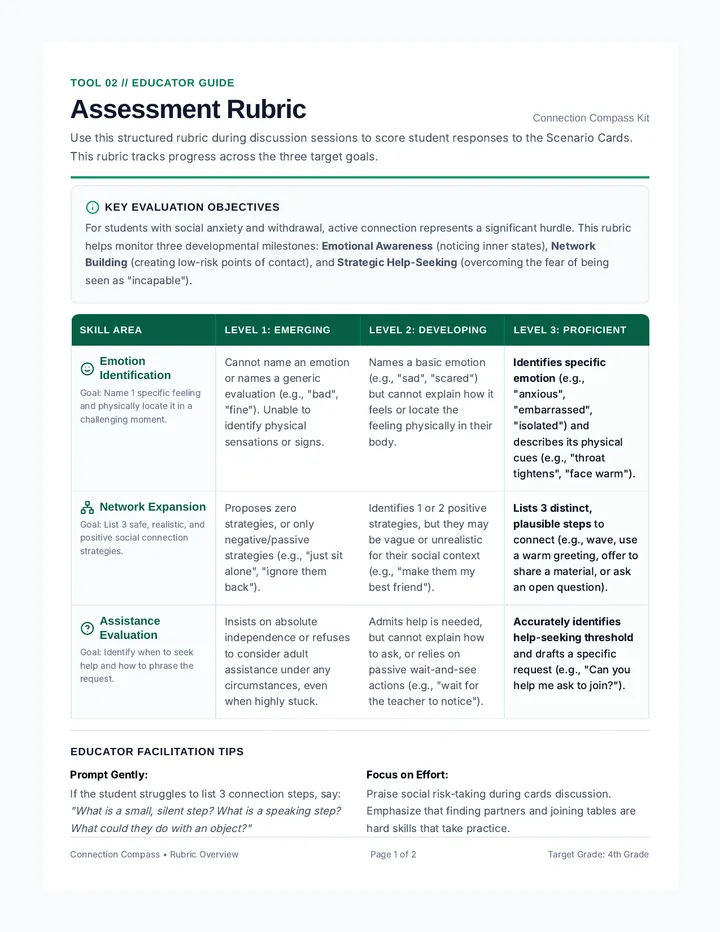
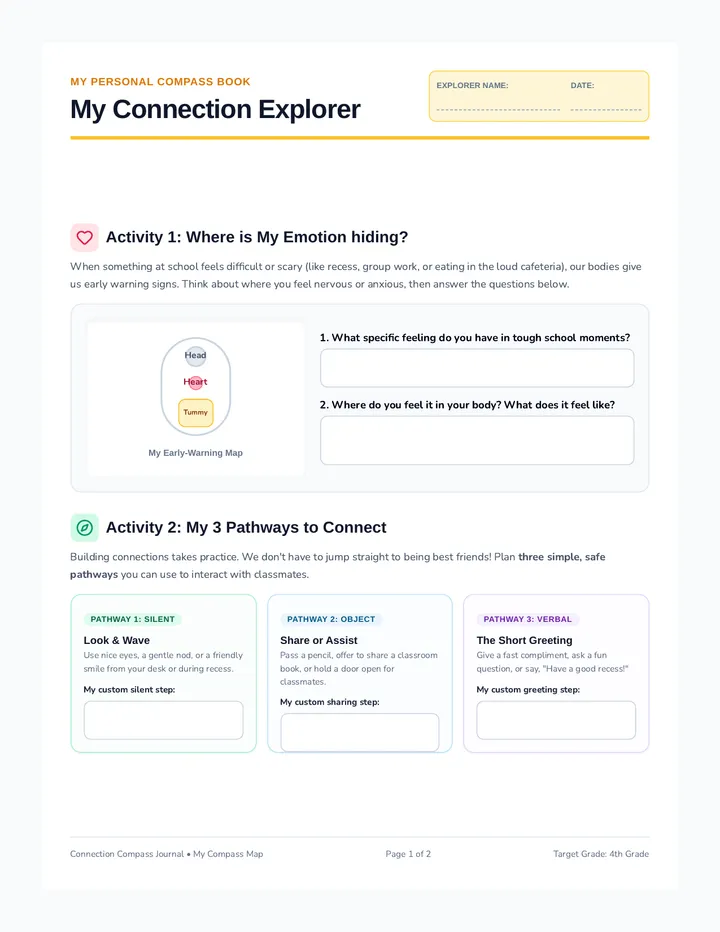
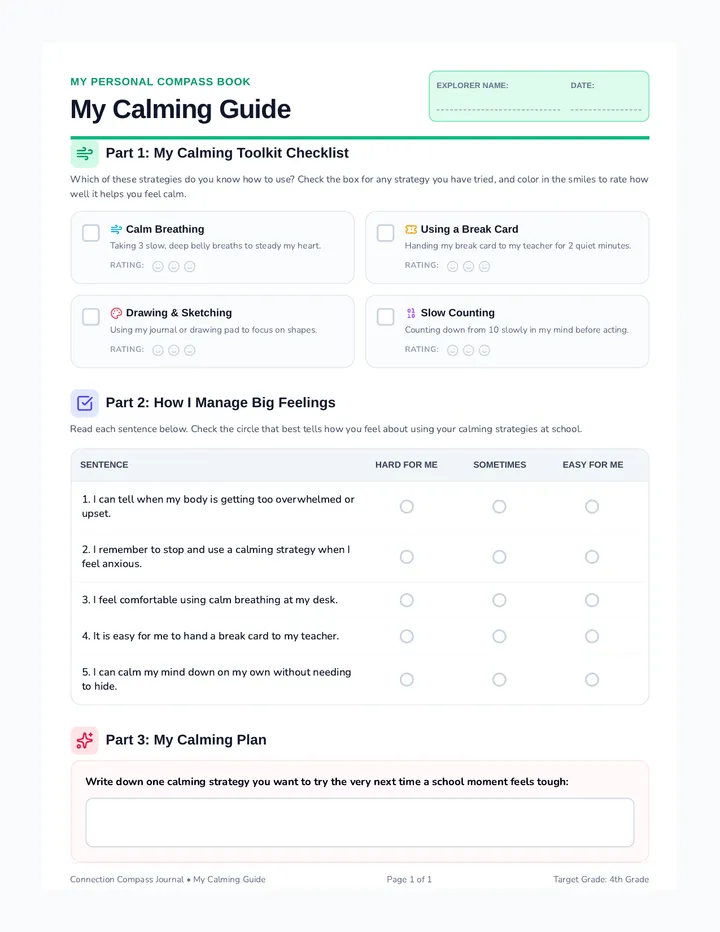
A comprehensive progress monitoring and intervention kit designed to help 4th-grade students experiencing social anxiety and withdrawal. The kit includes situational scenario cards, an educator assessment rubric, and a student self-reflection journal to build emotional awareness, expand peer connections, and develop help-seeking behaviors.
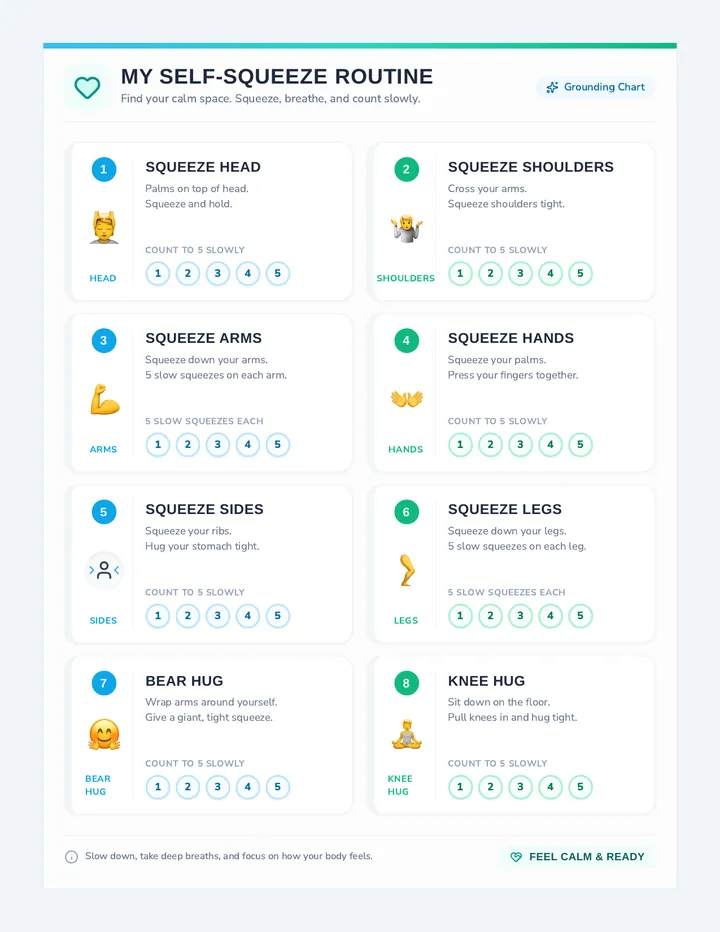
A pediatric grounding and sensory regulation lesson featuring a self-squeeze physical therapy routine to help students self-soothe and calm down.
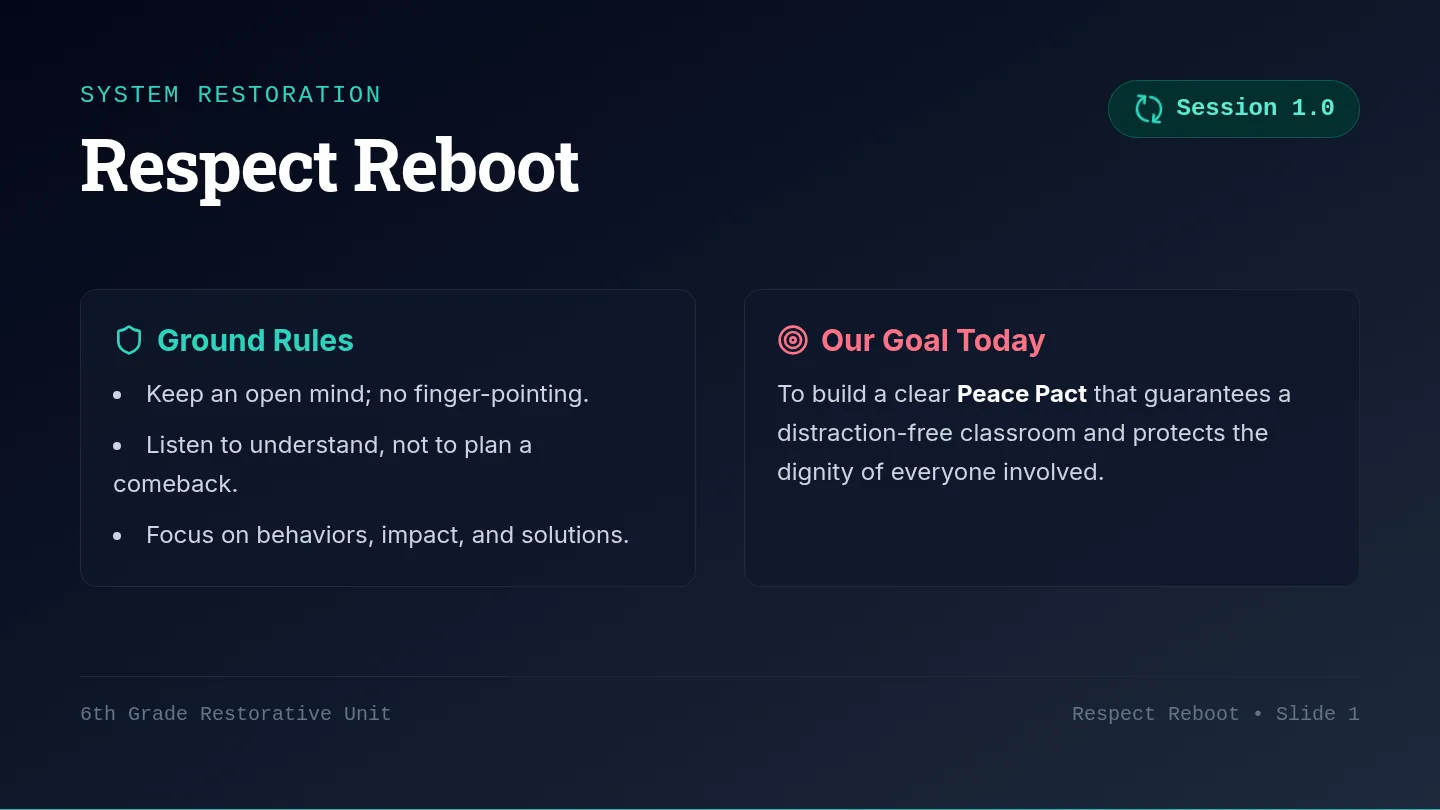
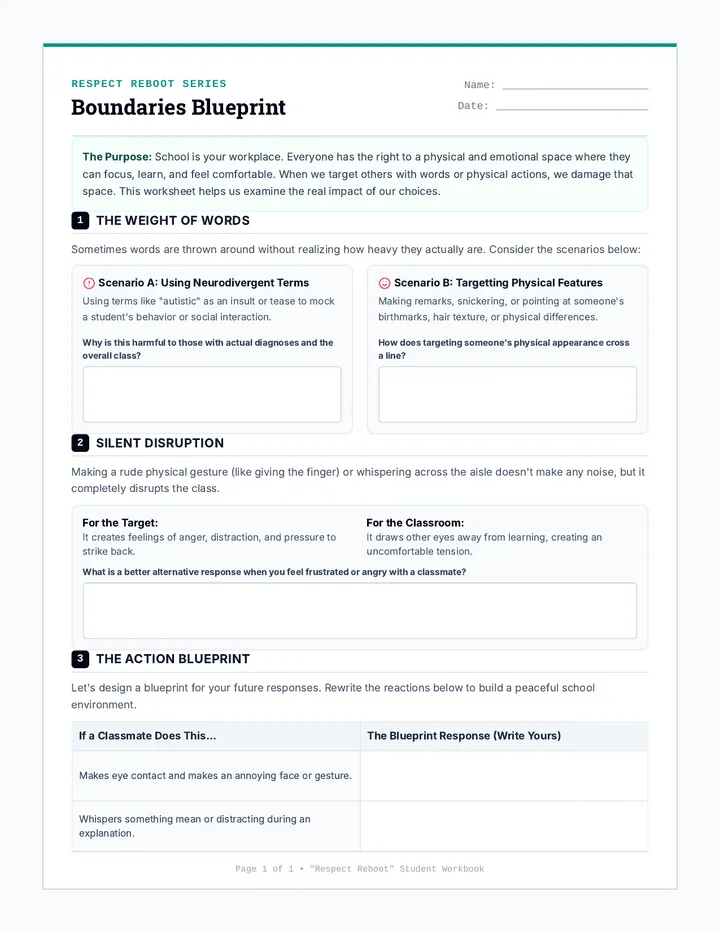
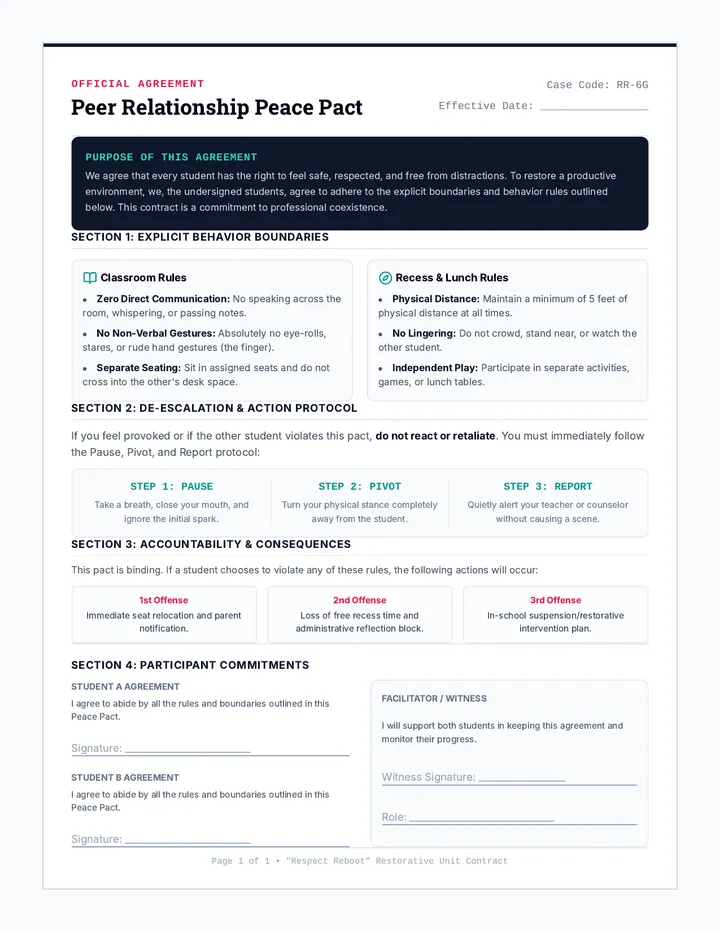
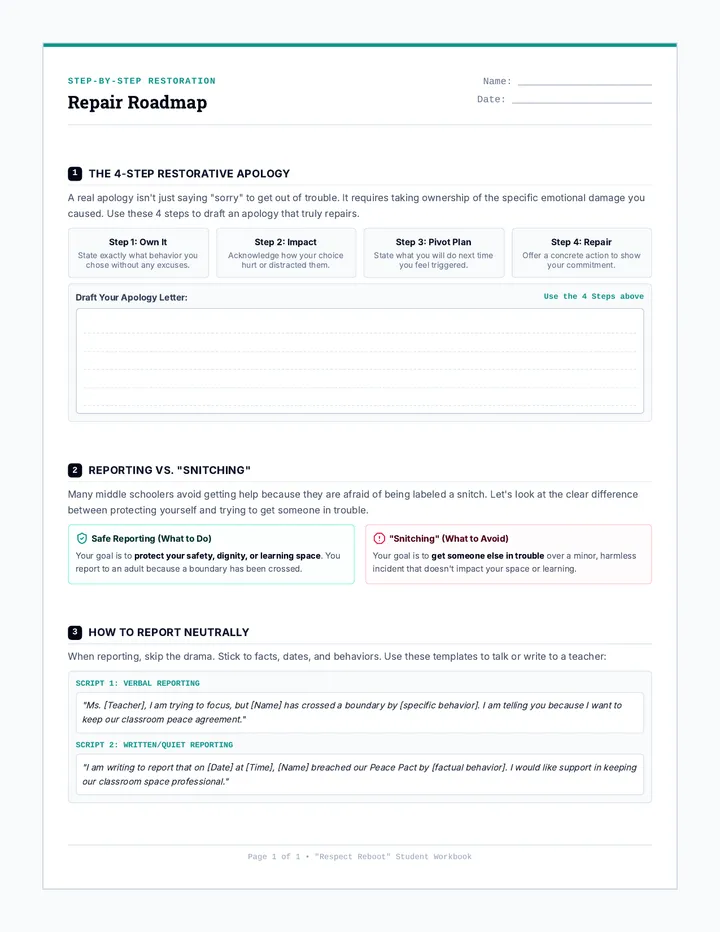
A restorative behavior intervention lesson designed for sixth-grade students in conflict, focusing on empathy, setting clear boundaries, and learning healthy reporting habits.
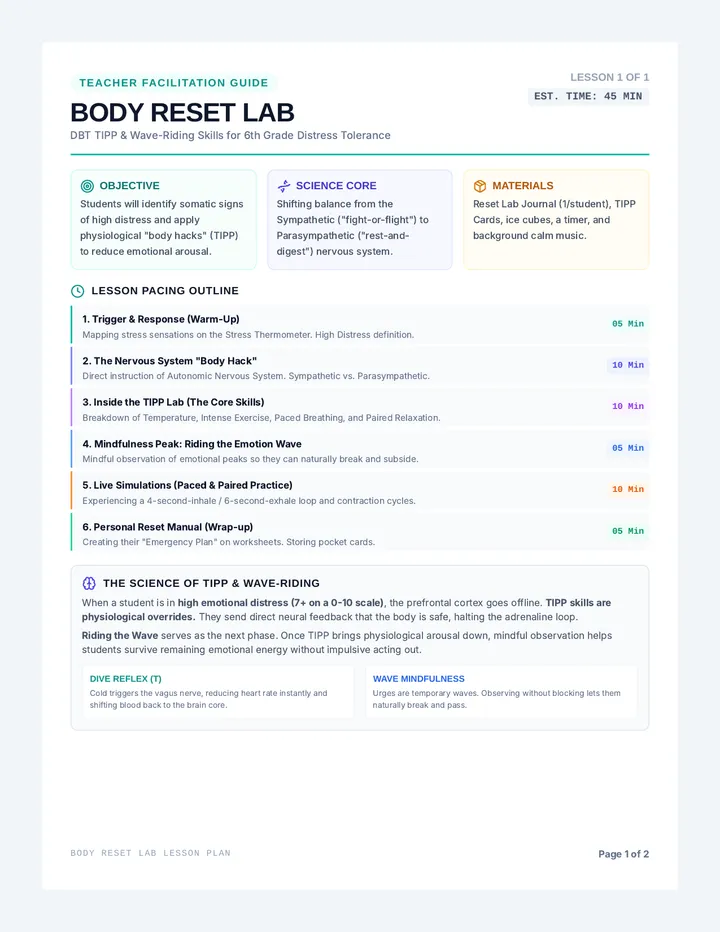
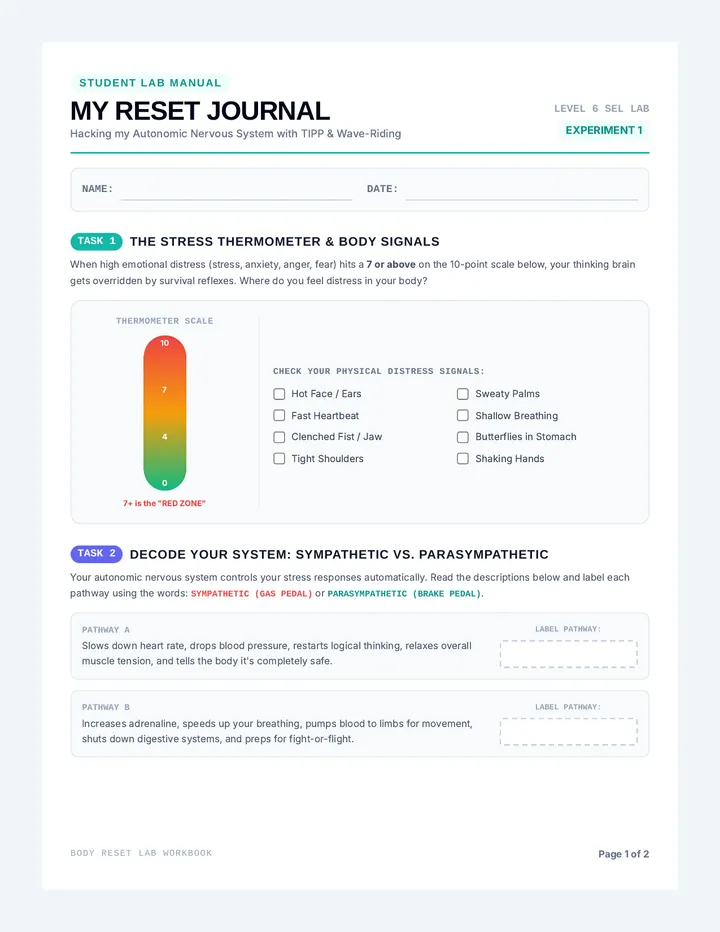
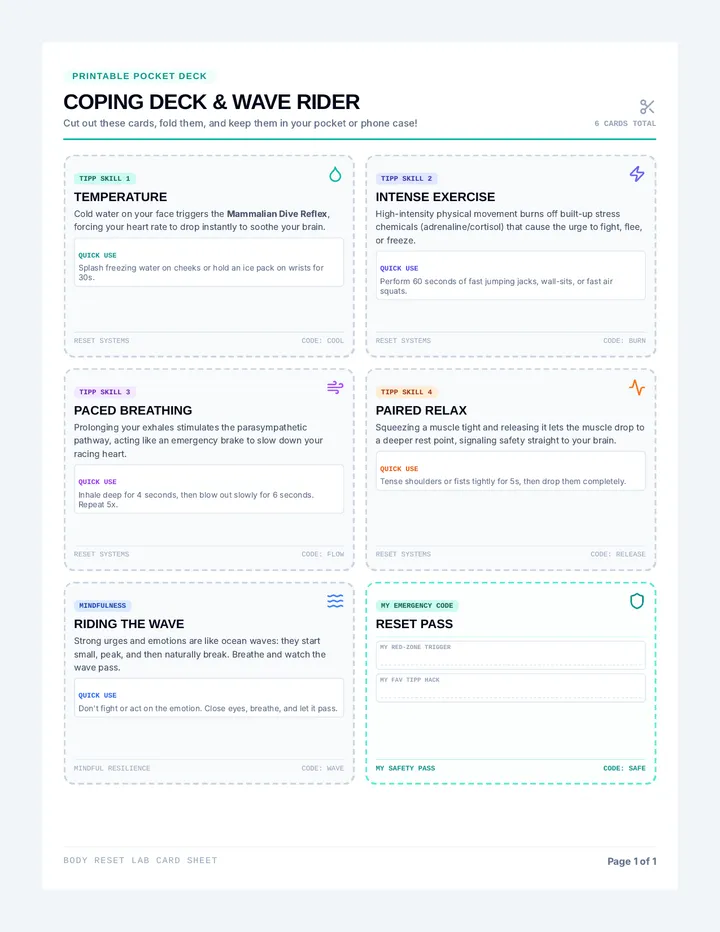
A 6th-grade Social-Emotional Learning (SEL) lesson introducing the DBT TIPP skills (Temperature, Intense exercise, Paced breathing, Paired muscle relaxation) as a physical 'body hack' to manage high emotional distress. Students learn how the autonomic nervous system works and build a personalized 'body reset' manual.
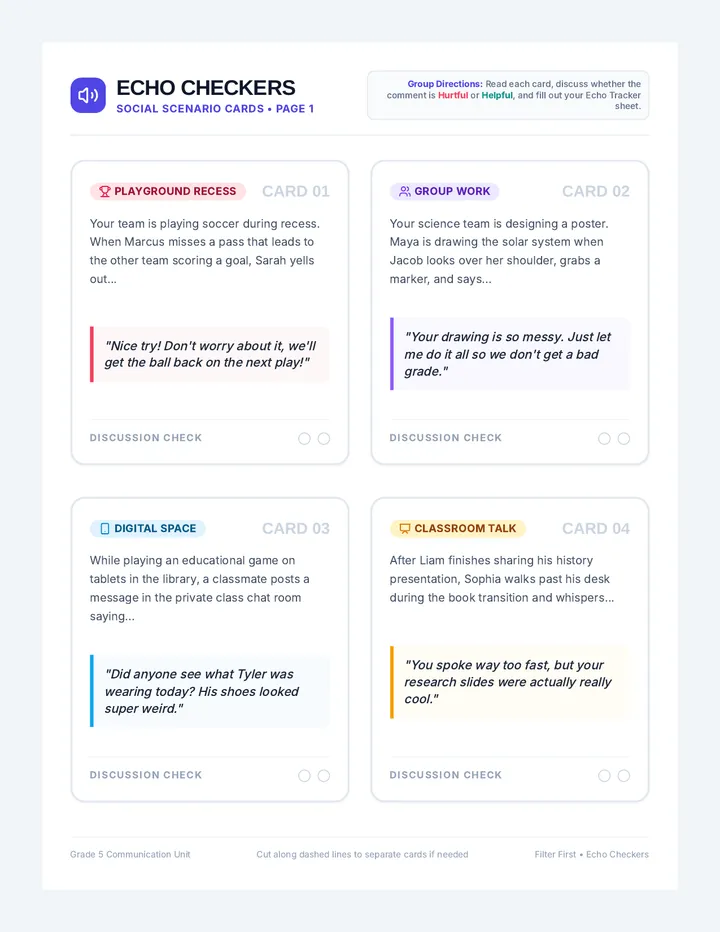
A lesson for 5th graders to analyze peer communication across recess, group work, and digital settings. Students learn to distinguish between helpful and hurtful comments and practice constructive reframing.
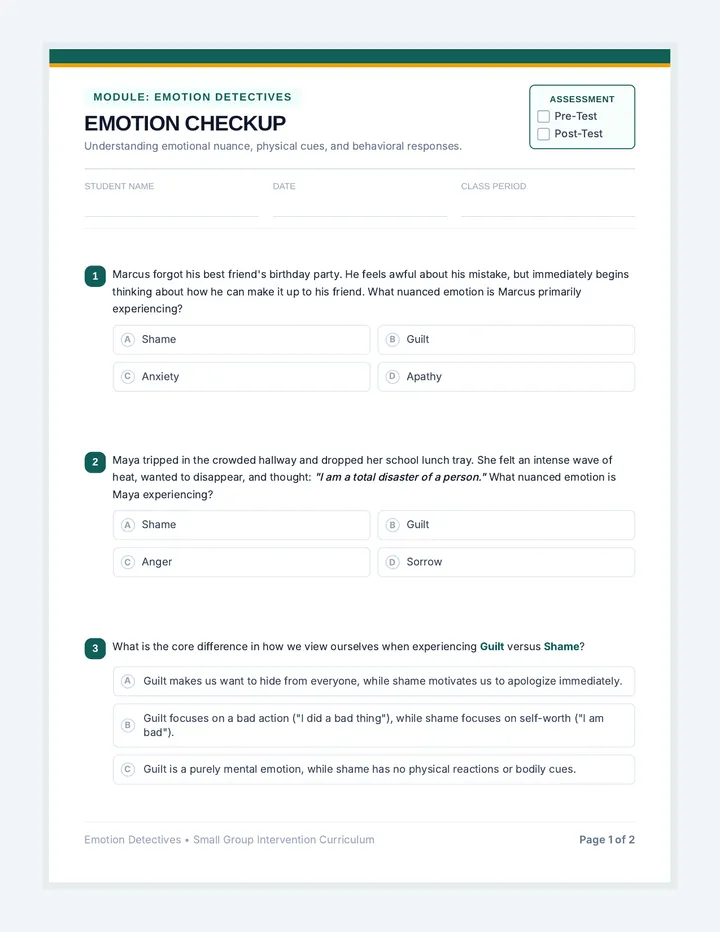
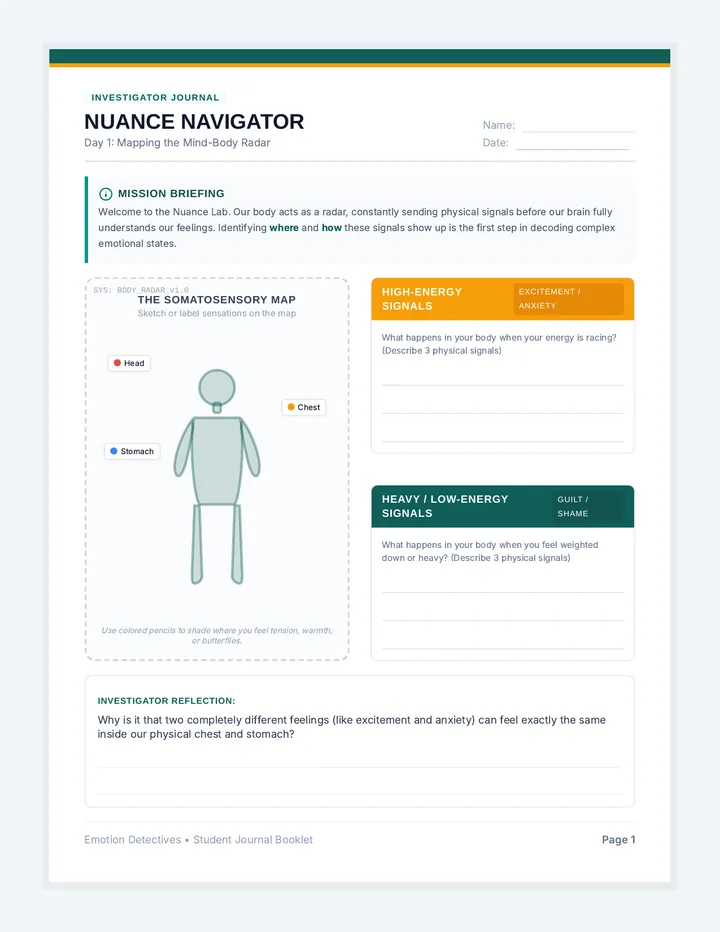
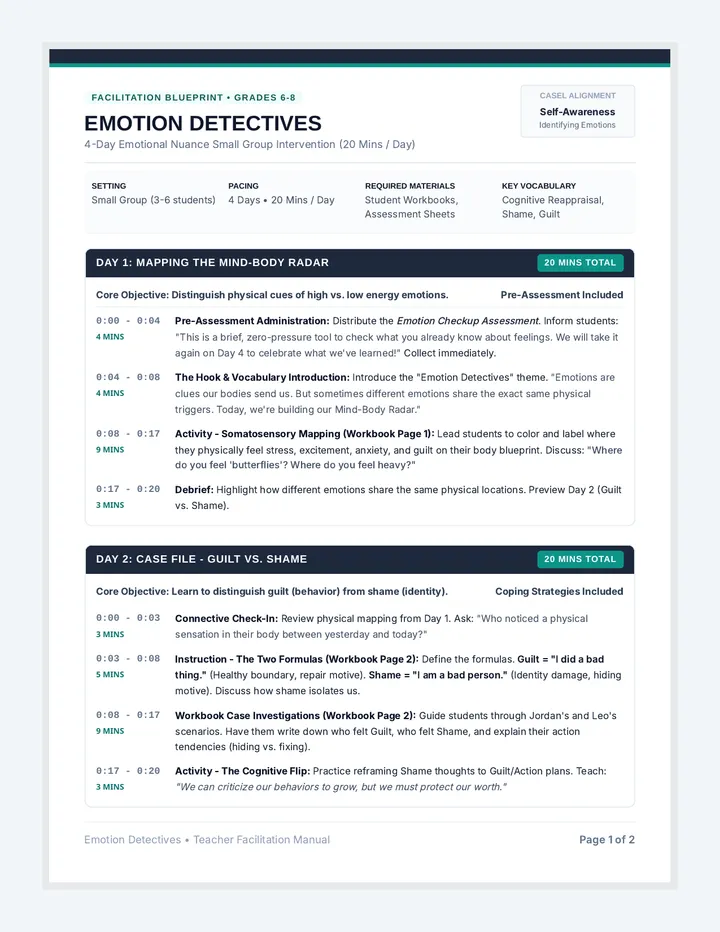
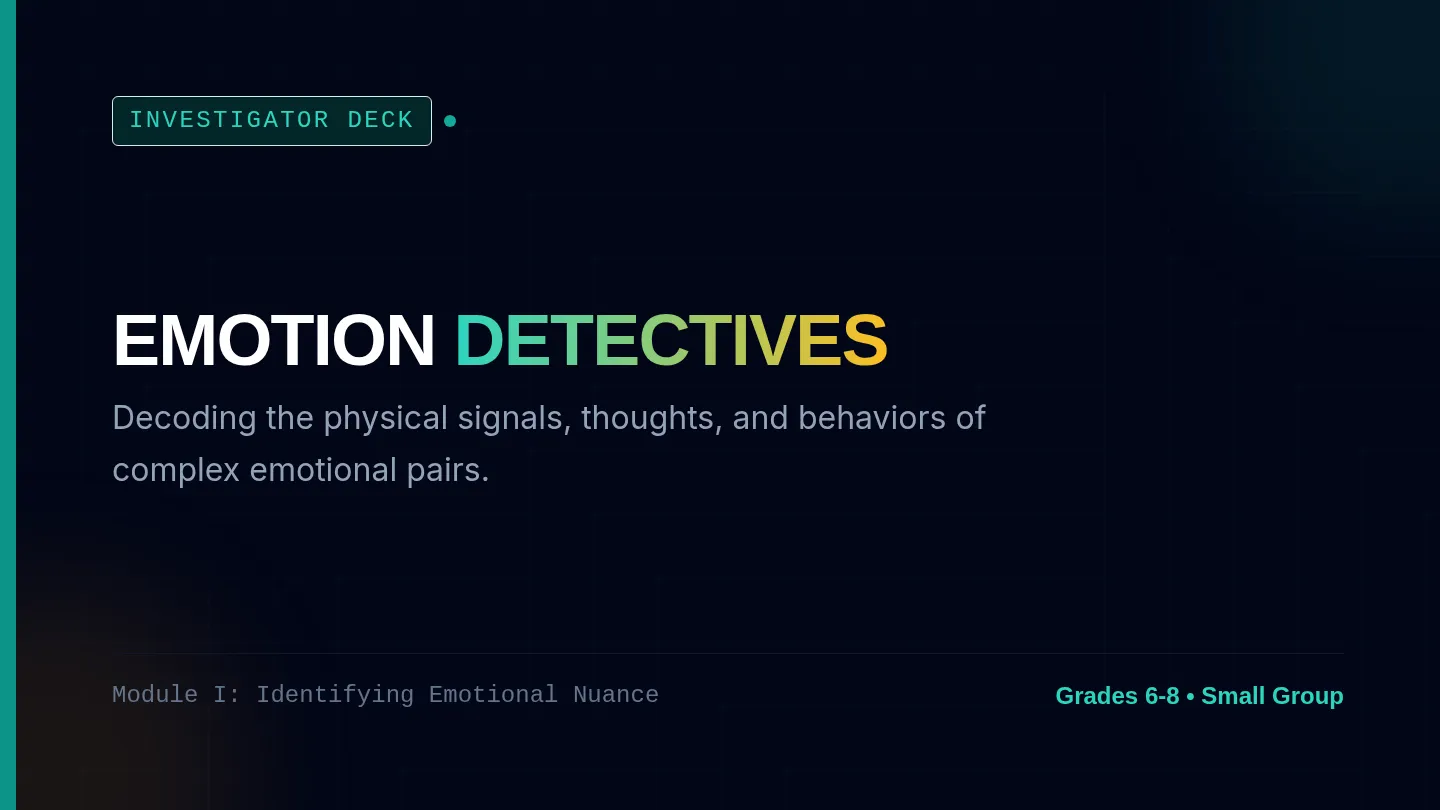
A 4-day small group intervention for grades 6-8 focusing on self-awareness and emotional nuance. Students explore the physical, cognitive, and behavioral distinctions between complex emotional pairs like guilt versus shame and excitement versus anxiety.
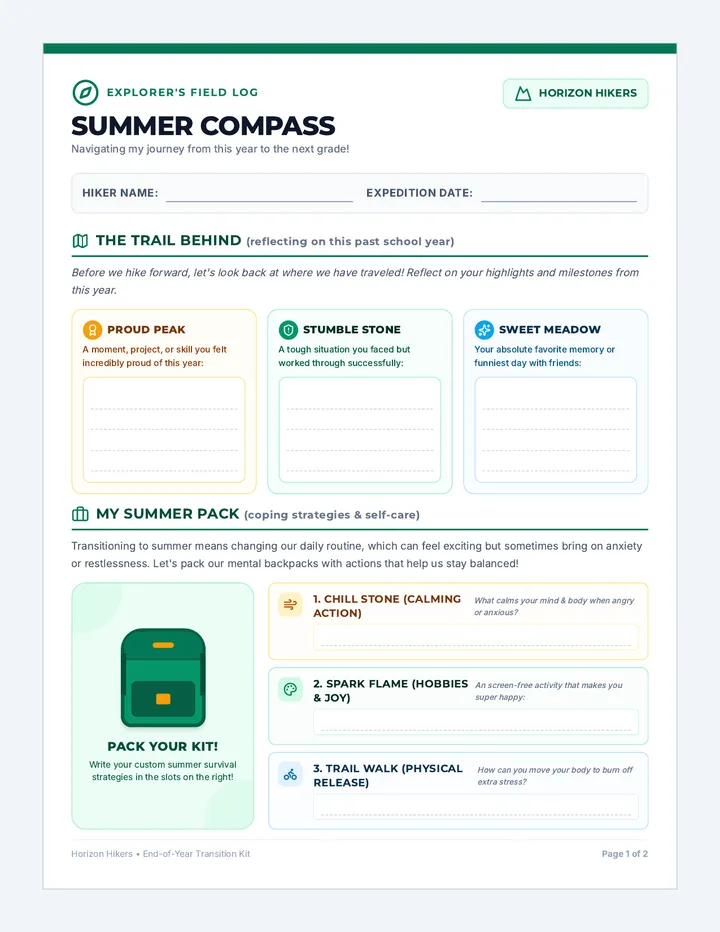
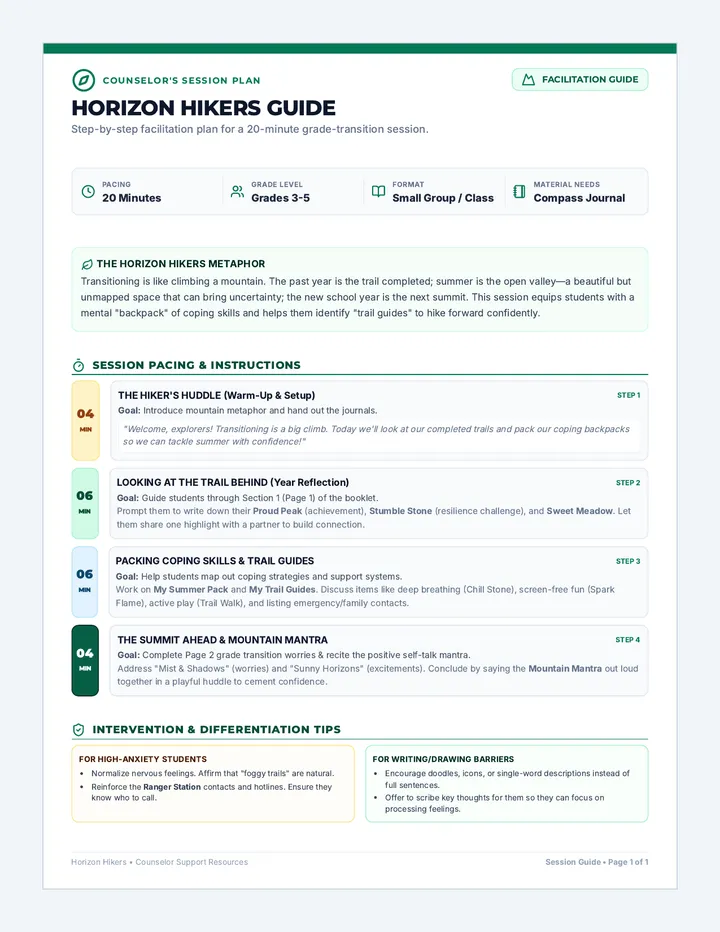
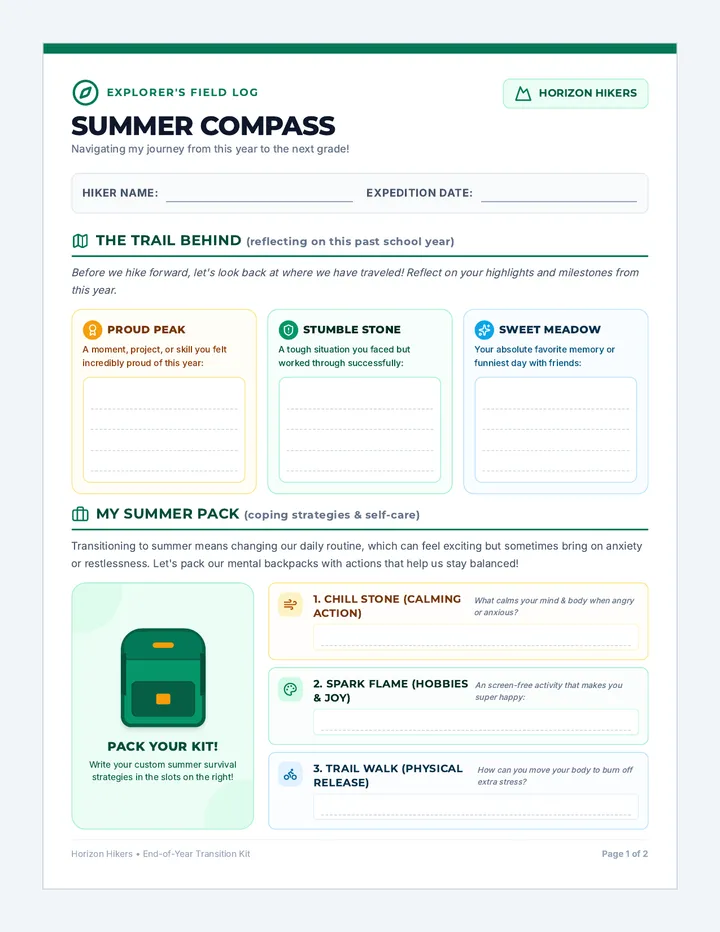
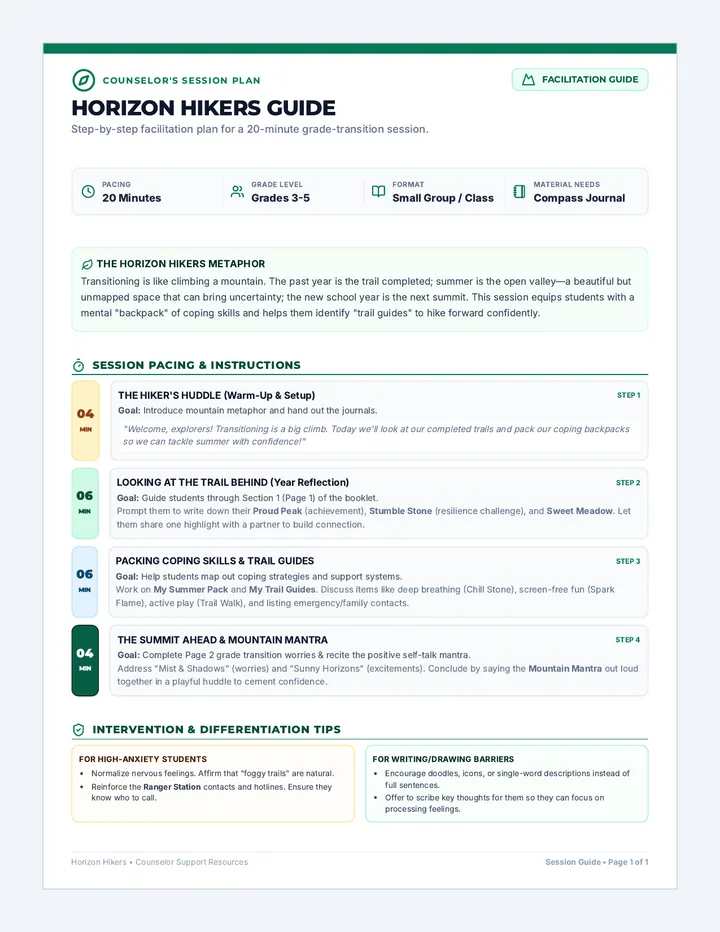
A supportive transition lesson for upper elementary students to reflect on the past year, create a visual coping plan for summer, and build confidence for entering the next grade.
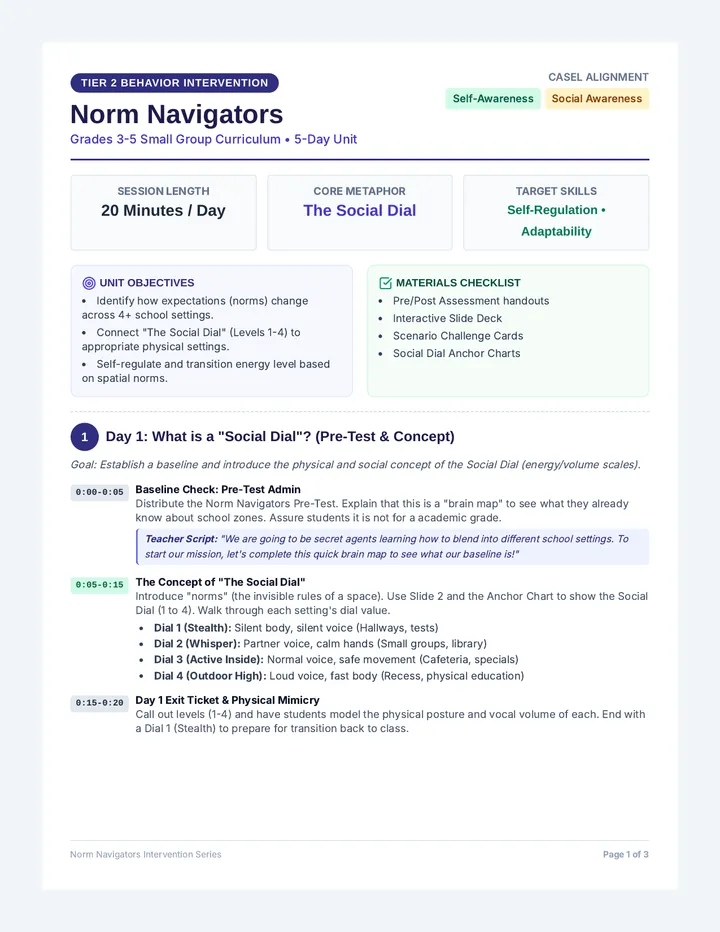
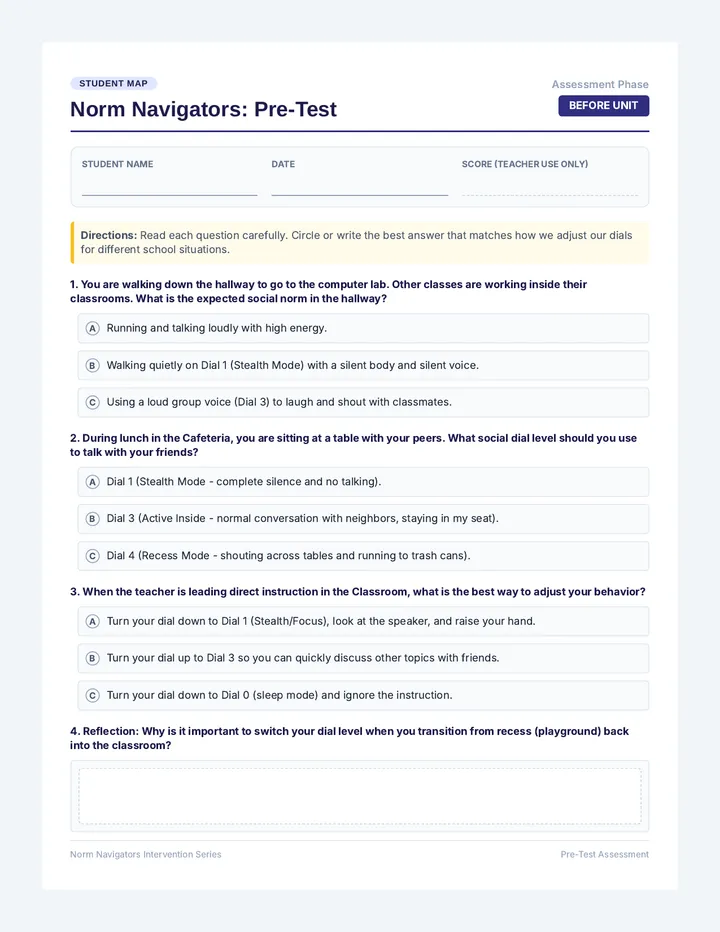
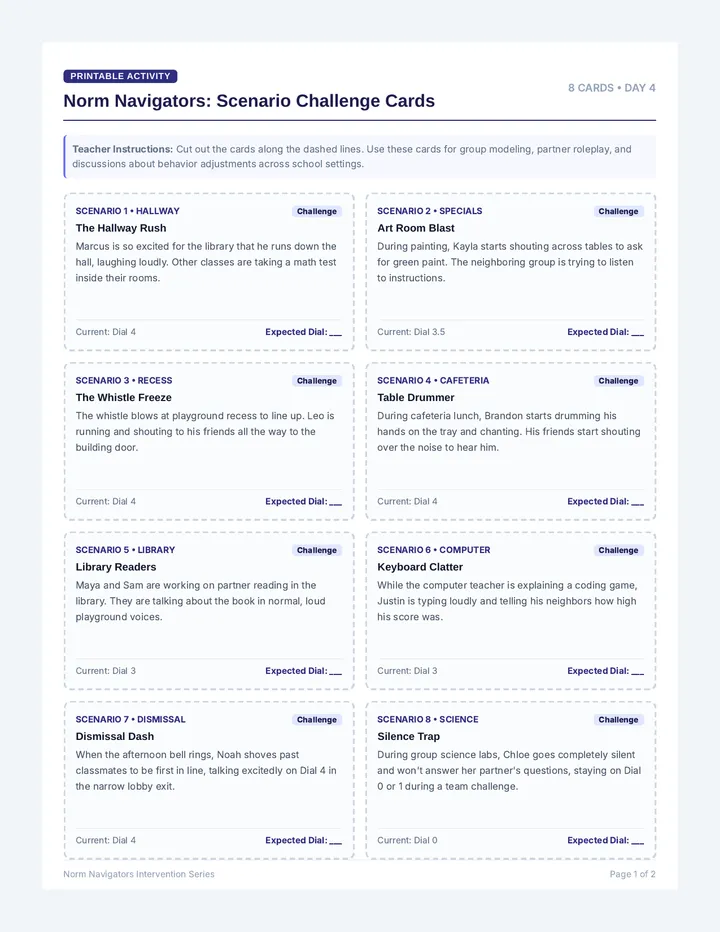
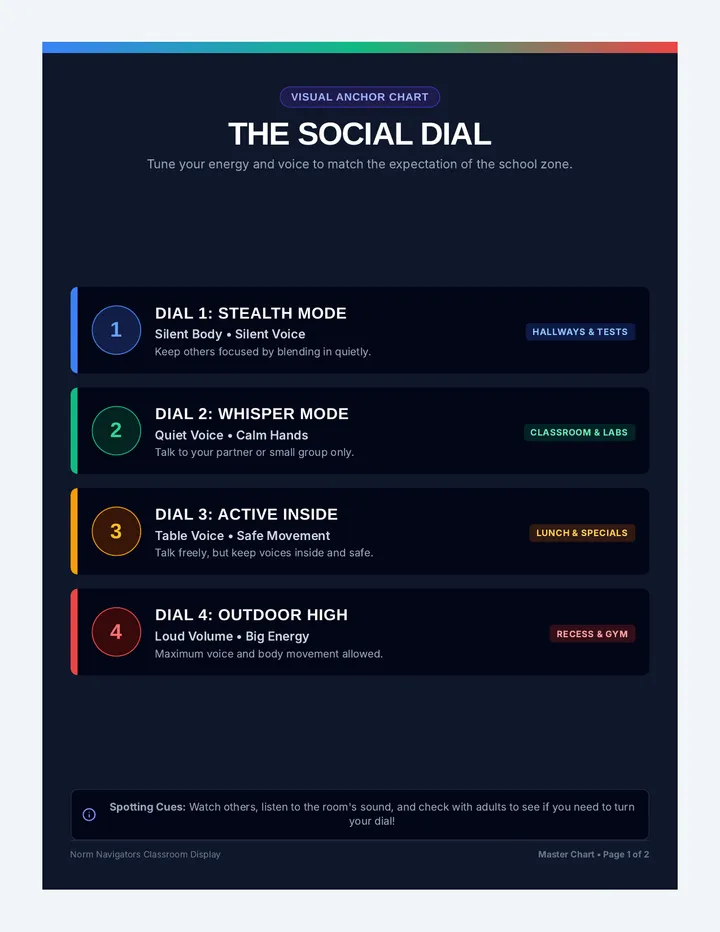
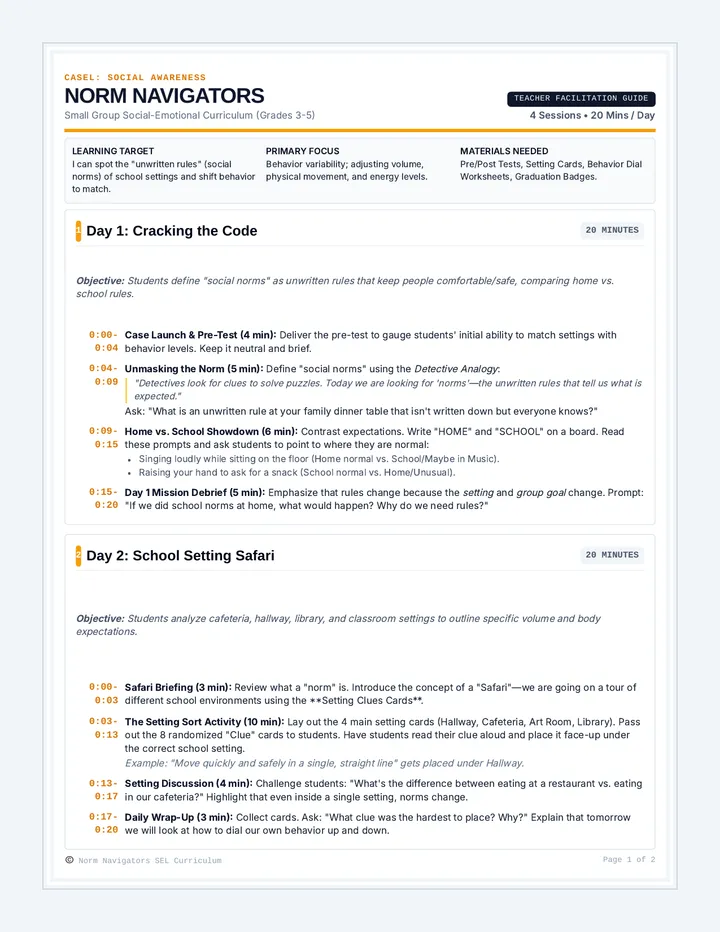
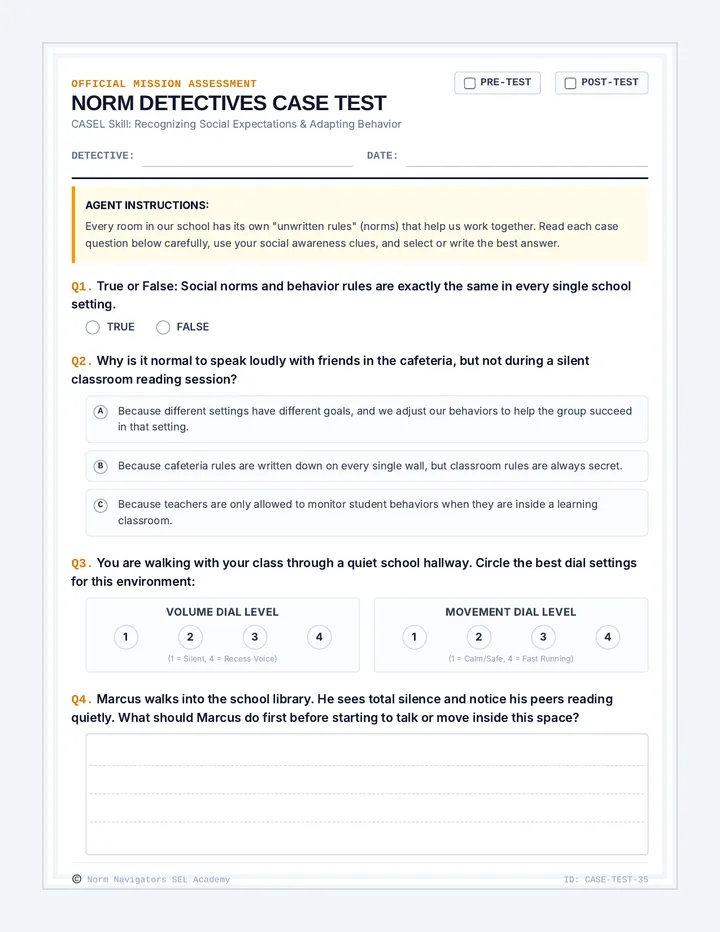
A 5-day small group Tier 2 intervention lesson designed to teach grades 3-5 students how to identify social norms across various school environments and regulate their behaviors accordingly. Includes structured daily facilitation guides, pre/post assessments, slide presentations, challenge cards, and anchor charts.
Students complete their post-test, demonstrate behavior-shifting skills in a scenario-based card challenge, and celebrate their growth with a graduation badge.
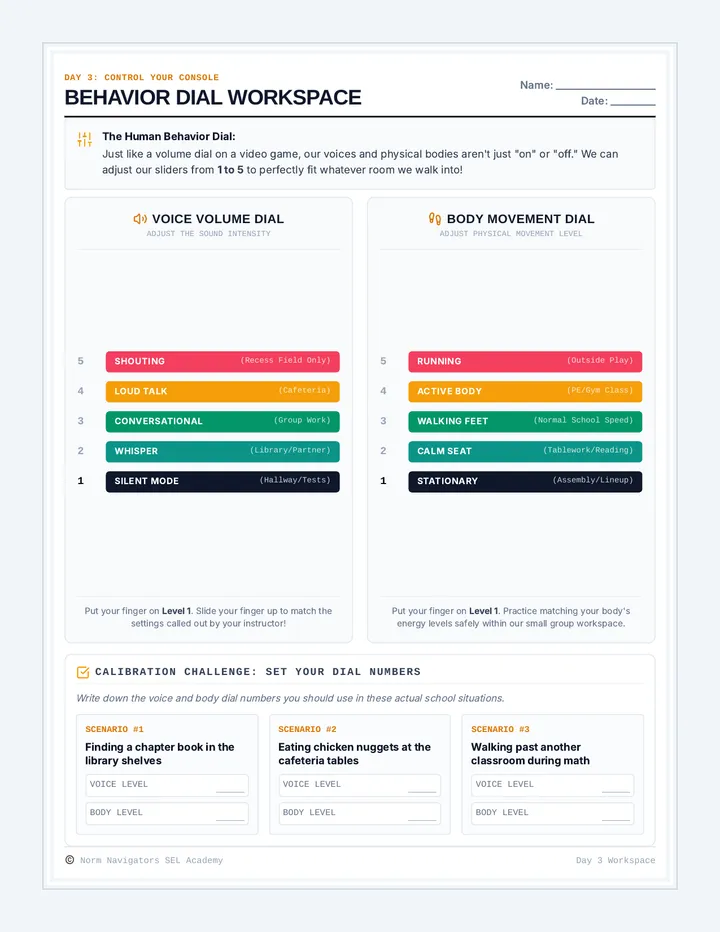
Students practice using a "Behavior Dial" to physically and vocally adjust their volume, movement, and energy levels to match different school environments.
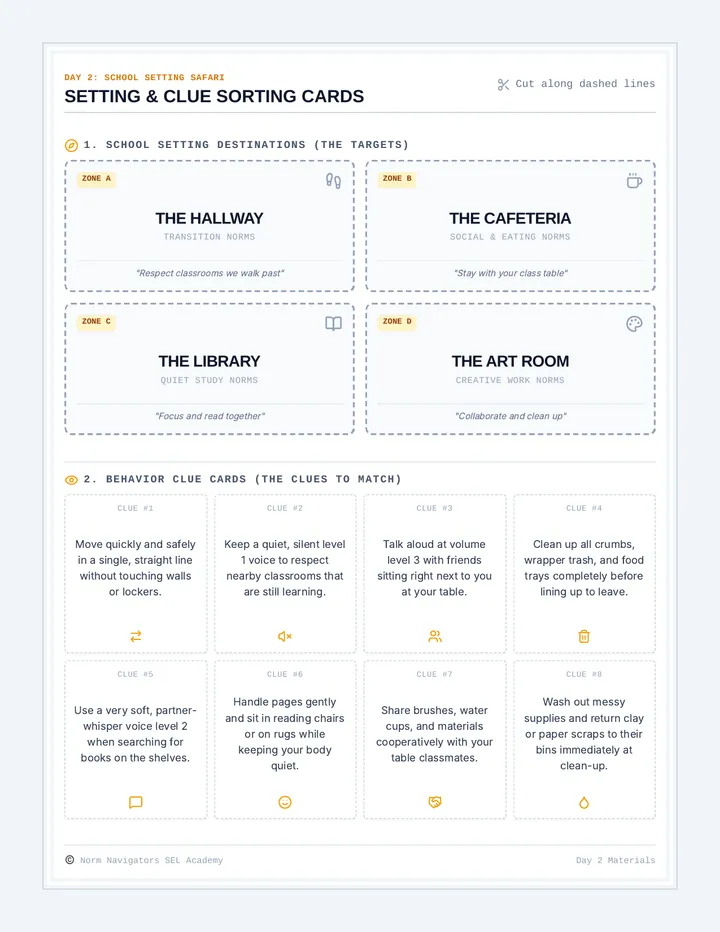
Students examine specific school settings like the hallway, cafeteria, and specials classes to map out their unique expectations and unwritten rules.
Students are introduced to the concept of social norms as unwritten rules that help groups work together, comparing how norms change between home and school.
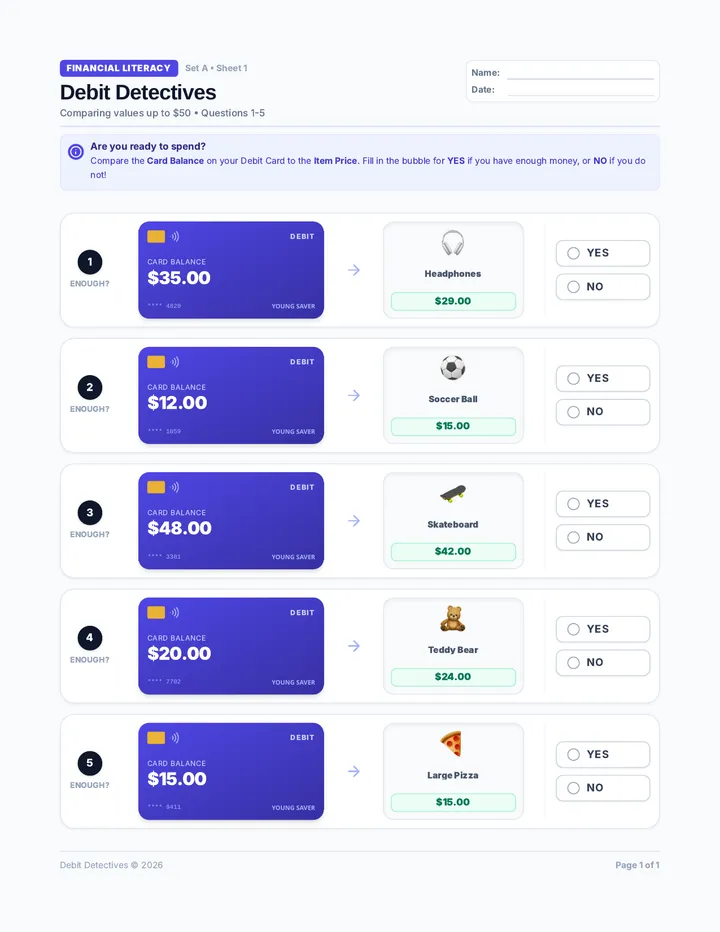
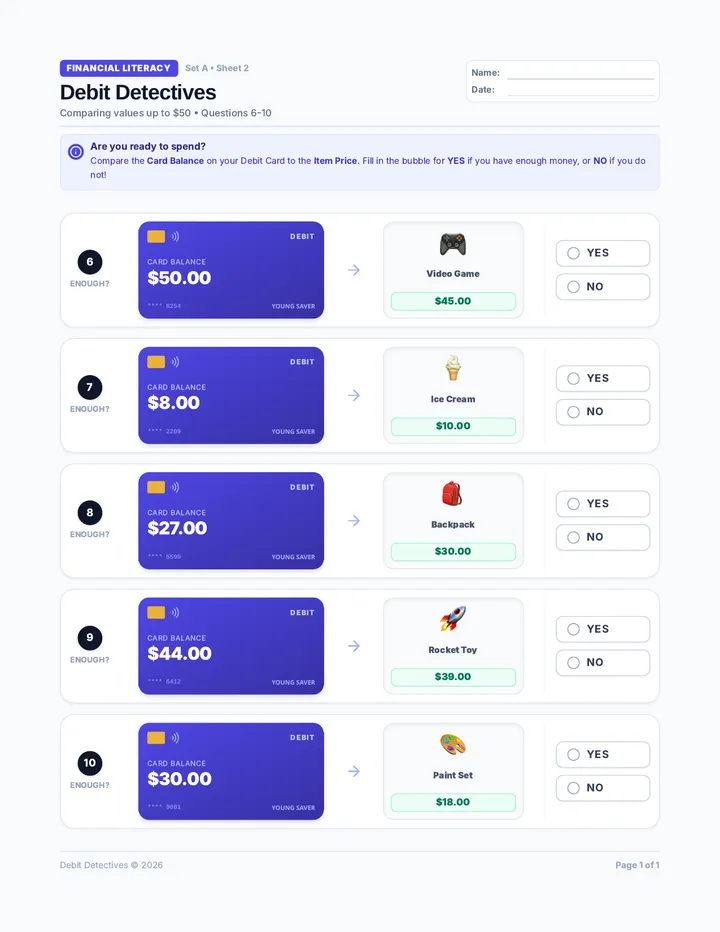
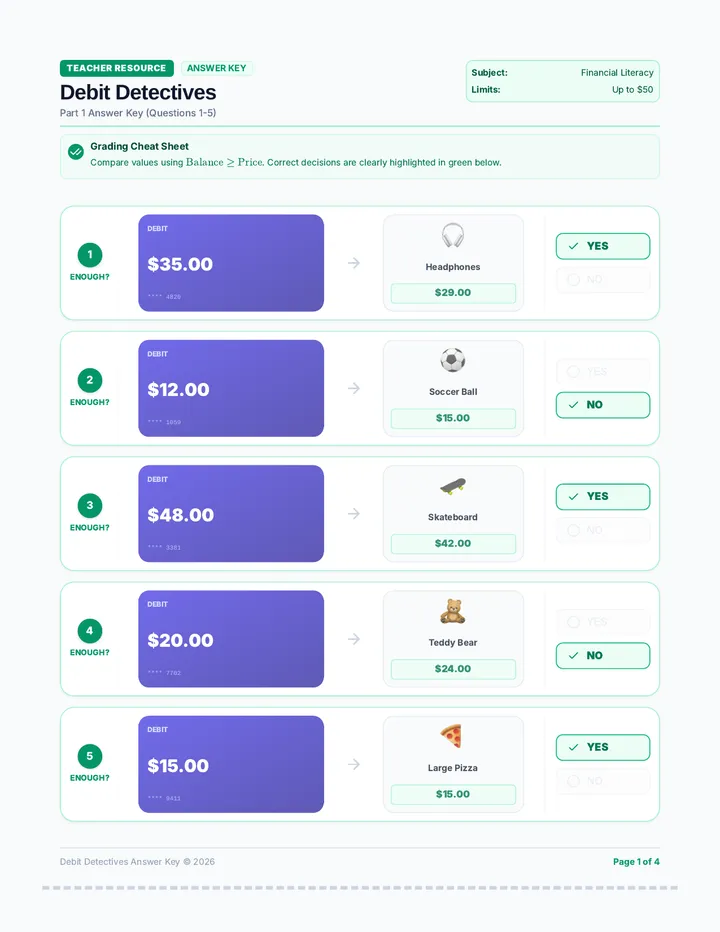
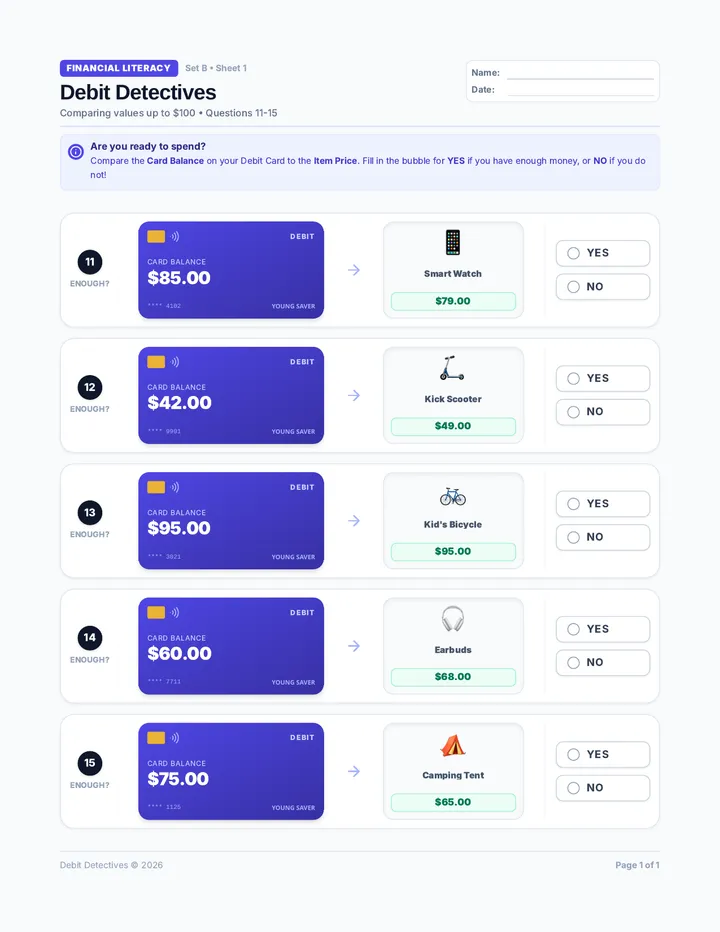
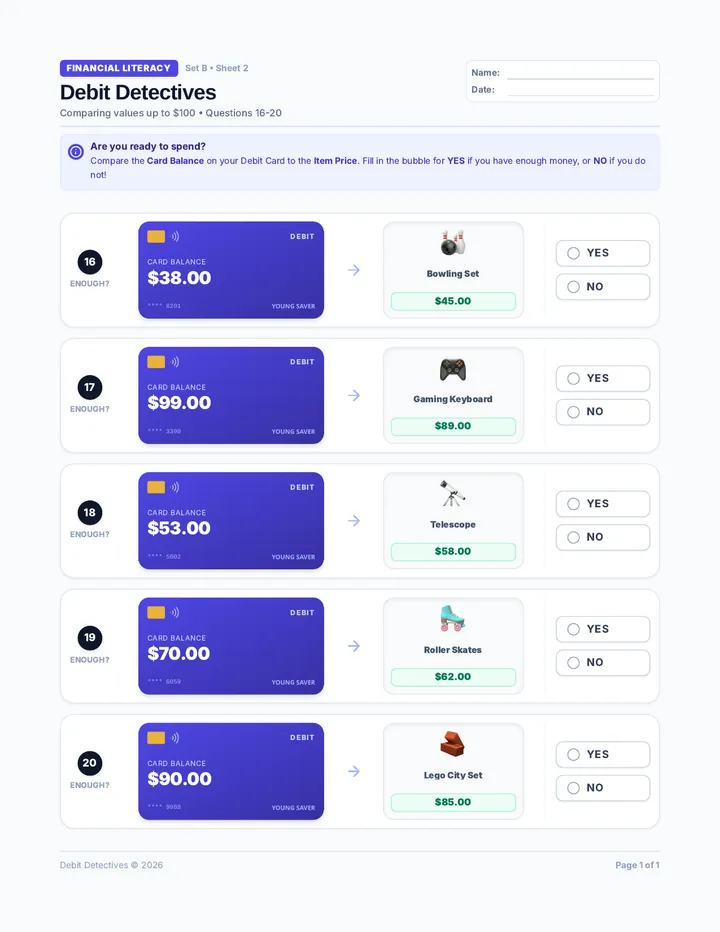
A double-digit financial literacy lesson where students compare debit card balances with item prices up to $50. Students practice decision-making by determining whether they have enough funds to complete various transactions.
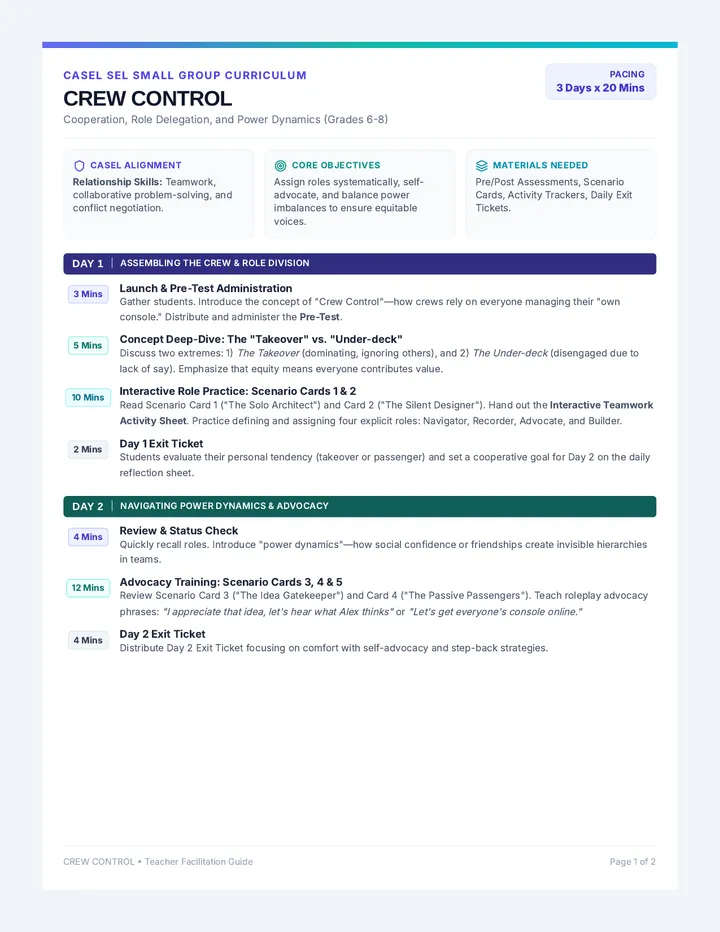
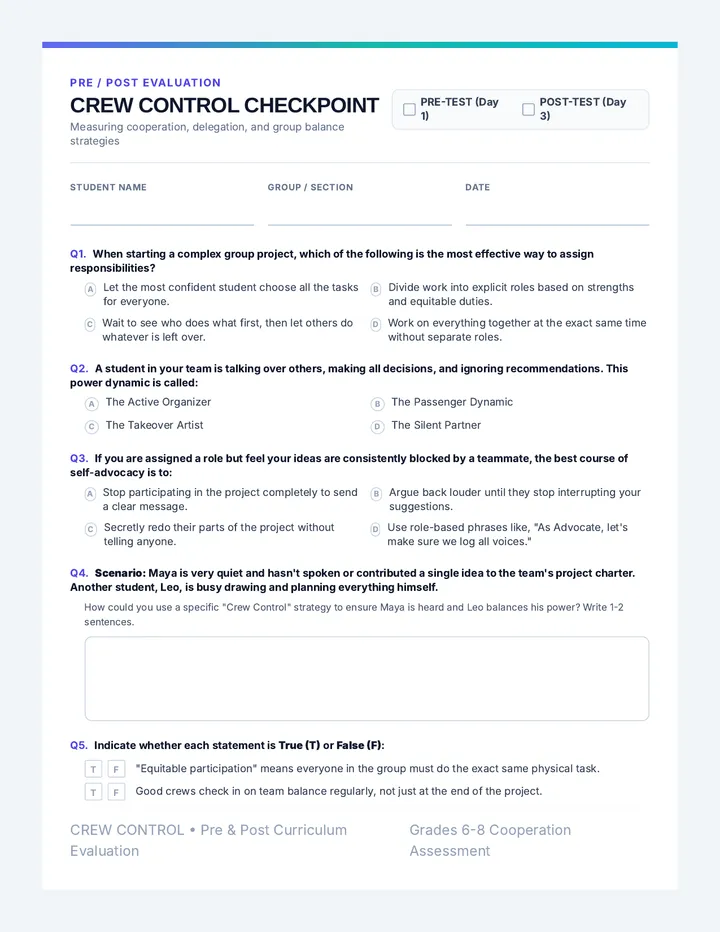
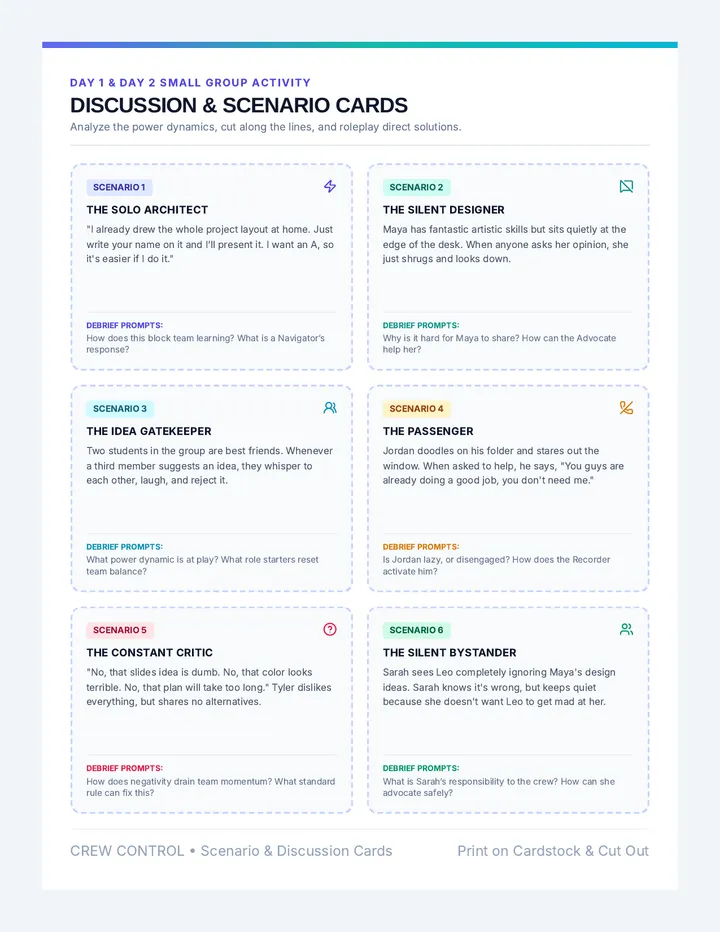
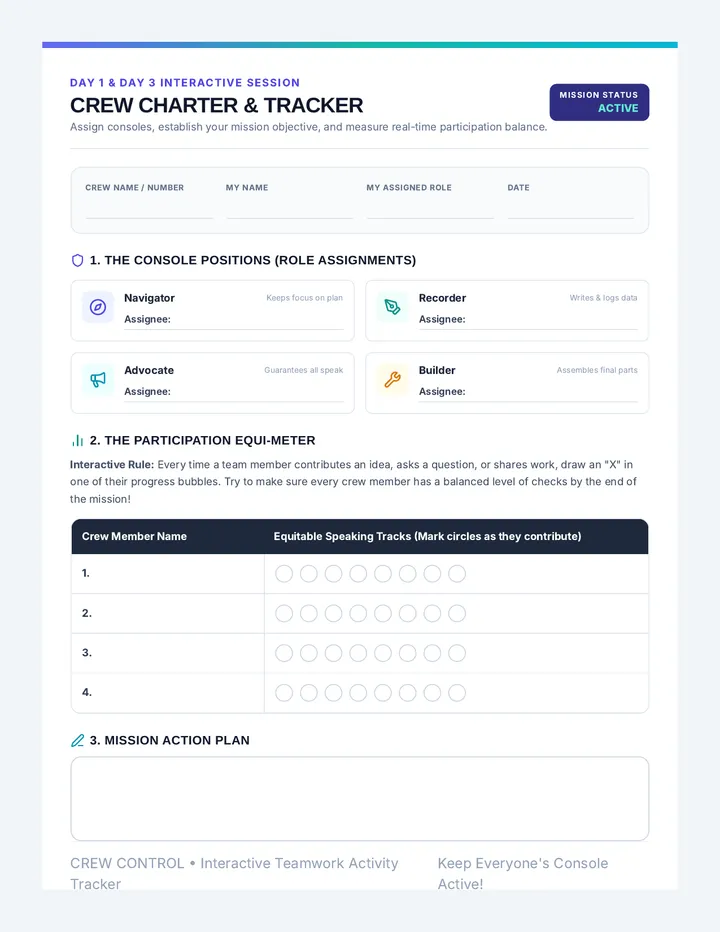
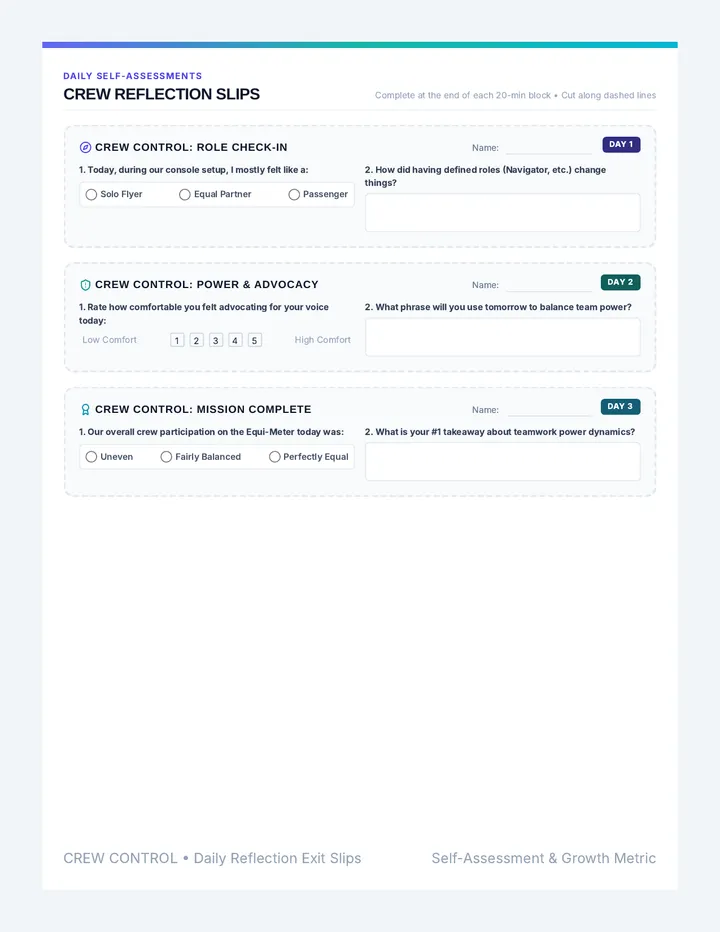
A cohesive 3-day small group curriculum that teaches middle school students how to coordinate project responsibilities, self-advocate, and address dominance or passivity to ensure equitable participation.
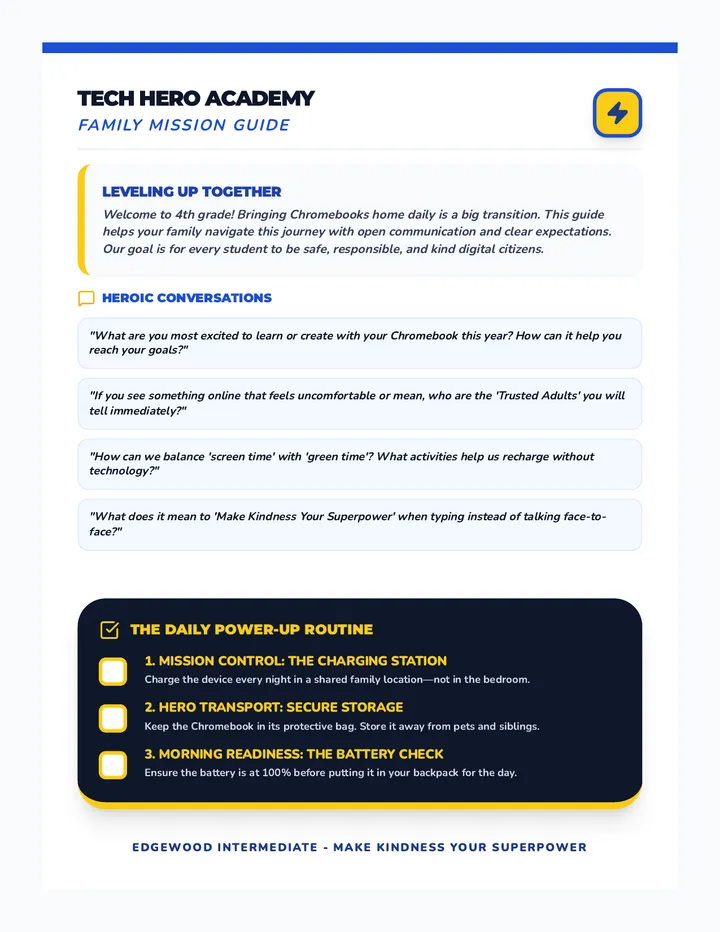
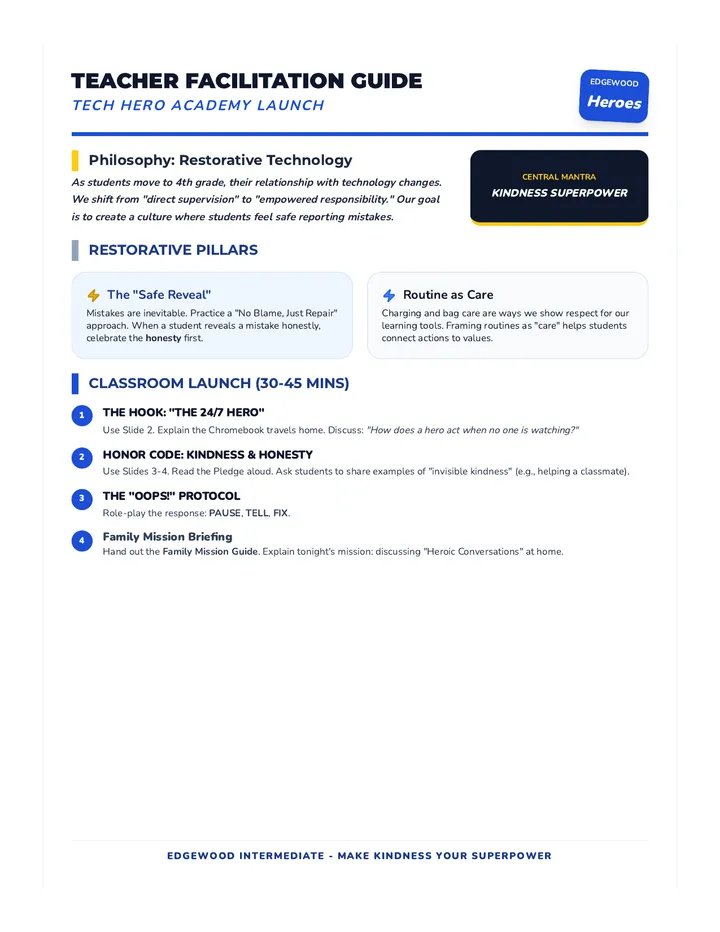
A lesson designed to transition 3rd grade students to 4th grade technology responsibilities, focusing on restorative practices, digital citizenship, and the 'Make Kindness Your Superpower' initiative.
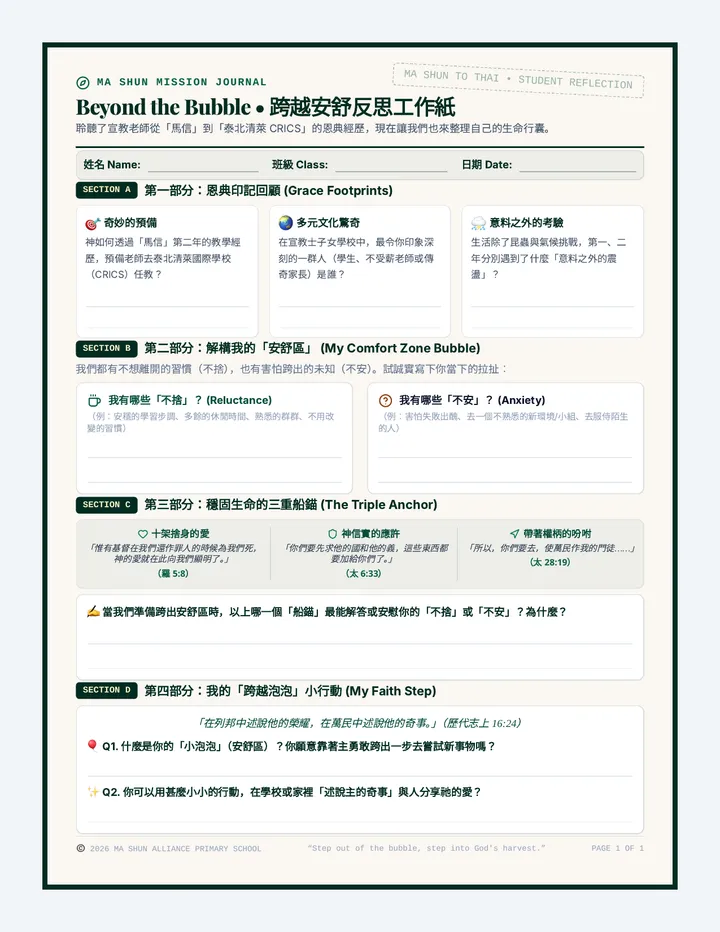
A testimony-based lesson exploring the journey of stepping out of one's comfort zone, overcoming fears through faith, and embracing God's mission in Thailand.
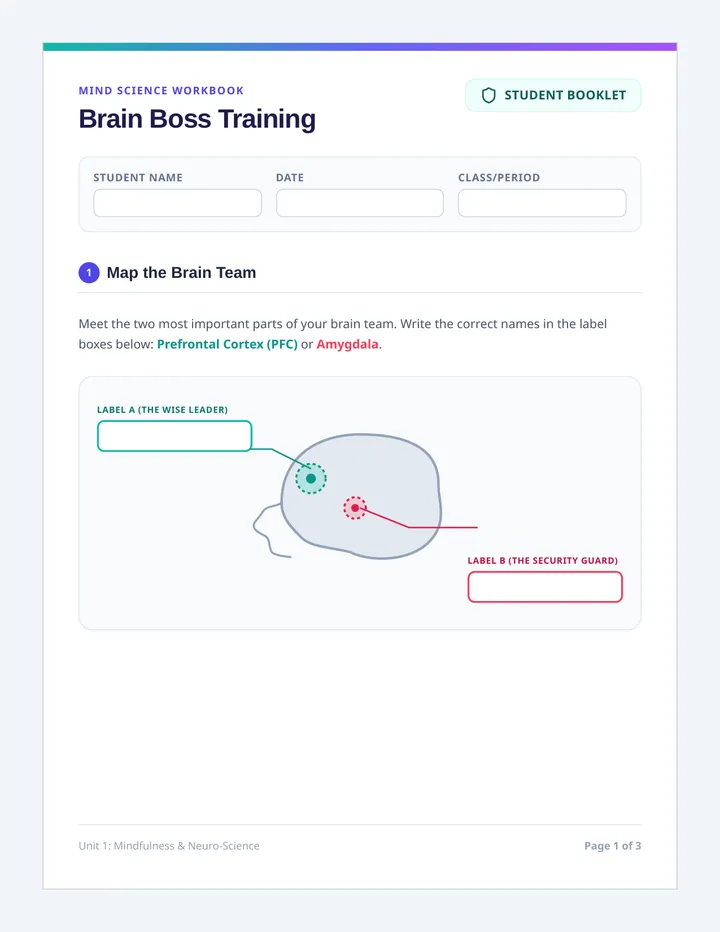
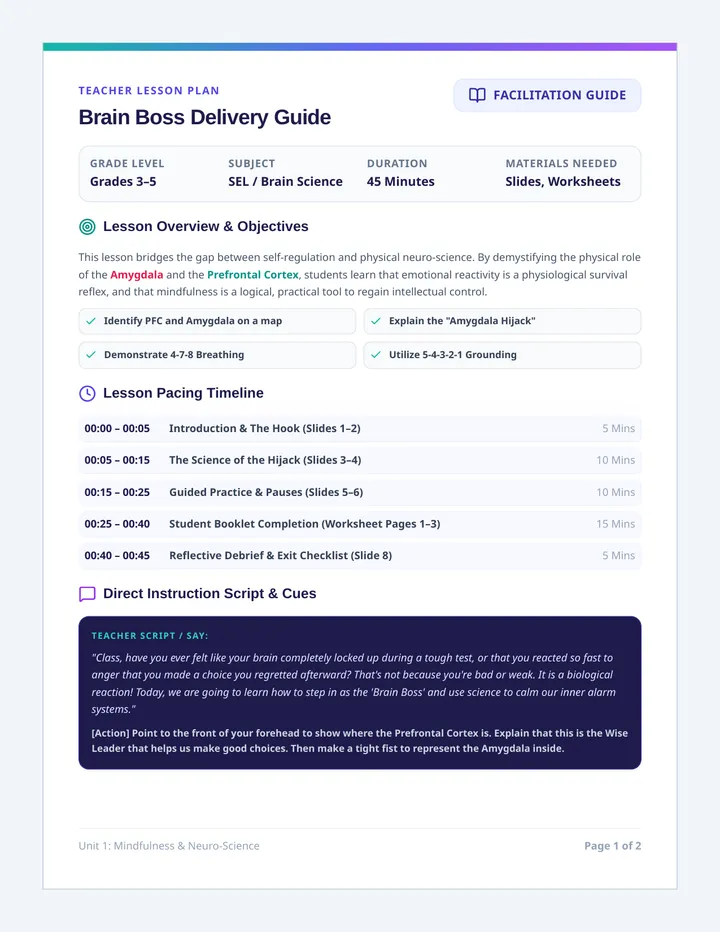
An explicit teaching lesson for Upper Elementary (grades 3-5) that introduces mindfulness through brain science, explaining the roles of the amygdala and prefrontal cortex, and provides concrete self-regulation strategies.