Peer Pressure Lesson Plan
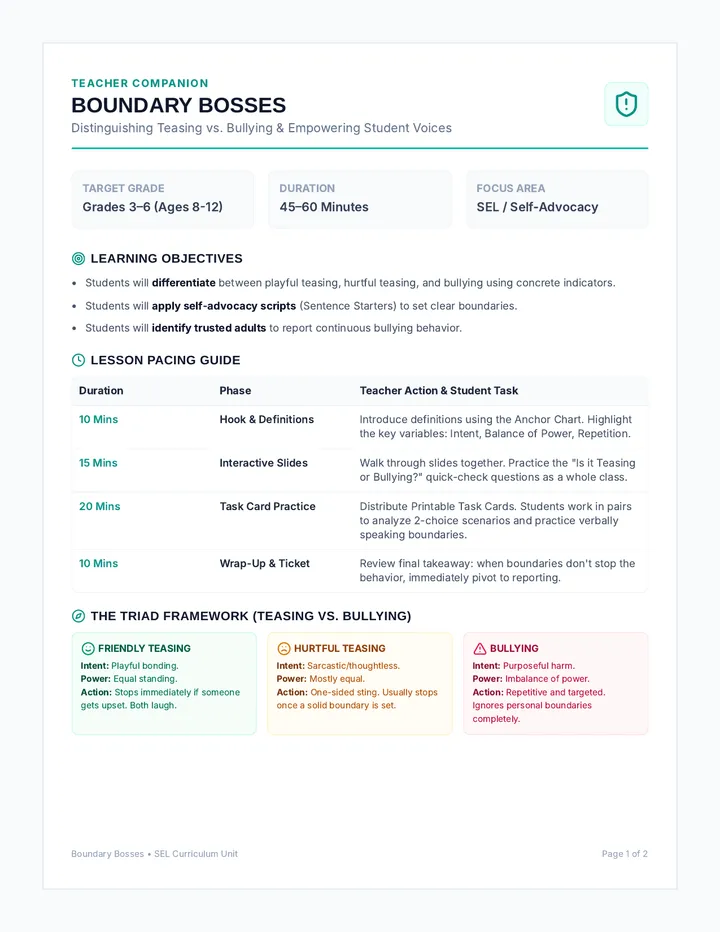
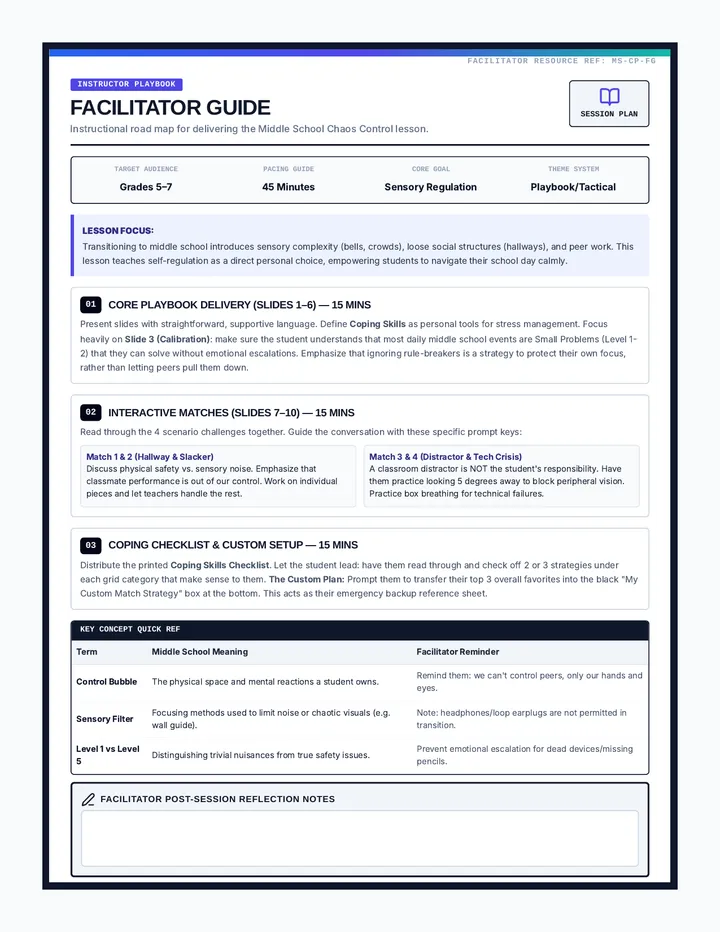
Teacher lesson plan for teaching middle schoolers how to handle peer pressure using superhero-themed communication strategies.
Plan de Lección Presión de Grupo
Plan de lección en español para enseñar a estudiantes de secundaria cómo manejar la presión de grupo utilizando estrategias de comunicación efectivas.
Peer Pressure Presentation
Visual presentation for instruction on identifying and resisting peer pressure using superhero-themed strategies.
Presentación Presión de Grupo
Presentación visual para la instrucción sobre la identificación y resistencia a la presión de grupo utilizando estrategias de superhéroes.
Peer Pressure Warm Up Worksheet
Initial reflection worksheet for students to share their thoughts on peer pressure.
Actividad de Calentamiento Presión de Grupo
Actividad de calentamiento en español para que los estudiantes compartan sus pensamientos iniciales sobre la presión de grupo.
Peer Pressure Discussion Guide
Discussion guide for exploring the nuances of peer pressure and the challenges of saying no.
Discusión Presión de Grupo Guía
Guía de discusión en español para explorar los matices de la presión de grupo y los desafíos de decir no.
Saying No Activity Scenarios
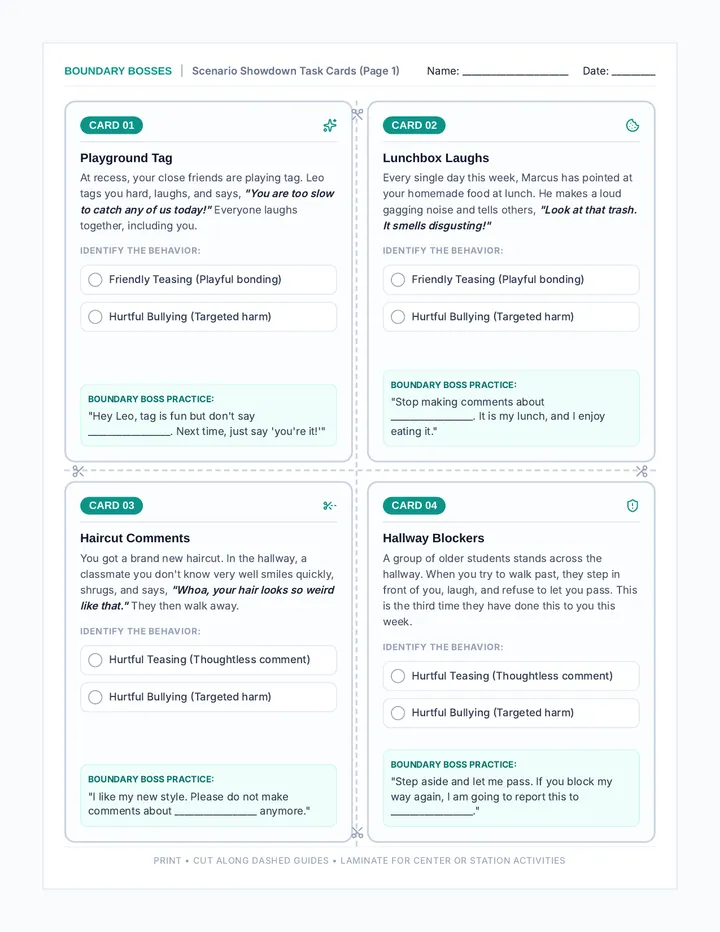
Scenario-based role-play activity for students to practice refusal strategies in realistic situations.
Actividad de Escenarios Presión de Grupo
Actividad de escenarios en español para que los estudiantes practiquen estrategias de rechazo en situaciones realistas.
The No Game Scenarios
Instructional game material with quick refusal scenarios to help students practice saying 'no' effectively.
El Juego del No Escenarios
El Juego del 'No' en español con escenarios rápidos para practicar el rechazo efectivo.
Peer Pressure Power Worksheet
Individual reflection worksheet for students to reinforce strategies for resisting negative peer pressure.
Hoja de Trabajo Poder de Decir No
Hoja de trabajo en español para reforzar las estrategias de resistencia a la presión de grupo negativa.
Peer Pressure Cool Down Ticket
Cool down exit ticket for students to reflect on their refusal strategies and self-confidence.
Actividad de Cierre Mi Superpoder No
Actividad de cierre en español como boleto de salida para que los estudiantes reflexionen sobre su superpoder de 'no'.
Peer Pressure Facilitation Script
Facilitation script for the teacher to guide students through the Peer Pressure lesson activities and discussions.
Guion Facilitación Presión de Grupo
Guion de facilitación en español para que el maestro guíe a los estudiantes a través de las actividades y discusiones de la lección sobre la presión de grupo.