Students conduct experiments with playback speed (WPM) and voice types to find their optimal listening comprehension zone, focusing on self-monitoring and auditory processing.
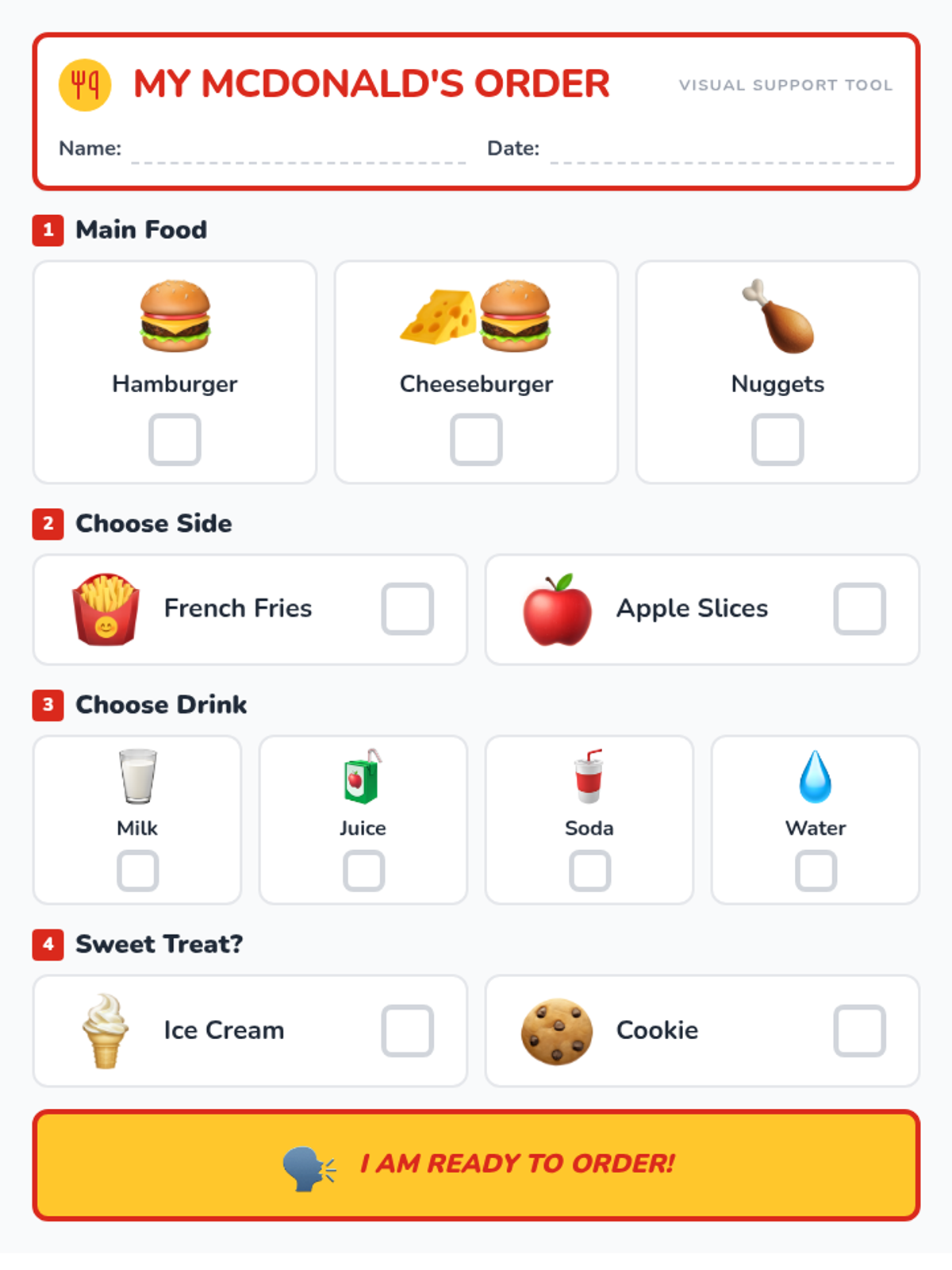
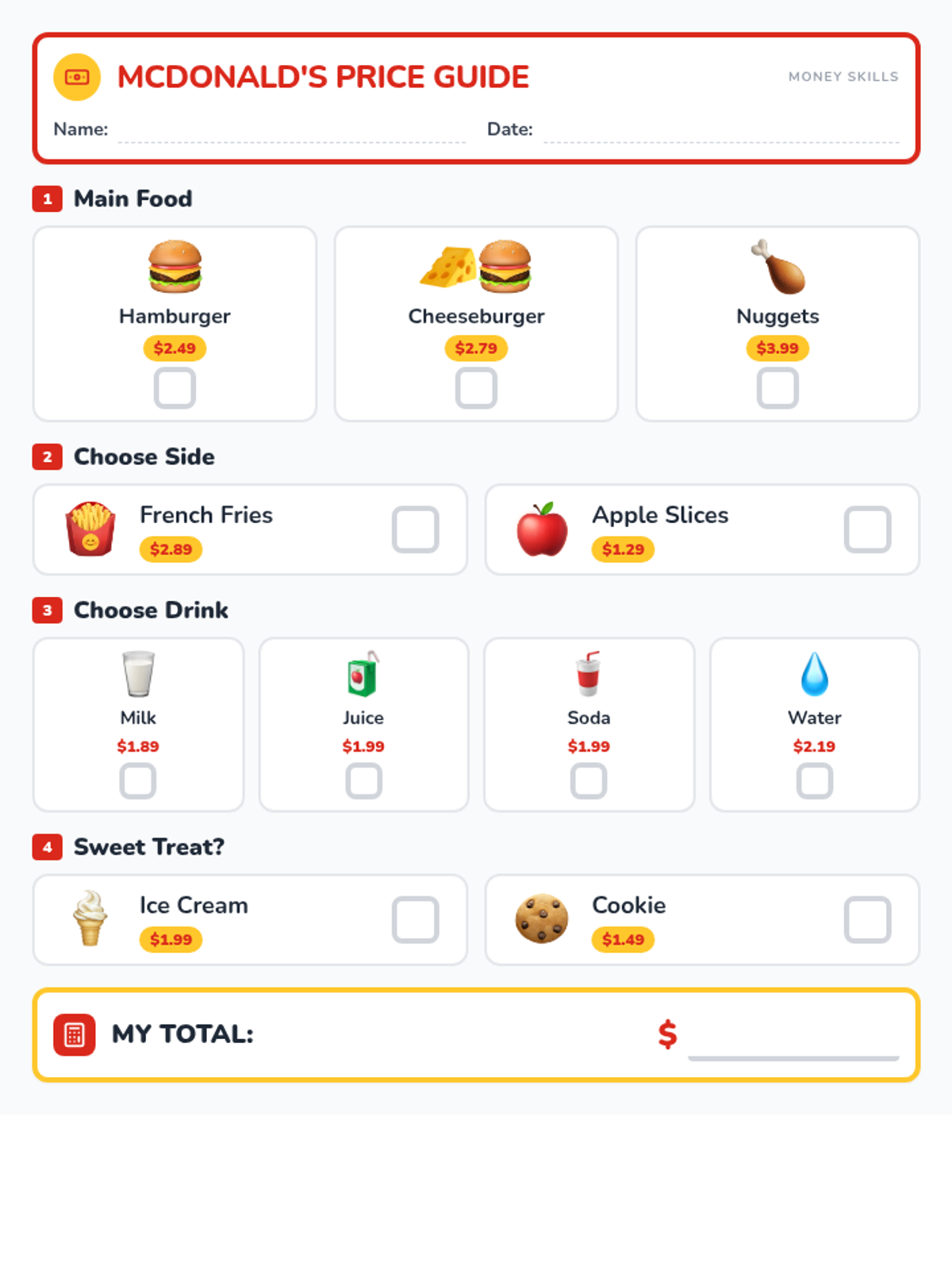
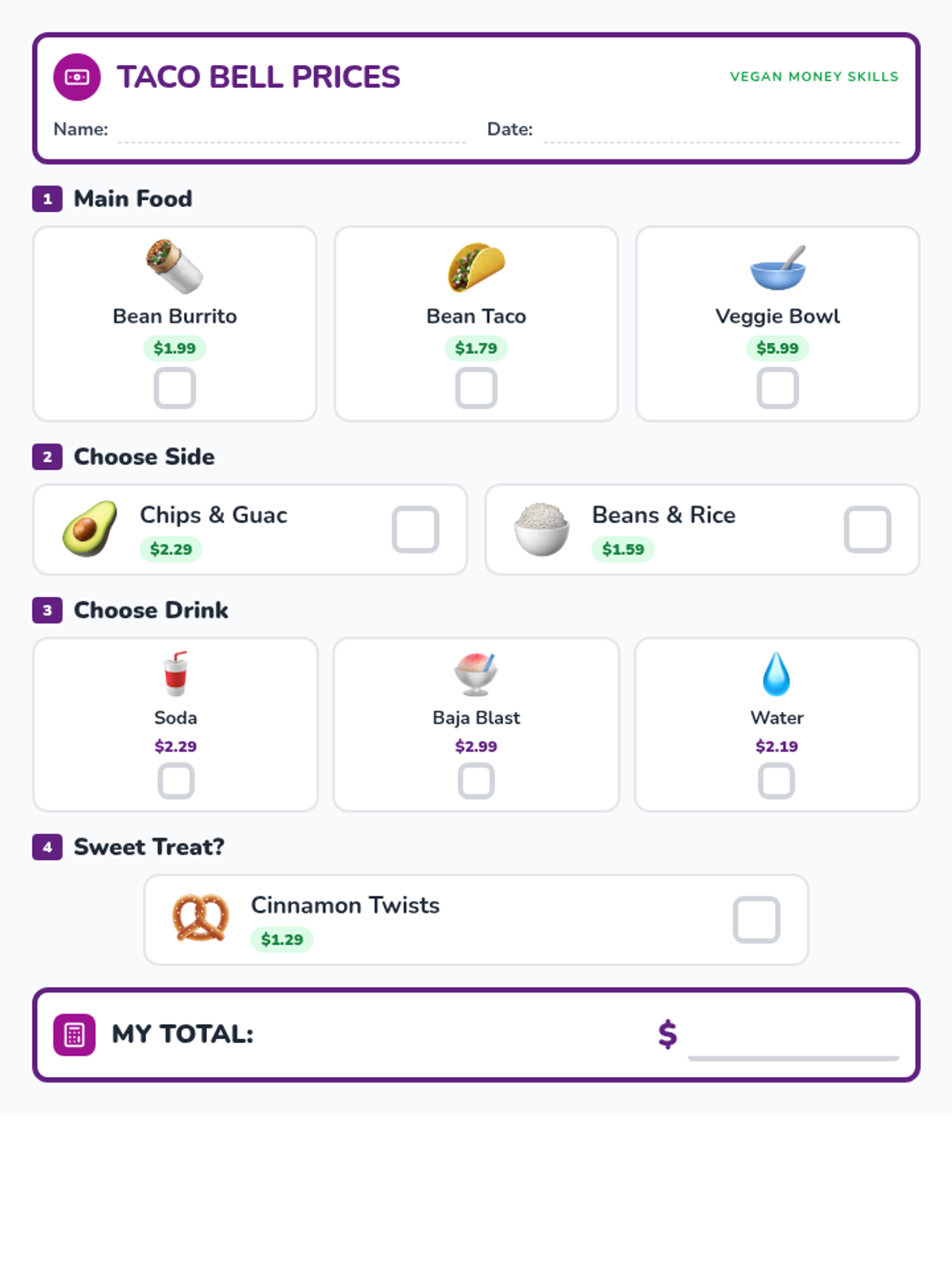
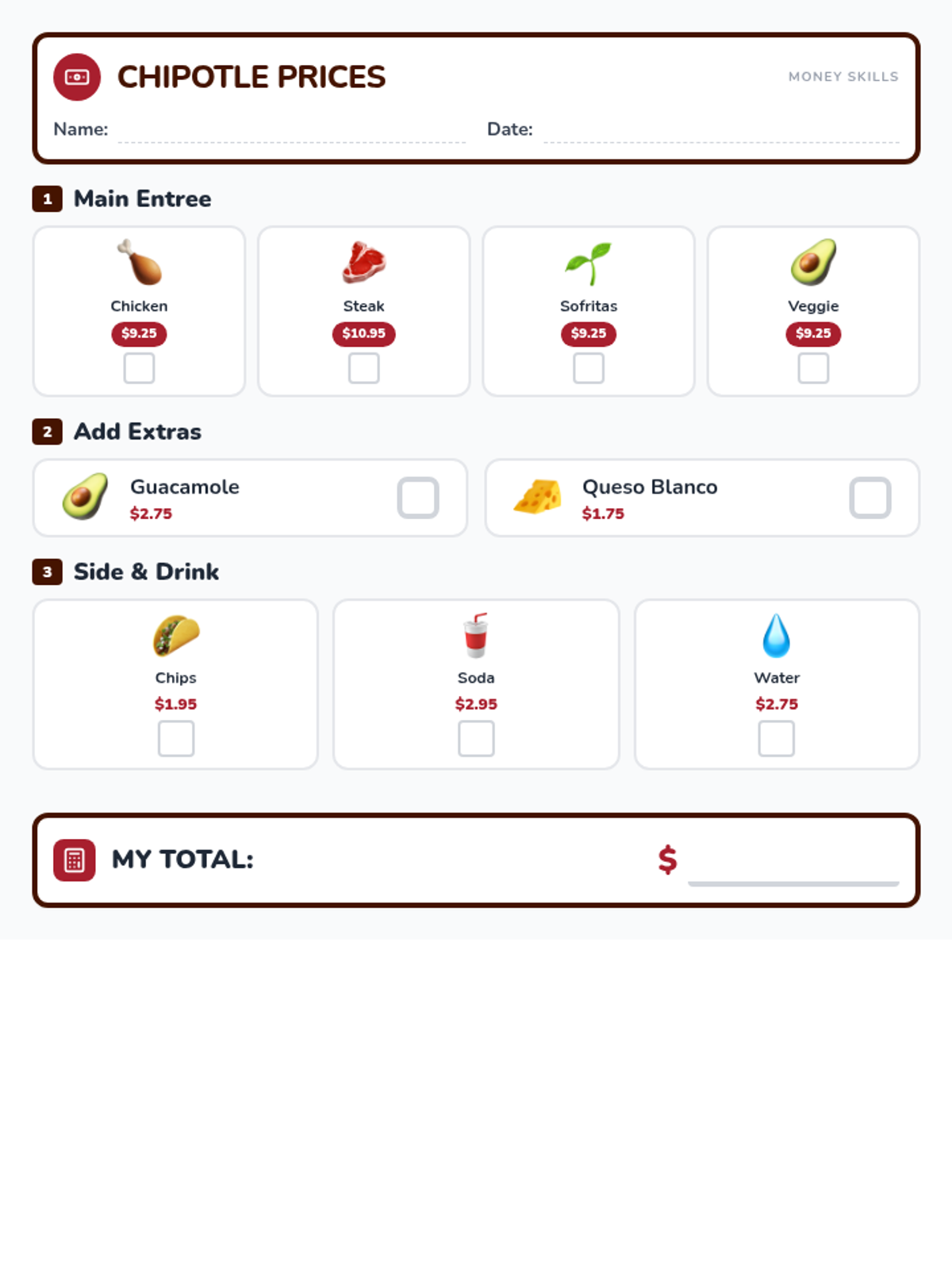
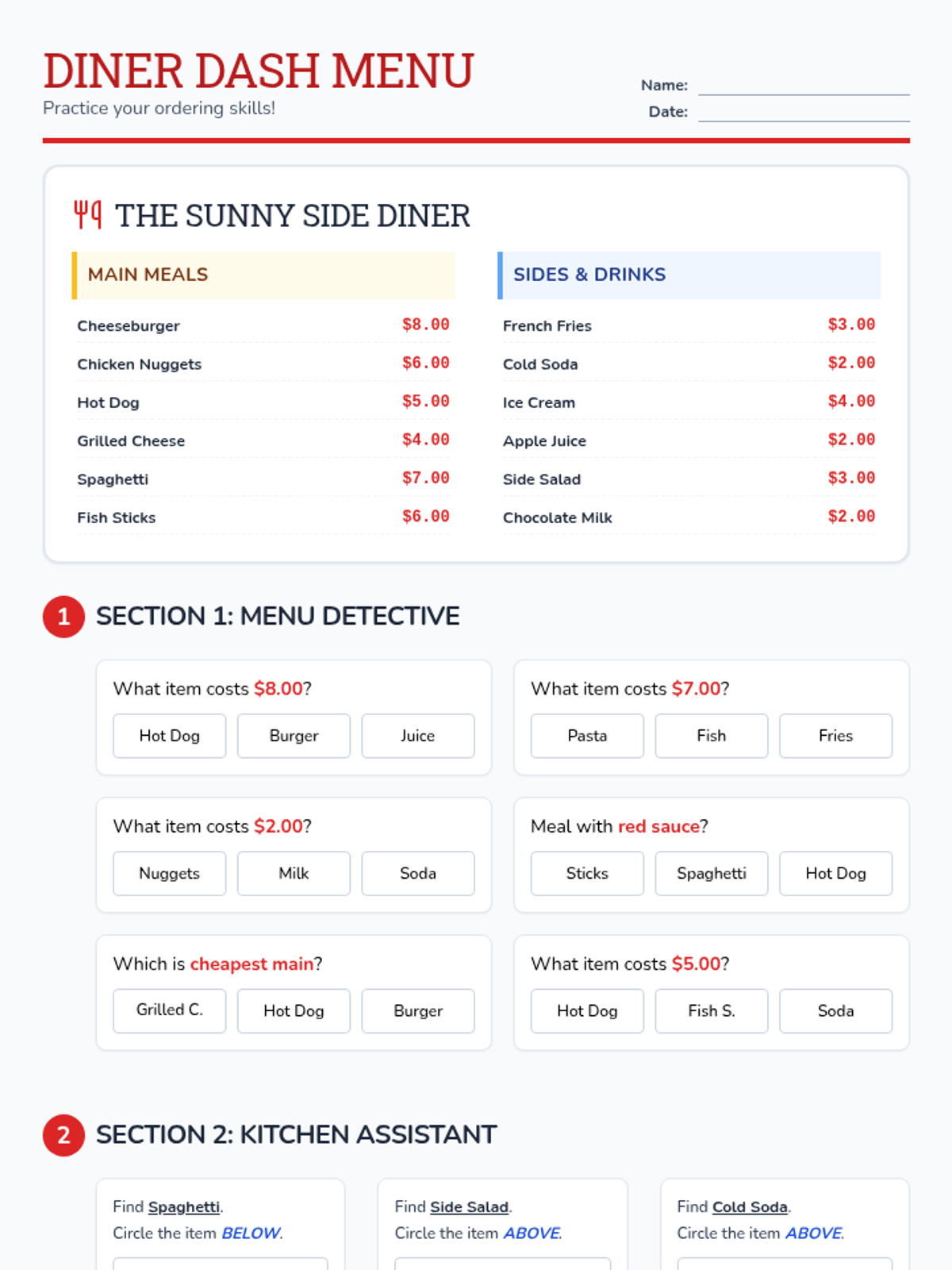
A set of visual supports to help students with special needs practice ordering and money skills at a fast food restaurant.
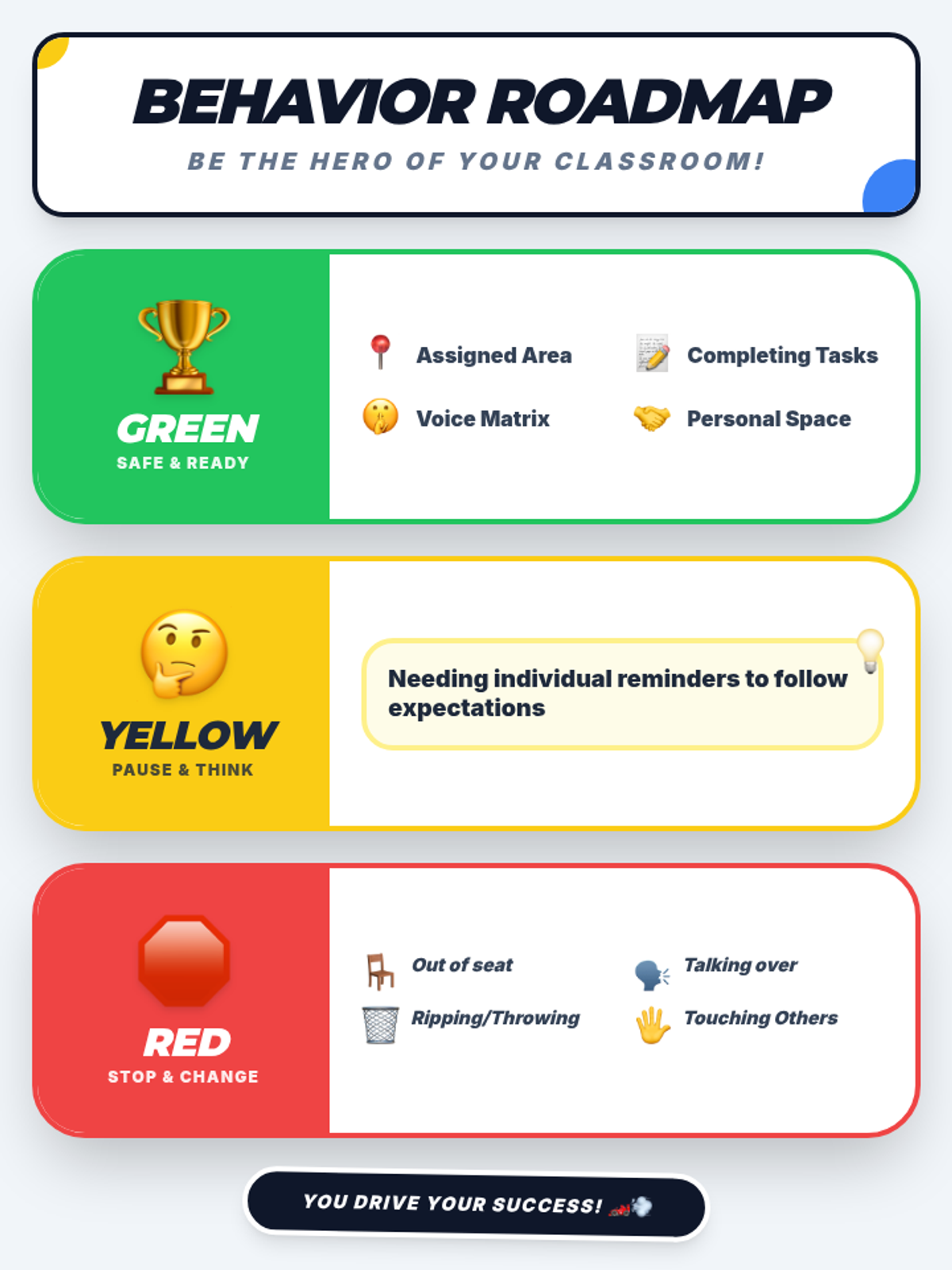
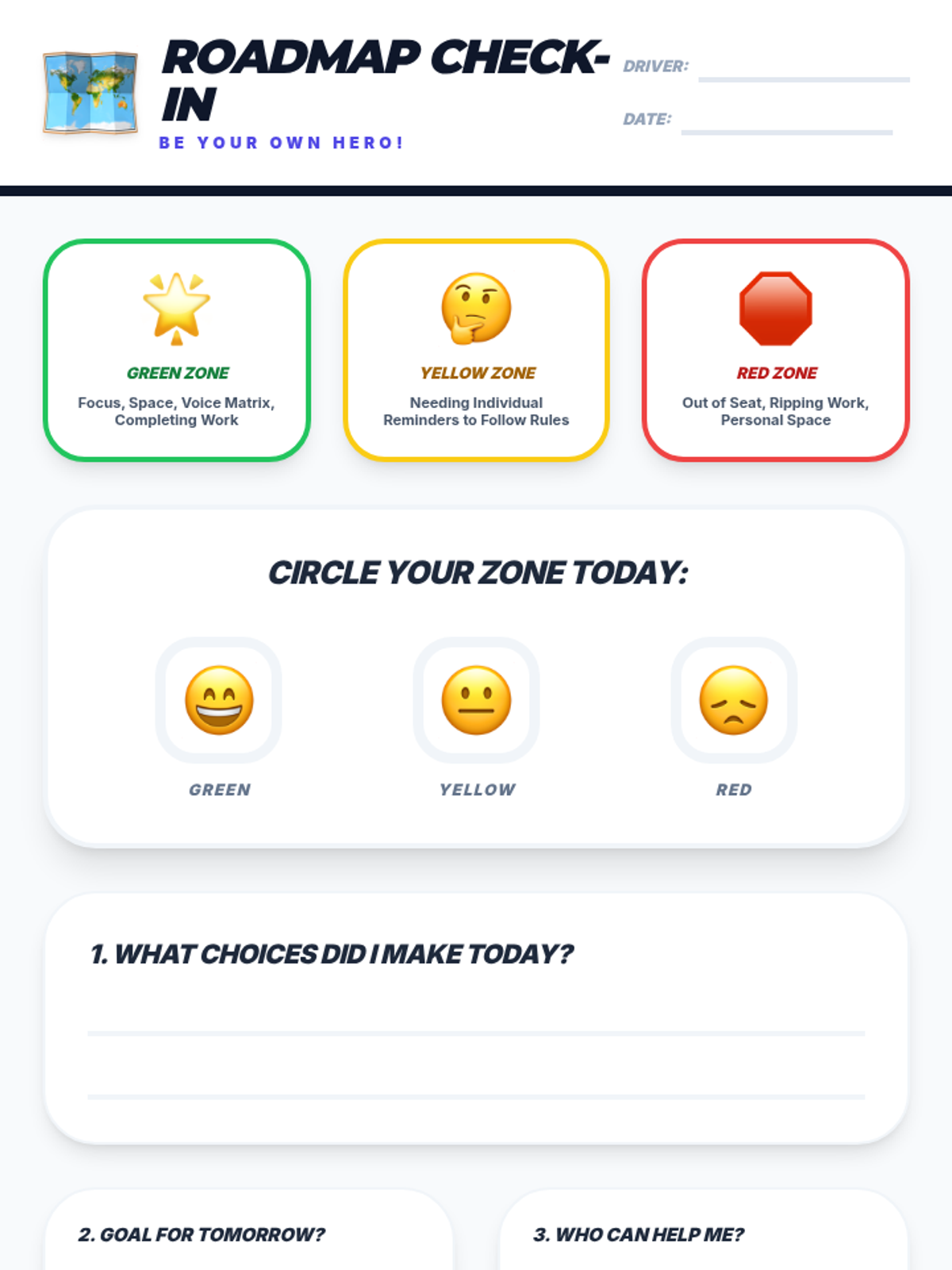
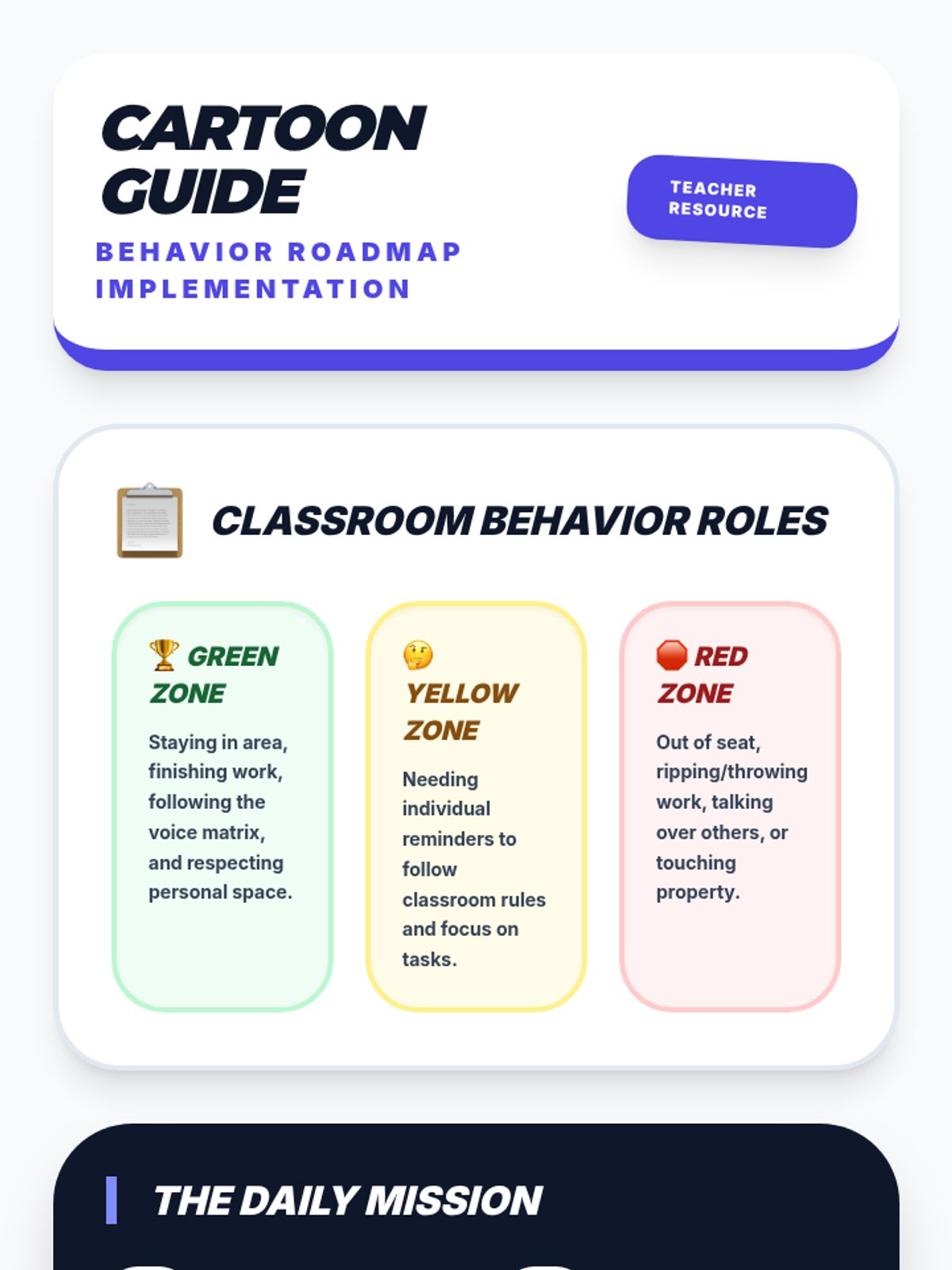
A comprehensive system for defining and maintaining a positive learning environment through a color-coded behavior framework. This lesson introduces students to green, yellow, and red behaviors with clear expectations and reflection tools.
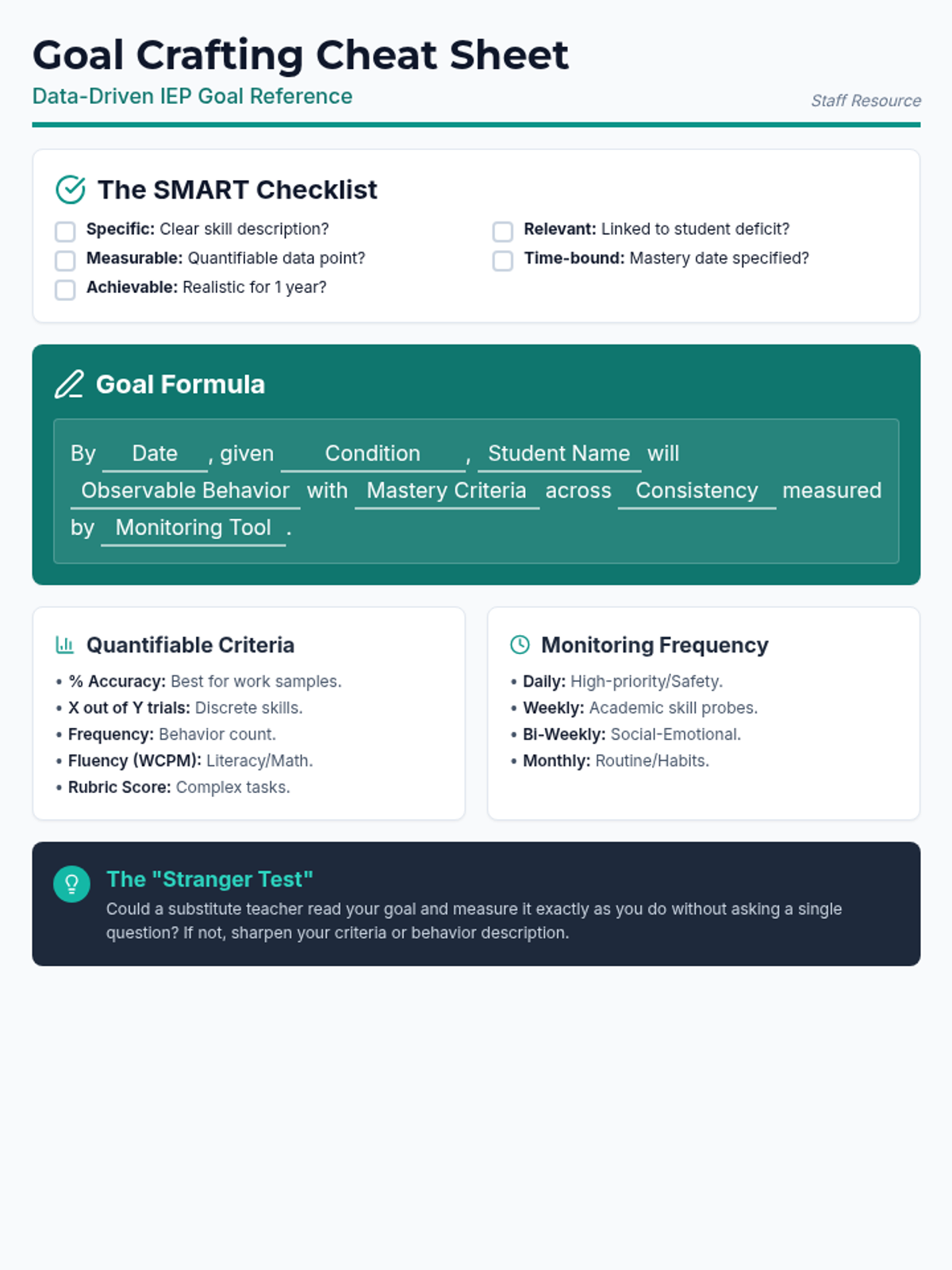
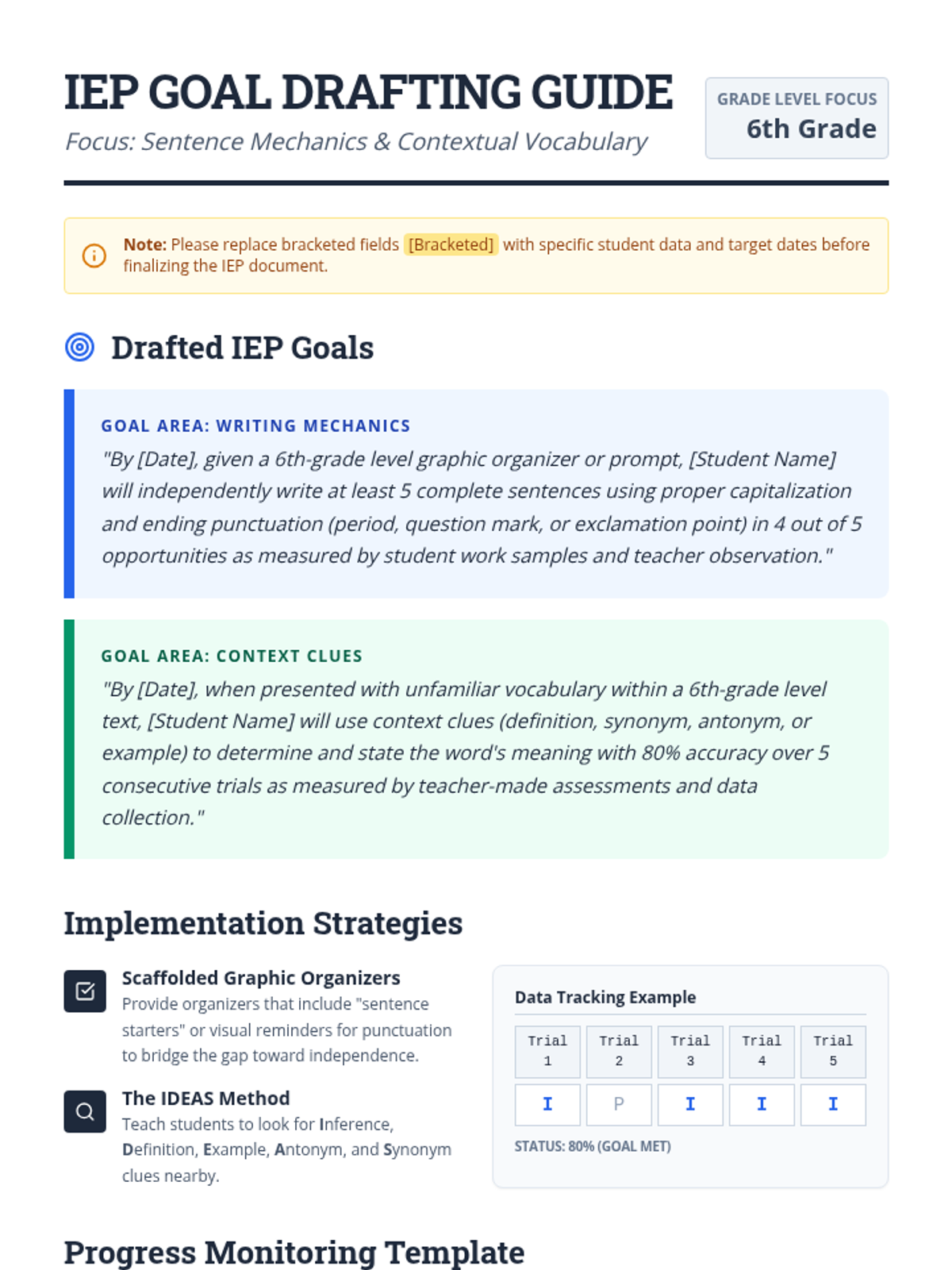
A 5-slide presentation for special education teachers focused on crafting IEP goals that are measurable and rooted in consistent data-driven progress monitoring.
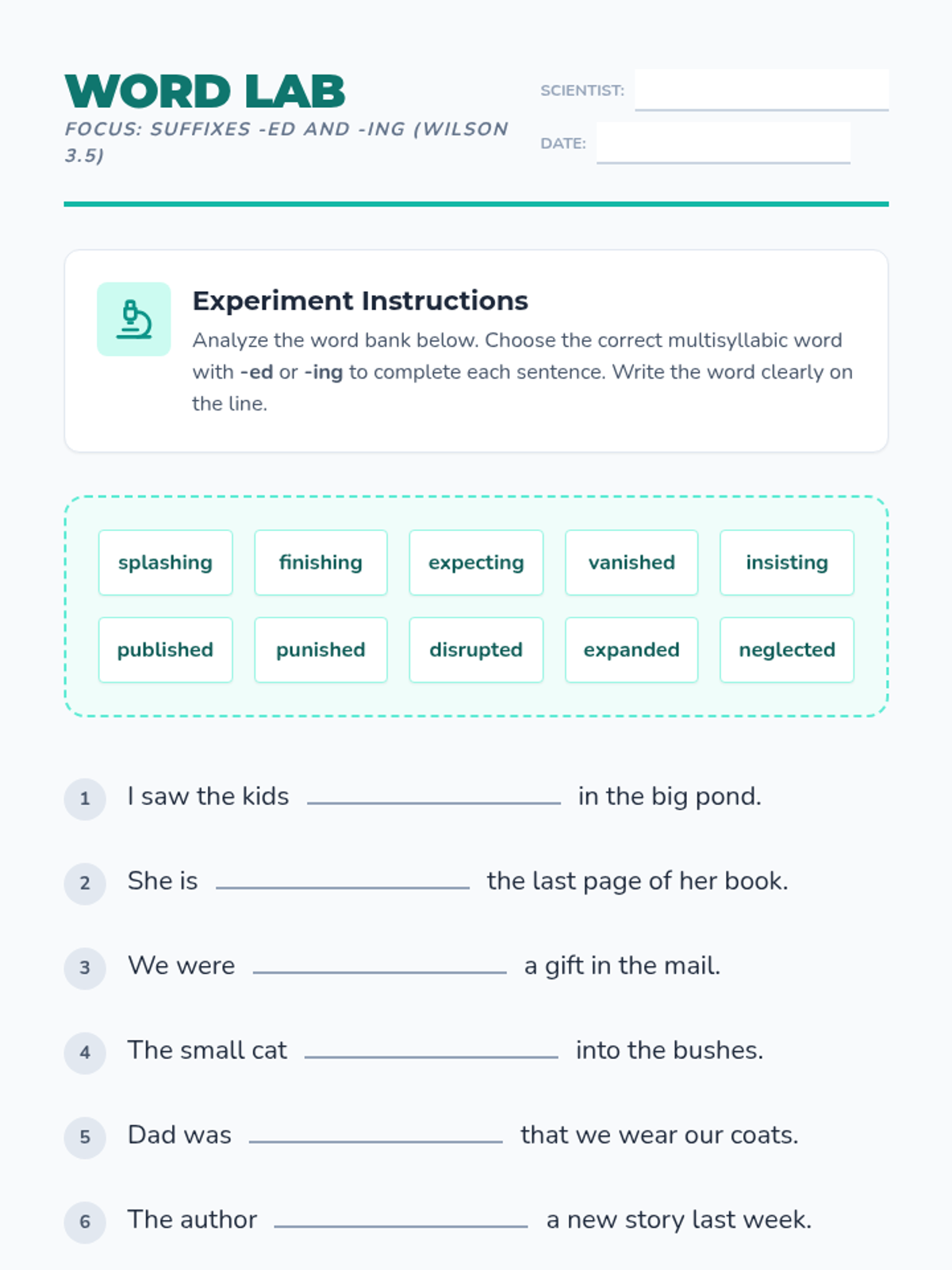
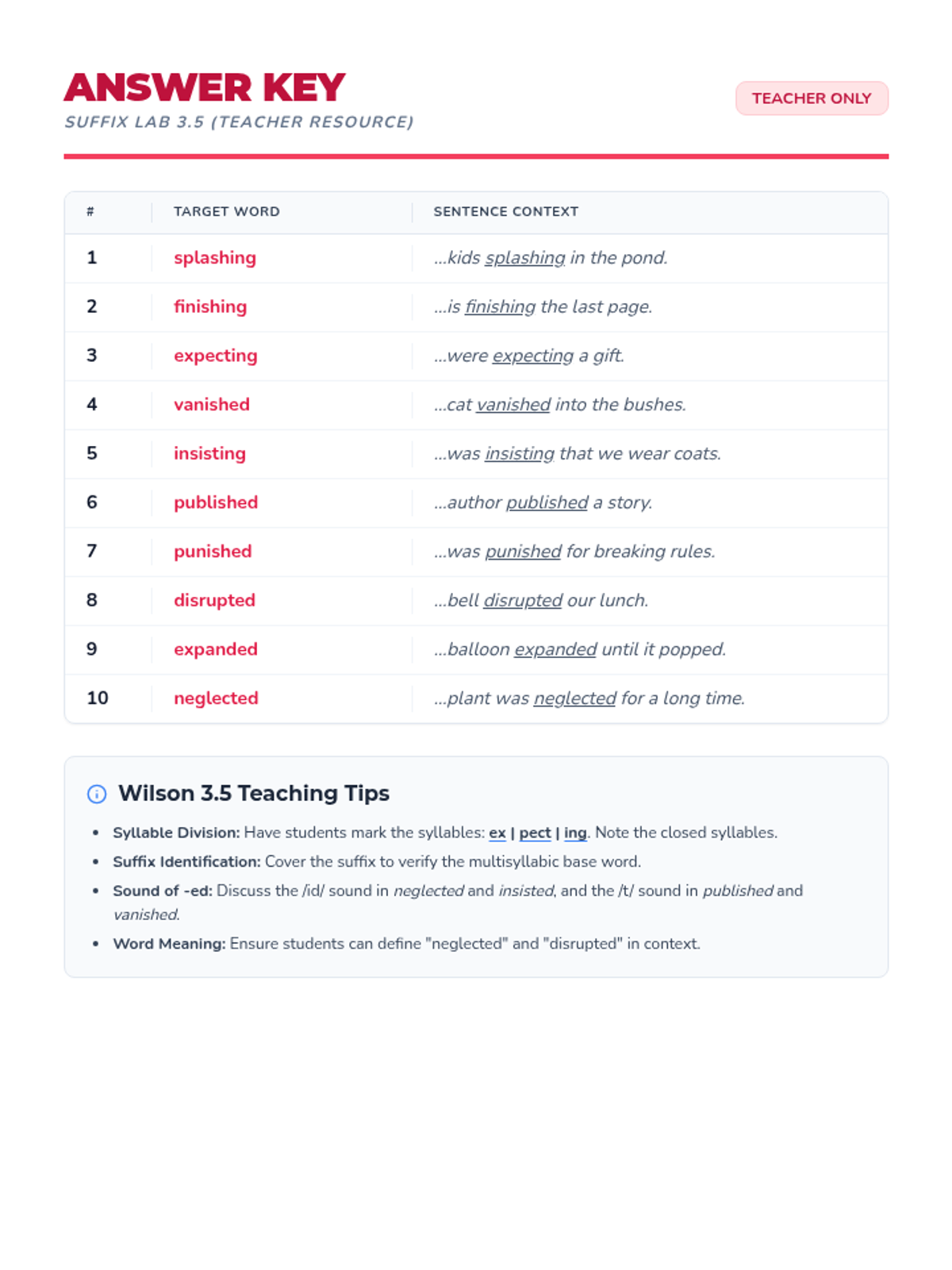
This lesson focuses on multisyllabic words with the suffixes -ed and -ing, specifically targeting the patterns found in Wilson Reading System program 3.5. Students will practice identifying and using these words in simple sentences.
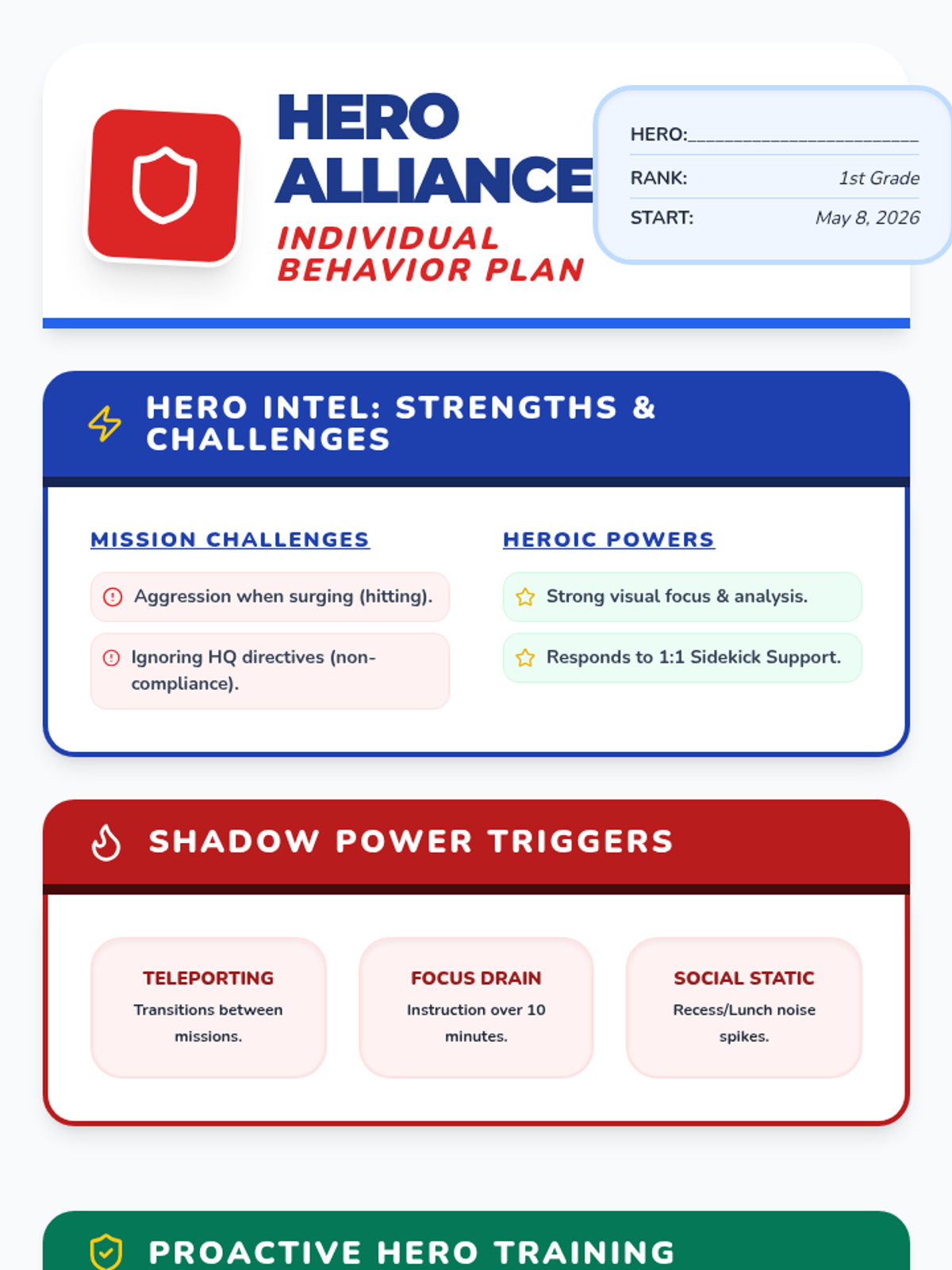
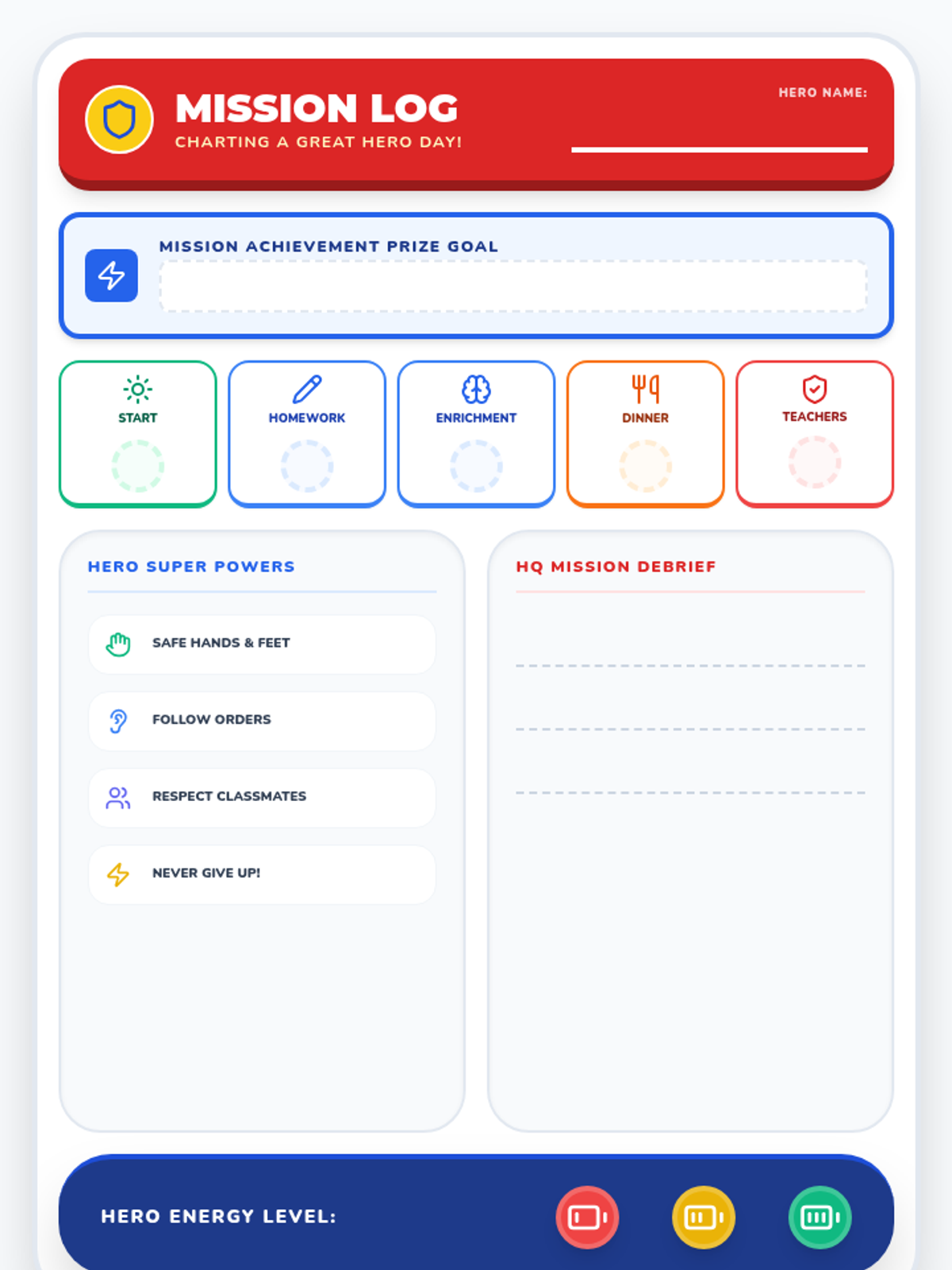
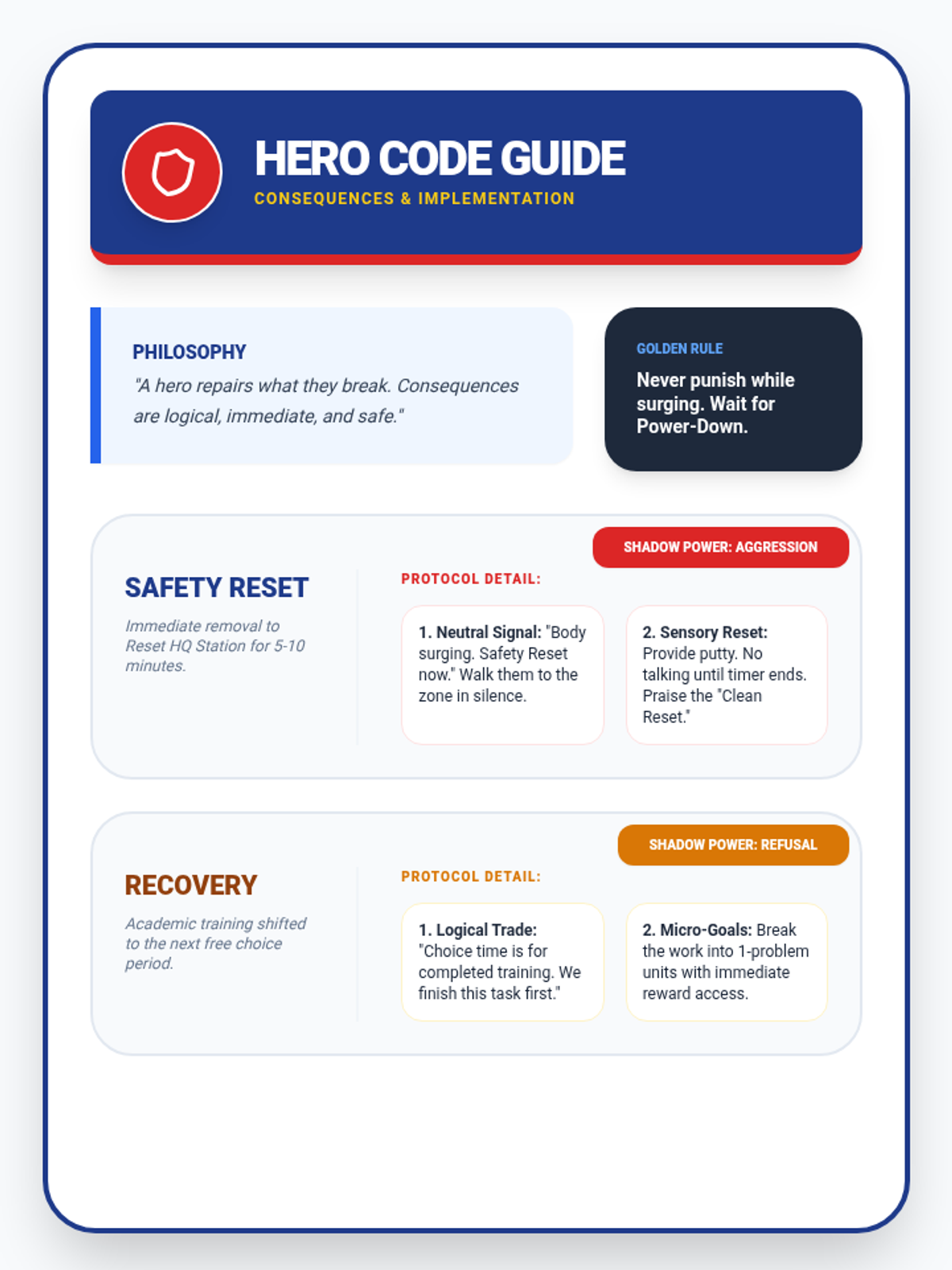
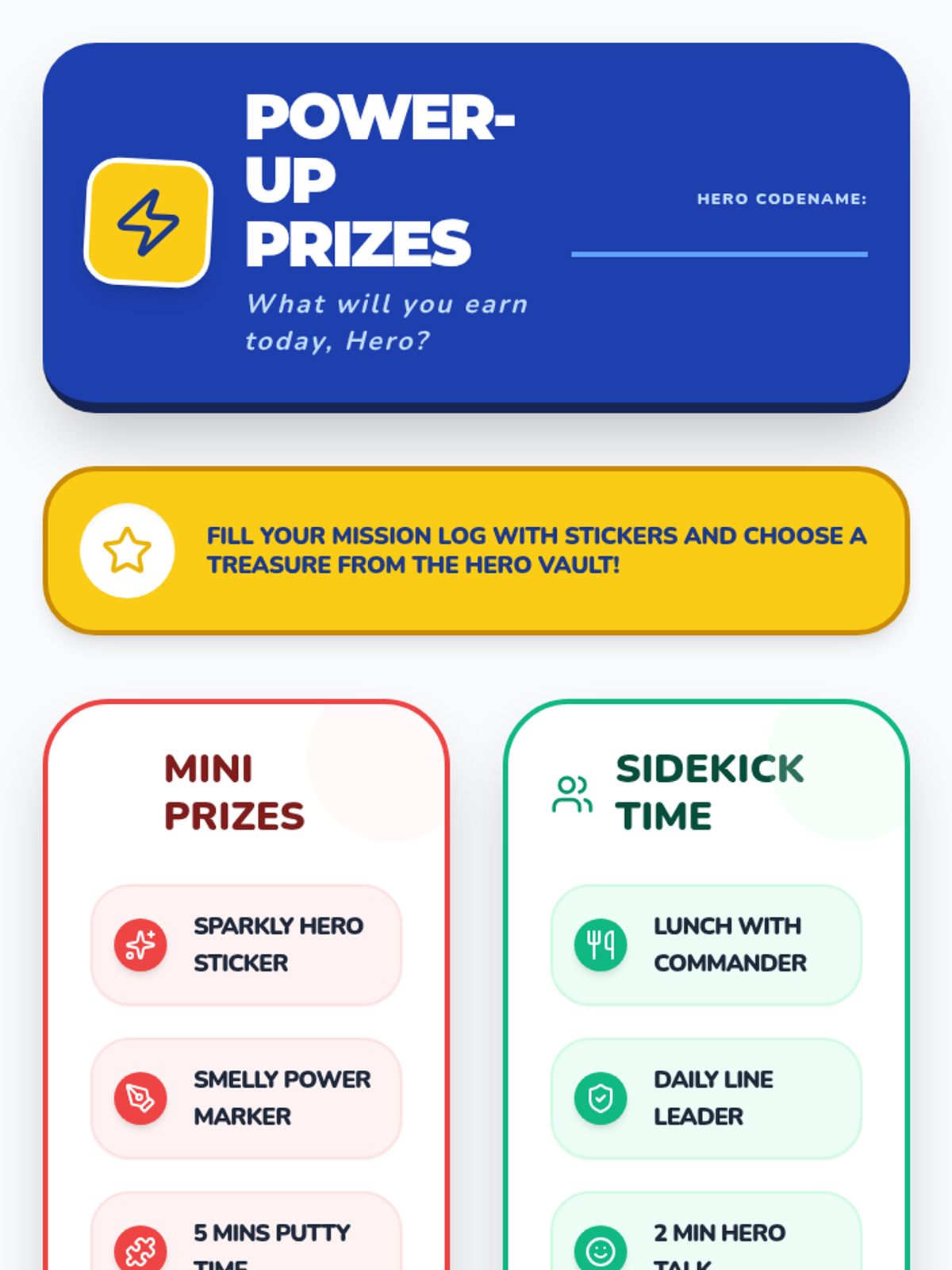
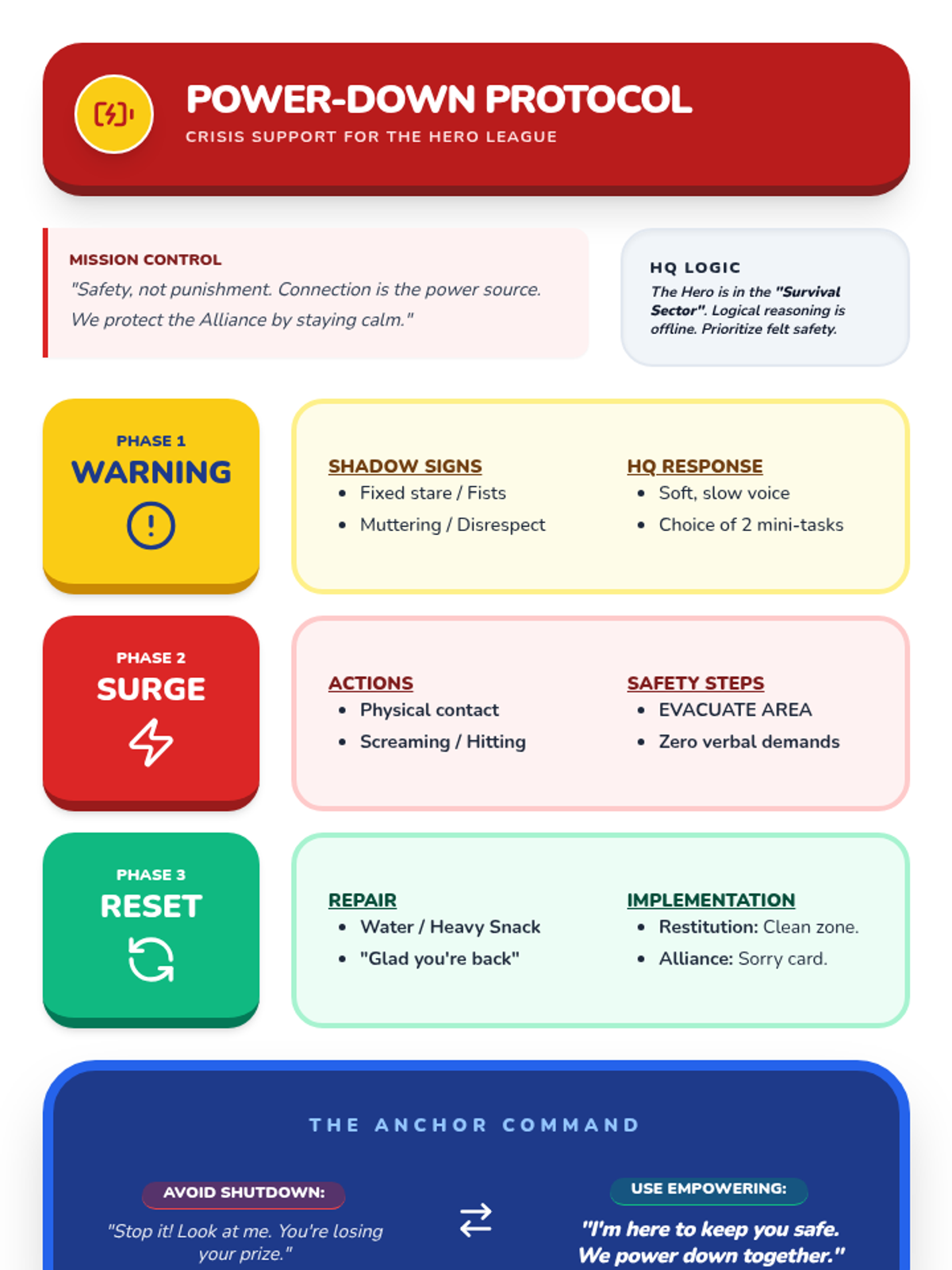
A comprehensive set of trauma-informed resources to support a 1st-grade student, reimagined with a high-engagement Super Hero theme. Focuses on 'hero powers' (positive behaviors), 'mission logs' (tracking), and restorative 'hero code' consequences.
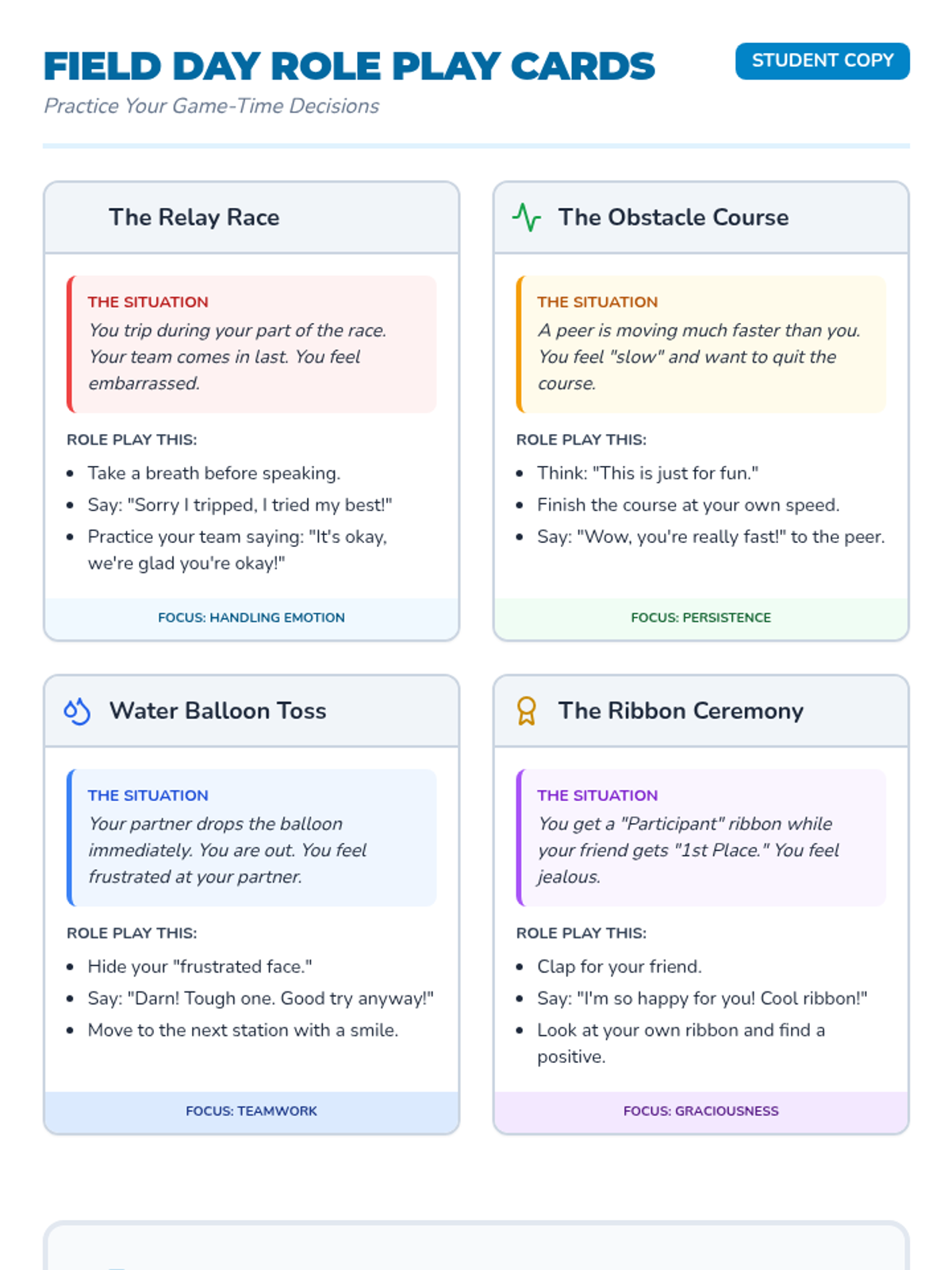
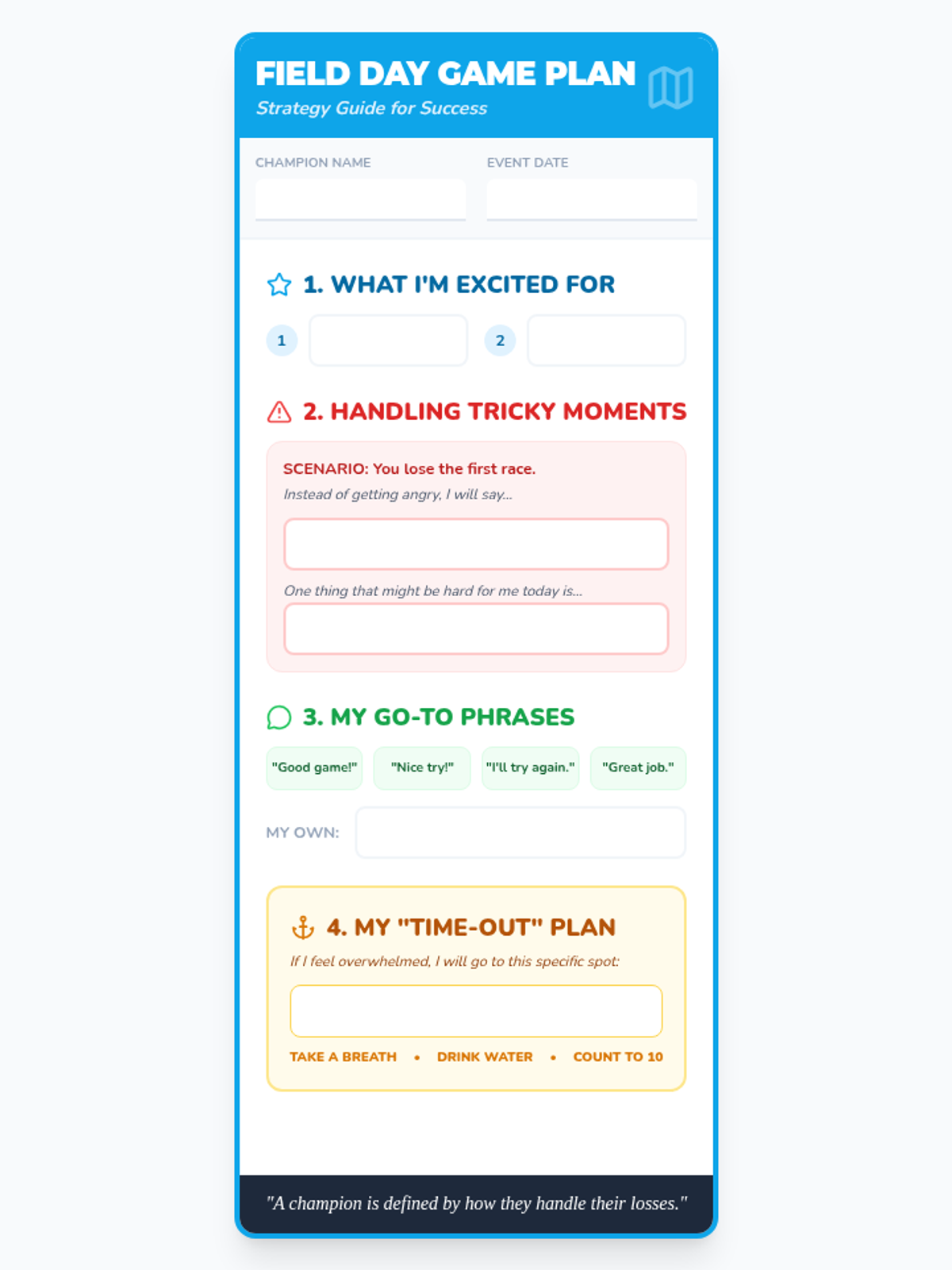
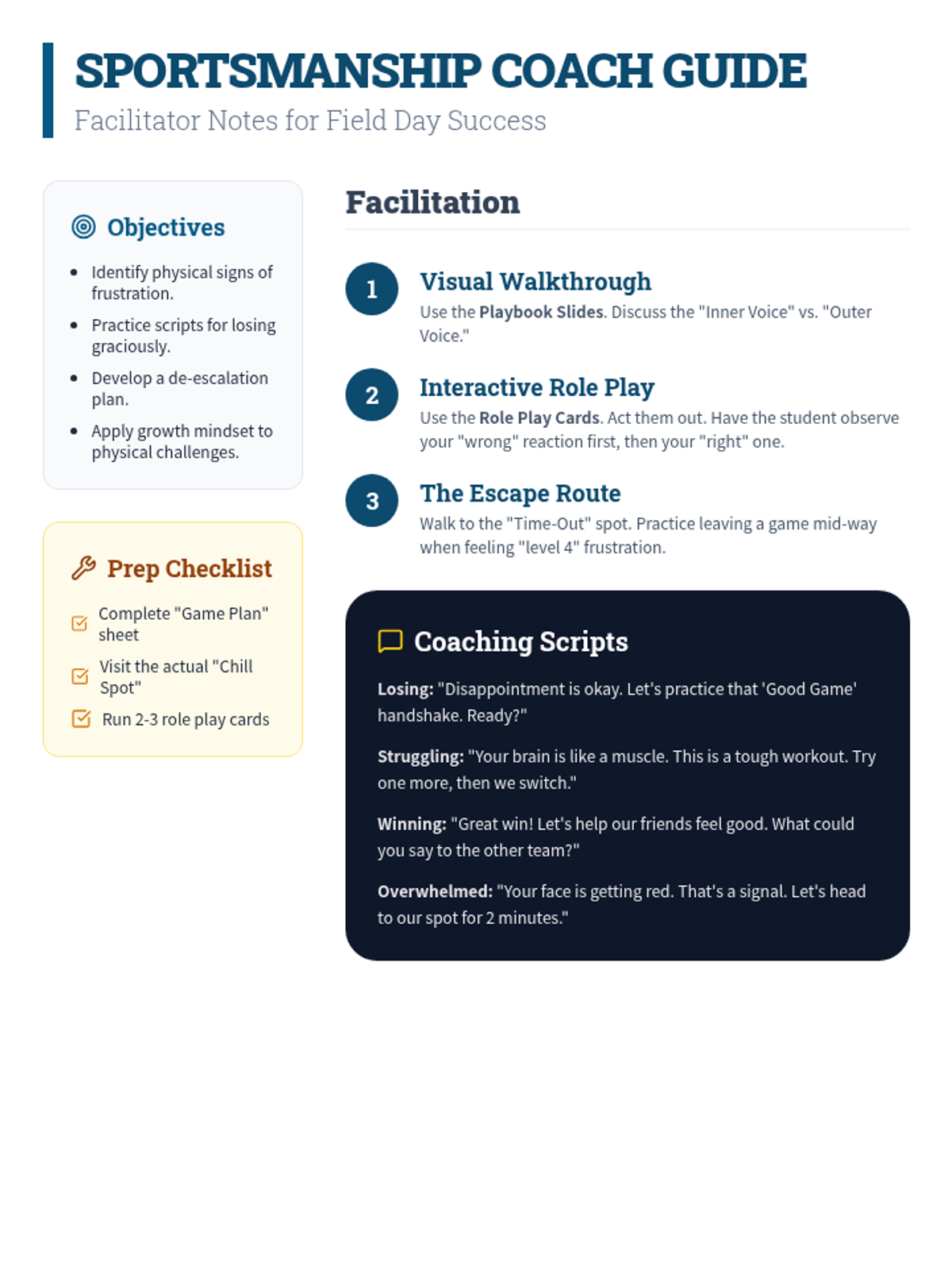
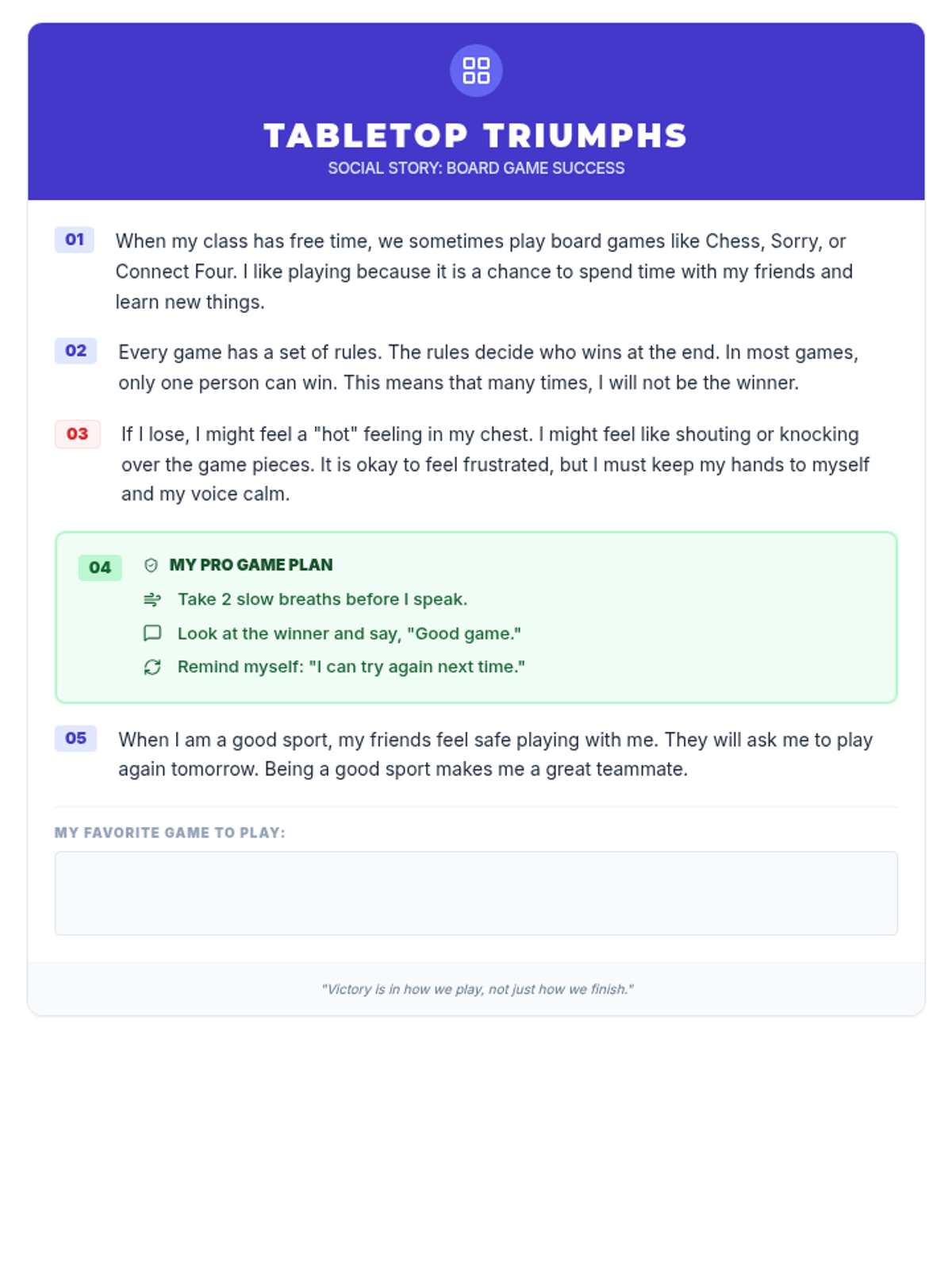
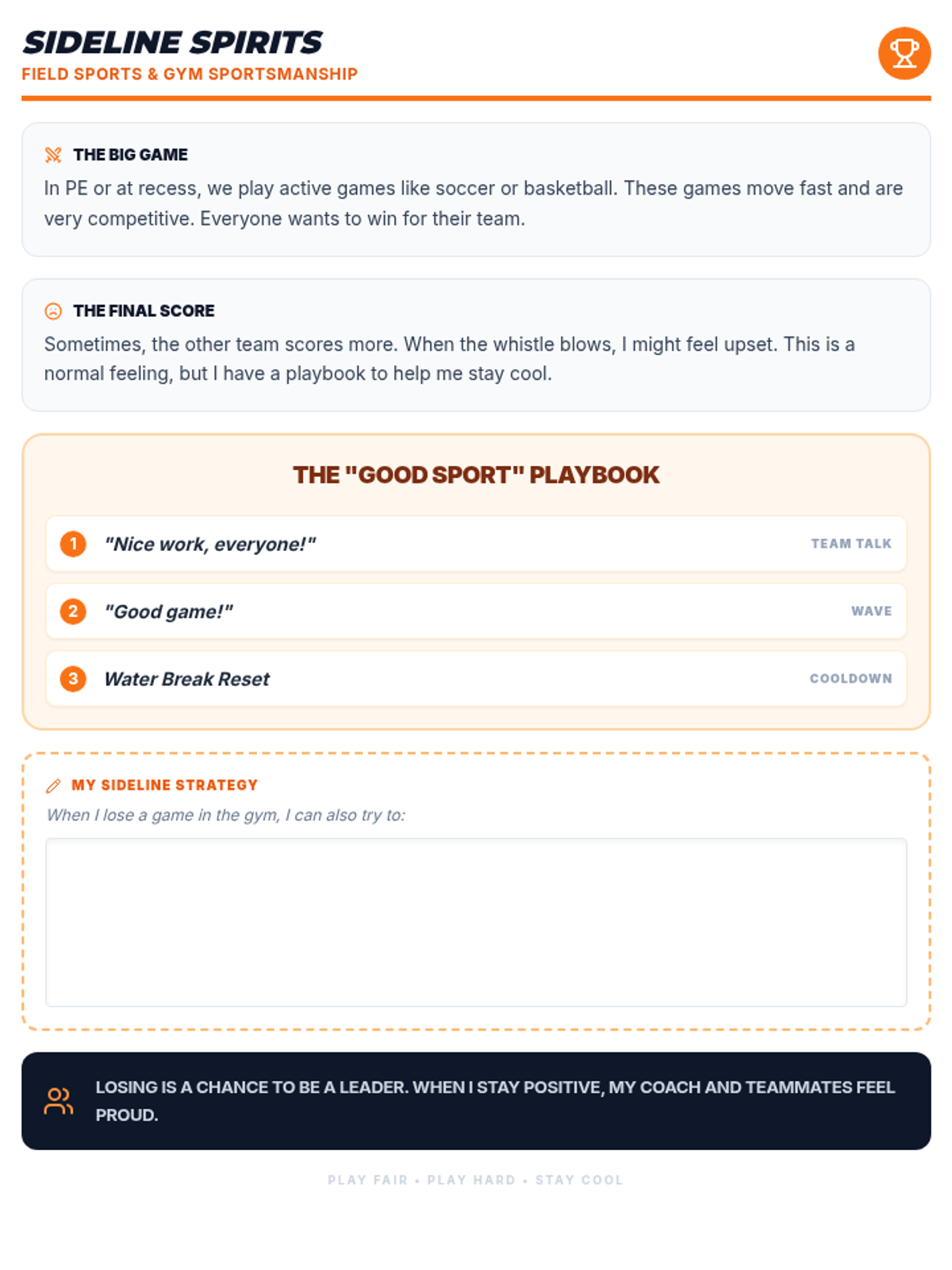
A social skills lesson designed for 6th-grade students with ASD to prepare for the emotional and social challenges of a school Field Day, focusing on sportsmanship, handling loss, and managing frustration when skills are difficult.
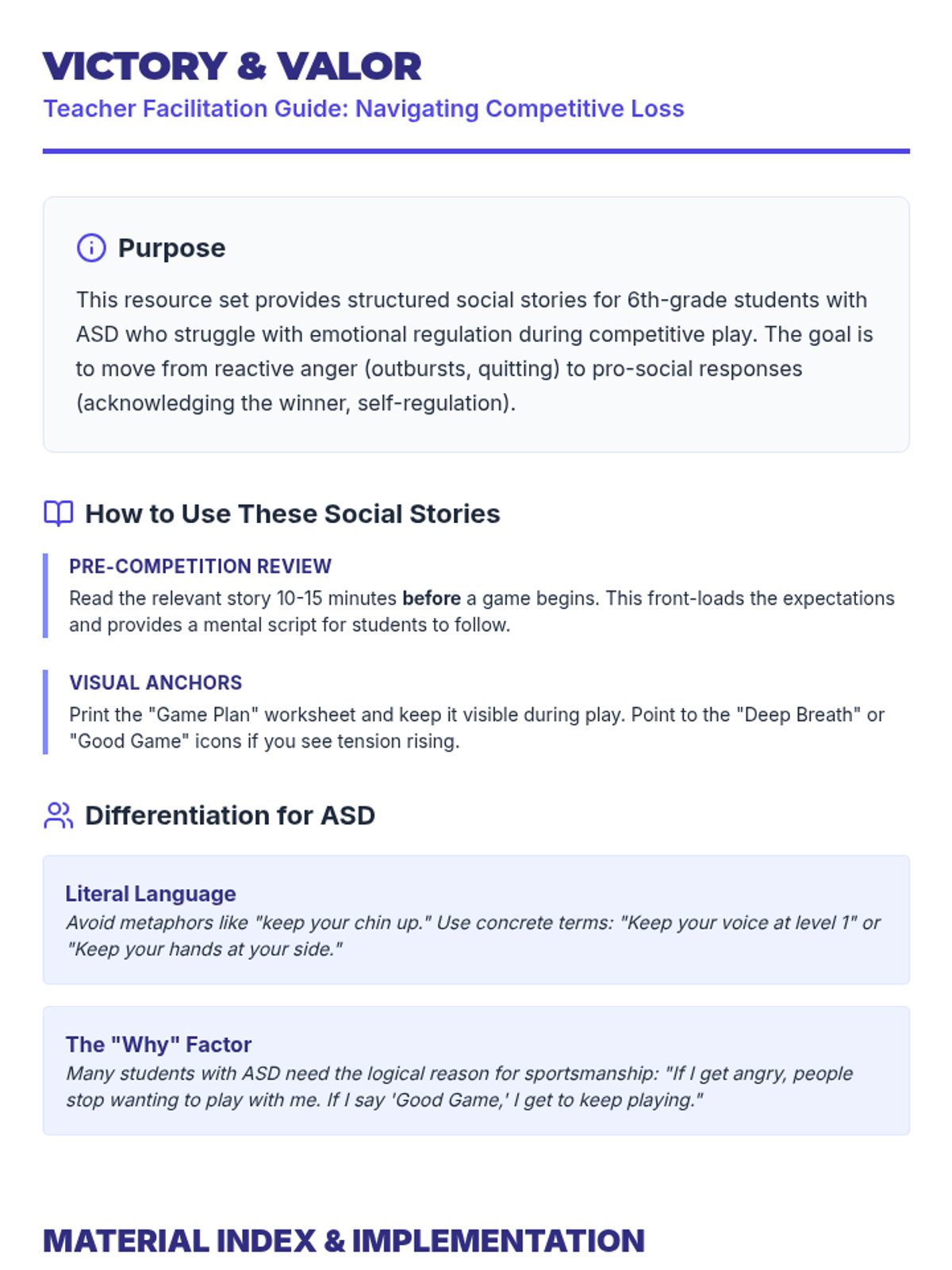
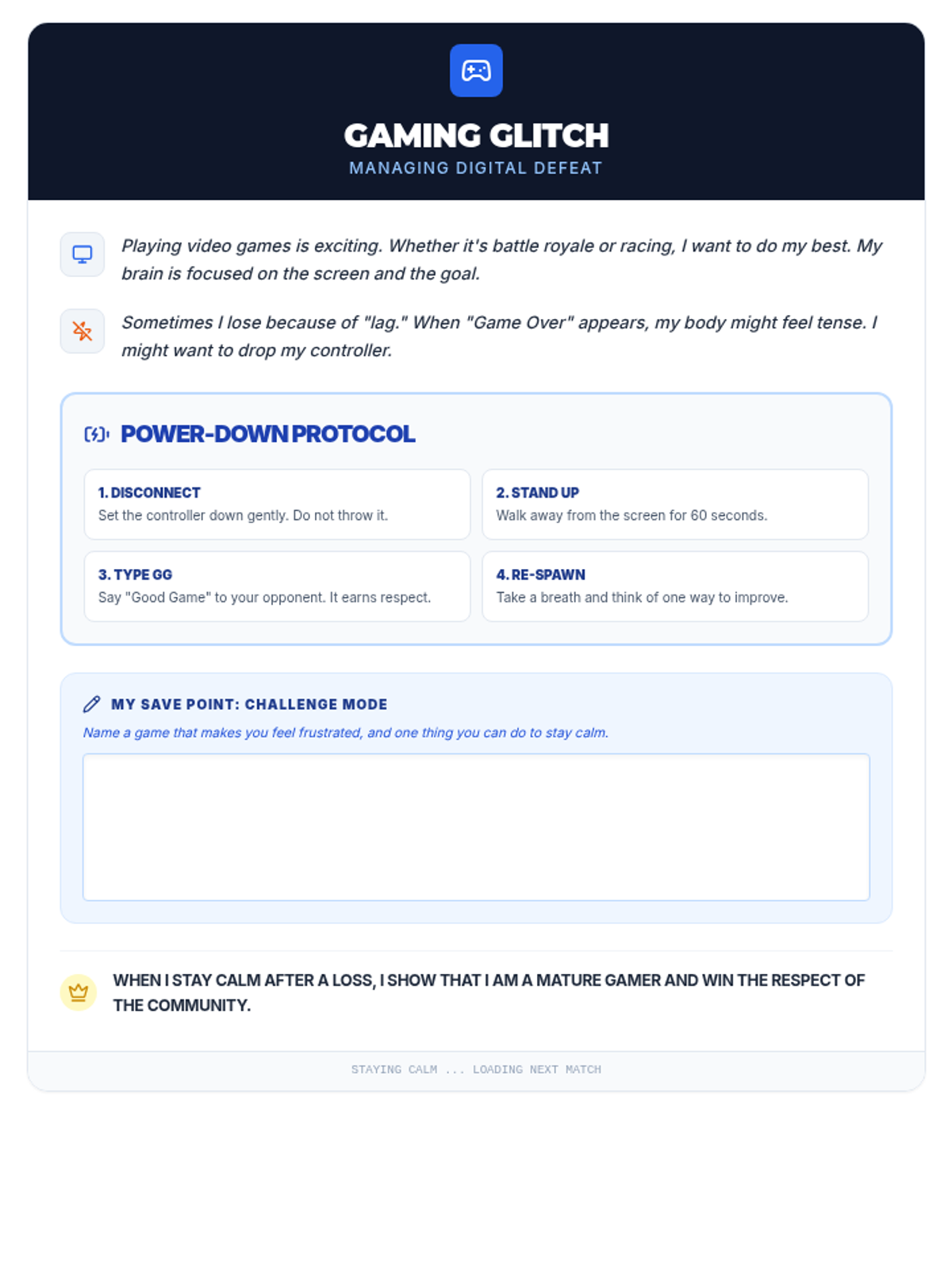
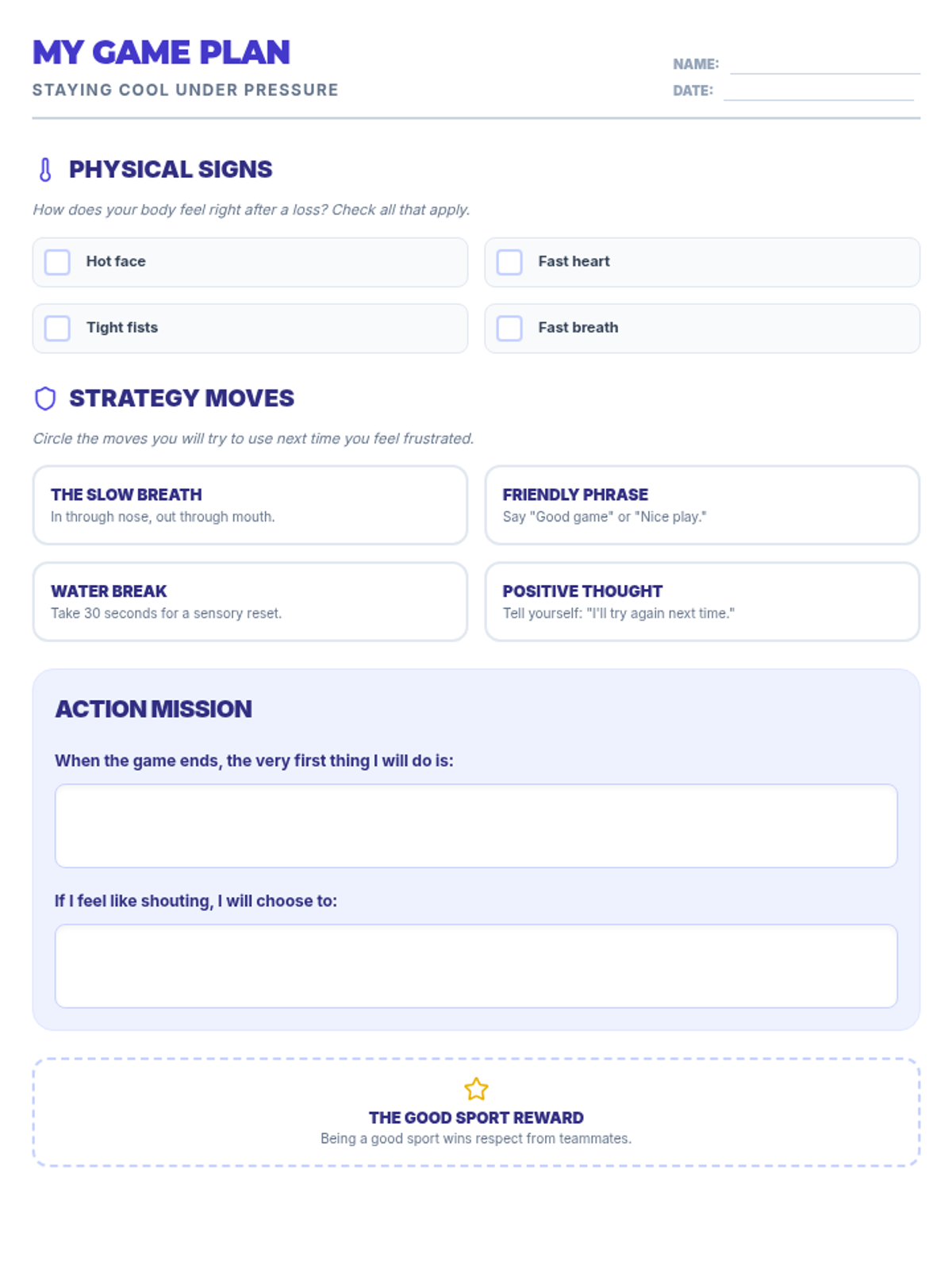
A series of social stories and supporting materials designed to help 6th-grade students with ASD navigate the emotional challenges of losing in competitive games. The lesson focuses on identifying triggers, managing frustration, and practicing prosocial responses.
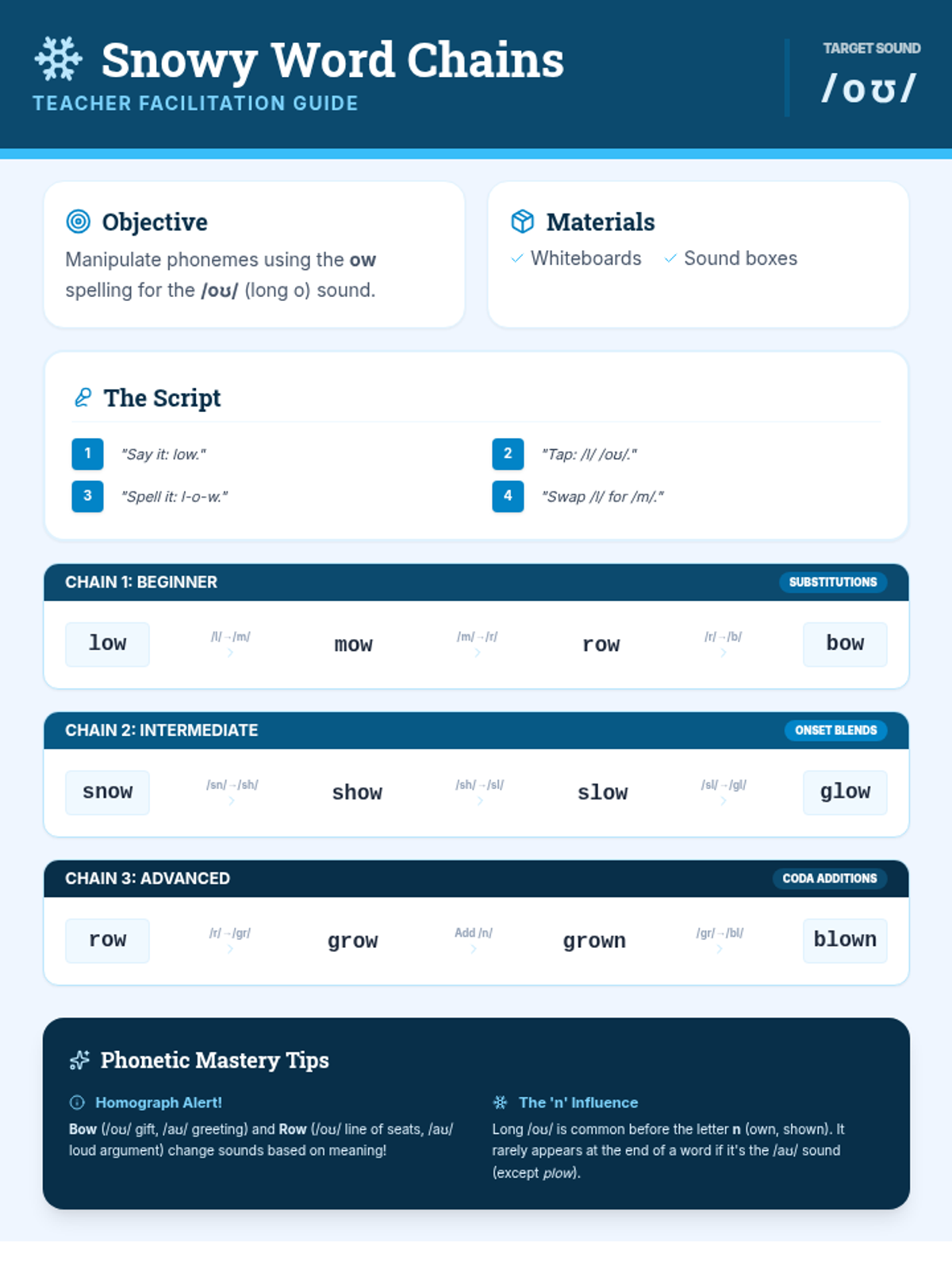
A teacher-led phonics lesson focused on the /oʊ/ sound (long o) spelled with 'ow', featuring orthographic mapping and word chain activities.
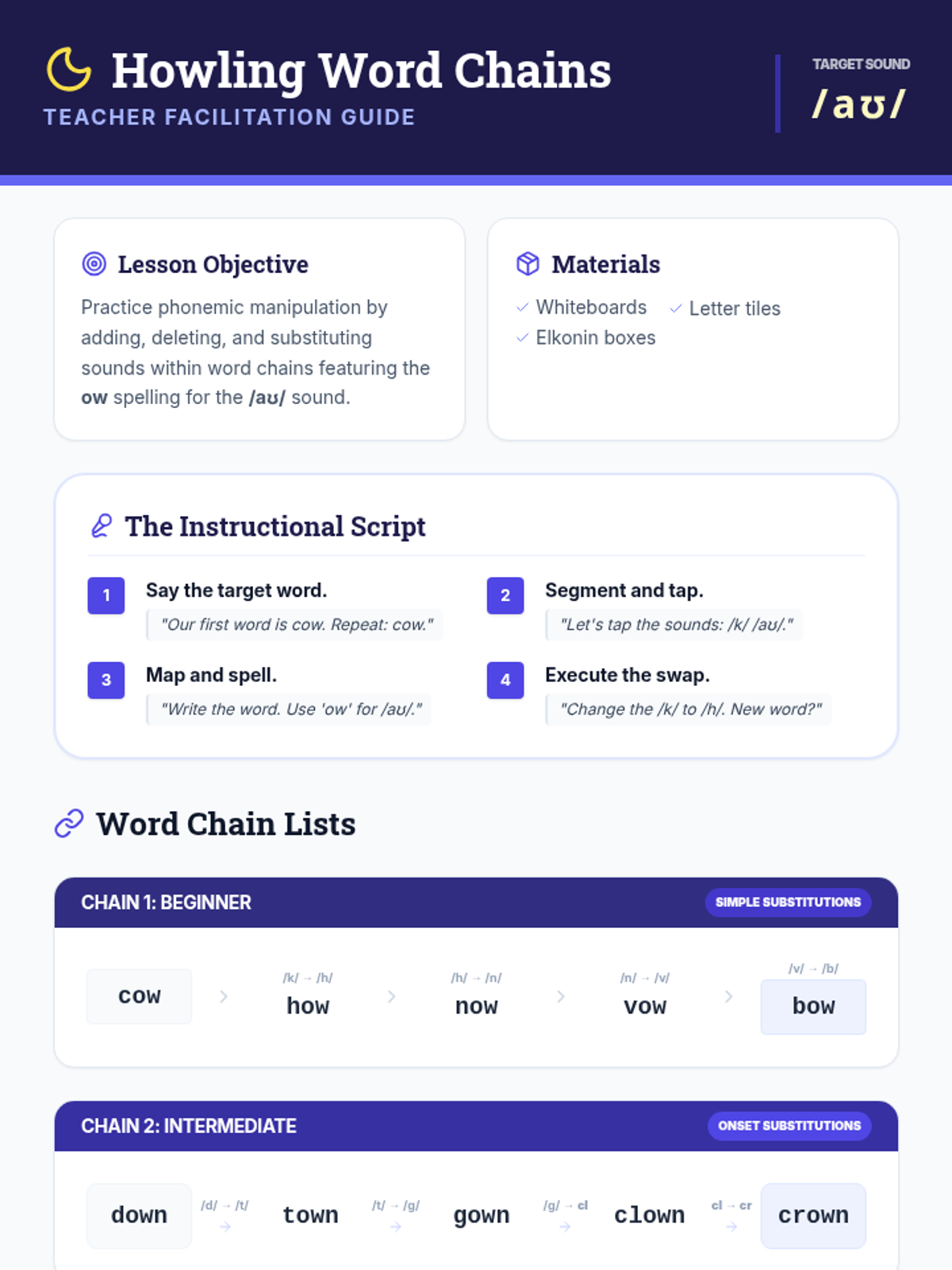
A teacher-led phonics lesson focused on the /aʊ/ sound spelled with 'ow', featuring orthographic mapping and word chain activities.
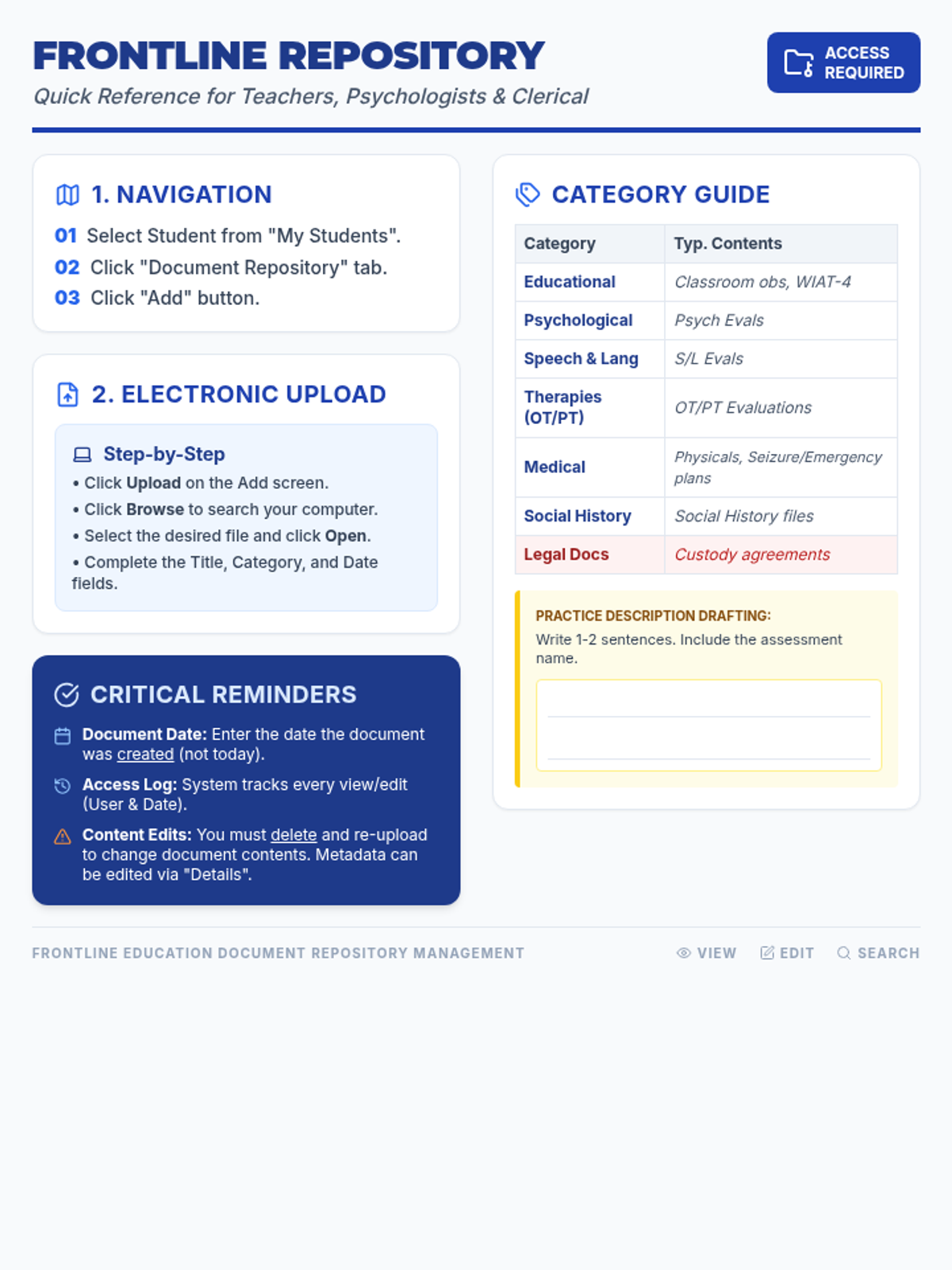
A comprehensive training session for staff on navigating and utilizing the Frontline Document Repository, covering electronic uploads, faxing, and categorization.
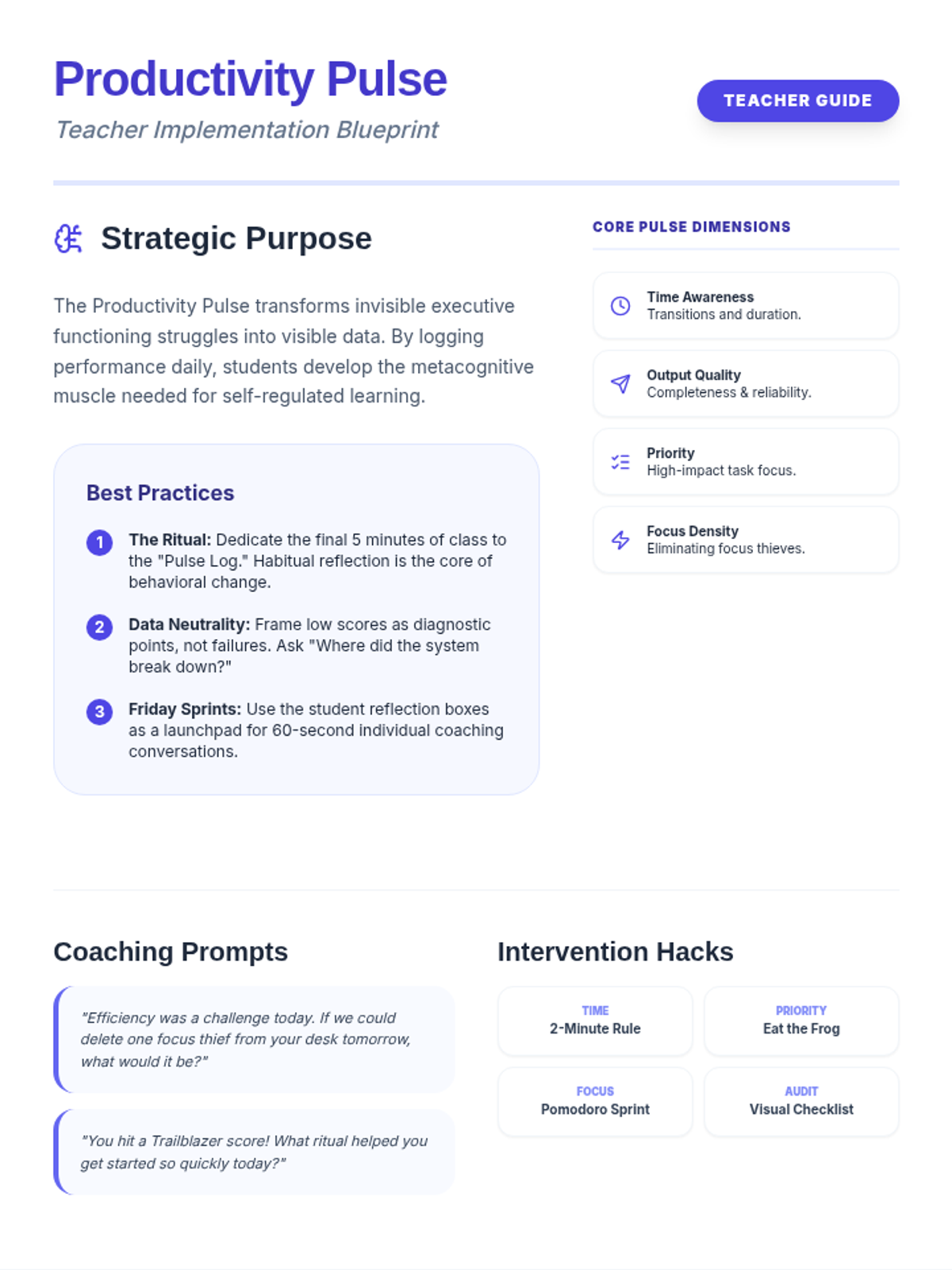
A comprehensive toolkit for students to track and improve their executive functioning skills through daily logging and descriptive rubrics.
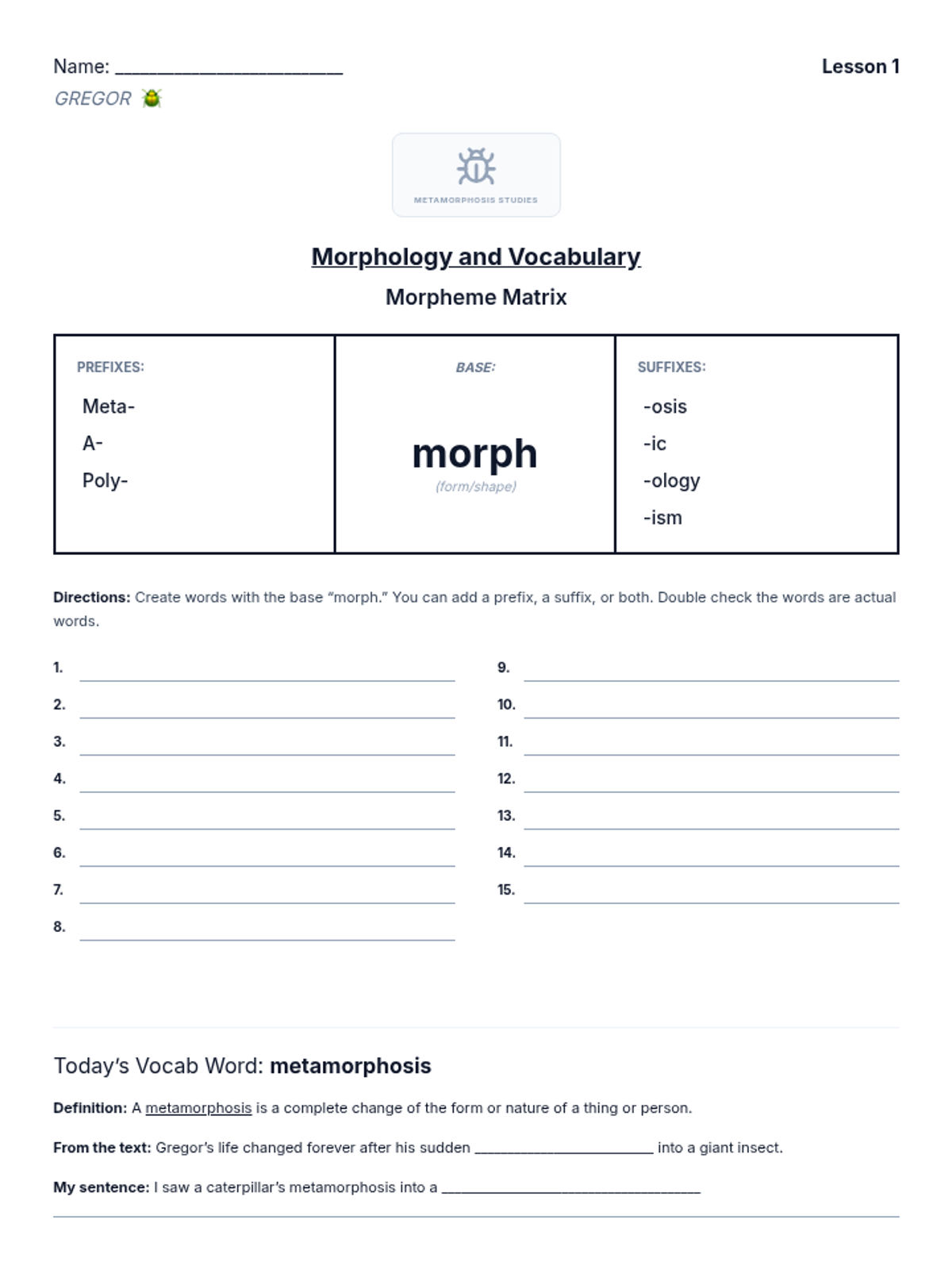
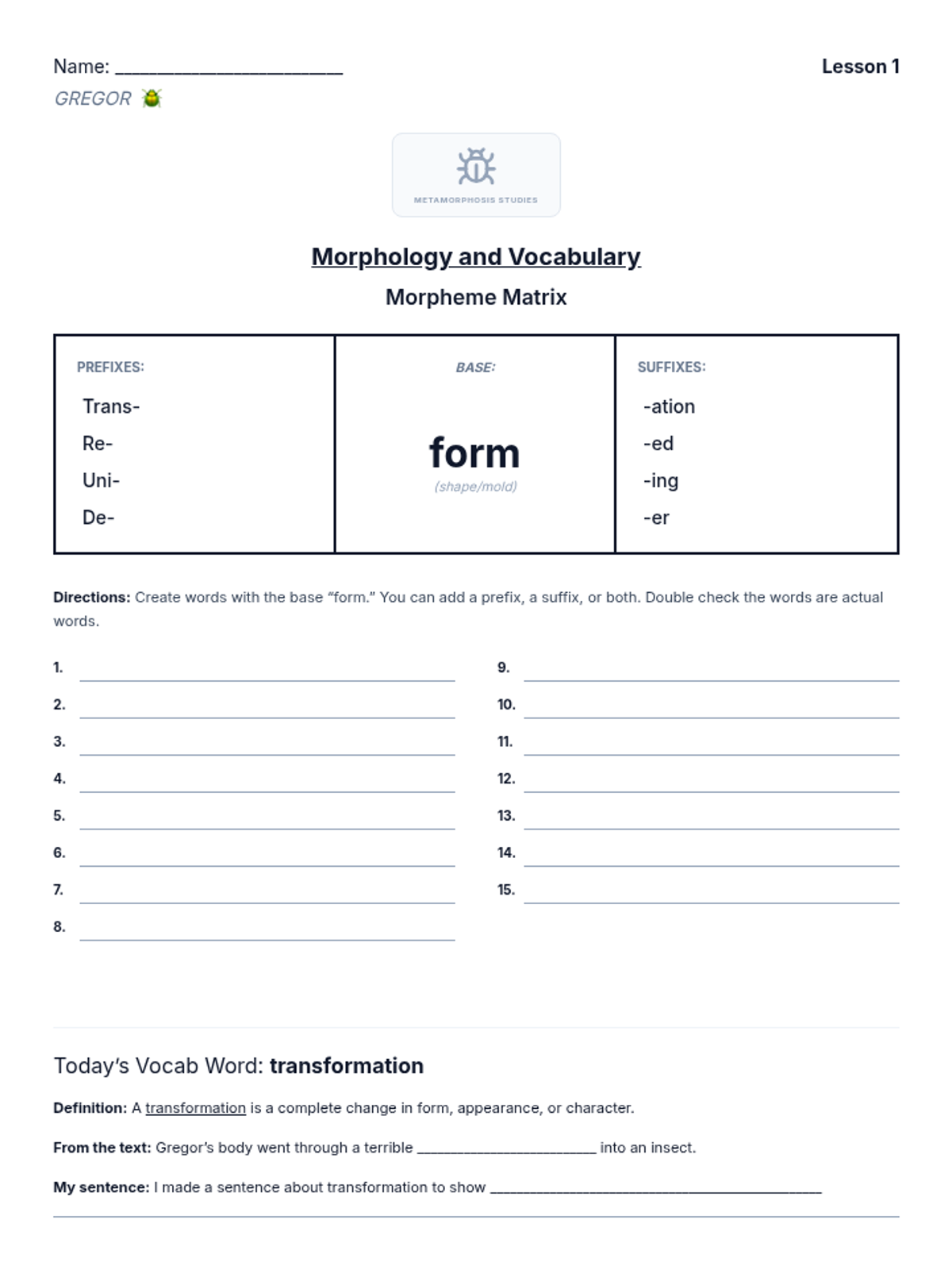
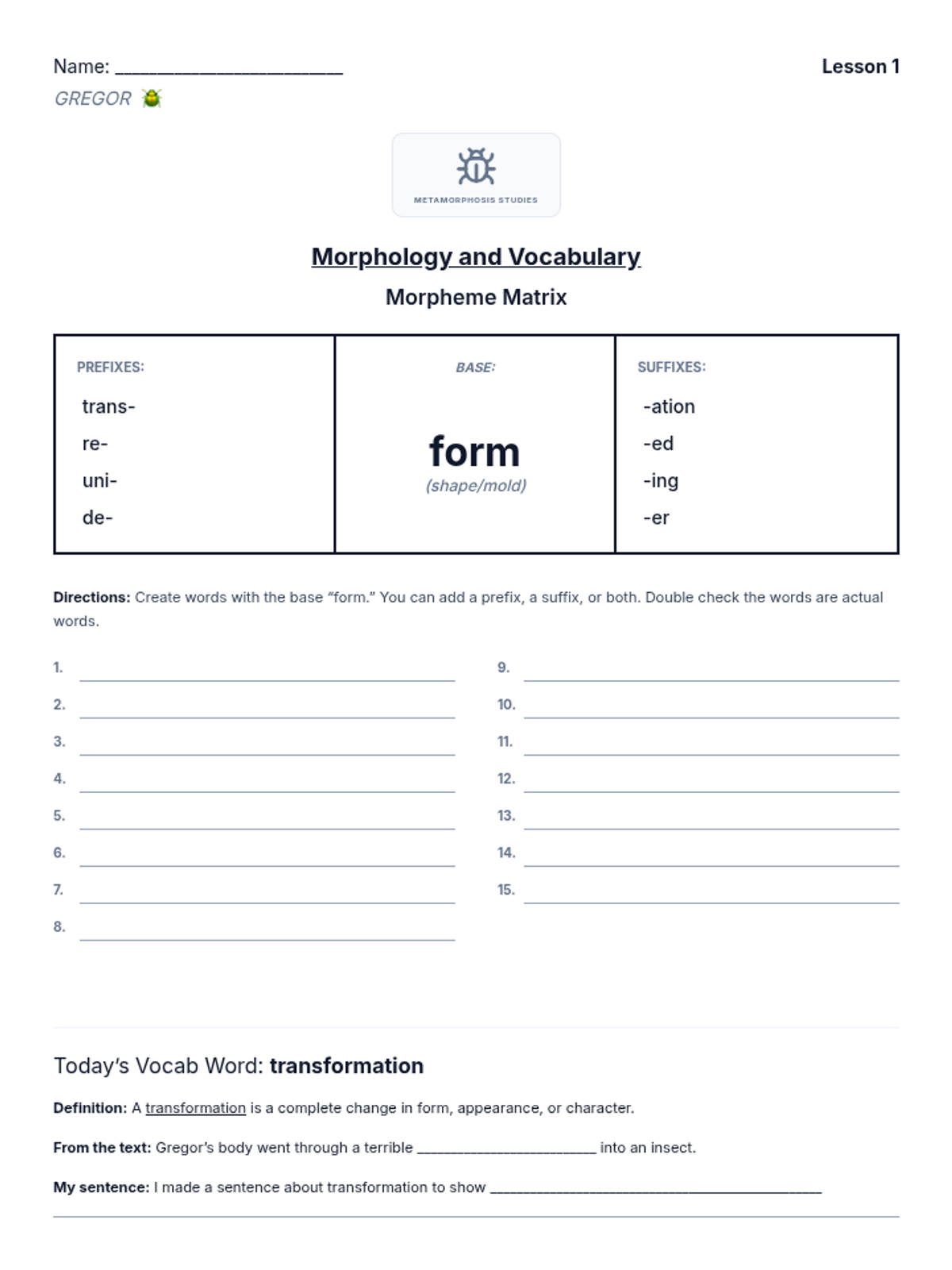
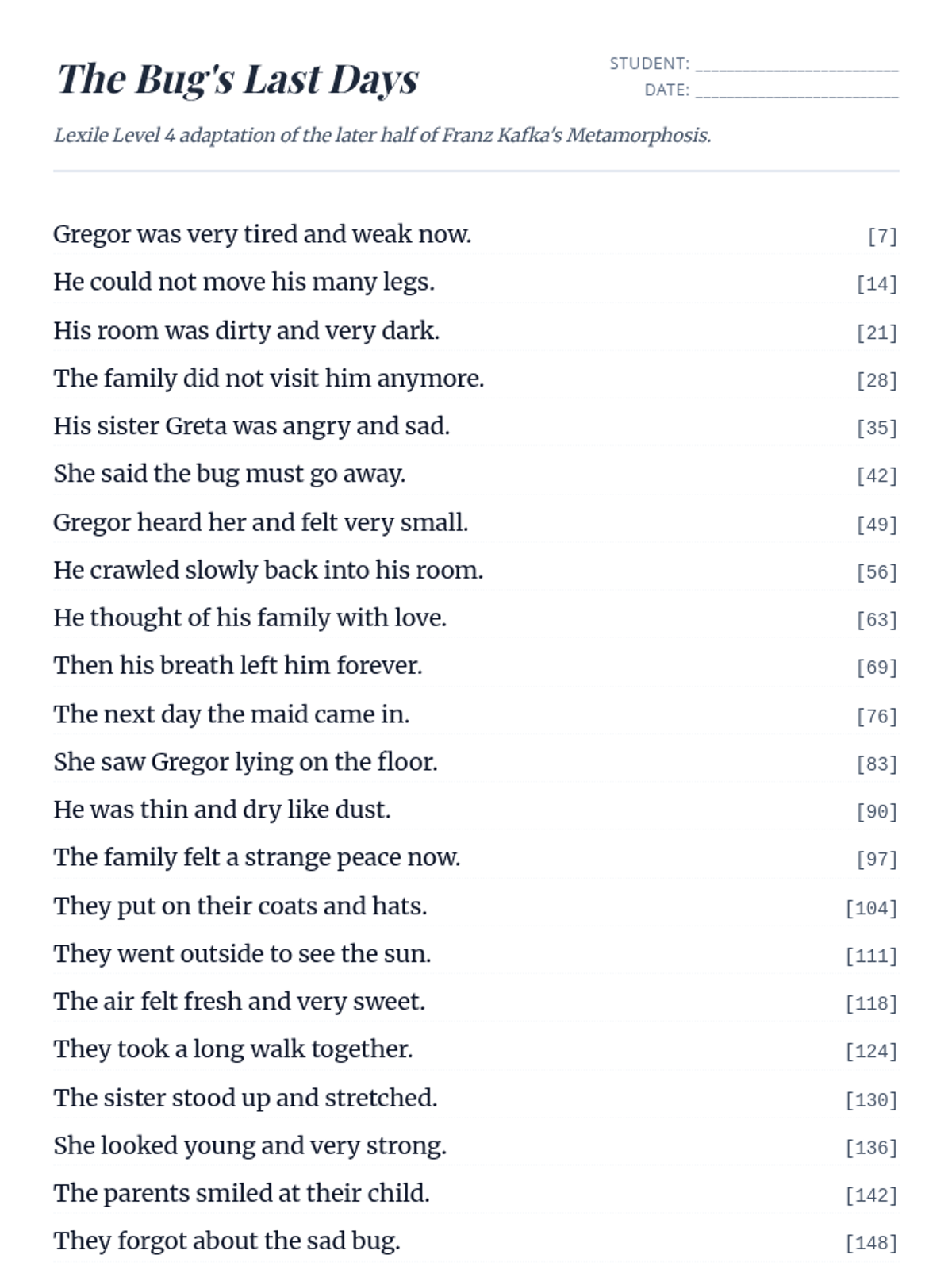
A simplified exploration of the later half of Franz Kafka's Metamorphosis, focusing on readability and text analysis for early intermediate readers.
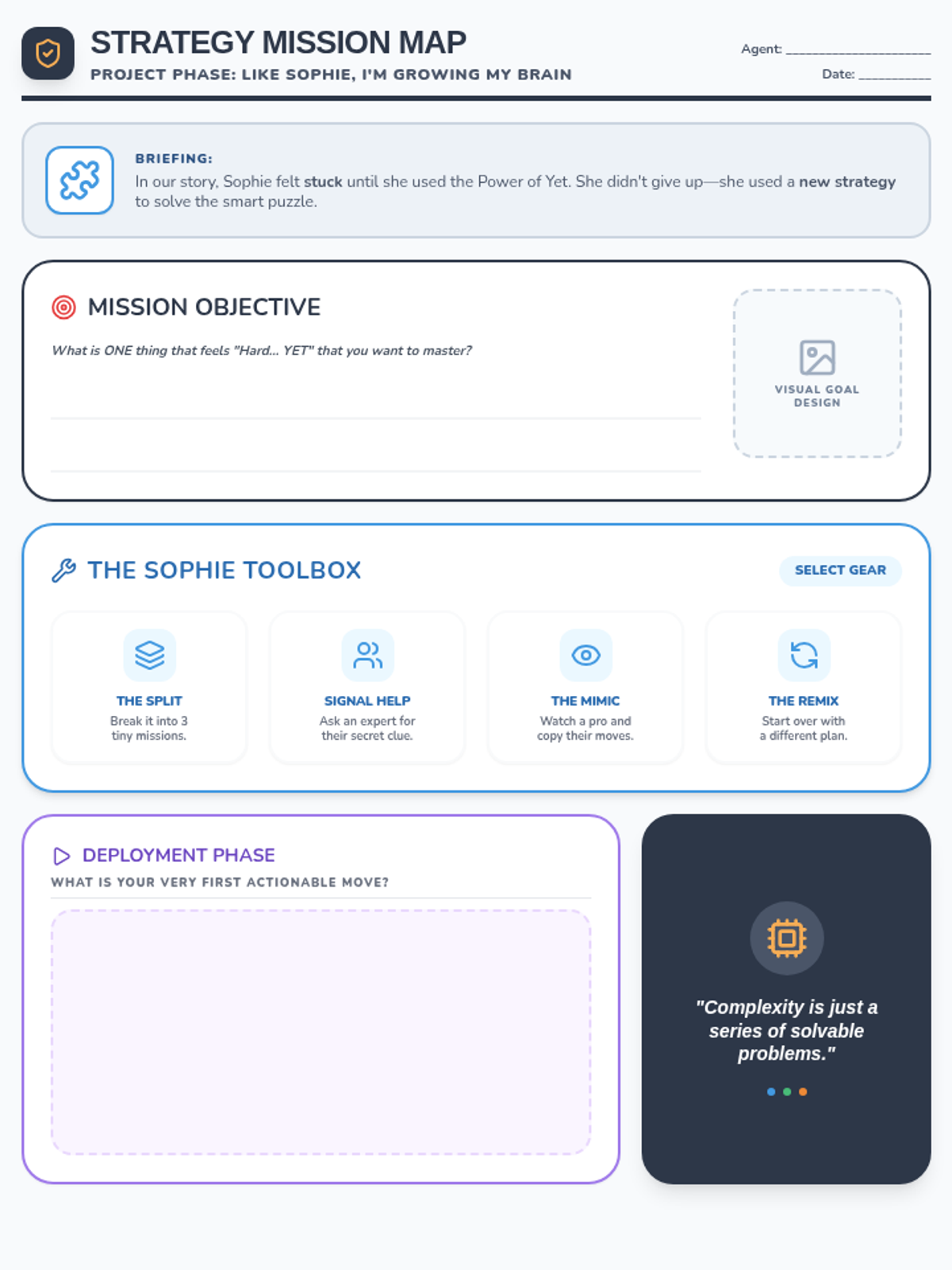
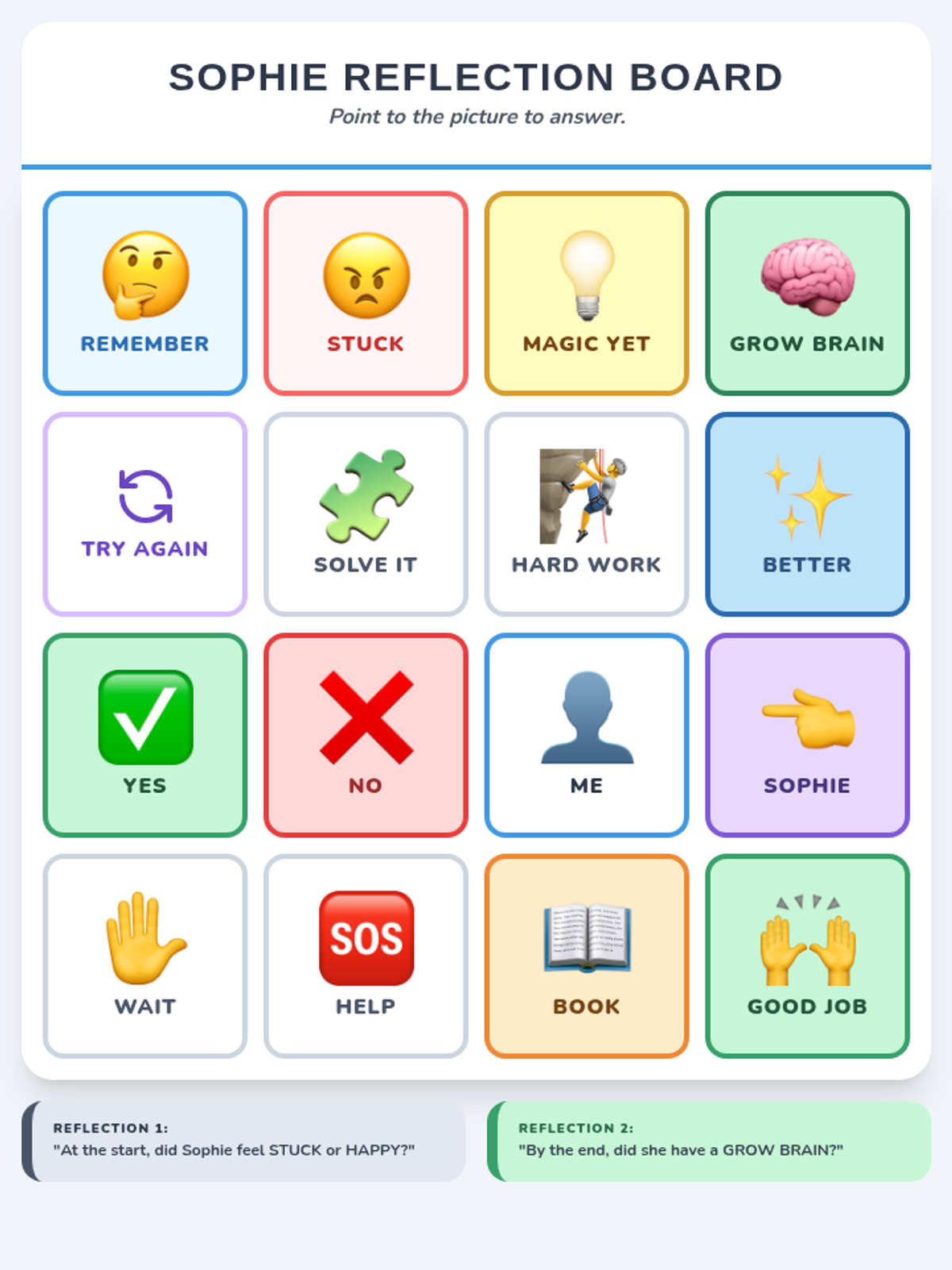
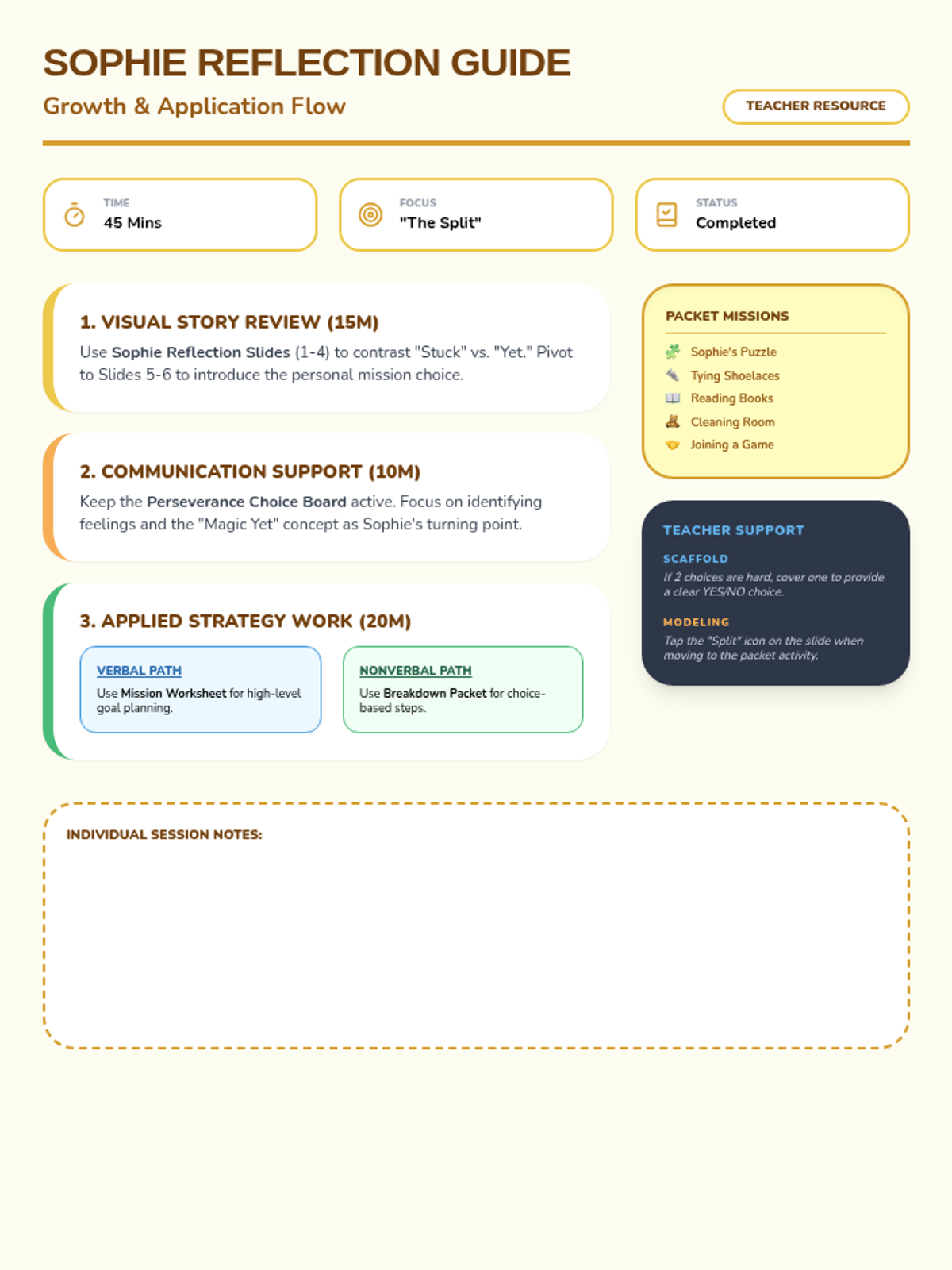
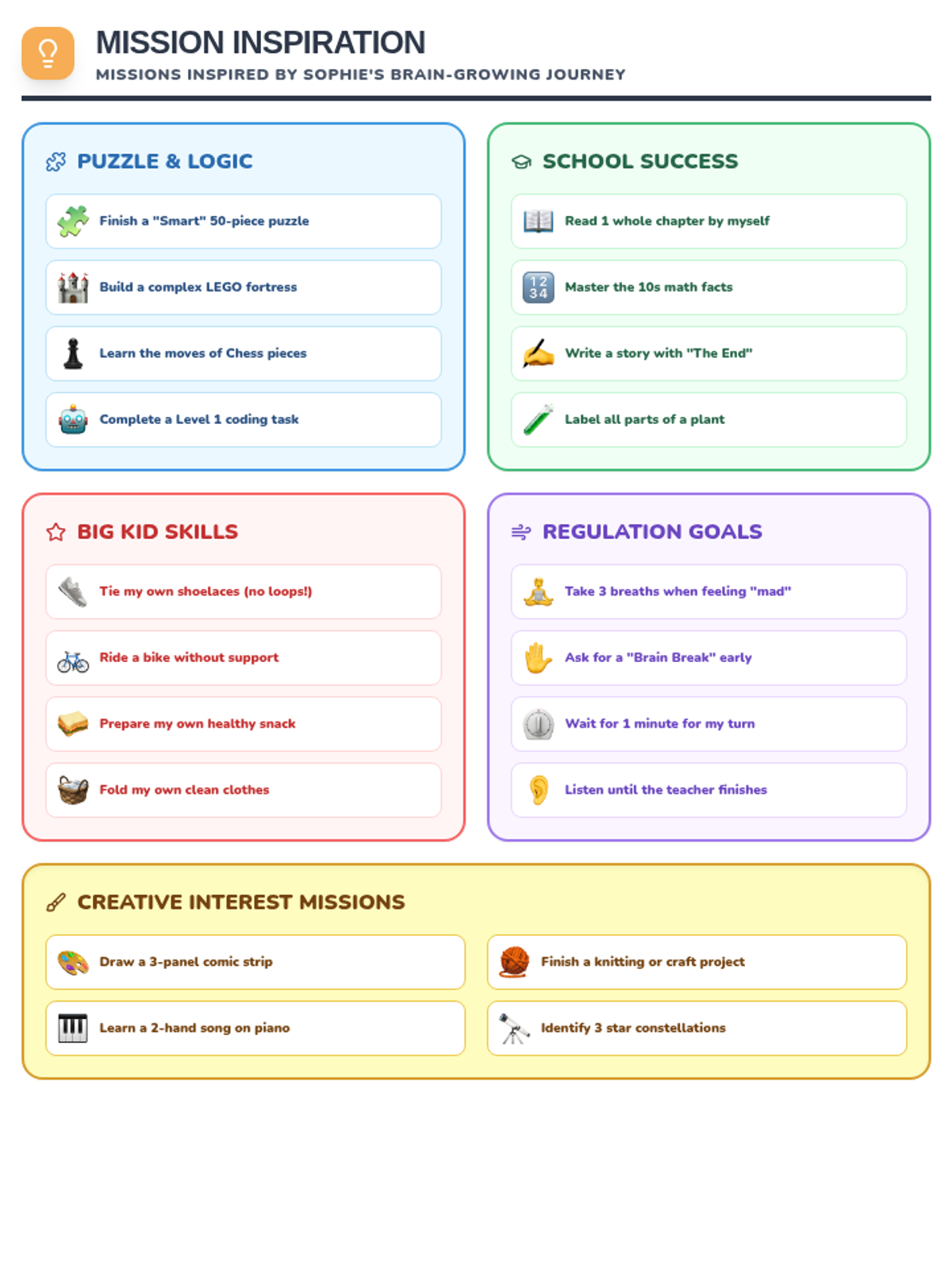
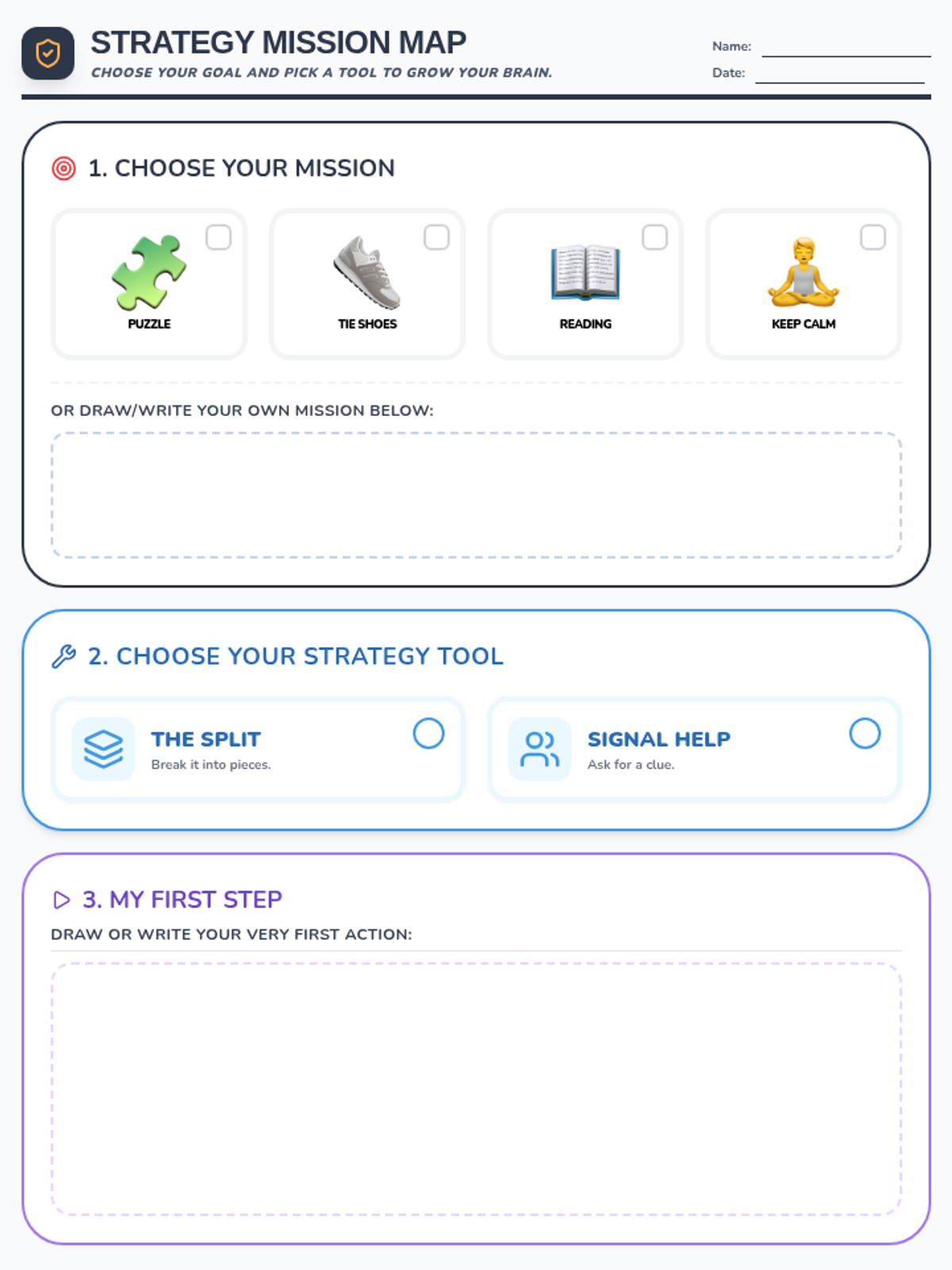
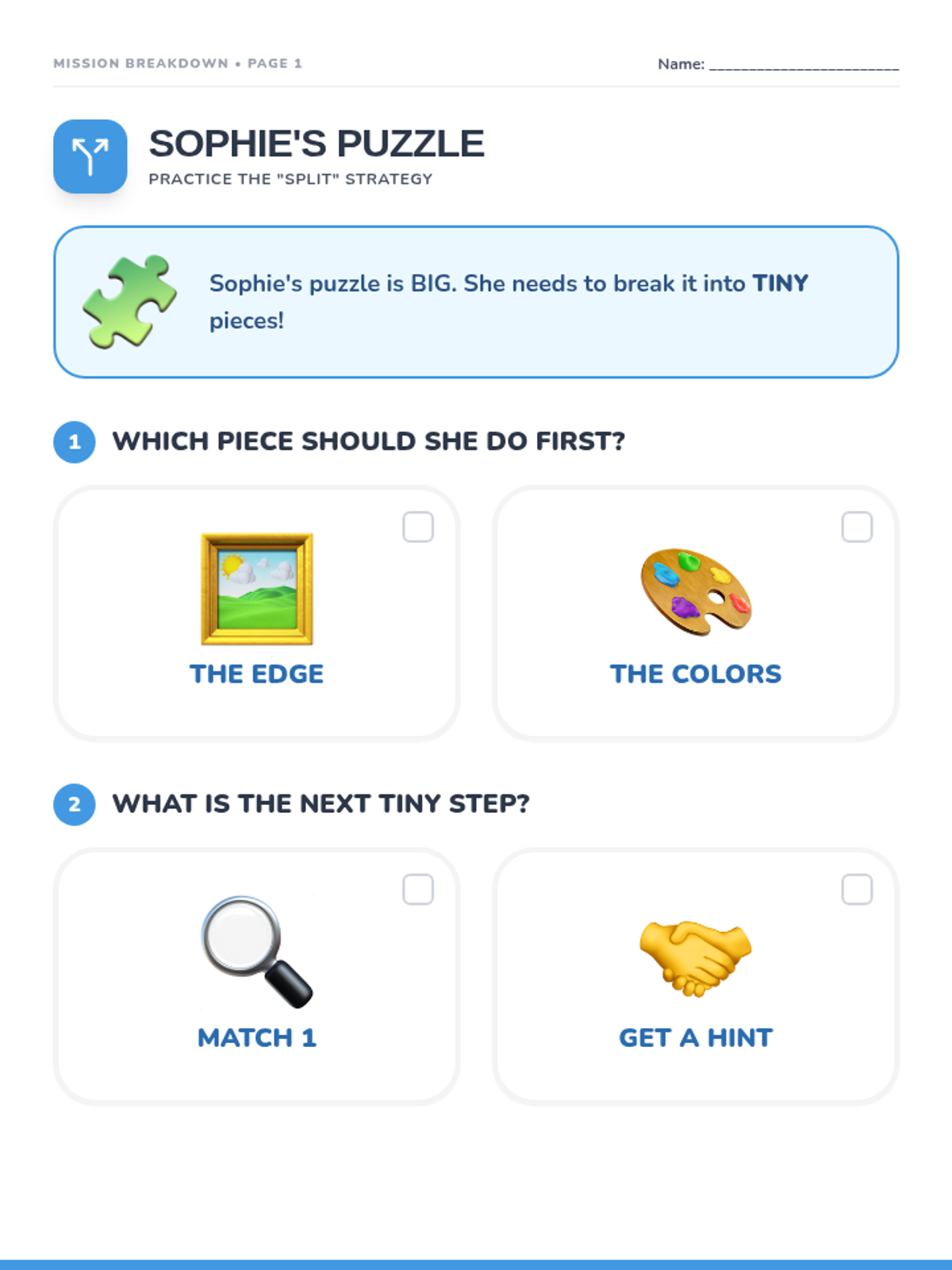
This lesson focuses on reflecting on Sophie's journey in 'When Sophie Thinks She Can't' and applying the concept of 'The Power of Yet' to personal experiences. It includes visual reflection slides, a strategy mission map, and adapted communication tools specifically designed for students with autism to process and apply growth mindset concepts.
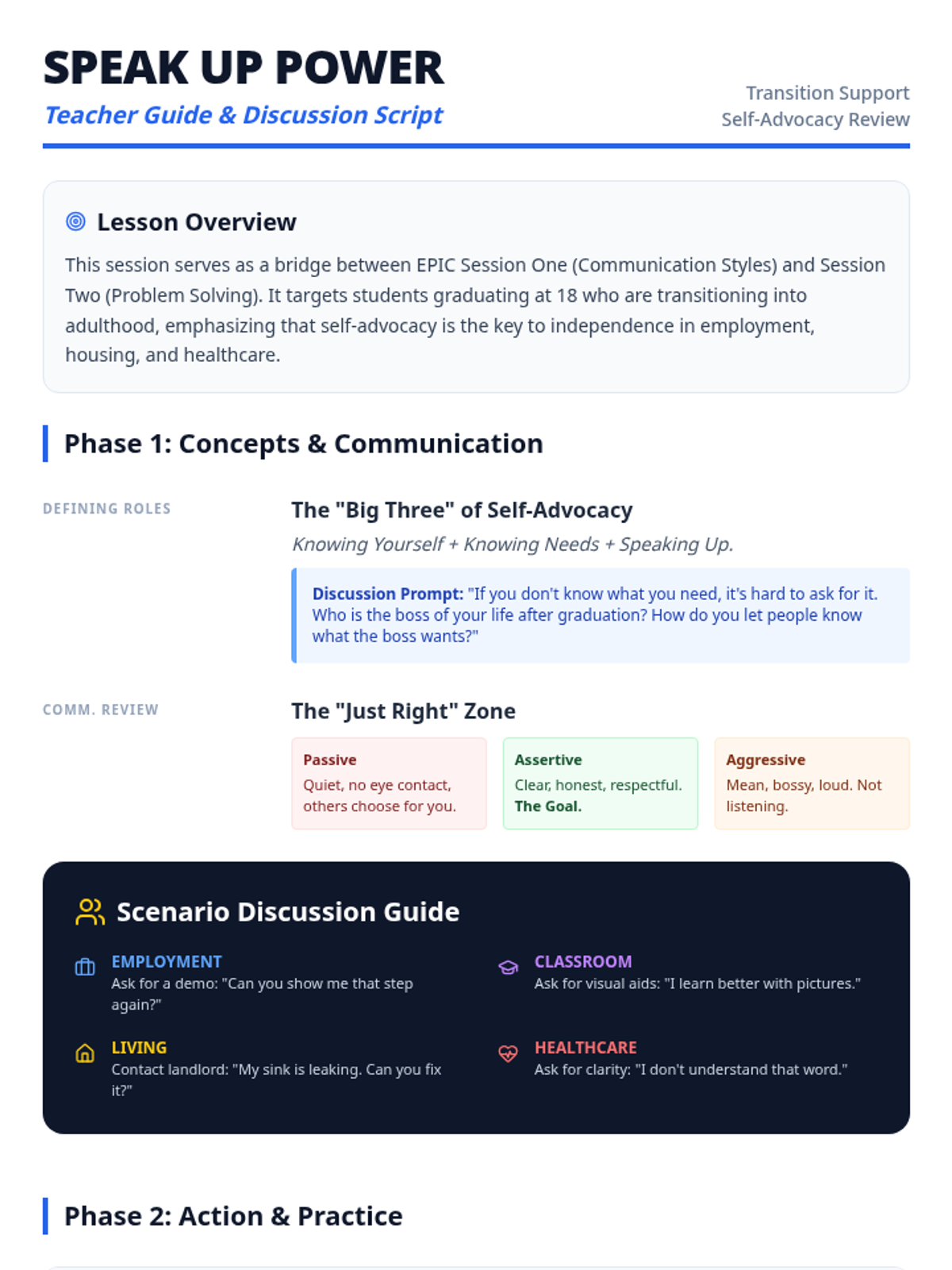
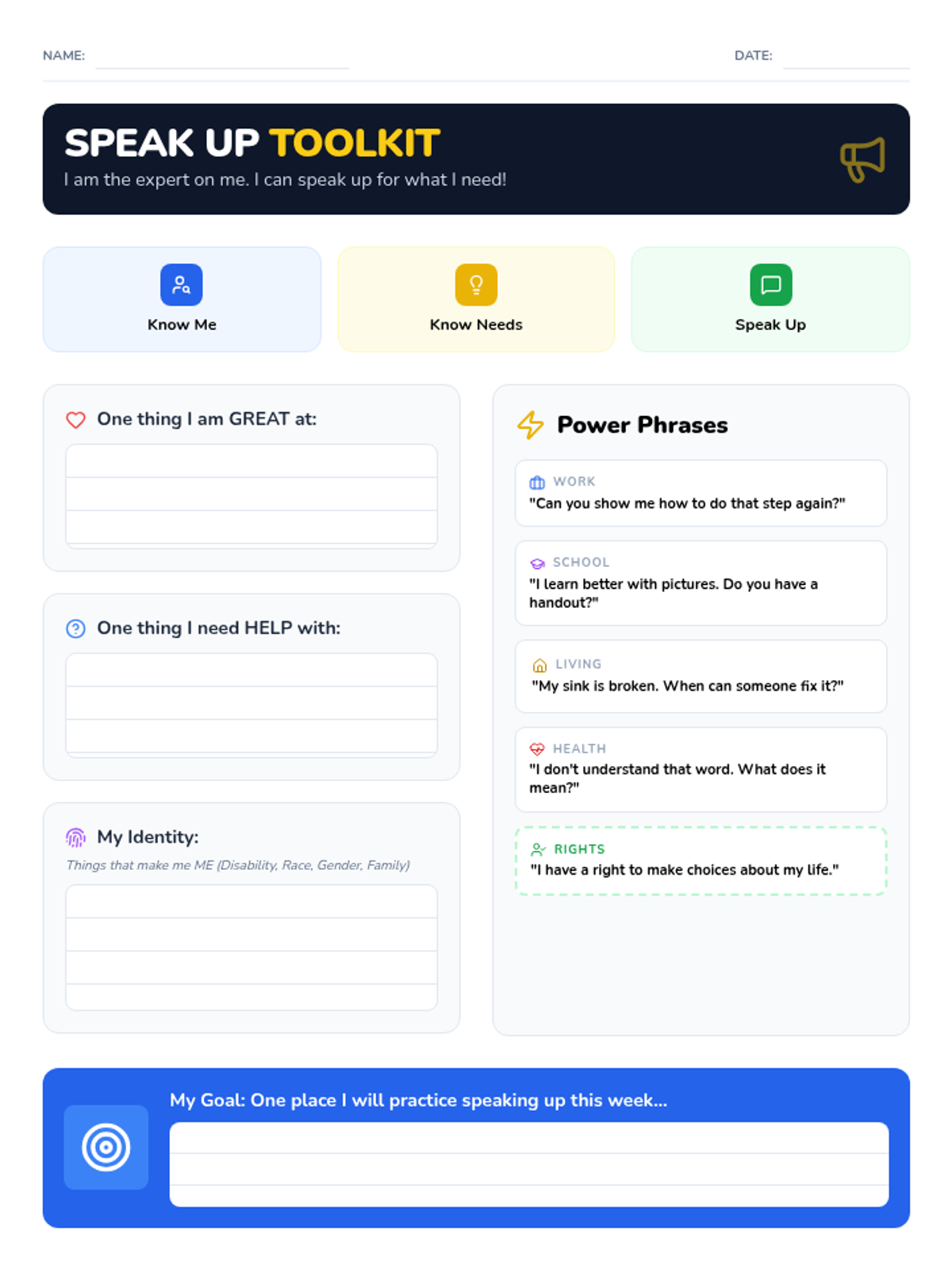
A review-focused lesson on self-advocacy for high school students with intellectual disabilities, focusing on transition skills for employment, living, and education.
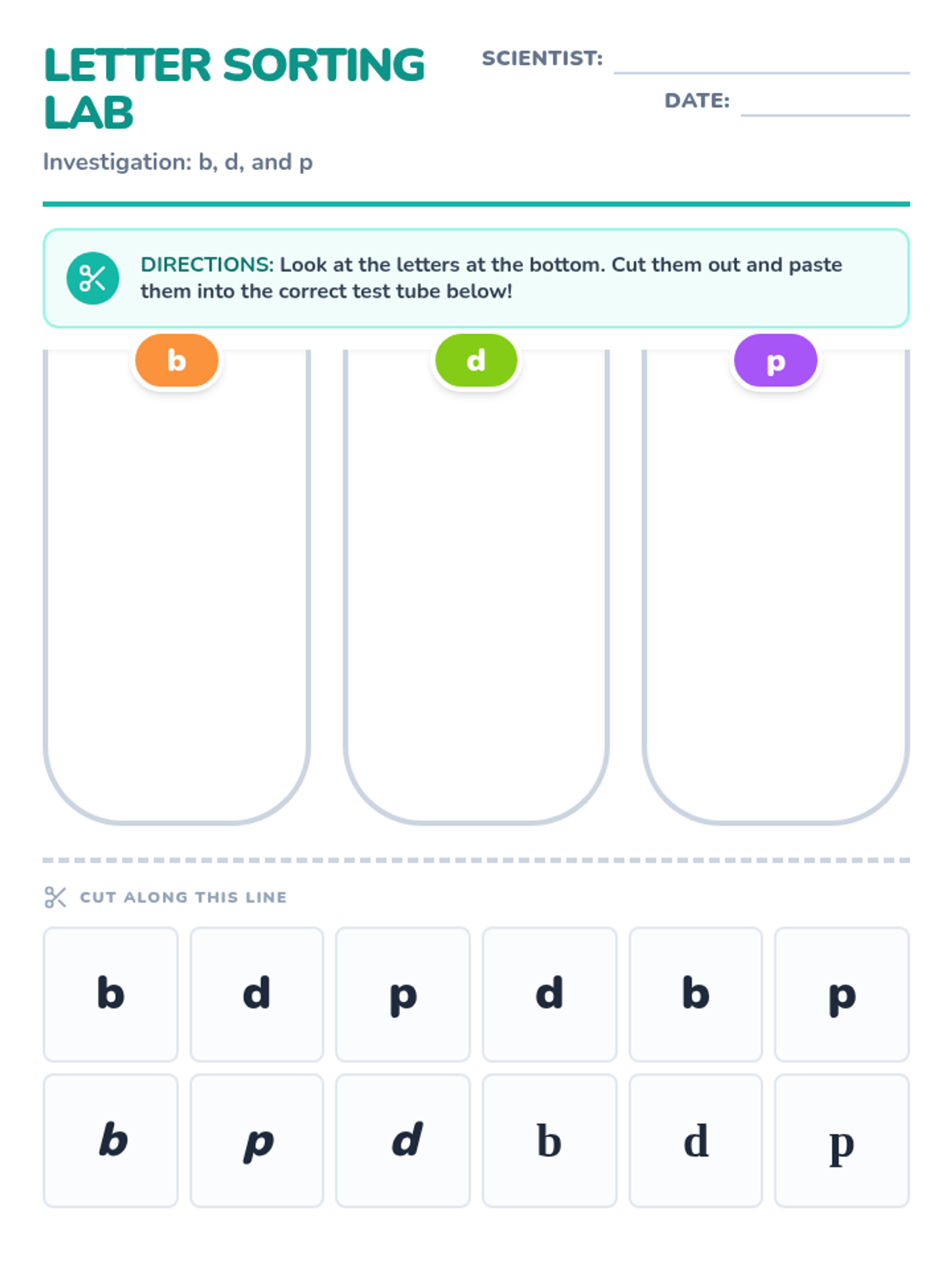
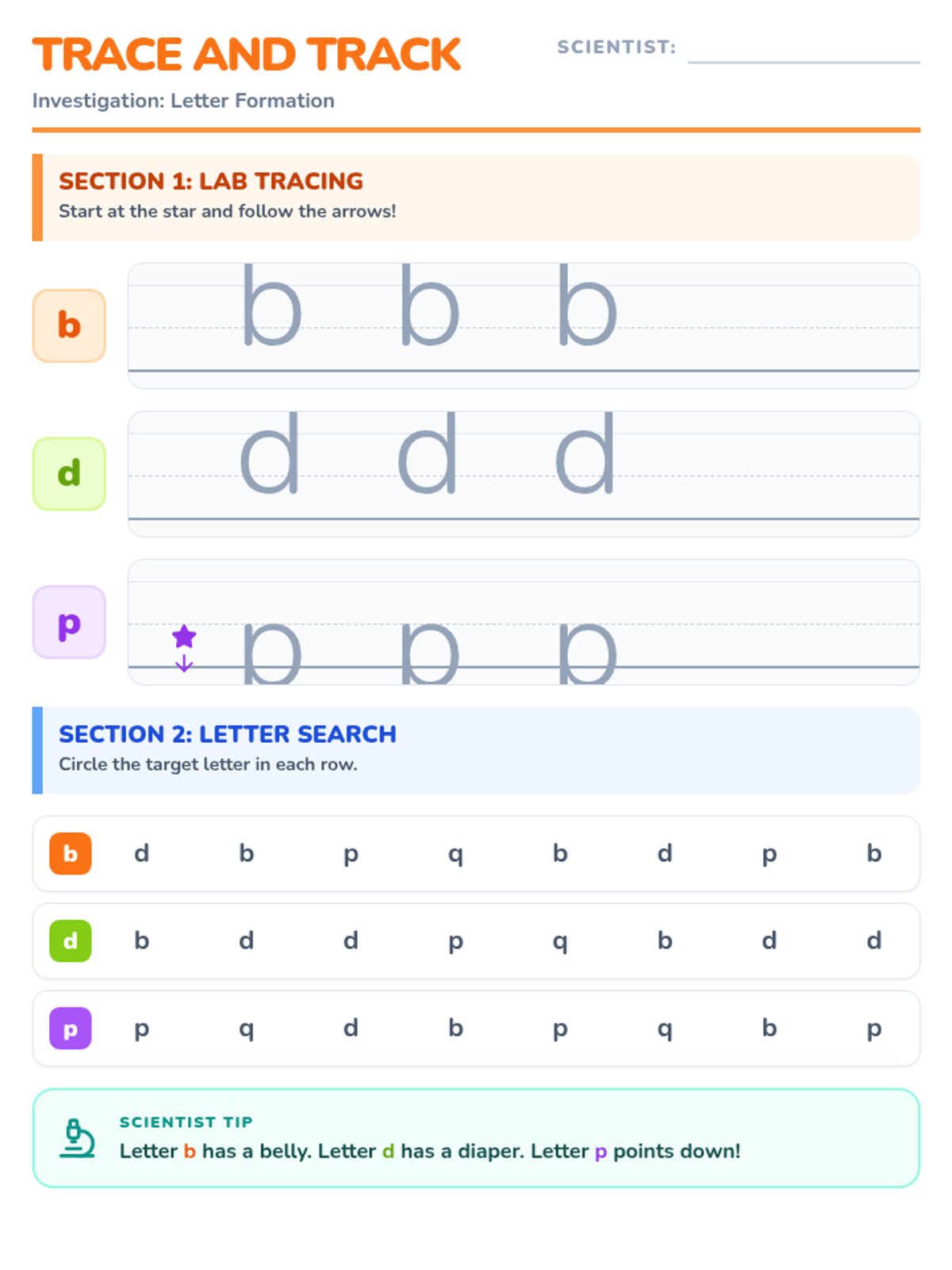
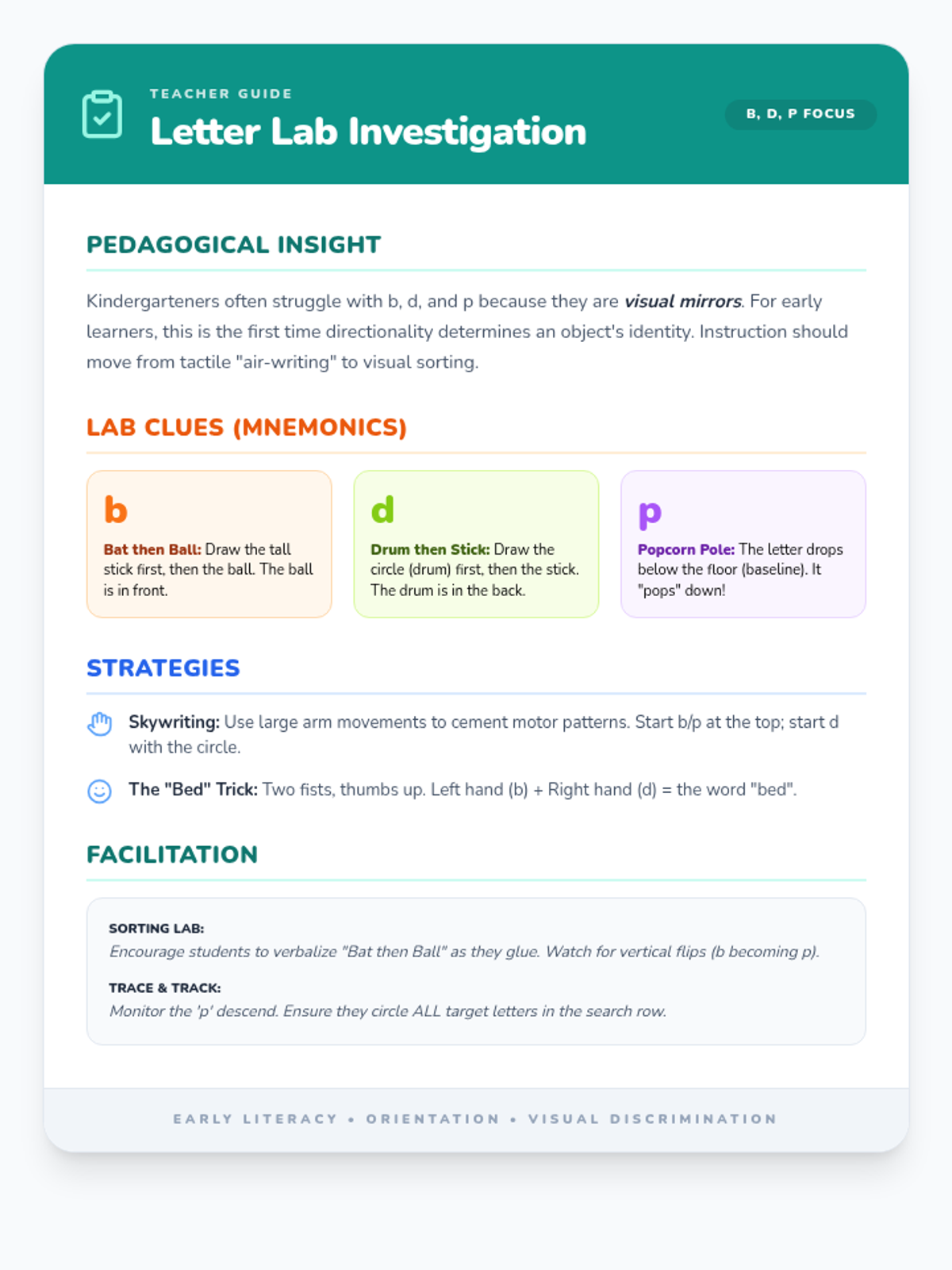
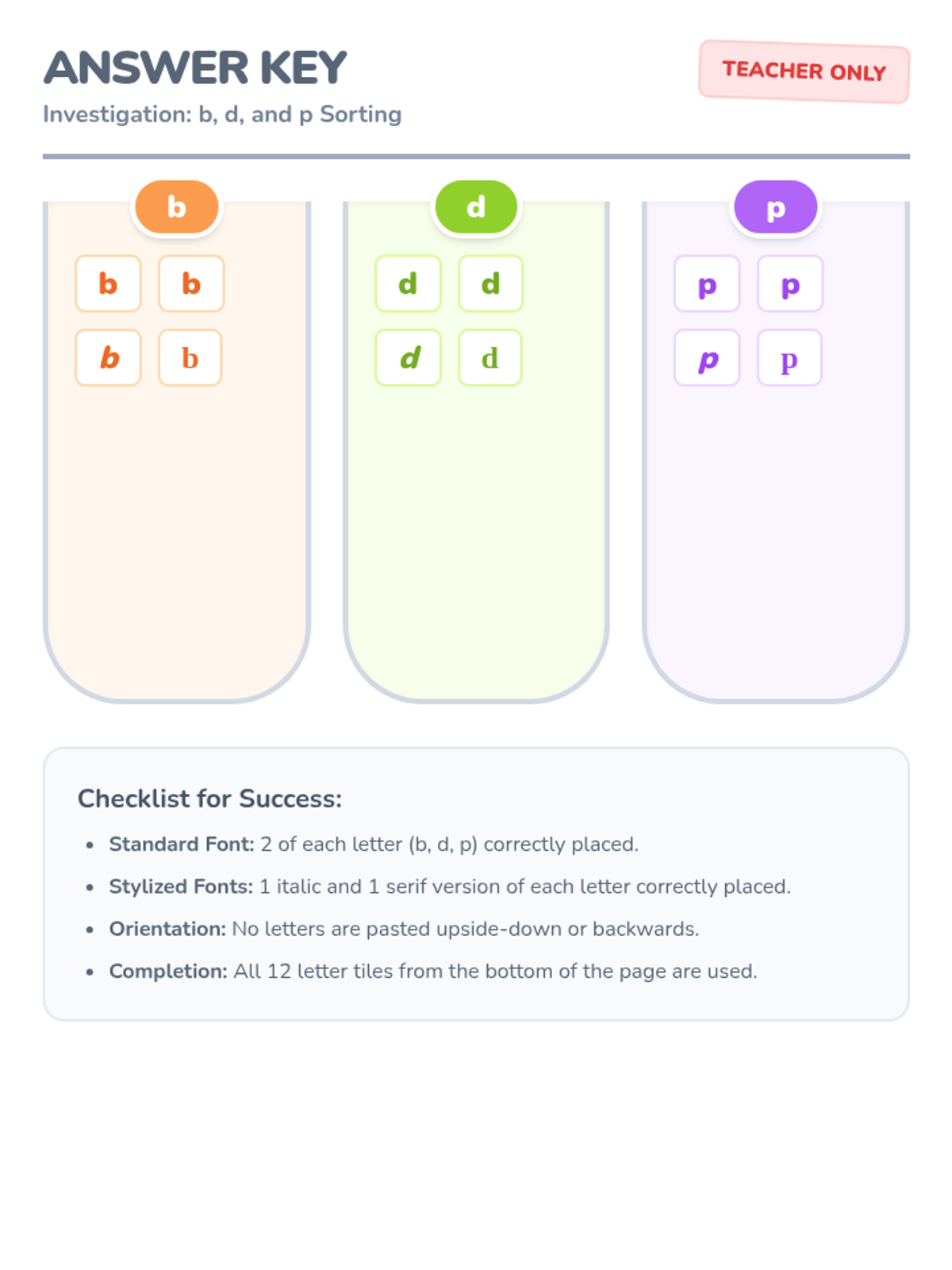
A comprehensive lesson focused on helping kindergarten students distinguish between the frequently confused letters b, d, and p through visual discrimination, mnemonics, and tactile tracing.
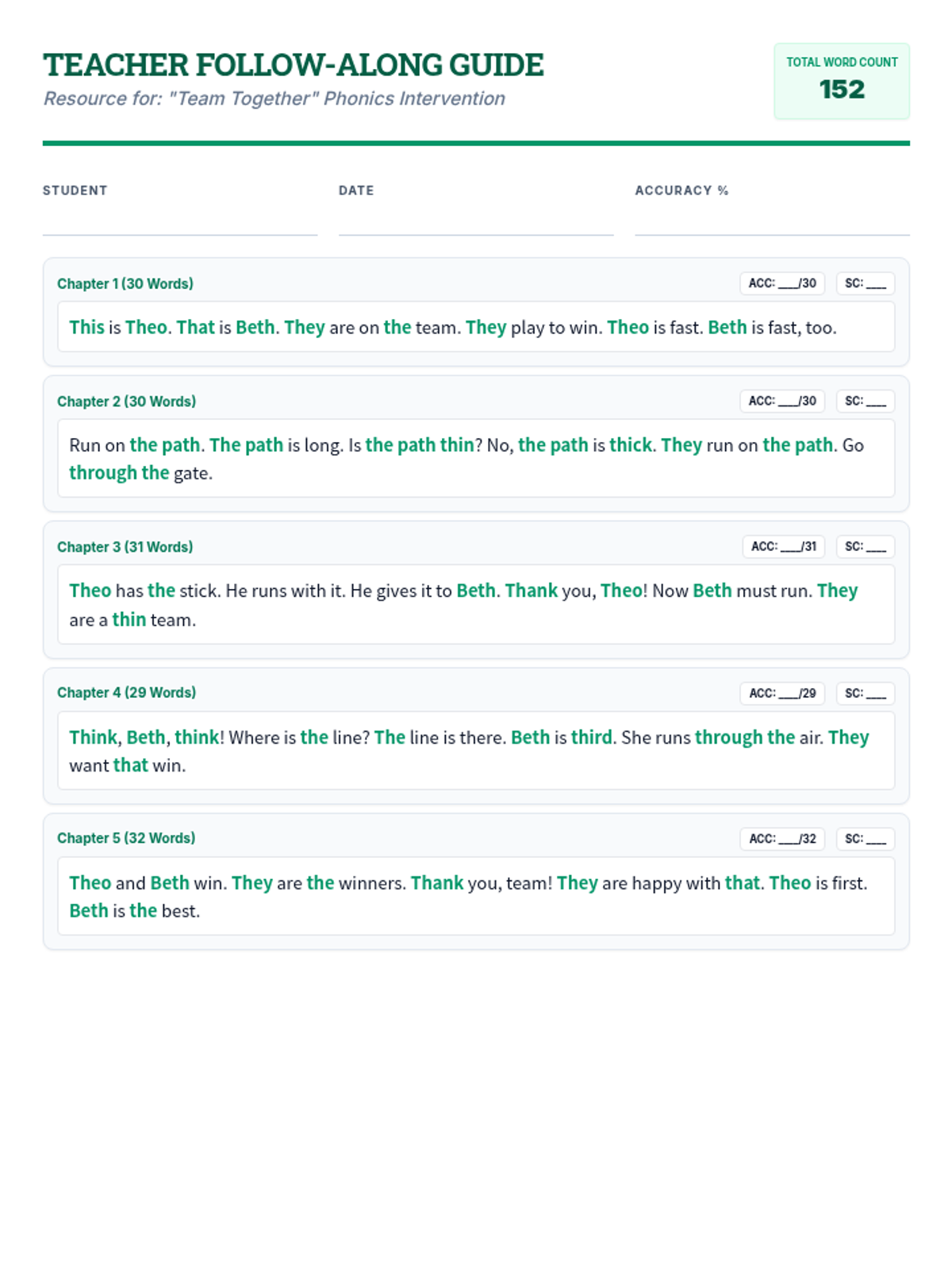
A phonics intervention lesson targeting the 'TH' digraph through a relay race story. Focuses on tongue placement for voiced and unvoiced dental fricatives.
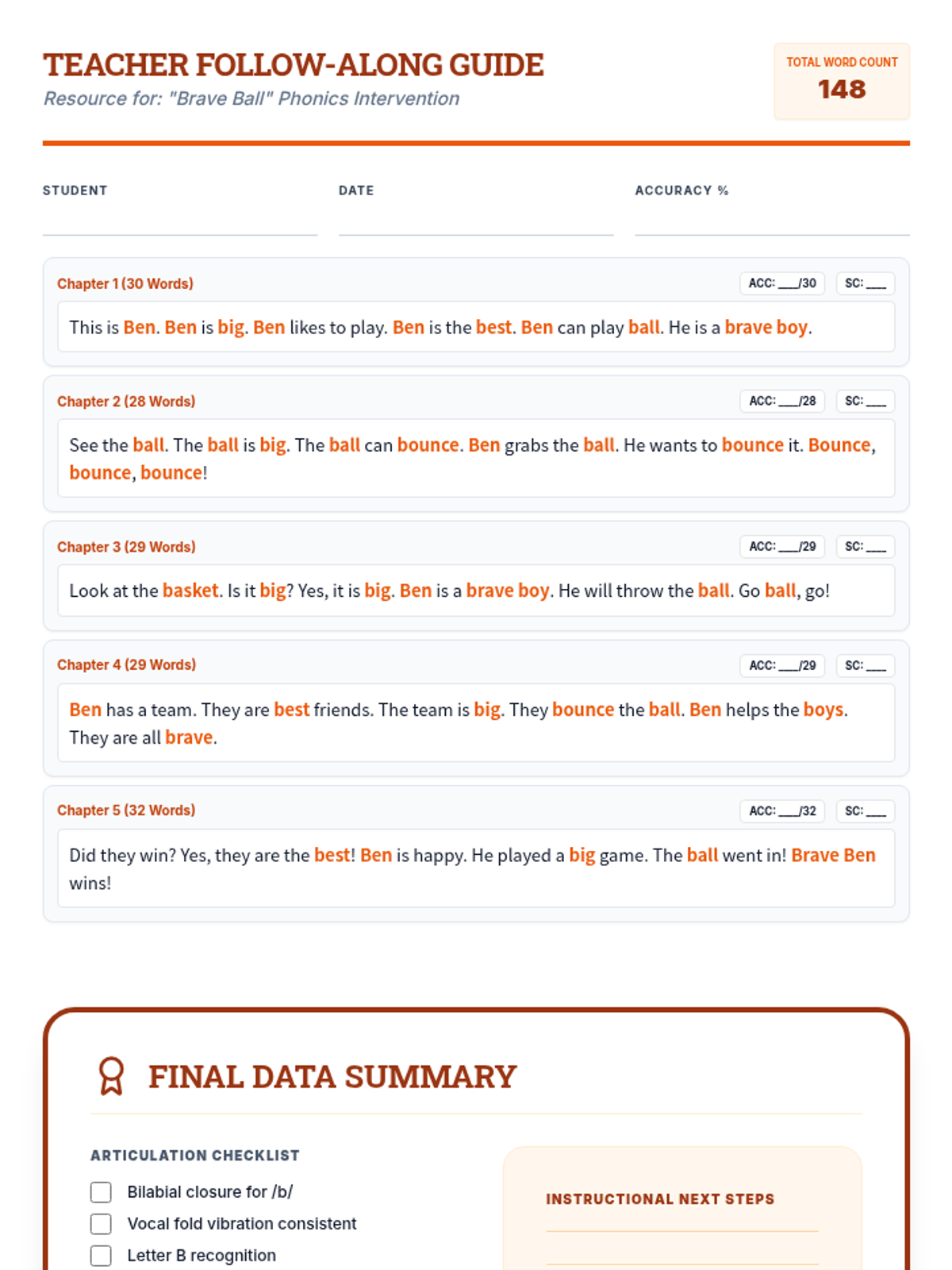
A phonics intervention lesson targeting the 'B' sound through a basketball-themed story. Focuses on bilabial plosive articulation and letter recognition.
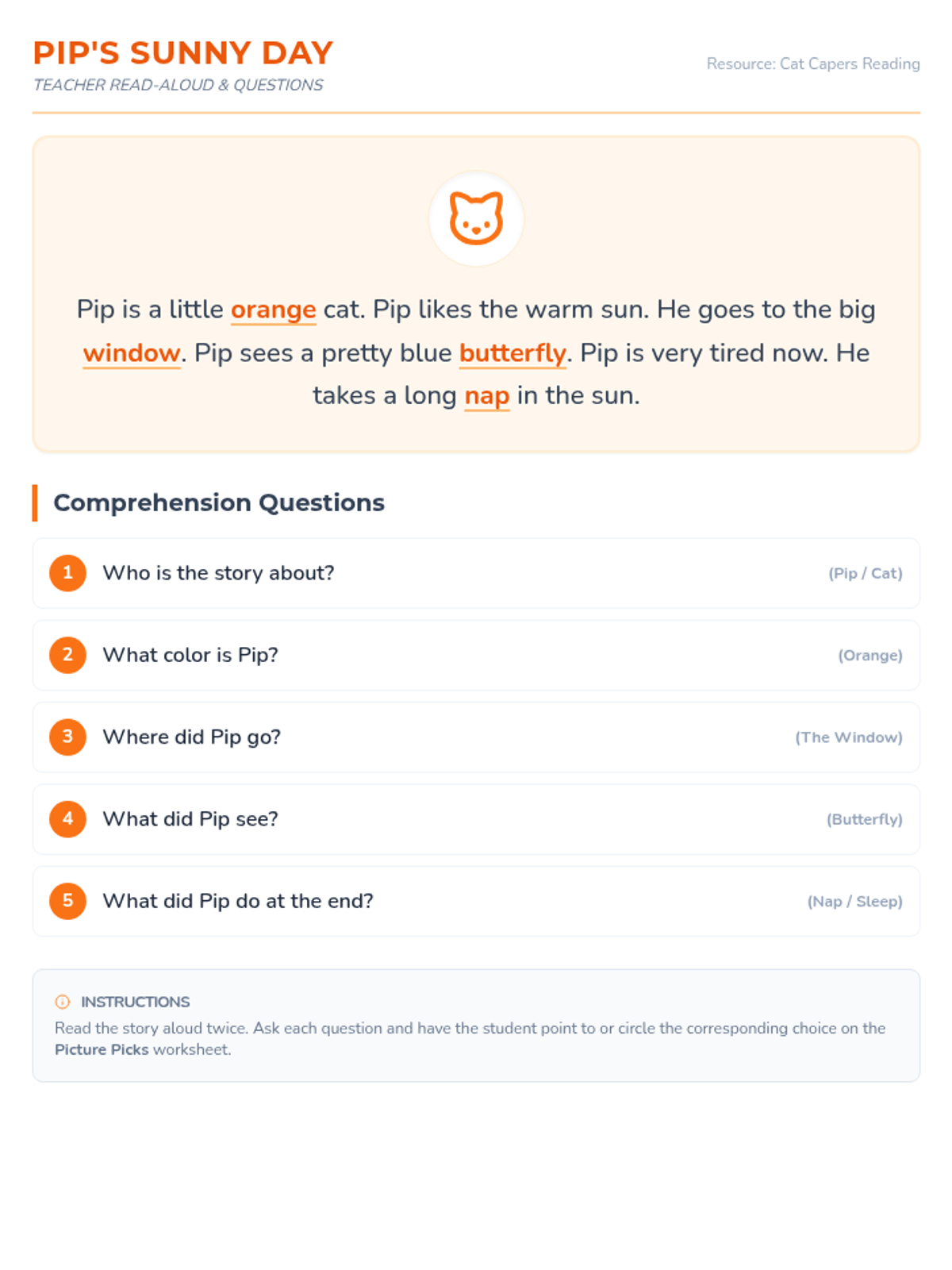
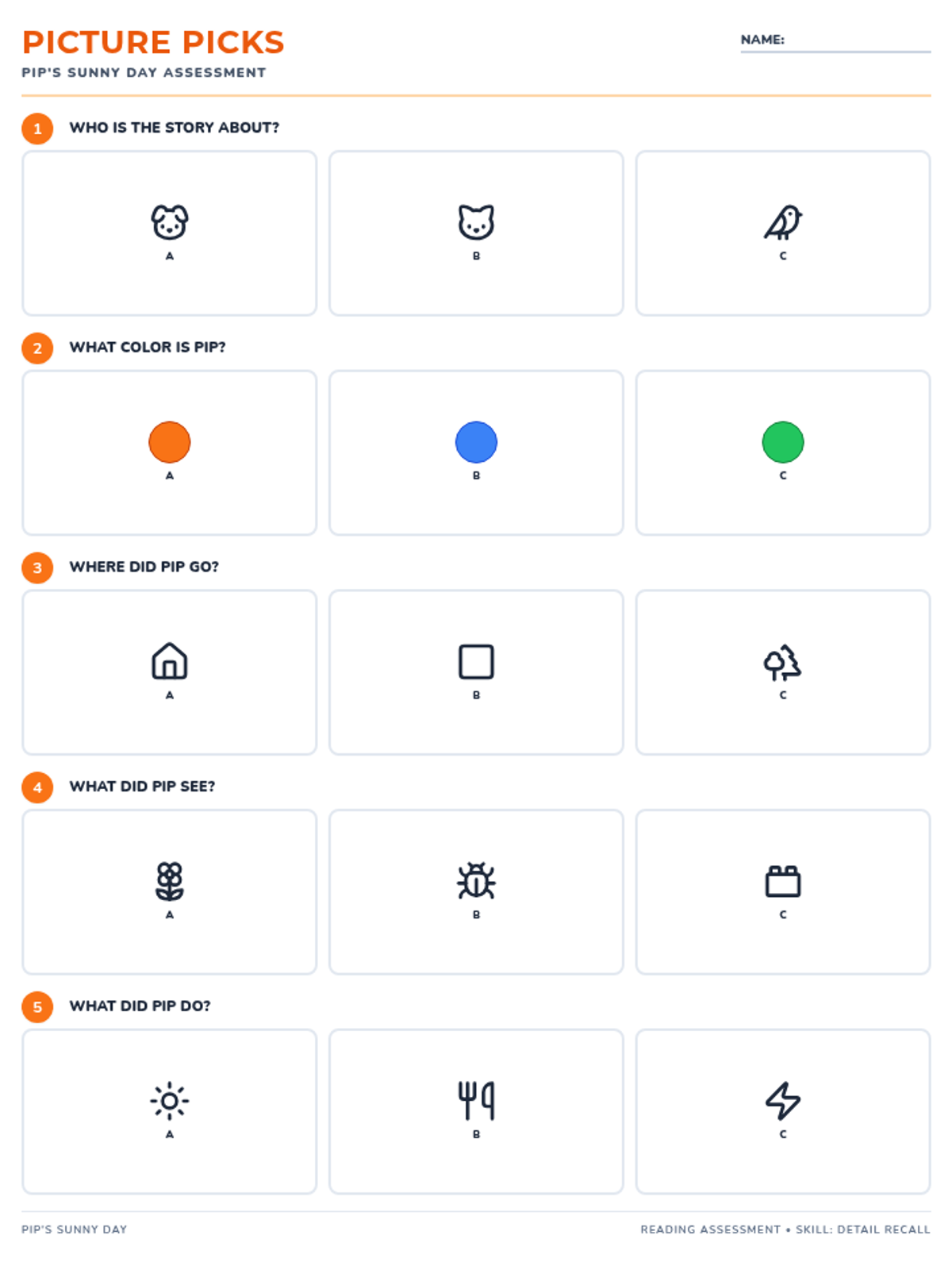
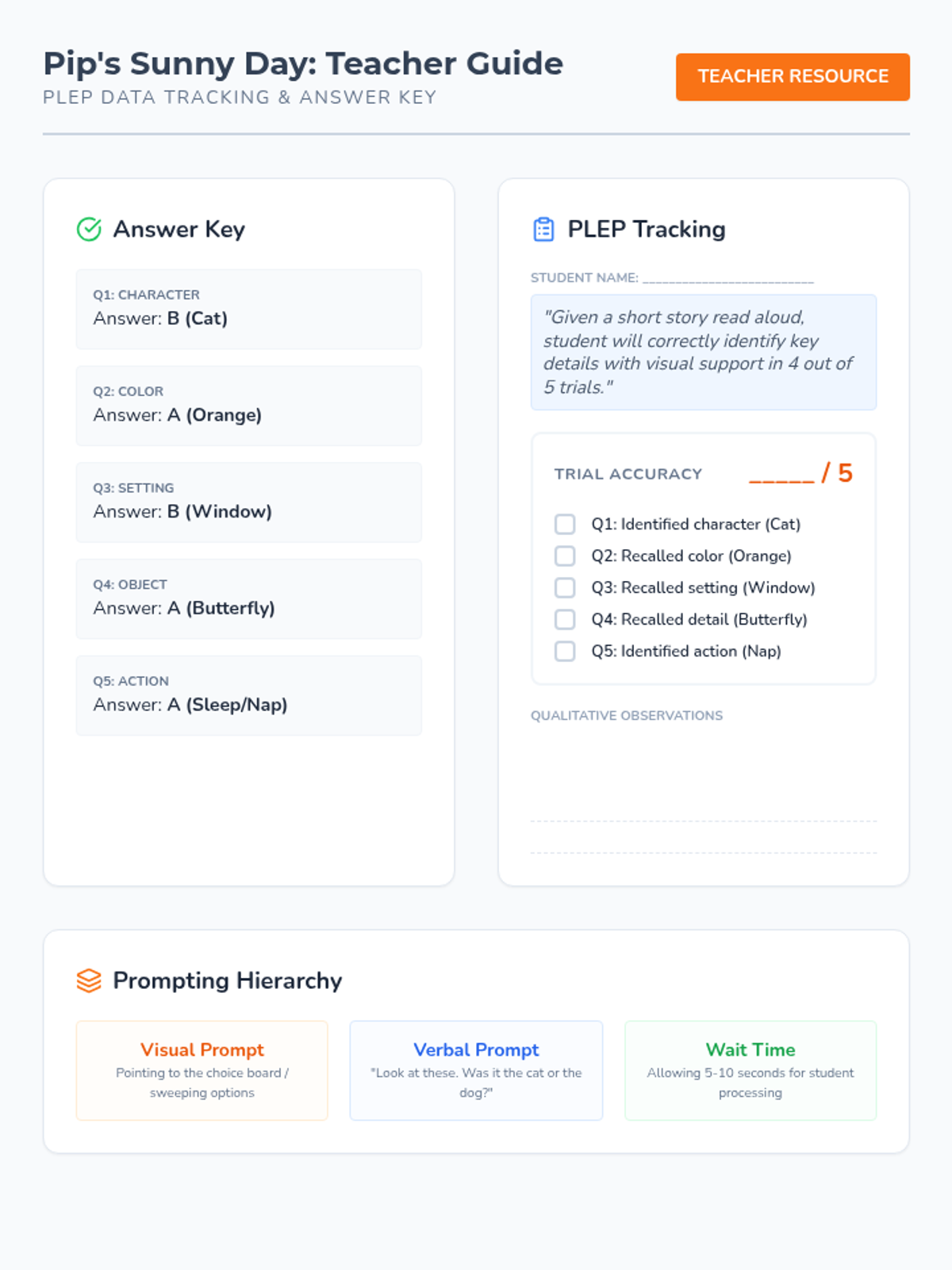
A simple reading comprehension lesson for kindergarten students focusing on a short story about a cat named Pip, including visual choice assessments.
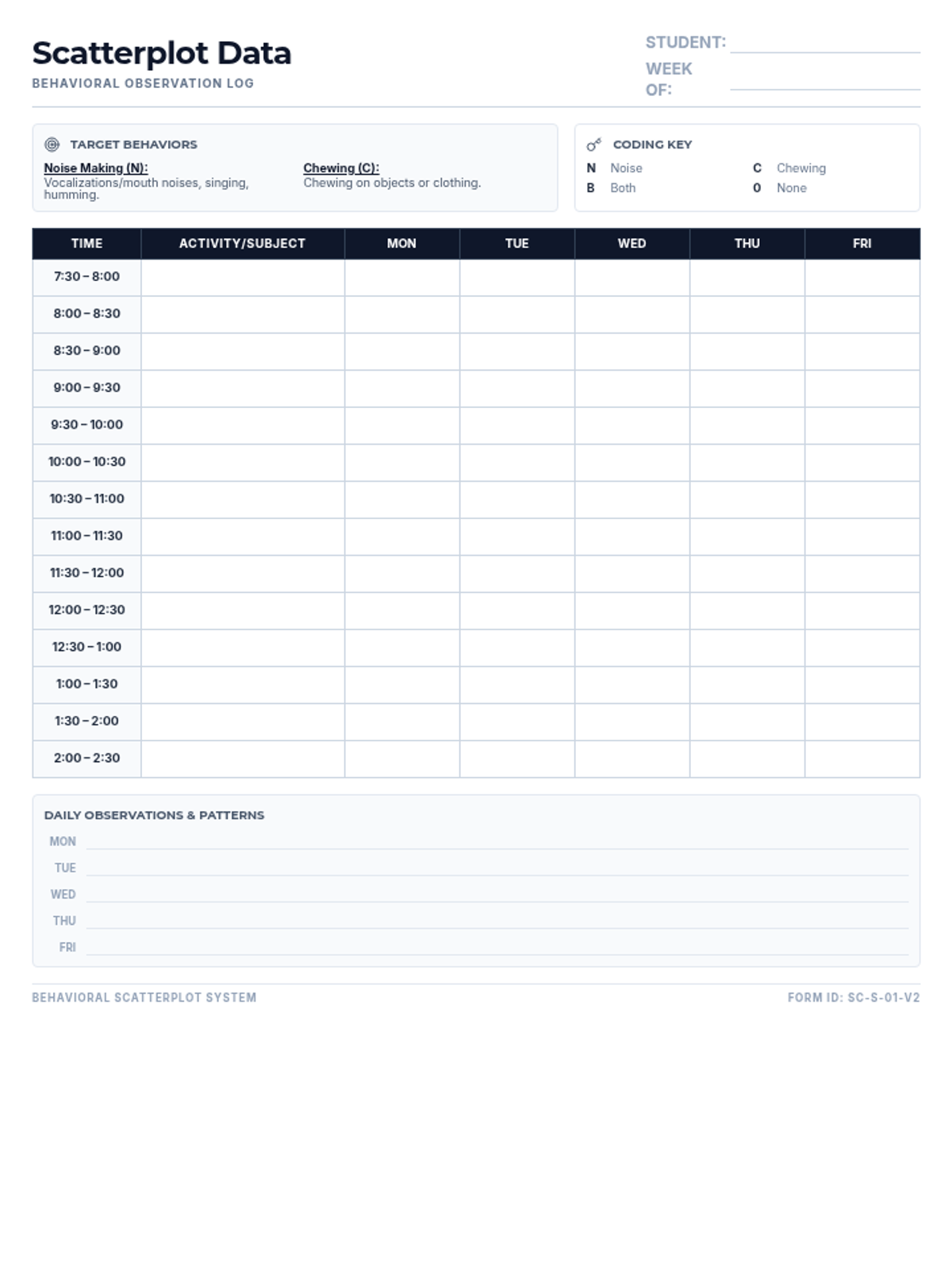
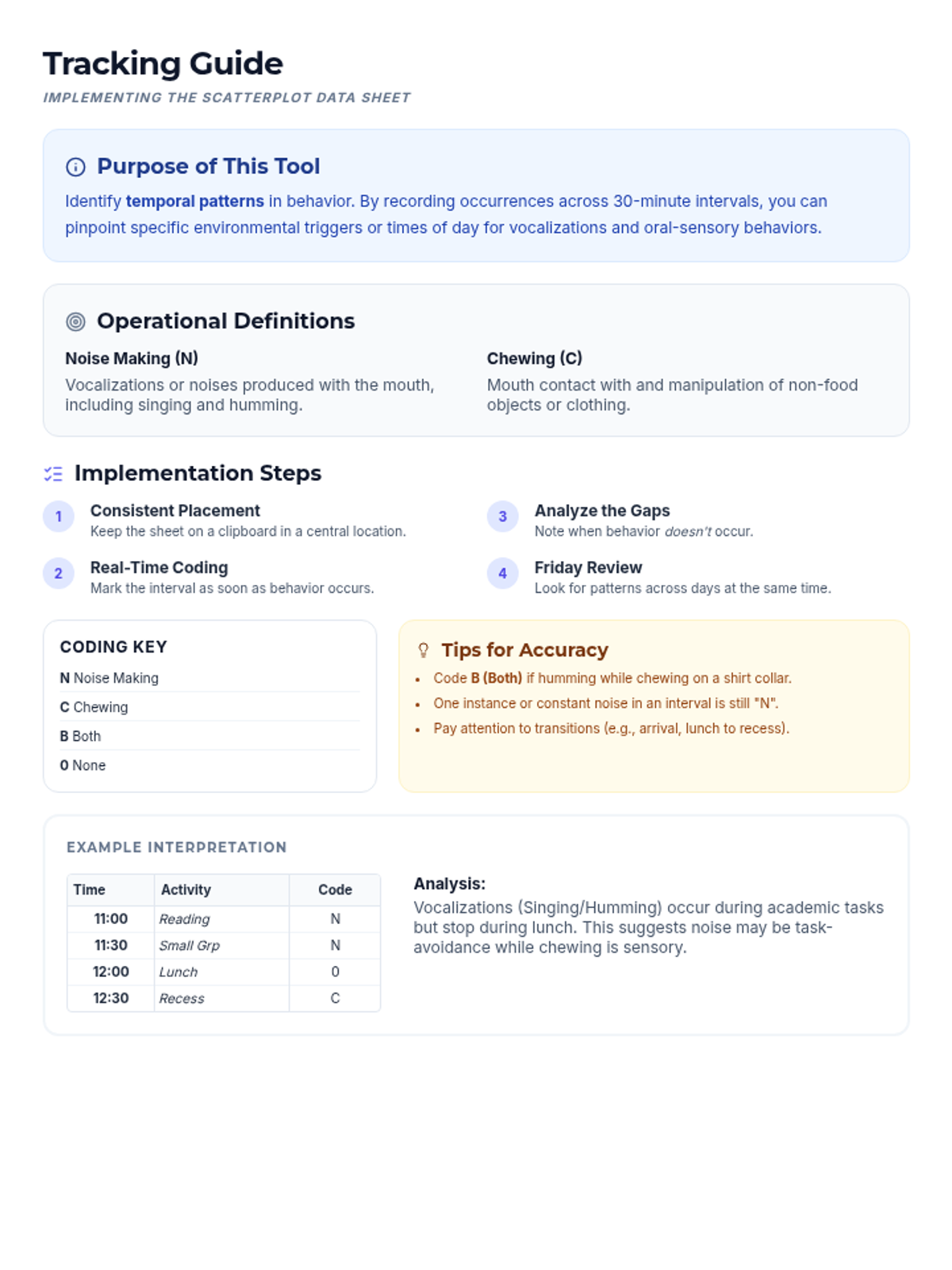
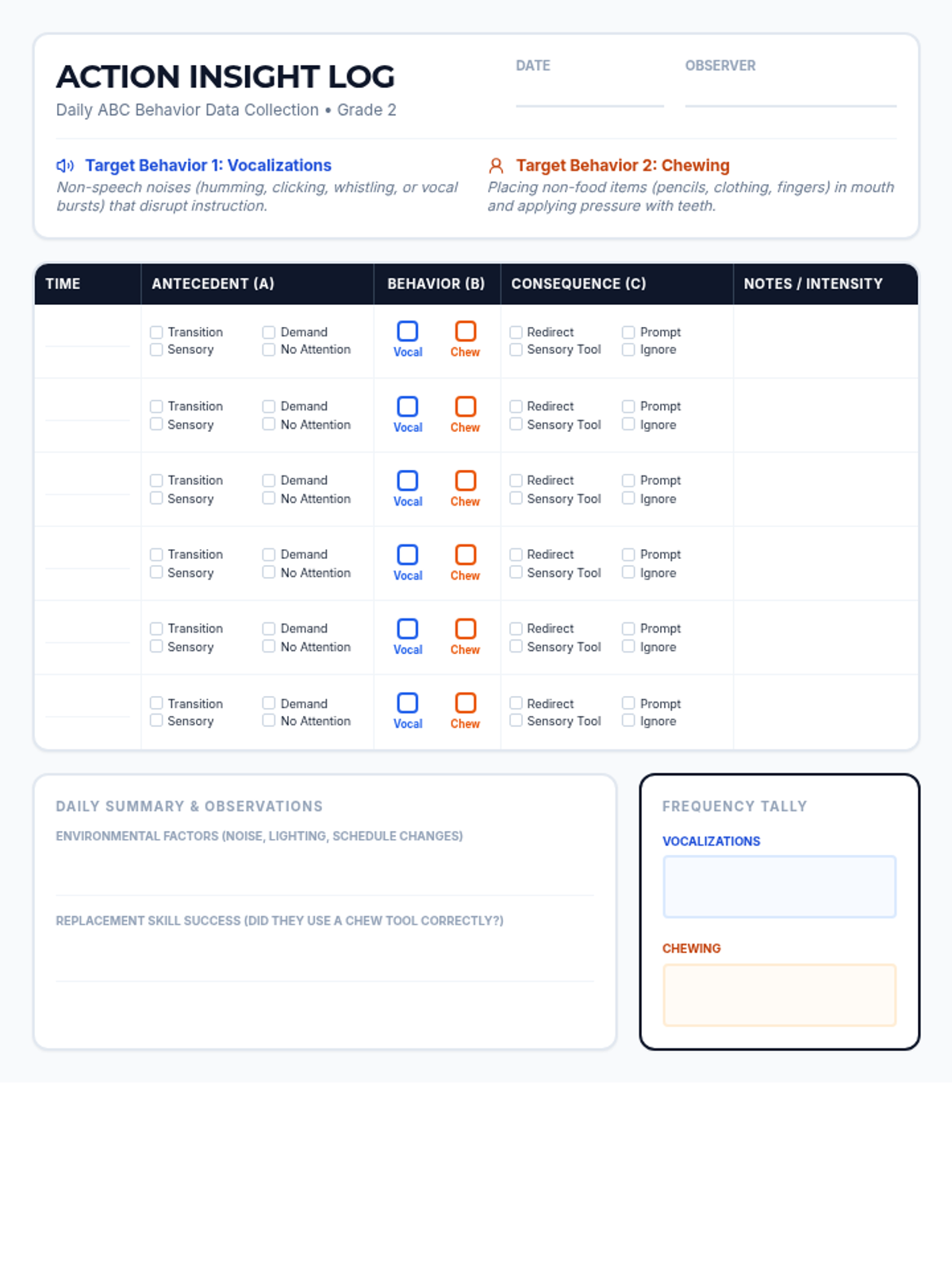
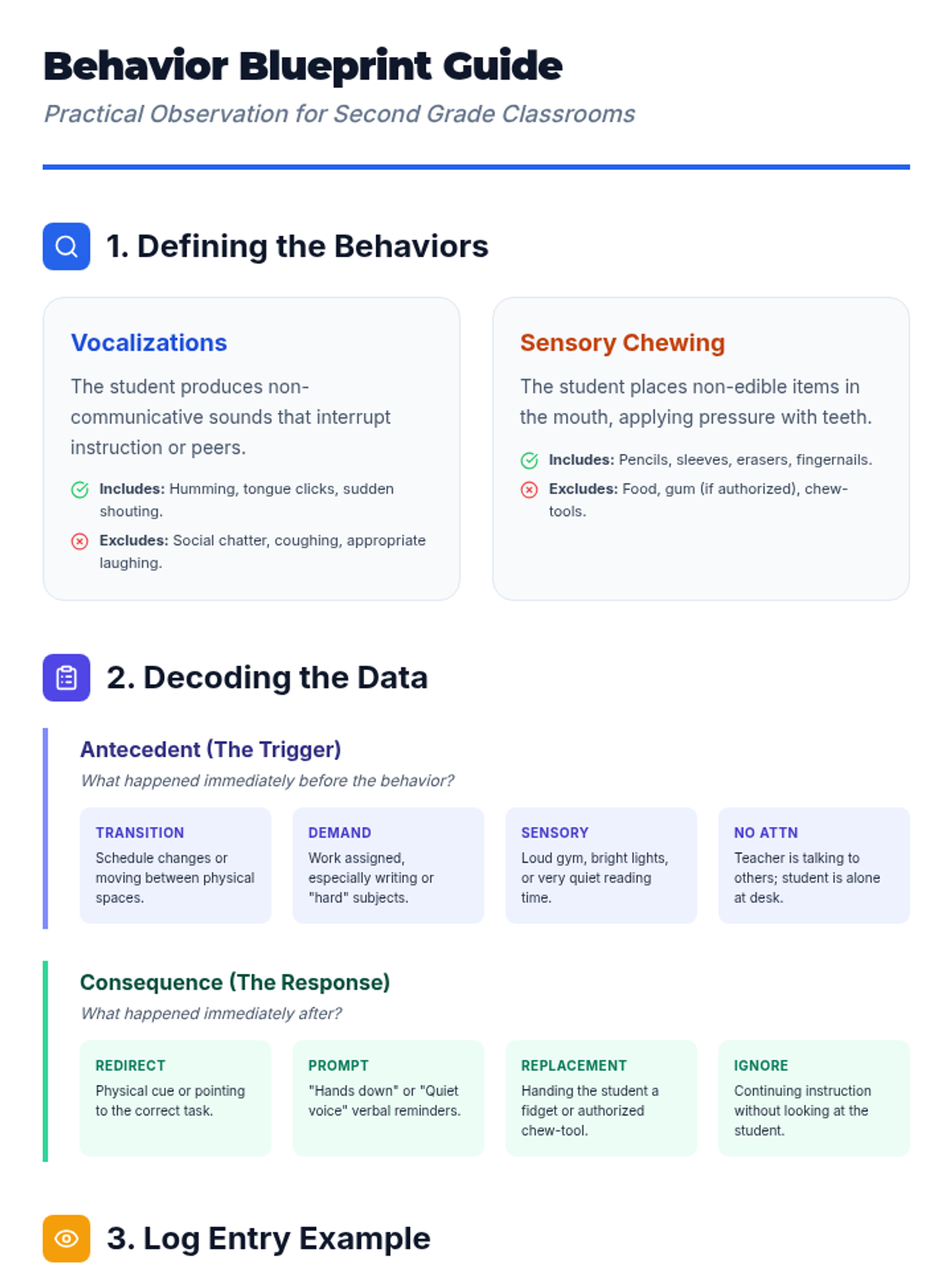
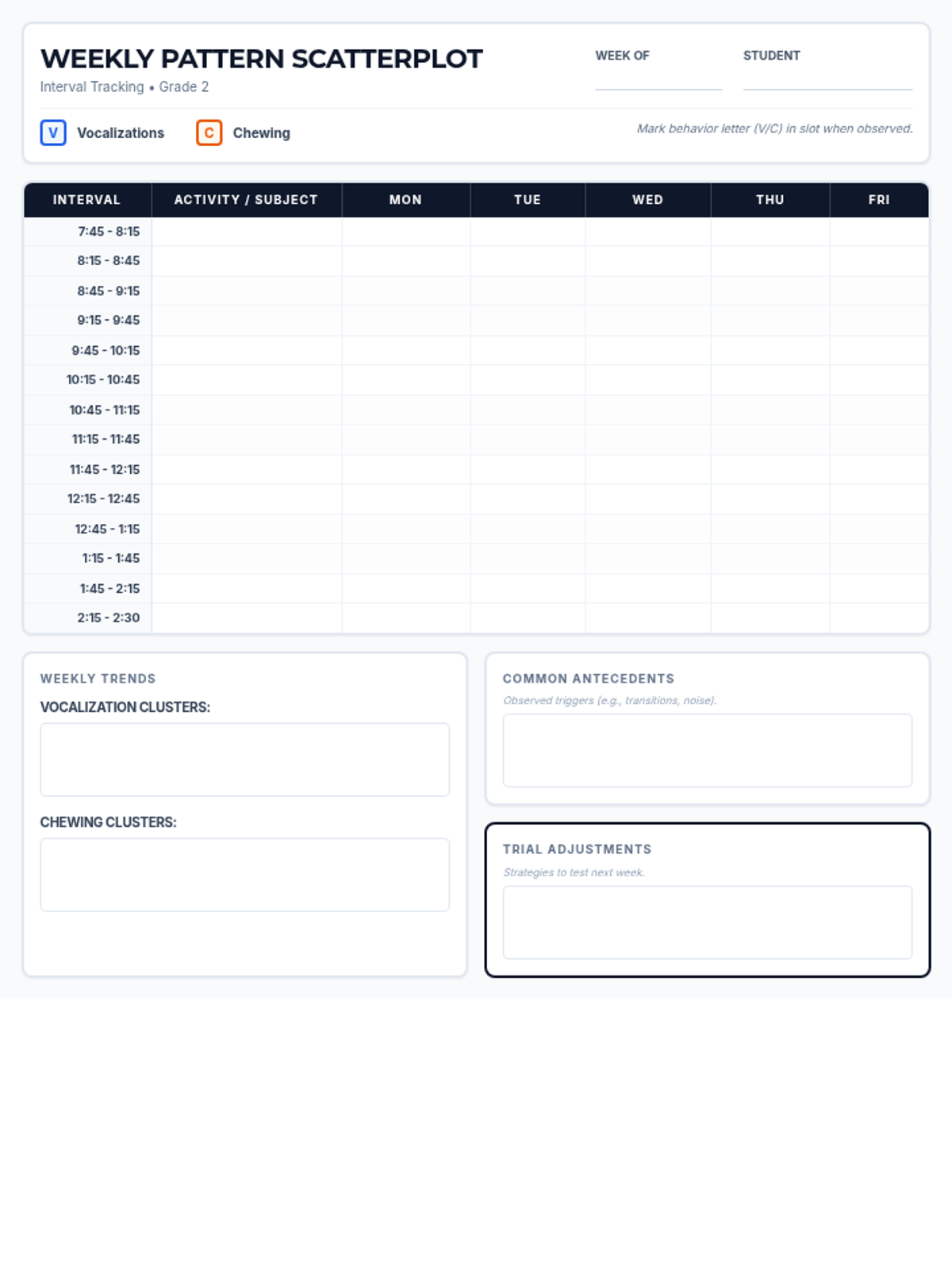
A collection of resources for tracking and analyzing noise-making and chewing behaviors in a classroom or clinical setting, featuring a structured scatterplot data sheet and implementation guide.
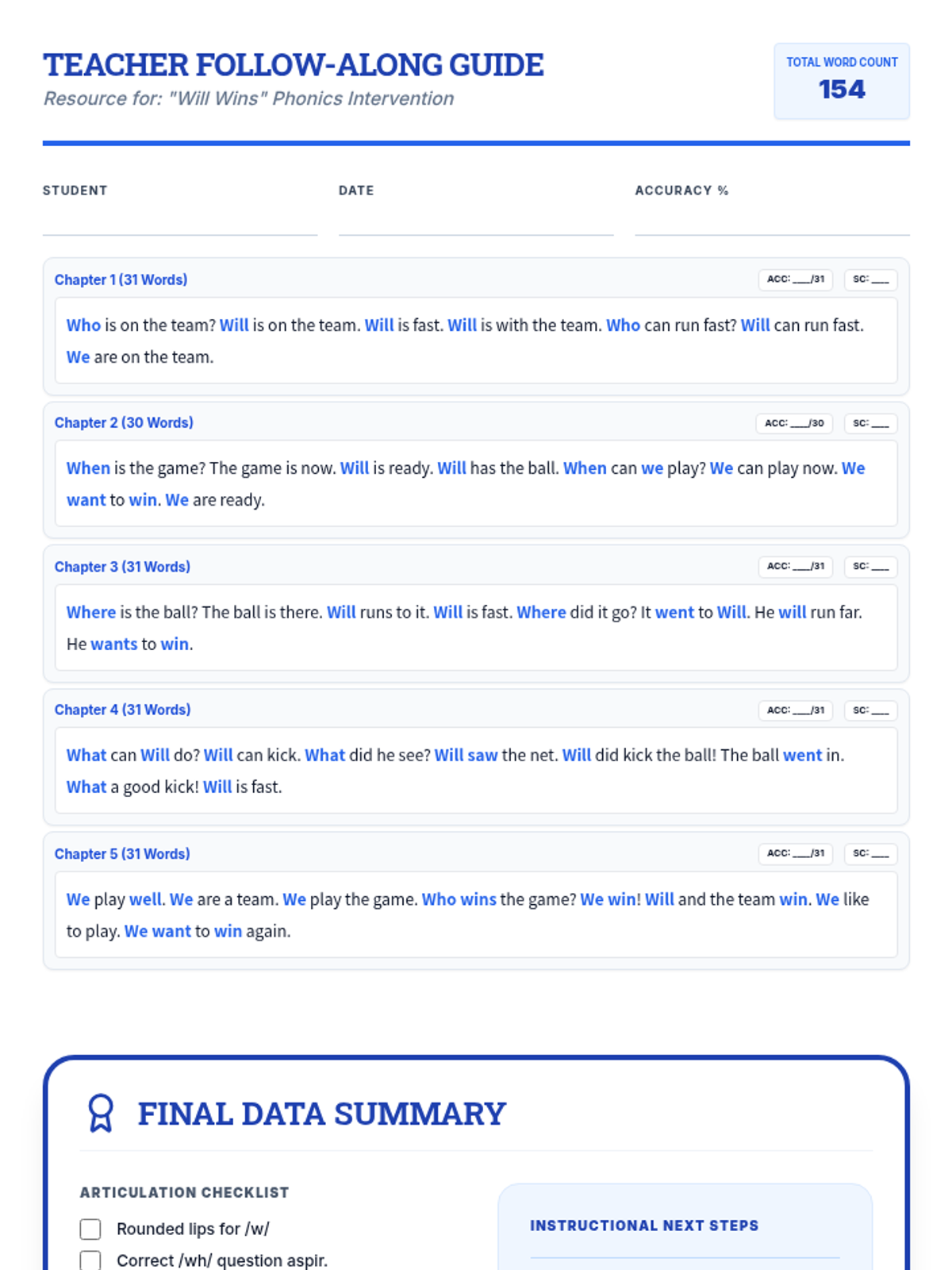
A targeted phonics intervention lesson focusing on 'W' question words through a sports-themed chapter book. Students practice reading fluency and phonetic articulation while following a story about teamwork.
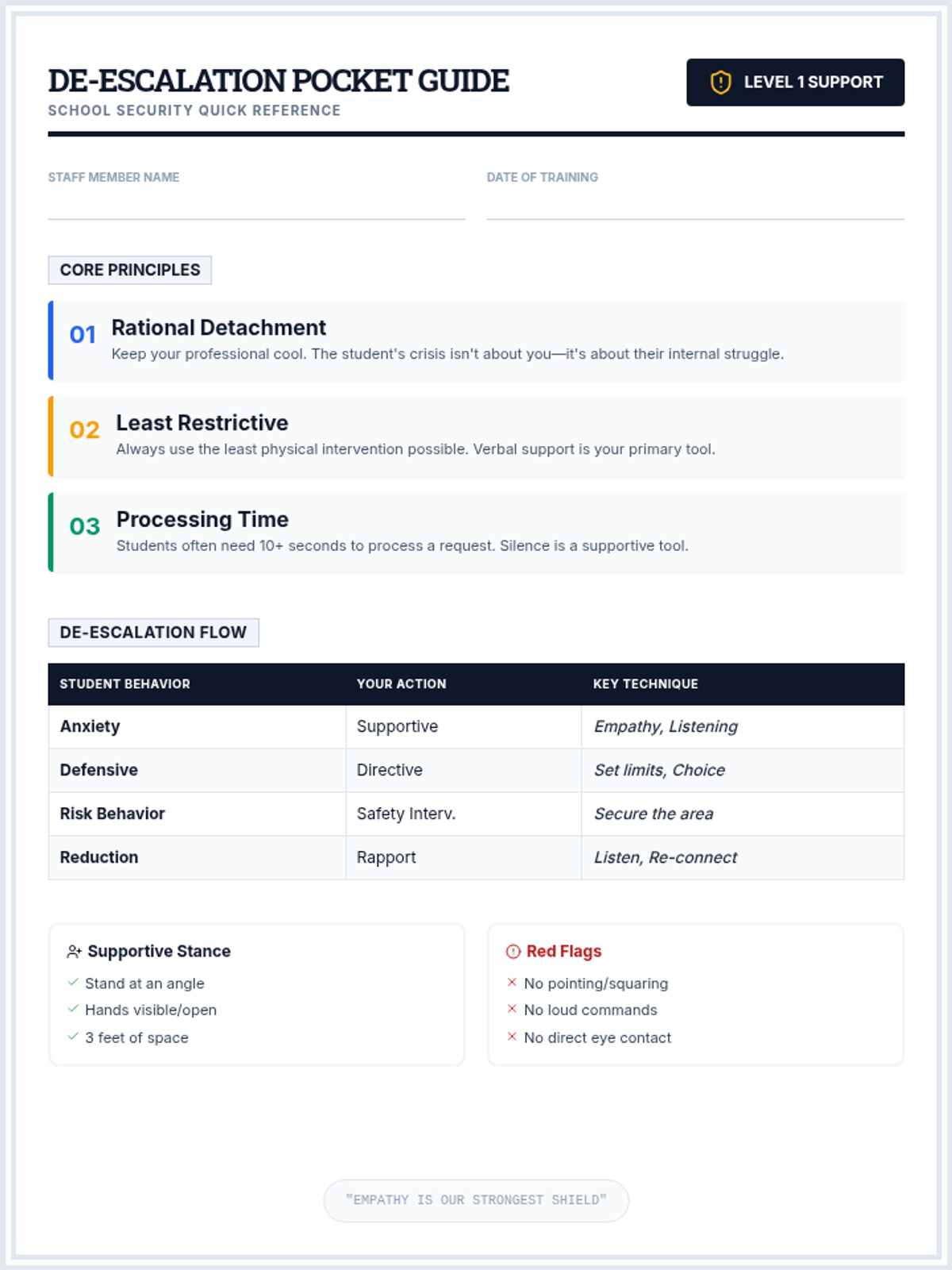
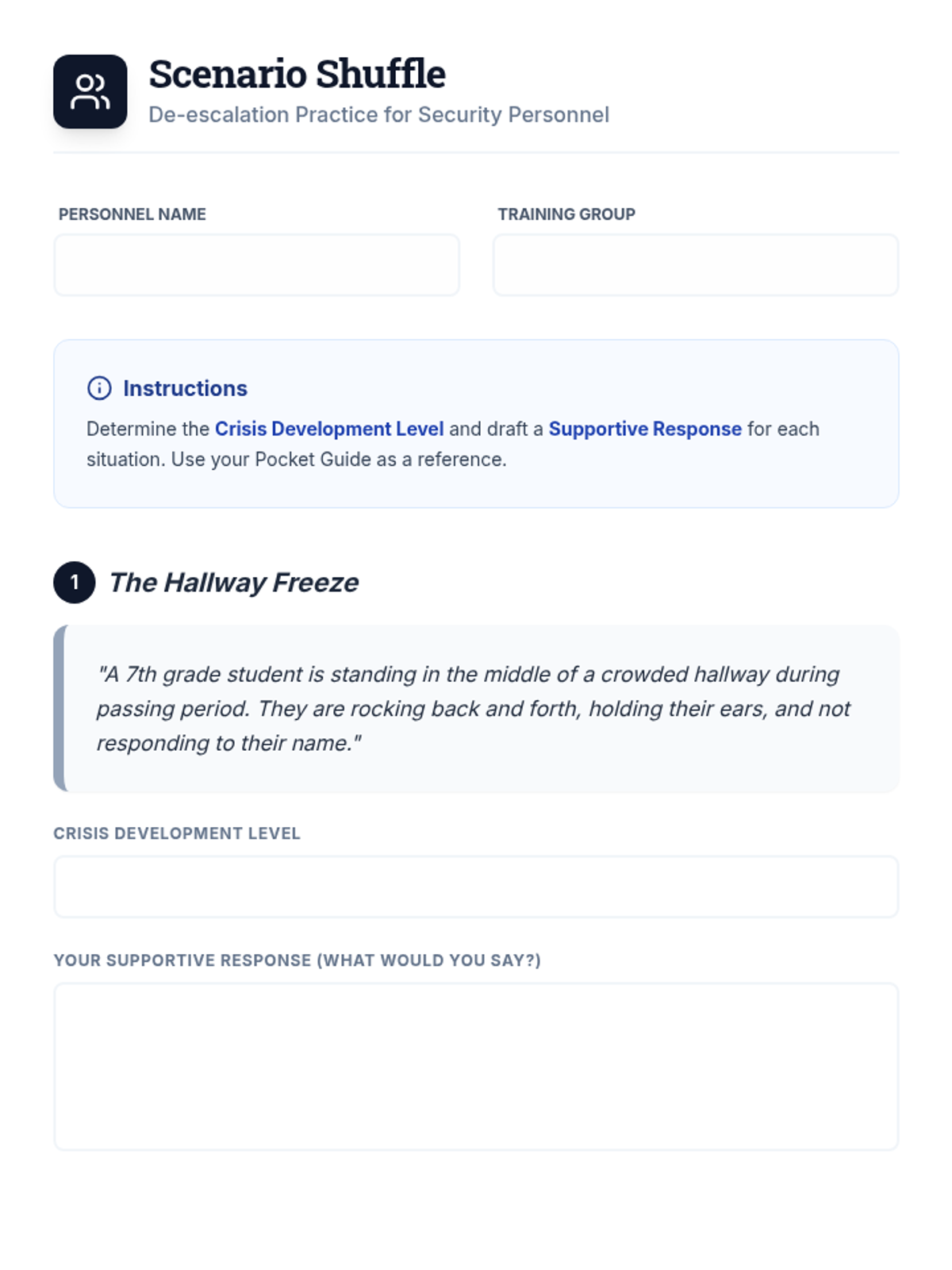
A targeted sensitivity and de-escalation training for school security personnel focusing on supporting students with special needs using CPI principles.
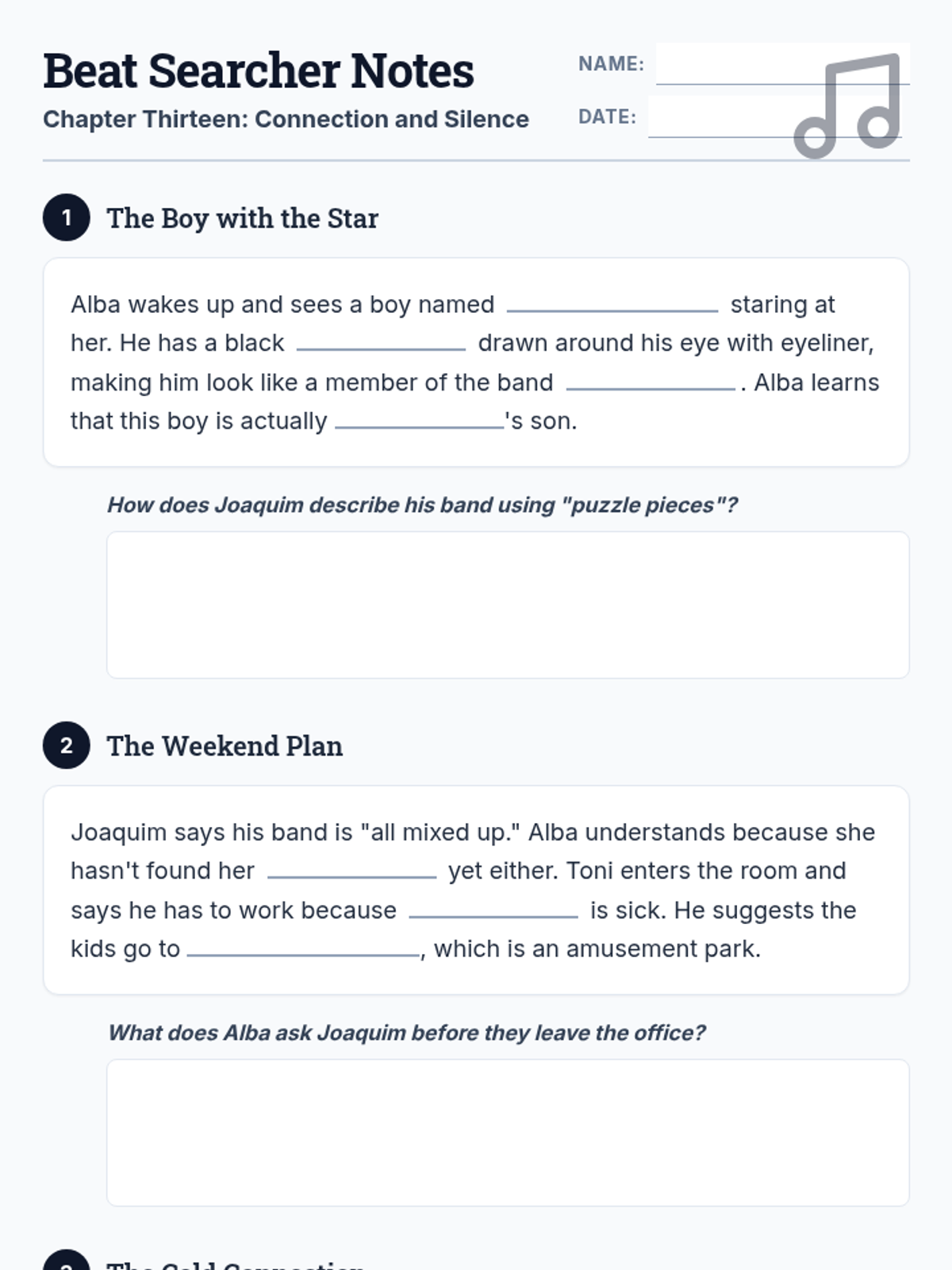
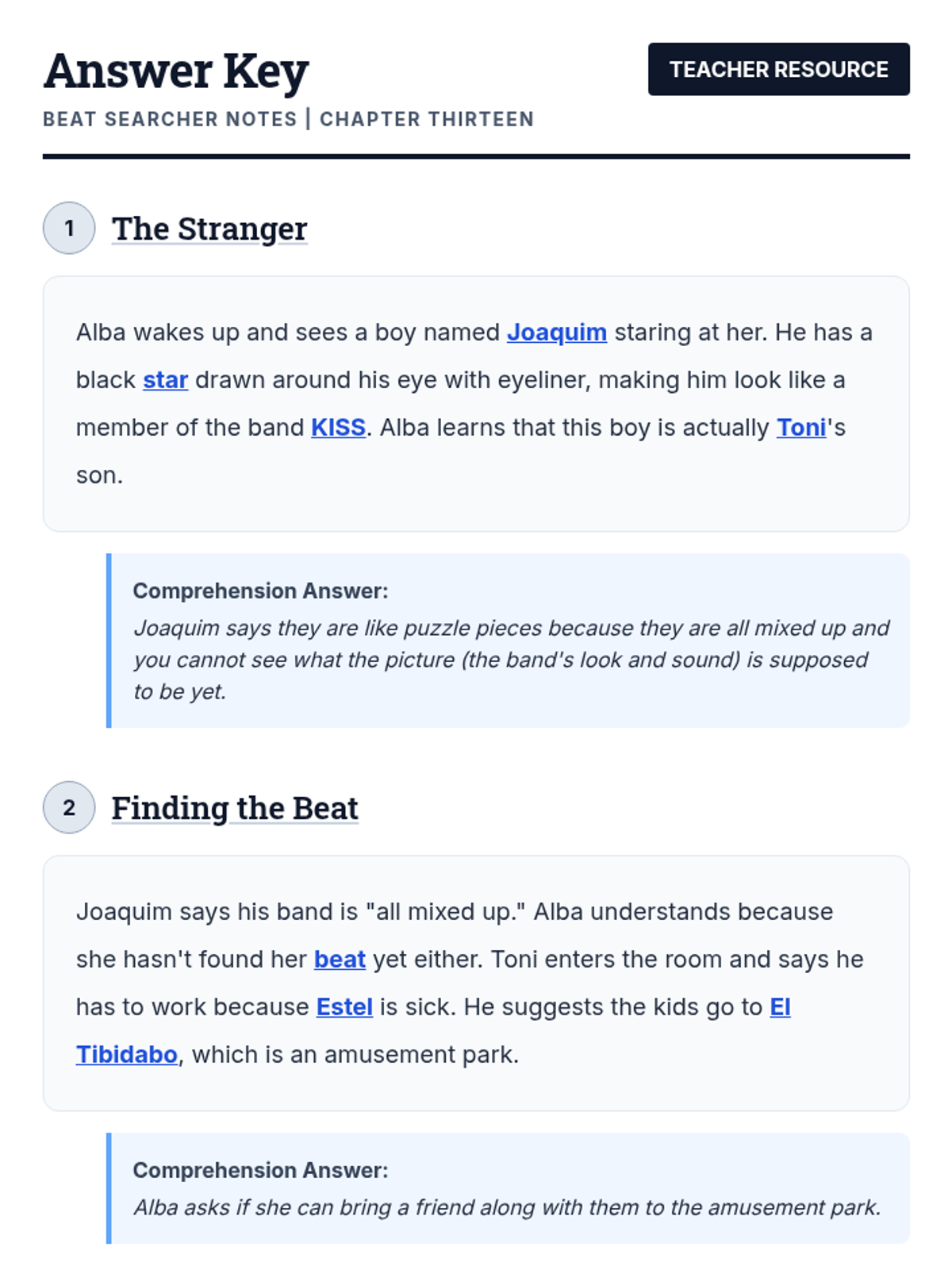
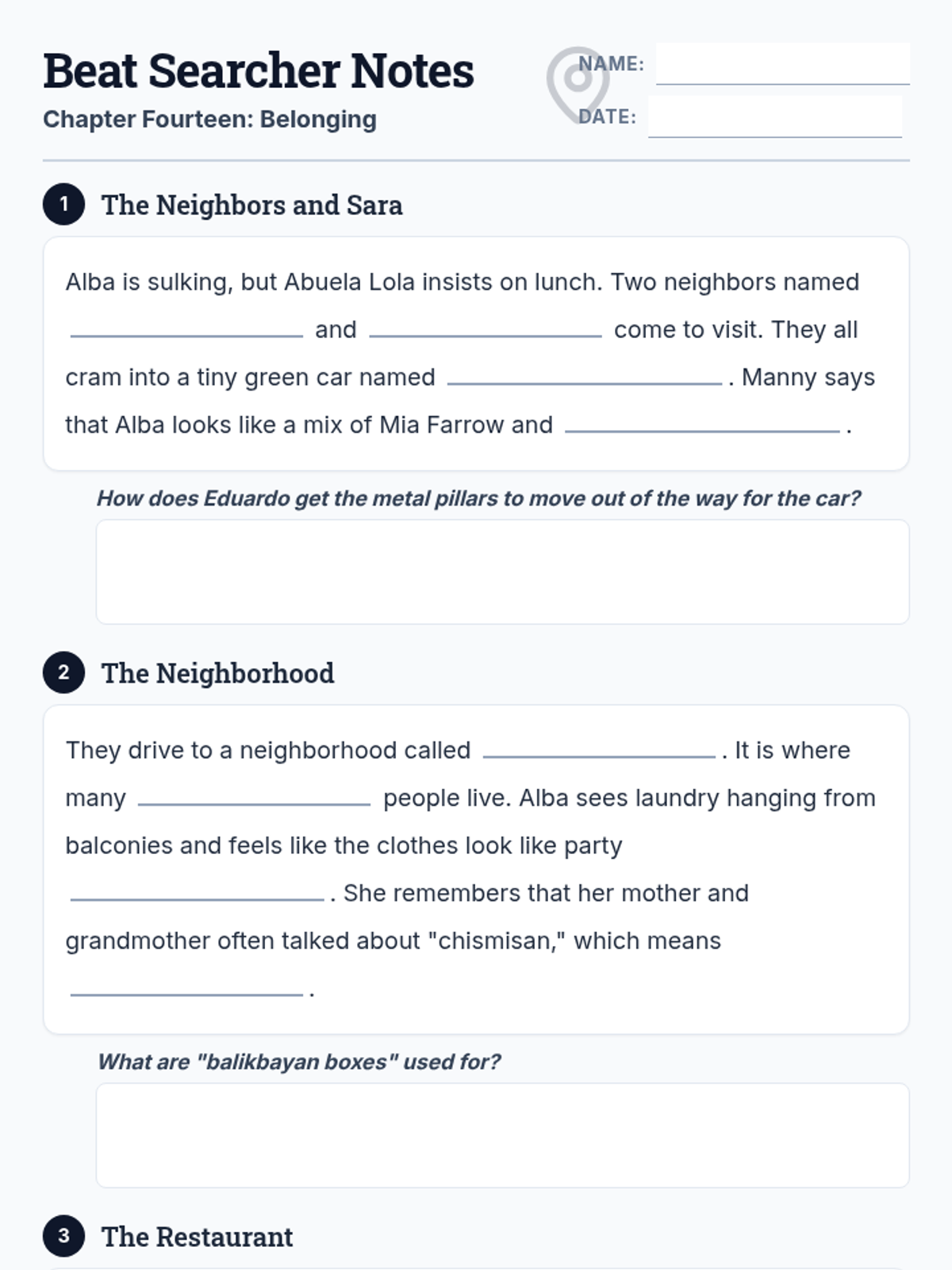
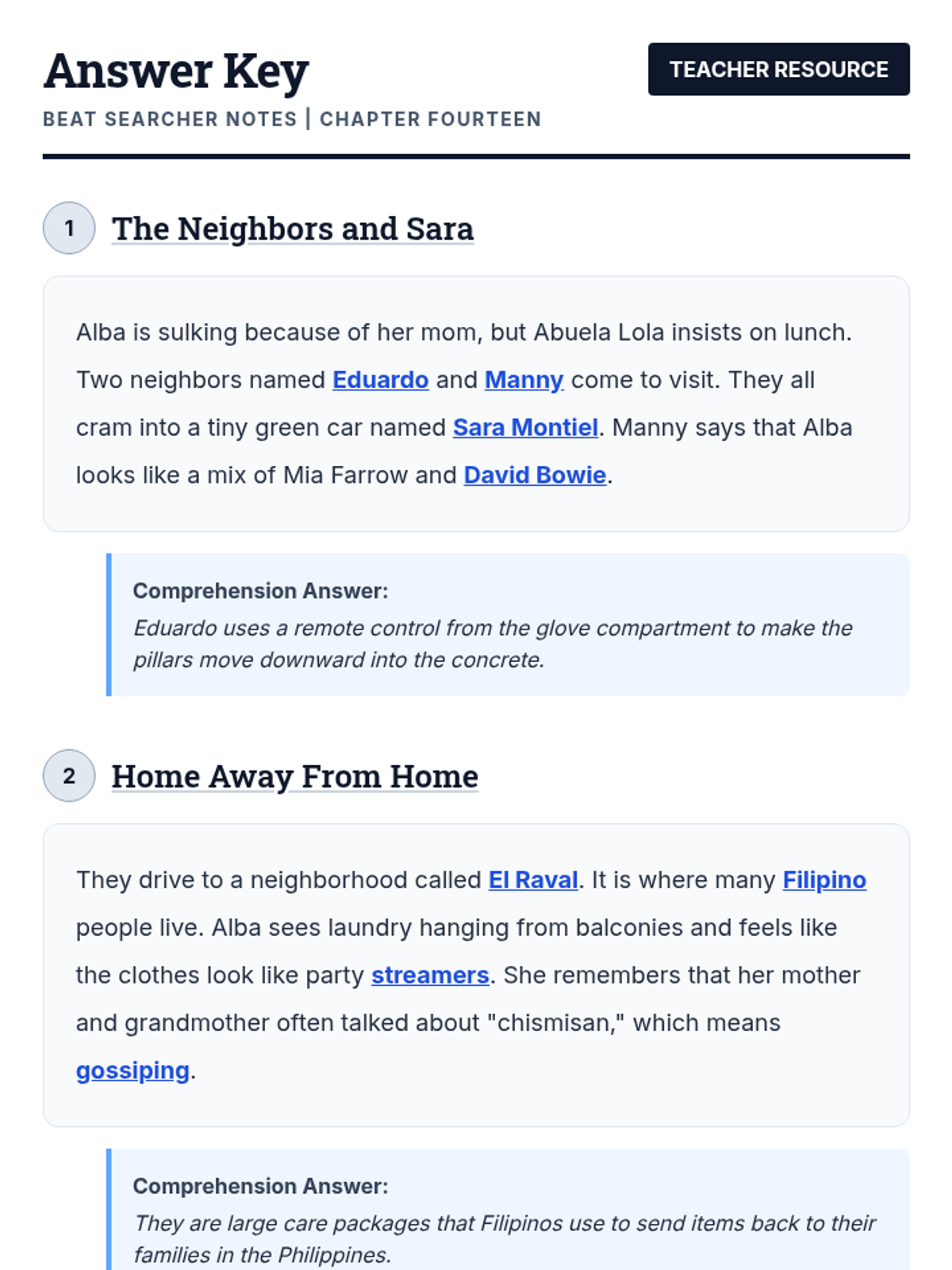
A reading comprehension lesson focused on analyzing character dynamics and emotional subtext in Chapters 13 and 14 of the text, specifically exploring identity, culture, and familial distance.
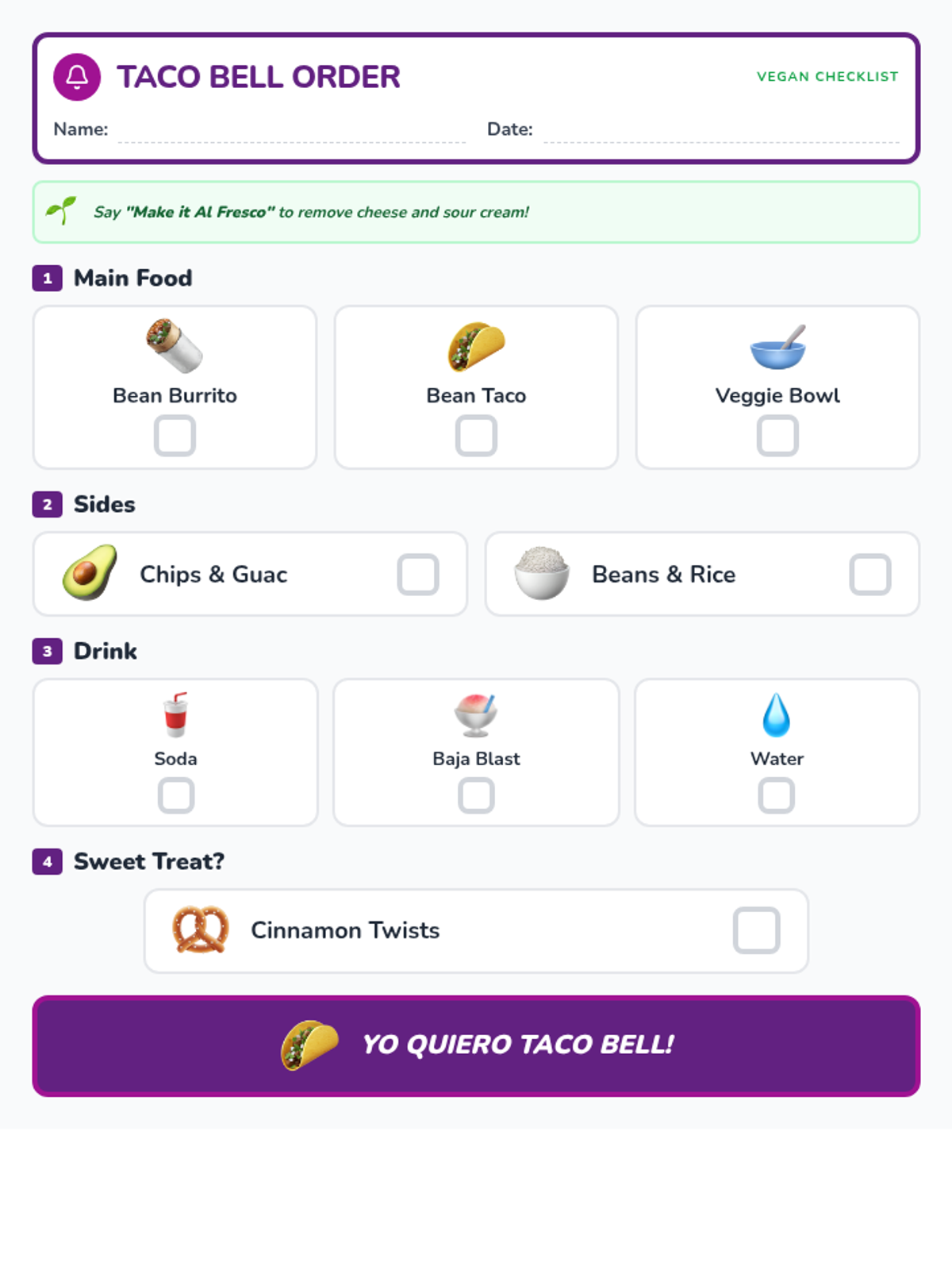
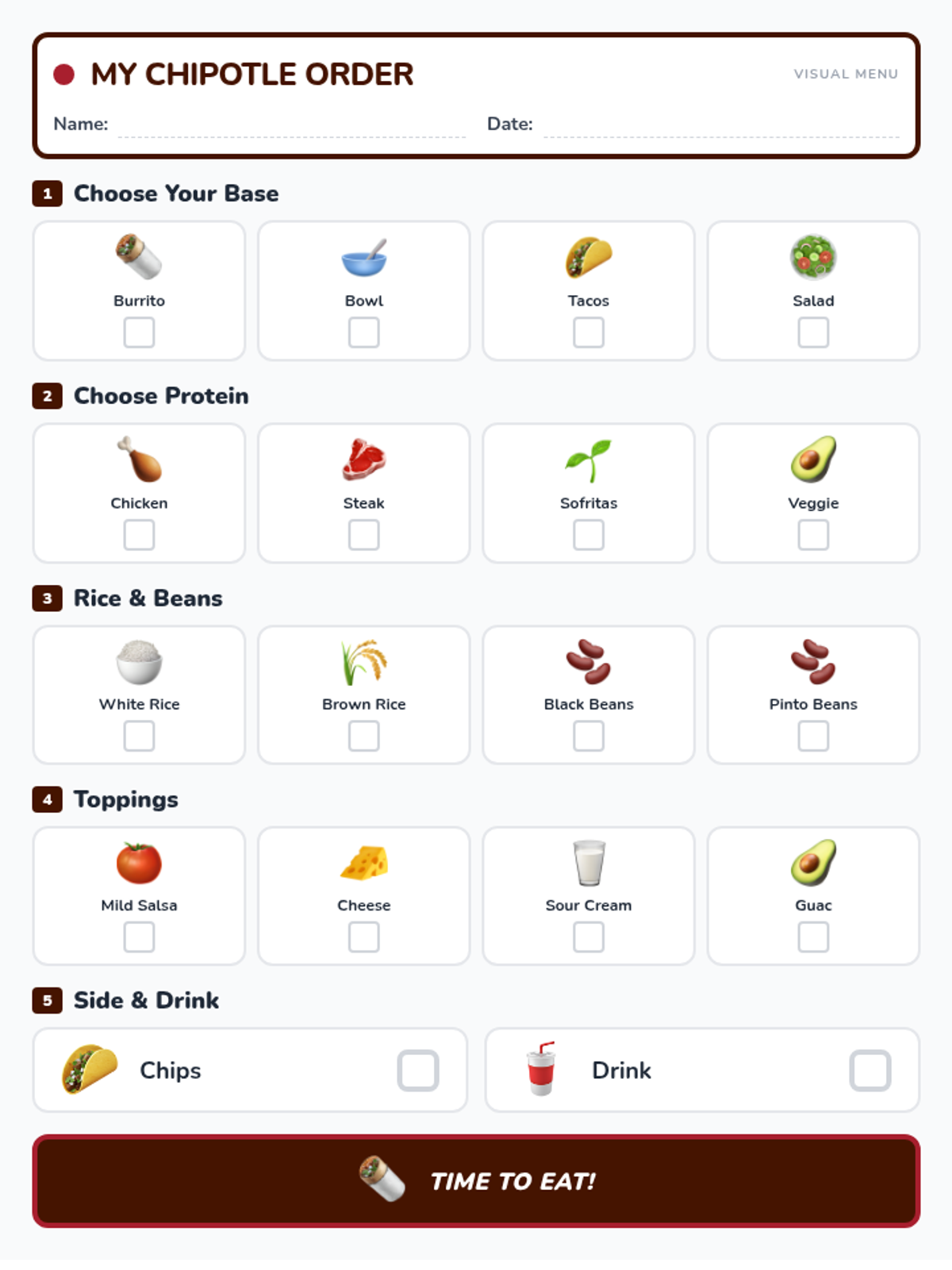
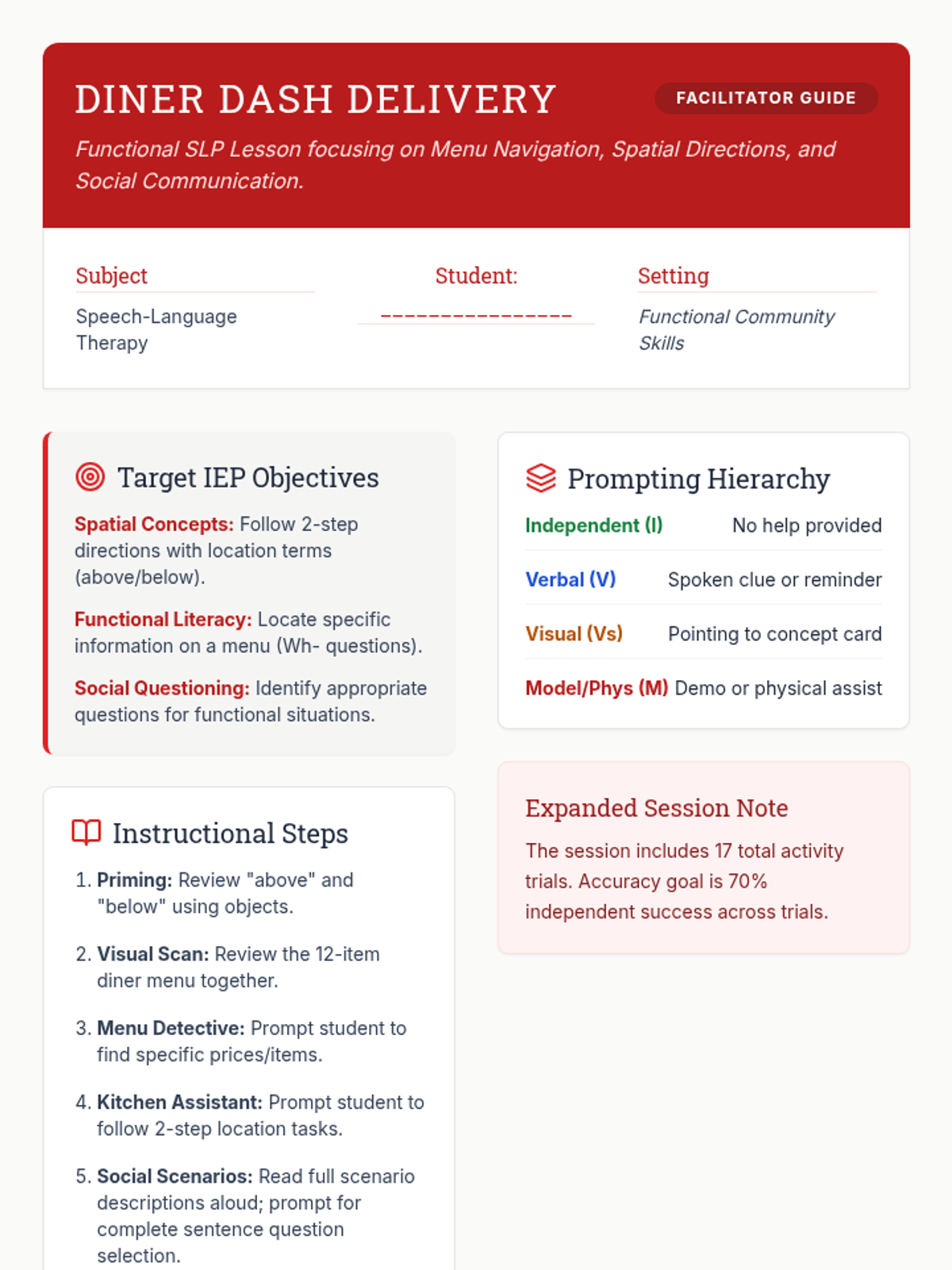
A functional speech-language therapy lesson focused on restaurant ordering, menu navigation, and social problem-solving for students with moderate-to-severe autism.
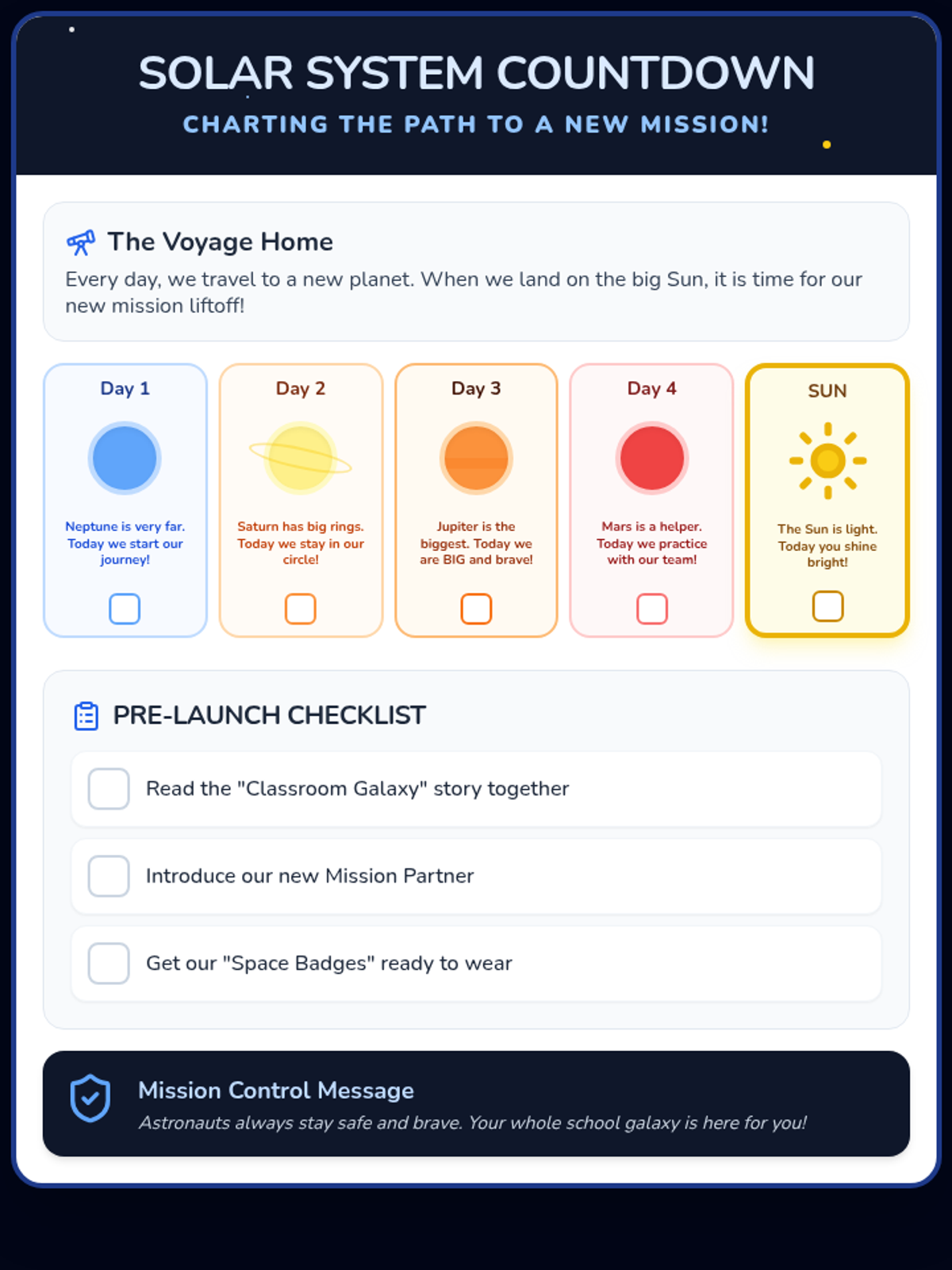
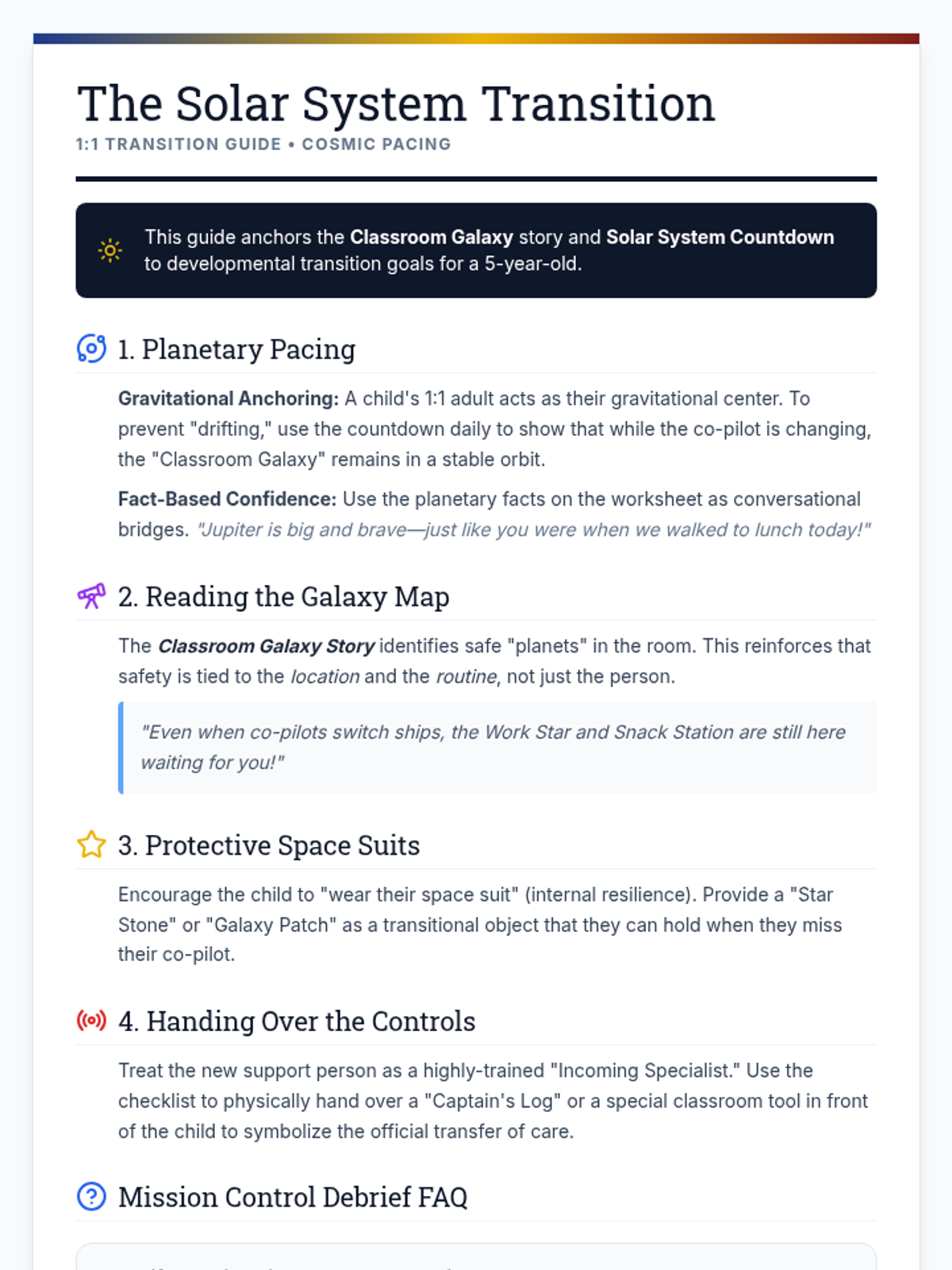
A sensitive lesson designed to help a 5-year-old child navigate the transition of their 1:1 support person leaving, focusing on safety, shared memories, and future confidence.
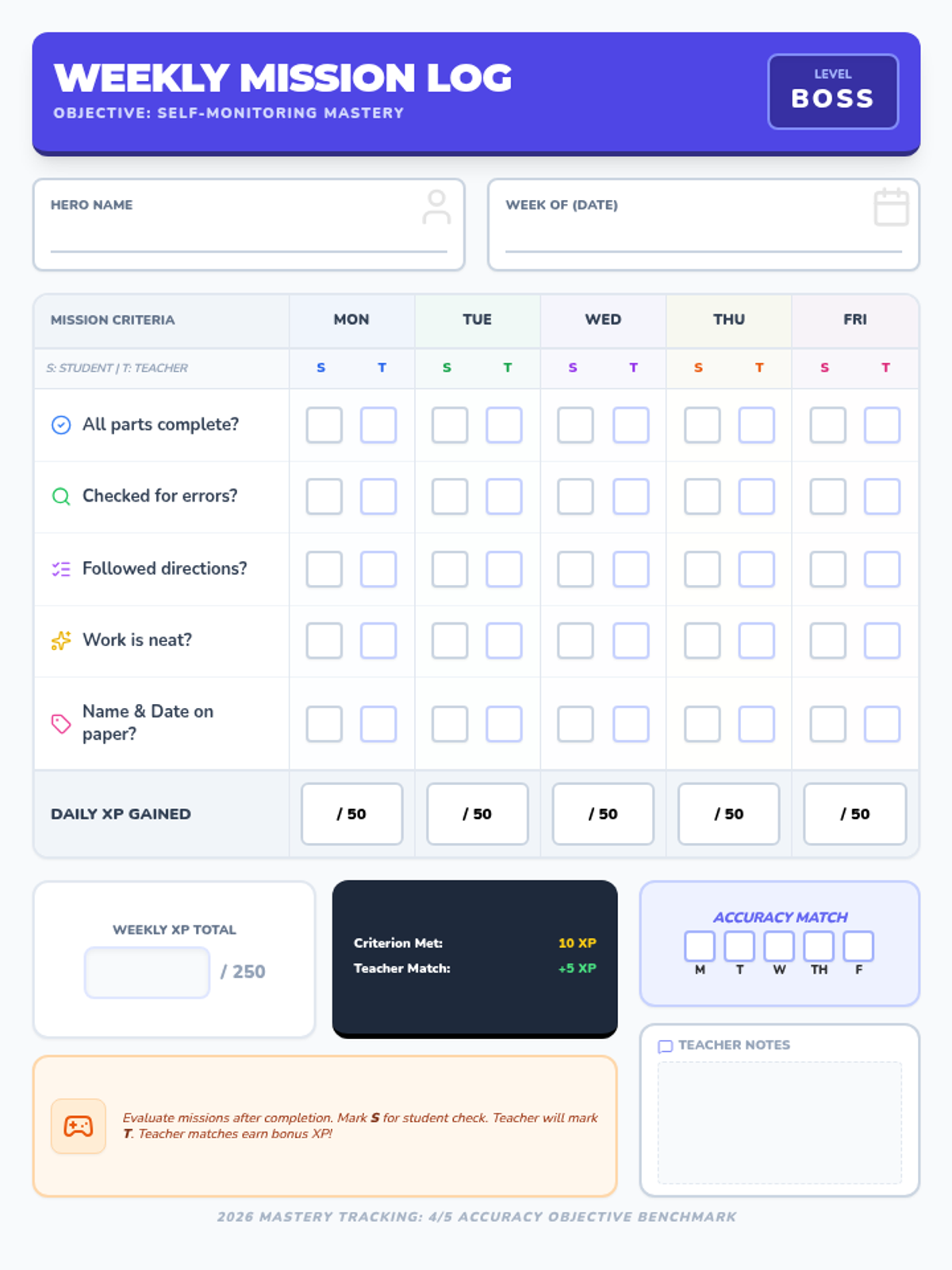
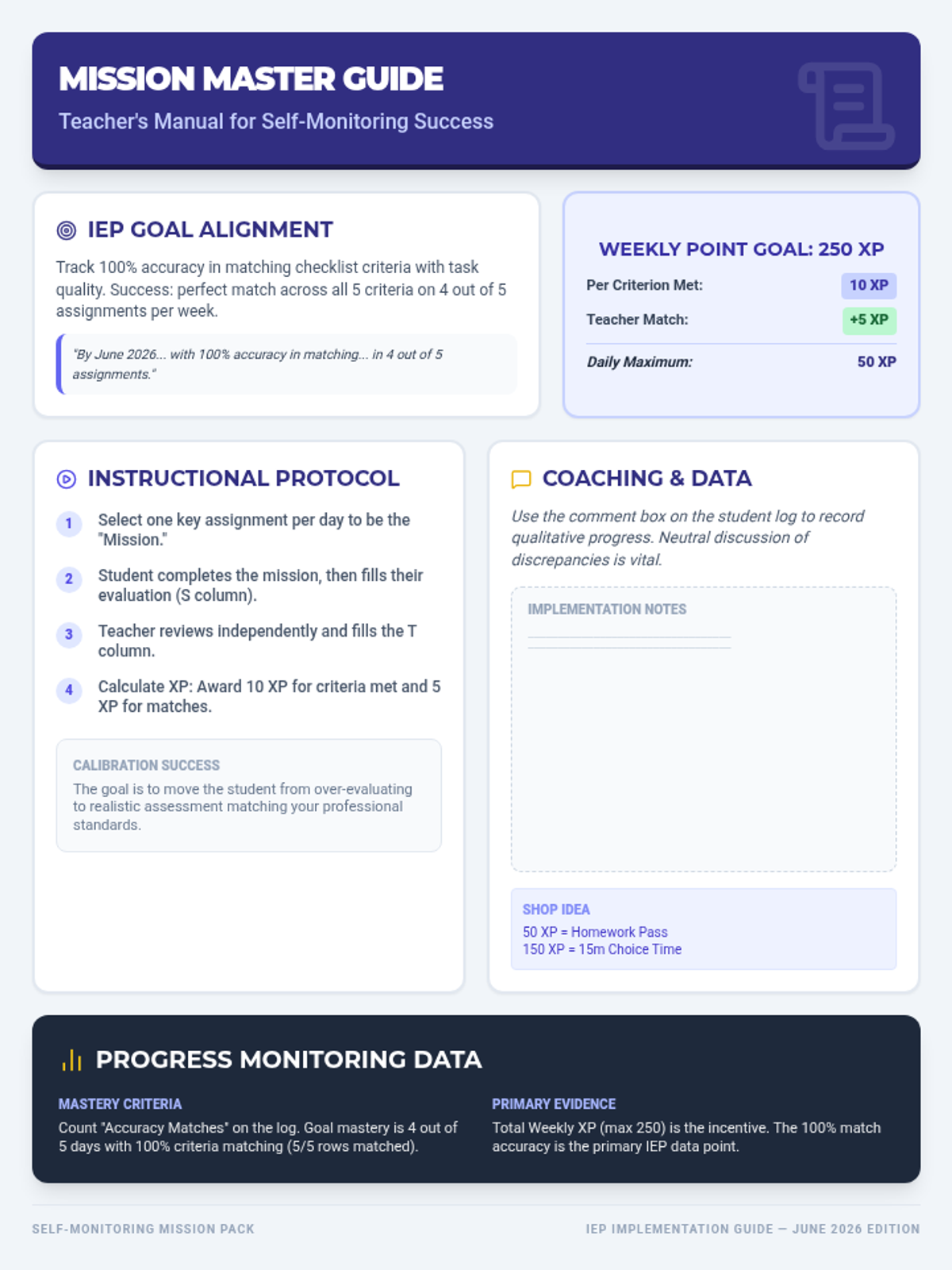
A lesson centered on developing self-monitoring skills for task completion and quality through a gamified weekly point system. Students learn to evaluate their own work against specific criteria and match their assessments with teacher feedback.
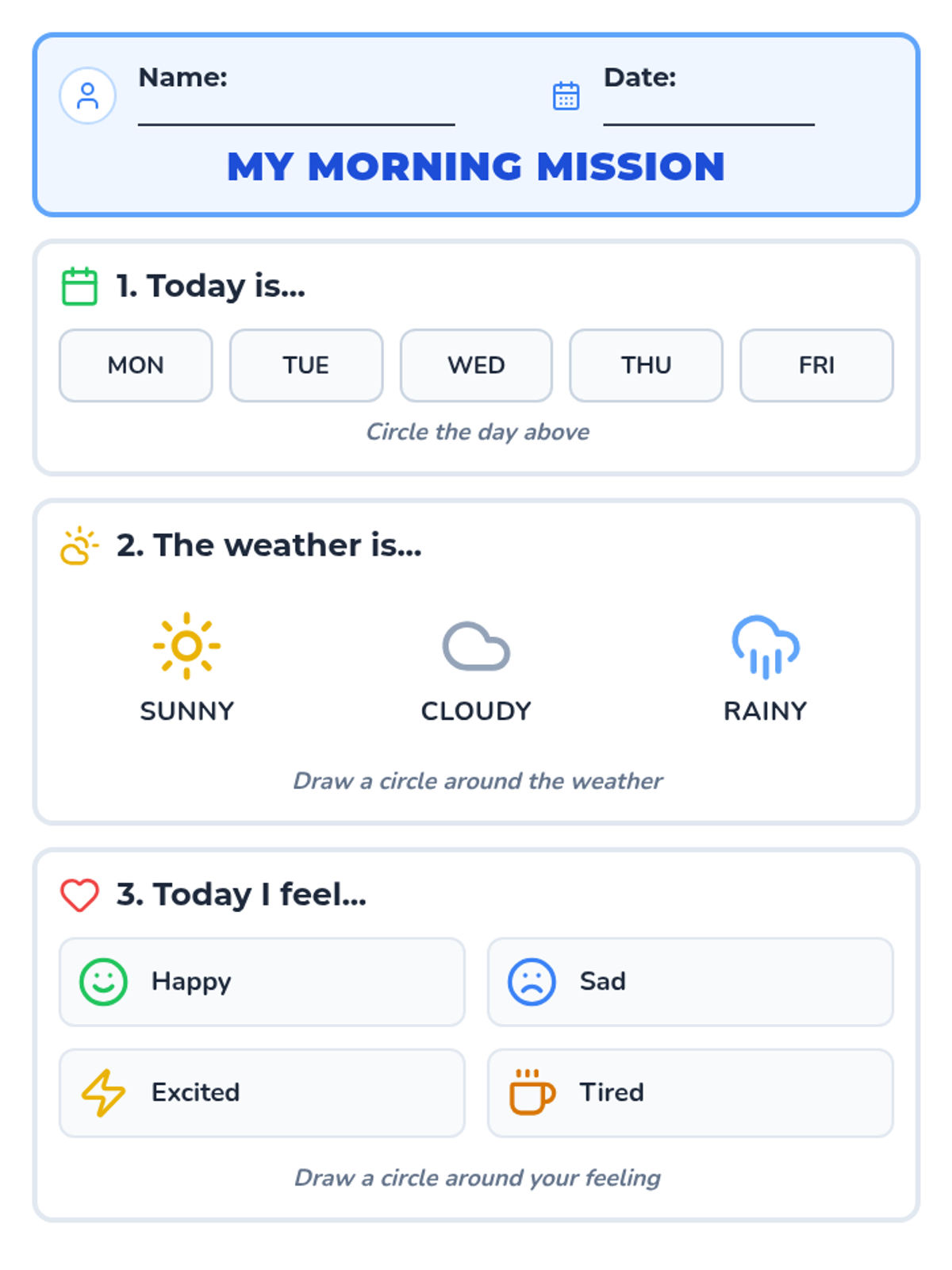
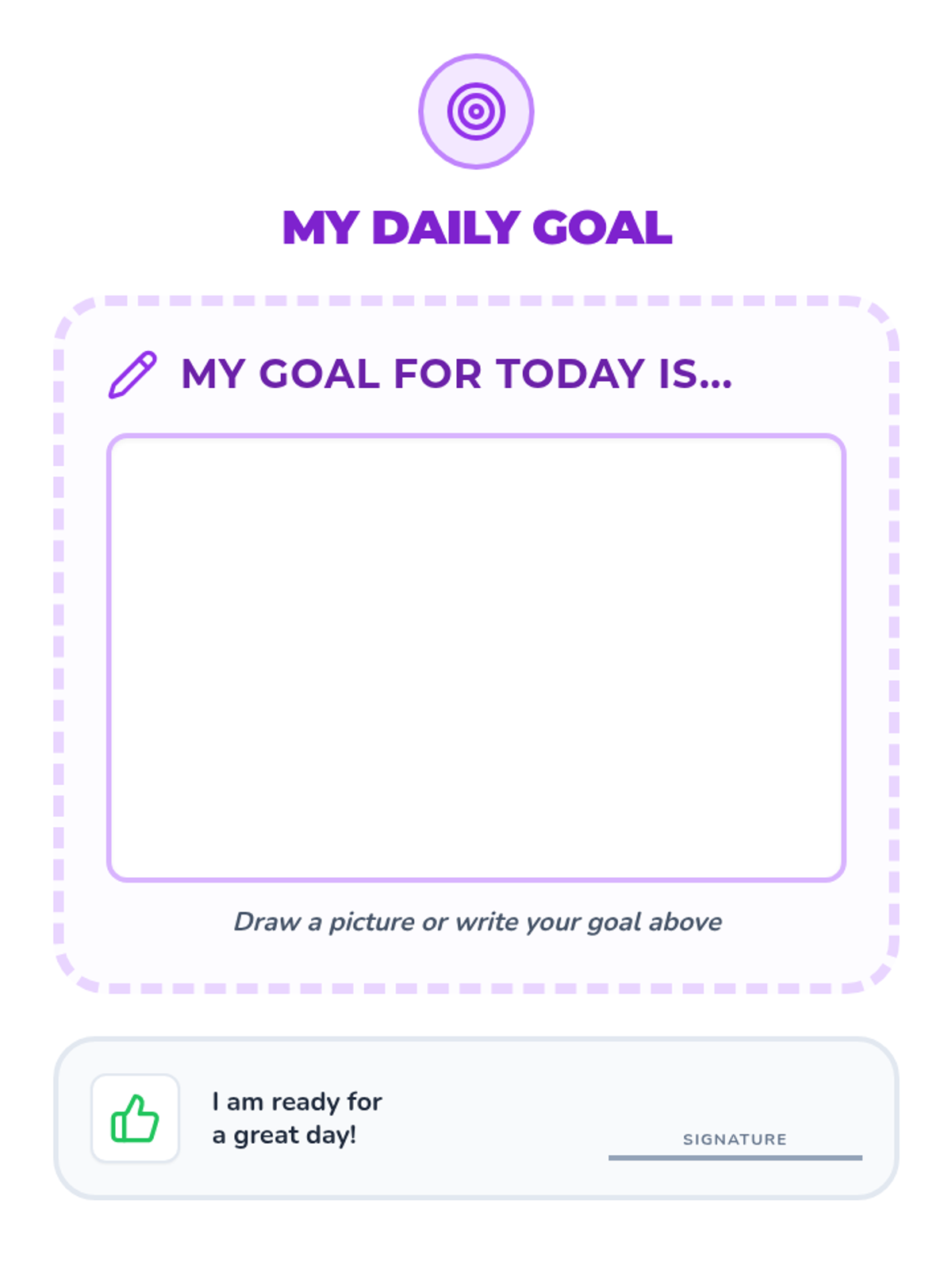
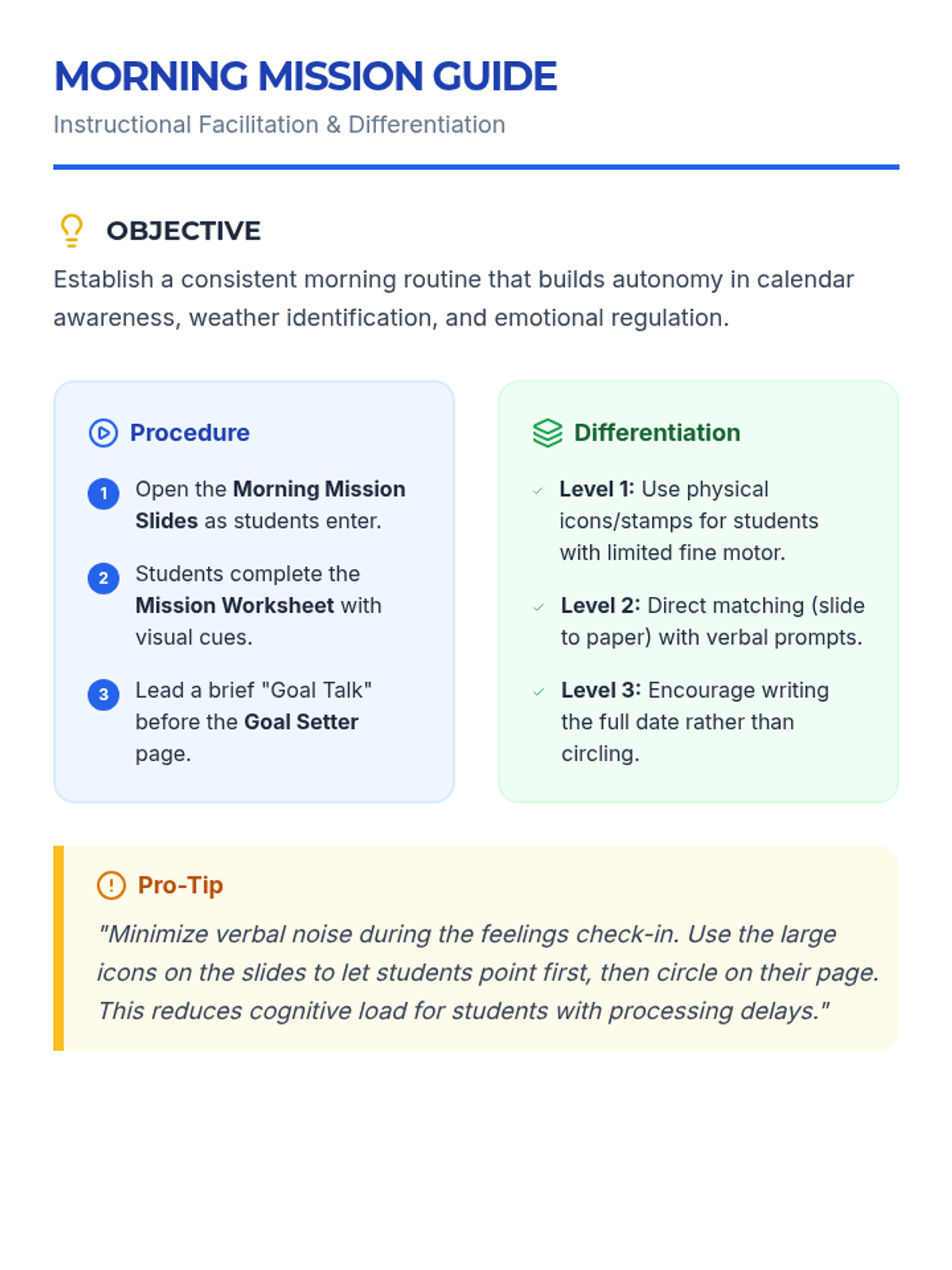
A structured morning routine lesson that guides students through checking the calendar, identifying feelings, and setting a positive goal for the day.
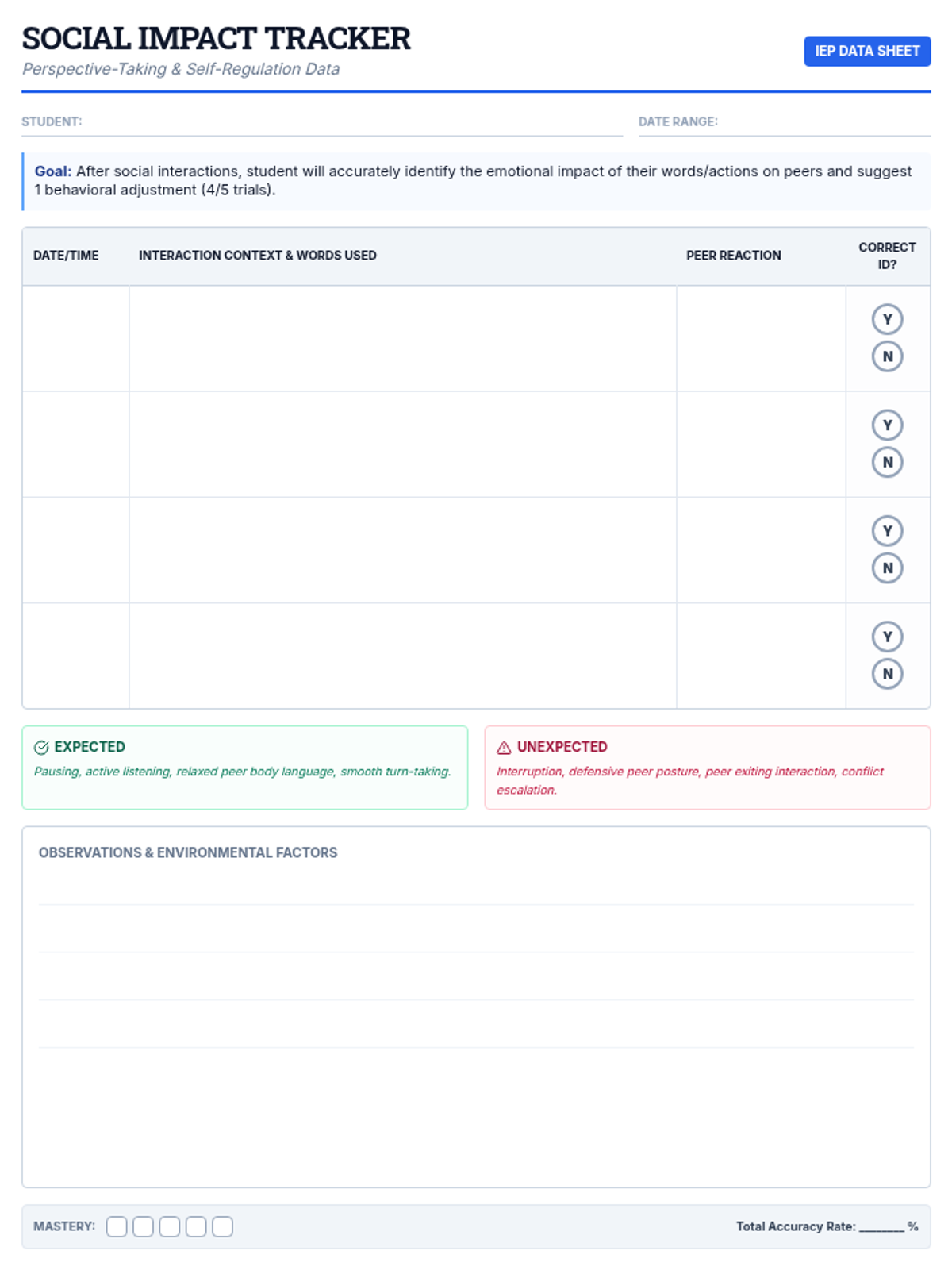
This lesson focuses on developing perspective-taking skills, specifically helping students understand the ripple effect of their words and actions on the people around them. It includes tools for monitoring progress and reflective practice.
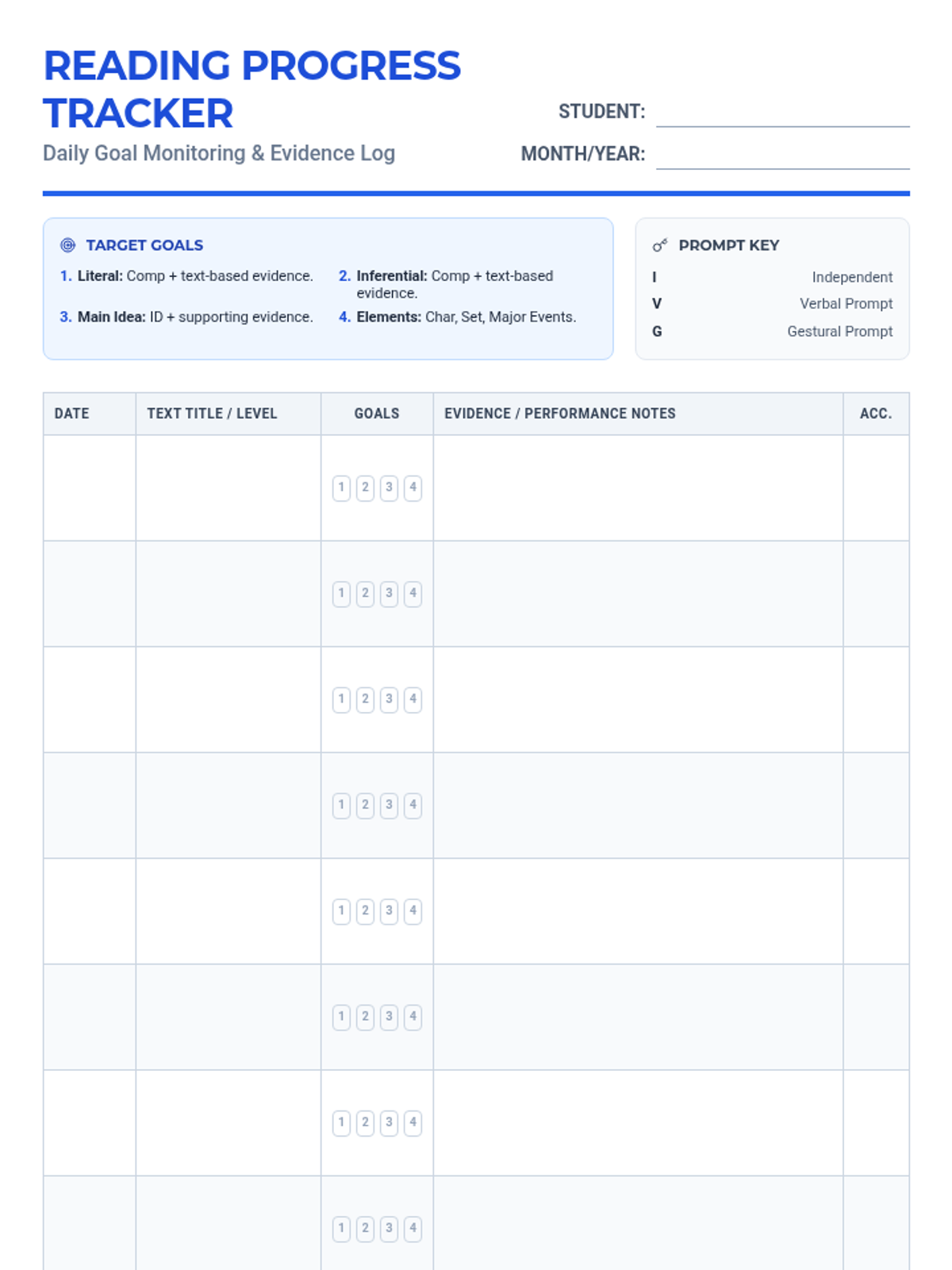
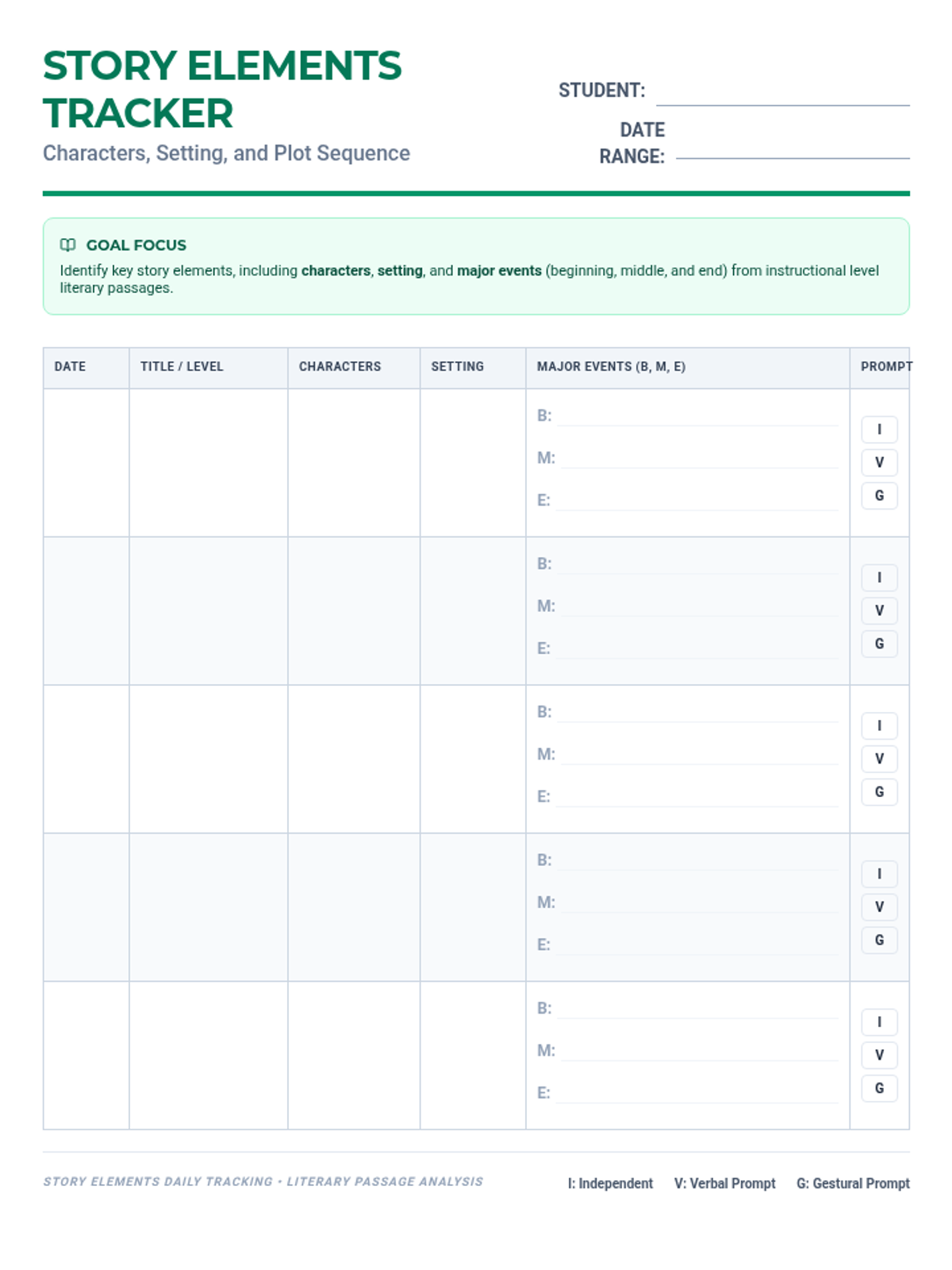
A collection of professional data tracking sheets for monitoring specific reading comprehension goals, including literal, inferential, and story element identification.
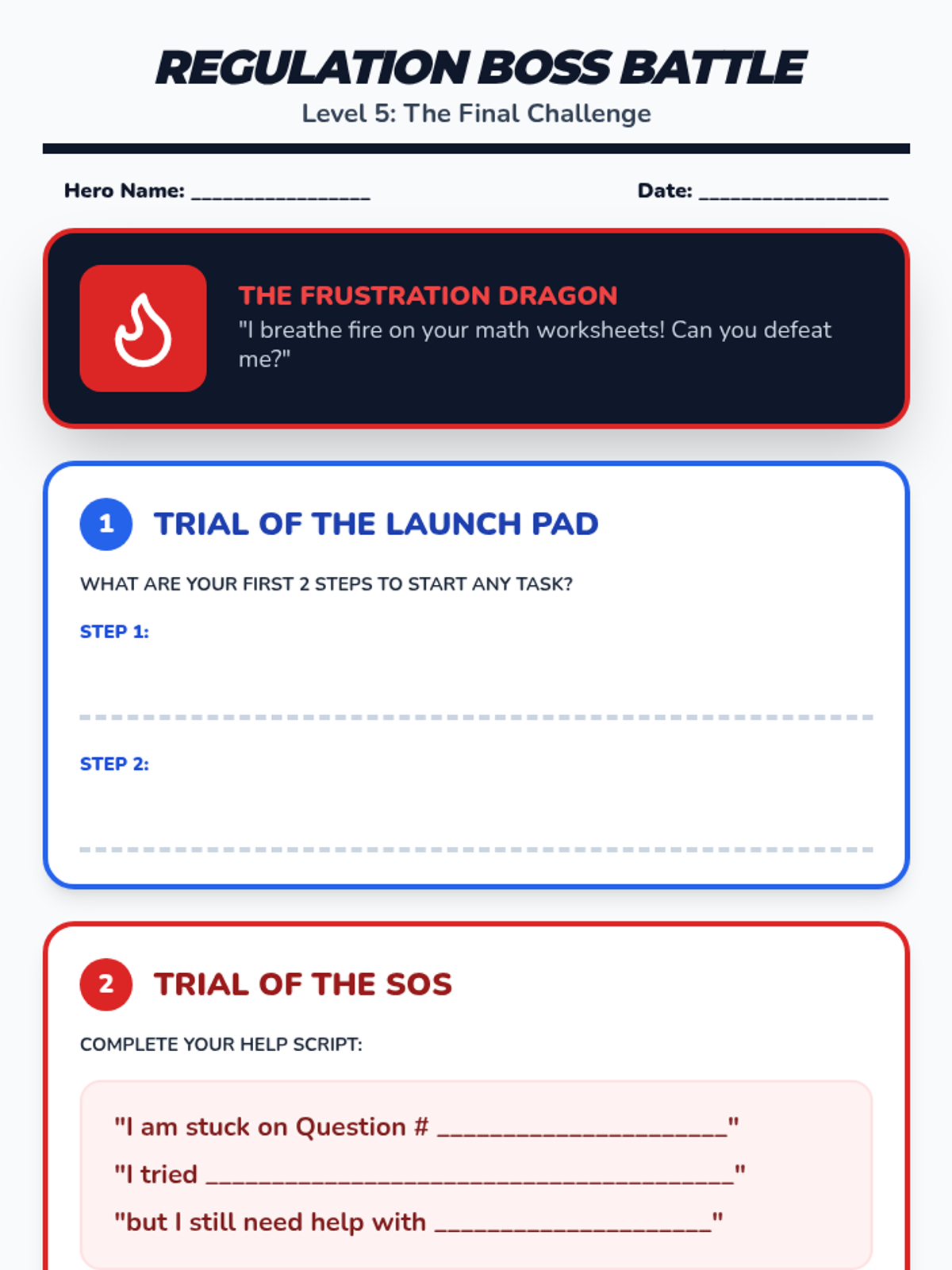
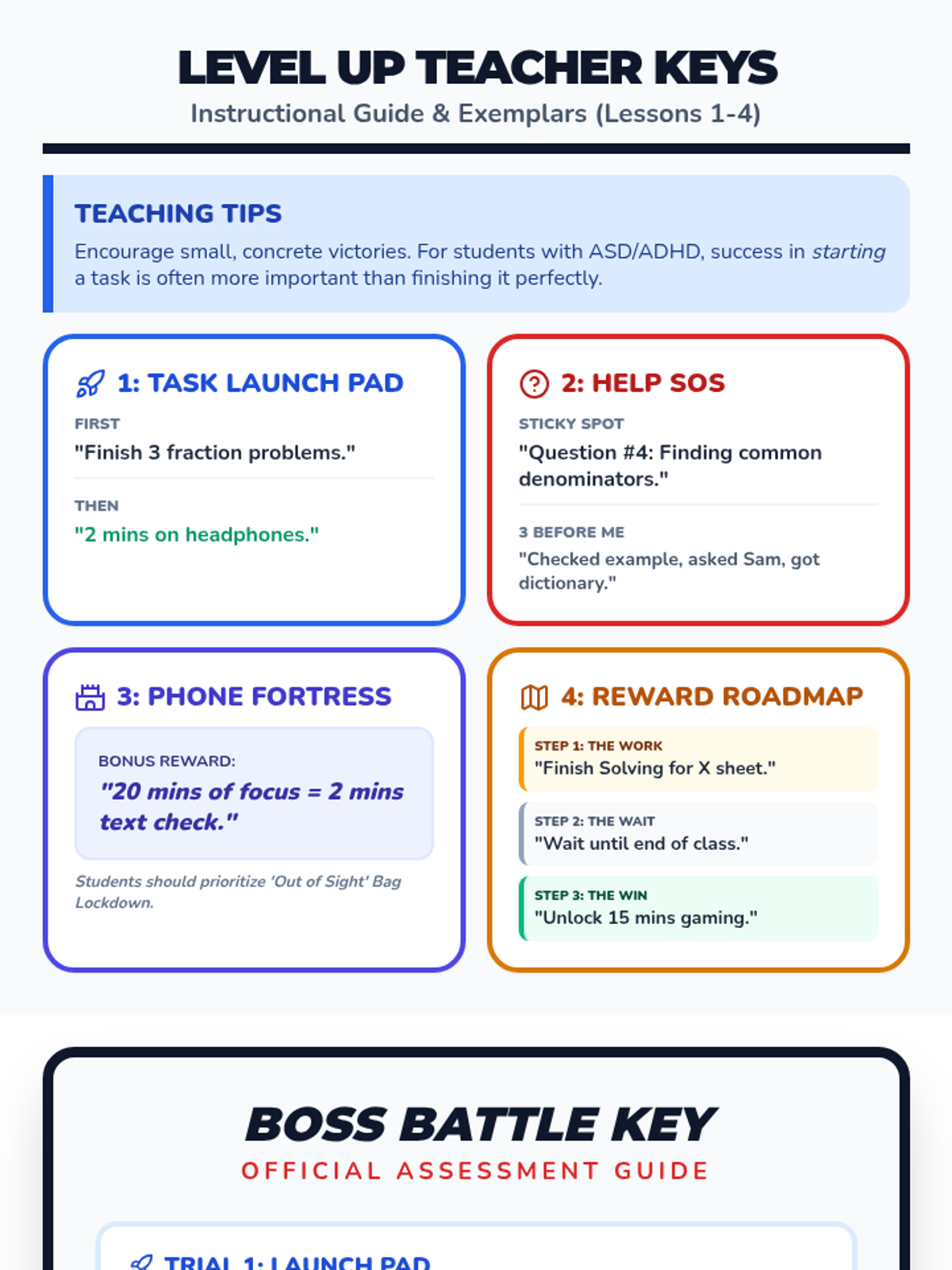
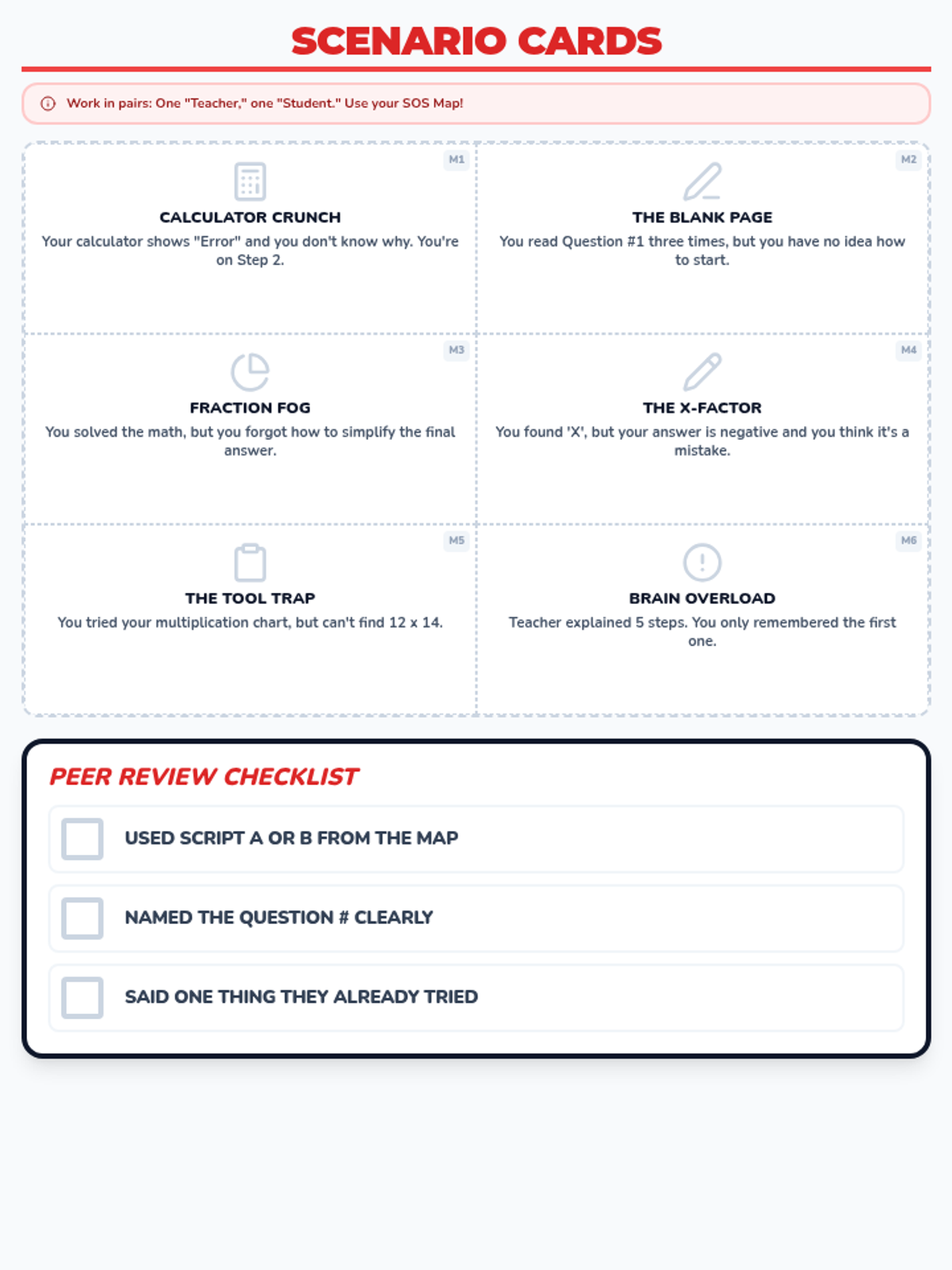
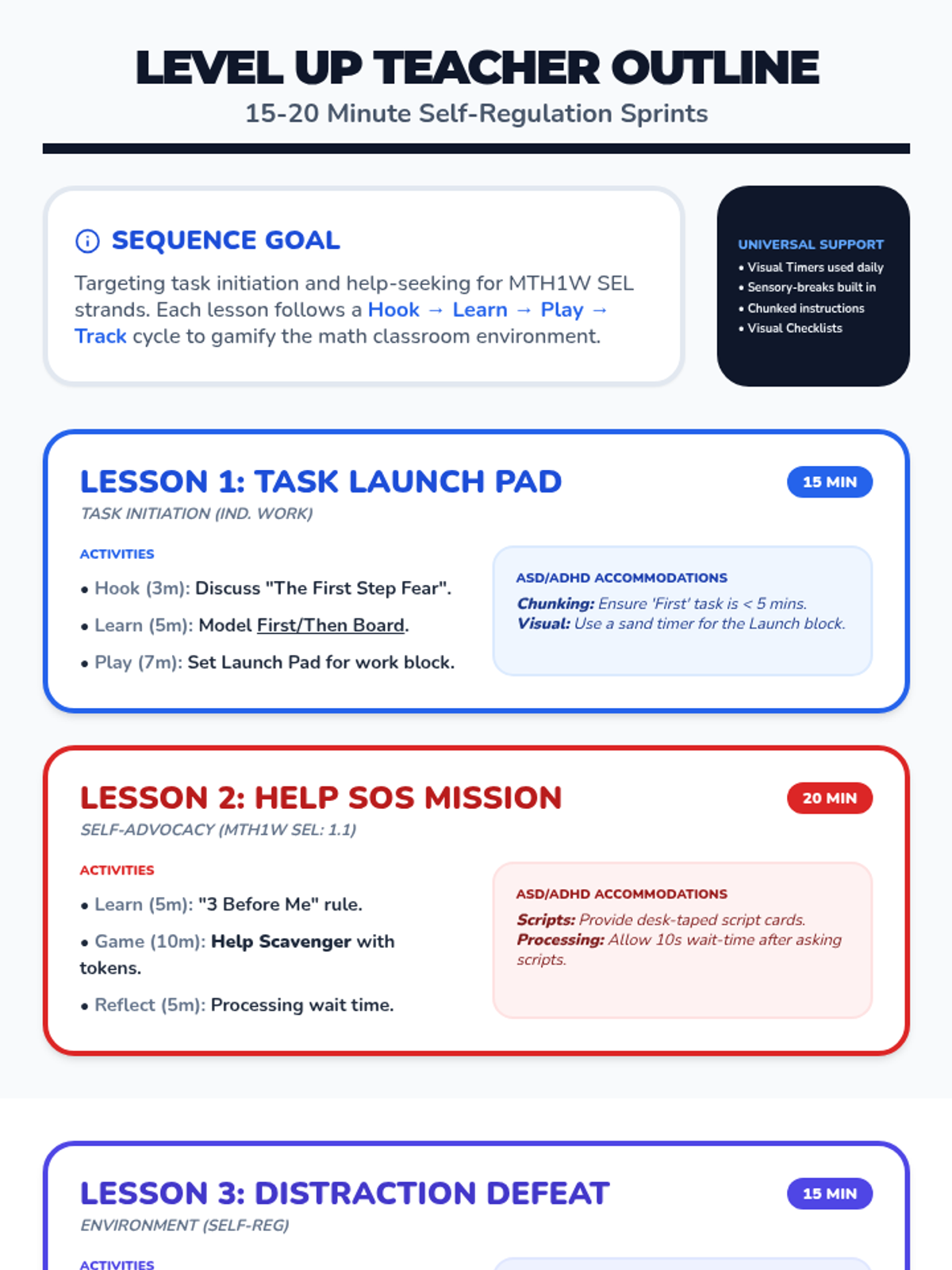
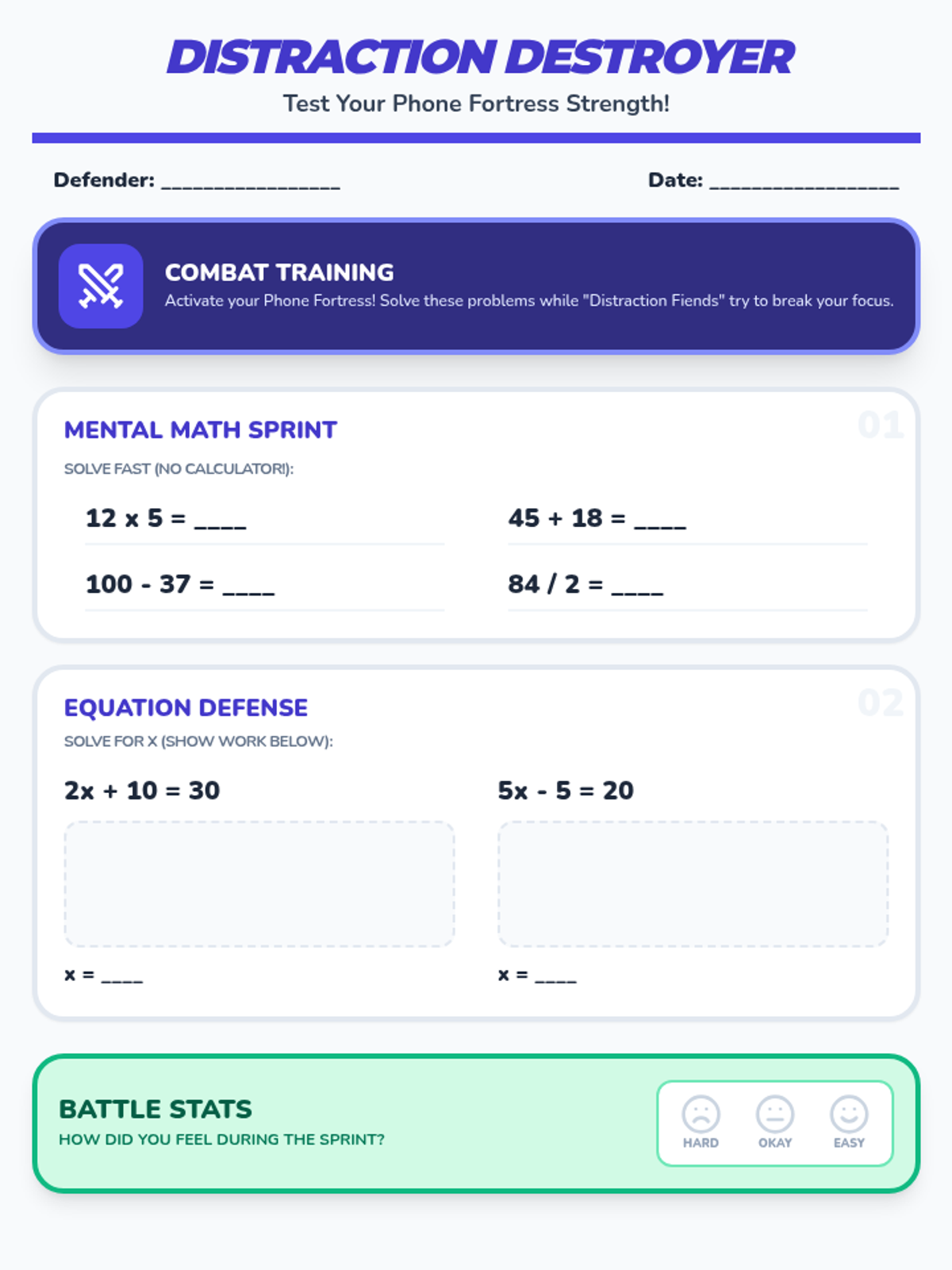
A cumulative 'Boss Battle' review where students use all their regulation tools to solve a series of math-related regulation challenges.
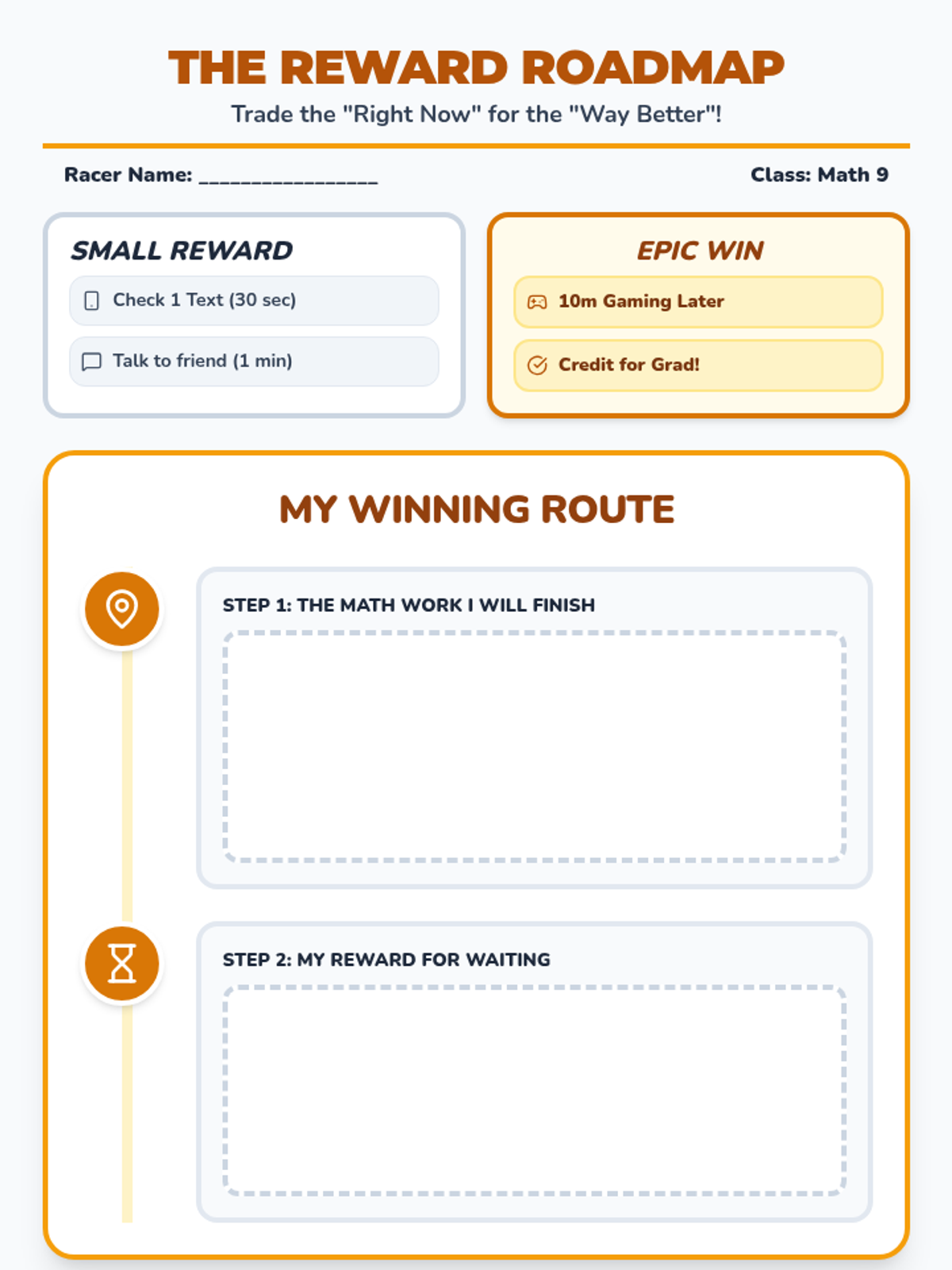
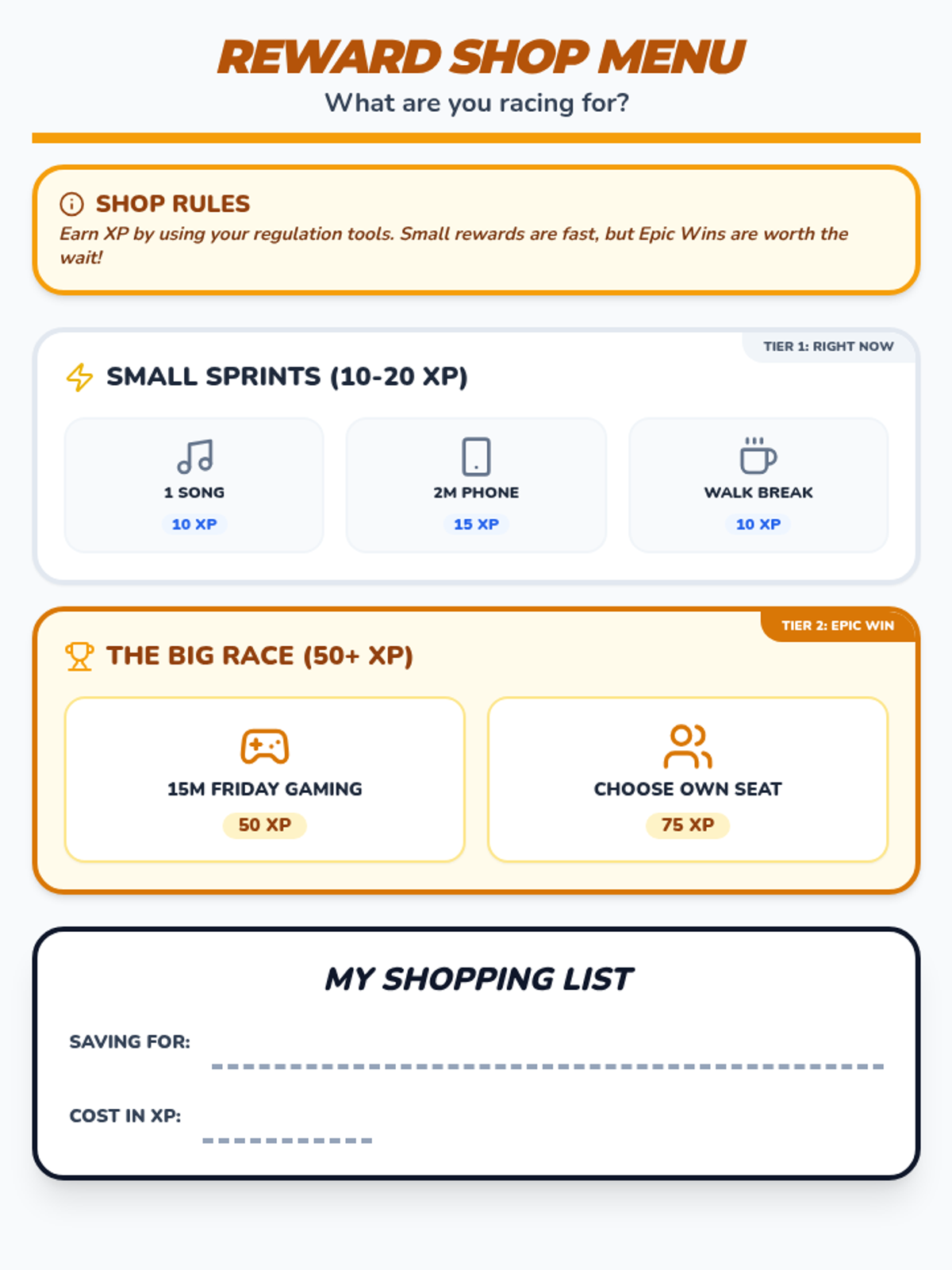
Explores delayed gratification through a 'Reward Roadmap' activity, teaching students to trade immediate distractions for long-term academic success.
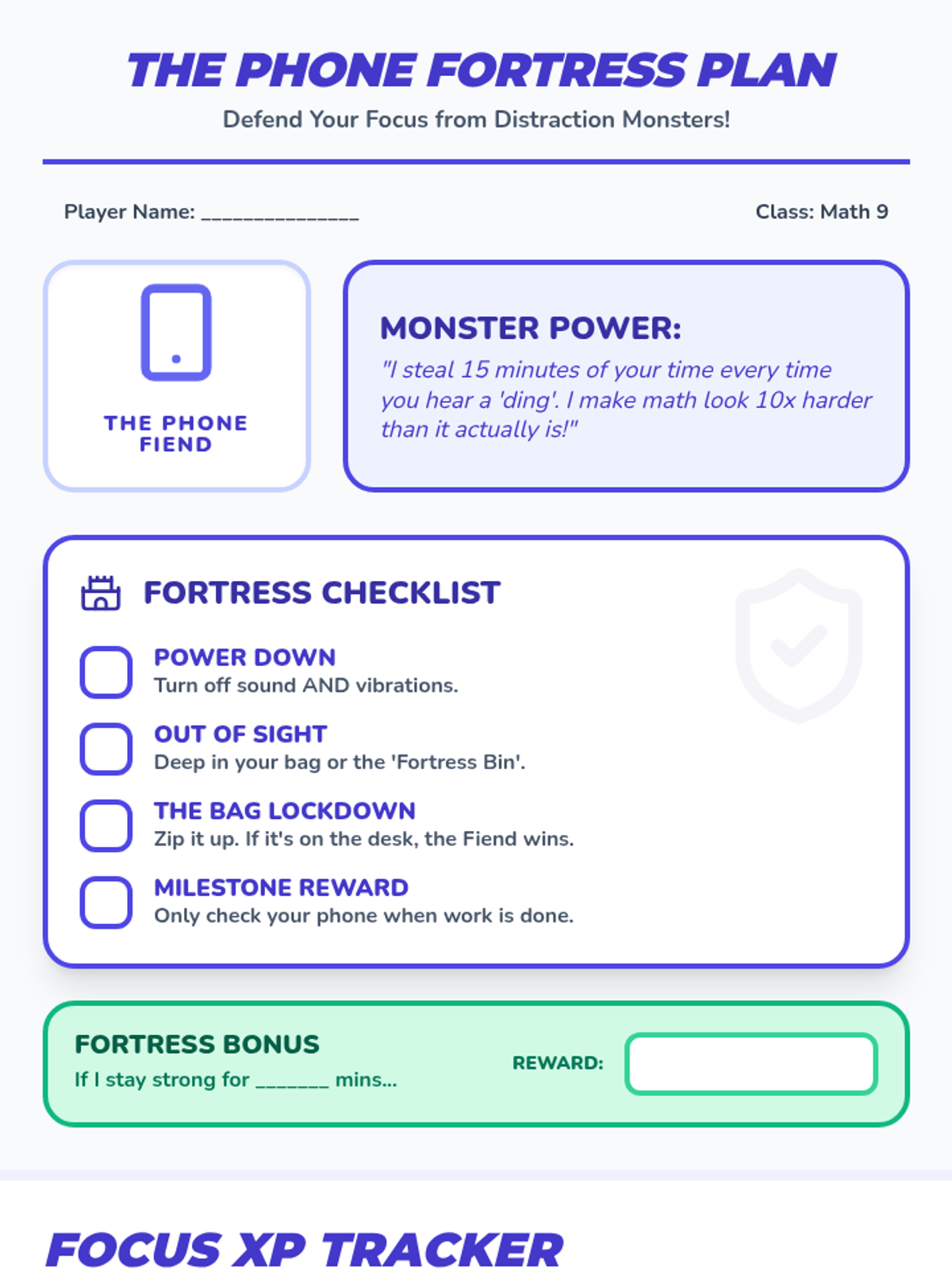
Students identify environmental distractions, specifically phones, and create a 'Phone Fortress' plan using visual checklists to maintain focus.
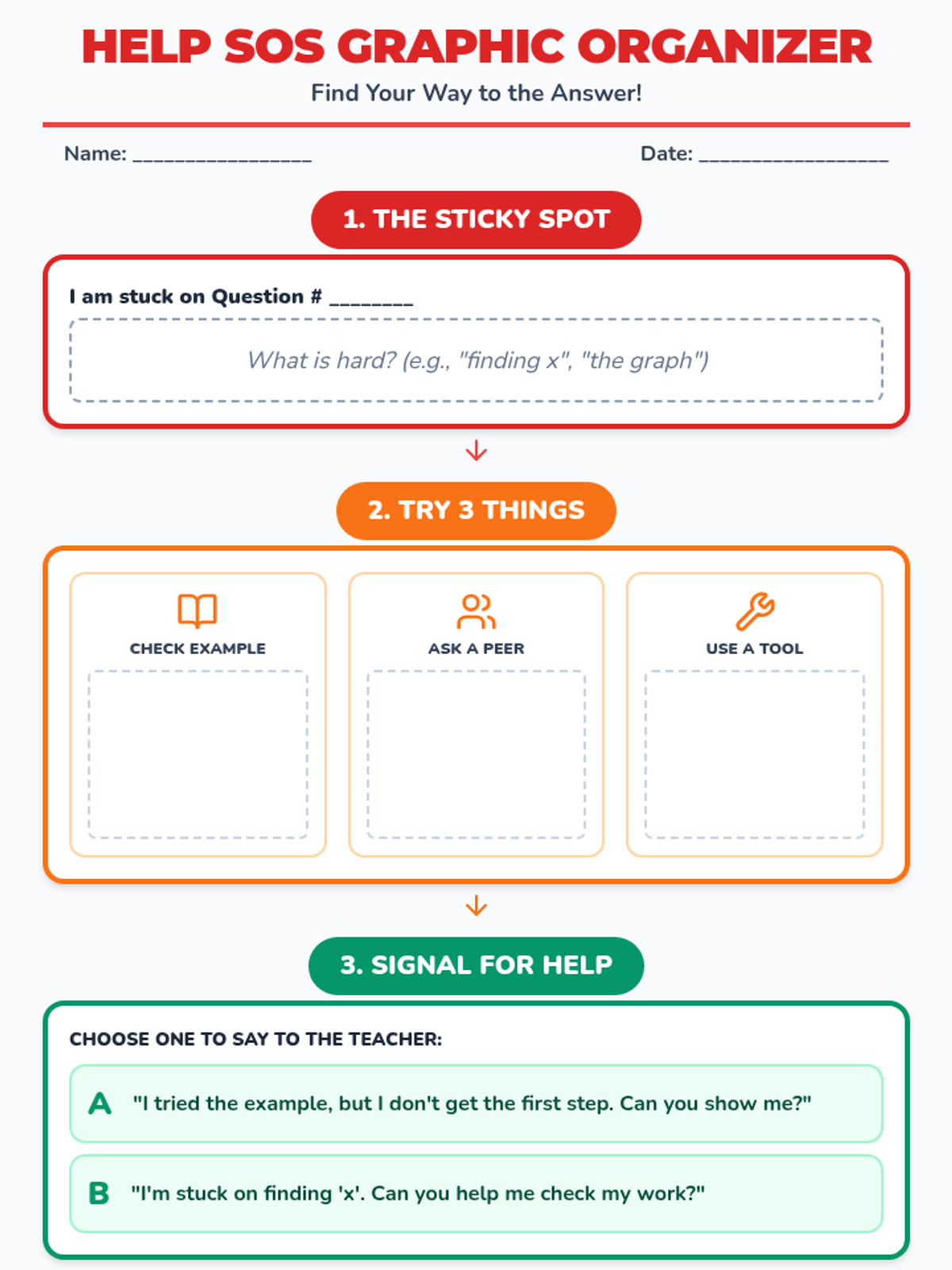
A gamified approach to recognizing when to ask for help and using a structured graphic organizer to communicate specific needs during math problem-solving.
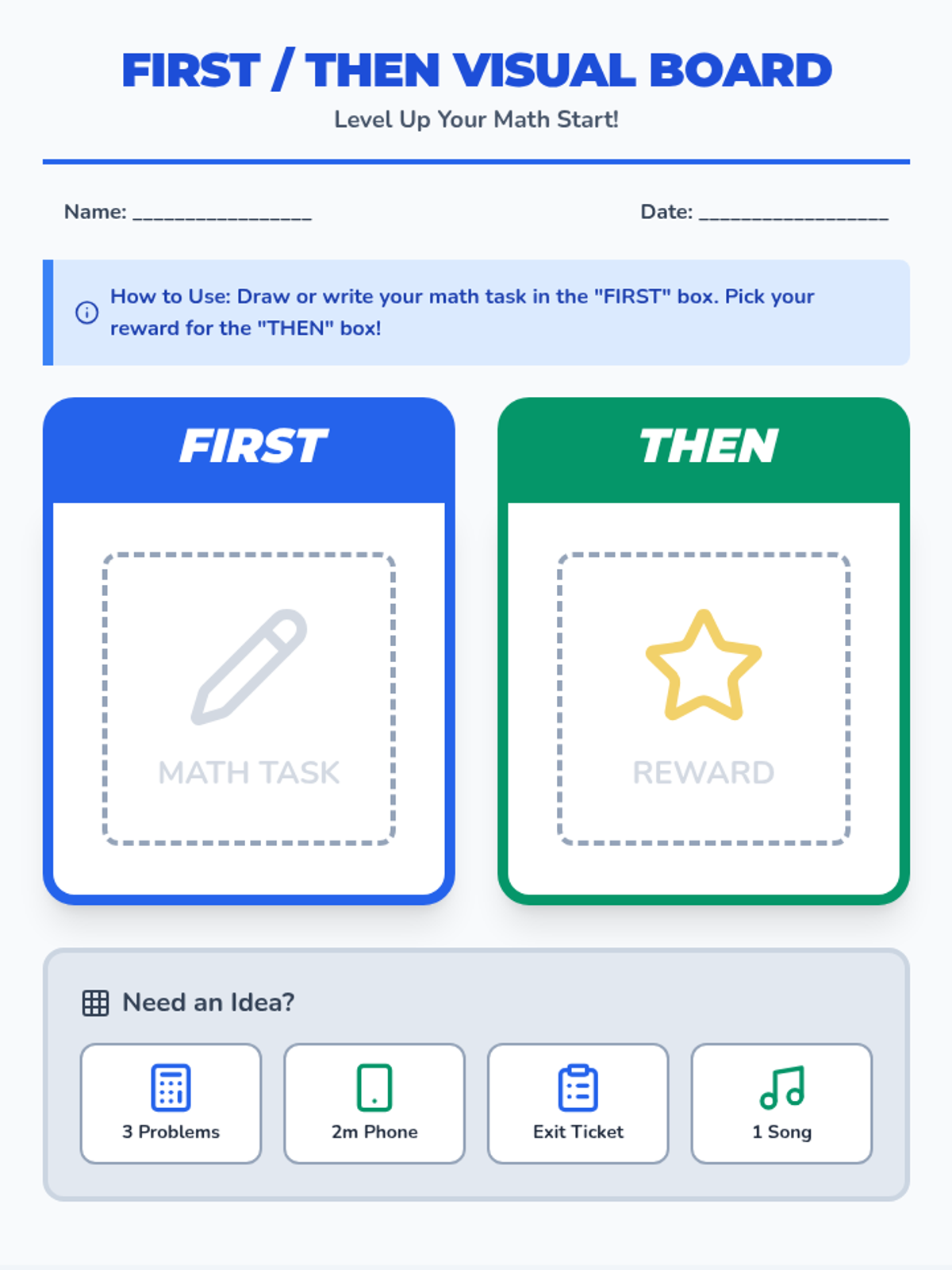
Students learn to use First/Then visual boards and illustrated checklists to overcome task initiation hurdles in math class.
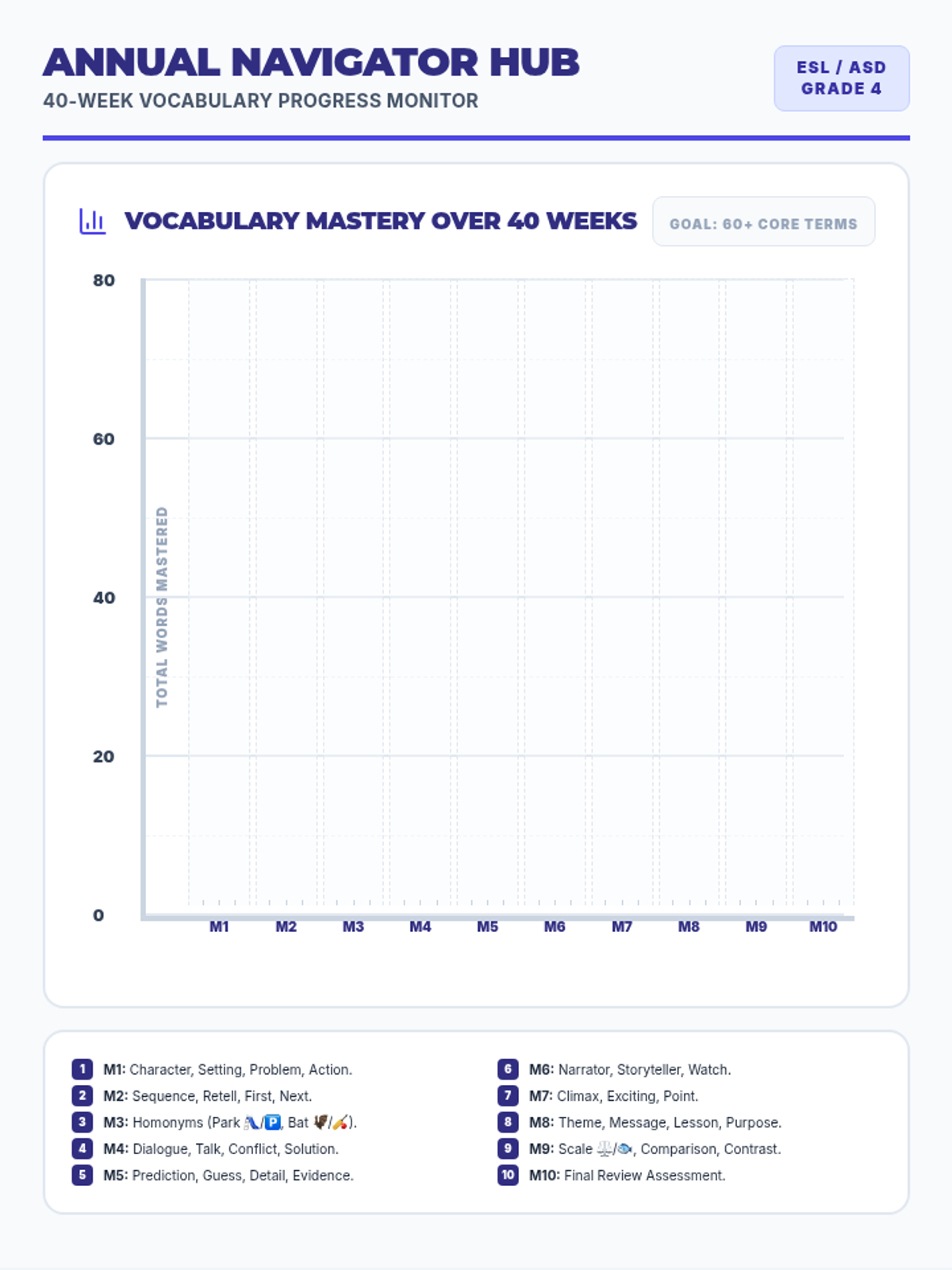
Cumulative review of the year's vocabulary and final progress monitoring to prepare for the transition to 5th grade.
Mastery of advanced multiple-meaning words and applying self-advocacy vocabulary in unstructured school settings.
Focusing on self-regulation vocabulary and identifying themes or 'lessons' in 3rd/4th grade level fiction.
Learning functional vocabulary for school-based transitions and academic vocabulary for story structure (rising action/climax).
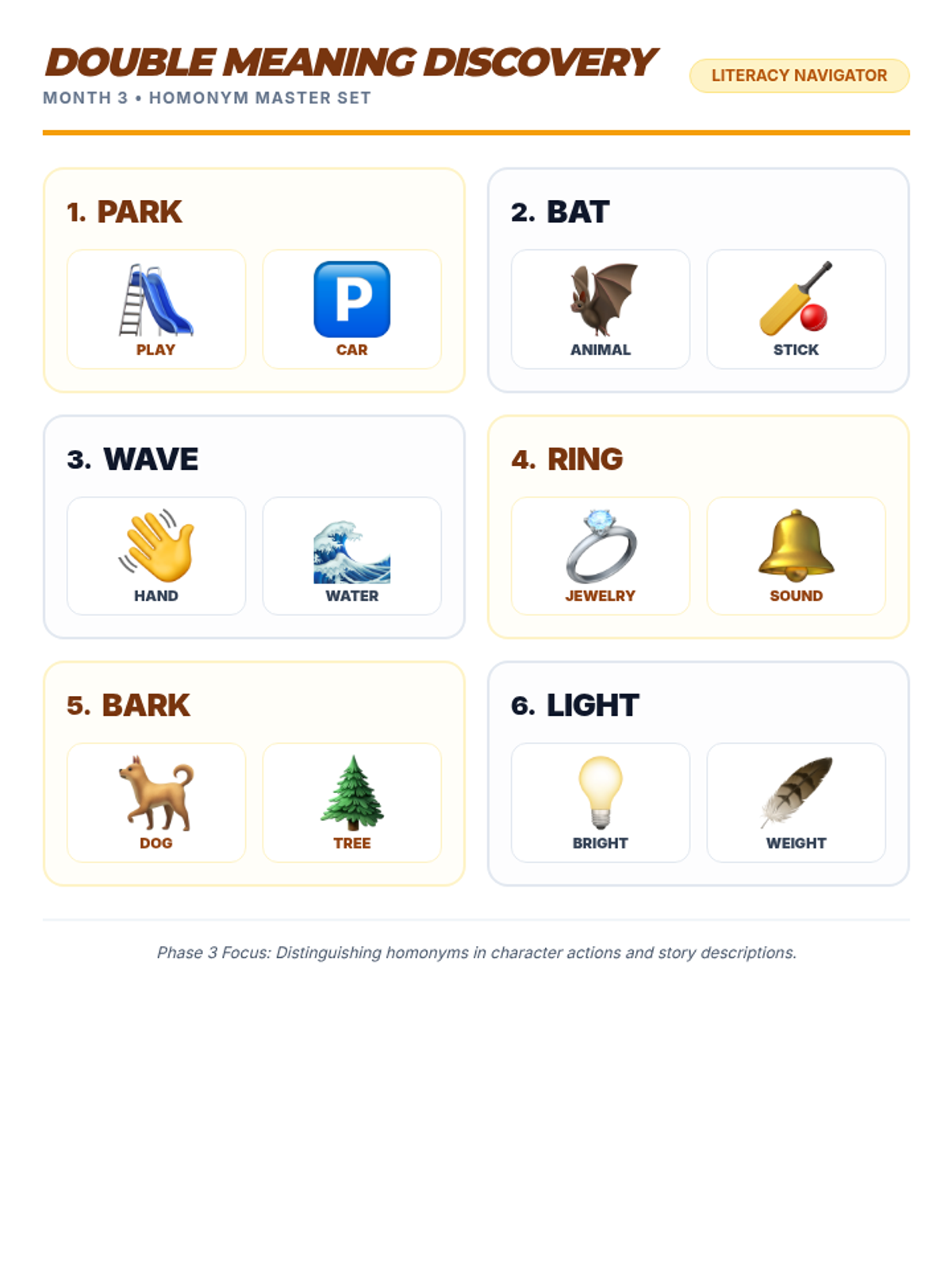
Expanding the repertoire of multiple-meaning words and learning to use context clues to differentiate meanings in fiction.
Deepening academic vocabulary with a focus on character traits and descriptive adjectives for self-advocacy and story comprehension.
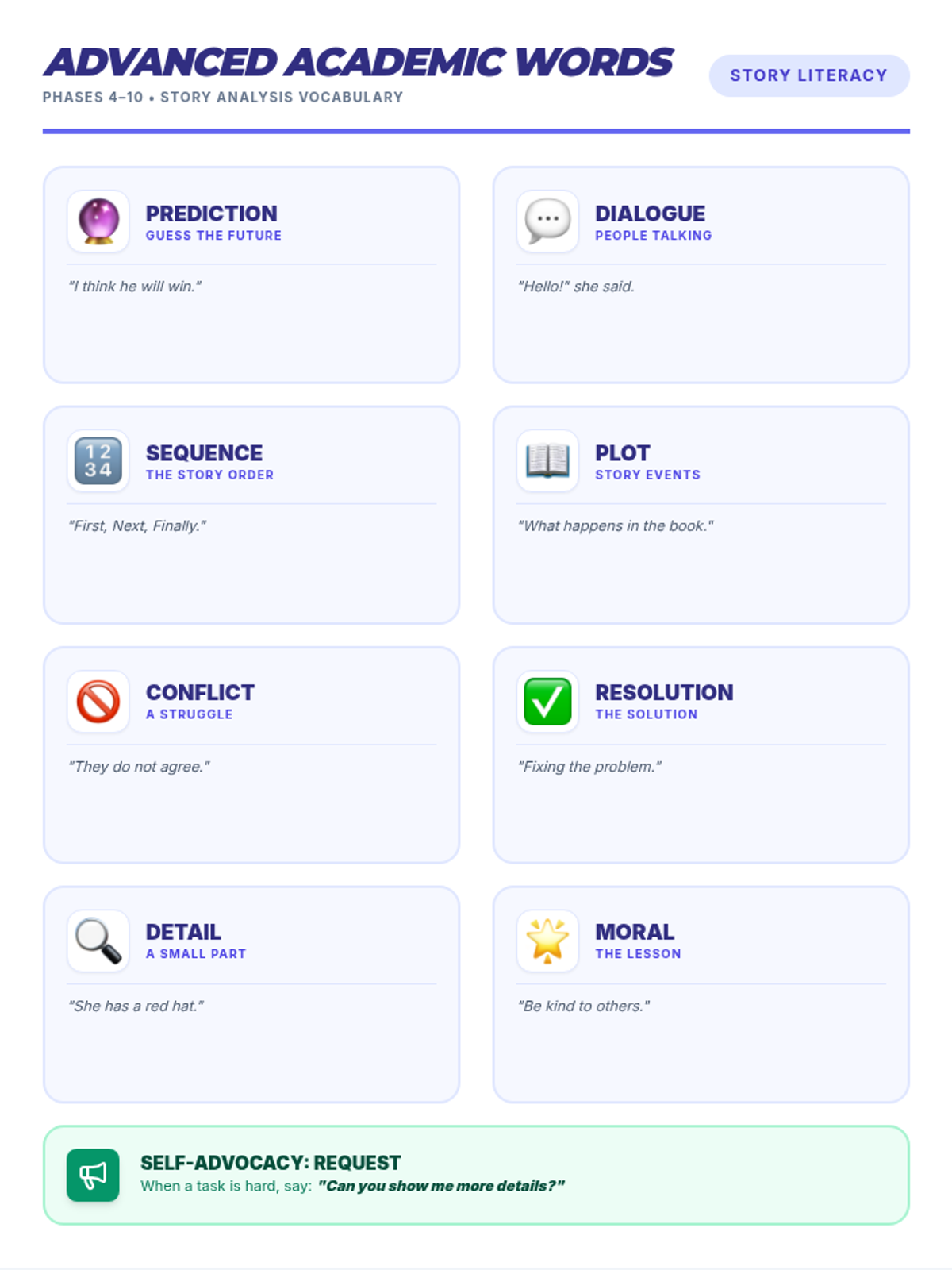
Focusing on social problem-solving, requesting help, and understanding conflict and resolution within fictional narratives.
Introduction to high-frequency multiple-meaning words found in 3rd and 4th-grade texts with heavy visual support and functional application.
Focusing on identifying and expressing feelings for self-advocacy and understanding story plots through basic sequencing vocabulary.
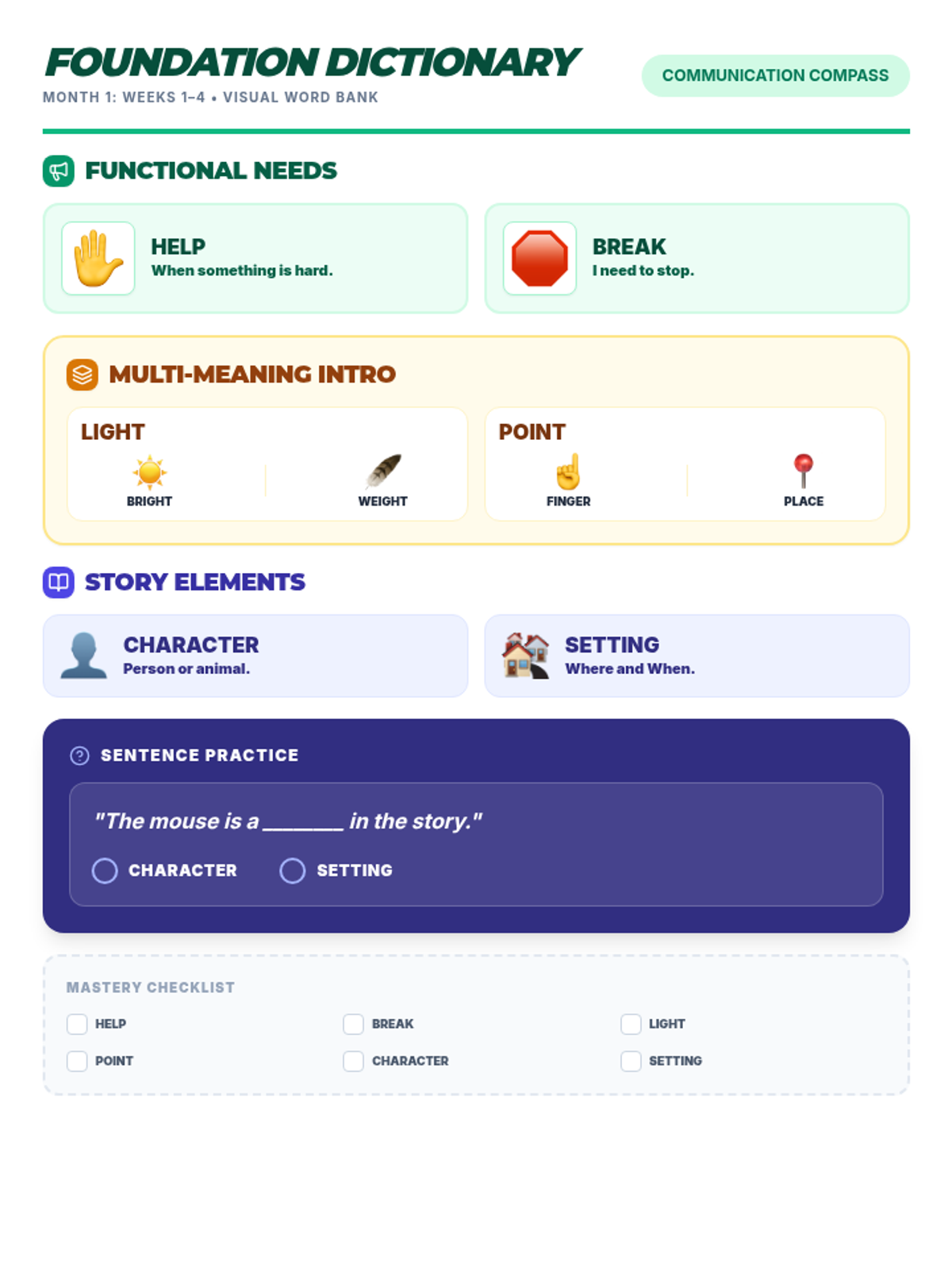
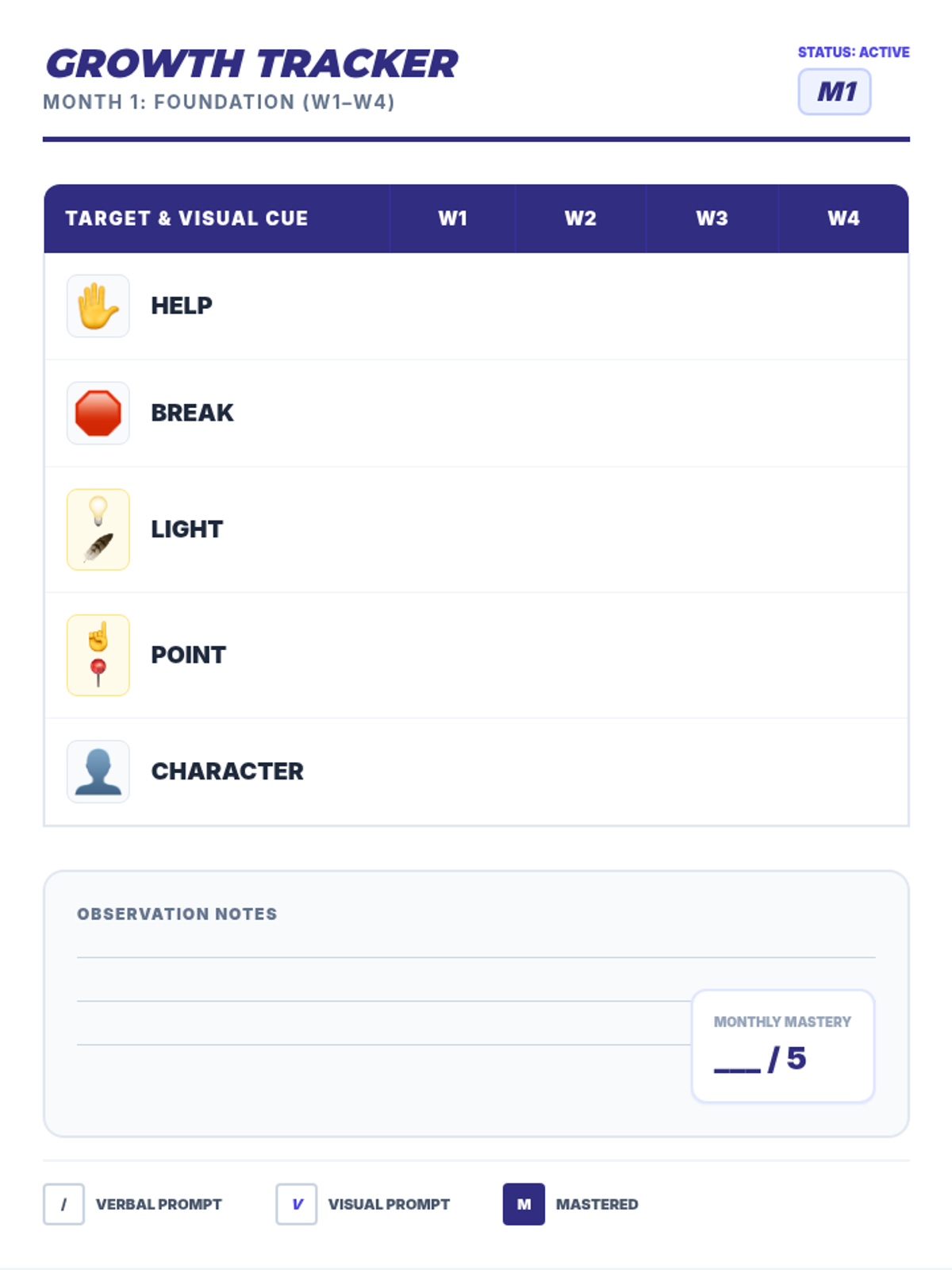
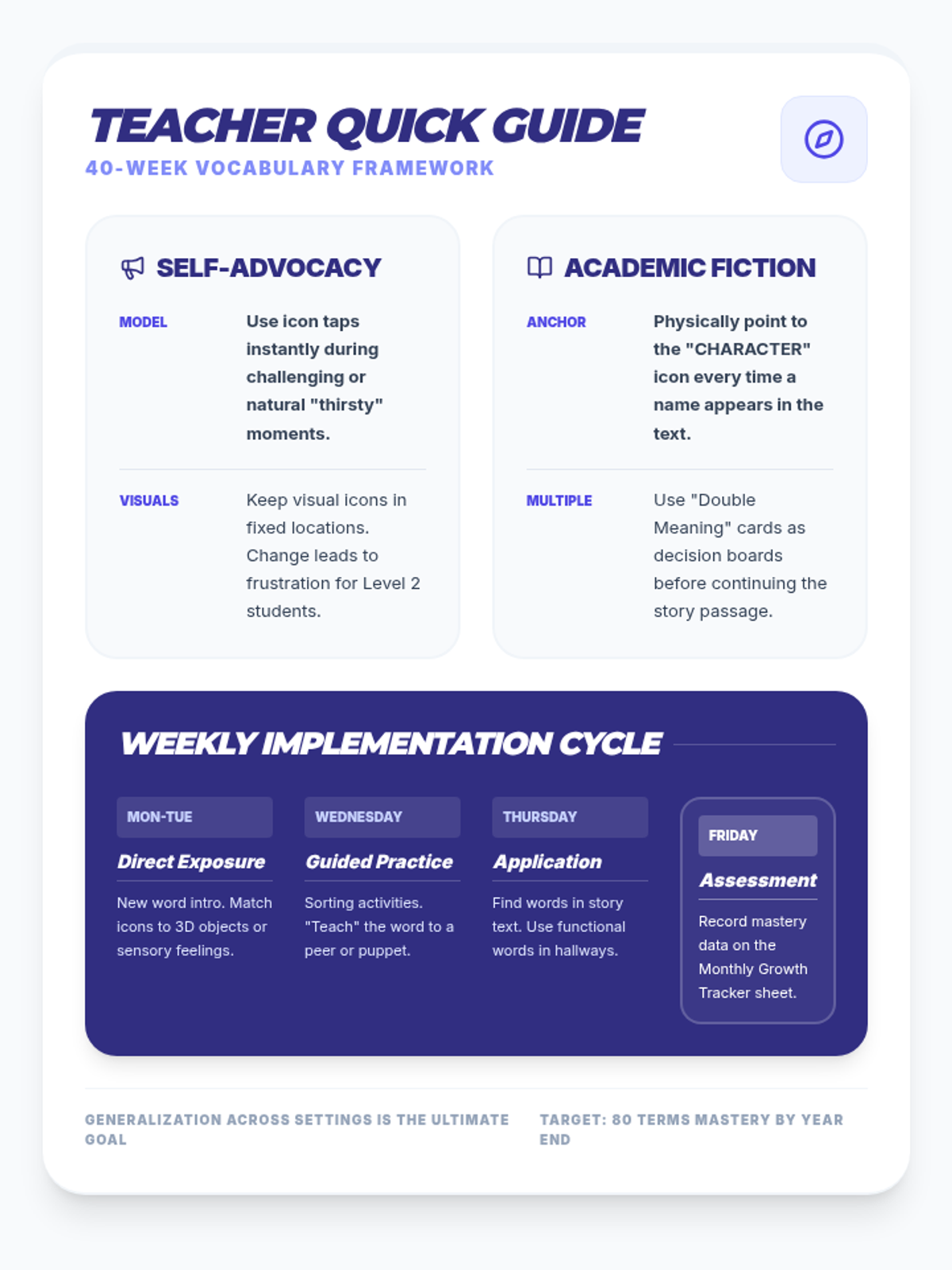
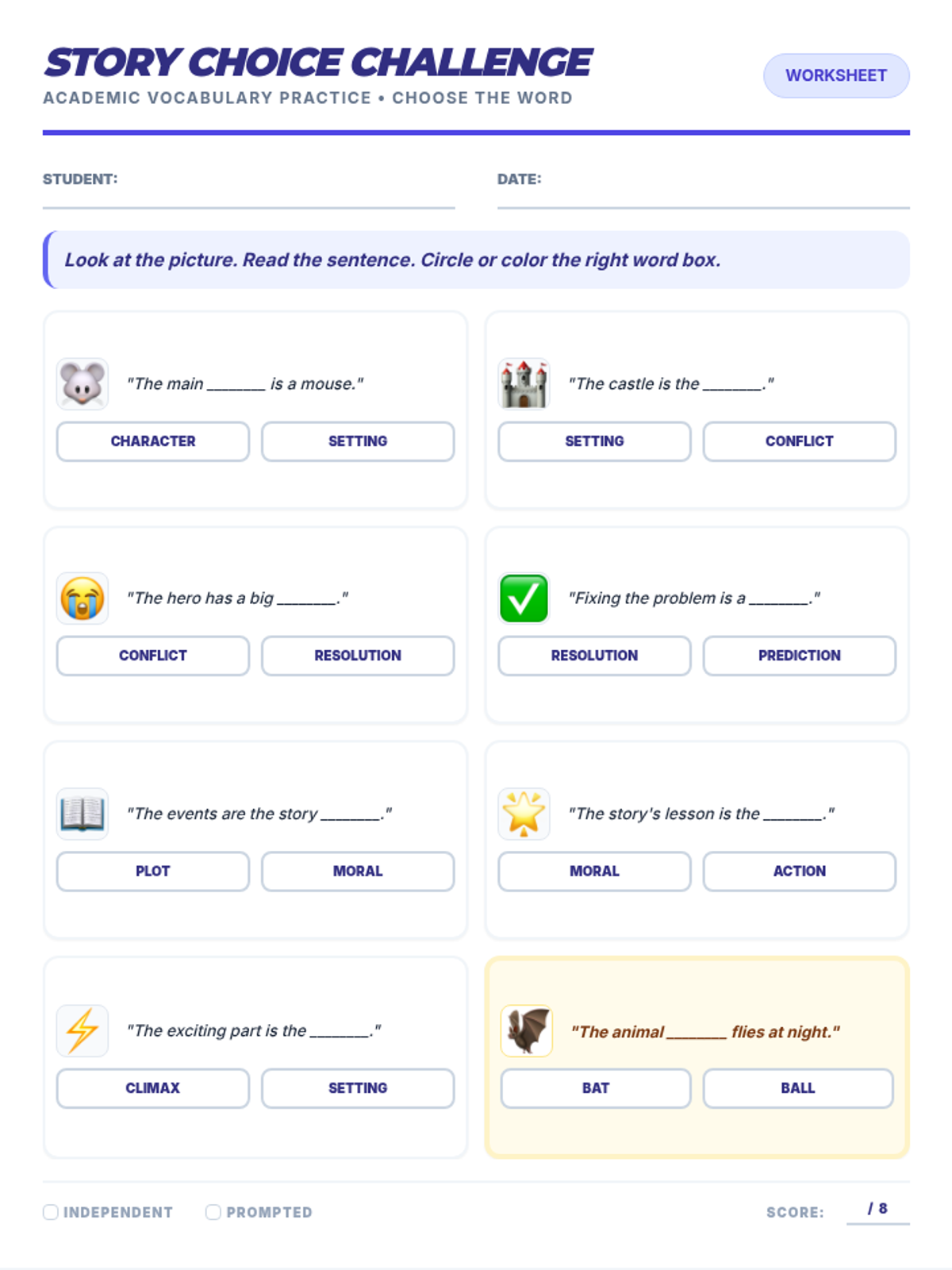
Establishing baseline skills in self-advocacy (needs/wants) and introductory fiction vocabulary (characters/settings) while initiating the 40-week progress monitoring system.
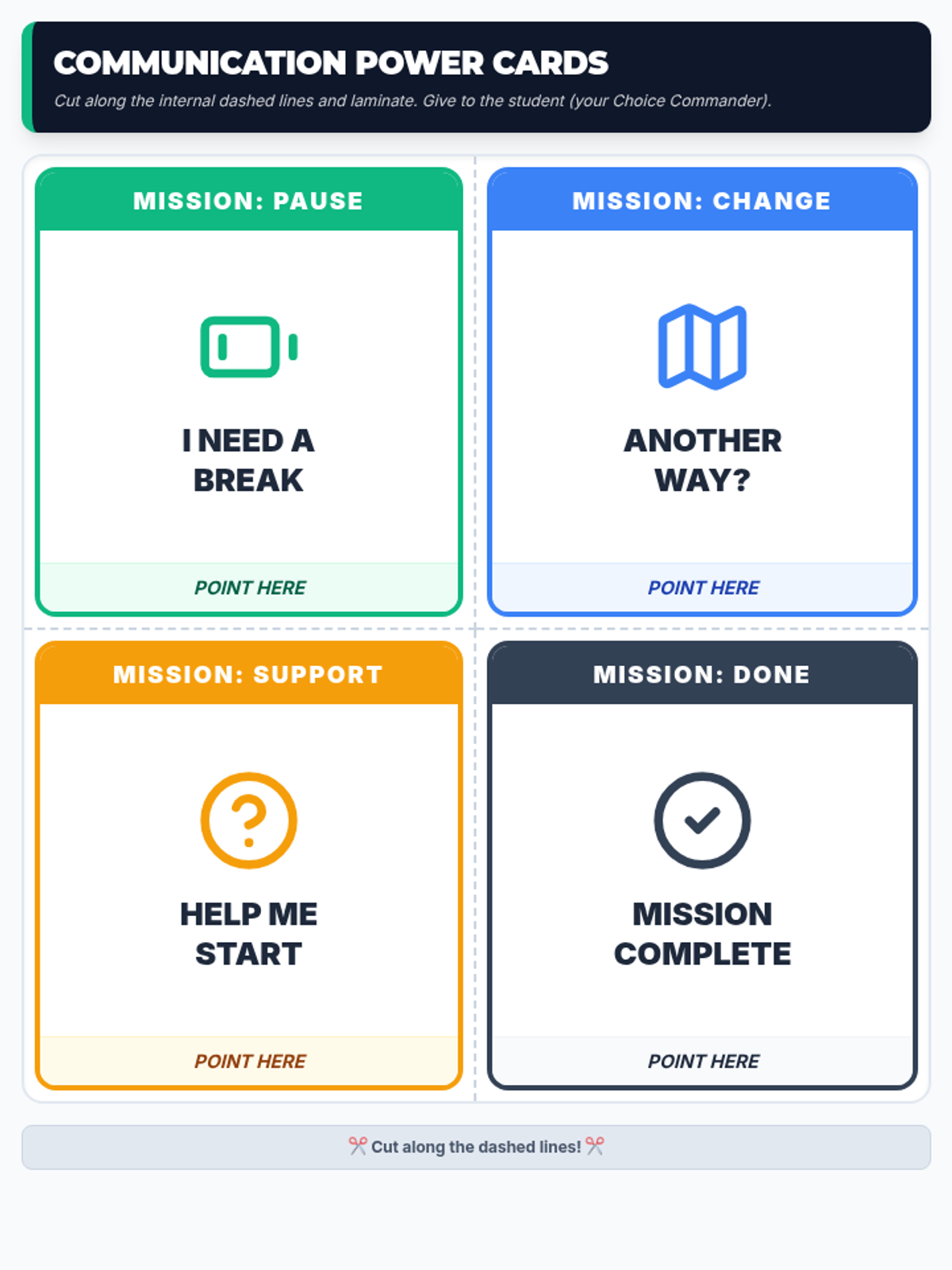
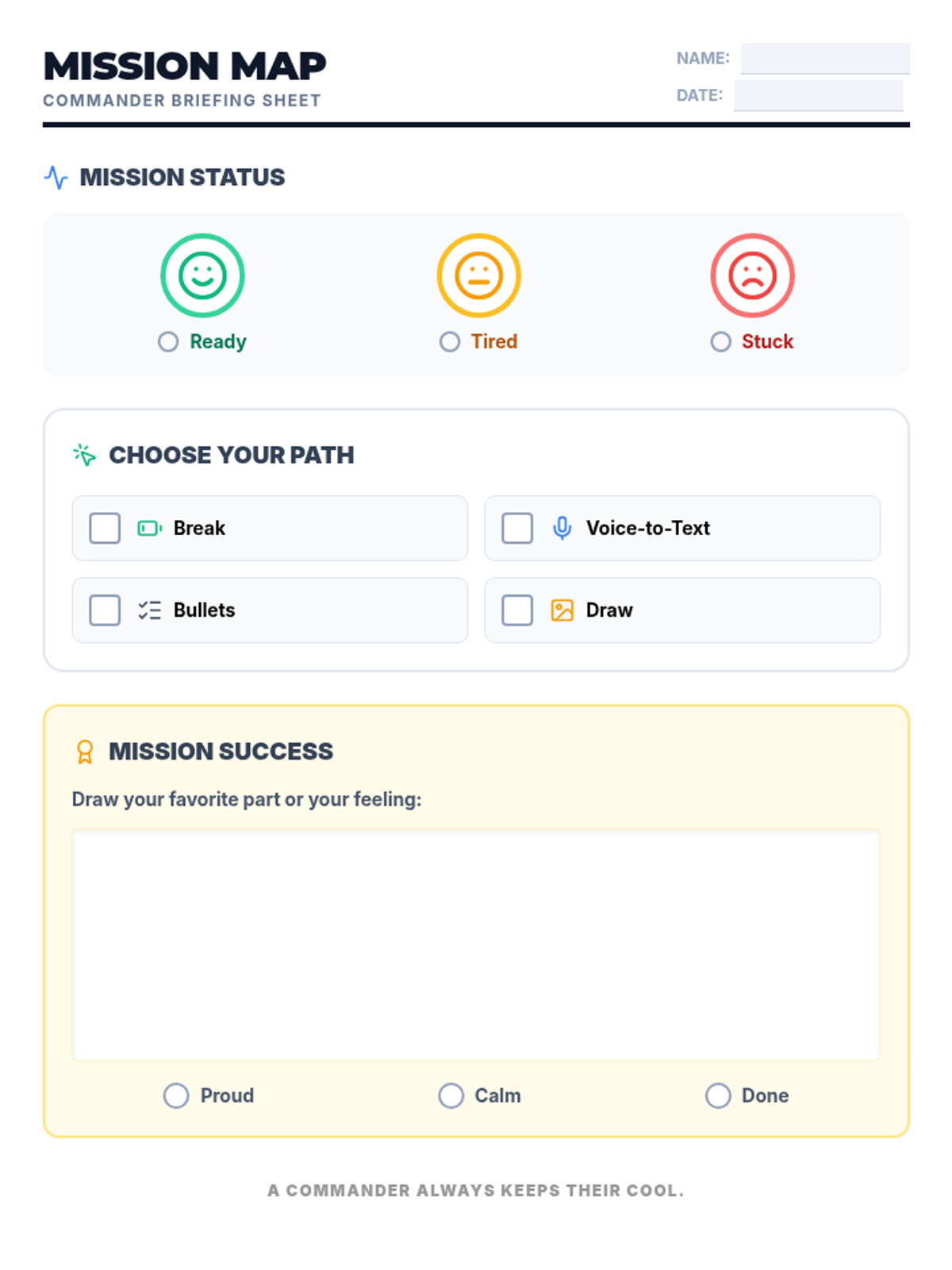
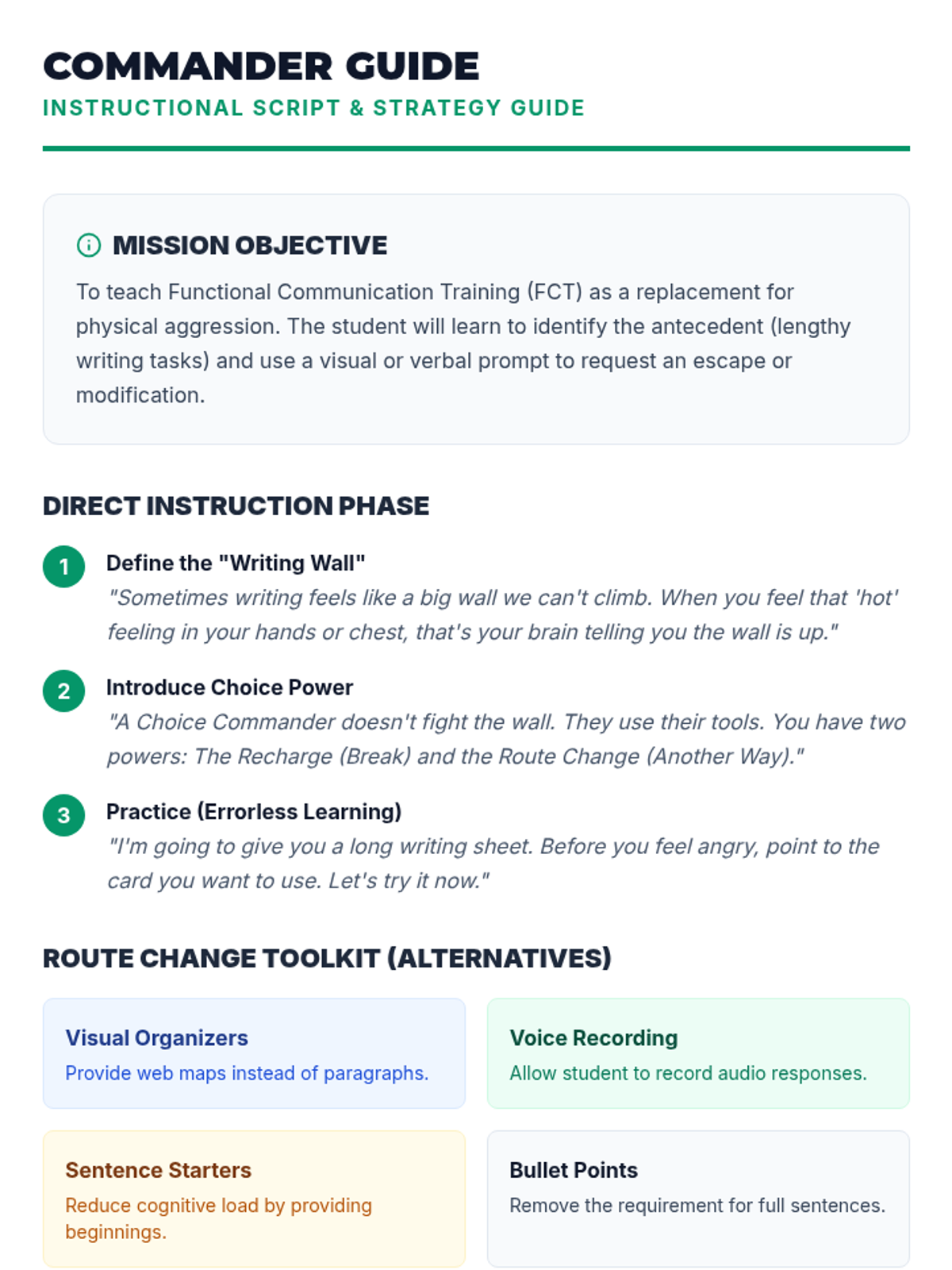
A specialized lesson designed to teach functional communication skills to a student who experiences frustration with writing. The lesson focuses on identifying 'writing walls' and using specific replacement behaviors—requesting a break or an alternative task—to maintain self-regulation.
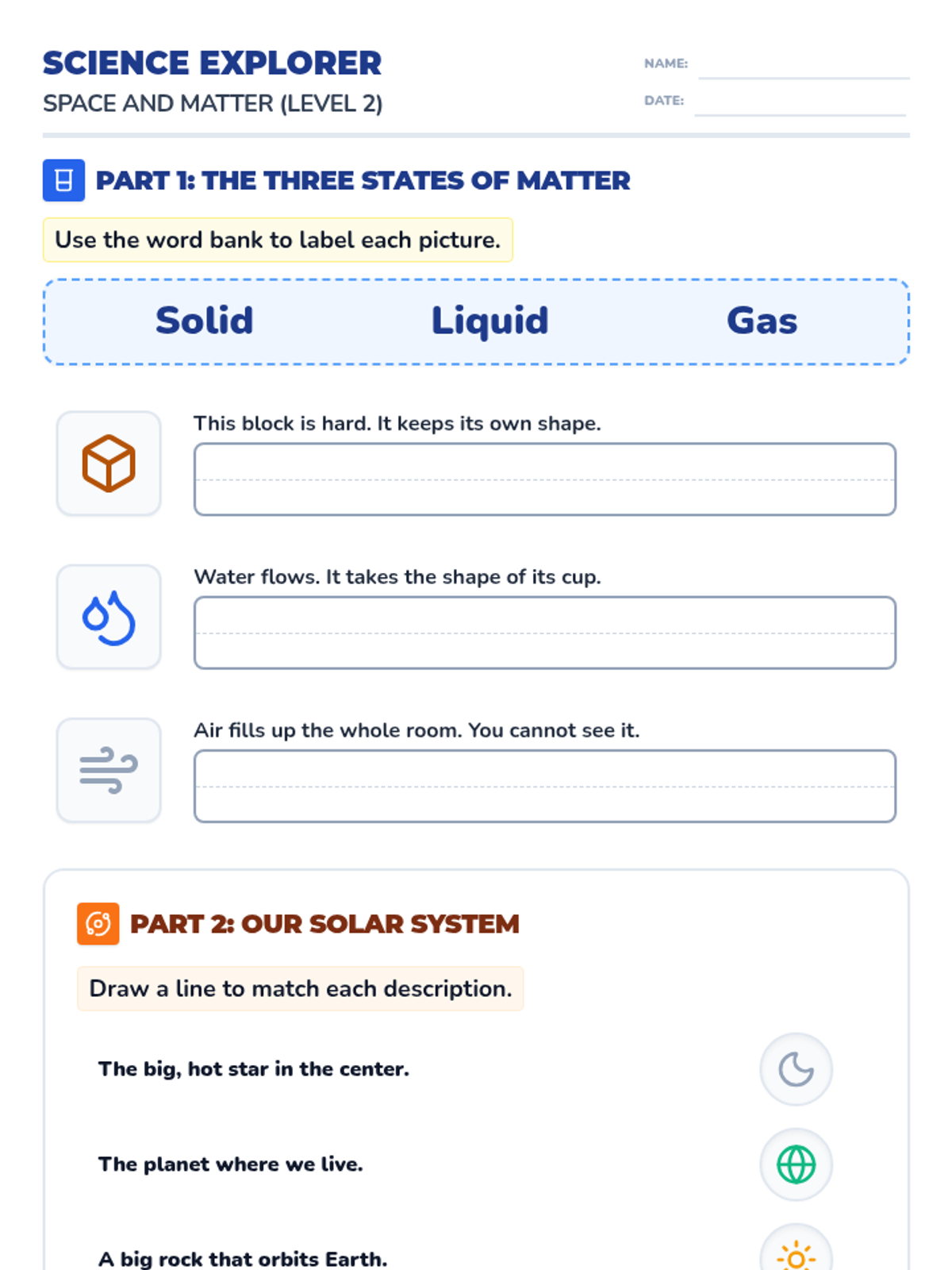
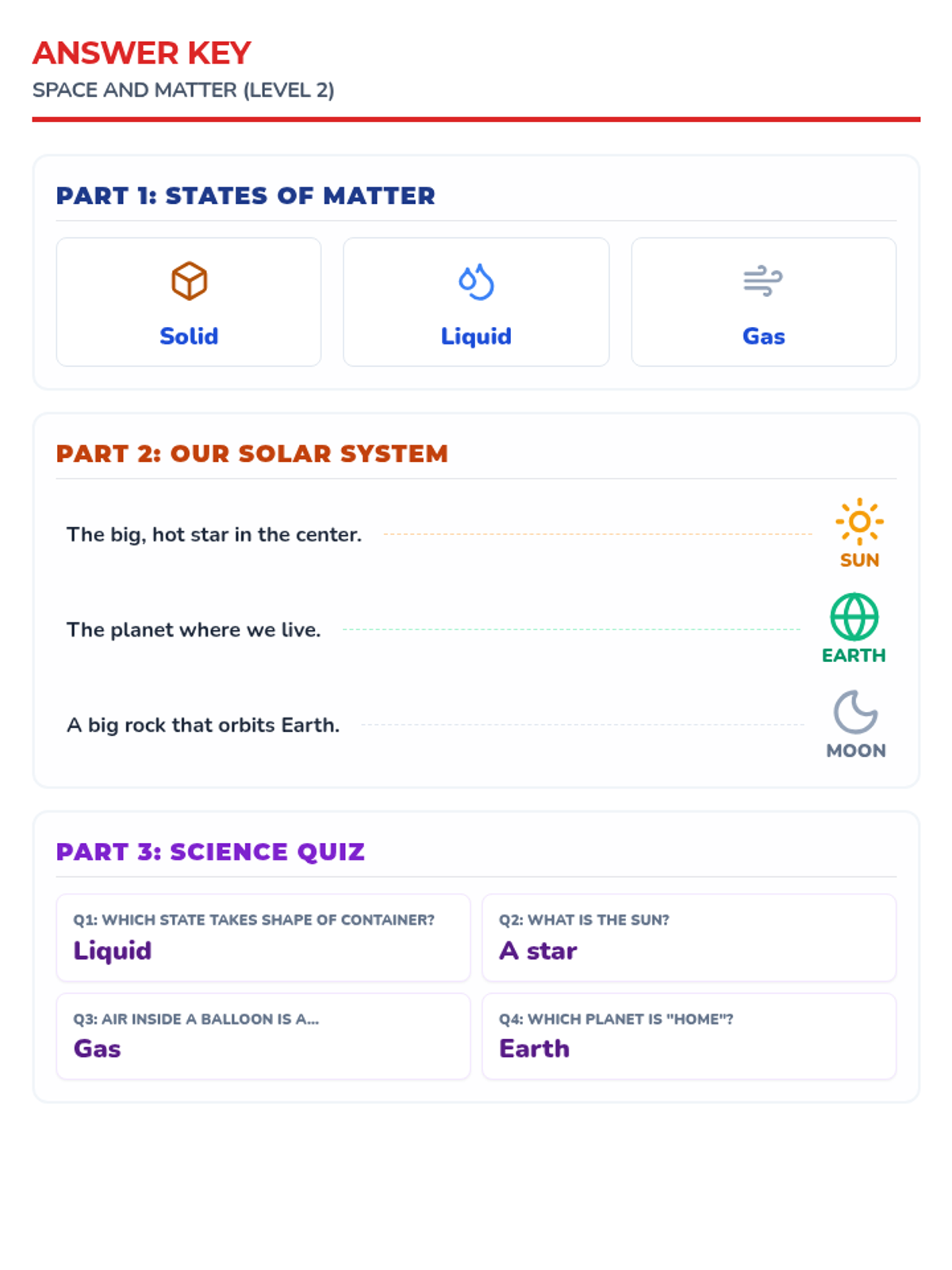
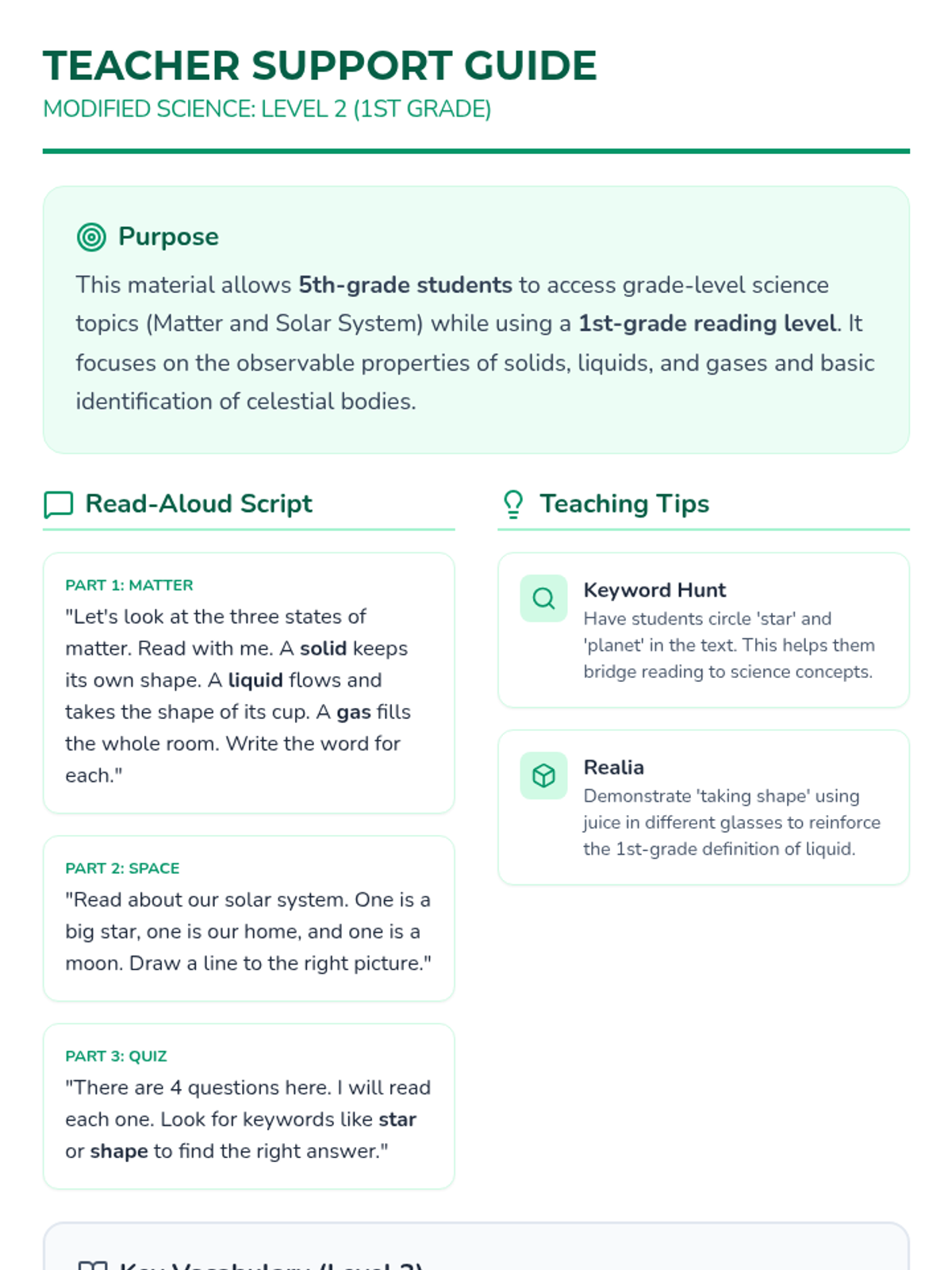
A modified science lesson covering the states of matter and the solar system, specifically designed for students with a kindergarten reading level to access 5th-grade concepts.
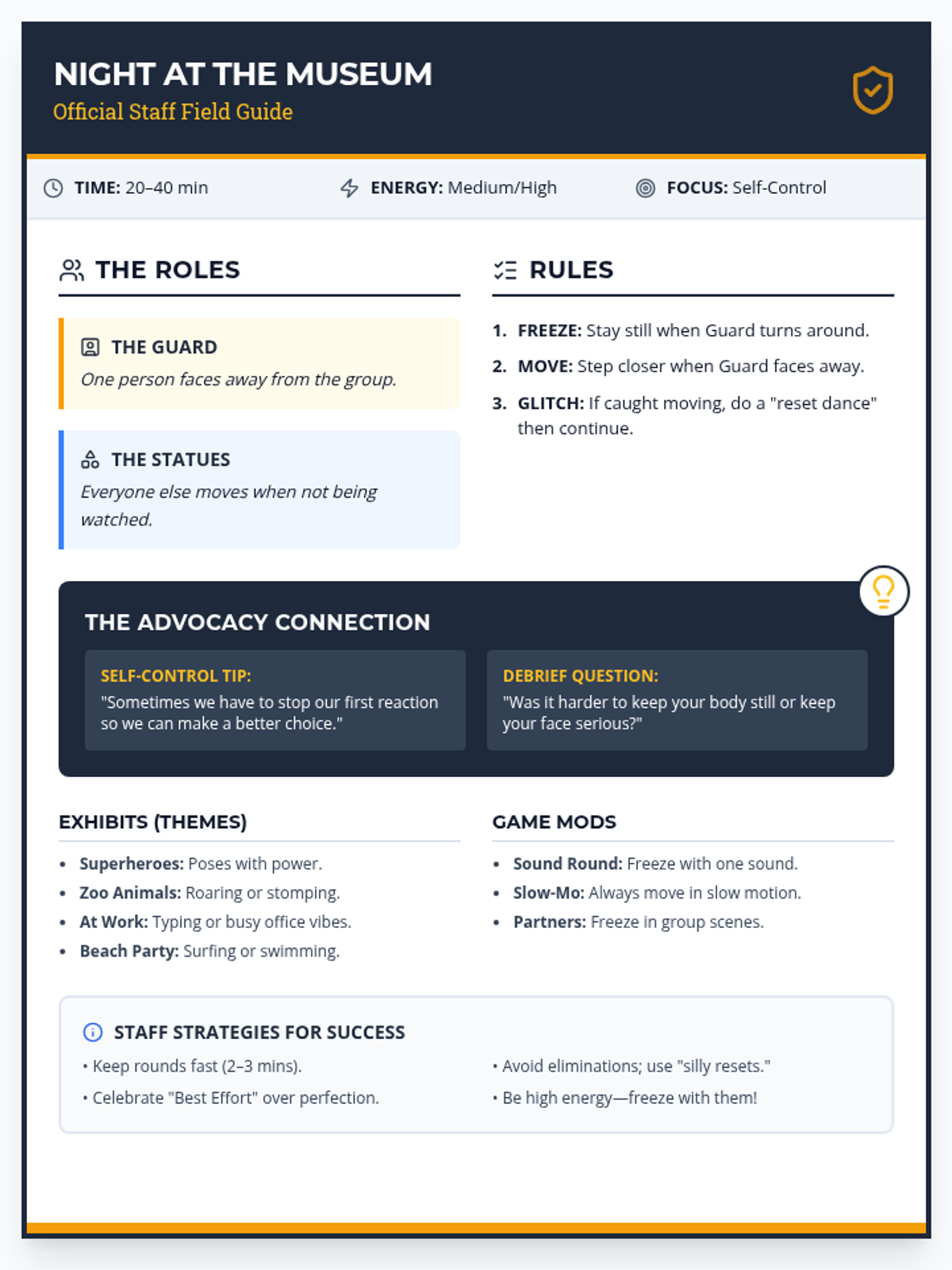
A collection of high-energy games designed to help adults with IDD practice self-control, listening, and teamwork in a social setting.
A comprehensive set of tools for tracking and understanding second-grade classroom behaviors, specifically focusing on off-task behaviors and noncompliance.
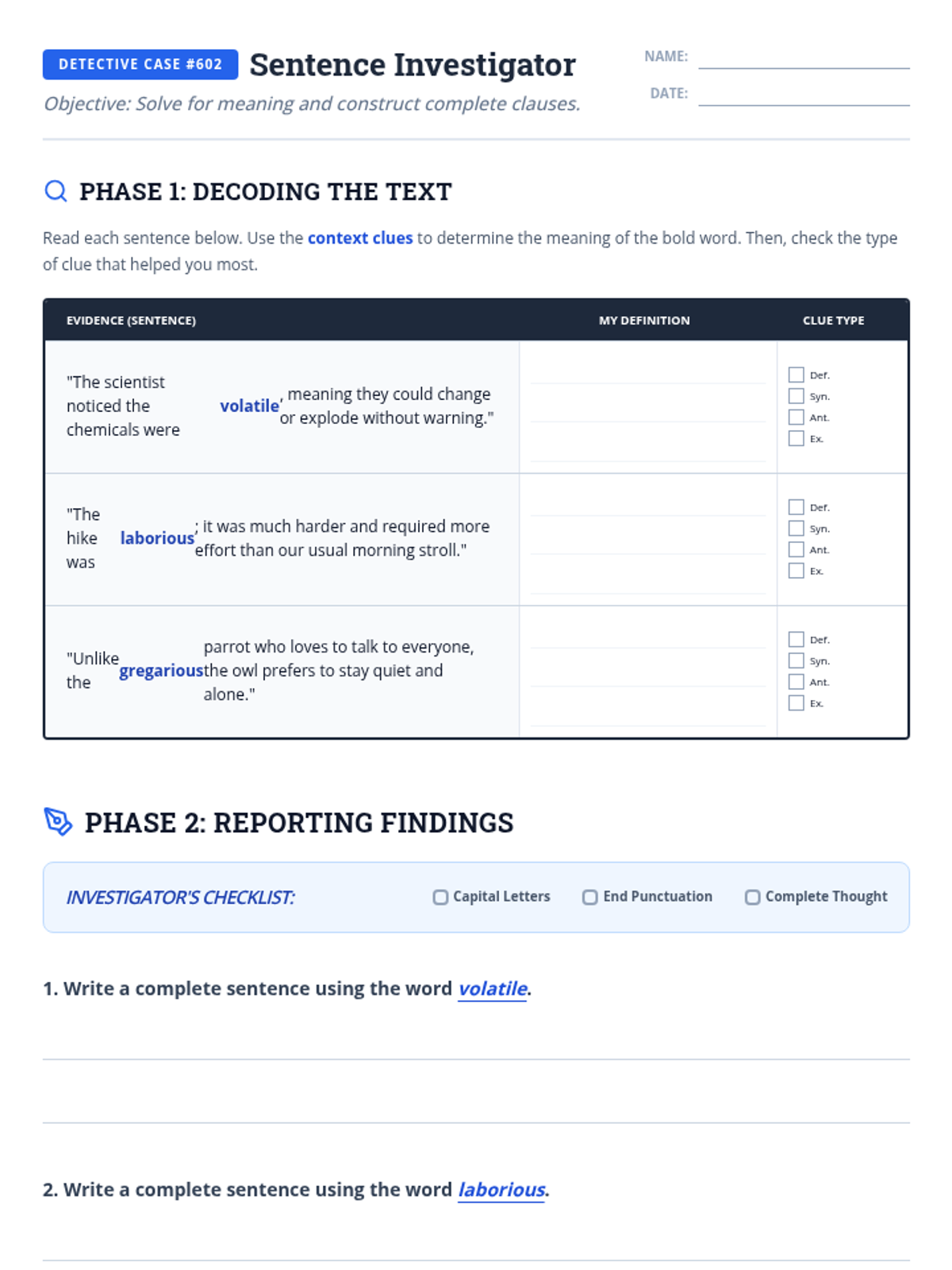
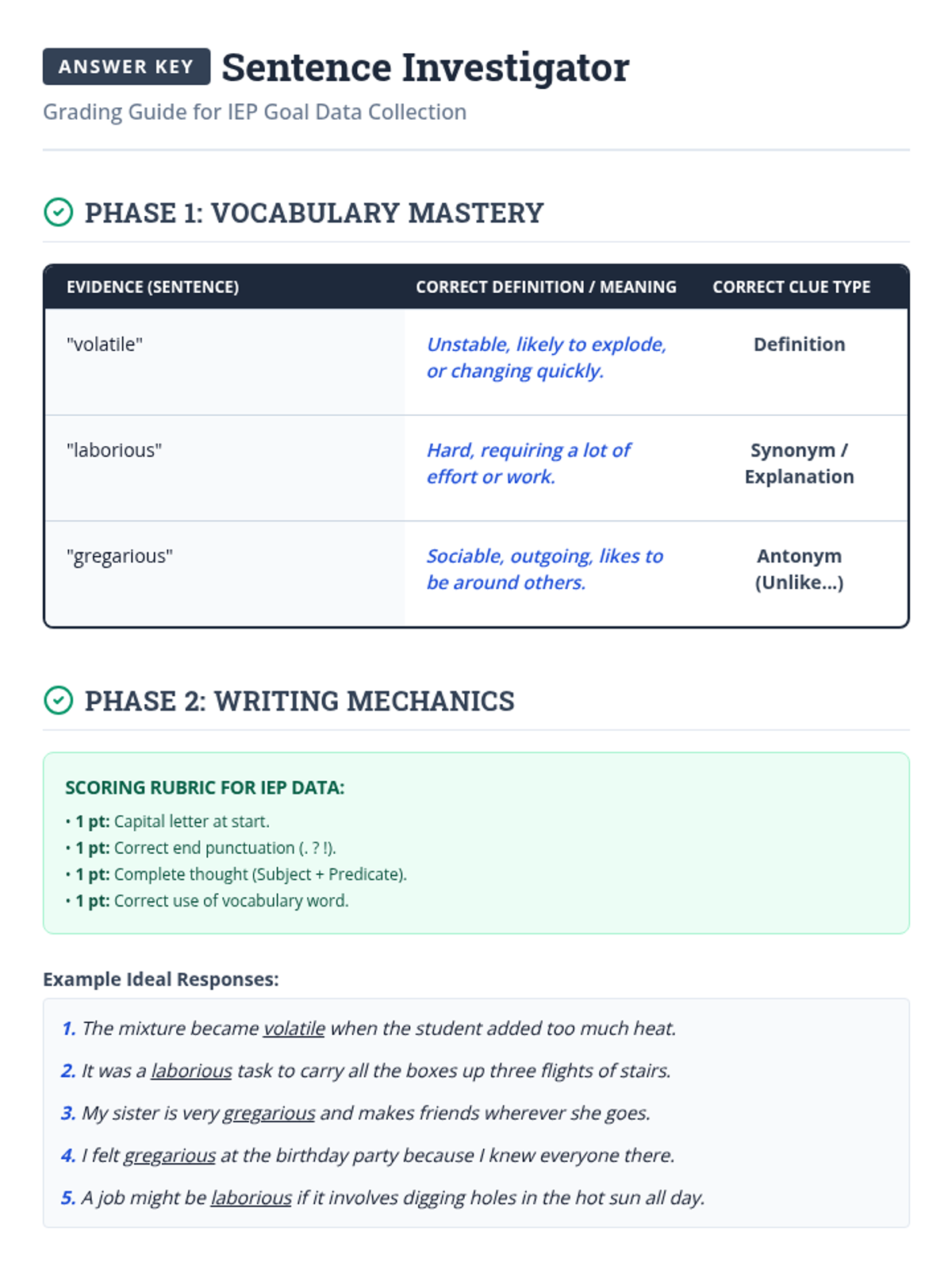
A targeted lesson on using context clues to define academic vocabulary and applying those words in syntactically correct, punctuated sentences.
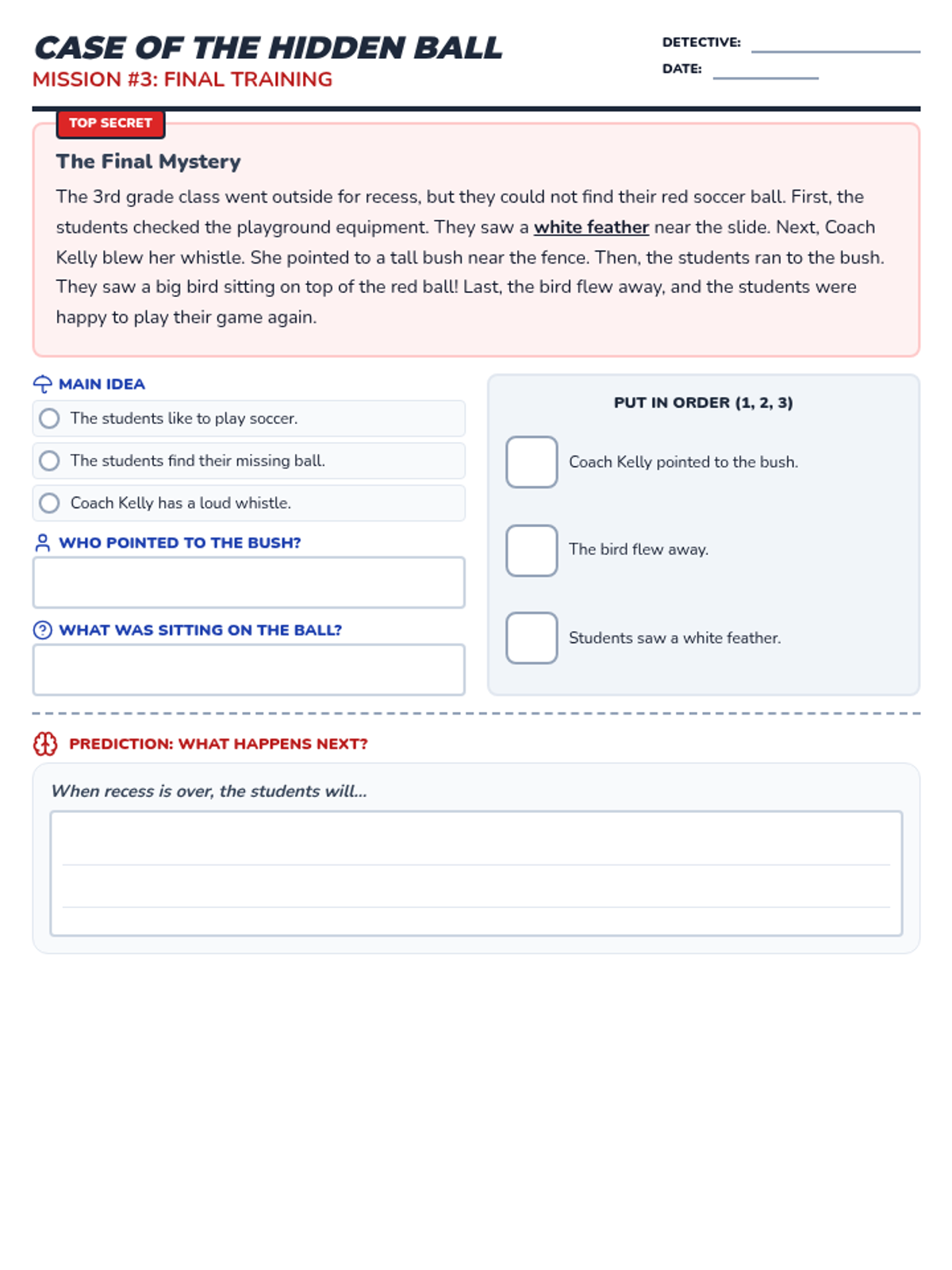
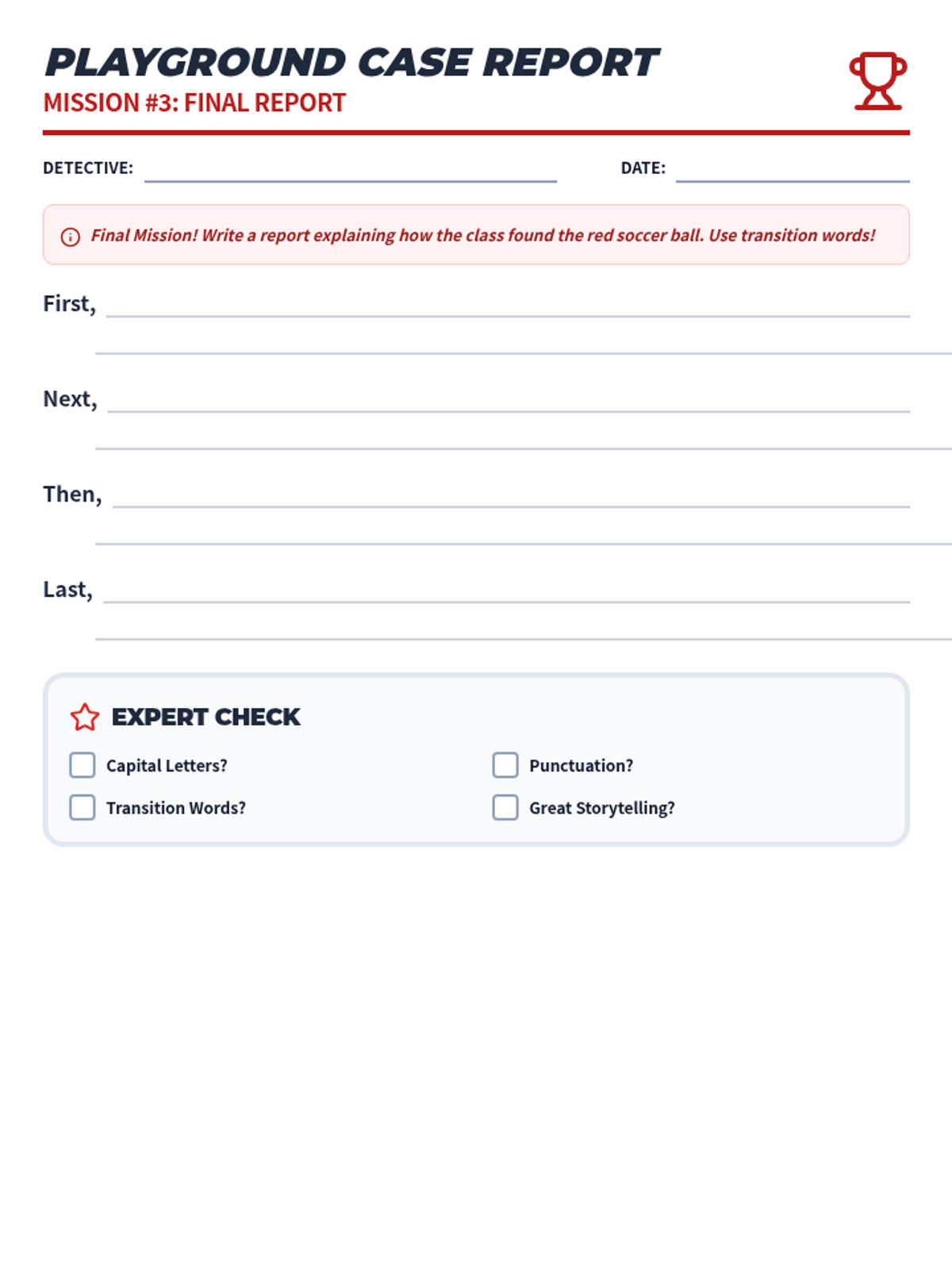
The final training mission, where students apply all their skills to solve the Case of the Hidden Playground Ball.
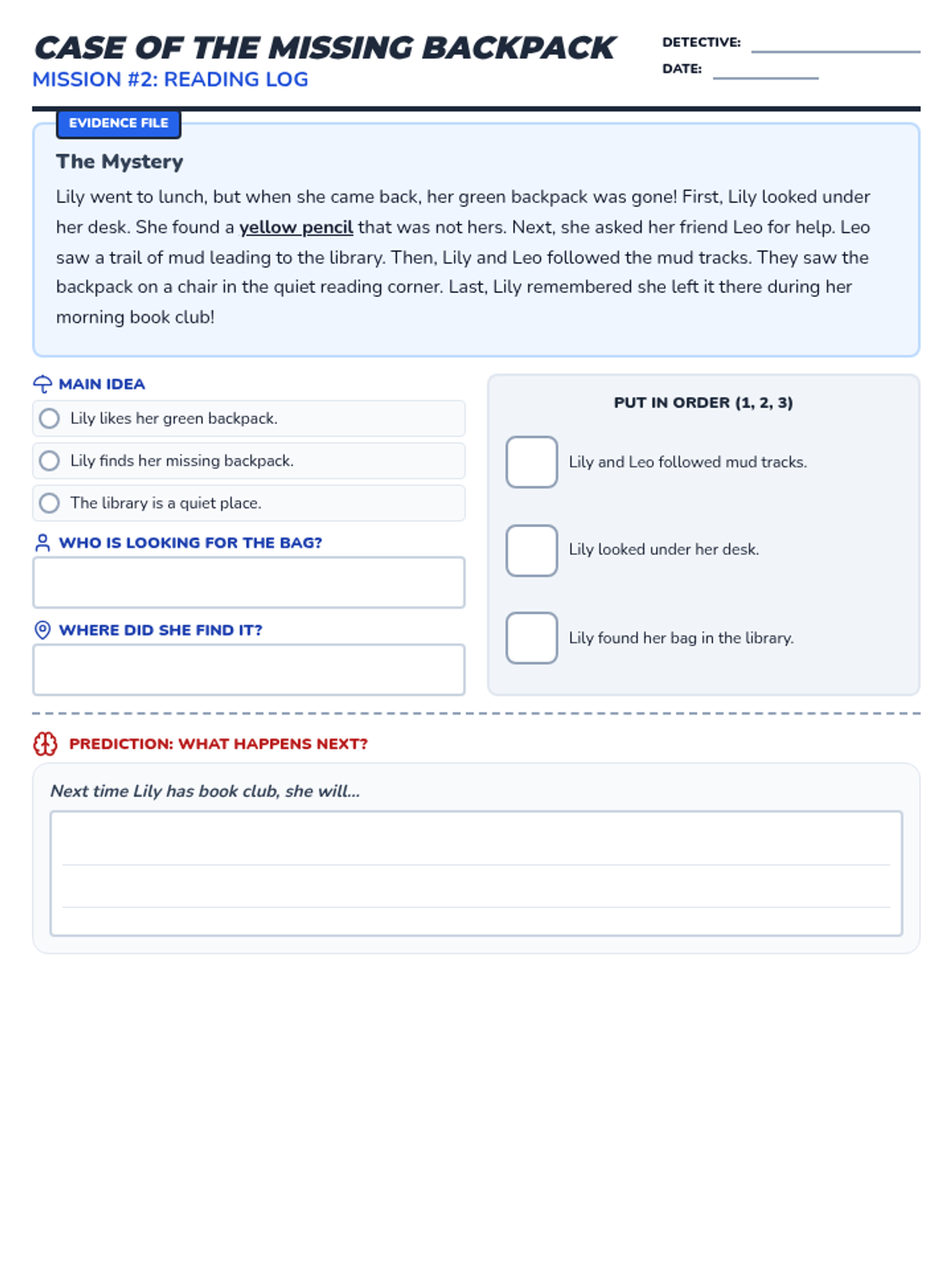
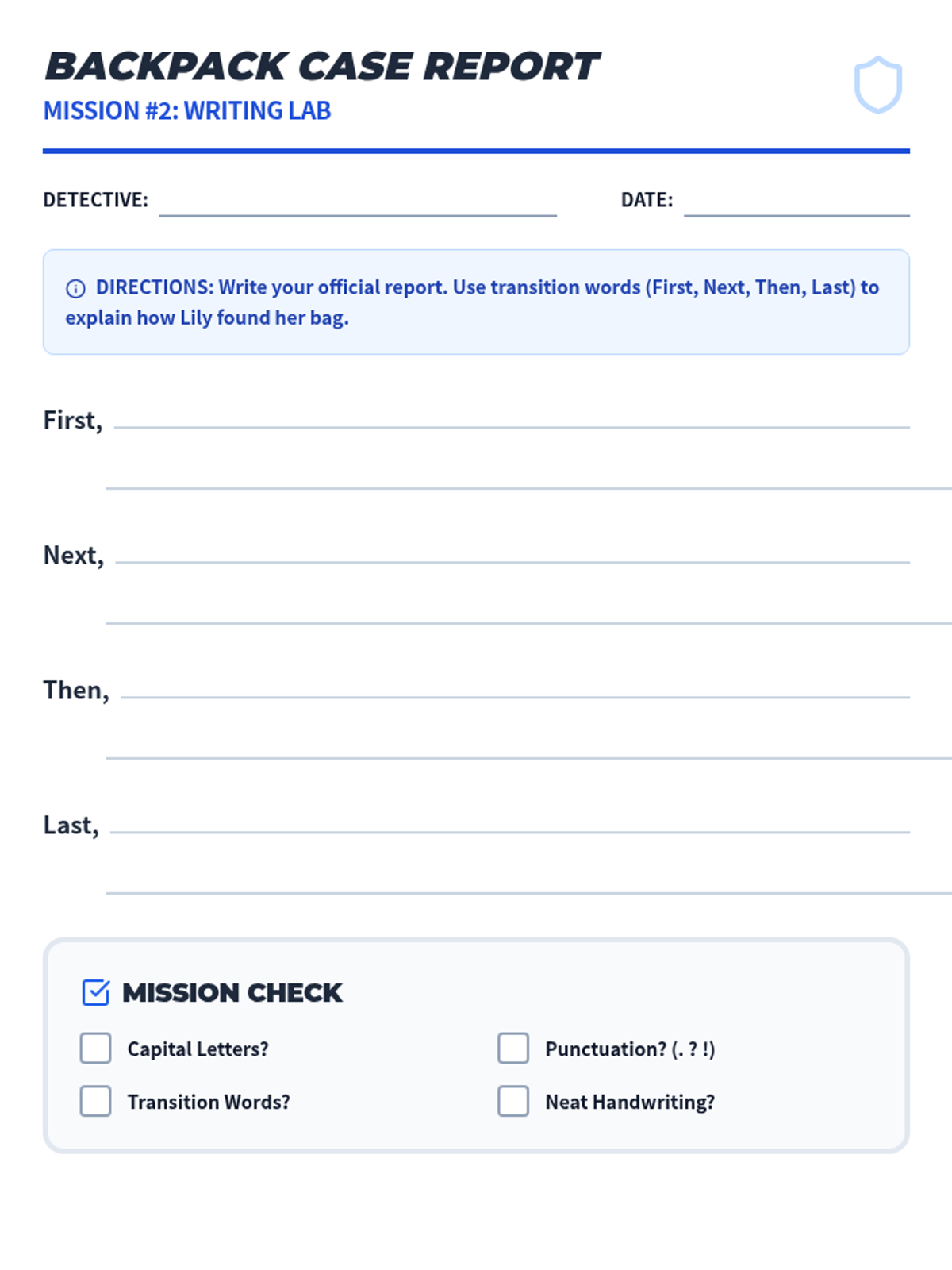
The second mission in the Detective Academy, focused on identifying character motives and sequencing events in the Case of the Missing Backpack.