A reading comprehension lesson focused on analyzing character dynamics and emotional subtext in Chapters 13 and 14 of the text, specifically exploring identity, culture, and familial distance.

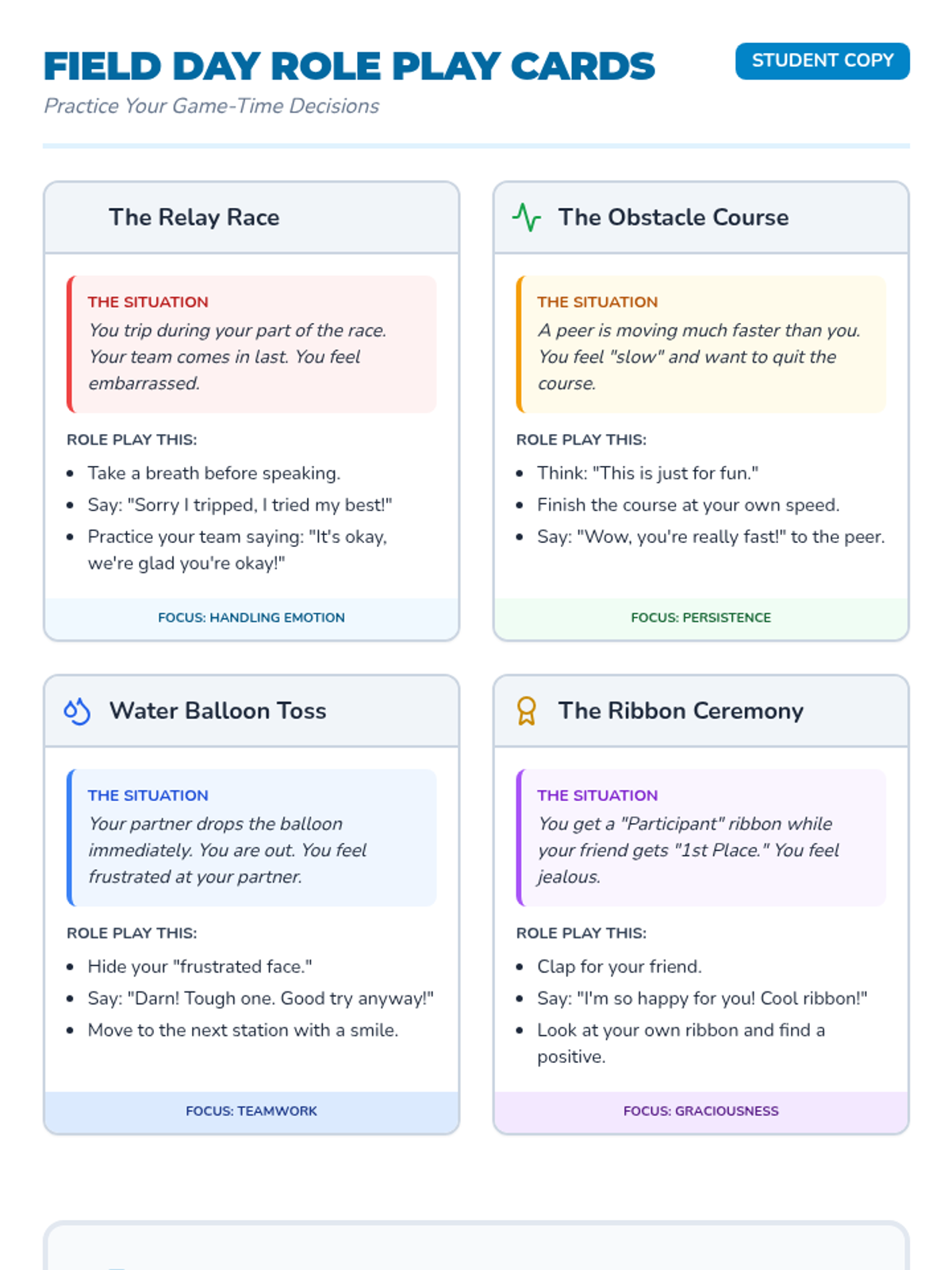
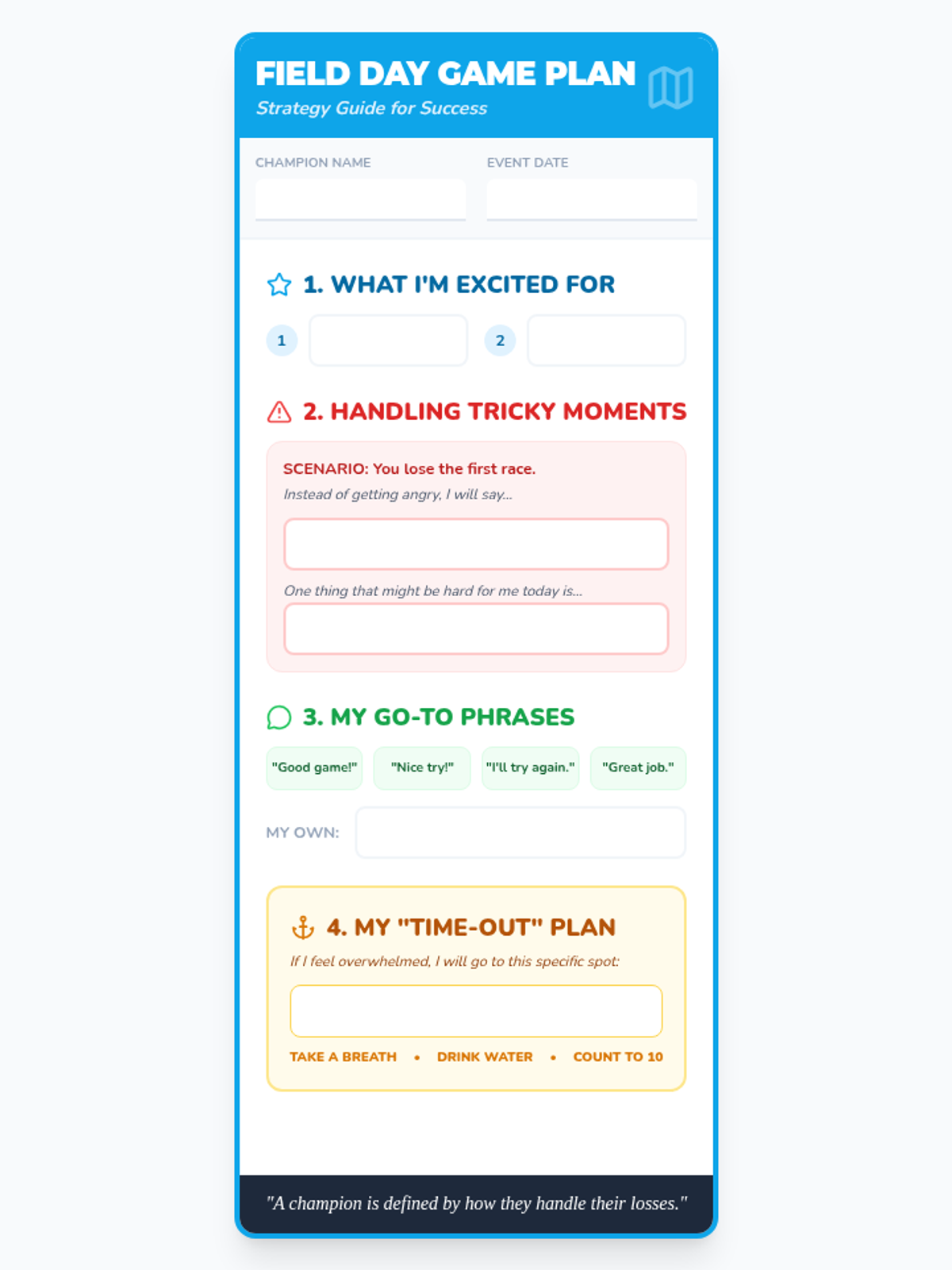
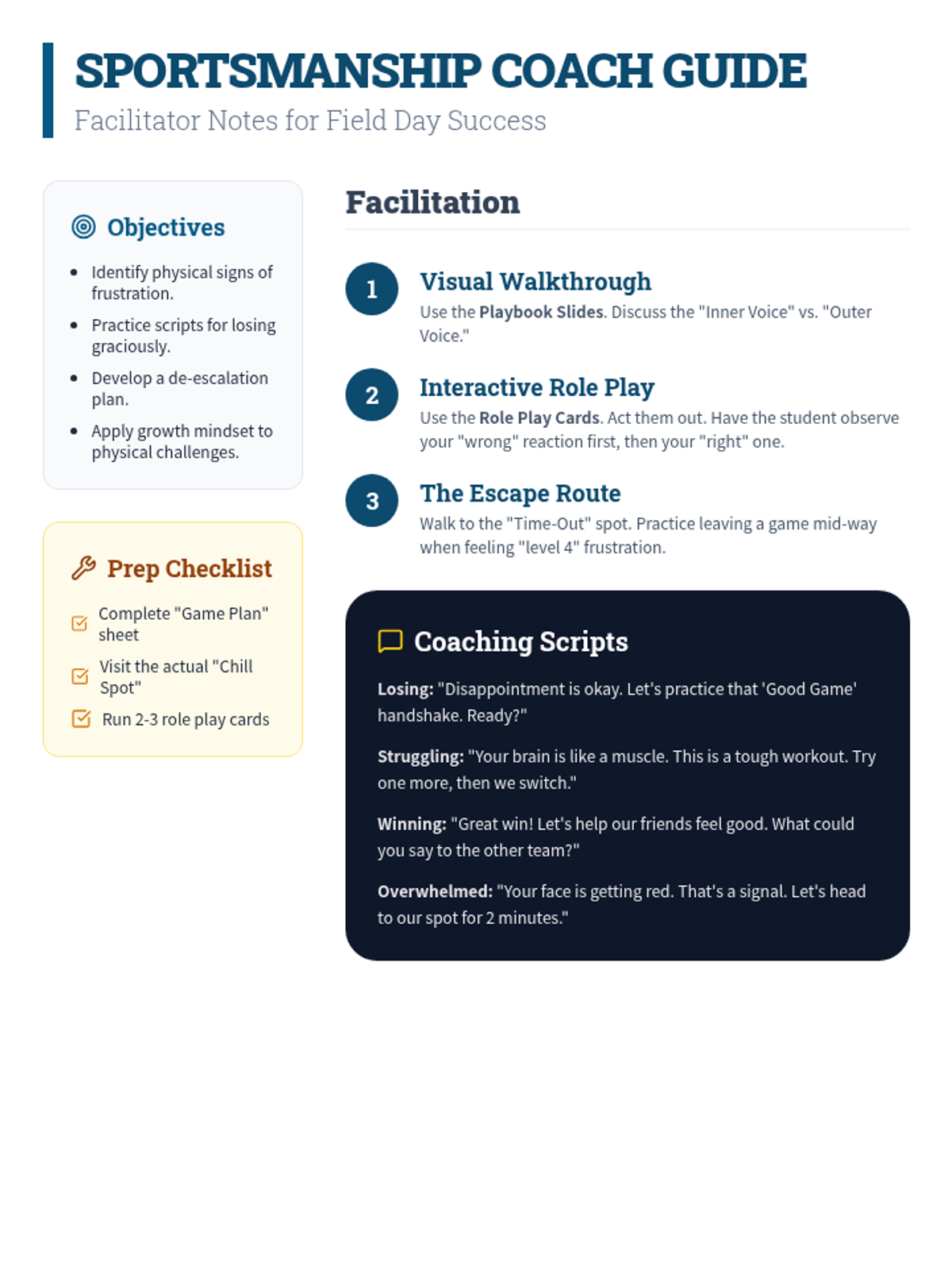
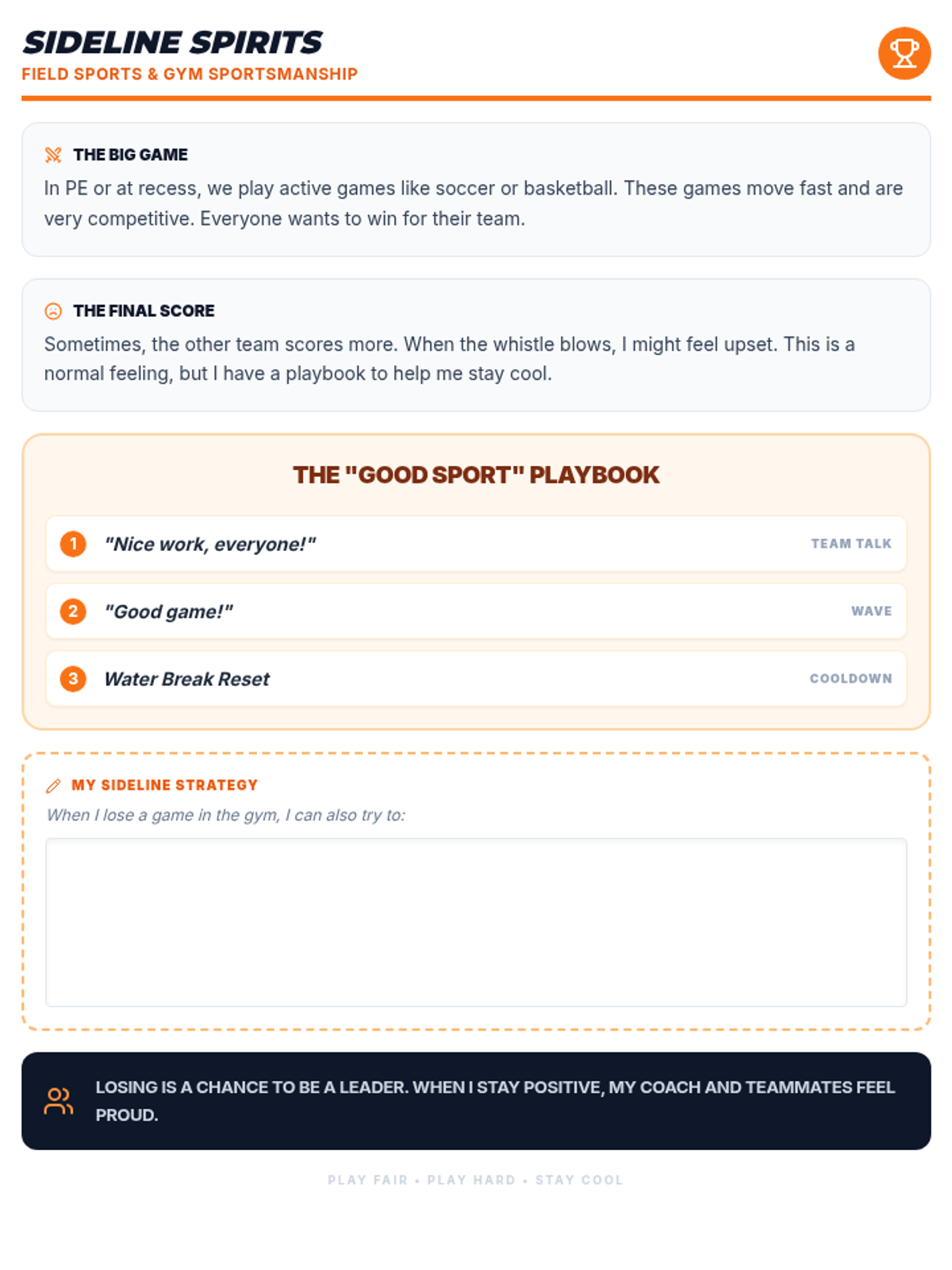
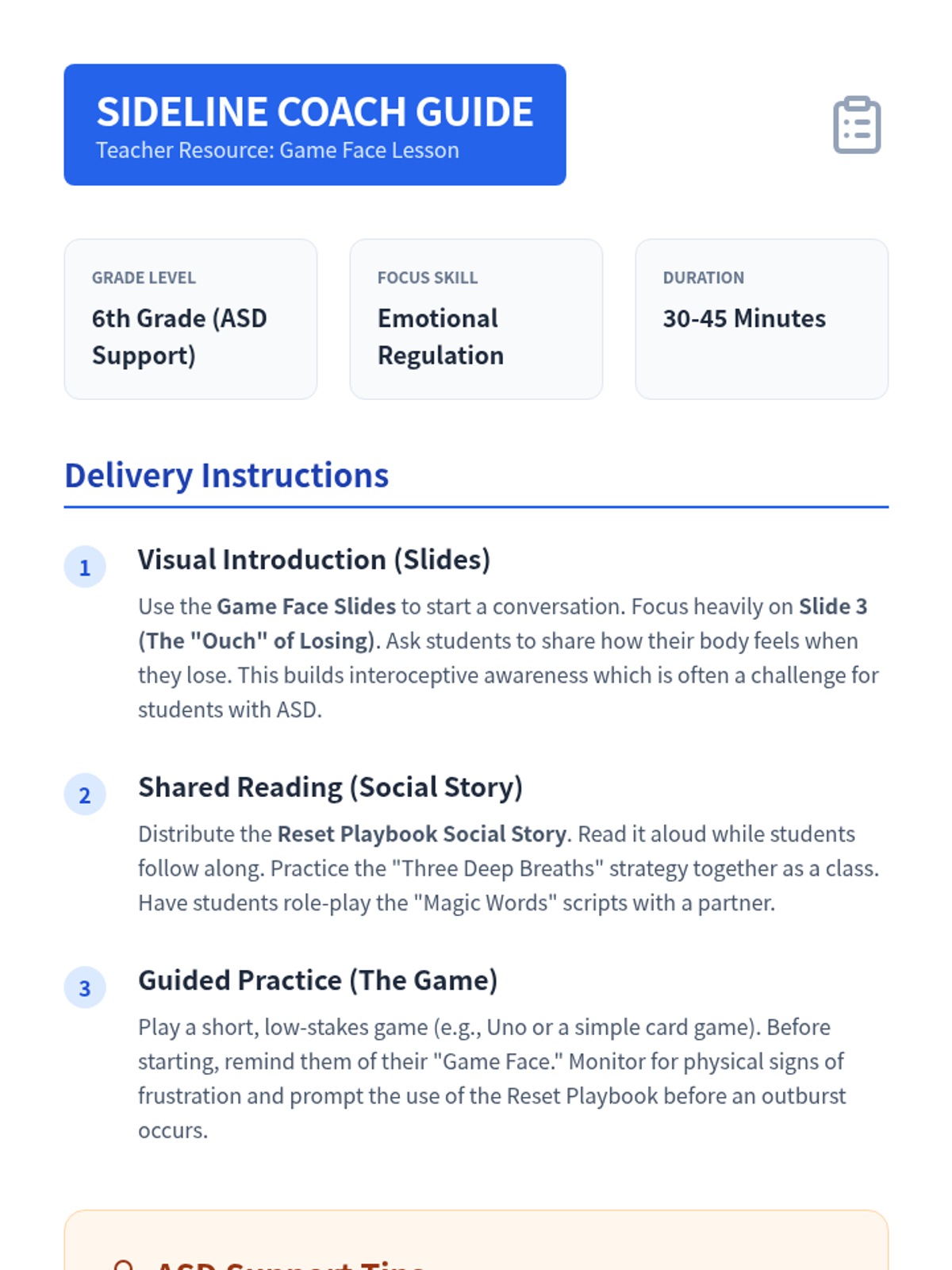
A social skills lesson designed for 6th-grade students with ASD to prepare for the emotional and social challenges of a school Field Day, focusing on sportsmanship, handling loss, and managing frustration when skills are difficult.
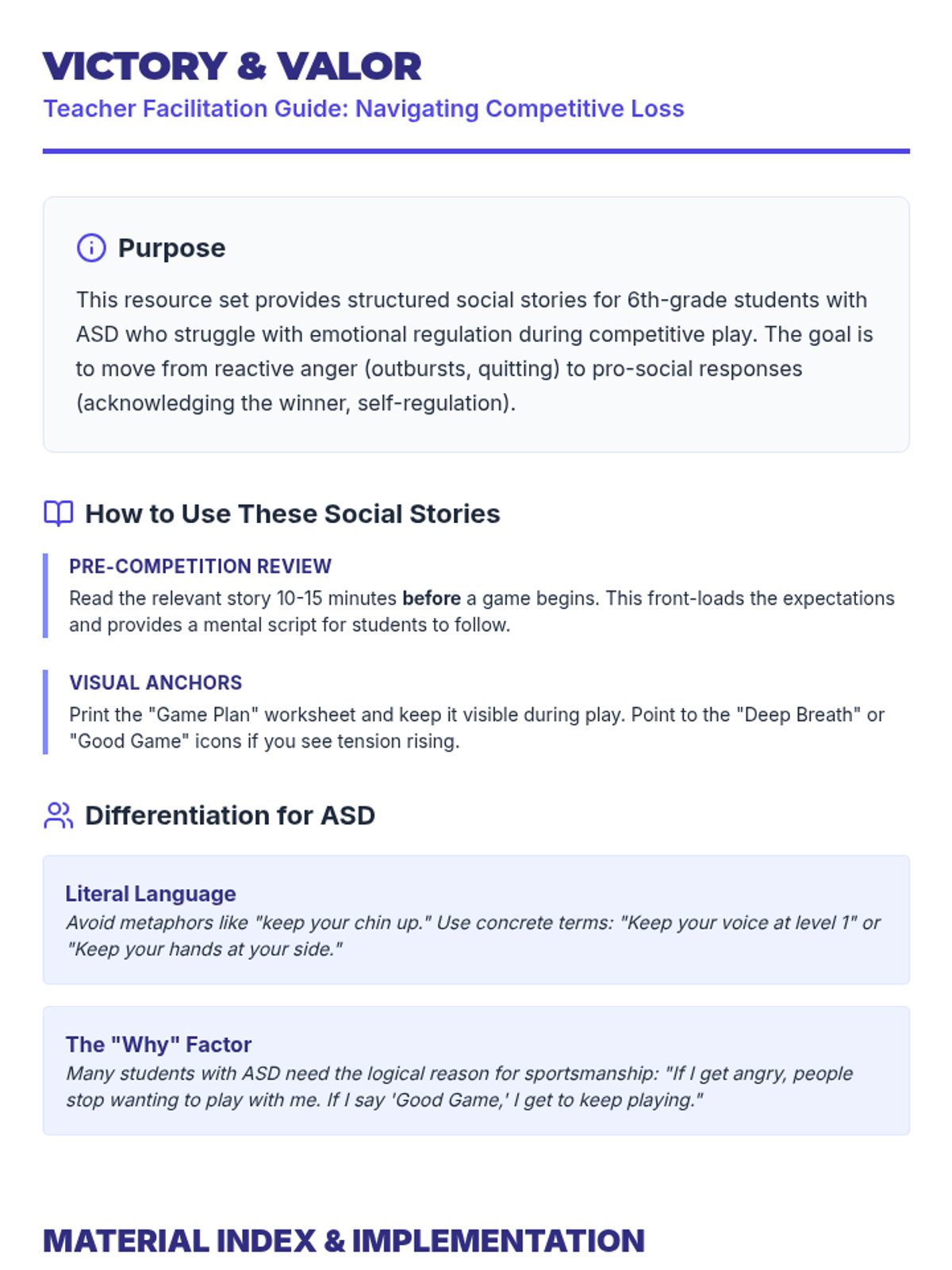
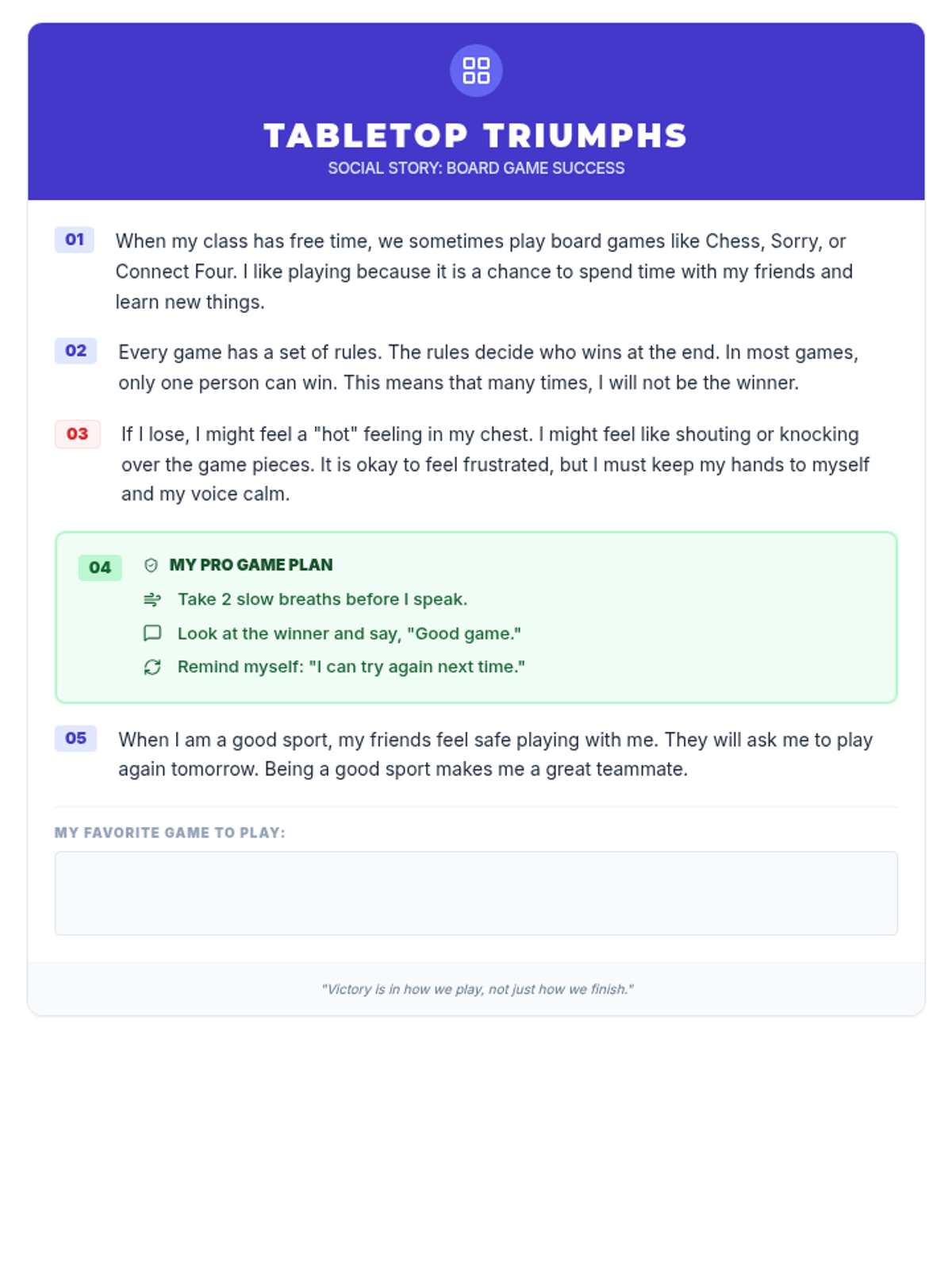
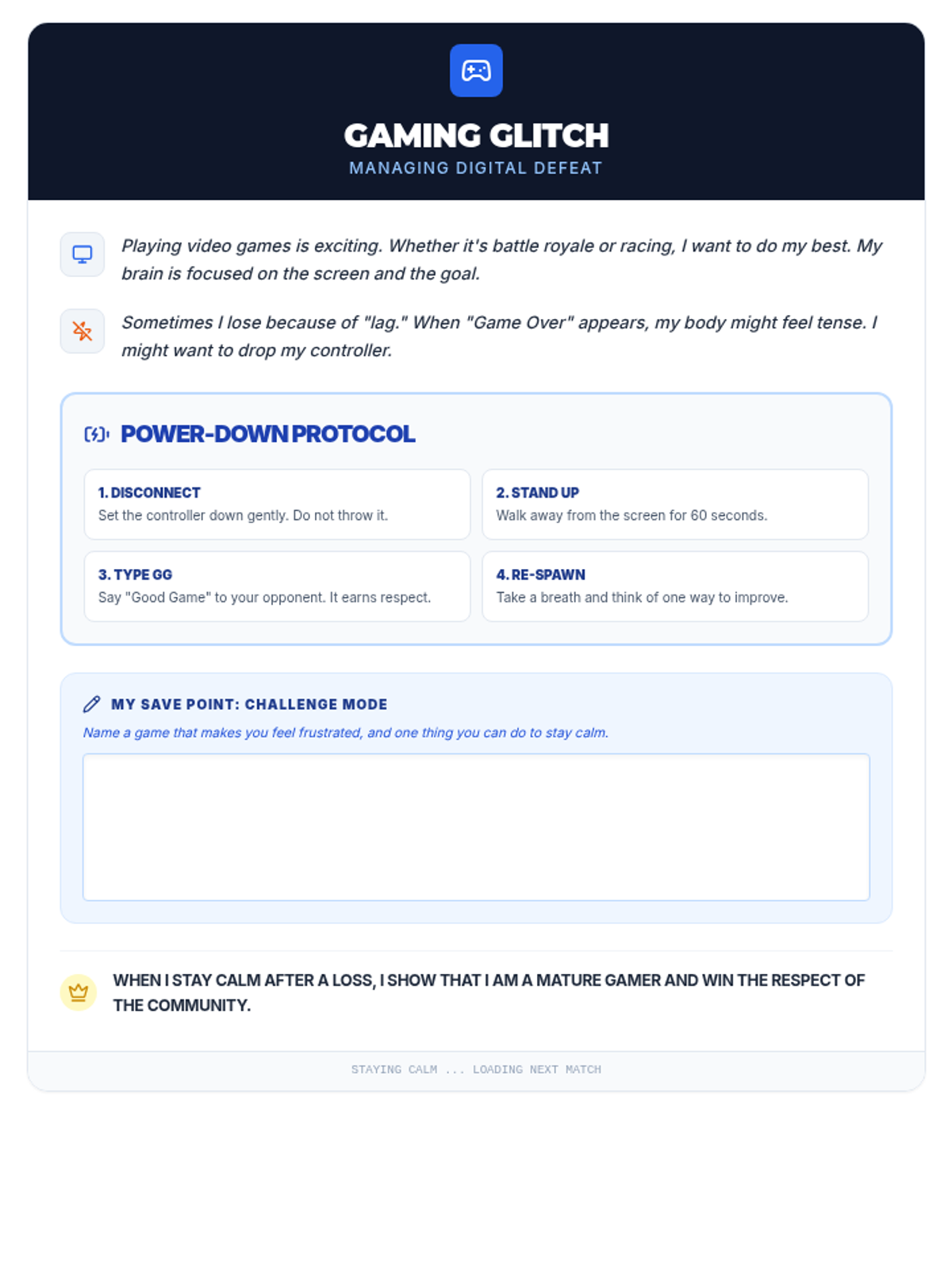
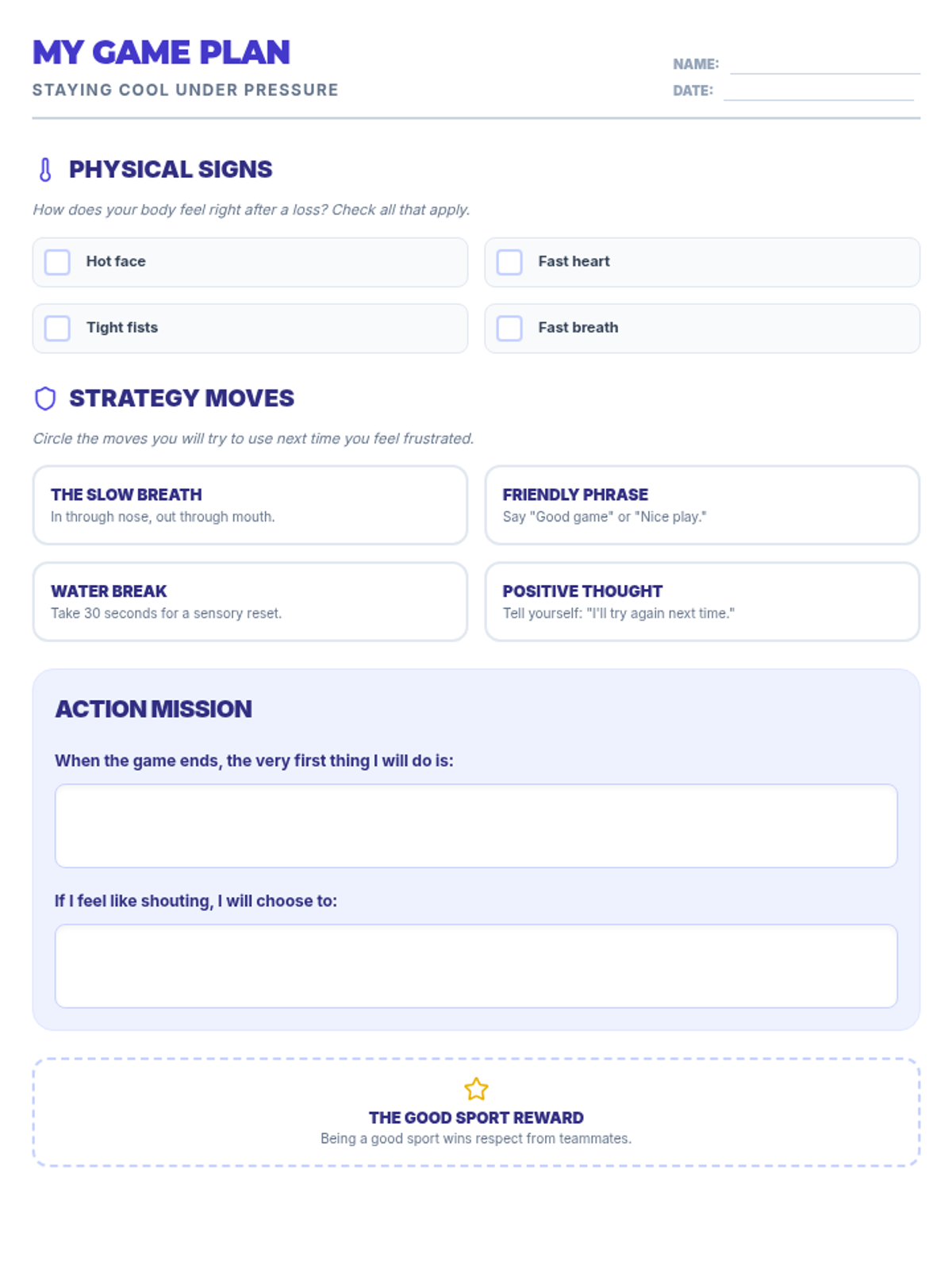
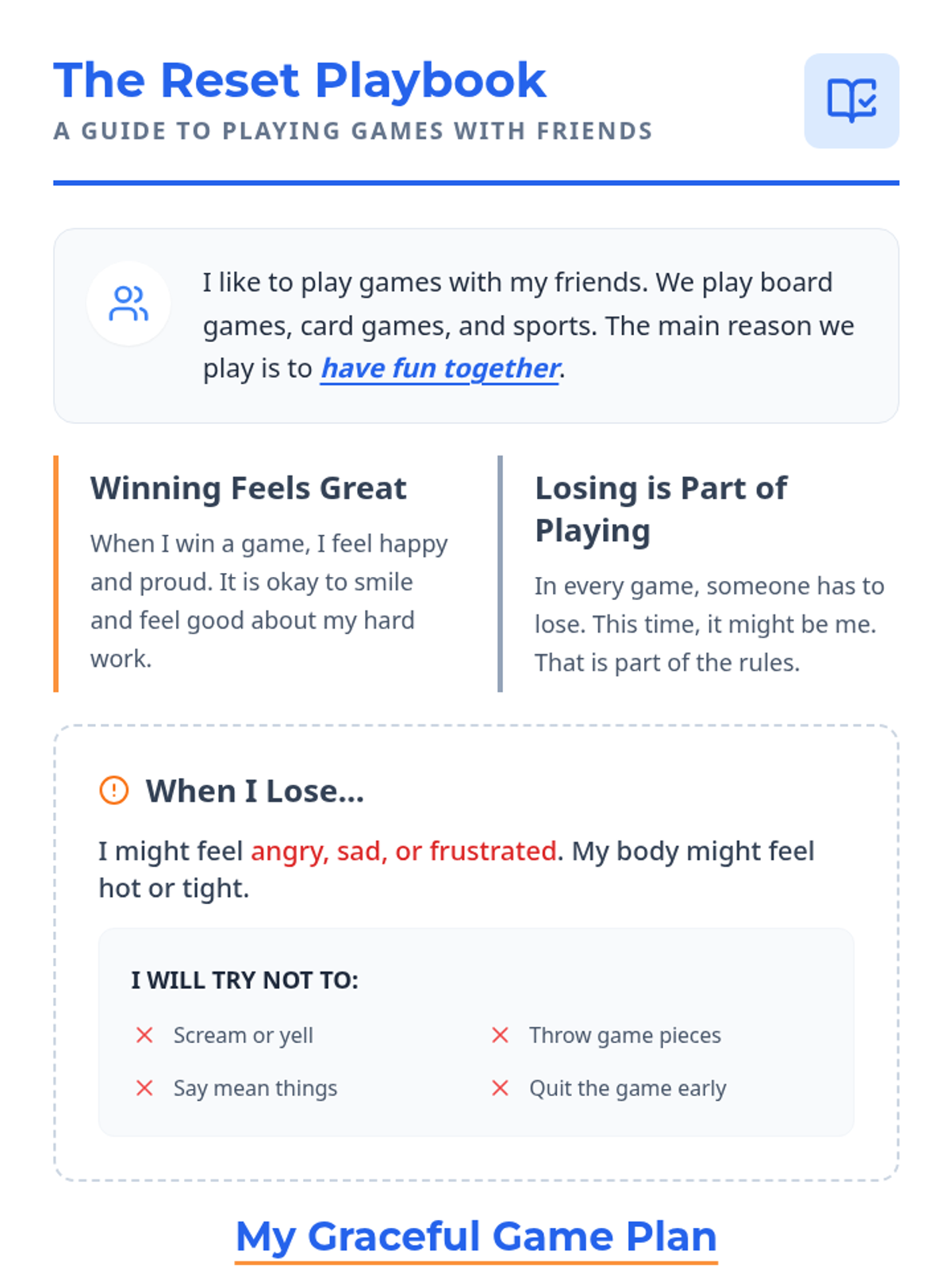
A series of social stories and supporting materials designed to help 6th-grade students with ASD navigate the emotional challenges of losing in competitive games. The lesson focuses on identifying triggers, managing frustration, and practicing prosocial responses.
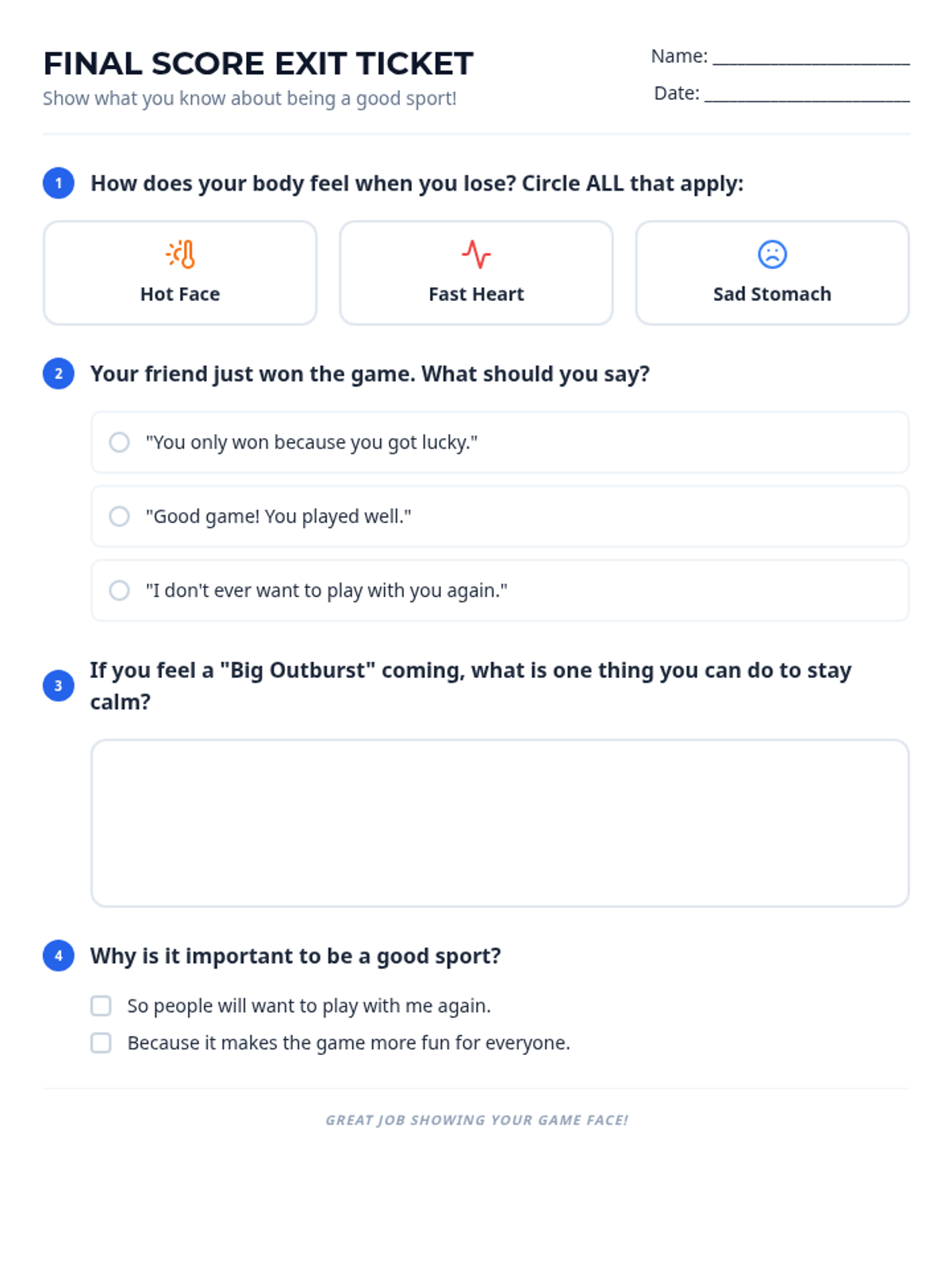
A lesson designed for 6th-grade students with ASD to develop the social skills needed to lose gracefully during games, featuring a social story, visual slides, and an exit ticket.
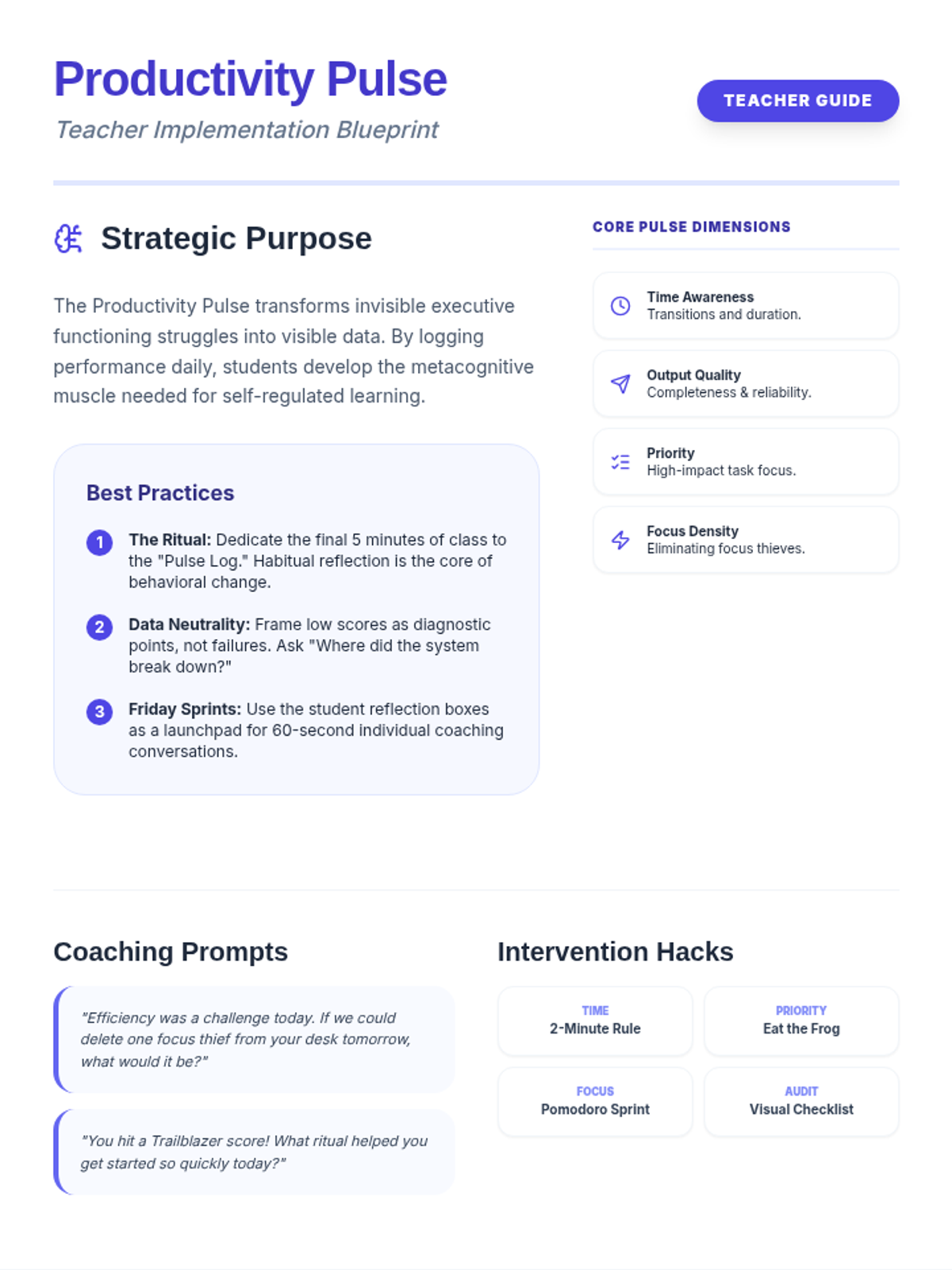
A comprehensive toolkit for students to track and improve their executive functioning skills through daily logging and descriptive rubrics.
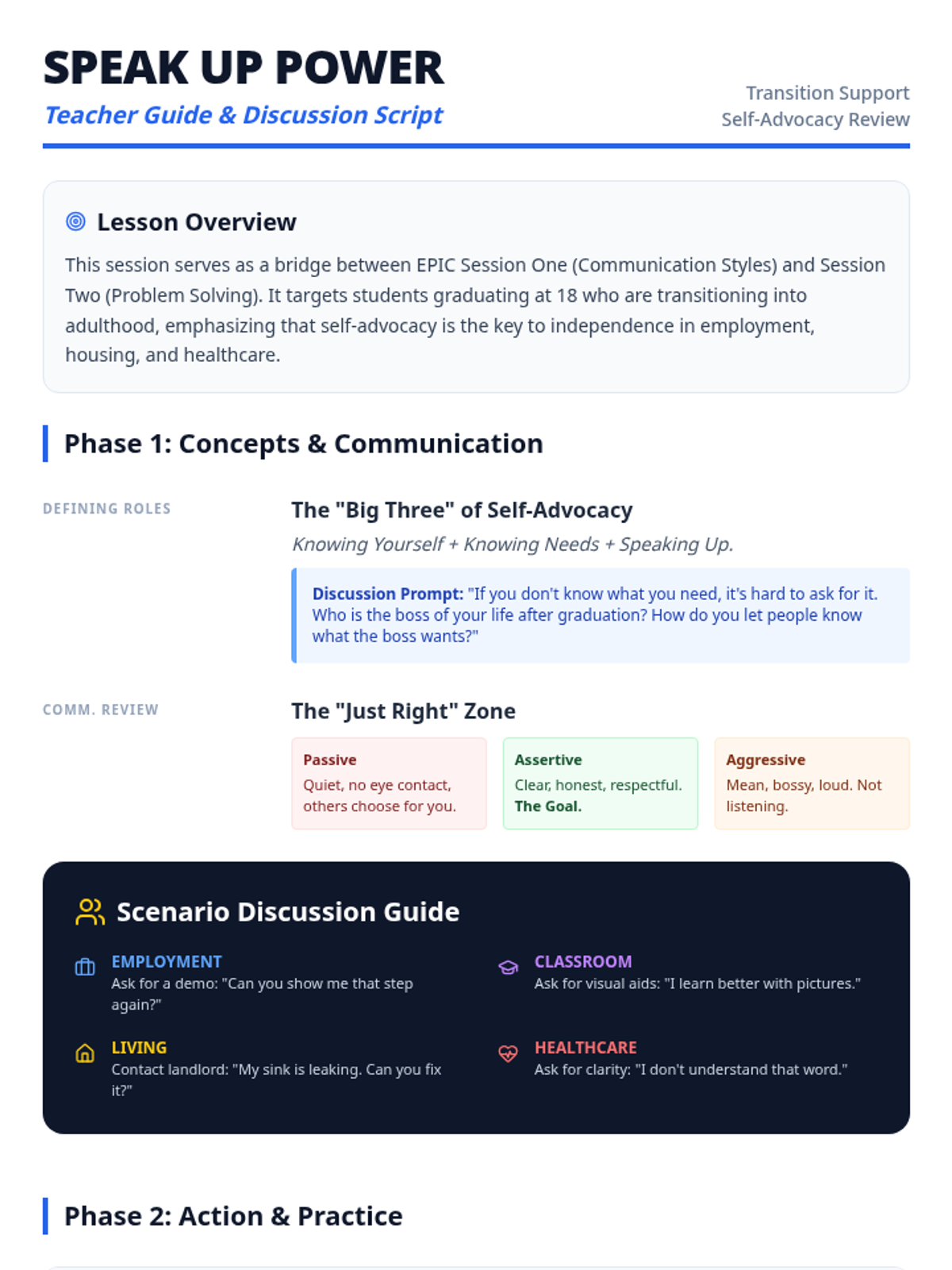
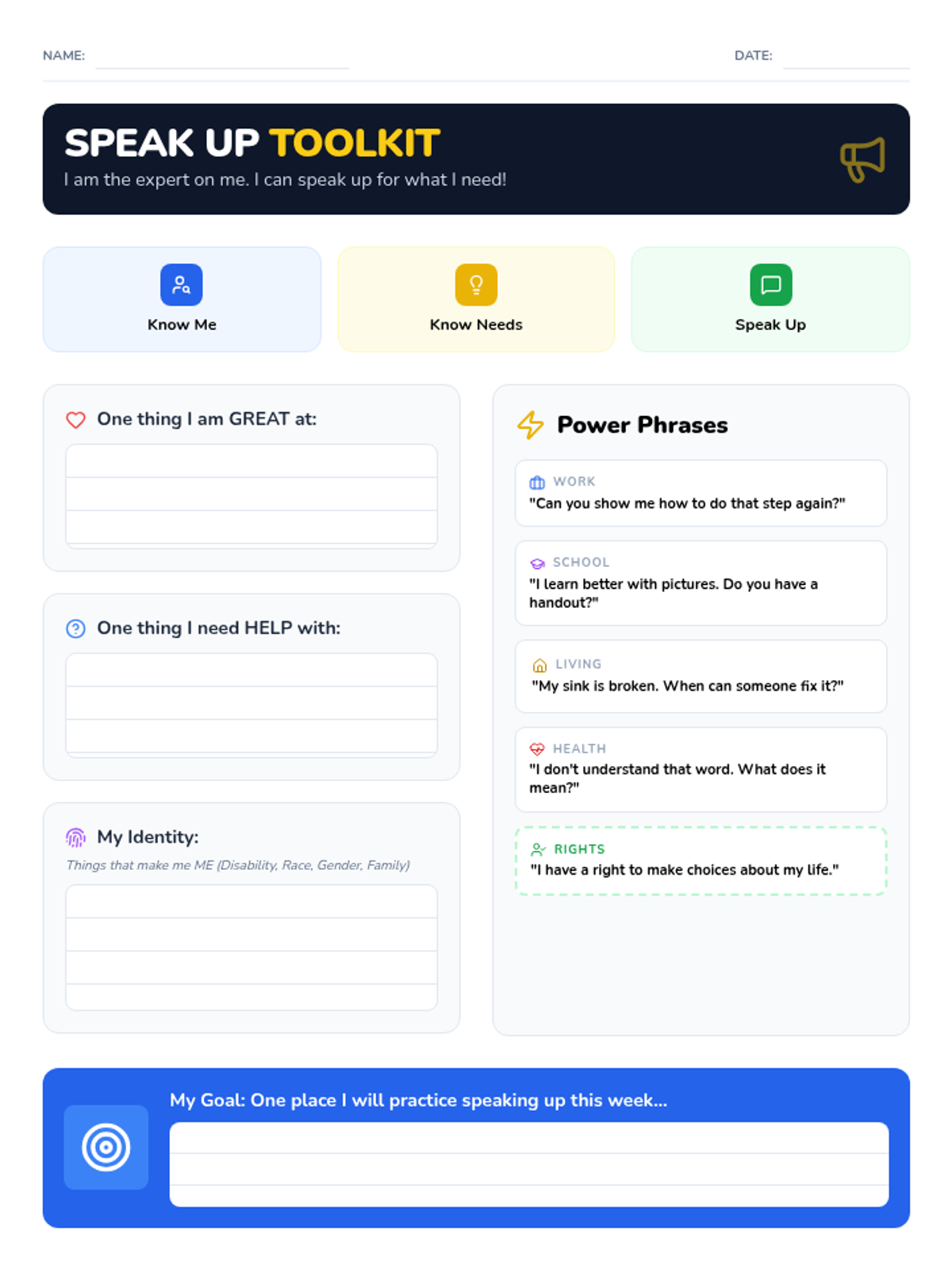
A review-focused lesson on self-advocacy for high school students with intellectual disabilities, focusing on transition skills for employment, living, and education.
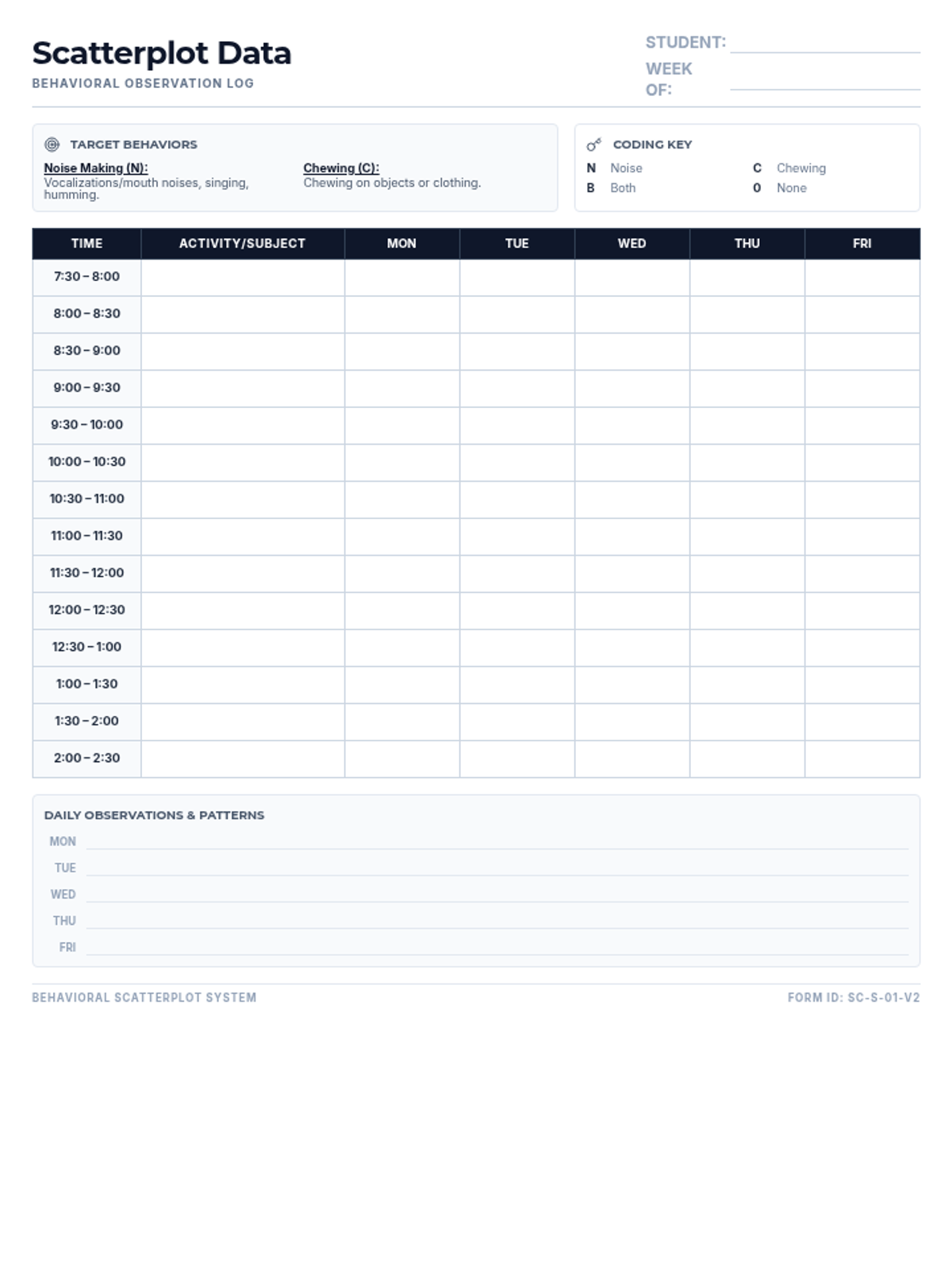
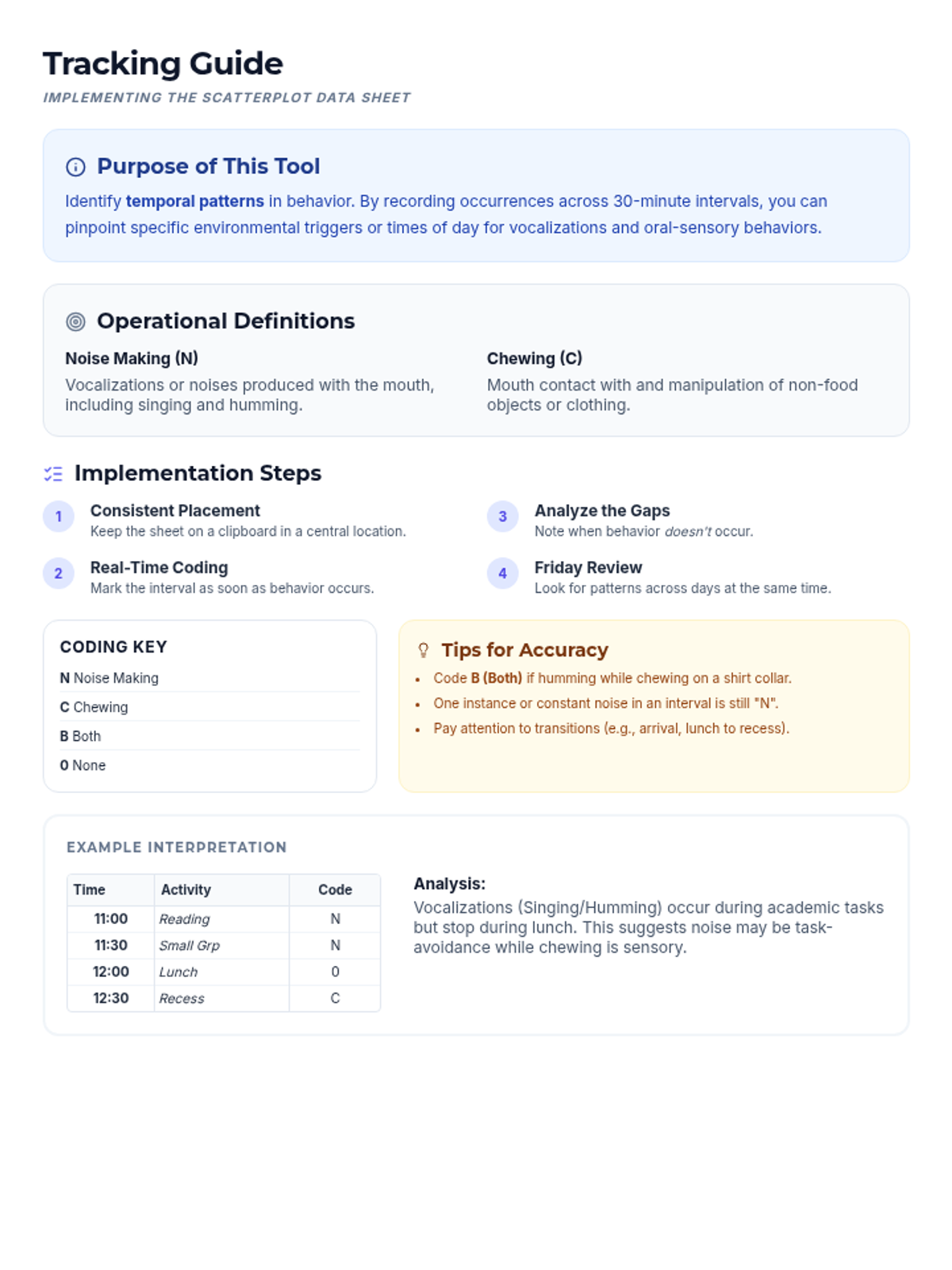
A collection of resources for tracking and analyzing noise-making and chewing behaviors in a classroom or clinical setting, featuring a structured scatterplot data sheet and implementation guide.
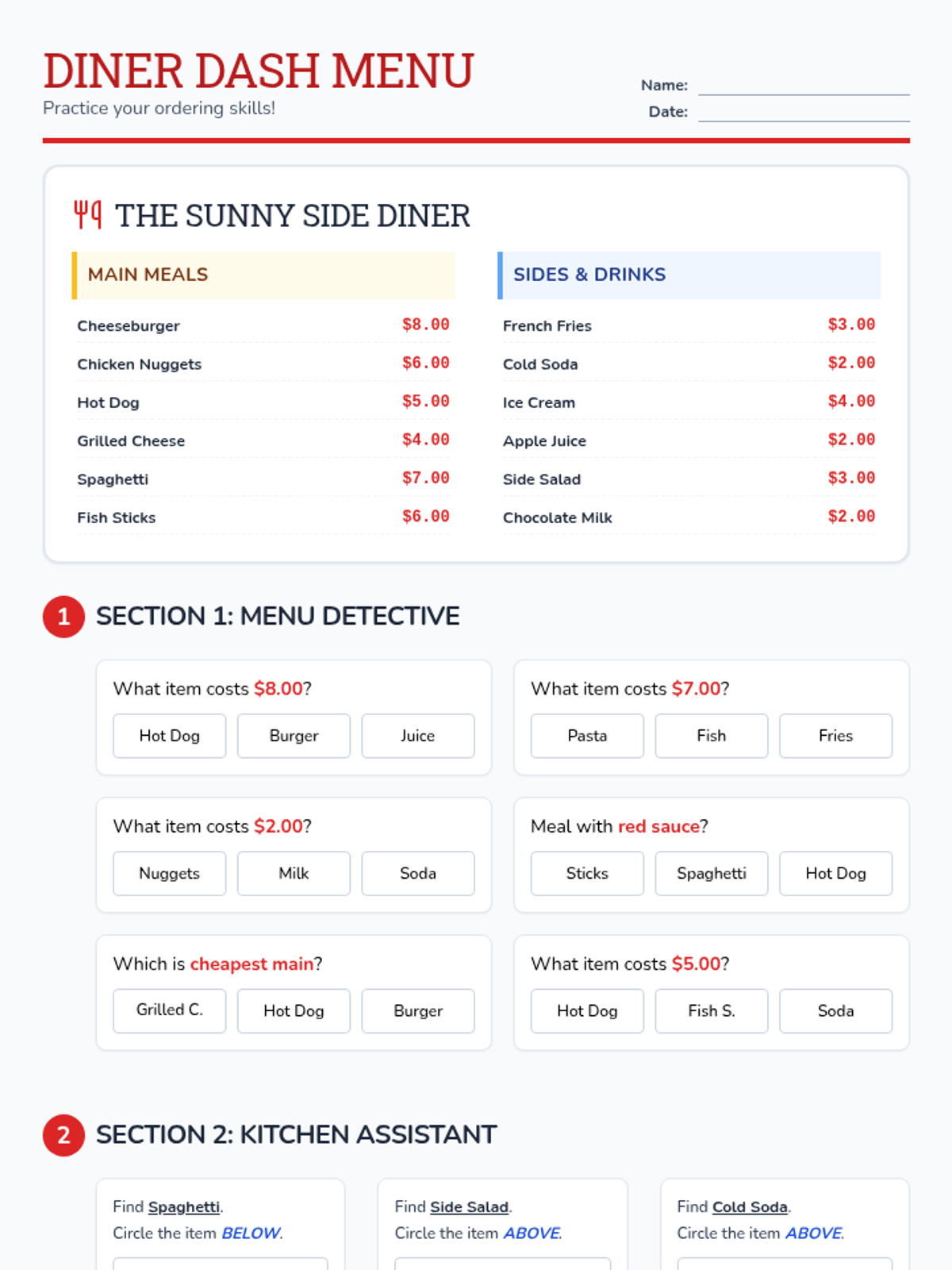
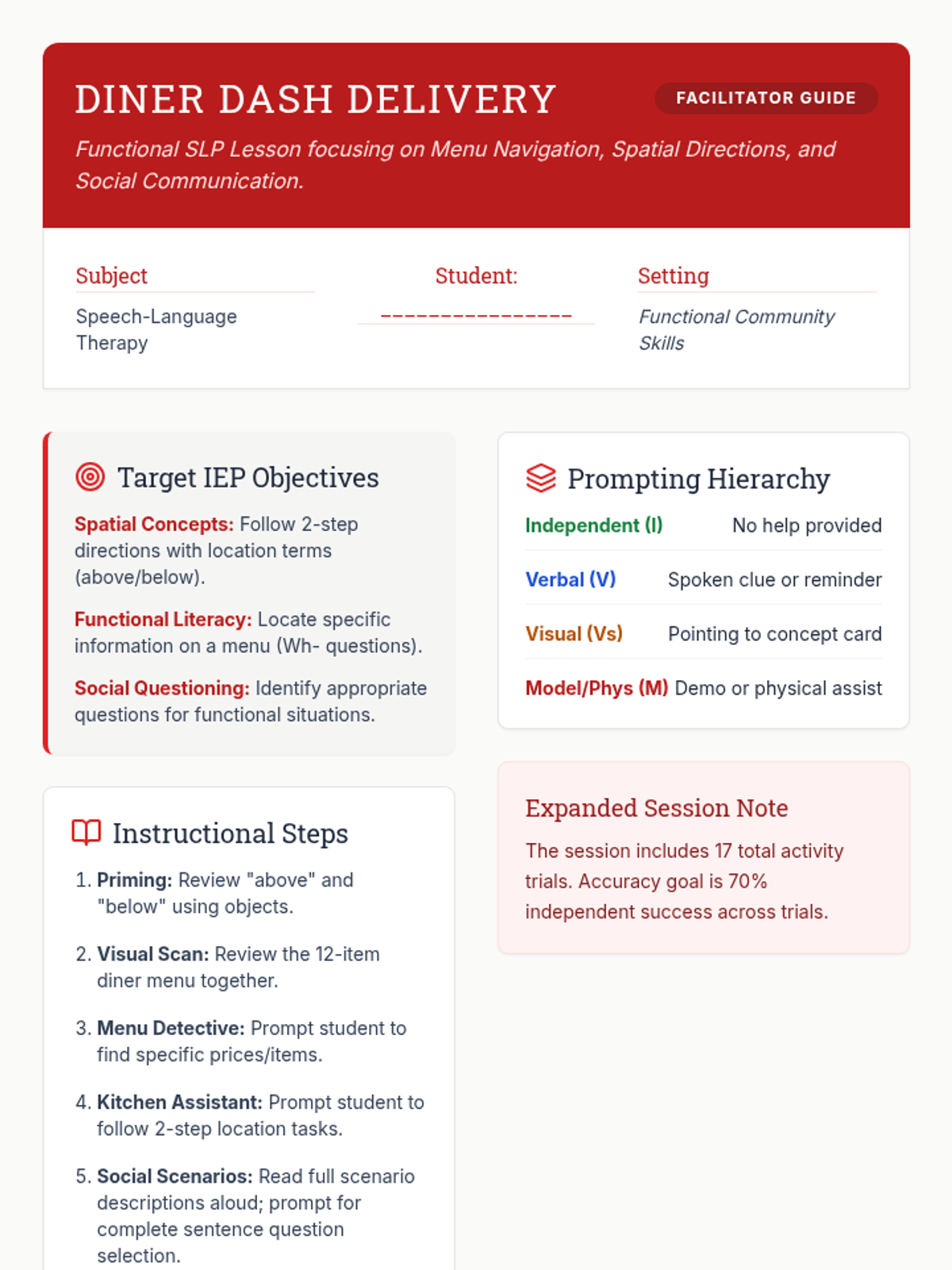
A functional speech-language therapy lesson focused on restaurant ordering, menu navigation, and social problem-solving for students with moderate-to-severe autism.
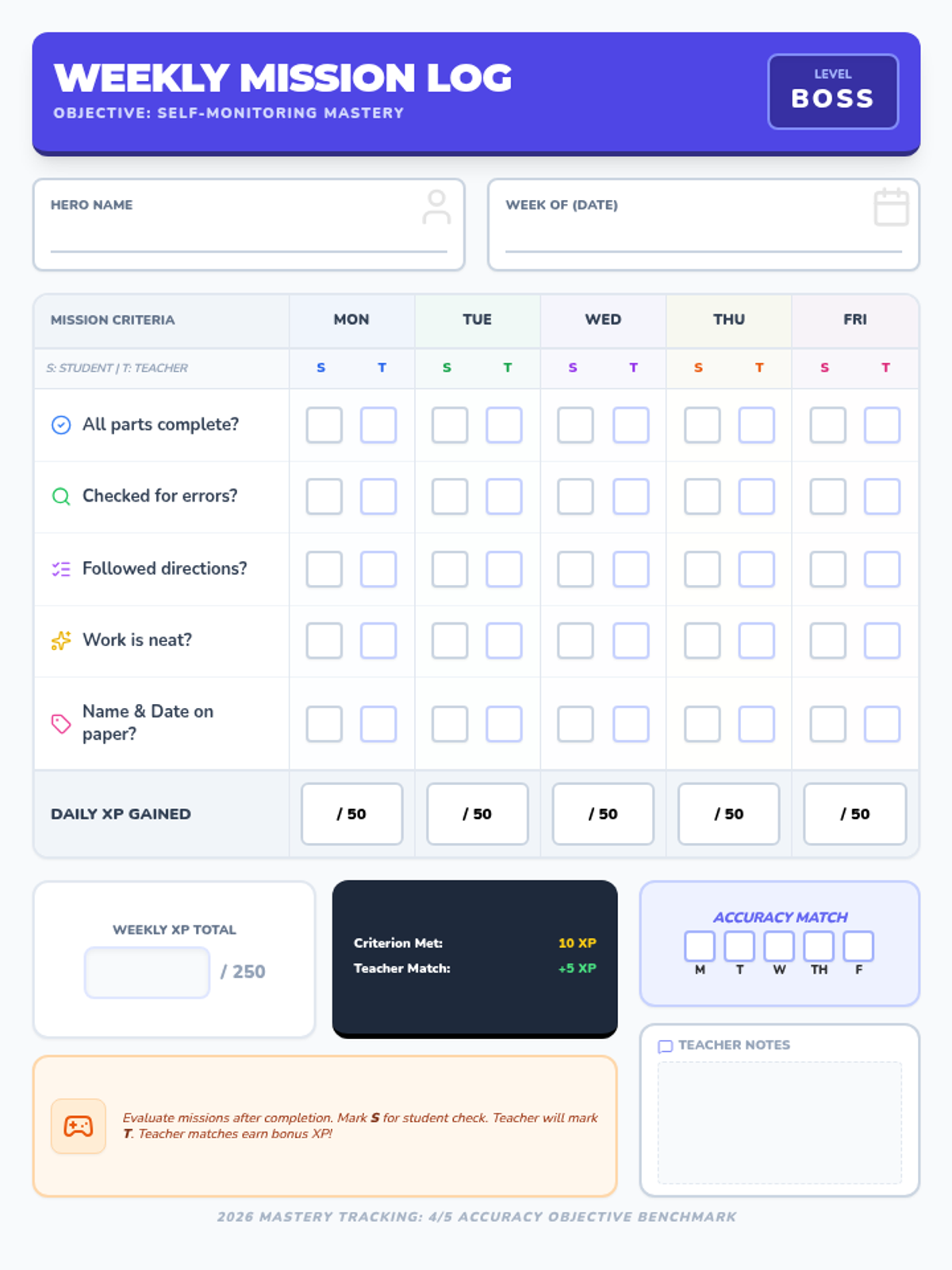
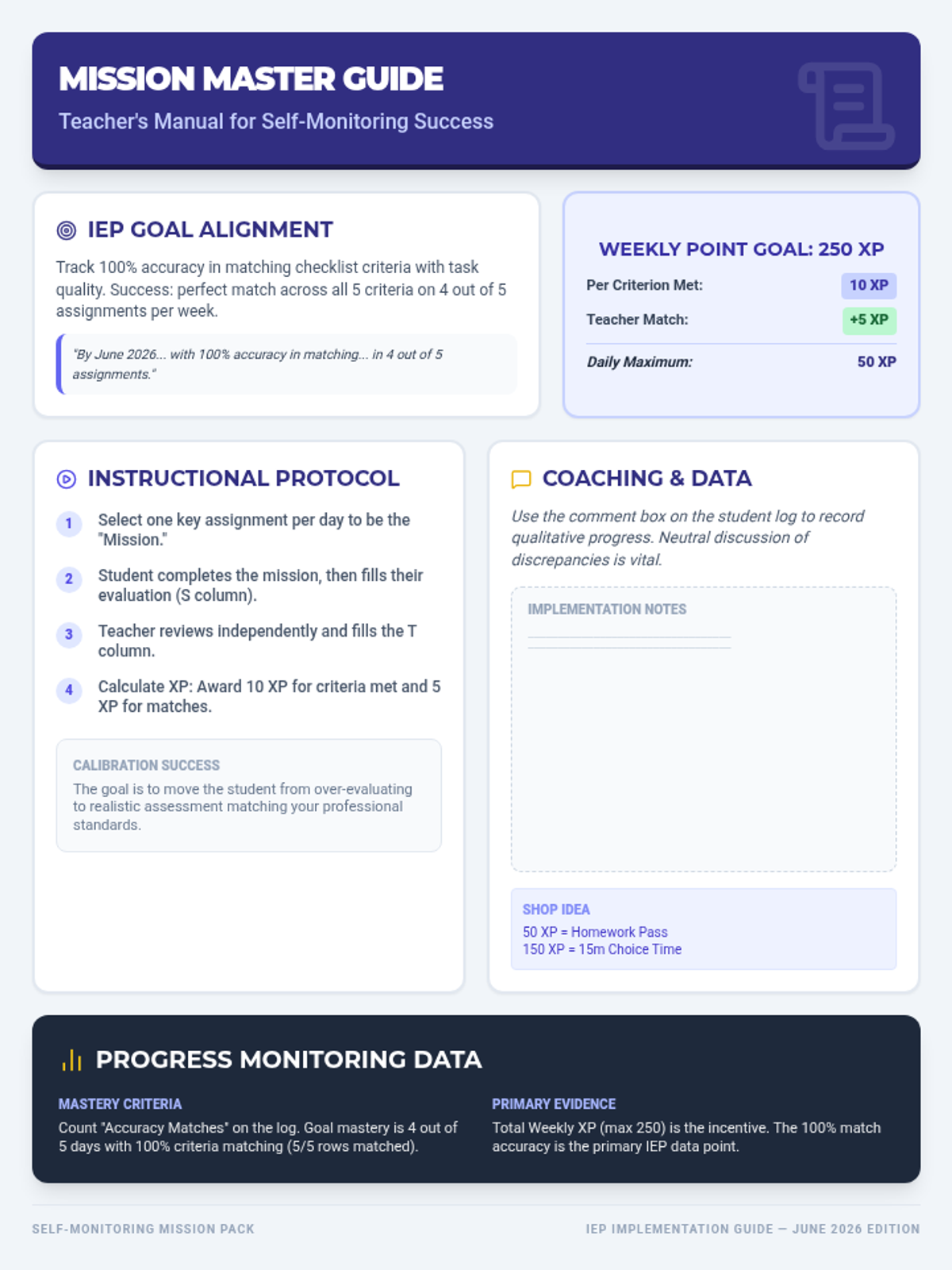
A lesson centered on developing self-monitoring skills for task completion and quality through a gamified weekly point system. Students learn to evaluate their own work against specific criteria and match their assessments with teacher feedback.
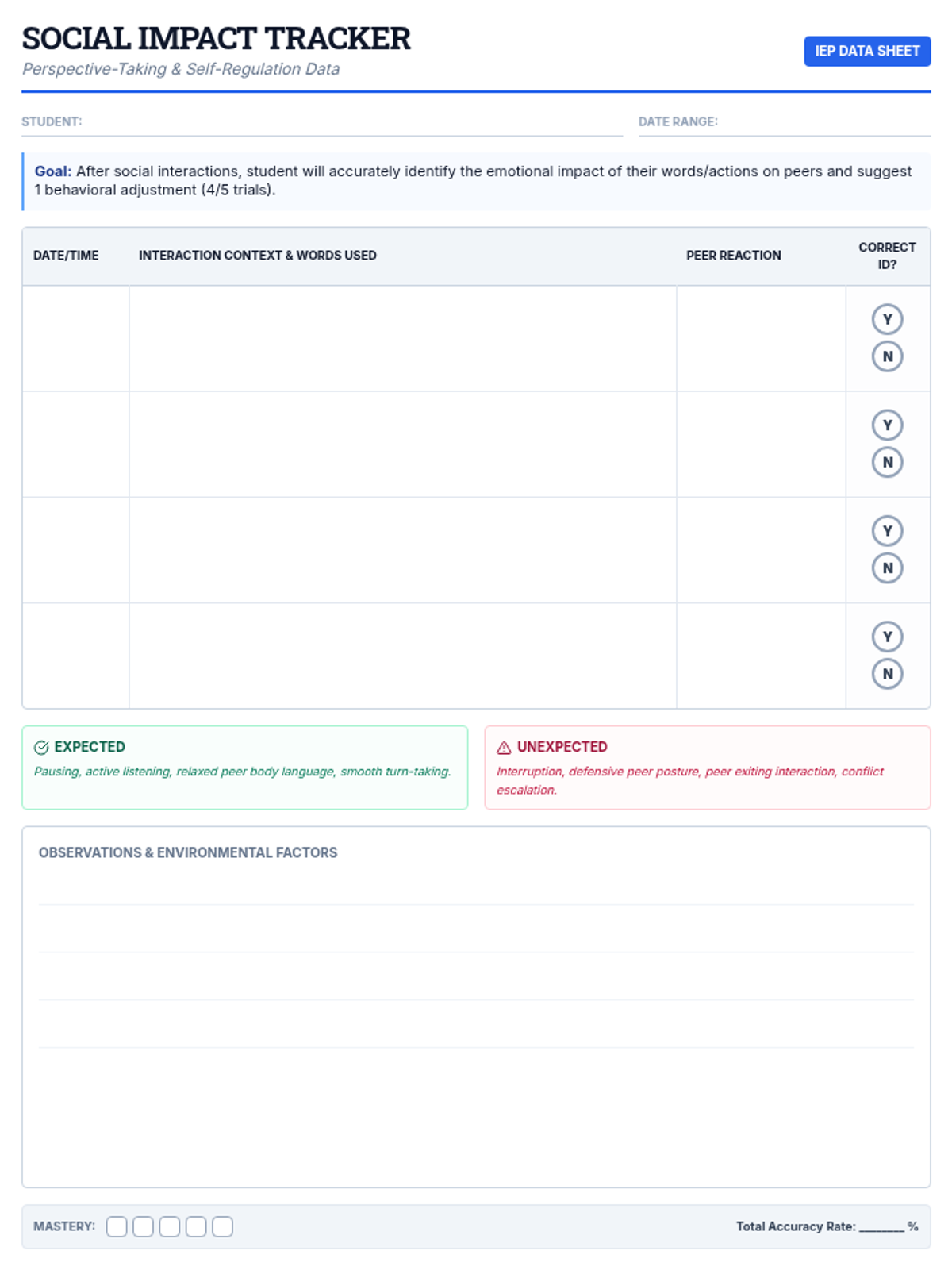
This lesson focuses on developing perspective-taking skills, specifically helping students understand the ripple effect of their words and actions on the people around them. It includes tools for monitoring progress and reflective practice.
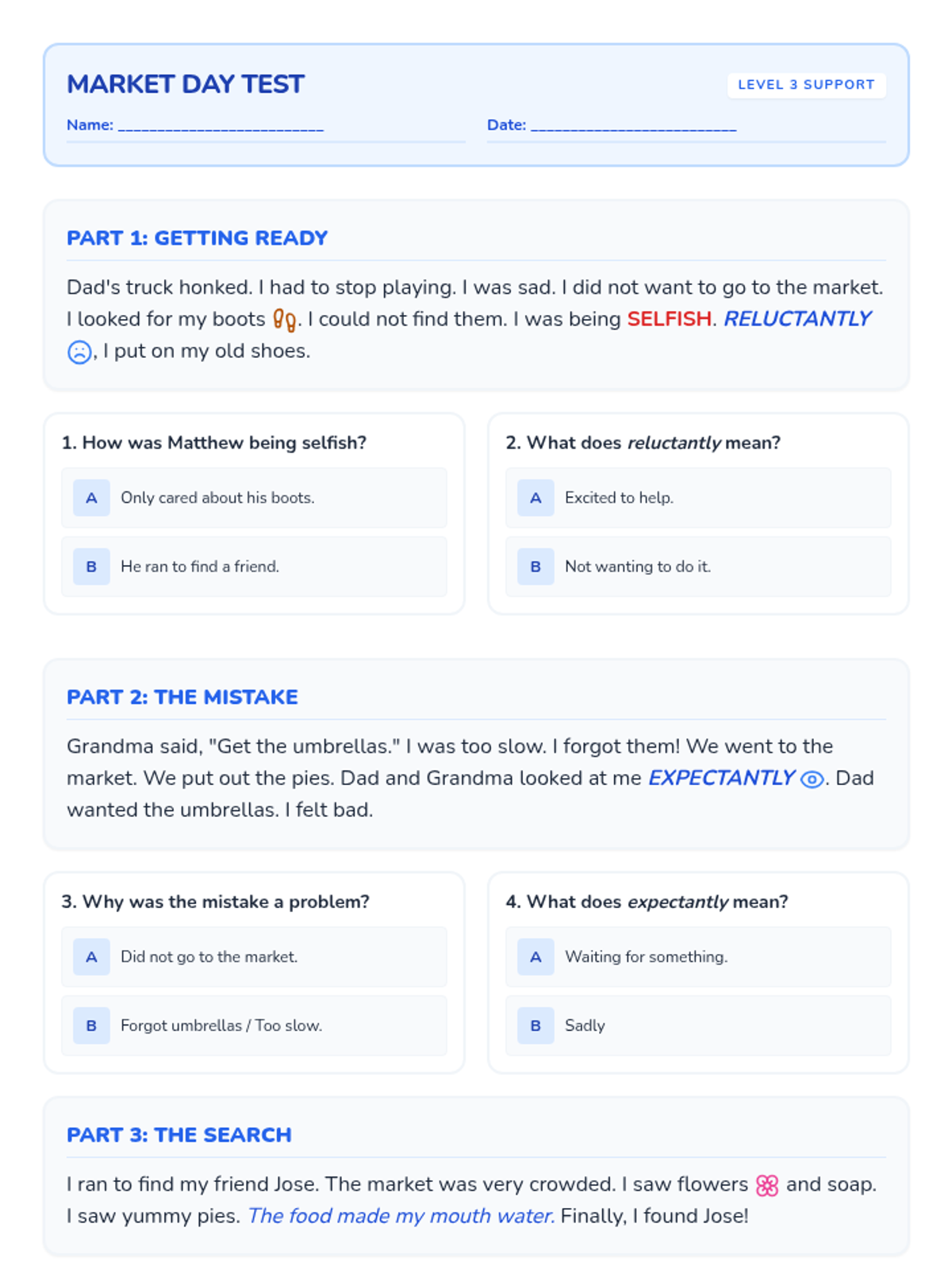
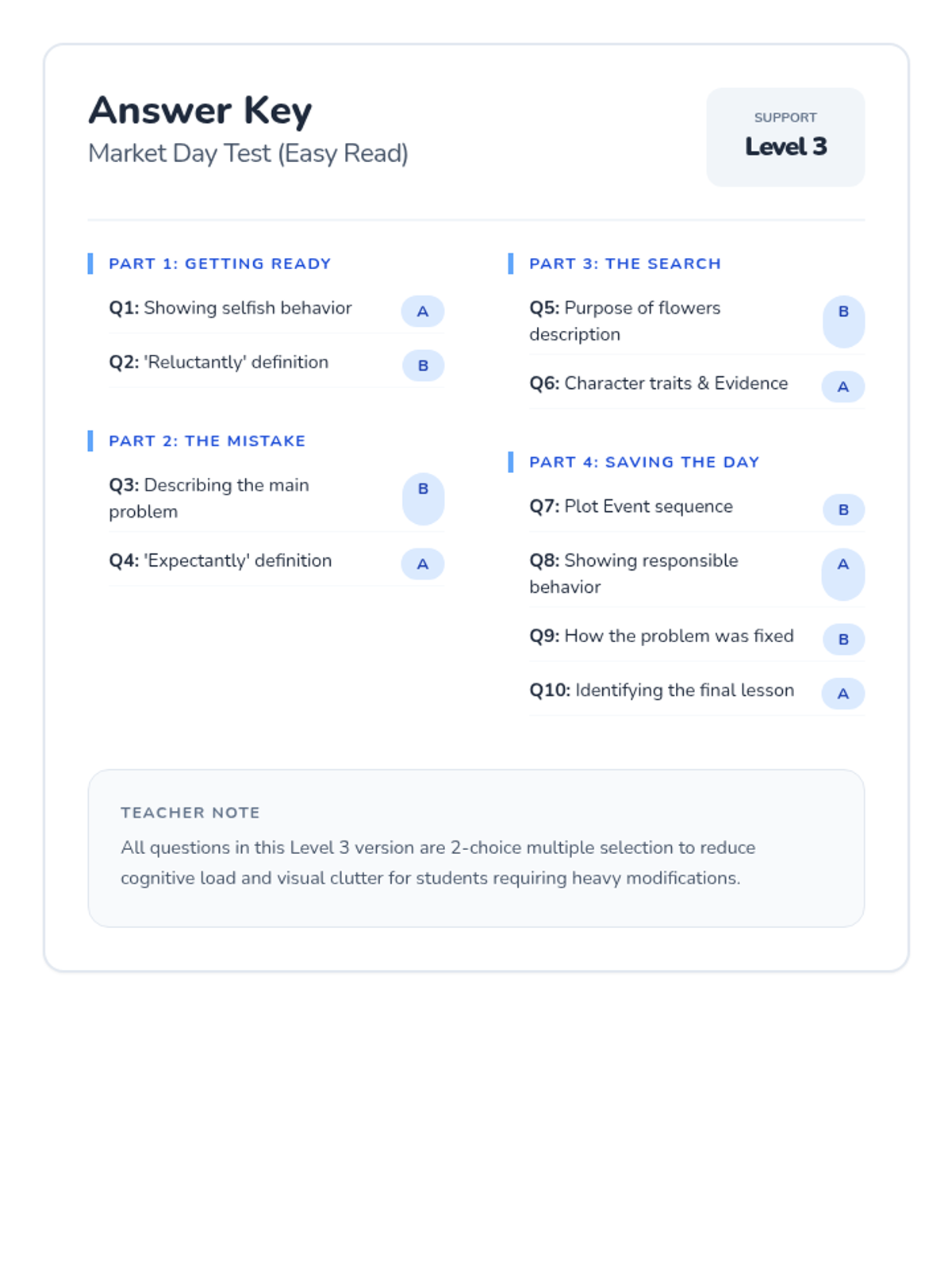
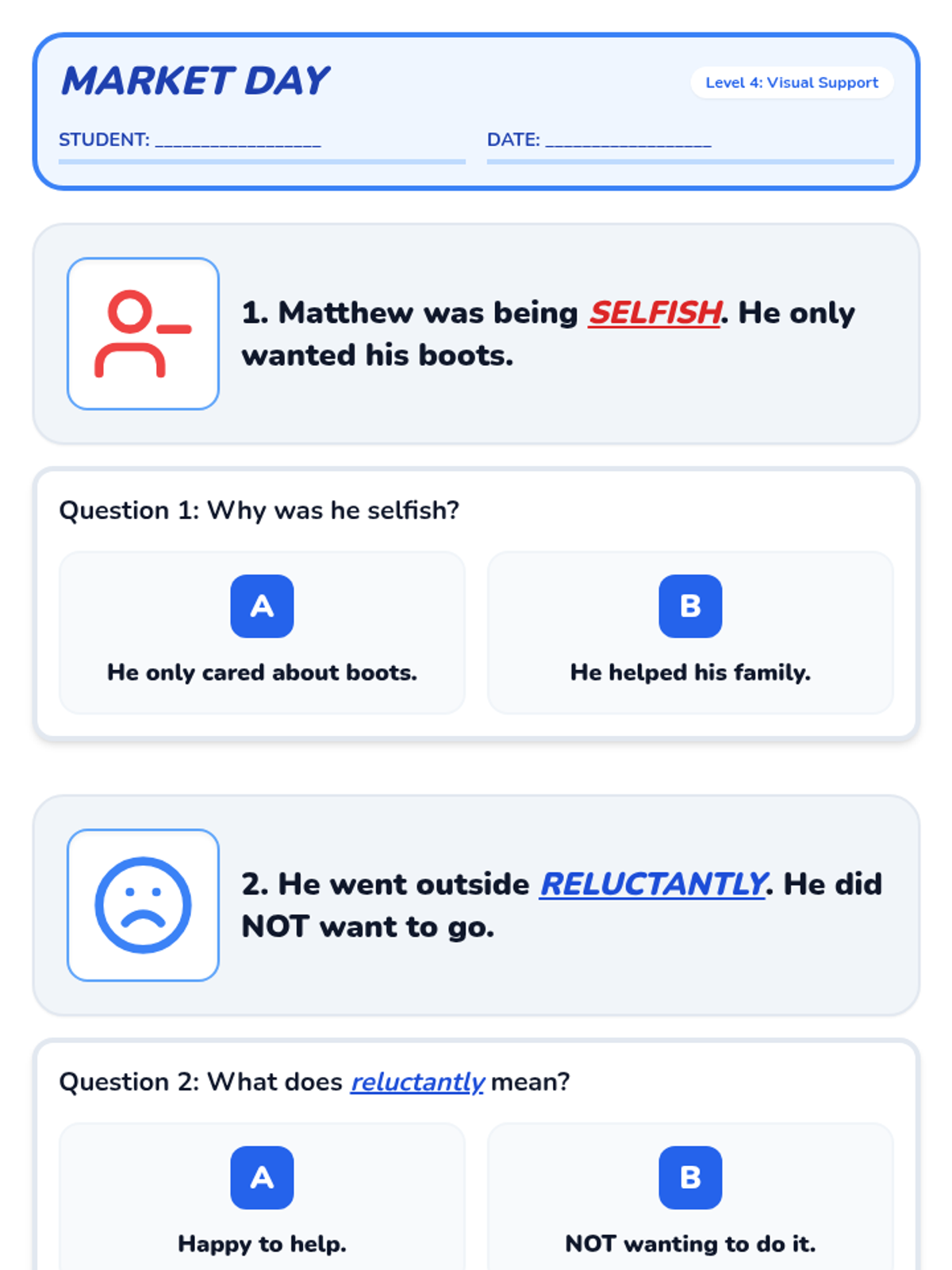
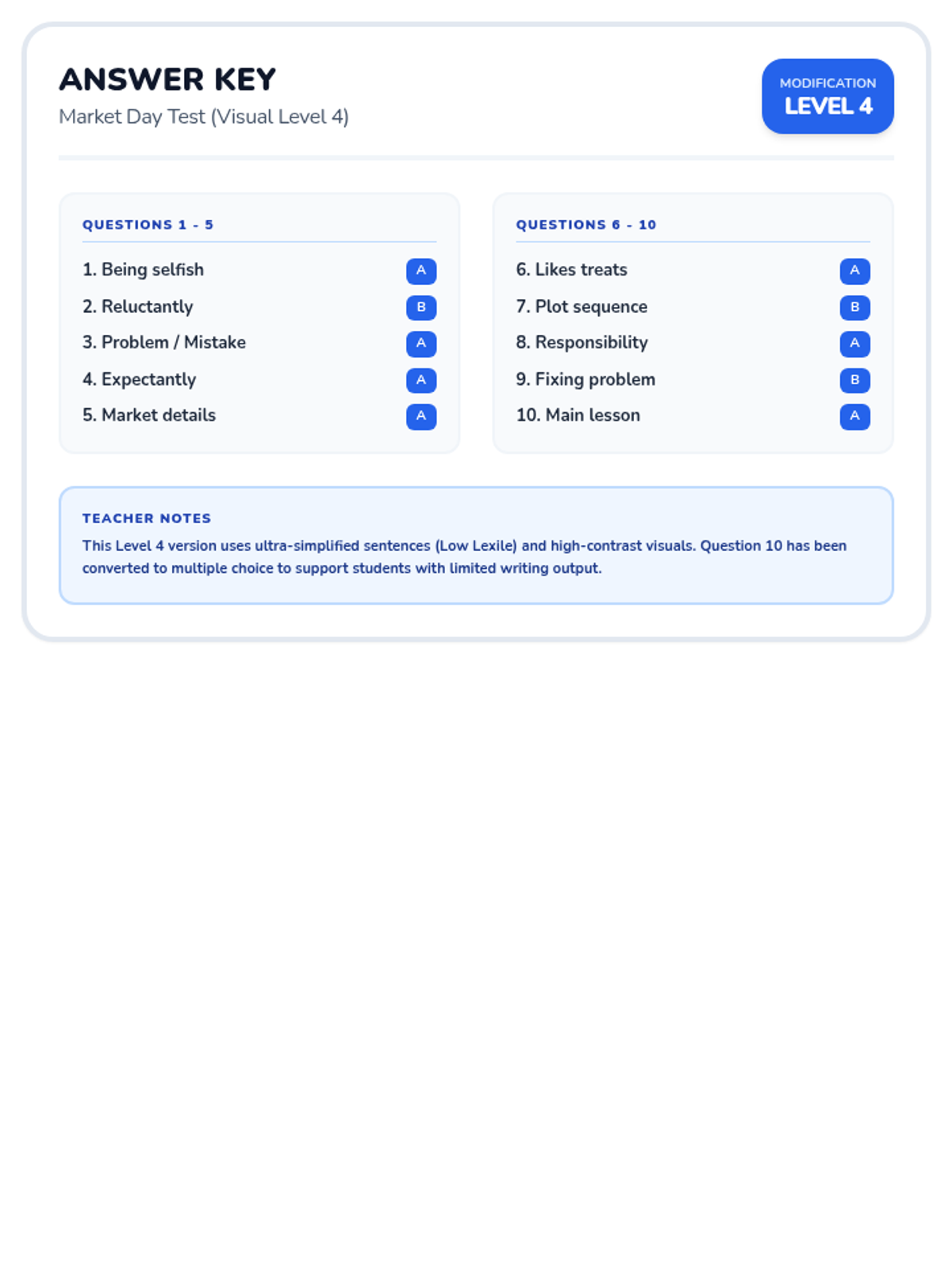
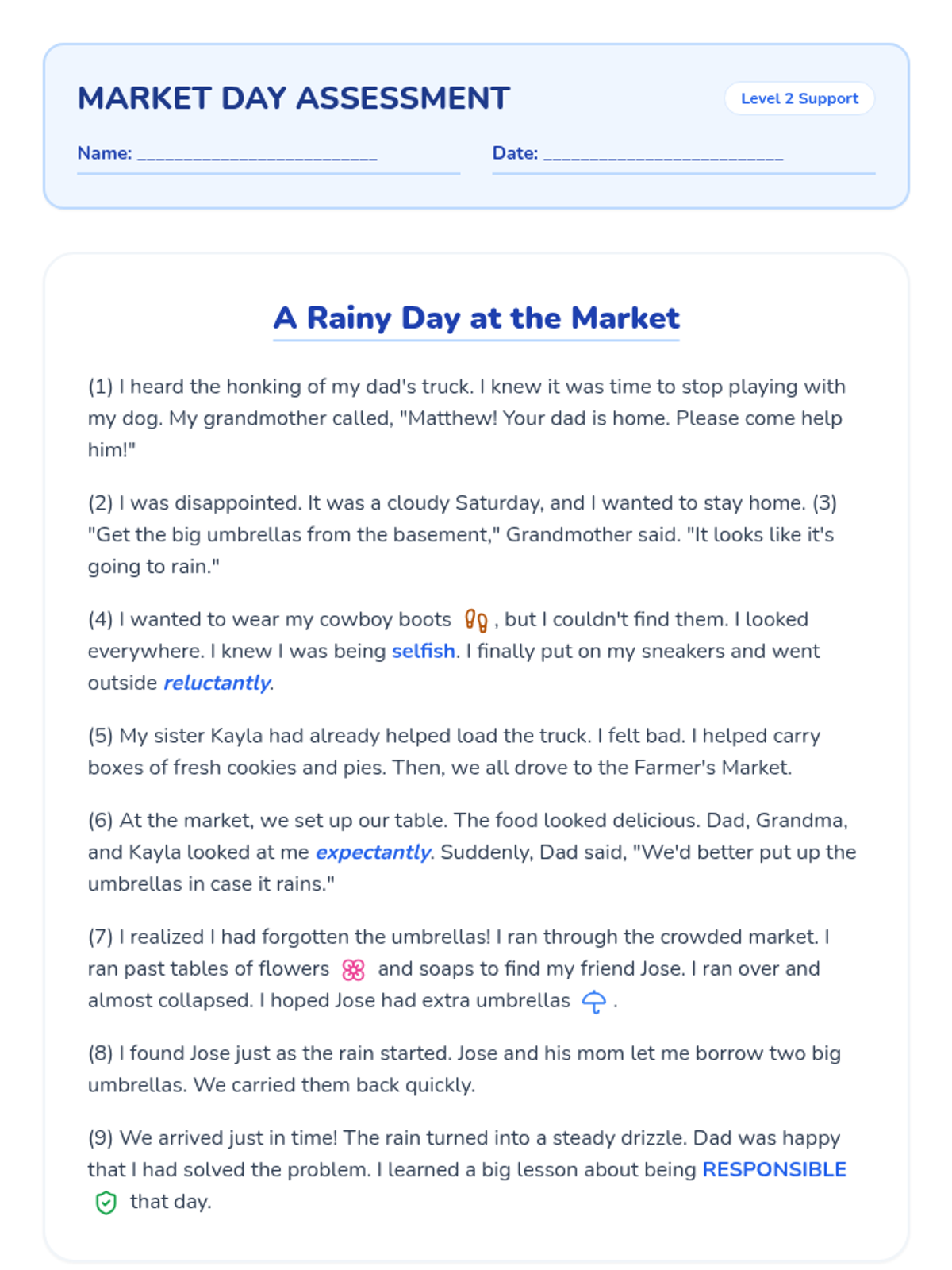
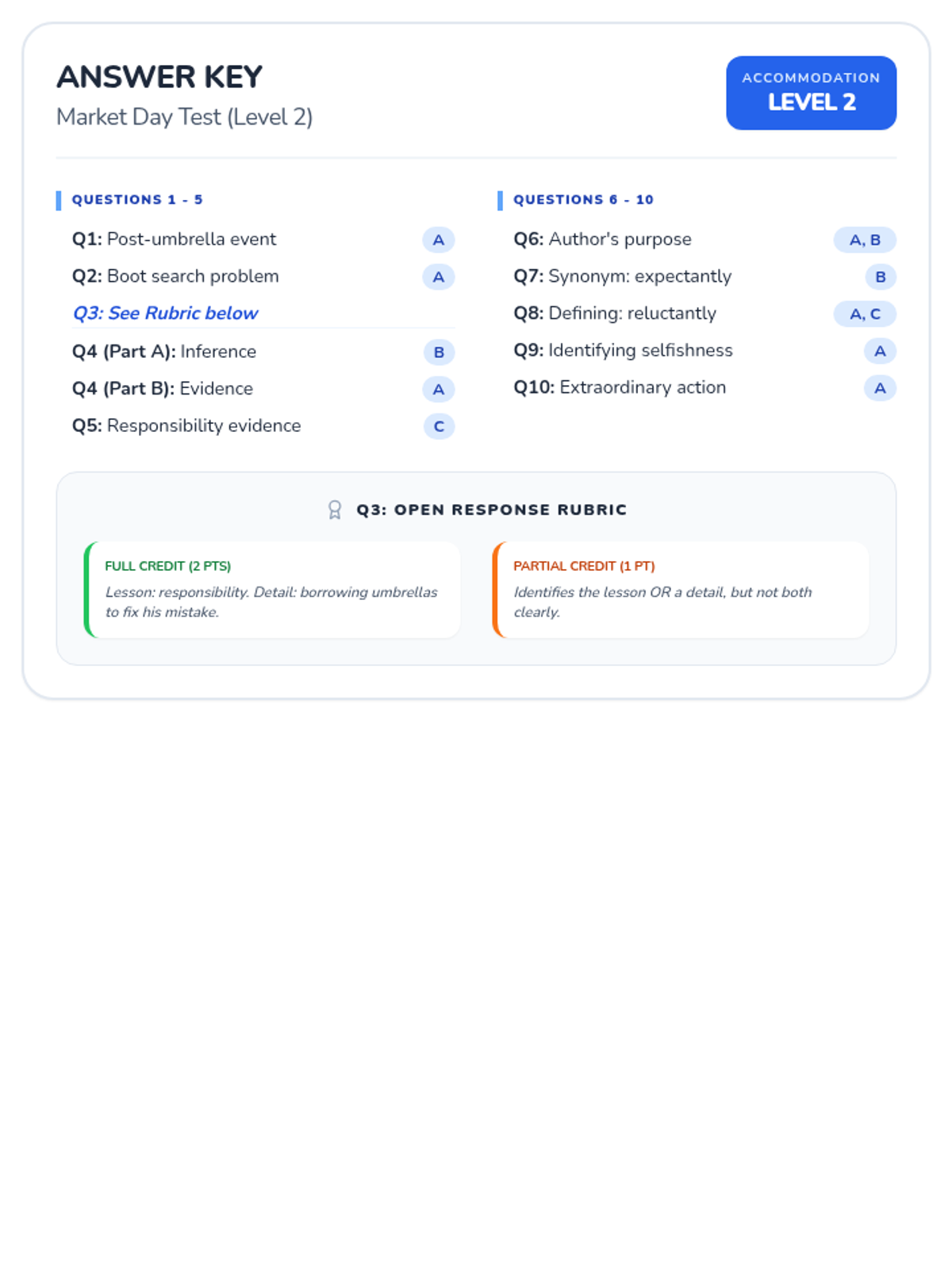
A modified assessment set for the 6th Grade ELA Unit 4 test, specifically designed for students with IEPs. The materials include a simplified reading passage, reduced answer choices, and visual vocabulary supports.
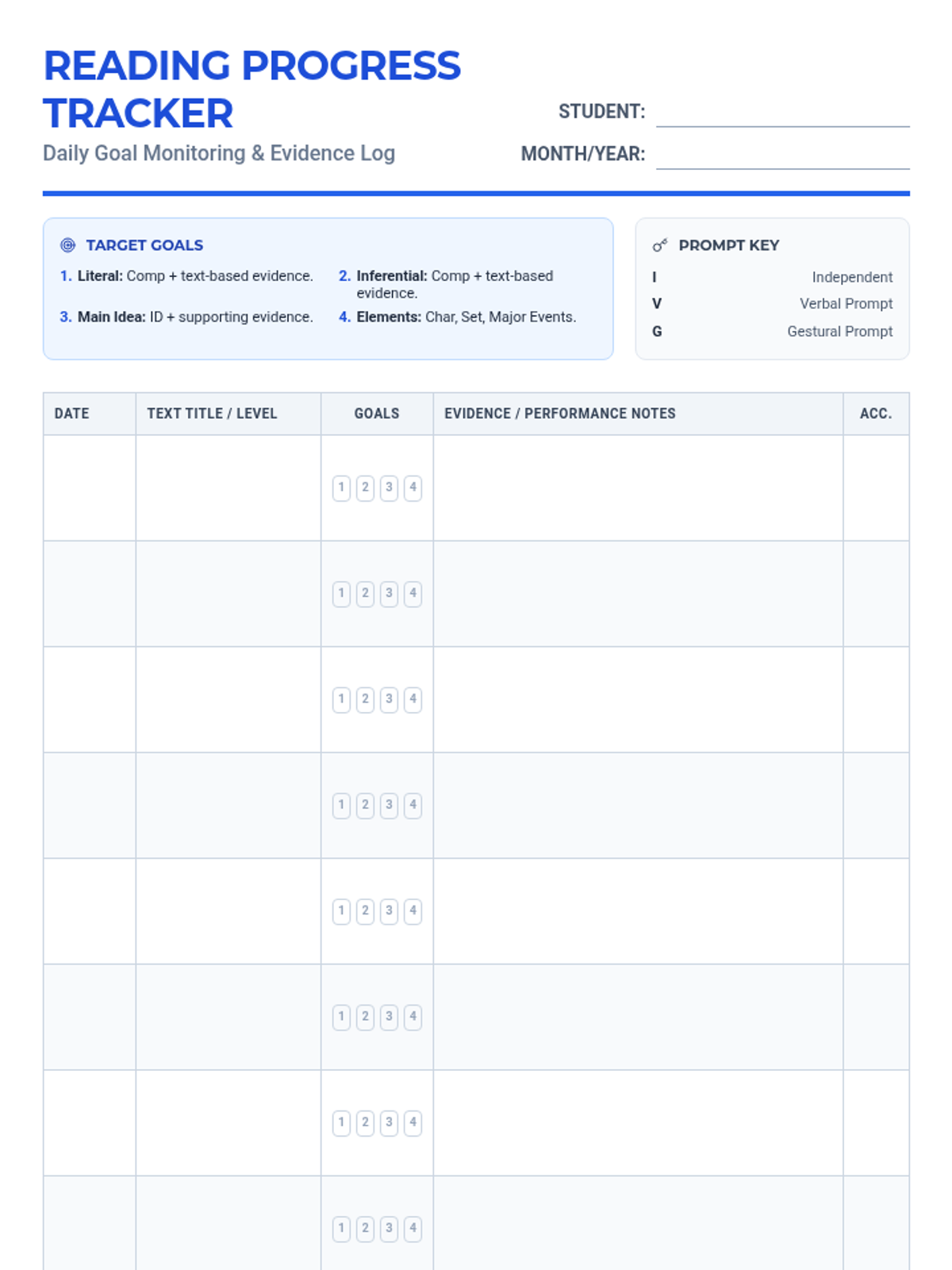
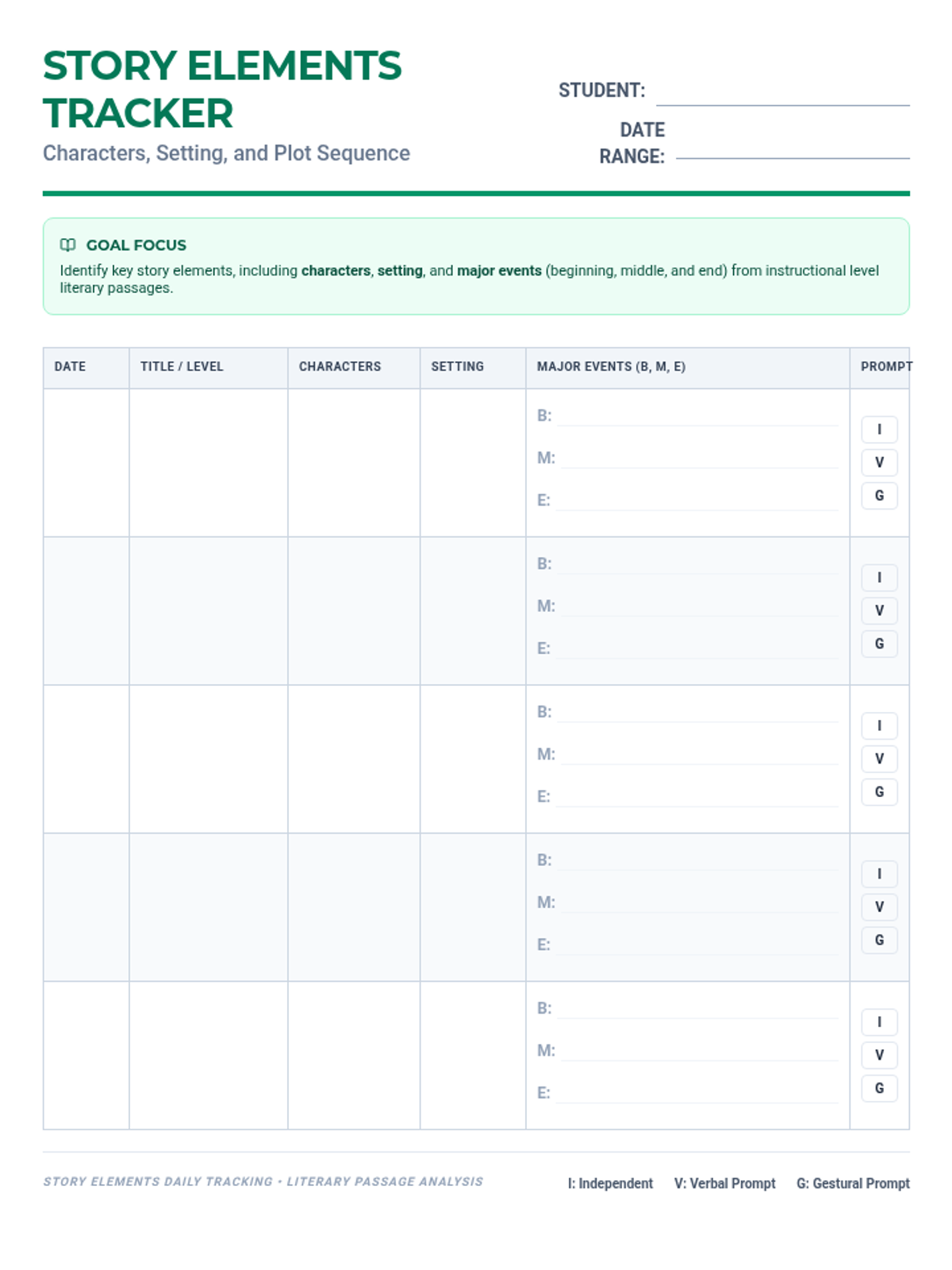
A collection of professional data tracking sheets for monitoring specific reading comprehension goals, including literal, inferential, and story element identification.
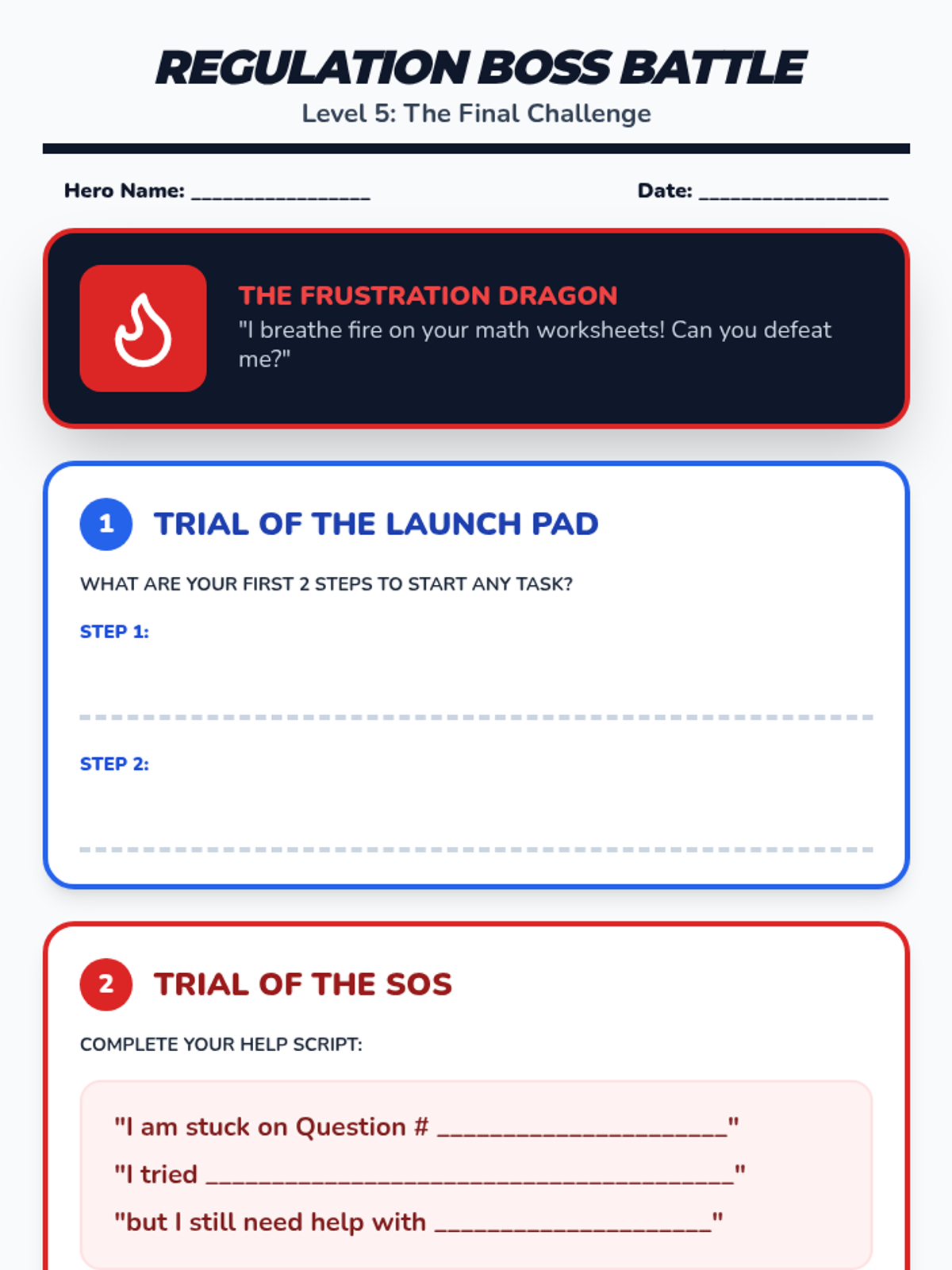
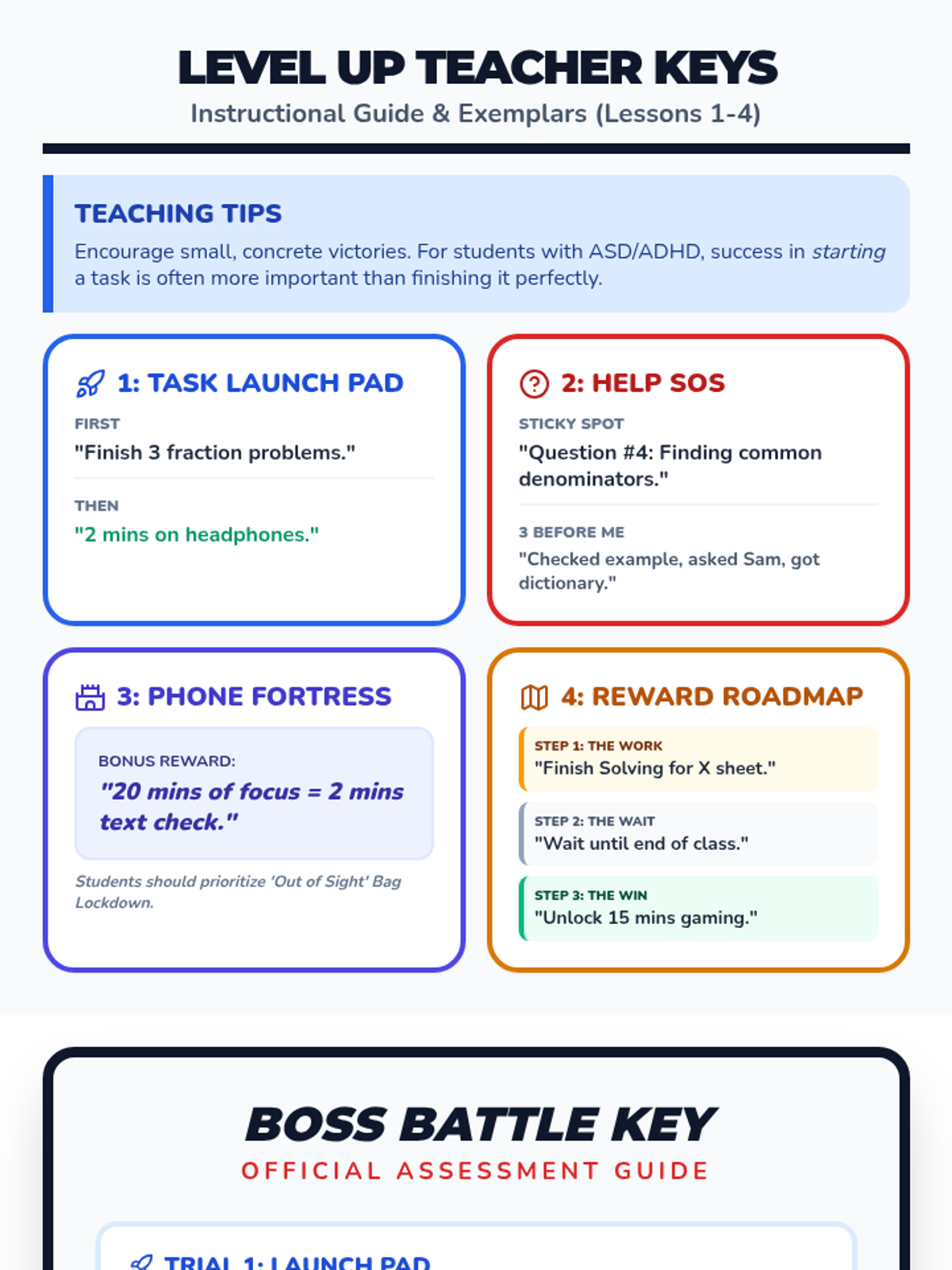
A cumulative 'Boss Battle' review where students use all their regulation tools to solve a series of math-related regulation challenges.
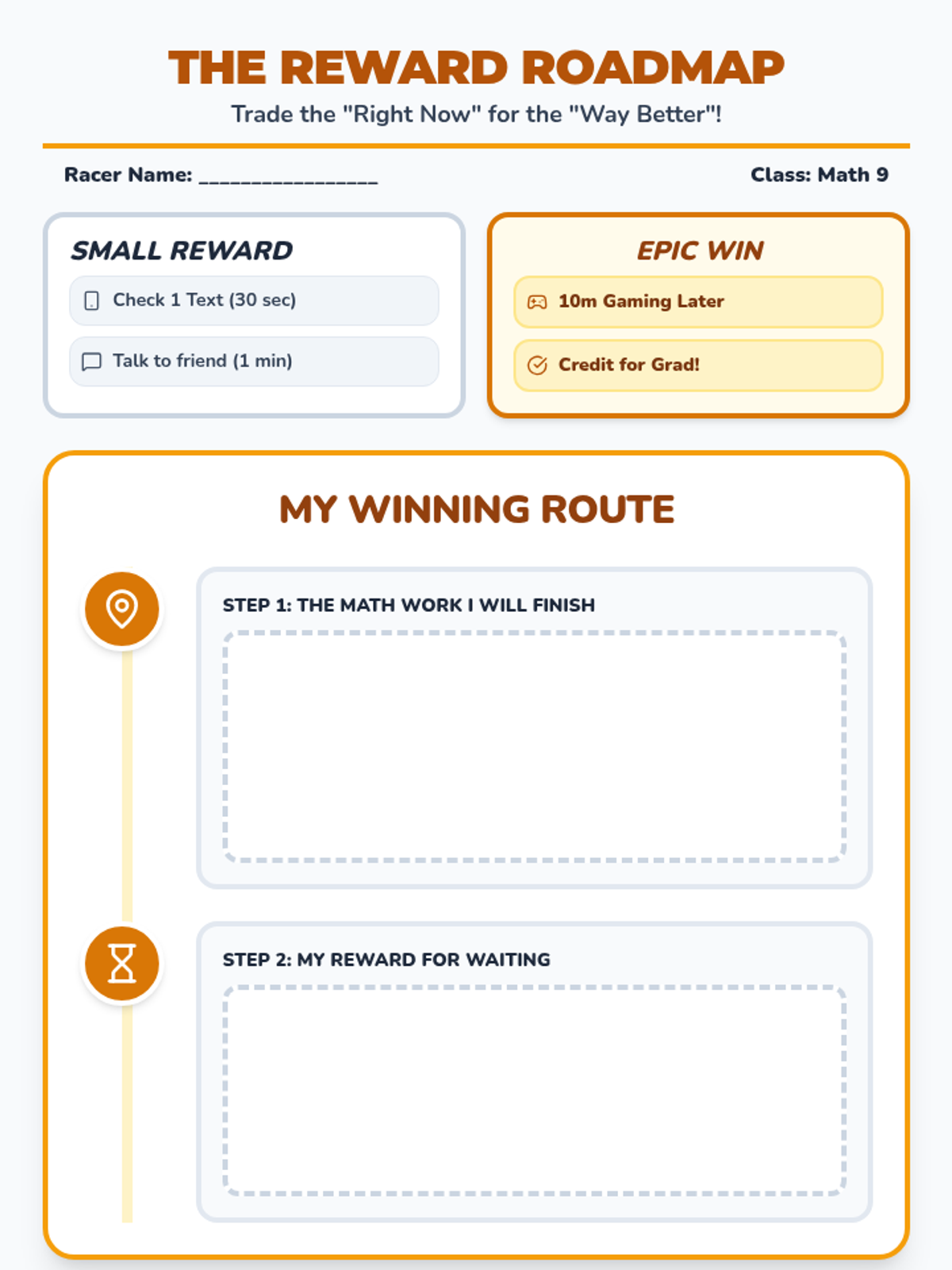
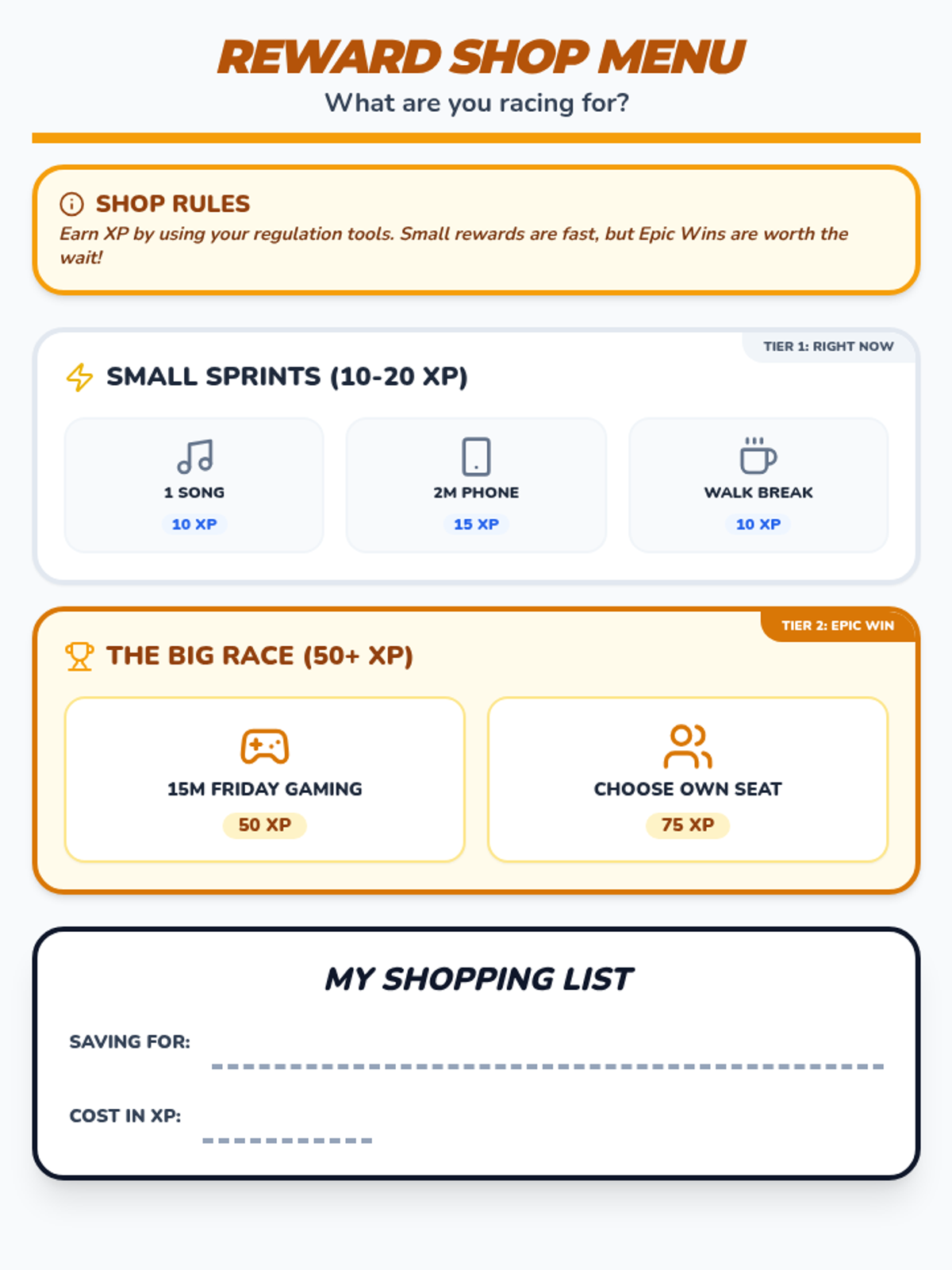
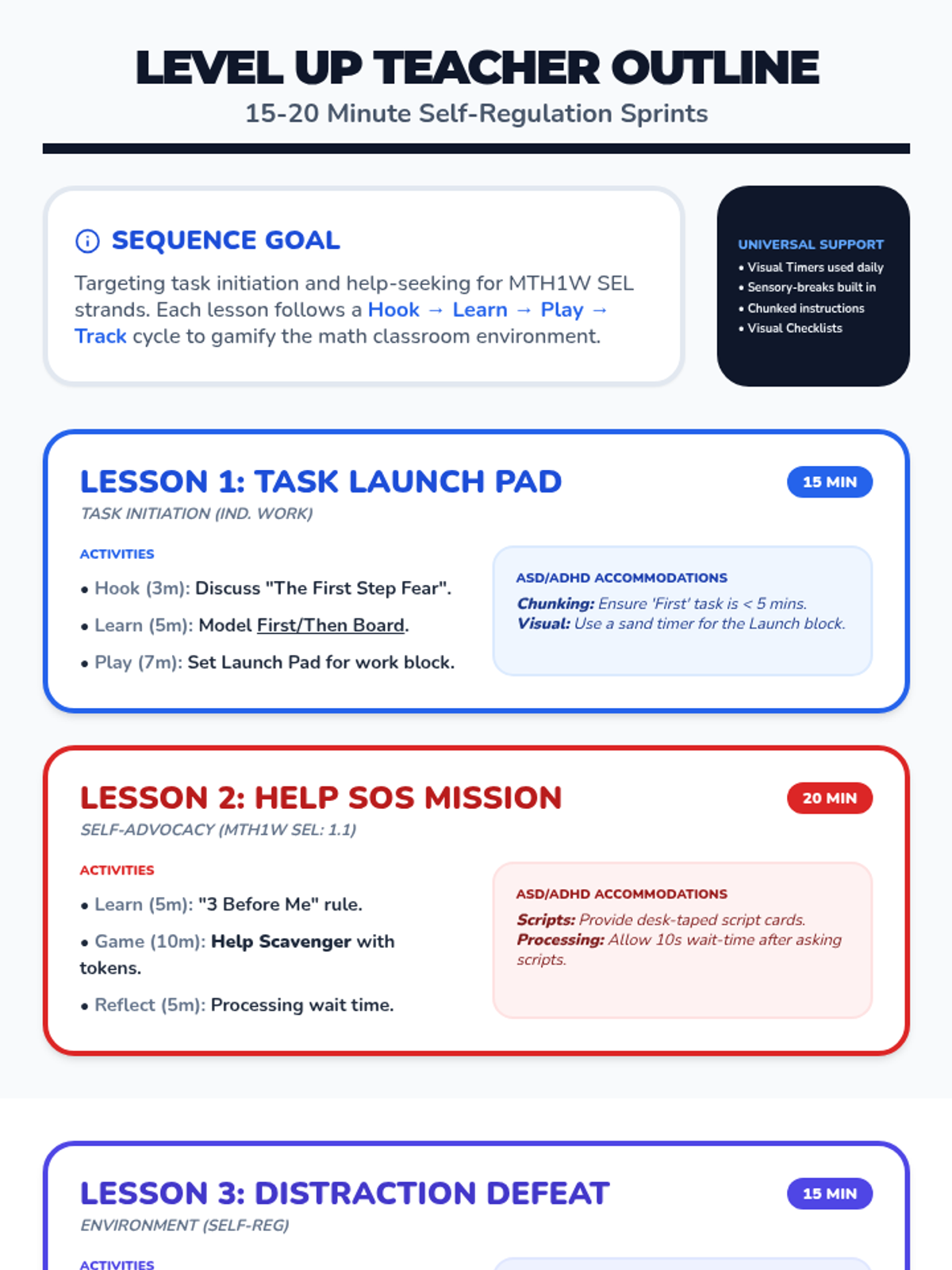
Explores delayed gratification through a 'Reward Roadmap' activity, teaching students to trade immediate distractions for long-term academic success.
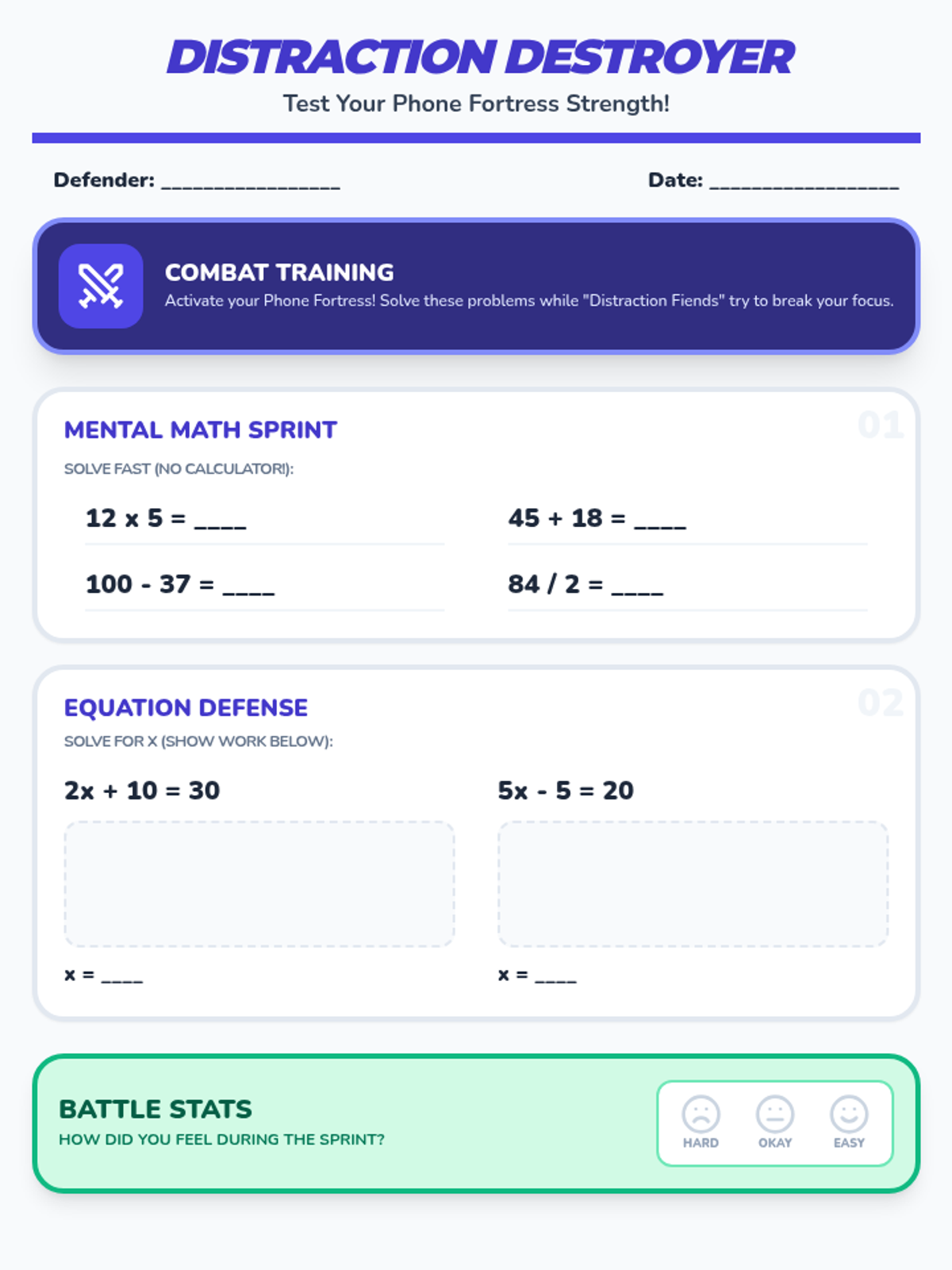
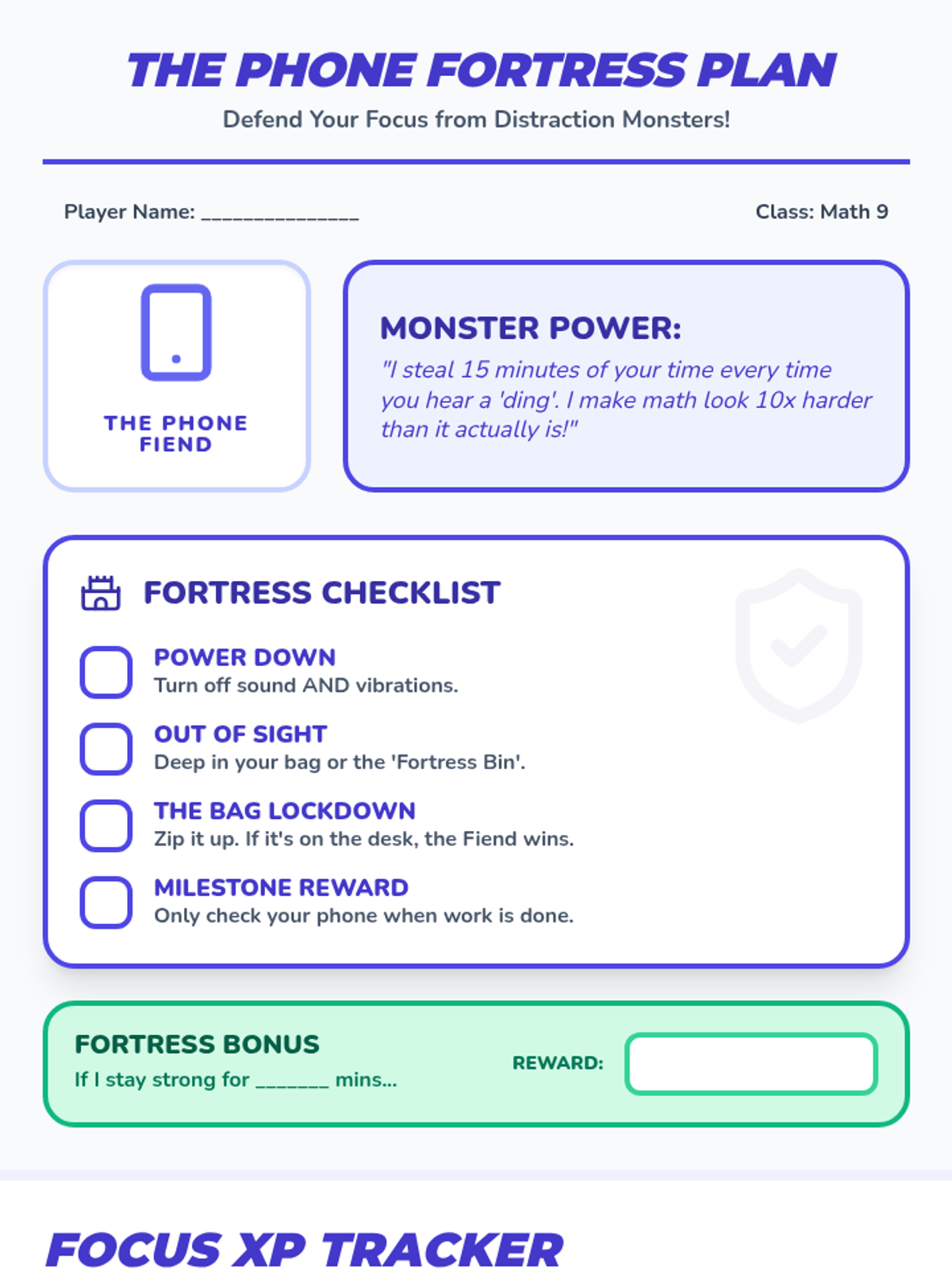
Students identify environmental distractions, specifically phones, and create a 'Phone Fortress' plan using visual checklists to maintain focus.
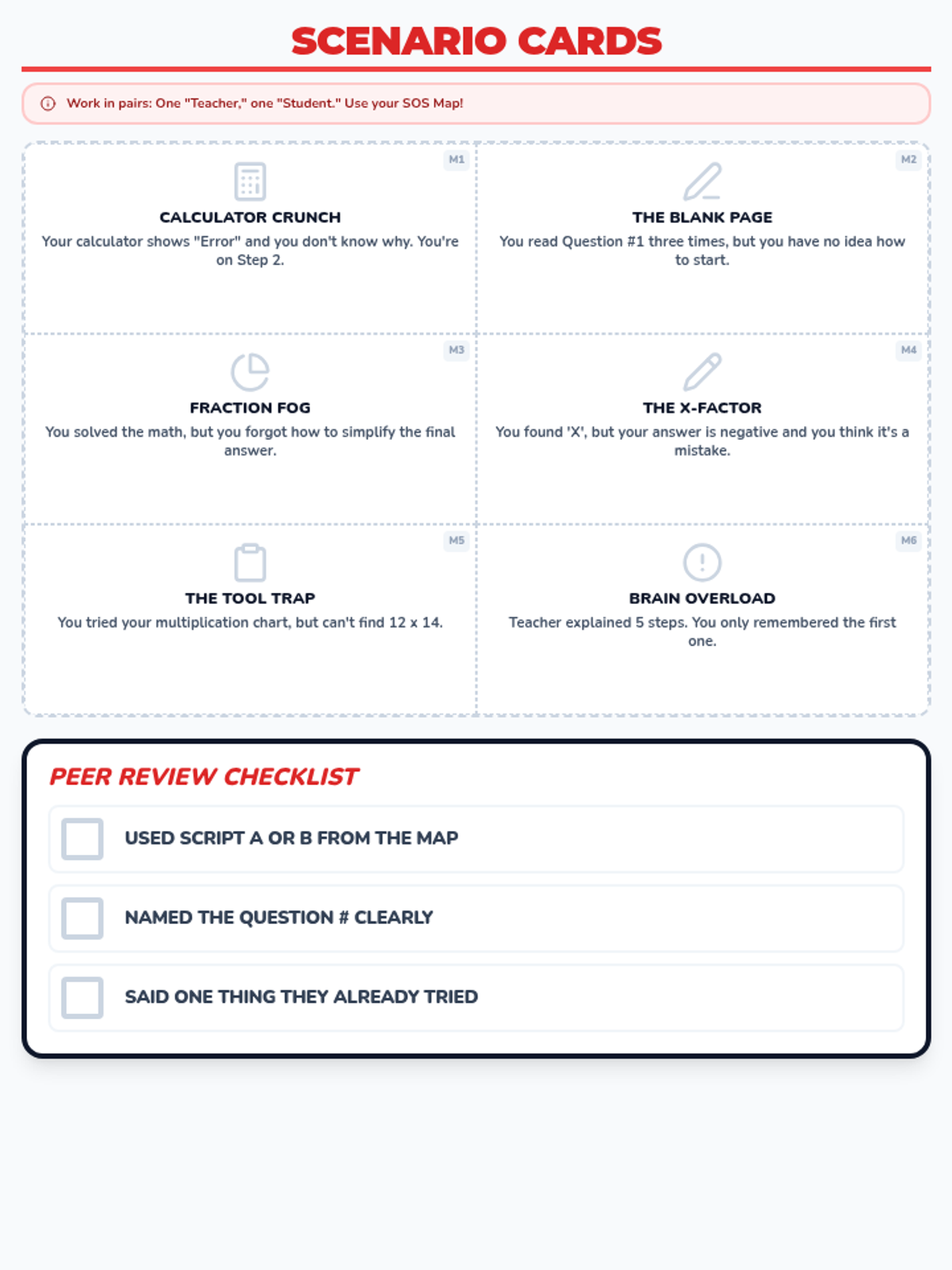
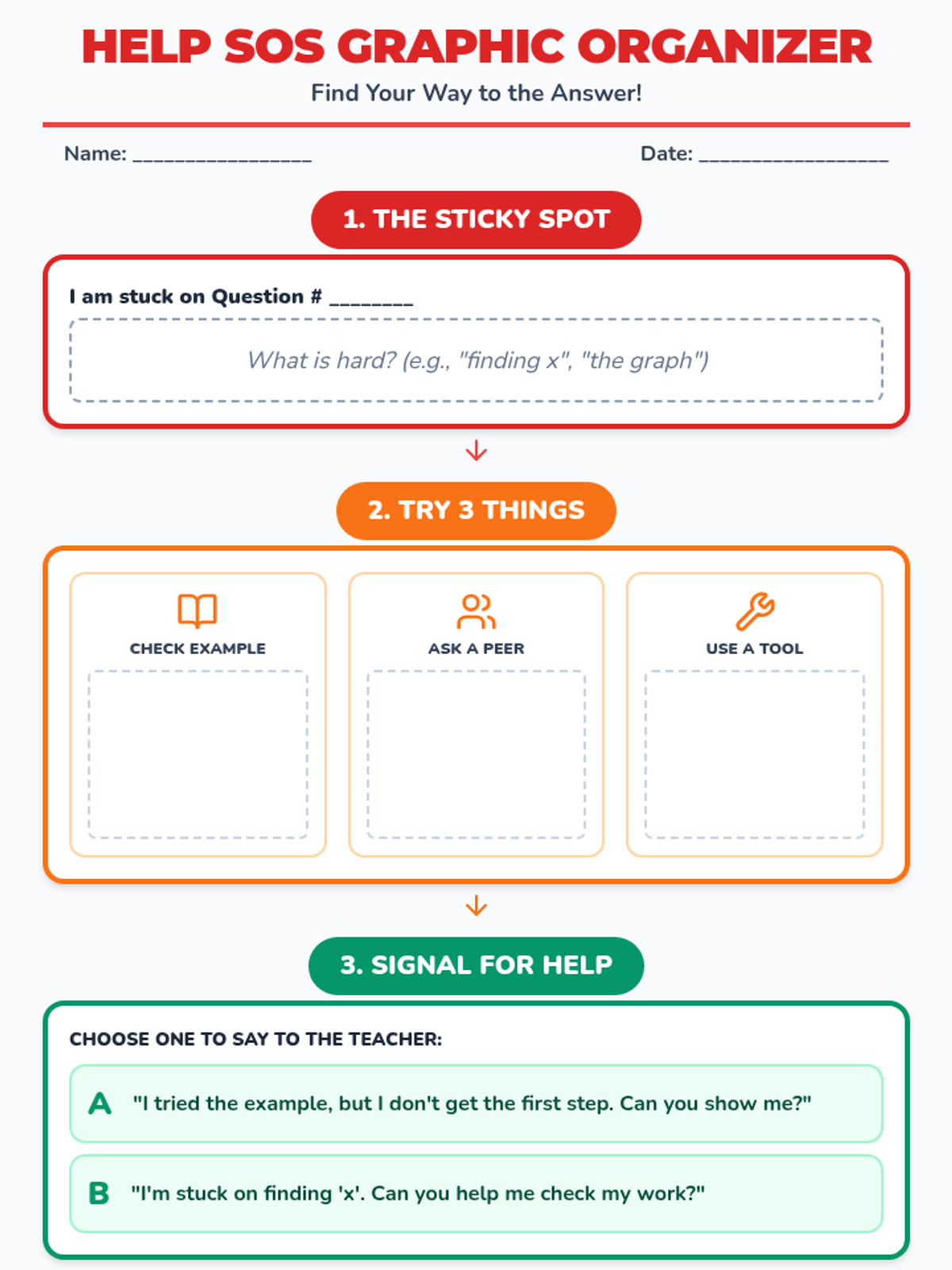
A gamified approach to recognizing when to ask for help and using a structured graphic organizer to communicate specific needs during math problem-solving.
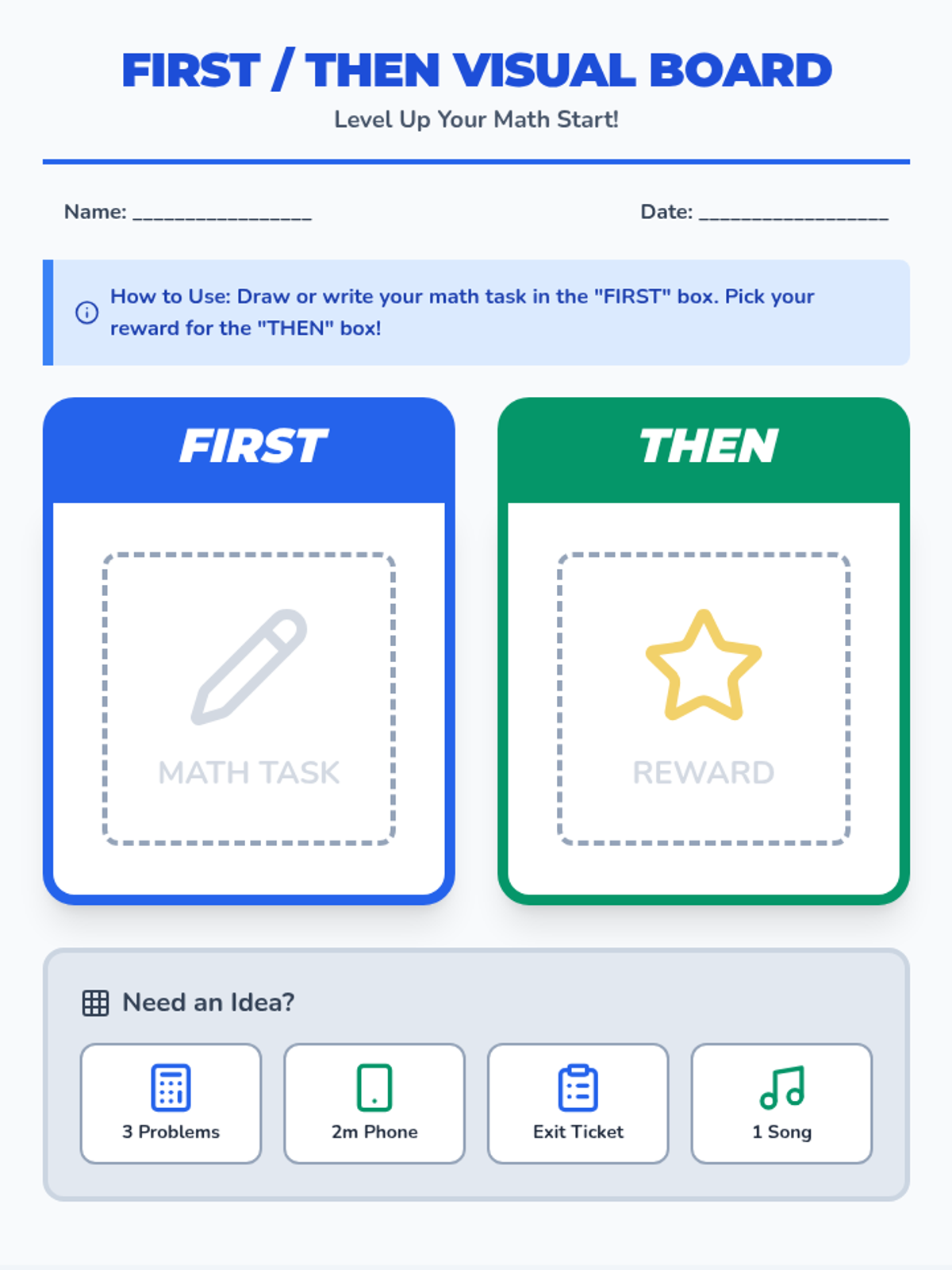
Students learn to use First/Then visual boards and illustrated checklists to overcome task initiation hurdles in math class.
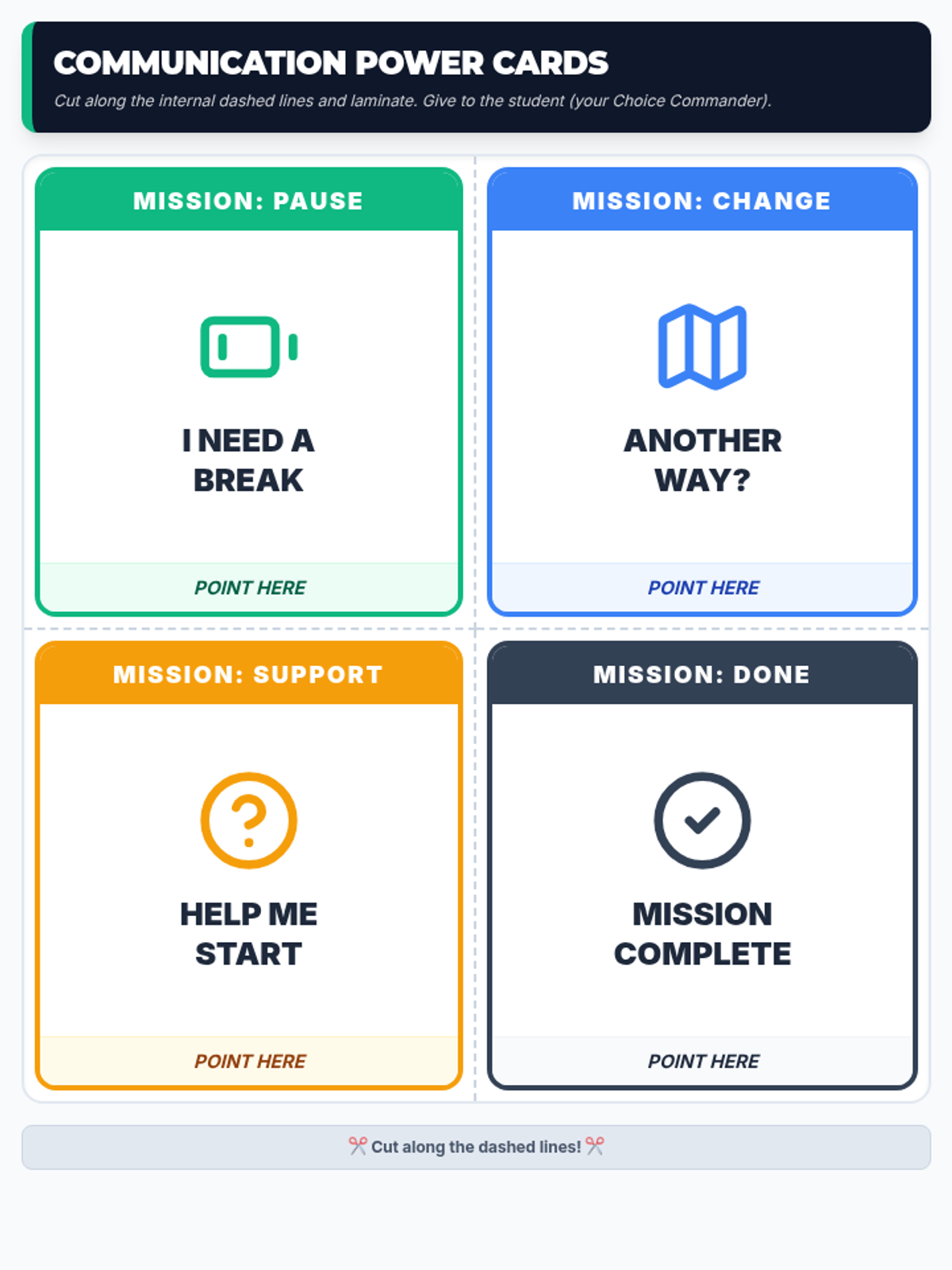
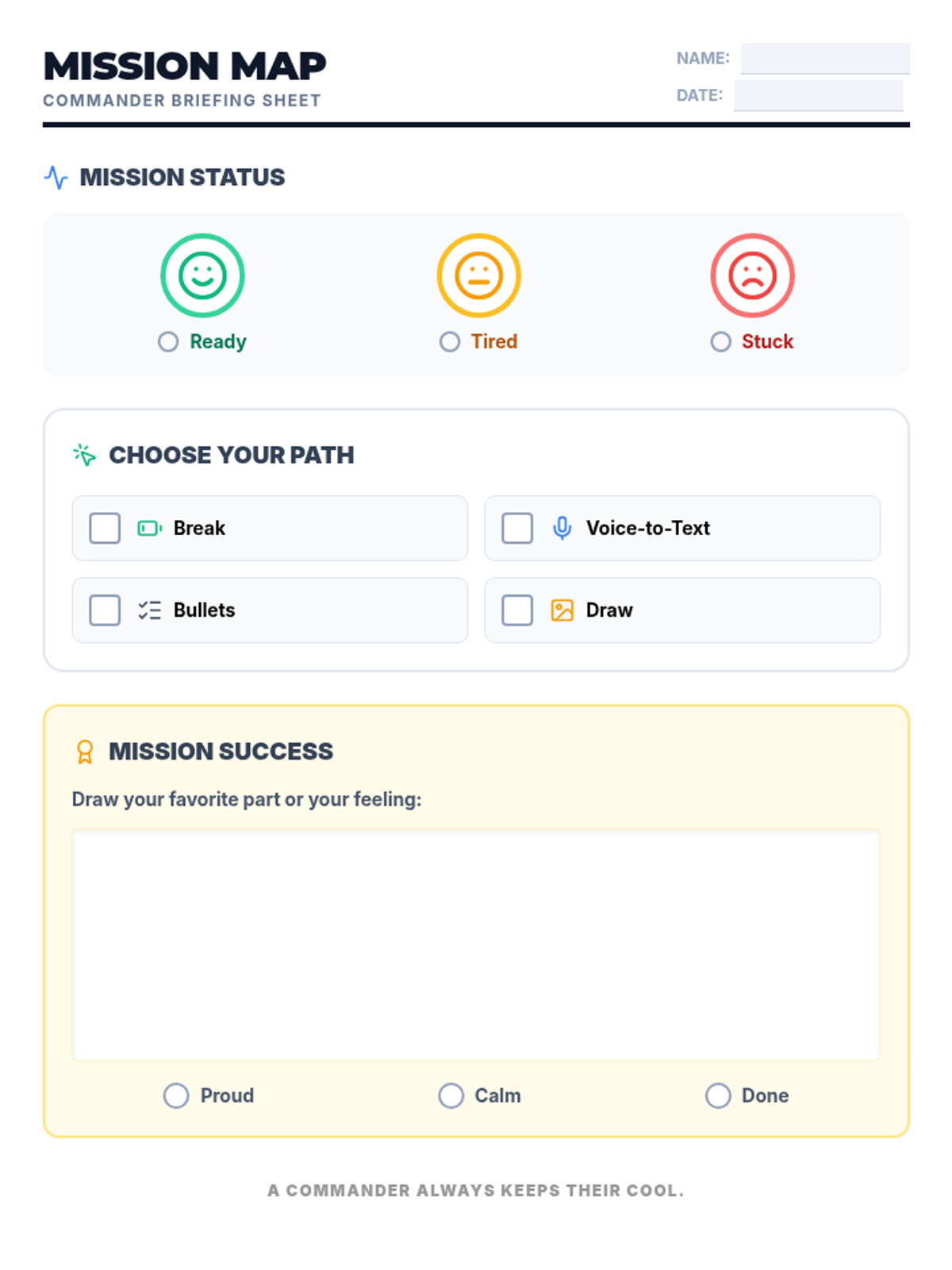
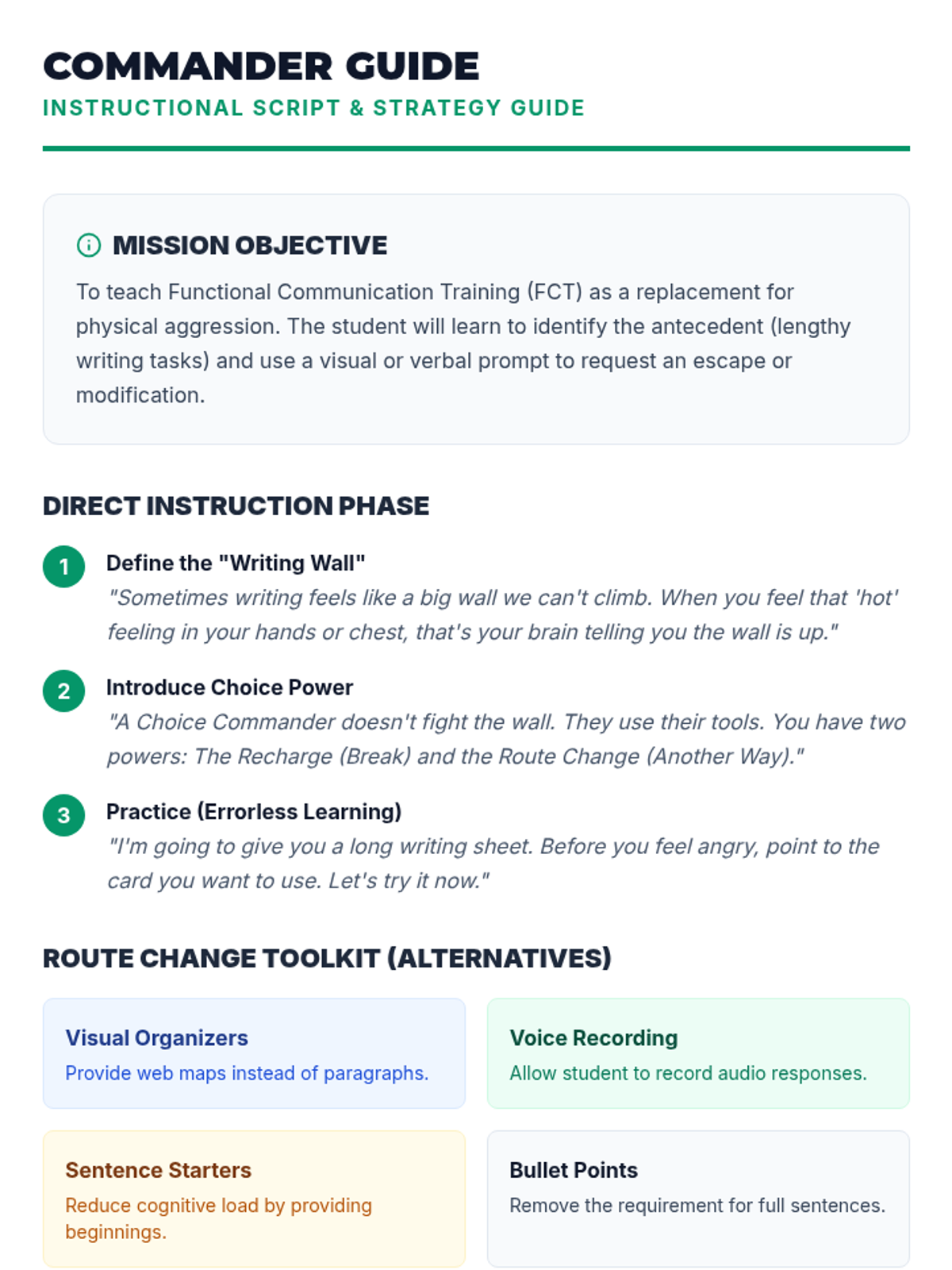
A specialized lesson designed to teach functional communication skills to a student who experiences frustration with writing. The lesson focuses on identifying 'writing walls' and using specific replacement behaviors—requesting a break or an alternative task—to maintain self-regulation.
Defining what it means to be a supportive friend and maintaining healthy connections.
Differentiating between accidents and intentional slights in high-traffic school areas.
Navigating the permanence of digital texts and the lack of tone in messaging.
Understanding physical boundaries and personal space for students with sensory needs.
Managing social anxiety caused by executive function challenges like missed deadlines.
Learning to ask for math accommodations confidently and without stigma.
Identifying physical 'melting' cues to prevent burnouts or social meltdowns.
Establishing 'how' and 'why' to put phones away during focused math instruction.
Self-reflection on phone usage habits and identifying signs of social media 'addiction'.
Mastering the 'Social Battery' and the back-and-forth flow of active listening.
Practical strategies for starting conversations without 'hijacking' with special interests.
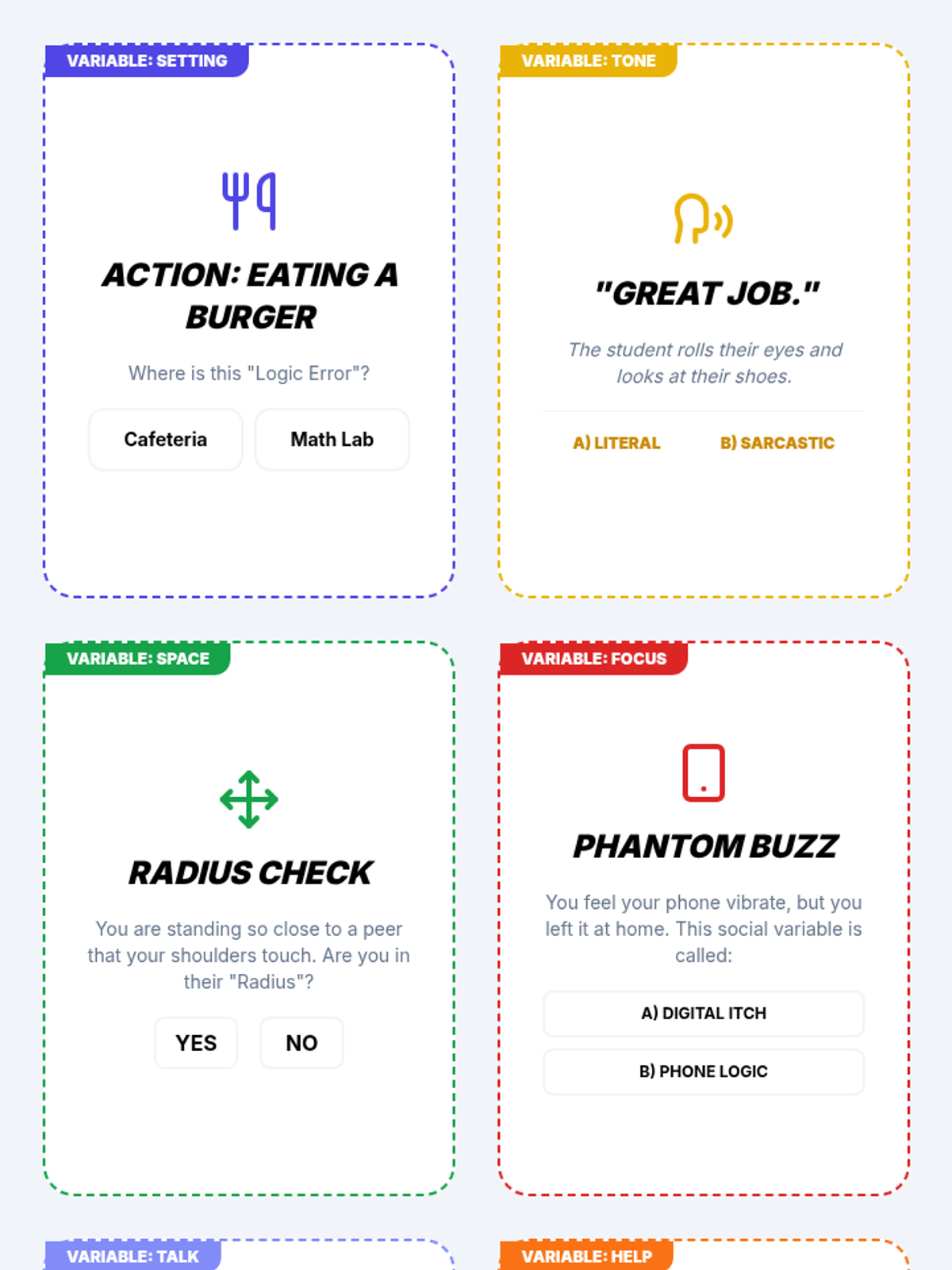
Differentiating between literal speech and sarcasm or teasing in a high school environment.
Identifying non-verbal cues and body language in peer interactions during group work.
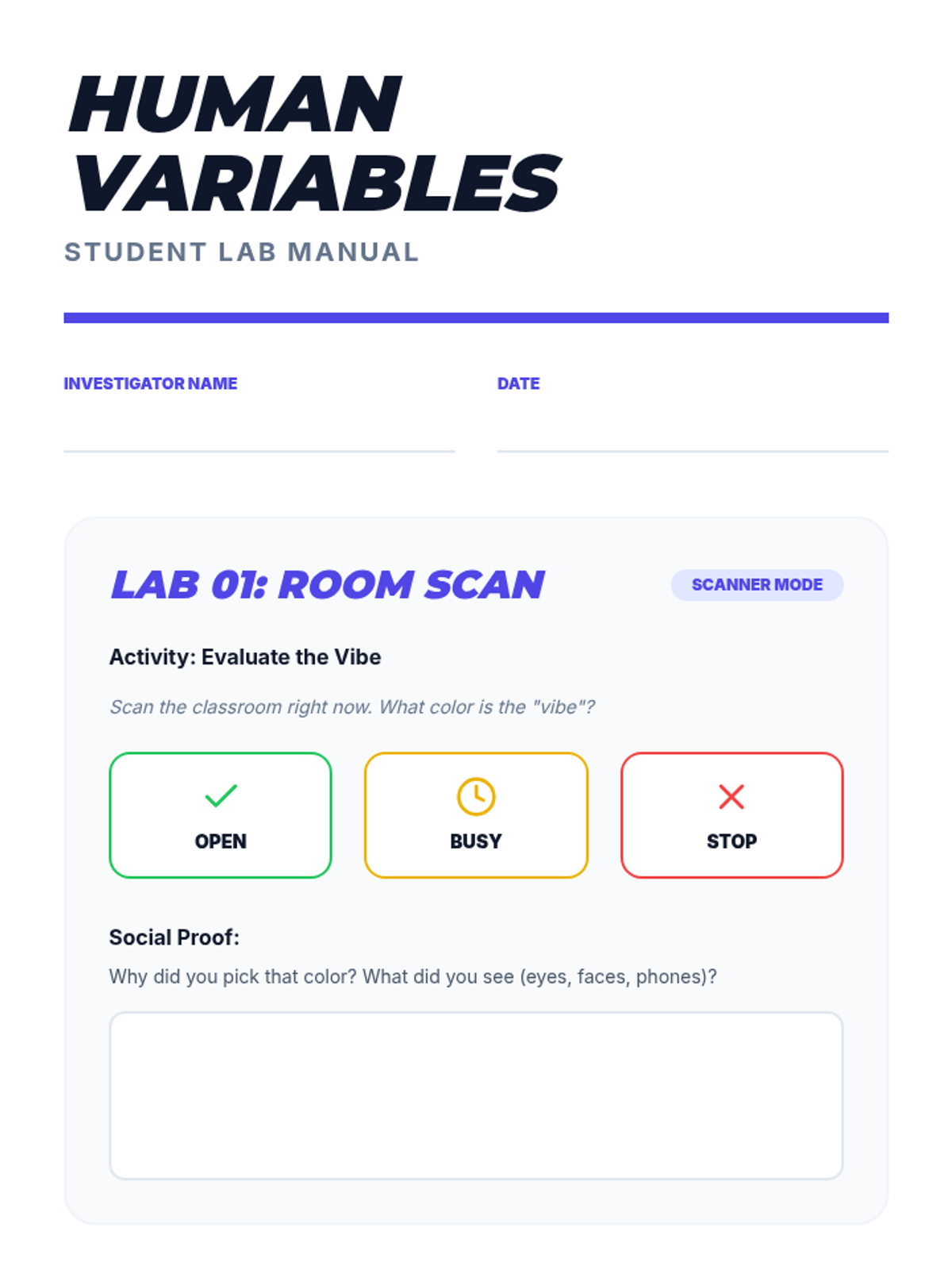
Exploring how social expectations change between the cafeteria, hallways, and the math lab.
Introduction to 'reading the vibe' of a group before joining a social or collaborative math setting.
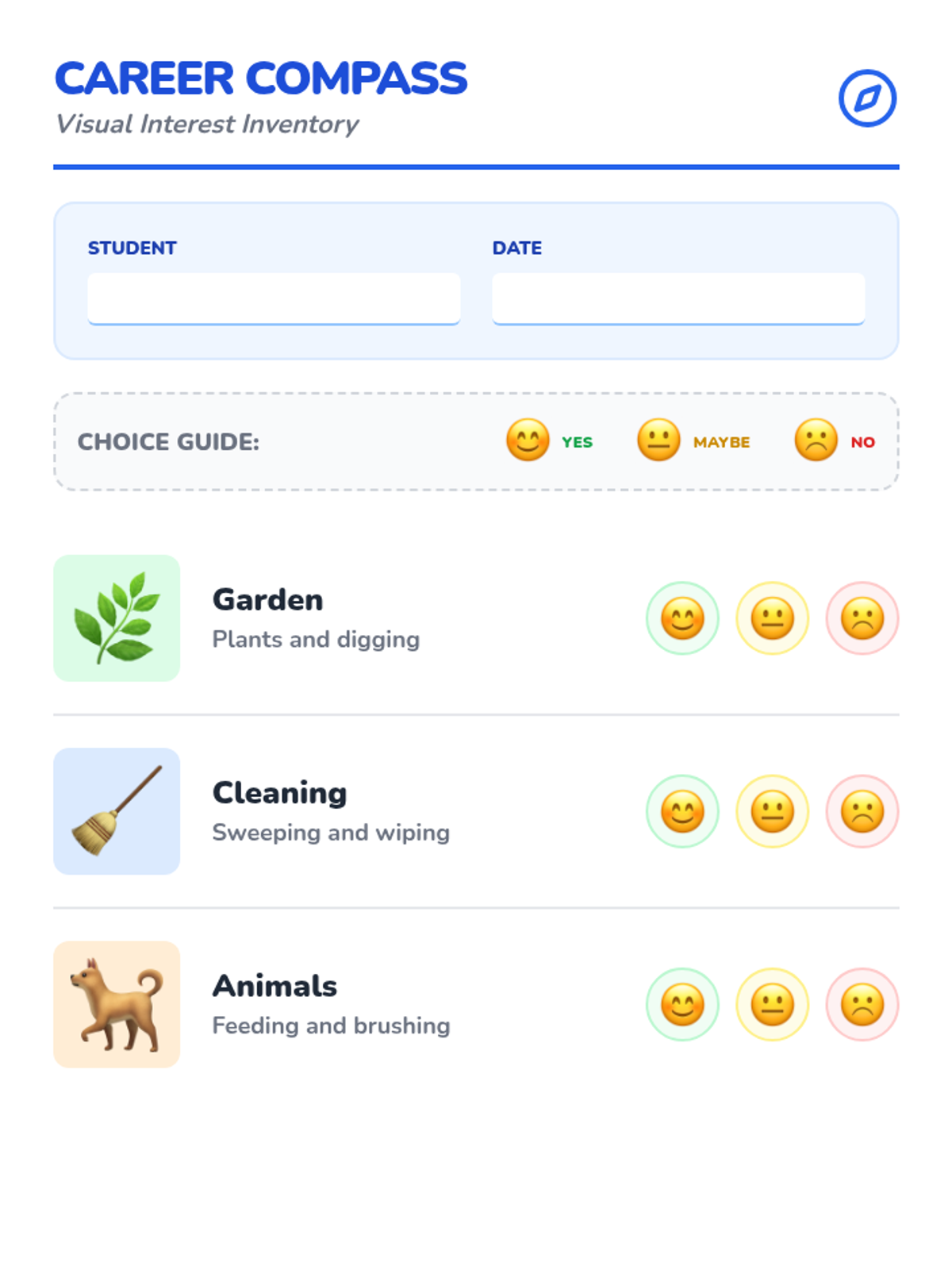
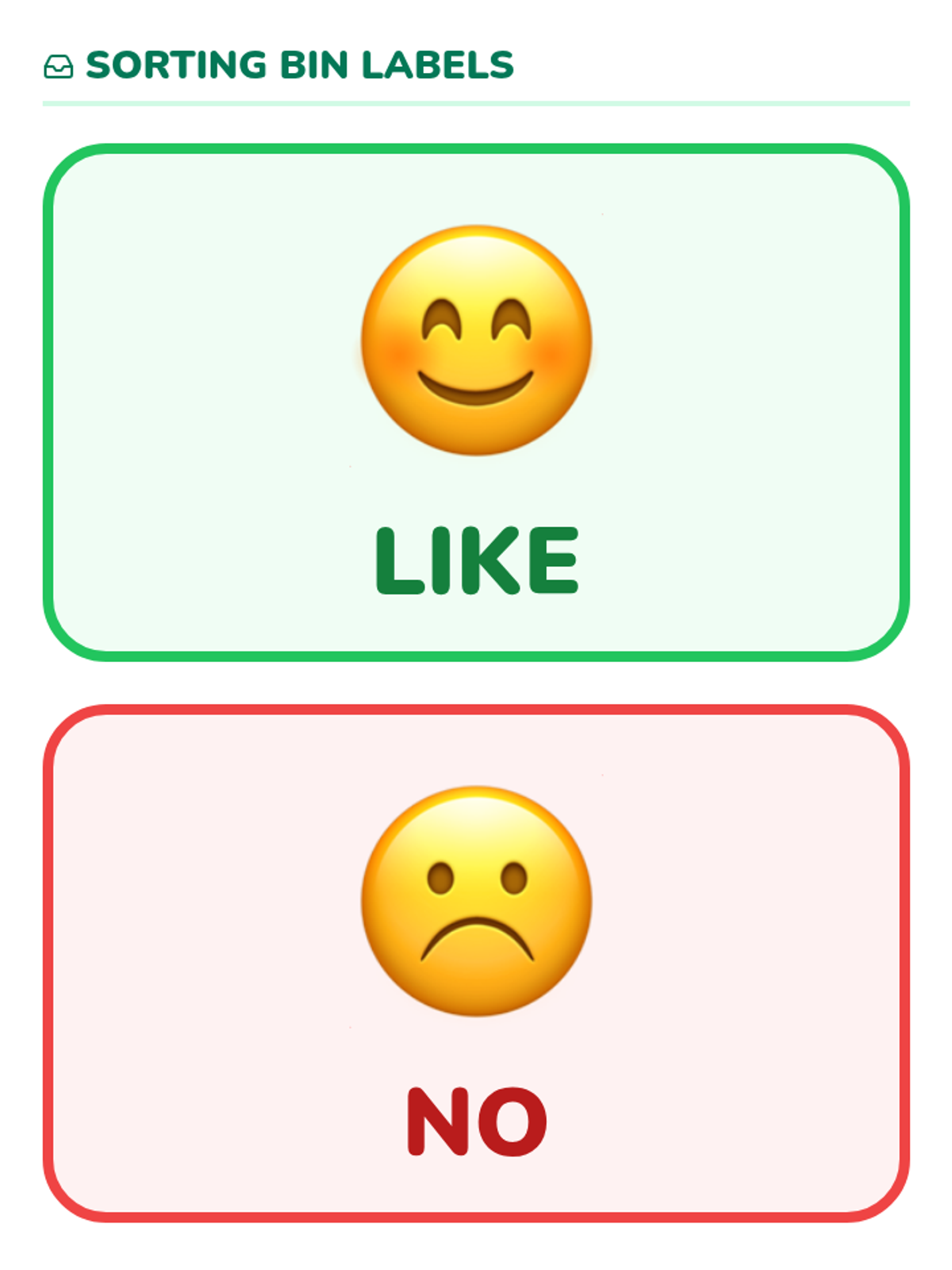
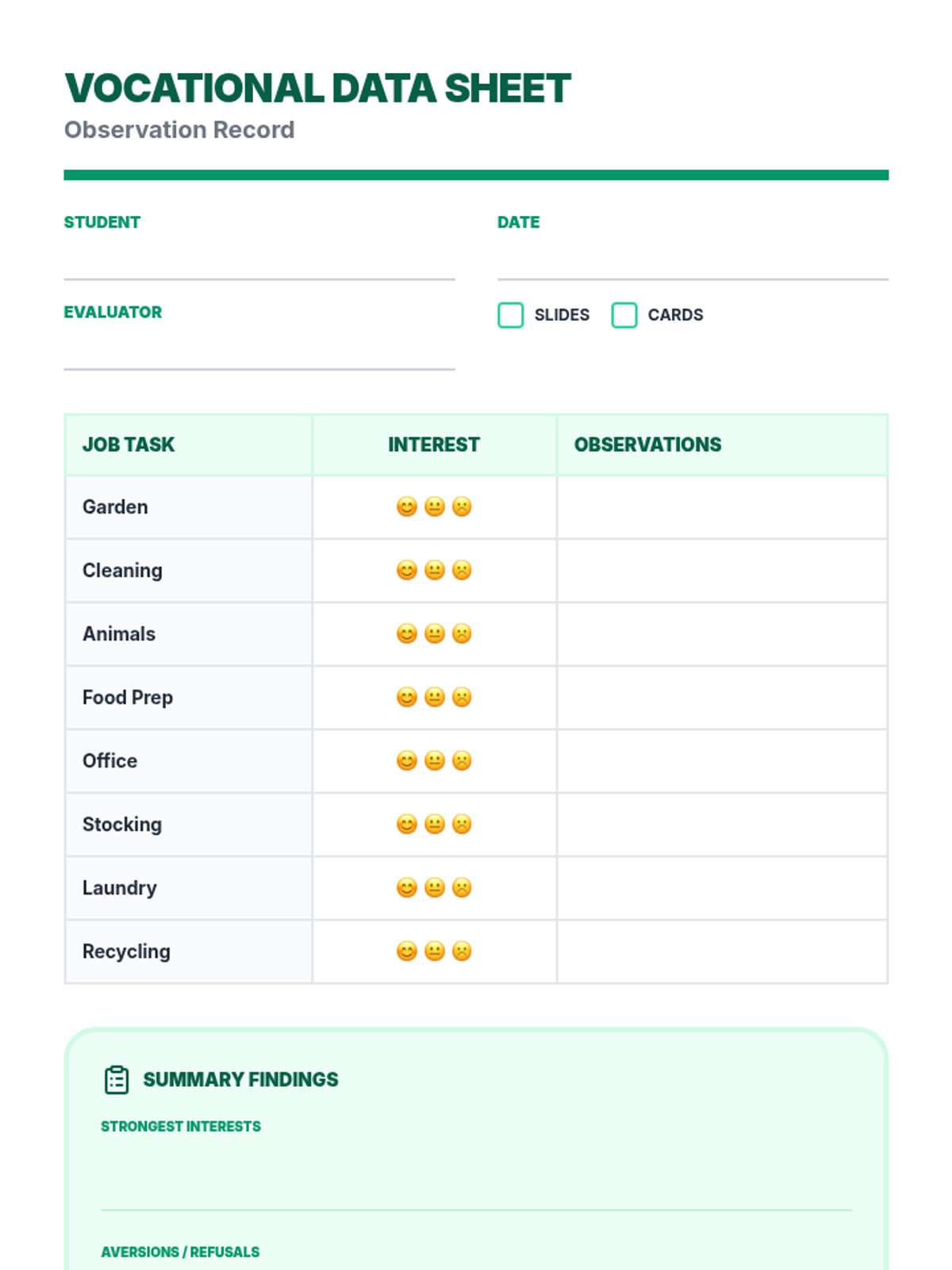
A comprehensive set of visual tools designed to help nonverbal and low-level learners identify vocational interests through icons, emojis, and simplified choice-making activities.
A clinical intervention lesson focusing on introspection, body awareness, and self-advocacy skills for students in specialized settings. Students learn to identify physical sensations to better communicate their emotional and physiological needs.
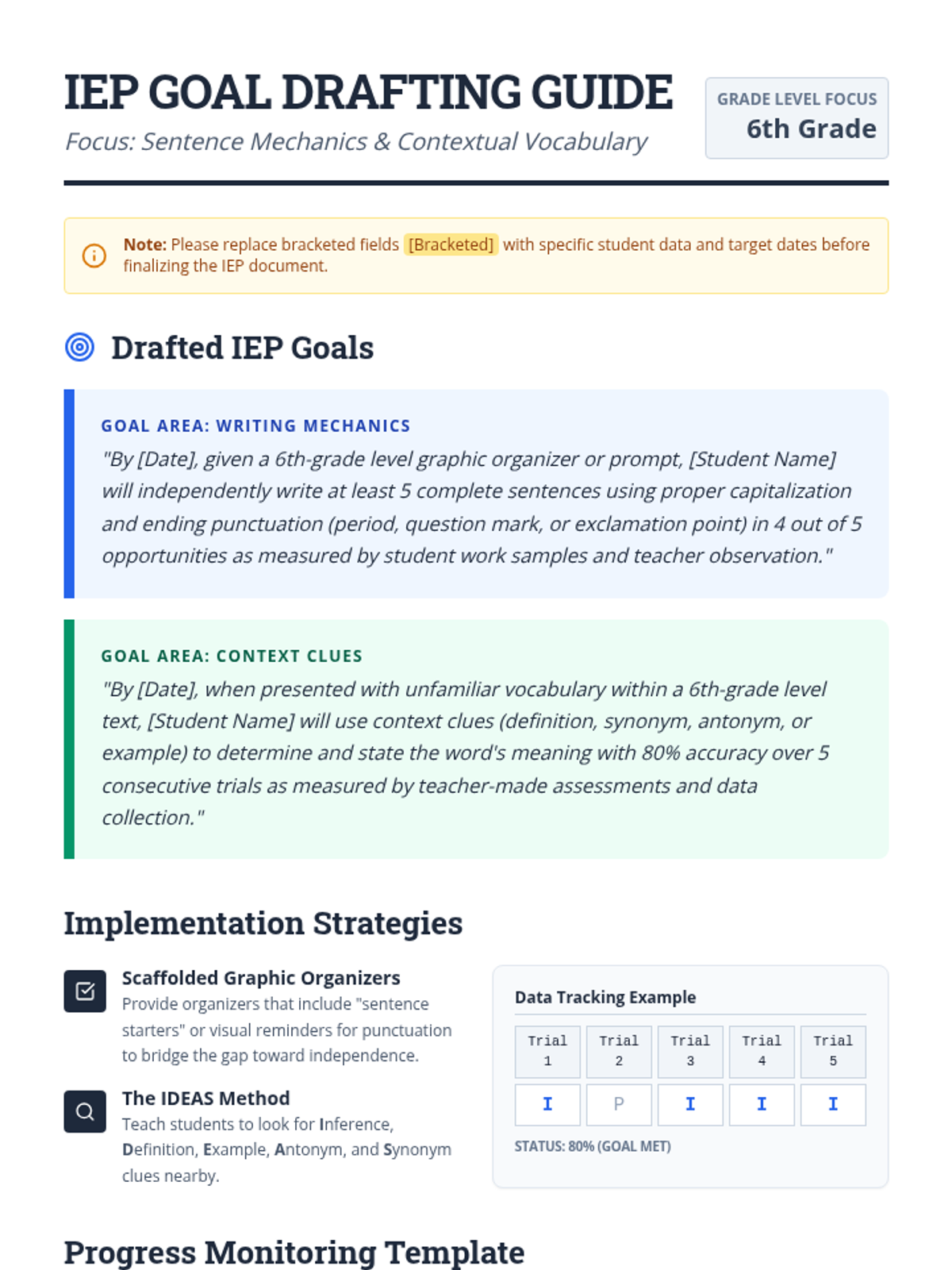
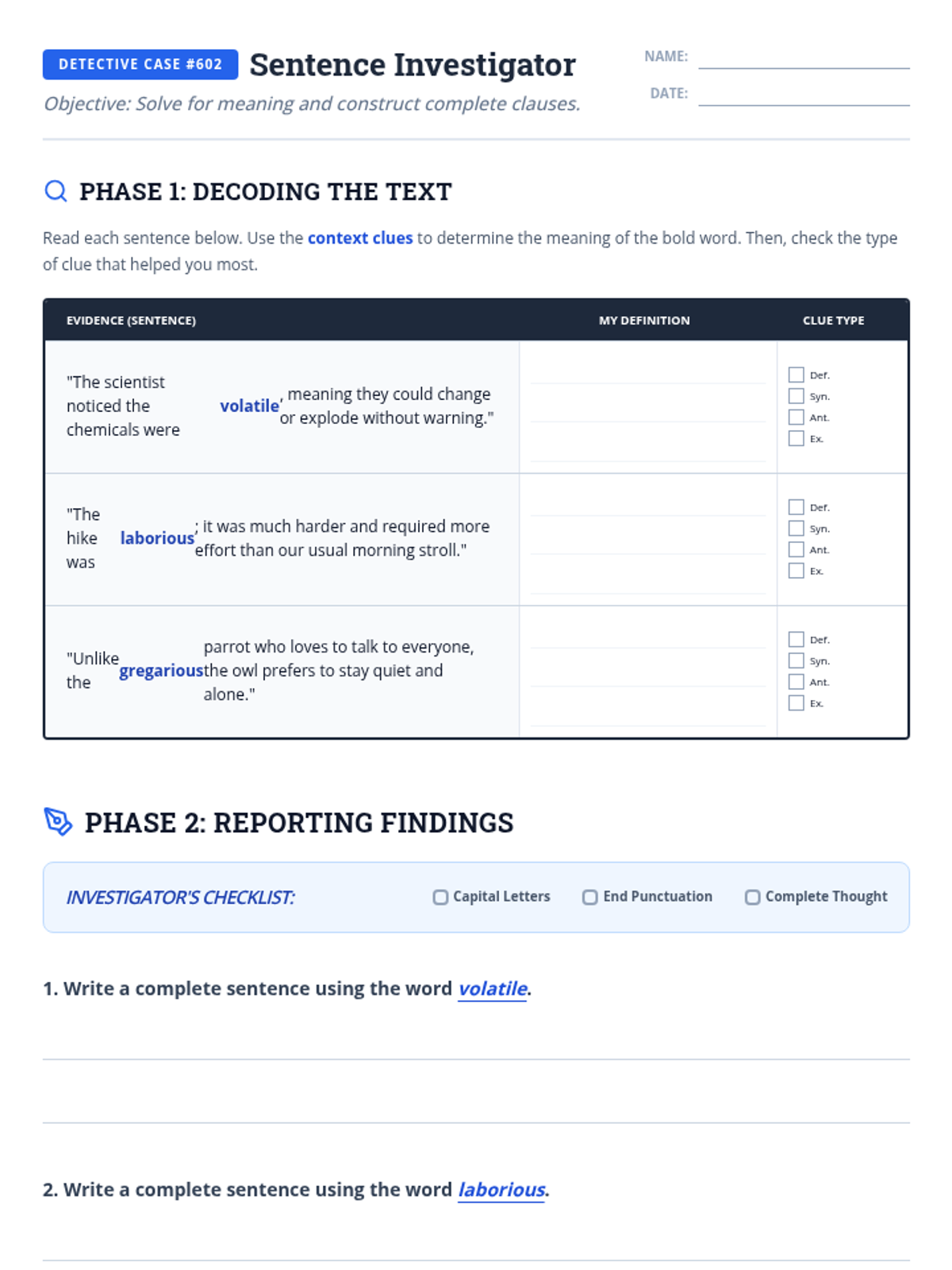
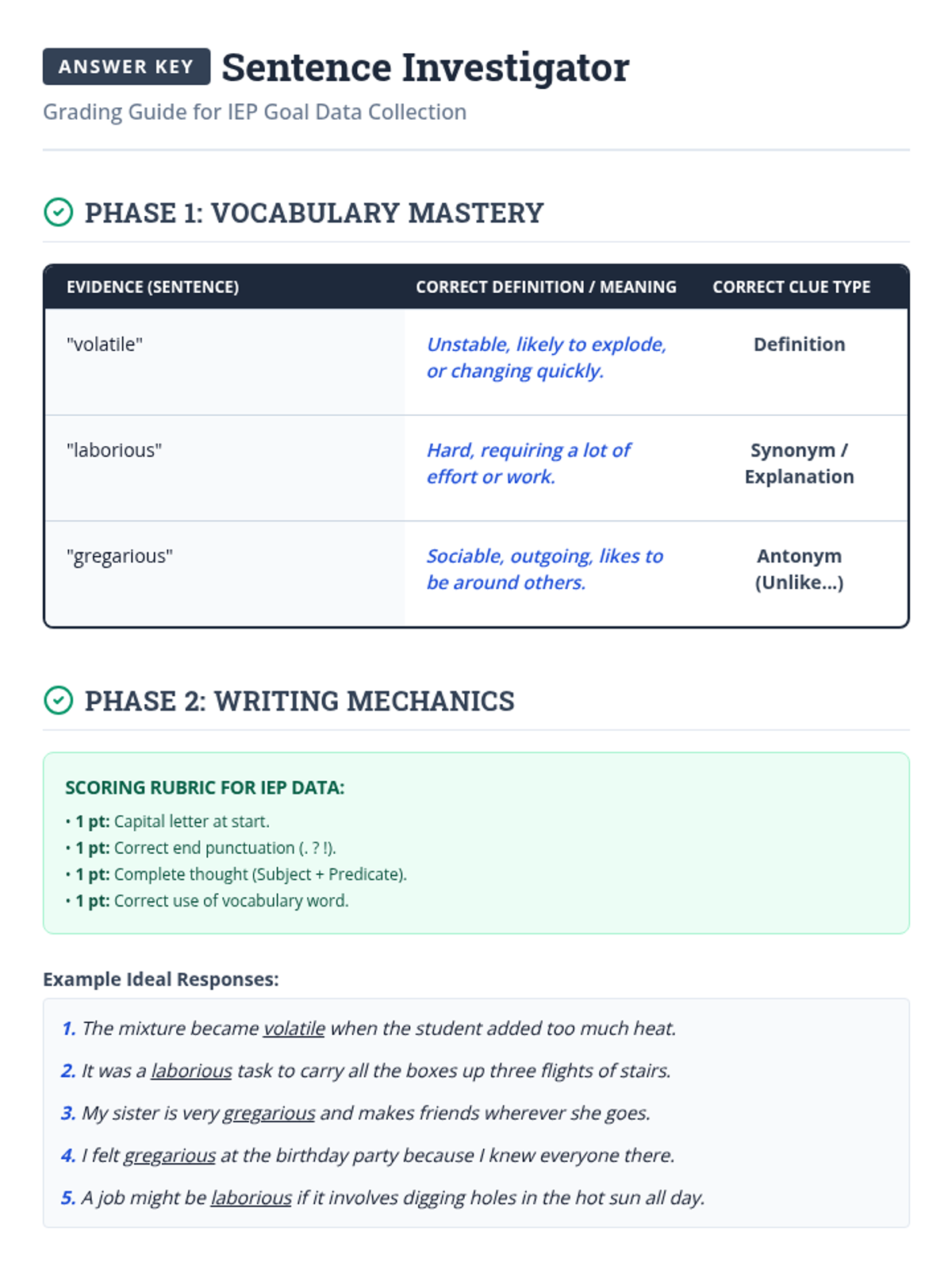
A targeted lesson on using context clues to define academic vocabulary and applying those words in syntactically correct, punctuated sentences.
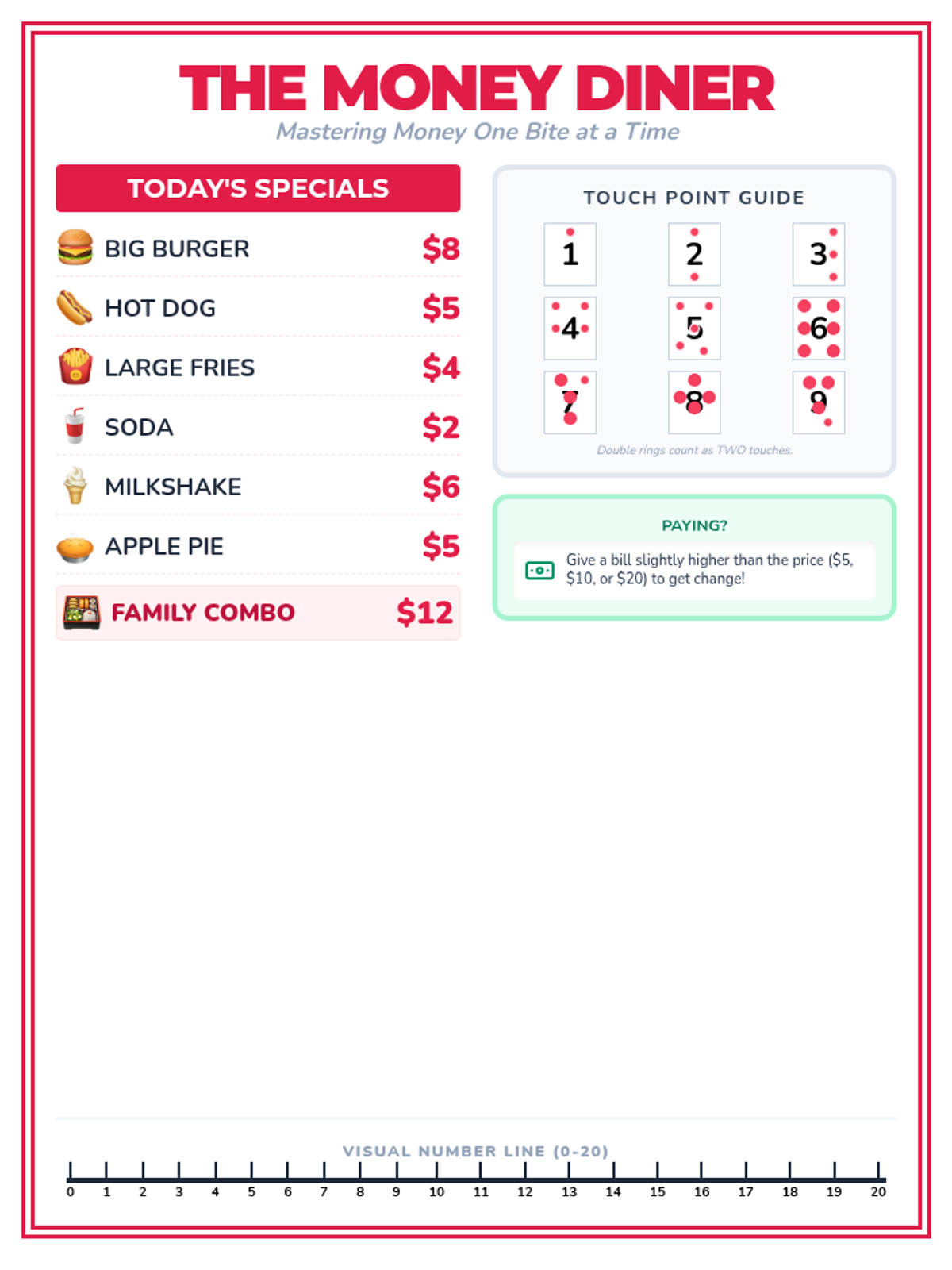
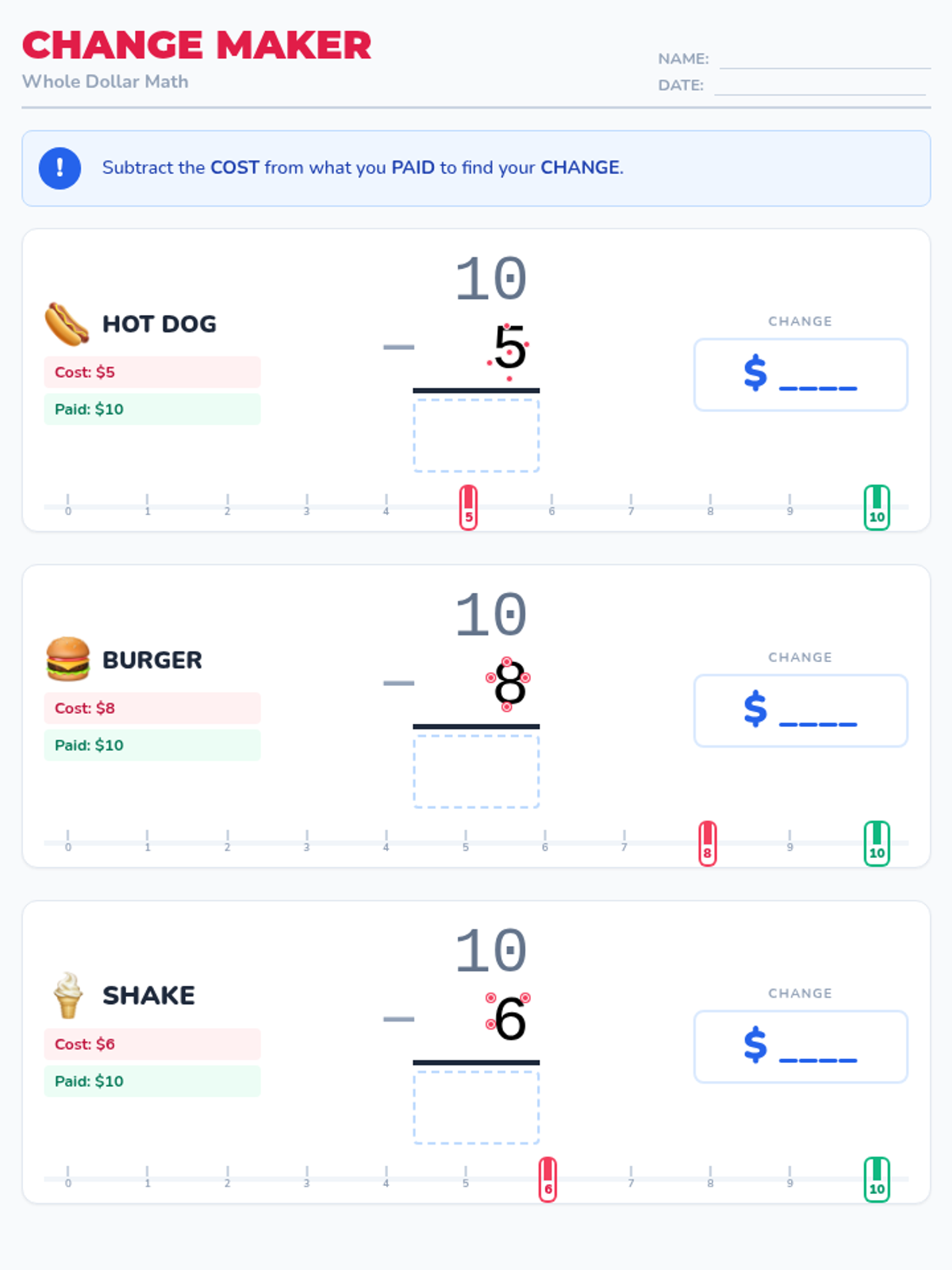
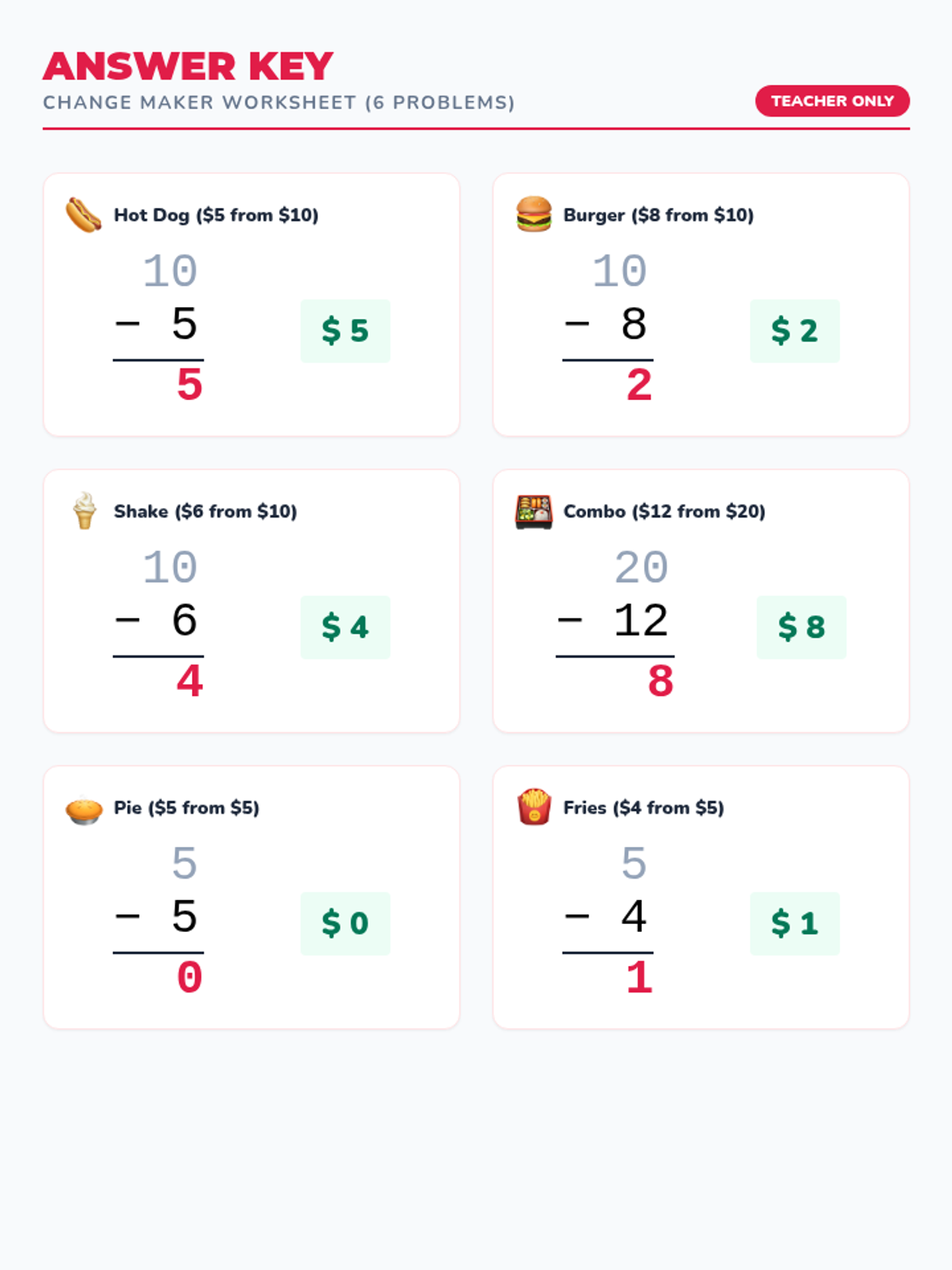
A functional math lesson focusing on calculating totals and change using whole dollar amounts. Designed with IEP supports including touch-points, visual number lines, and step-by-step guides for independent living skills.
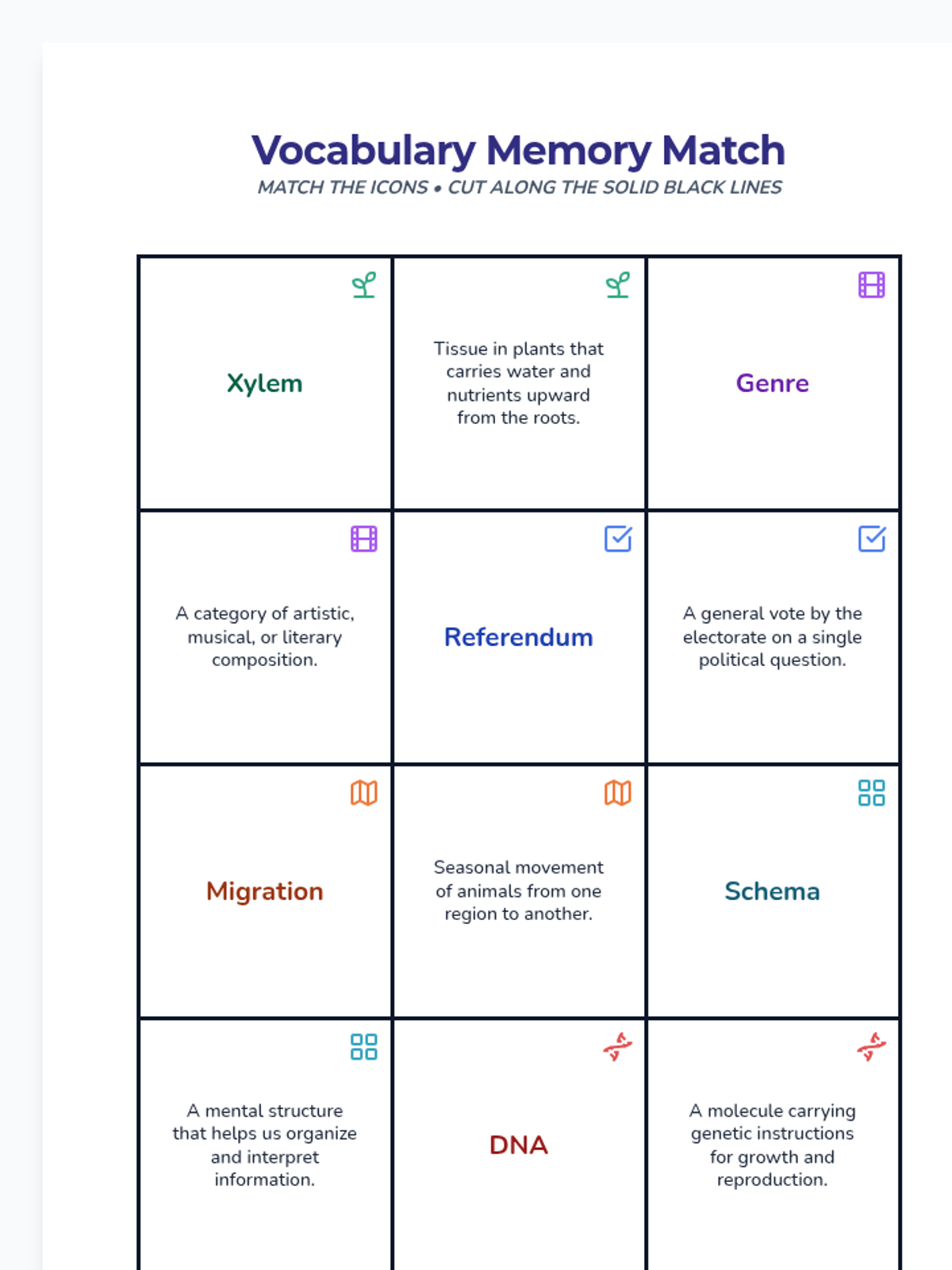
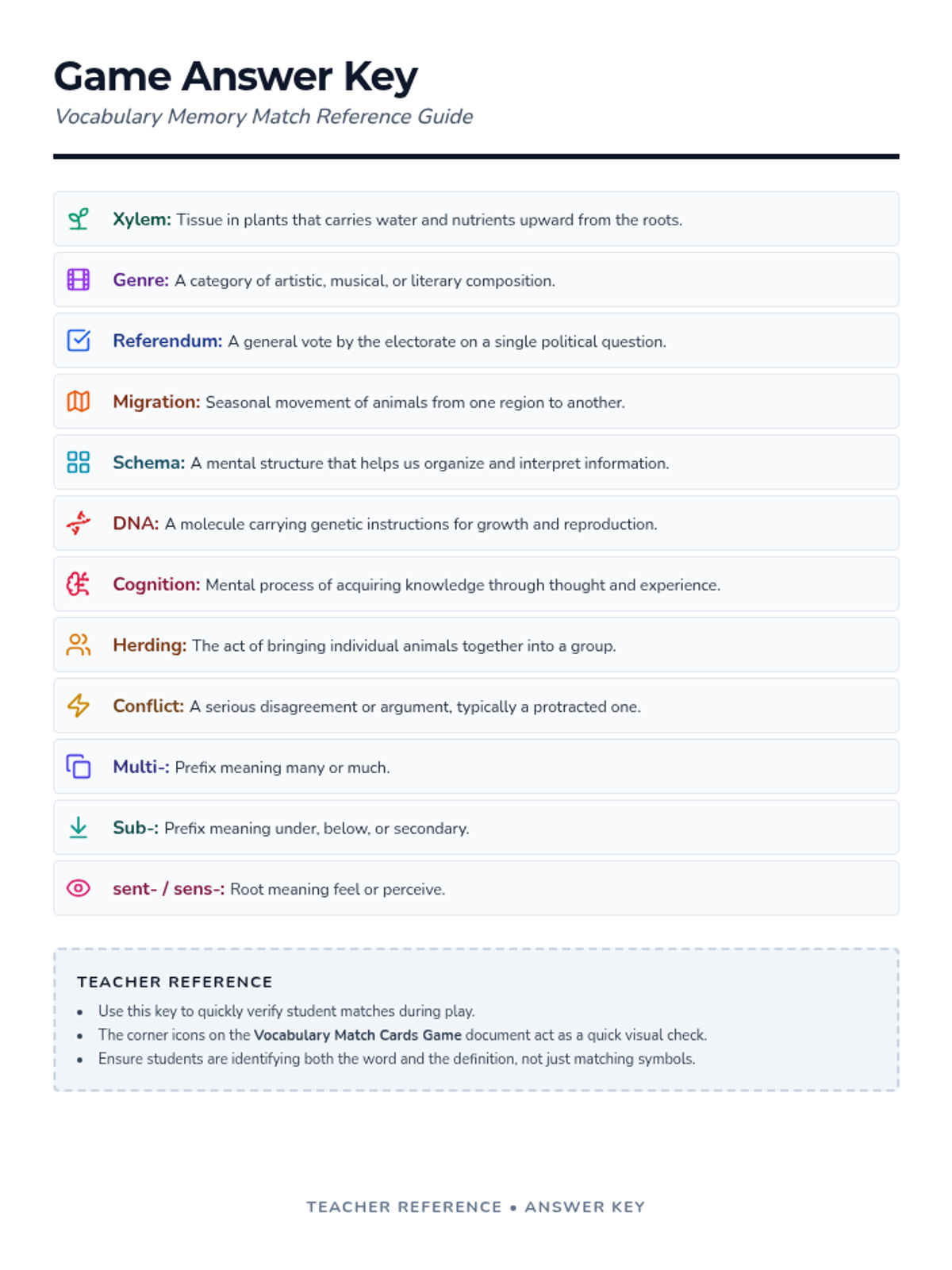
A memory matching game designed to reinforce vocabulary across various subjects including science, linguistics, and social studies. Students match words with their definitions using visual icon cues.
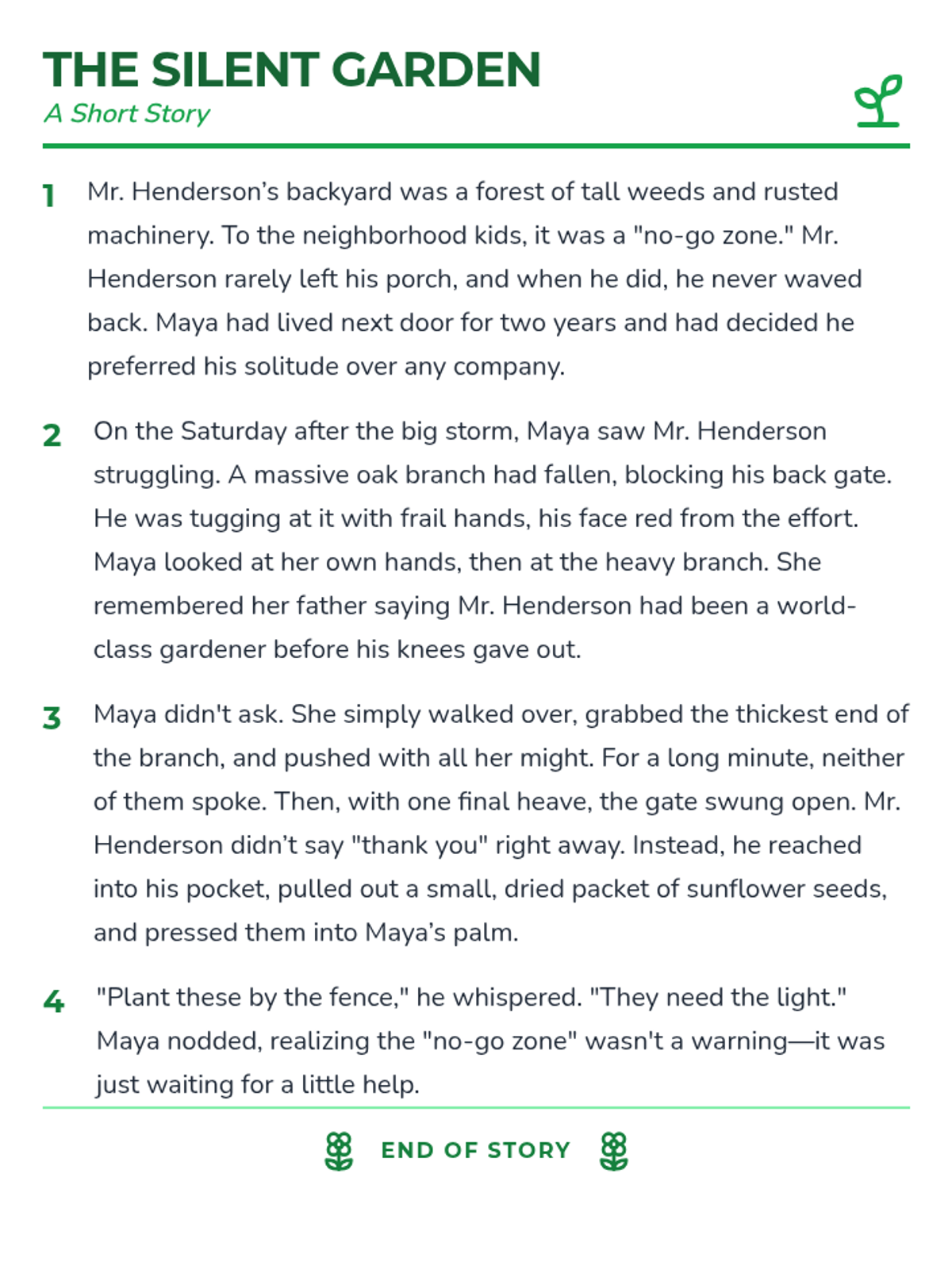
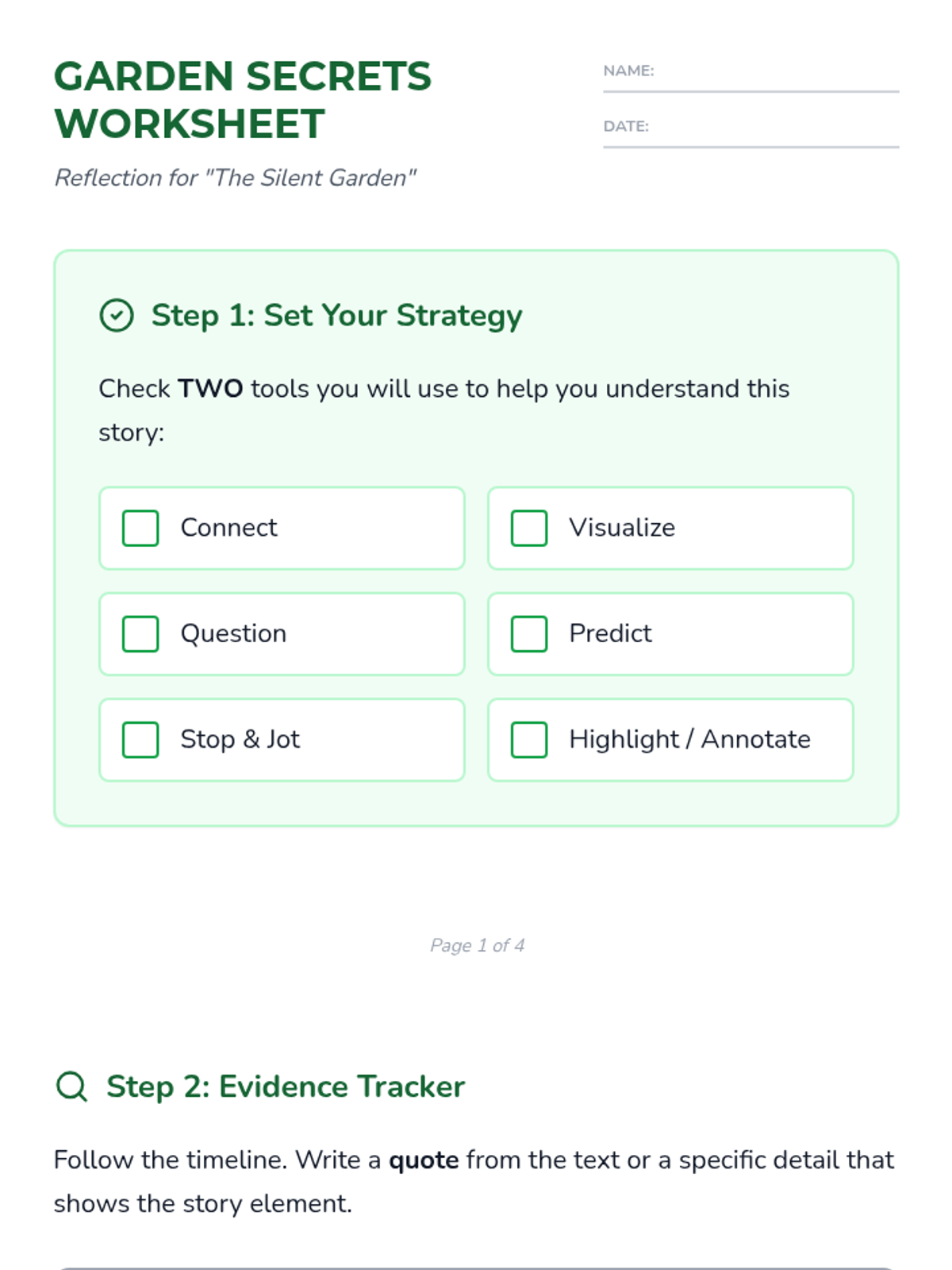
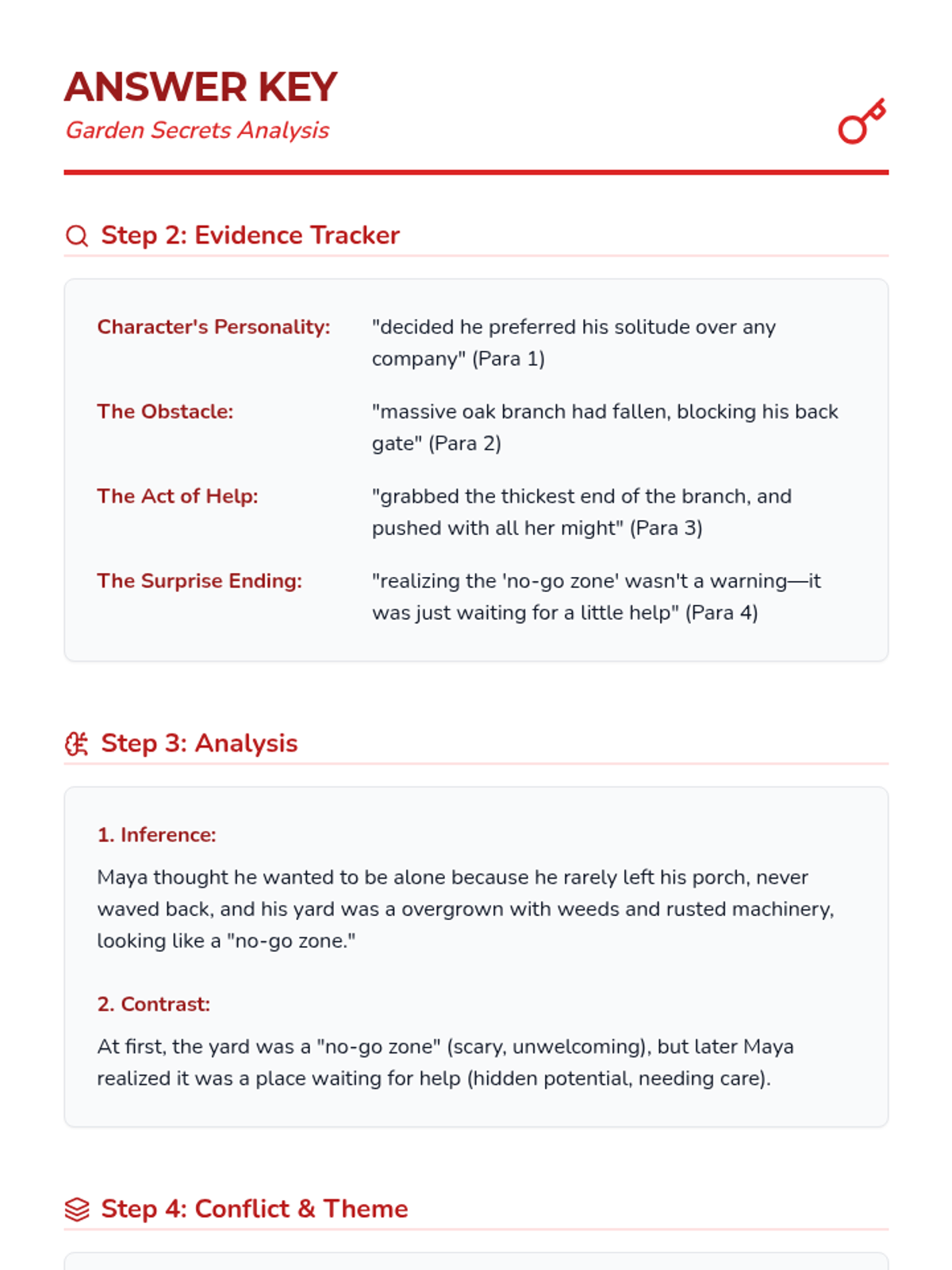
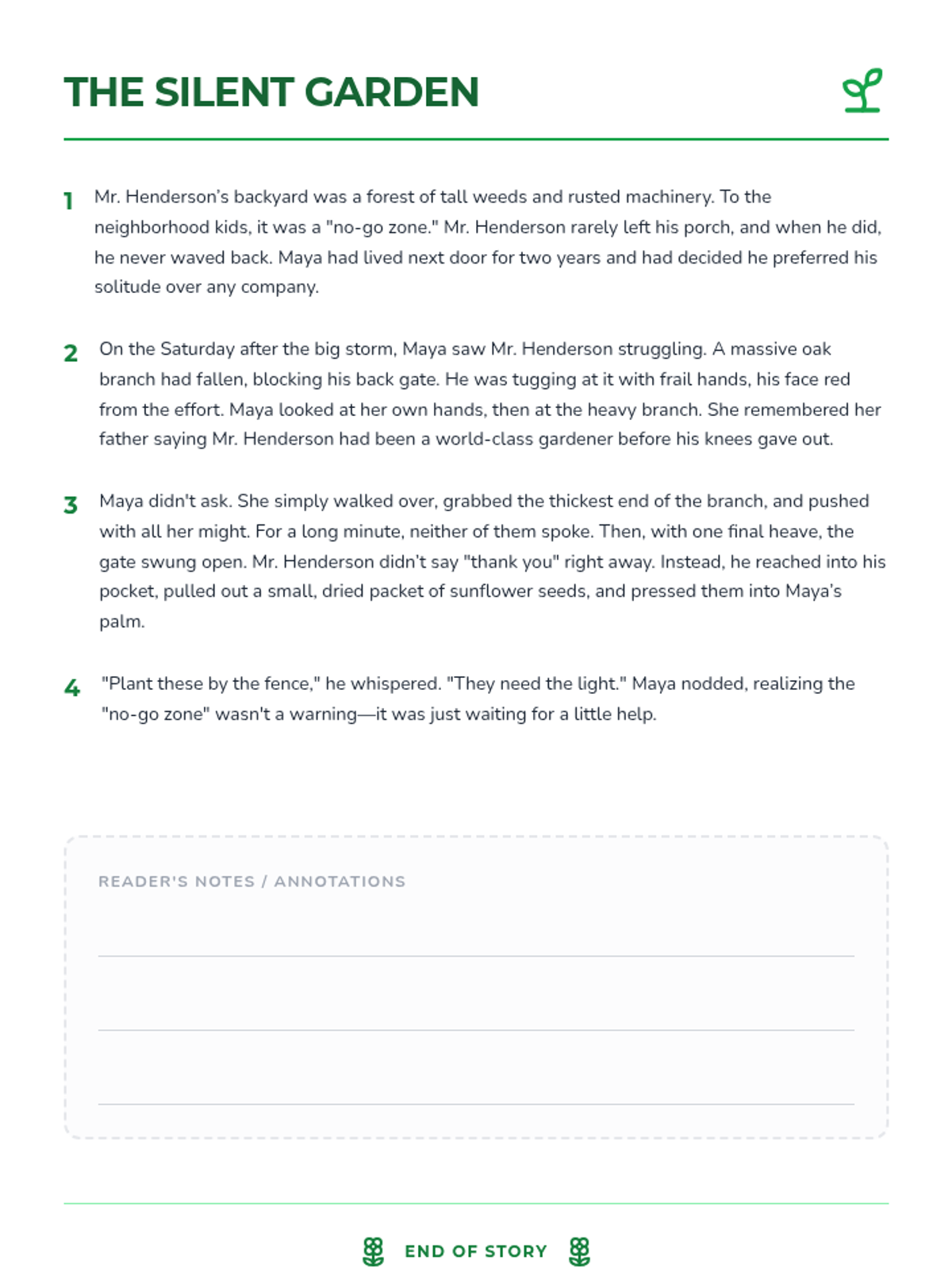
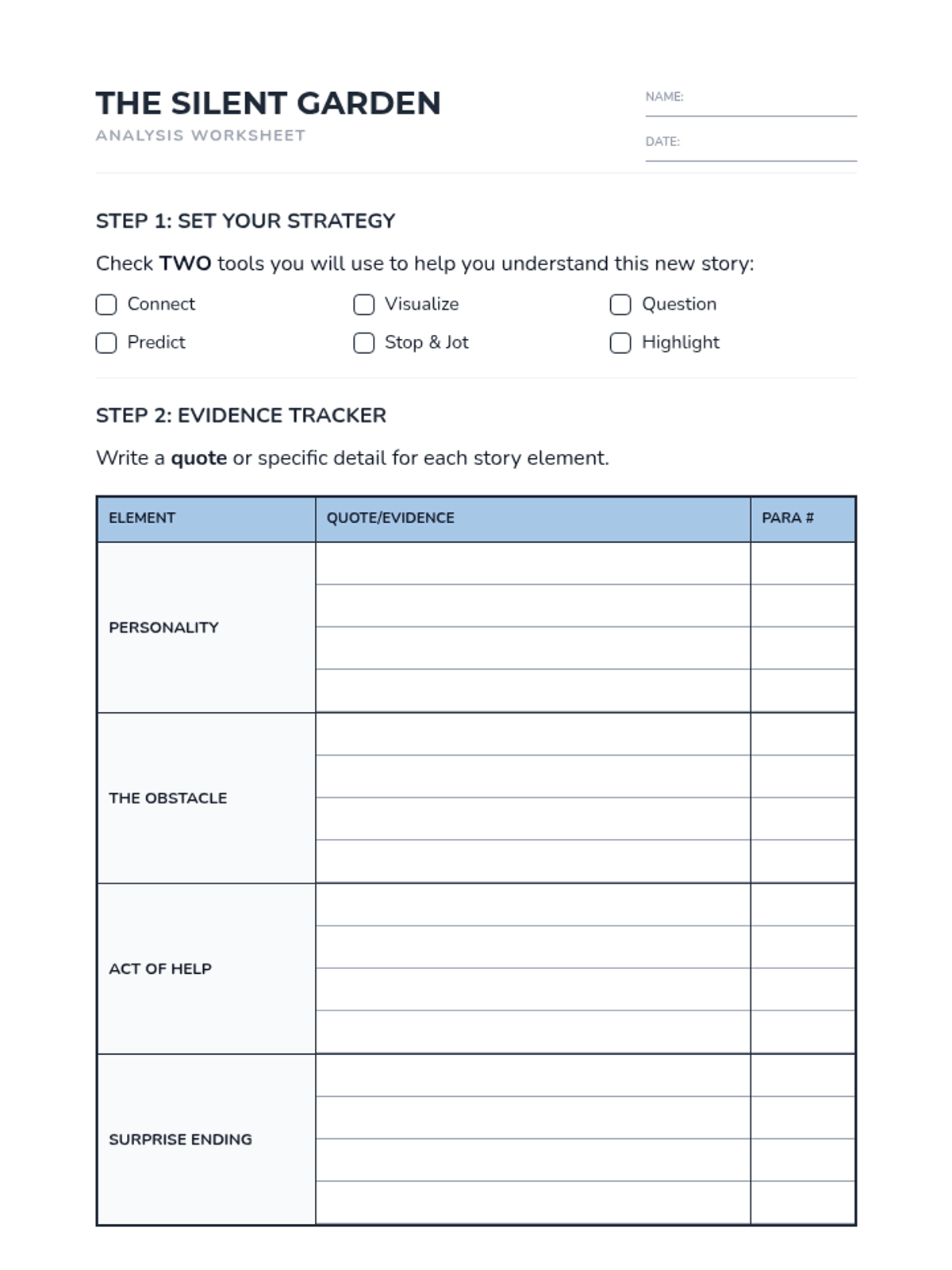
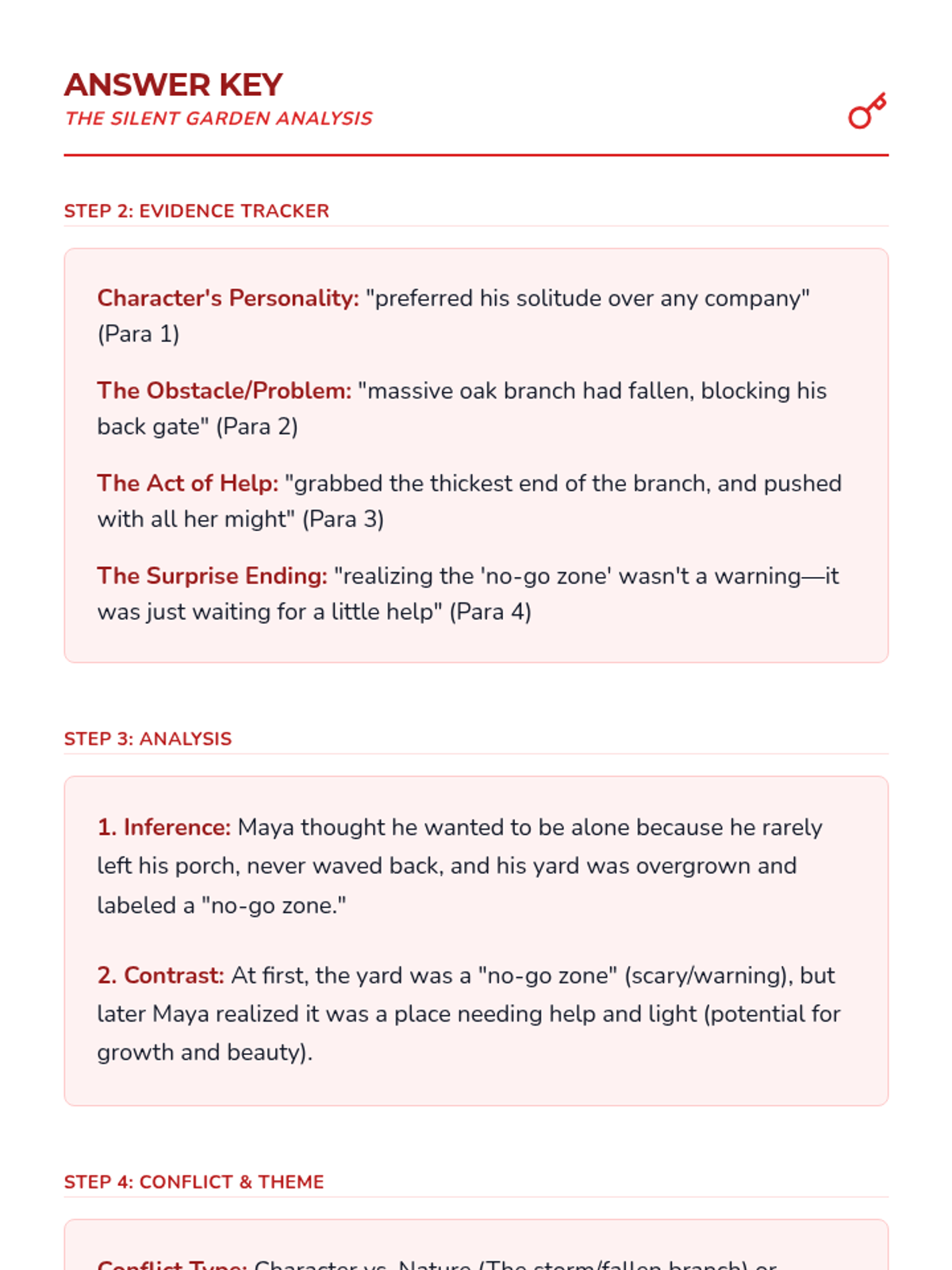
A reading comprehension lesson centered on 'The Silent Garden', focusing on character analysis, conflict types, and theme development with accommodations for special education needs.