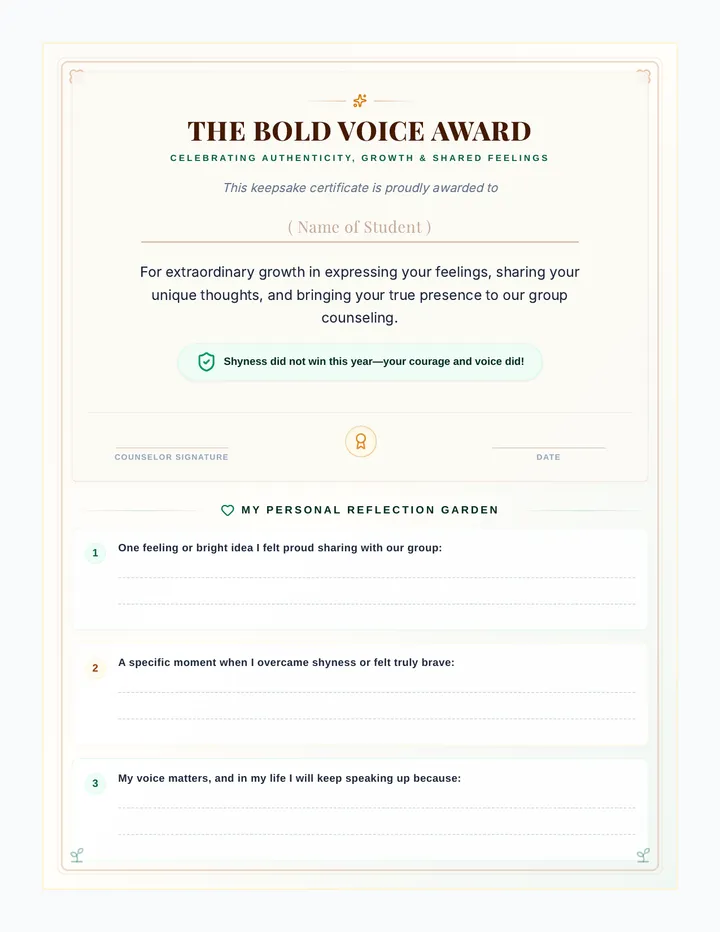
Building resilience and a growth mindset by reframing mistakes as learning opportunities.
No materials in this lesson yet.
A comprehensive guide and set of tools to help students transition from elementary to middle school, focusing on lockers, schedules, and self-advocacy.
Students will learn to identify common financial scams, protect their personal information online, and understand the steps to take if they become a victim of identity theft.
An introduction to the world of credit, covering how credit scores work in Canada, the difference between credit and debit, and the true cost of borrowing money.
Students will explore the power of compound interest, understand the difference between simple and compound growth, and set SMART financial goals using Canadian savings tools like TFSAs.
A 20-minute lesson teaching K-4 students conflict resolution strategies through a 'Peace Patch' garden theme, focusing on breathing, I-statements, and finding solutions.
Students will master the daily operations of a bank account, including using debit cards, avoiding common fees, using mobile banking apps safely, and tracking their spending.
Students will learn the difference between checking and savings accounts, compare different banking institutions, and identify the specific documents required to open an account as a minor.
The introductory materials for the Brain Glitch Defense curriculum, including the facilitator guide, roadmap, and core objectives.
The core lesson of the Brain Glitch series, introducing cognitive distortions as 'system glitches' and using a cooperative board game to teach students how to identify and debug them.
A high-speed micro-lesson designed to give students actionable strategies for de-escalating conflicts with peers and teachers in under 10 minutes. Updated with the Peace Protocol framework.
Focuses on building daily routines and taking ownership of school materials and assignments to foster academic independence.
Introduces growth mindset concepts to help students view challenges and mistakes as opportunities for improvement rather than failures.
Explores the shifting nature of middle school friendships, setting healthy boundaries, and practicing inclusive social habits.
Empowers students to communicate their needs to teachers and peers using respectful, effective language and scripts.
Teaches students how to break down large projects into manageable steps and accurately estimate task duration to prevent procrastination.
A 15-minute session teaching students how to approach teachers professionally, ask for help, and use appropriate email and verbal communication protocols.