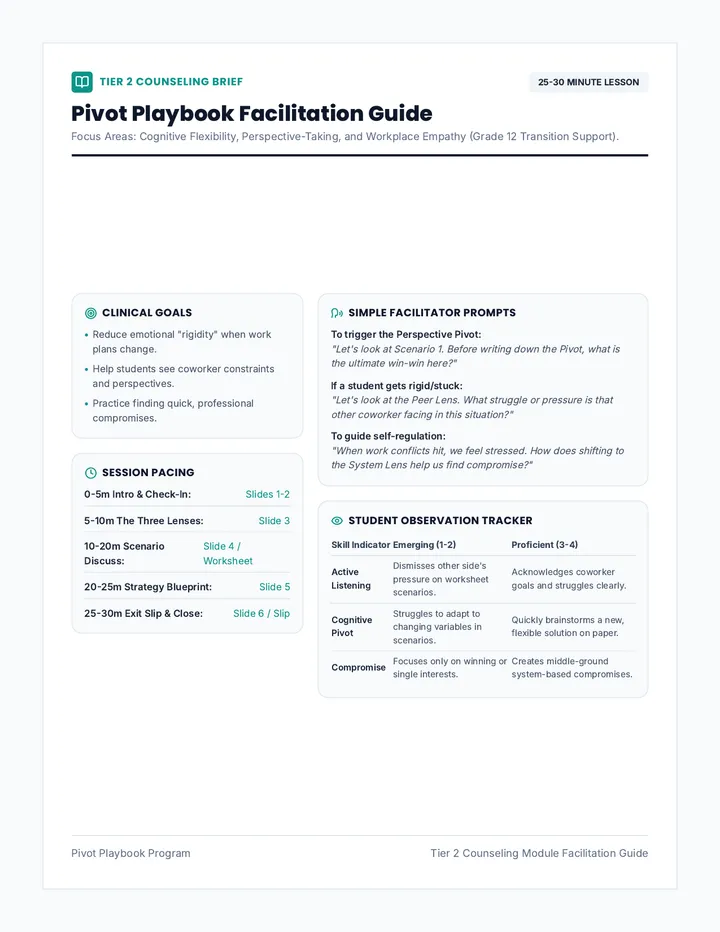
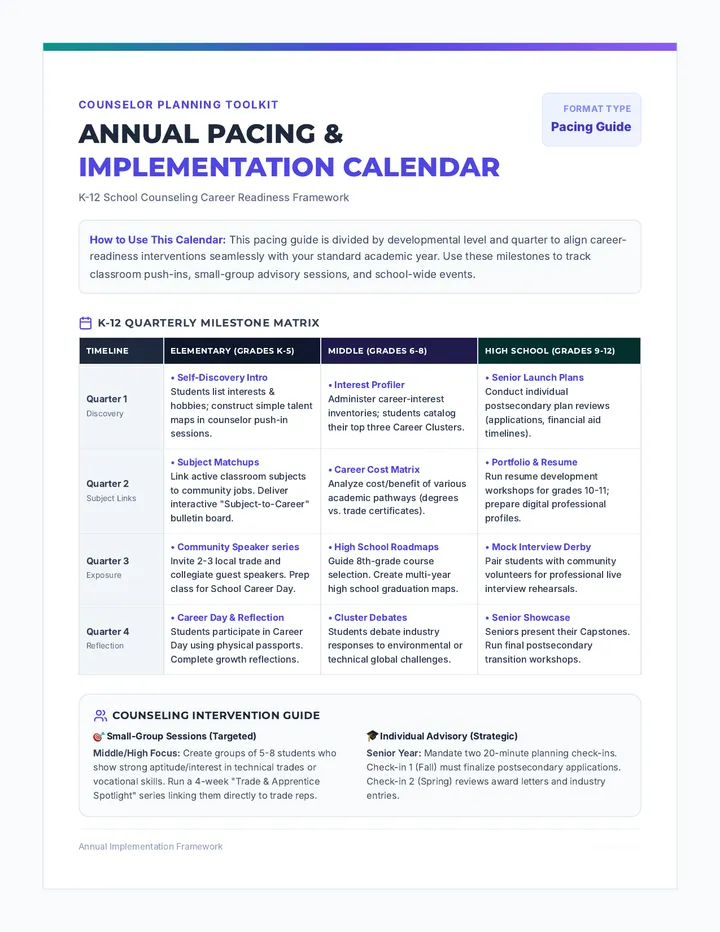
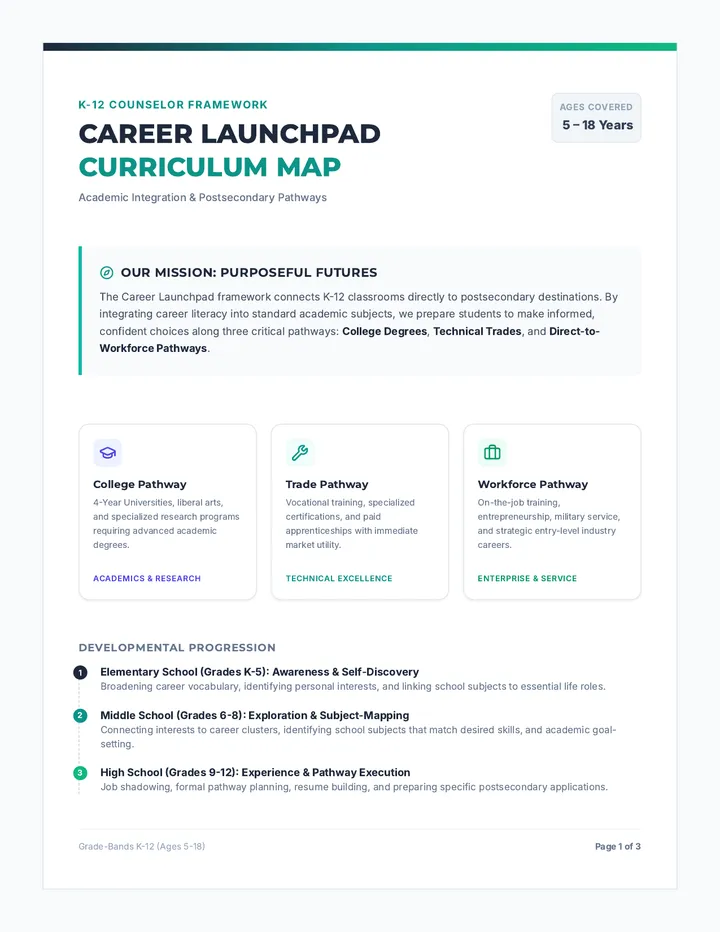
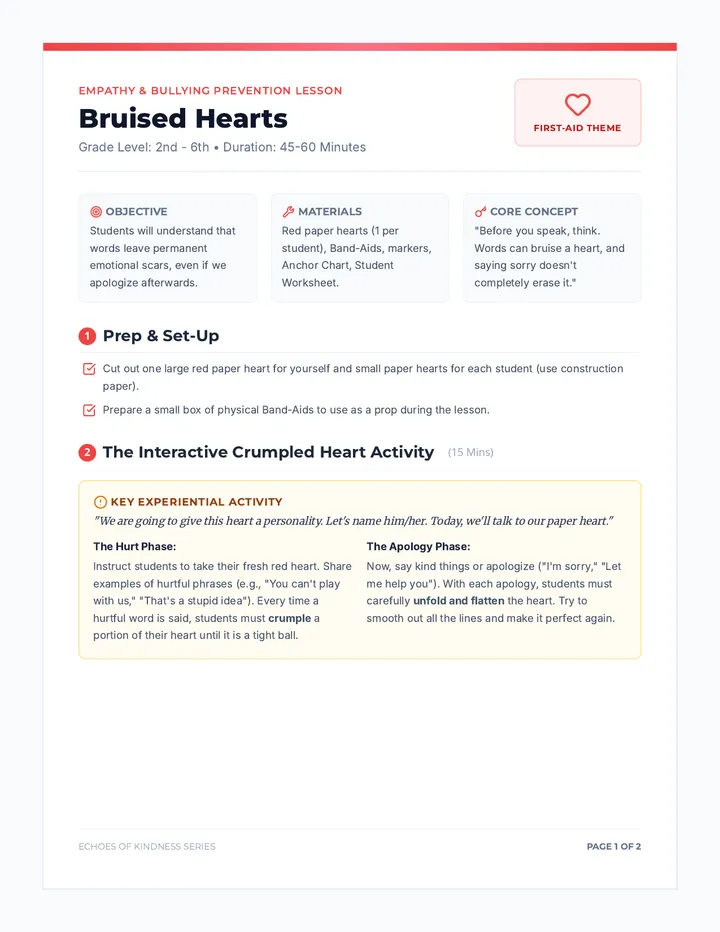
Mission Control Slides
A 6-slide presentation that guides students through a weekly "Mission Control" check-in process to prioritize tasks and practice self-advocacy.
Weekly Mission Map Worksheet
A single-page weekly planner designed to help students track top priorities and advocacy goals in a compact, structured format.
Advocacy Script Cards
A reference sheet featuring six "script cards" to help students advocate for themselves in common academic situations, like asking for extensions or clarification.
Mentor Meeting Guide
A professional guide for teachers on how to facilitate a 10-15 minute "Mission Control" check-in meeting, including prompts and pacing.
Mission Control Slides Softer Version
A 6-slide presentation that guides students through a weekly "Mission Control" check-in process to prioritize tasks and practice self-advocacy, now in a softer, professional palette.
Weekly Mission Map Worksheet Softer Version
A single-page weekly planner designed to help students track top priorities and advocacy goals, now in a softer emerald and cream palette.
Advocacy Script Cards Softer Version
A reference sheet featuring six "script cards" to help students advocate for themselves, now in a softer emerald and cream professional palette.
Mentor Meeting Guide Softer Version
A professional guide for teachers on how to facilitate a 10-15 minute "Mission Control" check-in meeting, now in a professional emerald and cream palette.