A lesson focused on identifying negative self-talk and practicing four key coping strategies: positive reframing, deep breathing, grounding, and 'I' statements to improve academic resilience.
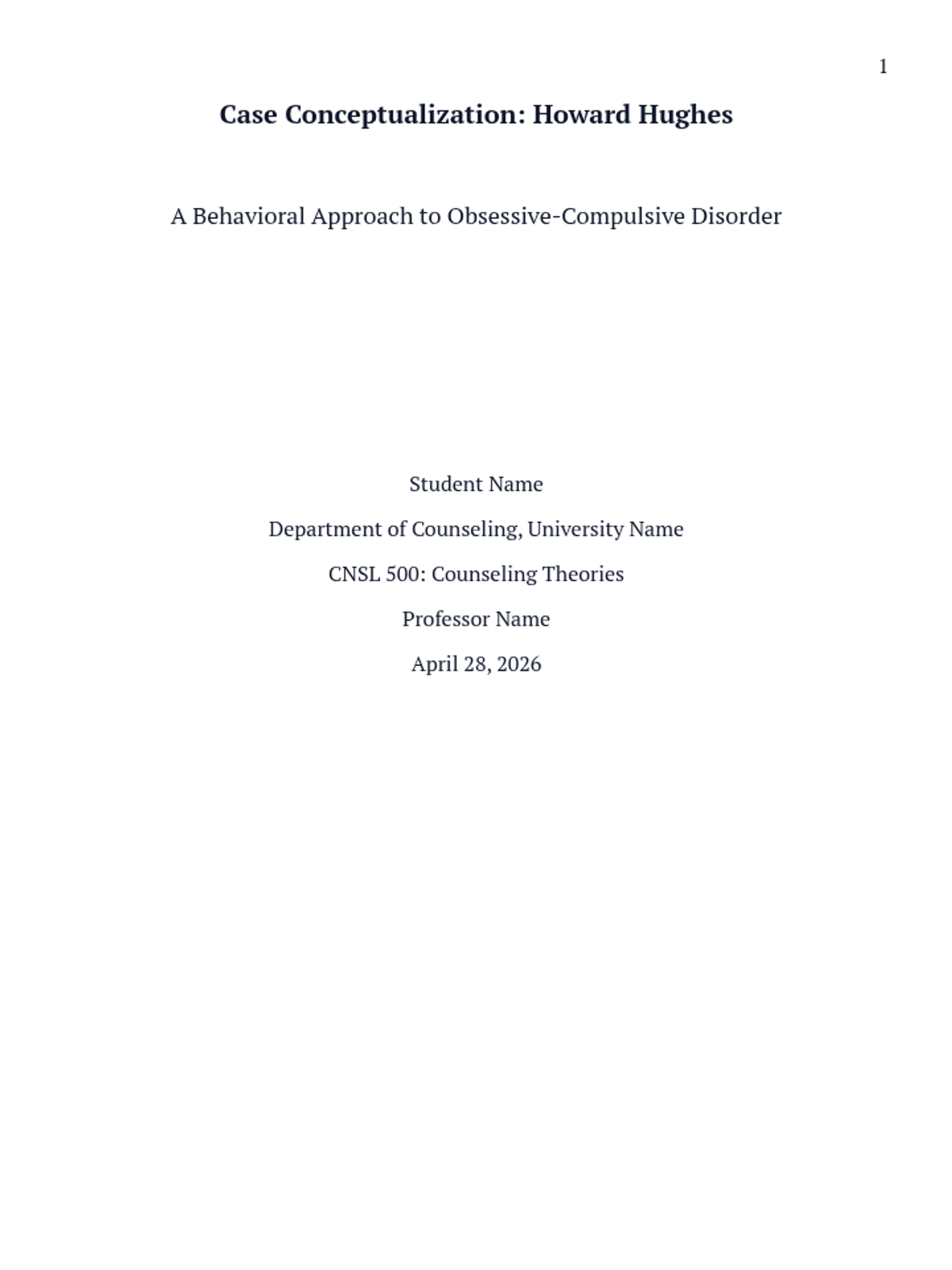
A comprehensive case conceptualization of Howard Hughes using a Behavioral Therapy framework, including a clinical presentation and a formal research paper.
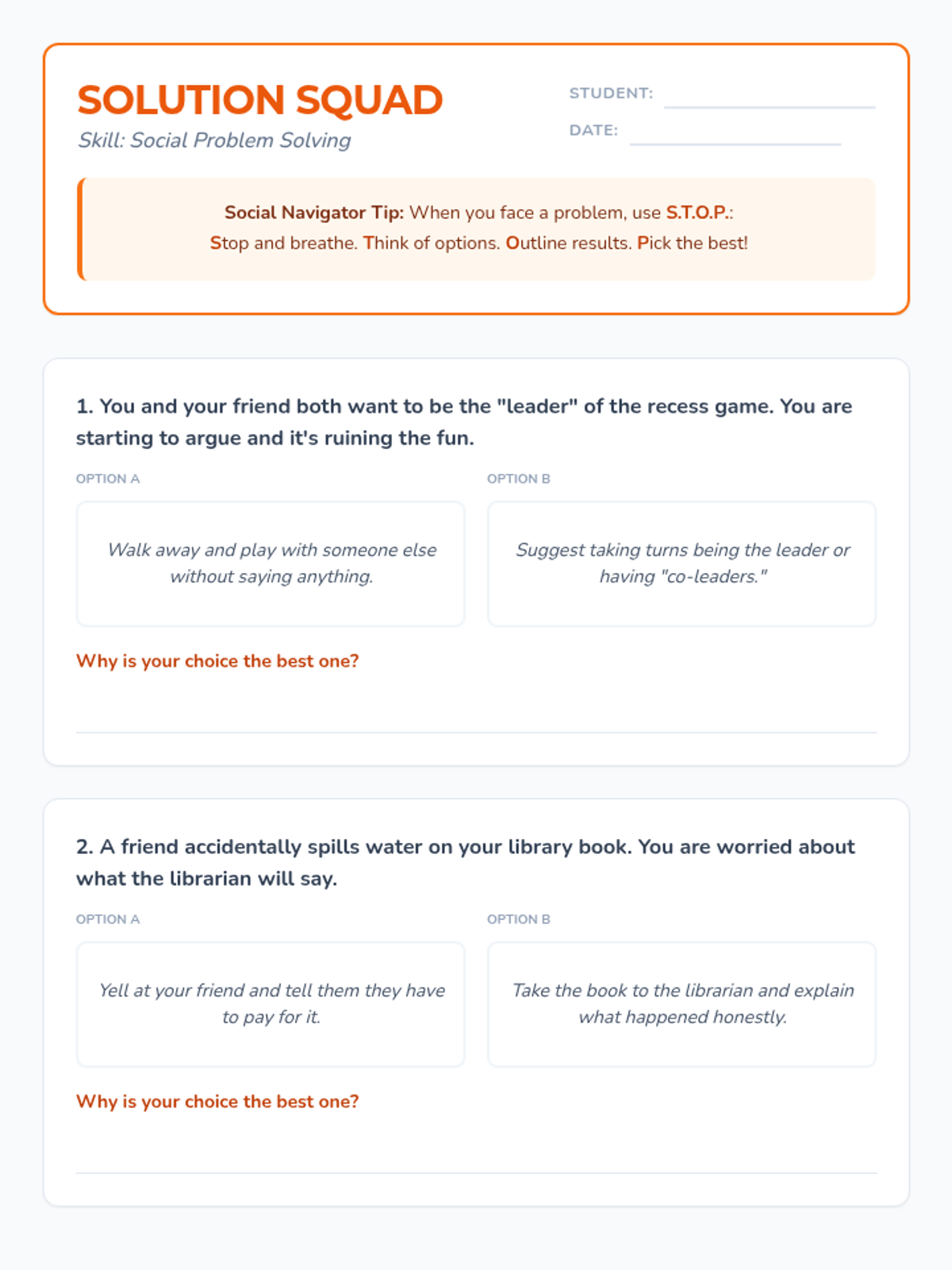
A comprehensive problem-solving framework where students choose the best solution from multiple options for complex social scenarios.
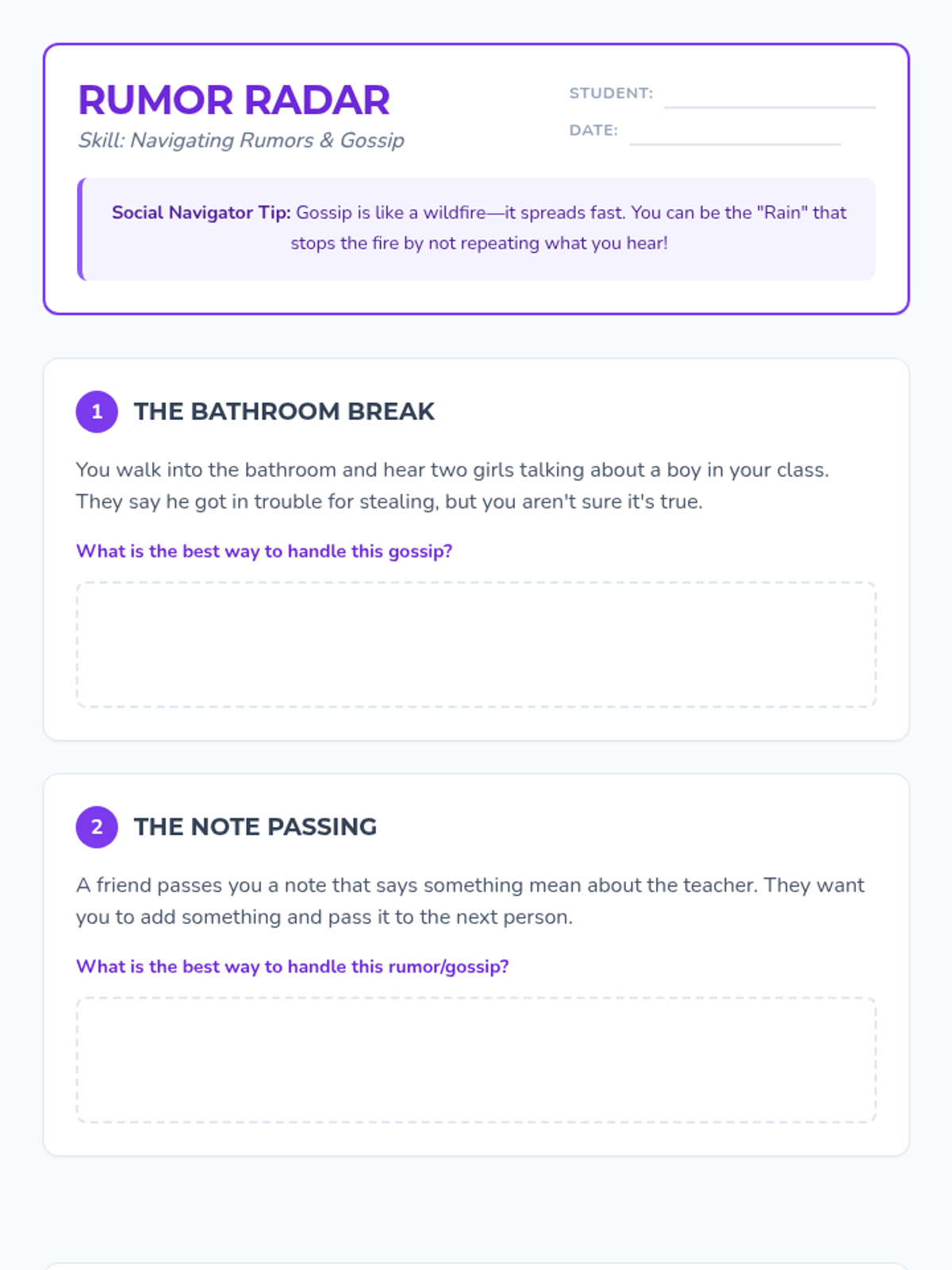
Teaches the student how to navigate rumors and gossip without participating in or being negatively affected by them.
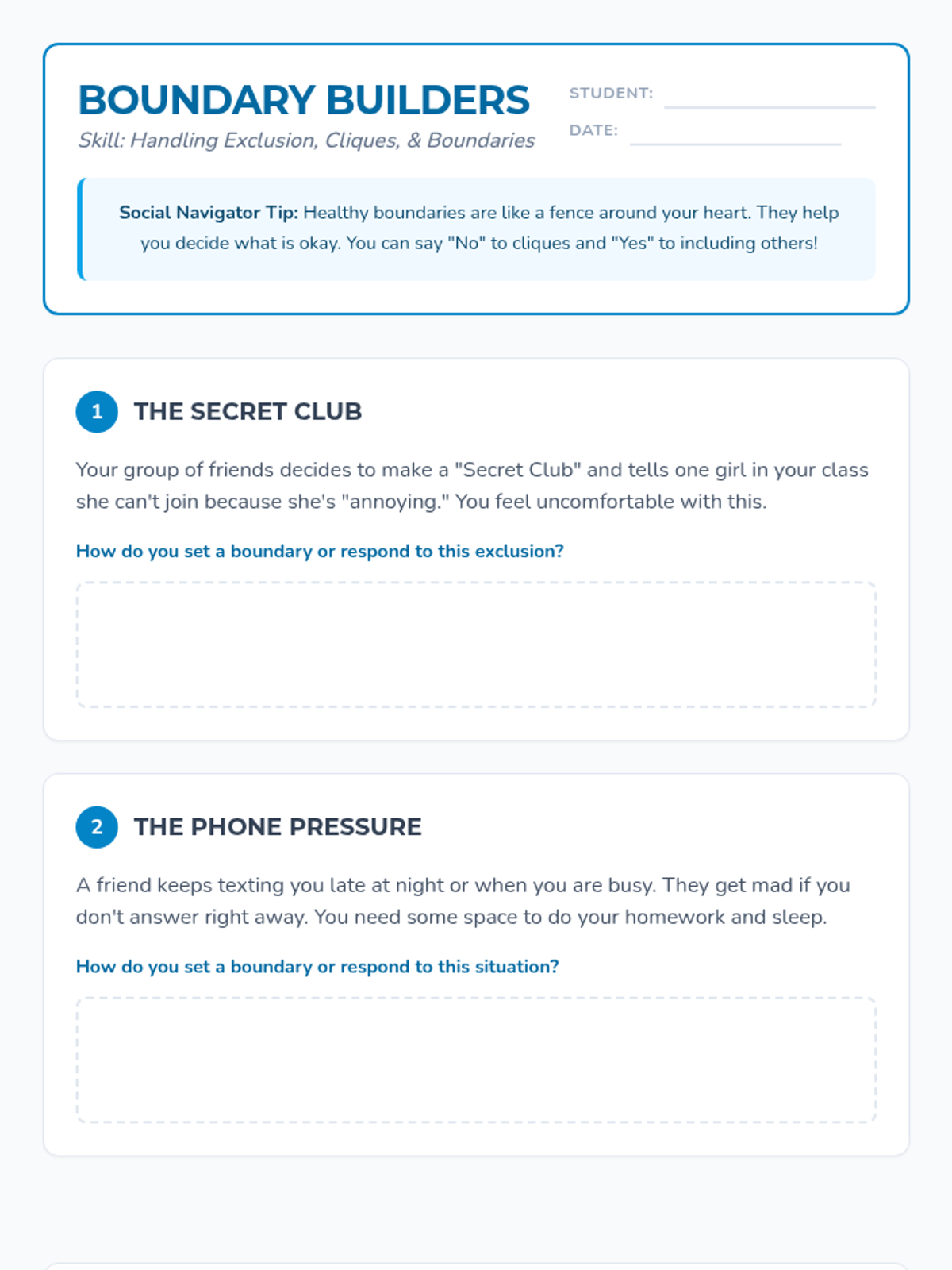
Provides strategies for handling cliques, exclusion, and setting healthy boundaries with peers.
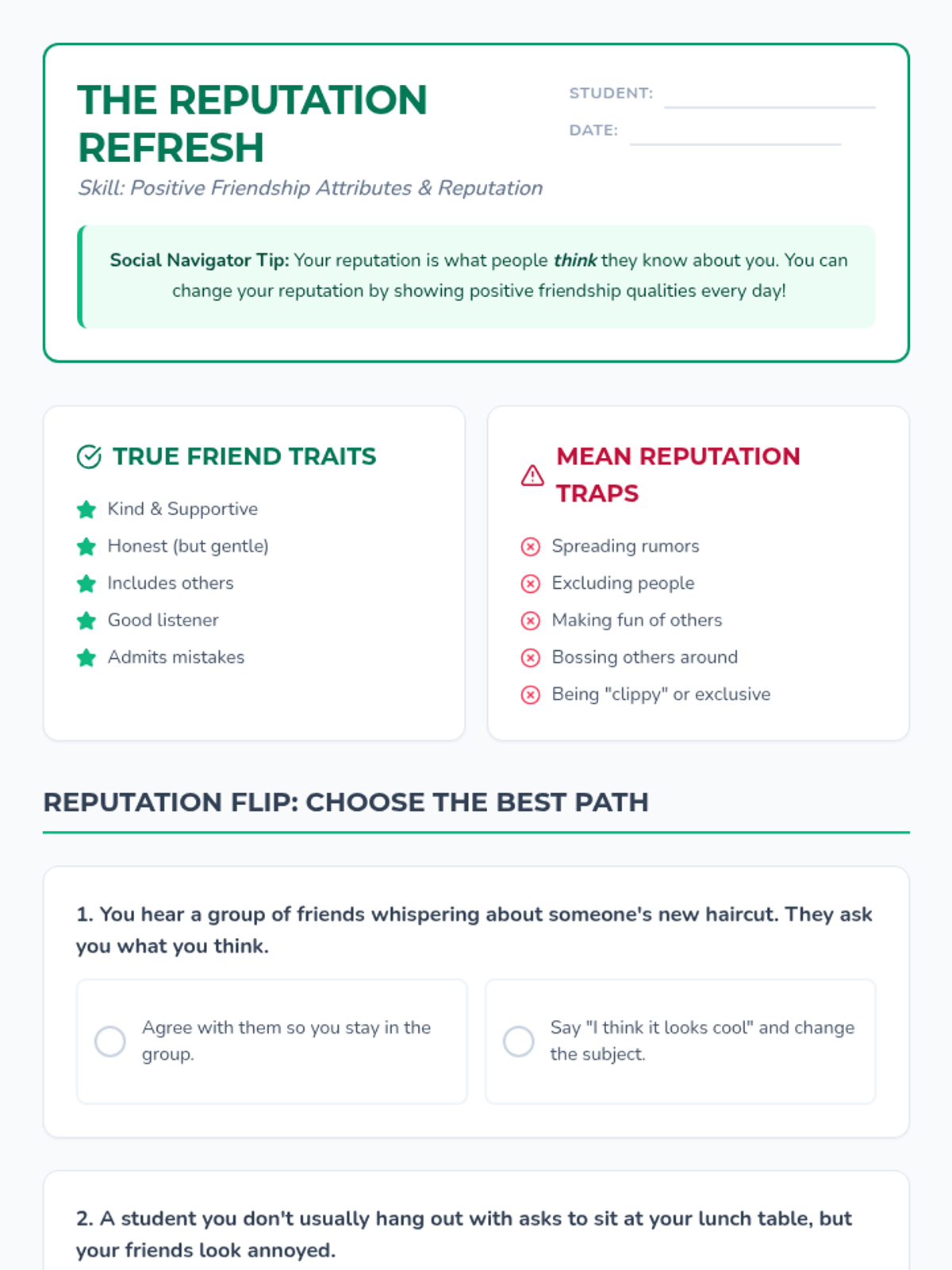
Addresses positive friendship attributes and reputation management, helping the student shift from a "mean girl" perception to a positive peer.
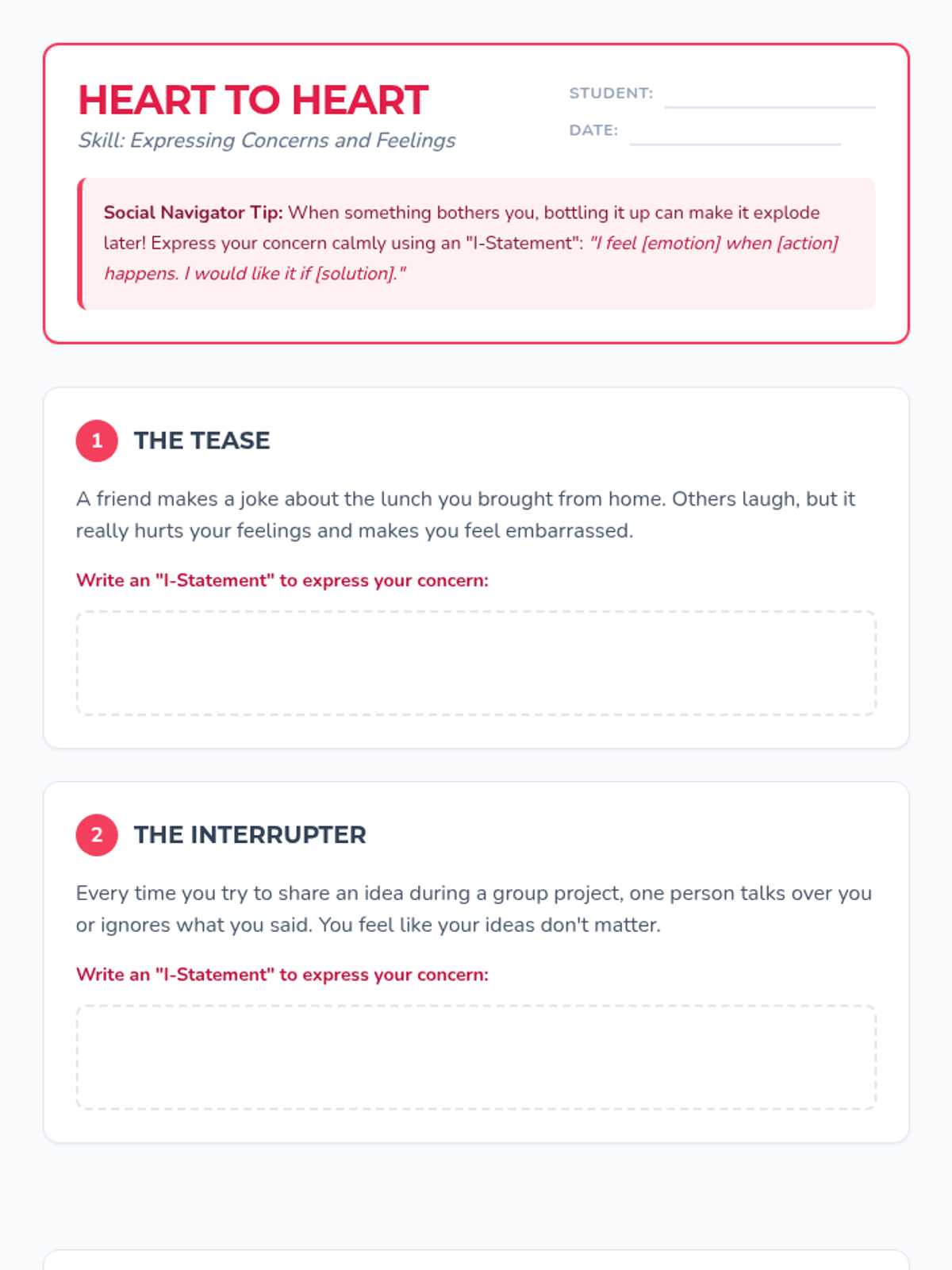
Focuses on expressing personal concerns and feelings using "I-statements" to resolve conflicts effectively.
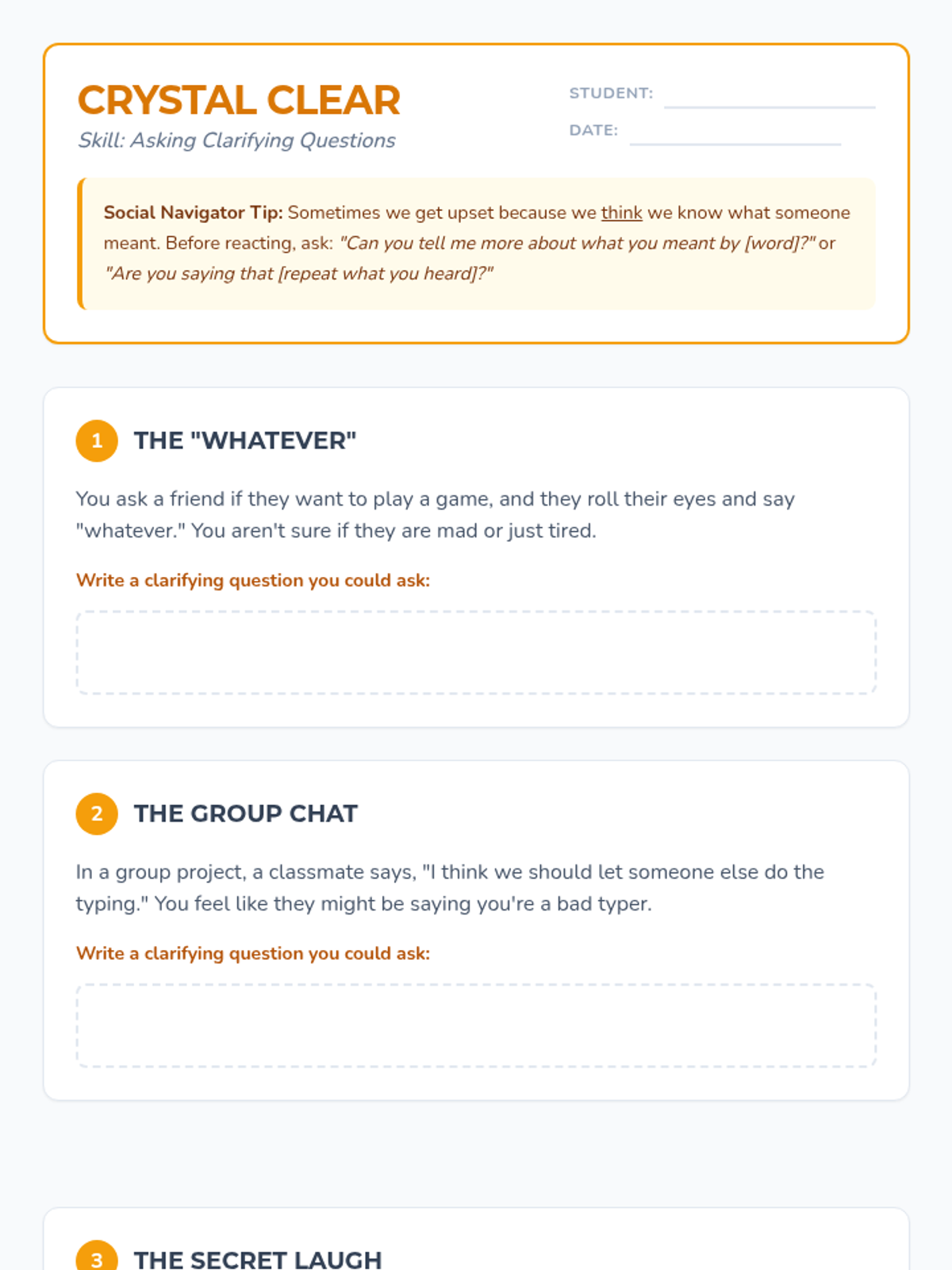
Teaches the skill of asking clarifying questions to prevent misunderstandings and gather more information before reacting.
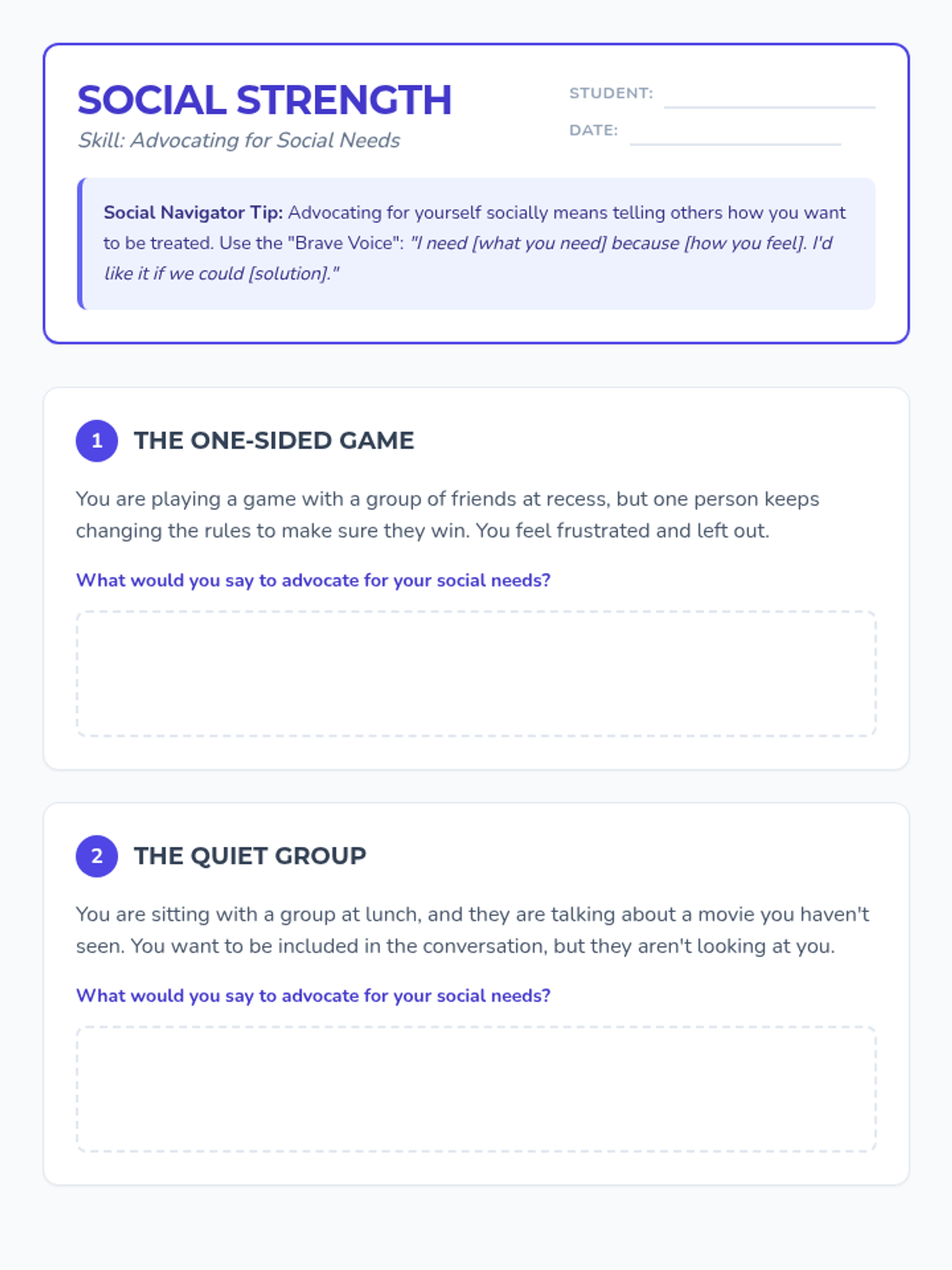
Focuses on advocating for personal needs in social settings, including asserting boundaries and expressing what is needed from friends.
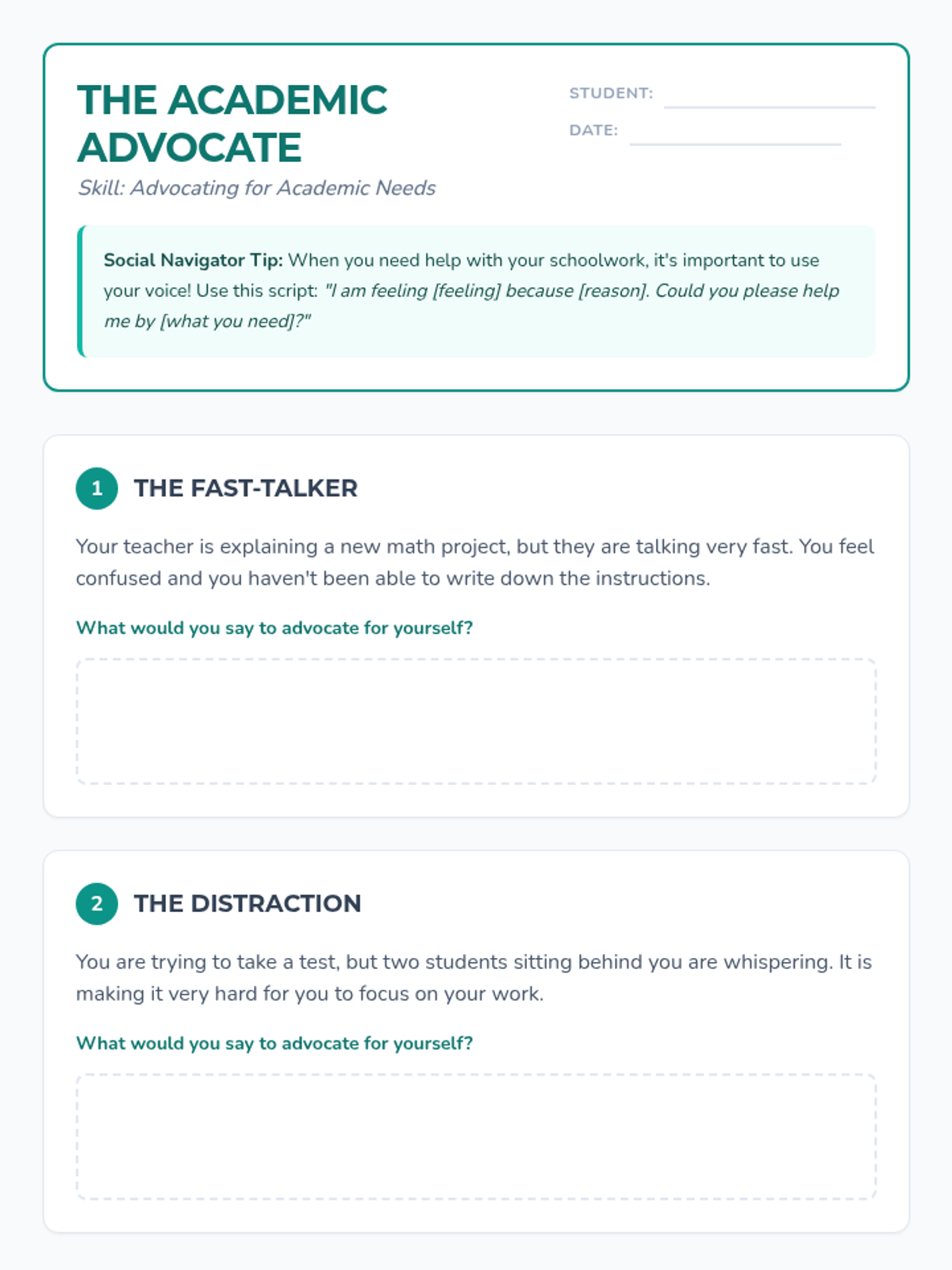
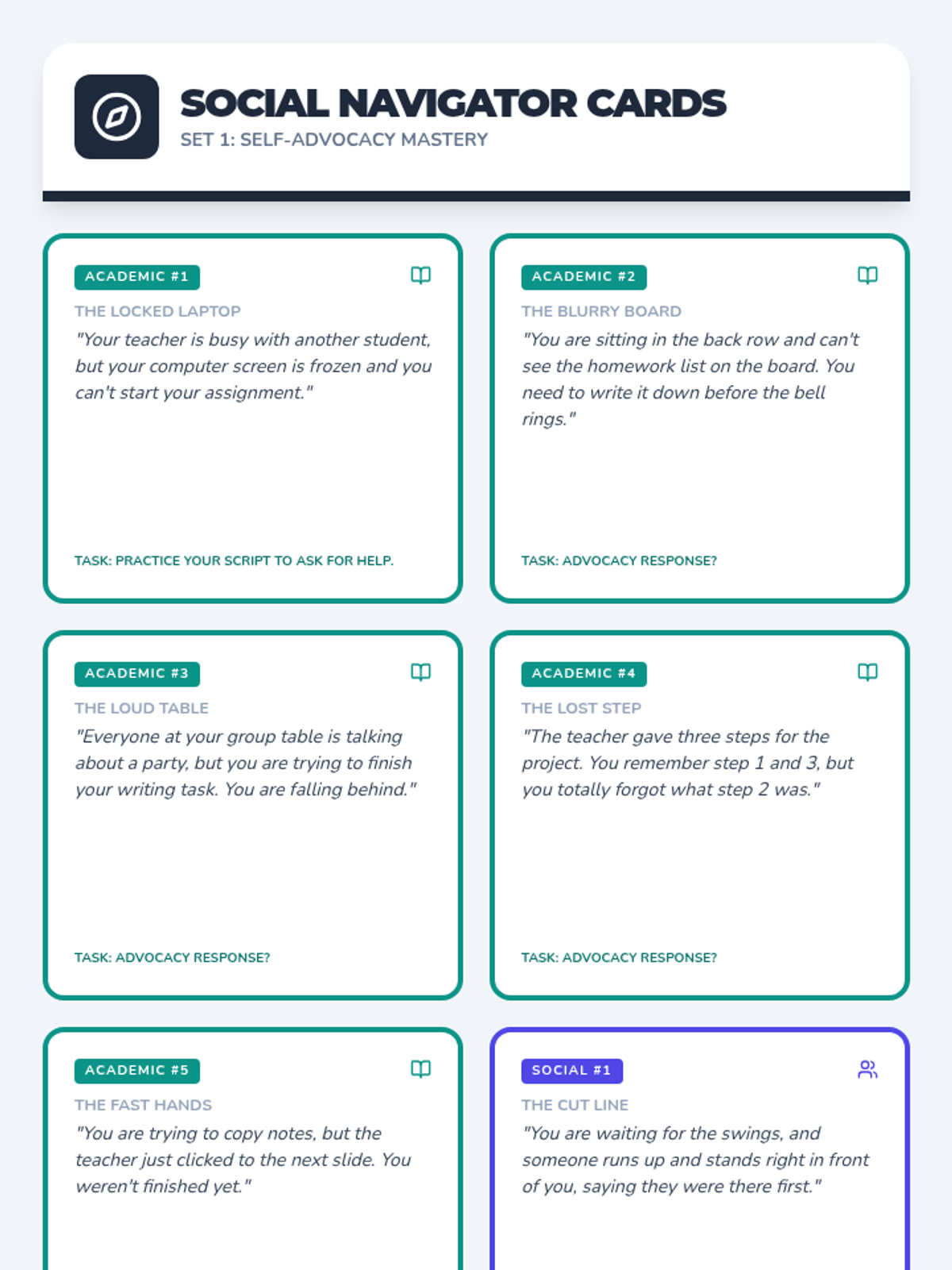
Focuses on identifying academic needs and using assertive communication to ask for help or accommodations in the classroom.
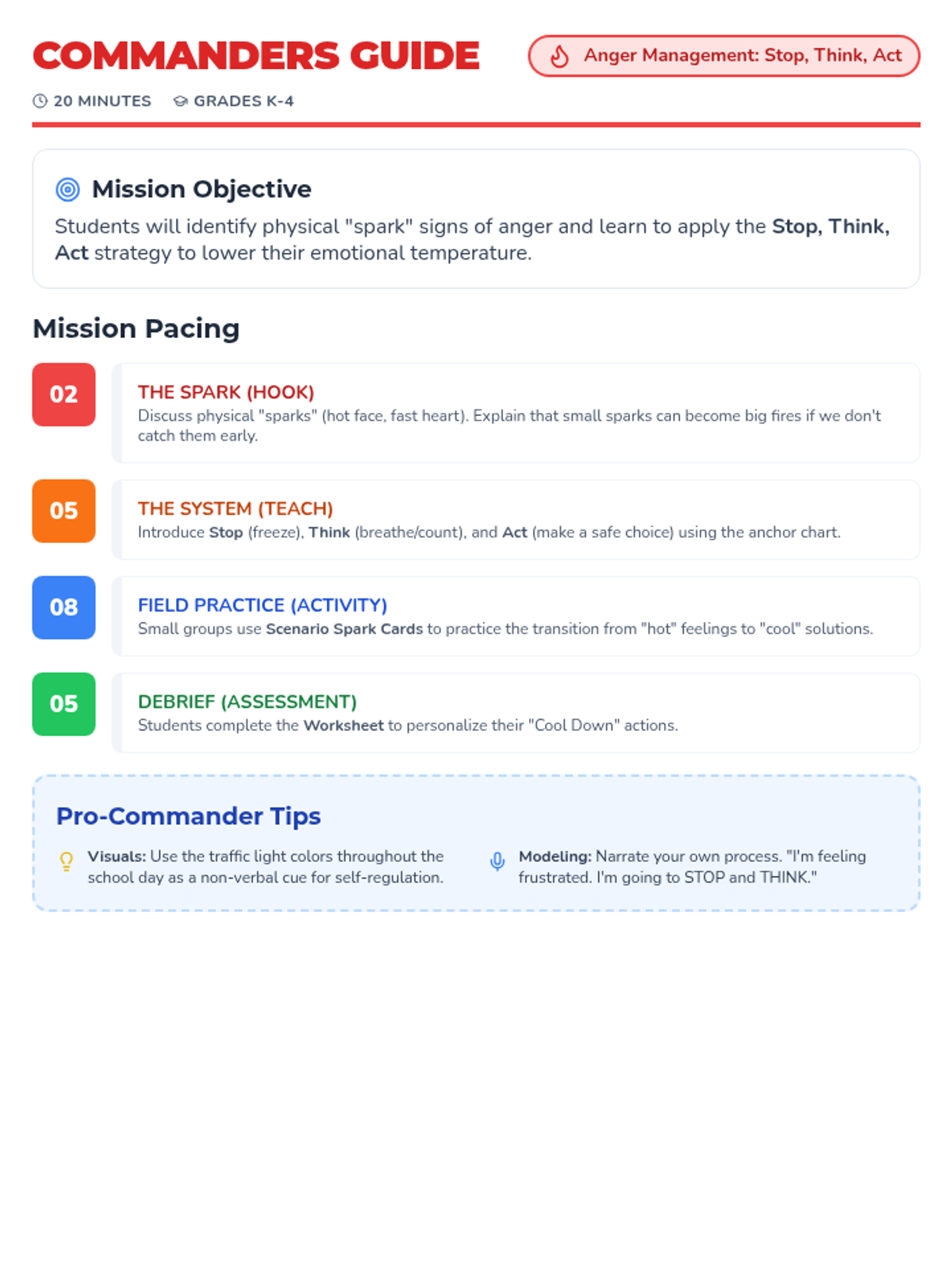
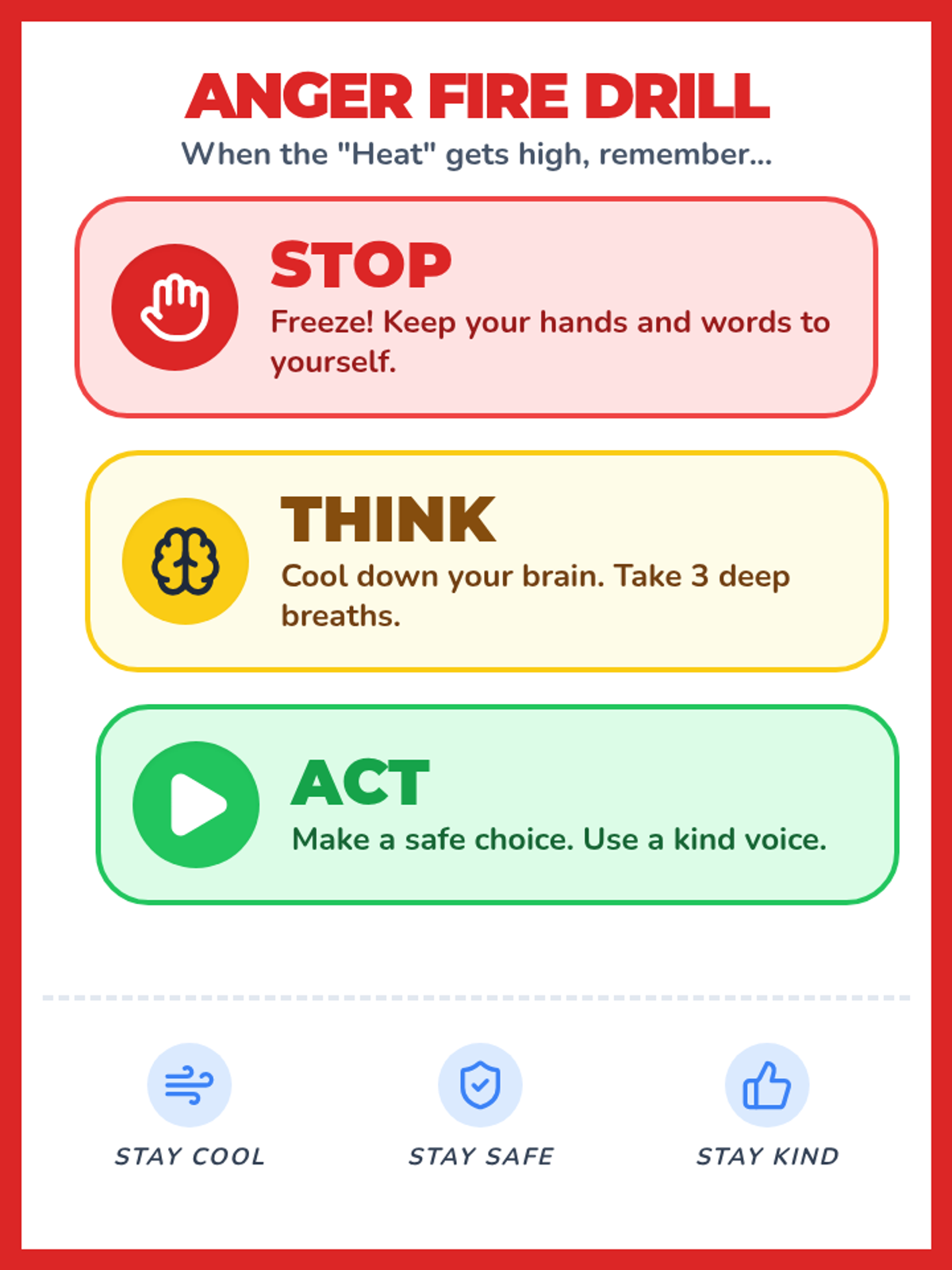
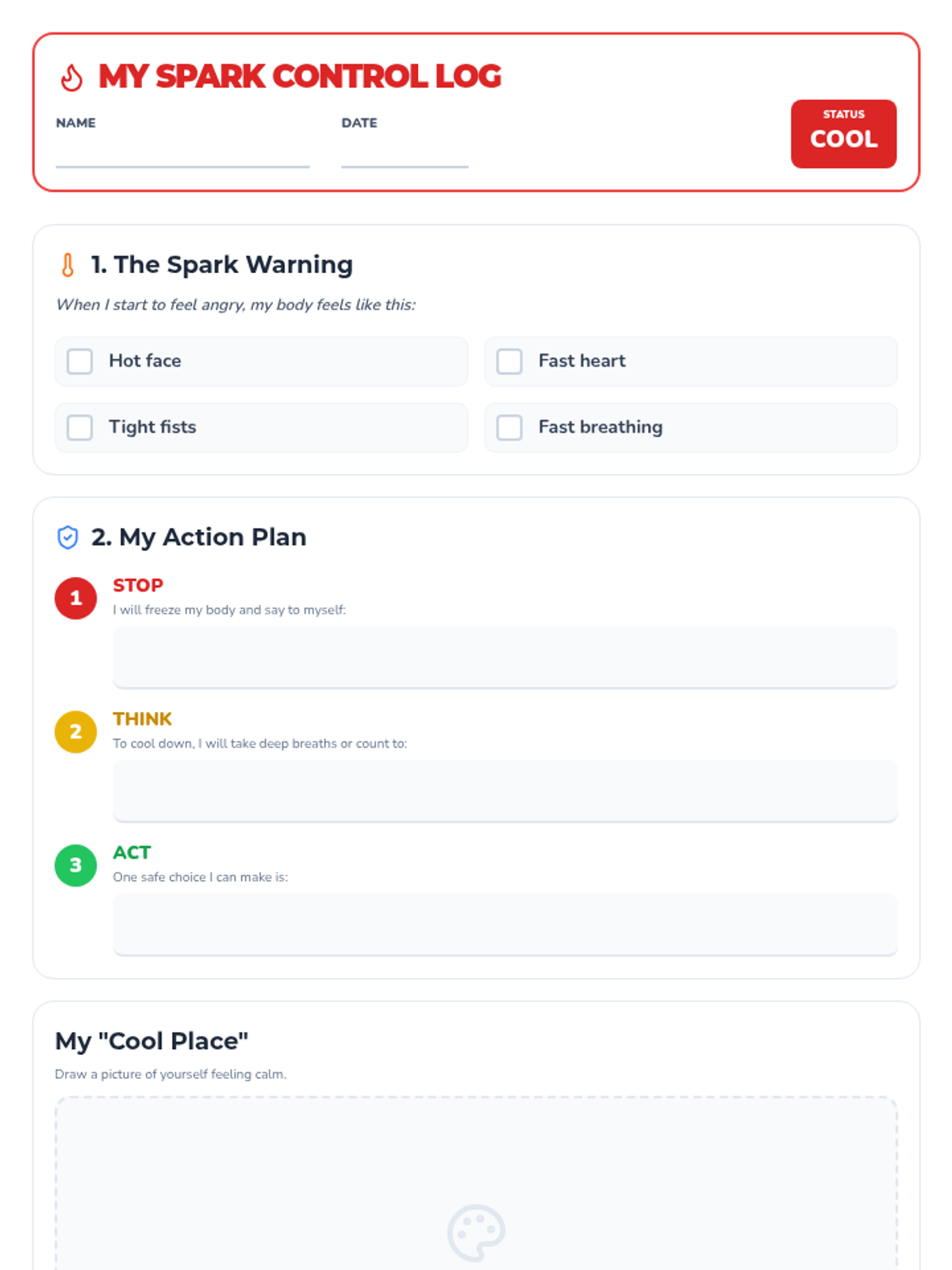
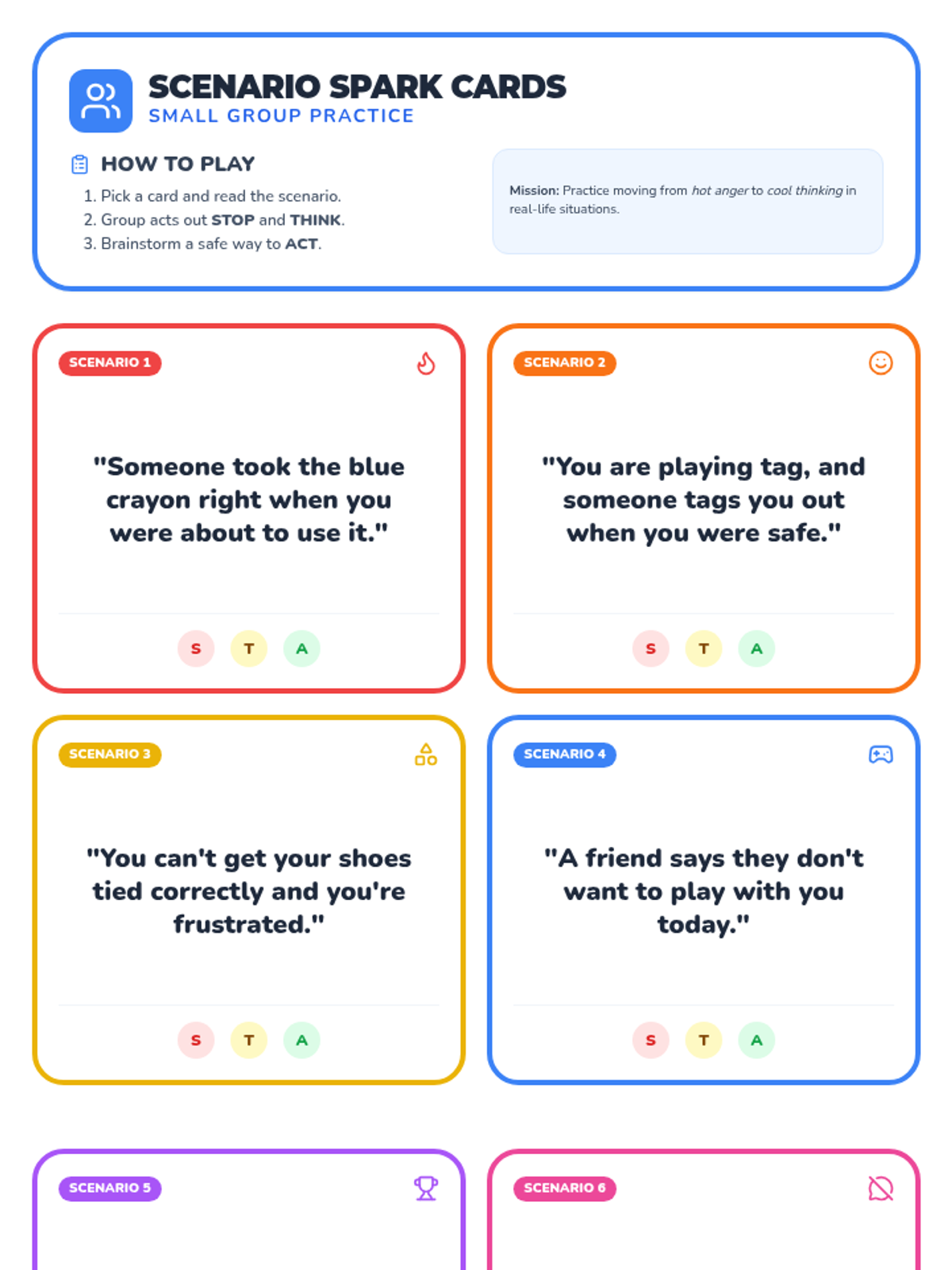
A 20-minute social-emotional learning lesson for grades K-4 focused on the 'Stop, Think, Act' strategy for managing anger and high-energy emotions.
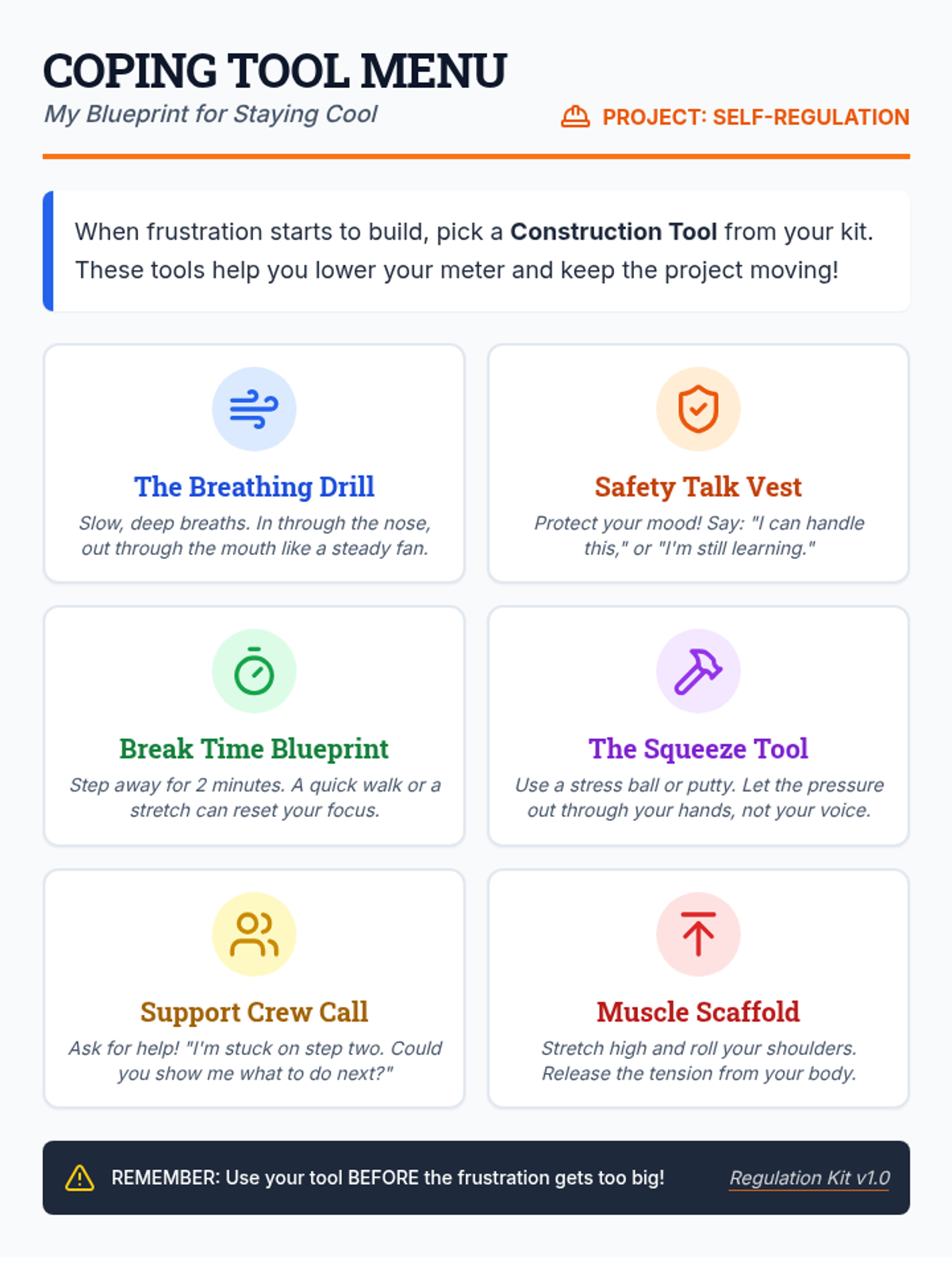
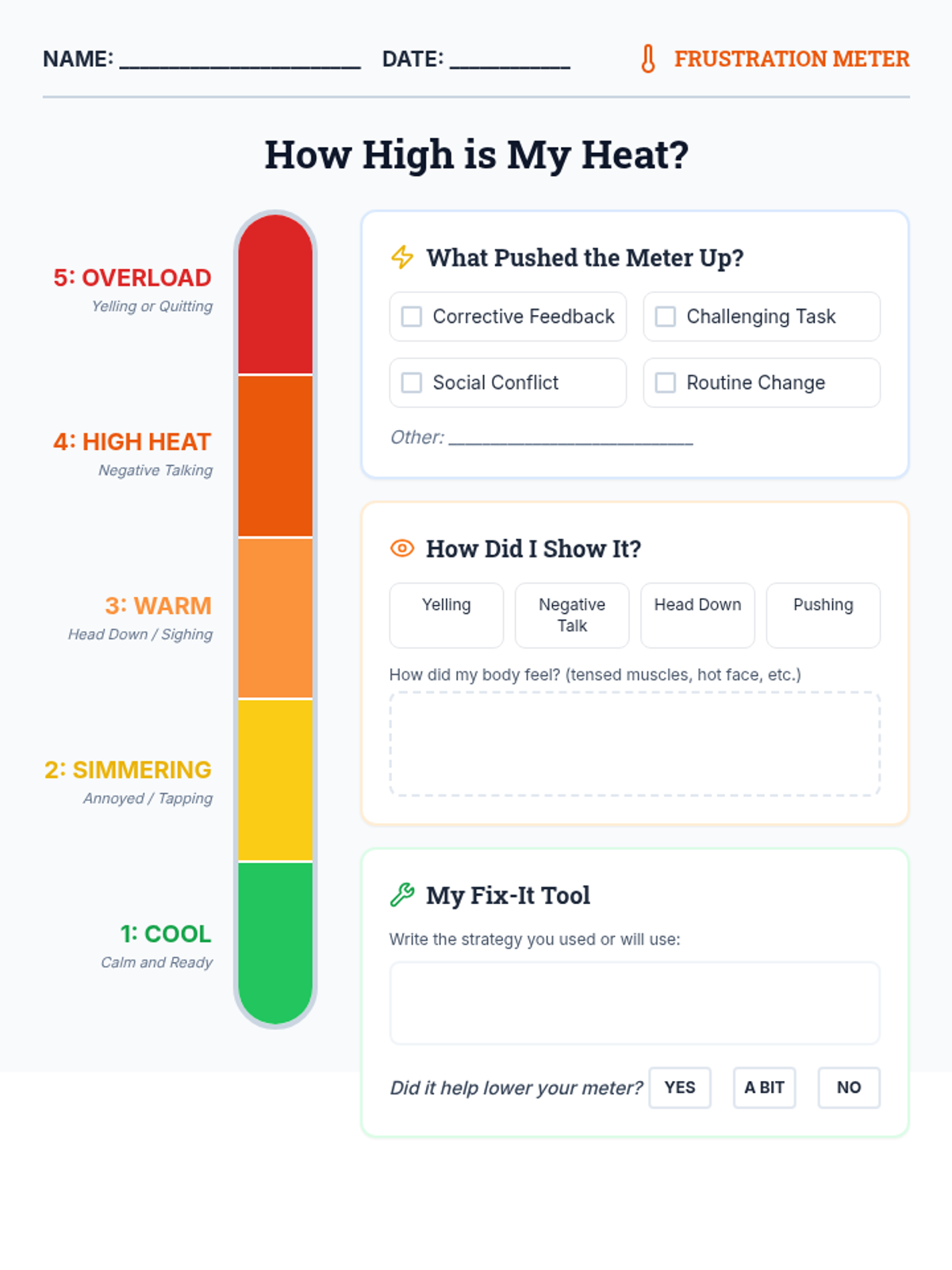
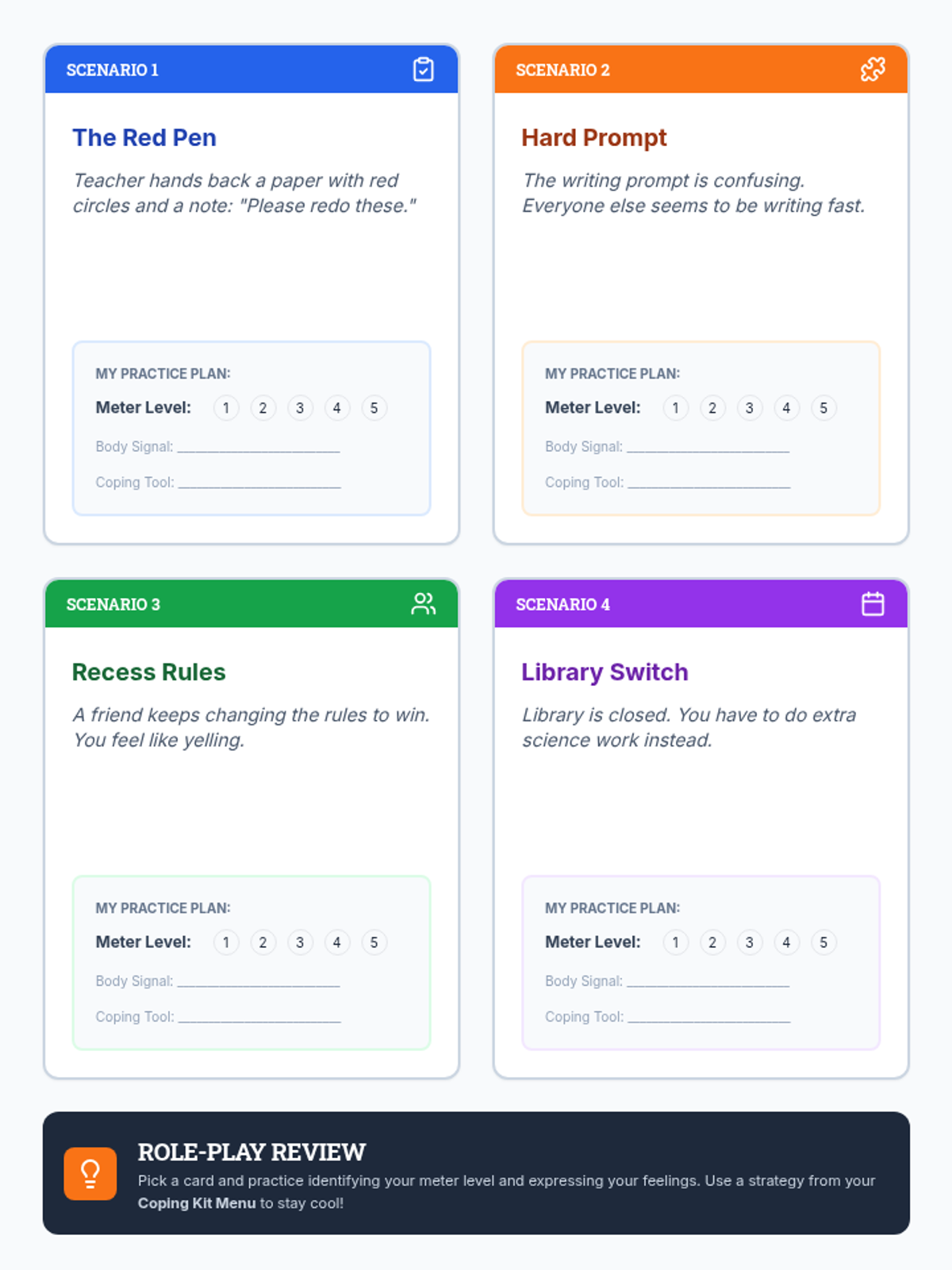
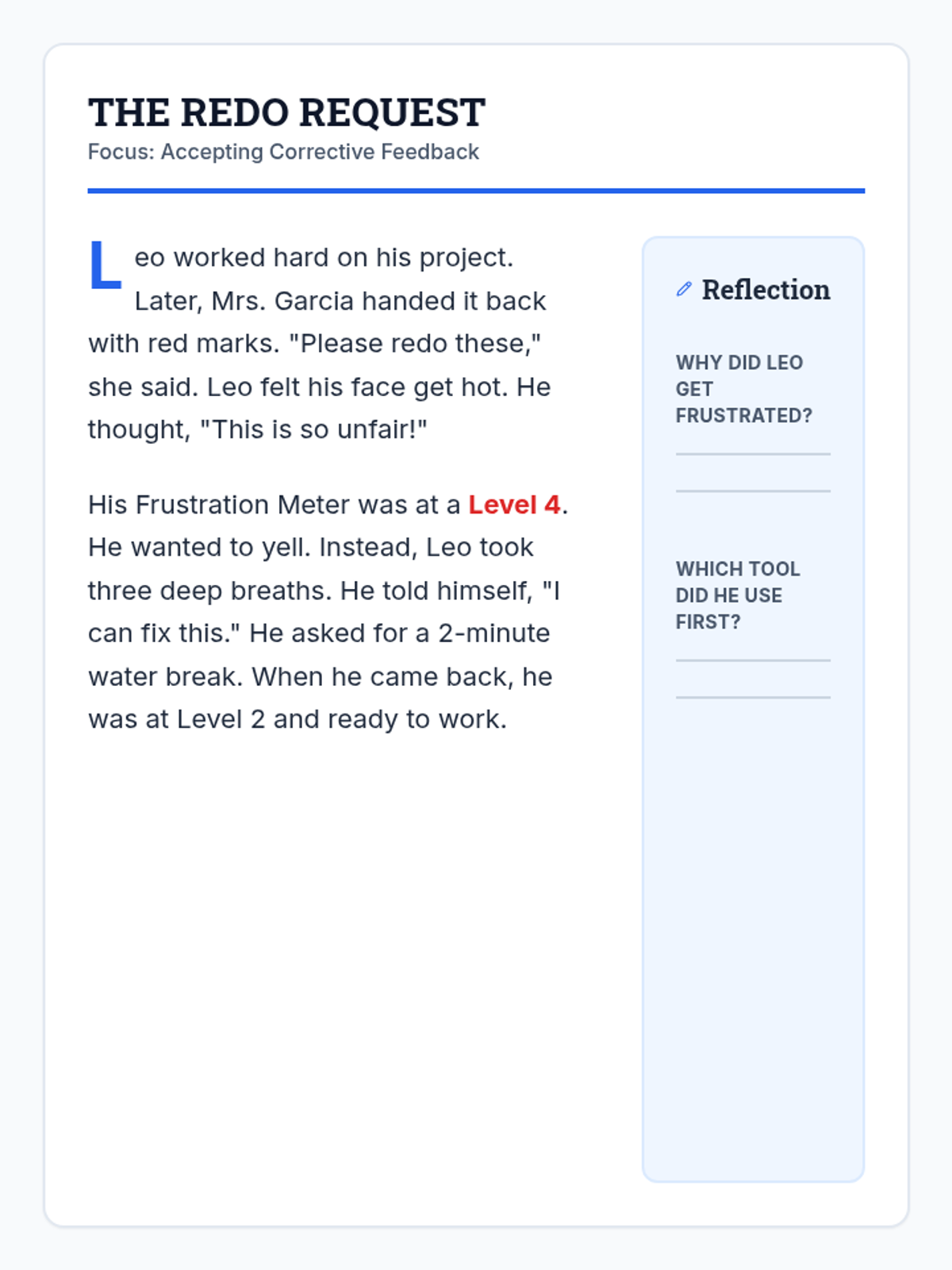
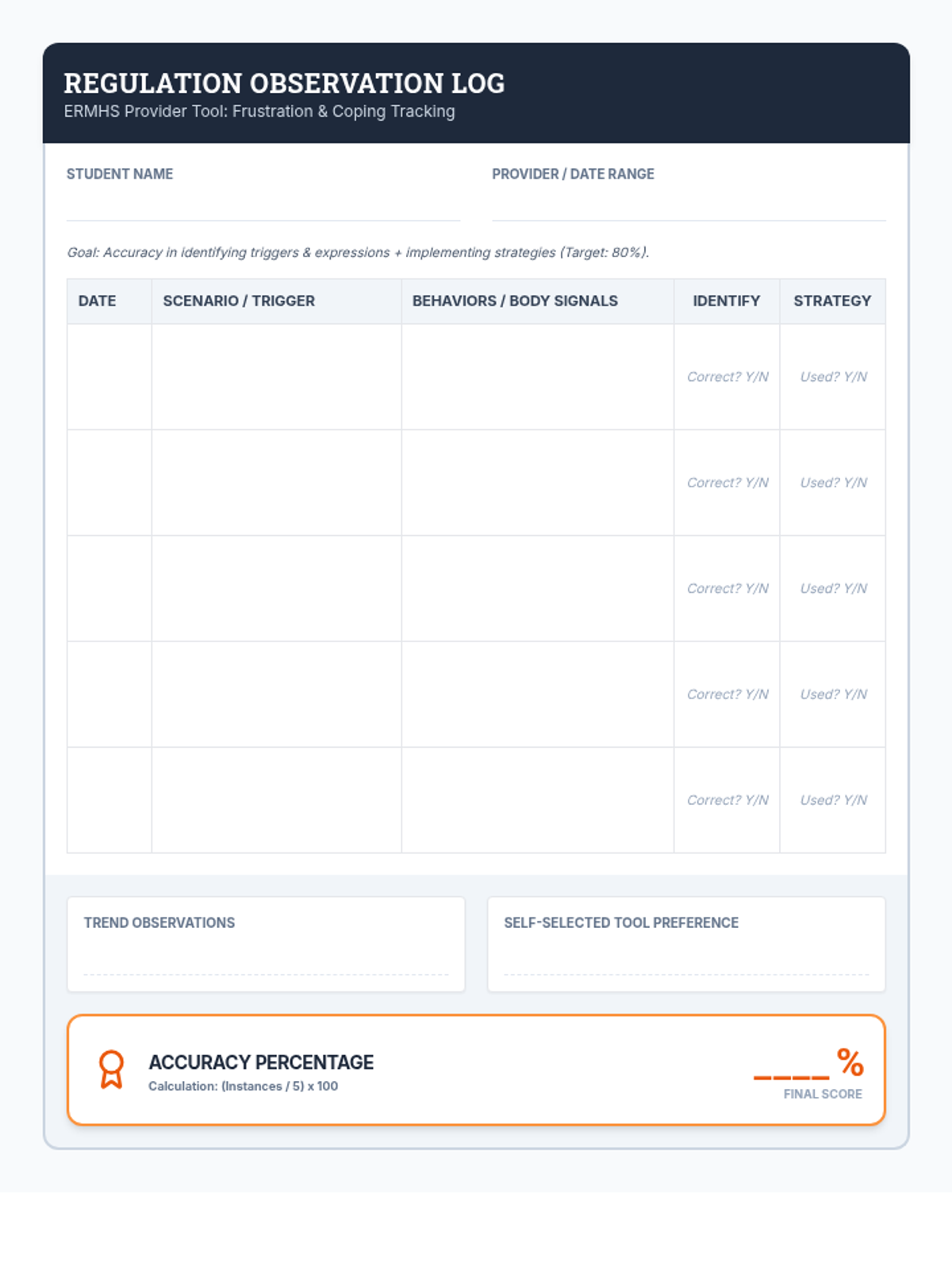
Students will identify personal frustration triggers and practice selecting appropriate coping strategies using a visual menu and scenario-based role-play.