Mindfulness Lesson Plan
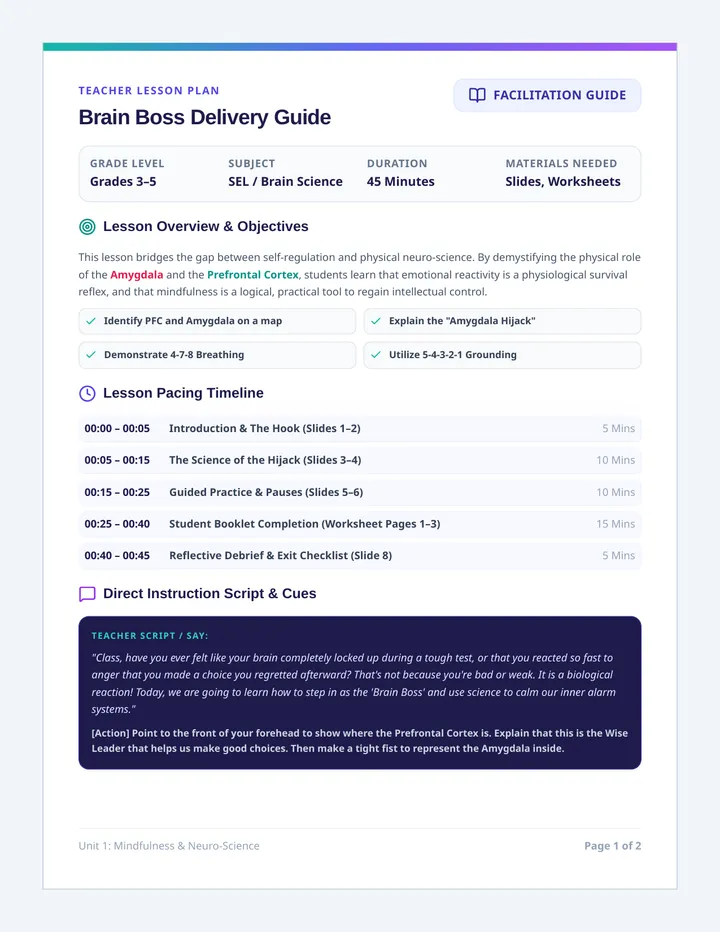
A comprehensive lesson plan for teachers, outlining objectives, materials, and a step-by-step 60-minute instructional flow for a mindfulness lesson.
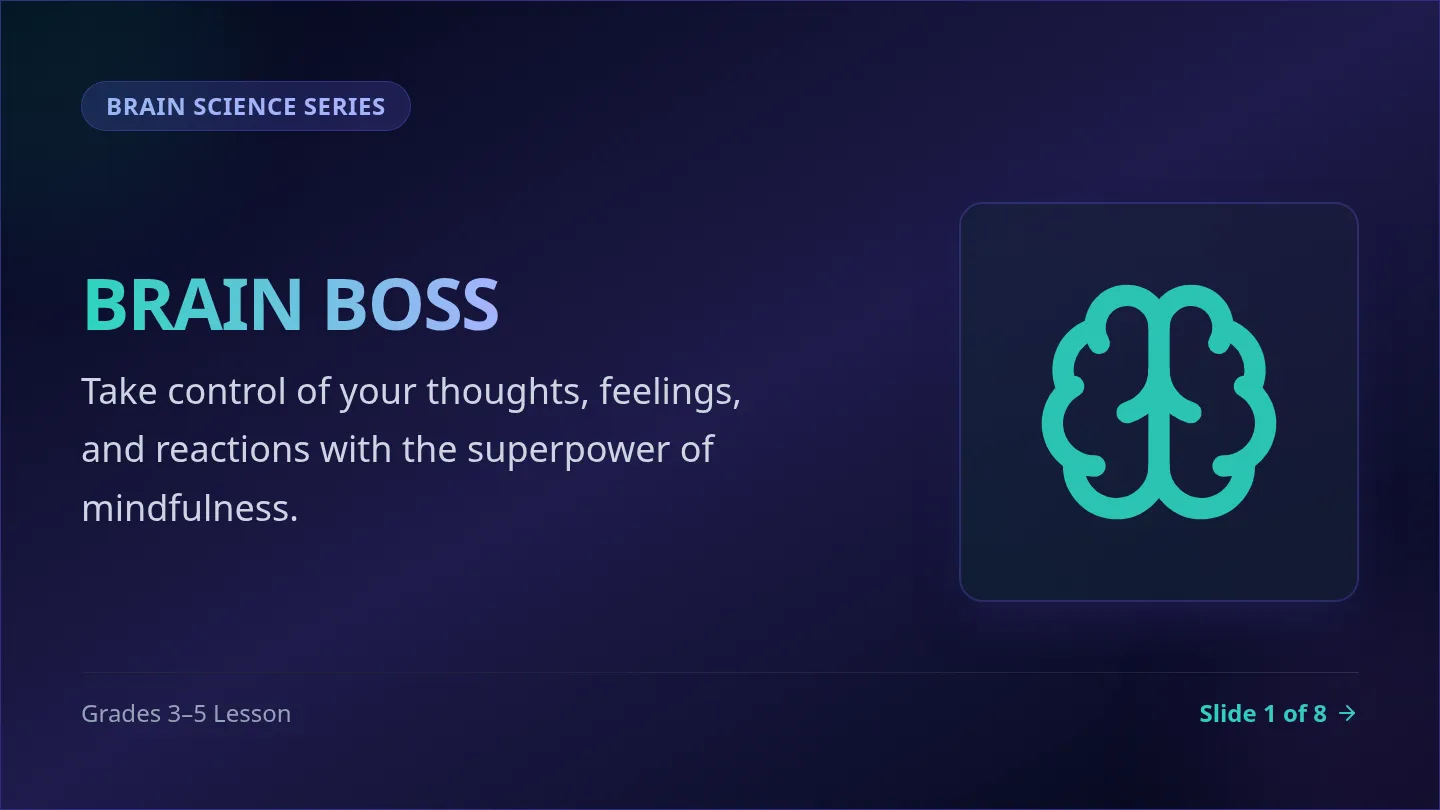
Mindfulness Slide Deck
A 12-slide presentation that introduces mindfulness, explains emotions/triggers, and teaches three self-calming techniques.
Mindful Moment Warm Up
A warm-up activity to help students engage their senses and focus on the present moment at the start of the lesson.
Mindfulness Script
A detailed script for teachers to guide the lesson, including slide cues and discussion prompts.
The Mindful Me Reading
An engaging reading passage for students that explains mindfulness, its benefits, and the three self-calming techniques in simple, relatable language.
Calm Corner Creation Activity
A creative activity where students design a personal "Calm Corner" or "Calm Kit," illustrating strategies and items that help them self-calm.
Emotional Thermometer Discussion Guide
A discussion guide for teachers to help students identify and understand emotional intensity using the "Zones" of the Emotional Thermometer.
Mindful Maze Game
Students practice focused attention and patience through a maze activity, applying mindful principles.
Self-Calming Strategies Worksheet
Students practice focused attention and patience through a maze activity, applying mindful principles.
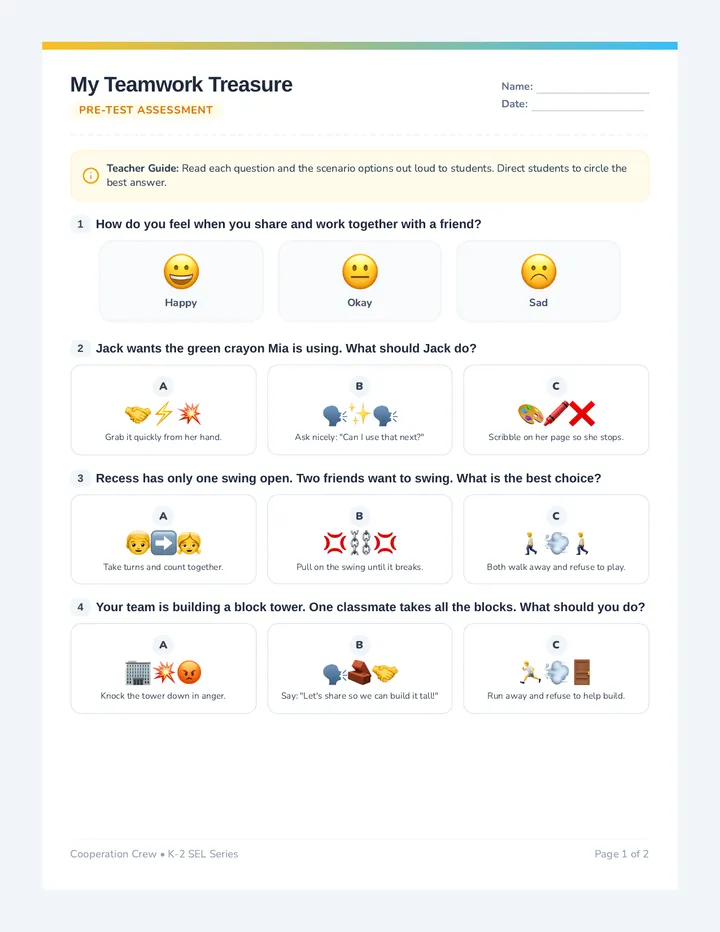
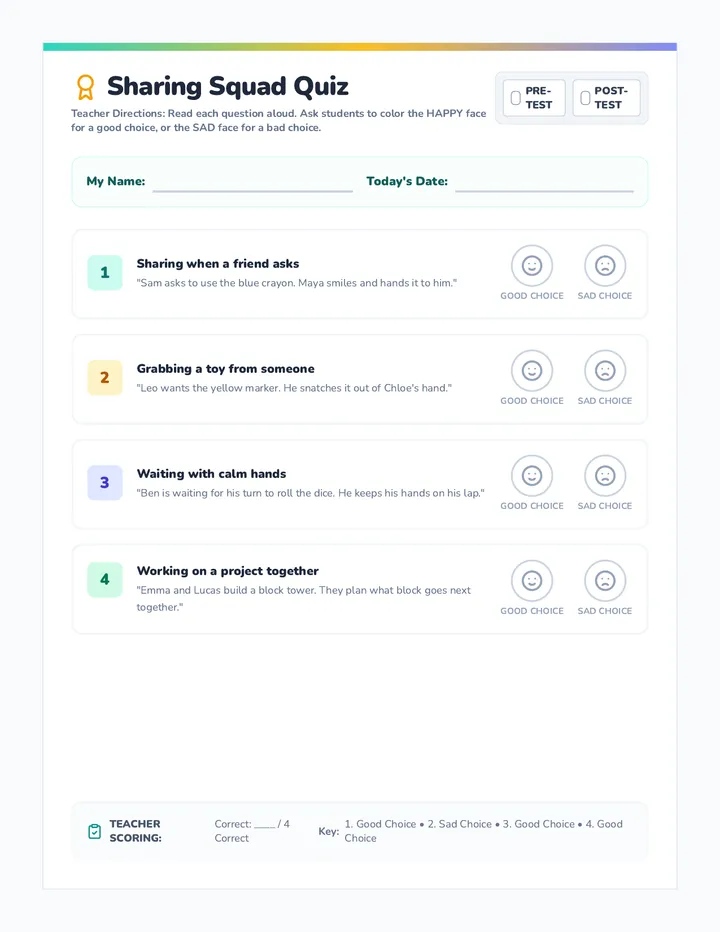
Mindful Check-in Quiz
A quick 5-question check for understanding following the initial instruction on mindfulness. All answer choices have identical styling.
Quiz Answer Key
Answer key for the Mindful Check-in Quiz, providing correct responses and context for teachers.
Mindfulness Mastery Test
A comprehensive assessment for students to demonstrate their mastery of mindfulness concepts and techniques. All answer choices have identical styling.
Test Answer Key
Answer key for the Mindfulness Mastery Test, providing correct responses and evaluative criteria for teachers.
My Calm Toolbox Project Guide
A guide for a creative project where students design a personal "Calm Toolbox" to house their self-calming strategies.
Calm Toolbox Rubric
A rubric for evaluating the "My Calm Toolbox" project, assessing title, introduction, strategy descriptions, and visual appeal.
Mindful Reflection Cool Down
A quick reflection exercise to conclude the mindfulness lesson and gauge student interest and understanding.