This lesson introduces Grade 6 students to mindfulness practices, focusing on basic breathing exercises and visualization techniques to manage stress and enhance focus.
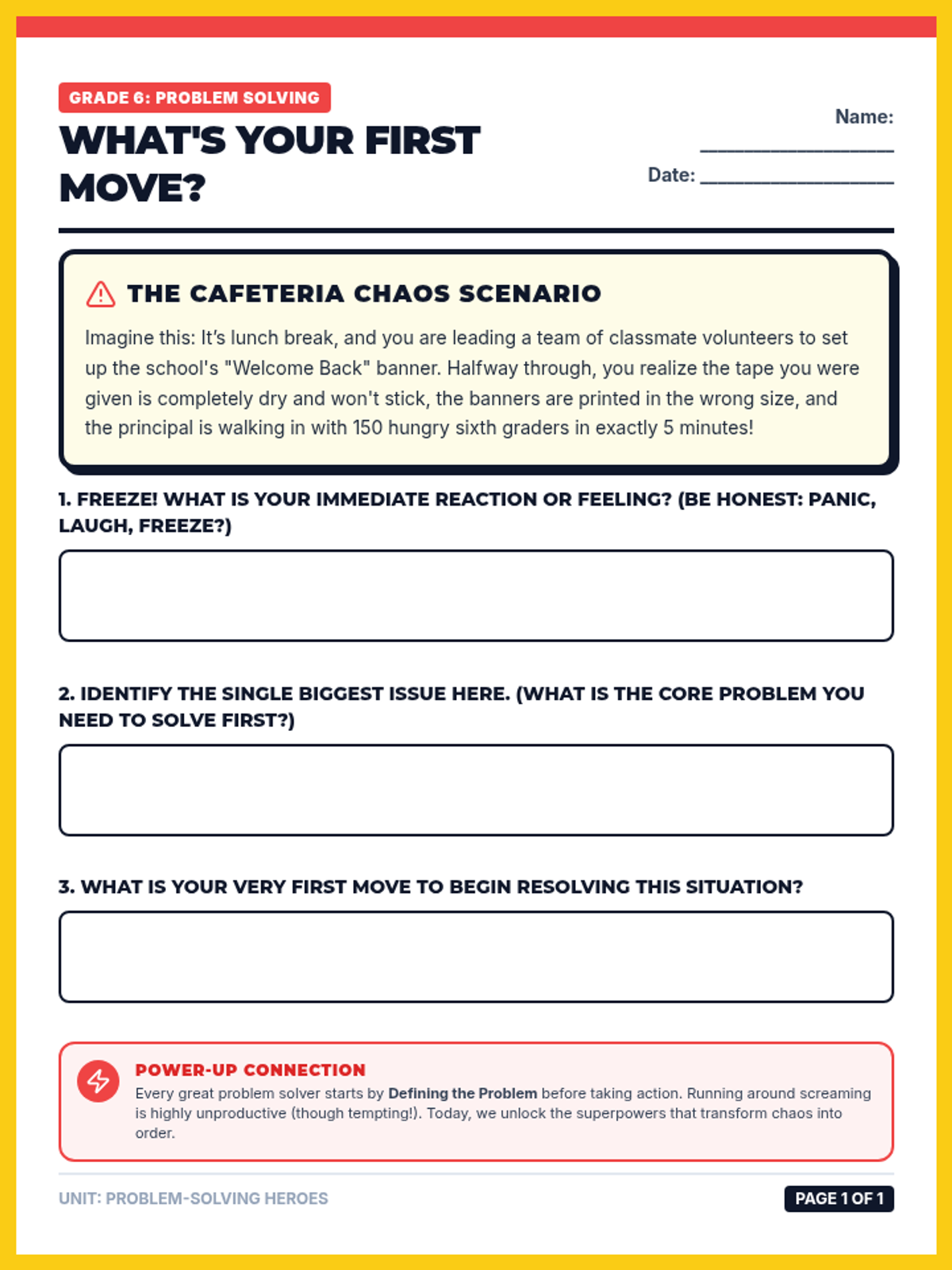
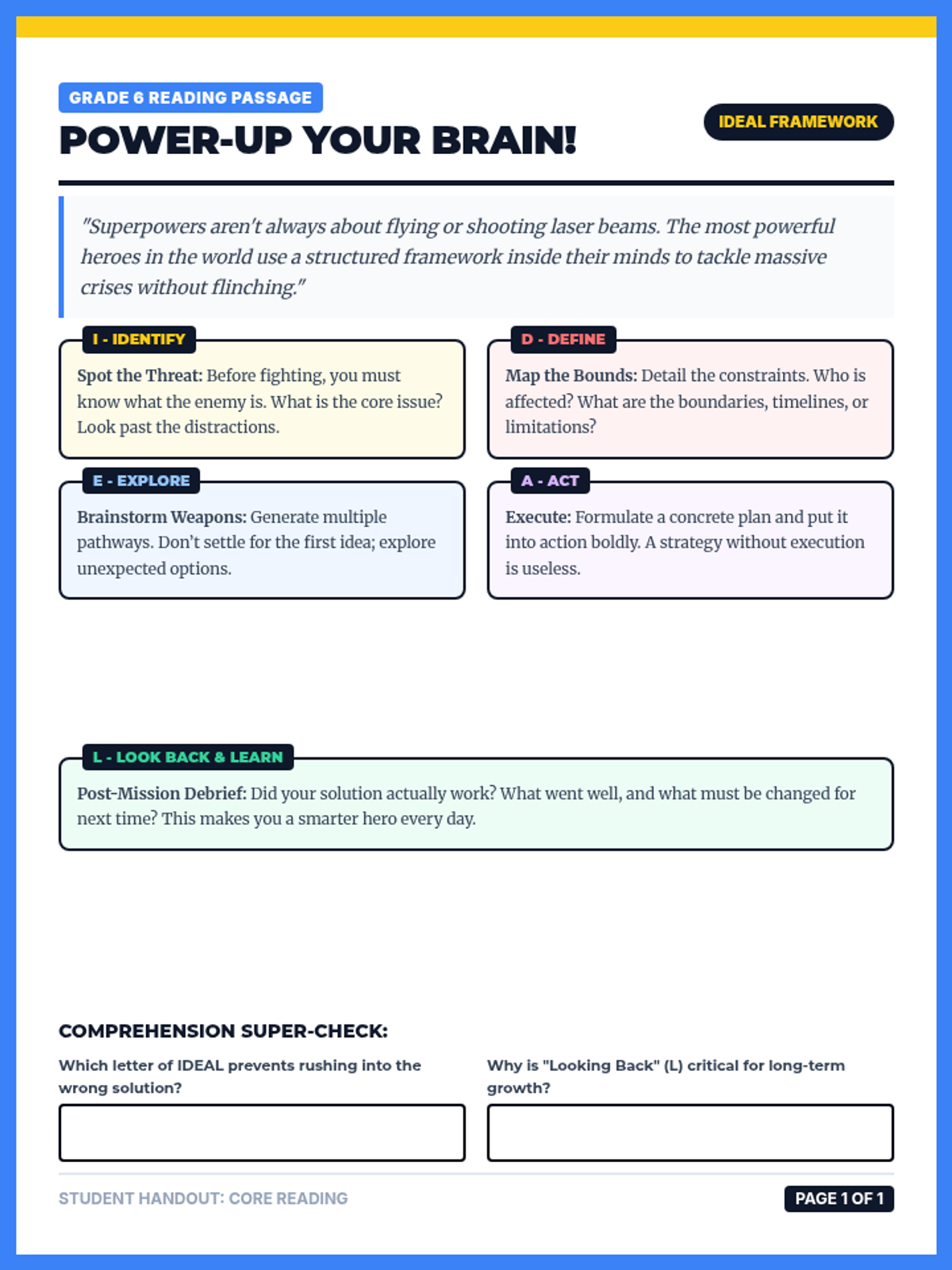
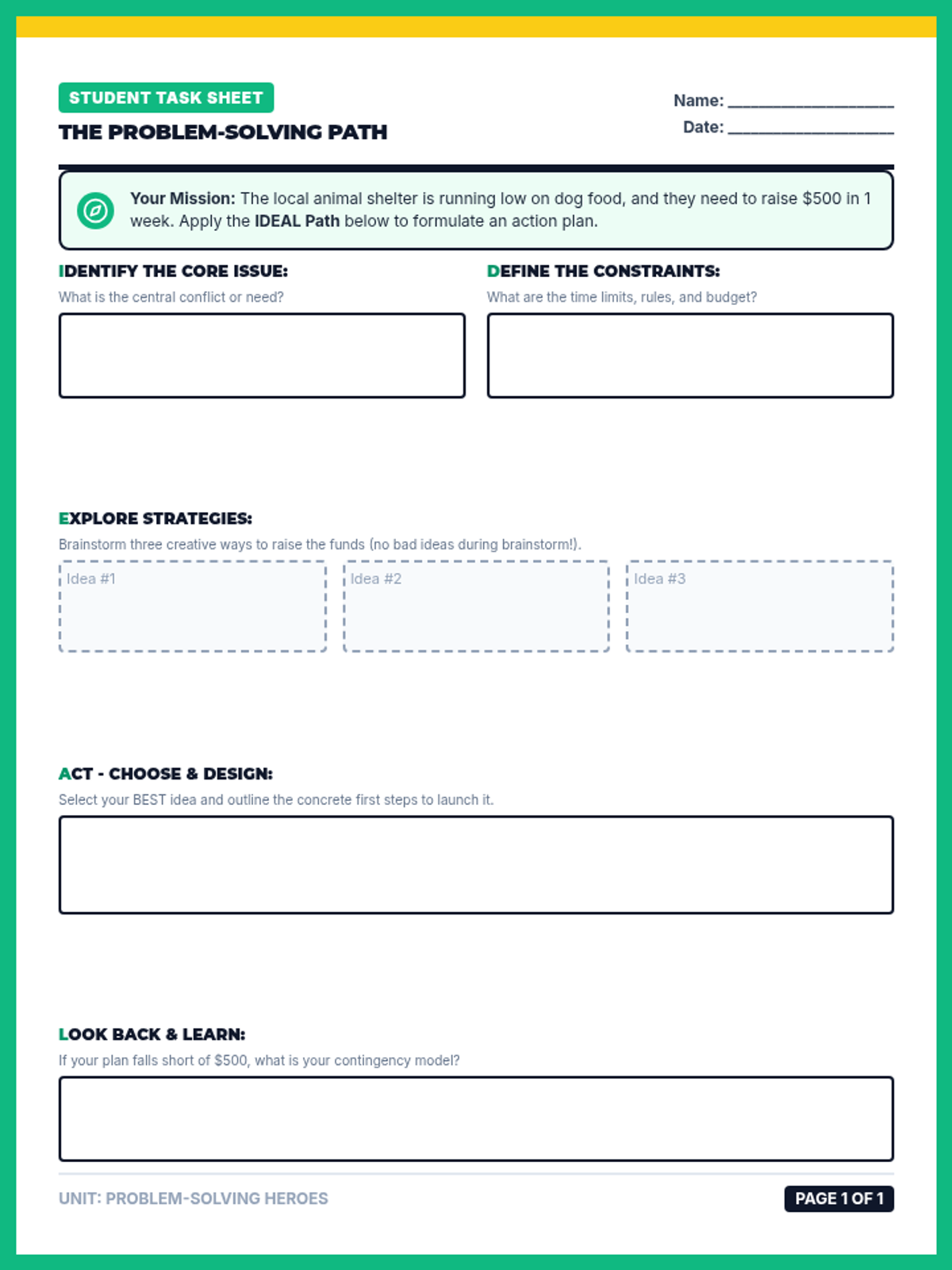
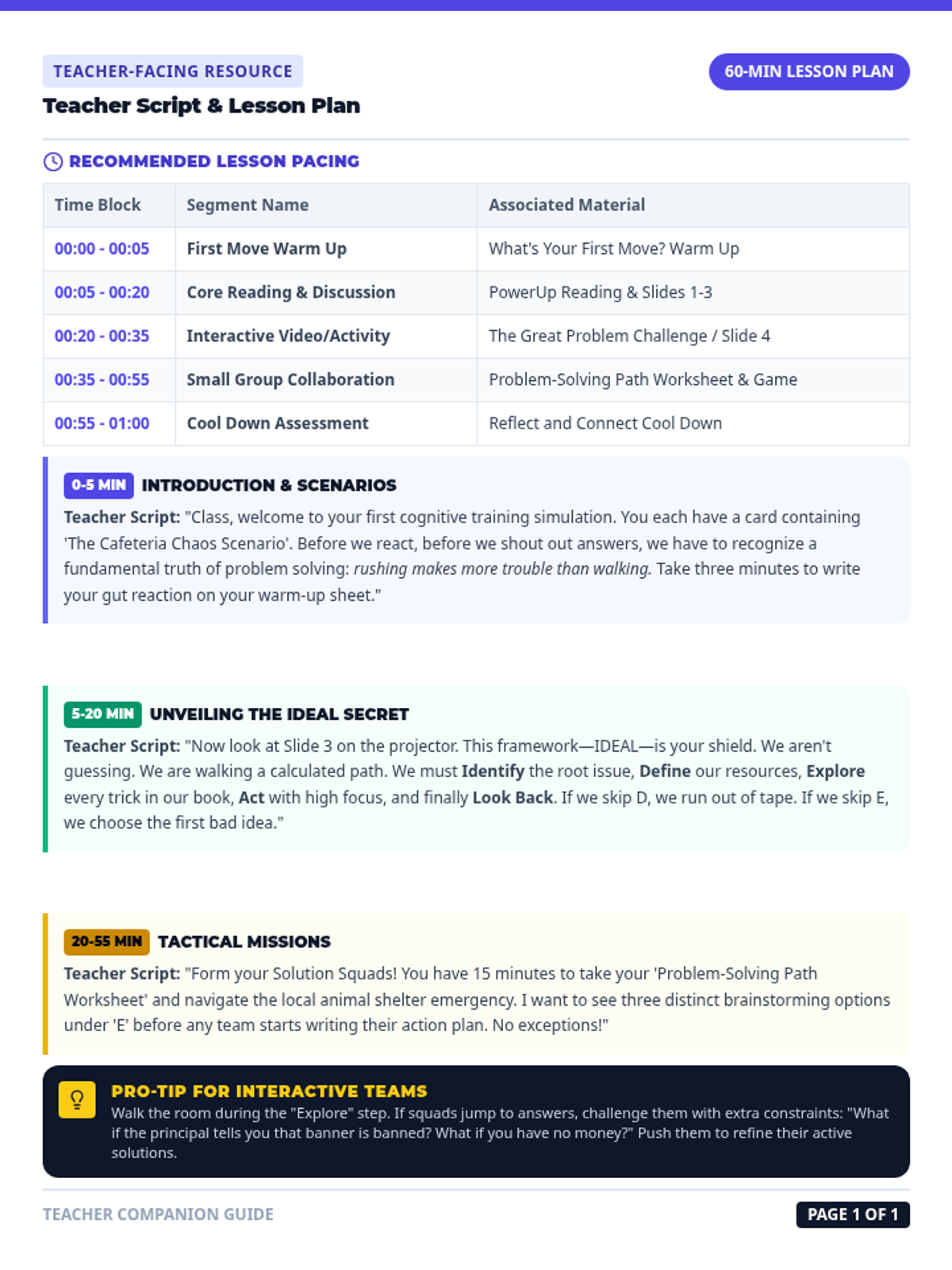
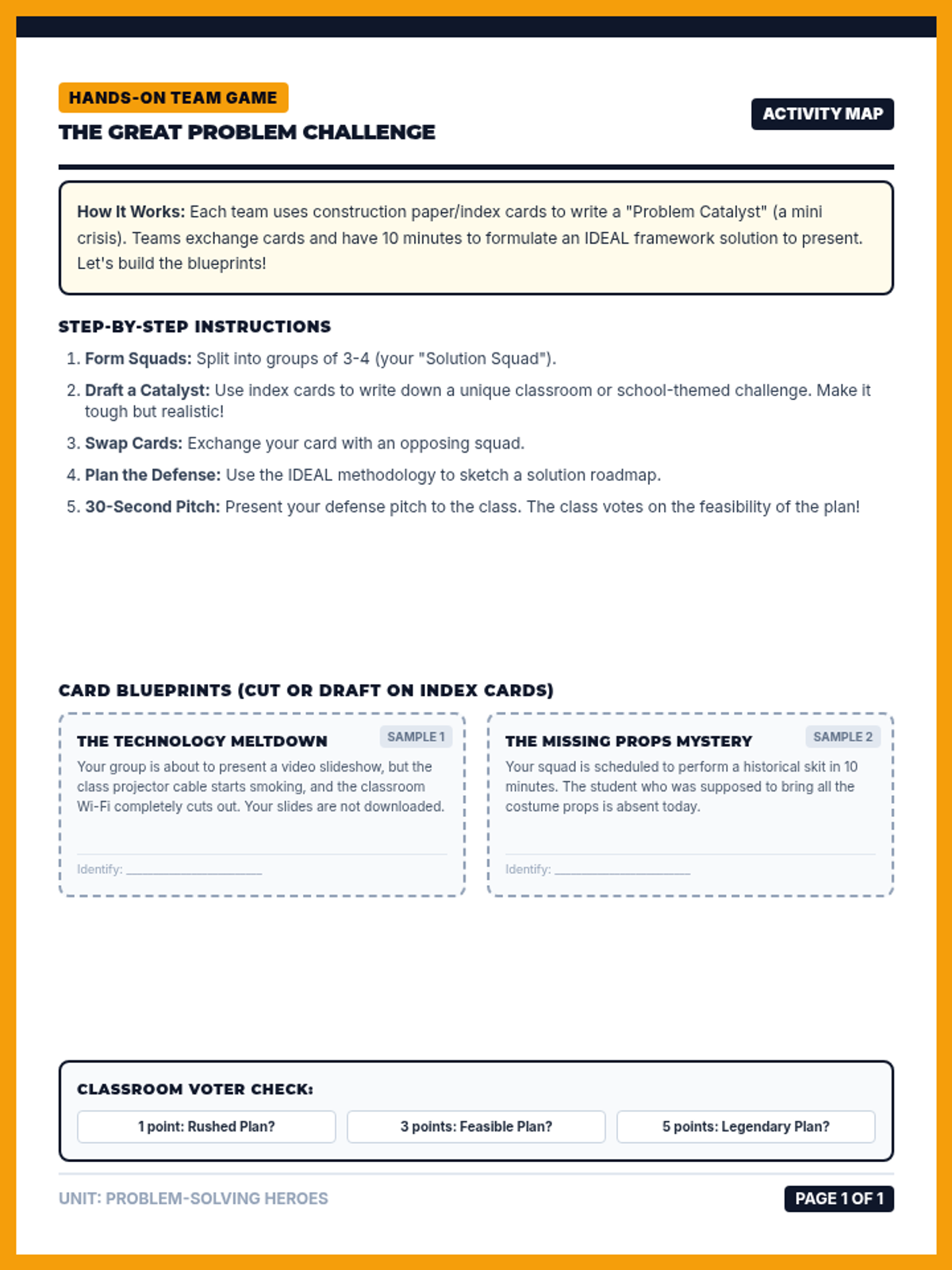
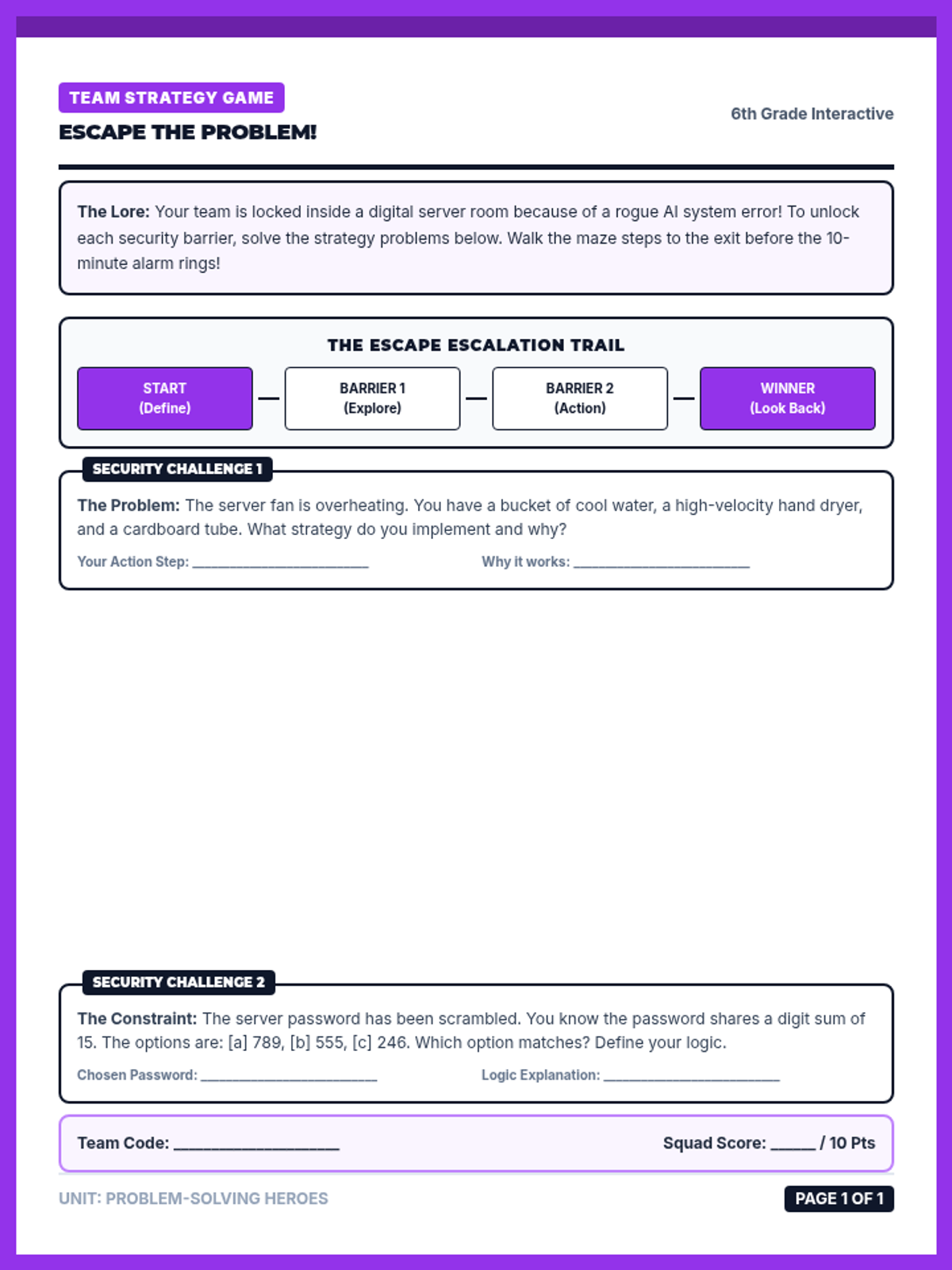
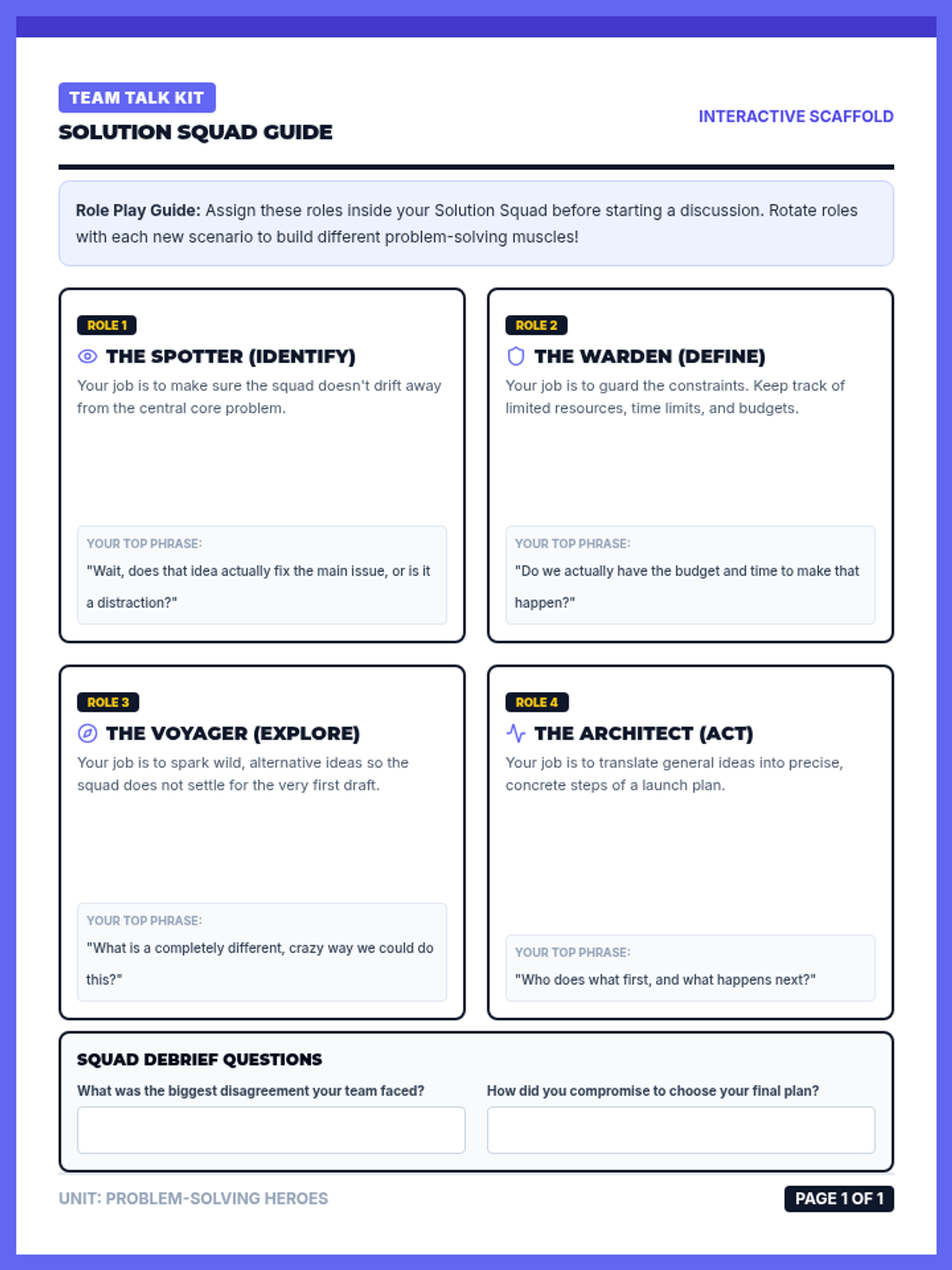
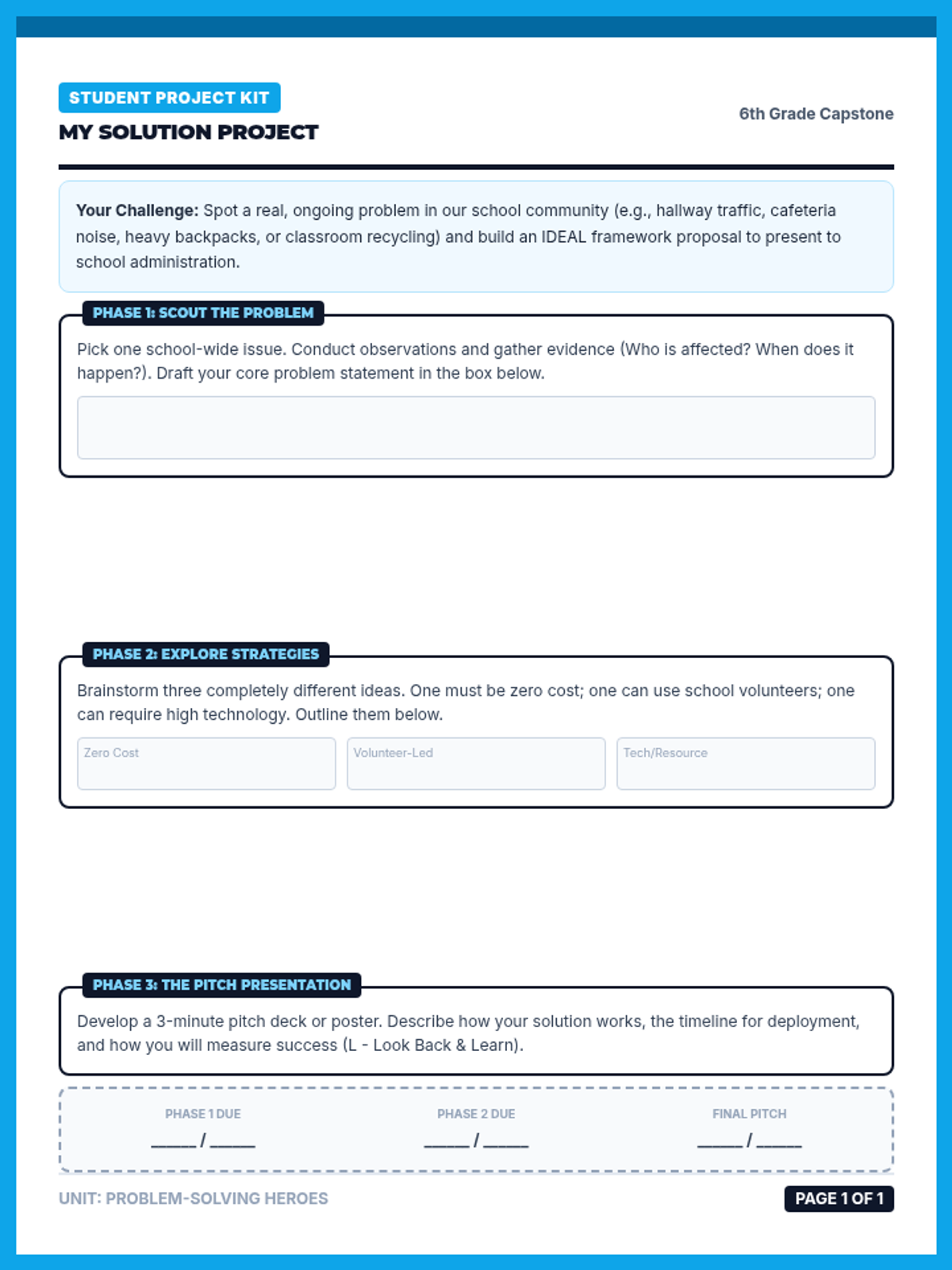
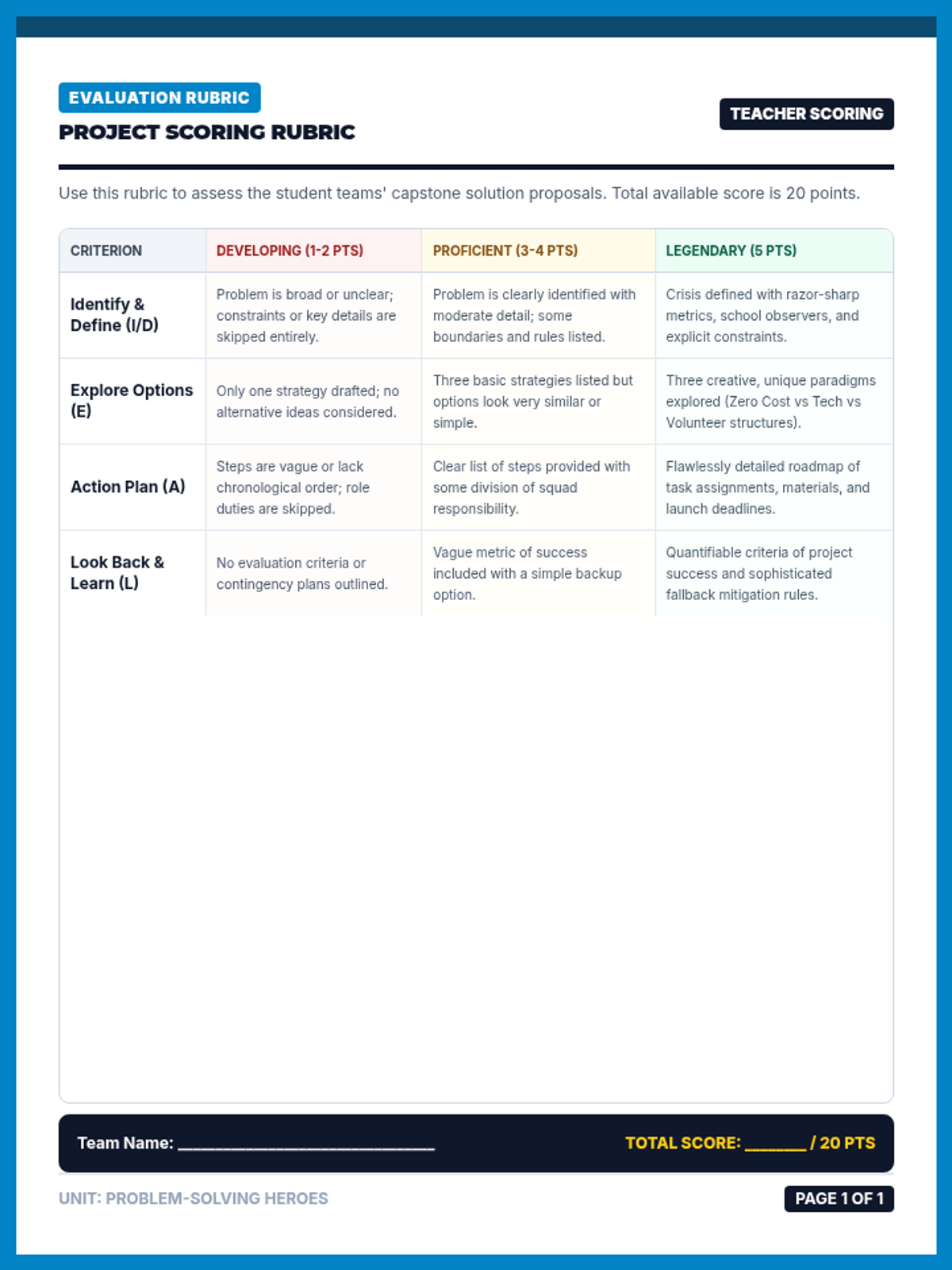
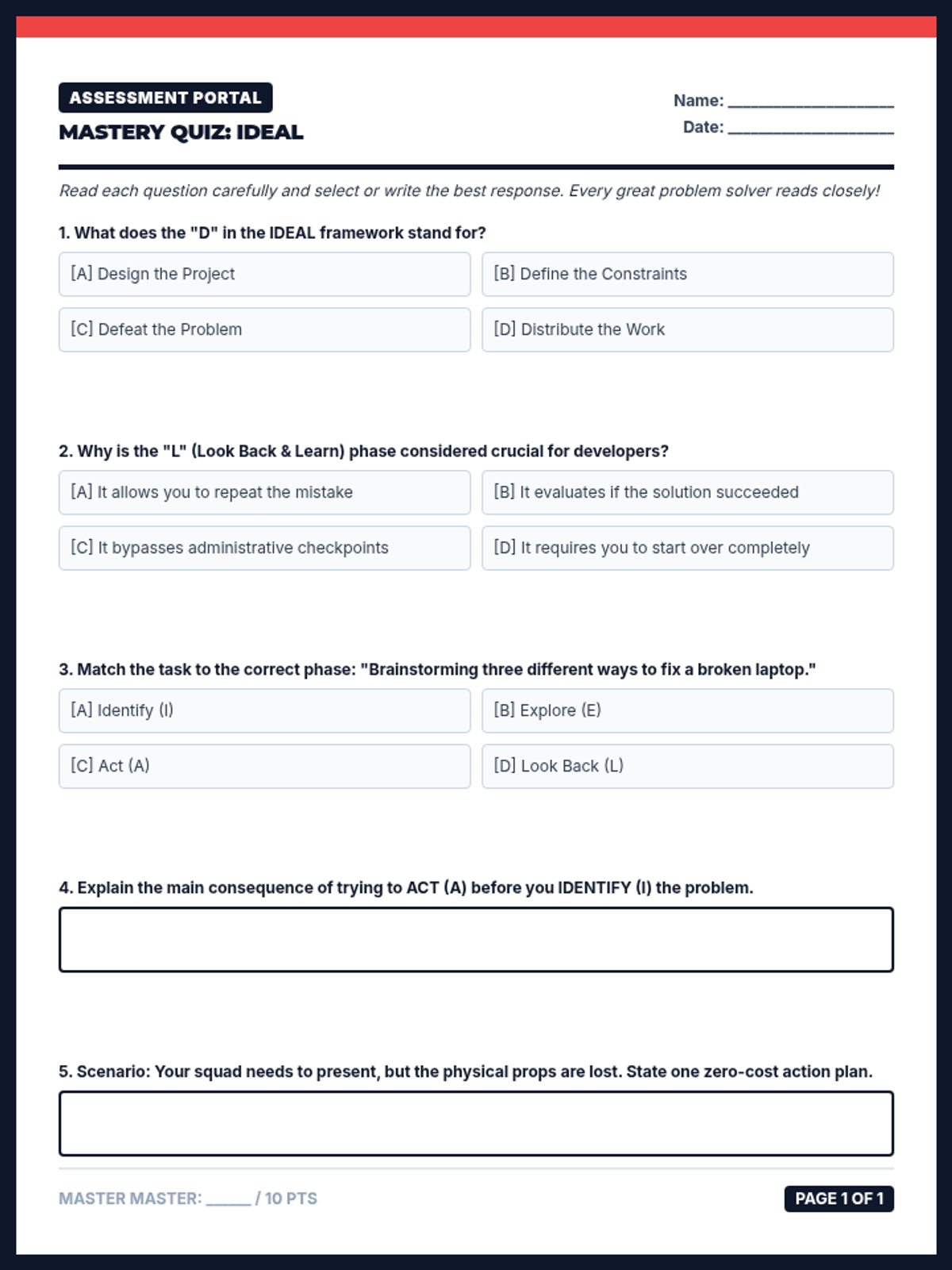
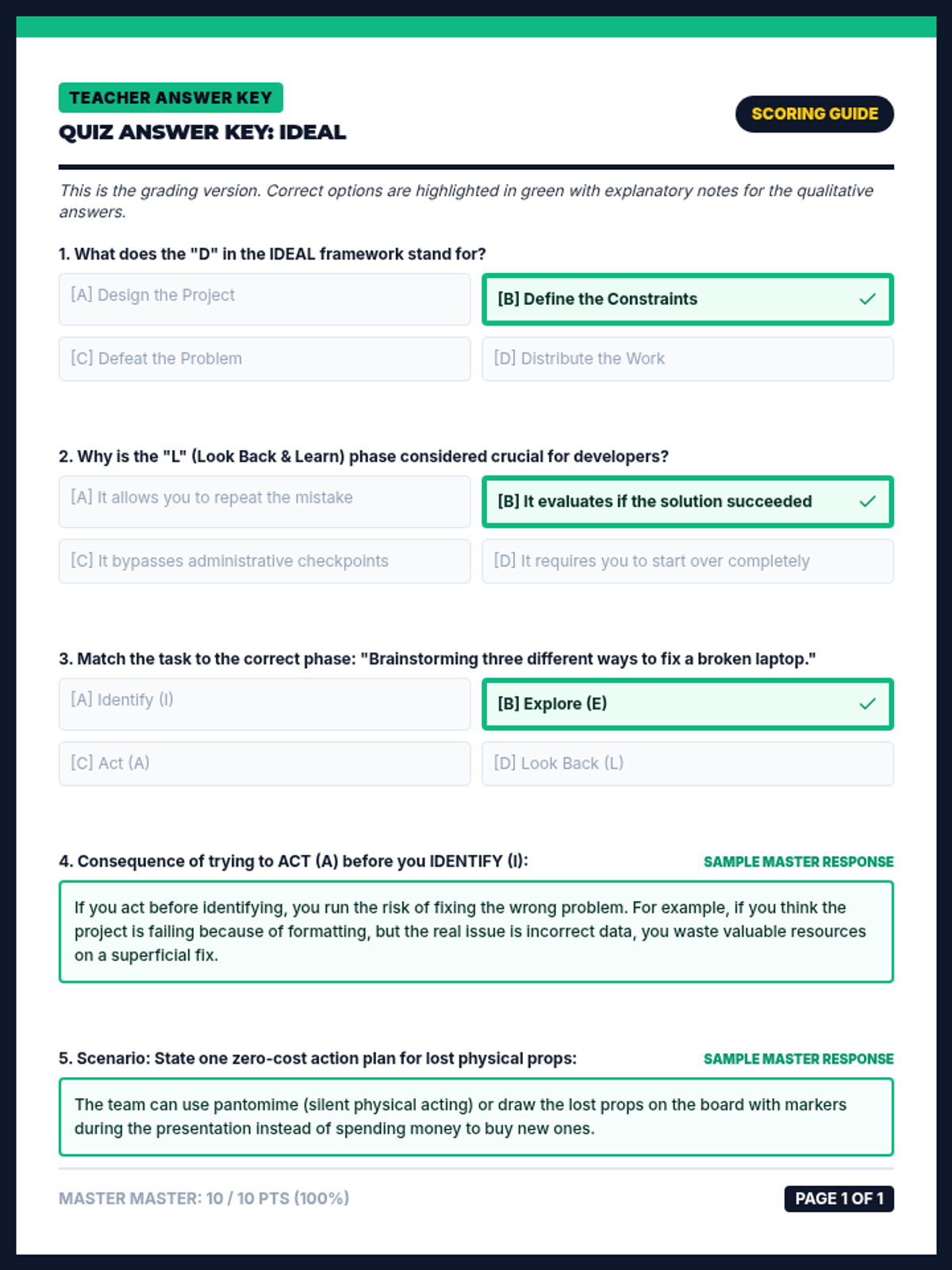
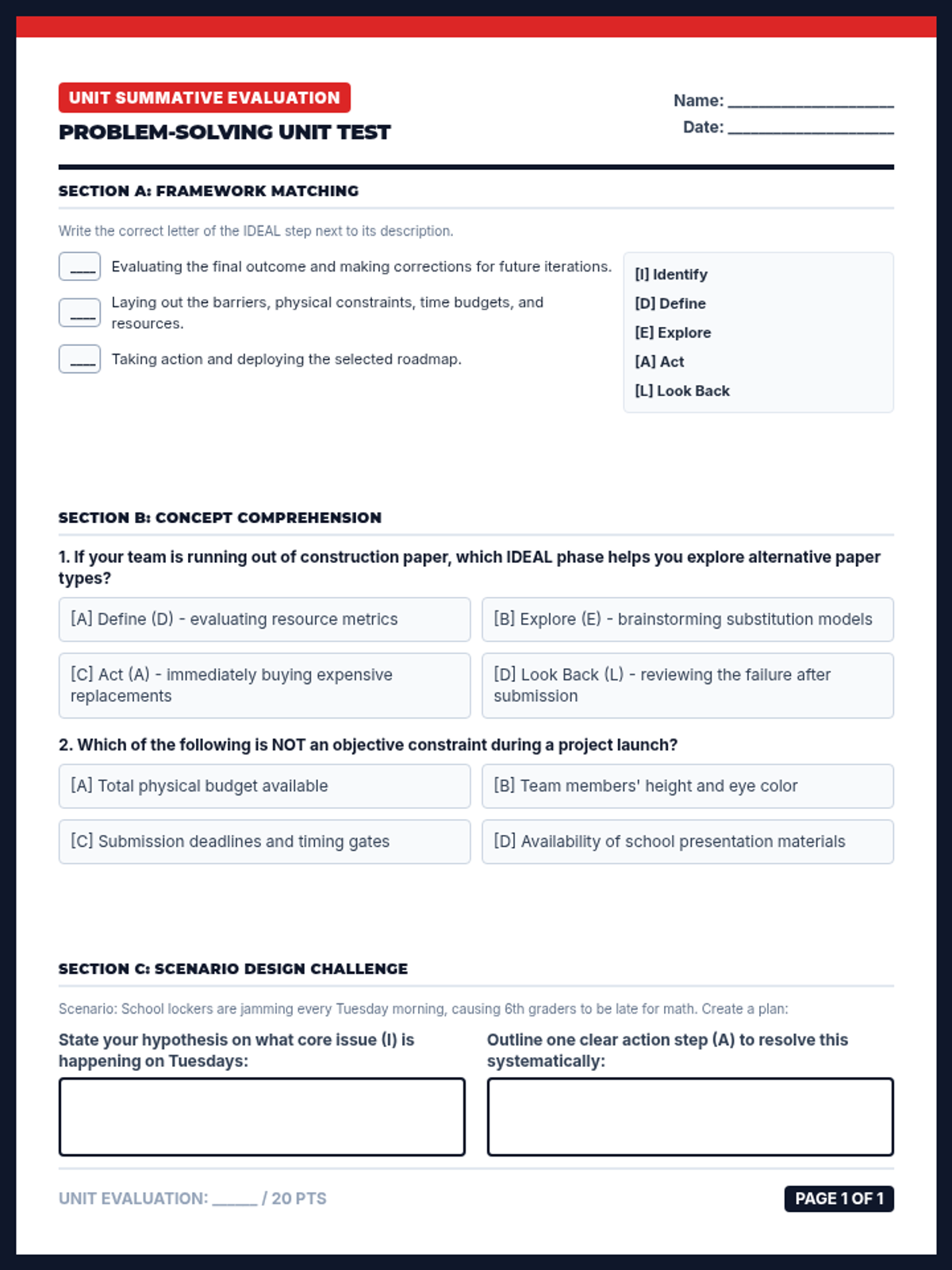
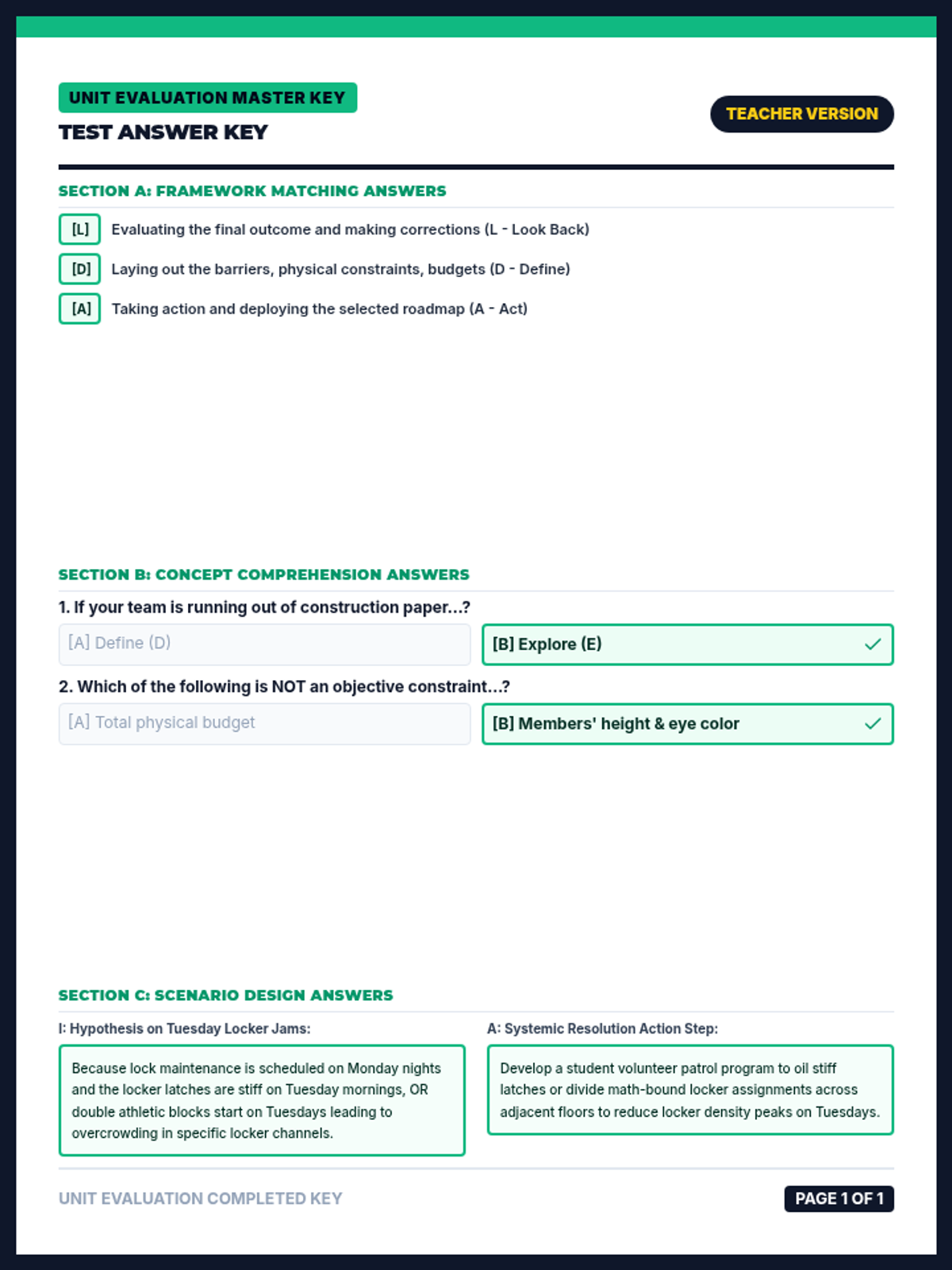
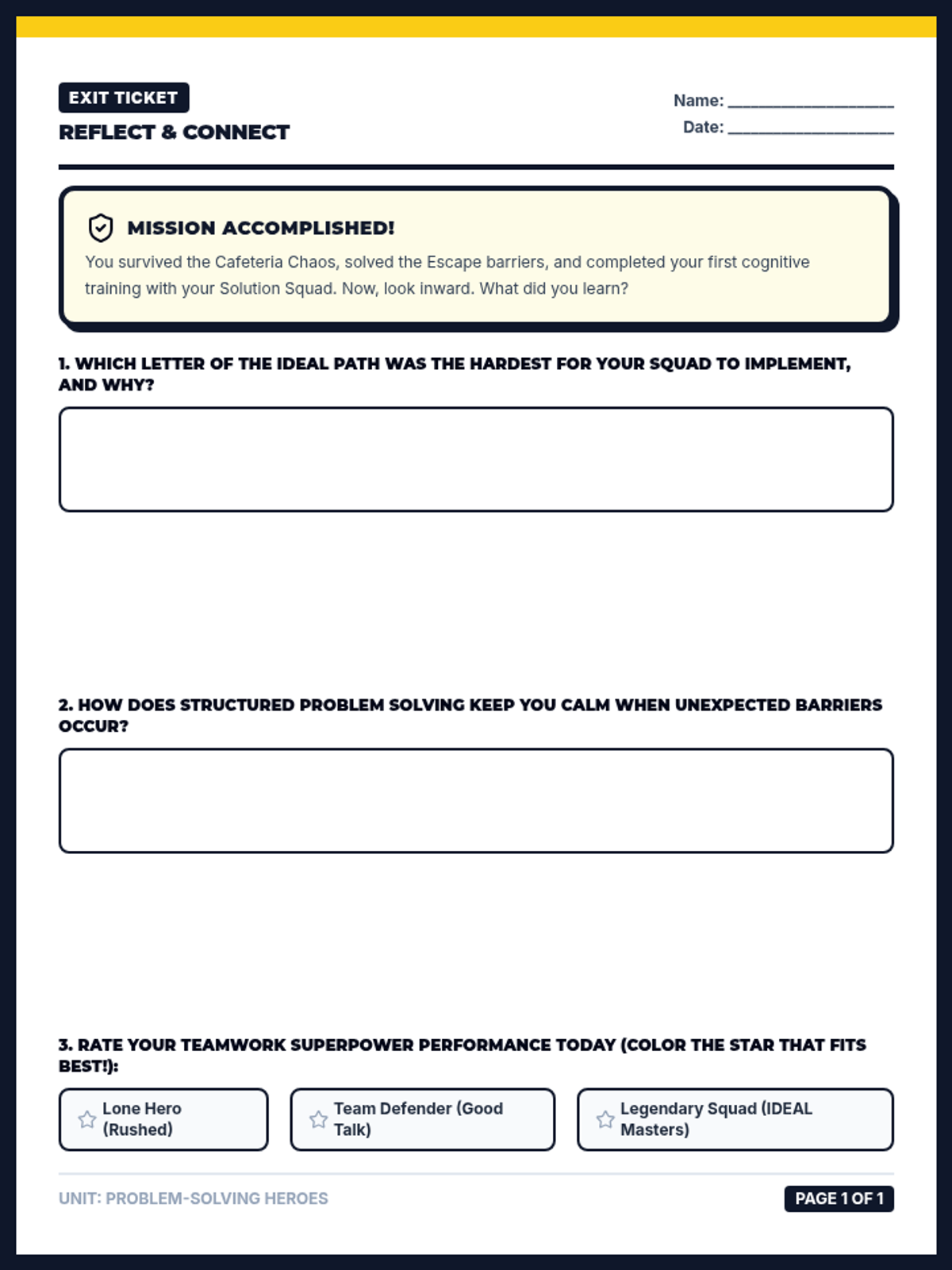
A comprehensive 6th-grade lesson on problem-solving strategies, featuring interactive small group challenges, a visual slide deck, practical worksheets, a classroom game, and rigorous assessments.
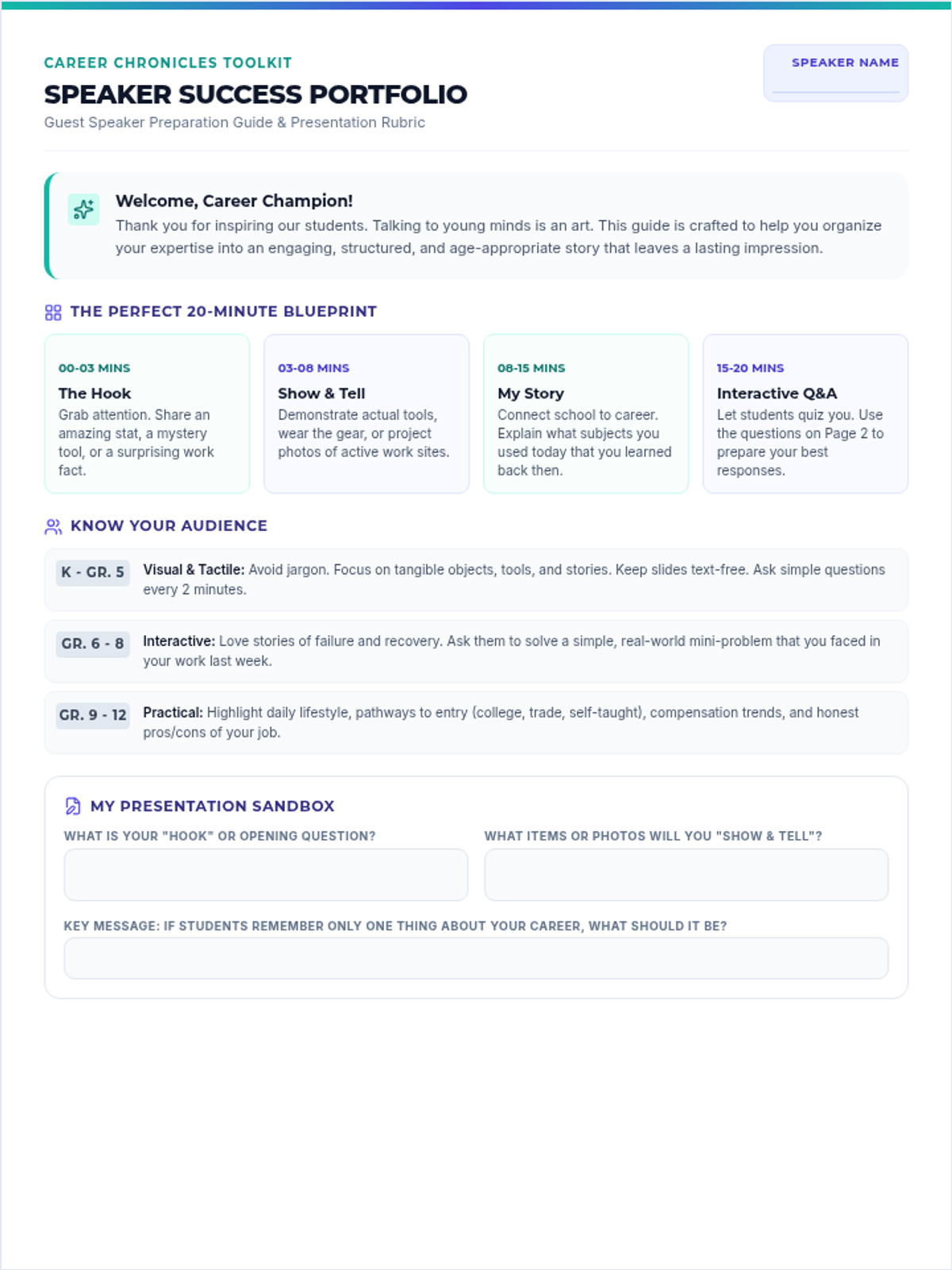
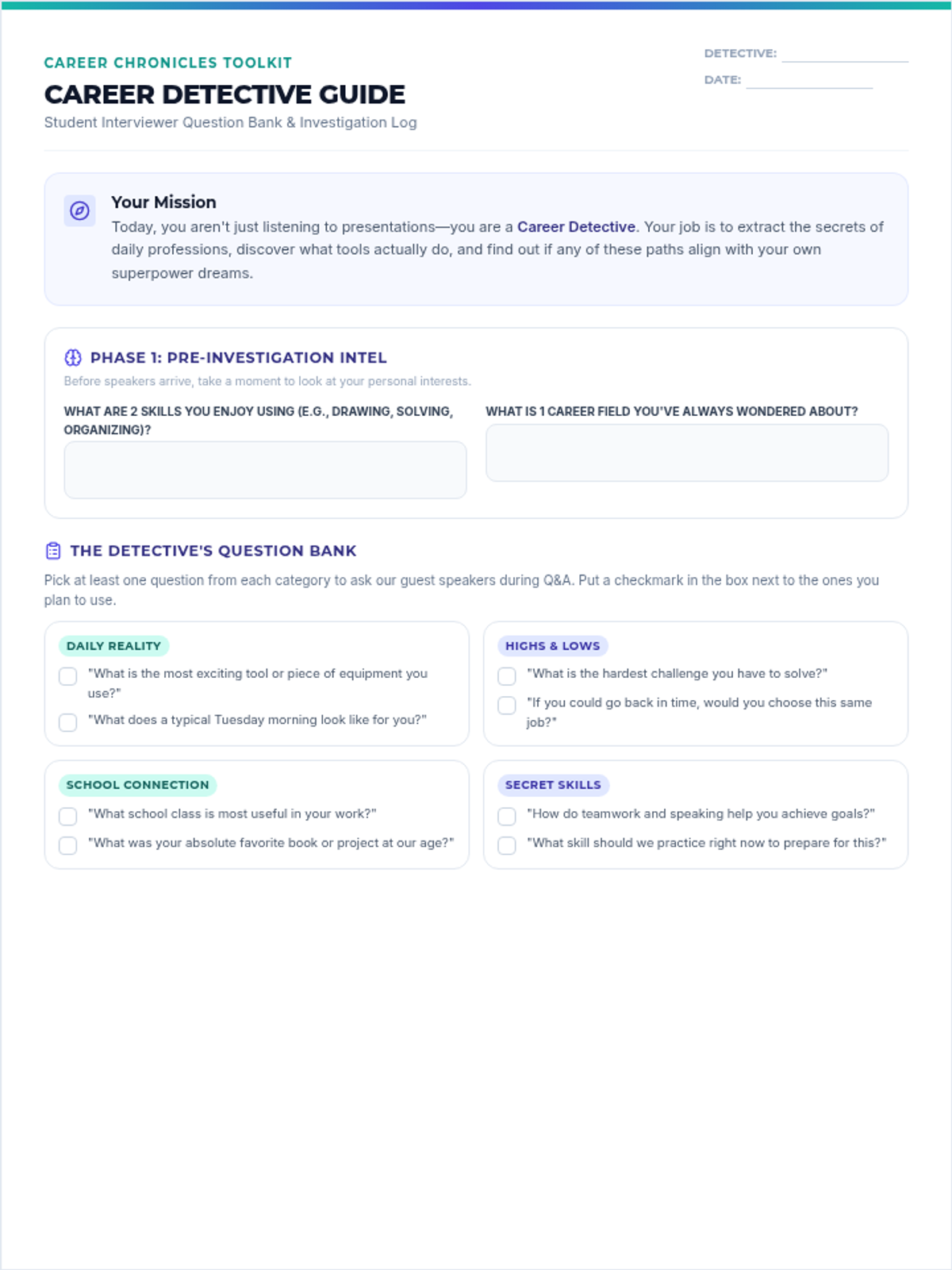
A comprehensive preparation toolkit for Career Day, equipping both guest speakers and student interviewers with structured guides, question banks, and evaluation rubrics to ensure engaging and meaningful professional dialogues.
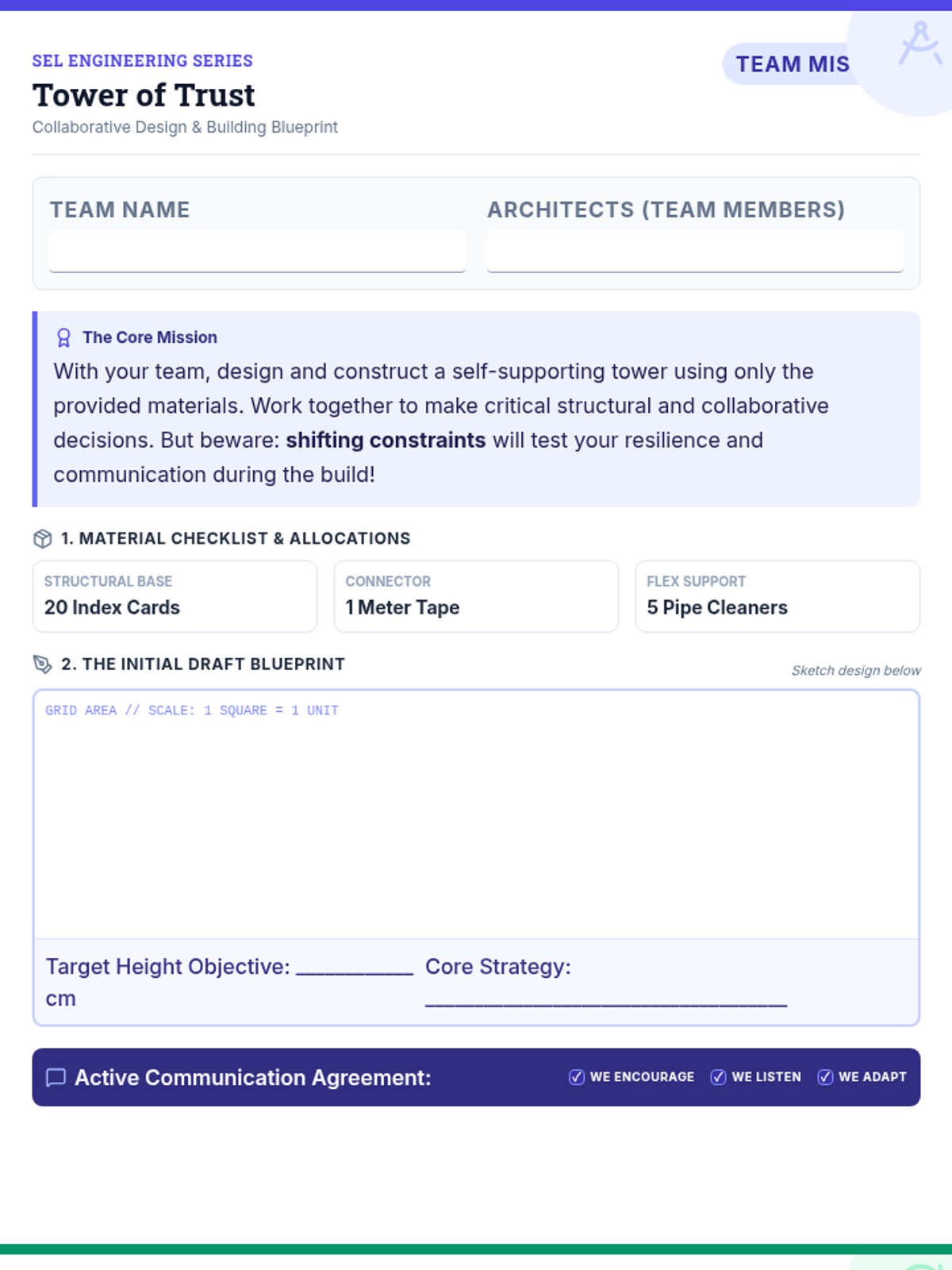
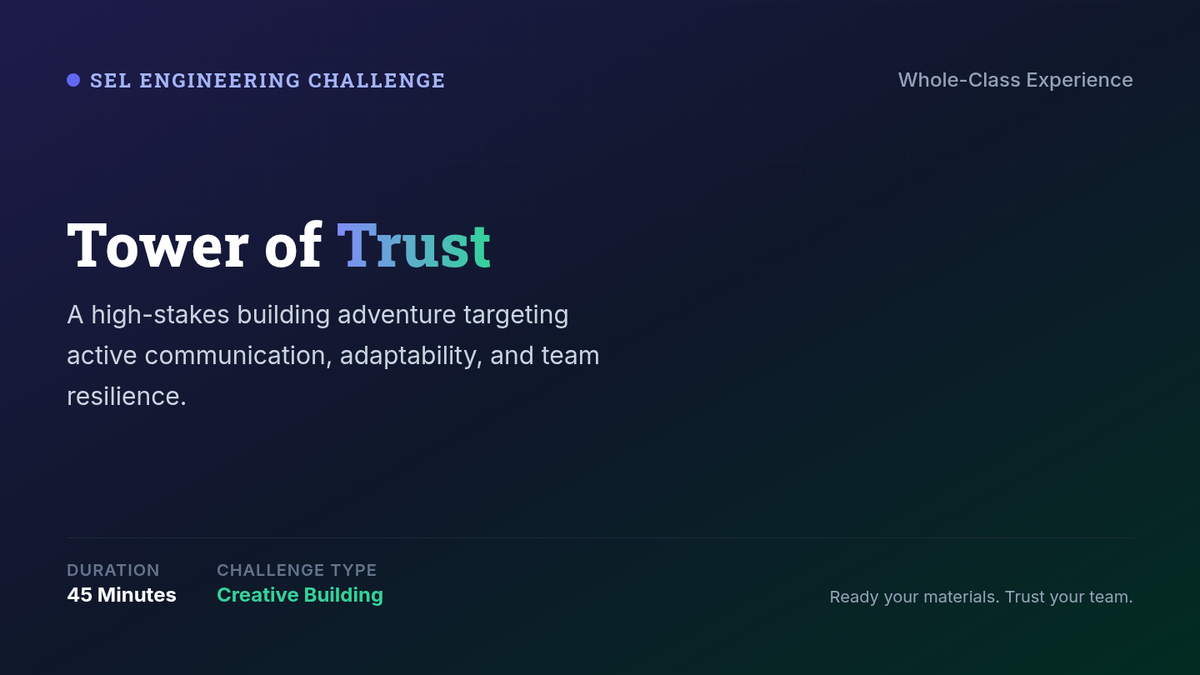
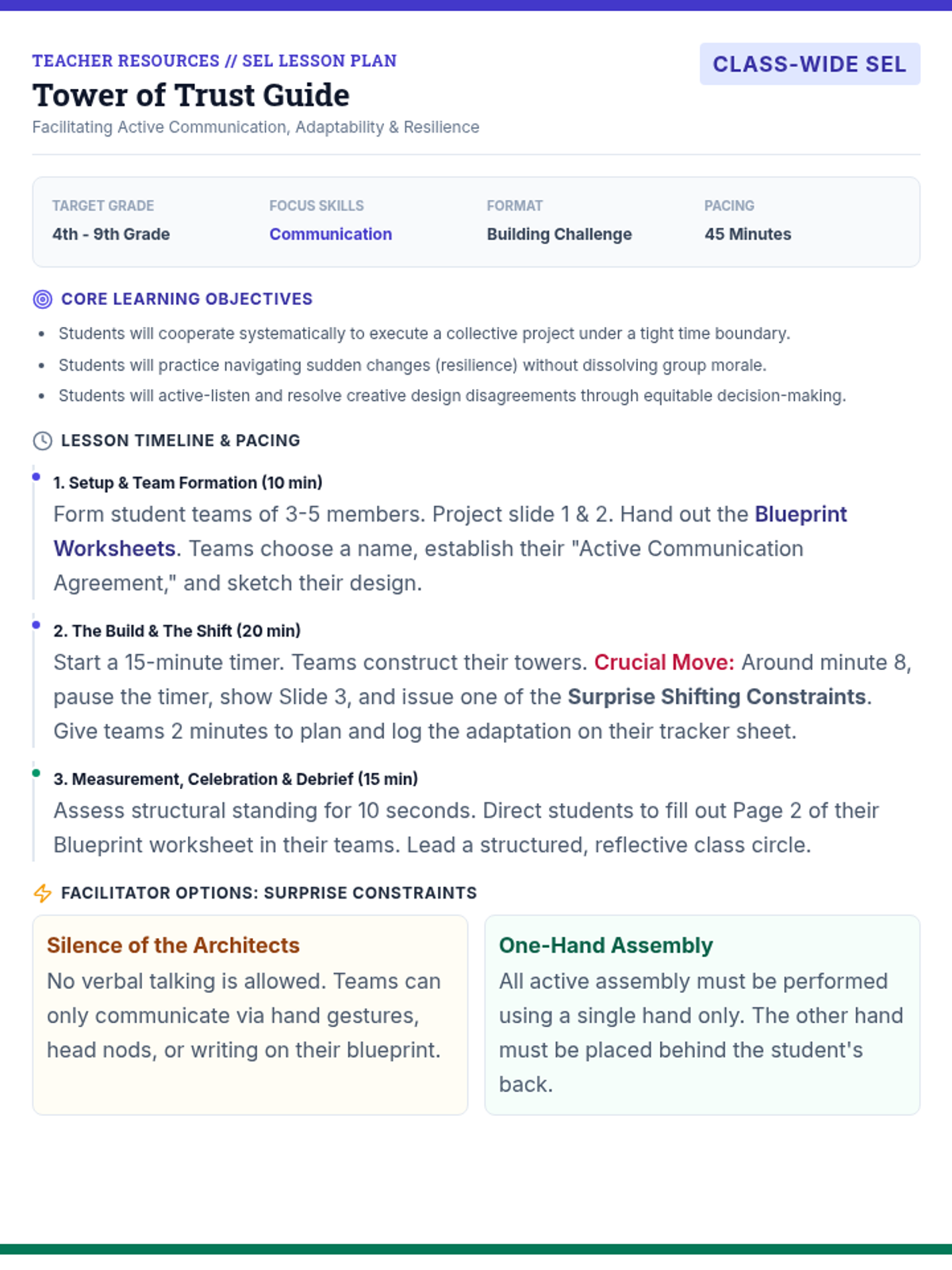
A high-energy, collaborative building challenge where student teams design and construct towers under shifting constraints. This lesson is specifically engineered to target active communication, resilience when faced with unexpected roadblocks, and group decision-making.
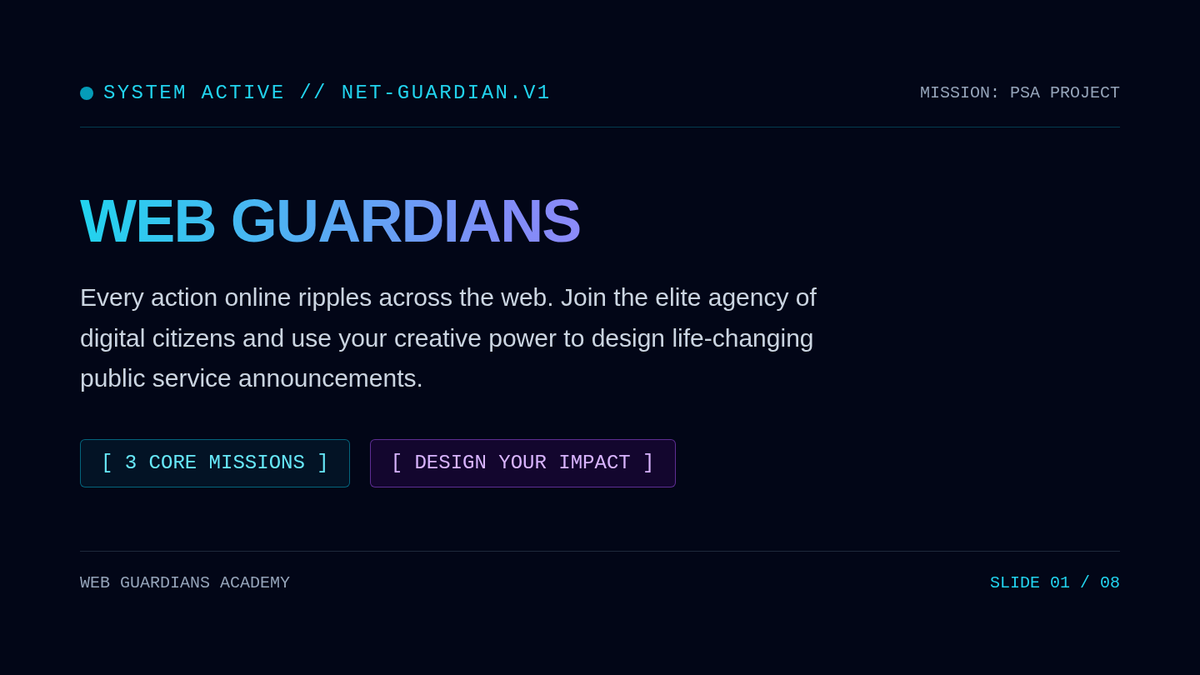
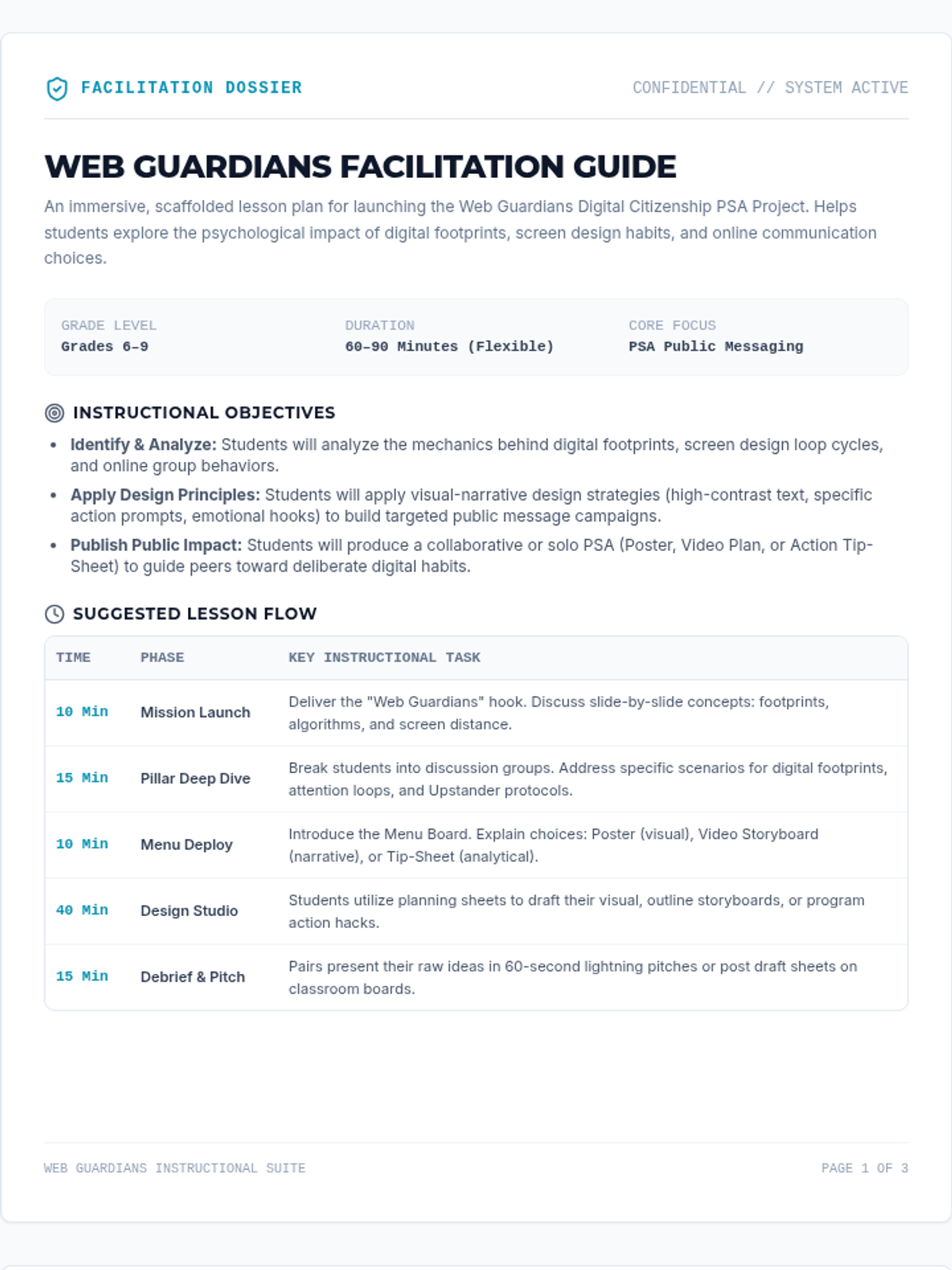
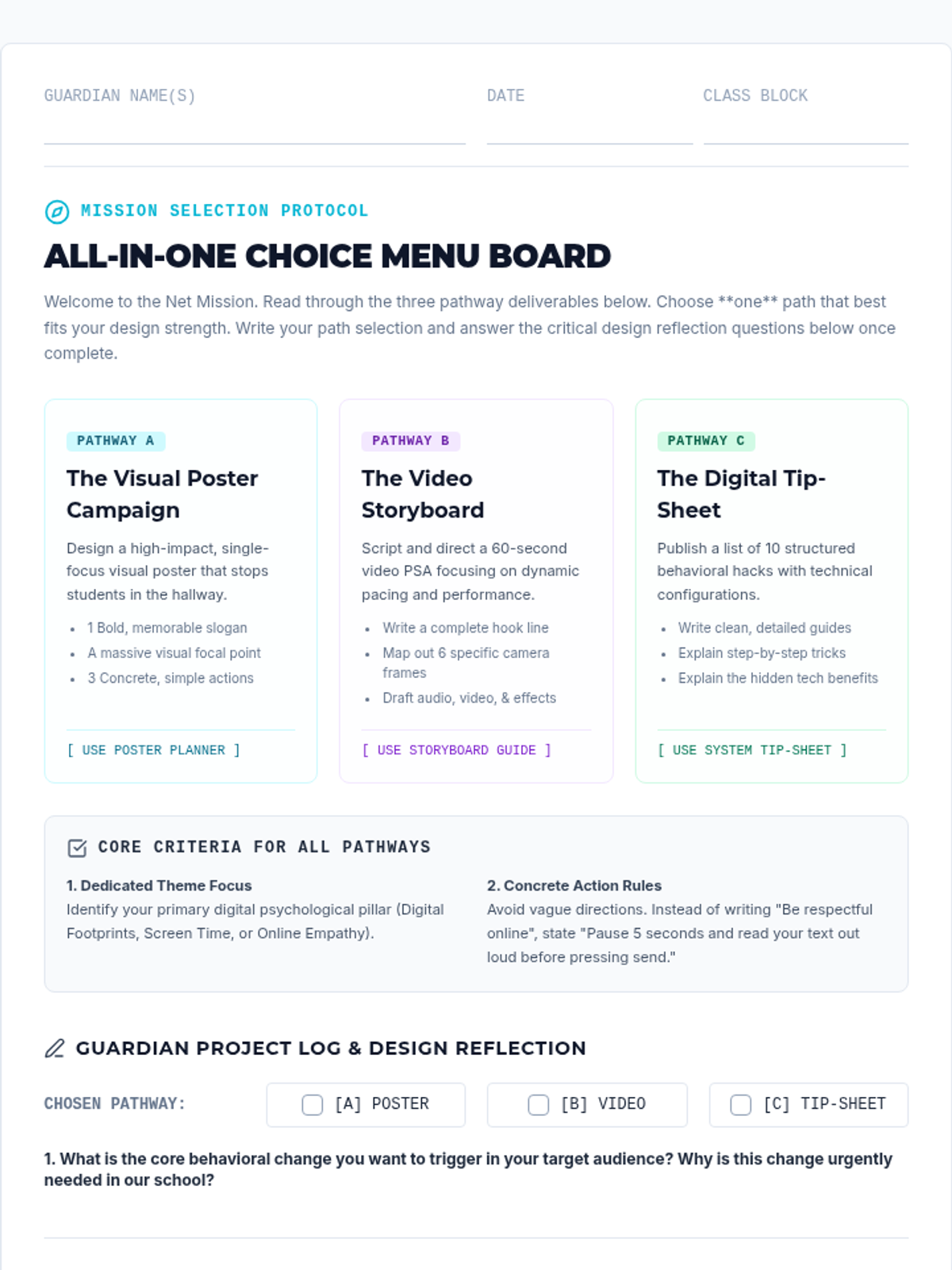
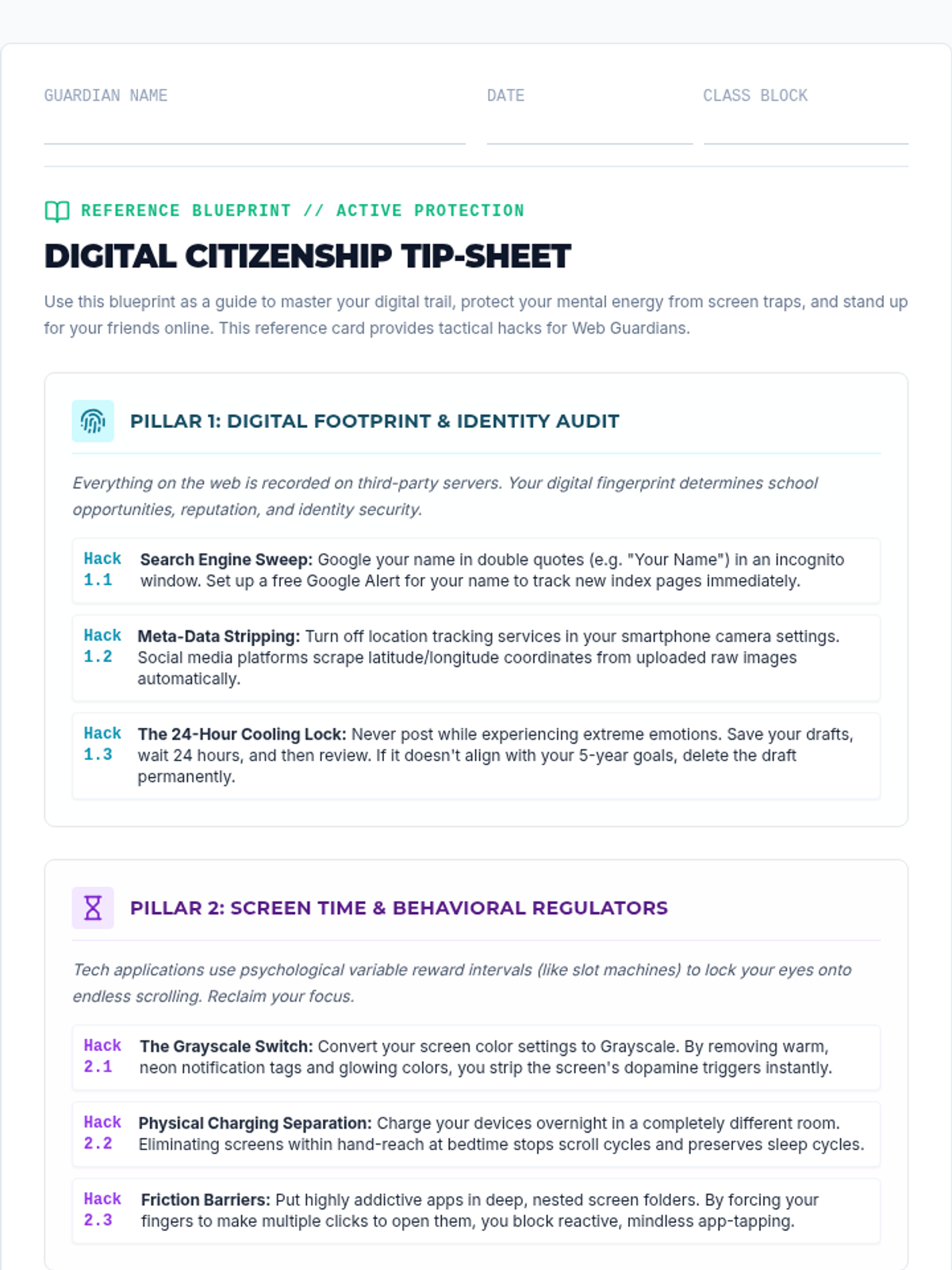
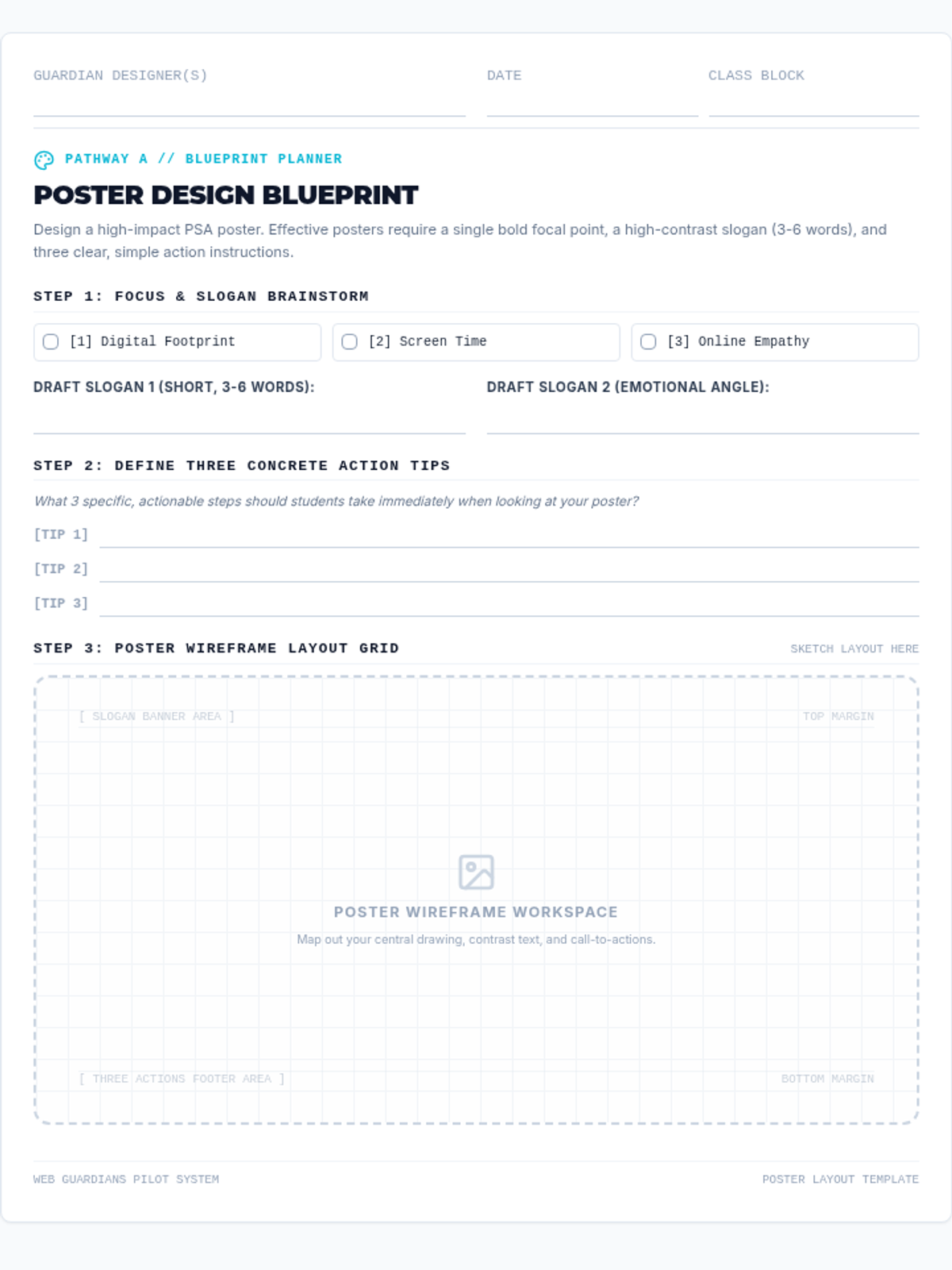
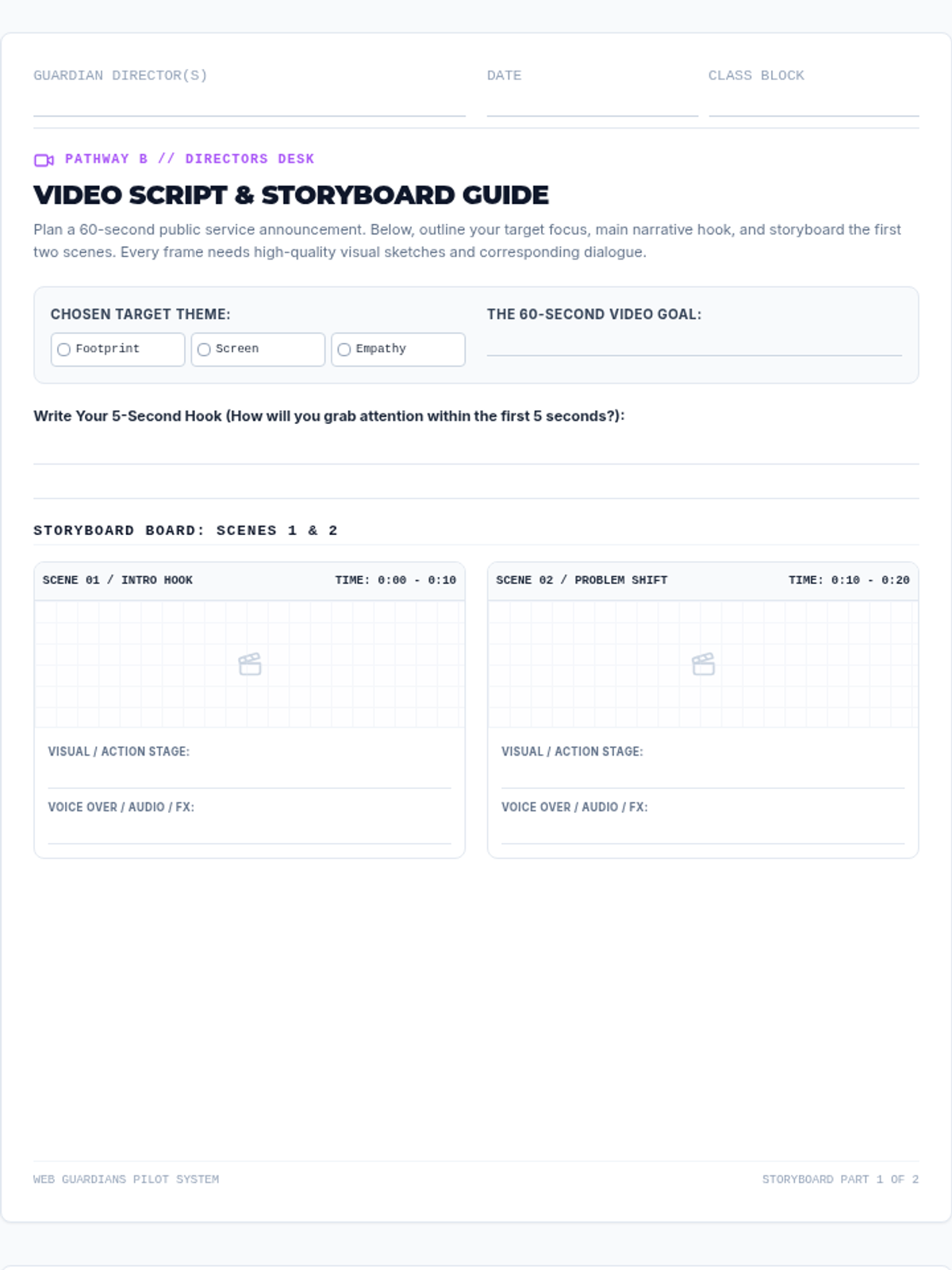
A high-impact digital citizenship project lesson where students become 'Web Guardians' to design PSAs addressing digital footprints, screen time self-regulation, and online empathy. Includes interactive presentation slides, detailed teacher guides, a project menu choice board, visual tip-sheets, and scaffolded planning templates for posters and videos.
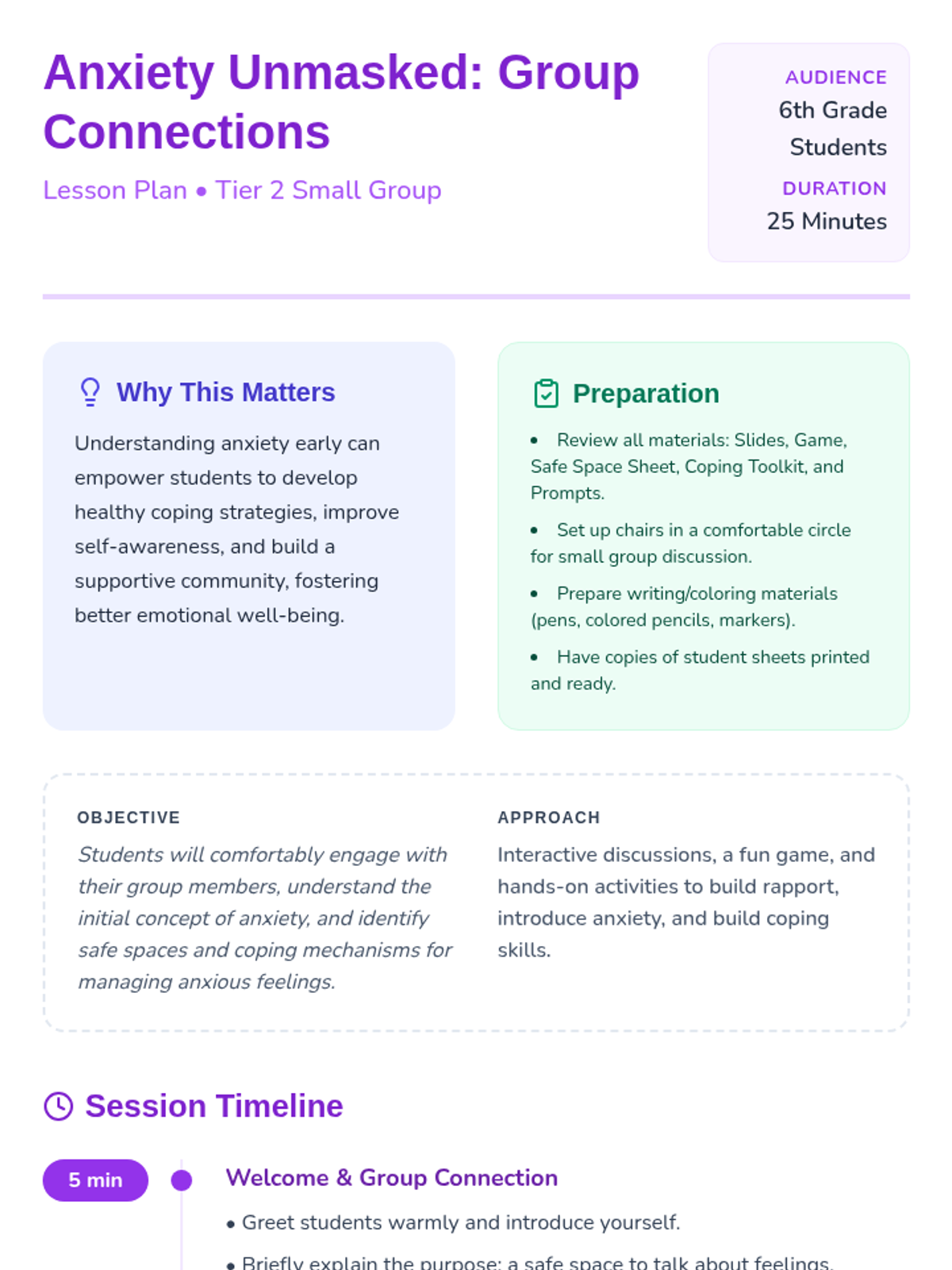
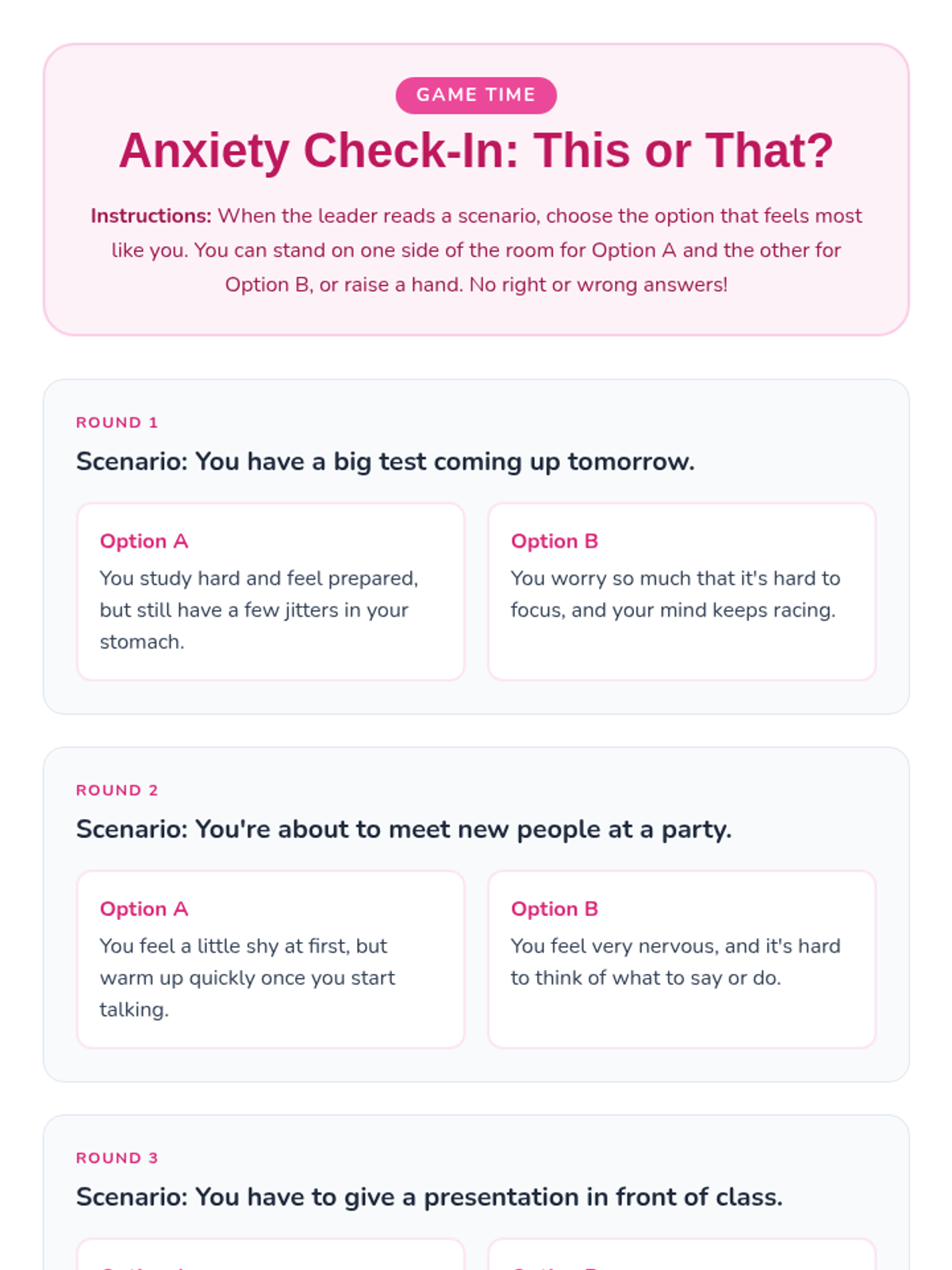
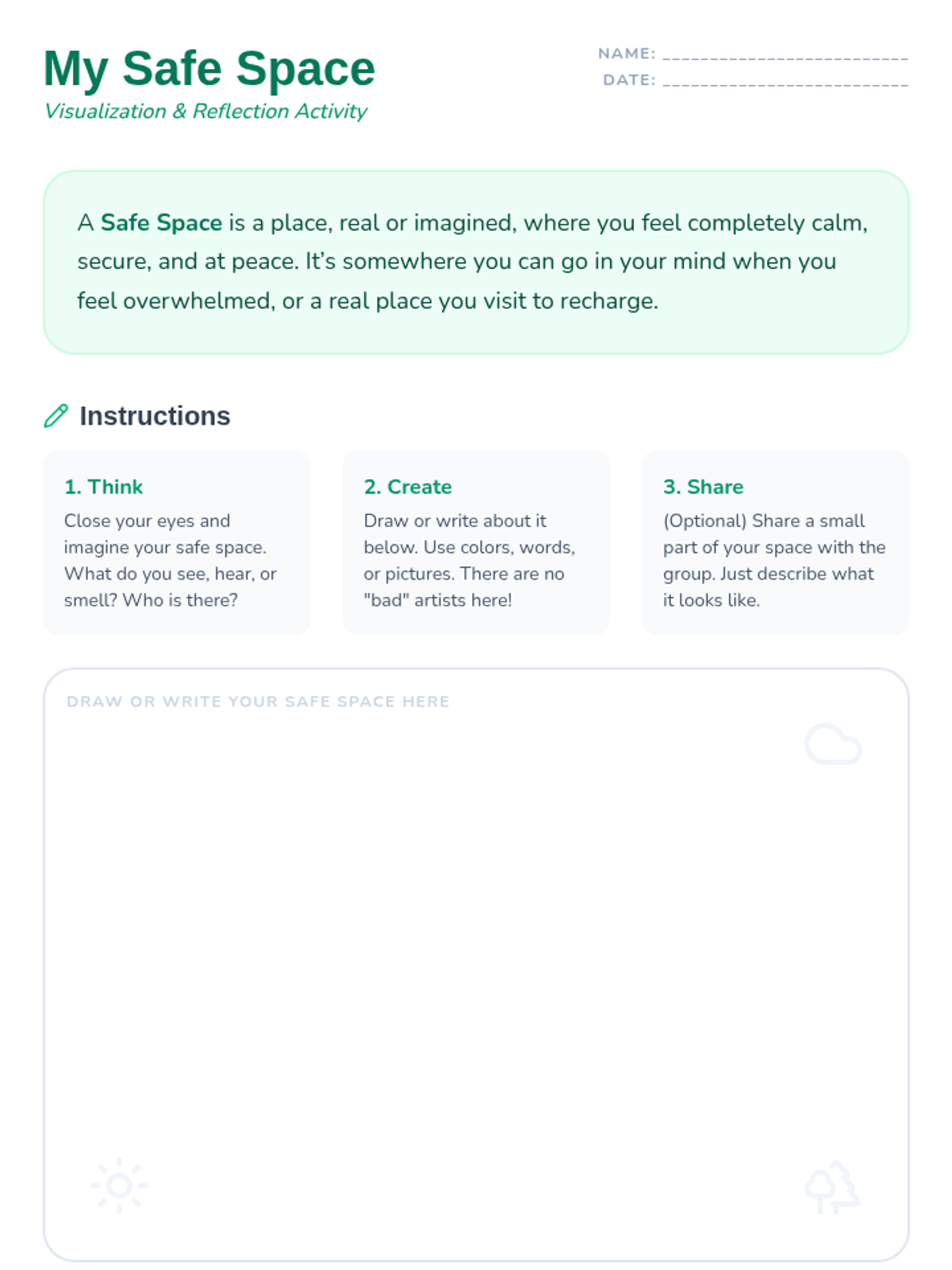
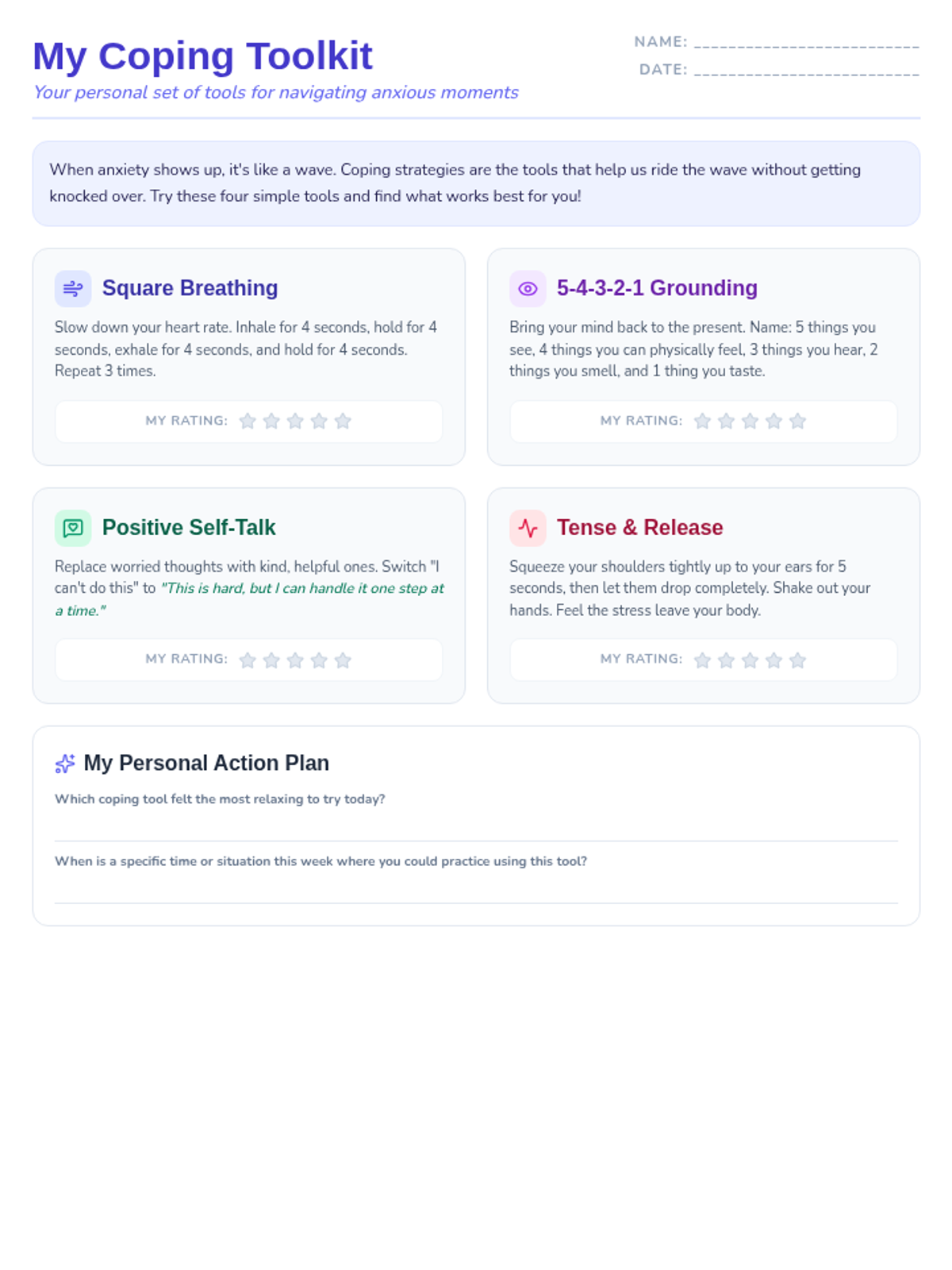
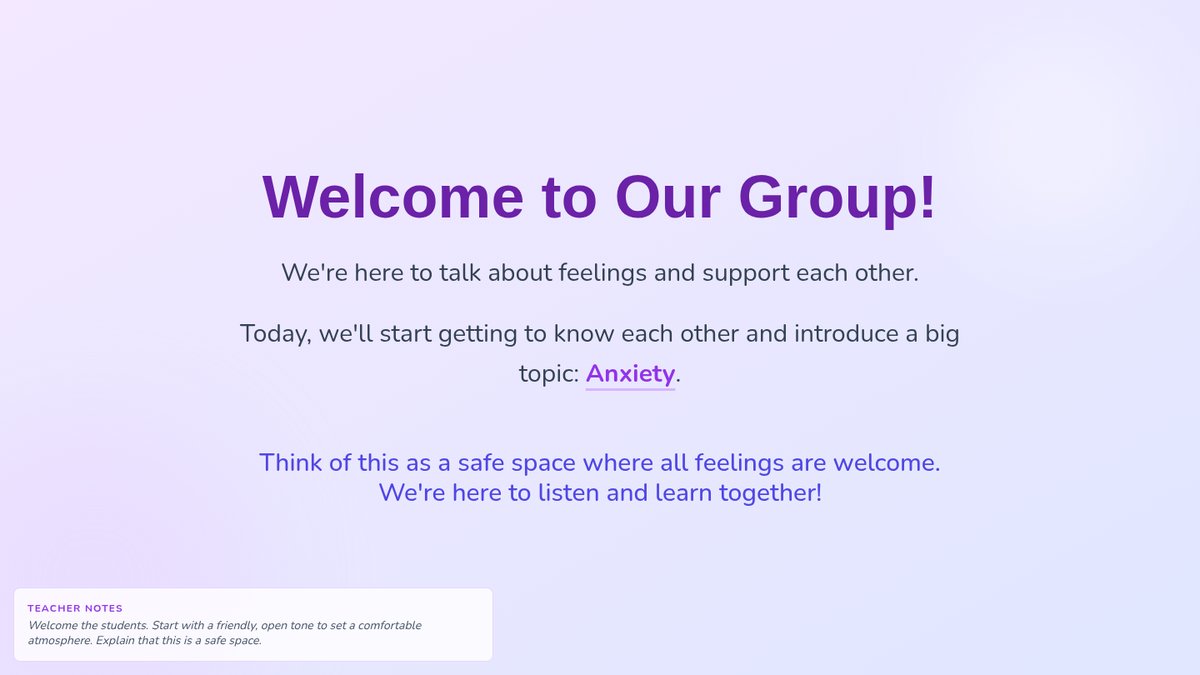
This 25-minute psychoeducational session introduces 6th-grade students to the topic of anxiety in a supportive small group setting. The primary goal is to foster comfort, normalize anxiety, and encourage initial connections.
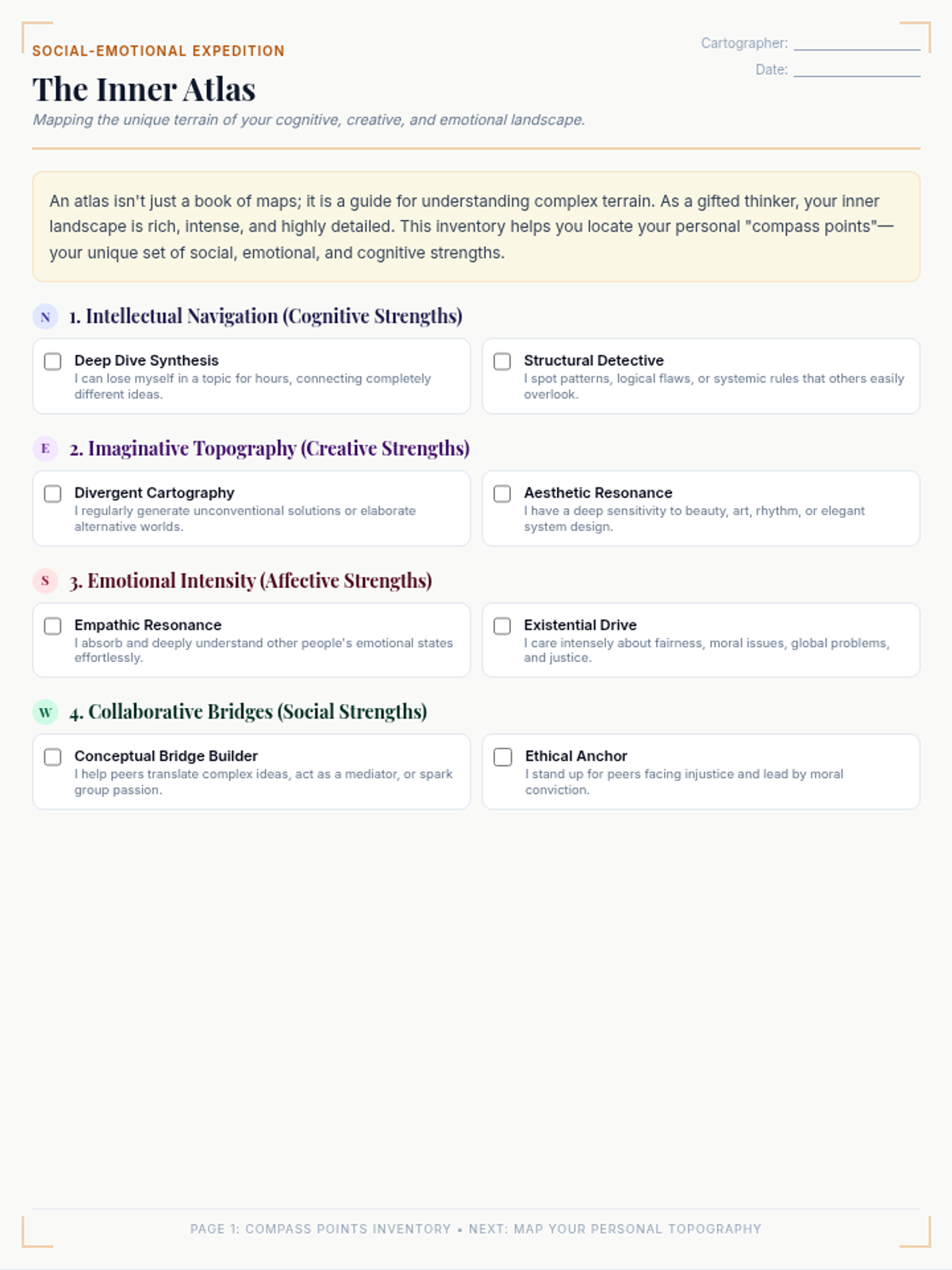
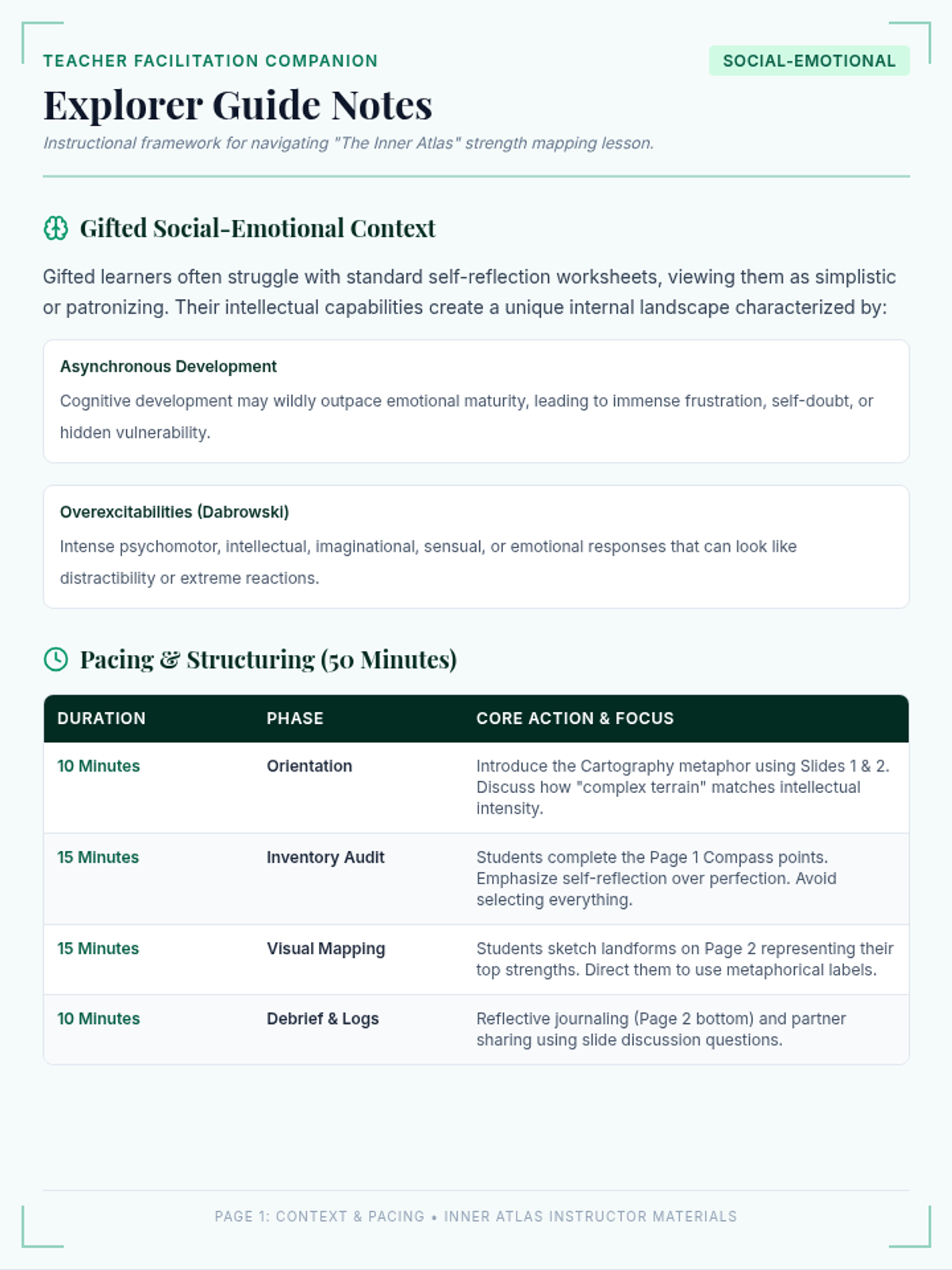
A social-emotional strength inventory lesson designed specifically for middle school gifted students. Using a cartography and exploration theme, students identify, analyze, and map their unique cognitive, creative, and emotional strengths while addressing gifted-specific traits like asynchronous development and overexcitabilities.
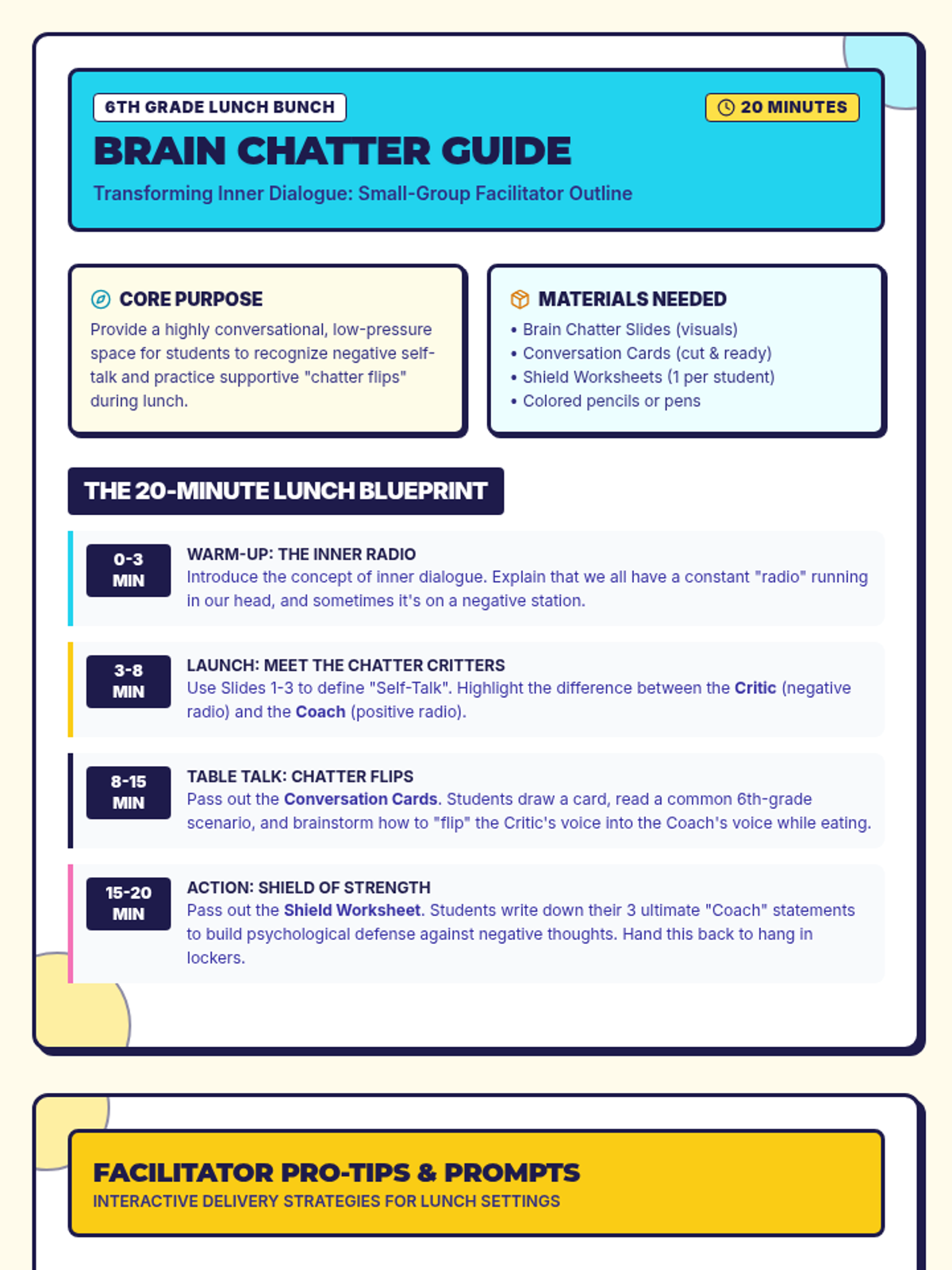
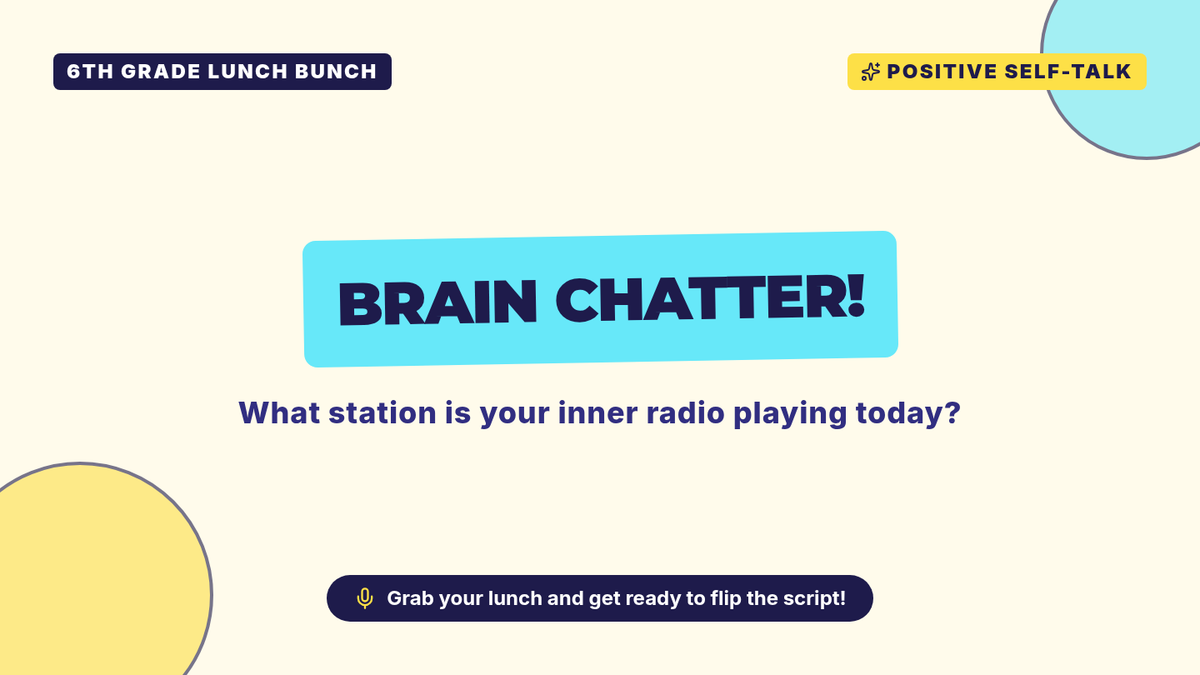
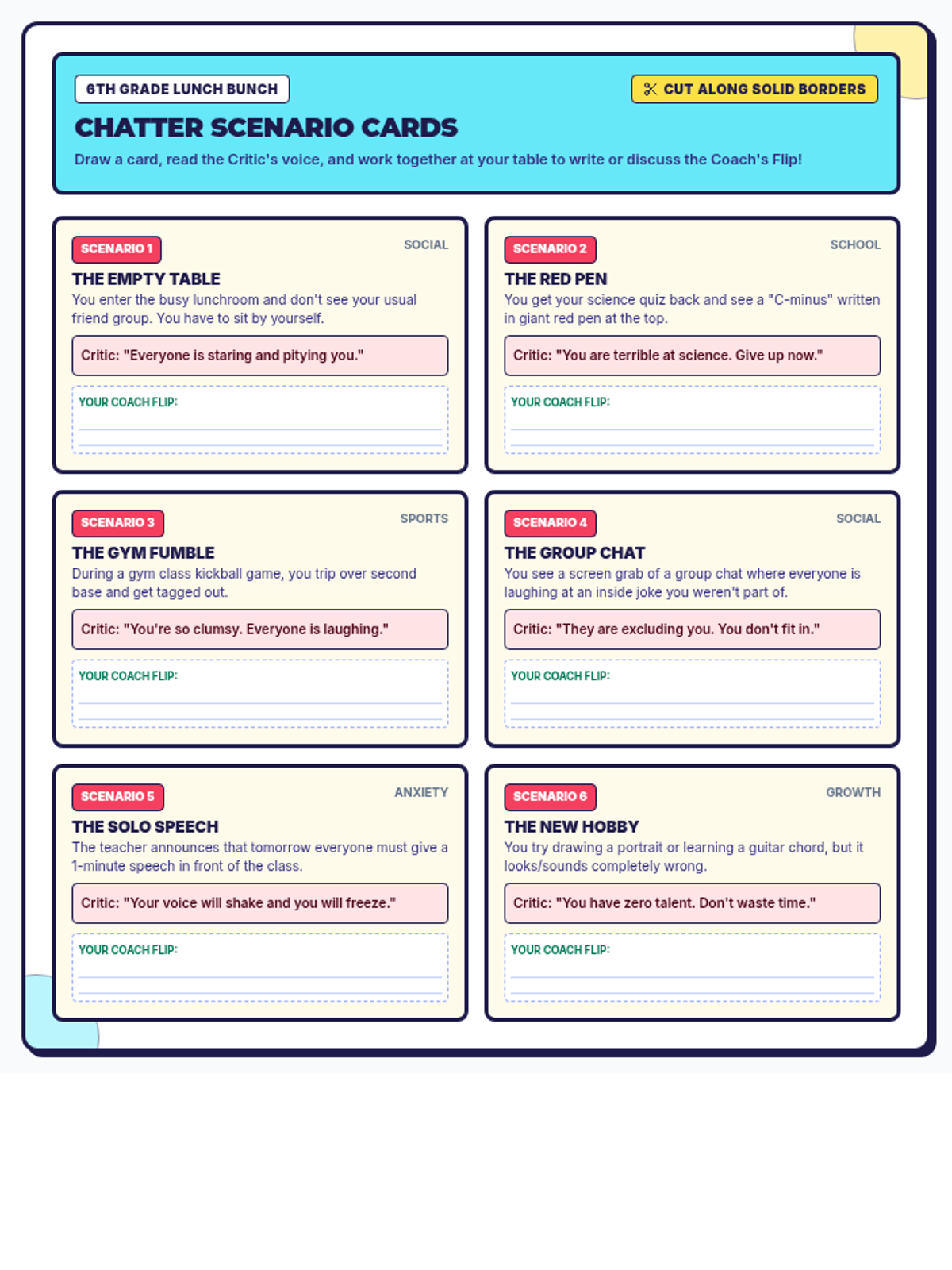
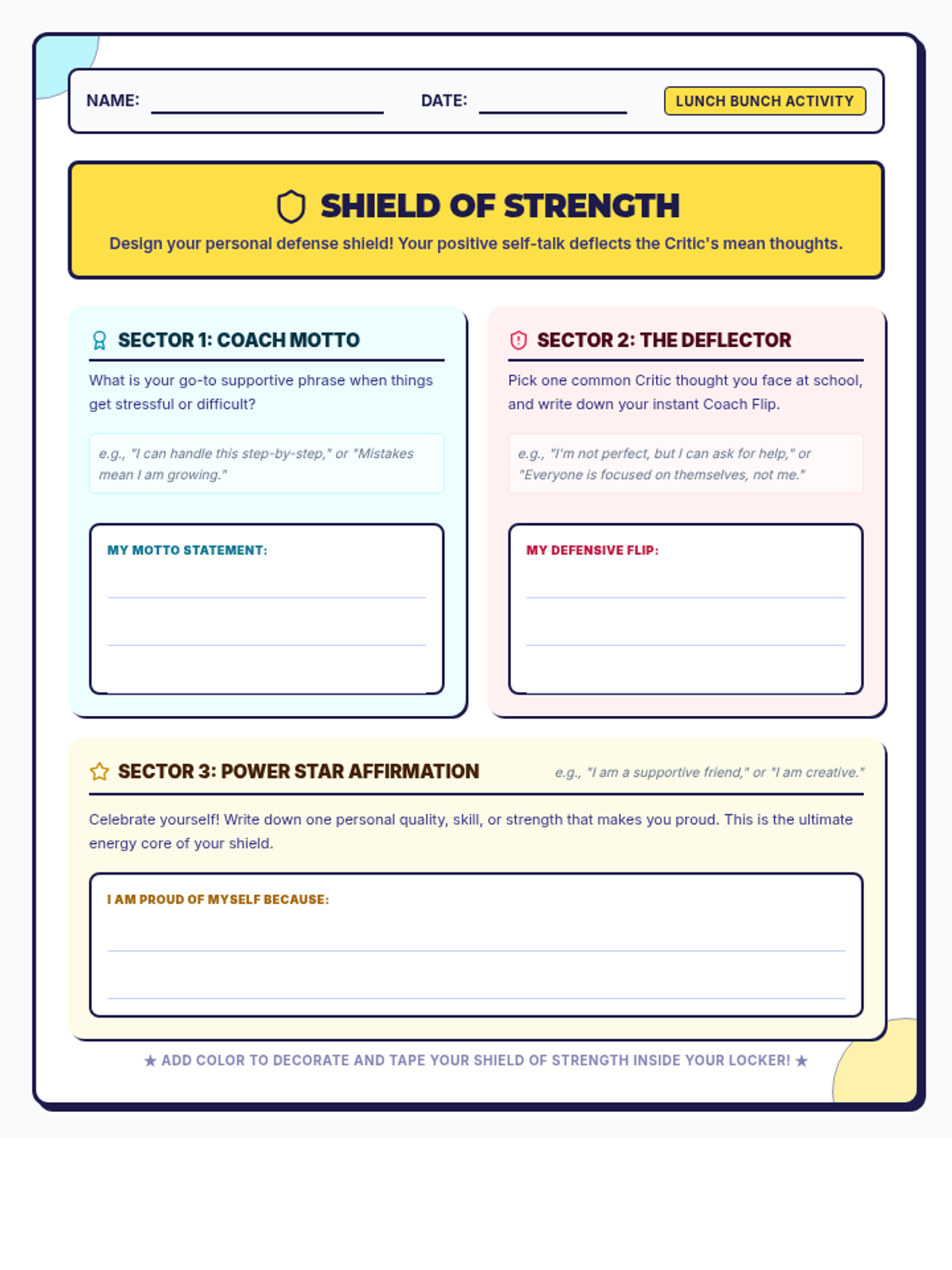
A high-energy, 20-minute Lunch Bunch session designed for 6th graders to identify their inner dialogue and practice transforming negative self-talk into supportive, positive affirmations. Includes a structured discussion guide, interactive slides, conversational scenario cards, and a creative personal shield worksheet.
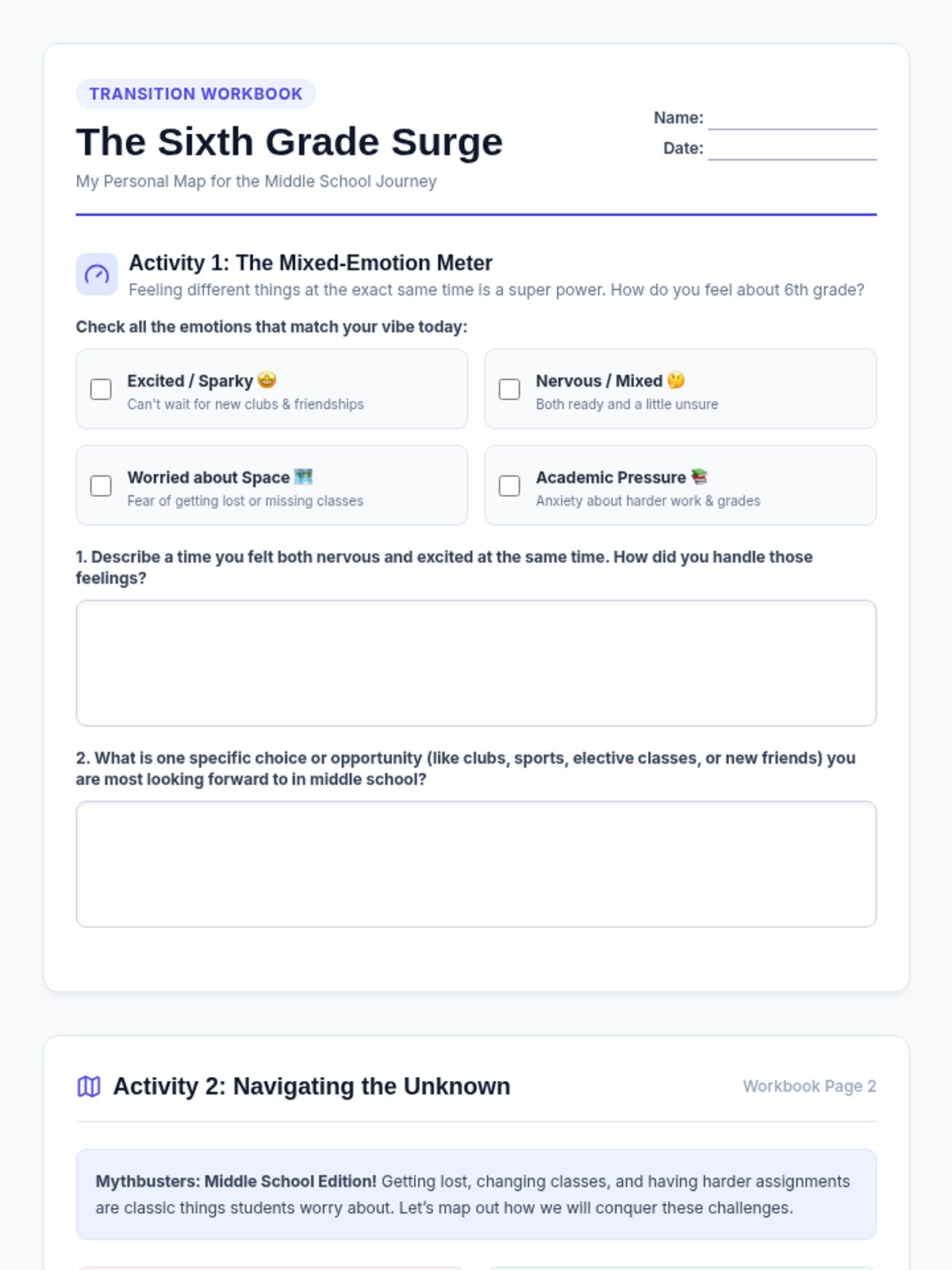
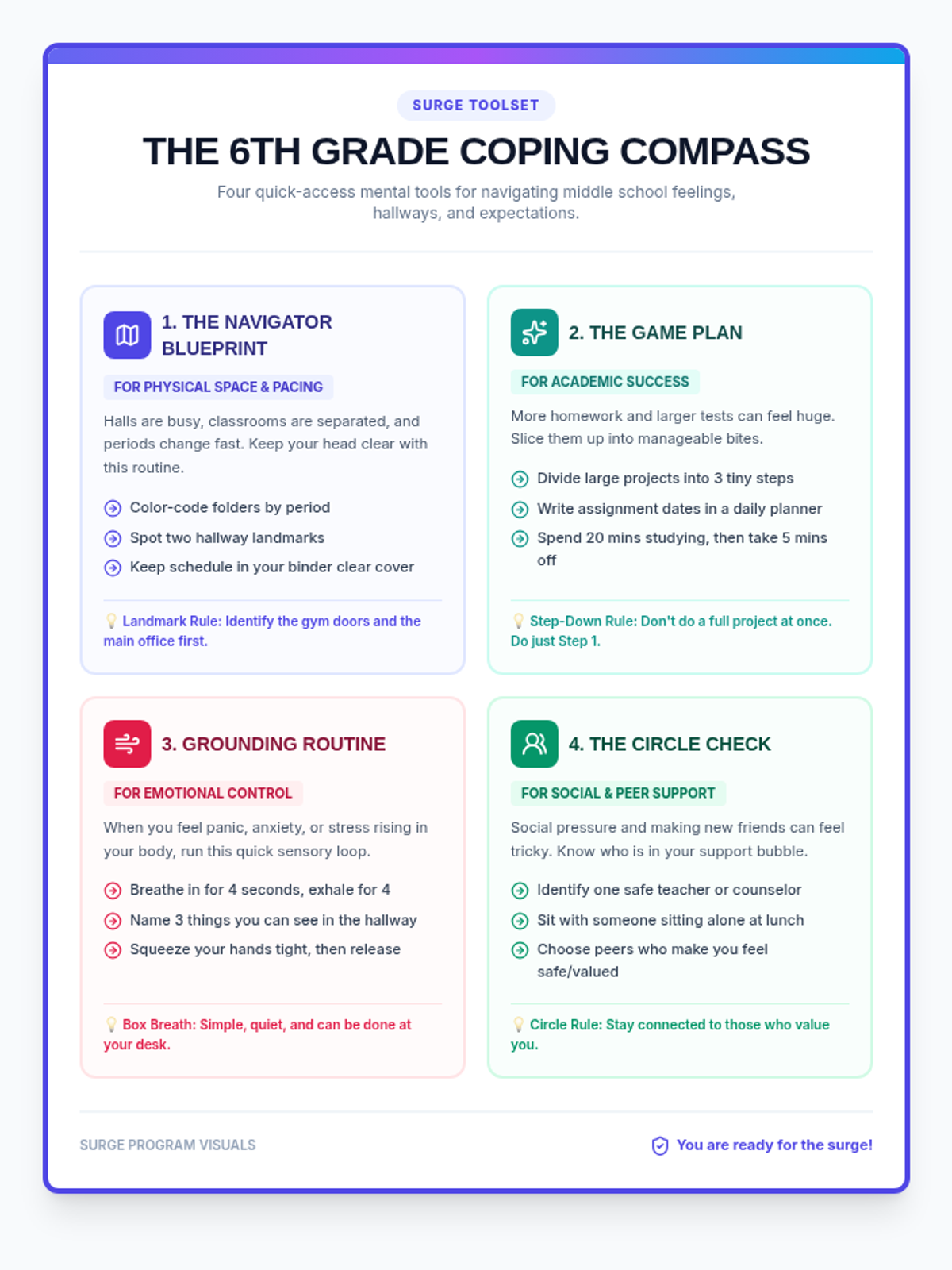
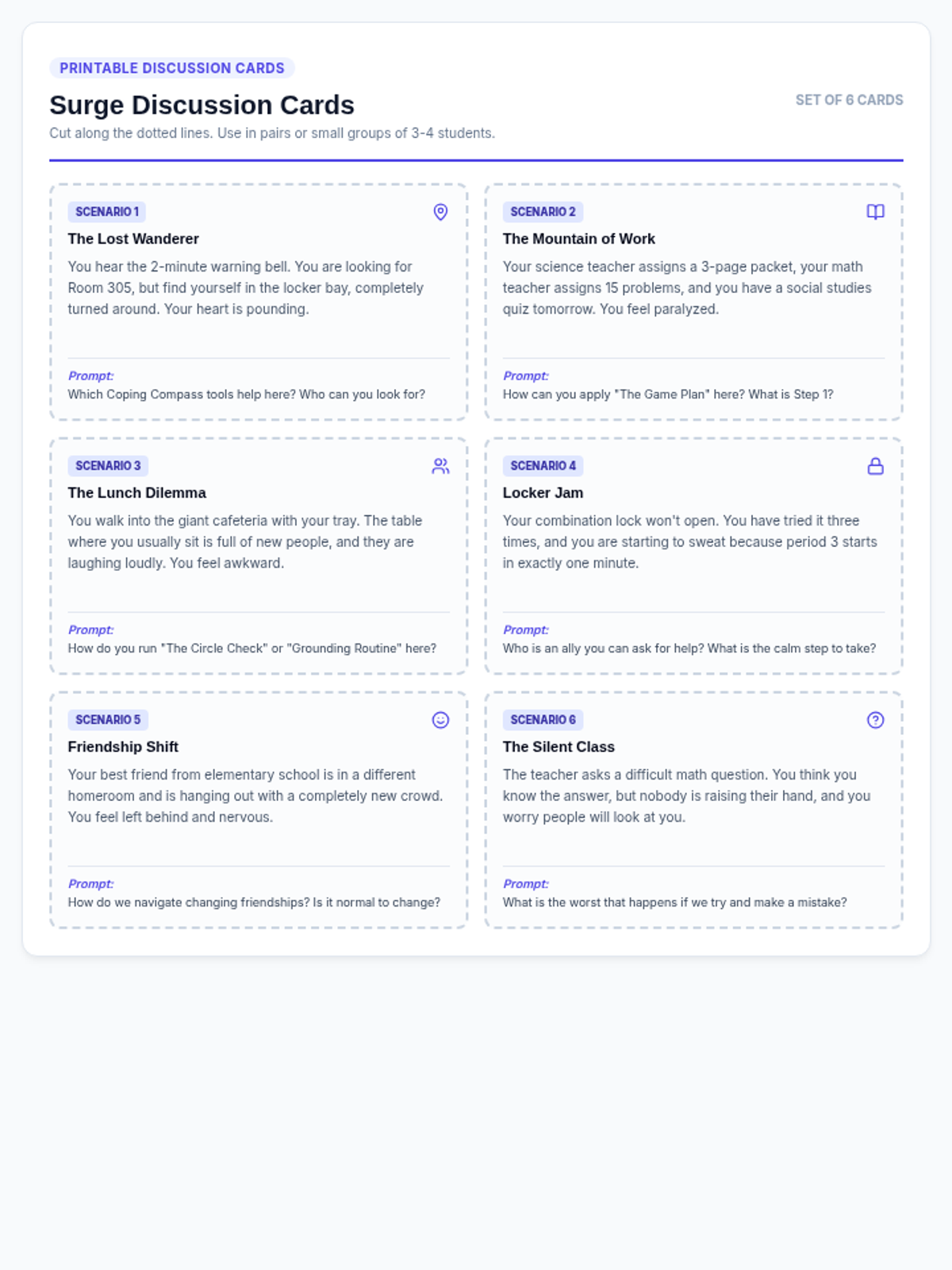
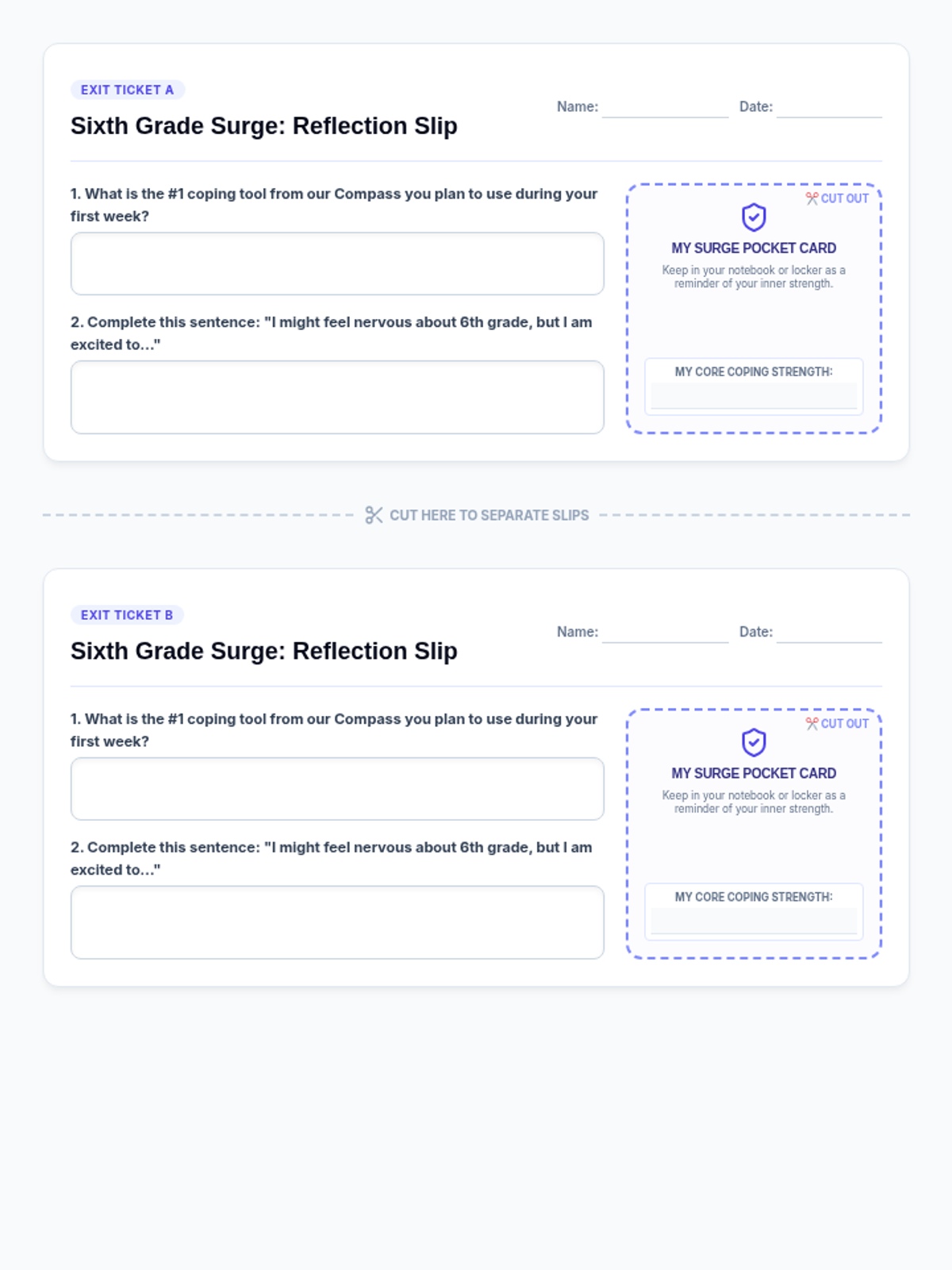
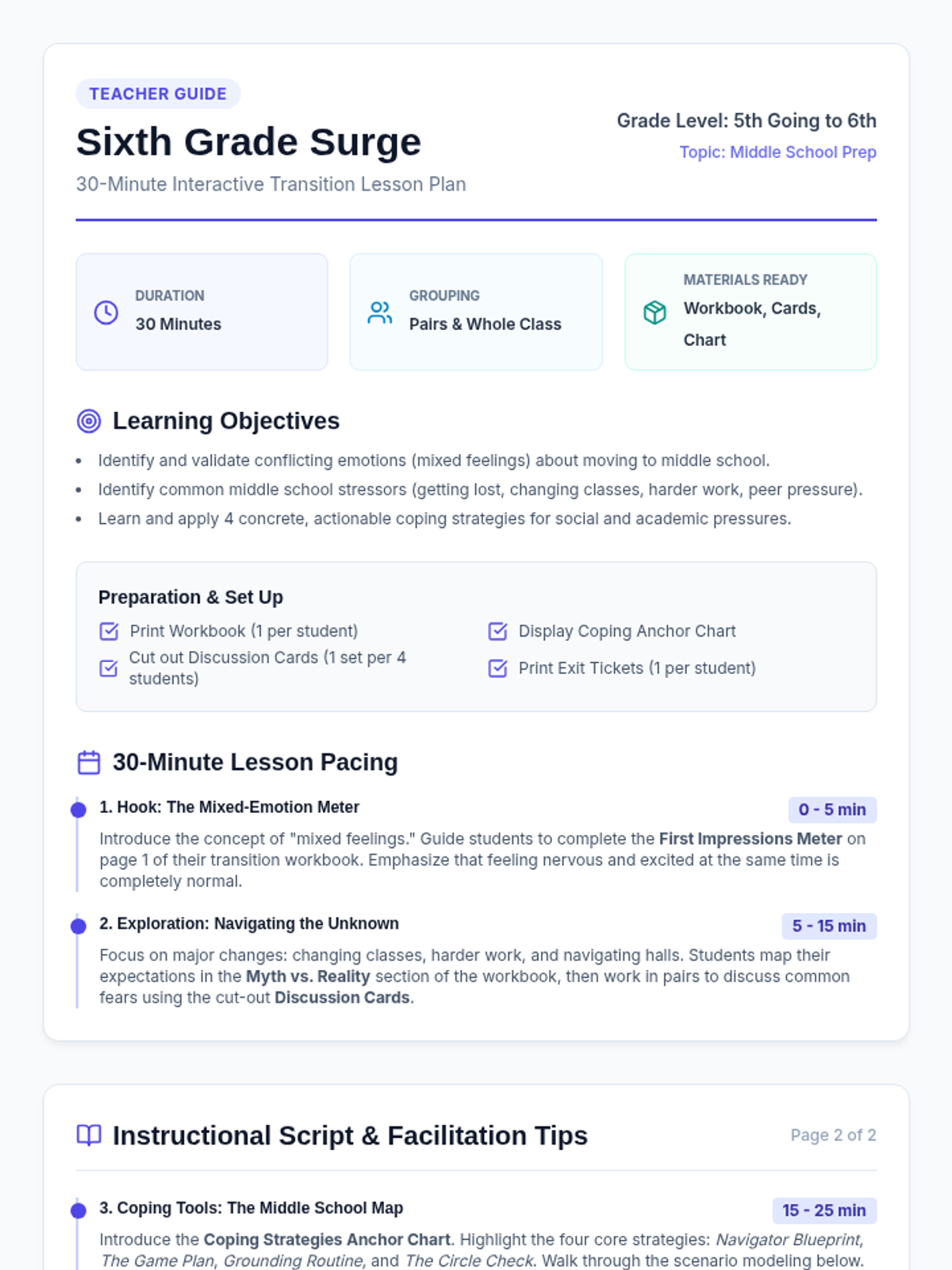
A comprehensive transition lesson designed to help rising sixth graders navigate the emotional shift to middle school. Students explore mixed emotions, learn practical coping strategies for academic and social pressures, and map out their path to success.
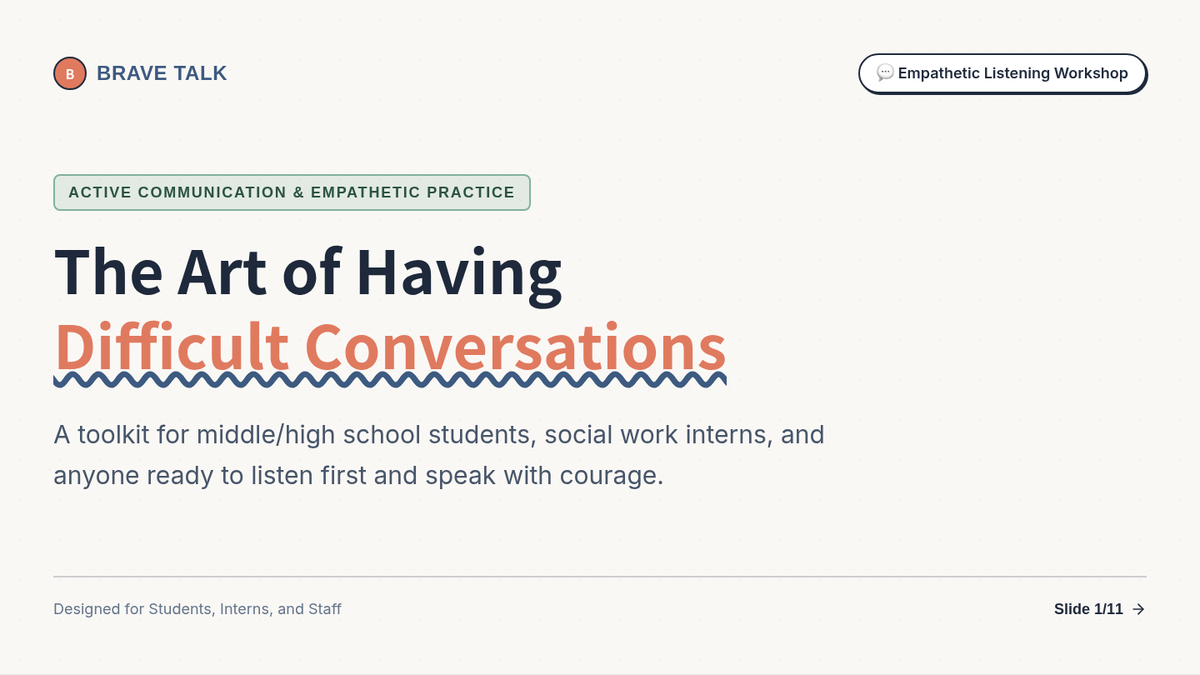
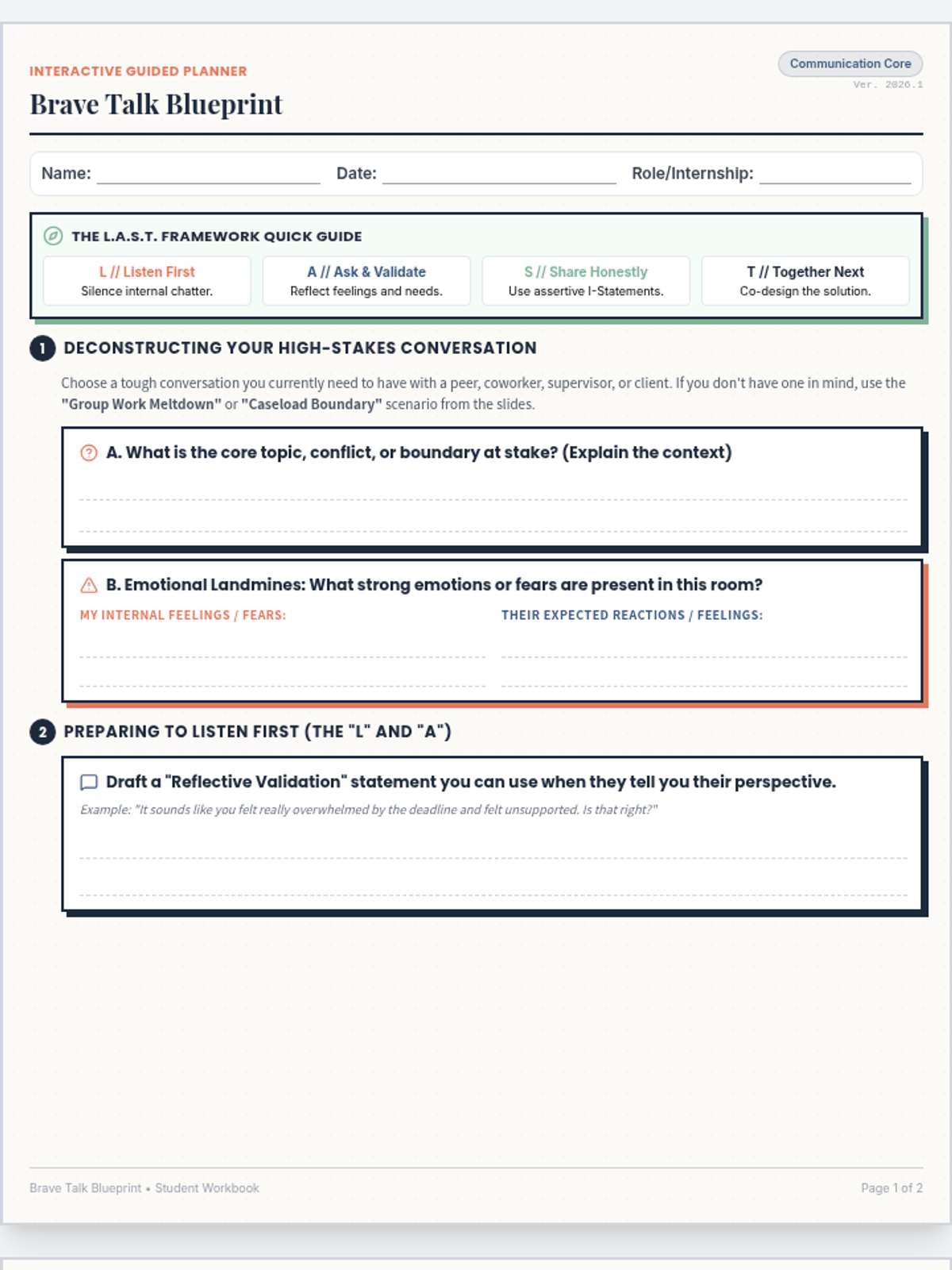
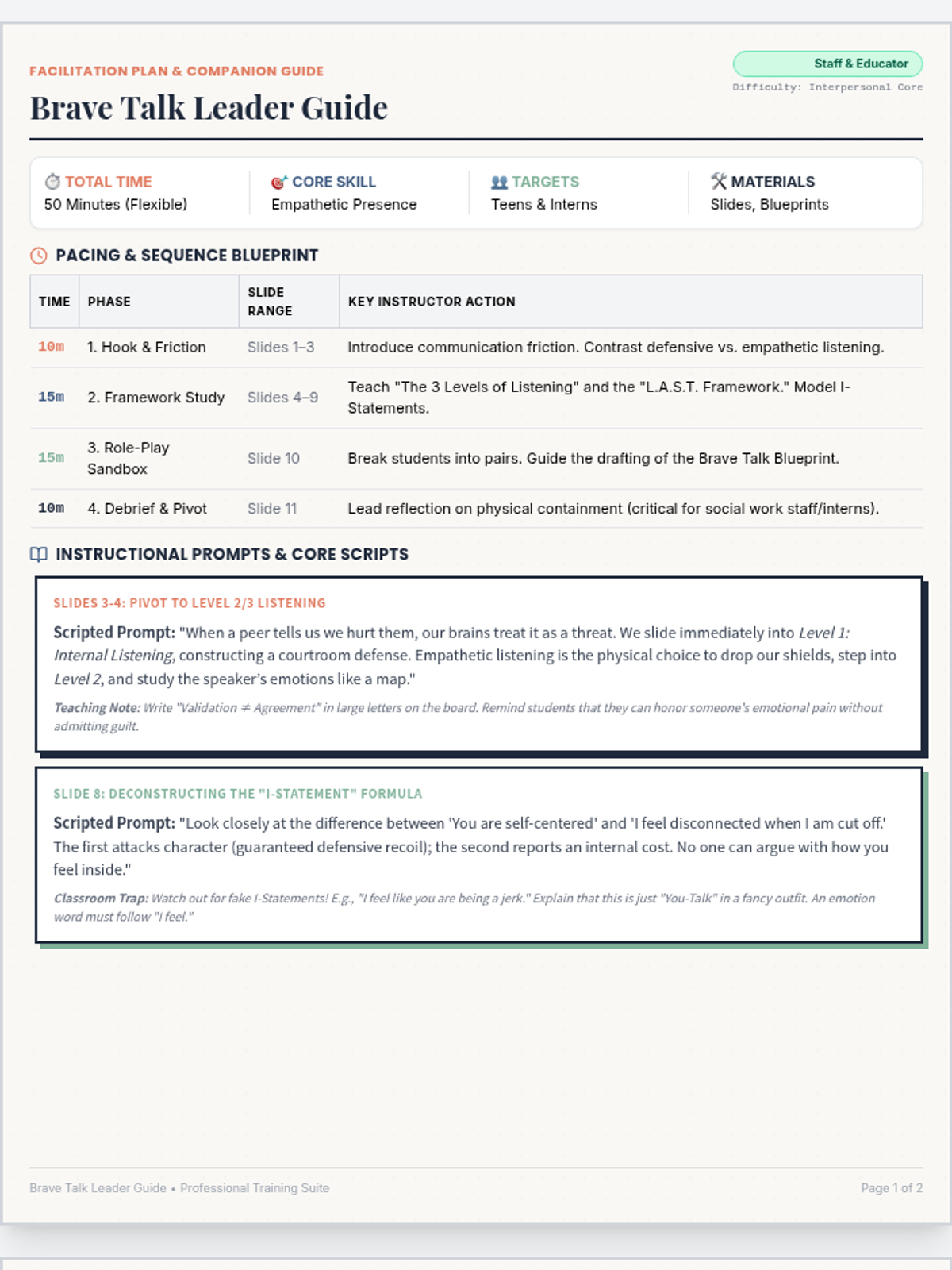
A comprehensive training lesson designed to teach middle/high school students and social work interns how to navigate emotionally charged, difficult conversations using empathetic listening and structured communication frameworks.
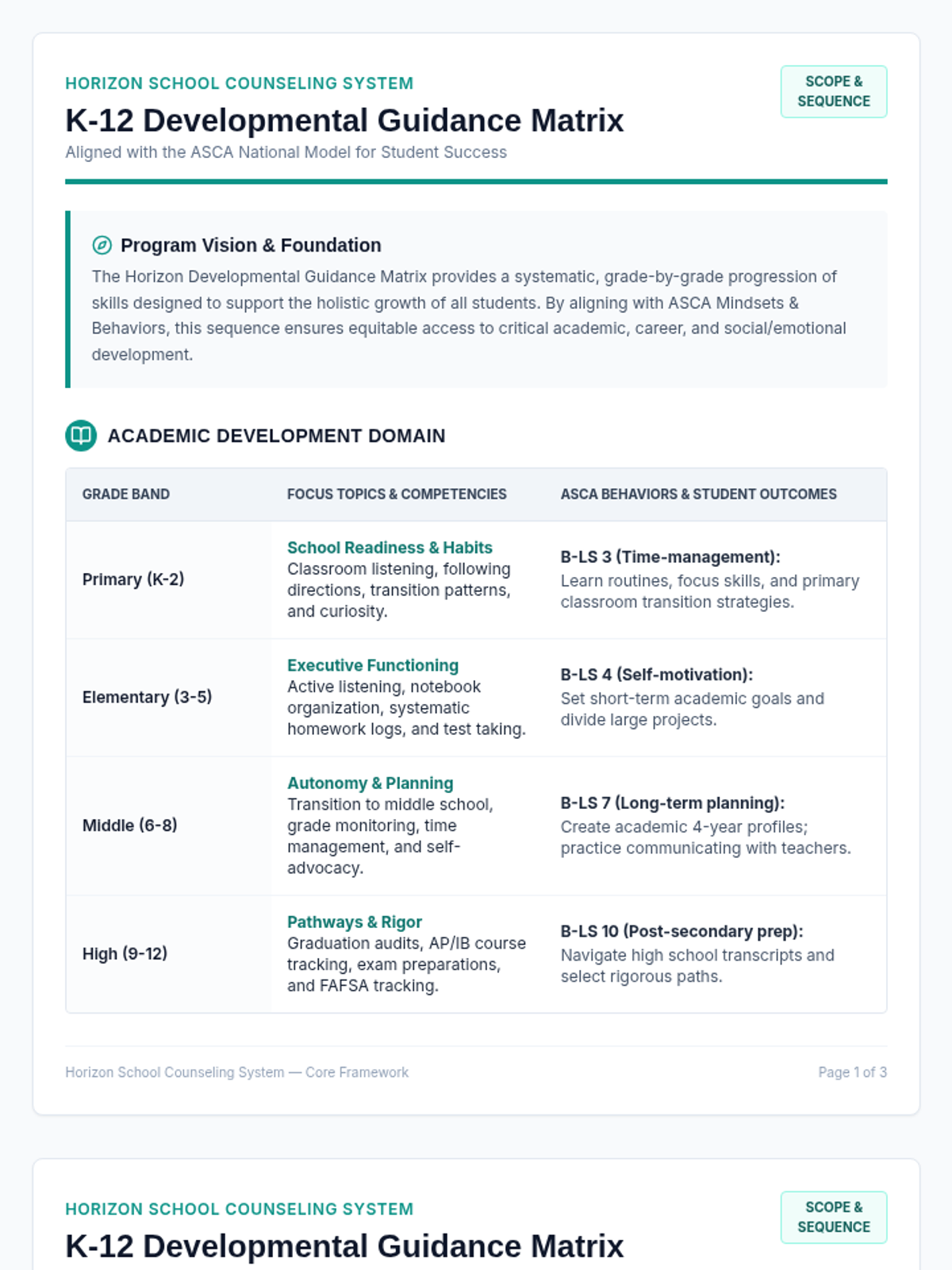
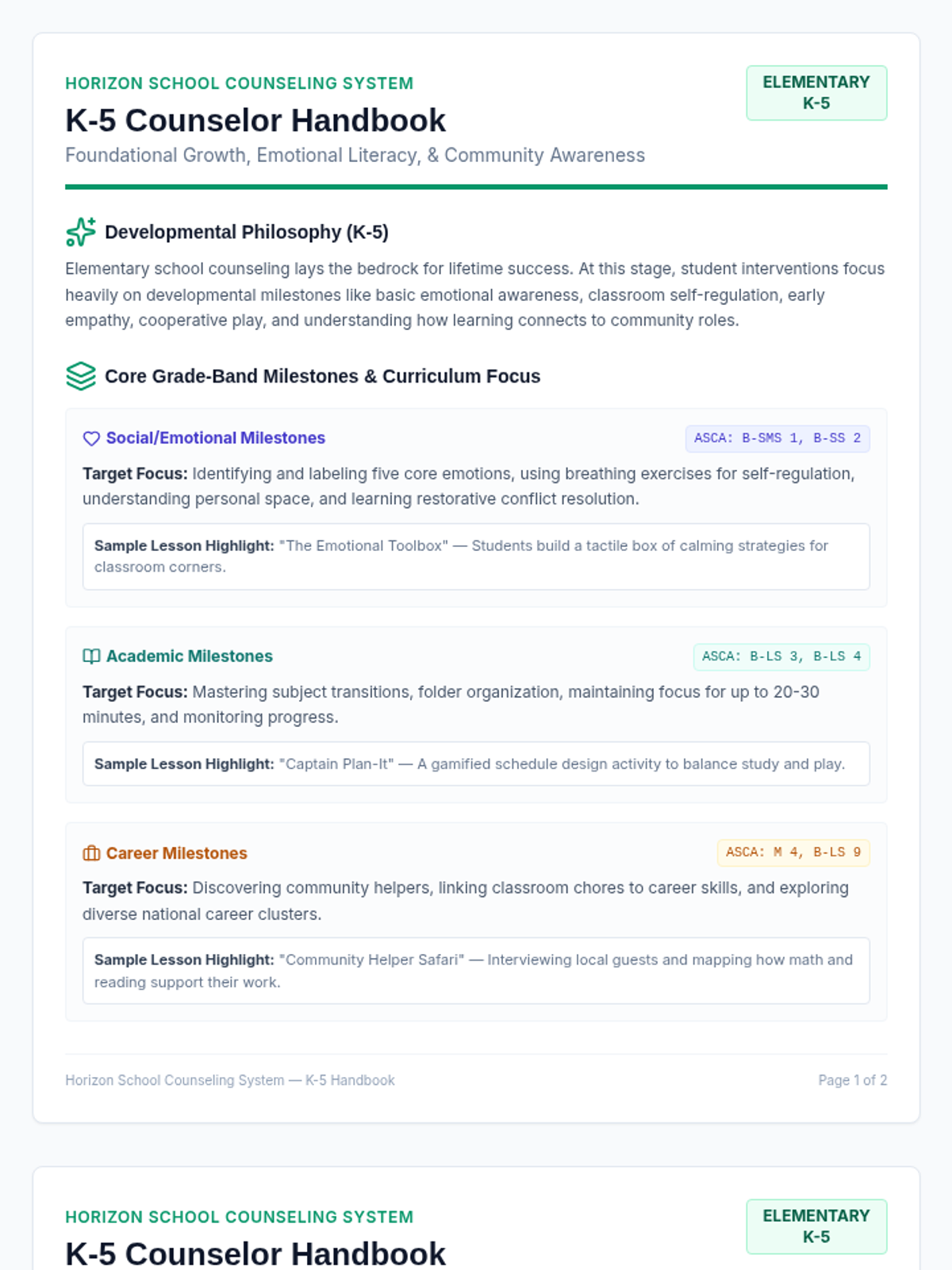
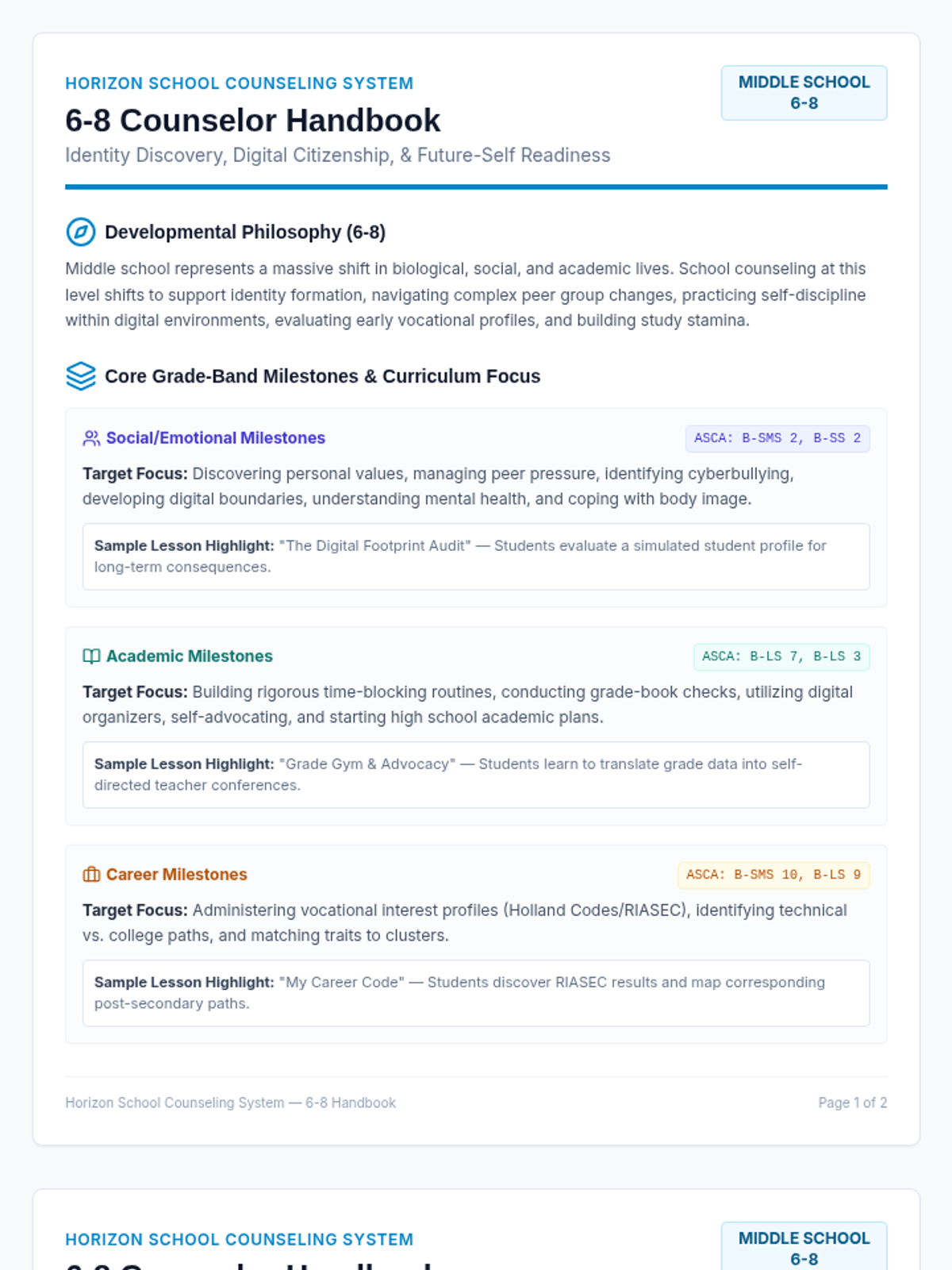
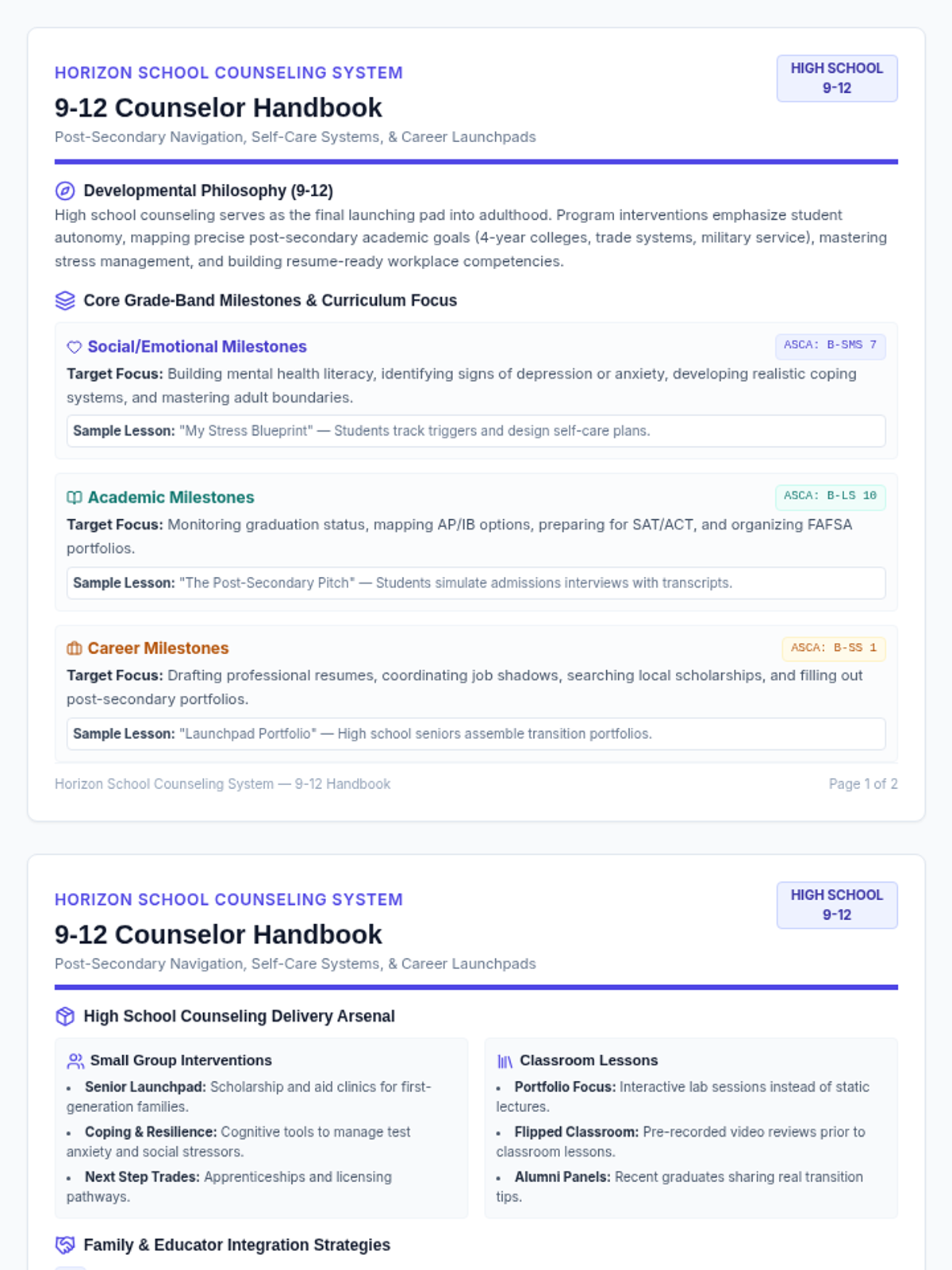
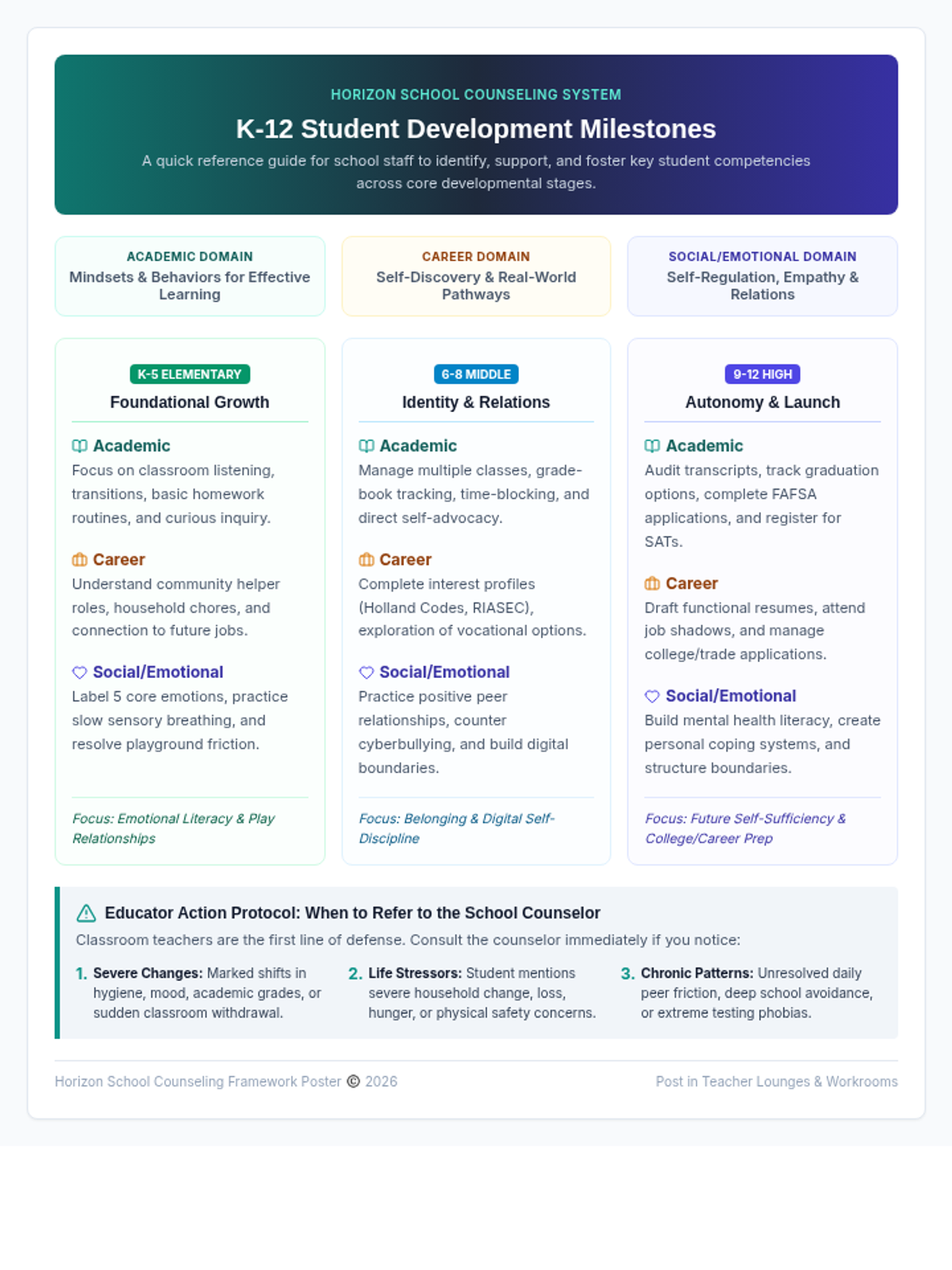
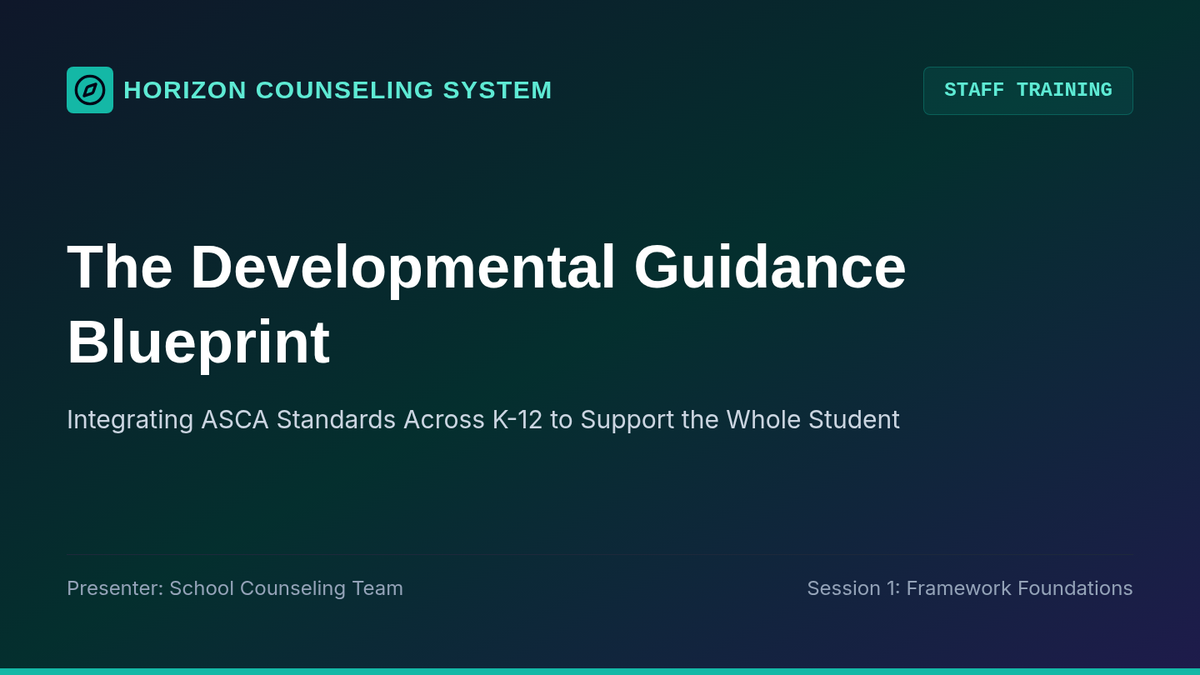
A comprehensive developmental school counseling framework spanning K-12, aligned with ASCA national standards. This blueprint includes a K-12 scope and sequence, grade-band counselor handbooks, a staff reference poster, and professional development slides for counselor-led staff training.
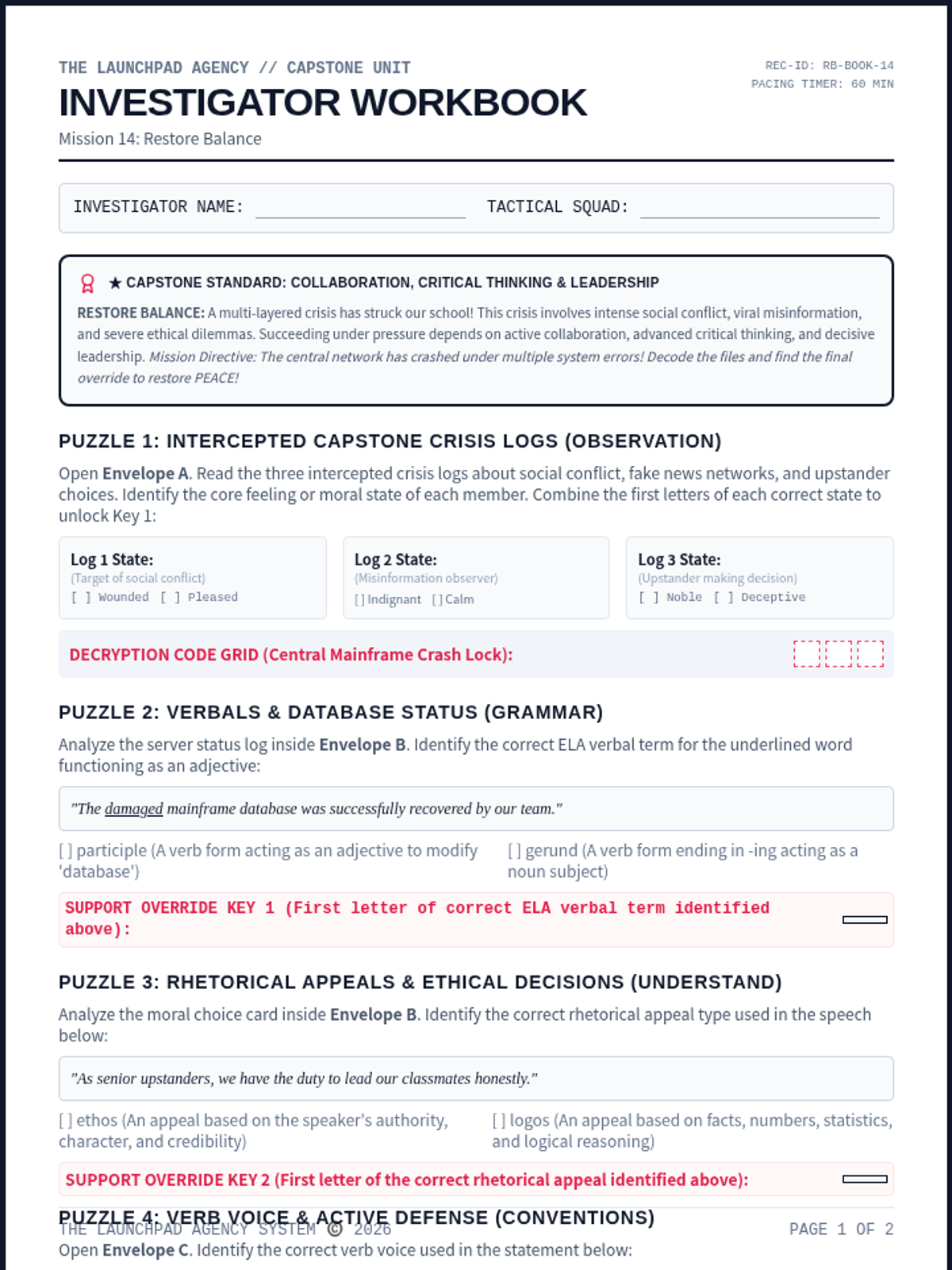
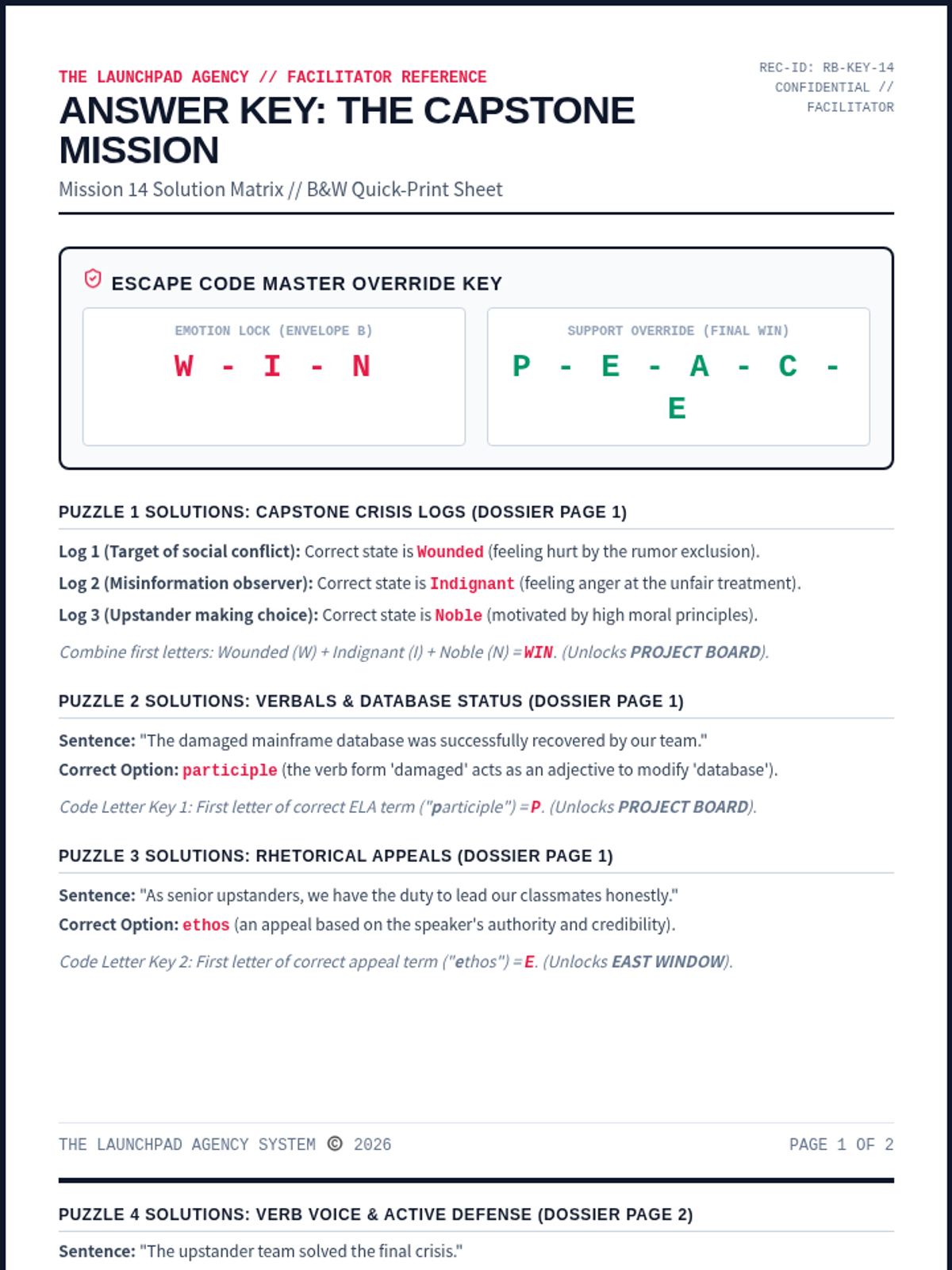
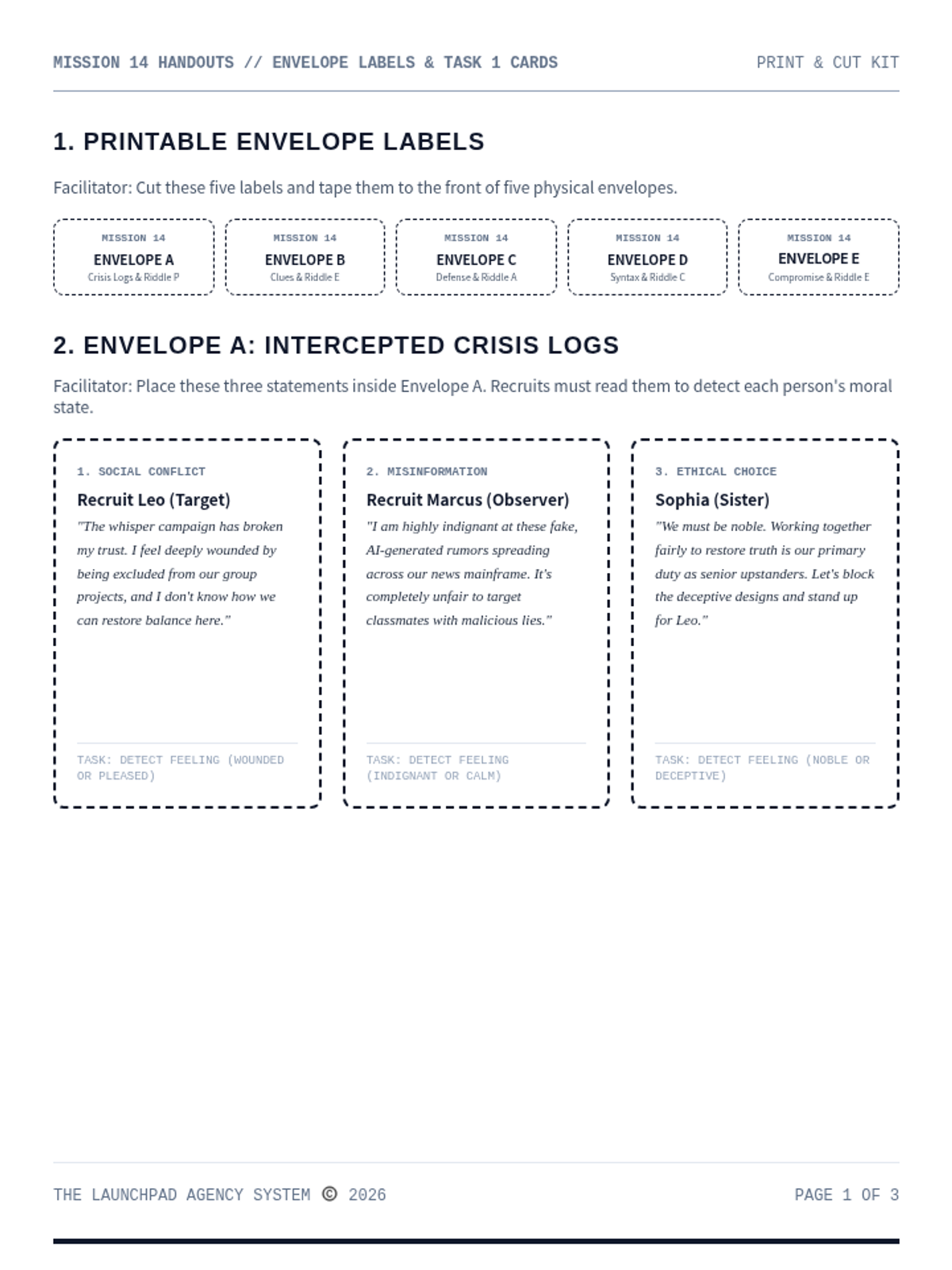
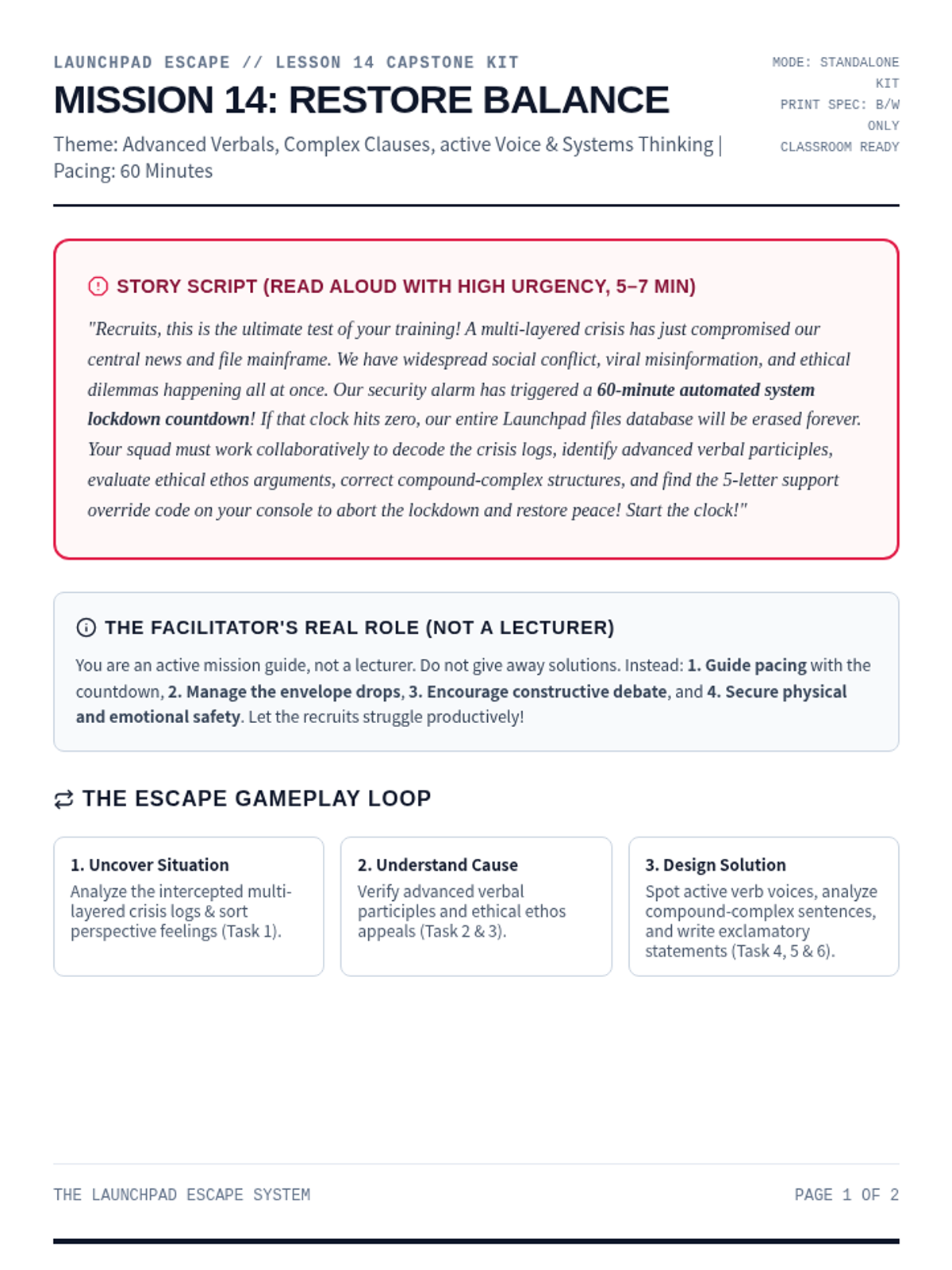
The ultimate multi-layered capstone escape room challenge. Recruits analyze complex social conflict evidence, trace misinformation networks, resolve major ethical dilemmas, and decode the final system override.
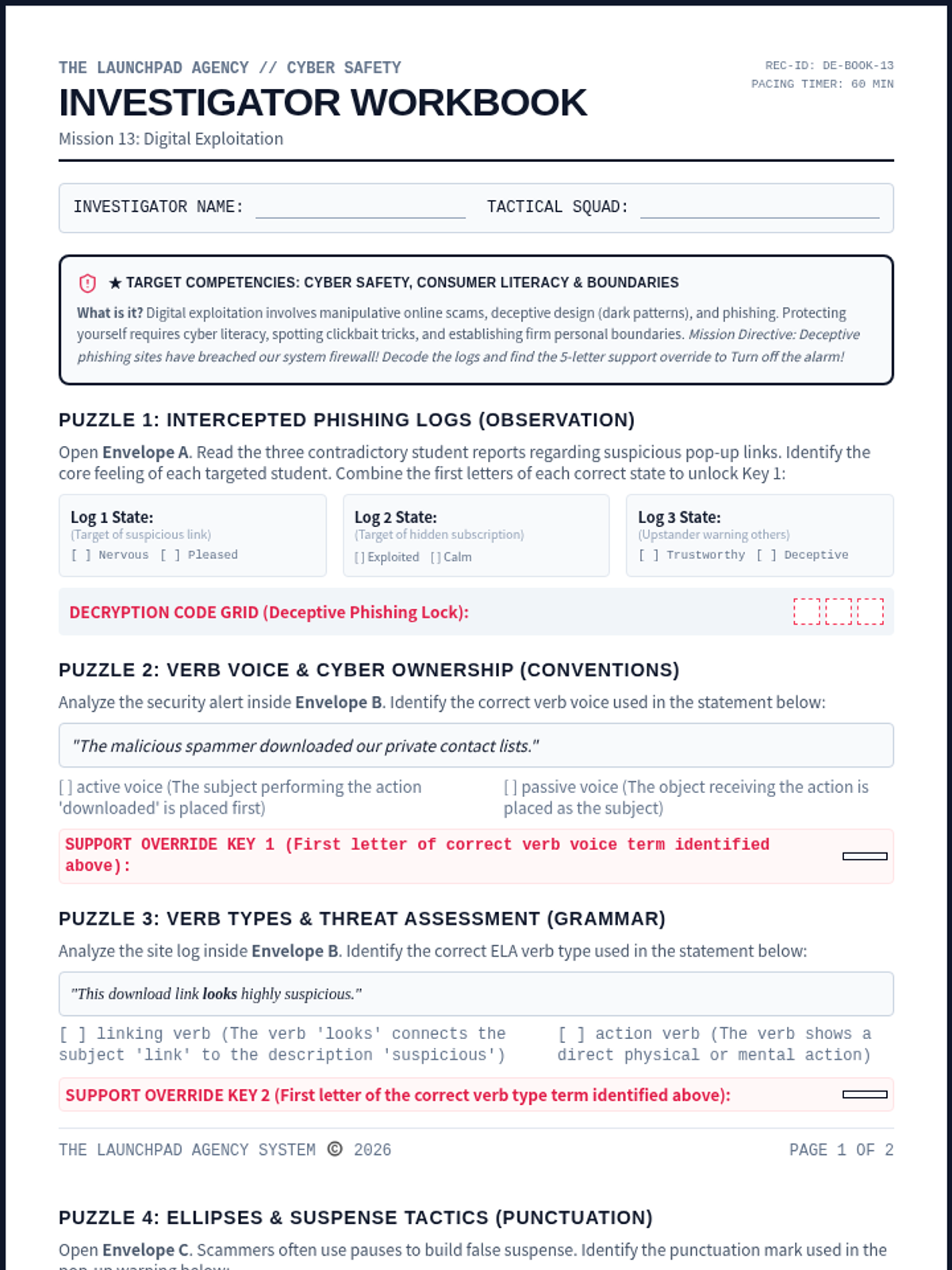
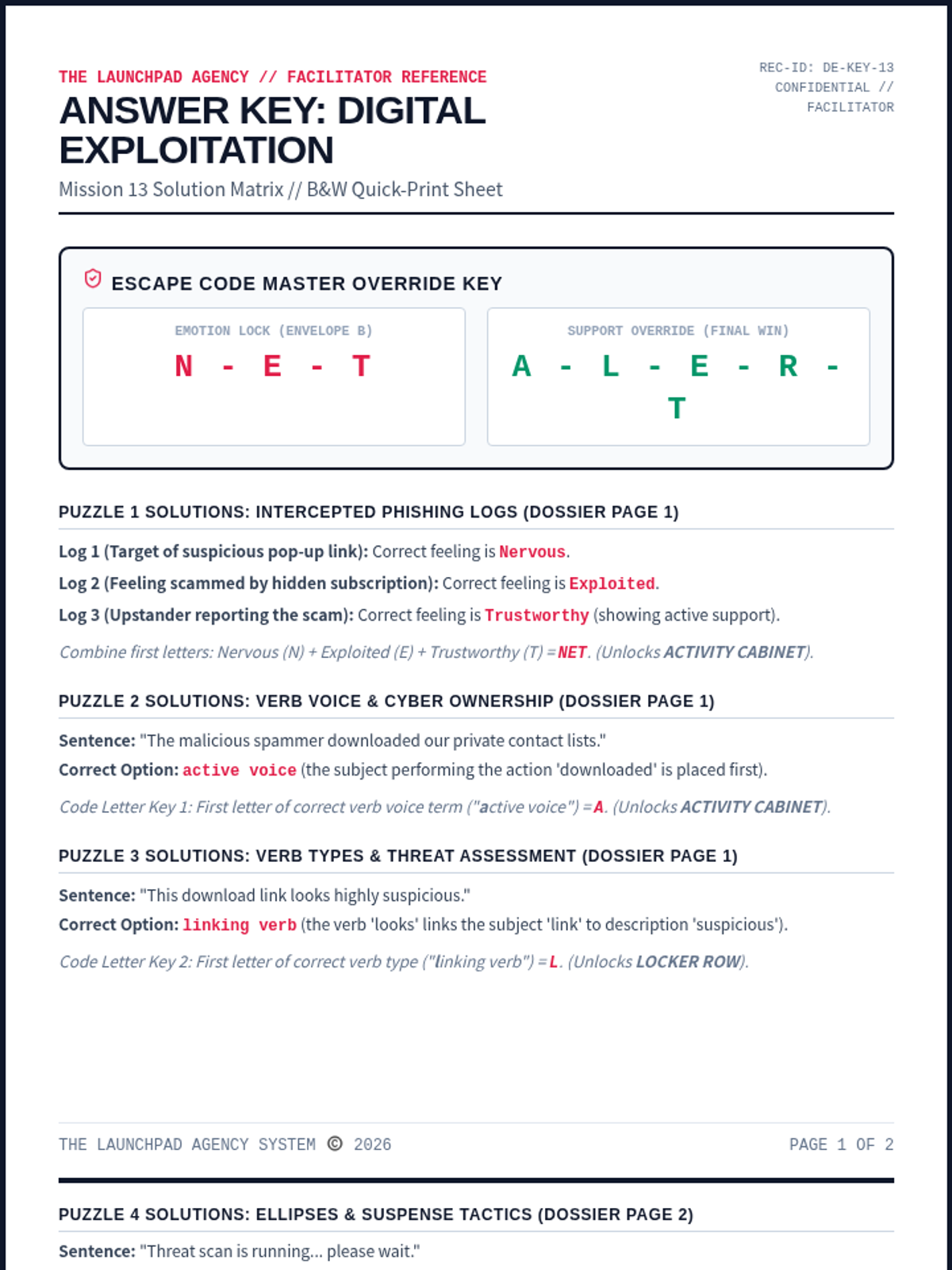
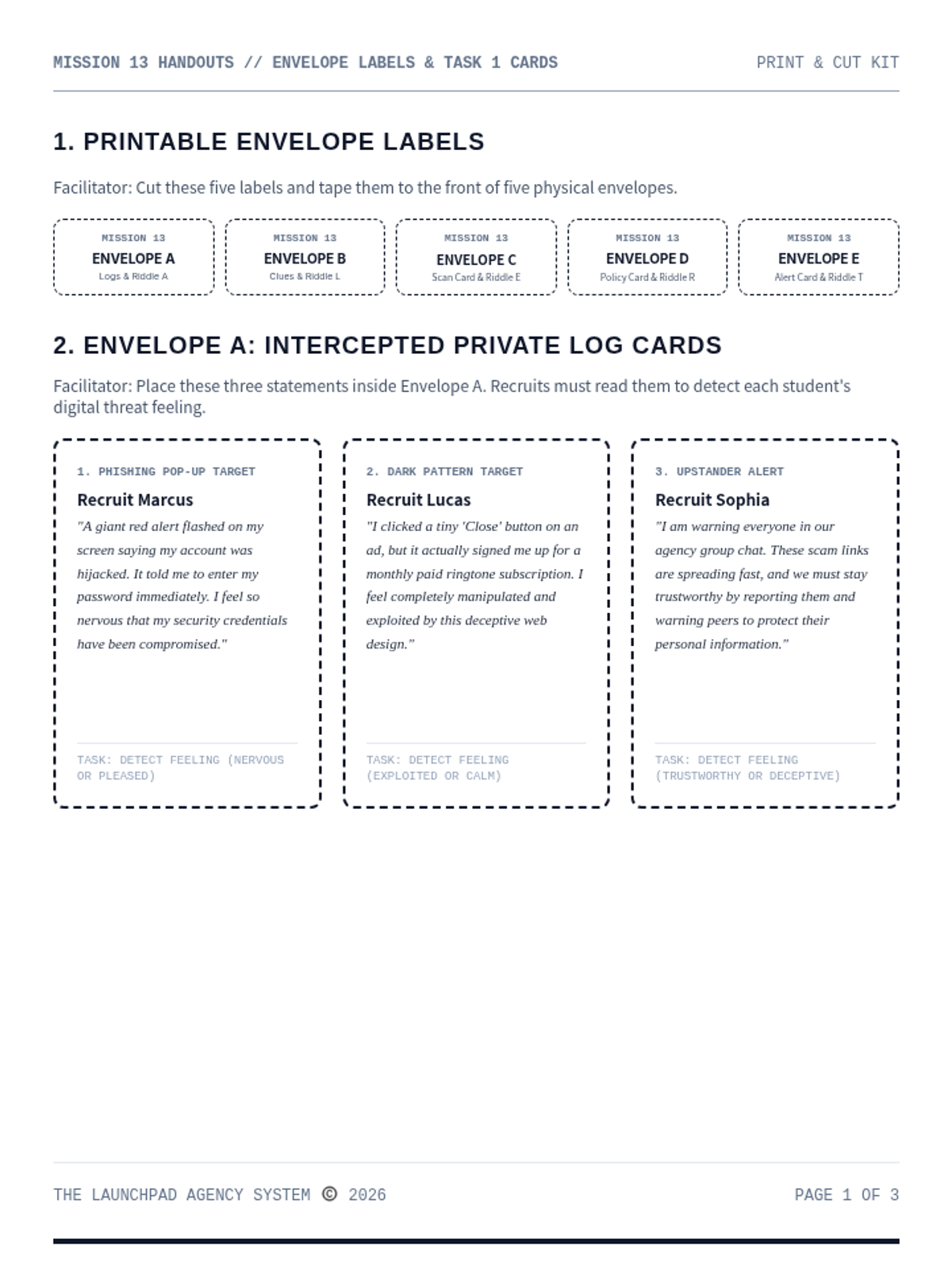
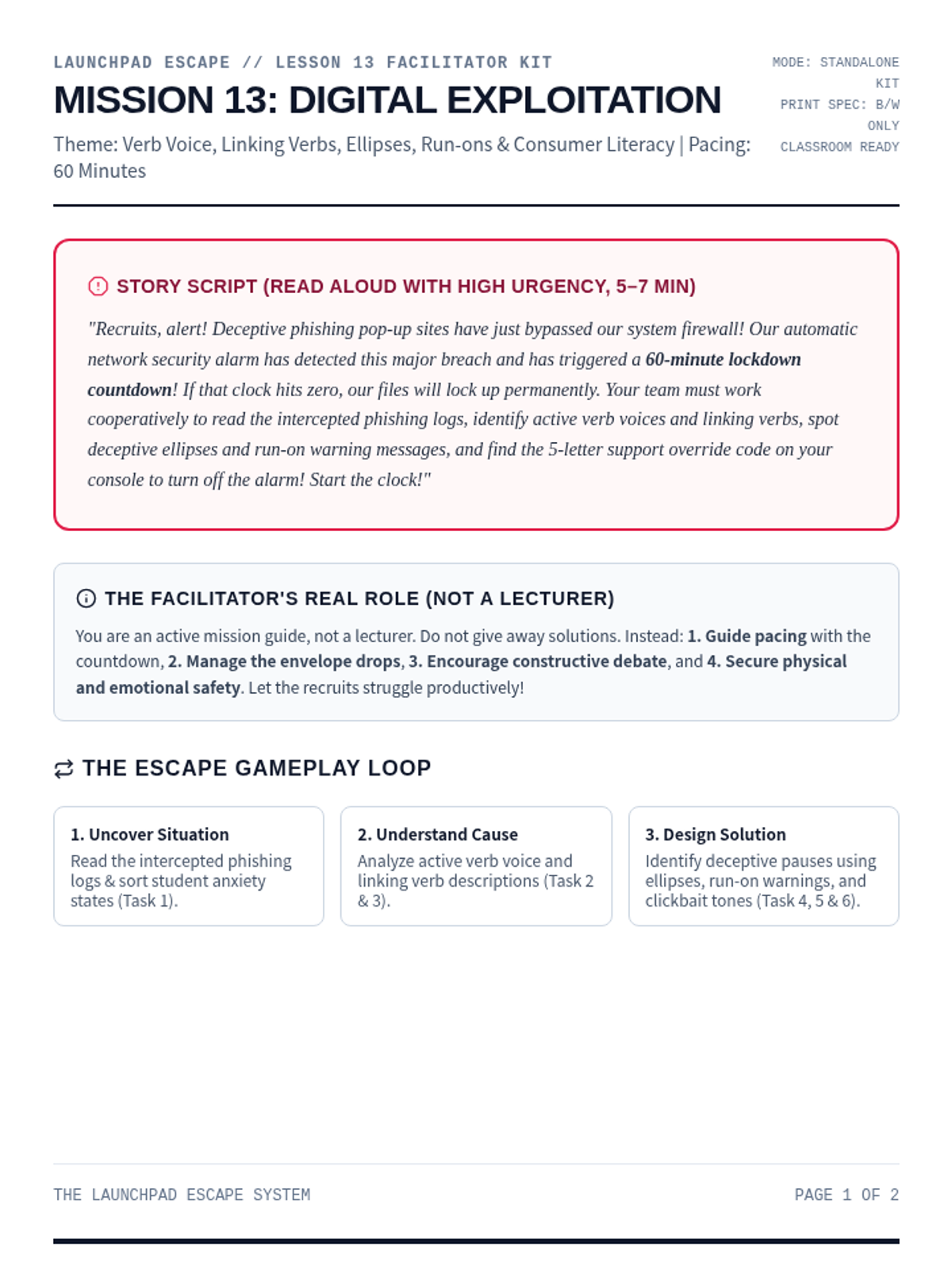
A high-stakes digital safety escape room focused on identifying online scams, recognizing manipulative dark patterns, and protecting personal data. Recruits analyze active verb voices, linking verbs, ellipses punctuation, and deceptive tones to decode the final alert.
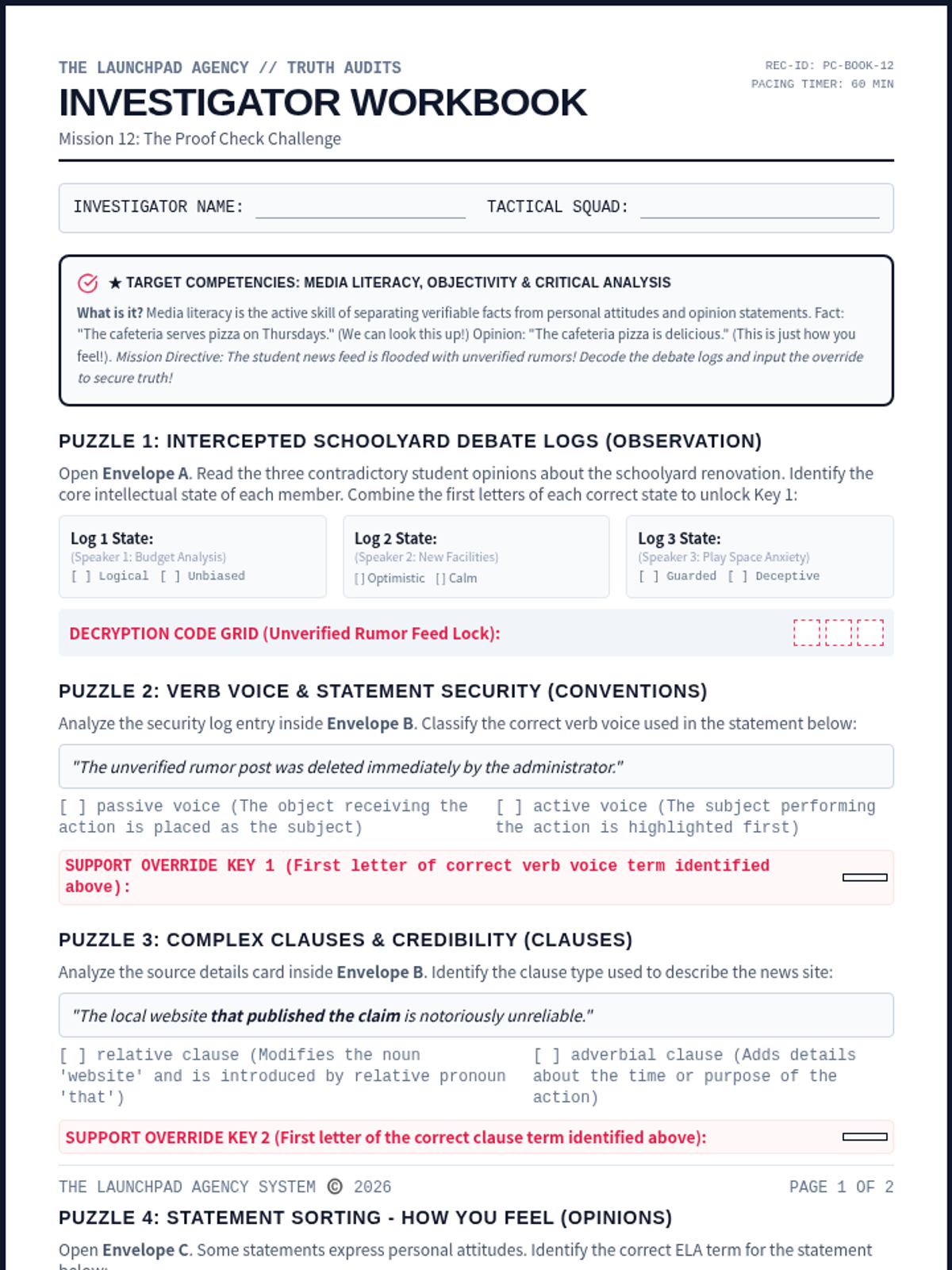
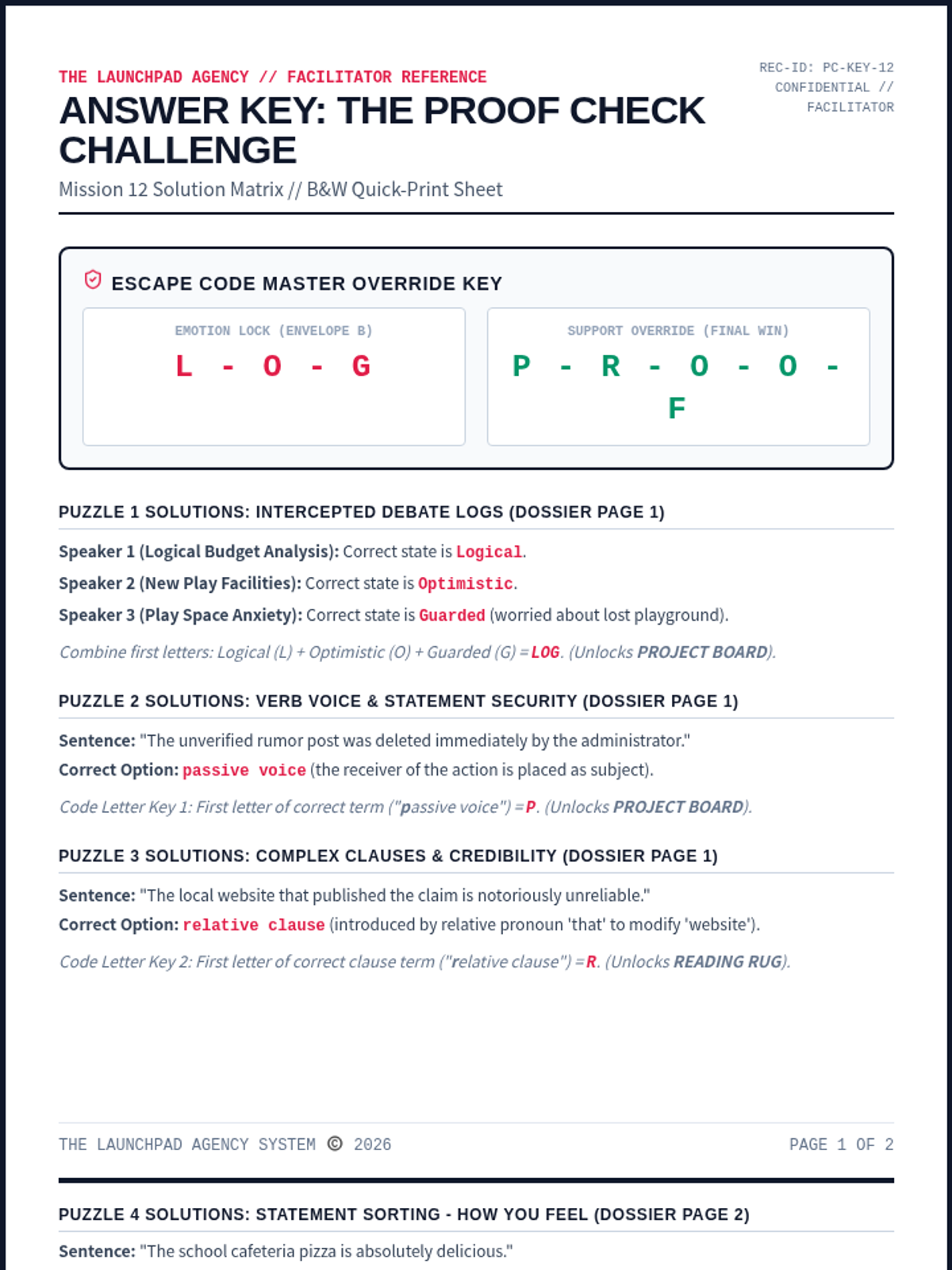
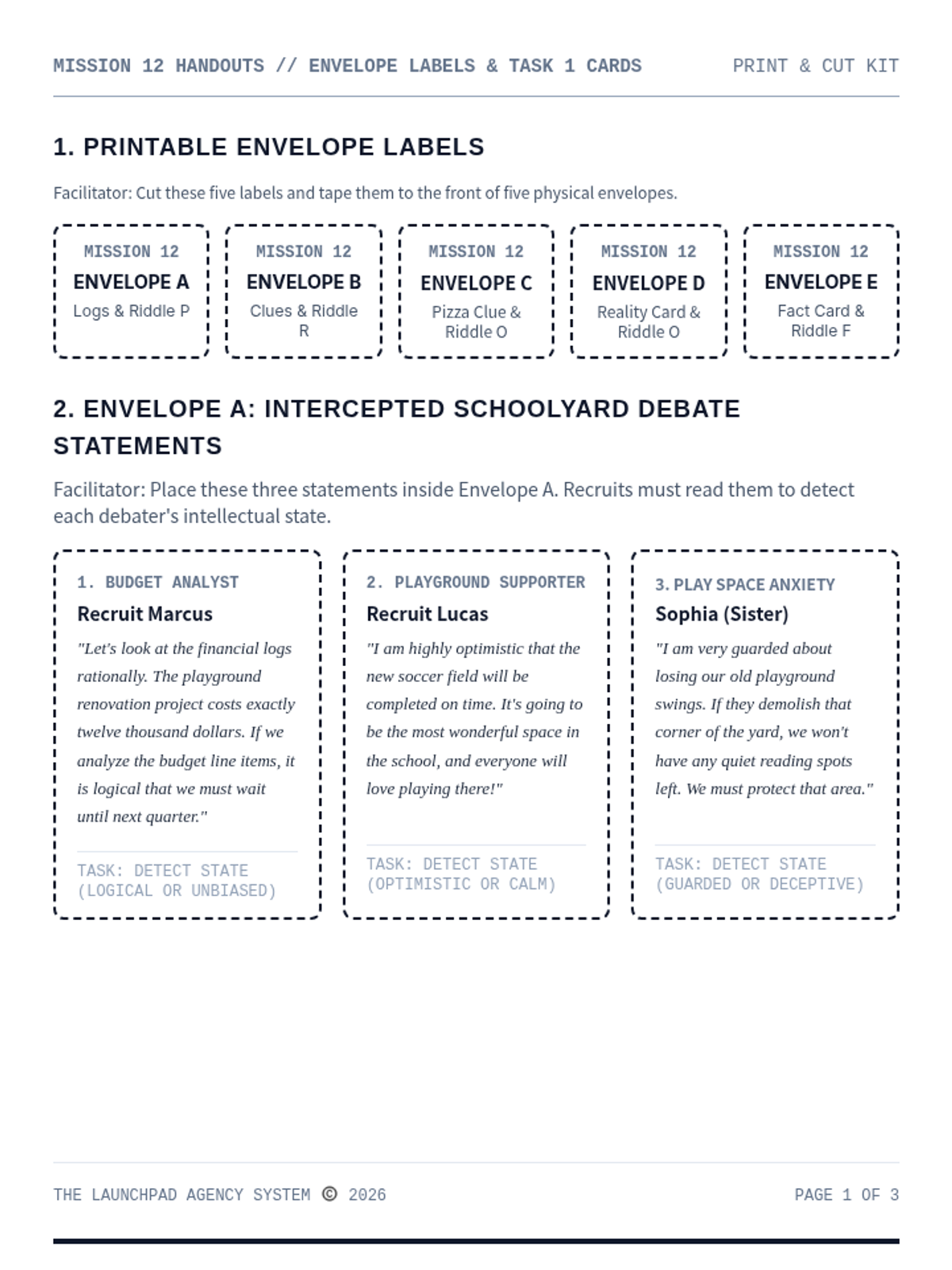
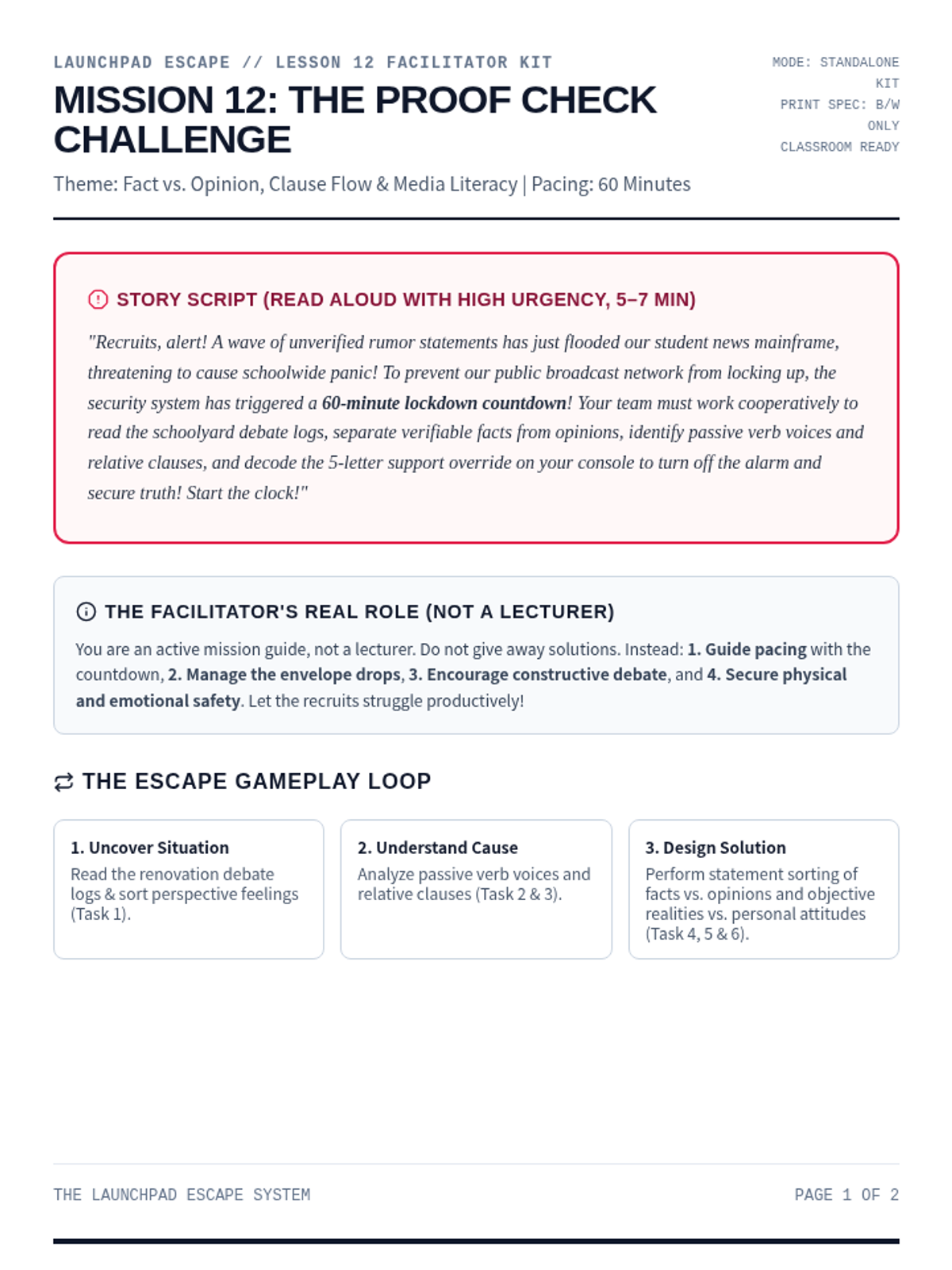
An advanced media literacy and communication escape room for Ages 13-15. Recruits distinguish facts from opinions, analyze objective realities, sort personal attitudes, and input the override PROOF to secure the school news mainframe.
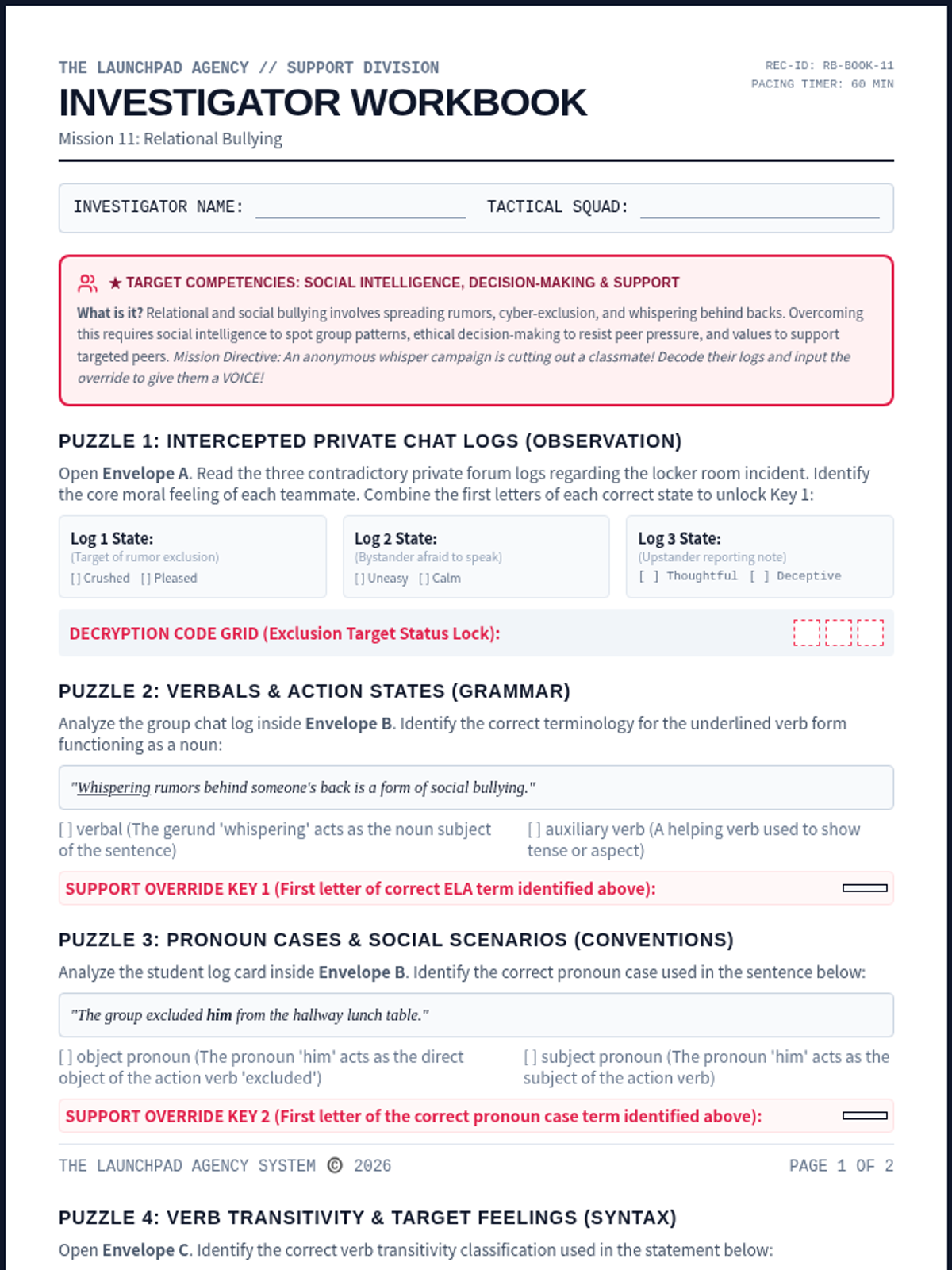
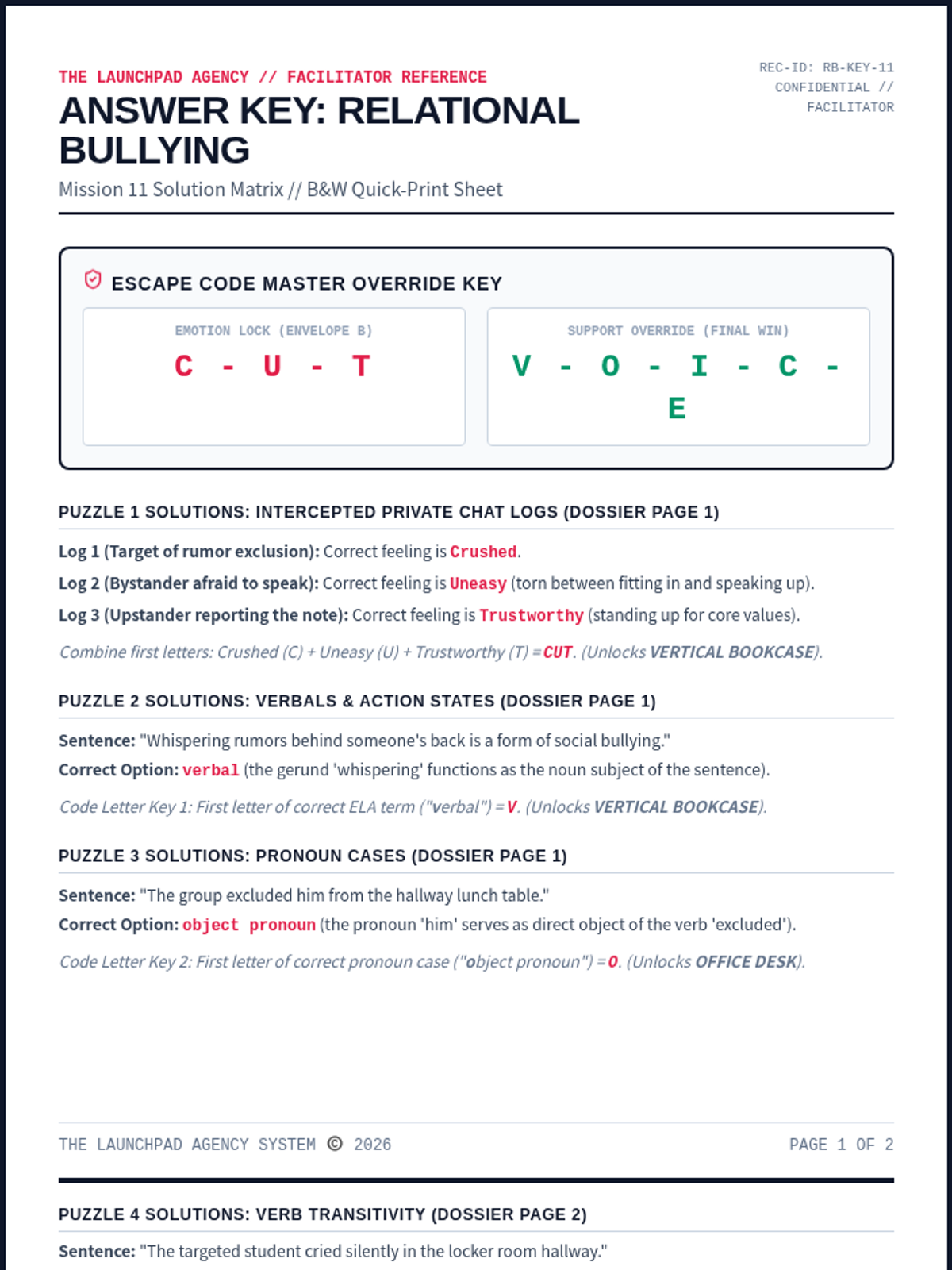
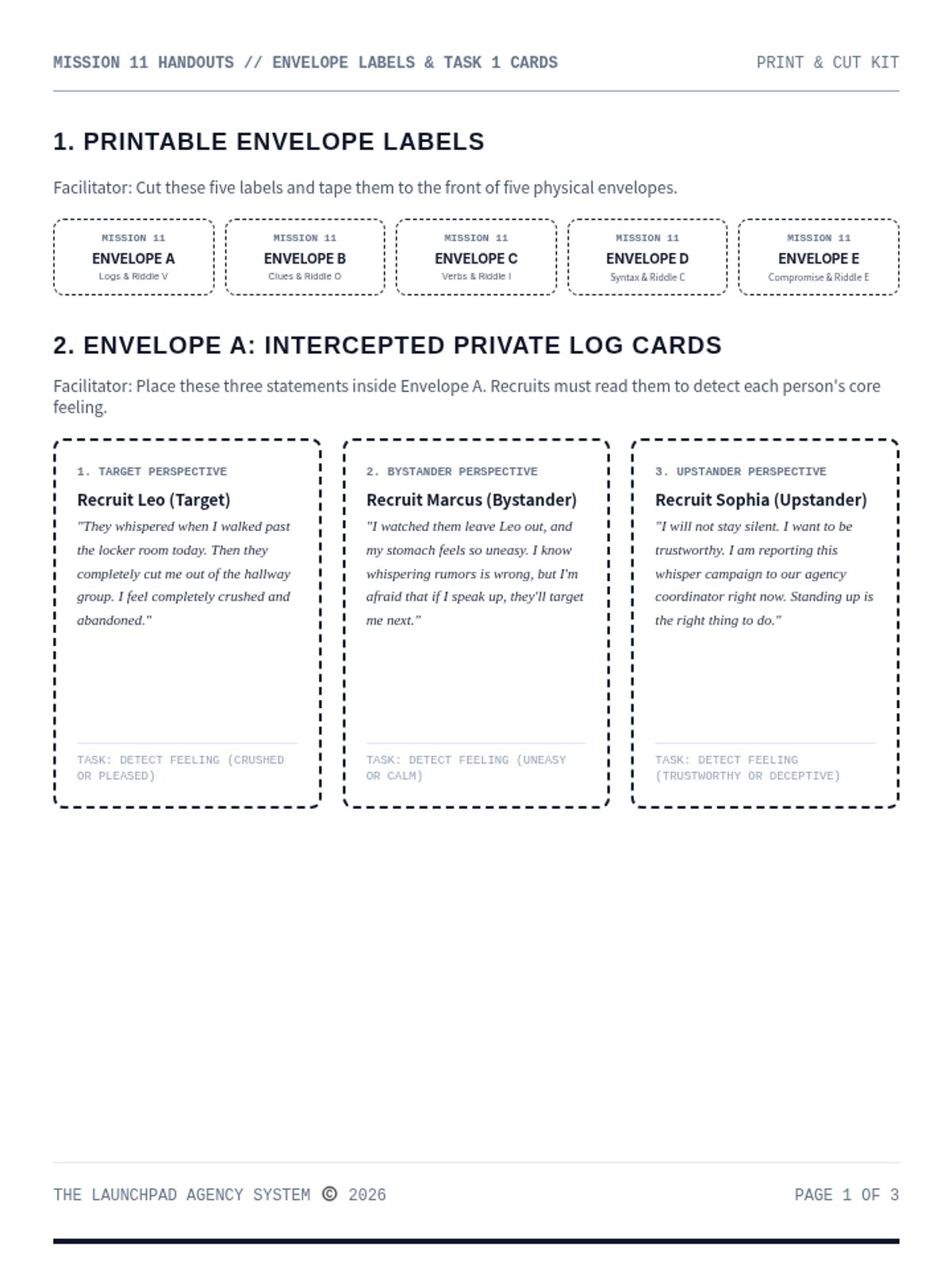
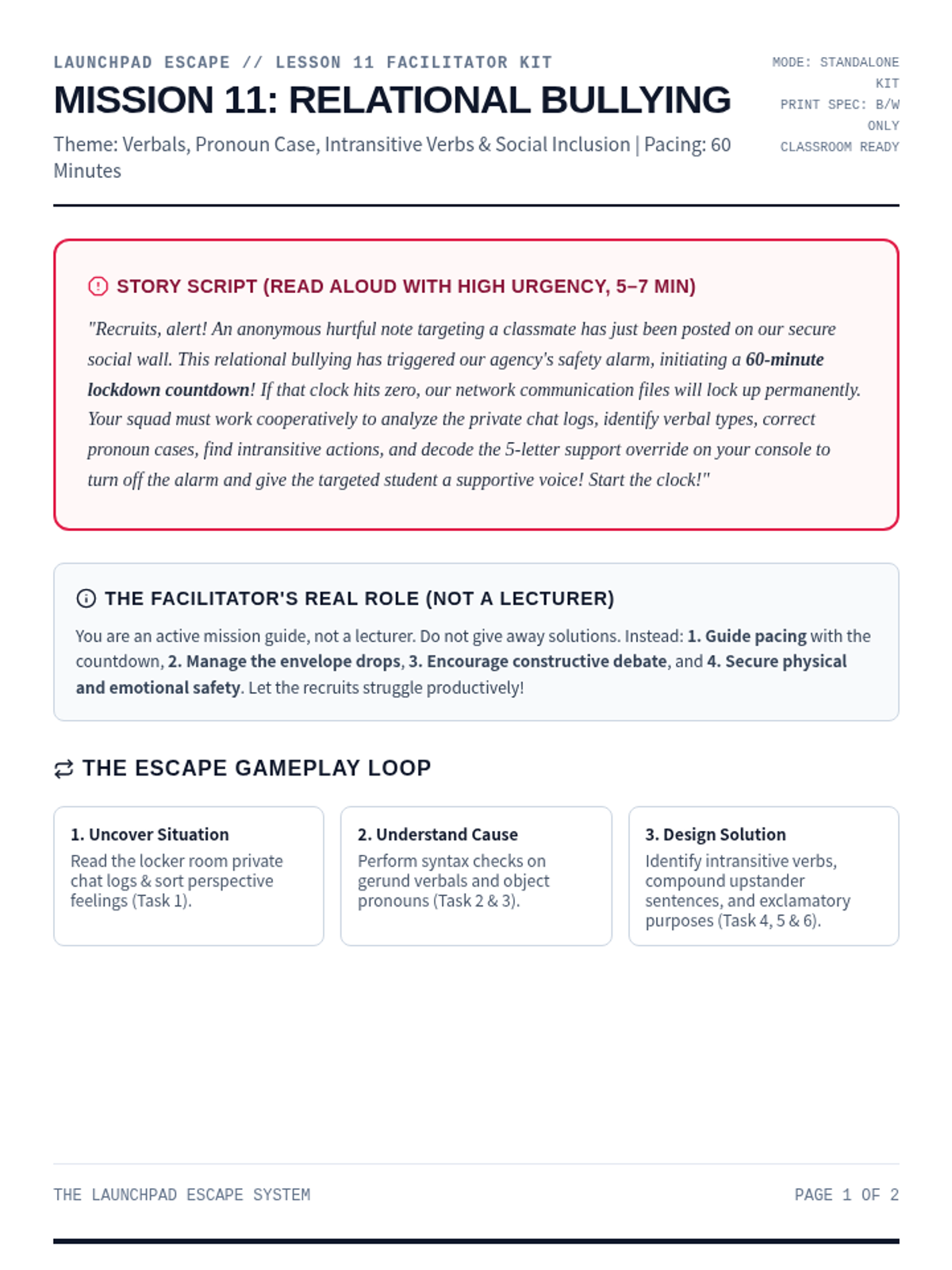
A collaborative social-emotional escape room focused on identifying relational and social bullying, supporting target peers, and standing up to cyber/verbal exclusion. Recruits analyze verb verbal types, pronoun cases, intransitive verbs, and compound syntax to decode the final override.
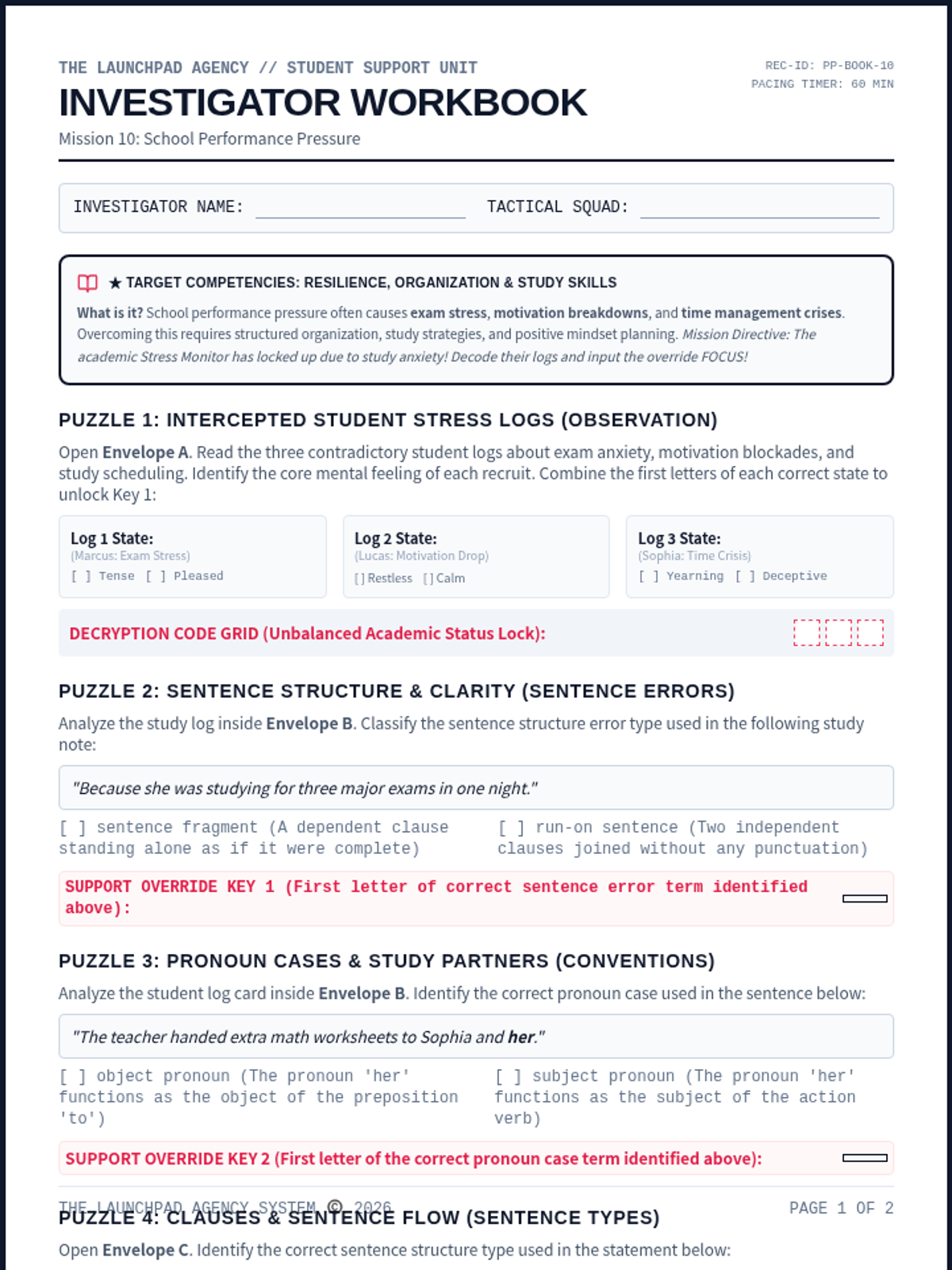
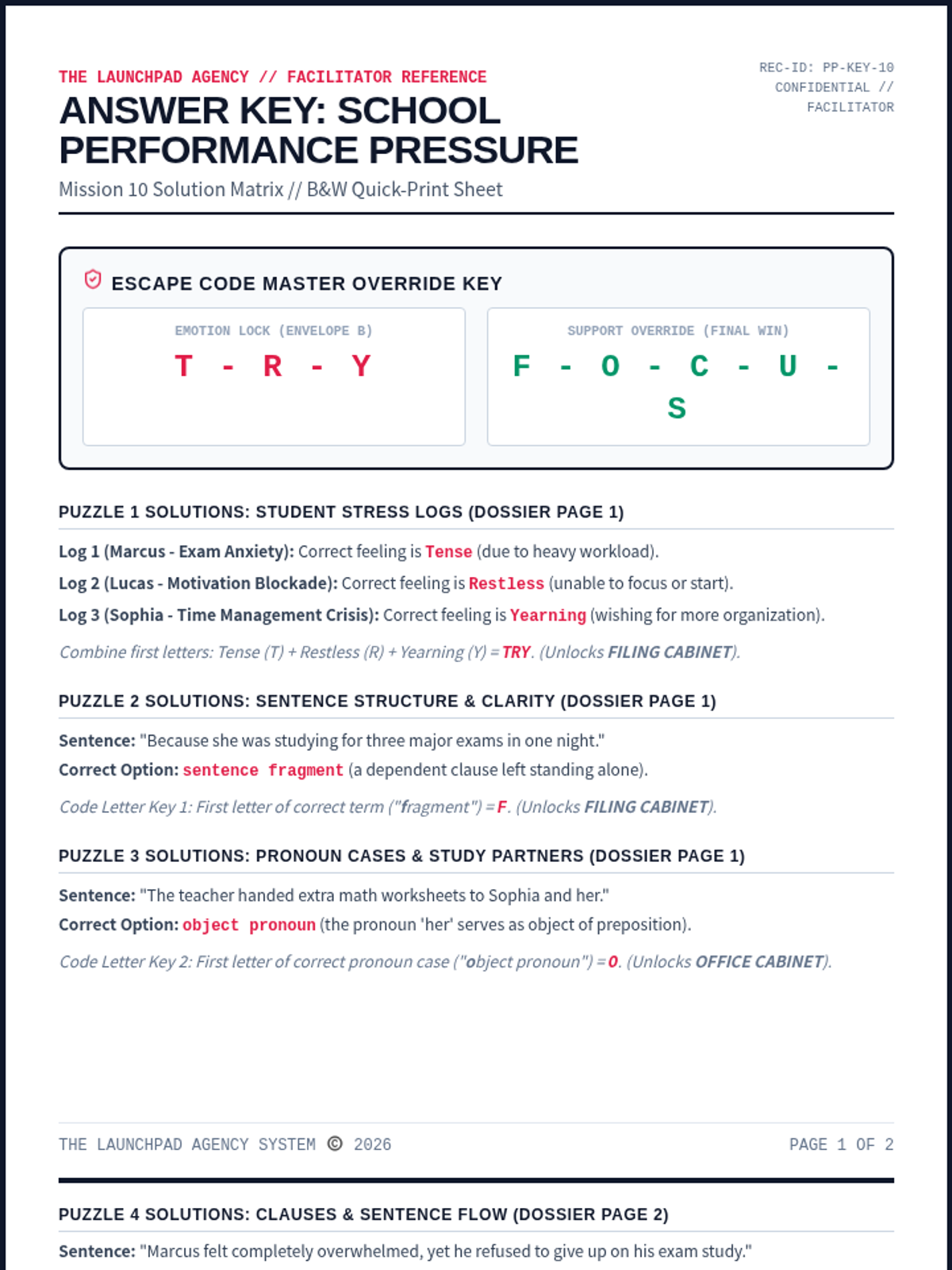
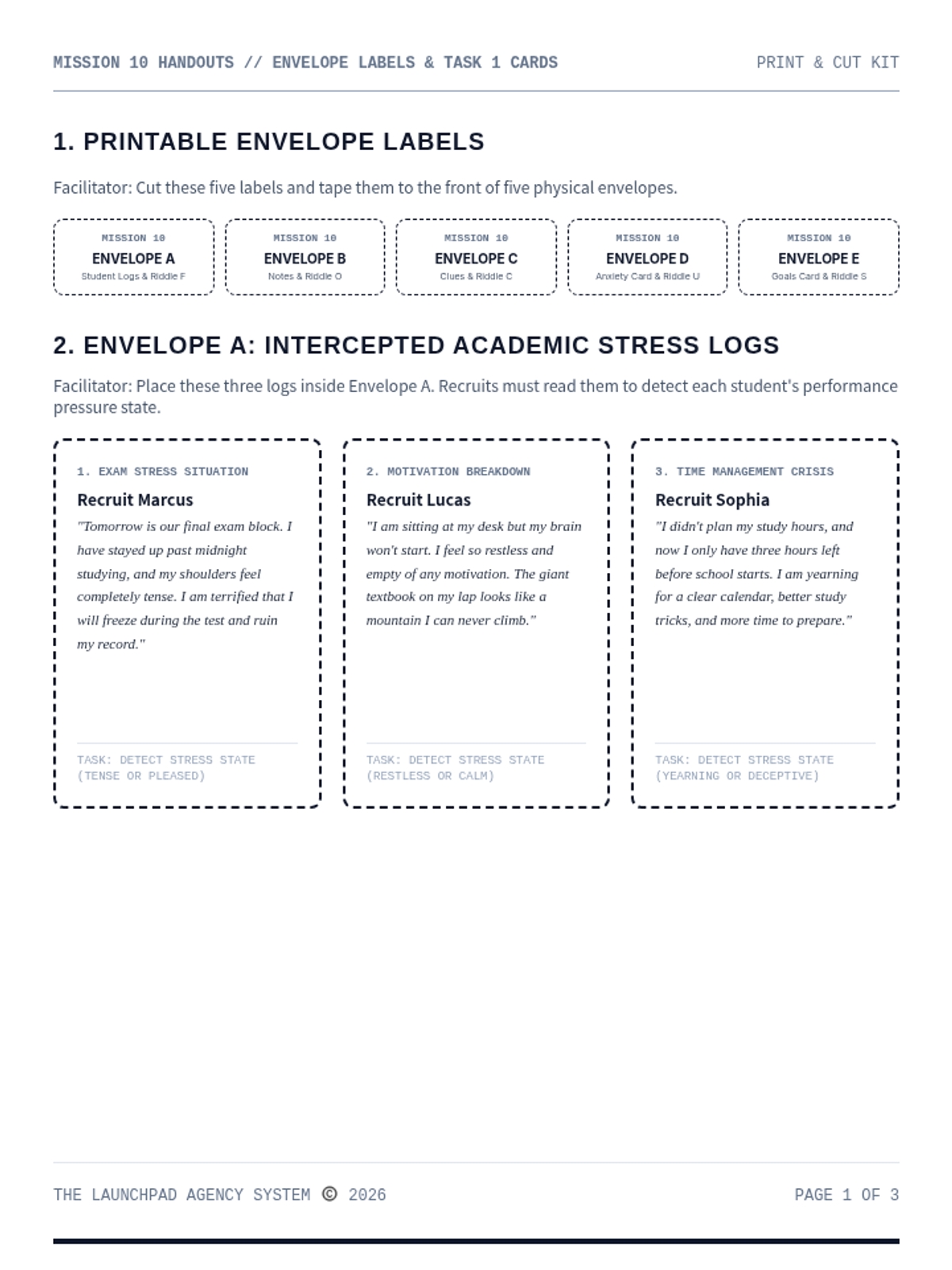
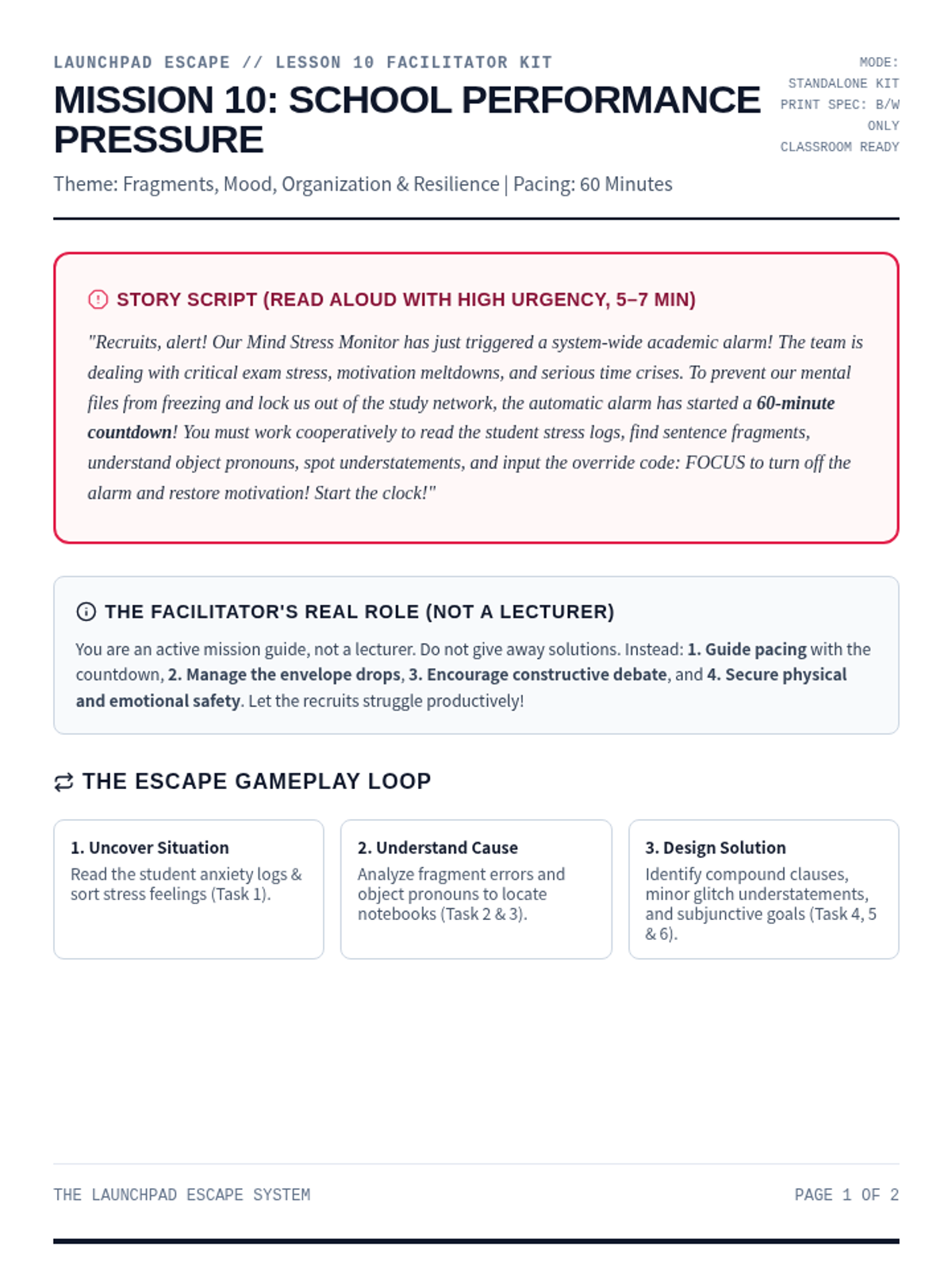
An immersive and strategic escape room focused on managing academic stress, avoiding burnout, and planning study habits. Recruits analyze student logs under performance anxiety, build efficient schedules, and decode the override to restore positive motivation.
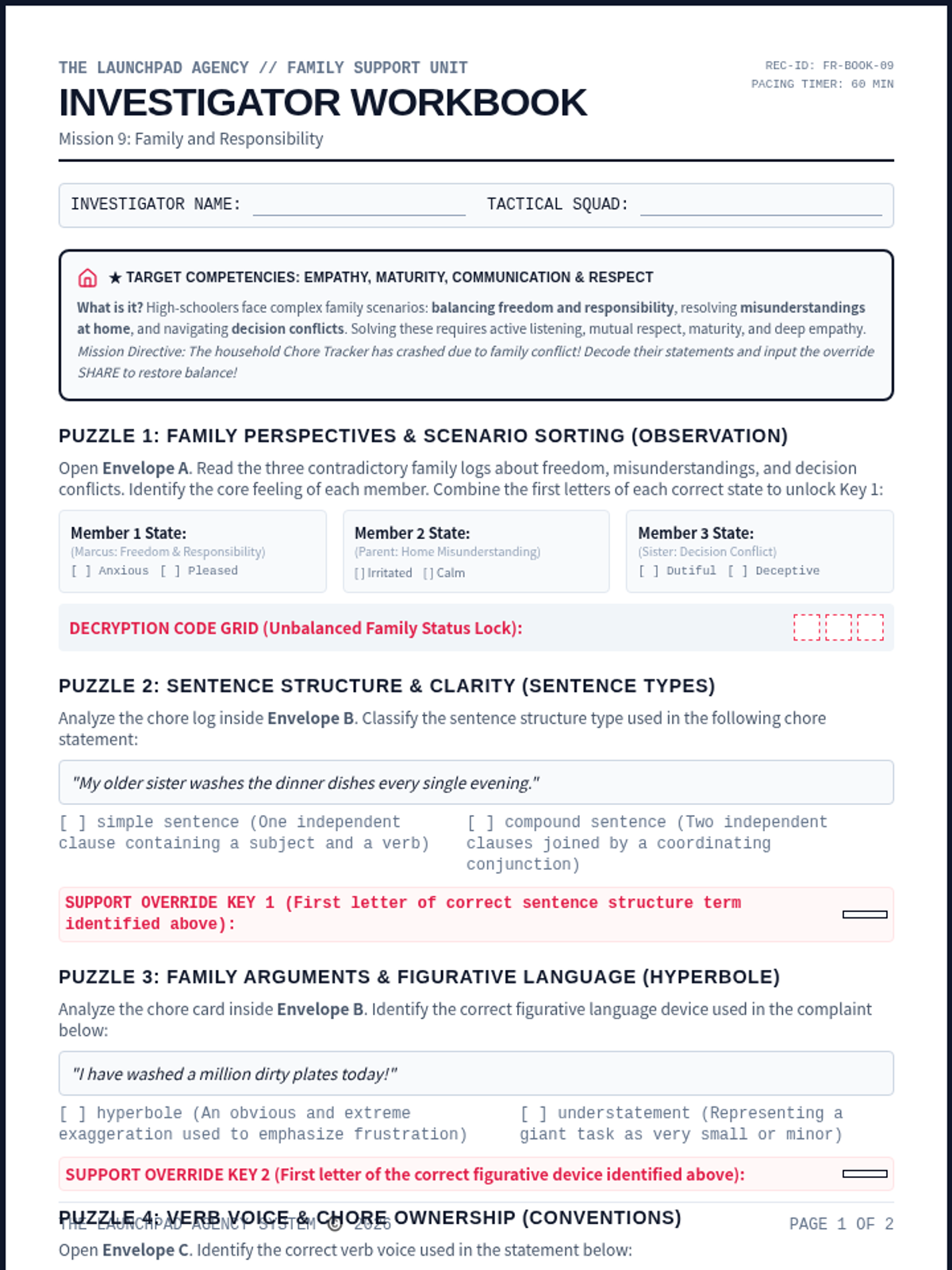
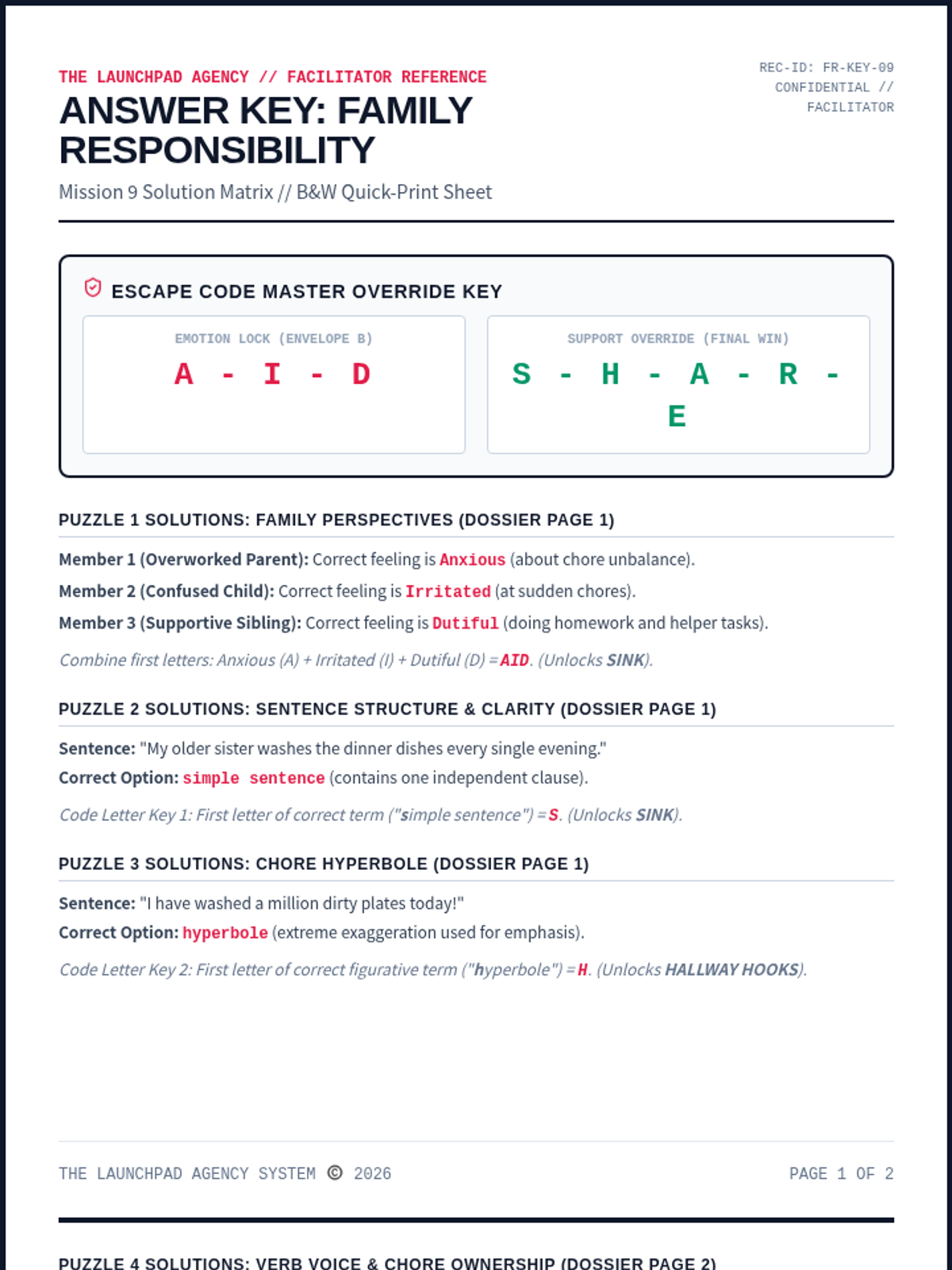
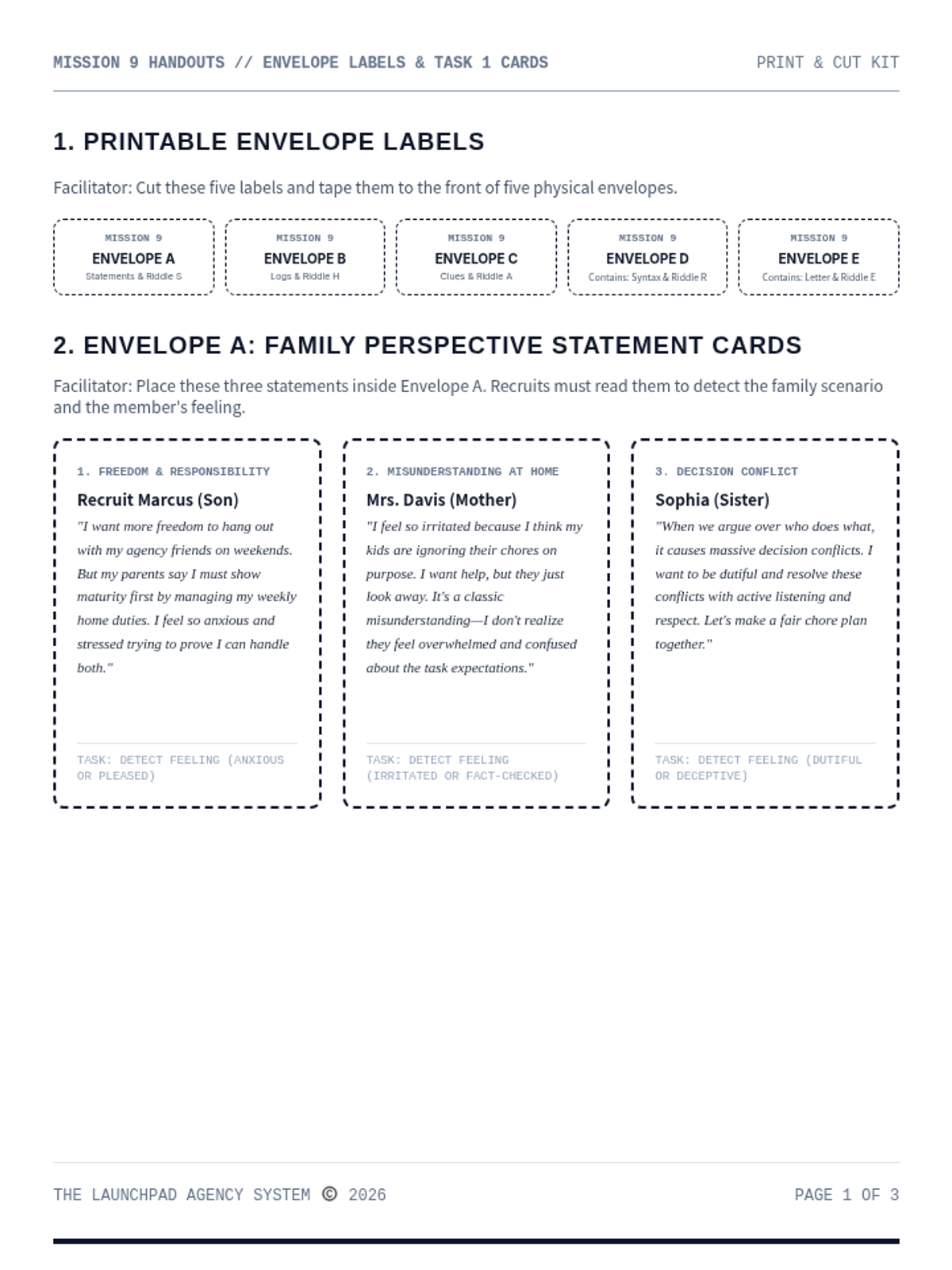
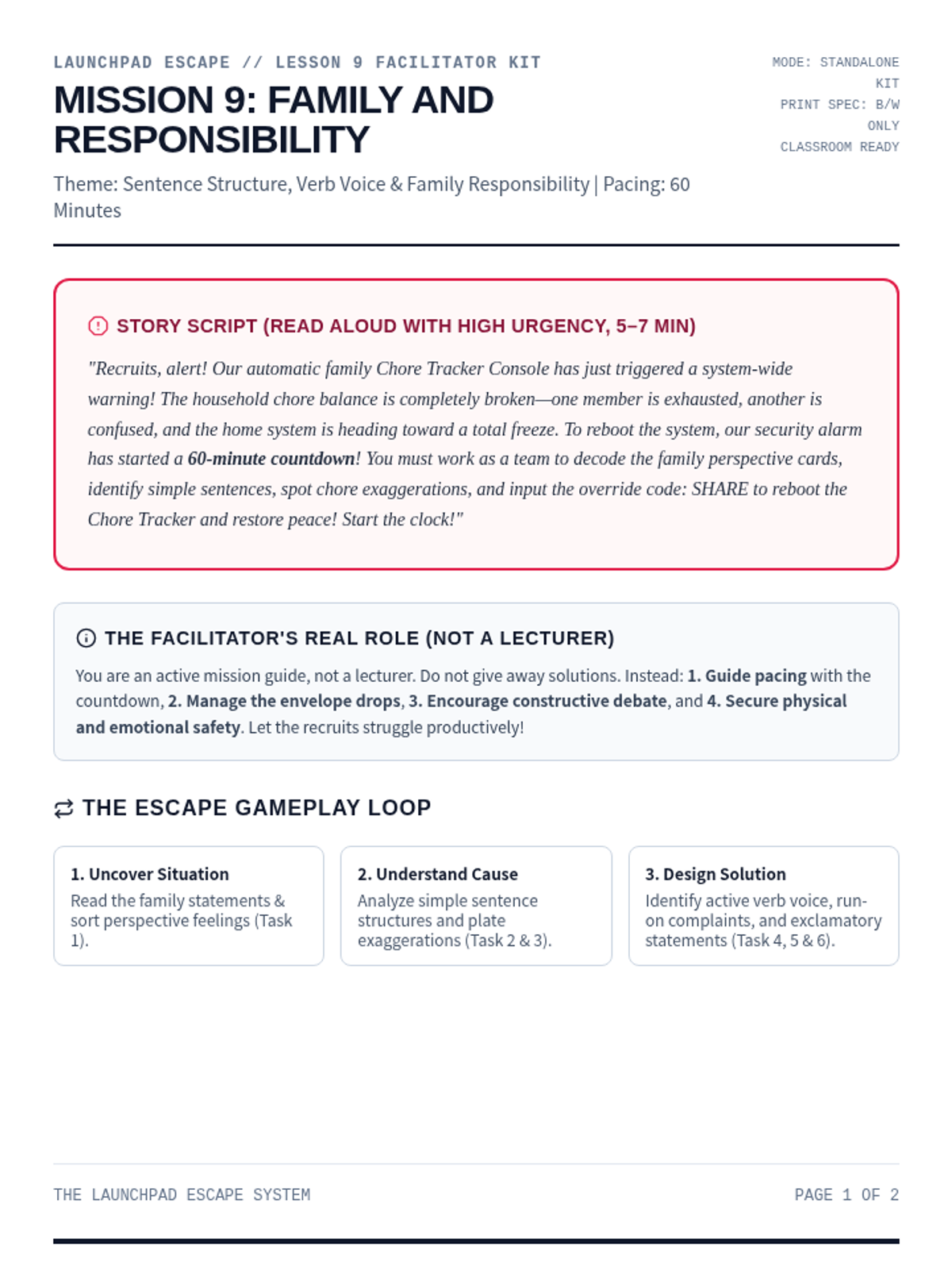
A cooperative and empathetic escape room focused on managing family duties and household balance. Recruits analyze parent/child perspective claims, organize daily chores timelines, and decode the final compromise override.
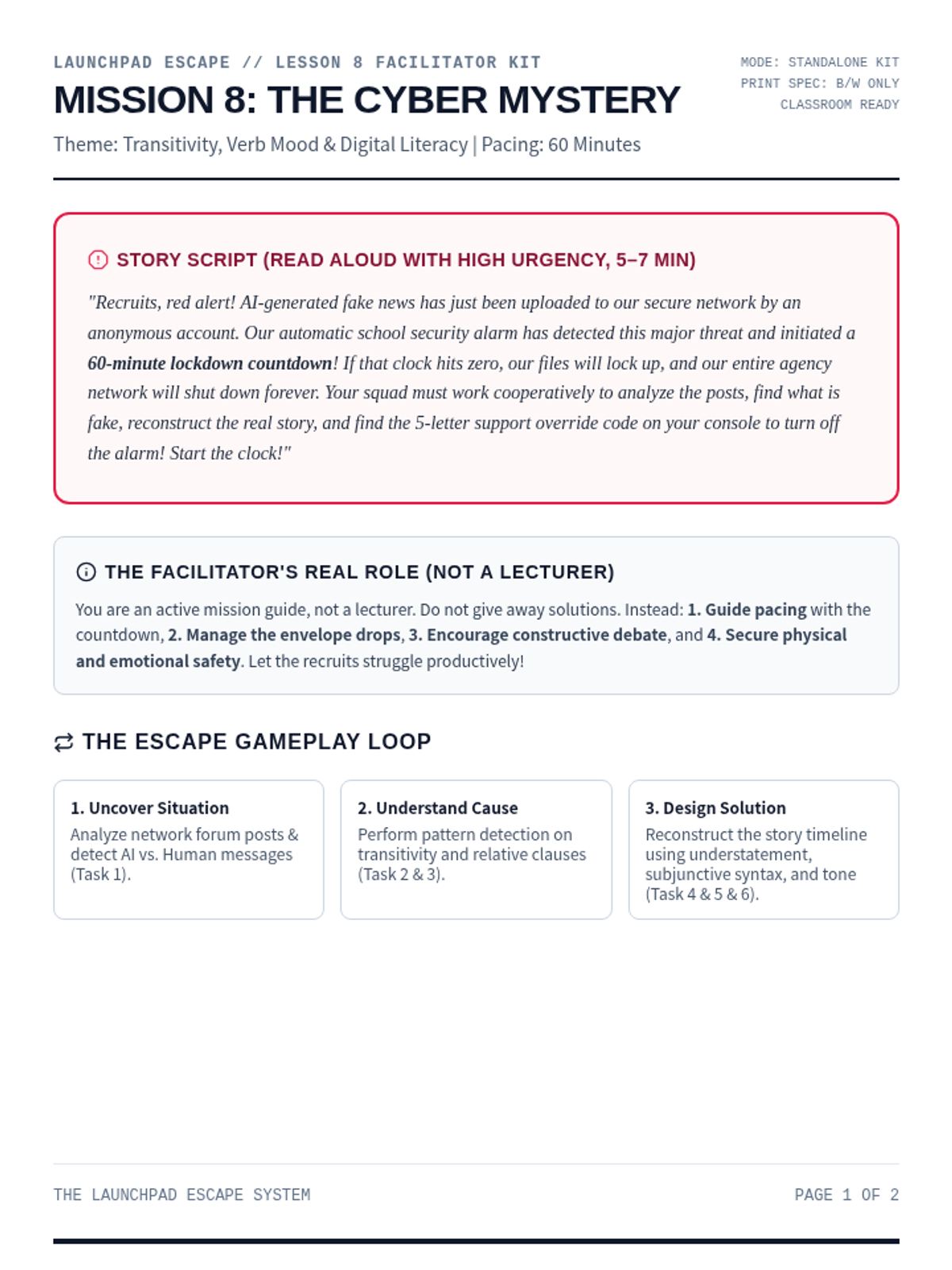
An advanced digital literacy and collaborative cryptography escape room for Ages 14-16. Recruits analyze verb transitivity, relative clauses, subjunctive moods, and tone to stop a school database wipe.
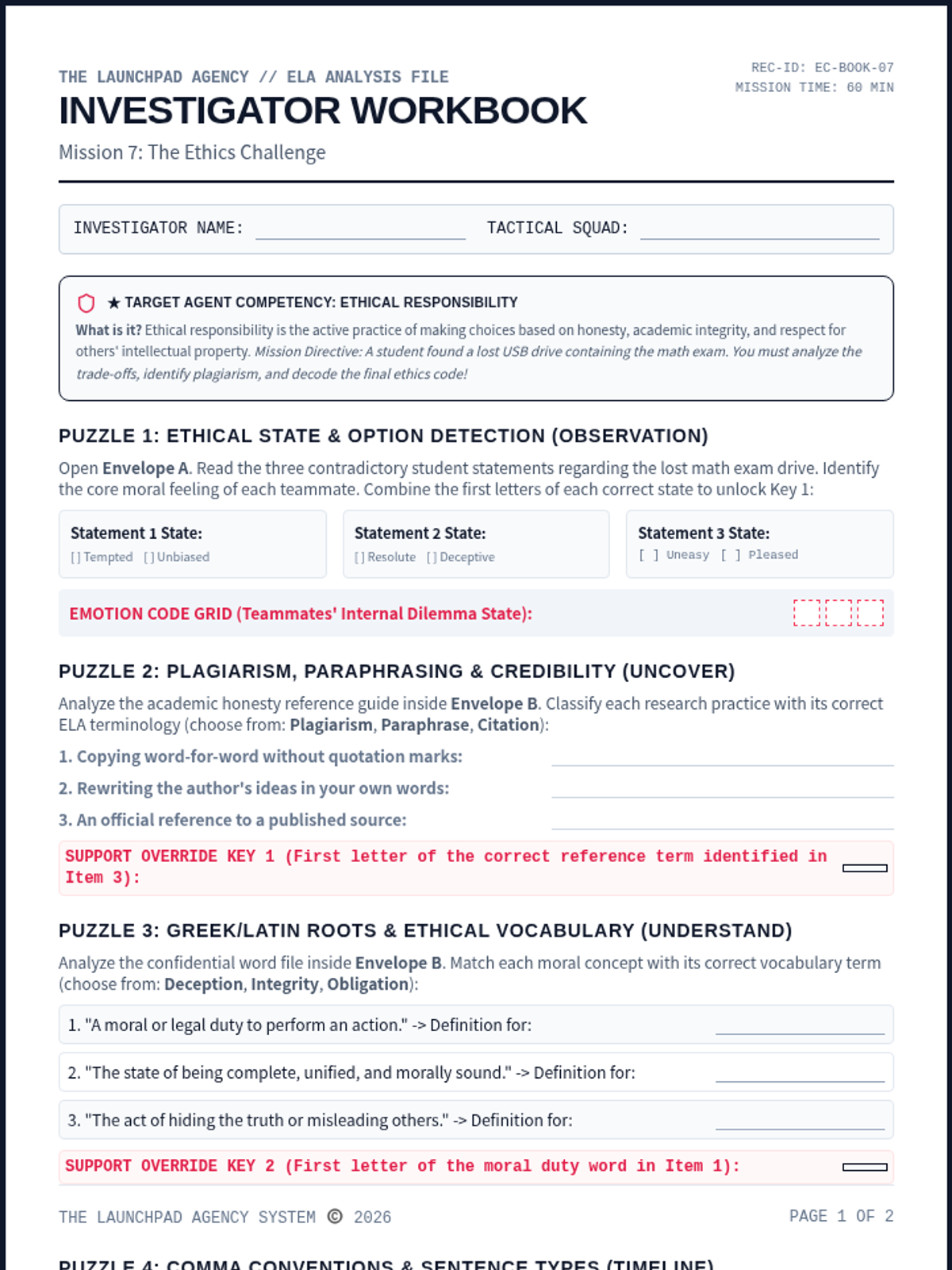
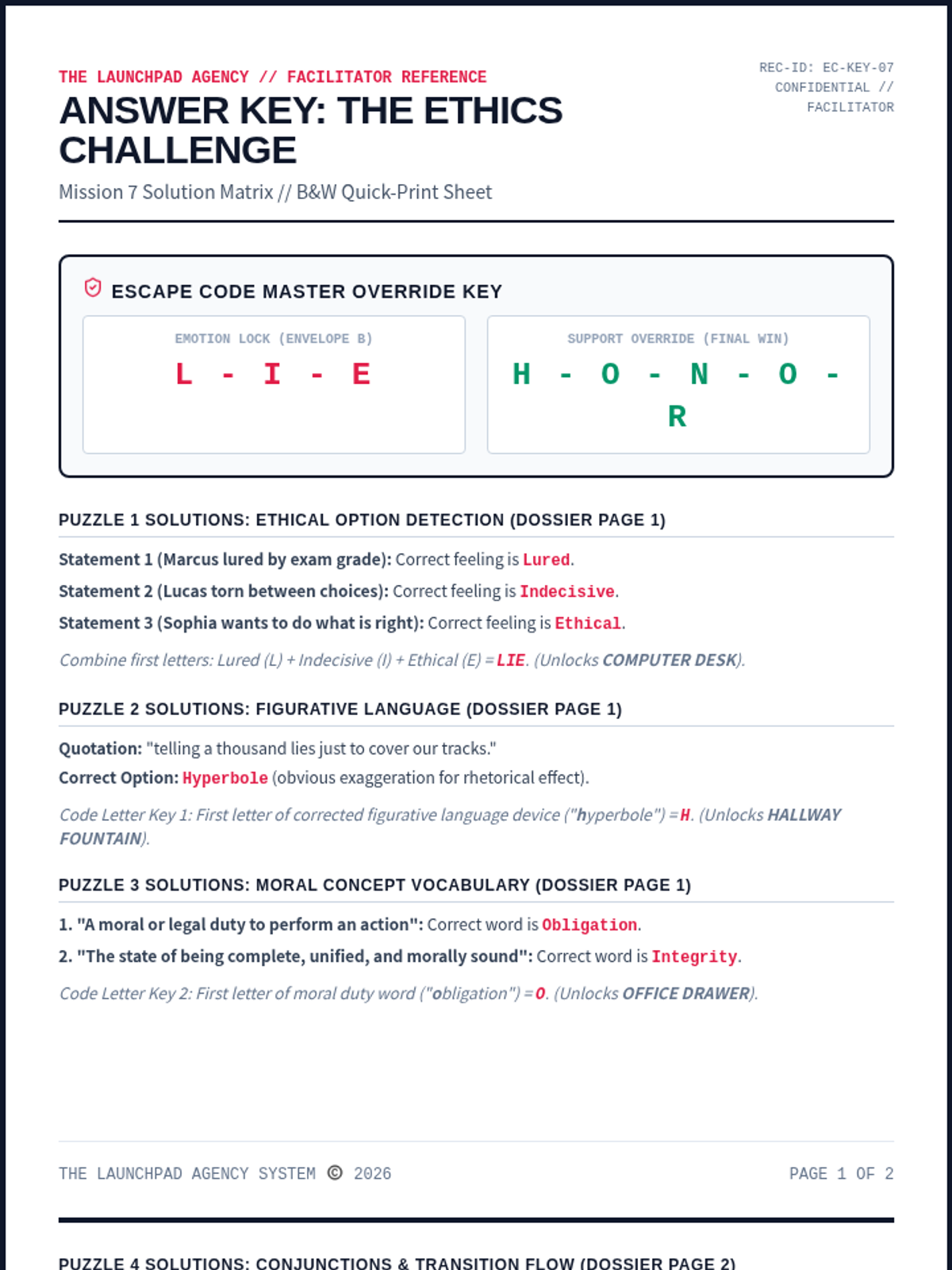
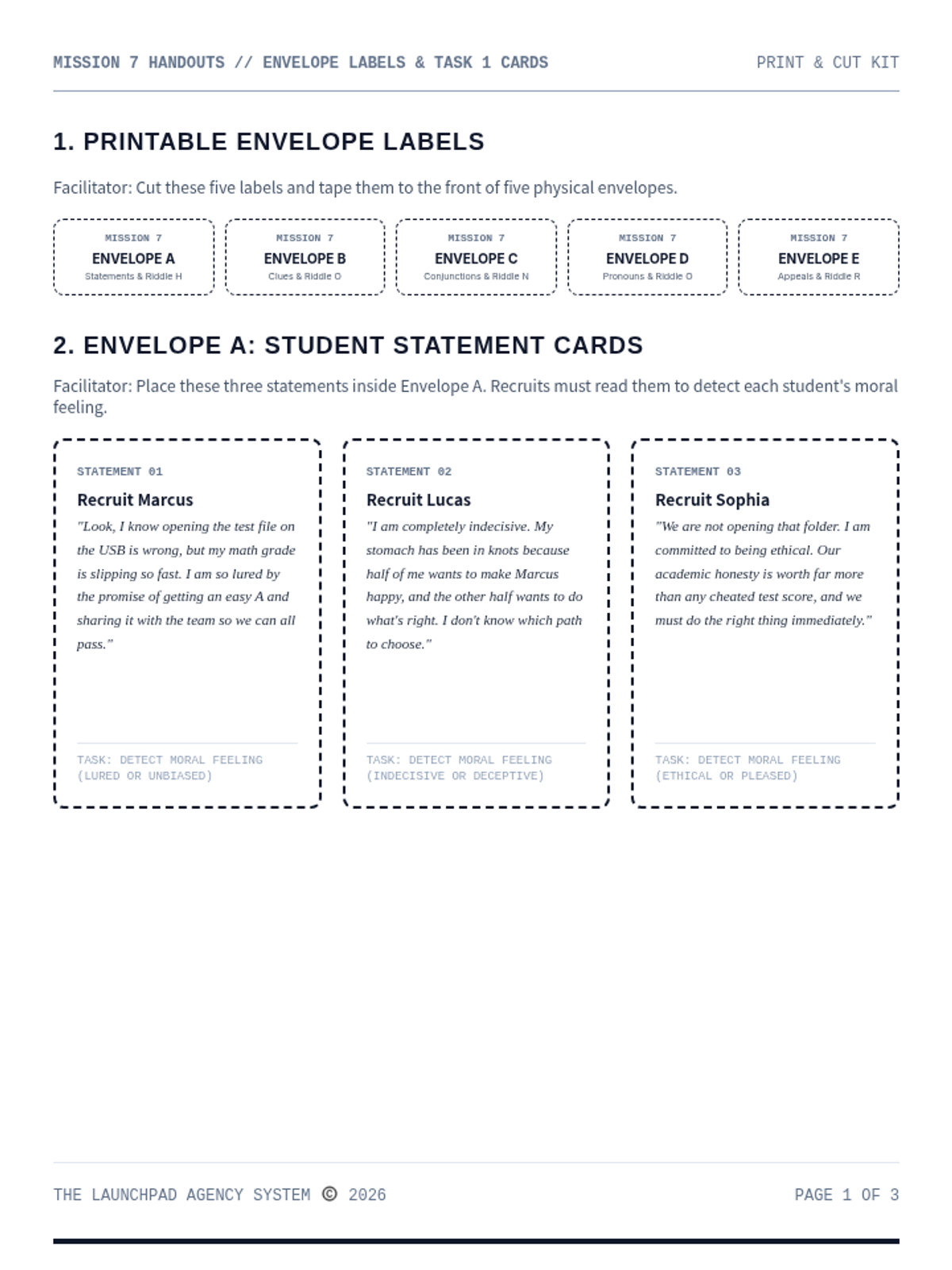
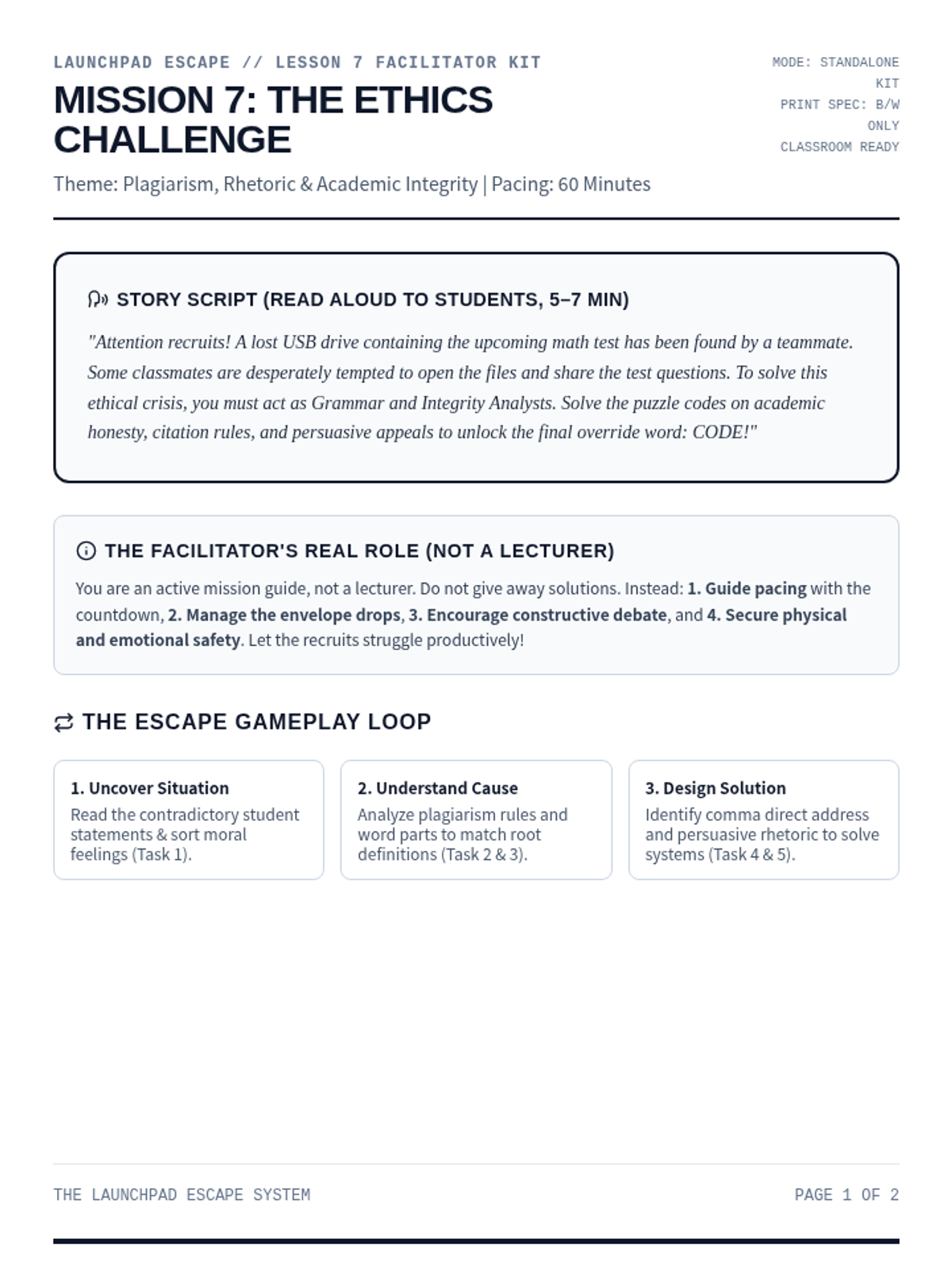
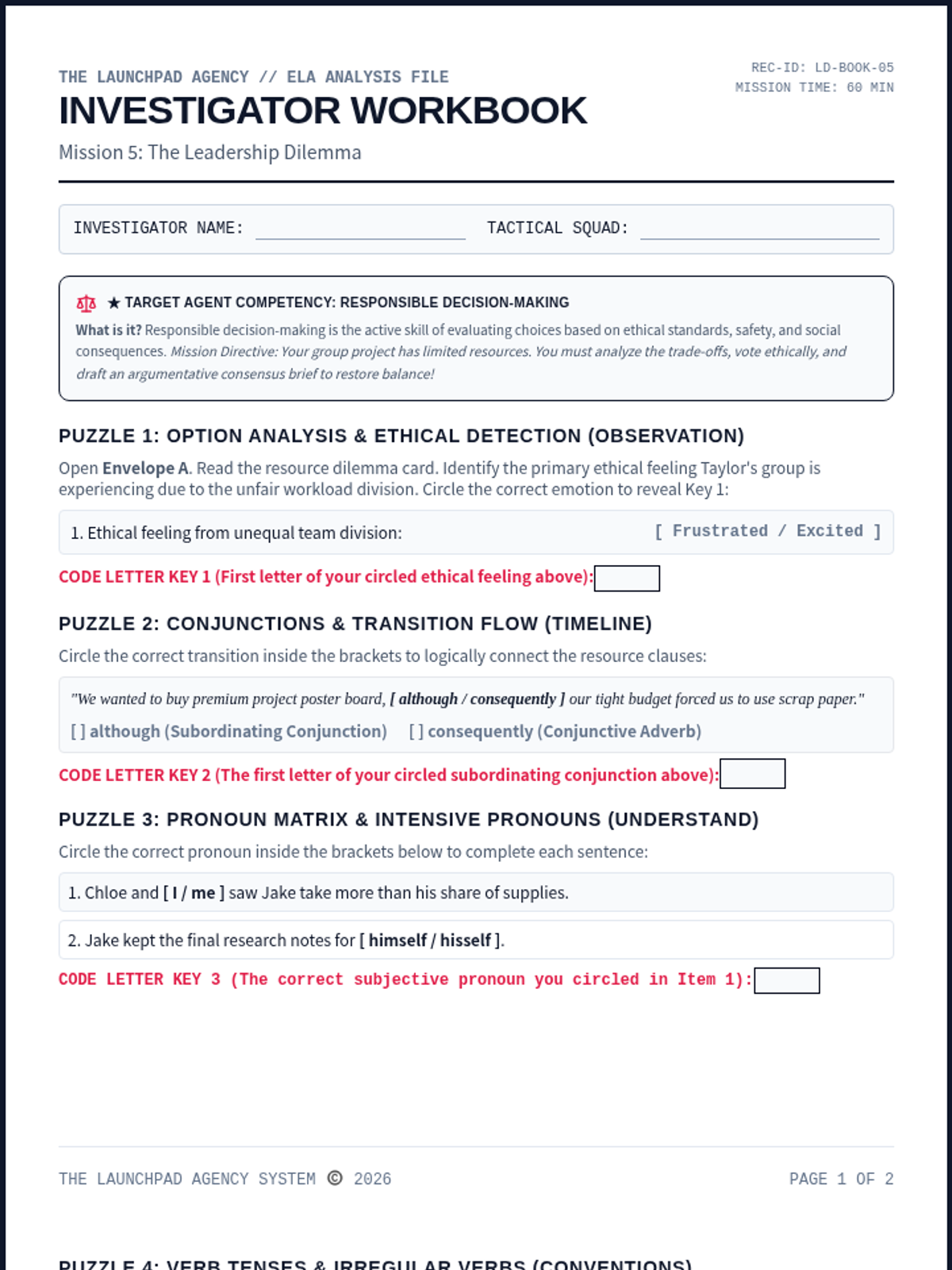
A high-stakes moral dilemma escape room for Ages 11-13. Recruits evaluate the trade-offs of academic honesty, identify plagiarism, analyze persuasive appeals, and decode the final ethics code.
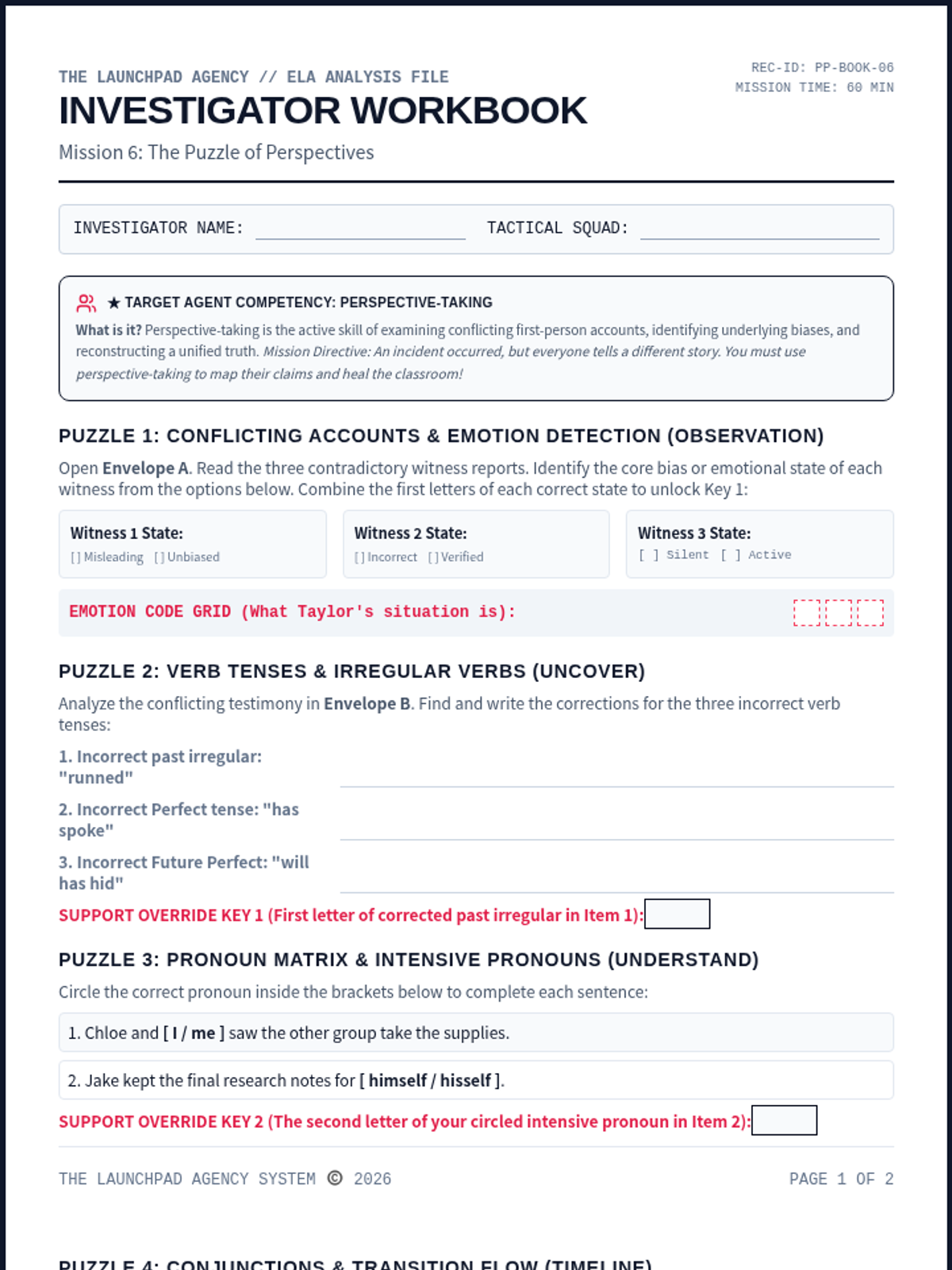
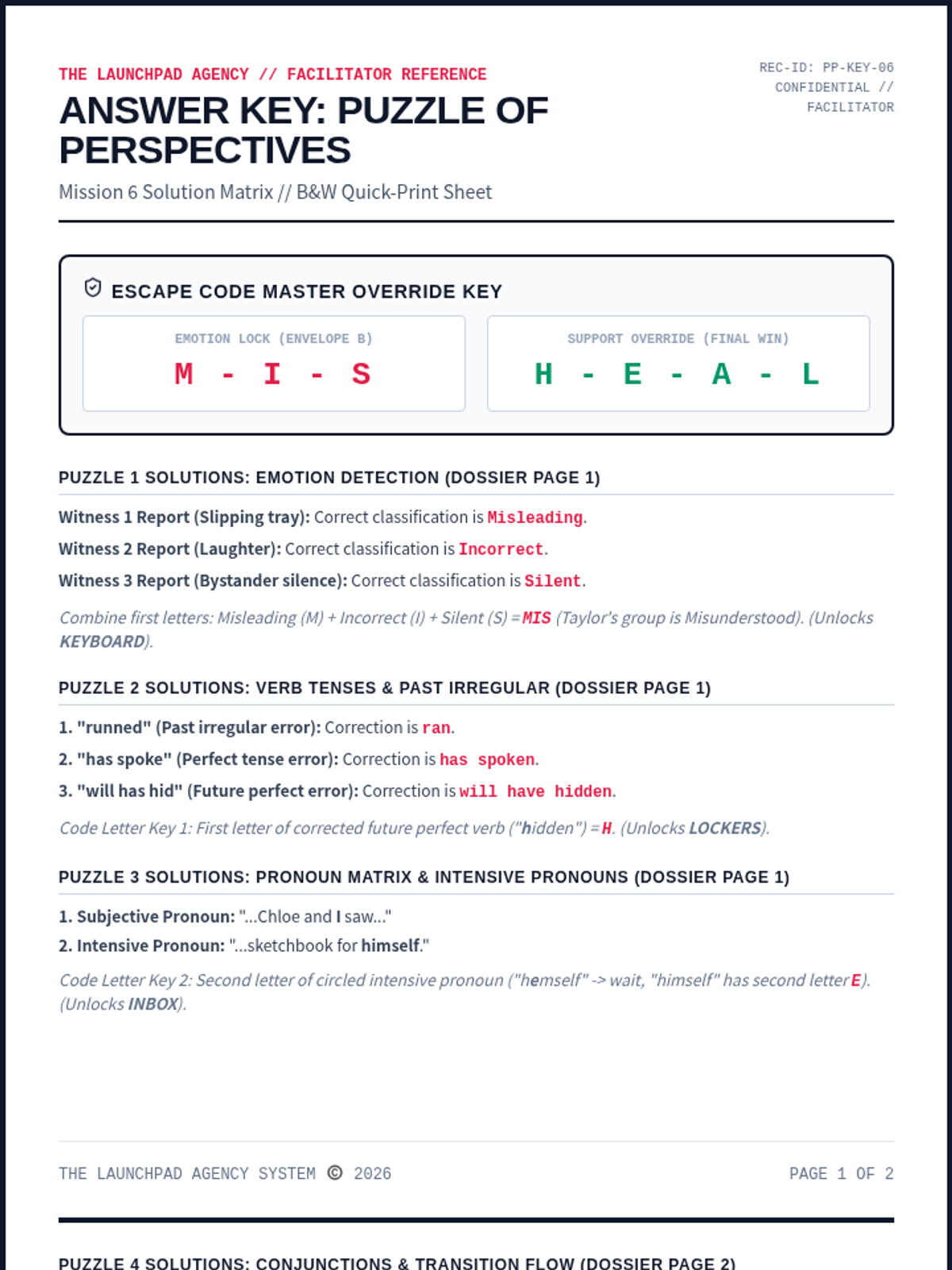
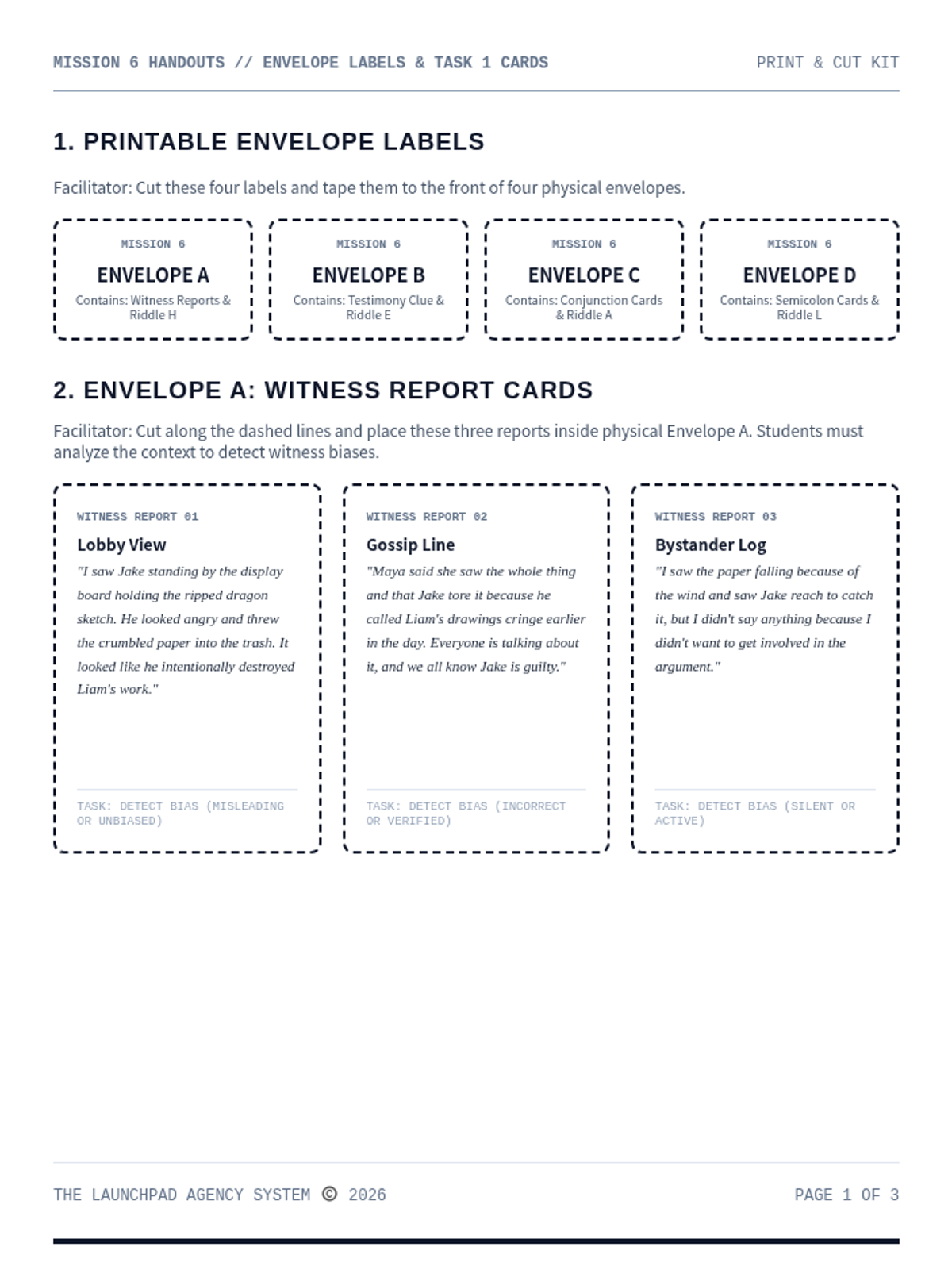
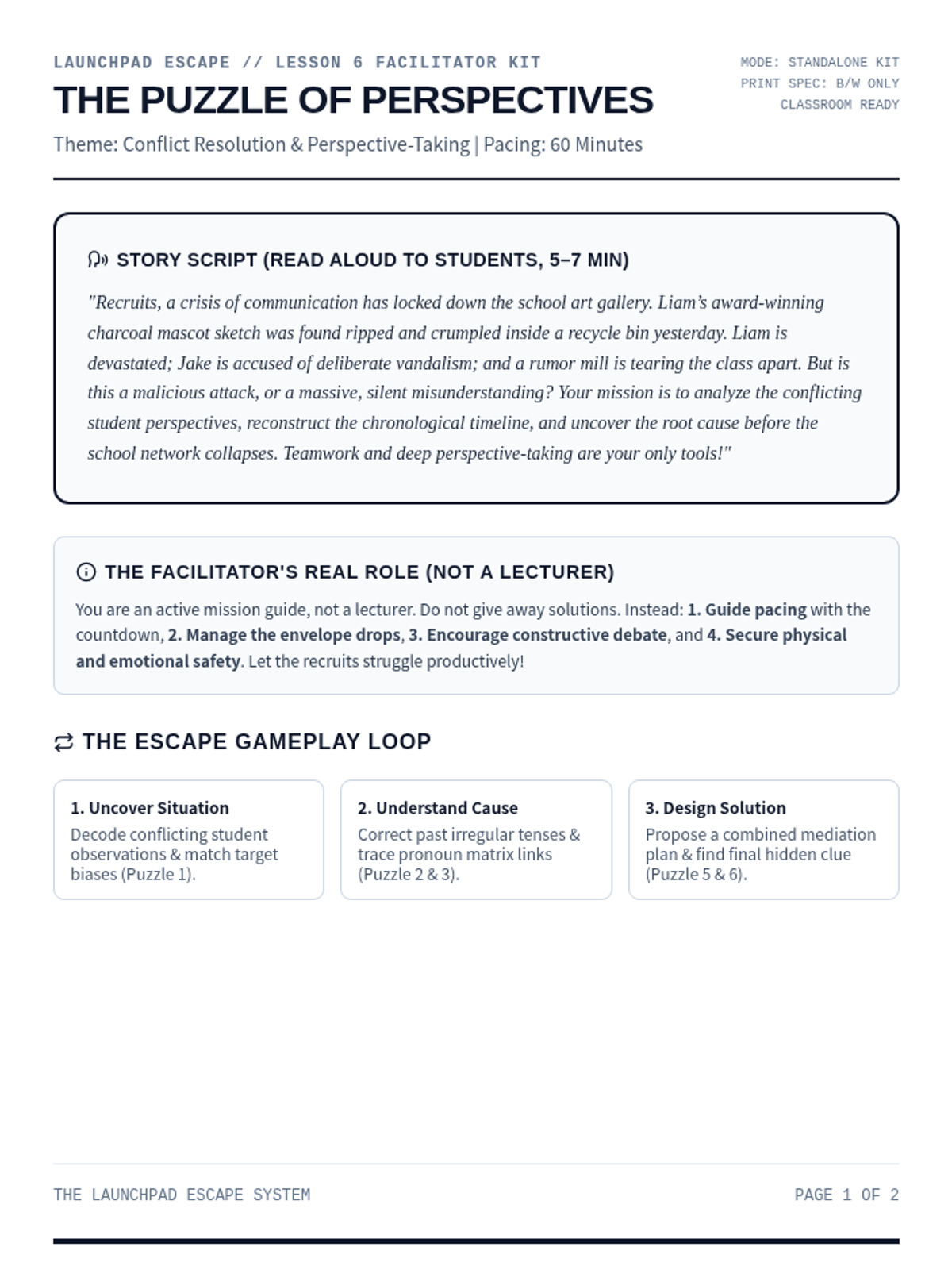
A high-stakes perspective-taking escape room. Recruits examine conflicting first-person accounts, analyze bias, reconstruct a unified timeline, and solve the override code.
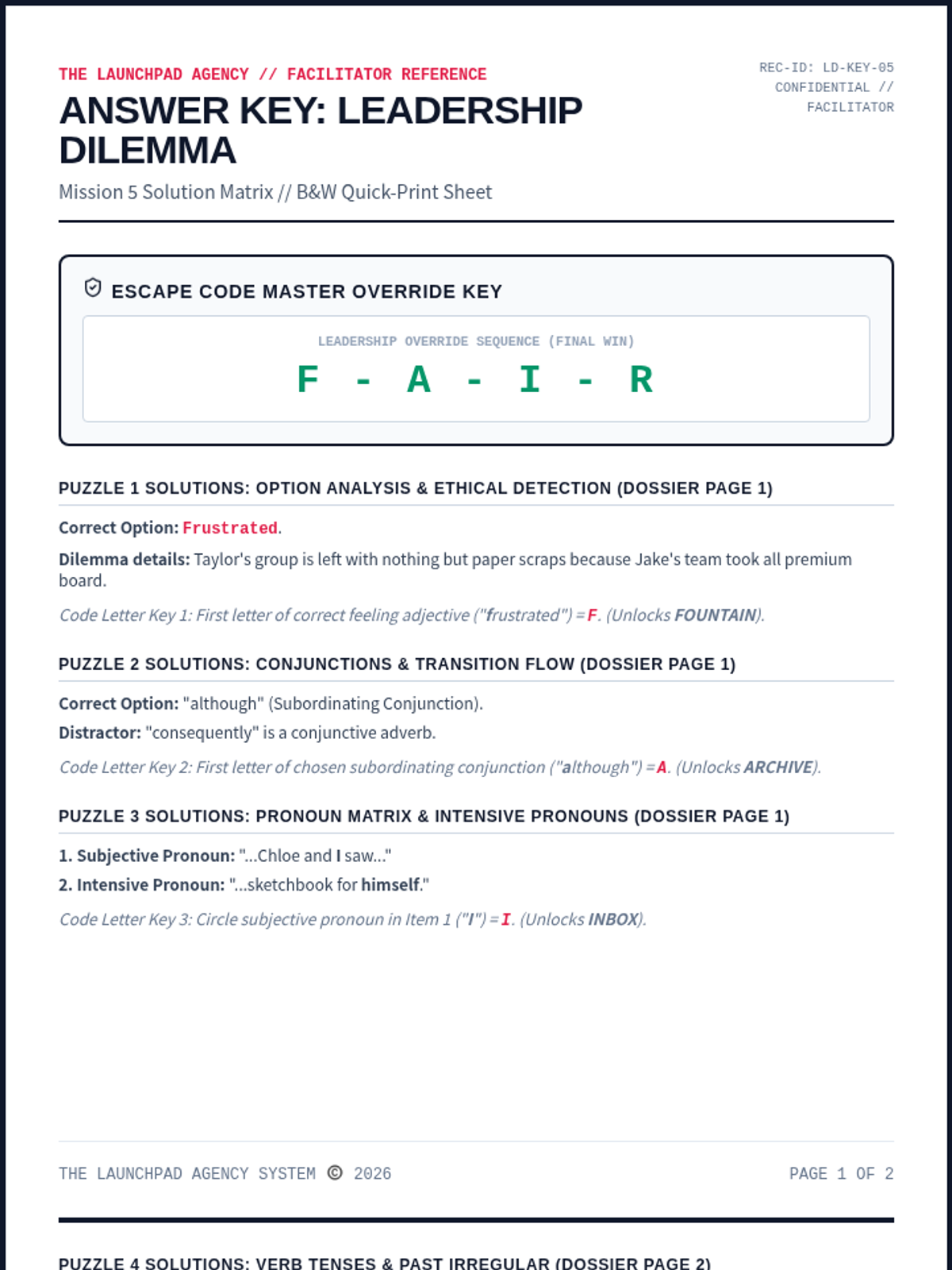
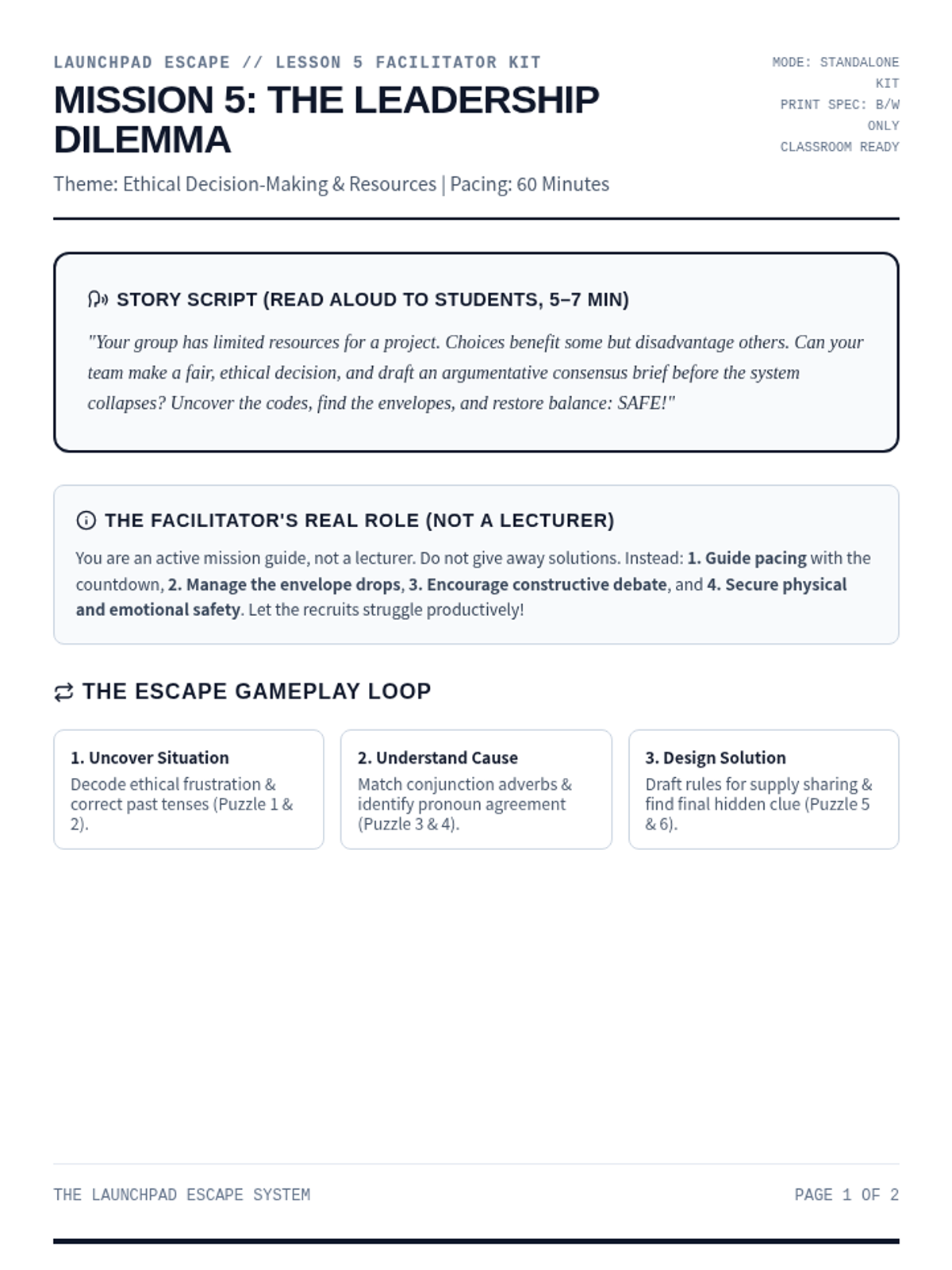
An ethical decision-making and systems-thinking escape room. Recruits analyze resource allocation options, vote on complex tradeoffs, map cascading social consequences, and draft an argumentative consensus brief to restore balance.
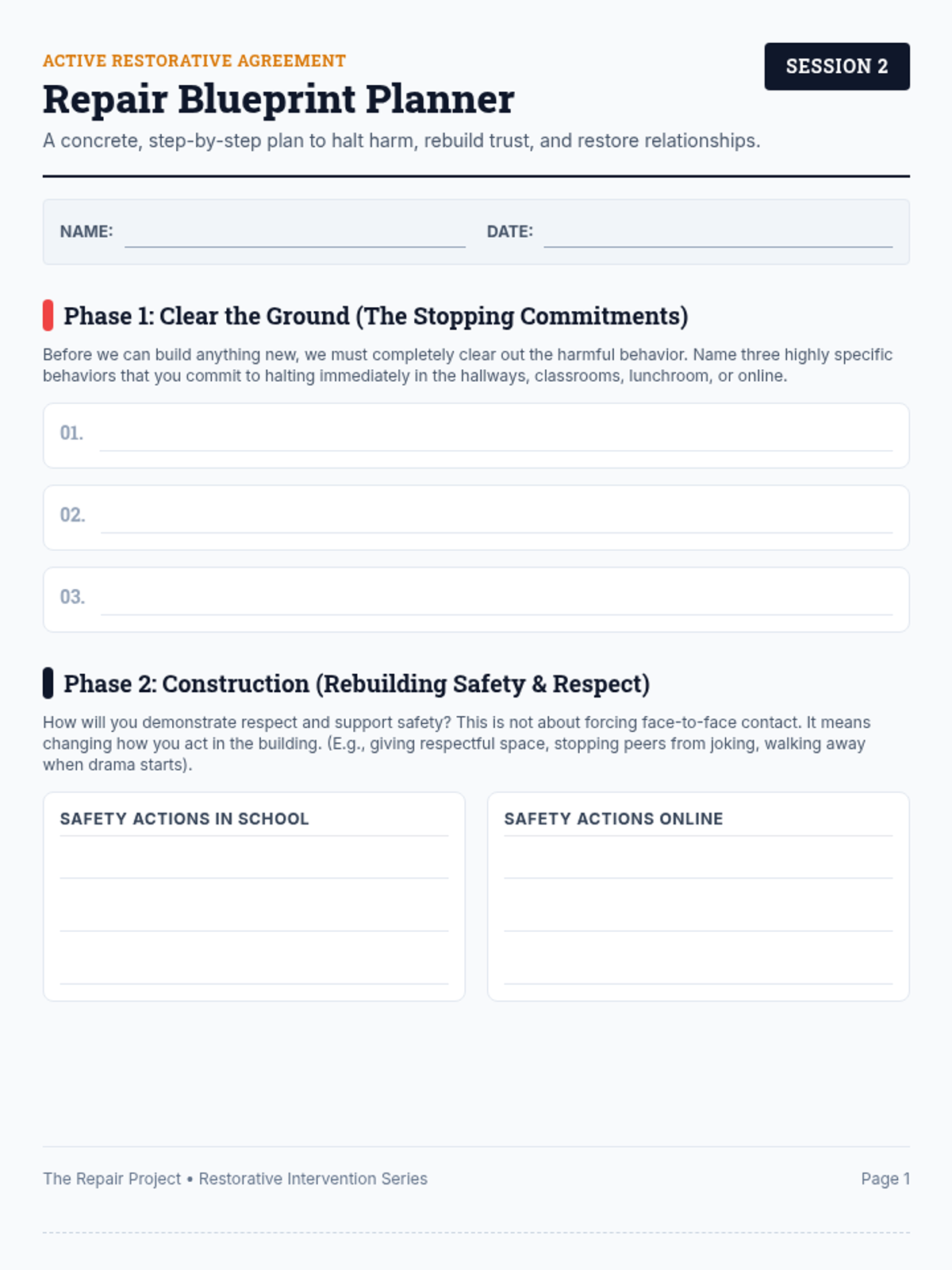
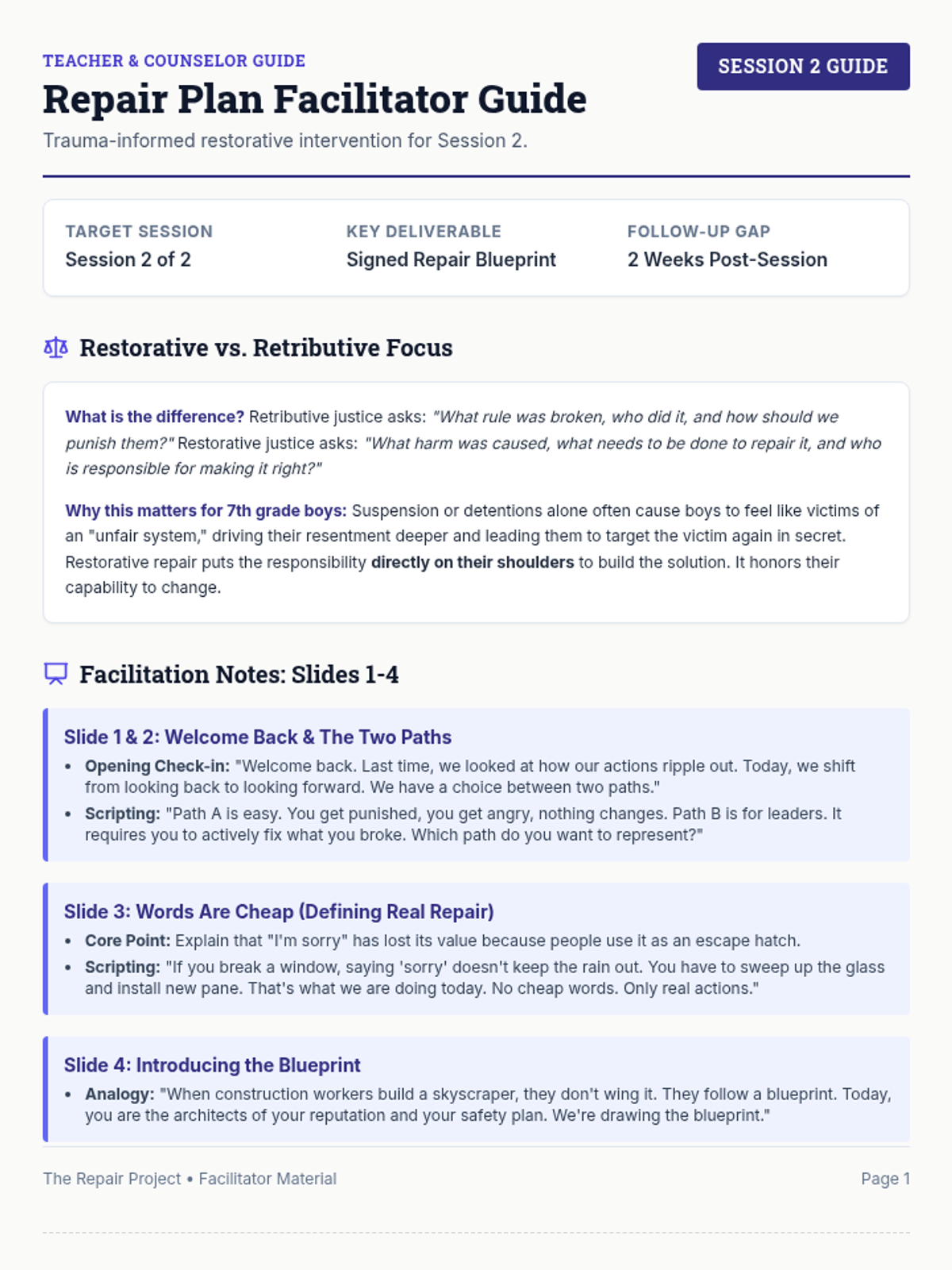
In this second session, students shift from analyzing impact to taking active accountability. They explore restorative justice and draft a concrete "Repair Blueprint" detailing specific actions to rebuild trust and repair the harm.
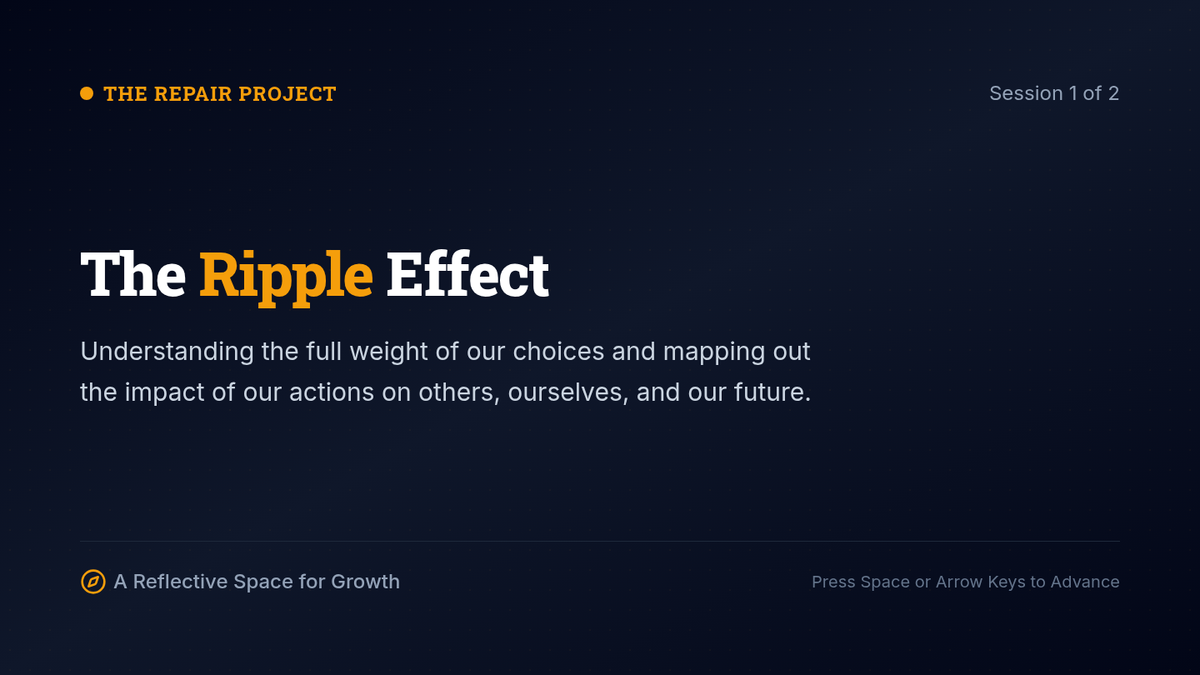
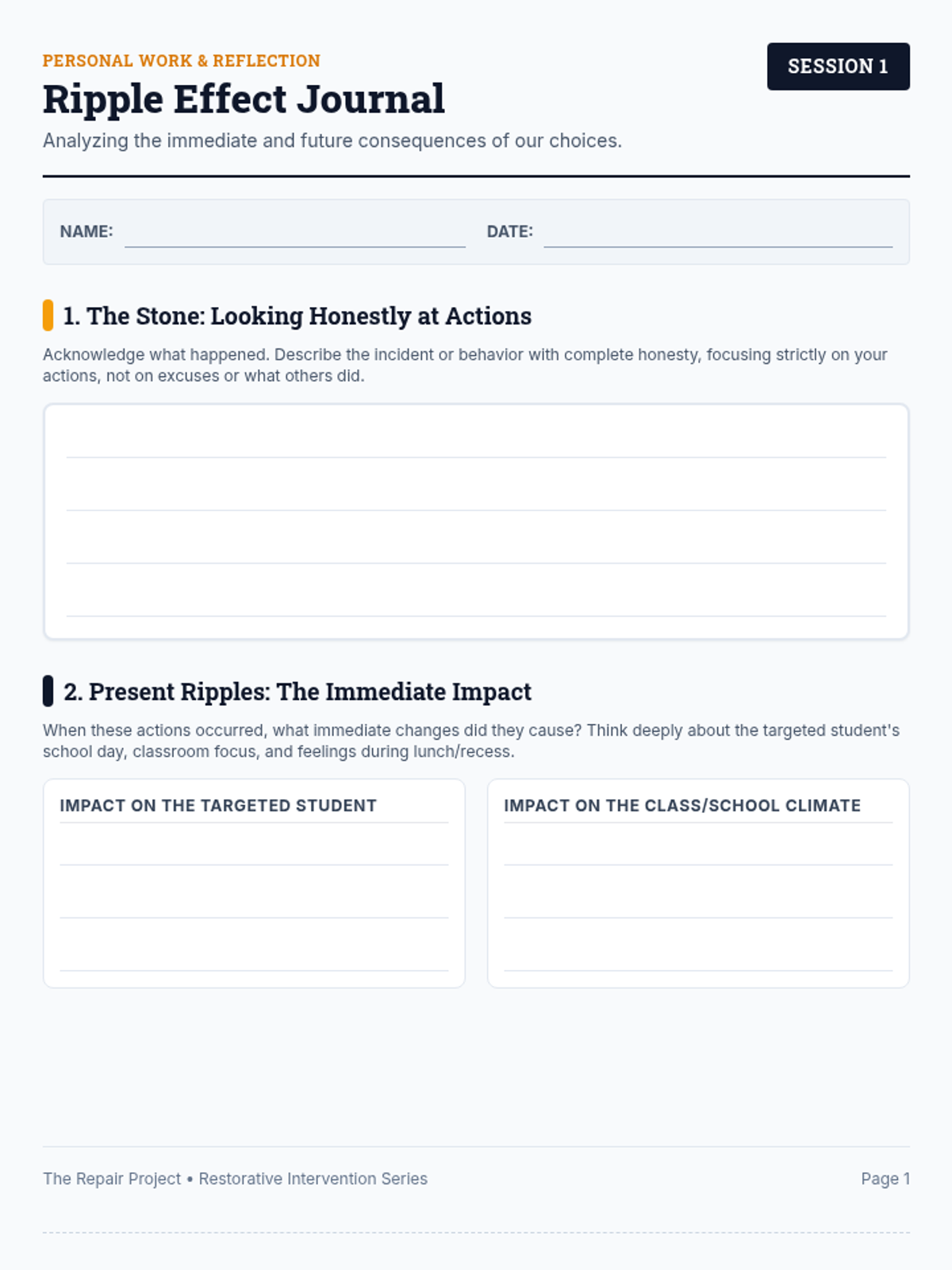
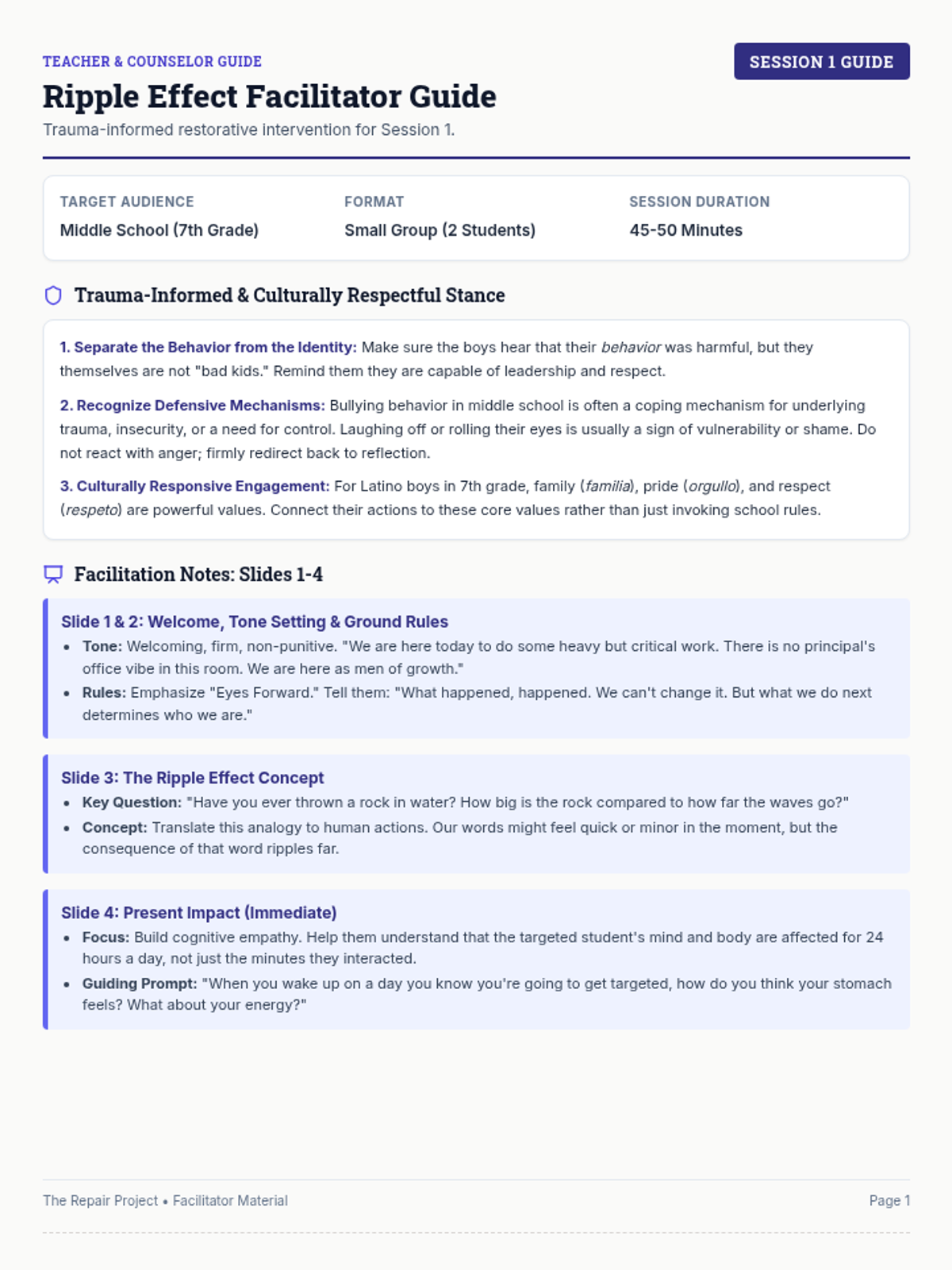
In this first session, students explore the concepts of cause and effect, analyzing how behavior ripples outward to affect the targeted student, their families, the school community, and themselves, both now and in the future.
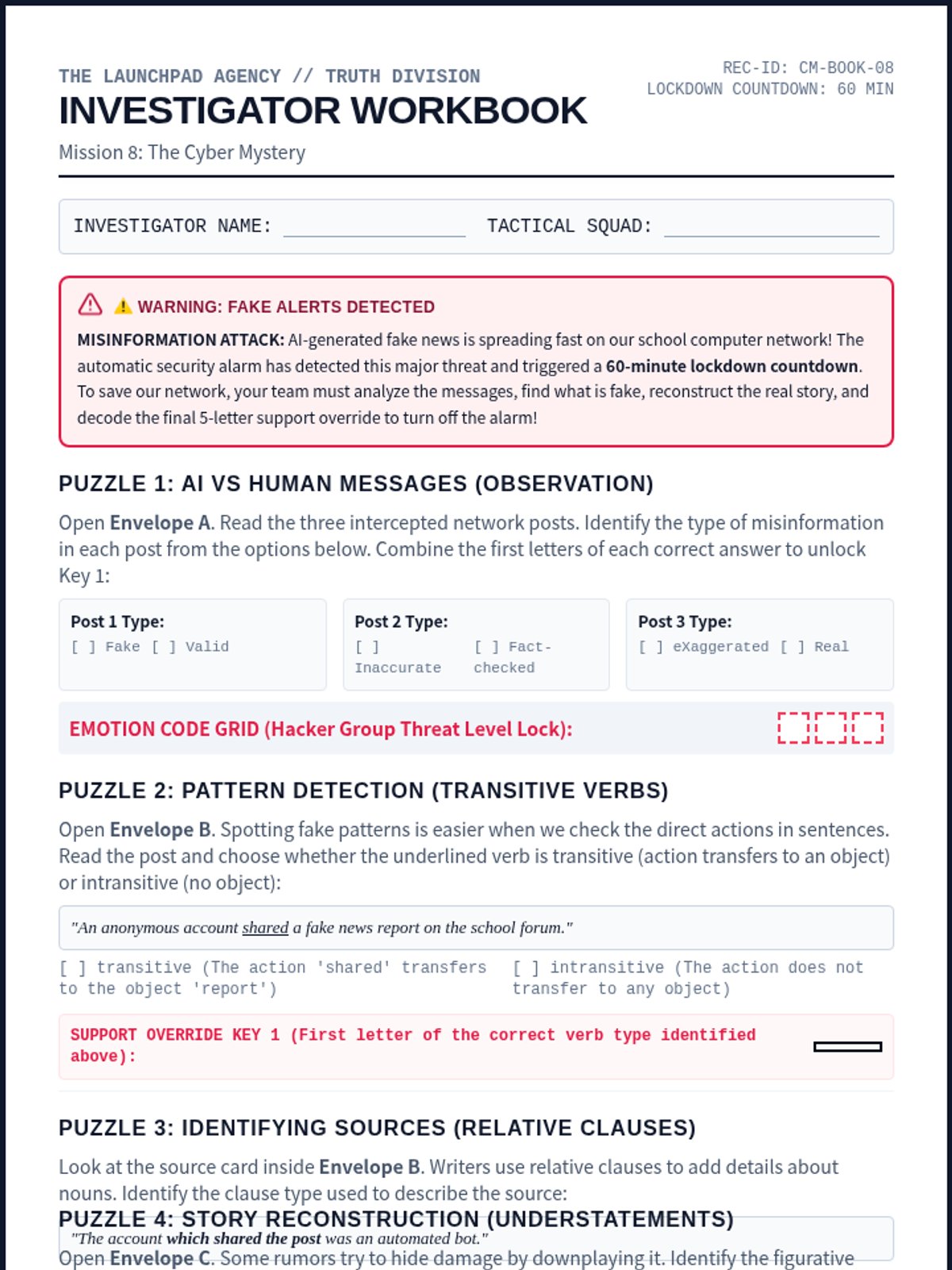
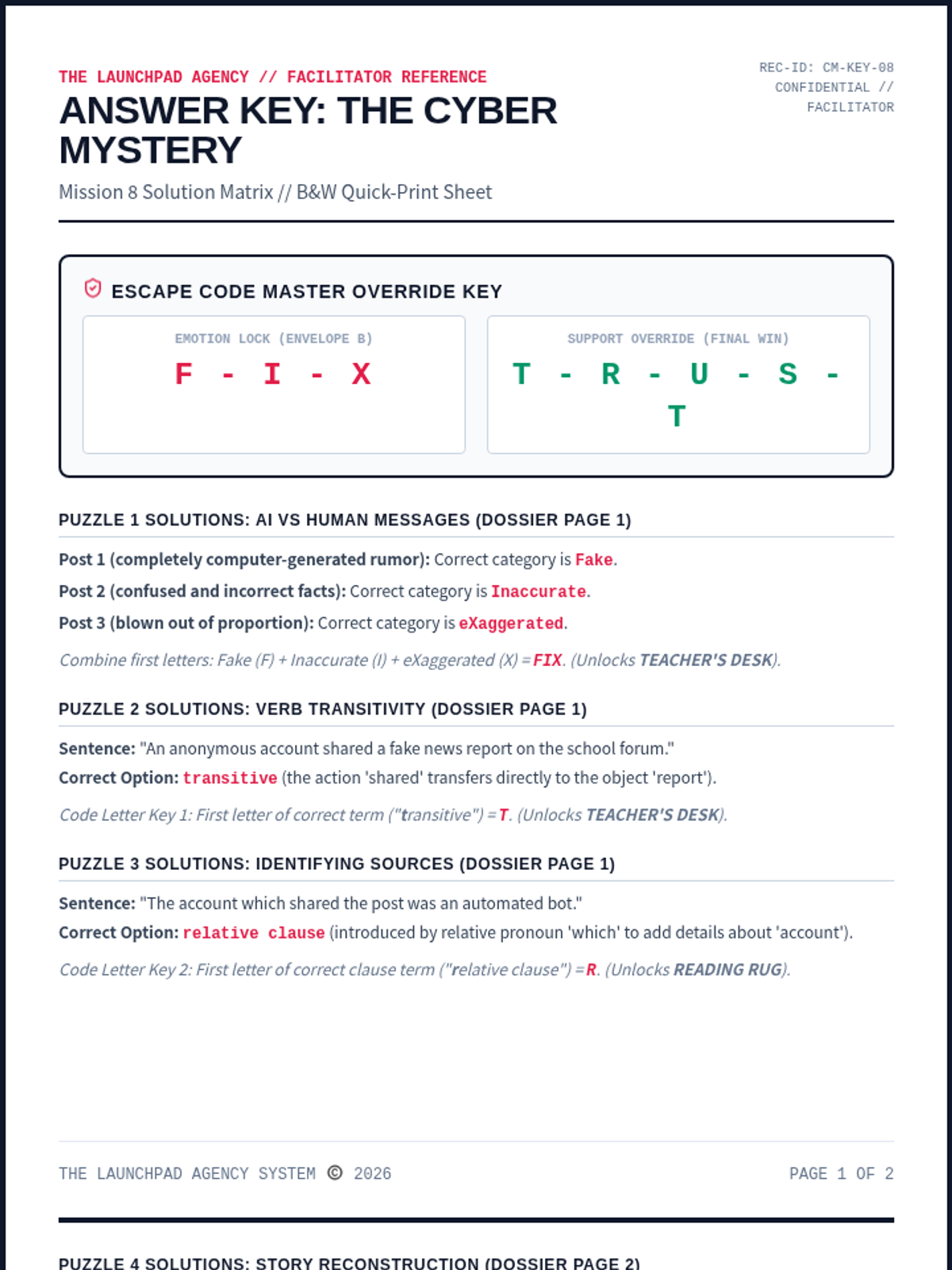
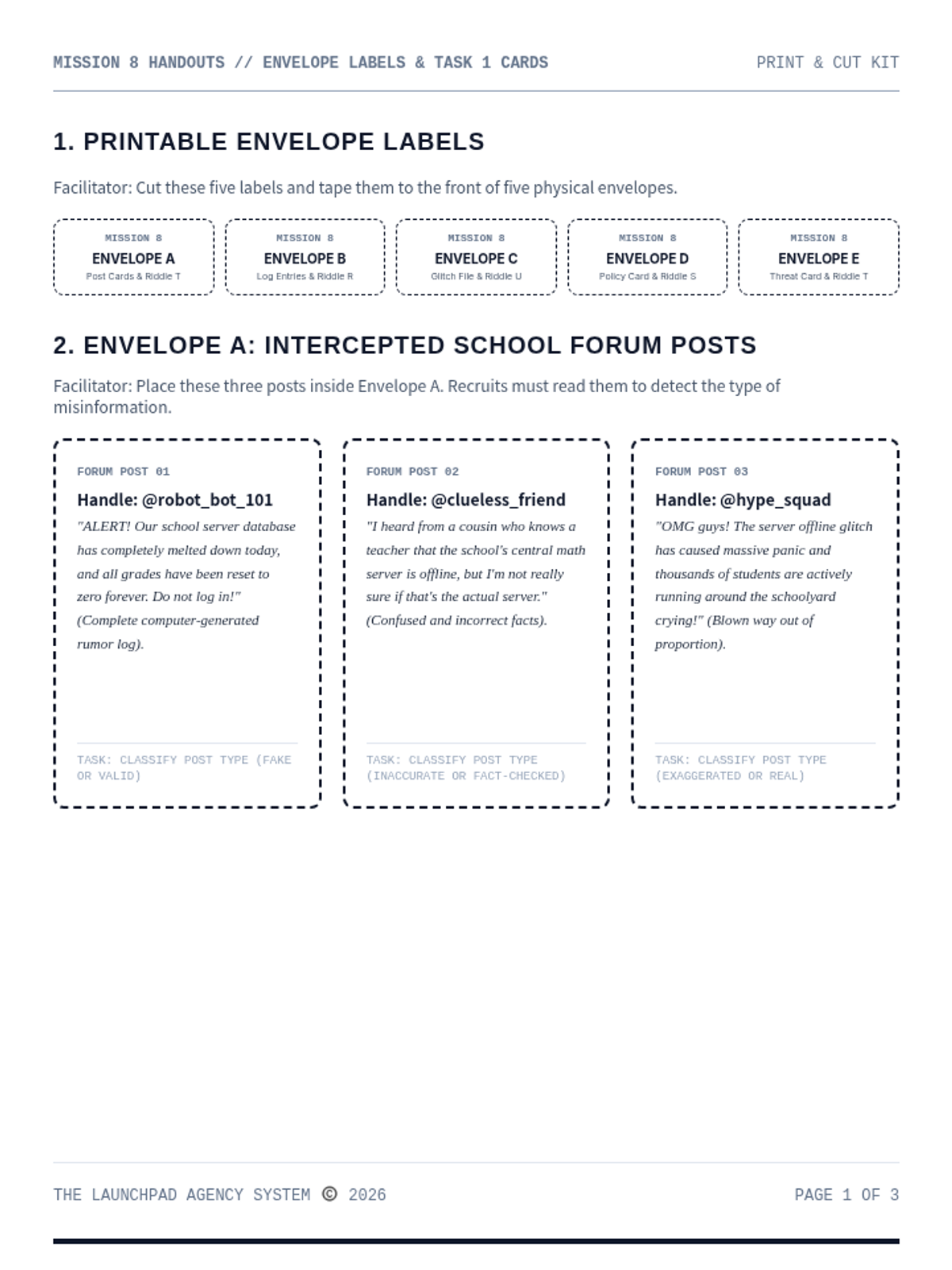
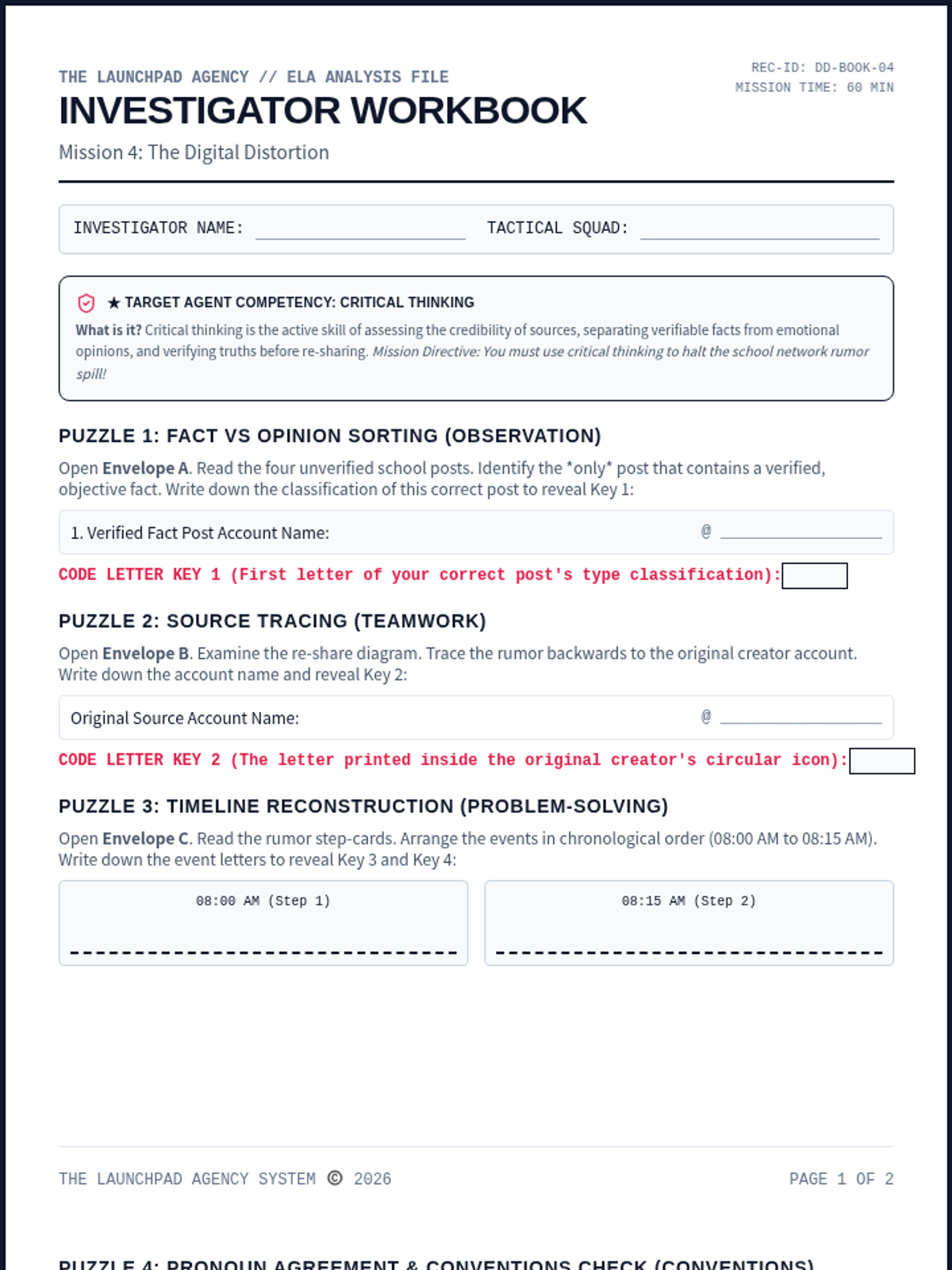
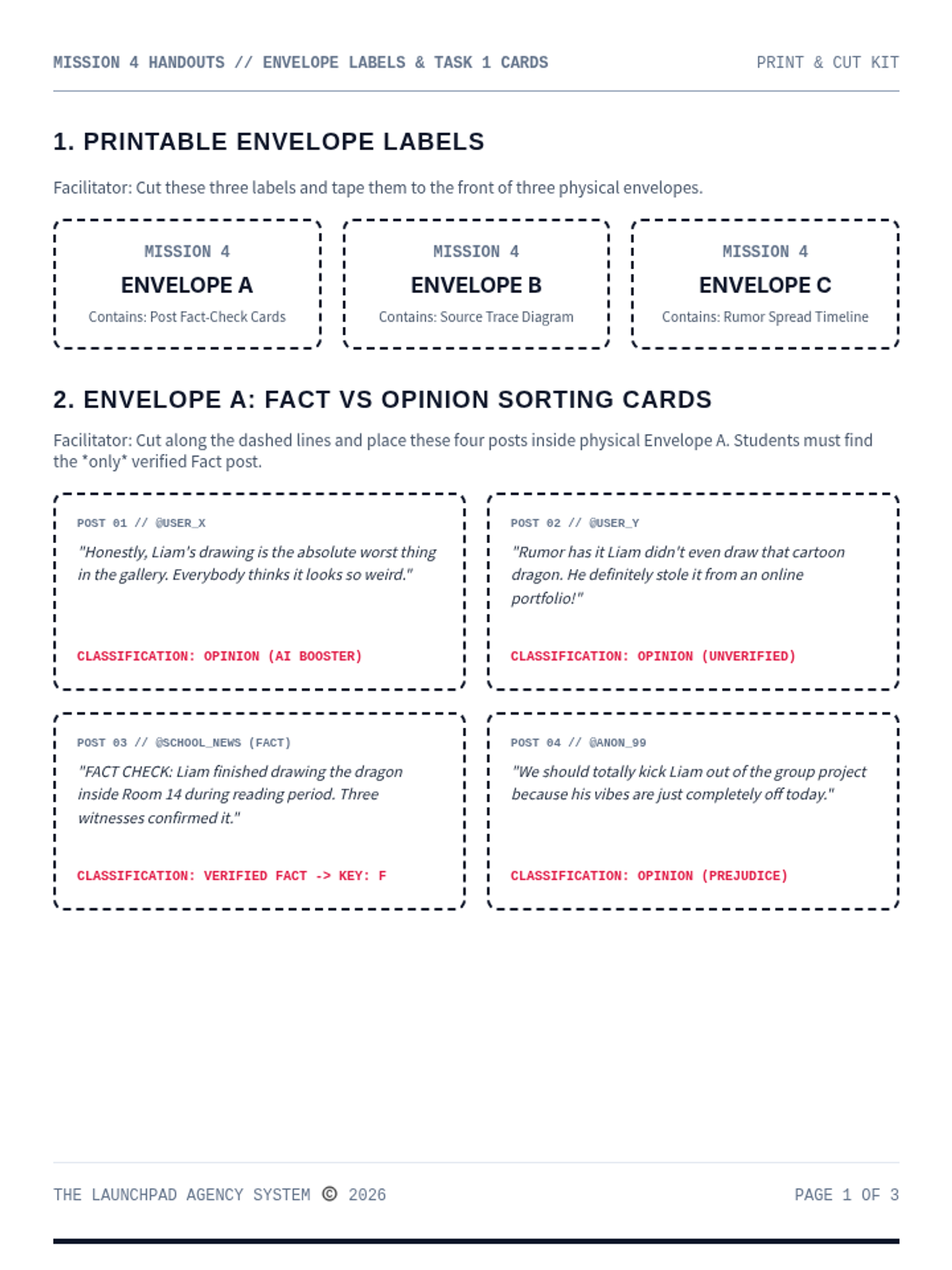
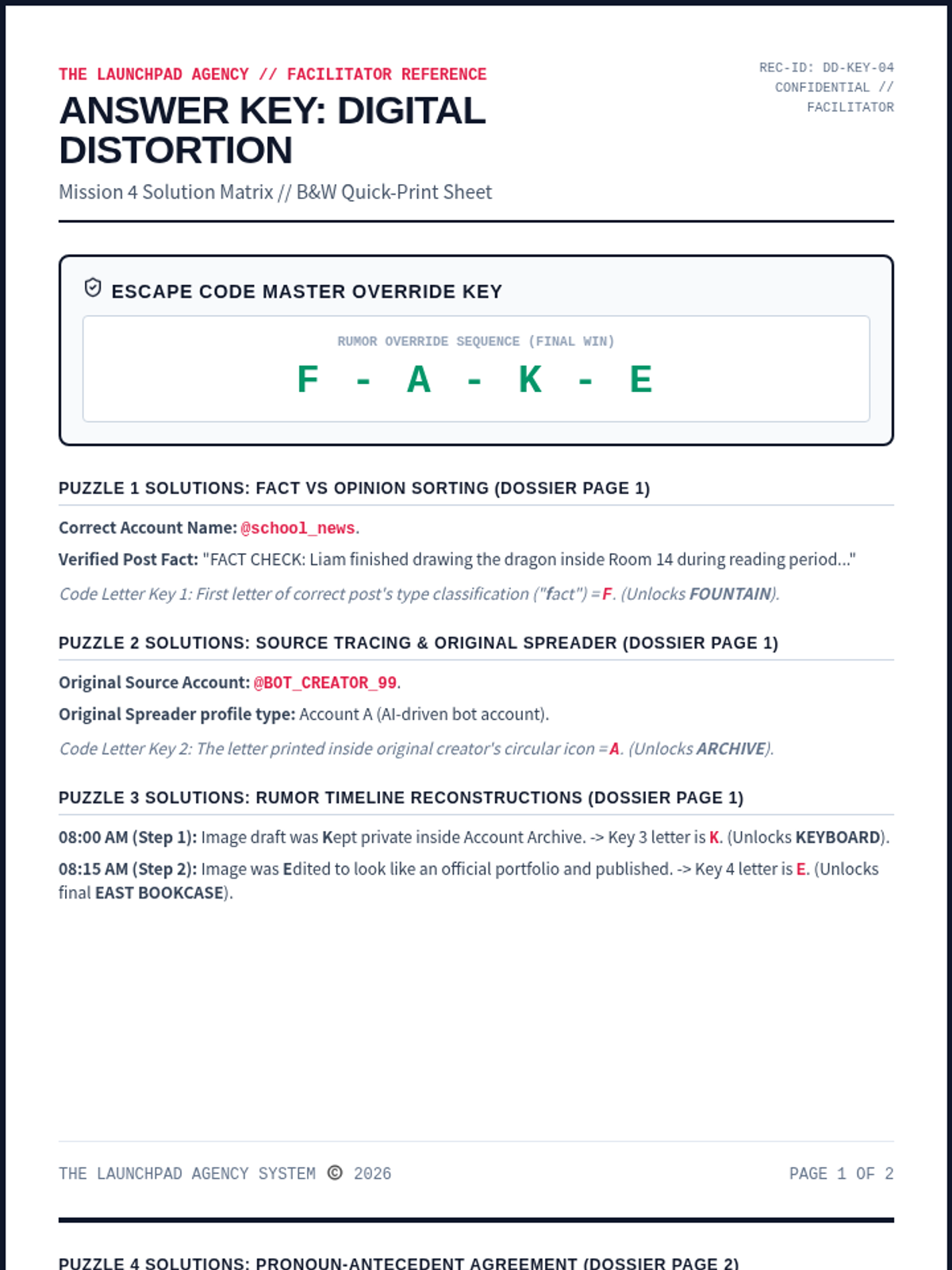
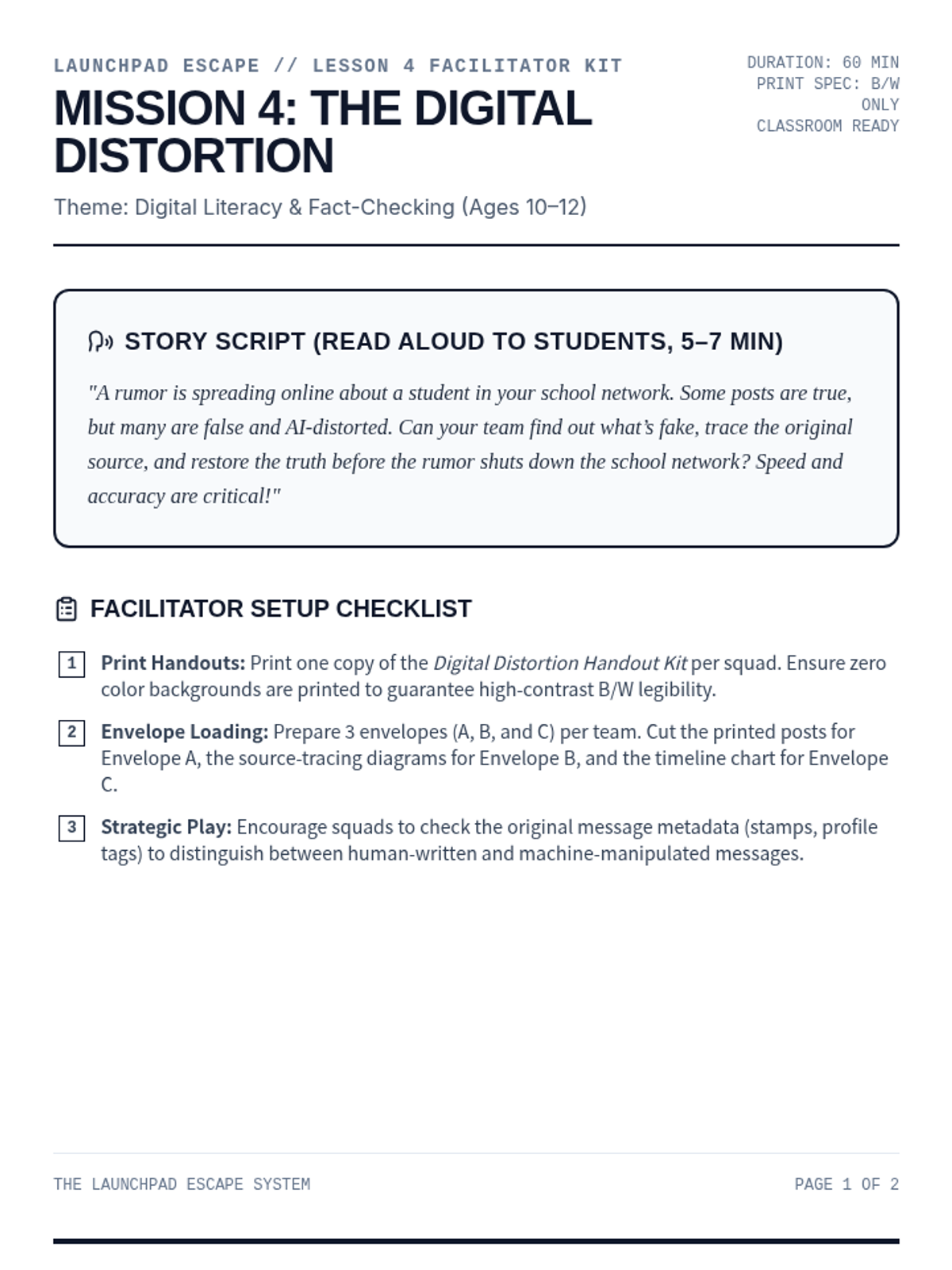
An online misinformation and fact-checking escape room for Ages 10-12. Recruits sort fact vs. opinion, trace original message sources, and reconstruct truth timelines to stop rumors.
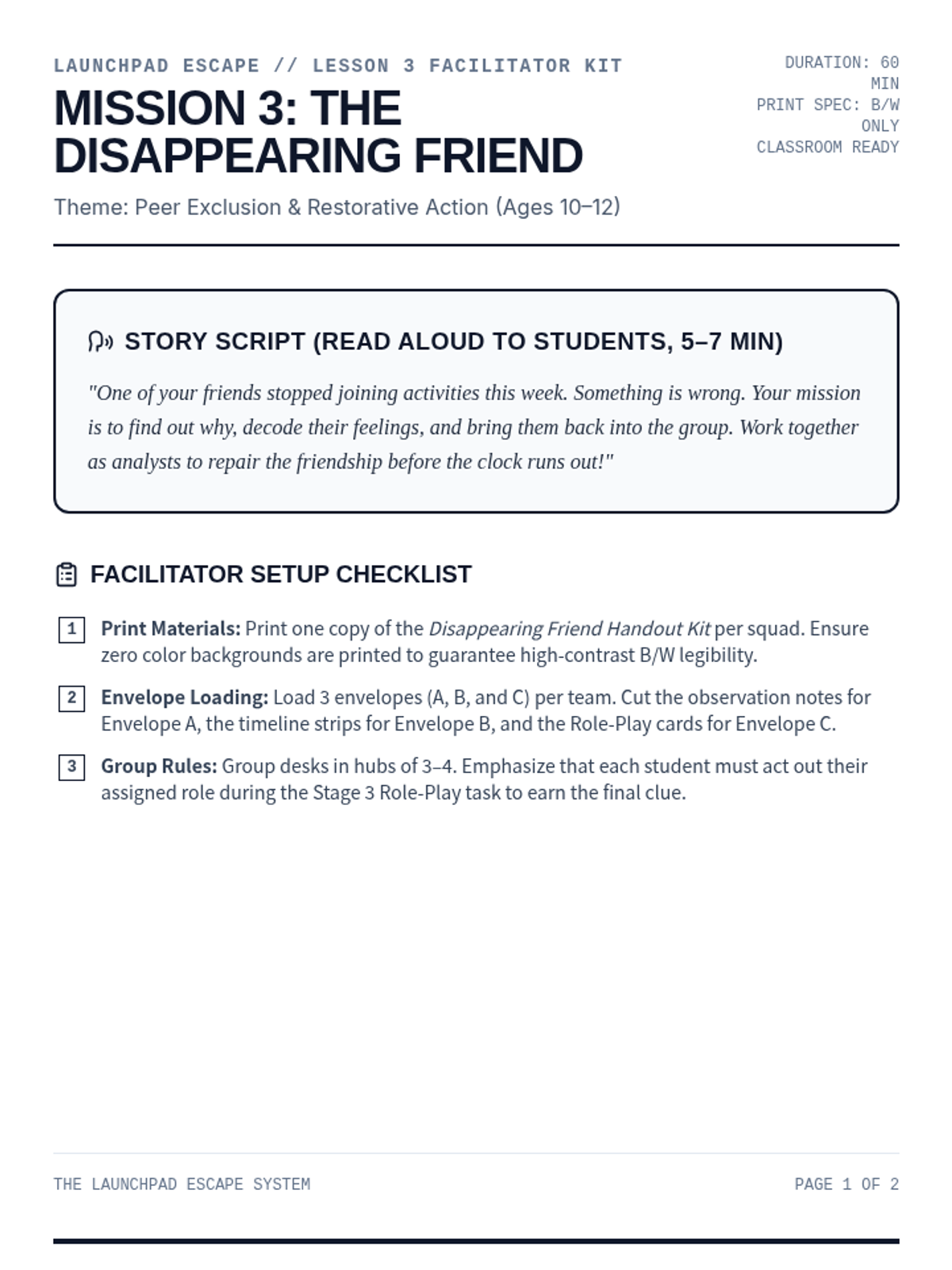
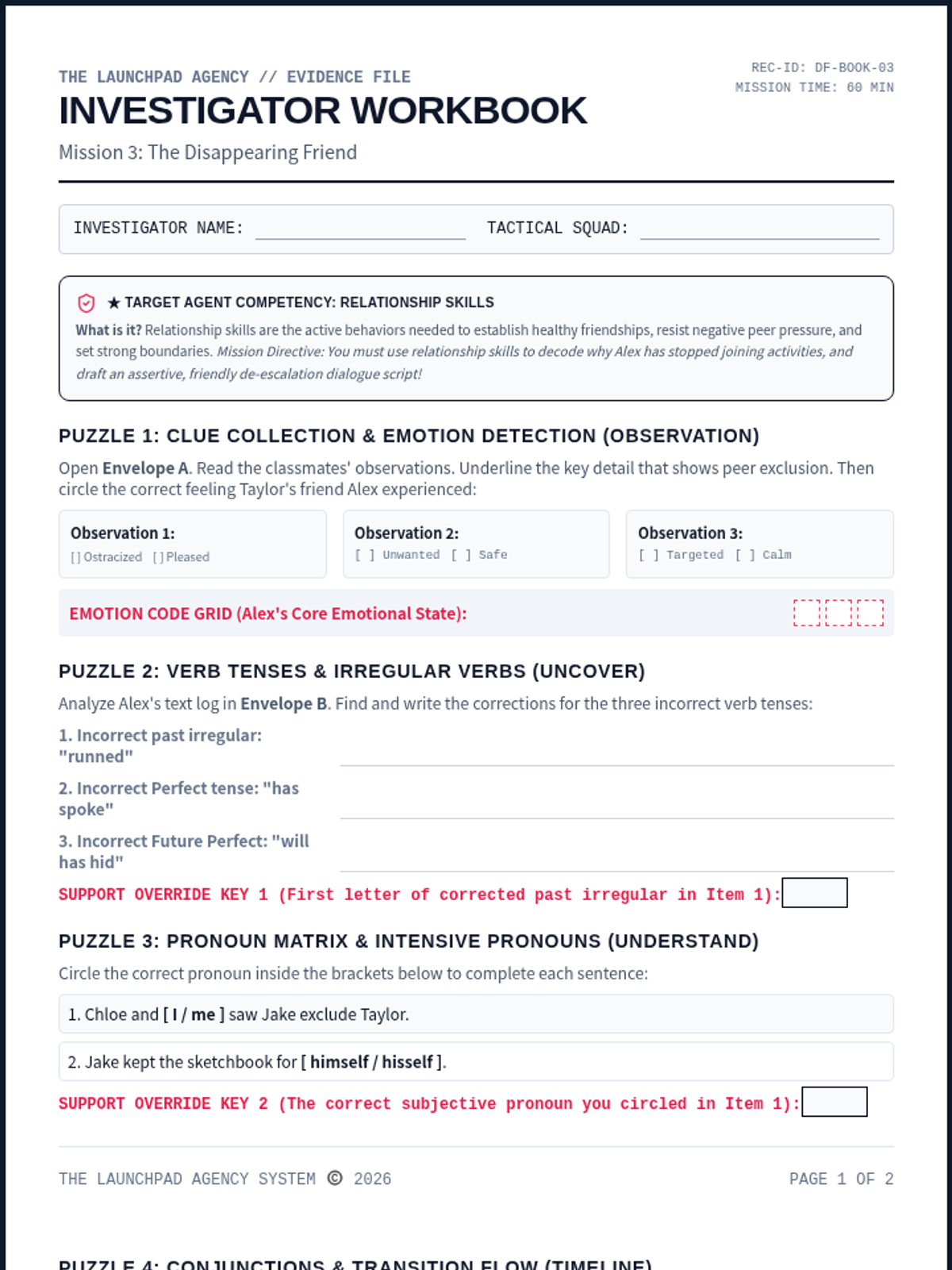
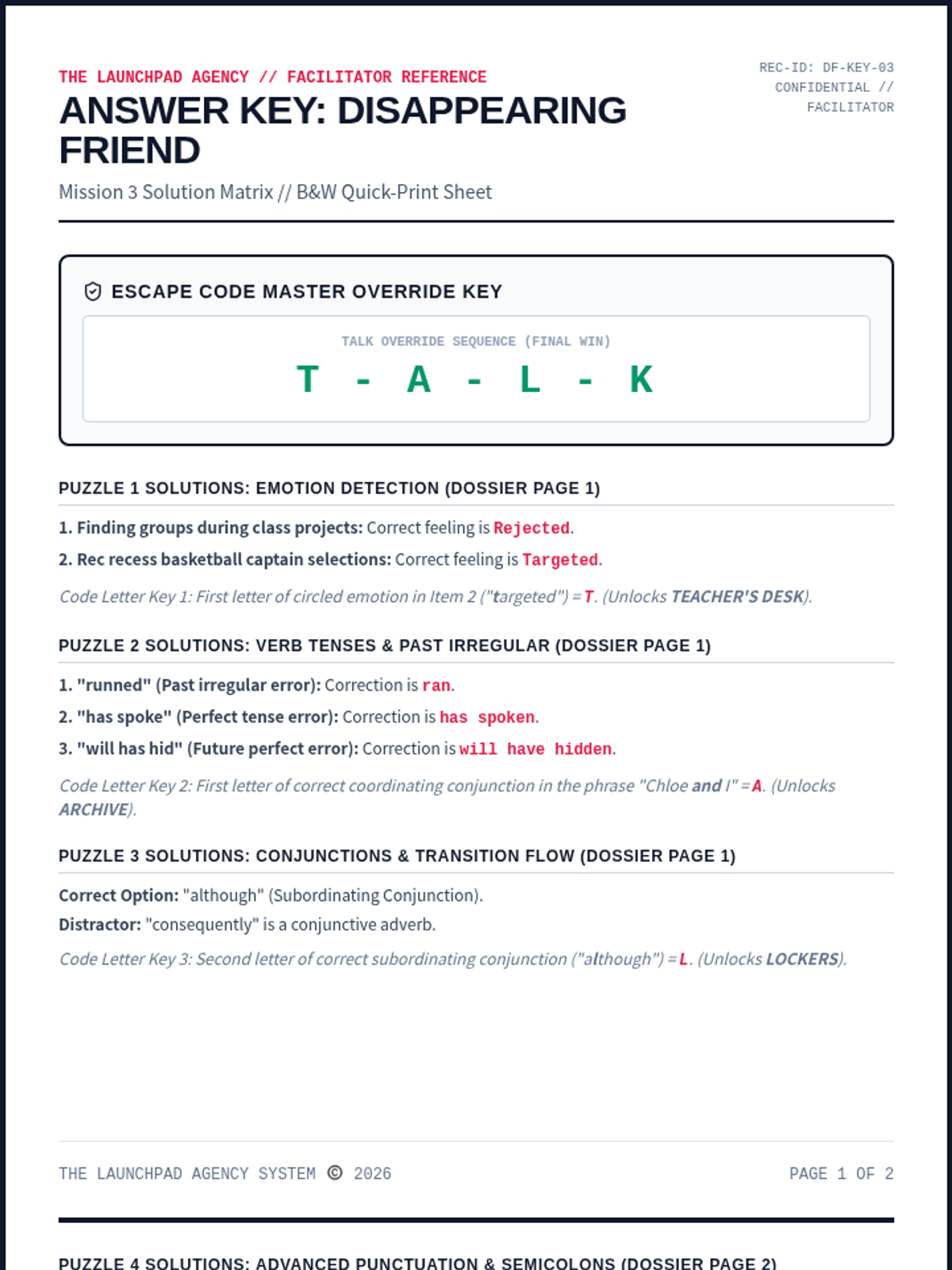
A chronological reconstruction and peer exclusion escape room for Ages 10-12. Recruits analyze sticky-note observations, identify missed social interactions, and role-play restorative de-escalation scripts.
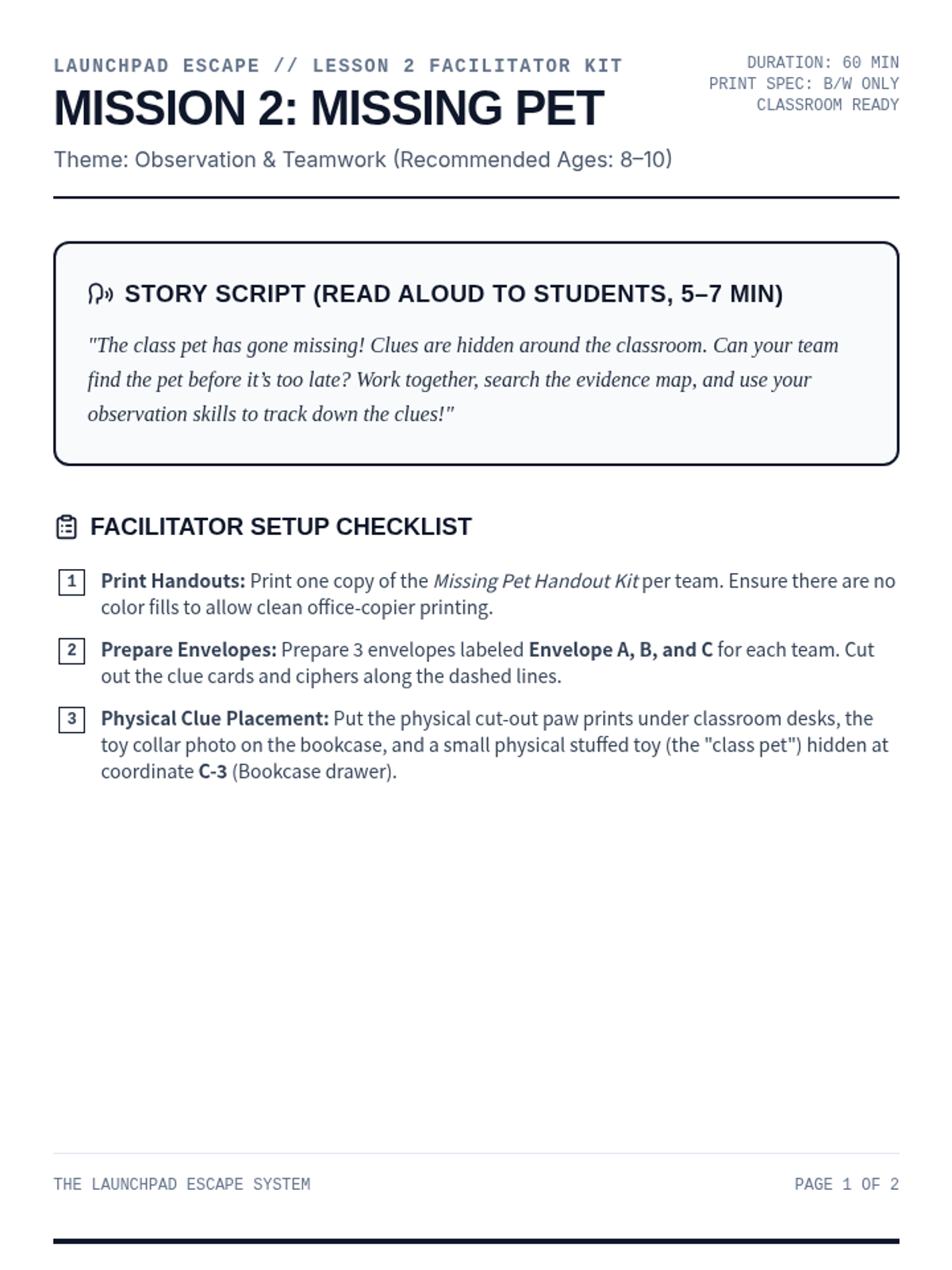
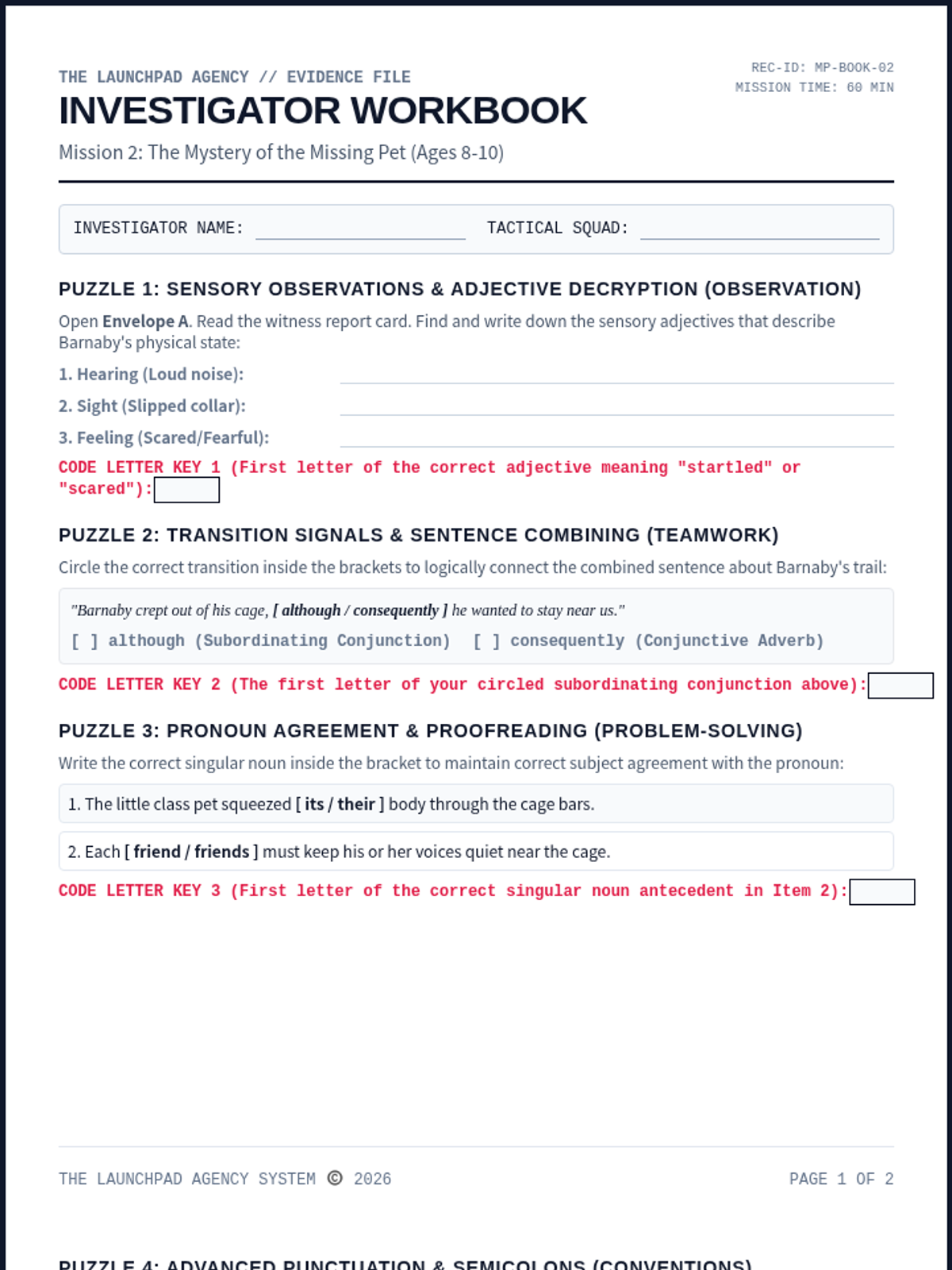
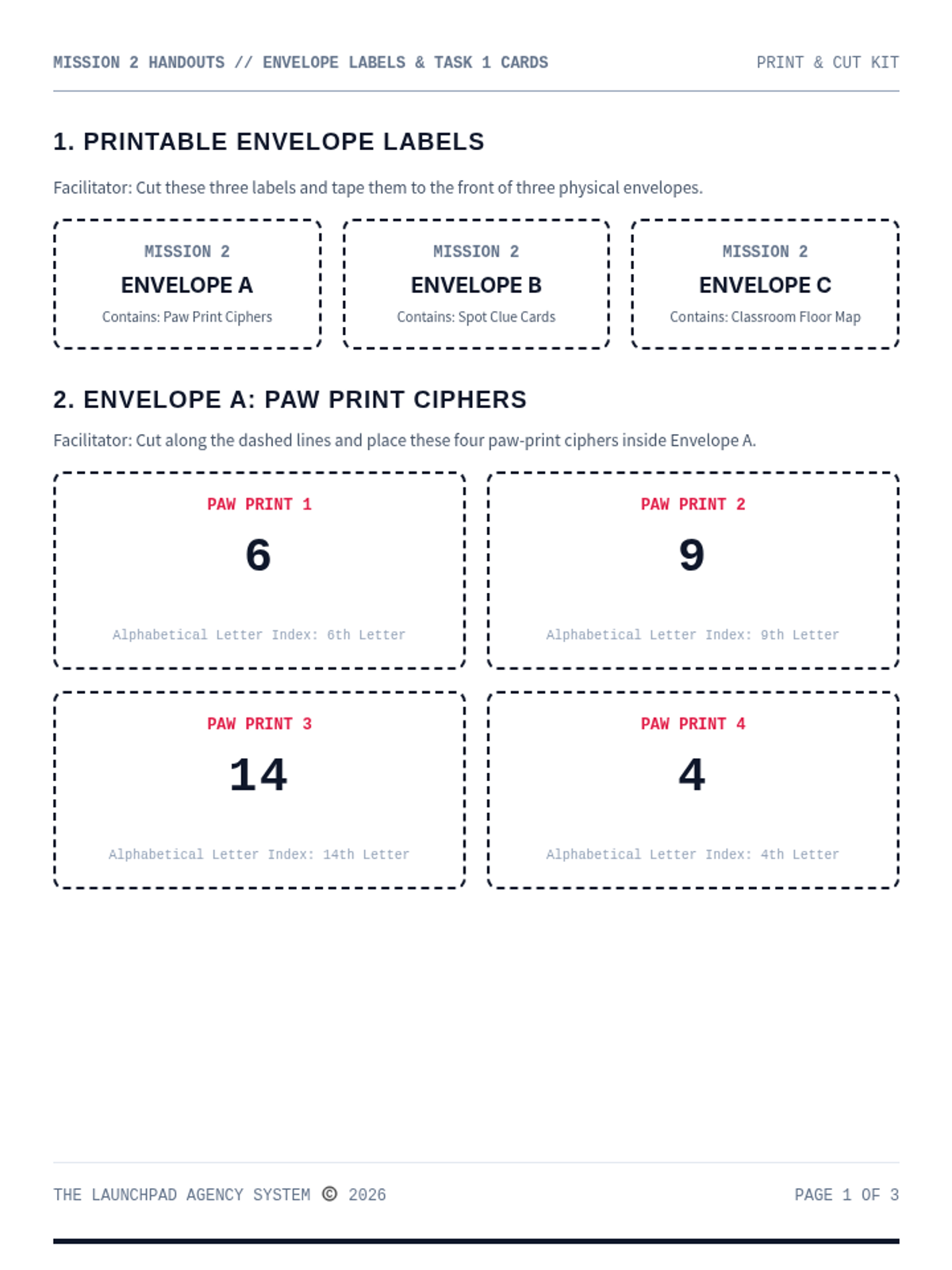
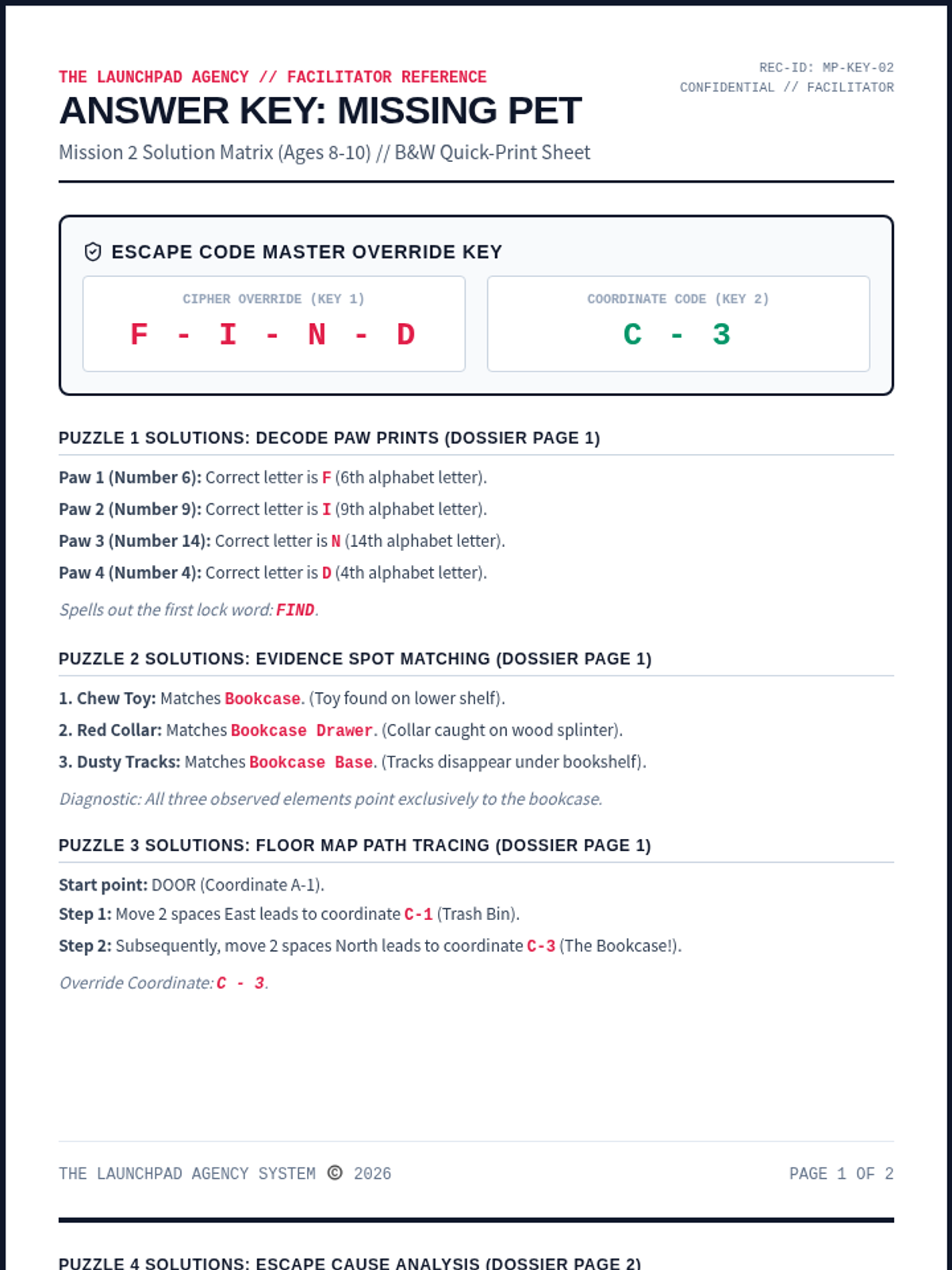
An observation-based escape mission for Ages 8-10. Recruits decode paw ciphers, match footprint evidence to classroom hiding spots, and compile a team map to find the missing class pet.
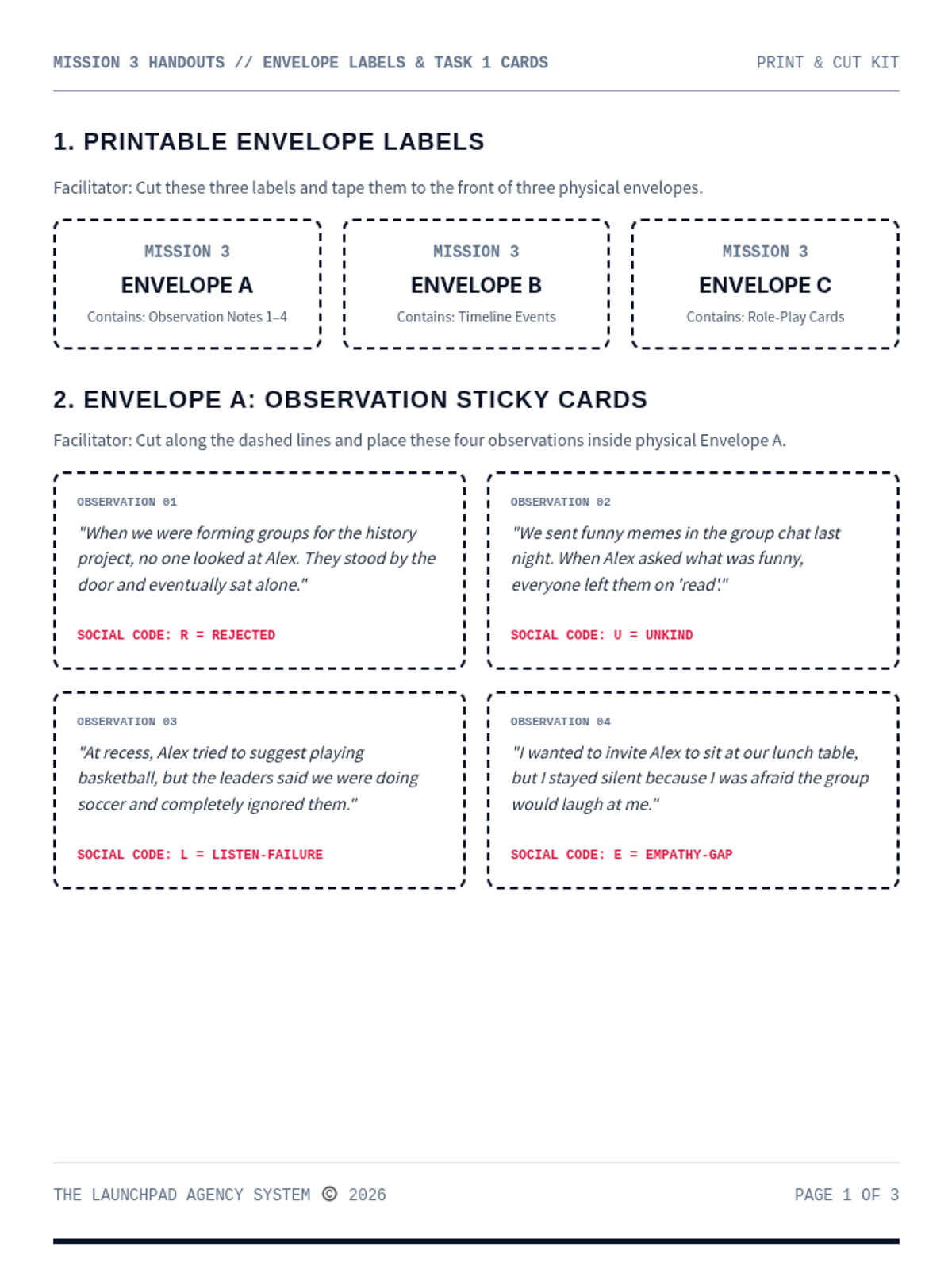
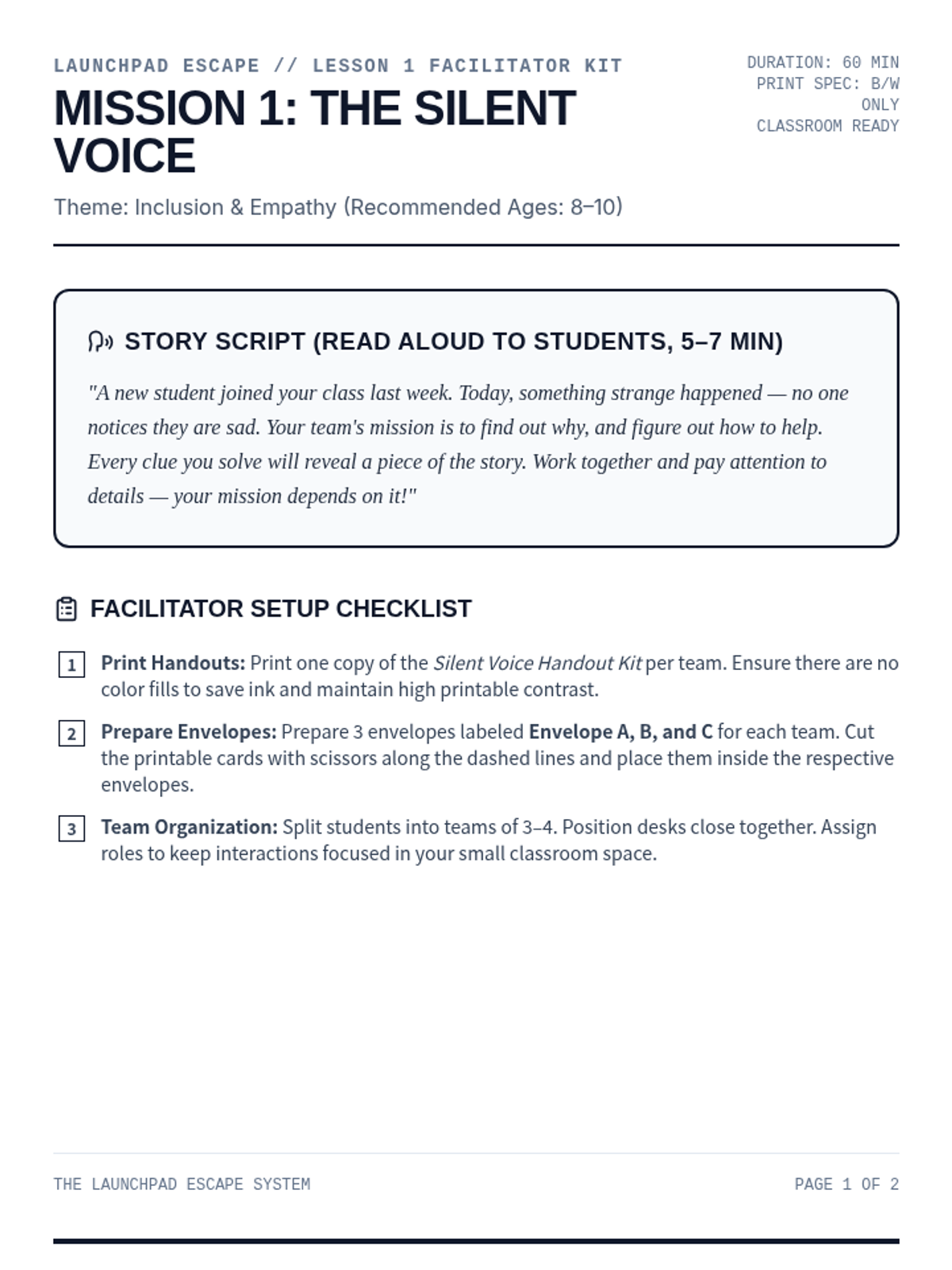
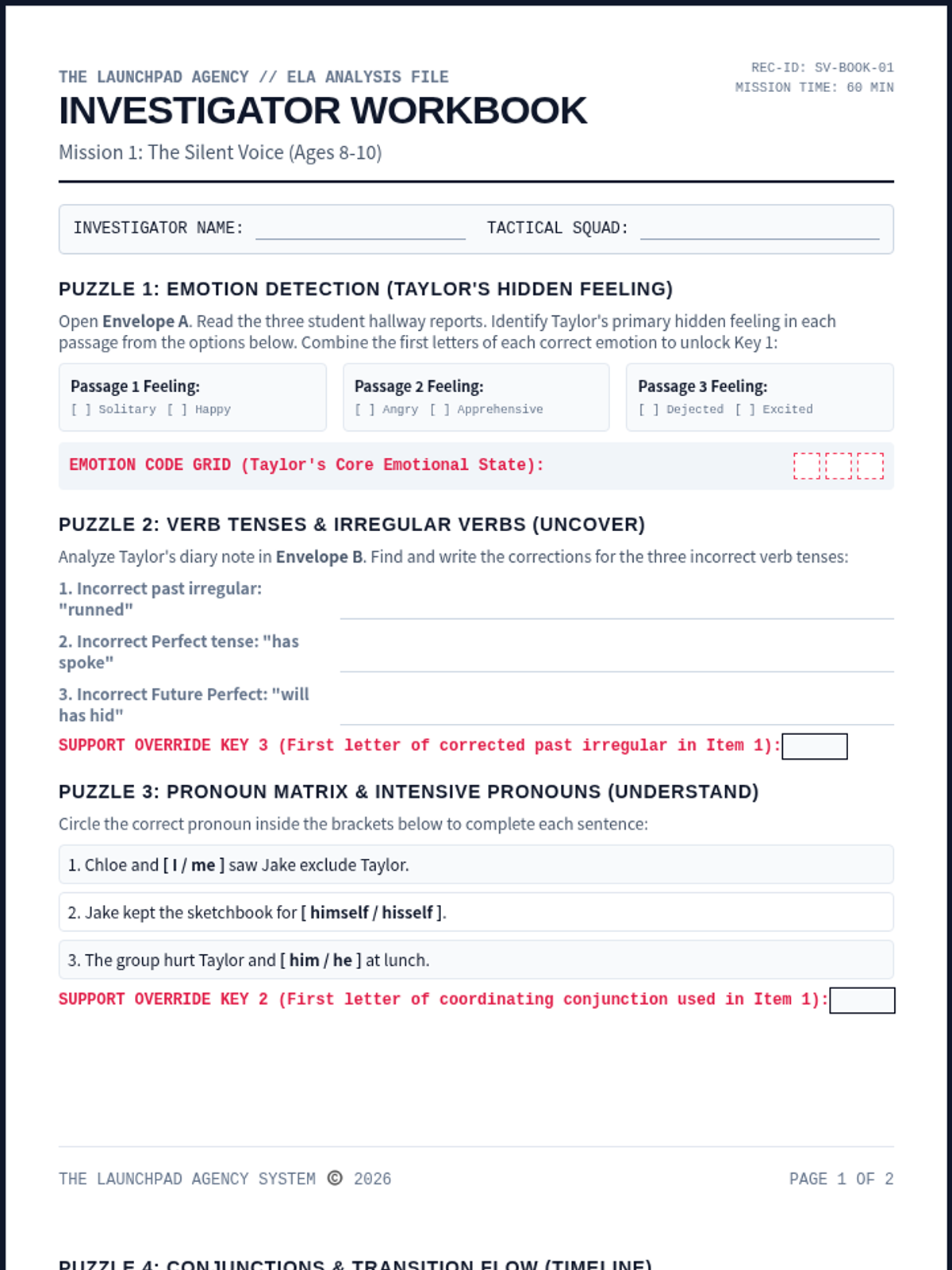
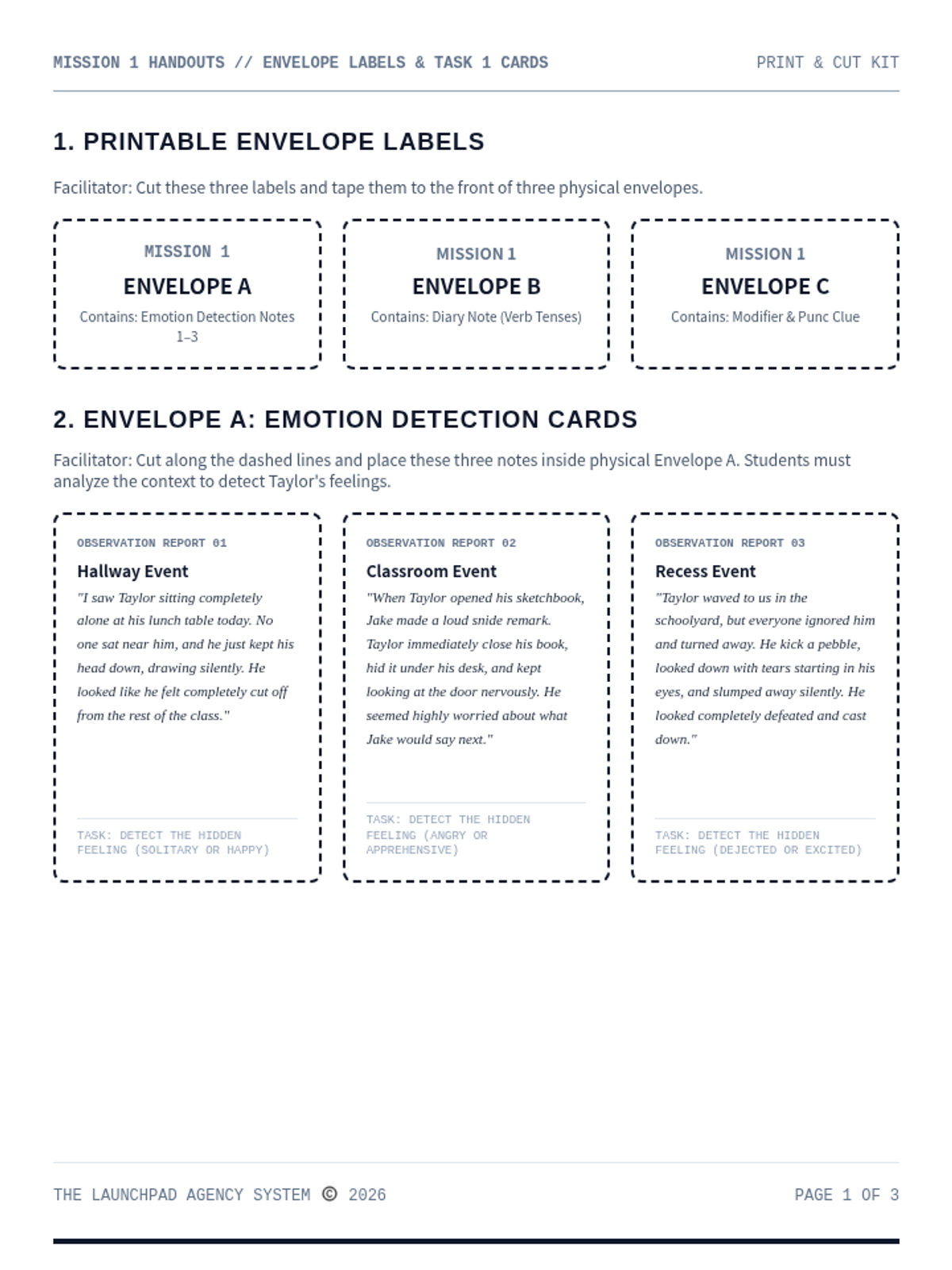
A cooperative social escape room for Ages 8-10 focused on inclusion and empathy. Recruits sort desk messages, build a timeline, and decode perspective cards to support a lonely classmate.
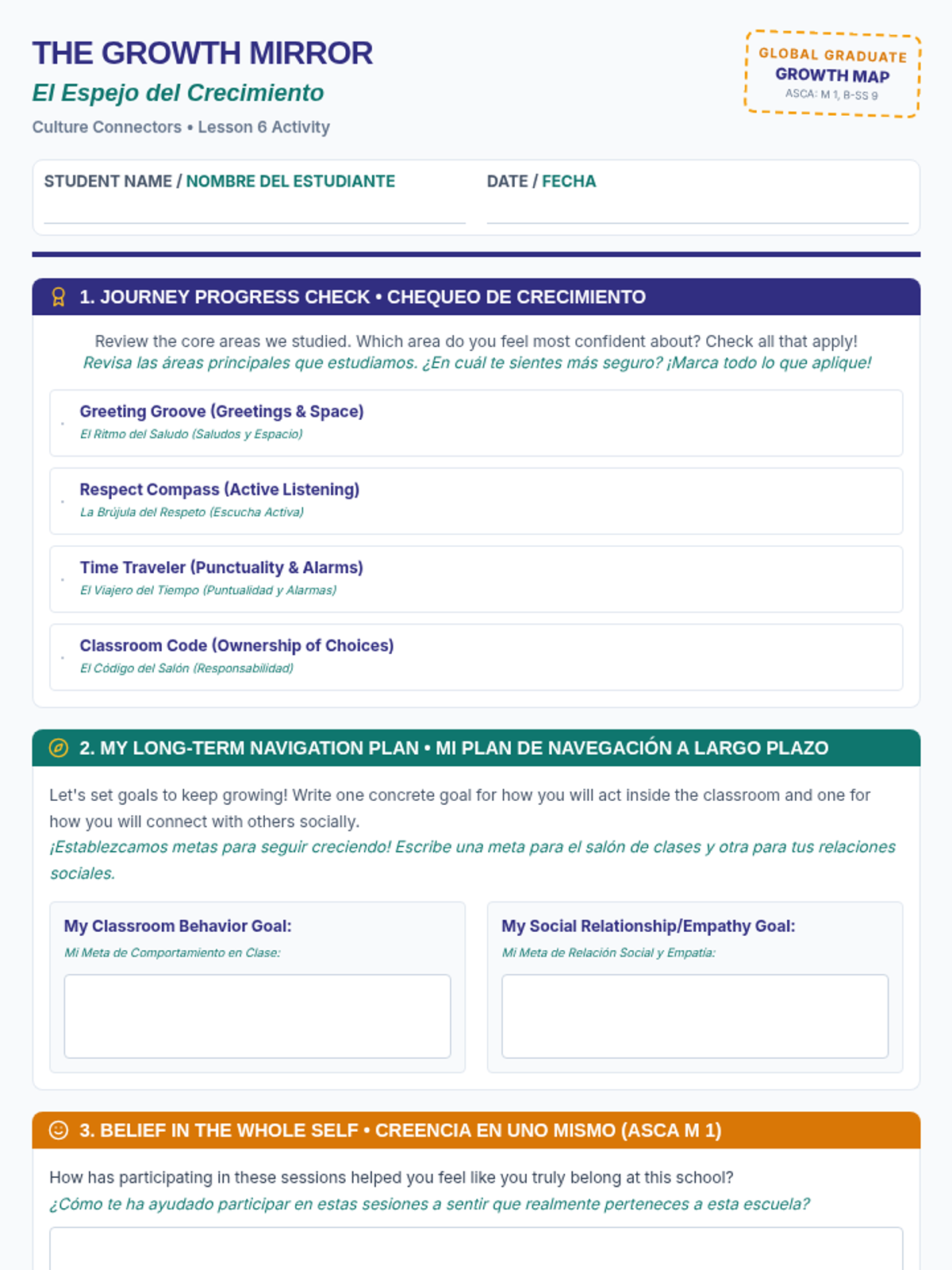
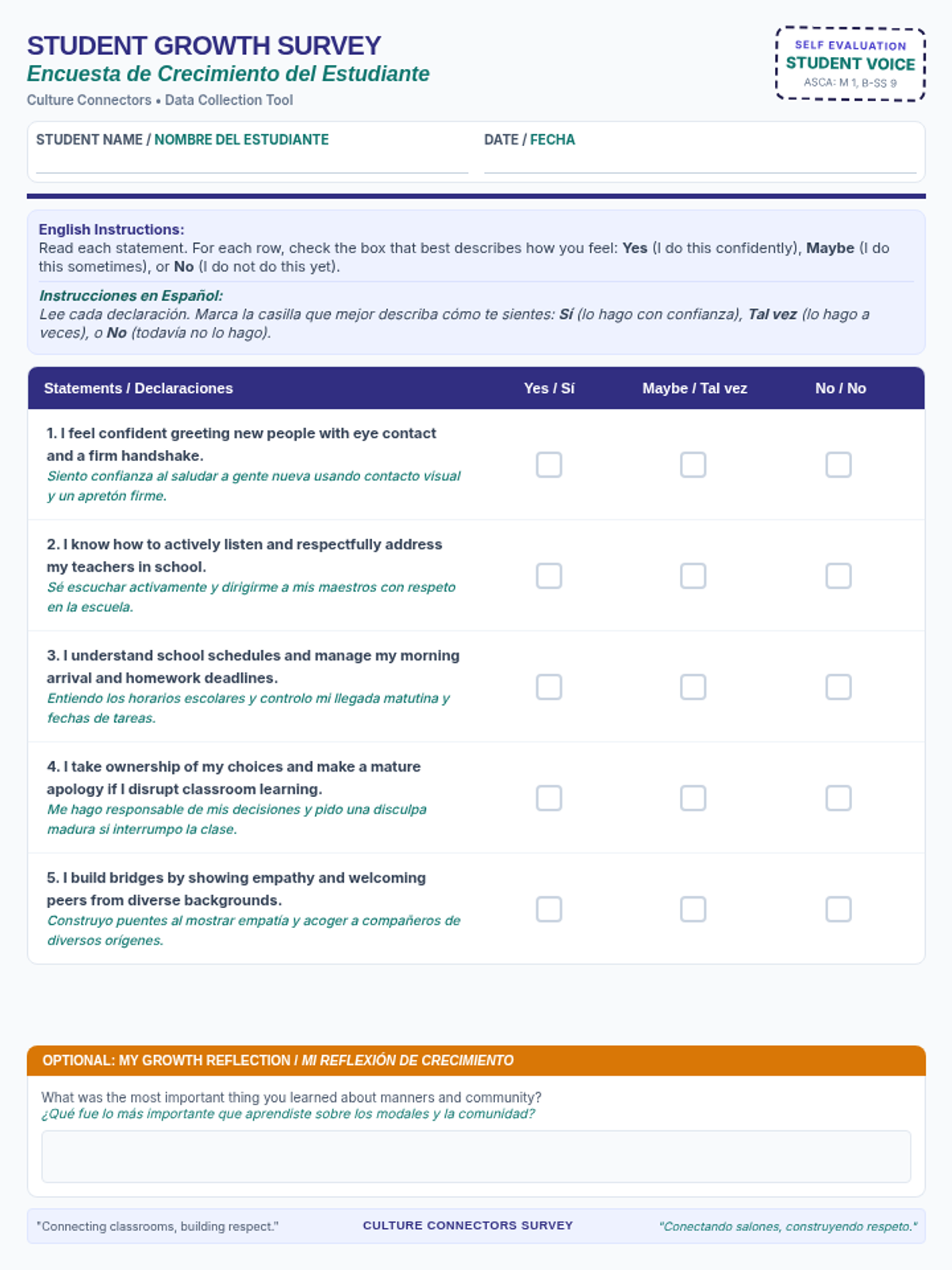
Encourages self-reflection and belief in the development of the whole self. Students reflect on their growth throughout the curriculum and complete personal goal-setting plans. Includes bilingual Likert scales for data collection.
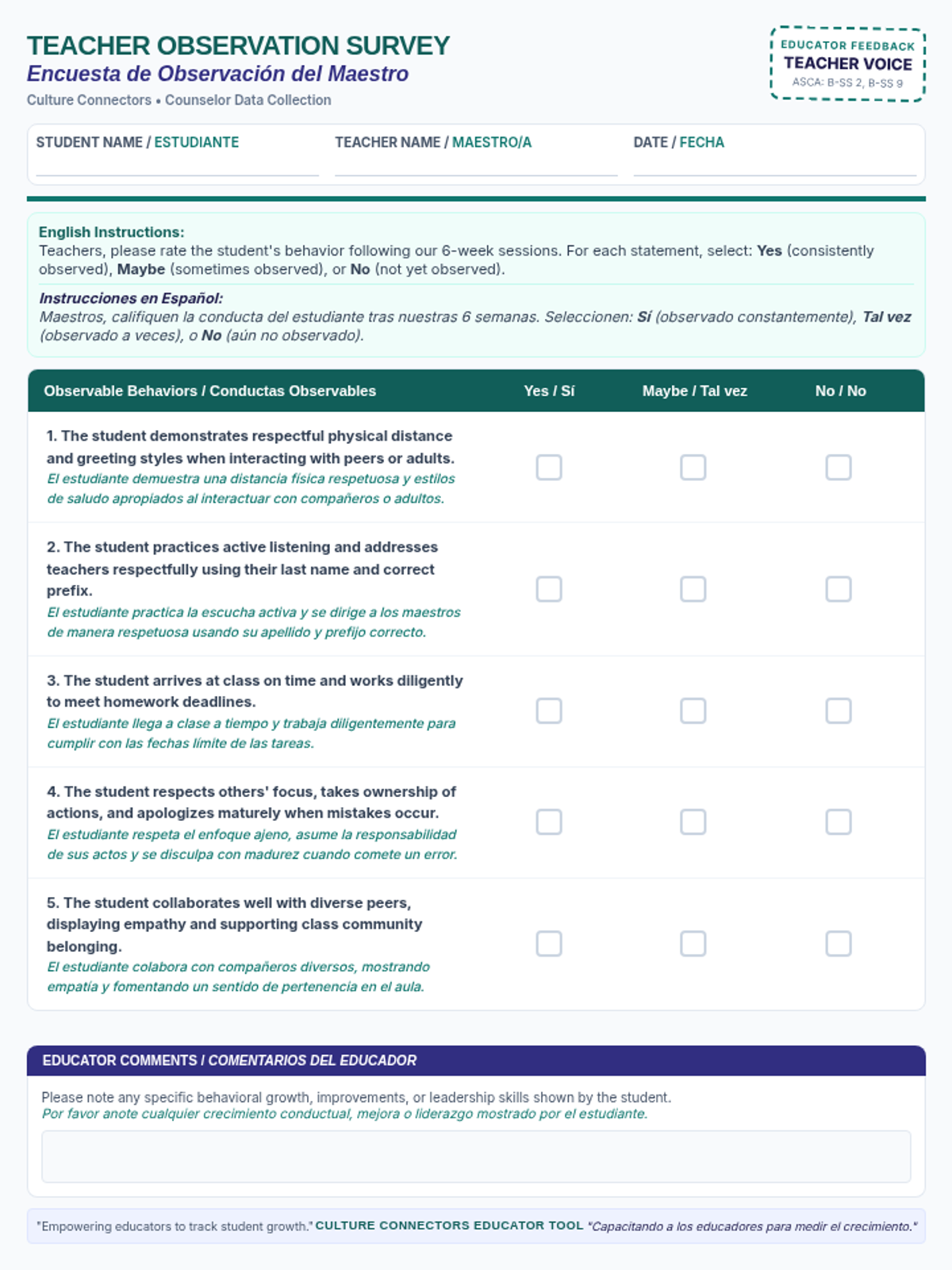
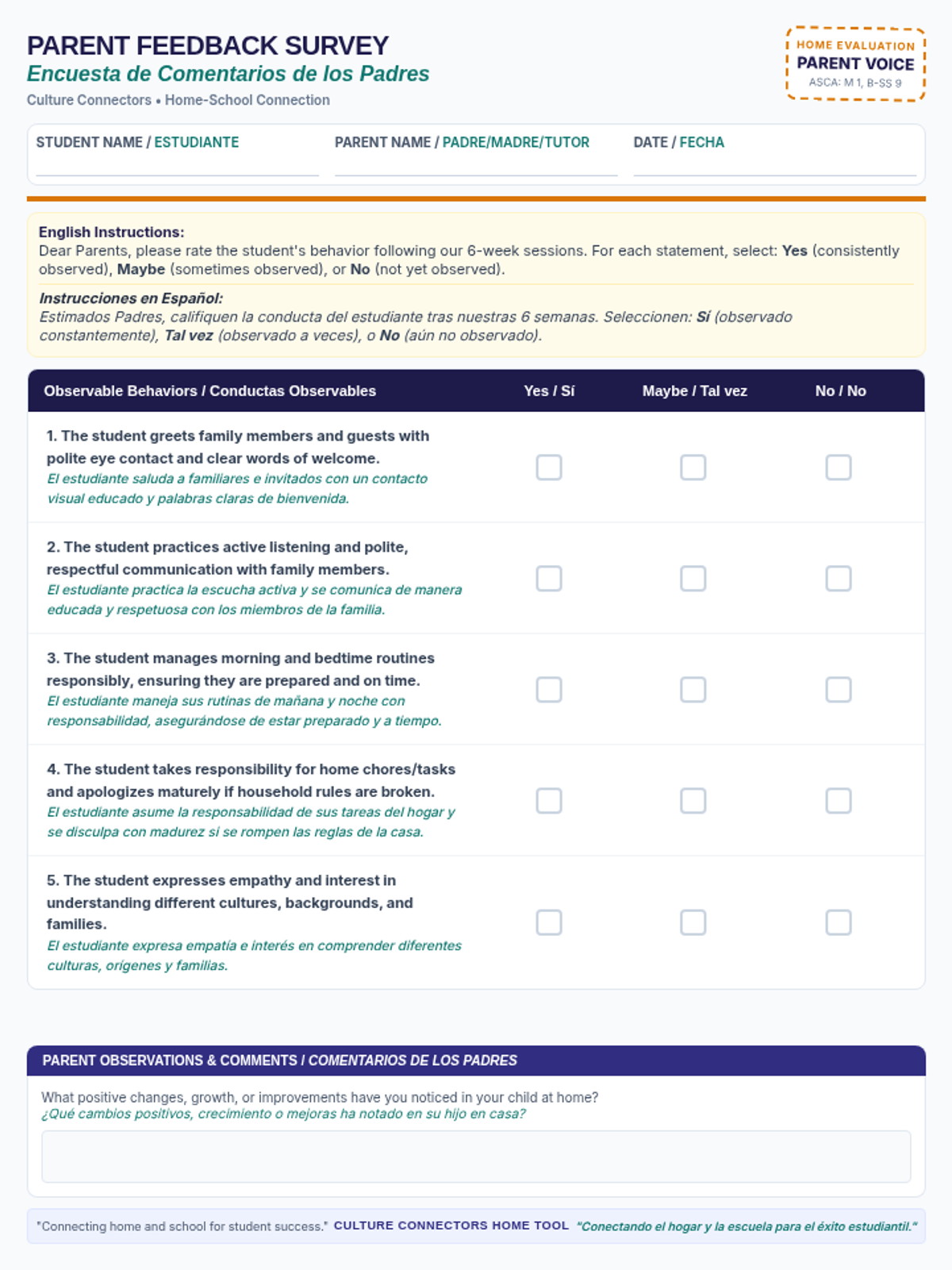
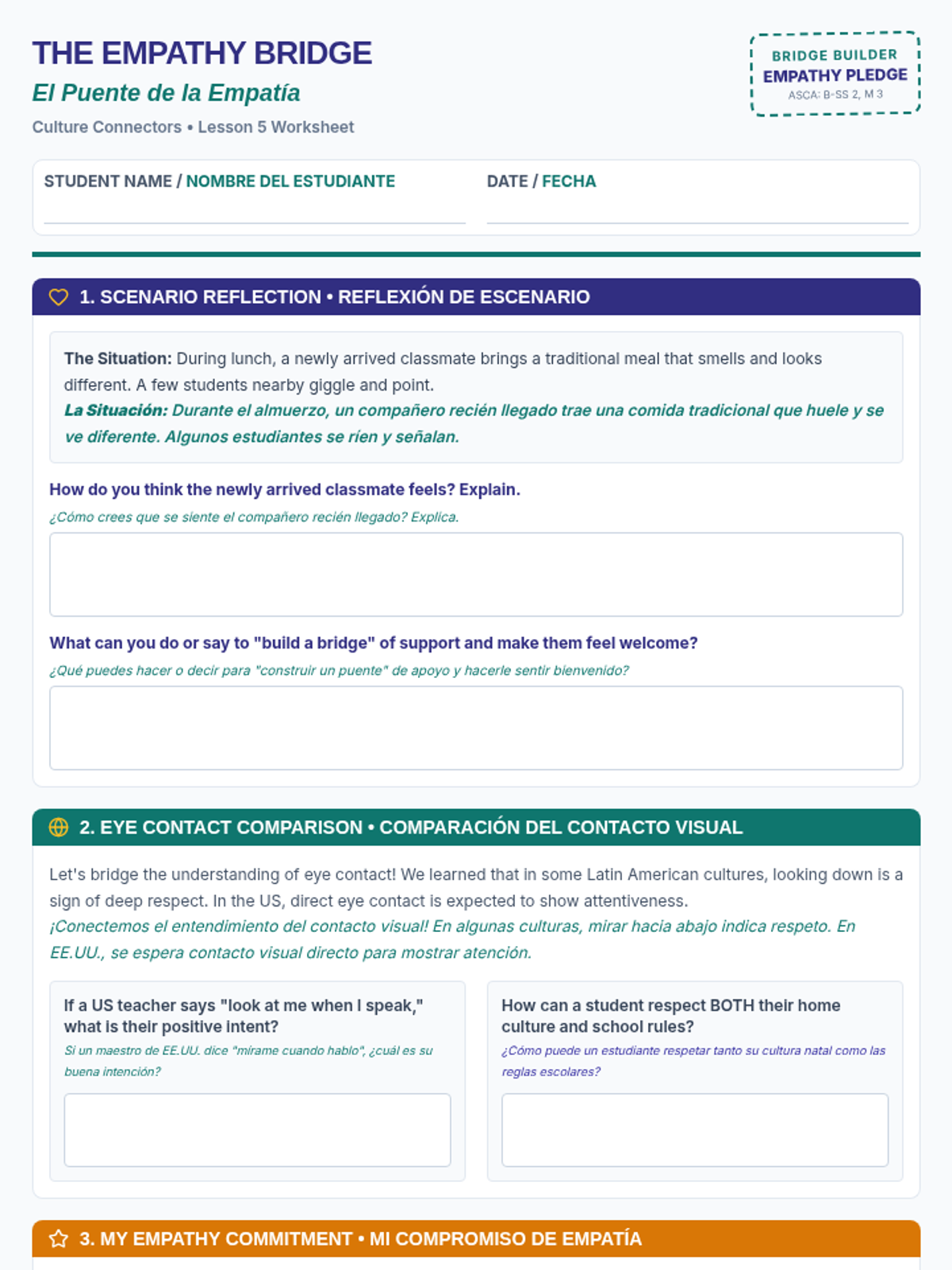
Explores perspective-taking, diversity, understanding cultural differences in expectations, and resolving social conflicts respectfully. Helps students find common ground while celebrating unique cultural identities.
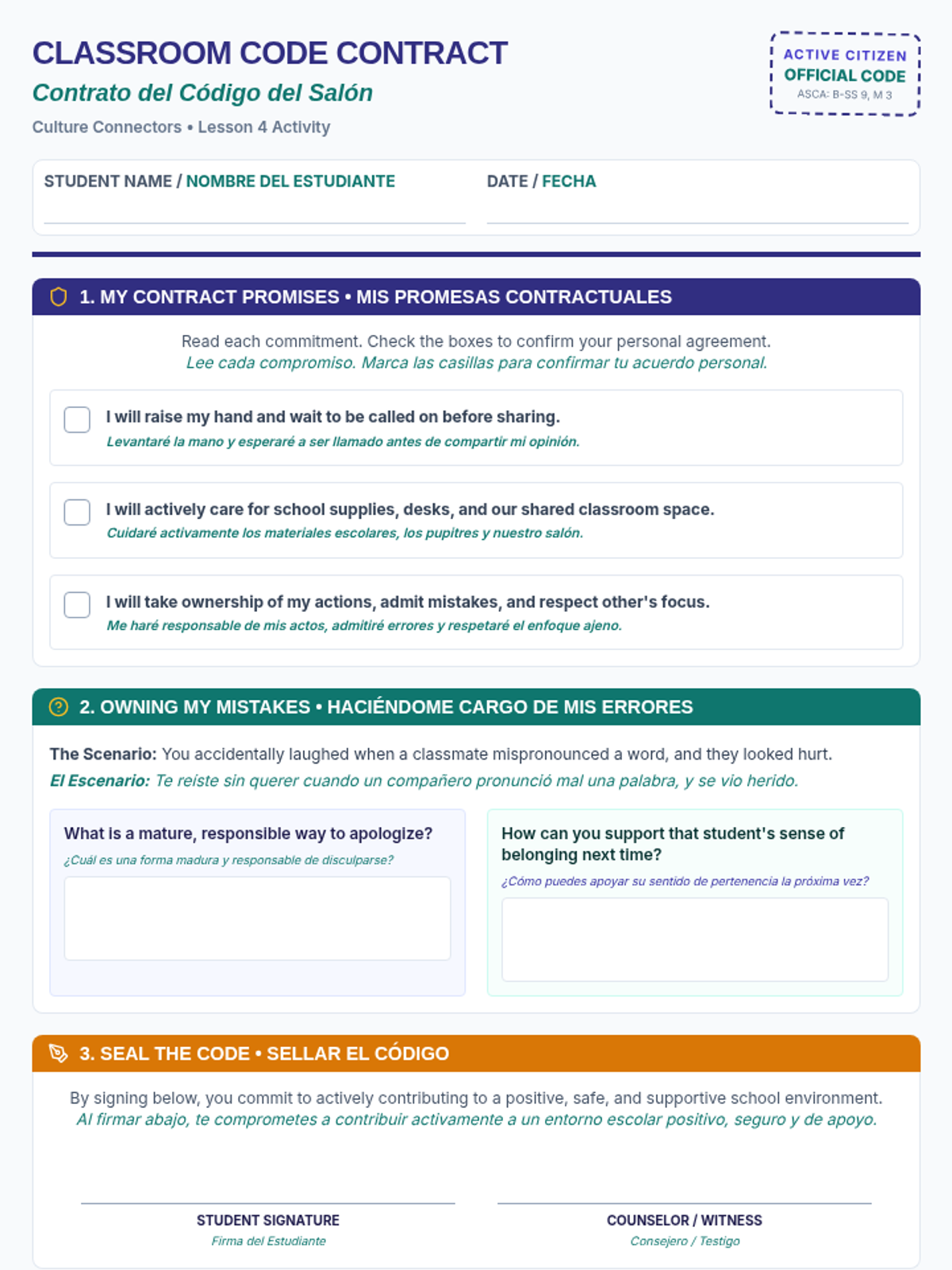
Guides students through classroom behavior expectations, raising hands, active participation, and taking ownership of school behavior to foster a strong sense of school community belonging.
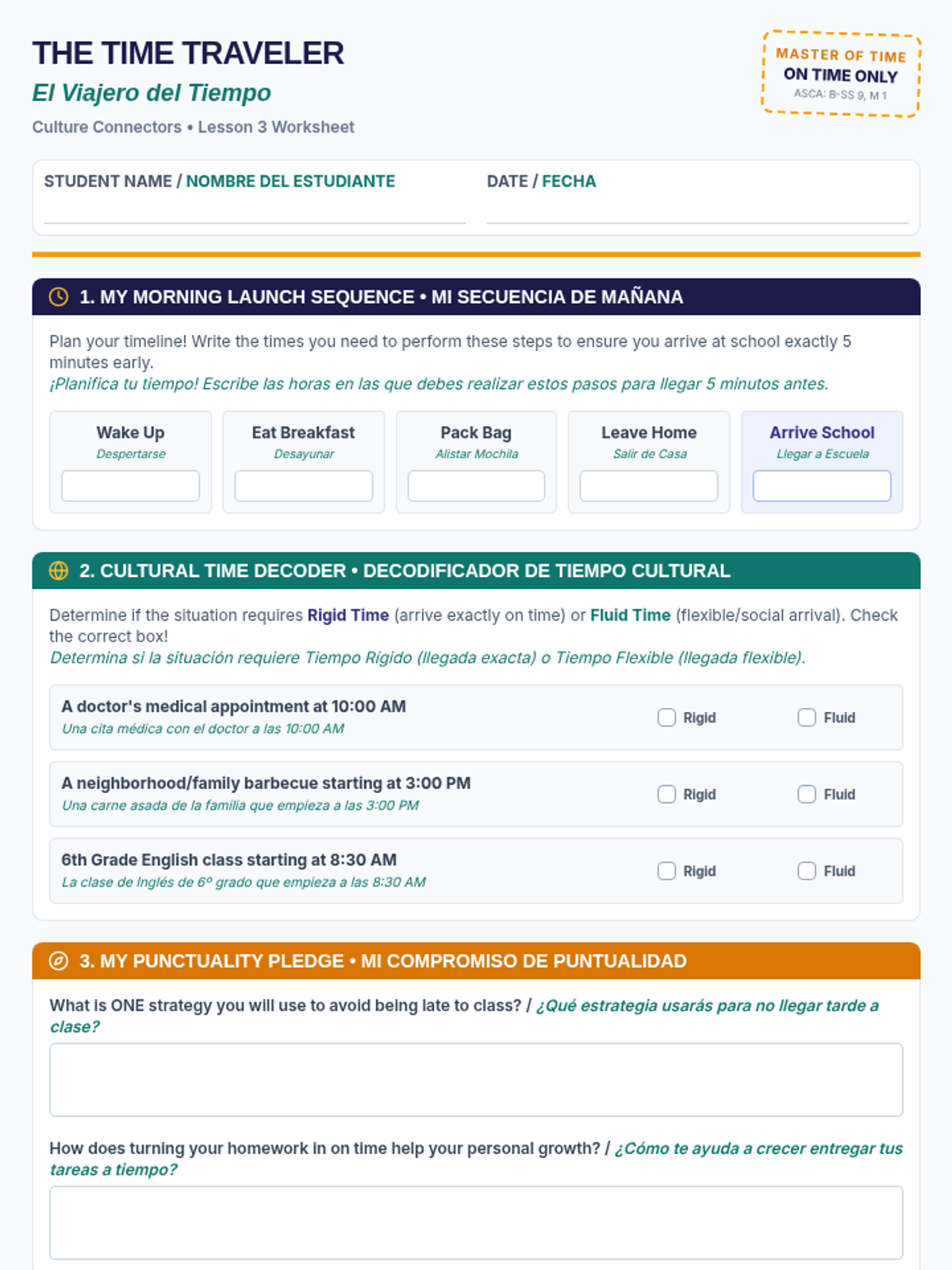
Covers punctuality, deadlines, and time expectations in academic and social settings. Helps students understand the cultural differences in time concepts while developing school success habits.
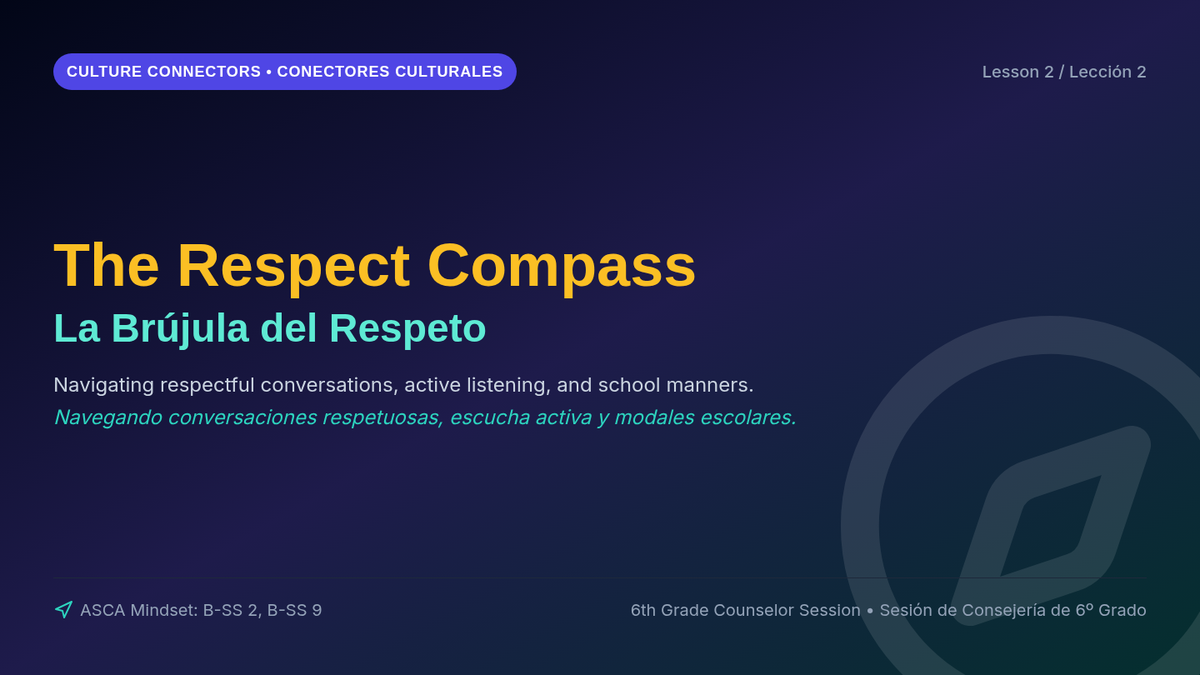
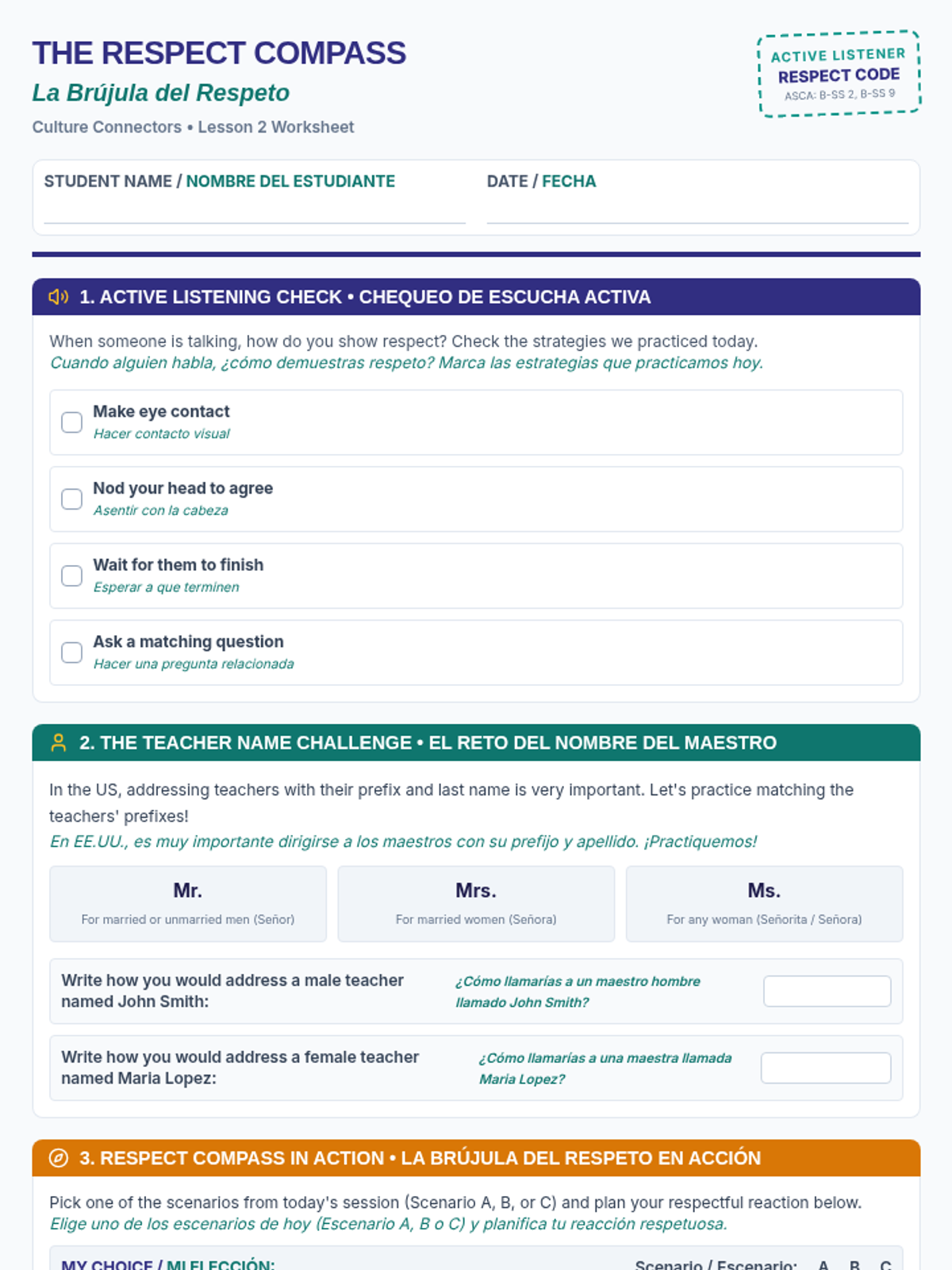
Explores active listening, manners, and showing respect to teachers, peers, and authority figures. Students practice bilingual courtesy terms and cross-cultural respectful communication.
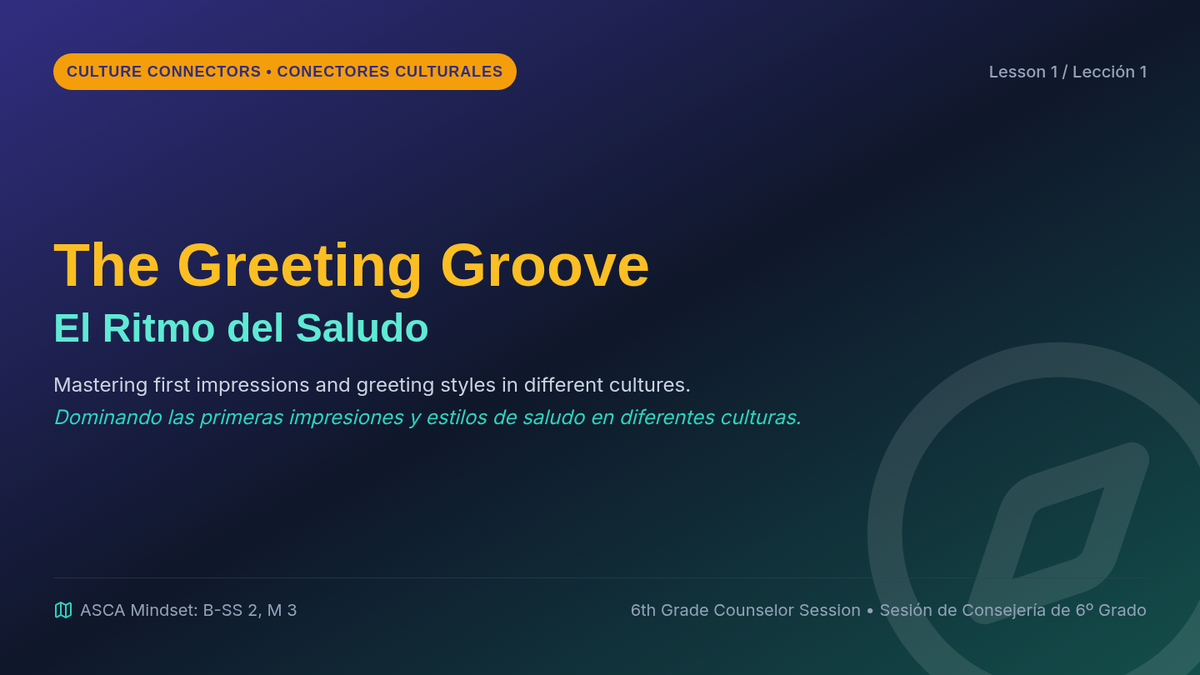
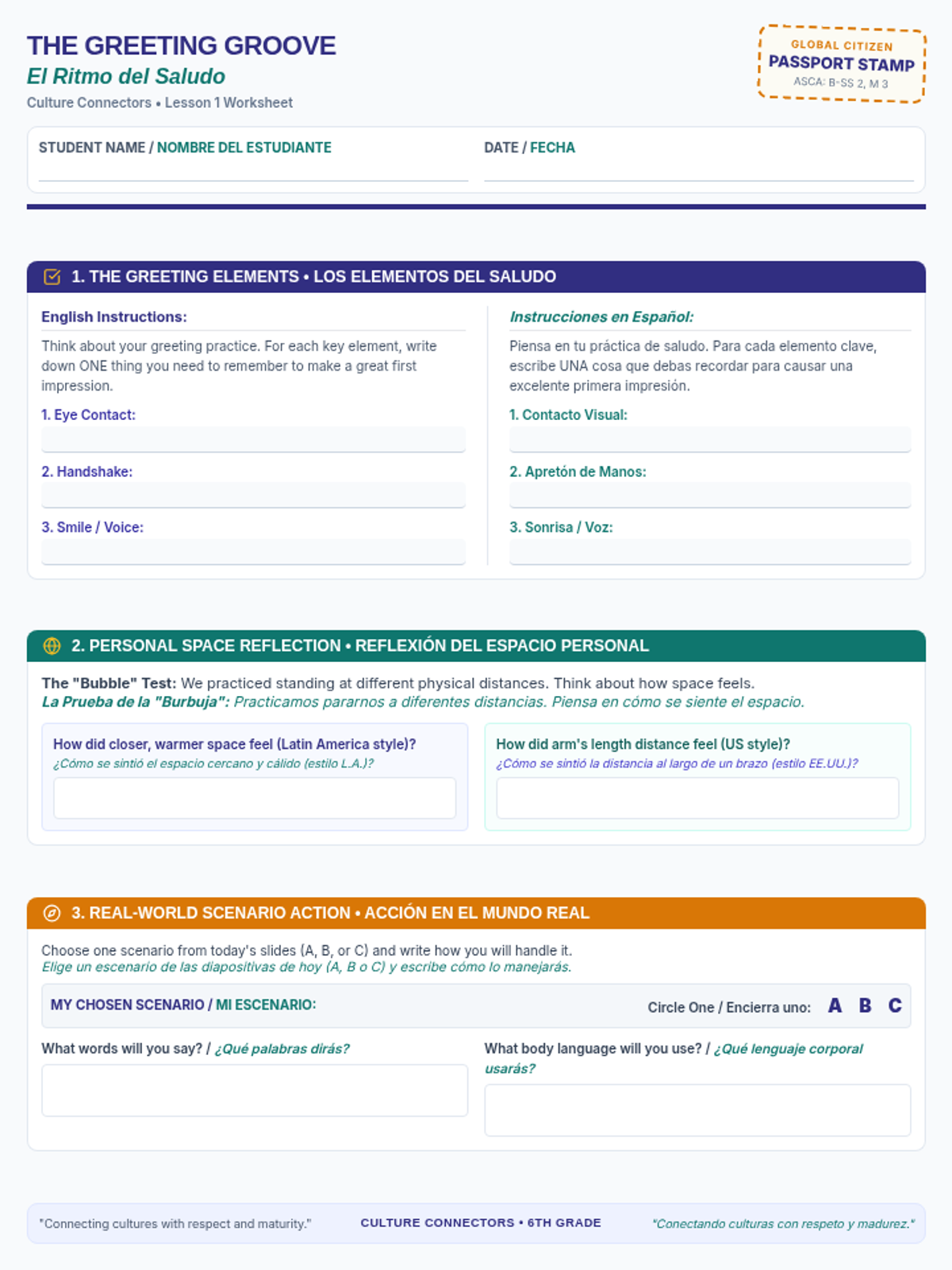
Focuses on greetings, eye contact, handshakes, and physical space in the US vs. Latin America. Students learn the mechanics of a positive first impression in various cultural contexts.
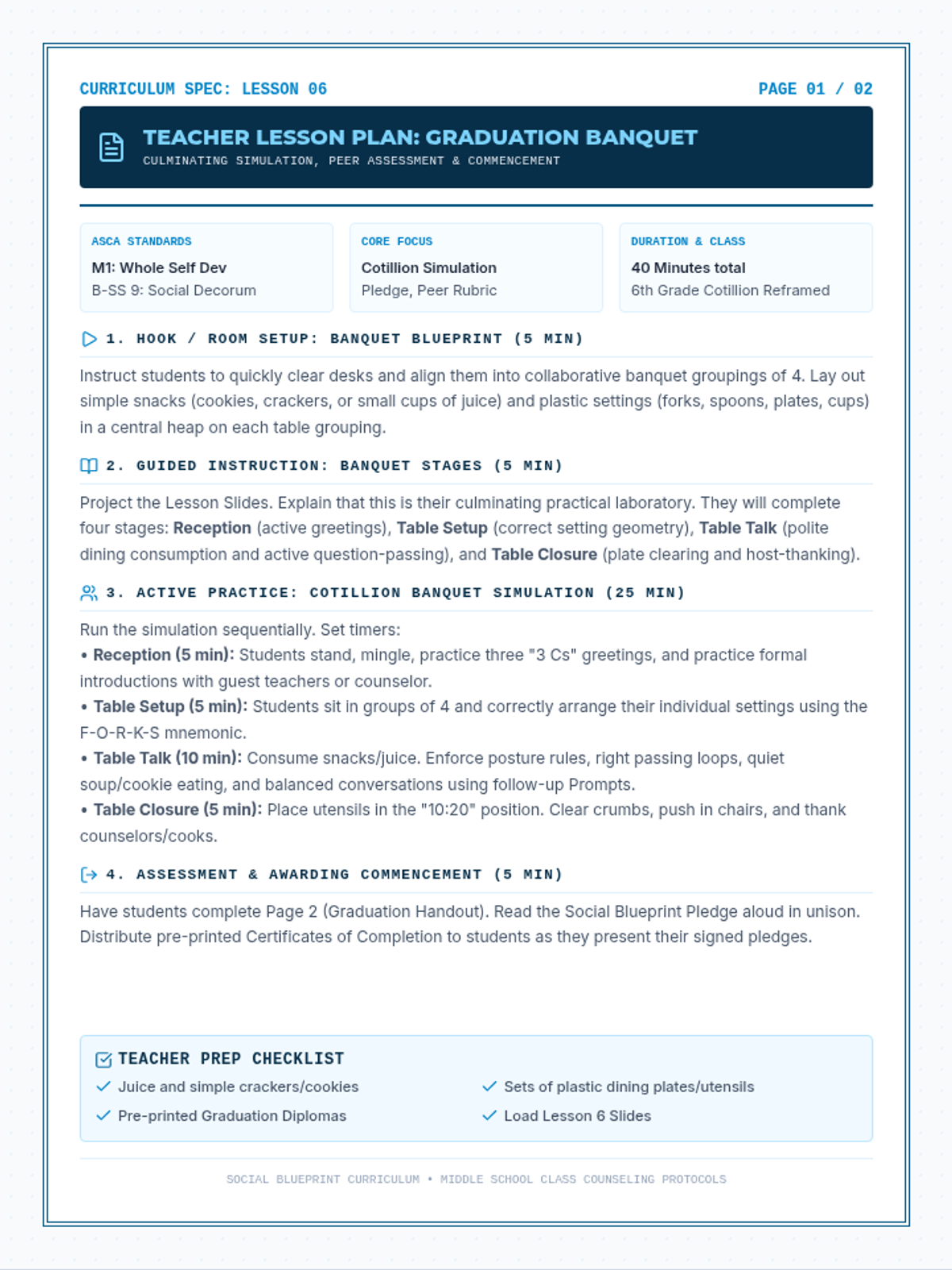
A culminating interactive simulation and graduation ceremony where students showcase all skills learned (dining, introductions, public deportment) and receive certificates of completion.
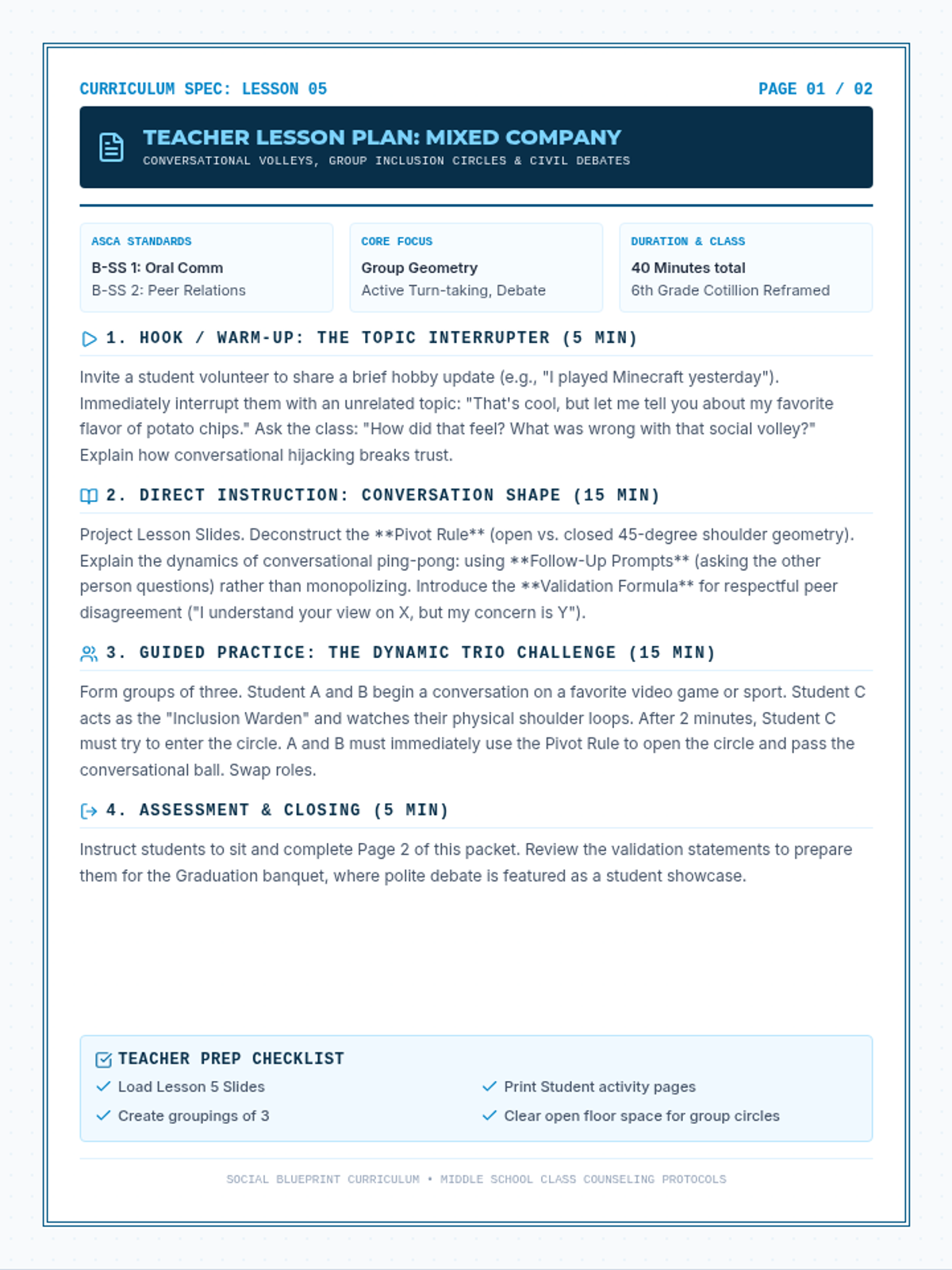
Students explore social dynamics in mixed peer groups, practicing inclusive conversations, group introductions, handling differing opinions, and the art of polite conversational turn-taking.