A concise 5-minute mindfulness practice for 7th-grade students to build self-regulation skills and reduce anxiety through guided breathing and reflection.
A comprehensive lesson on navigating the termination phase of the student-counselor relationship, focusing on celebrating growth, managing emotions, and planning for the future.
A calm, nature-themed 60-minute psychoeducation session for teens focused on the normative and adaptive nature of emotions, featuring interactive slides and discussion prompts.
This lesson helps students with ADHD master self-control using the 'Inner Remote' metaphor. It focuses on filtering thoughts through the THINK acronym and provides practical tools for managing impulses during difficult transitions and social interactions.
A 30-minute small group counseling session focused on exploring self-identity through values, strengths, and future aspirations. Students work in pairs to reflect on their internal "blueprint" and share insights with one another.
A 30-minute small group counseling session designed for two students to explore their core values, strengths, and future aspirations through a structured "blueprint" metaphor.
A high-energy teamwork activity where participants must coordinate movements using strings to control a single marker and trace complex paths.
A lesson exploring the critical differences between professional and social communication, helping students identify when to use each style and how to 'level up' their messaging.
A creative project where students author and illustrate original children's books that teach essential life lessons and core values to younger peers.
A set of tools designed to help middle school students master the executive function skills of organization and task initiation through structured accountability.
A 7th-grade lesson focused on evaluating everyday decisions using a structured 5-step decision-making model. Students will analyze scenarios and apply the model to their own lives.
A goal-setting workshop where students 'reverse engineer' a long-term aspiration into immediate, manageable steps. Focuses on clarity, motivation, and overcoming potential obstacles.
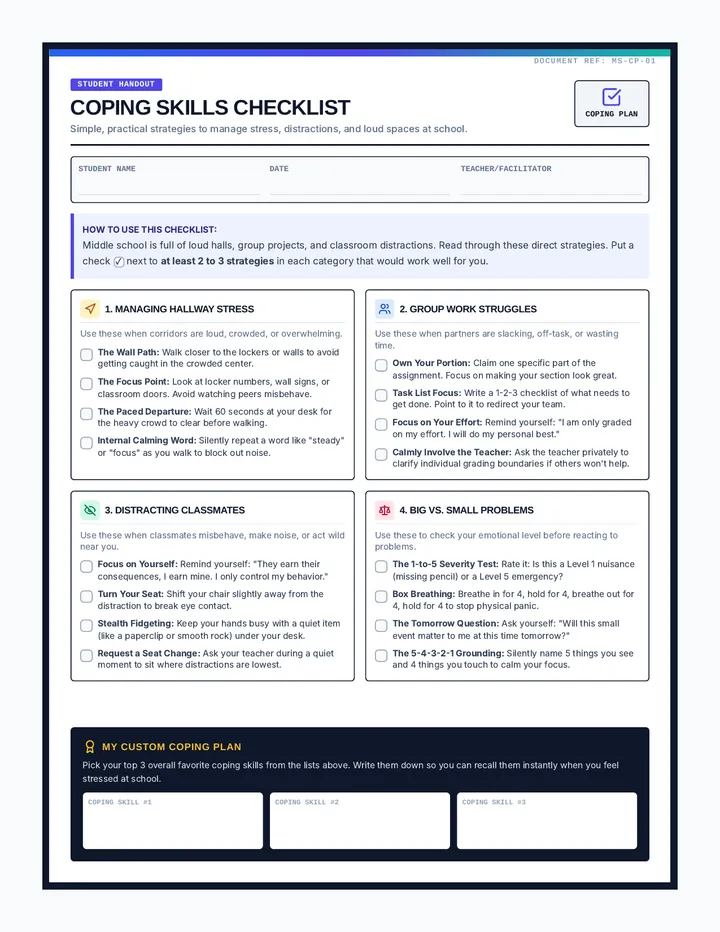
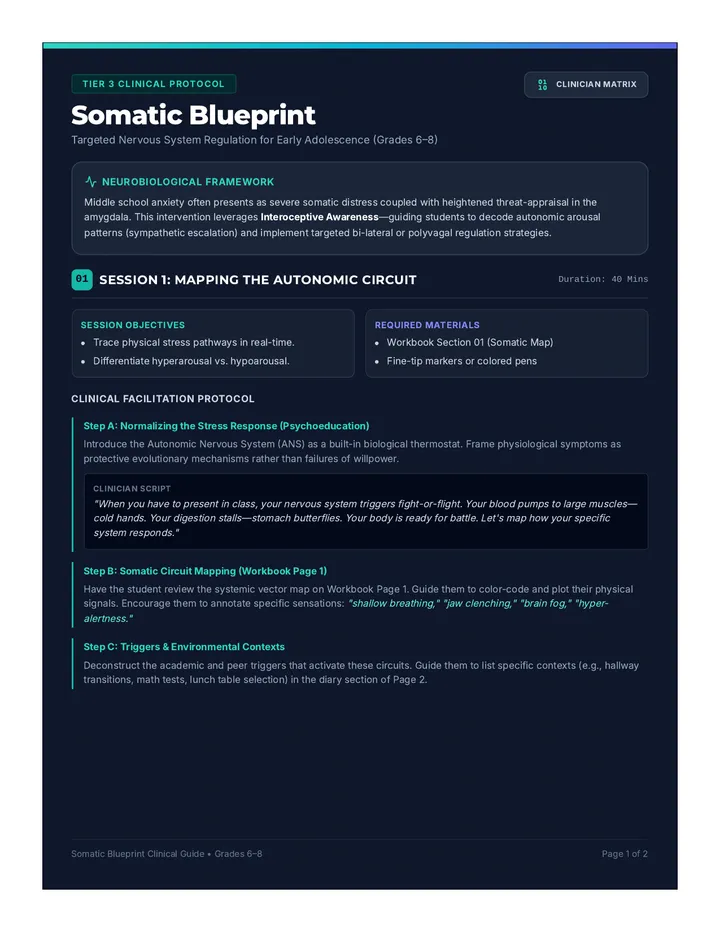
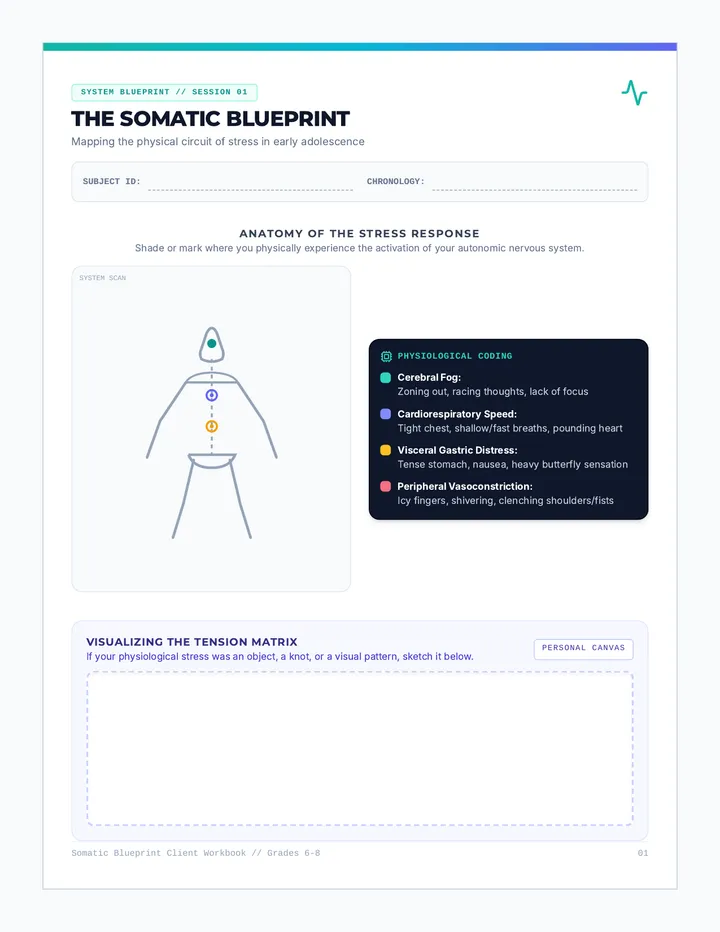
Students identify personal stress triggers and develop a 'relief valve' system of coping strategies. The lesson focuses on recognizing physical signs of stress and planning proactive responses.
Students explore the layers of their identity, distinguishing between how they see themselves and how they are perceived by others. Includes a guided activity to create a multi-layered identity map.
The final summit project where campers create their own 'Vibe Check' Zine—a personalized guide to their own relationship rights and standards.
A deep dive into fairness and power dynamics. Campers learn the difference between 'Leader-Leader' and 'Leader-Follower' dynamics in healthy relationships.
Normalizing rejection as part of the camp experience. Campers build a 'Resilience Toolkit' and learn how to bounce back from social setbacks.
A session focused on the 'Friendship Circle.' Campers use the Time Slice activity to visualize how to keep their 'bunkmate bonds' strong while catching feelings.
Campers learn to identify physical 'vibe checks'—gut feelings that signal safety or discomfort—and practice trusting their compass in social situations.
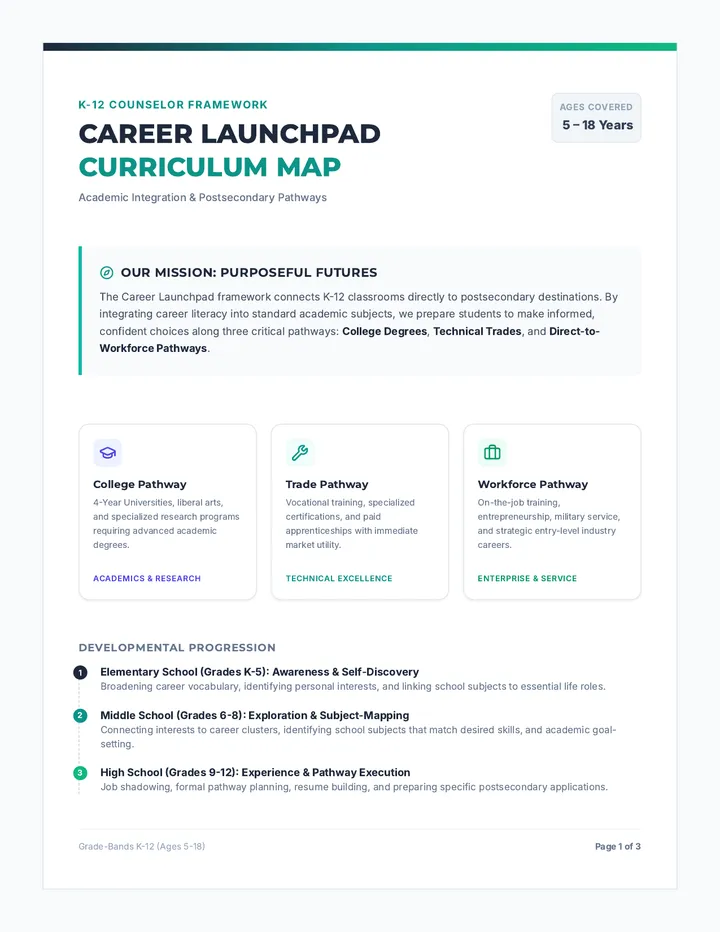
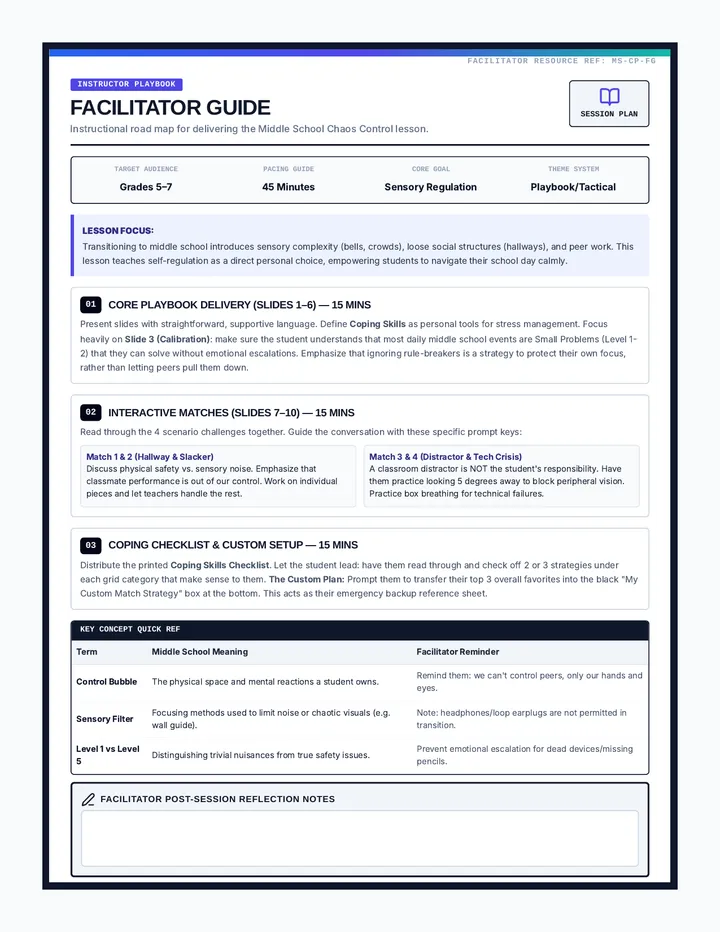
A comprehensive guide and set of tools to help students transition from elementary to middle school, focusing on lockers, schedules, and self-advocacy.
The introductory materials for the Brain Glitch Defense curriculum, including the facilitator guide, roadmap, and core objectives.
The core lesson of the Brain Glitch series, introducing cognitive distortions as 'system glitches' and using a cooperative board game to teach students how to identify and debug them.
A high-speed micro-lesson designed to give students actionable strategies for de-escalating conflicts with peers and teachers in under 10 minutes. Updated with the Peace Protocol framework.
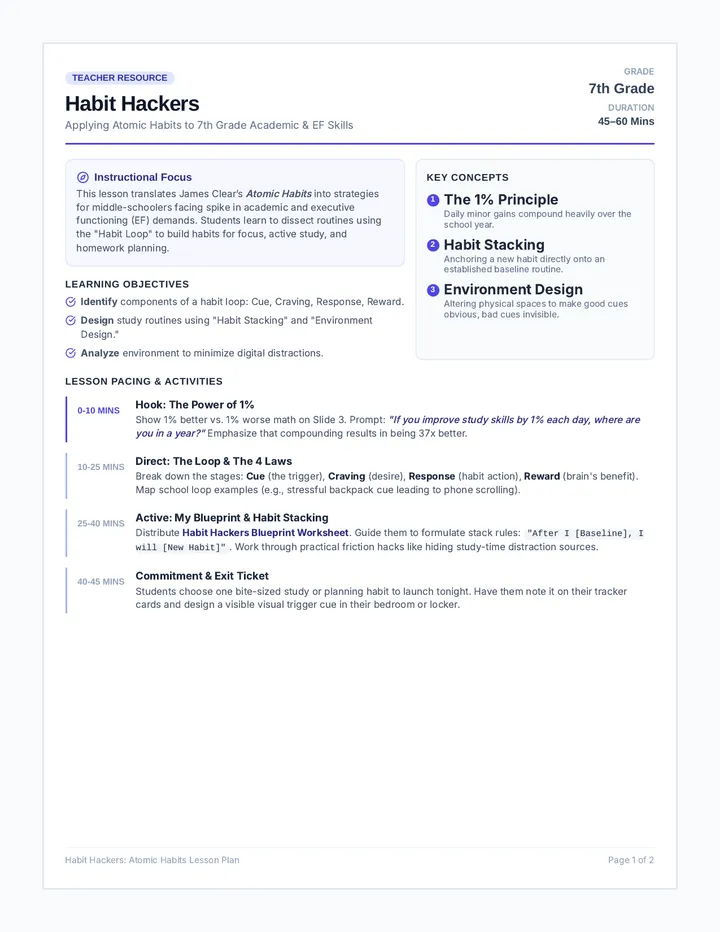
Focuses on building daily routines and taking ownership of school materials and assignments to foster academic independence.
Introduces growth mindset concepts to help students view challenges and mistakes as opportunities for improvement rather than failures.
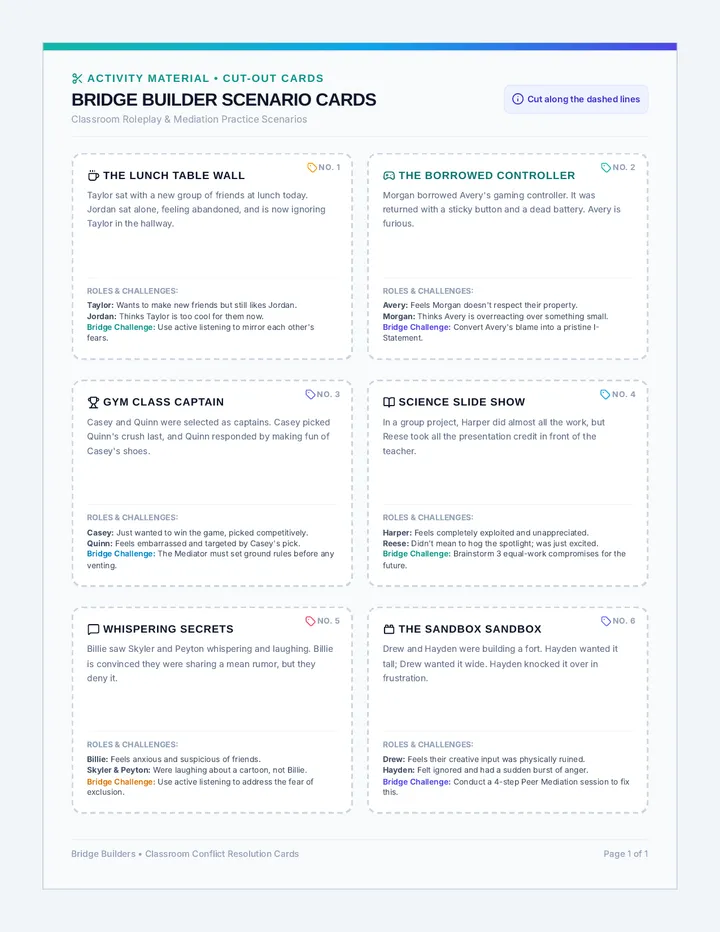
Explores the shifting nature of middle school friendships, setting healthy boundaries, and practicing inclusive social habits.
Empowers students to communicate their needs to teachers and peers using respectful, effective language and scripts.
Teaches students how to break down large projects into manageable steps and accurately estimate task duration to prevent procrastination.
A lesson focused on analyzing the arguments and perspectives within the text 'The Digital Paper Trail', specifically looking at the ethics and legality of using social media in hiring.
A lesson exploring how building strong interpersonal connections with teachers, peers, and school staff can make daily school life smoother, more supportive, and more efficient.
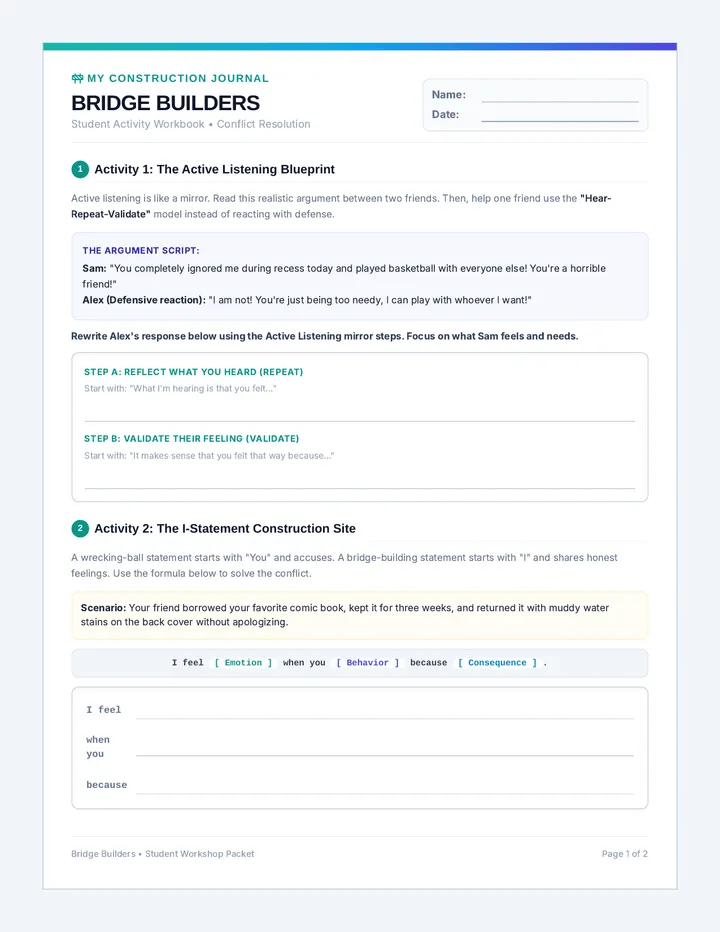
A dynamic lesson where students engage in movement-based 'icebreakers', a collaborative bridge-building craft, and reflective discussions on what makes a team successful.
This lesson helps students identify personal barriers to school attendance, set actionable attendance goals, and reflect on the connection between presence and their future aspirations. It also provides teachers with a supportive framework for family communication regarding attendance.
A high-energy, modern performance-themed 10-minute lesson designed to help middle school students understand that attendance is their "Reliability Capital."
An interactive board game lesson designed for middle schoolers to identify and reframe negative thinking patterns—like catastrophizing and perfectionism—that fuel test anxiety.