Emotion Toolkit Lesson Plan Emotion Toolkit
Teacher Lesson Plan
Tier 2 Group
Duration
30 Minutes
Audience
8th Grade Students
Focus
Self-Regulation & Advocacy
OBJECTIVE
Students will identify personal emotions and physiological signals, practice positive self-talk, and curate healthy coping mechanisms. They will also learn how to effectively advocate for themselves by identifying when and how to ask for help.
PREPARATION
Review slide deck, worksheet, and discussion guide.
Print My Coping Strategy Worksheet for each student.
Ensure technology is ready for slide display.
MATERIALS
• Emotion Check-In Warm-Up
• Emotion Toolkit Slide Deck
• My Coping Strategy Worksheet
• Discussion Guide: Asking for Help
• Emotion Exit Ticket Cool Down
LESSON FLOW
5m
Warm-Up: Emotion Check-In
Students reflect on current feelings using descriptors. Facilitate brief share-outs focusing on the "why" behind their chosen emotion.
3m
Intro: Your Emotion Toolkit
Display first slide. Frame emotional management as a "superpower" and introduce the toolkit concept as a collection of personal strategies.
7m
Identifying Emotions & Signals
Discuss physical signals (sweaty palms, tight muscles) and thoughts. Emphasize early detection as the first step to proactive management.
10m
Coping Strategies & Worksheet
Introduce key strategies (breathing, self-talk, breaks). Students brainstorm and write personal strategies on their worksheet.
3m
The Power of Asking for Help
Self-advocacy discussion. Focus on the "When," "Who," and "How" (using I-statements). Connect help-seeking to balancing demands.
2m
Cool Down: Exit Ticket
Students commit to one new strategy they learned. Collect tickets for reflection and assessment of the session.
"Developing emotional regulation is the key to unlocking academic and social success for middle schoolers."
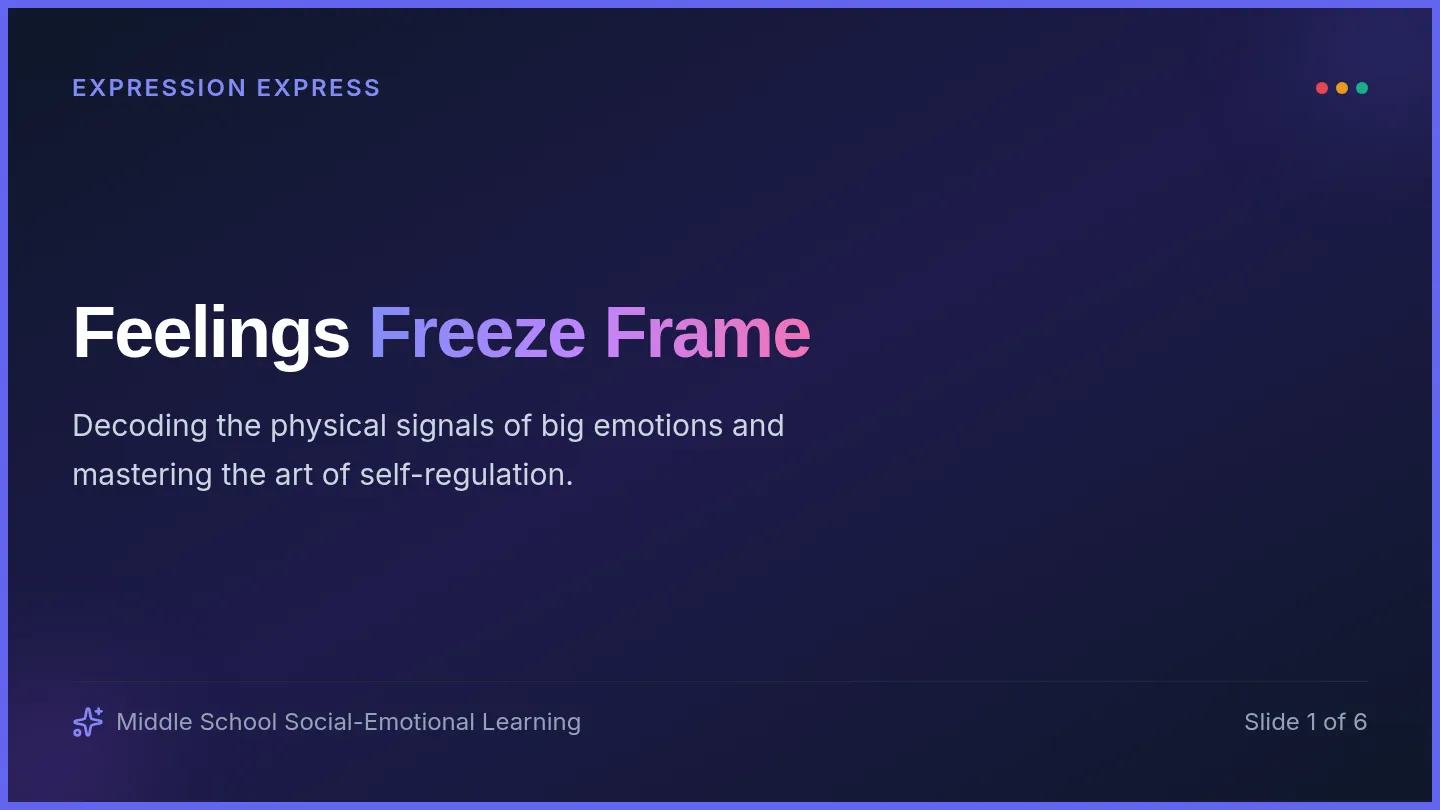
Emotion Toolkit Slide Deck Emotion Toolkit
UNLOCK YOUR
Superpowers
Manage Your Moods & Take Control
Your Emotion Toolkit
1
Everyone experiences a full range of emotions .
2
Emotions aren't "good" or "bad"—they're data .
3
A Toolkit helps you manage the big ones.
What's in your toolkit right now?
Spotting Your Emotions
Happy
Sad
Angry
Anxious
Frustrated
Calm
Excited
???
Which one do you feel most often at school?
Listen to Your Body
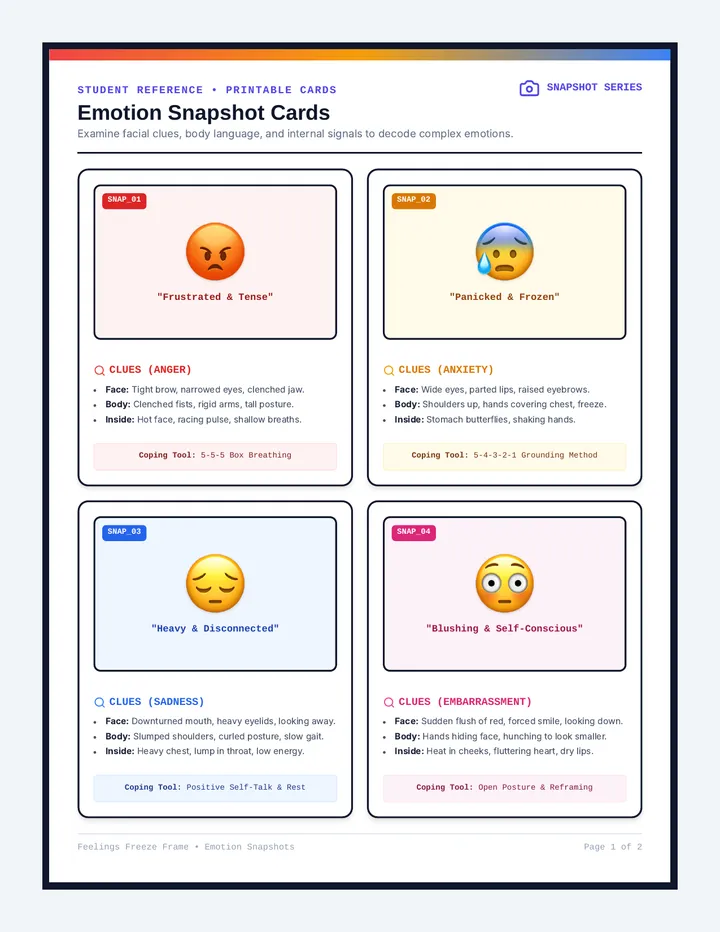
ANGRY?
Tight muscles, fast heartbeat, feeling hot.
SAD?
Heavy chest, lump in throat, low energy.
ANXIOUS?
Butterflies, shaky hands, shallow breathing.
HAPPY?
Feeling light, relaxed face, lots of energy.
Coping Strategies
Positive Self-Talk
Deep Breathing
Take a Break
Listen to Music
Talk to Someone
Journal or Draw
Your Turn!
Open your My Coping Strategy Worksheet and start building your custom toolkit!
Think about school AND home!
Asking is a Superpower
When?
When you feel overwhelmed or "stuck" in a big feeling.
Who?
Teachers, counselors, parents, or trusted friends.
How?
"I'm feeling ______ because ______, can you help me?"
One New Superpower
"What is one strategy you plan to try this week?"
Write it on your Exit Ticket!
Emotion Check-In Warm Up Emotion Check-In
Mental Health Toolkit
Name
Date
1 How are you feeling right now?
Circle the word that best describes your current mood, or write your own in the box.
Happy
Calm
Excited
Focused
Tired
Anxious
Frustrated
Stressed
Annoyed
Something else?
2 Why do you feel this way?
Think about your day so far—school, friends, home, or anything else on your mind.
My Coping Strategy Worksheet My Emotion Toolkit
Coping Strategies for Success
Name
Date
1
What Are You Feeling?
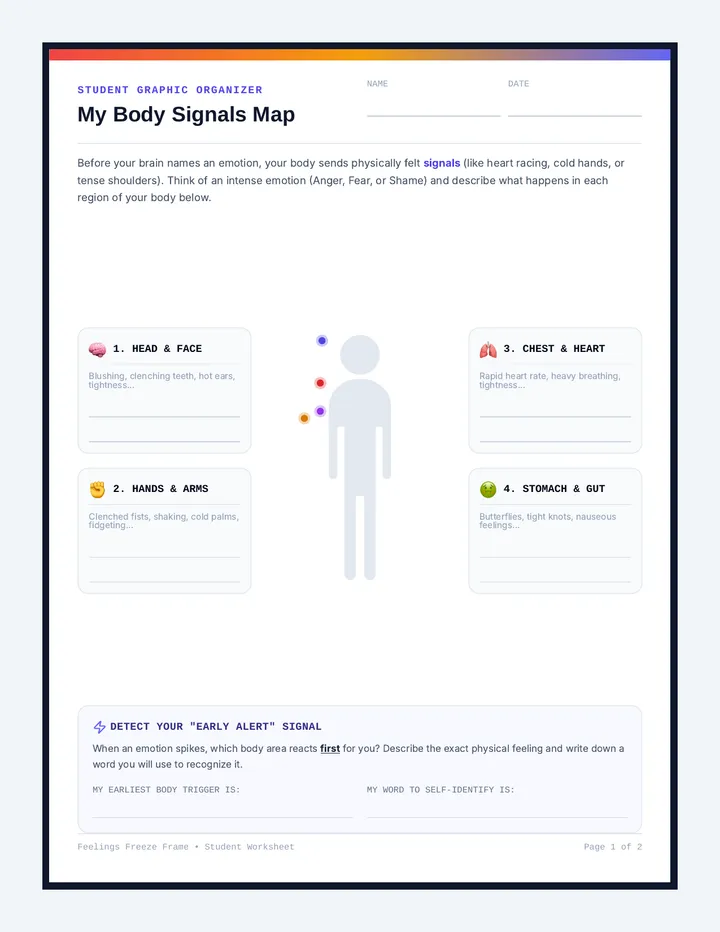
Think about a recent time you felt a strong emotion (stress, frustration, or anxiety). Identify the emotion and how your body felt.
1. The emotion I felt was:
2. How did your body signal this emotion? (e.g., tight shoulders, fast heartbeat, butterflies)
2
Filling Your Toolkit
Circle the ones you already use or want to try. Then, add three of your own ideas.
Positive Self-Talk
Deep Breathing
Taking a Break
Listening to Music
Talking to Someone
Moving My Body
My Personal Strategies (Add Your Own!):
A.
B.
C.
3
Positive Self-Talk
Write two phrases you can say to yourself when things get tough. (e.g., "I've handled this before," or "Just one step at a time.")
1. __________________________________________________________________________
2. __________________________________________________________________________
Discussion Guide Asking for Help The Power of Asking
Discussion Facilitation Guide
Safe Space
Normalize the need for help. Everyone struggles; asking for support is a high-level skill, not a weakness.
Active Practice
Encourage students to voice actual phrases. Hearing themselves say "I need help" reduces the barrier.
01
When do you know you need help?
Goal: Help students recognize early emotional or situational "overload" signals.
Prompts
• What feelings tell you it's time to reach out?
• Is there a difference between "stuck" and "learning"?
02
Who are your trusted allies?
Goal: Map out a social support system.
Prompts
• Who can you talk to at school? At home?
• Why is it helpful to have more than one person?
03
How do you ask effectively?
Goal: Provide a linguistic "formula" for self-advocacy.
The Formula
"I feel ______ because ______, and I need help with ______."
Practice this together. What if the first person says no? (Have a backup plan).
04
Why is asking a sign of strength?
Goal: Reframe help-seeking as an advanced management strategy.
• How does it help you manage your stress?
• How does it help you achieve your goals?
Proactive self-advocacy (asking before things get overwhelming) is the ultimate goal. Reinforce that even adults need to use this toolkit daily.
Emotion Exit Ticket Cool Down Exit Ticket
Claim Your Superpower
Hero Name
Date
One new strategy I learned or plan to try is:
Write your strategy here...
I will try to use this strategy when I feel:
Stressed
Anxious
Frustrated
Other...
Go forth and regulate!