A workshop for graduating seniors and undergraduates to navigate the psychological transition into adulthood through identity mapping and values clarification.
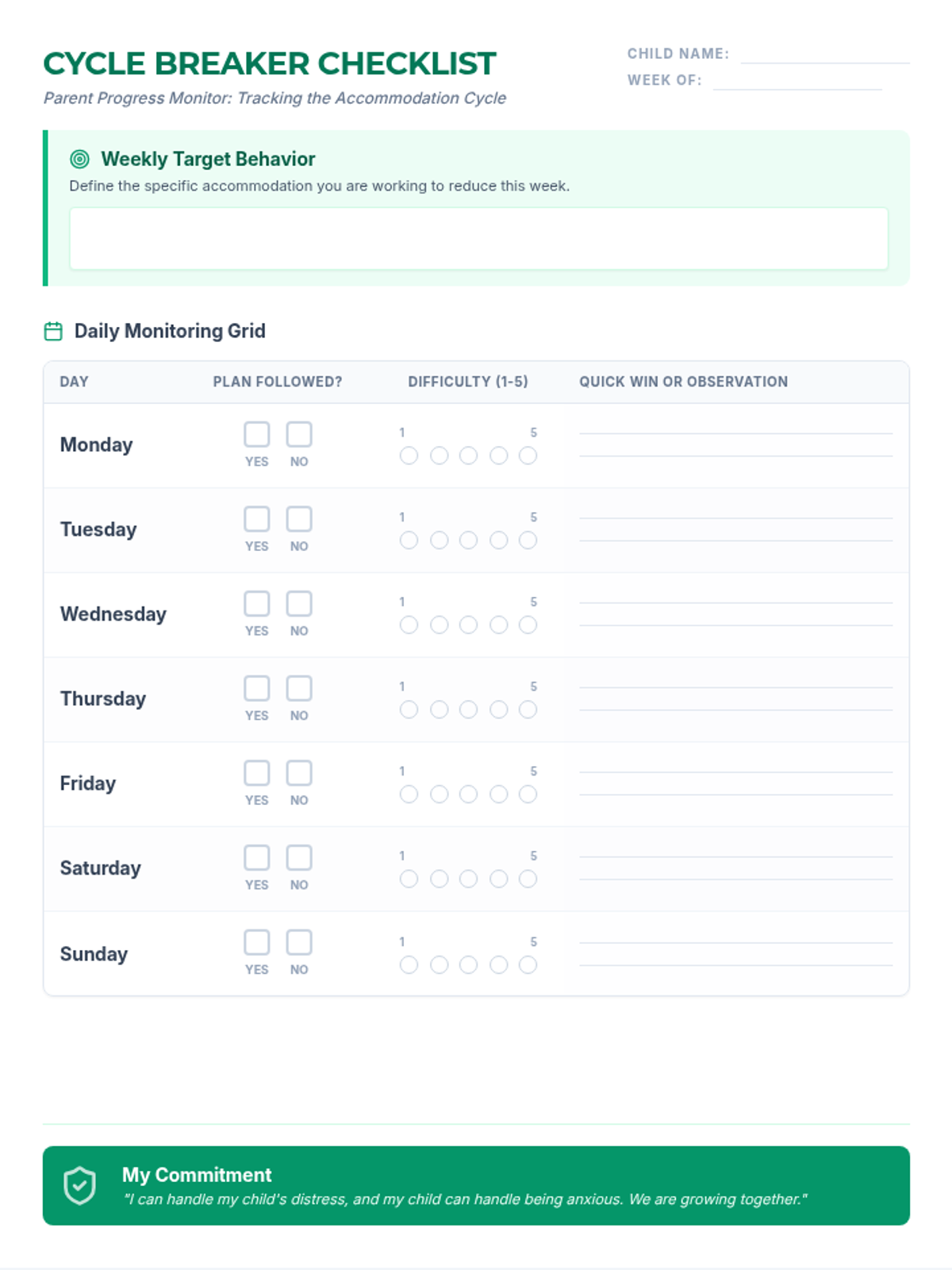
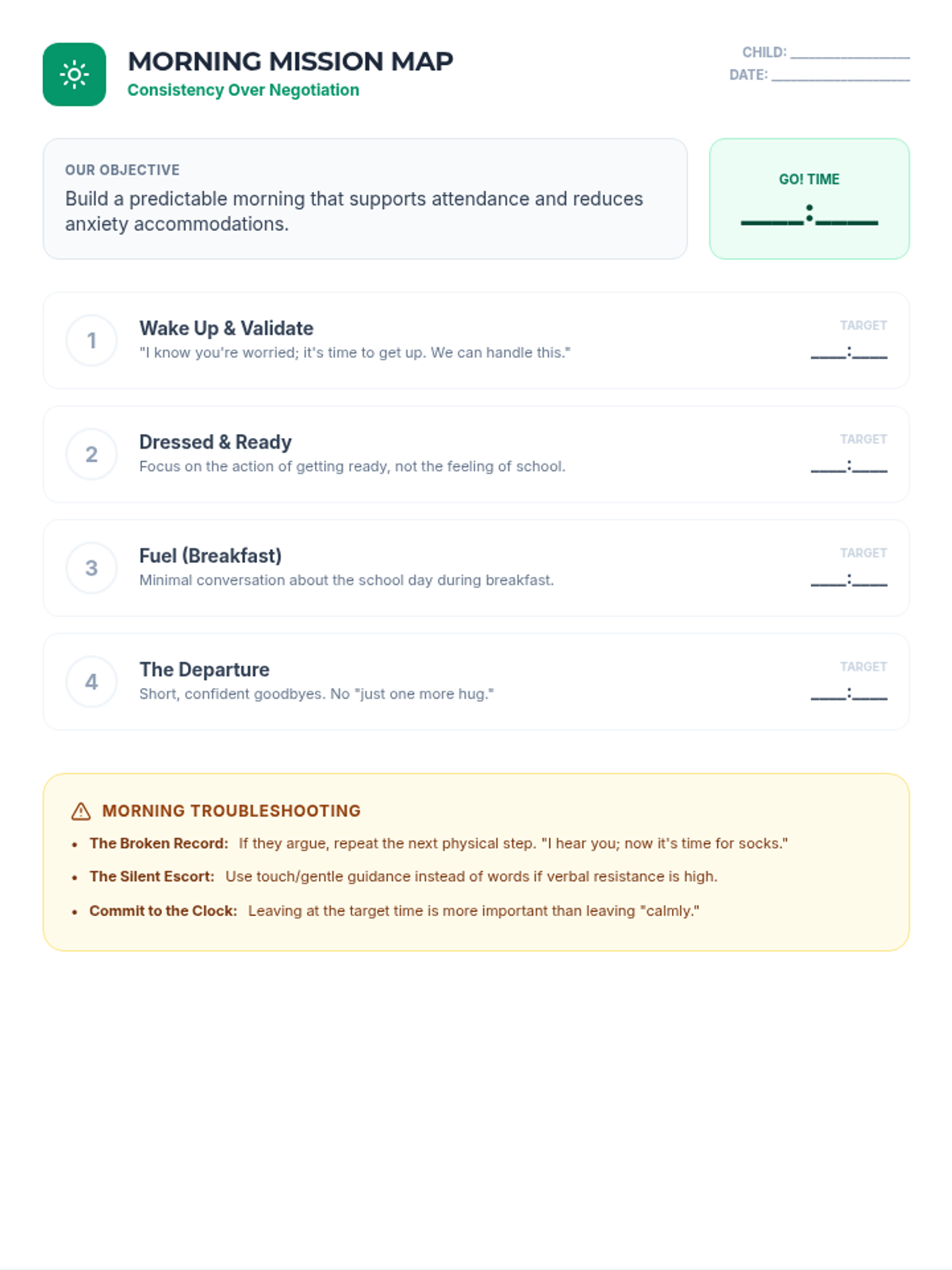
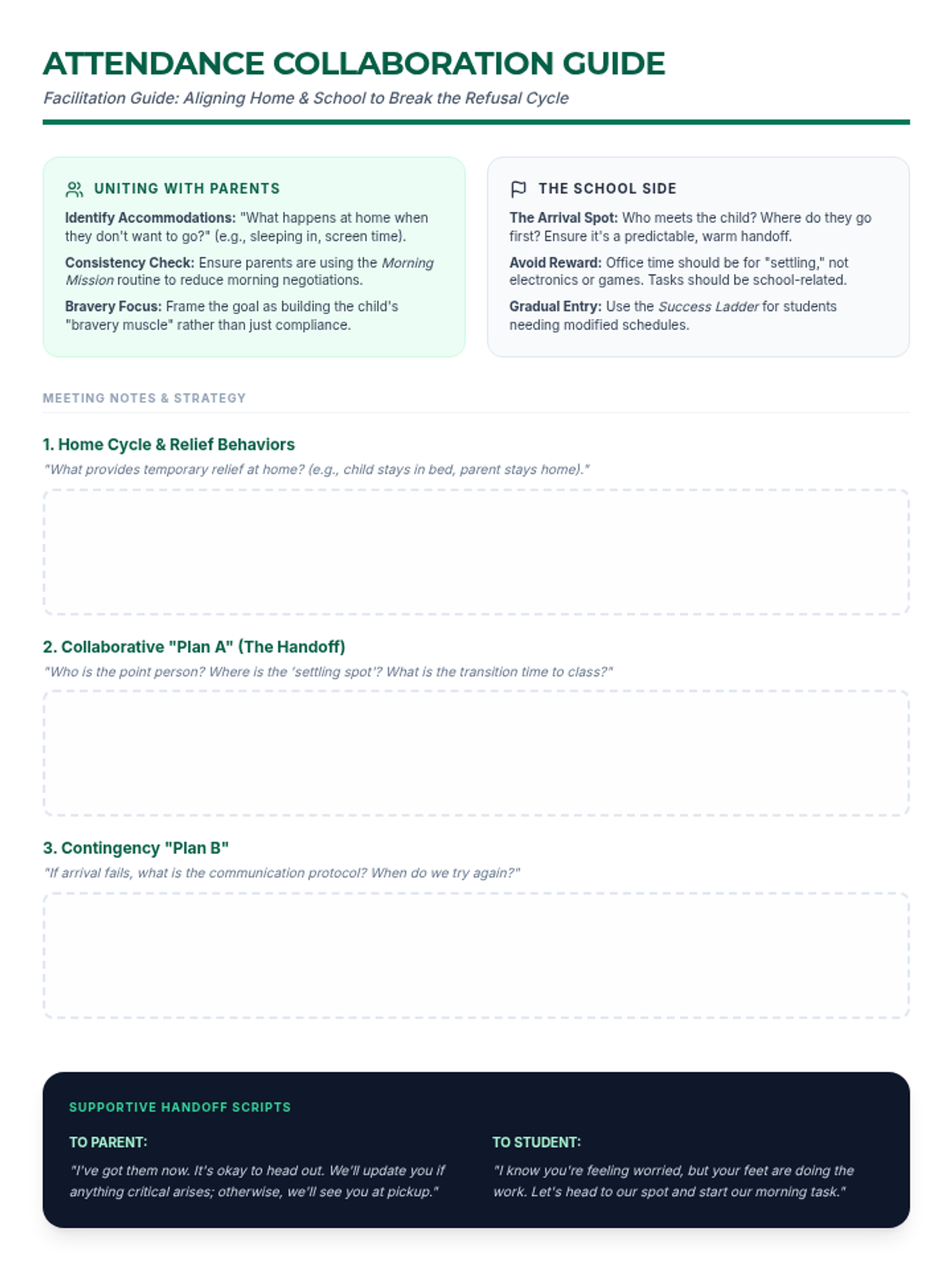
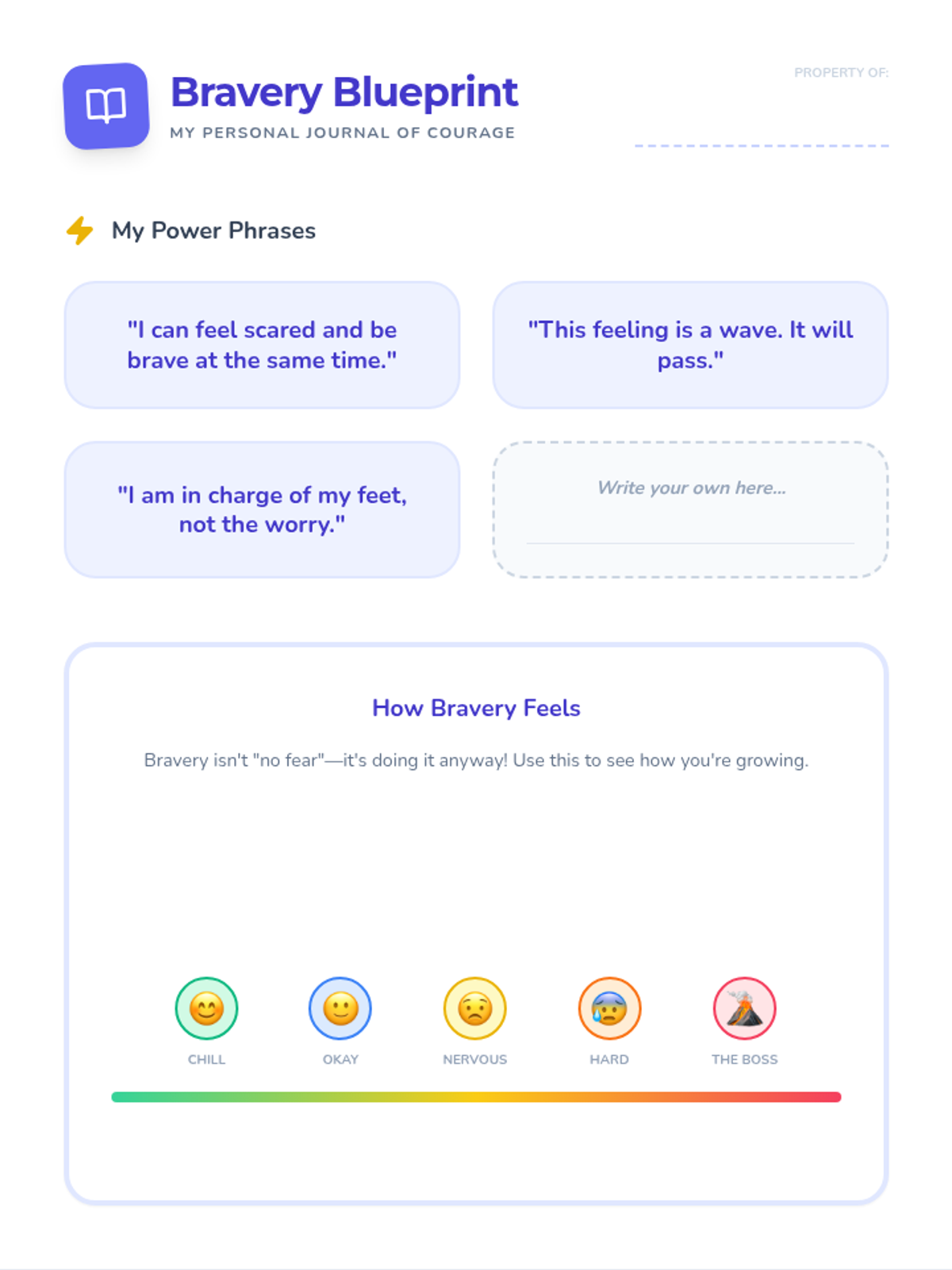
A collection of resources designed to help parents and educators identify, monitor, and systematically reduce anxiety accommodations, with a specific focus on overcoming school refusal and fostering child independence.
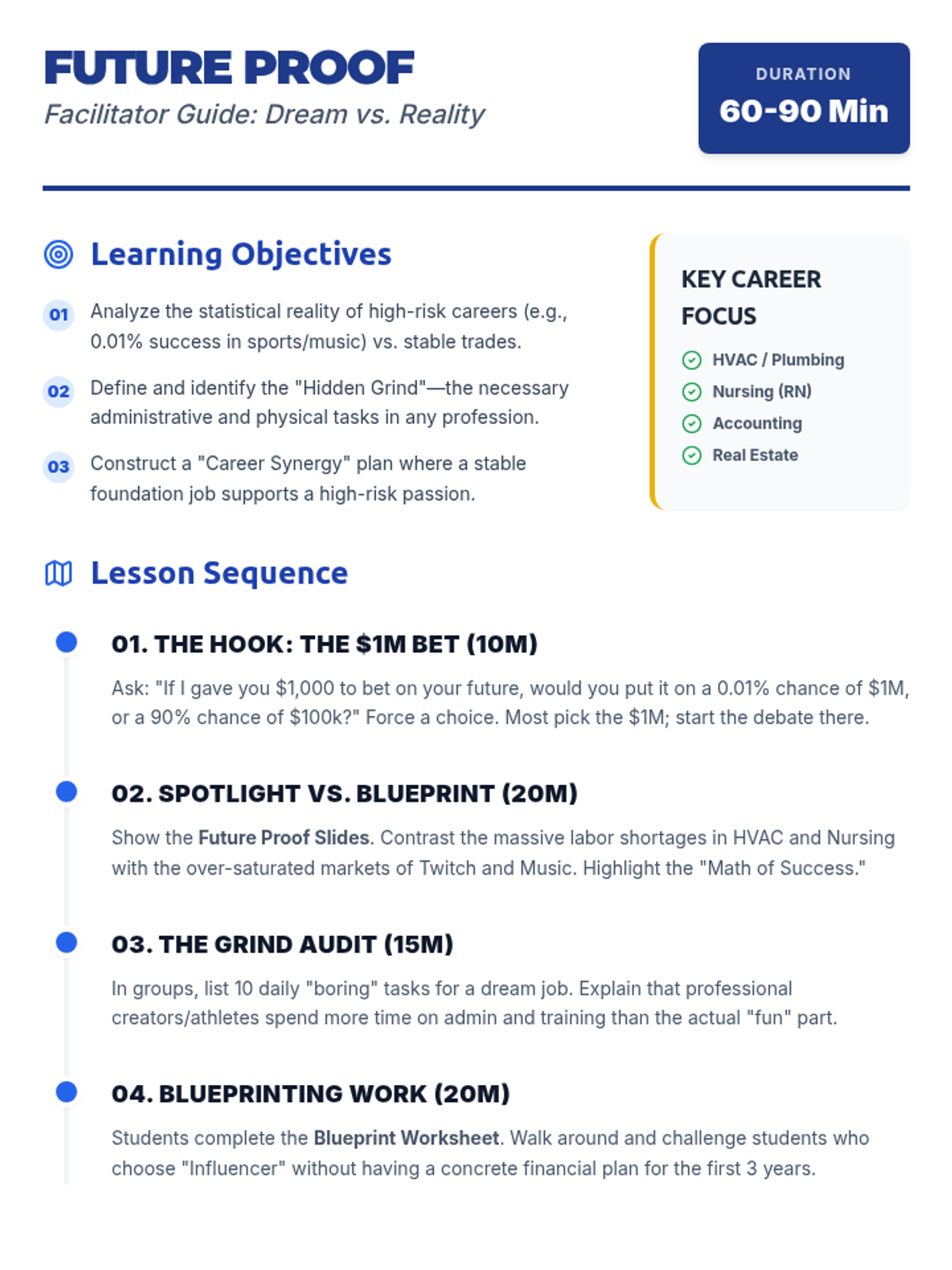
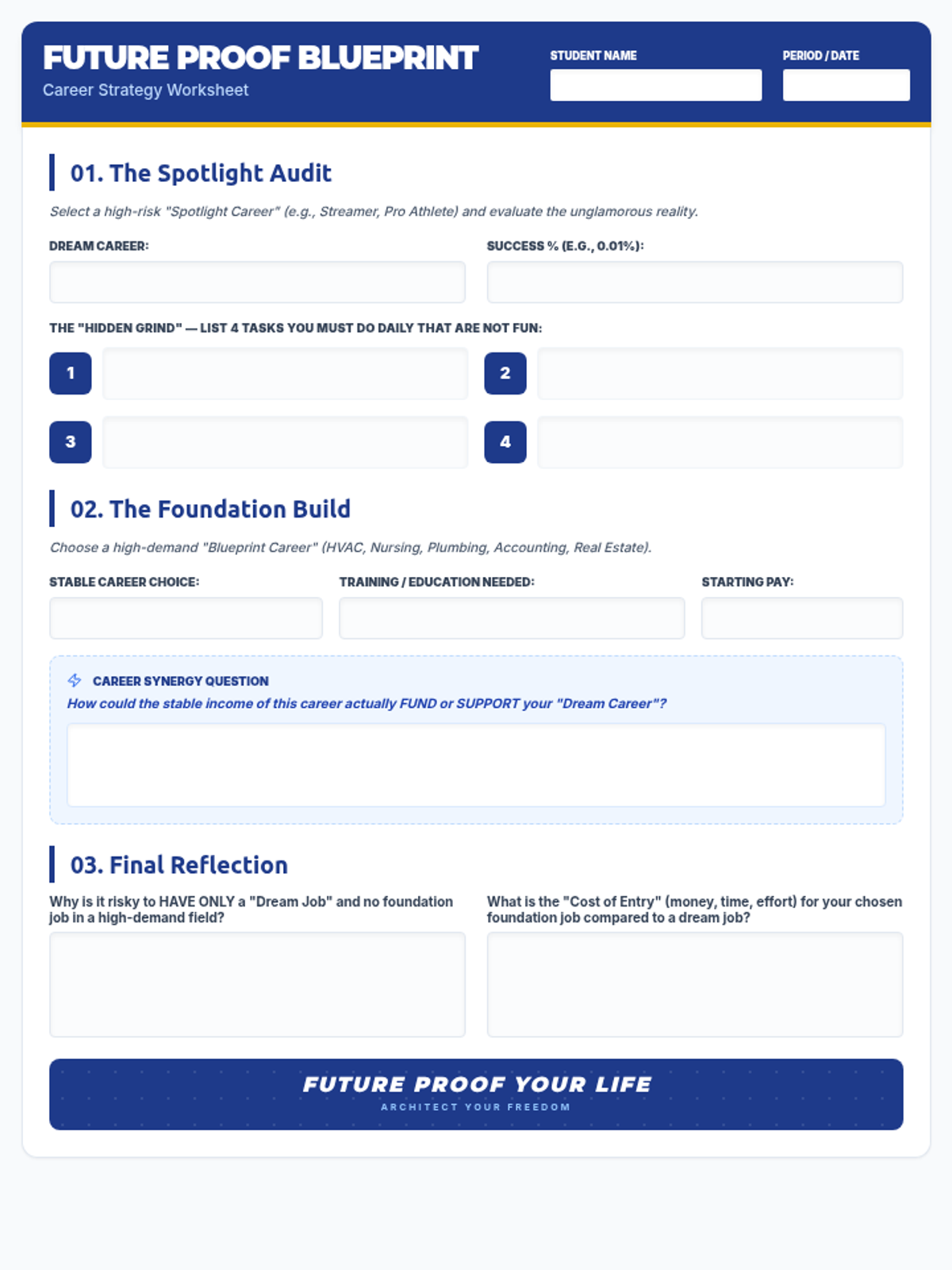
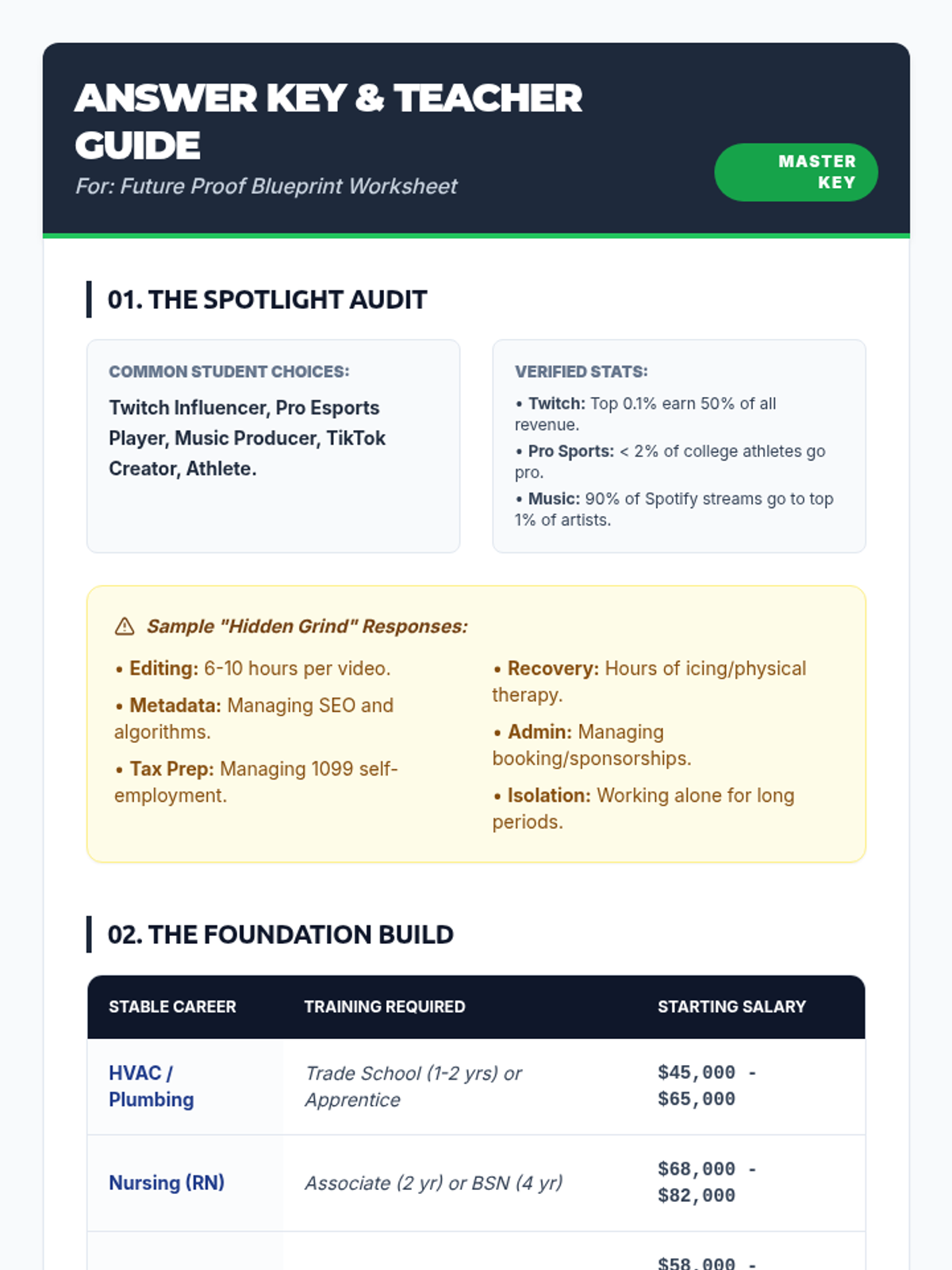
A high-impact lesson challenging students to analyze the statistical realities of 'dream' careers like streaming and sports versus the stability and demand of essential trades and professional services. Students will evaluate risks, entry barriers, and financial sustainability to move from vague dreams to concrete career blueprints.
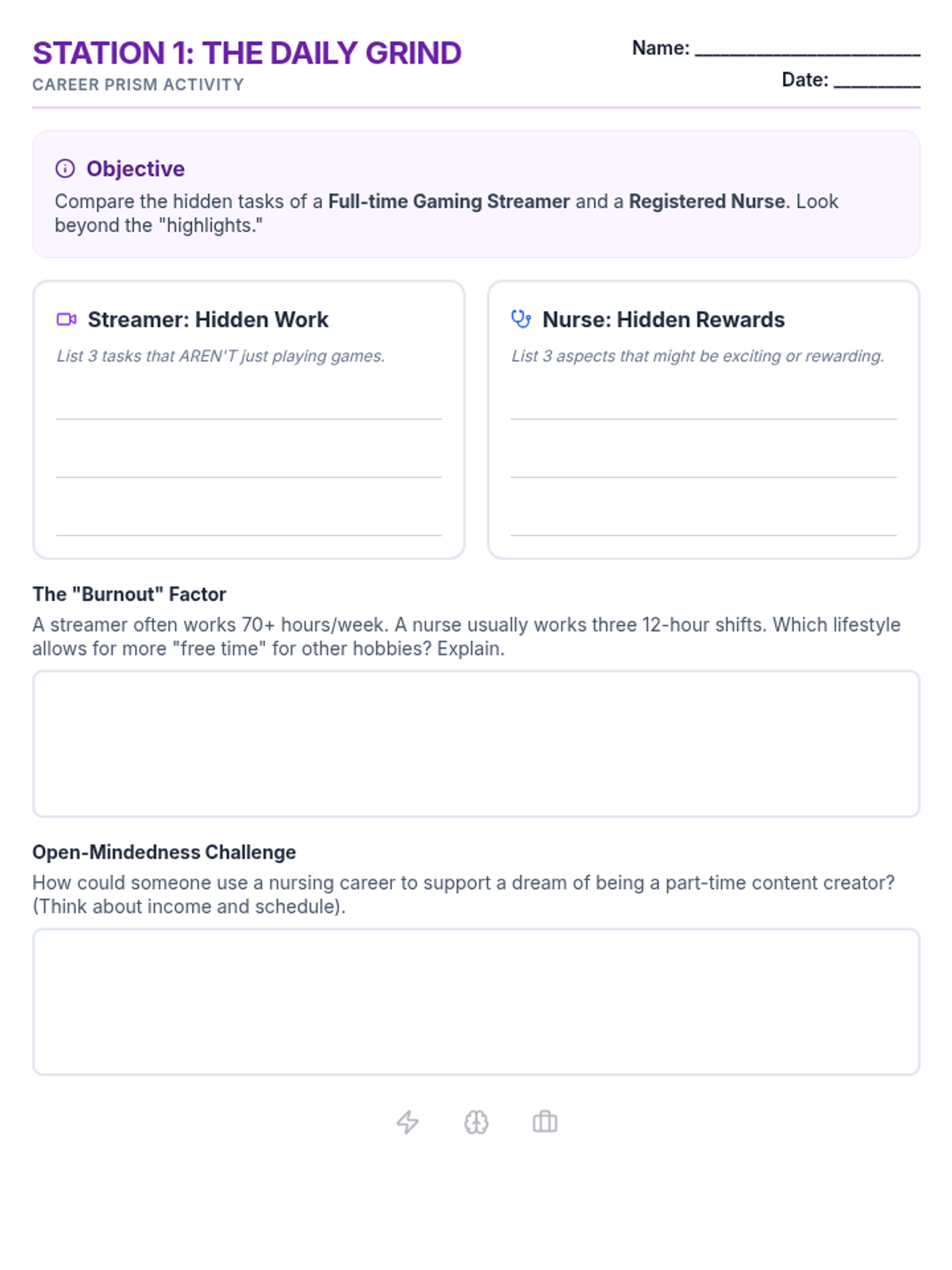
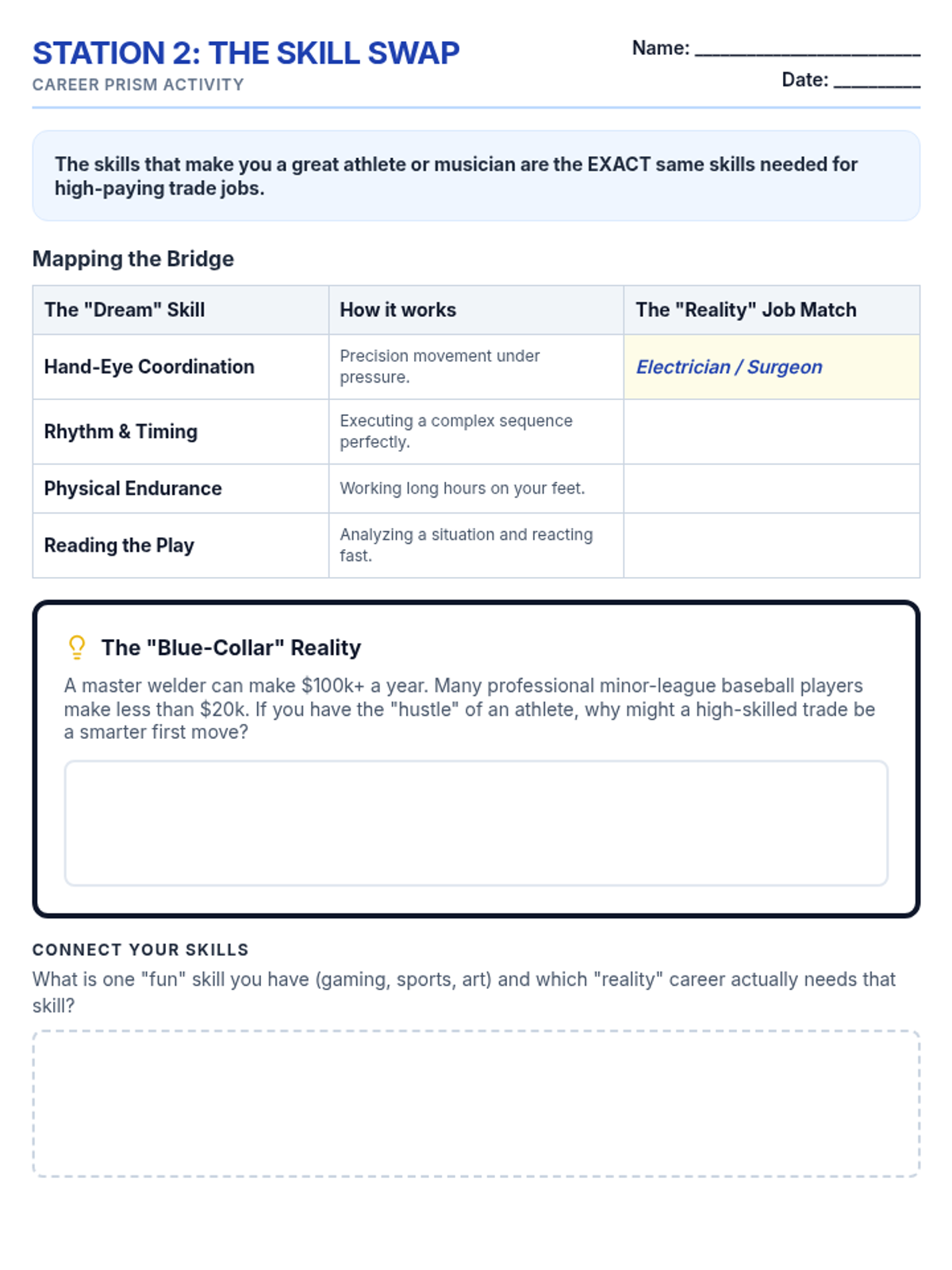
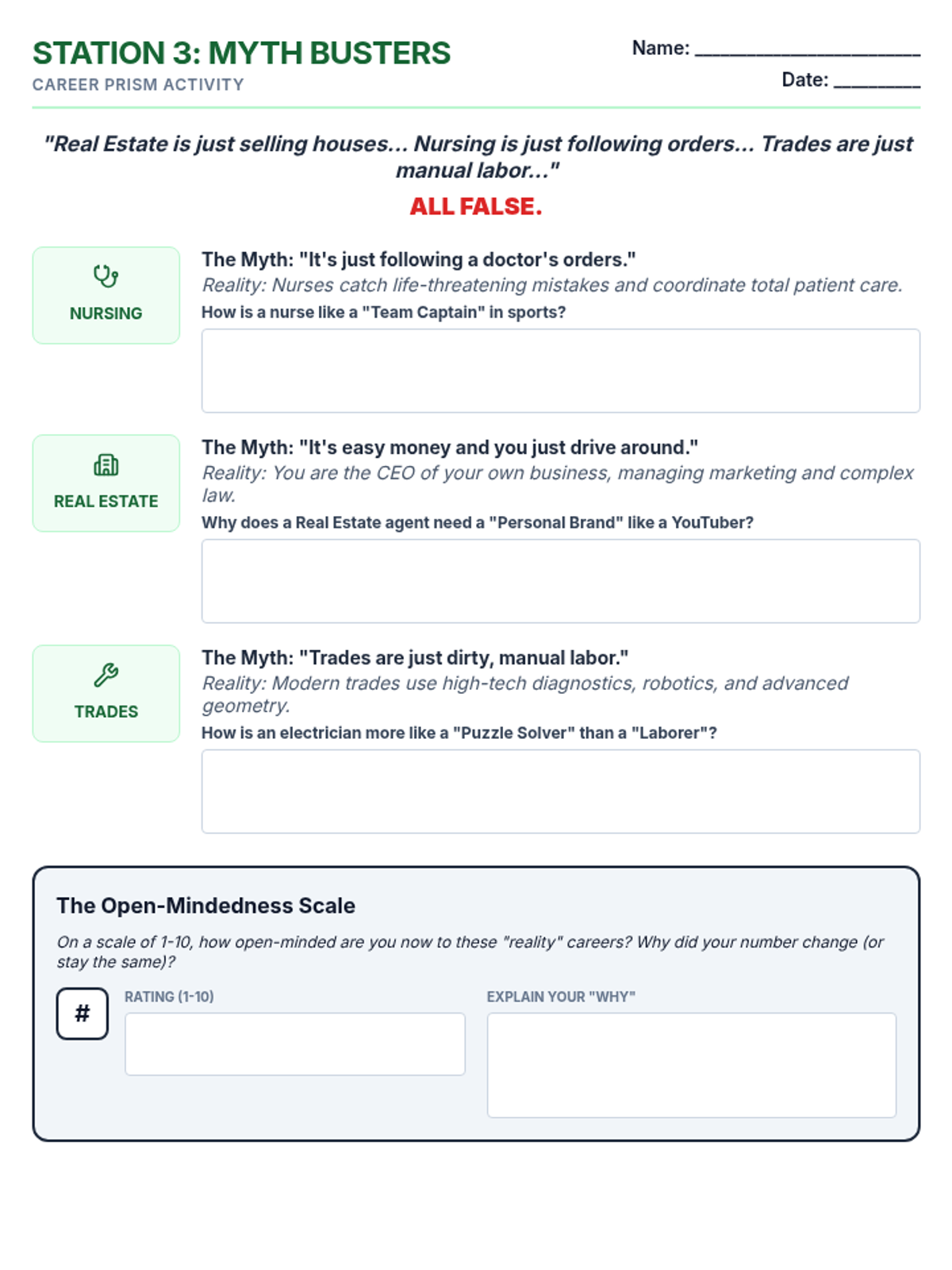
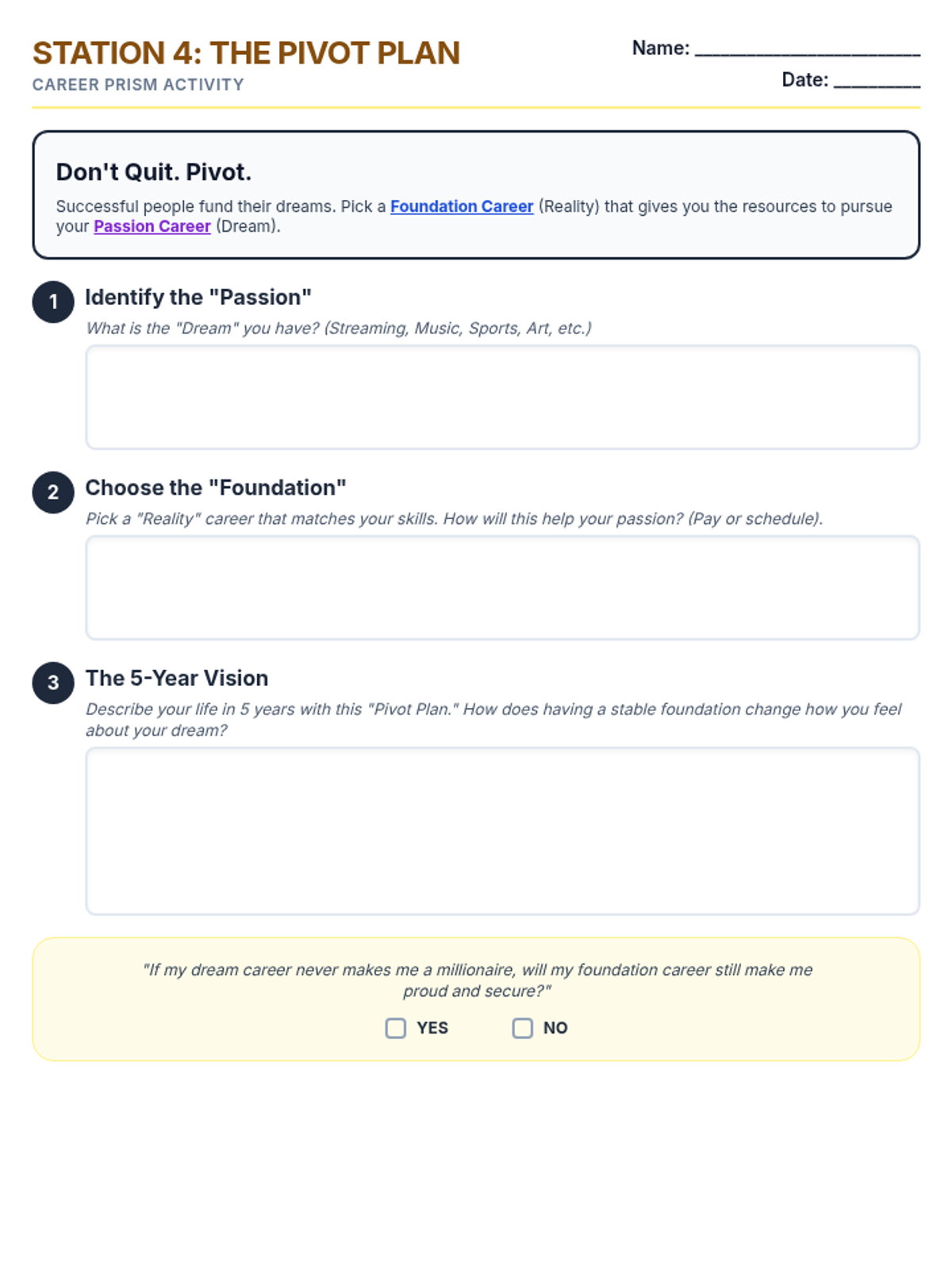
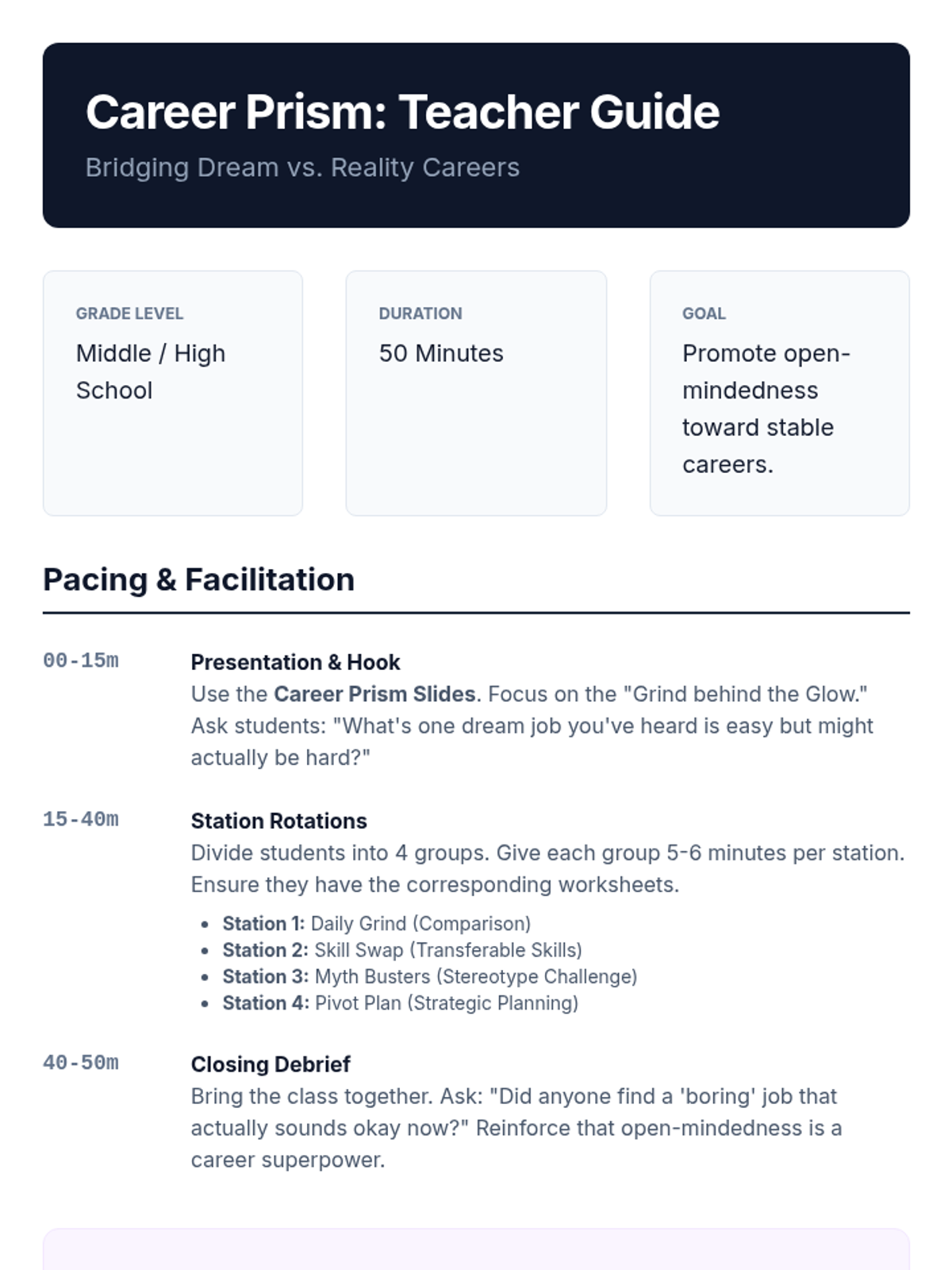
A bridge lesson exploring the intersection of 'dream' careers (streaming, sports, music) and 'reality' careers (nursing, trades, real estate), emphasizing open-mindedness and skill transferability.
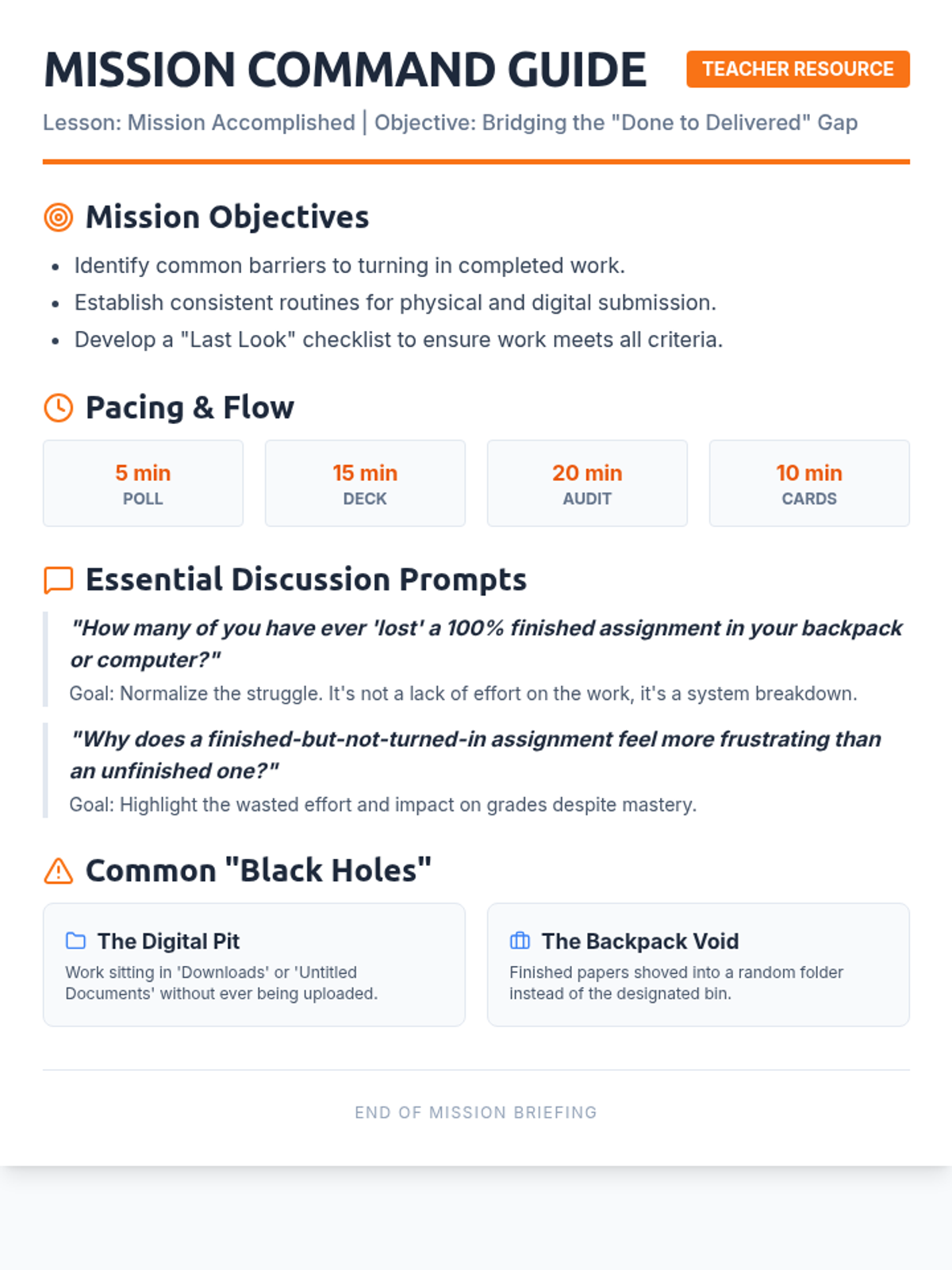
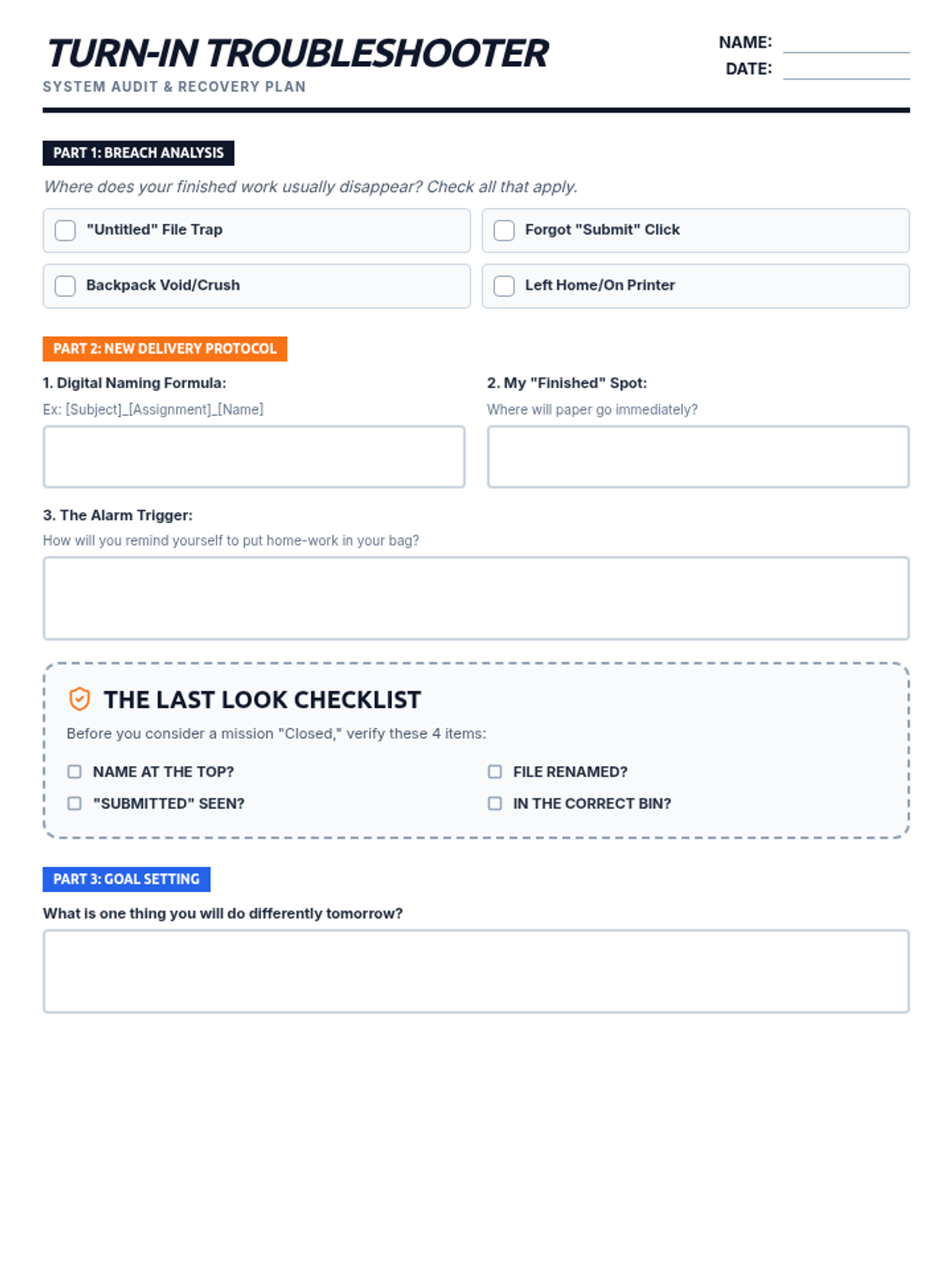
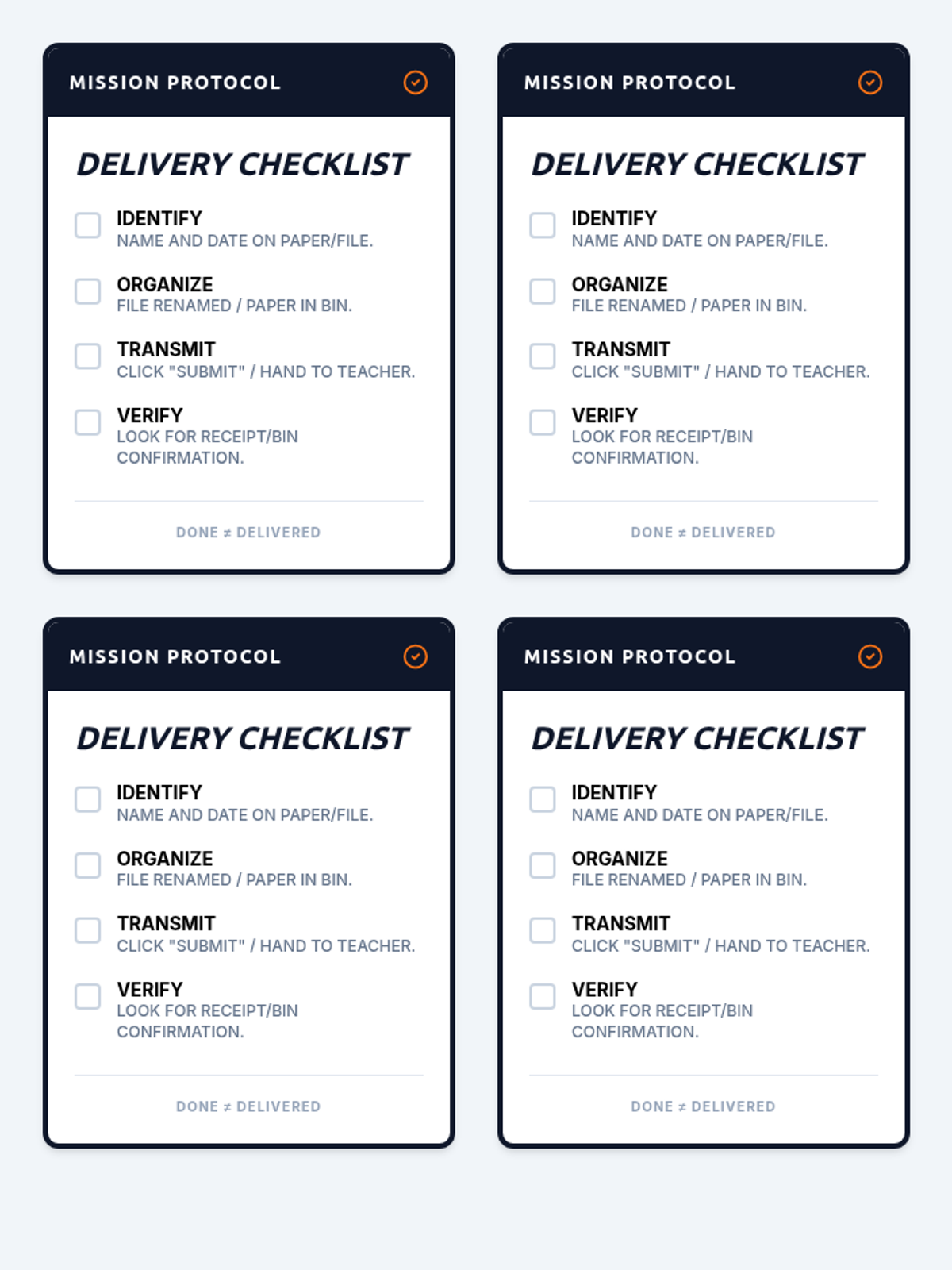
A lesson designed to bridge the gap between finishing an assignment and successfully submitting it. Students explore common 'submission traps' and build personalized systems for physical and digital turn-in success.
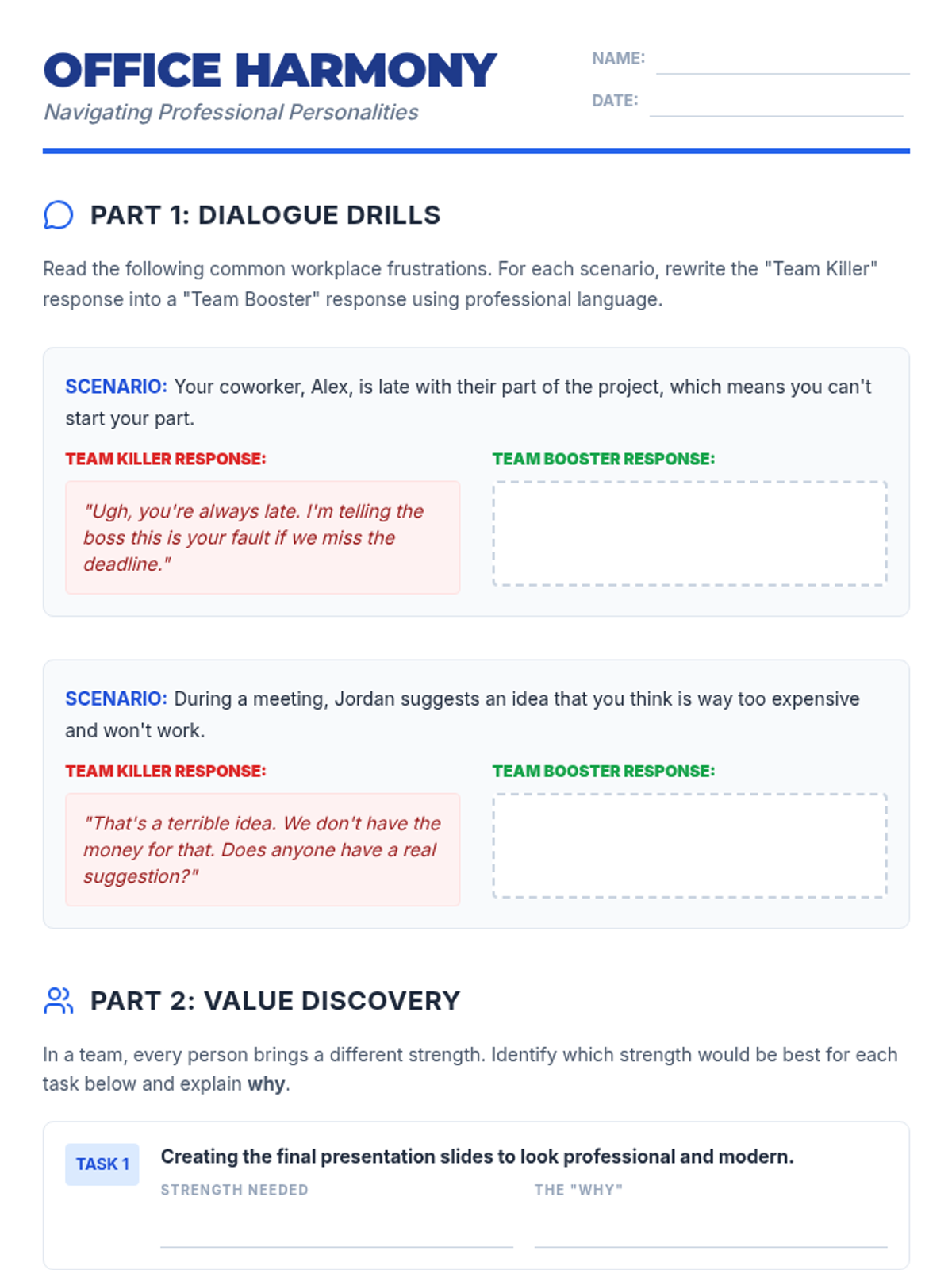
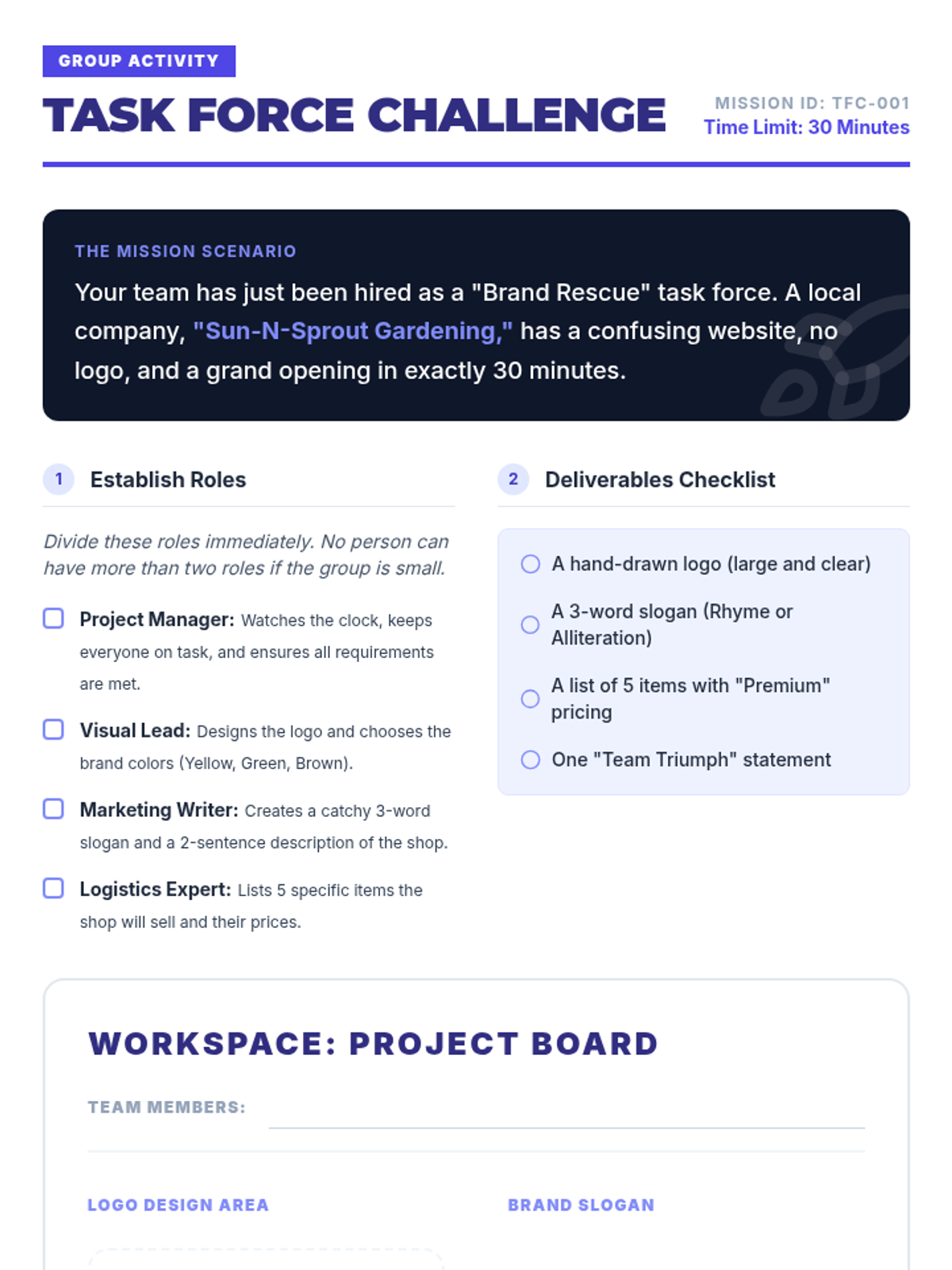
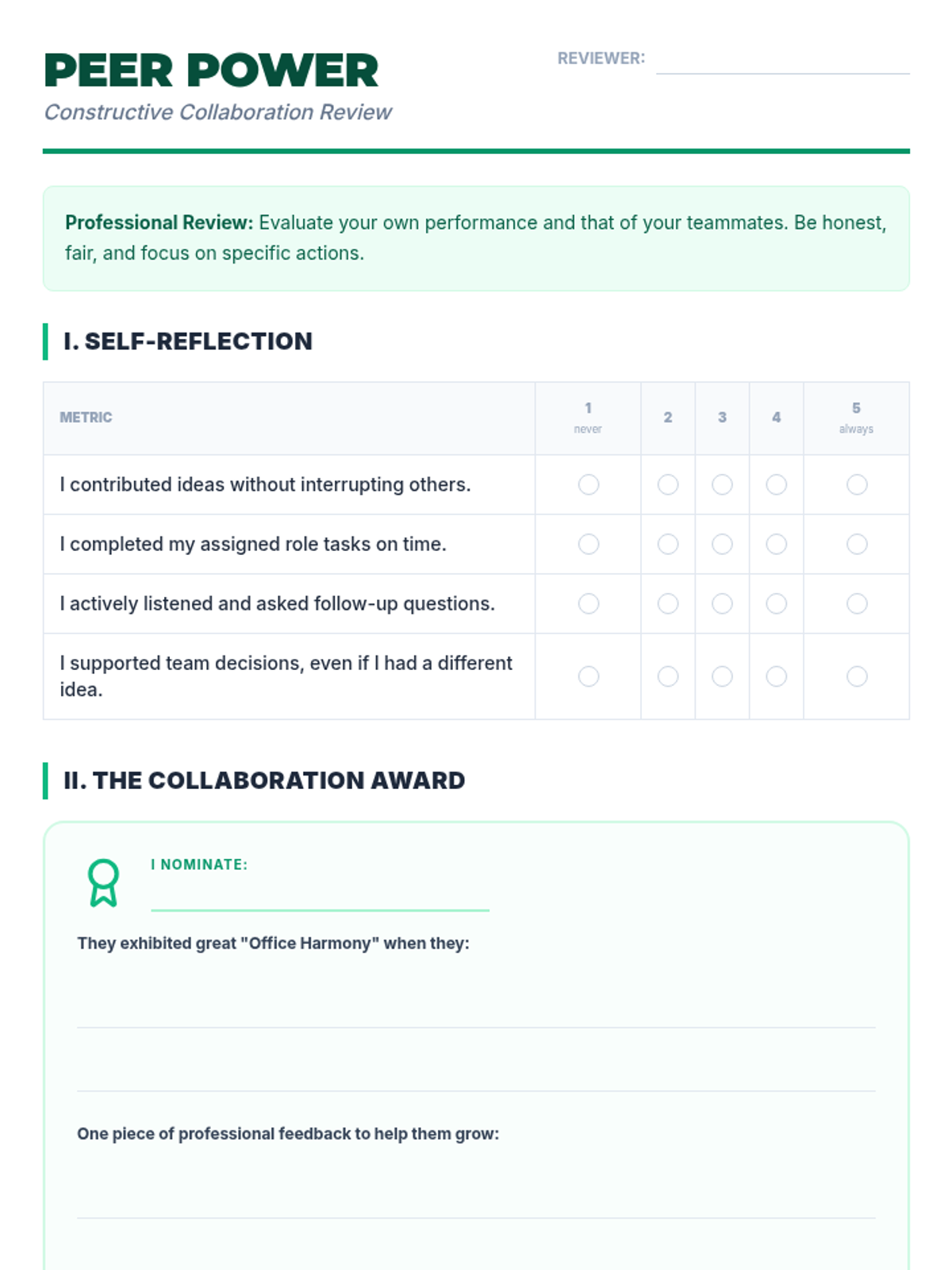
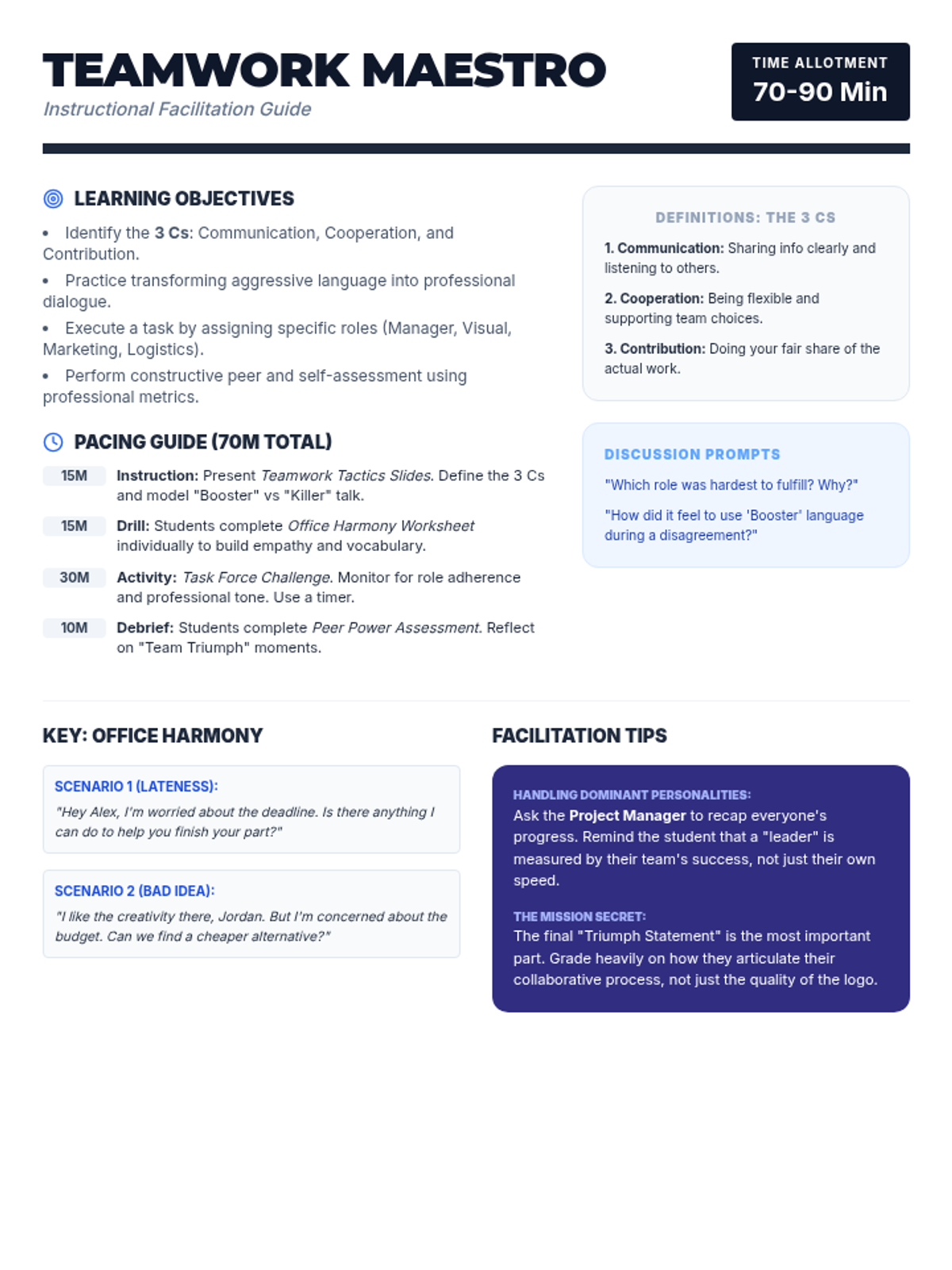
This lesson teaches students essential workplace collaboration skills, focusing on effective communication, role-playing scenarios, and a hands-on team task to build professional interpersonal skills.
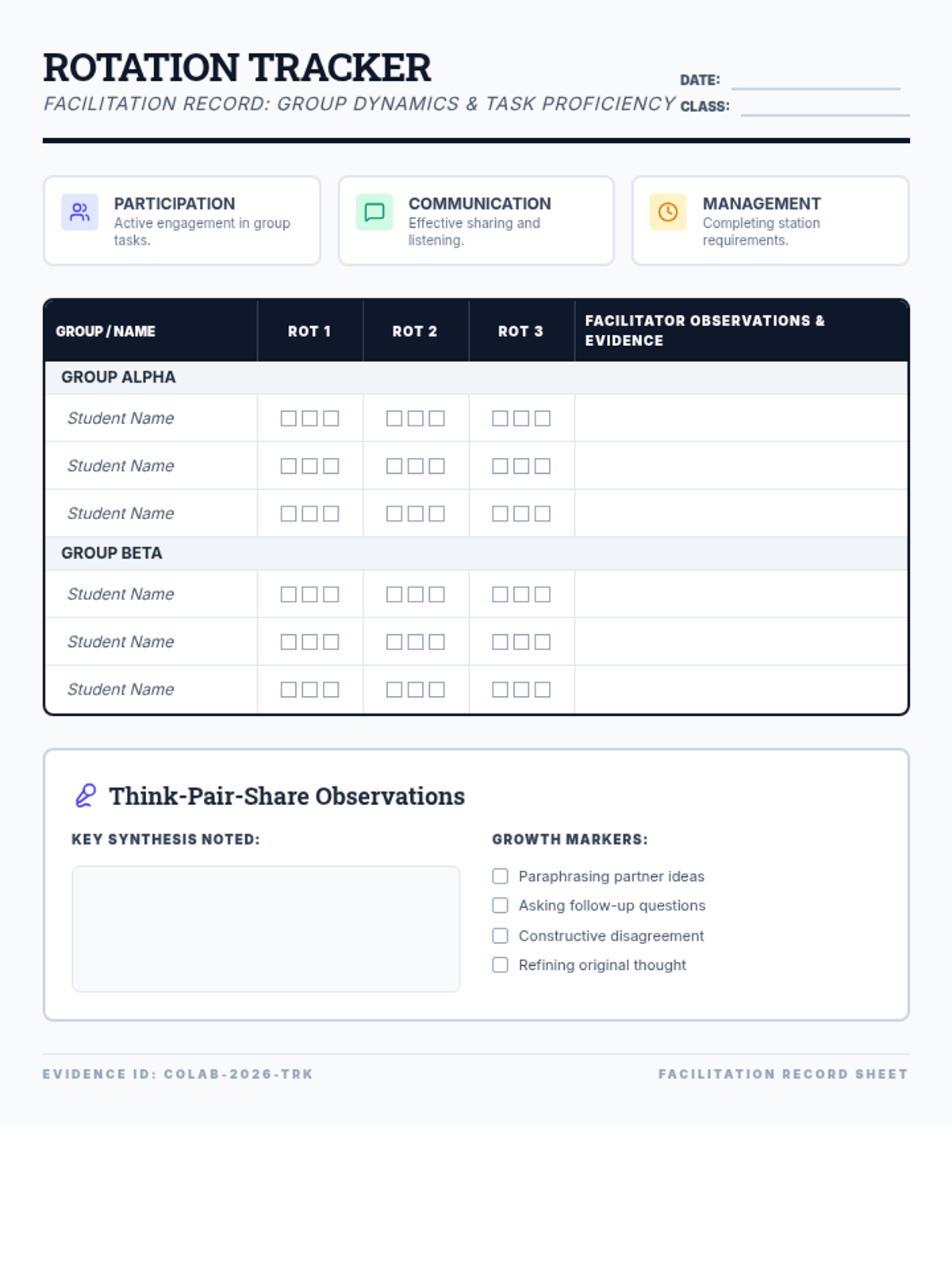
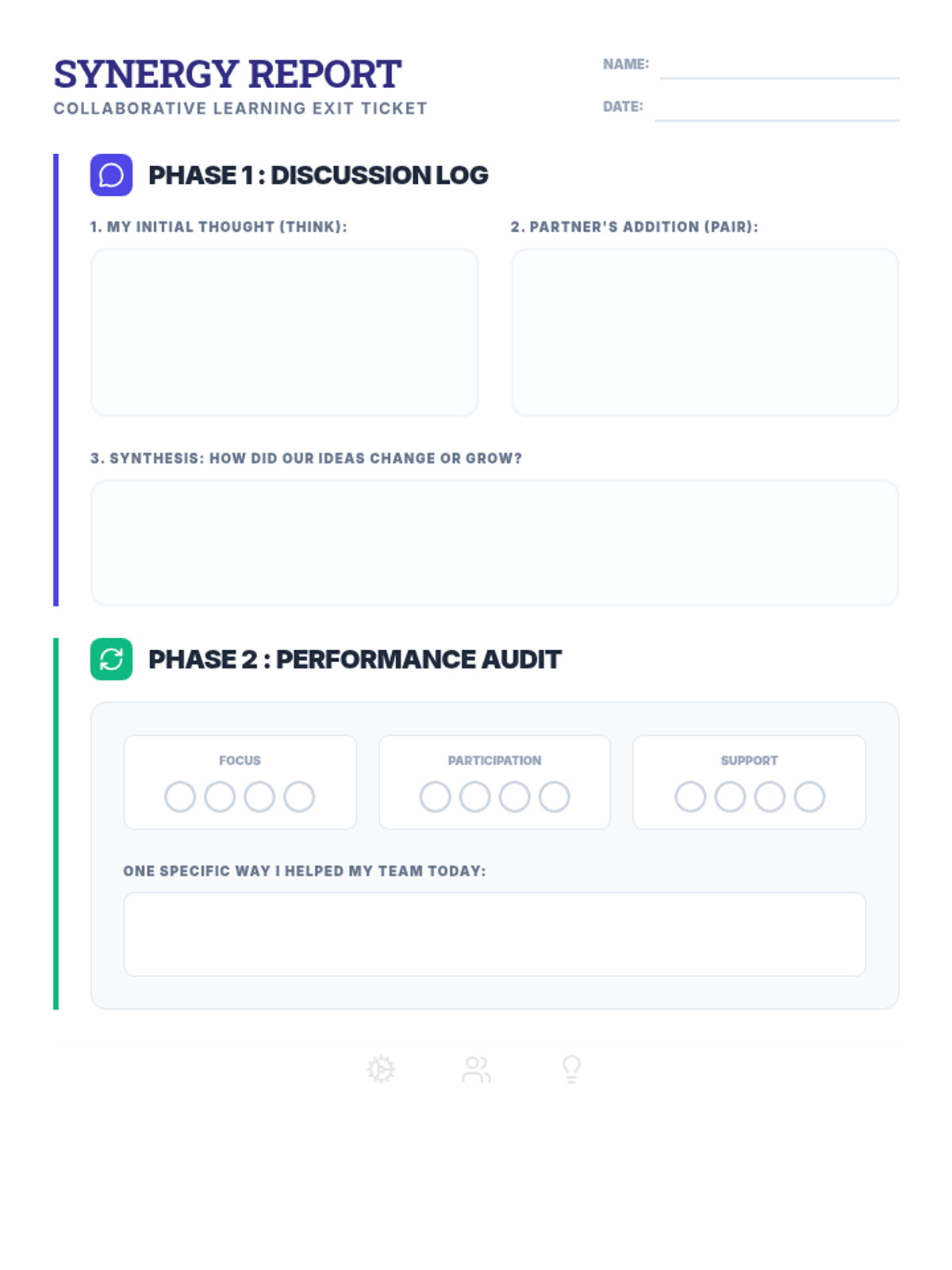
A lesson focused on facilitating and documenting collaborative learning through structured rotations and Think-Pair-Share discussions. Includes tools for teacher monitoring and student self-reflection.
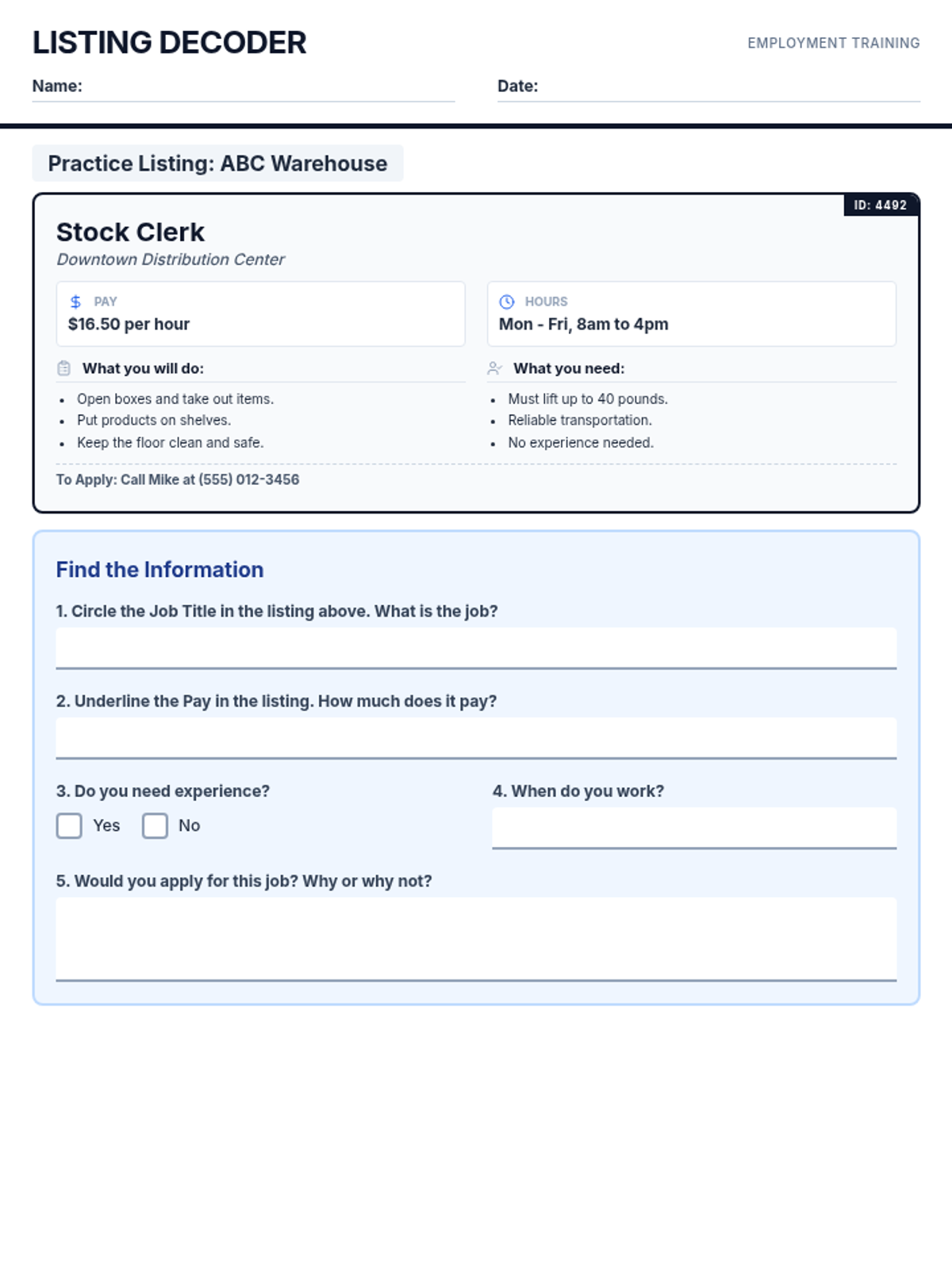
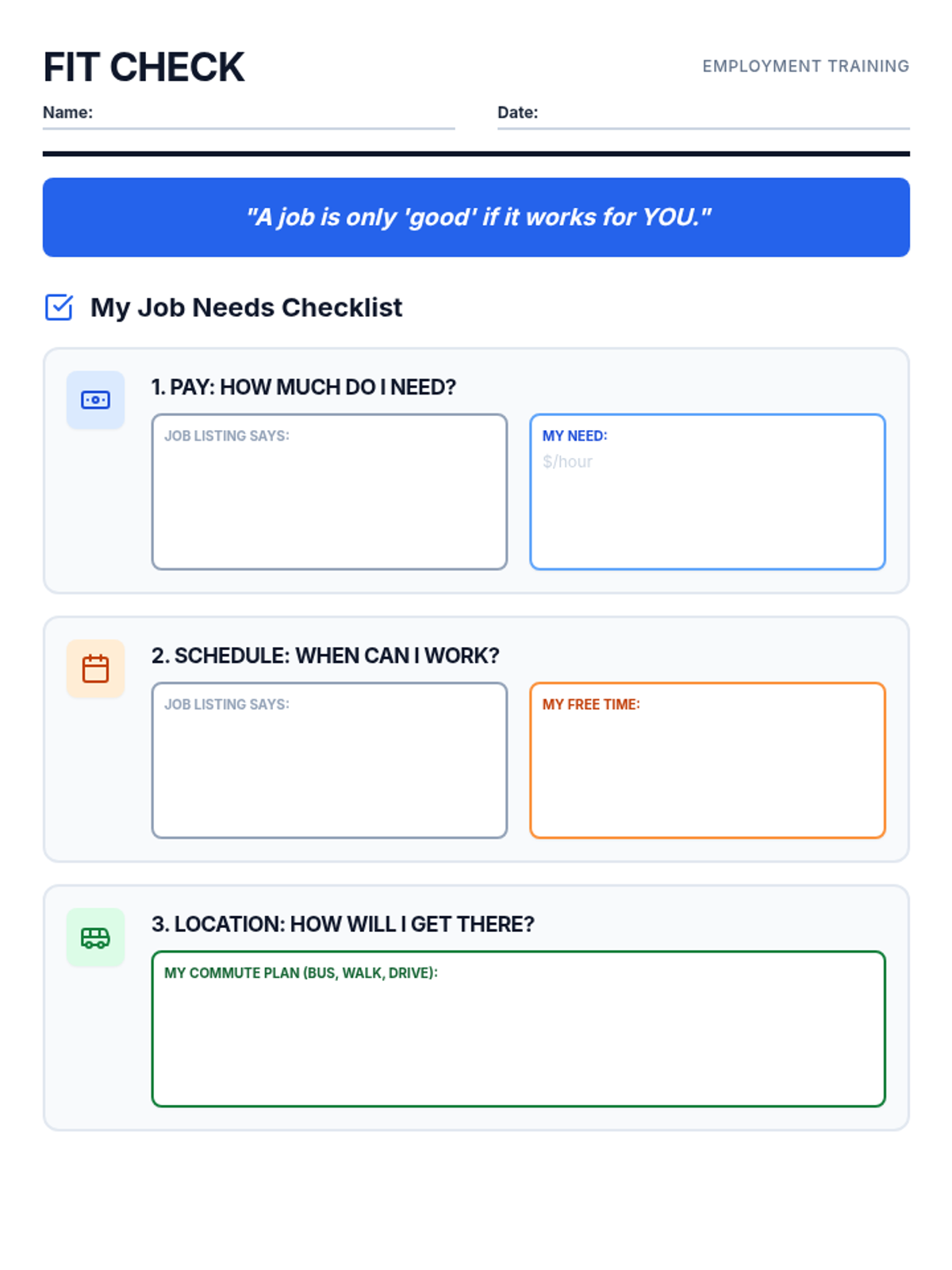
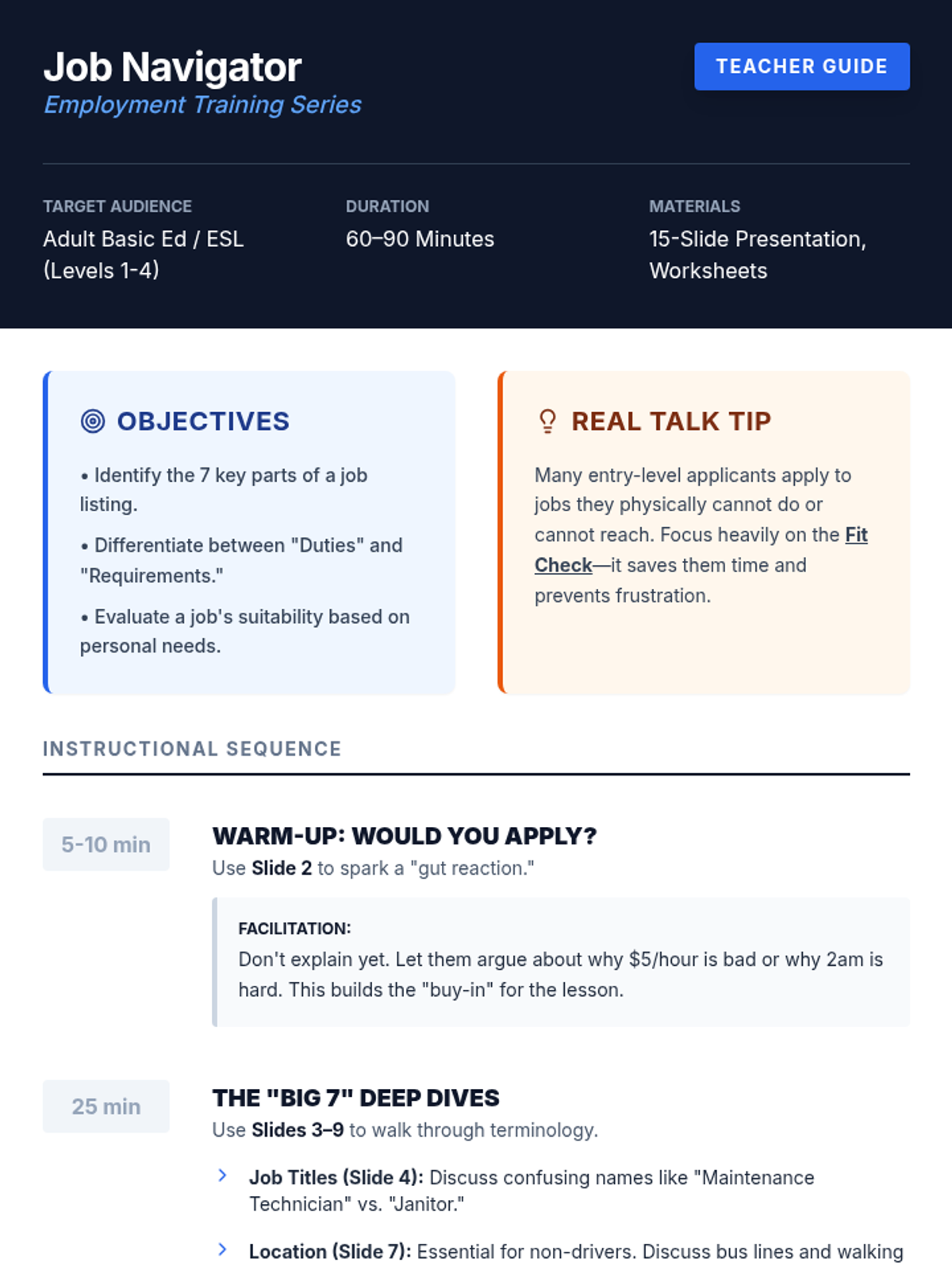
A practical lesson for entry-level job seekers to identify key information in job postings and determine if a role aligns with their personal needs and abilities.
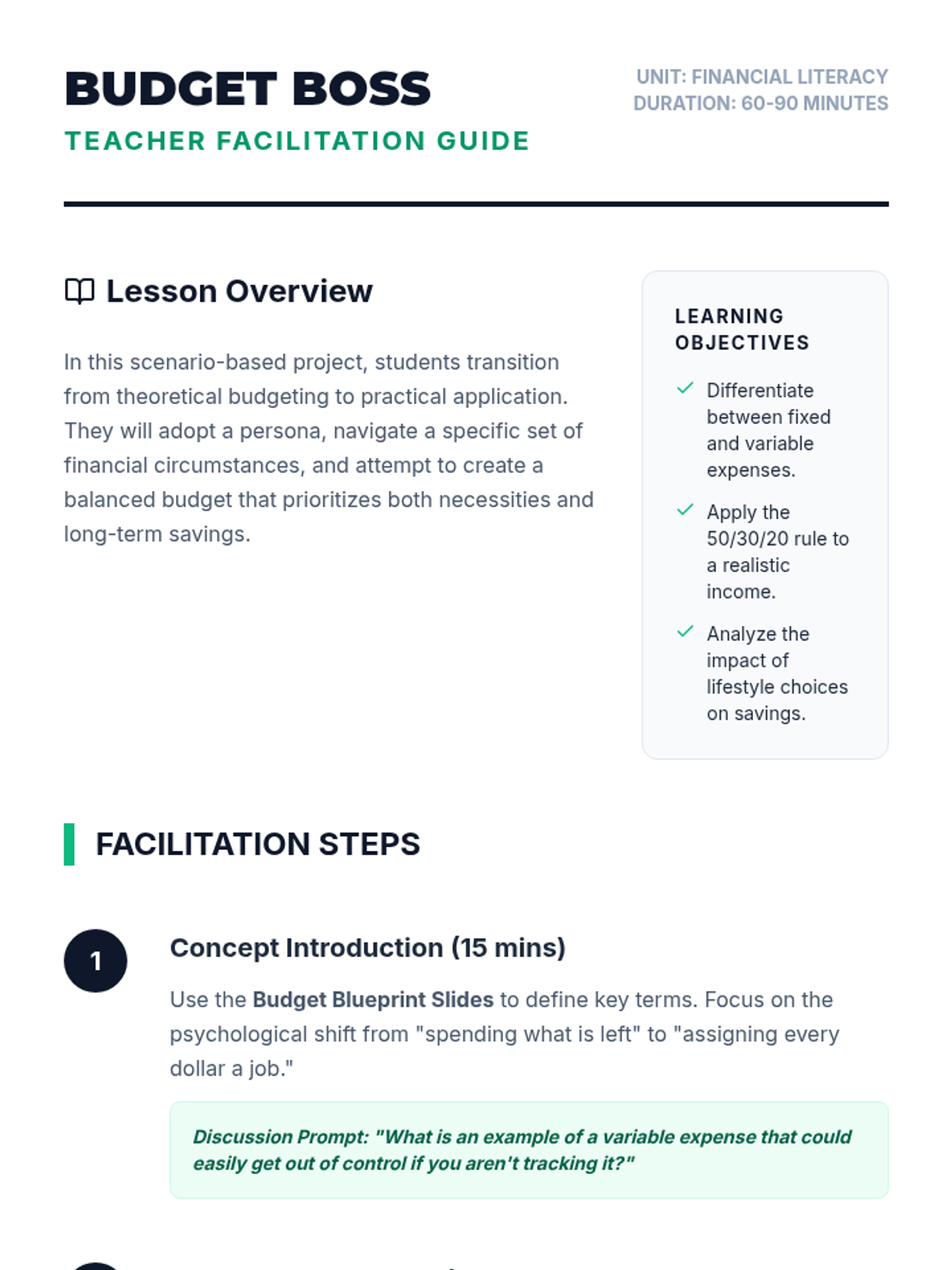
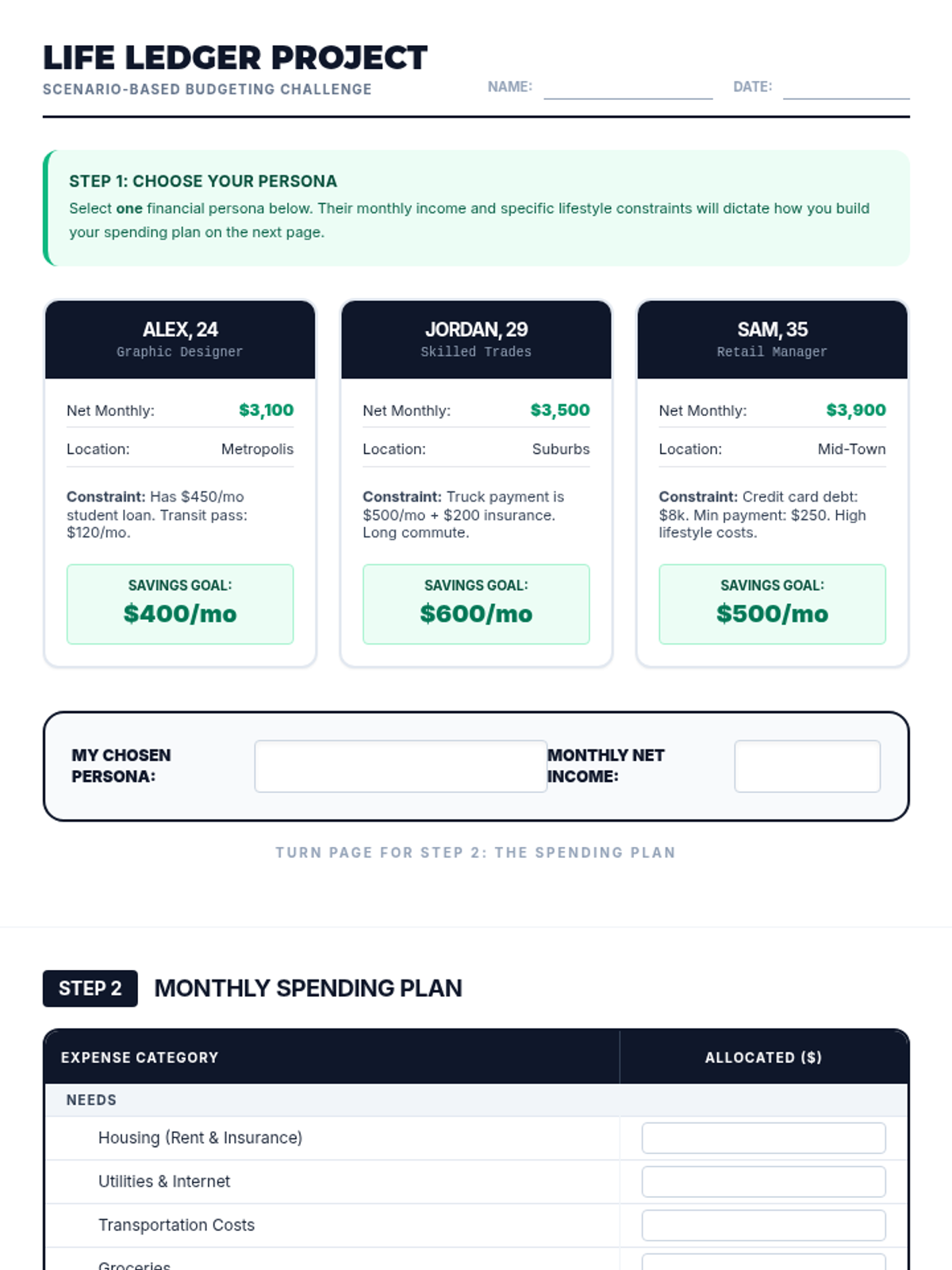
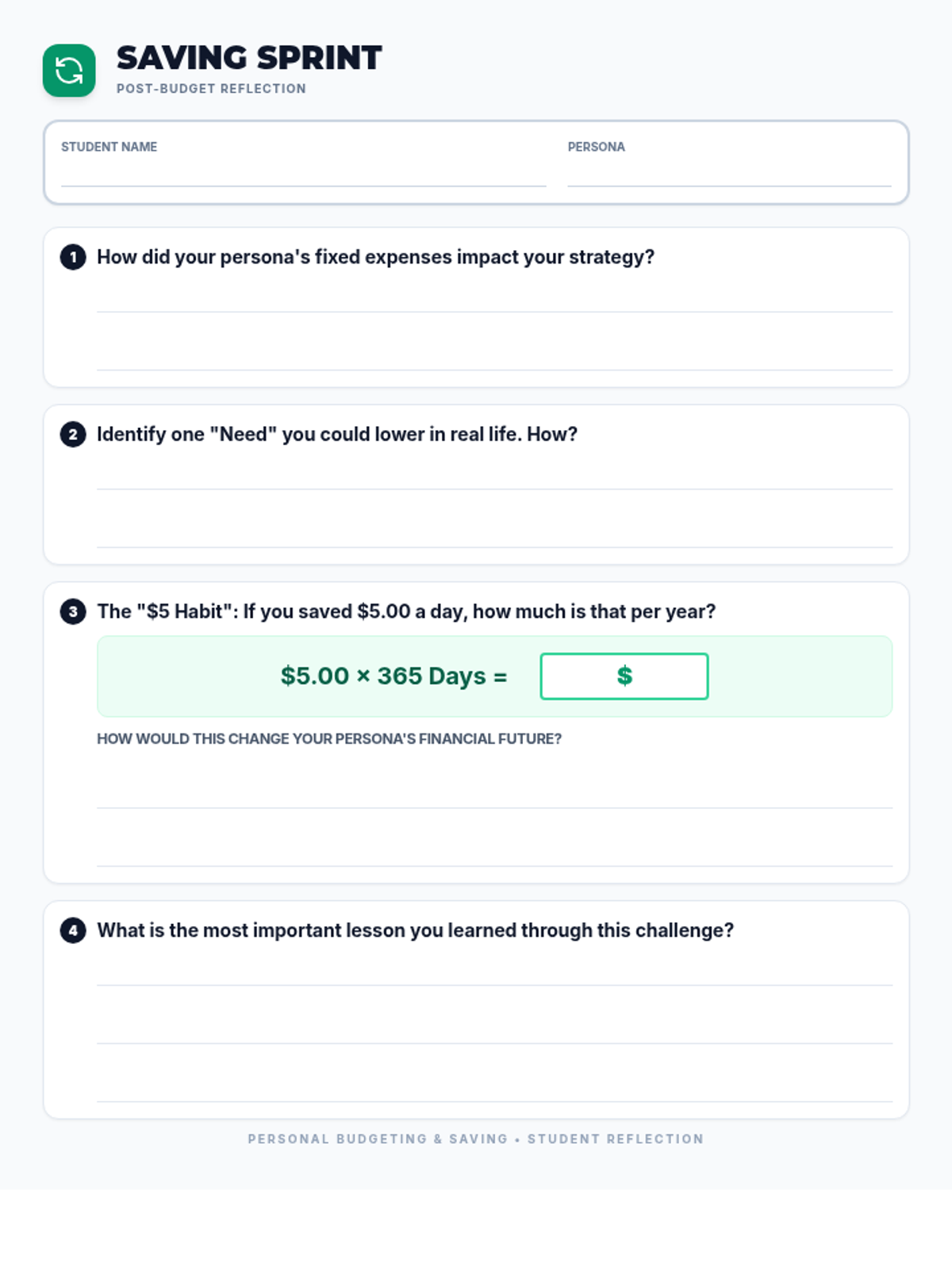
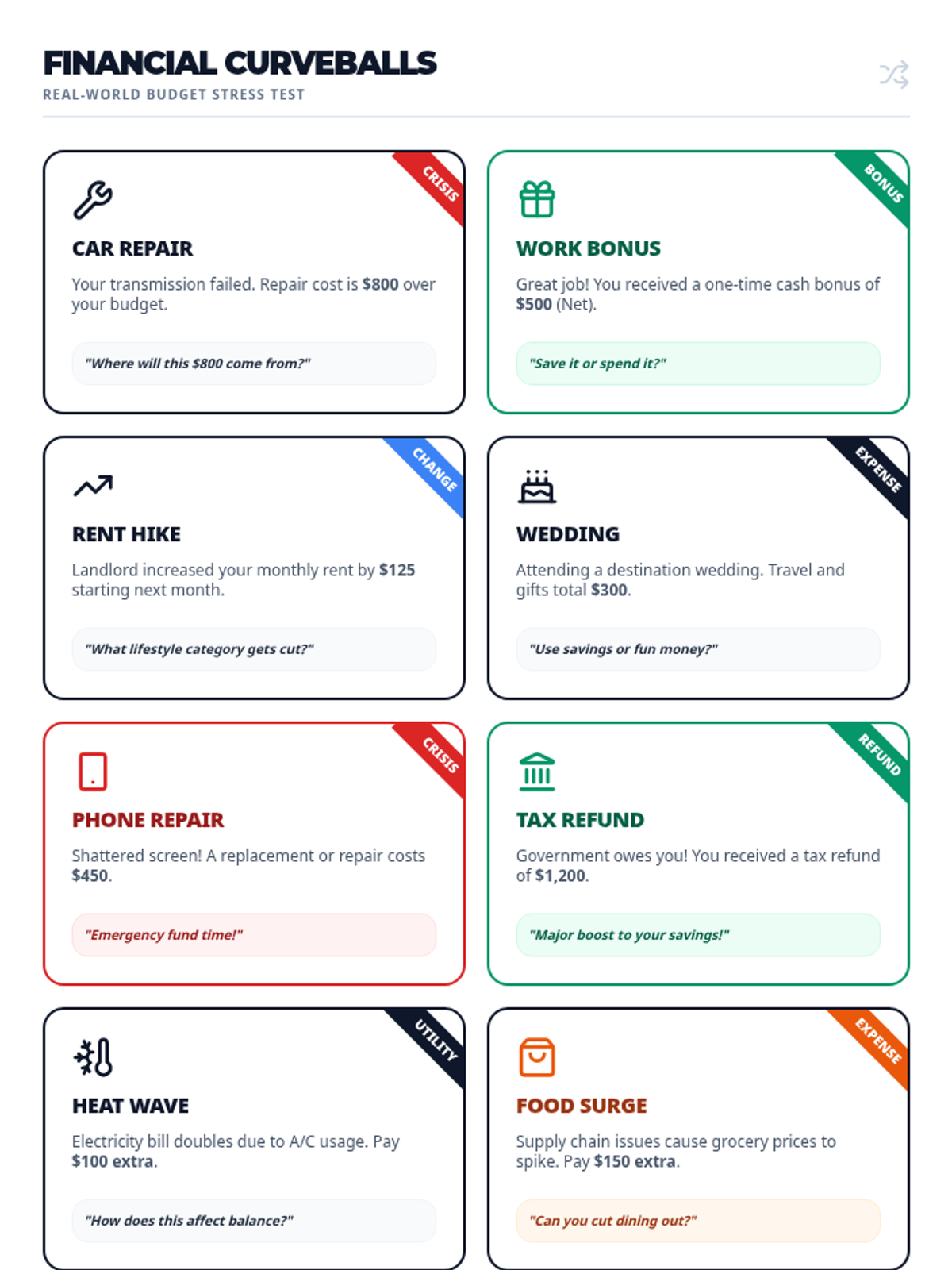
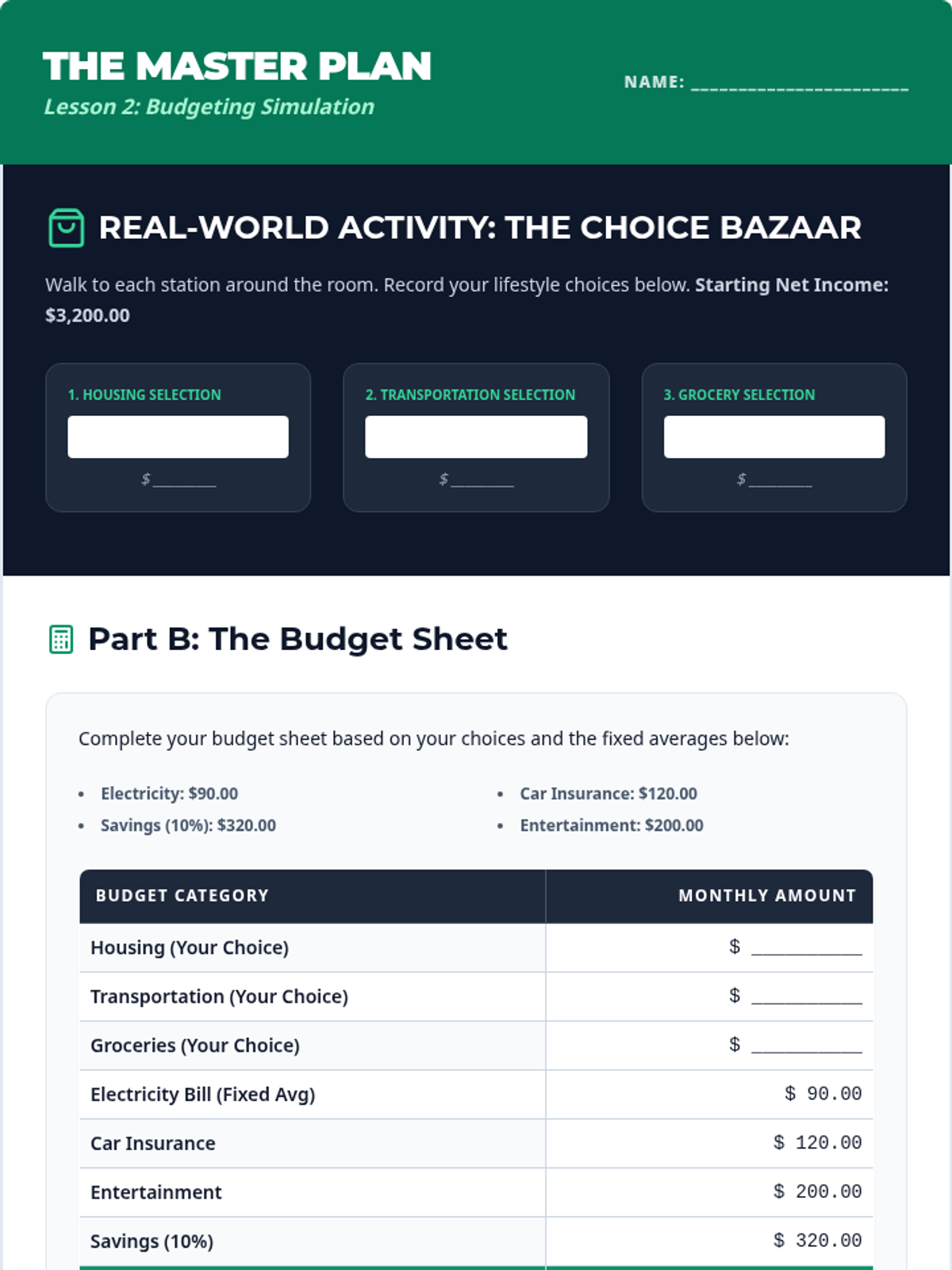
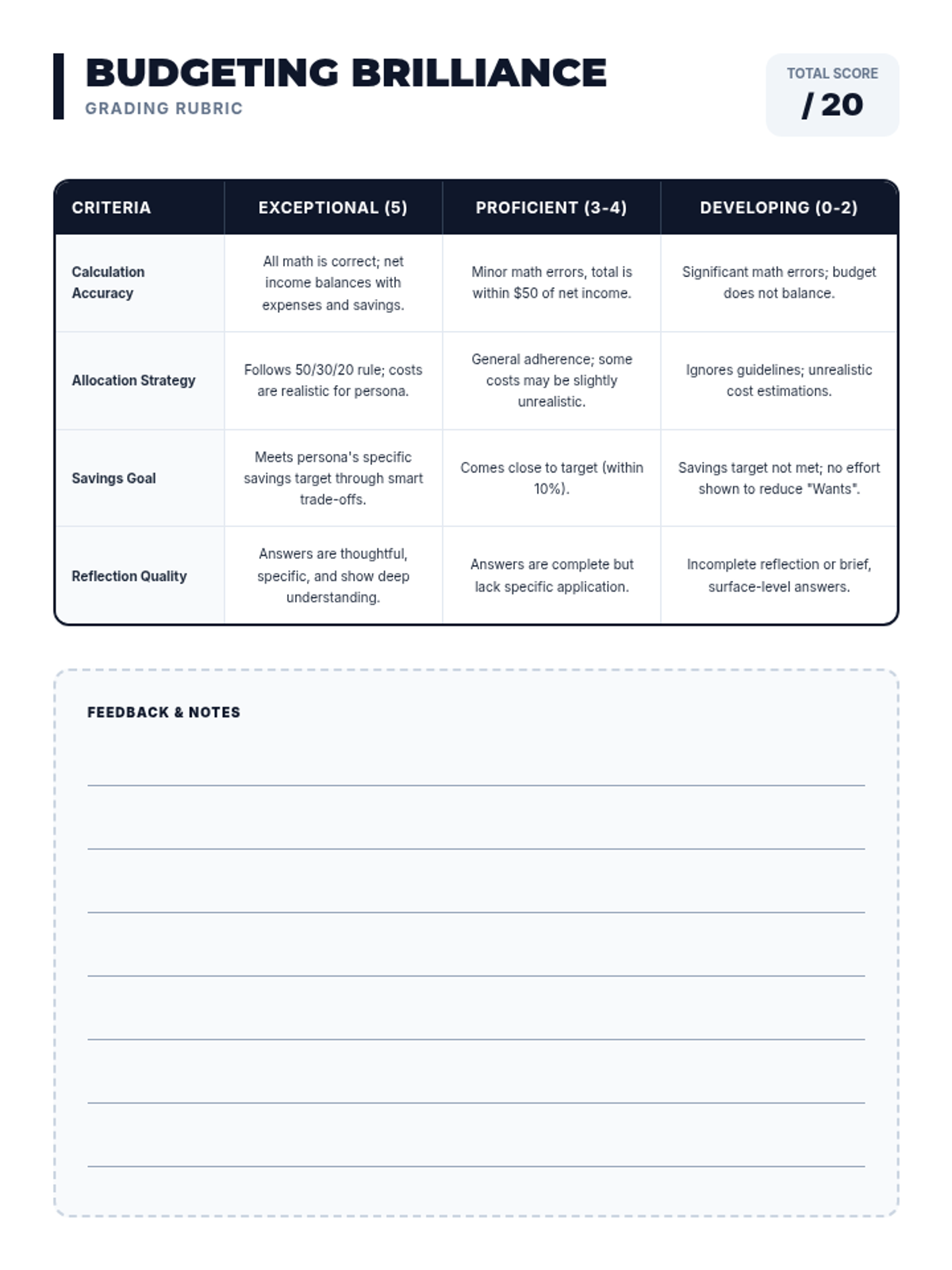
A hands-on financial literacy lesson where students apply budgeting principles to real-world scenarios, managing income, expenses, and savings goals for a fictional persona.
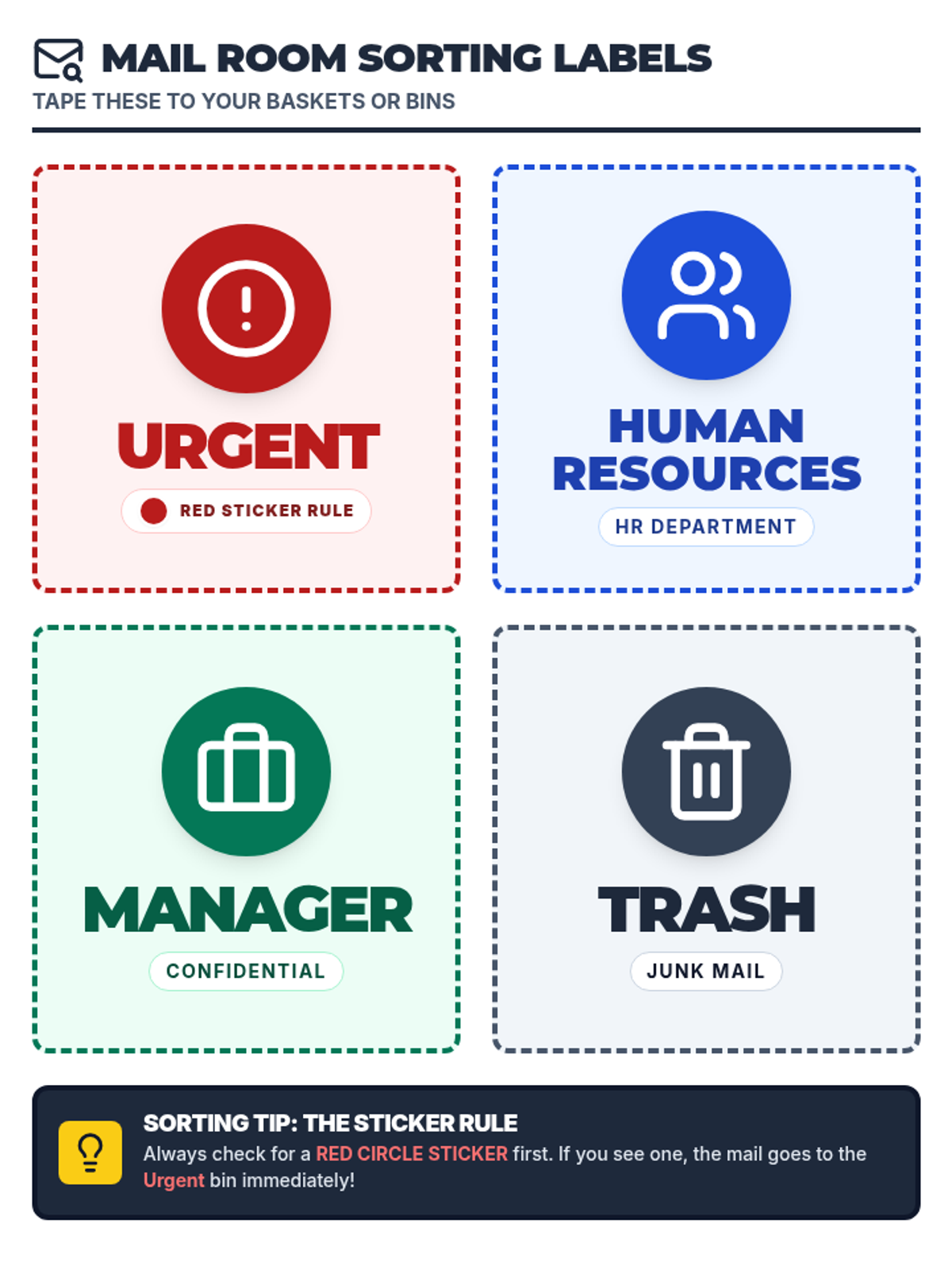
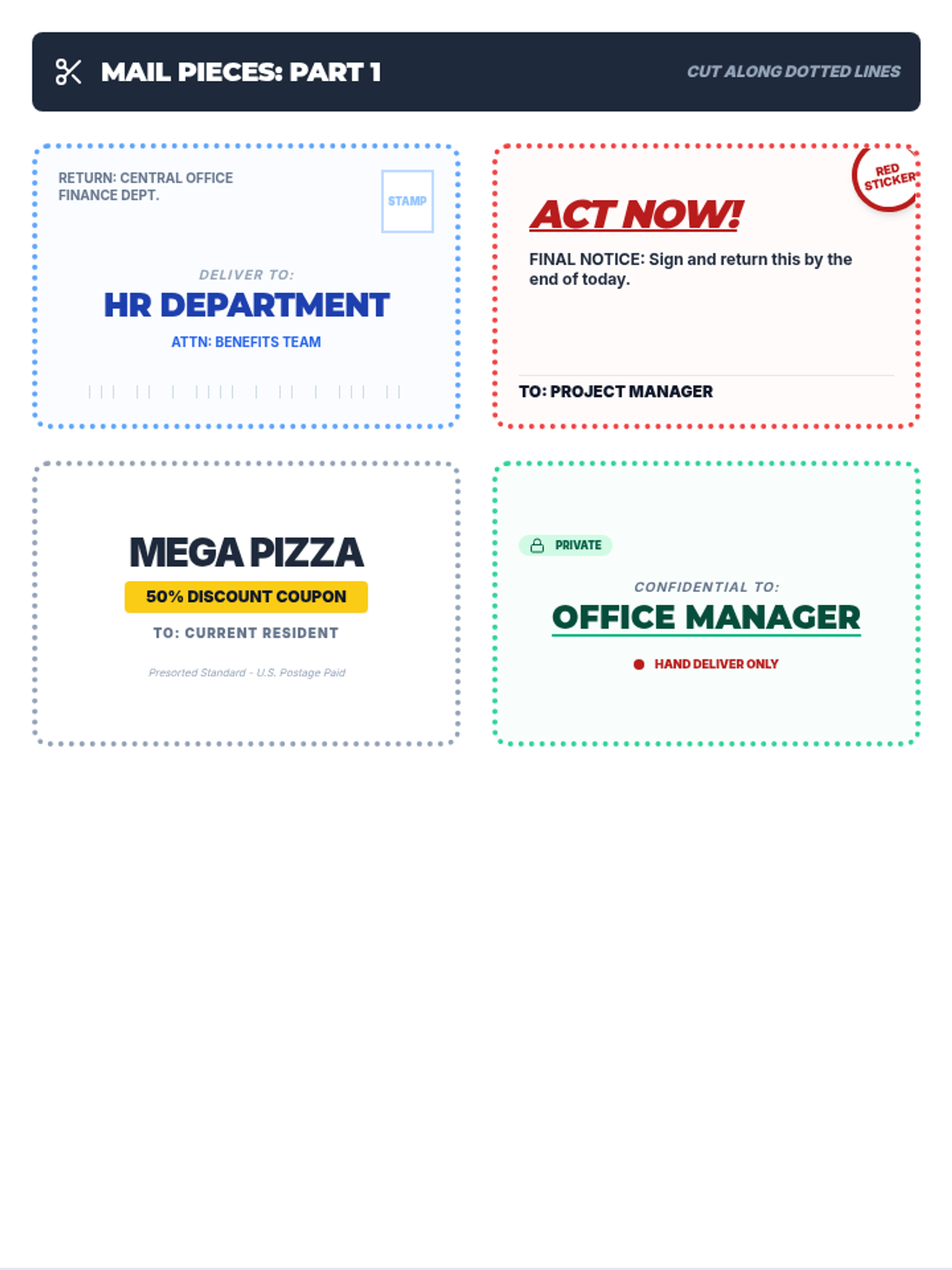
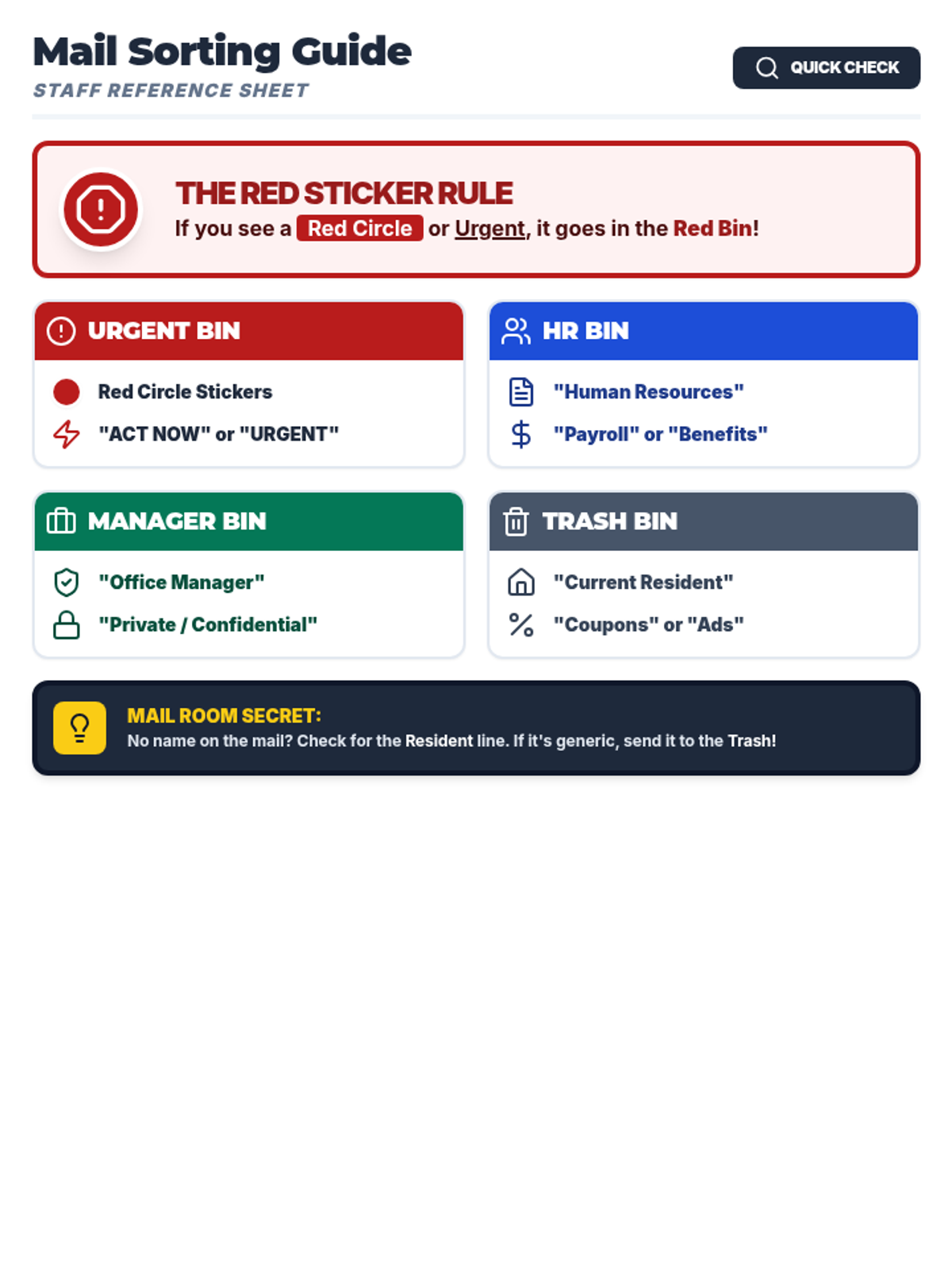
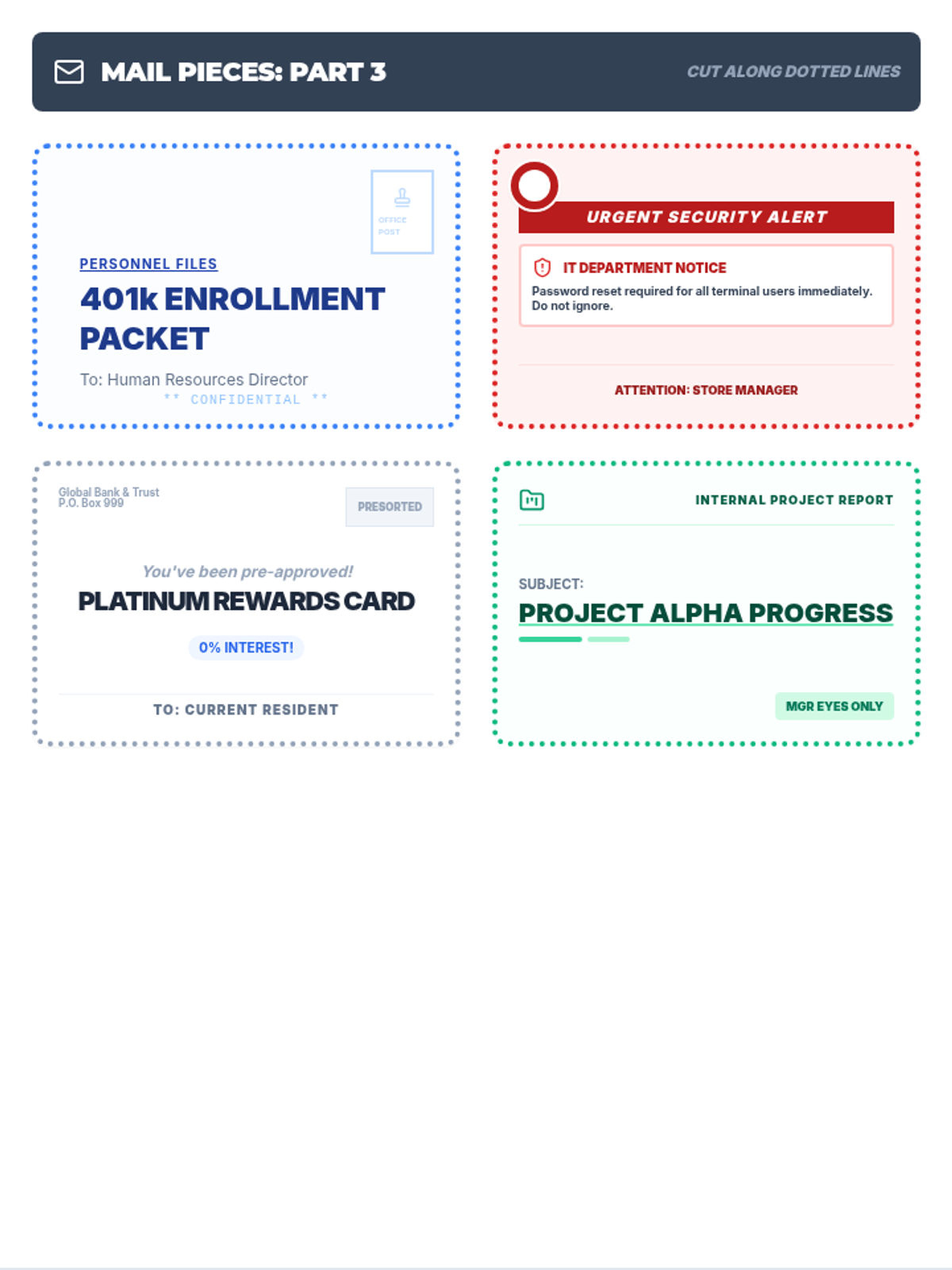
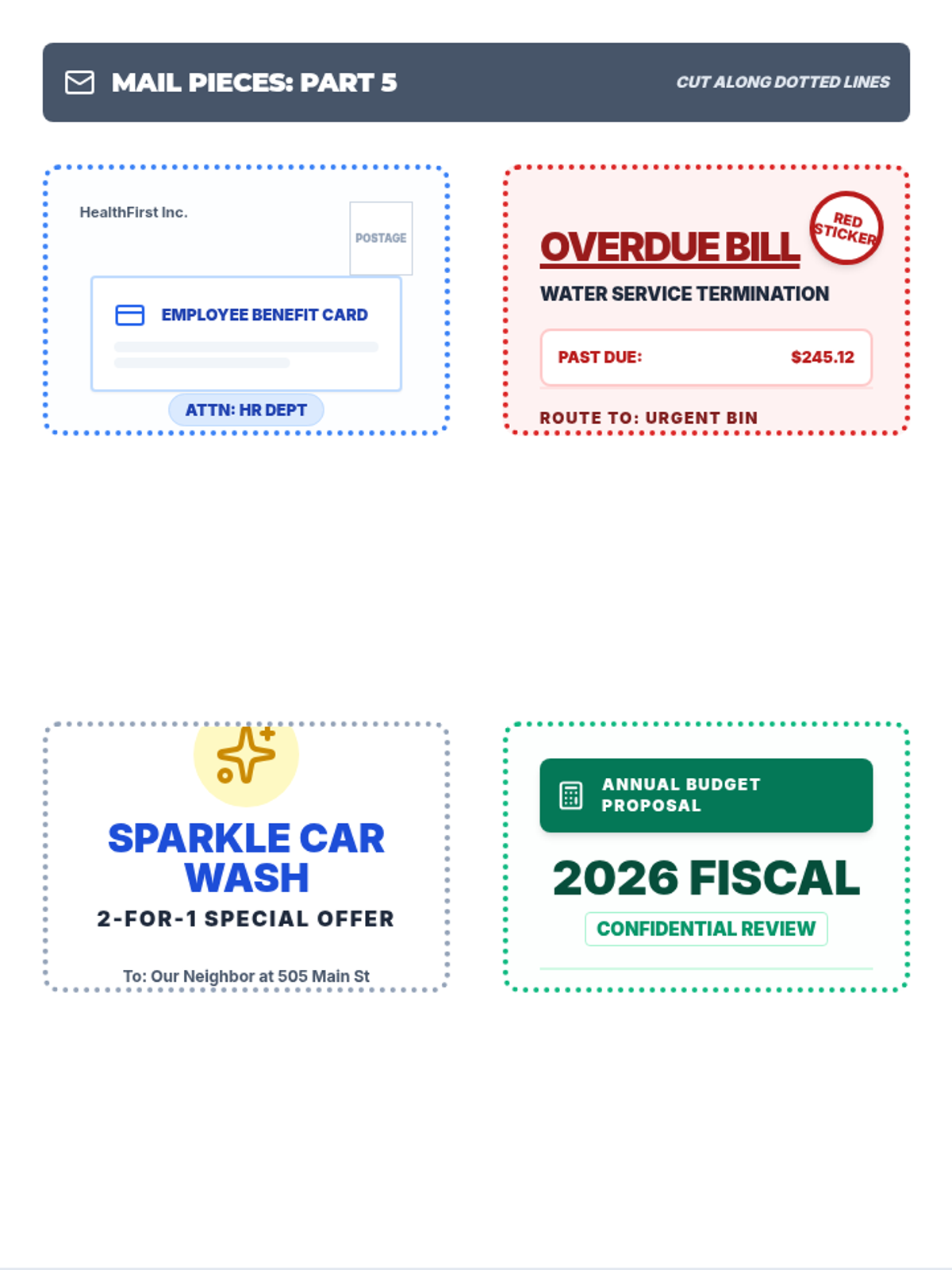
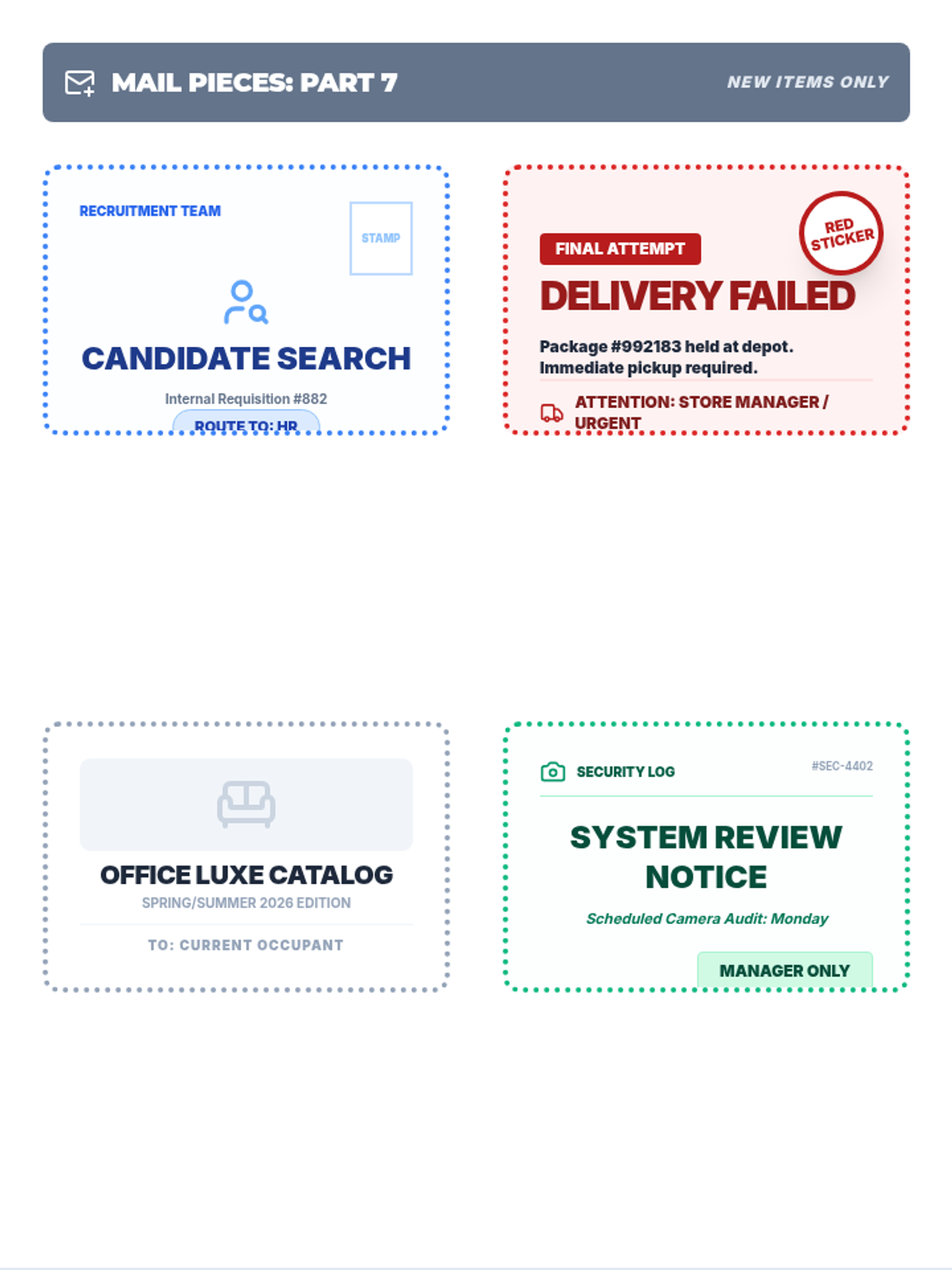
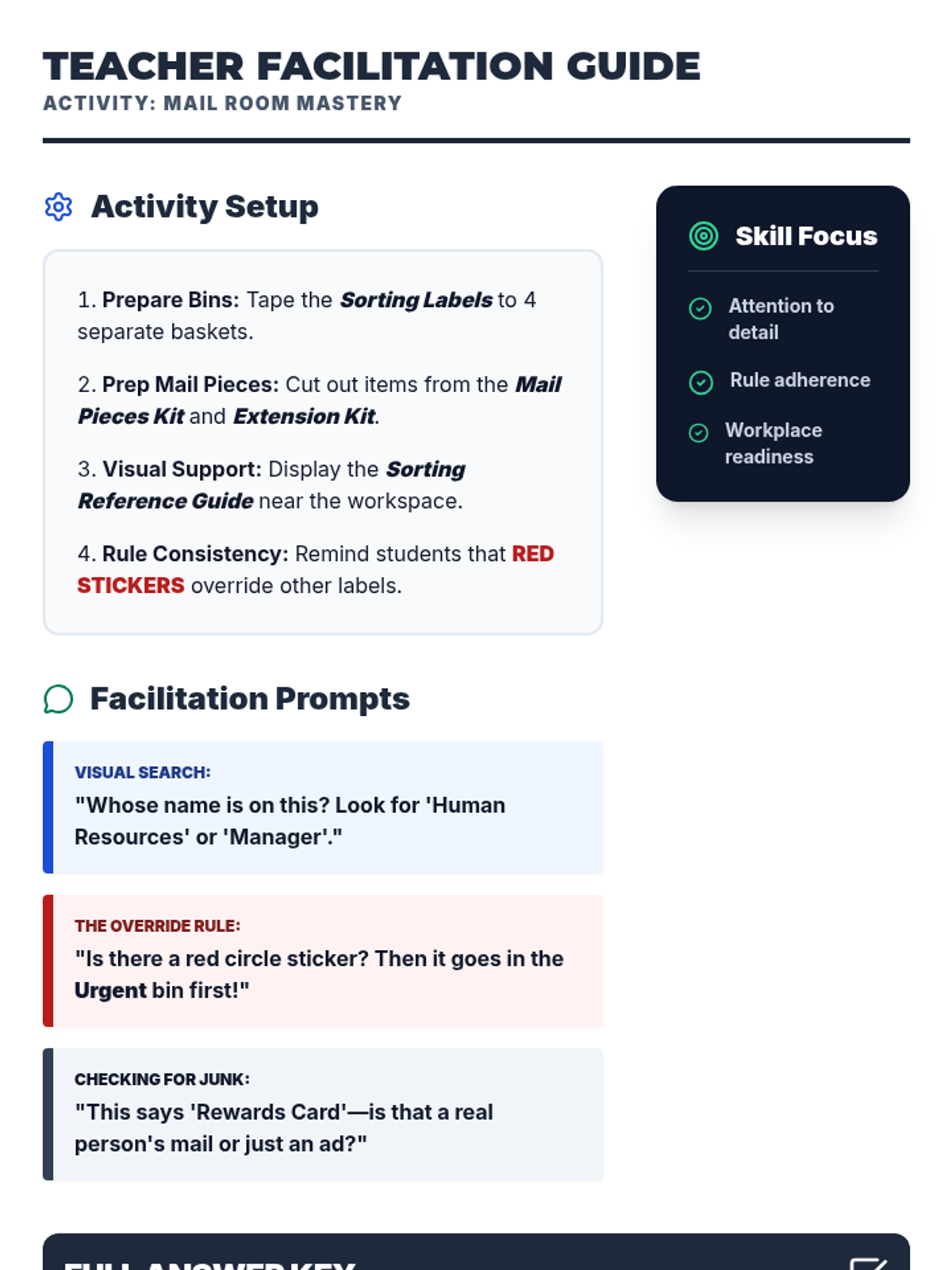
A hands-on vocational activity focused on sorting mail into categories like HR, Urgent, Manager, and Trash to build organizational and attention-to-detail skills.
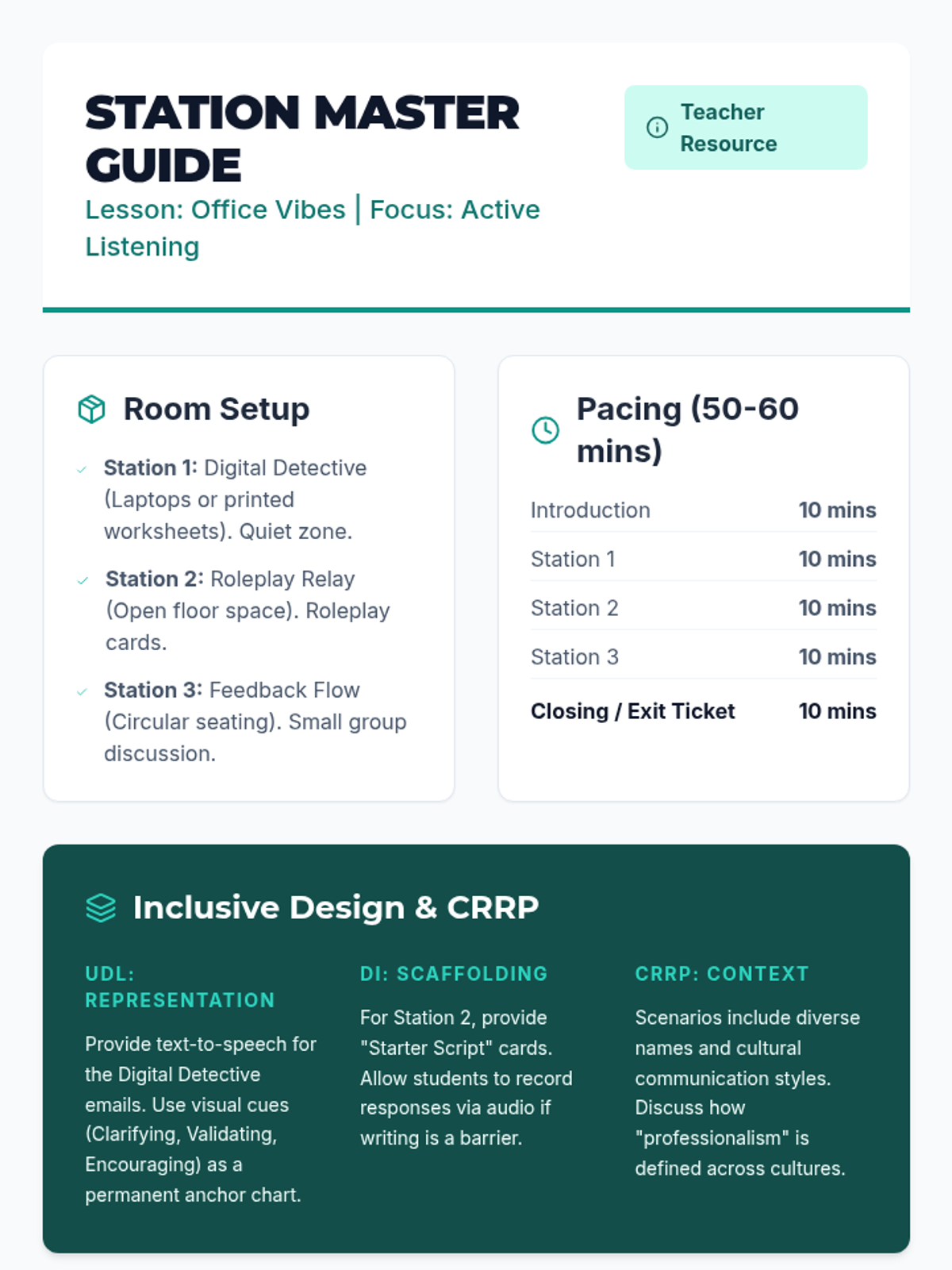
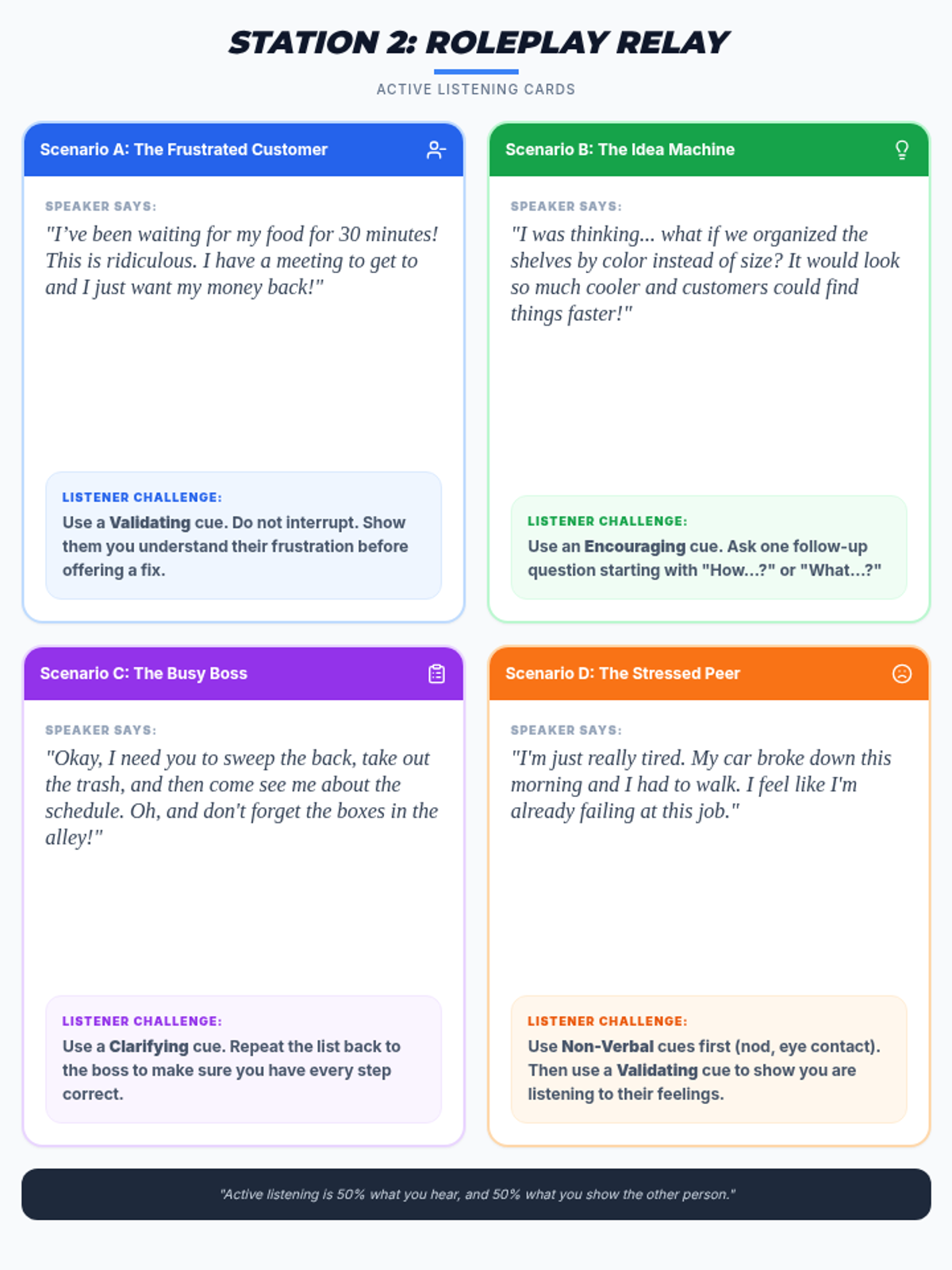
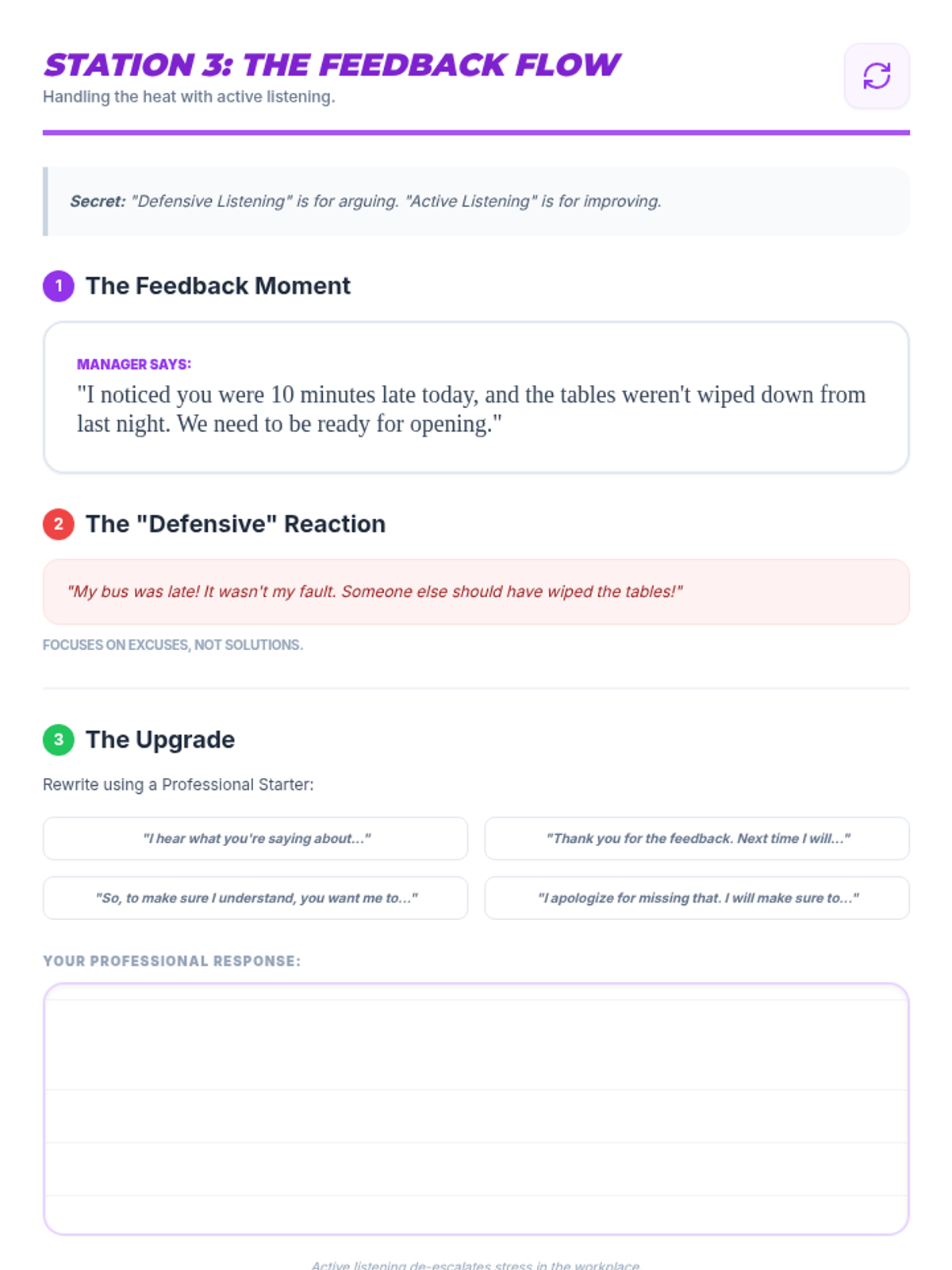
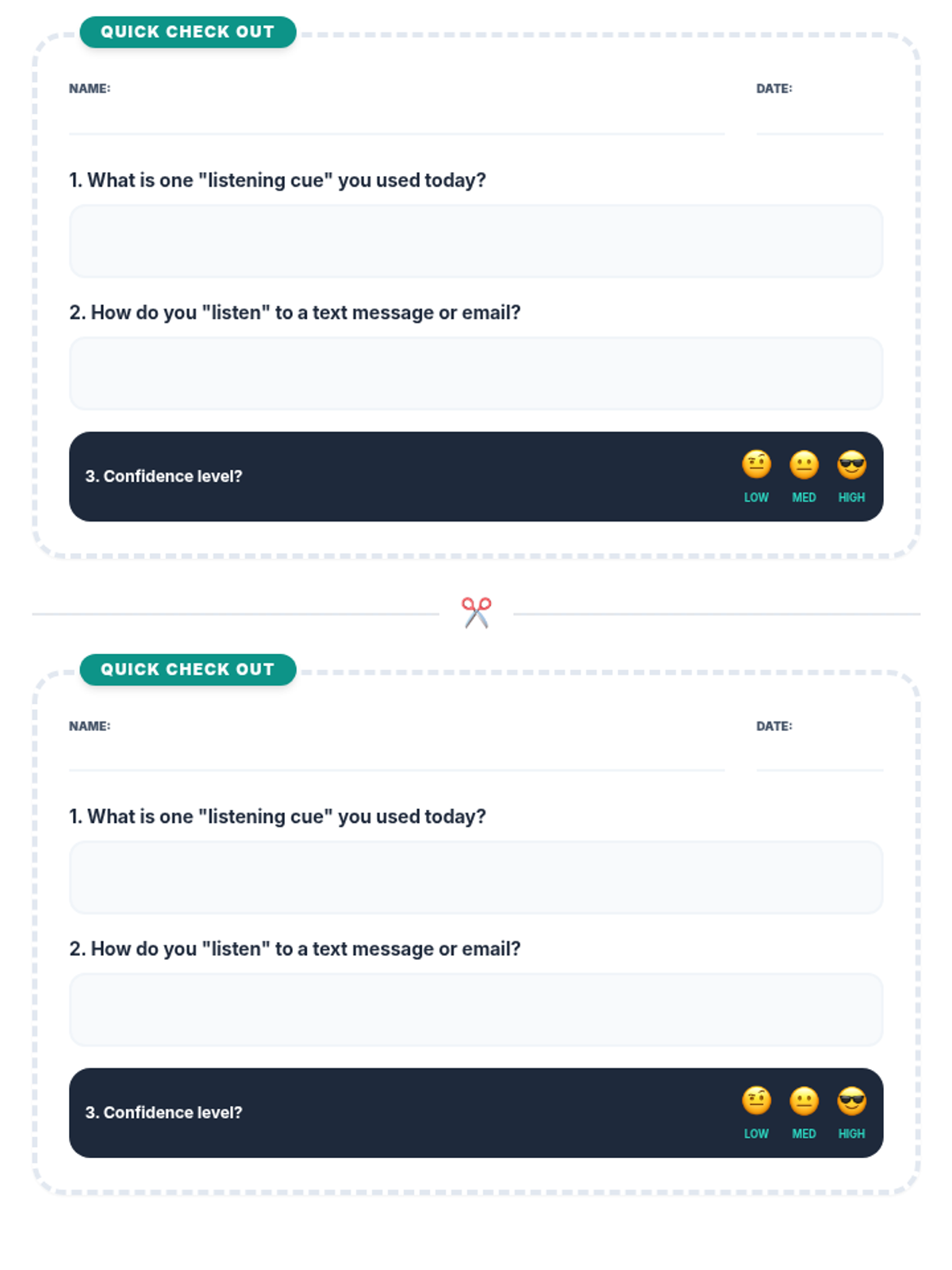
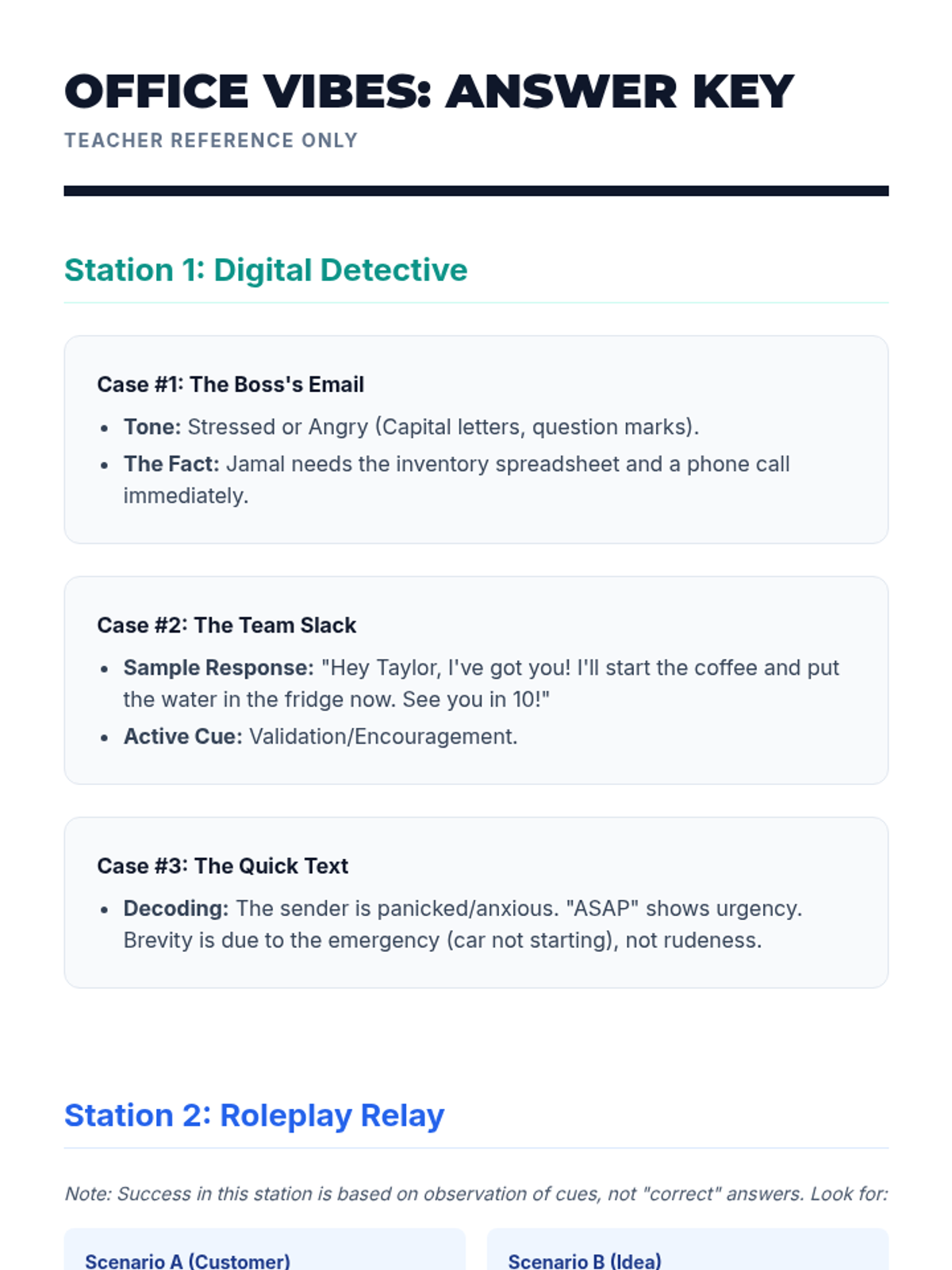
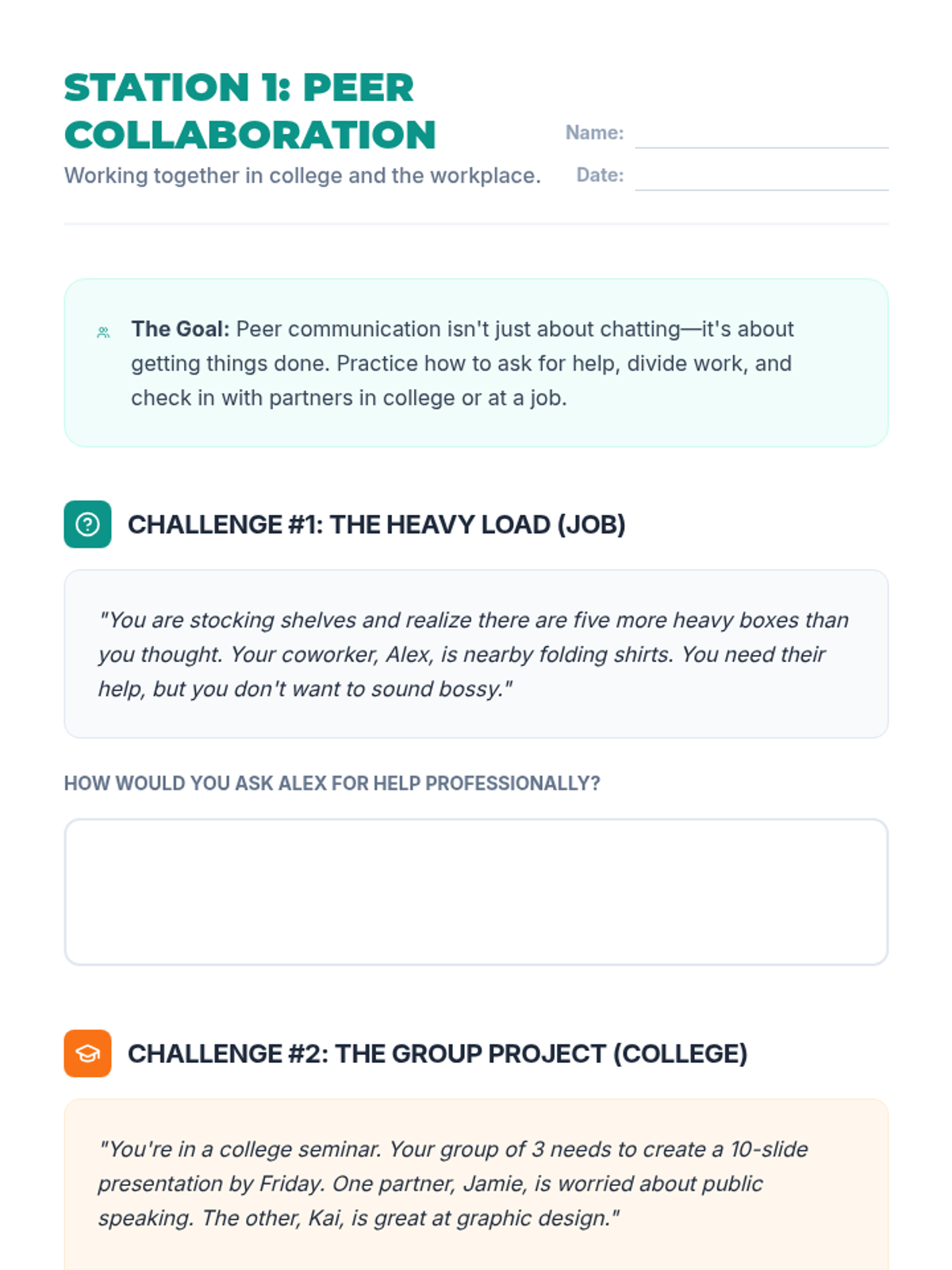
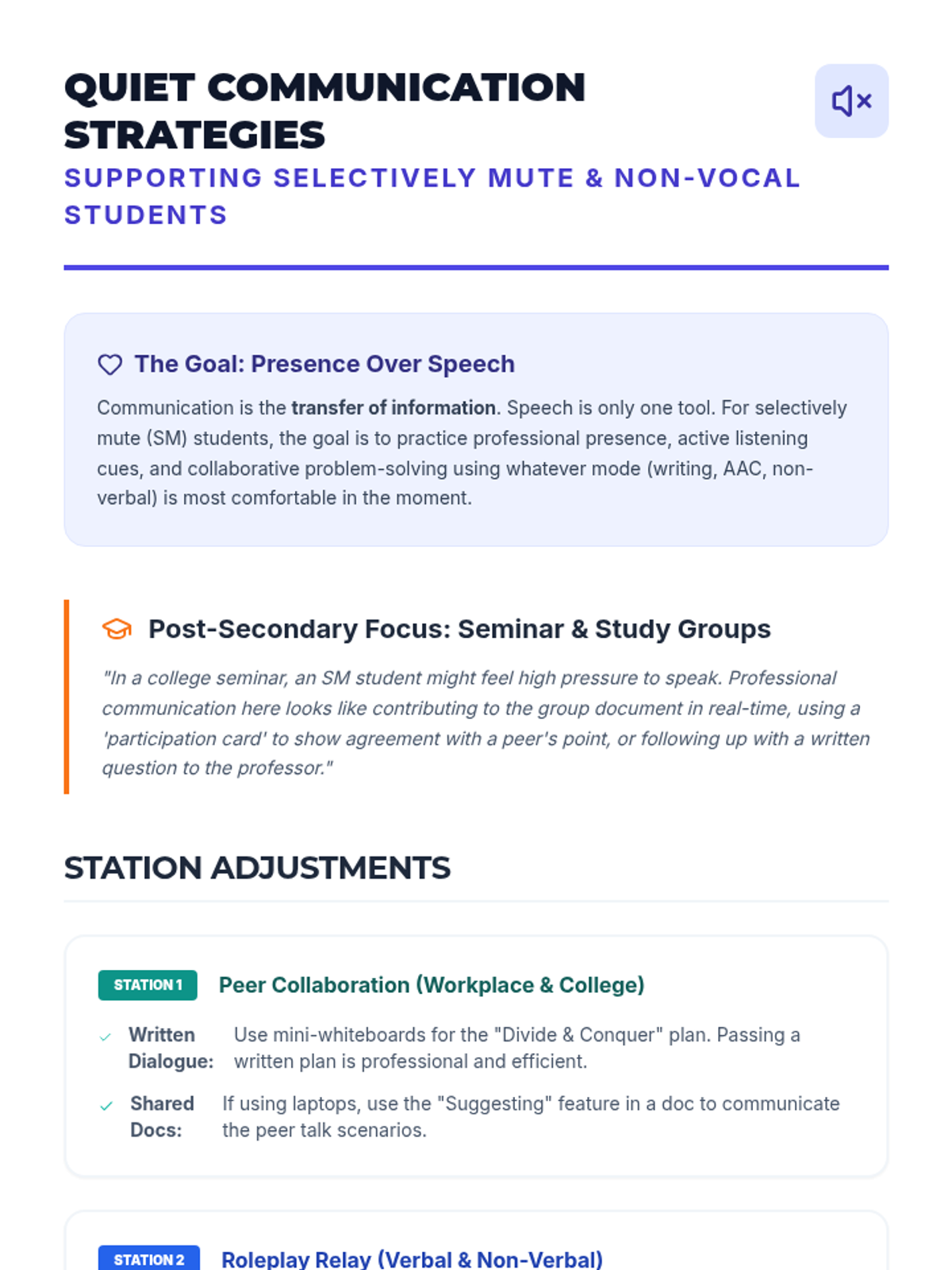
A high-energy, station-based lesson focusing on active listening and professional communication with peers in the workplace. Students move through interactive tasks that build social-emotional skills, collaborative habits, and the ability to give and receive professional feedback.
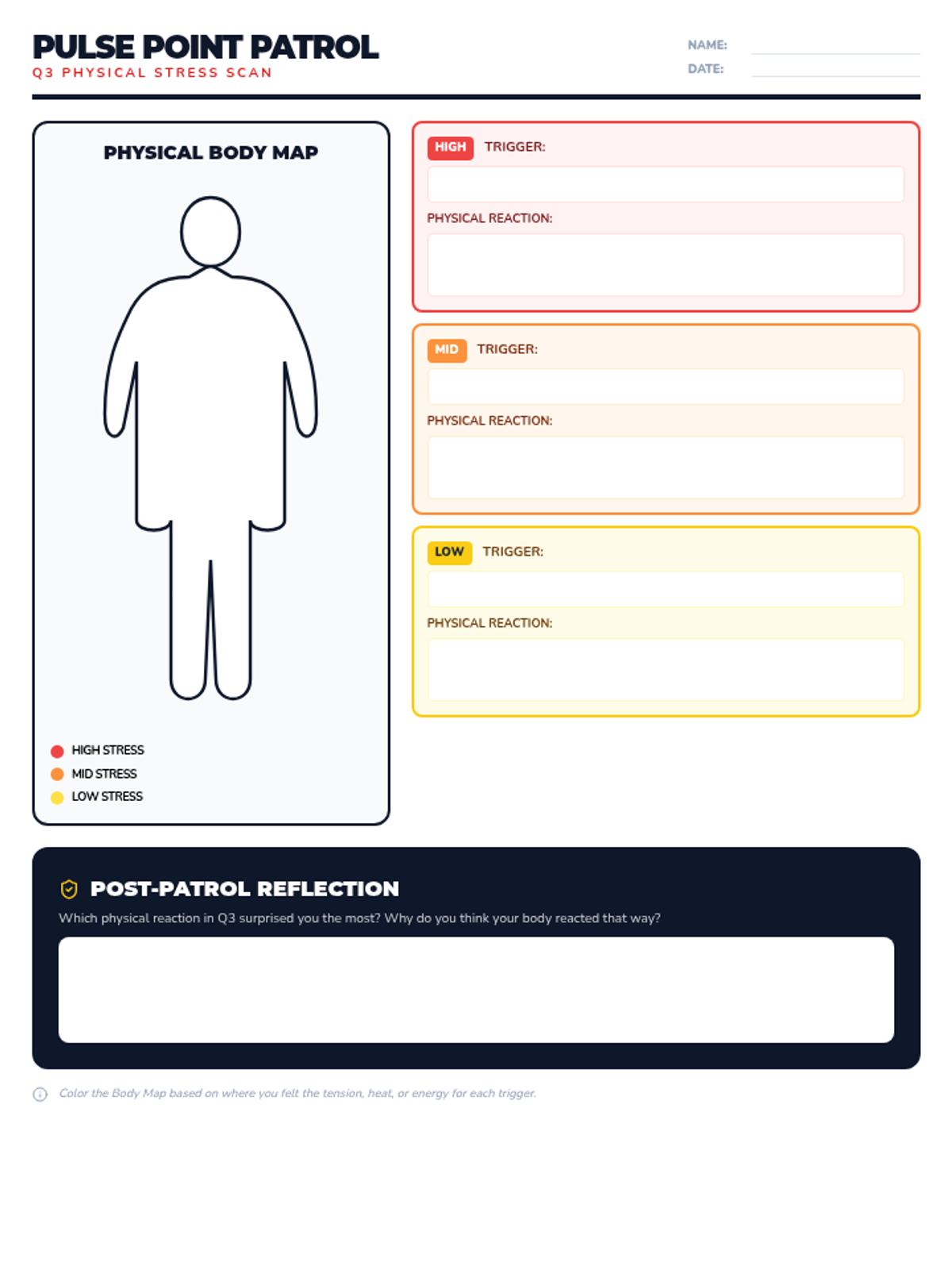
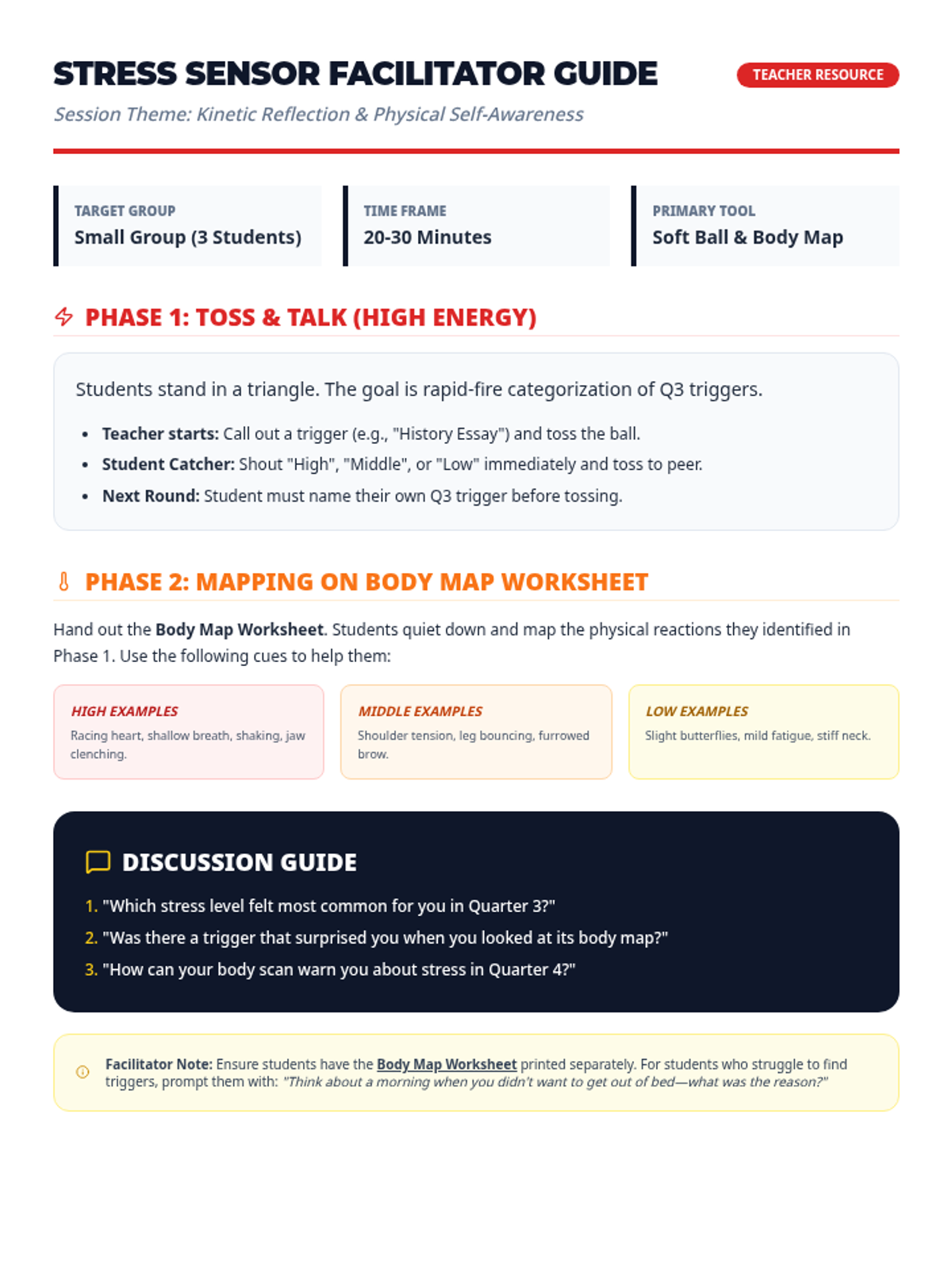
A high-energy, kinetic lesson for students to identify and map stress levels (High, Middle, Low) and their physical manifestations through a ball-toss reflection on Quarter 3.
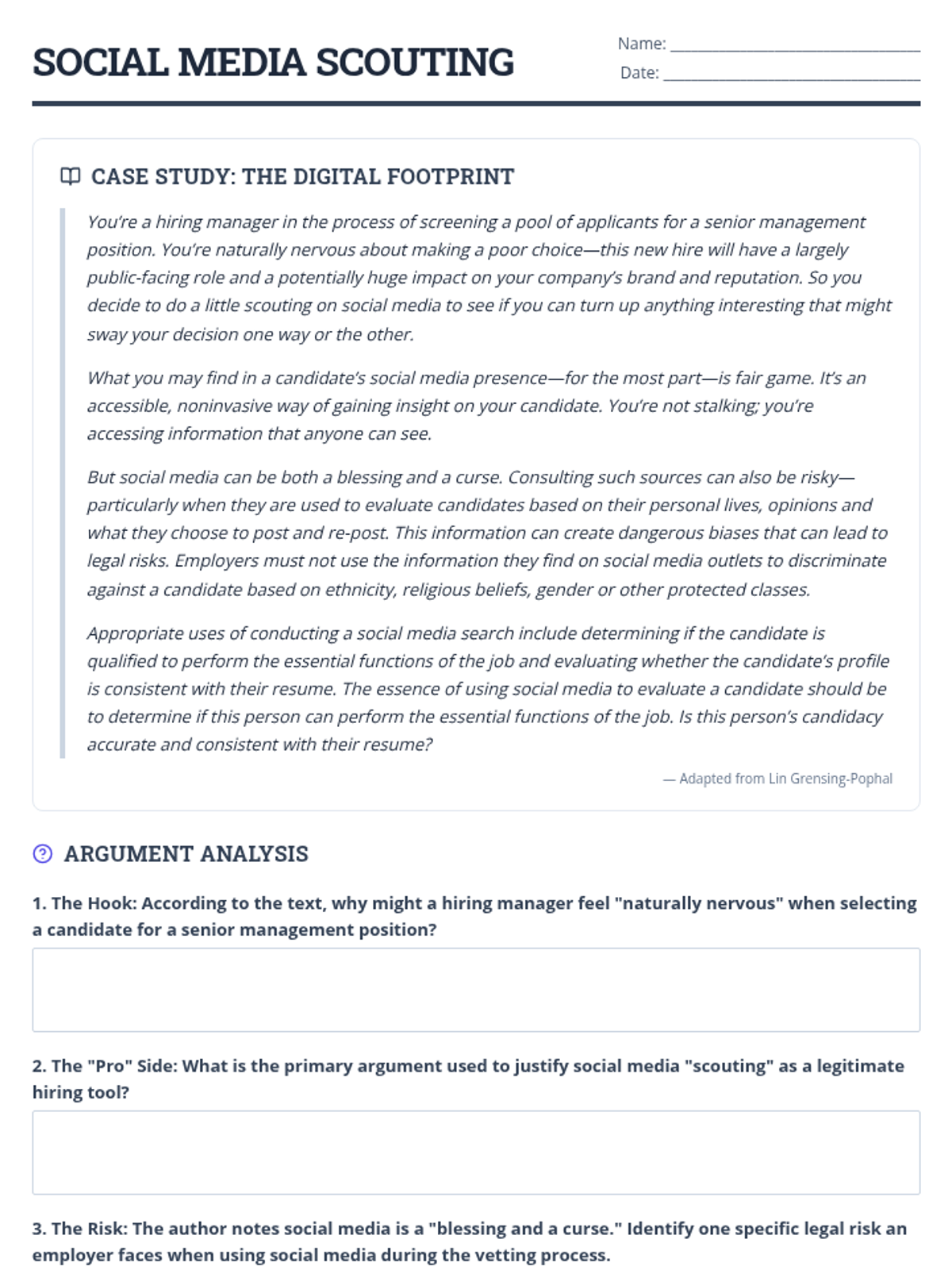
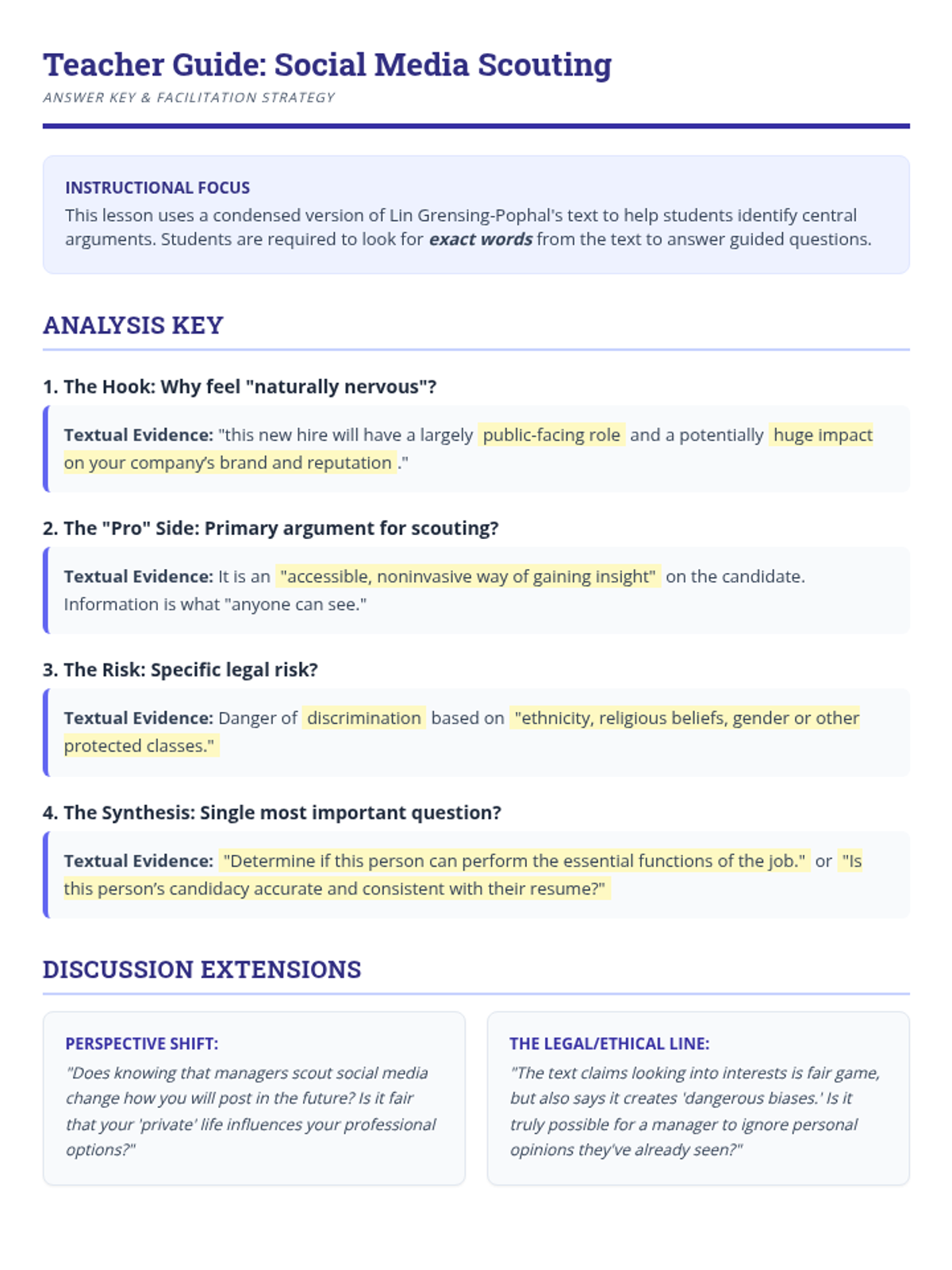
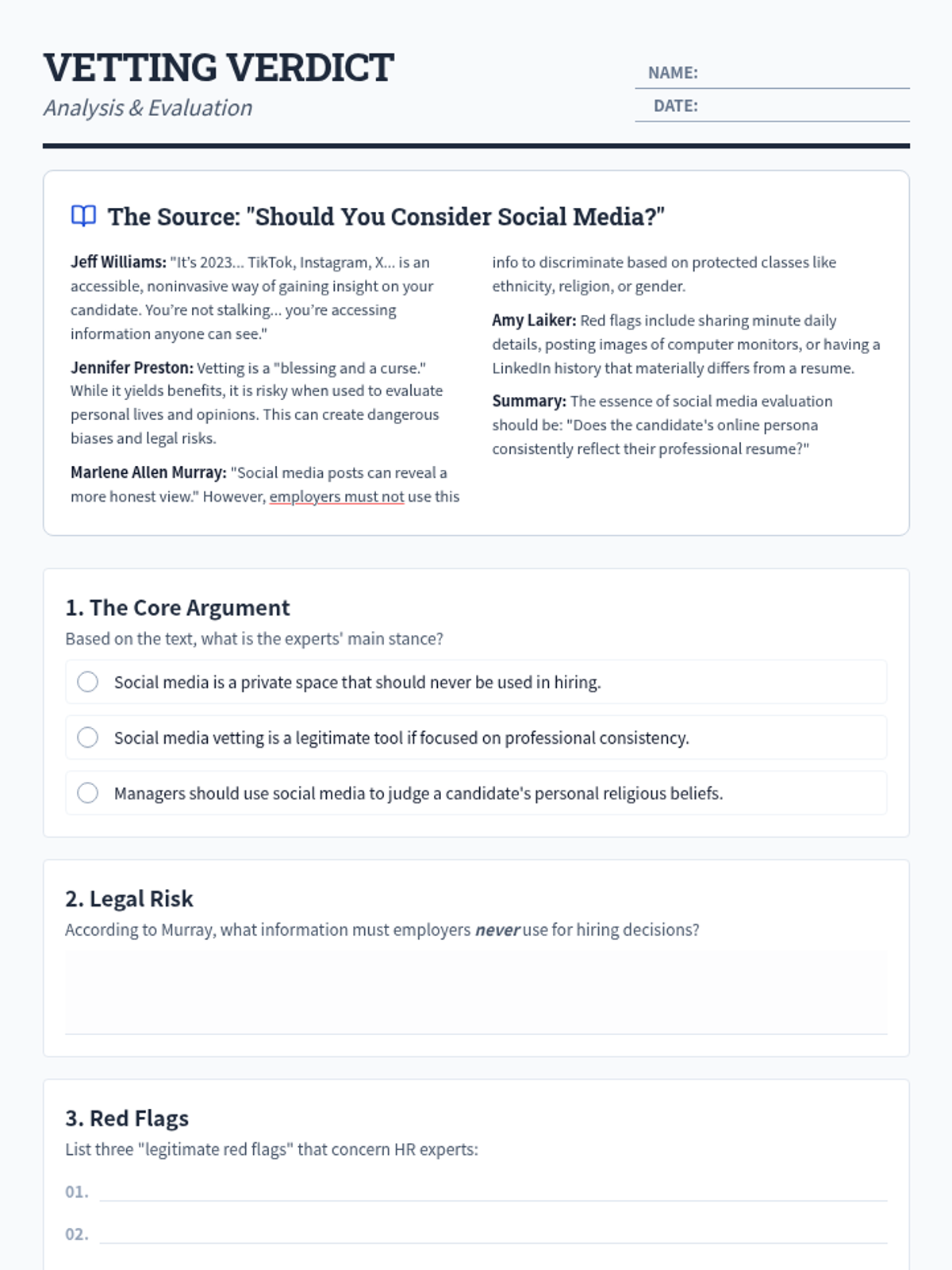
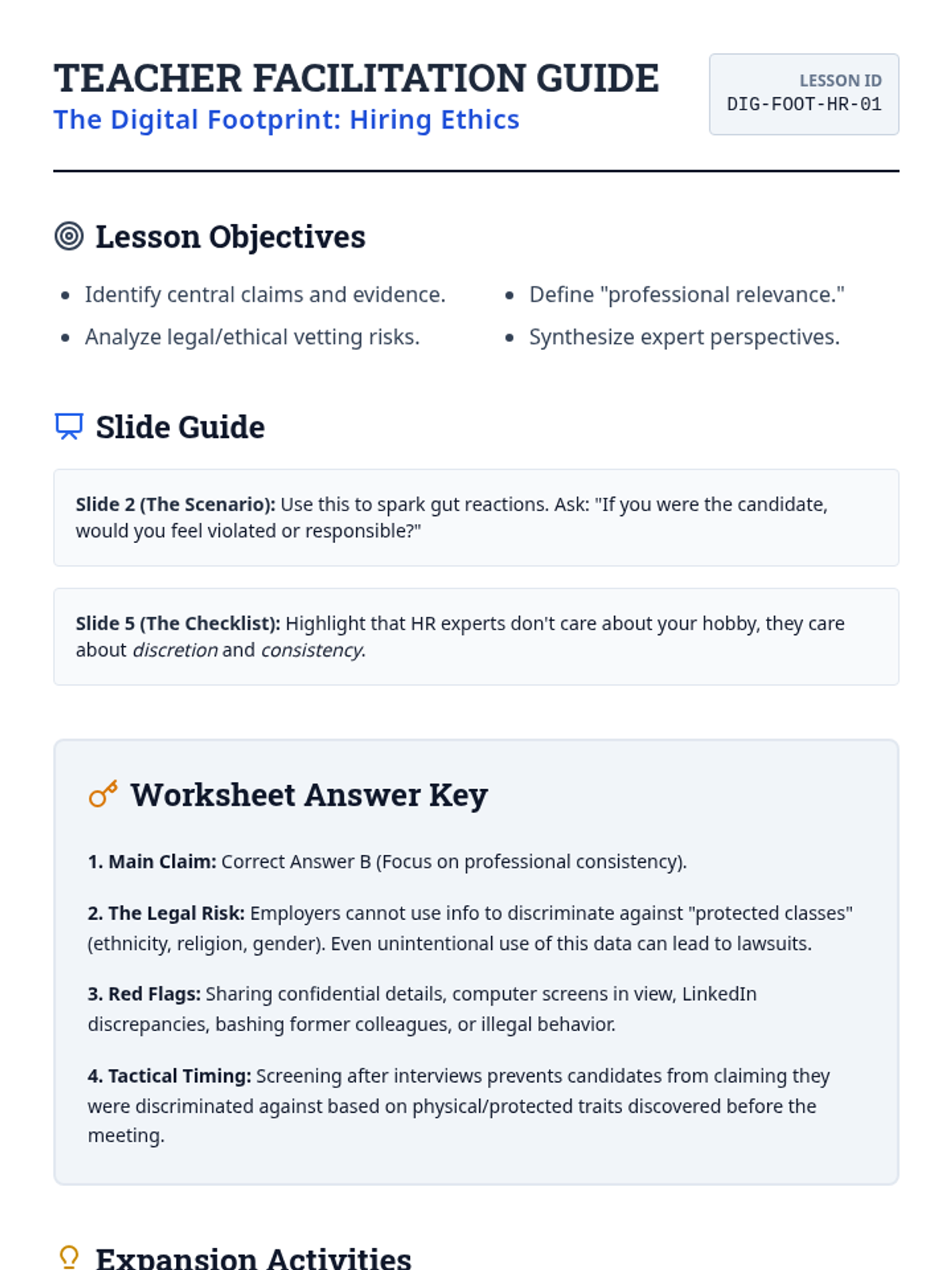
This lesson explores the ethical and legal implications of using social media to vet job candidates, focusing on identifying arguments and balancing utility with risk.
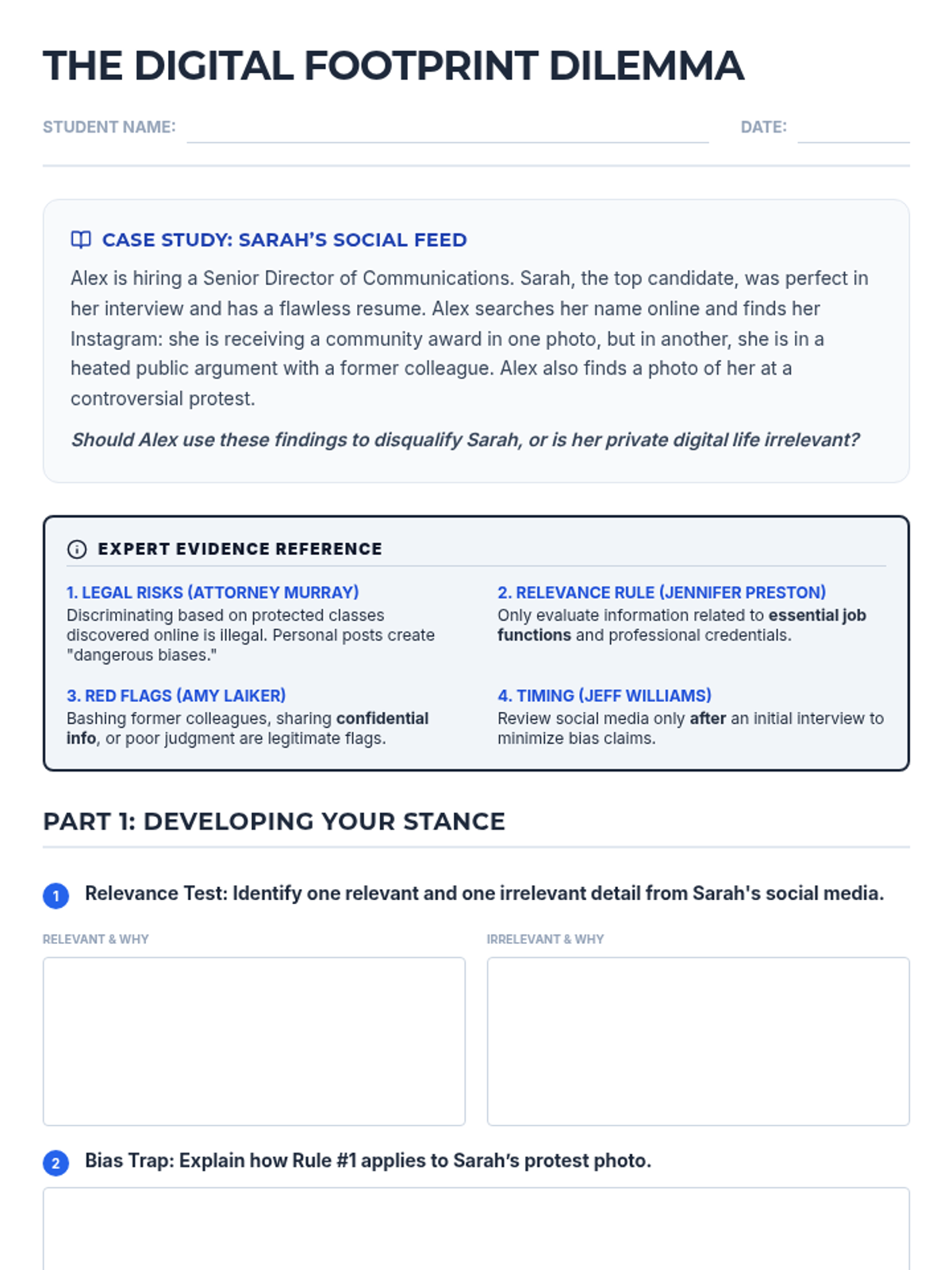
A comprehensive exploration of the ethics and legalities of using social media in the hiring process, based on real-world HR expert insights. Students will analyze conflicting perspectives, identify key arguments, and form their own evidence-based stance on digital vetting.
The final day of the unit focuses on students presenting their career research and budget projections to the class, demonstrating their oral communication and technological skills.
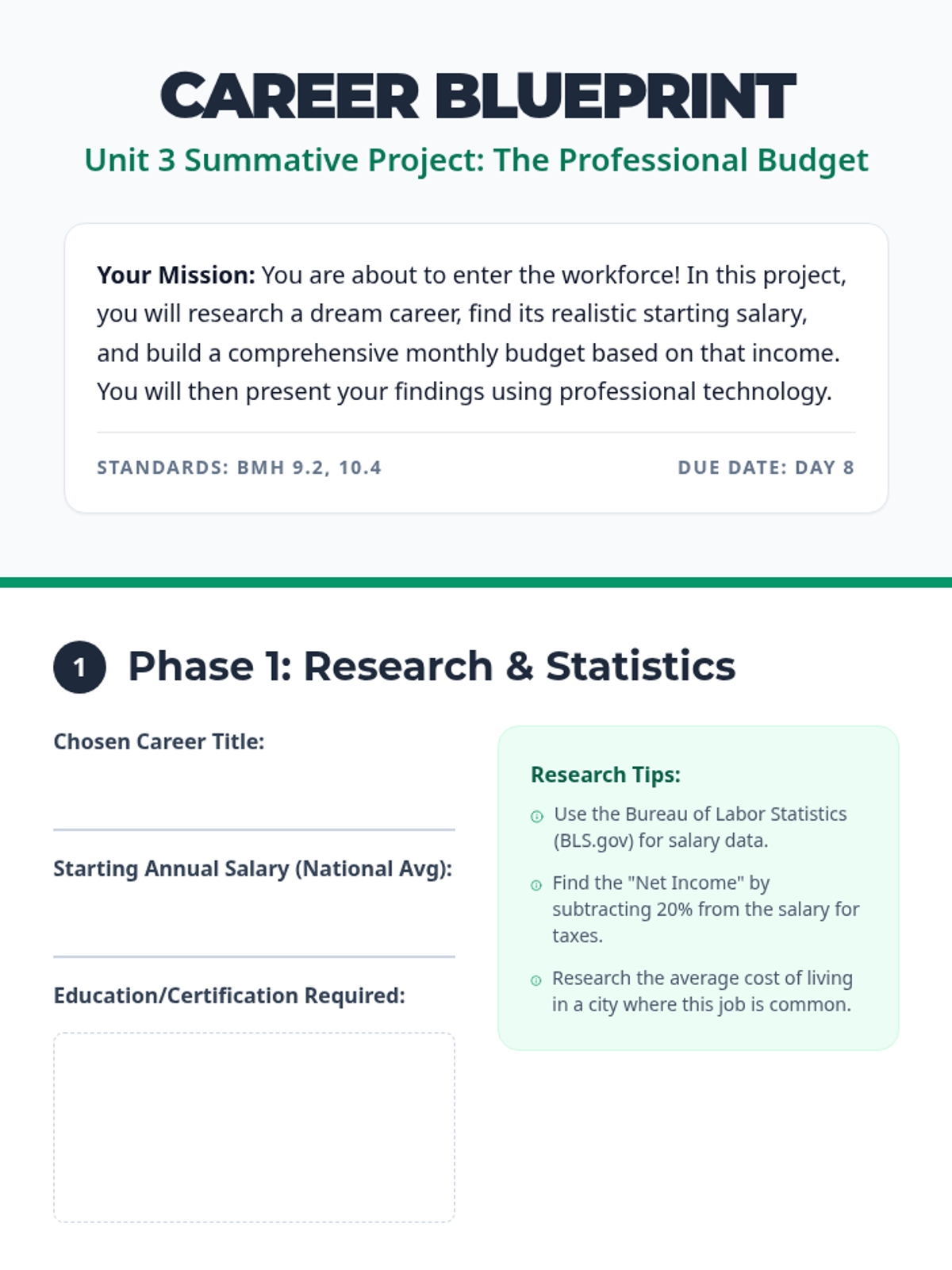
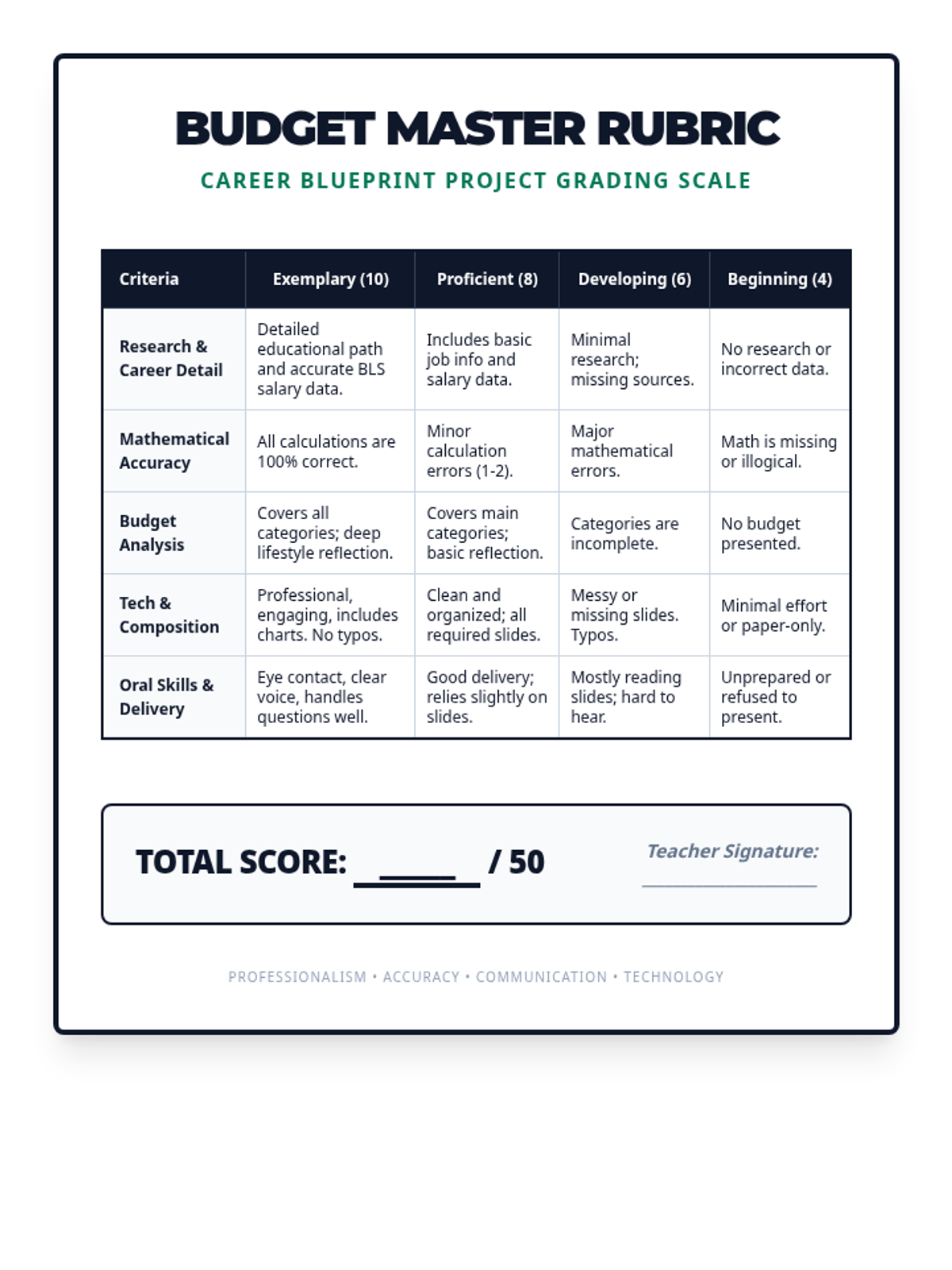
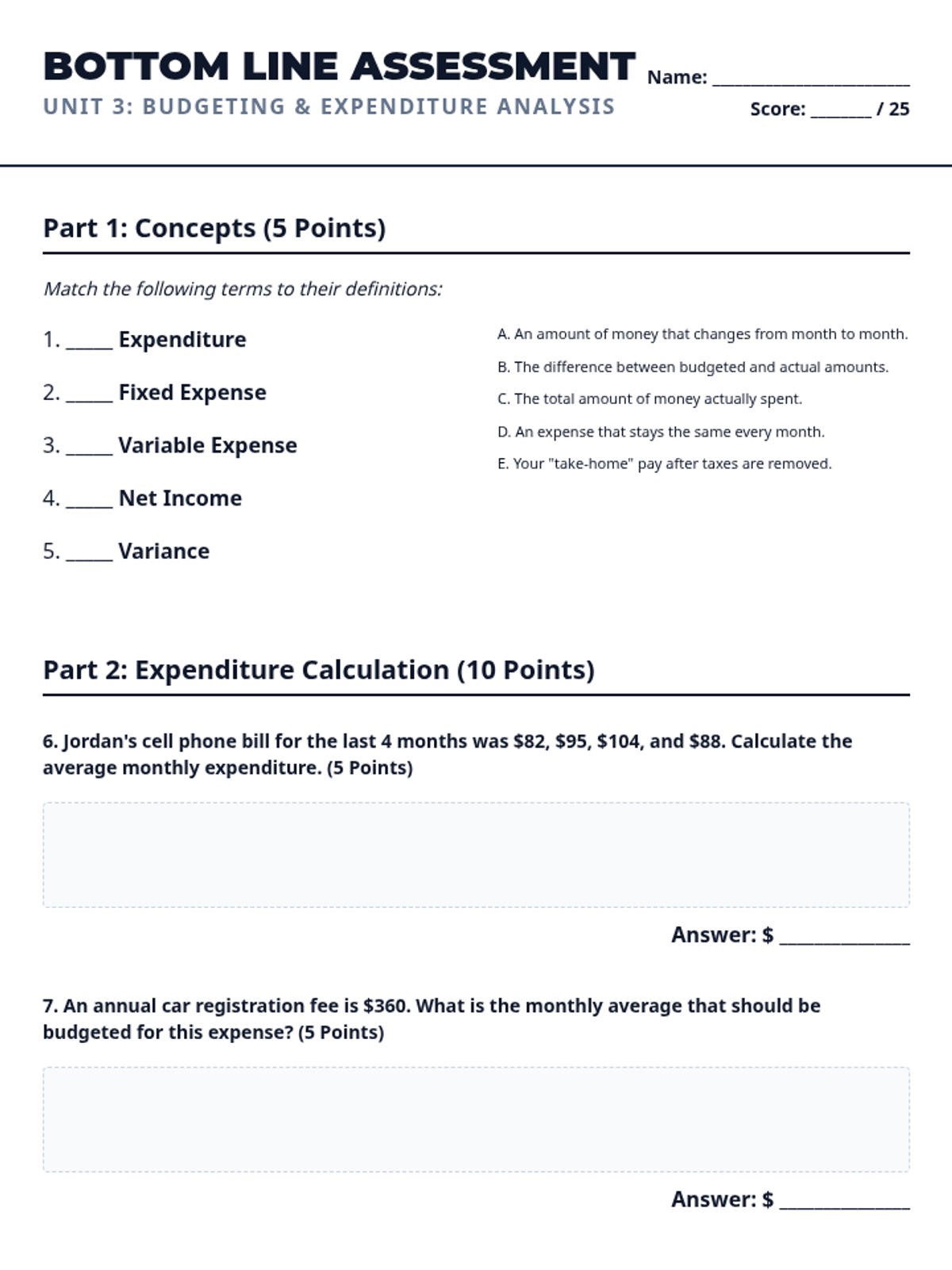
Students research a career path, including educational requirements and starting salaries, to build a realistic monthly budget. This lesson includes the summative assessment covering unit concepts.
Students transition from tracking spending to creating forward-looking budget sheets. They practice comparing budgeted amounts to actual expenditures and calculating variances.
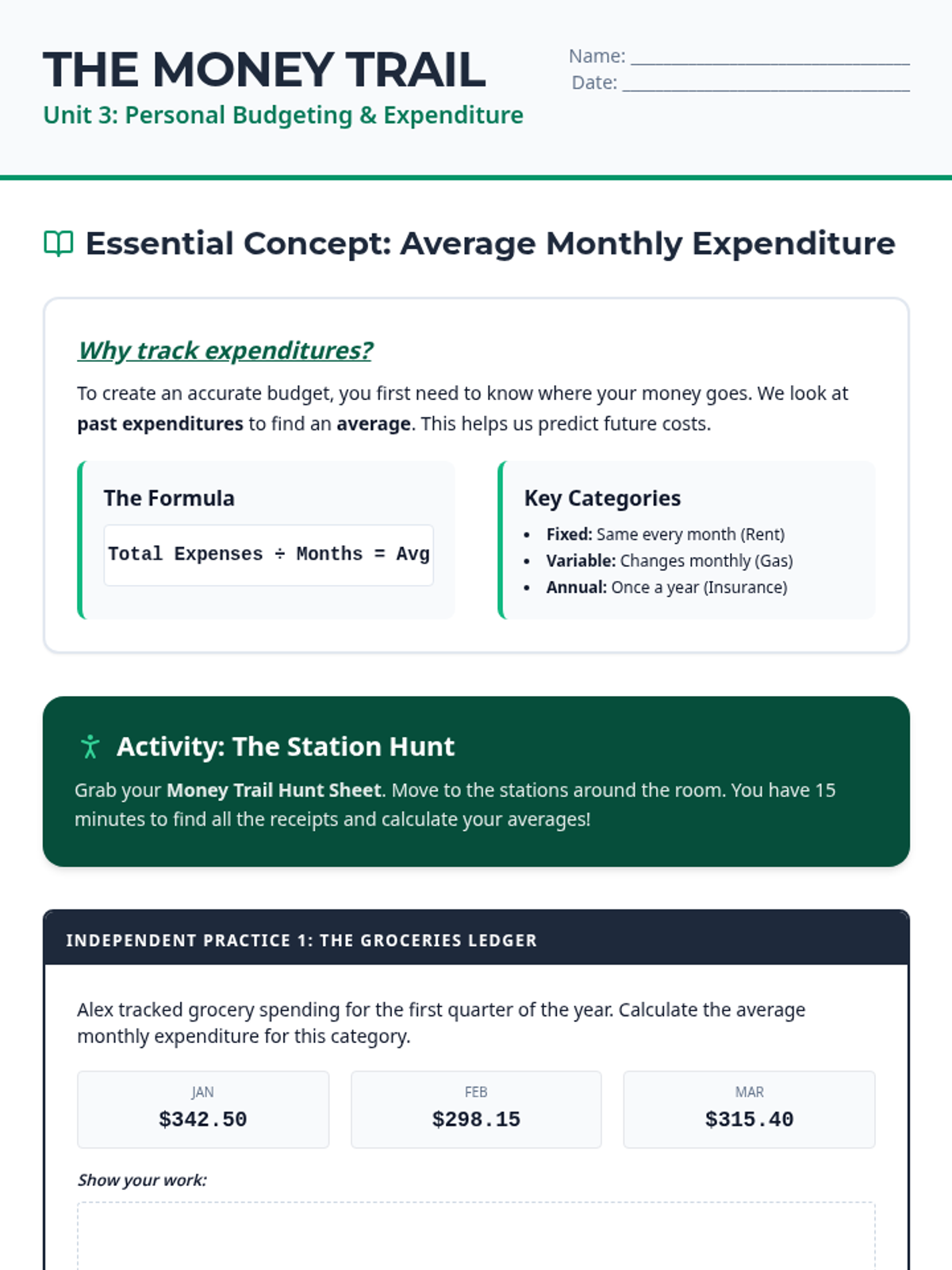
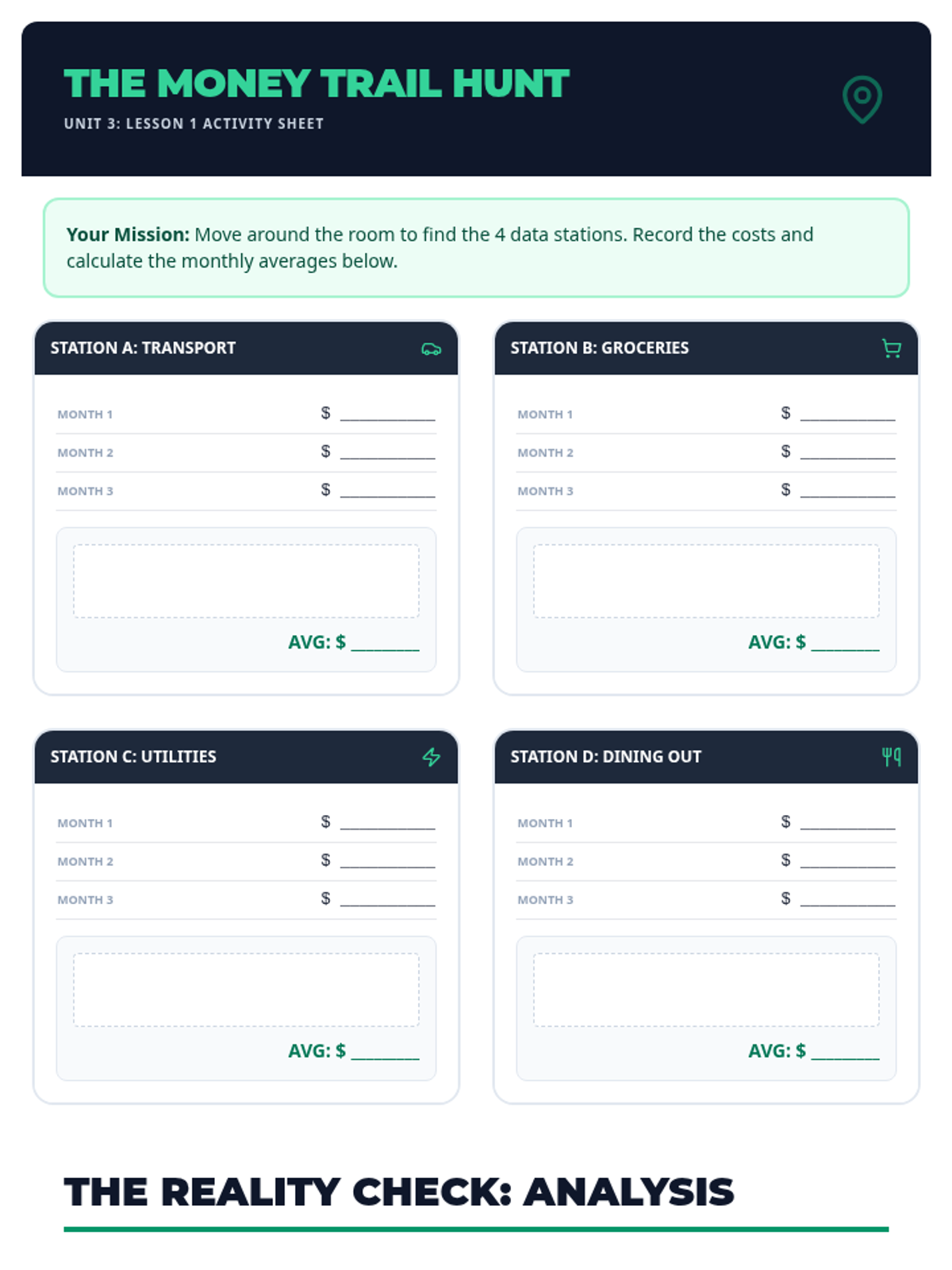
Students learn to calculate average monthly expenditures by analyzing spending patterns and categorizing costs. This lesson establishes the foundation for accurate budgeting by looking at historical data.
A lesson exploring the ethical and legal complexities of using social media to screen job candidates, featuring a narrative case study and an argument-building framework.
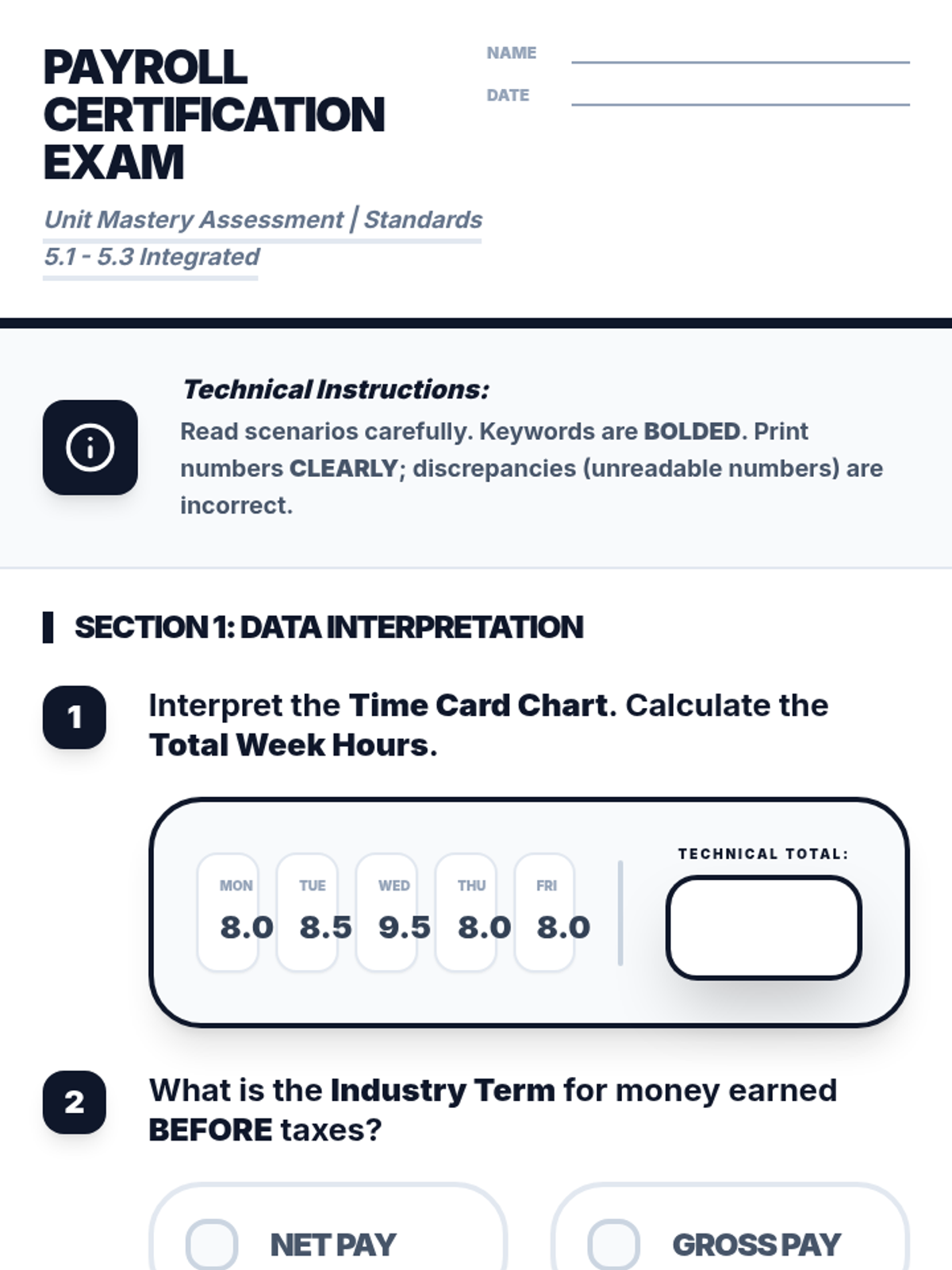
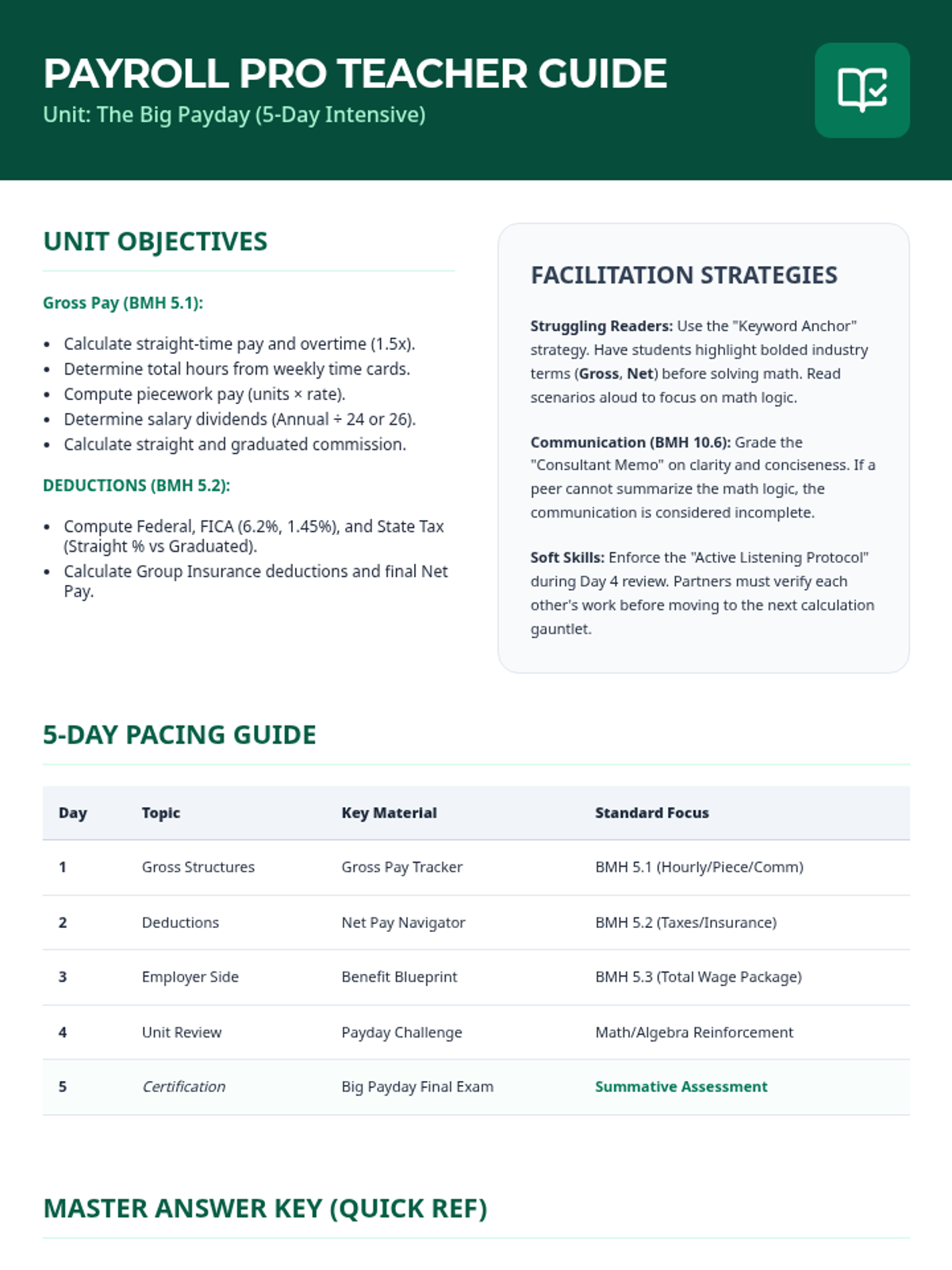
A formal summative assessment designed with accessibility in mind for students who struggle with reading, focusing on payroll calculations and concepts.
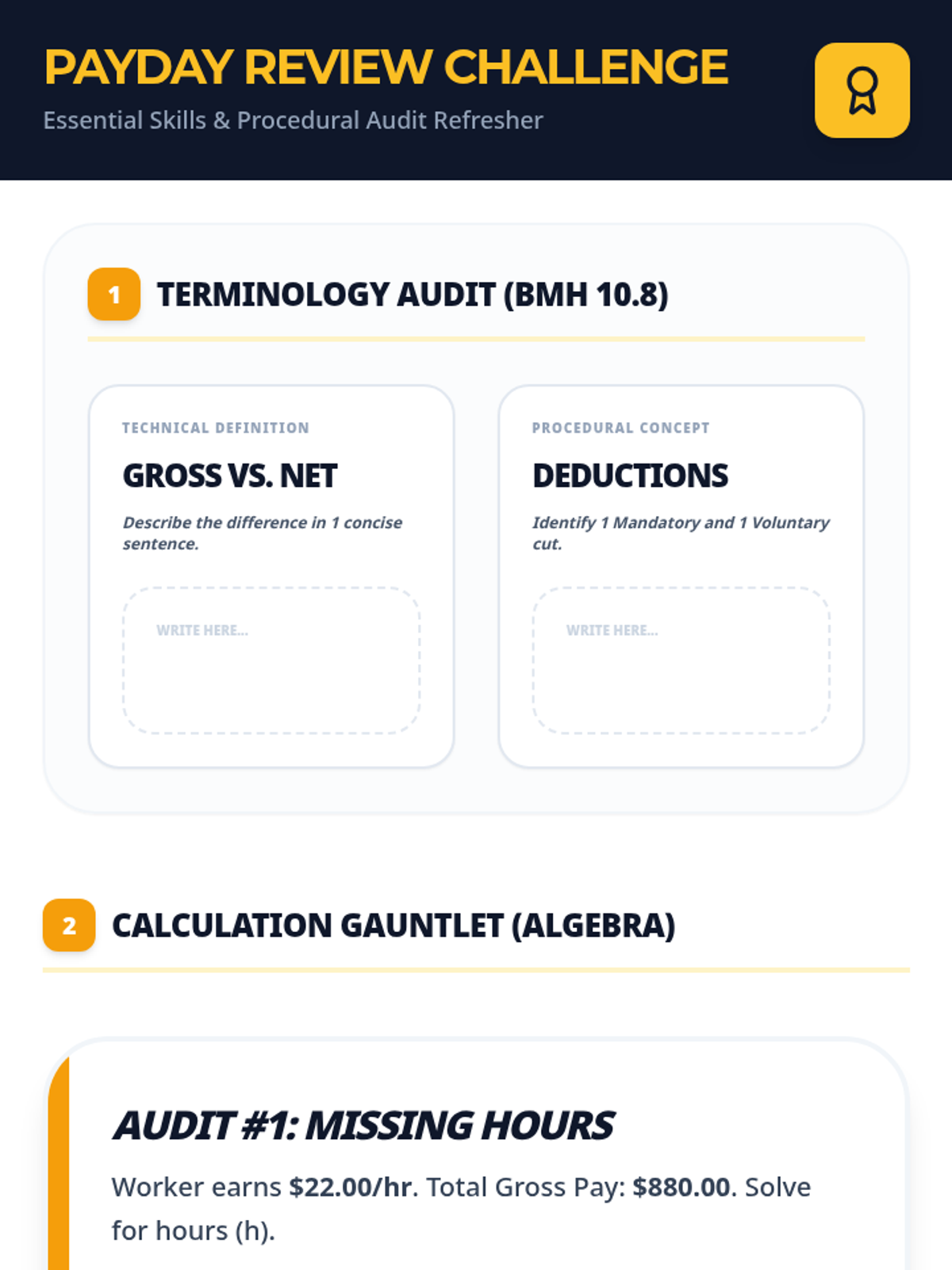
A comprehensive review session to reinforce payroll concepts and prepare students for the final unit assessment.
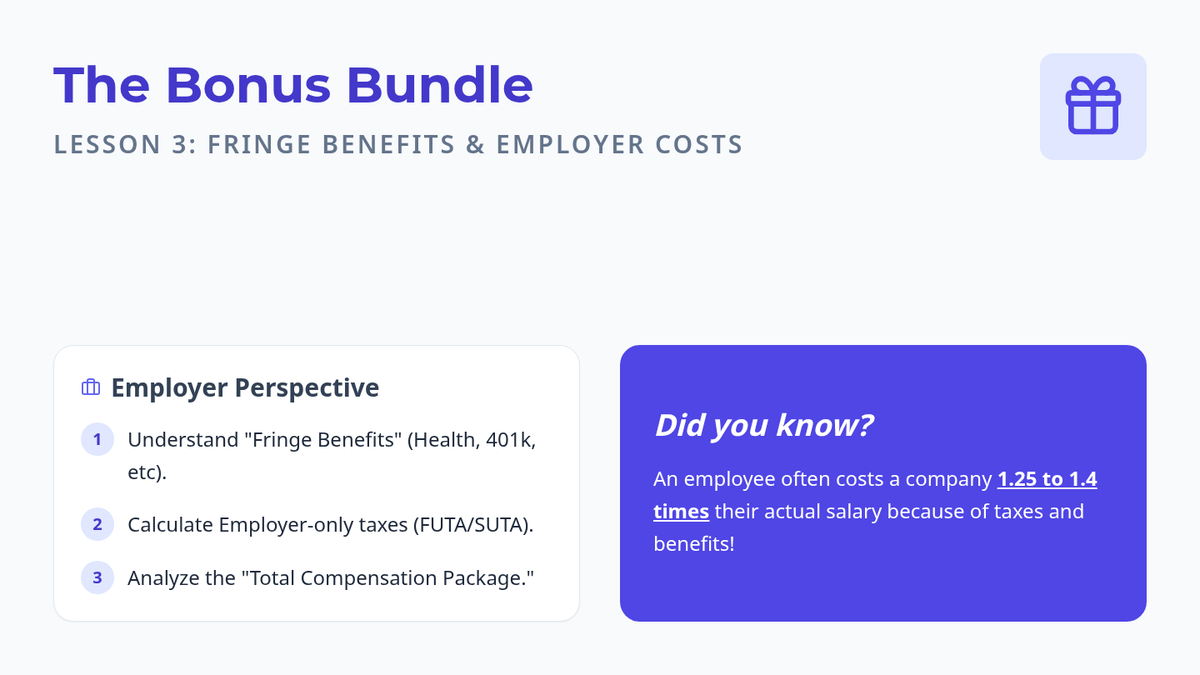
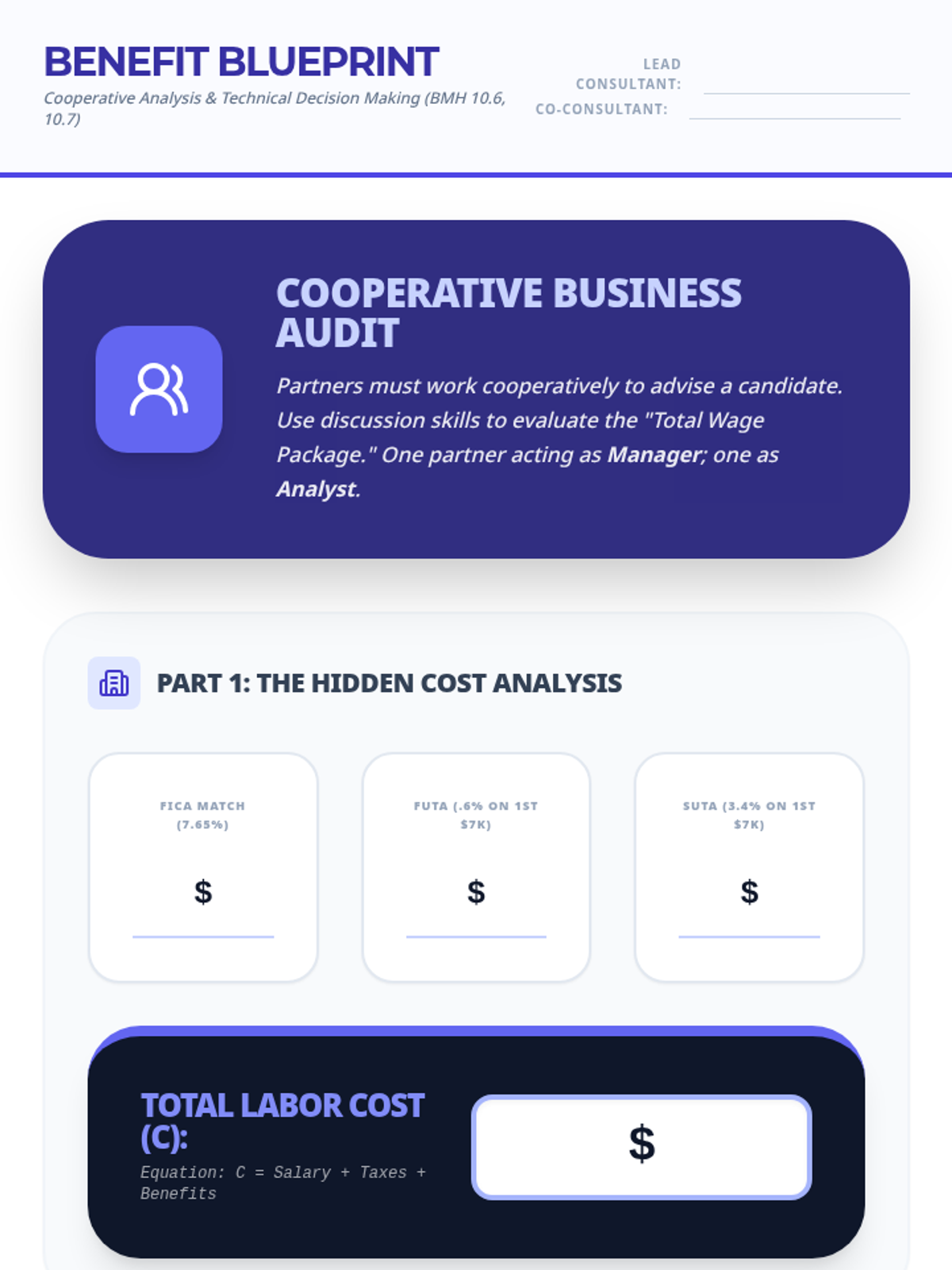
Students analyze the employer's side of payroll, including FUTA/SUTA taxes and the value of fringe benefits in a total compensation package.
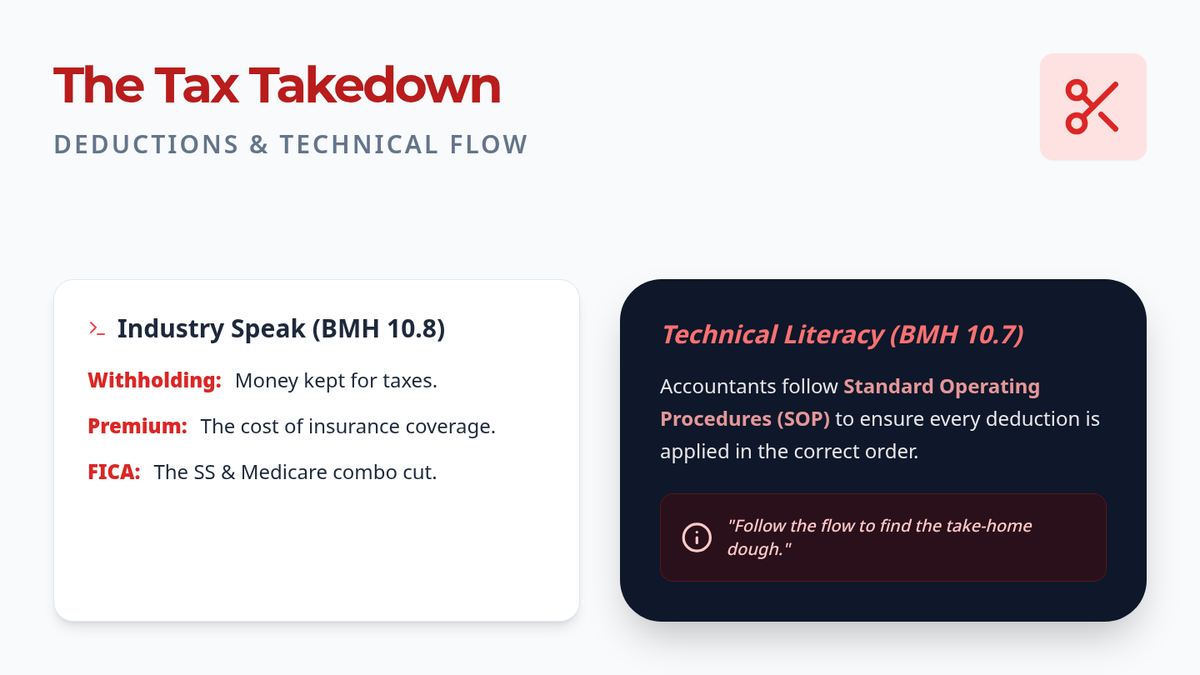
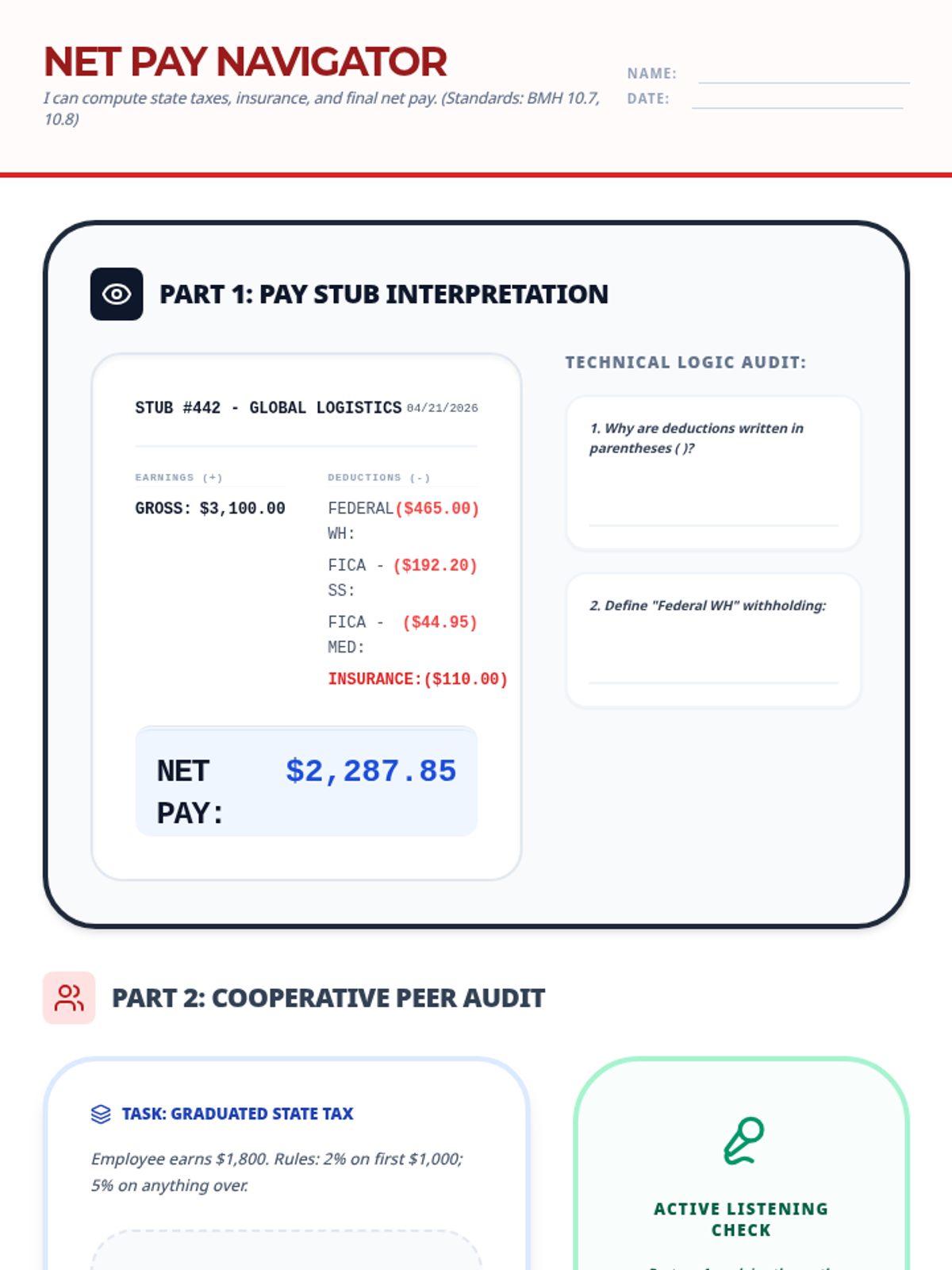
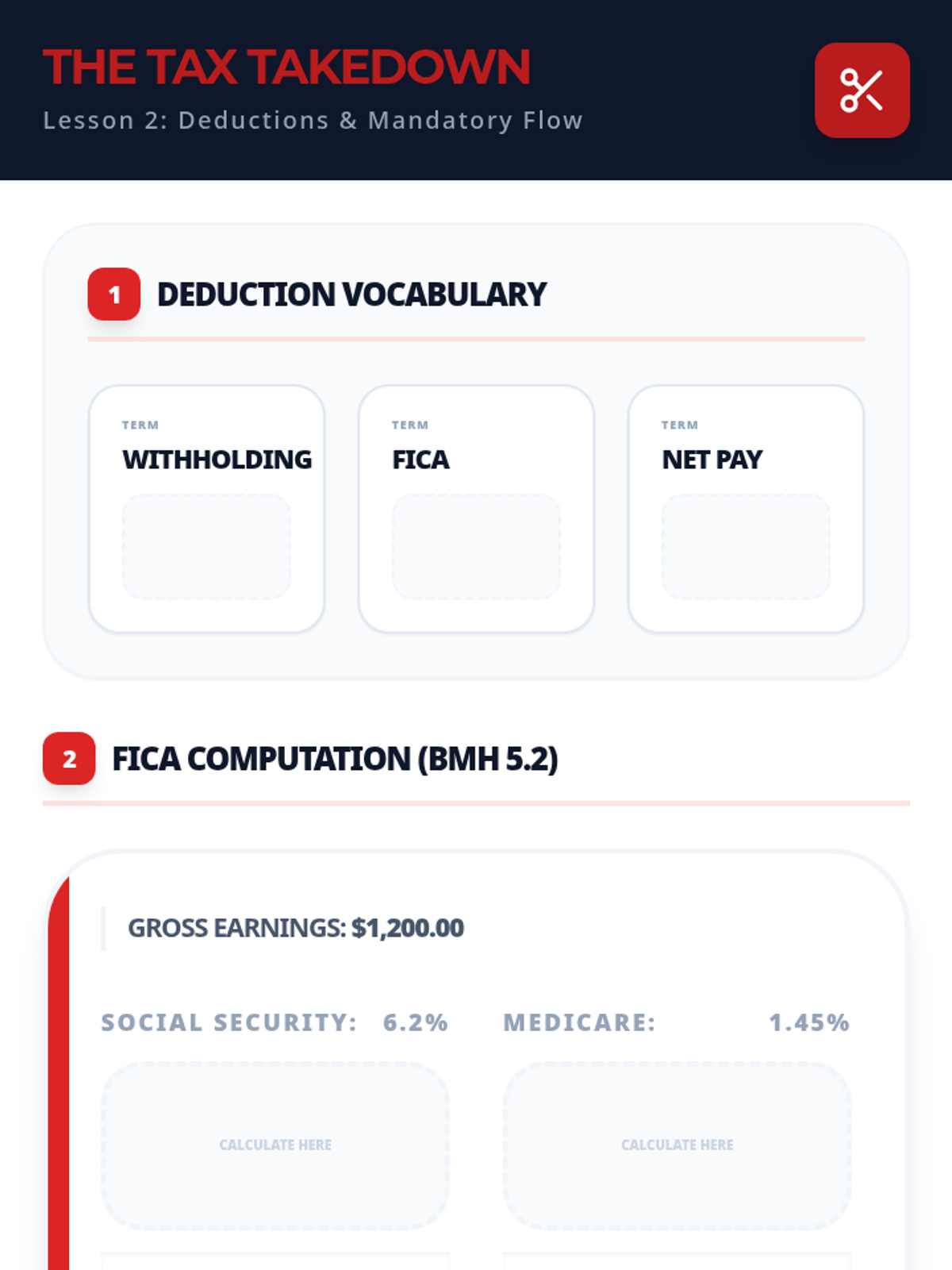
An exploration of mandatory deductions, including FICA and income taxes, focusing on how gross pay becomes net pay for employees.
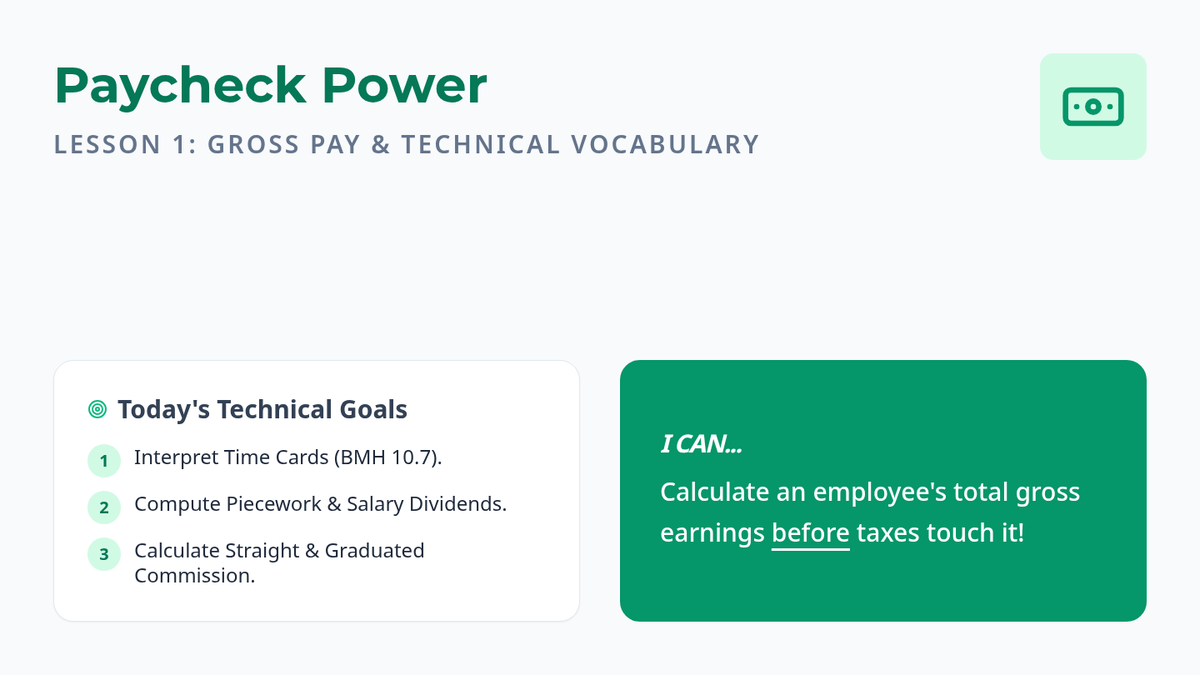
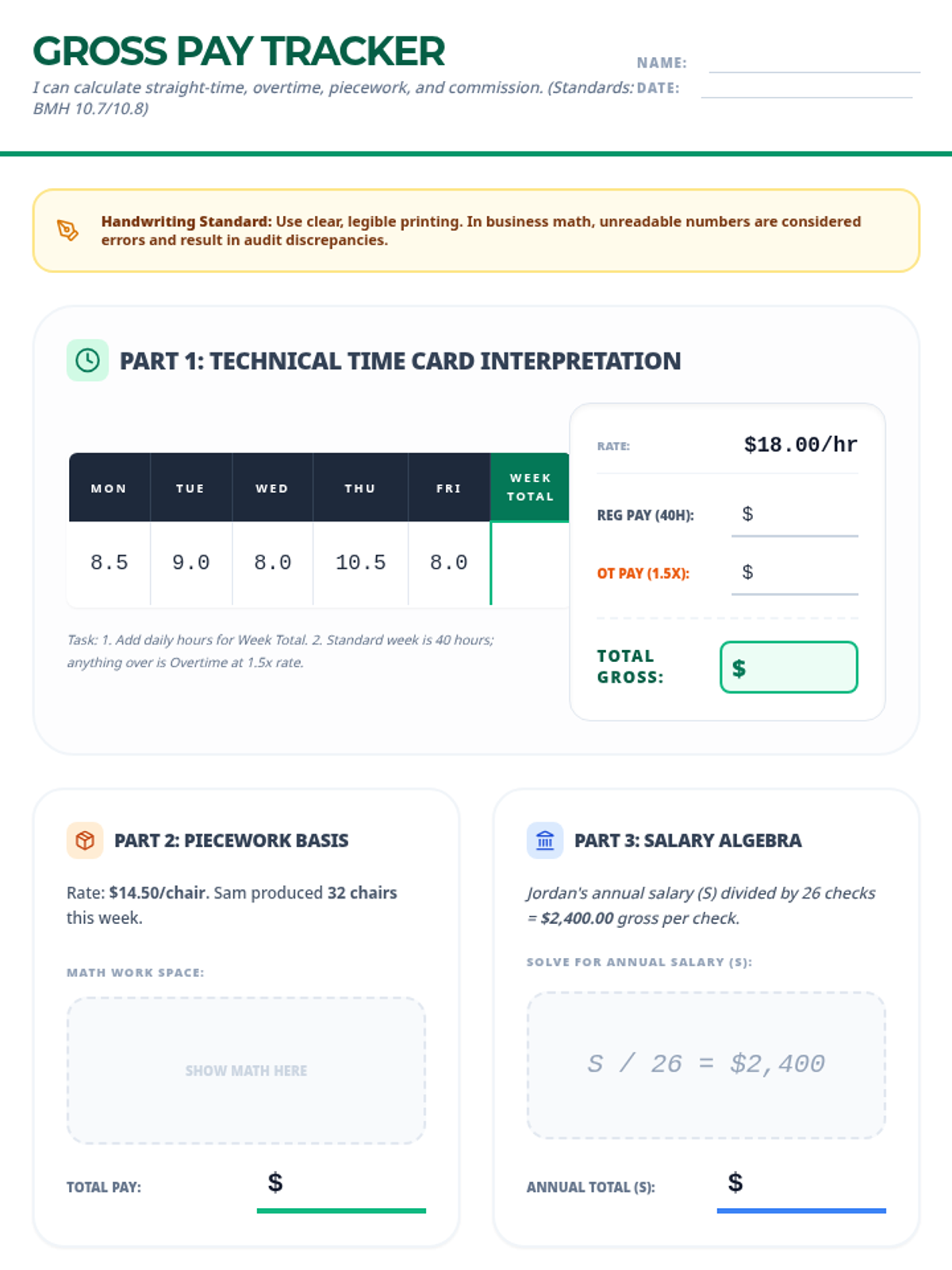
Students learn to calculate gross earnings for various pay structures including hourly, salary, and overtime while maintaining accurate payroll records.
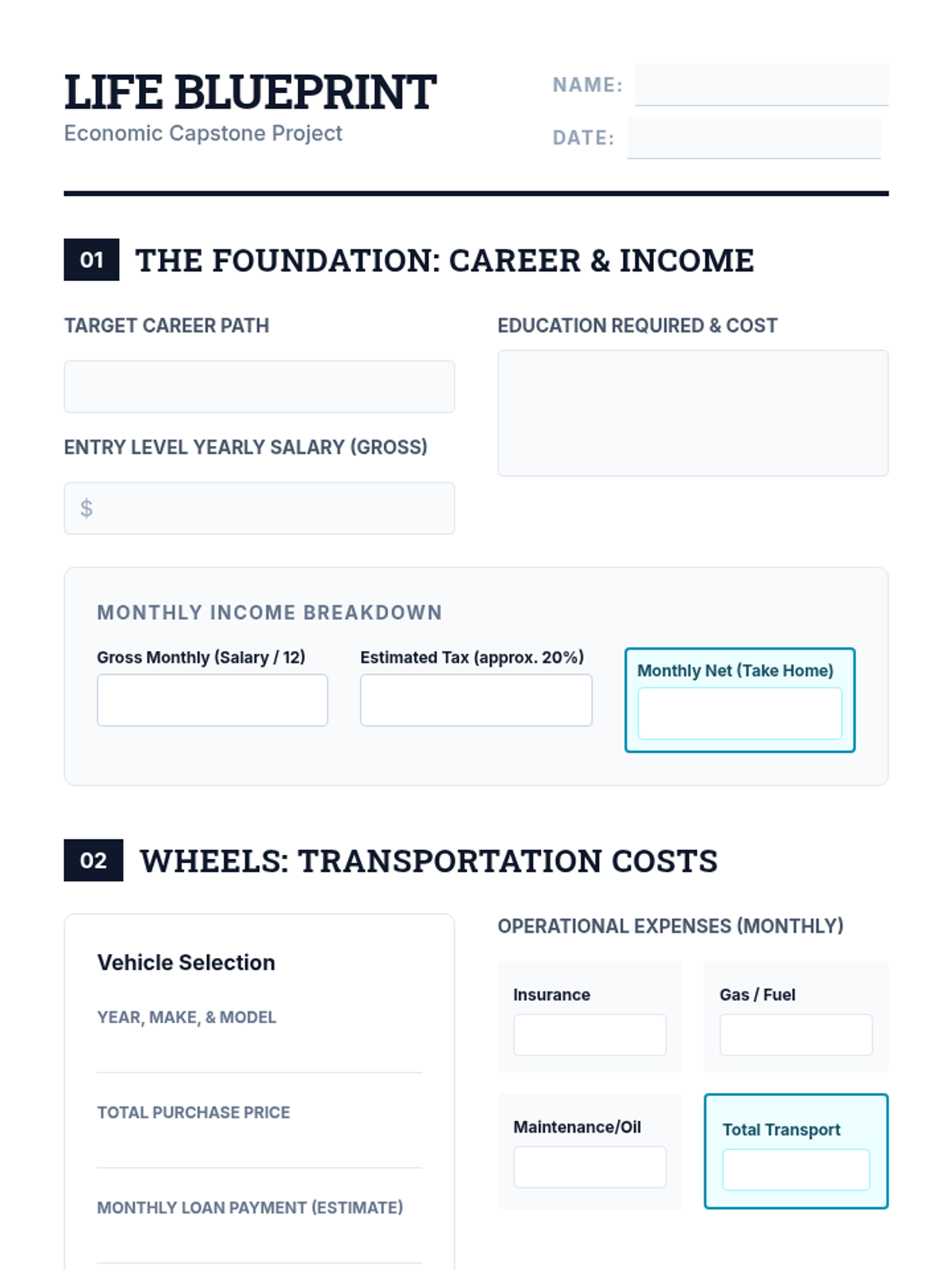
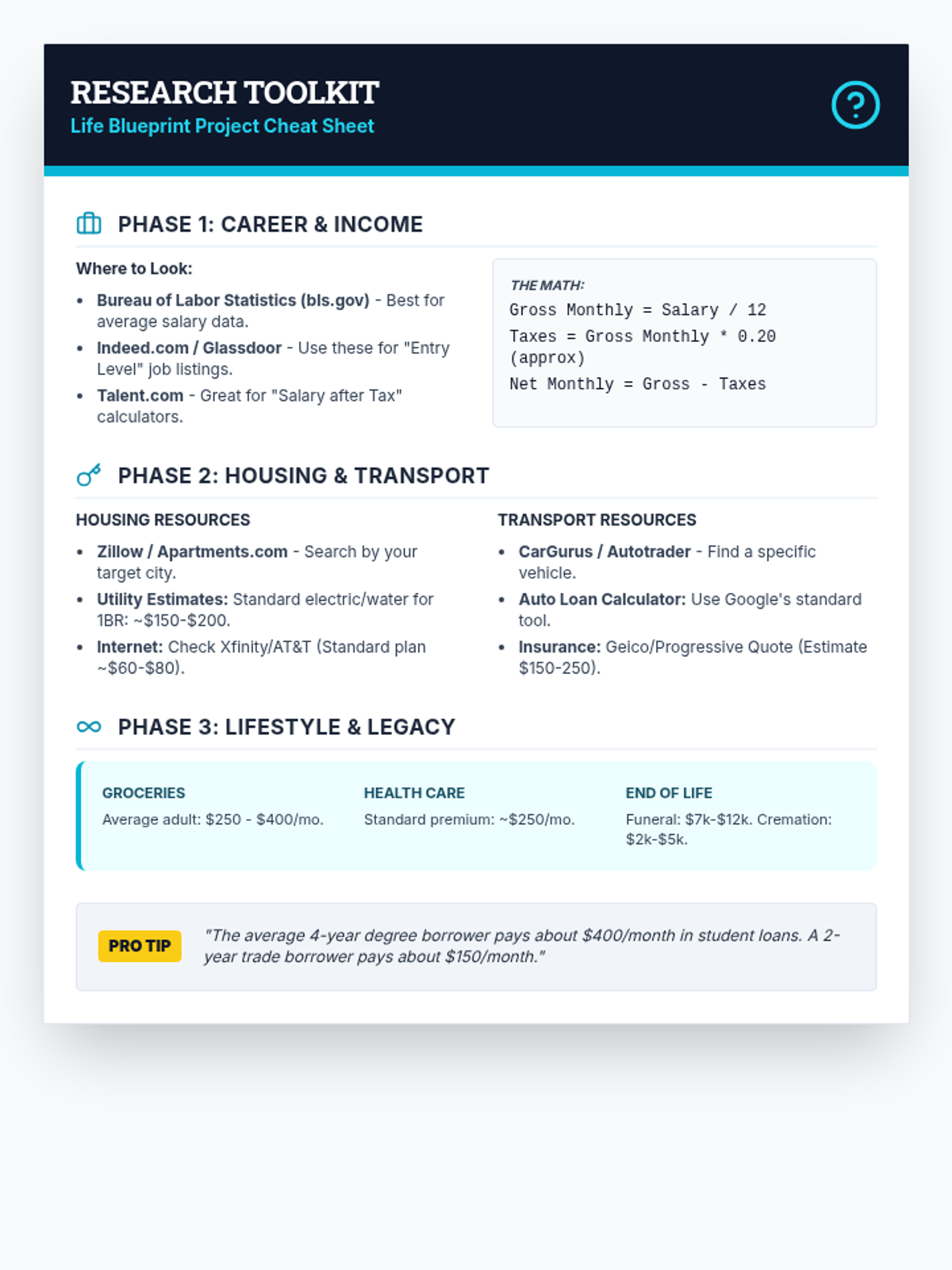
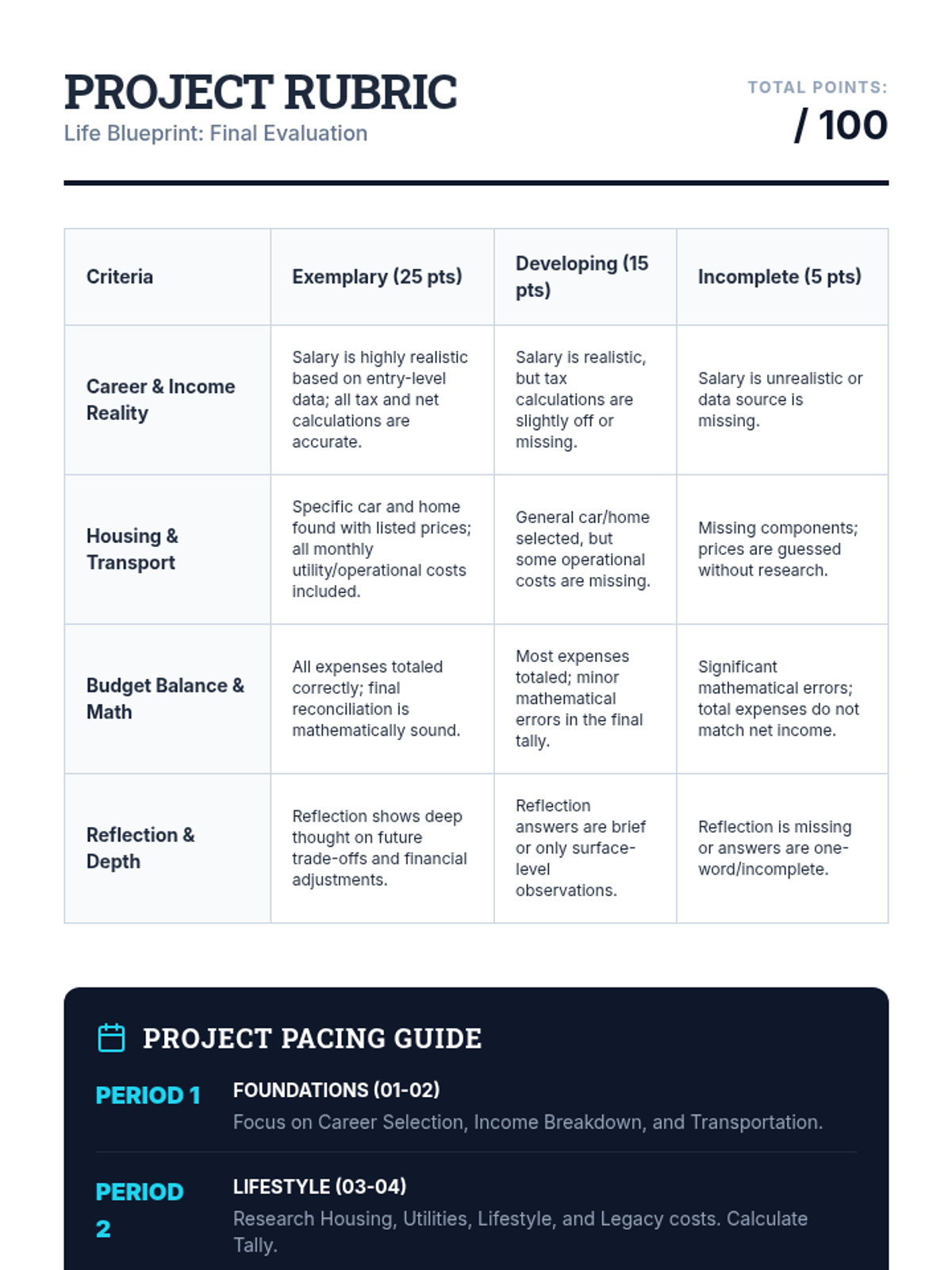
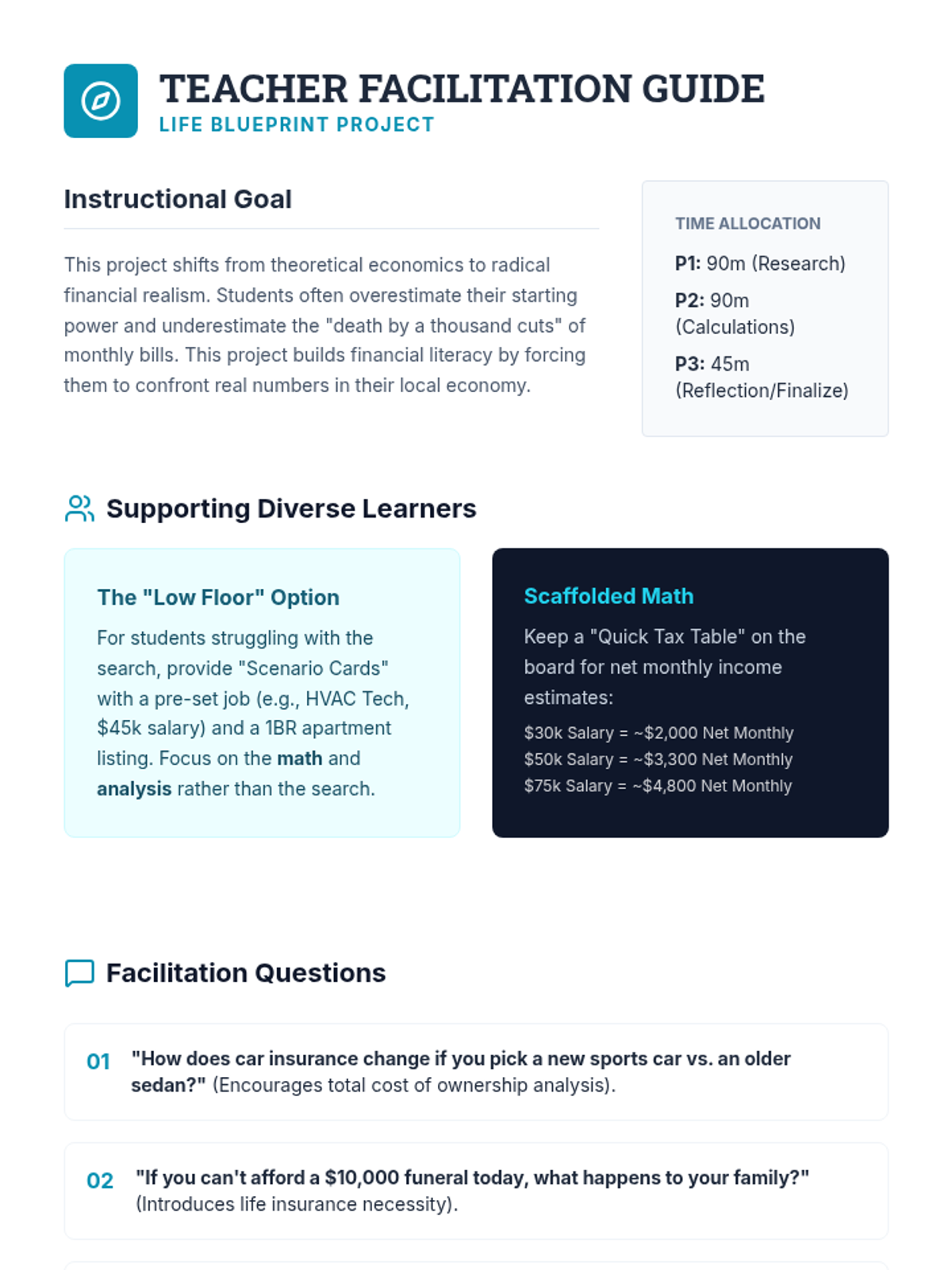
A comprehensive, multi-day project where students research and calculate the costs of a lifetime, from career entry to retirement and beyond. Students work independently to create a realistic 'Life Blueprint' based on their personal goals and current economic data.