Students transition from tracking spending to creating forward-looking budget sheets. They practice comparing budgeted amounts to actual expenditures and calculating variances.
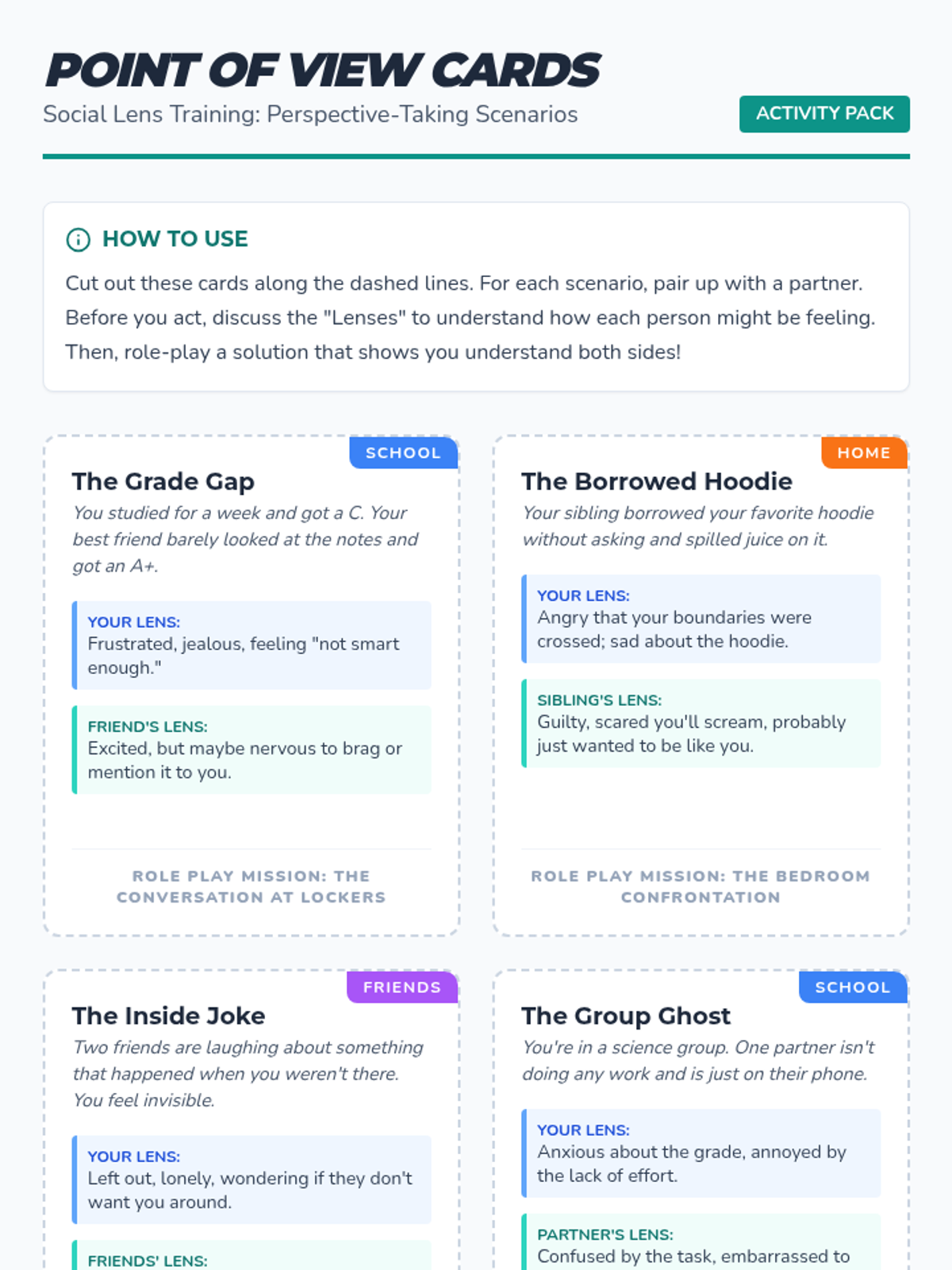
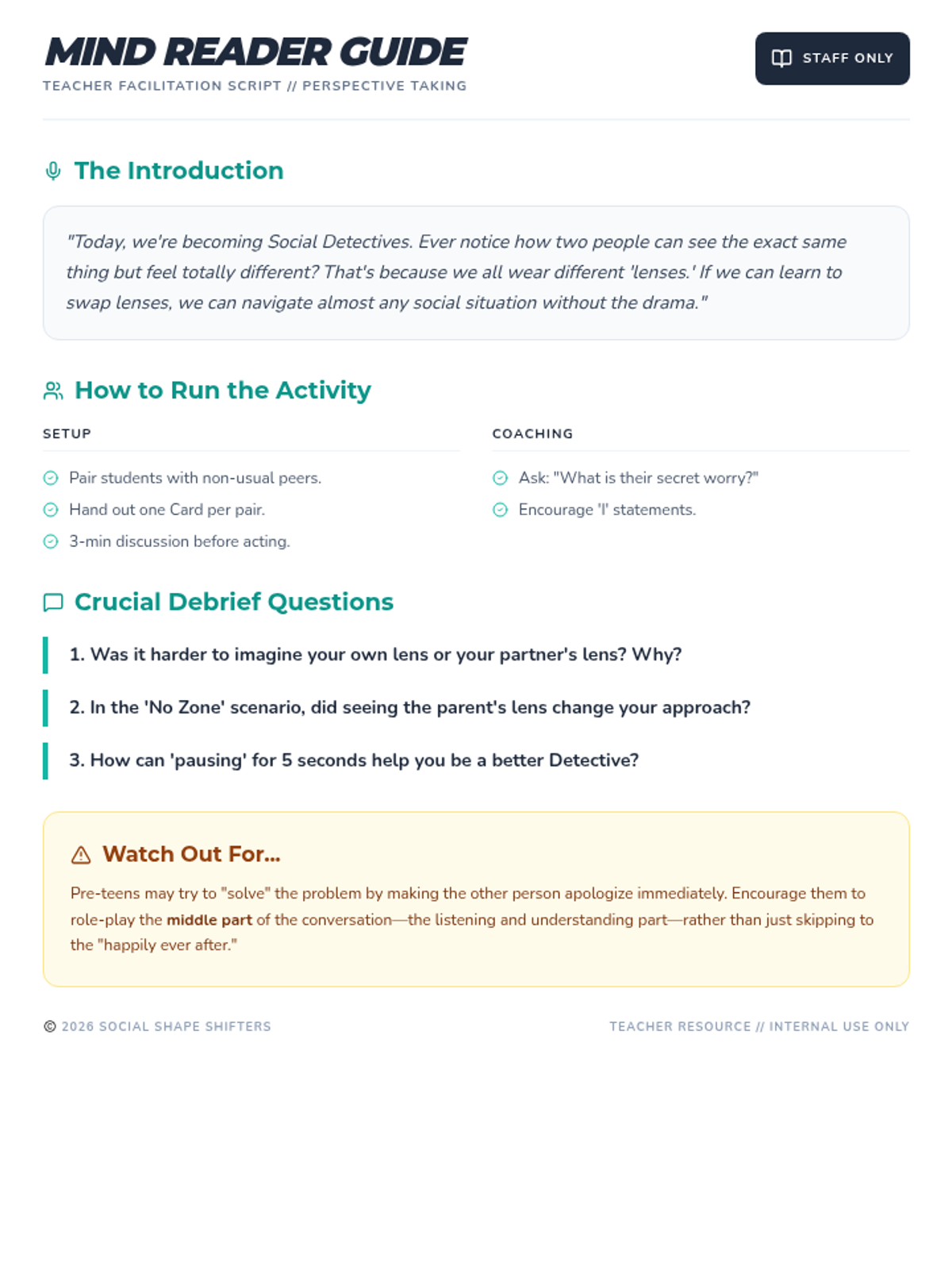
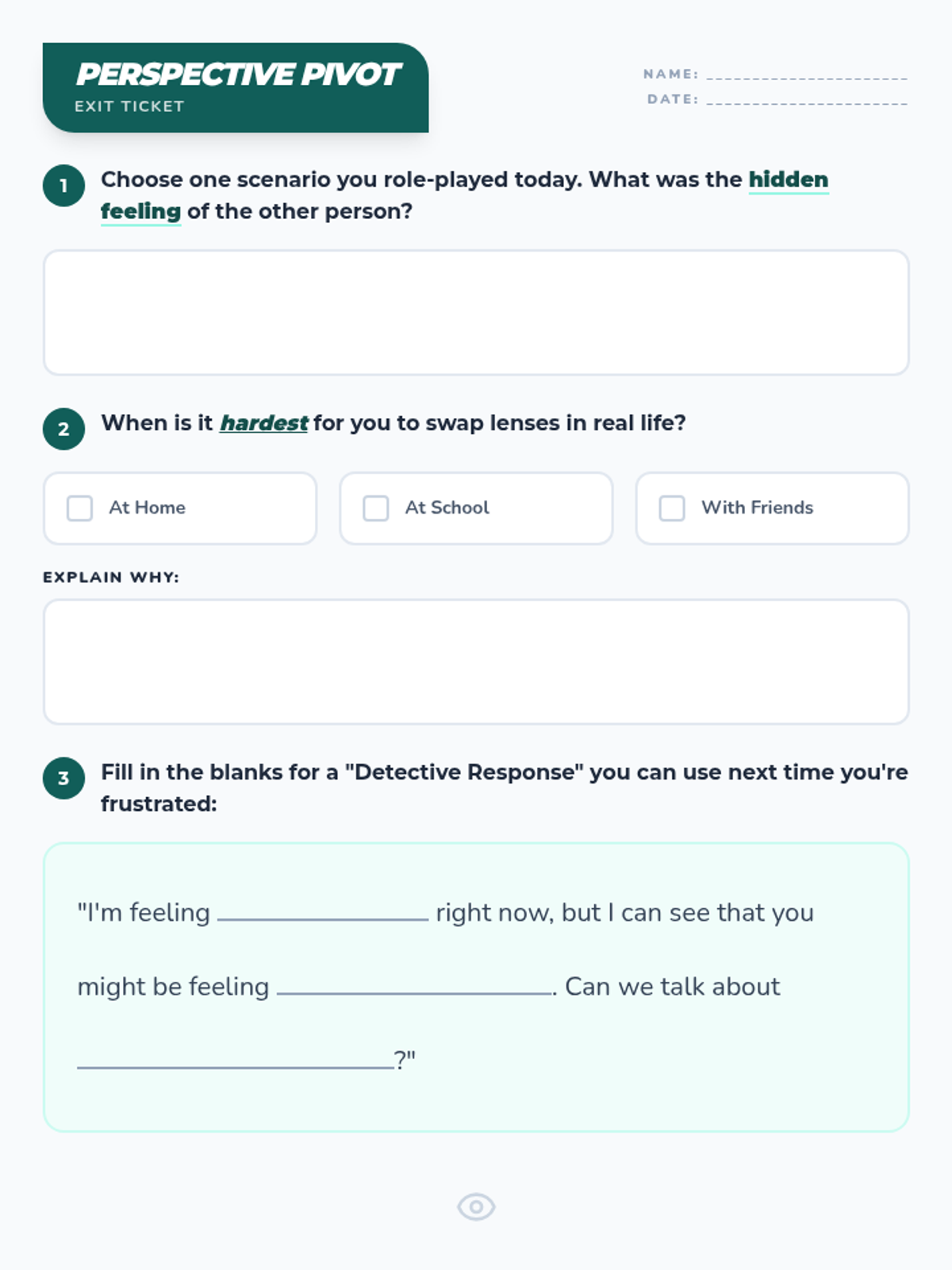
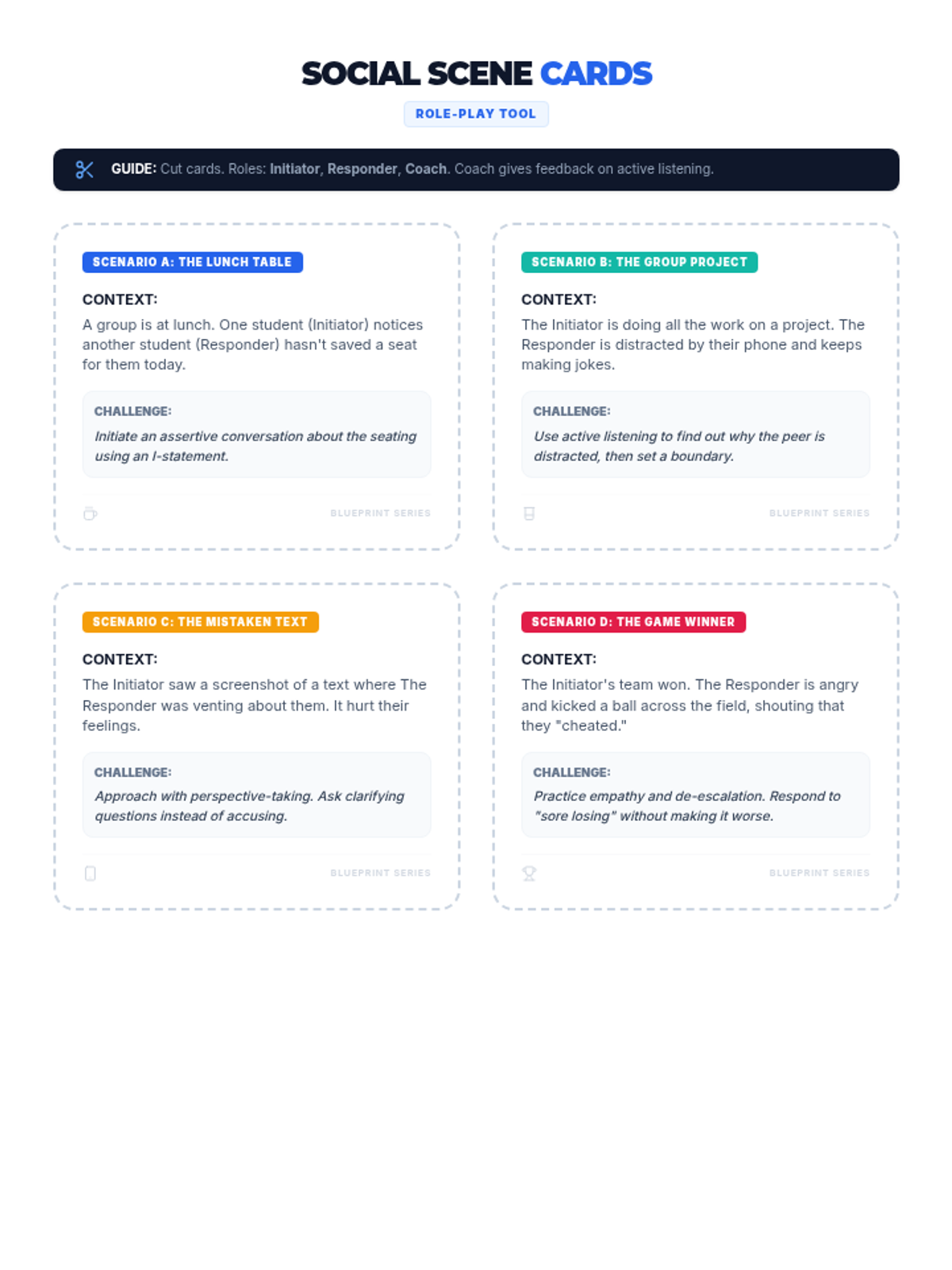
A lesson designed for pre-teens to develop perspective-taking skills through realistic social scenarios in school, home, and peer settings. Students act as 'Social Detectives' to analyze feelings and choose empathetic responses.
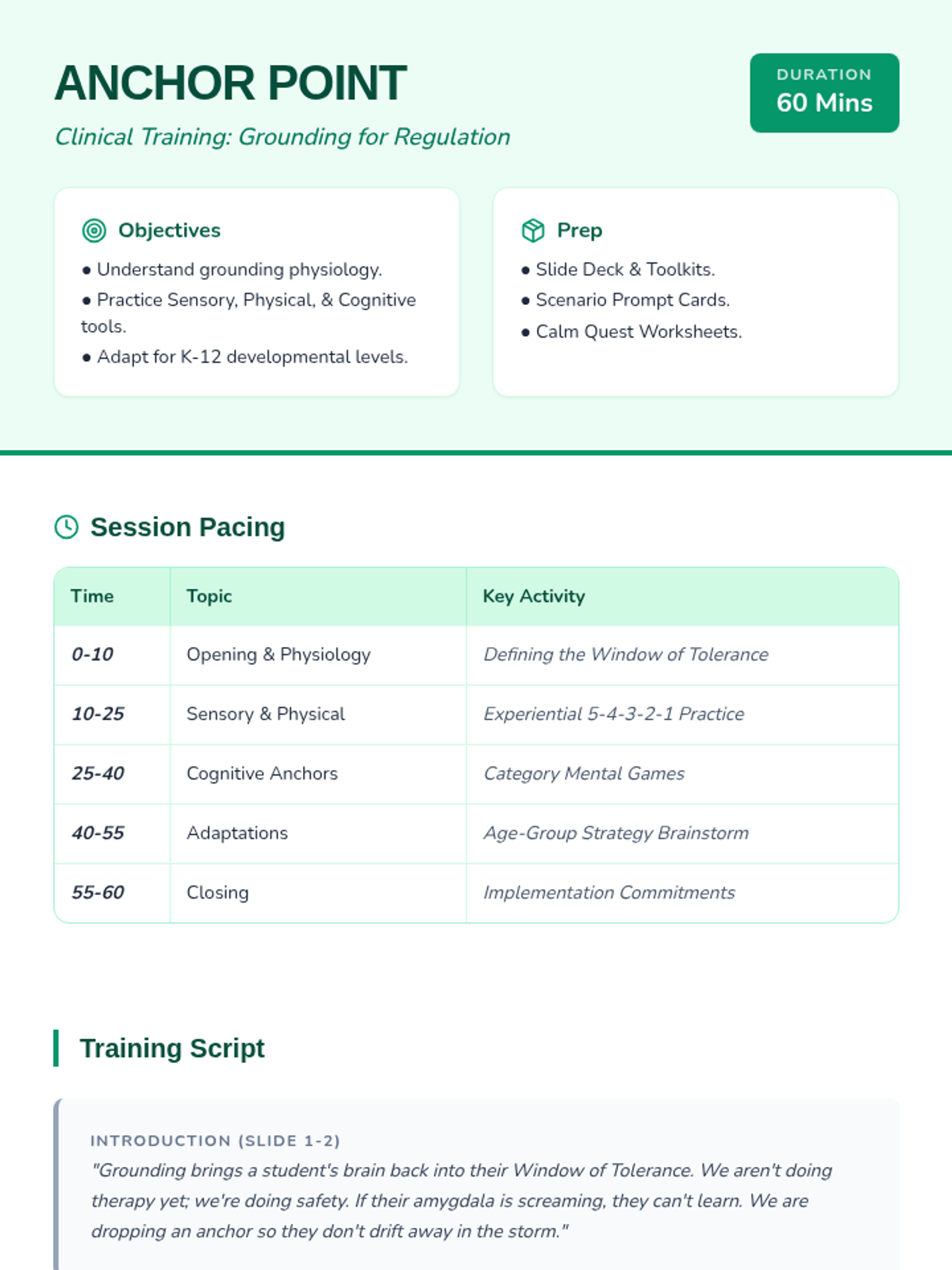
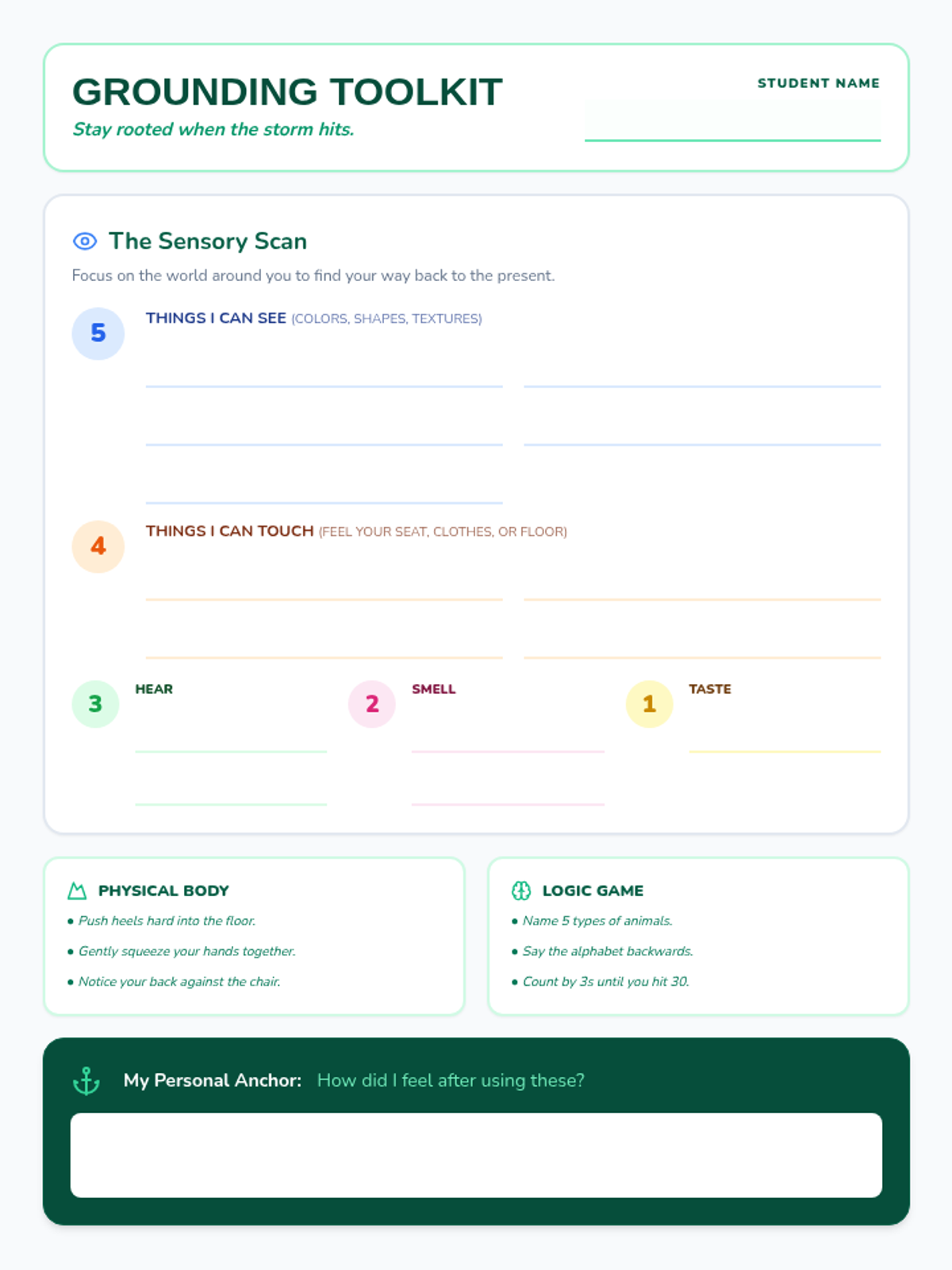
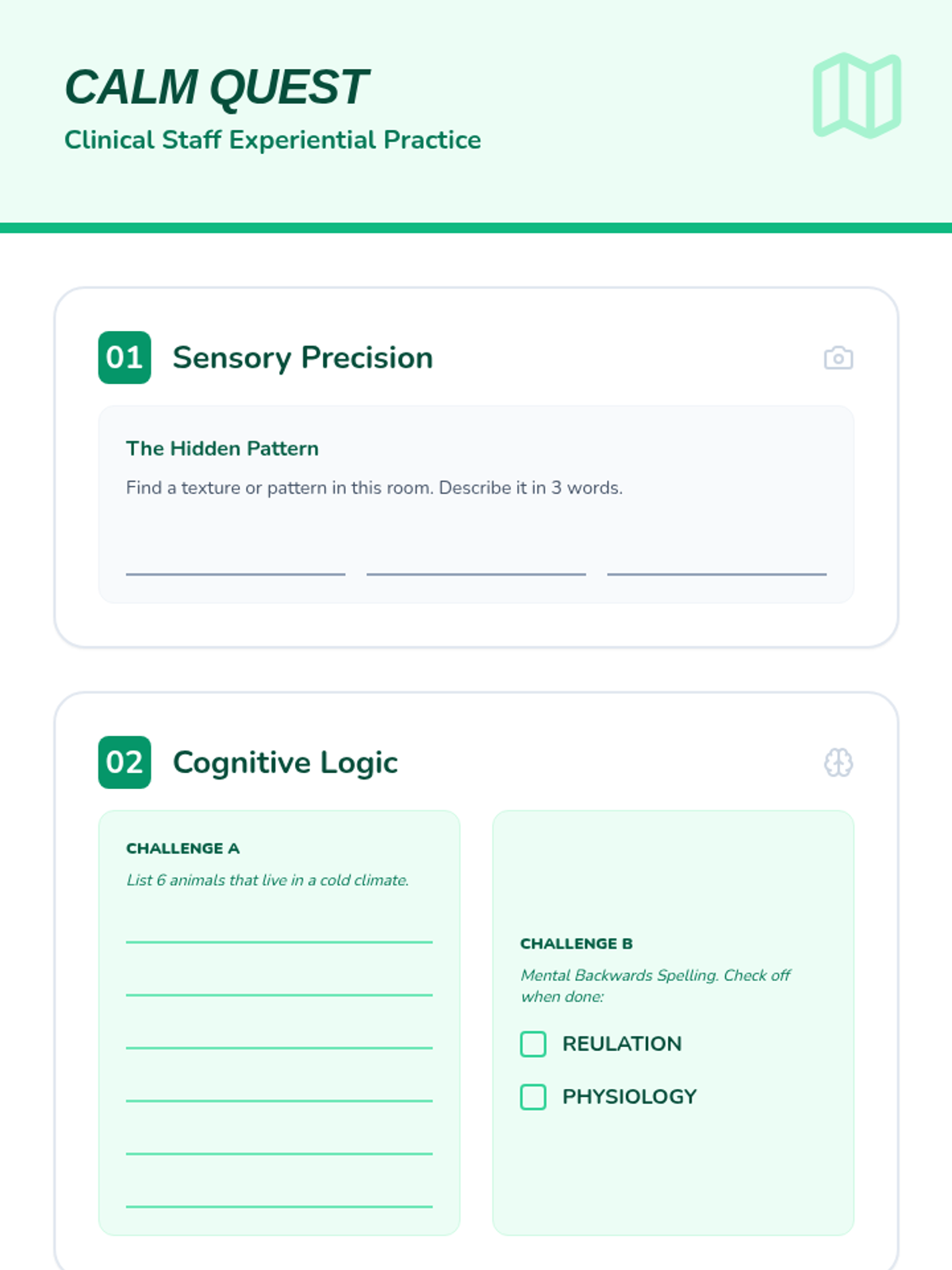
This lesson equips clinical staff with sensory, physical, and cognitive grounding techniques to help students manage anxiety and stay in the present moment. It includes a comprehensive facilitator guide, visual slides, and practical student handouts.
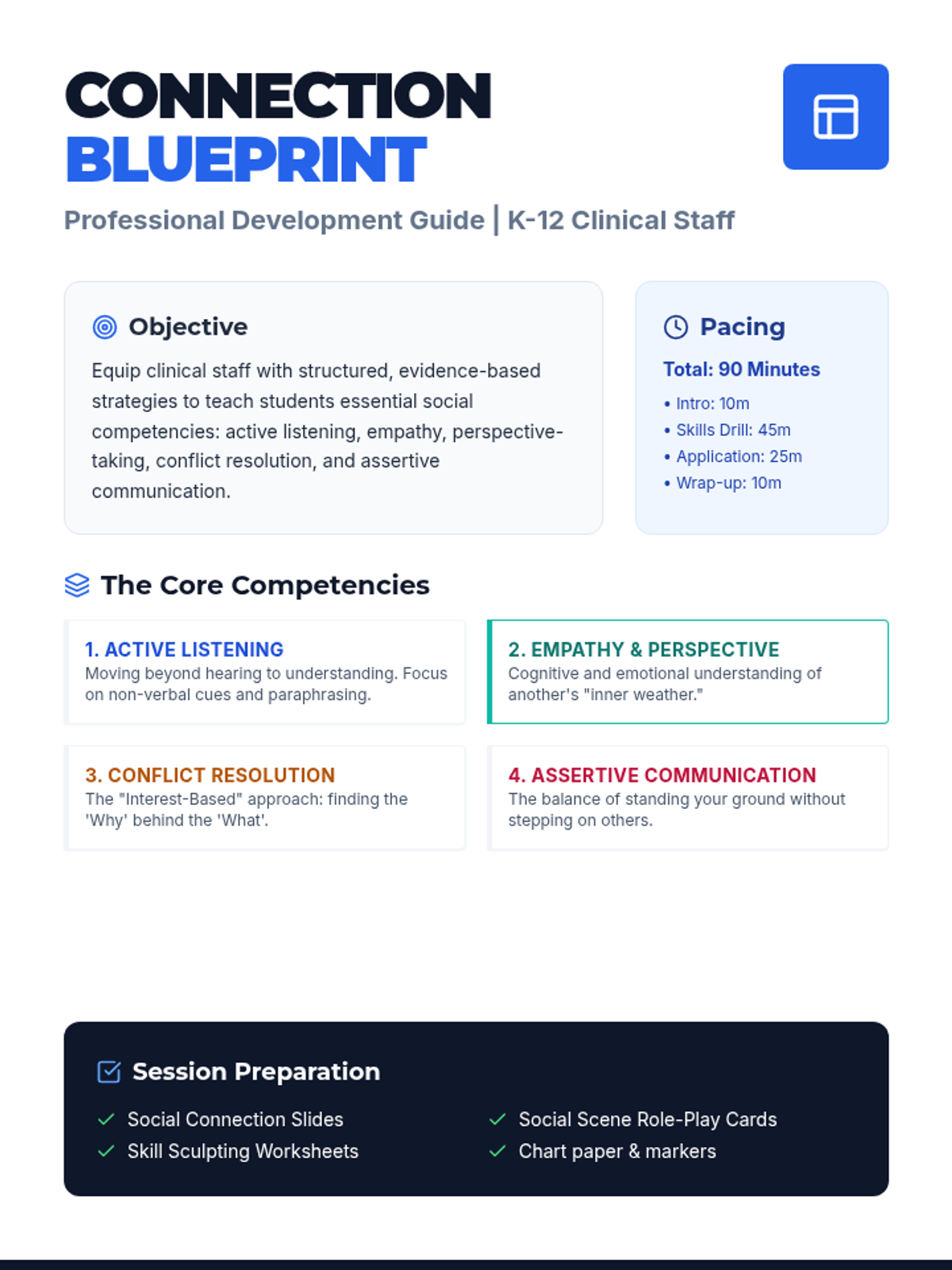
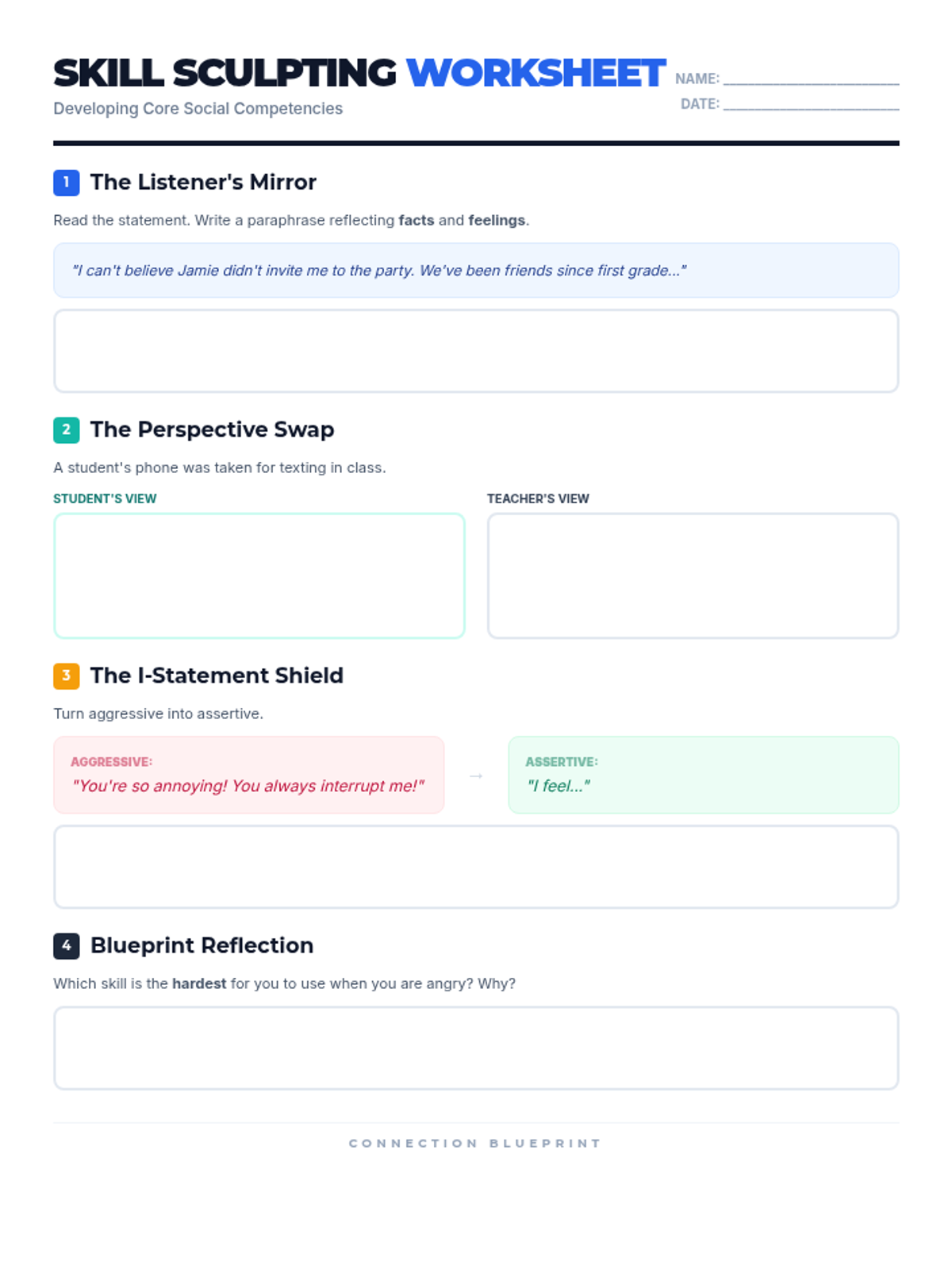
A professional development module for K-12 clinical staff to master and teach five core social competencies. Includes structured instruction and hands-on practice materials for student sessions.
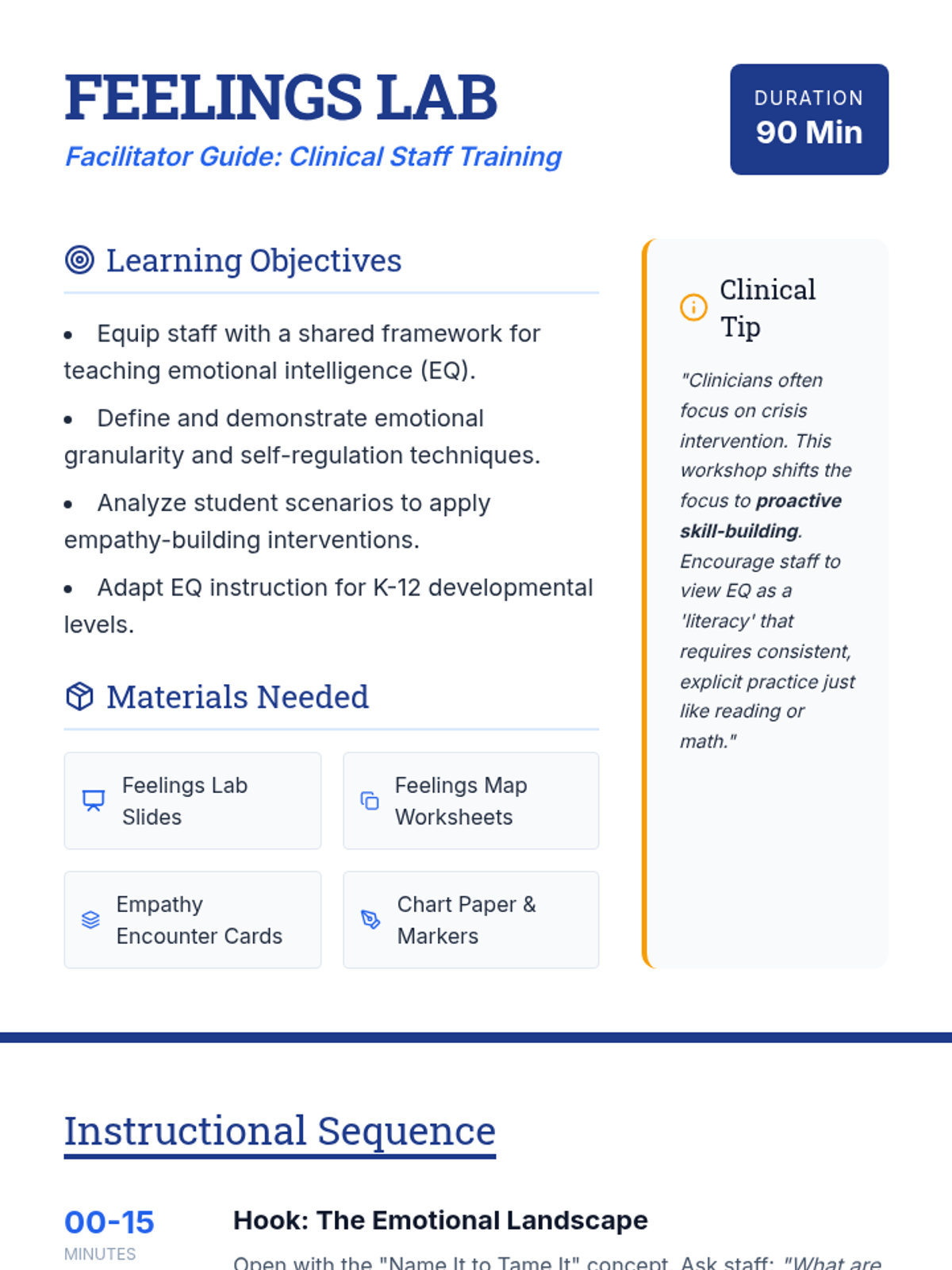
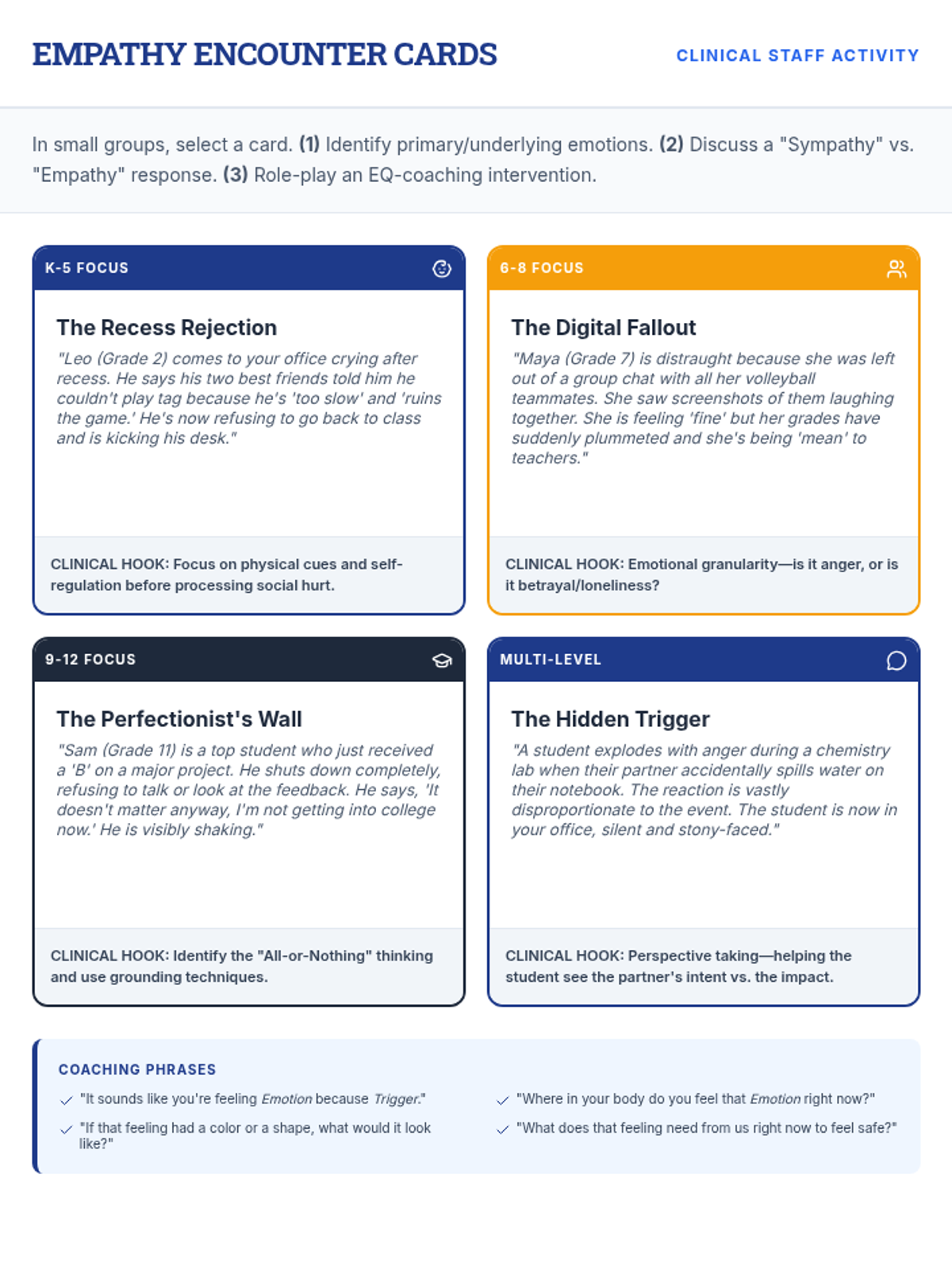
A comprehensive training module for school clinical staff on teaching emotional intelligence. This lesson covers emotional vocabulary, empathy development, and regulation strategies across K-12 developmental stages.
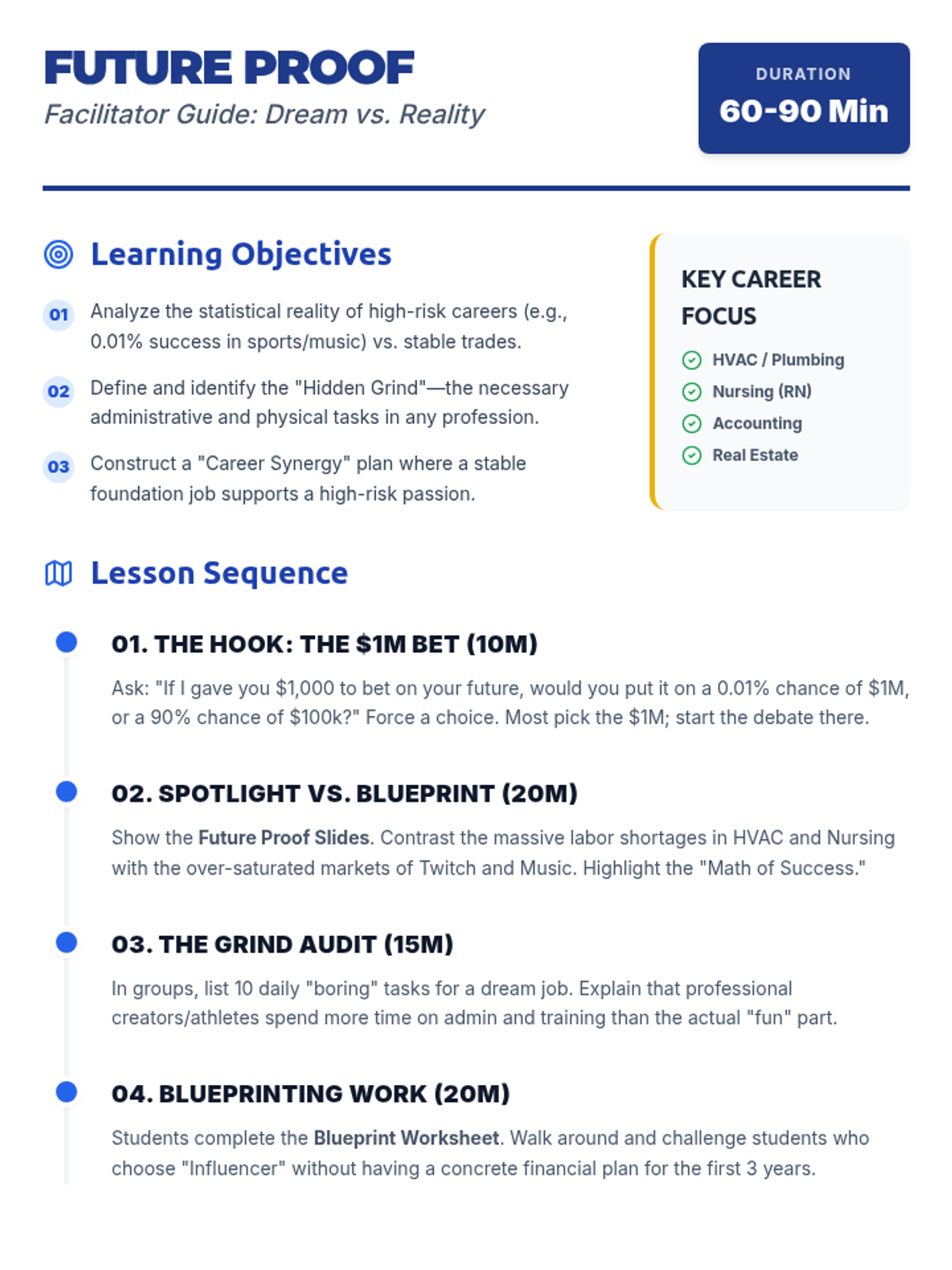
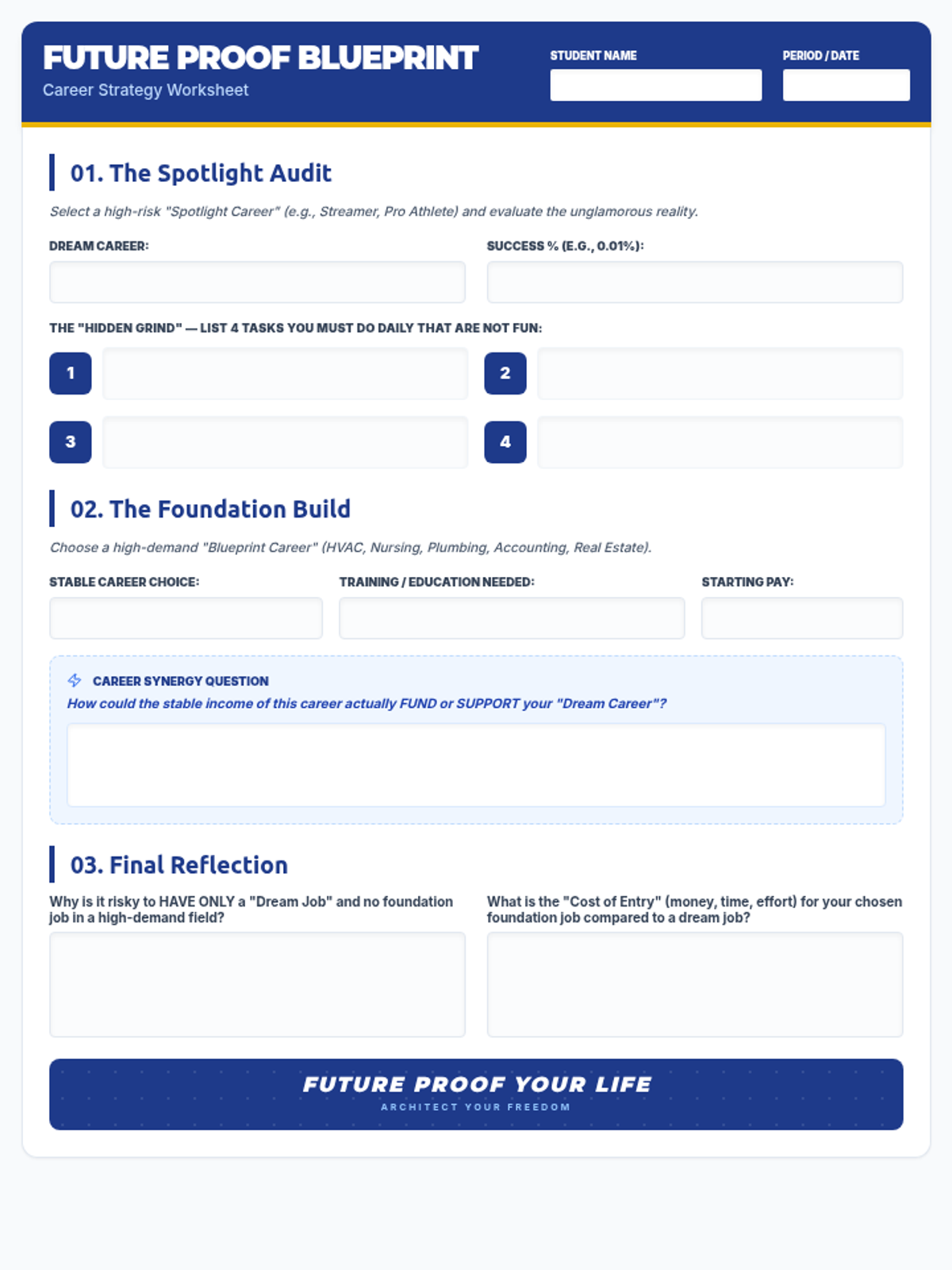
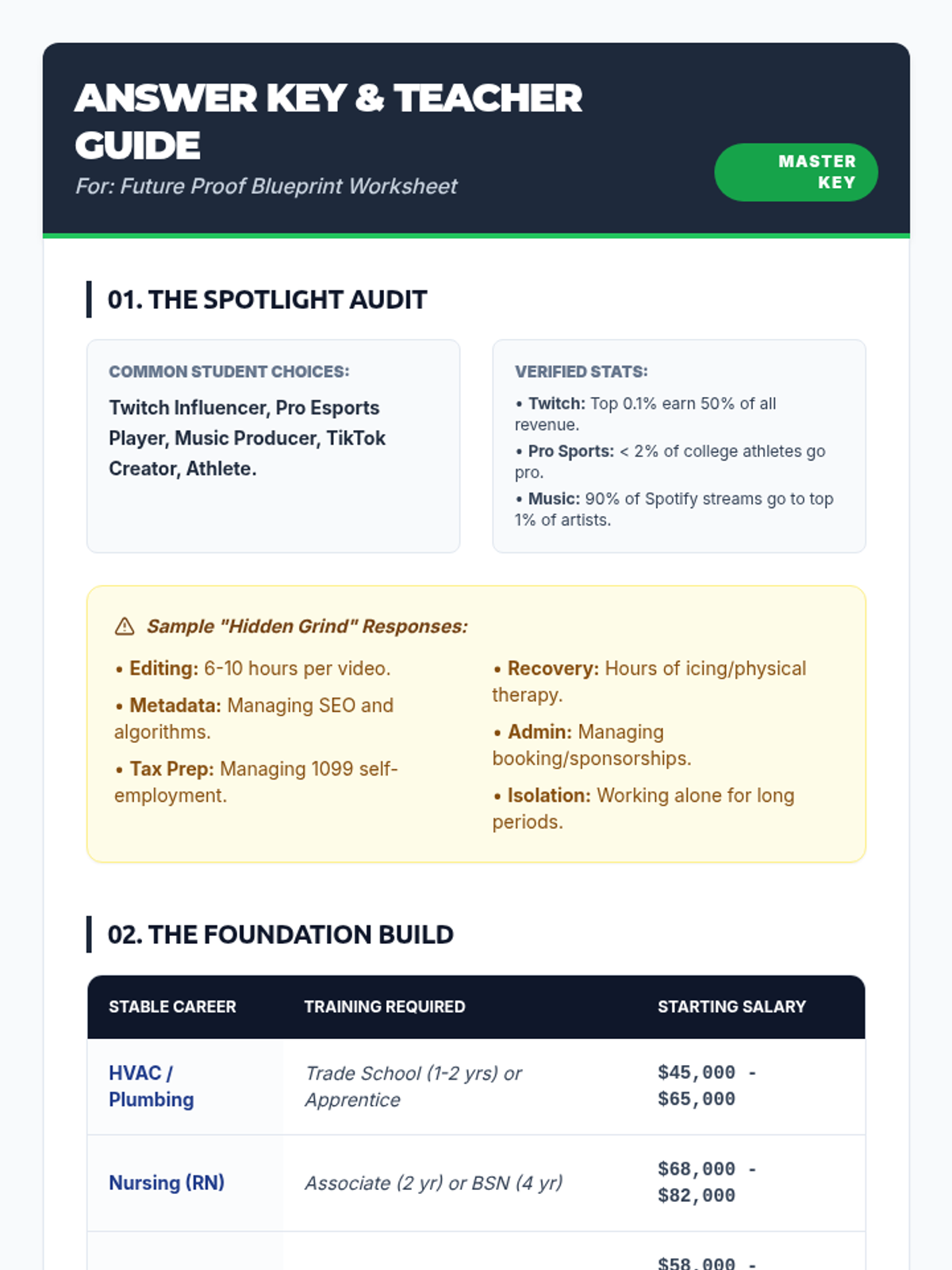
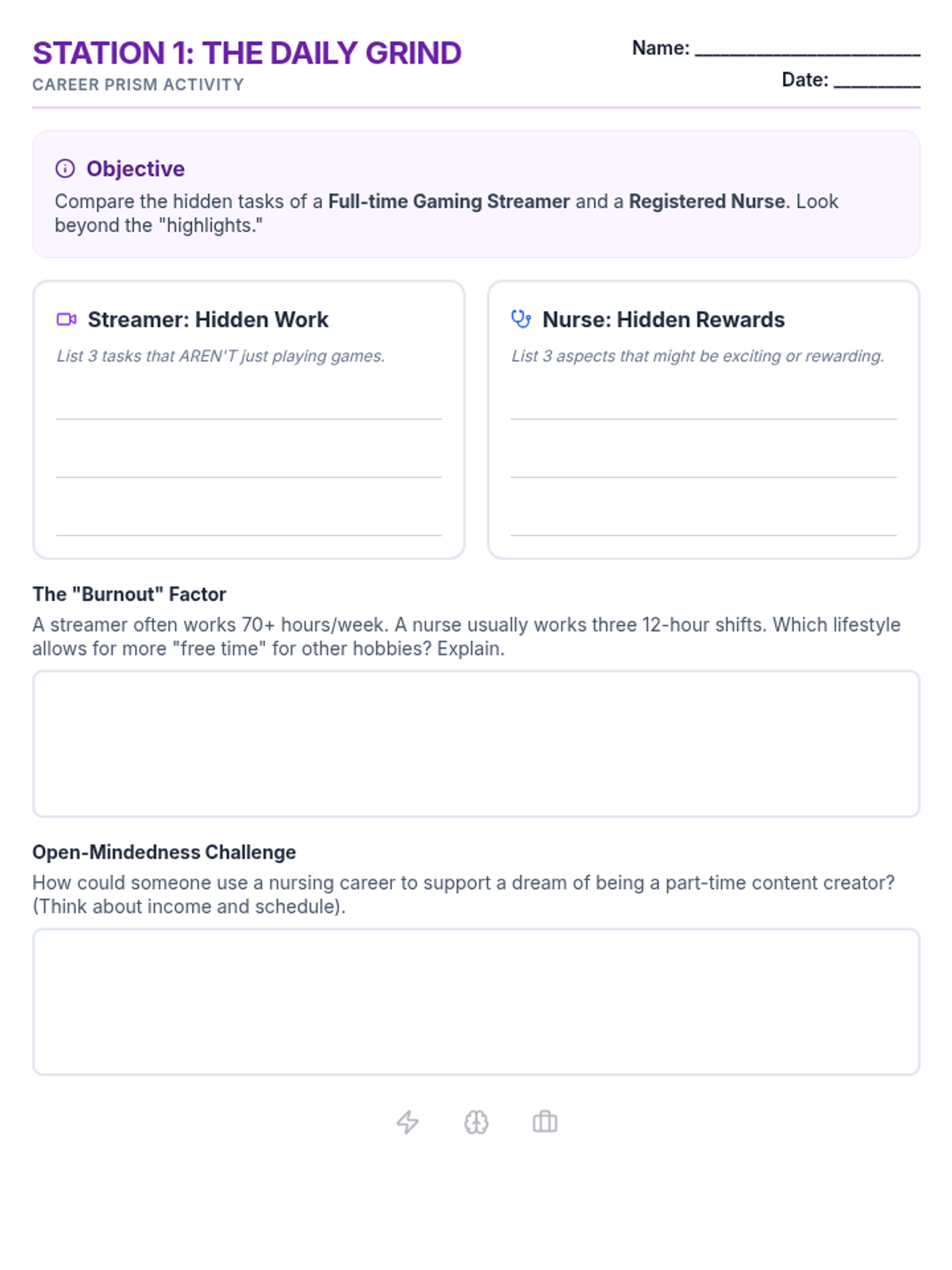
A high-impact lesson challenging students to analyze the statistical realities of 'dream' careers like streaming and sports versus the stability and demand of essential trades and professional services. Students will evaluate risks, entry barriers, and financial sustainability to move from vague dreams to concrete career blueprints.
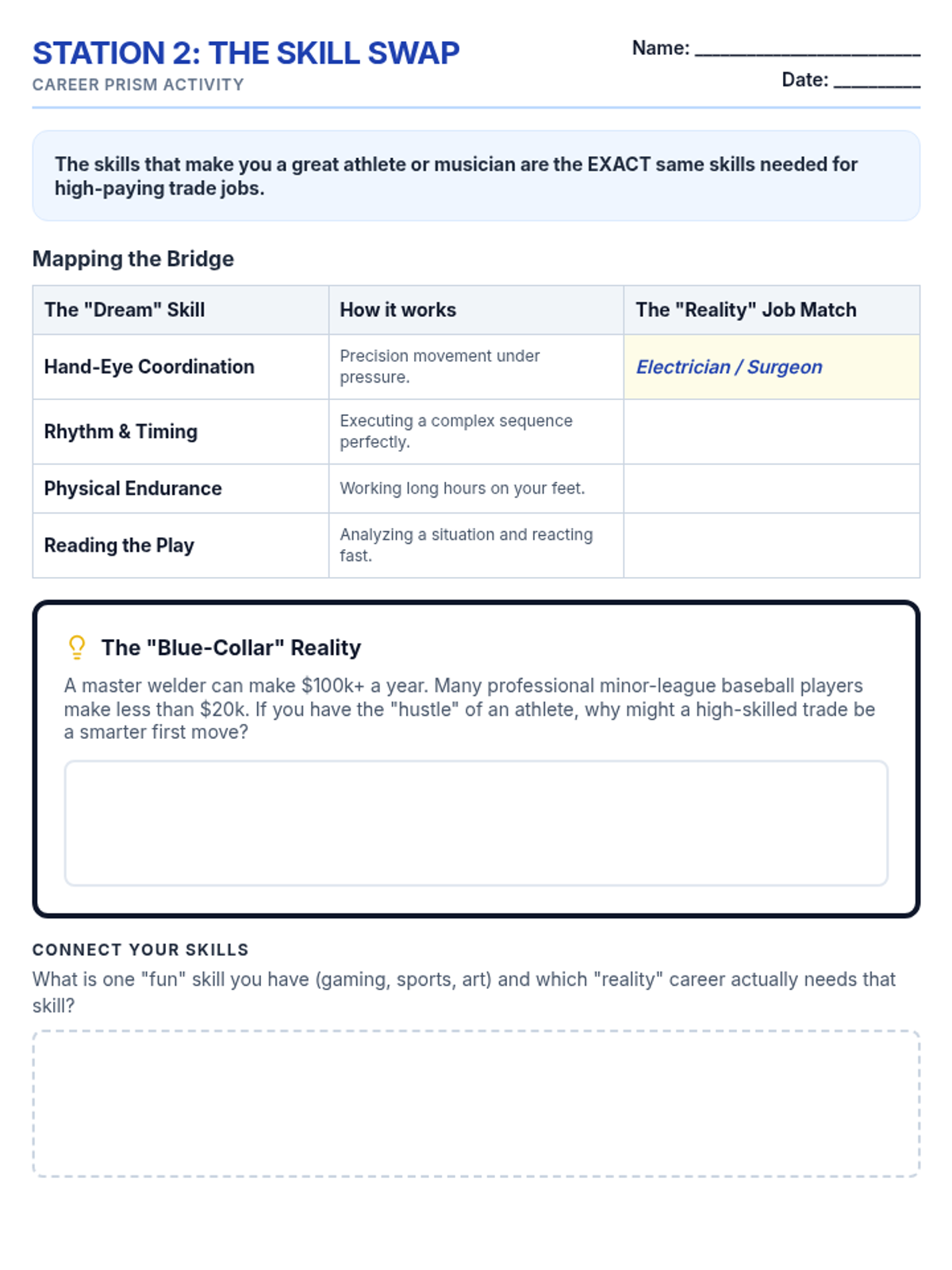
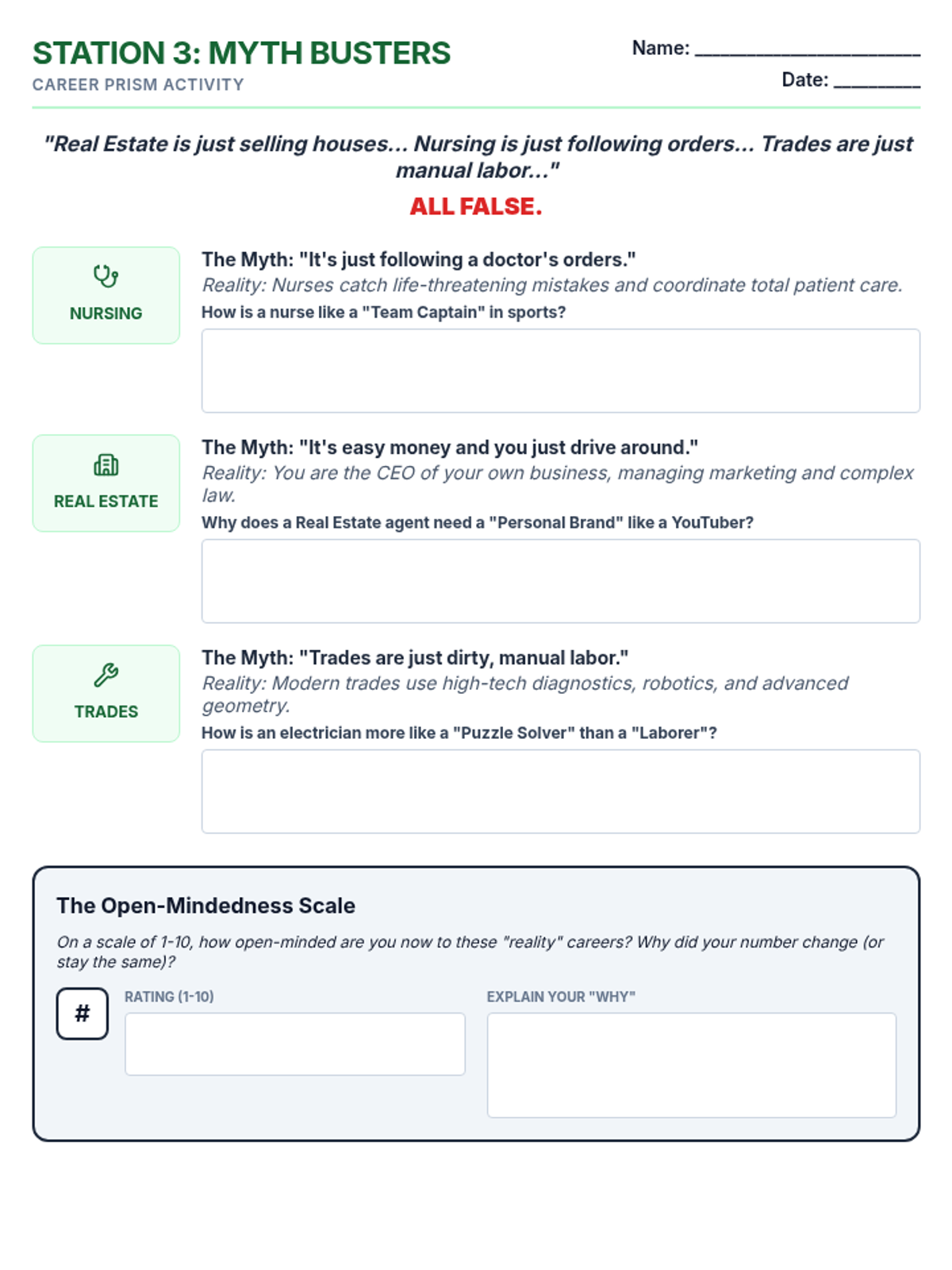
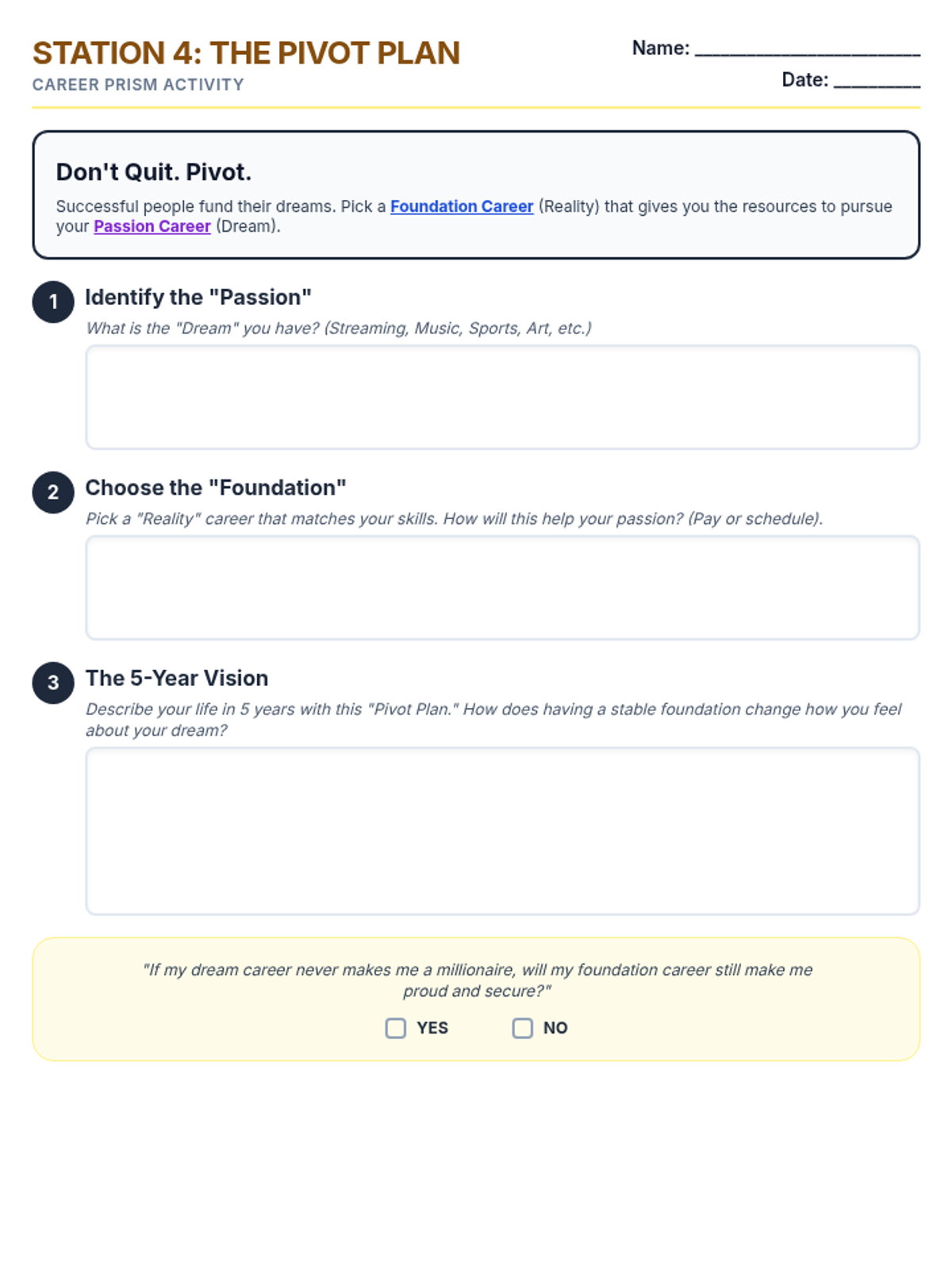
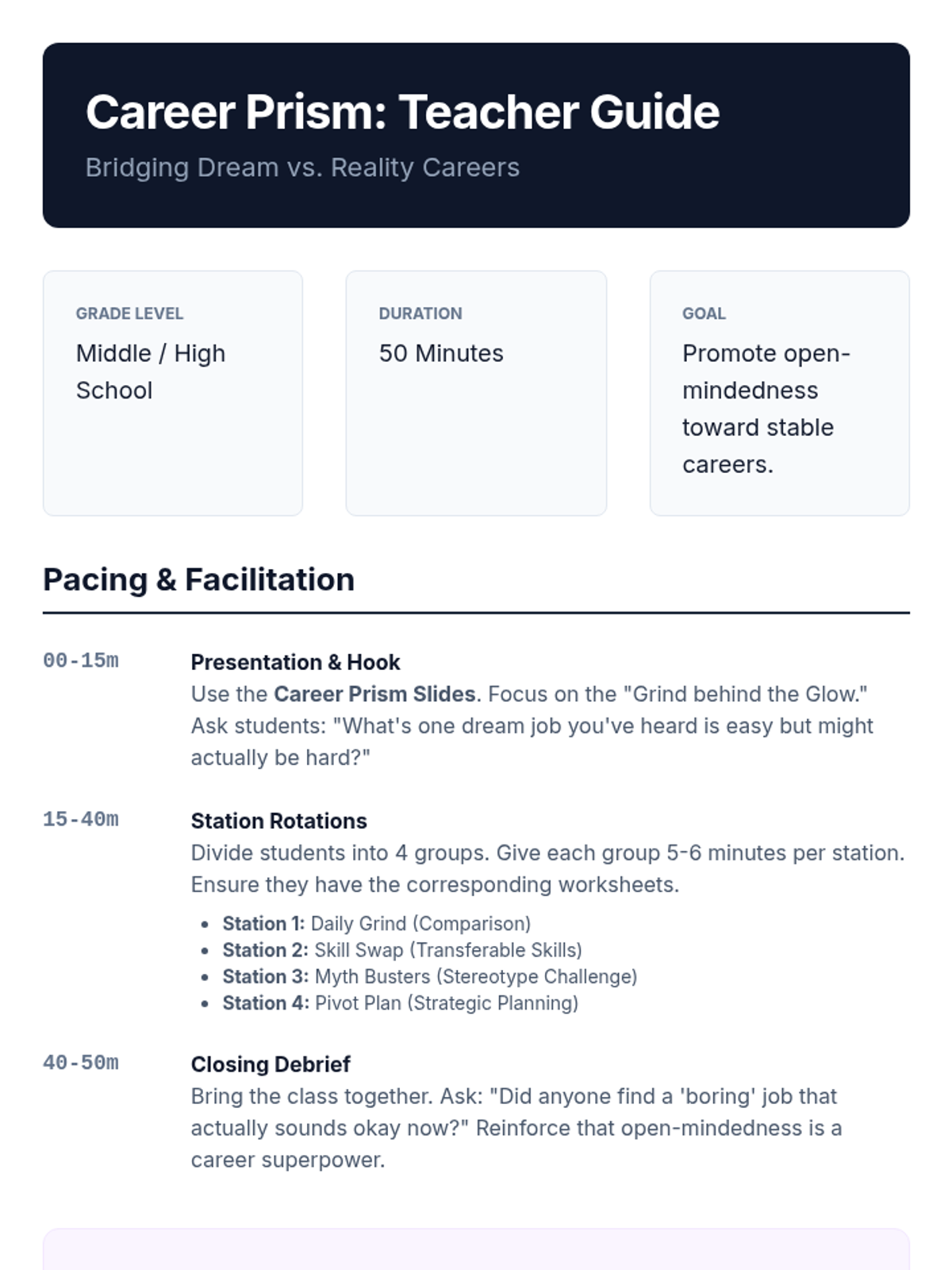
A bridge lesson exploring the intersection of 'dream' careers (streaming, sports, music) and 'reality' careers (nursing, trades, real estate), emphasizing open-mindedness and skill transferability.
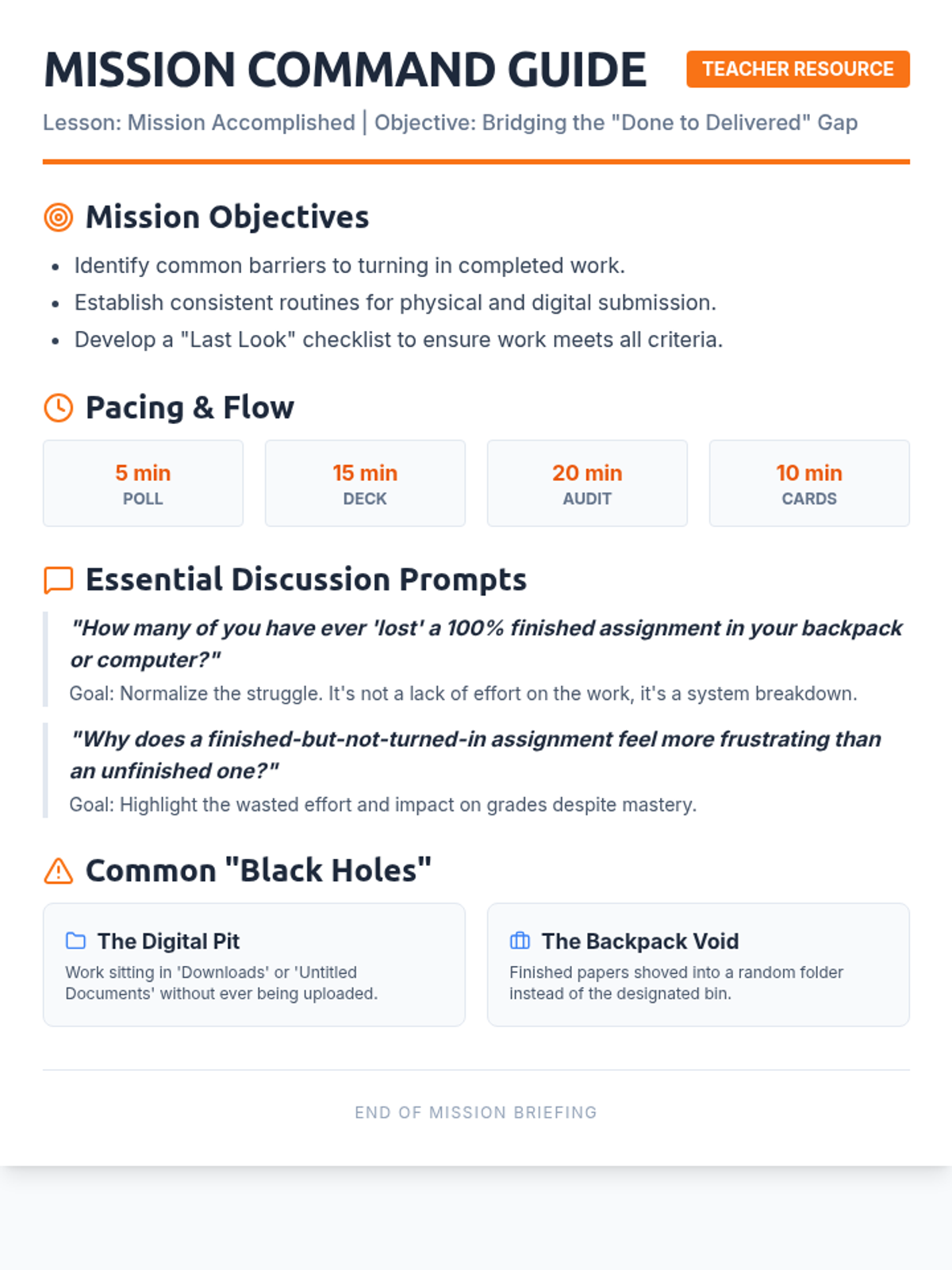
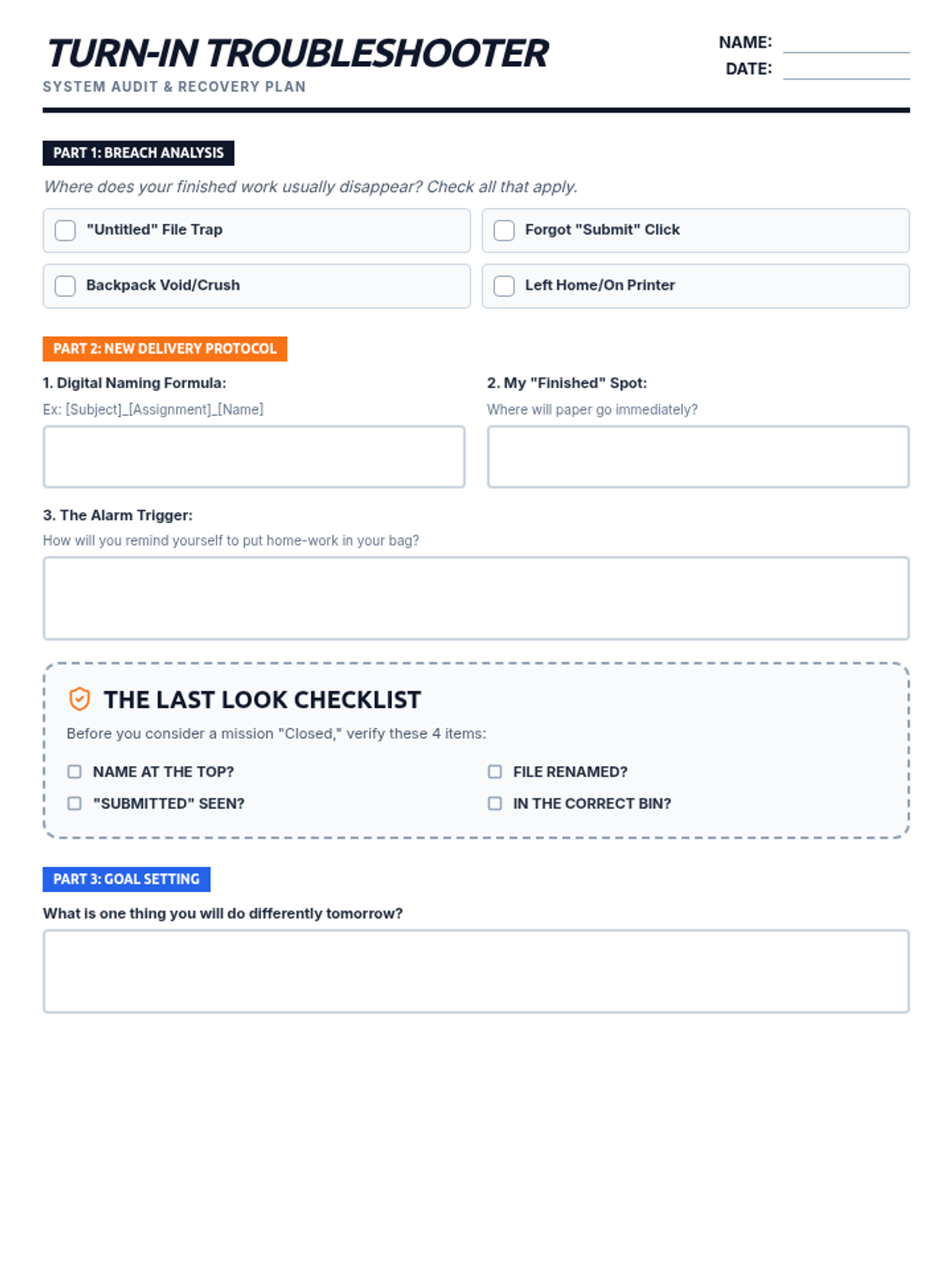
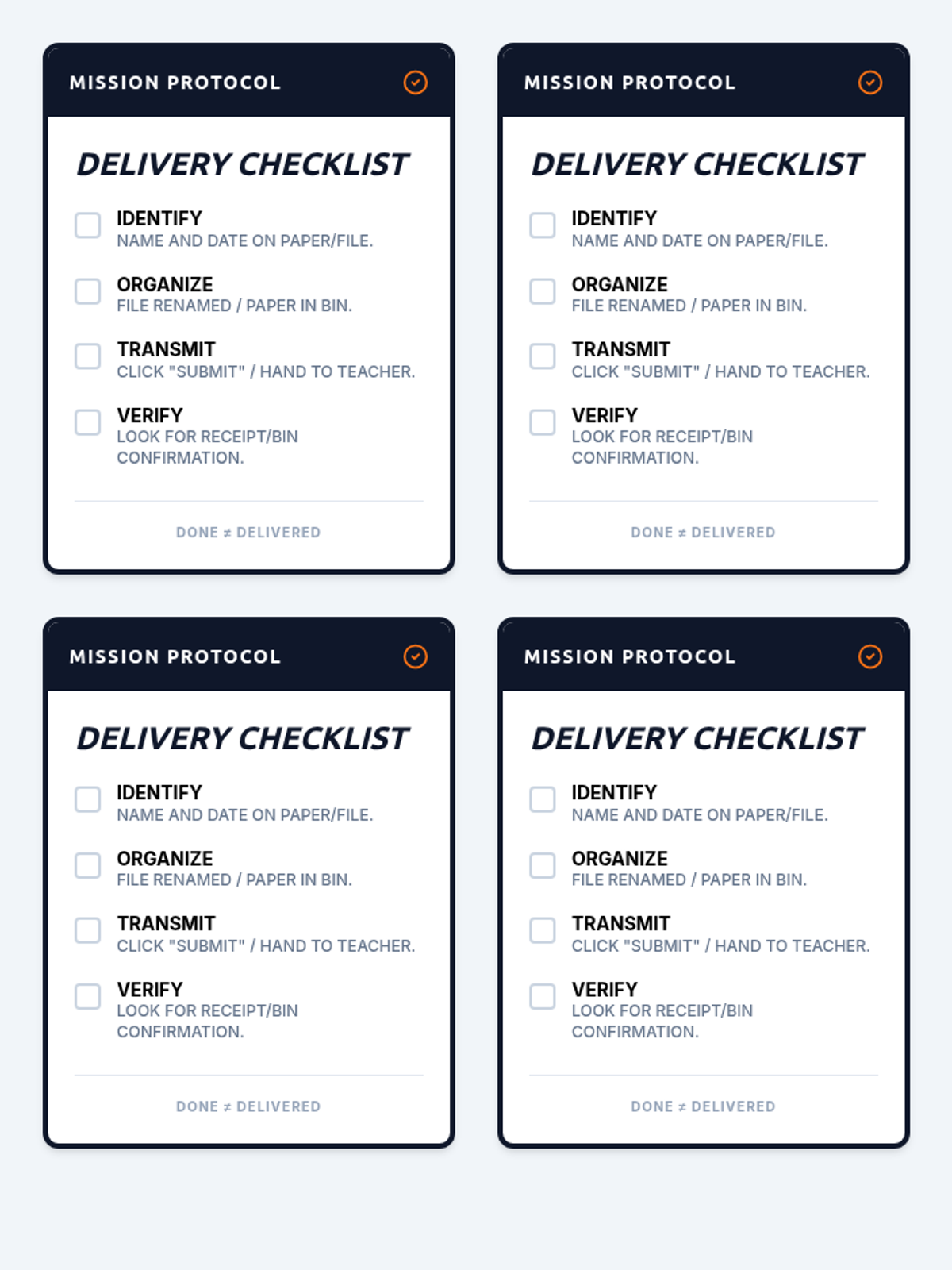
A lesson designed to bridge the gap between finishing an assignment and successfully submitting it. Students explore common 'submission traps' and build personalized systems for physical and digital turn-in success.
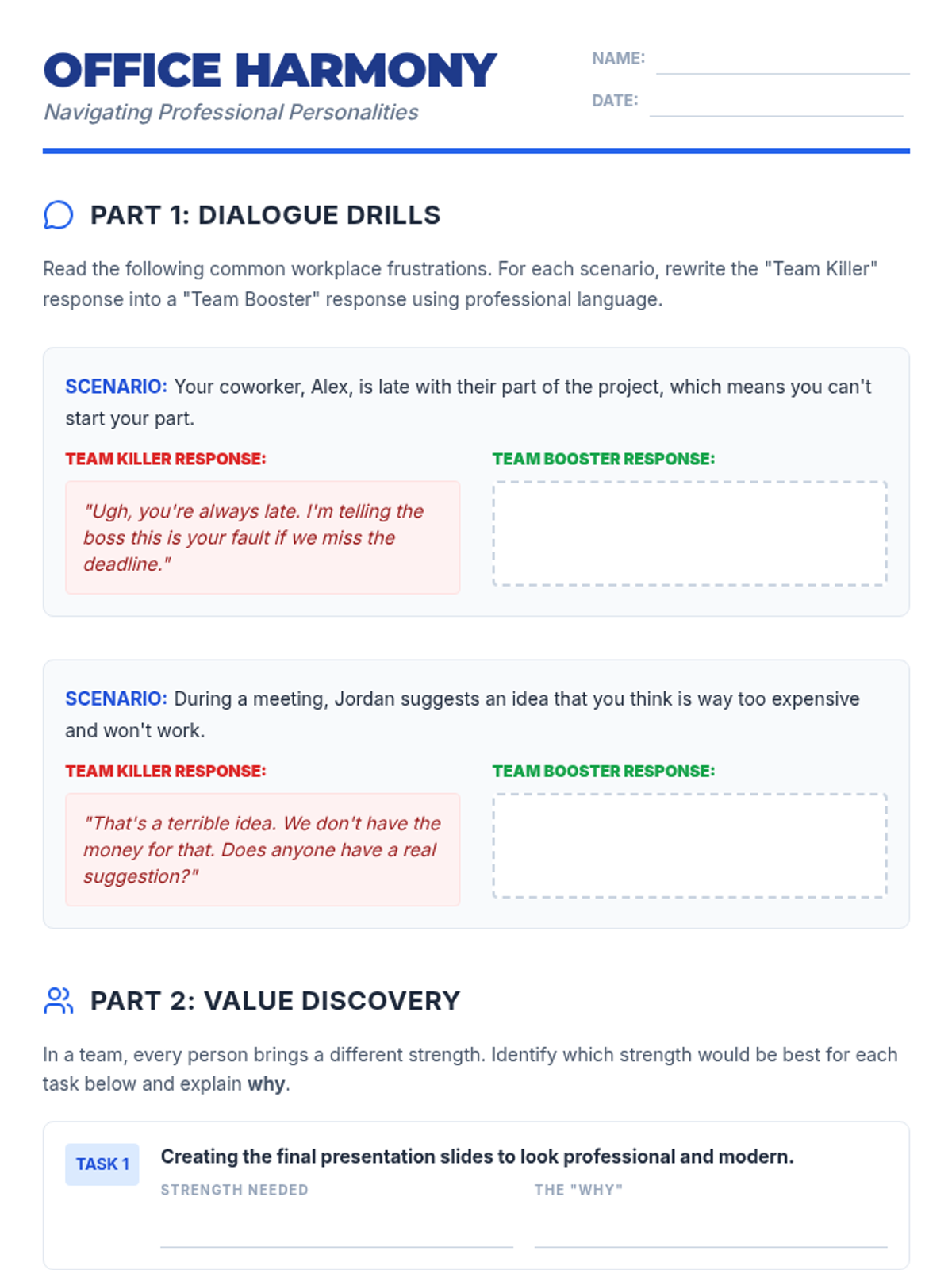
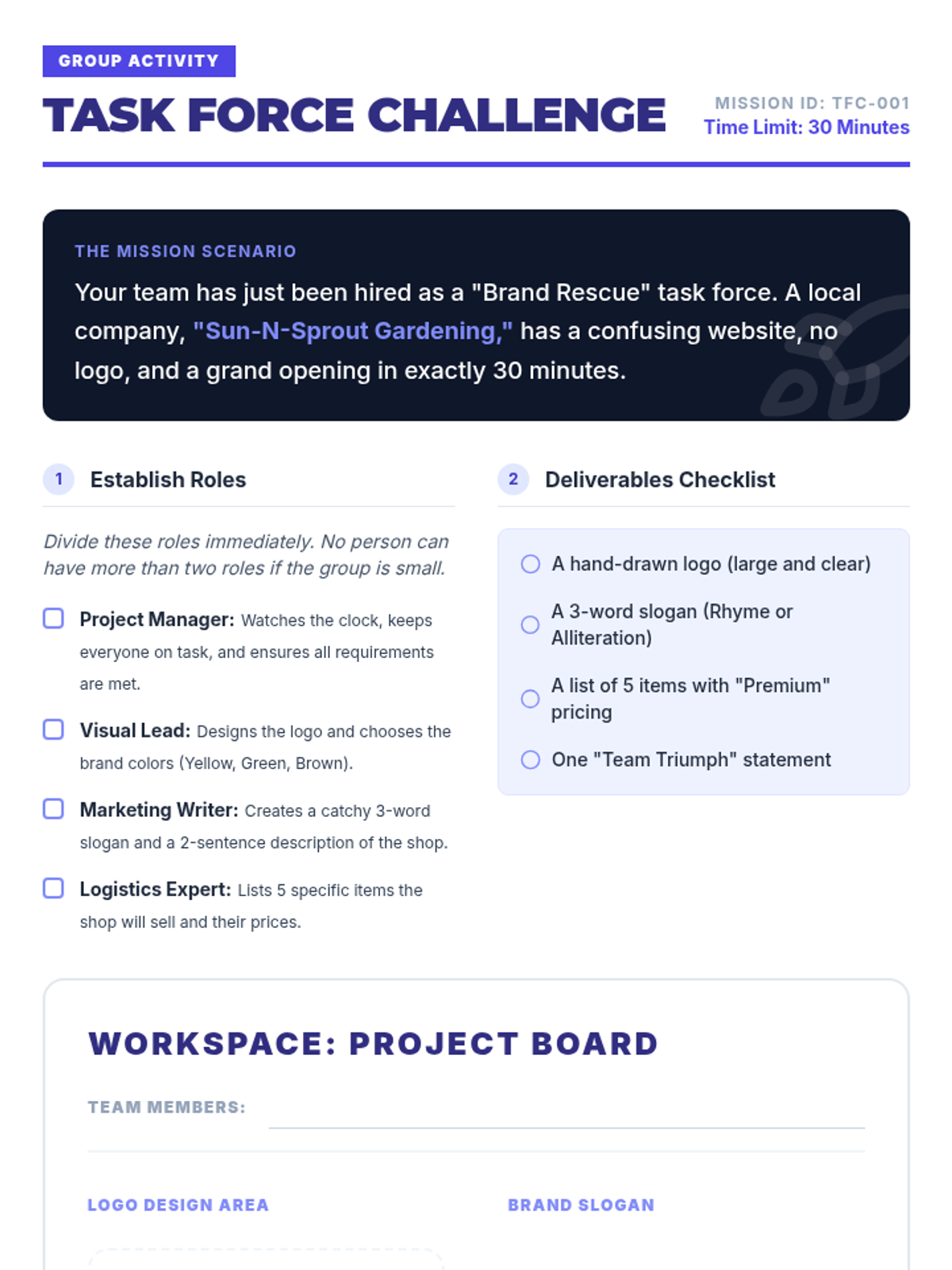
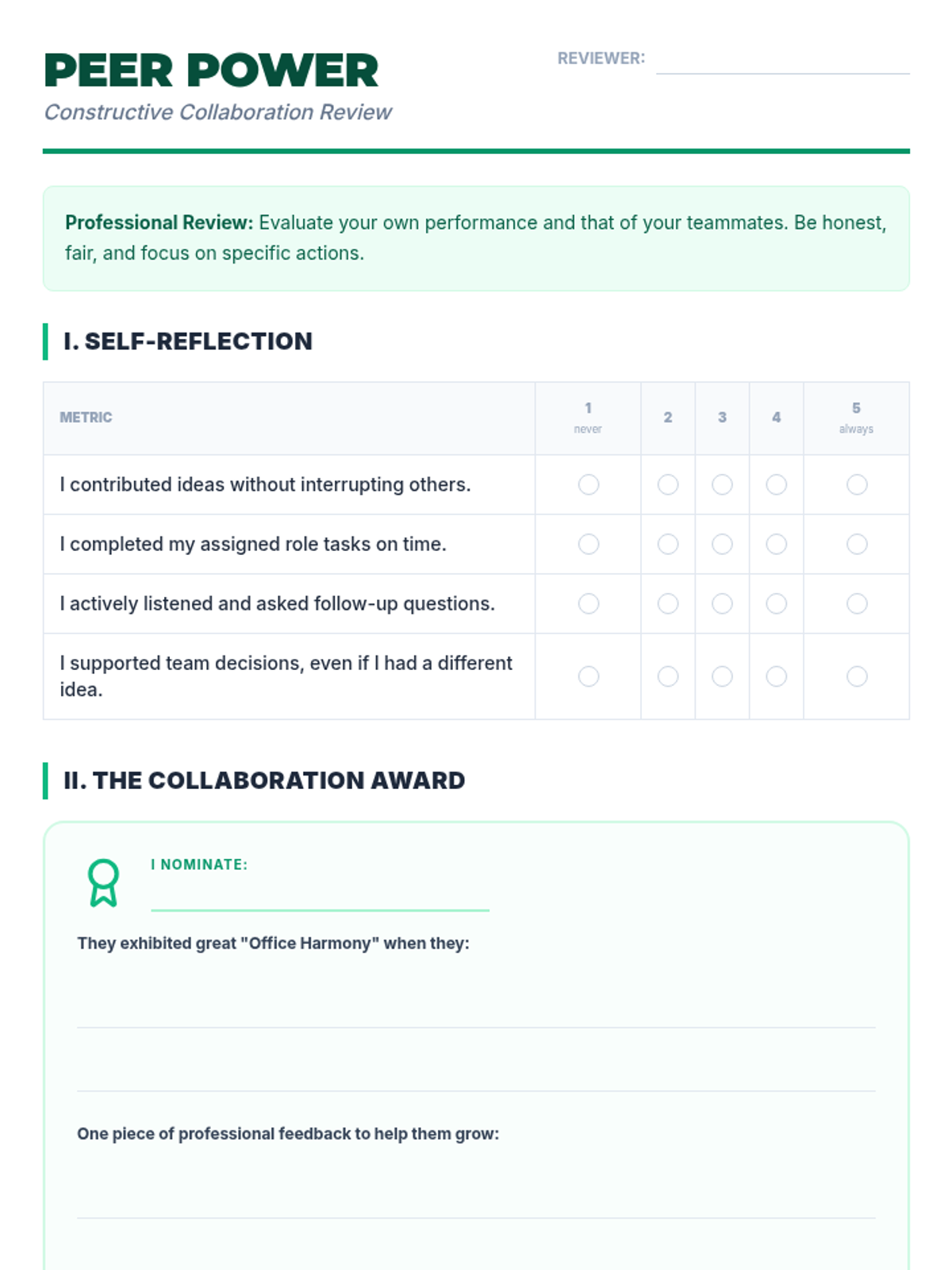
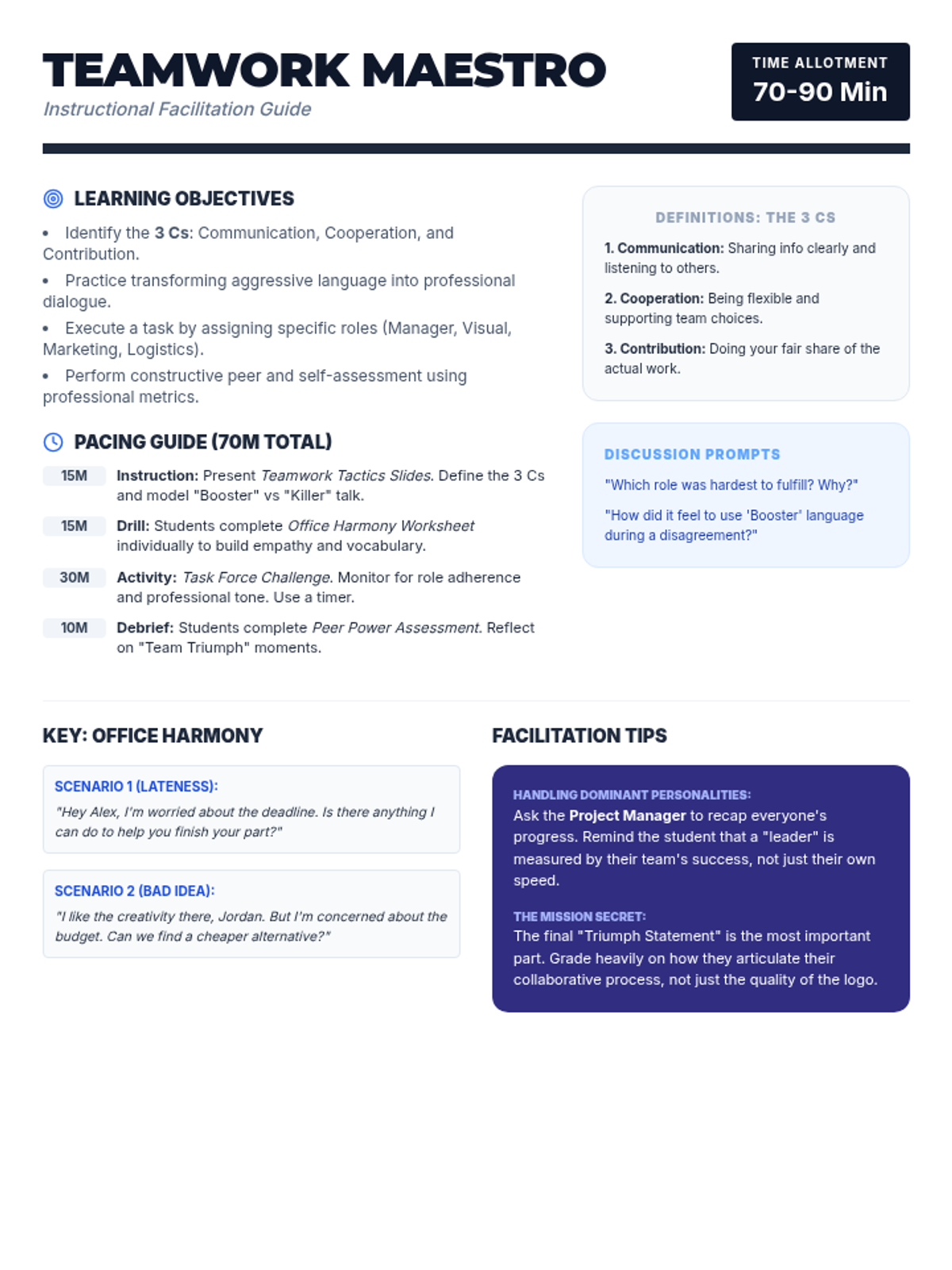
This lesson teaches students essential workplace collaboration skills, focusing on effective communication, role-playing scenarios, and a hands-on team task to build professional interpersonal skills.
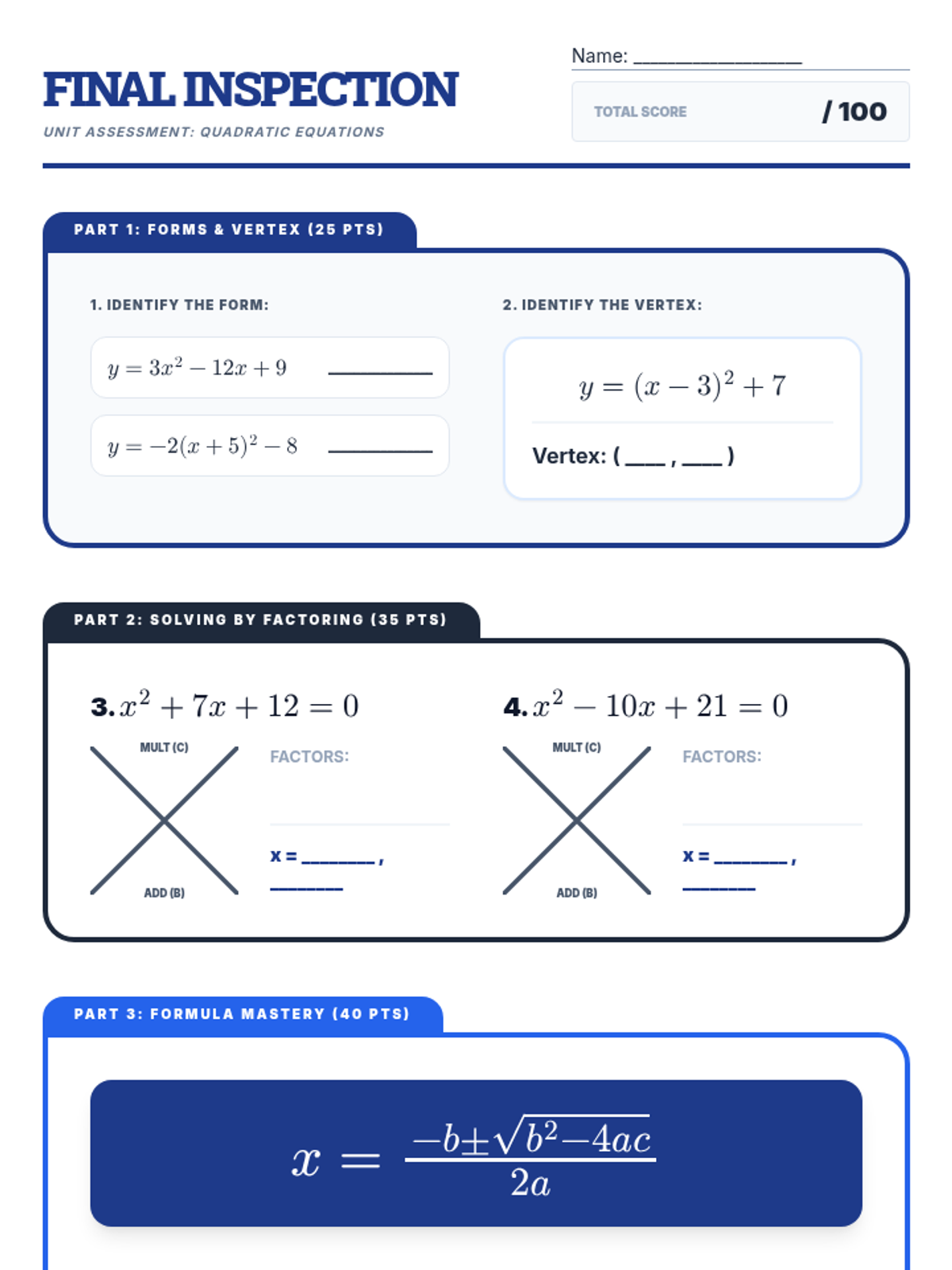
A summative assessment covering the identification of graph features and solving quadratic equations using multiple methods.
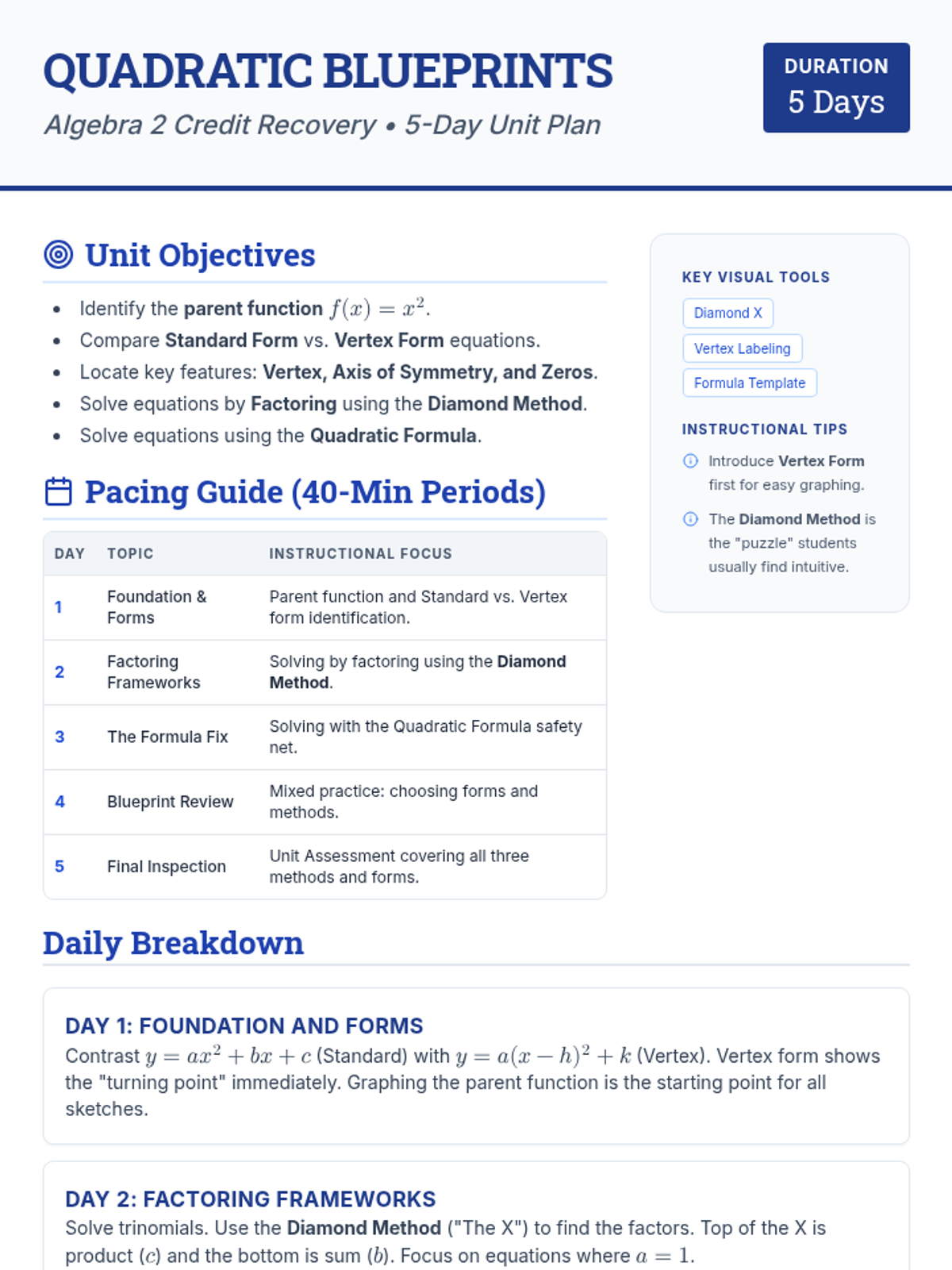
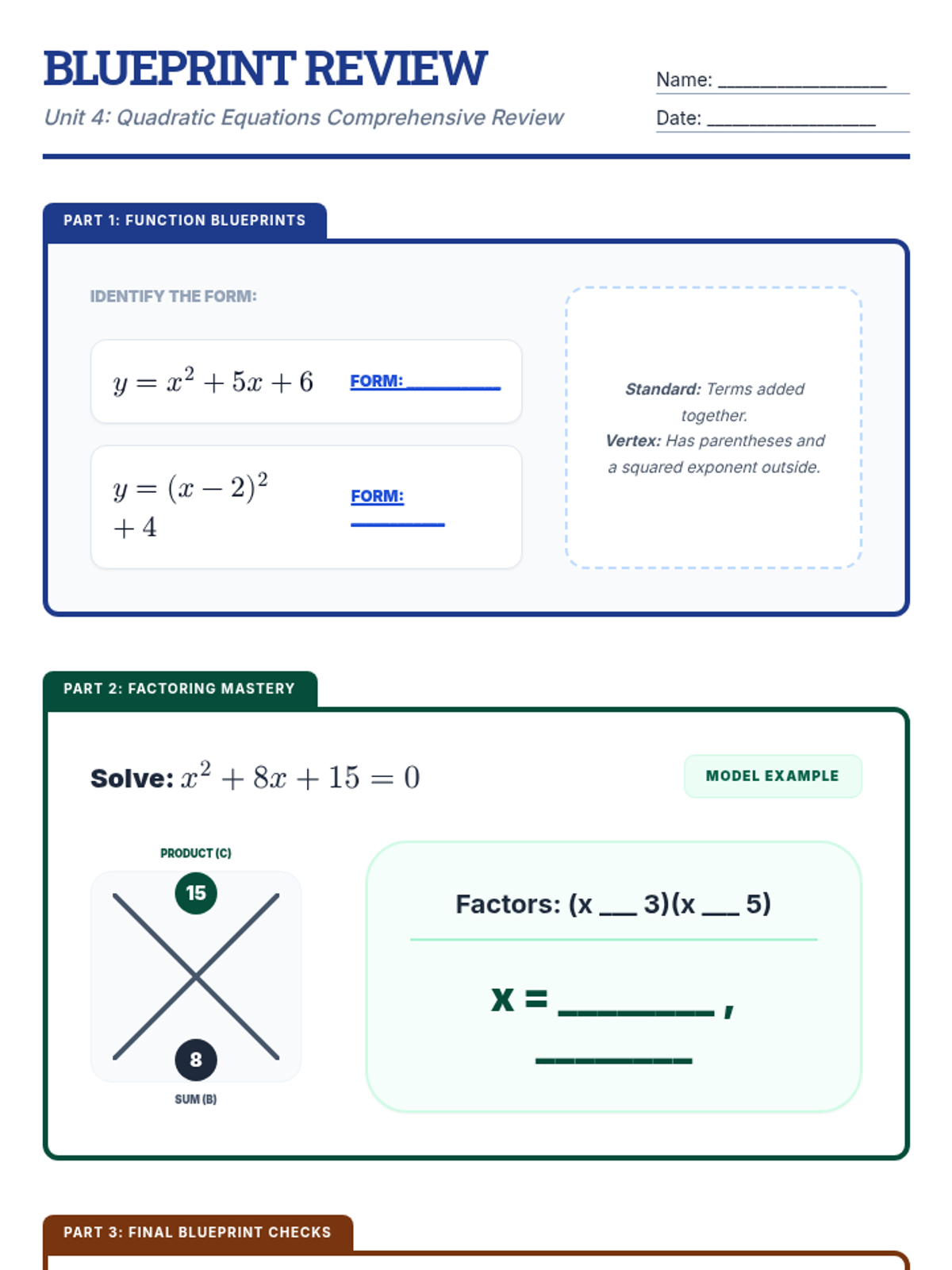
A comprehensive review of all three methods (graphing, factoring, formula) and identifying key features to prepare for the unit assessment.
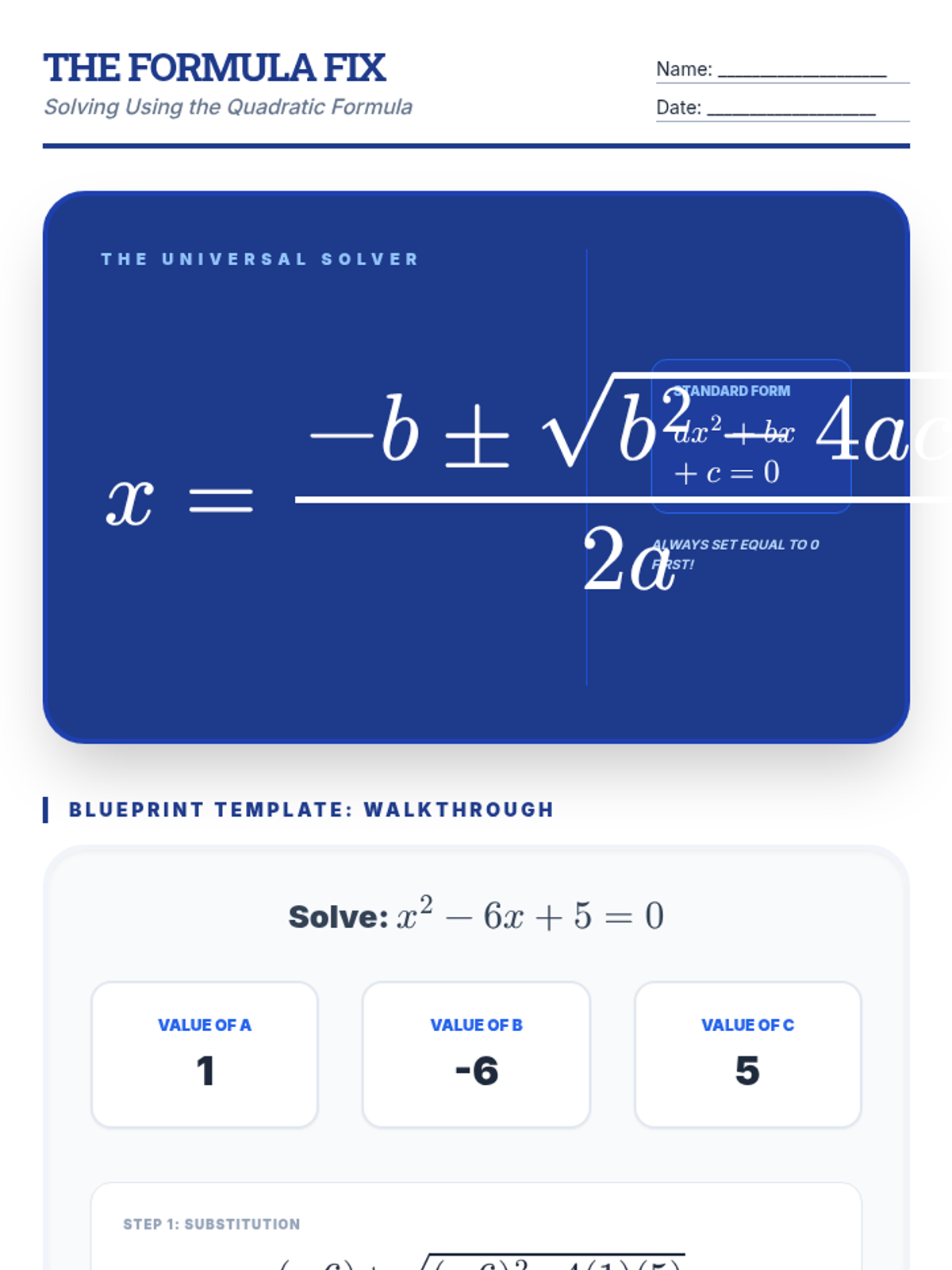
Students use the quadratic formula to solve equations that are not easily factorable, with an emphasis on identifying coefficients and simplifying the result.
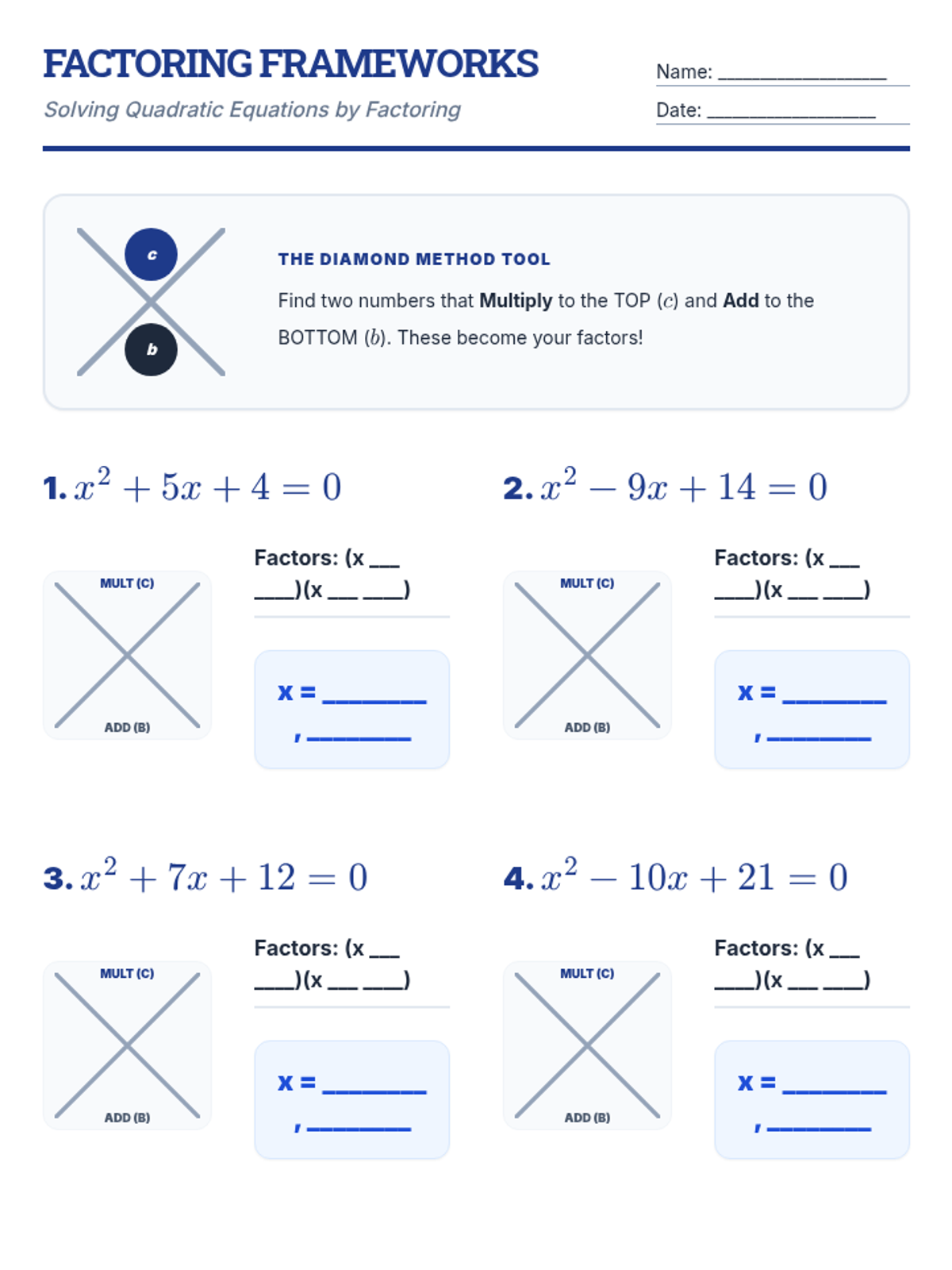
Students learn to solve quadratic equations by factoring trinomials and using the Zero Product Property, focusing on real roots and equations in standard form.
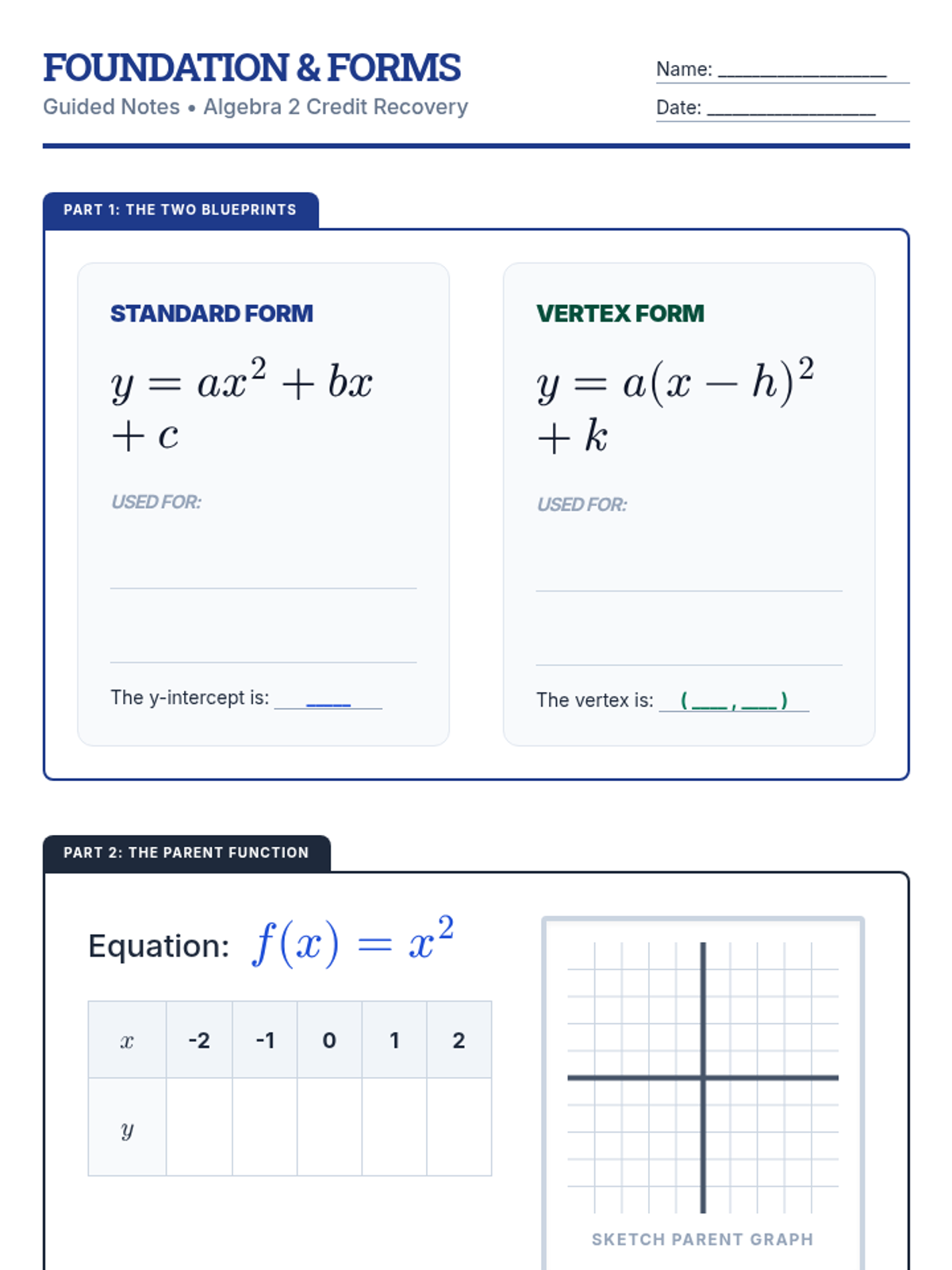
Students explore the quadratic parent function, identify key features of parabolas (vertex, axis of symmetry, zeros), and learn to graph by plotting points.
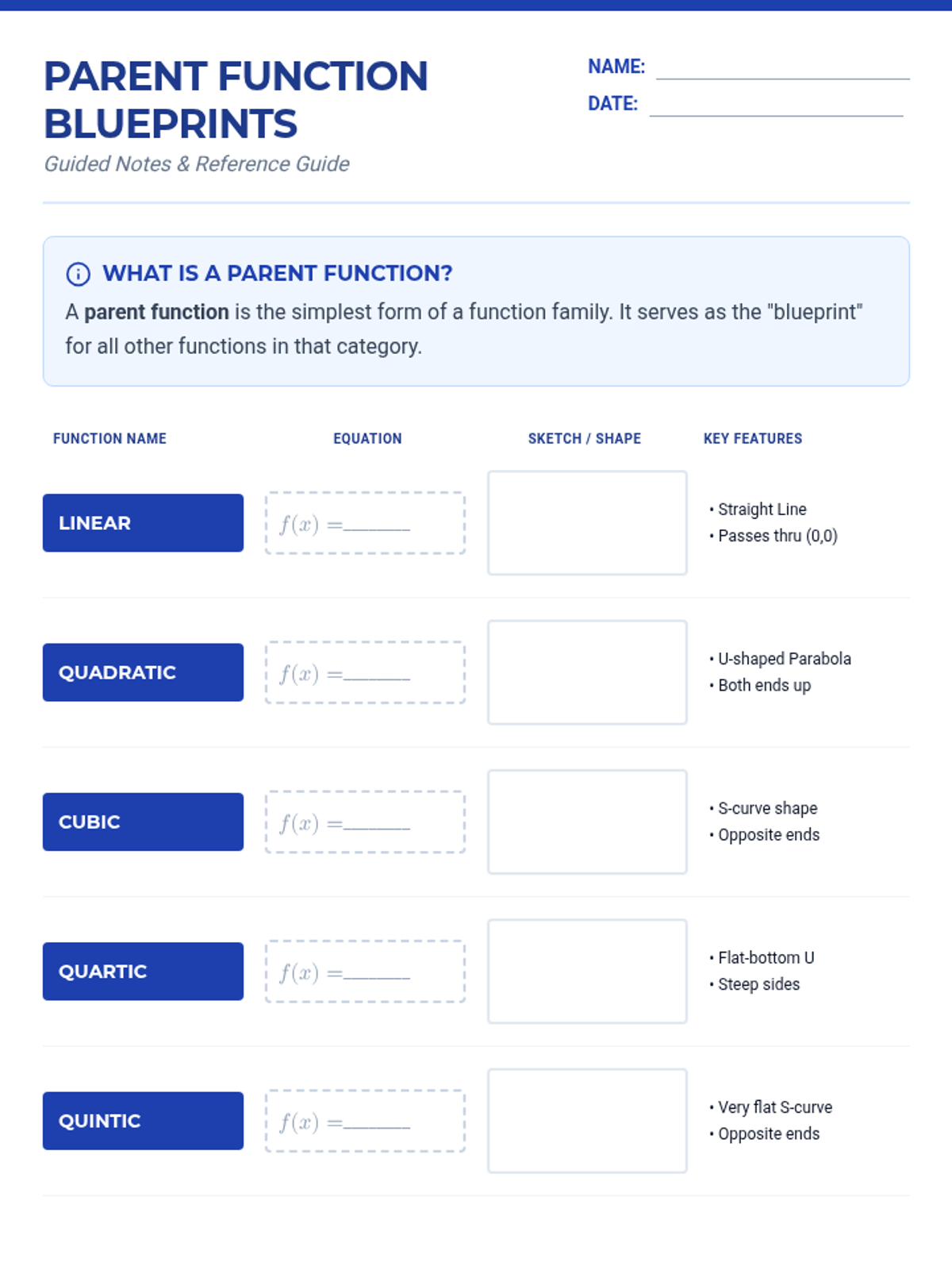
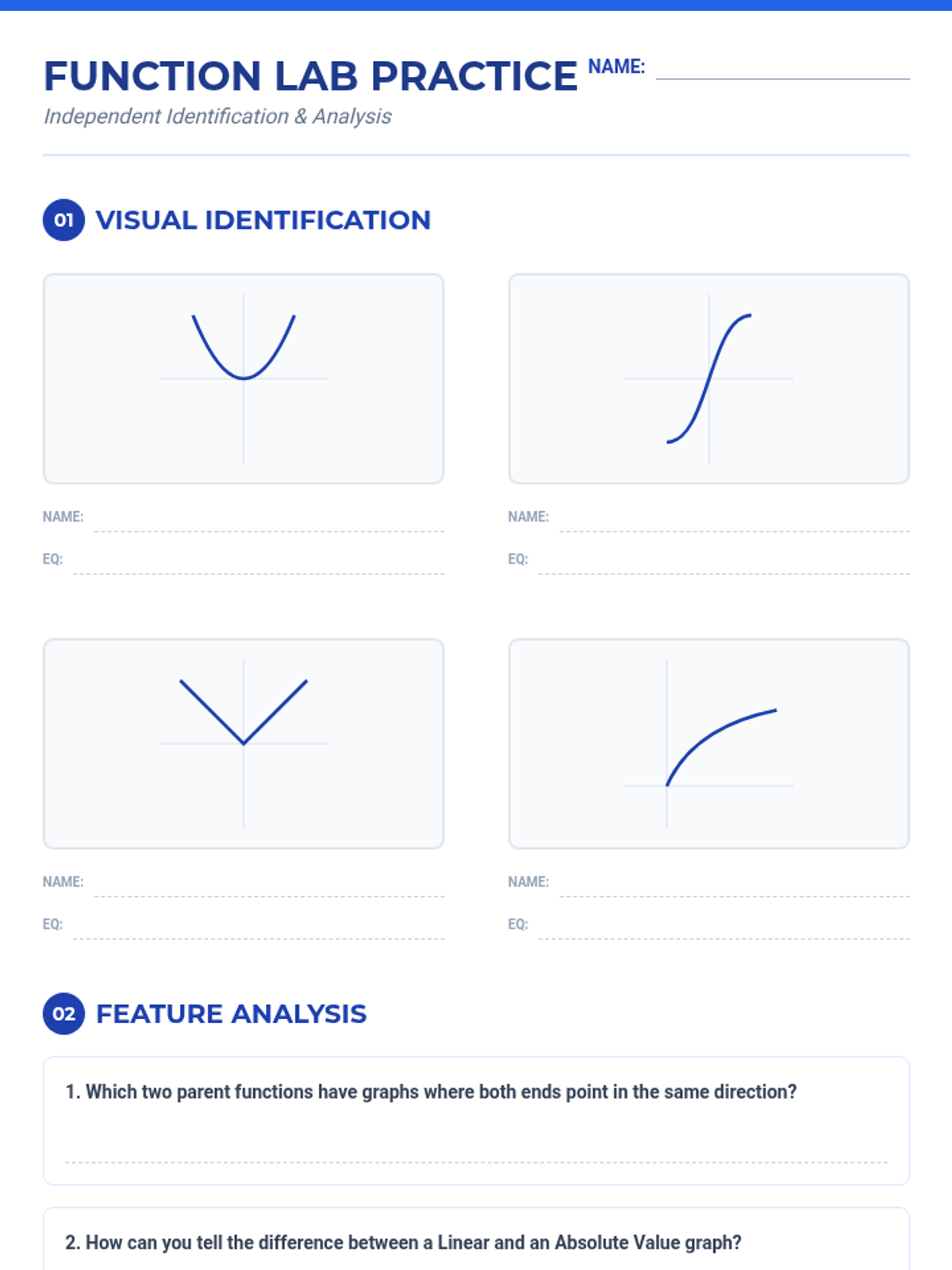
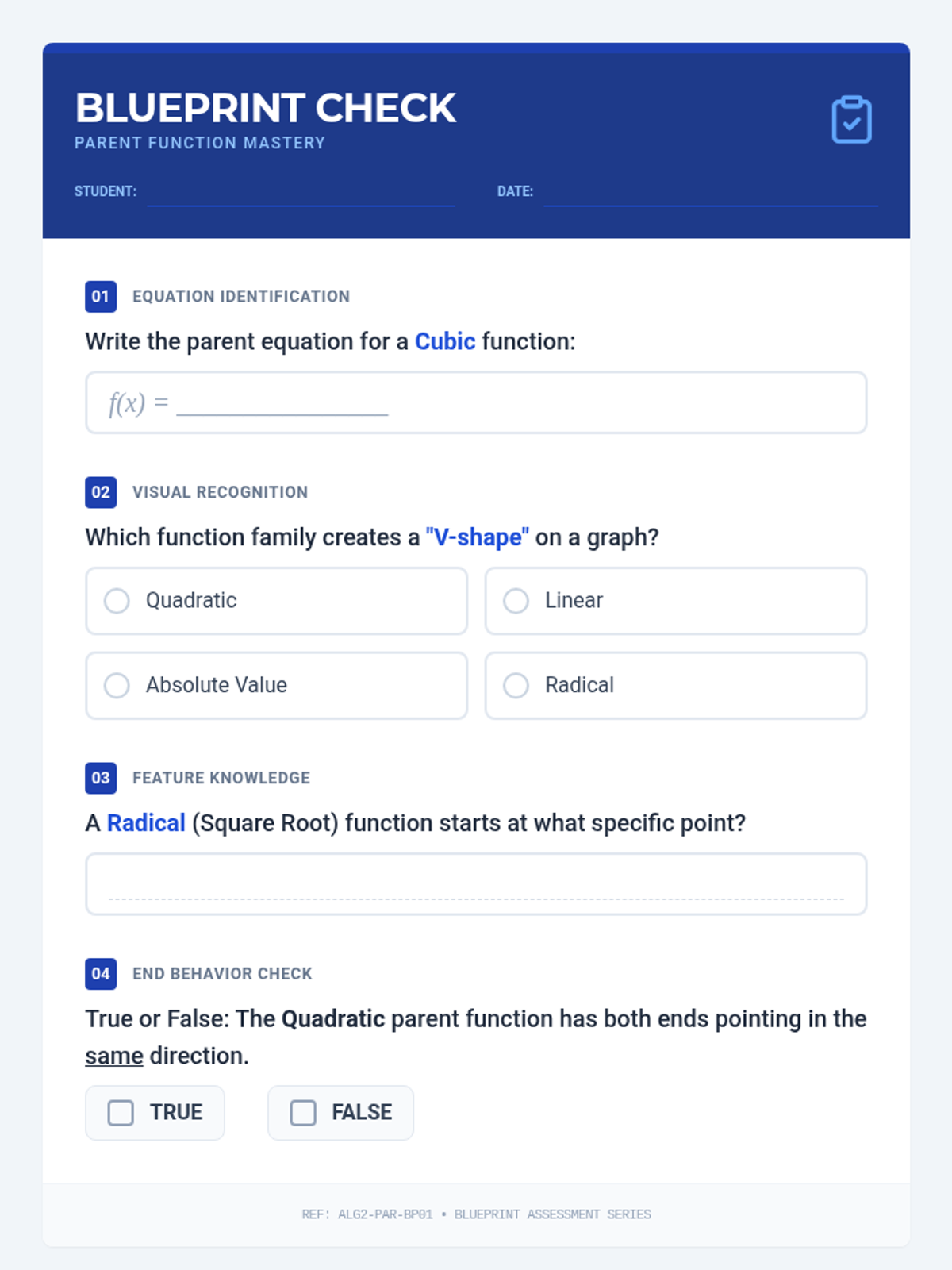
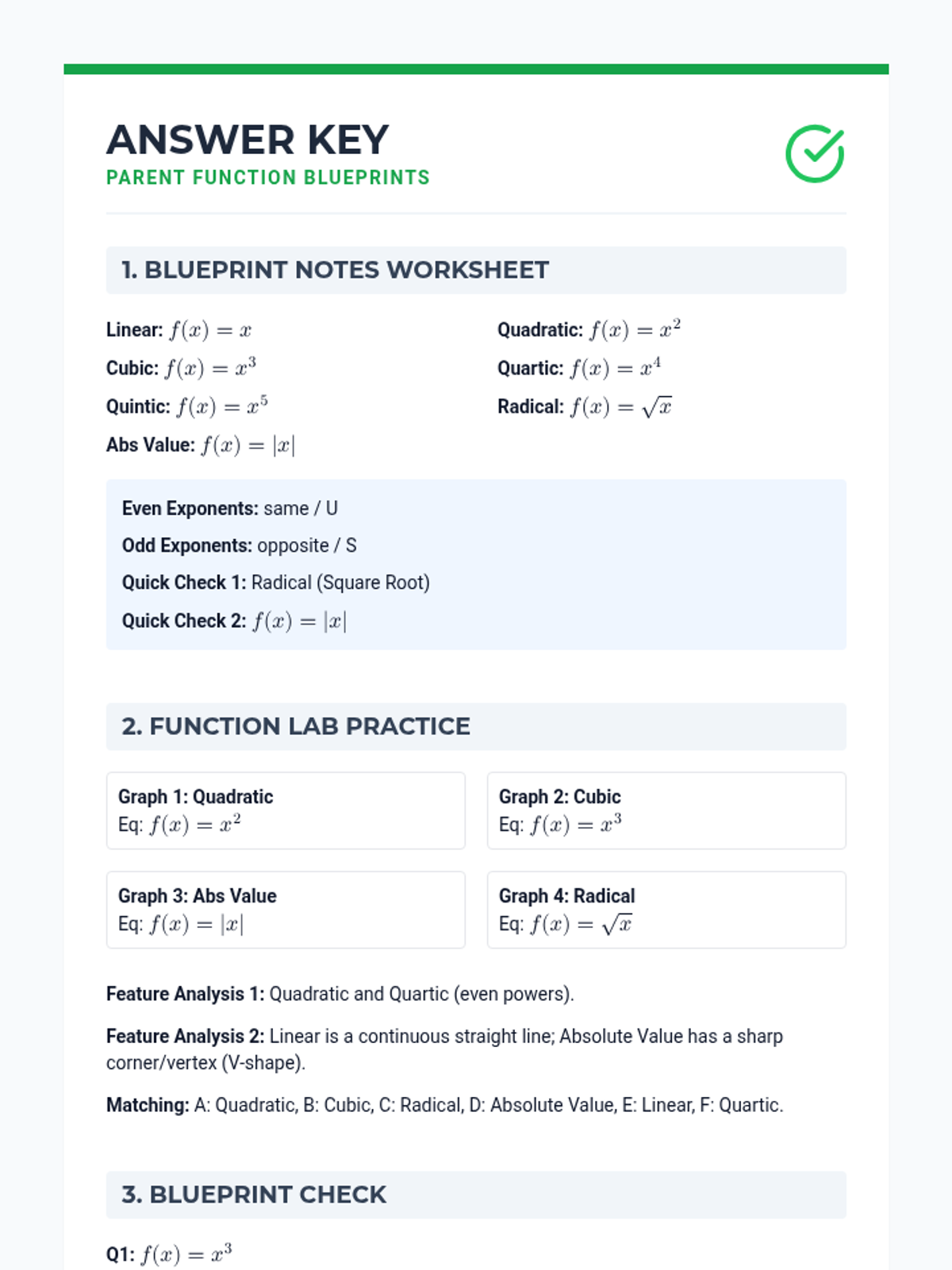
A comprehensive lesson on core parent functions for Algebra 2, focusing on identification, key features, and visual recognition using a blueprint theme.
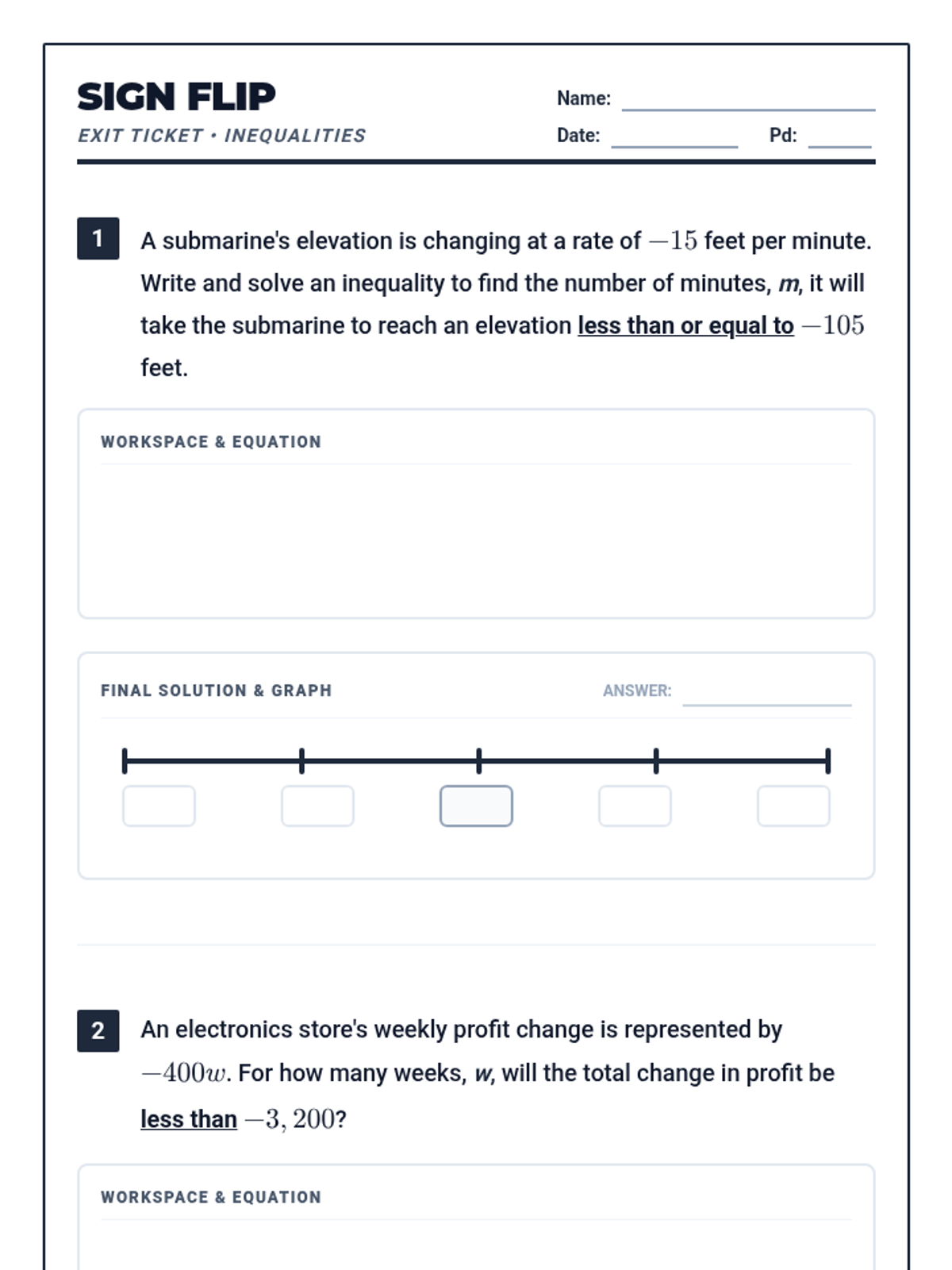
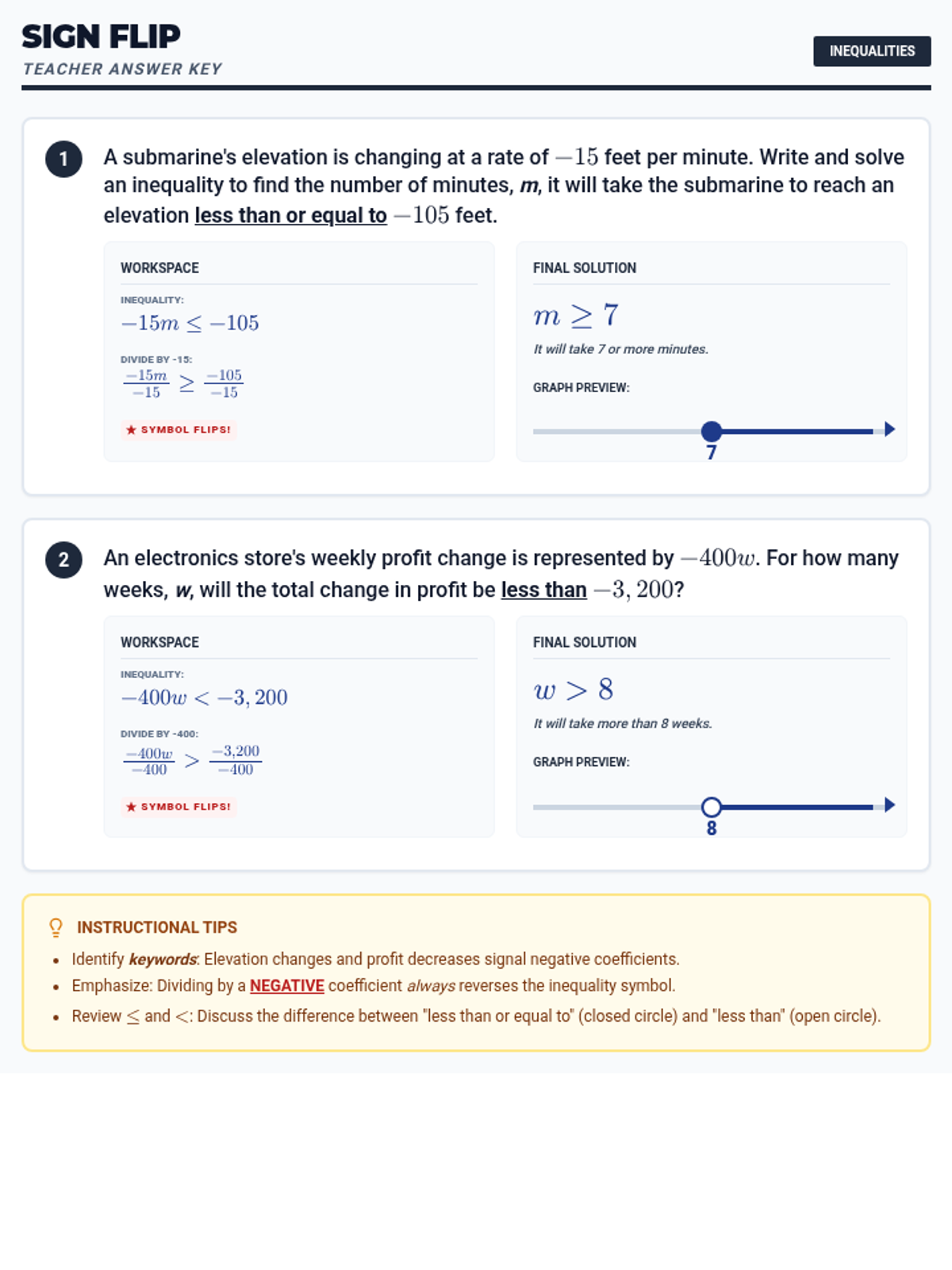
A lesson focused on solving one-step inequalities involving negative coefficients, emphasizing the "sign flip" rule through real-world problem solving.
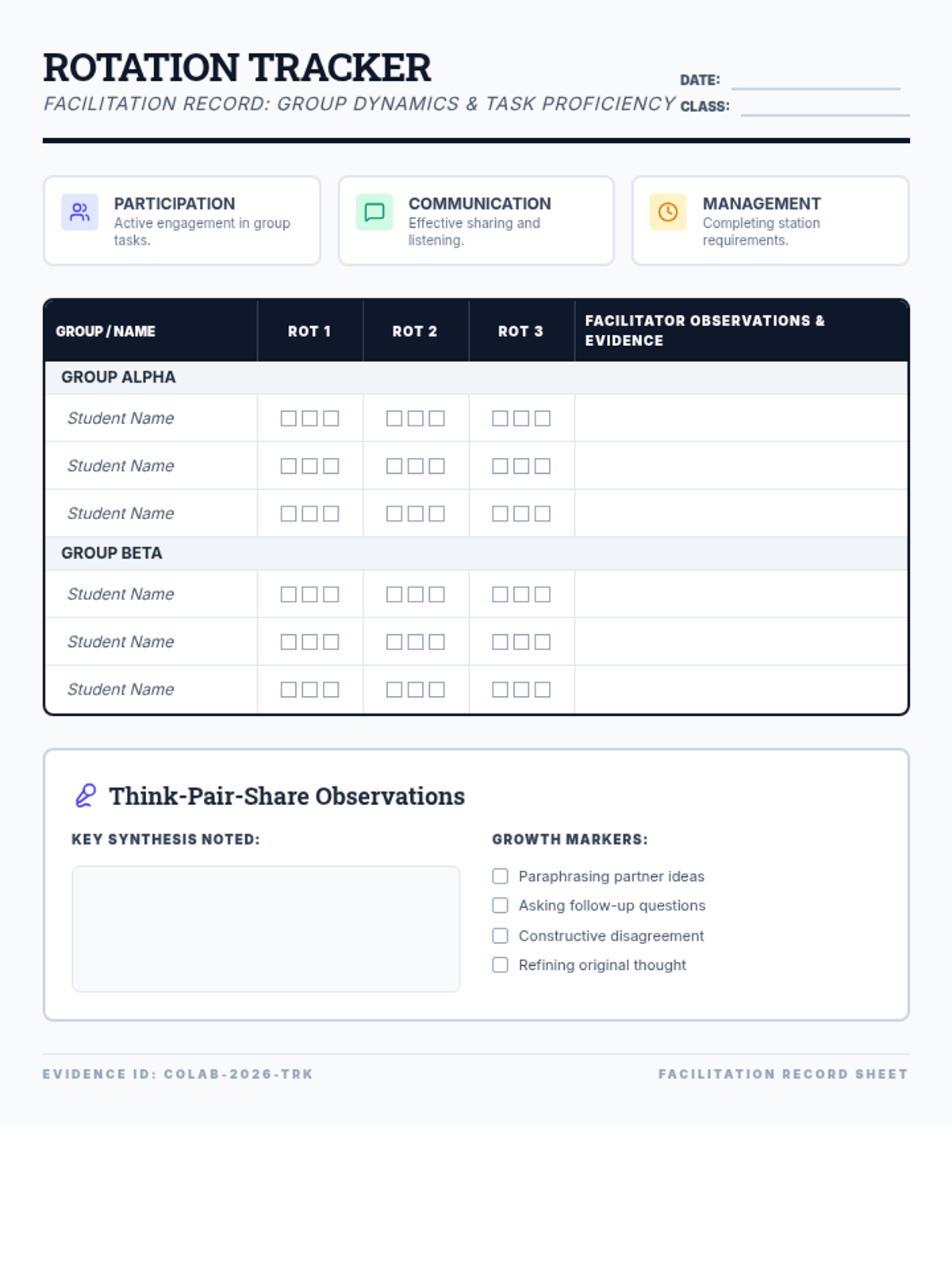
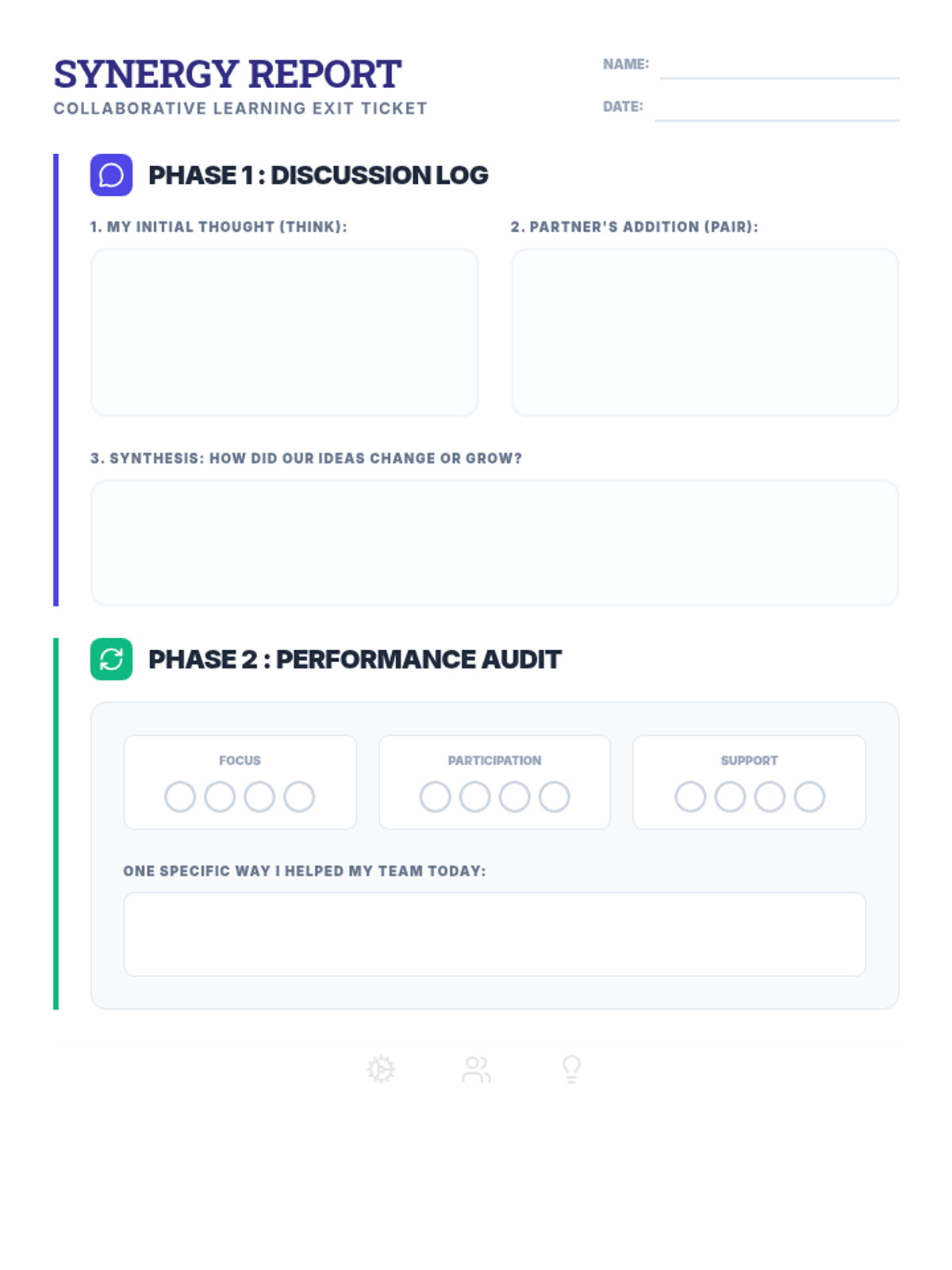
A lesson focused on facilitating and documenting collaborative learning through structured rotations and Think-Pair-Share discussions. Includes tools for teacher monitoring and student self-reflection.
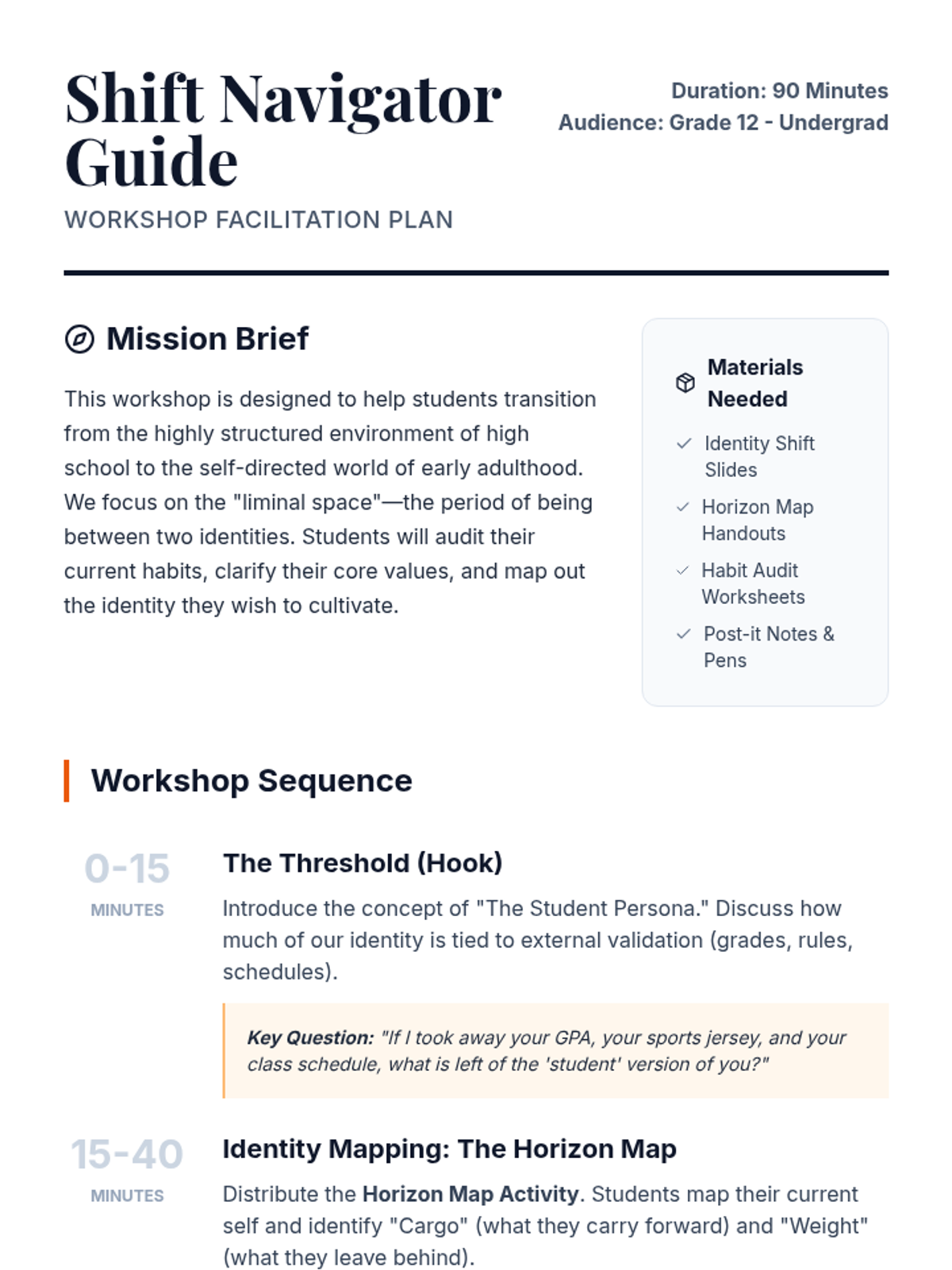
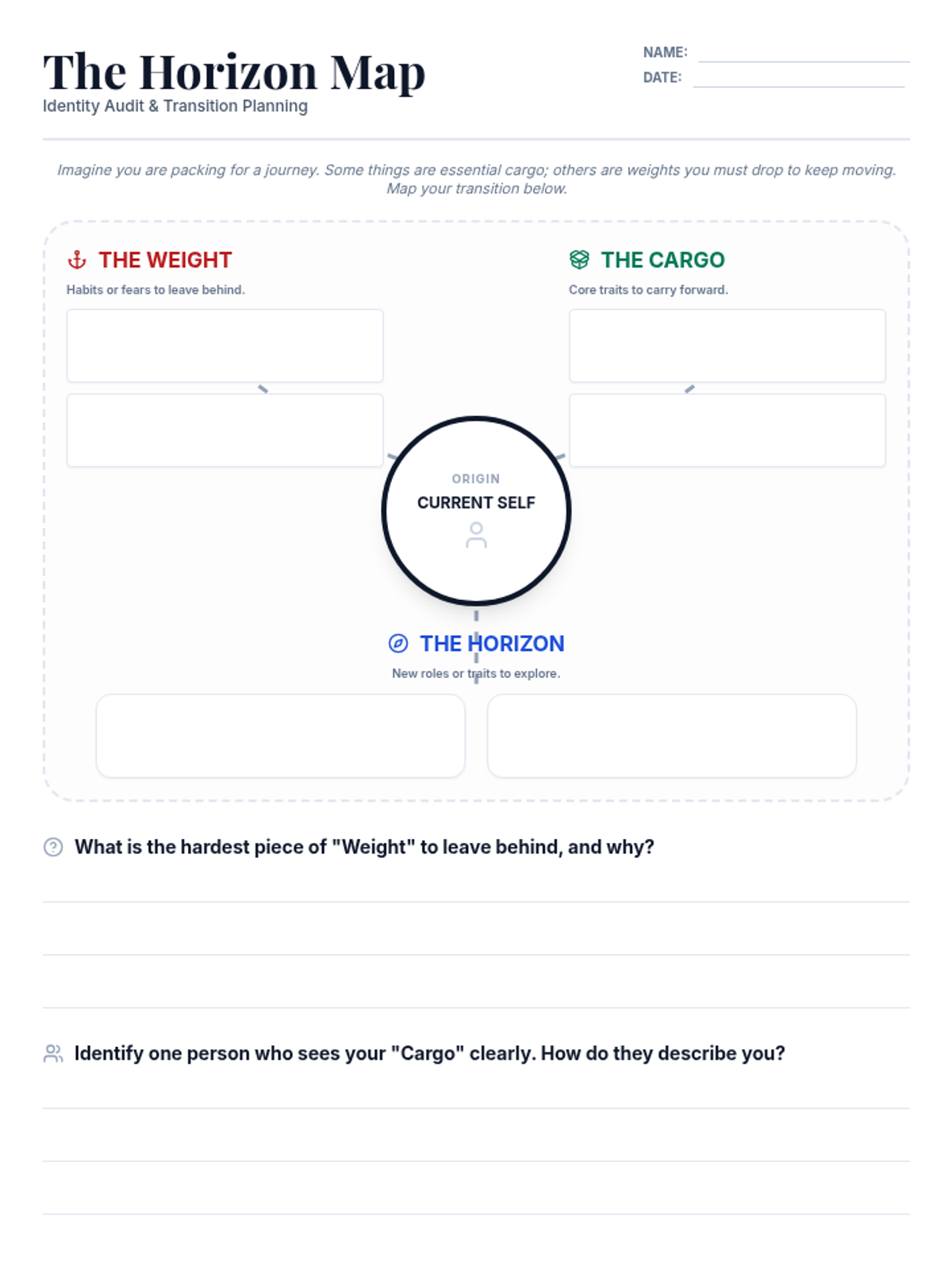
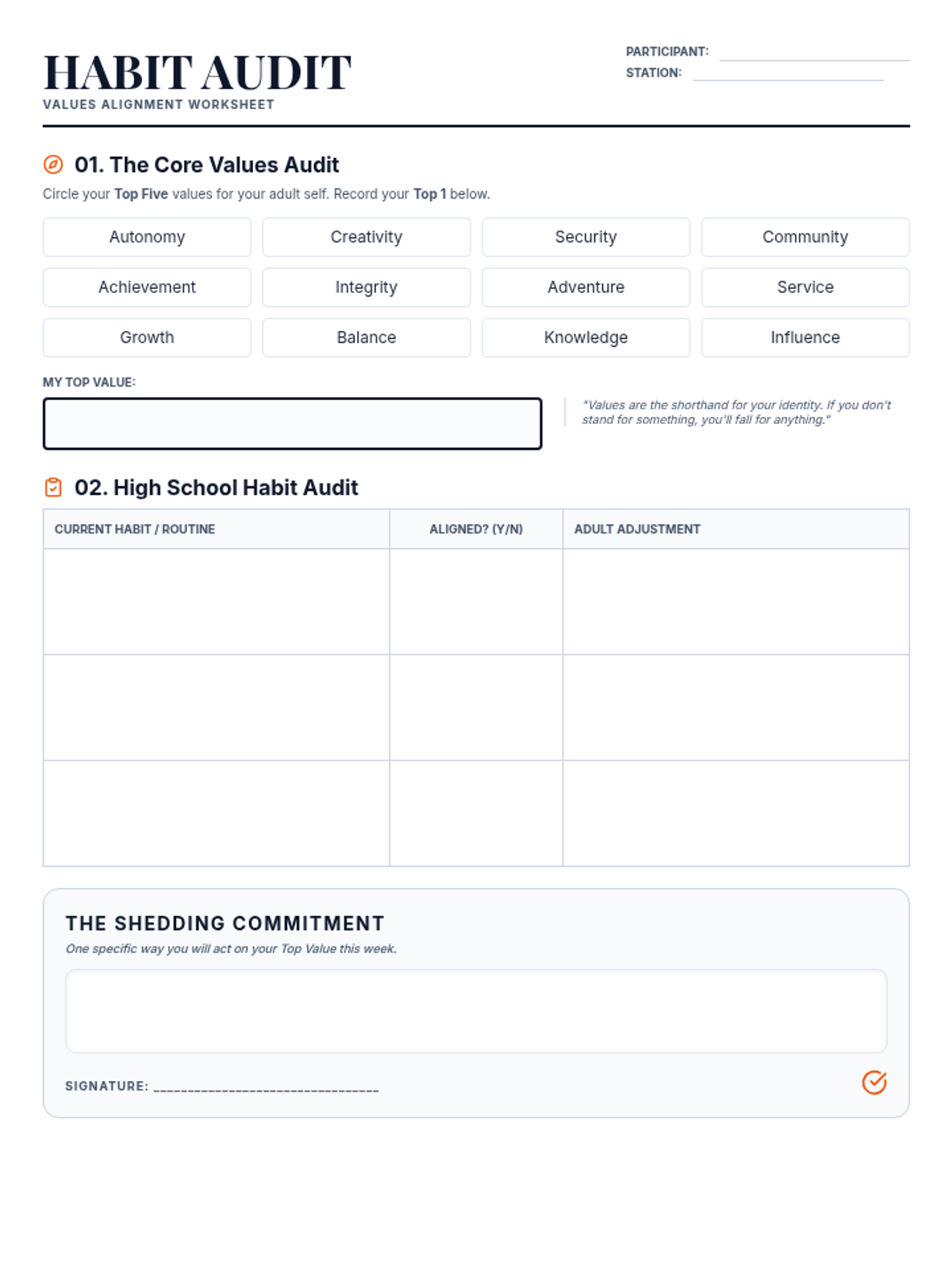
A workshop for graduating seniors and undergraduates to navigate the psychological transition into adulthood through identity mapping and values clarification.
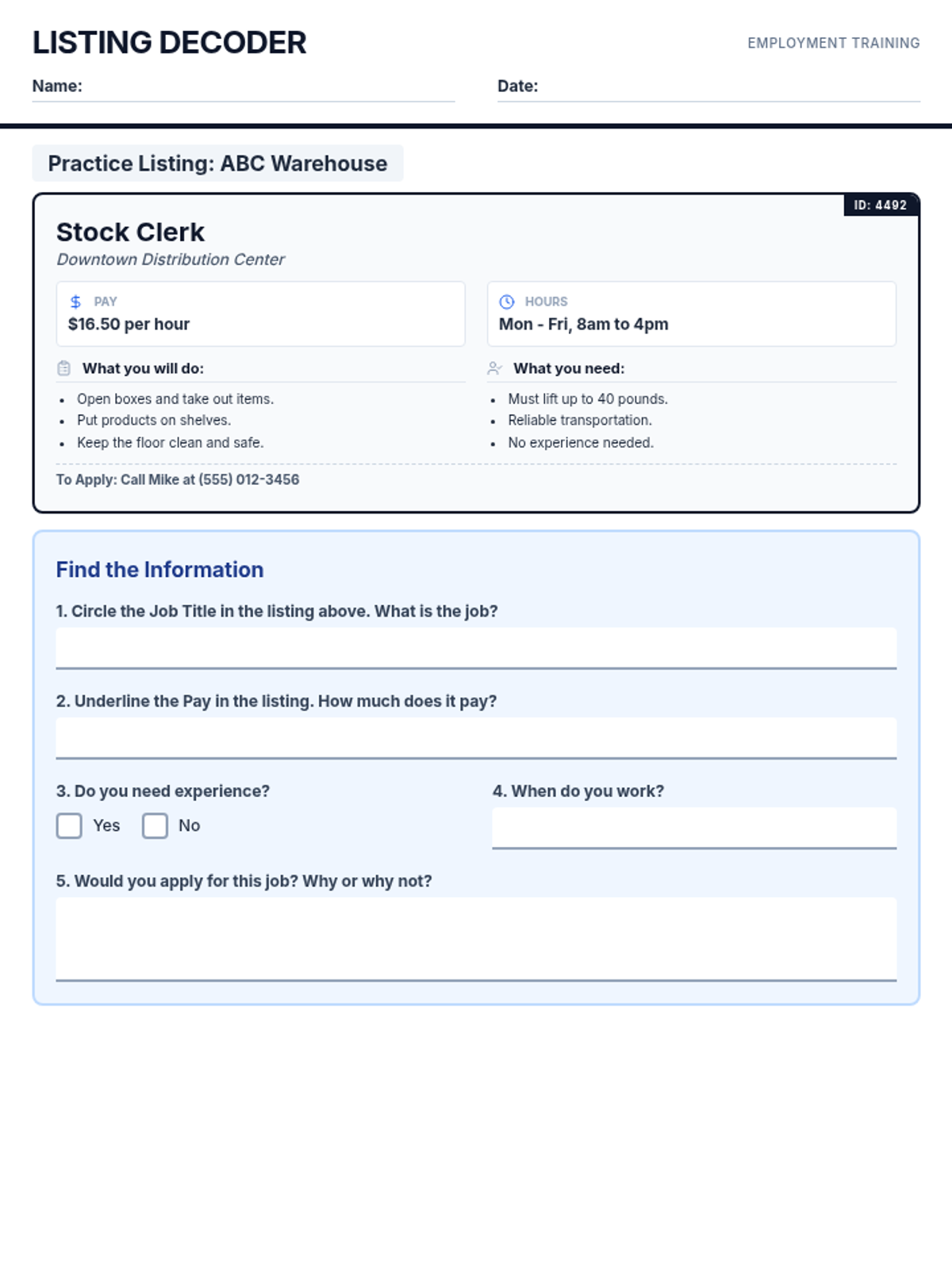
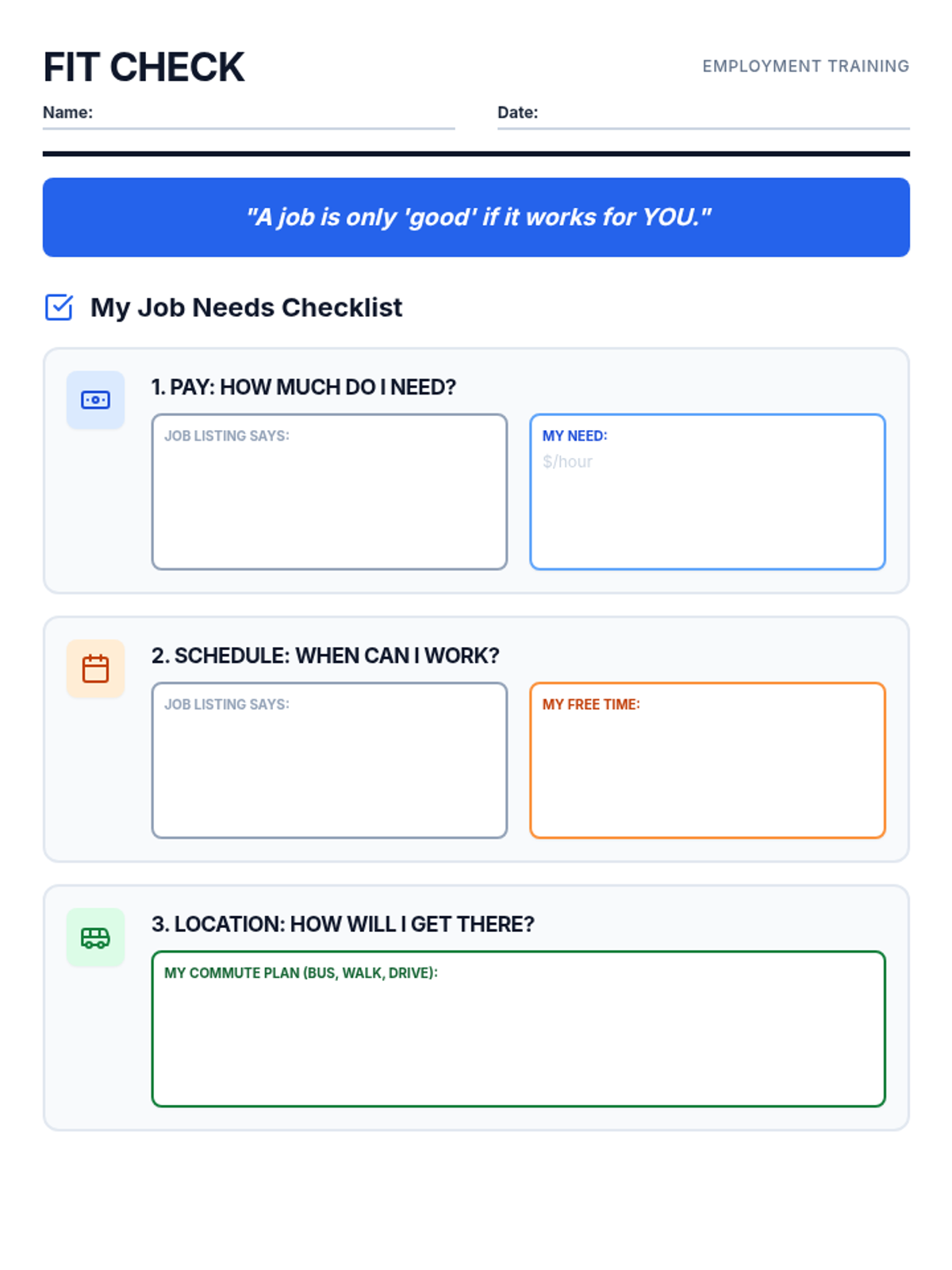
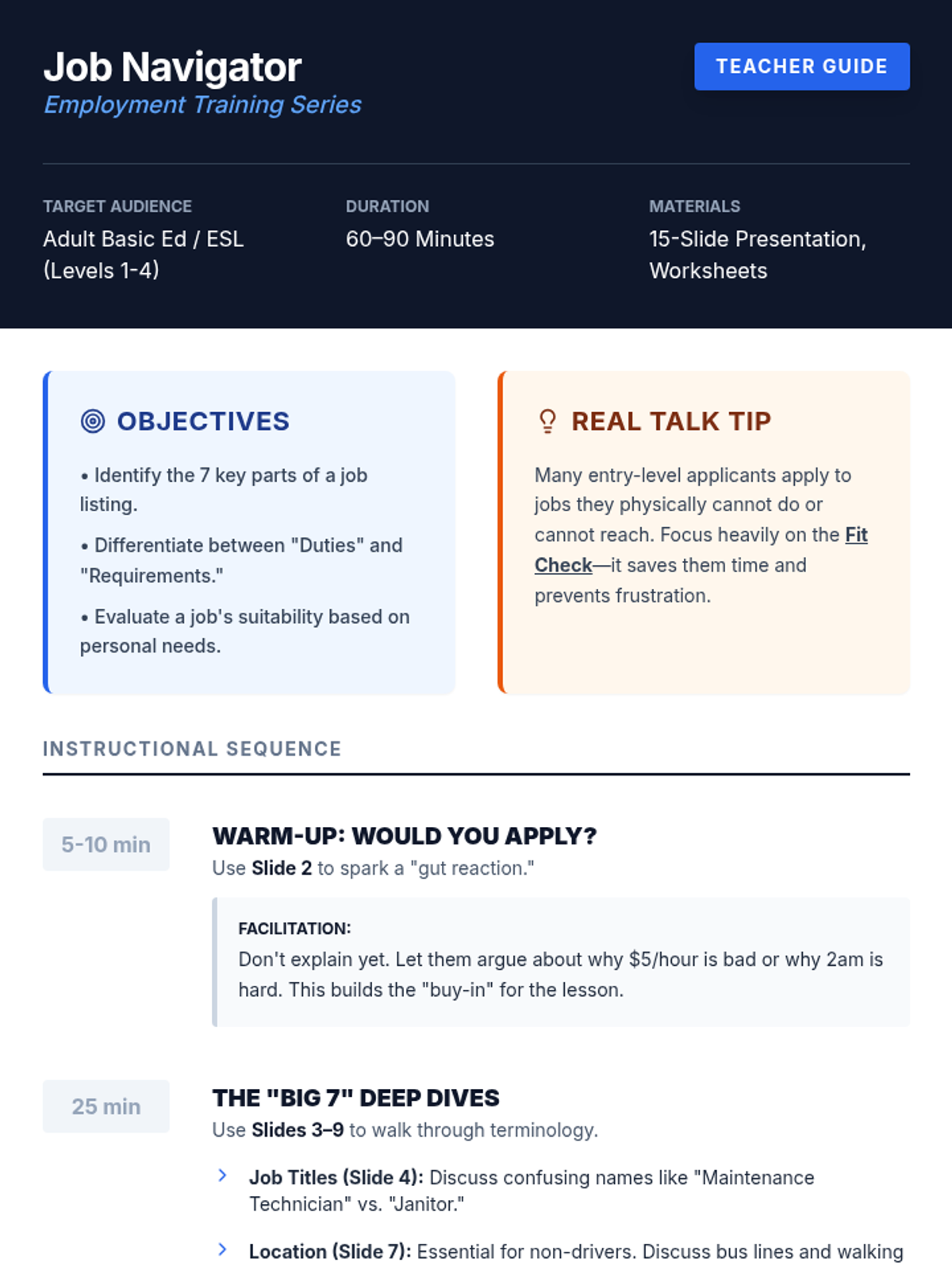
A practical lesson for entry-level job seekers to identify key information in job postings and determine if a role aligns with their personal needs and abilities.
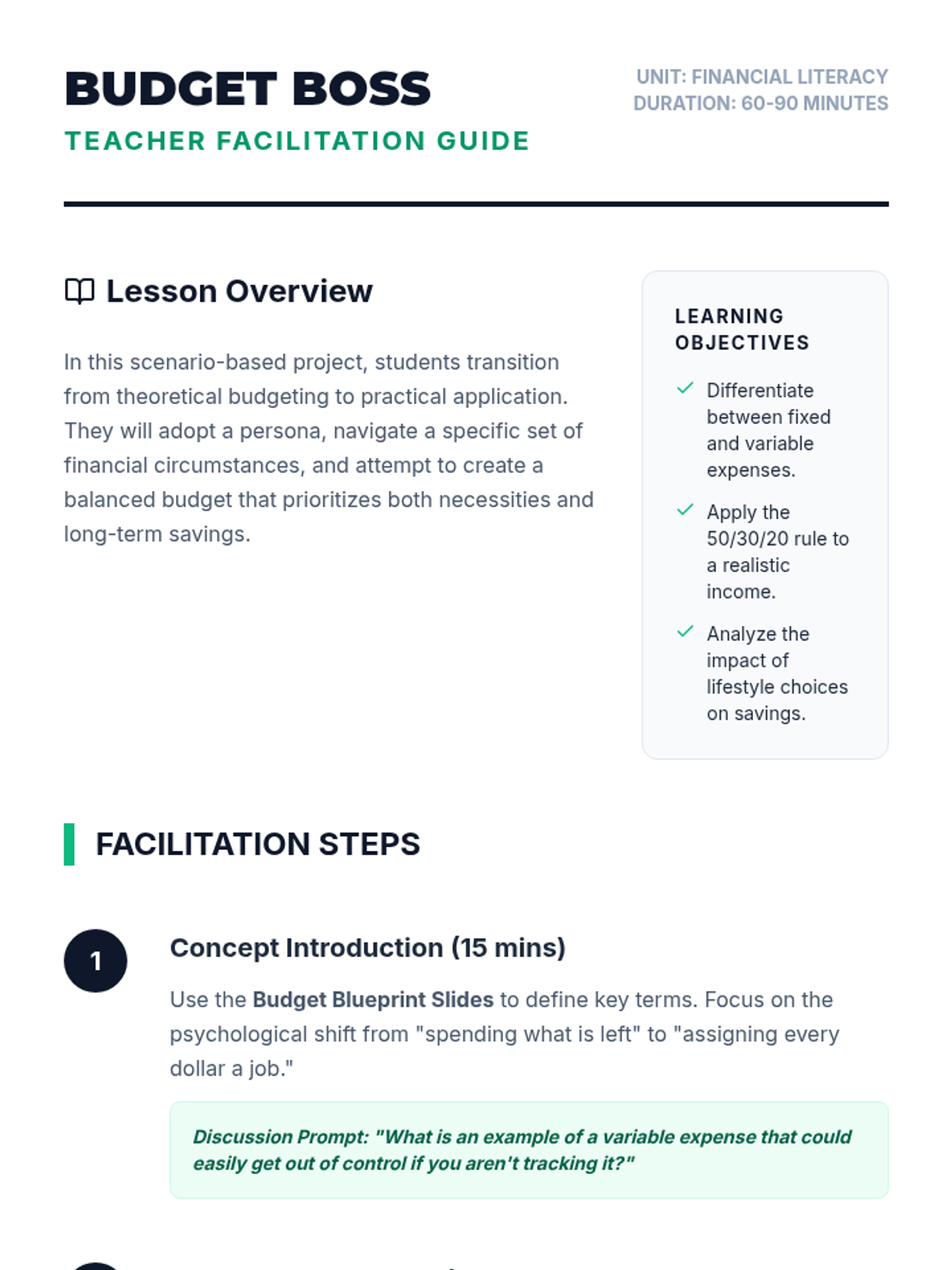
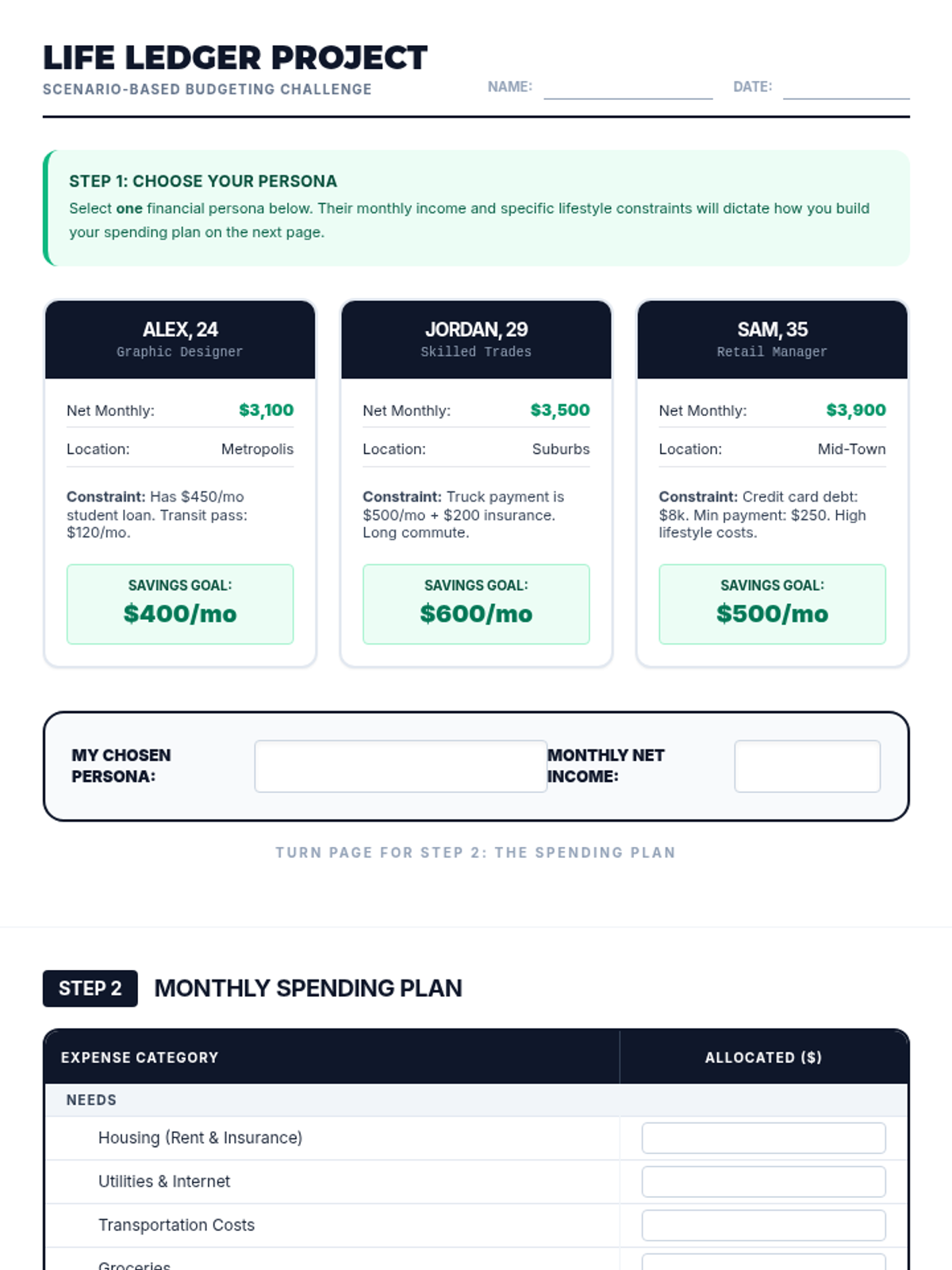
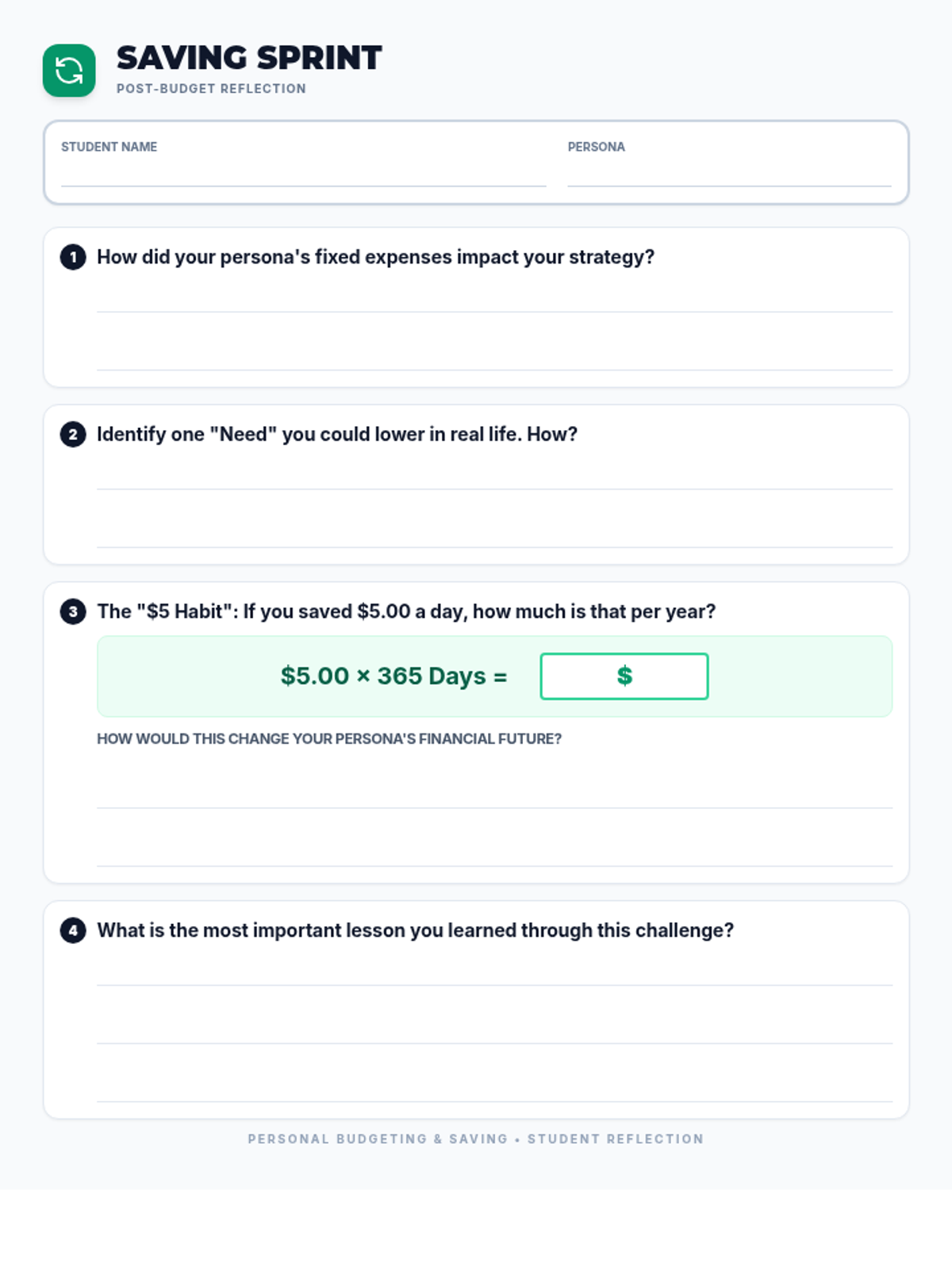
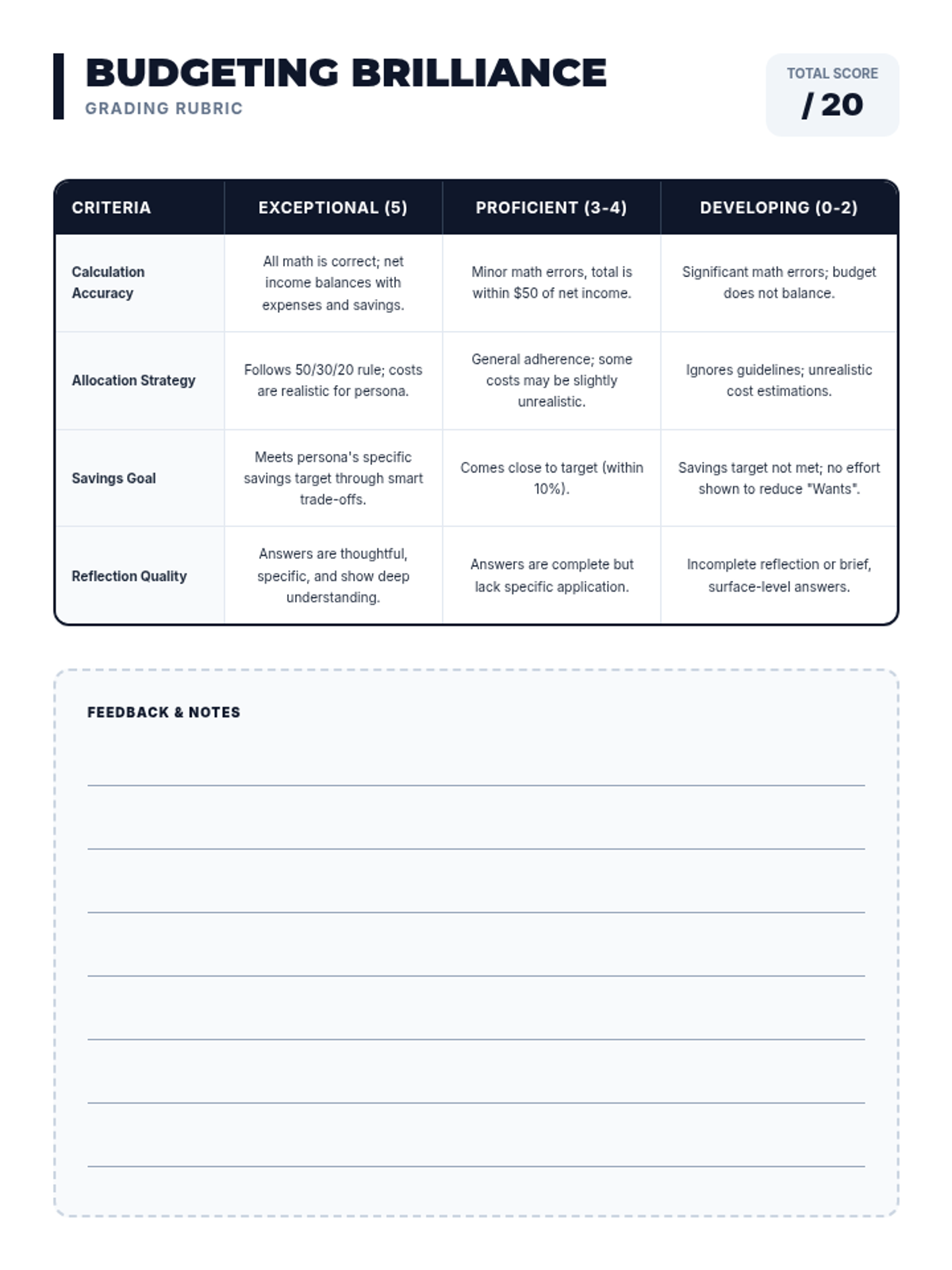
A hands-on financial literacy lesson where students apply budgeting principles to real-world scenarios, managing income, expenses, and savings goals for a fictional persona.