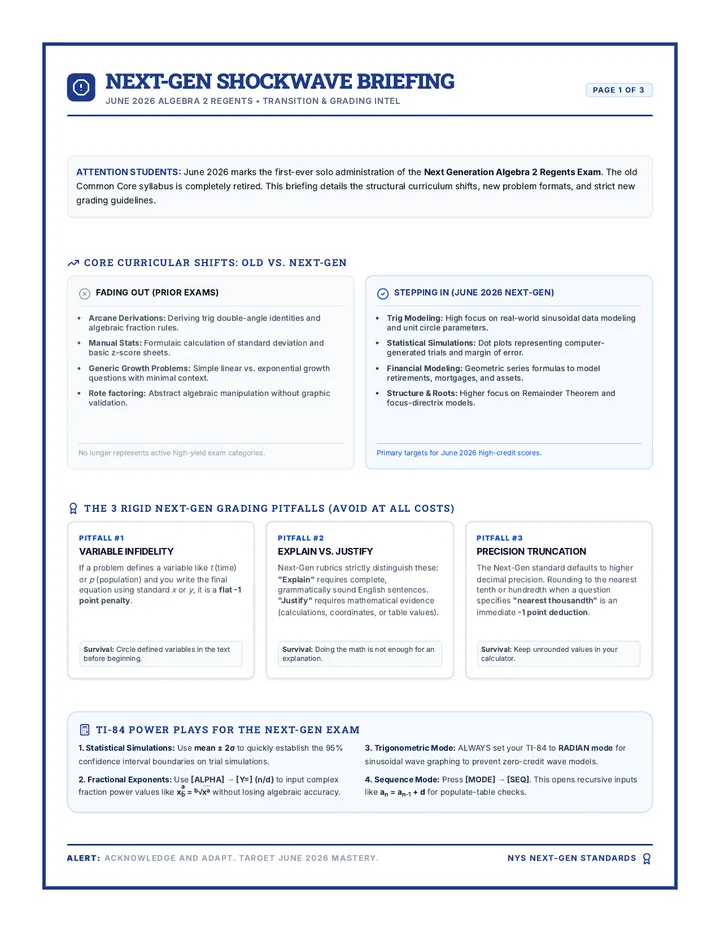
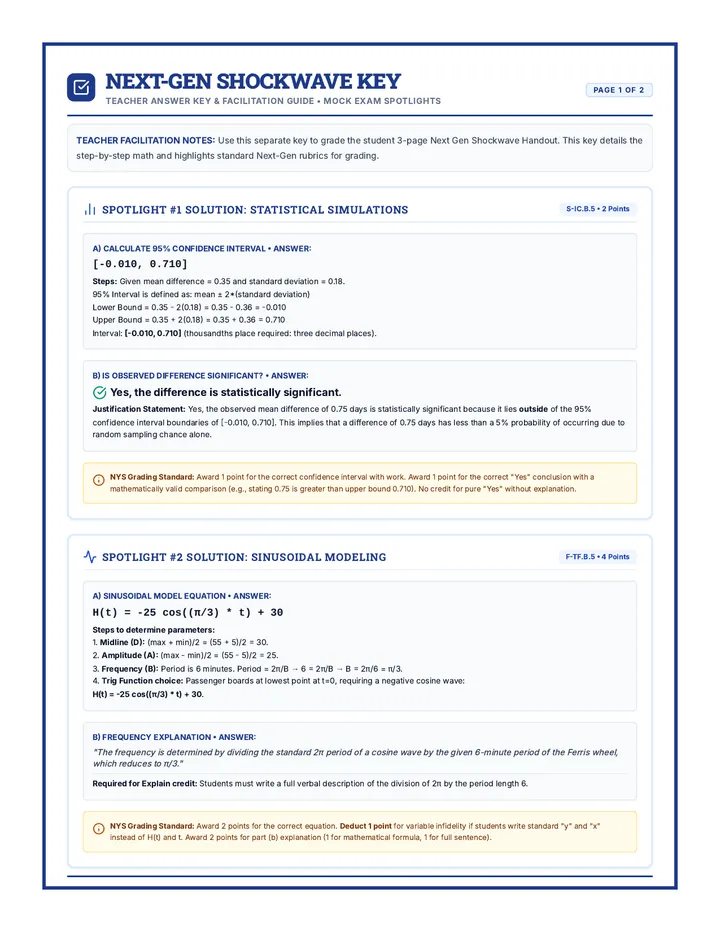
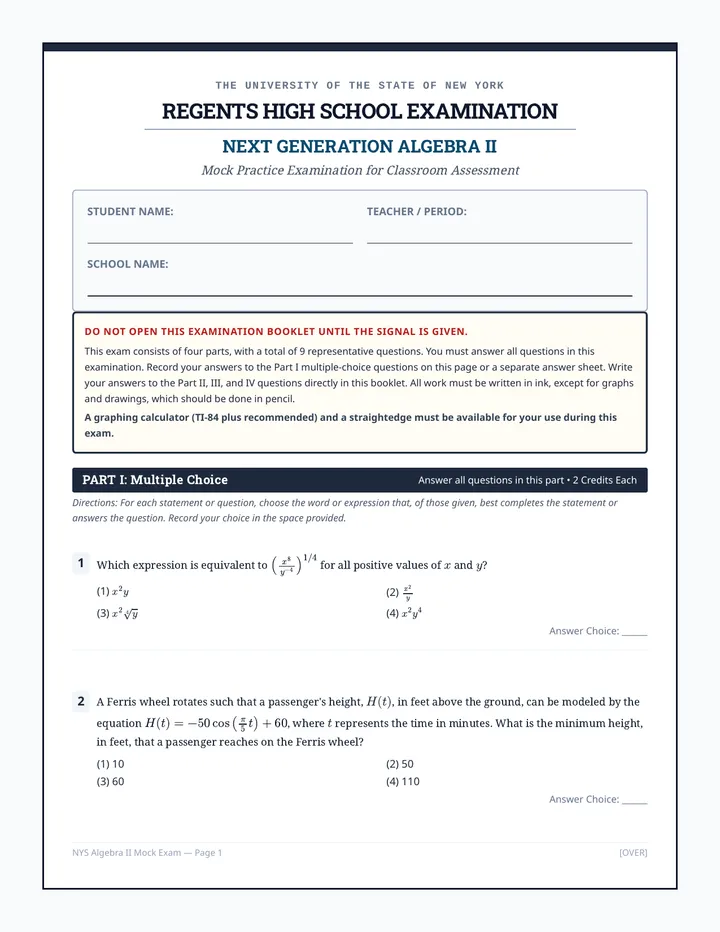
Right triangle ratios, unit circle definitions, and fundamental identities applied to angles and geometric relationships. Models periodic phenomena using trigonometric functions to analyze real-world cycles and waveforms.
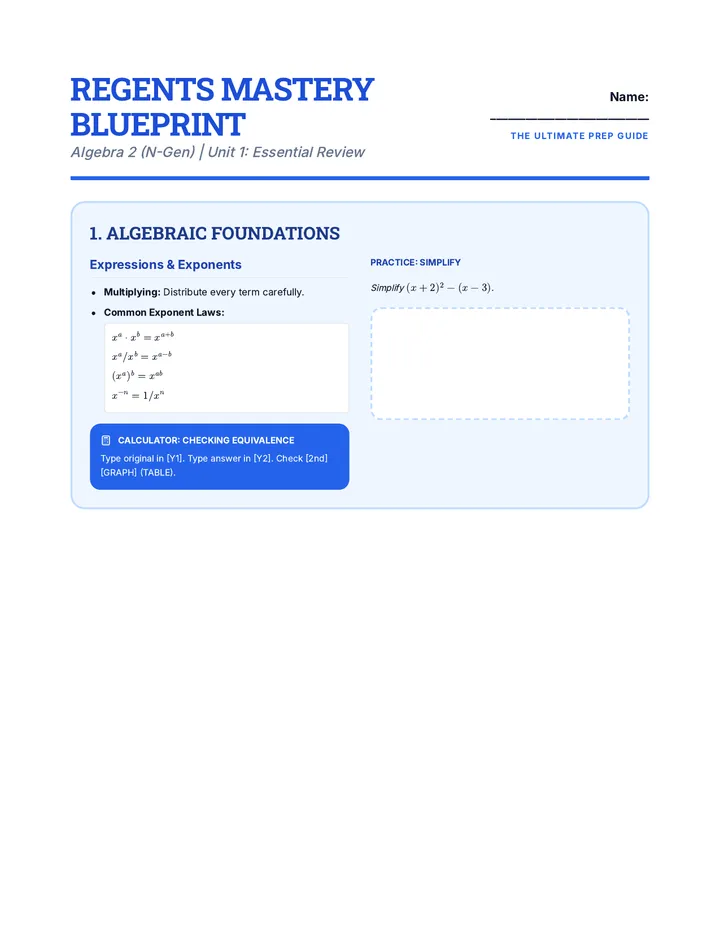
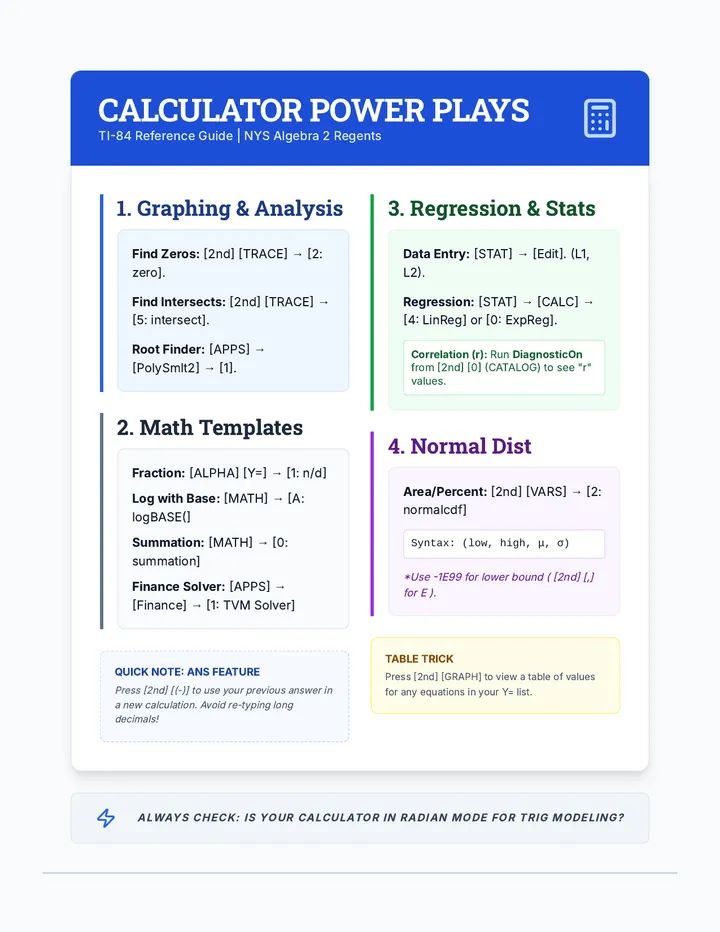
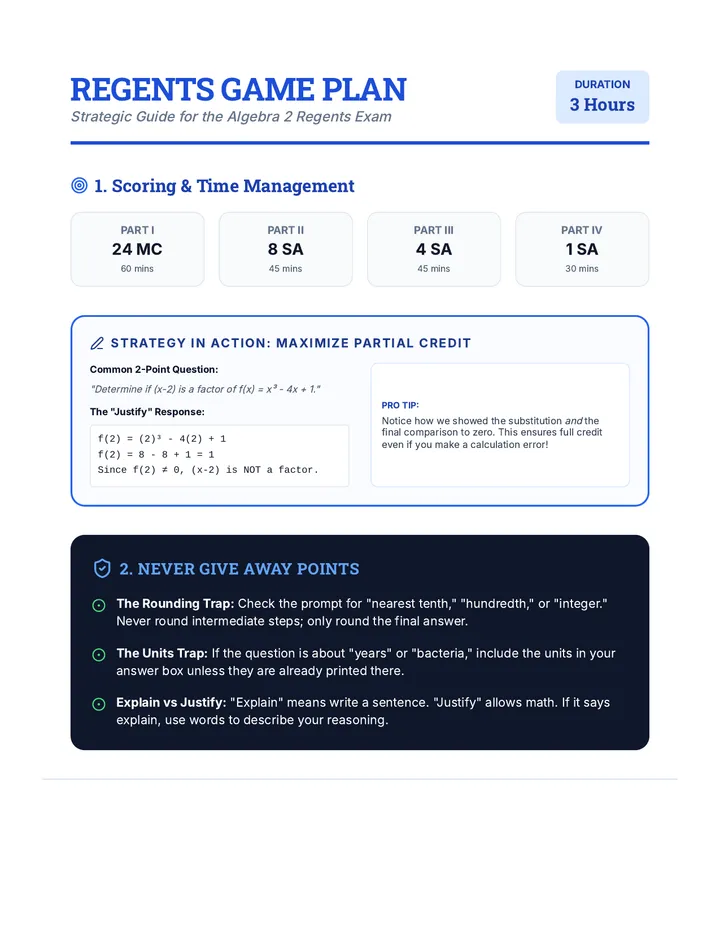
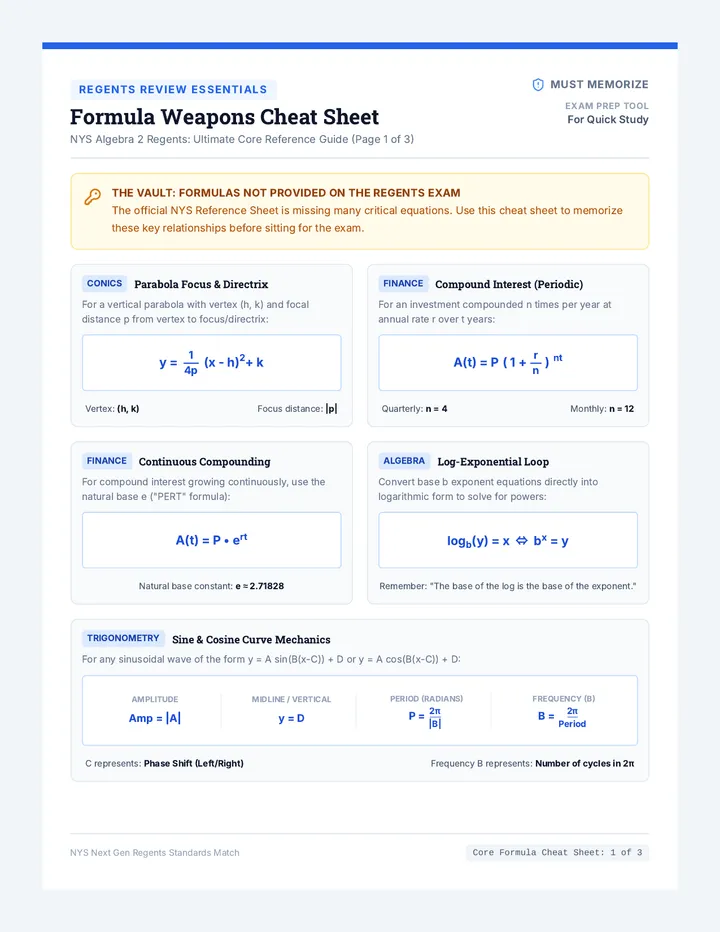
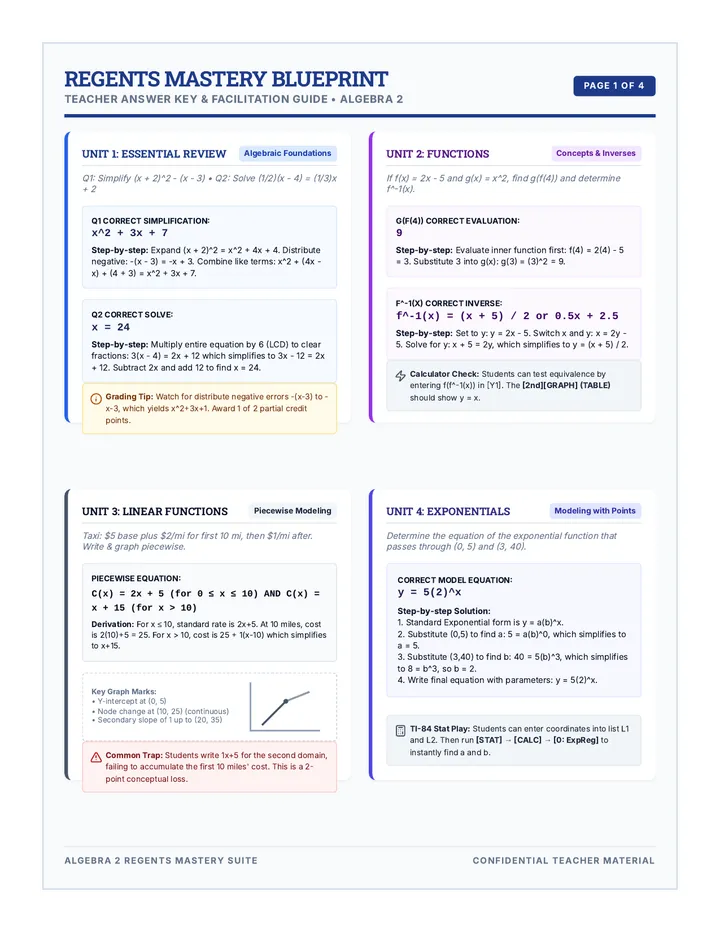
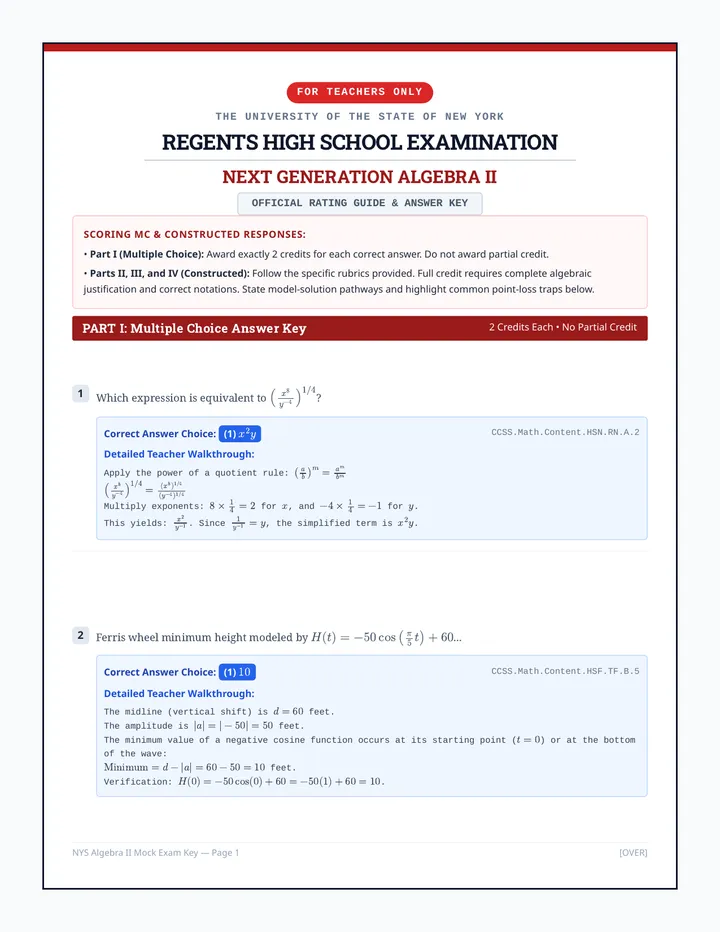
A comprehensive review suite for the New York State Mathematics Regents exams, including Algebra 1, Geometry, and Algebra 2, featuring mastery blueprints, calculator strategies, and exam-taking tips.
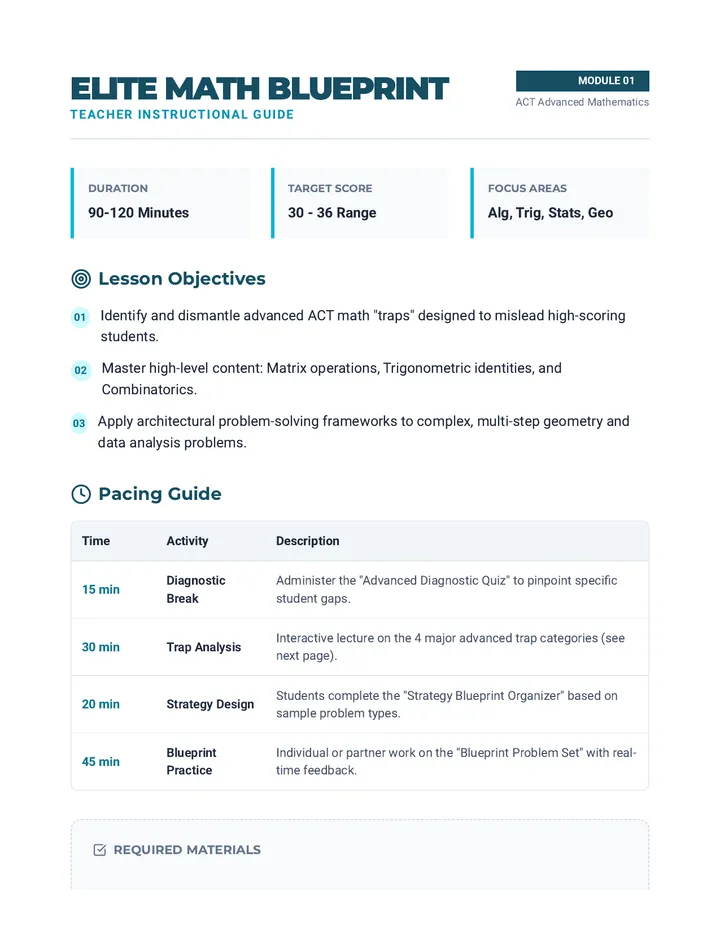
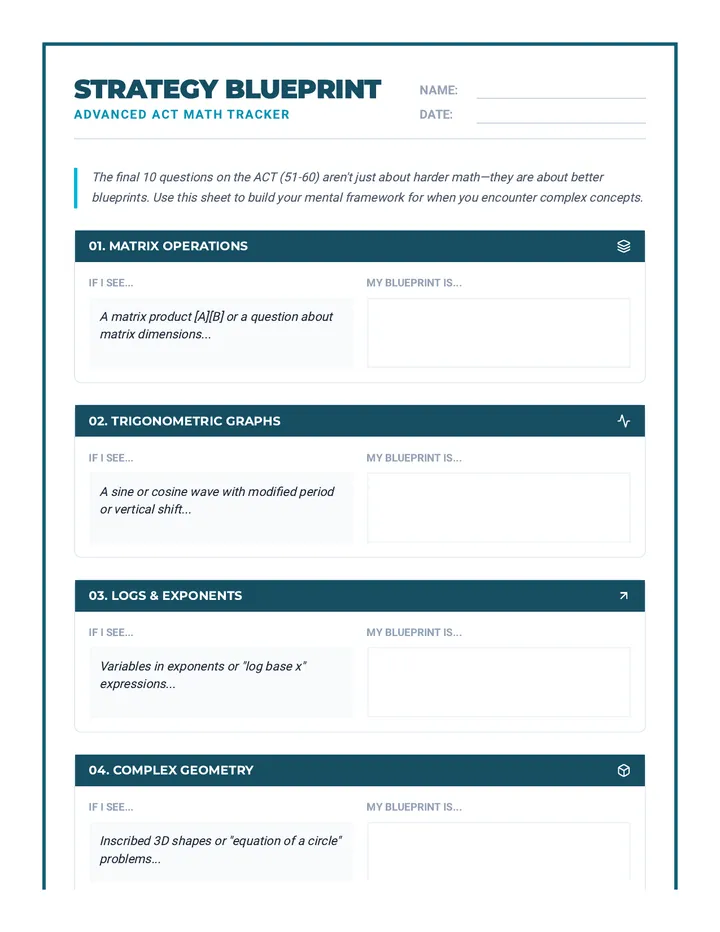
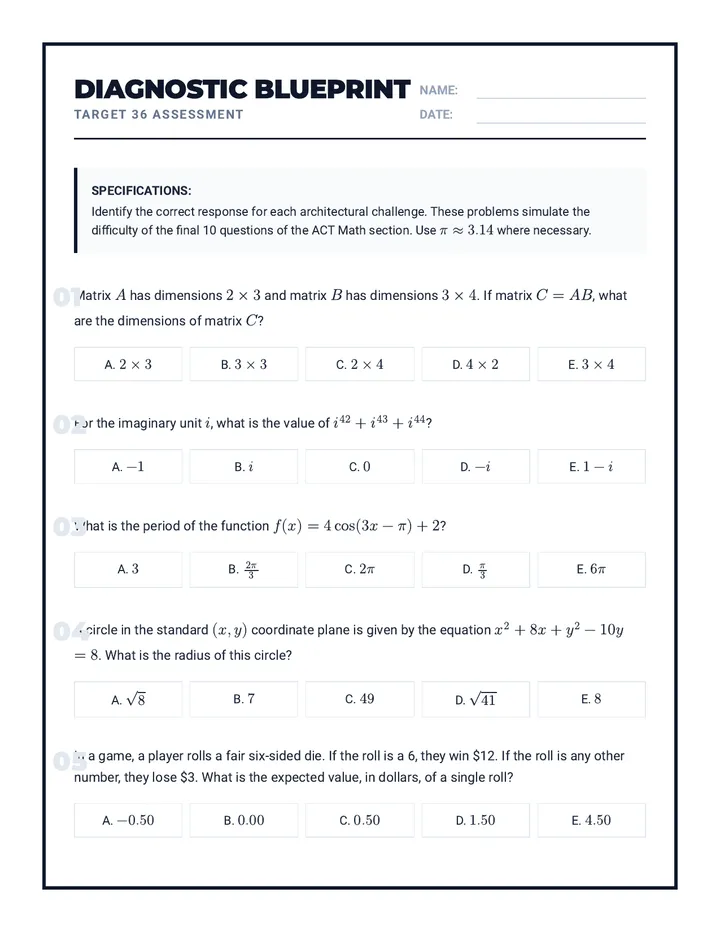
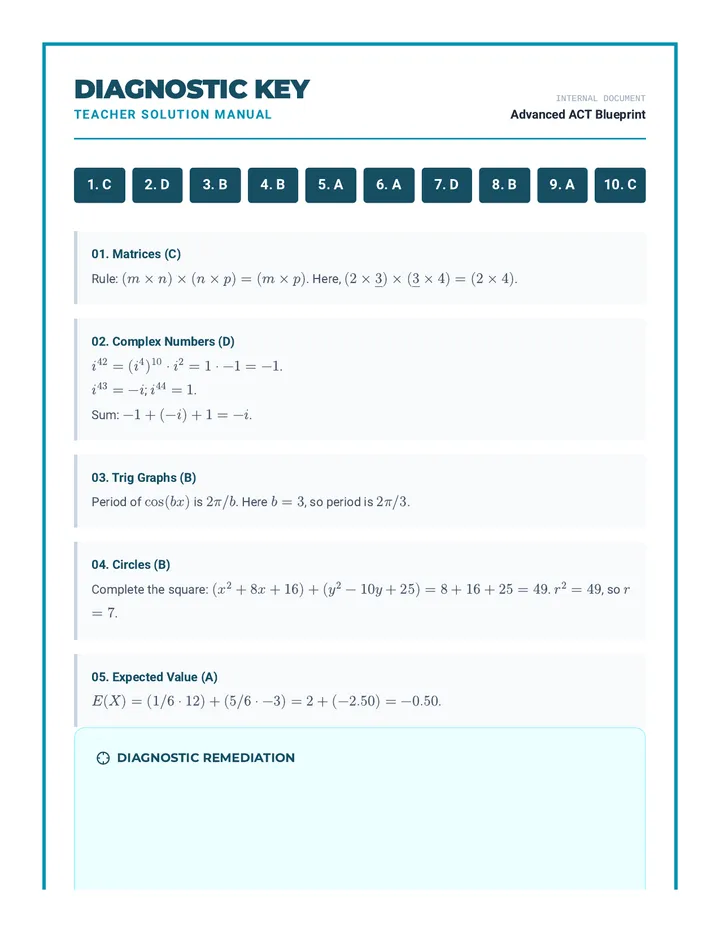
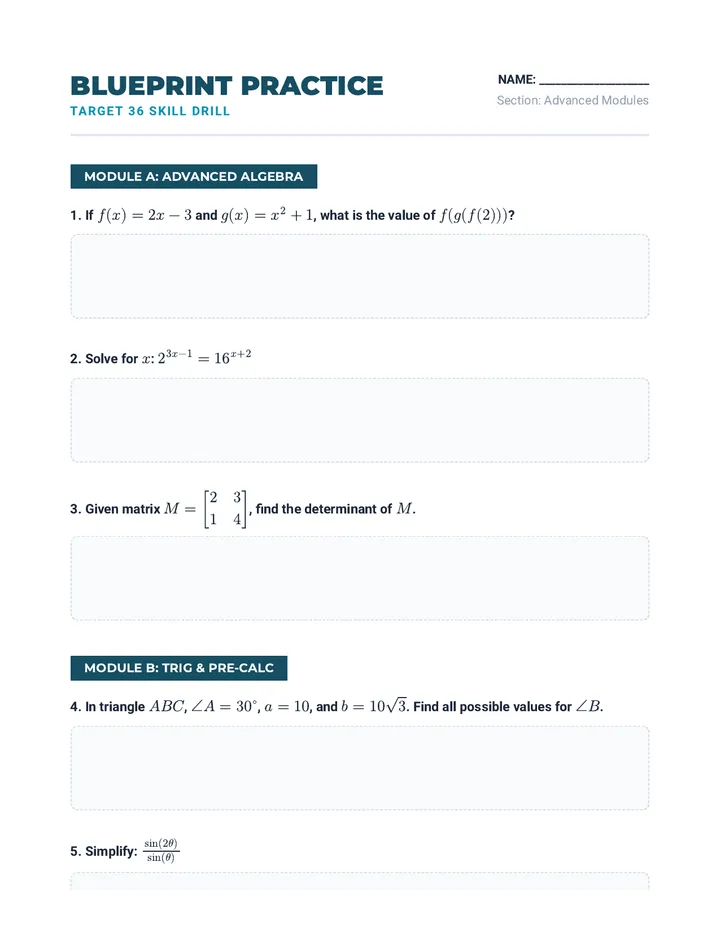
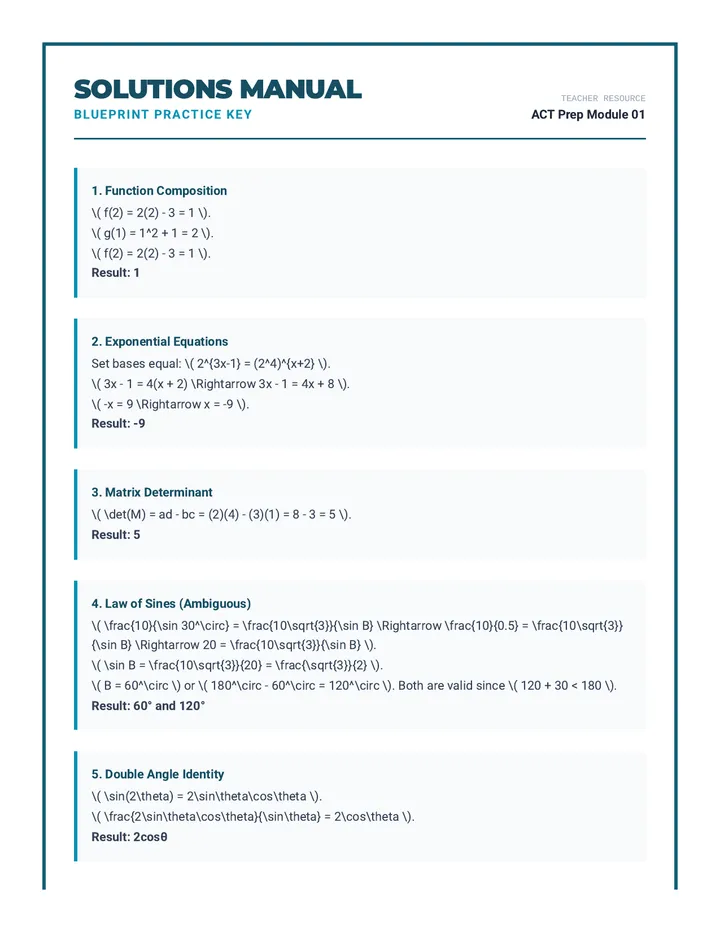
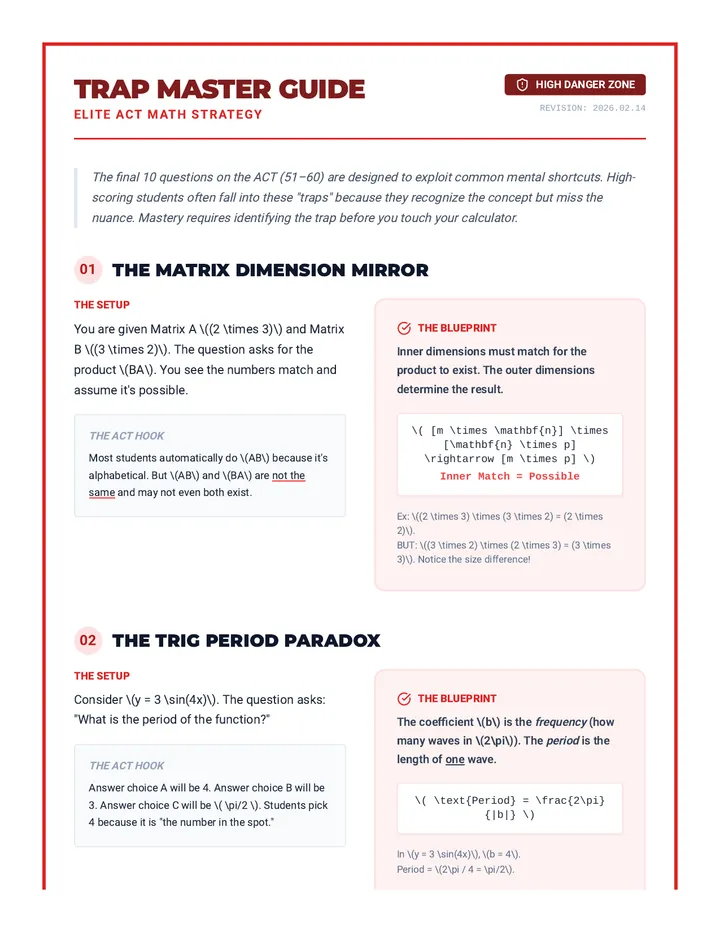
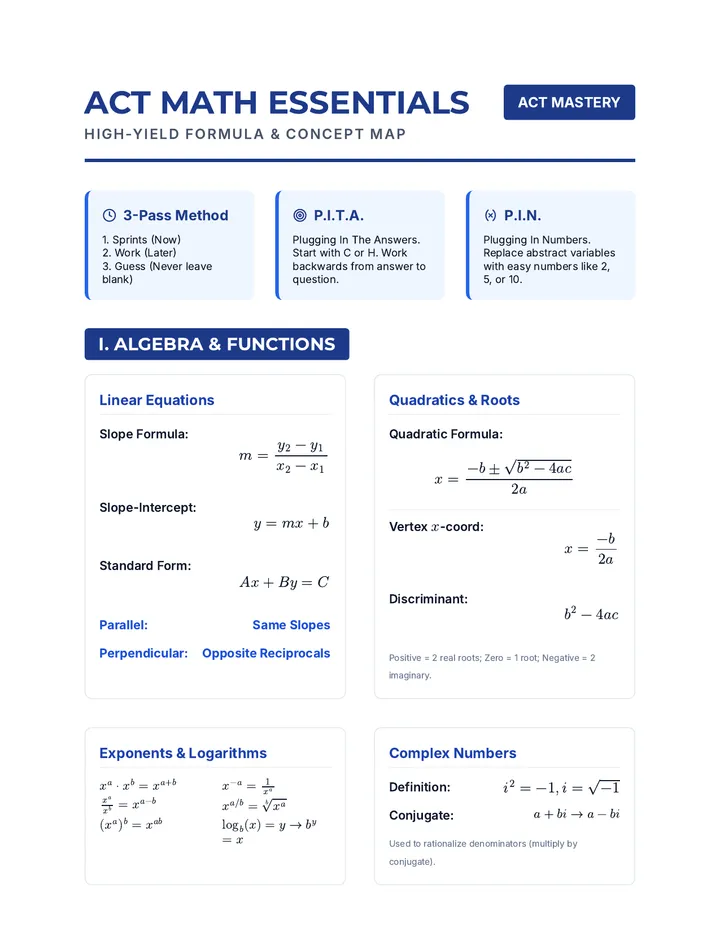
A comprehensive prep sequence for the most challenging questions on the ACT Math and Science sections. It focuses on high-level conceptual blueprints for math topics like complex numbers and matrices, alongside speed-reading and data-interpretation strategies for the Science section.
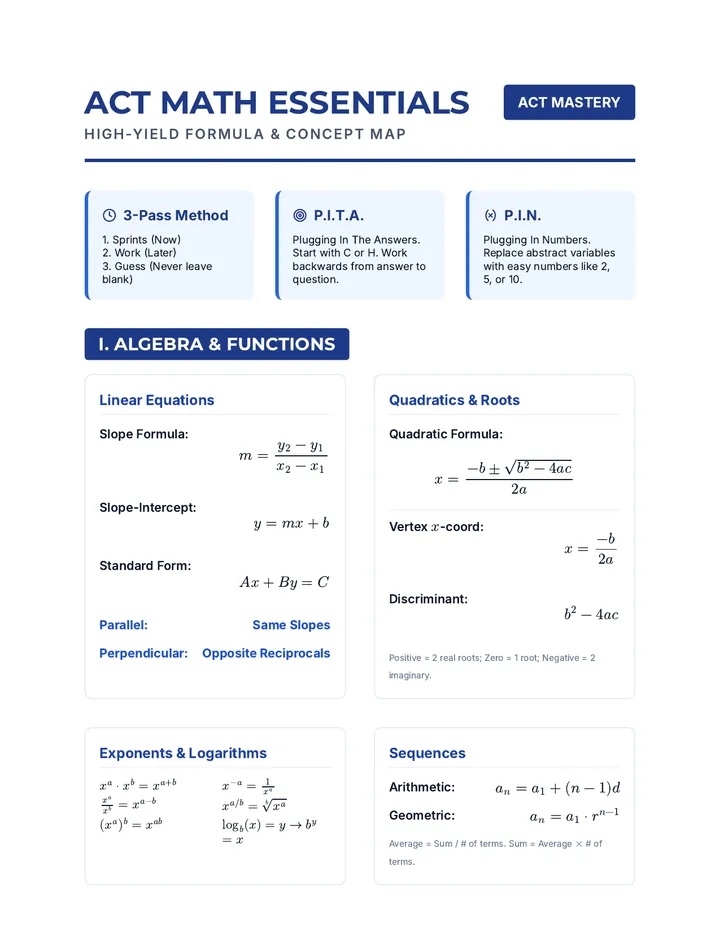
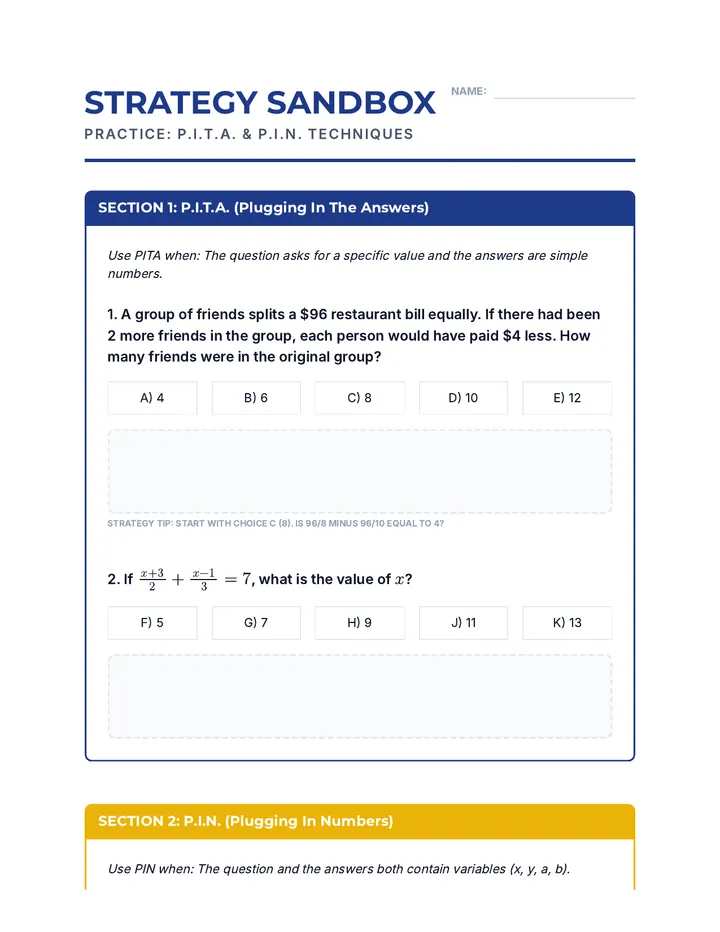
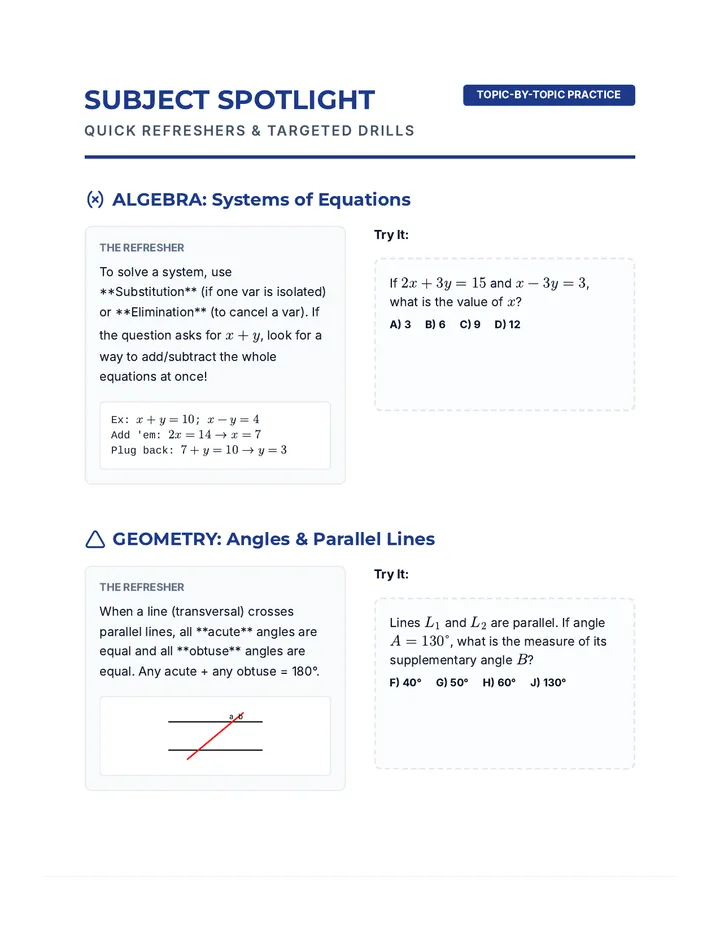
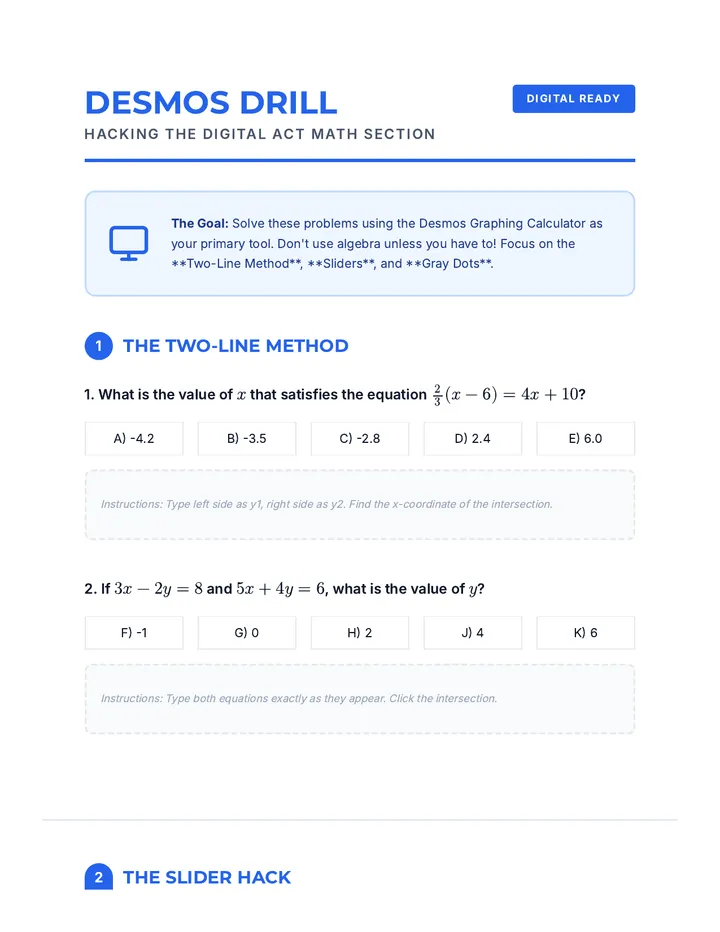
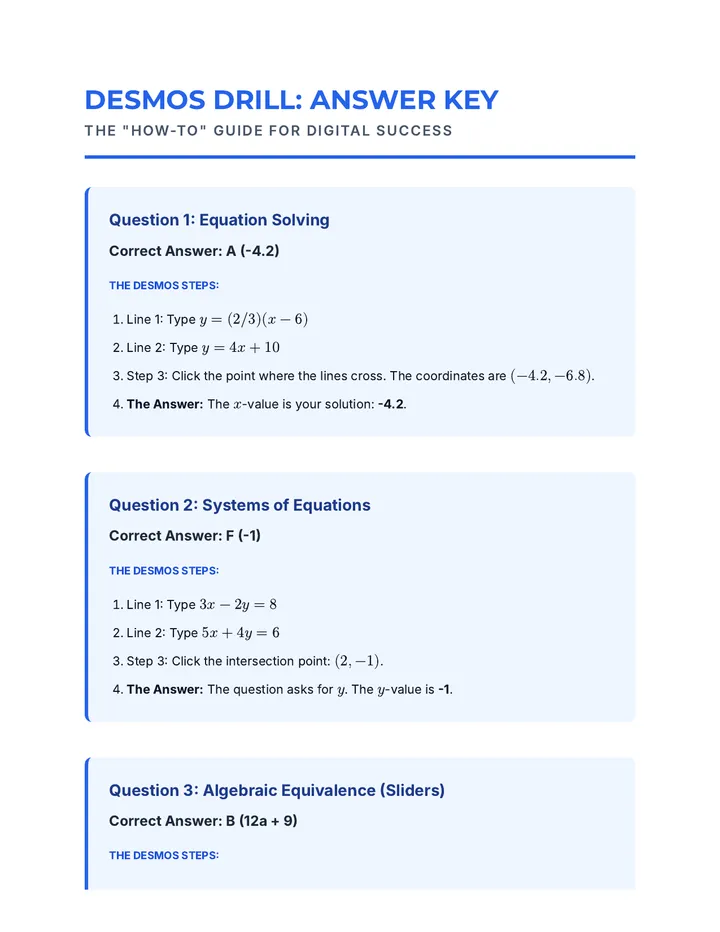
A comprehensive ACT Math preparation program focusing on essential strategies, high-yield Algebra and Geometry concepts, and realistic practice to boost scores.
A targeted intervention sequence focused on extending trigonometric functions beyond right triangles using the unit circle. This sequence bridges the gap between basic trigonometry and periodic functions for students needing additional support.
A targeted intervention sequence focused on mastering trigonometric equations through inverse functions, visual symmetry, and contextual application. This sequence provides Tier 2 support for students needing scaffolded paths to find both principal and secondary solutions.
A series of targeted interventions for high school students to master trigonometric functions and their applications in real-world modeling.
A Tier 2 intervention sequence focused on foundational trigonometry, moving from special right triangles to reference angles on the unit circle. This sequence provides scaffolded support for students struggling with geometric interpretations of sine, cosine, and tangent.
This mathematical physics sequence explores the coordinate systems necessary for solving problems involving complex shapes, moving beyond Cartesian coordinates to General Curvilinear systems. Students derive scale factors, volume elements, and differential operators, culminating in solving Laplace's equation and understanding metric tensors.
A 10th-grade trigonometry unit where students model circular motion using Ferris wheels, translating physical dimensions like radius, hub height, and speed into sine and cosine functions.
A comprehensive unit on trigonometric transformations, focusing on how parameters A, B, C, and D modify the parent sine and cosine functions. Students progress from simple vertical shifts to complex multi-parameter modeling.
A comprehensive unit for 12th Grade Calculus students focusing on the integration of polar functions to find area, arc length, and surface area. Students transition from Cartesian thinking to radial accumulation, mastering the geometry of circular sectors and polar coordinate transformations.
A comprehensive unit for 12th Grade Calculus students focusing on the derivation and application of derivatives in polar coordinates. Students transition from Cartesian slope to polar slope, analyze horizontal and vertical tangency, investigate behavior at the pole, and solve optimization problems involving polar curves.
This lesson focuses on simplifying trigonometric expressions using fundamental identities: reciprocal, odd-even, Pythagorean, and cofunction. It provides scaffolded practice transitioning from basic one-step simplifications to more complex algebraic manipulations.
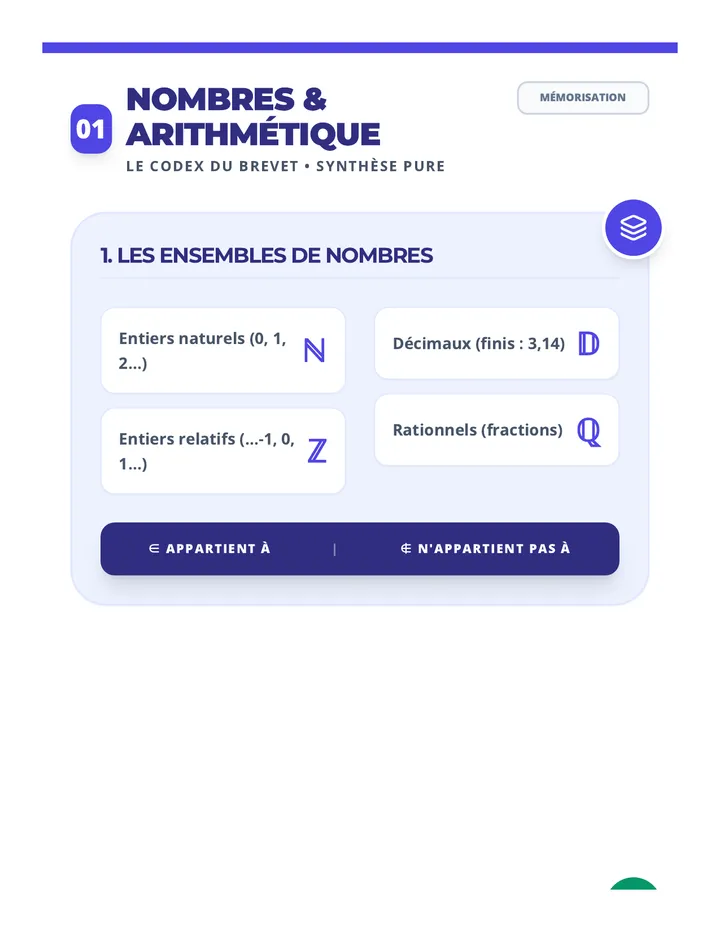
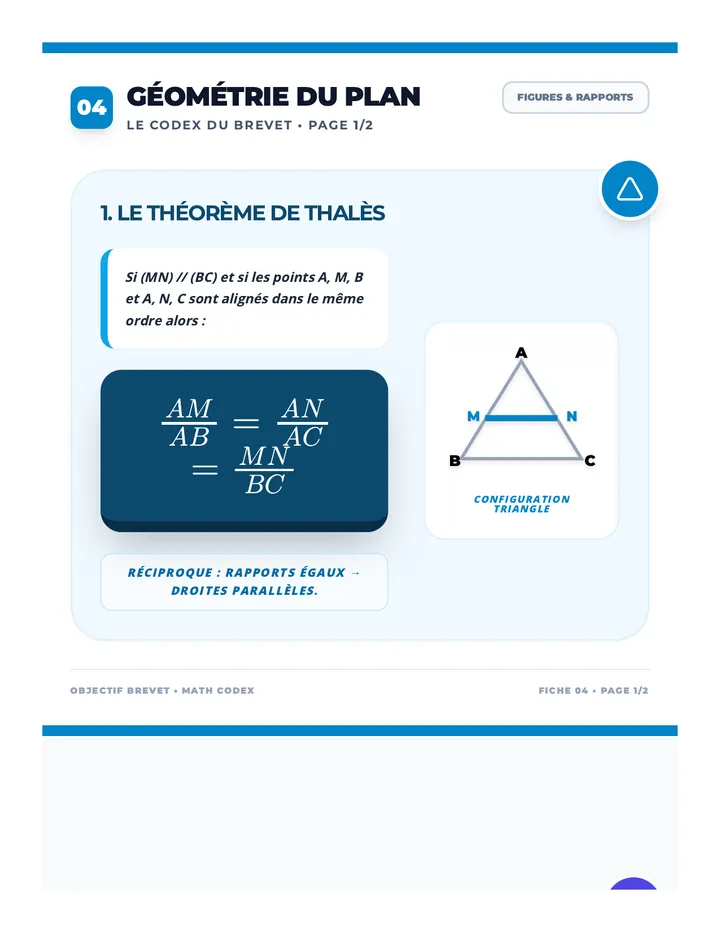
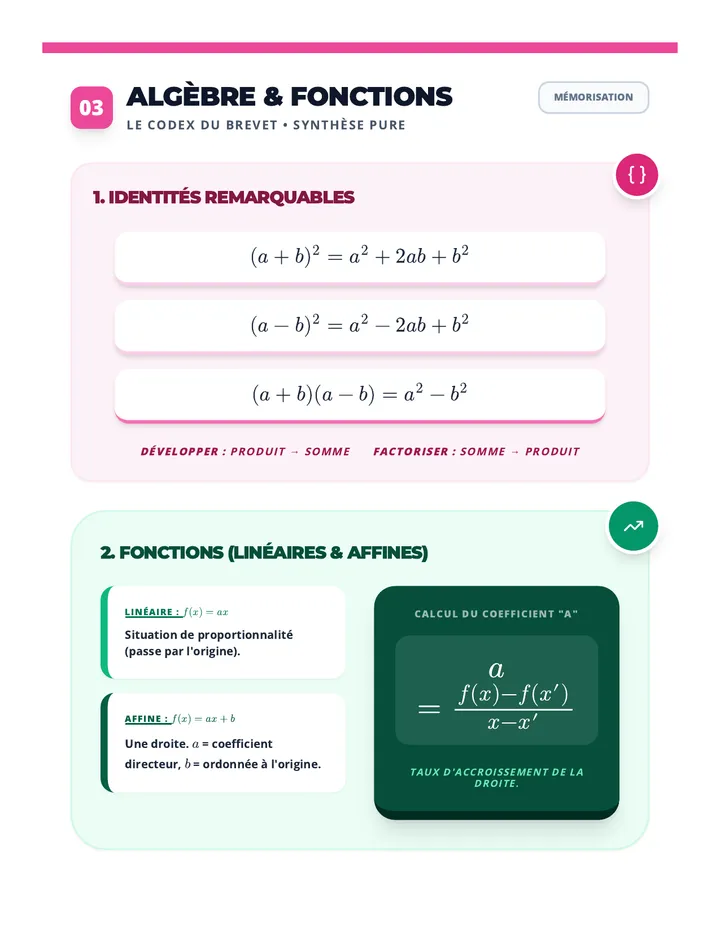
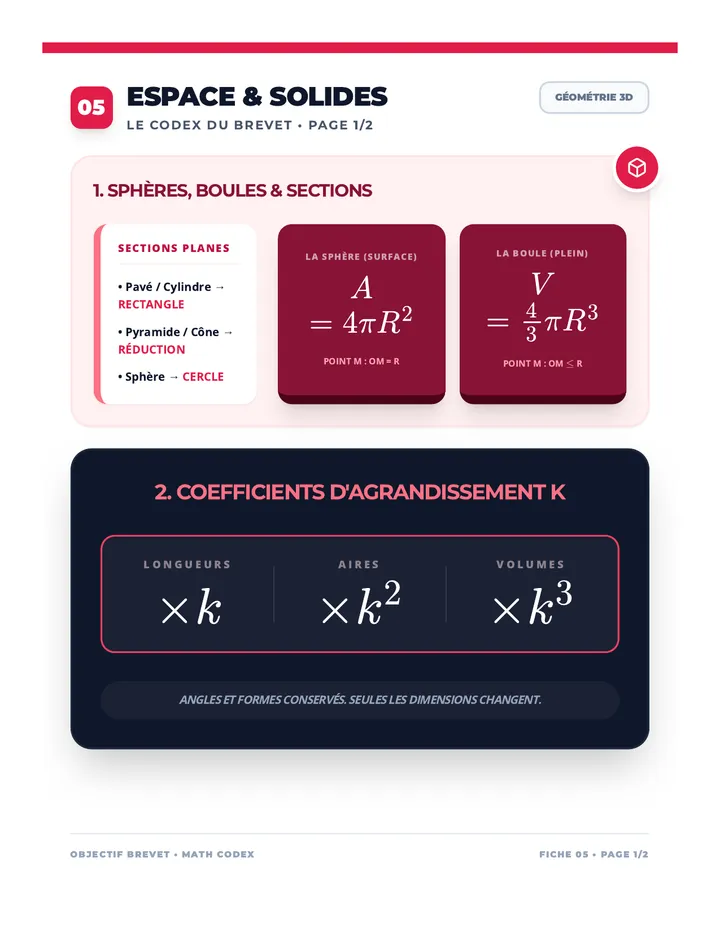
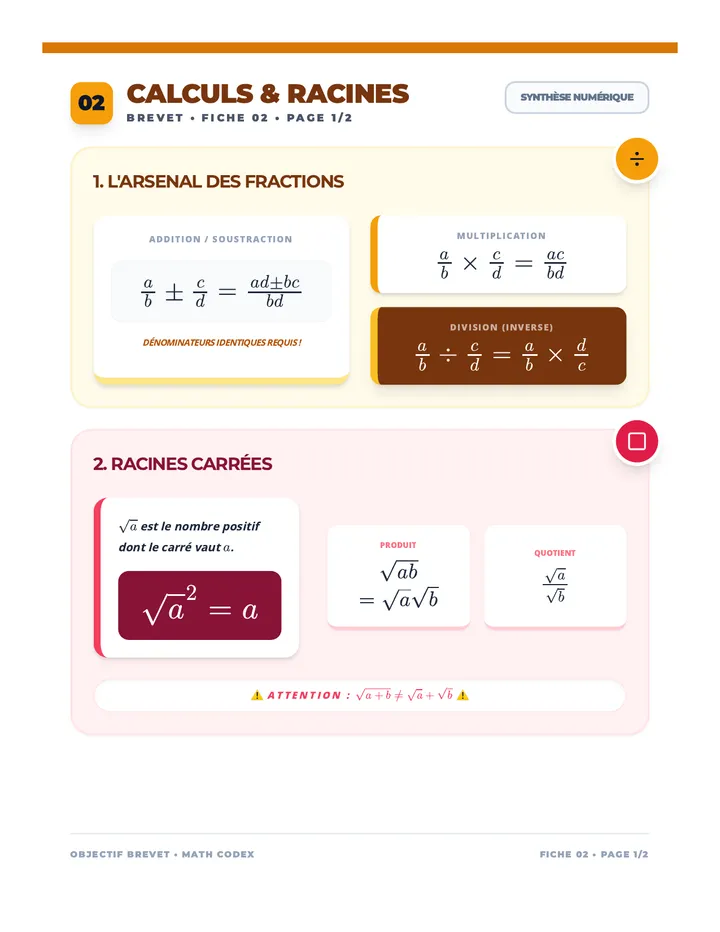
Une collection complète de fiches de révision et un diaporama dynamique pour maîtriser le programme de mathématiques de 3ème. Couvre l'arithmétique, l'algèbre, la géométrie et la trigonométrie avec des visuels clairs et modernes.
A high-intensity review session for AP Precalculus Unit 3, covering trigonometric functions, inverse functions, and polar coordinates through a "Radar Tech" thematic lens.
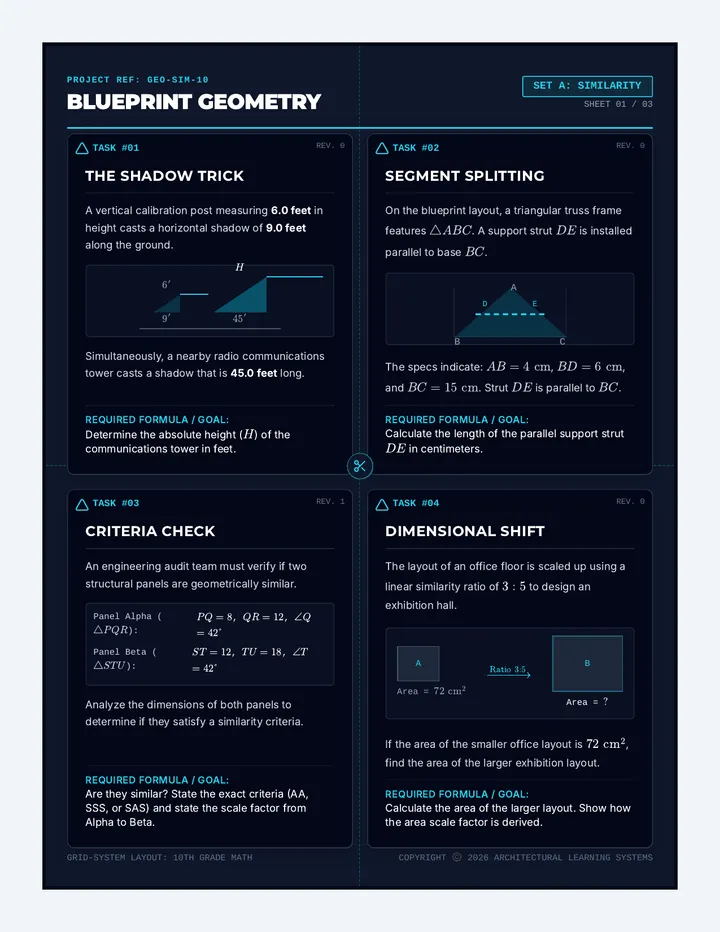
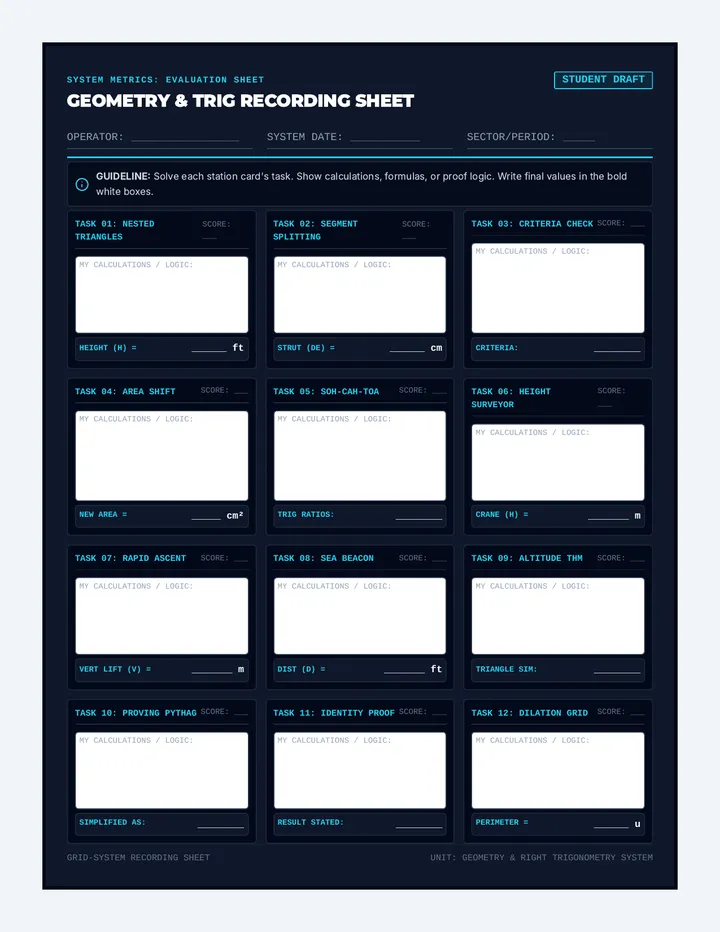
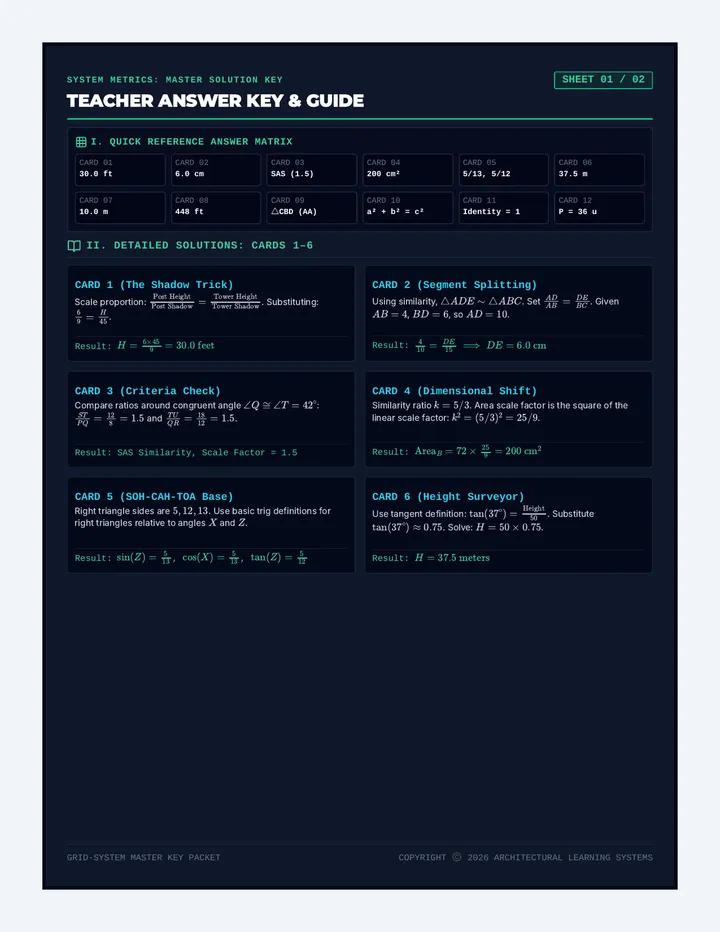
A rigorous, blueprint-themed activity set focusing on similarity, right-triangle trigonometry, and geometric proofs. Ideal for cooperative learning, stations, or structured review.
A comprehensive assessment and practice suite for mastering trigonometric identities, focusing on reciprocal, quotient, Pythagorean, and sum/difference formulas.
A comprehensive review for Unit 3 of AP Precalculus, focusing on trigonometric and polar functions through reference materials and practice assessments.
A comprehensive assessment and review lesson on fundamental trigonometric identities, including Pythagorean, reciprocal, and quotient identities. Students will practice simplifying expressions and proving identities.
A comprehensive assessment and review on fundamental trigonometric identities, including Pythagorean, reciprocal, sum/difference, and double angle formulas. Students will decode mathematical relationships through a spy-themed dossier.
A diverse collection of high-quality math resources spanning Algebra, Geometry, Statistics, and Pre-Calculus.
A targeted intervention lesson for high school geometry students, focusing on practical applications of the Laws of Sines and Cosines in surveying and physics contexts. This lesson utilizes scaffolded instruction and real-world scenarios to support Tier 2 learners in mastering oblique triangle trigonometry.
A targeted intervention lesson focusing on the Law of Sines and Law of Cosines. This lesson helps Tier 2 students identify when to use each law and provides scaffolded practice for solving unknown sides and angles in non-right triangles.
A targeted intervention lesson focused on the relationship between sine and cosine in complementary angles. Designed for Tier 2 small group support with scaffolded visual aids and progress monitoring.
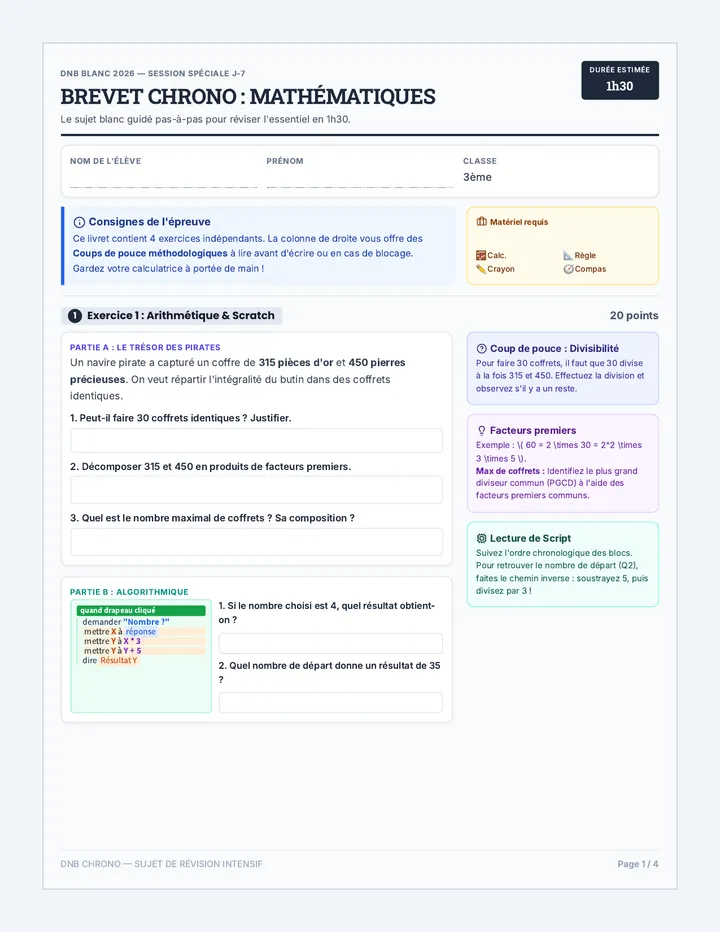
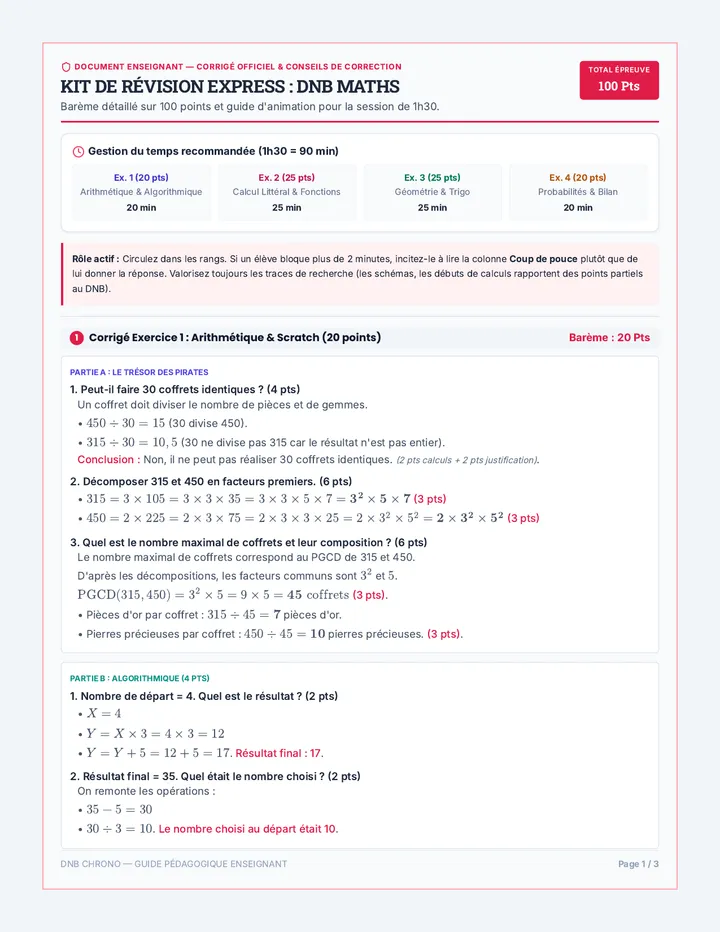
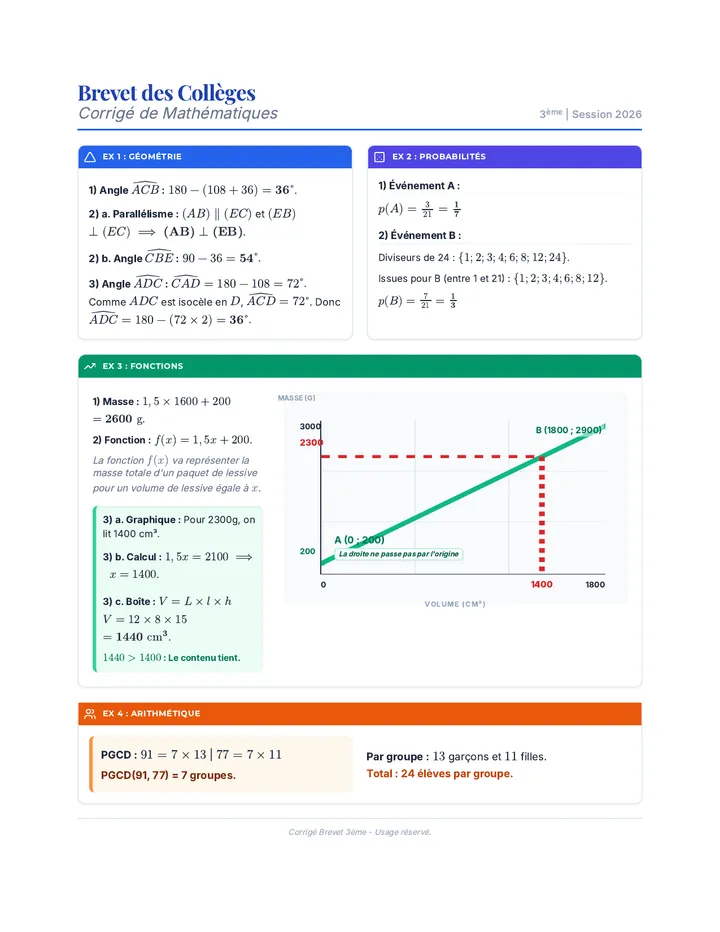
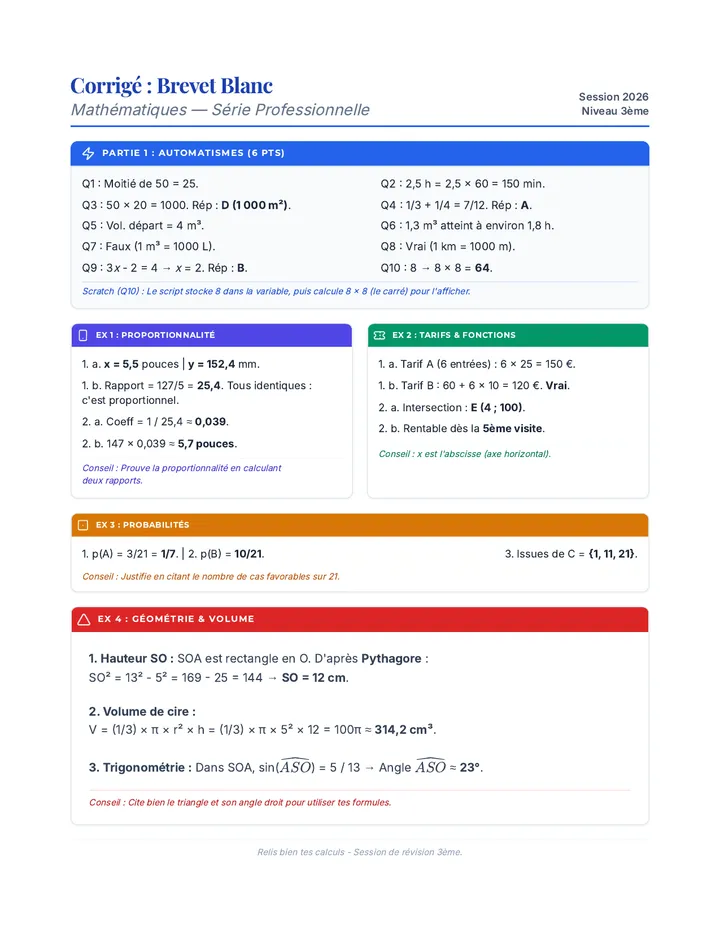
Un kit complet de révision de dernière minute pour le DNB de Mathématiques, comprenant un sujet blanc guidé pas-à-pas pour les élèves et un corrigé détaillé avec barème pour l'enseignant.
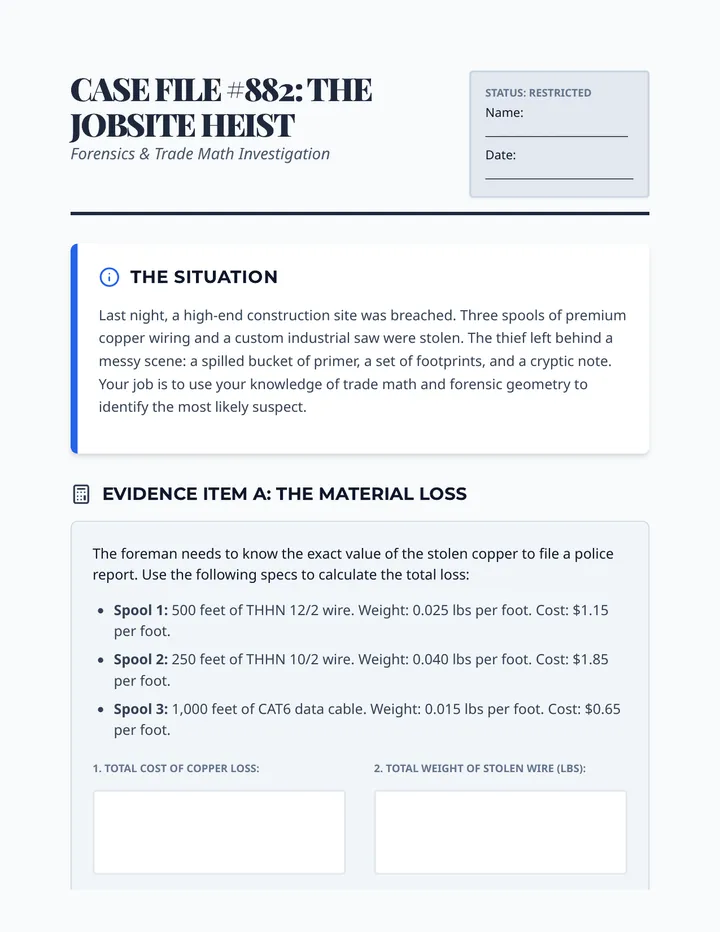
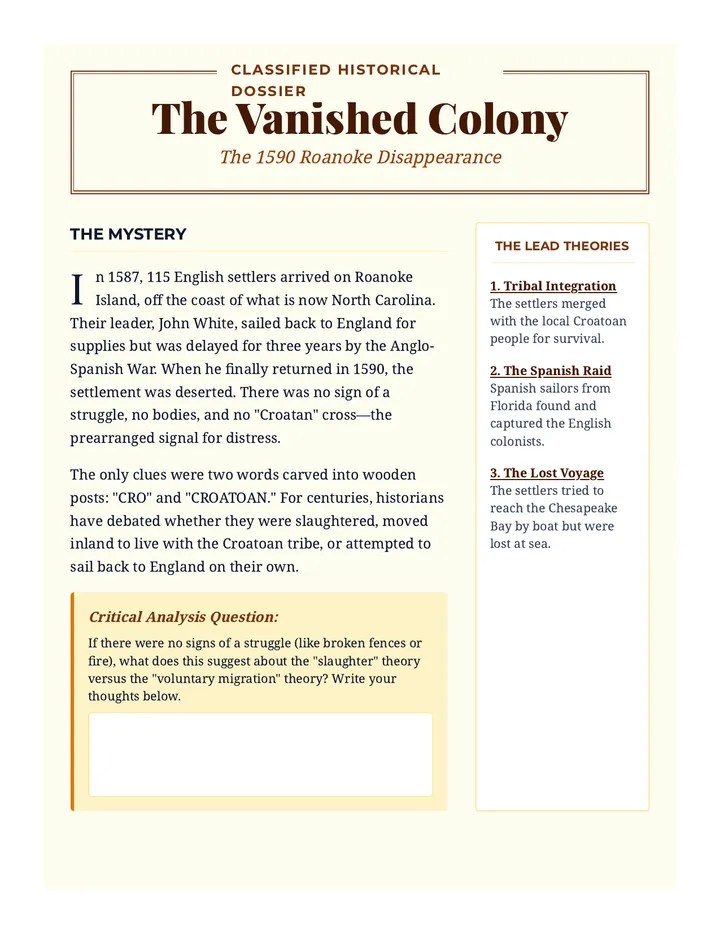
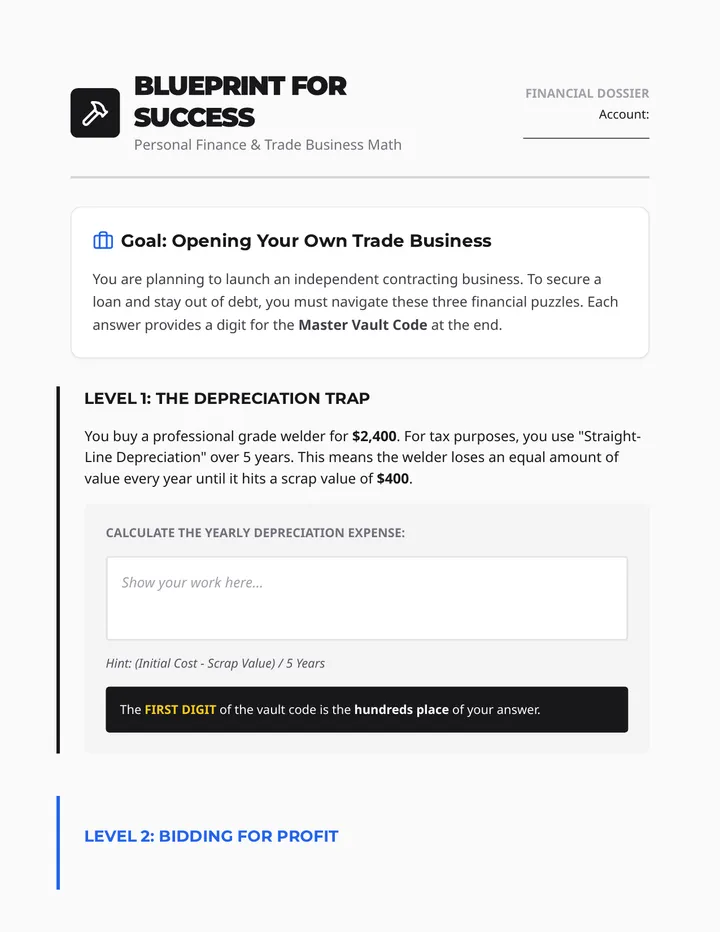
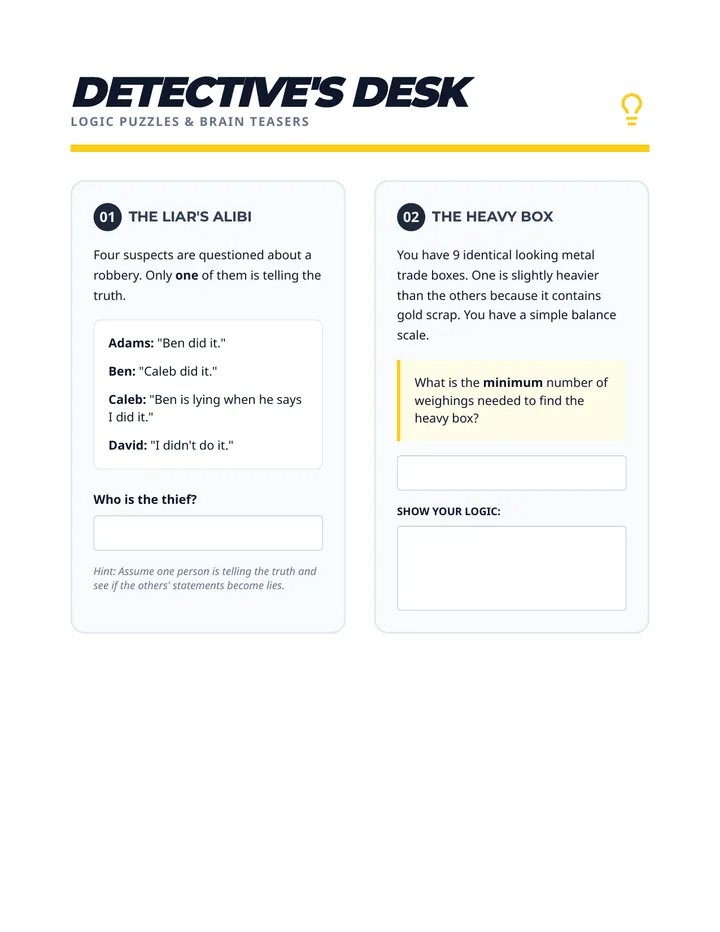
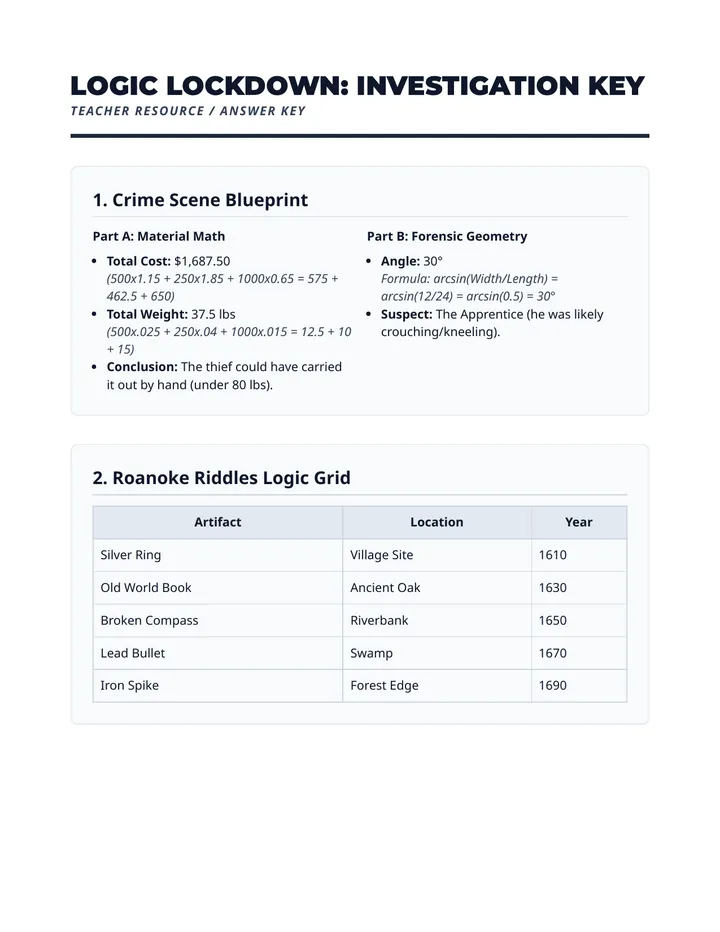
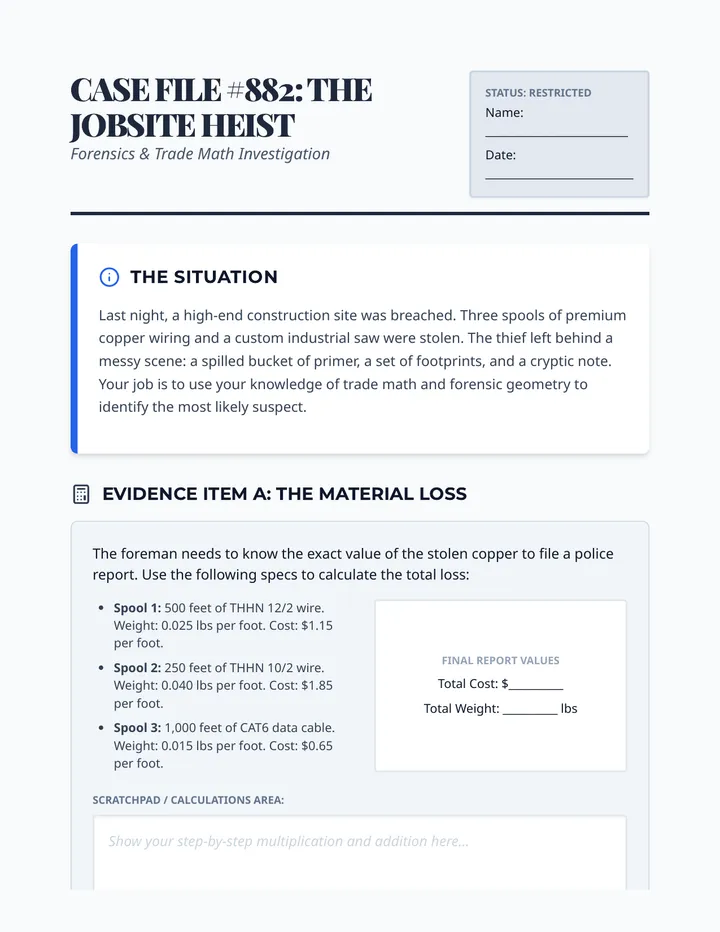
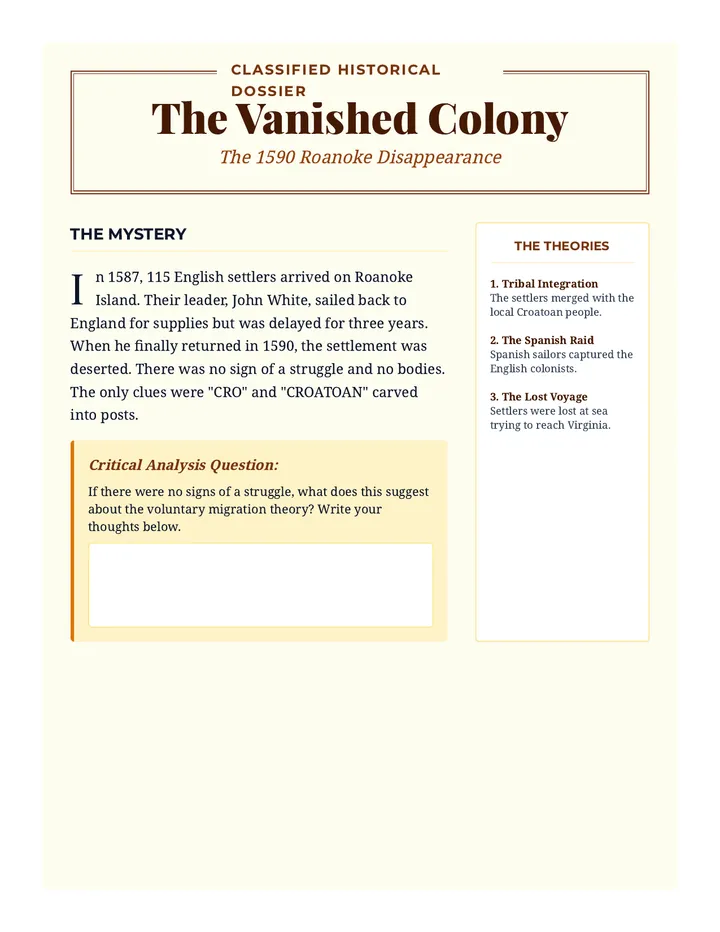
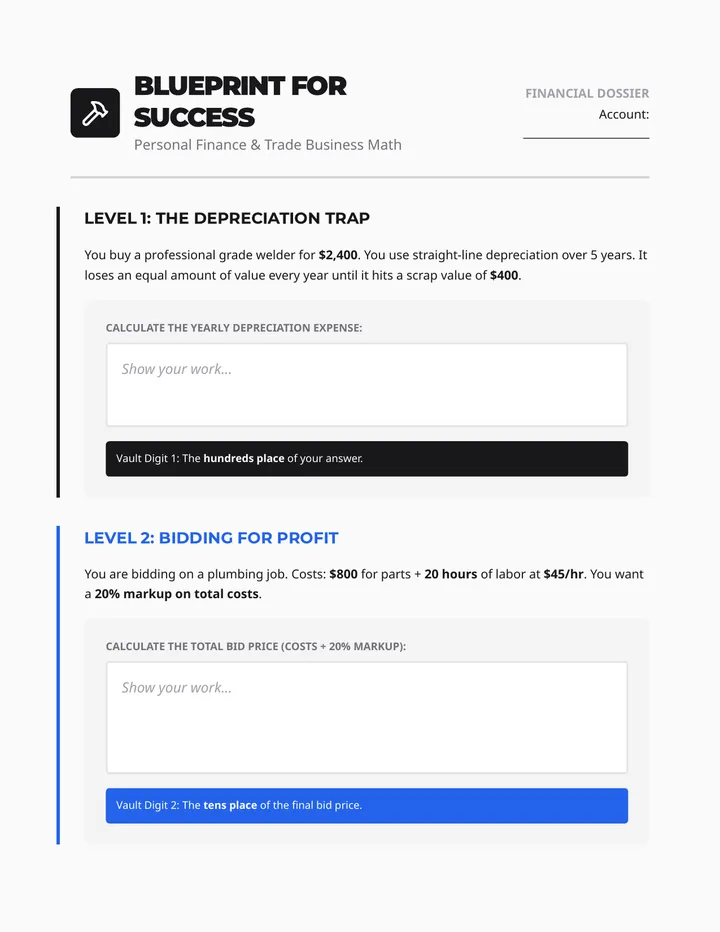
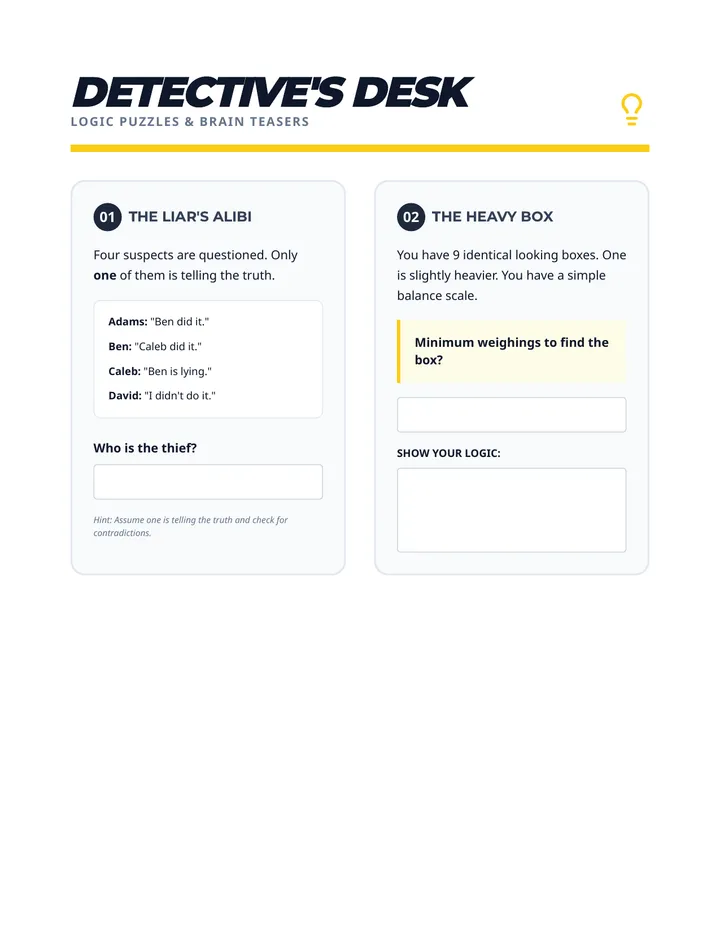
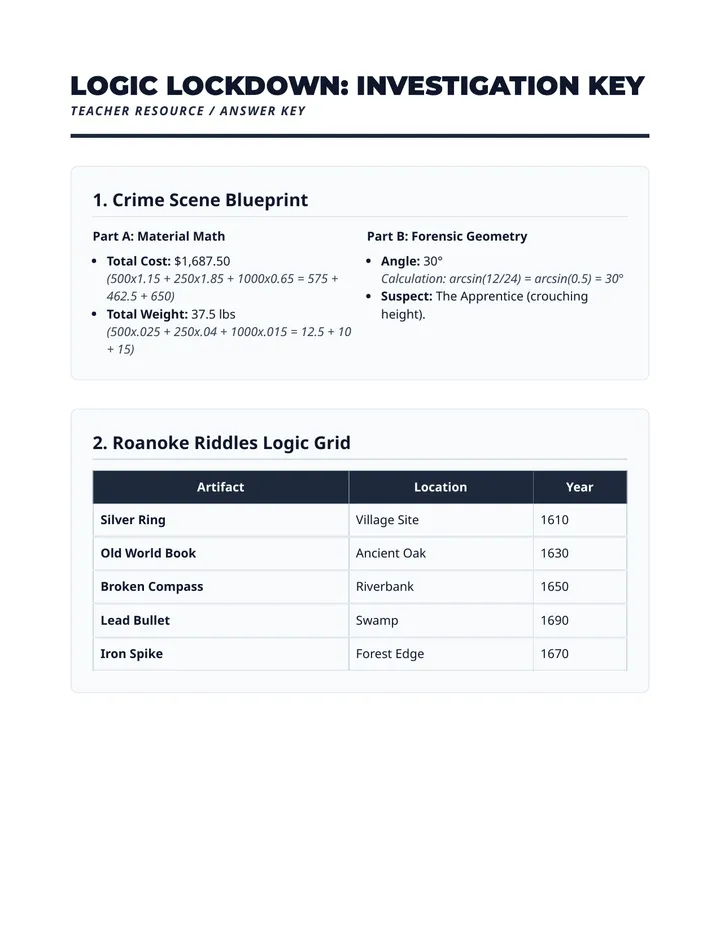
A collection of high-interest, multi-disciplinary logic and math challenges themed around forensic investigation, trade skills, and historical mysteries. Designed for high-school level adult learners to practice critical thinking and practical math application.
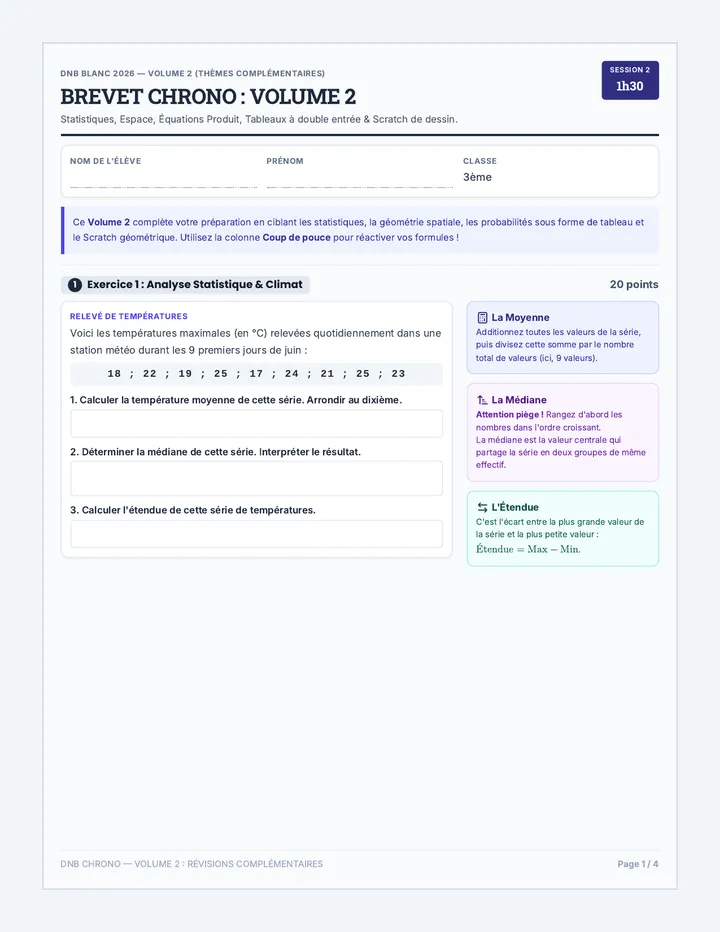
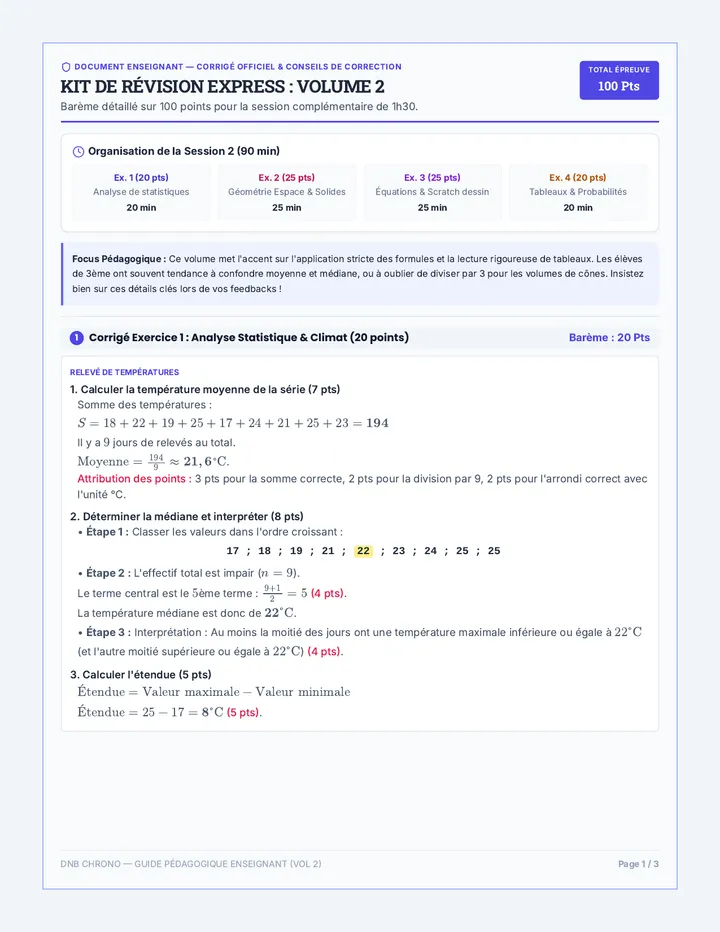
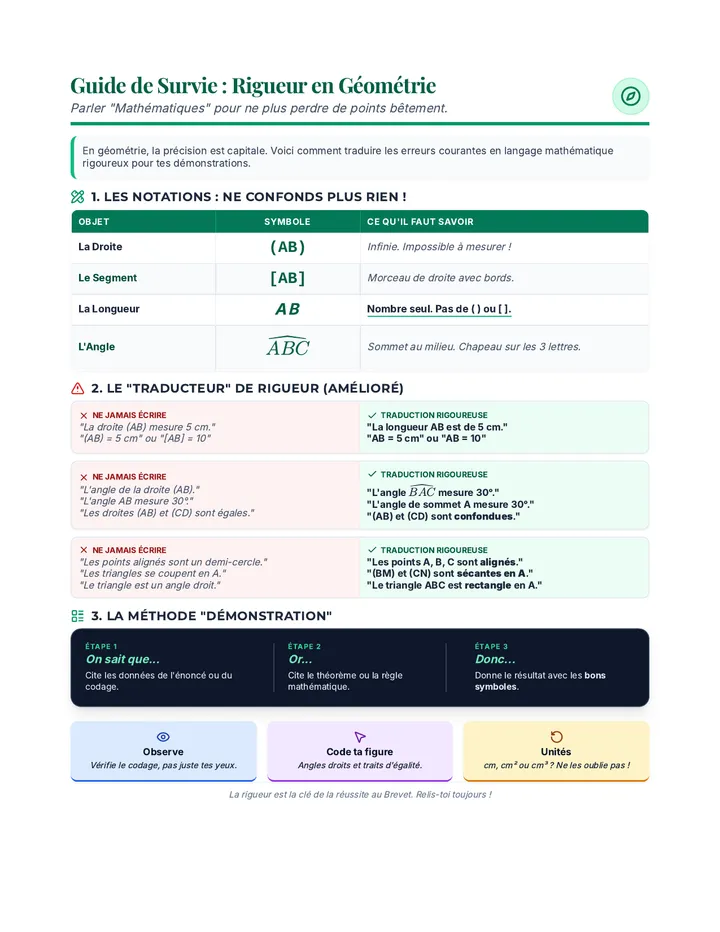
Une série de ressources complètes pour préparer les élèves de 3ème à l'épreuve de mathématiques du DNB, incluant des corrigés détaillés et des fiches méthodologiques.
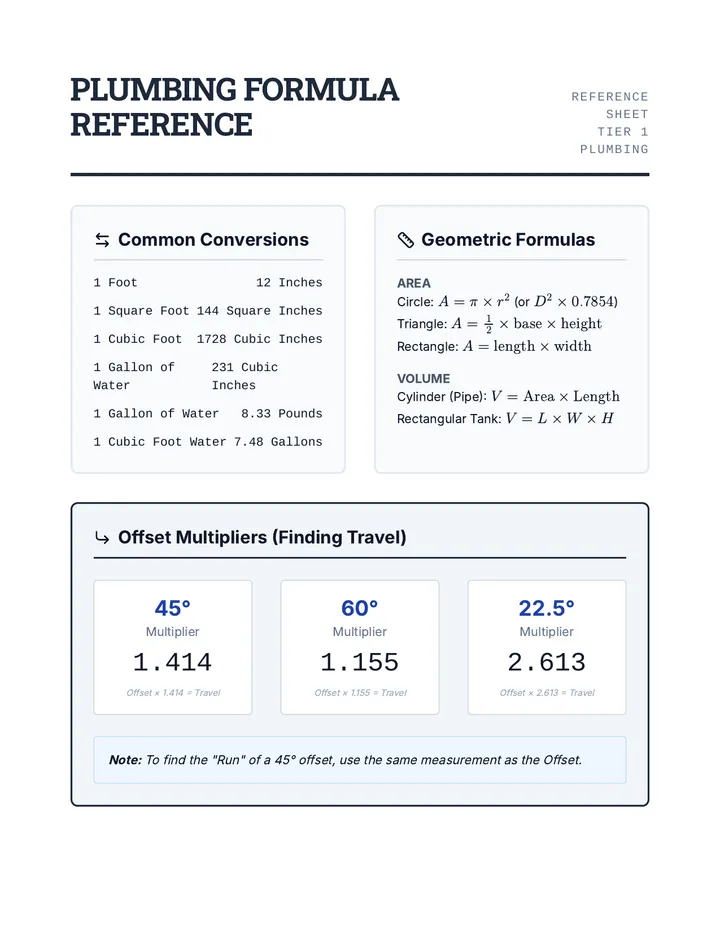
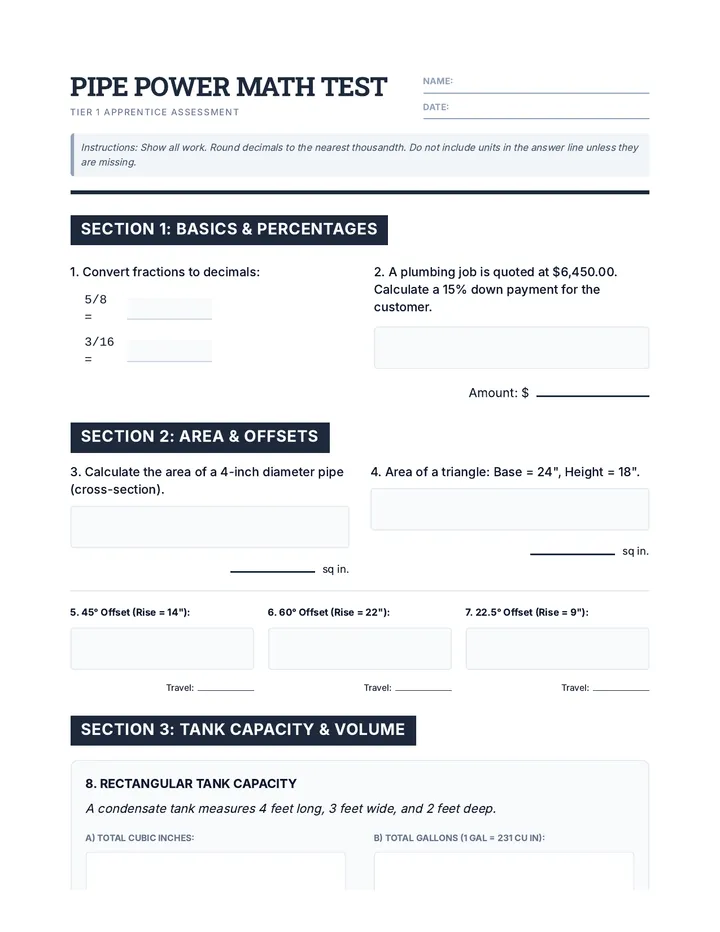
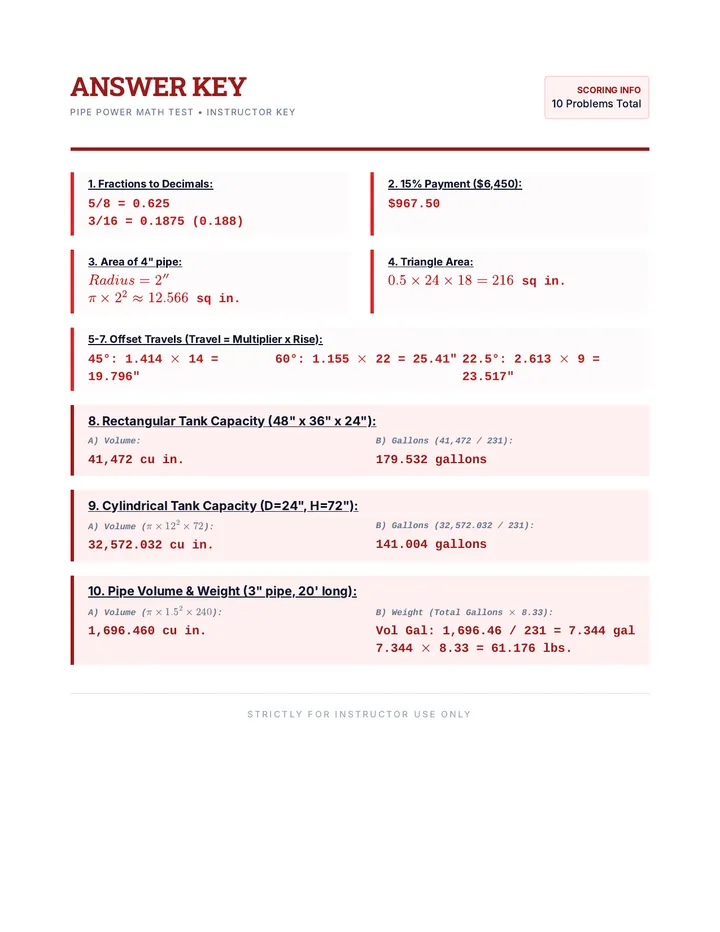
A comprehensive assessment and reference set for Tier 1 plumbing apprentices covering essential trade mathematics, including offsets, volumes, and conversions.
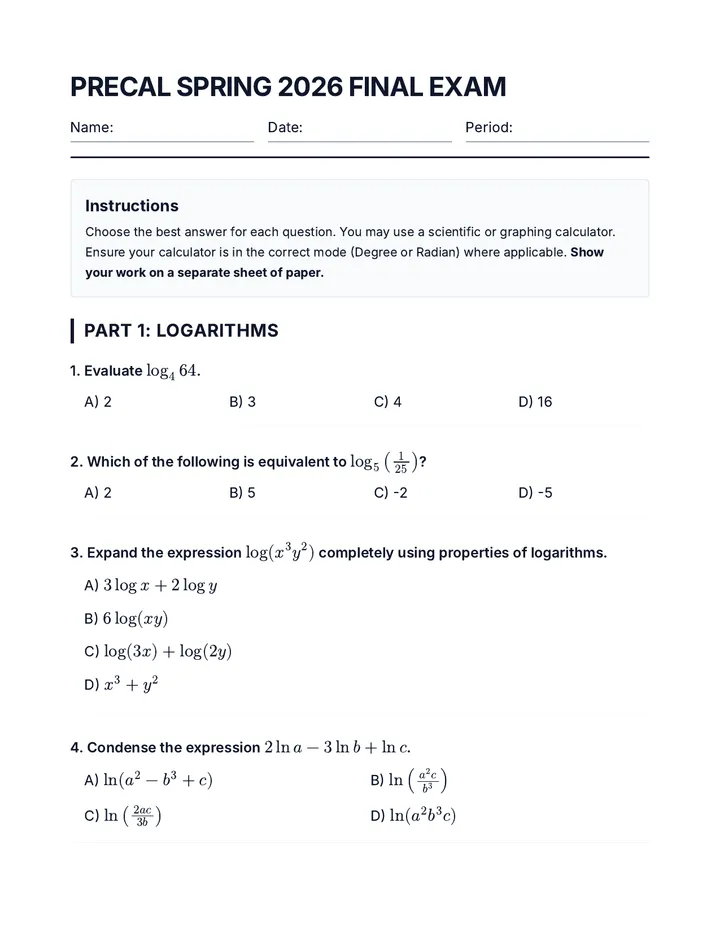
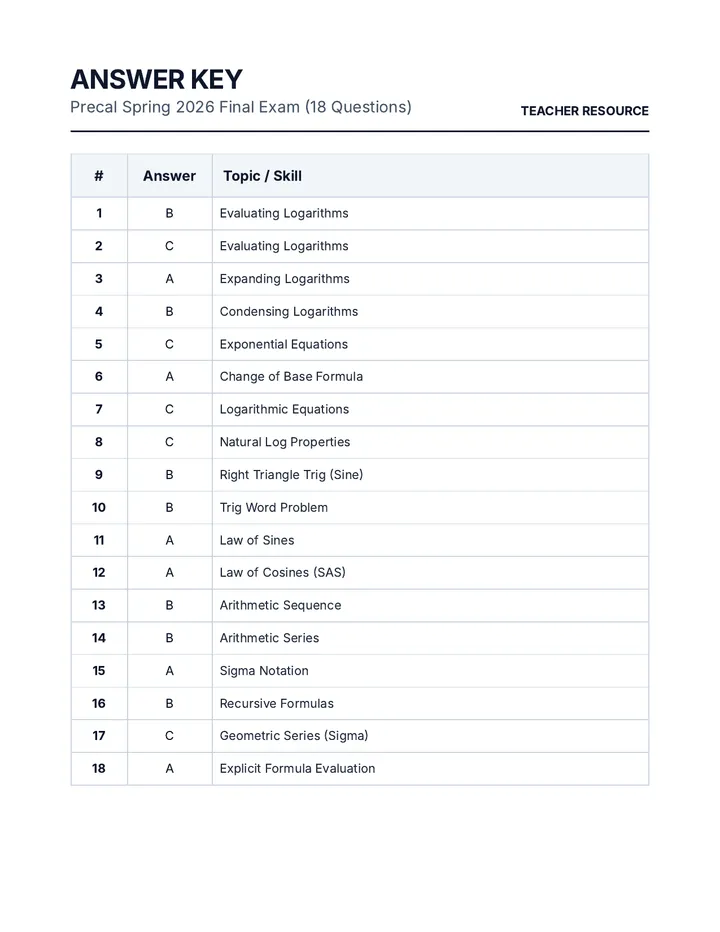
A comprehensive final exam for Spring 2026 covering logarithms, trigonometry of triangles, and sequences and series for a Precalculus course.
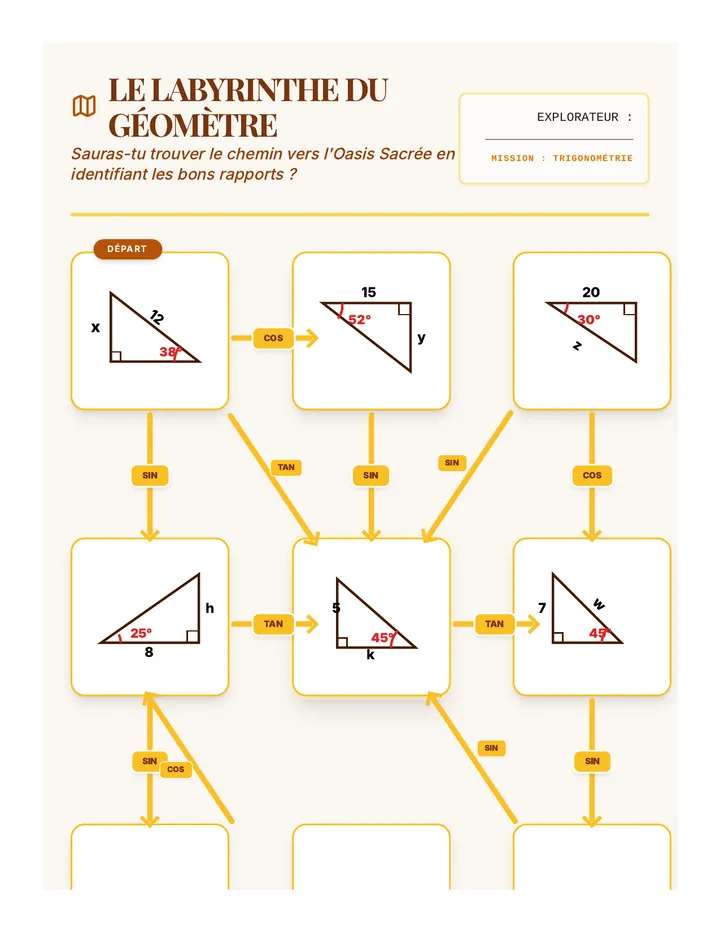
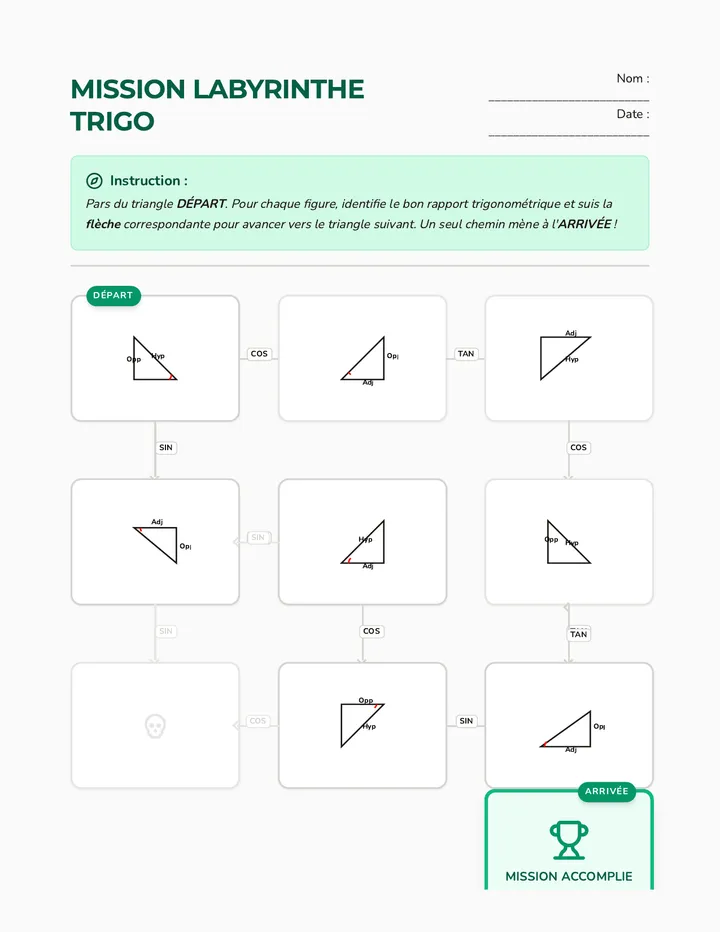
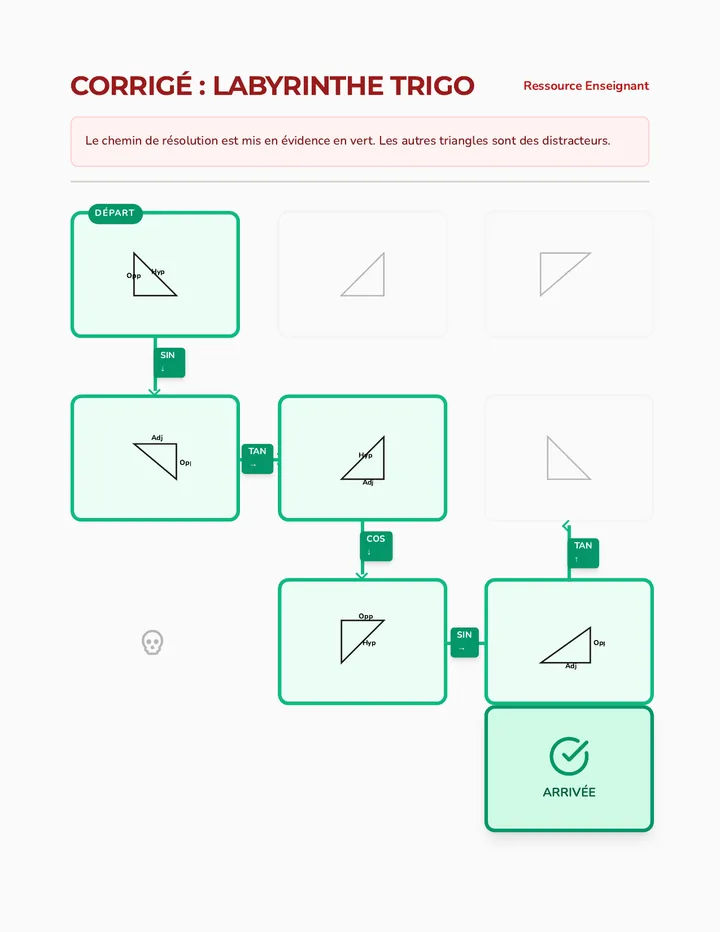
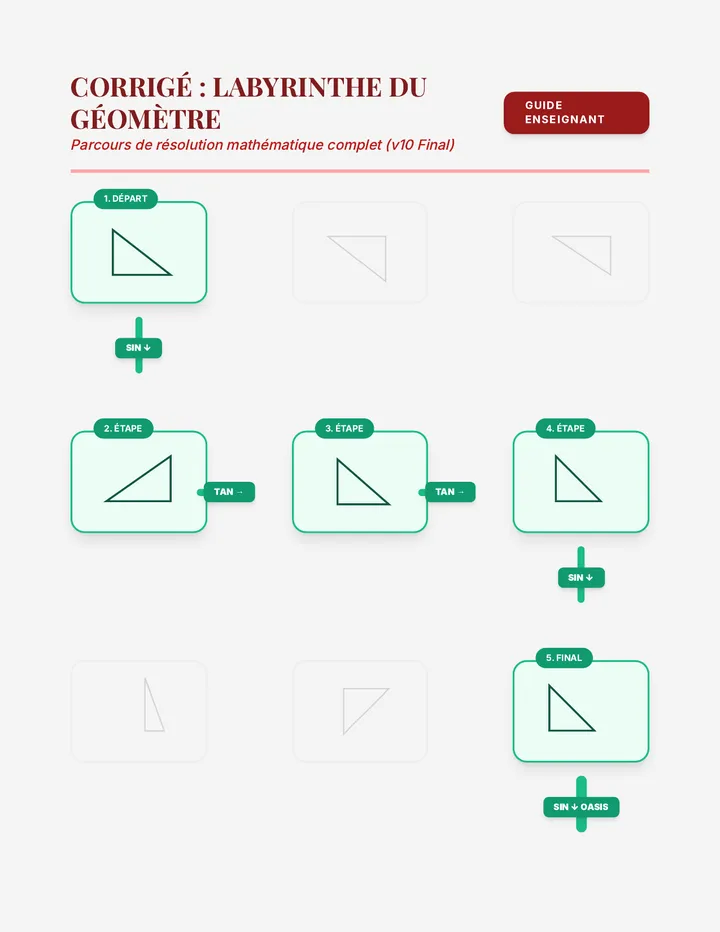
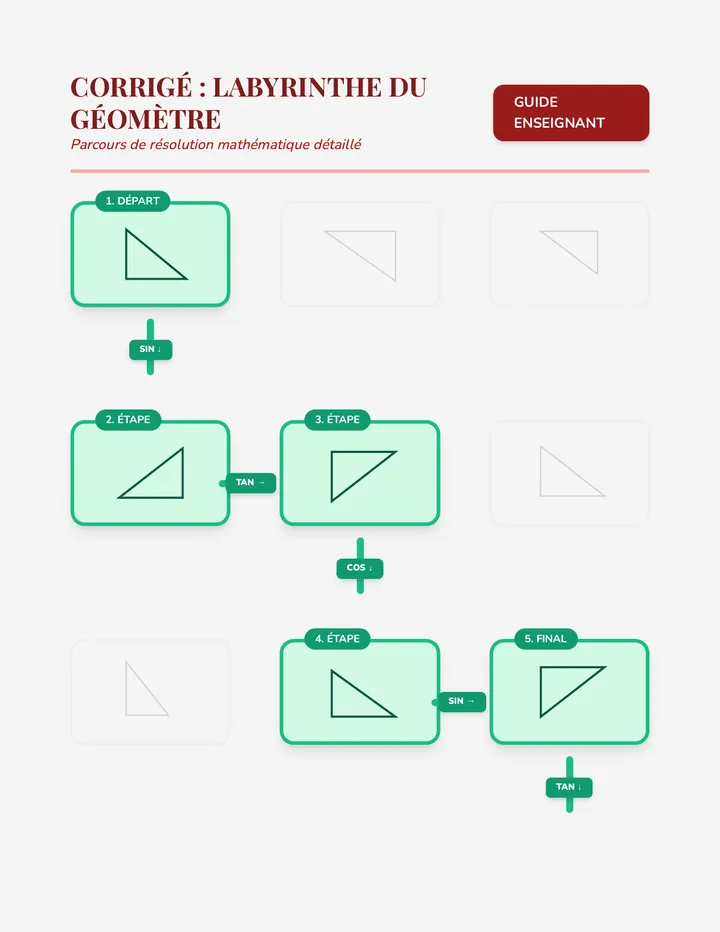
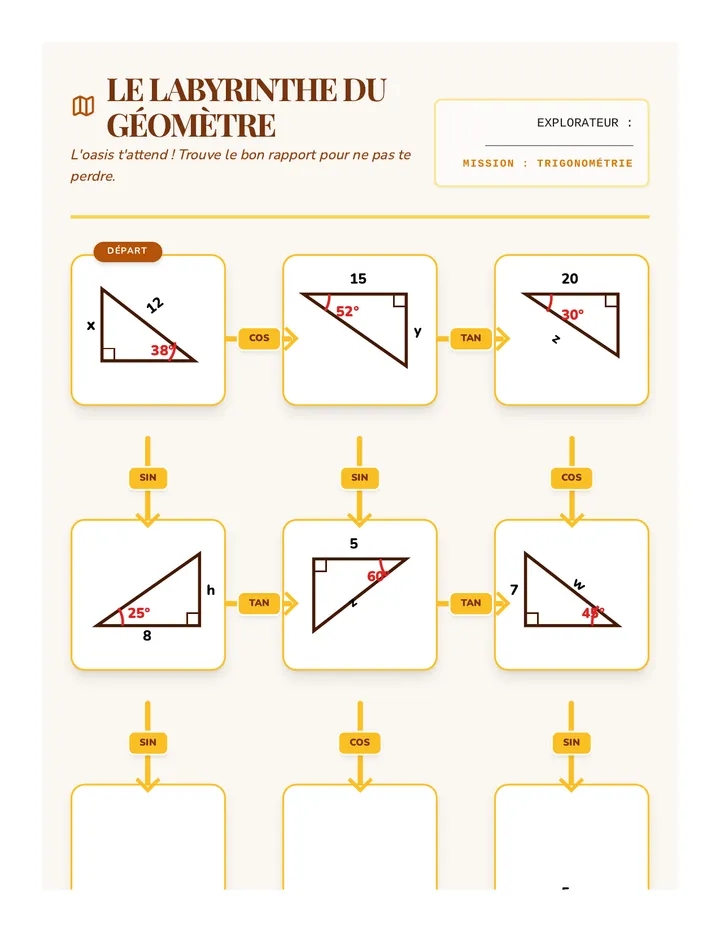
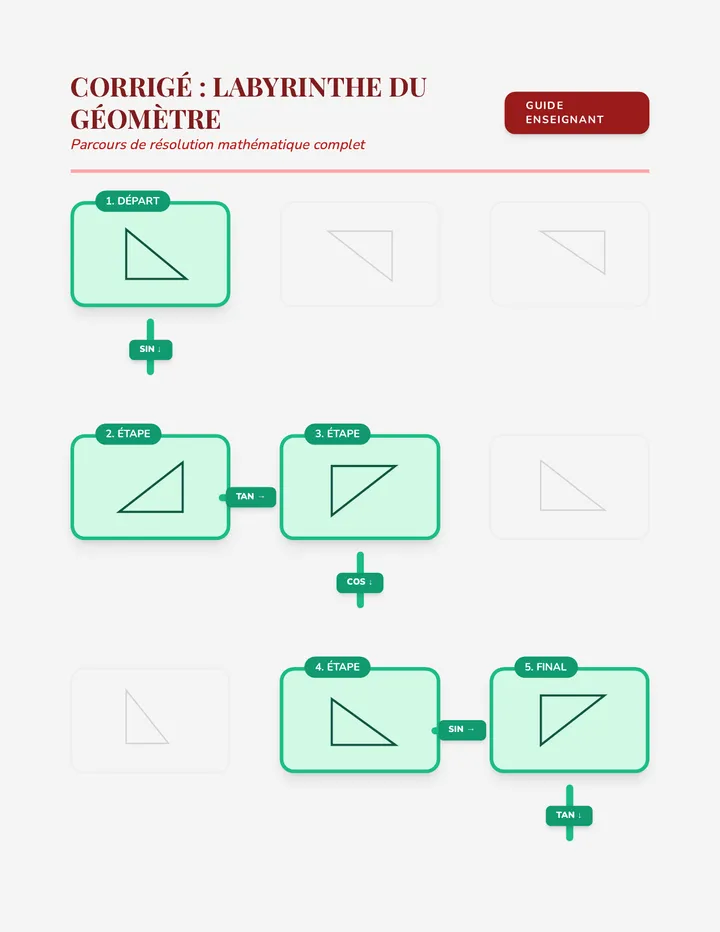
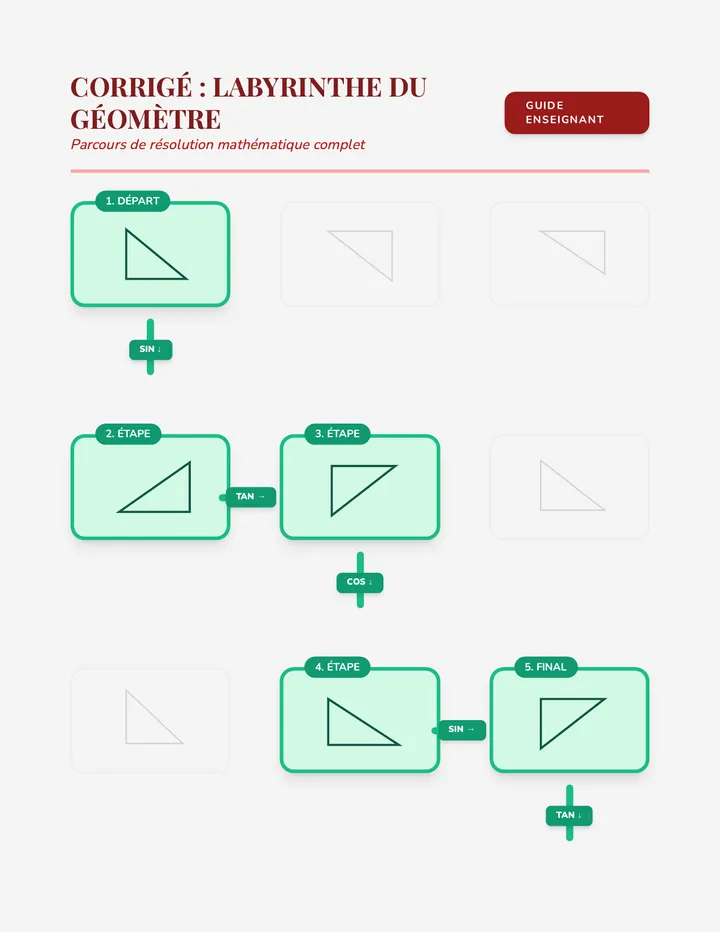
Une leçon interactive centrée sur l'identification des rapports trigonométriques (sinus, cosinus, tangente) dans des triangles rectangles à travers un défi de labyrinthe.
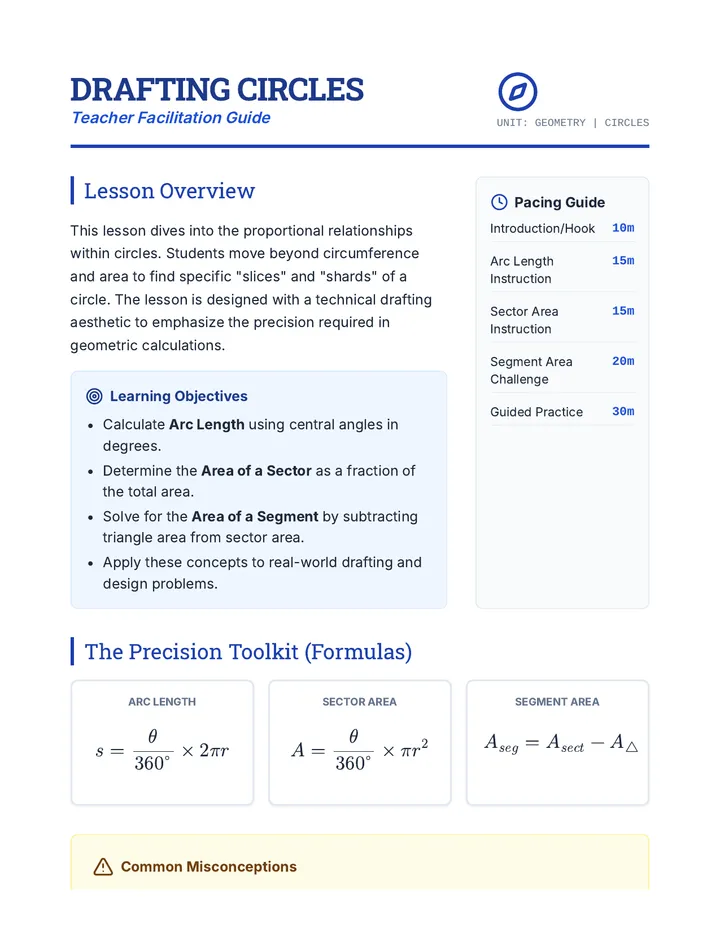
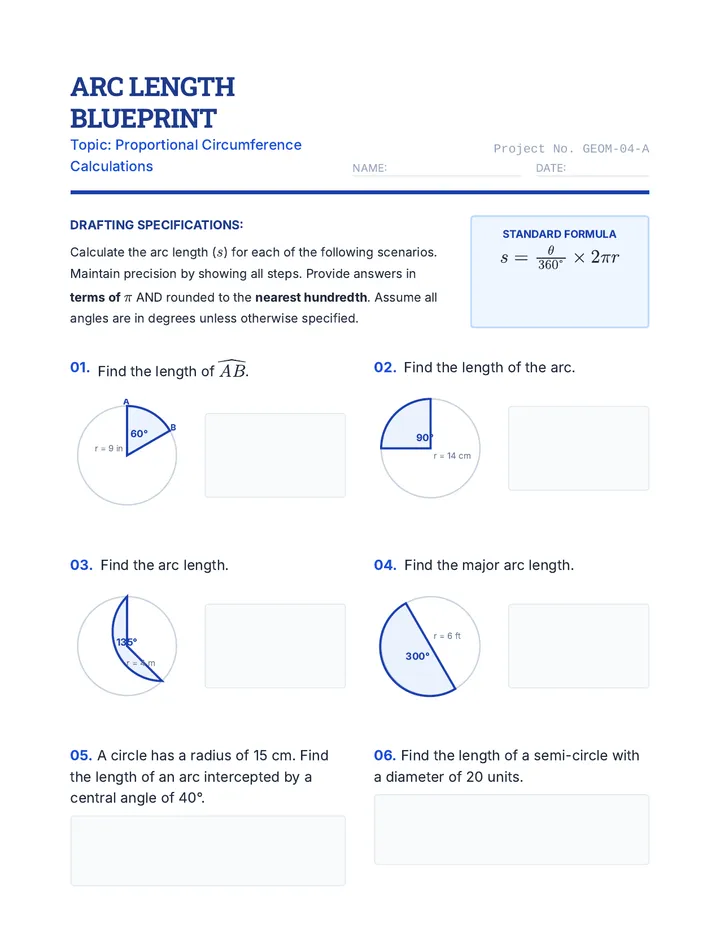
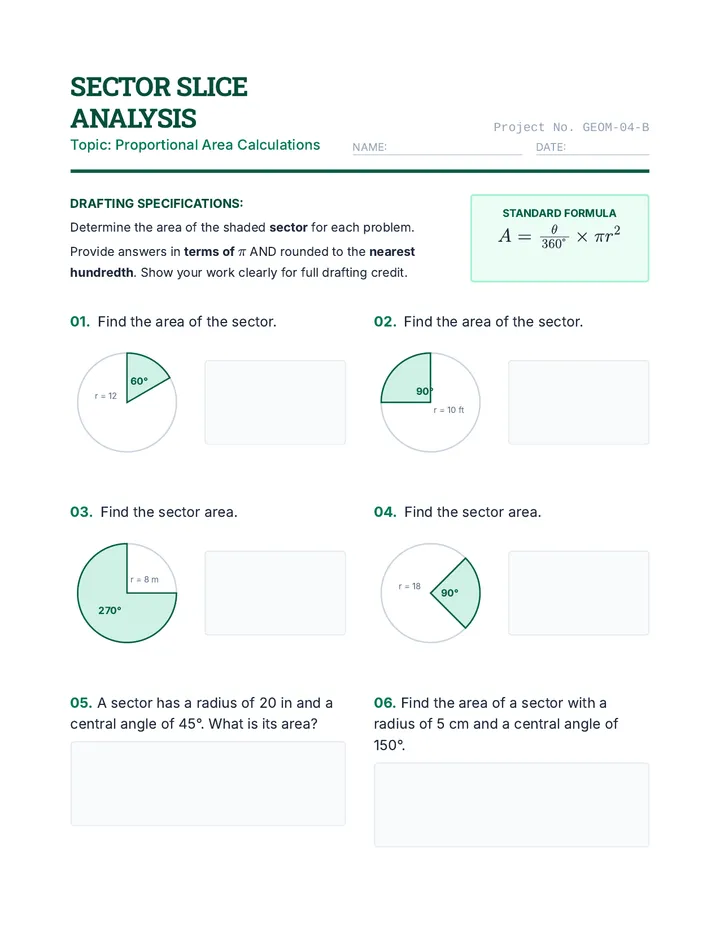
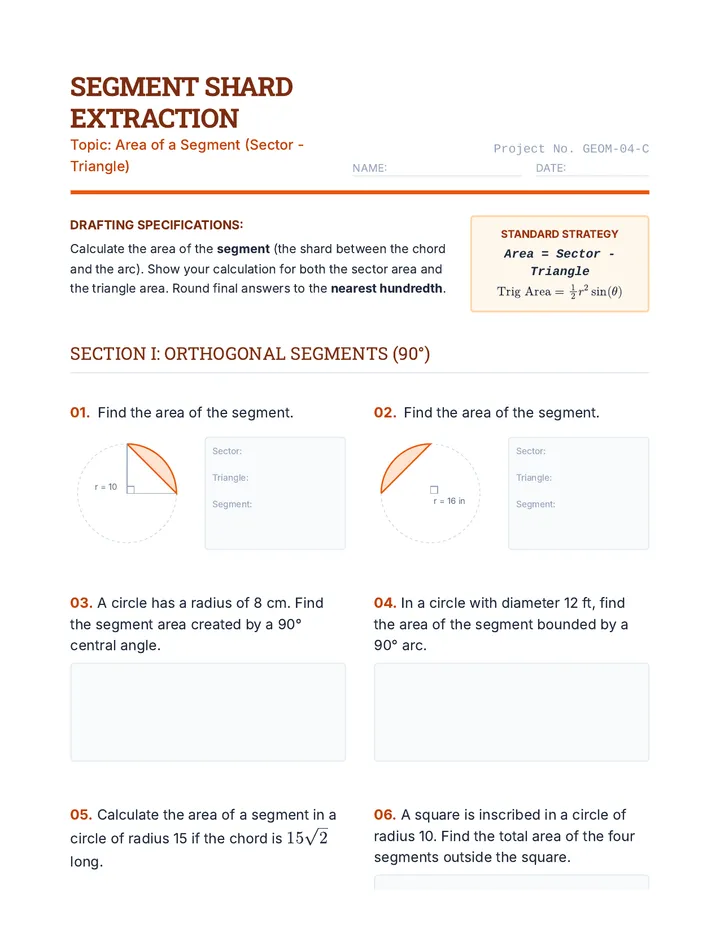
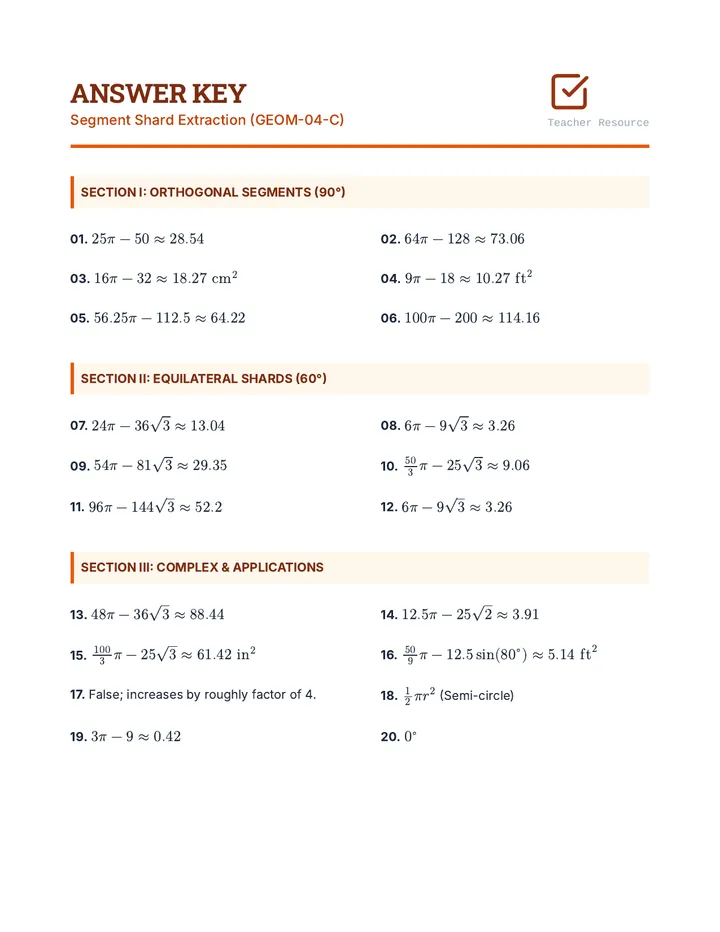
A comprehensive lesson covering the calculation of arc length, area of a sector, and area of a segment within circles, utilizing a precision drafting theme.
A hands-on project where students apply right triangle trigonometry to design a piece of modern architecture or geometric art, culminating in a detailed calculation poster.
An introduction to right triangle trigonometry using Sine, Cosine, and Tangent (SOH CAH TOA) to solve for missing side lengths and angles in real-world nautical contexts.
A fun, comic-based introduction to right-angled trigonometry, focusing on the mnemonic SOH CAH TOA to solve for missing sides and angles.