Angular Velocity Slides Angular Velocity
Trigonometric Rates of Change in Real-Time
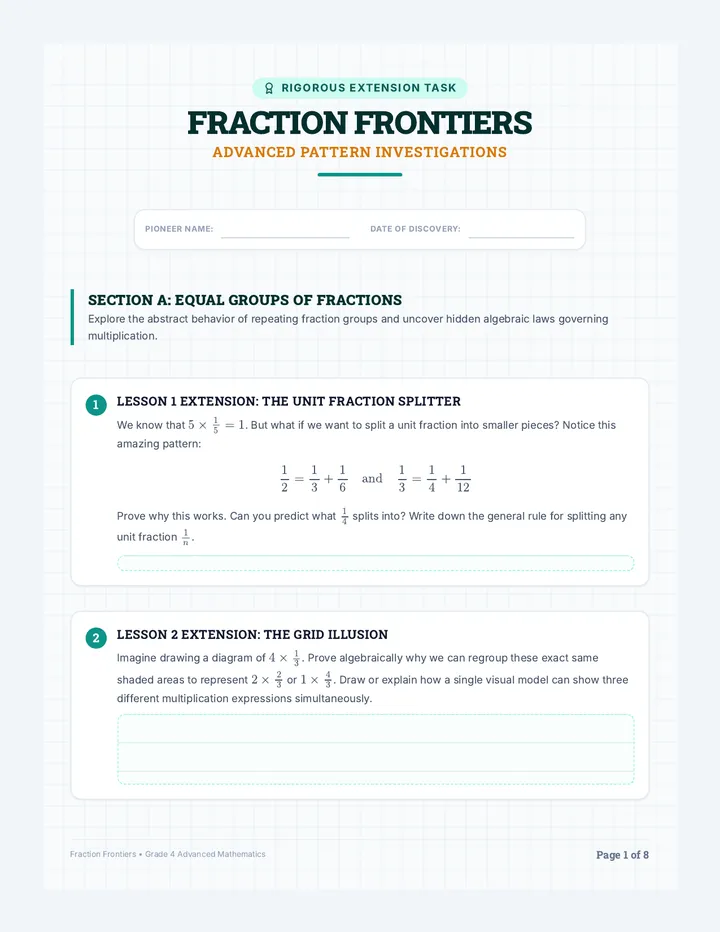
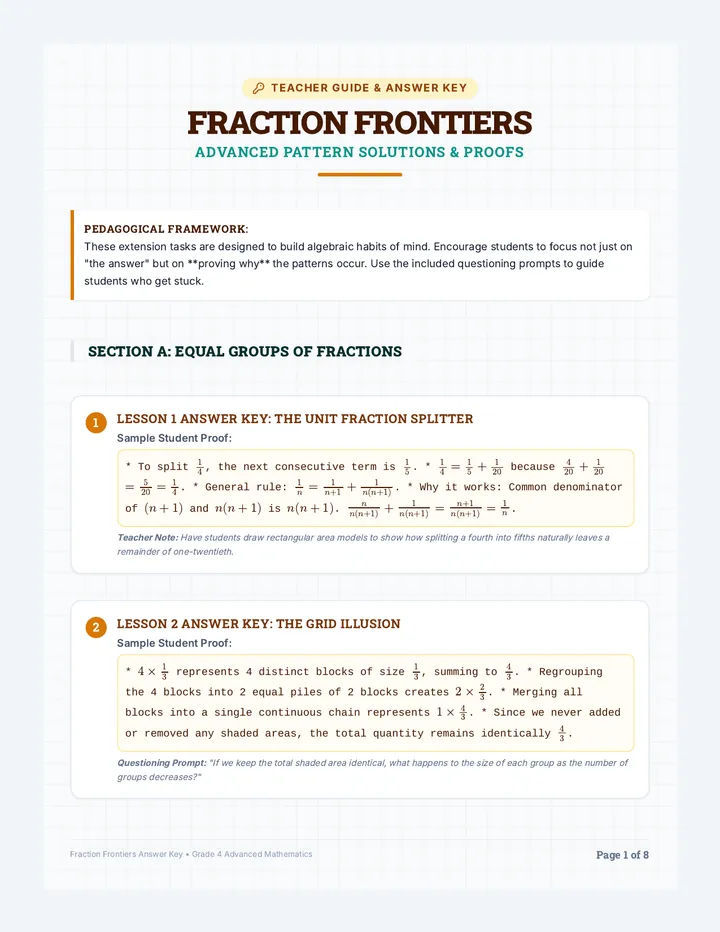
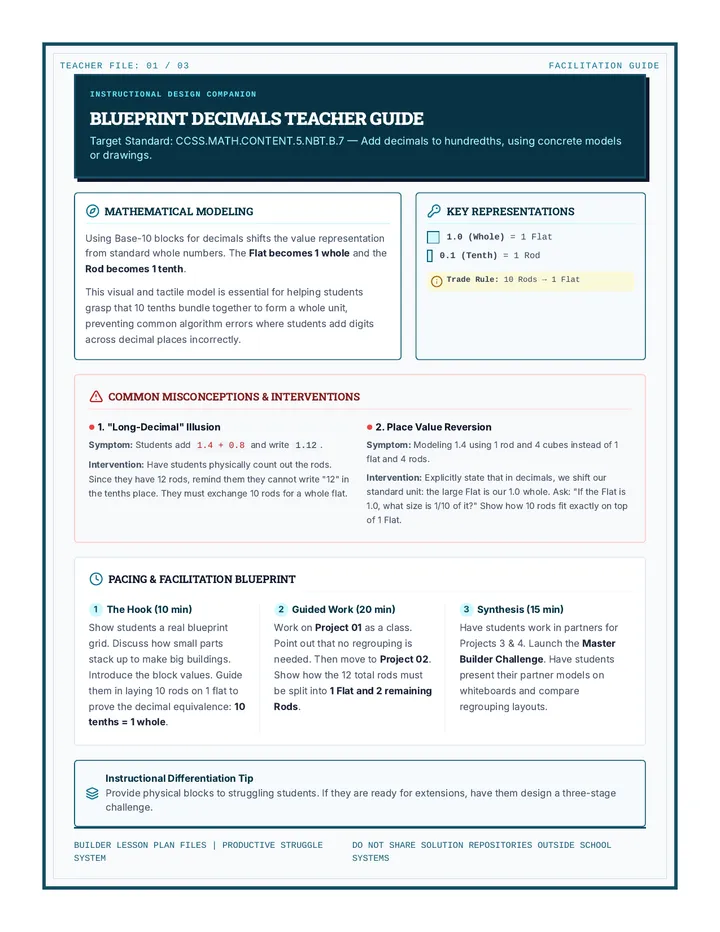
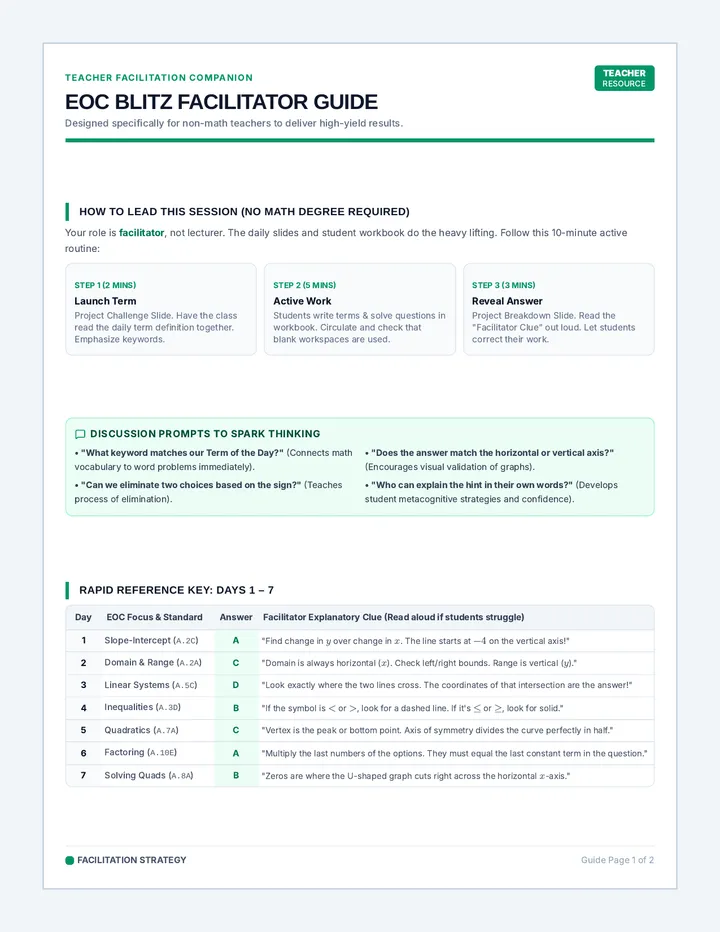
The Launch Problem
Mission Control
A rocket is launched vertically from a pad 3,000 meters from a tracking camera.
Challenge Question:
"How fast must the camera rotate to keep the rocket in the center of the frame when the rocket is 4,000 meters high and rising at 500 m/s?"
SYSTEM SCHEMATIC 01-A
3,000 m
h = 4,000 m
θ
The Trig Connection
The Equation
\[ \tan(\theta) = \frac{h}{x} \]
Differentiate w.r.t. \(t\)
\[ \sec^2(\theta) \cdot \frac{d\theta}{dt} = \frac{1}{x} \cdot \frac{dh}{dt} \]
Angular Velocity
\[ \frac{d\theta}{dt} = \text{?} \]
Key Concepts for Today
1 Relating linear rates (\(dh/dt\)) to angular rates (\(d\theta/dt\)).
2 Using the Chain Rule on trigonometric functions.
3 Evaluating \( \sec(\theta) \) using side lengths instead of angles.
4 Interpreting units: Radians per second vs Degrees per second.
Engineering Applications
Lighthouse Beams
Calculating the speed of a light beam sweeping across a shoreline as it rotates at a constant rate.
Radar Tracking
How fast a radar dish must pivot to track an incoming aircraft maintaining a constant altitude.
Sports Cinematography
Programming robotic cameras to follow a 100m sprinter without losing focus or frame.
Why Radians? Always differentiate in radians to preserve the identity \( \frac{d}{dx}(\sin x) = \cos x \).
The Tracking Eye Worksheet The Tracking Eye
Lab 1.1: Trigonometric Rates & Angular Velocity
Unit: Calculus BC
Name:
\(\frac{d}{dt}[\tan \theta] = \sec^2 \theta \cdot \frac{d\theta}{dt}\)
\(\frac{d}{dt}[\sin \theta] = \cos \theta \cdot \frac{d\theta}{dt}\)
\(\sec \theta = \frac{\text{hypotenuse}}{\text{adjacent}}\)
1
The Shoreline Beacon
A lighthouse is located on a small island 4 km away from the nearest point \(P\) on a straight shoreline. The lighthouse's beam rotates at a constant rate of 5 revolutions per minute. How fast is the beam moving along the shoreline when it is 3 km from \(P\)?
Schematic Diagram
4 km (Fixed Distance)
x = 3 km
θ
LIGHTHOUSE
Identify Given Rates and Variables:
\(d\theta/dt =\)
\(x =\)
Relate the variables with a Trig function:
CALCULATION AREA (Show all derivative steps and unit conversions)
2
Rocket Telemetry
A camera is tracking a rocket launch from a distance of 2,000 ft. The rocket rises vertically according to the position function \(s(t) = 50t^2\), where \(s\) is in feet and \(t\) is in seconds. Find the rate of change of the camera's angle of elevation 10 seconds after liftoff.
A) Calculate the rocket's height and velocity at \(t = 10\):
B) Solve for \(d\theta/dt\) at \(t = 10\):
Final Answer (rad/sec):
Technical Assessment
Suppose the camera has a maximum rotational speed of 0.5 rad/sec. At what height does the rocket become "untrackable" if it continues at its current acceleration? Briefly explain the logic of your approach.
Trig Rates Teacher Guide Trig Rates Teacher Guide
Lesson 1: Trigonometric Rates of Change
TIME: 60-90 MIN
Learning Objectives
Apply trigonometric differentiation to relate linear and angular rates.
Convert between revolutions, degrees, and radians within calculus contexts.
Model physical systems using right-triangle trigonometry and implicit differentiation.
Instructional Sequence
1. The Hook (10 min)
Show a video of a rocket launch or a high-speed car chase. Ask: "If the camera is fixed on a tripod, how does the cameraman know how fast to turn the handle? Is the speed constant?"
Key Insight: Even if the rocket moves at a constant speed, the angle doesn't change linearly. The camera must accelerate its rotation then decelerate as the rocket moves further away.
2. Direct Instruction (20 min)
Use the "Angular Velocity Slides" to model the basic setup:
Setting up \(\tan \theta = y/x\).
Emphasizing \(x\) as a constant (fixed distance) vs. \(y\) and \(\theta\) as functions of \(t\).
The "Secant Trap": Students often struggle to find \(\sec^2 \theta\). Show them how to use the triangle and the Pythagorean theorem to find the hypotenuse instead of finding the angle itself.
3. Guided Practice (25 min)
Distribute "The Tracking Eye Worksheet". Walk through Problem 1 together. Pay close attention to the conversion of 5 rpm to radians per minute (\(10\pi\) rad/min).
Common Pitfalls
Students often forget to multiply by \(d\theta/dt\) (the Chain Rule step). Remind them that every variable except time is a function of time.
Pro Tip
Always encourage students to solve for the literal derivative (\(d\theta/dt = \dots\)) before plugging in numbers. It builds algebraic resilience.
Quick Answer Key
Problem 1 (Shoreline):
Given: \(d\theta/dt = 10\pi\) rad/min, \(x=3, dist=4\).
Result: \(dx/dt \approx 78.54\) km/min.
Problem 2 (Rocket):
At \(t=10\), \(h=5000\), \(v=1000\).
Result: \(d\theta/dt \approx 0.069\) rad/sec.
Systems in Flux Slides Systems in Flux
Multi-Variable Related Rates
The Physics Foundation
Ideal Gas Law
\[ PV = nRT \]
In a dynamic system, Pressure (P) , Volume (V) , and Temperature (T) can all change simultaneously.
The Problem:
As a piston compresses a gas (Volume decreases), the friction and compression generate heat (Temperature increases). What is the rate of change of Pressure?
Technical Logic
1. Treat P, V, and T as functions of time.
2. Apply Product Rule to LHS:
\(\frac{d}{dt}(PV) = P\frac{dV}{dt} + V\frac{dP}{dt}\)
3. Apply Chain Rule to RHS:
\(\frac{d}{dt}(nRT) = nR\frac{dT}{dt}\)
Beyond Two Variables
Volume Expansion
A rectangular box where length, width, and height are all growing at different rates.
\(V = l \cdot w \cdot h\)
Requires Triple Product Rule.
Circuit Resistance
Combined resistance in parallel circuits where each resistor is heating up/expanding.
\(\frac{1}{R_{eq}} = \frac{1}{R_1} + \frac{1}{R_2}\)
Requires Power Rule + Chain Rule.
Fluid Dynamics
A conical tank being filled while simultaneously leaking from the bottom.
\(\frac{dV}{dt} = \text{Rate}_{in} - \text{Rate}_{out}\)
Relating \(h\) and \(r\) with ratios.
Industrial Simulation
Piston Failure Warning
In Lesson 4, you will design a safety valve. To do that, you must understand how pressure spikes happen when volume and temperature move in opposing directions.
\(dV/dt < 0\) Compression
\(dT/dt > 0\) Heating
\(dP/dt = ?\) Calculus BC Goal
Thermodynamics Lab Notes Worksheet Thermodynamics Lab Notes
Case Study: The Variable Piston System
Ref ID: PV-NRT-77
Student Name:
The Scenario
You are monitoring a high-pressure gas cylinder in a laboratory. The cylinder is equipped with a piston that can change the volume, and a heating element that can change the temperature. According to the Ideal Gas Law, \(PV = nRT\). For this experiment, assume \(n = 1\) mole and \(R = 0.0821 \text{ L}\cdot\text{atm}/(\text{mol}\cdot\text{K})\).
1
The Triple Threat
At a specific moment:
Temperature (\(T\)) = 300 K
Volume (\(V\)) = 10.0 L
Pressure (\(P\)) = 2.463 atm
The volume is decreasing at a rate of 0.5 L/min , and the temperature is increasing at a rate of 2 K/min . Find the rate of change of the pressure.
LHS Derivative (Product Rule)
Write the symbolic derivative...
RHS Derivative
Write the symbolic derivative...
Computation Workspace
Is pressure increasing or decreasing? How do you know?
2
Adiabatic Simulation
In an adiabatic process, no heat is exchanged (\(dQ/dt = 0\)), but pressure and volume still relate via \(PV^\gamma = C\), where \(\gamma\) is the heat capacity ratio (for air, \(\gamma \approx 1.4\)).
Equation: \(P \cdot V^{1.4} = C\)
Differentiate implicitly with respect to time.
Show that the rate of change of pressure is related to volume by:
\[ \frac{dP}{dt} = -1.4 \frac{P}{V} \frac{dV}{dt} \]
Derivation Area:
Technical Reflection
In a real engine, the volume decreases extremely quickly (\(dV/dt\) is very large and negative). Based on the formula above, what does this imply about the pressure spike needed to trigger combustion?
Thermodynamics Answer Key Thermodynamics Answer Key
FACULTY USE ONLY
1. The Triple Threat
Symbolic Differentiation:
\[ P \frac{dV}{dt} + V \frac{dP}{dt} = nR \frac{dT}{dt} \]
Step-by-Step Values:
Given: \(P = 2.463\), \(V = 10\), \(T = 300\), \(dV/dt = -0.5\), \(dT/dt = 2\), \(nR = 0.0821\)
Plug-in: \((2.463)(-0.5) + (10)\frac{dP}{dt} = (0.0821)(2)\)
Isolate: \(-1.2315 + 10\frac{dP}{dt} = 0.1642\)
Solve: \(10\frac{dP}{dt} = 1.3957 \implies \frac{dP}{dt} = 0.13957 \text{ atm/min}\)
Conclusion:
The pressure is increasing at approximately 0.14 atm/min . The decrease in volume has a much larger impact on pressure than the increase in temperature in this specific state.
2. Adiabatic Simulation
Differentiation Process:
Equation: \(P \cdot V^{1.4} = C\)
Differentiate w.r.t \(t\): \( \frac{dP}{dt}V^{1.4} + P(1.4 V^{0.4} \frac{dV}{dt}) = 0 \)
Divide by \(V^{0.4}\): \( \frac{dP}{dt}V + 1.4P \frac{dV}{dt} = 0 \)
Solve for \(dP/dt\): \( \frac{dP}{dt} = -\frac{1.4P \frac{dV}{dt}}{V} = -1.4 \frac{P}{V} \frac{dV}{dt} \)
3. Technical Reflection Key
"As \(dV/dt\) becomes highly negative (rapid compression), \(dP/dt\) becomes highly positive. This ensures that the pressure rises fast enough to generate the heat needed for self-ignition in a diesel engine without a spark plug."
Relative Motion Slides Relative Motion
Pursuit Curves & Convergence
The Distance Formula
RADAR LOGIC
Core Relationship
\[ z^2 = x^2 + y^2 \]
When two objects move along perpendicular paths (like an intersection), the distance between them \(z\) is a dynamic variable.
// Derivative Form
\[ 2z \frac{dz}{dt} = 2x \frac{dx}{dt} + 2y \frac{dy}{dt} \]
Object A
Object B
z
Scenarios in Engineering
Diverging Ships
Two ships leave the same port. Ship A travels North at 20 knots, Ship B travels East at 15 knots. How fast is the distance between them increasing after 2 hours?
Hint: \(x = 30, y = 40, z = 50\)
Air Traffic Control
A plane is flying horizontally at 500 mph at an altitude of 3 miles. It passes directly over a radar station. How fast is the distance between them changing when the plane is 5 miles away?
Hint: Altitude is constant! \(dy/dt = 0\).
The Collision Workshop
Today's challenge: You are an Air Traffic Controller. You must determine if two converging aircraft will breach the 5-mile safety radius and calculate the exact moment of peak closure rate.
Precision
Risk Analysis
Calculus BC
Air Traffic Control Workshop Worksheet Air Traffic Control Workshop
Operation: Collision Avoidance
STATION ID: ATC-GRID-09
OPERATOR:
Mission Briefing
Two aircraft are approaching the same intersection point \(P\). Flight A is 60 miles West of \(P\) and flying East at 450 mph. Flight B is 80 miles North of \(P\) and flying South at 600 mph. You must determine the closure rate and assess safety.
1
Current Closure Rate
At the current moment, how fast is the distance between the two planes changing?
Vector Identification
\(x = 60\) mi \(dx/dt =\) ______ \(y = 80\) mi \(dy/dt =\) ______ \(z = \) ______ \(dz/dt = ?\)
Note: If an object is moving towards the intersection, its rate of change of distance from the intersection is negative .
Calculation Workspace
Result:
2
T-Minus Zero
In exactly 6 minutes (\(0.1\) hours), where will the planes be? Calculate the rate of change of the distance between them at that specific time.
Flight A Position @ t=0.1:
Flight B Position @ t=0.1:
Derivative Analysis
Safety Protocol Violation?
FAA regulations require a minimum 5-mile horizontal separation. Based on your calculations, do these planes ever come closer than 5 miles? (Hint: Use your distance function \(z(t) = \sqrt{x(t)^2 + y(t)^2}\) and check the minimum).
Collision Course Exit Ticket Exit Ticket: ATC-09
Collision Course
Operator Name:
If Plane A is moving away from the intersection at 400 mph and Plane B is moving towards it at 400 mph, and they are currently at equal distances from the point...
Is the distance between them increasing, decreasing, or staying the same? Why?
Confidence Level
Time to Collision
-- : -- : --
CALCULUS BC // UNIT 4: RELATED RATES // LESSON 3
Project Blueprint Handout Project Directive 4.1
Safety Protocols
Engineering Design & Forensic Analysis
Document Status CLASSIFIED / ENGR
Executive Brief
"Following the catastrophic failure of Storage Tank B-14 last quarter, the Engineering Board requires a complete overhaul of our safety valve thresholds. Your team has been assigned to model the dynamic rates of change within our new pressurized systems to prevent future rupture."
The Mission
You must produce a Safety Analysis Blueprint for one of the following systems. Your goal is to determine the "Critical Rate" – the maximum speed at which one variable can change before another variable exceeds the material's structural integrity.
Team Checklist
Select System Scenario
Model Governing Equations
Identify Failure Thresholds
Calculate Critical Rates
Final Blueprint Draft
Calculus BC Applied
Scenario Selection
Scenario A: The Deep-Sea Drill
Fluid Dynamics
An underwater storage dome (hemisphere) is being filled with crude oil. As the volume increases, the pressure on the base plate grows. If the dome is 50m in radius and the base plate fails at a pressure of 500 kPa...
The Problem: At what maximum rate (\(dV/dt\)) can we pump oil when the dome is 75% full?
Scenario B: The Radar Perimeter
Trig Tracking
A security radar tracks a drone flying at a constant altitude of 200m. The radar's motor has a maximum angular velocity of 0.2 rad/sec.
The Problem: What is the maximum horizontal speed of the drone (\(dx/dt\)) that the radar can track when the drone is 500m away (horizontal distance)?
Final Deliverables
1. Mathematical Model
Clear derivation of the related rate equation using implicit differentiation.
2. Threshold Graph
A visual representation of the rate vs. distance/time to show the "Danger Zone".
3. Safety Recommendation
A written protocol for operators based on your calculus findings.
Engineering Design Rubric Engineering Assessment Rubric
DOC_CODE: CALC-PROJ-RUB-V1
Criterion
Exceptional (4)
Proficient (3)
Needs Revision (1-2)
Calculus Logic
Implicit Differentiation & Chain Rule
Governing equations are perfectly modeled. Differentiation is error-free with explicit use of \(d/dt\) notation.
Model is correct; differentiation steps are logical but may contain minor algebraic slips.
Incorrect choice of formula or failure to apply chain rule correctly to time-dependent variables.
Threshold Analysis
Identifying Constraints
Accurately identifies physical limits (e.g., max pressure, max rad/sec) and relates them back to the primary rate.
Identifies limits correctly but logic for the final "critical rate" calculation is slightly unclear.
Misinterprets given constants or ignores structural limits in final calculations.
Communication
Blueprint & Protocol
Deliverables look professional. Protocols are clear, actionable, and derived directly from math.
Blueprint is clear; protocol is provided but lacks a strong connection to the calculus evidence.
Deliverables are incomplete, messy, or fail to communicate the safety findings to a non-math audience.
Feedback / Engineering Notes:
Final Score
___ / 12
Defense Panel Cards Teacher Resource Project Defense Panel
Questioning Cards for Peer Review & Assessment
The Assumption Probe
"In your model, you assumed [Variable] was constant. If it were actually changing at [Rate], how would that break your safety protocol?"
Category: Sensitivity Analysis Card #01
The Calculus Rigor
"Walk the panel through the exact moment you applied the Chain Rule. Why was \(d/dt\) necessary for both sides of your equation?"
Category: Mathematical Defense Card #02
The Failure Mode
"Your results show a 'Critical Rate'. If an operator exceeds this by 10%, what is the immediate physical consequence according to your math?"
Category: Risk Communication Card #03
The Design Iteration
"If we used a material with double the structural integrity, does the allowable rate also double? Or is the relationship non-linear?"
Category: Scalability Analysis Card #04
Instructions for the Panel
Distribute these cards to the students acting as the "Engineering Board". They should use these prompts to challenge the presenters and verify the mathematical validity of the proposed safety protocols.

The Calculus Final Review Guide The Calculus Final Review
Mastery Check: Related Rates & Advanced Modeling
Post-Project Exam Prep
NAME:
Trig Relationships
Relating angles to sides using \(\sec^2 \theta \frac{d\theta}{dt}\).
Multi-Variable
Using Product Rule: \( u'v + uv' \).
Pursuit Curves
Pythagorean differentiation for closure rates.
1
The Expanding Circuit
The resistance \(R\) (in ohms) of a wire is given by \(R = \frac{\rho L}{A}\), where \(\rho\) is resistivity, \(L\) is length, and \(A\) is the cross-sectional area. If \(\rho\) is constant, but the wire is being heated and stretched such that \(L\) increases at 0.1 cm/sec and \(A\) decreases at 0.05 cm²/sec...
Find an expression for \(dR/dt\) in terms of \(\rho, L, A, dL/dt,\) and \(dA/dt\).
Determine if the resistance is increasing or decreasing when \(L=100\) and \(A=2\). Show work.
2
The Conical Leak
A water tank has the shape of an inverted circular cone with base radius 2m and height 4m. If water is being pumped into the tank at a rate of \(2 \text{ m}^3\text{/min}\), but is leaking out the bottom at \(0.5 \text{ m}^3\text{/min}\)...
A) Relate the radius \(r\) and height \(h\) of the water level:
B) Find the rate at which the water level is rising when the water is 3m deep:
Schematic
r=2 / h=4
The Engineering Mindset
Based on your work this unit, why is it often more important for an engineer to know the rate of change of a system than the state of a system at any given moment?
Write your final synthesis here...