Lenny.com
Explore
Create
ActivitiesNewMathEnglish Language ArtsScience & EngineeringSocial StudiesGlobal LanguagesHealth & Physical EducationSpecial EducationCounseling & Life SkillsArts & CreativityESL
Lenny.com
Lenny.com
Explore
Create
ActivitiesNewMathEnglish Language ArtsScience & EngineeringSocial StudiesGlobal LanguagesHealth & Physical EducationSpecial EducationCounseling & Life SkillsArts & CreativityESL
Lenny.com
Lenny.com

Solutions

Lenny for EducatorsLenny for SchoolsLenny for Districts

Product

ExploreSign inCreateSupportAbout

Resources

Getting startedMTSS Acceleration Program

© 2026 Lenny Learning Inc.

TermsPrivacyAccessibility
LinkedInInstagramX
Lenny

Similarity and Transformations

Dilations and scale factors define similarity through proportional relationships and preserved angle measures. Examines sequences of rigid motions combined with resizing to map figures onto one another.

MathNumbers & CountingCounting ObjectsNumber NamesComparing NumbersNumber OperationsCounting SequenceNumbers 0-10Place Value Understanding and SystemAdd and Subtract Within 20Addition and Subtraction ConceptsAddition and Subtraction EquationsAddition and Subtraction ProblemsFoundations for MultiplicationMultiplication and Division PropertiesMultiply and Divide Within 100Multiplication and Division ProblemsFactors and MultiplesProperties of OperationsPatterns and RelationshipsGenerate and Analyze PatternsMulti-Digit ArithmeticPlace Value OperationsMulti-Digit and Decimal OperationsNumerical ExpressionsFour Operations and PatternsFour Operations Problem SolvingMeasurement & DataMeasurable AttributesMeasuring LengthsMeasure and Estimate Lengths in Standard UnitsRelate Addition and Subtraction to LengthClassifying and Counting ObjectsTime and MoneyArea Concepts and MeasurementPerimeter and Area MeasuresAngle Concepts and MeasurementTime, Volume, and MassMeasurement Unit ConversionsGeometryIdentifying ShapesShapes and AttributesShape Attributes and ReasoningShapes and CompositionClassifying 2D FiguresGeometric Figures and RelationshipsLines, Angles, and ShapesAngle, Area, and VolumeGeometric MeasurementVolume of 3D ShapesCoordinate Plane ApplicationsTransformations in the PlaneCongruence and SimilarityUnderstand congruence in terms of rigid motionsSimilarity and TransformationsProve Theorems Involving SimilarityPythagorean TheoremTrigonometry for General TrianglesMake Geometric ConstructionsProve Geometric TheoremsTheorems About CirclesFind Arc Lengths And Areas of Sectors of CirclesVolume FormulasRelationships Between Two-Dimensional and Three-Dimensional ObjectsProve Simple Geometric Theorems AlgebraicallyTranslate Between Geometric Description and Equation for Conic SectionApply Geometric Concepts in Modeling SituationsFractions & DecimalsFractions as NumbersBuilding FractionsFraction Equivalence and OrderingAdding and Subtracting FractionsMultiplying and Dividing FractionsDividing FractionsDecimal FractionsMulti-Digit Computation and FactorsAdd, Subtract, Multiply, and Divide Rational NumbersRational Number SystemIrrational Numbers and ApproximationsRatiosRatios and ProportionsProportional RelationshipsUnit RateAlgebraAlgebraic ExpressionsGenerate Equivalent ExpressionsQuantitative RelationshipsProportional Relationships and Linear EquationsEquations and InequalitiesEquation Solving and ReasoningLinear Equations and SystemsGraph Equations and InequalitiesSystems of EquationsReal-World Algebraic ProblemsQuantitative Reasoning with UnitsExpression StructureEquivalent Expression FormsRadicals and Integer ExponentsRational ExponentsRational and Irrational NumbersPolynomial OperationsPolynomial IdentitiesPolynomial Zeros and FactorsRational ExpressionsComplex Number OperationsComplex Numbers in PolynomialsComplex Numbers on PlaneStatistics & ProbabilityRepresent and Interpret DataData DistributionsStatistical VariabilityProbability ModelsCompound Event ProbabilitiesStatistical SamplingInterpret Categorical and Quantitative DataBivariate Data PatternsInterpret Linear ModelsComparing Two PopulationsRandom Processes in StatisticsIndependence and Conditional ProbabilityExpected ValuesProbability-Based Decision MakingStatistical Inference and ConclusionsFunctionsFunction Concepts and NotationDefine and Compare FunctionsInterpret Functions in ContextAnalyze Function RepresentationsModel Relationships with FunctionsIdentify Linear vs Exponential GrowthDistinguish Between Function TypesCompare Growth RatesInterpret Function ExpressionsBuild Functions from RelationshipsConstruct and Model FunctionsTransform and Combine FunctionsModel Comparison and SelectionSolve Exponential EquationsTrigonometryTrigonometric Ratios Involving Right TrianglesTrigonometric Functions and Unit CircleModel with Trigonometric FunctionsTrigonometric IdentitiesVectors & MatricesIntroduction to Vectors and MatricesVector QuantitiesVector OperationsMatrix OperationsCalculusLimits and ContinuityDerivative Concepts and NotationDerivative Rules and TechniquesApplications of DerivativesOptimization ProblemsRelated RatesCurve Sketching and AnalysisIntegration Concepts and NotationAntiderivatives and Indefinite IntegralsDefinite Integrals and AreaFundamental Theorem of CalculusIntegration TechniquesApplications of IntegrationDifferential EquationsSequences and SeriesParametric and Polar FunctionsVector-Valued Functions

Videos

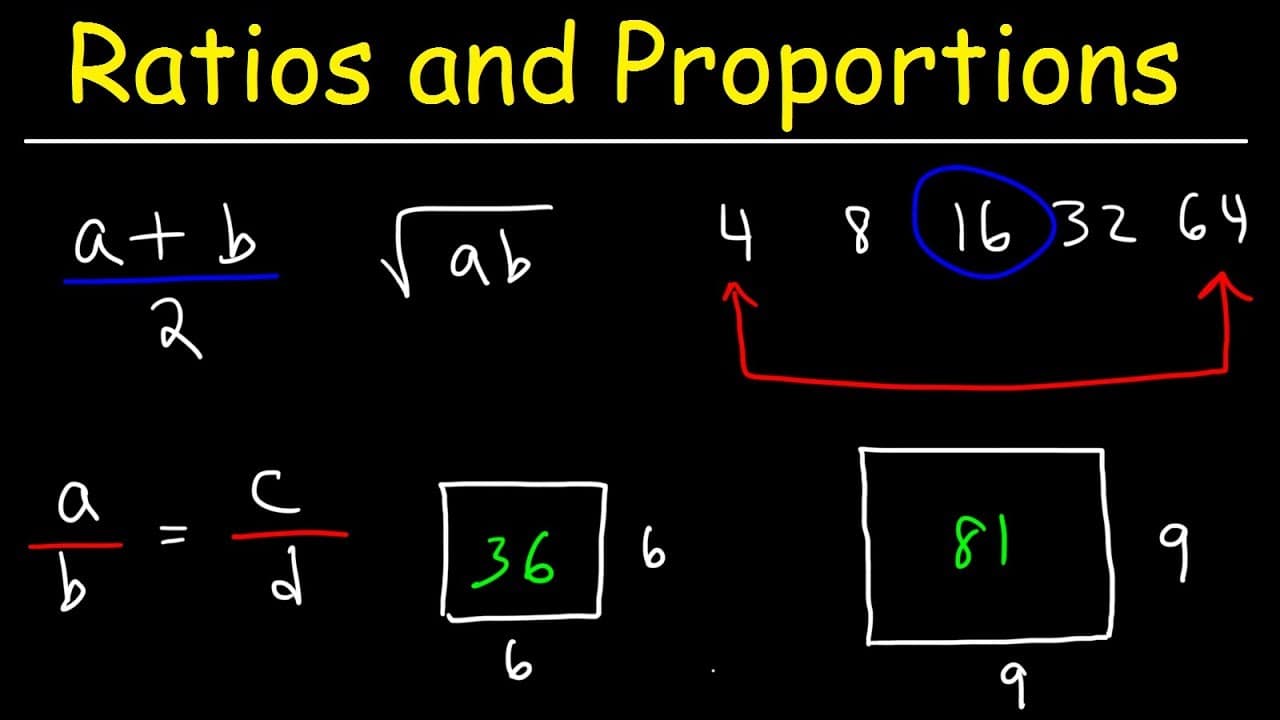
Mastering Arithmetic and Geometric Means, Ratios, and Proportions

Mastering Arithmetic and Geometric Means, Ratios, and Proportions

This comprehensive mathematics tutorial explores the fundamental differences between arithmetic and geometric means, followed by a series of practice problems involving ratios, proportions, and geometric applications. The video begins by conceptually defining arithmetic mean as the middle term of an arithmetic sequence and geometric mean as the middle term of a geometric sequence. It progresses through eight distinct problems ranging from basic mean calculations to complex word problems involving scale factors, geometric shapes, and algebraic manipulation.

The Organic Chemistry TutorThe Organic Chemistry Tutor

19mins 49s

How Scale Factors Affect the Area of Similar Figures

How Scale Factors Affect the Area of Similar Figures

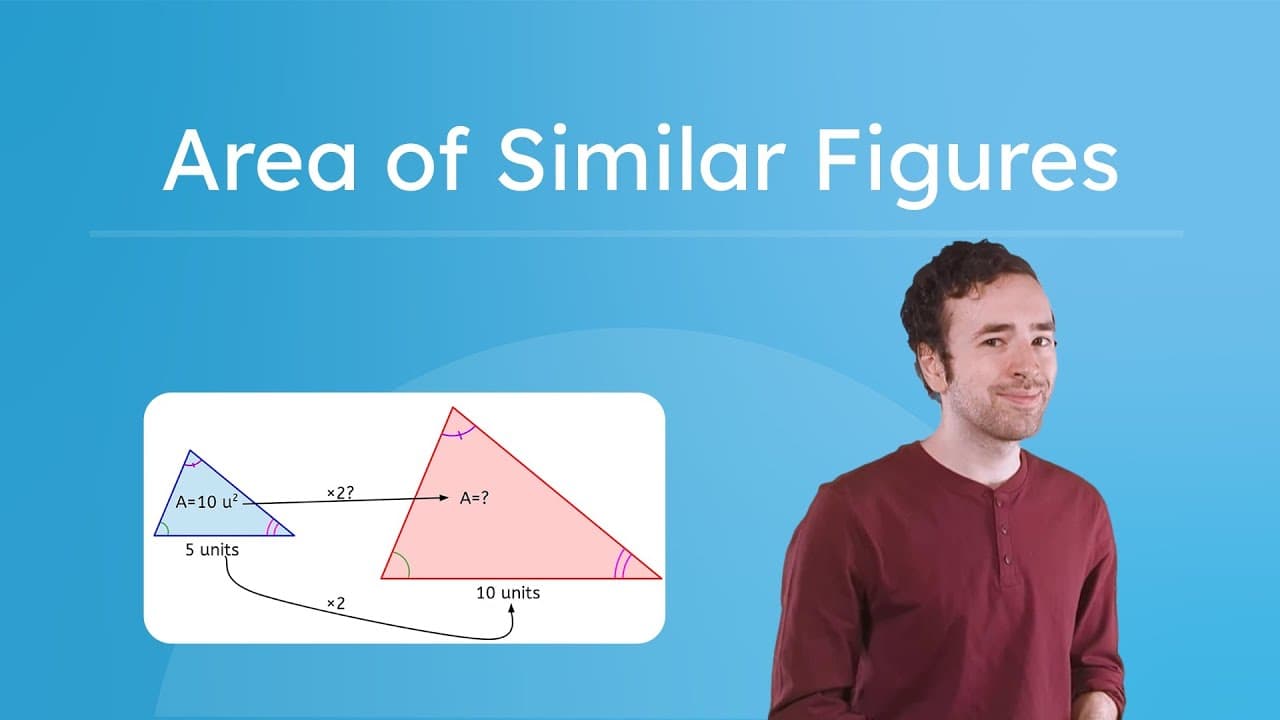
This instructional video explores the mathematical relationship between the side lengths and areas of similar geometric figures. Narrated by Justin, the lesson guides students from a review of basic similarity concepts—like congruent angles and proportional sides—to a deeper understanding of how changing dimensions in two directions affects the total area. Through a series of data experiments and visual proofs using squares, the video derives the rule that the ratio of the areas is the square of the ratio of the corresponding side lengths. The video covers key themes such as scale factors, proportional reasoning, and the difference between linear (1D) and square (2D) measurements. It systematically tests hypotheses (addition, multiplication) before confirming that squaring is the correct operation. The lesson creates a bridge between arithmetic operations and geometric properties, reinforcing why units of area are always "squared." For educators, this video serves as an excellent core lesson for a Geometry unit on similarity. It moves beyond rote memorization by providing a conceptual derivation of the formula, making it easier for students to retain. The included practice problems model step-by-step algebraic thinking, showing students how to set up equations to solve for missing areas or side lengths. It effectively addresses the common misconception that area scales linearly with side length.

Miacademy & MiaPrep Learning ChannelMiacademy & MiaPrep Learning Channel

11mins 51s

Introduction to Sine, Cosine, and Tangent Ratios

Introduction to Sine, Cosine, and Tangent Ratios

This educational video serves as a comprehensive introduction to the foundational concepts of trigonometry, specifically focusing on the sine, cosine, and tangent ratios within right triangles. The narrator guides viewers through the process of identifying the key components of a right triangle—the hypotenuse, opposite side, and adjacent side—and emphasizes how these labels change depending on which acute angle is being referenced. This distinction is critical for students beginning their study of trigonometry and is demonstrated clearly with visual animations. The video introduces the mnemonic "SOH CAH TOA" as a memory aid for the three primary trigonometric ratios. Step-by-step examples demonstrate how to calculate these ratios using specific side lengths (3-4-5 and 8-15-17 triangles). The content covers the definitions of sine (opposite/hypotenuse), cosine (adjacent/hypotenuse), and tangent (opposite/adjacent), and introduces the Greek letter theta as a symbol for an unknown angle. For educators, this video is an excellent resource for introducing high school geometry or trigonometry units. It addresses common student misconceptions about side labeling and provides structured practice opportunities where students can pause and test their understanding. The visual clarity of the animations helps demystify the abstract relationships between angles and sides, making it a valuable tool for flipped classrooms or review sessions.

Miacademy & MiaPrep Learning ChannelMiacademy & MiaPrep Learning Channel

5mins 27s

Mastering Geometric Dilations on and off the Grid

Mastering Geometric Dilations on and off the Grid

This comprehensive math lesson introduces students to the geometric concept of dilations—transformations that resize objects while maintaining their shape. The video begins by grounding the concept in real-world examples, such as comparing phone sizes, measuring cups, and the relationship between real vehicles and toy models. It explains the core logic of scale factors: values between 0 and 1 create reductions (shrinking), while values greater than 1 create enlargements (growing). The lesson emphasizes that dilations are not isometries because the size of the object changes, unlike translations or rotations. The content covers two distinct methods for performing dilations. First, it demonstrates a classical geometric construction approach using a straightedge and compass to find images based on a center of dilation and rays. It uses Russian nesting dolls to visually illustrate how images radiate from a center point. Second, it transitions to the coordinate plane, teaching students how to calculate new coordinates by determining the "rise and run" distance from a specific center of dilation (which is not always the origin) and multiplying those distances by the scale factor. This video is highly valuable for middle and high school geometry classrooms as it connects abstract formulas to tangible visuals. It addresses common student stumbling blocks, such as dilating from a point other than the origin (0,0) and understanding that the center, preimage, and image points must always be collinear. The clear, step-by-step walkthroughs of problems on a coordinate grid provide excellent modeling for students learning to perform these transformations manually.

Miacademy & MiaPrep Learning ChannelMiacademy & MiaPrep Learning Channel

15mins 9s

Identifying Function Transformations from Graphs

Identifying Function Transformations from Graphs

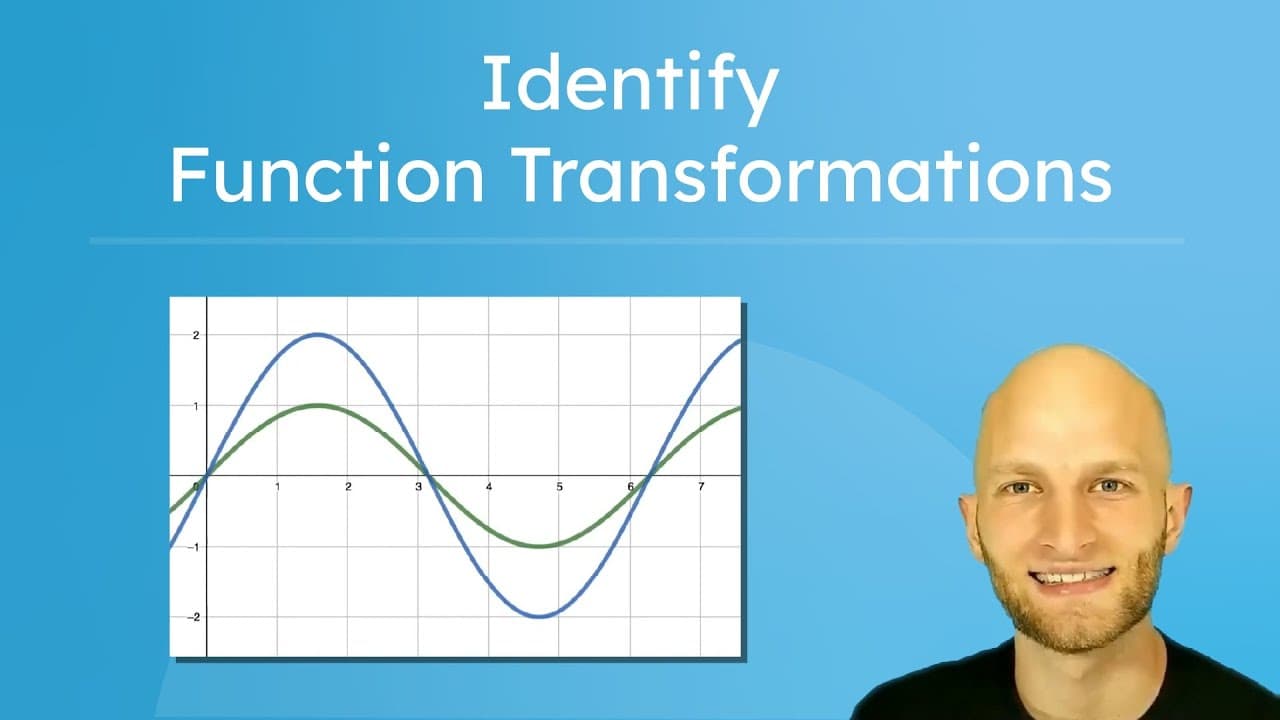
This instructional video provides a comprehensive tutorial on identifying function transformations by analyzing graphs. Narrated by Randy from MiaPrep, the video guides viewers through a series of practice problems involving various function families, including quadratic, absolute value, square root, cube root, trigonometric (sine), and cubic functions. The core objective is to determine how a 'parent' or initial function (green curve) has been transformed to create a new function (blue curve). The video explores four specific types of transformations: shifts (translations), reflections, vertical scaling, and horizontal scaling. For each example, the narrator employs a process of elimination, logically analyzing the visual characteristics of the graphs—such as vertex position, shape consistency, orientation, and invariant points—to determine the correct transformation. He explains why certain transformations are impossible based on the visual evidence, such as why a graph with a shifted vertex cannot merely be a reflection or scaling. This resource is highly valuable for Algebra II and Pre-Calculus classes as it emphasizes visual literacy and conceptual understanding over rote algebraic manipulation. By focusing on the graphical behavior of functions, it helps students develop an intuition for how mathematical operations affect geometric shapes. Teachers can use this video to model analytical thinking, introduce new function families, or review transformation rules before moving to algebraic definitions.
Miacademy & MiaPrep Learning ChannelMiacademy & MiaPrep Learning Channel

9mins 2s

Solving 30-60-90 Special Right Triangles

Solving 30-60-90 Special Right Triangles

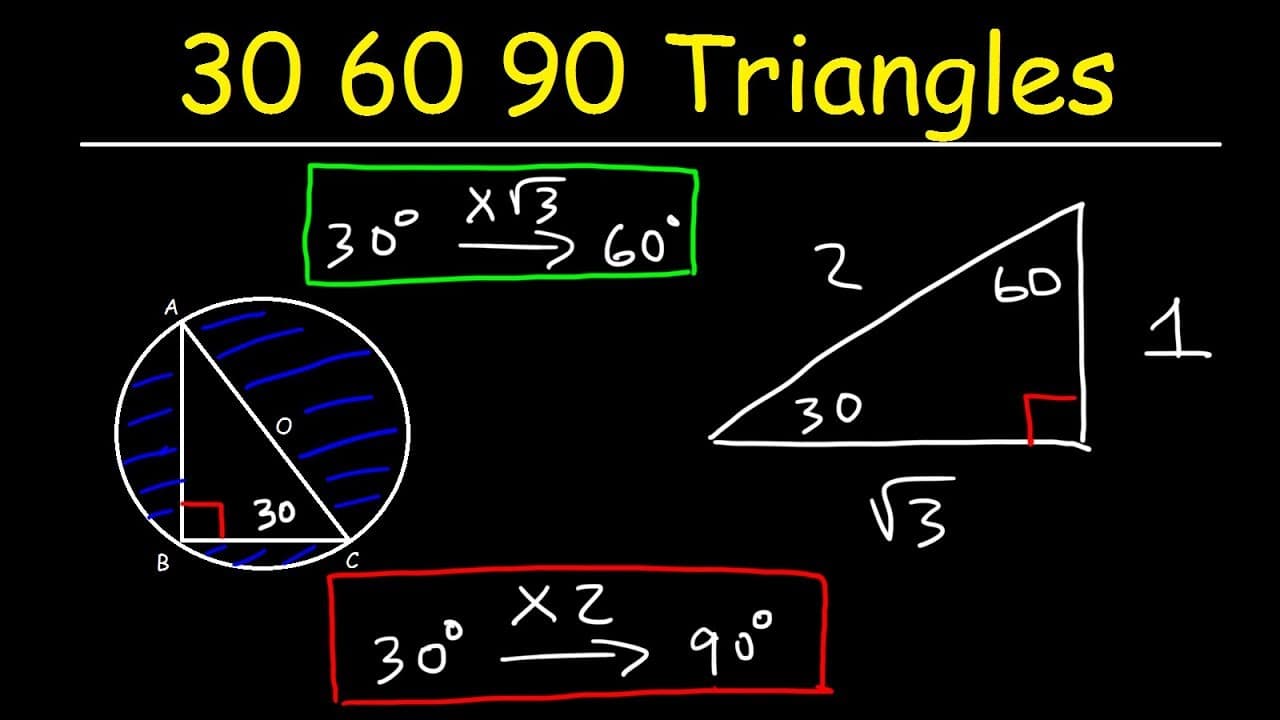
This instructional video provides a comprehensive tutorial on understanding and solving 30-60-90 special right triangles, a fundamental concept in high school geometry and trigonometry. The narrator utilizes a digital whiteboard to visually demonstrate the invariant ratios between the sides of these triangles: the side opposite 30° is x, the side opposite 60° is x√3, and the hypotenuse is 2x. The video breaks down the logic into a set of simple rules involving multiplication and division to transition between side lengths depending on which side is known. The content progresses from basic examples to more complex problems, covering various scenarios such as starting with the short leg, the long leg, or the hypotenuse. Crucially, it addresses algebraic skills often required in these problems, such as working with radicals and rationalizing the denominator. The video concludes with a challenging application problem typical of standardized tests like the SAT, integrating the 30-60-90 triangle rules with circle geometry to find the area of a shaded region. For educators, this video serves as an excellent resource for scaffolding lessons on special right triangles. It offers clear, step-by-step procedural fluency practice while also touching on conceptual understanding of geometric relationships. The final problem provides a perfect extension for advanced students, demonstrating how basic geometric theorems apply to composite shapes and area calculations, making it valuable for both core curriculum instruction and test preparation.

The Organic Chemistry TutorThe Organic Chemistry Tutor

11mins 12s

Materials

Scale Factor Anchor Chart

Scale Factor Anchor Chart

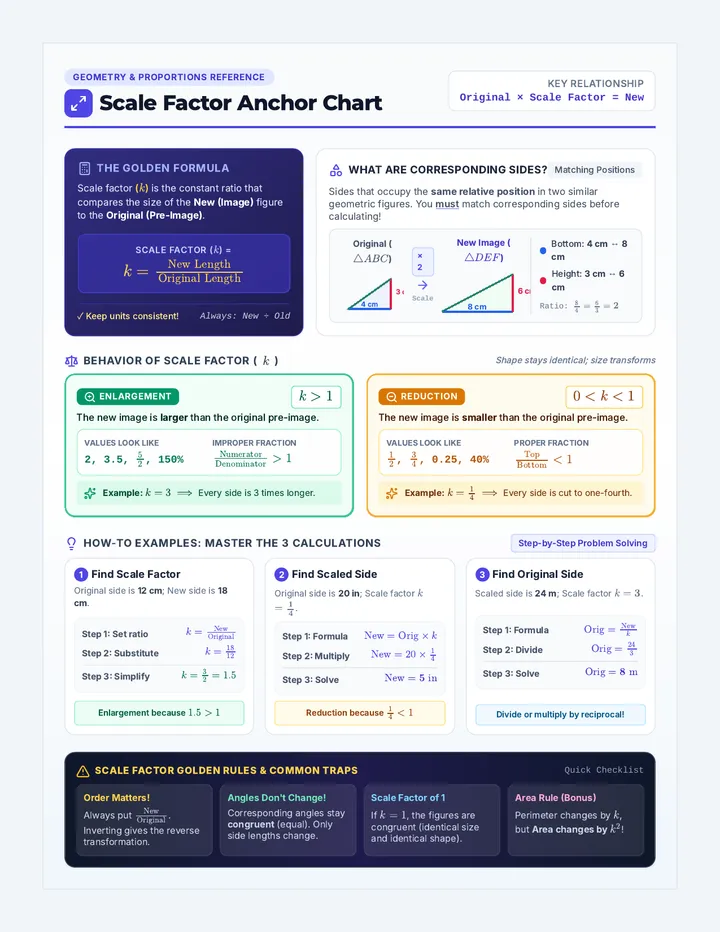
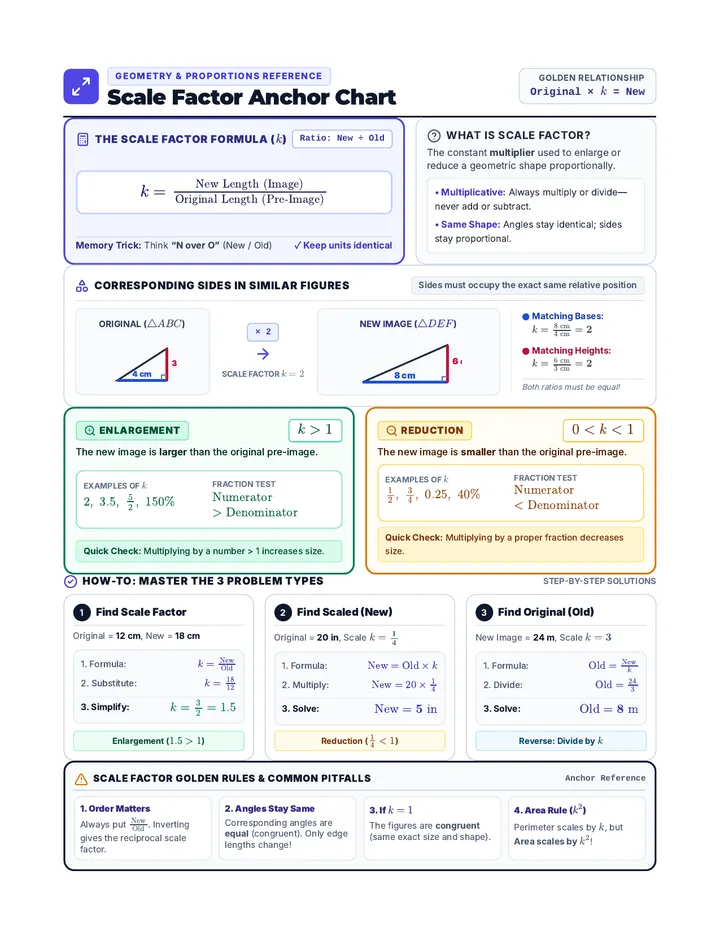
A comprehensive math anchor chart explaining scale factor, corresponding sides, enlargements versus reductions, and step-by-step examples for finding scale factors and missing original or scaled dimensions.

R

rgood

Coordinate Moves Worksheet

Coordinate Moves Worksheet

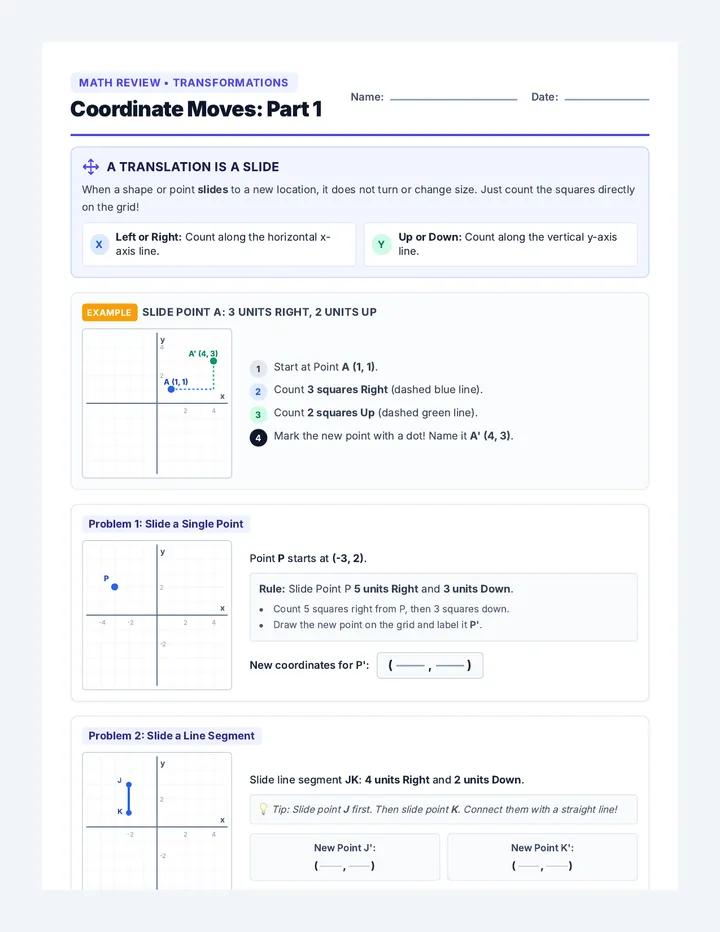
A highly accessible 2-page review worksheet on translations and reflections on the coordinate plane designed for 8th graders performing at an elementary numeracy level. It features step-by-step visual models, clear grid counting guides, and high-scaffolding practice.

L

Logan-Greene

Geometry Proofs Reference Guide

Geometry Proofs Reference Guide

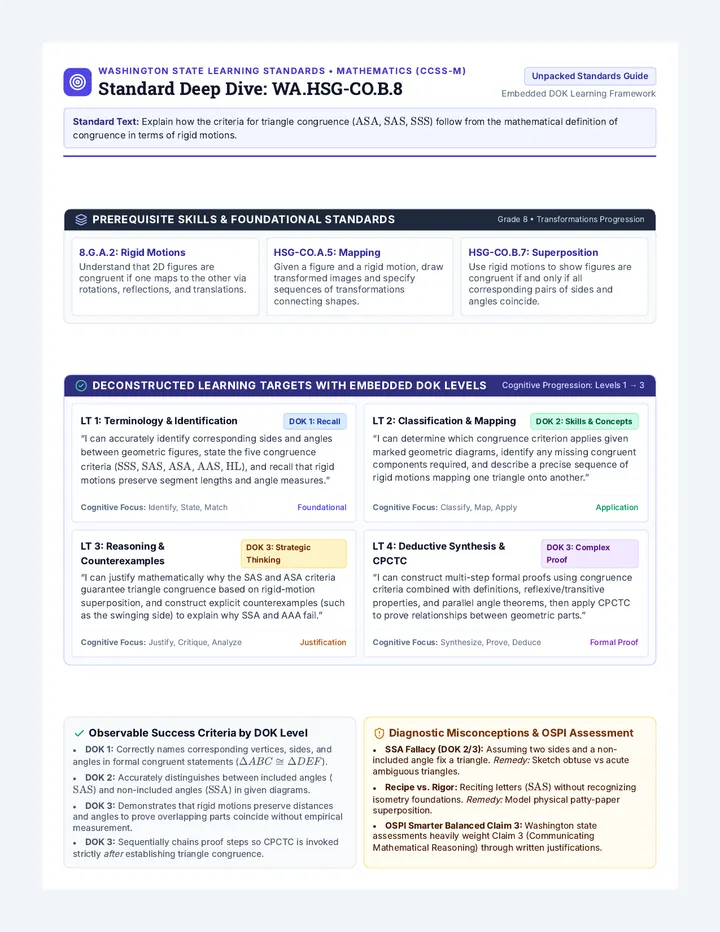
An instructional standards breakdown for Washington State high school geometry, featuring a full deconstruction of standard WA.HSG-CO.B.8 with Webb's DOK cognitive levels embedded directly into the progressive student learning targets, success criteria, and prerequisites.

MS

Melissa Super-Greene

Rigid Motions Practice Worksheet

Rigid Motions Practice Worksheet

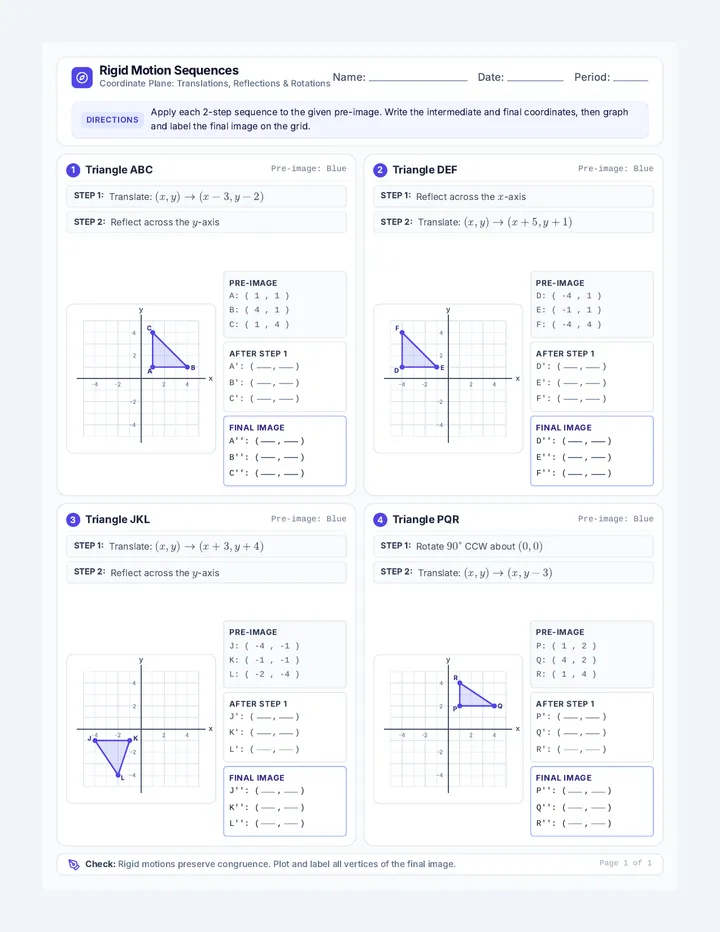
A one-page student practice worksheet featuring four coordinate-plane sequence problems combining translations, reflections, and rotations. Students find intermediate and final coordinates and graph the resulting images on coordinate grids.

L

Logan-Greene

Scale Factor Anchor Chart

Scale Factor Anchor Chart

A printer-friendly, ink-conscious math anchor chart for scale factor featuring high-contrast typography, crisp geometric diagrams, core formulas, enlargement versus reduction comparisons, three step-by-step calculation methods, and key conceptual rules.

R

rgood

Grid Shift Detective Worksheet

Grid Shift Detective Worksheet

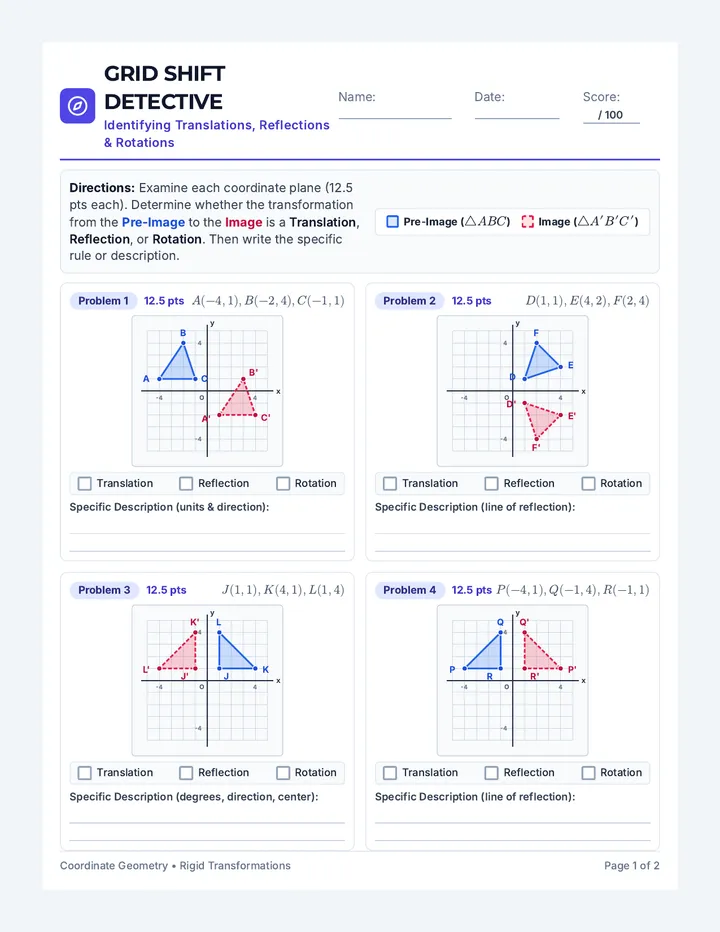
An 8-question printable geometry worksheet where students analyze coordinate planes to identify and describe translations, reflections, and rotations, featuring enlarged fonts, prominent vertex labels, and clean handwriting spaces.

L

Logan-Greene

Sequences

Regents Mastery Blueprint Study Guide

Regents Mastery Suite

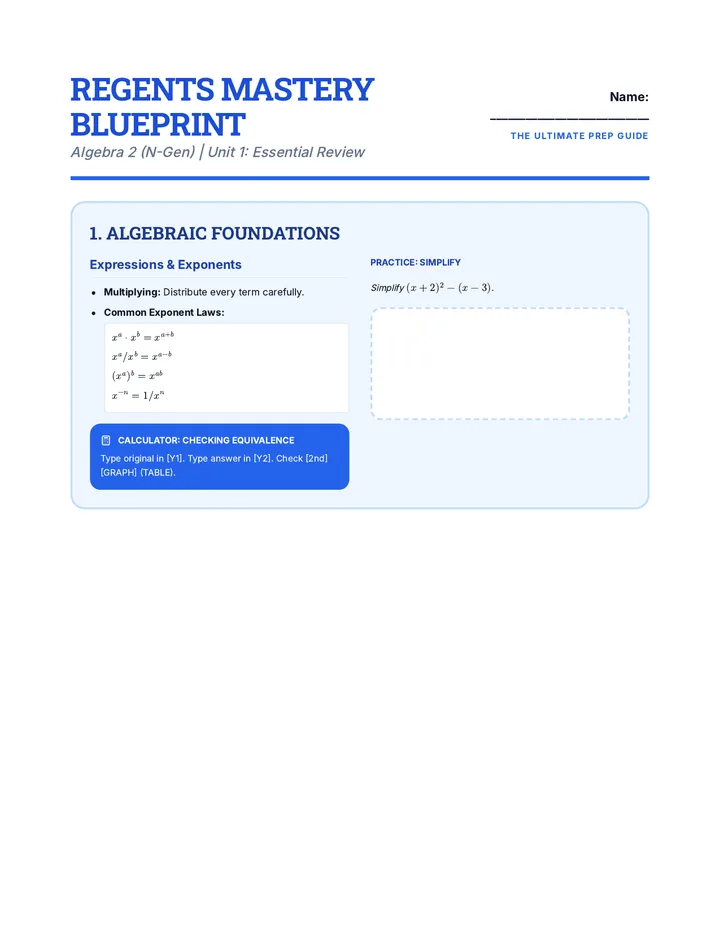
A comprehensive review suite for the New York State Mathematics Regents exams, including Algebra 1, Geometry, and Algebra 2, featuring mastery blueprints, calculator strategies, and exam-taking tips.

KB

Kayla Borozny

15
LMS Bulldog Clothing Company Teacher Guide

LMS Bulldog Clothing Company

A 4-week project-based learning sequence for middle school students, connecting mathematics, marketing data, apparel scaling, and budget formulas through the real-world challenge of launching a school merchandise brand.

LM

Lydia McCracken

4
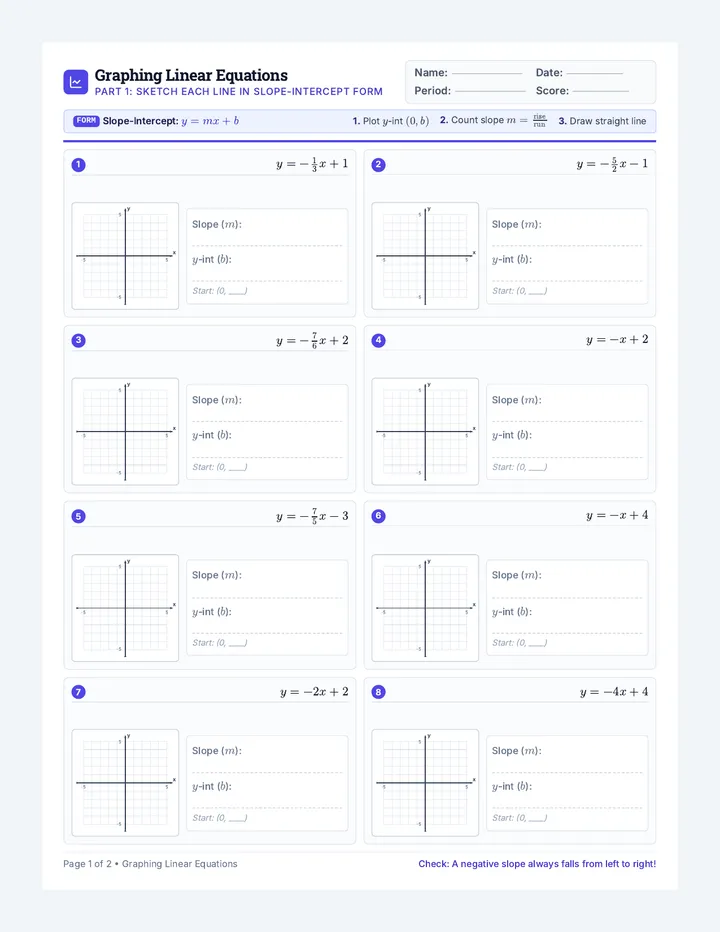
Linear Equations Practice Worksheet

Coordinate Geometry Mastery

A secondary mathematics curriculum sequence exploring linear functions and geometric transformations on the Cartesian coordinate plane, featuring print-ready guided practice and teacher keys.

FM

Fernando Mancini

4
Le Bon Cadre Presentation

L'Atelier Photo

Une série de micro-leçons de 10 minutes centrée sur l'optimisation de l'espace papier. Les élèves apprennent à mettre à l'échelle une mise en page de 6 photos (format A4) vers le format Raisin (50x65 cm) en minimisant les chutes.

SB

saida bendaoud

11
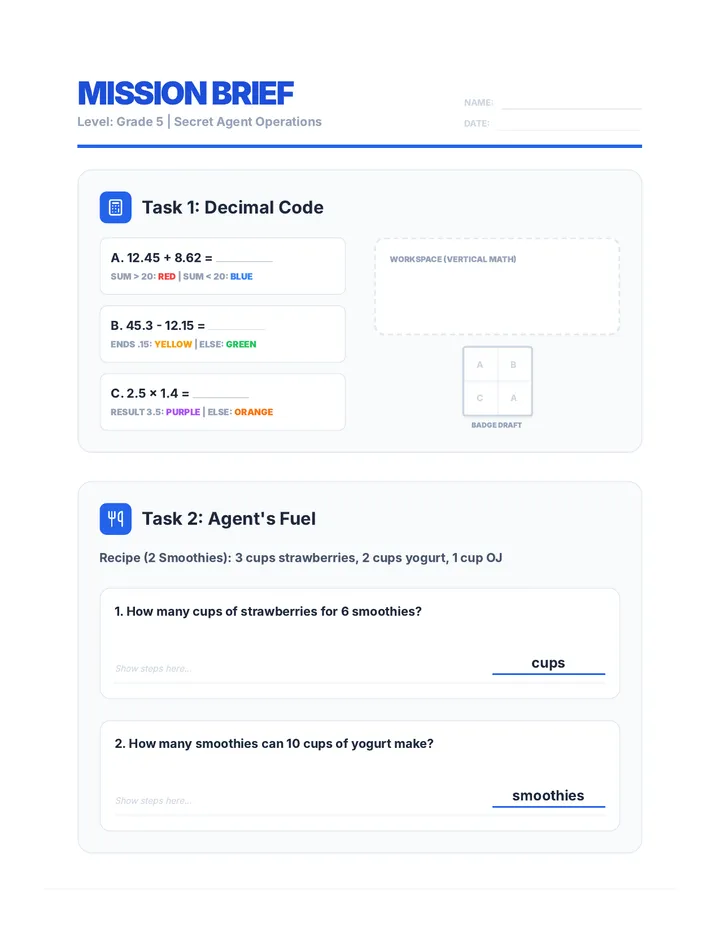
Mission Brief 5 Activity Packet

Math Missions

A dual-grade math activity sequence focusing on geometry, decimals, ratios, and algebra through engaging puzzles and real-world challenges.

AA

alicia accapezzato

4
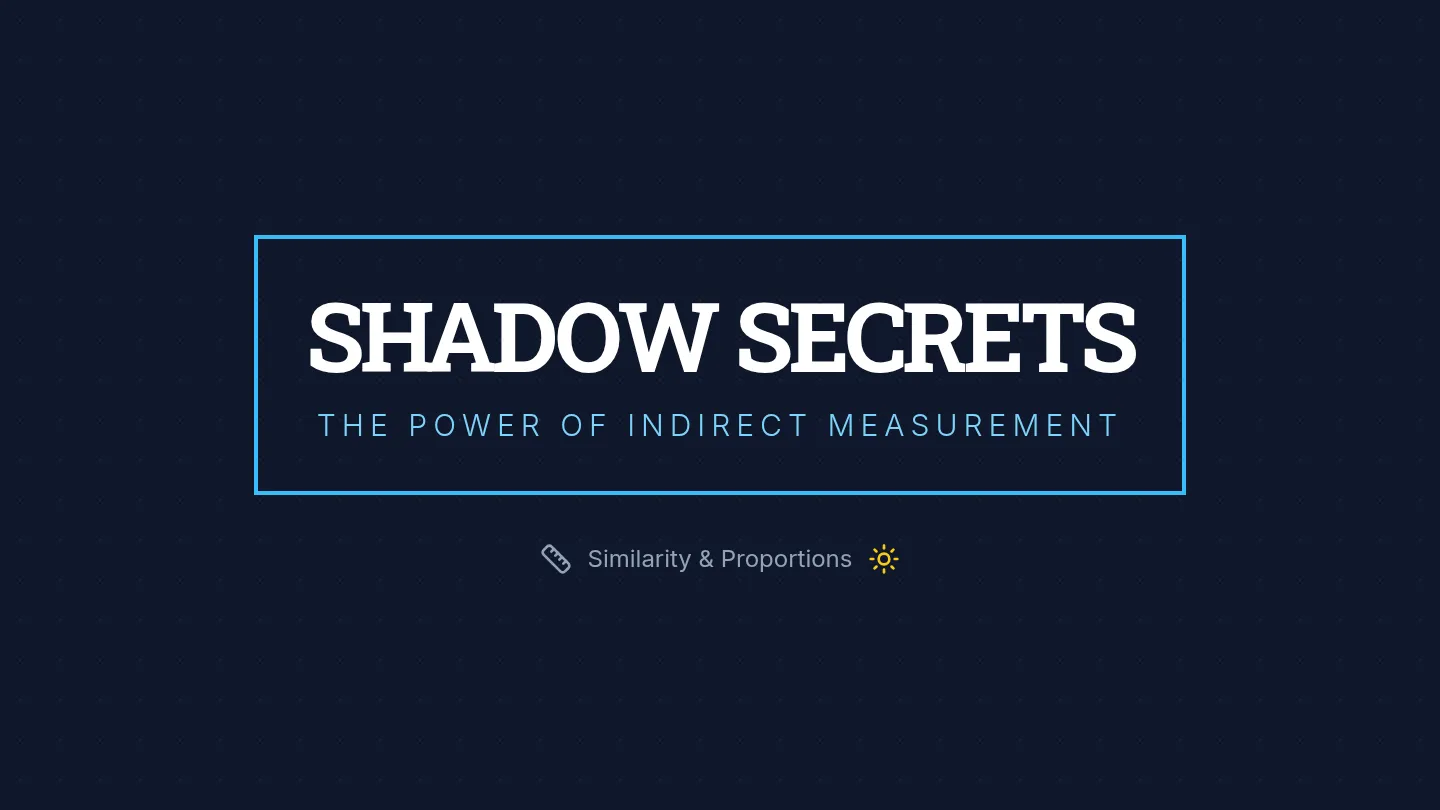
Shadow Secrets Slides

Shadow Architects

A project-based unit where students use indirect measurement (shadow reckoning) to determine the height of tall objects and then build accurate scale models of those structures.

DE

Donia ElSayed

6

Lessons

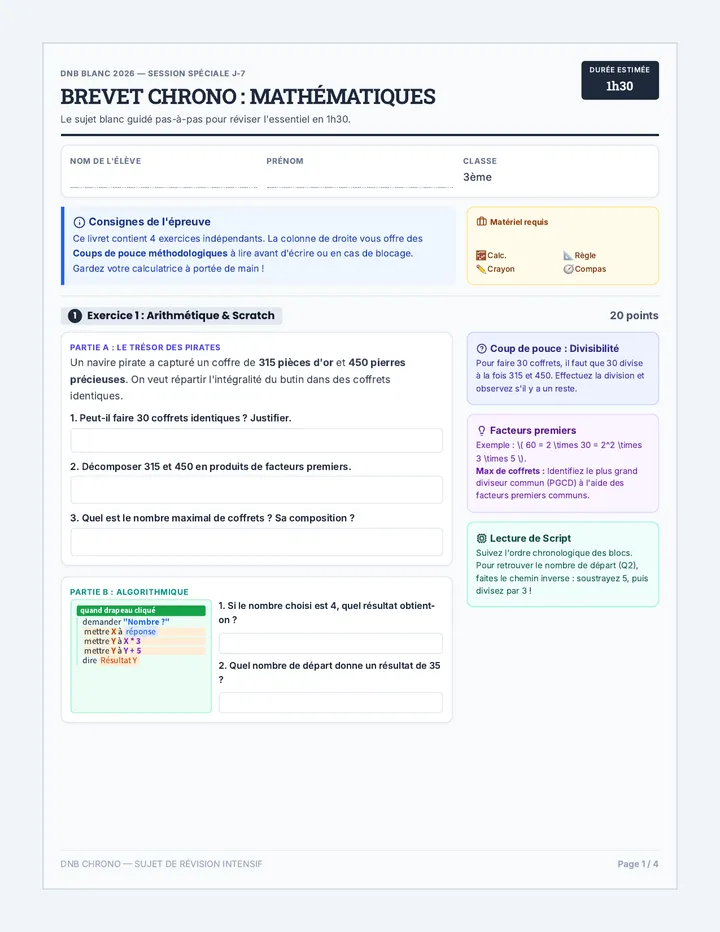
DNB Chrono Livret de Révision

Brevet Express

Un kit complet de révision de dernière minute pour le DNB de Mathématiques, comprenant un sujet blanc guidé pas-à-pas pour les élèves et un corrigé détaillé avec barème pour l'enseignant.

E

Enseignante

4
Size Me Up Lesson Plan

Size Me Up

A 9th-grade geometry lesson where students master similar figures and proportions to solve real-world height problems through shadow reckoning and indirect measurement.

KC

Kris Coyne

6
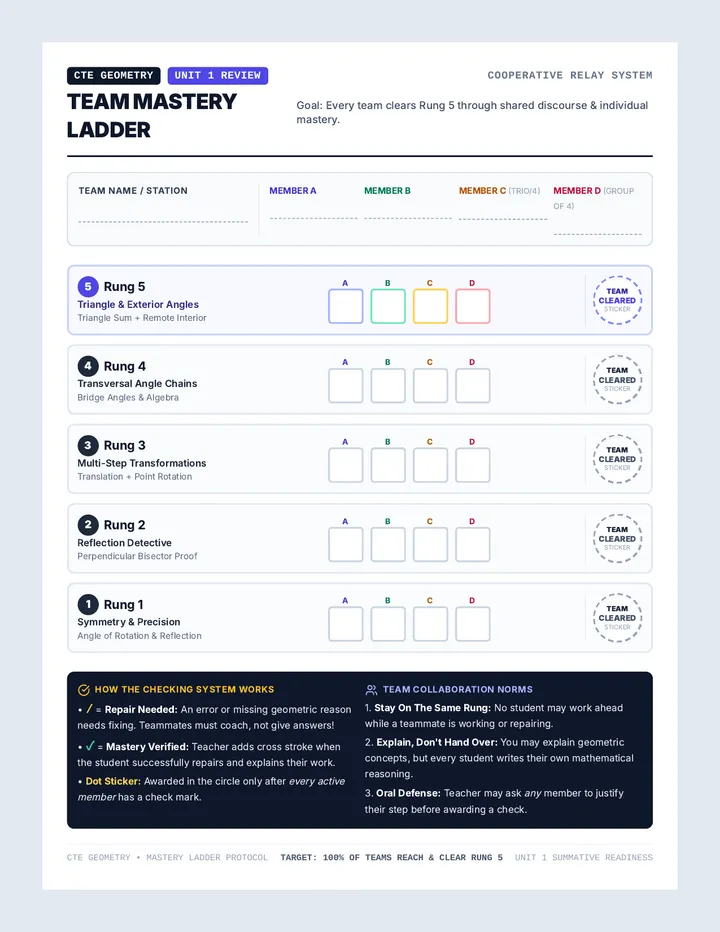
Mastery Ladder Tracking Sheet

Geometry Ladder Relay

Collaborative 5-rung mastery review activity for CTE Geometry Unit 1 covering symmetry, reflections, multi-step transformations, parallel transversal angle chains, and exterior angle theorems across four parallel student versions plus a Spanish edition.

MM

Matthew McIntyre

9
Similarity Secrets Anchor Charts

Similarity Squad

A comprehensive guide to understanding geometric similarity, covering ratios, proportions, and similarity criteria for polygons and triangles.

WM

Wilkzhie Maria Silva Moncada

19
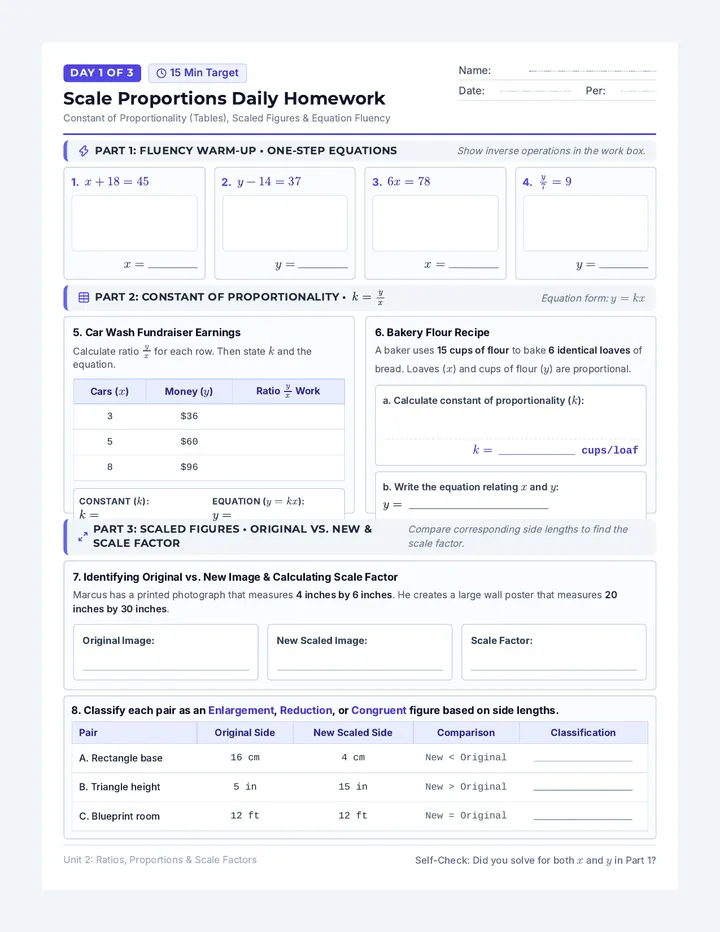
Day One Proportions Homework

Scale Proportions Homework Pack

A three-day homework collection focused on constant of proportionality across representations, scale drawings and scale factors, and one-step algebraic equation fluency. Each daily assignment is designed for a focused 15-minute practice session with complete teacher answer keys.

R

rgood

6
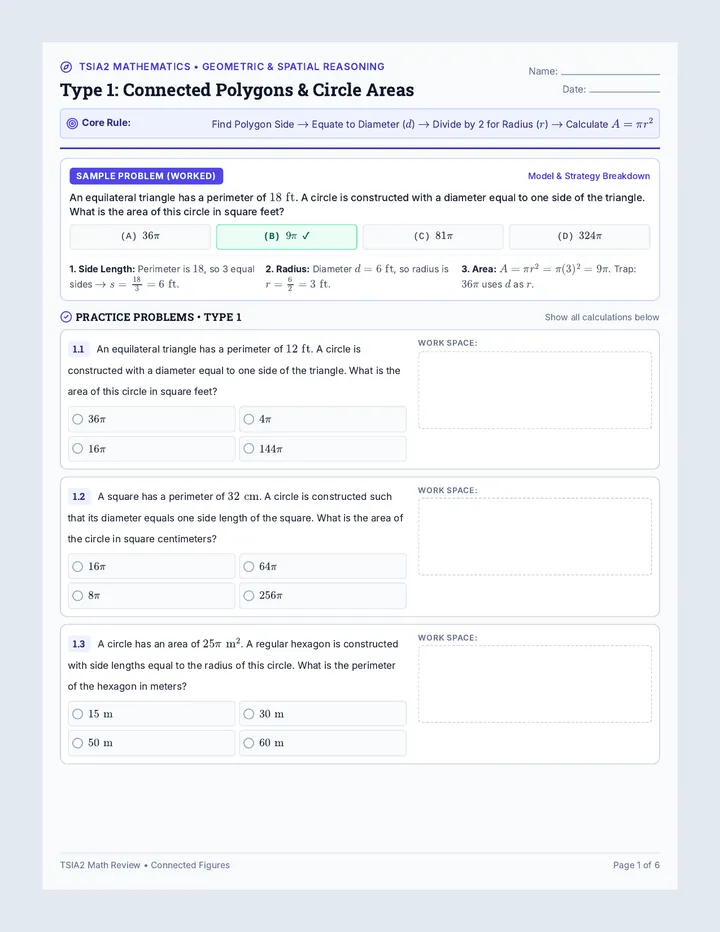
Shape Shift Study Guide

Shape Shift

A comprehensive TSIA2 mathematics lesson focusing on high-yield geometric and spatial reasoning concepts, 2D/3D shapes, area-volume calculations, and unit conversions.

CM

Chuguna Murugesan

9