Lenny.com
Explore
Create
ActivitiesNewMathEnglish Language ArtsScience & EngineeringSocial StudiesGlobal LanguagesHealth & Physical EducationSpecial EducationCounseling & Life SkillsArts & CreativityESL
Lenny.com
Lenny.com
Explore
Create
ActivitiesNewMathEnglish Language ArtsScience & EngineeringSocial StudiesGlobal LanguagesHealth & Physical EducationSpecial EducationCounseling & Life SkillsArts & CreativityESL
Lenny.com
MathNumbers & CountingCounting ObjectsNumber NamesComparing NumbersNumber OperationsCounting SequenceNumbers 0-10Place Value Understanding and SystemAdd and Subtract Within 20Addition and Subtraction ConceptsAddition and Subtraction EquationsAddition and Subtraction ProblemsFoundations for MultiplicationMultiplication and Division PropertiesMultiply and Divide Within 100Multiplication and Division ProblemsFactors and MultiplesProperties of OperationsPatterns and RelationshipsGenerate and Analyze PatternsMulti-Digit ArithmeticPlace Value OperationsMulti-Digit and Decimal OperationsNumerical ExpressionsFour Operations and PatternsFour Operations Problem SolvingMeasurement & DataMeasurable AttributesMeasuring LengthsMeasure and Estimate Lengths in Standard UnitsRelate Addition and Subtraction to LengthClassifying and Counting ObjectsTime and MoneyArea Concepts and MeasurementPerimeter and Area MeasuresAngle Concepts and MeasurementTime, Volume, and MassMeasurement Unit ConversionsGeometryIdentifying ShapesShapes and AttributesShape Attributes and ReasoningShapes and CompositionClassifying 2D FiguresGeometric Figures and RelationshipsLines, Angles, and ShapesAngle, Area, and VolumeGeometric MeasurementVolume of 3D ShapesCoordinate Plane ApplicationsTransformations in the PlaneCongruence and SimilarityUnderstand congruence in terms of rigid motionsSimilarity and TransformationsProve Theorems Involving SimilarityPythagorean TheoremTrigonometry for General TrianglesMake Geometric ConstructionsProve Geometric TheoremsTheorems About CirclesFind Arc Lengths And Areas of Sectors of CirclesVolume FormulasRelationships Between Two-Dimensional and Three-Dimensional ObjectsProve Simple Geometric Theorems AlgebraicallyTranslate Between Geometric Description and Equation for Conic SectionApply Geometric Concepts in Modeling SituationsFractions & DecimalsFractions as NumbersBuilding FractionsFraction Equivalence and OrderingAdding and Subtracting FractionsMultiplying and Dividing FractionsDividing FractionsDecimal FractionsMulti-Digit Computation and FactorsAdd, Subtract, Multiply, and Divide Rational NumbersRational Number SystemIrrational Numbers and ApproximationsRatiosRatios and ProportionsProportional RelationshipsUnit RateAlgebraAlgebraic ExpressionsGenerate Equivalent ExpressionsQuantitative RelationshipsProportional Relationships and Linear EquationsEquations and InequalitiesEquation Solving and ReasoningLinear Equations and SystemsGraph Equations and InequalitiesSystems of EquationsReal-World Algebraic ProblemsQuantitative Reasoning with UnitsExpression StructureEquivalent Expression FormsRadicals and Integer ExponentsRational ExponentsRational and Irrational NumbersPolynomial OperationsPolynomial IdentitiesPolynomial Zeros and FactorsRational ExpressionsComplex Number OperationsComplex Numbers in PolynomialsComplex Numbers on PlaneStatistics & ProbabilityRepresent and Interpret DataData DistributionsStatistical VariabilityProbability ModelsCompound Event ProbabilitiesStatistical SamplingInterpret Categorical and Quantitative DataBivariate Data PatternsInterpret Linear ModelsComparing Two PopulationsRandom Processes in StatisticsIndependence and Conditional ProbabilityExpected ValuesProbability-Based Decision MakingStatistical Inference and ConclusionsFunctionsFunction Concepts and NotationDefine and Compare FunctionsInterpret Functions in ContextAnalyze Function RepresentationsModel Relationships with FunctionsIdentify Linear vs Exponential GrowthDistinguish Between Function TypesCompare Growth RatesInterpret Function ExpressionsBuild Functions from RelationshipsConstruct and Model FunctionsTransform and Combine FunctionsModel Comparison and SelectionSolve Exponential EquationsTrigonometryTrigonometric Ratios Involving Right TrianglesTrigonometric Functions and Unit CircleModel with Trigonometric FunctionsTrigonometric IdentitiesVectors & MatricesIntroduction to Vectors and MatricesVector QuantitiesVector OperationsMatrix OperationsCalculusLimits and ContinuityDerivative Concepts and NotationDerivative Rules and TechniquesApplications of DerivativesOptimization ProblemsRelated RatesCurve Sketching and AnalysisIntegration Concepts and NotationAntiderivatives and Indefinite IntegralsDefinite Integrals and AreaFundamental Theorem of CalculusIntegration TechniquesApplications of IntegrationDifferential EquationsSequences and SeriesParametric and Polar FunctionsVector-Valued Functions
Lenny.com

Solutions

Lenny for EducatorsLenny for SchoolsLenny for Districts

Product

ExploreSign inCreateSupportAbout

Resources

Getting startedMTSS Acceleration Program

© 2026 Lenny Learning Inc.

TermsPrivacyAccessibility
LinkedInInstagramX
Lenny

Numbers 0-10

Numeral recognition, counting, and cardinality for integers zero through ten. Strengthens one-to-one correspondence and basic number sense through visual sets and tracing.

Videos

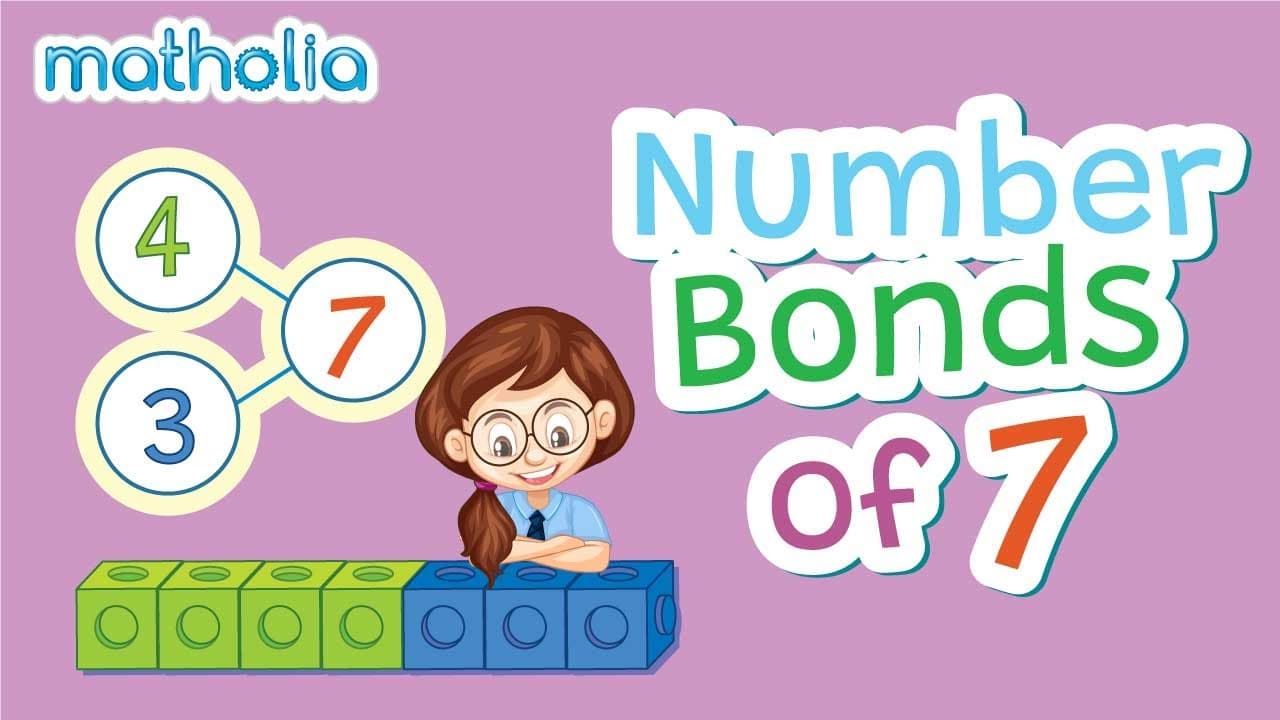
Mastering Number Bonds of 7 with Cubes

Mastering Number Bonds of 7 with Cubes

This instructional video guides early learners through the concept of "number bonds" for the number 7, effectively demonstrating the part-part-whole relationship in addition. Using concrete manipulatives (colored linking cubes) alongside an abstract visual model (number bond diagram), the video systematically explores different pairs of numbers that sum to seven. The clear, uncluttered presentation allows students to focus entirely on the mathematical relationships being demonstrated.

MatholiaChannelMatholiaChannel

2mins 24s

Solving Simple Subtraction Word Problems

Solving Simple Subtraction Word Problems

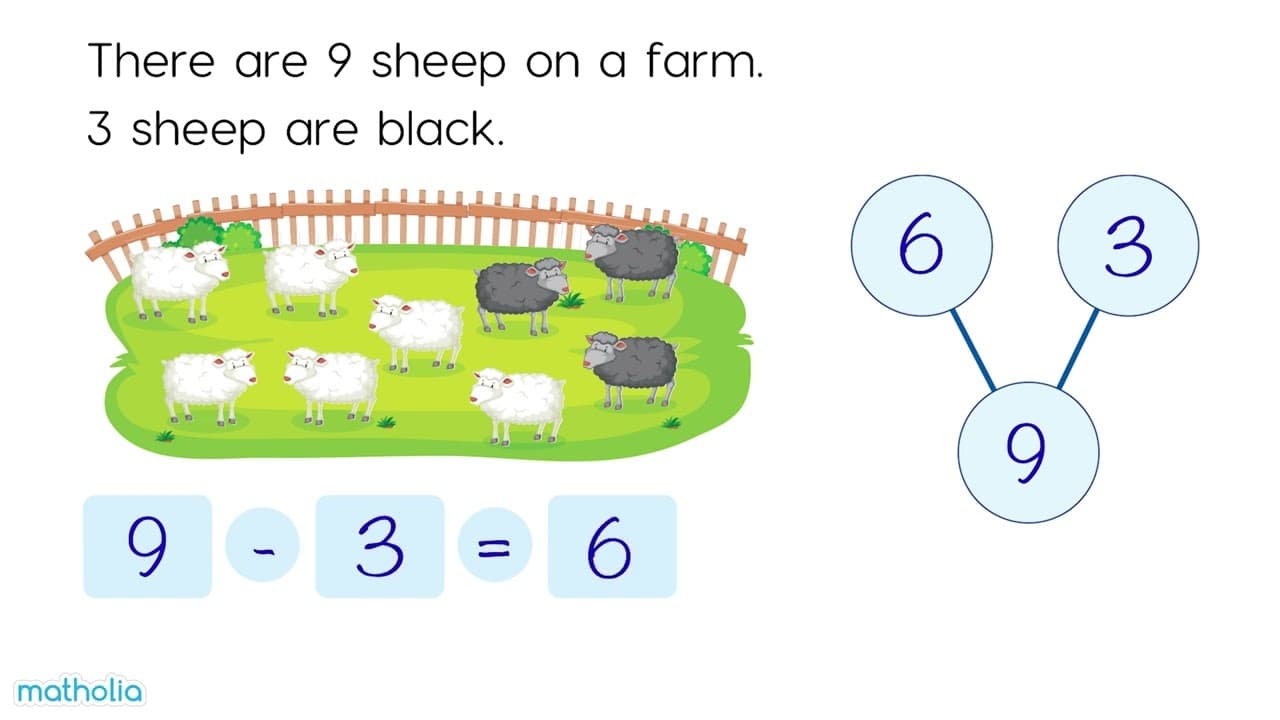
This educational video introduces young learners to the concept of subtraction through simple, visual word problems. Using engaging animations, the video presents two distinct scenarios: a farm setting with sheep and a playful scene with bubbles. In each story, the narrator guides students through the process of identifying the total number, recognizing the amount being subtracted, and calculating the remainder using number bonds and subtraction equations. The video explores key mathematical themes including basic subtraction, part-whole relationships (number bonds), and translating word problems into numerical equations. It specifically focuses on single-digit subtraction within the range of 1-10, making it highly accessible for early numeracy development. The use of the phrase "take" alongside the minus symbol helps bridge the gap between spoken language and mathematical notation. For educators, this resource serves as an excellent visual aid to reinforce subtraction skills. It demonstrates how to visualize a math problem using concrete objects before moving to abstract numbers. Teachers can use this video to model how to extract relevant information from a story problem, how to use number bonds as a solving strategy, and how to write the corresponding subtraction sentence. It is particularly effective for visual learners and for introducing the concept of "taking away."

MatholiaChannelMatholiaChannel

1min 1s

Finding the Missing Number to Make 10 with Bananas

Finding the Missing Number to Make 10 with Bananas

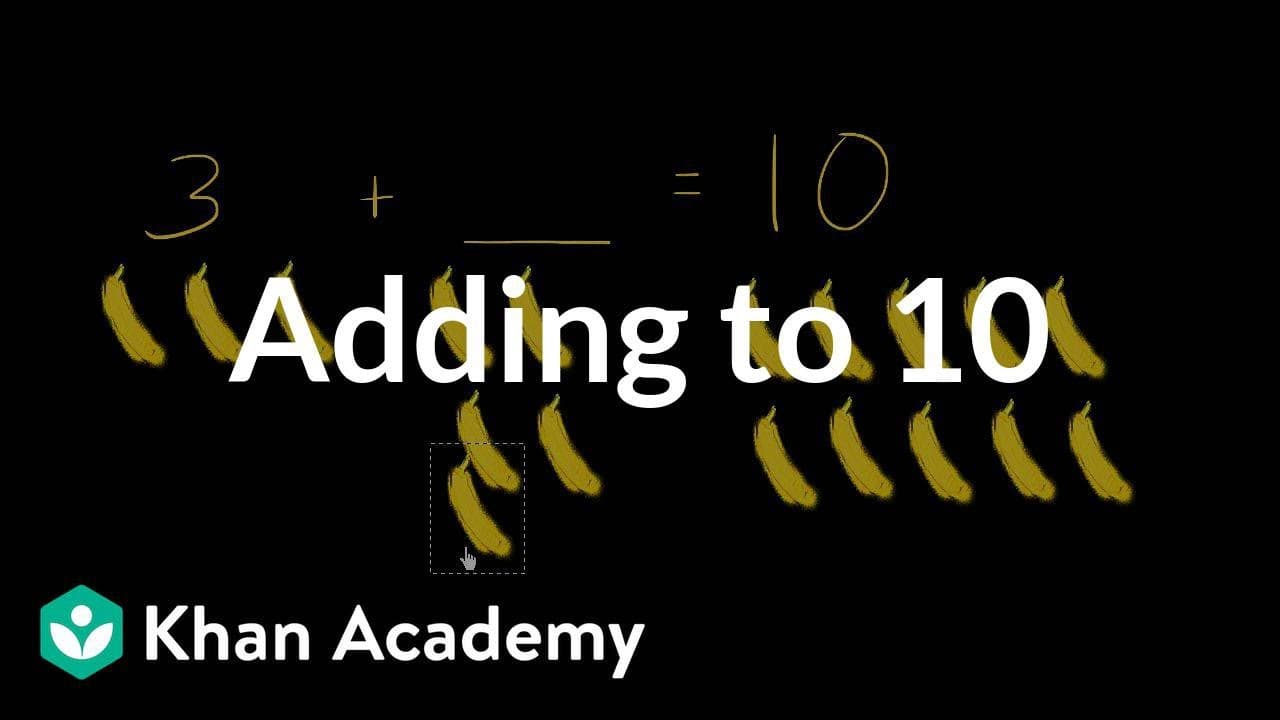
This educational math video demonstrates how to solve a missing addend problem using concrete visual aids. Specifically, it tackles the equation "3 + _ = 10" by using drawings of bananas to represent the numbers. The narrator guides viewers through a "counting on" strategy, starting with the initial three bananas and drawing additional ones one-by-one until the total reaches ten. The video explores key themes of addition, equality, and the relationship between numbers that sum to ten (often called "friends of ten"). It visually distinguishes between the starting quantity and the added quantity, helping students understand that the missing number represents only the items added to reach the total, not the total itself. For educators, this video is an excellent tool for introducing or reinforcing algebraic thinking in early elementary grades. It bridges the gap between concrete counting and abstract equations. Teachers can use it to model how to use manipulatives to solve for unknown numbers, validating strategies like counting on or using drawing to solve math problems.

Khan AcademyKhan Academy

2mins

Deciding When to Add or Subtract Using Fruit

Deciding When to Add or Subtract Using Fruit

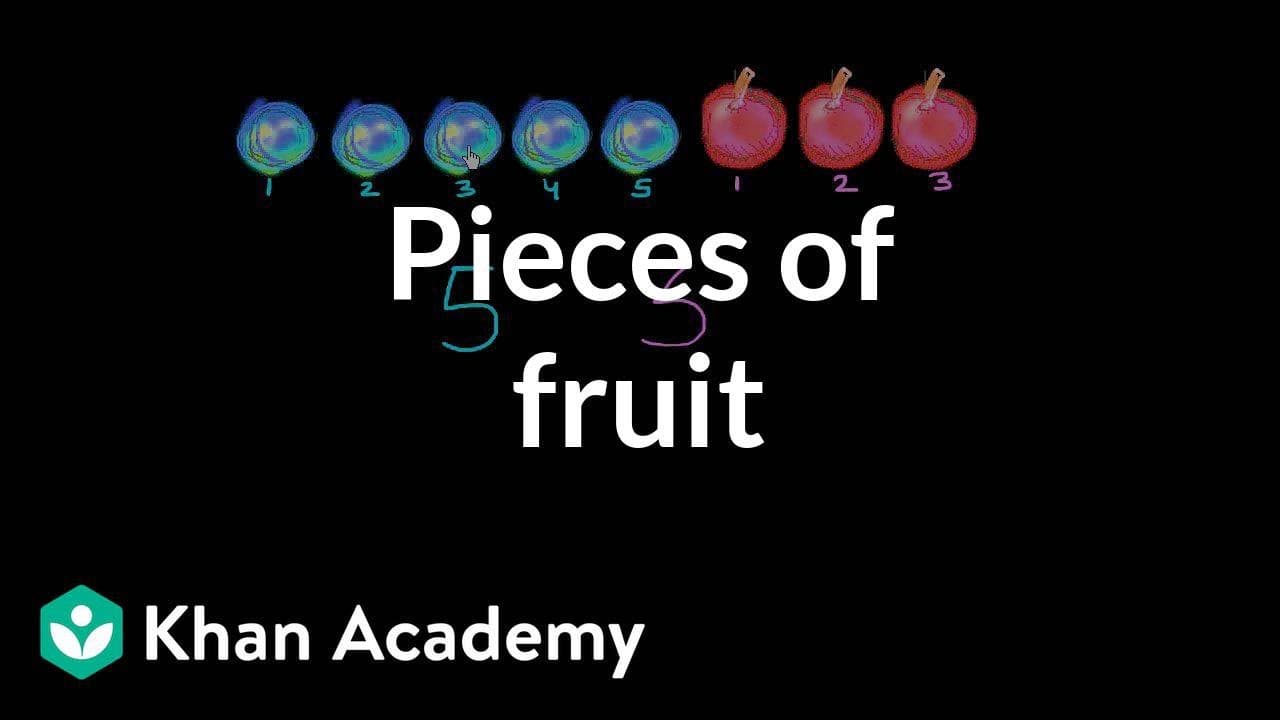
This video explores the fundamental difference between addition and subtraction through a simple, visual example involving fruit. The narrator presents a scenario with five blueberries and three cherries, challenging viewers to determine whether they need to add or subtract to find the "total number of fruit." The video clearly distinguishes between the two operations by visually mapping them to physical actions—combining sets versus taking items away. Key themes include counting objects, understanding mathematical symbols (+ and -), and interpreting word problem vocabulary. The video visually demonstrates that addition is used for combining distinct groups to find a larger total sum (5 + 3 = 8), while subtraction is modeled as "taking away" or removing items from a starting group (5 - 3 = 2). This side-by-side comparison helps clarify when to apply each operation. For educators, this resource is an excellent tool for introducing early arithmetic concepts and problem-solving strategies. It helps students transition from concrete counting to abstract equations by explicitly visualizing the "why" behind the choice of operation. The clear comparison between "getting more" (addition) and "eating/taking away" (subtraction) provides a strong mental model for young learners beginning to solve one-step word problems.

Khan AcademyKhan Academy

2mins 17s

How to Read and Interpret a Picture Graph

How to Read and Interpret a Picture Graph

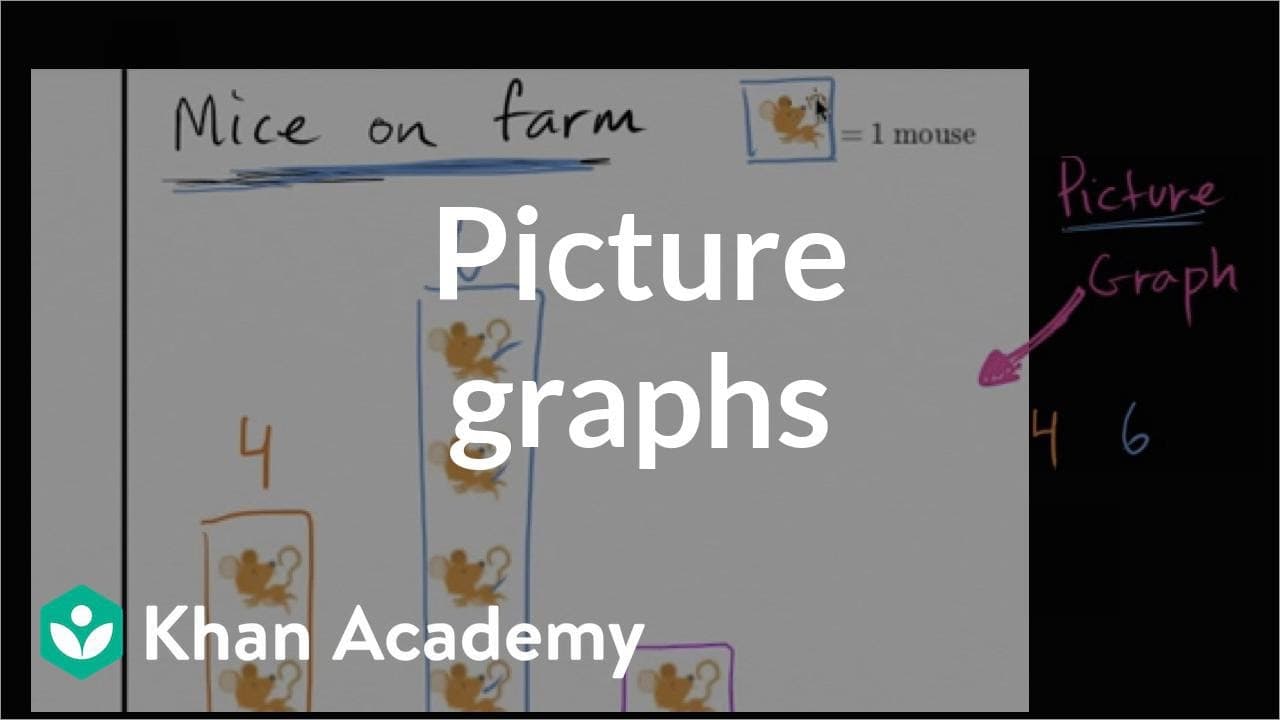
This educational video provides a clear, step-by-step introduction to reading and interpreting picture graphs (also known as pictographs). Using a farm-themed example, the narrator guides viewers through the essential components of a graph, including the title, axis labels, and most importantly, the key or legend. The video demonstrates how to count symbols in different categories to gather data and how to perform basic addition to interpret that data. The content focuses on data representation and analysis appropriate for early elementary students. It explores themes of counting, sorting, and analyzing information visually. The video specifically demonstrates how to translate visual icons into numerical values (e.g., counting mouse icons to determine there are 6 mice in the barn) and how to synthesize this information to answer questions about totals and specific categories. For teachers, this video serves as an excellent introduction or review of graphing concepts. It models the thinking process required to interpret data, verbally articulating questions like 'How many mice are in the barn?' and 'What is the total number of mice?' It can be used to spark learning by having students follow along and count before the narrator reveals the answers, or as a model for students to create their own picture graphs based on classroom data.

Khan AcademyKhan Academy

2mins 47s

Learning Number Bonds: Adding Parts to Make a Whole

Learning Number Bonds: Adding Parts to Make a Whole

This educational video introduces young learners to the mathematical concept of number bonds, a key foundation for understanding addition and subtraction. Through a series of clear, colorful visual demonstrations, the video illustrates how two separate groups (parts) can be combined to form a total number (the whole). It progresses from using static manipulatives like linking cubes to animated scenarios featuring ants and alligators to keep students engaged while reinforcing the math concepts. The content explores several key themes including counting, decomposing numbers, the commemorative property of addition, and the concept of zero. It specifically uses the language of "parts" and "whole" to help students verbalize their mathematical thinking. The video covers sums up to 9, demonstrating various combinations such as 2+1, 3+3, 2+7, and importantly, 7+0, helping to clarify that adding zero results in the same number. For educators, this video is an excellent tool for introducing or reinforcing early arithmetic skills in Kindergarten and 1st Grade classrooms. It bridges concrete representation (cubes/animals) with abstract notation (number bond diagrams with digits). Teachers can use this video to launch lessons on addition, as a visual anchor for explaining the "part-part-whole" relationship, or as a model for students to create their own math stories using physical manipulatives.
MatholiaChannelMatholiaChannel

2mins 10s

Materials

Word Spelling Practice Worksheet

Word Spelling Practice Worksheet

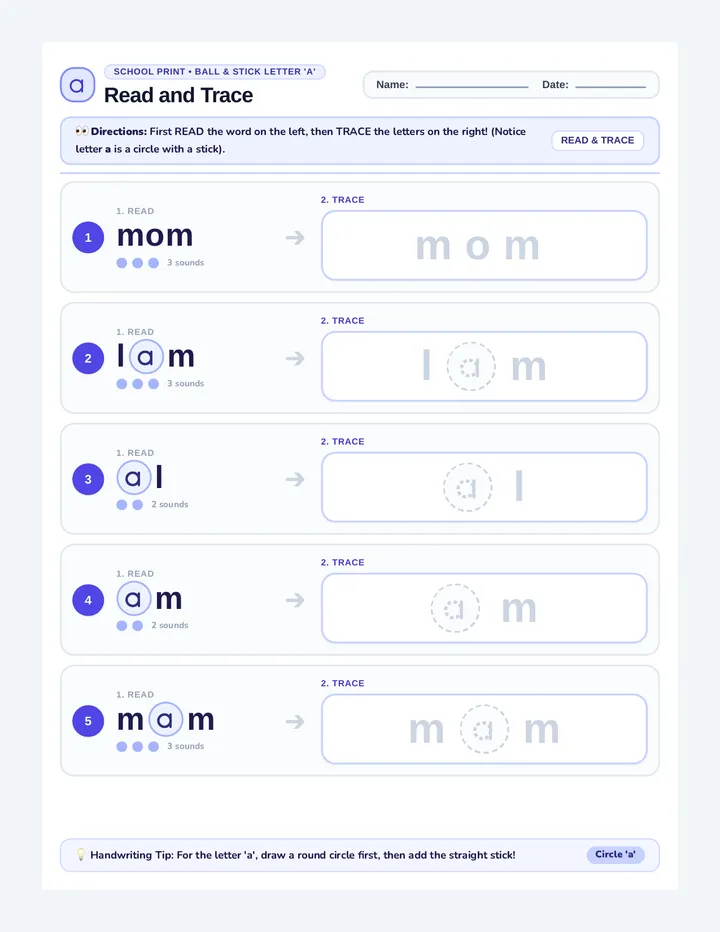
A large-print special education phonics worksheet for reading and tracing mom, lam, al, am, and mam with clean open tracing boxes (no triple lines), school circle-style letter a, and uniform sound dots with no yellow dots.

M

michelle.bernius

Number Safari Tracing Packet

Number Safari Tracing Packet

A comprehensive 1-20 number tracing and writing packet with a safari theme. Each number includes a visual counting aid (emojis), three dashed tracing examples, and two blank spaces for independent writing.

V

victoria.lesniak

Math Safari Pretest Worksheet

Math Safari Pretest Worksheet

A student-friendly, 15-problem first grade math pre-test covering addition to 10, subtraction from 10, ten-frame and place value visuals, and one-step word problems within 10 with extra-large print and expanded workspaces.

M

mattiea

Number Writing Warmup Templates

Number Writing Warmup Templates

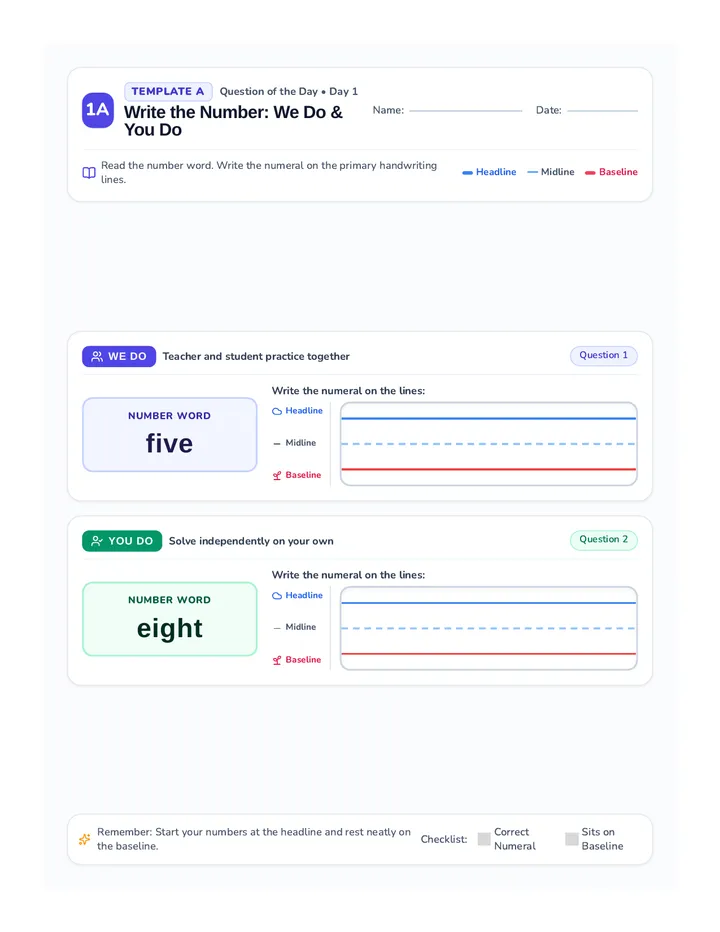
A 5-page Question of the Day math warmup collection with enlarged primary handwriting lines. Includes two Day 1 templates (guided 'We Do' and independent 'You Do'), Page 3 with a single writing line for 'six', Page 4 dedicated to the number 3 ('three') featuring exclusively the word form and handwriting lines, and Page 5 featuring the single-line format for 'ten'.

V

victoria.lesniak

Quantity Quest Quiz

Quantity Quest Quiz

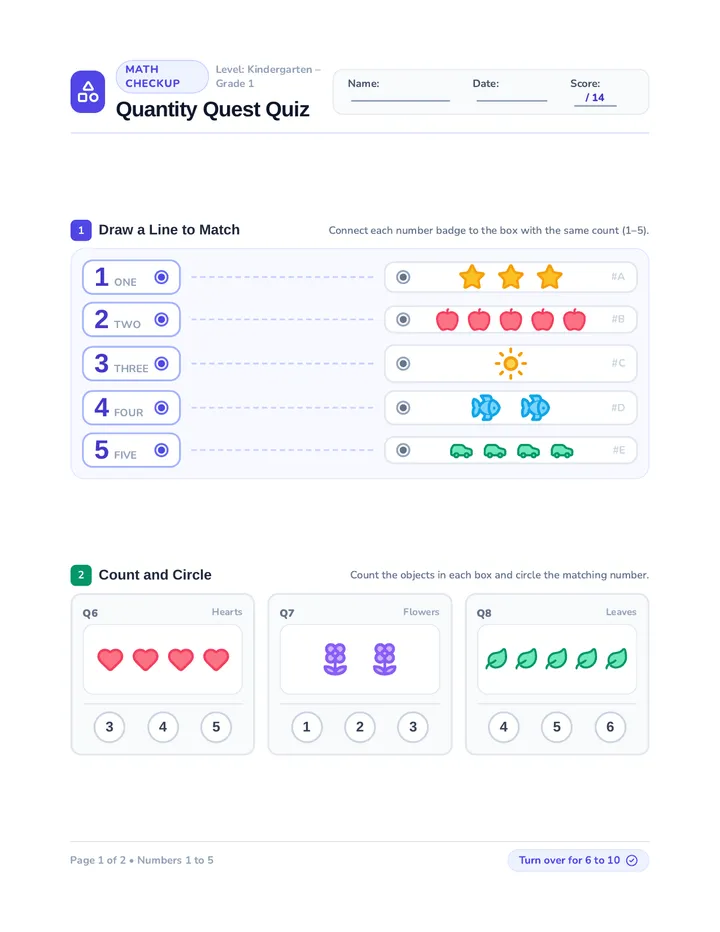
A two-page printable cut-and-paste math quiz assessing number-to-quantity matching for numbers 1 to 10. Page 1 serves as the student quiz board with designated pasting stations, and Page 2 provides large scrambled cut-out picture cards with scissor guides.

L

lueshen

Fabrique des Nombres Fiche d'Exercices

Fabrique des Nombres Fiche d'Exercices

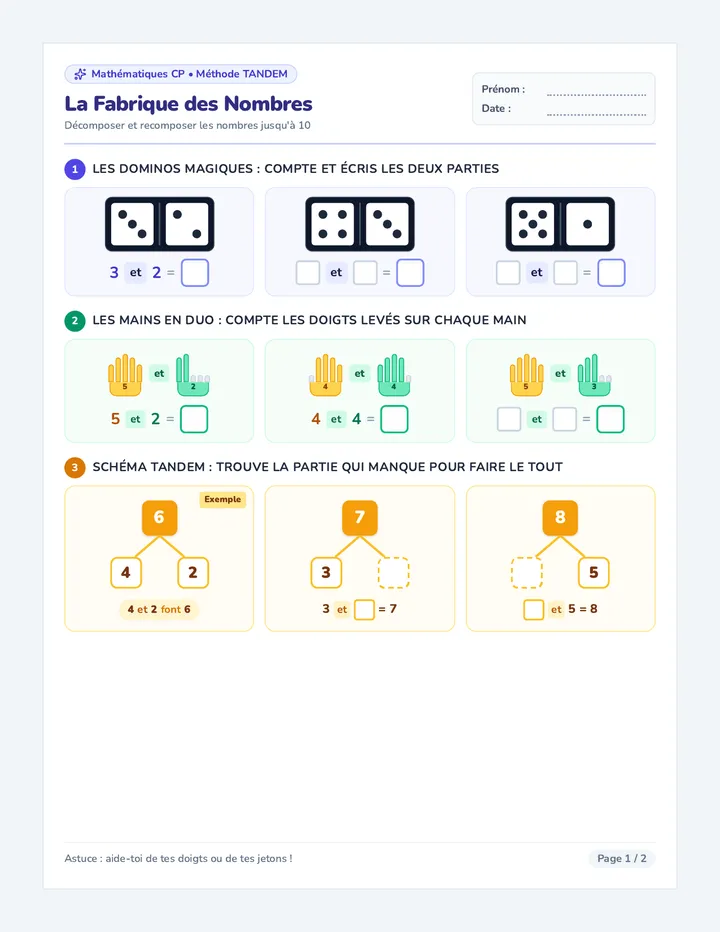
Une fiche d'exercices progressive et visuelle pour les élèves de CP sur la décomposition et la recomposition des nombres jusqu'à 10 selon la méthode TANDEM (sans signe +, avec la formulation « et »), enrichie d'un exercice d'apprentissage sur la maison des nombres 4 et 5 avec repères visuels par étage.

F

fab

Sequences

Number Gym Slides

Number Gym Circuit

A four-week intensive math intervention sequence for Tier 3 students. Each day features a 3-part drill targeting number identification, formation, and sequential counting. Weeks 1-2 focus on numbers 0-30; Weeks 3-4 expand to numbers 0-40.

NT

Nicole Thomson

22
Academy Final Mission Assessment

Pond Patrol Academy

A comprehensive math sequence designed for early learners to master counting from 1 to 20. Using a engaging pond theme, students progress from single-digit counting to understanding teen numbers and representing larger quantities.

CN

Coleman Newell

27
Beginning Sounds Worksheet

Word Wizards

An engaging, high-impact 4-week literacy skills program for young learners. Features highly visual, fun printable worksheets focusing on beginning letter sounds, CVC phonics blending, sight word reading, and short stories.

Z

ziad

18
Math Sprint 1 Worksheet

Foundational Math Tracking

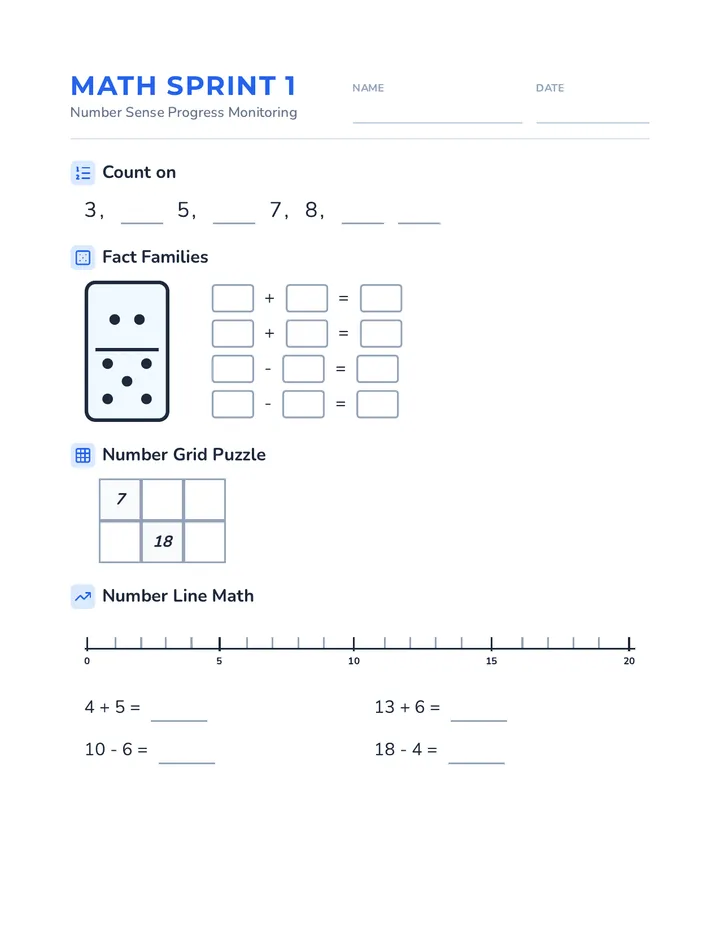
A comprehensive series of elementary math progress monitoring resources designed to track student growth in foundational arithmetic and number sense.

T

torrie.smith

24
Critter Count Teacher Guide

Safari Math Explorers

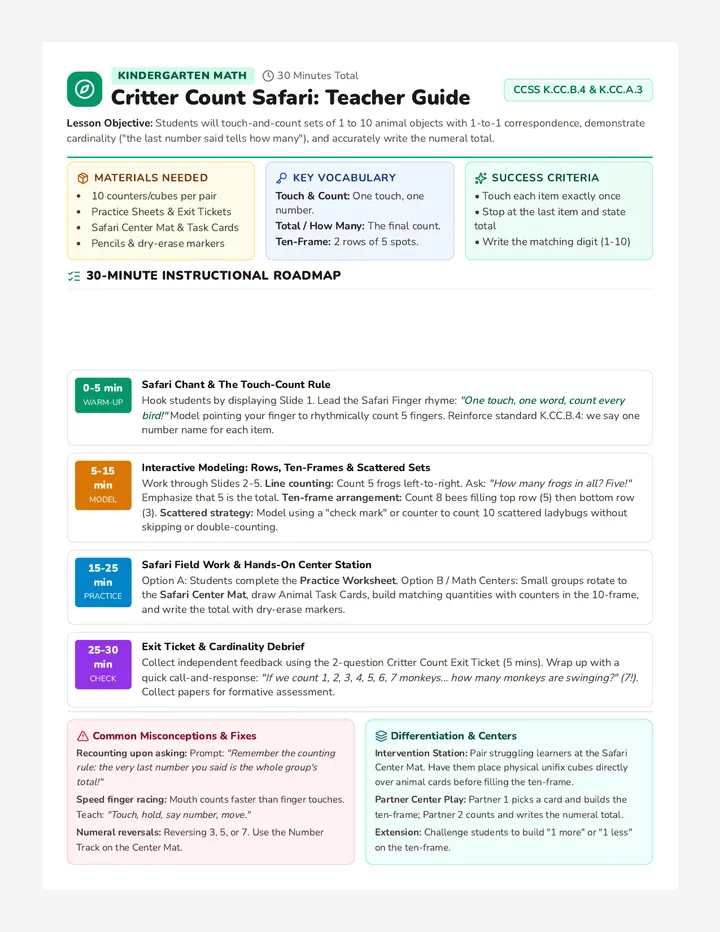
A hands-on Kindergarten mathematics sequence covering one-to-one counting, cardinality, numeral handwriting 1 to 10, and representing quantities with concrete circle sets and ten-frames.

V

victoria.lesniak

21
Monday Space Cadet Worksheet

Space Cadet Math Series

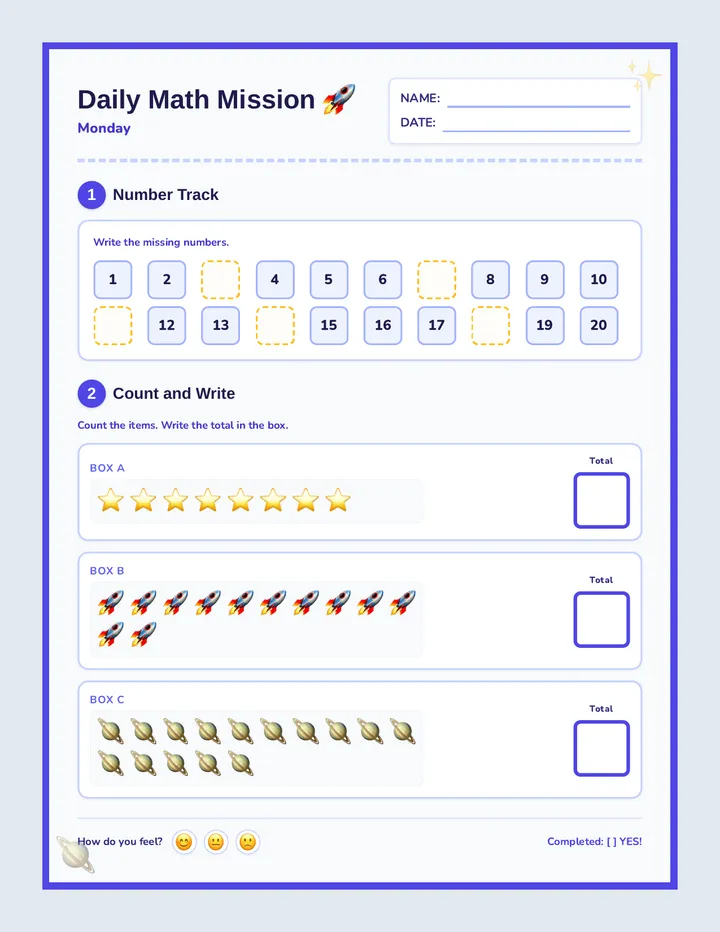
A two-week sequence of daily math warm-ups for first-grade students focused on numbers up to 20. Each daily worksheet features a number track with missing numbers to write in and three themed counting challenges with student self-assessment.

U

27

Lessons

Math Radar Intake Slides

Math Skill Radar

A comprehensive baseline math diagnostic and intervention suite for special education spanning early numeracy through Grade 4. Features complete tiered intake assessments, practice packets, manipulative work mats, and master scoring keys for both 1st Grade Base Ten (1.NBT) and 2nd Grade Base Ten (2.NBT), alongside K-1 early number sense tools.

S

Sara

20
Ones Regrouping Diagram Practice

Regrouping Addition Adventures

A comprehensive multi-digit addition unit focusing on place-value regrouping with visual models. Includes structured practice packets for regrouping in the tens and hundreds places with dual algorithm and diagram workspaces.

TG

Tyonna Gunter

12
Pond Animals Worksheet

Counting Quest

A foundational math lesson focused on one-to-one correspondence for numbers 1-10, using visual number lines, physical counting, and finger representation.

CN

Coleman Newell

23
Assessment 1 Worksheet

Number Base Camp

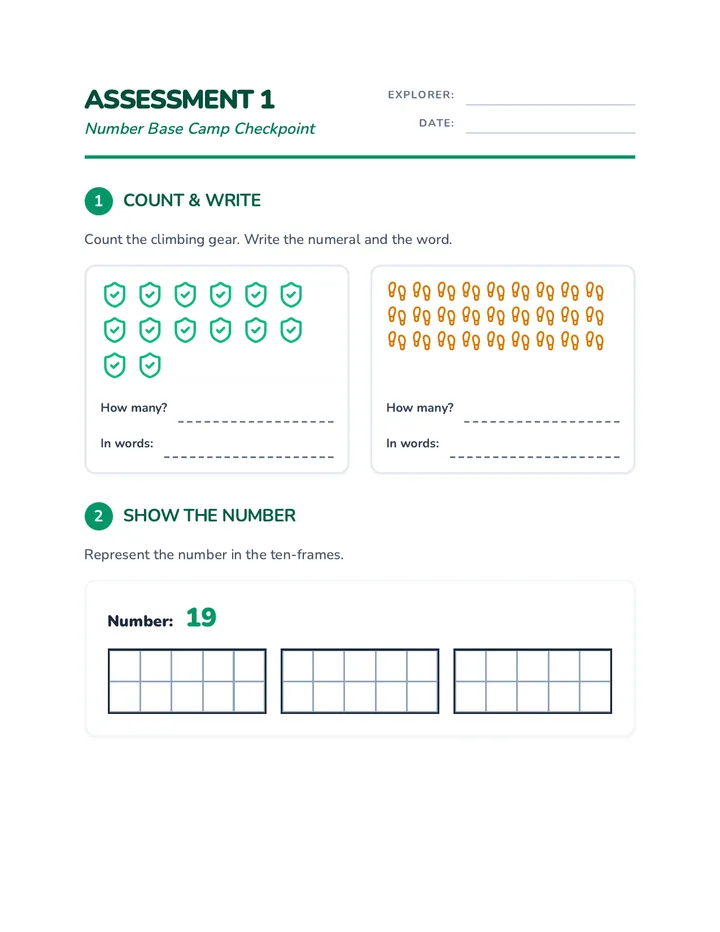
A comprehensive lesson focused on mastering numbers up to 30, covering counting, recognizing, representing, naming, and ordering quantities through hands-on practice and assessment.

CN

Coleman Newell

16
Block Busting Slides

Block Busting

A Kindergarten math lesson focusing on K.CC.4 where students count and interact with quantities by circling and crossing out specific amounts of shapes. The lesson follows a gradual release model: I Do, We Do, You Do.

V

victoria.lesniak

3
Numeral Formation Reference Sheet

Numeral Builders

A Grade 1 foundational toolkit for mastering numeral formation from 1 to 20 aligned with Eureka Math. Features minimal-ink printable reference sheets, student tracing booklets, model flashcards with filled 5-group ten-frames, and companion hands-on flashcards with blank ten-frames for student practice.

R

rnshaheen

4