Lenny.com
Explore
Create
ActivitiesNewMathEnglish Language ArtsScience & EngineeringSocial StudiesGlobal LanguagesHealth & Physical EducationSpecial EducationCounseling & Life SkillsArts & CreativityESL
Lenny.com
Lenny.com
Explore
Create
ActivitiesNewMathEnglish Language ArtsScience & EngineeringSocial StudiesGlobal LanguagesHealth & Physical EducationSpecial EducationCounseling & Life SkillsArts & CreativityESL
Lenny.com
Lenny.com

Solutions

Lenny for EducatorsLenny for SchoolsLenny for Districts

Product

ExploreSign inCreateSupportAbout

Resources

Getting startedMTSS Acceleration Program

© 2026 Lenny Learning Inc.

TermsPrivacyAccessibility
LinkedInInstagramX
Lenny

Shapes and Composition

Identification of 2D and 3D shapes alongside their defining attributes like sides, angles, and vertices. Builds spatial reasoning by composing simple shapes into complex figures and decomposing larger objects into constituent parts.

MathNumbers & CountingCounting ObjectsNumber NamesComparing NumbersNumber OperationsCounting SequenceNumbers 0-10Place Value Understanding and SystemAdd and Subtract Within 20Addition and Subtraction ConceptsAddition and Subtraction EquationsAddition and Subtraction ProblemsFoundations for MultiplicationMultiplication and Division PropertiesMultiply and Divide Within 100Multiplication and Division ProblemsFactors and MultiplesProperties of OperationsPatterns and RelationshipsGenerate and Analyze PatternsMulti-Digit ArithmeticPlace Value OperationsMulti-Digit and Decimal OperationsNumerical ExpressionsFour Operations and PatternsFour Operations Problem SolvingMeasurement & DataMeasurable AttributesMeasuring LengthsMeasure and Estimate Lengths in Standard UnitsRelate Addition and Subtraction to LengthClassifying and Counting ObjectsTime and MoneyArea Concepts and MeasurementPerimeter and Area MeasuresAngle Concepts and MeasurementTime, Volume, and MassMeasurement Unit ConversionsGeometryIdentifying ShapesShapes and AttributesShape Attributes and ReasoningShapes and CompositionClassifying 2D FiguresGeometric Figures and RelationshipsLines, Angles, and ShapesAngle, Area, and VolumeGeometric MeasurementVolume of 3D ShapesCoordinate Plane ApplicationsTransformations in the PlaneCongruence and SimilarityUnderstand congruence in terms of rigid motionsSimilarity and TransformationsProve Theorems Involving SimilarityPythagorean TheoremTrigonometry for General TrianglesMake Geometric ConstructionsProve Geometric TheoremsTheorems About CirclesFind Arc Lengths And Areas of Sectors of CirclesVolume FormulasRelationships Between Two-Dimensional and Three-Dimensional ObjectsProve Simple Geometric Theorems AlgebraicallyTranslate Between Geometric Description and Equation for Conic SectionApply Geometric Concepts in Modeling SituationsFractions & DecimalsFractions as NumbersBuilding FractionsFraction Equivalence and OrderingAdding and Subtracting FractionsMultiplying and Dividing FractionsDividing FractionsDecimal FractionsMulti-Digit Computation and FactorsAdd, Subtract, Multiply, and Divide Rational NumbersRational Number SystemIrrational Numbers and ApproximationsRatiosRatios and ProportionsProportional RelationshipsUnit RateAlgebraAlgebraic ExpressionsGenerate Equivalent ExpressionsQuantitative RelationshipsProportional Relationships and Linear EquationsEquations and InequalitiesEquation Solving and ReasoningLinear Equations and SystemsGraph Equations and InequalitiesSystems of EquationsReal-World Algebraic ProblemsQuantitative Reasoning with UnitsExpression StructureEquivalent Expression FormsRadicals and Integer ExponentsRational ExponentsRational and Irrational NumbersPolynomial OperationsPolynomial IdentitiesPolynomial Zeros and FactorsRational ExpressionsComplex Number OperationsComplex Numbers in PolynomialsComplex Numbers on PlaneStatistics & ProbabilityRepresent and Interpret DataData DistributionsStatistical VariabilityProbability ModelsCompound Event ProbabilitiesStatistical SamplingInterpret Categorical and Quantitative DataBivariate Data PatternsInterpret Linear ModelsComparing Two PopulationsRandom Processes in StatisticsIndependence and Conditional ProbabilityExpected ValuesProbability-Based Decision MakingStatistical Inference and ConclusionsFunctionsFunction Concepts and NotationDefine and Compare FunctionsInterpret Functions in ContextAnalyze Function RepresentationsModel Relationships with FunctionsIdentify Linear vs Exponential GrowthDistinguish Between Function TypesCompare Growth RatesInterpret Function ExpressionsBuild Functions from RelationshipsConstruct and Model FunctionsTransform and Combine FunctionsModel Comparison and SelectionSolve Exponential EquationsTrigonometryTrigonometric Ratios Involving Right TrianglesTrigonometric Functions and Unit CircleModel with Trigonometric FunctionsTrigonometric IdentitiesVectors & MatricesIntroduction to Vectors and MatricesVector QuantitiesVector OperationsMatrix OperationsCalculusLimits and ContinuityDerivative Concepts and NotationDerivative Rules and TechniquesApplications of DerivativesOptimization ProblemsRelated RatesCurve Sketching and AnalysisIntegration Concepts and NotationAntiderivatives and Indefinite IntegralsDefinite Integrals and AreaFundamental Theorem of CalculusIntegration TechniquesApplications of IntegrationDifferential EquationsSequences and SeriesParametric and Polar FunctionsVector-Valued Functions

Videos

Identifying and Describing Basic 2D Shapes

Identifying and Describing Basic 2D Shapes

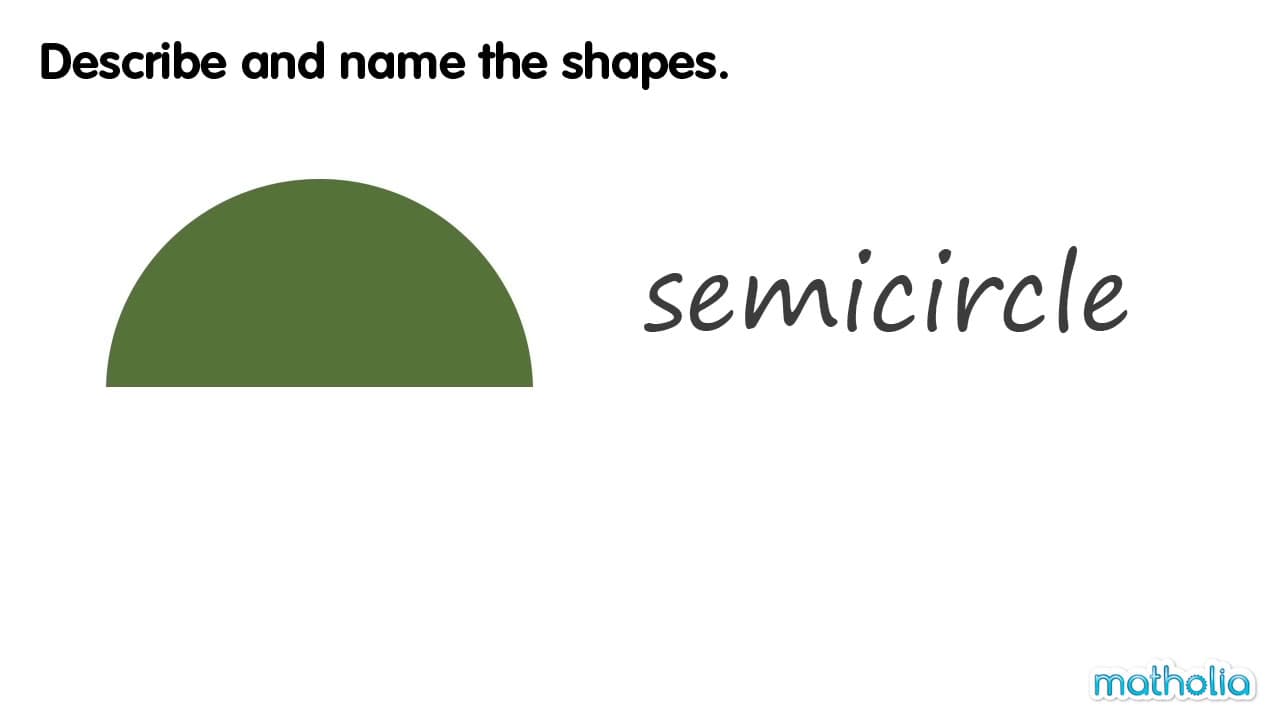
This educational video introduces young learners to the fundamental properties of basic two-dimensional shapes. Through clear narration and simple animations, the video defines a square, rectangle, and triangle by counting their specific attributes—corners and sides. It then explores circular shapes, defining a standard circle before visually demonstrating how dividing a circle creates a semicircle, and dividing that further creates a quarter circle. The content focuses on the geometric language necessary for early math proficiency, specifically the terms "sides," "corners," and the names of the shapes themselves. It highlights the critical distinction between squares and rectangles based on side length equality, a common point of confusion for early learners. The video also subtly introduces fractional thinking by showing the part-whole relationship between circles, semicircles, and quarter circles. Teachers can use this video as a core instructional tool for introducing geometry units in early elementary classrooms. Its step-by-step pacing allows for interactive viewing where students can count along with the narrator. The visual cues—highlighting specific corners and sides—make it an excellent resource for helping students visualize abstract geometric definitions, moving beyond simple recognition to analytical description.

MatholiaChannelMatholiaChannel

1min 59s

What Makes a Shape a Rectangle?

What Makes a Shape a Rectangle?

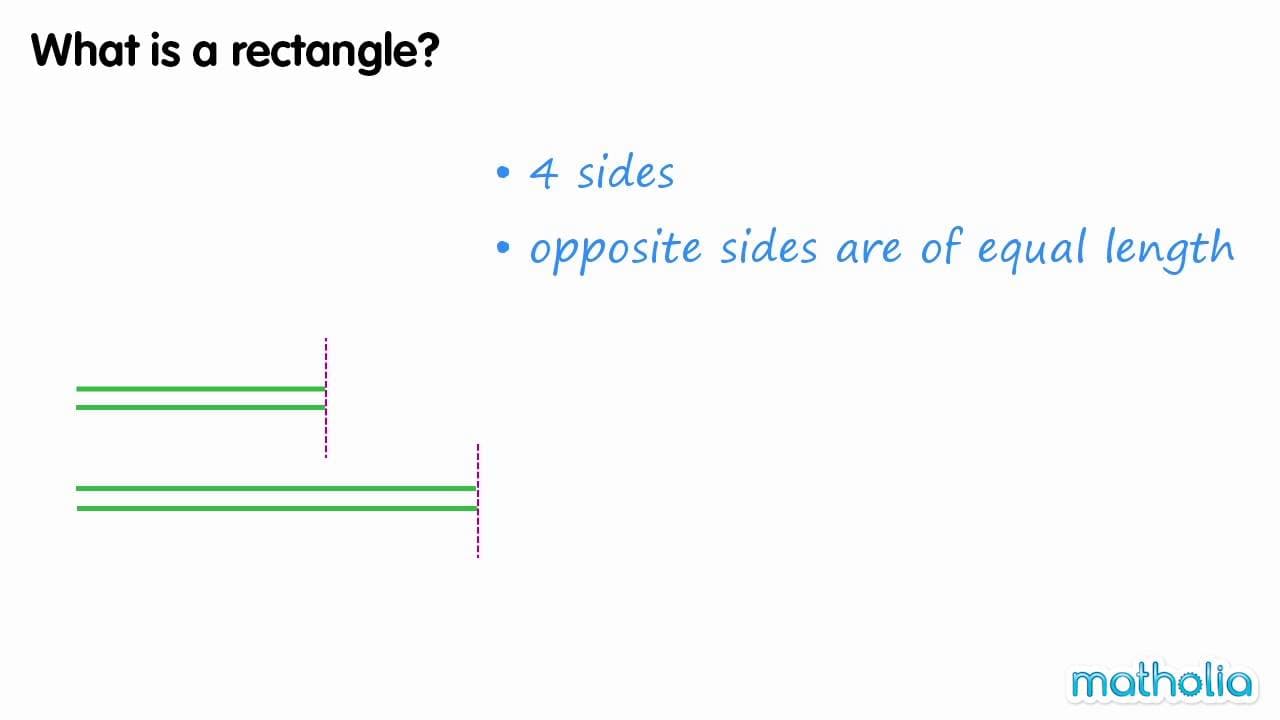
This concise educational video introduces the defining geometric characteristics of a rectangle. Through clear animations and step-by-step narration, viewers learn the four specific rules that make a shape a rectangle: having four sides, opposite sides of equal length, opposite sides being parallel, and the presence of four right angles.

MatholiaChannelMatholiaChannel

53s

Introduction to Basic Fractions: Equal Parts and Fair Shares

Introduction to Basic Fractions: Equal Parts and Fair Shares

This engaging educational video introduces early elementary students to the mathematical concept of fractions through the familiar social concept of "fair sharing." Hosted by Kylie, the video bridges the gap between social-emotional learning and mathematics by defining sharing as dividing something into parts for others. It illustrates various types of sharing—from taking turns with toys to splitting a sandwich—before focusing on the mathematical necessity of "equal parts" to make a share truly "fair." The video systematically explores three key fractional concepts: sharing a set of discrete objects (jellybeans) and sharing a continuous whole (a cake). It visually demonstrates the difference between arbitrary cuts and equal partitions, introducing specific vocabulary including "halves" (1/2), "fourths" or "quarters" (1/4), and "tenths" (1/10). The visual of a "sprinkle cake" being cut incorrectly versus correctly serves as a powerful model for understanding that fractions must be equal in size. For teachers, this video provides an ideal entry point for a fractions unit. It directly addresses the common misconception that any piece of a whole is a fraction, clarifying that pieces must be identical in size to be named mathematically (e.g., halves). It offers clear visual models for partitioning rectangles and sets, making it a versatile tool for lessons on geometry, division basics, and introductory fractions in 1st and 2nd grade classrooms.

Miacademy & MiaPrep Learning ChannelMiacademy & MiaPrep Learning Channel

6mins 9s

From Polygons to 3D Shapes: A Visual Guide

From Polygons to 3D Shapes: A Visual Guide

This educational video provides a clear and concise progression from basic two-dimensional polygons to three-dimensional solids. The presenter begins by reviewing quadrilaterals and introducing 5-sided (pentagon) and 6-sided (hexagon) shapes, briefly mentioning polygons with even more sides. The lesson then shifts focus to curved shapes, defining a circle through the concept of equidistant points from a center. Key themes explored include geometric vocabulary (vertices, edges, faces), the etymology of shape names (penta, hexa), and spatial reasoning. A major focus is the conceptual relationship between dimensions; the narrator encourages viewers to visualize "pulling" 2D shapes out of the whiteboard to create 3D forms, such as extending a square into a cube or a circle into a cylinder. For educators, this video serves as an excellent bridge for students moving from simple shape identification to understanding geometric properties and spatial depth. The visual demonstrations on the whiteboard—particularly the comprehensive summary chart visible at the end—offer a valuable reference for classifying lines, angles, triangles, and solids. It helps students understand not just what shapes are called, but how they are constructed and related to one another.

Miacademy & MiaPrep Learning ChannelMiacademy & MiaPrep Learning Channel

2mins 44s

How to Identify Basic 2D Shapes

How to Identify Basic 2D Shapes

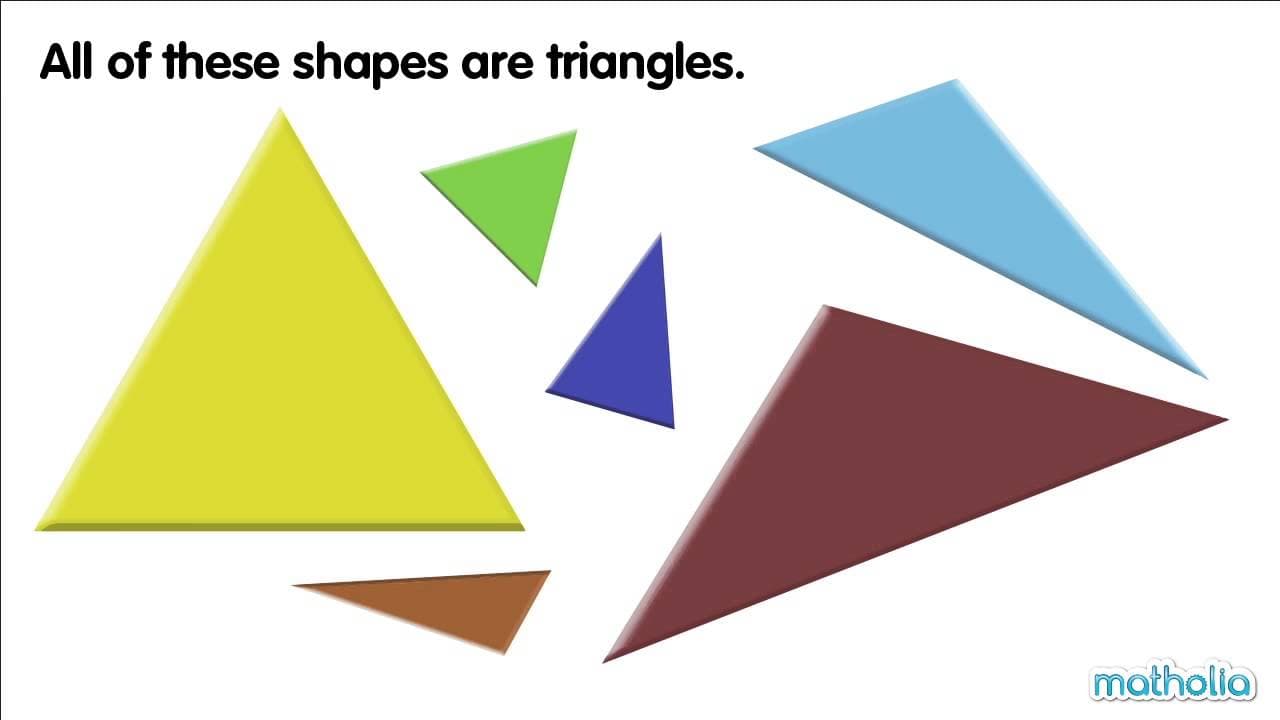
This educational video provides a clear and structured introduction to four fundamental two-dimensional shapes: the square, circle, triangle, and rectangle. Through a repetitive and paced narrative, the video guides young learners in identifying each shape by examining its defining attributes—specifically counting the number of corners and sides. The clear audio and simple visual cues help students connect the visual form with the mathematical properties and the shape's name. The content focuses on early geometry concepts, specifically the identification of 2D shapes and the vocabulary of "sides" and "corners" (vertices). For each shape, the video follows a distinct pattern: identifying the attributes, naming the shape, and then displaying a variety of examples in different colors, sizes, and orientations to reinforce that a shape's identity remains constant regardless of these variables. For educators, this video serves as an excellent foundational tool for Pre-K through 1st-grade mathematics. It allows teachers to pause and count along with the narrator, making it an interactive experience. The segment showing various examples of each shape is particularly useful for preventing the common misconception that shapes must always look a certain way (e.g., that a triangle must always have a flat bottom). The video concludes with a summary screen perfect for a quick formative assessment or review.

MatholiaChannelMatholiaChannel

3mins 17s

Identifying Equal Parts: Halves, Thirds, and Fourths

Identifying Equal Parts: Halves, Thirds, and Fourths

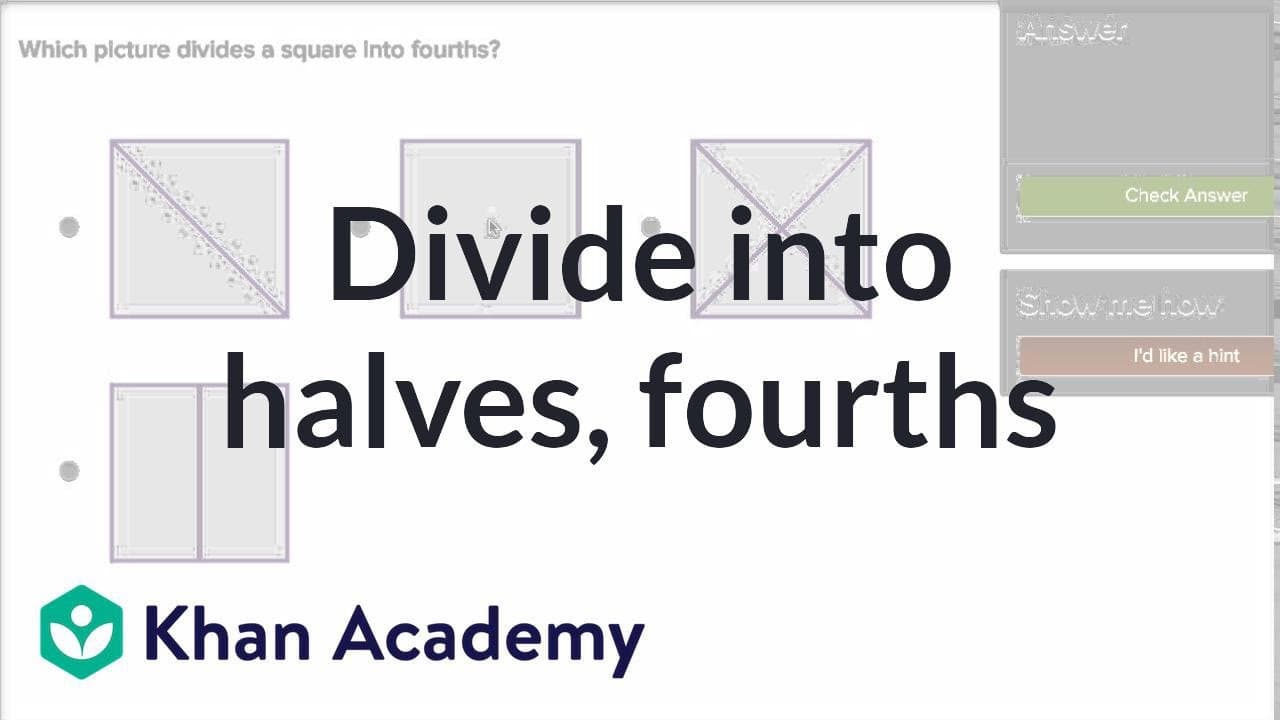
This video serves as an engaging and practical introduction to basic geometry and fractions, specifically focusing on partitioning shapes. Through a series of multiple-choice problems, the narrator guides viewers in identifying which shapes—rectangles, circles, and squares—are correctly divided into halves, thirds, and fourths (quarters). The core concept emphasized throughout is that for a shape to be divided into fractions, the resulting sections must be equal in size or area. The video explores key geometric themes including visual estimation of area, the definition of specific fractional terms (halves, thirds, fourths), and the critical distinction between merely dividing a shape and dividing it into equal shares. By presenting non-examples (shapes divided into unequal parts or the wrong number of parts), the video directly addresses common student misconceptions, such as thinking any two parts constitute a "half." For educators, this resource is an excellent tool for early elementary math instruction, particularly for 1st and 2nd grade. It provides clear visual models that can be used to introduce the concept of equal shares before moving to numerical fractions. Teachers can use this video to model mathematical thinking, asking students to justify why certain options are incorrect before revealing the answer, thus promoting critical thinking and mathematical vocabulary usage.
Khan AcademyKhan Academy

2mins 24s

Materials

Weekly Math Spiral Packet

Weekly Math Spiral Packet

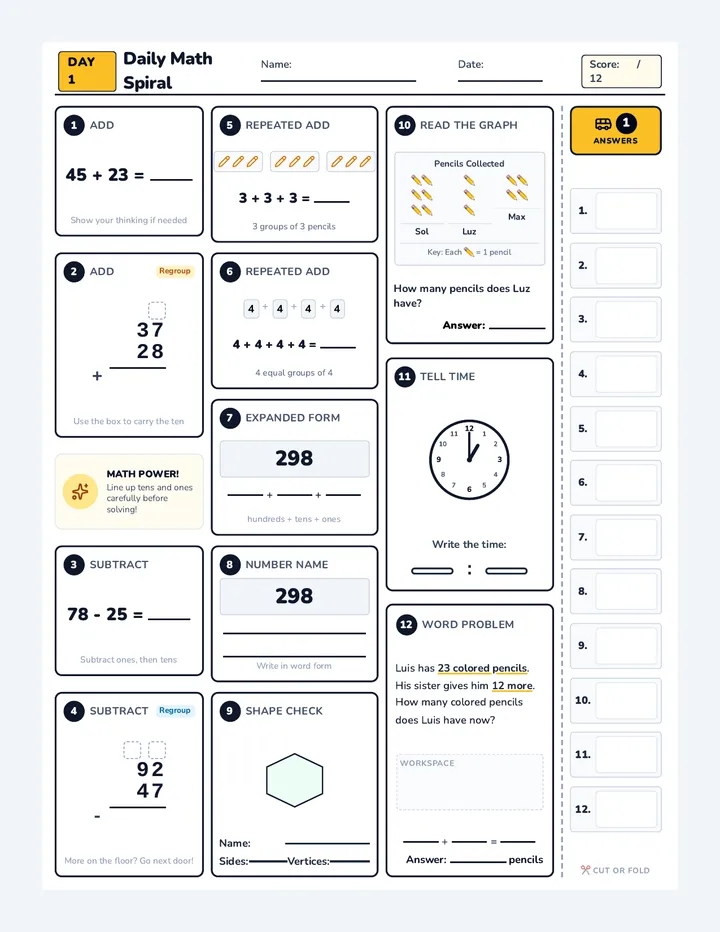
A 5-day printable weekly math spiral review packet (Monday to Friday) covering 2-digit addition and subtraction with regrouping, repeated addition, 3-digit expanded form, number names, 2D/3D geometry, graphs, analog time, and word problems, complete with a quick-grader answer strip.

DL

Damaris Lopez Valentin

Polygon Patrol Worksheet

Polygon Patrol Worksheet

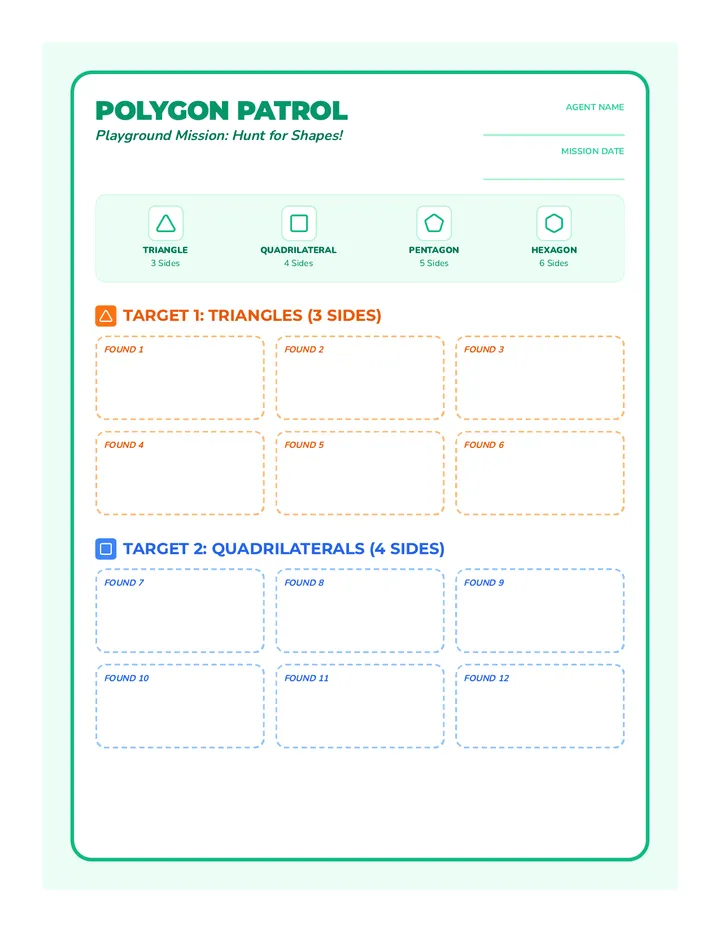
A double-sided polygon scavenger hunt worksheet for 3rd graders. It features categories for triangles, quadrilaterals, pentagons, and hexagons with drawing/writing slots for up to 24 objects found on a playground. Includes reflection questions and a visual shape key. Forced 2-page layout.

BP

Beth Phillips

Composite Area Exit Ticket

Composite Area Exit Ticket

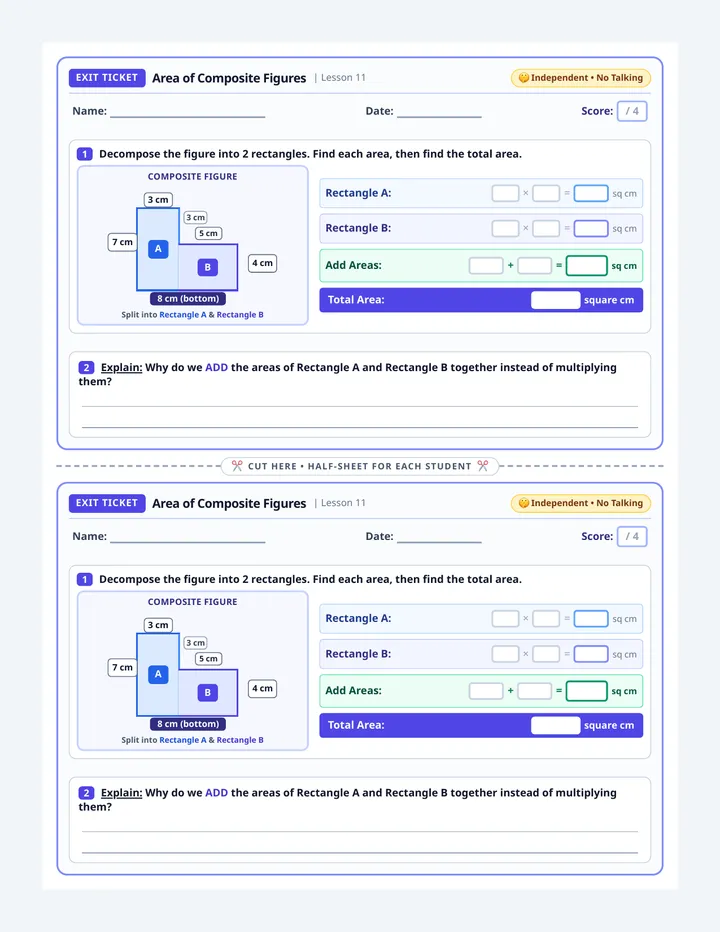
Print-ready two-per-page exit ticket for 3rd Grade Unit 3 Lesson 11 on finding the area of composite figures. Built with 100% pure HTML and CSS divs (no SVGs) to ensure guaranteed rendering across all browsers and canvas viewports. Displays a clear L-shaped composite figure with labeled dimensions, decomposition into rectangles A and B, structured calculation steps, and a conceptual explanation question.

SM

Samantha McBath

Math Master Anchor Charts

Math Master Anchor Charts

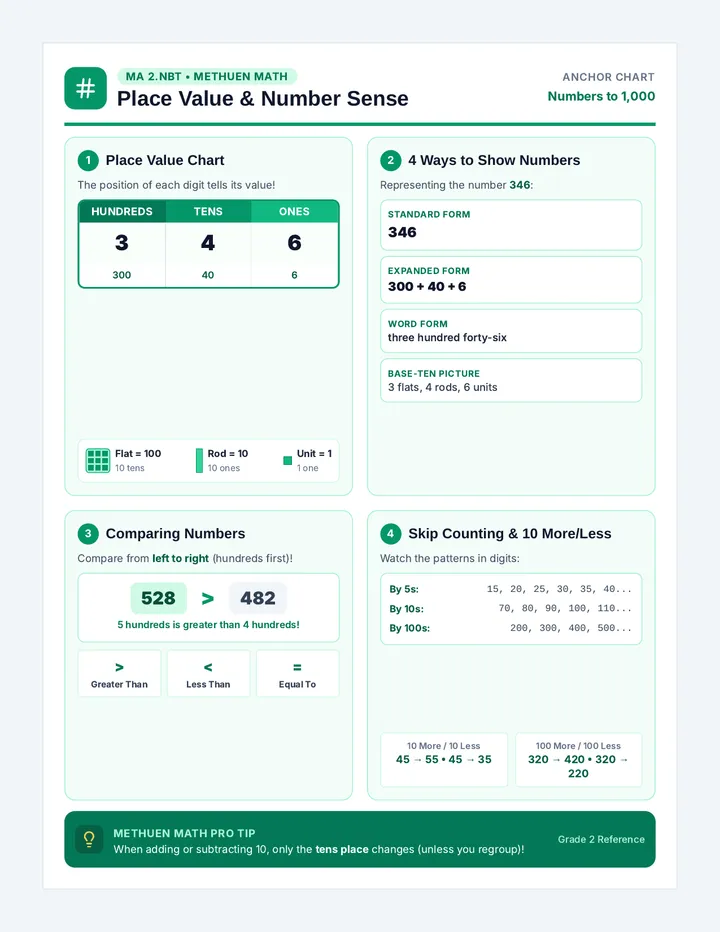
A comprehensive 4-page Grade 2 Math Anchor Chart reference collection aligned to Massachusetts standards for Methuen Public Schools, covering Number Sense (2.NBT), Operations (2.OA), Measurement and Data (2.MD), and Geometry and Fractions (2.G) for digital Google Classroom use and classroom printing.

S

snpierce

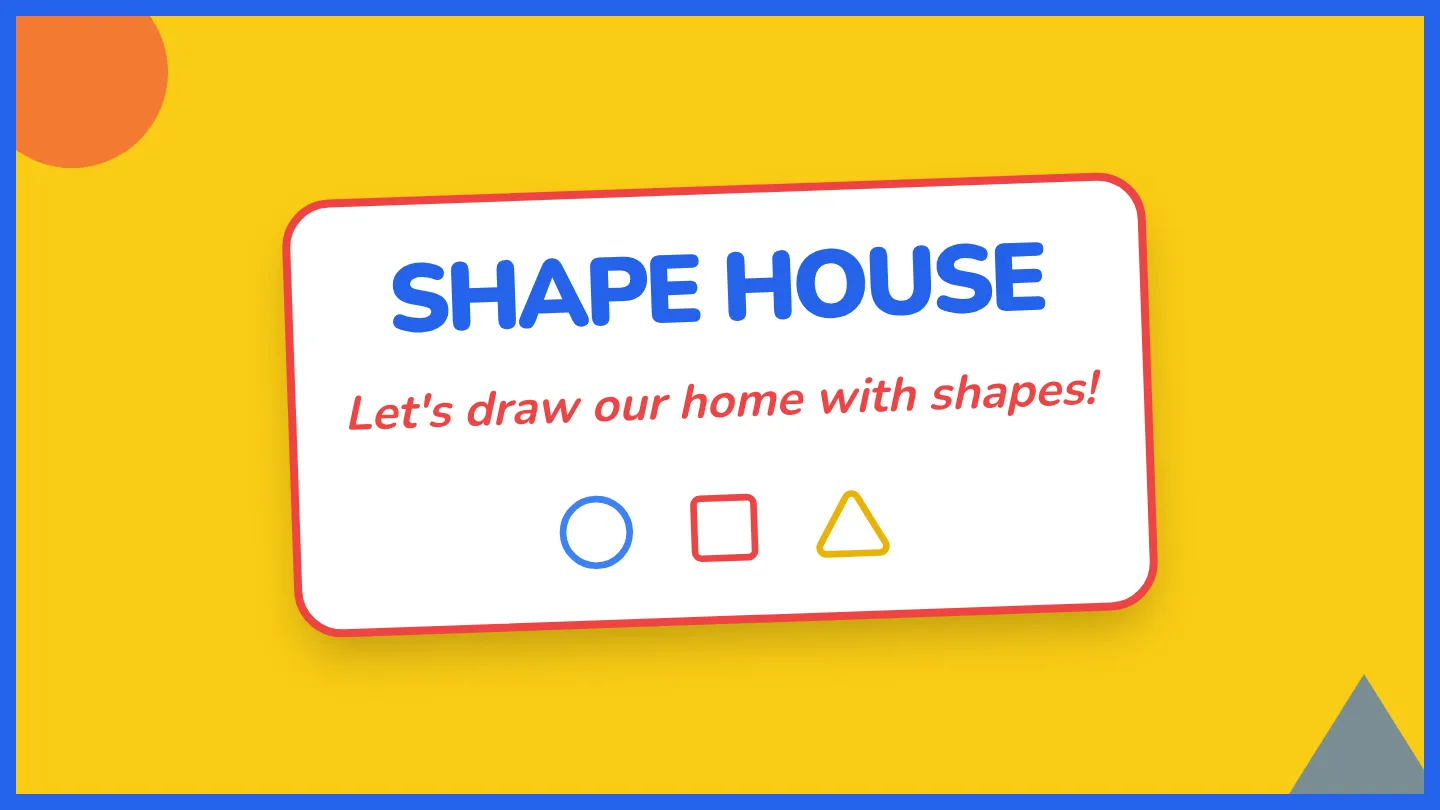
Shape House Slides

Shape House Slides

A vibrant, primary-colored slide presentation for kindergarteners teaching how to draw common household items using basic shapes. Each slide features simple, step-by-step instructions and a visual shape guide for items like a bed, stove, and refrigerator, now showing side and front perspectives for a more realistic feel. Now includes a table lamp, hanging lamp, rug, window with curtains, wall pictures, and a classic claw foot bathtub.

PL

Pamela Logan

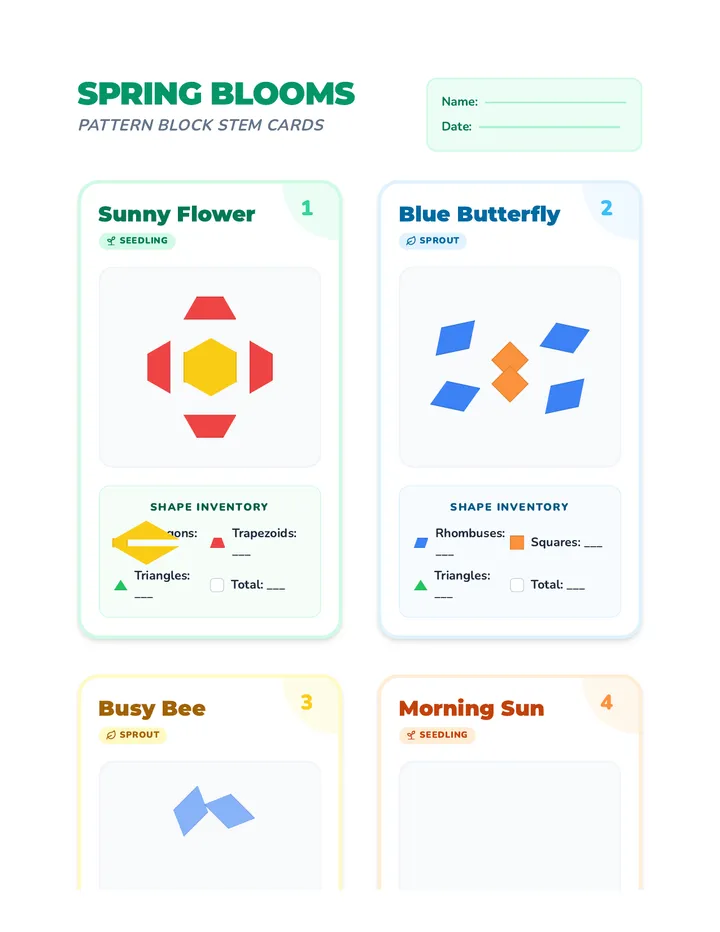
Spring Blooms Task Cards

Spring Blooms Task Cards

An improved set of 8 printable task cards with thematic level labels (Seedling, Sprout, Bloom), refined pattern block visuals, and accurate shape counting charts. Perfect for K-1 STEM centers.

L

lreinert

Sequences

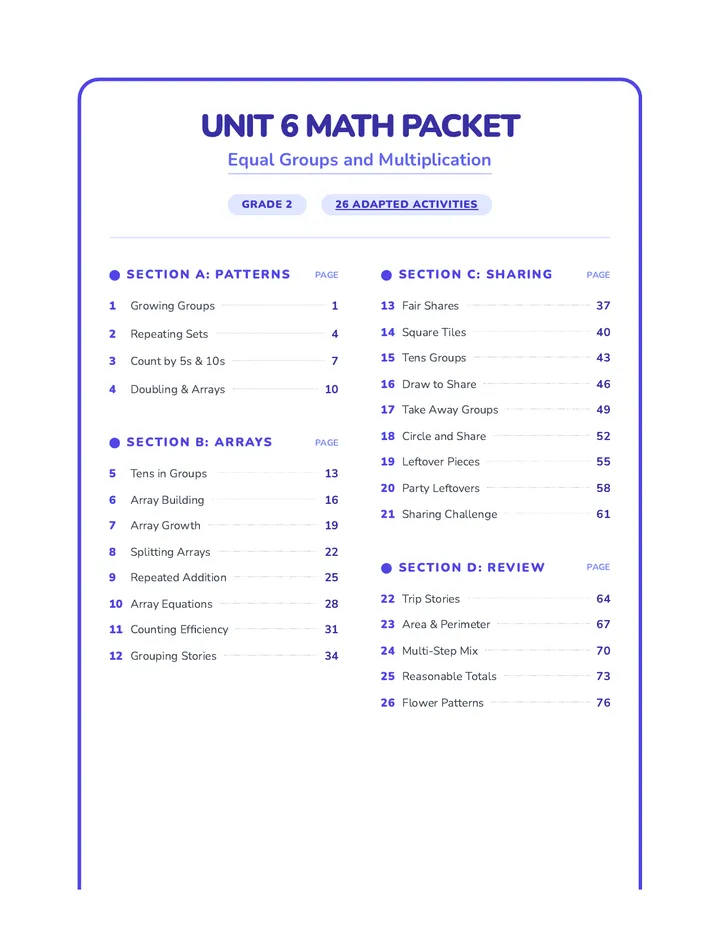
Packet Master TOC document

Unit 6 Equal Groups and Multiplication

A comprehensive Grade 2 math packet focused on skip counting, repeated addition, arrays, and equal groups.

N

nmack

39
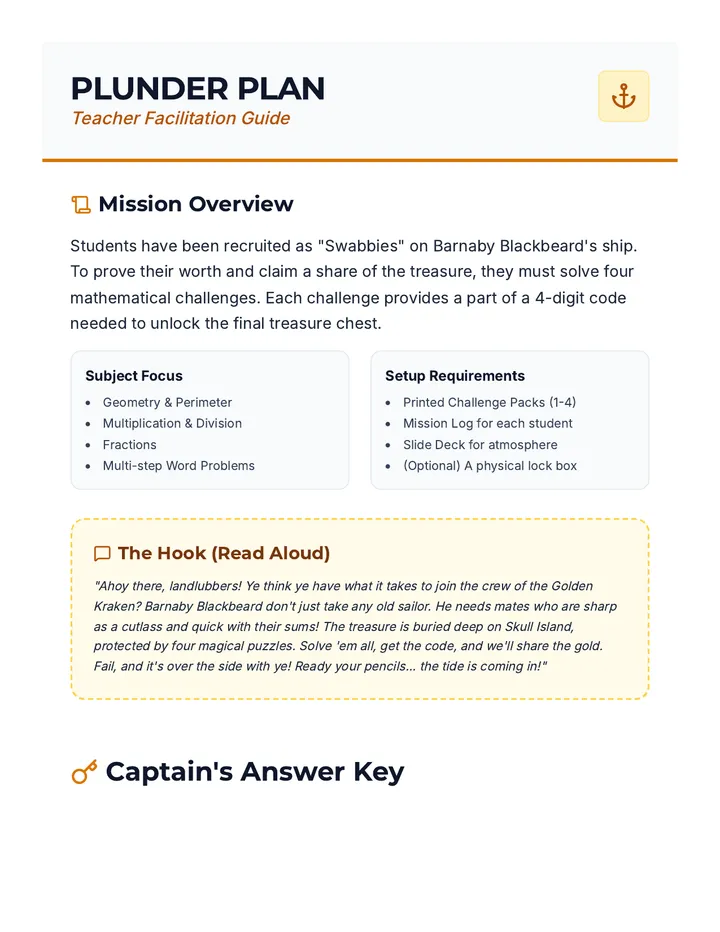
Plunder Plan Teacher Guide

Pirate Math Plunder

A pirate-themed 3rd grade math review escape room where students solve puzzles involving geometry, multiplication, division, fractions, and word problems to find the hidden treasure.

DG

Danielle Garland

12
Club Leader Master Guide

Math Mastery Club

An expanded 14-session, cohesive small-group math intervention sequence for four 1st-grade students. Covers coin values (penny, nickel, dime, quarter) over 3 sessions; 2D shapes (circle, square, triangle, rectangle, oval, rhombus) over 3 sessions; and step-by-step number decomposition to make a ten for addition (3 sessions) and subtraction (3 sessions) to ensure deep student mastery.

K

kurtzm

37
Fraction Fairness Teacher Guide

Math Mission Squad

A series of high-engagement math missions where students apply grade-level concepts to solve real-world shop and sorting challenges.

CK

Cassady Kennedy

15
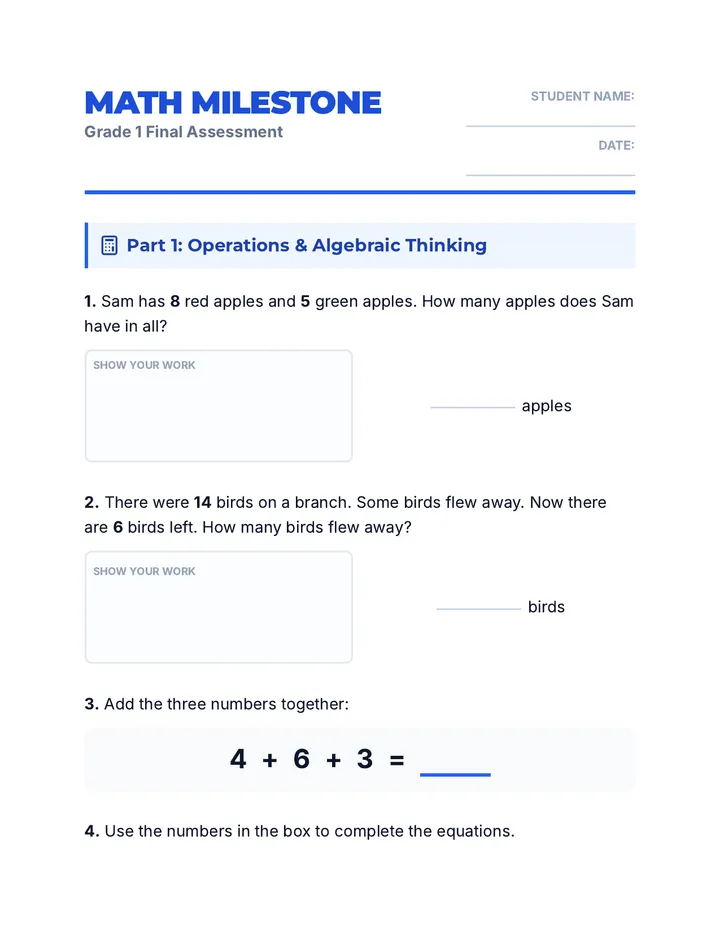
Math Milestone Student Assessment

Math Milestone Evaluation

A series of materials designed to evaluate and document first-grade students' mastery of year-long mathematical standards in preparation for second grade.

TL

Tanya Larson

23
Boundary Builders Practice Worksheet

Shape and Space Masters

A comprehensive geometry and measurement unit covering area, perimeter, angles, symmetry, shapes, volume, and capacity. This sequence uses a drafting and architectural theme to engage students in real-world mathematical applications.

G

goodev

7

Lessons

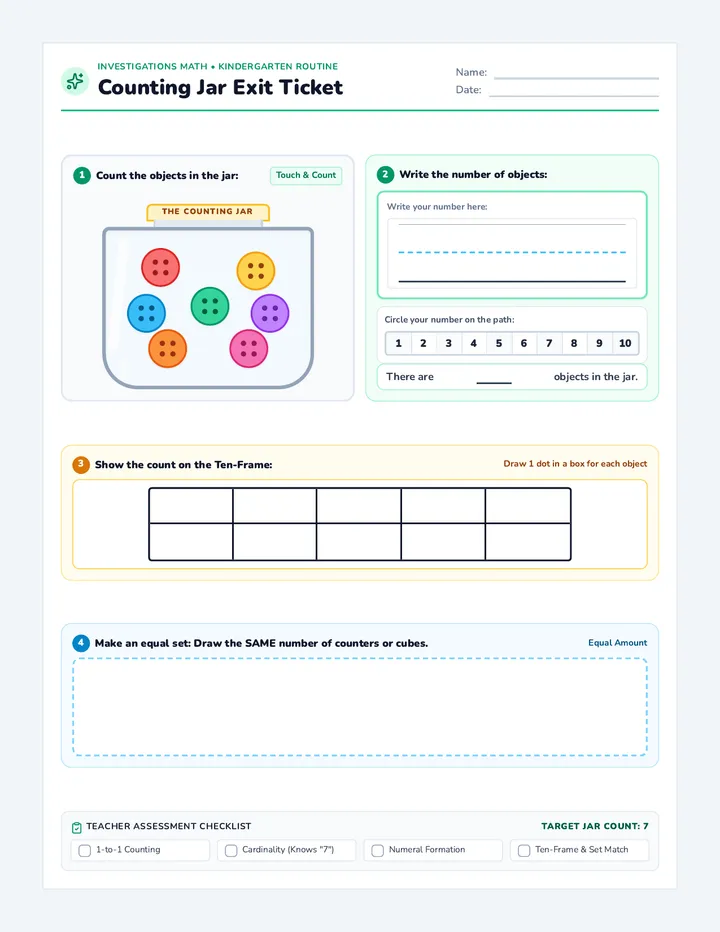
Counting Jar Exit Ticket

Number Trail Explorers

A kindergarten math lesson focused on counting routines, cardinality, and number sequence development up to 20. Students practice recording quantities, counting forwards, and identifying missing numerals in sequence.

SB

Sondra Bell

17
Shape Slicers Slides Final Polished v2

Shape Slice-Up Bakery

A comprehensive 1st-grade lesson on partitioning squares, circles, and rectangles into equal shares of halves and fourths, designed for an observation with a focus on clear learning targets and student engagement.

CC

Crystal Clapin

12
Shape Squad Slides

Shape Squad Investigations

Students explore shared attributes of shapes to understand the category of quadrilaterals, specifically identifying squares, rectangles, and rhombuses while also creating non-standard quadrilaterals.

KB

Krista Bodkin

6
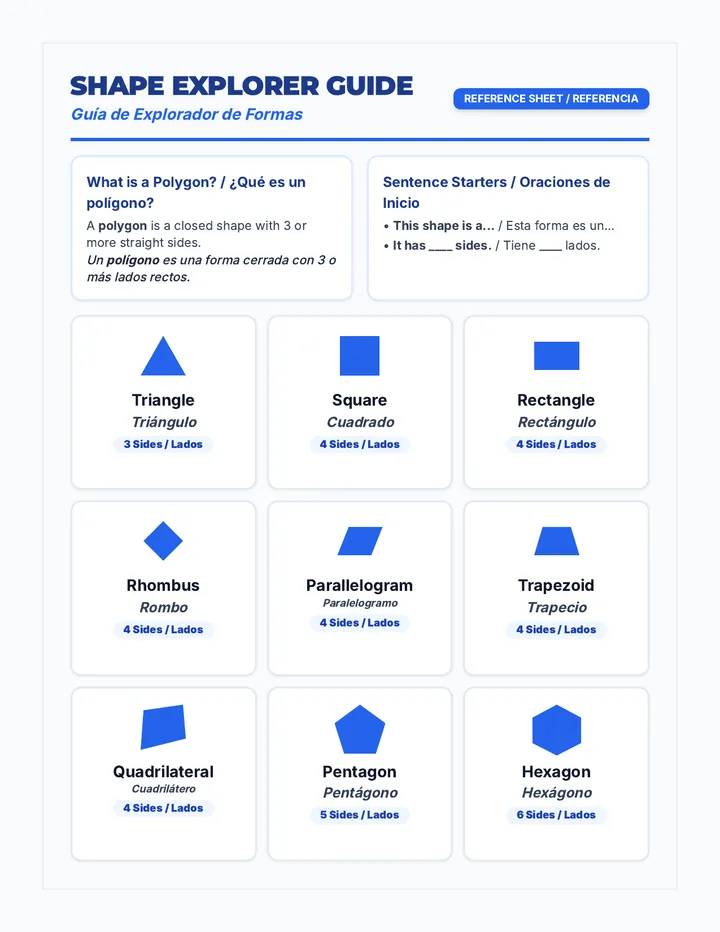
Shape Explorer Packet

Shape Explorers

A beginner geometry lesson focusing on identifying and naming polygons, specifically designed for students with limited English proficiency through bilingual supports and sentence starters.

C

cedaniels

8
Number Ninja Worksheet

Math Mastery Review Pack

A comprehensive end-of-year math review for 1st grade students, aligned with Illinois Learning Standards. The lesson covers all major domains including Operations, Base Ten, Measurement, and Geometry through minimalist, high-legibility worksheets.

C

cbradley

5
Triple Attribute Sorting Worksheet

Attribute Detectives

A playful early math lesson where students identify, describe, and sort objects by color, shape, size, and quantity attributes through sorting mats, cut-and-paste activities, and visual discrimination challenges.

M

michelle.bernius

8