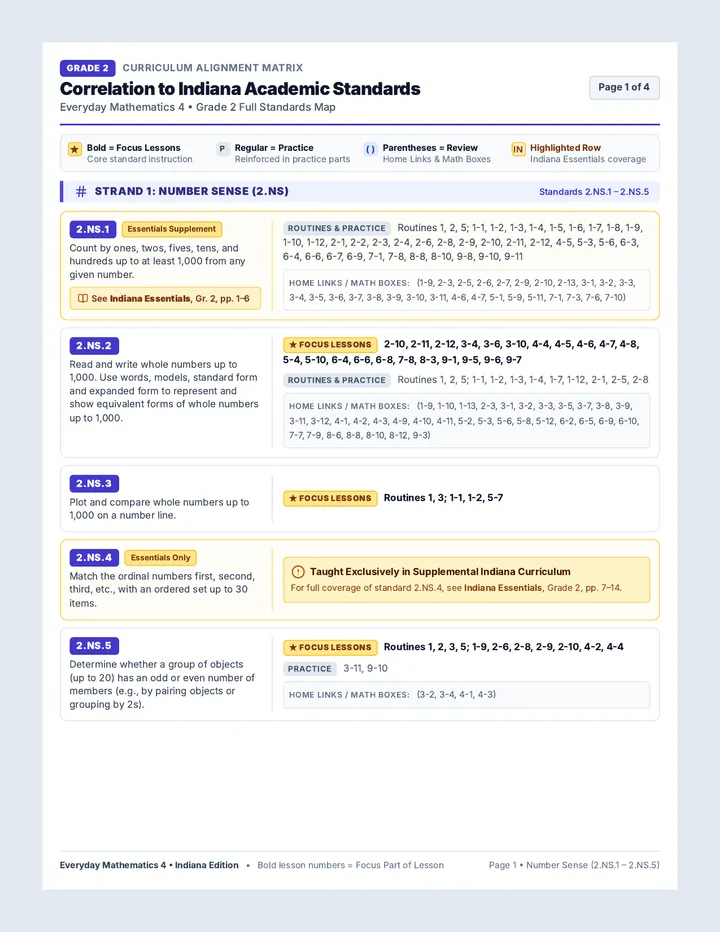
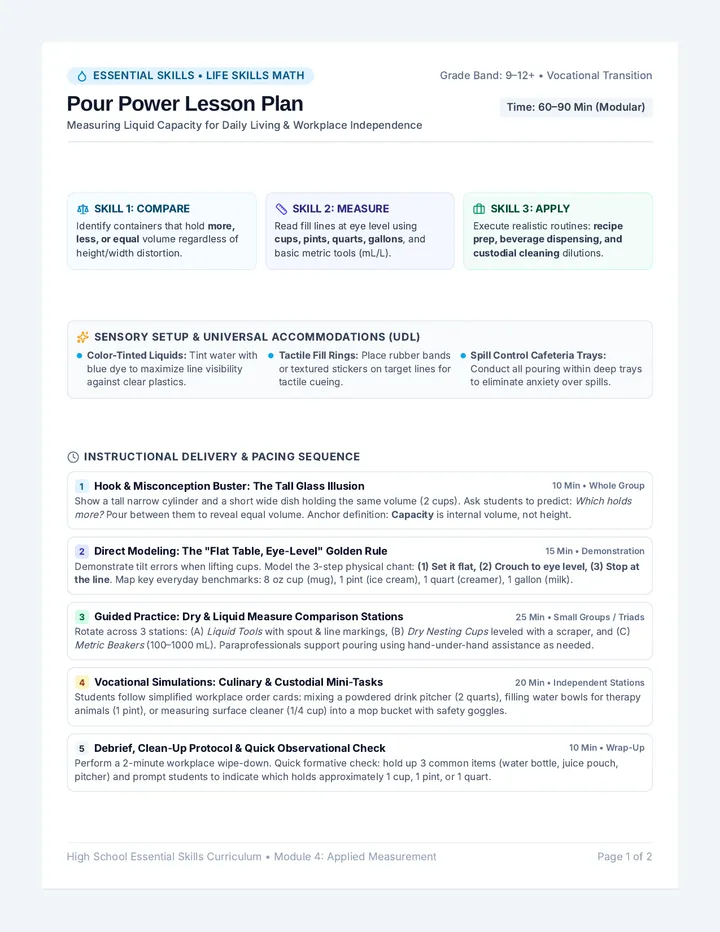
Develops proficiency in estimating and measuring length, area, volume, and mass using standard units and unit conversions. Integrates time, money, angle measurement, and data classification through counting and arithmetic applications.
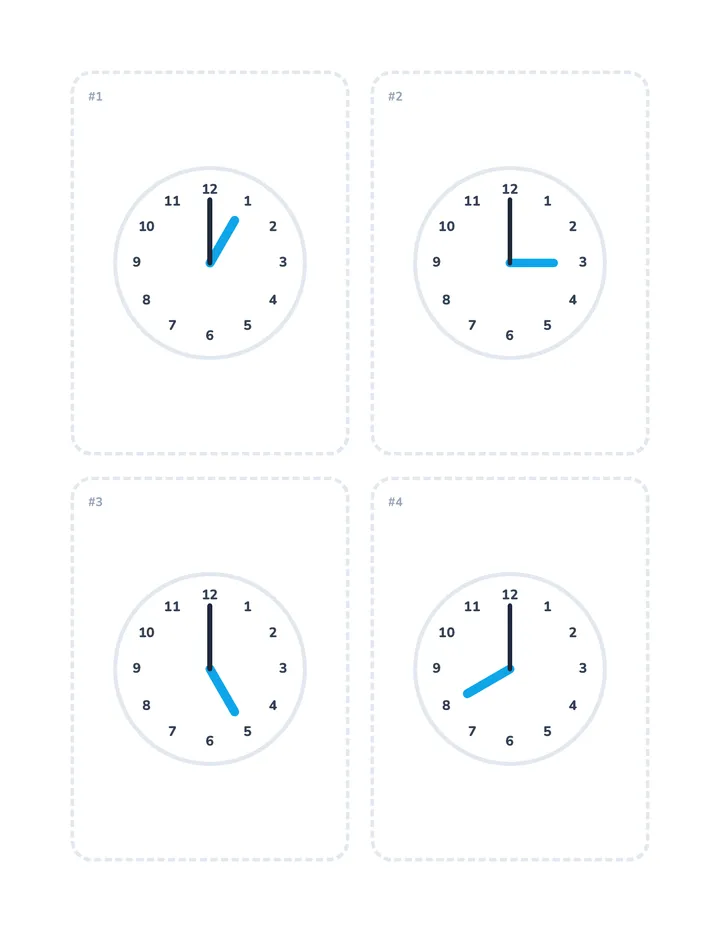
A set of 20 printable flashcards for teaching time to the nearest hour and half-hour, featuring analog clocks on the front and digital/word answers on the back. Designed in a 2x2 grid layout for double-sided printing.
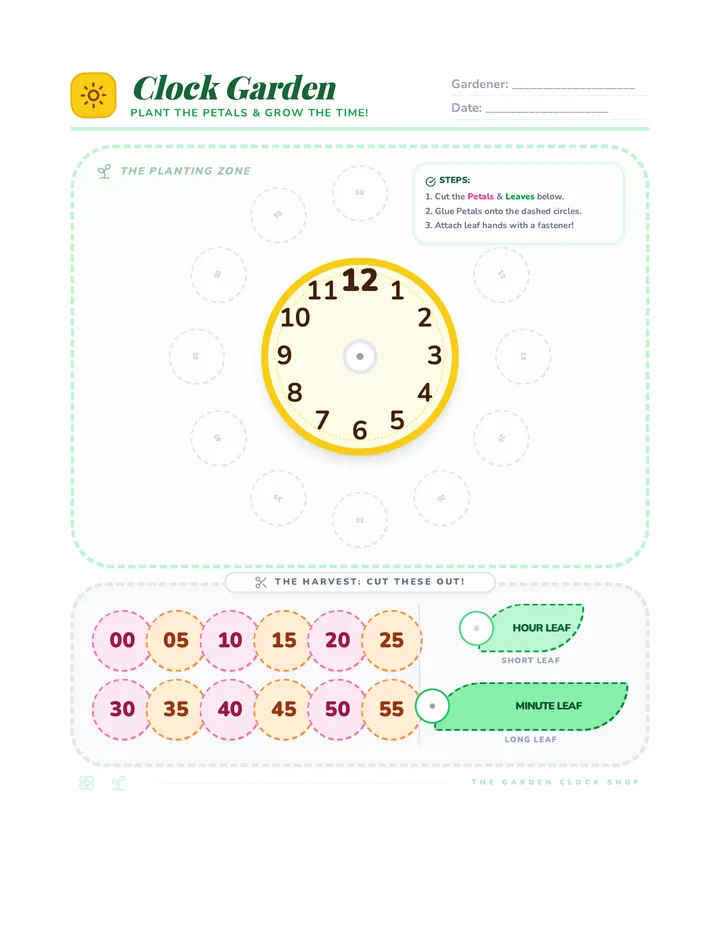
A single-page "Clock Garden" construction activity. Students cut out 12 perfectly rounded circular petals (00-55) and two leaf-shaped hands (Hour and Minute) to glue onto a large central analog clock face. Features a clear "Planting Zone" for assembly and a "Harvest Zone" for cutting.
A highly detailed, 4-page NSW-aligned primary mathematics lesson program for Year 2 students performing at a Year 1 level, featuring explicit teaching strategies, gradual release of responsibility (I do, We do, You do), and differentiated pathways (Consolidate/Red, Build/Yellow, Stretch/Green) following the official blank scaffold format.
A highly detailed, visual money amount cheat sheet designed specifically for 1st-2nd grade students. Features custom high-fidelity SVG drawings of both front and back of US coins (Penny, Nickel, Dime, Quarter) and the $1 bill, highlighting their realistic relative sizes. Includes color-coded values, word forms, skip counting guides, and visual equivalence formulas.
Finalized teacher reference guide with comprehensive game lists for all units. Unit 4 has been expanded to include 10 specific activities focusing on comparison and operations. Unit headings remain primary for easy navigation.
Updated the matching cards to feature analog clocks with all hour numbers (1-12) and correctly positioned hands for hour and half-hour times. Adjusted card sizing to ensure comfortable fit on standard 8.5x11 pages.
The first of 10 evidence samples for MCAS-Alt, focused on rounding money to the nearest dollar. Features a clean layout with dollar signs positioned to the far left of the response area to allow maximum handwriting space.
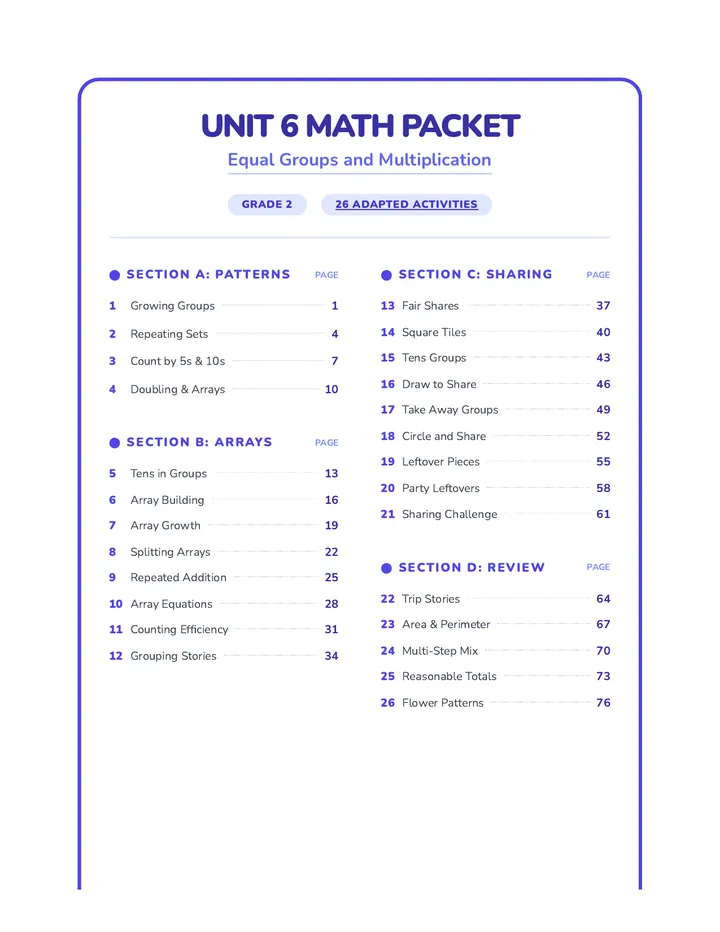
A comprehensive Grade 2 math packet focused on skip counting, repeated addition, arrays, and equal groups.
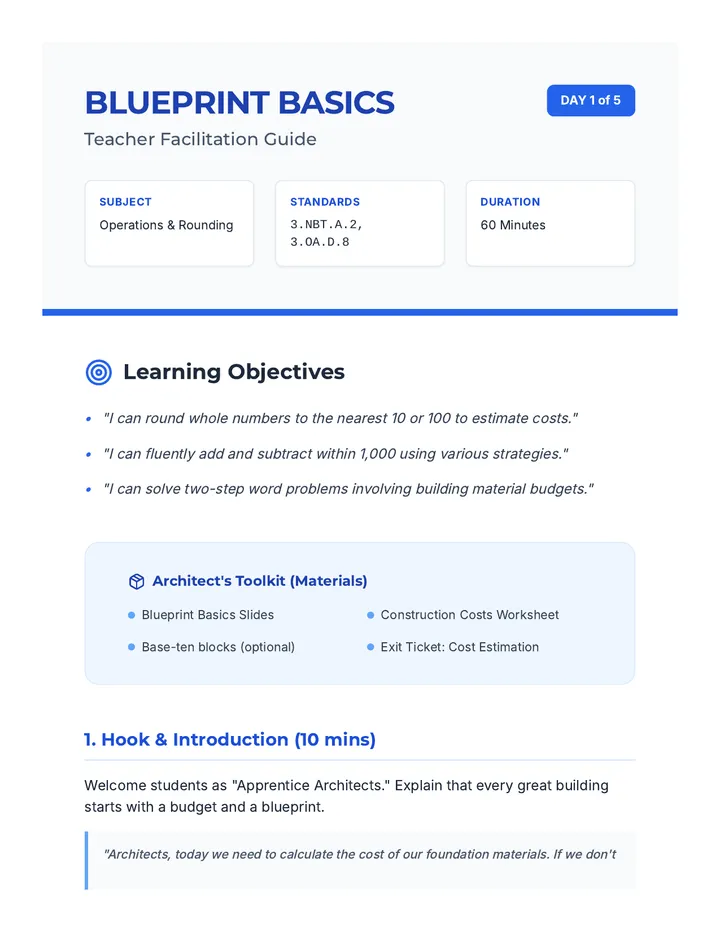
A 5-day intensive math sequence for 3rd grade covering multiplication, division, multi-digit operations, fractions, area, and rounding through a "Master Builder" architectural theme. Students act as apprentice architects solving construction-themed math challenges.
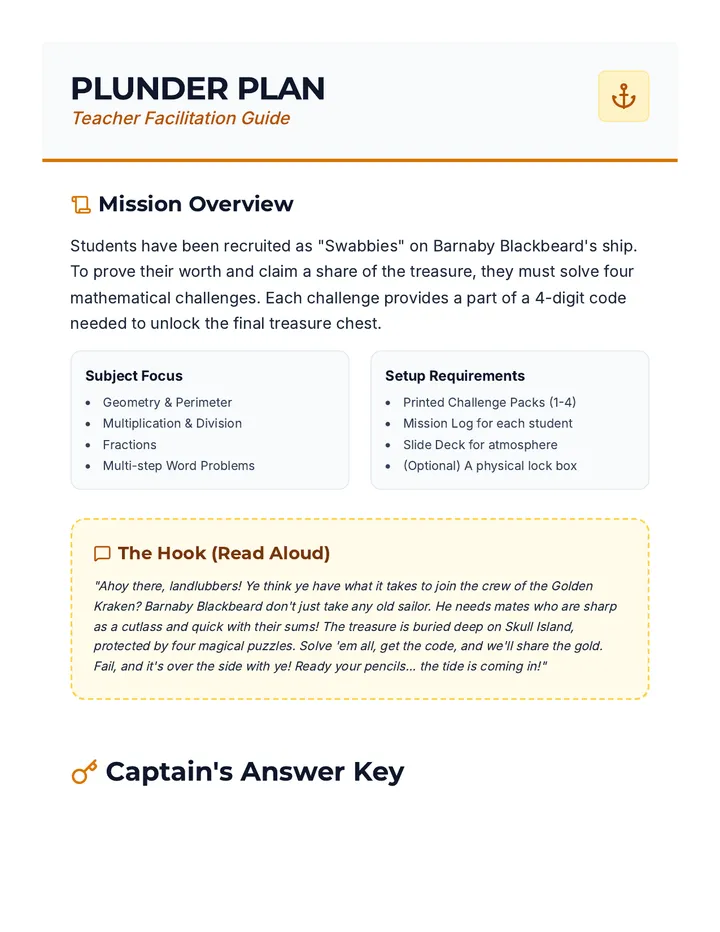
A pirate-themed 3rd grade math review escape room where students solve puzzles involving geometry, multiplication, division, fractions, and word problems to find the hidden treasure.
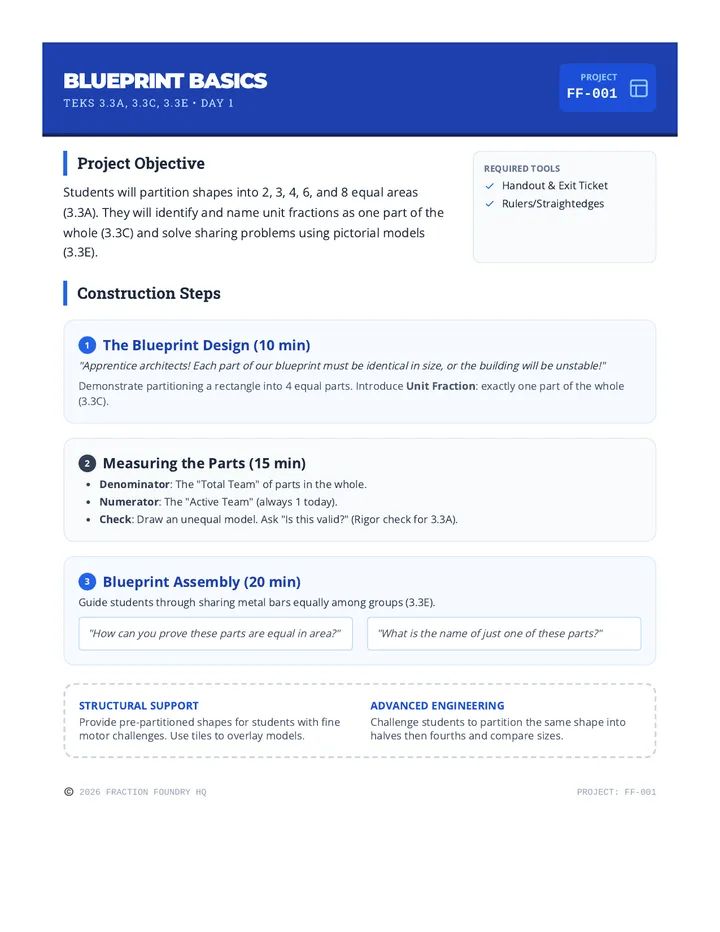
A 5-day sequence on fraction fundamentals, including unit fractions, number lines, equivalent fractions, and comparison. Includes daily exit tickets and a final quick check.
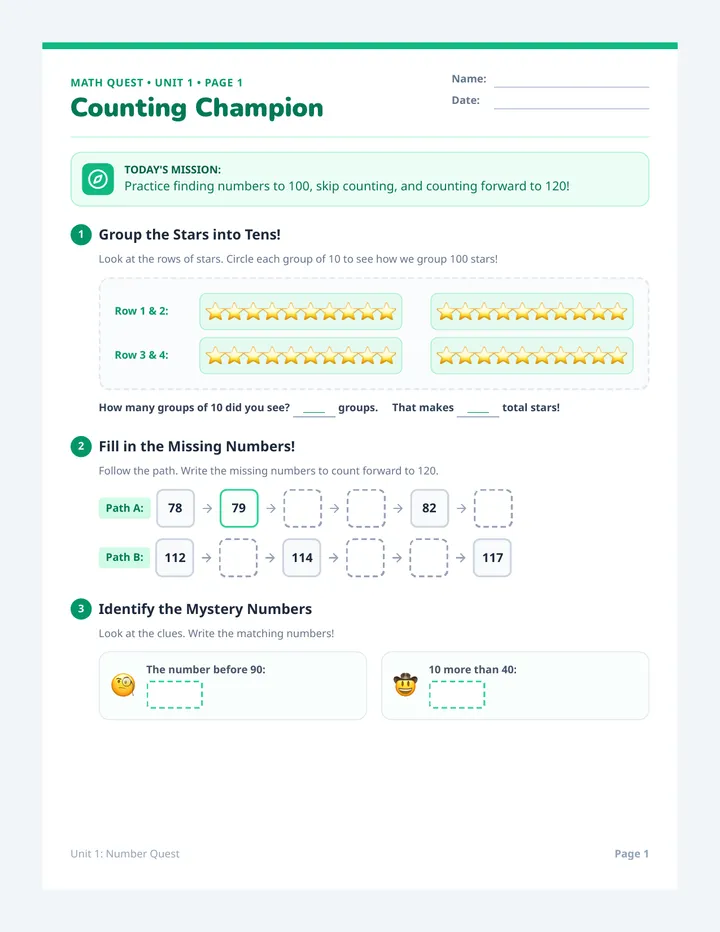
A comprehensive 1st and 2nd-grade math tutoring sequence featuring heavily scaffolded worksheets and visual progress monitoring kits. Covers number sense, algebraic operations, geometry, and measurement.
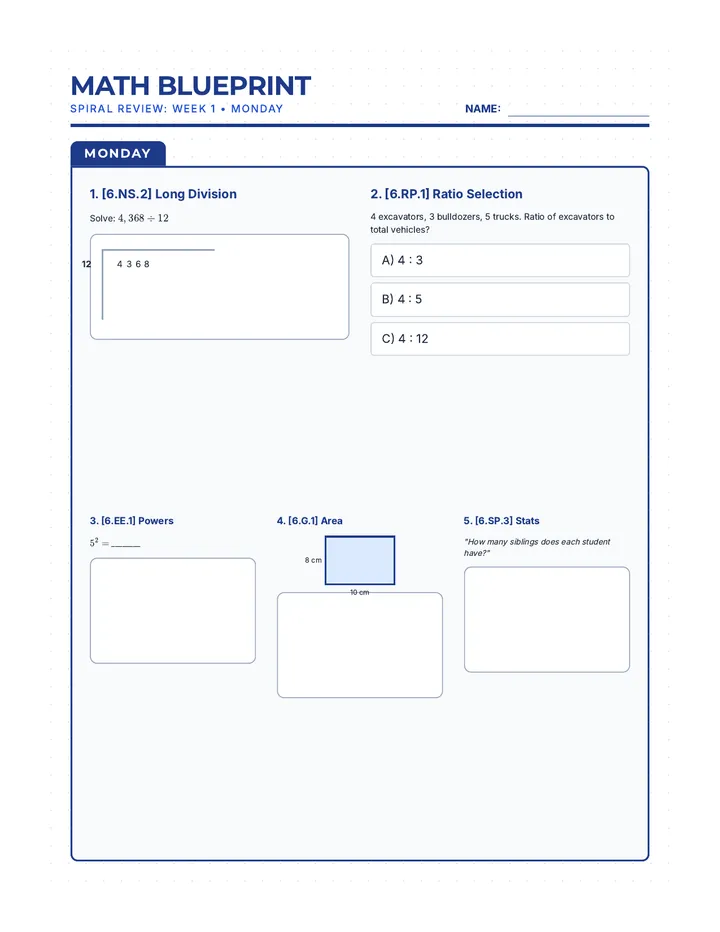
A collection of high-quality study tools and practice resources for 6th-grade math, focusing on Ratios, Proportions, Expressions, and Equations.
A 4-day intensive STAAR math review focused on multiplication and division standards for 4th grade. The unit uses a 'Math Mission' theme to engage students while covering complex multi-step problems and standard algorithms.
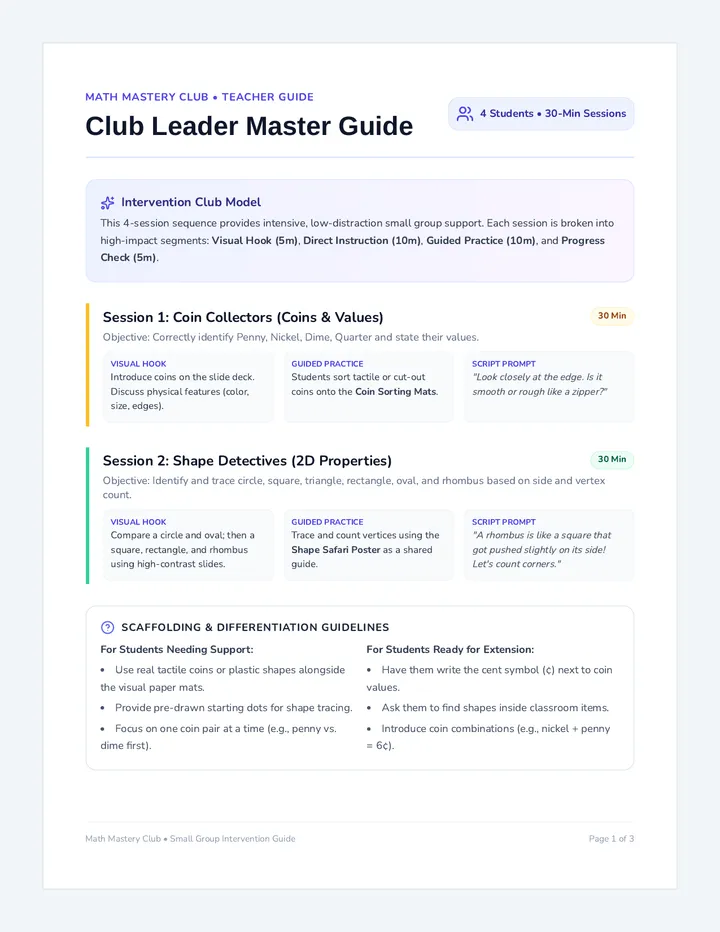
A comprehensive math intervention sequence for 6th-grade students, focusing on four key domains: Numbers & Operations, Algebraic Thinking, Measurement & Data, and Geometry. This sequence uses high-leverage strategies from the All Learners Network (ALN) and aligns with i-Ready prerequisite modules to bridge conceptual gaps.
A 2-day math sequence for 3rd grade focused on reading, analyzing, and creating bar graphs using a spring sports and activities theme. Includes interactive notebooks, crafts, and practice worksheets.
A comprehensive multi-grade longitudinal analysis of MCAS Math data (Grades 3-4) for 2023-2025. This sequence provides diagnostic reporting, visual aids, and instructional intervention strategies based on identified categorical trends.
A series of materials designed to evaluate and document first-grade students' mastery of year-long mathematical standards in preparation for second grade.
A foundational Pre-K math sequence focusing on one-to-one correspondence and visual comparison of quantities. Students explore concepts of more, less, and fewer through physical pairing, tower building, voting, and balancing scales.
A 7-week comprehensive math review sequence designed to prepare 6th-grade students for North Carolina state testing, covering Number Systems, Ratios, Expressions, Geometry, and Statistics.
A comprehensive set of math supports for 5th-grade students in a co-taught environment. Each unit includes visual vocabulary, worked examples, cloze-style guided notes, and exit tickets featuring a 'Mistake of the Day' analysis.
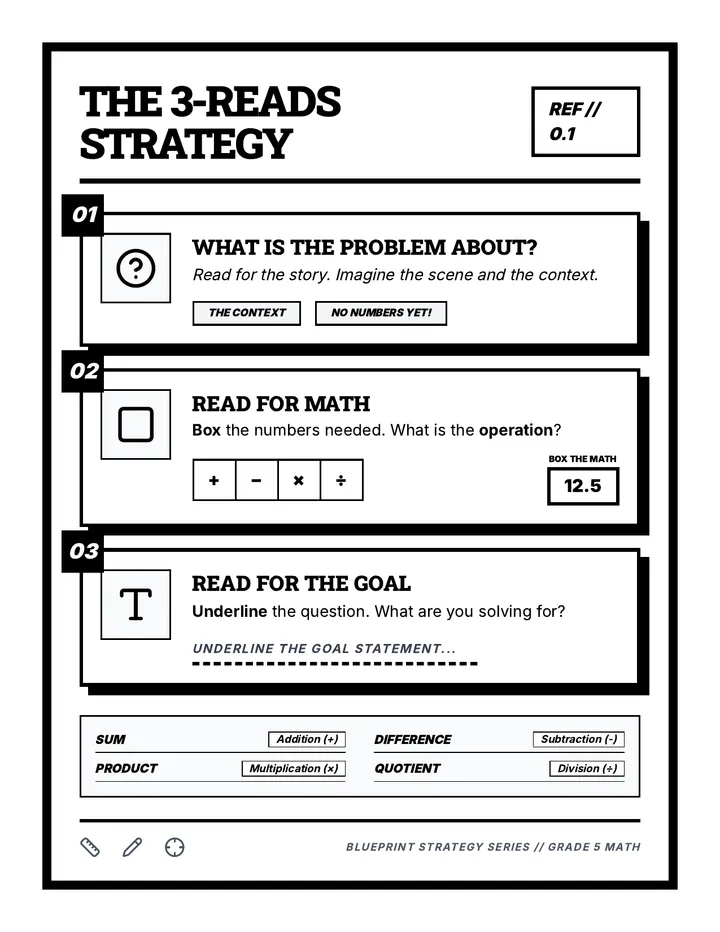
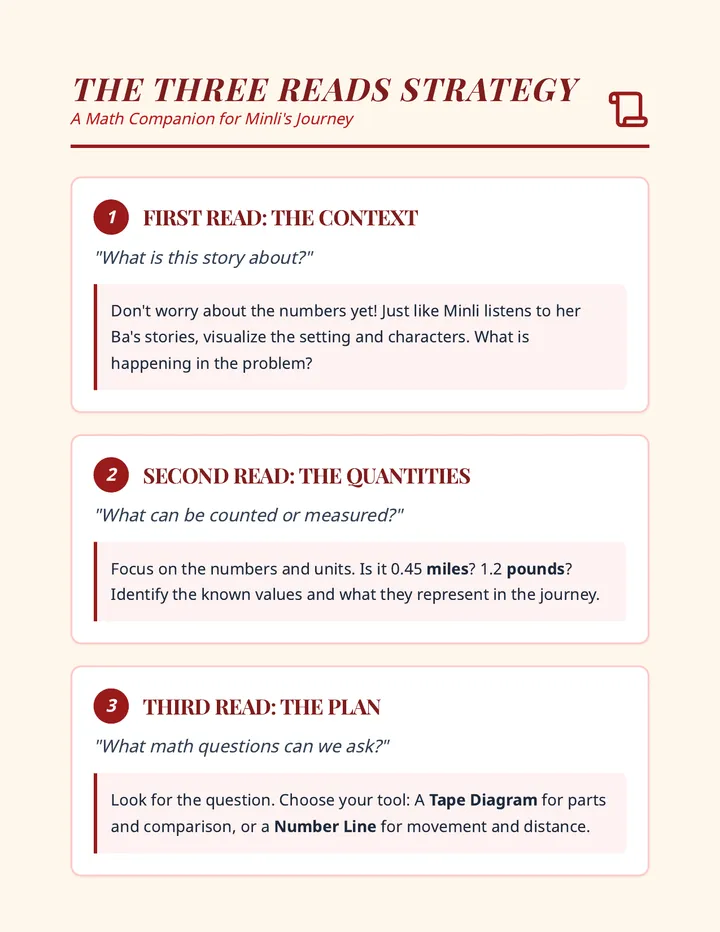
A 4-lesson intensive math intervention for 5th graders designed to bridge 4th-grade decimal foundations to 5th-grade mastery. Features the Three Reads strategy and mental math logic (Counting Up, Matching Units) themed around 'Where the Mountain Meets the Moon'.
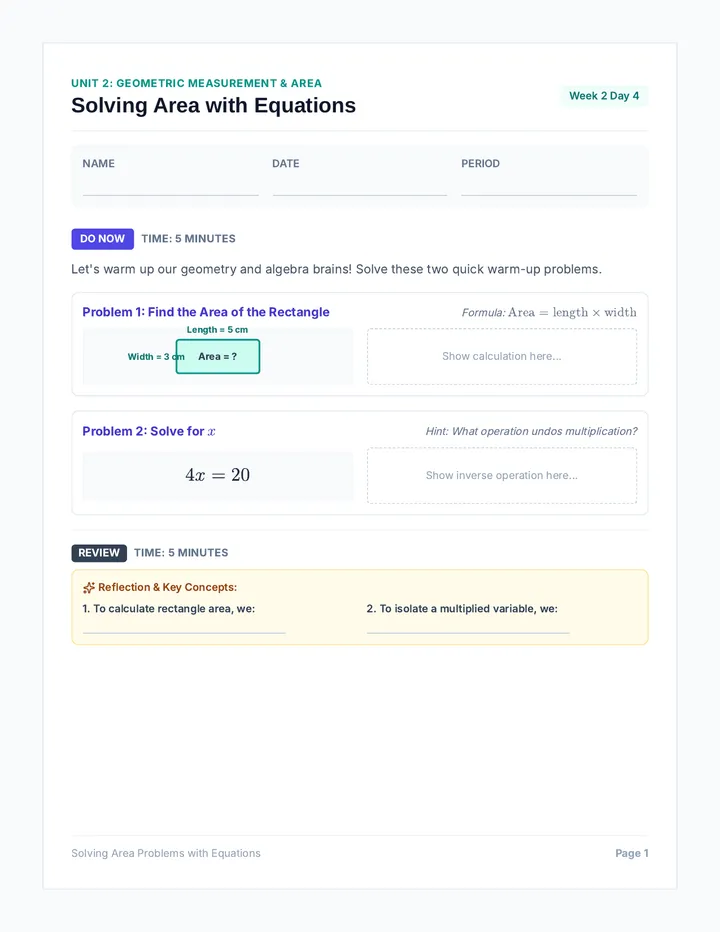
A comprehensive unit covering 7th-grade geometry standards, focusing on scale drawings, geometric constructions, 3D cross-sections, angle relationships, and solving real-world area, volume, and surface area problems.
A comprehensive 12-lesson Tier 2 intervention sequence for 5th-grade fractions. Following ALN High Leverage Concepts and IM methods, this unit covers equivalent fractions, addition, subtraction, multiplication, and division of fractions using visual models and conceptual strategies.
A 6-day intensive test prep unit for NC.7.RP.1 focused on unit rates. Designed specifically for special education resource rooms with heavy scaffolding, visual aids, and real-world shopping and measurement applications. Includes 4 days of instruction, a collaborative review relay, and a final assessment.
A comprehensive set of measurement resources for 2nd grade students to master inches, feet, centimeters, and meters. Students will practice selecting appropriate units, estimating lengths, and choosing the right tools for various objects.
A 2nd-grade measurement sequence that takes students from the conceptual need for standard units to the precise application of rulers, yardsticks, and meter sticks using a workshop-style approach.
A comprehensive two-week geometry and trigonometry project where 10th-grade students design and build a scale model house, applying roof pitch calculations, surface area for materials, and volume for climate control systems.
A growing 180-day morning work volume for 3rd grade. Month 1: Basic ops & 2-8x facts. Month 2: 0,1,9,11x facts & intro fractions. Month 3: Equiv. fractions, perimeter, & 12x facts. Month 4: Area basics, 2-step word problems, and self-awareness.
A high-intensity, 120-minute math simulation. Students act as lead consultants, completing a high-speed skill warmup before selecting a professional sector (Music, Urban Planning, Rocket Science, or Sports Analytics) to solve a series of complex work orders.
A collection of themed end-of-year math review adventures for different grade levels, focusing on spiraling key standards and problem-solving.
A 4-day unit on area measurement for 3rd grade students, covering tiling, the relationship between multiplication and addition, and decomposing rectilinear shapes. Designed with a 'Blueprint Builders' architectural theme.
A 5-day unit exploring area through the lens of architectural design. Students move from physical tiling to multiplication and finally to decomposing complex rectilinear shapes, aligned with Arizona 3.MD.C.7 standards.
A comprehensive review suite for the New York State Mathematics Regents exams, including Algebra 1, Geometry, and Algebra 2, featuring mastery blueprints, calculator strategies, and exam-taking tips.
This lesson covers the exploration of tenths through metric measurement, area models, and place value systems, including decimals greater than one and expanded notation.
A Kindergarten lesson focused on comparing the length (height) of block towers and determining the difference in length by counting individual block units.
A friendly, high-energy kindergarten math lesson exploring capacity. Through a colorful monster theme, students visually compare containers to determine which 'holds more' and which 'holds less' using slides, hands-on partner work, and an interactive worksheet.
A set of hands-on math worksheets designed to help students master comparing numbers up to 20 using bears, cars, fish, and swimming pools.
A hands-on activity for early learners to distinguish between tall and short objects through visual sorting and comparison.
A hands-on measurement lesson where students use non-standard units to measure paper plants, fostering number sense and comparison skills through movement-based learning.
A comprehensive review of essential kindergarten math concepts including counting, addition, subtraction, shapes, and measurement, featuring high-contrast visuals and picture-supported problems.
A kindergarten lesson focused on comparing the weight of two objects using the terms 'heavier' and 'lighter'. Students will use animal imagery and hands-on center activities to master these concepts.
A comprehensive math review lesson designed to reinforce key elementary math skills including logical ordering, 2-digit subtraction, geometric attributes, and equal parts/fractions. This lesson uses a repeated "at-bat" structure to build mastery through multiple variations of the same problem format.
A hands-on kindergarten lesson introducing the concepts of weight (how heavy something is) and capacity (how much a container can hold) using interactive demonstrations and visual comparisons.
A comprehensive end-of-year math assessment for Kindergarten students covering all Common Core domains, designed with a fun safari theme.
A comprehensive unit on finding the perimeter of various polygons, including unknown side lengths and real-world word problems, themed around architectural blueprints.
A 60-minute introductory lesson for 4th graders on creating and interpreting line plots using mixed numbers, specifically focusing on measurements to the nearest 1/8 inch.
A comprehensive lesson on finding the perimeter of polygons and determining unknown side lengths when given the total perimeter, modeled after NC.3.MD.8 standards.
Une séance d'exercices différenciés sur la proportionnalité et les échelles (données graphiquement) pour trois niveaux de difficulté.
A hands-on engineering project where students design packaging for a folding chair, calculating the precise surface area and volume required for production.
A comprehensive lesson focused on finding the perimeter of regular and irregular polygons, including real-world applications and solving for missing side lengths.
A short assessment focusing on selecting and using appropriate measurement tools (rulers and yardsticks) for 2nd-grade students.
A comprehensive review of 4th Grade Math standards focused on fractions, decimals, geometry, and operations through the lens of MCAS-style questions. Students solve 12 "quests" ranging from basic recall to complex multi-step problems.
A lesson focused on adding and subtracting fractions and mixed numbers using real-world data about butterfly wingspans. Students will use a data table to solve word problems.
An introductory lesson on perimeter for 3rd grade, covering what perimeter is, how to calculate it for various polygons, and real-world applications.
A Minecraft-themed math adventure covering addition with number lines, ten frames, counting coins, and telling time to the hour. Students will help Steve and Alex craft their way through mathematical challenges.
A 30-minute interactive lesson where 3rd graders design a Wilderness Park, applying their knowledge of area and perimeter to create specific park zones on a 1x1 foot grid scale.
Students act as urban architects to design a town using quadrilaterals on a grid, calculating perimeter and area for their structures.
A collection of standards mastery tracking cards for Grade 3 Arizona students, covering Math and ELA with a consistent multi-attempt tracking system.
This lesson introduces 4th-grade students to the doubling strategy for mastering 8s multiplication facts and applying them to find the area of rectangles.
This 45-minute lesson for 10th-grade students highlights the critical role of collaboration and problem-solving skills across all mathematical domains. Students will experience how diverse perspectives and teamwork lead to more effective and robust solutions, fostering a deeper appreciation for the interconnectedness of math and real-world challenges.
A 20-minute review lesson on combining coordinate plotting with volume calculations, featuring structured guided review and high-leverage DOK 3 exit ticket questions.
A project-based lesson where 3rd grade students become the teachers, creating a math lesson and a corresponding game on key concepts like fractions, area, and operations.
A comprehensive guide to understanding geometric similarity, covering ratios, proportions, and similarity criteria for polygons and triangles.
A precision-focused drafting-themed review of 4th grade Measurement and Data (MD) standards. Covers units and conversions (MD.1), measurement word problems (MD.2), area and perimeter (MD.3), line plots (MD.4), and angle measurement and addition (MD.6-7). Division has been removed from the curriculum.
A project-based learning unit where students apply decimal operations (addition, subtraction, multiplication, and division to hundredths) to design, build, and manage their own zoo. Aligned to Ohio 5th Grade Standard 5.NBT.7.
A comprehensive practice package designed for 3rd-grade students preparing for the North Carolina End-of-Grade (EOG) Mathematics assessment. It includes a complete 48-question exam covering all highly-tested standard course of study domains, an interactive student grid, an item-to-standard alignment map, and a full explanatory answer key.
A hands-on geometry project where students act as urban planners to design a city using specific geometric shapes, angles, and area/perimeter calculations. Students will bridge the gap between abstract geometry and real-world architecture.