Lenny.com
Explore
Create
ActivitiesNewMathEnglish Language ArtsScience & EngineeringSocial StudiesGlobal LanguagesHealth & Physical EducationSpecial EducationCounseling & Life SkillsArts & CreativityESL
Lenny.com
Lenny.com
Explore
Create
ActivitiesNewMathEnglish Language ArtsScience & EngineeringSocial StudiesGlobal LanguagesHealth & Physical EducationSpecial EducationCounseling & Life SkillsArts & CreativityESL
Lenny.com
Lenny.com

Solutions

Lenny for EducatorsLenny for SchoolsLenny for Districts

Product

ExploreSign inCreateSupportAbout

Resources

Getting startedMTSS Acceleration Program

© 2026 Lenny Learning Inc.

TermsPrivacyAccessibility
LinkedInInstagramX
Lenny

Patterns and Relationships

Identification, extension, and creation of repeating and growing patterns using shapes, colors, and numbers. Develops algebraic thinking by analyzing sequences and defining functional relationships between variables.

MathNumbers & CountingCounting ObjectsNumber NamesComparing NumbersNumber OperationsCounting SequenceNumbers 0-10Place Value Understanding and SystemAdd and Subtract Within 20Addition and Subtraction ConceptsAddition and Subtraction EquationsAddition and Subtraction ProblemsFoundations for MultiplicationMultiplication and Division PropertiesMultiply and Divide Within 100Multiplication and Division ProblemsFactors and MultiplesProperties of OperationsPatterns and RelationshipsGenerate and Analyze PatternsMulti-Digit ArithmeticPlace Value OperationsMulti-Digit and Decimal OperationsNumerical ExpressionsFour Operations and PatternsFour Operations Problem SolvingMeasurement & DataMeasurable AttributesMeasuring LengthsMeasure and Estimate Lengths in Standard UnitsRelate Addition and Subtraction to LengthClassifying and Counting ObjectsTime and MoneyArea Concepts and MeasurementPerimeter and Area MeasuresAngle Concepts and MeasurementTime, Volume, and MassMeasurement Unit ConversionsGeometryIdentifying ShapesShapes and AttributesShape Attributes and ReasoningShapes and CompositionClassifying 2D FiguresGeometric Figures and RelationshipsLines, Angles, and ShapesAngle, Area, and VolumeGeometric MeasurementVolume of 3D ShapesCoordinate Plane ApplicationsTransformations in the PlaneCongruence and SimilarityUnderstand congruence in terms of rigid motionsSimilarity and TransformationsProve Theorems Involving SimilarityPythagorean TheoremTrigonometry for General TrianglesMake Geometric ConstructionsProve Geometric TheoremsTheorems About CirclesFind Arc Lengths And Areas of Sectors of CirclesVolume FormulasRelationships Between Two-Dimensional and Three-Dimensional ObjectsProve Simple Geometric Theorems AlgebraicallyTranslate Between Geometric Description and Equation for Conic SectionApply Geometric Concepts in Modeling SituationsFractions & DecimalsFractions as NumbersBuilding FractionsFraction Equivalence and OrderingAdding and Subtracting FractionsMultiplying and Dividing FractionsDividing FractionsDecimal FractionsMulti-Digit Computation and FactorsAdd, Subtract, Multiply, and Divide Rational NumbersRational Number SystemIrrational Numbers and ApproximationsRatiosRatios and ProportionsProportional RelationshipsUnit RateAlgebraAlgebraic ExpressionsGenerate Equivalent ExpressionsQuantitative RelationshipsProportional Relationships and Linear EquationsEquations and InequalitiesEquation Solving and ReasoningLinear Equations and SystemsGraph Equations and InequalitiesSystems of EquationsReal-World Algebraic ProblemsQuantitative Reasoning with UnitsExpression StructureEquivalent Expression FormsRadicals and Integer ExponentsRational ExponentsRational and Irrational NumbersPolynomial OperationsPolynomial IdentitiesPolynomial Zeros and FactorsRational ExpressionsComplex Number OperationsComplex Numbers in PolynomialsComplex Numbers on PlaneStatistics & ProbabilityRepresent and Interpret DataData DistributionsStatistical VariabilityProbability ModelsCompound Event ProbabilitiesStatistical SamplingInterpret Categorical and Quantitative DataBivariate Data PatternsInterpret Linear ModelsComparing Two PopulationsRandom Processes in StatisticsIndependence and Conditional ProbabilityExpected ValuesProbability-Based Decision MakingStatistical Inference and ConclusionsFunctionsFunction Concepts and NotationDefine and Compare FunctionsInterpret Functions in ContextAnalyze Function RepresentationsModel Relationships with FunctionsIdentify Linear vs Exponential GrowthDistinguish Between Function TypesCompare Growth RatesInterpret Function ExpressionsBuild Functions from RelationshipsConstruct and Model FunctionsTransform and Combine FunctionsModel Comparison and SelectionSolve Exponential EquationsTrigonometryTrigonometric Ratios Involving Right TrianglesTrigonometric Functions and Unit CircleModel with Trigonometric FunctionsTrigonometric IdentitiesVectors & MatricesIntroduction to Vectors and MatricesVector QuantitiesVector OperationsMatrix OperationsCalculusLimits and ContinuityDerivative Concepts and NotationDerivative Rules and TechniquesApplications of DerivativesOptimization ProblemsRelated RatesCurve Sketching and AnalysisIntegration Concepts and NotationAntiderivatives and Indefinite IntegralsDefinite Integrals and AreaFundamental Theorem of CalculusIntegration TechniquesApplications of IntegrationDifferential EquationsSequences and SeriesParametric and Polar FunctionsVector-Valued Functions

Videos

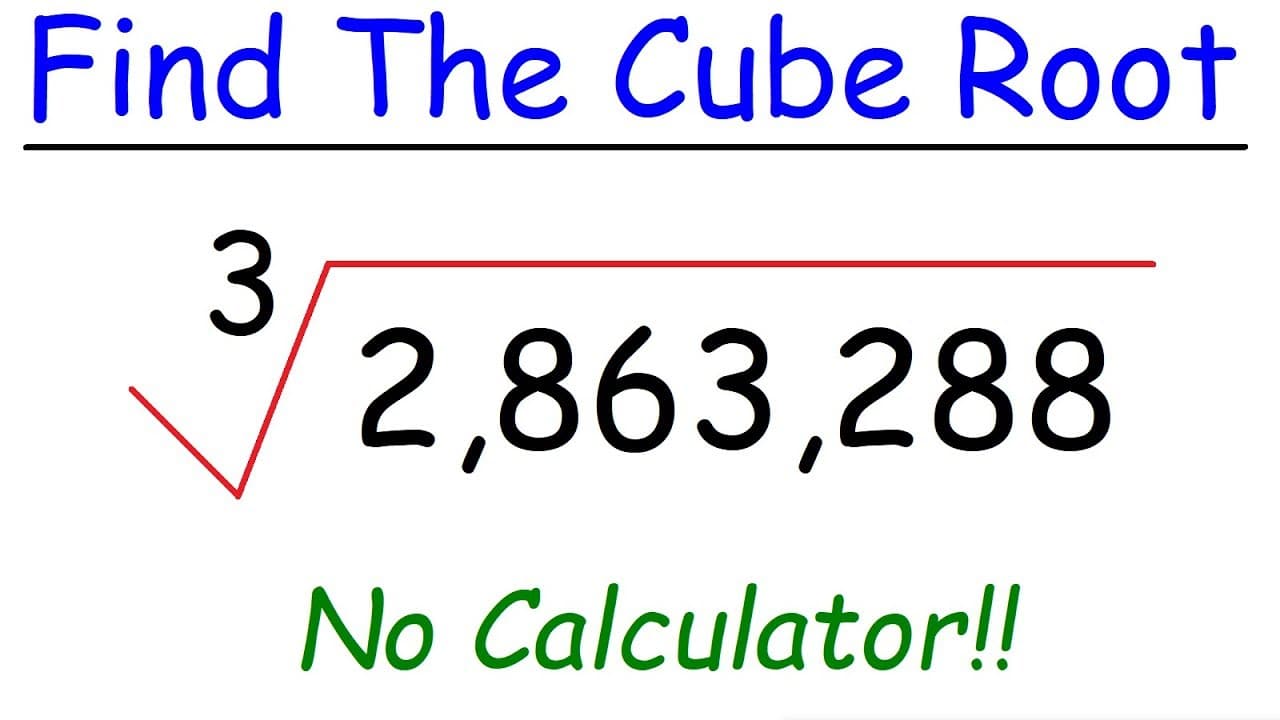
How to Find Cube Roots of Large Numbers Mentally

How to Find Cube Roots of Large Numbers Mentally

This math tutorial demonstrates a clever mental math technique for finding the cube root of large perfect cubes without using a calculator. The video begins by establishing the foundational knowledge required: memorizing perfect cubes from 1 to 10 and recognizing the specific patterns that exist between the last digit of a number and the last digit of its cube. The narrator systematically builds a reference table on the screen to guide viewers through the process. The core of the video is a step-by-step walkthrough of an algorithm that simplifies complex roots into two manageable steps. First, viewers learn to identify the last digit of the answer by looking at the last digit of the large number. Second, they learn how to find the preceding digits by "sandwiching" the remaining part of the number between known perfect cubes. The video progresses from 5-digit numbers up to 7-digit numbers, providing multiple practice opportunities to reinforce the skill. For educators, this video serves as an engaging hook for lessons on exponents, roots, and number sense. It moves beyond rote memorization of algorithms by encouraging students to look for patterns in numbers and use estimation strategies. It is particularly useful for Math Olympiad preparation, enrichment activities, or as a confidence-building exercise in Algebra classes to demystify large numbers and roots.

The Organic Chemistry TutorThe Organic Chemistry Tutor

11mins 49s

Finding Missing Numbers in Patterns

Finding Missing Numbers in Patterns

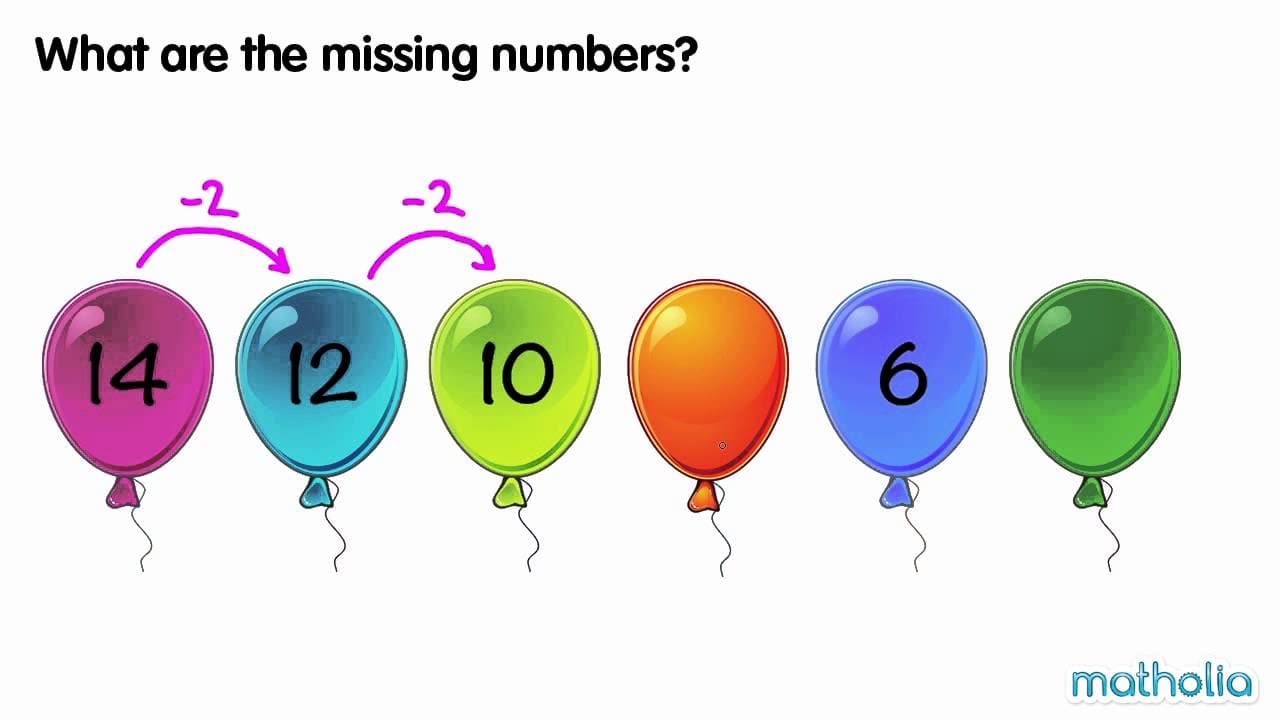
This educational video introduces primary students to the concept of number patterns and sequences using a clear, visual approach. Through a series of animated examples involving colorful balloons, the video demonstrates how to identify the "rule" of a pattern—such as adding 1, adding 2, subtracting 1, or subtracting 2—to determine missing numbers in a sequence. The content progresses from simple ascending sequences to descending ones, providing a comprehensive introduction to algebraic thinking. The video explores key mathematical themes including skip counting, addition and subtraction strategies, and logical reasoning. It emphasizes the importance of checking the relationship between adjacent numbers to establish a consistent pattern before trying to solve for unknowns. The visual cues, such as arrows indicating the operation between steps, help scaffold the learning process for visual learners. For educators, this video serves as an excellent instructional tool for math centers or whole-group introductions to patterning. It supports the development of early algebraic skills by asking students to analyze numerical relationships rather than just perform calculations. The clear pacing allows for natural pauses where teachers can ask students to predict the next number, making it highly interactive and suitable for 1st and 2nd-grade math curriculums.
MatholiaChannelMatholiaChannel

2mins 41s

How Domain Affects Sequence Formulas

How Domain Affects Sequence Formulas

This advanced algebra video explores the relationship between mathematical sequences and their domains, challenging the standard convention that sequences must always begin with the first term at n=1. The narrator demonstrates that sequences can be defined using different starting points for the domain (specifically n=0 vs n=1) as long as the formula is adjusted accordingly. Through clear examples of both arithmetic and geometric sequences, viewers learn how to manipulate explicit and recursive formulas to match specific domain constraints. The video breaks down three specific examples: a doubling geometric sequence starting at 4, a decreasing arithmetic sequence starting at 52, and an alternating geometric sequence starting at 1. For each, the narrator compares valid and invalid formulas, showing how changing the starting value of 'n' changes the structure of the equation. A key segment involves an "imposter" activity where students must analyze four different formulas to identify the one that does not produce the correct sequence based on its defined domain. This resource is highly valuable for high school algebra classrooms as it moves students beyond rote memorization of formulas into a deeper conceptual understanding of functions and domains. It addresses the common student struggle of reconciling different notations for the same pattern. Teachers can use this video to introduce zero-indexing (common in computer science) or to reinforce the importance of checking work by substituting values. It promotes critical thinking by asking students to verify formulas rather than just generate them.

Miacademy & MiaPrep Learning ChannelMiacademy & MiaPrep Learning Channel

6mins 58s

How to Solve Geometric Sequences with Negatives and Fractions

How to Solve Geometric Sequences with Negatives and Fractions

This educational math video explores advanced concepts in geometric sequences, moving beyond simple positive whole numbers to examine sequences involving negative numbers and fractions. The narrator, Justin, guides viewers through three distinct examples that demonstrate how common ratios can result in alternating signs or decreasing values. The video addresses the common confusion students face when numbers don't simply get "bigger" in a multiplicative pattern, introducing algebraic methods to find the common ratio definitively.

Miacademy & MiaPrep Learning ChannelMiacademy & MiaPrep Learning Channel

3mins 11s

Solving Addition and Subtraction Input-Output Tables

Solving Addition and Subtraction Input-Output Tables

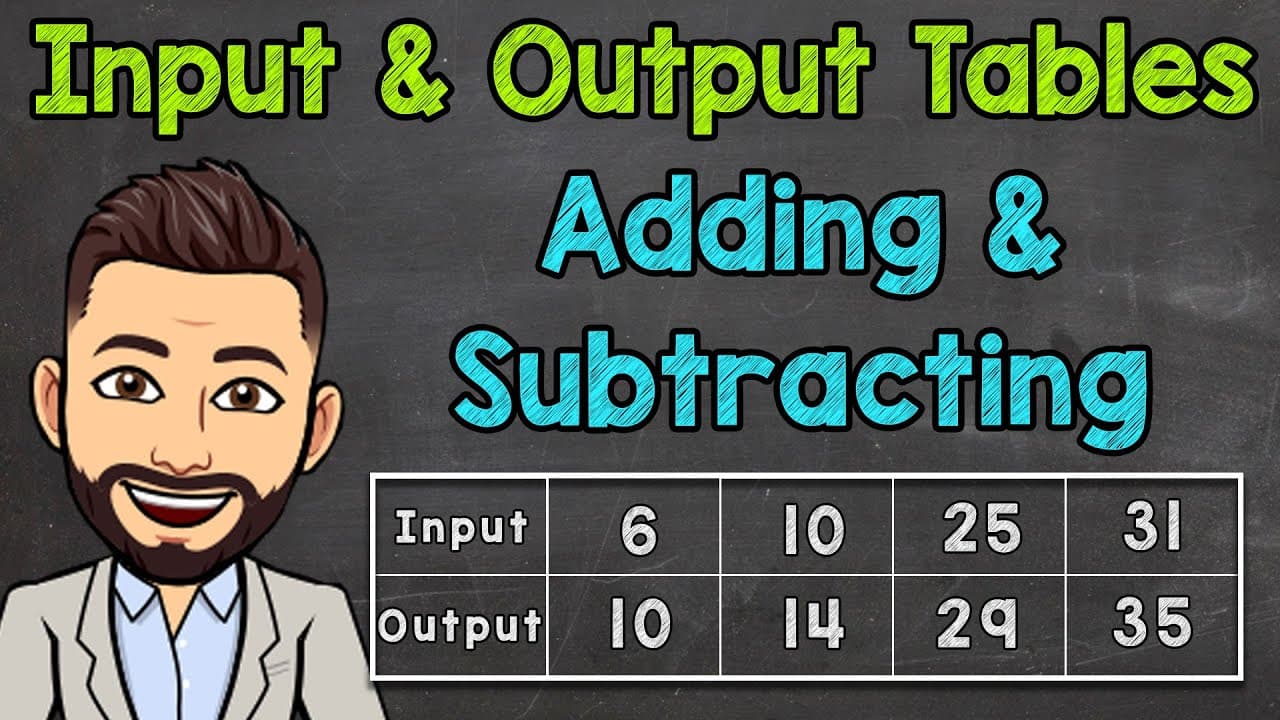
This educational math video by Mr. J provides a clear, step-by-step tutorial on solving input and output tables using addition and subtraction rules. The video guides students through four distinct examples, progressing from horizontal tables to vertical tables, and increasing in complexity by requiring students to find missing input values using inverse operations. Mr. J demonstrates how to identify the relationship between numbers to determine the 'rule' and then apply that rule to complete the table. The content focuses on key algebraic concepts including pattern recognition, determining function rules, and understanding the relationship between input and output values. A significant portion of the video is dedicated to the critical thinking skills required to verify a rule across multiple data points before applying it. The video also covers the concept of inverse operations, showing students how to work backwards from an output to find a missing input. For educators, this video serves as an excellent instructional tool for introducing or reinforcing function tables in upper elementary grades. It models the thought process of checking if values are increasing (addition) or decreasing (subtraction) and encourages students to verify their work. The clear visual layout and methodical pacing make it ideal for direct instruction, independent review stations, or as a reference for homework support in 3rd through 5th-grade math curriculums.
Math with Mr. JMath with Mr. J

5mins 10s

Proving the Sum of an Arithmetic Series Formula

Proving the Sum of an Arithmetic Series Formula

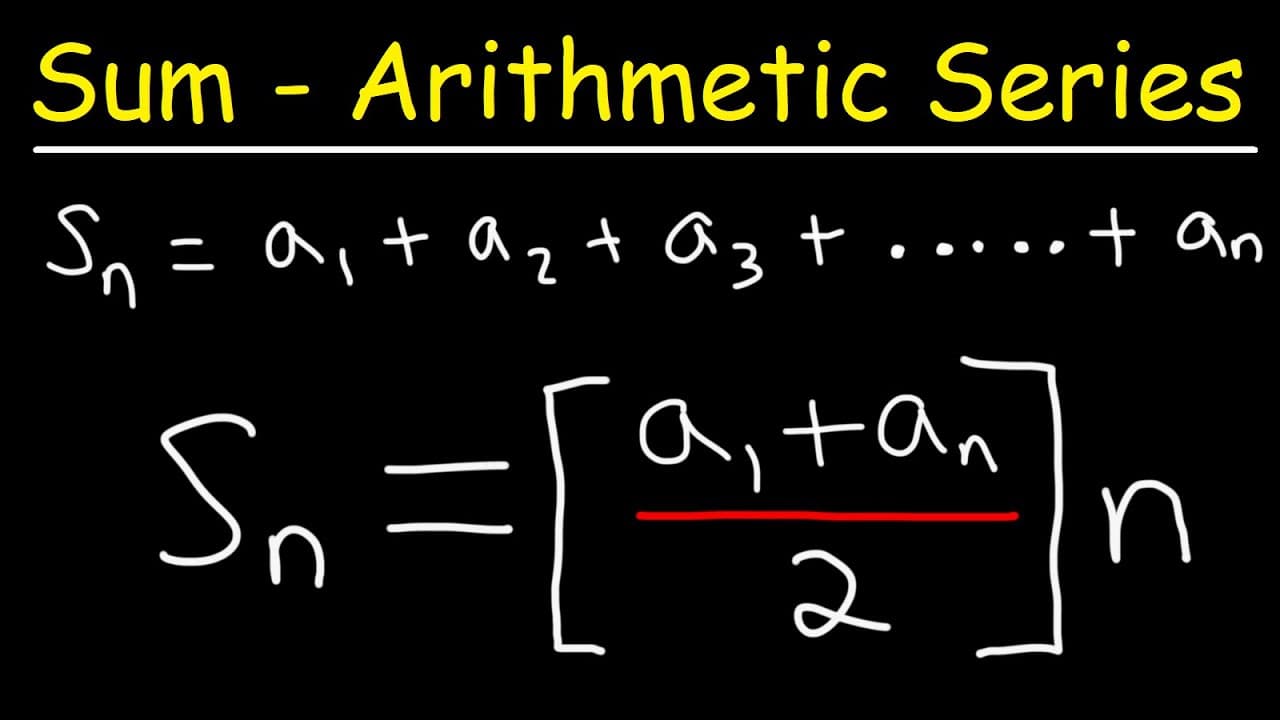
A focused mathematics tutorial that explains the difference between arithmetic sequences and series, demonstrates how to calculate the partial sum of a series, and provides a step-by-step algebraic proof for the arithmetic series sum formula. The video begins by distinguishing between a sequence (a list of numbers) and a series (the sum of those numbers) using a specific numerical example (5, 8, 11, 14, 17). The core of the video explores the derivation of the formula Sn = n/2 * (a1 + an). The instructor uses the "Gaussian method" of writing the series sum forwards and backwards, then adding the two equations together. This visual algebraic demonstration highlights how the common differences cancel out, leaving a clean result that proves why the formula works. This resource is highly valuable for high school Algebra II or Pre-Calculus classrooms. It moves beyond rote memorization by teaching the "why" behind the math. Teachers can use this to introduce the concept of formal proofs or to help students visualize the symmetry inherent in arithmetic progressions.

The Organic Chemistry TutorThe Organic Chemistry Tutor

6mins 38s

Materials

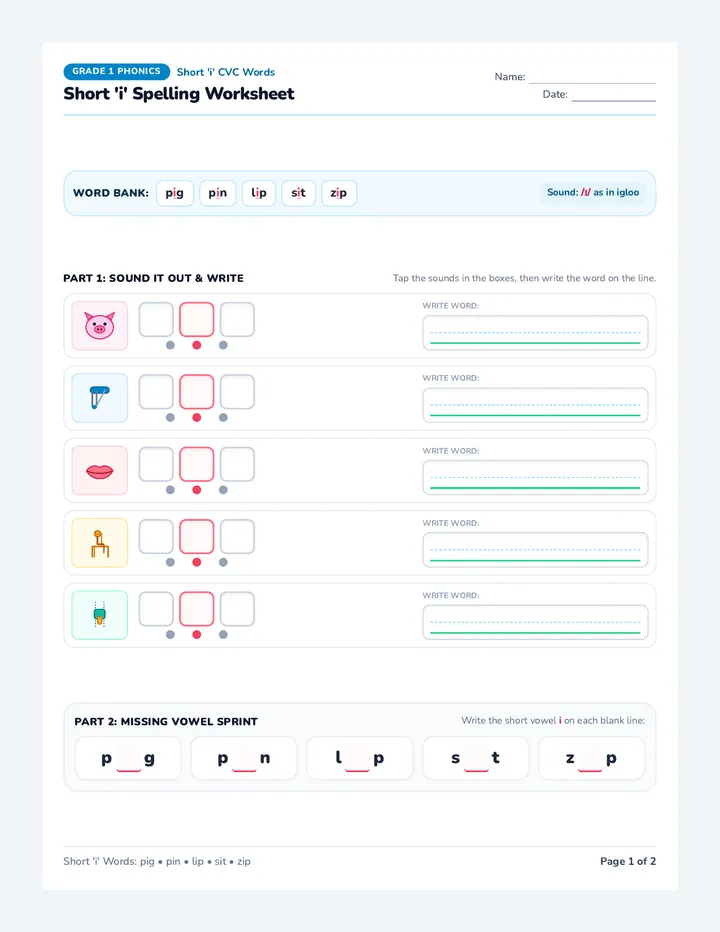
Short I Spelling Worksheet

Short I Spelling Worksheet

A two-page Grade 1 phonics and spelling worksheet focusing on 5 short I CVC words: pig, pin, lip, sit, and zip. Includes sound boxes, handwriting lines, word family sorting, cloze sentences, and a sentence writing challenge.

EA

Edith Asante

Figurative Patterns Slides Orientation Fix

Figurative Patterns Slides Orientation Fix

Fixed Slide 6 where the visualization of two paired triangular numbers forming a rectangle was missing. Replaced the previous layout with explicit flex rows to ensure the dots render correctly and clearly show how $T_4$ and its twin create a $4 \times 5$ rectangle. Label positioning and container sizing were also refined for better clarity. Adjusted Slide 4 to fill vertical space more effectively.

BC

Brenda Coombs

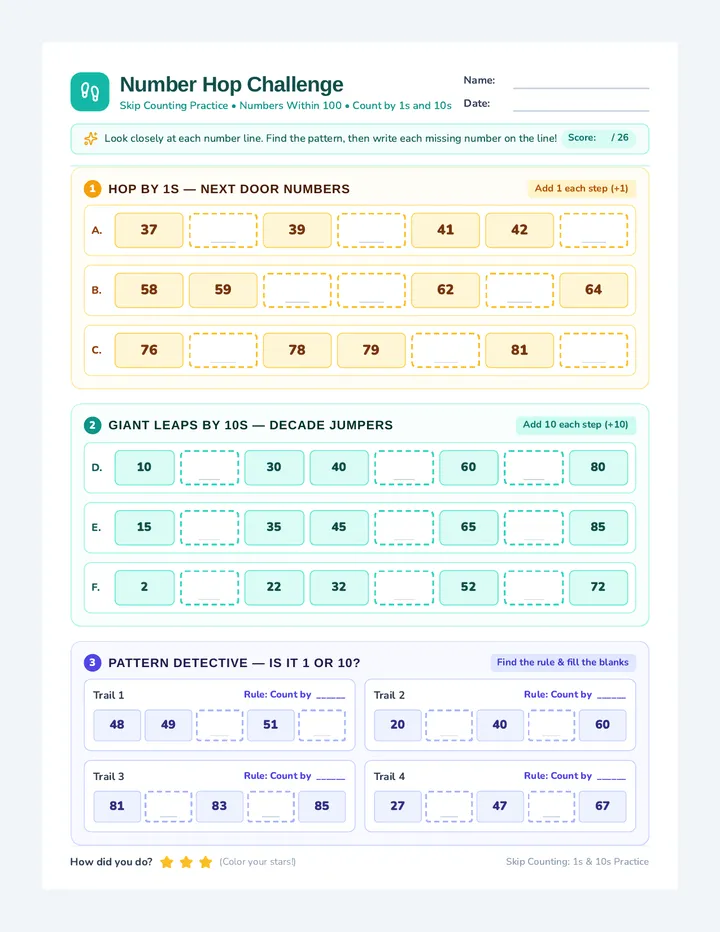
Number Hop Worksheet

Number Hop Worksheet

A colorful, print-ready math worksheet for elementary students practicing skip counting by 1s and 10s with all numbers strictly within 100, featuring decade-crossing hop paths, off-decade leaps, and mystery pattern trails.

AW

Arielle West

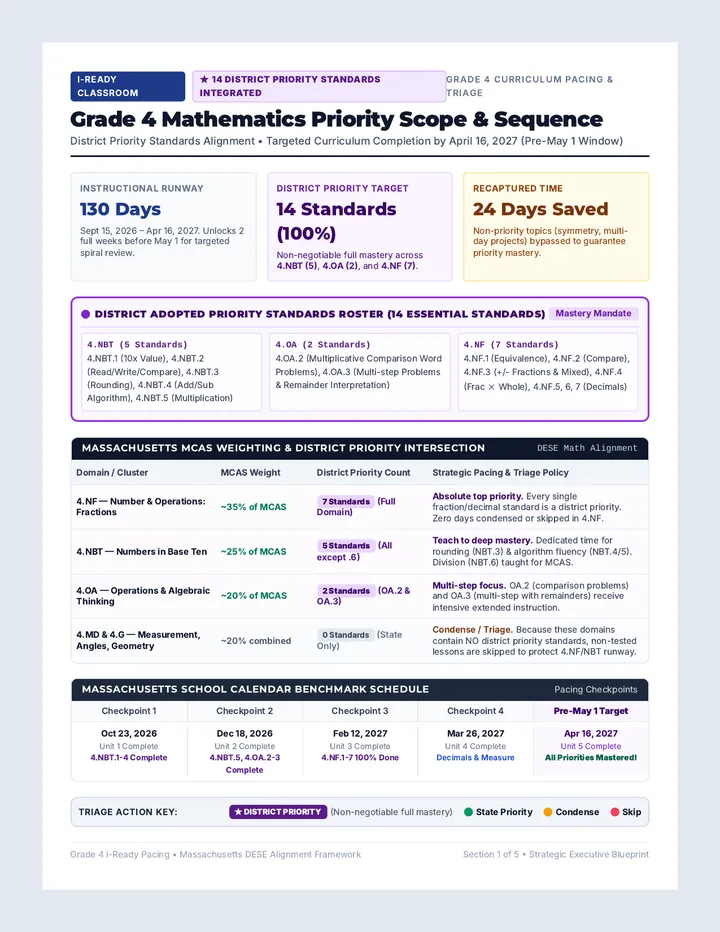
Grade 4 Math Priority Pacing Guide

Grade 4 Math Priority Pacing Guide

A comprehensive 5-page standards-aligned Grade 4 Mathematics curriculum pacing guide for i-Ready Classroom Mathematics, specifically incorporating the 14 designated District Priority Standards across 4.OA, 4.NBT, and 4.NF. Calibrated to the Massachusetts Curriculum Frameworks to guarantee 100% completion of all district priority standards before May 1, featuring explicit district priority badging, unit-by-unit pacing dates, strategic triage rationales for non-priority topics, and a Tier 2 prerequisite intervention bridge.

AS

Ashley Santiago

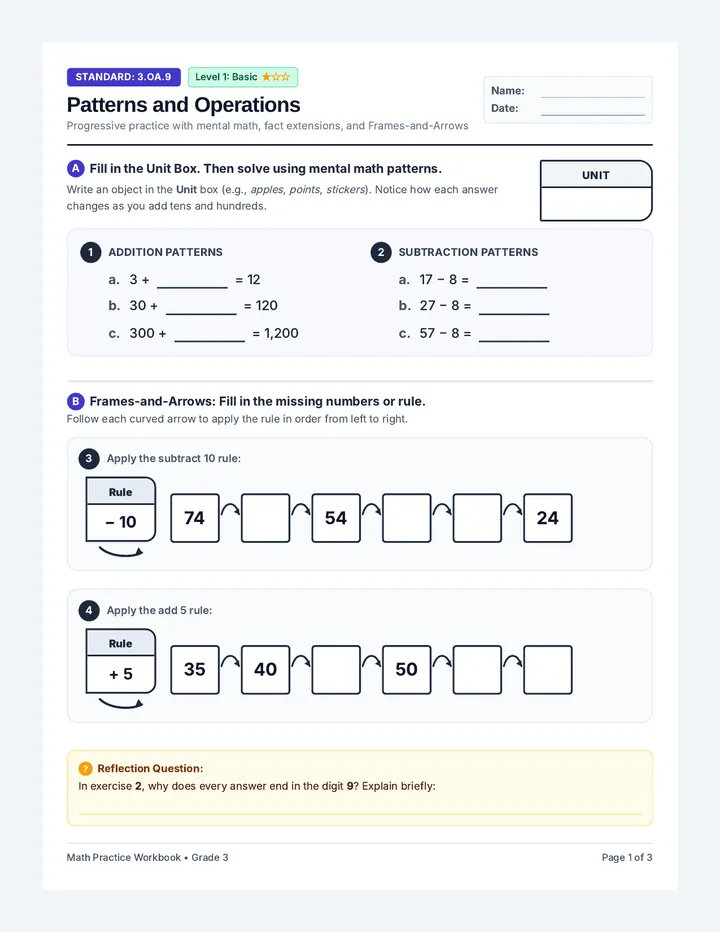
Patterns and Operations Workbook

Patterns and Operations Workbook

A 3-page progressive practice workbook featuring number patterns, mental addition and subtraction, and Everyday Math-style Frames-and-Arrows routines with graduated difficulty for third grade.

DL

Damaris Lopez Valentin

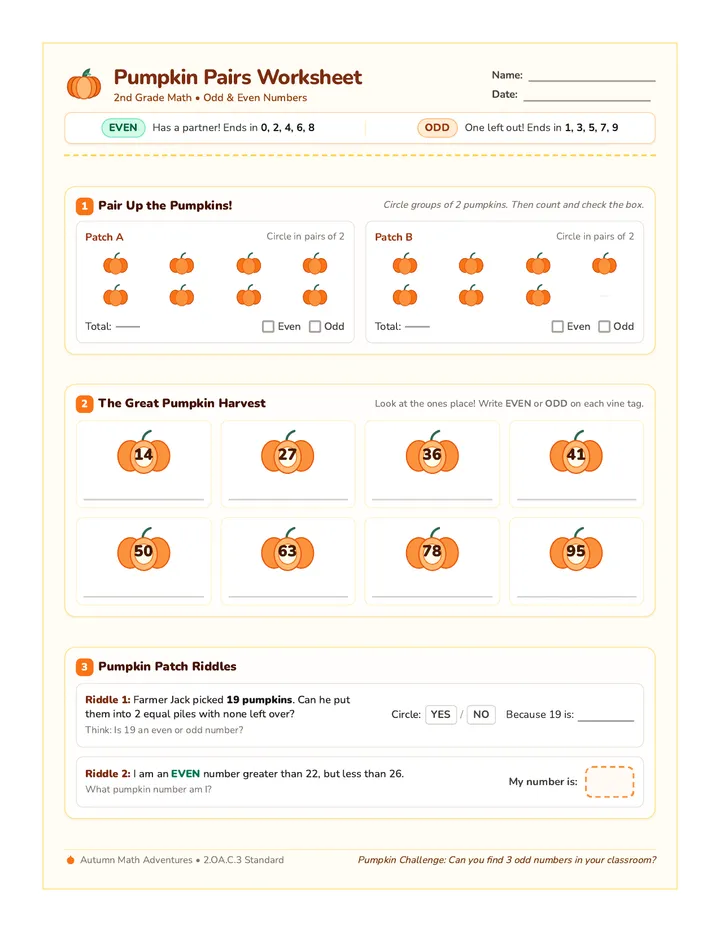
Pumpkin Pairs Worksheet

Pumpkin Pairs Worksheet

A 2nd-grade math worksheet exploring odd and even numbers with visual pumpkin pairs, number sorting in the pumpkin patch, and seasonal word riddles. Designed with autumn-themed illustrations and clean handwriting areas for elementary students.

J

Jennifer.Beiers

Sequences

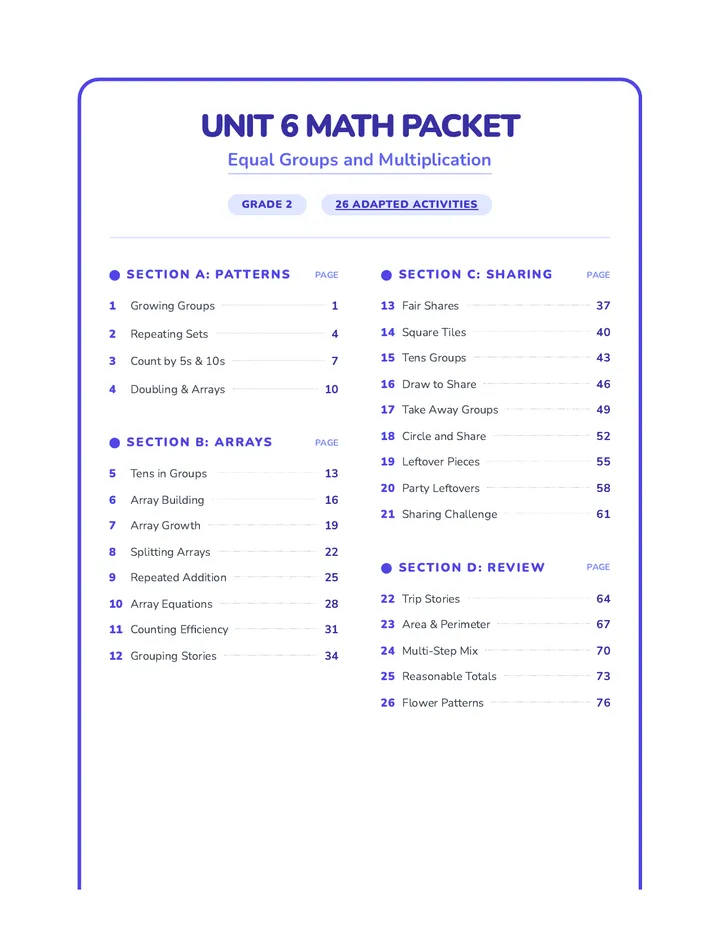
Packet Master TOC document

Unit 6 Equal Groups and Multiplication

A comprehensive Grade 2 math packet focused on skip counting, repeated addition, arrays, and equal groups.

N

nmack

39
Project Mission Slides Final

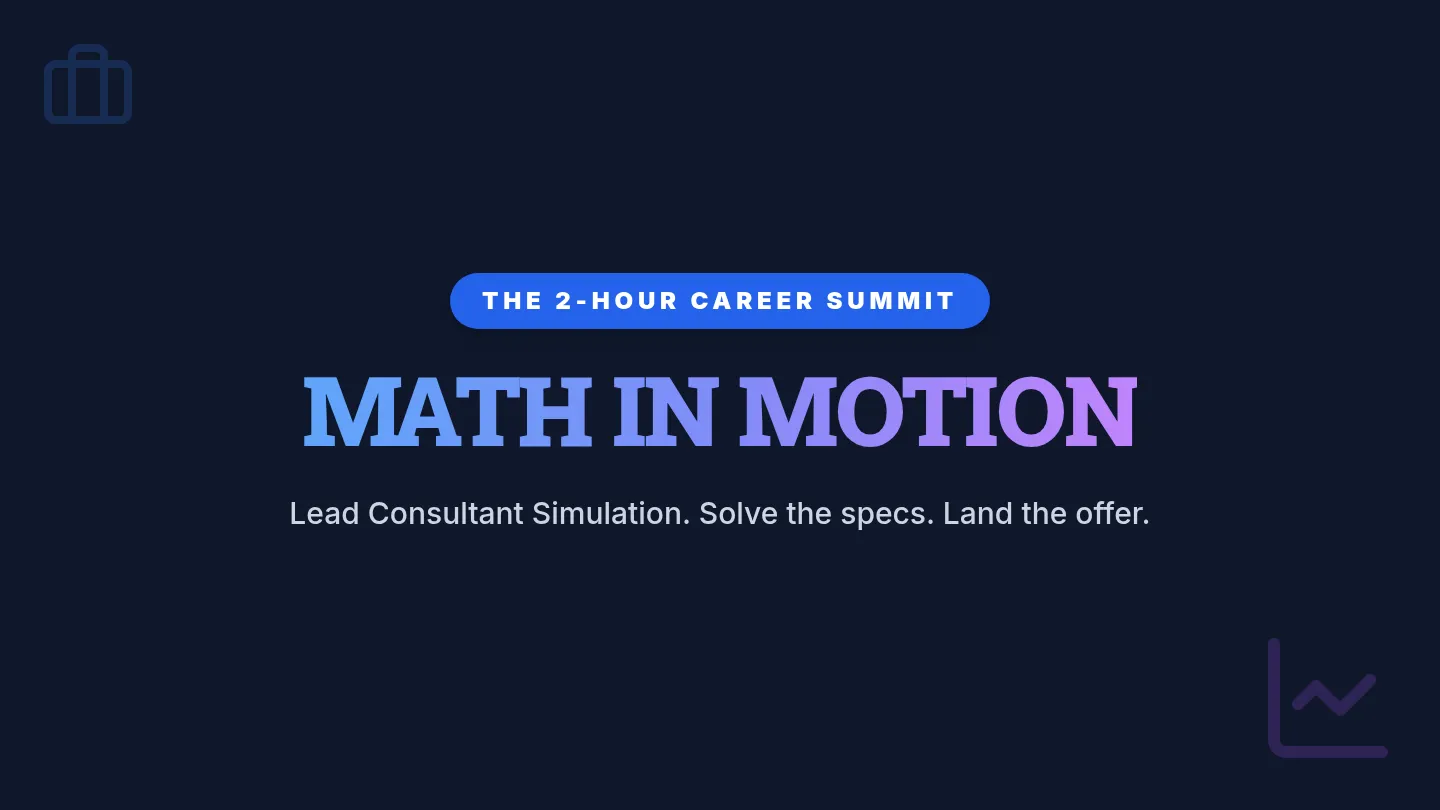
Math in Motion: The 2-Hour Summit

A high-intensity, 120-minute math simulation. Students act as lead consultants, completing a high-speed skill warmup before selecting a professional sector (Music, Urban Planning, Rocket Science, or Sports Analytics) to solve a series of complex work orders.

EL

Elsa LaLone

102
Number Gym Slides

Number Gym Circuit

A four-week intensive math intervention sequence for Tier 3 students. Each day features a 3-part drill targeting number identification, formation, and sequential counting. Weeks 1-2 focus on numbers 0-30; Weeks 3-4 expand to numbers 0-40.

NT

Nicole Thomson

22
Academy Final Mission Assessment

Pond Patrol Academy

A comprehensive math sequence designed for early learners to master counting from 1 to 20. Using a engaging pond theme, students progress from single-digit counting to understanding teen numbers and representing larger quantities.

CN

Coleman Newell

27
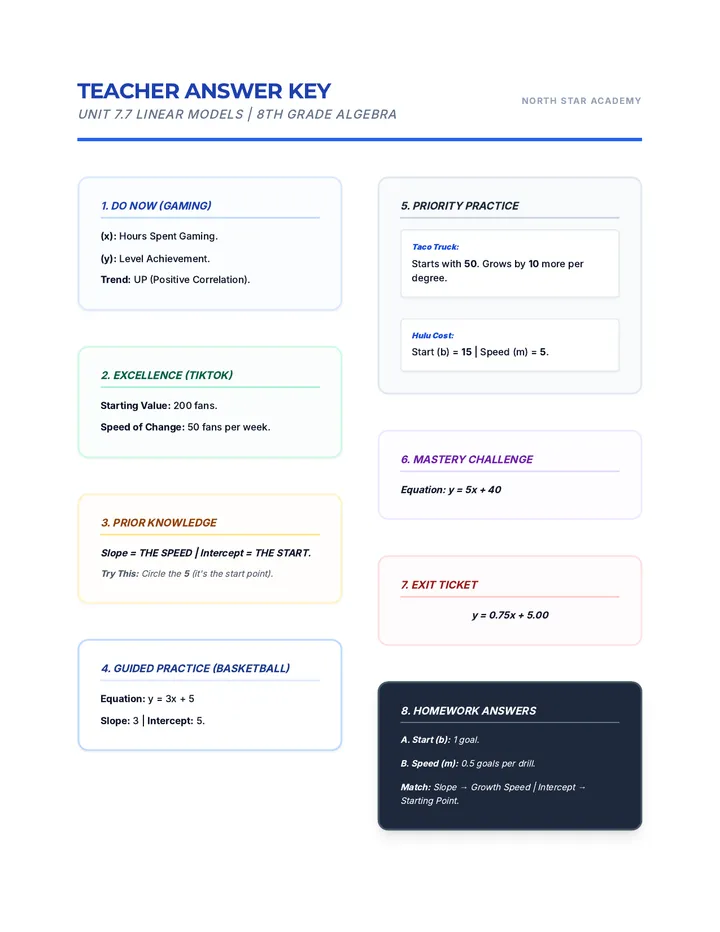
Trend Trackers Answer Key

Algebra Essentials Sequence

A series of 8th and 9th grade Algebra lessons focused on linear relationships and systems of equations, with a focus on SPED/IEP support.

D

deeohnny.jackson

55
Blueprint Basics Slides

Foundational Math Builders

A foundational math sequence for special education students (grades 5-6) focusing on algebraic thinking and spatial reasoning through highly visual, themed units.

JS

Janette Sullivan

37