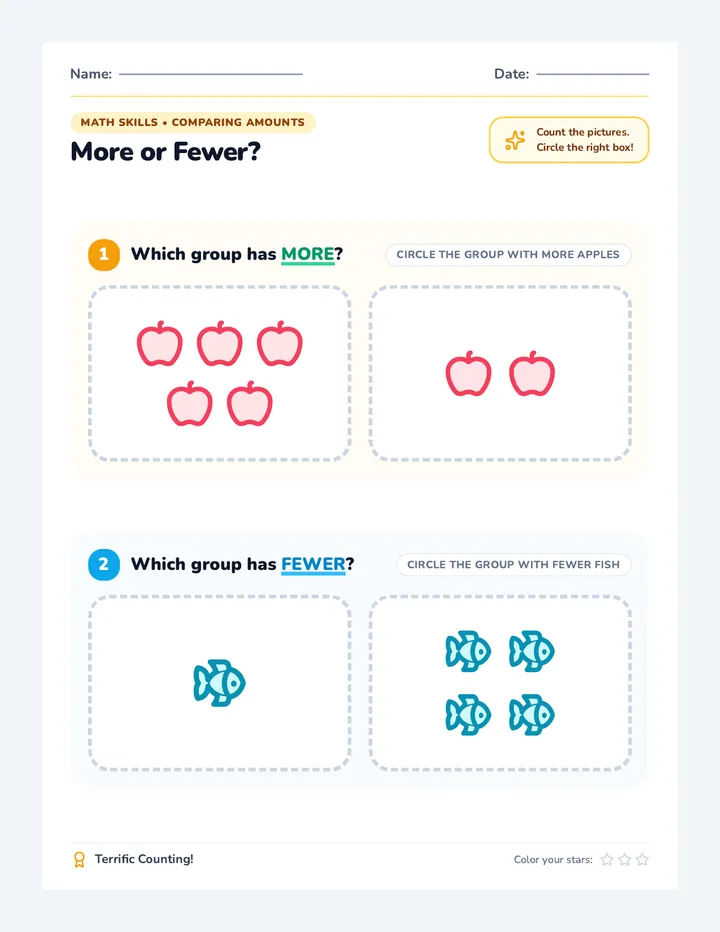
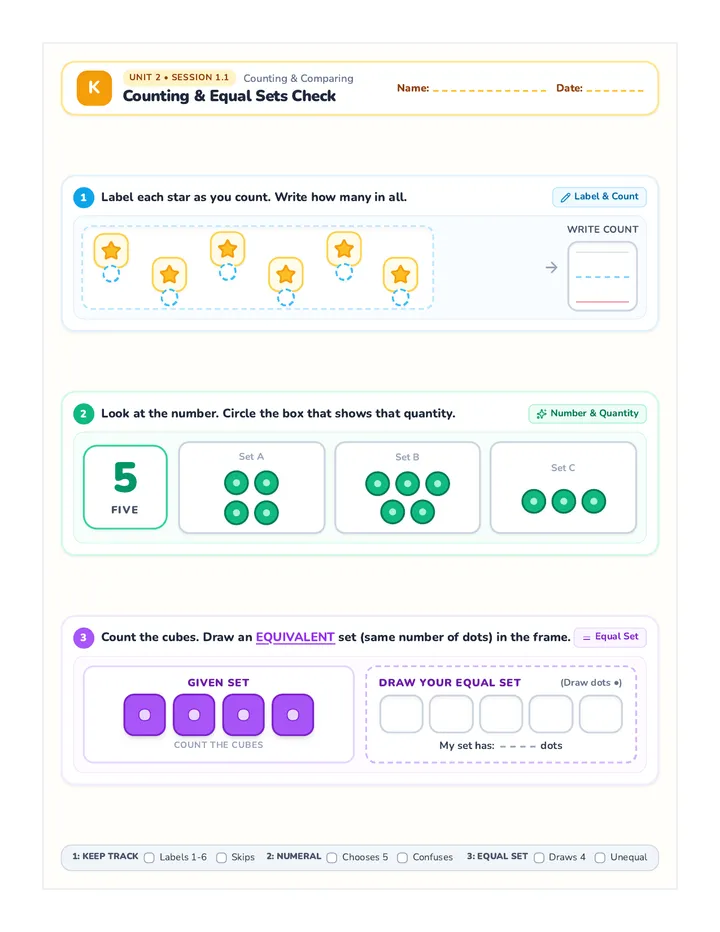
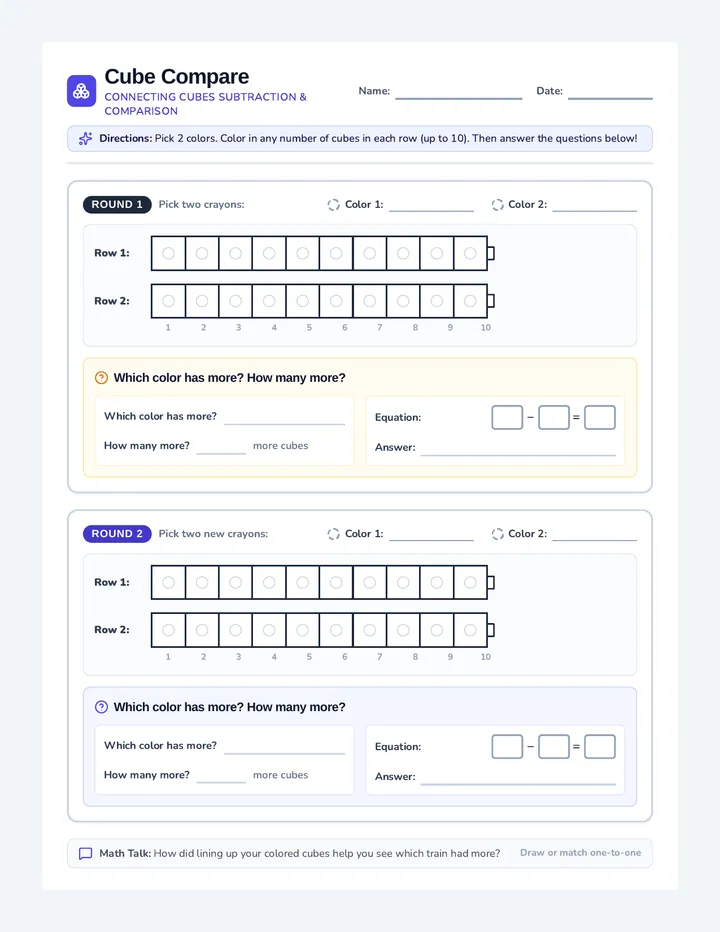
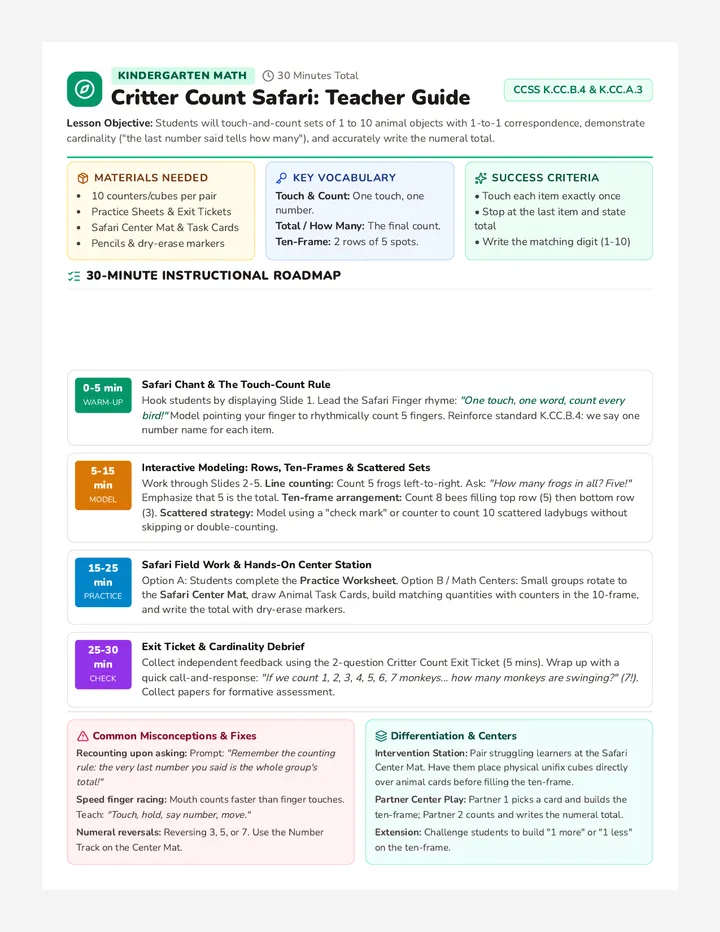
One-to-one correspondence, numeral identification, and comparison of quantities using terms like greater than or less than. Establishes the foundation for numerical literacy and early arithmetic operations.
A comprehensive 2-page book jacket and front-matter design worksheet where students craft their own book cover illustration, back cover blurb, endorsements, dedication, table of contents, chapter names, preface, and interior illustration.
A one-page early elementary math worksheet where students skip count autumn leaves by 2s to find the total, sort leaves by size and color, and write an addition problem combining small and large leaves.
A streamlined, high-impact 7-slide review presentation tailored for entering 7th graders, featuring clean worked examples and scaffolded guided practice for ratios, GCF, absolute value, comparing integers, and ordering numbers.
A hands-on, two-page partner math activity featuring a hundreds chart game board played with real coins drawn from a drawstring bag, including tactile identification guides, coin sorting mats, and value-matching challenges.
A revised one-page early elementary math worksheet where students skip count 11 pairs of autumn leaves by 2s to reach 22 total leaves, sort leaves by color (red, orange, yellow with no green leaves), sort by size, and solve an addition problem.
Finalized two-page guided notes handout for Estimating Square Roots: Page 1 features modeled problem 1, scaffolded problem 2, and blank number lines for problems 3-5 with ample handwriting space. Page 2 seamlessly renumbers all problems from 6 through 10, provides extra spacing under both multi-point number lines (8 and 9), and concludes with True/False error analysis (10) and lesson synthesis.
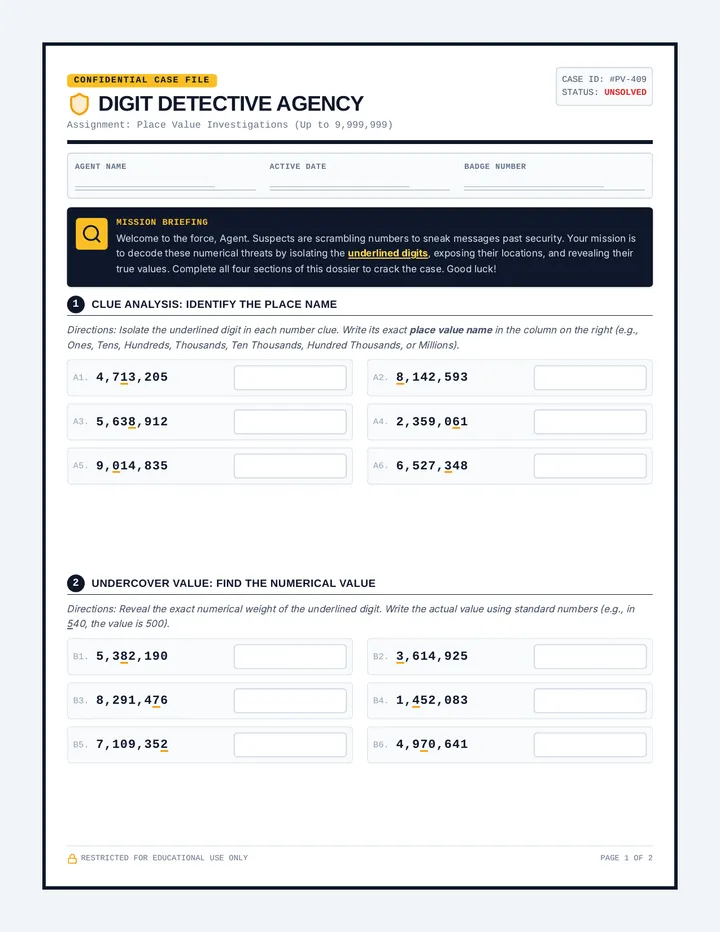
A 3rd-grade math practice worksheet focused on core place value concepts, including identifying digit values, standard/expanded/word forms, comparing and ordering numbers, and a detective mystery challenge.
A 4-page bite-sized baseline math assessment packet featuring clean mini-checkpoints for early learners. Includes number representation to 20, visual addition and subtraction within 10 and 20, picture-supported word problems, and multistep comparison tasks with pre-drawn ten-frames and dot arrays.
A 2-page 5th grade math worksheet featuring 20 scaffolded integer ordering problems from least to greatest with a mountain expedition theme, including an anchor number line reference and real-world temperature and elevation scenarios.
Large, vibrant math vocabulary cards for 11 key terms. Each card features a bold title, a clear visual illustration using icons and geometric shapes, and a student-friendly definition. Includes updates to the "Segment" card as a verb and a widened "Expression" layout.
A kindergarten graphing practice worksheet aligned with Indiana standard K.DA.1, where students count garden critters, color a picture bar graph, and answer comparison questions.
A 4-page visual, Chromebook-optimized math worksheet adapted for Spanish-speaking students with limited reading and English proficiency. Features built-in Chrome OS Select-to-Speak audio cues (Search + S), Spanish lang attributes, symbol-rich clues, integrated 1-100 charts, and partner-friendly scaffolding without relying on QR codes.
A four-week intensive math intervention sequence for Tier 3 students. Each day features a 3-part drill targeting number identification, formation, and sequential counting. Weeks 1-2 focus on numbers 0-30; Weeks 3-4 expand to numbers 0-40.
A foundational skills unit covering literacy progress tracking and early numeracy strategies for decomposition and missing addends.
A 20-lesson subtraction fluency unit for primary students, explicitly organized by mental math strategies: Counting Up, Number Lines, Making 10, Pretend 10, and Close to Doubles, all with Winter Olympic themes.
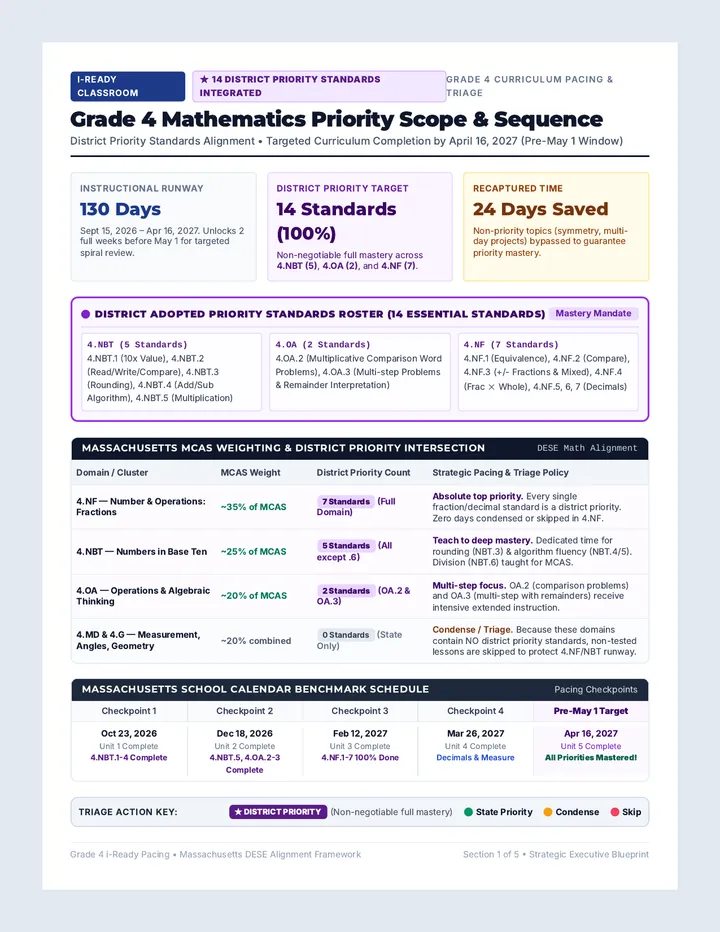
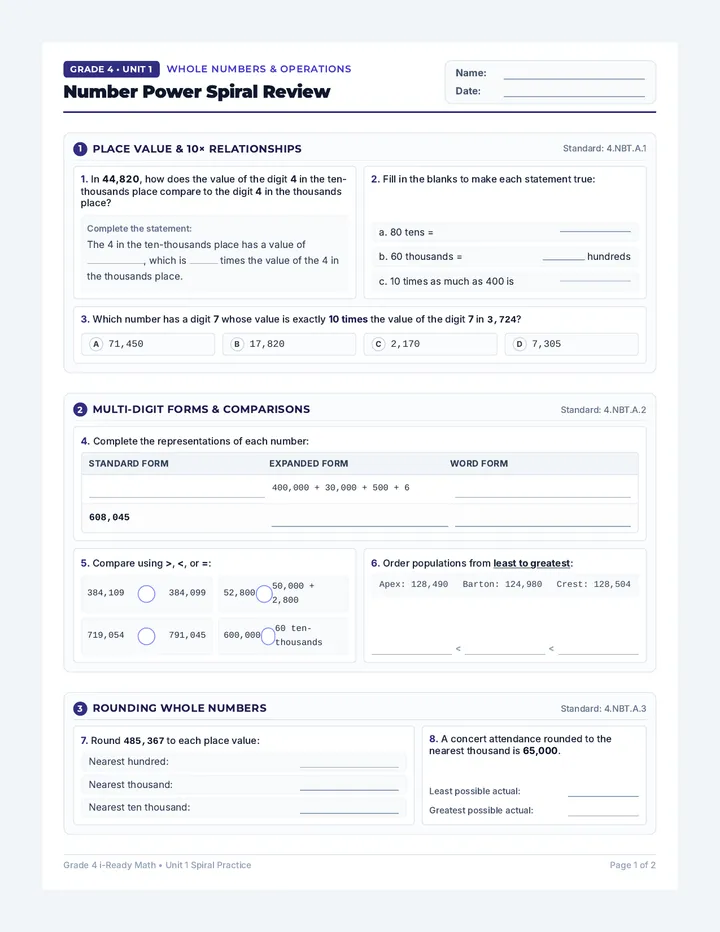
A cohesive set of skills-based daily warm-ups, diagnostic worksheets, and interactive guides designed to bolster fourth-grade proficiency in math and grammar.
A comprehensive 15-day math sequence designed for early elementary students to master numbers 0-100. The curriculum covers writing, sequencing, and place value through three progressive phases: 0-20, 20-50, and 50-100.
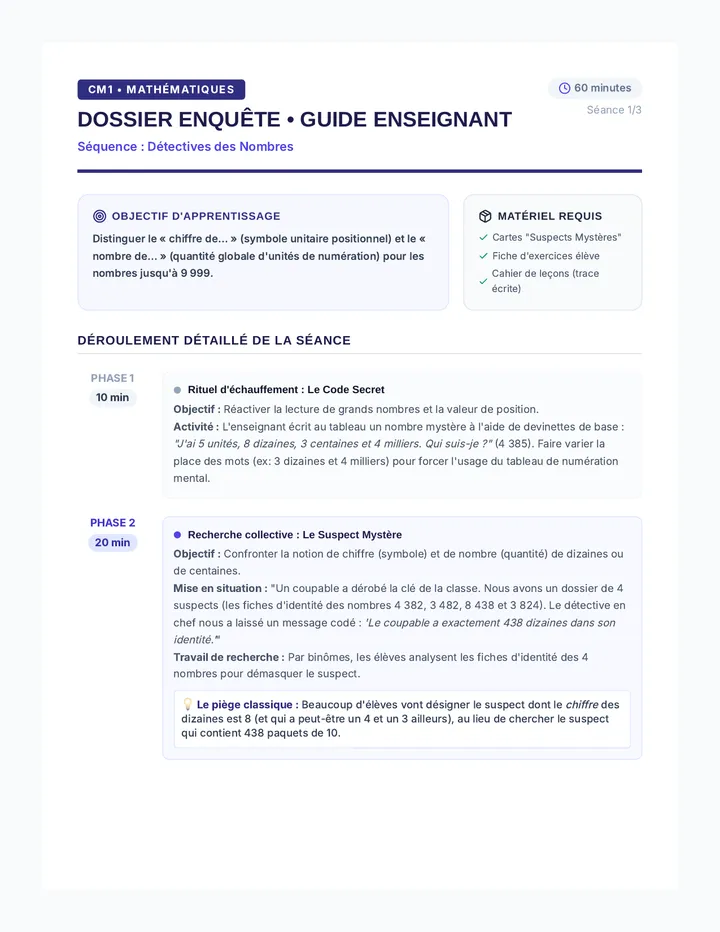
Une séquence de mathématiques pour CM1 pour réviser les nombres jusqu'à 9 999. Elle propose une approche active et ludique sous forme d'enquêtes pour maîtriser la numération décimale, distinguer chiffre et nombre, et décomposer les nombres.
A 12-session math intervention unit for Tier 3 students, focusing on place value up to the hundreds, addition and subtraction within 20, and single and two-step word problems.
A 4-day introductory unit on the Real Number System designed for special education classrooms, focusing on identifying rational and irrational numbers, converting repeating decimals, and estimating square roots with high-scaffold supports.
A 5-day foundational math unit exploring numbers 1-10, addition, and subtraction. Using consistent color-coding and visual icons, students build number sense and confidence in basic operations.
A 5-day math sequence for 3rd and 4th grade students working at a 2nd-grade level. The unit focuses on addition and subtraction up to 30 using number lines and keyword strategies, themed around Legos, monster trucks, and the Golden State Warriors.
This sequence introduces Pre-K students to the concept of zero and the written names of numbers 1-3. It bridges math and literacy through storytelling, environmental print awareness, and rhythmic activities.
A Pre-K math sequence focused on backward counting from 5 and 10 using engaging simulations like rocket launches, disappearing snacks, and songs. Students explore the concept of decreasing quantity and prepare for subtraction.
A foundational math lesson focused on one-to-one correspondence for numbers 1-10, using visual number lines, physical counting, and finger representation.
A comprehensive lesson focused on mastering numbers up to 30, covering counting, recognizing, representing, naming, and ordering quantities through hands-on practice and assessment.
A comprehensive review packet covering counting sequences, place value, double-digit addition/subtraction with multiples of ten, and error analysis of addition strategies. Each core question type is practiced three times to ensure mastery.
A Kindergarten math lesson focusing on K.CC.4 where students count and interact with quantities by circling and crossing out specific amounts of shapes. The lesson follows a gradual release model: I Do, We Do, You Do.
A highly scaffolded math lesson for Kindergarten emerging English Language Learners (ELLs) to master counting on from any number up to 20 (with extension to 30). Features visual counting tracks, ten frames, concrete finger-counting graphics, sentence frames, and bilingual supports to make the mathematics accessible while developing language proficiency.
A comprehensive set of counting task cards focusing on identical items up to 20, designed for children with autism using clear visuals and predictable layouts across four high-interest themes: bugs, animals, trucks, and cars.
A K-2 math lesson focusing on solving addition and subtraction word problems using part-part-whole mats, bar models, and number lines, while applying counting on/back and making-a-ten strategies.
A hands-on lesson focusing on counting and comparing sets of forest-themed items up to 15 to develop foundational number sense and comparison skills.
A comprehensive assessment package evaluating fundamental place value up to 1,000, skip counting by 5s, 10s, and 100s, and mental addition/subtraction of 10 and 100. Includes a highly scaffolded student test booklet, progress monitoring sheets, and a teacher scoring guide.
A comprehensive end-of-year math review for 1st grade students, aligned with Illinois Learning Standards. The lesson covers all major domains including Operations, Base Ten, Measurement, and Geometry through minimalist, high-legibility worksheets.
A hands-on introductory lesson where students build their own analog clock by cutting and pasting hour numbers. Students practice number sequencing and spatial awareness on a circular clock face.
A foundational math lesson for kindergarteners to understand how teen numbers are composed of a group of ten and additional ones. Students will use ten frames and base ten blocks to 'build' numbers 11-19.