Lenny.com
Explore
Create
ActivitiesNewMathEnglish Language ArtsScience & EngineeringSocial StudiesGlobal LanguagesHealth & Physical EducationSpecial EducationCounseling & Life SkillsArts & CreativityESL
Lenny.com
Lenny.com
Explore
Create
ActivitiesNewMathEnglish Language ArtsScience & EngineeringSocial StudiesGlobal LanguagesHealth & Physical EducationSpecial EducationCounseling & Life SkillsArts & CreativityESL
Lenny.com
Lenny.com

Solutions

Lenny for EducatorsLenny for SchoolsLenny for Districts

Product

ExploreSign inCreateSupportAbout

Resources

Getting startedMTSS Acceleration Program

© 2026 Lenny Learning Inc.

TermsPrivacyAccessibility
LinkedInInstagramX
Lenny

Trigonometric Functions and Unit Circle

Relationship between circular coordinates and trigonometric ratios using radians and degrees. Connects unit circle properties to sine, cosine, and tangent graph transformations.

MathNumbers & CountingCounting ObjectsNumber NamesComparing NumbersNumber OperationsCounting SequenceNumbers 0-10Place Value Understanding and SystemAdd and Subtract Within 20Addition and Subtraction ConceptsAddition and Subtraction EquationsAddition and Subtraction ProblemsFoundations for MultiplicationMultiplication and Division PropertiesMultiply and Divide Within 100Multiplication and Division ProblemsFactors and MultiplesProperties of OperationsPatterns and RelationshipsGenerate and Analyze PatternsMulti-Digit ArithmeticPlace Value OperationsMulti-Digit and Decimal OperationsNumerical ExpressionsFour Operations and PatternsFour Operations Problem SolvingMeasurement & DataMeasurable AttributesMeasuring LengthsMeasure and Estimate Lengths in Standard UnitsRelate Addition and Subtraction to LengthClassifying and Counting ObjectsTime and MoneyArea Concepts and MeasurementPerimeter and Area MeasuresAngle Concepts and MeasurementTime, Volume, and MassMeasurement Unit ConversionsGeometryIdentifying ShapesShapes and AttributesShape Attributes and ReasoningShapes and CompositionClassifying 2D FiguresGeometric Figures and RelationshipsLines, Angles, and ShapesAngle, Area, and VolumeGeometric MeasurementVolume of 3D ShapesCoordinate Plane ApplicationsTransformations in the PlaneCongruence and SimilarityUnderstand congruence in terms of rigid motionsSimilarity and TransformationsProve Theorems Involving SimilarityPythagorean TheoremTrigonometry for General TrianglesMake Geometric ConstructionsProve Geometric TheoremsTheorems About CirclesFind Arc Lengths And Areas of Sectors of CirclesVolume FormulasRelationships Between Two-Dimensional and Three-Dimensional ObjectsProve Simple Geometric Theorems AlgebraicallyTranslate Between Geometric Description and Equation for Conic SectionApply Geometric Concepts in Modeling SituationsFractions & DecimalsFractions as NumbersBuilding FractionsFraction Equivalence and OrderingAdding and Subtracting FractionsMultiplying and Dividing FractionsDividing FractionsDecimal FractionsMulti-Digit Computation and FactorsAdd, Subtract, Multiply, and Divide Rational NumbersRational Number SystemIrrational Numbers and ApproximationsRatiosRatios and ProportionsProportional RelationshipsUnit RateAlgebraAlgebraic ExpressionsGenerate Equivalent ExpressionsQuantitative RelationshipsProportional Relationships and Linear EquationsEquations and InequalitiesEquation Solving and ReasoningLinear Equations and SystemsGraph Equations and InequalitiesSystems of EquationsReal-World Algebraic ProblemsQuantitative Reasoning with UnitsExpression StructureEquivalent Expression FormsRadicals and Integer ExponentsRational ExponentsRational and Irrational NumbersPolynomial OperationsPolynomial IdentitiesPolynomial Zeros and FactorsRational ExpressionsComplex Number OperationsComplex Numbers in PolynomialsComplex Numbers on PlaneStatistics & ProbabilityRepresent and Interpret DataData DistributionsStatistical VariabilityProbability ModelsCompound Event ProbabilitiesStatistical SamplingInterpret Categorical and Quantitative DataBivariate Data PatternsInterpret Linear ModelsComparing Two PopulationsRandom Processes in StatisticsIndependence and Conditional ProbabilityExpected ValuesProbability-Based Decision MakingStatistical Inference and ConclusionsFunctionsFunction Concepts and NotationDefine and Compare FunctionsInterpret Functions in ContextAnalyze Function RepresentationsModel Relationships with FunctionsIdentify Linear vs Exponential GrowthDistinguish Between Function TypesCompare Growth RatesInterpret Function ExpressionsBuild Functions from RelationshipsConstruct and Model FunctionsTransform and Combine FunctionsModel Comparison and SelectionSolve Exponential EquationsTrigonometryTrigonometric Ratios Involving Right TrianglesTrigonometric Functions and Unit CircleModel with Trigonometric FunctionsTrigonometric IdentitiesVectors & MatricesIntroduction to Vectors and MatricesVector QuantitiesVector OperationsMatrix OperationsCalculusLimits and ContinuityDerivative Concepts and NotationDerivative Rules and TechniquesApplications of DerivativesOptimization ProblemsRelated RatesCurve Sketching and AnalysisIntegration Concepts and NotationAntiderivatives and Indefinite IntegralsDefinite Integrals and AreaFundamental Theorem of CalculusIntegration TechniquesApplications of IntegrationDifferential EquationsSequences and SeriesParametric and Polar FunctionsVector-Valued Functions

Videos

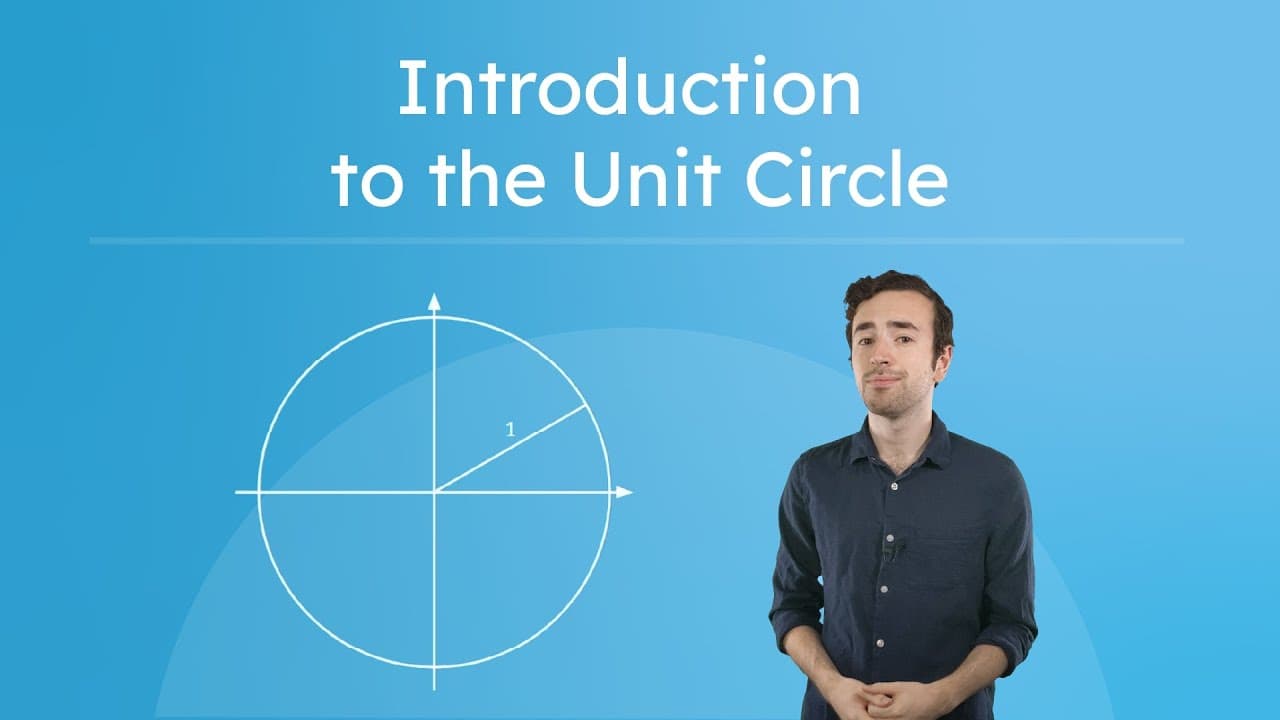
How to Read and Use the Unit Circle

How to Read and Use the Unit Circle

This educational video serves as a comprehensive introduction to the unit circle, a fundamental concept in trigonometry. The narrator explains the definition of a unit circle—a circle centered at the origin of a coordinate plane with a radius of one—and demonstrates how it interacts with the X and Y axes. The video transitions from basic definitions to the geometry behind the circle, showing students how to locate and label key points such as (1, 0) and (0, 1), and explains the concept of "standard position" for angles measured counter-clockwise from the positive x-axis.

Miacademy & MiaPrep Learning ChannelMiacademy & MiaPrep Learning Channel

12mins

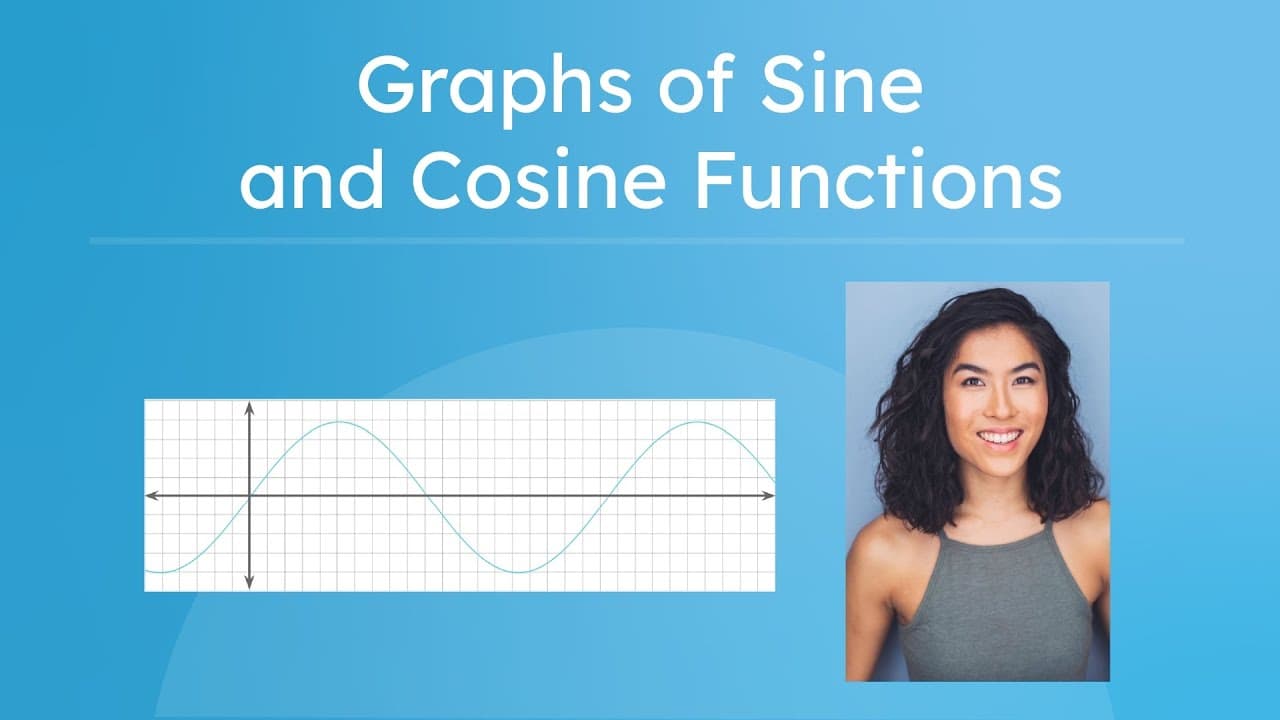
Graphing and Transforming Sine and Cosine Functions

Graphing and Transforming Sine and Cosine Functions

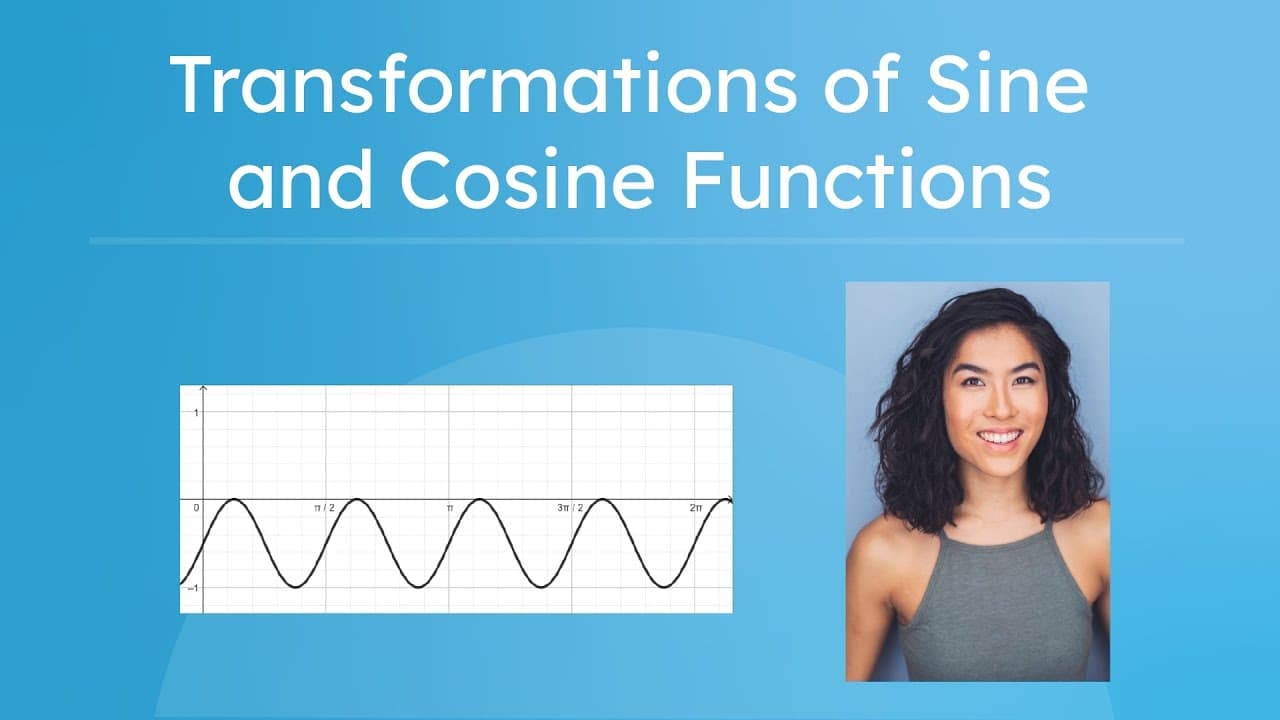
This comprehensive mathematics video provides a detailed guide to transforming sine and cosine functions. It systematically breaks down the standard equation y = a*sin(b(x-c)) + d, explaining how each variable affects the graph's shape and position. The video covers key concepts including amplitude, period, phase shifts, and vertical shifts, using clear visual comparisons between parent functions and their transformed counterparts to illustrate these abstract mathematical concepts. The content explores four main types of transformations: vertical stretches/compressions (amplitude), horizontal stretches/compressions (period), horizontal shifts (phase shifts), and vertical shifts (midline adjustments). It also clarifies the relationship between sine and cosine functions, demonstrating how they are essentially the same wave shifted by pi/2. Through step-by-step examples, the video teaches viewers both how to graph a function from a given equation and how to derive an equation from a given graph. For educators, this video is an excellent resource for Algebra II, Trigonometry, or Pre-Calculus units. It transitions from conceptual understanding to procedural fluency, offering pause points for students to predict graph characteristics before solutions are revealed. The inclusion of complex examples that combine multiple transformations makes it suitable for direct instruction, review, or a flipped classroom model, helping students bridge the gap between algebraic formulas and graphical representations.

Miacademy & MiaPrep Learning ChannelMiacademy & MiaPrep Learning Channel

21mins 51s

Mastering the Complex Plane: Plotting, Modulus, and Polar Form

Mastering the Complex Plane: Plotting, Modulus, and Polar Form

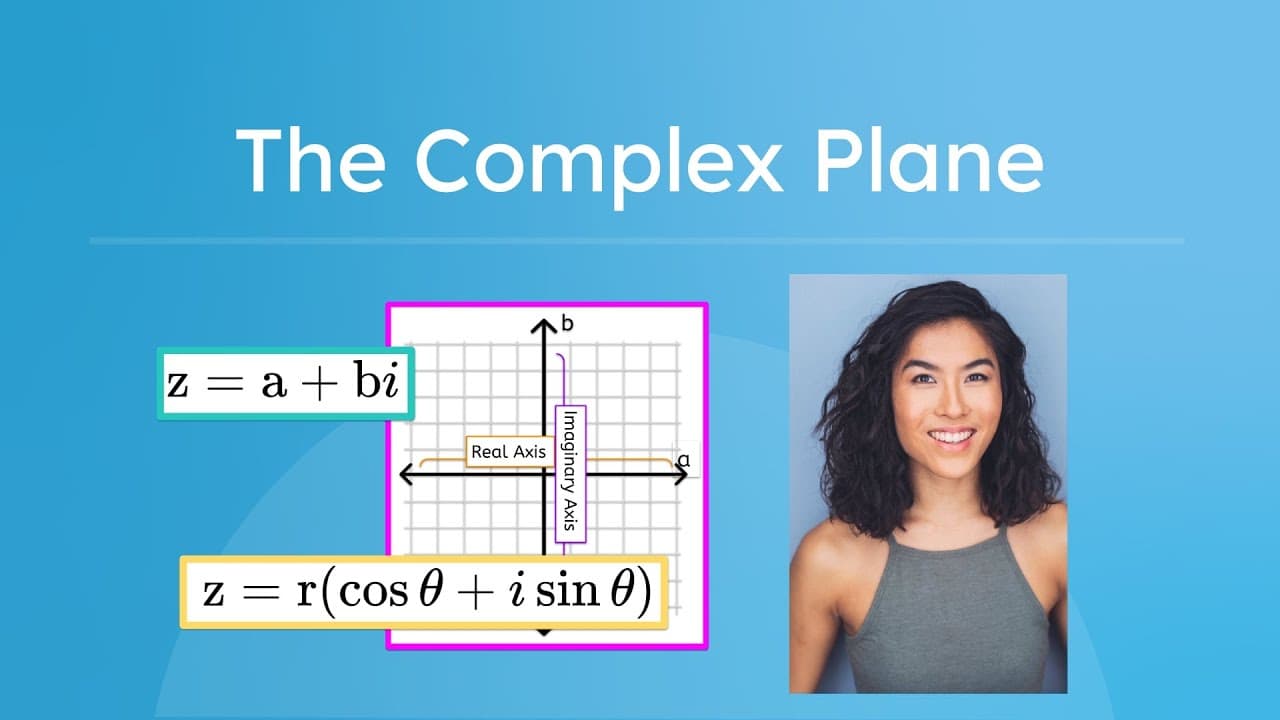
This educational video provides a comprehensive introduction to the complex plane, a fundamental concept in Pre-Calculus and advanced algebra. It begins by grounding the topic in history with Gerolamo Cardano and Jean-Robert Argand before diving into the practical mechanics of visualizing complex numbers. The video explains how the two-dimensional plane is structured with real and imaginary axes, distinct from the traditional Cartesian X-Y plane, though operating on similar coordinate principles. The content covers three main technical skills: plotting complex numbers as coordinates, calculating the modulus (absolute value) using the distance formula/Pythagorean theorem, and converting complex numbers from rectangular form to polar form. It explicitly connects these new concepts to prior student knowledge of polar coordinates and trigonometry, making the transition to complex number operations smoother. For educators, this resource serves as an excellent core lesson for introducing the geometric representation of complex numbers. It includes worked examples with pause points for student practice, specifically addressing common sticking points like quadrant-specific angle adjustments when finding theta. The video effectively bridges the gap between algebraic manipulation of imaginary numbers and their geometric properties.

Miacademy & MiaPrep Learning ChannelMiacademy & MiaPrep Learning Channel

11mins 47s

Mastering Math with the Desmos Online Graphing Calculator

Mastering Math with the Desmos Online Graphing Calculator

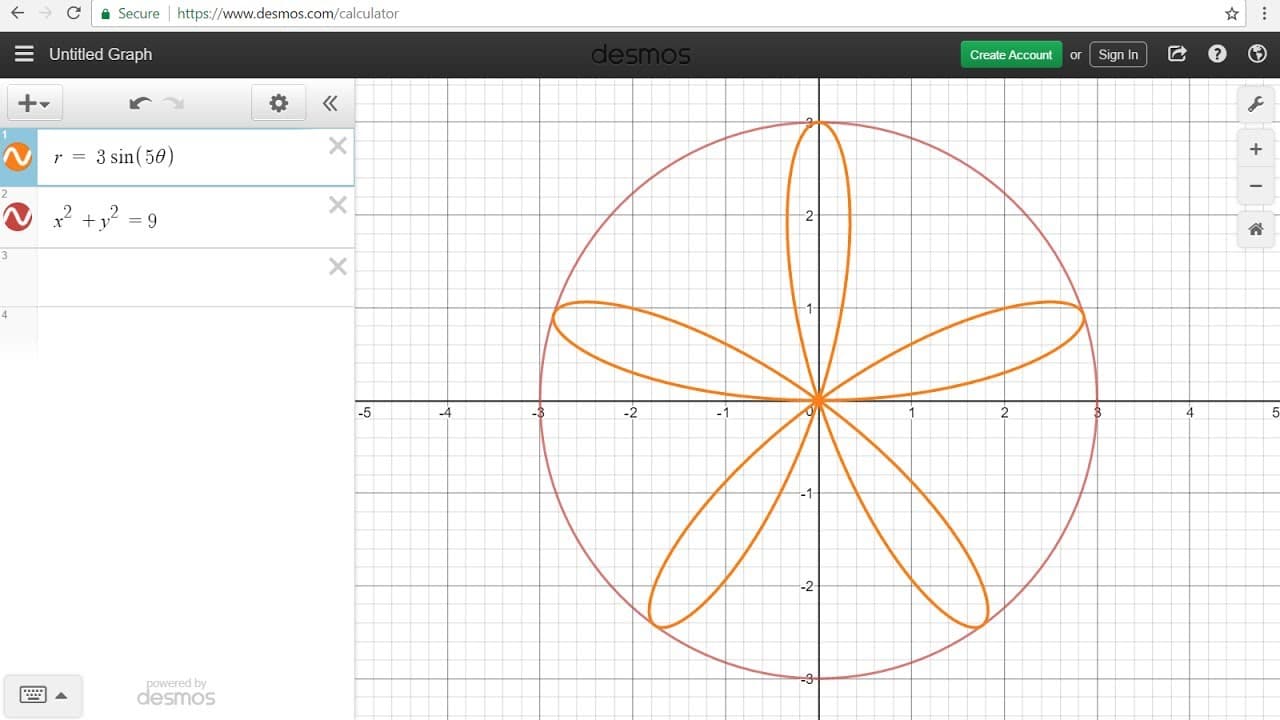
This comprehensive tutorial introduces students and educators to the Desmos online graphing calculator, a powerful and free tool for visualizing mathematics. The video begins with the basics of accessing the site and graphing simple functions like lines and parabolas, then progressively moves to more advanced topics including trigonometry, polar coordinates, and calculus operations. The narrator demonstrates not just how to plot graphs, but how to use the tool to solve equations, factor quadratics, and visualize systems of inequalities. Key mathematical themes include function families (linear, quadratic, cubic, absolute value, exponential, logarithmic), systems of equations and inequalities, trigonometry (degrees vs. radians), and statistical analysis (mean, standard deviation). The video also highlights the calculator's computational abilities, such as evaluating definite integrals, summations, and permutations, making it a versatile utility for various levels of math. For the classroom, this video serves as an excellent training resource for students transitioning from handheld calculators to computer-based tools. It allows teachers to show students how to verify their algebraic work visually, such as checking factors by looking at x-intercepts or solving systems by finding intersection points. The visual nature of the tool helps bridge the gap between abstract algebraic manipulation and concrete graphical understanding.
The Organic Chemistry TutorThe Organic Chemistry Tutor

13mins 58s

Understanding Inverse Trigonometric Functions and Their Domains

Understanding Inverse Trigonometric Functions and Their Domains

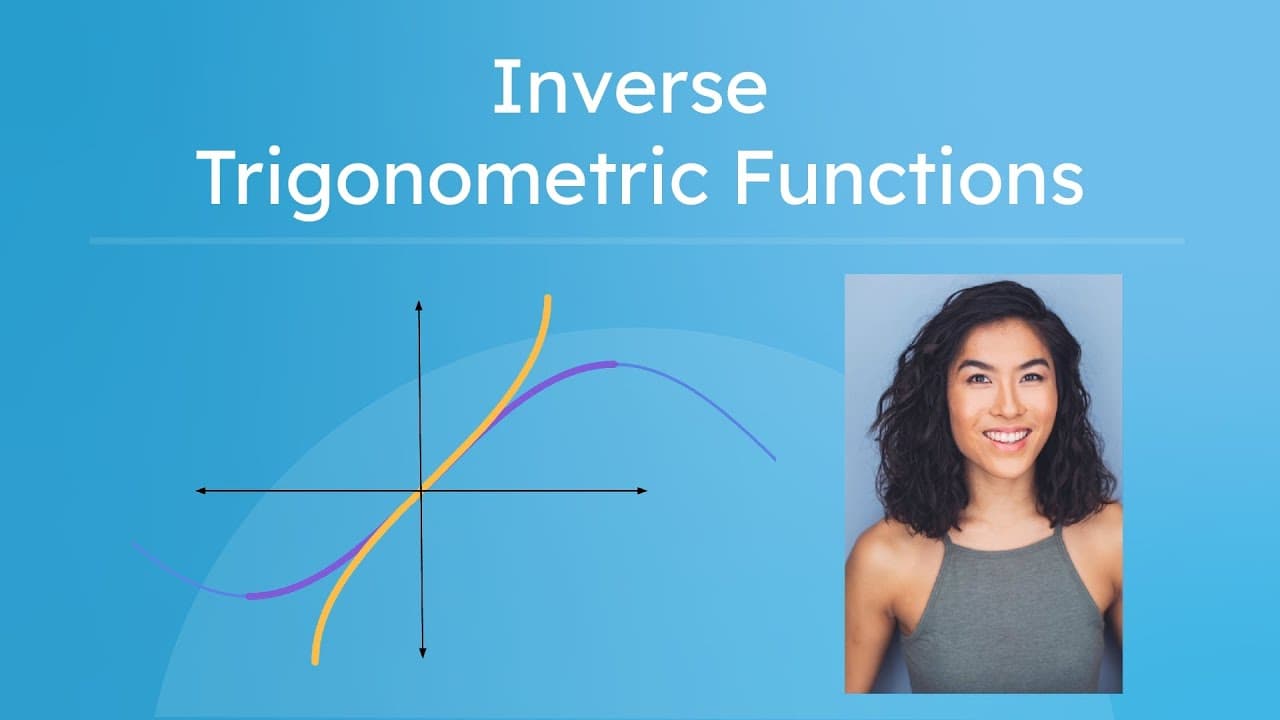
This comprehensive mathematics video explores the concept of inverse trigonometric functions, specifically focusing on inverse sine, cosine, and tangent. The lesson begins by addressing the fundamental problem that trigonometric functions are periodic and fail the horizontal line test, meaning they are not naturally one-to-one. The narrator explains how to restrict the domains of these functions to specific intervals—such as [-pi/2, pi/2] for sine—to create invertible segments, allowing for the definition of arcsin, arccos, and arctan. The video provides a deep dive into visualizing these concepts using graphs and the unit circle. It demonstrates how inverse functions are reflections over the line y=x and clearly defines the new domain and range for each inverse function. Through multiple worked examples, students learn how to evaluate inverse trigonometric expressions both by finding exact values on the unit circle (for special angles) and by using a calculator for approximations. The content also addresses common pitfalls, such as why evaluating the inverse cosine of 2 results in an undefined answer. For educators, this video is an excellent resource for Precalculus or Trigonometry units. It visualizes abstract concepts like domain restriction and function reflection, making them accessible to students. The clear step-by-step examples provide models for solving problems without a calculator, reinforcing unit circle fluency, while also teaching proper calculator usage for non-standard angles. The video serves as a crucial bridge between basic trigonometry and solving trigonometric equations.

Miacademy & MiaPrep Learning ChannelMiacademy & MiaPrep Learning Channel

14mins 54s

Graphing and Understanding Sine and Cosine Waves

Graphing and Understanding Sine and Cosine Waves

This educational video provides a comprehensive guide to graphing sine and cosine functions, serving as a bridge between unit circle trigonometry and analytical graphing. It begins by constructing the sine graph point-by-point using values derived from the unit circle, visualizing how angular inputs (radians) translate to vertical outputs on a Cartesian plane. The narration guides viewers through the logic of periodic behavior, demonstrating why the wave pattern repeats indefinitely in both directions.

Miacademy & MiaPrep Learning ChannelMiacademy & MiaPrep Learning Channel

11mins 57s

Sequences

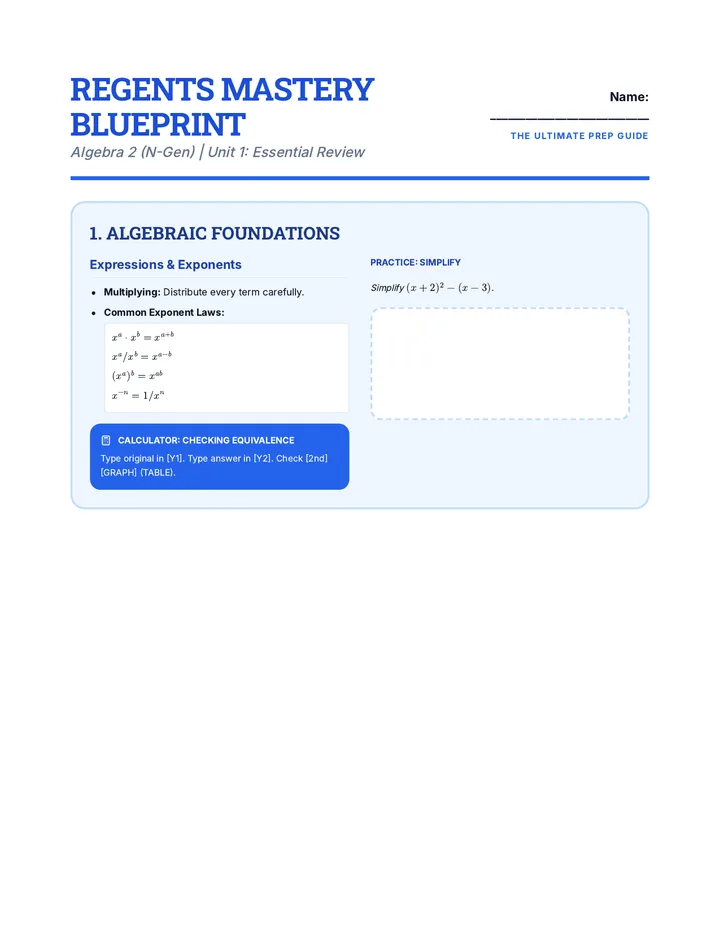
Regents Mastery Blueprint Study Guide

Regents Mastery Suite

A comprehensive review suite for the New York State Mathematics Regents exams, including Algebra 1, Geometry, and Algebra 2, featuring mastery blueprints, calculator strategies, and exam-taking tips.

KB

Kayla Borozny

15
Trig Curves Slides

Secondary Mastery Series

A master sequence containing curriculum-aligned lessons for Malaysian secondary school students. It covers Form 5 Mathematics and Form 2 English UASA revision.

AM

Arrthy Muthamilselvan

6
Strategy Blueprint Slides

ACT Math Mastery

A comprehensive ACT Math preparation program focusing on essential strategies, high-yield Algebra and Geometry concepts, and realistic practice to boost scores.

AL

ava larumbe

26
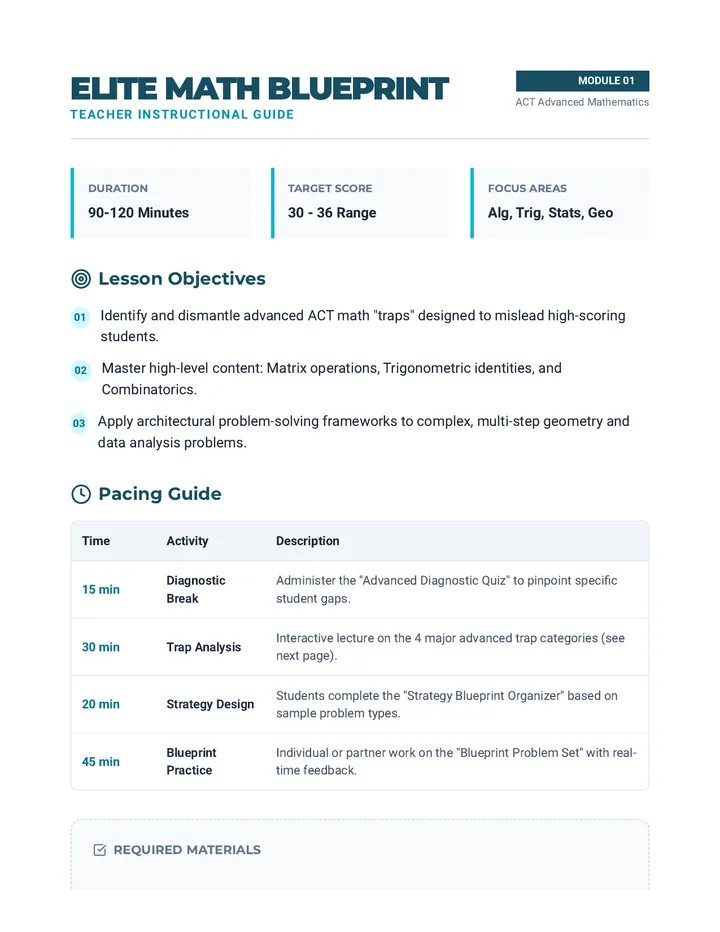
Elite Math Teacher Guide

Advanced ACT Mastery

A comprehensive prep sequence for the most challenging questions on the ACT Math and Science sections. It focuses on high-level conceptual blueprints for math topics like complex numbers and matrices, alongside speed-reading and data-interpretation strategies for the Science section.

AL

ava larumbe

29
Circle Navigator Teacher Guide

Circle Mastery

A targeted intervention sequence focused on extending trigonometric functions beyond right triangles using the unit circle. This sequence bridges the gap between basic trigonometry and periodic functions for students needing additional support.

4
Inverse Equation Slides

Trig Mastery Lab

A targeted intervention sequence focused on mastering trigonometric equations through inverse functions, visual symmetry, and contextual application. This sequence provides Tier 2 support for students needing scaffolded paths to find both principal and secondary solutions.

4

Lessons

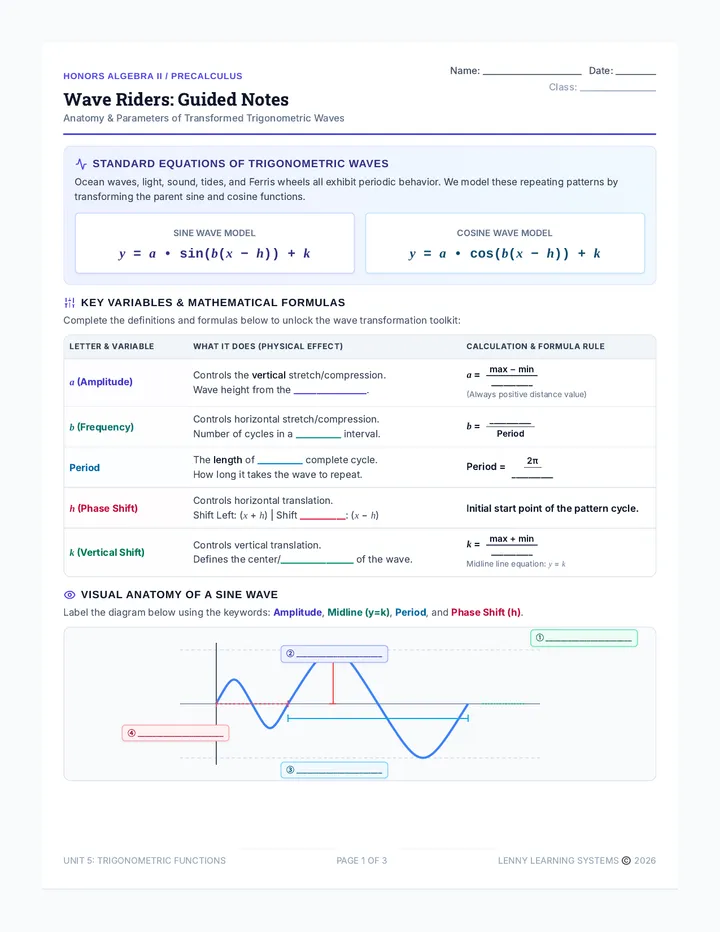
Wave Riders Guided Notes

Wave Riders

A mini-lesson on graphing, analyzing, and modeling transformed sine and cosine trigonometric waves. Students learn to identify key parameters (amplitude, period, phase shift, midline) from equations and graphs, and apply them to periodic real-world scenarios.

AE

Aysenur Ersoy

5
Wave Wizards Slides

Wave Wizards

A mini-lesson on transforming trigonometric sine and cosine functions. Students will learn to identify key wave parameters, sketch transformations on a grid, write equations from sinusoidal graphs, and model real-world periodic phenomena.

AE

Aysenur Ersoy

5
Vector Vision Exit Ticket

Polar Navigation

A series of focused assessments to verify student mastery of polar coordinate plotting, conversion, graphing special curves, and representing complex numbers in polar form.

S

SANDRA.MOORE

4
Trigonometry Radar Review Worksheet

Trigonometry Radar Review

A high-intensity review session for AP Precalculus Unit 3, covering trigonometric functions, inverse functions, and polar coordinates through a "Radar Tech" thematic lens.

W

wcragoe

3
Cipher Quest Slides

Collaborative Codebreakers

A high-energy, collaborative first-day activity for 11th-grade math students designed to foster teamwork and problem-solving through a classroom-wide scavenger hunt.

H

hpagan

4
Math Compass Assessment

Math Compass

A comprehensive diagnostic lesson designed to assess secondary students' mathematical standings from grade 7 through Algebra 2. It contains a 30-question diagnostic assessment, an in-depth step-by-step teacher answer key, a student-facing tracking and goal sheet, and a teacher remediation guide.

CF

Chad Forde

4