Random, stratified, and cluster sampling methods for data collection and analysis. Addresses sample size determination, bias reduction, and the principles of making valid inferences about larger populations.
An 8-page print-ready review packet for 8th-grade students in NYS, structured as "Week 2 Morning Work". It covers all 7th-grade math domains (The Number System, Ratios & Proportional Relationships, Expressions & Equations, Geometry, and Statistics & Probability) in a beautifully themed "Pixel Quest" retro-gaming review grid format with ample workspace.
A formal narrative reflection essay meticulously aligned with the SEYS 776 rubric to achieve "Excellent" scores. It presents synthesized insights on research methodology, the research-practice loop, personal researcher growth, and pedagogical applications in cohesive paragraphs, incorporating specific examples and meaningful course feedback.
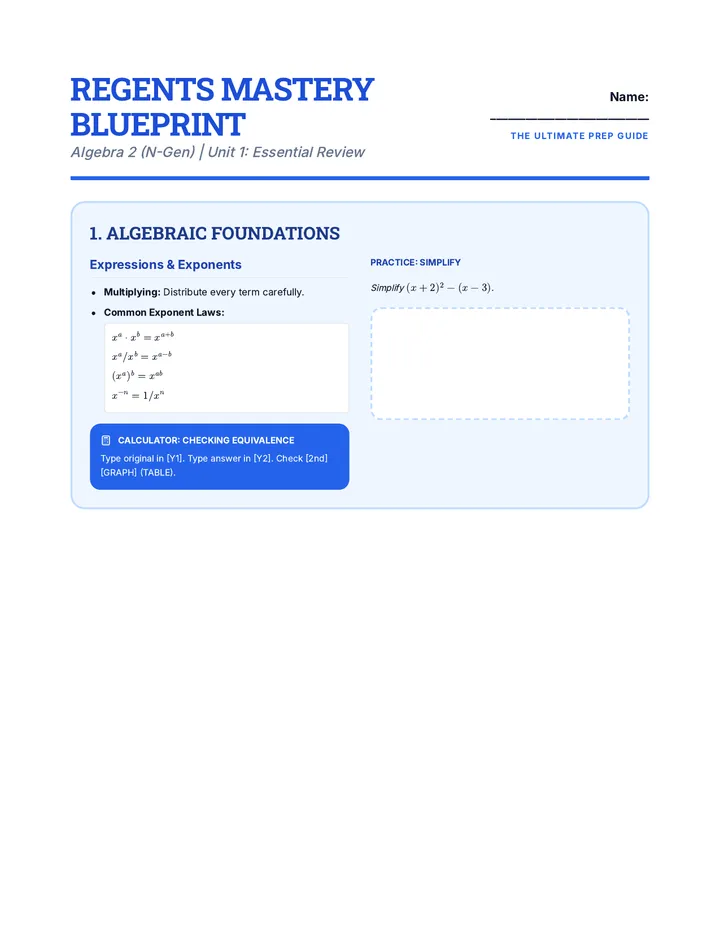
A comprehensive review suite for the New York State Mathematics Regents exams, including Algebra 1, Geometry, and Algebra 2, featuring mastery blueprints, calculator strategies, and exam-taking tips.
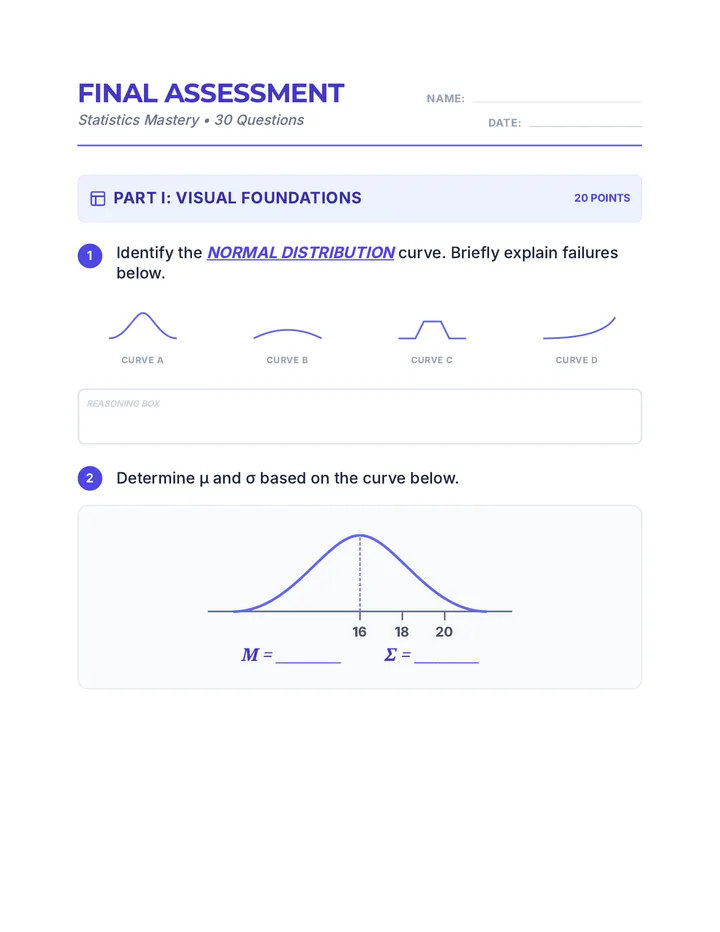
A comprehensive assessment sequence covering Normal Distributions, Z-scores, and the Central Limit Theorem.
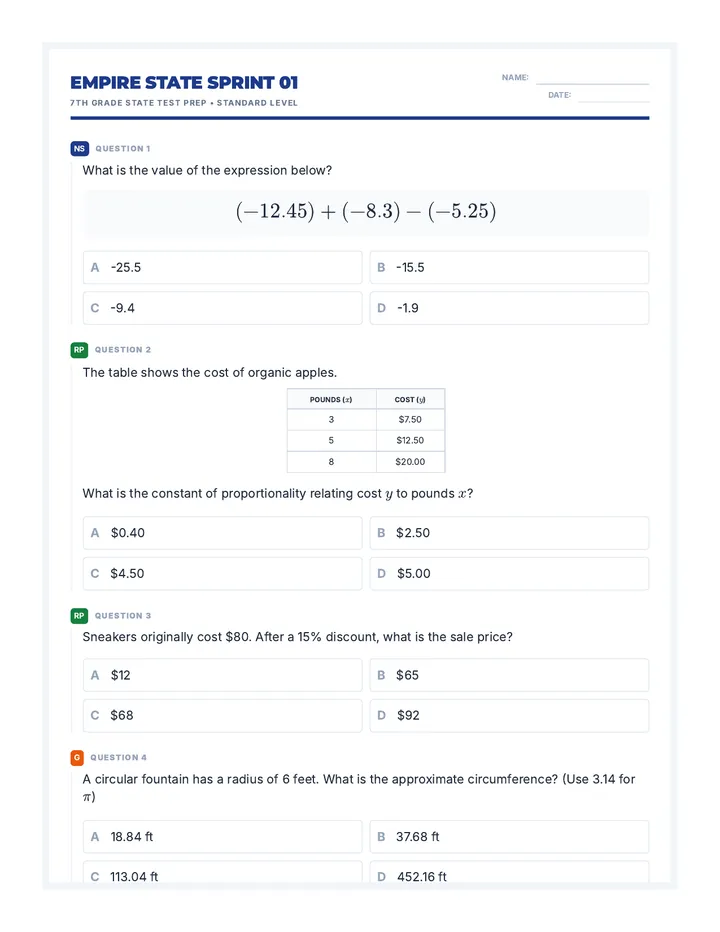
A series of four targeted homework assignments designed to prepare 7th-grade students for the New York State Mathematics Test. Each assignment covers key domains including Number Systems, Ratios and Proportions, Geometry, Statistics, and Probability in a standardized format.
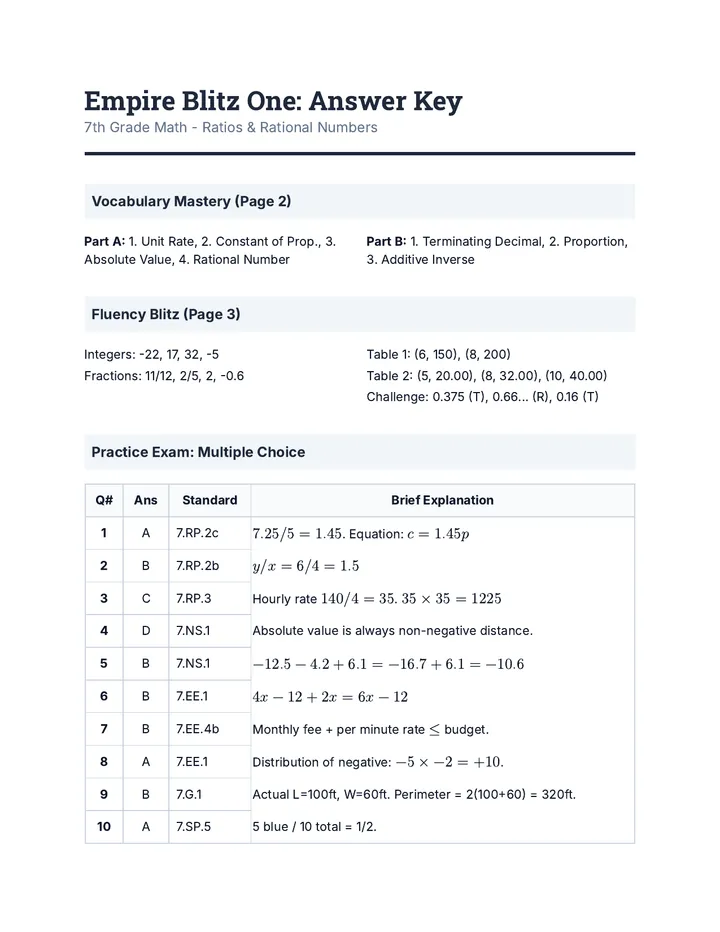
A comprehensive 3-packet New York State test prep series for 7th grade math, covering all major domains including Ratios, Number Systems, Expressions, Equations, Geometry, and Statistics. Each packet includes vocabulary, fluency, guided practice, and a 15-question mock exam.
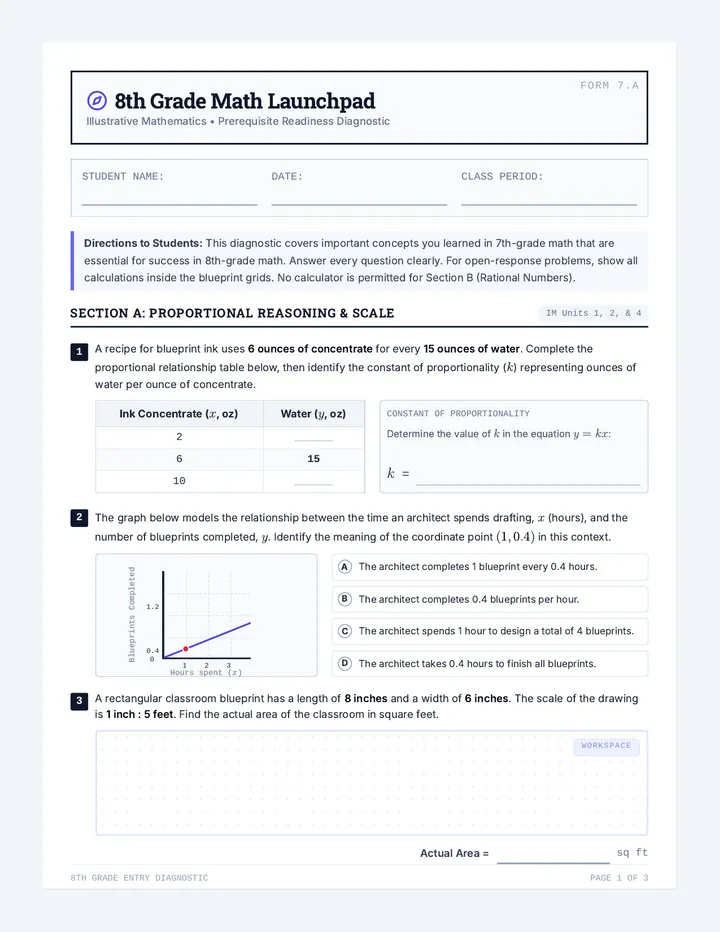
A collection of start-of-year diagnostics designed to baseline entering 8th graders. Includes math benchmark resources aligned with Illustrative Mathematics and reading benchmark resources aligned with the American Reading Company (ARC) curriculum.
An interdisciplinary unit for 7th and 8th graders that transforms students into 'Data Detectives'. They learn to collect, analyze, and visualize real-world data to uncover trends and communicate findings effectively.
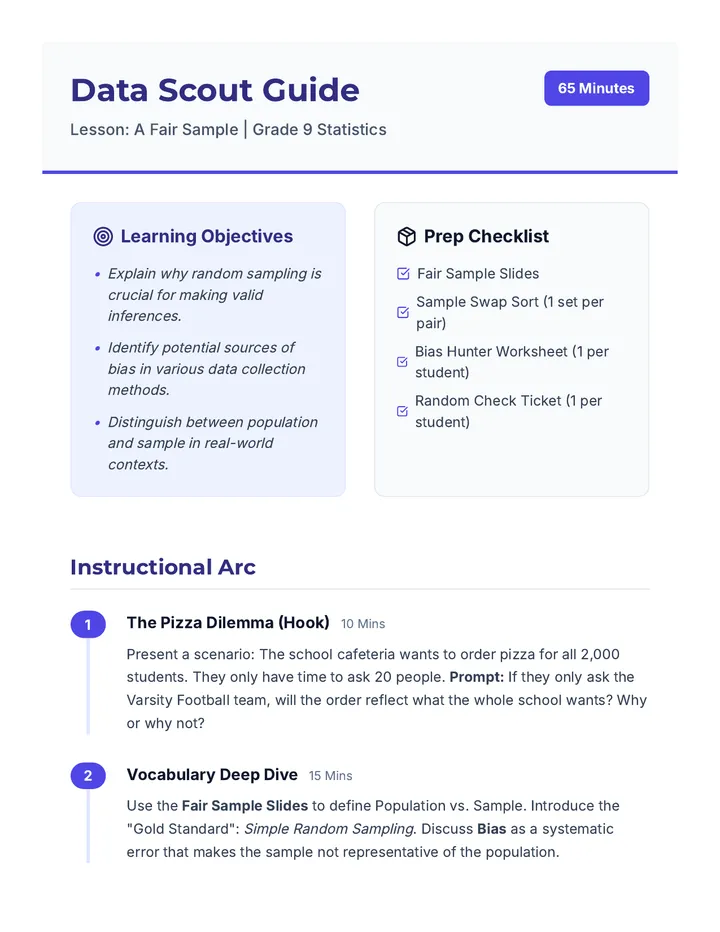
A 65-minute lesson for 9th Grade students exploring the fundamental concepts of population, sampling, and statistical bias. Students learn to distinguish between fair and biased collection methods through scenario analysis and sorting activities.
A focused practice set on calculating confidence intervals for means, finding critical values, and determining minimum sample sizes for specific margins of error.
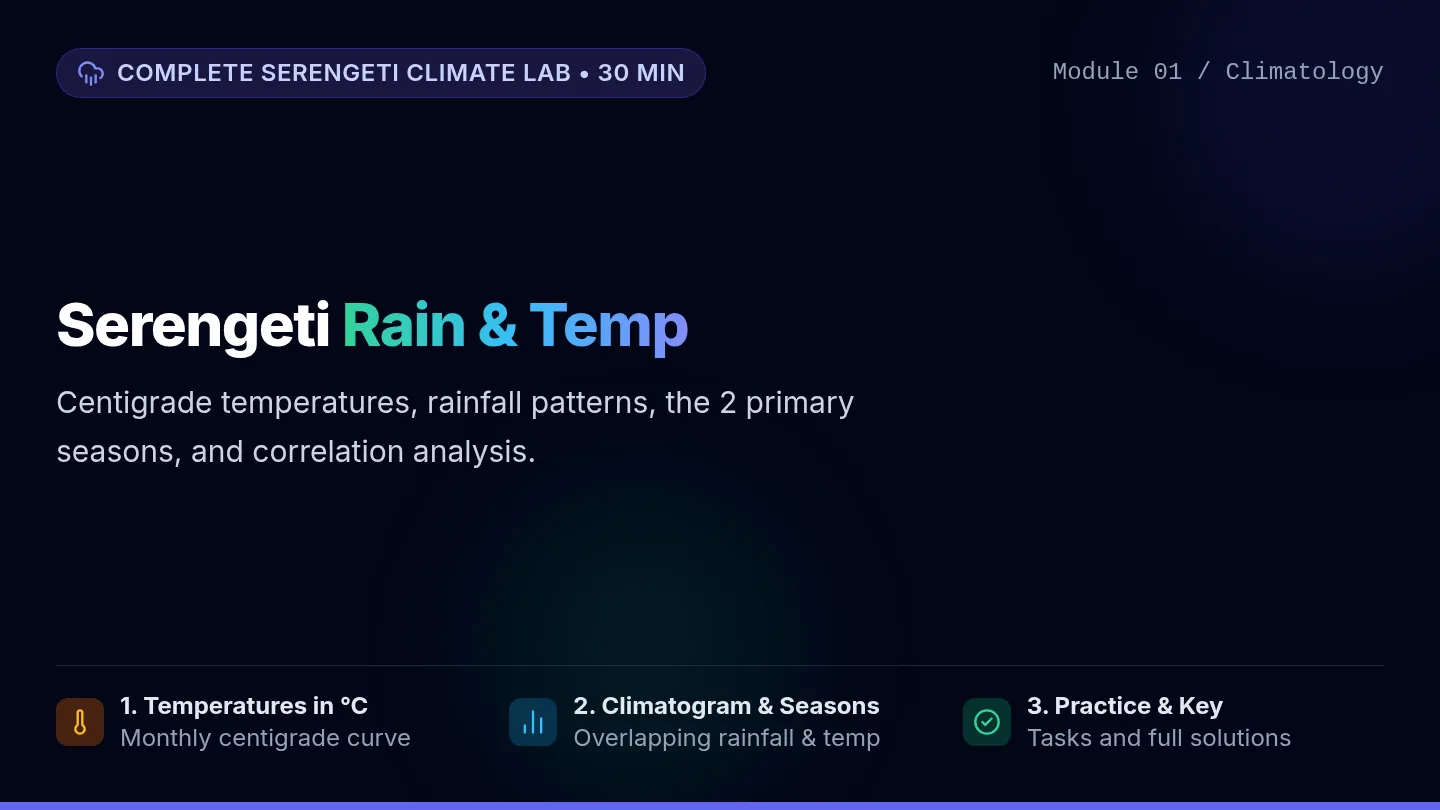
A 30-minute lesson investigating whether monthly rainfall and temperature correlate in the Serengeti. Students analyze an overlapping dual-axis climatogram, evaluate statistical correlation versus causation, and audit representative sampling.
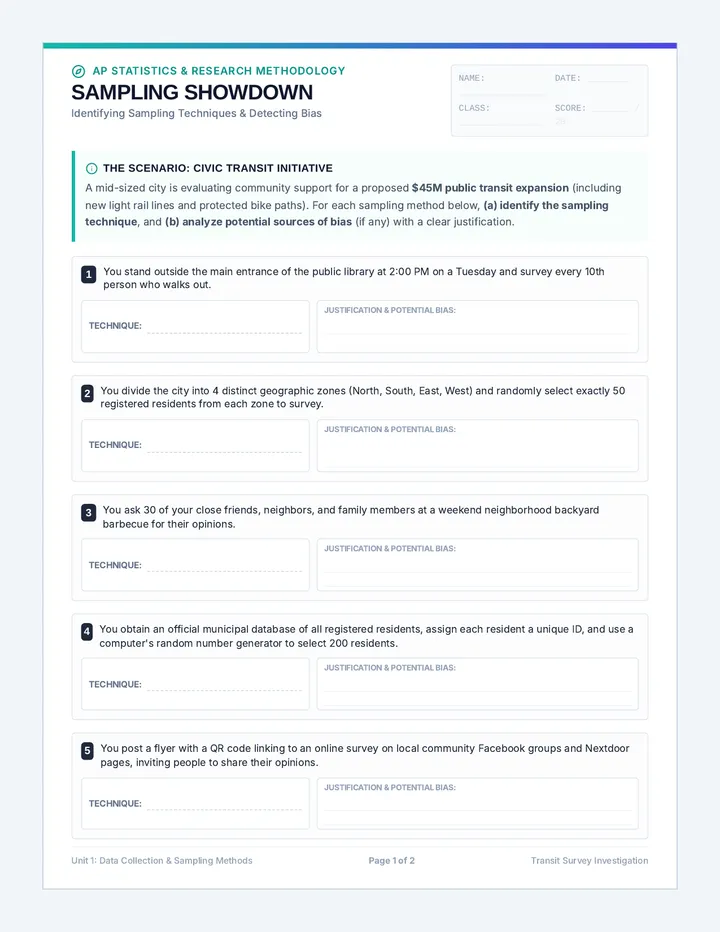
A comprehensive statistics lesson focusing on identifying sampling methods (simple random, stratified, cluster, systematic, convenience, and voluntary response) and analyzing potential sources of bias. Includes a 10-problem printable practice worksheet and a detailed teacher solution guide.
A comprehensive 12-minute presentation and speaker notes based on research investigating the link between parental attitudes and student math outcomes.
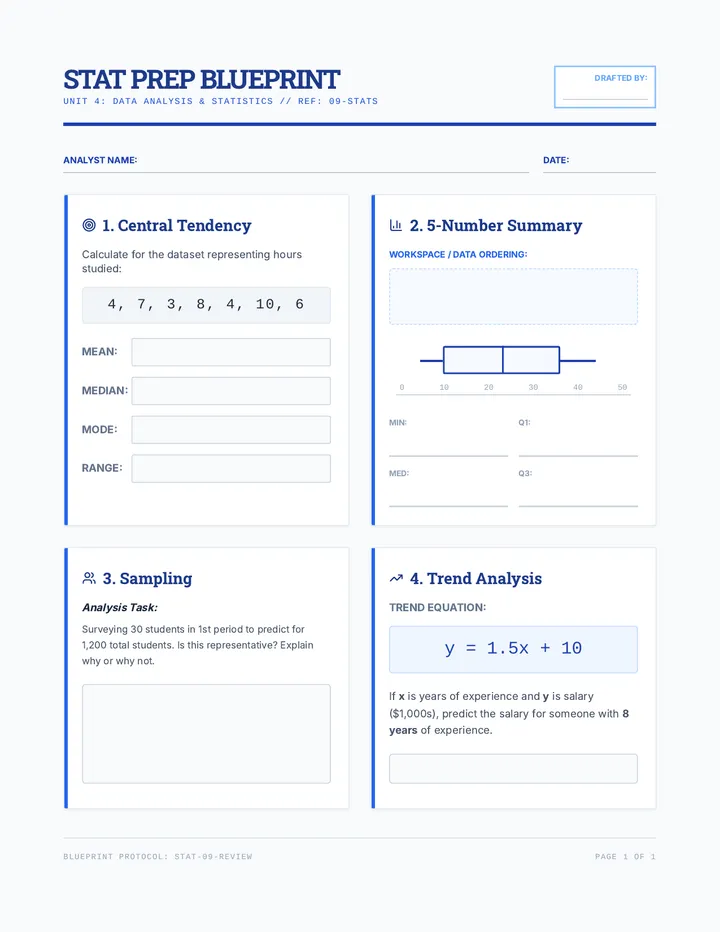
A comprehensive assessment lesson for 9th-grade statistics, covering central tendency, data visualization, sampling, and correlation through a blueprint-themed instructional arc.