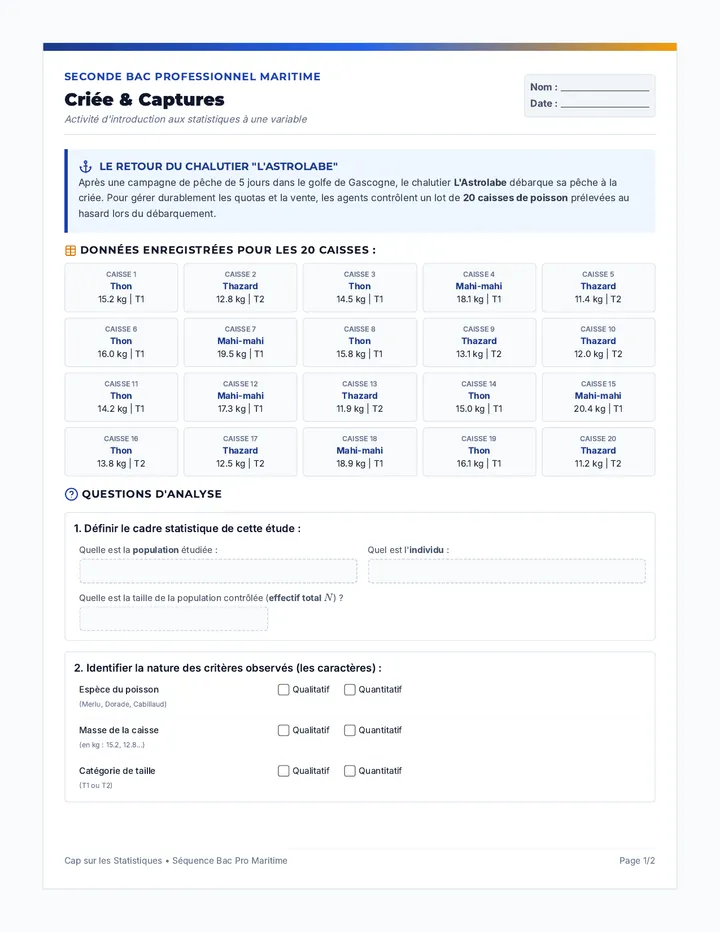
A targeted Tier 2 intervention sequence designed to help high school students master the fundamental concepts of statistical inference, moving from population parameters to sample statistics and back again through real-world applications.
A master sequence containing curriculum-aligned lessons for Malaysian secondary school students. It covers Form 5 Mathematics and Form 2 English UASA revision.
A comprehensive introductory lesson set for the SAM Podcast Project-Based Learning program. This lesson incorporates critical parent communication tools alongside specialized teacher lesson plans linking core academic subjects like KSSM Mathematics to real-world digital podcast applications.
Slaid Pembelajaran (Slides) 5 slaid interaktif untuk sesi Google Meet/Google Classroom yang membimbing murid melukis Graf Laju-Masa mengikut kaedah Contoh 10 & 11 Buku Teks Matematik Tingkatan 4 KSSM. Tulisan bersaiz minimum 24px untuk keterbacaan digital yang cemerlang.
Séquence clé en main sur le module de chimie « Comment caractériser une solution ? » du programme de Seconde Bac Pro, contextualisée dans l'univers de la marine et de l'analyse des eaux.
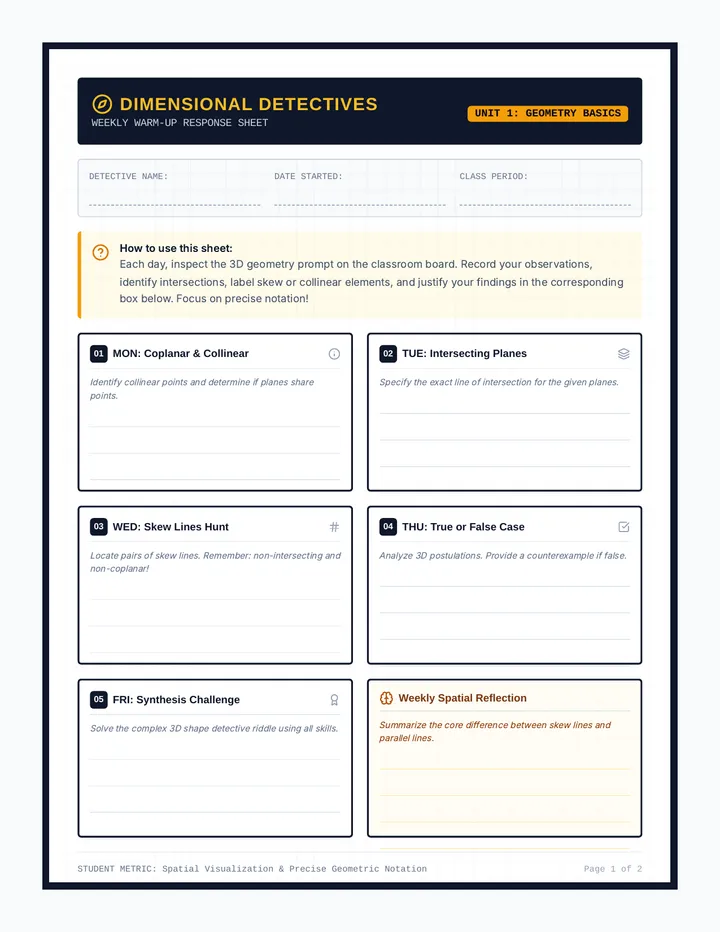
A geometry lesson focusing on visualizing 3D relationships, including intersecting planes, collinear points, coplanar lines, and skew lines in space. Includes projection-ready slide decks, task cards, and a weekly response sheet.
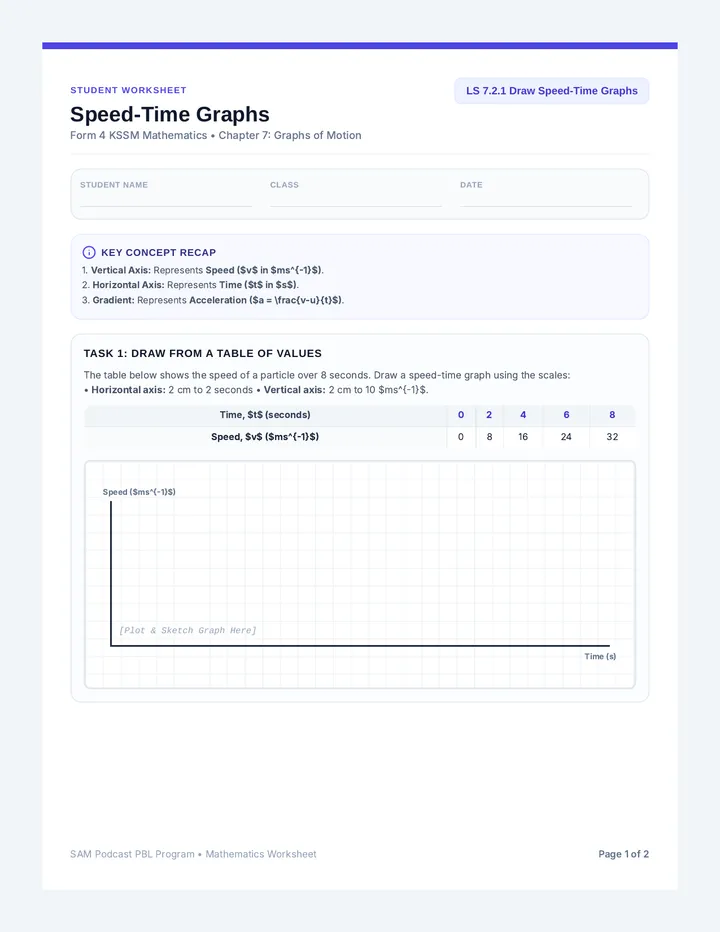
Student Worksheet (2 pages) aligned with KSSM Form 4 Mathematics (Chapter 7). Features step-by-step guidance, plotting grids for Examples 10 & 11, and the "SAM Drone Mission" collaborative task with handwriting-friendly whitespace.
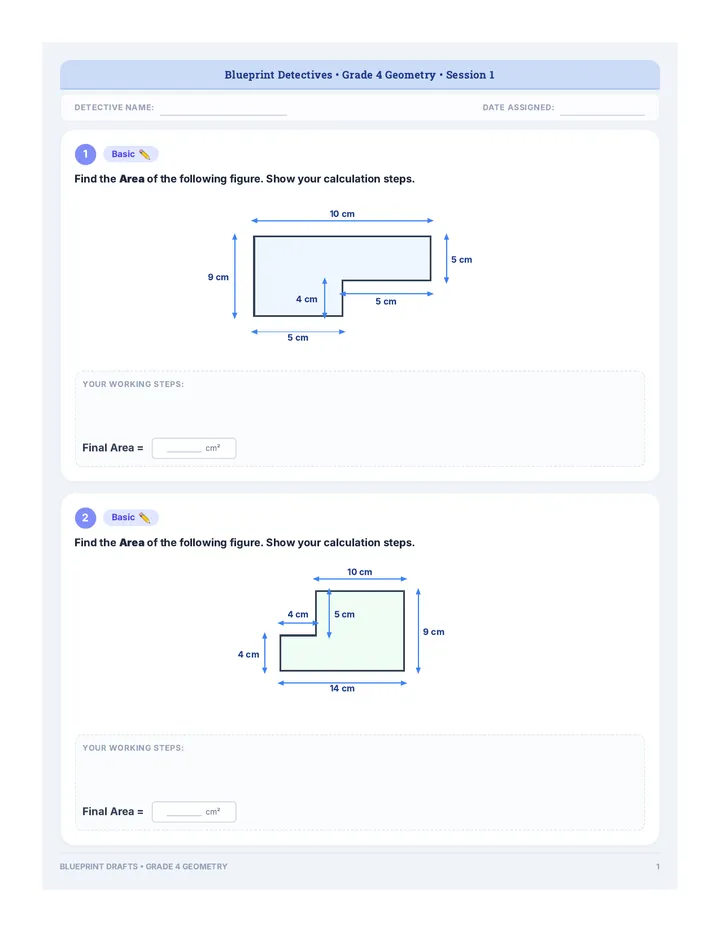
A comprehensive 1-week curriculum sequence for Grade 4 students to master area and perimeter, progressing from grid foundations to complex composite shapes and missing dimension puzzles.
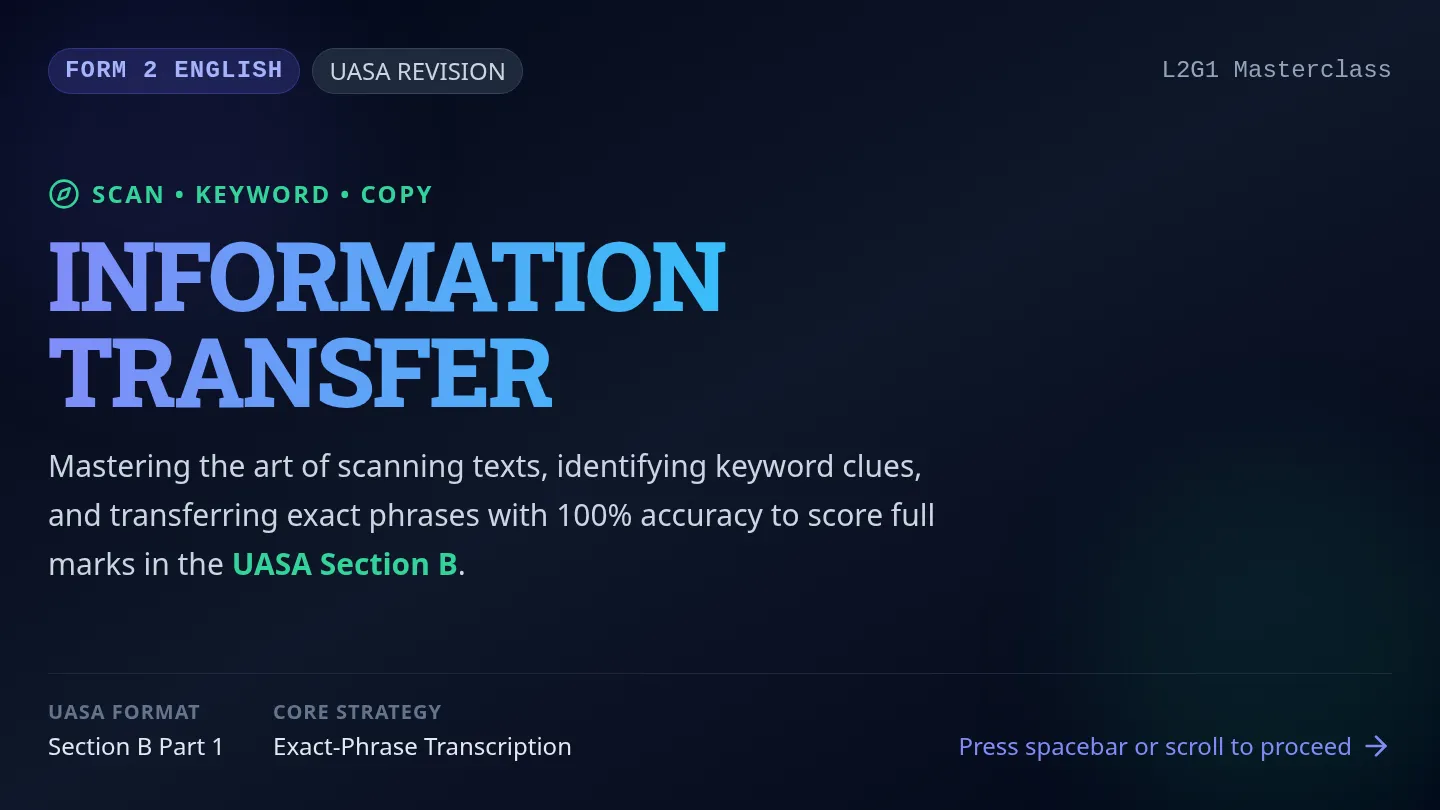
Form 2 English lesson focusing on the UASA Information Transfer format. Teaches scanning, keywording, and exact-phrase transcription strategies through real-world texts, hands-on graphic organizers, peer collaboration, and a post-lesson assessment.
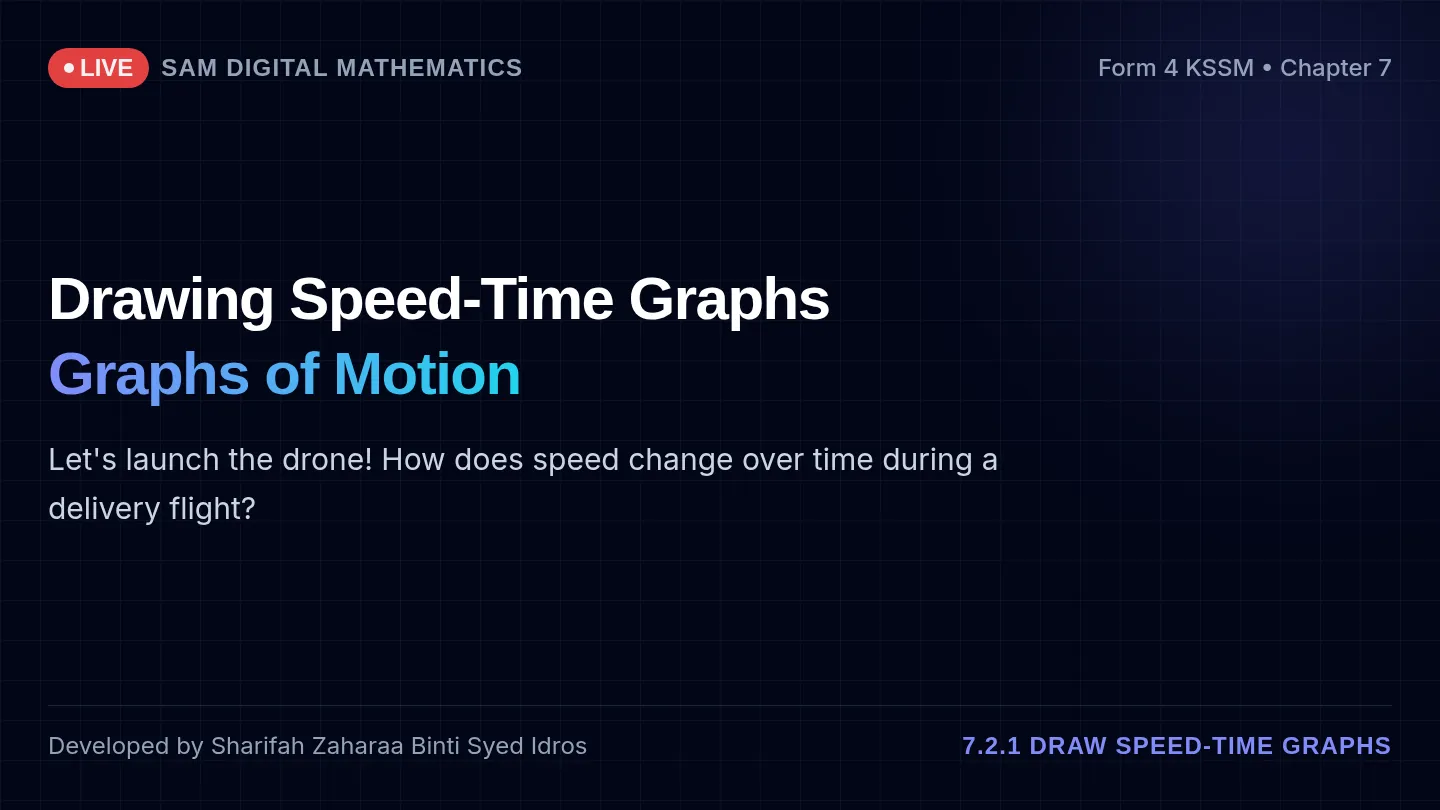
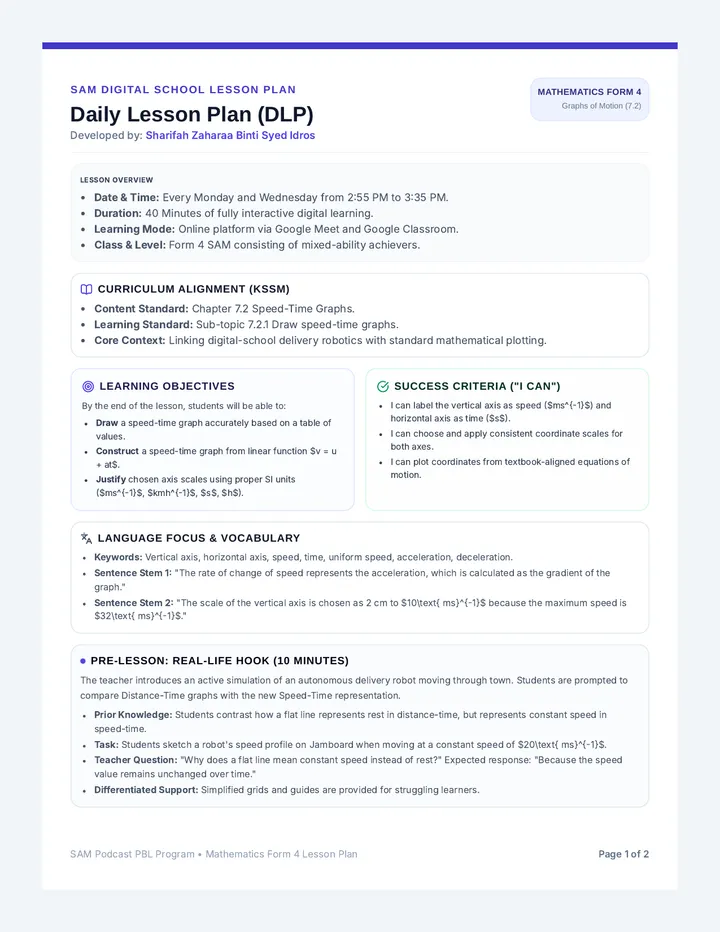
Mathematics Form 4 Lesson Plan (Chapter 7: Graphs of Motion) for learning standard 7.2.1 Draw speed-time graphs. Fully written in English for DLP classrooms, featuring structured AfL, Differentiation, and Collaboration strategies aligned with Textbook Examples 10 & 11.
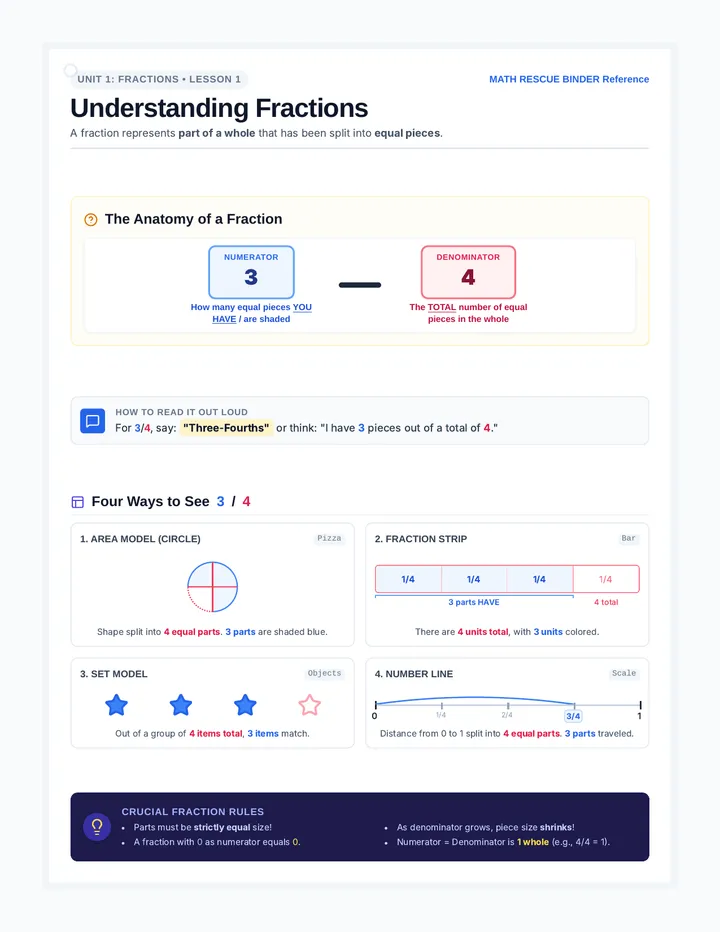
An intensive high-school math intervention binder focused on rebuilding foundational rational number operations, equivalent representations, and visual modeling for resource room or co-taught classrooms.
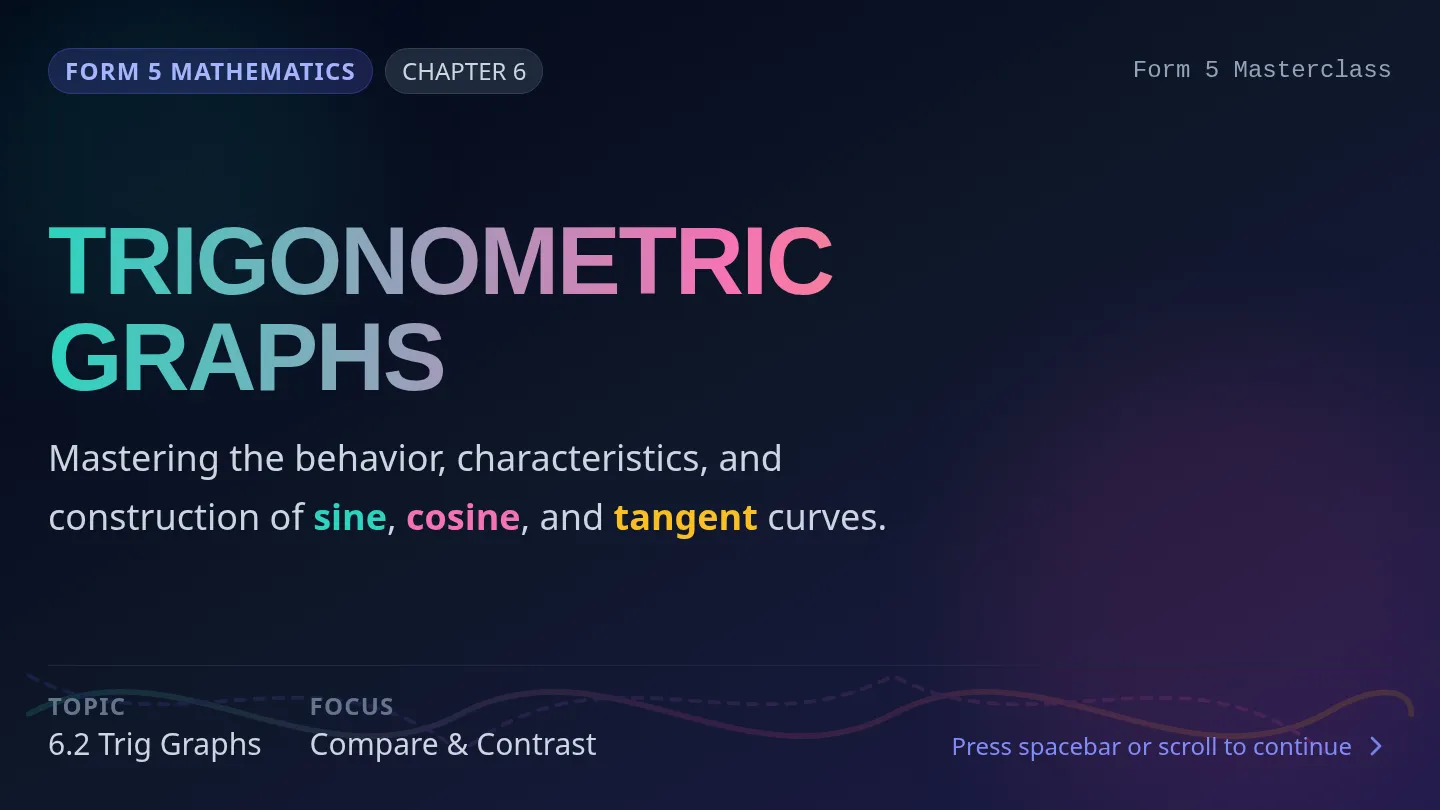
Form 5 Mathematics Lesson on trigonometric functions, covering graphing of sine, cosine, and tangent curves, exploring key features like amplitude, period, intercepts, and asymptotes. Includes assessment for learning, collaboration, and differentiated instruction.
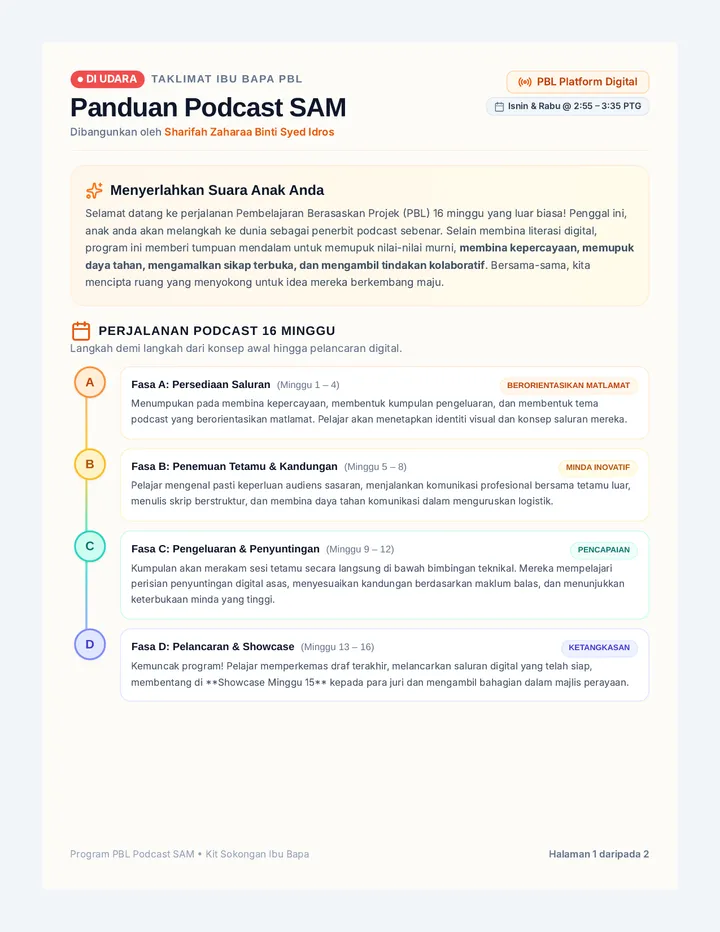
Satu Panduan Taklimat Ibu Bapa dan Kit WhatsApp Sedia-Salin 2 halaman yang komprehensif, mesra, dan penuh inspirasi dalam Bahasa Melayu untuk program Pembelajaran Berasaskan Projek (PBL) Projek Podcast SAM. Merangkumi peta jalan visual 16 minggu, butiran jadual kelas (Isnin & Rabu jam 2:55-3:35 petang), panduan sokongan rumah, dan templat mesej siaran mudah alih yang dioptimumkan.