Lenny.com
Explore
Create
ActivitiesNewMathEnglish Language ArtsScience & EngineeringSocial StudiesGlobal LanguagesHealth & Physical EducationSpecial EducationCounseling & Life SkillsArts & CreativityESL
Lenny.com
Lenny.com
Explore
Create
ActivitiesNewMathEnglish Language ArtsScience & EngineeringSocial StudiesGlobal LanguagesHealth & Physical EducationSpecial EducationCounseling & Life SkillsArts & CreativityESL
Lenny.com
Lenny.com

Solutions

Lenny for EducatorsLenny for SchoolsLenny for Districts

Product

ExploreSign inCreateSupportAbout

Resources

Getting startedMTSS Acceleration Program

© 2026 Lenny Learning Inc.

TermsPrivacyAccessibility
LinkedInInstagramX
Lenny

Classifying 2D Figures

Categorizes polygons based on side lengths, angle measures, and the presence of parallel or perpendicular lines. Distinguishes between subcategories of quadrilaterals and triangles using hierarchical relationships.

MathNumbers & CountingCounting ObjectsNumber NamesComparing NumbersNumber OperationsCounting SequenceNumbers 0-10Place Value Understanding and SystemAdd and Subtract Within 20Addition and Subtraction ConceptsAddition and Subtraction EquationsAddition and Subtraction ProblemsFoundations for MultiplicationMultiplication and Division PropertiesMultiply and Divide Within 100Multiplication and Division ProblemsFactors and MultiplesProperties of OperationsPatterns and RelationshipsGenerate and Analyze PatternsMulti-Digit ArithmeticPlace Value OperationsMulti-Digit and Decimal OperationsNumerical ExpressionsFour Operations and PatternsFour Operations Problem SolvingMeasurement & DataMeasurable AttributesMeasuring LengthsMeasure and Estimate Lengths in Standard UnitsRelate Addition and Subtraction to LengthClassifying and Counting ObjectsTime and MoneyArea Concepts and MeasurementPerimeter and Area MeasuresAngle Concepts and MeasurementTime, Volume, and MassMeasurement Unit ConversionsGeometryIdentifying ShapesShapes and AttributesShape Attributes and ReasoningShapes and CompositionClassifying 2D FiguresGeometric Figures and RelationshipsLines, Angles, and ShapesAngle, Area, and VolumeGeometric MeasurementVolume of 3D ShapesCoordinate Plane ApplicationsTransformations in the PlaneCongruence and SimilarityUnderstand congruence in terms of rigid motionsSimilarity and TransformationsProve Theorems Involving SimilarityPythagorean TheoremTrigonometry for General TrianglesMake Geometric ConstructionsProve Geometric TheoremsTheorems About CirclesFind Arc Lengths And Areas of Sectors of CirclesVolume FormulasRelationships Between Two-Dimensional and Three-Dimensional ObjectsProve Simple Geometric Theorems AlgebraicallyTranslate Between Geometric Description and Equation for Conic SectionApply Geometric Concepts in Modeling SituationsFractions & DecimalsFractions as NumbersBuilding FractionsFraction Equivalence and OrderingAdding and Subtracting FractionsMultiplying and Dividing FractionsDividing FractionsDecimal FractionsMulti-Digit Computation and FactorsAdd, Subtract, Multiply, and Divide Rational NumbersRational Number SystemIrrational Numbers and ApproximationsRatiosRatios and ProportionsProportional RelationshipsUnit RateAlgebraAlgebraic ExpressionsGenerate Equivalent ExpressionsQuantitative RelationshipsProportional Relationships and Linear EquationsEquations and InequalitiesEquation Solving and ReasoningLinear Equations and SystemsGraph Equations and InequalitiesSystems of EquationsReal-World Algebraic ProblemsQuantitative Reasoning with UnitsExpression StructureEquivalent Expression FormsRadicals and Integer ExponentsRational ExponentsRational and Irrational NumbersPolynomial OperationsPolynomial IdentitiesPolynomial Zeros and FactorsRational ExpressionsComplex Number OperationsComplex Numbers in PolynomialsComplex Numbers on PlaneStatistics & ProbabilityRepresent and Interpret DataData DistributionsStatistical VariabilityProbability ModelsCompound Event ProbabilitiesStatistical SamplingInterpret Categorical and Quantitative DataBivariate Data PatternsInterpret Linear ModelsComparing Two PopulationsRandom Processes in StatisticsIndependence and Conditional ProbabilityExpected ValuesProbability-Based Decision MakingStatistical Inference and ConclusionsFunctionsFunction Concepts and NotationDefine and Compare FunctionsInterpret Functions in ContextAnalyze Function RepresentationsModel Relationships with FunctionsIdentify Linear vs Exponential GrowthDistinguish Between Function TypesCompare Growth RatesInterpret Function ExpressionsBuild Functions from RelationshipsConstruct and Model FunctionsTransform and Combine FunctionsModel Comparison and SelectionSolve Exponential EquationsTrigonometryTrigonometric Ratios Involving Right TrianglesTrigonometric Functions and Unit CircleModel with Trigonometric FunctionsTrigonometric IdentitiesVectors & MatricesIntroduction to Vectors and MatricesVector QuantitiesVector OperationsMatrix OperationsCalculusLimits and ContinuityDerivative Concepts and NotationDerivative Rules and TechniquesApplications of DerivativesOptimization ProblemsRelated RatesCurve Sketching and AnalysisIntegration Concepts and NotationAntiderivatives and Indefinite IntegralsDefinite Integrals and AreaFundamental Theorem of CalculusIntegration TechniquesApplications of IntegrationDifferential EquationsSequences and SeriesParametric and Polar FunctionsVector-Valued Functions

Videos

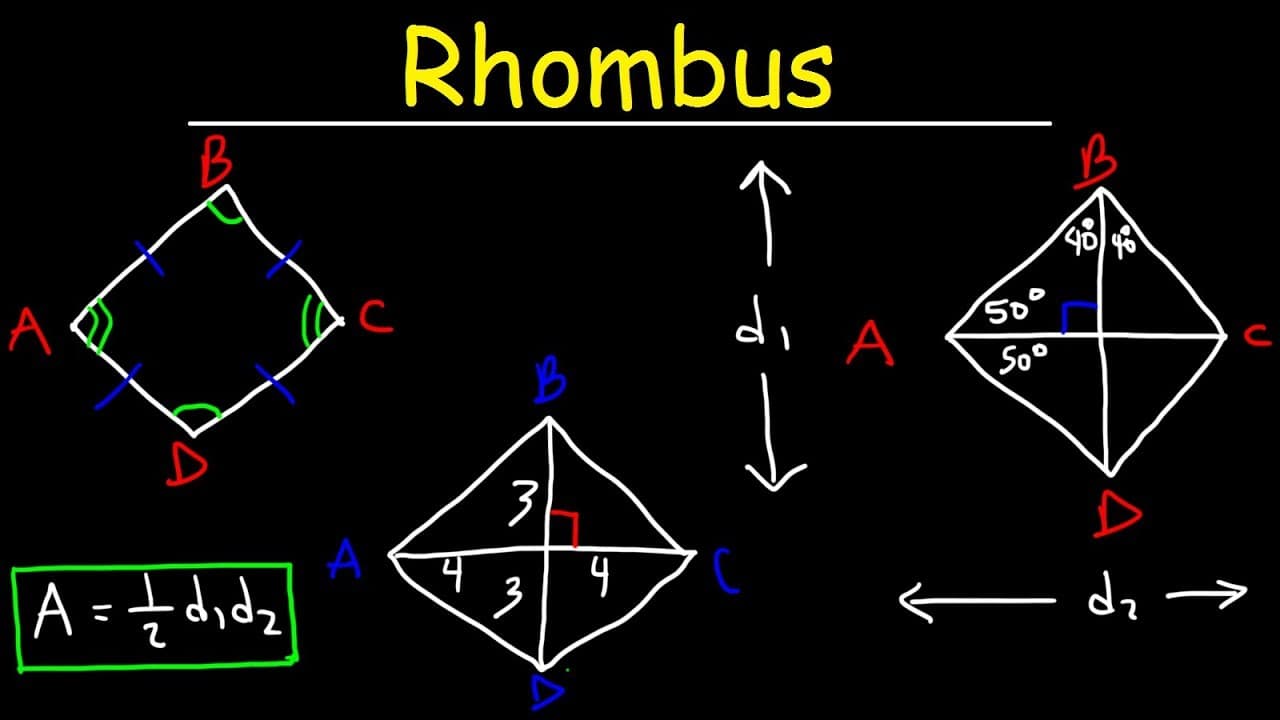
Mastering the Rhombus: Properties, Area, and Angles

Mastering the Rhombus: Properties, Area, and Angles

This comprehensive math tutorial provides a deep dive into the geometric properties of a rhombus, guiding students from basic definitions to complex algebraic applications. The video begins by defining a rhombus as a special quadrilateral and parallelogram, explaining core features such as congruent sides, parallel opposite sides, and angle relationships. It visualizes how diagonals bisect angles, bisect each other, and intersect at perpendicular right angles, forming the foundation for area and perimeter calculations. The content progresses through a series of five increasing difficult example problems. These examples demonstrate how to calculate area using diagonals, determine perimeter using the Pythagorean theorem, and solve for missing angles using triangle sum properties. Later sections integrate algebra, challenging students to solve linear and quadratic equations to find side lengths and angle measures. The video concludes with a complex problem involving infinite solutions, encouraging critical thinking about mathematical identities. For educators, this video serves as an excellent resource for a Geometry or Algebra unit. It connects geometric concepts with algebraic solving skills, reinforcing the importance of the Pythagorean theorem and factoring quadratics in geometric contexts. The clear, step-by-step walkthroughs make it suitable for introducing new concepts, guided practice, or independent review for students struggling with the properties of quadrilaterals.
The Organic Chemistry TutorThe Organic Chemistry Tutor

22mins 30s

Understanding Properties, Area, and Angles of Kites in Geometry

Understanding Properties, Area, and Angles of Kites in Geometry

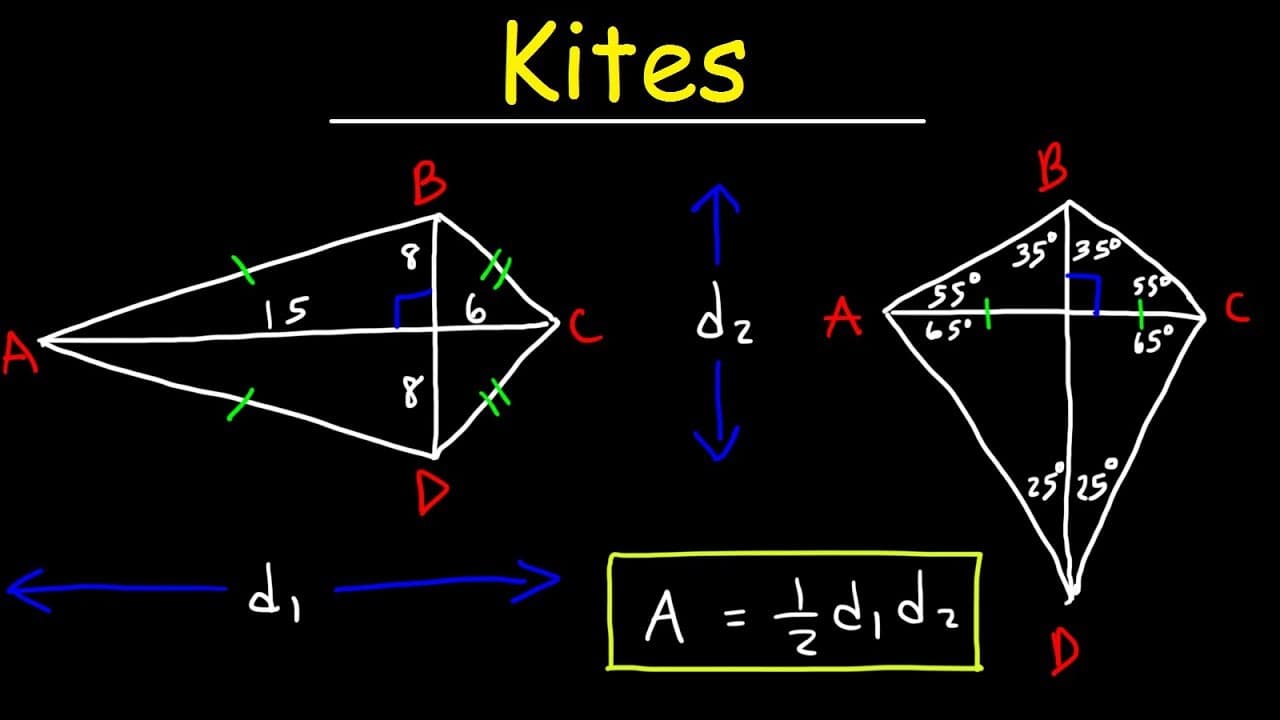
This educational video provides a comprehensive tutorial on the geometric properties of kites. The narrator begins by defining the shape through its sides and angles, explicitly detailing theorems regarding congruent sides, opposite angles, and the perpendicular intersection of diagonals. The video transitions from theoretical definitions to practical application through four distinct problem-solving examples that increase in complexity.

The Organic Chemistry TutorThe Organic Chemistry Tutor

13mins 37s

How to Classify Triangles by Sides and Angles

How to Classify Triangles by Sides and Angles

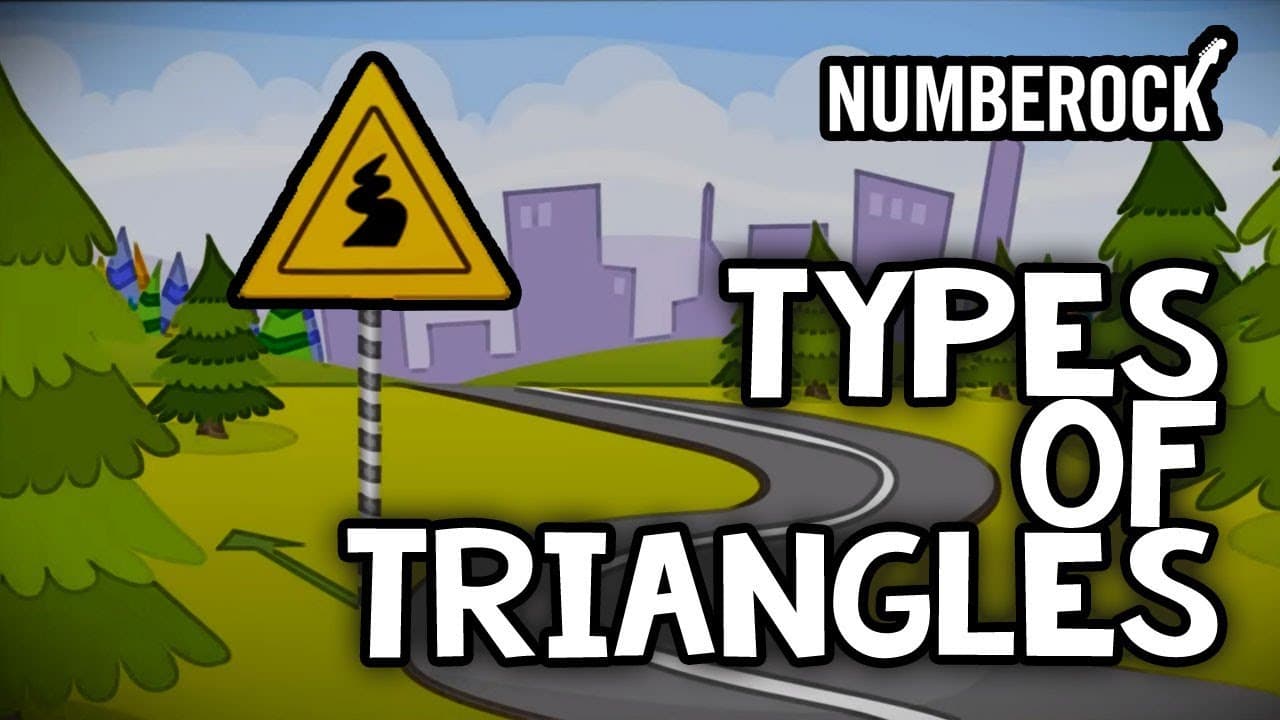
A high-energy, musical educational animation that teaches students how to classify triangles based on their sides and angles. Through a catchy rock song, the video introduces key geometry vocabulary including isosceles, scalene, equilateral, acute, obtuse, and right triangles, while also reinforcing the concept that the sum of interior angles in any triangle equals 180 degrees. The content breaks down classification into clear sections: first connecting side lengths to visual metaphors (like mountains and road signs), then examining angle measurements within those same shapes. It visually demonstrates the angle sum theorem by animating the angles of a triangle coming together to form a straight line (semicircle). This video is an excellent resource for 3rd through 5th-grade math classrooms. It serves as an engaging hook to introduce geometry units or a memorable review tool. Teachers can use the song's real-world examples—such as boat sails, skateboard ramps, and billiard racks—to help students recognize geometric shapes in their environment.

Math Songs by NUMBEROCKMath Songs by NUMBEROCK

1min 54s

How to Classify Triangles by Angles and Sides

How to Classify Triangles by Angles and Sides

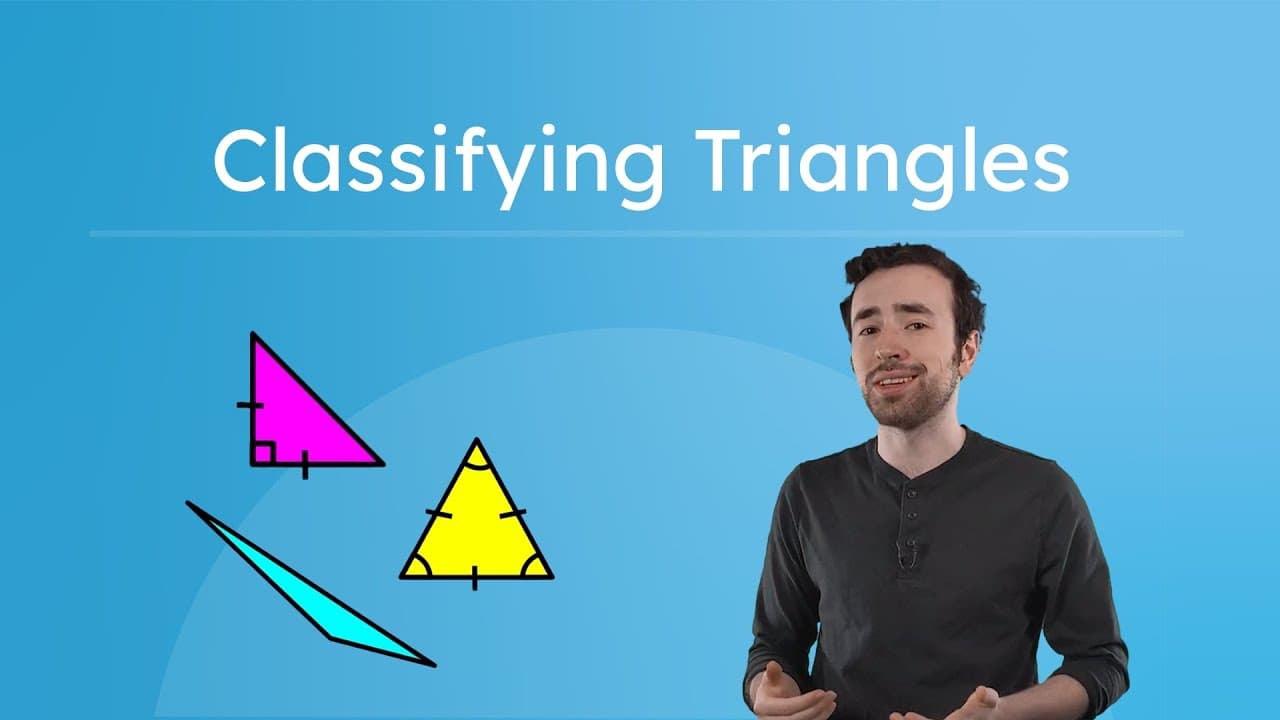
This educational video provides a comprehensive guide to classifying triangles based on two primary criteria: their angle measures and their side lengths. The narrator, Justin, walks viewers through the fundamental properties of triangles, starting with the Triangle Sum Theorem which states that interior angles always sum to 180 degrees. The video systematically breaks down classification categories including acute, right, obtuse, and equiangular for angles, as well as scalene, isosceles, and equilateral for sides. Key mathematical themes include geometric definitions, theorem application, and algebraic problem-solving within a geometric context. The video introduces and applies the Isosceles Triangle Theorem and its converse to show the relationship between opposite sides and angles. It also incorporates the Pythagorean Theorem to calculate missing side lengths in right triangles, bridging geometry with algebra and arithmetic involving square roots. For educators, this video serves as an excellent instructional tool for middle and high school geometry units. It includes built-in pause points for students to calculate missing values, making it highly interactive. The content moves beyond simple identification by requiring students to solve for variables (x) and use deductive reasoning to determine classifications, making it suitable for introducing new concepts or reviewing for assessments.

Miacademy & MiaPrep Learning ChannelMiacademy & MiaPrep Learning Channel

10mins 34s

Finding Missing Angles in a Trapezium

Finding Missing Angles in a Trapezium

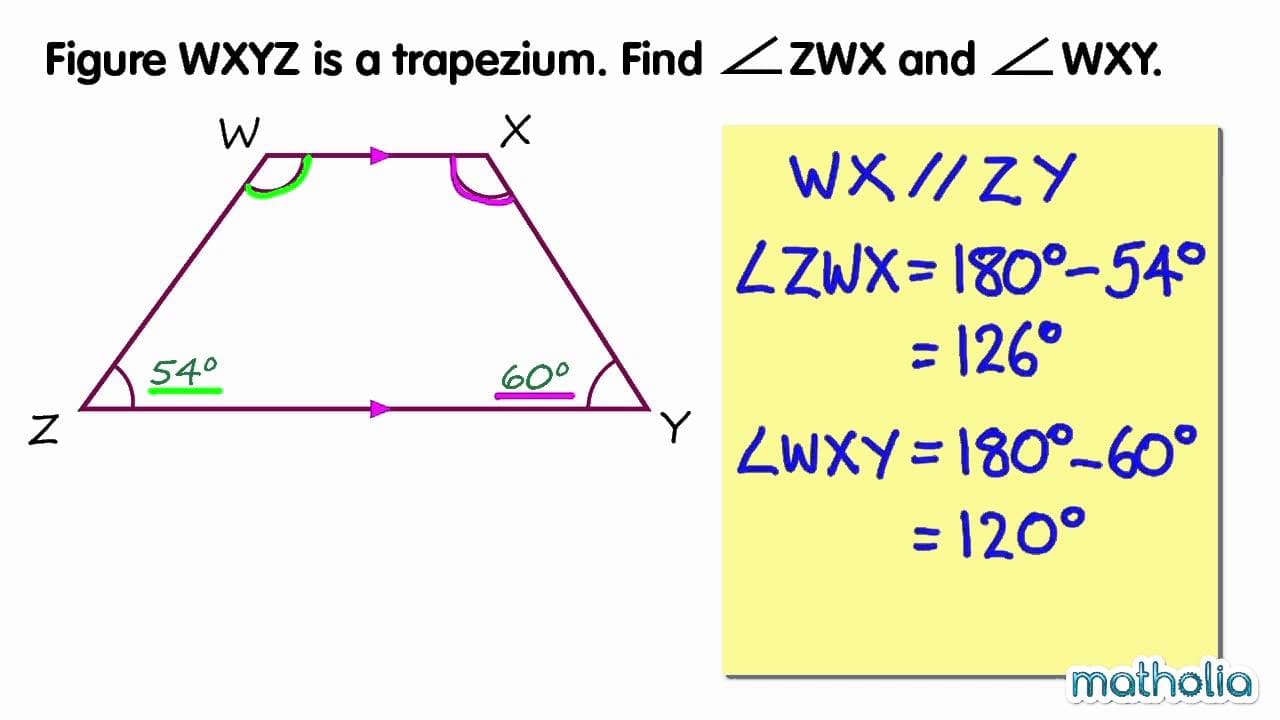
This educational math video provides a step-by-step tutorial on calculating unknown angles within a trapezium (trapezoid) by utilizing the properties of parallel lines. The video presents two distinct problems: the first involves a standard trapezium where students must find two missing angles given their supplementary pairs, and the second involves a right-angled trapezium requiring simple algebraic reasoning to split an angle into two equal parts. The core theme is the geometric property that consecutive interior angles between parallel lines sum to 180 degrees. The video reinforces identifying parallel sides using arrow markings and performing subtraction to find missing values. It progresses from direct application to a slightly more complex multi-step problem, modeling clear mathematical thinking and notation. For educators, this resource serves as an excellent model for solving geometry problems. It visually demonstrates how to set up equations based on geometric properties. Teachers can use this video to introduce the concept of interior angles in quadrilaterals, review subtraction in a geometric context, or as a scaffolded example for independent student practice in finding missing angles.

MatholiaChannelMatholiaChannel

2mins 5s

How to Prove Isosceles Trapezoids Using Geometry

How to Prove Isosceles Trapezoids Using Geometry

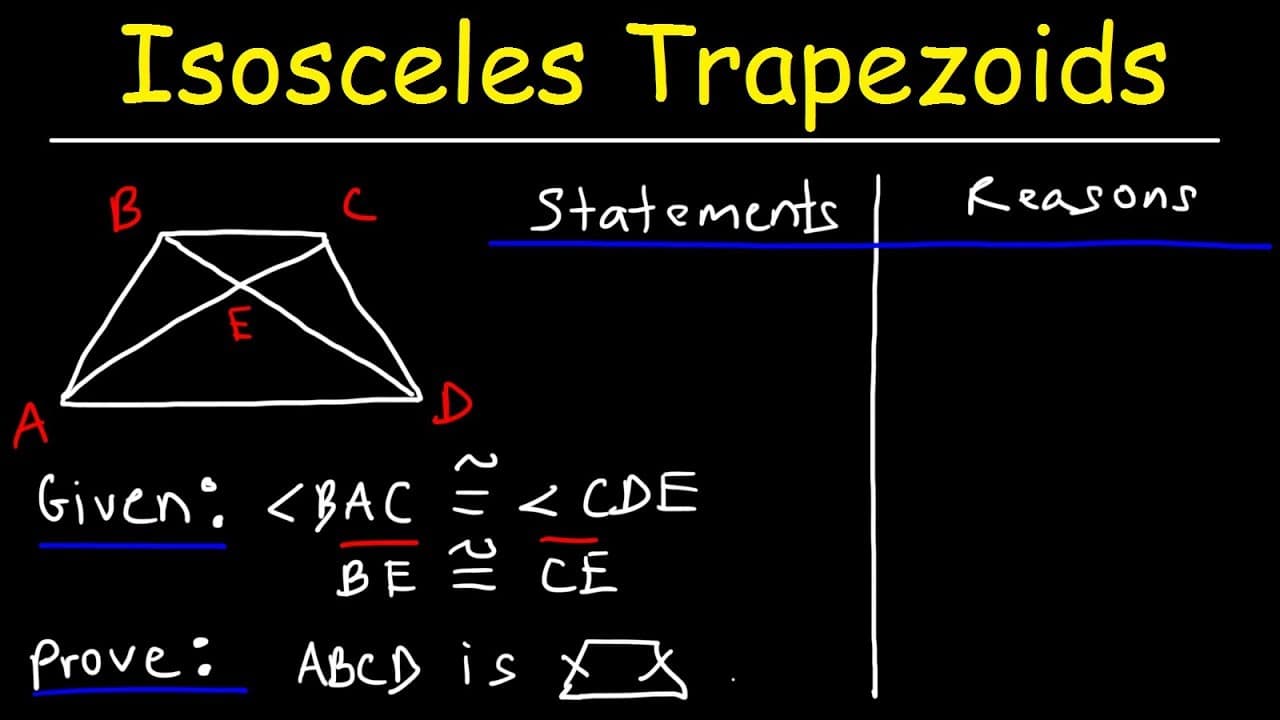
This instructional video provides a comprehensive tutorial on constructing formal geometric proofs to identify isosceles trapezoids. The narrator begins by outlining the fundamental properties that define an isosceles trapezoid: congruent legs, congruent lower or upper base angles, and congruent diagonals. The video then transitions into two distinct example problems, guiding viewers through the step-by-step process of setting up and solving two-column proofs based on given information about a quadrilateral's angles and segments. The content explores key geometric themes including triangle congruence postulates (such as Angle-Angle-Side or AAS), the use of vertical angles, the Reflexive Property of Equality, and the critical concept of CPCTC (Corresponding Parts of Congruent Triangles are Congruent). By decomposing complex diagrams into overlapping triangles, the video demonstrates how to apply deductive reasoning to prove that specific components of a quadrilateral are congruent, ultimately satisfying the definition of an isosceles trapezoid. For educators, this video serves as an excellent resource for high school geometry classrooms, specifically during units on quadrilaterals and proofs. It visualizes the thinking process required to solve geometry problems, making abstract logic concrete through color-coded diagrams and clear, written statements. Teachers can use this video to model proof writing, reinforce the application of congruence theorems, or as a remediation tool for students struggling with the structure of two-column proofs.

The Organic Chemistry TutorThe Organic Chemistry Tutor

10mins 56s

Materials

Word Spelling Practice Worksheet

Word Spelling Practice Worksheet

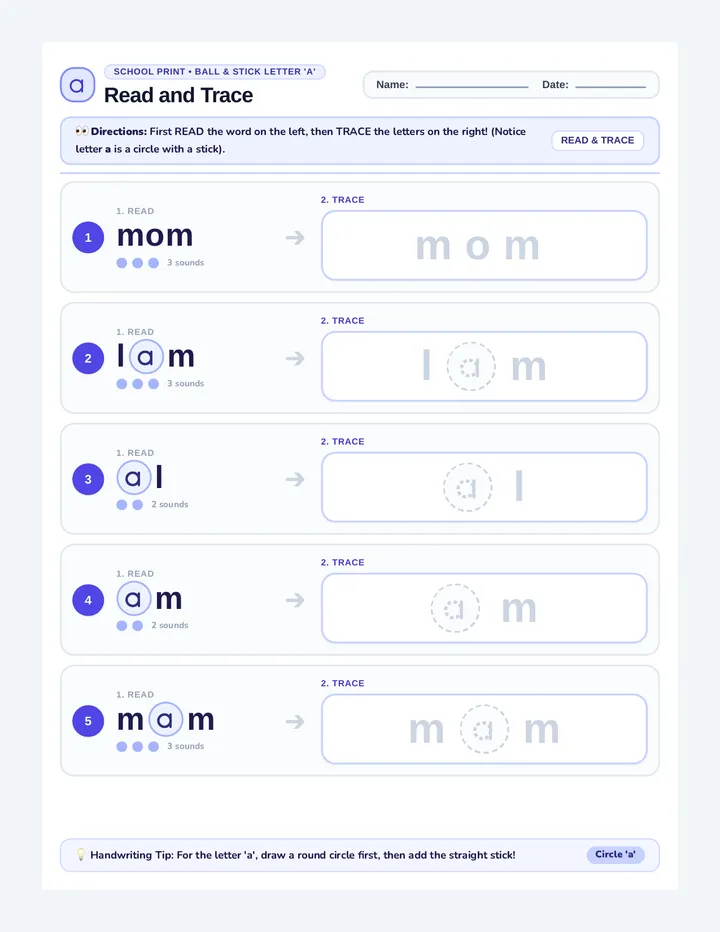
A large-print special education phonics worksheet for reading and tracing mom, lam, al, am, and mam with clean open tracing boxes (no triple lines), school circle-style letter a, and uniform sound dots with no yellow dots.

M

michelle.bernius

Grade 4 Math Priority Pacing Guide

Grade 4 Math Priority Pacing Guide

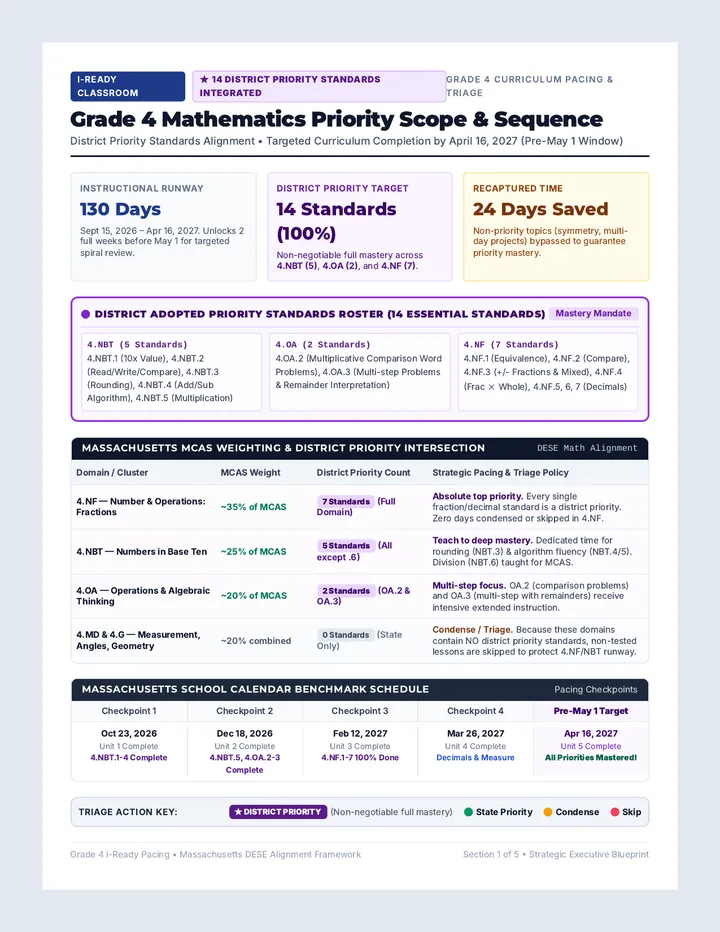
A comprehensive 5-page standards-aligned Grade 4 Mathematics curriculum pacing guide for i-Ready Classroom Mathematics, specifically incorporating the 14 designated District Priority Standards across 4.OA, 4.NBT, and 4.NF. Calibrated to the Massachusetts Curriculum Frameworks to guarantee 100% completion of all district priority standards before May 1, featuring explicit district priority badging, unit-by-unit pacing dates, strategic triage rationales for non-priority topics, and a Tier 2 prerequisite intervention bridge.

AS

Ashley Santiago

Weekly Math Spiral Packet

Weekly Math Spiral Packet

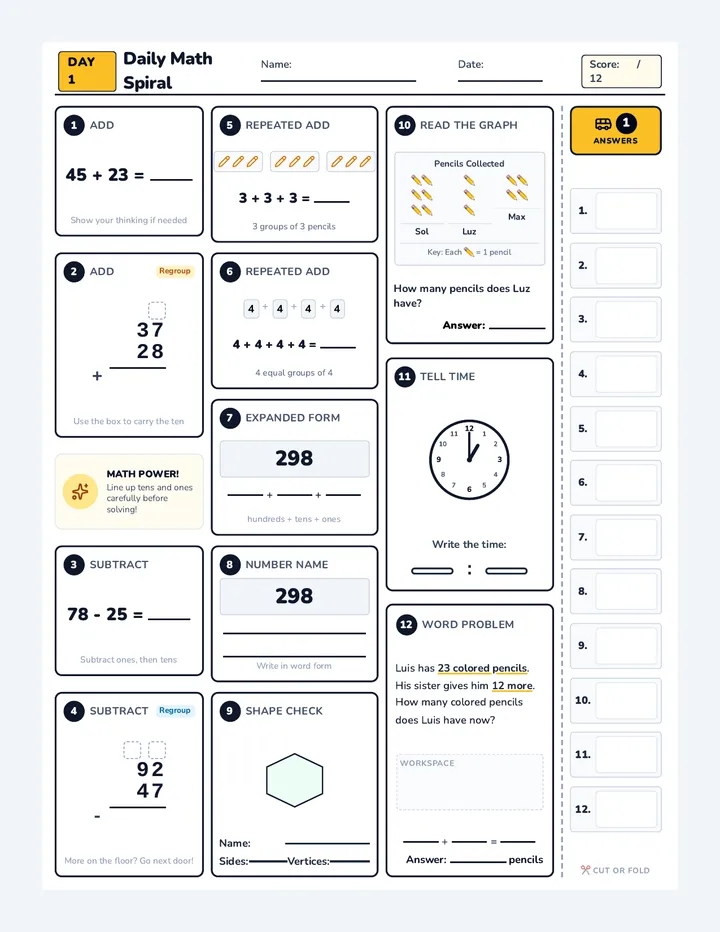
A 5-day printable weekly math spiral review packet (Monday to Friday) covering 2-digit addition and subtraction with regrouping, repeated addition, 3-digit expanded form, number names, 2D/3D geometry, graphs, analog time, and word problems, complete with a quick-grader answer strip.

DL

Damaris Lopez Valentin

Math Vocabulary Flashcards

Math Vocabulary Flashcards

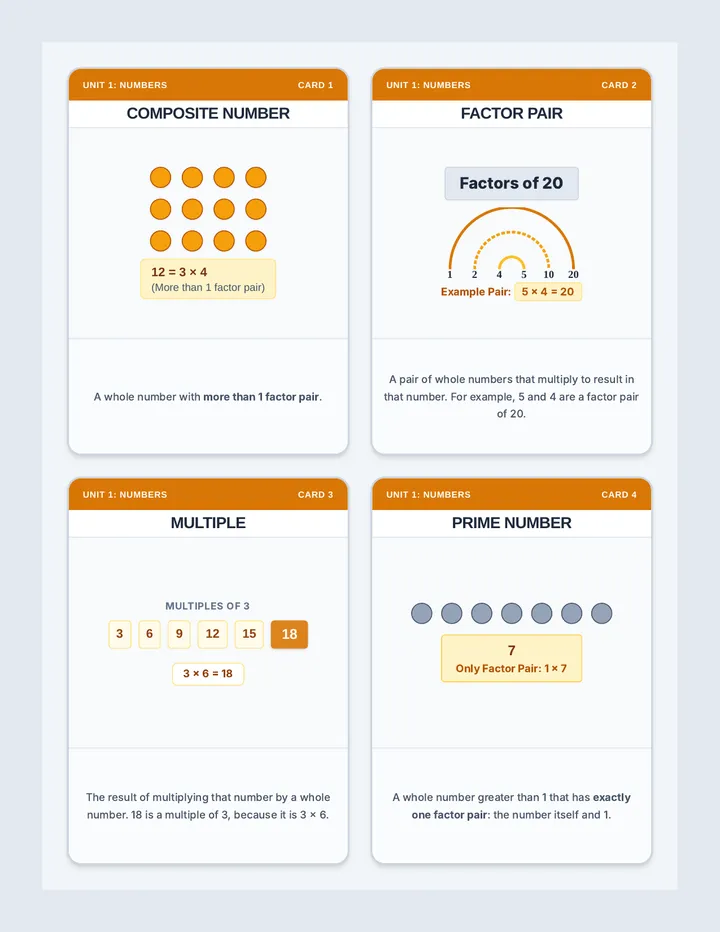
A complete, comprehensive classroom-ready set of 40 standard index-sized math vocabulary flashcards (4 per page) spanning Units 1 to 8. Includes unit fractions, mixed numbers, operations, geometry, and shape classifications with high-contrast diagrams and definitions.

N

nmack

Geometry Quest Exam Worksheet

Geometry Quest Exam Worksheet

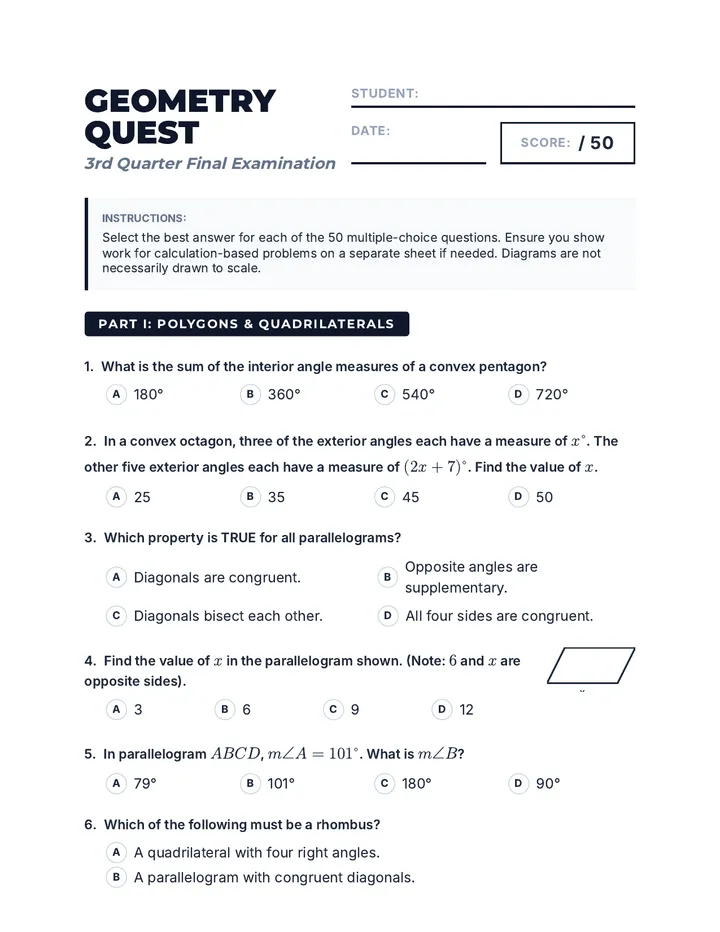
A comprehensive 50-question multiple-choice geometry exam condensed into 5 pages. The worksheet covers polygons, quadrilaterals, similarity, and proportion, including diagrams and algebra-based geometry problems with a clean, professional layout.

AC

Anjoe Calamba

MCAS Grade Four Math Reference Chart

MCAS Grade Four Math Reference Chart

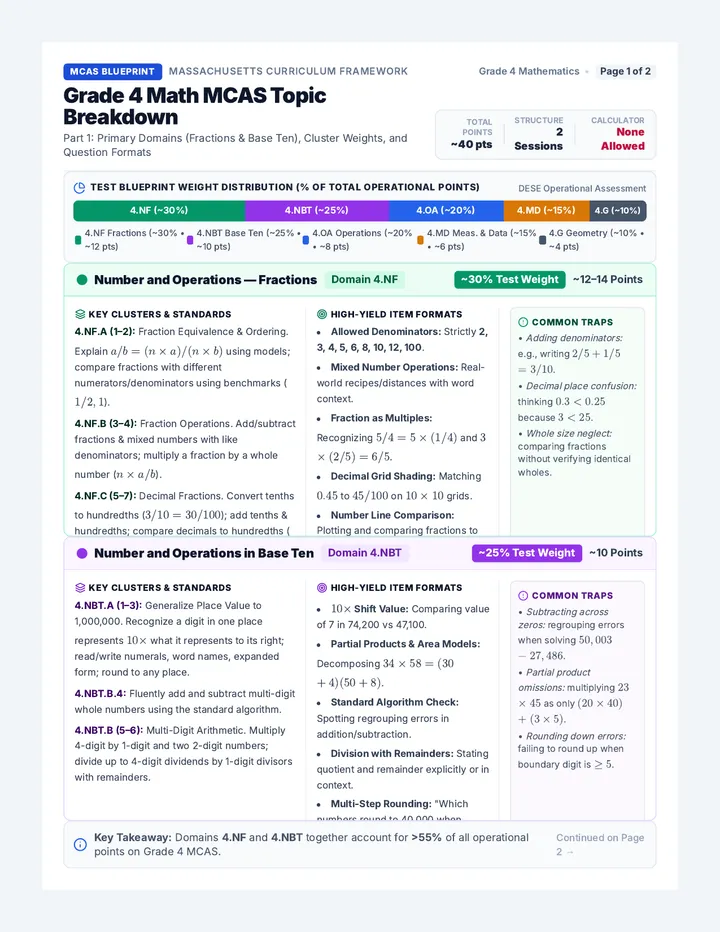
A comprehensive two-page reference chart detailing the Massachusetts MCAS Grade 4 Mathematics test blueprint, including domain weights, priority clusters, released item archetypes, common misconceptions, and constructed-response rubrics.

MS

Meaghan Smith

Sequences

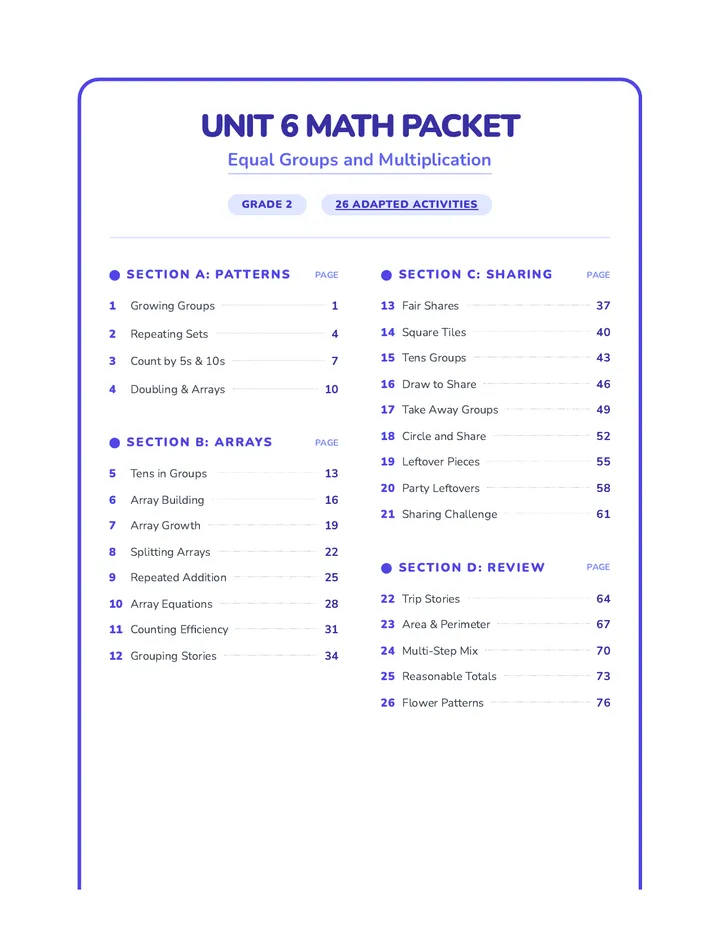
Packet Master TOC document

Unit 6 Equal Groups and Multiplication

A comprehensive Grade 2 math packet focused on skip counting, repeated addition, arrays, and equal groups.

N

nmack

39
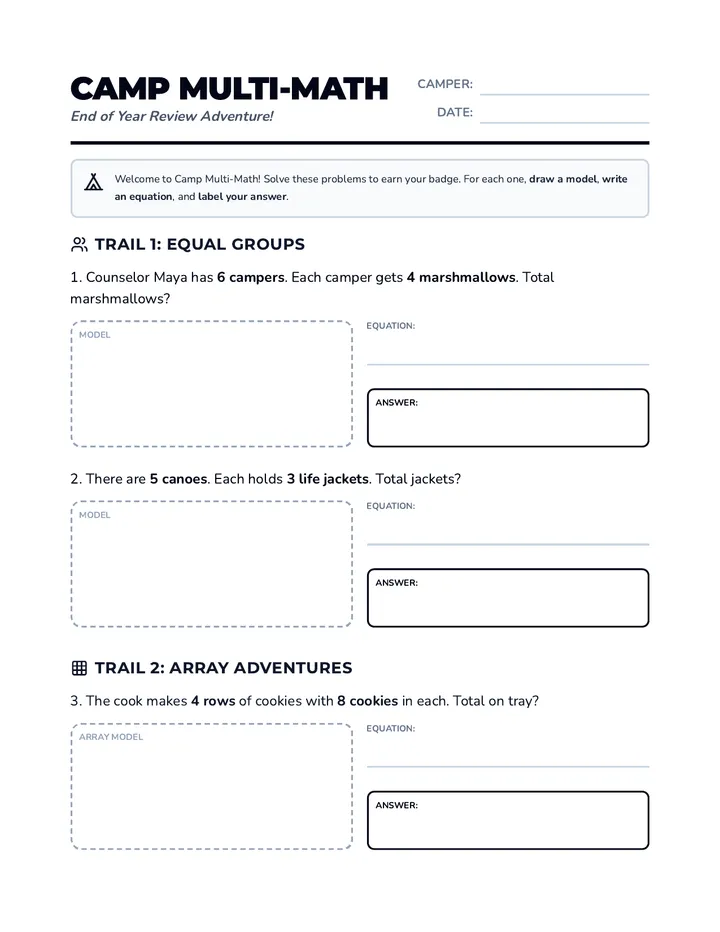
Camp Multi-Math Worksheet

Math Review Adventures

A collection of themed end-of-year math review adventures for different grade levels, focusing on spiraling key standards and problem-solving.

DB

Deborah Burton

21
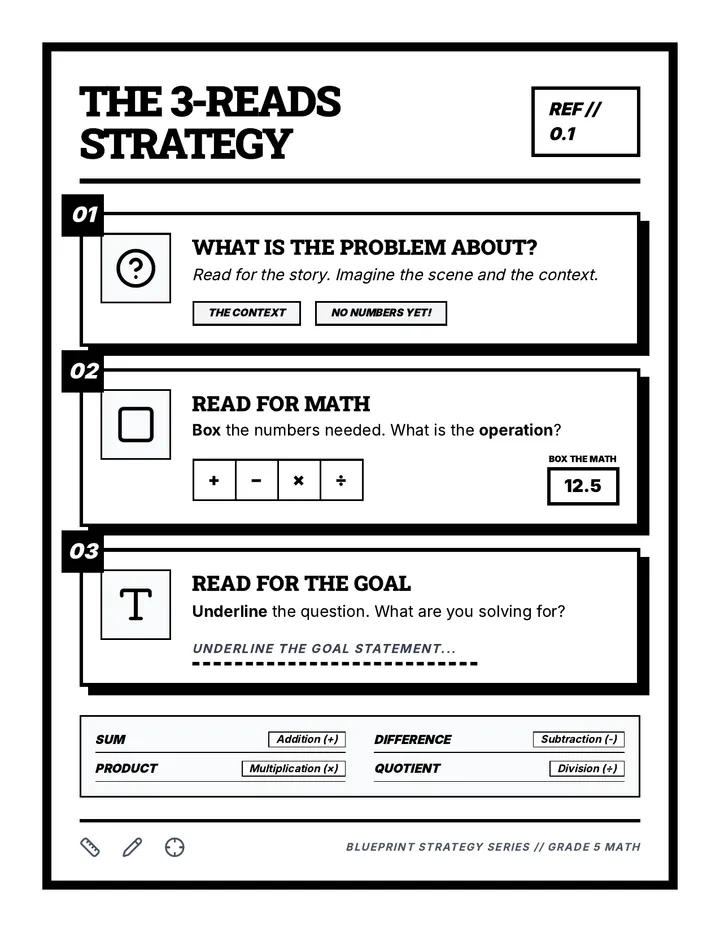
3 Reads Strategy Poster

Math Blueprints Grade 5

A comprehensive set of math supports for 5th-grade students in a co-taught environment. Each unit includes visual vocabulary, worked examples, cloze-style guided notes, and exit tickets featuring a 'Mistake of the Day' analysis.

HJ

Hope Joel

23
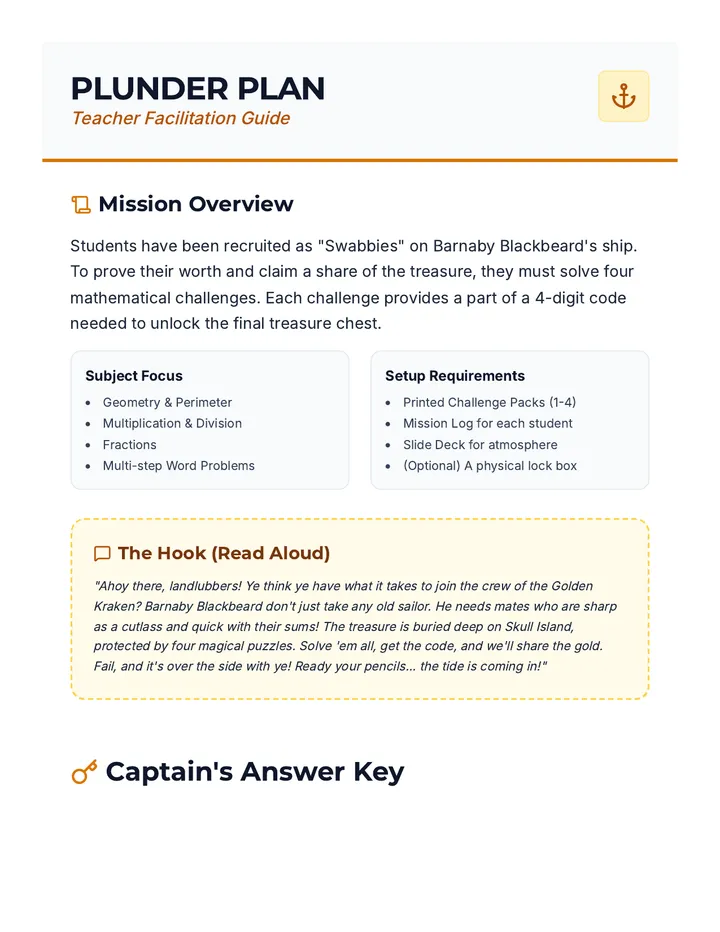
Plunder Plan Teacher Guide

Pirate Math Plunder

A pirate-themed 3rd grade math review escape room where students solve puzzles involving geometry, multiplication, division, fractions, and word problems to find the hidden treasure.

DG

Danielle Garland

12
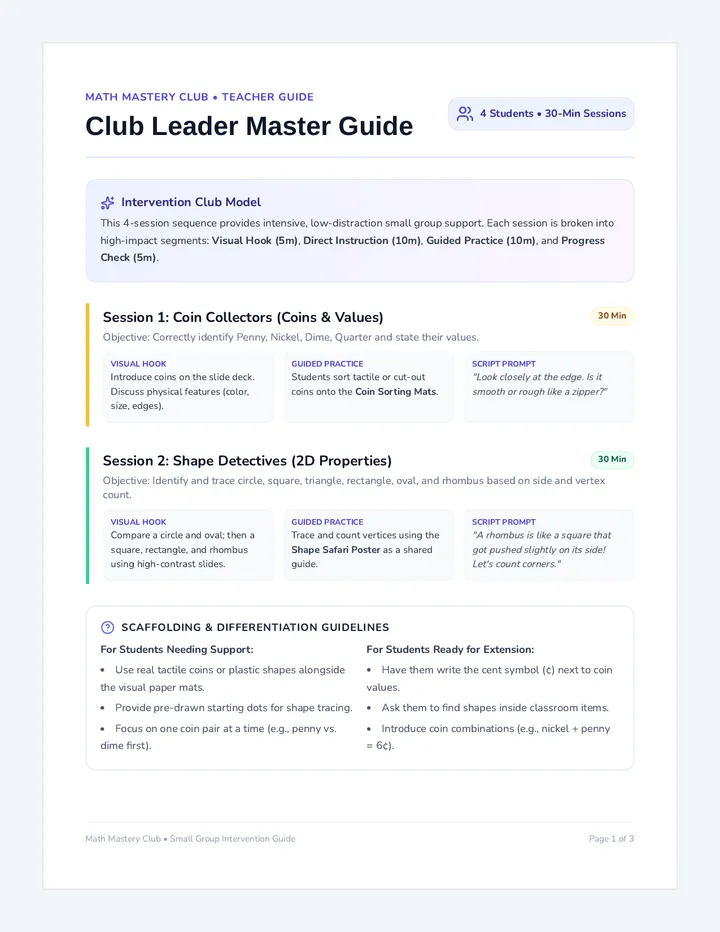
Club Leader Master Guide

Math Mastery Club

An expanded 14-session, cohesive small-group math intervention sequence for four 1st-grade students. Covers coin values (penny, nickel, dime, quarter) over 3 sessions; 2D shapes (circle, square, triangle, rectangle, oval, rhombus) over 3 sessions; and step-by-step number decomposition to make a ten for addition (3 sessions) and subtraction (3 sessions) to ensure deep student mastery.

K

kurtzm

37
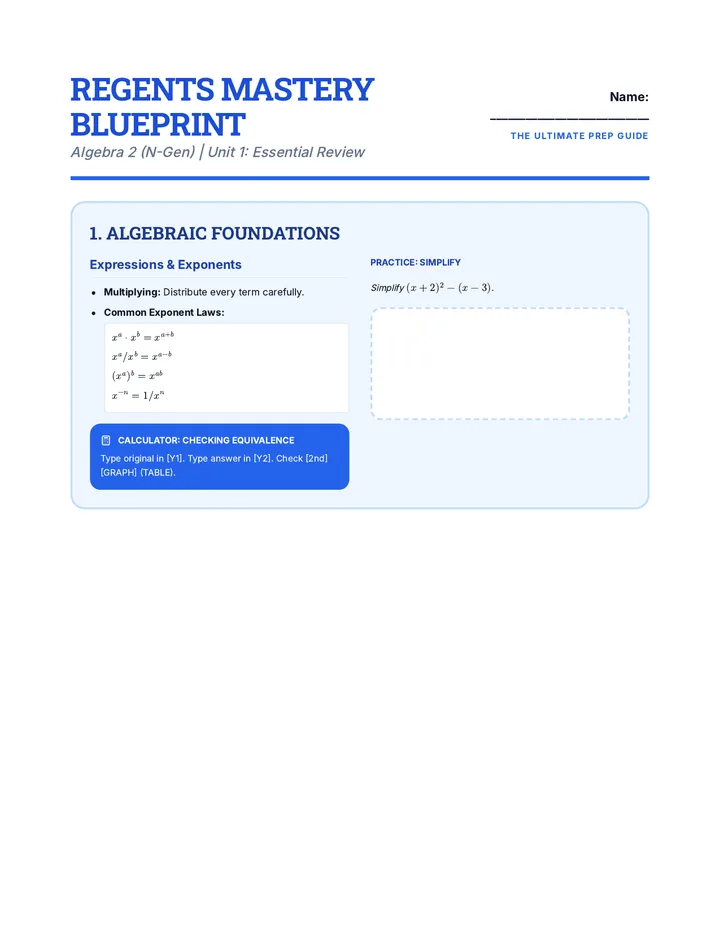
Regents Mastery Blueprint Study Guide

Regents Mastery Suite

A comprehensive review suite for the New York State Mathematics Regents exams, including Algebra 1, Geometry, and Algebra 2, featuring mastery blueprints, calculator strategies, and exam-taking tips.

KB

Kayla Borozny

15

Lessons

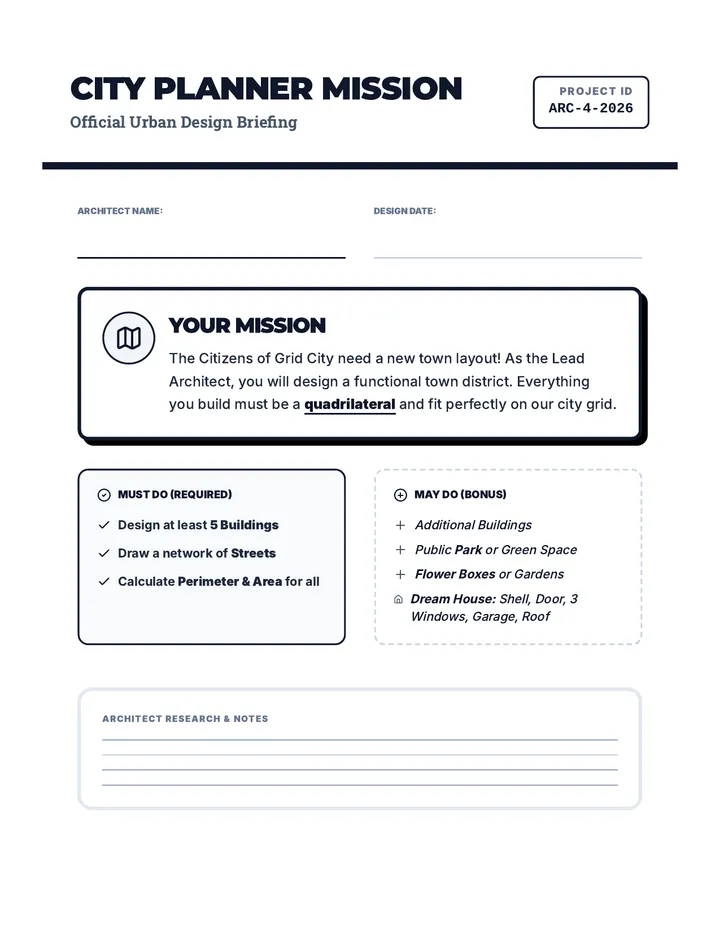
City Planner Mission Guide

Grid City Architects

Students act as urban architects to design a town using quadrilaterals on a grid, calculating perimeter and area for their structures.

TC

Tracey Craft

5
Shape Squad Slides

Shape Squad Investigations

Students explore shared attributes of shapes to understand the category of quadrilaterals, specifically identifying squares, rectangles, and rhombuses while also creating non-standard quadrilaterals.
KB

Krista Bodkin

6
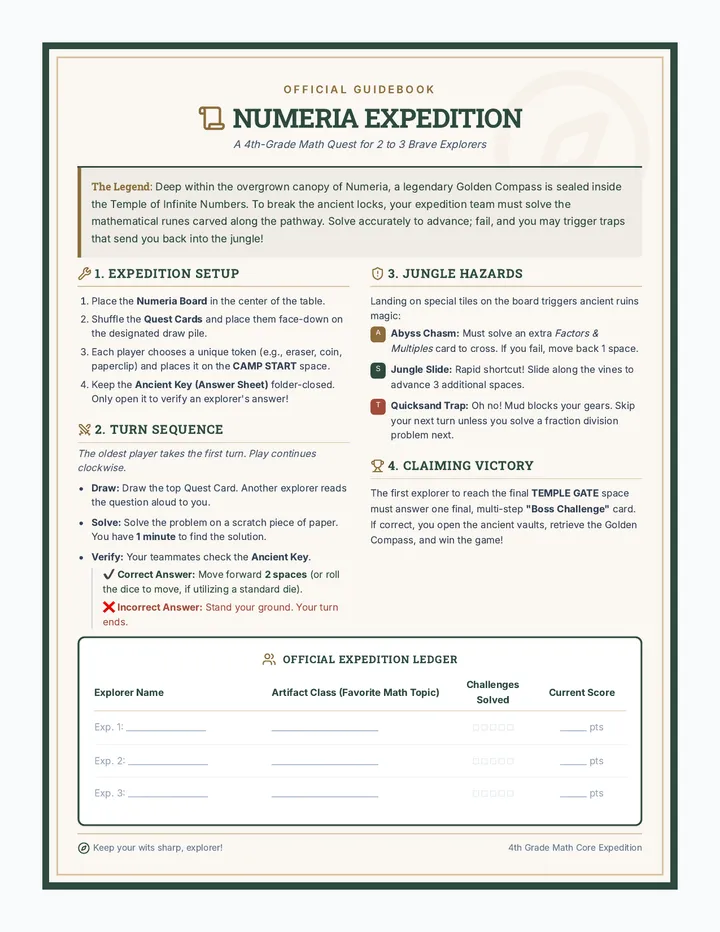
Numeria Expedition Rulebook

Numeria Expedition

A comprehensive, adventure-style 4th-grade math review board game where students solve challenges across 8 core curriculum units to escape the ruins of Numeria. Designed for 2-3 players, it features a printable game board, challenge cards, a player rulebook, and a quick-reference answer key.

N

nmack

4
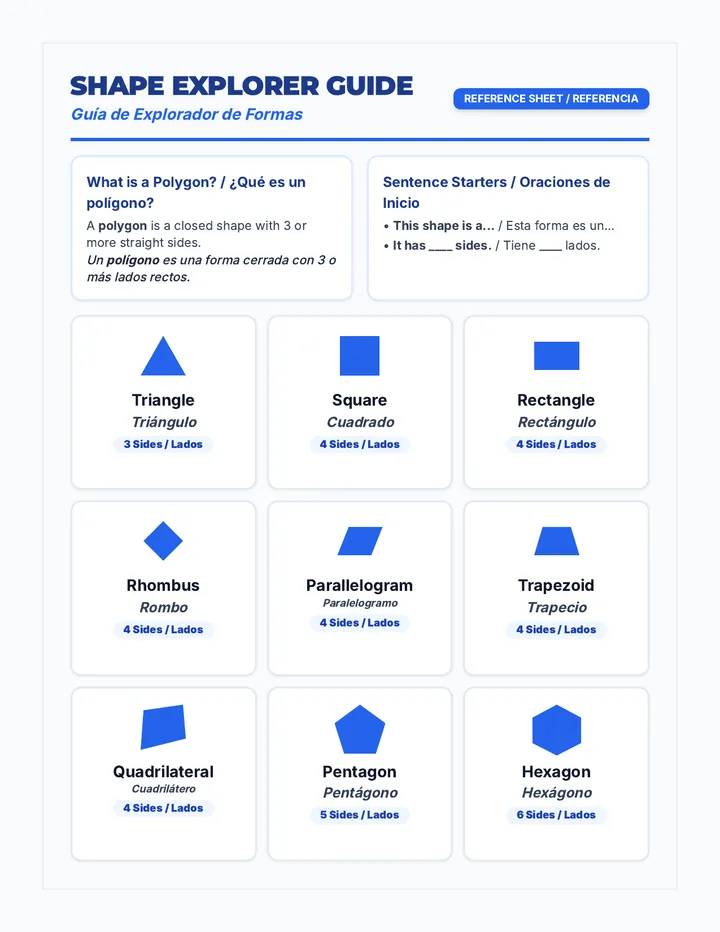
Shape Explorer Packet

Shape Explorers

A beginner geometry lesson focusing on identifying and naming polygons, specifically designed for students with limited English proficiency through bilingual supports and sentence starters.

C

cedaniels

8
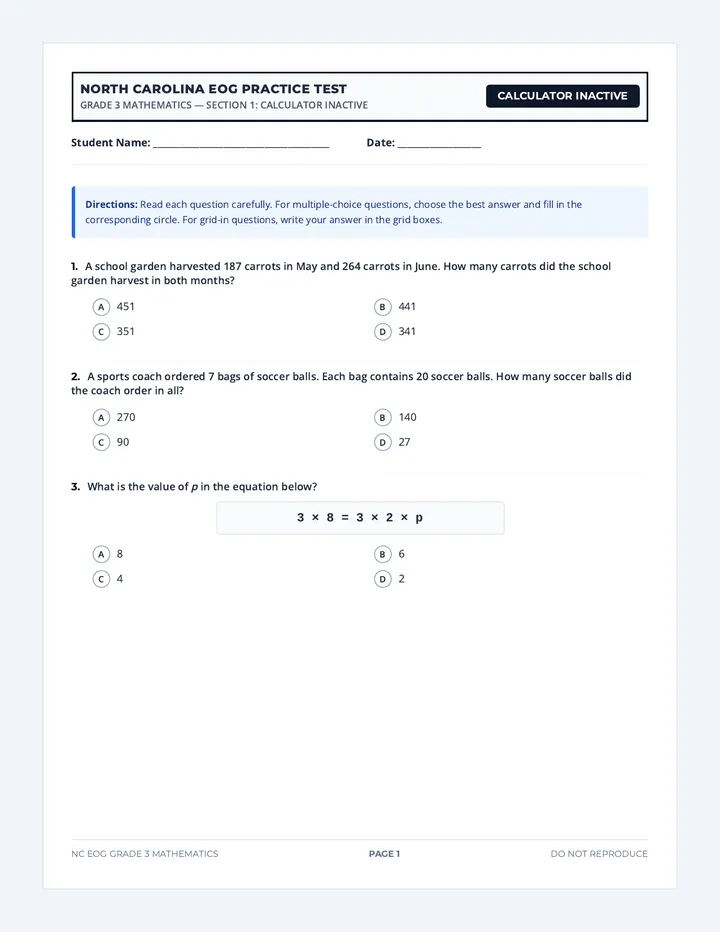
Grade 3 Math Practice Test

Tar Heel Math Mastery

A comprehensive practice package designed for 3rd-grade students preparing for the North Carolina End-of-Grade (EOG) Mathematics assessment. It includes a complete 48-question exam covering all highly-tested standard course of study domains, an interactive student grid, an item-to-standard alignment map, and a full explanatory answer key.

SP

sashagaye Panton

3
Measurement Field Guide Slides

Drafting Board Measurement & Data Review

A precision-focused drafting-themed review of 4th grade Measurement and Data (MD) standards. Covers units and conversions (MD.1), measurement word problems (MD.2), area and perimeter (MD.3), line plots (MD.4), and angle measurement and addition (MD.6-7). Division has been removed from the curriculum.

DG

Debra Golden

18