Lenny.com
Explore
Create
ActivitiesNewMathEnglish Language ArtsScience & EngineeringSocial StudiesGlobal LanguagesHealth & Physical EducationSpecial EducationCounseling & Life SkillsArts & CreativityESL
Lenny.com
Lenny.com
Explore
Create
ActivitiesNewMathEnglish Language ArtsScience & EngineeringSocial StudiesGlobal LanguagesHealth & Physical EducationSpecial EducationCounseling & Life SkillsArts & CreativityESL
Lenny.com
MathNumbers & CountingCounting ObjectsNumber NamesComparing NumbersNumber OperationsCounting SequenceNumbers 0-10Place Value Understanding and SystemAdd and Subtract Within 20Addition and Subtraction ConceptsAddition and Subtraction EquationsAddition and Subtraction ProblemsFoundations for MultiplicationMultiplication and Division PropertiesMultiply and Divide Within 100Multiplication and Division ProblemsFactors and MultiplesProperties of OperationsPatterns and RelationshipsGenerate and Analyze PatternsMulti-Digit ArithmeticPlace Value OperationsMulti-Digit and Decimal OperationsNumerical ExpressionsFour Operations and PatternsFour Operations Problem SolvingMeasurement & DataMeasurable AttributesMeasuring LengthsMeasure and Estimate Lengths in Standard UnitsRelate Addition and Subtraction to LengthClassifying and Counting ObjectsTime and MoneyArea Concepts and MeasurementPerimeter and Area MeasuresAngle Concepts and MeasurementTime, Volume, and MassMeasurement Unit ConversionsGeometryIdentifying ShapesShapes and AttributesShape Attributes and ReasoningShapes and CompositionClassifying 2D FiguresGeometric Figures and RelationshipsLines, Angles, and ShapesAngle, Area, and VolumeGeometric MeasurementVolume of 3D ShapesCoordinate Plane ApplicationsTransformations in the PlaneCongruence and SimilarityUnderstand congruence in terms of rigid motionsSimilarity and TransformationsProve Theorems Involving SimilarityPythagorean TheoremTrigonometry for General TrianglesMake Geometric ConstructionsProve Geometric TheoremsTheorems About CirclesFind Arc Lengths And Areas of Sectors of CirclesVolume FormulasRelationships Between Two-Dimensional and Three-Dimensional ObjectsProve Simple Geometric Theorems AlgebraicallyTranslate Between Geometric Description and Equation for Conic SectionApply Geometric Concepts in Modeling SituationsFractions & DecimalsFractions as NumbersBuilding FractionsFraction Equivalence and OrderingAdding and Subtracting FractionsMultiplying and Dividing FractionsDividing FractionsDecimal FractionsMulti-Digit Computation and FactorsAdd, Subtract, Multiply, and Divide Rational NumbersRational Number SystemIrrational Numbers and ApproximationsRatiosRatios and ProportionsProportional RelationshipsUnit RateAlgebraAlgebraic ExpressionsGenerate Equivalent ExpressionsQuantitative RelationshipsProportional Relationships and Linear EquationsEquations and InequalitiesEquation Solving and ReasoningLinear Equations and SystemsGraph Equations and InequalitiesSystems of EquationsReal-World Algebraic ProblemsQuantitative Reasoning with UnitsExpression StructureEquivalent Expression FormsRadicals and Integer ExponentsRational ExponentsRational and Irrational NumbersPolynomial OperationsPolynomial IdentitiesPolynomial Zeros and FactorsRational ExpressionsComplex Number OperationsComplex Numbers in PolynomialsComplex Numbers on PlaneStatistics & ProbabilityRepresent and Interpret DataData DistributionsStatistical VariabilityProbability ModelsCompound Event ProbabilitiesStatistical SamplingInterpret Categorical and Quantitative DataBivariate Data PatternsInterpret Linear ModelsComparing Two PopulationsRandom Processes in StatisticsIndependence and Conditional ProbabilityExpected ValuesProbability-Based Decision MakingStatistical Inference and ConclusionsFunctionsFunction Concepts and NotationDefine and Compare FunctionsInterpret Functions in ContextAnalyze Function RepresentationsModel Relationships with FunctionsIdentify Linear vs Exponential GrowthDistinguish Between Function TypesCompare Growth RatesInterpret Function ExpressionsBuild Functions from RelationshipsConstruct and Model FunctionsTransform and Combine FunctionsModel Comparison and SelectionSolve Exponential EquationsTrigonometryTrigonometric Ratios Involving Right TrianglesTrigonometric Functions and Unit CircleModel with Trigonometric FunctionsTrigonometric IdentitiesVectors & MatricesIntroduction to Vectors and MatricesVector QuantitiesVector OperationsMatrix OperationsCalculusLimits and ContinuityDerivative Concepts and NotationDerivative Rules and TechniquesApplications of DerivativesOptimization ProblemsRelated RatesCurve Sketching and AnalysisIntegration Concepts and NotationAntiderivatives and Indefinite IntegralsDefinite Integrals and AreaFundamental Theorem of CalculusIntegration TechniquesApplications of IntegrationDifferential EquationsSequences and SeriesParametric and Polar FunctionsVector-Valued Functions

Volume Formulas

Geometric calculations for three-dimensional shapes including prisms, cylinders, pyramids, cones, and spheres. Develops skills for solving missing dimensions and real-world capacity problems.

Lenny.com

Solutions

Lenny for EducatorsLenny for SchoolsLenny for Districts

Product

ExploreSign inCreateSupportAbout

Resources

Getting startedMTSS Acceleration Program

© 2026 Lenny Learning Inc.

TermsPrivacyAccessibility
LinkedInInstagramX
Lenny

Videos

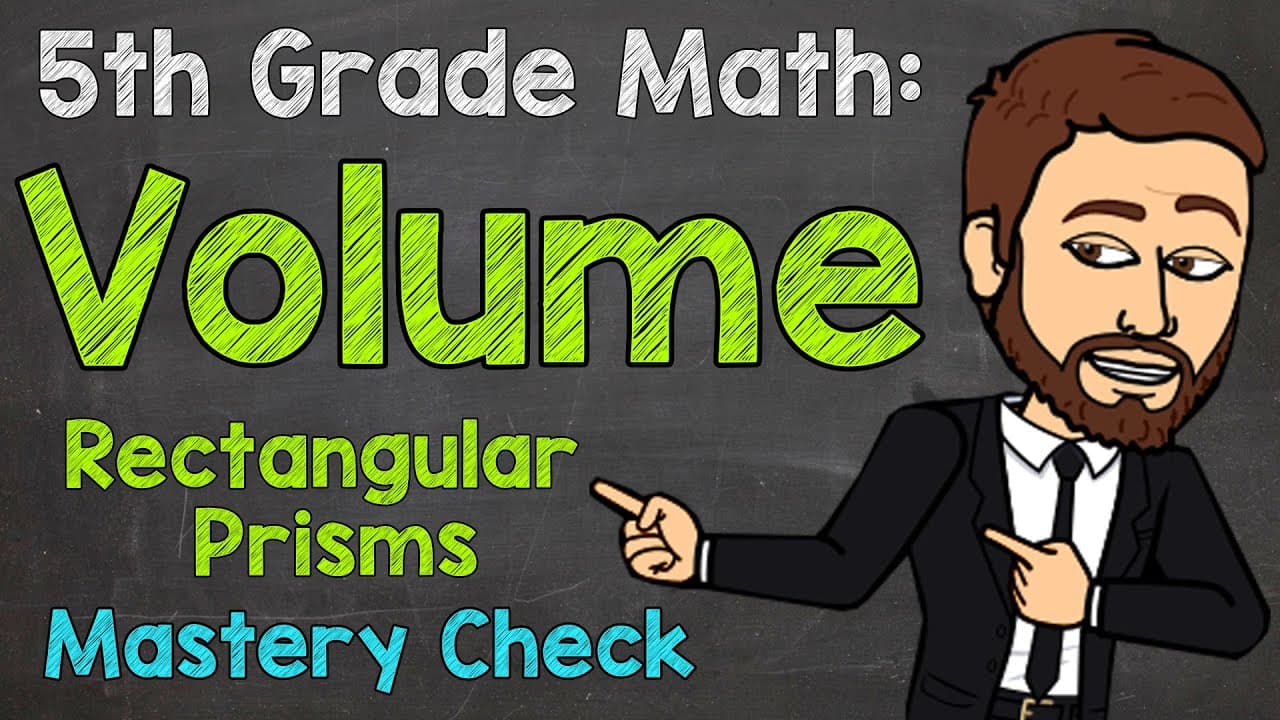
Practicing Volume of Rectangular Prisms

Practicing Volume of Rectangular Prisms

This video serves as a practical "Mastery Check" for students learning to calculate the volume of rectangular prisms. Designed as an interactive practice session, the video presents four distinct geometry problems involving 3D shapes with labeled dimensions. The narrator guides students through the process of pausing the video to solve the problems independently before revealing the step-by-step solutions for each one. The problems increase in complexity, starting with basic application of the volume formula and culminating in a challenging problem requiring unit conversion. The content focuses heavily on the application of the volume formula ($V = l \times w \times h$) and the importance of labeling answers with correct cubic units (e.g., cubic feet, cubic inches). A significant portion of the educational value lies in the fourth problem, which introduces the critical concept of dimensional consistency—teaching students that they cannot simply multiply numbers with different units (feet vs. inches) without converting them first. This addresses a common student error in measurement geometry. For teachers, this resource is an ideal formative assessment tool or independent practice station. It allows educators to quickly gauge whether students have moved beyond the initial acquisition of the volume concept and can apply it accurately. The clear, chalkboard-style visual presentation makes it easy for students to follow along, and the "pause and practice" format encourages active participation rather than passive viewing. It effectively bridges the gap between learning a formula and using it correctly in varied contexts.

Math with Mr. JMath with Mr. J

4mins 25s

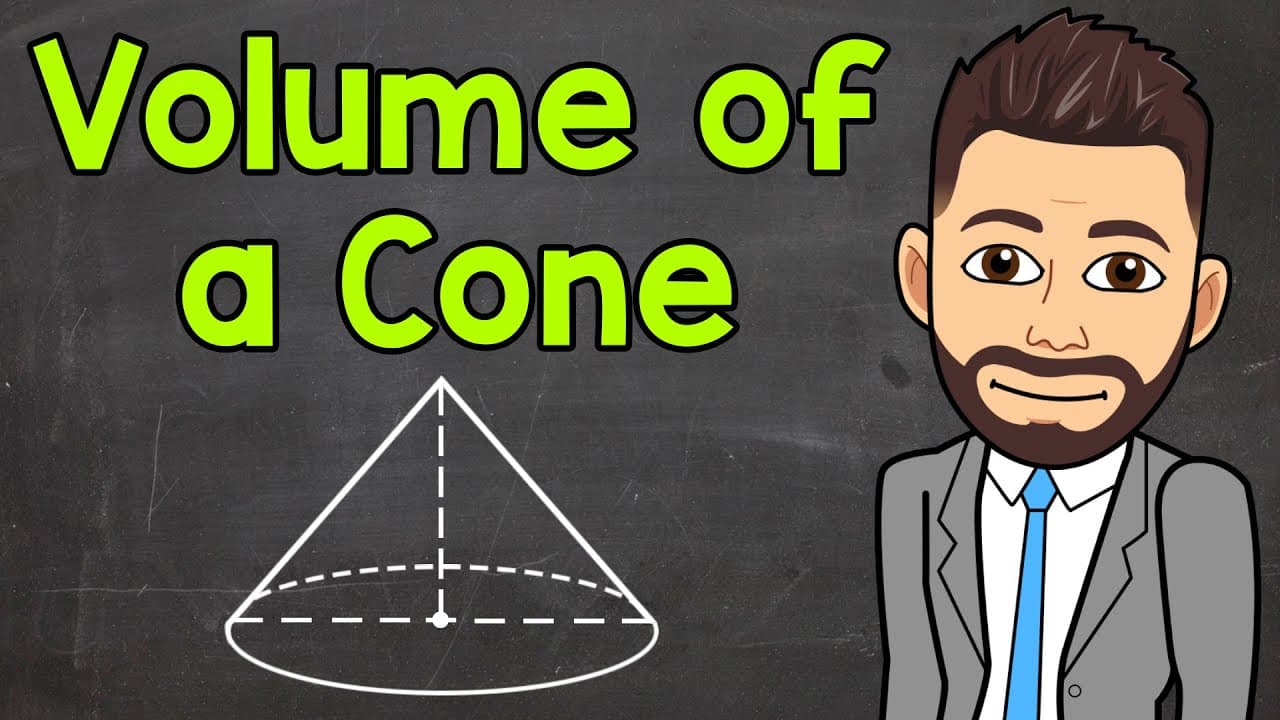
How to Calculate the Volume of a Cone Step by Step

How to Calculate the Volume of a Cone Step by Step

This instructional video provides a clear, step-by-step guide on how to calculate the volume of a cone. Mr. J introduces the specific formula for cone volume, explaining each variable including the radius, height, and the constant one-third. The video walks through two distinct examples: one where the radius is given directly, and a second more complex problem where students must first determine the radius from a given diameter. Additionally, the narrator provides a conceptual explanation for the formula by visually demonstrating the relationship between a cone and a cylinder of the same dimensions. Key themes include applying geometric formulas, understanding the relationship between three-dimensional shapes, and performing calculations involving Pi. The video emphasizes the difference between leaving an answer "in terms of Pi" versus calculating a decimal approximation. It also highlights the critical step of distinguishing between radius and diameter, a common pitfall for students in geometry. For educators, this video serves as an excellent tool for both introducing the concept of cone volume and providing guided practice. The clear visual breakdown of the calculations makes it accessible for middle school and early high school students. The conceptual interlude explaining that a cone is exactly one-third the volume of a corresponding cylinder offers a powerful "aha" moment that moves beyond rote memorization, making it valuable for deepening conceptual understanding in geometry units.

Math with Mr. JMath with Mr. J

9mins 59s

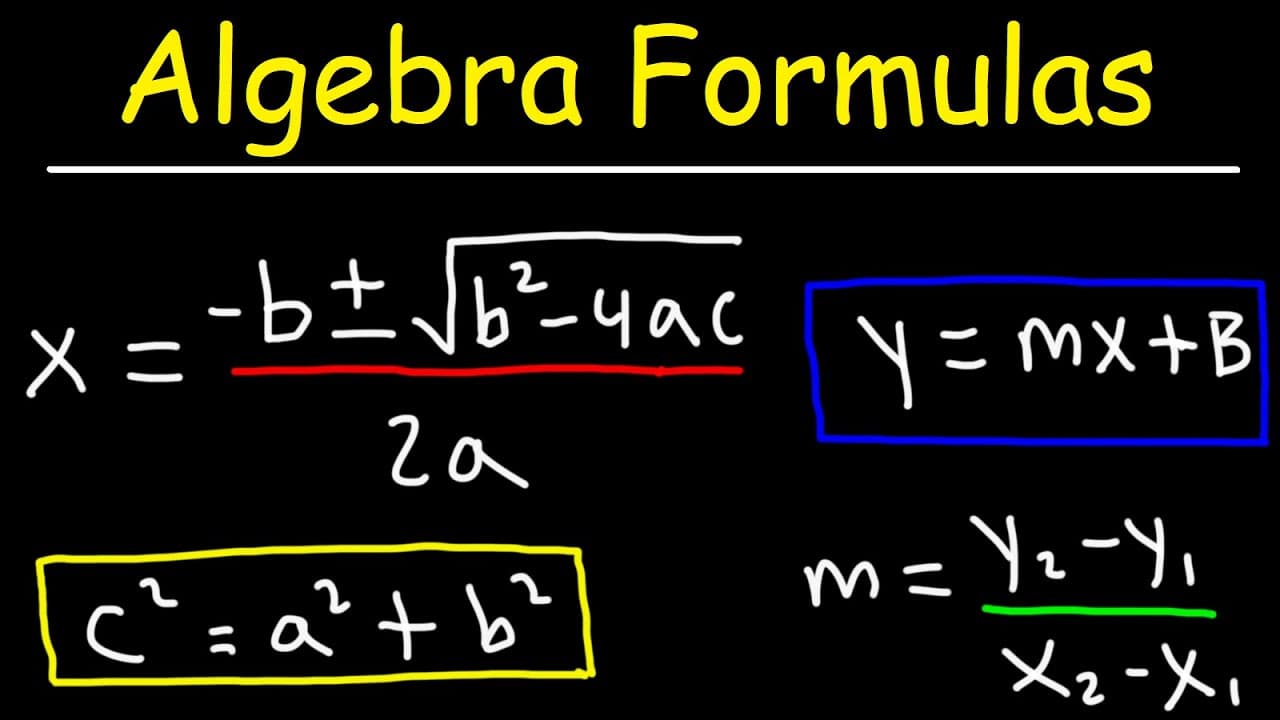
The Ultimate Guide to Essential Algebra Formulas

The Ultimate Guide to Essential Algebra Formulas

This video provides a comprehensive and fast-paced review of essential formulas encountered in high school algebra courses. It serves as an excellent summary tool, covering a wide breadth of topics ranging from basic coordinate geometry to more advanced concepts like logarithms and sequences. The narrator systematically writes out and explains formulas for distance, linear equations, quadratics, geometric shapes, exponents, and variation, often providing quick numerical examples to illustrate how variables are substituted.

The Organic Chemistry TutorThe Organic Chemistry Tutor

18mins 37s

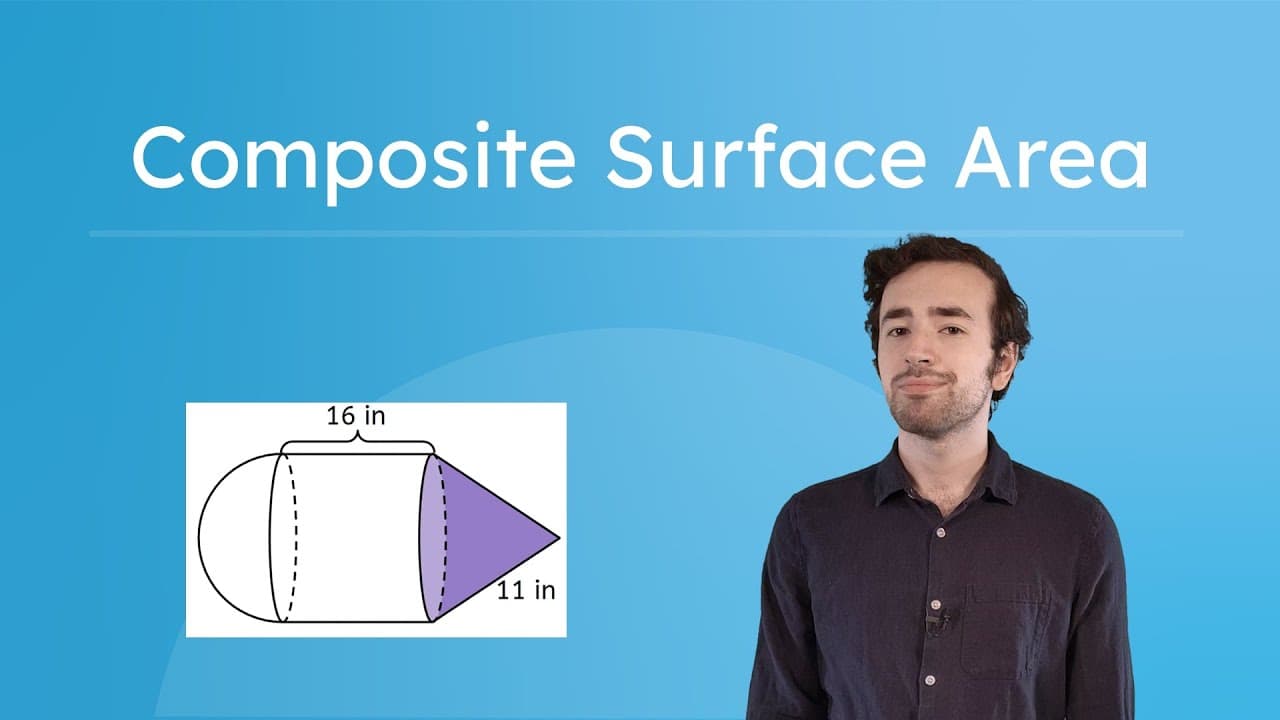
Mastering Surface Area of Composite 3D Figures

Mastering Surface Area of Composite 3D Figures

This educational video provides a clear, step-by-step guide to calculating the surface area of composite 3D figures—shapes created by combining or removing standard geometric solids like prisms, cylinders, pyramids, cones, and spheres. The instructor, Justin, moves beyond simple formula application to teach the conceptual understanding needed to determine which faces contribute to the total surface area and which are internal or removed. The lesson uses visual aids and specific examples to demonstrate that finding the surface area of a composite figure is not as simple as adding the total surface areas of its parts together. The video explores key geometric themes including spatial visualization, the decomposition of complex shapes, and the application of lateral versus total surface area formulas. It explicitly addresses the "hidden face" problem where two shapes join, using a "wrapping paper" analogy to help students visualize the exterior surface. Two detailed worked examples are provided: an additive figure combining a cylinder, cone, and hemisphere, and a subtractive figure where a pyramid is "removed" from a prism, creating a hollow indentation that paradoxically increases the total surface area. For educators, this video serves as an excellent instructional tool for middle and high school Geometry units. It effectively targets the common student misconception that calculating composite surface area involves simply summing the areas of individual shapes. By breaking down complex problems into manageable components and emphasizing the logic behind selecting specific parts of formulas (like using only lateral area), the video fosters critical thinking and precision in mathematical problem-solving.

Miacademy & MiaPrep Learning ChannelMiacademy & MiaPrep Learning Channel

14mins 45s

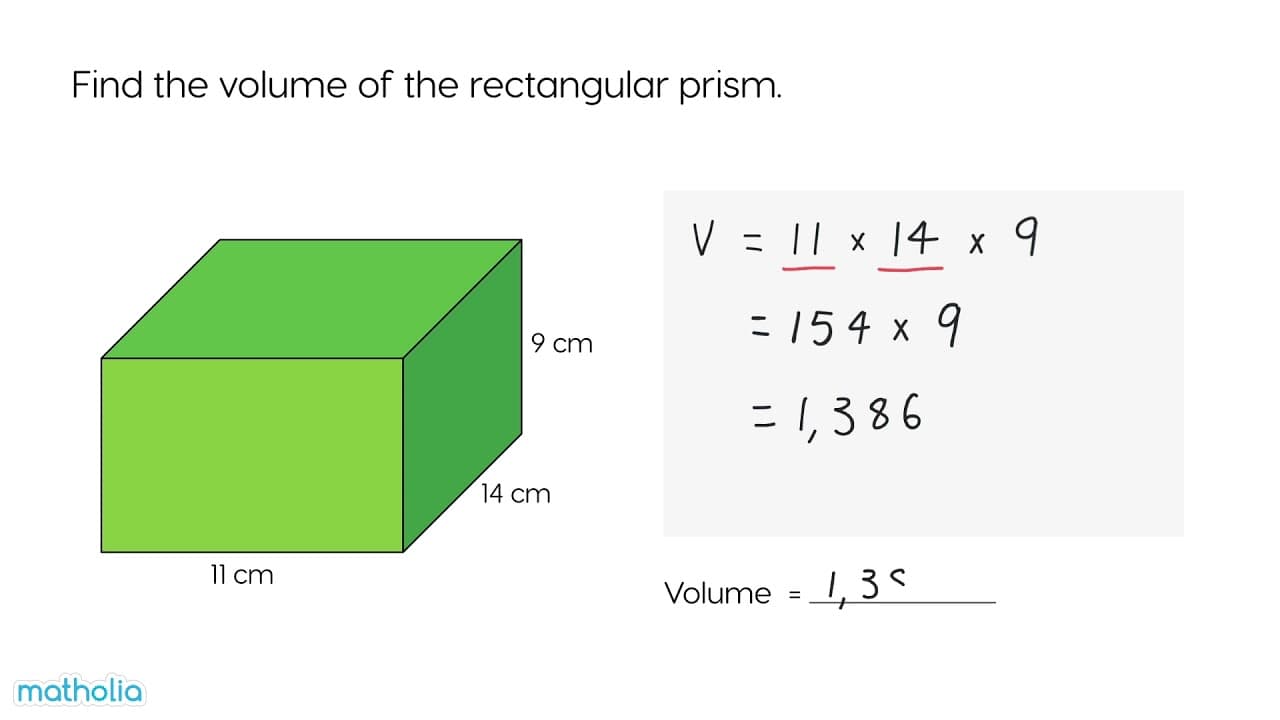
Calculating the Volume of Rectangular Prisms with Examples

Calculating the Volume of Rectangular Prisms with Examples

This educational video provides a clear, step-by-step tutorial on calculating the volume of rectangular prisms. The video demonstrates the application of the standard volume formula (Volume = Length × Width × Height) through three distinct examples involving different dimensions. Each example is visually represented with a 3D diagram labeled with measurements in centimeters. The content focuses on the core themes of geometry, measurement, and multi-digit multiplication. It reinforces the concept that volume is a three-dimensional measure found by multiplying three spatial dimensions. The video also models the arithmetic process, showing intermediate products when multiplying three numbers sequentially (e.g., first multiplying length by width, then that product by the height). For educators, this video serves as an excellent modeled instruction tool or review resource for 5th and 6th-grade math students. It can be used to introduce the concept of volume calculation or to support students who need repeated exposure to the procedural steps. The consistent format of the problems helps scaffold learning, allowing students to predict the next step in the process and practice their multiplication skills alongside the video.

MatholiaChannelMatholiaChannel

2mins 6s

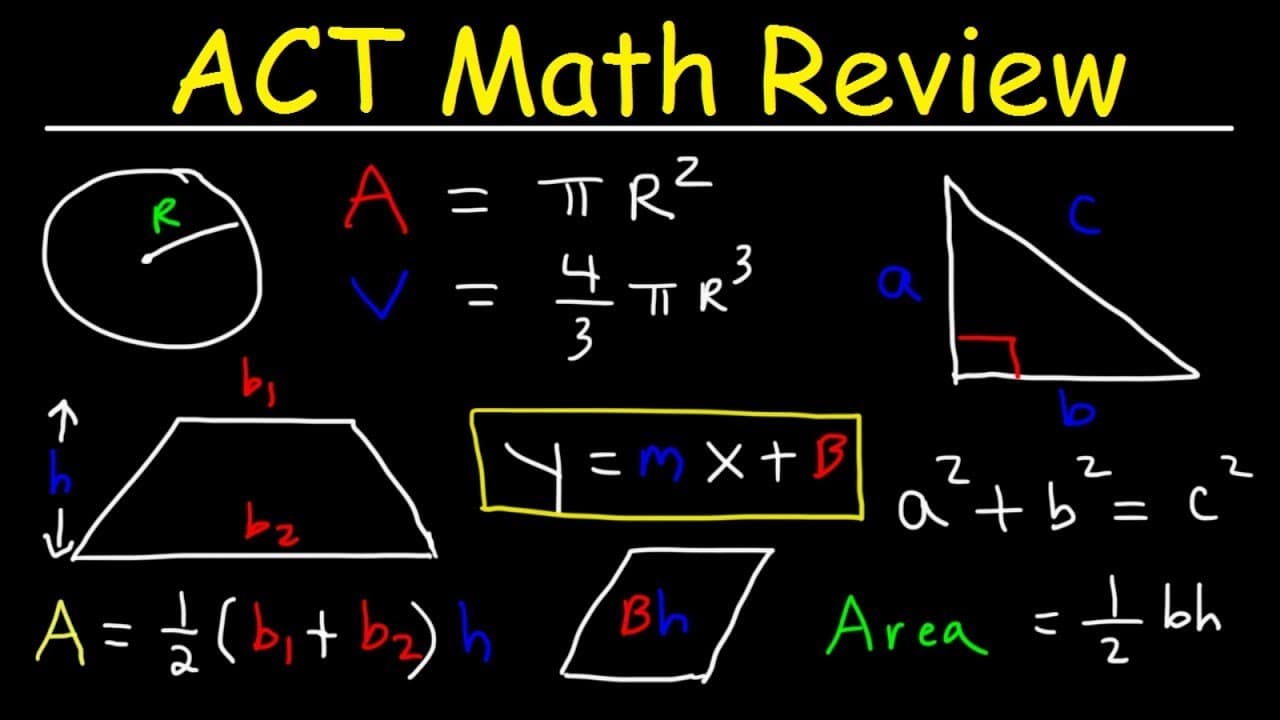
ACT Math Practice Test: Review of Algebra, Geometry, and Trig Concepts

ACT Math Practice Test: Review of Algebra, Geometry, and Trig Concepts

This comprehensive video tutorial serves as an intensive review for the ACT Math section, covering a wide array of topics crucial for high school students preparing for college entrance exams. The content is structured as a series of 31 practice problems that mimic the style and difficulty of actual ACT questions. It progresses through various mathematical domains including pre-algebra, elementary algebra, intermediate algebra, coordinate geometry, plane geometry, and trigonometry. The video adopts a pause-and-practice format, encouraging active participation where viewers attempt each problem before watching the detailed step-by-step solution. Key themes explored in this review include solving linear and quadratic equations, working with functions, understanding geometric properties of polygons and circles, applying trigonometric ratios (SOH CAH TOA) and identities, and analyzing statistical data. The video also places a strong emphasis on real-world application problems involving percentages, sales tax, discounts, and unit conversions. Particular attention is given to algebraic manipulation strategies, such as solving systems of equations and simplifying complex expressions, as well as test-taking tactics like identifying key information in word problems. For educators and students, this video is a valuable resource for standardized test preparation. It allows teachers to identify specific areas of weakness in student understanding by isolating problem types (e.g., if a student struggles with problem 10, they need more support with circle geometry). The step-by-step explanations model clear mathematical reasoning, demonstrating not just *how* to get the right answer, but *why* specific methods work. This makes it an excellent tool for flipped classrooms, homework support, or intensive boot-camp style review sessions prior to test dates.
The Organic Chemistry TutorThe Organic Chemistry Tutor

20mins 33s

Materials

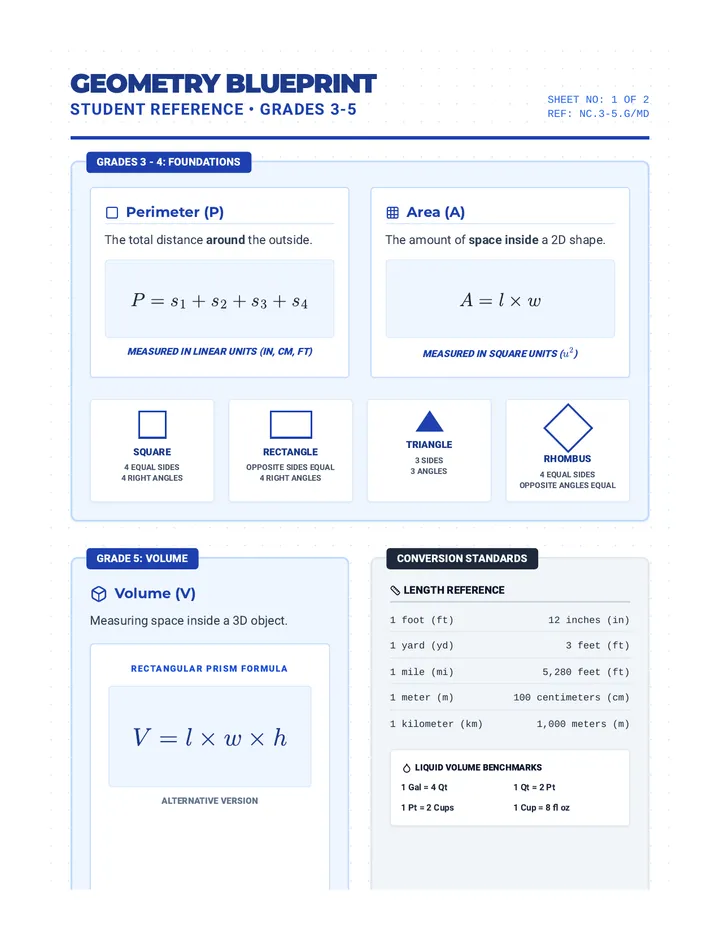
Geometry Blueprint Reference

Geometry Blueprint Reference

A comprehensive two-page printable geometry anchor chart for grades 3-8, themed as a technical blueprint. Features grade-banded formulas for perimeter, area, volume, surface area, and circles, including the Pythagorean theorem and common measurement conversions. Organized with MathJax for professional notation.

KB

Karen Brown

Dimension Drafts Reference Sheet

Dimension Drafts Reference Sheet

An elegant, drafting-themed double-sided quick reference sheet designed for middle and high school geometry. Includes precise SVG geometric diagrams, explicit formulas, and rigorous step-by-step worked examples for rectangular prisms, triangular prisms, cylinders, cones, square pyramids, and spheres. Also features a custom variable legend and a 'common pitfalls' troubleshooting guide.

C

Courtney.Smiley

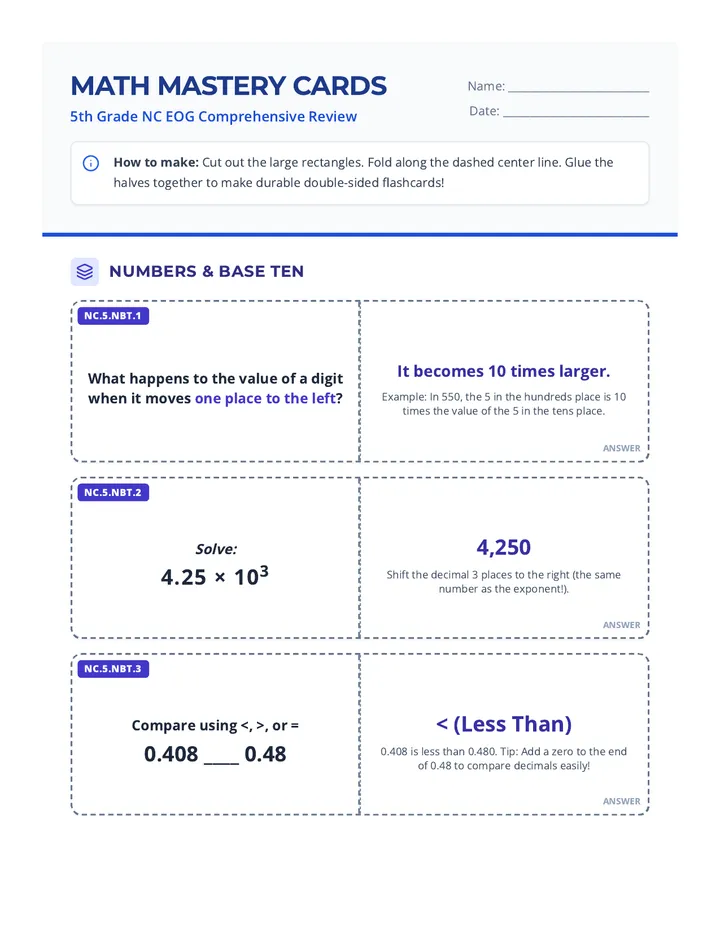
Math Mastery Cards Document

Math Mastery Cards Document

A set of printable flashcards covering all 5th-grade NC math standards (NBT, NF, OA, G, and MD) with a cut-and-fold design for student review. Revised to ensure cards do not split across pages.

RA

Radwa Ahmed

Volume Layer Lab Scoot Activity

Volume Layer Lab Scoot Activity

A 5-page printable Volume Scoot movement activity featuring color-coded base-and-height 3D prism station cards, a student recording sheet with visual scaffolding, and a complete teacher facilitation guide with answer key.

KS

Kaila Strubhart

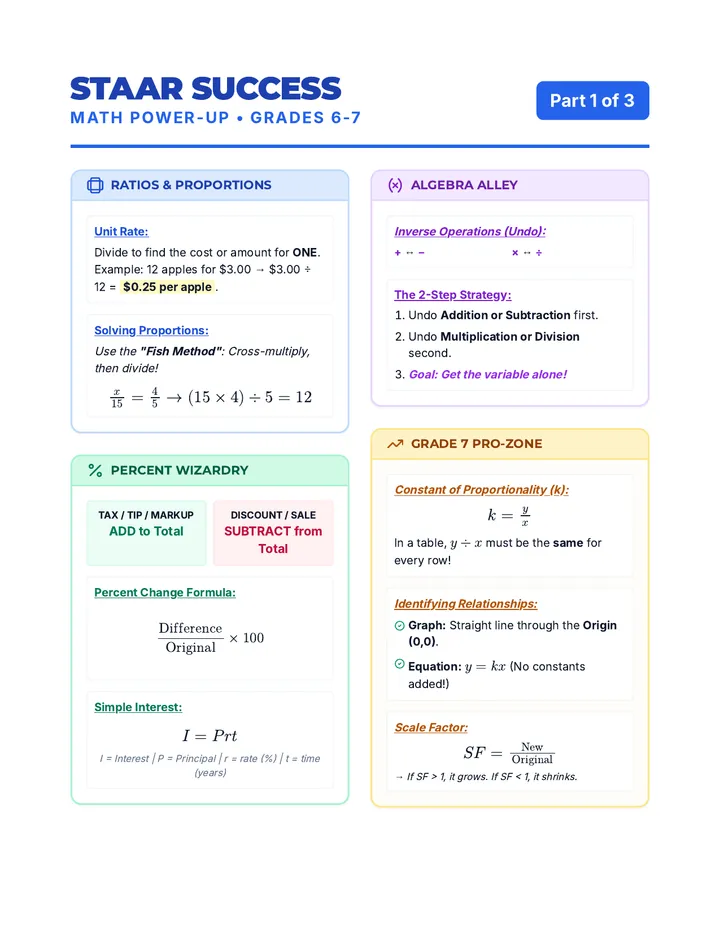
STAAR Success Cheat Sheet

STAAR Success Cheat Sheet

A comprehensive three-page printable STAAR Prep study guide for Grades 6-7, covering essential Math and RLA concepts with clear visual organization and student-friendly strategies.

Sequences

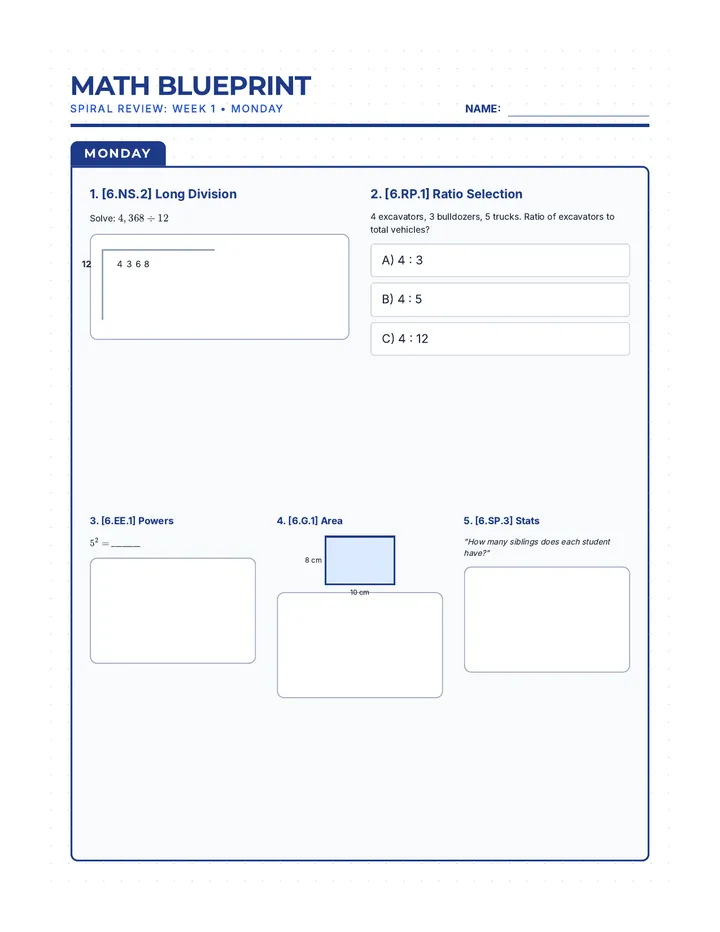
Math Blueprint Week 1 Booklet (Definitive)

Math Blueprint Spiral

A 7-week comprehensive math review sequence designed to prepare 6th-grade students for North Carolina state testing, covering Number Systems, Ratios, Expressions, Geometry, and Statistics.

MK

Michell Kisler

27
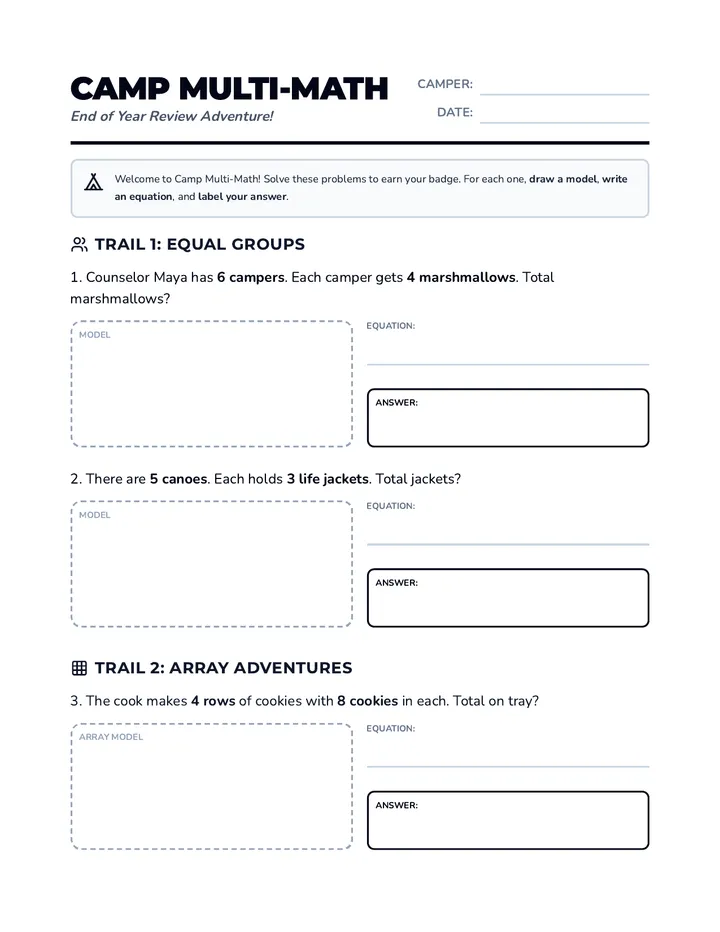
Camp Multi-Math Worksheet

Math Review Adventures

A collection of themed end-of-year math review adventures for different grade levels, focusing on spiraling key standards and problem-solving.

DB

Deborah Burton

21
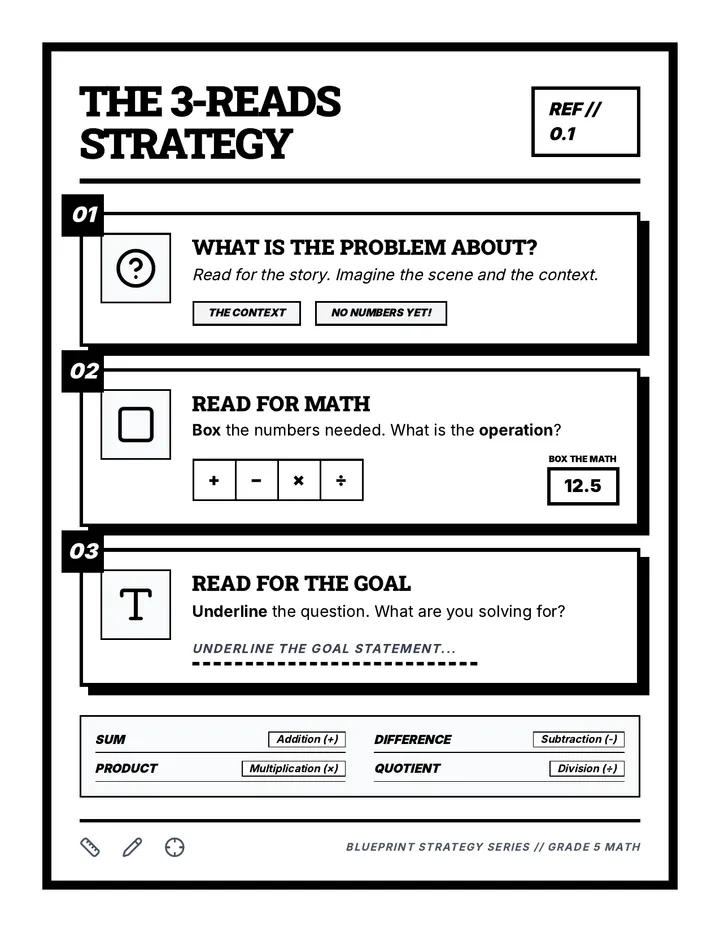
3 Reads Strategy Poster

Math Blueprints Grade 5

A comprehensive set of math supports for 5th-grade students in a co-taught environment. Each unit includes visual vocabulary, worked examples, cloze-style guided notes, and exit tickets featuring a 'Mistake of the Day' analysis.

HJ

Hope Joel

23
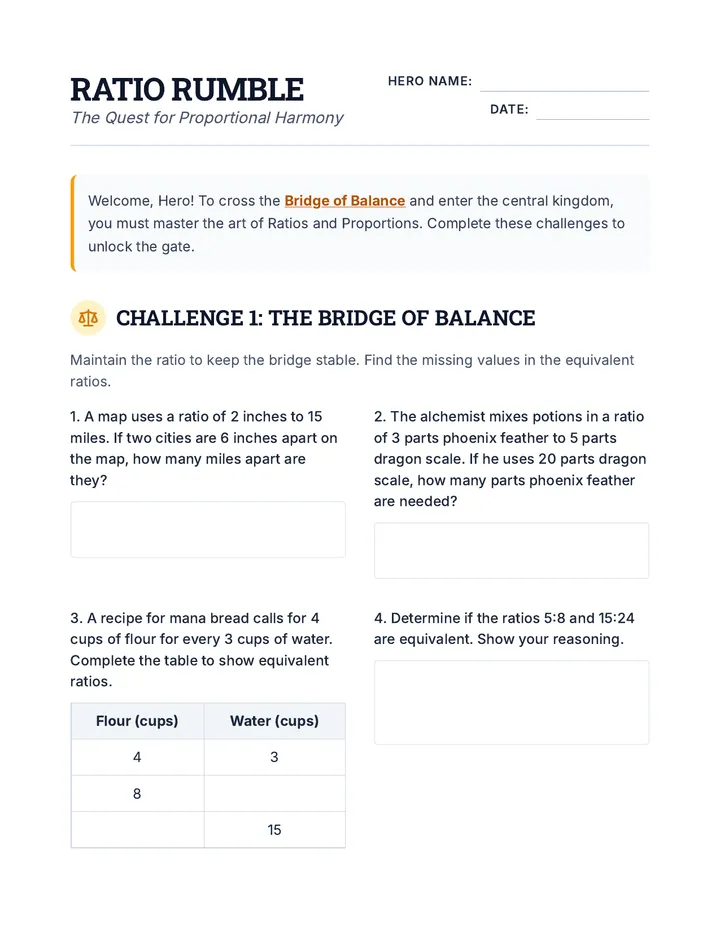
Ratio Rumble Worksheet

Math Quest Review

A week-long adventure-themed 6th-grade math review covering major clusters: Ratios & Proportions, Number System, Expressions & Equations, and Geometry. The sequence culminates in a mixed-review 'Quest Finale' to assess student mastery and readiness.

C

carlsond

15
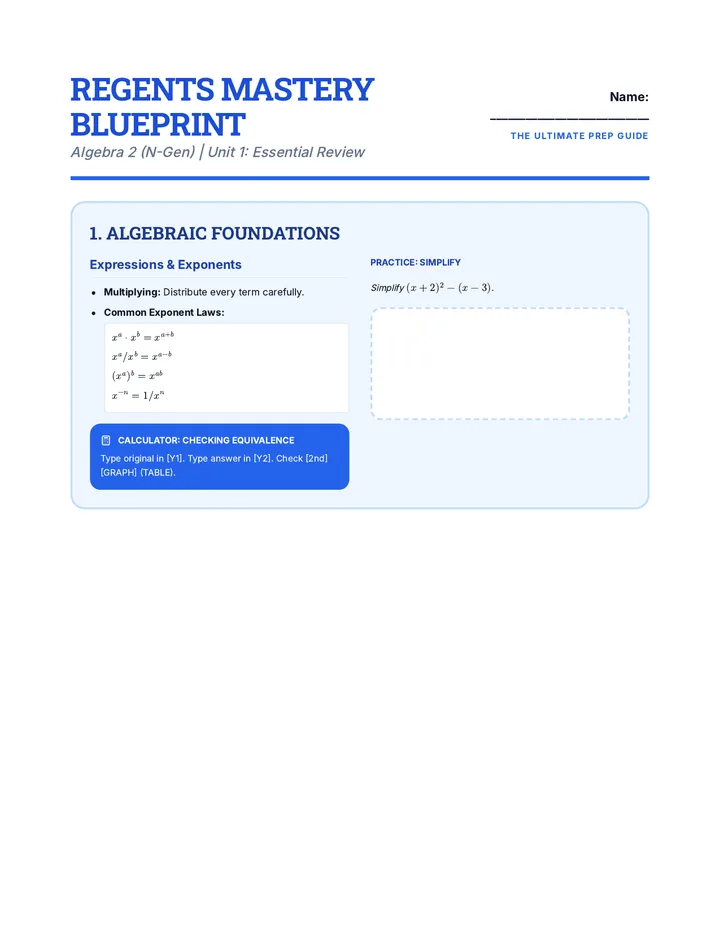
Regents Mastery Blueprint Study Guide

Regents Mastery Suite

A comprehensive review suite for the New York State Mathematics Regents exams, including Algebra 1, Geometry, and Algebra 2, featuring mastery blueprints, calculator strategies, and exam-taking tips.

KB

Kayla Borozny

15
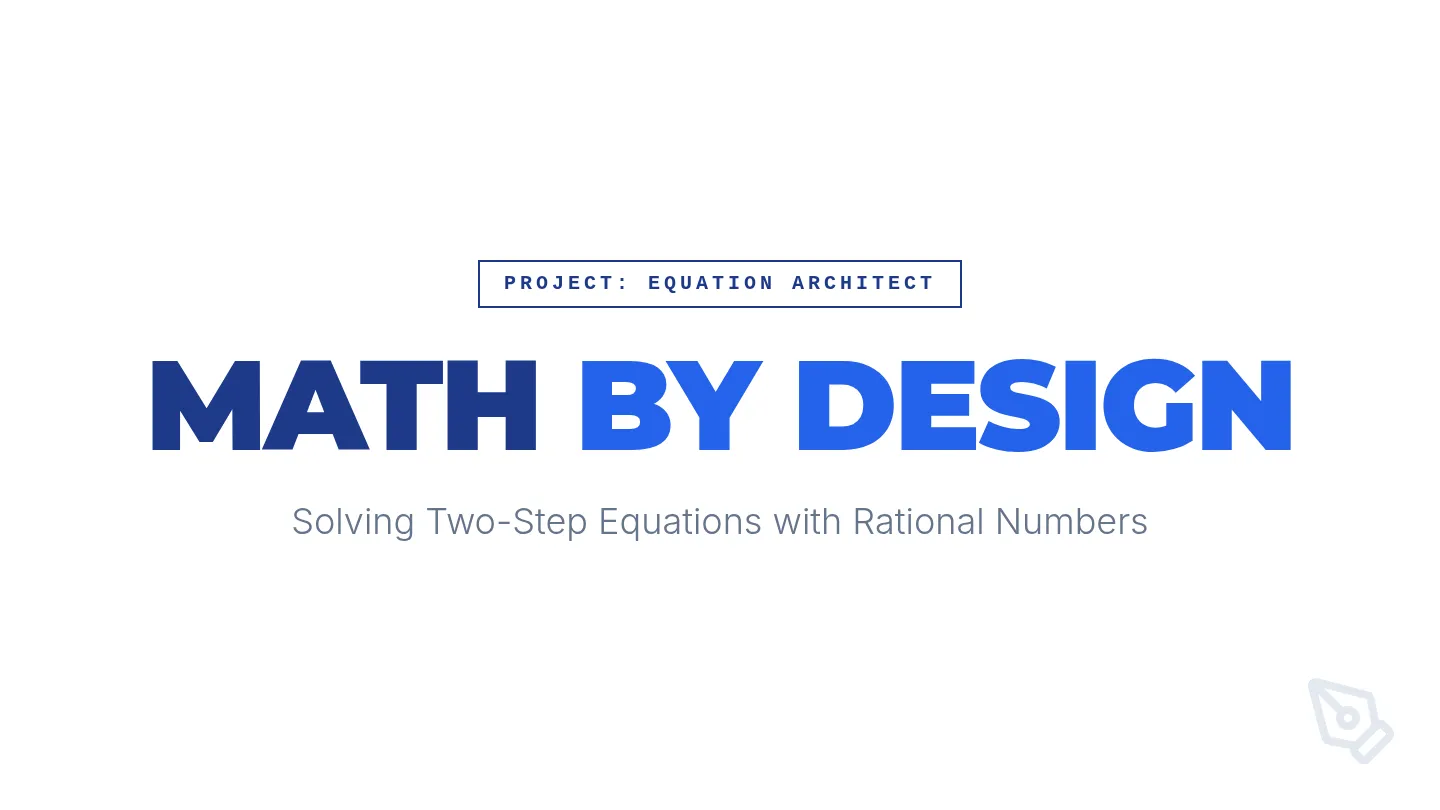
Equation Architect Slides

Geometric Foundations

A comprehensive unit covering 7th-grade geometry standards, focusing on scale drawings, geometric constructions, 3D cross-sections, angle relationships, and solving real-world area, volume, and surface area problems.

D

dbonicoro

25

Lessons

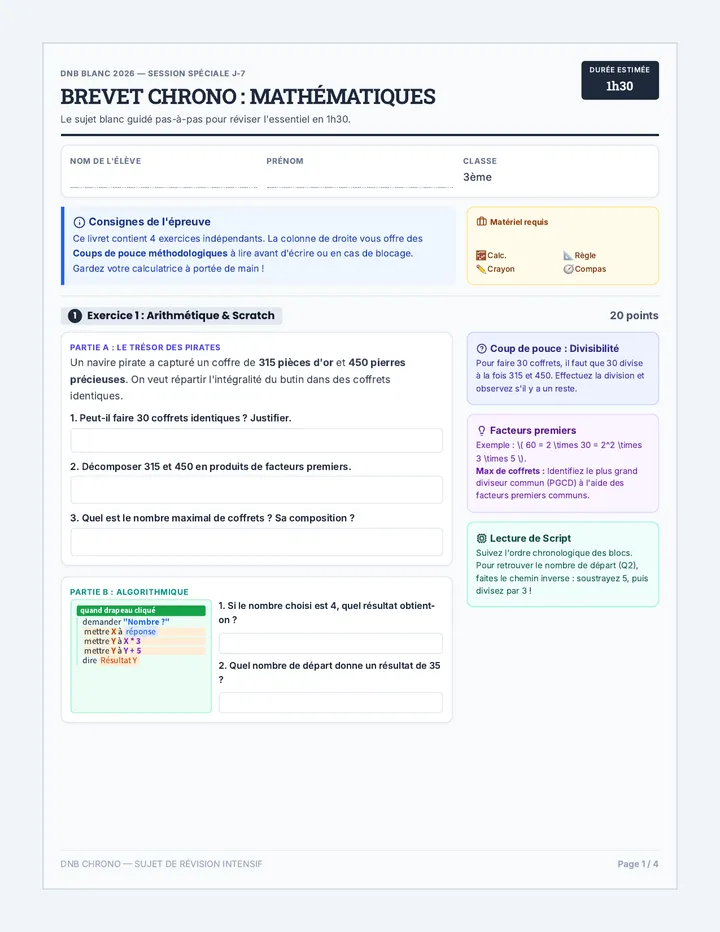
DNB Chrono Livret de Révision

Brevet Express

Un kit complet de révision de dernière minute pour le DNB de Mathématiques, comprenant un sujet blanc guidé pas-à-pas pour les élèves et un corrigé détaillé avec barème pour l'enseignant.

E

Enseignante

4
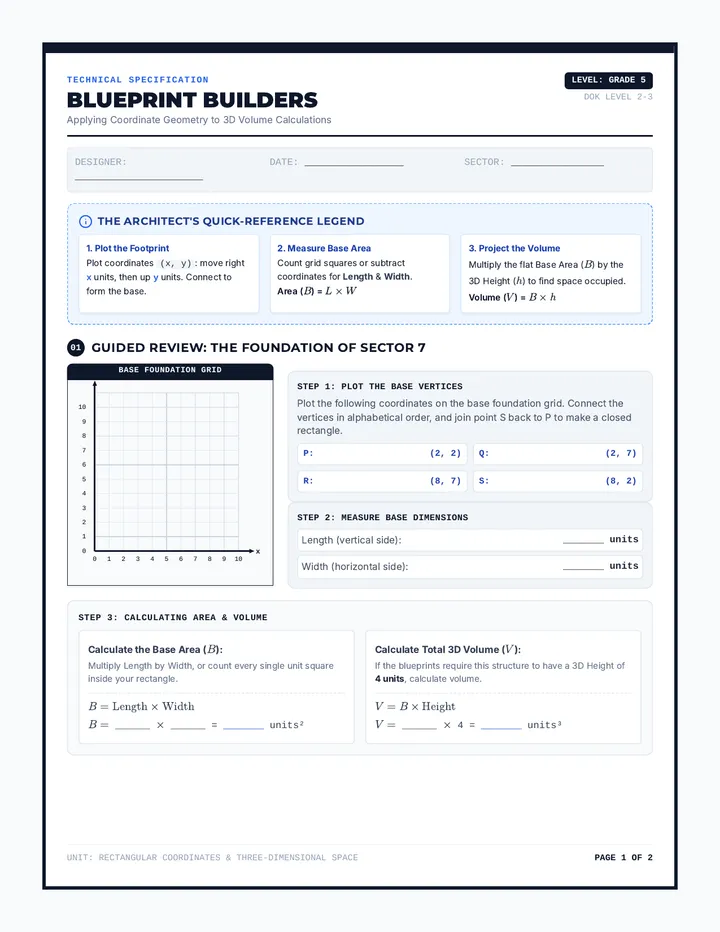
Blueprint Builders Worksheet

Blueprint Builders Review

A 20-minute review lesson on combining coordinate plotting with volume calculations, featuring structured guided review and high-leverage DOK 3 exit ticket questions.

SM

stacy maslyn

2
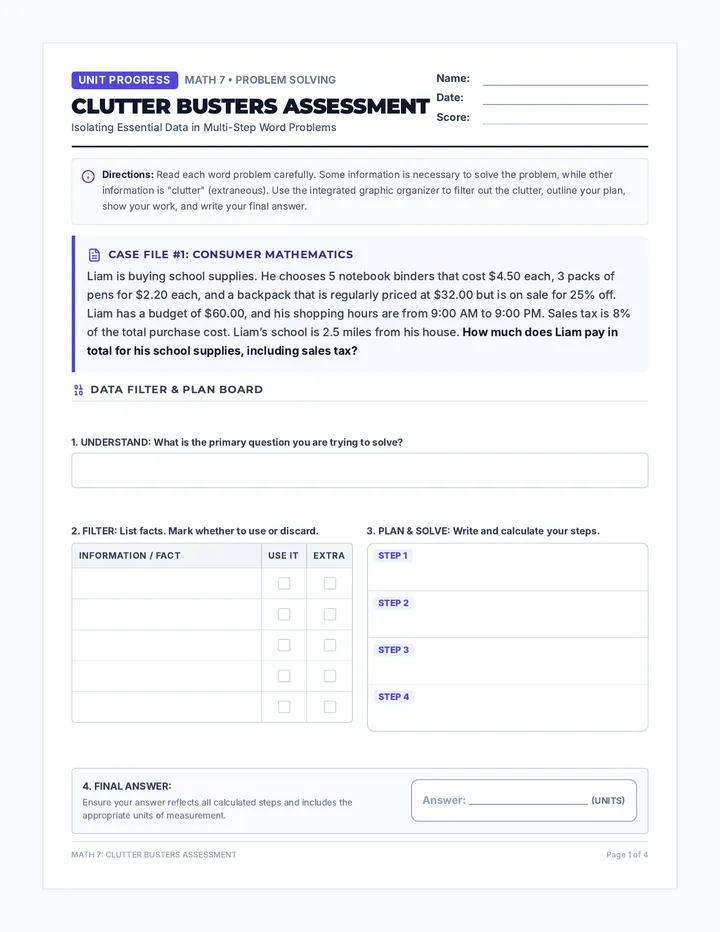
Clutter Busters Assessment

Clutter Busters

A middle-school math lesson focused on identifying and isolating extraneous information in multi-step word problems. It teaches students to separate relevant data from distracting context using an intuitive, column-based graphic organizer.

EV

Erin Venuti

8
Math Marathon Lap 1 Worksheet

Math Marathon Review

A comprehensive 5-day end-of-year math review for 5th grade, covering all NYS Next Generation Math Standards through daily warm-ups and test-style practice.

SM

stacy maslyn

6
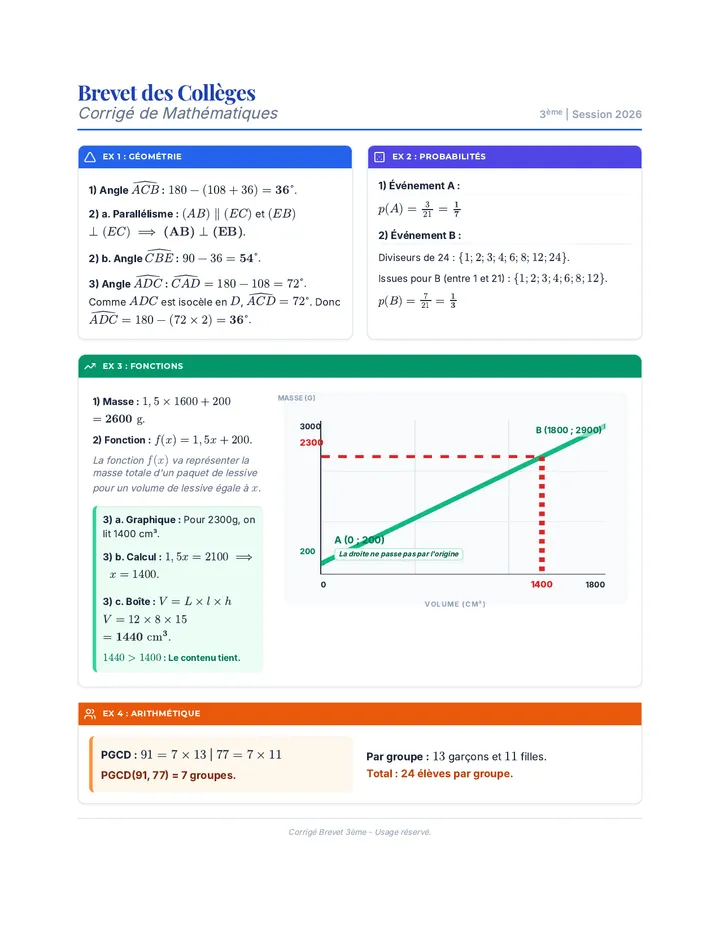
Brevet Correction Mathématiques

Révisions Brevet Maths

Une série de ressources complètes pour préparer les élèves de 3ème à l'épreuve de mathématiques du DNB, incluant des corrigés détaillés et des fiches méthodologiques.

E

Enseignante

3
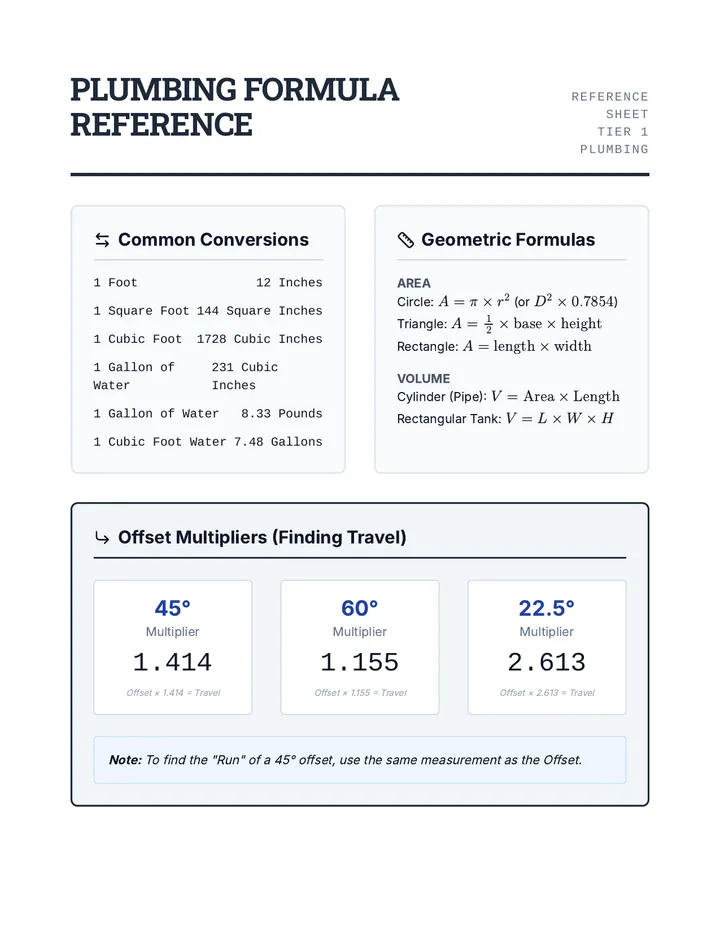
Plumbing Formula Cheat Sheet

Pipe Power Math

A comprehensive assessment and reference set for Tier 1 plumbing apprentices covering essential trade mathematics, including offsets, volumes, and conversions.

M

mbloomer

3