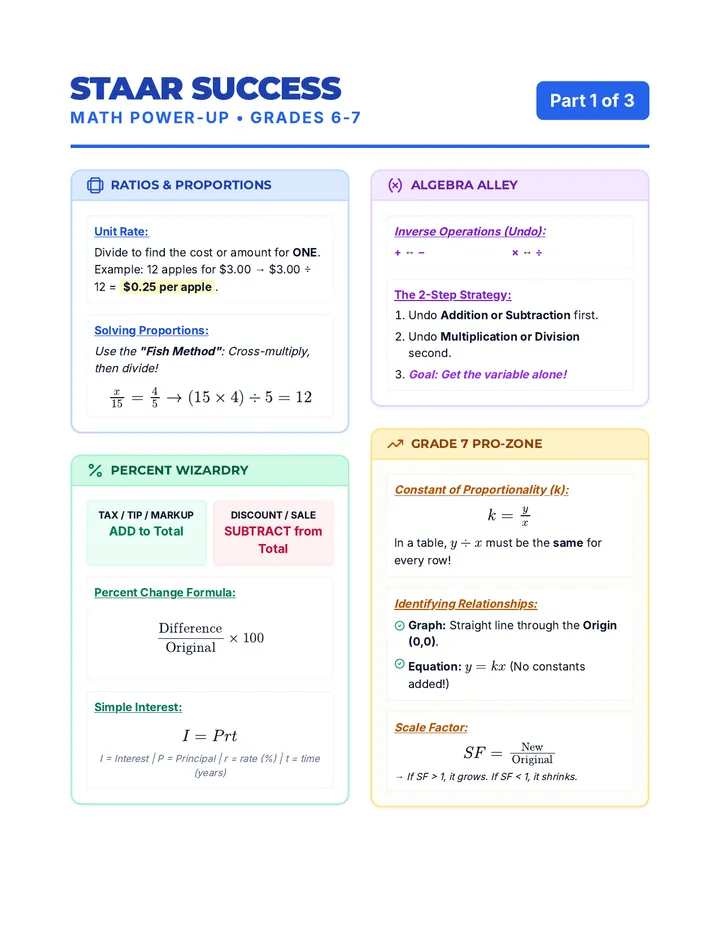
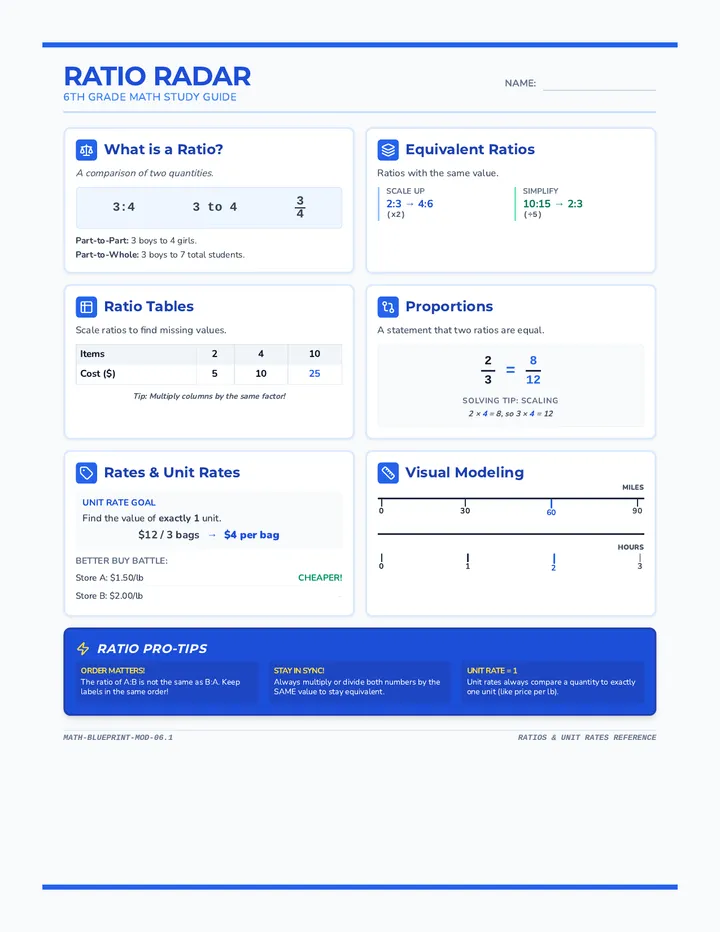
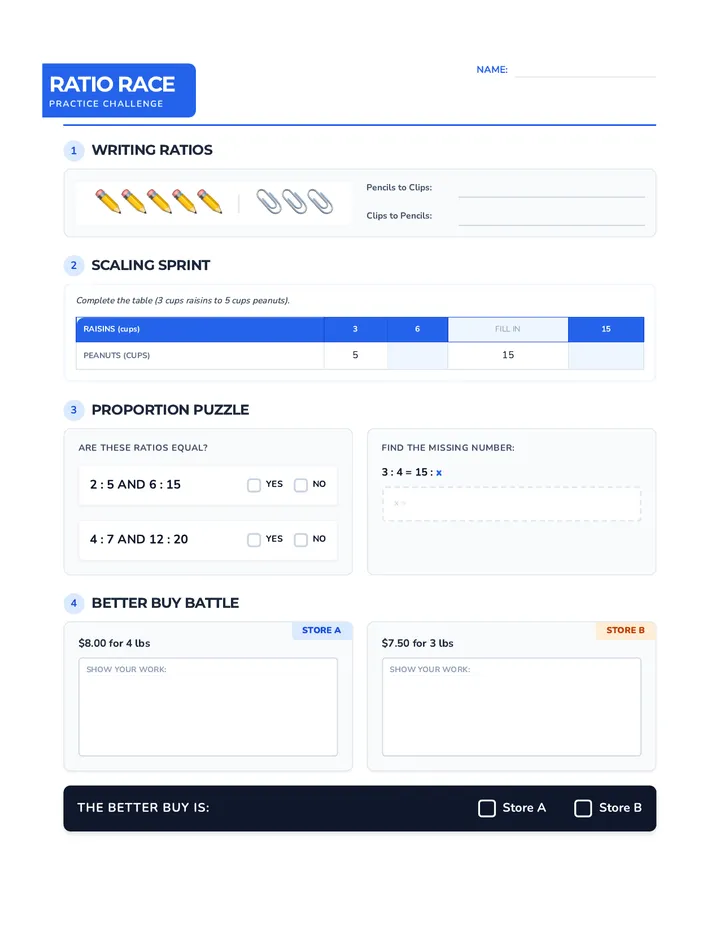
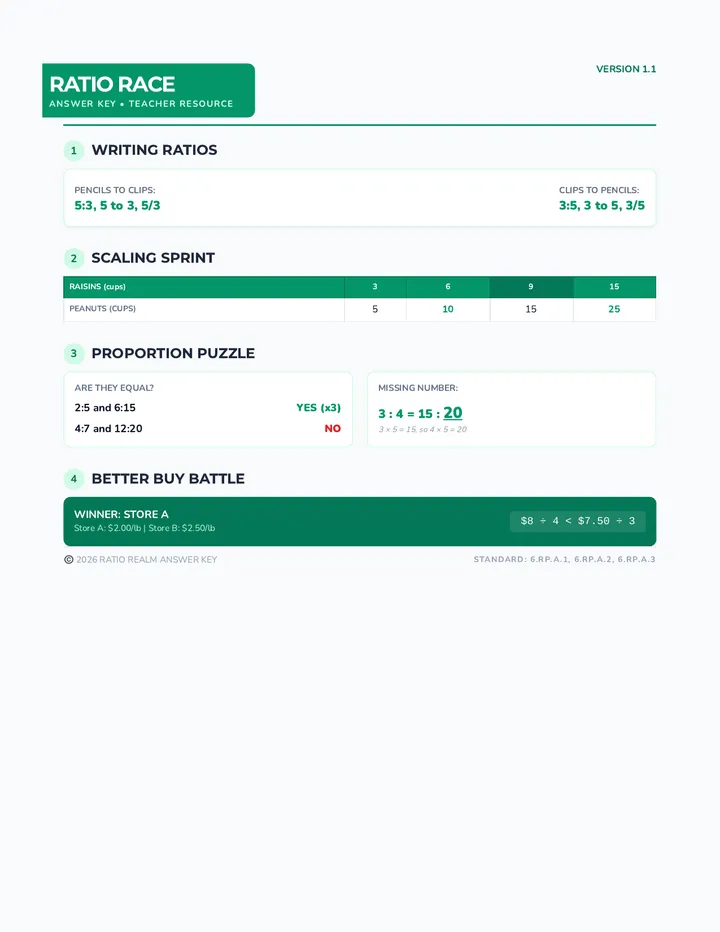
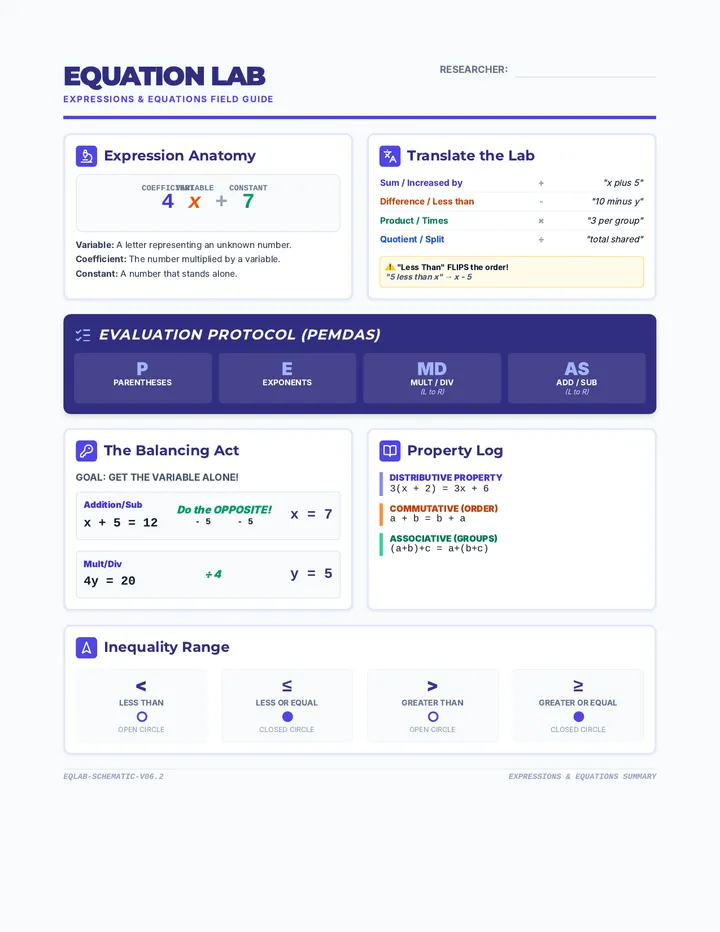
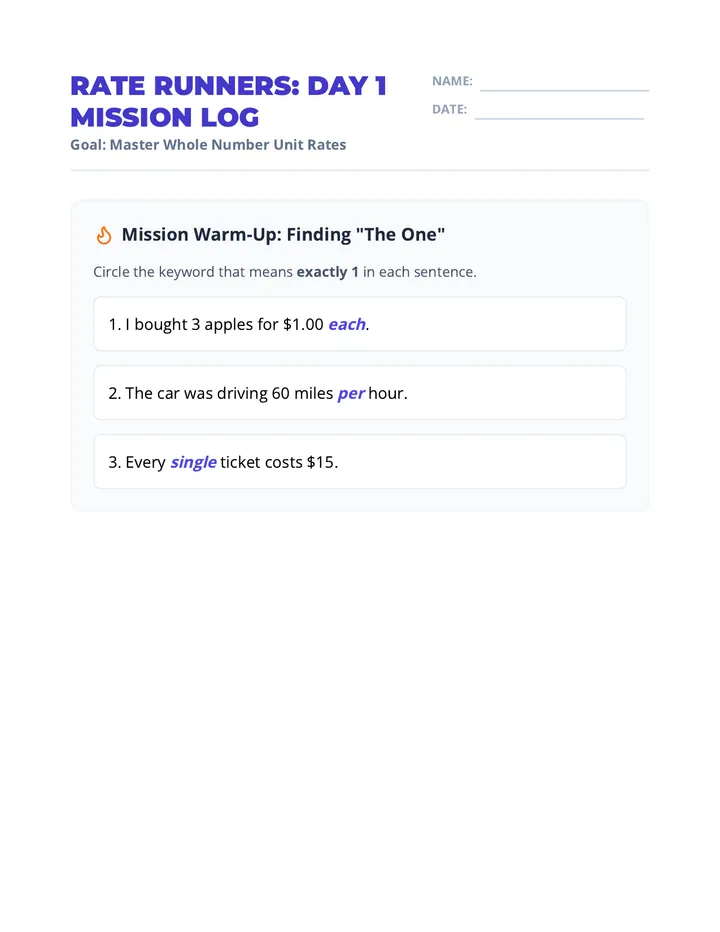
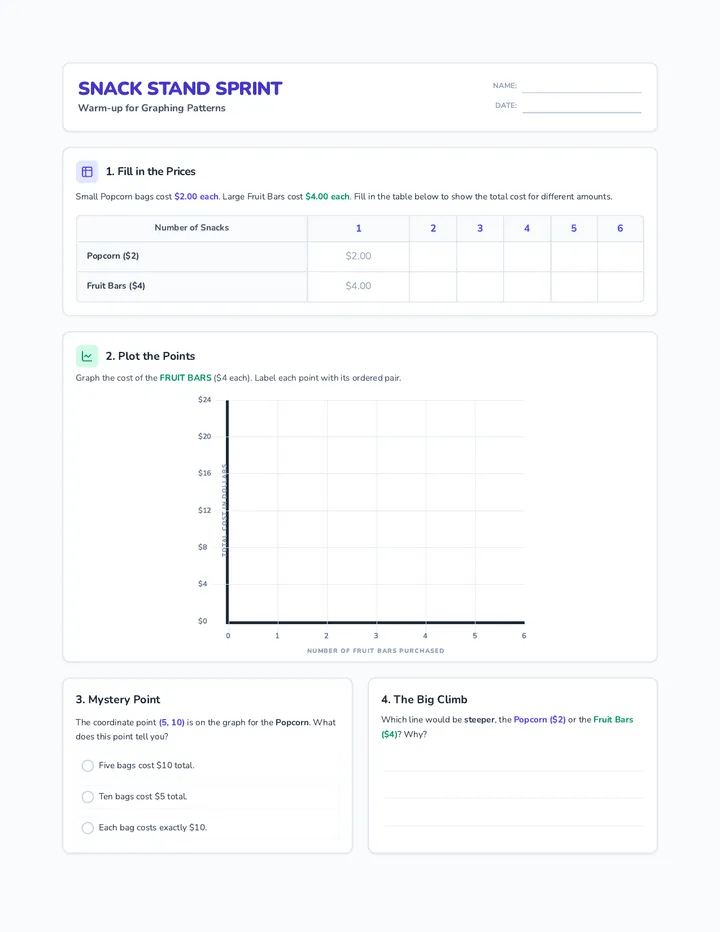
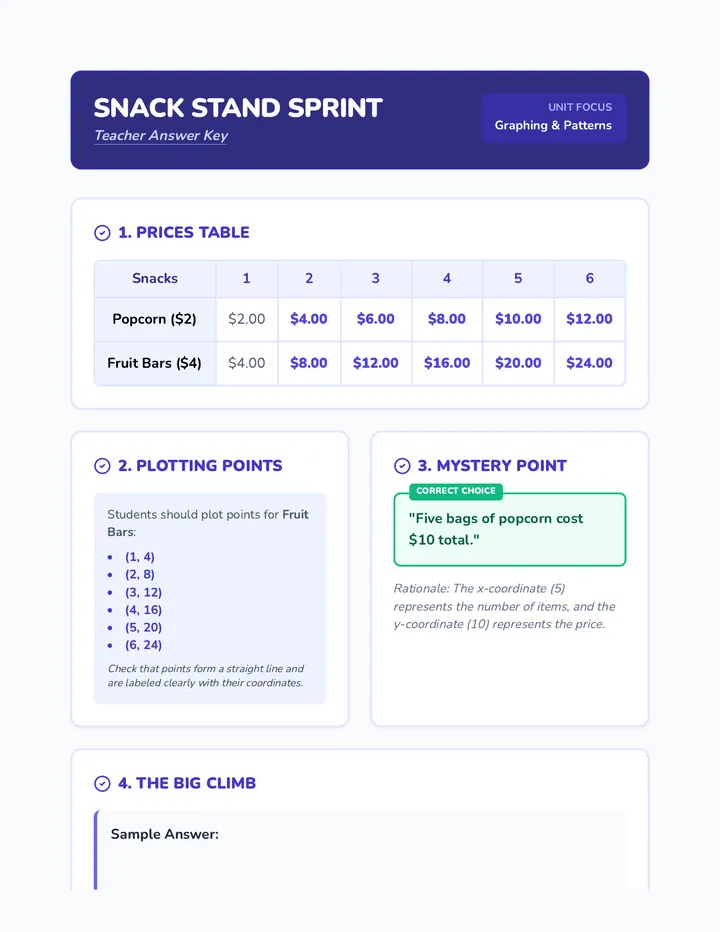
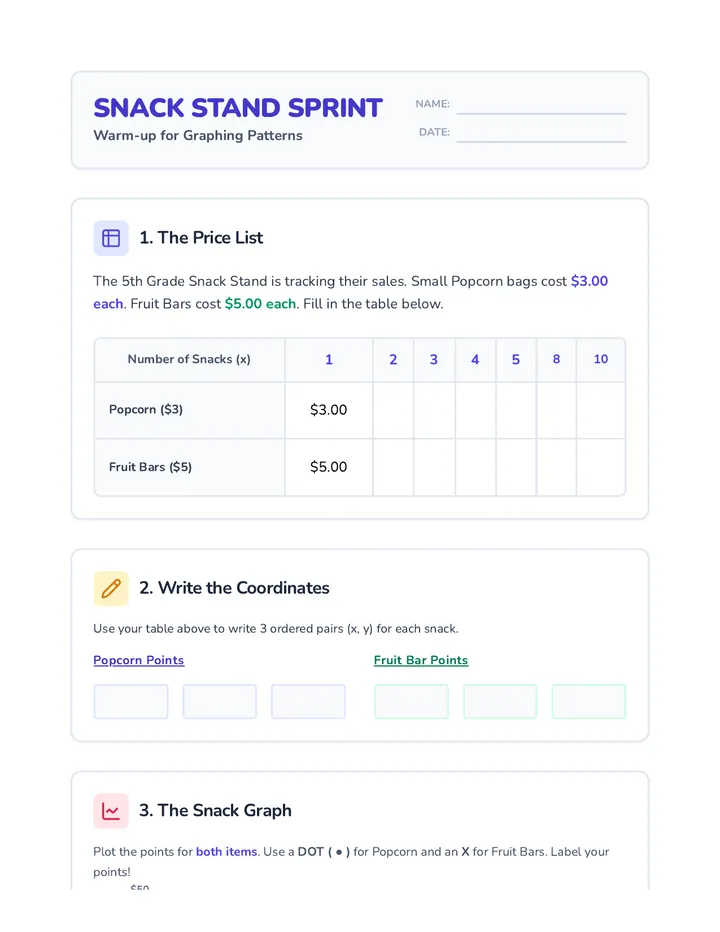
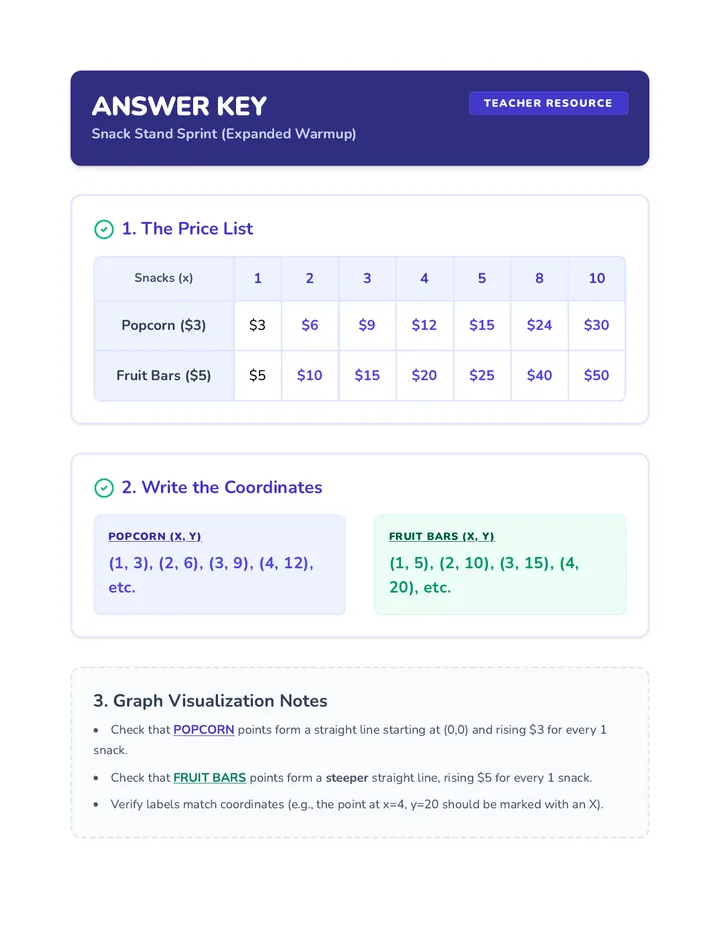
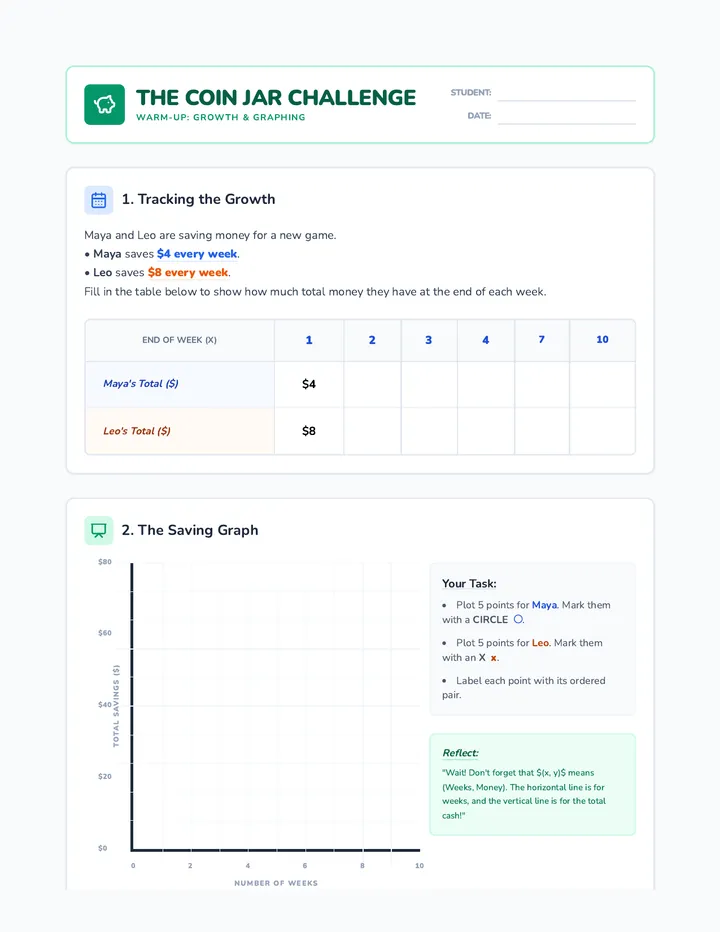
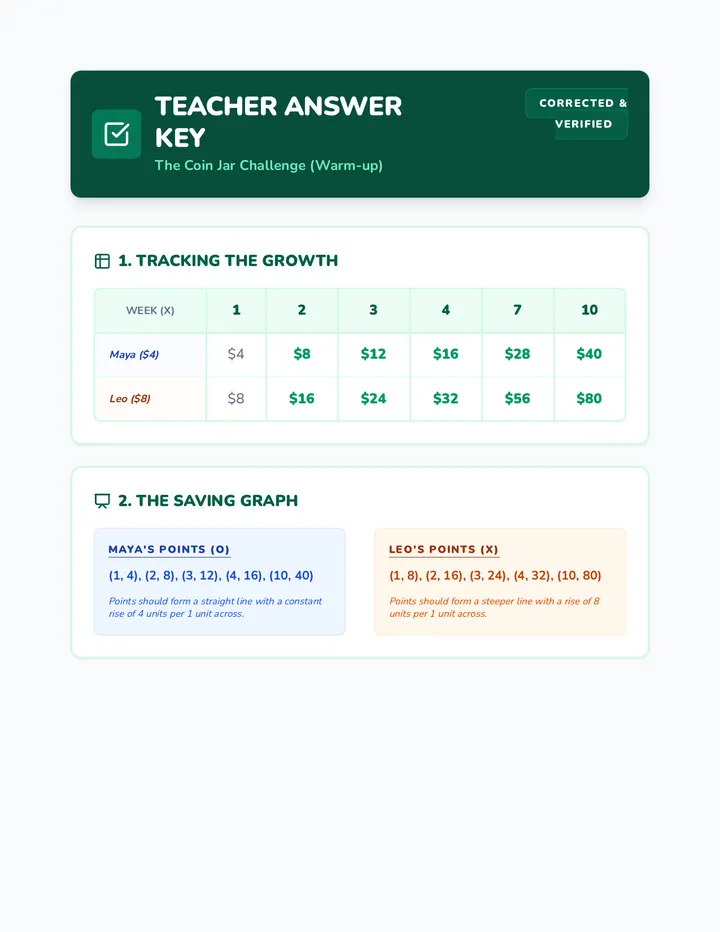
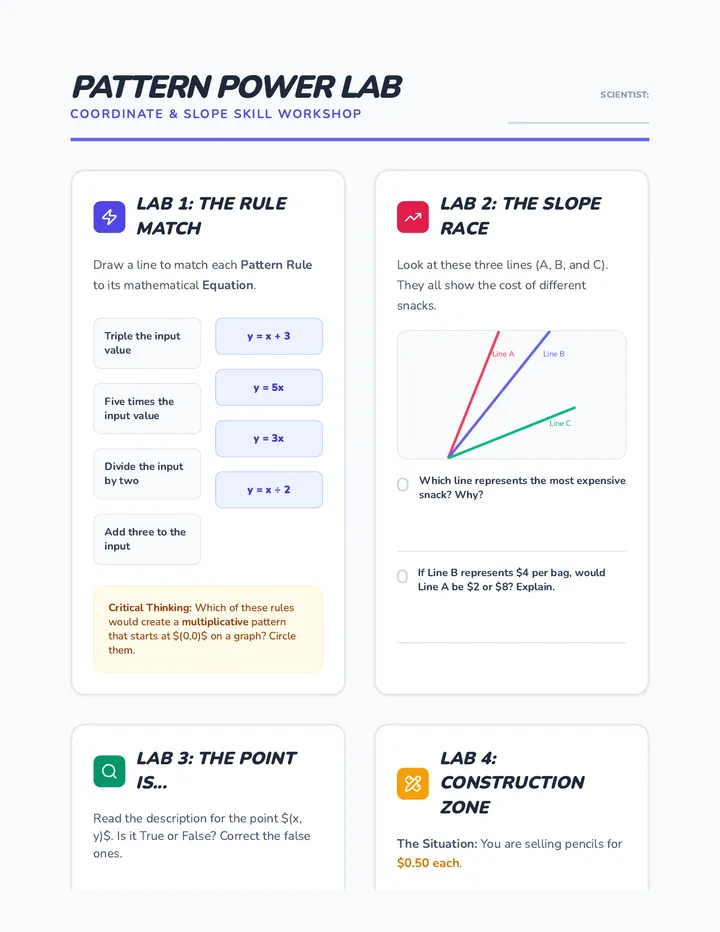
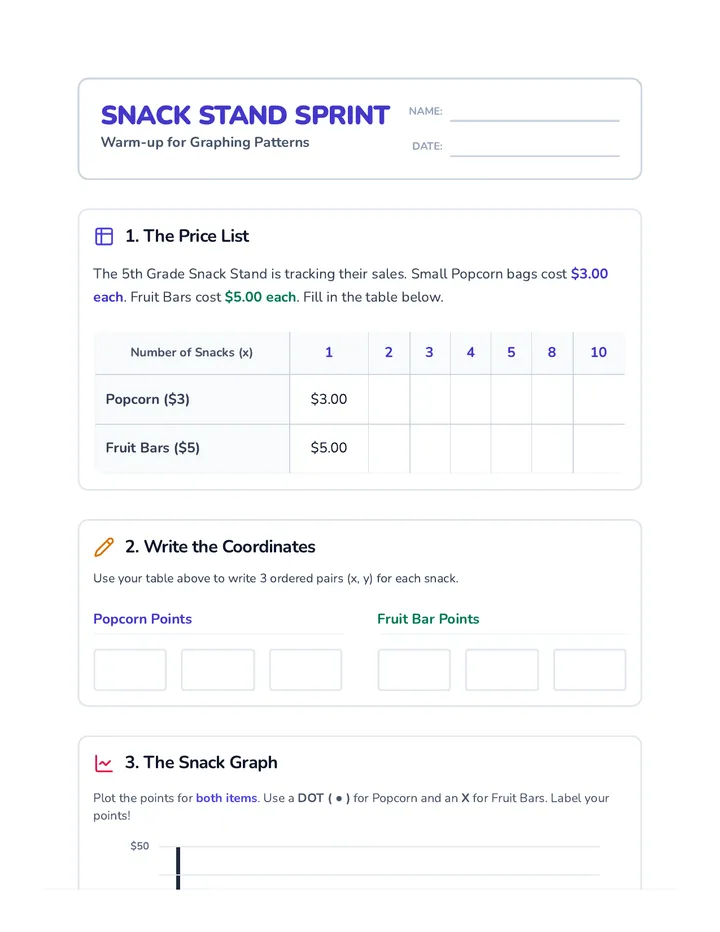
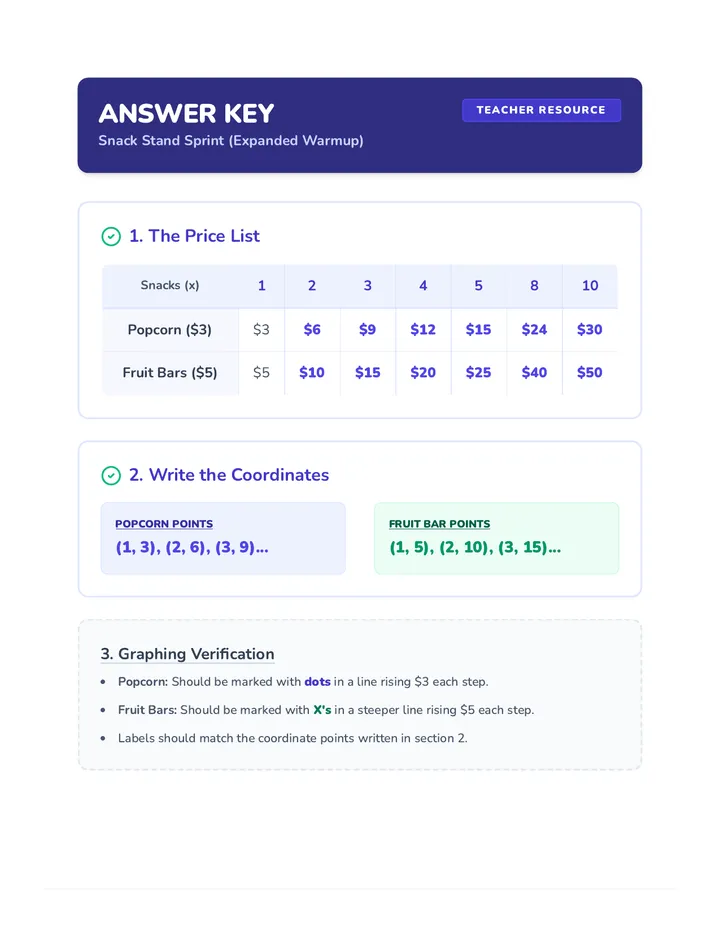
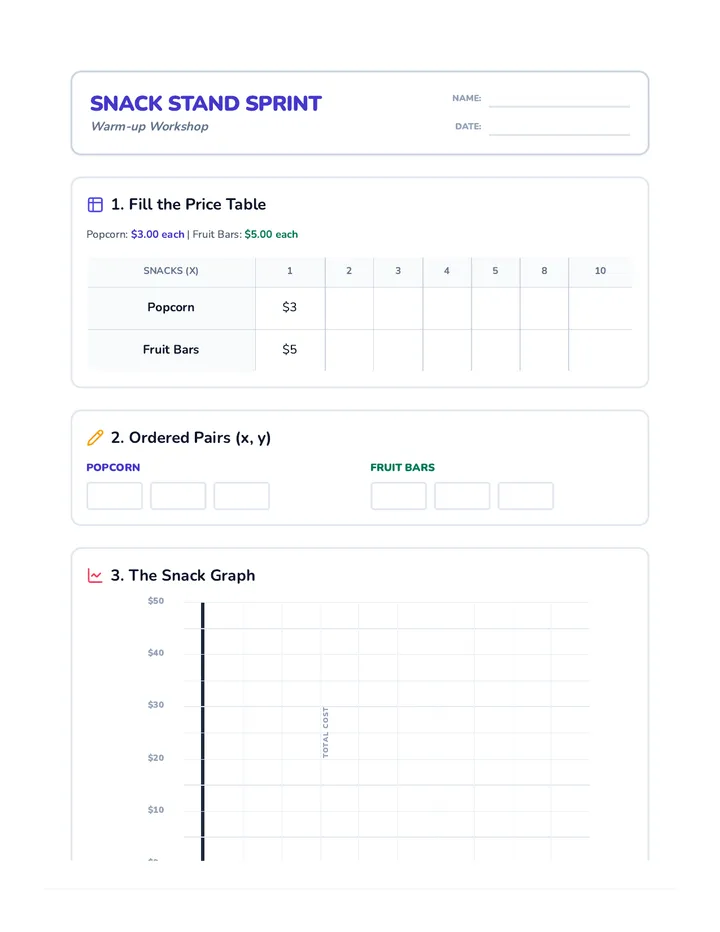
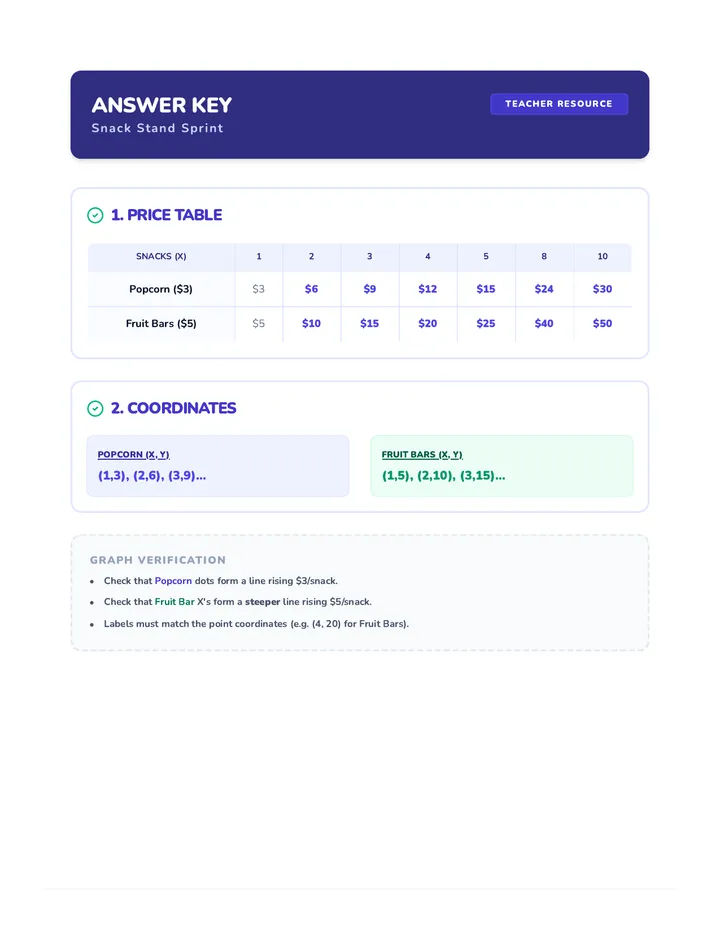
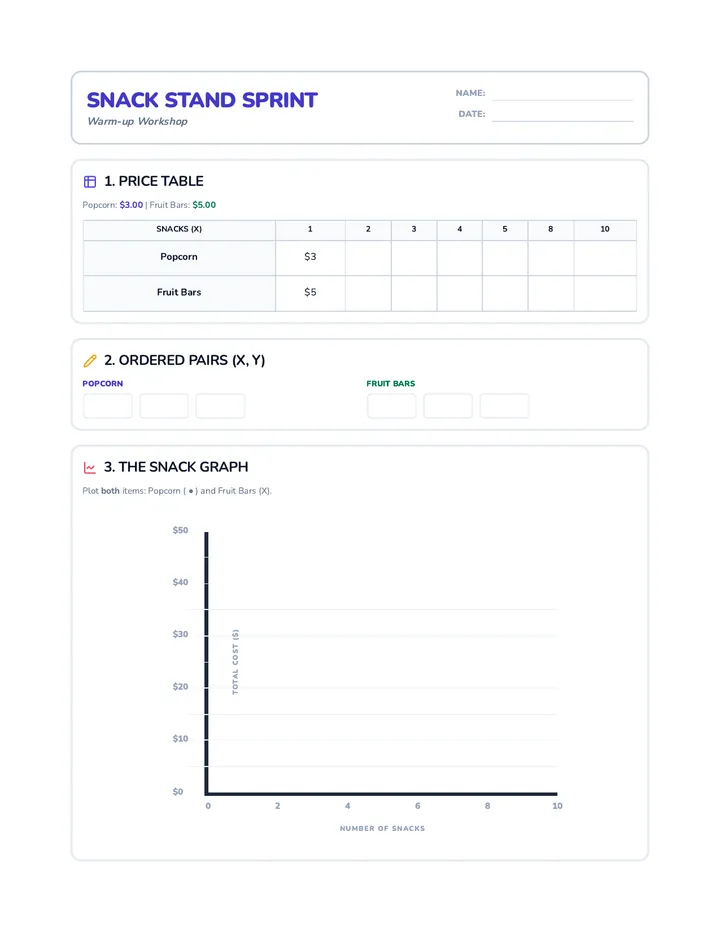
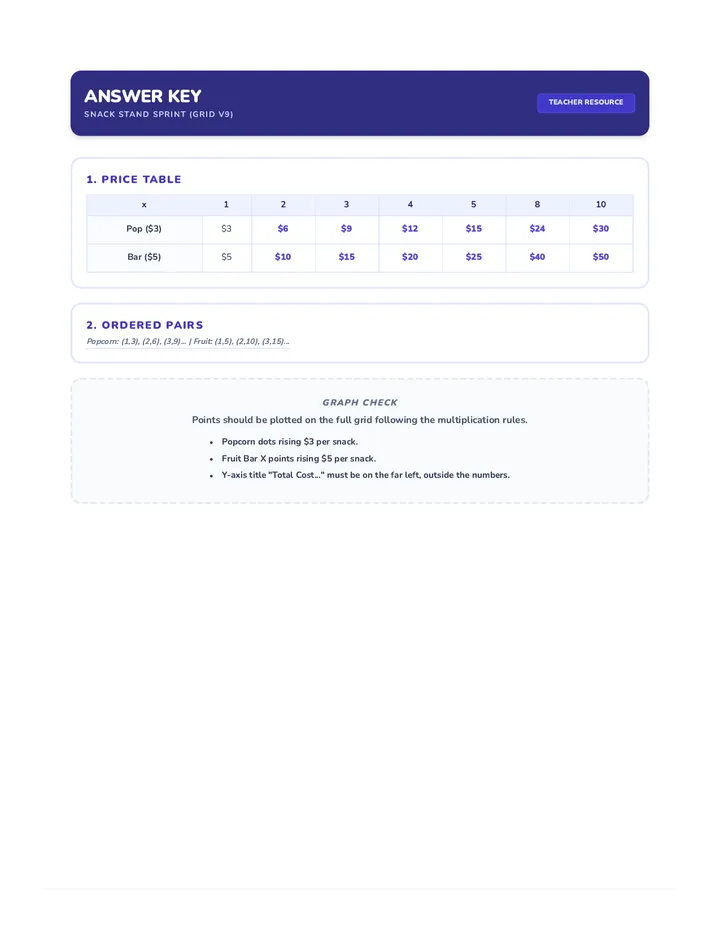
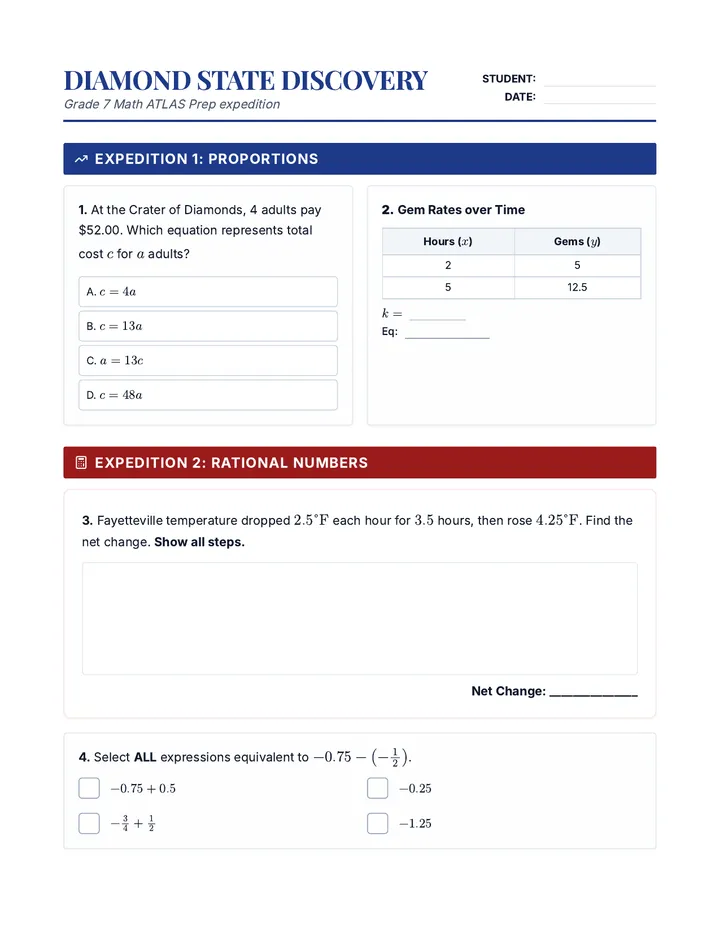
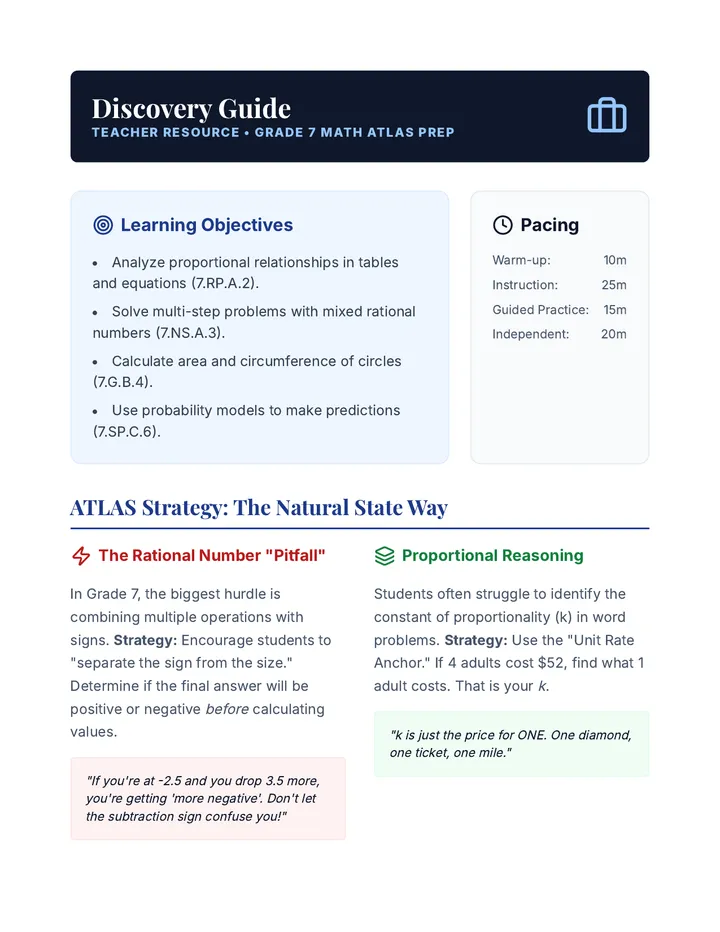
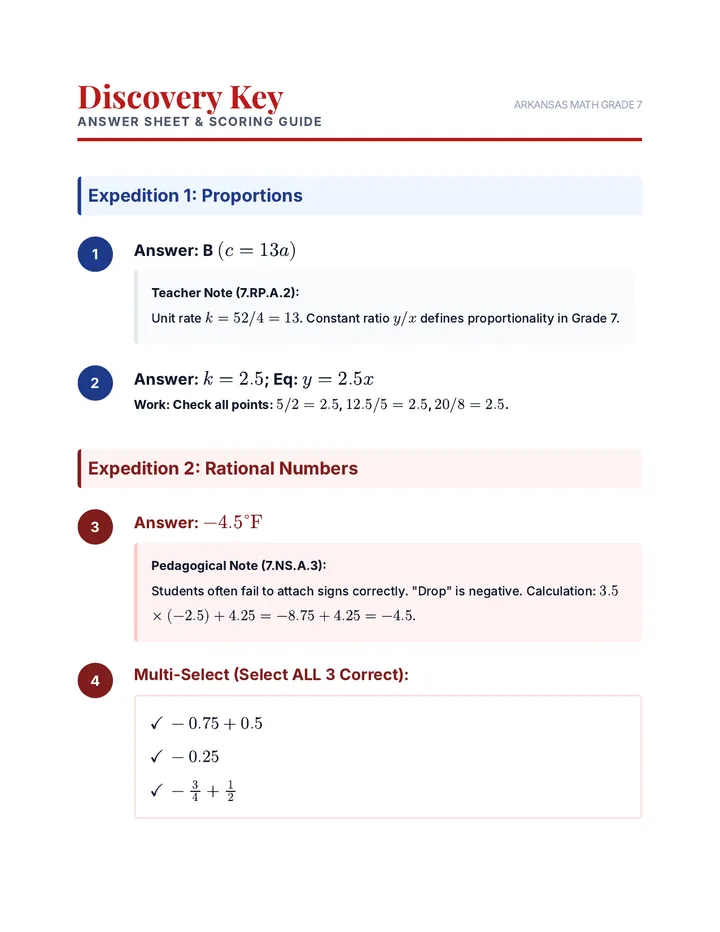
Comparisons of quantities using unit rates and proportional reasoning. Connects tables, graphs, and equations to represent constant rates of change.
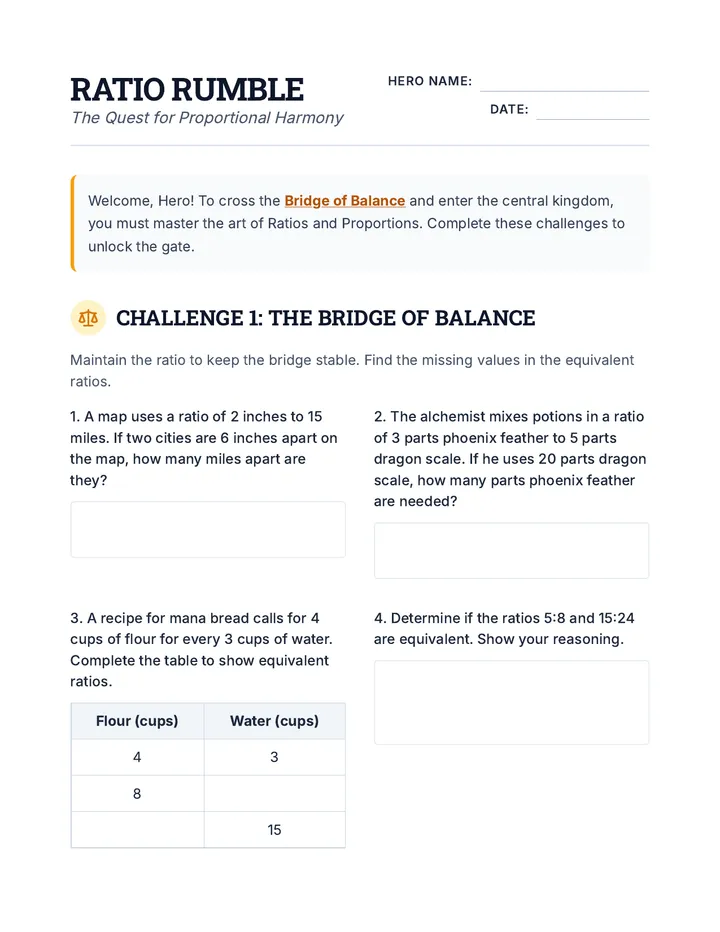
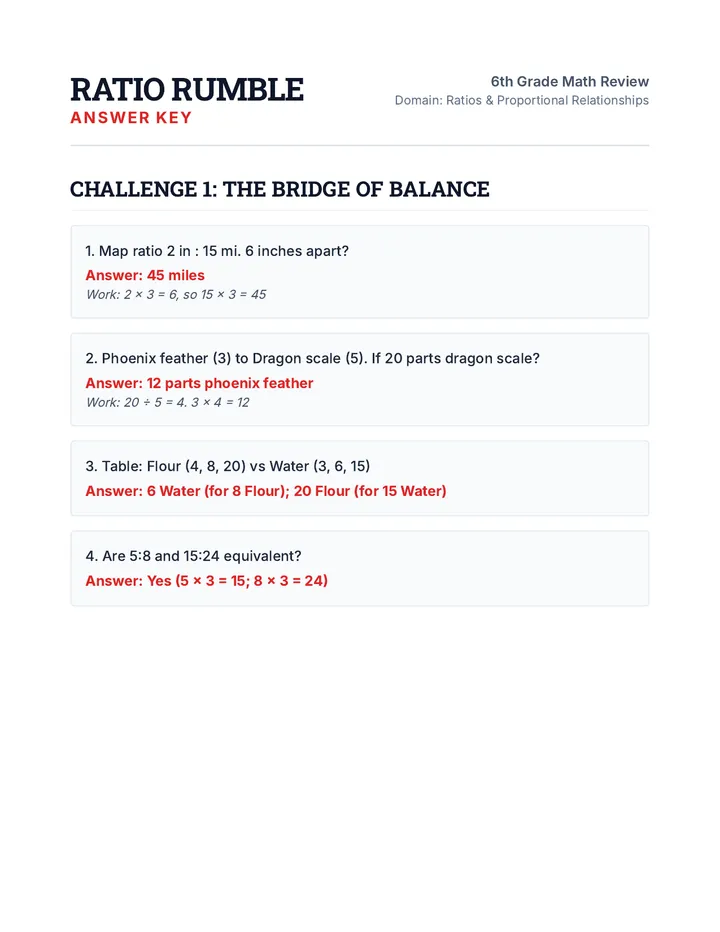
A comprehensive 12-lesson Tier 2 intervention sequence focused on 6th-grade ratio and proportion standards. Using High Leverage Concept strategies from the All Learners Network, this sequence moves from basic ratio language to complex unit rate and percent problems using visual models like tape diagrams and ratio tables.
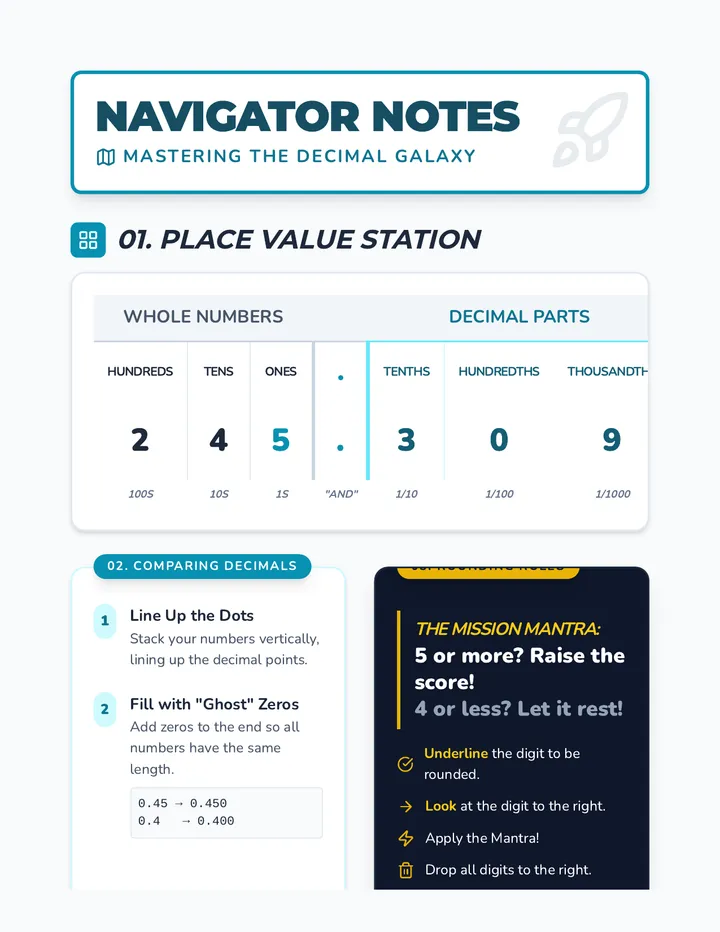
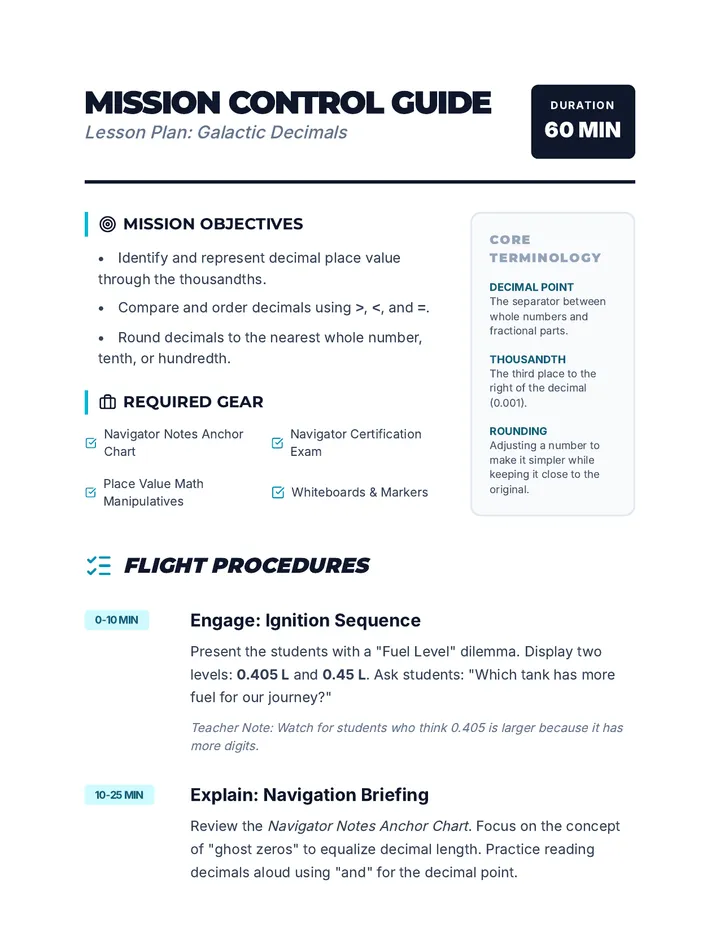
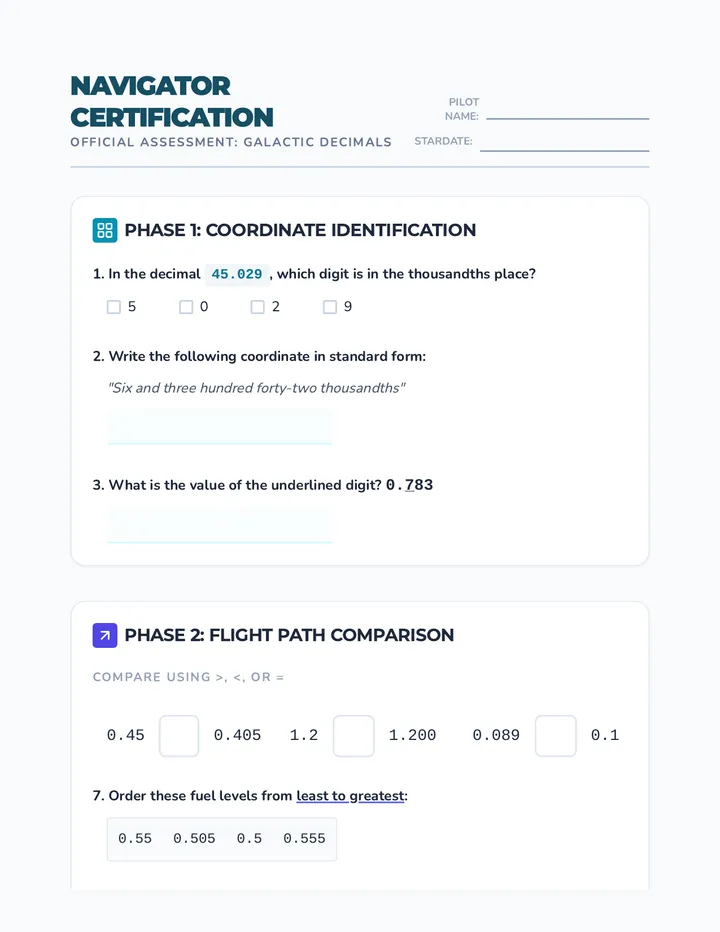
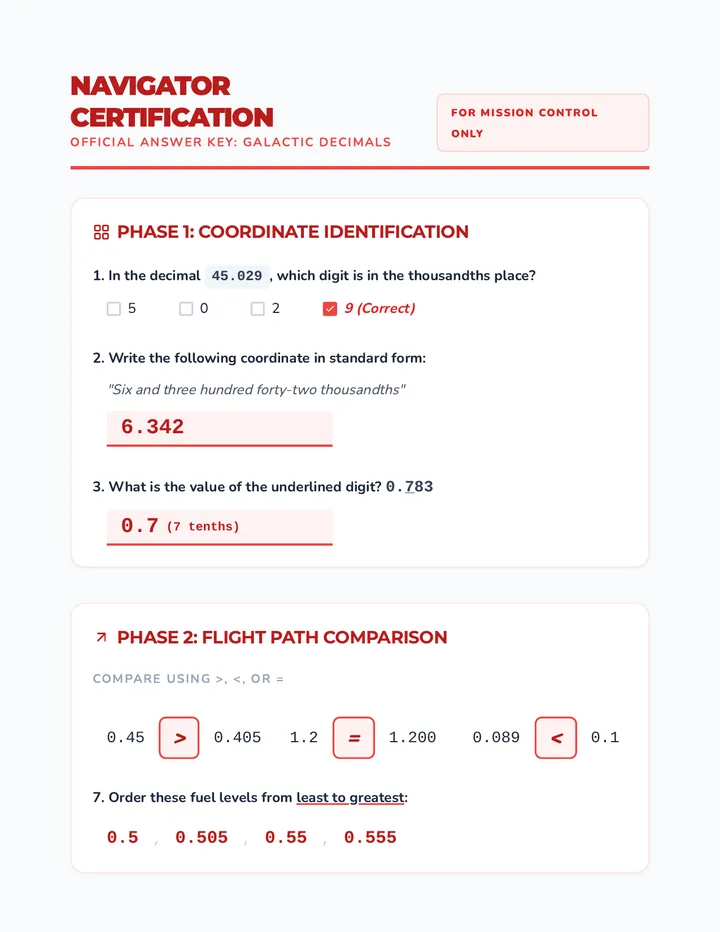
A 12-lesson intervention sequence focused on building flexible thinking with place value and fractions for 6th-grade students performing at 4th-6th grade levels. The sequence uses a 'Number Navigators' theme to explore decimal relationships, fractional equivalence, and the bridge between the two.
Une séquence complète de 6 heures sur la proportionnalité pour les élèves de 5ème, couvrant la reconnaissance des situations, les tableaux, le coefficient, les échelles et les pourcentages.
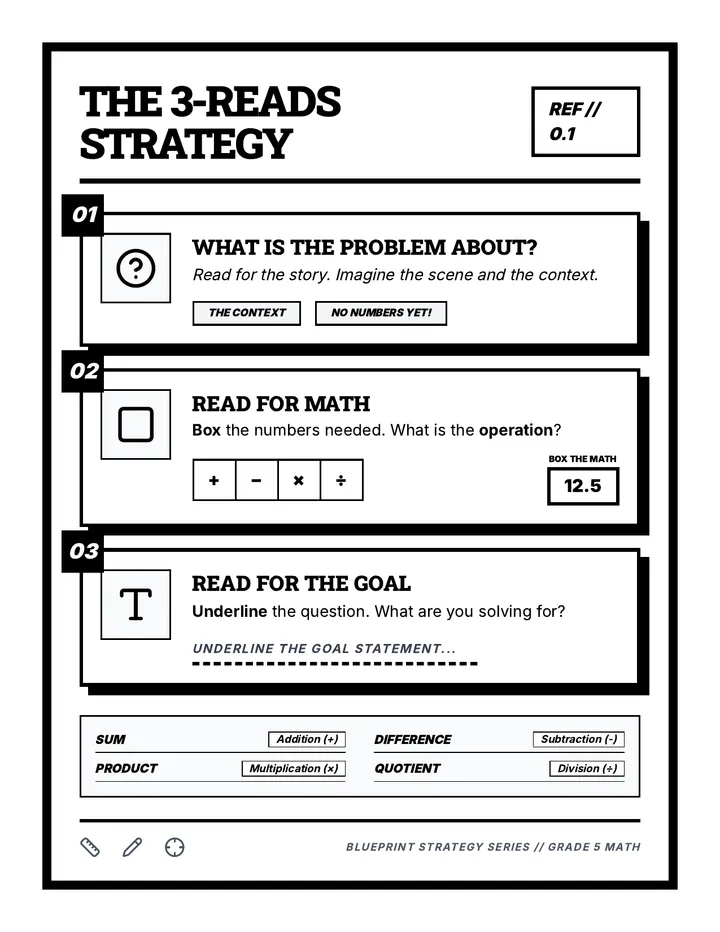
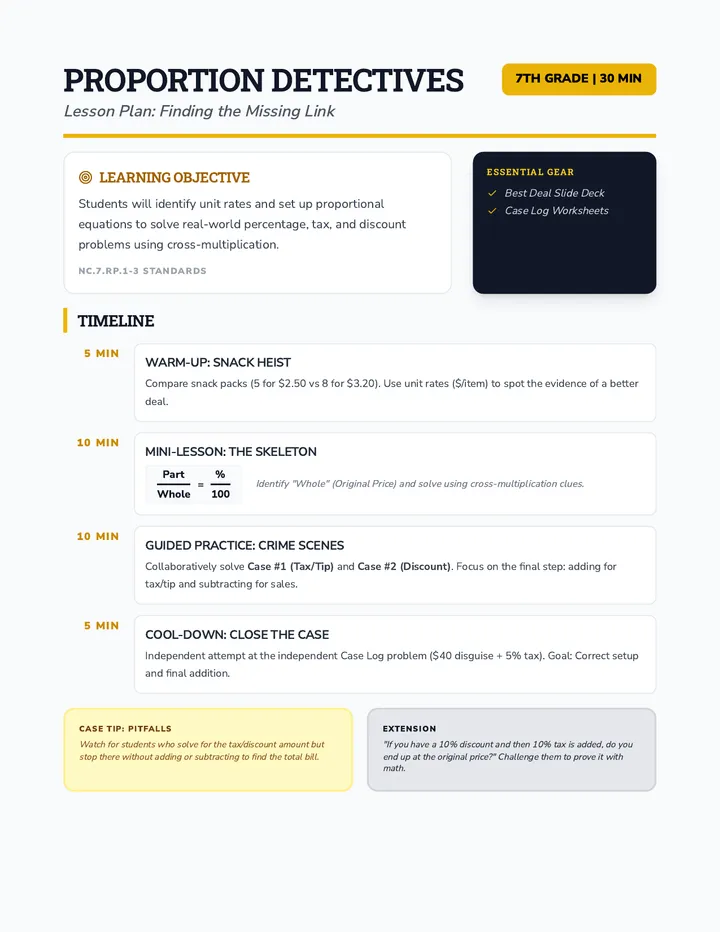
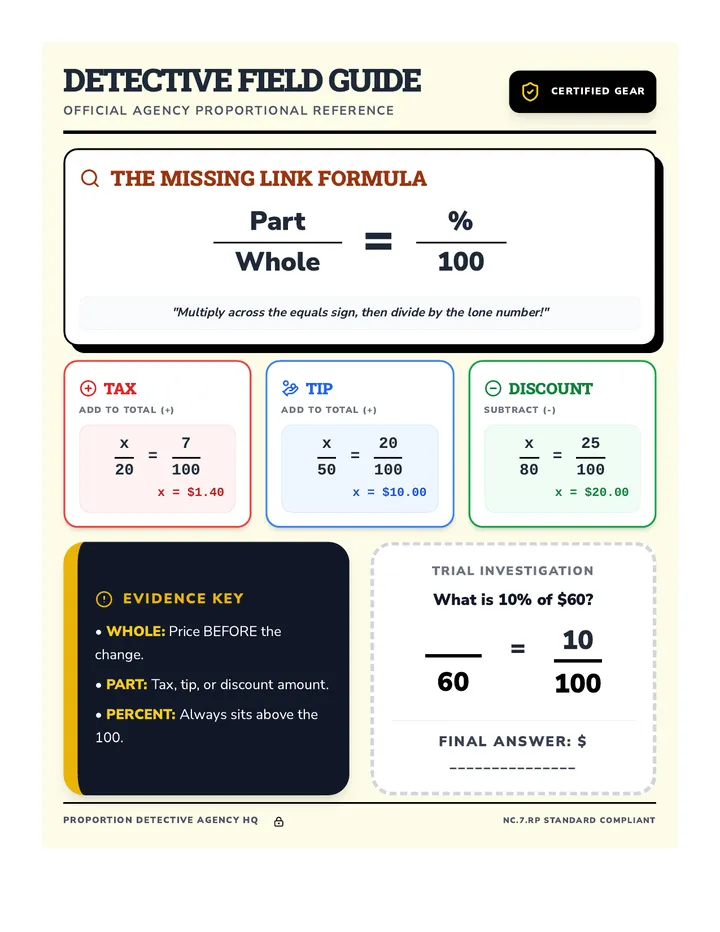
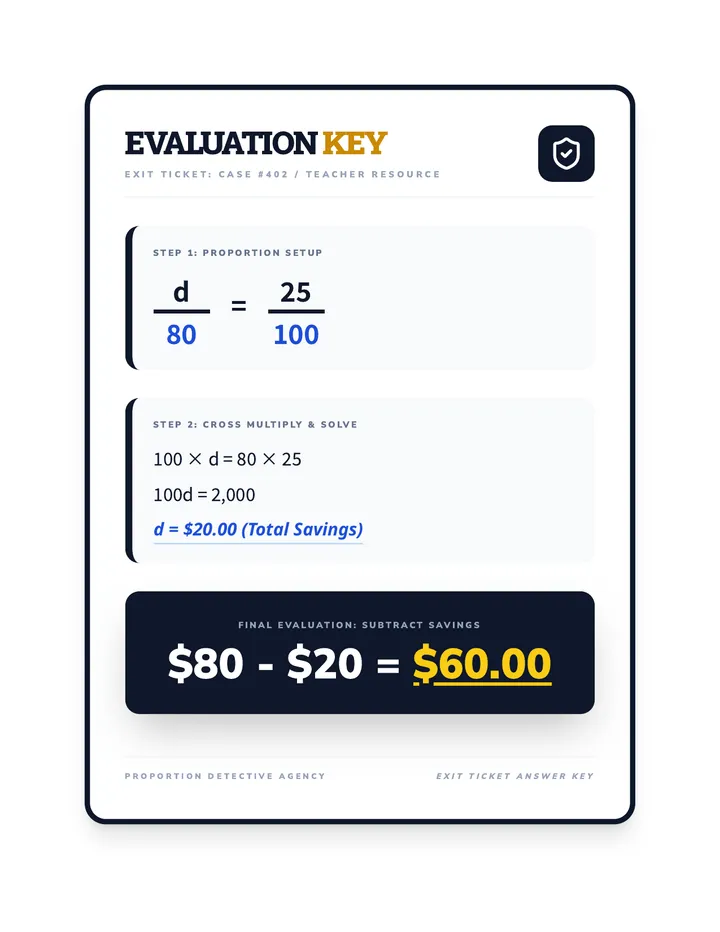
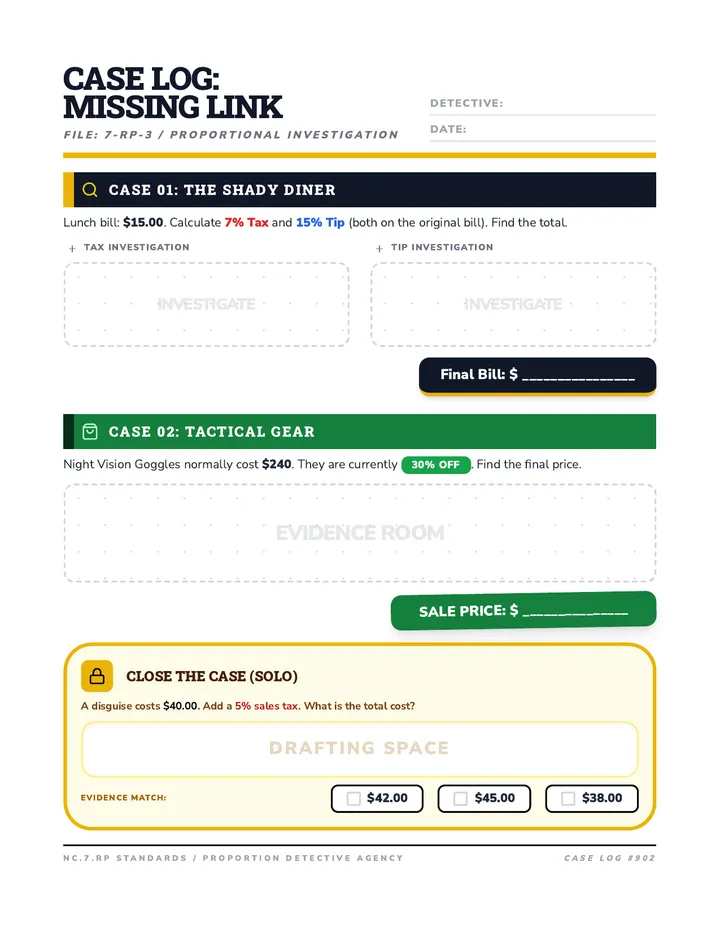
A comprehensive unit where students become 'Problem Detectives,' learning to decode word problems using linguistic cues and cloze-style paragraph writing to explain their mathematical reasoning.
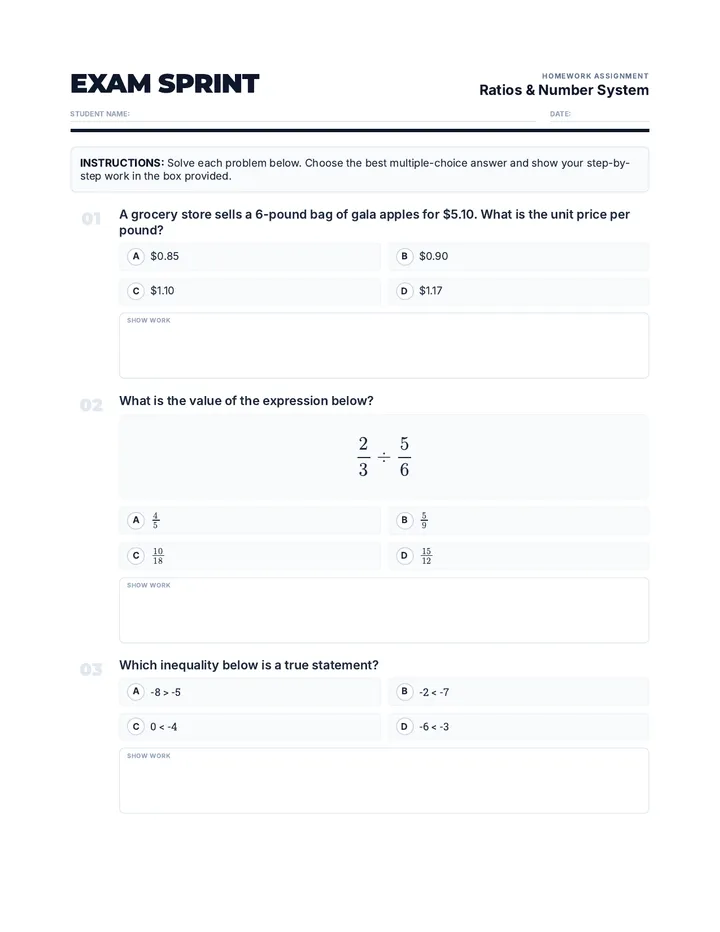
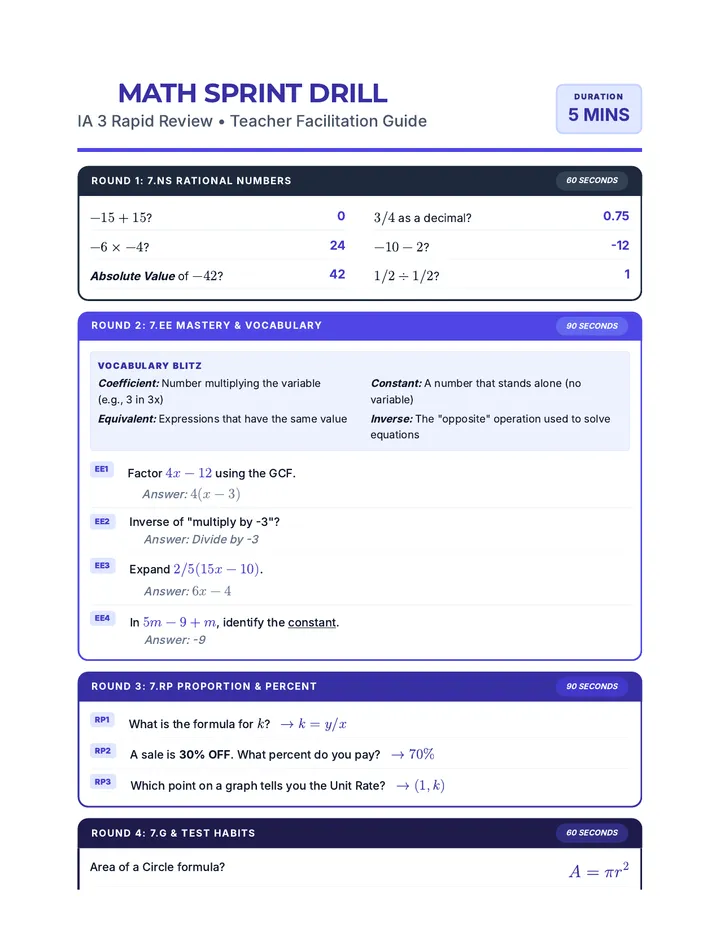
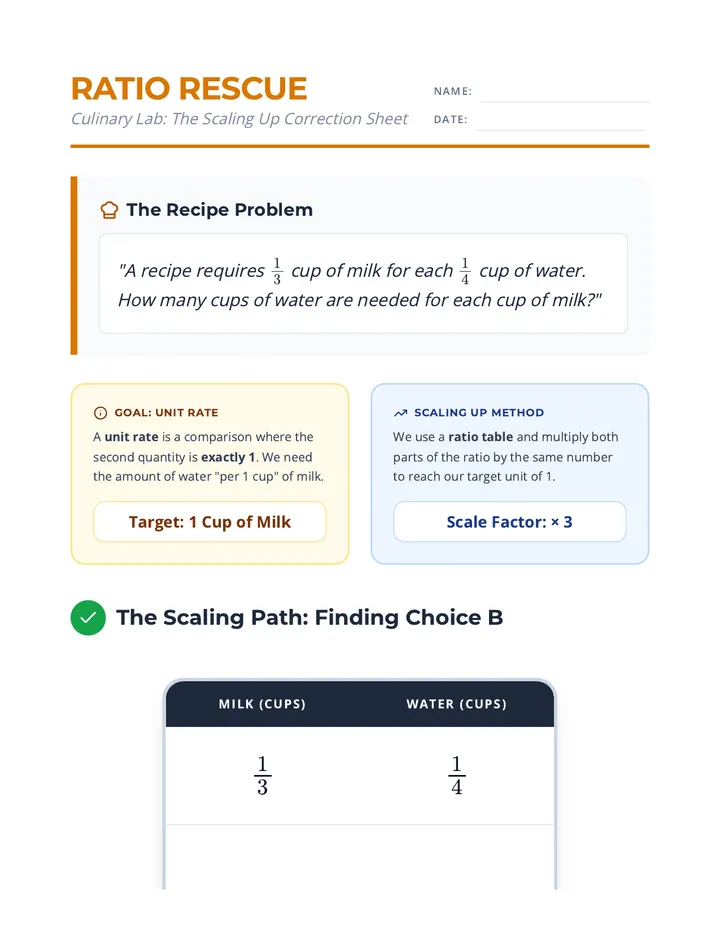
A math unit focused on understanding and applying ratios and proportions through visual methods, mental math strategies, and algorithmic problem-solving.
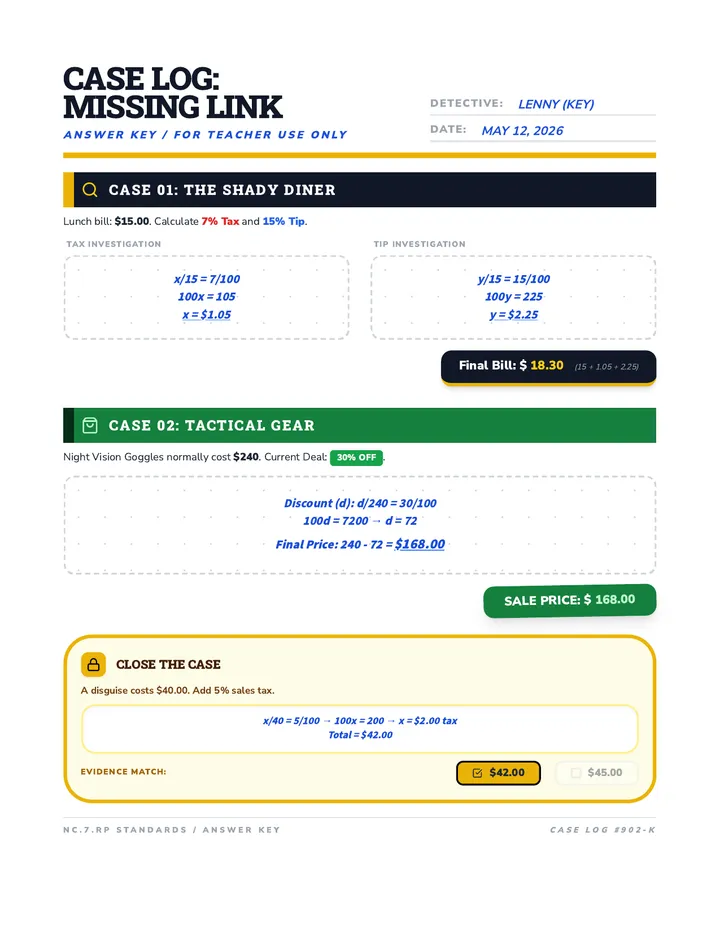
A unit focused on applying percentages to real-world financial contexts, including discounts, markups, and interest.
A comprehensive 9th-grade algebra unit exploring the patterns, formulas, and real-world applications of arithmetic and geometric sequences. Students progress from recursive logic to explicit modeling.
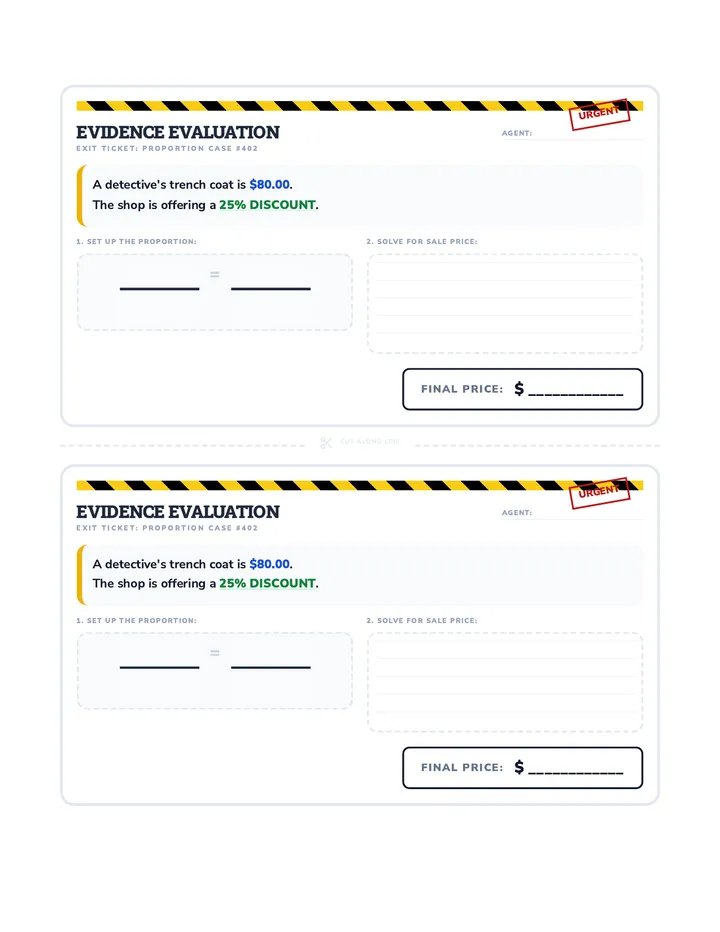
A lesson sequence focusing on financial literacy and the practical application of percentage decrease through real-world shopping scenarios and discount calculations.
A 7th-grade math sequence focused on applying algebraic equations to real-world consumer scenarios, specifically involving discounts, sale prices, and original prices.
A sequence focused on the practical application of percent error in real-world scenarios, emphasizing accuracy and relative scale.
A middle school mathematics unit focused on proportional reasoning, ratio analysis, and multi-representation of numerical relationships.
A mathematics sequence focusing on geometry, circles, and the calculation of circumference and area for middle school students.
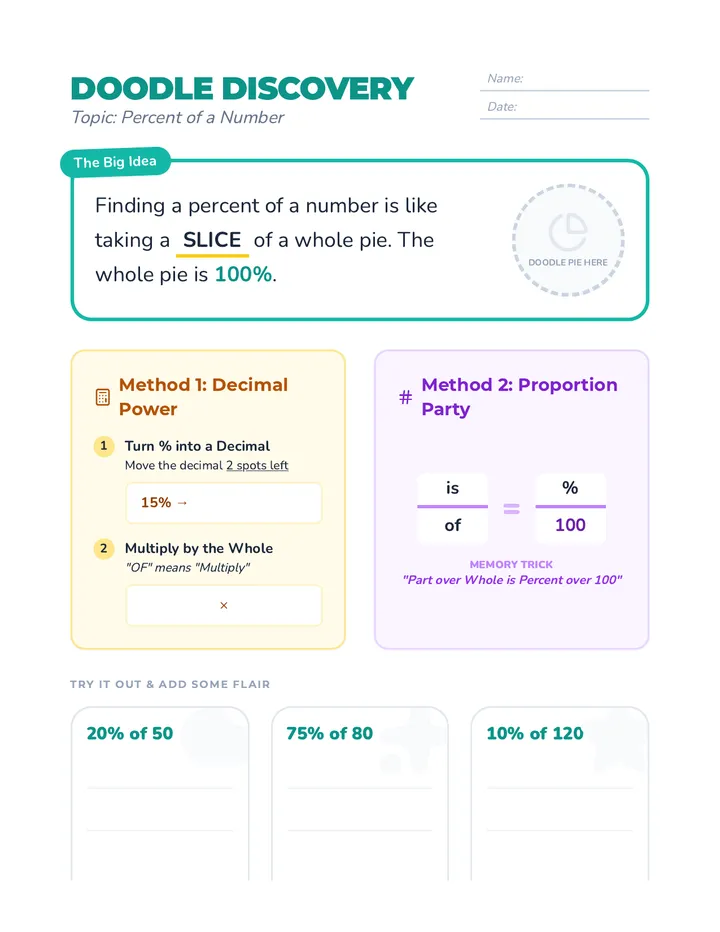
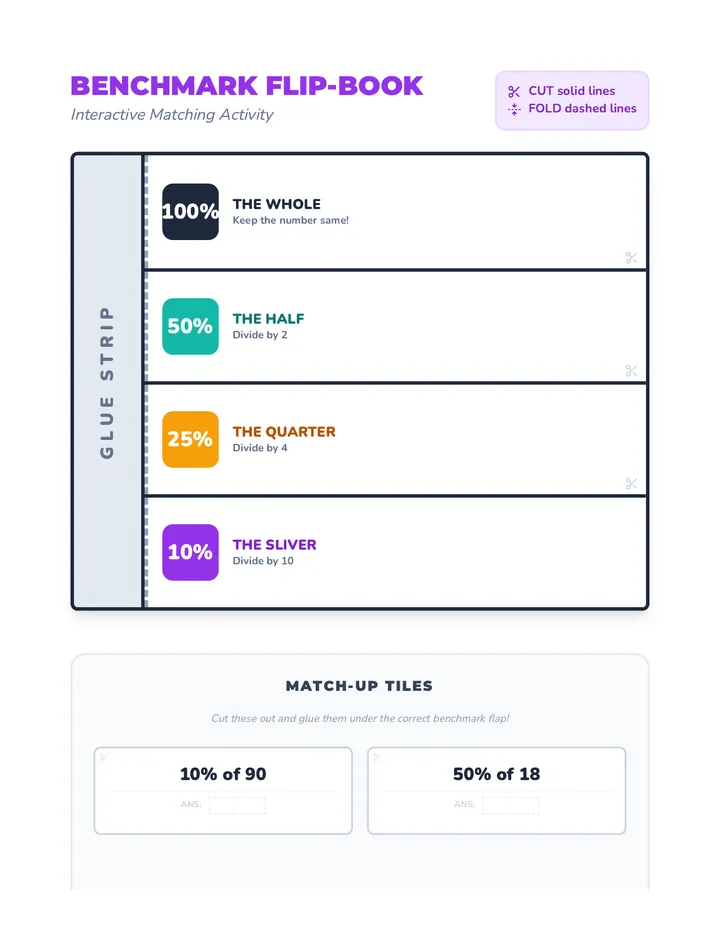
A 6th-grade math sequence exploring different strategies for calculating percentages of numbers, specifically comparing fractional and decimal methods.
A specialized math sequence for 11th-grade students focusing on practical fraction operations and ratios through the lens of construction and design. Students move from basic measurement precision to complex scaling tasks using physical manipulatives like tape measures and Cuisenaire rods.
A specialized math sequence for 9th-grade academic support, focusing on fraction mastery through concrete manipulatives and visual models. It follows the CRA framework to bridge gaps in foundational understanding for high school success.
A 7th-grade math support sequence focusing on proportional reasoning through the use of counters and tape diagrams. This tactile-to-visual approach helps students bridge the gap between physical grouping and abstract multiplicative thinking.
A sequence for 11th-grade students that uses bar diagrams (tape diagrams) to scaffold high school algebra. Students transition from concrete visuals to abstract systems of equations, ratios, and complex word problems, providing a visual roadmap for algebraic reasoning.
This sequence introduces the tape diagram (or bar model) as a primary tool for making abstract ratio and rate problems concrete. Students move from physical blocks to drawn models, focusing on reducing cognitive load and organizing information visually to solve multi-step ratio problems.
This sequence supports 10th-grade students in mastering inequalities and functions through visual modeling. By progressing from 1D number lines to 2D coordinate planes, students build a concrete understanding of constraints, domain, and range using shading and geometric reasoning.
A comprehensive math intervention sequence for 6th-grade students, focusing on four key domains: Numbers & Operations, Algebraic Thinking, Measurement & Data, and Geometry. This sequence uses high-leverage strategies from the All Learners Network (ALN) and aligns with i-Ready prerequisite modules to bridge conceptual gaps.
A sequence focused on visualizing linear functions through physical movement and spatial reasoning, designed for middle school students to master slope-intercept form.
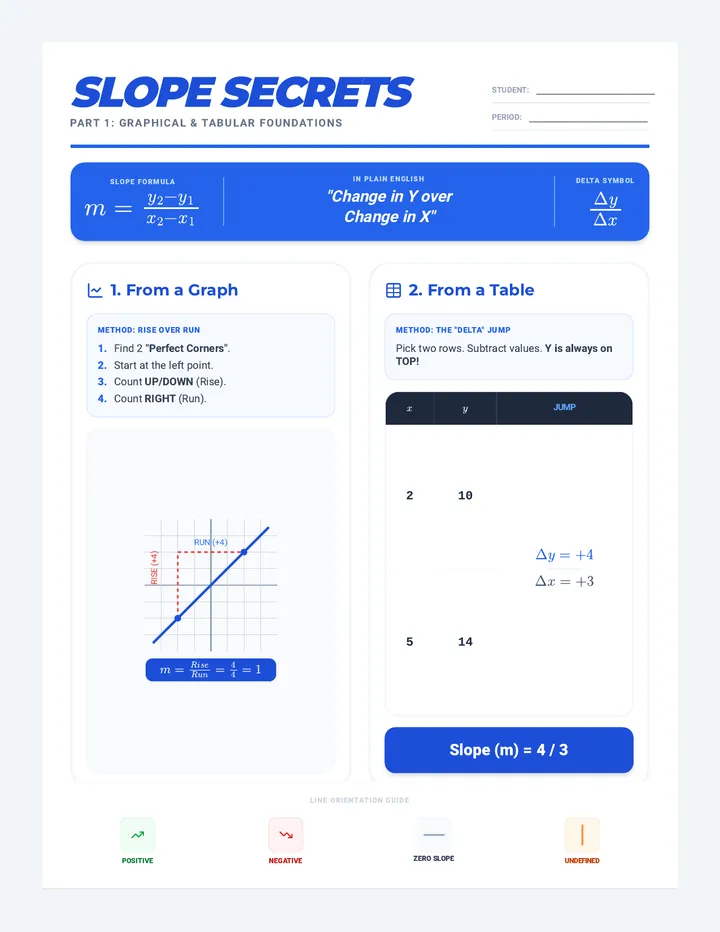
A comprehensive lesson on calculating slope using both the algebraic formula and the visual rise-over-run method, featuring guided video notes and a competitive group activity.
A lesson sequence focused on understanding the relationships between variables, specifically direct and inverse variation, and translating verbal descriptions into algebraic equations.
This sequence teaches 10th-grade students with academic support needs how to translate complex geometric text descriptions into accurate, solvable visual representations. It covers geometric vocabulary, 2D blueprints from word problems, 3D nets/transformations, and similarity modeling, culminating in a synthesis project.
A sequence designed for 10th-grade students to master algebraic word problems using bar modeling. This visual approach scaffolds the transition from text-based problems to symbolic algebra, specifically supporting students who struggle with abstract math concepts.
This sequence guides 4th-grade students through the progression of bar modeling (tape diagrams) to solve comparison word problems. It moves from simple part-whole relationships to additive and multiplicative comparisons, culminating in multi-step problem solving and reverse-engineering models into stories.
This sequence uses the Concrete-Representational-Abstract (CRA) framework to help 7th-grade students master ratios and proportions through tape diagrams. Students progress from simple part-to-part comparisons to complex multi-step problems involving changing quantities, providing a visual scaffold for abstract mathematical reasoning.
A comprehensive sequence focused on using bar models (tape diagrams) to bridge the gap between arithmetic reasoning and algebraic abstraction. Students progress from simple part-whole relationships to complex equations with variables on both sides and the distributive property.
A 3-day math sequence for 3rd graders focused on multiplication comparisons and identifying patterns in tables using a fun Toy Factory theme.
This sequence uses visual tools like double number lines, slope triangles, and coordinate overlays to help 8th-grade students understand functions and rates of change. It provides concrete representations for abstract algebraic concepts, supporting students who benefit from visual and spatial reasoning.
A 9th-grade math sequence focusing on visual strategies for understanding proportions, slope, systems of equations, and inequalities. This unit supports students in academic support settings by moving from concrete double number lines to abstract coordinate graphing and region shading.
A 5-lesson sequence for 2nd graders to explore one-to-many relationships, skip counting, and repeated addition using real-world contexts and simulations. Students progress from identifying simple pairings to scaling recipes and participating in a classroom store simulation.
A comprehensive undergraduate statistics sequence on comparing two population proportions and rates. Students move from the theoretical sampling distribution to practical A/B testing, clinical risk assessment, and project-based experimental design.
A Kindergarten math sequence exploring equivalence and proportional reasoning through hands-on activities, balance scales, and a classroom market simulation. Students learn to compare quantities, understand many-to-one ratios, and practice substitution.
An 8th-grade Algebra sequence focusing on translating real-world scenarios into systems of linear equations. Students act as business analysts to solve break-even, mixture, and motion problems, culminating in a business comparison project.
A project-based unit where 8th-grade students act as data analysts, moving from real-world data collection to constructing linear models and making evidence-based predictions using interpolation and extrapolation.
This 8th-grade math sequence guides students through the process of interpreting linear models in bivariate data. They move from identifying basic associations to constructing lines of best fit, deriving equations, and translating the algebraic components (slope and y-intercept) into meaningful real-world descriptions.
This sequence guides 9th-grade students through the process of interpreting linear models, moving from qualitative observations of scatter plots to quantitative interpretations of slope and y-intercept in real-world contexts. Students will learn to construct trend lines, write equations, and use those models to make informed predictions.
A project-based unit for 9th-grade students that contextualizes fraction division in construction, culinary arts, and manufacturing careers. Students learn to apply division to unit rates, recipe scaling, material yields, and dimensional analysis.
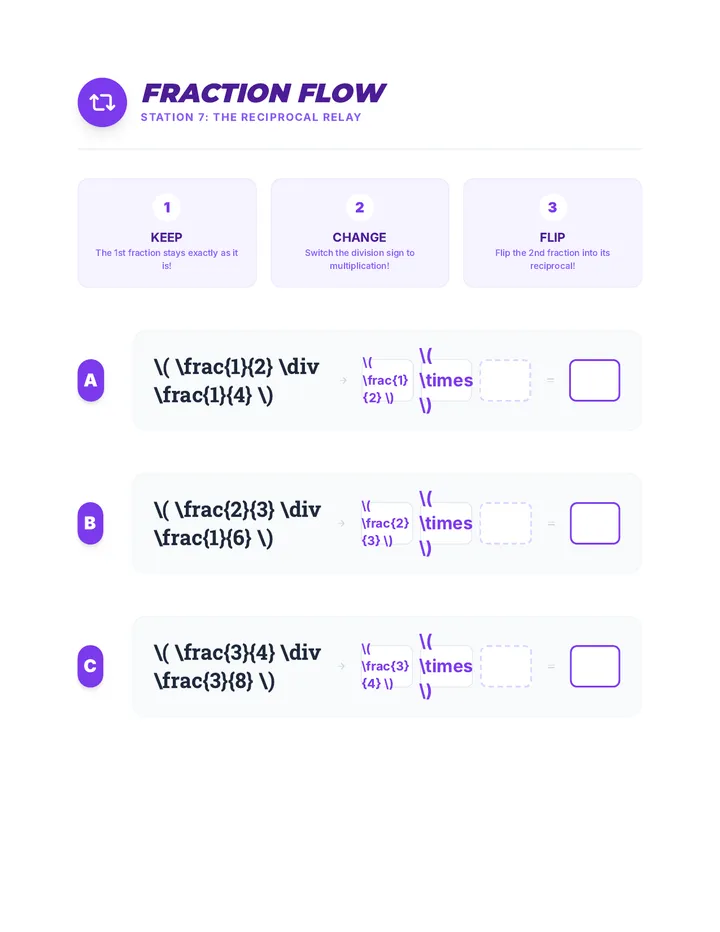
This sequence guides students from conceptual modeling of fraction division to applying the standard algorithm with mixed numbers in complex geometric and real-world contexts. Students will explore the 'why' behind the reciprocal before mastering the 'how' and applying it to find missing dimensions and unit rates.
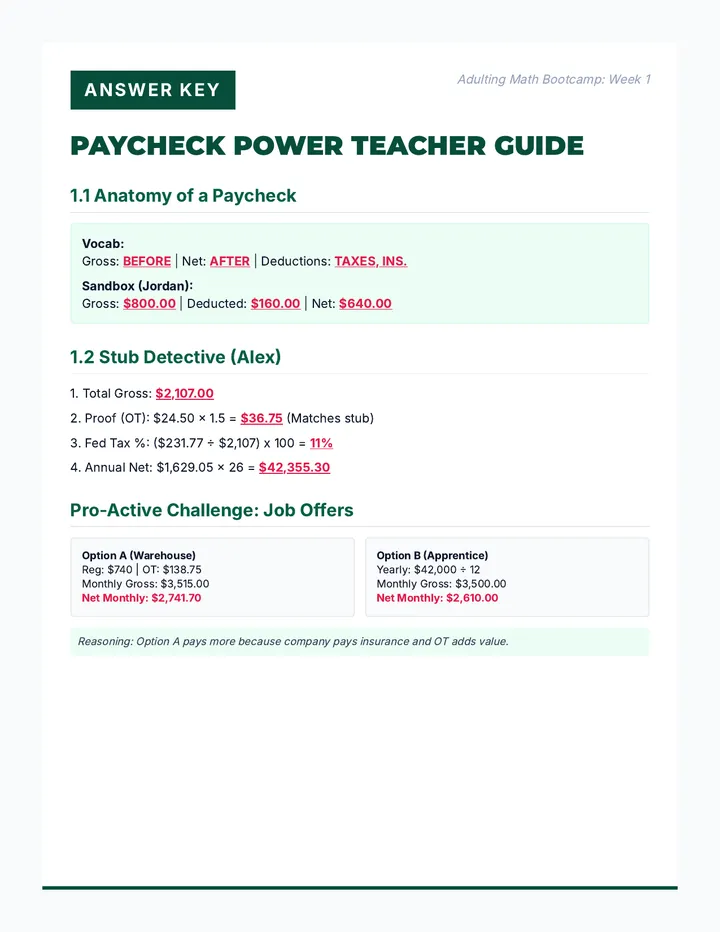
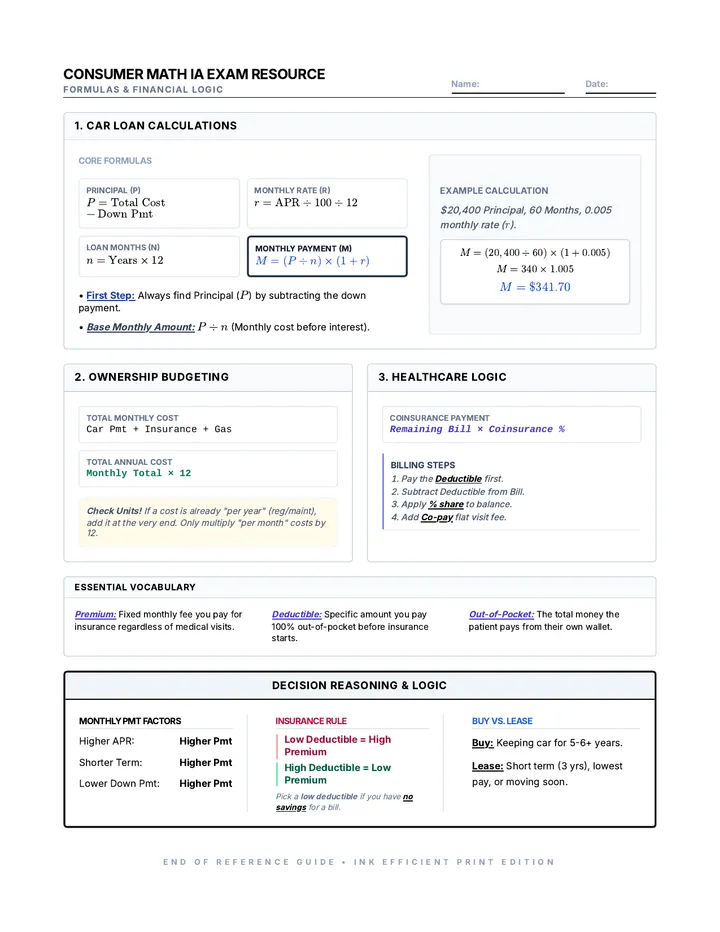
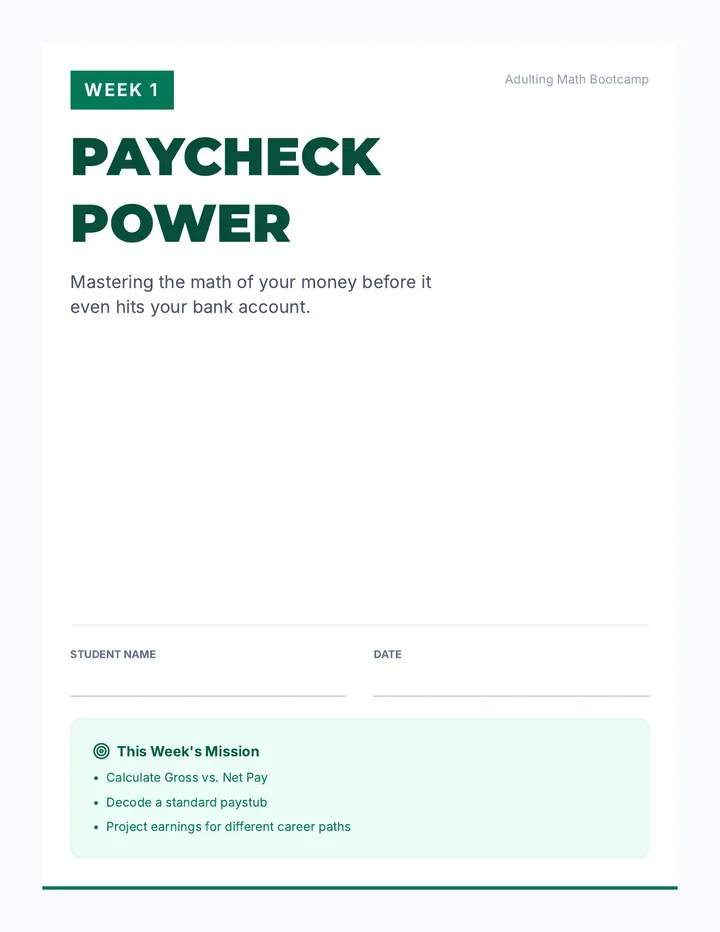
This sequence anchors mathematical decomposition strategies in high-stakes, real-world transition skills. Students apply task analysis and breakdown strategies to complex financial and logistical scenarios relevant to independent living, moving from consumer math to a comprehensive life management simulation.