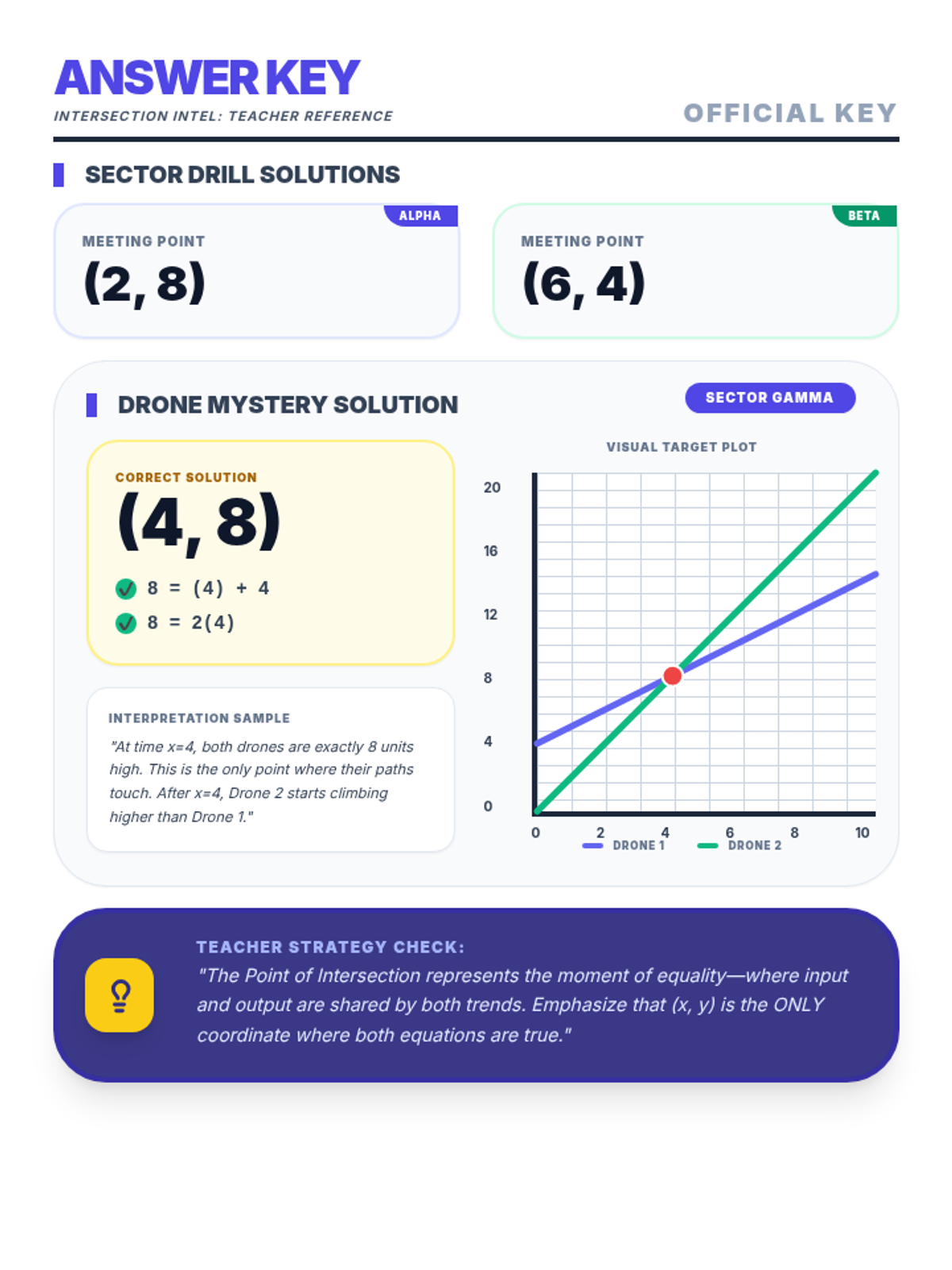
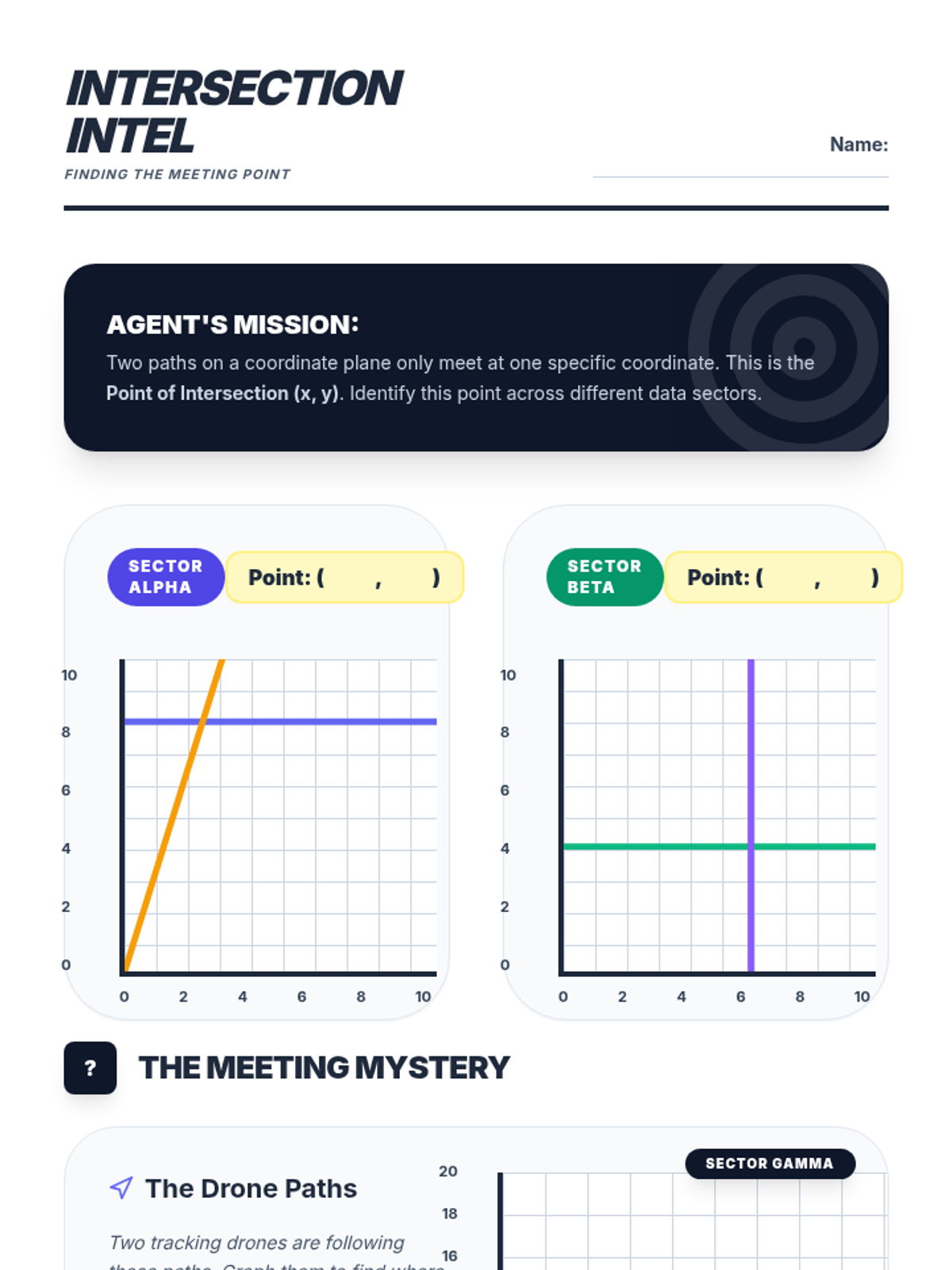
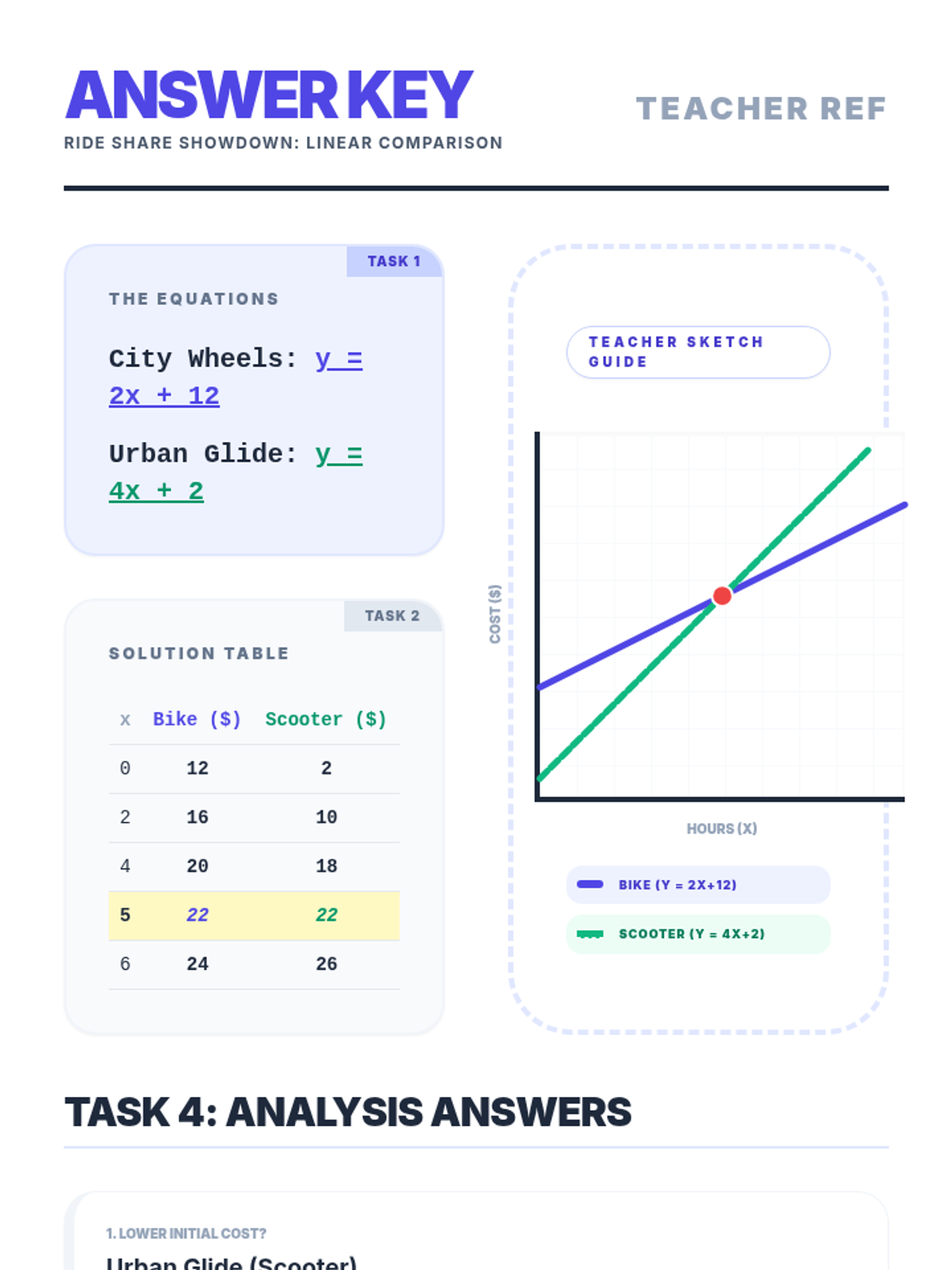
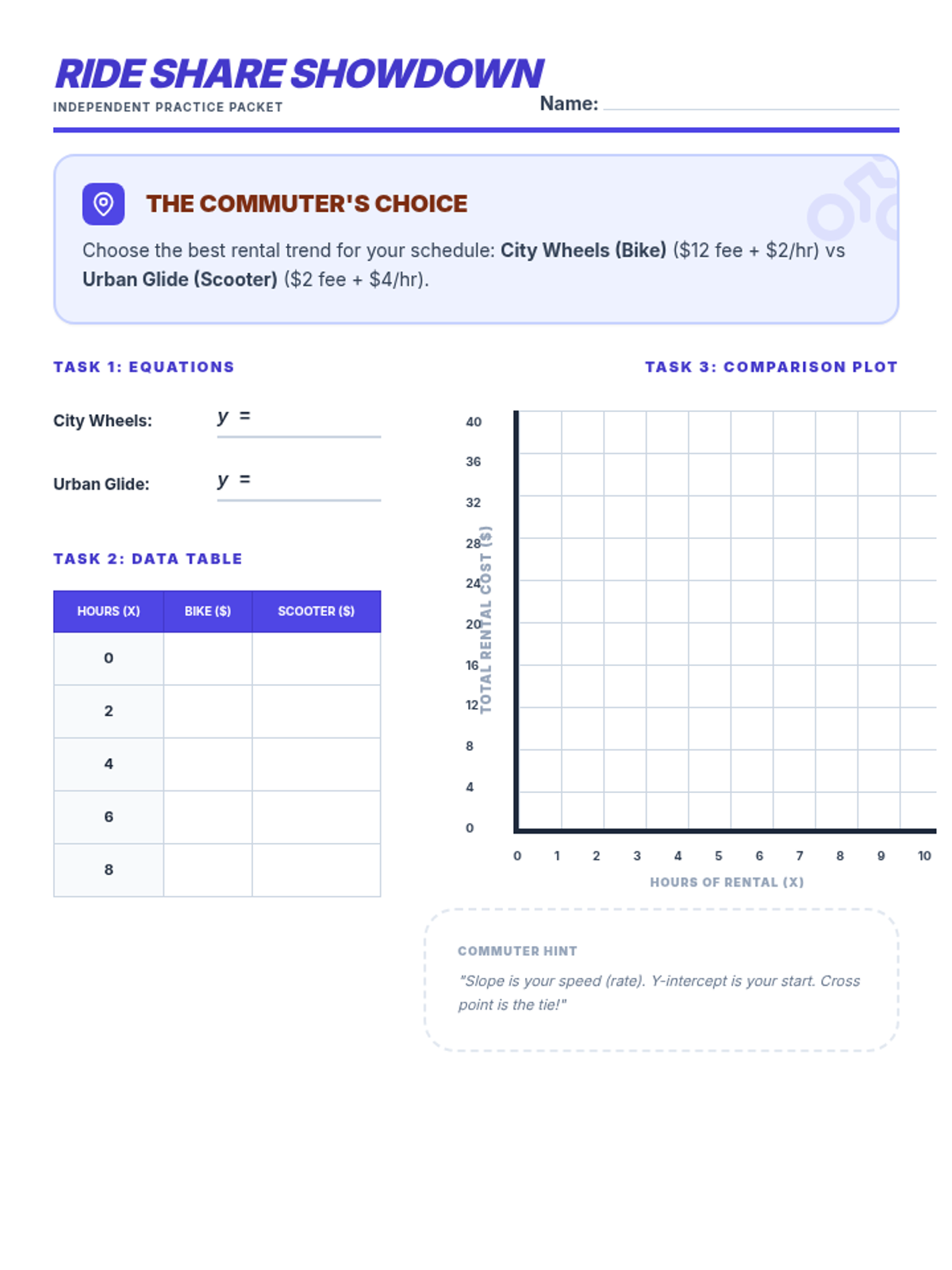
Comparisons of quantities using unit rates and proportional reasoning. Connects tables, graphs, and equations to represent constant rates of change.
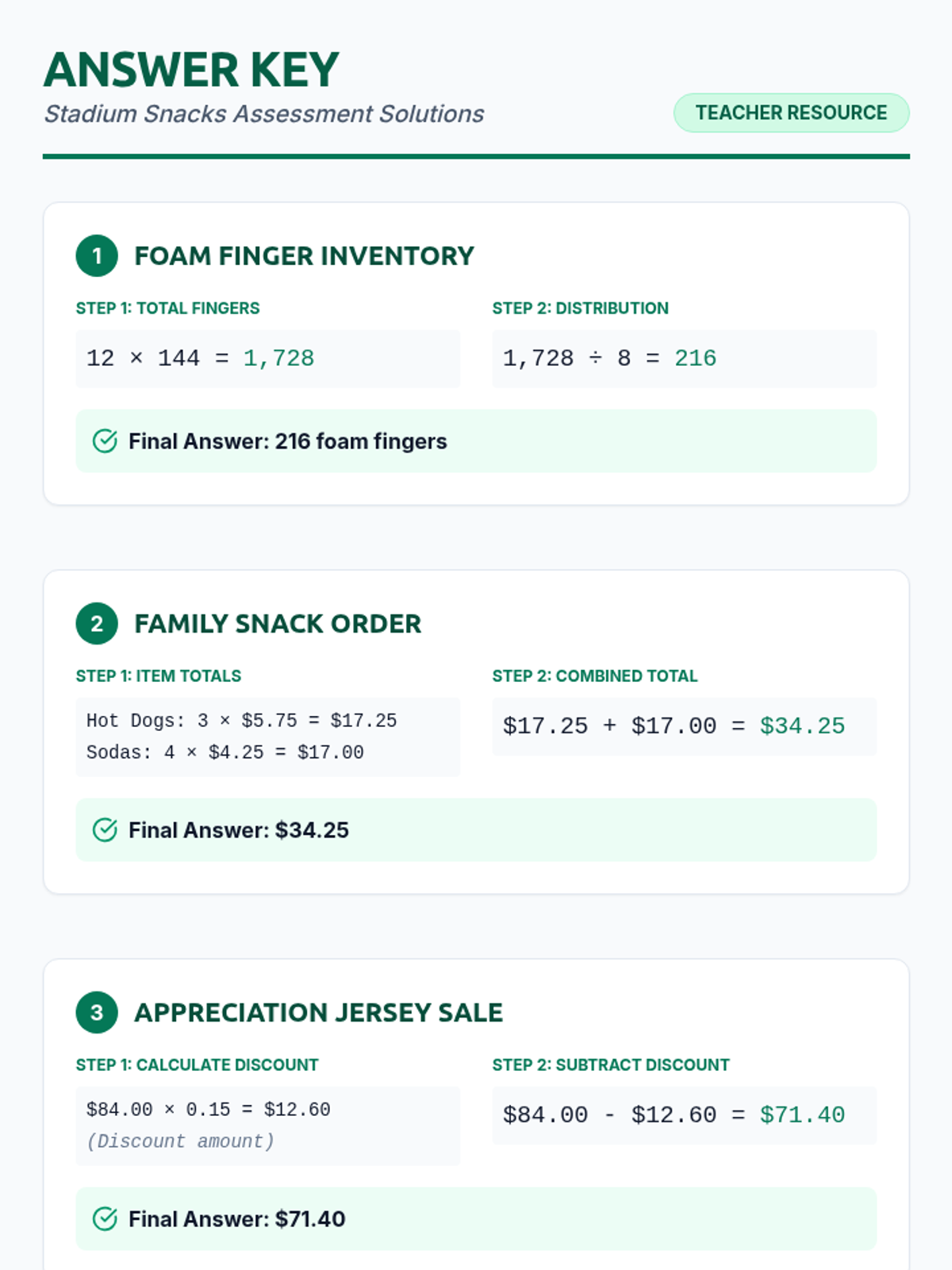
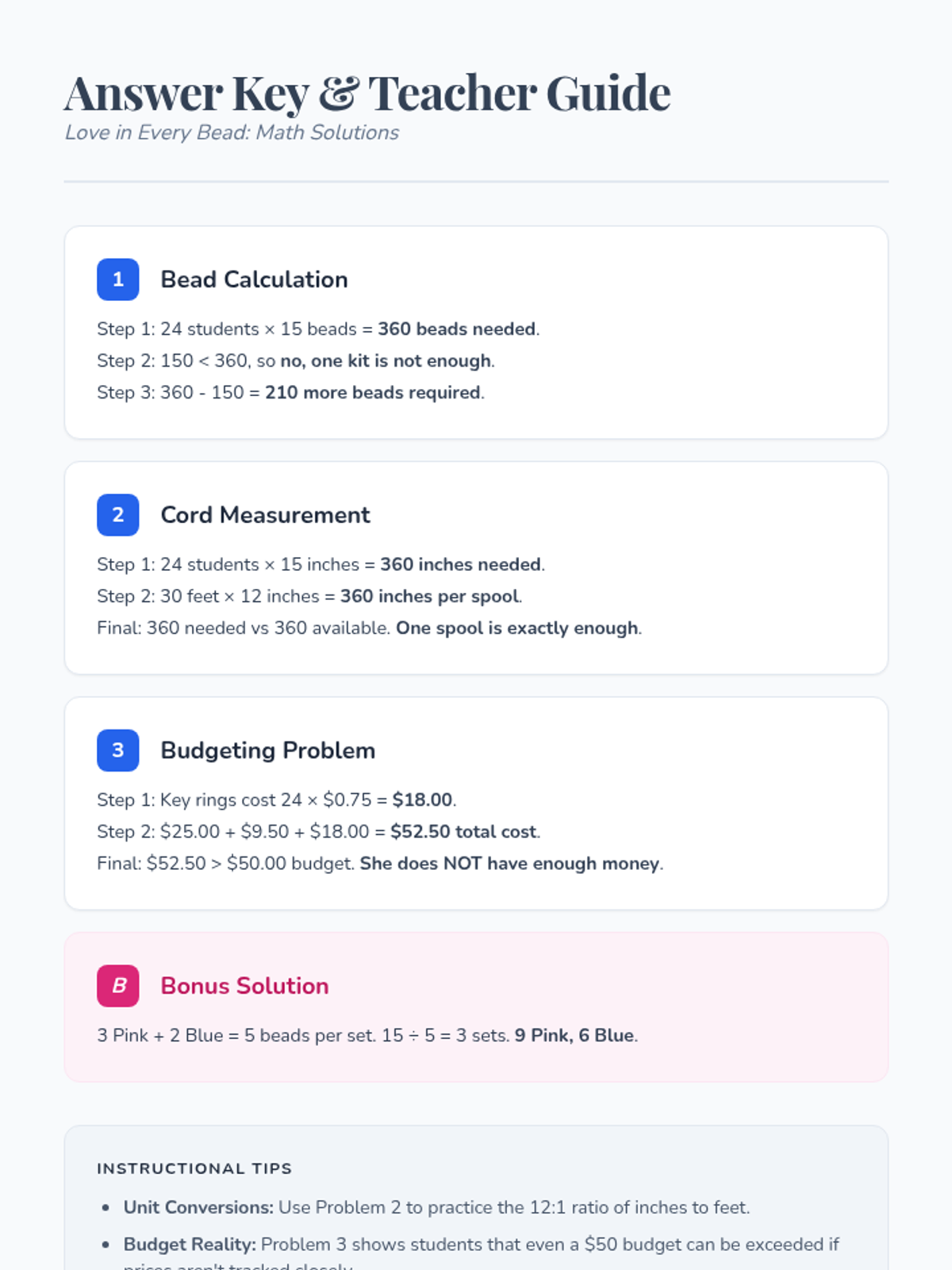
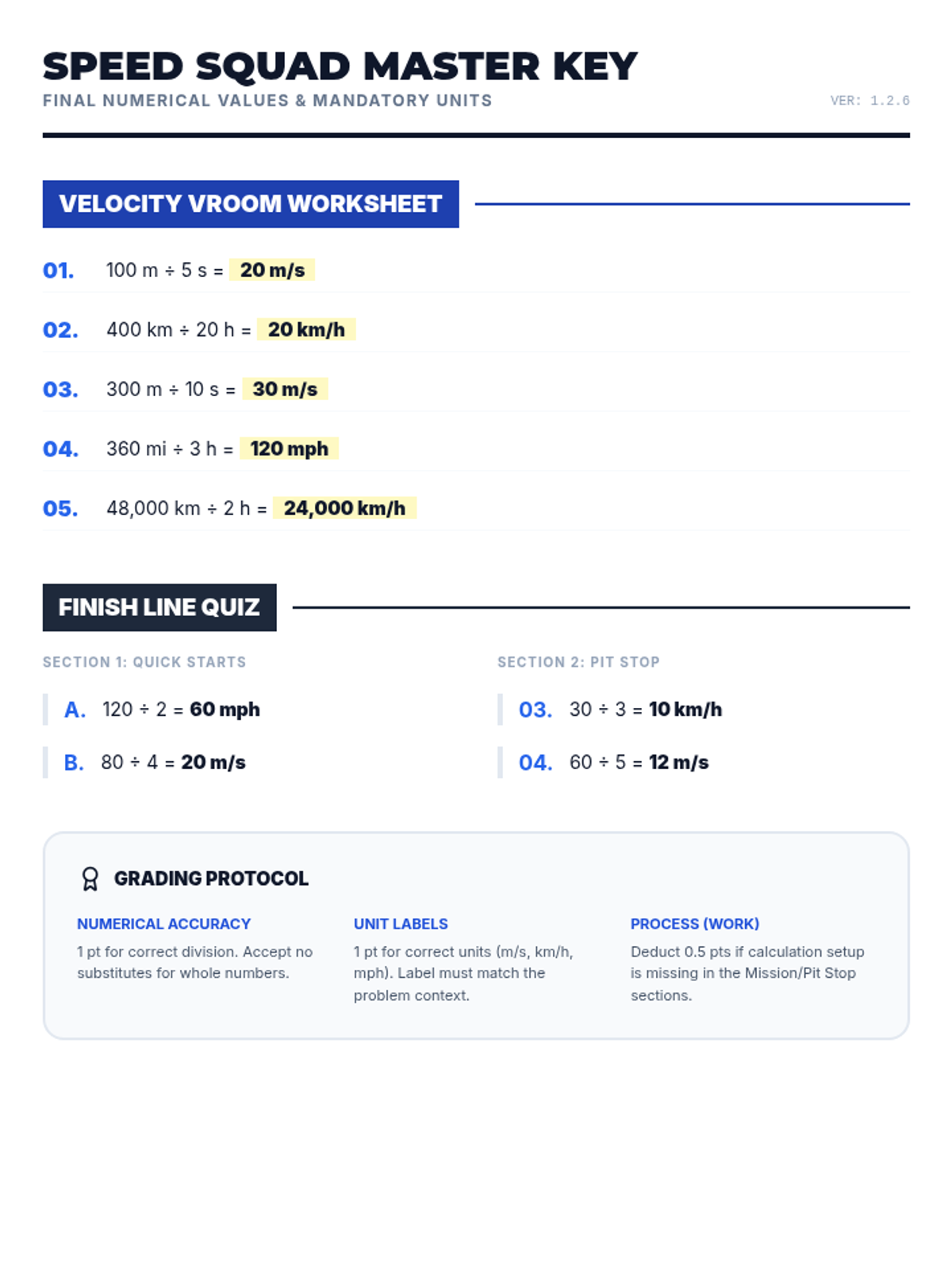
A comprehensive teacher resource providing instructional strategies for budgeting and ratios, a master answer key for all student materials, and an objective tracking table for monitoring student progress.
A daily warm-up sheet covering one full week (Monday-Friday) with targeted practice in budgeting and ratio simplification. Includes a comprehensive review section for Friday.
A set of interactive task cards for practicing ratio identification and simplification, featuring both visual sets and word-based problems. Designed to be cut out for hands-on learning.
A structured graphic organizer that guides students through the process of identifying, writing, and simplifying ratios using visual sets and numerical problems.
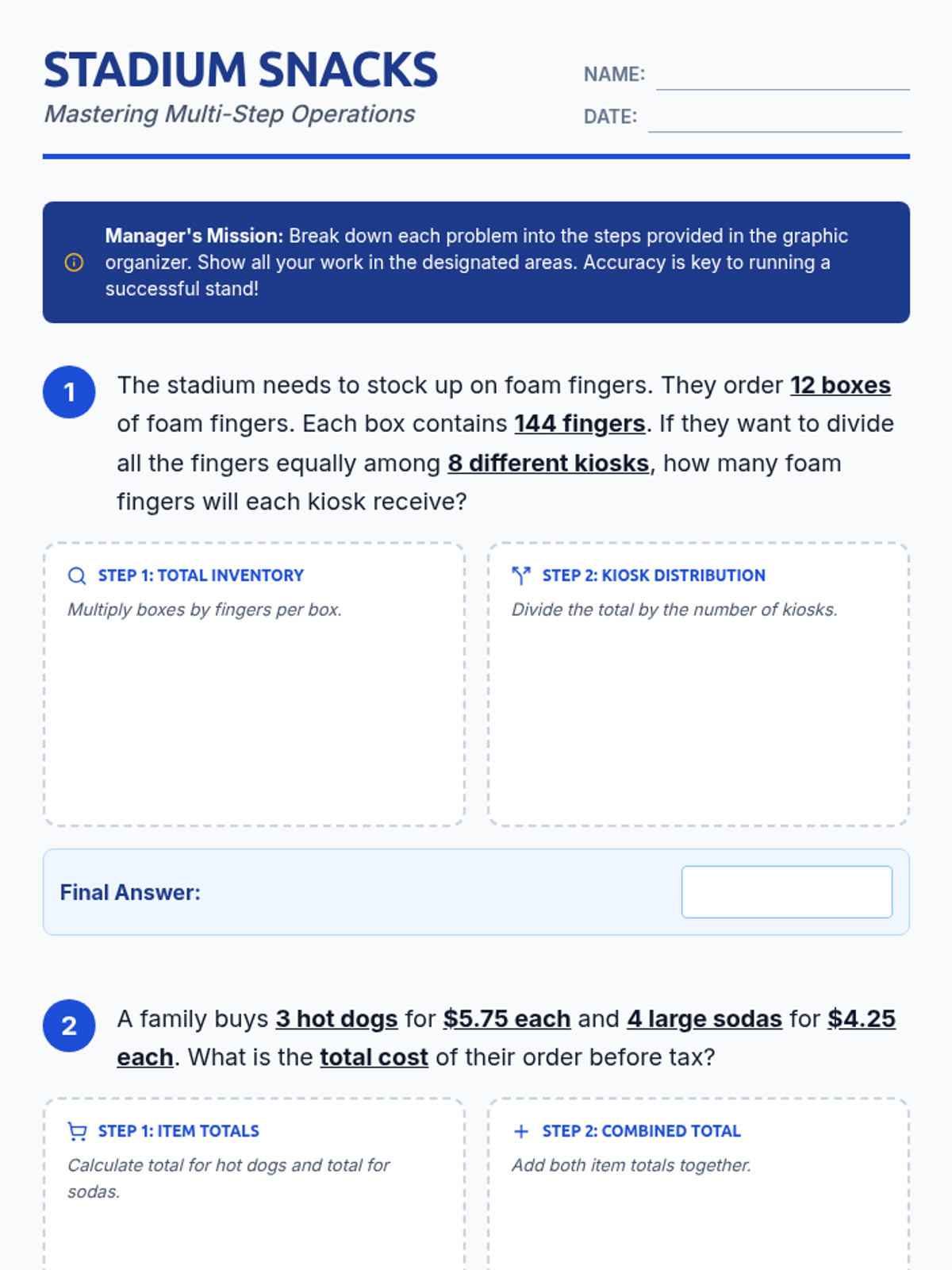
A real-world budgeting worksheet where students calculate total costs of snack items and determine if they stay within a specific budget. Includes calculation areas and budget verification sections.
The final cumulative assessment for the Ratio Lab, covering ratio language, tape diagrams, unit rate comparisons, and percent problems.
Teacher facilitation guide for the final cumulative lesson, focusing on reviewing all ratio tools and assessing student mastery.
Student activity sheet for Lesson 11, featuring multi-step problems involving paint mixtures and gear ratios, requiring scaling and model application.
Teacher facilitation guide for Lesson 11, focusing on choosing efficient visual models to solve complex, multi-step ratio reasoning problems.
Student activity sheet for Lesson 10, using percent bars and ratio tables to find parts of a whole and determine the total based on a given percentage.
Teacher facilitation guide for Lesson 10, using visual models like the 'percent bar' and ratio tables to solve problems involving parts and wholes.
Student activity sheet for Lesson 9, practicing shading 10x10 grids to represent percents and converting those percents into ratios and fractions.
Teacher facilitation guide for Lesson 9, introducing percents as ratios out of 100 using visual grid models.
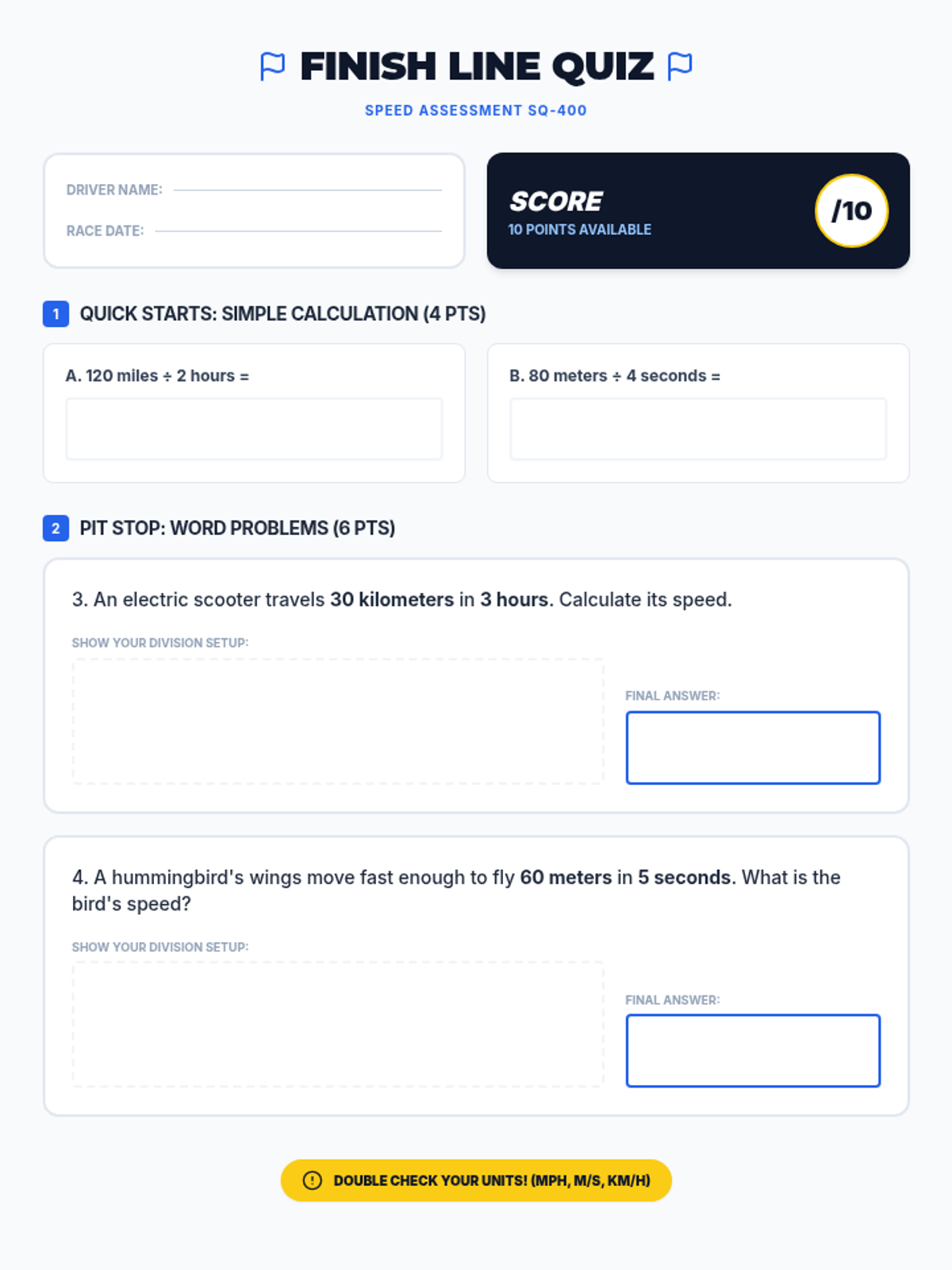
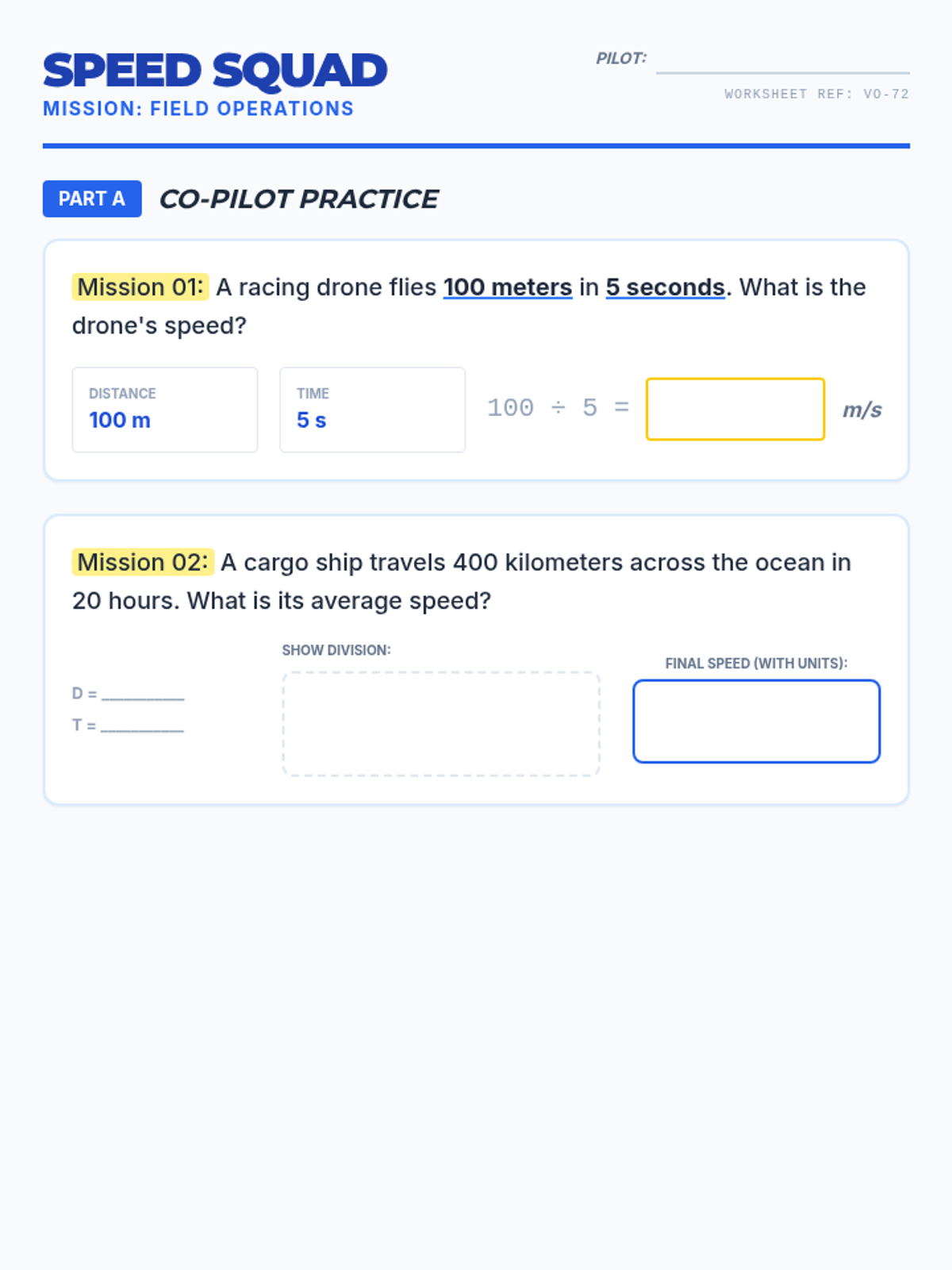
Student activity sheet for Lesson 8, calculating speeds for planes and e-bikes and using double number lines to represent travel distance over time.
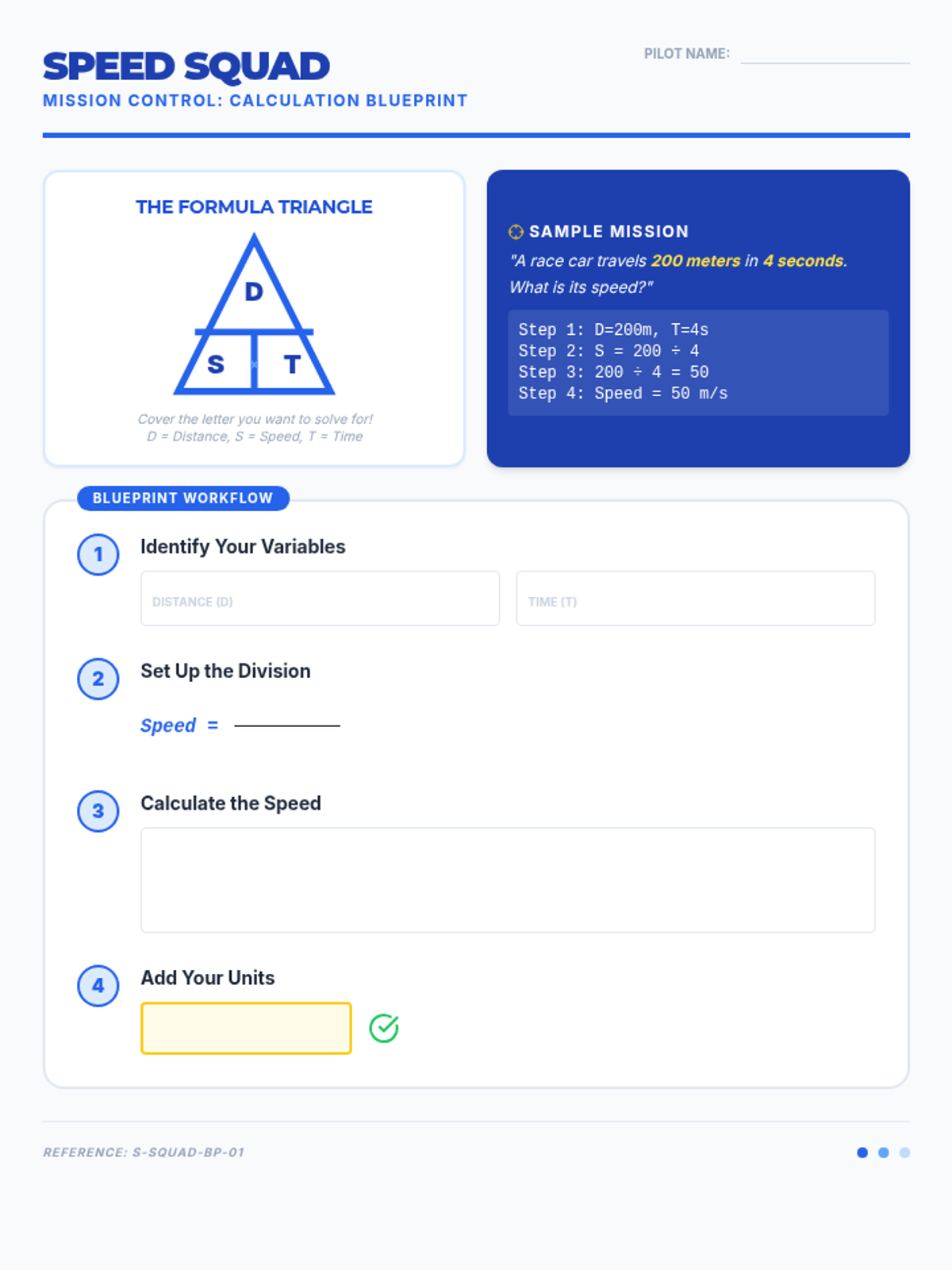
Teacher facilitation guide for Lesson 8, focusing on speed as a unit rate and using double number lines to solve distance-time problems.
Student activity sheet for Lesson 7, providing comparison scenarios for juice boxes and lab supplies to determine the 'better buy' using unit prices.
Teacher facilitation guide for Lesson 7, teaching students how to use unit rates to compare ratios and identify the 'better buy'.
Student activity sheet for Lesson 6, focusing on calculating unit rates for heartbeats, fuel efficiency, and price, and then using those rates to scale up.
Teacher facilitation guide for Lesson 6, introducing the concept of unit rates and the 'per 1' strategy.
Student activity sheet for Lesson 5, practicing the creation and completion of double number lines to solve ratio problems.
Teacher guide for Lesson 5, focusing on double number lines to represent proportional relationships in motion and measurement.
Student activity sheet for Lesson 4, involving completing ratio tables and explaining scaling strategies for proportional relationships.
Teacher facilitation guide for Lesson 4, focusing on ratio tables as a tool for organizing data and finding multiplicative patterns.
Student activity sheet for Lesson 3, providing practice with scaling ratios through multiplication and division, and identifying non-equivalent ratios.
Teacher facilitation guide for Lesson 3, introducing equivalent ratios through multiplicative reasoning and paint-mixing scenarios.