One-to-one correspondence, numeral identification, and comparison of quantities using terms like greater than or less than. Establishes the foundation for numerical literacy and early arithmetic operations.
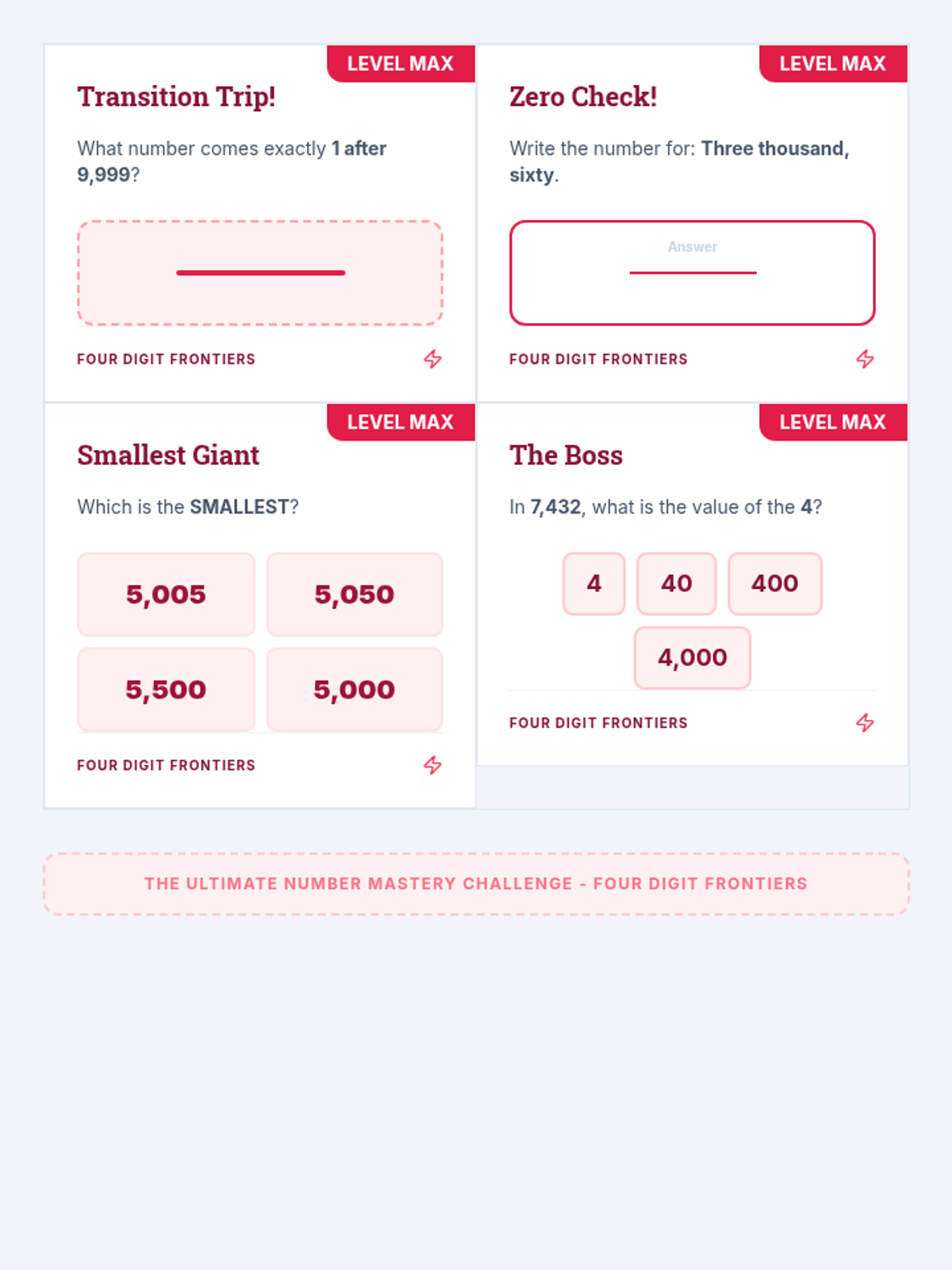
A set of advanced task cards for numbers up to 10,000, specifically targeting transitions (e.g., 9,999 to 10,000) and complex zero-placeholder comparisons for high-achieving IEP students.
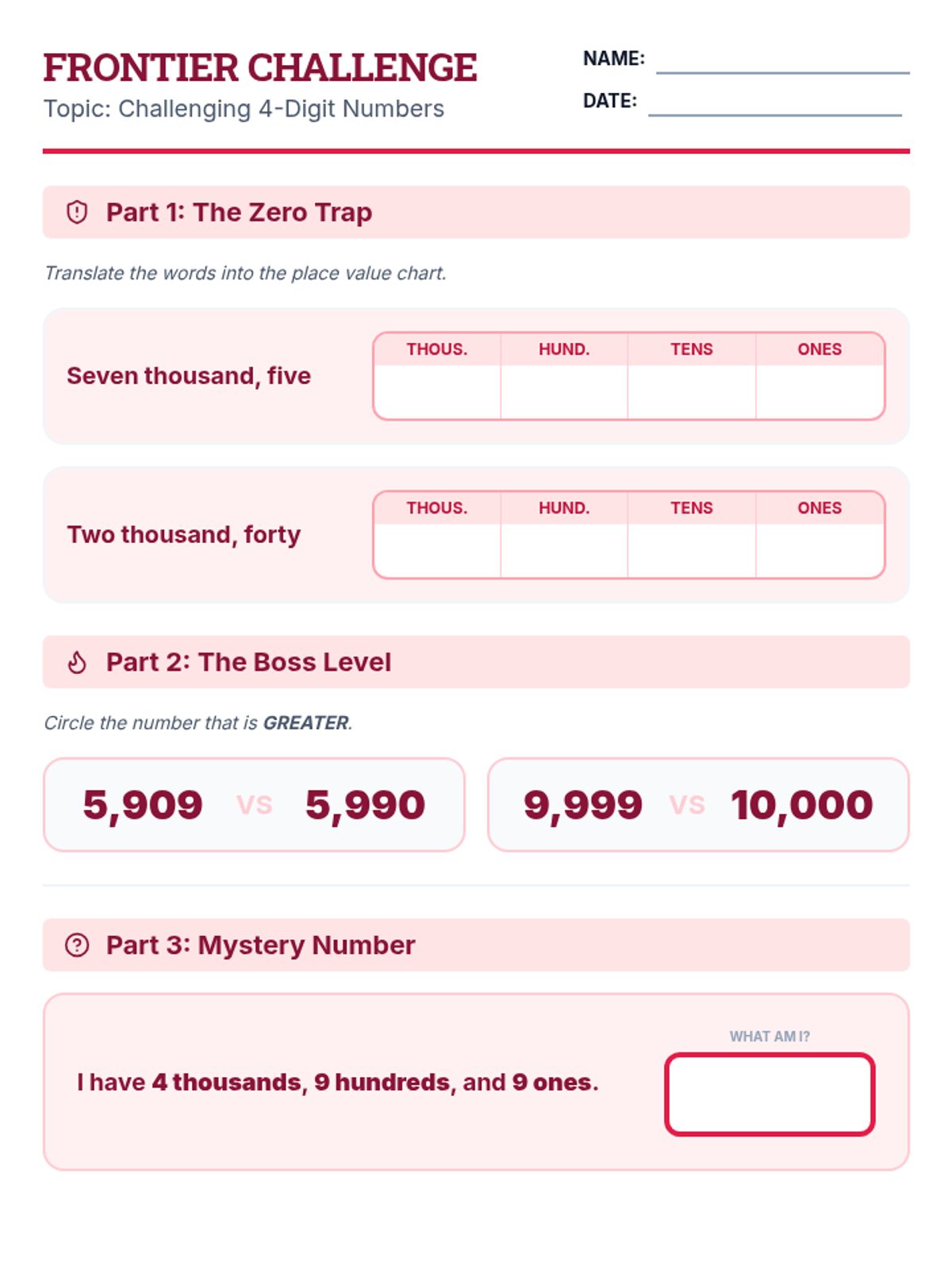
A highly scaffolded but rigorous place value worksheet for IEP students focusing on challenging 4-digit numbers, placeholder zeros, and comparing numbers with similar digits.
Instructional slides for numbers up to 10,000, introducing the thousand cube and practicing place value with challenging zero placeholders and boundary transitions.
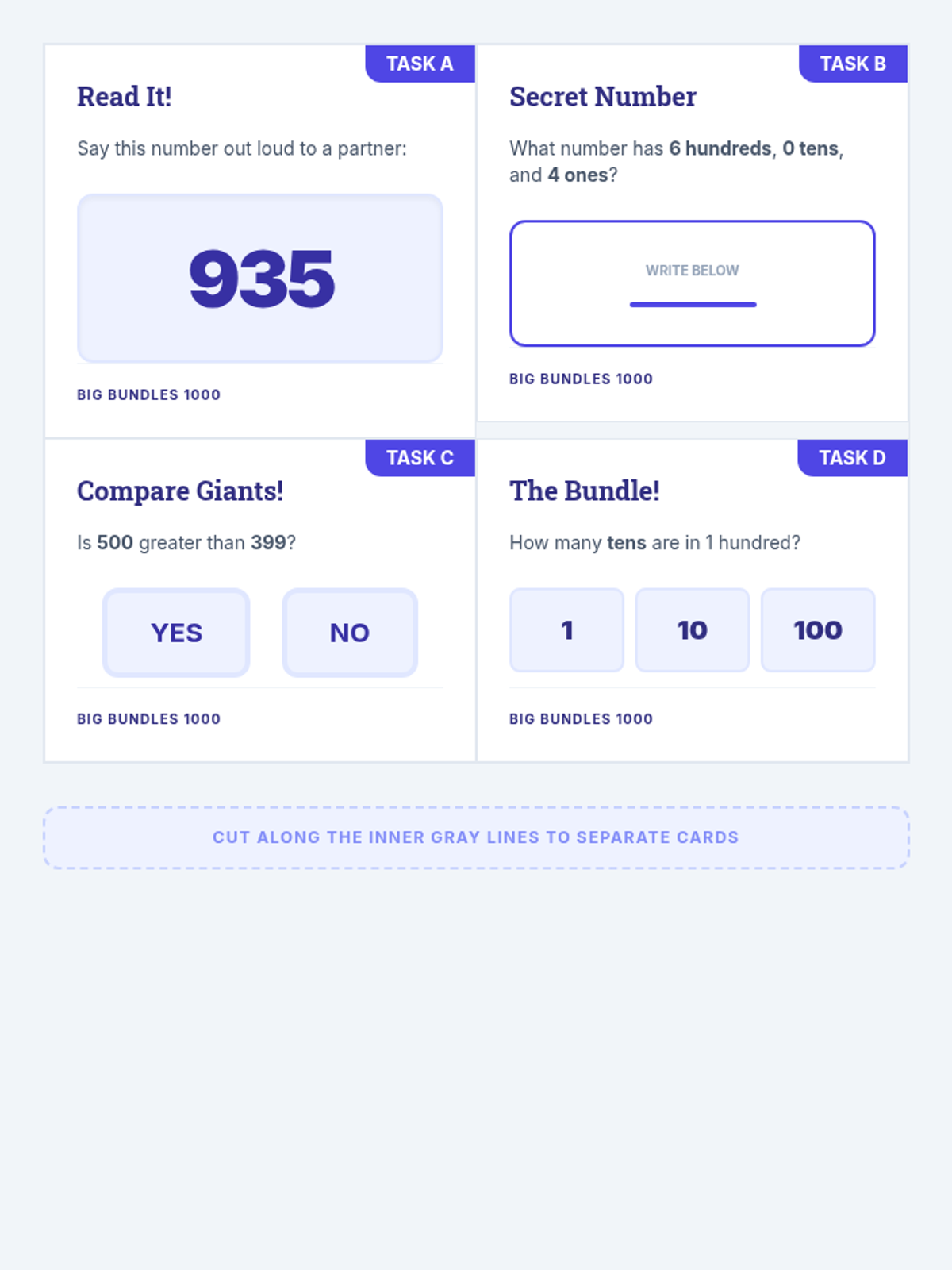
A set of hands-on task cards for numbers up to 1,000, focusing on place value identification and large number comparison for IEP students.
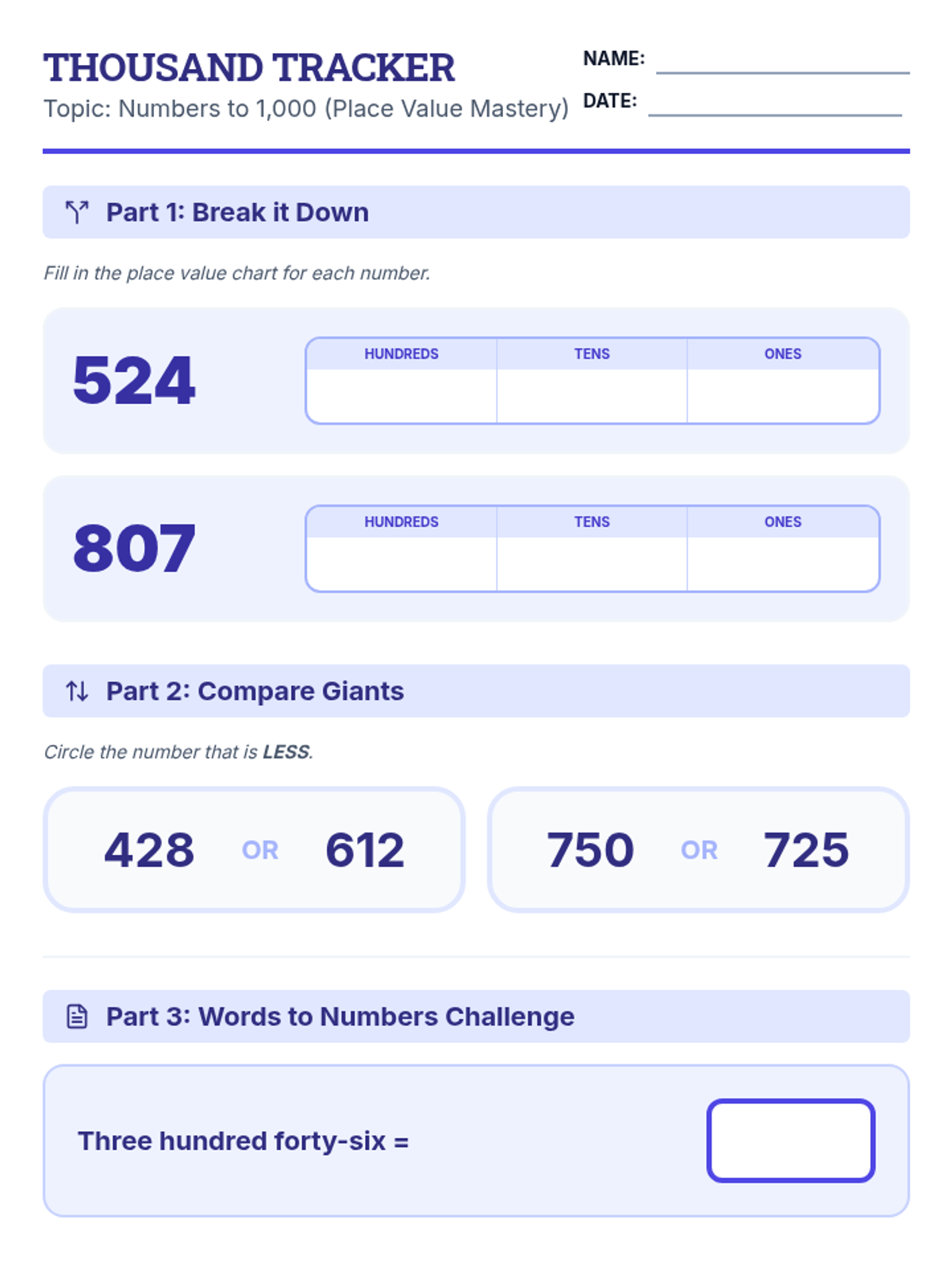
A comprehensive place value worksheet for numbers up to 1,000, tailored for IEP students with clear charts and simplified comparison tasks.
Instructional slides for numbers up to 1,000, using "flats, rods, and units" visuals to explain place value and comparison strategies for IEP students.
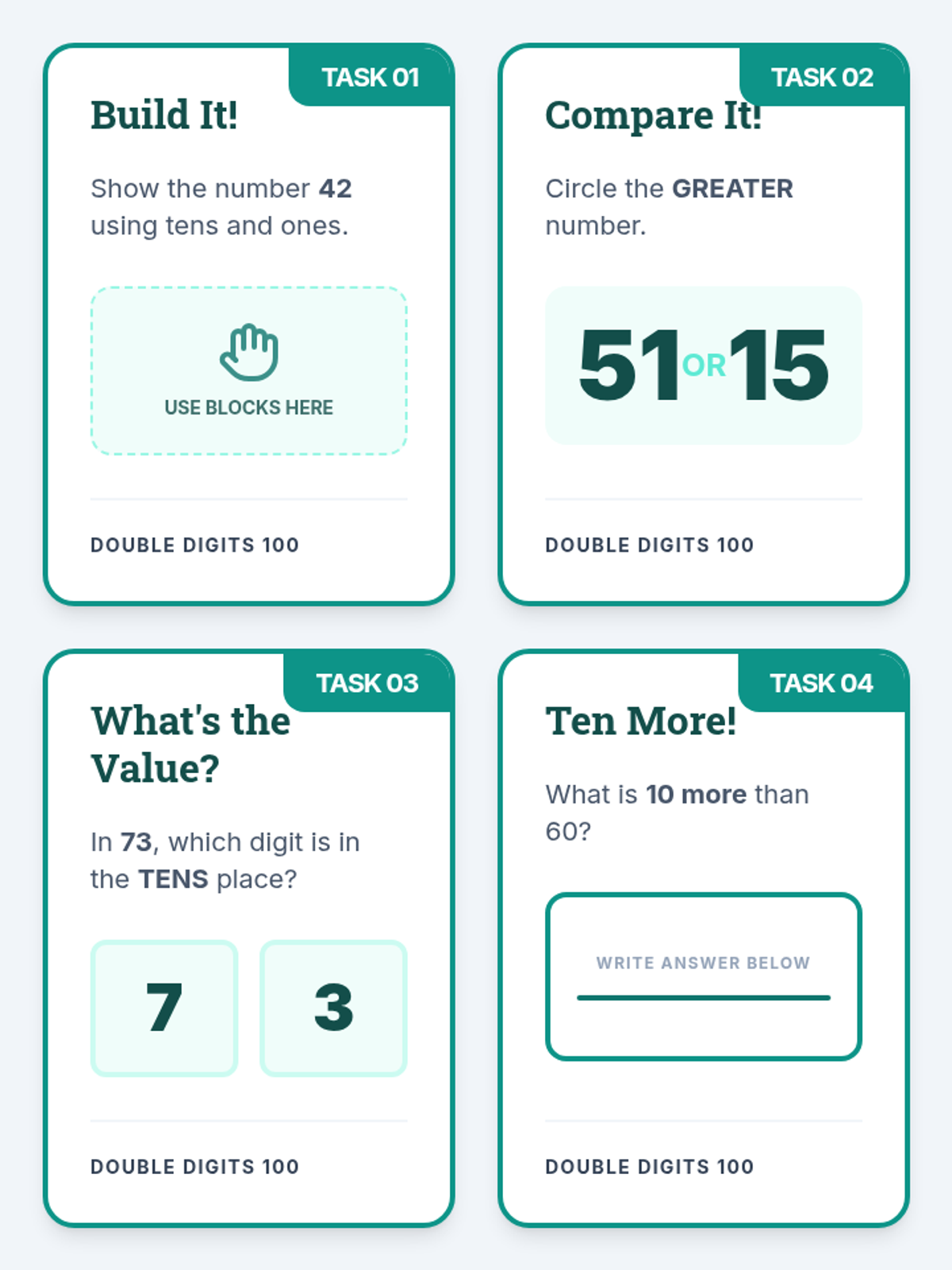
A set of hands-on task cards for numbers up to 100, focusing on place value building and comparison for IEP students.
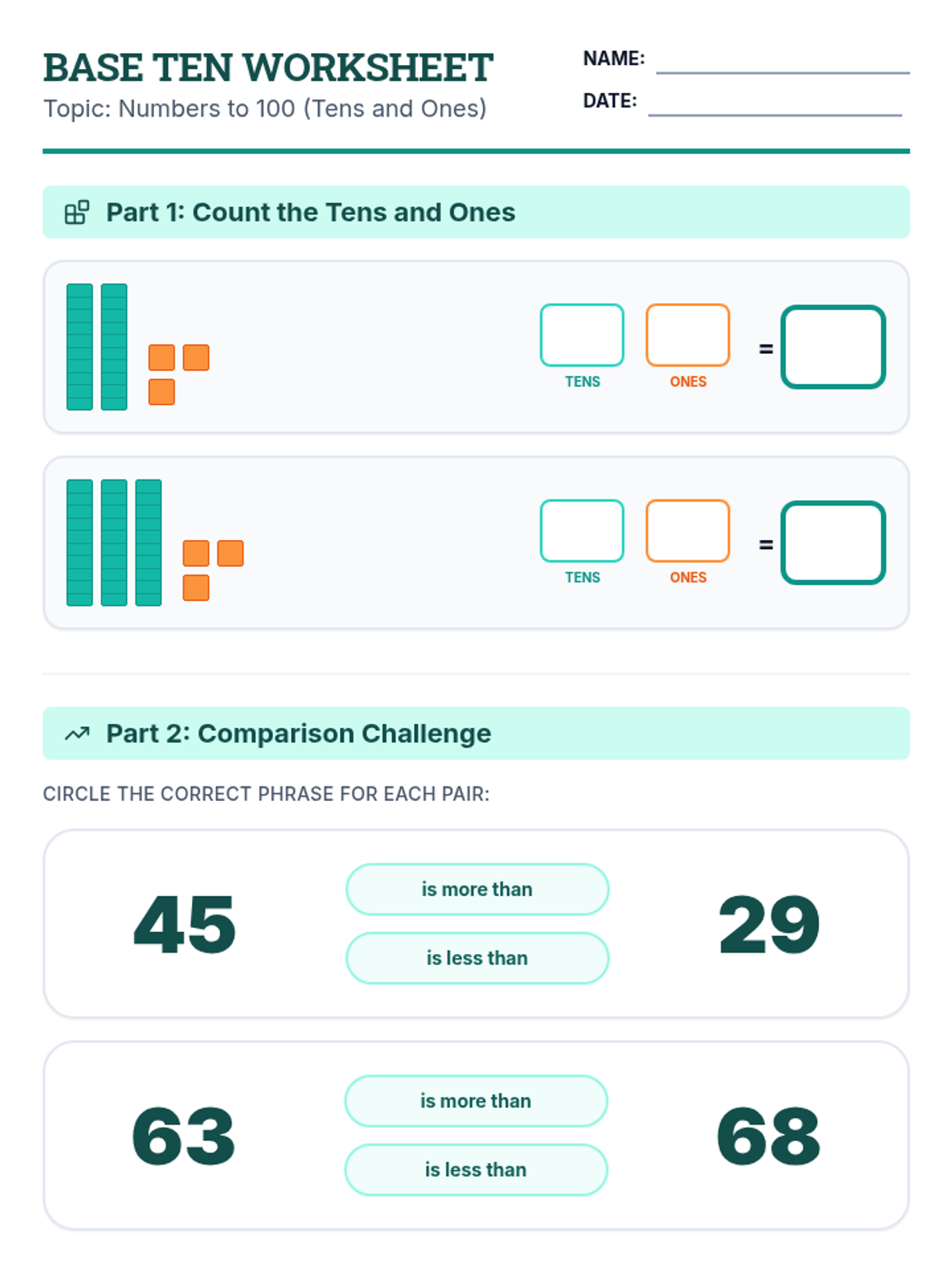
A base-ten worksheet for numbers up to 100, featuring clear block visuals and scaffolded comparison exercises for IEP students.
Instructional slides for numbers up to 100, using base-ten block visuals to explain place value and comparison strategies for IEP students.
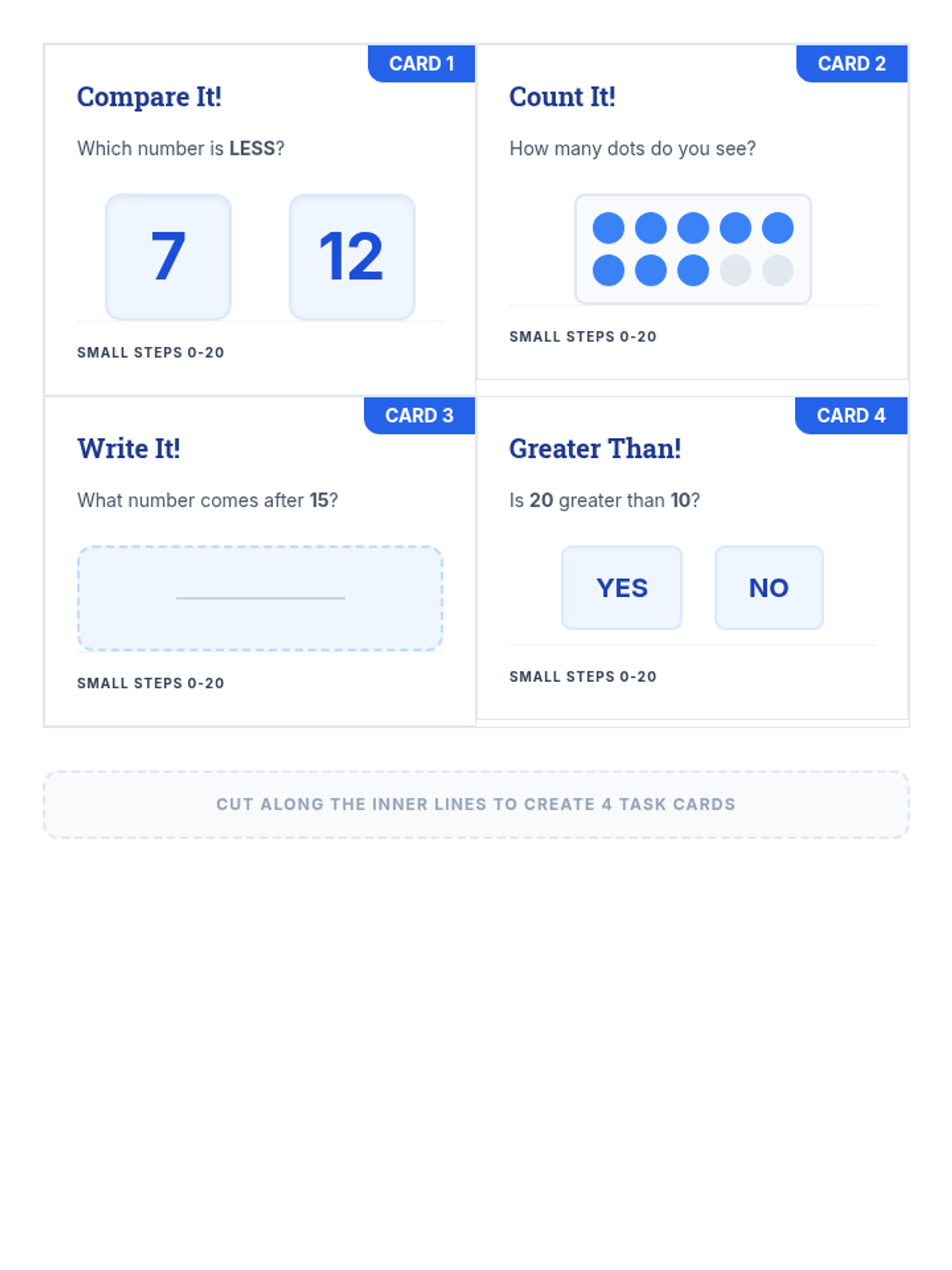
A set of hands-on task cards for numbers 0-20, designed with clear visuals and simple prompts for IEP students.
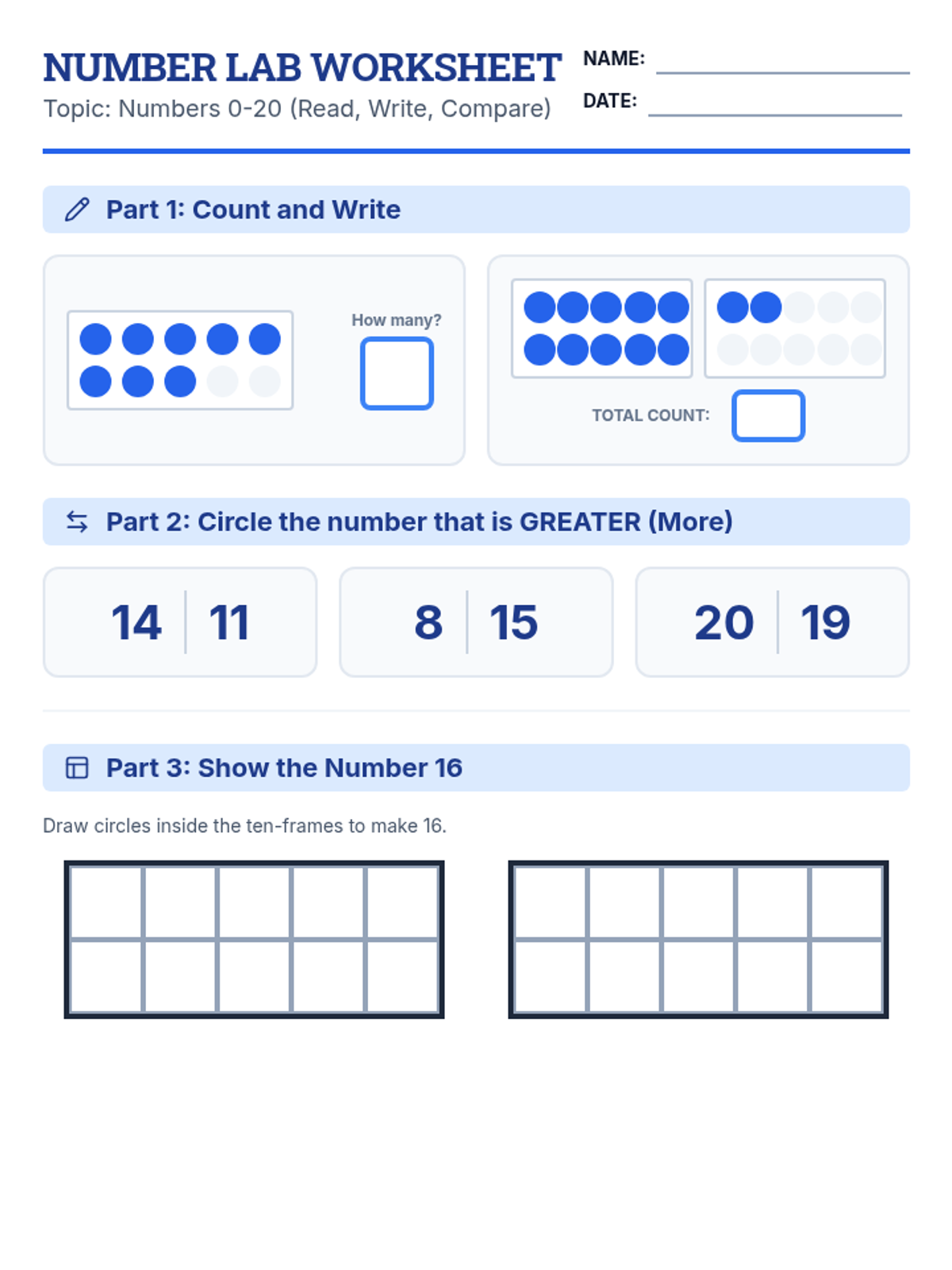
A scaffolded worksheet for IEP students focusing on numbers 0-20 with clear visual aids (ten-frames) and large text.
A visually supportive slide deck for IEP students, focusing on numbers 0-20 using ten-frames and clear comparison models.
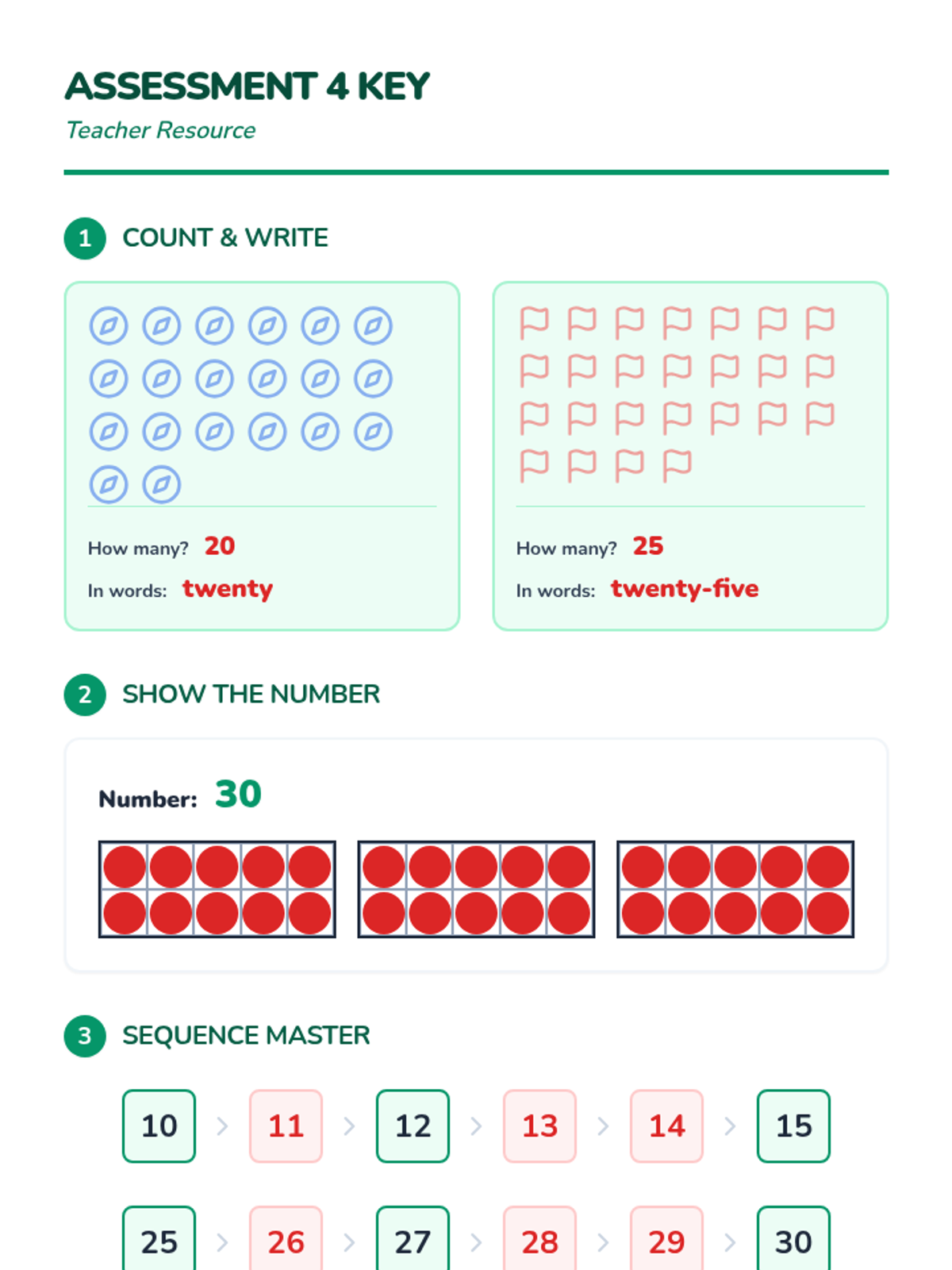
Teacher's answer key for Assessment 4, providing correct answers for counting compasses and flags, representing numbers in ten-frames, sequencing, and matching. Revised for consistency with worksheet layout.
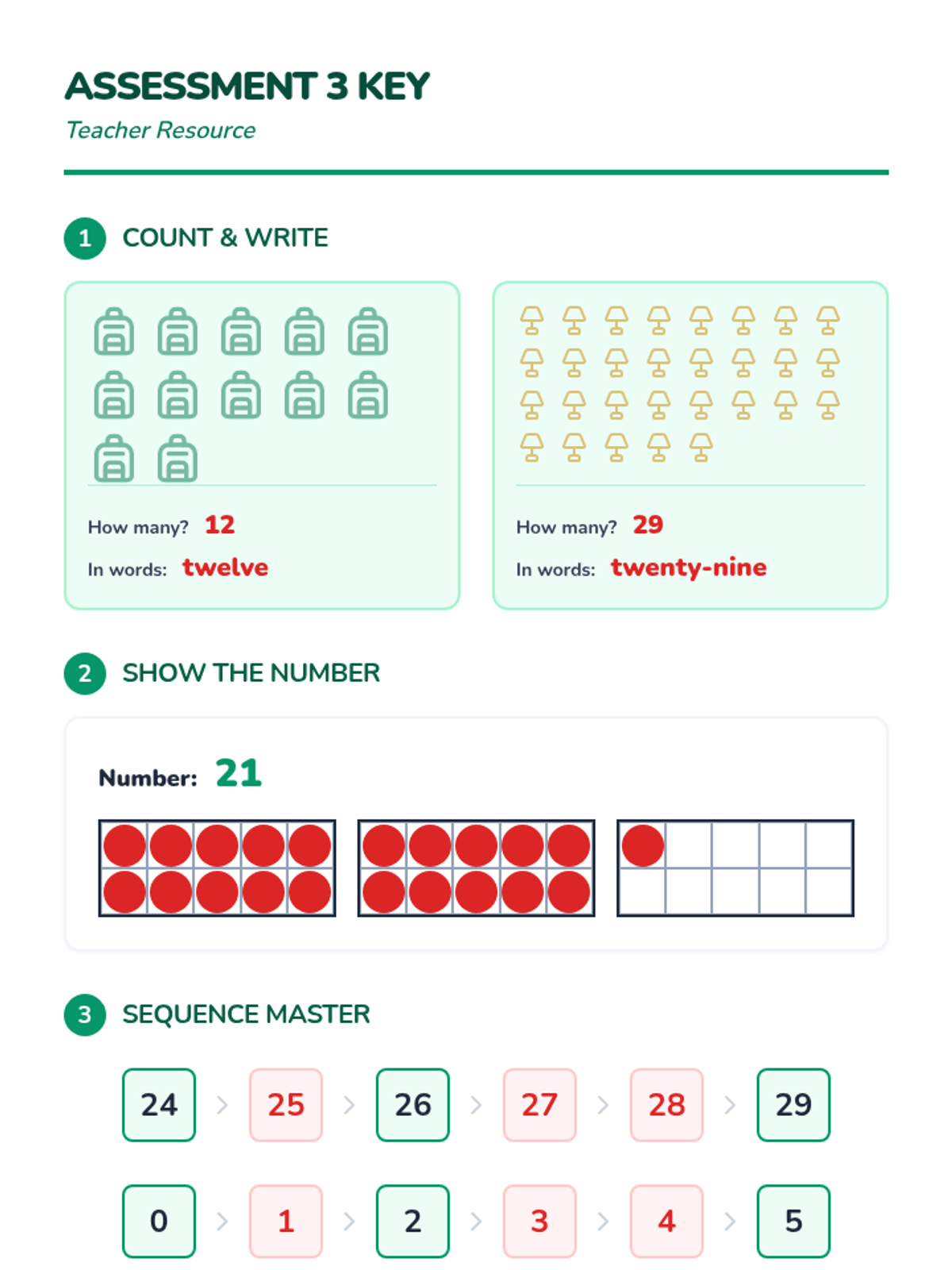
Teacher's answer key for Assessment 3, providing correct answers for counting backpacks and lanterns, representing numbers in ten-frames, sequencing, and matching. Revised for consistency with worksheet layout.
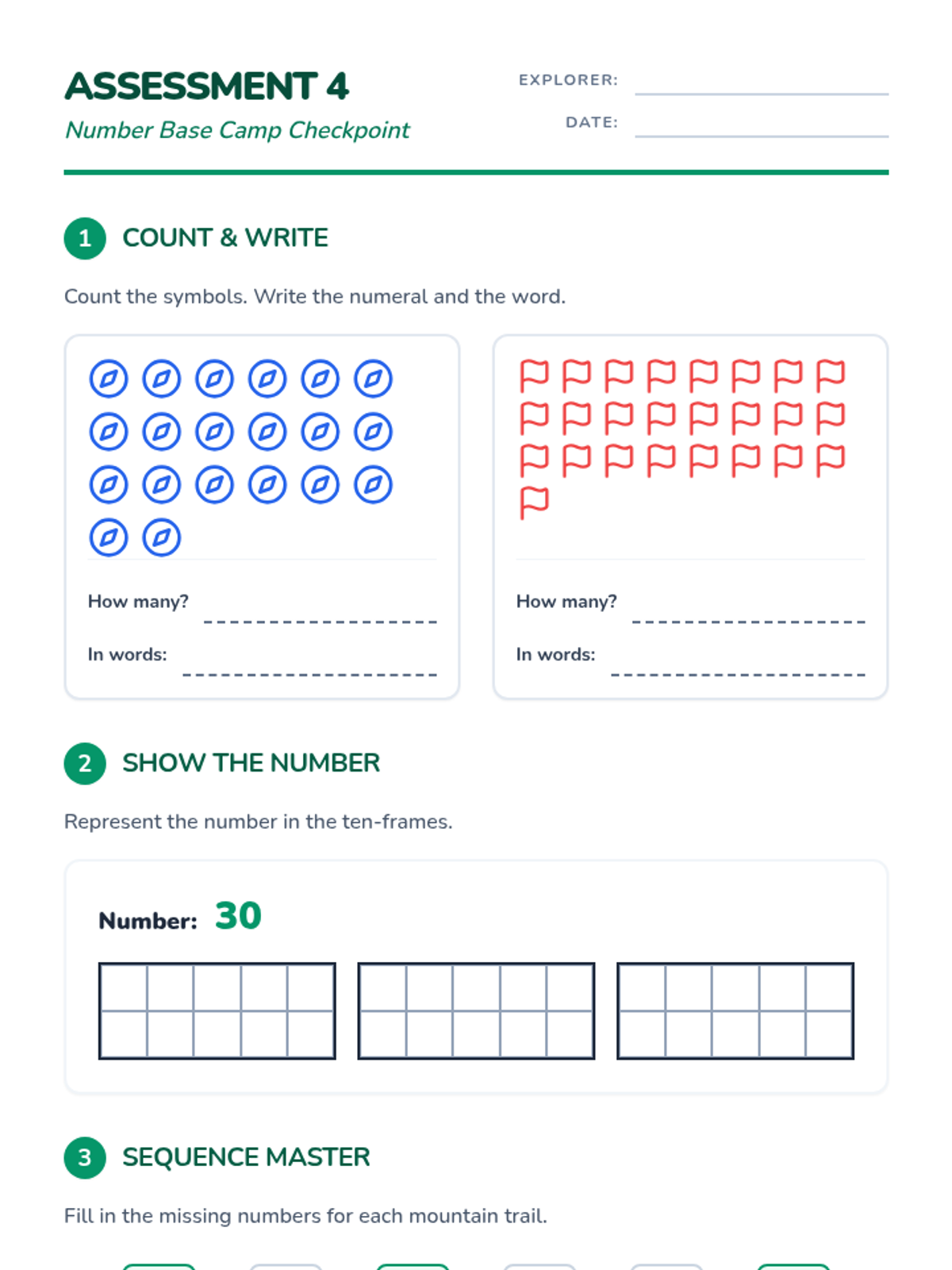
A student assessment for number sense up to 30, titled Assessment 4. It features exercises in counting compasses and flags, representing numbers in ten-frames, completing number sequences, and matching numerals to number words. Revised for improved layout and page breaks.
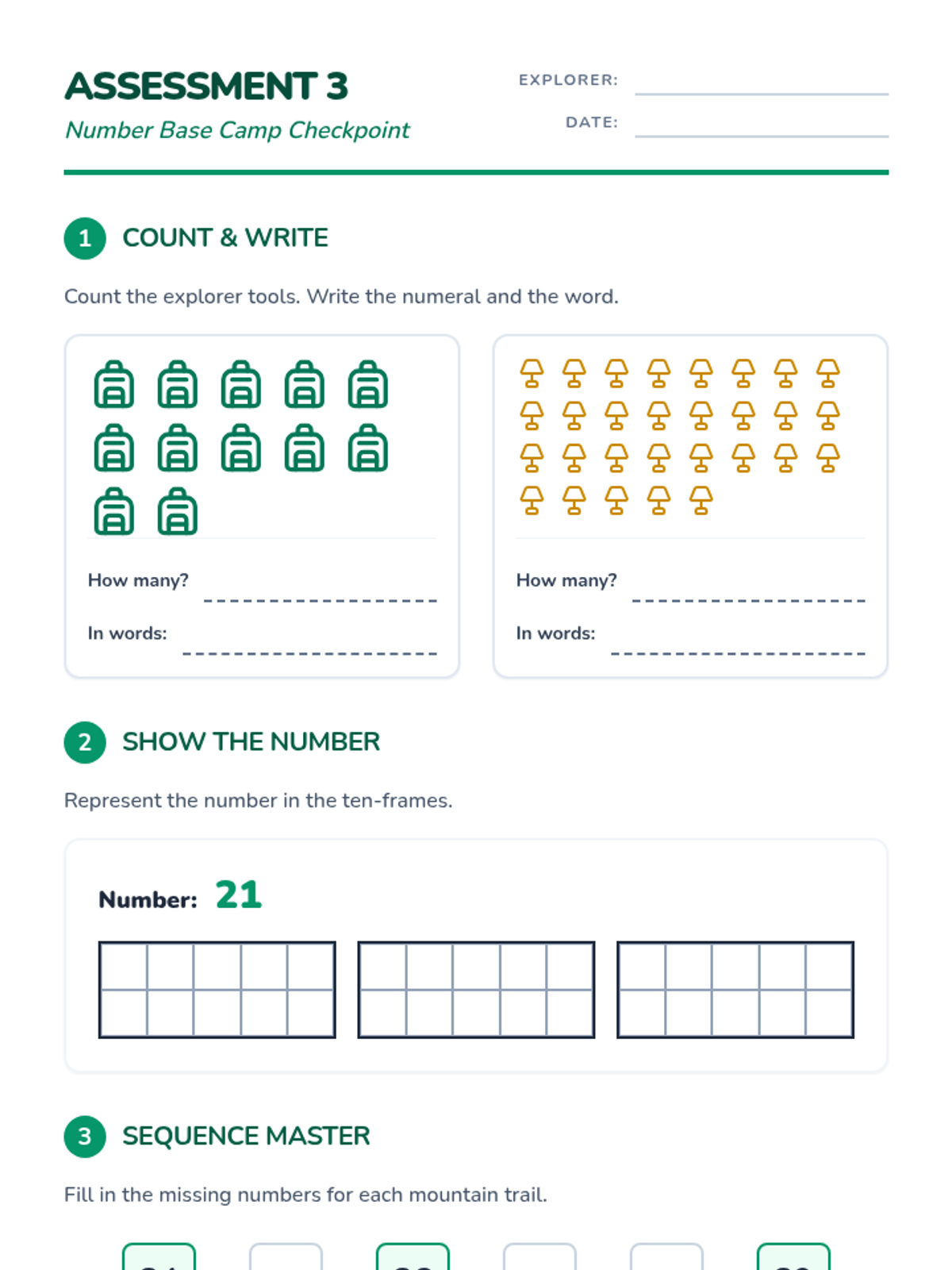
A student assessment for number sense up to 30, titled Assessment 3. It features exercises in counting backpacks and lanterns, representing numbers in ten-frames, completing number sequences, and matching numerals to number words. Revised for improved layout and page breaks.
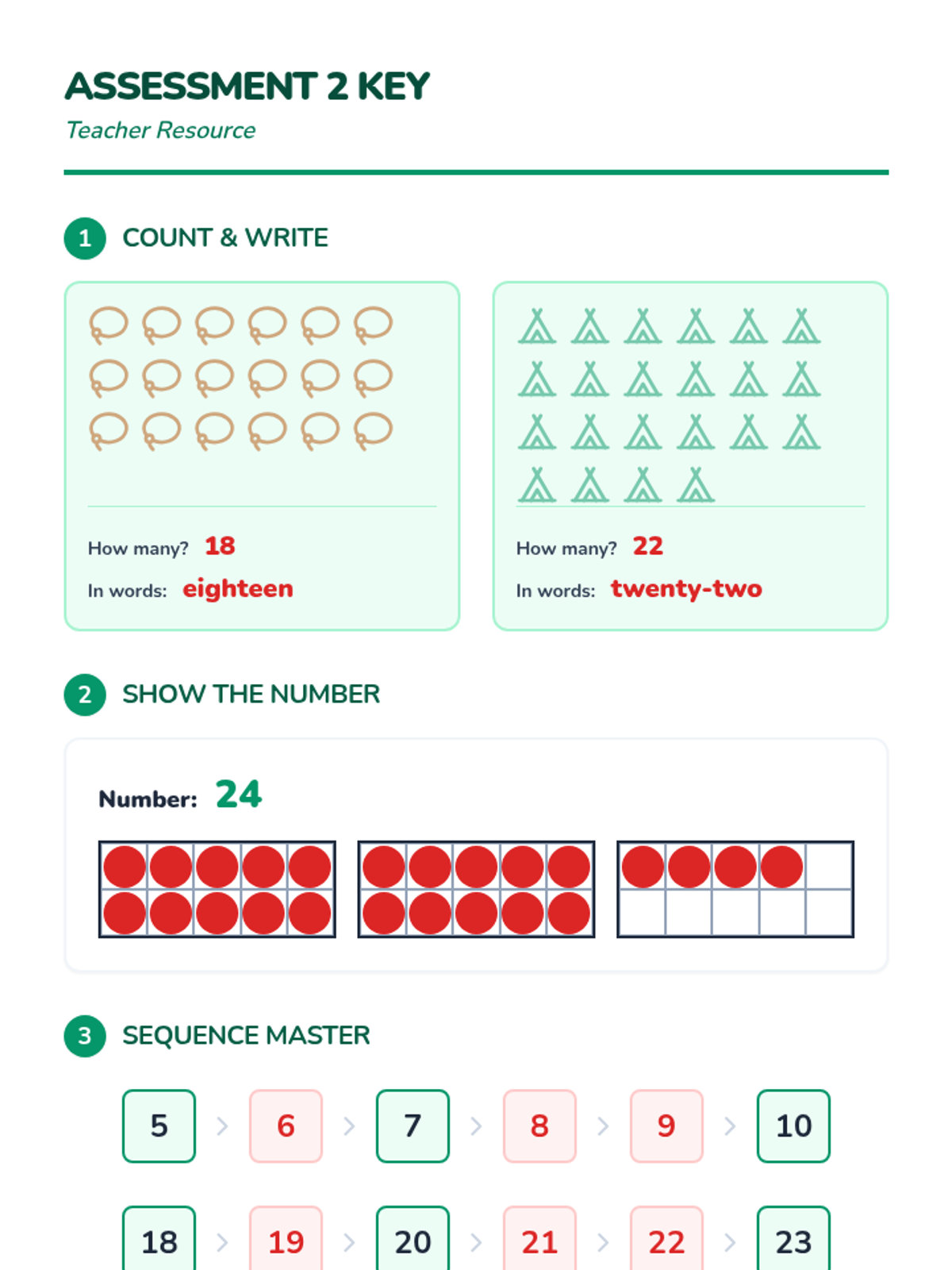
Teacher's answer key for Assessment 2, providing correct answers for counting expedition supplies, representing numbers in ten-frames, sequencing, and matching. Revised for consistency with worksheet layout.
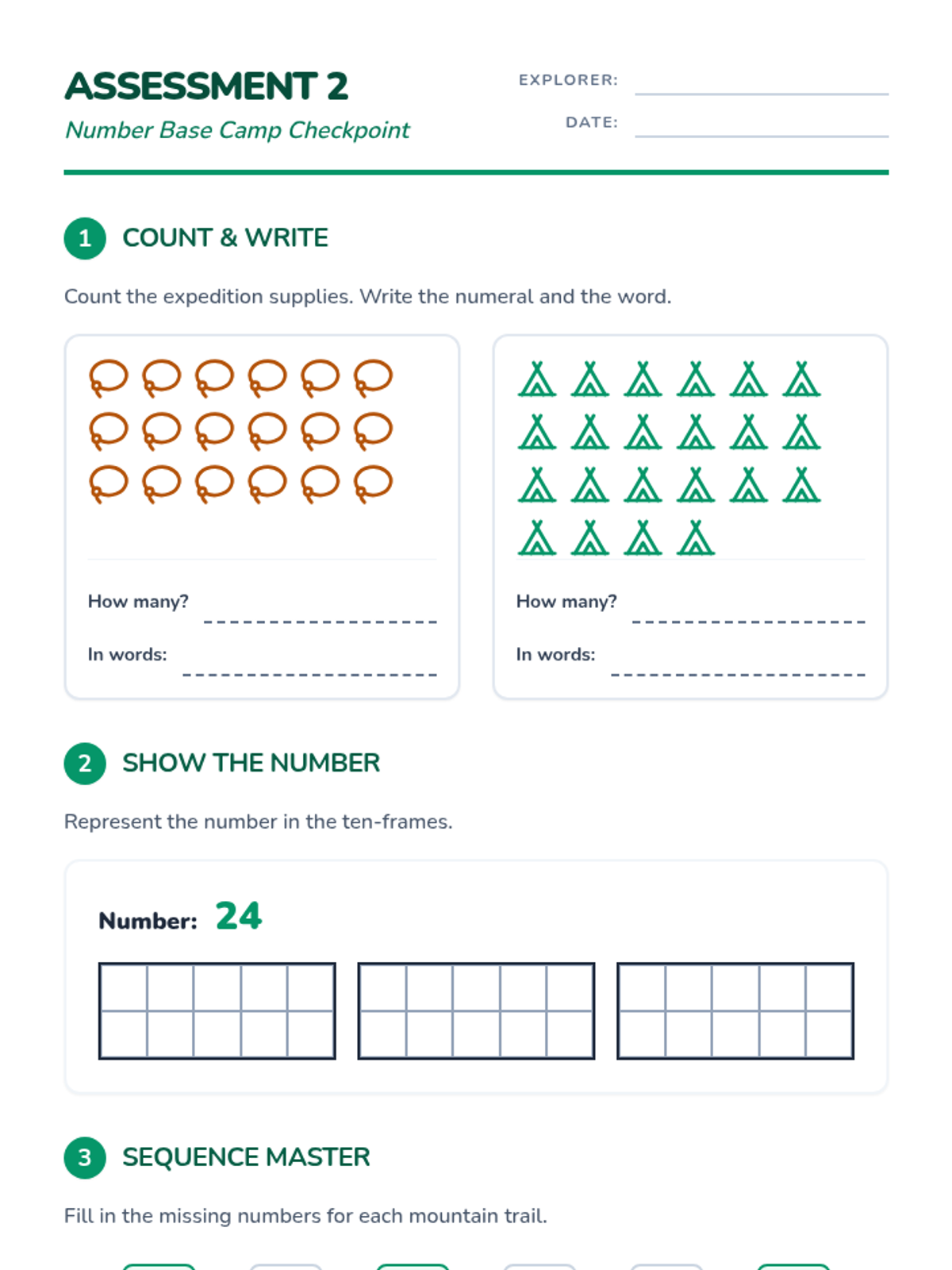
A student assessment for number sense up to 30, titled Assessment 2. It features exercises in counting expedition ropes and tents, representing numbers in ten-frames, completing number sequences, and matching numerals to number words. Revised for improved layout and page breaks.
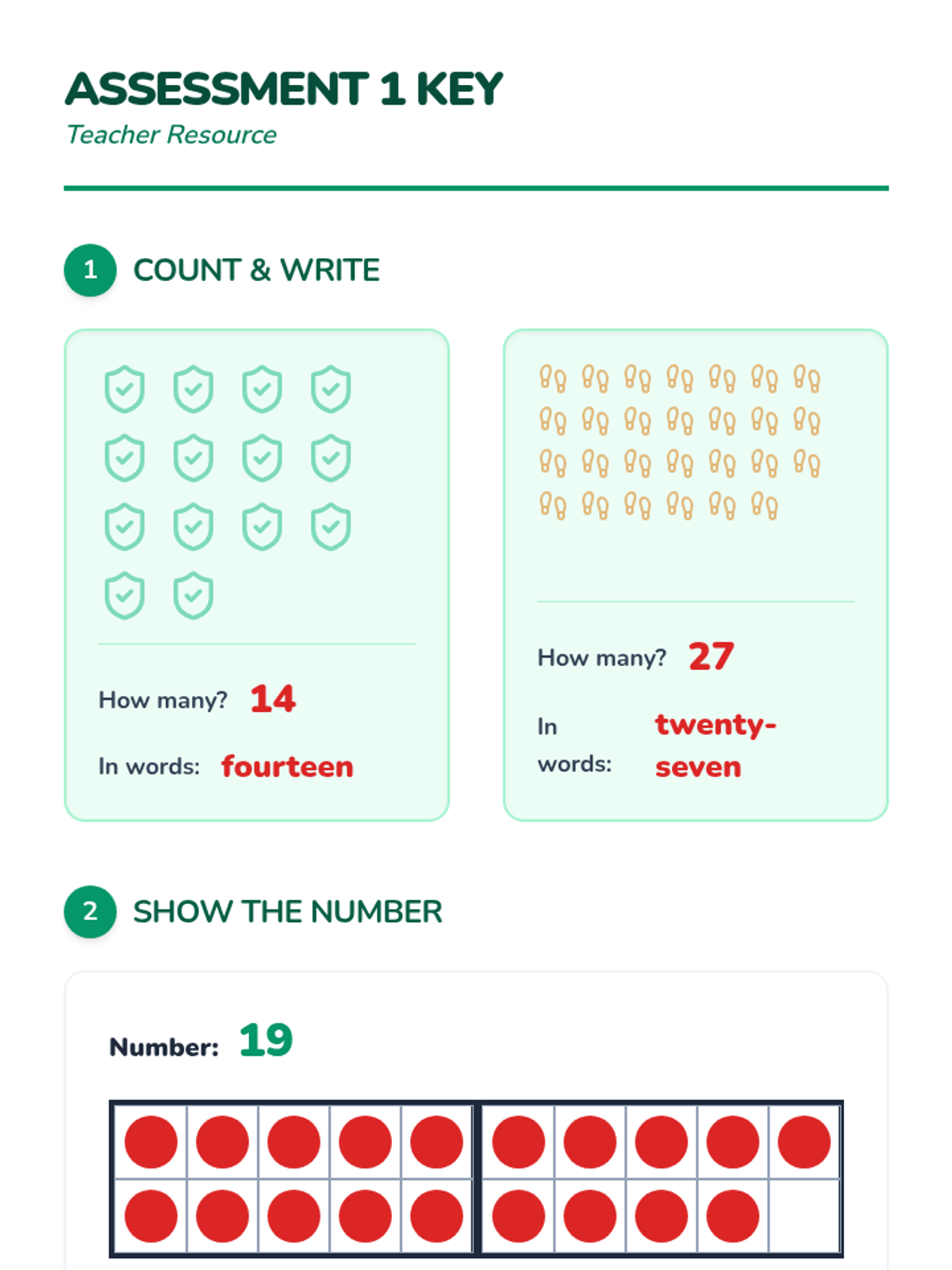
Teacher's answer key for Assessment 1, providing correct answers for counting gear, representing numbers in ten-frames, sequencing, and matching.
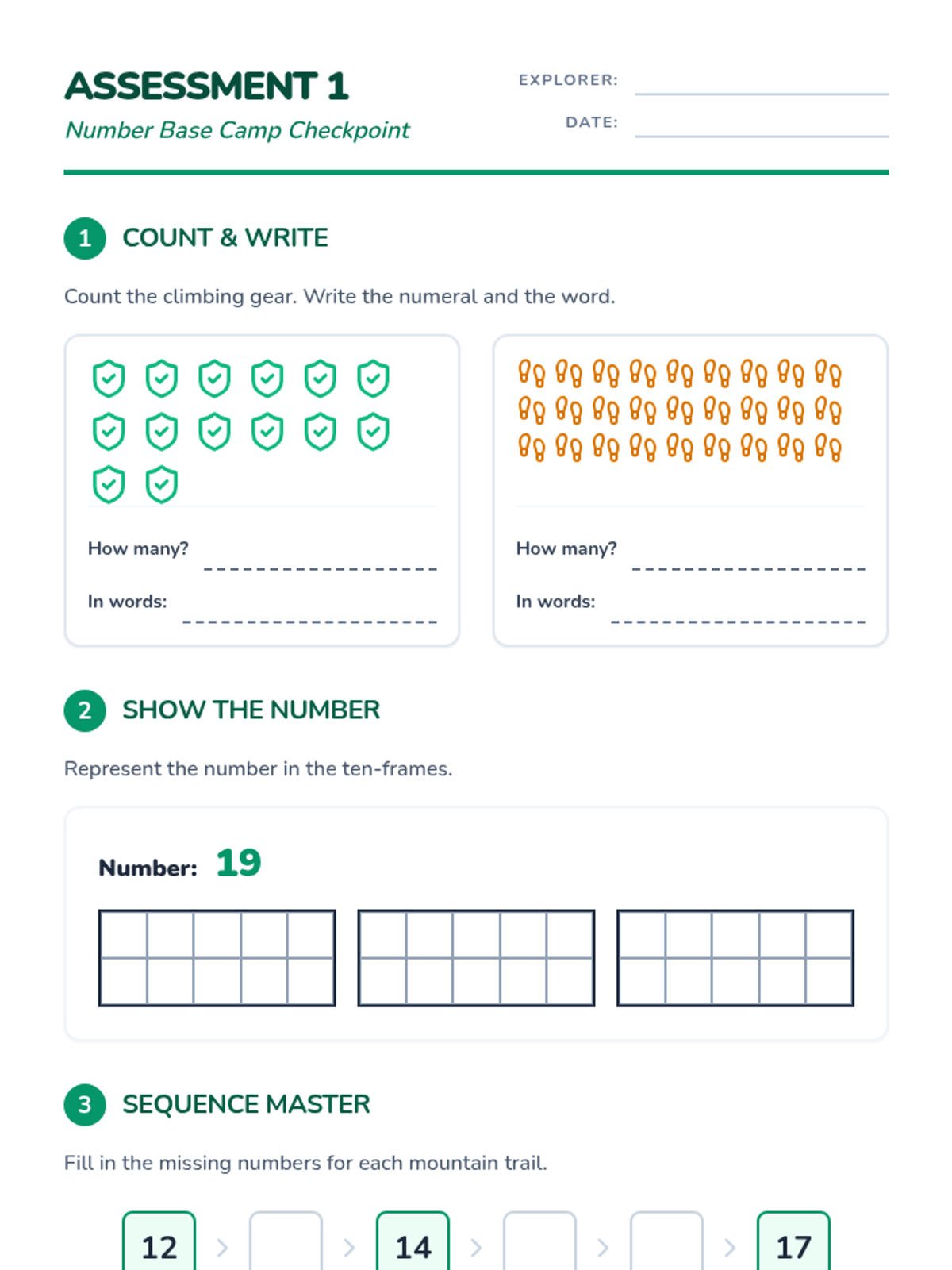
A student assessment for number sense up to 30, titled Assessment 1. It features exercises in counting gear, representing numbers in ten-frames, completing number sequences, and matching numerals to number words. Revised for improved layout and page breaks.
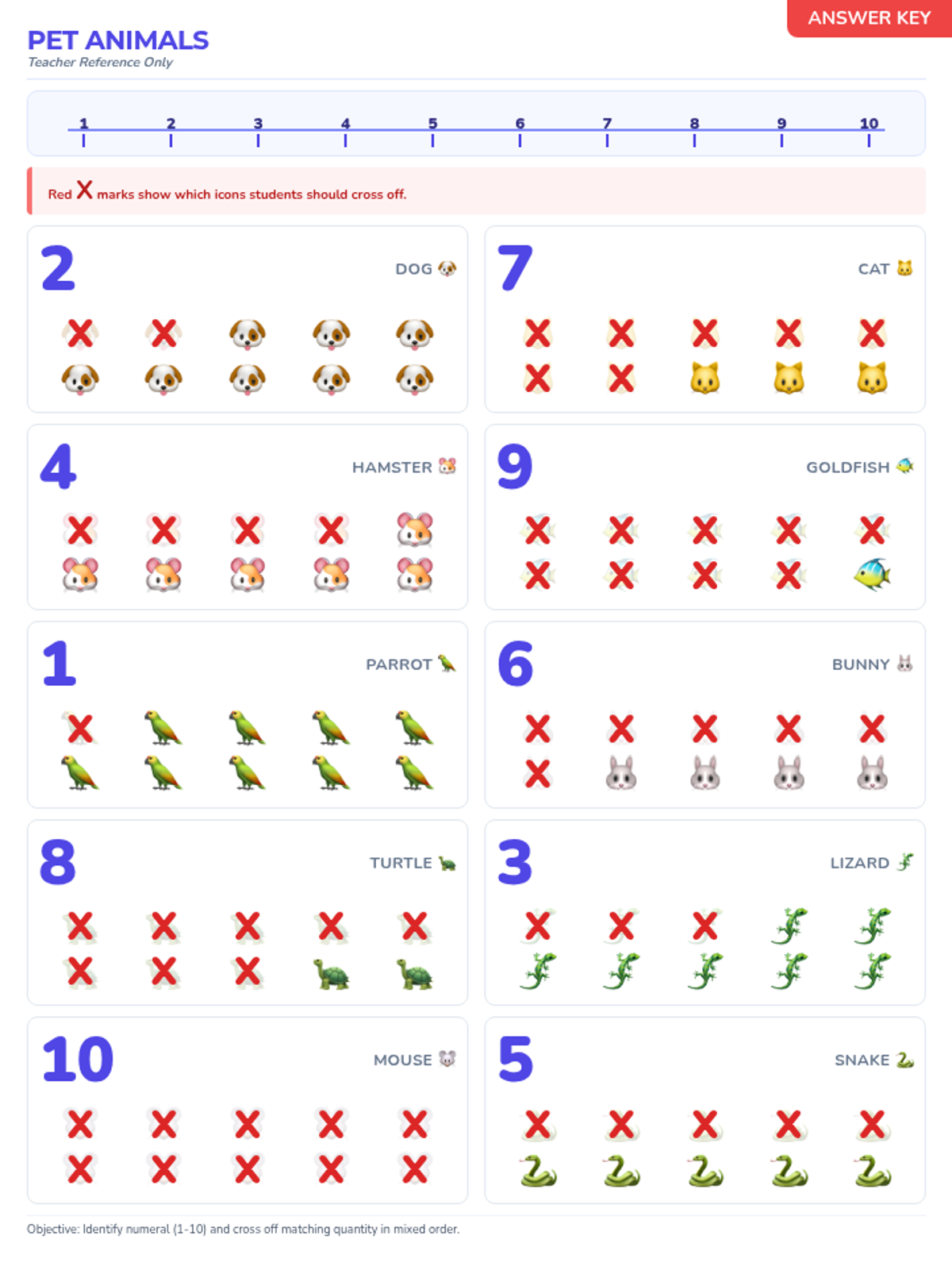
A teacher-facing answer key for the Pets Animals worksheet, showing the correct number of pet friends to be crossed off for each numeral 1-10. High-contrast X markers for clarity.
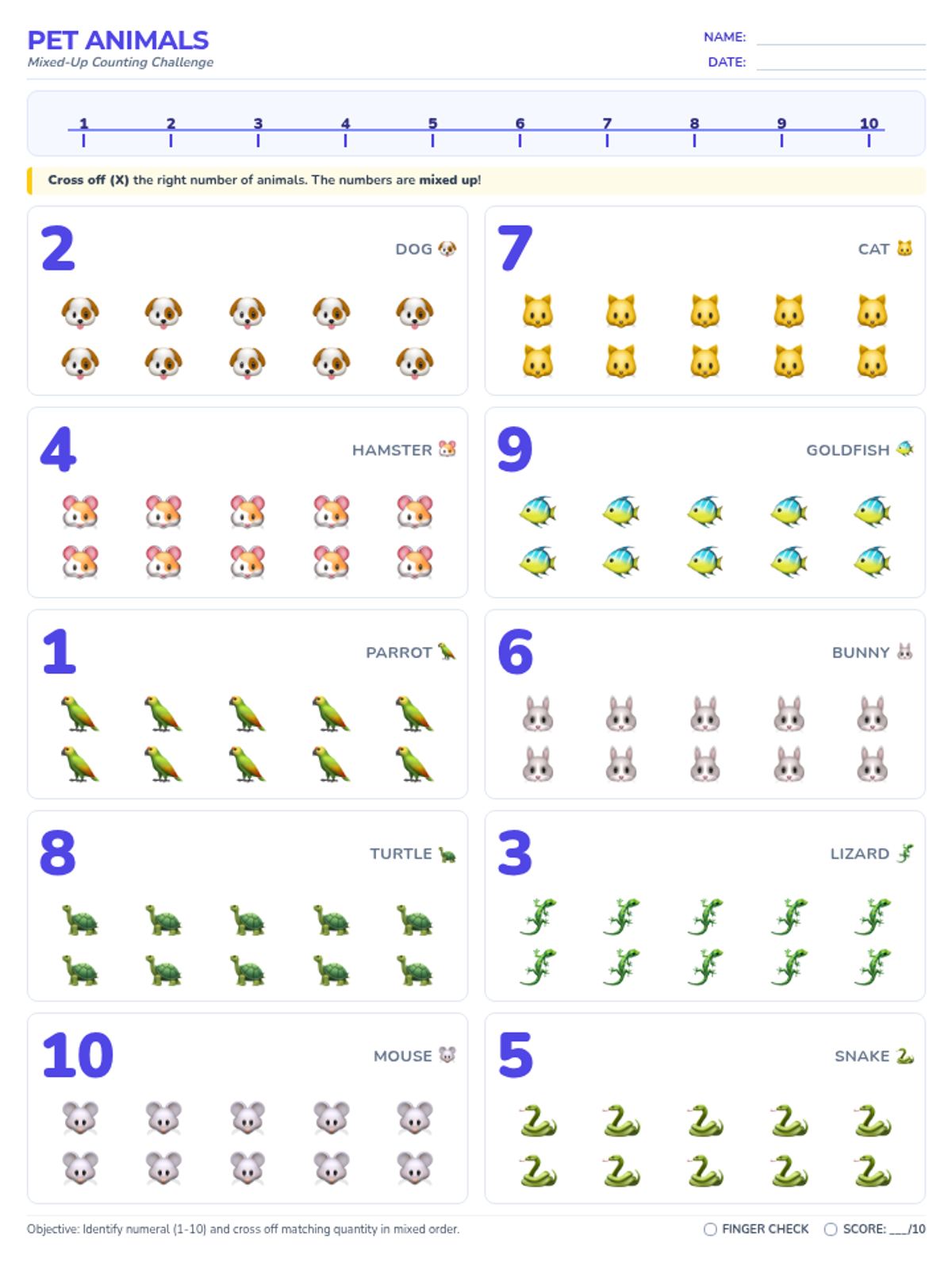
A one-page Pets-themed counting worksheet for numbers 1-10 in randomized order. Features extra-large numerals, 10 common pets in a 2x5 grid, a fixed number line, and an integrated footer.
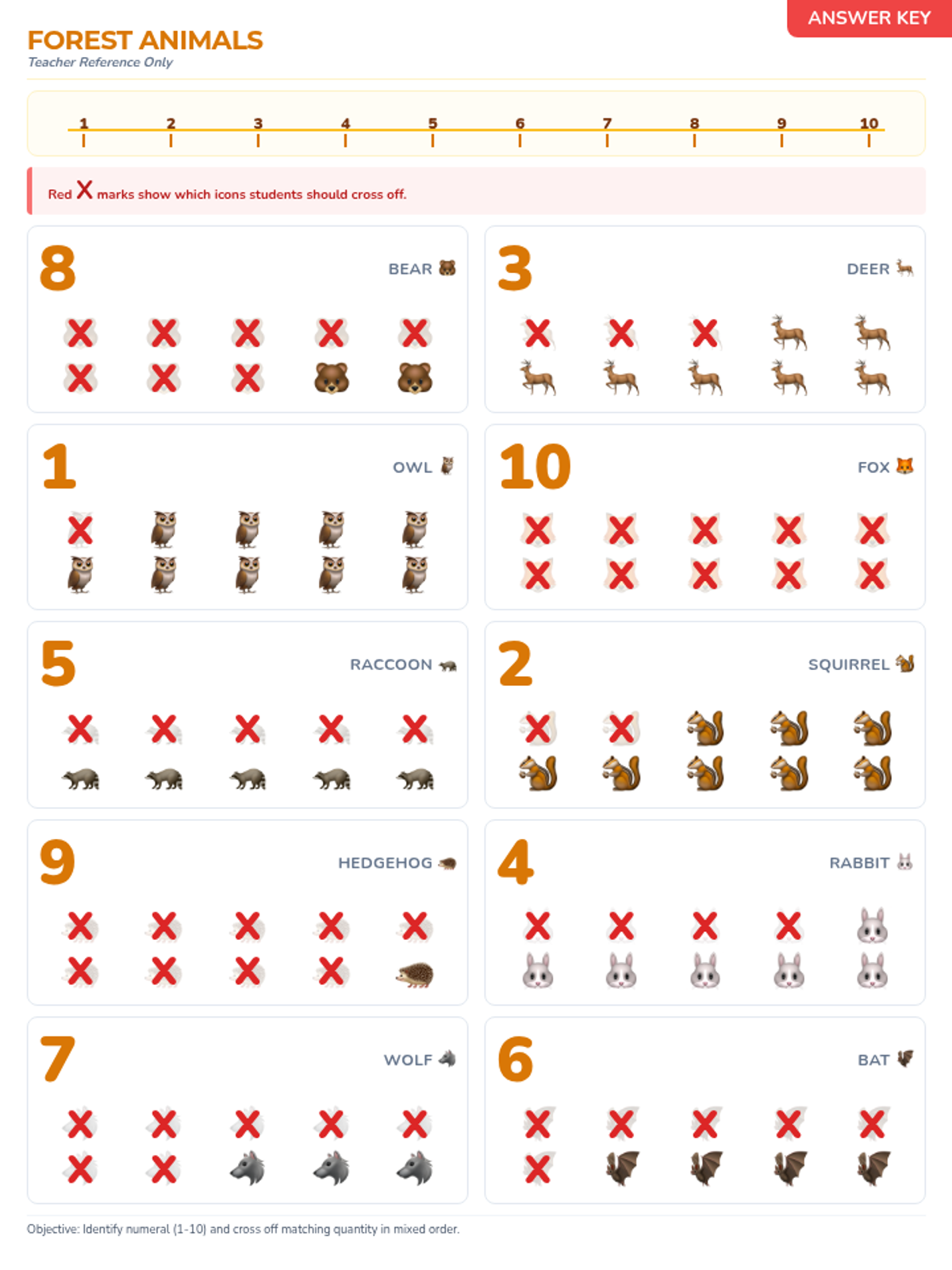
A teacher-facing answer key for the Forest Animals worksheet, showing the correct number of forest friends to be crossed off for each numeral 1-10. High-contrast X markers for clarity.
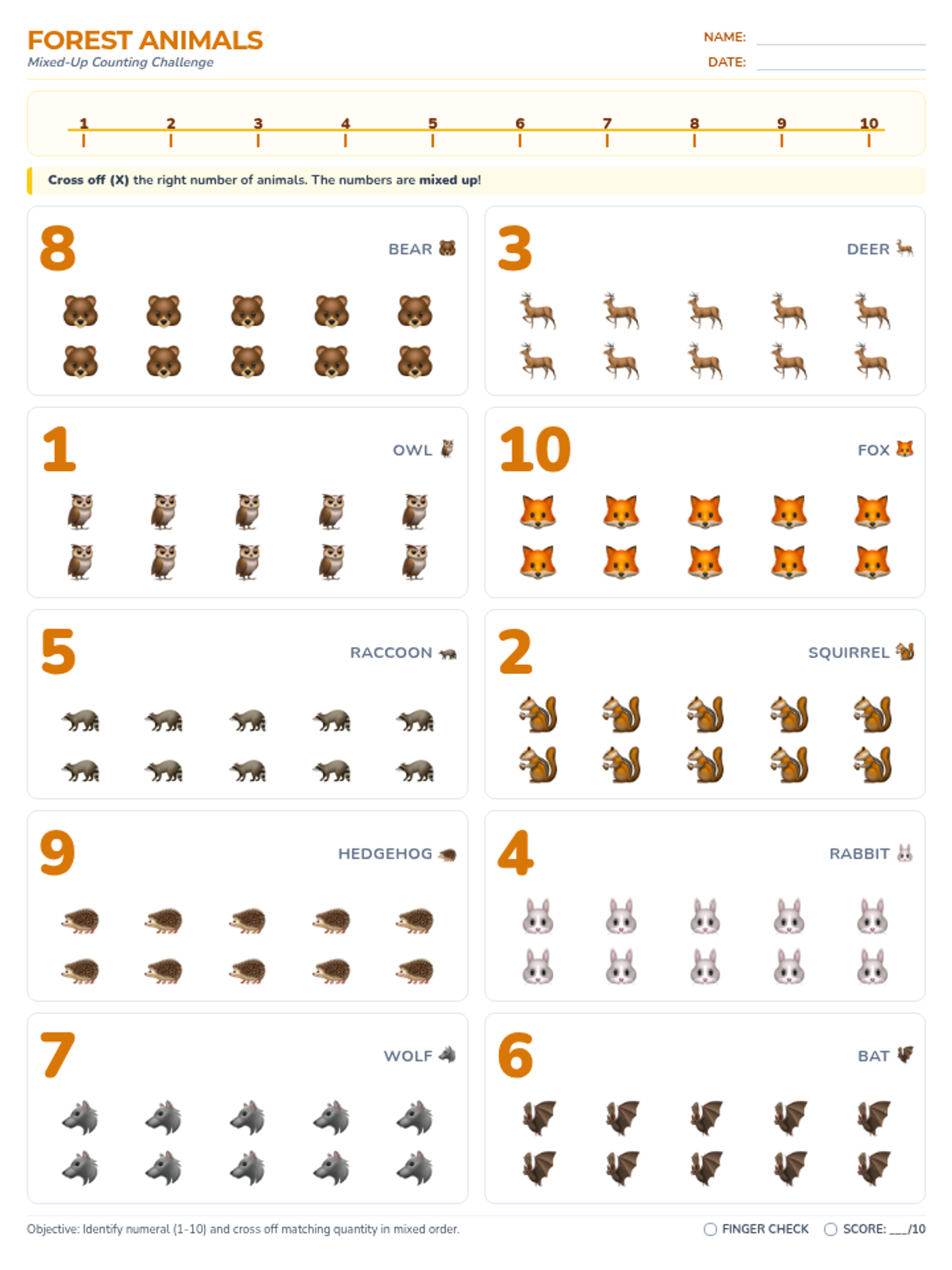
A one-page Forest-themed counting worksheet for numbers 1-10 in randomized order. Features extra-large numerals, 10 forest animals in a 2x5 grid, a fixed number line, and an integrated footer.
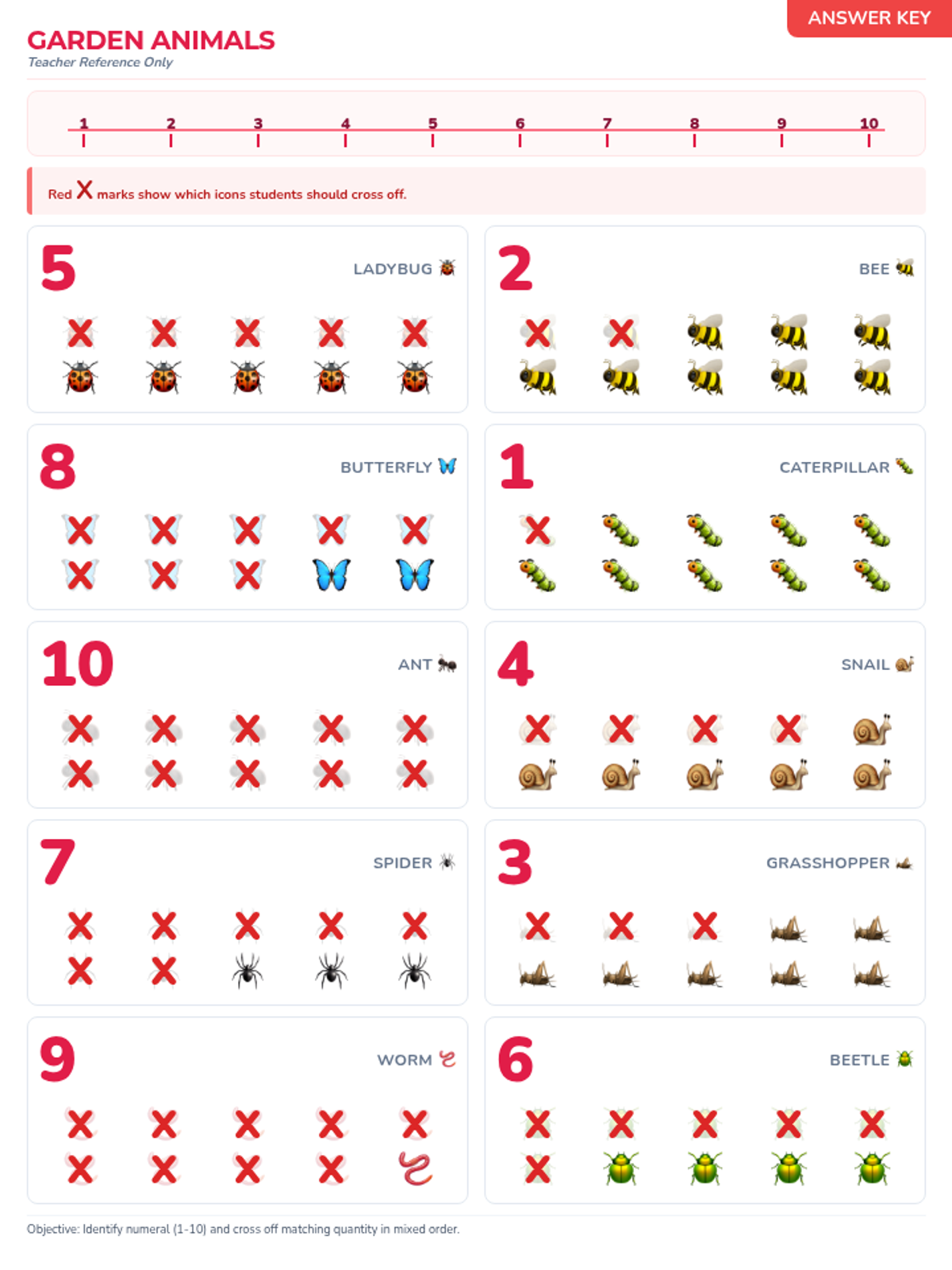
A teacher-facing answer key for the Garden Animals worksheet, showing the correct number of garden friends to be crossed off for each numeral 1-10. High-contrast X markers for clarity.
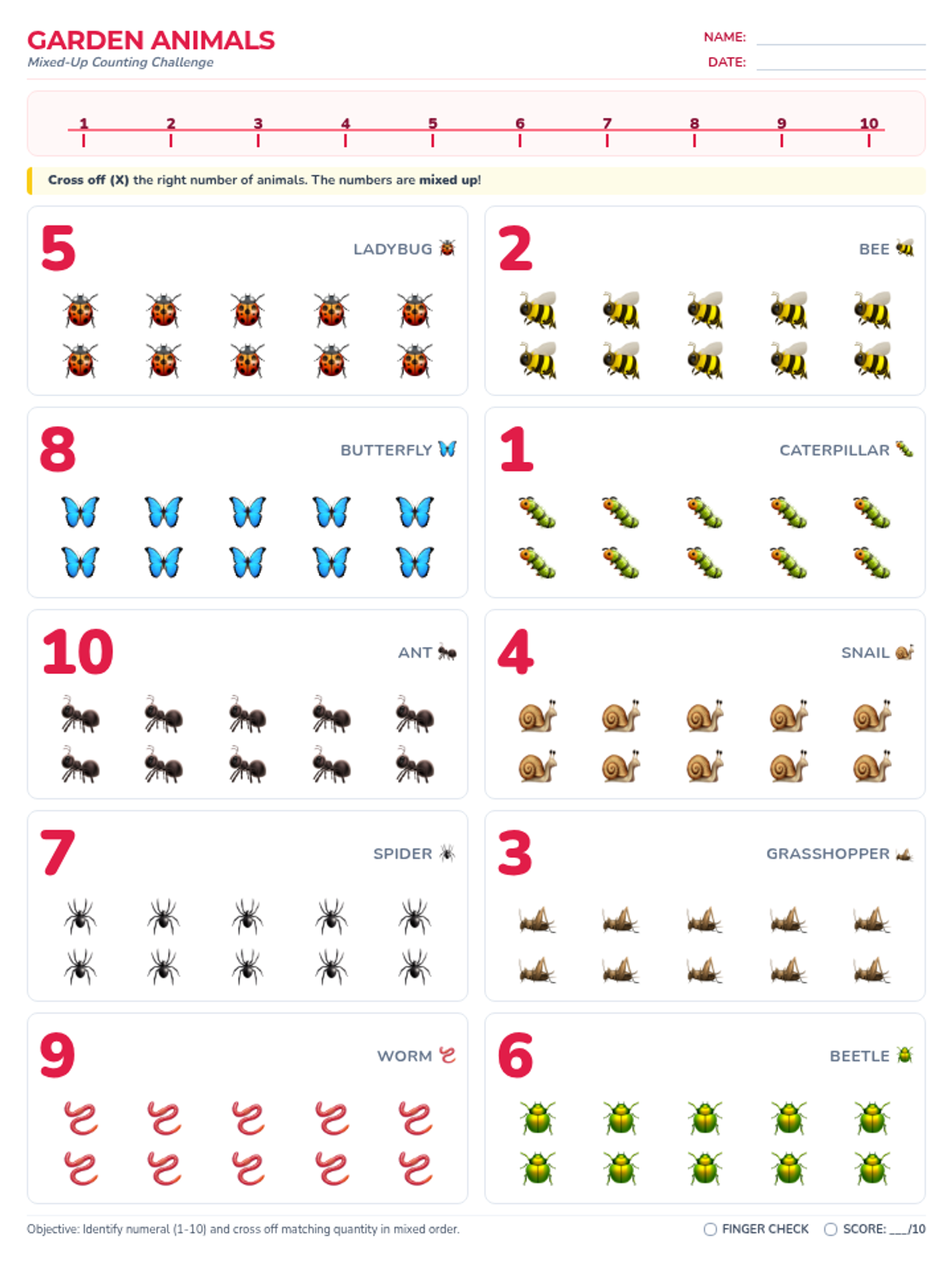
A one-page Garden-themed counting worksheet for numbers 1-10 in randomized order. Features extra-large numerals, 10 garden animals in a 2x5 grid, a fixed number line, and an integrated footer.
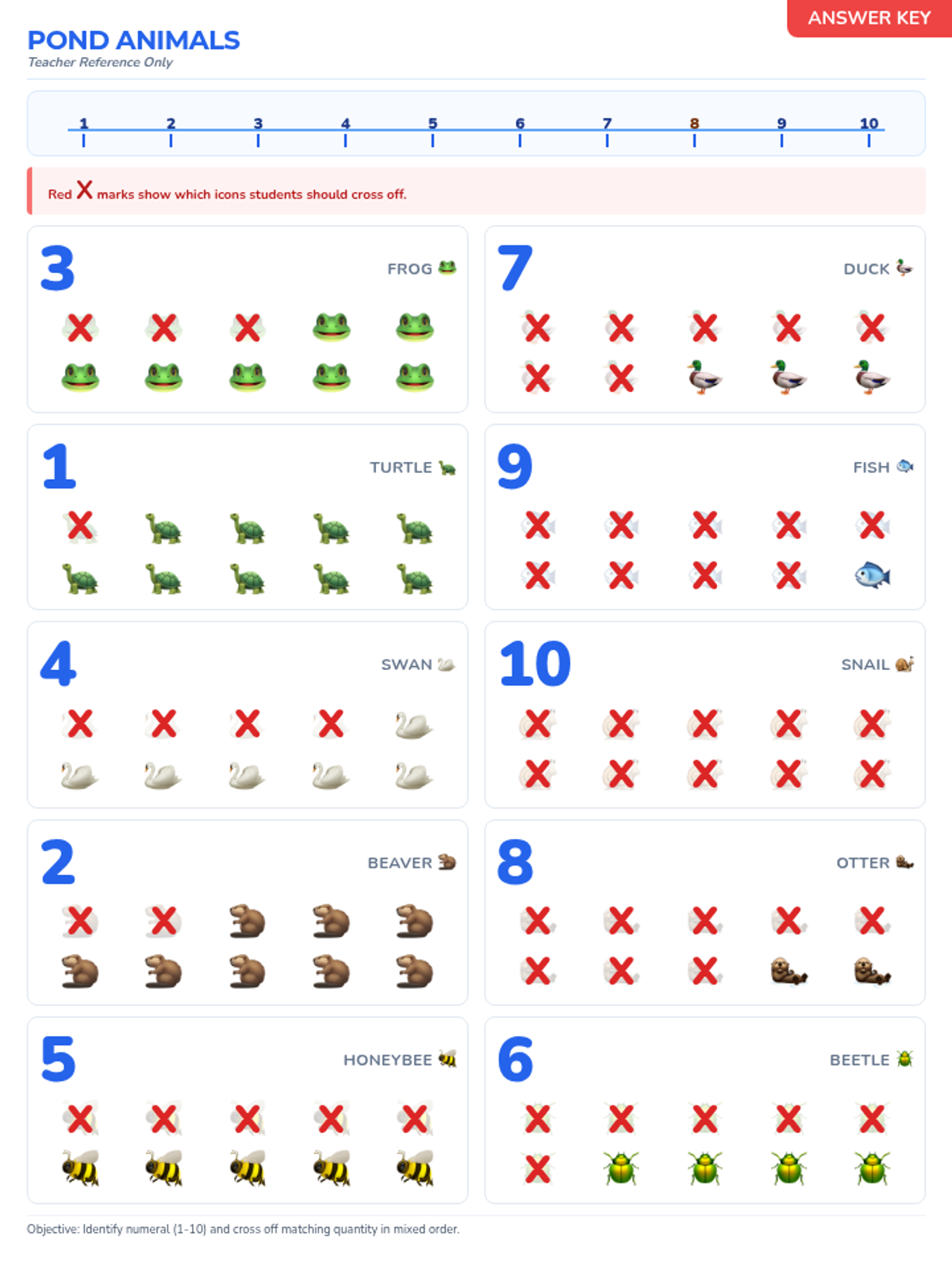
A teacher-facing answer key for the Pond Animals worksheet, showing the correct number of pond friends to be crossed off for each numeral 1-10. High-contrast X markers for clarity.
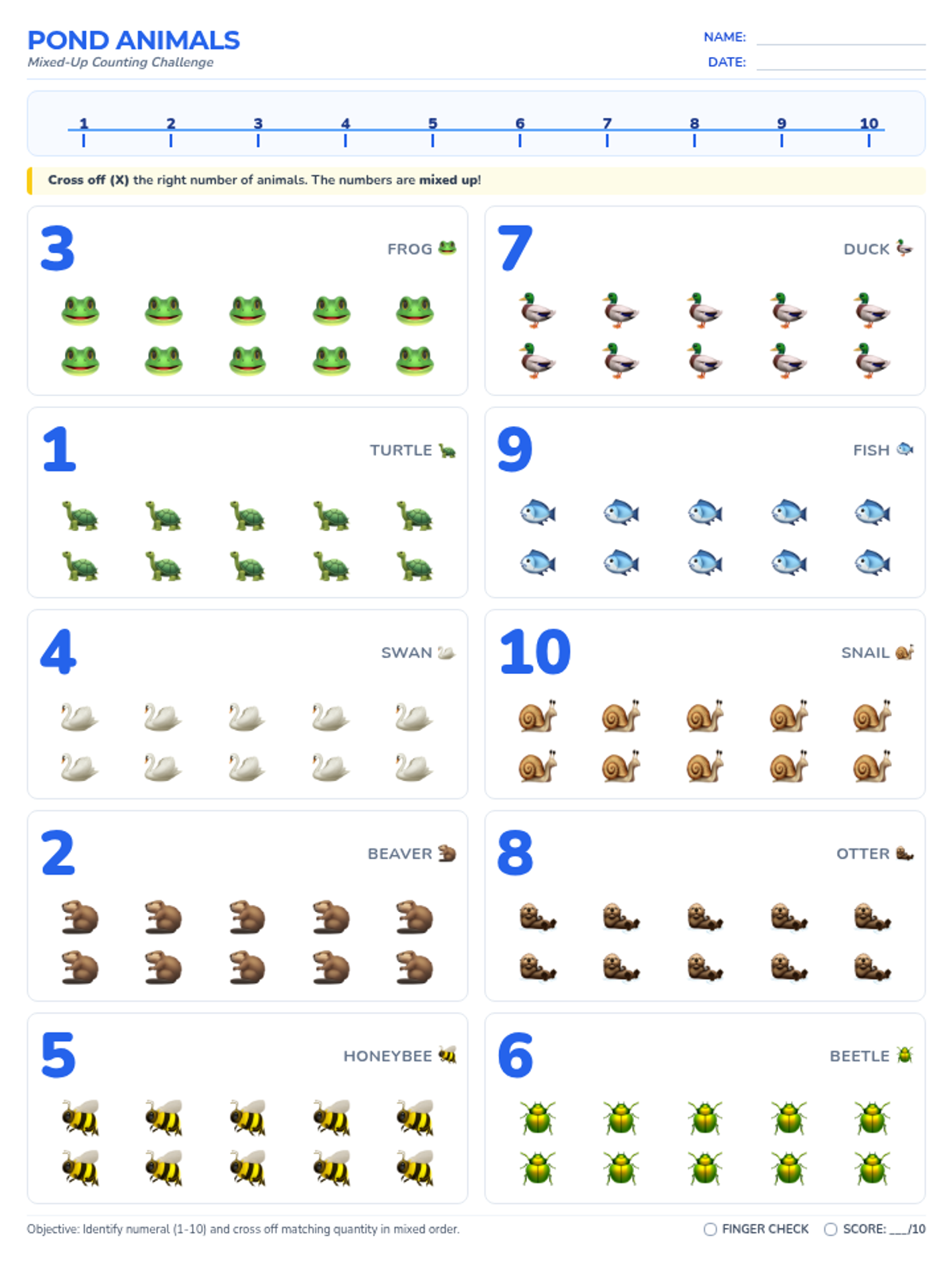
A one-page Pond-themed counting worksheet for numbers 1-10 in randomized order. Features extra-large numerals, 10 pond animals in a 2x5 grid with increased spacing for marking, a fixed number line, and an integrated footer.
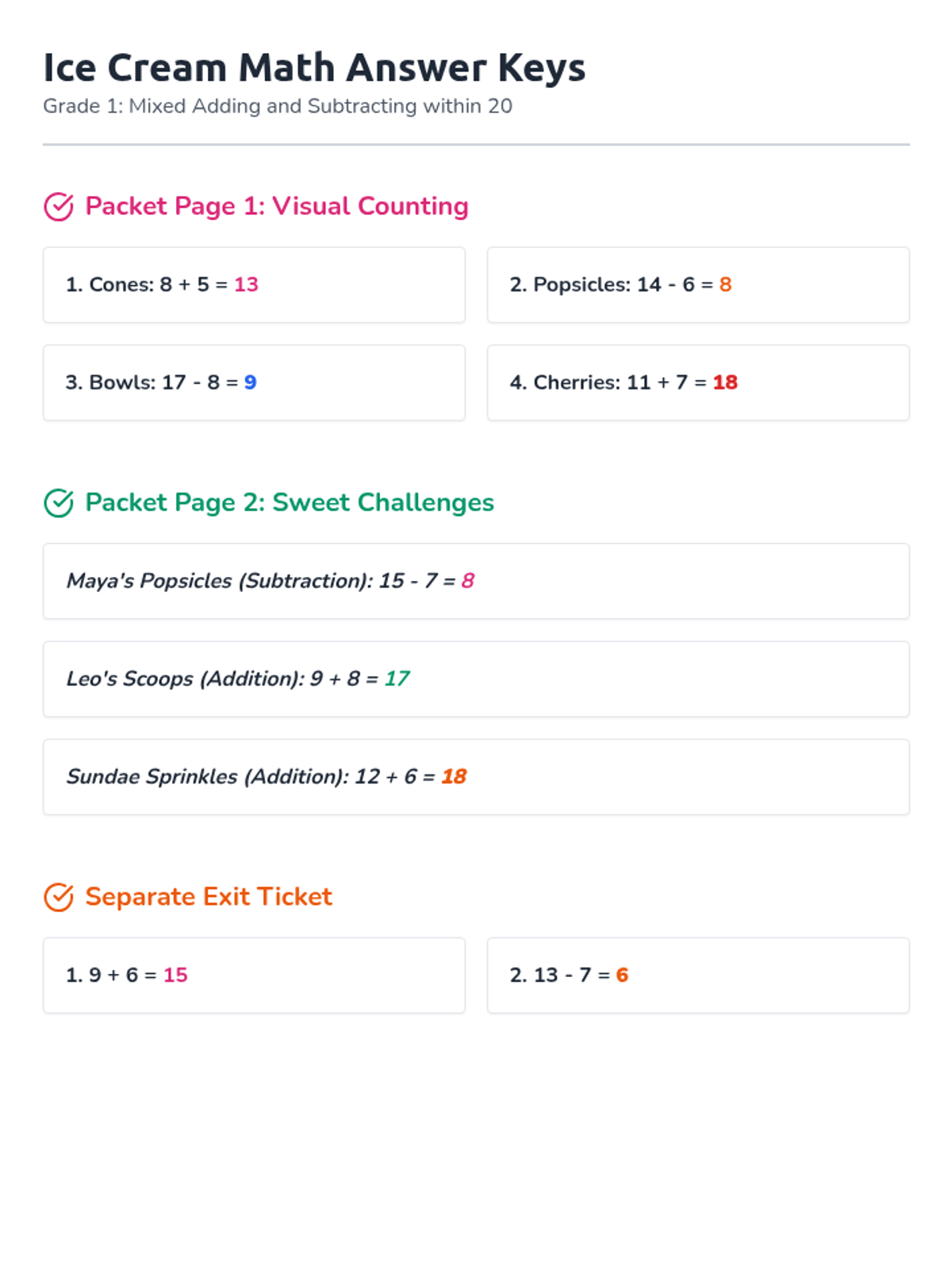
A comprehensive answer key covering the 2-page ice cream-themed packet and the separate scoop-themed exit ticket. All backgrounds removed for print-friendliness.
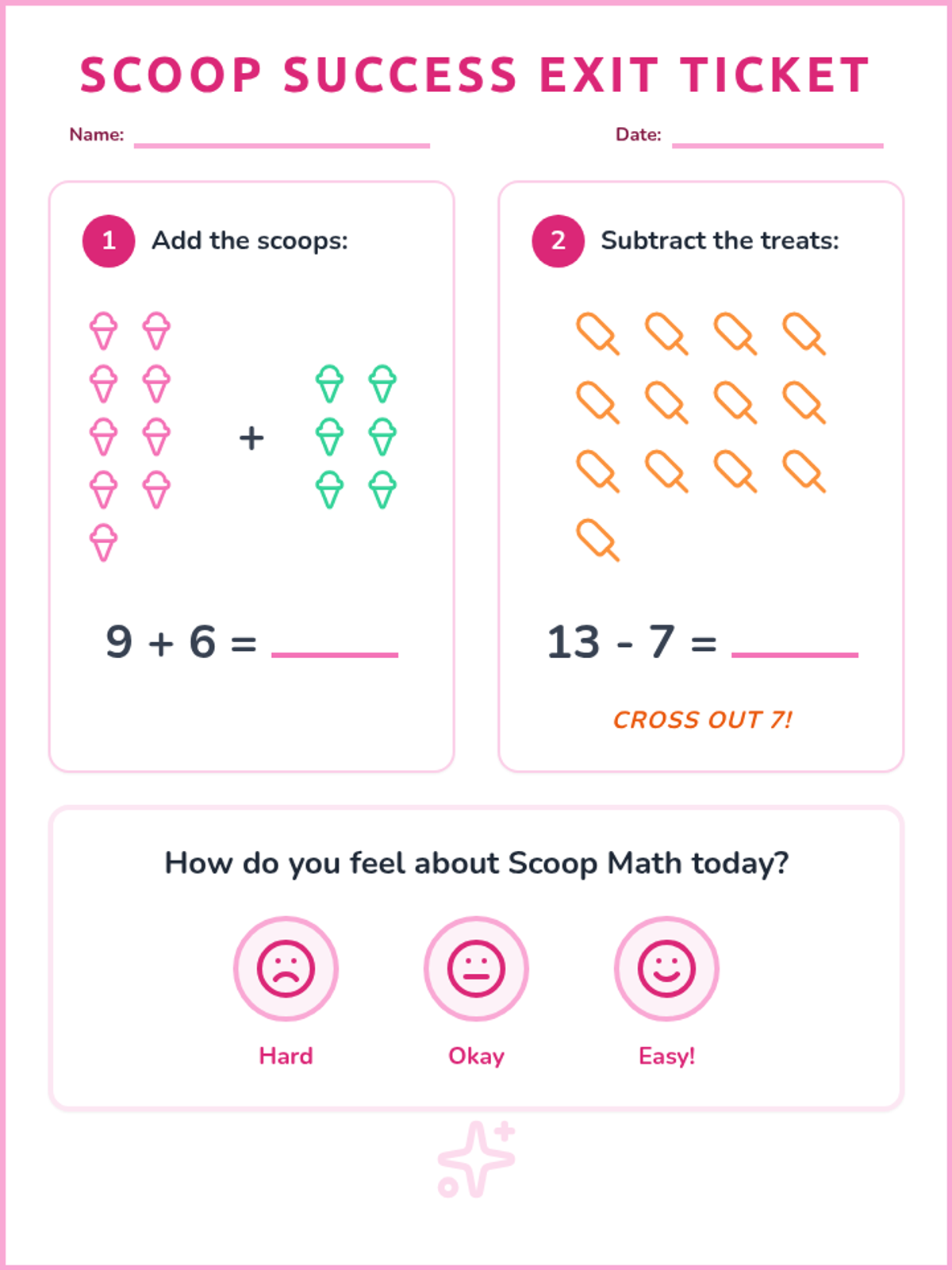
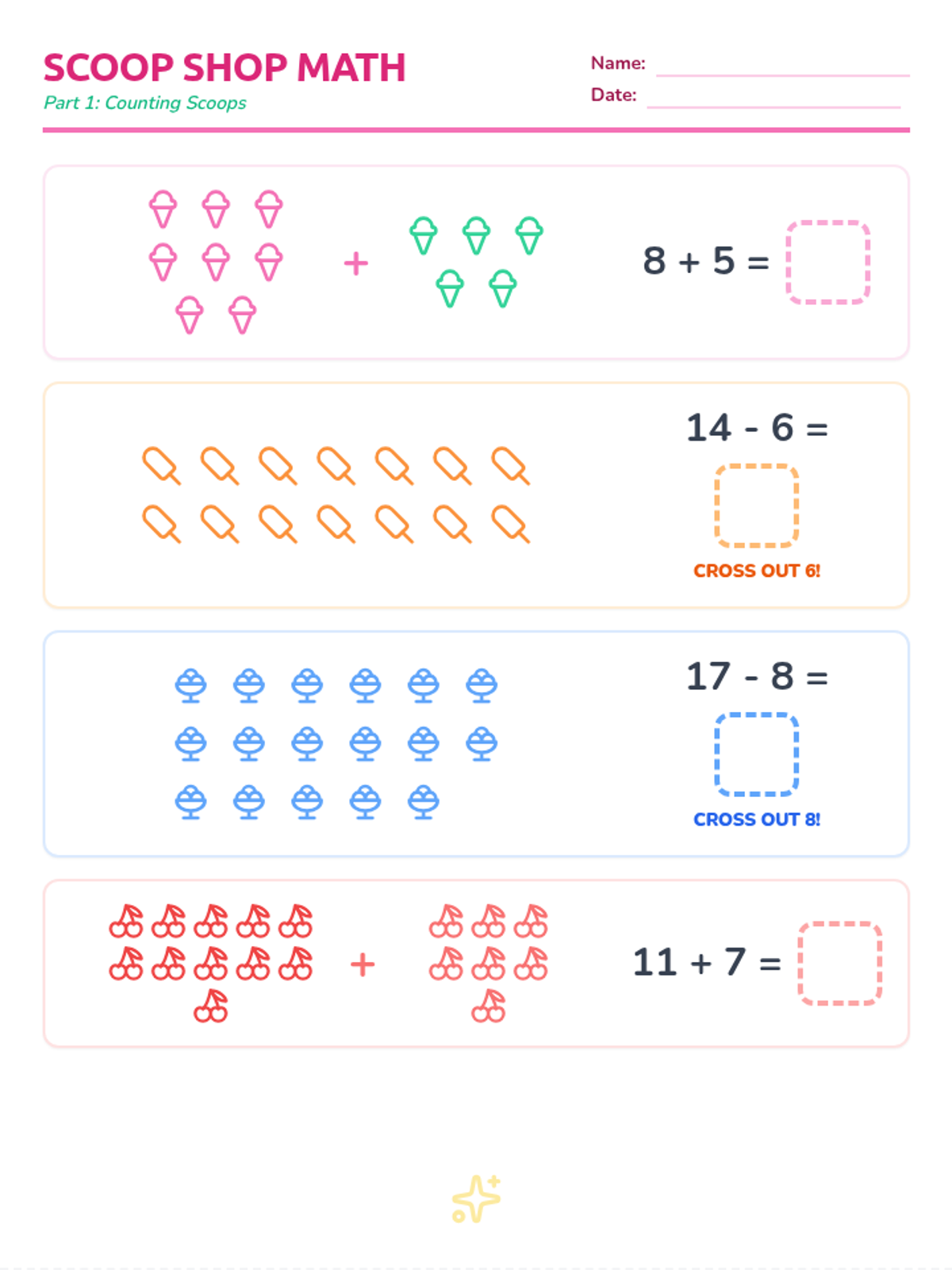
A separate, concise ice cream-themed exit ticket for a math lesson on addition and subtraction within 20. Includes two visual problems and a self-reflection section for students. All backgrounds removed for print-friendliness.
A 2-page ice cream-themed math packet for first graders focusing on mixed addition and subtraction within 20. Features visual counting with scoops and popsicles, plus story problems with dedicated drawing and equation areas. All backgrounds removed for print-friendliness.
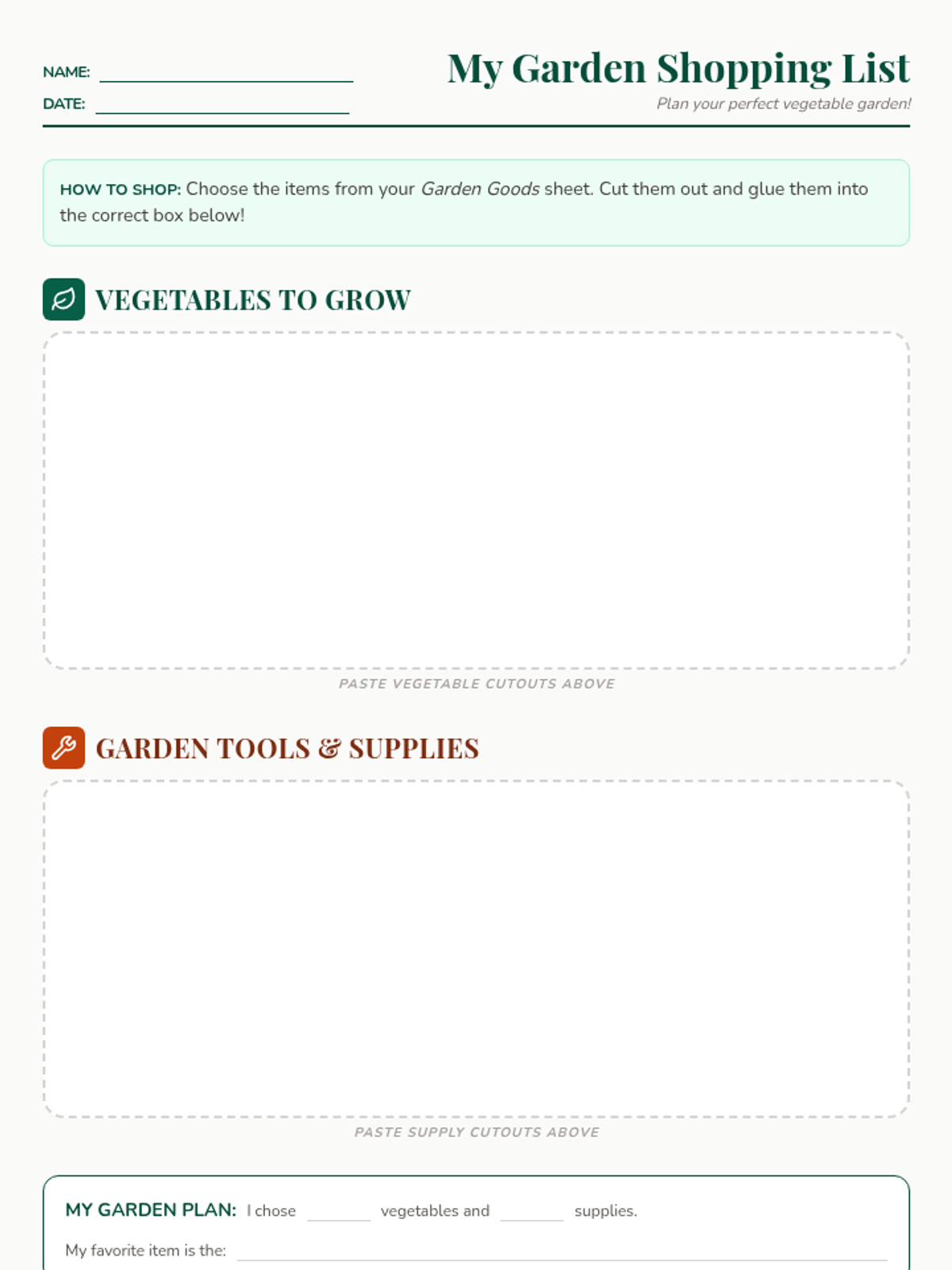
A shopping list organizer where students paste their chosen garden items.
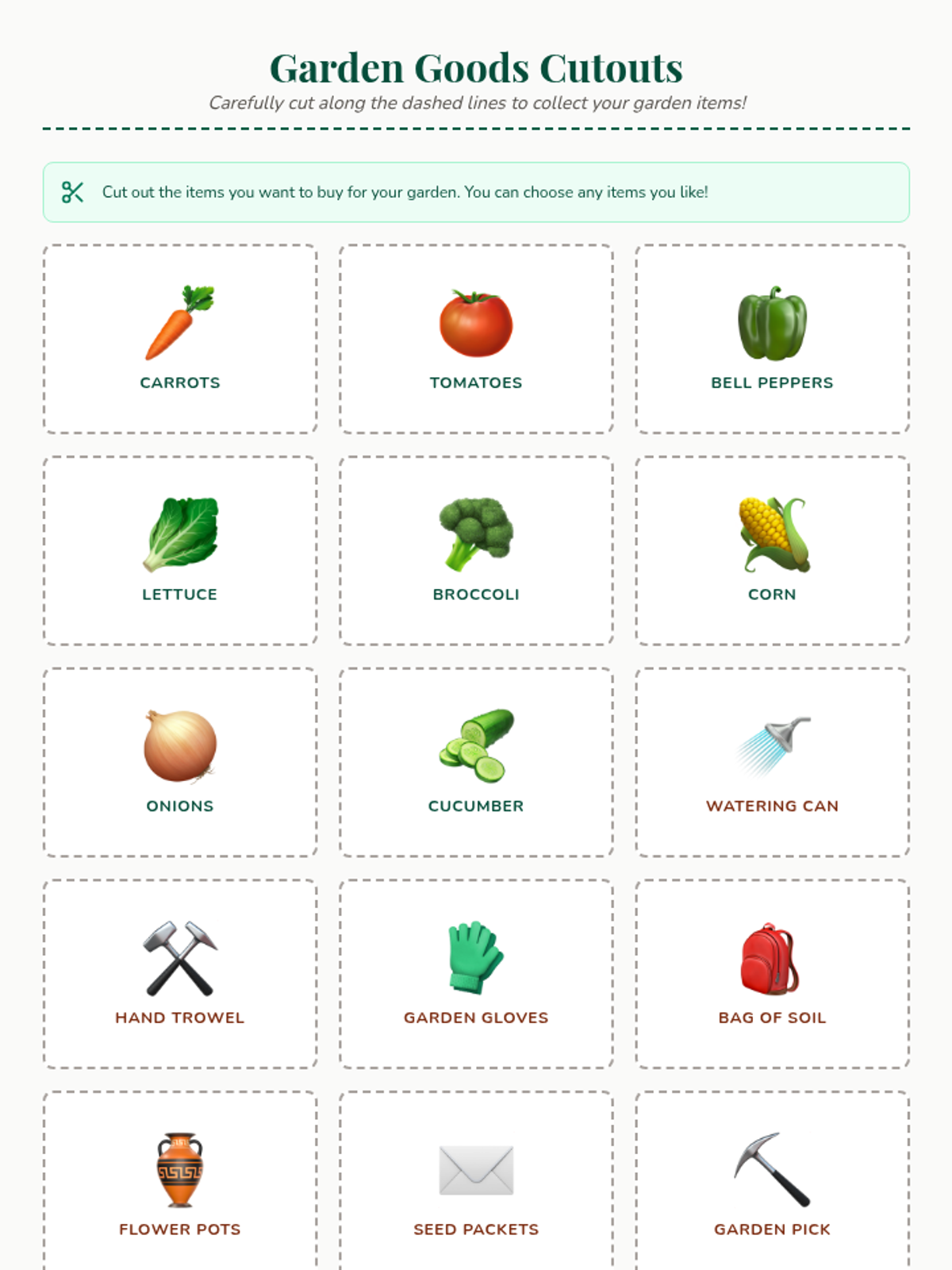
A sheet of vegetables and garden supplies for students to cut out and use for their shopping list activity.
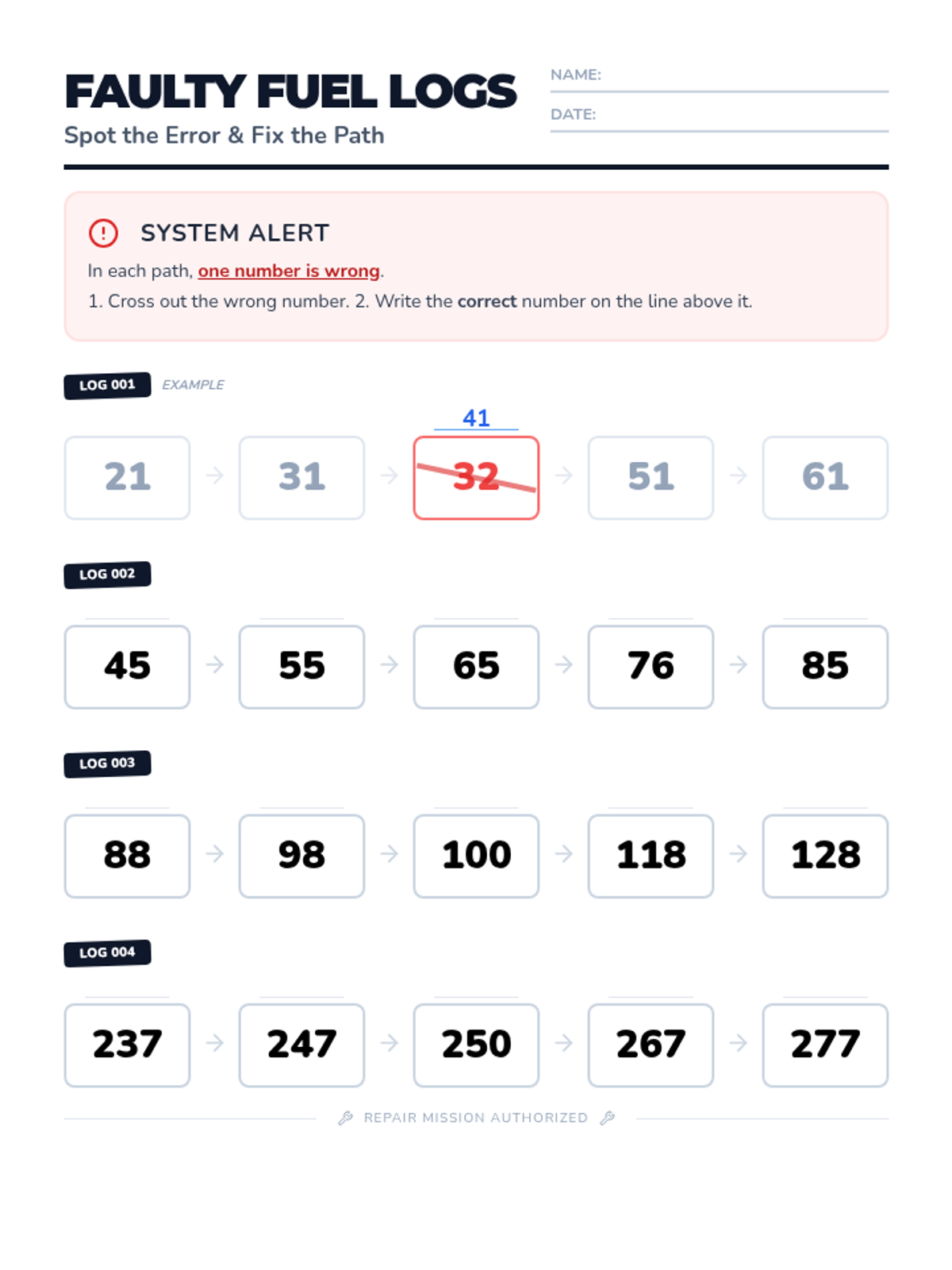
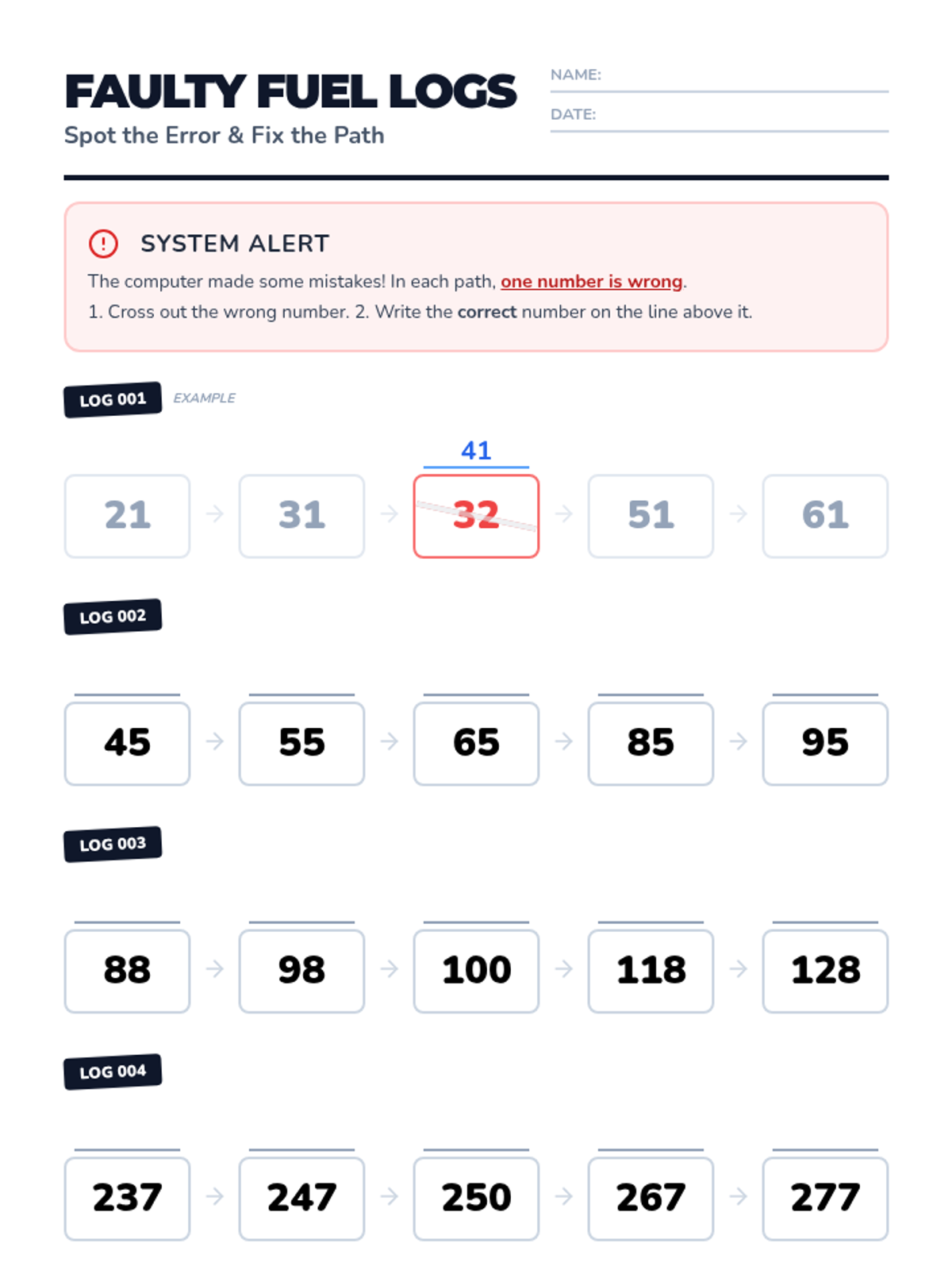
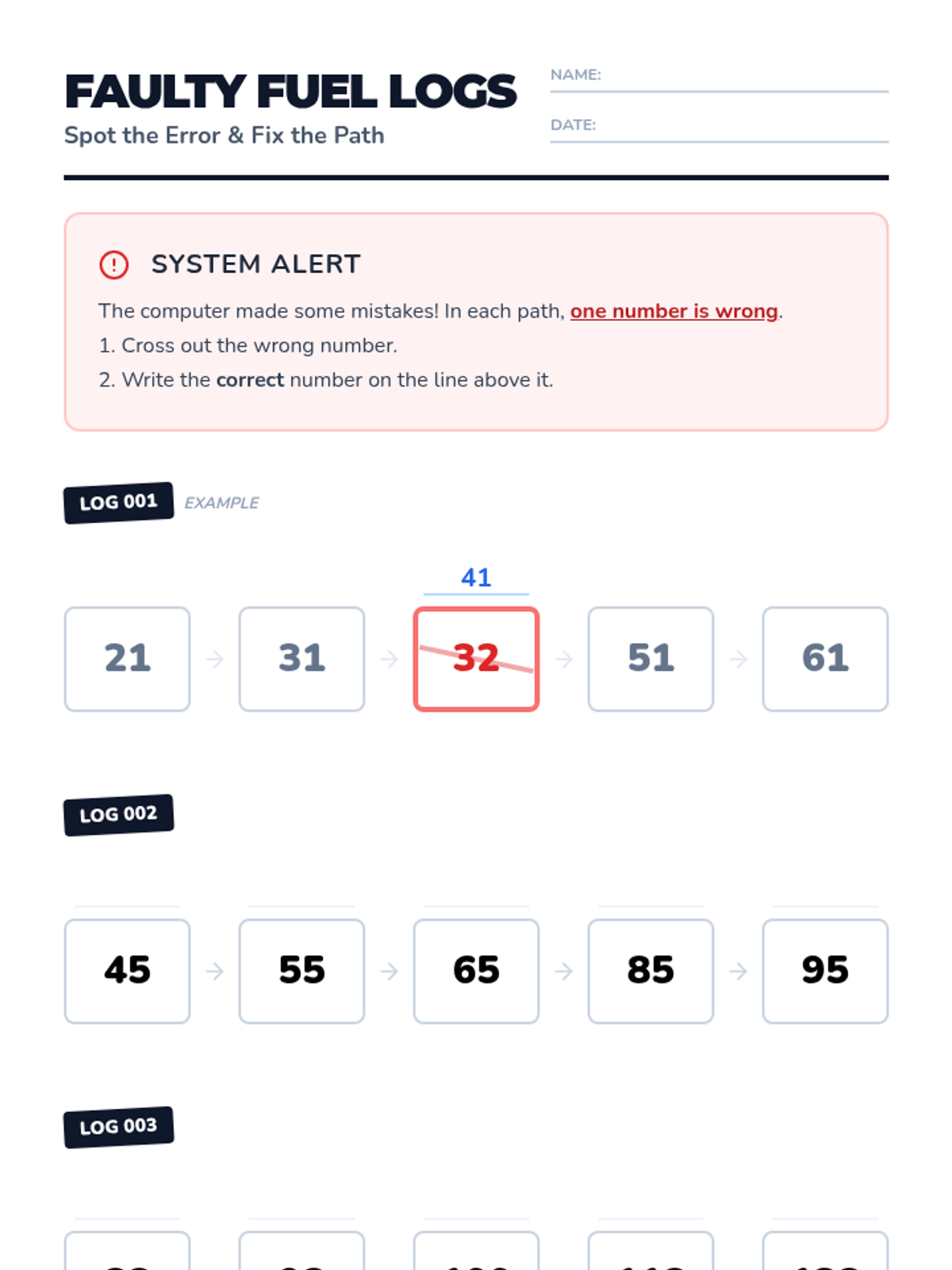
An error-analysis worksheet where students must identify and correct the incorrect number in a skip-counting sequence, targeting the consistency of the ones digit. Revised for footer fit and better correction space with designated lines. All problems fit on one page.
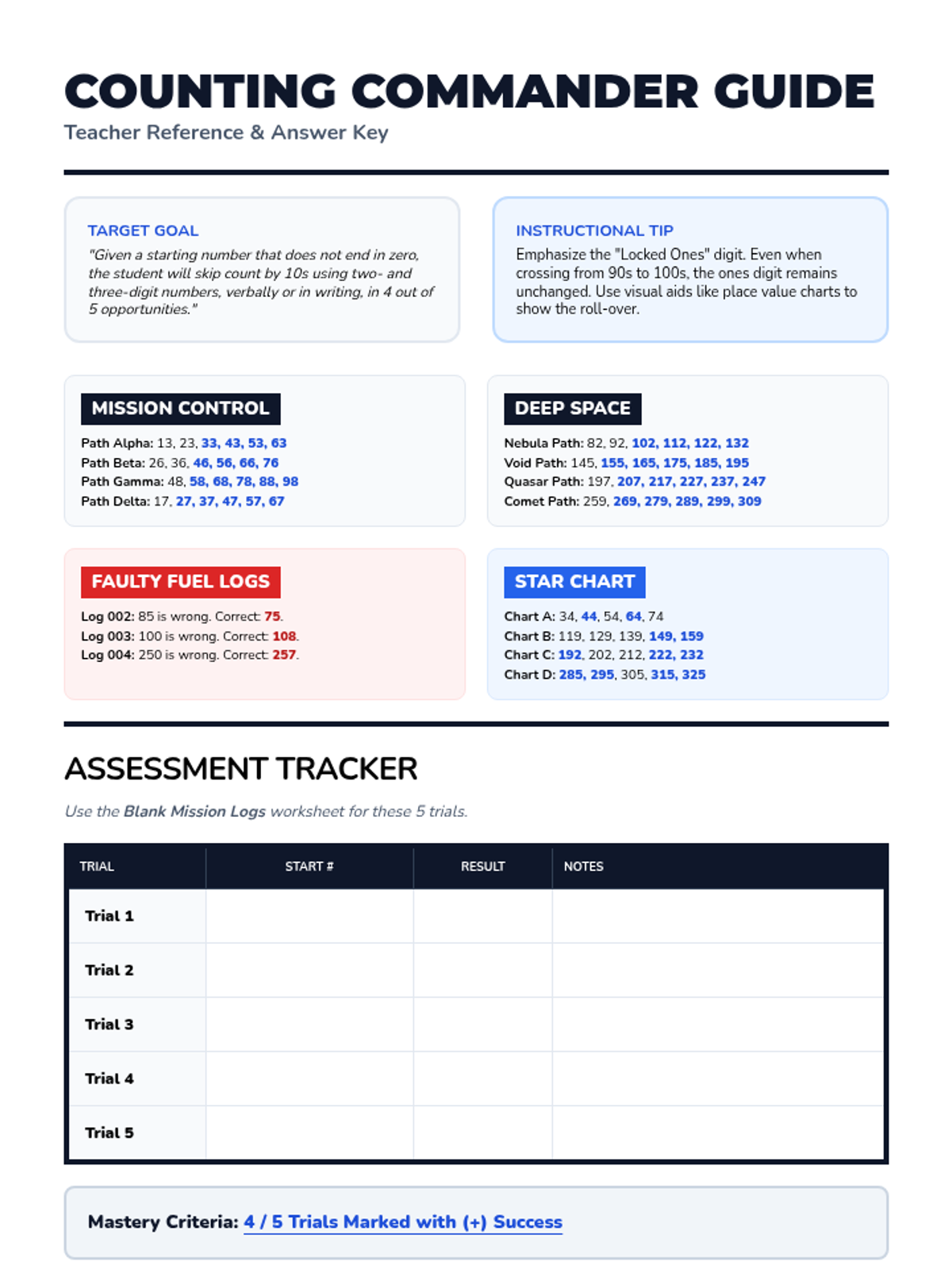
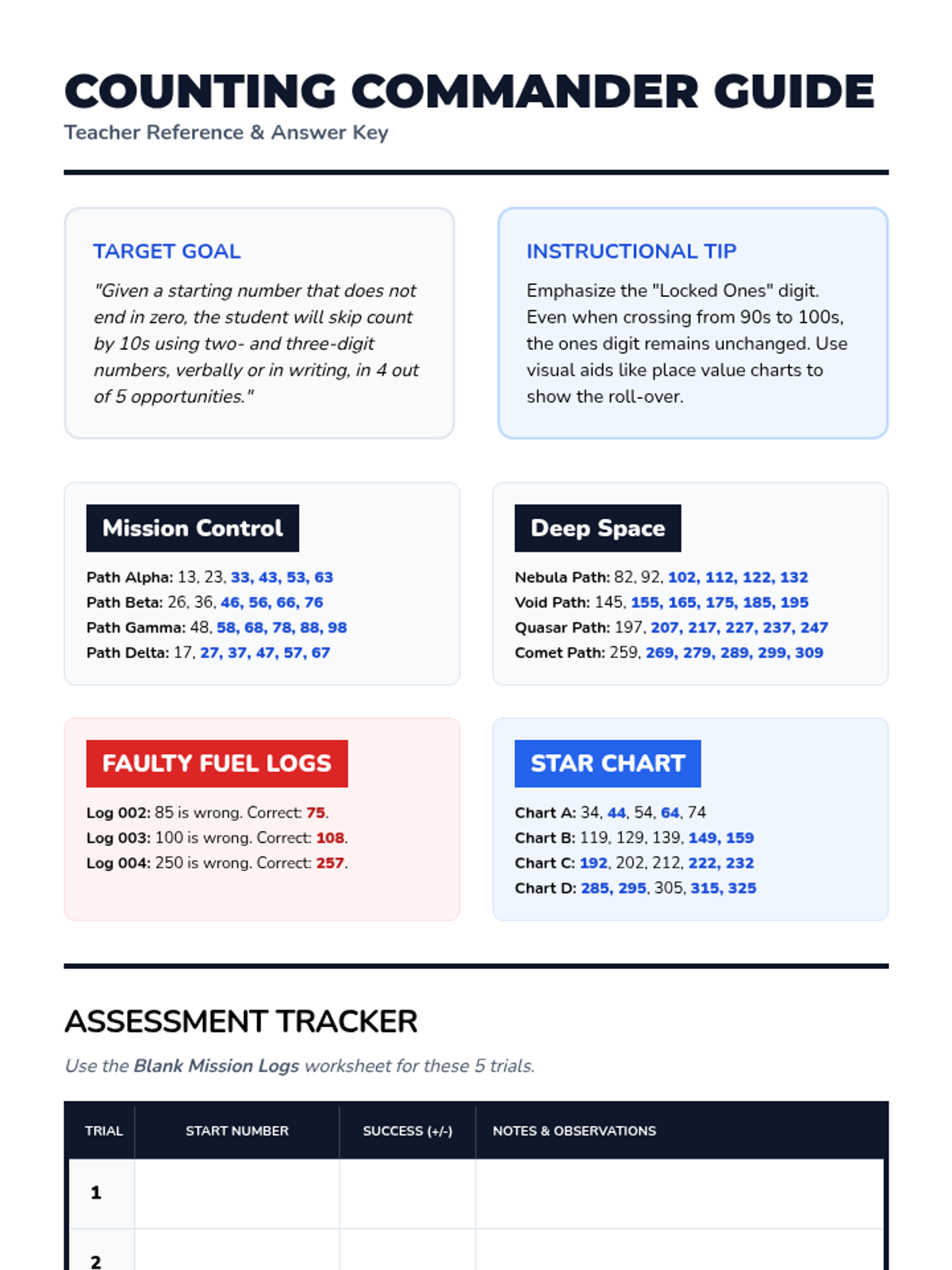
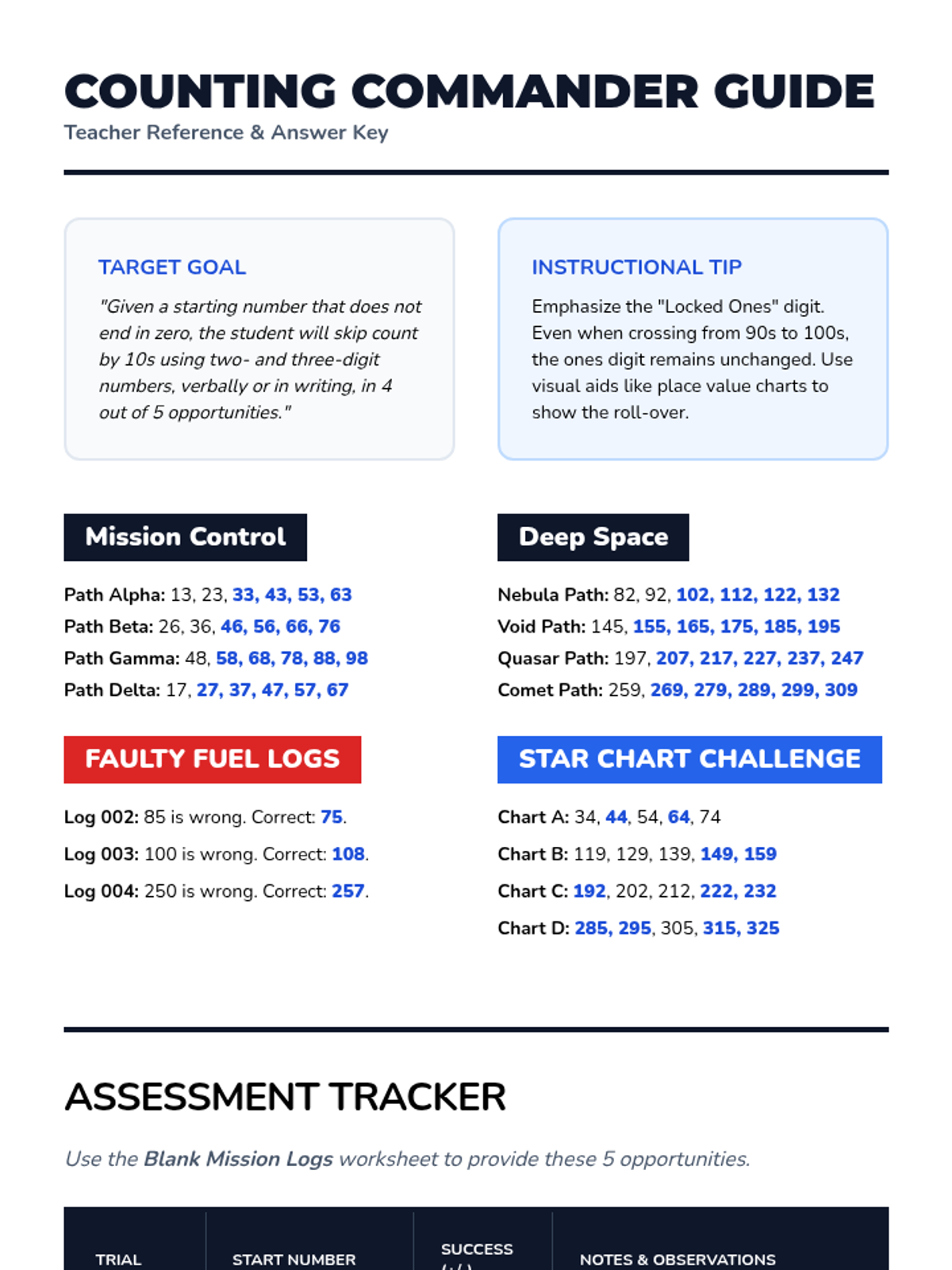
A teacher's guide with answer keys and a formatted assessment tracker. Revised for page-break integrity, grammar, and improved tracker table layout. Includes keys for all worksheets. Fits comfortably on 2 pages.
A teacher's guide with answer keys and a formatted assessment tracker. Revised for page-break integrity, grammar, and improved tracker table layout. Includes keys for all worksheets. Now fits comfortably on 2 pages.
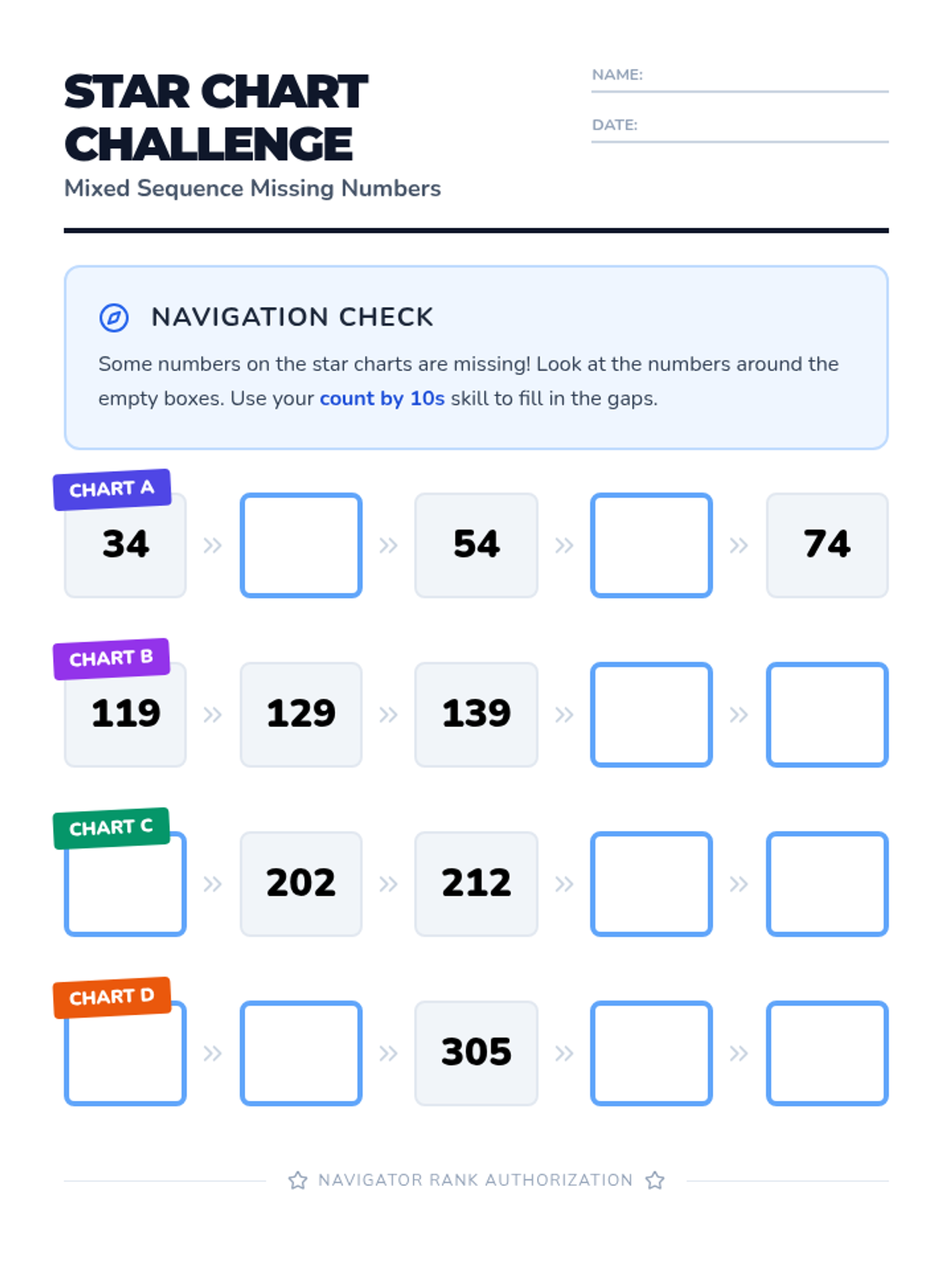
A mixed-sequence skip counting worksheet where students fill in missing numbers from various positions in the path, increasing complexity and testing flexible understanding.
An error-analysis worksheet where students must identify and correct the incorrect number in a skip-counting sequence, targeting the consistency of the ones digit. Revised for footer fit and better correction space with designated lines.
A teacher's guide with answer keys and a formatted assessment tracker. Revised for page-break integrity, grammar, and improved tracker table layout. Includes keys for all worksheets.
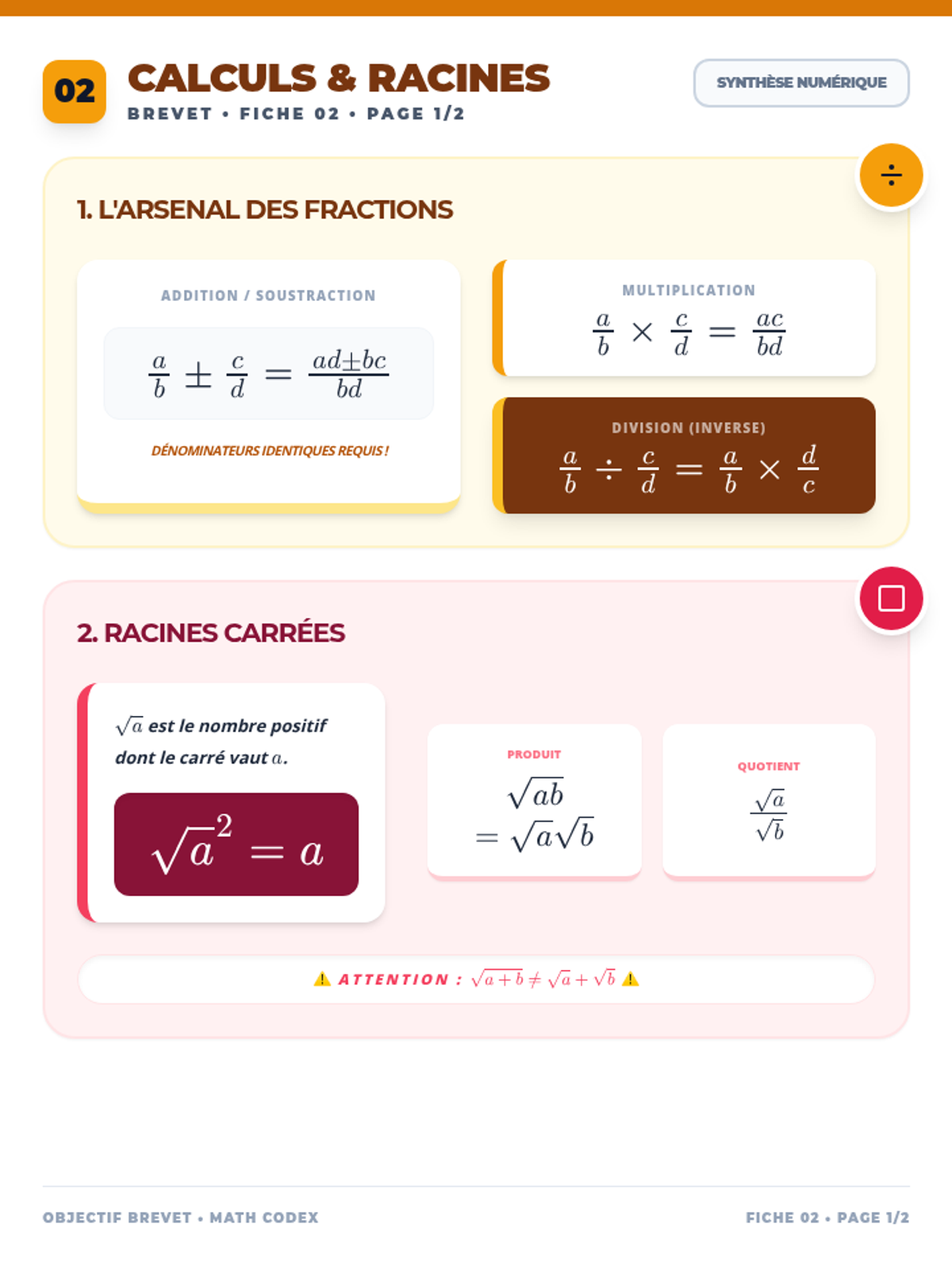
Une fiche de révision complète sur le calcul : fractions, puissances, notation scientifique et racines carrées. Regroupe les concepts des photos 1 et 4 avec une présentation aérée et détaillée sur 2 pages (cours). Synthèse pure. Correction des débordements de page.
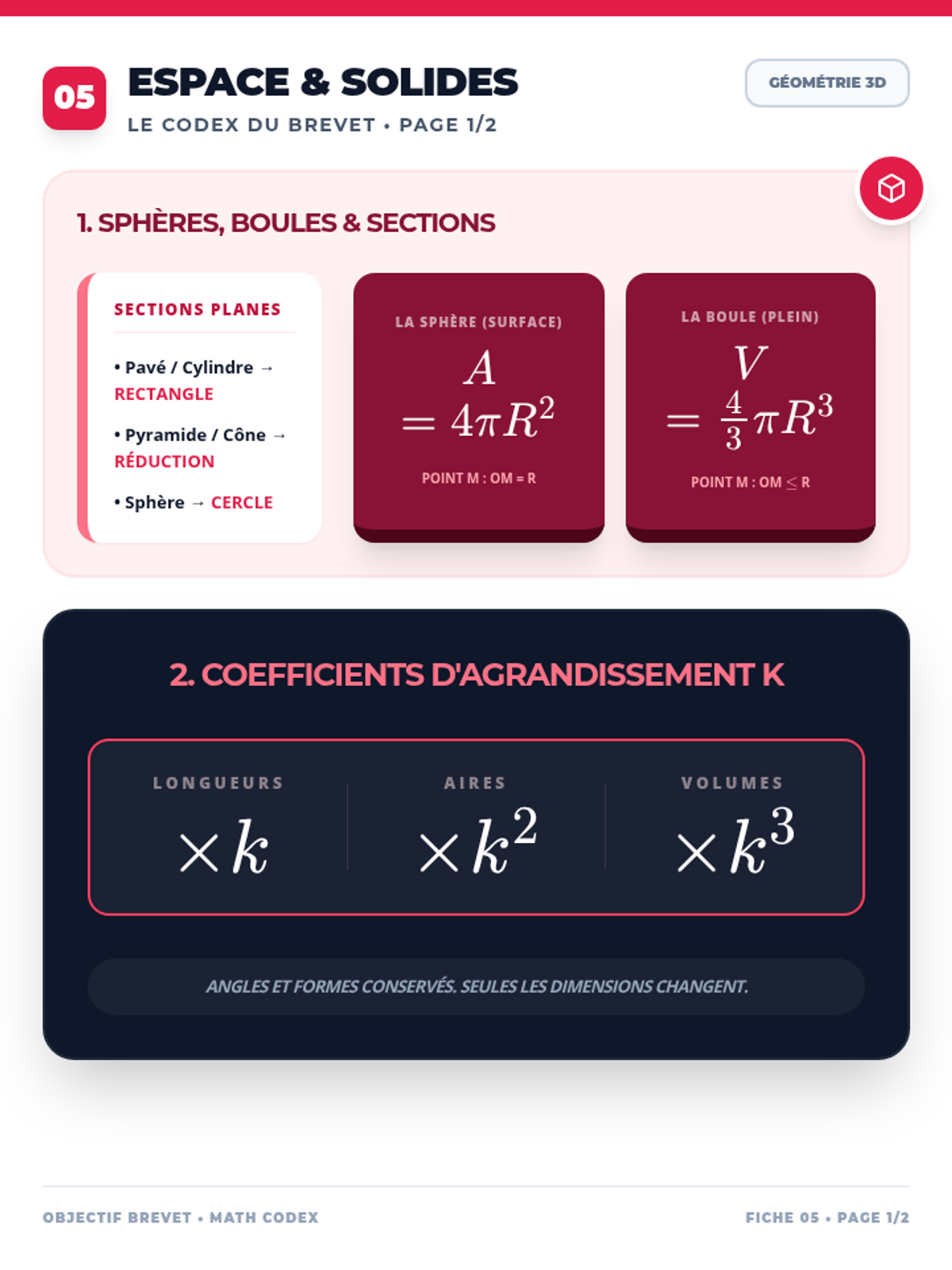
Une fiche de révision complète sur l'espace (solides, sphères, sections, agrandissements), les statistiques (n/N expliqués) et les probabilités. Regroupe les concepts des photos 6, 8, 10 et 11. Synthèse pure sans exercices sur 2 pages. Correction de la formule de la moyenne. Intègre la citation de Larson.
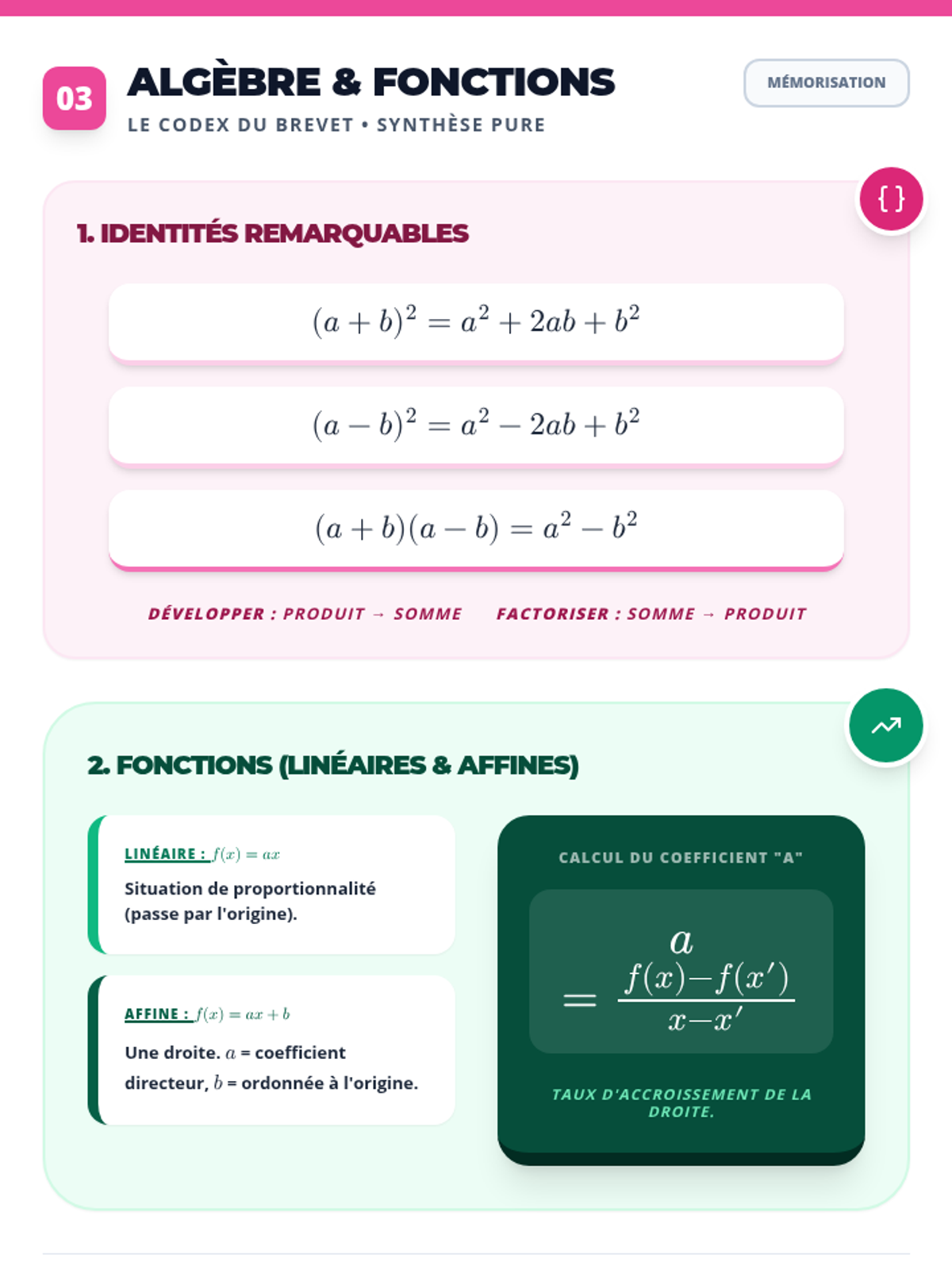
Une fiche de révision complète sur l'algèbre (identités, équations, systèmes) et les fonctions. Contient désormais une explication simplifiée des méthodes de substitution et de combinaison. Synthèse pure sans exercices sur 2 pages. Correction du débordement de page.
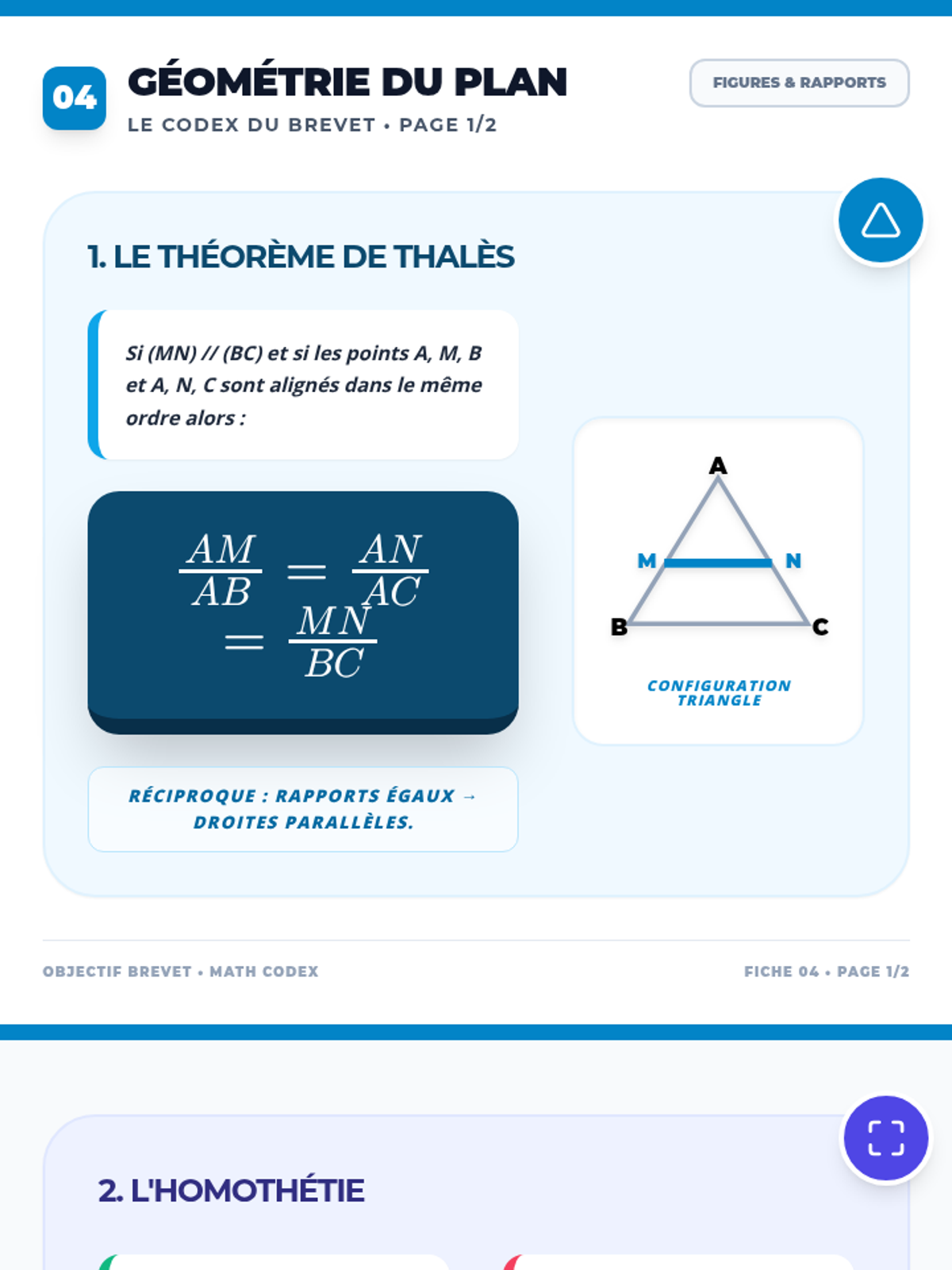
Une fiche de révision visuelle sur le théorème de Thalès, l'homothétie, les angles inscrits et les polygones réguliers pour les élèves de 3ème. Regroupe les concepts des photos 3, 5, 7 et 8. Synthèse pure sur 2 pages denses. Explique les lettres K, P, KL, KO, KS. Représentation du triangle avec les points B et C. Correction de la formule de l'homothétie et de la pagination.
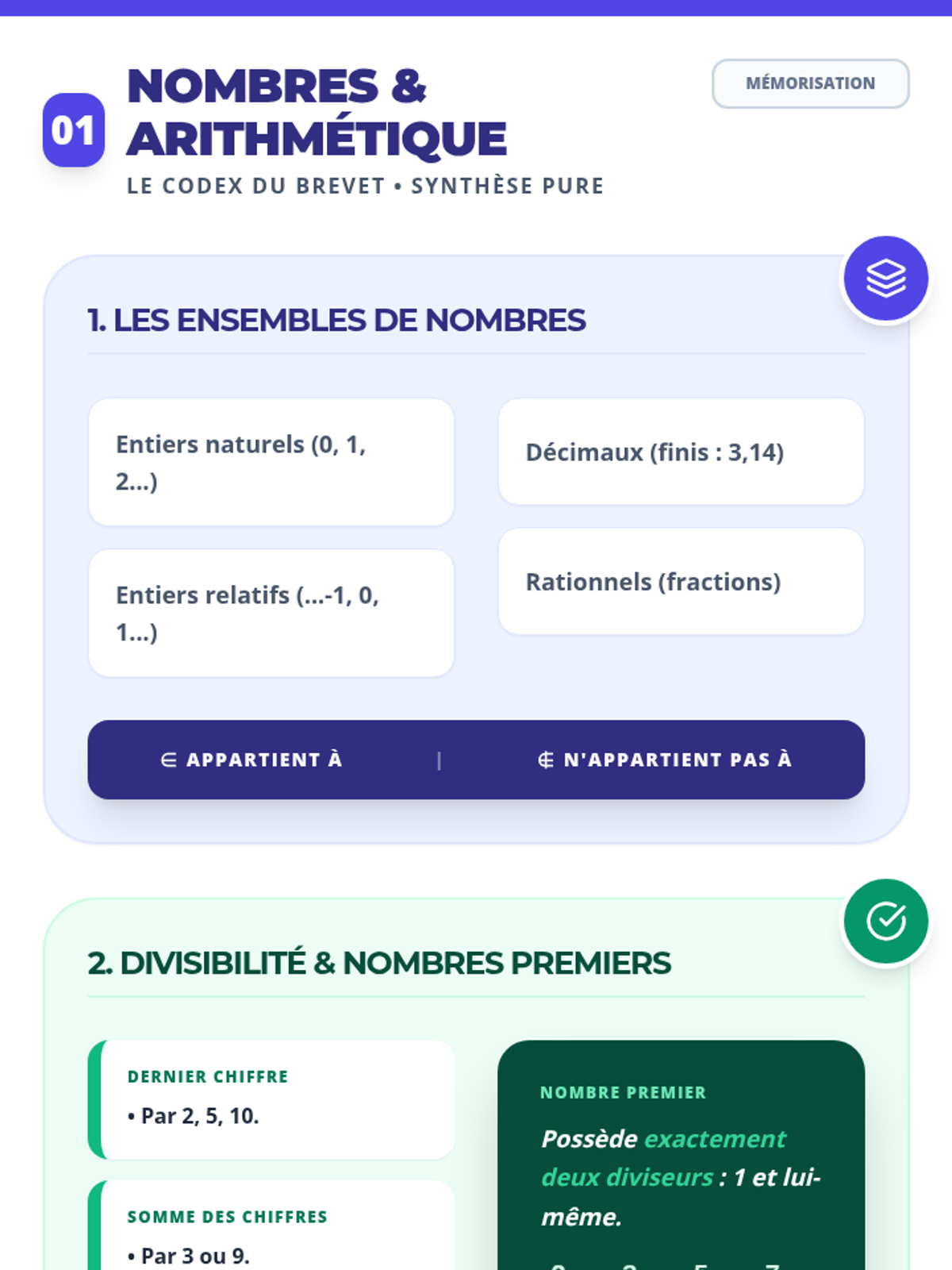
Fiche de révision 01 : Nombres et Arithmétique. Détaille l'algorithme d'Euclide et la méthode des différences pour le PGCD. Couvre les ensembles, la divisibilité et l'algorithmique. Synthèse pure. Correction des rendus de symboles et de la pagination.
Un diaporama ultra-complet et dynamique couvrant l'intégralité des 11 synthèses du programme de 3ème. La diapositive de conclusion inclut désormais la citation de Christian D. Larson. Fixation des affichages mathématiques et des espacements.
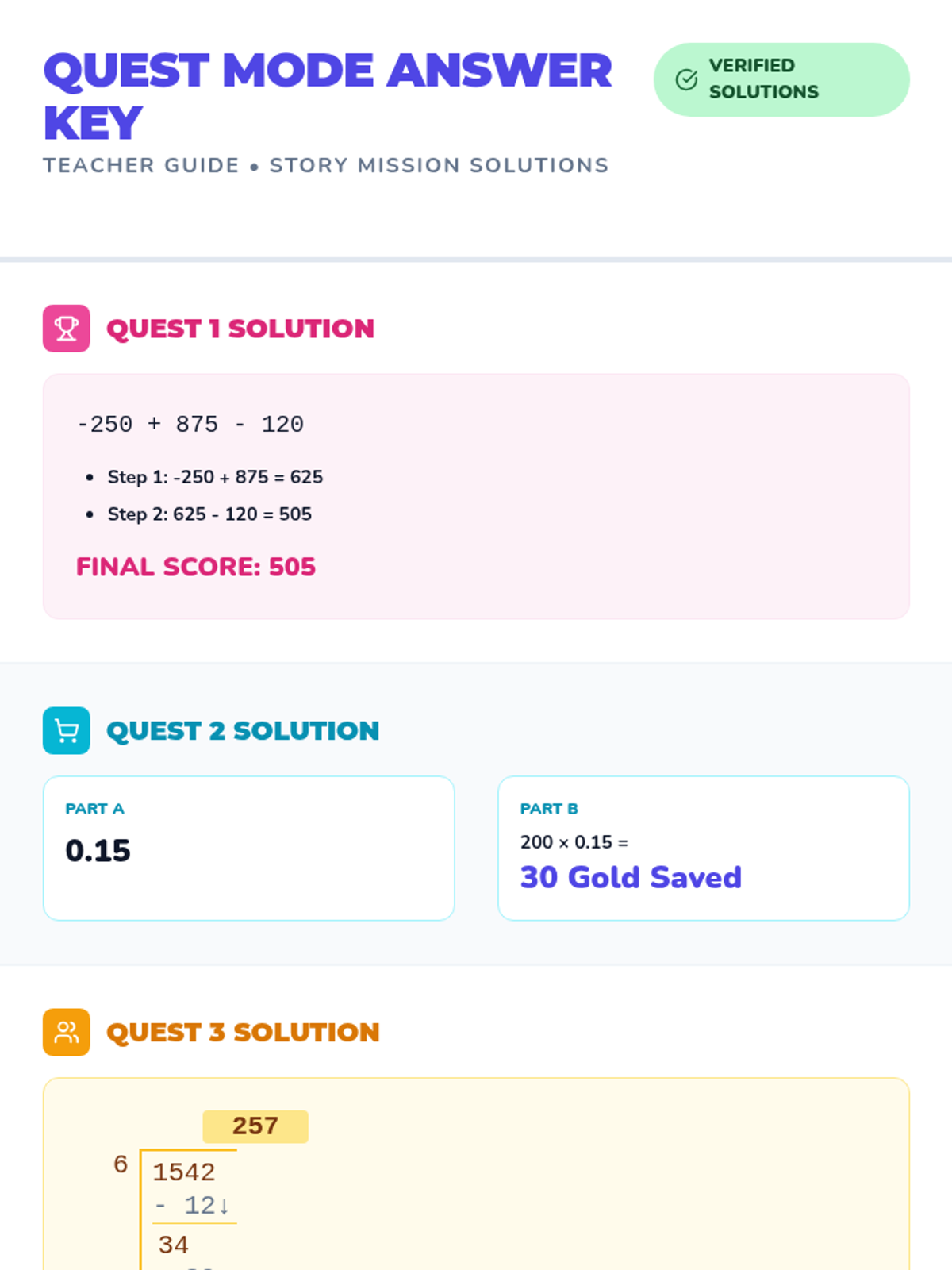
Answer key for Quest Mode Word Problems, providing worked-out solutions and step-by-step logic for real-world scenarios.
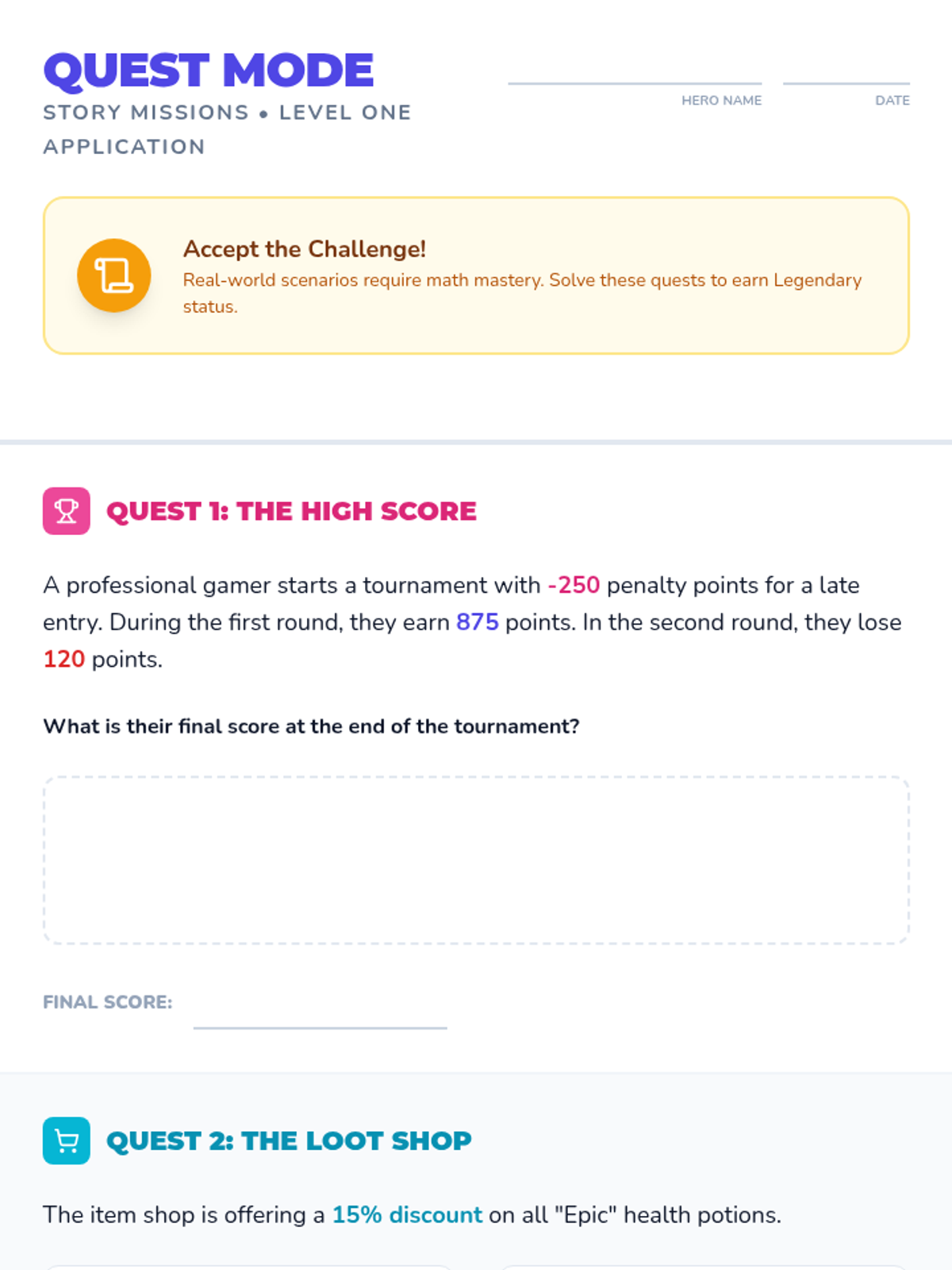
A dedicated word problem worksheet for Level One skills, featuring real-world (arcade and RPG themed) scenarios involving integer operations, percentages, and multi-digit arithmetic.