Lenny LearningLenny
Create
Explore
Workspace
LoginSign up
MathEnglish Language ArtsScience & EngineeringSocial StudiesGlobal LanguagesHealth & Physical EducationSpecial EducationCounseling & Life SkillsArts & CreativityESL
Lenny LearningLenny
Lenny Learning
About
Training
Pricing
Support
Contact
© 2026 Lenny Learning Inc.
MathNumbers & CountingCounting ObjectsNumber NamesComparing NumbersNumber OperationsCounting SequenceNumbers 0-10Place Value Understanding and SystemAdd and Subtract Within 20Addition and Subtraction ConceptsAddition and Subtraction EquationsAddition and Subtraction ProblemsFoundations for MultiplicationMultiplication and Division PropertiesMultiply and Divide Within 100Multiplication and Division ProblemsFactors and MultiplesProperties of OperationsPatterns and RelationshipsGenerate and Analyze PatternsMulti-Digit ArithmeticPlace Value OperationsMulti-Digit and Decimal OperationsNumerical ExpressionsFour Operations and PatternsFour Operations Problem SolvingMeasurement & DataMeasurable AttributesMeasuring LengthsMeasure and Estimate Lengths in Standard UnitsRelate Addition and Subtraction to LengthClassifying and Counting ObjectsTime and MoneyArea Concepts and MeasurementPerimeter and Area MeasuresAngle Concepts and MeasurementTime, Volume, and MassMeasurement Unit ConversionsGeometryIdentifying ShapesShapes and AttributesShape Attributes and ReasoningShapes and CompositionClassifying 2D FiguresGeometric Figures and RelationshipsLines, Angles, and ShapesAngle, Area, and VolumeGeometric MeasurementVolume of 3D ShapesCoordinate Plane ApplicationsTransformations in the PlaneCongruence and SimilarityUnderstand congruence in terms of rigid motionsSimilarity and TransformationsProve Theorems Involving SimilarityPythagorean TheoremTrigonometry for General TrianglesMake Geometric ConstructionsProve Geometric TheoremsTheorems About CirclesFind Arc Lengths And Areas of Sectors of CirclesVolume FormulasRelationships Between Two-Dimensional and Three-Dimensional ObjectsProve Simple Geometric Theorems AlgebraicallyTranslate Between Geometric Description and Equation for Conic SectionApply Geometric Concepts in Modeling SituationsFractions & DecimalsFractions as NumbersBuilding FractionsFraction Equivalence and OrderingAdding and Subtracting FractionsMultiplying and Dividing FractionsDividing FractionsDecimal FractionsMulti-Digit Computation and FactorsAdd, Subtract, Multiply, and Divide Rational NumbersRational Number SystemIrrational Numbers and ApproximationsRatiosRatios and ProportionsProportional RelationshipsUnit RateAlgebraAlgebraic ExpressionsGenerate Equivalent ExpressionsQuantitative RelationshipsProportional Relationships and Linear EquationsEquations and InequalitiesEquation Solving and ReasoningLinear Equations and SystemsGraph Equations and InequalitiesSystems of EquationsReal-World Algebraic ProblemsQuantitative Reasoning with UnitsExpression StructureEquivalent Expression FormsRadicals and Integer ExponentsRational ExponentsRational and Irrational NumbersPolynomial OperationsPolynomial IdentitiesPolynomial Zeros and FactorsRational ExpressionsComplex Number OperationsComplex Numbers in PolynomialsComplex Numbers on PlaneStatistics & ProbabilityRepresent and Interpret DataData DistributionsStatistical VariabilityProbability ModelsCompound Event ProbabilitiesStatistical SamplingInterpret Categorical and Quantitative DataBivariate Data PatternsInterpret Linear ModelsComparing Two PopulationsRandom Processes in StatisticsIndependence and Conditional ProbabilityExpected ValuesProbability-Based Decision MakingStatistical Inference and ConclusionsFunctionsFunction Concepts and NotationDefine and Compare FunctionsInterpret Functions in ContextAnalyze Function RepresentationsModel Relationships with FunctionsIdentify Linear vs Exponential GrowthDistinguish Between Function TypesCompare Growth RatesInterpret Function ExpressionsBuild Functions from RelationshipsConstruct and Model FunctionsTransform and Combine FunctionsModel Comparison and SelectionSolve Exponential EquationsTrigonometryTrigonometric Ratios Involving Right TrianglesTrigonometric Functions and Unit CircleModel with Trigonometric FunctionsTrigonometric IdentitiesVectors & MatricesIntroduction to Vectors and MatricesVector QuantitiesVector OperationsMatrix OperationsCalculusLimits and ContinuityDerivative Concepts and NotationDerivative Rules and TechniquesApplications of DerivativesOptimization ProblemsRelated RatesCurve Sketching and AnalysisIntegration Concepts and NotationAntiderivatives and Indefinite IntegralsDefinite Integrals and AreaFundamental Theorem of CalculusIntegration TechniquesApplications of IntegrationDifferential EquationsSequences and SeriesParametric and Polar FunctionsVector-Valued Functions

Numbers & Counting

SequencesLessonsMaterialsVideos
  1. Math

Numbers & Counting

SequencesLessonsMaterialsVideos

One-to-one correspondence, numeral identification, and comparison of quantities using terms like greater than or less than. Establishes the foundation for numerical literacy and early arithmetic operations.

Counting ObjectsOne-to-one correspondence and cardinality skills through counting discrete objects in various arrangements. Strengthens number recognition and the understanding of quantity.
Number NamesIdentification and spelling of number words from zero through millions. Connects numerical symbols to their written linguistic representations to strengthen mathematical literacy.
Comparing NumbersMathematical symbols including greater than (>), less than (<), and equal to (=) to evaluate numerical relationships. Builds fluency in ordering sets and comparing quantities from single digits to multi-digit integers.
Video
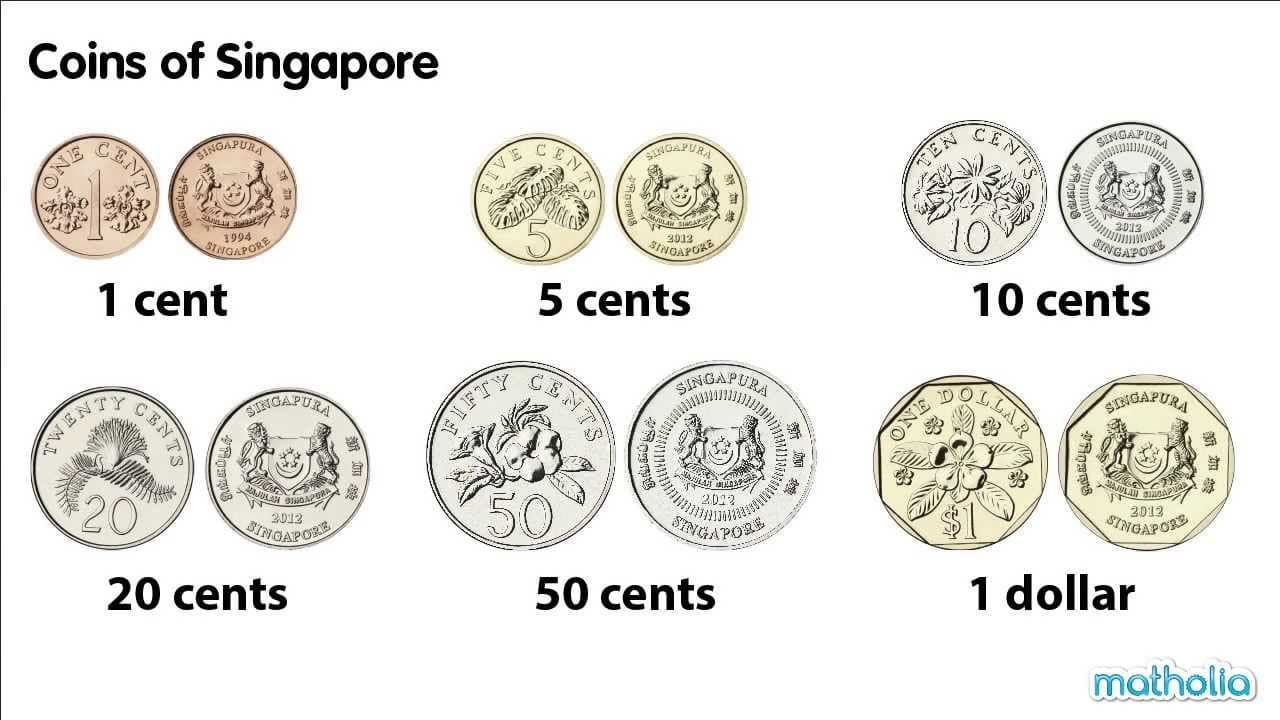
Identifying the Coins of Singapore

Identifying the Coins of Singapore

This educational video provides a clear and structured introduction to the currency of Singapore, specifically focusing on coin denominations. Through a simple visual presentation, the video introduces the one-cent, five-cent, ten-cent, twenty-cent, fifty-cent, and one-dollar coins. Each coin is displayed showing both the obverse (front) and reverse (back) sides, allowing students to see the distinct visual features, size differences, and colors associated with each value. The video utilizes a clean, distraction-free format where coins appear one by one against a white background. As each coin is introduced, the narrator clearly articulates its value, and the numerical value is written on screen in both word format (e.g., "1 cent") and symbol format (e.g., "1¢"). The video concludes with a summary screen displaying all the coins side-by-side in ascending order of value, providing a comparative view that reinforces the relative sizes and colors of the currency. For educators, this resource is an excellent tool for early numeracy and financial literacy lessons. It serves as a foundational text for teaching money recognition, sorting, and counting. The clear audio and slow pacing make it particularly suitable for young learners or students learning English as a second language. Teachers can use this video to introduce a unit on money, specifically for students in or learning about Singapore, to help them identify coins before moving on to practical activities like counting change or role-playing shopping scenarios.
MatholiaChannelMatholiaChannel

1min 58s

Video
Counting to 1000 with Place Value Models

Counting to 1000 with Place Value Models

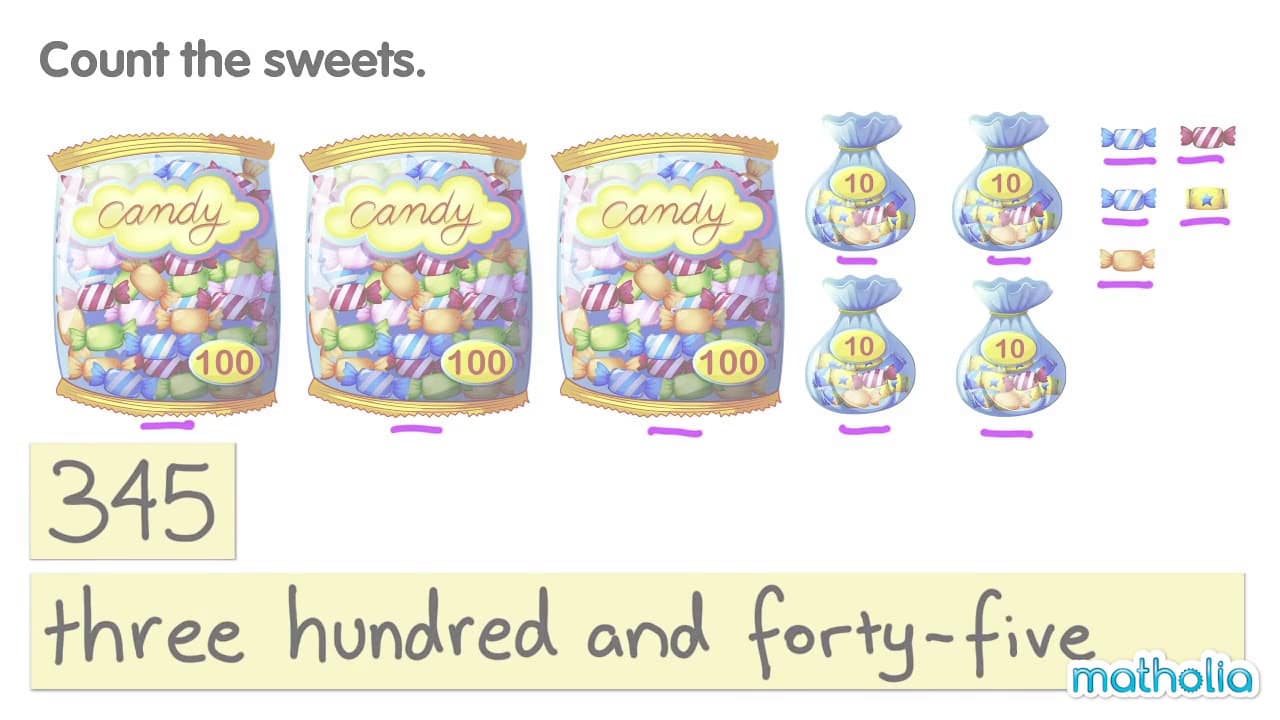
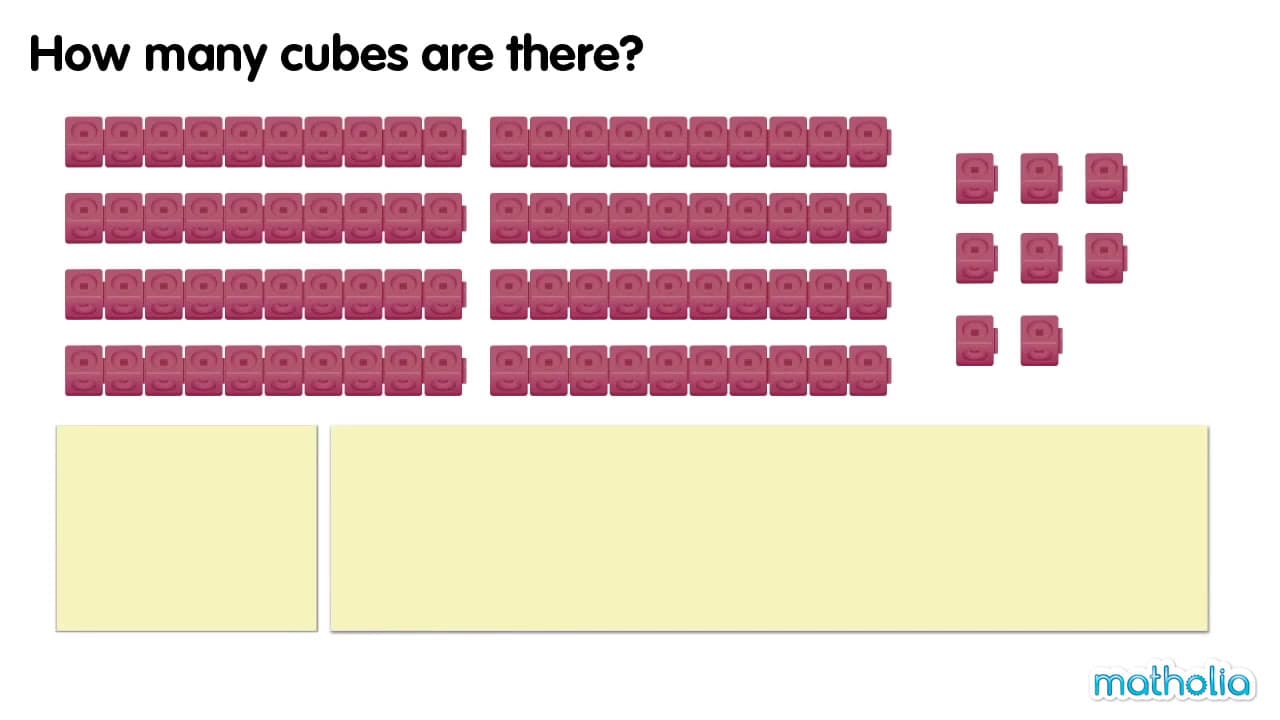
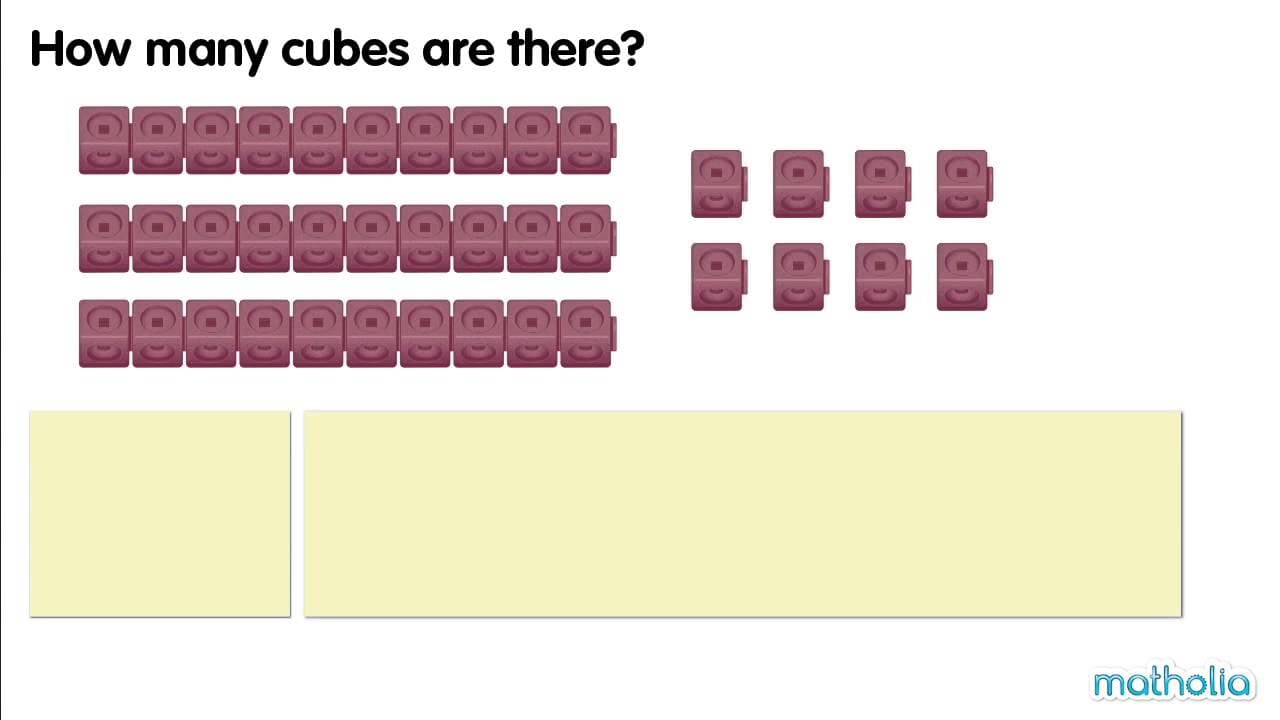
This educational video introduces students to counting numbers up to 1000 using visual place value models. It transitions from concrete objects (bags of candy) to standard mathematical manipulatives (Base-10 blocks), helping students visualize the magnitude of numbers in the hundreds. The narration guides viewers through a step-by-step counting process: first counting the hundreds, then adding the tens, and finally the ones, reinforcing the structure of our base-10 number system. The video covers key concepts including identifying hundreds, tens, and ones; understanding the value of digits based on their position; and dealing with zeros in the tens place (e.g., 604). It culminates in a demonstration of how ten hundreds combine to form one thousand, providing a clear visual representation of this milestone number. This resource is highly valuable for 2nd grade classrooms as it directly supports standards regarding three-digit numbers and place value. Teachers can use it to introduce the concept of larger numbers, model counting strategies, or as a visual aid to support students who struggle with abstract number concepts. The clear, paced counting allows for choral response and interactive participation during the lesson.
MatholiaChannelMatholiaChannel

5mins 16s

Video
Rhythmic Counting to 10 With Neon Lights

Rhythmic Counting to 10 With Neon Lights

A high-energy, visually stimulating music video designed to teach early learners how to count from one to ten. The video features mesmerizing 3D animations of glowing neon tubes that ripple and wave in synchronization with an upbeat pop song. As the singer counts, the corresponding numerals (1-10) appear clearly on the screen, reinforcing number recognition alongside the auditory sequence. Key themes include number sequencing, digit recognition, and rhythmic patterns in math. The repetitive nature of the song structure—alternating between the chorus and the counting sequence—utilizes musical mnemonics to help children memorize the order of the first ten integers. The high-contrast visuals of bright neon against a black background are specifically designed to capture and hold the attention of young children. This video is an excellent classroom resource for transitions, warm-ups, or active breaks. Teachers can use it to practice choral counting, identifying numbers by sight, or associating distinct quantities with number names. Its catchy rhythm supports kinesthetic learning, allowing students to clap, stomp, or jump along with each number as it is sung.

Have Fun TeachingHave Fun Teaching

2mins 33s

Video
Counting Objects to 100 by Grouping Tens and Ones

Counting Objects to 100 by Grouping Tens and Ones

This educational video provides a clear, step-by-step demonstration of how to count larger quantities of objects by grouping them into tens and ones. Using a repetitive and predictable structure, the video guides viewers through counting various items—such as eggs, cubes, pencils, and flowers—up to 100. For each example, the narrator counts groups of ten first (skip-counting), adds the remaining individual units, and then presents the final total in both numeral and written word forms. The content focuses on key early mathematics concepts including place value, skip-counting by tens, and the relationship between spoken numbers, numerals, and their written forms. It visually reinforces the base-ten number system by physically arranging objects into clear groups of ten, making abstract numerical concepts concrete for young learners. The video systematically increases the difficulty, moving from the 50s up to 100. For educators, this resource serves as an excellent tool for introducing or reinforcing place value and counting strategies in early elementary classrooms. It helps students transition from counting by ones (which is inefficient for large numbers) to the more efficient strategy of counting groups. The visual clarity makes it particularly useful for visual learners and can be easily replicated with physical manipulatives in the classroom for hands-on practice.

MatholiaChannelMatholiaChannel

3mins 31s

Video
Spelling Numbers 1 to 10 with a Silly Salamander

Spelling Numbers 1 to 10 with a Silly Salamander

This animated music video combines early math and literacy skills by teaching viewers how to spell numbers from one to ten. Featuring a guitar-playing Apple and a keyboard-playing Orange, the characters use a call-and-response format where the Apple asks how to spell a number and the Orange sings the spelling. Visual cues clearly display the numeral, the letters as they are sung, and the final word.

Scratch GardenScratch Garden

3mins 8s

Video
Reading and Writing Whole Numbers to the Billions

Reading and Writing Whole Numbers to the Billions

This instructional math video guides students through the process of reading and writing large whole numbers in word form, specifically ranging from the thousands up to the billions. The presenter uses a digital chalkboard format to demonstrate four specific examples that increase in complexity, starting with a six-digit number and progressing to an eleven-digit number. The video emphasizes breaking down large numbers into manageable "periods" (ones, thousands, millions, billions) to make reading them less intimidating.

Math with Mr. JMath with Mr. J

8mins 15s

Video
Skip Counting by Hundreds in Outer Space

Skip Counting by Hundreds in Outer Space

This engaging animated music video teaches students how to skip count by hundreds up to 2,000. Set in an 8-bit retro space environment, a rocket ship travels through the cosmos while a catchy song guides learners through the counting sequence. The video breaks down the pattern of counting by explaining that adding two zeros to single digits creates hundreds, providing a helpful mental math strategy for young learners. The content covers three distinct counting sequences: first from 100 to 1,000, then extending to 2,000 using standard place value terminology (e.g., "one thousand one hundred"), and finally revisiting the sequence to introduce alternative naming conventions (e.g., "eleven hundred"). Between counting segments, a humorous character floats through space kicking asteroids, providing an entertaining break that maintains student engagement. Ideally suited for 2nd and 3rd grade math classrooms, this video supports number sense and place value standards. It is an excellent tool for introducing skip counting, reinforcing the structure of large numbers, and clarifying the confusing dual-naming systems often used for four-digit numbers. The rhythmic nature of the song aids in memorization, making it perfect for whole-class participation or active learning breaks.

Scratch GardenScratch Garden

3mins

Video
Solving the Mystery of the Missing Numbers

Solving the Mystery of the Missing Numbers

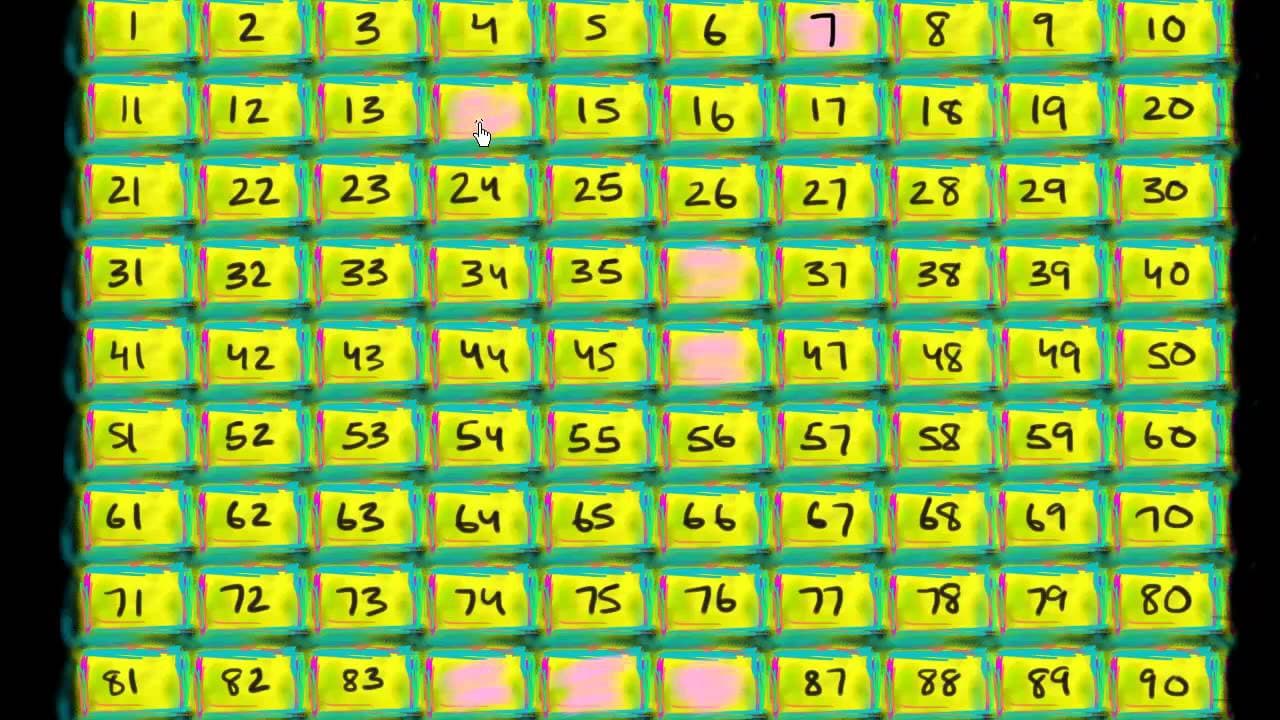
This engaging animated math video presents a narrative-driven problem solving task featuring Sal, Esther, and a mischievous character named 'Ben Eater the Number Eater.' The central premise involves a standard number grid (1-90) where several numbers have been 'eaten' (erased), prompting the characters to use various mathematical strategies to restore the grid. The video models collaborative problem solving and explicitly encourages viewer participation by asking them to pause and think.

Khan AcademyKhan Academy

3mins 52s

Video
Counting Groups of Ten and Ones to 50

Counting Groups of Ten and Ones to 50

This educational video provides a clear, step-by-step demonstration of how to count collections of objects up to 50 using place value strategies. Instead of counting by ones, the video models the more efficient method of counting groups of ten first (skip counting), followed by counting on the remaining single units. This visual approach reinforces the concept of base-ten number systems. The video is structured around six distinct examples using common items like marbles, cubes, cookies, and strawberries. For each example, objects are arranged in clear rows of ten to facilitate visual grouping. The narrator counts the tens ("10, 20..."), adds the ones ("and 1 is 21"), and then explicitly demonstrates how to write both the numerical digit and the number word (e.g., "twenty-one") in cursive script. For educators, this resource is an excellent tool for introducing or reinforcing place value, two-digit number formation, and connecting numerals to number words. It effectively bridges the gap between concrete visual representations (objects) and abstract numerical symbols, making it ideal for early primary math lessons on counting, cardinality, and number sense.

MatholiaChannelMatholiaChannel

3mins 1s

Video
Learning to Count by Tens to 100

Learning to Count by Tens to 100

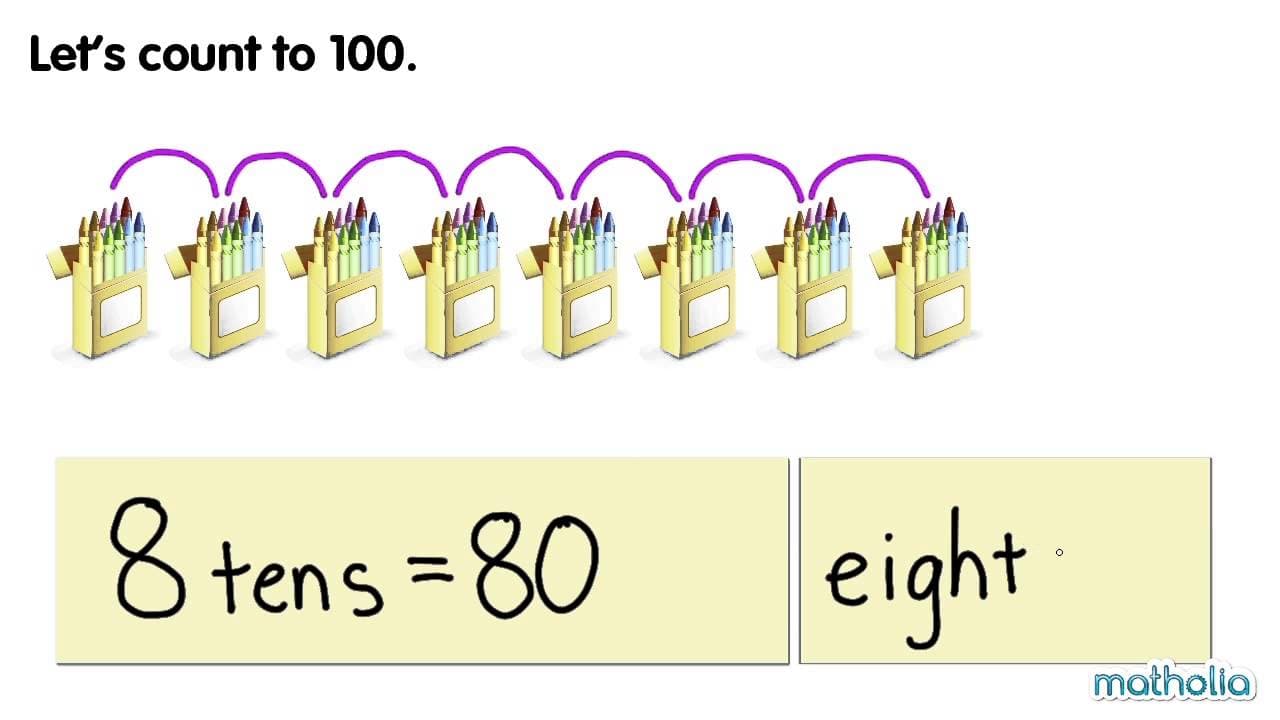
This educational video introduces early learners to the concept of skip counting by tens up to 100 using a relatable visual aid: boxes of crayons. The video systematically demonstrates how groups of ten accumulate to form larger numbers, starting from 50 and progressing sequentially to 100. Through clear narration and visual tracking, it reinforces the relationship between the number of "tens" (e.g., 6 tens) and the total quantity (e.g., 60). Key themes include skip counting, the base-ten number system, and the foundational concept of place value. The video explicitly connects verbal counting (10, 20, 30...) with written equations (e.g., "5 tens = 50"), bridging the gap between concrete objects and abstract mathematical notation. The repetitive structure is designed to build confidence and pattern recognition in young mathematicians. For educators, this video serves as an excellent visual model for introducing or reinforcing counting by tens. It can be used as a hook for math lessons on place value or as a guided practice tool where students chant along with the narrator. The clear visual representation of "groups of ten" provides a strong scaffolding for later concepts like multiplication and division, making it a versatile resource for Kindergarten and First Grade classrooms.

MatholiaChannelMatholiaChannel

4mins 19s

Video
Mastering Skip Counting by 20s to 500

Mastering Skip Counting by 20s to 500

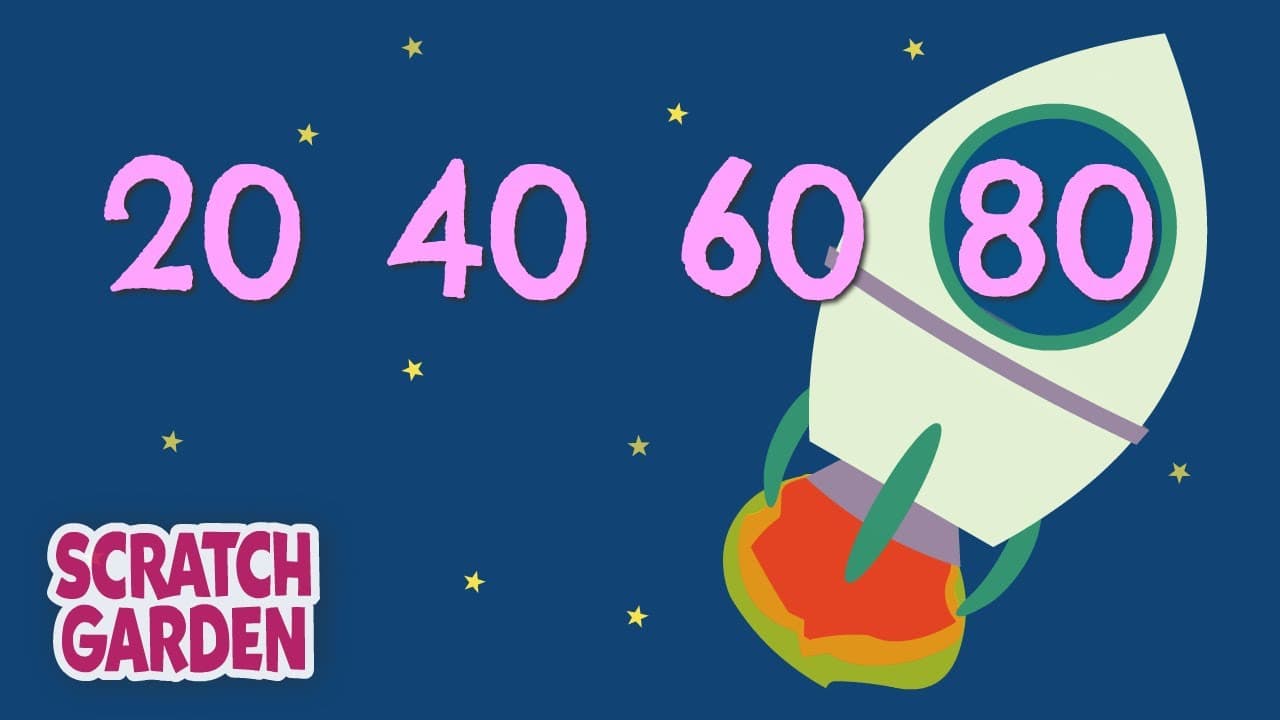
This engaging animated music video teaches students how to skip count by 20s, extending the sequence all the way to 500. Set against a whimsical outer space backdrop, the video features astronaut cats and a rocket-piloting worm who guide viewers through three increasing rounds of counting. The song introduces a helpful mental math strategy—relating counting by 20s to counting by 2s—making the concept accessible and memorable. The video explores themes of number patterns, place value, and the relationship between single-digit multiplication and tens. It visually reinforces the auditory counting with clear, large numbers appearing on screen, synchronized with the beat. The narrative arc builds in complexity, starting with a simple count to 100, then 200, and finally a rapid-fire challenge to 500, encouraging fluency. For educators, this resource is an excellent tool for math warm-ups, transitioning between lessons, or reinforcing place value concepts. It supports the development of number sense and prepares students for more complex multiplication and division tasks. The catchy melody and repetitive structure allow for active participation, making it suitable for whole-class singing and movement activities.

Scratch GardenScratch Garden

2mins 39s

Video
Counting Odd Numbers to 101 in Space

Counting Odd Numbers to 101 in Space

This energetic, music-based educational video teaches students how to identify and count odd numbers from 1 to 101. Using a catchy rock song and a space-themed animation, the video takes viewers on a journey aboard a rocket ship piloted by a dog. It begins by defining what an odd number is and providing a simple strategy for finding them: starting at one and jumping two numbers at a time. The content is structured to build confidence progressively. It starts with a short counting sequence from 1 to 11, moves to a slightly longer sequence up to 21, and culminates in a 'challenge round' counting all the way to 101. Visual cues clearly display the numbers as they are sung, helping to reinforce number recognition and sequential ordering. For educators, this video serves as an excellent tool for introducing or reviewing number sense, specifically distinguishing between odd and even numbers and practicing skip counting. The rhythmic nature of the song aids in memorization, while the visual of the ascending rocket provides a concrete metaphor for increasing values. It is particularly useful for active learning sessions where students can count along or move to the beat.

Scratch GardenScratch Garden

3mins

Video
Counting from 1 to 100 with Music and Animals

Counting from 1 to 100 with Music and Animals

This engaging animated music video teaches early learners how to count sequentially from 1 to 100. Featuring a cast of colorful animal characters—including a rabbit, cat, bear, frog, dog, and others—the video breaks down the number system into manageable chunks, helping students master counting patterns and number recognition through rhythm and rhyme. The content primarily focuses on rote counting and number sequencing, with clear visual representations of each numeral appearing on screen as it is sung. The video emphasizes the transition between decades (e.g., 29 to 30, 39 to 40), a common stumbling block for young mathematicians. In the final segment, the video briefly introduces place value concepts by rapidly scaling from 100 up to one billion, providing a preview of larger magnitudes. For educators, this video serves as an excellent warm-up, transition tool, or reinforcement activity for number sense lessons. The catchy melody helps aid memory retention, while the visual cues reinforce number identification. It addresses the foundational skill of counting to 100, which is a critical kindergarten standard, and provides a fun, low-stress way to practice fluency and pronunciation of number words.

Math Songs by NUMBEROCKMath Songs by NUMBEROCK

3mins 38s

Video
Counting Down from 100 to 1 in Space

Counting Down from 100 to 1 in Space

This engaging animated music video takes students on an interstellar journey while practicing the essential math skill of counting backward from 100 to 1. Featuring a friendly dog character and a space rocket theme, the video uses a rhythmic song to guide learners through the entire sequence of numbers in reverse order. The visual narrative follows the dog's descent from deep space back to Earth, providing a clear start and end point for the counting exercise. Key themes include number fluency, reverse sequencing, and recognizing patterns in the base-10 number system. The video explicitly highlights the transition points between decades (e.g., changing from the 90s to the 80s, 80s to 70s), which are often the most challenging aspect of backward counting for young learners. Visual cues, such as the numbers changing color or the character landing on different planets, reinforce these milestones. For educators, this video serves as an excellent tool for daily math warm-ups, fluency practice, or a fun break that reinforces learning. The catchy beat helps students internalize the rhythm of counting, making it easier to memorize the sequence. It addresses the common struggle of "crossing the decade" in reverse, helping students master the shift from a number ending in zero to the number ending in nine (e.g., 40 to 39).

Scratch GardenScratch Garden

3mins 4s

Video
Identifying US Coins and Their Values

Identifying US Coins and Their Values

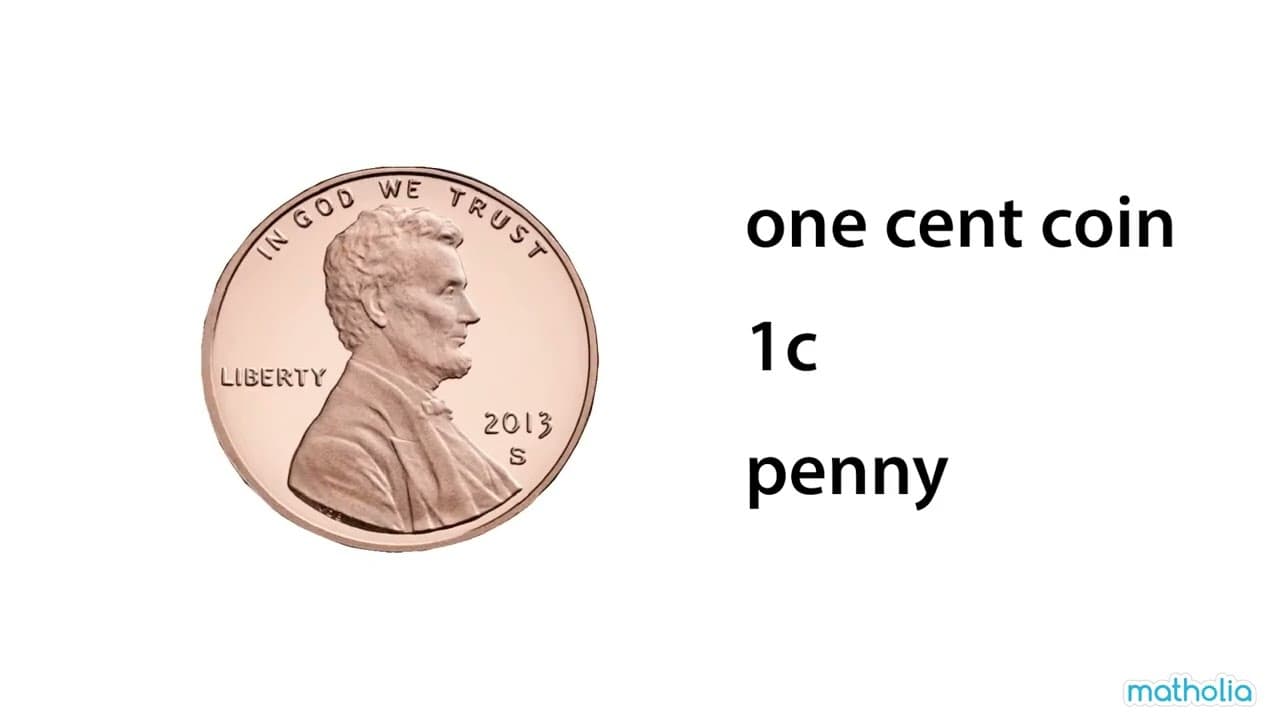
This straightforward educational video provides a clear introduction to United States coinage, specifically designed for early elementary students. It systematically introduces the six standard US coins: the penny, nickel, dime, quarter, half-dollar, and one-dollar coin. For each coin, the video displays high-quality, rotating images of both the obverse (front) and reverse (back) sides, accompanied by clear text labels indicating the coin's name, numerical value, and common nickname. The core theme of the video is identification and valuation. It establishes a repetitive, predictable structure that helps young learners associate the visual appearance of a coin with its specific monetary value and name. By explicitly linking terms like "five cent coin" with "nickel" and displaying the numerical notation (e.g., 5c), it builds the vocabulary necessary for financial literacy and early mathematics. For educators, this video serves as an excellent foundational resource for units on money, counting, and financial basics. Its clean, distraction-free visual style makes it ideal for introducing coins before handling real money in class. Teachers can use it to help students recognize the distinct features of each coin, discuss the relative sizes versus values (especially the dime and nickel), and memorize the values required for future counting and arithmetic lessons.

MatholiaChannelMatholiaChannel

1min 23s

Video
Learning to Skip Count by Tens to 100

Learning to Skip Count by Tens to 100

This energetic animated math video teaches early learners how to skip count by tens up to 100. Set to an upbeat rhythm, the video uses bright visuals and a clear numerical display to guide students through the sequence 10, 20, 30, and so on. A friendly character stands alongside a digital display that flashes each number as it is sung, reinforcing the connection between the spoken word and the written numeral. Themes in this video center on foundational number sense, specifically the base-ten number system and pattern recognition. By isolating the multiples of ten, students can focus on the rhythmic pattern of counting (

Have Fun TeachingHave Fun Teaching

2mins 56s

Video
Reading and Writing Numbers to 10,000 Using Place Value

Reading and Writing Numbers to 10,000 Using Place Value

This educational video provides a clear, step-by-step demonstration of how to identify, read, and write four-digit numbers up to 10,000. Using two distinct visual models—Base 10 blocks and a color-coded place value chart—the video guides students through the process of determining the value of digits in the thousands, hundreds, tens, and ones places. The content progresses from standard numbers to more complex examples involving zero placeholders, a common stumbling block for elementary students. It systematically breaks down each number by counting the quantity in each place value column, stating the breakdown verbally (e.g., "3 thousands, 2 hundreds..."), and then showing both the written word form and the numerical digit form. Teachers can use this video to introduce or reinforce place value concepts in 3rd and 4th grade. It is particularly effective for visual learners who need to see concrete representations of quantity before moving to abstract numbers. The clear separation of examples allows educators to pause after each visual to ask students to predict the number before the narrator reveals the answer.

MatholiaChannelMatholiaChannel

2mins 23s

Video
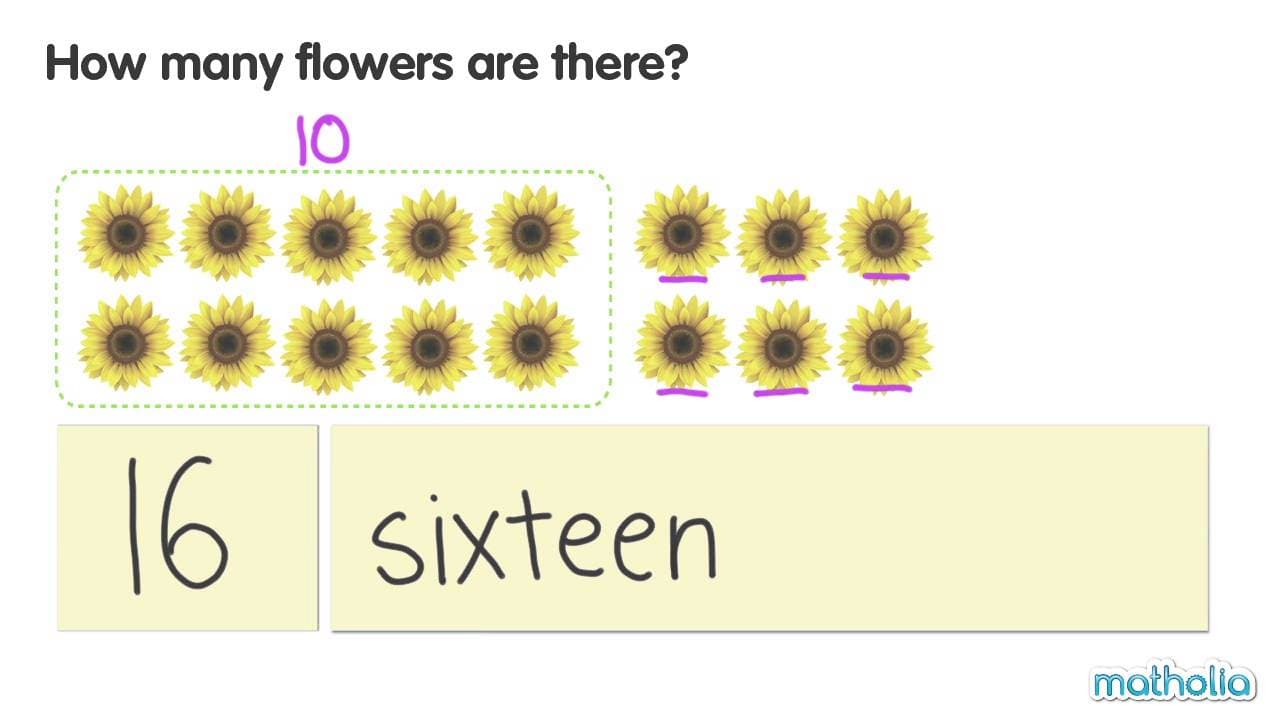
Counting Objects from 11 to 20

Counting Objects from 11 to 20

This educational video provides a structured and repetitive guide for young learners to master counting numbers from 11 to 20. Using a clear, consistent format, the video introduces each number individually by presenting a set of objects. It utilizes the 'counting on' strategy, where a group of ten items is visually grouped and acknowledged first, followed by counting the additional items to reach the target number. This approach effectively introduces the concept of place value (ten and ones) without explicitly naming it yet. The video covers numbers 11 through 20 sequentially, using distinct visual themes for each number, such as cookies, ants, shells, and butterflies. Each segment follows the same pattern: a question asks "How many... are there?", the counting occurs, the total is stated in a full sentence, and finally, the numeral and its written word form are animated on screen. This multimodal approach supports different learning styles by combining auditory counting, visual grouping, and literacy reinforcement. For educators, this resource is an excellent tool for introducing teen numbers and the 'counting on' method. It helps students transition from counting by ones to understanding numbers as compositions of tens and ones. The clear audio and slow pacing make it suitable for choral counting in the classroom, while the written words support early reading skills. The video concludes with a summary chart counting from 11 to 20, serving as a perfect review or assessment tool.

MatholiaChannelMatholiaChannel

5mins 46s

Video
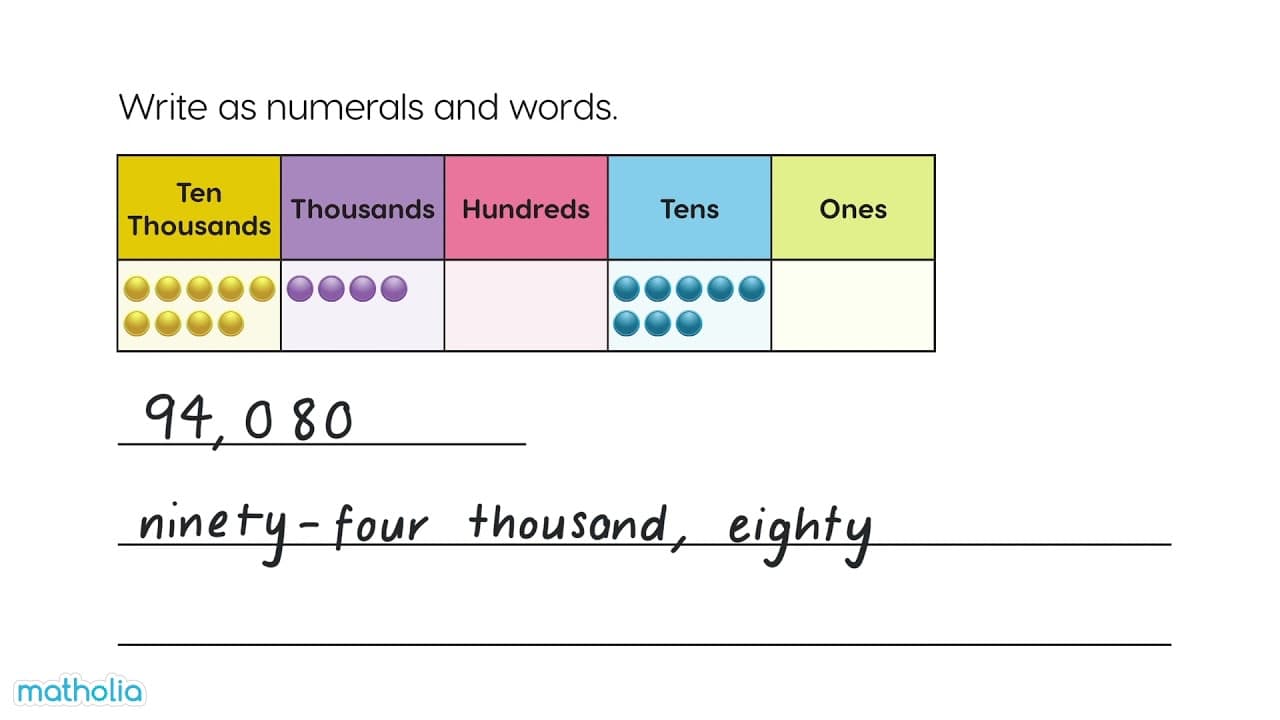
Writing Numbers from Place Value Charts

Writing Numbers from Place Value Charts

This educational video demonstrates how to interpret place value charts to write numbers in both numeral and word forms. Through three clear examples, the video guides viewers on how to count place value discs in various columns—ranging from Ones up to Hundred Thousands—and translate those visual quantities into standard numerical digits. The narration explicitly connects the visual representation to the written digits, reinforcing the relationship between concrete manipulatives and abstract numbers.

MatholiaChannelMatholiaChannel

1min 46s

Video
Adding One to Numbers 1 Through 15

Adding One to Numbers 1 Through 15

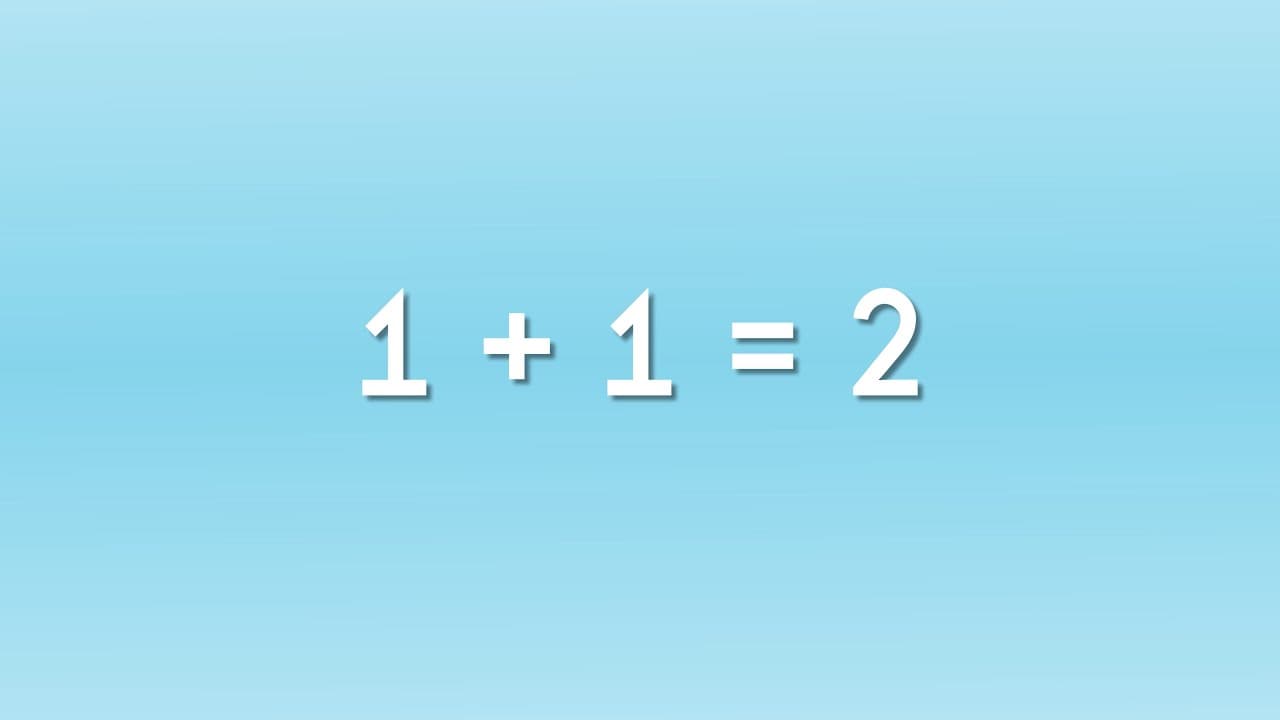
This engaging music video introduces early learners to the concept of adding one through a catchy, repetitive song. The video features simple, clear on-screen text that displays addition equations ranging from 1 + 1 up to 1 + 15, allowing students to visually connect the spoken lyrics with the mathematical symbols. The upbeat pop-rock style music helps maintain student attention and aids in the memorization of basic arithmetic facts. Key themes explored include basic addition, number sequencing, and pattern recognition. By systematically increasing the addend by one (from 1 to 15), the video implicitly teaches the concept that "adding one" is mathematically equivalent to counting to the next number. The distinct verses break the content into manageable chunks (1-5, 6-10, 11-15), making it easier for students to process the information. For educators, this video serves as an excellent warm-up or transition activity for math blocks in Kindergarten and First Grade classrooms. It supports fluency in mental math and helps solidify the foundational understanding of the "plus one" rule. Teachers can use the song to encourage active participation, having students sing along or use manipulatives to represent the growing sums shown on screen.

Have Fun TeachingHave Fun Teaching

2mins 20s

Video
Learning to Count, Write, and Recognize Numbers 1-10

Learning to Count, Write, and Recognize Numbers 1-10

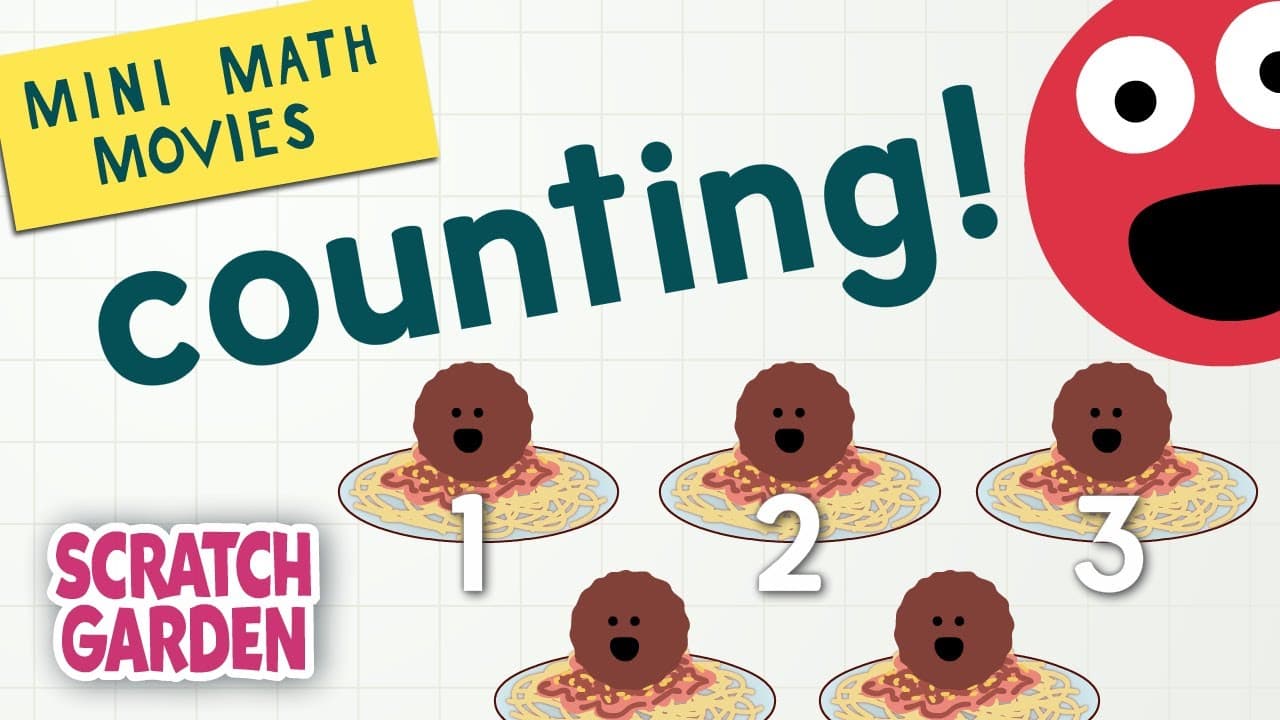
This engaging animated video introduces early learners to the fundamental concepts of numbers and counting from 1 to 10. Guided by a humorous red oval character, students practice oral counting, learn to recognize and write numerals, and apply these skills to count physical objects like plates of spaghetti, animated letters, and days on a calendar. The video utilizes a "call and response" format that encourages active participation from young viewers. A key mathematical theme explored is "conservation of number"—the principle that the quantity of a set remains the same regardless of how the objects are arranged or what they look like. The video explicitly demonstrates this by counting a set of five 'X's, then moving them, spreading them out, turning them upside down, and changing their colors, while proving the count remains five. This helps students move beyond rote counting to true number sense and cardinality. For educators, this resource serves as an excellent hook for math lessons in Pre-K and Kindergarten. It can be used to introduce number formation, practice one-to-one correspondence, or reinforce the stability of quantity. The humor—featuring singing meatballs and confused characters—keeps engagement high, making it a perfect tool for transitioning into hands-on counting activities or calendar time.

Scratch GardenScratch Garden

5mins 58s

Video
Mastering Number Bonds to Ten with Ten Frame Animals

Mastering Number Bonds to Ten with Ten Frame Animals

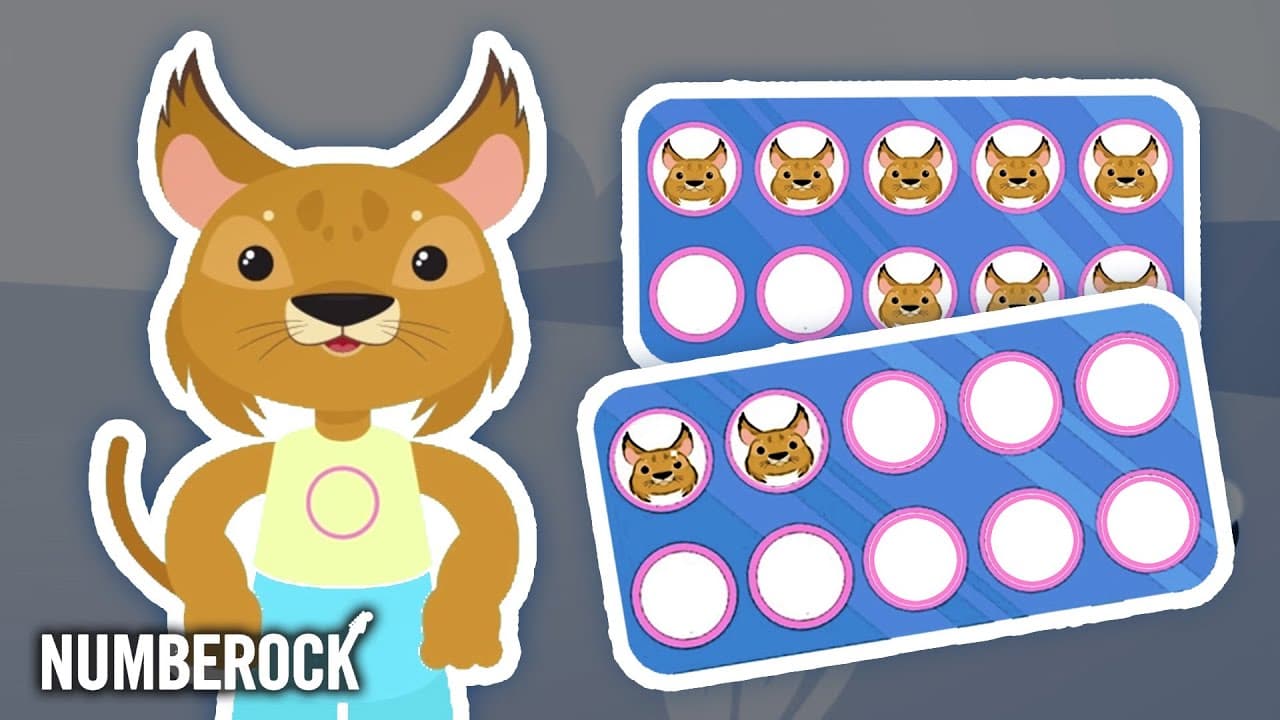
This engaging animated music video introduces young learners to the foundational math concept of "making ten" using ten frames and a cast of rhyming animal characters. Through a catchy song, students meet animals like Wombats, Bobcats, Muskrats, Gnats, and Bats, each representing a specific number quantity on a ten frame. The visual narrative demonstrates how adding a specific number of animals to an existing set completes the ten frame, reinforcing number bonds (pairs of numbers that add up to 10). The video systematically covers all number pairs that sum to ten, starting from 9+1 and working down to 5+5. Each segment presents a partial ten frame and asks the viewer to identify how many more are needed to fill it, followed by a visual animation of the missing addends filling the empty spots. The video includes a review section that explicitly states the addition equations (e.g., "Nine and one makes ten wombats") and a real-world application scene involving a sticker card at a shop. Teachers can use this video to introduce or review the "friends of ten" or number bonds, a critical skill for mental math fluency in early elementary grades. The visual representation of the ten frame helps students move from counting by ones to subitizing and understanding part-part-whole relationships. The song's repetitive structure and rhyming lyrics make the mathematical facts memorable, while the humorous text bubbles add a layer of engagement for proficient readers.

Math Songs by NUMBEROCKMath Songs by NUMBEROCK

3mins 28s

Video
Deciding When to Add or Subtract Using Fruit

Deciding When to Add or Subtract Using Fruit

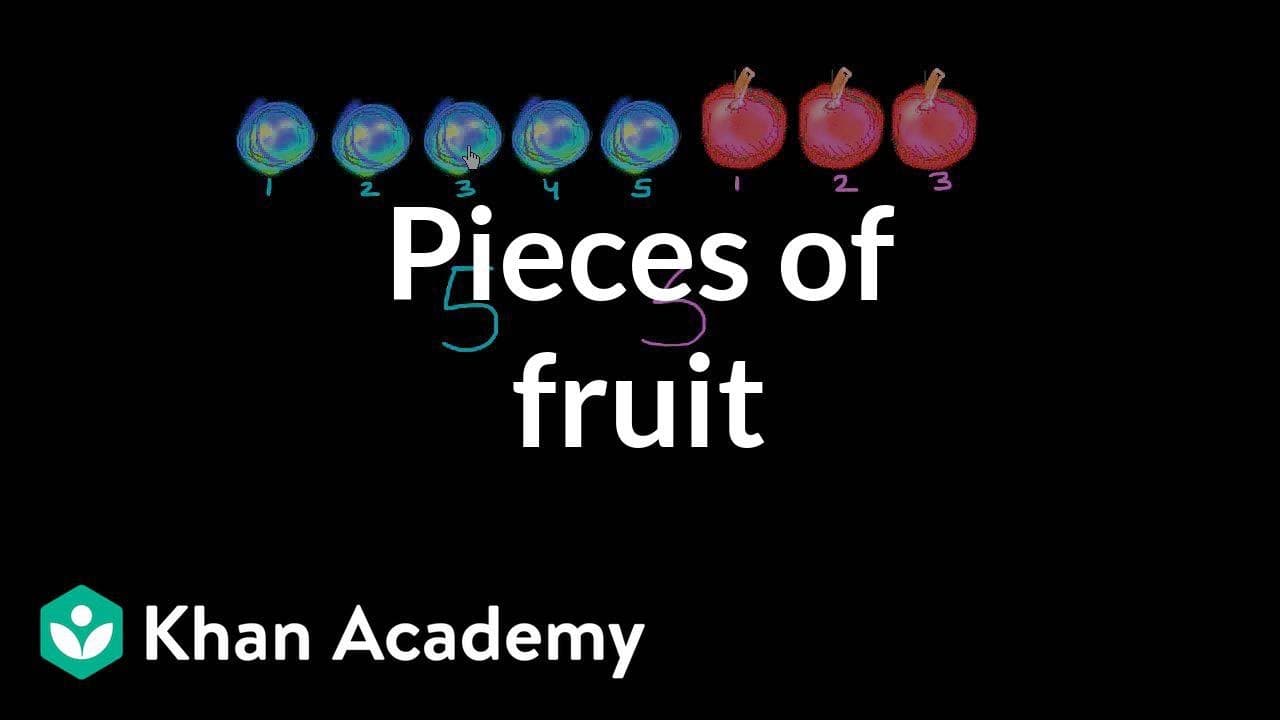
This video explores the fundamental difference between addition and subtraction through a simple, visual example involving fruit. The narrator presents a scenario with five blueberries and three cherries, challenging viewers to determine whether they need to add or subtract to find the "total number of fruit." The video clearly distinguishes between the two operations by visually mapping them to physical actions—combining sets versus taking items away. Key themes include counting objects, understanding mathematical symbols (+ and -), and interpreting word problem vocabulary. The video visually demonstrates that addition is used for combining distinct groups to find a larger total sum (5 + 3 = 8), while subtraction is modeled as "taking away" or removing items from a starting group (5 - 3 = 2). This side-by-side comparison helps clarify when to apply each operation. For educators, this resource is an excellent tool for introducing early arithmetic concepts and problem-solving strategies. It helps students transition from concrete counting to abstract equations by explicitly visualizing the "why" behind the choice of operation. The clear comparison between "getting more" (addition) and "eating/taking away" (subtraction) provides a strong mental model for young learners beginning to solve one-step word problems.

Khan AcademyKhan Academy

2mins 17s

Video
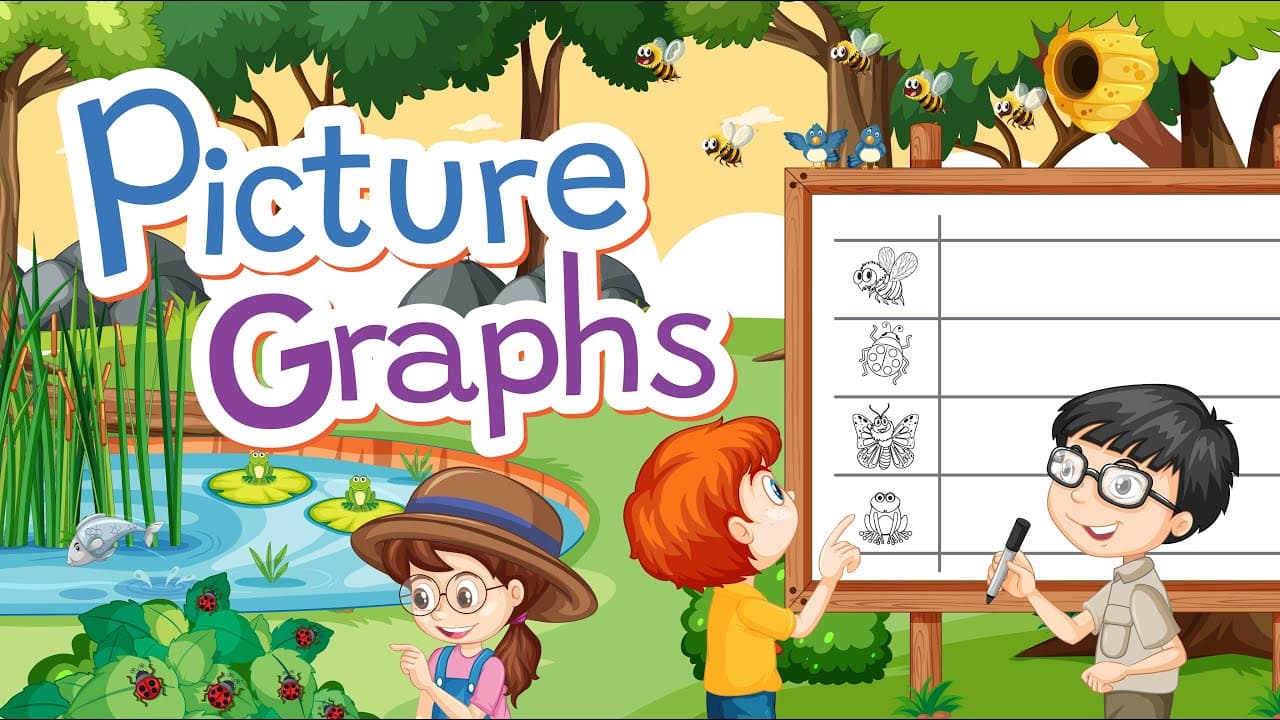
Creating Picture Graphs in the Garden

Creating Picture Graphs in the Garden

This animated math lesson introduces young learners to data handling through the creation of a simple picture graph. Set in a vibrant garden environment, the video guides students through the process of observing different animals, counting them one by one, and recording that data using a pictorial representation where one circle represents one animal. The video covers fundamental early math skills including counting objects up to 10, one-to-one correspondence, and translating counted quantities into a graphical format. It systematically demonstrates the process for four different data sets: bees, ladybugs, butterflies, and frogs, reinforcing the connection between the physical objects and their symbolic representation on the chart. Ideal for early elementary classrooms, this resource serves as an excellent introduction or review of graphing concepts. The clear visual cues, such as animals glowing as they are counted, support students who are developing counting fluency. The video concludes with open-ended analysis questions about 'most' and 'least,' encouraging critical thinking and data interpretation skills beyond simple construction.

MatholiaChannelMatholiaChannel

2mins 19s

Video
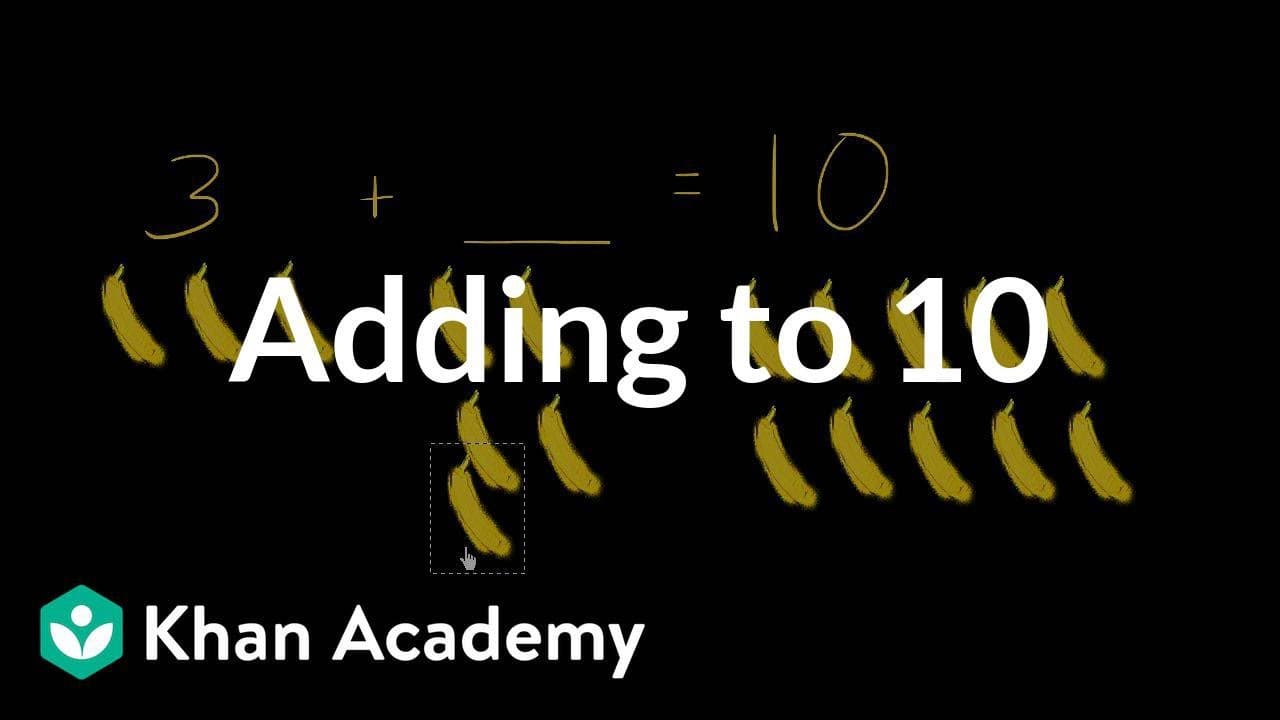
Finding the Missing Number to Make 10 with Bananas

Finding the Missing Number to Make 10 with Bananas

This educational math video demonstrates how to solve a missing addend problem using concrete visual aids. Specifically, it tackles the equation "3 + _ = 10" by using drawings of bananas to represent the numbers. The narrator guides viewers through a "counting on" strategy, starting with the initial three bananas and drawing additional ones one-by-one until the total reaches ten. The video explores key themes of addition, equality, and the relationship between numbers that sum to ten (often called "friends of ten"). It visually distinguishes between the starting quantity and the added quantity, helping students understand that the missing number represents only the items added to reach the total, not the total itself. For educators, this video is an excellent tool for introducing or reinforcing algebraic thinking in early elementary grades. It bridges the gap between concrete counting and abstract equations. Teachers can use it to model how to use manipulatives to solve for unknown numbers, validating strategies like counting on or using drawing to solve math problems.

Khan AcademyKhan Academy

2mins

Video
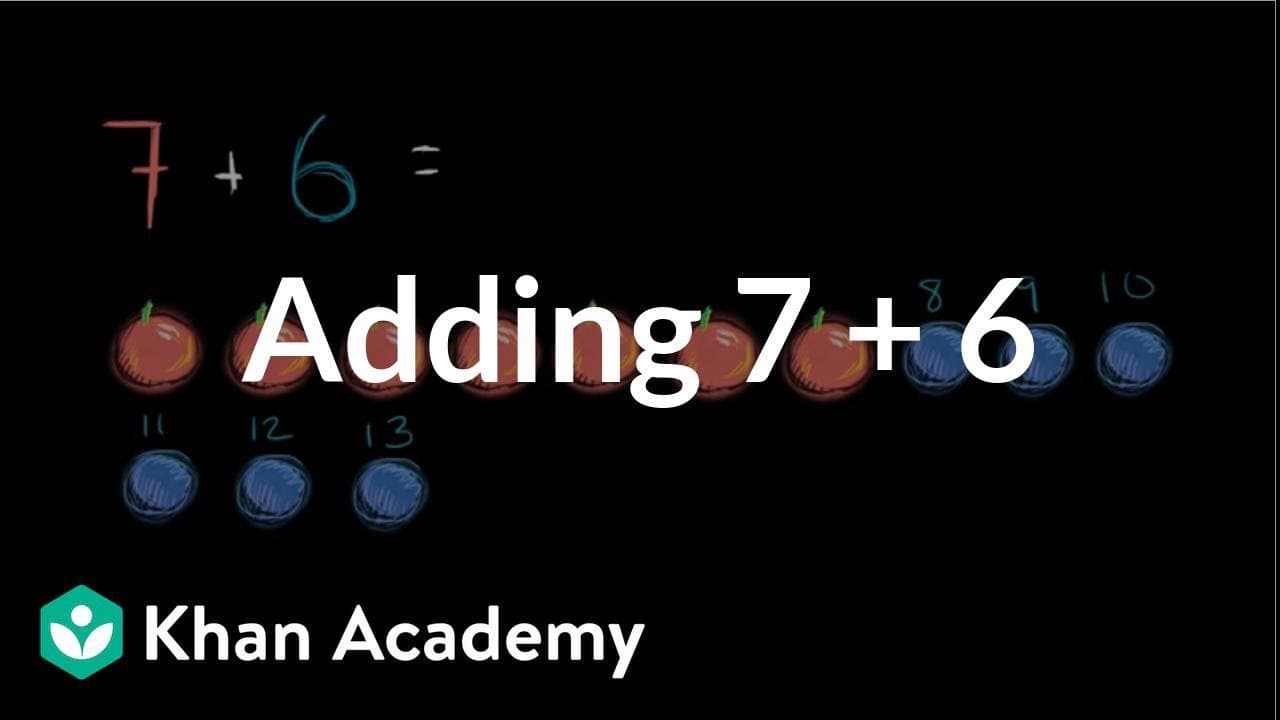
Three Strategies to Solve 7 Plus 6

Three Strategies to Solve 7 Plus 6

This video presents a comprehensive tutorial on basic addition, specifically focusing on the problem 7 + 6. It demonstrates three distinct strategies to solve the equation, moving from concrete visual representations to more abstract mathematical concepts. The narrator first uses digital manipulatives (tomatoes and blueberries), then transitions to a number line approach, and finally introduces the concept of place value by grouping numbers to "make a ten." The key themes explored include one-to-one correspondence, counting on, using linear models for calculation, and the fundamental structure of teen numbers. The video places significant emphasis on decomposing numbers to facilitate mental math, specifically showing how 7 + 6 can be understood as (7 + 3) + 3, or 10 + 3. This conceptual bridge explains why the number 13 is written with a '1' in the tens place and a '3' in the ones place. For educators, this resource is highly valuable for bridging the gap between simple counting and computational fluency. It visualizes the "making ten" strategy, which is a critical standard in early elementary mathematics. Teachers can use this video to differentiate instruction, offering multiple entry points for students who learn best through visual aids, linear movement, or structural number sense.

Khan AcademyKhan Academy

3mins 53s

Video
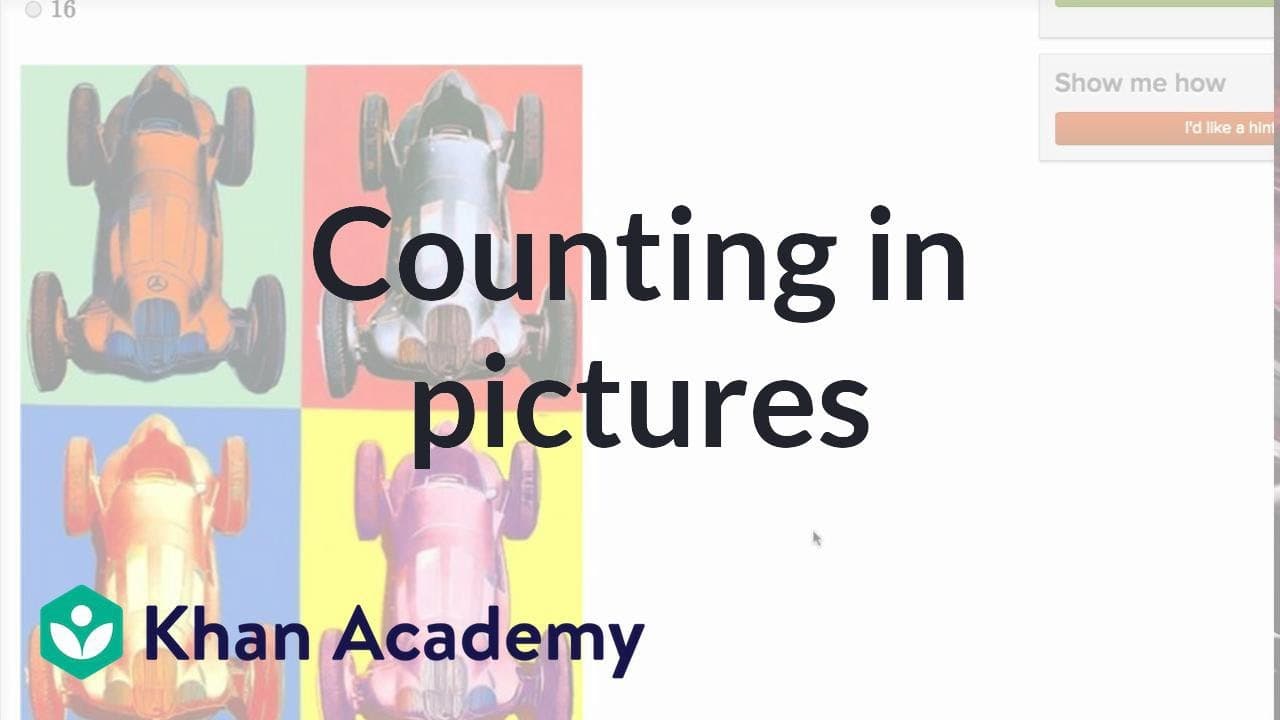
Practice Counting Objects in Art

Practice Counting Objects in Art

This video features a guided walkthrough of an interactive math exercise that combines basic counting skills with art appreciation. The narrator demonstrates how to count specific objects—such as people, wheels, faces, and bottles—within famous works of art by artists like Winslow Homer, Andy Warhol, and Mary Cassatt. The video models one-to-one correspondence by pointing to each item while counting aloud, reinforcing cardinality. The core themes are early numeracy, observation, and the intersection of math and art. The video emphasizes accuracy in counting sets of objects ranging from small groups (3 items) to larger sets (16 items). It also implicitly teaches students to distinguish between target objects (e.g., counting only the wheels, not the whole car) and introduces the structure of grid-based arrangements versus naturalistic scenes. For educators, this resource is an excellent tool to make math drills more engaging and visually stimulating. It connects abstract numbers to concrete visual examples, making it suitable for early childhood education. Teachers can use this video to model counting strategies, such as tracking objects with a finger or cursor to avoid double-counting, and to spark discussions about the artwork itself, bridging the gap between STEM and the arts.

Khan AcademyKhan Academy

1min 12s

Video
Counting to 1000 with Place Value Models

Counting to 1000 with Place Value Models

This educational video introduces students to counting numbers up to 1000 using visual place value models. It transitions from concrete objects (bags of candy) to standard mathematical manipulatives (Base-10 blocks), helping students visualize the magnitude of numbers in the hundreds. The narration guides viewers through a step-by-step counting process: first counting the hundreds, then adding the tens, and finally the ones, reinforcing the structure of our base-10 number system. The video covers key concepts including identifying hundreds, tens, and ones; understanding the value of digits based on their position; and dealing with zeros in the tens place (e.g., 604). It culminates in a demonstration of how ten hundreds combine to form one thousand, providing a clear visual representation of this milestone number. This resource is highly valuable for 2nd grade classrooms as it directly supports standards regarding three-digit numbers and place value. Teachers can use it to introduce the concept of larger numbers, model counting strategies, or as a visual aid to support students who struggle with abstract number concepts. The clear, paced counting allows for choral response and interactive participation during the lesson.

MatholiaChannelMatholiaChannel

5mins 16s

Video
How to Count Forward by 10s, 100s, and 1000s

How to Count Forward by 10s, 100s, and 1000s

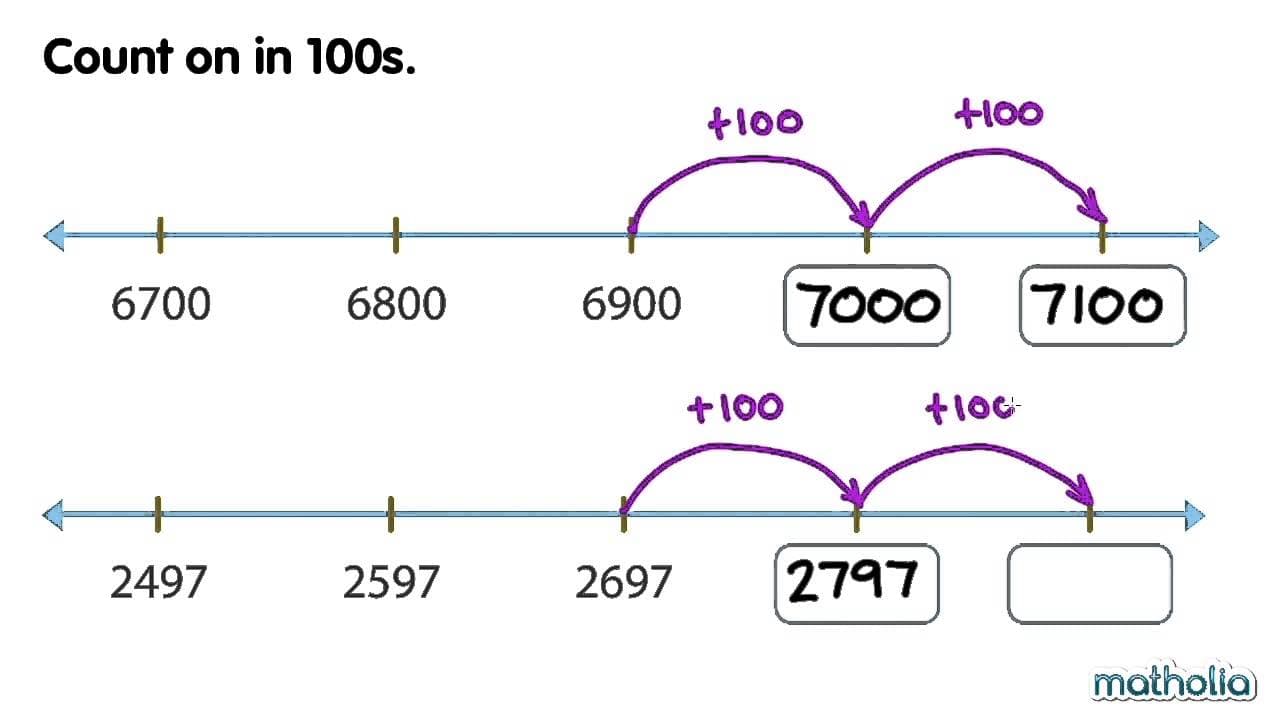
This educational video from Matholia provides a clear, step-by-step demonstration of counting on by 10s, 100s, and 1000s using four-digit numbers. Through the use of animated number lines, the video visually represents the concept of skip counting, showing how adding specific values affects the digits in a number. It breaks the process down into three distinct sections, allowing learners to focus on one place value change at a time.

MatholiaChannelMatholiaChannel

2mins 50s

Video
Different Ways to Make the Number 7

Different Ways to Make the Number 7

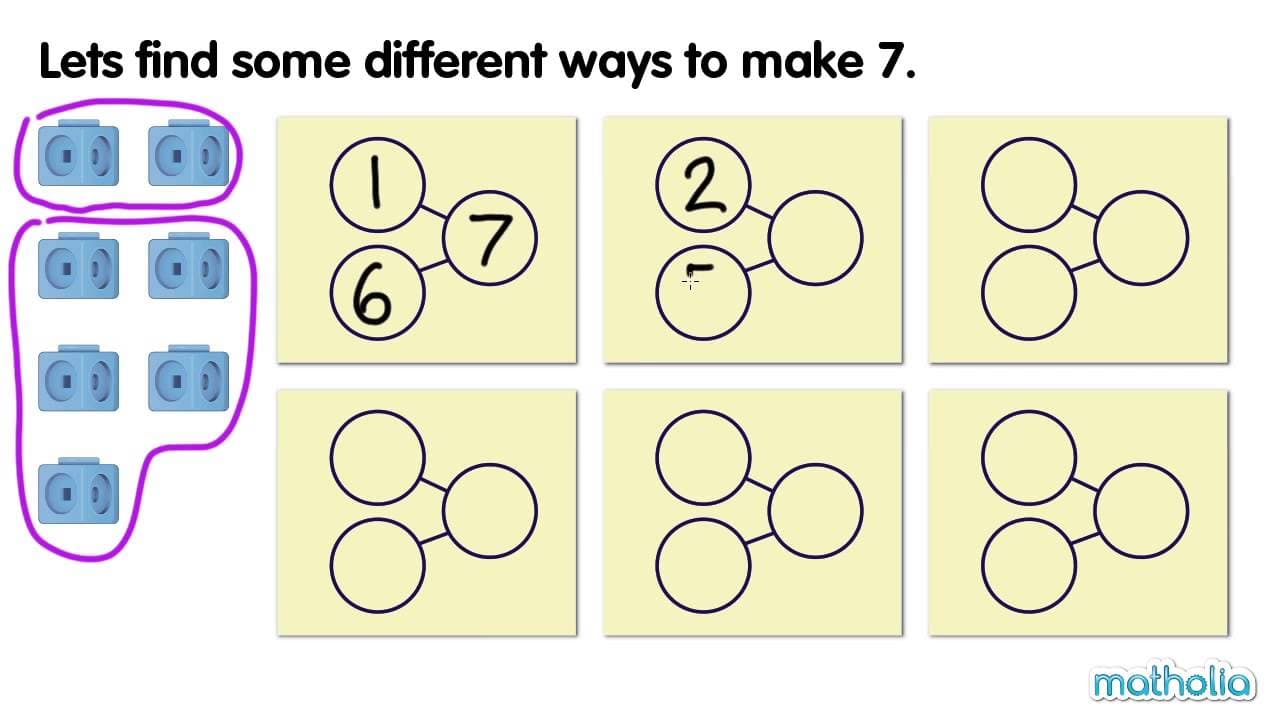
This educational video introduces young learners to the concept of number decomposition, specifically focusing on the number 7. Through a clear, systematic visual demonstration, the narrator explores all the different integer pairs that sum to seven. The video utilizes a split-screen approach, showing concrete manipulatives (blue blocks) on the left to represent quantity, and abstract number bond diagrams on the right to represent the mathematical relationship. The content methodically moves through the number combinations in ascending order, starting with 1 and 6, then 2 and 5, continuing through to 6 and 1. This structured progression helps students recognize patterns in addition, such as the relationship between increasing one addend while decreasing the other. It also implicitly introduces the commutative property of addition by showing that 3 and 4 make 7, just as 4 and 3 do. For educators, this video serves as an excellent bridge between concrete counting and abstract arithmetic. It is particularly useful for teaching number sense, part-part-whole relationships, and basic addition facts. The clear visual layout allows teachers to pause the video before the answers are written, encouraging students to subitize or count the remaining blocks to predict the missing number in the bond.

MatholiaChannelMatholiaChannel

1min 57s

Video
Counting Objects from 11 to 20

Counting Objects from 11 to 20

This educational video provides a structured and repetitive guide for young learners to master counting numbers from 11 to 20. Using a clear, consistent format, the video introduces each number individually by presenting a set of objects. It utilizes the 'counting on' strategy, where a group of ten items is visually grouped and acknowledged first, followed by counting the additional items to reach the target number. This approach effectively introduces the concept of place value (ten and ones) without explicitly naming it yet. The video covers numbers 11 through 20 sequentially, using distinct visual themes for each number, such as cookies, ants, shells, and butterflies. Each segment follows the same pattern: a question asks "How many... are there?", the counting occurs, the total is stated in a full sentence, and finally, the numeral and its written word form are animated on screen. This multimodal approach supports different learning styles by combining auditory counting, visual grouping, and literacy reinforcement. For educators, this resource is an excellent tool for introducing teen numbers and the 'counting on' method. It helps students transition from counting by ones to understanding numbers as compositions of tens and ones. The clear audio and slow pacing make it suitable for choral counting in the classroom, while the written words support early reading skills. The video concludes with a summary chart counting from 11 to 20, serving as a perfect review or assessment tool.

MatholiaChannelMatholiaChannel

5mins 46s

Video
Discovering Number Pairs That Make 5

Discovering Number Pairs That Make 5

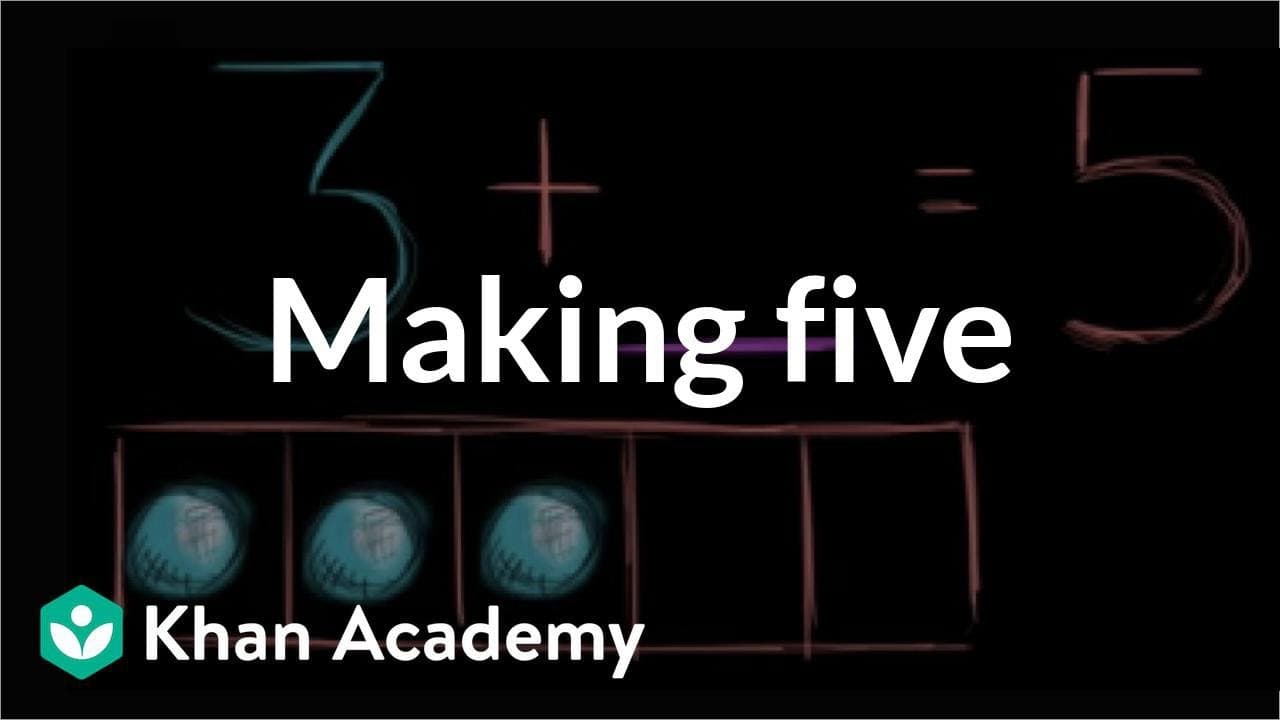
This educational video introduces early learners to the concept of decomposing the number 5 and finding missing addends. Through a clear, step-by-step visual demonstration, the narrator uses five-frames (a row of five boxes) to illustrate different number combinations that equal 5. The video specifically explores the pairs 3+2, 2+3, 4+1, and 1+4, using colorful hand-drawn objects like circles, stars, blocks, and smiley faces to make the abstract math concrete. The key themes explored are basic addition, the concept of a "mystery number" or missing addend (algebraic thinking), and the commutative property of addition (though not named explicitly, it is demonstrated by showing that 3+2 and 2+3 both equal 5). The video emphasizes visual counting and the relationship between the part and the whole. For the classroom, this video is an excellent tool for introducing number bonds of 5 or reinforcing fluency with addition facts within 5. The visual model of filling in empty boxes helps students bridge the gap between counting objects and understanding symbolic addition equations. It naturally encourages students to pause and predict answers, making it an interactive resource for whole-group instruction or independent practice stations.

Khan AcademyKhan Academy

4mins 6s

Video
Learning to Multiply by 3 with Groups and Skip Counting

Learning to Multiply by 3 with Groups and Skip Counting

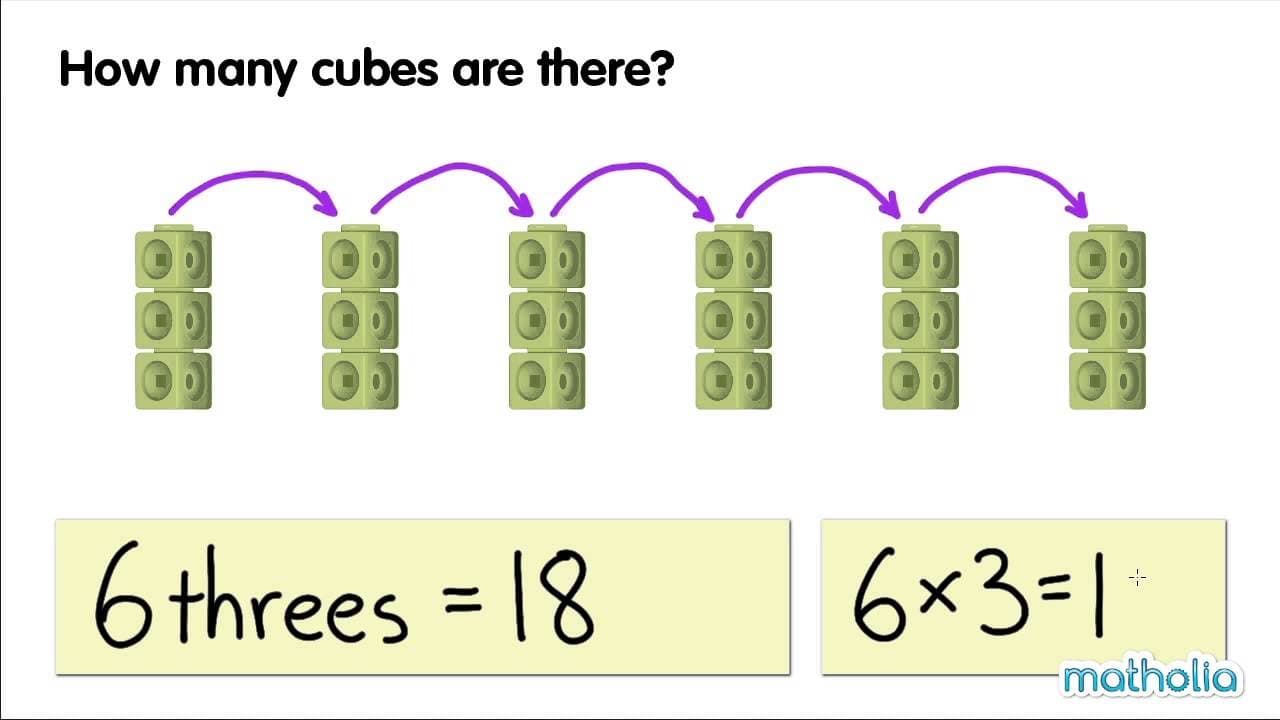
This instructional video provides a clear, step-by-step introduction to multiplying by 3, designed specifically for early elementary students. It begins by using concrete visual aids—groups of balloons and connecting cubes—to demonstrate the concept of multiplication as repeated addition. The narrator guides viewers through the process of counting groups, identifying how many items are in each group, and then skip-counting by threes to find the total sum. The video progresses from concrete examples to abstract representation. It explicitly links the language of "groups of" to the multiplication symbol, showing how "4 threes" translates mathematically to "4 x 3". Following the object-based examples, the video features a number line segment where numbers appear sequentially to practice skip-counting from 3 to 30. This visual reinforces the number pattern associated with the 3 times table. Finally, the video presents the complete multiplication table of 3, reading through each equation from 1 x 3 to 10 x 3. This structure makes the video an excellent resource for introducing the concept of multiplication, reinforcing skip-counting skills, and aiding in the memorization of multiplication facts. Teachers can use it to visualize the transition from addition to multiplication or as a review tool for times table fluency.

MatholiaChannelMatholiaChannel

3mins 1s

Video
Visualizing Subtraction with Place Value Blocks

Visualizing Subtraction with Place Value Blocks

This video provides a clear, visual demonstration of subtracting a single-digit number from a two-digit number using place value concepts. The narrator uses digital manipulatives—specifically base-ten block drawings—to represent the number 46, decomposing it into four tens and six ones. This visual approach helps students concretely understand what the abstract numbers represent before any operations are performed. The core theme of the video is understanding subtraction through the lens of place value. By physically crossing out four 'ones' blocks from the original six, the video demonstrates that when subtracting single digits (without regrouping), the operation only affects the ones place while the tens place remains unchanged. This reinforces the concept that digits in different positions have specific values and function independently in simple operations. For educators, this video is an excellent tool for bridging the gap between concrete manipulatives and abstract equations. It is particularly useful for introducing non-regrouping subtraction in 1st or 2nd grade. Teachers can use this to model how to draw 'quick tens and ones' to solve problems, showing students a strategy they can use even without physical blocks. The video explicitly connects the visual act of taking away blocks to the numerical procedure of changing the digit in the ones place.

Khan AcademyKhan Academy

2mins 44s

Video
Counting Large Numbers by Grouping into Tens and Ones

Counting Large Numbers by Grouping into Tens and Ones

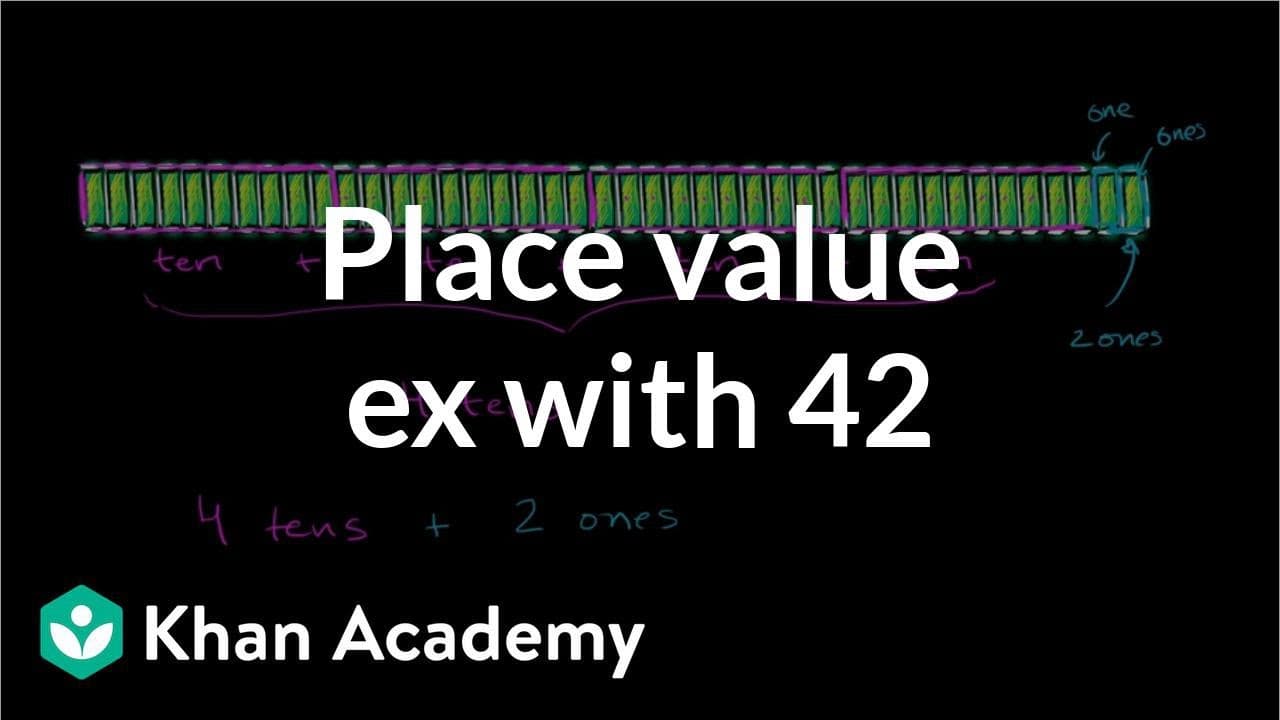
This educational video provides a clear, visual demonstration of the fundamental mathematical concept of place value, specifically focusing on the tens and ones places. Using a long bar composed of individual green segments, the narrator breaks down a large unknown quantity into manageable groups of ten. This process illustrates the efficiency of our base-10 number system, transforming a long string of units into a structured representation of '4 tens' and '2 ones'. The video explores key themes of counting, grouping, and the relationship between concrete quantities and abstract digits. By physically boxing off groups of ten on screen, the narrator makes the transition from counting by ones to counting by tens explicit and visual. The lesson culminates in constructing the number 42, explaining that the digit '4' represents four groups of ten (40) and the digit '2' represents two single units, connecting the standard numeral to its expanded form (40 + 2). For educators, this video serves as an excellent introduction or reinforcement tool for teaching number sense and place value in early elementary grades. It bridges the gap between rote counting and understanding the structural meaning of two-digit numbers. Teachers can use this video to model how to group objects for easier counting, introduce the concept of digits having different values based on their position, and demonstrate the connection between visual models and written numerals.

Khan AcademyKhan Academy

4mins 19s

Video
Solving Simple Subtraction Word Problems

Solving Simple Subtraction Word Problems

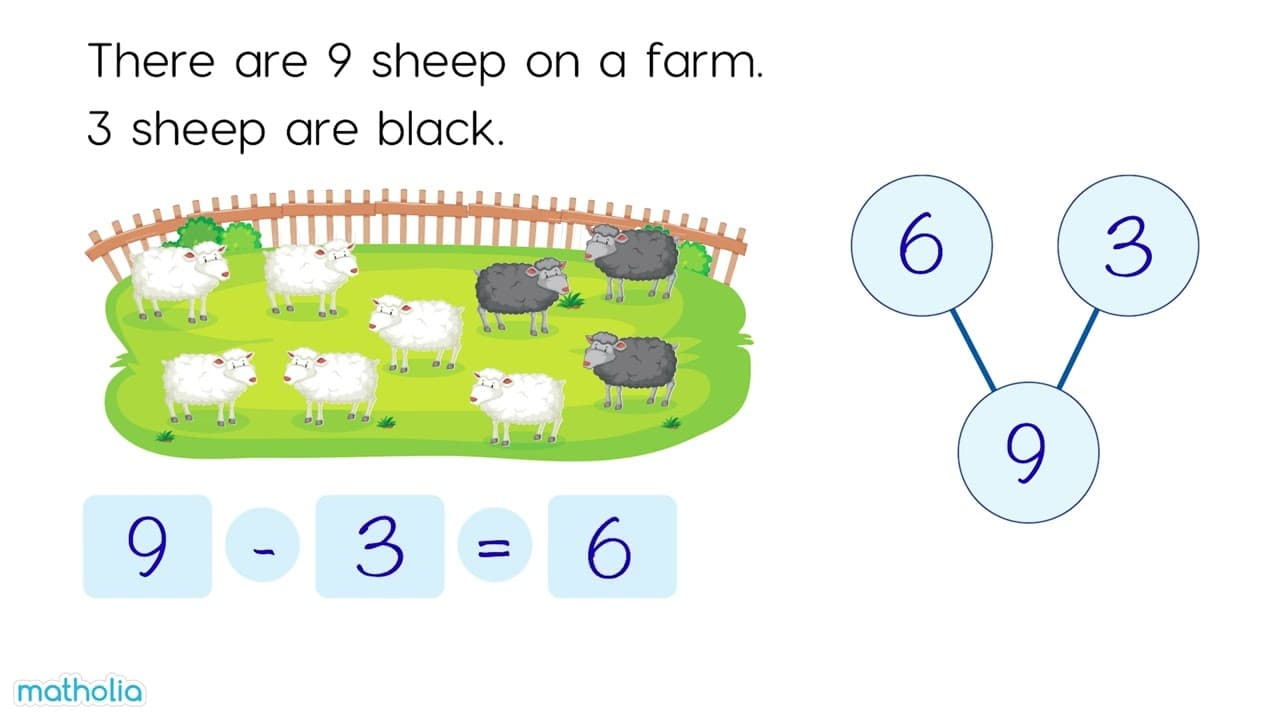
This educational video introduces young learners to the concept of subtraction through simple, visual word problems. Using engaging animations, the video presents two distinct scenarios: a farm setting with sheep and a playful scene with bubbles. In each story, the narrator guides students through the process of identifying the total number, recognizing the amount being subtracted, and calculating the remainder using number bonds and subtraction equations. The video explores key mathematical themes including basic subtraction, part-whole relationships (number bonds), and translating word problems into numerical equations. It specifically focuses on single-digit subtraction within the range of 1-10, making it highly accessible for early numeracy development. The use of the phrase "take" alongside the minus symbol helps bridge the gap between spoken language and mathematical notation. For educators, this resource serves as an excellent visual aid to reinforce subtraction skills. It demonstrates how to visualize a math problem using concrete objects before moving to abstract numbers. Teachers can use this video to model how to extract relevant information from a story problem, how to use number bonds as a solving strategy, and how to write the corresponding subtraction sentence. It is particularly effective for visual learners and for introducing the concept of "taking away."

MatholiaChannelMatholiaChannel

1min 1s

Video
Learning to Count Backwards to Zero

Learning to Count Backwards to Zero

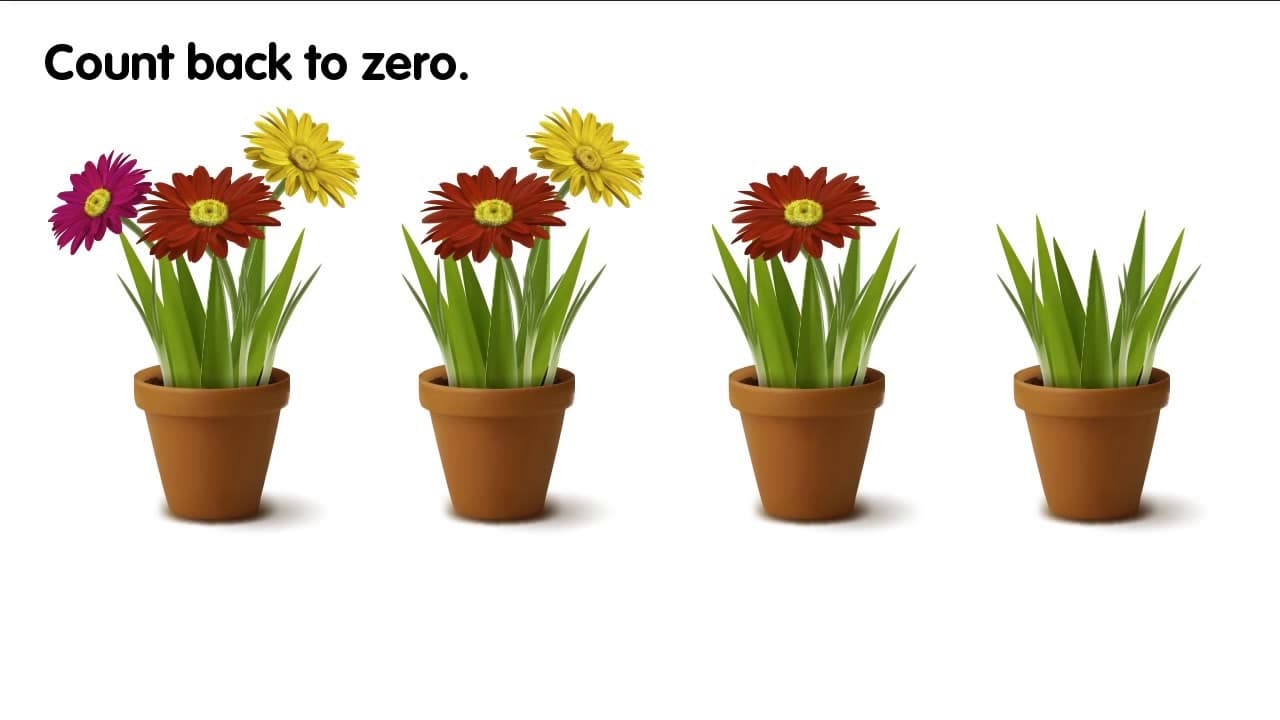
This educational video introduces early learners to the concept of counting backwards and the specific value of zero through a simple, visual demonstration using flowers in a pot. The video systematically removes one flower at a time, starting from three and ending with an empty pot, providing a concrete visual representation of subtraction and descending numerical order. The clear narration pairs spoken numbers with written numerals and words, reinforcing number recognition and literacy simultaneously. The content focuses on two primary mathematical themes: sequential counting backwards (3, 2, 1, 0) and the conceptual understanding of zero as "none" or the absence of items. By explicitly showing the empty pot and labeling it as "no flowers" and then "zero flowers," the video helps bridge the abstract concept of zero with a tangible real-world example. The handwriting animation for both digits and number words further supports fine motor visualization and literacy development. For educators, this video serves as an excellent hook for lessons on subtraction, countdowns, or the introduction of zero. It effectively uses the "fading" scaffolding technique—starting with a full set and reducing it—to teach the sequence of counting back. Teachers can use this video to transition students from counting objects (cardinality) to understanding the sequence of numbers in reverse, making it a foundational resource for Pre-K and Kindergarten math curriculums.

MatholiaChannelMatholiaChannel

1min 52s

Video
How to Collect Data and Make Pictographs

How to Collect Data and Make Pictographs

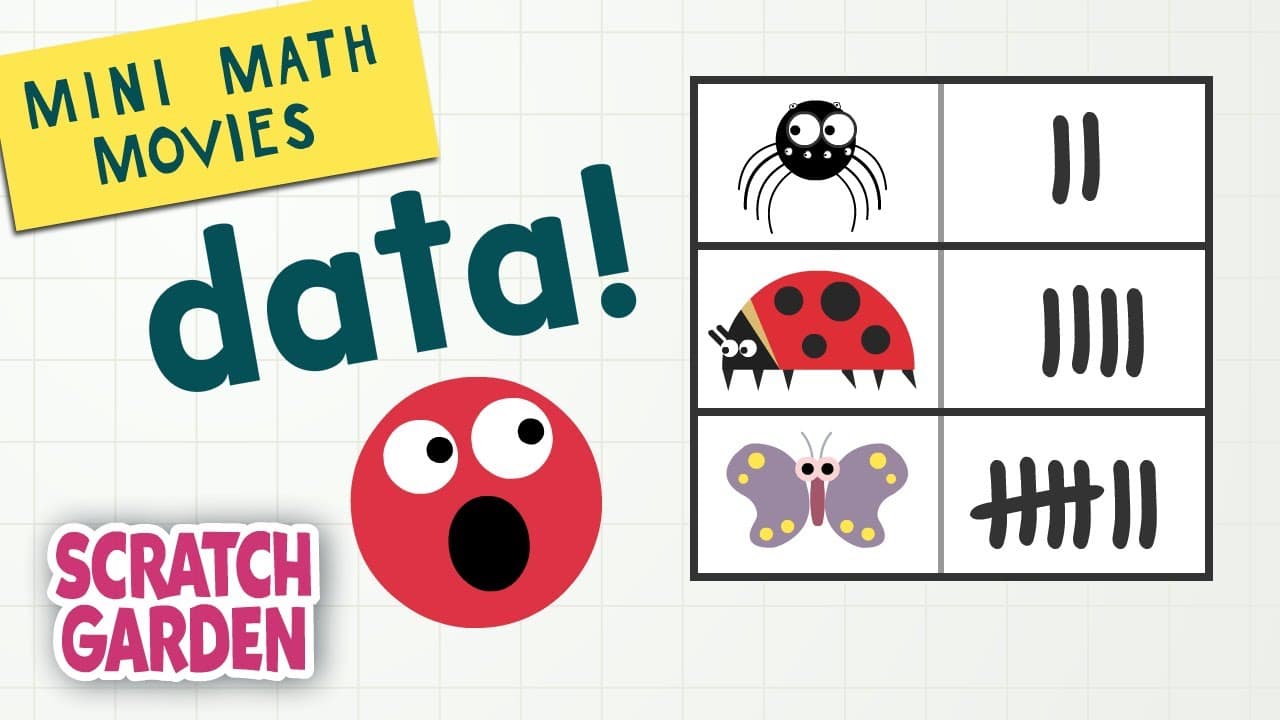
This engaging animated video introduces young learners to the fundamental concepts of data collection and representation. Hosted by a quirky red character from Scratch Garden, the lesson guides students through two distinct methods of gathering information: observation and surveying (asking questions). The video uses clear, humorous examples—counting the host's colorful siblings and polling them about their favorite bugs—to demonstrate how data is not just numbers, but a way to understand the world around us. The content covers essential early math skills including counting, using tally marks, and creating pictographs. It explicitly teaches the mechanics of drawing tally marks (grouping by fives) and shows how to translate raw data tables into visual graphs. The narrative progresses from simple counting to comparative analysis, asking students to interpret the data they have collected by identifying the "most popular" and "least popular" categories, as well as performing basic calculations like determining the difference between two values. For educators, this video serves as an excellent anchor for a unit on measurement and data. Its pacing allows for interactive pausing, where students can count along or predict answers. The dual focus on 'observing' versus 'asking' helps distinguish between objective data collection and opinion-based surveys, providing a solid foundation for scientific inquiry and mathematical reasoning in K-2 classrooms.

Scratch GardenScratch Garden

8mins 13s

Video
How to Subtract by Counting Back

How to Subtract by Counting Back

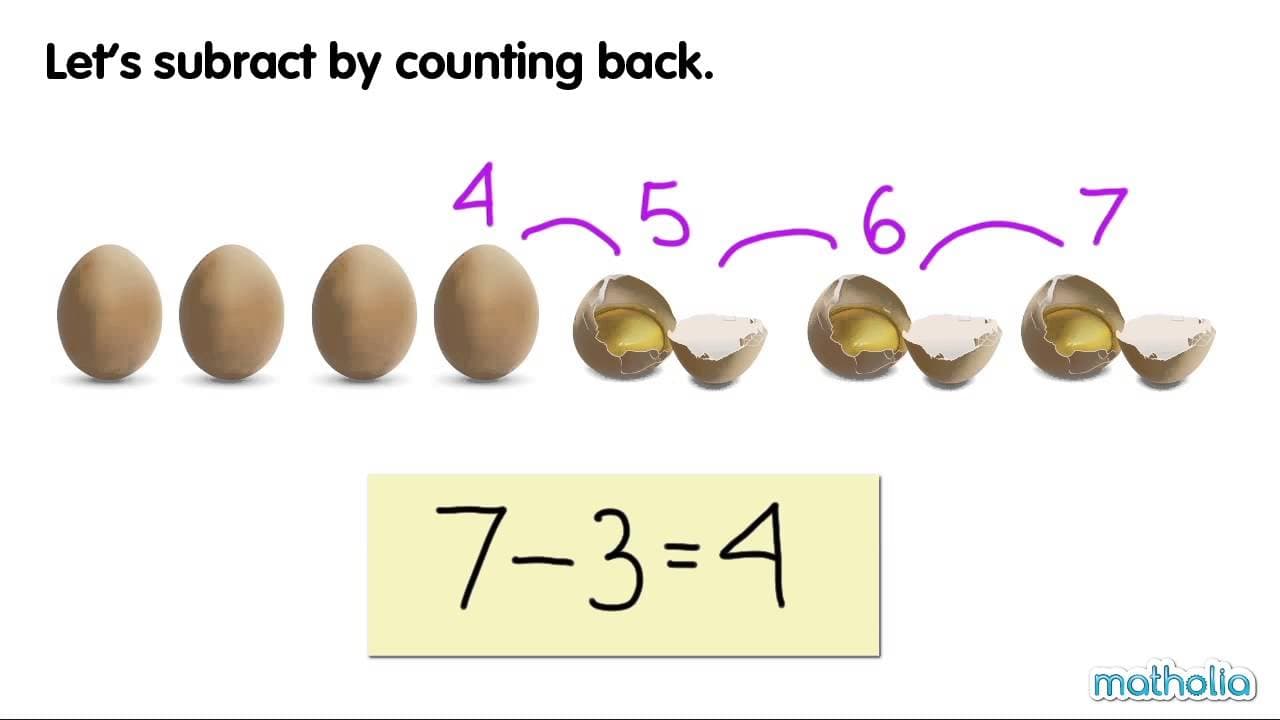
This educational video introduces early learners to the subtraction strategy of "counting back." Through three clear, visual examples involving eggs, books, and linking cubes, the video demonstrates how to solve subtraction problems by starting at the whole number and counting backwards by the amount being subtracted. Each example progresses from a real-world scenario to a visual counting method, and finally to a written mathematical equation. The video focuses on the fundamental concept of subtraction as "taking away" and connects it directly to the mental math strategy of counting backwards. It uses clear visual aids—specifically curved lines representing "hops" backwards on a number line—to help students visualize the abstract concept of decreasing value. The examples used (7-3, 8-4, and 9-3) cover single-digit subtraction within 10. This resource is highly valuable for Kindergarten and 1st Grade classrooms introducing subtraction strategies beyond simple counting of remaining objects. It bridges the gap between concrete manipulatives (like counting physical eggs) and abstract mental math (counting back in one's head). Teachers can use this to model how to use number lines or mental counting to solve equations efficiently.

MatholiaChannelMatholiaChannel

2mins 27s

Video
Writing Addition Equations with Pictures

Writing Addition Equations with Pictures

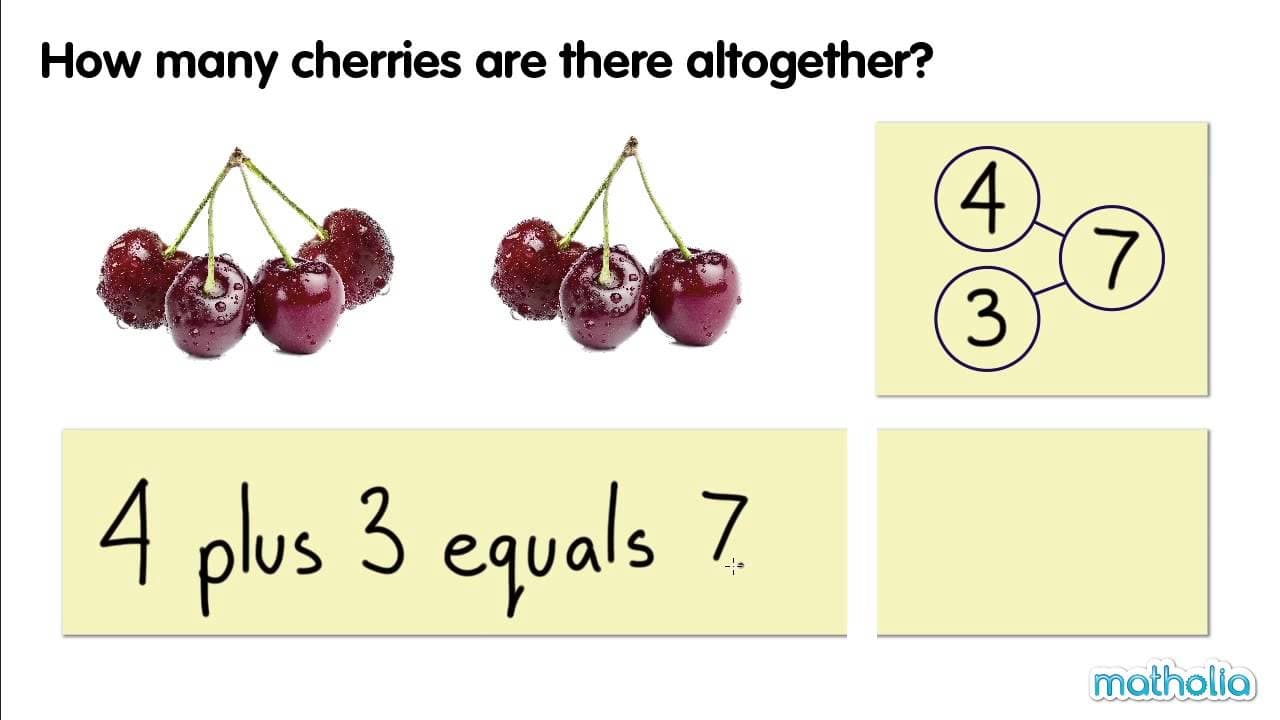
This educational video introduces young learners to the concept of addition through visual examples and step-by-step equation writing. Using concrete objects like kittens, cherries, and eggs, the video demonstrates how to combine two groups to find a total. It explicitly connects visual counting to the abstract representation of mathematics by showing how to translate physical quantities into both written sentences and numerical equations. The content focuses on three key themes: identifying parts of a whole, understanding number bonds (part-part-whole relationships), and learning mathematical vocabulary. It guides students through the process of recognizing distinct groups, counting them, and then expressing that relationship using the terms "plus" and "equals," as well as the symbols "+" and "=". This progression helps bridge the gap between counting and formal arithmetic. For educators, this video serves as an excellent instructional tool for modeling how to write addition equations. It reinforces the "part-part-whole" model using clear number bond diagrams alongside the equations. Teachers can use this video to scaffold lessons on addition, helping students move from counting physical manipulatives to writing their own number sentences. The repetitive structure allows for predictable learning, making it ideal for pause-and-discuss sessions where students predict the answers before they appear on screen.

MatholiaChannelMatholiaChannel

2mins 18s

Video
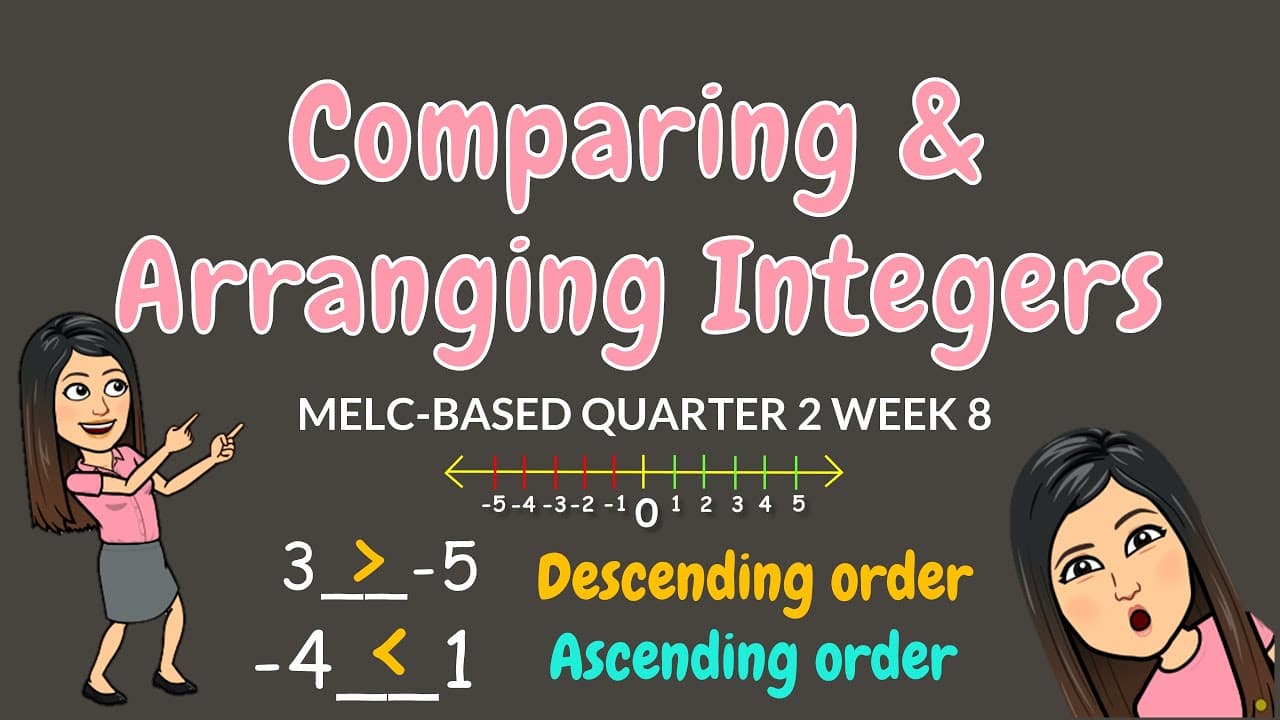
Comparing and Ordering Numbers up to 20

Comparing and Ordering Numbers up to 20

This educational video guides young students through the concepts of comparing and arranging numbers between 10 and 20. It progresses from concrete visual representations using stickers to more abstract number comparisons. The video uses clear narration and animated characters to demonstrate how to identify the smallest and greatest numbers in a set and how to order them sequentially.

MatholiaChannelMatholiaChannel

4mins 23s

Video
How to Compare and Order Numbers Up to 1000

How to Compare and Order Numbers Up to 1000

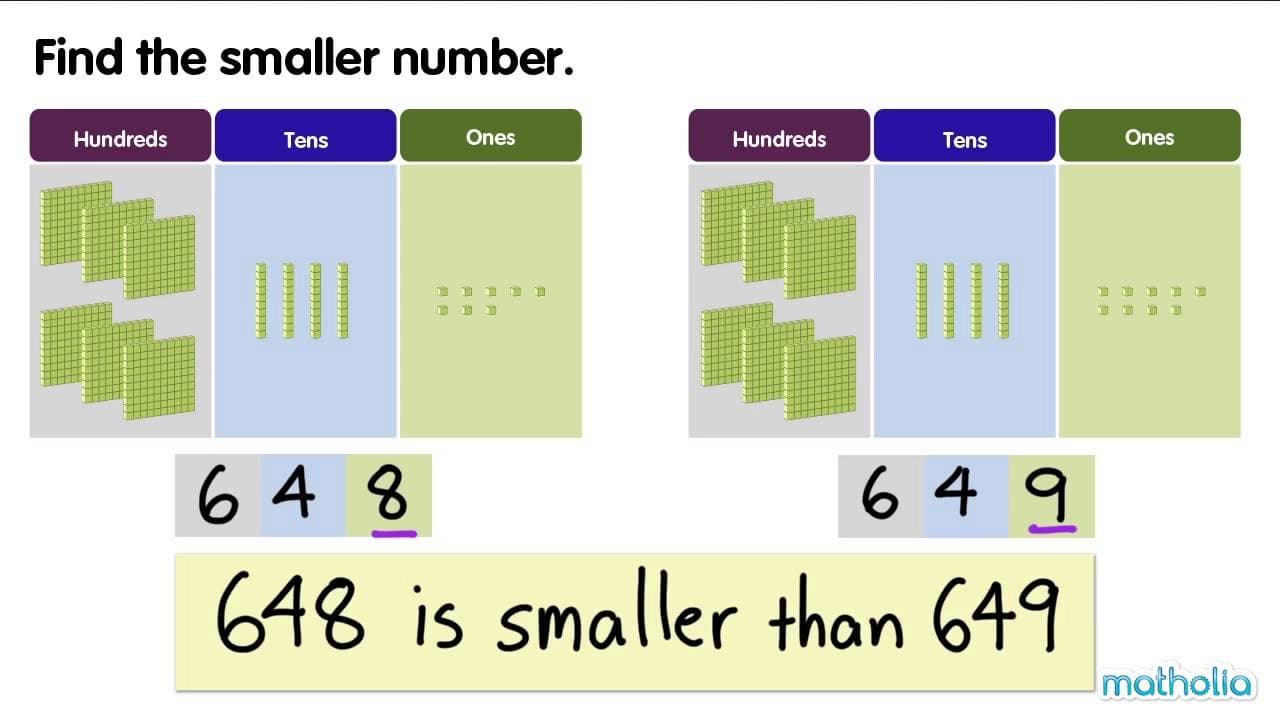
This educational video provides a clear, step-by-step tutorial on how to compare and order three-digit numbers. Using visual aids like base-10 blocks alongside numerical digits, the video demonstrates the logical process of comparing numbers by examining place value from left to right—starting with the hundreds, moving to the tens, and finally the ones. The content covers four specific scenarios: finding the greater of two numbers, finding the smaller of two numbers, arranging a set of three numbers from smallest to greatest, and arranging a set of four numbers from greatest to smallest. Each example reinforces the strategy of isolating digits within their specific place value columns to determine magnitude. This video is an excellent resource for 2nd and 3rd-grade classrooms introducing or reviewing number sense and place value concepts. The dual representation of numbers (blocks and digits) helps bridge the gap between concrete understanding and abstract numerical comparison, making it valuable for students who need visual scaffolding to grasp why one number is larger than another.

MatholiaChannelMatholiaChannel

4mins 46s

Video
Comparing Three-Digit Numbers Using Inequality Symbols

Comparing Three-Digit Numbers Using Inequality Symbols

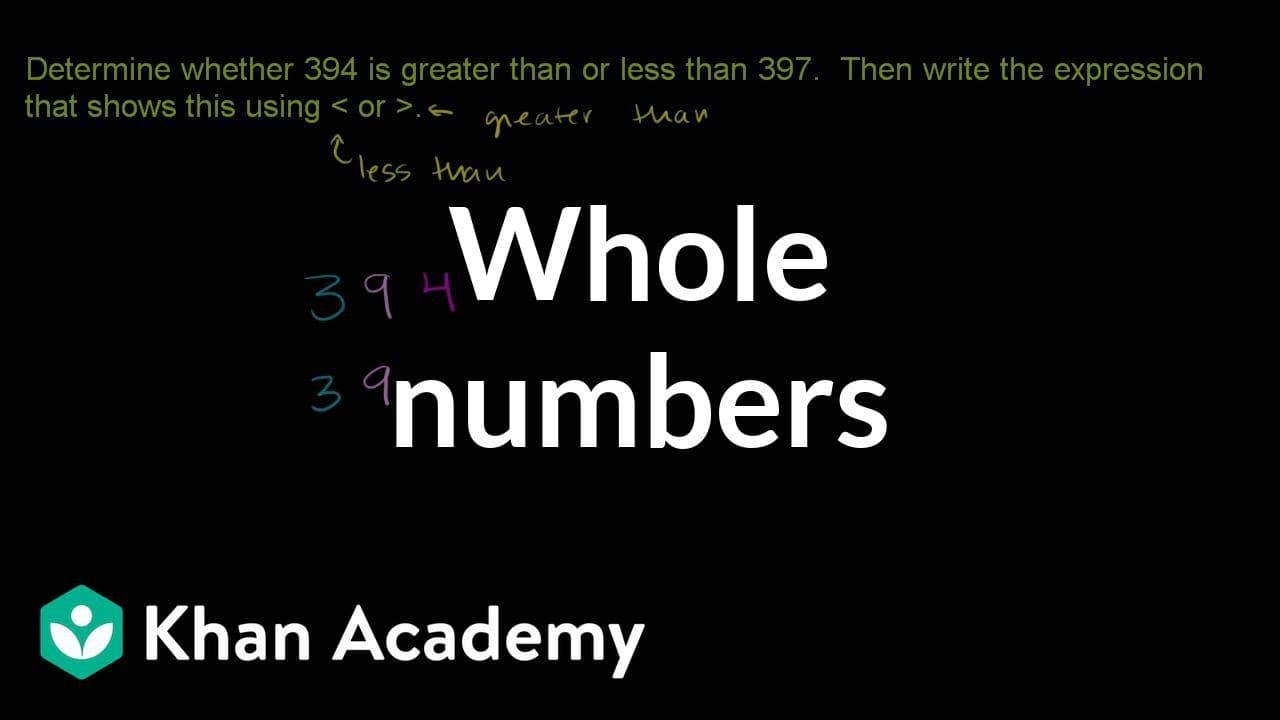
This educational video demonstrates how to compare two three-digit numbers (394 and 397) using place value strategies and inequality symbols. The narrator walks viewers through the step-by-step process of analyzing the digits in the hundreds, tens, and ones places to determine which number is larger. By aligning the numbers and comparing them digit-by-digit, the video provides a clear methodology for solving comparison problems. The content focuses on key mathematical concepts including place value understanding and the correct usage of "greater than" (>) and "less than" (<) symbols. A significant portion of the video is dedicated to explaining how to remember which symbol to use, providing a visual mnemonic where the "smaller side" of the symbol points to the smaller number and the "bigger side" opens toward the larger number. The narrator demonstrates that the comparison can be written in two valid ways: stating 394 is less than 397, or 397 is greater than 394. For educators, this video serves as an excellent model for teaching 2nd and 3rd-grade students how to articulate mathematical comparisons. It moves beyond just finding the answer to constructing a mathematical sentence (expression) that represents the relationship. The visual demonstration of the inequality symbols helps address the common student confusion between the two signs, making it a practical resource for introducing or reviewing inequalities.

Khan AcademyKhan Academy

2mins 4s

Video
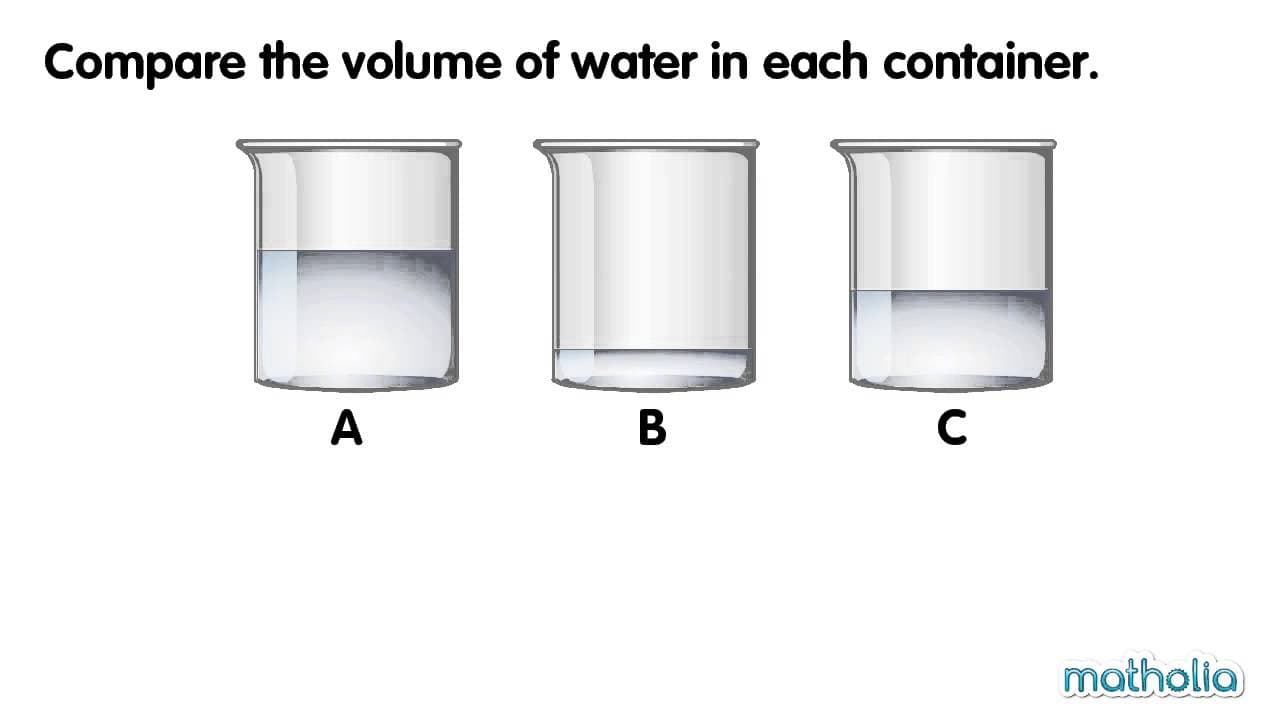
Comparing and Ordering Liquid Volume

Comparing and Ordering Liquid Volume

This educational video introduces early learners to the concept of volume by comparing liquid levels in identical containers. Using clear animations and simple narration, it guides students through the process of observing water levels to determine which container holds more or less liquid. The video progresses from comparing two containers using the terms "greater than" and "smaller than" to comparing three containers using superlatives like "greatest" and "smallest." The content specifically focuses on measurement vocabulary and the skill of ordering objects based on measurable attributes. It emphasizes the importance of controlling variables by repeatedly stating that the containers are the same size, allowing students to focus solely on the water level as the indicator of volume. The visual cues, such as blue lines marking the water levels, help reinforce the connection between height and volume in uniform containers. This resource is highly valuable for early elementary math classrooms as a visual anchor for lessons on measurement and capacity. It provides a clear, distraction-free model for comparing volume that can be easily replicated with real classroom materials. Teachers can use this video to introduce vocabulary before a hands-on water table activity or as a review tool to check understanding of ordering concepts.

MatholiaChannelMatholiaChannel

2mins 20s

Video
Comparing Heights at the Campsite

Comparing Heights at the Campsite

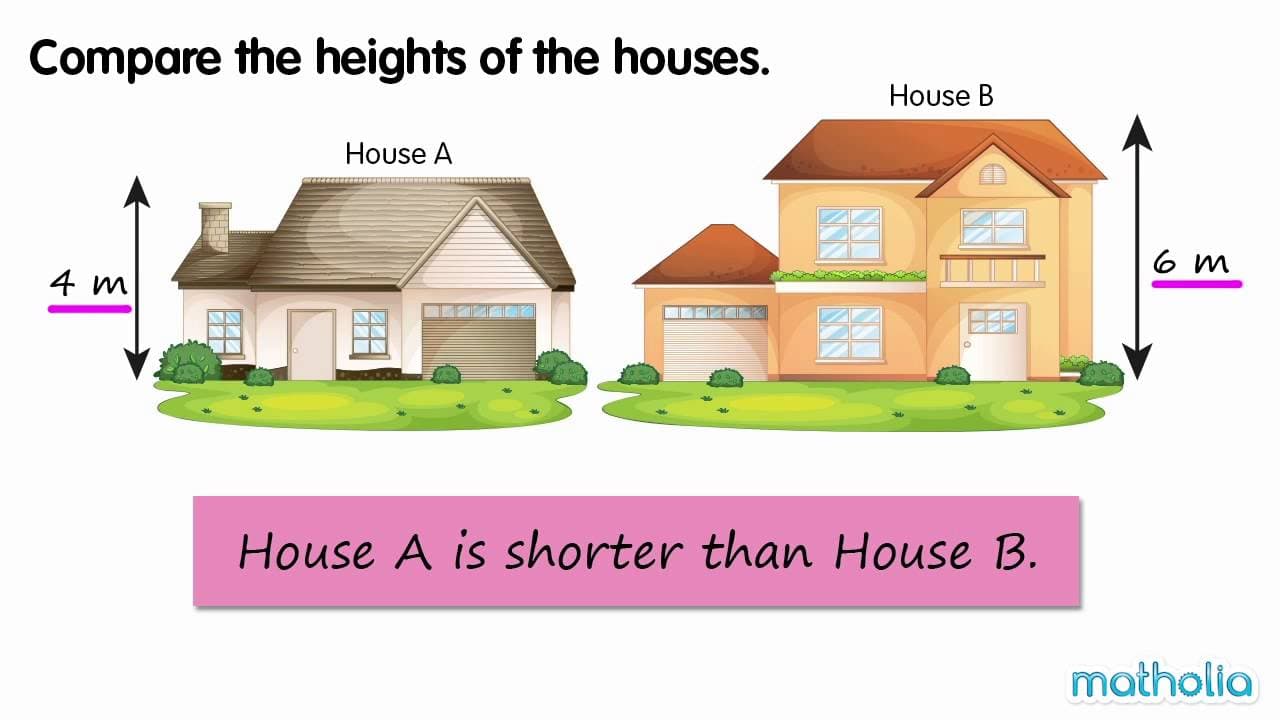
This animated educational video introduces early learners to the concept of comparing heights through a fun, camping-themed narrative. Set in a colorful campsite environment, the narrator guides students to observe and compare various pairs of objects and characters, including two children named Dominic and Chelsea, two trees of different sizes, a mother and baby giraffe, and two different colored tents. The video uses clear visual cues, specifically blue dashed lines, to demonstrate exactly how height is measured and compared from a common baseline. The content focuses on building essential measurement vocabulary, specifically the terms "taller" and "shorter." It systematically models direct comparison by placing objects side-by-side and explicitly stating the relationship between them (e.g., "Dominic is taller than Chelsea"). The video progresses from comparing people to nature (trees), animals (giraffes), and objects (tents), reinforcing the concept across different categories while practicing the comparative language structures. For educators, this video serves as an ideal introduction or reinforcement for a measurement unit in early childhood classrooms. The clear, uncluttered visuals and slow pacing allow students to process the questions before the answers are revealed, making it interactive. The use of the horizontal dashed lines is a valuable pedagogical tool that helps students visualize the top-most point of objects to accurately judge height, addressing the common skill of aligning objects at a baseline to compare them fairly.

MatholiaChannelMatholiaChannel

2mins 11s

Video
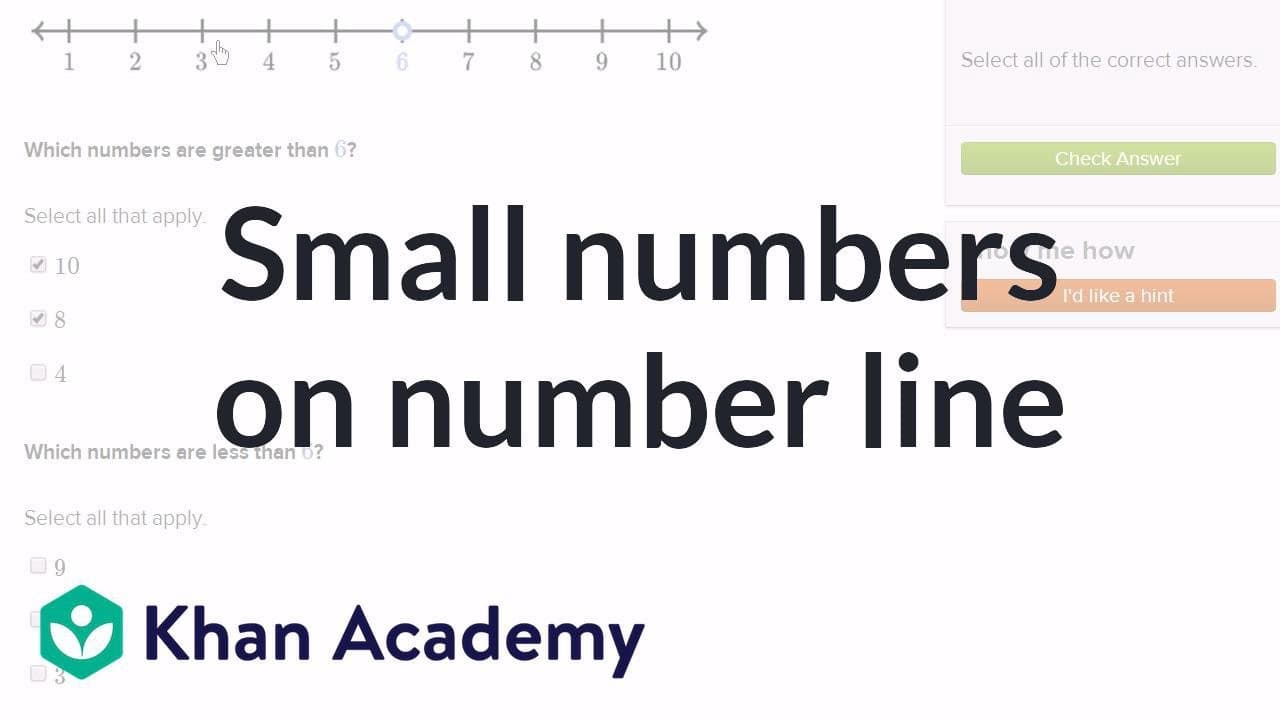
Using a Number Line to Compare Numbers

Using a Number Line to Compare Numbers

This educational video provides a clear, visual demonstration of how to compare whole numbers using a number line. The narrator walks through a digital math problem asking students to identify which numbers are greater than and less than six, explicitly connecting the concept of magnitude to spatial position (left versus right) on the number line. The video explores key themes of number sense, inequality, and spatial reasoning. It establishes the fundamental rule that on a standard number line, values increase as you move to the right and decrease as you move to the left. The narrator reinforces this abstract concept with a concrete real-world analogy involving bananas at the end of the video to ensure conceptual understanding. For classroom application, this video is an excellent tool for introducing or reinforcing comparison vocabulary ("greater than," "less than"). It helps bridge the gap between counting objects and understanding abstract numerical relationships. Teachers can use this to model how to use a number line as a reference tool for checking answers and to support students who struggle with mental math comparisons.

Khan AcademyKhan Academy

1min 31s

Video
Creating Picture Graphs in the Garden

Creating Picture Graphs in the Garden

This animated math lesson introduces young learners to data handling through the creation of a simple picture graph. Set in a vibrant garden environment, the video guides students through the process of observing different animals, counting them one by one, and recording that data using a pictorial representation where one circle represents one animal. The video covers fundamental early math skills including counting objects up to 10, one-to-one correspondence, and translating counted quantities into a graphical format. It systematically demonstrates the process for four different data sets: bees, ladybugs, butterflies, and frogs, reinforcing the connection between the physical objects and their symbolic representation on the chart. Ideal for early elementary classrooms, this resource serves as an excellent introduction or review of graphing concepts. The clear visual cues, such as animals glowing as they are counted, support students who are developing counting fluency. The video concludes with open-ended analysis questions about 'most' and 'least,' encouraging critical thinking and data interpretation skills beyond simple construction.

MatholiaChannelMatholiaChannel

2mins 19s

Video
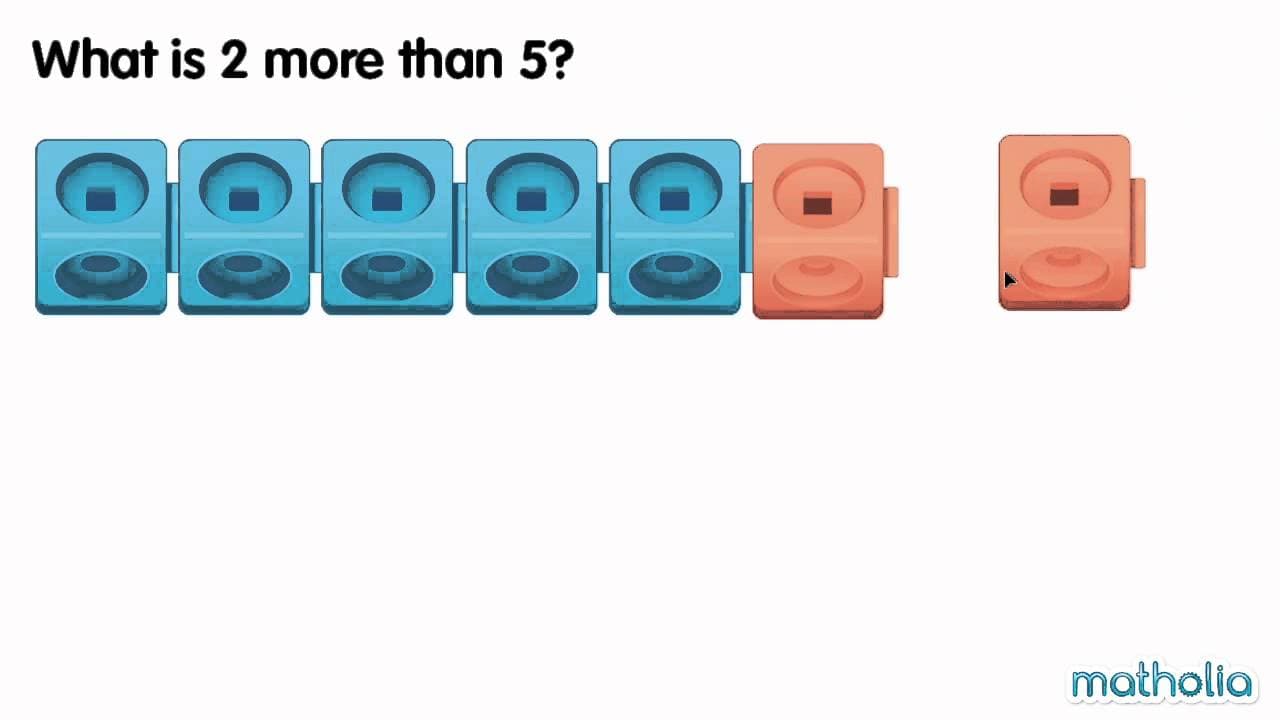
Learning More Than and Less Than with Visuals

Learning More Than and Less Than with Visuals

This educational video introduces young learners to the foundational arithmetic concepts of "more than" and "less than" through clear, visual demonstrations. Using concrete objects like apples, connecting cubes, and teddy bears, the video guides students through four distinct examples: two focusing on addition (finding one more and two more) and two focusing on subtraction (finding one less and three less). Each example follows a structured pattern: presenting an initial quantity, performing an action to change that quantity, counting the new total, and stating the final mathematical relationship. The key themes explored are basic counting, simple addition and subtraction, and the specific vocabulary of comparison ("more than" vs. "less than"). The video explicitly bridges the gap between physical counting and abstract number sentences by visually demonstrating the action of adding to or taking away from a set. The consistent use of counting aloud helps reinforce one-to-one correspondence and cardinality. For educators, this video serves as an excellent visual model for introducing early operations. It is particularly useful for bridging the transition from counting sets to understanding arithmetic operations. Teachers can use this video to model how to use manipulatives (like the connecting cubes shown) to solve problems. It provides a clear framework for students to practice predicting outcomes before verifying them by counting, making it a valuable tool for building number sense in early elementary classrooms.

MatholiaChannelMatholiaChannel

2mins 31s

Video
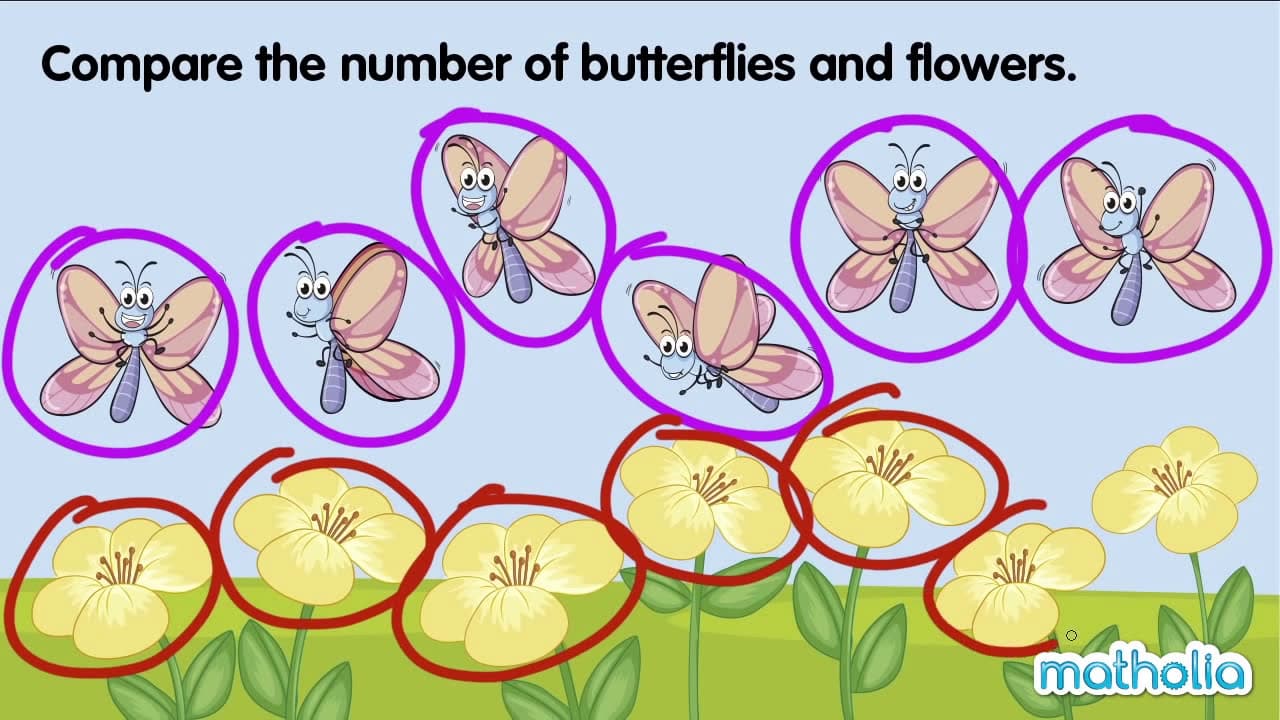
Comparing Numbers: Same, More, and Fewer

Comparing Numbers: Same, More, and Fewer

This educational video introduces young learners to the fundamental math concepts of counting and comparing quantities within the number 10. Using a clear, visual narrative featuring animated butterflies and flowers, the video demonstrates three distinct scenarios: equality (same number), inequality where the first set is larger (more than), and inequality where the first set is smaller (fewer than). The pacing is deliberate, allowing students to count along with the narrator as items are visually highlighted. The video explores key mathematical themes including one-to-one counting, quantity comparison, and specific vocabulary usage such as "same number as," "more than," and "fewer than." It goes beyond simple comparison by quantifying the difference, explicitly teaching concepts like "6 is 1 more than 5" and "6 is 1 fewer than 7." This helps bridge the gap between visual estimation and precise arithmetic relationships. For educators, this resource is an excellent tool for introducing or reinforcing early numeracy skills in Pre-K through 1st grade. The clear visual cues—specifically the circling of objects as they are counted—model effective counting strategies for students. The video can be used to spark whole-class participation where students count aloud, or as a visual anchor for lessons on comparing sets. It specifically addresses the often-confused grammatical difference between "less" and "fewer" by correctly using "fewer" for countable items, modeling proper language use.

MatholiaChannelMatholiaChannel

2mins 47s

Video
Comparing and Ordering Numbers to 20

Comparing and Ordering Numbers to 20

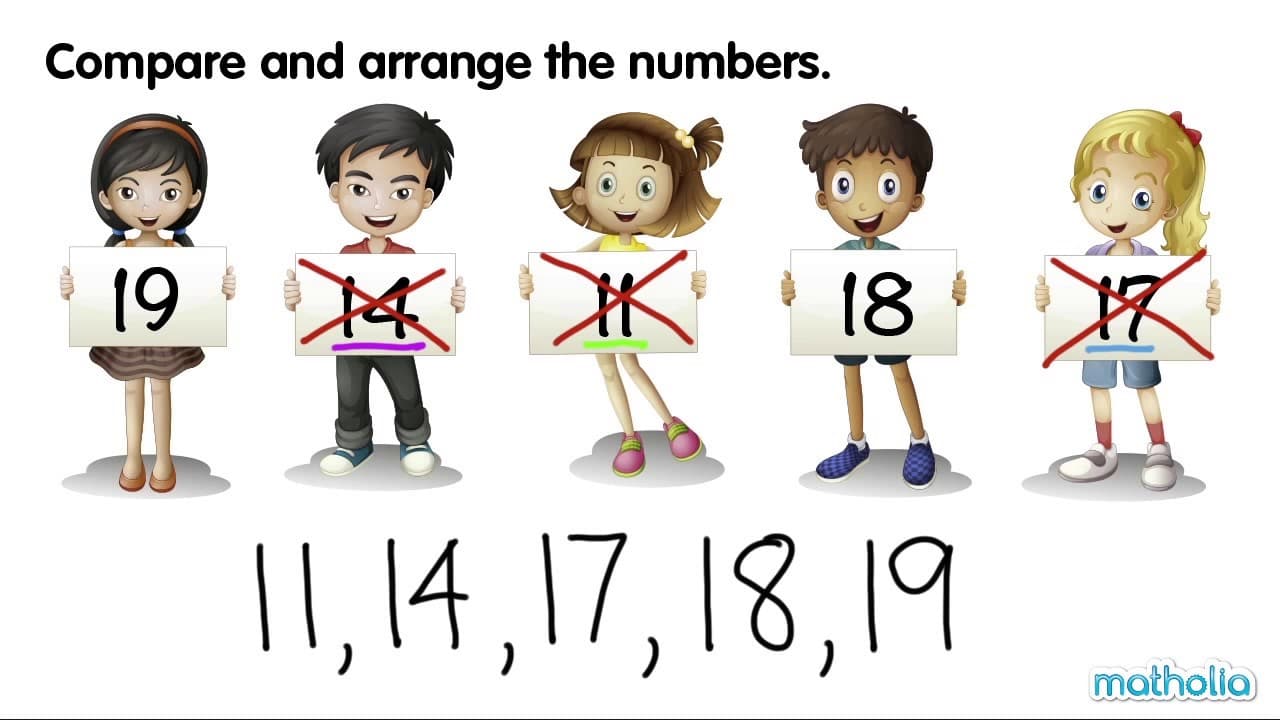
This animated math video provides a clear, step-by-step tutorial on comparing and arranging whole numbers up to 20. It begins by grounding the concept in concrete visual representations, using characters who hold boards with specific quantities of stickers arranged in ten-frames and singles. This visual aid helps students connect the abstract numeral to actual quantity. The video then transitions to ordering abstract numbers written on cards, demonstrating both ascending (smallest to greatest) and descending (greatest to smallest) order. The content focuses on key number sense skills including identifying quantity, using comparison vocabulary like 'smaller' and 'greater,' and employing systematic strategies for ordering sets of three to five numbers. It explicitly models the cognitive process of elimination—identifying the extreme value (smallest or greatest) first, removing it from the set, and then comparing the remaining numbers. For educators, this video serves as an excellent instructional model for early primary math. It scaffolds learning by moving from pictorial to abstract representations and introduces the practical 'cross-out' strategy for organizing multiple numbers. It is particularly useful for introducing the concept of sequencing non-consecutive numbers and reinforcing place value concepts through the visual grouping of tens and ones.

MatholiaChannelMatholiaChannel

3mins 58s

Video
Solving Subtraction Word Problems with Pictures

Solving Subtraction Word Problems with Pictures

This educational video guides students through solving two distinct types of subtraction word problems using visual strategies and number sentences. The narrator demonstrates how to translate written scenarios into mathematical equations, specifically focusing on "how many more" comparison problems and "fewer than" subtraction problems. Through digital drawing, the video models how to represent quantities visually to make abstract concepts concrete. The core themes explored include reading comprehension in mathematics, visual representation of data, and the relationship between language (words like "more" and "fewer") and mathematical operations (subtraction). The video emphasizes the importance of visualizing the problem before attempting to solve it with numbers alone. This resource is highly valuable for early elementary classrooms as it models a clear, step-by-step problem-solving methodology. Teachers can use this video to introduce subtraction word problems, reinforce the connection between counting and subtracting, or support students who struggle to identify the correct operation when faced with text-based math problems.

Khan AcademyKhan Academy

3mins 22s

Video
Counting and Finding Missing Numbers up to 120

Counting and Finding Missing Numbers up to 120

This video serves as a practical, guided practice session for counting and identifying whole numbers beyond 100, specifically focusing on the range up to 120. The narrator walks through four distinct exercises using digital interactive tools: filling in missing numbers in a sequence, identifying numbers that come "before" a target number, and locating missing values within a full 1-120 number grid. The approach emphasizes pattern recognition, explicitly teaching students that the counting patterns they learned for single digits (e.g., 4 comes before 5) apply directly to larger numbers (e.g., 104 comes before 105). The key themes explored are number sequencing, the concept of "before and after," and the structure of the base-10 number system. By using a visual 120 chart, the video highlights how numbers repeat patterns in the ones and tens places as they cross the 100 threshold. The narrator's logic helps demystify three-digit numbers by connecting them back to familiar one- and two-digit sequences. For educators, this video is an excellent resource for bridging the gap between counting to 100 and counting to 120, a specific standard in early elementary math. It models the internal monologue a student should use when solving these problems ("If 6 follows 5, then 106 follows 105"). Teachers can use this as a warm-up for a math block, a model for how to use a 120 chart, or as a remediation tool for students struggling with the transition to three-digit numbers.

Khan AcademyKhan Academy

1min 53s

Video
Measuring and Ordering School Supplies by Length

Measuring and Ordering School Supplies by Length

This animated mathematics video provides a clear, step-by-step demonstration on how to measure the length of common school supplies using a ruler marked in centimeters. Narrated with a calm, clear voice, it guides viewers through the process of aligning objects with a baseline and reading the measurement on a ruler. The video features distinct visual cues, such as dotted lines connecting the object's edge to the ruler's scale, making it easy for young learners to follow along. The core themes explored include standard measurement techniques, specifically using the zero mark correctly, reading integer measurements in centimeters, and comparing object lengths. Additionally, the video covers the concept of ordering data by arranging the measured items from shortest to longest, reinforcing comparative vocabulary and logical sequencing. For educators, this resource serves as an excellent model for introducing measurement tools. It directly addresses common student errors, such as starting measurements at the edge of the ruler rather than the zero mark. The clear visuals allow for interactive pause-and-predict moments in the classroom, where students can read the ruler before the narrator reveals the answer. It lays a solid foundation for hands-on measurement activities and data handling tasks.

MatholiaChannelMatholiaChannel

2mins 1s

Video
Classifying Numbers and Using the Number Line

Classifying Numbers and Using the Number Line

This educational math video introduces students to the classification of numbers and the use of number lines for comparison. Using a relatable analogy of sorting laundry, the host, Justin, explains the necessity of grouping mathematical objects. The video progresses from the most basic counting numbers to more complex sets, visually demonstrating how these groups relate to one another through a "nesting" concept where one group fits inside another. The content covers three specific number sets: Natural Numbers (counting numbers), Whole Numbers (adding zero), and Integers (adding negative numbers). It utilizes clear graphics to show how these sets overlap—for example, explaining why a natural number is also a whole number and an integer. The video then transitions to using a number line as a visual tool to order and compare these integers, specifically addressing the common student misconception regarding the size of large negative numbers versus smaller negative numbers. This video is highly valuable for introducing middle school math concepts related to the number system. It provides direct instruction, guided practice with specific problem sets, and independent practice opportunities where the video prompts students to pause. The inclusion of real-world applications, such as using a thermometer to understand negative temperatures, helps ground abstract concepts in reality. Teachers can use this as a core instructional video for 6th-grade units on integers or as a refresher for older students.

Miacademy & MiaPrep Learning ChannelMiacademy & MiaPrep Learning Channel

9mins 50s

Video
Comparing and Arranging Positive and Negative Integers

Comparing and Arranging Positive and Negative Integers

This instructional video provides a comprehensive guide to understanding, comparing, and arranging integers. Using a clear visual aid of a number line, the narrator explains the fundamental rules of integer placement, demonstrating that numbers to the right of zero increase in value while those to the left decrease. The video methodically breaks down how to compare positive numbers, negative numbers, and zero, addressing common points of confusion such as why a larger negative number is actually smaller in value than a smaller negative number. The content covers two main skills: comparing two integers using inequality symbols (greater than, less than) and arranging sets of integers in specific orders. It clearly defines "ascending order" as arranging numbers from smallest to largest and "descending order" as largest to smallest. The video provides multiple examples for each concept, walking viewers through the thought process of sorting mixed sets of positive and negative numbers by identifying the smallest negatives first or the largest positives first. For educators, this video serves as an excellent introduction or review of 6th-grade number system standards. The visual representation of the number line helps concrete learners grasp abstract concepts about negative value. The step-by-step walkthroughs of arranging sets of numbers are particularly useful for modeling problem-solving strategies. Teachers can use this video to introduce the module, remediate struggling students, or support a flipped classroom model where students learn the concept at home before practicing in class.

Sheena DoriaSheena Doria

11mins 50s

Video
How to Measure Length with Non-Standard Units

How to Measure Length with Non-Standard Units

This engaging animated video introduces early learners to the fundamental concepts of measuring length using non-standard units. Hosted by a humorous red oval character, the lesson breaks down the definition of length as the distance between two points and distinguishes between standard units (like inches) and non-standard units (like paperclips or the video's chosen unit, salamanders). The video uses comedy and clear visuals to make abstract measurement concepts concrete and accessible for young students. A central feature of the video is the segment on "The Important Rules for Measuring," which explicitly teaches the procedural requirements for accurate measurement: using identical units, ensuring units touch without gaps or overlaps, measuring in a straight line, and measuring from start point to end point. These rules address common errors young children make when learning to measure, providing a strong pedagogical foundation. The video applies these rules through a fun scenario involving three cows wearing silly hats. Students practice counting units to determine height and width, and then use those numbers to compare sizes using vocabulary like "taller," "shorter," and "widest." This resource is an excellent tool for introducing measurement standards, reinforcing counting skills, and bridging the gap between direct comparison and using formal rulers.

Scratch GardenScratch Garden

7mins 44s

Video
Comparing Lengths and Heights of Objects

Comparing Lengths and Heights of Objects

This educational video provides a clear, step-by-step introduction to comparing the length and height of various objects using both standard measurements and visual comparison. It begins by demonstrating how to use a ruler to measure a pencil and a pen in centimeters, explicitly linking the numerical value to the physical length. The video then transitions to measuring vertical height using two houses labeled with meters, introducing the concepts of "taller" and "shorter" based on comparing numbers. Finally, it presents a non-numerical comparison of three plants to introduce superlative terms like "tallest" and "shortest." The key themes explored include standard measurement units (centimeters and meters), numerical comparison (greater than and less than), and essential comparative vocabulary. The video systematically moves from concrete numerical data to visual estimation, helping students understand the relationship between numbers and physical size attributes. It effectively models the correct usage of comparative adjectives (longer, taller) versus superlative adjectives (tallest, shortest). For educators, this video serves as an excellent hook or reinforcement tool for early elementary math lessons on measurement and data. It provides a visual model for how to align objects with a measuring tool and how to interpret the results. Teachers can use the clear pauses and distinct examples to facilitate classroom discussions about size, practice vocabulary, and set the stage for hands-on measuring activities in the classroom.

MatholiaChannelMatholiaChannel

1min 37s

Video
Comparing Numbers of Objects: More, Less, or Same

Comparing Numbers of Objects: More, Less, or Same

This video demonstrates how to solve an interactive early math problem focused on comparing quantities. A narrator guides viewers through a Khan Academy exercise where they must determine if various groups of horses are "more than," "less than," or the "same as" a reference group. The video models the process of counting objects one by one and comparing the resulting totals to a baseline number. The key themes explored include counting and cardinality, number sense, and comparative vocabulary. The video explicitly defines and demonstrates the concepts of "more than" (a larger quantity), "less than" (a smaller quantity), and "same as" (an equal quantity) using visual representations of objects arranged in different patterns. For educators, this video serves as an excellent model for teaching mathematical thinking and problem-solving strategies. It demonstrates the importance of establishing a baseline (counting the reference group first) before evaluating options. The clear, visual nature of the drag-and-drop activity makes it a versatile tool for introducing comparison concepts or reinforcing counting skills in early elementary classrooms.

Khan AcademyKhan Academy

2mins 3s

Video
Sorting and Counting: Stars, Numbers, and Letters

Sorting and Counting: Stars, Numbers, and Letters

This educational video demonstrates how to solve a categorization and counting problem using a set of mixed symbols. The narrator guides viewers through identifying and separating three distinct categories of items: stars, numbers, and letters, which are presented in a mixed sequence. By systematically counting the items in each category, the video models organized thinking and data collection strategies for young learners. The content focuses on key early mathematics themes including sorting, counting to small numbers (1-3), identifying symbols (distinguishing between letters, numerals, and shapes), and comparing quantities to determine which group has the "most." It visualizes the process by physically circling items in different colors, providing a concrete visual aid for the abstract concept of categorization. For educators, this video serves as an excellent model for teaching data handling and classification. It helps students understand that a single group of mixed objects can be sorted into sub-groups based on attributes. The visual walkthrough reinforces one-to-one correspondence during counting and introduces the comparative vocabulary of "most," making it a valuable resource for early numeracy lessons.

Khan AcademyKhan Academy

43s

Video
Mastering Pre-Algebra: Integers, Equations, and Exponents

Mastering Pre-Algebra: Integers, Equations, and Exponents

This comprehensive video tutorial serves as an extensive review of pre-algebra concepts, designed to build a strong mathematical foundation for middle school students. The video progresses systematically through fundamental topics, starting with operations on integers using a number line visualization, and advancing to more complex concepts like order of operations (PEMDAS), algebraic expressions, and linear equations. The instructor uses a digital blackboard format to demonstrate step-by-step problem solving, offering clear visual examples for every concept introduced.

The Organic Chemistry TutorThe Organic Chemistry Tutor

2mins 31s