Lenny LearningLenny
Create
Explore
Workspace
LoginSign up
MathEnglish Language ArtsScience & EngineeringSocial StudiesGlobal LanguagesHealth & Physical EducationSpecial EducationCounseling & Life SkillsArts & CreativityESL
Lenny LearningLenny
Lenny Learning
About
Training
Pricing
Support
Contact
© 2026 Lenny Learning Inc.

Number Operations

SequencesLessonsMaterialsVideos
  1. Math

Number Operations

SequencesLessonsMaterialsVideos

Counting sequences, place value systems, and the four mathematical operations across whole numbers and decimals. Builds proficiency in solving equations, identifying numerical patterns, and applying properties of operations to multi-digit arithmetic.

MathNumbers & CountingCounting ObjectsNumber NamesComparing NumbersNumber OperationsCounting SequenceNumbers 0-10Place Value Understanding and SystemAdd and Subtract Within 20Addition and Subtraction ConceptsAddition and Subtraction EquationsAddition and Subtraction ProblemsFoundations for MultiplicationMultiplication and Division PropertiesMultiply and Divide Within 100Multiplication and Division ProblemsFactors and MultiplesProperties of OperationsPatterns and RelationshipsGenerate and Analyze PatternsMulti-Digit ArithmeticPlace Value OperationsMulti-Digit and Decimal OperationsNumerical ExpressionsFour Operations and PatternsFour Operations Problem SolvingMeasurement & DataMeasurable AttributesMeasuring LengthsMeasure and Estimate Lengths in Standard UnitsRelate Addition and Subtraction to LengthClassifying and Counting ObjectsTime and MoneyArea Concepts and MeasurementPerimeter and Area MeasuresAngle Concepts and MeasurementTime, Volume, and MassMeasurement Unit ConversionsGeometryIdentifying ShapesShapes and AttributesShape Attributes and ReasoningShapes and CompositionClassifying 2D FiguresGeometric Figures and RelationshipsLines, Angles, and ShapesAngle, Area, and VolumeGeometric MeasurementVolume of 3D ShapesCoordinate Plane ApplicationsTransformations in the PlaneCongruence and SimilarityUnderstand congruence in terms of rigid motionsSimilarity and TransformationsProve Theorems Involving SimilarityPythagorean TheoremTrigonometry for General TrianglesMake Geometric ConstructionsProve Geometric TheoremsTheorems About CirclesFind Arc Lengths And Areas of Sectors of CirclesVolume FormulasRelationships Between Two-Dimensional and Three-Dimensional ObjectsProve Simple Geometric Theorems AlgebraicallyTranslate Between Geometric Description and Equation for Conic SectionApply Geometric Concepts in Modeling SituationsFractions & DecimalsFractions as NumbersBuilding FractionsFraction Equivalence and OrderingAdding and Subtracting FractionsMultiplying and Dividing FractionsDividing FractionsDecimal FractionsMulti-Digit Computation and FactorsAdd, Subtract, Multiply, and Divide Rational NumbersRational Number SystemIrrational Numbers and ApproximationsRatiosRatios and ProportionsProportional RelationshipsUnit RateAlgebraAlgebraic ExpressionsGenerate Equivalent ExpressionsQuantitative RelationshipsProportional Relationships and Linear EquationsEquations and InequalitiesEquation Solving and ReasoningLinear Equations and SystemsGraph Equations and InequalitiesSystems of EquationsReal-World Algebraic ProblemsQuantitative Reasoning with UnitsExpression StructureEquivalent Expression FormsRadicals and Integer ExponentsRational ExponentsRational and Irrational NumbersPolynomial OperationsPolynomial IdentitiesPolynomial Zeros and FactorsRational ExpressionsComplex Number OperationsComplex Numbers in PolynomialsComplex Numbers on PlaneStatistics & ProbabilityRepresent and Interpret DataData DistributionsStatistical VariabilityProbability ModelsCompound Event ProbabilitiesStatistical SamplingInterpret Categorical and Quantitative DataBivariate Data PatternsInterpret Linear ModelsComparing Two PopulationsRandom Processes in StatisticsIndependence and Conditional ProbabilityExpected ValuesProbability-Based Decision MakingStatistical Inference and ConclusionsFunctionsFunction Concepts and NotationDefine and Compare FunctionsInterpret Functions in ContextAnalyze Function RepresentationsModel Relationships with FunctionsIdentify Linear vs Exponential GrowthDistinguish Between Function TypesCompare Growth RatesInterpret Function ExpressionsBuild Functions from RelationshipsConstruct and Model FunctionsTransform and Combine FunctionsModel Comparison and SelectionSolve Exponential EquationsTrigonometryTrigonometric Ratios Involving Right TrianglesTrigonometric Functions and Unit CircleModel with Trigonometric FunctionsTrigonometric IdentitiesVectors & MatricesIntroduction to Vectors and MatricesVector QuantitiesVector OperationsMatrix OperationsCalculusLimits and ContinuityDerivative Concepts and NotationDerivative Rules and TechniquesApplications of DerivativesOptimization ProblemsRelated RatesCurve Sketching and AnalysisIntegration Concepts and NotationAntiderivatives and Indefinite IntegralsDefinite Integrals and AreaFundamental Theorem of CalculusIntegration TechniquesApplications of IntegrationDifferential EquationsSequences and SeriesParametric and Polar FunctionsVector-Valued Functions
Counting SequenceSequential number naming and cardinal counting principles for early learners. Develops fluency in forward and backward sequences while introducing skip-counting patterns.
Numbers 0-10Numeral recognition, counting, and cardinality for integers zero through ten. Strengthens one-to-one correspondence and basic number sense through visual sets and tracing.
Place Value Understanding and SystemPositional notation and relationships between digits in the base-ten system. Strengthens skills in regrouping, estimation, and comparing magnitudes of whole numbers and decimals.
Add and Subtract Within 20Addition and subtraction strategies for numbers up to 20, including regrouping and word problem applications. Strengthens mental math skills and builds fluency with basic facts.
Addition and Subtraction ConceptsMental math strategies, regrouping techniques, and the inverse relationship between operations. Builds computational fluency through visual models, number lines, and real-world word problems.
Addition and Subtraction EquationsSolving single-step equations using inverse operations to isolate variables. Connects basic arithmetic to algebraic reasoning through balanced equations and word problem applications.
Addition and Subtraction ProblemsOne- and two-step word problems involving joining, separating, and comparing quantities. Develops strategies for modeling operations and understanding the inverse relationship between addition and subtraction.
Foundations for MultiplicationEqual groups, repeated addition, and array structures for early learners. Connects skip counting to multiplication concepts through visual models and concrete examples.
Multiplication and Division PropertiesCommutative, associative, and distributive properties alongside the inverse relationship between multiplication and division. Builds mental math fluency and prepares students for algebraic manipulation.
Multiply and Divide Within 100Multiplication and division fluency within 100 using arrays, equal groups, and number lines. Connects inverse operations and properties of arithmetic to solve one- and two-step word problems.
Multiplication and Division ProblemsMulti-step word problems involving equal groups, arrays, and area models. Strengthens computational fluency and the ability to interpret remainders in real-world contexts.
Factors and MultiplesPrime and composite numbers, divisibility rules, and the relationship between multiplication and division. Strengthens skills in identifying greatest common factors and least common multiples for fraction operations.
Properties of OperationsCommutative, associative, and distributive properties for addition and multiplication. Develops mental math strategies and provides the foundation for algebraic manipulation.
Patterns and RelationshipsIdentification, extension, and creation of repeating and growing patterns using shapes, colors, and numbers. Develops algebraic thinking by analyzing sequences and defining functional relationships between variables.
Generate and Analyze PatternsNumerical and geometric sequence identification using explicit rules. Builds algebraic reasoning through the analysis of term-to-term relationships and coordinate plane representations.
Multi-Digit ArithmeticAddition, subtraction, multiplication, and division involving multi-digit integers and decimals. Strengthens proficiency in place value, regrouping, and standard algorithms.
Place Value OperationsMulti-digit arithmetic strategies using base-ten blocks, area models, and regrouping. Connects concrete representations to standard algorithms for addition, subtraction, multiplication, and division.
Multi-Digit and Decimal OperationsStandard algorithms for multi-digit addition, subtraction, multiplication, and division. Applies place value logic to decimal calculations, including regrouping and precise point placement.
Numerical ExpressionsEvaluates multi-step mathematical statements using the order of operations. Includes the use of parentheses, brackets, and braces to structure calculations and represent relationships between numbers.
Four Operations and PatternsMulti-digit addition, subtraction, multiplication, and division strategies paired with identifying numerical patterns. Strengthens algebraic thinking through analysis of sequence rules and arithmetic relationships.
Four Operations Problem SolvingAddition, subtraction, multiplication, and division applications within complex word problems. Strengthens the ability to translate scenarios into mathematical equations and execute multi-step solutions.
Video
Writing Addition Equations with Pictures

Writing Addition Equations with Pictures

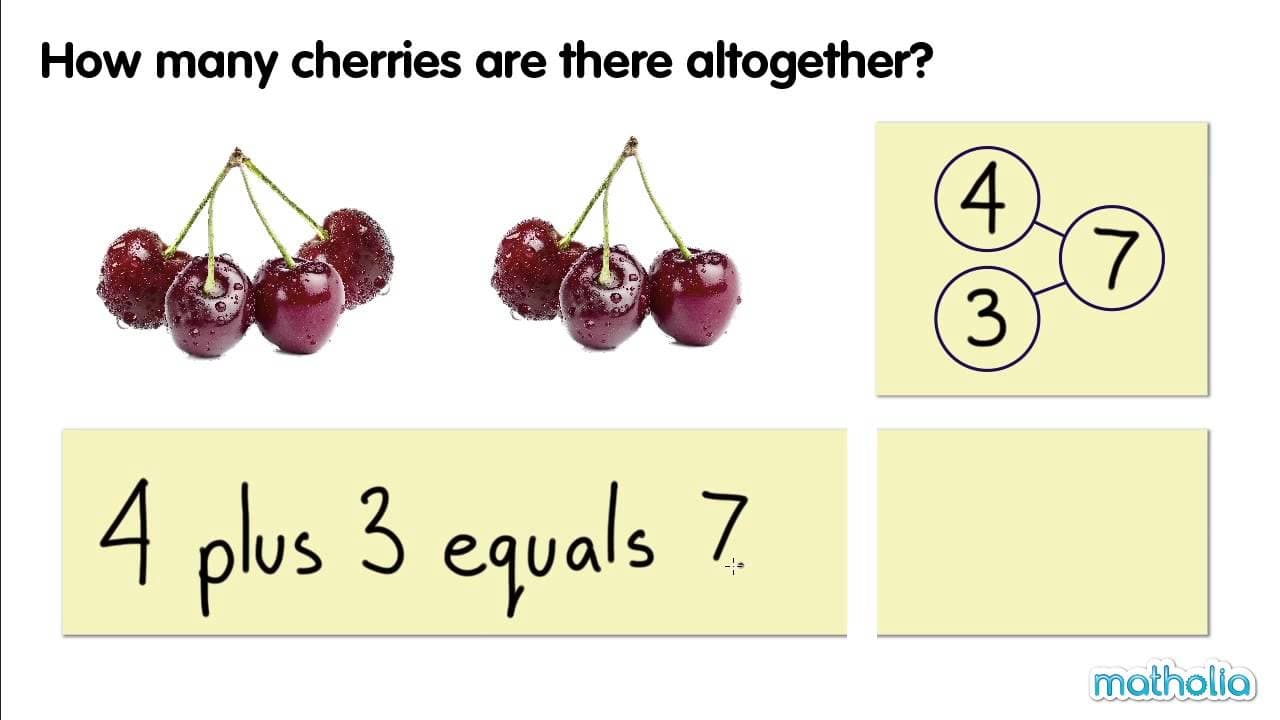
This educational video introduces young learners to the concept of addition through visual examples and step-by-step equation writing. Using concrete objects like kittens, cherries, and eggs, the video demonstrates how to combine two groups to find a total. It explicitly connects visual counting to the abstract representation of mathematics by showing how to translate physical quantities into both written sentences and numerical equations. The content focuses on three key themes: identifying parts of a whole, understanding number bonds (part-part-whole relationships), and learning mathematical vocabulary. It guides students through the process of recognizing distinct groups, counting them, and then expressing that relationship using the terms "plus" and "equals," as well as the symbols "+" and "=". This progression helps bridge the gap between counting and formal arithmetic. For educators, this video serves as an excellent instructional tool for modeling how to write addition equations. It reinforces the "part-part-whole" model using clear number bond diagrams alongside the equations. Teachers can use this video to scaffold lessons on addition, helping students move from counting physical manipulatives to writing their own number sentences. The repetitive structure allows for predictable learning, making it ideal for pause-and-discuss sessions where students predict the answers before they appear on screen.

MatholiaChannelMatholiaChannel

2mins 18s

Video
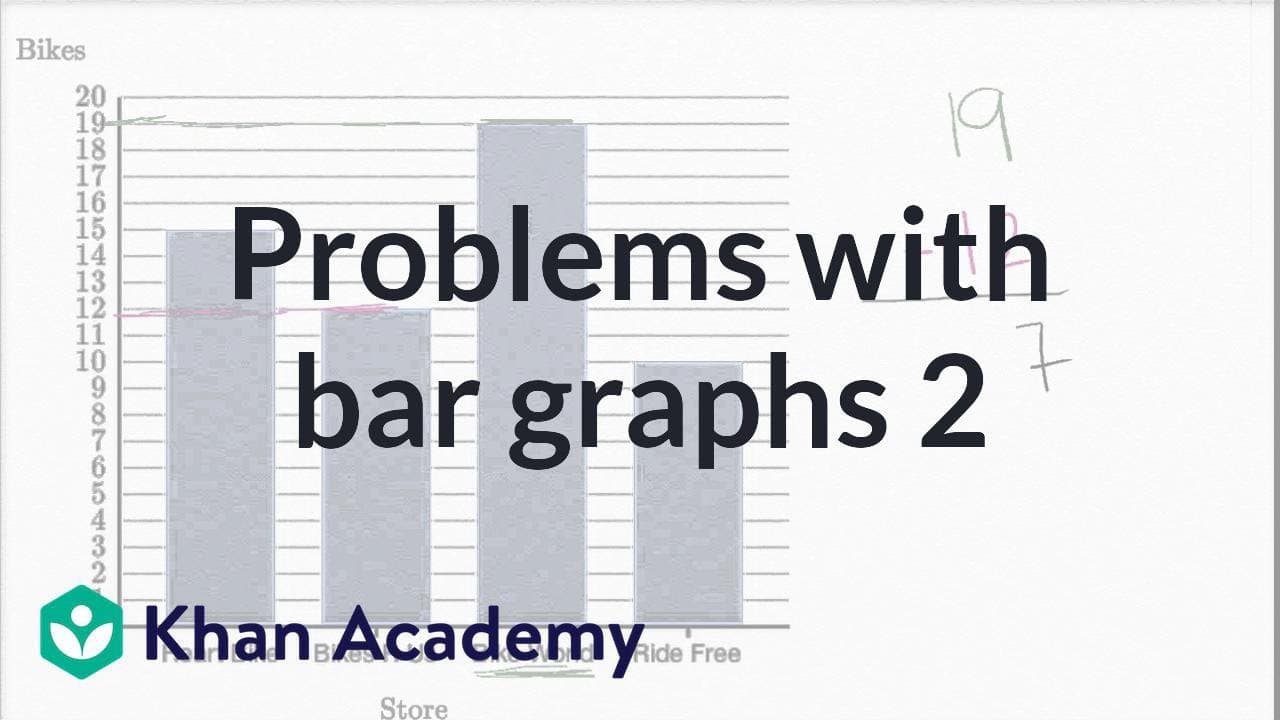
Using Bar Graphs to Compare Quantities

Using Bar Graphs to Compare Quantities

This video provides a clear, step-by-step tutorial on how to interpret data from a vertical bar graph to solve a comparison problem. The narrator demonstrates how to identify specific data points corresponding to different categories ('Bike World' and 'Bikes R Us') and determines the numerical value for each by reading the vertical axis. The content focuses on the key mathematical concept of finding the difference between two quantities. It explicitly models two distinct methods for solving the problem: first, by setting up a subtraction equation (19 - 12), and second, by visually counting the grid units on the graph to determine the 'gap' between the two bar heights. This dual approach reinforces the connection between arithmetic operations and visual data representation. This resource is excellent for early elementary classrooms introducing data analysis and graphing. It helps students transition from simply reading a graph to using the data to answer 'how many more' questions—a common hurdle for young learners. The video serves as a strong model for verifying answers, as it uses the visual counting method to check the arithmetic result.

Khan AcademyKhan Academy

1min 42s

Video
Mastering Addition by Adding 11

Mastering Addition by Adding 11

This educational music video features a catchy, rhythmic song designed to help students memorize addition facts involving the number 11. Through a repetitive and engaging pop-style melody, the video guides learners through equations ranging from 11 + 1 up to 11 + 15. The visual presentation is simple and focused, displaying clear white text against a purple gradient background to minimize distractions and keep attention on the mathematical concepts.

Have Fun TeachingHave Fun Teaching

2mins 26s

Video
Mastering Addition Facts: The Adding 13 Song

Mastering Addition Facts: The Adding 13 Song

A high-energy educational song designed to help students master addition facts involving the number 13. Through a catchy pop-rock melody, the video guides learners through a sequence of addition equations starting from 13 + 1 and extending up to 13 + 15. The repetitive chorus and rhythmic delivery serve as mnemonic devices, aiding in the retention of these specific math facts. Key mathematical themes include basic arithmetic, sum calculation, and mental math fluency. The song breaks the addition facts into three distinct sets (1-5, 6-10, and 11-15), allowing for chunked learning. This structure helps students recognize patterns in addition and builds confidence in handling double-digit numbers. This resource is an excellent classroom tool for auditory learners and can be effectively used during transitions, as a warm-up activity, or as part of a math fluency rotation. Because the video features a static visual, it functions best as an audio accompaniment to physical manipulatives, whiteboard work, or movement-based learning activities where students can solve the equations along with the music.

Have Fun TeachingHave Fun Teaching

2mins 19s

Video
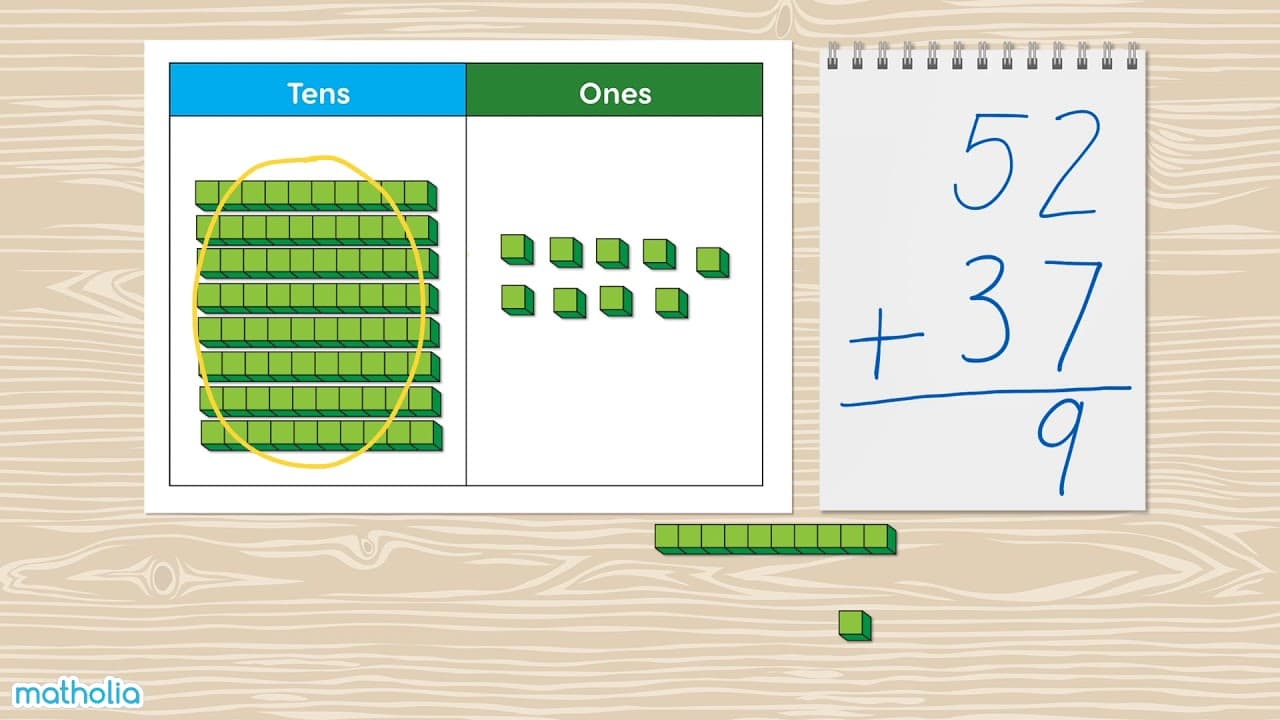
Visualizing Addition to 20 Using Base-10 Blocks

Visualizing Addition to 20 Using Base-10 Blocks

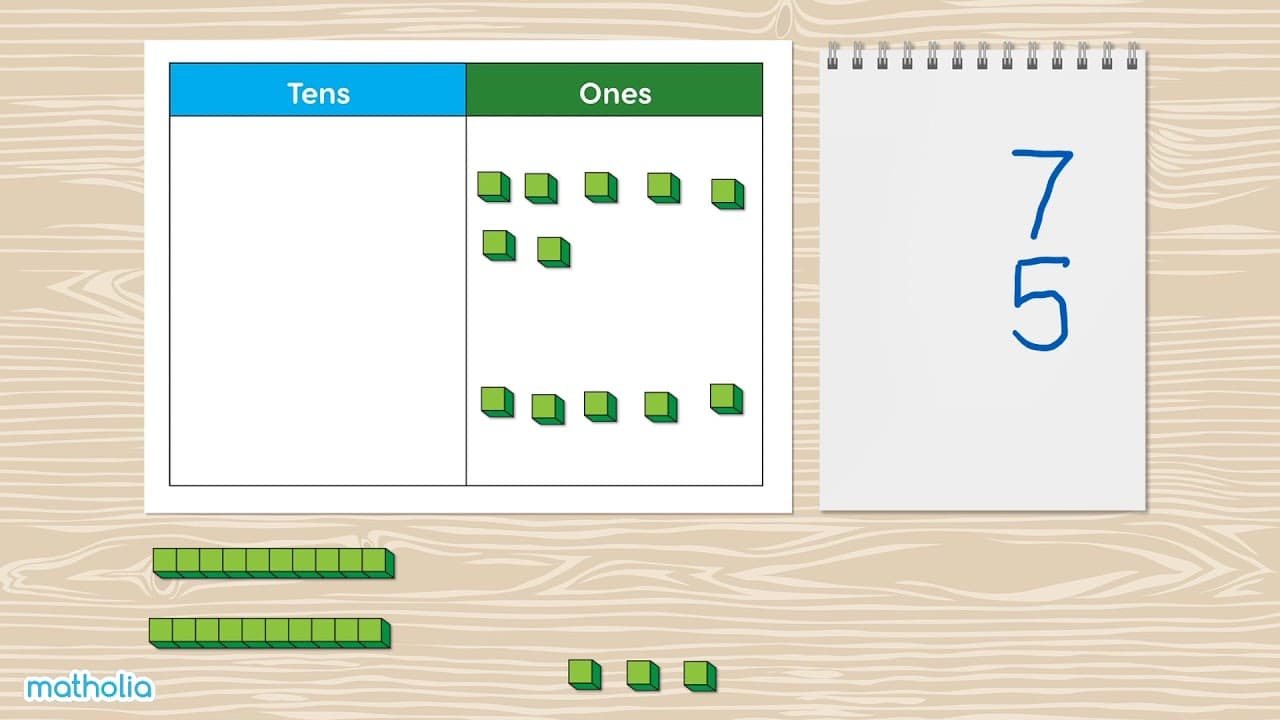
This educational video demonstrates the process of adding numbers up to 20 without regrouping using the Concrete-Pictorial-Abstract (CPA) framework. Through clear animations, it guides students on how to solve the equation 14 + 4 by using virtual base-10 blocks placed on a place value chart alongside standard vertical written notation. The video explores key mathematical themes including place value (distinguishing between tens and ones), modeling numbers with manipulatives, and the step-by-step algorithm for column addition. It explicitly connects the physical act of combining 'ones' blocks to the abstract action of writing the sum in the ones column of an equation. For educators, this resource is an excellent visual aid for introducing or reinforcing early addition strategies. It supports visual learners by clearly separating the tens and ones columns and provides a model for how students can use physical manipulatives at their desks to solve similar problems. It serves as a perfect bridge between counting individual items and understanding the structure of two-digit addition.

MatholiaChannelMatholiaChannel

1min 21s

Video
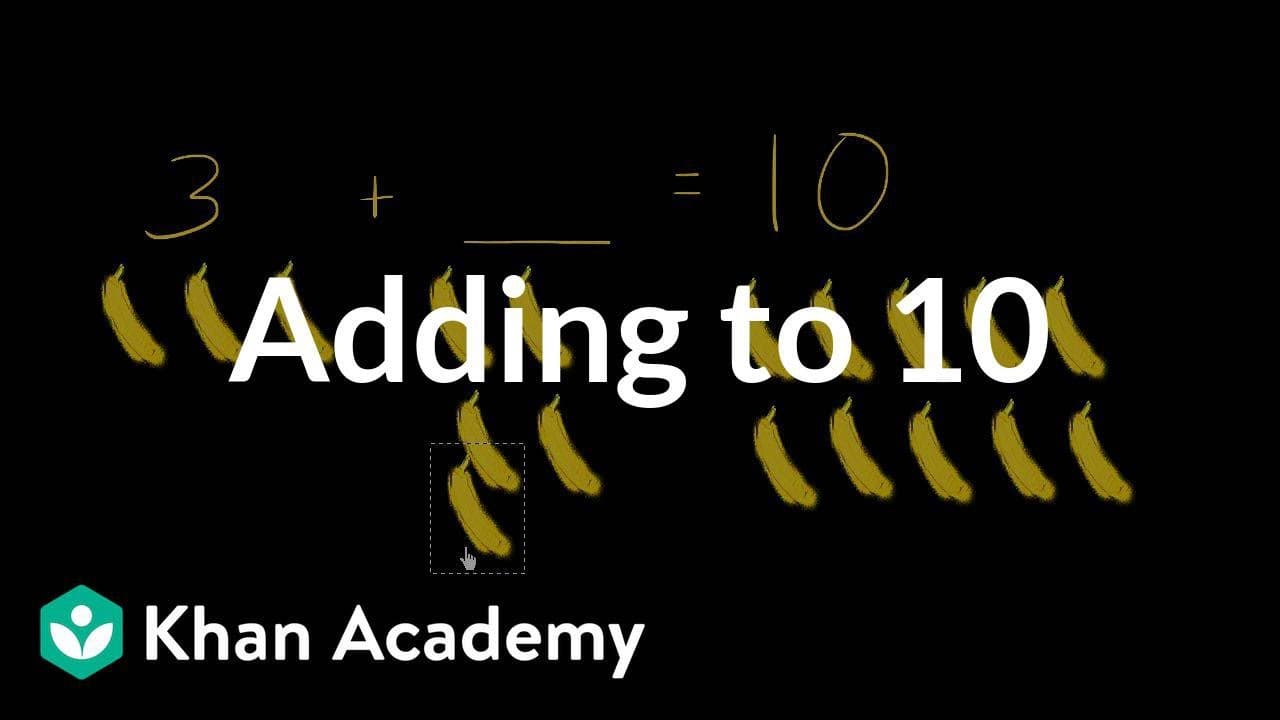
Finding the Missing Number to Make 10 with Bananas

Finding the Missing Number to Make 10 with Bananas

This educational math video demonstrates how to solve a missing addend problem using concrete visual aids. Specifically, it tackles the equation "3 + _ = 10" by using drawings of bananas to represent the numbers. The narrator guides viewers through a "counting on" strategy, starting with the initial three bananas and drawing additional ones one-by-one until the total reaches ten. The video explores key themes of addition, equality, and the relationship between numbers that sum to ten (often called "friends of ten"). It visually distinguishes between the starting quantity and the added quantity, helping students understand that the missing number represents only the items added to reach the total, not the total itself. For educators, this video is an excellent tool for introducing or reinforcing algebraic thinking in early elementary grades. It bridges the gap between concrete counting and abstract equations. Teachers can use it to model how to use manipulatives to solve for unknown numbers, validating strategies like counting on or using drawing to solve math problems.

Khan AcademyKhan Academy

2mins

Video
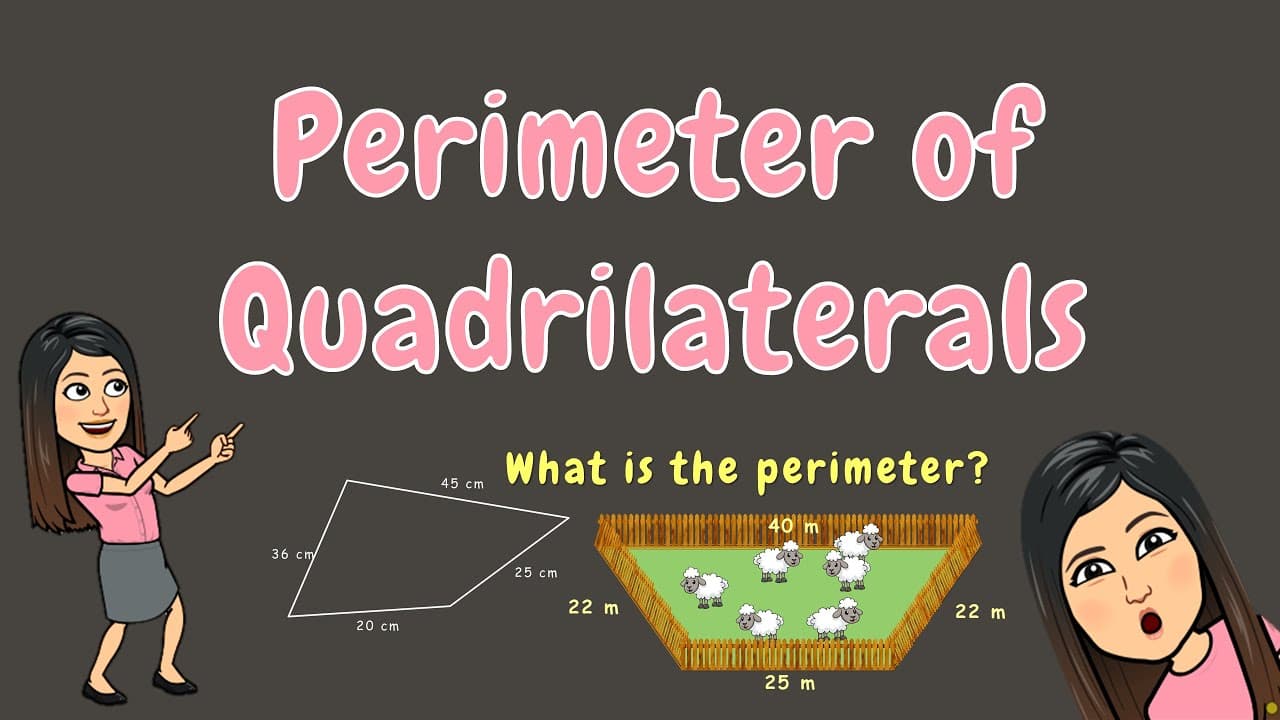
Calculating the Perimeter of Irregular Quadrilaterals

Calculating the Perimeter of Irregular Quadrilaterals

This educational math video provides a clear, step-by-step guide on how to calculate the perimeter of various quadrilaterals, specifically focusing on shapes that are not standard squares or rectangles. Through the use of animated characters and scenarios, it introduces the concept of perimeter as the total distance around a two-dimensional shape and demonstrates the standard algorithm of summing all side lengths to find the answer. The video covers multiple examples, starting with a character running around an irregular quadrilateral track, moving to geometric shapes like parallelograms and trapezoids, and culminating in a real-world word problem about fencing a plot of land for sheep. It concludes with a practice problem for students to attempt on their own, reinforcing the procedural knowledge required to solve these math problems. Teachers can use this video to introduce the concept of perimeter or to model problem-solving strategies for geometry word problems. The step-by-step visual calculations (stacking numbers for addition) model good mathematical habits for students. The video is particularly useful for visual learners who benefit from seeing side lengths highlighted and summed sequentially.

Sheena DoriaSheena Doria

4mins 18s

Video
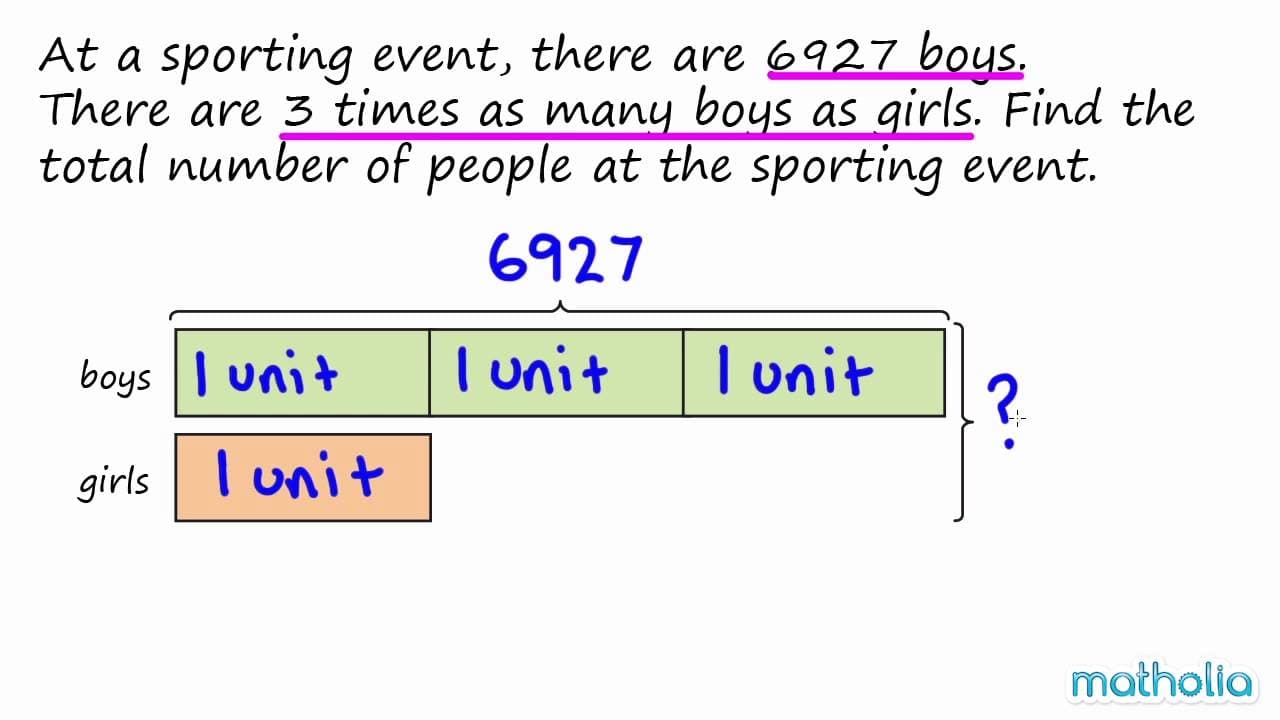
Solving Money Word Problems Using Bar Models

Solving Money Word Problems Using Bar Models

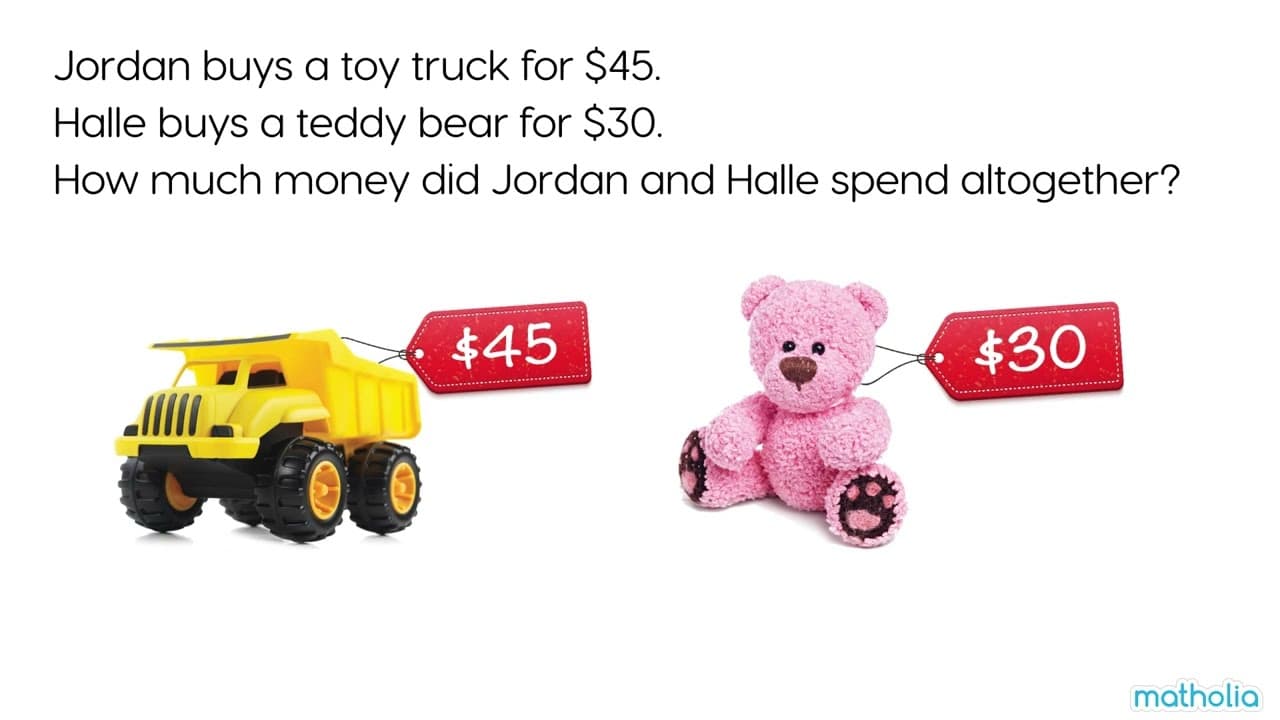
This educational video introduces students to solving money-based word problems using the Singapore Math bar modeling method. It presents two distinct scenarios: an addition problem determining the total cost of two items, and a subtraction problem calculating the price difference between two items. By visualizing the quantities as rectangular bars, the video helps bridge the gap between abstract word problems and concrete mathematical operations. The content focuses on key algebraic thinking skills appropriate for early elementary students, specifically distinguishing between "part-whole" relationships and "comparison" models. It demonstrates how to translate text into visual diagrams, identify the unknown variable (represented by a question mark), and select the correct operation (addition or subtraction) to solve the problem. For teachers, this video serves as an excellent tool for modeling mathematical thinking. It can be used to introduce the concept of bar models, reinforce strategies for solving word problems, or support students who struggle with determining whether to add or subtract. The clear, step-by-step visual progression makes it particularly effective for visual learners and for scaffolding complex problem-solving skills.

MatholiaChannelMatholiaChannel

1min 49s

Video
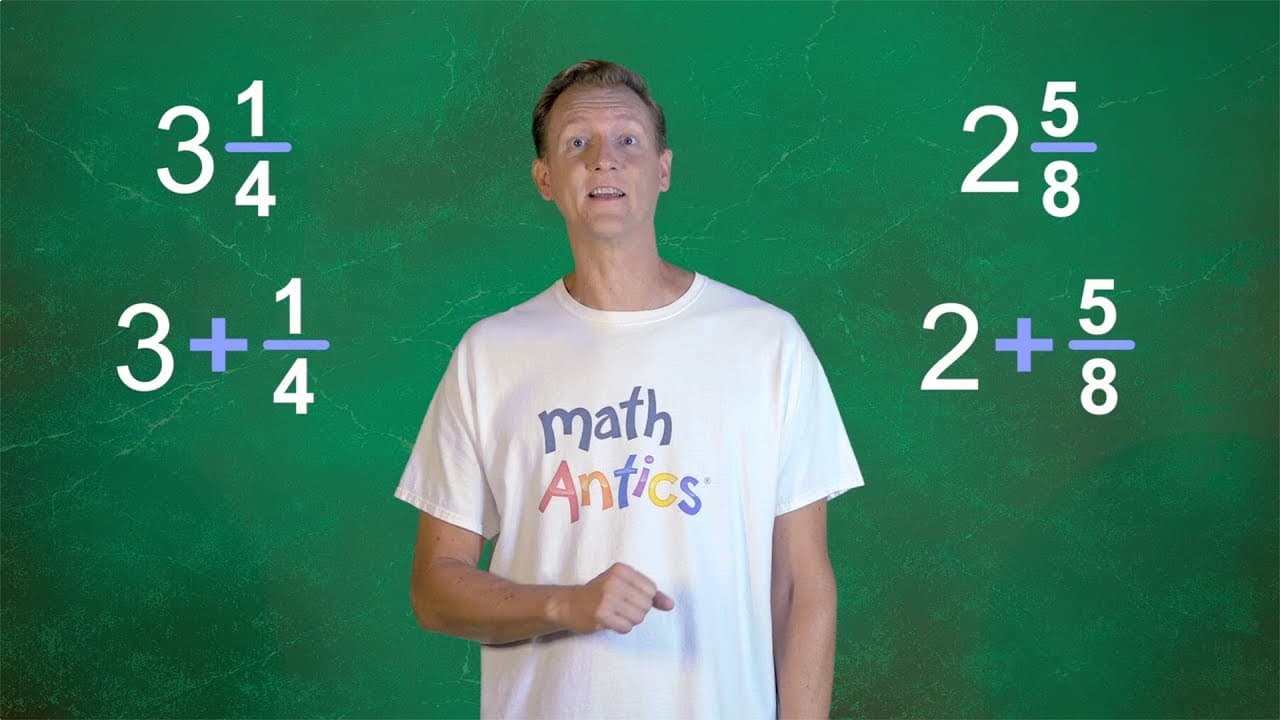
Adding Mixed Numbers and Regrouping Improper Fractions

Adding Mixed Numbers and Regrouping Improper Fractions

This engaging animated musical video teaches students how to add mixed numbers with like denominators through catchy lyrics and real-world story problems. The video follows characters in two distinct scenarios—harvesting pears in an orchard and buying trail mix at a grocery store—to demonstrate why and how we add mixed numbers in daily life. It uses visual models (circles divided into fractional parts) alongside standard vertical addition algorithms to solidify conceptual understanding. The content focuses on the specific skill of adding mixed numbers where the sum of the fractions is greater than one, requiring the student to "carry the one" or regroup. It breaks down the process into clear steps: adding the fractions, recognizing improper fractions, regrouping them into whole numbers, and then adding the whole numbers. The video also introduces the concept of decomposing mixed numbers into unit fractions, providing a deeper look at the structure of these numbers. For educators, this video serves as an excellent hook or review tool for 4th and 5th-grade math units on fractions. It provides multiple representations of the concept—visual, auditory, and algorithmic—helping to reach diverse learners. The inclusion of word problems helps students contextualize the math, while the "decomposing" section offers a natural extension for advanced understanding of fraction composition.

Math Songs by NUMBEROCKMath Songs by NUMBEROCK

3mins 56s

Video
Creating Number Sentence Families with Addition and Subtraction

Creating Number Sentence Families with Addition and Subtraction

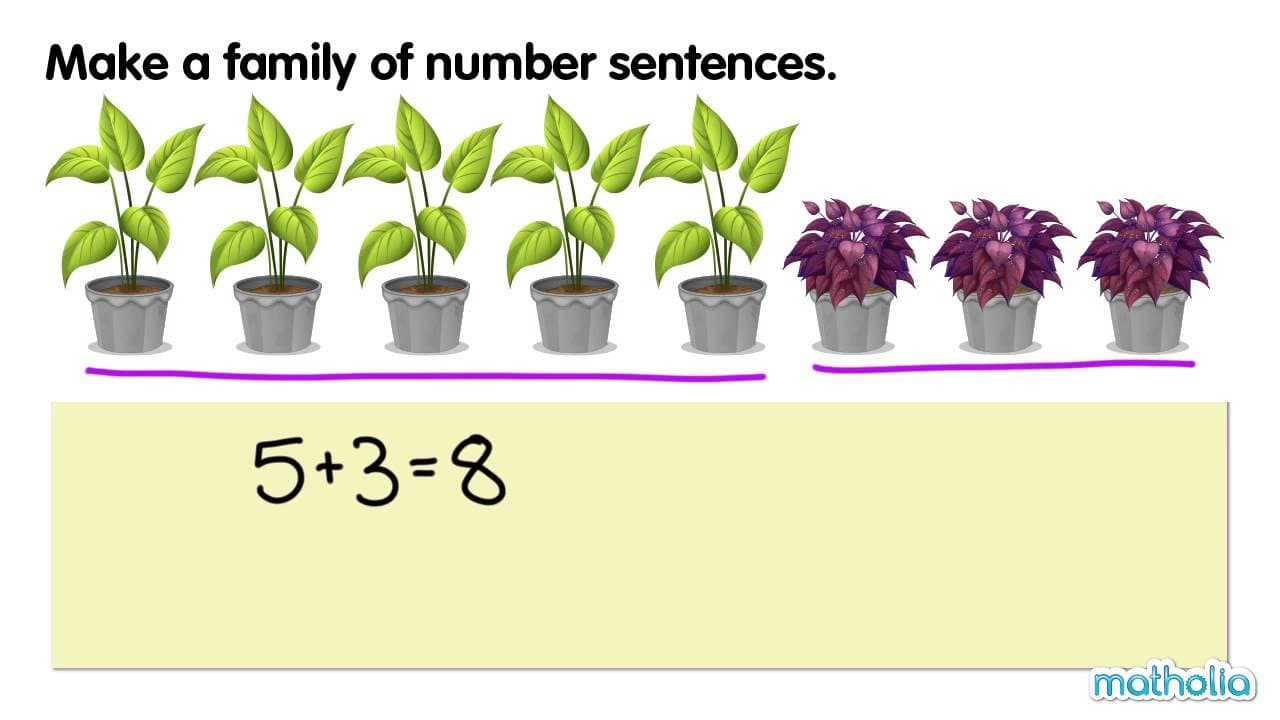
This video introduces the mathematical concept of "number sentence families" (often called fact families) to young learners. Through clear, slow-paced visual demonstrations, it illustrates how three specific numbers can be related through both addition and subtraction equations. The video uses concrete objects—teddy bears and potted plants—to visually represent quantities, making abstract arithmetic concepts tangible. The content focuses on two distinct examples. The first uses a group of 5 teddy bears (3 brown, 2 pink) to demonstrate the relationships between the numbers 2, 3, and 5. The second example uses a row of 8 plants (5 green, 3 purple) to show the relationships between 3, 5, and 8. For each set, the video explicitly writes out four related equations: two addition problems demonstrating the commutative property (e.g., 3+2 and 2+3) and two subtraction problems demonstrating the inverse relationship (e.g., 5-3 and 5-2). This resource is highly valuable for early elementary classrooms introducing addition and subtraction connections. It visually reinforces the commutative property of addition and the concept of inverse operations without needing complex vocabulary. Teachers can use this video to transition students from counting physical objects to writing formal equations, providing a bridge between concrete manipulatives and abstract symbolic math.

MatholiaChannelMatholiaChannel

2mins 40s

Video
How to Evaluate Algebraic Expressions Using Algebra Tiles

How to Evaluate Algebraic Expressions Using Algebra Tiles

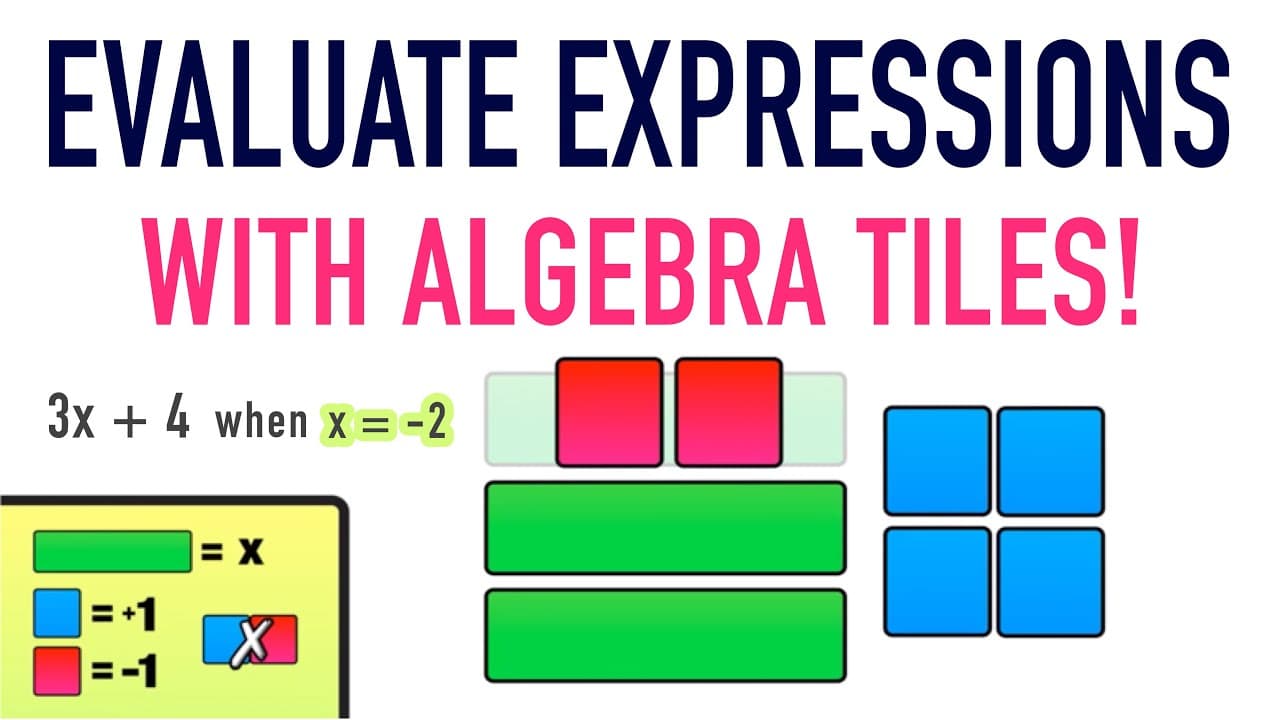
This educational video provides a clear, visual methodology for evaluating algebraic expressions using algebra tiles, a common mathematical manipulative. The video begins by defining the components of an algebraic expression—variables, operators, and numbers—before introducing a color-coded visual system where green rectangles represent variables (x), blue squares represent positive integers (+1), and red squares represent negative integers (-1). It establishes the crucial concept of "zero pairs," showing how positive and negative units cancel each other out, which is essential for understanding integer arithmetic. The core instruction demonstrates the process of substitution through two detailed examples. First, the narrator models evaluating 2x + 3 when x = 3, visually replacing variable tiles with the corresponding integer tiles to find the sum. Second, the video tackles a more complex problem involving negative numbers: evaluating 3x + 4 when x = -2. This example reinforces the zero pair concept as students watch red (negative) and blue (positive) tiles cancel out to reveal the final answer. Teachers can use this video to bridge the gap between concrete manipulatives and abstract algebraic notation. It is particularly valuable for introducing students to the concept of substitution and for reviewing integer rules in a tangible way. The video's step-by-step approach makes it an excellent tool for scaffolding lessons on evaluating expressions, helping visual learners grasp the underlying logic of algebraic operations before moving to purely symbolic calculation.

Mashup MathMashup Math

7mins 2s

Video
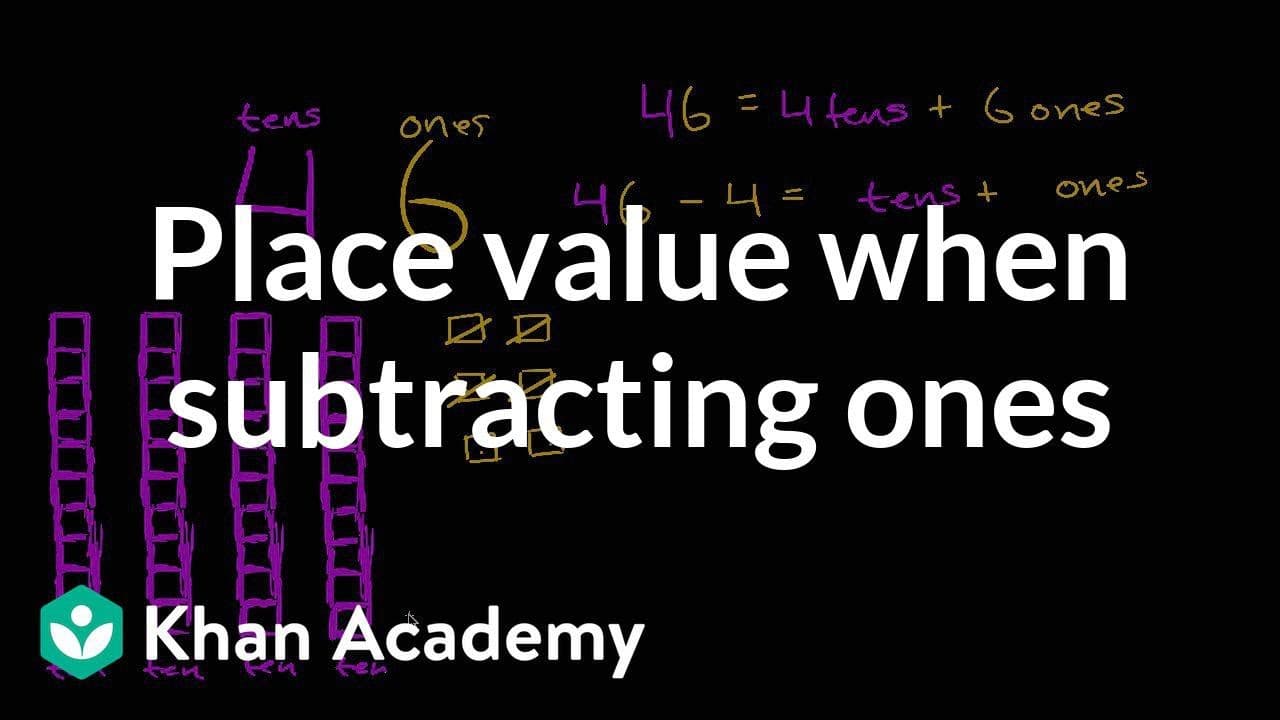
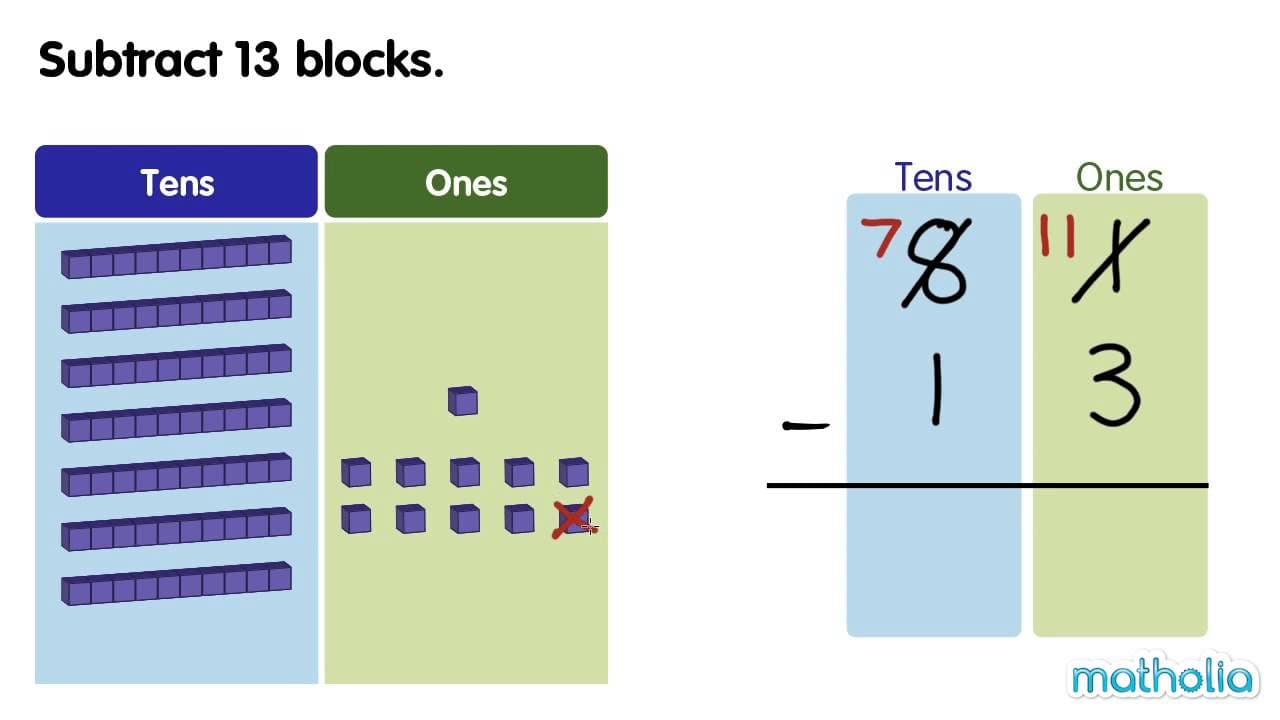
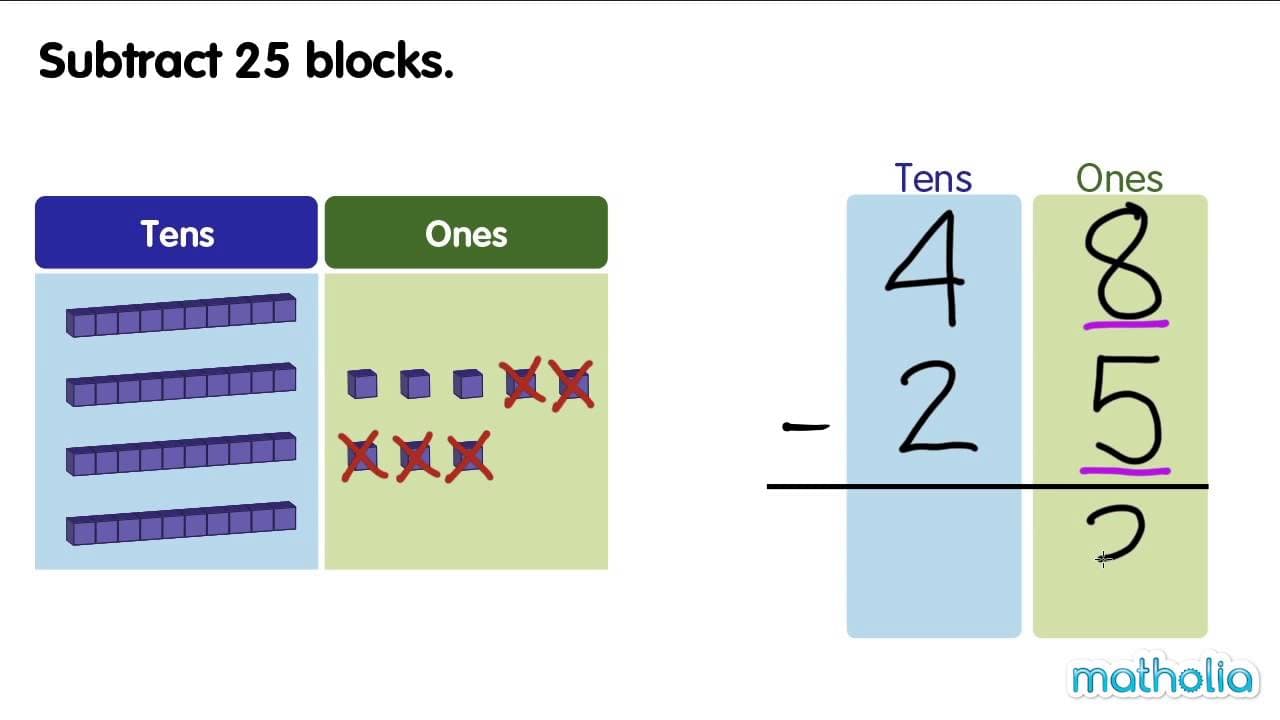
Visualizing Subtraction with Place Value Blocks

Visualizing Subtraction with Place Value Blocks

This video provides a clear, visual demonstration of subtracting a single-digit number from a two-digit number using place value concepts. The narrator uses digital manipulatives—specifically base-ten block drawings—to represent the number 46, decomposing it into four tens and six ones. This visual approach helps students concretely understand what the abstract numbers represent before any operations are performed. The core theme of the video is understanding subtraction through the lens of place value. By physically crossing out four 'ones' blocks from the original six, the video demonstrates that when subtracting single digits (without regrouping), the operation only affects the ones place while the tens place remains unchanged. This reinforces the concept that digits in different positions have specific values and function independently in simple operations. For educators, this video is an excellent tool for bridging the gap between concrete manipulatives and abstract equations. It is particularly useful for introducing non-regrouping subtraction in 1st or 2nd grade. Teachers can use this to model how to draw 'quick tens and ones' to solve problems, showing students a strategy they can use even without physical blocks. The video explicitly connects the visual act of taking away blocks to the numerical procedure of changing the digit in the ones place.

Khan AcademyKhan Academy

2mins 44s

Video
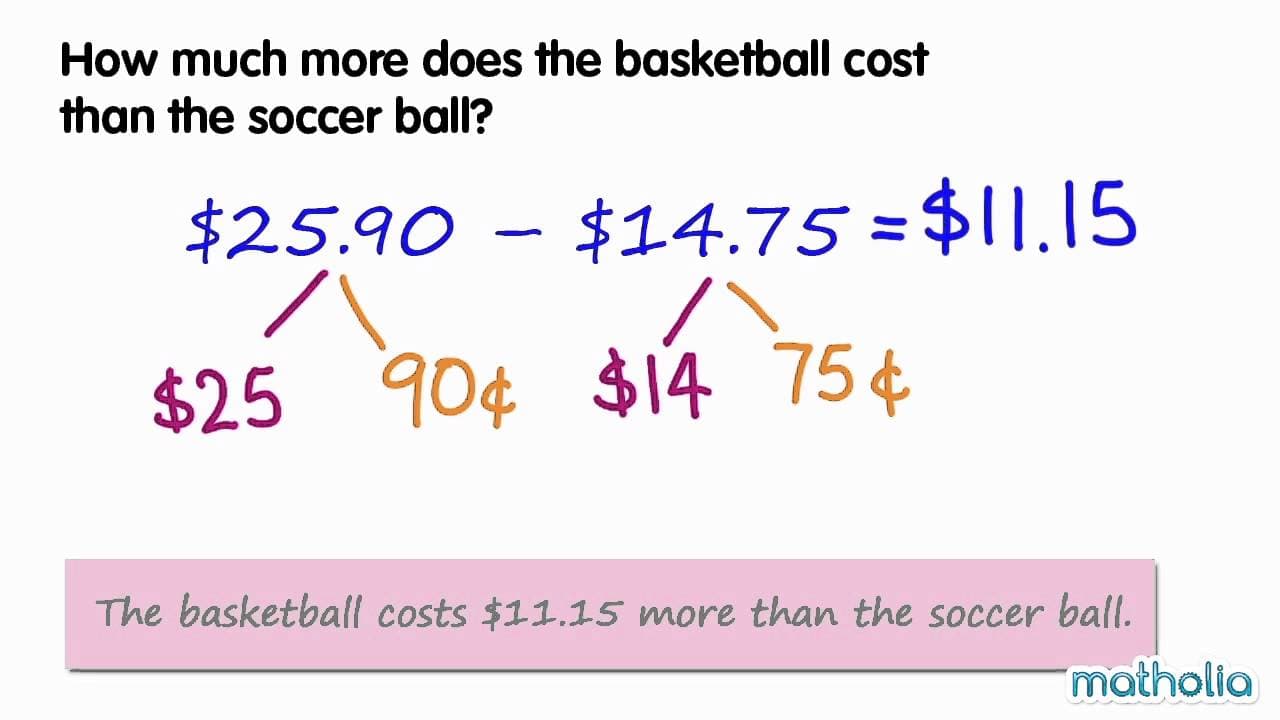
Subtracting Money: Dollars and Cents Without Regrouping

Subtracting Money: Dollars and Cents Without Regrouping

This educational video provides a clear, step-by-step demonstration of how to subtract amounts of money involving both dollars and cents. Using a specific mental math strategy known as decomposition or splitting, the narrator guides viewers through separating monetary values into whole dollar amounts and cent amounts before performing subtraction operations on each separately. This specific video focuses on problems that do not require regrouping (borrowing), making it an excellent introductory resource for students mastering money math. The content explores key themes of financial literacy, subtraction strategies, and number sense. By breaking complex decimal numbers down into manageable parts ($25 and 90 cents), it reinforces the concept of place value and helps students understand the relationship between whole numbers and decimals in a practical, real-world context. The video uses three distinct examples: comparing the cost of sports equipment, finding the price difference between two boxes, and a purely numerical subtraction problem. For educators, this video serves as a valuable visual aid for teaching mental math strategies distinct from the traditional vertical column algorithm. The "separate and conquer" approach shown here encourages left-to-right calculation, which is often more intuitive for mental estimation and quick pricing comparisons. It can be effectively used to introduce money operations in 3rd or 4th grade, support students struggling with the standard algorithm, or demonstrate alternative methods for checking answers.

MatholiaChannelMatholiaChannel

2mins 58s

Video
Mastering Number Bonds to Ten with Ten Frame Animals

Mastering Number Bonds to Ten with Ten Frame Animals

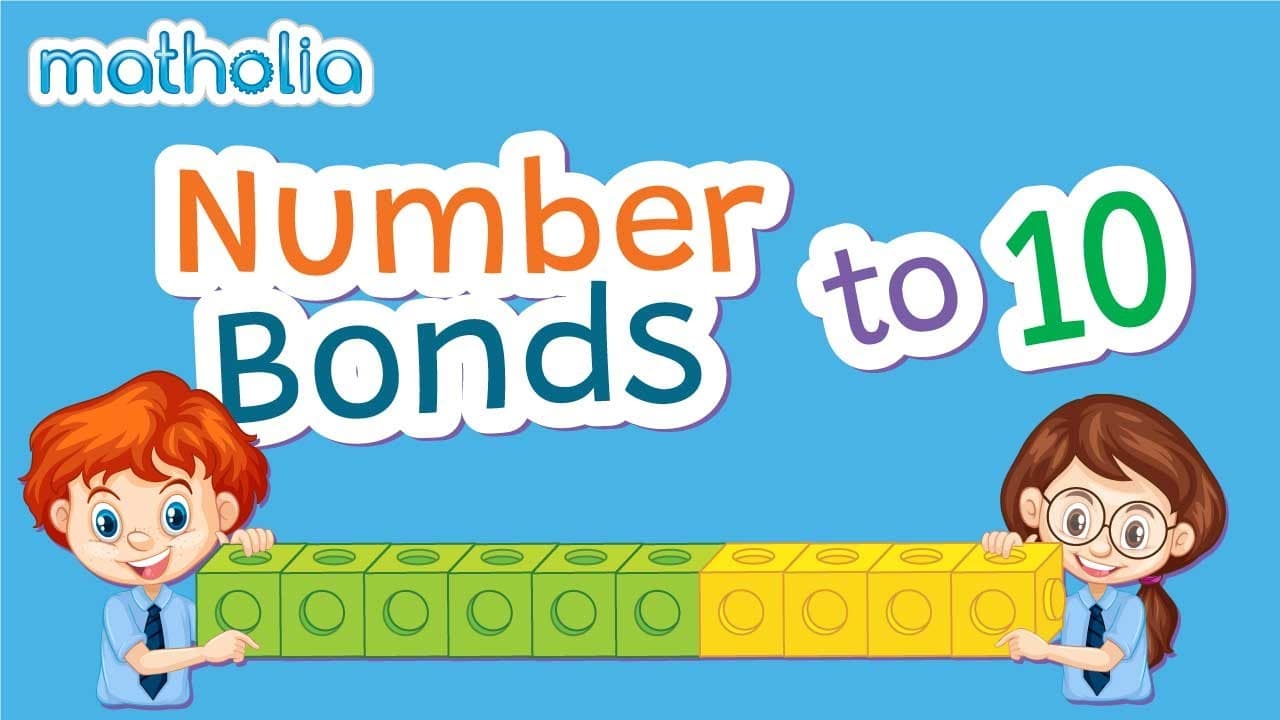
This engaging animated music video introduces young learners to the foundational math concept of "making ten" using ten frames and a cast of rhyming animal characters. Through a catchy song, students meet animals like Wombats, Bobcats, Muskrats, Gnats, and Bats, each representing a specific number quantity on a ten frame. The visual narrative demonstrates how adding a specific number of animals to an existing set completes the ten frame, reinforcing number bonds (pairs of numbers that add up to 10). The video systematically covers all number pairs that sum to ten, starting from 9+1 and working down to 5+5. Each segment presents a partial ten frame and asks the viewer to identify how many more are needed to fill it, followed by a visual animation of the missing addends filling the empty spots. The video includes a review section that explicitly states the addition equations (e.g., "Nine and one makes ten wombats") and a real-world application scene involving a sticker card at a shop. Teachers can use this video to introduce or review the "friends of ten" or number bonds, a critical skill for mental math fluency in early elementary grades. The visual representation of the ten frame helps students move from counting by ones to subitizing and understanding part-part-whole relationships. The song's repetitive structure and rhyming lyrics make the mathematical facts memorable, while the humorous text bubbles add a layer of engagement for proficient readers.

Math Songs by NUMBEROCKMath Songs by NUMBEROCK

3mins 28s

Video
Memorizing Addition Facts for the Number Six

Memorizing Addition Facts for the Number Six

This educational music video focuses on building math fluency through a catchy, rhythmic song dedicated to adding the number 6. Designed for early elementary students, the video utilizes a high-energy, repetitive musical structure to help children memorize addition facts. The content breaks down addition into three distinct sets, starting with basic facts (6+1) and progressing to more challenging equations (up to 6+15), allowing students to gradually build confidence in their mental math abilities. Themes of arithmetic, patterns, and number sense are explored through auditory learning. The song reinforces the commutative property of addition implicitly, while explicitly drilling the specific sums involving the number 6. The consistent beat aids in retention, leveraging the connection between music and memory to help students recall math facts quickly without needing to count on their fingers. For classroom application, this video serves as an excellent warm-up activity, transition tool, or focused drill for math centers. Teachers can use it to introduce the concept of adding 6, review facts before a test, or simply energize the class with a "math movement" break. The audio-centric nature of the resource makes it perfect for playing in the background during independent work or as a call-and-response activity where students shout out the answers before the singer does.

Have Fun TeachingHave Fun Teaching

2mins 18s

Video
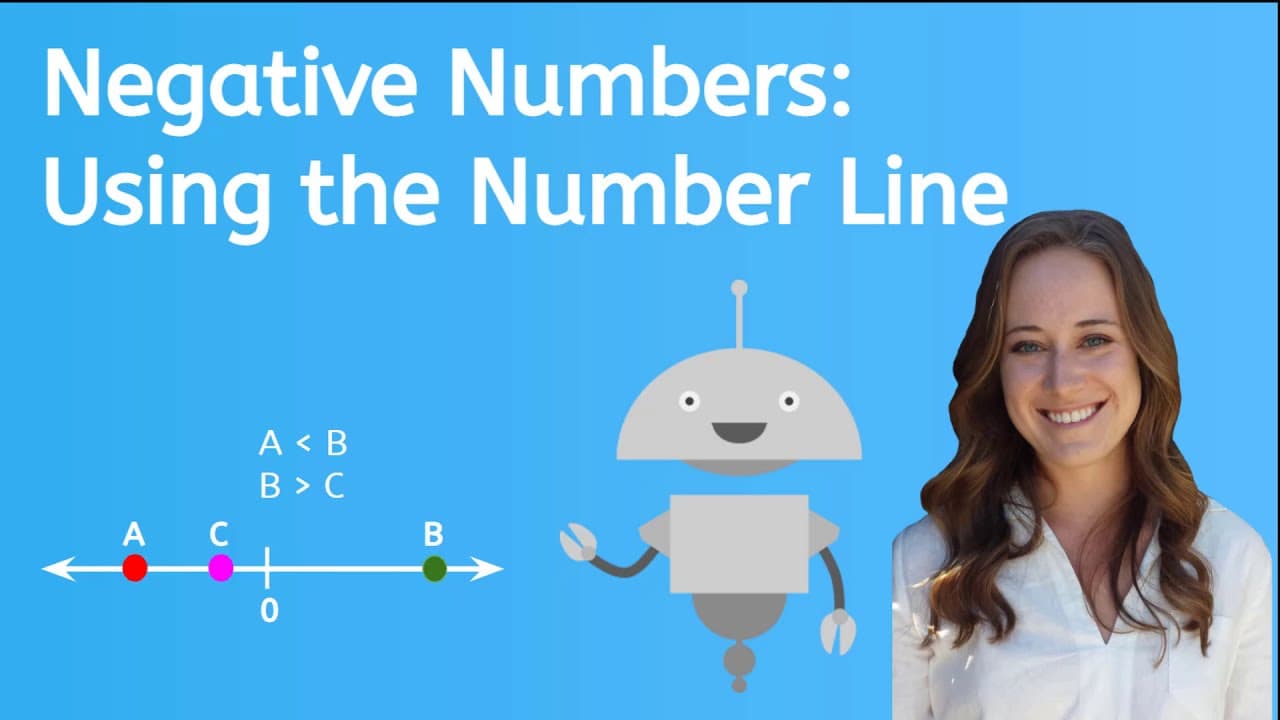
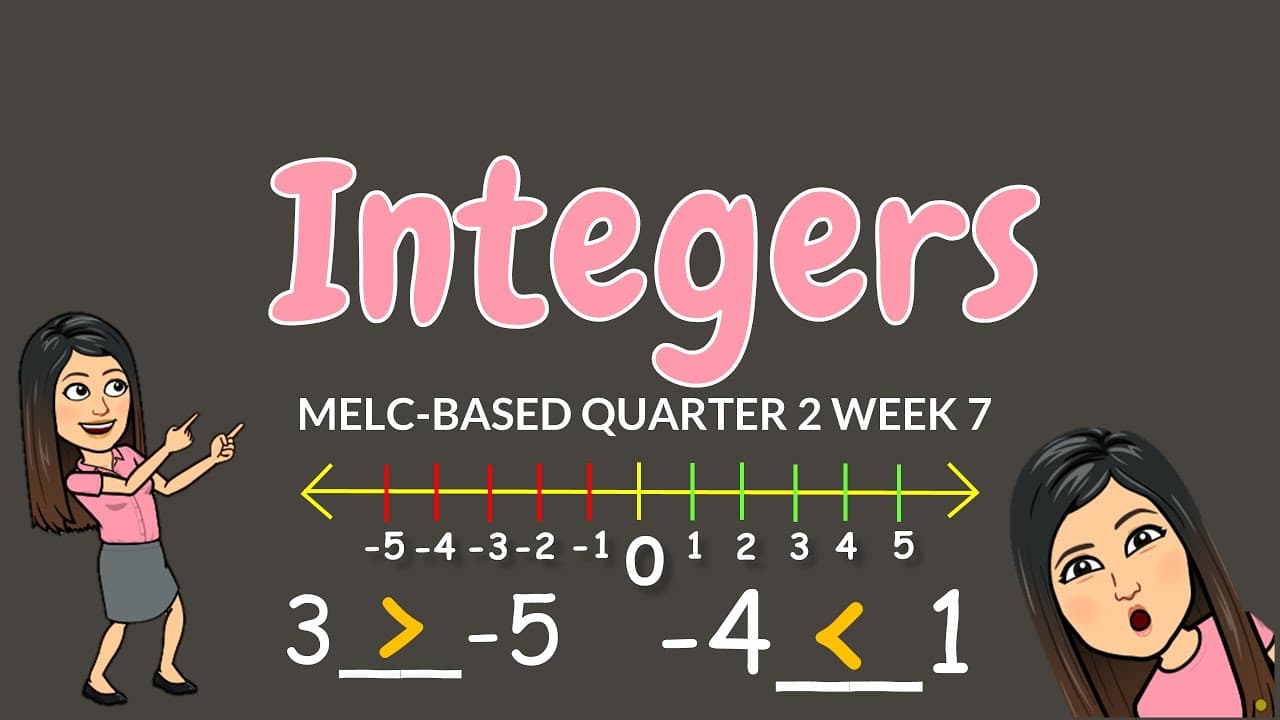
How to Identify and Compare Integers on a Number Line

How to Identify and Compare Integers on a Number Line

This comprehensive math video serves as a fundamental introduction to integers, targeting students encountering negative numbers for the first time. It systematically breaks down the definition of integers, distinguishing them from fractions and decimals, and visualizing them clearly on a horizontal number line. The video moves from abstract definitions to concrete application by using relatble real-world scenarios—such as sea levels, elevator floors, and physical movement—to help students translate verbal descriptions into mathematical integer notation. The content explores several key topics including identifying positive and negative integers relative to zero, translating word problems into integer values (e.g., "backward" means negative), and moving along a number line to visualize addition and subtraction concepts. A significant portion of the video is dedicated to comparing integers using inequality symbols (< and >), with specific focus on the often-confusing concept of comparing two negative numbers, explaining why a number like -3 is actually greater than -5. For educators, this video is an excellent resource for bridging the gap between arithmetic and pre-algebra. It visually reinforces the concept that value increases as one moves right on the number line and decreases to the left. Teachers can use the specific real-life examples provided to create matching activities or word problems, and the clear visual demonstrations of comparison provide a solid foundation for teaching integer operations and inequalities.

Sheena DoriaSheena Doria

10mins 9s

Video
Solving Subtraction Word Problems Using Bar Models

Solving Subtraction Word Problems Using Bar Models

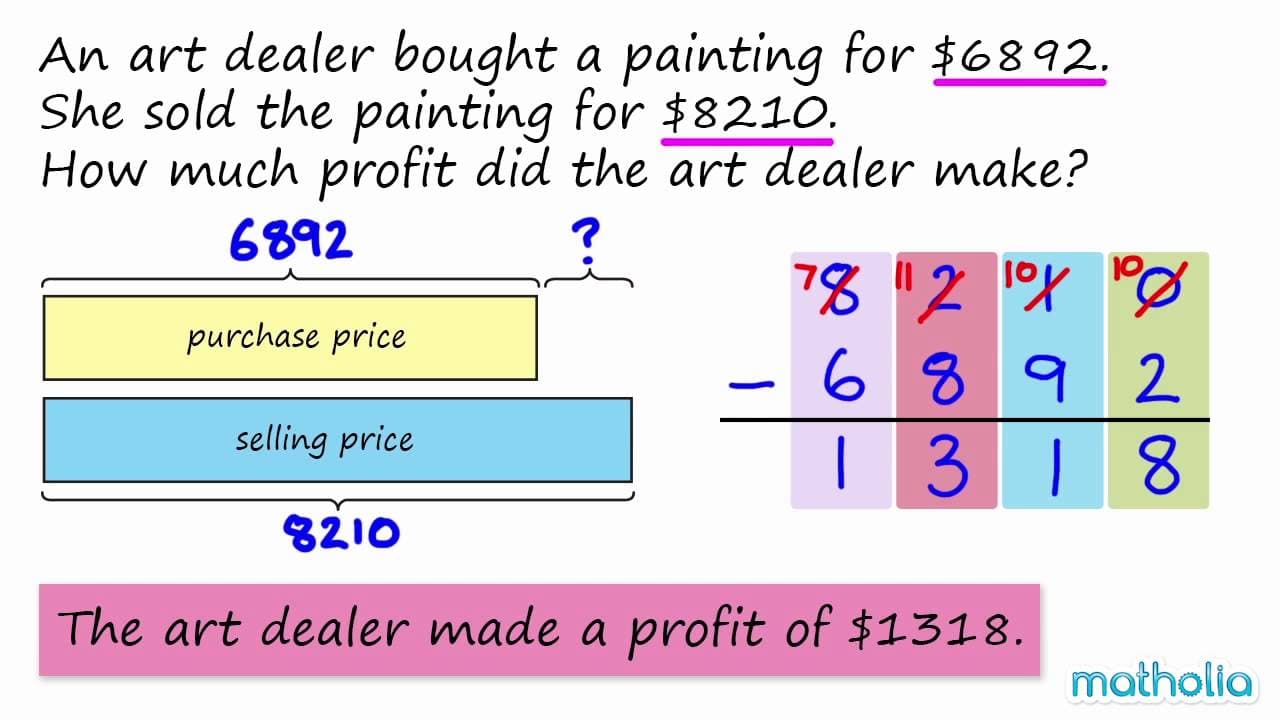
This educational video demonstrates how to solve mathematical word problems using bar models and column subtraction with numbers up to 10,000. It presents two distinct real-world scenarios: calculating the profit earned by an art dealer and determining the number of Sunday visitors to a botanical garden based on weekend totals. Each example follows a structured approach of reading the problem, visualizing it with a bar model to identify the unknown value, and performing the necessary calculation. The video explores key mathematical themes including part-whole relationships, the concept of "difference," and the practical application of subtraction in financial and statistical contexts. It specifically reinforces the vertical subtraction algorithm with regrouping (borrowing) across place values. The use of bar models serves as a crucial bridge between the text of the word problem and the abstract arithmetic required to solve it. For educators, this resource is an excellent tool for scaffolding instruction on word problems, which are often a stumbling block for students. The step-by-step visualization helps students understand *why* subtraction is the correct operation before they begin calculating. It is particularly useful for introducing the Singapore Math method of bar modeling or for reviewing subtraction with larger numbers in 3rd and 4th-grade classrooms.

MatholiaChannelMatholiaChannel

2mins 28s

Video
How to Find Distance on a Coordinate Grid

How to Find Distance on a Coordinate Grid

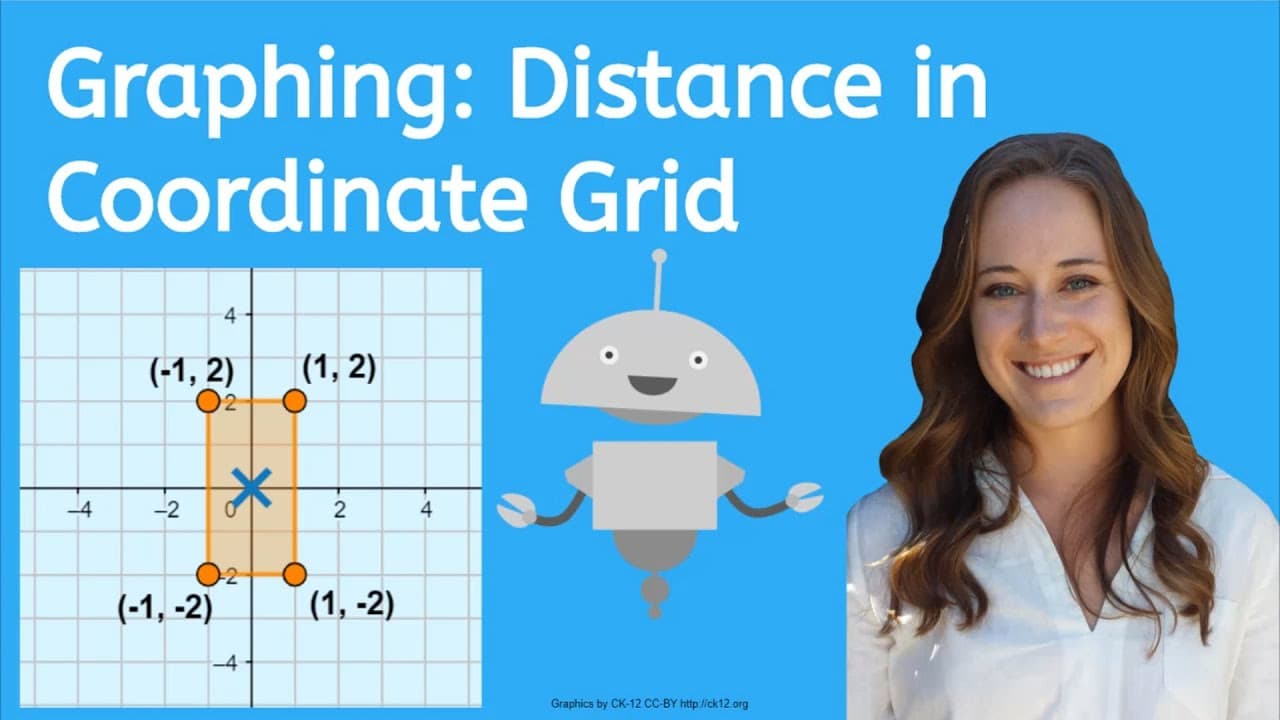
This educational video provides a clear, step-by-step guide to calculating distances on a coordinate plane, specifically targeting 6th-grade mathematics standards. The lesson progresses logically from finding the distance of a single point from the axes to calculating the distance between two distinct points that share a common coordinate. By incorporating the concept of absolute value, the video bridges the gap between arithmetic and geometry, helping students understand distance as a positive magnitude regardless of the quadrant. The content covers key topics including plotting ordered pairs in all four quadrants, understanding the relationship between coordinates and distance from axes, and using absolute value to sum distances when crossing an axis. It features practical applications, such as a narrative example involving a character traveling between locations on a map, and geometric applications where students must construct shapes based on vertex distance. Teachers can use this video to introduce or reinforce the concept of distance on a coordinate grid. The visual demonstrations of "counting boxes" alongside the mathematical method of using absolute value provide scaffolded learning that appeals to both visual and logical learners. The video is particularly useful for transitioning students from simple plotting to analyzing geometric relationships on a grid.

Miacademy & MiaPrep Learning ChannelMiacademy & MiaPrep Learning Channel

10mins 44s

Video
Mastering Addition Facts: The Adding 7 Song

Mastering Addition Facts: The Adding 7 Song

A high-energy musical resource designed to help early elementary students memorize addition facts involving the number 7. Through a catchy, electronic pop song, the video guides listeners through a sequence of equations ranging from 7 + 1 up to 7 + 15. The robotic narration for the equations contrasts with the melodic chorus, creating a distinct auditory pattern that aids in retention and recall. The core theme is building arithmetic fluency through repetition and rhythm. The video breaks the addition table into manageable chunks, interspersed with a chorus that allows students a mental break and a chance to move or dance. This structure supports the cognitive load associated with rote memorization, transforming a typically dry drill exercise into an engaging auditory experience. Teachers can utilize this video as a warm-up activity, a transition tool, or a background track for independent math stations. Its primary educational value lies in supporting mental math strategies and automaticity. By internalizing these specific number bonds, students can free up working memory for more complex mathematical tasks in the future. The song is particularly effective for auditory learners and active students who benefit from incorporating movement into their learning process.

Have Fun TeachingHave Fun Teaching

2mins 20s

Video
Mastering Operations with Integers: Add, Subtract, Multiply, and Divide

Mastering Operations with Integers: Add, Subtract, Multiply, and Divide

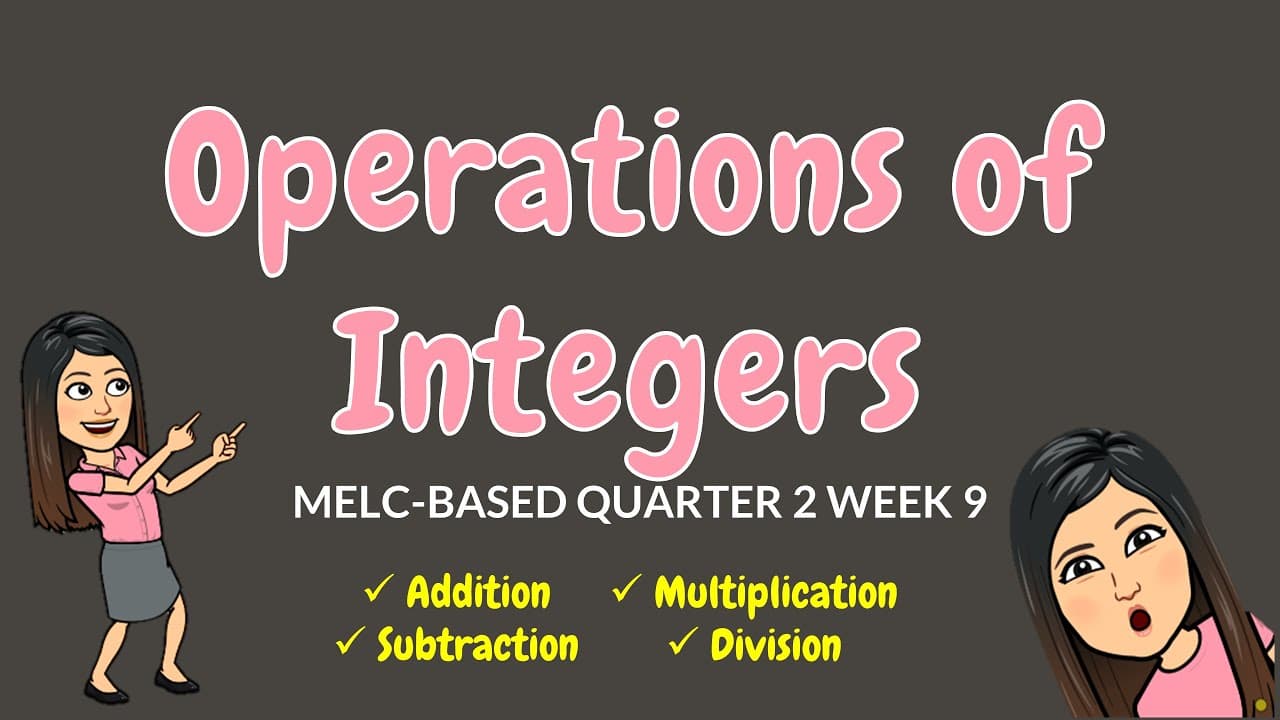
This comprehensive mathematics video serves as a complete guide to performing the four fundamental operations—addition, subtraction, multiplication, and division—with integers. The video uses a clear, step-by-step approach led by an animated teacher avatar who explains both the procedural rules and the conceptual reasoning behind them. It breaks down each operation into distinct segments, providing multiple methods for solving problems, including symbolic notation, number lines, and visual counters (manipulatives). The video explores key themes such as the concept of "zero pairs" when adding or subtracting positive and negative numbers, moving left or right on a number line, and the relationship between subtraction and adding the additive inverse. It explicitly defines mathematical vocabulary like minuend, subtrahend, dividend, and divisor. The content addresses common stumbling blocks, such as subtracting a larger number from a smaller one or subtracting negative numbers, by visualizing these processes with red (negative) and green (positive) counters. For educators, this video is a versatile classroom tool that supports differentiated instruction. The visual models (counters and number lines) are excellent for helping students who struggle with abstract rules grasp the "why" behind integer operations. Teachers can use specific segments to introduce a single operation or use the entire video as a review unit. The clear summary of rules at the end provides a perfect anchor chart for students to copy into their notes, making it valuable for both initial instruction and test preparation.

Sheena DoriaSheena Doria

20mins 42s

Video
Sing and Learn: How to Add 10 to Any Number

Sing and Learn: How to Add 10 to Any Number

This energetic educational music video teaches students how to add the number 10 to other numbers ranging from 1 to 15. Through a catchy, rhythmic pop song, the video guides viewers through addition equations, reinforcing mental math strategies and helping students recognize numerical patterns. The visual presentation features clear, large text of each equation synchronized with the lyrics, set against a colorful, animated background with a friendly character. The content focuses on two primary themes: basic addition fluency and pattern recognition in the base-10 number system. By systematically adding 10 to sequential numbers, the video implicitly teaches the concept of place value—demonstrating how adding a ten changes the digit in the tens place while leaving the ones digit (for single-digit addends) largely recognizable in the pattern. The repetition of the chorus spells out "adding" and "ten," supporting literacy alongside numeracy. For educators, this video serves as an excellent warm-up or transition activity for early elementary math lessons. It is particularly useful for building automaticity with "making teen numbers" (10 + n) and extending that logic to higher numbers. The song format caters to auditory and musical learners, providing a mnemonic device that makes abstract arithmetic memorization fun and engaging. It can be used to introduce the concept of adding 10 or as a review tool to build speed and confidence.

Have Fun TeachingHave Fun Teaching

2mins 19s

Video
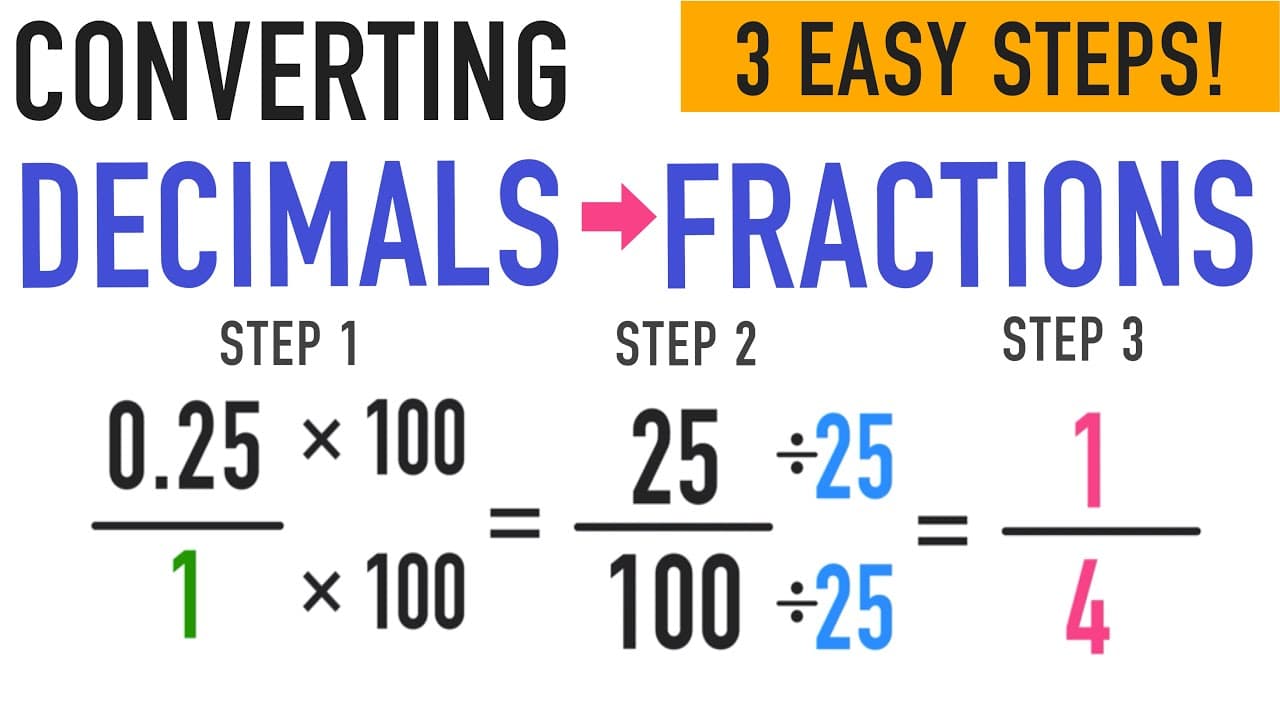
How to Convert Decimals to Fractions Using a 3-Step Method

How to Convert Decimals to Fractions Using a 3-Step Method

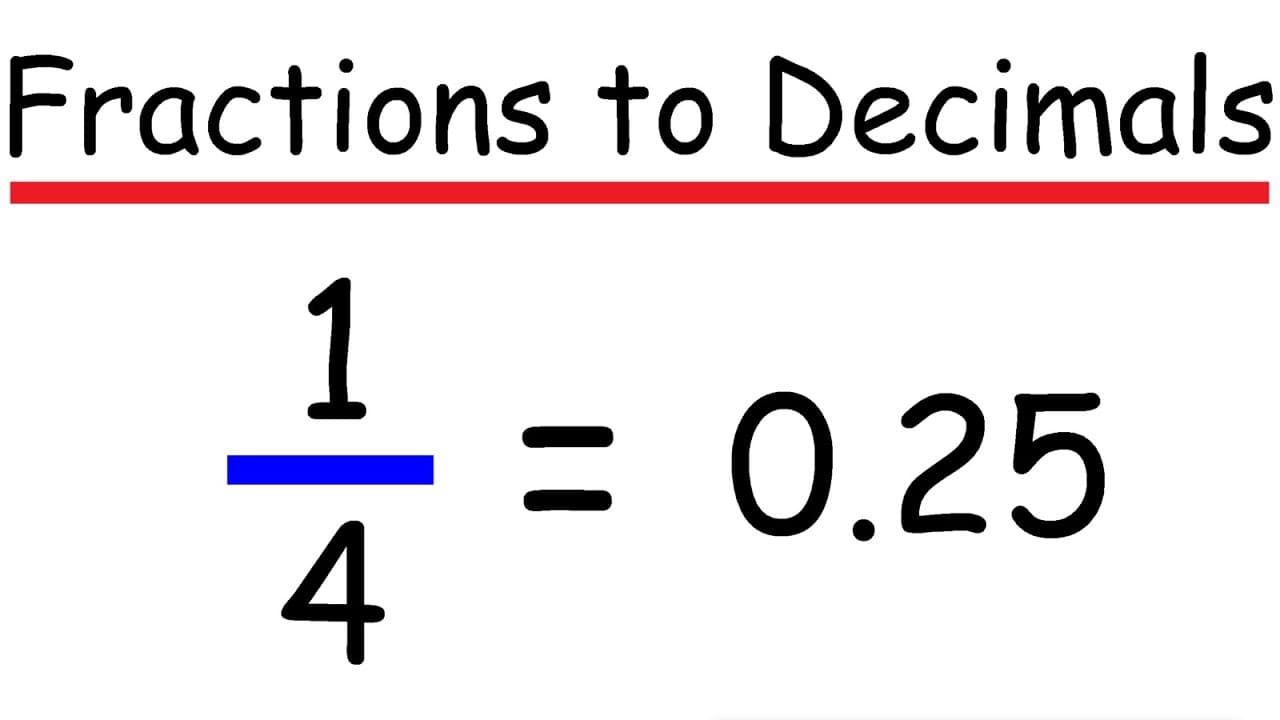
This instructional video provides a clear, step-by-step guide on how to convert terminating decimals into fractions. Using a systematic 3-step process, the video demonstrates the mathematical procedure of rewriting the decimal with a denominator of 1, multiplying by powers of 10 to remove the decimal point, and finally simplifying the resulting fraction to its lowest terms. The content is presented visually with on-screen text and animations, making it suitable for visual learners. The video explores key mathematical themes including rational numbers, place value, and fraction simplification. It specifically focuses on the relationship between the number of decimal places and the power of 10 required for conversion (e.g., two decimal places requires multiplying by 100). Two complete examples are worked through in detail: converting 0.25 into 1/4 and converting 0.375 into 3/8. For educators, this video serves as an excellent direct instruction tool or review resource for upper elementary and middle school math students. It breaks down a multi-step algorithmic process into manageable chunks, making it ideal for students who struggle with the mechanics of conversion. The clear visual distinction between steps helps scaffold learning, allowing teachers to pause and check for understanding before moving to the simplification phase.

Mashup MathMashup Math

4mins 17s

Video
How to Divide Decimals by Powers of Ten

How to Divide Decimals by Powers of Ten

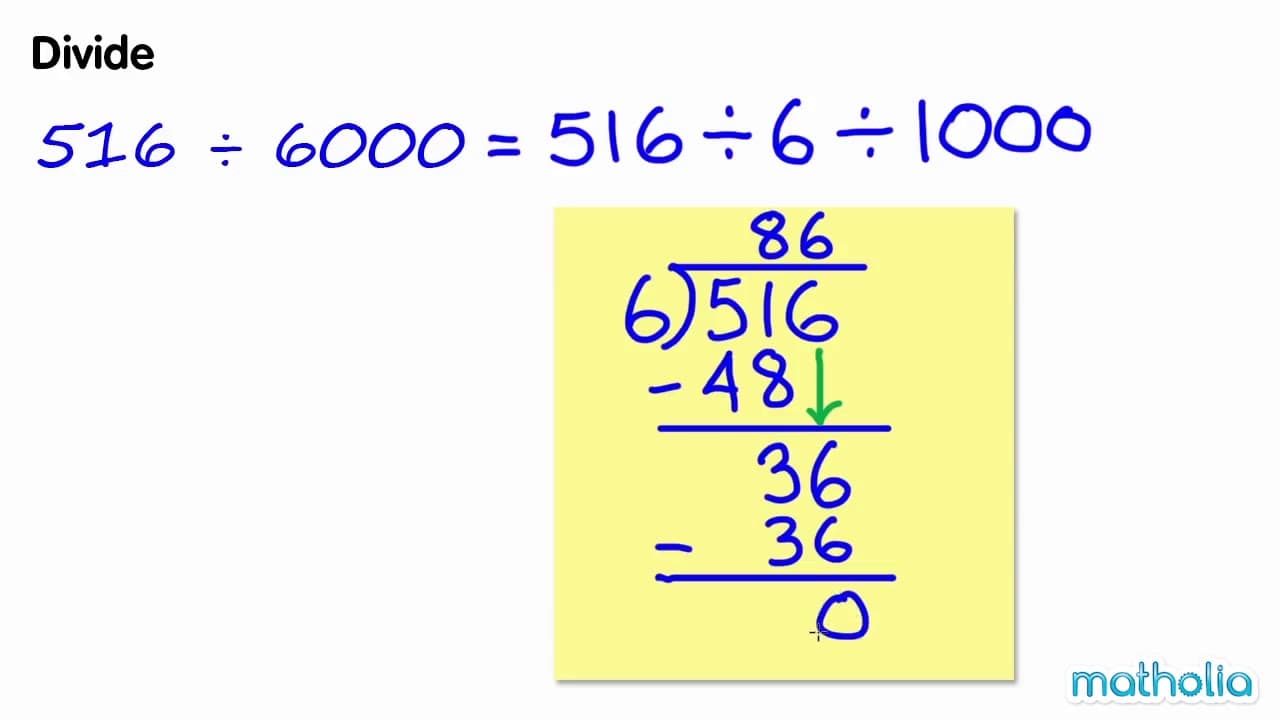
This instructional video provides a clear, step-by-step tutorial on mental math strategies for dividing decimals. It specifically focuses on two distinct patterns: dividing decimals by decimal powers of ten (0.1, 0.01, 0.001) and dividing decimals by whole number powers of ten (10, 100, 1000). The narrator uses a consistent visual format to demonstrate how these operations result in shifting the decimal point either to the right or to the left based on the number of decimal places or zeros involved. The video is structured around six specific examples that increase in complexity, moving from basic shifts to problems requiring the addition of placeholder zeros. Visual cues, including yellow highlighting boxes and animated curved arrows, explicitly show students how to count places and where to reposition the decimal point. The lesson concludes with a summary screen that reinforces the two core rules learned: counting decimal places to move right, and counting zeros to move left. For educators, this resource serves as an excellent tool for teaching place value concepts and computational fluency. It demystifies decimal division by replacing long calculation processes with efficient patterns. The video is particularly useful for helping students visualize why numbers get larger when divided by values less than one and smaller when divided by values greater than one, addressing a common conceptual hurdle in middle grades mathematics.

Sheena DoriaSheena Doria

6mins 4s

Video
Visualizing Place Value: Counting to 10,000

Visualizing Place Value: Counting to 10,000

This educational video provides a clear, visual demonstration of counting up to 10,000 using the Singapore Math concrete-pictorial-abstract approach. It utilizes digital representations of Base 10 blocks (hundreds flats and thousands cubes) to illustrate the concepts of skip counting by 100s, 1,000s, and 10s. The video explicitly bridges the gap between visual models and abstract numbers, helping students understand the magnitude of numbers and the structure of the base-ten number system. The content moves systematically from basic skip counting (100 to 1,000; 1,000 to 10,000) to more complex tasks involving starting from arbitrary large numbers (e.g., counting by 10s starting at 6,320). It specifically highlights critical transition points, such as moving from 900 to 1,000 and 9,000 to 10,000, reinforcing the terminology and value of these larger place value units. For teachers, this video is an excellent tool for introducing or reinforcing place value and skip counting in 3rd and 4th grade. The visual nature of the stacking blocks helps students mentally organize large quantities, while the clear narration models correct mathematical language. It addresses the common student struggle of determining which digit changes during skip counting and offers visual proof of why numbers 'roll over' at the thousands place.

MatholiaChannelMatholiaChannel

3mins 41s

Video
Counting Objects to 100 by Grouping Tens and Ones

Counting Objects to 100 by Grouping Tens and Ones

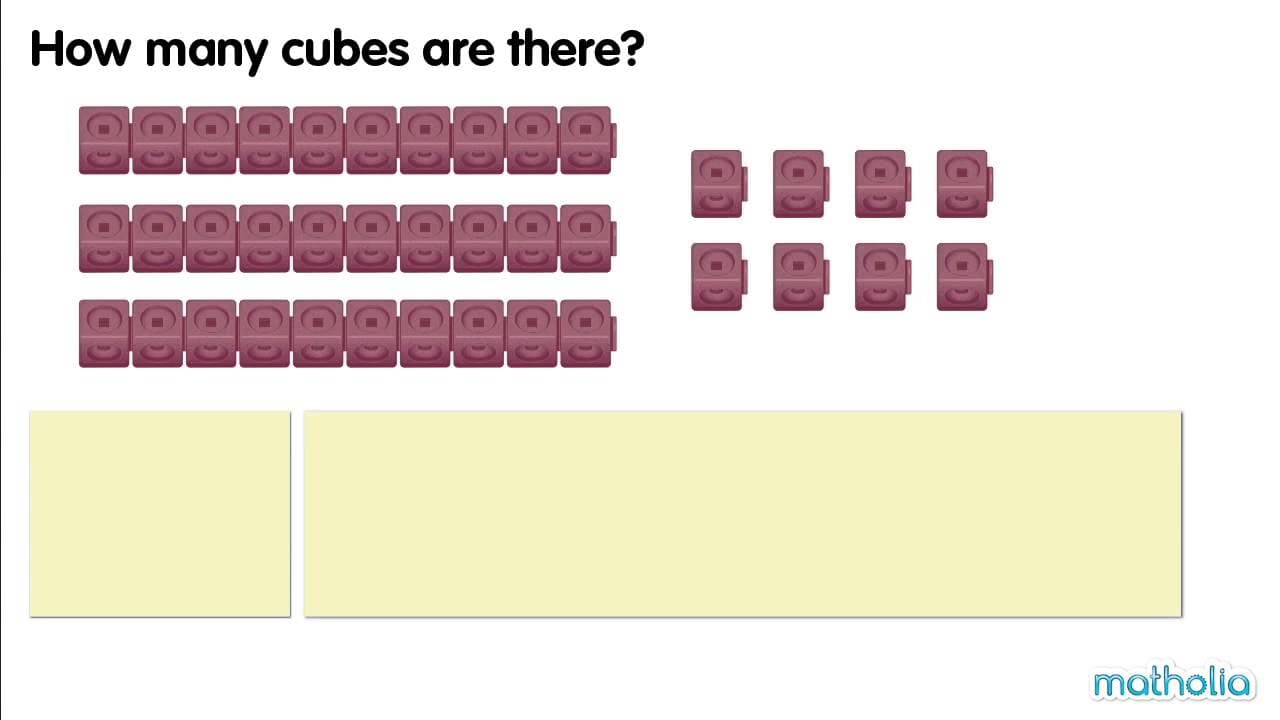
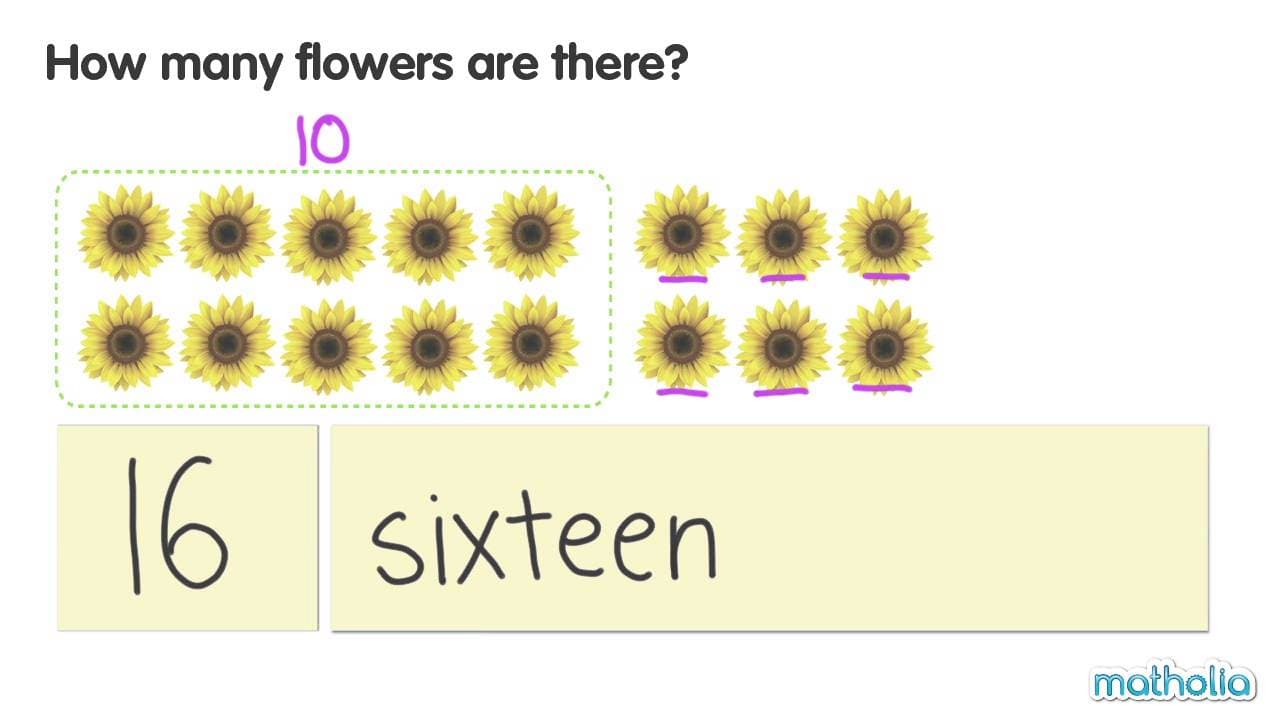
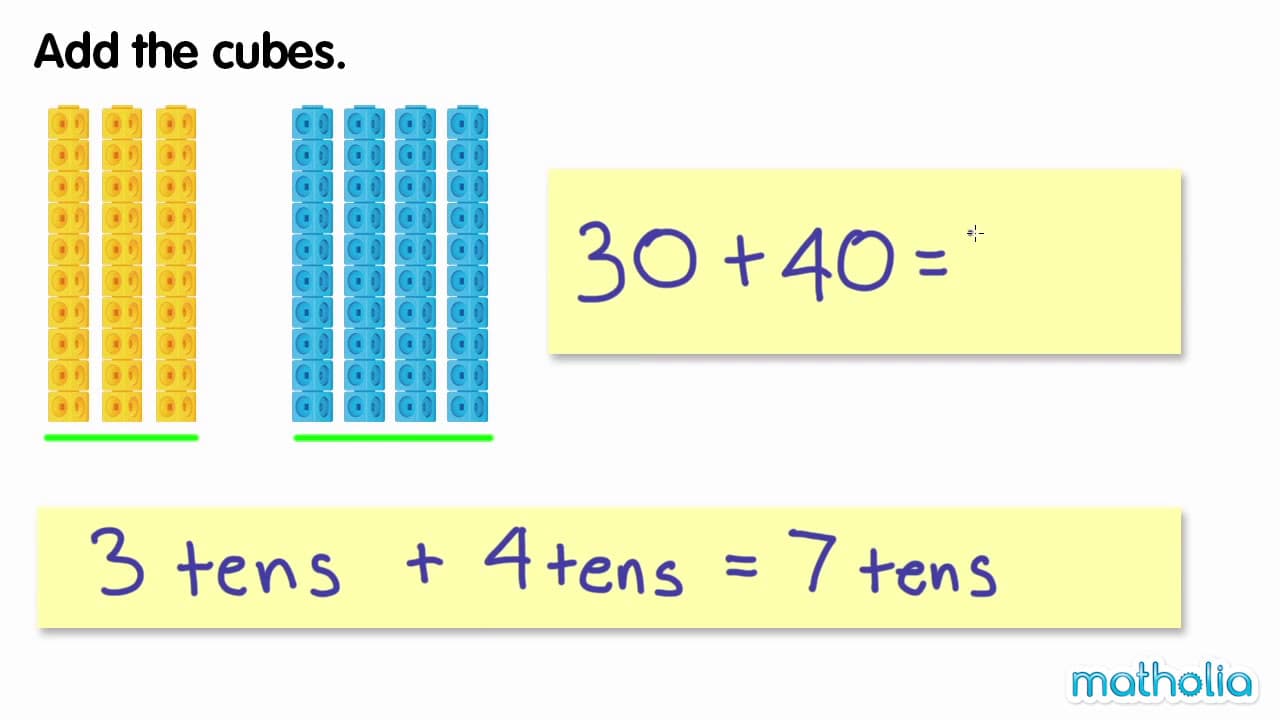
This educational video provides a clear, step-by-step demonstration of how to count larger quantities of objects by grouping them into tens and ones. Using a repetitive and predictable structure, the video guides viewers through counting various items—such as eggs, cubes, pencils, and flowers—up to 100. For each example, the narrator counts groups of ten first (skip-counting), adds the remaining individual units, and then presents the final total in both numeral and written word forms. The content focuses on key early mathematics concepts including place value, skip-counting by tens, and the relationship between spoken numbers, numerals, and their written forms. It visually reinforces the base-ten number system by physically arranging objects into clear groups of ten, making abstract numerical concepts concrete for young learners. The video systematically increases the difficulty, moving from the 50s up to 100. For educators, this resource serves as an excellent tool for introducing or reinforcing place value and counting strategies in early elementary classrooms. It helps students transition from counting by ones (which is inefficient for large numbers) to the more efficient strategy of counting groups. The visual clarity makes it particularly useful for visual learners and can be easily replicated with physical manipulatives in the classroom for hands-on practice.

MatholiaChannelMatholiaChannel

3mins 31s

Video
Reading and Writing Whole Numbers to the Billions

Reading and Writing Whole Numbers to the Billions

This instructional math video guides students through the process of reading and writing large whole numbers in word form, specifically ranging from the thousands up to the billions. The presenter uses a digital chalkboard format to demonstrate four specific examples that increase in complexity, starting with a six-digit number and progressing to an eleven-digit number. The video emphasizes breaking down large numbers into manageable "periods" (ones, thousands, millions, billions) to make reading them less intimidating.

Math with Mr. JMath with Mr. J

8mins 15s

Video
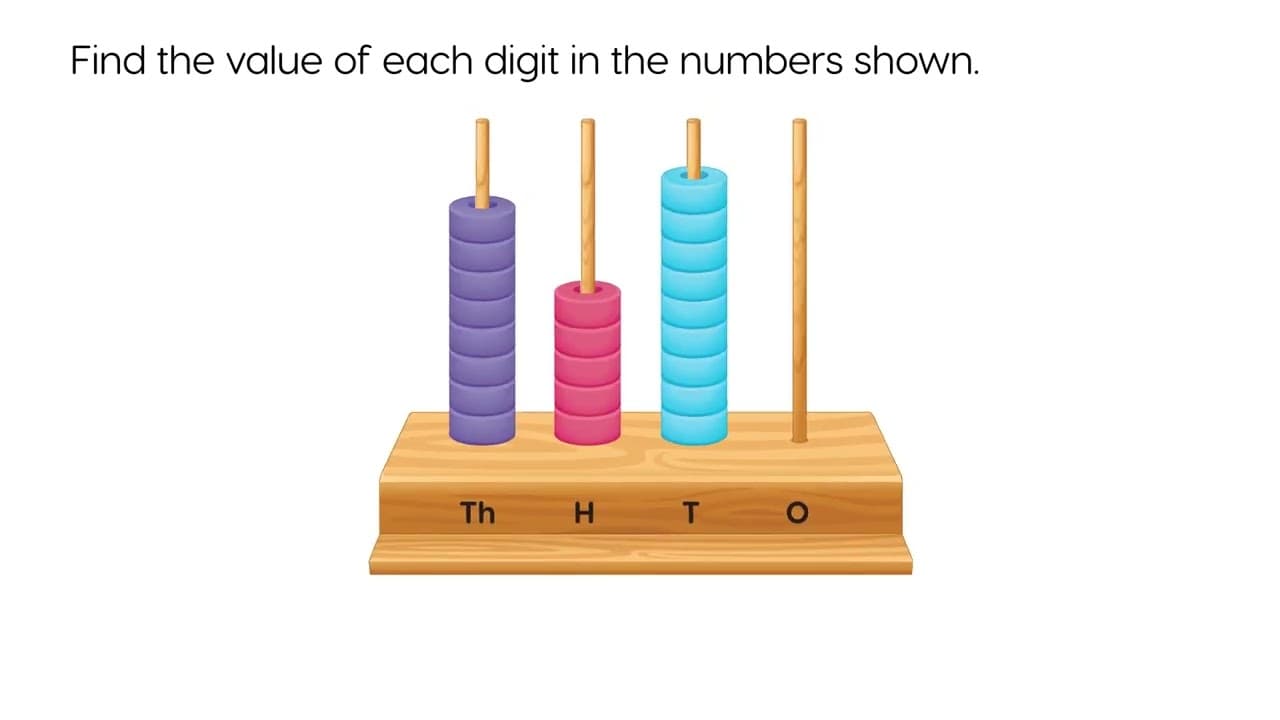
Understanding Place Value with 4-Digit Numbers

Understanding Place Value with 4-Digit Numbers

This educational video provides a clear, step-by-step introduction to place value for 4-digit numbers, specifically focusing on thousands, hundreds, tens, and ones. Using the Concrete-Pictorial-Abstract (CPA) pedagogical approach, the video guides viewers through recognizing the value of each digit within a larger number. It transitions from concrete visual aids like base-10 blocks to representational tools like an abacus, and finally to abstract numerical breakdowns using expanded form. The video explores key mathematical themes including digit value versus place value, decomposing numbers into their constituent parts (expanded form), and reading 4-digit numbers. It explicitly demonstrates how a digit's position determines its quantitative value—showing, for instance, that a '5' in the thousands place is vastly different from a '5' in the tens place. The examples cover numbers such as 1,463, 8,590, 5,698, and 1,357. For educators, this resource is an excellent visual anchor for introducing or reinforcing number sense in lower elementary grades. It is particularly useful for helping students visualize the magnitude of numbers and understanding the structure of the base-10 system. The clear pacing allows teachers to pause and ask students to predict values before they are revealed, making it a versatile tool for whole-class instruction, remediation, or independent review centers.

MatholiaChannelMatholiaChannel

2mins 29s

Video
Introduction to Decimals Through Money and Pizza

Introduction to Decimals Through Money and Pizza

This engaging educational video provides a comprehensive introduction to decimals for elementary students, using relatable real-world examples like money, food, and toys. The video breaks down the concept of a decimal point as a tool to represent numbers that are not whole, effectively bridging the gap between whole numbers and fractions. Through a series of fun vignettes—ranging from buying bouncy balls to counting pizza slices—students are guided through reading, writing, and understanding decimal values. Key themes include the relationship between decimals and fractions (specifically halves, quarters, and tenths), the practical application of decimals in currency, and the visualization of parts of a whole. The video explicitly connects 0.5 to 1/2, 0.25 to 1/4, and 0.1 to 1/10, helping students build a conceptual framework that links these mathematical languages. It also addresses the equivalence of values like 0.1 and 0.10, using dimes and quarters to make the abstract concrete. For educators, this video serves as an excellent anchor for lessons on place value, money math, and introductory fractions. The pacing is deliberate, allowing for pauses where students can predict values or read numbers aloud. The use of visual models, such as a circle divided into ten parts filling up incrementally, provides strong support for visual learners. It transforms the potentially intimidating topic of decimals into an accessible and entertaining subject.

Homeschool PopHomeschool Pop

15mins 37s

Video
How to Count Forward by 10s, 100s, and 1000s

How to Count Forward by 10s, 100s, and 1000s

This educational video from Matholia provides a clear, step-by-step demonstration of counting on by 10s, 100s, and 1000s using four-digit numbers. Through the use of animated number lines, the video visually represents the concept of skip counting, showing how adding specific values affects the digits in a number. It breaks the process down into three distinct sections, allowing learners to focus on one place value change at a time.

MatholiaChannelMatholiaChannel

2mins 50s

Video
Visual Strategies for Dividing Decimals by 10

Visual Strategies for Dividing Decimals by 10

This educational mathematics video provides a clear, step-by-step demonstration of how to divide decimal numbers by 10. It utilizes two distinct visual strategies to explain the concept: first by using a place value chart to show how digits shift position, and second by demonstrating the mental math shortcut of moving the decimal point to the left. The video covers examples ranging from simple tenths to numbers involving thousands and hundredths, ensuring a comprehensive overview of the mechanic. Key themes explored include place value understanding, the relationship between division and leftward movement on a number line or chart, and efficient mental calculation strategies. The video explicitly connects the abstract operation of division to the concrete movement of digits across columns (Ones to Tenths, Tenths to Hundredths), helping students visualize the "why" behind the standard algorithm. For educators, this resource serves as an excellent instructional tool for introducing powers of ten or remediating struggles with decimal placement. It bridges the gap between conceptual understanding (shifting values) and procedural fluency (moving the dot), making it highly applicable for 5th and 6th-grade math curriculums focused on Number and Operations in Base Ten.

MatholiaChannelMatholiaChannel

3mins 30s

Video
Understanding Positive and Negative Numbers in the Real World

Understanding Positive and Negative Numbers in the Real World

This animated educational video serves as a comprehensive introduction to positive and negative numbers, utilizing a number line to visually demonstrate these concepts. Hosted by an animated narrator, the video begins by defining the number line and establishing zero as the neutral center point. It explains the directional nature of numbers, showing how moving right increases value (positive) and moving left decreases value (negative). The content transitions from abstract math to concrete real-world applications, helping students understand where negative numbers exist outside the classroom. Key themes include the structure and function of number lines, the neutrality of zero, and practical applications of integers. The video uses distinct visual aids like pancakes to explain quantity, and incorporates footage of Antarctica, the Dead Sea, and Death Valley to illustrate negative integers in temperature and elevation. It also touches on financial literacy by introducing debt as a negative number concept. The lesson concludes with an interactive review quiz to check for understanding. For educators, this video is an excellent hook or foundational lesson for introducing integers. It effectively addresses the common misconception that zero is positive or negative and provides tangible examples (temperature, sea level, money) that allow teachers to create cross-curricular connections with geography and science. The visual differentiation between positive numbers (no sign needed) and negative numbers (minus sign required) offers a clear rule for students to follow in their own work.

Homeschool PopHomeschool Pop

8mins 13s

Video
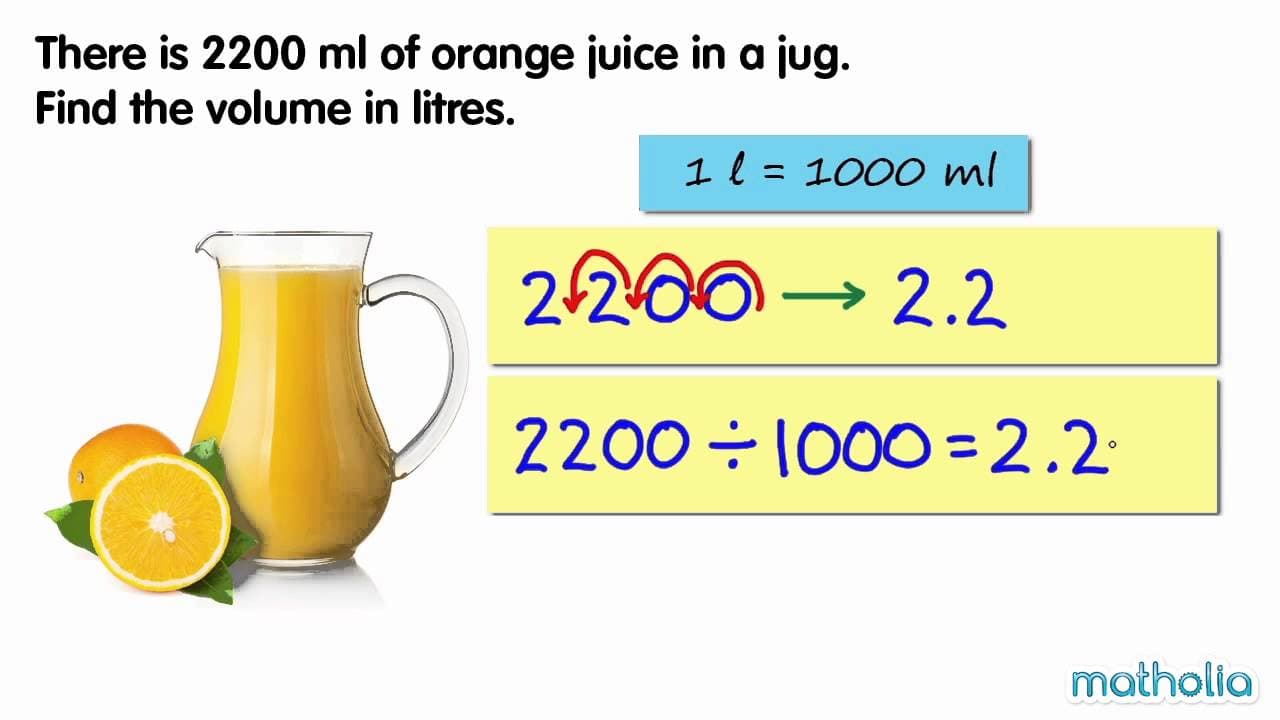
How to Convert Milliliters to Liters

How to Convert Milliliters to Liters

This concise educational video provides a clear, step-by-step tutorial on converting liquid volume measurements from milliliters (ml) to liters (l). Using a visual approach, the narrator explains the relationship between the two units, establishing that one liter equals 1,000 milliliters. The video uses a real-world example of an orange juice jug to demonstrate the practical application of this math skill before moving on to abstract practice problems. The core mathematical concept explored is dividing by 1,000 using decimal displacement. The video visually demonstrates the "shortcut" method of shifting the decimal point three places to the left to perform the conversion. It covers three distinct examples: converting a whole number ending in zeros, a large five-digit number, and a small three-digit number that results in a value less than one, ensuring students see a variety of scenarios. For educators, this video serves as an excellent instructional model for 5th and 6th-grade math units on the metric system and decimal operations. It effectively scaffolds the learning by starting with a word problem, introducing the formula, and then applying a procedural trick (moving the decimal). It helps clarify the connection between division and place value, making it a useful tool for introducing the topic or reviewing it before a test.

MatholiaChannelMatholiaChannel

1min 42s

Video
Writing Decimals in Expanded Form Using Fractions and Decimals

Writing Decimals in Expanded Form Using Fractions and Decimals

This educational math tutorial guides students through the process of writing decimals in expanded form. The instructor demonstrates two distinct methods for every example: using decimal notation (e.g., 0.5 + 0.03) and using fractional notation (e.g., 5/10 + 3/100). The video covers six practice problems that progress in difficulty, starting with basic decimals and moving to mixed numbers with whole number parts, ensuring a comprehensive understanding of place value.

Math with Mr. JMath with Mr. J

6mins 16s

Video
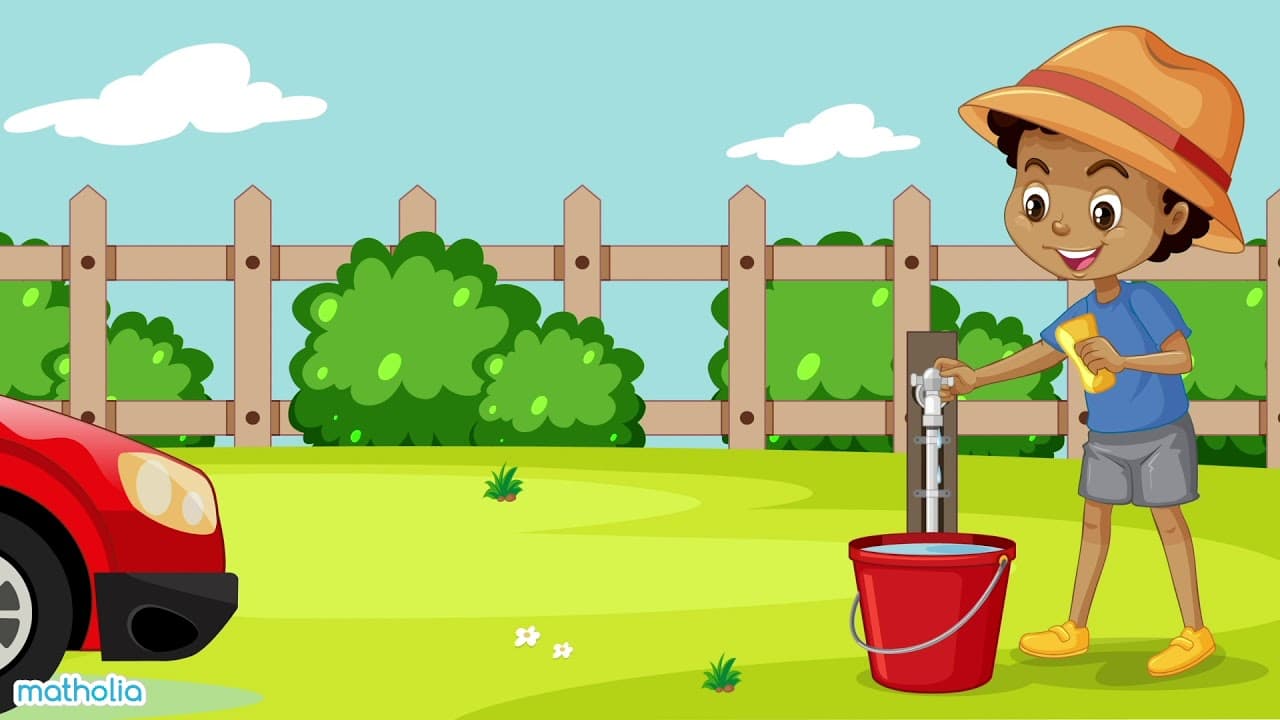
How to Round Decimals to One Decimal Place

How to Round Decimals to One Decimal Place

This educational video provides a clear, step-by-step guide on how to round decimal numbers to one decimal place (the nearest tenth). Using engaging animated scenarios—a girl riding a bike and a boy washing a car—the video demonstrates practical applications of rounding measurements in distance and volume. It explicitly breaks down the rules of rounding: looking at the digit in the hundredths place to determine whether to round up or keep the tenths digit the same. The content focuses on key mathematical themes such as place value identification (tenths vs. hundredths), the specific criteria for rounding (digits 0-4 round down, digits 5-9 round up), and the use of the approximation symbol (≈). It transitions from contextual word problems to abstract numeric practice, reinforcing the procedural rules through repetition and visual highlighting of critical digits. For educators, this video serves as an excellent instructional hook or review tool for upper elementary students learning decimal operations. It simplifies the abstract concept of rounding by grounding it in real-life examples before moving to skill drills. Teachers can use the pauses between the problem presentation and the solution to check for student understanding, making it an interactive component of a math lesson on estimation and number sense.

MatholiaChannelMatholiaChannel

2mins 25s

Video
Comparing Three-Digit Numbers Using Inequality Symbols

Comparing Three-Digit Numbers Using Inequality Symbols

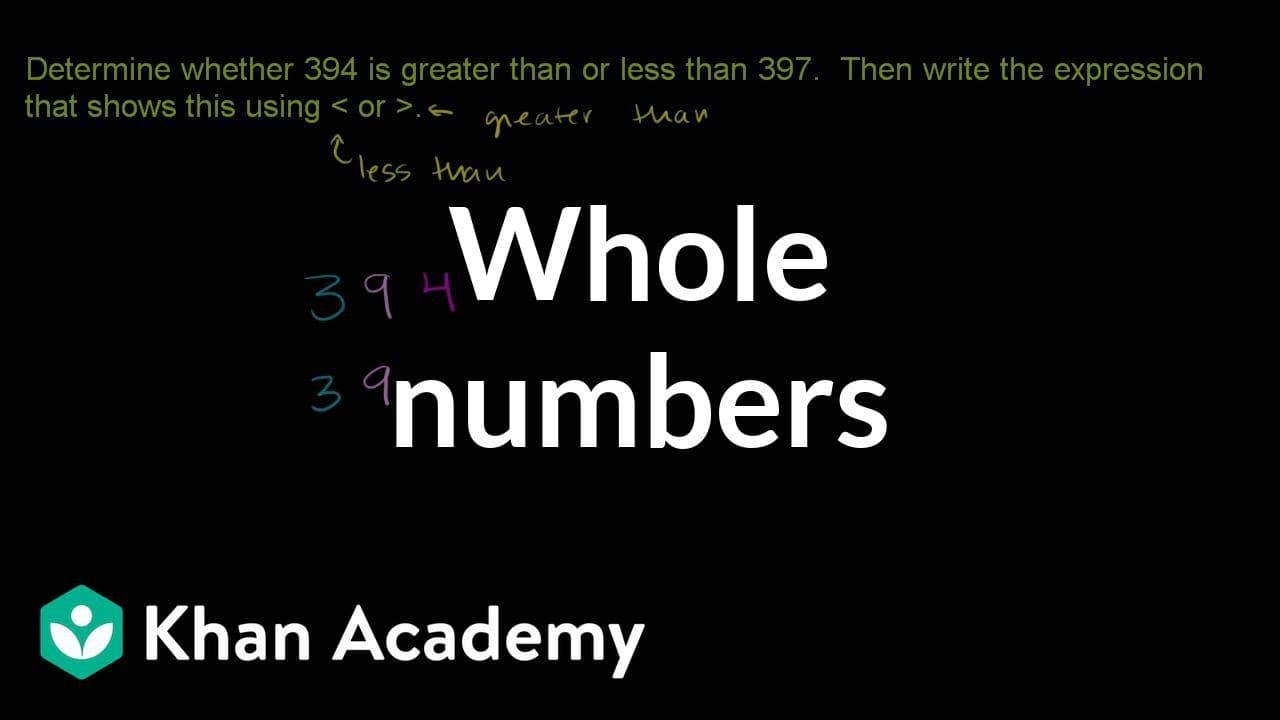
This educational video demonstrates how to compare two three-digit numbers (394 and 397) using place value strategies and inequality symbols. The narrator walks viewers through the step-by-step process of analyzing the digits in the hundreds, tens, and ones places to determine which number is larger. By aligning the numbers and comparing them digit-by-digit, the video provides a clear methodology for solving comparison problems. The content focuses on key mathematical concepts including place value understanding and the correct usage of "greater than" (>) and "less than" (<) symbols. A significant portion of the video is dedicated to explaining how to remember which symbol to use, providing a visual mnemonic where the "smaller side" of the symbol points to the smaller number and the "bigger side" opens toward the larger number. The narrator demonstrates that the comparison can be written in two valid ways: stating 394 is less than 397, or 397 is greater than 394. For educators, this video serves as an excellent model for teaching 2nd and 3rd-grade students how to articulate mathematical comparisons. It moves beyond just finding the answer to constructing a mathematical sentence (expression) that represents the relationship. The visual demonstration of the inequality symbols helps address the common student confusion between the two signs, making it a practical resource for introducing or reviewing inequalities.

Khan AcademyKhan Academy

2mins 4s

Video
How to Round Whole Numbers and Decimals

How to Round Whole Numbers and Decimals

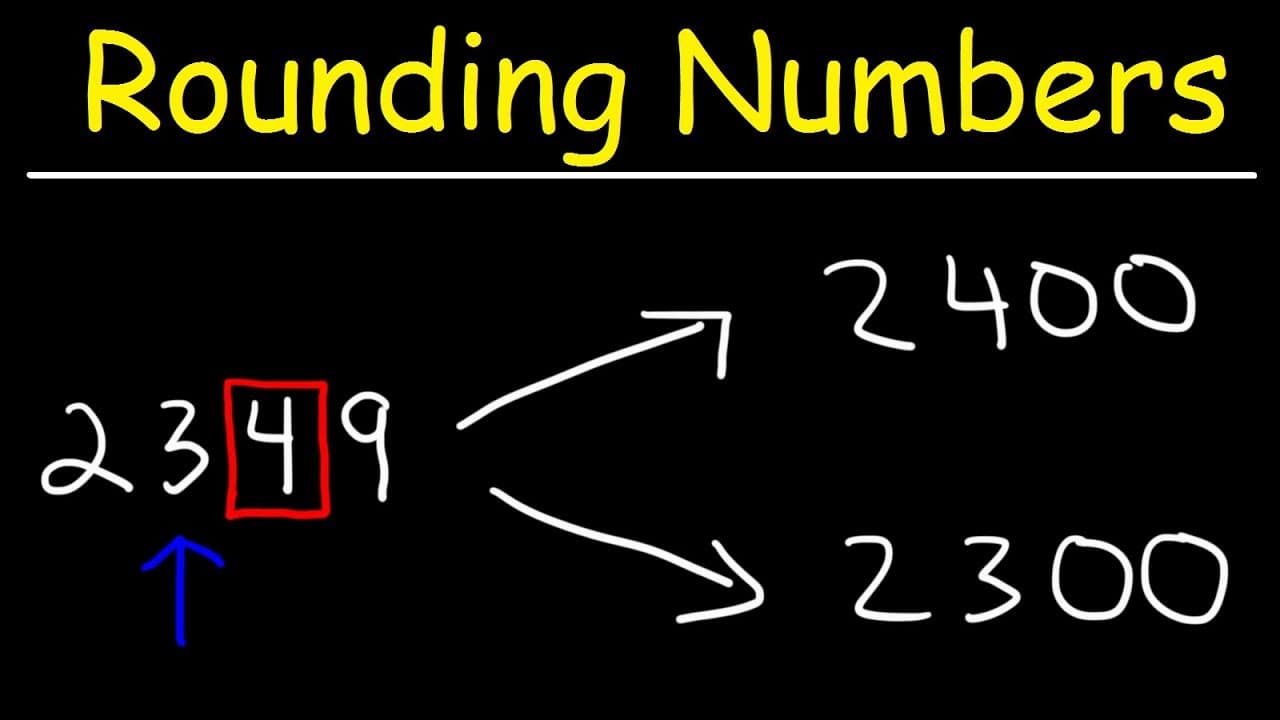
This instructional video provides a comprehensive guide to rounding numbers, covering both whole numbers and decimals. The narrator uses a clear, step-by-step approach on a digital whiteboard to demonstrate the universal rules of rounding: if the critical digit is five or greater, round up; if it is four or less, round down. The lesson progresses systematically from rounding to the nearest ten and hundred, then moves into decimal place values including tenths, whole numbers, hundredths, and thousandths.

The Organic Chemistry TutorThe Organic Chemistry Tutor

11mins 34s

Video
How to Divide Decimals by Whole Numbers Without Regrouping

How to Divide Decimals by Whole Numbers Without Regrouping

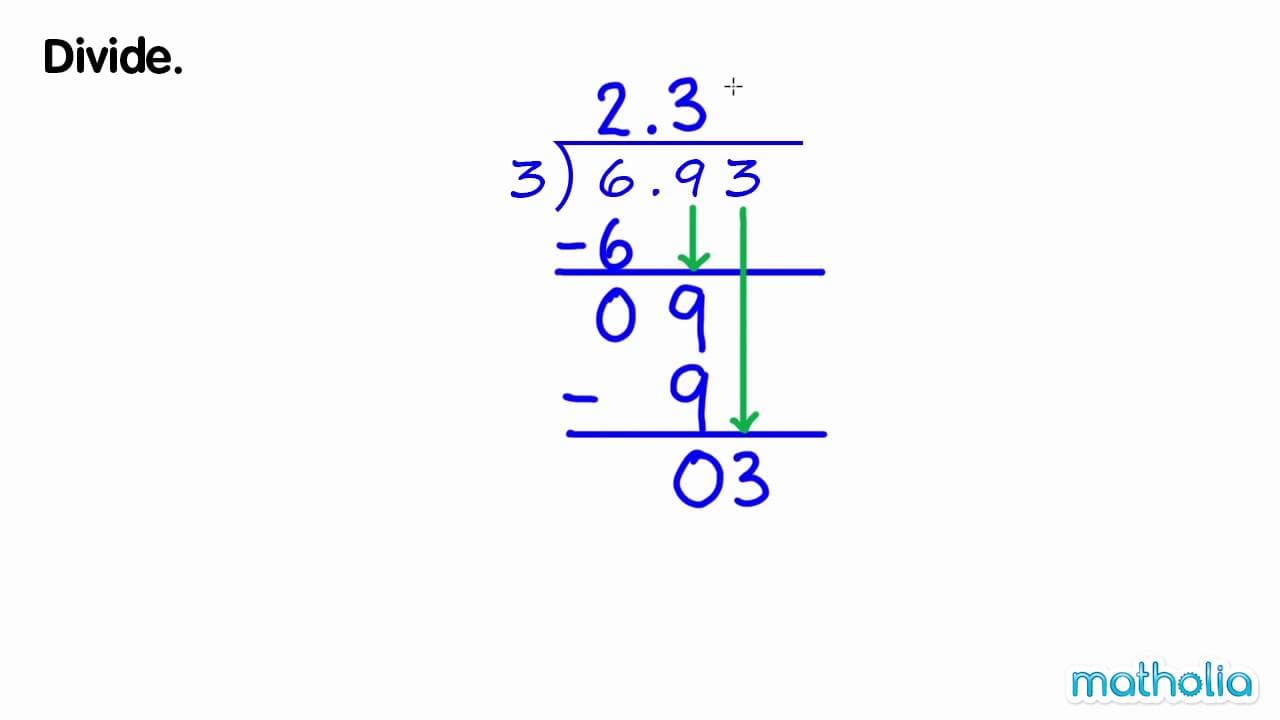
This educational video provides a clear, step-by-step demonstration of how to perform long division with decimals by whole numbers, specifically focusing on problems that do not require regrouping. Through three distinct examples of increasing complexity—starting with tenths, moving to hundredths, and finally thousandths—the narrator guides viewers through the standard algorithm process: divide, multiply, subtract, and bring down.

MatholiaChannelMatholiaChannel

2mins 50s

Video
Multiplying Decimals with Regrouping Step-by-Step

Multiplying Decimals with Regrouping Step-by-Step

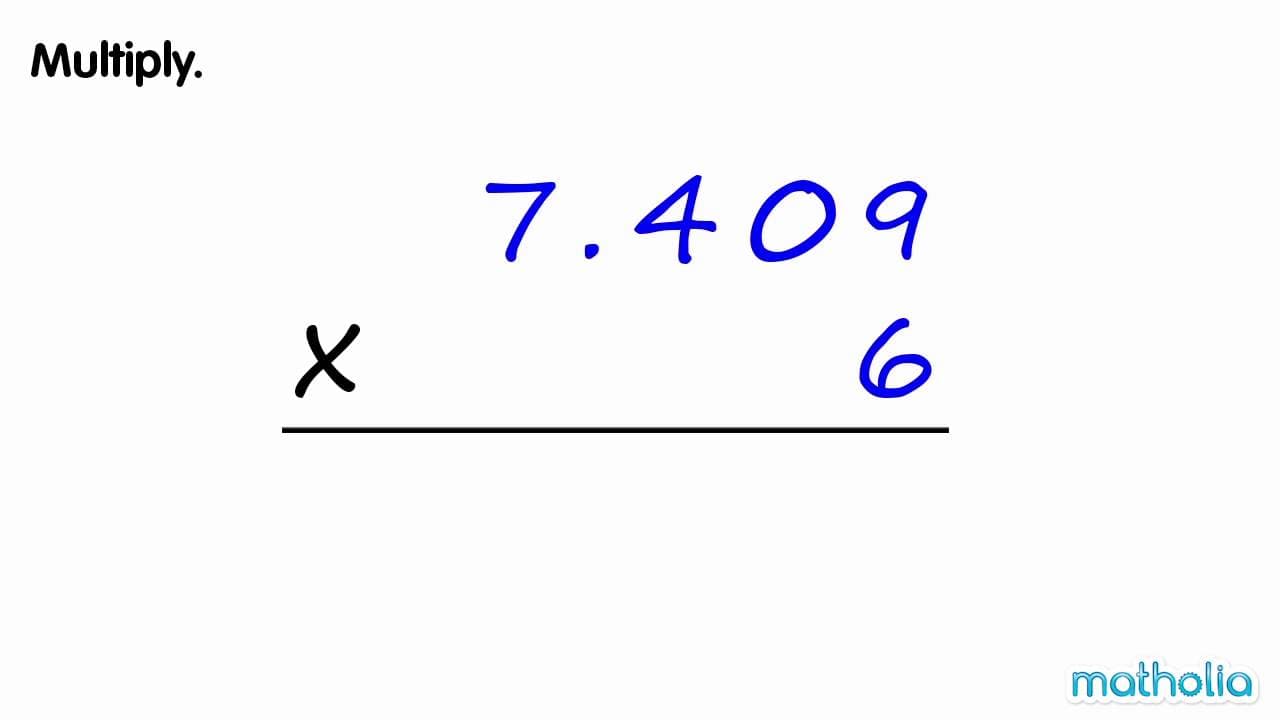
This instructional video provides a clear, step-by-step demonstration of how to multiply decimals by whole numbers using the standard vertical algorithm with regrouping. It features three distinct examples that increase in complexity: a one-decimal place number, a two-decimal place number, and a three-decimal place number. The narration uses precise mathematical language, emphasizing place value by explicitly naming units (tenths, hundredths, thousandths) rather than just stating digit manipulation. The key themes explored include the standard multiplication algorithm, understanding place value within decimal operations, and the concept of regrouping (carrying) values across decimal places. The video reinforces the importance of aligning numbers correctly and placing the decimal point accurately in the final product based on the place values being multiplied. For educators, this video serves as an excellent model for explicit instruction or a review tool for students struggling with the procedural steps of decimal multiplication. Its high educational value lies in its script, which narrates the *why* behind the *how* (e.g., explaining that 32 tenths is regrouped into 3 ones and 2 tenths). This supports conceptual understanding alongside procedural fluency, making it suitable for 5th and 6th-grade math classrooms.

MatholiaChannelMatholiaChannel

2mins 37s

Video
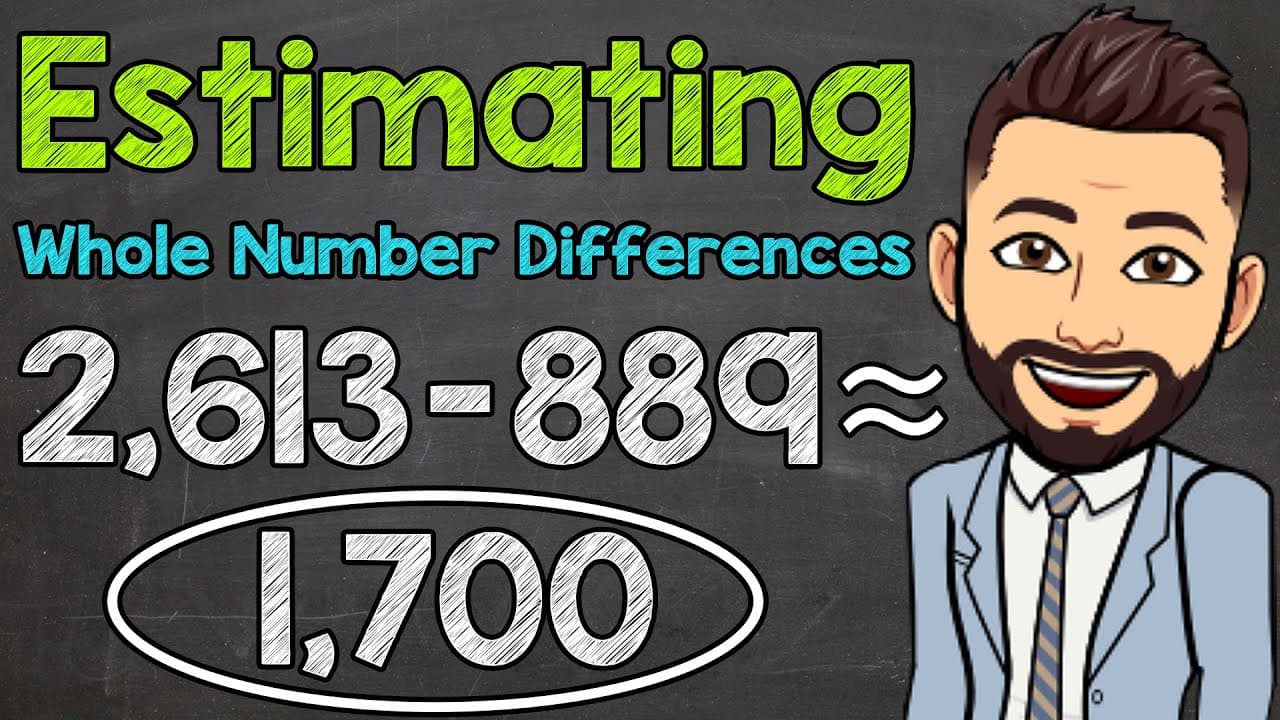
Estimating Differences: How to Subtract Using Rounding Strategies

Estimating Differences: How to Subtract Using Rounding Strategies

This instructional math video provides a comprehensive guide to estimating differences when subtracting whole numbers. The presenter, Mr. J, demonstrates two primary strategies: front-end estimation (rounding to the leading digit) and a more refined method using halfway points to achieve greater accuracy. Through four distinct examples ranging from two-digit numbers to four-digit numbers, students learn how to convert complex subtraction problems into manageable mental math equations.

Math with Mr. JMath with Mr. J

8mins 16s

Video
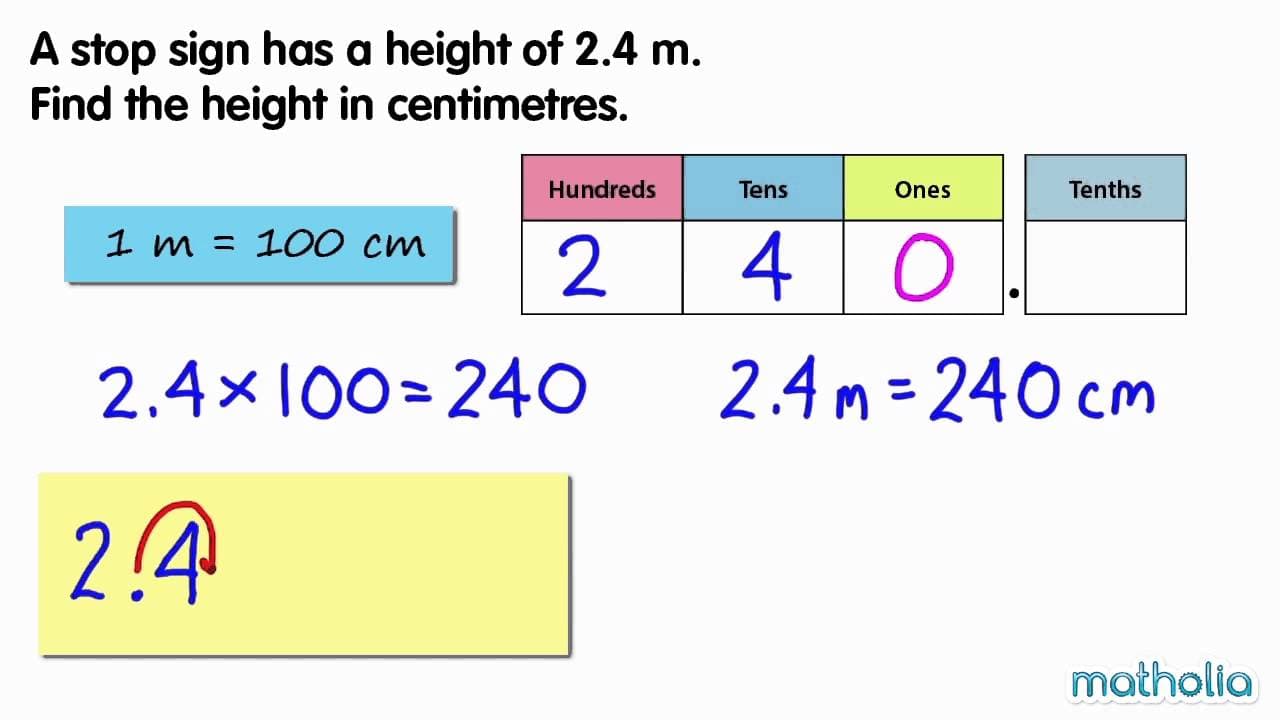
How to Convert Meters to Centimeters Using Decimals

How to Convert Meters to Centimeters Using Decimals

This educational math video provides a clear, step-by-step tutorial on converting measurements from meters to centimeters involving decimals. It introduces a real-world problem—finding the height of a stop sign—and solves it using two distinct methods: understanding place value shifts and the practical shortcut of moving the decimal point. The narration is paced slowly and clearly, making it accessible for students encountering these concepts for the first time. The video explores key mathematical themes including the metric system (specifically the relationship that 1 meter equals 100 centimeters), decimal multiplication by powers of ten, and the function of a place value chart. It explicitly connects the concept of multiplying by 100 to the visual movement of digits or the decimal point, helping to bridge the gap between abstract multiplication and procedural utility. For teachers, this video is an excellent instructional tool for 4th and 5th-grade math lessons on measurement and data. It can be used to introduce the concept of metric conversion or to reinforce decimal operations. The visual animations of the numbers physically sliding across the place value chart and the "jumping" decimal point are particularly valuable for visual learners who struggle with abstract calculation, offering a mental model they can recall during independent practice.

MatholiaChannelMatholiaChannel

1min 56s

Video
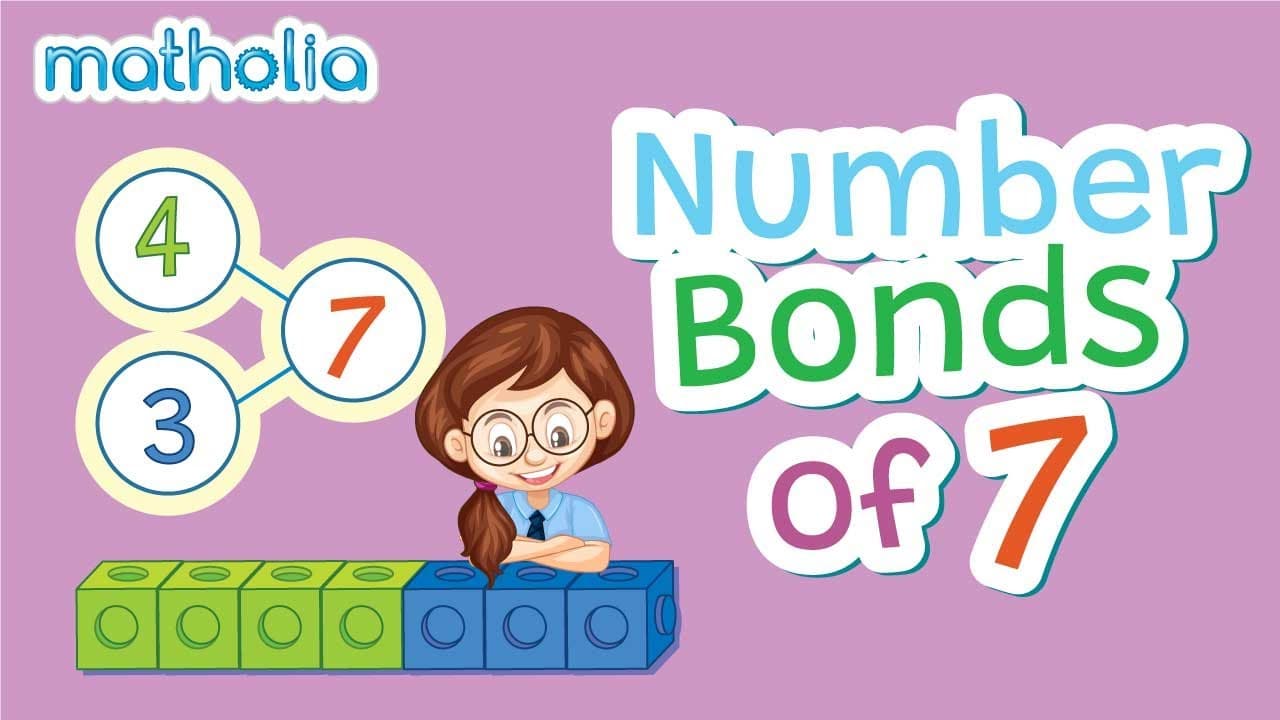
Mastering Number Bonds of 7 with Cubes

Mastering Number Bonds of 7 with Cubes

This instructional video guides early learners through the concept of "number bonds" for the number 7, effectively demonstrating the part-part-whole relationship in addition. Using concrete manipulatives (colored linking cubes) alongside an abstract visual model (number bond diagram), the video systematically explores different pairs of numbers that sum to seven. The clear, uncluttered presentation allows students to focus entirely on the mathematical relationships being demonstrated.

MatholiaChannelMatholiaChannel

2mins 24s

Video
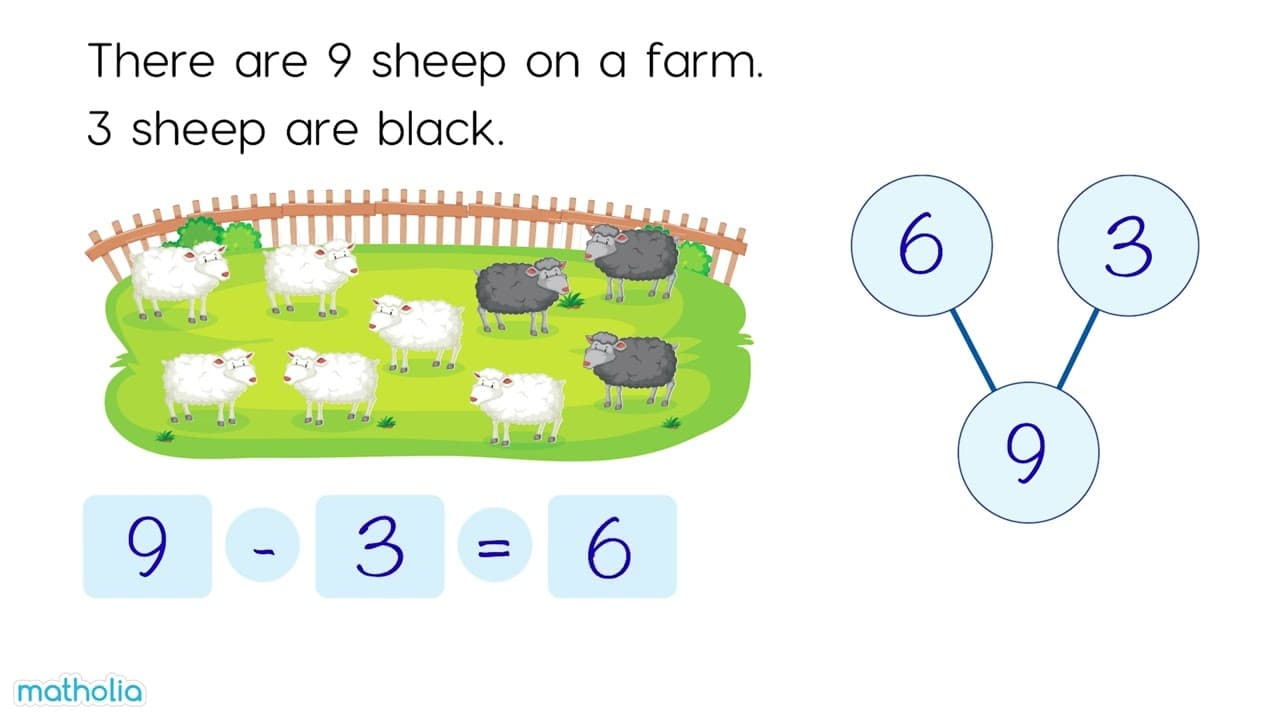
Solving Simple Subtraction Word Problems

Solving Simple Subtraction Word Problems

This educational video introduces young learners to the concept of subtraction through simple, visual word problems. Using engaging animations, the video presents two distinct scenarios: a farm setting with sheep and a playful scene with bubbles. In each story, the narrator guides students through the process of identifying the total number, recognizing the amount being subtracted, and calculating the remainder using number bonds and subtraction equations. The video explores key mathematical themes including basic subtraction, part-whole relationships (number bonds), and translating word problems into numerical equations. It specifically focuses on single-digit subtraction within the range of 1-10, making it highly accessible for early numeracy development. The use of the phrase "take" alongside the minus symbol helps bridge the gap between spoken language and mathematical notation. For educators, this resource serves as an excellent visual aid to reinforce subtraction skills. It demonstrates how to visualize a math problem using concrete objects before moving to abstract numbers. Teachers can use this video to model how to extract relevant information from a story problem, how to use number bonds as a solving strategy, and how to write the corresponding subtraction sentence. It is particularly effective for visual learners and for introducing the concept of "taking away."

MatholiaChannelMatholiaChannel

1min 1s

Video
Finding the Missing Number to Make 10 with Bananas

Finding the Missing Number to Make 10 with Bananas

This educational math video demonstrates how to solve a missing addend problem using concrete visual aids. Specifically, it tackles the equation "3 + _ = 10" by using drawings of bananas to represent the numbers. The narrator guides viewers through a "counting on" strategy, starting with the initial three bananas and drawing additional ones one-by-one until the total reaches ten. The video explores key themes of addition, equality, and the relationship between numbers that sum to ten (often called "friends of ten"). It visually distinguishes between the starting quantity and the added quantity, helping students understand that the missing number represents only the items added to reach the total, not the total itself. For educators, this video is an excellent tool for introducing or reinforcing algebraic thinking in early elementary grades. It bridges the gap between concrete counting and abstract equations. Teachers can use it to model how to use manipulatives to solve for unknown numbers, validating strategies like counting on or using drawing to solve math problems.

Khan AcademyKhan Academy

2mins

Video
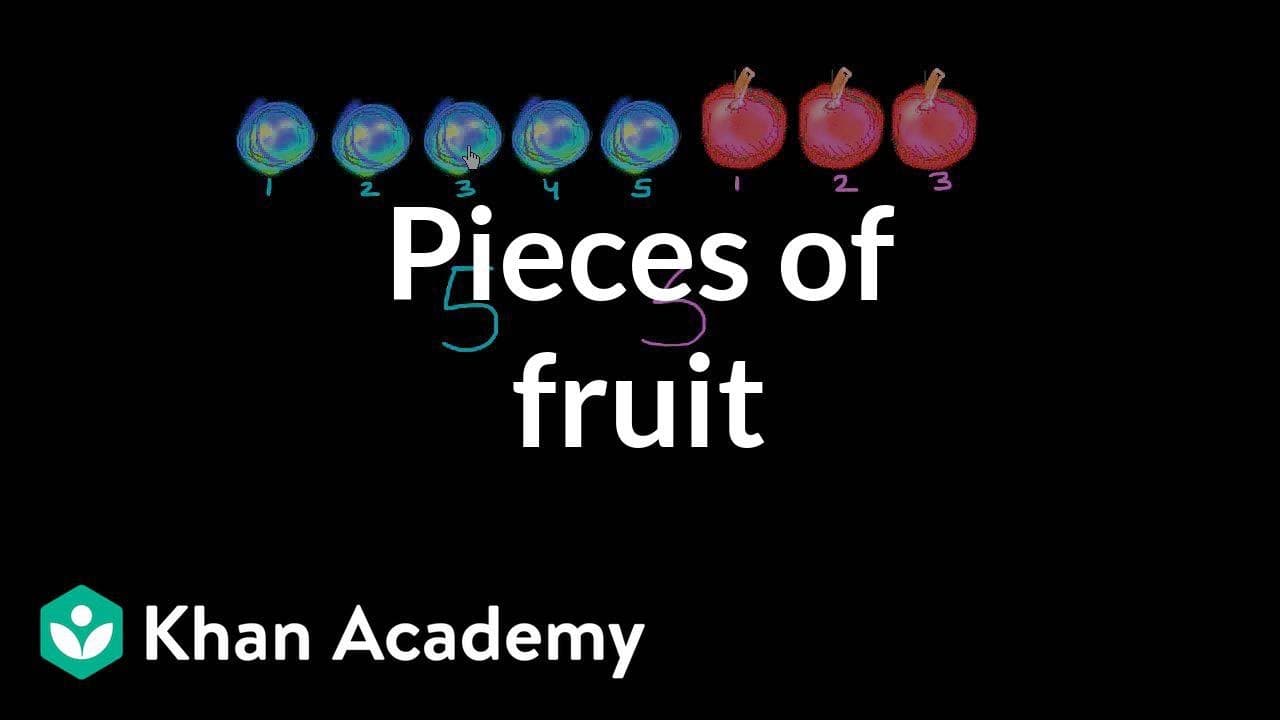
Deciding When to Add or Subtract Using Fruit

Deciding When to Add or Subtract Using Fruit

This video explores the fundamental difference between addition and subtraction through a simple, visual example involving fruit. The narrator presents a scenario with five blueberries and three cherries, challenging viewers to determine whether they need to add or subtract to find the "total number of fruit." The video clearly distinguishes between the two operations by visually mapping them to physical actions—combining sets versus taking items away. Key themes include counting objects, understanding mathematical symbols (+ and -), and interpreting word problem vocabulary. The video visually demonstrates that addition is used for combining distinct groups to find a larger total sum (5 + 3 = 8), while subtraction is modeled as "taking away" or removing items from a starting group (5 - 3 = 2). This side-by-side comparison helps clarify when to apply each operation. For educators, this resource is an excellent tool for introducing early arithmetic concepts and problem-solving strategies. It helps students transition from concrete counting to abstract equations by explicitly visualizing the "why" behind the choice of operation. The clear comparison between "getting more" (addition) and "eating/taking away" (subtraction) provides a strong mental model for young learners beginning to solve one-step word problems.

Khan AcademyKhan Academy

2mins 17s

Video
How to Read and Interpret a Picture Graph

How to Read and Interpret a Picture Graph

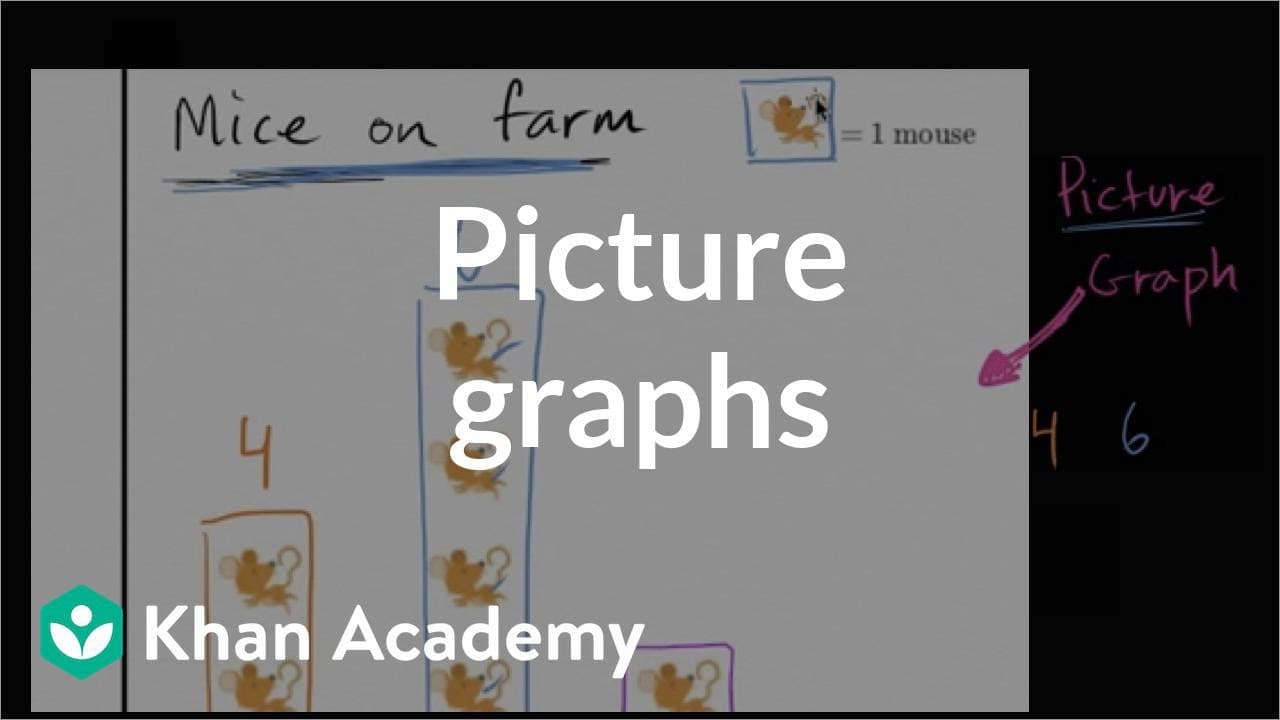
This educational video provides a clear, step-by-step introduction to reading and interpreting picture graphs (also known as pictographs). Using a farm-themed example, the narrator guides viewers through the essential components of a graph, including the title, axis labels, and most importantly, the key or legend. The video demonstrates how to count symbols in different categories to gather data and how to perform basic addition to interpret that data. The content focuses on data representation and analysis appropriate for early elementary students. It explores themes of counting, sorting, and analyzing information visually. The video specifically demonstrates how to translate visual icons into numerical values (e.g., counting mouse icons to determine there are 6 mice in the barn) and how to synthesize this information to answer questions about totals and specific categories. For teachers, this video serves as an excellent introduction or review of graphing concepts. It models the thinking process required to interpret data, verbally articulating questions like 'How many mice are in the barn?' and 'What is the total number of mice?' It can be used to spark learning by having students follow along and count before the narrator reveals the answers, or as a model for students to create their own picture graphs based on classroom data.

Khan AcademyKhan Academy

2mins 47s

Video
Learning Number Bonds: Adding Parts to Make a Whole

Learning Number Bonds: Adding Parts to Make a Whole

This educational video introduces young learners to the mathematical concept of number bonds, a key foundation for understanding addition and subtraction. Through a series of clear, colorful visual demonstrations, the video illustrates how two separate groups (parts) can be combined to form a total number (the whole). It progresses from using static manipulatives like linking cubes to animated scenarios featuring ants and alligators to keep students engaged while reinforcing the math concepts. The content explores several key themes including counting, decomposing numbers, the commemorative property of addition, and the concept of zero. It specifically uses the language of "parts" and "whole" to help students verbalize their mathematical thinking. The video covers sums up to 9, demonstrating various combinations such as 2+1, 3+3, 2+7, and importantly, 7+0, helping to clarify that adding zero results in the same number. For educators, this video is an excellent tool for introducing or reinforcing early arithmetic skills in Kindergarten and 1st Grade classrooms. It bridges concrete representation (cubes/animals) with abstract notation (number bond diagrams with digits). Teachers can use this video to launch lessons on addition, as a visual anchor for explaining the "part-part-whole" relationship, or as a model for students to create their own math stories using physical manipulatives.

MatholiaChannelMatholiaChannel

2mins 10s

Video
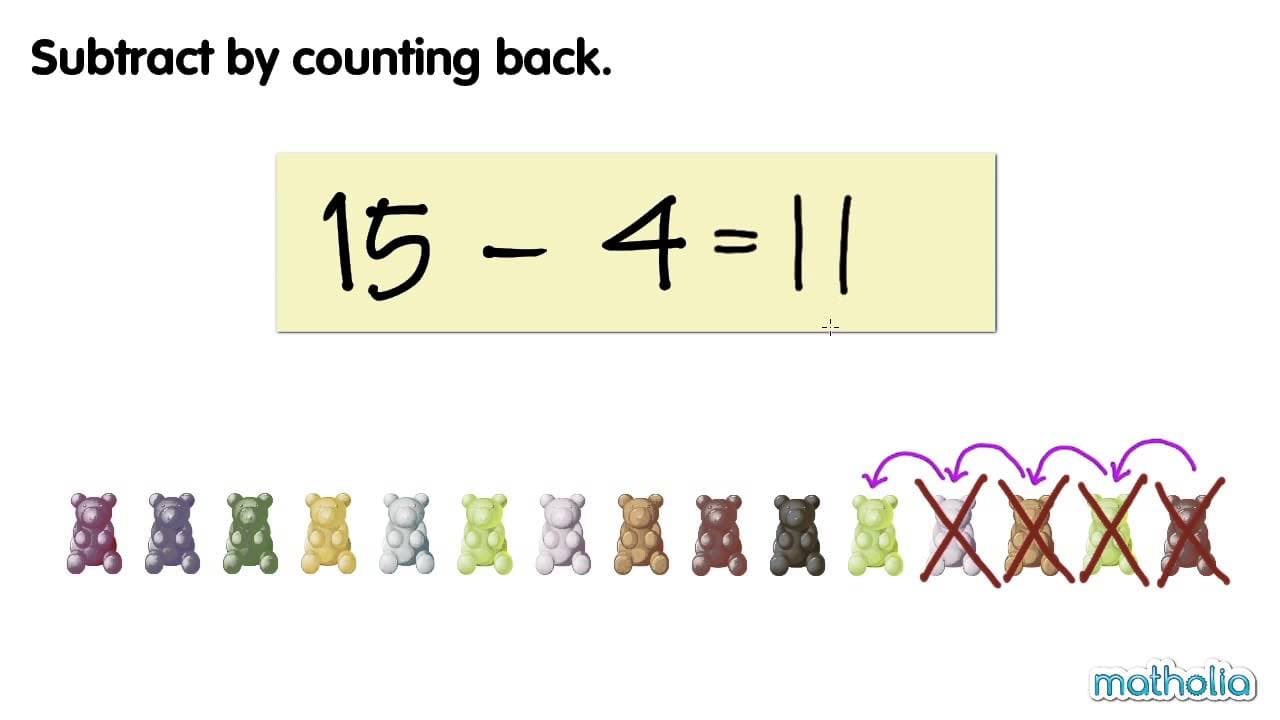
How to Subtract by Counting Back

How to Subtract by Counting Back

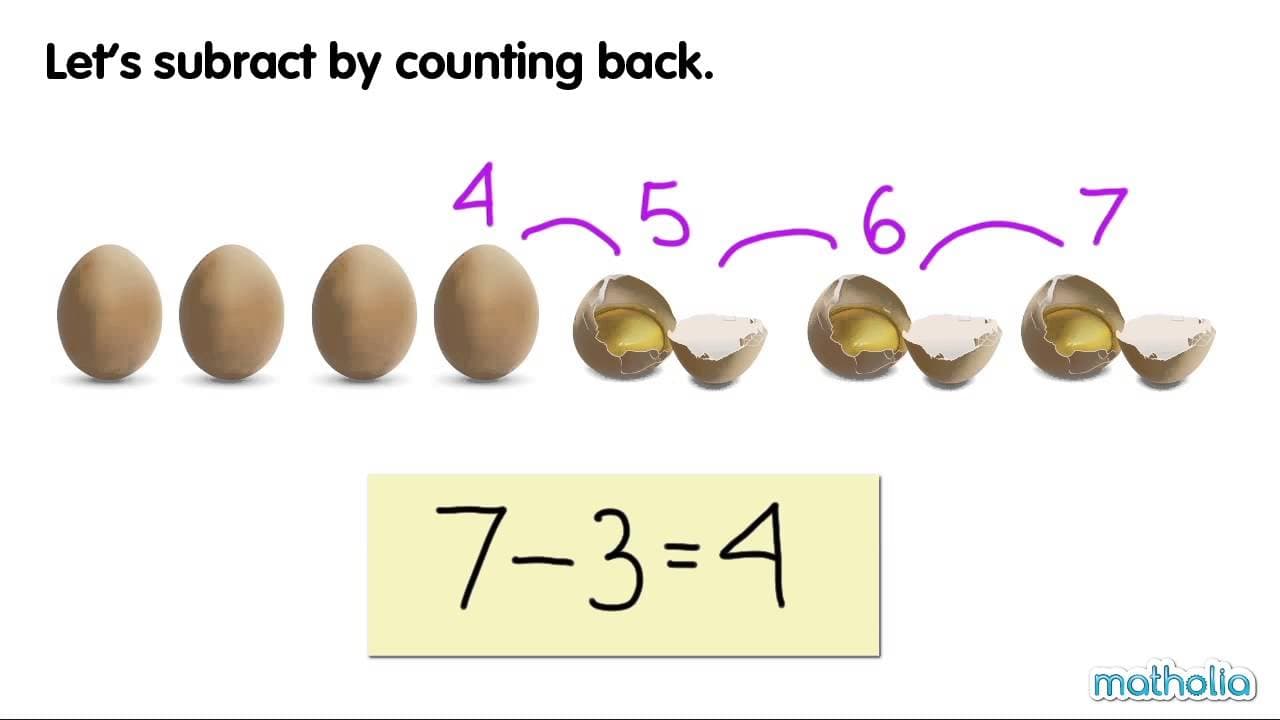
This educational video introduces early learners to the subtraction strategy of "counting back." Through three clear, visual examples involving eggs, books, and linking cubes, the video demonstrates how to solve subtraction problems by starting at the whole number and counting backwards by the amount being subtracted. Each example progresses from a real-world scenario to a visual counting method, and finally to a written mathematical equation. The video focuses on the fundamental concept of subtraction as "taking away" and connects it directly to the mental math strategy of counting backwards. It uses clear visual aids—specifically curved lines representing "hops" backwards on a number line—to help students visualize the abstract concept of decreasing value. The examples used (7-3, 8-4, and 9-3) cover single-digit subtraction within 10. This resource is highly valuable for Kindergarten and 1st Grade classrooms introducing subtraction strategies beyond simple counting of remaining objects. It bridges the gap between concrete manipulatives (like counting physical eggs) and abstract mental math (counting back in one's head). Teachers can use this to model how to use number lines or mental counting to solve equations efficiently.

MatholiaChannelMatholiaChannel

2mins 27s

Video
Visualizing Number Bonds with Linking Cubes

Visualizing Number Bonds with Linking Cubes

This educational video introduces early learners to the concept of number bonds using concrete manipulatives. Through a clear, step-by-step demonstration with colorful linking cubes, the video illustrates the part-part-whole relationship in mathematics. It specifically focuses on how two smaller numbers (parts) combine to form a larger number (the whole), utilizing a standard number bond diagram to visualize these connections alongside physical objects.

MatholiaChannelMatholiaChannel

2mins 23s

Video
Writing Addition Equations with Pictures

Writing Addition Equations with Pictures

This educational video introduces young learners to the concept of addition through visual examples and step-by-step equation writing. Using concrete objects like kittens, cherries, and eggs, the video demonstrates how to combine two groups to find a total. It explicitly connects visual counting to the abstract representation of mathematics by showing how to translate physical quantities into both written sentences and numerical equations. The content focuses on three key themes: identifying parts of a whole, understanding number bonds (part-part-whole relationships), and learning mathematical vocabulary. It guides students through the process of recognizing distinct groups, counting them, and then expressing that relationship using the terms "plus" and "equals," as well as the symbols "+" and "=". This progression helps bridge the gap between counting and formal arithmetic. For educators, this video serves as an excellent instructional tool for modeling how to write addition equations. It reinforces the "part-part-whole" model using clear number bond diagrams alongside the equations. Teachers can use this video to scaffold lessons on addition, helping students move from counting physical manipulatives to writing their own number sentences. The repetitive structure allows for predictable learning, making it ideal for pause-and-discuss sessions where students predict the answers before they appear on screen.

MatholiaChannelMatholiaChannel

2mins 18s

Video
Learning to Count Backwards to Zero

Learning to Count Backwards to Zero

This educational video introduces early learners to the concept of counting backwards and the specific value of zero through a simple, visual demonstration using flowers in a pot. The video systematically removes one flower at a time, starting from three and ending with an empty pot, providing a concrete visual representation of subtraction and descending numerical order. The clear narration pairs spoken numbers with written numerals and words, reinforcing number recognition and literacy simultaneously. The content focuses on two primary mathematical themes: sequential counting backwards (3, 2, 1, 0) and the conceptual understanding of zero as "none" or the absence of items. By explicitly showing the empty pot and labeling it as "no flowers" and then "zero flowers," the video helps bridge the abstract concept of zero with a tangible real-world example. The handwriting animation for both digits and number words further supports fine motor visualization and literacy development. For educators, this video serves as an excellent hook for lessons on subtraction, countdowns, or the introduction of zero. It effectively uses the "fading" scaffolding technique—starting with a full set and reducing it—to teach the sequence of counting back. Teachers can use this video to transition students from counting objects (cardinality) to understanding the sequence of numbers in reverse, making it a foundational resource for Pre-K and Kindergarten math curriculums.

MatholiaChannelMatholiaChannel

1min 52s

Video
How to Add by Putting Groups Together

How to Add by Putting Groups Together

This educational video introduces early learners to the concept of addition through the strategy of "putting together." Using clear, simple animations of familiar objects like burgers, cubes, and counters, the video demonstrates how combining two distinct groups results in a larger total sum. The narrator guides viewers through counting each group individually before physically moving the items together to count the new total.

MatholiaChannelMatholiaChannel

3mins 16s

Video
Learning Number Bonds of 5 with Cubes

Learning Number Bonds of 5 with Cubes

This instructional video provides a clear, step-by-step demonstration of number bonds for the number 5 using concrete manipulatives. By utilizing connecting cubes in two contrasting colors (yellow and green), the video systematically explores every possible integer combination that sums to 5, starting from 5+0 and proceeding to 0+5. The visual representation of a "cube train" changing color one block at a time effectively illustrates the concept of decomposition and the relationship between parts and a whole. The video covers key mathematical themes essential for early numeracy, specifically the part-part-whole relationship and the foundational logic of addition. It subtly introduces the commutative property by showing that 2+3 and 3+2 both result in the same whole. The use of a standard number bond diagram (three connected circles) alongside the physical cubes helps bridge the gap between concrete objects and abstract mathematical notation. For educators, this video serves as an excellent model for introducing addition facts without relying initially on written equations. It is particularly useful for visual learners and can be easily replicated in the classroom using physical manipulatives. The pacing allows for interactive viewing, where students can predict the next number bond before it is revealed, making it a versatile tool for both direct instruction and guided practice in early elementary mathematics.

MatholiaChannelMatholiaChannel

1min 47s

Video
Introduction to Subtraction by Taking Away

Introduction to Subtraction by Taking Away

This video introduces the fundamental concept of subtraction through a clear, visual "taking away" method. Using a digital whiteboard, the narrator demonstrates two specific problems: 4 minus 3 and 5 minus 2. For each problem, the process involves drawing a set of objects representing the starting number, physically crossing out the number of objects being subtracted, and counting the remaining objects to find the answer. The content focuses on building conceptual understanding rather than rote memorization. By linking the abstract numerical equation to concrete visual representations (purple circles), the video helps young learners visualize what the minus sign actually operations. It also subtly introduces algebraic thinking in the second example by presenting the equation with the unknown on the left side (3 = 5 - 2). Ideally suited for early elementary classrooms, this video serves as an excellent hook for introduction to subtraction lessons or as a remediation tool for students struggling with the concept. Teachers can use it to bridge the gap between manipulative-based math and writing equations. It models a specific strategy—drawing pictures to solve problems—that students can immediately adopt in their own independent work.

Khan AcademyKhan Academy

3mins 38s

Video
Learning More Than and Less Than with Visuals

Learning More Than and Less Than with Visuals

This educational video introduces young learners to the foundational arithmetic concepts of "more than" and "less than" through clear, visual demonstrations. Using concrete objects like apples, connecting cubes, and teddy bears, the video guides students through four distinct examples: two focusing on addition (finding one more and two more) and two focusing on subtraction (finding one less and three less). Each example follows a structured pattern: presenting an initial quantity, performing an action to change that quantity, counting the new total, and stating the final mathematical relationship. The key themes explored are basic counting, simple addition and subtraction, and the specific vocabulary of comparison ("more than" vs. "less than"). The video explicitly bridges the gap between physical counting and abstract number sentences by visually demonstrating the action of adding to or taking away from a set. The consistent use of counting aloud helps reinforce one-to-one correspondence and cardinality. For educators, this video serves as an excellent visual model for introducing early operations. It is particularly useful for bridging the transition from counting sets to understanding arithmetic operations. Teachers can use this video to model how to use manipulatives (like the connecting cubes shown) to solve problems. It provides a clear framework for students to practice predicting outcomes before verifying them by counting, making it a valuable tool for building number sense in early elementary classrooms.

MatholiaChannelMatholiaChannel

2mins 31s

Video
Composing and Decomposing Numbers with Apples

Composing and Decomposing Numbers with Apples

This engaging animated video introduces early learners to the fundamental mathematical concepts of composing and decomposing numbers. Through the narration of a quirky red character, the video explains that composing is putting little numbers together to make a bigger number, while decomposing is taking a bigger number apart into smaller ones. The video progresses from abstract number bonds to concrete examples using animated apples to demonstrate these concepts visually.

Scratch GardenScratch Garden

7mins 49s

Video
Mastering Addition with the Counting On Strategy

Mastering Addition with the Counting On Strategy

This instructional math video introduces early learners to the "counting on" strategy for addition. Instead of counting every single item in two groups starting from one, the video demonstrates how to identify the total in the first group and then continue counting forward to determine the sum. This efficient method serves as a crucial bridge between counting all objects and fluent mental addition. The video presents three distinct examples using familiar objects: tomatoes, connecting cubes, and counters. For each example, the narrator guides viewers through the process of recognizing the initial quantity, circling it, and then visually "jumping" to the next items while counting aloud. The progression moves from adding 3+2, to 5+3, and finally 5+5, reinforcing the concept with clear visual aids and handwritten annotations. Ideally suited for Kindergarten and First Grade classrooms, this resource provides a clear model for a fundamental arithmetic strategy. Teachers can use it to introduce the concept of "counting on," to support struggling learners who still count from one every time, or as a visual anchor for lessons on combining sets. The clear pacing allows for choral counting and active student participation during viewing.

MatholiaChannelMatholiaChannel

2mins 59s

Video
Counting Strategies for Circles and Rows

Counting Strategies for Circles and Rows

A focused mathematics tutorial that demonstrates strategies for counting objects arranged in different patterns, specifically circles, scattered groups, and arrays. The narrator guides viewers through four distinct counting exercises involving animated dogs, mice, and cookies, modeling the thought process required to count accurately without making common errors. The video specifically emphasizes the concept of "one-to-one correspondence" and strategies to avoid double-counting, particularly when objects are arranged in a continuous circle. By explicitly marking a starting point mentally and stopping before overlapping, the narrator models critical metacognitive strategies for early learners. This resource is highly valuable for early childhood classrooms as a direct instruction tool or intervention for students struggling with counting accuracy. It moves from simple circular arrangements (numbers 5-10) to more complex arrays involving teen numbers (up to 19), providing a scaffolded approach to learning cardinality.

Khan AcademyKhan Academy

1min 44s

Video
Learning to Add Numbers with Fun Examples

Learning to Add Numbers with Fun Examples

This engaging educational video introduces young learners to the fundamental concept of addition through a series of relatable, real-world scenarios. Hosted by an animated narrator, the video defines addition simply as "putting numbers together" and demonstrates this using visual manipulatives like strawberries, carrots, grocery items, and dogs. The content progresses from simple counting to forming equations, introducing the plus sign and equals sign naturally within the narrative. Key themes include single-digit addition (sums up to 10), the concept of zero (identity property of addition), and the strategy of "counting on" to check answers. The video effectively bridges the gap between concrete objects and abstract numerals by showing the physical items alongside their numerical representations. It features a mix of animation and real-world footage to keep visual interest high. For educators, this video serves as an excellent introduction or review of basic arithmetic. It is designed with built-in pauses that allow students to answer before the narrator reveals the solution, making it an interactive tool for whole-class instruction. The real-world contexts—such as shopping for fruit or counting dogs at a park—provide teachers with concrete anchors to help students visualize math problems in their own lives.

Homeschool PopHomeschool Pop

7mins 6s

Video
Different Ways to Make the Number 7

Different Ways to Make the Number 7

This educational video introduces young learners to the concept of number decomposition, specifically focusing on the number 7. Through a clear, systematic visual demonstration, the narrator explores all the different integer pairs that sum to seven. The video utilizes a split-screen approach, showing concrete manipulatives (blue blocks) on the left to represent quantity, and abstract number bond diagrams on the right to represent the mathematical relationship. The content methodically moves through the number combinations in ascending order, starting with 1 and 6, then 2 and 5, continuing through to 6 and 1. This structured progression helps students recognize patterns in addition, such as the relationship between increasing one addend while decreasing the other. It also implicitly introduces the commutative property of addition by showing that 3 and 4 make 7, just as 4 and 3 do. For educators, this video serves as an excellent bridge between concrete counting and abstract arithmetic. It is particularly useful for teaching number sense, part-part-whole relationships, and basic addition facts. The clear visual layout allows teachers to pause the video before the answers are written, encouraging students to subitize or count the remaining blocks to predict the missing number in the bond.

MatholiaChannelMatholiaChannel

1min 57s

Video
Learning Addition by Combining Groups in Nature

Learning Addition by Combining Groups in Nature

This engaging animated video introduces early learners to the concept of addition through the visual strategy of combining groups. Set in a colorful park environment, the narrator guides students through various scenarios involving nature—such as children sitting on a log, birds in a nest, worms in the ground, frogs on lily pads, and flowers in pots. Each scenario presents two distinct groups of items that are counted separately before being combined to find the total sum. The video focuses on key early math themes including counting, one-to-one correspondence, and the foundational concept of addition as "putting together." It explicitly uses the language "[Number] and [Number] make [Total]," helping students transition from counting individual objects to understanding mathematical relationships. The visual cues, such as glowing outlines around the groups being counted, support visual learners in tracking the addends. For educators, this video is an excellent tool for introducing addition up to 10 in Pre-K through 1st-grade classrooms. It provides clear, concrete examples that can be easily replicated with manipulatives or acted out by students. The pacing allows for interactive viewing, where teachers can pause to ask students to predict the total before the narrator reveals it, fostering engagement and checking for understanding.

MatholiaChannelMatholiaChannel

2mins 13s

Video
Learning to Multiply by 3 with Groups and Skip Counting

Learning to Multiply by 3 with Groups and Skip Counting

This instructional video provides a clear, step-by-step introduction to multiplying by 3, designed specifically for early elementary students. It begins by using concrete visual aids—groups of balloons and connecting cubes—to demonstrate the concept of multiplication as repeated addition. The narrator guides viewers through the process of counting groups, identifying how many items are in each group, and then skip-counting by threes to find the total sum. The video progresses from concrete examples to abstract representation. It explicitly links the language of "groups of" to the multiplication symbol, showing how "4 threes" translates mathematically to "4 x 3". Following the object-based examples, the video features a number line segment where numbers appear sequentially to practice skip-counting from 3 to 30. This visual reinforces the number pattern associated with the 3 times table. Finally, the video presents the complete multiplication table of 3, reading through each equation from 1 x 3 to 10 x 3. This structure makes the video an excellent resource for introducing the concept of multiplication, reinforcing skip-counting skills, and aiding in the memorization of multiplication facts. Teachers can use it to visualize the transition from addition to multiplication or as a review tool for times table fluency.

MatholiaChannelMatholiaChannel

3mins 1s

Video
Counting Strategies for Circles and Rows

Counting Strategies for Circles and Rows

A focused mathematics tutorial that demonstrates strategies for counting objects arranged in different patterns, specifically circles, scattered groups, and arrays. The narrator guides viewers through four distinct counting exercises involving animated dogs, mice, and cookies, modeling the thought process required to count accurately without making common errors. The video specifically emphasizes the concept of "one-to-one correspondence" and strategies to avoid double-counting, particularly when objects are arranged in a continuous circle. By explicitly marking a starting point mentally and stopping before overlapping, the narrator models critical metacognitive strategies for early learners. This resource is highly valuable for early childhood classrooms as a direct instruction tool or intervention for students struggling with counting accuracy. It moves from simple circular arrangements (numbers 5-10) to more complex arrays involving teen numbers (up to 19), providing a scaffolded approach to learning cardinality.

Khan AcademyKhan Academy

1min 44s

Video
Fast-Paced Counting by Ones: 1 to 50

Fast-Paced Counting by Ones: 1 to 50

This high-energy animated video challenges early learners to practice counting by ones from 1 to 50 at a brisk pace. Labeled as an "Expert" level song, it features a fast, electronic beat designed to build fluency and automaticity in number sequencing. The video engages students visually and auditorily, moving beyond simple slow enumeration to rapid number recall. The visual theme is set on a bright, sunny farm. The video alternates between two main animated sequences: a boy performing jumping jacks during the musical interludes, and a sheep jumping over a fence as the counting occurs. Numbers from 1 through 50 appear clearly inside the sun at the top of the screen, synchronizing with the spoken count to reinforce number recognition alongside the auditory cues. Teachers can use this video as an effective "brain break" or warm-up activity in Math class. The rhythmic nature invites physical participation, allowing students to jump or clap along with the beat while practicing their numbers. It is particularly useful for assessing student fluency and helping them transition from counting slowly on fingers to reciting number sequences confidently and quickly.

Have Fun TeachingHave Fun Teaching

2mins 30s

Video
Learning to Skip Count by Tens to 100

Learning to Skip Count by Tens to 100

This energetic animated math video teaches early learners how to skip count by tens up to 100. Set to an upbeat rhythm, the video uses bright visuals and a clear numerical display to guide students through the sequence 10, 20, 30, and so on. A friendly character stands alongside a digital display that flashes each number as it is sung, reinforcing the connection between the spoken word and the written numeral. Themes in this video center on foundational number sense, specifically the base-ten number system and pattern recognition. By isolating the multiples of ten, students can focus on the rhythmic pattern of counting (

Have Fun TeachingHave Fun Teaching

2mins 56s

Video
Mastering Skip Counting by 10s, 100s, and 1,000s

Mastering Skip Counting by 10s, 100s, and 1,000s

This video serves as a clear, step-by-step instructional guide on the mathematical concept of 'Counting On' using place value strategies. It transitions from concrete visual aids using Base-10 blocks to abstract number sequences, demonstrating how to skip count by 10s, 100s, and 1,000s with 3-digit and 4-digit numbers. The core themes explore number sense, pattern recognition within the decimal system, and the specific mechanics of 'bridging' or crossing place value thresholds (e.g., transitioning from 190 to 200). The video systematically isolates changing digits to help students visualize how adding specific quantities affects only certain place values, except when a regrouping occurs. For educators, this video is an excellent tool for visual learners who struggle to understand how place value works with larger numbers. It effectively scaffolds learning by starting with physical representations before moving to symbolic numbers, making it perfect for introducing skip counting, reinforcing mental math strategies, or supporting remediation for students struggling with multi-digit addition.

MatholiaChannelMatholiaChannel

2mins 52s

Video
How to Skip Count by Tens to 100

How to Skip Count by Tens to 100

This animated math video introduces young learners to the concept of skip counting by tens through three distinct visual models: real-world grouping, a number line, and a hundred chart. The video begins by using cartons of eggs to demonstrate how grouping items into sets of ten allows for faster counting than counting by ones. It then transitions to abstract representations, showing how to jump by tens on a number line and identifying the vertical pattern created when counting by tens on a 1-100 number grid. Key themes include number sense, recognizing patterns in the base-ten number system, and efficient counting strategies. The video explicitly connects visual quantities (groups of eggs) to linear measurement (number line) and symbolic patterns (hundred chart), helping students bridge concrete and abstract mathematical understanding. For educators, this video serves as an excellent introduction or review of skip counting. The clear visuals support diverse learning styles, and the concluding question—asking students to predict the pattern if starting from the number 2—provides a natural springboard for critical thinking and extending the lesson into off-decade skip counting (e.g., 12, 22, 32).

MatholiaChannelMatholiaChannel

2mins

Video
Counting by 5s Starting from 179

Counting by 5s Starting from 179

This educational video demonstrates how to skip count by 5s starting from a challenging three-digit number, specifically 179. Unlike standard skip counting that often begins at zero or five, this tutorial guides viewers through the process of adding 5 repeatedly to an arbitrary starting number. The narrator models mental math strategies, explicitly showing how to break down the number 5 into smaller parts (1 and 4) to bridge across decades and hundreds boundaries (e.g., getting from 179 to 180, then to 184). The video explores key themes of arithmetic patterns and number sense. It highlights the repeating pattern in the ones digit when adding 5s (in this case, alternating between 9 and 4). The visual demonstration of handwriting the addition process helps reinforce the concept of regrouping and "making a ten" to simplify mental calculations, rather than relying solely on rote memorization. For educators, this resource is excellent for moving students beyond basic skip counting into more complex number sense application. It is particularly useful for teaching the "bridge to ten" strategy for addition. Teachers can use this video to transition students from simple counting patterns to understanding the underlying addition mechanics of skip counting, helping to build fluency with three-digit numbers and mental addition.

Khan AcademyKhan Academy

2mins 4s

Video
Learning to Count by Tens to 100

Learning to Count by Tens to 100

This educational video introduces early learners to the concept of skip counting by tens up to 100 using a relatable visual aid: boxes of crayons. The video systematically demonstrates how groups of ten accumulate to form larger numbers, starting from 50 and progressing sequentially to 100. Through clear narration and visual tracking, it reinforces the relationship between the number of "tens" (e.g., 6 tens) and the total quantity (e.g., 60). Key themes include skip counting, the base-ten number system, and the foundational concept of place value. The video explicitly connects verbal counting (10, 20, 30...) with written equations (e.g., "5 tens = 50"), bridging the gap between concrete objects and abstract mathematical notation. The repetitive structure is designed to build confidence and pattern recognition in young mathematicians. For educators, this video serves as an excellent visual model for introducing or reinforcing counting by tens. It can be used as a hook for math lessons on place value or as a guided practice tool where students chant along with the narrator. The clear visual representation of "groups of ten" provides a strong scaffolding for later concepts like multiplication and division, making it a versatile resource for Kindergarten and First Grade classrooms.

MatholiaChannelMatholiaChannel

4mins 19s

Video
Skip Counting by Threes to Sixty

Skip Counting by Threes to Sixty

A high-energy, animated musical video that teaches students how to skip count by threes. Set against a backdrop of outer space, a dog character pilots a rocket ship that accelerates as the counting progresses. The video uses a catchy song to reinforce the pattern of multiples of three, starting with a slow introduction and gradually increasing in speed and range. The content focuses on the mathematical skill of skip counting, which serves as a foundational concept for understanding multiplication and division. It breaks the learning process into three distinct stages: first counting slowly to 15, then increasing the range to 30, and finally challenging students to count all the way to 60. Visual numbers appear on screen synchronized with the audio to support dual coding and memory retention. This video is an excellent classroom resource for introducing or reviewing multiplication tables for the number 3. Its repetitive structure allows for choral response, making it perfect for whole-group instruction or warm-up activities. The engaging animation and musical rhythm help students memorize the number sequence through pattern recognition and auditory cues, turning rote memorization into a fun, interactive experience.

Scratch GardenScratch Garden

2mins 6s

Video
Visualizing Place Value: Counting to 10,000

Visualizing Place Value: Counting to 10,000

This educational video provides a clear, visual demonstration of counting up to 10,000 using the Singapore Math concrete-pictorial-abstract approach. It utilizes digital representations of Base 10 blocks (hundreds flats and thousands cubes) to illustrate the concepts of skip counting by 100s, 1,000s, and 10s. The video explicitly bridges the gap between visual models and abstract numbers, helping students understand the magnitude of numbers and the structure of the base-ten number system. The content moves systematically from basic skip counting (100 to 1,000; 1,000 to 10,000) to more complex tasks involving starting from arbitrary large numbers (e.g., counting by 10s starting at 6,320). It specifically highlights critical transition points, such as moving from 900 to 1,000 and 9,000 to 10,000, reinforcing the terminology and value of these larger place value units. For teachers, this video is an excellent tool for introducing or reinforcing place value and skip counting in 3rd and 4th grade. The visual nature of the stacking blocks helps students mentally organize large quantities, while the clear narration models correct mathematical language. It addresses the common student struggle of determining which digit changes during skip counting and offers visual proof of why numbers 'roll over' at the thousands place.

MatholiaChannelMatholiaChannel

3mins 41s

Video
How to Count Forward by 10s, 100s, and 1000s

How to Count Forward by 10s, 100s, and 1000s

This educational video from Matholia provides a clear, step-by-step demonstration of counting on by 10s, 100s, and 1000s using four-digit numbers. Through the use of animated number lines, the video visually represents the concept of skip counting, showing how adding specific values affects the digits in a number. It breaks the process down into three distinct sections, allowing learners to focus on one place value change at a time.

MatholiaChannelMatholiaChannel

2mins 50s

Video
Learning to Tell Time by 5-Minute Intervals

Learning to Tell Time by 5-Minute Intervals

This educational video provides a clear, step-by-step demonstration of telling time in 5-minute intervals using an analog clock. Starting at 2:00, the video incrementally advances the minute hand by five minutes at a time, completing a full hour rotation until the clock reaches 3:00. A narrator systematically guides viewers through each change, reinforcing both the visual position of the hands and the corresponding digital time notation. Themes of measurement, skip counting, and timekeeping are central to this resource. The video explicitly connects the movement of the minute hand to counting by fives, using a visual highlight—a pink shaded sector—to represent the elapsed time. This visual aid helps bridge the gap between abstract numbers and the physical space time occupies on a clock face. It also introduces alternative phrasing for specific times, such as "half past two" for 2:30. For educators, this video serves as an excellent tool for introducing or reviewing clock reading skills in early elementary classrooms. The predictable pattern allows for choral response and active participation, where students can predict the next time before it is revealed. The dual presentation of analog hands and digital numbers supports learners in connecting these two common time formats, while the visualization of elapsed time lays early groundwork for understanding duration and fractions.

MatholiaChannelMatholiaChannel

3mins 10s

Video
Mastering Skip Counting by 7 Through Visual Models

Mastering Skip Counting by 7 Through Visual Models

This educational math video provides a comprehensive visual guide to skip counting by 7 and learning the 7 times table. Through a sequence of engaging animations, the video breaks down the concept into three distinct learning phases: an introductory rocket launch sequence that establishes the pattern, a conceptual demonstration using sets of pencils to explain multiplication as repeated groups, and a drill-and-practice section for building fluency. The content utilizes clear visual models to bridge the gap between skip counting and multiplication. By visualizing 'sets' of 7 pencils, students can see the concrete value behind abstract numbers like 14, 21, and 28. The video progresses from slow, conceptual building to rapid-fire recitation, helping students move from understanding the 'why' to mastering the 'how' of multiplication fluency. Ideally suited for elementary math instruction, this resource serves as both an introduction to the 7s family of facts and a review tool. The tiered structure—moving from visual models to abstract numbers, and finally to a self-checking quiz—allows teachers to use different segments for different instructional purposes, such as introducing the concept, practicing fluency, or assessing student retention.

Sheena DoriaSheena Doria

3mins 26s

Video
Learning to Count From 10 to 20

Learning to Count From 10 to 20

This educational video introduces early learners to the concept of "counting on" from ten to determine quantities between 11 and 20. Through clear, animated examples using familiar objects like colored pencils and buttons, the video demonstrates that it is more efficient to start counting from a known group of ten rather than counting every individual item starting at one. The narration guides viewers through the process of identifying a group of ten and then continuing the count (e.g., "10, 11, 12, 13") to find the total. The video explores key themes of early numeracy, specifically place value foundations and counting strategies. It visually represents numbers 11 through 20 as composed of "one ten" and "some ones," utilizing tools like bundles (pencil boxes) and ten-frames. It explicitly addresses the number 20 as being composed of "two tens," helping students transition from simple counting to understanding the base-ten structure of our number system. The video also covers recognizing the written numeral and the written word for the number 20. For classroom application, this video is an excellent resource for transitioning students from one-to-one correspondence counting to more advanced counting strategies. It provides a visual anchor for the "counting on" method, which is a critical developmental milestone in mathematical fluency. Teachers can use the built-in practice questions at the end of the video as a formative assessment tool, pausing before the answer is revealed to allow students to practice the skill in real-time. The clear visuals of ten-frames and grouped objects support learners in visualizing the composition of teen numbers.

MatholiaChannelMatholiaChannel

2mins 36s

Video
Finding Missing Numbers in Patterns

Finding Missing Numbers in Patterns

This educational video introduces primary students to the concept of number patterns and sequences using a clear, visual approach. Through a series of animated examples involving colorful balloons, the video demonstrates how to identify the "rule" of a pattern—such as adding 1, adding 2, subtracting 1, or subtracting 2—to determine missing numbers in a sequence. The content progresses from simple ascending sequences to descending ones, providing a comprehensive introduction to algebraic thinking. The video explores key mathematical themes including skip counting, addition and subtraction strategies, and logical reasoning. It emphasizes the importance of checking the relationship between adjacent numbers to establish a consistent pattern before trying to solve for unknowns. The visual cues, such as arrows indicating the operation between steps, help scaffold the learning process for visual learners. For educators, this video serves as an excellent instructional tool for math centers or whole-group introductions to patterning. It supports the development of early algebraic skills by asking students to analyze numerical relationships rather than just perform calculations. The clear pacing allows for natural pauses where teachers can ask students to predict the next number, making it highly interactive and suitable for 1st and 2nd-grade math curriculums.

MatholiaChannelMatholiaChannel

2mins 41s

Video
Mastering Skip Counting by 20s to 500

Mastering Skip Counting by 20s to 500

This engaging animated music video teaches students how to skip count by 20s, extending the sequence all the way to 500. Set against a whimsical outer space backdrop, the video features astronaut cats and a rocket-piloting worm who guide viewers through three increasing rounds of counting. The song introduces a helpful mental math strategy—relating counting by 20s to counting by 2s—making the concept accessible and memorable. The video explores themes of number patterns, place value, and the relationship between single-digit multiplication and tens. It visually reinforces the auditory counting with clear, large numbers appearing on screen, synchronized with the beat. The narrative arc builds in complexity, starting with a simple count to 100, then 200, and finally a rapid-fire challenge to 500, encouraging fluency. For educators, this resource is an excellent tool for math warm-ups, transitioning between lessons, or reinforcing place value concepts. It supports the development of number sense and prepares students for more complex multiplication and division tasks. The catchy melody and repetitive structure allow for active participation, making it suitable for whole-class singing and movement activities.

Scratch GardenScratch Garden

2mins 39s

Video
Counting Groups of Ten and Ones to 50

Counting Groups of Ten and Ones to 50

This educational video provides a clear, step-by-step demonstration of how to count collections of objects up to 50 using place value strategies. Instead of counting by ones, the video models the more efficient method of counting groups of ten first (skip counting), followed by counting on the remaining single units. This visual approach reinforces the concept of base-ten number systems. The video is structured around six distinct examples using common items like marbles, cubes, cookies, and strawberries. For each example, objects are arranged in clear rows of ten to facilitate visual grouping. The narrator counts the tens ("10, 20..."), adds the ones ("and 1 is 21"), and then explicitly demonstrates how to write both the numerical digit and the number word (e.g., "twenty-one") in cursive script. For educators, this resource is an excellent tool for introducing or reinforcing place value, two-digit number formation, and connecting numerals to number words. It effectively bridges the gap between concrete visual representations (objects) and abstract numerical symbols, making it ideal for early primary math lessons on counting, cardinality, and number sense.

MatholiaChannelMatholiaChannel

3mins 1s

Video
Counting Odd Numbers to 101 in Space

Counting Odd Numbers to 101 in Space

This energetic, music-based educational video teaches students how to identify and count odd numbers from 1 to 101. Using a catchy rock song and a space-themed animation, the video takes viewers on a journey aboard a rocket ship piloted by a dog. It begins by defining what an odd number is and providing a simple strategy for finding them: starting at one and jumping two numbers at a time. The content is structured to build confidence progressively. It starts with a short counting sequence from 1 to 11, moves to a slightly longer sequence up to 21, and culminates in a 'challenge round' counting all the way to 101. Visual cues clearly display the numbers as they are sung, helping to reinforce number recognition and sequential ordering. For educators, this video serves as an excellent tool for introducing or reviewing number sense, specifically distinguishing between odd and even numbers and practicing skip counting. The rhythmic nature of the song aids in memorization, while the visual of the ascending rocket provides a concrete metaphor for increasing values. It is particularly useful for active learning sessions where students can count along or move to the beat.

Scratch GardenScratch Garden

3mins

Video
Counting Objects from 11 to 20

Counting Objects from 11 to 20

This educational video provides a structured and repetitive guide for young learners to master counting numbers from 11 to 20. Using a clear, consistent format, the video introduces each number individually by presenting a set of objects. It utilizes the 'counting on' strategy, where a group of ten items is visually grouped and acknowledged first, followed by counting the additional items to reach the target number. This approach effectively introduces the concept of place value (ten and ones) without explicitly naming it yet. The video covers numbers 11 through 20 sequentially, using distinct visual themes for each number, such as cookies, ants, shells, and butterflies. Each segment follows the same pattern: a question asks "How many... are there?", the counting occurs, the total is stated in a full sentence, and finally, the numeral and its written word form are animated on screen. This multimodal approach supports different learning styles by combining auditory counting, visual grouping, and literacy reinforcement. For educators, this resource is an excellent tool for introducing teen numbers and the 'counting on' method. It helps students transition from counting by ones to understanding numbers as compositions of tens and ones. The clear audio and slow pacing make it suitable for choral counting in the classroom, while the written words support early reading skills. The video concludes with a summary chart counting from 11 to 20, serving as a perfect review or assessment tool.

MatholiaChannelMatholiaChannel

5mins 46s

Video
Discovering Patterns While Counting to 100

Discovering Patterns While Counting to 100

This video presents a visual and logical method for writing numbers from 0 to 100, focusing on identifying the inherent patterns within the base-10 number system. Rather than simply reciting numbers, the narrator builds a 100 chart row by row, demonstrating how the "ones" digits (0-9) repeat in every row while the "tens" digit increments. This approach transforms rote counting into a structural understanding of how numbers are formed. The content highlights key mathematical themes such as place value, counting sequences, and pattern recognition. By using color-coding—keeping the ones digit yellow while changing the color of the tens digit for each row—the video visually reinforces the concept that two-digit numbers are composed of tens and ones (e.g., 14 is demonstrated as 10 plus 4). The narrator explicitly breaks down the meaning of the digits, showing that the leading digit represents groups of ten. For educators, this resource is an excellent tool for introducing or reinforcing the 100 chart in early elementary classrooms. It moves beyond simple memorization to conceptual understanding, making it valuable for lessons on place value and number sense. Teachers can use this video to spark discussions about what patterns students see vertically (columns ending in the same number) and horizontally, or to demonstrate why our number system works the way it does.

Khan AcademyKhan Academy

4mins 58s

Video
Three Strategies to Solve 7 Plus 6

Three Strategies to Solve 7 Plus 6

This video presents a comprehensive tutorial on basic addition, specifically focusing on the problem 7 + 6. It demonstrates three distinct strategies to solve the equation, moving from concrete visual representations to more abstract mathematical concepts. The narrator first uses digital manipulatives (tomatoes and blueberries), then transitions to a number line approach, and finally introduces the concept of place value by grouping numbers to "make a ten." The key themes explored include one-to-one correspondence, counting on, using linear models for calculation, and the fundamental structure of teen numbers. The video places significant emphasis on decomposing numbers to facilitate mental math, specifically showing how 7 + 6 can be understood as (7 + 3) + 3, or 10 + 3. This conceptual bridge explains why the number 13 is written with a '1' in the tens place and a '3' in the ones place. For educators, this resource is highly valuable for bridging the gap between simple counting and computational fluency. It visualizes the "making ten" strategy, which is a critical standard in early elementary mathematics. Teachers can use this video to differentiate instruction, offering multiple entry points for students who learn best through visual aids, linear movement, or structural number sense.

Khan AcademyKhan Academy

3mins 53s

Video
Visualizing Addition to 20 Using Base-10 Blocks

Visualizing Addition to 20 Using Base-10 Blocks

This educational video demonstrates the process of adding numbers up to 20 without regrouping using the Concrete-Pictorial-Abstract (CPA) framework. Through clear animations, it guides students on how to solve the equation 14 + 4 by using virtual base-10 blocks placed on a place value chart alongside standard vertical written notation. The video explores key mathematical themes including place value (distinguishing between tens and ones), modeling numbers with manipulatives, and the step-by-step algorithm for column addition. It explicitly connects the physical act of combining 'ones' blocks to the abstract action of writing the sum in the ones column of an equation. For educators, this resource is an excellent visual aid for introducing or reinforcing early addition strategies. It supports visual learners by clearly separating the tens and ones columns and provides a model for how students can use physical manipulatives at their desks to solve similar problems. It serves as a perfect bridge between counting individual items and understanding the structure of two-digit addition.

MatholiaChannelMatholiaChannel

1min 21s

Video
Discovering Number Pairs That Make 5

Discovering Number Pairs That Make 5

This educational video introduces early learners to the concept of decomposing the number 5 and finding missing addends. Through a clear, step-by-step visual demonstration, the narrator uses five-frames (a row of five boxes) to illustrate different number combinations that equal 5. The video specifically explores the pairs 3+2, 2+3, 4+1, and 1+4, using colorful hand-drawn objects like circles, stars, blocks, and smiley faces to make the abstract math concrete. The key themes explored are basic addition, the concept of a "mystery number" or missing addend (algebraic thinking), and the commutative property of addition (though not named explicitly, it is demonstrated by showing that 3+2 and 2+3 both equal 5). The video emphasizes visual counting and the relationship between the part and the whole. For the classroom, this video is an excellent tool for introducing number bonds of 5 or reinforcing fluency with addition facts within 5. The visual model of filling in empty boxes helps students bridge the gap between counting objects and understanding symbolic addition equations. It naturally encourages students to pause and predict answers, making it an interactive resource for whole-group instruction or independent practice stations.

Khan AcademyKhan Academy

4mins 6s

Video
Mastering Number Bonds of 7 with Cubes

Mastering Number Bonds of 7 with Cubes

This instructional video guides early learners through the concept of "number bonds" for the number 7, effectively demonstrating the part-part-whole relationship in addition. Using concrete manipulatives (colored linking cubes) alongside an abstract visual model (number bond diagram), the video systematically explores different pairs of numbers that sum to seven. The clear, uncluttered presentation allows students to focus entirely on the mathematical relationships being demonstrated.

MatholiaChannelMatholiaChannel

2mins 24s

Video
Mastering Pre-Algebra: Integers, Equations, and Exponents

Mastering Pre-Algebra: Integers, Equations, and Exponents

This comprehensive video tutorial serves as an extensive review of pre-algebra concepts, designed to build a strong mathematical foundation for middle school students. The video progresses systematically through fundamental topics, starting with operations on integers using a number line visualization, and advancing to more complex concepts like order of operations (PEMDAS), algebraic expressions, and linear equations. The instructor uses a digital blackboard format to demonstrate step-by-step problem solving, offering clear visual examples for every concept introduced.

The Organic Chemistry TutorThe Organic Chemistry Tutor

2mins 31s

Video
Solving Superhero and Sea Monster Word Problems

Solving Superhero and Sea Monster Word Problems

This educational video guides students through the process of solving two distinct math word problems using a whiteboard demonstration. The first scenario involves a group of superheroes where students must use subtraction to determine the number of "real" superheroes after identifying impostors. The second scenario asks students to calculate the total number of sea monsters in a lake by adding together two groups with different physical characteristics (stripes and spots). The video explores key mathematical themes including translating written text into numerical equations, understanding part-whole relationships using number bonds (visual diagrams), and performing basic addition and subtraction operations with numbers up to 20. It demonstrates how to set up equations for missing addends (3 + ? = 14) and how to convert them into subtraction problems (14 - 3 = ?). Ideally suited for early elementary classrooms, this resource models a clear thinking process for tackling word problems. By using engaging characters like superheroes and sea monsters, it captures student interest while providing a concrete strategy—drawing number diagrams—to visualize abstract problems. Teachers can use this video to introduce problem-solving strategies or as a practice activity for students learning to distinguish between when to add and when to subtract.

Khan AcademyKhan Academy

3mins 37s

Video
ACT Math Practice Test: Review of Algebra, Geometry, and Trig Concepts

ACT Math Practice Test: Review of Algebra, Geometry, and Trig Concepts

This comprehensive video tutorial serves as an intensive review for the ACT Math section, covering a wide array of topics crucial for high school students preparing for college entrance exams. The content is structured as a series of 31 practice problems that mimic the style and difficulty of actual ACT questions. It progresses through various mathematical domains including pre-algebra, elementary algebra, intermediate algebra, coordinate geometry, plane geometry, and trigonometry. The video adopts a pause-and-practice format, encouraging active participation where viewers attempt each problem before watching the detailed step-by-step solution. Key themes explored in this review include solving linear and quadratic equations, working with functions, understanding geometric properties of polygons and circles, applying trigonometric ratios (SOH CAH TOA) and identities, and analyzing statistical data. The video also places a strong emphasis on real-world application problems involving percentages, sales tax, discounts, and unit conversions. Particular attention is given to algebraic manipulation strategies, such as solving systems of equations and simplifying complex expressions, as well as test-taking tactics like identifying key information in word problems. For educators and students, this video is a valuable resource for standardized test preparation. It allows teachers to identify specific areas of weakness in student understanding by isolating problem types (e.g., if a student struggles with problem 10, they need more support with circle geometry). The step-by-step explanations model clear mathematical reasoning, demonstrating not just *how* to get the right answer, but *why* specific methods work. This makes it an excellent tool for flipped classrooms, homework support, or intensive boot-camp style review sessions prior to test dates.
The Organic Chemistry TutorThe Organic Chemistry Tutor

20mins 33s

Video
Mastering the +2 Addition Facts

Mastering the +2 Addition Facts

This engaging music video helps students master basic addition facts by focusing specifically on adding the number 2. Through a catchy pop-rock song, the video systematically runs through addition equations starting from 2 + 1 up to 2 + 15. The visual presentation is clear and distraction-free, displaying each equation on screen as it is sung, allowing students to both hear and see the math facts simultaneously. The content explores the specific arithmetic pattern of adding two to sequential integers. Unlike skip-counting videos, this resource focuses on the operation of addition itself, demonstrating how increasing the addend by one results in the sum increasing by one. It covers three distinct sets of numbers: 1-5, 6-10, and 11-15, helping students build fluency with sums up to 17. Teachers can use this video as a high-energy warm-up to start a math block or as a transition activity to get students refocused. It serves as an excellent tool for auditory learners who struggle with rote memorization using traditional flashcards. The rhythmic nature of the song aids in retention, making it a valuable resource for building automaticity in first and second-grade math fluency.

Have Fun TeachingHave Fun Teaching

2mins 20s

Video
Singing and Learning to Add by 12

Singing and Learning to Add by 12

This educational music video features a high-energy song designed to help students master adding the number 12 to other integers. Through a catchy, rhythmic pop-rock tune, the song guides listeners through a sequence of addition problems starting from 12 + 1 and continuing up to 12 + 15. The repetitive nature of the chorus and the clear recitation of equations provide an auditory mnemonic device that aids in rote memorization and mathematical fluency. The content focuses specifically on single and double-digit addition facts involving the number 12. It explores the patterns found when adding a two-digit number to single digits (crossing the decade) and adding two-digit numbers together. The song breaks the addition tables down into manageable chunks, separated by an engaging chorus that reinforces the specific skill being practiced. For educators, this video serves as an excellent warm-up activity, transition tool, or fun alternative to traditional drilling. It is particularly useful for auditory learners who struggle with flashcards or worksheets. Teachers can use the song to introduce the concept of 'making a ten and adding two' or simply to build speed and automaticity in mental math, allowing students to recall sums quickly without finger counting.

Have Fun TeachingHave Fun Teaching

2mins 23s

Video
Solving Length Word Problems with Bar Models

Solving Length Word Problems with Bar Models

This educational video demonstrates how to use bar models to visualize and solve mathematical word problems involving the subtraction of lengths. Through clear, step-by-step examples, it guides students on how to translate text-based scenarios into visual representations to determine the correct mathematical operation.

MatholiaChannelMatholiaChannel

1min 48s

Video
How to Subtract by Counting Backwards

How to Subtract by Counting Backwards

This educational video introduces the "counting back" strategy for subtraction using three clear, visualized examples. Aimed at early elementary students, the video demonstrates how to solve subtraction problems by first physically removing objects (the "take away" model) and then verbally counting backwards from the starting number to find the difference. The pacing is slow and deliberate, allowing young learners to follow the mental process step-by-step. The content covers three specific problems: 15 - 4, 14 - 3, and 12 - 5. Each example utilizes colorful, familiar objects—gummy bears, pencils, and counting cubes—to make the abstract concept of numbers concrete. The video employs a dual-coding approach: it first shows items being crossed out to represent subtraction, then overlays a "jumping" arrow animation that visually tracks the numbers decreasing as the narrator counts backward, reinforcing the connection between physical quantity and the number sequence. For educators, this video serves as an excellent bridge between concrete manipulatives and mental math strategies. It is particularly useful for students who are ready to move beyond simply recounting the remaining items one-by-one and are learning to trust the counting-back sequence. The clear visual layout makes it ideal for whole-class demonstration or independent review stations in 1st and 2nd-grade math centers.

MatholiaChannelMatholiaChannel

2mins 40s

Video
Counting Mixed Coins to Find Total Value

Counting Mixed Coins to Find Total Value

This educational video provides a step-by-step tutorial on how to count mixed collections of United States coins to determine their total monetary value. Through two distinct examples, the narrator demonstrates how to identify different coins—quarters, dimes, nickels, and pennies—by looking at both their "heads" and "tails" sides. The video guides viewers through the process of assigning values to each coin and using addition strategies to find the sum. The content explores key themes of coin recognition, skip counting, and multi-digit addition. A significant conceptual takeaway appears at the end of the video, where the narrator compares the two examples to demonstrate that having a higher quantity of coins does not necessarily equate to having a higher monetary value. This addresses a common developmental misconception among young learners regarding quantity versus value. For classroom application, this video is an excellent tool for reinforcing money math skills in early elementary grades. It visually supports students who are transitioning from recognizing individual coins to adding mixed values. Teachers can use the pause points to allow students to calculate totals independently before seeing the solution, or use the final comparison as a launchpad for a discussion about why specific denominations matter more than the physical number of coins.

Khan AcademyKhan Academy

4mins 30s

Video
Visualizing Subtraction from 14 Using Place Value

Visualizing Subtraction from 14 Using Place Value

This educational math video provides a step-by-step visual demonstration of subtraction using the number 14 as a starting point. Through three distinct examples—14 minus 2, 14 minus 4, and 14 minus 6—the narrator illustrates how subtraction interacts with place value. The video uses digital manipulatives (drawings of objects) to physically represent numbers, allowing students to see exactly what happens when quantities are removed. Key themes include understanding place value (tens and ones), decomposing numbers, and visual strategies for subtraction. The video progresses in difficulty: first subtracting a number smaller than the ones digit, then subtracting the exact ones digit to result in 10, and finally subtracting a number larger than the ones digit, which requires breaking into the "group of ten." For educators, this video is an excellent tool for transitioning students from simple counting to more conceptual arithmetic. It visually reinforces why 14 is composed of "one ten and four ones" and introduces the concept of regrouping or "borrowing" in a concrete, intuitive way before introducing the abstract algorithm. It is particularly useful for visual learners struggling with mental math strategies.

Khan AcademyKhan Academy

4mins 3s

Video
Sing Along to Learn Addition Facts: Adding 8

Sing Along to Learn Addition Facts: Adding 8

This upbeat, rhythmic music video focuses on helping students memorize addition facts specifically for the number 8. Through a catchy, repetitive song structure, the video guides listeners through adding 8 to numbers ranging from 1 to 15. The steady beat and clear vocals make it an excellent tool for auditory learners and for building mathematical fluency through music.

Have Fun TeachingHave Fun Teaching

2mins 19s

Video
Visualizing Addition to 20 with Regrouping and Base-10 Blocks

Visualizing Addition to 20 with Regrouping and Base-10 Blocks

This educational video provides a clear, visual demonstration of single-digit addition with regrouping using the problem 7 + 5. By utilizing a split-screen approach, the video simultaneously displays a physical model using base-10 blocks on a place value chart alongside the corresponding abstract numerical calculation on a notepad. This dual representation helps bridge the gap between concrete understanding and symbolic notation. The content focuses on the core mathematical concept of "making a ten" or regrouping. It methodically steps viewers through representing numbers with "ones" cubes, combining sets, and identifying when the ones column exceeds nine. The critical learning moment occurs when ten individual ones are grouped together, exchanged for a single "ten" rod, and physically moved to the tens column, visually explaining the "carry over" process often taught in standard algorithms. This video is an excellent resource for early elementary classrooms introducing place value and addition strategies. It is particularly useful for visual learners who struggle with the abstract concept of carrying numbers. Teachers can use this video to introduce the topic of regrouping, reinforce the relationship between ones and tens, or as a remediation tool for students needing a concrete refresher on how the base-10 system functions.

MatholiaChannelMatholiaChannel

1min 44s

Video
Mastering Operations with Integers: Add, Subtract, Multiply, and Divide

Mastering Operations with Integers: Add, Subtract, Multiply, and Divide

This comprehensive mathematics video serves as a complete guide to performing the four fundamental operations—addition, subtraction, multiplication, and division—with integers. The video uses a clear, step-by-step approach led by an animated teacher avatar who explains both the procedural rules and the conceptual reasoning behind them. It breaks down each operation into distinct segments, providing multiple methods for solving problems, including symbolic notation, number lines, and visual counters (manipulatives). The video explores key themes such as the concept of "zero pairs" when adding or subtracting positive and negative numbers, moving left or right on a number line, and the relationship between subtraction and adding the additive inverse. It explicitly defines mathematical vocabulary like minuend, subtrahend, dividend, and divisor. The content addresses common stumbling blocks, such as subtracting a larger number from a smaller one or subtracting negative numbers, by visualizing these processes with red (negative) and green (positive) counters. For educators, this video is a versatile classroom tool that supports differentiated instruction. The visual models (counters and number lines) are excellent for helping students who struggle with abstract rules grasp the "why" behind integer operations. Teachers can use specific segments to introduce a single operation or use the entire video as a review unit. The clear summary of rules at the end provides a perfect anchor chart for students to copy into their notes, making it valuable for both initial instruction and test preparation.

Sheena DoriaSheena Doria

20mins 42s

Video
Decomposing 18 into Tens and Ones with Monkeys

Decomposing 18 into Tens and Ones with Monkeys

This educational video introduces young students to the concepts of addition and place value through a whimsical word problem involving a party of monkeys. The narrator presents a scenario where a student has 10 monkeys but needs 18 for a party, challenging viewers to determine how many more are needed. Rather than simply counting up, the video breaks down the number 18 conceptually, explaining the significance of the tens and ones places to show that 18 is composed of one group of ten and eight ones. The content focuses on key mathematics themes including decomposing teen numbers, understanding place value, and solving "how many more" addition problems. By visualizing the number 18 as "10 + 8," the video helps bridge the gap between concrete counting and abstract algebraic thinking. It uses clear visual aids—purple monkey faces—to represent the quantities, making the math tangible for early learners. For classroom application, this video is an excellent resource for Kindergarten and 1st Grade math lessons. It effectively demonstrates how to use known quantities (a group of 10) to find unknown variables. Teachers can use this to introduce base-ten concepts, reinforce the structure of teen numbers, or practice addition strategies that rely on making a ten. The engaging narrative offers a fun hook for math centers or whole-group instruction.

Khan AcademyKhan Academy

2mins 58s

Video
Using Bar Models to Solve Addition Word Problems

Using Bar Models to Solve Addition Word Problems

This educational video introduces students to using bar models as a visual strategy for solving addition word problems within 20. Through two clear examples—one involving library books and another involving apples—the narrator demonstrates how to translate written text into a visual representation using rectangular bars to represent quantities. The content focuses on key mathematical themes including part-whole relationships, interpreting word problems, visualizing data, and standard addition algorithms. It explicitly models the step-by-step process of identifying key information, labeling a bar model, setting up an addition equation, and calculating the final sum. For educators, this video serves as an excellent instructional tool for bridging the gap between concrete manipulatives and abstract equations. It is particularly useful for introducing the Singapore Math approach or for supporting students who struggle with reading comprehension in math, as it provides a structured method for organizing information before solving.

MatholiaChannelMatholiaChannel

2mins 13s

Video
Singing Along to Learn Addition by 6

Singing Along to Learn Addition by 6

This educational music video is a rhythmic and engaging math song designed to help students master addition facts involving the number 6. Set to an upbeat pop-style backing track, the video features a clear vocalist singing addition equations from 6 + 1 through 6 + 15. The visual presentation is clean and focused, using a bright pink background with large, easy-to-read white text that displays each equation as it is sung, reinforcing the connection between the spoken words and the written mathematical symbols. The song structure is broken into three verses of equations separated by a catchy, repetitive chorus, allowing for mental breaks and active engagement. The primary themes of the video are arithmetic fluency, pattern recognition, and rote memorization of addition facts. By systematically working through the numbers 1 to 15, the video highlights the increasing pattern of the sums. It also touches on numbers beyond the standard '1-10' facts often taught in early grades, extending learning up to sums of 21, which provides a bridge to understanding sums greater than 20. For educators, this video serves as an excellent tool for warm-up activities, transitions, or active learning breaks. The high energy and repetitive nature of the song make it ideal for 'brain breaks' where students can move or dance while learning. It supports auditory learners through music and rhythm, and visual learners through the on-screen text. Teachers can use this video to help students move from counting on their fingers to automatic recall of addition facts, a critical skill for building mathematical fluency in early elementary grades.

Have Fun TeachingHave Fun Teaching

2mins 23s

Video
Singing and Adding by 9s

Singing and Adding by 9s

This educational music video features a high-energy pop song designed to help students memorize addition facts involving the number 9. Through a catchy melody and repetitive structure, the song guides listeners through addition equations starting from 9 + 1 up to 9 + 15. The format utilizes a "call and response" or continuous chanting style that encourages active participation and vocalization of math facts. The content focuses entirely on arithmetic fluency and mental math strategies for adding nine. While the song does not explicitly explain the "add 10, subtract 1" strategy, the sequential ordering of the facts allows students to naturally observe the pattern where the sum's ones digit decreases by one as the addend increases by one. The rhythmic delivery helps cement these number pairings in long-term memory through musical association. This resource is an excellent classroom tool for auditory learners and serves as a perfect transition activity, warm-up, or brain break during math blocks. Teachers can use it to build fluency without the stress of timed drills, allowing students to dance or sing along while internalizing number relationships. It is particularly effective for early elementary students working on single and double-digit addition mastery.

Have Fun TeachingHave Fun Teaching

2mins 19s

Video
Comparing Negative Numbers and Variables on a Number Line

Comparing Negative Numbers and Variables on a Number Line

This educational video provides a clear and structured introduction to comparing and ordering positive and negative numbers using a number line. The narrator, Kaylee, guides students through the process of determining inequalities involving both integers and variables. The lesson begins with a review of number line fundamentals, including the origin, positive and negative directions, and the core rule that numbers increase in value as they move to the right. The video then presents a practical problem: ordering three points labeled with variables (x, y, z) on a number line from greatest to least. It explicitly addresses the common struggle students face when comparing negative numbers, explaining why a negative number closer to zero is greater than one further away. The visual demonstration helps concrete learners grasp abstract algebraic concepts by anchoring variables to specific positions on the line. Finally, the lesson transitions into writing mathematical inequalities. Students learn how to express the relationships between the ordered variables using "greater than" (>) and "less than" (<) symbols. The video demonstrates the reversibility of inequalities (e.g., if y > x, then x < y), providing a solid foundation for pre-algebraic thinking. This resource is excellent for introducing 6th-grade standards regarding rational numbers and ordering.

Miacademy & MiaPrep Learning ChannelMiacademy & MiaPrep Learning Channel

2mins 44s

Video
Solving a Complex Equation Involving Exponents and Quadratics

Solving a Complex Equation Involving Exponents and Quadratics

This video presents a detailed walkthrough of solving a complex algebraic equation involving a quadratic expression raised to the fourth power. The narrator guides viewers through a multi-step process that includes using inverse operations to remove the exponent, setting up a quadratic equation, factoring a trinomial with a leading coefficient greater than one, and applying the zero product property to find the values of x. The content covers key algebraic themes such as working with rational exponents and roots, solving quadratic equations in the form ax^2 + bx + c = 0, and the specific technique of factoring by grouping (often called the 'ac method'). Additionally, the video emphasizes the importance of verifying solutions by substituting the calculated values back into the original equation to ensure accuracy. This resource is highly valuable for high school Algebra II and Pre-Calculus classrooms. It serves as an excellent model for solving multi-layered problems that require students to synthesize different skills. Teachers can use this video to demonstrate how to handle equations where a polynomial is nested inside a power, or as a specific tutorial on how to factor tricky quadratics where the leading coefficient is not 1.

The Organic Chemistry TutorThe Organic Chemistry Tutor

7mins 12s

Video
Adding Single Digits Using the Counting On Strategy

Adding Single Digits Using the Counting On Strategy

This educational video introduces students to the concept of adding single-digit numbers to two-digit numbers within the range of 50. Using a clear, step-by-step approach, the video demonstrates the "counting on" strategy, which is a fundamental mental math skill for early learners. The visual presentation moves from concrete representations using base-ten blocks (cubes) to more abstract representations using number lines and numerical equations. The key themes explored include place value, addition strategies, and the connection between visual quantities and written numerals. The video specifically focuses on the "counting on" method, where learners start with the larger number and advance forward by the value of the smaller number. It covers three distinct examples: a standard addition problem without regrouping (34 + 4), a problem bridging a decade (39 + 3), and a problem completing a decade (44 + 6). For classroom application, this video serves as an excellent instructional tool for 1st and 2nd-grade math lessons. It is particularly useful for visual learners who benefit from seeing physical quantities (cubes) alongside the abstract number line movement. Teachers can use this video to introduce the counting-on method, reinforce number sense, or support struggling students during small group interventions. The clear audio and pacing allow for pauses where students can predict answers before they are revealed.

MatholiaChannelMatholiaChannel

2mins 18s

Video
Real-World Integers: Sea Level, Money, and Temperature

Real-World Integers: Sea Level, Money, and Temperature

This engaging animated music video introduces students to the concept of integers through a catchy pop-rock song and vivid animations. The video follows a young girl character through three distinct scenarios—deep-sea diving, buying tickets, and experiencing freezing weather—to demonstrate how positive and negative numbers function in the real world. By grounding abstract mathematical concepts in tangible situations like elevation, money/debt, and temperature, the video makes integers accessible and relatable. The core themes explored include defining integers as positive or negative whole numbers, understanding zero as a reference point (sea level), and performing basic arithmetic with integers (addition and subtraction resulting in negative values). Additionally, the video features a dedicated bridge section that clearly defines and visualizes 'absolute value' as the distance of a number from zero on a number line, disregarding its sign. For educators, this video serves as an excellent hook or review tool for units on the number system. It provides multiple visual models, including vertical number lines for elevation and temperature, and horizontal number lines for absolute value. The lyrics act as a mnemonic device, helping students remember definitions and rules. Teachers can use the specific scenarios presented (ocean depth, financial debt, temperature change) as anchors for subsequent word problems and class activities.

Math Songs by NUMBEROCKMath Songs by NUMBEROCK

2mins 34s

Video
Learning Subtraction by Taking Away Objects

Learning Subtraction by Taking Away Objects

This educational video introduces the concept of subtraction through the "taking away" method, using clear visual aids and a step-by-step approach. It transitions students from concrete counting to abstract mathematical sentences by showing physical objects disappearing and then immediately modeling how to write the corresponding equation. The video uses three distinct examples—cupcakes, connecting cubes, and counters—to reinforce the pattern of starting with a whole, removing a part, and finding the remainder. The content focuses on three key themes: counting a set of objects, visualizing the action of subtraction, and learning mathematical vocabulary. Crucially, the narration introduces two ways to verbalize subtraction equations: using the phrase "take away" (e.g., "5 take away 2") and the formal term "minus" (e.g., "5 minus 2"). This dual approach helps bridge everyday language with formal mathematical terminology, making the concept more accessible to early learners. For educators, this video serves as an excellent instructional tool for introducing subtraction equations or reinforcing the meaning of the minus sign. It provides a perfect model for the concrete-pictorial-abstract (CPA) approach in mathematics. Teachers can use it to demonstrate how to translate real-world actions into written math sentences, helping students understand that symbols like "-" and "=" represent specific actions and relationships.

MatholiaChannelMatholiaChannel

2mins 24s

Video
Discovering Number Pairs That Make 5

Discovering Number Pairs That Make 5

This educational video introduces early learners to the concept of decomposing the number 5 and finding missing addends. Through a clear, step-by-step visual demonstration, the narrator uses five-frames (a row of five boxes) to illustrate different number combinations that equal 5. The video specifically explores the pairs 3+2, 2+3, 4+1, and 1+4, using colorful hand-drawn objects like circles, stars, blocks, and smiley faces to make the abstract math concrete. The key themes explored are basic addition, the concept of a "mystery number" or missing addend (algebraic thinking), and the commutative property of addition (though not named explicitly, it is demonstrated by showing that 3+2 and 2+3 both equal 5). The video emphasizes visual counting and the relationship between the part and the whole. For the classroom, this video is an excellent tool for introducing number bonds of 5 or reinforcing fluency with addition facts within 5. The visual model of filling in empty boxes helps students bridge the gap between counting objects and understanding symbolic addition equations. It naturally encourages students to pause and predict answers, making it an interactive resource for whole-group instruction or independent practice stations.

Khan AcademyKhan Academy

4mins 6s

Video
ACT Math Practice Test: Review of Algebra, Geometry, and Trig Concepts

ACT Math Practice Test: Review of Algebra, Geometry, and Trig Concepts

This comprehensive video tutorial serves as an intensive review for the ACT Math section, covering a wide array of topics crucial for high school students preparing for college entrance exams. The content is structured as a series of 31 practice problems that mimic the style and difficulty of actual ACT questions. It progresses through various mathematical domains including pre-algebra, elementary algebra, intermediate algebra, coordinate geometry, plane geometry, and trigonometry. The video adopts a pause-and-practice format, encouraging active participation where viewers attempt each problem before watching the detailed step-by-step solution. Key themes explored in this review include solving linear and quadratic equations, working with functions, understanding geometric properties of polygons and circles, applying trigonometric ratios (SOH CAH TOA) and identities, and analyzing statistical data. The video also places a strong emphasis on real-world application problems involving percentages, sales tax, discounts, and unit conversions. Particular attention is given to algebraic manipulation strategies, such as solving systems of equations and simplifying complex expressions, as well as test-taking tactics like identifying key information in word problems. For educators and students, this video is a valuable resource for standardized test preparation. It allows teachers to identify specific areas of weakness in student understanding by isolating problem types (e.g., if a student struggles with problem 10, they need more support with circle geometry). The step-by-step explanations model clear mathematical reasoning, demonstrating not just *how* to get the right answer, but *why* specific methods work. This makes it an excellent tool for flipped classrooms, homework support, or intensive boot-camp style review sessions prior to test dates.
The Organic Chemistry TutorThe Organic Chemistry Tutor

20mins 33s

Video
Solving a Subtraction Word Problem Using Place Value

Solving a Subtraction Word Problem Using Place Value

This educational video guides students through solving a math word problem involving subtraction with double-digit numbers. The narrator presents a scenario about a teacher named Mrs. Henry who starts the year with 64 crayons and ends with 31, challenging viewers to calculate how many crayons were used. The video demonstrates two distinct methods for solving the problem: constructing a subtraction equation using algebraic thinking and utilizing visual place value blocks to physically see the difference. Key themes include subtraction strategies, place value understanding (tens and ones), and the relationship between addition and subtraction equations (fact families). The video explicitly breaks down numbers into their constituent parts—for example, showing 64 as six groups of ten and four ones—helping students visualize abstract numbers as concrete quantities. For educators, this video serves as an excellent model for connecting abstract arithmetic to visual representations. It is particularly useful for introducing students to the concept of "finding the missing part" in a subtraction problem (Total - Part = Part) and for reinforcing column subtraction without regrouping. The dual approach allows teachers to differentiate instruction for students who prefer visual methods versus those ready for standard algorithms.

Khan AcademyKhan Academy

4mins 24s

Video
Finding the Missing Number to Make 10 with Bananas

Finding the Missing Number to Make 10 with Bananas

This educational math video demonstrates how to solve a missing addend problem using concrete visual aids. Specifically, it tackles the equation "3 + _ = 10" by using drawings of bananas to represent the numbers. The narrator guides viewers through a "counting on" strategy, starting with the initial three bananas and drawing additional ones one-by-one until the total reaches ten. The video explores key themes of addition, equality, and the relationship between numbers that sum to ten (often called "friends of ten"). It visually distinguishes between the starting quantity and the added quantity, helping students understand that the missing number represents only the items added to reach the total, not the total itself. For educators, this video is an excellent tool for introducing or reinforcing algebraic thinking in early elementary grades. It bridges the gap between concrete counting and abstract equations. Teachers can use it to model how to use manipulatives to solve for unknown numbers, validating strategies like counting on or using drawing to solve math problems.

Khan AcademyKhan Academy

2mins

Video
Writing Addition Equations with Pictures

Writing Addition Equations with Pictures

This educational video introduces young learners to the concept of addition through visual examples and step-by-step equation writing. Using concrete objects like kittens, cherries, and eggs, the video demonstrates how to combine two groups to find a total. It explicitly connects visual counting to the abstract representation of mathematics by showing how to translate physical quantities into both written sentences and numerical equations. The content focuses on three key themes: identifying parts of a whole, understanding number bonds (part-part-whole relationships), and learning mathematical vocabulary. It guides students through the process of recognizing distinct groups, counting them, and then expressing that relationship using the terms "plus" and "equals," as well as the symbols "+" and "=". This progression helps bridge the gap between counting and formal arithmetic. For educators, this video serves as an excellent instructional tool for modeling how to write addition equations. It reinforces the "part-part-whole" model using clear number bond diagrams alongside the equations. Teachers can use this video to scaffold lessons on addition, helping students move from counting physical manipulatives to writing their own number sentences. The repetitive structure allows for predictable learning, making it ideal for pause-and-discuss sessions where students predict the answers before they appear on screen.

MatholiaChannelMatholiaChannel

2mins 18s

Video
Using the Zero Product Property to Solve Equations

Using the Zero Product Property to Solve Equations

This educational video provides a clear, step-by-step tutorial on understanding and applying the Zero Product Property in algebra. The narrator begins by establishing the fundamental logic behind the property: if the product of two numbers is zero, then at least one of those numbers must be zero. This conceptual foundation is then immediately applied to algebraic expressions, specifically demonstrating how to solve quadratic equations that are already in factored form. The video explores key themes of algebraic logic, equation solving, and the relationship between factors and zeros. It progresses from simple numerical examples (like 8 times 0) to linear factors (like x-3) and finally to more complex binomial factors involving coefficients (like 2x-3). The narrator emphasizes the process of breaking a single complex equation into two simpler linear equations to find multiple solutions. For educators, this video serves as an excellent instructional tool for Algebra I or II students. It bridges the gap between the abstract concept of factoring and the concrete goal of finding solutions for x. The clear visual walkthroughs make it ideal for introducing the topic of solving quadratics, remediation for struggling students, or as a reference for homework support. The inclusion of practice problems with verification steps models good mathematical habits for students.

The Organic Chemistry TutorThe Organic Chemistry Tutor

6mins 20s

Video
How to Solve Quadratic Equations Using the Square Root Property

How to Solve Quadratic Equations Using the Square Root Property

This instructional math video provides a comprehensive tutorial on solving quadratic equations using the square root property. The narrator guides viewers through a progression of six distinct problems, starting with basic equations where the squared term must be isolated and advancing to more complex scenarios involving binomials and perfect square trinomials. Each step is handwritten on a black background, allowing students to follow the exact algebraic manipulations required to isolate the variable. The video explores key algebraic themes including inverse operations, the importance of including both positive and negative roots (the "plus or minus" symbol), and verification strategies. It explicitly demonstrates how to isolate the squared term by dividing or adding/subtracting constants before applying the square root. Later examples connect this method to factoring, showing how perfect square trinomials can be rewritten as squared binomials to utilize the square root property—a foundational skill for learning how to complete the square. For educators, this video serves as an excellent direct instruction tool or review resource for Algebra 1 and 2 classes. It emphasizes procedural fluency and the habit of checking solutions by substituting values back into original equations. The progression of difficulty makes it suitable for differentiated instruction, allowing teachers to assign specific segments based on student readiness, from basic two-step equations to those requiring recognition of factoring patterns.

The Organic Chemistry TutorThe Organic Chemistry Tutor

9mins 20s

Video
Solving Equations Using the Balance Scale Method

Solving Equations Using the Balance Scale Method

This educational video introduces the fundamental concept of solving one-step algebraic equations using a balance scale analogy. It begins by visually demonstrating equality with physical blocks on a scale, showing how removing items from only one side creates an imbalance (inequality). The narrator then guides viewers through the process of restoring balance by performing the same action on both sides, establishing the golden rule of algebra: whatever you do to one side, you must do to the other. The video seamlessly transitions from the concrete visual model to abstract mathematical notation. It translates the physical blocks into an algebraic equation (x + 4 = 8), demonstrating how the physical act of removing blocks corresponds to the mathematical operation of subtraction (inverse operations). The narrator explicitly writes out the steps of subtracting 4 from both sides to isolate the unknown variable. This resource is highly valuable for bridging the gap between arithmetic and algebra. It provides a concrete mental model for students who struggle with abstract equation solving rules. Teachers can use this video to introduce one-step equations, reinforce the concept of equality, or support students who need visual scaffolding to understand why inverse operations work.

Miacademy & MiaPrep Learning ChannelMiacademy & MiaPrep Learning Channel

5mins

Video
Solving Simple Subtraction Word Problems

Solving Simple Subtraction Word Problems

This educational video introduces young learners to the concept of subtraction through simple, visual word problems. Using engaging animations, the video presents two distinct scenarios: a farm setting with sheep and a playful scene with bubbles. In each story, the narrator guides students through the process of identifying the total number, recognizing the amount being subtracted, and calculating the remainder using number bonds and subtraction equations. The video explores key mathematical themes including basic subtraction, part-whole relationships (number bonds), and translating word problems into numerical equations. It specifically focuses on single-digit subtraction within the range of 1-10, making it highly accessible for early numeracy development. The use of the phrase "take" alongside the minus symbol helps bridge the gap between spoken language and mathematical notation. For educators, this resource serves as an excellent visual aid to reinforce subtraction skills. It demonstrates how to visualize a math problem using concrete objects before moving to abstract numbers. Teachers can use this video to model how to extract relevant information from a story problem, how to use number bonds as a solving strategy, and how to write the corresponding subtraction sentence. It is particularly effective for visual learners and for introducing the concept of "taking away."

MatholiaChannelMatholiaChannel

1min 1s

Video
Mastering Algebraic Proofs with Two-Column Tables

Mastering Algebraic Proofs with Two-Column Tables

This video introduces students to the concept of algebraic proofs, shifting the focus from simply solving equations to justifying each step of the process using properties of equality. The lesson uses the standard two-column proof format (Statements and Reasons) to organize logical arguments. The narrator, Justin, guides viewers through transforming a standard algebraic equation solution into a formal proof, explaining how to cite specific properties like the Subtraction, Multiplication, and Additive Properties of Equality. The video walks through two distinct examples in detail. The first example converts a multi-step linear equation into a proof, establishing the basic structure. The second example demonstrates that there can be multiple valid ways to prove the same conclusion (e.g., distributing versus dividing first) and introduces the Symmetric Property of Equality for formatting the final answer. The importance of efficiency and logical ordering is highlighted through a side-by-side comparison of methods. Ideally suited for Algebra I students, this resource bridges the gap between computational algebra and the logical reasoning required for geometry and advanced math. It reinforces the vocabulary of mathematical properties (Distributive, Symmetric, etc.) and emphasizes that mathematical work requires rigorous justification, not just a correct final answer.

Miacademy & MiaPrep Learning ChannelMiacademy & MiaPrep Learning Channel

8mins 41s

Video
Writing Equations for Horizontal and Vertical Lines

Writing Equations for Horizontal and Vertical Lines

This video provides a clear and conceptual guide to understanding, writing, and graphing equations for horizontal and vertical lines. Moving beyond rote memorization, the lesson derives the equations by examining the slope and coordinate patterns of points on the lines. The narrator contrasts horizontal lines (zero slope, y equals a constant) with vertical lines (undefined slope, x equals a constant) to solidify student understanding of why the equations look different from standard linear forms. The video addresses the common confusion between "zero slope" and "undefined slope" by attempting to apply the slope-intercept form ($y=mx+b$) to both scenarios. It demonstrates that while horizontal lines simply have a slope of zero, vertical lines break the function model entirely, requiring a different approach based on shared x-coordinates. A final example problem synthesizes these concepts by asking students to identify equations for two intersecting lines on a graph without grid marks. This resource is highly valuable for Algebra 1 classrooms as it encourages conceptual deep diving rather than shortcut tricks. It is useful for introducing special linear cases, remediating misconceptions about slope, or reviewing before a unit on parallel and perpendicular lines. The step-by-step visual breakdowns make it accessible for visual learners and provide excellent pause points for checking student work.
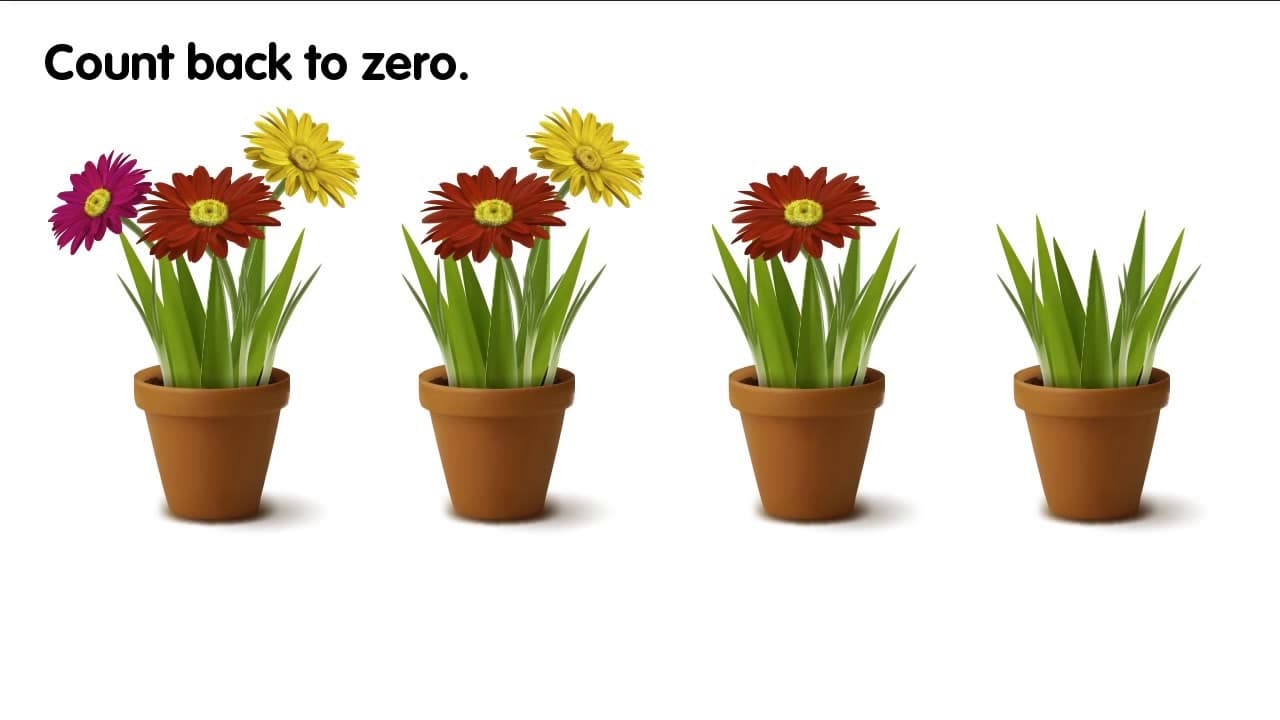
Miacademy & MiaPrep Learning ChannelMiacademy & MiaPrep Learning Channel

10mins 9s

Video
How to Solve and Graph Absolute Value Inequalities

How to Solve and Graph Absolute Value Inequalities

This comprehensive math tutorial provides a step-by-step guide to solving absolute value inequalities. The video covers the fundamental rules for splitting absolute value expressions into two separate inequalities, distinguishing between "greater than" (OR) and "less than" (AND) scenarios. It progresses from basic two-step equations to graphing solutions on a number line and writing answers in interval notation. The tutorial explores key algebraic themes including compound inequalities, number line graphing conventions (open vs. closed circles), and the logic behind interval notation. A significant portion is dedicated to "trap questions" involving negative numbers on the other side of the inequality, helping students identify when a problem has "no solution" or when the answer is "all real numbers." For educators, this video serves as an excellent instructional tool for Algebra I and II classes. It breaks down complex procedural steps into manageable chunks and addresses common student misconceptions, particularly regarding isolating the absolute value term before solving. The clear handwriting on a black background makes the visual steps easy to follow, making it ideal for classroom demonstration or independent student review.

The Organic Chemistry TutorThe Organic Chemistry Tutor

12mins 40s

Video
Finding Intercepts Directly from Linear Equations

Finding Intercepts Directly from Linear Equations

This math tutorial provides a clear, step-by-step guide on how to calculate x-intercepts and y-intercepts directly from linear equations without needing to graph them first. Building on previous knowledge of what intercepts look like visually, the narrator, Justin, transitions students to algebraic methods using substitution. The video uses a split-screen format to simultaneously demonstrate the process for finding both intercepts for various equations. The content covers four distinct examples that increase in complexity: a standard standard-form equation, an equation with negative coefficients, an equation with terms on different sides of the equals sign, and a special case where the line passes through the origin (0,0). The core concept emphasized throughout is the rule that x-intercepts always have a y-coordinate of 0, and y-intercepts always have an x-coordinate of 0. This video is highly valuable for Algebra 1 classrooms as it reinforces the connection between algebraic manipulation and graphical features. It efficiently addresses common student sticking points, such as handling negative signs during division and recognizing when a line crosses the origin. Teachers can use this as a direct instructional tool or a review segment before teaching the "cover-up method" for graphing lines in standard form.

Miacademy & MiaPrep Learning ChannelMiacademy & MiaPrep Learning Channel

3mins 15s

Video
Completing Polynomial Identities by Factoring and Expansion

Completing Polynomial Identities by Factoring and Expansion

This instructional video guides students through the concept of polynomial identities and methods to verify them. The narrator, Randy, defines a polynomial identity as an equation that remains true for all values of the variable. The video demonstrates two primary strategies for completing identities: manipulating expressions through multiplication (expansion) and simplifying expressions through factorization. The video covers two distinct examples. The first example involves a quadratic expression where the strategy is to expand the multiple-choice options to see which one matches the original expression. The second example presents a higher-degree polynomial where the narrator uses Greatest Common Factor (GCF) extraction and trinomial factoring to simplify the expression and find the matching identity. For educators, this video serves as an excellent model for teaching algebraic equivalence. It reinforces core algebra skills including squaring binomials, distributing terms, combining like terms, finding GCFs, and factoring quadratic trinomials. It is particularly useful for Algebra I and II classrooms to demonstrate that algebraic manipulation allows us to write the same quantity in different forms.

Miacademy & MiaPrep Learning ChannelMiacademy & MiaPrep Learning Channel

7mins 3s

Video
Solving Comparison Word Problems Using Subtraction

Solving Comparison Word Problems Using Subtraction

This video guides students through solving a comparison word problem involving dominoes and a six-sided die. The narrator demonstrates how to decipher the language of the problem—specifically the phrase "42 more spots than"—to determine the correct mathematical operation. Rather than simply seeing the word "more" and adding, the video emphasizes critical thinking and logic to realize subtraction is required. The video covers key themes such as reading comprehension in mathematics, identifying knowns and unknowns, and the relationship between addition and subtraction (inverse operations). It models how to set up an equation with a variable (represented by a question mark) and how to rearrange that equation to solve for the answer. For educators, this video is an excellent resource for addressing the common "keyword trap" where students blindly apply operations based on words like "more" or "less." It provides a clear visual model of how to translate text into a mathematical sentence and demonstrates standard vertical subtraction without regrouping.

Khan AcademyKhan Academy

3mins 22s

Video
Solving Length Word Problems with Bar Models

Solving Length Word Problems with Bar Models

This educational video demonstrates how to use bar models to visualize and solve mathematical word problems involving the subtraction of lengths. Through clear, step-by-step examples, it guides students on how to translate text-based scenarios into visual representations to determine the correct mathematical operation.

MatholiaChannelMatholiaChannel

1min 48s

Video
Real-World Integers: Sea Level, Money, and Temperature

Real-World Integers: Sea Level, Money, and Temperature

This engaging animated music video introduces students to the concept of integers through a catchy pop-rock song and vivid animations. The video follows a young girl character through three distinct scenarios—deep-sea diving, buying tickets, and experiencing freezing weather—to demonstrate how positive and negative numbers function in the real world. By grounding abstract mathematical concepts in tangible situations like elevation, money/debt, and temperature, the video makes integers accessible and relatable. The core themes explored include defining integers as positive or negative whole numbers, understanding zero as a reference point (sea level), and performing basic arithmetic with integers (addition and subtraction resulting in negative values). Additionally, the video features a dedicated bridge section that clearly defines and visualizes 'absolute value' as the distance of a number from zero on a number line, disregarding its sign. For educators, this video serves as an excellent hook or review tool for units on the number system. It provides multiple visual models, including vertical number lines for elevation and temperature, and horizontal number lines for absolute value. The lyrics act as a mnemonic device, helping students remember definitions and rules. Teachers can use the specific scenarios presented (ocean depth, financial debt, temperature change) as anchors for subsequent word problems and class activities.

Math Songs by NUMBEROCKMath Songs by NUMBEROCK

2mins 34s

Video
How to Find Distance on a Coordinate Grid

How to Find Distance on a Coordinate Grid

This educational video provides a clear, step-by-step guide to calculating distances on a coordinate plane, specifically targeting 6th-grade mathematics standards. The lesson progresses logically from finding the distance of a single point from the axes to calculating the distance between two distinct points that share a common coordinate. By incorporating the concept of absolute value, the video bridges the gap between arithmetic and geometry, helping students understand distance as a positive magnitude regardless of the quadrant. The content covers key topics including plotting ordered pairs in all four quadrants, understanding the relationship between coordinates and distance from axes, and using absolute value to sum distances when crossing an axis. It features practical applications, such as a narrative example involving a character traveling between locations on a map, and geometric applications where students must construct shapes based on vertex distance. Teachers can use this video to introduce or reinforce the concept of distance on a coordinate grid. The visual demonstrations of "counting boxes" alongside the mathematical method of using absolute value provide scaffolded learning that appeals to both visual and logical learners. The video is particularly useful for transitioning students from simple plotting to analyzing geometric relationships on a grid.

Miacademy & MiaPrep Learning ChannelMiacademy & MiaPrep Learning Channel

10mins 44s

Video
Solving a Subtraction Word Problem Using Place Value

Solving a Subtraction Word Problem Using Place Value

This educational video guides students through solving a math word problem involving subtraction with double-digit numbers. The narrator presents a scenario about a teacher named Mrs. Henry who starts the year with 64 crayons and ends with 31, challenging viewers to calculate how many crayons were used. The video demonstrates two distinct methods for solving the problem: constructing a subtraction equation using algebraic thinking and utilizing visual place value blocks to physically see the difference. Key themes include subtraction strategies, place value understanding (tens and ones), and the relationship between addition and subtraction equations (fact families). The video explicitly breaks down numbers into their constituent parts—for example, showing 64 as six groups of ten and four ones—helping students visualize abstract numbers as concrete quantities. For educators, this video serves as an excellent model for connecting abstract arithmetic to visual representations. It is particularly useful for introducing students to the concept of "finding the missing part" in a subtraction problem (Total - Part = Part) and for reinforcing column subtraction without regrouping. The dual approach allows teachers to differentiate instruction for students who prefer visual methods versus those ready for standard algorithms.

Khan AcademyKhan Academy

4mins 24s

Video
Using Bar Graphs to Compare Quantities

Using Bar Graphs to Compare Quantities

This video provides a clear, step-by-step tutorial on how to interpret data from a vertical bar graph to solve a comparison problem. The narrator demonstrates how to identify specific data points corresponding to different categories ('Bike World' and 'Bikes R Us') and determines the numerical value for each by reading the vertical axis. The content focuses on the key mathematical concept of finding the difference between two quantities. It explicitly models two distinct methods for solving the problem: first, by setting up a subtraction equation (19 - 12), and second, by visually counting the grid units on the graph to determine the 'gap' between the two bar heights. This dual approach reinforces the connection between arithmetic operations and visual data representation. This resource is excellent for early elementary classrooms introducing data analysis and graphing. It helps students transition from simply reading a graph to using the data to answer 'how many more' questions—a common hurdle for young learners. The video serves as a strong model for verifying answers, as it uses the visual counting method to check the arithmetic result.

Khan AcademyKhan Academy

1min 42s

Video
How to Calculate Perimeter for Polygons

How to Calculate Perimeter for Polygons

This engaging video introduces students to the concept of perimeter, defining it as the total distance around a two-dimensional shape. Through clear animations and visual metaphors, it explains why perimeter is considered a one-dimensional quantity, demonstrating this by "unfolding" a square into a straight line. The video moves from conceptual understanding to practical application, guiding viewers through the process of calculating perimeter for various polygons by summing their side lengths. The content covers three distinct levels of complexity: simple polygons like triangles and rectangles, regular polygons where multiplication can be used as a shortcut, and complex rectilinear shapes with missing side lengths. This final section is particularly valuable as it teaches a specific problem-solving strategy: using known parallel sides to deduce the lengths of unknown sides, a common hurdle in elementary geometry. For educators, this video serves as an excellent core lesson for introducing geometry measurements. It emphasizes the importance of including units in answers—a critical habit for science and math students. The visual demonstrations, particularly the "walking the path" analogy and the sliding segments to reveal missing lengths, provide intuitive scaffolds that help students grasp abstract geometric concepts.

mathanticsmathantics

7mins 29s

Video
Calculating the Perimeter of Irregular Quadrilaterals

Calculating the Perimeter of Irregular Quadrilaterals

This educational math video provides a clear, step-by-step guide on how to calculate the perimeter of various quadrilaterals, specifically focusing on shapes that are not standard squares or rectangles. Through the use of animated characters and scenarios, it introduces the concept of perimeter as the total distance around a two-dimensional shape and demonstrates the standard algorithm of summing all side lengths to find the answer. The video covers multiple examples, starting with a character running around an irregular quadrilateral track, moving to geometric shapes like parallelograms and trapezoids, and culminating in a real-world word problem about fencing a plot of land for sheep. It concludes with a practice problem for students to attempt on their own, reinforcing the procedural knowledge required to solve these math problems. Teachers can use this video to introduce the concept of perimeter or to model problem-solving strategies for geometry word problems. The step-by-step visual calculations (stacking numbers for addition) model good mathematical habits for students. The video is particularly useful for visual learners who benefit from seeing side lengths highlighted and summed sequentially.

Sheena DoriaSheena Doria

4mins 18s

Video
Solving Repeated Addition Word Problems with Haircuts

Solving Repeated Addition Word Problems with Haircuts

This educational video guides students through solving a math word problem involving repeated addition and data interpretation. The narrator breaks down a scenario where a character named Rafael gets two haircuts every season, using a visual table to organize the information across Spring, Summer, Autumn, and Winter. The video demonstrates how to translate a real-world situation into mathematical expressions. Key themes include repeated addition as a foundation for multiplication, interpreting data tables, and evaluating multiple mathematical expressions to find equivalent values. The video explicitly models how to extract numerical values from text and verify them against provided options, reinforcing the concept that the same total can be represented by different number sentences (e.g., 2+2+2+2 and 4+4). Ideally suited for early elementary classrooms, this resource helps teachers introduce or reinforce the connection between word problems and arithmetic operations. It provides a clear visual model for tracking data and offers a practical opportunity for students to practice checking their work by evaluating multiple-choice answers against their calculated total.

Khan AcademyKhan Academy

2mins 9s

Video
Using Bar Models to Subtract Within 50

Using Bar Models to Subtract Within 50

This educational video introduces young learners to subtraction within 50 using the Singapore Math bar model method. It presents two distinct word problems: a comparison problem involving stickers and a part-whole problem involving candles. The video guides viewers through the process of reading the problem, visualizing the quantities using colored bars, setting up the corresponding subtraction equation, and solving it using the vertical column method. The content covers key mathematical themes including visualizing word problems, distinguishing between 'difference' and 'remainder' scenarios, and the specific mechanics of subtraction. Crucially, it demonstrates both simple subtraction (no regrouping) and subtraction with regrouping (borrowing), providing a clear visual representation of why regrouping is necessary when the ones digit in the minuend is smaller than in the subtrahend. For educators, this video serves as an excellent bridge between concrete manipulatives and abstract algorithms. It is particularly useful for introducing the concept of 'borrowing' or regrouping, as the visual animation clearly shows a ten being converted into ones. Teachers can use this to support lessons on problem-solving strategies, helping students move beyond guessing operations to understanding the structural relationship between numbers in a word problem.

MatholiaChannelMatholiaChannel

3mins 34s

Video
Deciding When to Add or Subtract Using Fruit

Deciding When to Add or Subtract Using Fruit

This video explores the fundamental difference between addition and subtraction through a simple, visual example involving fruit. The narrator presents a scenario with five blueberries and three cherries, challenging viewers to determine whether they need to add or subtract to find the "total number of fruit." The video clearly distinguishes between the two operations by visually mapping them to physical actions—combining sets versus taking items away. Key themes include counting objects, understanding mathematical symbols (+ and -), and interpreting word problem vocabulary. The video visually demonstrates that addition is used for combining distinct groups to find a larger total sum (5 + 3 = 8), while subtraction is modeled as "taking away" or removing items from a starting group (5 - 3 = 2). This side-by-side comparison helps clarify when to apply each operation. For educators, this resource is an excellent tool for introducing early arithmetic concepts and problem-solving strategies. It helps students transition from concrete counting to abstract equations by explicitly visualizing the "why" behind the choice of operation. The clear comparison between "getting more" (addition) and "eating/taking away" (subtraction) provides a strong mental model for young learners beginning to solve one-step word problems.

Khan AcademyKhan Academy

2mins 17s

Video
Solving a Basketball Word Problem Using Subtraction

Solving a Basketball Word Problem Using Subtraction

This video guides students through solving a second-grade level math word problem involving subtraction in the context of a basketball game. The narrator demonstrates how to translate a text-based story problem into a mathematical equation, focusing specifically on interpreting the phrase "fewer points than" to determine the correct operation. The video uses a visual aid of a scoreboard and a basketball court to ground the abstract numbers in a familiar setting. The content explores key themes of reading comprehension in mathematics, comparing numbers, and performing two-digit subtraction without regrouping. It emphasizes the importance of reasoning before calculating by asking students to estimate whether the final answer should be a larger or smaller number based on the wording of the problem. The step-by-step walkthrough covers setting up the equation vertically and subtracting place values independently. For educators, this video serves as an excellent model for teaching the strategy of "unpacking" word problems. It is particularly useful for students who struggle with the vocabulary of comparison (fewer/more/less). Teachers can use this to introduce subtraction keywords or as a reinforcement activity for students practicing two-digit arithmetic. The real-world context of sports makes the math feel relevant and engaging for young learners.

Khan AcademyKhan Academy

2mins 11s

Video
Using Bar Models to Solve Addition Word Problems

Using Bar Models to Solve Addition Word Problems

This educational video introduces students to using bar models as a visual strategy for solving addition word problems within 20. Through two clear examples—one involving library books and another involving apples—the narrator demonstrates how to translate written text into a visual representation using rectangular bars to represent quantities. The content focuses on key mathematical themes including part-whole relationships, interpreting word problems, visualizing data, and standard addition algorithms. It explicitly models the step-by-step process of identifying key information, labeling a bar model, setting up an addition equation, and calculating the final sum. For educators, this video serves as an excellent instructional tool for bridging the gap between concrete manipulatives and abstract equations. It is particularly useful for introducing the Singapore Math approach or for supporting students who struggle with reading comprehension in math, as it provides a structured method for organizing information before solving.

MatholiaChannelMatholiaChannel

2mins 13s

Video
Subtracting 4-Digit Numbers with Regrouping

Subtracting 4-Digit Numbers with Regrouping

This educational video provides a clear, step-by-step tutorial on subtracting 4-digit numbers involving regrouping (borrowing). It begins with a relatable real-world word problem comparing the mass of a watermelon and a coconut to introduce the concept. The video visualizes the subtraction process using both a pictorial place value chart with colored discs and the standard vertical column algorithm side-by-side, helping students bridge the gap between concrete understanding and abstract calculation. The content covers key arithmetic themes including place value understanding (ones, tens, hundreds, thousands) and the specific mechanics of regrouping. It addresses two distinct scenarios: standard regrouping where a neighbor digit is available to borrow from, and the more complex scenario of regrouping across a zero, which often trips up students. The step-by-step narration reinforces the language of place value (e.g., "regroup 1 ten into 10 ones"). For educators, this video serves as an excellent instructional tool for 3rd and 4th-grade math lessons. The dual representation of place value discs and numbers makes it particularly useful for differentiating instruction for visual learners. It effectively models the procedural thinking required for multi-digit subtraction and provides a clear method for handling zeros in the minuend, a common pain point in elementary arithmetic.

MatholiaChannelMatholiaChannel

2mins 49s

Video
Why We Need Common Denominators to Add Fractions

Why We Need Common Denominators to Add Fractions

This instructional math video addresses the fundamental concept of why common denominators are necessary when adding and subtracting fractions. Hosted by Mr. J, the video moves beyond simple procedural memorization to provide a conceptual explanation, contrasting the incorrect method of adding numerators and denominators straight across with the correct method of finding a common denominator. The lesson uses the example of adding one-half and one-fourth to demonstrate these concepts. The video explores key mathematical themes including fraction addition, equivalent fractions, and the visual representation of quantity. A significant portion of the video is dedicated to visual proofs using rectangular bar models, allowing students to see that "halves" and "fourths" represent different-sized pieces that cannot be combined directly. The video concludes with a helpful real-world analogy comparing units of measurement (inches and feet) to help solidify the concept of requiring common units before combining quantities. For educators, this video serves as an excellent tool for correcting common misconceptions and deepening conceptual understanding. It is particularly useful for introducing the topic of adding fractions with unlike denominators or for remediation with students who habitually add denominators. By providing a clear visual justification for the standard algorithm, the video helps students build number sense and intuition, making abstract fraction rules more concrete and logical.

Math with Mr. JMath with Mr. J

8mins 20s

Video
Solving Addition Word Problems Using Bar Models

Solving Addition Word Problems Using Bar Models

This animated mathematics tutorial introduces young learners to the concept of using bar models to solve addition word problems up to the number 50. The video clearly demonstrates how to visualize textual information by converting word problems into graphic representations, bridging the gap between reading comprehension and mathematical calculation. It uses a step-by-step approach to model the problem-solving process, from reading the scenario to labeling the bars and performing the vertical addition. The content covers two distinct examples: a simple addition problem without regrouping (25 + 11) and a more complex problem requiring regrouping/carrying (18 + 27). Key mathematical themes include place value, vertical addition algorithms, identifying key information in text, and the specific mechanics of regrouping ones into tens. The use of the "Singapore Math" bar model approach helps students conceptualize the relationship between parts and the whole. For educators, this video serves as an excellent tool for visual learners who struggle with abstract equations. It is particularly useful for introducing the "part-part-whole" concept and for demonstrating the standard algorithm for addition with regrouping. Teachers can use it to scaffold lessons on word problems, showing students explicitly how to extract numbers from a story and organize them visually before solving.

MatholiaChannelMatholiaChannel

3mins 4s

Video
Comparing Lengths: Longer, Shorter, and Differences

Comparing Lengths: Longer, Shorter, and Differences

This animated musical video introduces early elementary students to the concepts of measurement, comparison, and simple arithmetic operations using length. Through a catchy song featuring two monkeys, Tico and Mario, viewers learn how to compare objects to determine which is longer or shorter, and how to calculate the specific difference between two lengths using a number line visual model. The video explores key themes of measurement in feet and inches, comparing quantities (longer/shorter), subtraction to find the difference, and addition to find the total length. It systematically breaks down word problems by visually placing objects against a ruler or number line, making abstract math concepts concrete and accessible. This resource is highly valuable for introducing or reinforcing measurement standards in the classroom. The clear visual representations of subtraction as the 'difference' between two lengths on a number line provide a strong conceptual foundation. Teachers can use this video to transition students from simple direct comparison (visual inspection) to quantitative comparison (using numbers and subtraction) and finally to combining lengths (addition).

Math Songs by NUMBEROCKMath Songs by NUMBEROCK

3mins 3s

Video
Solving Comparison Word Problems Using Subtraction

Solving Comparison Word Problems Using Subtraction

This video guides students through solving a comparison word problem involving dominoes and a six-sided die. The narrator demonstrates how to decipher the language of the problem—specifically the phrase "42 more spots than"—to determine the correct mathematical operation. Rather than simply seeing the word "more" and adding, the video emphasizes critical thinking and logic to realize subtraction is required. The video covers key themes such as reading comprehension in mathematics, identifying knowns and unknowns, and the relationship between addition and subtraction (inverse operations). It models how to set up an equation with a variable (represented by a question mark) and how to rearrange that equation to solve for the answer. For educators, this video is an excellent resource for addressing the common "keyword trap" where students blindly apply operations based on words like "more" or "less." It provides a clear visual model of how to translate text into a mathematical sentence and demonstrates standard vertical subtraction without regrouping.

Khan AcademyKhan Academy

3mins 22s

Video
How to Evaluate Algebraic Expressions Using Substitution

How to Evaluate Algebraic Expressions Using Substitution

This video provides a clear, step-by-step guide to evaluating algebraic expressions with one variable. It begins by establishing the fundamental vocabulary of algebra, defining terms such as variable, coefficient, and constant, before introducing the core concept of substitution. The narrator uses visual animations to demonstrate how to replace a letter in an expression with a given numerical value, emphasizing the importance of using parentheses to indicate multiplication during this process. The video introduces a structured three-step method for solving these problems: (1) Write the expression, (2) Substitute the value, and (3) Evaluate using the order of operations. This framework is applied to a purely mathematical example involving multiple terms ($m + 3m - 10$) to build procedural fluency. The content moves from abstract equations to concrete application, helping students visualize the mechanics of algebra. Finally, the lesson connects these skills to the real world through a word problem about a track star named Chloe. Students learn how variables apply to physics concepts like distance, time, and speed. By calculating Chloe's speed for two different race times, the video demonstrates how algebraic formulas are used to analyze changing data in real-life scenarios, making the abstract math concepts tangible and relevant.

Miacademy & MiaPrep Learning ChannelMiacademy & MiaPrep Learning Channel

8mins 21s

Video
Solving a 'More Than' Addition Word Problem

Solving a 'More Than' Addition Word Problem

A clear, step-by-step walkthrough of how to solve a mathematics word problem involving addition and comparison. The video features a narrator reading a problem about two characters, Emeka and Tom, who spin a numbered wheel to win a prize. The problem requires calculating Tom's number based on the clue that it is '15 more' than Emeka's number (17). The video breaks down the problem-solving process into distinct phases: identifying given information, translating words into a mathematical expression, setting up a vertical addition equation, and executing the calculation using regrouping (carrying). The narrator demonstrates place value concepts by explaining that 12 ones is equal to one ten and two ones. This resource is highly valuable for early elementary classrooms introducing two-digit addition with regrouping within the context of word problems. It explicitly models how to extract data from text, interprets the phrase 'more than' as an addition signal, and encourages checking the final answer for logical consistency.

Khan AcademyKhan Academy

2mins 52s

Video
Solving Simple Subtraction Word Problems

Solving Simple Subtraction Word Problems

This educational video introduces young learners to the concept of subtraction through simple, visual word problems. Using engaging animations, the video presents two distinct scenarios: a farm setting with sheep and a playful scene with bubbles. In each story, the narrator guides students through the process of identifying the total number, recognizing the amount being subtracted, and calculating the remainder using number bonds and subtraction equations. The video explores key mathematical themes including basic subtraction, part-whole relationships (number bonds), and translating word problems into numerical equations. It specifically focuses on single-digit subtraction within the range of 1-10, making it highly accessible for early numeracy development. The use of the phrase "take" alongside the minus symbol helps bridge the gap between spoken language and mathematical notation. For educators, this resource serves as an excellent visual aid to reinforce subtraction skills. It demonstrates how to visualize a math problem using concrete objects before moving to abstract numbers. Teachers can use this video to model how to extract relevant information from a story problem, how to use number bonds as a solving strategy, and how to write the corresponding subtraction sentence. It is particularly effective for visual learners and for introducing the concept of "taking away."

MatholiaChannelMatholiaChannel

1min 1s

Video
Using Recursive and Explicit Formulas for Arithmetic Sequences

Using Recursive and Explicit Formulas for Arithmetic Sequences

This educational video provides a clear and structured guide to understanding and using formulas for arithmetic sequences. Hosted by a narrator named Justin, the lesson builds upon previous knowledge of what arithmetic sequences are, moving into the practical application of mathematical notation and formulas. The video breaks down the specific symbols used in sequence notation, such as subscripts for term numbers and variables for common differences, before introducing two primary methods for defining sequences: recursive and explicit forms. The content offers a side-by-side comparison of recursive formulas, which rely on knowing the previous term, and explicit formulas, which allow for calculating any term directly. Through step-by-step examples, the narrator demonstrates how to calculate specific terms using both methods. A key highlight of the video is a practical demonstration showing why explicit formulas are superior for finding distant terms (like the 53rd term) compared to the tedious process required by recursive formulas. For educators, this video serves as an excellent instructional tool for Algebra units covering patterns, functions, and sequences. It directly addresses the common student struggle of understanding function-like notation in sequences. The clear distinction between 'finding the next term' and 'finding the nth term' helps students understand efficiency in mathematics. It is suitable for introducing the concepts or for remediation for students struggling to distinguish between the two formula types.

Miacademy & MiaPrep Learning ChannelMiacademy & MiaPrep Learning Channel

6mins 28s

Video
Completing Number Patterns Within 10,000

Completing Number Patterns Within 10,000

This educational video guides students through the process of identifying and completing number patterns with four-digit numbers up to 10,000. Using clear animations and varied visual themes like balloons and soccer balls, the narrator demonstrates how to determine the rule governing a sequence—such as adding 2, subtracting 10, or subtracting 100—and applies that rule to find the missing term. The video explores key mathematical concepts including skip counting, mental addition and subtraction, and place value relationships. It specifically addresses challenging transitions where place value boundaries are crossed, such as subtracting 10 from 6,504 to reach 6,494, or subtracting 100 from 6,073 to reach 5,973. These examples help students visualize how changing one place value can affect neighboring digits. For educators, this resource serves as an excellent tool for introducing or reinforcing algebra readiness skills related to pattern recognition. It provides clear, step-by-step modeling of how to check the difference between consecutive terms to verify a rule. The visual cues, such as arrows indicating the operation between numbers, support diverse learners in connecting the abstract concept of a numerical sequence with the concrete operation needed to extend it.

MatholiaChannelMatholiaChannel

3mins 11s

Video
How to Count Forward by 10s, 100s, and 1000s

How to Count Forward by 10s, 100s, and 1000s

This educational video from Matholia provides a clear, step-by-step demonstration of counting on by 10s, 100s, and 1000s using four-digit numbers. Through the use of animated number lines, the video visually represents the concept of skip counting, showing how adding specific values affects the digits in a number. It breaks the process down into three distinct sections, allowing learners to focus on one place value change at a time.

MatholiaChannelMatholiaChannel

2mins 50s

Video
Reviewing the Four Operations with Whole Numbers

Reviewing the Four Operations with Whole Numbers

This video serves as a comprehensive review of the four basic arithmetic operations with whole numbers: addition, subtraction, multiplication, and division. The instructor, Mr. J, walks viewers through one example problem for each operation, demonstrating the standard algorithms step-by-step. The video focuses on procedural fluency, emphasizing critical mechanical details like aligning place values, regrouping (carrying and borrowing), using placeholders in multi-digit multiplication, and estimating quotients in long division. The content covers multi-digit addition with regrouping, subtraction across zeros and borrowing, 3-digit by 2-digit multiplication using partial products, and long division with a 2-digit divisor. The instructor uses a digital chalkboard format to write out the problems in real-time, allowing students to follow the handwriting and placement of numbers as he narrates the process. He explicitly addresses common pitfalls, such as misalignment of digits and forgetting placeholder zeros. For educators, this resource is an excellent refresher for students in upper elementary or middle school who have already learned these concepts but need to solidify their skills. It works well as a review station, a homework support tool, or a 'flipped classroom' resource before starting a unit that requires mastery of these prerequisites. The clear, isolated examples allow teachers to assign specific segments of the video depending on student needs.
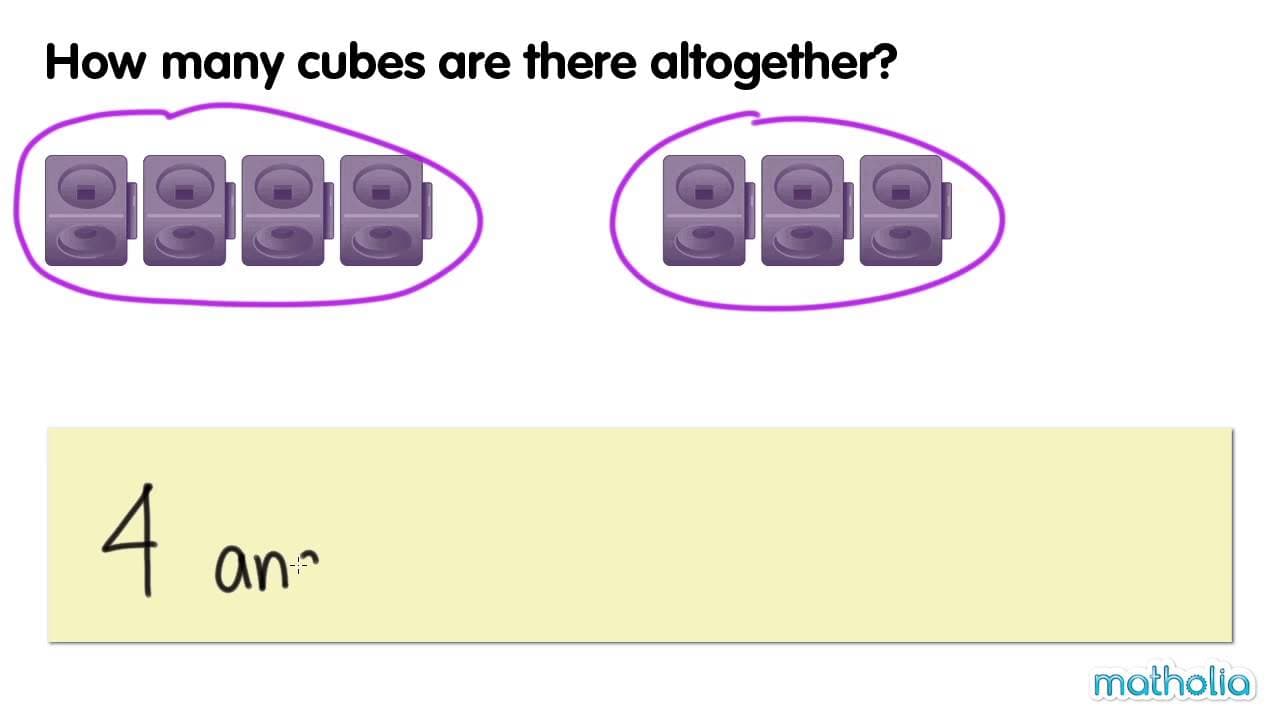
Math with Mr. JMath with Mr. J

7mins 29s

Video
How to Find the Nth Term of an Arithmetic Sequence

How to Find the Nth Term of an Arithmetic Sequence

This math tutorial provides a clear, step-by-step guide on solving problems involving arithmetic sequences. The instructor demonstrates two distinct types of problems: first, finding a specific term (the "nth" term) when given the starting sequence, and second, finding a specific term when given only two non-consecutive terms within the sequence. The video emphasizes understanding the core formula for arithmetic sequences and verifies answers by manually listing terms to build conceptual confidence. The content focuses on key algebraic concepts including identifying the first term (a1), calculating the common difference (d), and applying the explicit formula an = a1 + (n-1)d. The video breaks down the algebraic manipulation required to solve for unknown variables, such as working backwards to find the first term when it is not explicitly given. This resource is highly valuable for Algebra 1 and Algebra 2 classrooms. It serves as an excellent direct instruction tool or review material for students struggling with sequence formulas. The logical, paced explanation of how to bridge the gap between two distant terms (e.g., the 3rd and 7th terms) helps students visualize the "steps" or differences between numbers, reinforcing linear growth concepts essential for understanding linear functions.
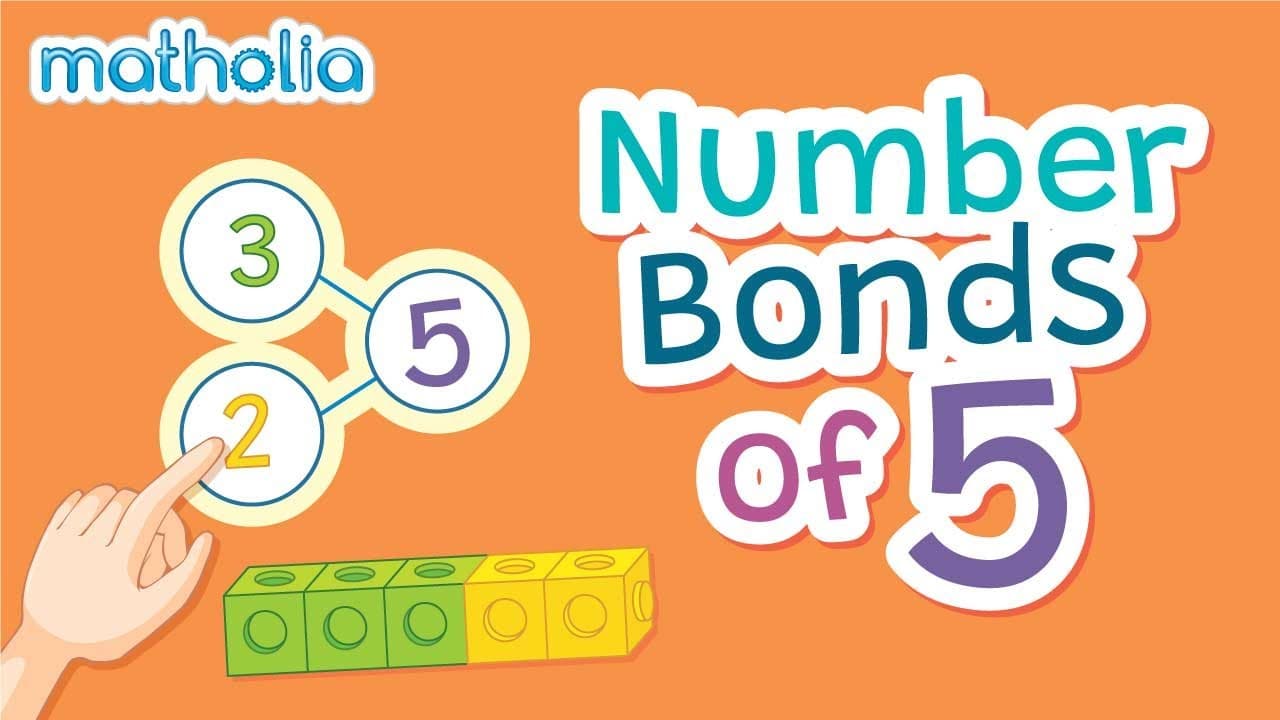
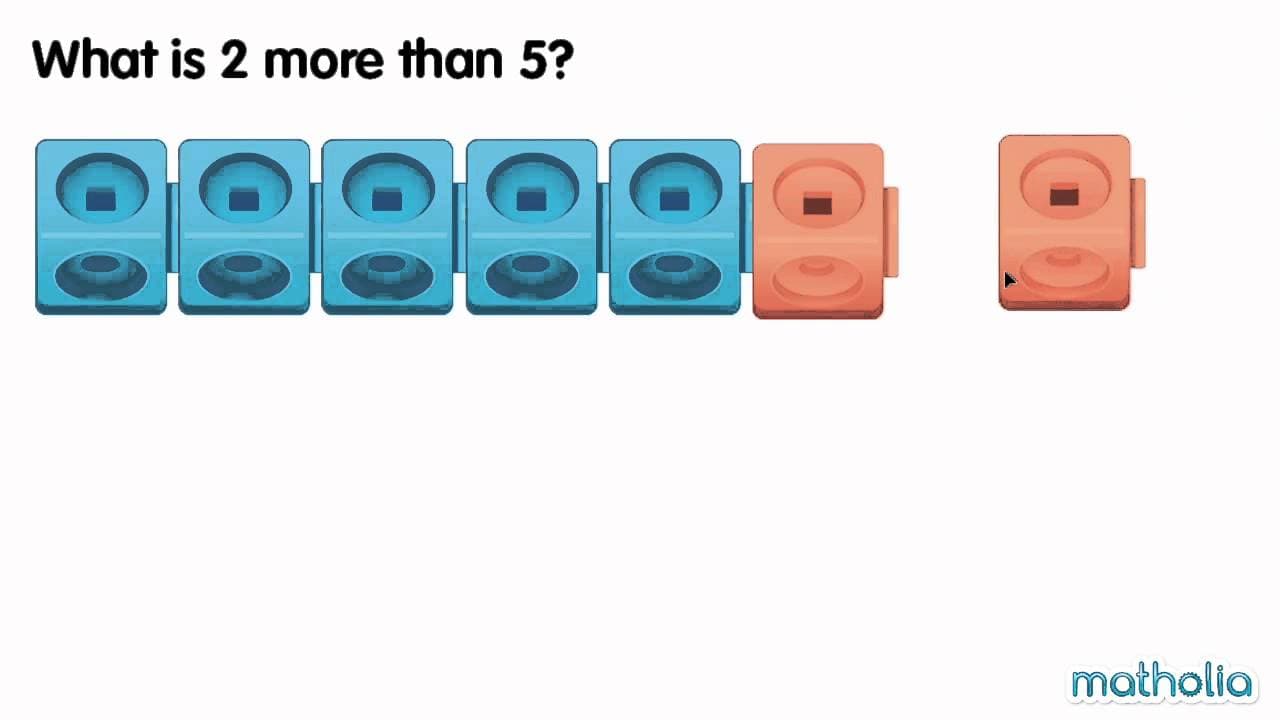
The Organic Chemistry TutorThe Organic Chemistry Tutor

6mins 13s

Video
Introduction to Bases and Exponents

Introduction to Bases and Exponents

This comprehensive math video introduces students to the fundamentals of exponential notation, transforming repeated multiplication into a compact and powerful mathematical tool. Starting with a relatable real-world word problem about buying bread at a bakery, the video clearly distinguishes between the "base" (the number being multiplied) and the "exponent" (how many times it is multiplied). It uses clear, color-coded visuals to break down the anatomy of an exponential expression, making abstract concepts concrete for learners transitioning into pre-algebra. The content covers several critical sub-topics including identifying base and exponent from expanded form, reading exponential notation aloud (e.g., "squared," "cubed," "to the power of"), and calculating standard form values. It specifically addresses common stumbling blocks and special rules, such as the "invisible exponent" of 1, the zero exponent rule (anything to the power of 0 equals 1), and the pattern-based shortcut for powers of 10. The video concludes with applied practice problems involving word problems and arithmetic with exponents. For educators, this resource serves as an excellent primary instruction tool or review for upper elementary and middle school math. The clear progression from concrete examples to abstract rules, combined with specific "trivia" sections that address edge cases, makes it highly effective for scaffolding. The inclusion of word problems at the end allows teachers to check for understanding and move students from simple identification to application and calculation.

Sheena DoriaSheena Doria

11mins 19s

Video
Mastering the Fibonacci Sequence and the Golden Ratio

Mastering the Fibonacci Sequence and the Golden Ratio

This detailed mathematics tutorial explores the deep connection between the Fibonacci sequence and the Golden Ratio. It begins by defining the Fibonacci sequence recursively, demonstrating how to generate terms by adding the previous two numbers. The video then guides viewers through an empirical discovery process, calculating the ratios of consecutive terms to show how they converge to the Golden Ratio (approximately 1.618). The video progresses to more advanced algebraic concepts, introducing Binet's Formula for calculating the nth term of the Fibonacci sequence without needing the preceding terms. It also demonstrates how the Fibonacci sequence behaves like a geometric sequence for large values of n. The instructor walks through practical problem-solving examples, such as estimating the 20th term given the 12th term using the Golden Ratio as a multiplier. Finally, the video provides a rigorous mathematical proof deriving the value of the Golden Ratio from the recursive definition of the Fibonacci sequence. By treating the sequence as a geometric progression and solving the resulting quadratic equation (r^2 - r - 1 = 0), the instructor mathematically proves why the Golden Ratio is (1 + ∕5) / 2. This video is an excellent resource for high school algebra, pre-calculus, and calculus classrooms to bridge arithmetic sequences with algebraic proofs.

The Organic Chemistry TutorThe Organic Chemistry Tutor

24mins 54s

Video
How to Find the Next Number in a Sequence

How to Find the Next Number in a Sequence

This instructional video provides a comprehensive tutorial on identifying patterns and finding the next terms in various number sequences. The narrator guides viewers through step-by-step examples ranging from basic arithmetic sequences involving addition and subtraction to more complex geometric sequences involving multiplication and exponents. The video uses a digital whiteboard format to visually demonstrate how to calculate the "common difference" or "common ratio" between terms, making abstract algebraic concepts concrete and accessible. Key themes include recognizing arithmetic versus geometric sequences, identifying perfect squares and cubes, and analyzing patterns within fractions. The video progresses in difficulty, starting with simple constant differences and moving toward sequences with increasing differences (e.g., adding +2, then +3, then +4) and complex fraction patterns where numerators and denominators follow separate rules. This progression helps scaffold learning for students at different levels of proficiency. For educators, this video serves as an excellent resource for Pre-Algebra and Algebra 1 classrooms. It can be used to introduce the concept of functions and sequences, reinforce mental math skills, or provide targeted practice for standardized test preparation. The pause-and-try format built into the video encourages active participation, allowing teachers to use it as an interactive class activity or a self-paced review tool for students struggling with pattern recognition.

The Organic Chemistry TutorThe Organic Chemistry Tutor

14mins 44s

Video
Mastering Order of Operations Using PEMDAS

Mastering Order of Operations Using PEMDAS

This video serves as a comprehensive tutorial on the Order of Operations in mathematics, commonly known by the acronym PEMDAS. It begins by defining the acronym—Parentheses, Exponents, Multiplication, Division, Addition, and Subtraction—and systematically walks viewers through examples of increasing complexity. The narrator specifically addresses the hierarchy of operations, explaining which steps take precedence and clarifying the often-misunderstood rule of calculating from "left to right" when dealing with operations of equal priority, such as multiplication and division. The video covers several key mathematical themes, including the foundational rules of arithmetic, the specific priority of exponents, and the critical distinction between squaring a negative number versus the negative of a squared number (e.g., (-3)² vs -3²). It also explores nested operations within parentheses and how to handle complex expressions involving fraction bars where the numerator and denominator must be simplified separately. For educators, this resource is highly valuable for solidifying pre-algebra and algebra skills. It is particularly effective at targeting common student misconceptions, such as the belief that multiplication always comes before division, or confusion regarding negative signs and exponents. The clear, step-by-step walkthroughs make it an excellent tool for introducing the concept, reviewing before a test, or providing remediation for students struggling with calculation accuracy.

The Organic Chemistry TutorThe Organic Chemistry Tutor

15mins 52s

Video
Mastering Number Patterns and Sequences

Mastering Number Patterns and Sequences

This educational video provides a clear, step-by-step tutorial on identifying and solving number patterns involving four-digit numbers. Through a series of animated examples using a "clothesline" visual metaphor, students are guided to recognize sequences that increase or decrease by constant amounts. The video covers a variety of intervals including 5, 10, 25, 50, 200, 600, and 1,000, requiring students to apply mental math strategies involving addition and subtraction. The content systematically progresses in difficulty. It begins with simple patterns where the next number in the sequence is missing, then moves to finding missing numbers in the middle of a sequence, and concludes with problems requiring the identification of multiple missing terms. Key themes include arithmetic sequences, place value awareness (noticing which digit changes), and the distinction between increasing (addition) and decreasing (subtraction) patterns. For teachers, this video serves as an excellent modeling tool for whole-group instruction or a self-paced review for struggling students. The clear visual representation of the "jump" between numbers helps solidify the concept of a constant rate of change. It provides immediate opportunities for formative assessment, allowing teachers to pause before the reveal and ask students to predict the rule and the next number, fostering algebraic thinking and mental computation fluency.

MatholiaChannelMatholiaChannel

3mins 44s

Video
How to Find the Rule in Input and Output Tables

How to Find the Rule in Input and Output Tables

In this instructional math video, "Mr. J" provides a clear, step-by-step tutorial on solving input and output tables, also known as function tables. The video systematically covers four distinct examples, each corresponding to one of the basic operations: subtraction, multiplication, addition, and division. Using a digital blackboard format, the narrator demonstrates how to analyze the relationship between input and output numbers to determine the underlying rule. The content focuses on developing algebraic thinking by teaching students to identify patterns. A key theme is the strategy of determining whether values are increasing or decreasing to narrow down possible operations. For instance, the video explicitly models the process of trial and error—testing an addition rule first, realizing it fails for subsequent rows, and then correctly identifying a multiplication rule. It also addresses different table formats, showing both horizontal and vertical orientations. This video is an excellent resource for upper elementary classrooms introducing functions and patterns. It provides a solid model for "checking your work," as the narrator emphasizes that a rule must apply to every pair in the table, not just the first one. Teachers can use this video to introduce the concept of function rules, reinforce mental math strategies, or as a review tool for students struggling to distinguish between additive and multiplicative patterns.

Math with Mr. JMath with Mr. J

5mins 6s

Video
Solving Word Problems with Arithmetic and Geometric Sequences

Solving Word Problems with Arithmetic and Geometric Sequences

This educational math video guides students through the process of solving real-world word problems using arithmetic and geometric sequences. Narrated by Justin, the video uses three distinct scenarios—a wildlife rescue with multiplying rabbits, a bowler tracking scores, and a streamer losing followers—to demonstrate how mathematical sequences apply to everyday situations. The video emphasizes a structured problem-solving approach: first determining if a pattern is arithmetic or geometric, then deciding whether an explicit or recursive formula is most appropriate for the specific question being asked. Key themes include distinguishing between additive (arithmetic) and multiplicative (geometric) patterns, understanding the utility of explicit formulas for finding specific terms versus recursive formulas for generating lists, and substituting values into algebraic formulas. The video explicitly models the thought process required to translate text-based scenarios into mathematical equations. This resource is highly valuable for Algebra students bridging the gap between abstract sequence concepts and concrete applications. It provides clear modeling of metacognitive strategies—asking "what kind of sequence is this?" and "which formula do I need?" before attempting to calculate. Teachers can use this video to introduce word problems, reinforce formula selection skills, or as a review tool for identifying patterns in data.

Miacademy & MiaPrep Learning ChannelMiacademy & MiaPrep Learning Channel

4mins 7s

Video
Unlocking the Secrets of the Fibonacci Sequence and Golden Ratio

Unlocking the Secrets of the Fibonacci Sequence and Golden Ratio

This educational video provides a comprehensive introduction to the Fibonacci sequence, moving from its mathematical definition to its fascinating appearance in the natural world. The lesson begins by defining the recursive formula for the sequence, demonstrating how to calculate terms by adding the two previous numbers, and visualizing these numbers through the famous Fibonacci spiral. It then transitions into more advanced mathematical concepts by exploring the ratio of consecutive terms, ultimately deriving the Golden Ratio (Phi) using quadratic equations. The video bridges the gap between abstract algebra and the physical world by showcasing how the Fibonacci spiral and Golden Ratio appear in nature and human history. Viewers see examples ranging from the architecture of the Parthenon to the spiral patterns of nautilus shells, pinecones, and the petal counts of various flowers. This multidisciplinary approach helps students understand that mathematics is not just a set of rules on paper but a fundamental language describing the structure of our universe. For educators, this video serves as an excellent tool to connect Algebra, Geometry, and Biology. It allows for differentiated instruction: younger students can focus on the additive pattern and nature identification, while advanced students can engage with the algebraic derivation of the Golden Ratio. The visual demonstrations of the spiral and the step-by-step application of the quadratic formula make complex concepts accessible and engaging.

Miacademy & MiaPrep Learning ChannelMiacademy & MiaPrep Learning Channel

9mins 34s

Video
How Exponents Work: Bases, Powers, and Special Rules

How Exponents Work: Bases, Powers, and Special Rules

This educational video provides a clear and accessible introduction to the mathematical concept of exponents. Hosted by a friendly presenter, the video defines exponents as repeated multiplication, distinguishing them from the basic operations of addition, subtraction, multiplication, and division. It uses visual aids and step-by-step breakdowns to explain the structure of exponential notation, specifically identifying the "base" and the "exponent" (or power) using the example of 3 to the 4th power.

Miacademy & MiaPrep Learning ChannelMiacademy & MiaPrep Learning Channel

5mins 40s

Video
How to Subtract Three Fractions with Different Denominators

How to Subtract Three Fractions with Different Denominators

This educational math video provides a clear, step-by-step tutorial on how to subtract three fractions that have different (unlike) denominators. The narrator demonstrates two distinct examples, guiding viewers through the process of finding a common denominator, converting the fractions into equivalent forms, performing the subtraction across the numerators, and finally simplifying the resulting fraction to its lowest terms. The video utilizes a digital blackboard format with color-coded handwriting to distinguish between the original problem and the calculation steps. The key themes explored include finding common denominators using two methods: multiplying all denominators together and finding the Least Common Multiple (LCM). The video also emphasizes arithmetic fluency, specifically multi-digit multiplication and subtraction, as well as the crucial final step of simplifying fractions. The narrator models mathematical thinking by vocalizing mental math strategies and self-correcting calculation checks in real-time. For educators, this video serves as an excellent resource for demonstrating procedural fluency in fraction operations. It bridges the gap between simple two-fraction subtraction and more complex multi-term operations. Teachers can use this video to differentiate instruction for advanced students ready for multi-step problems or as a review tool for students struggling with the algorithm of finding common denominators. The clear visual layout helps students organize their own work when solving similar problems.

The Organic Chemistry TutorThe Organic Chemistry Tutor

4mins 50s

Video
Mastering Powers of Ten and Exponential Forms

Mastering Powers of Ten and Exponential Forms

This instructional math video guides students through the concept of "Powers of Ten" by building a visual pattern of multiplication. The narrator, Mr. J, demonstrates how multiplying 10 by itself repeatedly results in increasingly larger numbers (10, 100, 1,000, etc.), explicitly linking the number of tens multiplied to the number of zeros in the final product and the corresponding exponent. The video uses a chalkboard format to clearly organize these examples into rows, allowing students to visualize the mathematical relationships as they develop. Key themes include pattern recognition in base-ten systems, place value, and the introduction of specific mathematical vocabulary. The video defines and distinguishes between three critical formats: Expanded Form (repeated multiplication), Standard Form (the resulting number), and Exponential Form (using a base and exponent). It carefully breaks down the anatomy of an exponential number, labeling the "Base" and the "Exponent" to ensure students understand the function of each part. This resource is highly valuable for upper elementary and middle school classrooms as an introduction to exponents. It directly addresses a pervasive student misconception—that an exponent tells you to multiply the base by that number (e.g., 10² = 20)—and corrects it by explaining that exponents represent repeated multiplication. The clear, step-by-step pacing makes it ideal for direct instruction, review, or as a reference for students struggling with the transition from additive to multiplicative reasoning.

Math with Mr. JMath with Mr. J

6mins 8s

Video
How to Calculate Percent Increase and Decrease

How to Calculate Percent Increase and Decrease

This instructional math video guides viewers through the step-by-step process of calculating percent change, covering both percent increases and decreases. The narrator, Mr. J, utilizes a clear formula—subtracting the original value from the new value, dividing by the original value, and multiplying by 100—to determine the percentage of change. The video systematically works through four distinct examples, ranging from simple integer changes to more complex problems involving decimals and rounding. Key themes include the importance of order of operations when setting up the formula, interpreting positive and negative results as increases or decreases respectively, and the technical skill of converting decimals to percentages. The video also addresses special cases, such as percent increases exceeding 100% and scenarios requiring rounding of long decimal answers. The visual aid of a digital blackboard helps students follow the handwritten calculations in real-time. For educators, this resource serves as an excellent tool for introducing or reinforcing the concept of percent change in middle school math curriculums. It provides a reliable procedural model that students can mimic. Teachers can use this video to support lessons on ratios and proportional relationships, specifically standard 7.RP.A.3, by having students pause after each problem setup to perform the calculation themselves before watching the solution.

Math with Mr. JMath with Mr. J

10mins 55s

Video
How to Solve Percent Word Problems Using Equations

How to Solve Percent Word Problems Using Equations

This math tutorial by "Math with Mr. J" provides a clear, step-by-step demonstration of how to solve real-world percent problems using the percent equation (percent x whole = part). The video specifically tackles a word problem that asks students to determine what percentage of a high school's total student body is comprised of seniors. It walks viewers through the entire process: identifying the known and unknown variables, calculating the total population to find the "whole," setting up the algebraic equation, and performing the necessary inverse operations to solve for the missing percentage. The video explores key mathematical themes including algebraic reasoning, variable isolation, and data interpretation from lists. It emphasizes the importance of understanding the relationship between the "part," the "whole," and the "percent." Additionally, it covers practical arithmetic skills such as summing multiple values to find a total, performing division to isolate a variable, converting a decimal result into a percentage by moving the decimal point, and rounding to the nearest whole number. For educators, this video serves as an excellent instructional tool or review resource for units on ratios, proportional reasoning, and percentages. Its visual approach—using a digital chalkboard and color-coded text—helps students focus on the structure of the equation. Teachers can use this video to model how to extract relevant information from word problems (like realizing the "whole" must be calculated by adding up all class sizes) and to reinforce the procedure for converting decimals to percentages in a meaningful context.

Math with Mr. JMath with Mr. J

4mins 56s

Video
How to Calculate Percent Increase and Decrease

How to Calculate Percent Increase and Decrease

This educational video from Math Antics provides a clear and comprehensive guide to calculating percent change, covering both percent increase and percent decrease. Host Rob simplifies the transition from absolute change (actual value difference) to relative change (percentage), using visual models and equivalent fractions to build conceptual understanding before introducing the standard formula. The video addresses real-world scenarios like sales discounts, population growth, and business metrics to demonstrate practical applications. Key themes include the relationship between fractions and percentages, the importance of order in subtraction to determine positive (increase) or negative (decrease) values, and the concept of equivalent fractions. The video also explores special cases that often confuse students, such as why doubling an amount is a 100% increase while halving it is only a 50% decrease, and how percent increases can exceed 100%. For educators, this resource is invaluable for bridging the gap between basic percentage skills and algebraic application. The dual approach of showing visual bar models alongside the algebraic method `(Change / Original) * 100` helps differentiate instruction for visual learners and abstract thinkers. The built-in "intuition checks" encourage students to validate their answers logically rather than blindly following algorithms.

mathanticsmathantics

12mins 51s

Video
Mastering the Order of Operations: A Complete Guide to PEMDAS

Mastering the Order of Operations: A Complete Guide to PEMDAS

This comprehensive video serves as a complete guide to the Order of Operations, commonly known by the acronym PEMDAS. It begins by establishing the fundamental "why" behind these mathematical rules, using relatable analogies like traffic lights and standard measurements to explain the necessity of a universal system for solving equations. The video systematically breaks down the hierarchy of operations: Parentheses, Exponents, Multiplication and Division (from left to right), and Addition and Subtraction (from left to right). The video progresses through a wide variety of examples that increase in complexity, ensuring a deep understanding of the concepts. It covers standard problems, equations with nested grouping symbols (parentheses, brackets, and braces), the role of fraction bars as grouping symbols, and calculations involving exponents. Later sections introduce more advanced applications, such as operations with negative integers, addressing common student stumbling blocks like the difference between squaring a negative number with and without parentheses. For educators, this video is an invaluable resource for both introducing and reviewing the Order of Operations. Its structured approach allows teachers to segment the content based on student proficiency, starting with basic arithmetic and moving to complex algebraic thinking. The clear, step-by-step walkthroughs of specific problem types—such as those with multiple grouping symbols or integers—make it perfect for targeted intervention, flipped classroom models, or as a reference for students grappling with specific misconceptions like the "left-to-right" rule for multiplication and division.

Math with Mr. JMath with Mr. J

51mins 15s

Video
How to Evaluate Algebraic Expressions with Two Variables

How to Evaluate Algebraic Expressions with Two Variables

This educational video provides a comprehensive tutorial on evaluating algebraic expressions containing two variables. It begins by reviewing prerequisites like the order of operations and parts of an expression before guiding viewers through a clear, three-step process: rewriting the expression, substituting variables with given values, and simplifying to find the solution. The instructor uses a digital whiteboard to demonstrate these steps with two distinct examples—a simple linear expression and a more complex one involving exponents.

Miacademy & MiaPrep Learning ChannelMiacademy & MiaPrep Learning Channel

7mins 27s

Video
Translating Verbal Phrases into Algebraic Expressions

Translating Verbal Phrases into Algebraic Expressions

This educational video provides a clear and comprehensive guide on translating verbal phrases into algebraic expressions and equations, a fundamental skill for pre-algebra and algebra students. The narrator breaks down the process of converting written language into mathematical symbols, starting with basic addition and moving through subtraction, multiplication, and division. The video places special emphasis on identifying variables to represent unknown numbers and understanding how different phrasing affects the structure of an equation. A significant portion of the video is dedicated to addressing common student misconceptions, particularly regarding the order of terms in subtraction problems involving phrases like "less than." The concept of "switch words" is introduced as a mnemonic device to help students remember when to reverse the order of terms. The video also covers the use of parentheses for grouping independent expressions and the translation of "is" to the equal sign, distinguishing expressions from equations. This resource is highly valuable for the classroom as it bridges the gap between arithmetic and abstract algebra. Teachers can use it to help students decode word problems, a common struggle area in math. The visual cues, such as the "Caution" tape animation for tricky concepts, provide memorable hooks for learning. It is ideal for introducing algebraic thinking or reviewing key vocabulary before diving into complex word problem solving.

Mashup MathMashup Math

8mins 18s

Video
Solving One-Step Equations with Variables

Solving One-Step Equations with Variables

This energetic educational music video introduces students to the foundational concepts of algebra through a catchy pop-rock song set against a stylized space background. The video breaks down the definition of an equation, explaining it as two expressions equated through operations. It walks viewers through specific examples of one-step equations involving multiplication and addition, demonstrating how to identify variables and coefficients to solve for unknown values.

Math Songs by NUMBEROCKMath Songs by NUMBEROCK

2mins 34s

Video
How to Add and Subtract Like Fractions

How to Add and Subtract Like Fractions

This engaging math tutorial introduces students to the fundamental rules of adding and subtracting fractions, specifically focusing on "like fractions" (those with the same denominator). The video begins by addressing the most common student misconception—adding straight across both numerators and denominators—and demonstrates visually and mathematically why this method fails. It then uses the Order of Operations to explain why fractions cannot be treated simply as two separate addition problems, establishing a strong conceptual foundation before moving to the correct procedural method.

mathanticsmathantics

4mins 22s

Video
Translating and Identifying Parts of Algebraic Expressions

Translating and Identifying Parts of Algebraic Expressions

This comprehensive instructional video introduces students to the fundamental concepts of algebra, specifically focusing on the distinction between algebraic expressions and equations. Through a series of clear examples and scaffolded exercises, the narrator guides viewers in identifying key components of algebraic structures, including variables, coefficients, constants, and terms. The video uses a friendly animated teacher character to visually break down abstract mathematical concepts into digestible segments, making it accessible for beginners in algebra. The content covers three main learning objectives: differentiating between mathematical phrases (expressions) and mathematical sentences (equations), translating verbal phrases into algebraic notation using specific keywords for operations, and identifying the parts of an algebraic expression. Special attention is paid to common translation pitfalls, such as the order of terms in subtraction phrases like "less than" and "subtracted from," and representing multiplication without the "x" symbol to avoid confusion with variables. For educators, this video serves as an excellent primary resource for introducing an algebra unit or as a review tool for students struggling with mathematical vocabulary. It provides ample opportunities for pause-and-predict interactivity, where teachers can stop the video before the answer is revealed to check student understanding. The systematic breakdown of translation keywords makes it particularly useful for English Language Learners and students who find word problems challenging.

Sheena DoriaSheena Doria

20mins 45s

Video
Completing Polynomial Identities by Factoring and Expansion

Completing Polynomial Identities by Factoring and Expansion

This instructional video guides students through the concept of polynomial identities and methods to verify them. The narrator, Randy, defines a polynomial identity as an equation that remains true for all values of the variable. The video demonstrates two primary strategies for completing identities: manipulating expressions through multiplication (expansion) and simplifying expressions through factorization. The video covers two distinct examples. The first example involves a quadratic expression where the strategy is to expand the multiple-choice options to see which one matches the original expression. The second example presents a higher-degree polynomial where the narrator uses Greatest Common Factor (GCF) extraction and trinomial factoring to simplify the expression and find the matching identity. For educators, this video serves as an excellent model for teaching algebraic equivalence. It reinforces core algebra skills including squaring binomials, distributing terms, combining like terms, finding GCFs, and factoring quadratic trinomials. It is particularly useful for Algebra I and II classrooms to demonstrate that algebraic manipulation allows us to write the same quantity in different forms.

Miacademy & MiaPrep Learning ChannelMiacademy & MiaPrep Learning Channel

7mins 3s

Video
Solving a Complex Equation Involving Exponents and Quadratics

Solving a Complex Equation Involving Exponents and Quadratics

This video presents a detailed walkthrough of solving a complex algebraic equation involving a quadratic expression raised to the fourth power. The narrator guides viewers through a multi-step process that includes using inverse operations to remove the exponent, setting up a quadratic equation, factoring a trinomial with a leading coefficient greater than one, and applying the zero product property to find the values of x. The content covers key algebraic themes such as working with rational exponents and roots, solving quadratic equations in the form ax^2 + bx + c = 0, and the specific technique of factoring by grouping (often called the 'ac method'). Additionally, the video emphasizes the importance of verifying solutions by substituting the calculated values back into the original equation to ensure accuracy. This resource is highly valuable for high school Algebra II and Pre-Calculus classrooms. It serves as an excellent model for solving multi-layered problems that require students to synthesize different skills. Teachers can use this video to demonstrate how to handle equations where a polynomial is nested inside a power, or as a specific tutorial on how to factor tricky quadratics where the leading coefficient is not 1.

The Organic Chemistry TutorThe Organic Chemistry Tutor

7mins 12s

Video
Algebra 1 Final Exam Review: Part 1

Algebra 1 Final Exam Review: Part 1

This comprehensive video serves as a targeted review for students preparing for an Algebra 1 final exam. It systematically walks through 15 distinct problem types commonly found on end-of-course assessments, covering a wide range of algebraic concepts. The video format functions as a digital tutor, presenting a problem, allowing the viewer to pause and attempt it, and then providing a detailed, step-by-step walkthrough of the solution. The instructor uses clear visual annotations on a blackboard style background to demonstrate the mechanics of each operation. Key algebraic themes explored include operations with polynomials (multiplying binomials, subtracting polynomials), linear functions (finding slope, graphing lines, matching equations to graphs), and factoring techniques (difference of squares, trinomials, difference of cubes). The video also covers solving various types of equations, including linear, quadratic, rational, and systems of equations. Additionally, it addresses exponent rules, the order of operations, and applying algebraic concepts to geometric word problems involving area and perimeter. For educators, this video is a valuable resource for review sessions, flipped classroom assignments, or differentiated instruction. It allows students to self-pace their review, focusing on areas where they need the most support. The clear explanations of multiple methods (e.g., solving quadratics by factoring vs. the quadratic formula) help reinforce conceptual understanding rather than just rote memorization. Teachers can use specific segments to reteach difficult concepts or assign the entire video as a comprehensive study guide before major assessments.

The Organic Chemistry TutorThe Organic Chemistry Tutor

55mins 8s

Video
Mastering the Percent Equation Step-by-Step

Mastering the Percent Equation Step-by-Step

A comprehensive, step-by-step mathematics tutorial that teaches students how to solve various types of percent problems using the percent equation (Percent w Whole = Part). The video is methodically structured into three distinct sections, covering how to find the 'whole' when given a part and percent, how to find the 'part' given a whole and percent, and how to calculate the 'percent' when given the part and whole. Each section includes two detailed examples that demonstrate the procedural math involved, including long division and decimal multiplication.

Math with Mr. JMath with Mr. J

27mins 36s

Video
Practice Writing Algebraic Expressions from Word Phrases

Practice Writing Algebraic Expressions from Word Phrases

This educational video features "Mr. J" guiding students through a "Mastery Check" on writing algebraic expressions. Designed as an interactive assessment tool, the video presents eight word phrases that students must translate into mathematical expressions involving numbers, operations, and variables. The format encourages active participation by asking viewers to pause the video, solve the problems independently, and then watch the detailed explanations to verify their answers. The core themes include understanding mathematical vocabulary such as "product," "difference," "quotient," and "sum," and correctly applying algebraic notation. A significant portion of the video focuses on the nuances of writing expressions, such as avoiding the "x" symbol for multiplication in algebra, using fractions to represent division, and the critical importance of order in subtraction and division problems. Advanced concepts like using parentheses to control the order of operations for two-step expressions are also covered. For educators, this video serves as an excellent formative assessment or review station. It provides immediate feedback to students and addresses common misconceptions, particularly regarding the phrasing "subtract from" and the placement of variables in multiplication. It allows teachers to gauge student readiness for more complex algebraic concepts and reinforce the specific language of mathematics.

Math with Mr. JMath with Mr. J

6mins 13s

Video
Mastering the Order of Operations: A Complete Guide

Mastering the Order of Operations: A Complete Guide

This comprehensive video serves as an in-depth introductory guide to the Order of Operations in mathematics, commonly known by the acronym PEMDAS. It begins by establishing the fundamental necessity of a standardized order for solving mathematical expressions to ensure consistency in results, using relatable analogies like traffic lights and units of measurement. The video systematically breaks down the hierarchy: Parentheses, Exponents, Multiplication and Division (left to right), and Addition and Subtraction (left to right). The narrator, Mr. J, walks viewers through a progression of problems that increase in complexity. Starting with basic arithmetic to demonstrate the rules, the video advances to expressions containing exponents, nested operations, and adjacent parentheses indicating multiplication. A significant portion is dedicated to "fraction bars" (division bars), explaining how they function as grouping symbols that require simplifying the numerator and denominator independently before the final division. For educators, this video is a valuable resource for correcting common misconceptions, particularly the "Left-to-Right" rule for operations of equal priority (Multiplication/Division and Addition/Subtraction). The step-by-step visual working of problems allows teachers to pause for student practice. It effectively scaffolds learning from simple procedural recall to complex multi-step problem solving, making it suitable for introducing the concept or providing rigorous review for struggling students.

Math with Mr. JMath with Mr. J

24mins 41s

Video
Mastering Order of Operations: The GMDAS Rule Explained

Mastering Order of Operations: The GMDAS Rule Explained

This educational video provides a clear and structured guide to mastering the Order of Operations in mathematics, specifically utilizing the PMDAS and GMDAS rules. Through a series of step-by-step examples, the narrator demonstrates how to approach complex numerical expressions involving addition, subtraction, multiplication, division, and grouping symbols. The video features a virtual teacher who breaks down each problem, highlighting the specific operations being performed in real-time to aid visual tracking and conceptual understanding. The content specifically addresses the common confusion regarding the hierarchy of operations, clarifying that multiplication and division hold equal priority, as do addition and subtraction, and must be solved from left to right. By introducing the acronym GMDAS (Grouping symbols, Multiplication, Division, Addition, Subtraction), the video expands student understanding beyond just parentheses to include brackets and braces, providing a more robust framework for algebra readiness. Teachers can utilize this video to introduce or review the Order of Operations for upper elementary and middle school students. The clear visual cues—such as yellow highlighting boxes around the current operation—make it an excellent resource for visual learners. The inclusion of a "Try this!" challenge at the end offers an immediate formative assessment opportunity, allowing educators to gauge student retention of the concepts immediately following the instruction.

Sheena DoriaSheena Doria

6mins 33s

Video
Mastering Advanced Exponent Rules

Mastering Advanced Exponent Rules

This math tutorial provides a clear, step-by-step explanation of two advanced exponent rules: the Power of a Product rule and the Power of a Power rule. Narrated by Justin, the video builds upon basic exponent knowledge to show how to handle more complex algebraic expressions involving parentheses. It carefully distinguishes between expressions where exponents can be distributed (multiplication) versus where they cannot (addition/subtraction), using visual expansions to prove why the rules work mathematically.

Miacademy & MiaPrep Learning ChannelMiacademy & MiaPrep Learning Channel

8mins 57s

Video
Mastering One-Step Multiplication and Division Equations

Mastering One-Step Multiplication and Division Equations

This educational video provides a clear, step-by-step tutorial on solving one-step algebraic equations involving multiplication and division. Guided by an instructor, viewers are walked through four distinct examples that progress in complexity: a standard multiplication problem, a multiplication problem with a negative coefficient, a division problem using the division symbol, and a division problem using fraction notation. The video emphasizes the core algebraic concept of inverse operations—using division to undo multiplication and multiplication to undo division—while reinforcing the golden rule of algebra: whatever you do to one side of the equation, you must do to the other. A key theme throughout the video is the importance of verification. After solving each variable, the instructor explicitly demonstrates how to check the answer using substitution. This involves plugging the calculated value back into the original equation to ensure both sides remain equal. The video addresses potential stumbling blocks, such as how to handle negative numbers in isolation and recognizing that fractions represent division. For educators, this resource serves as an excellent direct instruction tool for introducing algebra concepts or as a review for students struggling with specific notations. The visual format, which uses color-coded handwriting to distinguish between the original problem and the steps taken to solve it, helps students visualize the "balancing" process. It effectively demystifies the abstract nature of variables by grounding the math in consistent, repetitive procedures that build procedural fluency.

Miacademy & MiaPrep Learning ChannelMiacademy & MiaPrep Learning Channel

7mins 50s

Video
Learning to Multiply by 8 with Visual Models

Learning to Multiply by 8 with Visual Models

This educational video provides a clear and visual introduction to multiplying by 8, designed to help elementary students grasp the concept of repeated addition and skip counting. Using engaging animations of spiders and counting cubes, the video demonstrates how multiplication serves as a faster way to count groups of equal numbers. It guides viewers through specific examples, such as calculating the total number of legs on six spiders and counting cubes in seven stacks of eight, effectively bridging the gap between concrete visual aids and abstract mathematical equations. The content focuses on three primary mathematical strategies: visual grouping, skip counting sequences, and memorizing multiplication facts. By presenting the same concept through different visual models—biological (spiders), geometric (cubes), and linear (number line)—it caters to various learning styles. The video culminates by displaying the full multiplication table for the number 8, reinforcing the pattern of adding eight to reach the next product. For educators, this video is an excellent resource for introducing or reinforcing the 8 times table. It offers ready-made visual anchors that can be replicated in the classroom with physical manipulatives or drawing activities. The clear pacing allows for interactive viewing, where teachers can pause before answers are revealed to check for understanding. It effectively transitions students from additive thinking to multiplicative thinking, making it a valuable tool for math fluency lessons.

MatholiaChannelMatholiaChannel

2mins 41s

Video
Learning to Divide by 6: Sharing and Grouping

Learning to Divide by 6: Sharing and Grouping

This educational video provides a clear, visual introduction to the concept of dividing by 6, employing two distinct conceptual models of division: partitive (sharing) and quotitive (grouping). The video begins by demonstrating how to divide 18 buttons equally into 6 specific groups, illustrating the 'sharing' method where items are distributed one by one. It then transitions to a second example using 42 dots, demonstrating the 'grouping' method where the total number is separated into clusters of 6 to find the total group count.

MatholiaChannelMatholiaChannel

2mins 16s

Video
Visualizing Division: How to Divide by Four

Visualizing Division: How to Divide by Four

This educational video introduces the concept of dividing by four using two distinct visual models: equal sharing (partitioning) and grouping (quotitive division). The narration guides viewers through two specific examples—dividing 12 buttons into 4 groups and dividing 20 dots into groups of 4—clearly demonstrating the step-by-step process for each method. The video utilizes simple animations to move objects into boxes or circle them, making the abstract concept of division concrete and observable. Key themes include basic arithmetic operations, the relationship between total quantity and groups, and the visualization of mathematical equations. The video explicitly connects physical quantities (buttons, dots) to the numerical representation of division sentences (e.g., 12 ÷ 4 = 3). It concludes by presenting the complete division table of 4, reinforcing pattern recognition. For educators, this video serves as an excellent instructional tool for introducing or reinforcing division concepts in lower elementary grades. It is particularly useful for differentiating between the "sharing" strategy (dealing out items) and the "grouping" strategy (measuring out sets), addressing a common conceptual hurdle for students. The clear visual pacing allows for pause-and-predict activities, making it suitable for whole-class instruction or independent review stations.

MatholiaChannelMatholiaChannel

1min 52s

Video
How to Multiply by 3 Using Groups and Arrays

How to Multiply by 3 Using Groups and Arrays

A clear, step-by-step instructional video designed to teach students how to multiply by 3. The video utilizes multiple pedagogical strategies, including real-world word problems, visual grouping models, skip counting number lines, and dot arrays to build conceptual understanding before moving to rote memorization. It begins by presenting a scenario with bunches of cherries to introduce the concept of "groups of 3," then demonstrates how to solve it using different methods. The content covers key themes such as equal grouping, the relationship between repeated addition and multiplication, and the utility of arrays (dot paper) for visualizing products. It walks viewers through two distinct word problems (cherries and tennis balls) to show practical applications, concluding with a full recitation of the 3 times table from 1x3 to 10x3, accompanied by visual counters for each step. This video is highly valuable for 2nd and 3rd-grade classrooms as it bridges concrete representation and abstract calculation. Teachers can use it to introduce the 3 times table, reinforce the strategy of skip counting, or demonstrate how arrays represent multiplication equations. The clear visuals and deliberate pacing make it an excellent resource for whole-class instruction or independent review stations.

MatholiaChannelMatholiaChannel

1min 56s

Video
How to Convert Yards to Feet and Feet to Yards

How to Convert Yards to Feet and Feet to Yards

This instructional math video features Mr. J demonstrating how to convert between yards and feet using U.S. customary units of measurement. The video explicitly teaches the conversion rules: multiplying by 3 when converting from yards to feet, and dividing by 3 when converting from feet to yards. Through six guided practice problems, the narrator models the thinking process, uses visual cues on a digital chalkboard, and reinforces the relationship that one yard equals three feet. The key themes explored include unit conversion, mental math strategies, and the inverse relationship between multiplication and division in the context of measurement. The video emphasizes understanding the relative size of units (yards are larger than feet) to determine the correct operation, using the analogy of yardsticks to help students visualize the concept. For educators, this video serves as an excellent direct instruction tool or review for 4th and 5th-grade math students. It provides a clear, step-by-step procedure for solving conversion problems without clutter or distraction. Teachers can use this to introduce the topic, support struggling learners with a clear visual aid, or as a flipped classroom resource where students watch the procedure before practicing independently.

Math with Mr. JMath with Mr. J

3mins 56s

Video
Mastering Basic Arithmetic: Operations, Fractions, and Percentages

Mastering Basic Arithmetic: Operations, Fractions, and Percentages

This comprehensive video tutorial provides a thorough review of fundamental arithmetic concepts essential for middle school math success. It begins by grounding students in the basics of addition and subtraction using number lines to explain integer operations, before progressing to multi-digit column arithmetic with carrying and borrowing. The video systematically covers all four major operations—addition, subtraction, multiplication, and division—using varied strategies like standard algorithms, mental math tricks, and real-world analogies involving money to make abstract concepts concrete. Beyond basic operations, the video transitions into more complex topics including operations with decimals, long division leading to decimal answers, and operations with fractions having unlike denominators. The instructor demonstrates clear, step-by-step methods for finding common denominators and converting improper fractions to mixed numbers. The visual style mimics a blackboard, allowing students to follow the handwriting and procedural flow of each problem naturally. The final section of the video focuses on practical applications of percentages, specifically calculating tips and sales tax. It teaches powerful mental math strategies—such as finding 10%, 5%, and 1% separately to build up to complex percentages like 15% or 18%—which are invaluable life skills. This video serves as an excellent refresher for students transitioning to pre-algebra or for those needing remediation in core numeracy skills.

The Organic Chemistry TutorThe Organic Chemistry Tutor

37mins 42s

Video
Visualizing and Mastering the 8 Times Table

Visualizing and Mastering the 8 Times Table

This educational video provides a comprehensive visual introduction to skip counting by 8s, serving as a foundational tool for learning multiplication. Using a clear, scaffolded approach, the video begins with a simple animated sequence counting from 8 to 80, followed by a concrete visual demonstration using sets of carrots. Each multiple of 8 is built systematically by adding a new "set" or box of 8 carrots, visually reinforcing the concept of multiplication as repeated addition (arrays). The video progresses from these concrete visual models to abstract fluency practice. After establishing the concept, viewers are guided through a recitation segment where the multiples appear on screen, followed by a faster "speed round" to build automaticity. The visual aids specifically link the concept of "sets" (e.g., 2 sets of 8) directly to the multiplication equation (8 x 2 = 16), helping students bridge the gap between counting objects and understanding mathematical symbols. Designed for elementary math classrooms, this resource is excellent for introducing the 8 times table or reinforcing skip counting skills. It includes a built-in assessment phase where a blank multiplication table is presented, allowing teachers to pause the video for student practice before revealing the answers. The silent, text-based format with upbeat background music makes it versatile for teacher-led narration or independent student review stations.

Sheena DoriaSheena Doria

3mins 7s

Video
Mastering Skip Counting by 7 Through Visual Models

Mastering Skip Counting by 7 Through Visual Models

This educational math video provides a comprehensive visual guide to skip counting by 7 and learning the 7 times table. Through a sequence of engaging animations, the video breaks down the concept into three distinct learning phases: an introductory rocket launch sequence that establishes the pattern, a conceptual demonstration using sets of pencils to explain multiplication as repeated groups, and a drill-and-practice section for building fluency. The content utilizes clear visual models to bridge the gap between skip counting and multiplication. By visualizing 'sets' of 7 pencils, students can see the concrete value behind abstract numbers like 14, 21, and 28. The video progresses from slow, conceptual building to rapid-fire recitation, helping students move from understanding the 'why' to mastering the 'how' of multiplication fluency. Ideally suited for elementary math instruction, this resource serves as both an introduction to the 7s family of facts and a review tool. The tiered structure—moving from visual models to abstract numbers, and finally to a self-checking quiz—allows teachers to use different segments for different instructional purposes, such as introducing the concept, practicing fluency, or assessing student retention.

Sheena DoriaSheena Doria

3mins 26s

Video
Visualizing Division by Eight: Sharing and Grouping Strategies

Visualizing Division by Eight: Sharing and Grouping Strategies

This educational video provides a clear, visual introduction to the concept of dividing by eight, demonstrating two distinct strategies for solving division problems: sharing (partitive division) and grouping (quotitive division). The video begins by solving '16 divided by 8' using a sharing model, where individual marbles are distributed one-by-one into eight boxes until they run out. It then transitions to a second problem, '32 divided by 8', using a grouping model where dots are circled in sets of eight to count the total number of groups formed. The key themes explored include basic arithmetic operations, the relationship between totals and groups, and the fundamental structures of division. By presenting both the "sharing equally into groups" method and the "making groups of a specific size" method, the video helps students understand that division can represent different physical situations while using the same mathematical operation. The video concludes by displaying the full division table of eight, reinforcing number fact fluency. For classroom applications, this video serves as an excellent scaffold for students transitioning from concrete manipulatives to abstract equations. It is particularly useful for visualizing why division works and can be used to introduce the concept, review strategies for solving word problems, or support students who struggle with rote memorization of multiplication and division facts. The clean, distraction-free animations make it easy for students to focus on the mathematical process being demonstrated.

MatholiaChannelMatholiaChannel

1min 35s

Video
Solving Multiplication Word Problems About Length Using Bar Models

Solving Multiplication Word Problems About Length Using Bar Models

This educational math video demonstrates how to use the bar model method to solve multiplication word problems involving length. It walks viewers through two distinct examples: calculating the total width of multiple folders and finding the combined length of several wooden planks. The step-by-step narration guides students from understanding the problem statement to visualizing the quantities and performing the final calculation. Key themes include multiplication strategies, length measurement (centimeters and meters), and visual problem-solving techniques. The video explicitly connects the text of a word problem to a visual representation (the bar model), bridging the gap between abstract text and mathematical operations. It emphasizes identifying the "unit" size and the number of units to determine the total. This resource is highly valuable for elementary classrooms, particularly those using Singapore Math or similar visual pedagogies. It helps students move beyond rote memorization by providing a conceptual framework for why multiplication is used in these scenarios. Teachers can use this video to introduce the bar model concept or to reinforce problem-solving steps for students struggling to interpret word problems.

MatholiaChannelMatholiaChannel

1min 36s

Video
How to Subtract Fractions Using the Butterfly Method

How to Subtract Fractions Using the Butterfly Method

This concise math tutorial demonstrates how to subtract fractions with unlike denominators using the "Butterfly Method," a popular visual shortcut for fraction operations. The video walks viewers through two distinct examples: first subtracting 2/7 from 4/5, and then a practice problem subtracting 2/9 from 5/8. The narrator uses a digital whiteboard to visually map out the cross-multiplication steps that form the "wings" of the butterfly, making the abstract process easier to visualize. The key theme of the video is procedural fluency in arithmetic. It focuses specifically on the order of operations required when applying this method to subtraction, emphasizing which diagonal product must come first to avoid negative answers (in positive contexts) or incorrect results. The video also covers basic multi-digit subtraction skills as part of the final simplification process. For educators, this video serves as an excellent intervention tool or alternative strategy for students struggling with the traditional method of finding the Least Common Multiple (LCM). It provides a reliable algorithm that works for any pair of fractions. Teachers can use this to introduce the concept, support remedial learning, or offer a "speed method" for quick mental math checks during complex problems.

The Organic Chemistry TutorThe Organic Chemistry Tutor

2mins 4s

Video
Dividing by Nine with Visual Models

Dividing by Nine with Visual Models

This educational video provides a clear, visual introduction to dividing by nine using two distinct conceptual models: equal sharing and grouping. Through calm narration and clean animation, it demonstrates step-by-step how to solve division problems, making abstract arithmetic concrete for young learners. The video moves from specific examples to a general overview of division facts. The content explores the key theme of division as both 'sharing equally' (distributing items into a set number of groups) and 'grouping' (making groups of a specific size). It specifically tackles the number 27 divided by 9 using the sharing method with buttons, and 45 divided by 9 using the grouping method with dots. The video concludes by presenting the complete division table for the number nine. For educators, this video is an excellent resource for introducing or reinforcing division concepts in 3rd grade math. It is particularly valuable because it explicitly models both interpretations of division—partitioning and measurement—which is critical for building deep conceptual understanding before moving to rote memorization. Teachers can use the pauses between steps to ask students to predict outcomes or use the final screen as a reference for pattern recognition activities.

MatholiaChannelMatholiaChannel

1min 41s

Video
How to Simplify Fractions Using Factors

How to Simplify Fractions Using Factors

This educational video provides a clear, step-by-step tutorial on how to simplify fractions using the method of finding common factors. The narrator demonstrates the process by breaking down both the numerator and denominator into their factor pairs, identifying the greatest common factor, and "canceling out" the common numbers to reduce the fraction to its simplest form. The video uses a digital blackboard aesthetic with color-coded markings to visually distinguish between the original numbers, the factors, and the final simplified answer. The content progresses from simple examples like 3/6 and 3/9 to slightly more complex problems involving larger numbers such as 12/30 and 35/49. It explicitly shows the mental math required to recognize divisibility rules, such as identifying that 35 and 49 are both divisible by 7. The video structure includes a "pause and practice" section, encouraging active viewer participation before revealing the solutions. This resource is highly valuable for elementary and middle school mathematics classrooms as it visually reinforces the relationship between multiplication, division, and fractions. It moves beyond rote memorization of rules by showing the underlying logic of canceling common factors. Teachers can use this video to introduce the concept of simplifying fractions, as a remediation tool for students struggling with basic arithmetic, or as a quick refresher before tackling more complex operations like adding fractions with unlike denominators.

The Organic Chemistry TutorThe Organic Chemistry Tutor

2mins 47s

Video
Visualizing Multiplication by 10

Visualizing Multiplication by 10

This educational video provides a clear, step-by-step introduction to the concept of multiplying by 10 using visual models and skip counting. It begins with concrete examples—counting eggs in cartons and stacks of cubes—to demonstrate how grouping objects into sets of ten simplifies counting large numbers. The narration guides viewers from observing physical groups to understanding the mathematical notation of multiplication. The video explores key themes of repeated addition, skip counting, and the relationship between "groups of" and multiplication equations. By progressing from physical objects to a number line and finally to the abstract multiplication table, it scaffolds learning effectively. The visual cues, such as the purple arrows showing the jump from one group to the next, help students visualize the process of adding ten repeatedly. For educators, this resource serves as an excellent tool for introducing or reinforcing the 10 times table. It bridges the gap between counting by tens (a skill often learned in earlier grades) and formal multiplication. Teachers can use the pause points during the object counting to check for understanding and use the final multiplication table segment to discuss the pattern of adding a zero to the multiplicand, a foundational concept for place value understanding.

MatholiaChannelMatholiaChannel

2mins 51s

Video
Dividing by Three Using Visual Models

Dividing by Three Using Visual Models

This educational video introduces the mathematical concept of dividing by three through clear, visual demonstrations of equal sharing and grouping. The video begins by solving a real-world problem: sharing twelve chocolates equally among three plates. It visually moves each chocolate one by one to demonstrate the process of fair distribution, resulting in the equation 12 ÷ 3 = 4. The second example shifts to a slightly more abstract approach, asking viewers to divide nine buttons into three groups by drawing boxes and placing buttons inside, concluding that 9 ÷ 3 = 3. The key themes explored in this resource include the fundamental definition of division as "sharing equally," the relationship between total items and the number of groups, and the formation of division equations. It specifically focuses on the divisor of three, reinforcing the concept through repetition and distinct visual models (physical objects on plates versus drawn diagrams). For educators, this video serves as an excellent introductory or reinforcement tool for teaching early division. It bridges the gap between concrete manipulatives and abstract mathematical notation. Teachers can use the pauses between the visual distribution and the final equation to check for student understanding. The final segment, which displays the full division table of three (from 3 ÷ 3 to 30 ÷ 3), provides a useful reference for reciting and memorizing division facts.
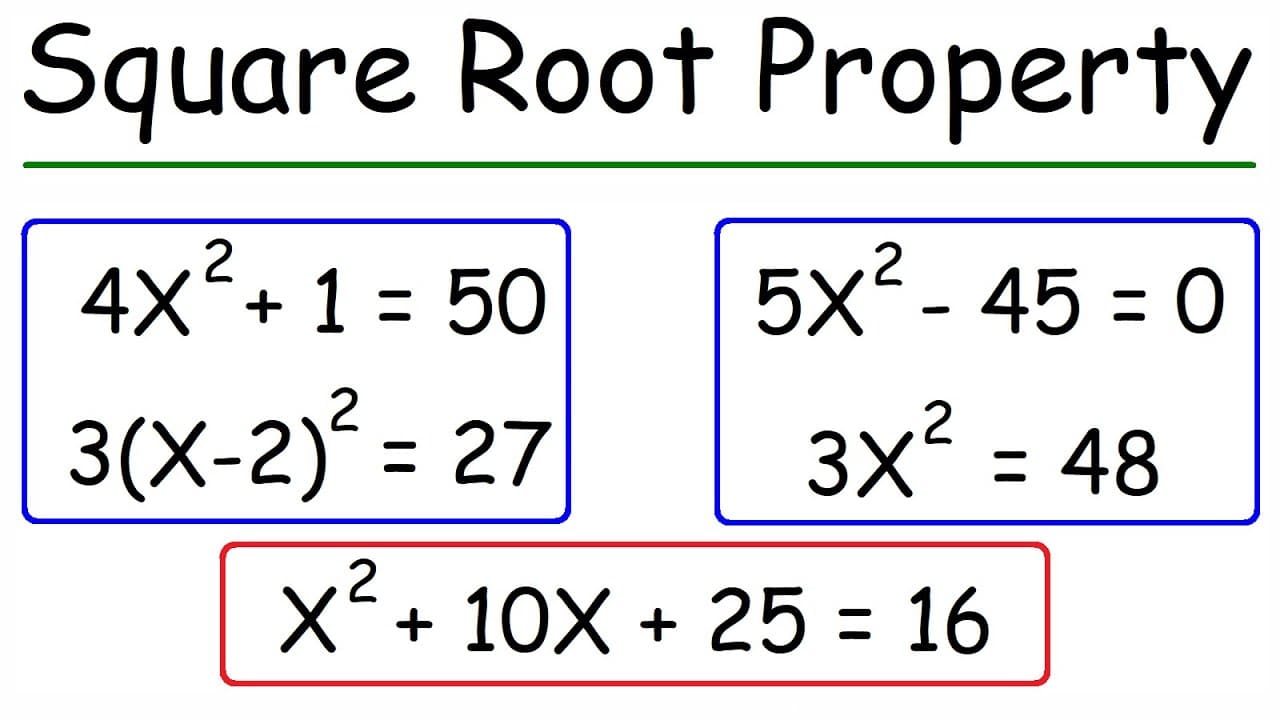
MatholiaChannelMatholiaChannel

1min 48s

Video
Adding Unlike Fractions Mentally Using Cross Multiplication

Adding Unlike Fractions Mentally Using Cross Multiplication

This educational video demonstrates a specific mental math strategy for adding fractions with unlike denominators, often referred to as the "cross multiplication" or "butterfly" method. Through three distinct examples of increasing complexity, the narrator guides viewers through a consistent three-step process: multiplying the denominators to find a common base, cross-multiplying the numerators with opposite denominators, and adding the results to find the final numerator. The video covers key concepts including identifying numerators and denominators, performing mental multiplication, and simplifying results. It progresses from simple proper fractions to examples that result in improper fractions, showing how to convert the final answer into a mixed number. The visual presentation uses color-coded highlights (pink underlines, green and red circles) to clearly track which numbers are being operated on at each stage. For educators, this video serves as an excellent tool for introducing a procedural shortcut for fraction addition or for reinforcing mental math fluency. It is particularly useful for students who struggle with the traditional method of finding the Least Common Multiple (LCM). The step-by-step visual scaffolding makes the abstract process concrete, allowing teachers to pause and predict values, making it ideal for whole-class instruction or independent review stations.

MatholiaChannelMatholiaChannel

2mins 31s

Video
Learning to Multiply by 2 Using Visual Strategies

Learning to Multiply by 2 Using Visual Strategies

This educational video provides a clear and visual introduction to multiplying by 2, a foundational concept in elementary mathematics. The lesson begins with concrete real-world examples, using pairs of socks to demonstrate the concept of "groups of 2." It systematically introduces multiple strategies for solving multiplication problems, including skip counting on a number line and using dot paper (arrays) to visualize the math. This multi-modal approach helps students transition from concrete grouping to abstract calculation. The video covers key mathematical themes such as repeated addition, array models, and the relationship between grouping and multiplication. By contrasting different methods—counting objects, skip counting, and using arrays—it reinforces that multiplication is efficient repeated addition. The second half of the video solidifies these concepts by applying them to a new scenario with apples on plates before presenting the complete 2 times table from 1x2 to 10x2, helping students recognize patterns in the multiples of 2. For educators, this video serves as an excellent instructional hook or review tool for 2nd and 3rd-grade classrooms. It effectively models mathematical thinking by showing a character identifying a problem ("I need to find 8 x 2") and selecting a strategy. Teachers can use the pause points to facilitate class discussions about which strategy students prefer or to have students predict answers before they appear. The clear visual representations make it particularly useful for differentiating instruction for visual learners.

MatholiaChannelMatholiaChannel

1min 56s

Video
Visual Strategies for Multiplying by 10

Visual Strategies for Multiplying by 10

This educational mathematics video introduces students to the concept of multiplying by 10 using concrete visual strategies. Through clear narration and engaging animations, the video breaks down multiplication into understandable components: identifying groups, skip counting, and using arrays (dot paper). It transitions from real-world word problems involving egg cartons and bundles of sticks to abstract mathematical equations. The content focuses on key themes of equal grouping, skip counting patterns, and the geometric representation of multiplication through arrays. It explicitly demonstrates the relationship between repeated addition (skip counting) and multiplication, reinforcing the concept of "groups of 10." The video concludes by presenting the complete 10 times table from 1 x 10 to 10 x 10, highlighting the consistent pattern in the results. For educators, this video serves as an excellent instructional tool for introducing or reinforcing multiplication facts for the number 10. The visual models—specifically the dot paper array—provide a bridge for students who struggle with abstract memorization, allowing them to "see" the math. It is particularly useful for visual learners and can be used to spark classroom discussions about patterns in the base-10 number system.

MatholiaChannelMatholiaChannel

1min 51s

Video
Translating Math Words: Multiplication and Division Vocabulary

Translating Math Words: Multiplication and Division Vocabulary

This educational video serves as a clear guide to understanding the vocabulary associated with multiplication and division, positioning them as inverse operations. Using relatable analogies like "day and night" or "sweet and sour," the video simplifies the concept that multiplication and division are mathematical opposites that undo each other. It demonstrates this relationship visually using gummy bears to show how multiplying by a number and then dividing by that same number returns you to the original value. The core focus is on translating English words into mathematical symbols, a crucial skill for solving word problems and beginning algebra. The video explicitly lists key terms associated with multiplication (product, times, area, twice, double) and division (quotient, ratio, split, equal parts). It provides specific examples, such as translating "11 x 2" and "20 ÷ 4" into various verbal phrases. For educators, this resource is an excellent tool for literacy-in-math lessons, helping students build a "math dictionary." It directly addresses the struggle students often face when trying to determine which operation to use in word problems. The video includes built-in pause points that challenge students to brainstorm additional synonyms for math operations, making it interactive and perfect for classroom discussion.

Mashup MathMashup Math

4mins 15s

Video
Long Division Strategies: Partial Quotients and Area Models

Long Division Strategies: Partial Quotients and Area Models

This engaging animated musical video teaches two specific strategies for solving long division problems: the Partial Quotients method (often called the "Big 7") and the Area Model. Through a narrative about a group of nine children who discover a treasure chest containing 225 rubies, the video walks viewers step-by-step through dividing the treasure equally among themselves. The video explores key mathematical themes including division as equal sharing, place value understanding, subtraction in the division process, and the relationship between multiplication and division. It explicitly demonstrates how to break down a large dividend into manageable "chunks" or partial quotients, subtract those chunks, and sum the results to find the final quotient. The second half of the video transitions into a rap that applies the same problem to an Area Model, reinforcing the geometric connection to division. For educators, this video is an excellent tool for introducing or reinforcing division strategies that are alternatives to the standard algorithm. It is particularly useful for students who struggle with the abstract nature of traditional long division, as it emphasizes conceptual understanding and flexible thinking. The catchy song and clear visual representations make complex multi-step procedures memorable and easier to visualize.

Math Songs by NUMBEROCKMath Songs by NUMBEROCK

4mins 43s

Video
Mastering Operations with Integers: Add, Subtract, Multiply, and Divide

Mastering Operations with Integers: Add, Subtract, Multiply, and Divide

This comprehensive mathematics video serves as a complete guide to performing the four fundamental operations—addition, subtraction, multiplication, and division—with integers. The video uses a clear, step-by-step approach led by an animated teacher avatar who explains both the procedural rules and the conceptual reasoning behind them. It breaks down each operation into distinct segments, providing multiple methods for solving problems, including symbolic notation, number lines, and visual counters (manipulatives). The video explores key themes such as the concept of "zero pairs" when adding or subtracting positive and negative numbers, moving left or right on a number line, and the relationship between subtraction and adding the additive inverse. It explicitly defines mathematical vocabulary like minuend, subtrahend, dividend, and divisor. The content addresses common stumbling blocks, such as subtracting a larger number from a smaller one or subtracting negative numbers, by visualizing these processes with red (negative) and green (positive) counters. For educators, this video is a versatile classroom tool that supports differentiated instruction. The visual models (counters and number lines) are excellent for helping students who struggle with abstract rules grasp the "why" behind integer operations. Teachers can use specific segments to introduce a single operation or use the entire video as a review unit. The clear summary of rules at the end provides a perfect anchor chart for students to copy into their notes, making it valuable for both initial instruction and test preparation.

Sheena DoriaSheena Doria

20mins 42s

Video
Calculating Speed, Distance, and Time

Calculating Speed, Distance, and Time

This educational video provides a clear, step-by-step guide on how to calculate the three fundamental variables of motion: speed, distance, and time. Through a series of six progressive word problems, an animated teacher guides students through the formulas for each variable, demonstrating not just the arithmetic but also the importance of unit analysis and cancellation. The video utilizes the popular "DST triangle" mnemonic to help students memorize the relationship between the variables. The content is structured into three distinct sections, with two examples provided for each concept: calculating distance (Speed &times; Time), calculating speed (Distance &divide; Time), and calculating time (Distance &divide; Speed). Specific attention is given to defining each term—explaining speed as a scalar quantity, distance as total length, and time as duration—and verifying the correct units of measurement for the final answers. For educators, this resource serves as an excellent direct-instruction tool for upper elementary or middle school math and science classes. It effectively models problem-solving behaviors, such as identifying given values, selecting the correct formula, substituting numbers, and checking units. The video's pacing allows for "pause-and-solve" interactivity, making it ideal for introducing the concepts or reviewing them before a test.

Sheena DoriaSheena Doria

8mins 42s

Video
Mastering Whole Number Multiplication: A Self-Check Challenge

Mastering Whole Number Multiplication: A Self-Check Challenge

This educational video serves as a "Mastery Check" for 5th-grade students learning to multiply whole numbers. Unlike an instructional tutorial that introduces concepts from scratch, this video challenges students to test their existing knowledge by independently solving six increasingly difficult multiplication problems. The problems range from 3-digit by 1-digit multiplication up to complex 3-digit by 3-digit equations, covering standard algorithms and multi-step processes. The content focuses heavily on procedural fluency and accuracy with the standard algorithm for multiplication. Key themes include the importance of place value, the necessity of placeholder zeros when multiplying by tens or hundreds, and the discipline of checking one's work. The narrator, Mr. J, emphasizes that identifying and correcting mistakes is a critical part of the learning process, framing errors as opportunities for growth rather than failure. For educators, this video is an excellent formative assessment tool or independent practice station. It promotes self-regulation by asking students to pause, work independently, and then verify their answers immediately. It can be used in the classroom to gauge student readiness before a test, as a remediation tool for students struggling with multi-digit multiplication, or as a structured review activity that models clear, step-by-step problem-solving techniques.

Math with Mr. JMath with Mr. J

7mins 7s

Video
How to Calculate Speed: Distance Divided by Time

How to Calculate Speed: Distance Divided by Time

This educational math video provides a clear, step-by-step tutorial on how to calculate speed using the formula Speed = Distance ÷ Time. Through three distinct word problems, the narrator demonstrates how to identify the relevant information (distance and time), apply the formula, and perform the necessary division to find the solution. The video covers different units of measurement, including meters per second (m/s) and kilometers per hour (km/h), and addresses a variety of scenarios such as the flight of an arrow, a person walking, and a cyclist riding. The key themes explored include the mathematical relationship between speed, distance, and time, as well as the practical application of division skills in real-world contexts. The video specifically tackles the concept of rates and unit rates. A notable mathematical moment occurs in the second example, where the video explains the specific rule for dividing by fractions (dividing by one-half is the same as multiplying by two), reinforcing arithmetic rules alongside the physics concept. For educators, this video serves as an excellent modeling tool for upper elementary and middle school math classes. It visualizes the problem-solving process by highlighting key numbers in the text and writing out the equation clearly on a virtual whiteboard. It can be used to introduce the concept of speed, review long division in a practical context, or help students understand the importance of including correct units in their final answers.
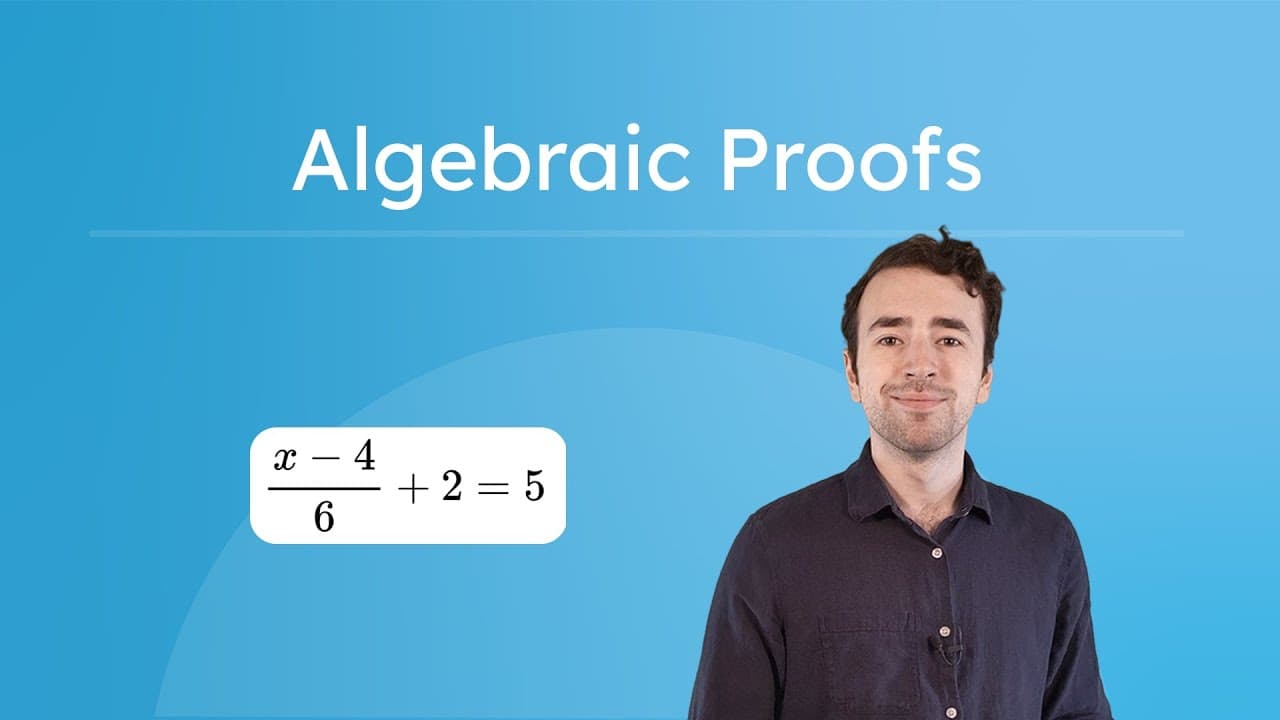
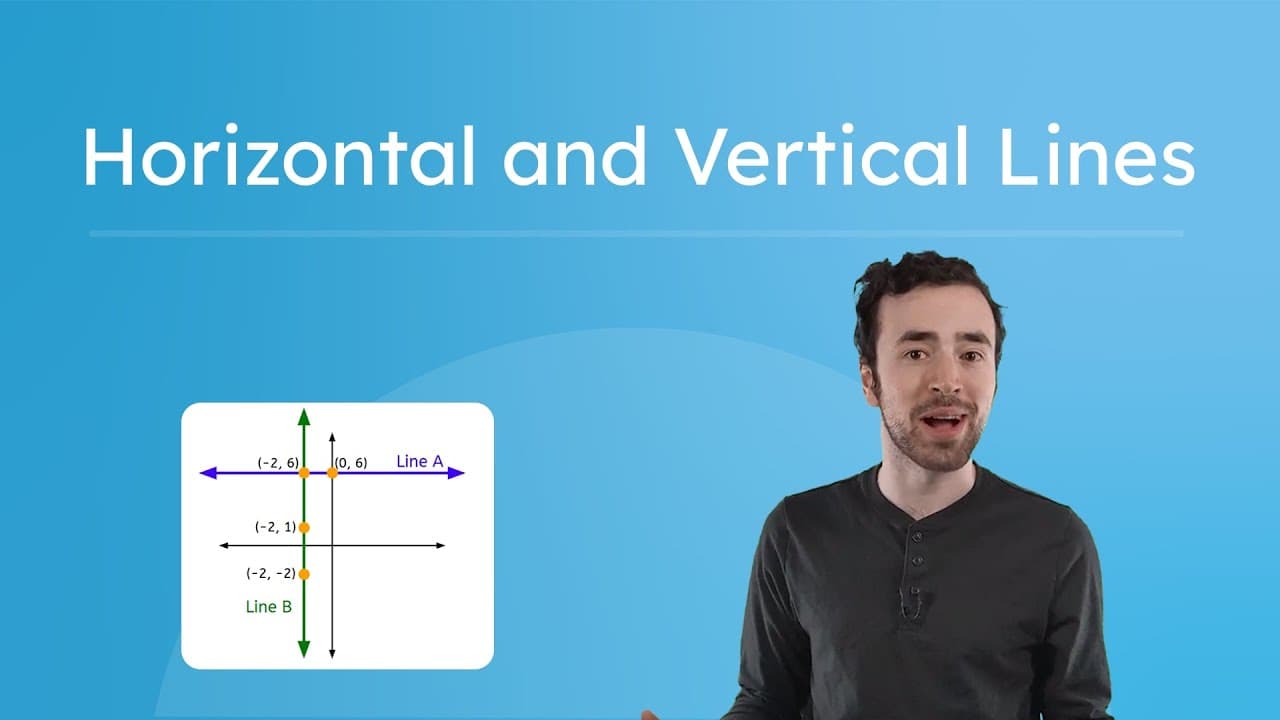
MatholiaChannelMatholiaChannel

1min 53s

Video
Solving Word Problems by Multiplying Decimals

Solving Word Problems by Multiplying Decimals

This educational video provides a clear, step-by-step guide on how to solve word problems involving the multiplication of decimals. Using a relatable real-world scenario about a bag store, the narrator demonstrates a structured "4-Step Method" (Understand, Plan, Solve, Check) to break down complex word problems into manageable parts. The video visually walks students through identifying key information, creating a number sentence, performing the vertical multiplication algorithm with regrouping, and verifying the final answer.
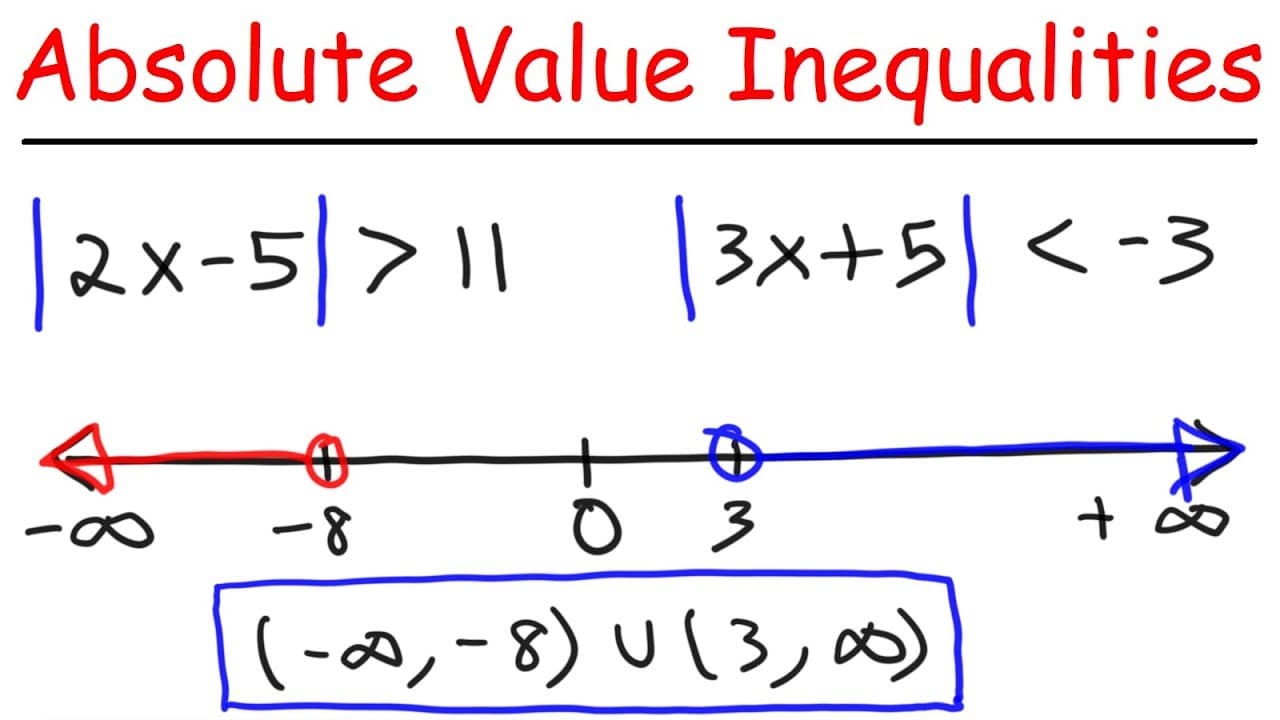
Sheena DoriaSheena Doria

4mins 21s

Video
How to Convert Fractions to Percentages

How to Convert Fractions to Percentages

This educational video provides a clear, step-by-step tutorial on converting fractions to percentages using equivalent fractions. The lesson begins with a real-world scenario set in a bakery, asking students to determine what percentage of total items are doughnuts. It visually demonstrates counting a total set, creating a fraction, simplifying that fraction, and then scaling it up to find an equivalent fraction with a denominator of 100. The video explores key mathematical themes including fraction simplification, finding equivalent fractions, and the fundamental definition of a percentage as a part per hundred. After the contextual bakery example, the video transitions to abstract practice problems, guiding viewers through converting 3/5 and 17/25 into percentages by identifying the appropriate multiplication factor to turn the denominator into 100. For educators, this video serves as an excellent instructional model for introducing the relationship between fractions and percentages. The visual method of drawing arrows to show multiplication factors helps scaffold the process for students who struggle with mental math. It is particularly useful for visual learners and can be used as a direct instruction tool or a review station for upper elementary students mastering rational numbers.

MatholiaChannelMatholiaChannel

1min 40s

Video
How to Group Objects into Equal Sets

How to Group Objects into Equal Sets

This educational video provides a clear, step-by-step demonstration of the mathematical concept of equal grouping, a foundational skill for understanding division and multiplication. Using familiar food items like burgers, french fries, and hot dogs as visual manipulatives, the video guides viewers through the process of organizing a total set of objects into smaller, equal-sized groups. The narrator explicitly counts the groups and the items within them, reinforcing the relationship between the total quantity, the number of groups, and the size of each group. Key themes explored include partitioning sets, counting strategies, and the vocabulary associated with division (groups, each group, total). The video uses a consistent visual format where objects are physically circled on screen to represent groups, helping students visualize abstract mathematical concepts. It systematically shows two different ways to group the same set of objects (e.g., grouping 12 burgers into sets of 6 versus sets of 4), demonstrating flexibility in numbers and factors. For teachers, this video serves as an excellent introduction or reinforcement tool for early division and multiplication units. It allows educators to pause and ask students to predict the outcome before the narrator reveals the answer. The clear, uncluttered visuals make it suitable for whole-class instruction or individual intervention for students struggling with the concept of division. It effectively bridges the gap between counting individual items and thinking in terms of composite units.

MatholiaChannelMatholiaChannel

3mins 14s

Video
Understanding Fractions as Division

Understanding Fractions as Division

This educational video clearly illustrates the mathematical concept of interpreting fractions as division. Through a progression from concrete visual examples to abstract numerical problems, the video demonstrates that a fraction bar represents the operation of division, where the numerator is the dividend and the denominator is the divisor. The content bridges the gap between whole number division and fractional outcomes, a critical conceptual leap for intermediate math students. The video explores three key themes: understanding basic division as distributing items into groups (creating proper fractions), applying this concept to word problems involving simplification, and converting division results into improper fractions and mixed numbers. It uses chocolate bars and pizzas as relatable manipulatives to ground the abstract math in real-world scenarios before moving to pure calculation. For educators, this video serves as an excellent instructional tool for introducing Common Core standard 5.NF.B.3 (interpreting a fraction as division of the numerator by the denominator). It provides a visual proof for why $2 \div 5 = 2/5$ rather than just stating the rule, helping students build conceptual understanding. The step-by-step walkthroughs of simplifying fractions and converting improper fractions to mixed numbers also make it a valuable review resource for students struggling with these multi-step procedures.

MatholiaChannelMatholiaChannel

2mins 28s

Video
Dividing Whole Numbers by Fractions Using Models

Dividing Whole Numbers by Fractions Using Models

This animated musical video teaches the mathematical concept of dividing whole numbers by unit fractions through a catchy song and a medieval-themed narrative. Set in a kingdom with knights, princesses, and builders, the video uses concrete visual models—specifically construction blocks—to demonstrate what happens when a whole number is divided into fractional parts. It bridges the gap between conceptual understanding (visualizing the parts) and procedural fluency (the standard algorithm). The video explores key themes including visual representations of fractions, the relationship between division and multiplication, and the concept of reciprocals. It clearly distinguishes between the physical act of dividing an object into smaller pieces and the mathematical operation of calculating the quotient, helping students understand why dividing by a fraction results in a larger number. For educators, this resource serves as an excellent hook or reinforcement tool for 5th and 6th-grade math lessons. The dual approach—showing both the block-counting method and the "multiply by the reciprocal" method—makes it valuable for differentiation. It helps address the common misconception that division always results in a smaller number, providing a memorable mental image that students can reference when solving abstract problems.

Math Songs by NUMBEROCKMath Songs by NUMBEROCK

2mins 35s

Video
Mastering Long Division with Single-Digit Divisors

Mastering Long Division with Single-Digit Divisors

This video serves as a "Mastery Check" for students learning long division with single-digit divisors. Presented by "Mr. J," the video displays four division problems on a chalkboard and challenges students to pause the video, solve the problems independently, and then play the video to check their work against the teacher's step-by-step solutions. The problems progress in difficulty, starting with standard three-digit dividends with no remainders and advancing to four-digit dividends and problems resulting in remainders. The key themes explored are the standard algorithm for long division, identifying quotients, and handling remainders. The video reinforces the procedural steps of division: determining how many times a divisor fits into a number, multiplying, subtracting, and bringing down the next digit. It specifically addresses scenarios where the divisor does not fit into the first digit of the dividend and how to interpret remainders at the end of the process. For educators, this video is an excellent formative assessment tool or independent practice station. It promotes self-regulated learning by asking students to attempt the work first before receiving immediate feedback. The clear, handwritten demonstration of the algorithm helps visual learners follow the vertical alignment and logical flow of long division, making it valuable for remediation or test preparation in 4th and 5th-grade math classrooms.

Math with Mr. JMath with Mr. J

5mins 42s

Video
Multiplying Proper Fractions: Visual Models and Examples

Multiplying Proper Fractions: Visual Models and Examples

This educational video provides a clear, step-by-step guide on how to multiply proper fractions. It begins by introducing a real-world word problem about baking a cake to contextualize the mathematical concept, demonstrating that finding a "fraction of a fraction" is a multiplication process. The video uses visual bar models to conceptually illustrate the problem before moving to the standard numerical algorithm. The core themes include interpreting word problems, using visual models to represent fractions, applying the standard algorithm for multiplying fractions (numerator times numerator, denominator times denominator), and simplifying fractions to their lowest terms. The video provides three distinct examples: a word problem solution and two purely numerical practice problems, one of which requires significant simplification at the end. For educators, this video serves as an excellent instructional tool for introducing or reinforcing fraction multiplication. It bridges the gap between conceptual understanding (visual models) and procedural fluency (the algorithm). Teachers can use the initial segment to discuss why we multiply fractions, while the later segments serve as clear examples for students to model their own calculations after. It is particularly useful for visual learners who benefit from seeing the bar model decomposition.

MatholiaChannelMatholiaChannel

2mins 2s

Video
How to Divide by Multiples of 1000

How to Divide by Multiples of 1000

This educational video provides a step-by-step tutorial on how to divide whole numbers by multiples of 1,000, specifically focusing on divisors like 2,000 and 6,000. It introduces a mental math strategy that involves decomposing the divisor into a single-digit number and 1,000. The video demonstrates two distinct examples: first dividing 1,554 by 2,000, and then a slightly more complex example dividing 516 by 6,000 which results in a decimal requiring a placeholder zero. The content focuses on key mathematical themes including long division, place value understanding, and decimal manipulation. It explicitly teaches the concept that dividing by a multiple of 1,000 is equivalent to dividing by the leading digit and then shifting the decimal point three places to the left. This reinforces the relationship between division and powers of ten, a critical concept in upper elementary arithmetic. For educators, this video serves as an excellent instructional tool for 5th and 6th-grade math classrooms. It offers a clear visual method for simplifying large division problems that might otherwise seem intimidating. Teachers can use this to transition students from standard long division to efficient mental math strategies, or as a specific intervention for students struggling with decimal placement rules.

MatholiaChannelMatholiaChannel

2mins 3s

Video
How to Convert Yards to Feet and Feet to Yards

How to Convert Yards to Feet and Feet to Yards

This instructional math video features Mr. J demonstrating how to convert between yards and feet using U.S. customary units of measurement. The video explicitly teaches the conversion rules: multiplying by 3 when converting from yards to feet, and dividing by 3 when converting from feet to yards. Through six guided practice problems, the narrator models the thinking process, uses visual cues on a digital chalkboard, and reinforces the relationship that one yard equals three feet. The key themes explored include unit conversion, mental math strategies, and the inverse relationship between multiplication and division in the context of measurement. The video emphasizes understanding the relative size of units (yards are larger than feet) to determine the correct operation, using the analogy of yardsticks to help students visualize the concept. For educators, this video serves as an excellent direct instruction tool or review for 4th and 5th-grade math students. It provides a clear, step-by-step procedure for solving conversion problems without clutter or distraction. Teachers can use this to introduce the topic, support struggling learners with a clear visual aid, or as a flipped classroom resource where students watch the procedure before practicing independently.

Math with Mr. JMath with Mr. J

3mins 56s

Video
How to Divide Whole Numbers by Proper Fractions

How to Divide Whole Numbers by Proper Fractions

This concise mathematics tutorial demonstrates the specific process of dividing whole numbers by proper fractions using both a real-world context and abstract calculation examples. The video begins by presenting a word problem about painters sharing tins of paint to conceptualize the division operation, visually linking the abstract math to a concrete scenario. It then transitions into the procedural method known as multiplying by the reciprocal (often taught as "keep, change, flip"). The central theme is the algorithmic approach to fraction division. The video explicitly models how to rewrite a division problem as a multiplication problem by "flipping" the fraction (finding the reciprocal). It walks viewers through the steps of converting the whole number into a fraction over one, multiplying numerators and denominators, and simplifying the resulting improper fraction into a whole number. For educators, this video serves as an excellent direct instruction tool or review resource for upper elementary and middle school students learning arithmetic operations with rational numbers. Its step-by-step visual format allows teachers to pause at each stage of the calculation to check student understanding. The inclusion of a word problem at the start is particularly valuable for helping students understand *why* division is used in specific contexts, rather than just memorizing the procedure.

MatholiaChannelMatholiaChannel

1min 40s

Video
Learning to Divide by 6: Sharing and Grouping

Learning to Divide by 6: Sharing and Grouping

This educational video provides a clear, visual introduction to the concept of dividing by 6, employing two distinct conceptual models of division: partitive (sharing) and quotitive (grouping). The video begins by demonstrating how to divide 18 buttons equally into 6 specific groups, illustrating the 'sharing' method where items are distributed one by one. It then transitions to a second example using 42 dots, demonstrating the 'grouping' method where the total number is separated into clusters of 6 to find the total group count.

MatholiaChannelMatholiaChannel

2mins 16s

Video
Mastering Arithmetic and Geometric Means, Ratios, and Proportions

Mastering Arithmetic and Geometric Means, Ratios, and Proportions

This comprehensive mathematics tutorial explores the fundamental differences between arithmetic and geometric means, followed by a series of practice problems involving ratios, proportions, and geometric applications. The video begins by conceptually defining arithmetic mean as the middle term of an arithmetic sequence and geometric mean as the middle term of a geometric sequence. It progresses through eight distinct problems ranging from basic mean calculations to complex word problems involving scale factors, geometric shapes, and algebraic manipulation.

The Organic Chemistry TutorThe Organic Chemistry Tutor

19mins 49s

Video
Mastering Basic Arithmetic: Operations, Fractions, and Percentages

Mastering Basic Arithmetic: Operations, Fractions, and Percentages

This comprehensive video tutorial provides a thorough review of fundamental arithmetic concepts essential for middle school math success. It begins by grounding students in the basics of addition and subtraction using number lines to explain integer operations, before progressing to multi-digit column arithmetic with carrying and borrowing. The video systematically covers all four major operations—addition, subtraction, multiplication, and division—using varied strategies like standard algorithms, mental math tricks, and real-world analogies involving money to make abstract concepts concrete. Beyond basic operations, the video transitions into more complex topics including operations with decimals, long division leading to decimal answers, and operations with fractions having unlike denominators. The instructor demonstrates clear, step-by-step methods for finding common denominators and converting improper fractions to mixed numbers. The visual style mimics a blackboard, allowing students to follow the handwriting and procedural flow of each problem naturally. The final section of the video focuses on practical applications of percentages, specifically calculating tips and sales tax. It teaches powerful mental math strategies—such as finding 10%, 5%, and 1% separately to build up to complex percentages like 15% or 18%—which are invaluable life skills. This video serves as an excellent refresher for students transitioning to pre-algebra or for those needing remediation in core numeracy skills.

The Organic Chemistry TutorThe Organic Chemistry Tutor

37mins 42s

Video
Visualizing Division with Remainders Using Apples and Chocolates

Visualizing Division with Remainders Using Apples and Chocolates

This educational video introduces elementary students to the concept of division with remainders through clear, visual demonstrations. It begins with a concrete, relatable scenario of sharing seven apples between two children, visually moving the apples one by one to demonstrate that equal sharing results in leftovers. This step-by-step animation helps students understand the physical reality behind the mathematical concept of a remainder. The video progresses to slightly more complex examples, such as sharing eleven chocolates among three plates and grouping thirty dots into four sets. As it moves from concrete items (apples) to semi-abstract representations (dots), it introduces and defines key mathematical vocabulary including "quotient" and "remainder," showing exactly where these terms fit within a standard division equation ($7 \div 2 = 3\ R\ 1$). For educators, this resource is an excellent tool for bridging the gap between basic sharing and formal division algorithms. It visualizes the "why" behind the math, preventing the common misconception that division always results in whole numbers. The video is ideal for introducing the topic in 3rd grade or providing reinforcement for 4th graders, serving as a perfect launchpad for hands-on classroom activities involving manipulatives.

MatholiaChannelMatholiaChannel

2mins 32s

Video
How to Do Long Division: Steps, Remainders, and Big Numbers

How to Do Long Division: Steps, Remainders, and Big Numbers

This comprehensive math tutorial guides students through the process of long division, starting with a review of basic division concepts and vocabulary before advancing to multi-step problems. The video uses a friendly animated narrator to break down the standard algorithm into four memorable steps: Divide, Multiply, Subtract, and Bring Down. It employs a catchy chant and visual cues to help students retain this sequence, making a typically difficult procedure accessible and engaging. The video strategically scaffolds learning by beginning with simple two-digit dividends that divide evenly, then introducing problems with remainders, and finally tackling three-digit numbers where the divisor is larger than the first digit. Key mathematical terms such as dividend, divisor, quotient, and remainder are clearly defined and repeatedly identified throughout the examples to build academic vocabulary. Teachers can use this video as a core instructional tool for introducing the long division algorithm or as a review for struggling students. The clear, step-by-step visual representation of the bracket method allows for pausing and guided practice. The inclusion of the "Divide, Multiply, Subtract, Bring Down" mnemonic provides a powerful mental hook that students can rely on when solving problems independently.

Homeschool PopHomeschool Pop

19mins 58s

Video
How to Find Cube Roots of Large Numbers Mentally

How to Find Cube Roots of Large Numbers Mentally

This math tutorial demonstrates a clever mental math technique for finding the cube root of large perfect cubes without using a calculator. The video begins by establishing the foundational knowledge required: memorizing perfect cubes from 1 to 10 and recognizing the specific patterns that exist between the last digit of a number and the last digit of its cube. The narrator systematically builds a reference table on the screen to guide viewers through the process. The core of the video is a step-by-step walkthrough of an algorithm that simplifies complex roots into two manageable steps. First, viewers learn to identify the last digit of the answer by looking at the last digit of the large number. Second, they learn how to find the preceding digits by "sandwiching" the remaining part of the number between known perfect cubes. The video progresses from 5-digit numbers up to 7-digit numbers, providing multiple practice opportunities to reinforce the skill. For educators, this video serves as an engaging hook for lessons on exponents, roots, and number sense. It moves beyond rote memorization of algorithms by encouraging students to look for patterns in numbers and use estimation strategies. It is particularly useful for Math Olympiad preparation, enrichment activities, or as a confidence-building exercise in Algebra classes to demystify large numbers and roots.

The Organic Chemistry TutorThe Organic Chemistry Tutor

11mins 49s

Video
Finding Missing Numbers in Patterns

Finding Missing Numbers in Patterns

This educational video introduces primary students to the concept of number patterns and sequences using a clear, visual approach. Through a series of animated examples involving colorful balloons, the video demonstrates how to identify the "rule" of a pattern—such as adding 1, adding 2, subtracting 1, or subtracting 2—to determine missing numbers in a sequence. The content progresses from simple ascending sequences to descending ones, providing a comprehensive introduction to algebraic thinking. The video explores key mathematical themes including skip counting, addition and subtraction strategies, and logical reasoning. It emphasizes the importance of checking the relationship between adjacent numbers to establish a consistent pattern before trying to solve for unknowns. The visual cues, such as arrows indicating the operation between steps, help scaffold the learning process for visual learners. For educators, this video serves as an excellent instructional tool for math centers or whole-group introductions to patterning. It supports the development of early algebraic skills by asking students to analyze numerical relationships rather than just perform calculations. The clear pacing allows for natural pauses where teachers can ask students to predict the next number, making it highly interactive and suitable for 1st and 2nd-grade math curriculums.

MatholiaChannelMatholiaChannel

2mins 41s

Video
How Domain Affects Sequence Formulas

How Domain Affects Sequence Formulas

This advanced algebra video explores the relationship between mathematical sequences and their domains, challenging the standard convention that sequences must always begin with the first term at n=1. The narrator demonstrates that sequences can be defined using different starting points for the domain (specifically n=0 vs n=1) as long as the formula is adjusted accordingly. Through clear examples of both arithmetic and geometric sequences, viewers learn how to manipulate explicit and recursive formulas to match specific domain constraints. The video breaks down three specific examples: a doubling geometric sequence starting at 4, a decreasing arithmetic sequence starting at 52, and an alternating geometric sequence starting at 1. For each, the narrator compares valid and invalid formulas, showing how changing the starting value of 'n' changes the structure of the equation. A key segment involves an "imposter" activity where students must analyze four different formulas to identify the one that does not produce the correct sequence based on its defined domain. This resource is highly valuable for high school algebra classrooms as it moves students beyond rote memorization of formulas into a deeper conceptual understanding of functions and domains. It addresses the common student struggle of reconciling different notations for the same pattern. Teachers can use this video to introduce zero-indexing (common in computer science) or to reinforce the importance of checking work by substituting values. It promotes critical thinking by asking students to verify formulas rather than just generate them.

Miacademy & MiaPrep Learning ChannelMiacademy & MiaPrep Learning Channel

6mins 58s

Video
How to Solve Geometric Sequences with Negatives and Fractions

How to Solve Geometric Sequences with Negatives and Fractions

This educational math video explores advanced concepts in geometric sequences, moving beyond simple positive whole numbers to examine sequences involving negative numbers and fractions. The narrator, Justin, guides viewers through three distinct examples that demonstrate how common ratios can result in alternating signs or decreasing values. The video addresses the common confusion students face when numbers don't simply get "bigger" in a multiplicative pattern, introducing algebraic methods to find the common ratio definitively.

Miacademy & MiaPrep Learning ChannelMiacademy & MiaPrep Learning Channel

3mins 11s

Video
Solving Addition and Subtraction Input-Output Tables

Solving Addition and Subtraction Input-Output Tables

This educational math video by Mr. J provides a clear, step-by-step tutorial on solving input and output tables using addition and subtraction rules. The video guides students through four distinct examples, progressing from horizontal tables to vertical tables, and increasing in complexity by requiring students to find missing input values using inverse operations. Mr. J demonstrates how to identify the relationship between numbers to determine the 'rule' and then apply that rule to complete the table. The content focuses on key algebraic concepts including pattern recognition, determining function rules, and understanding the relationship between input and output values. A significant portion of the video is dedicated to the critical thinking skills required to verify a rule across multiple data points before applying it. The video also covers the concept of inverse operations, showing students how to work backwards from an output to find a missing input. For educators, this video serves as an excellent instructional tool for introducing or reinforcing function tables in upper elementary grades. It models the thought process of checking if values are increasing (addition) or decreasing (subtraction) and encourages students to verify their work. The clear visual layout and methodical pacing make it ideal for direct instruction, independent review stations, or as a reference for homework support in 3rd through 5th-grade math curriculums.

Math with Mr. JMath with Mr. J

5mins 10s

Video
Proving the Sum of an Arithmetic Series Formula

Proving the Sum of an Arithmetic Series Formula

A focused mathematics tutorial that explains the difference between arithmetic sequences and series, demonstrates how to calculate the partial sum of a series, and provides a step-by-step algebraic proof for the arithmetic series sum formula. The video begins by distinguishing between a sequence (a list of numbers) and a series (the sum of those numbers) using a specific numerical example (5, 8, 11, 14, 17). The core of the video explores the derivation of the formula Sn = n/2 * (a1 + an). The instructor uses the "Gaussian method" of writing the series sum forwards and backwards, then adding the two equations together. This visual algebraic demonstration highlights how the common differences cancel out, leaving a clean result that proves why the formula works. This resource is highly valuable for high school Algebra II or Pre-Calculus classrooms. It moves beyond rote memorization by teaching the "why" behind the math. Teachers can use this to introduce the concept of formal proofs or to help students visualize the symmetry inherent in arithmetic progressions.

The Organic Chemistry TutorThe Organic Chemistry Tutor

6mins 38s

Video
Learning to Skip Count by Fives with Visuals

Learning to Skip Count by Fives with Visuals

This educational video introduces the concept of skip counting by fives using three distinct visual methods to support early learners. It begins with a concrete example using flower pots, where each pot contains five flowers, allowing students to visualize the quantity being added each time. The video then transitions to abstract representations, utilizing a number line to demonstrate the "jumps" between numbers, and finally a hundred square grid to highlight the visual patterns that emerge when counting by fives to fifty. Key themes explored include basic arithmetic progressions, number patterns, and the foundational skills required for multiplication. The video explicitly connects the act of counting objects to number sequences, helping students bridge the gap between counting one-by-one and grouping numbers. The final segment focuses on pattern recognition within a number grid, drawing attention to how multiples of five always end in either 5 or 0. For educators, this video serves as an excellent instructional tool for introducing or reinforcing skip counting. It is particularly useful for visual learners who benefit from seeing the "jumps" on a number line or the vertical columns lighting up on a hundred chart. The clear, paced narration allows for choral counting in the classroom, and the concluding question regarding patterns provides a natural segue into a class discussion about number properties and prediction.

MatholiaChannelMatholiaChannel

1min 52s

Video
How to Find the Next Number in a Pattern

How to Find the Next Number in a Pattern

This educational video teaches students how to identify and complete number patterns using clear visual aids and narration. Through four distinct examples involving colorful balloons, the video demonstrates arithmetic sequences involving both addition (skip counting forward) and subtraction (counting backward). It systematically breaks down the process of finding the rule between consecutive numbers to determine the next number in the sequence. Key themes include pattern recognition, basic arithmetic (addition and subtraction), and critical thinking skills related to algebraic reasoning. The video covers skip counting by 2s and 5s, as well as counting backwards by 1s and 2s, reinforcing mental math strategies in a step-by-step format. Ideally suited for early elementary classrooms, this video provides a solid foundation for algebraic thinking. Teachers can use it to introduce the concept of "rules" in sequences, support lessons on skip counting, or use the pause points as checks for understanding. The clear visual representation of the "jump" between numbers helps students visualize the mathematical operation occurring at each step.

MatholiaChannelMatholiaChannel

2mins 43s

Video
Analyzing Relationships Between Number Patterns

Analyzing Relationships Between Number Patterns

This instructional math video guides students through the process of generating numerical patterns based on specific rules and then analyzing the mathematical relationships between two related patterns. The instructor, Mr. J, demonstrates how to create sequences by following "start at" and "add/subtract" directions, subsequently teaching viewers how to identify functional relationships between corresponding terms in the two sequences. The video covers four distinct examples involving addition, multiplication, division, and subtraction rules connecting the patterns. The core themes include generating numerical patterns, identifying arithmetic sequences, and determining algebraic relationships (rules) between two sets of numbers. A significant focus is placed on the vocabulary of "terms" and "corresponding terms," as well as the importance of verifying mathematical rules across multiple data points rather than assuming a pattern based on a single pair. The video introduces foundational algebraic thinking by expressing these relationships as equations (e.g., A + 2 = B or 3x = y). For educators, this video serves as an excellent direct instruction tool for Common Core standard 5.OA.B.3. It models precise mathematical procedures and metacognitive strategies, such as checking work to ensure validity. Teachers can use this video to introduce the concept of input/output tables, prepare students for graphing ordered pairs on a coordinate plane, or as a remediation tool for students struggling to see the connection between two changing variables.

Math with Mr. JMath with Mr. J

10mins 11s

Video
How to Use Interactive Number Lines for Math

How to Use Interactive Number Lines for Math

A detailed tutorial demonstrating the features and pedagogical applications of an interactive number line tool for elementary mathematics. The video showcases how digital manipulatives can be used to visualize key concepts including counting, addition, subtraction, and number patterns using customizable intervals and steps. The content explores specific functionalities such as using digital ink to annotate equations, customizing number line variables (start number, intervals, step count), and using interactive 'jump' blocks to model arithmetic operations. It demonstrates how to scaffold learning by hiding or revealing numbers to test student understanding of sequences and patterns. This resource is particularly valuable for teachers and parents looking for effective ways to model abstract math concepts visually. It highlights how technology can support differentiation in math instruction, allowing for real-time customization of problems—from basic counting to more complex skip counting and multi-digit arithmetic—suitable for various learning levels.

MatholiaChannelMatholiaChannel

1min 42s

Video
Finding Missing Numbers in Sequences

Finding Missing Numbers in Sequences

This educational video guides students through four distinct examples of identifying and solving number patterns. Using a visual aid of colorful balloons arranged in sequences, the narrator demonstrates how to determine the rule governing each pattern—whether the numbers are increasing or decreasing and by what amount. The video covers skip counting by twos, counting backward by ones, counting backward by twos, and counting backward by tens. The key themes explored include pattern recognition, mental addition and subtraction, and sequence completion. The video emphasizes the strategy of looking at consecutive known numbers to identify the mathematical rule (e.g., "plus 2" or "minus 10") before applying that rule to find the missing values. It visually represents these arithmetic steps with arrows connecting the balloons, reinforcing the concept of intervals between numbers. For educators, this video serves as an excellent modeling tool for early elementary math lessons on algebra and functions. It clearly articulates the thought process required to solve these problems, making it valuable for introducing skip counting or reviewing subtraction strategies. The clear visual layout helps students transition from concrete counting to more abstract numerical relationships, and the pause before revealing answers provides natural opportunities for whole-class engagement and prediction.

MatholiaChannelMatholiaChannel

2mins 56s

Video
Differentiating Deductive and Inductive Reasoning

Differentiating Deductive and Inductive Reasoning

This educational video provides a clear and structured explanation of the difference between deductive and inductive reasoning, two fundamental types of logic used in mathematics and critical thinking. The lesson begins by defining reasoning as thinking logically and then breaks down the specific characteristics of each type. Deductive reasoning is defined as reaching a conclusion based on facts, guaranteeing a true result if the premises are true. Inductive reasoning is defined as making educated predictions based on observed patterns, which yields probable but not guaranteed conclusions.

Miacademy & MiaPrep Learning ChannelMiacademy & MiaPrep Learning Channel

9mins 58s

Video
Skip Counting by 4s with Space Rockets

Skip Counting by 4s with Space Rockets

This engaging animated music video teaches students how to skip count by fours, taking them on a space-themed journey from 4 all the way to 100. Through a catchy rock-style song and vibrant animations of rockets and space cows, the video breaks down the process of adding four repeatedly, providing both auditory and visual cues to help students memorize this essential mathematical sequence. Key themes include skip counting, number patterns, and the foundations of multiplication. The video explicitly highlights the recurring pattern in the ones digit (ending in 2, 4, 6, 8, or 0), offering students a helpful rule to self-check their work. The progression builds in difficulty, starting with a count to 20, then 40, and finally reaching 100, allowing for scaffolded learning. For educators, this video serves as an excellent hook for math lessons on repeated addition or multiplication. It transforms rote memorization into a fun, rhythmic activity that improves retention. The clear visual representation of numbers appearing alongside space rockets helps visual learners connect the spoken number with its written form, while the musical element supports auditory learners in internalizing the sequence.

Scratch GardenScratch Garden

2mins 19s

Video
Mastering Skip Counting by 20s to 500

Mastering Skip Counting by 20s to 500

This engaging animated music video teaches students how to skip count by 20s, extending the sequence all the way to 500. Set against a whimsical outer space backdrop, the video features astronaut cats and a rocket-piloting worm who guide viewers through three increasing rounds of counting. The song introduces a helpful mental math strategy—relating counting by 20s to counting by 2s—making the concept accessible and memorable. The video explores themes of number patterns, place value, and the relationship between single-digit multiplication and tens. It visually reinforces the auditory counting with clear, large numbers appearing on screen, synchronized with the beat. The narrative arc builds in complexity, starting with a simple count to 100, then 200, and finally a rapid-fire challenge to 500, encouraging fluency. For educators, this resource is an excellent tool for math warm-ups, transitioning between lessons, or reinforcing place value concepts. It supports the development of number sense and prepares students for more complex multiplication and division tasks. The catchy melody and repetitive structure allow for active participation, making it suitable for whole-class singing and movement activities.

Scratch GardenScratch Garden

2mins 39s

Video
Finding Missing Numbers in Patterns

Finding Missing Numbers in Patterns

This educational math video guides students through identifying and solving number patterns using three-digit numbers. The video presents four distinct scenarios where a sequence of numbers is displayed on hanging flags with specific numbers missing. For each sequence, the narrator identifies the pattern rule—such as counting up by ones, counting down by tens, counting up by hundreds, or subtracting three—and demonstrates how to apply that rule to find the missing values. The content focuses on key algebraic thinking skills appropriate for elementary students, specifically recognizing numerical relationships and extending sequences. It reinforces place value understanding by showing how changing the hundreds, tens, or ones place affects the number value. The video models mental math strategies, verbalizing the addition or subtraction process required to move from one number to the next. This resource is highly valuable for introducing or reviewing number patterns in the classroom. Its clear visual representation of the "jumps" between numbers helps visual learners grasp the concept of intervals. Teachers can use this video to model problem-solving strategies, specifically how to determine a pattern's rule from known consecutive numbers and then apply it to fill in gaps, both forwards and backwards in a sequence.

MatholiaChannelMatholiaChannel

3mins 54s

Video
Unlocking the Secrets of Pascal's Triangle

Unlocking the Secrets of Pascal's Triangle

This educational video provides a deep dive into Pascal's Triangle, revealing it not just as a stack of numbers, but as a powerful tool for solving complex mathematical problems. The lesson begins by connecting the triangle to the concept of combinations ($nCr$), demonstrating how calculating choices leads to symmetrical patterns. It visually constructs the triangle row-by-row, showing how each number is derived from the sum of the two numbers directly above it, effectively bypassing the need for tedious factorial formulas.

Miacademy & MiaPrep Learning ChannelMiacademy & MiaPrep Learning Channel

15mins 44s

Video
How to Find the Nth Term of an Arithmetic Sequence

How to Find the Nth Term of an Arithmetic Sequence

This math tutorial provides a clear, step-by-step guide on solving problems involving arithmetic sequences. The instructor demonstrates two distinct types of problems: first, finding a specific term (the "nth" term) when given the starting sequence, and second, finding a specific term when given only two non-consecutive terms within the sequence. The video emphasizes understanding the core formula for arithmetic sequences and verifies answers by manually listing terms to build conceptual confidence. The content focuses on key algebraic concepts including identifying the first term (a1), calculating the common difference (d), and applying the explicit formula an = a1 + (n-1)d. The video breaks down the algebraic manipulation required to solve for unknown variables, such as working backwards to find the first term when it is not explicitly given. This resource is highly valuable for Algebra 1 and Algebra 2 classrooms. It serves as an excellent direct instruction tool or review material for students struggling with sequence formulas. The logical, paced explanation of how to bridge the gap between two distant terms (e.g., the 3rd and 7th terms) helps students visualize the "steps" or differences between numbers, reinforcing linear growth concepts essential for understanding linear functions.

The Organic Chemistry TutorThe Organic Chemistry Tutor

6mins 13s

Video
Mastering Geometric Series: Formulas and Examples

Mastering Geometric Series: Formulas and Examples

This video serves as a comprehensive tutorial on understanding and solving geometric series problems using the geometric series formula. Hosted by Randy, the lesson breaks down the specific components of the formula—sum, first term, common ratio, and number of terms—before demonstrating how to identify these variables within a sequence of numbers. The video adopts a clear, step-by-step approach, making complex algebraic substitutions easy to follow for students encountering sequences and series for the first time.

Miacademy & MiaPrep Learning ChannelMiacademy & MiaPrep Learning Channel

9mins 56s

Video
How to Find the Rule in Input and Output Tables

How to Find the Rule in Input and Output Tables

In this instructional math video, "Mr. J" provides a clear, step-by-step tutorial on solving input and output tables, also known as function tables. The video systematically covers four distinct examples, each corresponding to one of the basic operations: subtraction, multiplication, addition, and division. Using a digital blackboard format, the narrator demonstrates how to analyze the relationship between input and output numbers to determine the underlying rule. The content focuses on developing algebraic thinking by teaching students to identify patterns. A key theme is the strategy of determining whether values are increasing or decreasing to narrow down possible operations. For instance, the video explicitly models the process of trial and error—testing an addition rule first, realizing it fails for subsequent rows, and then correctly identifying a multiplication rule. It also addresses different table formats, showing both horizontal and vertical orientations. This video is an excellent resource for upper elementary classrooms introducing functions and patterns. It provides a solid model for "checking your work," as the narrator emphasizes that a rule must apply to every pair in the table, not just the first one. Teachers can use this video to introduce the concept of function rules, reinforce mental math strategies, or as a review tool for students struggling to distinguish between additive and multiplicative patterns.

Math with Mr. JMath with Mr. J

5mins 6s

Video
Writing Recursive Formulas for Arithmetic Sequences

Writing Recursive Formulas for Arithmetic Sequences

This concise mathematics video teaches students how to write recursive formulas for arithmetic sequences. Building on previous knowledge of listing sequences, the narrator demonstrates the reverse process: analyzing an existing sequence of numbers to derive its mathematical formula. The video breaks down the specific notation required for recursive formulas, emphasizing that two key components are always needed: the initial term and the common difference.

Miacademy & MiaPrep Learning ChannelMiacademy & MiaPrep Learning Channel

2mins 21s

Video
Virtual Manipulatives for Singapore Mathematics

Virtual Manipulatives for Singapore Mathematics

This video provides an overview of virtual manipulatives designed to support the Singapore Mathematics curriculum, specifically focusing on the Concrete-Pictorial-Abstract (CPA) pedagogical approach. It demonstrates a wide variety of digital tools that replicate physical math manipulatives, such as number bonds, linking cubes, bar models, and place value discs, showing how they can bridge the gap between hands-on learning and abstract conceptual understanding. The content highlights how these digital resources can be integrated into different learning environments, including traditional classroom instruction, flipped classroom models, and autonomous home learning. It emphasizes the versatility of the tools in supporting visual modeling for concepts ranging from basic arithmetic to geometry and measurement, catering to various international currencies and measurement systems. For educators and parents, this video serves as a professional development resource introducing the rationale behind using digital manipulatives. It explains how visual models help students deepen their abstract understanding of concepts like multiplication, fractions, and word problems. The video demonstrates specific software tools that teachers can incorporate into lesson plans to enhance student engagement and conceptual clarity.

MatholiaChannelMatholiaChannel

2mins 3s

Video
Converting Fractions to Percentages Using Equivalent Fractions

Converting Fractions to Percentages Using Equivalent Fractions

This clear, step-by-step mathematics tutorial demonstrates how to convert fractions into percentages using the method of equivalent fractions. The video guides viewers through four distinct examples, progressing from simple scaling using multiplication to simplifying fractions using division to achieve the target denominator of 100. It emphasizes the fundamental concept that 'percent' literally means 'out of 100'. The video covers key mathematical procedures including identifying the necessary factor to convert a current denominator to 100, applying that same factor to the numerator, and interpreting the resulting numerator as a percentage value. It specifically addresses denominators of 10, 25, 50, and 300, providing a varied range of practice problems. This resource is highly valuable for upper elementary and middle school classrooms as it reinforces the connection between fractions and percentages without relying on calculator shortcuts. It provides a conceptual bridge for students to understand *why* a fraction represents a specific percentage, making it an excellent tool for introducing the topic or for remediation with students struggling with the concept.

MatholiaChannelMatholiaChannel

2mins 11s

Video
Multiplying Two-Digit Numbers Using the Standard Algorithm

Multiplying Two-Digit Numbers Using the Standard Algorithm

This concise educational video demonstrates the standard vertical algorithm for multiplying a 2-digit number by a 2-digit number, specifically using the example 36 x 24. It breaks the process down into two distinct phases: first multiplying by the ones digit (4), and then multiplying by the tens digit (20), emphasizing the importance of place value throughout the procedure. The narration uses precise mathematical language, referring to digits by their value (e.g., "3 tens" rather than just "3"), which reinforces conceptual understanding alongside procedural fluency. The video covers key themes of multi-digit multiplication, regrouping (carrying), and place value. It clearly visualizes the "carry over" process using red digits to distinguish them from the partial products. The step-by-step approach highlights how to handle the partial products separately before summing them up to find the final product. By explicitly stating that the second step involves multiplying by 20 (not just 2), it addresses the common confusion regarding the placement of the zero in the second row. For educators, this resource is an excellent tool for introducing or reviewing the long multiplication algorithm. It can be used to model the correct procedure before students attempt problems independently, or as a remediation tool for students struggling with the mechanics of regrouping. The clear visual separation of steps makes it easy to pause and discuss each component of the algorithm, helping students transition from conceptual area models to this more abstract, efficient method.

MatholiaChannelMatholiaChannel

2mins 7s

Video
Visualizing Place Value: Counting to 10,000

Visualizing Place Value: Counting to 10,000

This educational video provides a clear, visual demonstration of counting up to 10,000 using the Singapore Math concrete-pictorial-abstract approach. It utilizes digital representations of Base 10 blocks (hundreds flats and thousands cubes) to illustrate the concepts of skip counting by 100s, 1,000s, and 10s. The video explicitly bridges the gap between visual models and abstract numbers, helping students understand the magnitude of numbers and the structure of the base-ten number system. The content moves systematically from basic skip counting (100 to 1,000; 1,000 to 10,000) to more complex tasks involving starting from arbitrary large numbers (e.g., counting by 10s starting at 6,320). It specifically highlights critical transition points, such as moving from 900 to 1,000 and 9,000 to 10,000, reinforcing the terminology and value of these larger place value units. For teachers, this video is an excellent tool for introducing or reinforcing place value and skip counting in 3rd and 4th grade. The visual nature of the stacking blocks helps students mentally organize large quantities, while the clear narration models correct mathematical language. It addresses the common student struggle of determining which digit changes during skip counting and offers visual proof of why numbers 'roll over' at the thousands place.

MatholiaChannelMatholiaChannel

3mins 41s

Video
Converting Liters to Milliliters with Decimals

Converting Liters to Milliliters with Decimals

This educational video provides a clear, step-by-step tutorial on converting measurements of volume from liters to milliliters involving decimal numbers. Through three distinct examples, the video demonstrates the mathematical relationship between the two units and introduces a visual strategy for performing the necessary calculations without a calculator. The narrator guides viewers through a word problem involving a vase of water, followed by two practice exercises that handle different decimal placements. The key mathematical theme explored is the multiplication of decimal numbers by 1,000 using the "decimal shift" method. The video reinforces the metric conversion factor that 1 liter equals 1,000 milliliters. It specifically highlights how to manipulate the decimal point three places to the right to find the solution, covering crucial sub-skills such as adding placeholder zeros when the number of digits is fewer than the number of jumps, and interpreting leading zeros in the final answer. For educators, this resource serves as an excellent visual aid for teaching unit conversion and place value operations in upper elementary mathematics. The clear animation of the decimal point moving creates a strong mental model for students who struggle with abstract multiplication. It is particularly useful for introducing the concept of metric conversions or for reviewing operations with powers of ten. Teachers can use this video to transition students from simple whole-number conversions to more complex decimal-based problems.

MatholiaChannelMatholiaChannel

1min 52s

Video
How to Convert Fractions to Decimals Using Long Division

How to Convert Fractions to Decimals Using Long Division

This instructional math video provides a step-by-step tutorial on converting fractions into decimals using the long division method. The narrator demonstrates three distinct examples ranging in difficulty: a simple conversion (1/5), a standard conversion (1/4), and a more complex conversion involving multiple decimal places (5/8). For each problem, the video explicitly models how to set up the division bracket, emphasizing the critical rule of placing the numerator inside the bracket (as the dividend) and the denominator outside (as the divisor). The video explores key mathematical themes including the relationship between fractions and division, place value, and the concept of remainders. A significant portion of the instruction focuses on procedural fluency strategies, such as adding a decimal point and zeros to the dividend to continue dividing when the divisor is larger than the dividend. The video also introduces a helpful scaffolding strategy where the narrator lists the multiples of the divisor on the side of the screen to assist with estimation during the division process. For educators, this video serves as an excellent direct instruction tool or remediation resource for students struggling with the algorithm of long division. The visual layout, which uses a high-contrast black background with clear white handwriting, minimizes distractions and focuses attention on the procedural steps. The explicit modeling of writing out multiples (multiplication tables) on the side is particularly valuable for students who may struggle with mental math, offering them a concrete strategy to improve accuracy.

The Organic Chemistry TutorThe Organic Chemistry Tutor

4mins 50s

Video
Visualizing Addition to 20 Using Base-10 Blocks

Visualizing Addition to 20 Using Base-10 Blocks

This educational video demonstrates the process of adding numbers up to 20 without regrouping using the Concrete-Pictorial-Abstract (CPA) framework. Through clear animations, it guides students on how to solve the equation 14 + 4 by using virtual base-10 blocks placed on a place value chart alongside standard vertical written notation. The video explores key mathematical themes including place value (distinguishing between tens and ones), modeling numbers with manipulatives, and the step-by-step algorithm for column addition. It explicitly connects the physical act of combining 'ones' blocks to the abstract action of writing the sum in the ones column of an equation. For educators, this resource is an excellent visual aid for introducing or reinforcing early addition strategies. It supports visual learners by clearly separating the tens and ones columns and provides a model for how students can use physical manipulatives at their desks to solve similar problems. It serves as a perfect bridge between counting individual items and understanding the structure of two-digit addition.

MatholiaChannelMatholiaChannel

1min 21s

Video
Adding Tens to Two-Digit Numbers

Adding Tens to Two-Digit Numbers

This instructional video provides a clear, step-by-step guide on how to add multiples of ten to two-digit numbers using place value strategies. It progresses from a concrete visual model using linking cubes to abstract numerical methods. The video demonstrates the concept of 'adding like units'—specifically adding tens to tens—while keeping the ones digit constant or handling it separately. The content explores key mathematical themes including place value, decomposing (splitting) numbers, and mental math strategies for addition. It specifically introduces the strategy of separating a two-digit number into tens and ones to simplify the addition process. This supports the development of number sense and helps students move away from counting on by ones to more efficient calculation methods. For educators, this video serves as an excellent modeling tool for introducing or reinforcing two-digit addition. It bridges the gap between manipulatives and abstract equations, making it highly useful for visual learners. The clear breakdown of steps—separating tens and ones, adding the tens, and then recombining—provides a consistent algorithm that students can practice to build fluency in mental arithmetic.

MatholiaChannelMatholiaChannel

2mins 4s

Video
Practice Multiplying Whole Numbers by Powers of Ten

Practice Multiplying Whole Numbers by Powers of Ten

This video features an interactive "Mastery Check" designed to test 5th-grade students on their ability to multiply whole numbers by powers of ten. Presented by an animated teacher avatar named Mr. J, the video displays eight practice problems on a chalkboard background. The format encourages active participation by asking students to pause the video, solve the problems independently, and then resume to check their work as the instructor walks through the solutions step-by-step. The content covers two main notations for powers of ten: standard form (e.g., 10, 100, 1,000) and exponential notation (e.g., 10^3, 10^4). Mr. J demonstrates the strategy of counting zeros in the power of ten (or looking at the exponent) to determine how many place values to shift the digits or how many zeros to append to the factor. He reinforces key vocabulary like "product" and explains the meaning behind exponential notation, such as 10^4 being 10 multiplied by itself four times. This resource is highly valuable for the classroom as a formative assessment or independent practice tool. Teachers can use it to gauge student fluency with 5.NBT.A.2 standards regarding patterns in zeros and place value. The clear, step-by-step explanations provide immediate feedback for students, making it suitable for homework support, station rotations, or a quick whole-class review before moving on to multiplying decimals.

Math with Mr. JMath with Mr. J

4mins 47s

Video
Multiplying Decimals with Regrouping Step-by-Step

Multiplying Decimals with Regrouping Step-by-Step

This instructional video provides a clear, step-by-step demonstration of how to multiply decimals by whole numbers using the standard vertical algorithm with regrouping. It features three distinct examples that increase in complexity: a one-decimal place number, a two-decimal place number, and a three-decimal place number. The narration uses precise mathematical language, emphasizing place value by explicitly naming units (tenths, hundredths, thousandths) rather than just stating digit manipulation. The key themes explored include the standard multiplication algorithm, understanding place value within decimal operations, and the concept of regrouping (carrying) values across decimal places. The video reinforces the importance of aligning numbers correctly and placing the decimal point accurately in the final product based on the place values being multiplied. For educators, this video serves as an excellent model for explicit instruction or a review tool for students struggling with the procedural steps of decimal multiplication. Its high educational value lies in its script, which narrates the *why* behind the *how* (e.g., explaining that 32 tenths is regrouped into 3 ones and 2 tenths). This supports conceptual understanding alongside procedural fluency, making it suitable for 5th and 6th-grade math classrooms.

MatholiaChannelMatholiaChannel

2mins 37s

Video
Mastering Basic Arithmetic: Operations, Fractions, and Percentages

Mastering Basic Arithmetic: Operations, Fractions, and Percentages

This comprehensive video tutorial provides a thorough review of fundamental arithmetic concepts essential for middle school math success. It begins by grounding students in the basics of addition and subtraction using number lines to explain integer operations, before progressing to multi-digit column arithmetic with carrying and borrowing. The video systematically covers all four major operations—addition, subtraction, multiplication, and division—using varied strategies like standard algorithms, mental math tricks, and real-world analogies involving money to make abstract concepts concrete. Beyond basic operations, the video transitions into more complex topics including operations with decimals, long division leading to decimal answers, and operations with fractions having unlike denominators. The instructor demonstrates clear, step-by-step methods for finding common denominators and converting improper fractions to mixed numbers. The visual style mimics a blackboard, allowing students to follow the handwriting and procedural flow of each problem naturally. The final section of the video focuses on practical applications of percentages, specifically calculating tips and sales tax. It teaches powerful mental math strategies—such as finding 10%, 5%, and 1% separately to build up to complex percentages like 15% or 18%—which are invaluable life skills. This video serves as an excellent refresher for students transitioning to pre-algebra or for those needing remediation in core numeracy skills.

The Organic Chemistry TutorThe Organic Chemistry Tutor

37mins 42s

Video
Counting by 5s Starting from 179

Counting by 5s Starting from 179

This educational video demonstrates how to skip count by 5s starting from a challenging three-digit number, specifically 179. Unlike standard skip counting that often begins at zero or five, this tutorial guides viewers through the process of adding 5 repeatedly to an arbitrary starting number. The narrator models mental math strategies, explicitly showing how to break down the number 5 into smaller parts (1 and 4) to bridge across decades and hundreds boundaries (e.g., getting from 179 to 180, then to 184). The video explores key themes of arithmetic patterns and number sense. It highlights the repeating pattern in the ones digit when adding 5s (in this case, alternating between 9 and 4). The visual demonstration of handwriting the addition process helps reinforce the concept of regrouping and "making a ten" to simplify mental calculations, rather than relying solely on rote memorization. For educators, this resource is excellent for moving students beyond basic skip counting into more complex number sense application. It is particularly useful for teaching the "bridge to ten" strategy for addition. Teachers can use this video to transition students from simple counting patterns to understanding the underlying addition mechanics of skip counting, helping to build fluency with three-digit numbers and mental addition.

Khan AcademyKhan Academy

2mins 4s

Video
Adding Multiples of Ten to Two-Digit Numbers

Adding Multiples of Ten to Two-Digit Numbers

This educational video provides a clear, visual demonstration of adding multiples of ten to two-digit numbers, specifically focusing on sums within 50. Through three distinct examples, the narrator guides students on how to decompose numbers into tens and use a number line to "count on" by tens. The video progresses from concrete representations using base-ten cubes to more abstract numerical problems. The content emphasizes key arithmetic concepts such as place value, decomposing numbers (e.g., identifying that 30 is "3 tens"), and using number lines as a calculation strategy. By showing the relationship between physical quantities (cubes) and their positions on a number line, the video helps bridge the gap between concrete manipulatives and abstract mental math strategies. For classroom application, this video is an excellent tool for introducing or reinforcing the "jump strategy" for addition. It is particularly useful for visual learners who benefit from seeing the physical quantity of numbers alongside the symbolic notation. Teachers can use this video to model how the ones digit remains constant while the tens digit increases, laying the groundwork for mental math fluency and understanding place value patterns.

MatholiaChannelMatholiaChannel

2mins 29s

Video
Solving Addition Word Problems Using Bar Models

Solving Addition Word Problems Using Bar Models

This educational video demonstrates how to solve addition word problems involving numbers up to 10,000 using the bar model method. It presents two distinct types of problems: a "part-whole" problem where two costs are combined to find a total, and a "comparison" problem involving finding a quantity that is greater than a known value. The video visually guides viewers through extracting information from text, constructing a representative bar model, and performing column addition to find the solution. The content focuses on key mathematical themes including visualizing relationships between numbers, understanding vocabulary like "altogether" and "more than," and executing standard addition algorithms with four-digit numbers. The step-by-step animations highlight the connection between the word problem text and the abstract bar model, reinforcing the concept that complex text can be simplified into visual segments. For educators, this video is an excellent tool for introducing or reinforcing the bar model strategy, particularly for students transitioning from concrete manipulatives to pictorial representations. It supports learning by explicitly linking the reading comprehension aspect of word problems with calculation skills. Teachers can use this video to model problem-solving procedures, helping students identify when addition is required and how to organize their work systematically.

MatholiaChannelMatholiaChannel

2mins 11s

Video
Adding Two-Digit Numbers Without Regrouping

Adding Two-Digit Numbers Without Regrouping

This educational video provides a clear, step-by-step guide to adding two-digit numbers up to 100 without regrouping (carrying). The video uses a scaffolded approach, beginning with concrete visual representations using base-10 blocks before transitioning to abstract numerical calculations. It explicitly demonstrates the standard vertical column addition method, reinforcing the crucial concept of place value by separating calculations into 'Tens' and 'Ones' columns.

MatholiaChannelMatholiaChannel

2mins 10s

Video
How to Subtract 4-Digit Numbers Without Regrouping

How to Subtract 4-Digit Numbers Without Regrouping

This educational mathematics video provides a clear, step-by-step demonstration of how to perform 4-digit subtraction without regrouping. Through two distinct examples—a real-world word problem comparing school populations and a purely numerical calculation—the video guides viewers through the standard vertical algorithm. It explicitly breaks down the process by place value, starting from the ones and moving up to the thousands, reinforcing the importance of column alignment and place value understanding. Key themes include place value relationships, interpreting word problems (specifically "how many more"), and the procedural execution of the standard subtraction algorithm. The video visually supports these concepts by displaying a place value chart with counters alongside the abstract numerical calculation, helping students bridge the gap between concrete representations and abstract arithmetic. For educators, this resource serves as an excellent introduction or reinforcement tool for multi-digit subtraction. The visual cues, such as highlighting specific columns during each step and using color-coded place value counters, make it particularly effective for visual learners. It can be used to introduce the concept of 4-digit subtraction, to model correct procedural steps, or as a review station for students practicing independent computation skills.

MatholiaChannelMatholiaChannel

2mins 43s

Video
Subtracting Two-Digit Numbers with Regrouping

Subtracting Two-Digit Numbers with Regrouping

This educational video provides a clear, step-by-step demonstration of two-digit subtraction involving regrouping (often called borrowing). It uses a dual approach to teaching the concept: visual representations using Base-10 blocks alongside the standard vertical column subtraction algorithm. This helps students bridge the gap between concrete understanding of quantity and abstract numerical procedures.

MatholiaChannelMatholiaChannel

3mins 49s

Video
Adding Two-Digit Numbers Without Regrouping Using Base Ten Blocks

Adding Two-Digit Numbers Without Regrouping Using Base Ten Blocks

This educational video provides a clear, step-by-step visual demonstration of adding two-digit numbers without regrouping using the concrete-pictorial-abstract (CPA) approach. It specifically focuses on the problem 52 + 37, utilizing digital base ten blocks placed within a place value chart alongside the standard vertical written method. The dual representation helps students bridge the gap between physical quantities and abstract numerical symbols. The key themes explored include place value understanding (distinguishing between tens and ones), the order of operations in vertical addition (starting with the ones column), and the connection between visual models and written algorithms. The video emphasizes the procedural rule of "ones first, then tens" which is foundational for mastering addition with regrouping in later stages. For educators, this video serves as an excellent instructional model for 1st and 2nd-grade classrooms. It is particularly useful for visual learners who struggle with the abstract concept of vertical addition. Teachers can use this video to introduce the topic, reinforce the importance of column alignment, or as a remediation tool for students who need to visualize the "why" behind the math procedures.

MatholiaChannelMatholiaChannel

1min 33s

Video
Subtracting Tens and Hundreds with Place Value Blocks

Subtracting Tens and Hundreds with Place Value Blocks

This educational video provides a clear, visual demonstration of subtracting 10 and 100 from a three-digit number using place value blocks. The narrator begins by representing the number 324 using hundreds grids, tens bars, and ones cubes, establishing a strong connection between the abstract digits and concrete quantities. The video first demonstrates how to subtract 10 from 324, showing both the standard vertical algorithm and the visual removal of a tens block, resulting in 314.

Khan AcademyKhan Academy

4mins 10s

Video
Learning Subtraction to 50 with Base-Ten Blocks

Learning Subtraction to 50 with Base-Ten Blocks

This educational video provides a clear, step-by-step visual demonstration of how to subtract two-digit numbers up to 50 without regrouping (borrowing). Using a split-screen approach, the video pairs abstract vertical subtraction equations with concrete base-ten block representations. This dual method helps students bridge the gap between physical manipulatives and written mathematical procedures. The content focuses on the core concepts of place value, emphasizing the importance of aligning numbers in 'Tens' and 'Ones' columns. It explicitly teaches the standard algorithm rule of strictly subtracting the ones column first, followed by the tens column. Through three distinct examples (34-13, 48-25, and 36-25), the narrator reinforces procedural fluency while visually proving the math by crossing out corresponding blocks. For educators, this video is an excellent resource for introducing column subtraction or supporting students who struggle with abstract calculation. It can be used to model the use of physical manipulatives in the classroom or as a visual anchor during independent practice. The clear narration and uncluttered visuals make it particularly effective for direct instruction in early elementary mathematics.

MatholiaChannelMatholiaChannel

2mins 32s

Video
Simplifying a Monster Complex Fraction Tower

Simplifying a Monster Complex Fraction Tower

This video presents a visually intimidating "monster" math problem—a towering complex fraction composed of repeated additions of the number 3—and demonstrates how to simplify it step-by-step. The narrator begins by simplifying the numerator and denominator expressions using the concept that multiplication is repeated addition. He then transforms the problem into a nested fraction tower and solves it systematically from the bottom up. Key themes explored include arithmetic operations with fractions, the relationship between addition and multiplication, and the strategy of breaking down complex problems into manageable parts. The video specifically reinforces skills in simplifying complex fractions, multiplying by reciprocals, and reducing fractions by finding common factors. For educators, this video serves as an excellent hook to engage students with fraction operations. It demystifies "scary" looking math problems, proving that basic rules applied consistently can solve even the most complex-looking equations. It is particularly useful for demonstrating the "bottom-up" strategy for nested fractions and the importance of simplifying expressions before performing operations.

The Organic Chemistry TutorThe Organic Chemistry Tutor

6mins 18s

Video
Visualizing and Mastering the 8 Times Table

Visualizing and Mastering the 8 Times Table

This educational video provides a comprehensive visual introduction to skip counting by 8s, serving as a foundational tool for learning multiplication. Using a clear, scaffolded approach, the video begins with a simple animated sequence counting from 8 to 80, followed by a concrete visual demonstration using sets of carrots. Each multiple of 8 is built systematically by adding a new "set" or box of 8 carrots, visually reinforcing the concept of multiplication as repeated addition (arrays). The video progresses from these concrete visual models to abstract fluency practice. After establishing the concept, viewers are guided through a recitation segment where the multiples appear on screen, followed by a faster "speed round" to build automaticity. The visual aids specifically link the concept of "sets" (e.g., 2 sets of 8) directly to the multiplication equation (8 x 2 = 16), helping students bridge the gap between counting objects and understanding mathematical symbols. Designed for elementary math classrooms, this resource is excellent for introducing the 8 times table or reinforcing skip counting skills. It includes a built-in assessment phase where a blank multiplication table is presented, allowing teachers to pause the video for student practice before revealing the answers. The silent, text-based format with upbeat background music makes it versatile for teacher-led narration or independent student review stations.

Sheena DoriaSheena Doria

3mins 7s

Video
Solving Repeated Addition Word Problems with Haircuts

Solving Repeated Addition Word Problems with Haircuts

This educational video guides students through solving a math word problem involving repeated addition and data interpretation. The narrator breaks down a scenario where a character named Rafael gets two haircuts every season, using a visual table to organize the information across Spring, Summer, Autumn, and Winter. The video demonstrates how to translate a real-world situation into mathematical expressions. Key themes include repeated addition as a foundation for multiplication, interpreting data tables, and evaluating multiple mathematical expressions to find equivalent values. The video explicitly models how to extract numerical values from text and verify them against provided options, reinforcing the concept that the same total can be represented by different number sentences (e.g., 2+2+2+2 and 4+4). Ideally suited for early elementary classrooms, this resource helps teachers introduce or reinforce the connection between word problems and arithmetic operations. It provides a clear visual model for tracking data and offers a practical opportunity for students to practice checking their work by evaluating multiple-choice answers against their calculated total.

Khan AcademyKhan Academy

2mins 9s

Video
How to Multiply by 3 Using Groups and Arrays

How to Multiply by 3 Using Groups and Arrays

A clear, step-by-step instructional video designed to teach students how to multiply by 3. The video utilizes multiple pedagogical strategies, including real-world word problems, visual grouping models, skip counting number lines, and dot arrays to build conceptual understanding before moving to rote memorization. It begins by presenting a scenario with bunches of cherries to introduce the concept of "groups of 3," then demonstrates how to solve it using different methods. The content covers key themes such as equal grouping, the relationship between repeated addition and multiplication, and the utility of arrays (dot paper) for visualizing products. It walks viewers through two distinct word problems (cherries and tennis balls) to show practical applications, concluding with a full recitation of the 3 times table from 1x3 to 10x3, accompanied by visual counters for each step. This video is highly valuable for 2nd and 3rd-grade classrooms as it bridges concrete representation and abstract calculation. Teachers can use it to introduce the 3 times table, reinforce the strategy of skip counting, or demonstrate how arrays represent multiplication equations. The clear visuals and deliberate pacing make it an excellent resource for whole-class instruction or independent review stations.

MatholiaChannelMatholiaChannel

1min 56s

Video
Skip Counting by Twos to 100 with Dance Moves

Skip Counting by Twos to 100 with Dance Moves

This energetic animated music video teaches students how to skip count by twos all the way to 100. Set to a catchy, rhythmic pop beat, the video features a diverse cast of colorful, animated characters who lead viewers through dance moves and physical exercises while chanting numbers. The video breaks the counting process into manageable sections, first counting to 50 on a classroom chalkboard, and then restarting to count from 2 all the way to 100 with increasing excitement. The content focuses on two primary themes: mathematical fluency through skip counting and physical engagement through movement. The lyrics explicitly define the numbers being counted as "even numbers," helping students connect the abstract concept of skip counting to the property of parity. The video uses visual cues like falling blocks, chalkboard writing, and popping text bubbles to reinforce number recognition alongside the auditory chanting. For educators, this video is an excellent tool for "brain breaks" or active learning sessions. It combines kinesthetic activity (clapping, stomping, getting up and down) with rote memorization, making it particularly effective for students who struggle with sitting still during math instruction. It can be used to introduce the concept of even numbers, practice the 2-4-6-8-0 pattern in the ones place, or simply build fluency in counting to 100.

Have Fun TeachingHave Fun Teaching

2mins 52s

Video
Visualizing Multiplication with Groups

Visualizing Multiplication with Groups

This educational video serves as a clear, step-by-step introduction to multiplication by visualizing the concept of "equal groups." Using four distinct examples involving animals and food items, the video bridges the gap between counting or repeated addition and abstract multiplication equations. It systematically demonstrates how to identify the number of groups and the number of items within each group to formulate a multiplication sentence. The video explores the fundamental themes of basic arithmetic and algebraic thinking. It specifically focuses on the transition from verbal descriptions (e.g., "2 groups of 3") to mathematical notation (e.g., "2 x 3 = 6"). The progression moves from simple, small numbers with kittens and birds to slightly larger products with cherries and fish, scaffolding the difficulty level for young learners. Visual cues, such as circling groups and underlining items, help focus student attention on the relevant data points. For educators, this video is an excellent resource for introducing the "times" symbol as a mathematical shorthand for "groups of." It is highly useful for visual learners who need concrete imagery to understand abstract operations. Teachers can use this video to model how to solve word problems, as a prompt for students to create their own "equal group" drawings, or as a review tool for students struggling with the concept of multiplication foundations.

MatholiaChannelMatholiaChannel

2mins 25s

Video
Introduction to Exponents and Powers

Introduction to Exponents and Powers

This engaging animated math video serves as a fundamental introduction to exponents, using accessible visual analogies to explain the concepts of base values and powers. The lesson begins by comparing the structure of an exponential term to a tropical drink with an umbrella, where the drink represents the base and the umbrella represents the exponent. This visual mnemonic helps students remember the positioning of the numbers before moving into the mathematical definition and computation.

Mashup MathMashup Math

4mins 4s

Video
Skip Counting by 4s with Space Rockets

Skip Counting by 4s with Space Rockets

This engaging animated music video teaches students how to skip count by fours, taking them on a space-themed journey from 4 all the way to 100. Through a catchy rock-style song and vibrant animations of rockets and space cows, the video breaks down the process of adding four repeatedly, providing both auditory and visual cues to help students memorize this essential mathematical sequence. Key themes include skip counting, number patterns, and the foundations of multiplication. The video explicitly highlights the recurring pattern in the ones digit (ending in 2, 4, 6, 8, or 0), offering students a helpful rule to self-check their work. The progression builds in difficulty, starting with a count to 20, then 40, and finally reaching 100, allowing for scaffolded learning. For educators, this video serves as an excellent hook for math lessons on repeated addition or multiplication. It transforms rote memorization into a fun, rhythmic activity that improves retention. The clear visual representation of numbers appearing alongside space rockets helps visual learners connect the spoken number with its written form, while the musical element supports auditory learners in internalizing the sequence.

Scratch GardenScratch Garden

2mins 19s

Video
Mastering Skip Counting by 20s to 500

Mastering Skip Counting by 20s to 500

This engaging animated music video teaches students how to skip count by 20s, extending the sequence all the way to 500. Set against a whimsical outer space backdrop, the video features astronaut cats and a rocket-piloting worm who guide viewers through three increasing rounds of counting. The song introduces a helpful mental math strategy—relating counting by 20s to counting by 2s—making the concept accessible and memorable. The video explores themes of number patterns, place value, and the relationship between single-digit multiplication and tens. It visually reinforces the auditory counting with clear, large numbers appearing on screen, synchronized with the beat. The narrative arc builds in complexity, starting with a simple count to 100, then 200, and finally a rapid-fire challenge to 500, encouraging fluency. For educators, this resource is an excellent tool for math warm-ups, transitioning between lessons, or reinforcing place value concepts. It supports the development of number sense and prepares students for more complex multiplication and division tasks. The catchy melody and repetitive structure allow for active participation, making it suitable for whole-class singing and movement activities.

Scratch GardenScratch Garden

2mins 39s

Video
Skip Counting by Fives in Space to 100

Skip Counting by Fives in Space to 100

This engaging animated music video transforms the math concept of skip counting by fives into a space-themed adventure. Featuring a dog pilot in a rocket ship, the video uses a catchy song to guide young learners through the number sequence from 5 to 100. The narrative structure breaks the counting into manageable chunks—first to 25, then to 50, and finally to 100—helping students build confidence as they progress to higher numbers. Key themes include basic arithmetic, pattern recognition, and number sequencing. The video explicitly teaches the visual rule for multiples of five (ending in 5 or 0) before practicing the sequence. The recurring space motif, complete with aliens, a floating chicken, and a watermelon in an astronaut helmet, keeps students visually engaged while the rhythmic repetition aids in memorization. For educators, this video serves as an excellent hook for math lessons or a fun transition activity. It visually demonstrates the concept of numbers increasing (represented by the rocket flying higher) and provides a clear auditory model for pronunciation. The consistent rhythm allows students to chant along, reinforcing the neurological pathways for number memorization and laying the groundwork for future multiplication skills.

Scratch GardenScratch Garden

2mins 40s

Video
Mastering Skip Counting by 7 Through Visual Models

Mastering Skip Counting by 7 Through Visual Models

This educational math video provides a comprehensive visual guide to skip counting by 7 and learning the 7 times table. Through a sequence of engaging animations, the video breaks down the concept into three distinct learning phases: an introductory rocket launch sequence that establishes the pattern, a conceptual demonstration using sets of pencils to explain multiplication as repeated groups, and a drill-and-practice section for building fluency. The content utilizes clear visual models to bridge the gap between skip counting and multiplication. By visualizing 'sets' of 7 pencils, students can see the concrete value behind abstract numbers like 14, 21, and 28. The video progresses from slow, conceptual building to rapid-fire recitation, helping students move from understanding the 'why' to mastering the 'how' of multiplication fluency. Ideally suited for elementary math instruction, this resource serves as both an introduction to the 7s family of facts and a review tool. The tiered structure—moving from visual models to abstract numbers, and finally to a self-checking quiz—allows teachers to use different segments for different instructional purposes, such as introducing the concept, practicing fluency, or assessing student retention.

Sheena DoriaSheena Doria

3mins 26s

Video
Introduction to Division: Sharing Items Equally and Unequally

Introduction to Division: Sharing Items Equally and Unequally

This animated math tutorial introduces the foundational concept of division through the method of "sharing equally." Using clear, high-contrast visuals, the video demonstrates two distinct scenarios: one where items can be perfectly divided into equal groups, and another where they cannot. The step-by-step narration guides students through the process of distributing items one by one, reinforcing the connection between counting, subtraction, and equal grouping. The video explores two key themes: equal distribution and unequal distribution (remainders). First, it models sharing 9 apples across 3 plates, showing a successful division where every plate receives the exact same number. Second, it attempts to share 7 cupcakes across 4 plates, visually proving that not all numbers can be divided equally into integers, introducing the concept of "fairness" in math and preparing students for the idea of remainders. For educators, this resource is an excellent visual aid for introducing division before moving to abstract equations. It concretizes the abstract operation of $9 \div 3$ into a physical action of moving objects. It is particularly useful for establishing one-to-one correspondence and can serve as a hook for lessons on division, fairness, fractions (what do we do with the leftover cupcake?), or odd/even numbers.

MatholiaChannelMatholiaChannel

2mins 42s

Video
Learning to Multiply by 8 with Visual Models

Learning to Multiply by 8 with Visual Models

This educational video provides a clear and visual introduction to multiplying by 8, designed to help elementary students grasp the concept of repeated addition and skip counting. Using engaging animations of spiders and counting cubes, the video demonstrates how multiplication serves as a faster way to count groups of equal numbers. It guides viewers through specific examples, such as calculating the total number of legs on six spiders and counting cubes in seven stacks of eight, effectively bridging the gap between concrete visual aids and abstract mathematical equations. The content focuses on three primary mathematical strategies: visual grouping, skip counting sequences, and memorizing multiplication facts. By presenting the same concept through different visual models—biological (spiders), geometric (cubes), and linear (number line)—it caters to various learning styles. The video culminates by displaying the full multiplication table for the number 8, reinforcing the pattern of adding eight to reach the next product. For educators, this video is an excellent resource for introducing or reinforcing the 8 times table. It offers ready-made visual anchors that can be replicated in the classroom with physical manipulatives or drawing activities. The clear pacing allows for interactive viewing, where teachers can pause before answers are revealed to check for understanding. It effectively transitions students from additive thinking to multiplicative thinking, making it a valuable tool for math fluency lessons.

MatholiaChannelMatholiaChannel

2mins 41s

Video
Skip Counting by Threes to Sixty

Skip Counting by Threes to Sixty

A high-energy, animated musical video that teaches students how to skip count by threes. Set against a backdrop of outer space, a dog character pilots a rocket ship that accelerates as the counting progresses. The video uses a catchy song to reinforce the pattern of multiples of three, starting with a slow introduction and gradually increasing in speed and range. The content focuses on the mathematical skill of skip counting, which serves as a foundational concept for understanding multiplication and division. It breaks the learning process into three distinct stages: first counting slowly to 15, then increasing the range to 30, and finally challenging students to count all the way to 60. Visual numbers appear on screen synchronized with the audio to support dual coding and memory retention. This video is an excellent classroom resource for introducing or reviewing multiplication tables for the number 3. Its repetitive structure allows for choral response, making it perfect for whole-group instruction or warm-up activities. The engaging animation and musical rhythm help students memorize the number sequence through pattern recognition and auditory cues, turning rote memorization into a fun, interactive experience.

Scratch GardenScratch Garden

2mins 6s

Video
Visualizing Multiplication by 10

Visualizing Multiplication by 10

This educational video provides a clear, step-by-step introduction to the concept of multiplying by 10 using visual models and skip counting. It begins with concrete examples—counting eggs in cartons and stacks of cubes—to demonstrate how grouping objects into sets of ten simplifies counting large numbers. The narration guides viewers from observing physical groups to understanding the mathematical notation of multiplication. The video explores key themes of repeated addition, skip counting, and the relationship between "groups of" and multiplication equations. By progressing from physical objects to a number line and finally to the abstract multiplication table, it scaffolds learning effectively. The visual cues, such as the purple arrows showing the jump from one group to the next, help students visualize the process of adding ten repeatedly. For educators, this resource serves as an excellent tool for introducing or reinforcing the 10 times table. It bridges the gap between counting by tens (a skill often learned in earlier grades) and formal multiplication. Teachers can use the pause points during the object counting to check for understanding and use the final multiplication table segment to discuss the pattern of adding a zero to the multiplicand, a foundational concept for place value understanding.

MatholiaChannelMatholiaChannel

2mins 51s

Video
How to Find Factors Using Arrays

How to Find Factors Using Arrays

This educational video provides a clear, step-by-step introduction to the mathematical concept of factors. Through the use of visual manipulatives (cubes and tiles) and multiplication equations, the narrator defines factors as numbers that multiply together to form a product. The video progressively moves from concrete visual representations to abstract numerical lists, demonstrating how to find all factors for the numbers 8, 15, and 24. The video explores key themes of multiplication, arrays, and number properties. It emphasizes the relationship between geometric arrangements (rows and columns) and multiplication facts. By showing that numbers can be arranged in different rectangular formations, it visually reinforces the concept that multiple factor pairs can yield the same product. For the classroom, this video is an excellent resource for introducing 3rd and 4th graders to factors or reinforcing multiplication fluency. It serves as a bridge between understanding multiplication as arrays and performing abstract factoring. Teachers can use the visual strategy demonstrated in the video to help struggling students 'see' the math, making it a valuable tool for differentiation and building conceptual understanding before moving to greatest common factors or prime factorization.

MatholiaChannelMatholiaChannel

2mins 29s

Video
How to Multiply a Positive Integer by a Negative Integer

How to Multiply a Positive Integer by a Negative Integer

This educational video by Mr. J provides a clear, concise tutorial on how to multiply a positive integer by a negative integer. The lesson utilizes a digital chalkboard format where the instructor demonstrates the procedural rule—that multiplying integers with different signs results in a negative product—while solving two specific example problems: 4 x (-3) and 20 x (-2). The instructor hand-writes the solution steps in real-time, reinforcing the procedure visually. Beyond simply teaching the rote memorization rule, the video explores the conceptual reasoning behind integer multiplication. Mr. J breaks down the first example (4 x -3) using the concept of repeated addition, explaining that the expression literally means "four groups of negative three." This pedagogical move connects abstract integer rules to foundational arithmetic concepts students already understand, helping to solidify the "why" behind the math. This resource is highly valuable for middle school math classrooms introducing or reviewing operations with rational numbers. It serves as an excellent tool for differentiating instruction, allowing students who need procedural repetition to see the steps clearly, while offering conceptual depth for students ready to understand the underlying logic. Teachers can use this video to introduce the topic, remediate struggling learners, or as a reference for homework support.

Math with Mr. JMath with Mr. J

2mins 16s

Video
Skip Counting with Fruits and Vegetables

Skip Counting with Fruits and Vegetables

This educational video introduces early elementary students to the concept of skip counting through a relatable grocery store scenario. Viewers follow a character named Riley as she shops for produce, using the arrangement of fruits and vegetables to demonstrate counting by groups rather than by ones. The video specifically visualizes how to skip count by 4s and 5s to determine total quantities efficiently. The content focuses on three specific examples: counting apples arranged in rows, counting bundles of asparagus, and counting bunches of bananas. Each example slowly transitions from a bulk view to separated groups, clearly displaying the number pattern (e.g., 4, 8, 12) alongside the visual accumulation of items. This visual approach helps bridge the gap between addition and the concept of multiplication. For teachers, this video serves as an excellent hook for lessons on repeated addition, skip counting, or introduction to multiplication. The real-world setting helps students understand the practical application of these math skills. The clear, uncluttered visuals allow for pausing and predicting, making it a valuable tool for interactive whole-class instruction or independent review stations.

MatholiaChannelMatholiaChannel

2mins 17s

Video
Skip Counting by Fours with the Singing Horse

Skip Counting by Fours with the Singing Horse

This energetic educational music video features an animated horse character teaching students how to skip count by fours. Through a catchy, rhythmic song, the video guides viewers through three distinct levels of difficulty: first counting up to 20, then extending the pattern to 40, and finally completing an "expert" run all the way to 100. The video integrates physical movement instructions, encouraging students to engage their bodies while memorizing the numerical sequence. The content focuses on the mathematical concept of skip counting, which is a foundational skill for understanding multiplication and number patterns. By breaking the counting sequence into manageable chunks and repeating them with a strong beat, the video helps students internalize the multiples of four. The visual component reinforces the audio by displaying large, clear numerals on the screen corresponding to the lyrics, aiding visual learners in connecting the spoken number with its written form. Teachers can use this video as a lively warm-up activity, a brain break, or a core instructional tool for introducing multiplication tables. The kinesthetic elements—instructing students to touch the ground and stand up—make it particularly effective for active classrooms where movement is used to anchor memory. It serves as an excellent resource for transitioning students from simple addition to multiplicative thinking by demonstrating the predictability and rhythm of number patterns.

Have Fun TeachingHave Fun Teaching

2mins 45s

Video
Skip Counting by 12s with the Circus Elephant

Skip Counting by 12s with the Circus Elephant

A high-energy, circus-themed animated music video that teaches students how to skip count by twelves. Featuring a dancing pink elephant as the ringmaster, the video combines catchy electronic dance music with clear visual cues to help viewers memorize the multiples of 12 up to 96. The repetitive nature of the song, coupled with a "call and response" style structure, encourages active participation and movement.

Have Fun TeachingHave Fun Teaching

3mins 44s

Video
How to Multiply Positive and Negative Integers

How to Multiply Positive and Negative Integers

This video provides a comprehensive guide to multiplying positive and negative integers, moving beyond rote memorization to explain the underlying logic of integer operations. The narrator, Justin, systematically breaks down four scenarios: positive times positive, negative times positive, positive times negative, and negative times negative. By connecting multiplication to repeated addition and subtraction concepts, the video demonstrates *why* certain sign rules exist, such as why two negatives equal a positive product. The video covers key themes including repeated addition, the relationship between subtraction and adding negatives, and standard algorithms for multi-digit multiplication. A significant portion of the video is dedicated to a step-by-step walkthrough of a complex multi-digit problem (-132 x 24), showing students how to ignore signs during calculation and re-apply the correct sign to the final product. For educators, this resource bridges the gap between conceptual understanding and procedural fluency. It is excellent for introducing integer rules in middle school or reviewing them in pre-algebra. The video includes built-in pause points for student practice, mental math checks, and clear visual summaries of the rules (Same Signs = Positive; Different Signs = Negative), making it ready-to-use for direct instruction or independent learning stations.

Miacademy & MiaPrep Learning ChannelMiacademy & MiaPrep Learning Channel

12mins 39s

Video
Mastering Division with Positive and Negative Integers

Mastering Division with Positive and Negative Integers

This educational video provides a comprehensive guide to dividing positive and negative integers, serving as both a conceptual introduction and a procedural tutorial. The narrator, Justin, begins by grounding the concept of division in its relationship to multiplication, defining them as inverse operations that "undo" each other. The video explicitly outlines the rules for determining the sign of a quotient: if signs are the same, the result is positive; if signs are different, the result is negative. This foundation prepares students for the more complex procedural work that follows. Key themes include the inverse relationship between operations, the rules for signed numbers, and the step-by-step algorithm for long division with multi-digit numbers. The video also covers essential vocabulary such as dividend, divisor, and quotient. A significant portion is dedicated to a detailed walkthrough of a long division problem (12,584 divided by 52), demonstrating estimation strategies and place value alignment. The lesson concludes by addressing how to handle remainders, moving beyond "R" notation to expressing remainders as fractions, supported by a clear visual representation. For educators, this video is an excellent resource for a flipped classroom model or for reinforcing integer rules and long division mechanics. It addresses common stumbling blocks, such as forgetting to align place values or misinterpreting the sign of the answer. The clear, step-by-step visualization of long division helps demystify the algorithm for struggling learners, while the section on fractional remainders helps bridge the gap between elementary arithmetic and middle school algebra concepts.

Miacademy & MiaPrep Learning ChannelMiacademy & MiaPrep Learning Channel

10mins 46s

Video
Multiplying Whole Numbers by Multiples of 1000

Multiplying Whole Numbers by Multiples of 1000

This educational video provides a clear, step-by-step tutorial on multiplying whole numbers by multiples of 1,000 (e.g., 4,000, 5,000, 9,000). The video demonstrates the concept using the associative property of multiplication, breaking down larger numbers into factors to simplify the calculation process. It serves as a visual guide for mental math strategies involving large numbers. The content focuses on three specific examples of increasing difficulty: multiplying a single-digit number by thousands (7 x 4,000), a double-digit number by thousands (12 x 5,000), and a more complex double-digit multiplication (23 x 9,000). Through these examples, the video explores key arithmetic themes such as decomposition of numbers, column multiplication for intermediate steps, and the patterns involved when multiplying by powers of ten. For educators, this video is an excellent resource for teaching 4th and 5th-grade math students how to handle multi-digit multiplication without getting overwhelmed by zeros. It visually reinforces the strategy of ignoring the zeros, performing the core multiplication, and then re-attaching the zeros—mathematically justifying why this 'trick' works. It is ideal for introducing the topic, reviewing mental math strategies, or supporting students who struggle with large number arithmetic.

MatholiaChannelMatholiaChannel

2mins 9s

Video
Mastering Basic Arithmetic: Operations, Fractions, and Percentages

Mastering Basic Arithmetic: Operations, Fractions, and Percentages

This comprehensive video tutorial provides a thorough review of fundamental arithmetic concepts essential for middle school math success. It begins by grounding students in the basics of addition and subtraction using number lines to explain integer operations, before progressing to multi-digit column arithmetic with carrying and borrowing. The video systematically covers all four major operations—addition, subtraction, multiplication, and division—using varied strategies like standard algorithms, mental math tricks, and real-world analogies involving money to make abstract concepts concrete. Beyond basic operations, the video transitions into more complex topics including operations with decimals, long division leading to decimal answers, and operations with fractions having unlike denominators. The instructor demonstrates clear, step-by-step methods for finding common denominators and converting improper fractions to mixed numbers. The visual style mimics a blackboard, allowing students to follow the handwriting and procedural flow of each problem naturally. The final section of the video focuses on practical applications of percentages, specifically calculating tips and sales tax. It teaches powerful mental math strategies—such as finding 10%, 5%, and 1% separately to build up to complex percentages like 15% or 18%—which are invaluable life skills. This video serves as an excellent refresher for students transitioning to pre-algebra or for those needing remediation in core numeracy skills.

The Organic Chemistry TutorThe Organic Chemistry Tutor

37mins 42s

Video
Understanding Extraneous Solutions in Square Root Equations

Understanding Extraneous Solutions in Square Root Equations

In this detailed algebra tutorial, Toby guides students through the concept of extraneous solutions within the context of square root equations. The video begins by solving a standard radical equation, demonstrating the algebraic steps of squaring both sides, forming a quadratic equation, and factoring to find potential solutions. However, upon checking these results, one solution fails to satisfy the original equation, introducing the core problem: performing algebraically correct steps can sometimes yield invalid answers. The video then investigates the mathematical logic behind *why* this happens, introducing the concept of "non-reversible operations." It explains that while $a=b$ implies $a^2=b^2$, the reverse is not necessarily true because squaring obliterates the sign of the number (e.g., both 3 and -3 square to 9). This loss of information means that when we square an equation to solve it, we are inadvertently solving for both the original equation and its "shadow" equation where the radical term is negative. The lesson extends this logic to generalize that raising variables to any even power requires checking for extraneous solutions, whereas odd powers (like cubing) preserve the sign and are reversible. This resource is highly valuable for algebra classrooms as it moves beyond rote memorization of "always check your answers" to a conceptual understanding of algebraic logic. By visualizing how squaring creates a fork in the road that merges two distinct possibilities, students gain a deeper appreciation for the properties of equality. The video concludes with a practice set helping students identify exactly which types of equations require verification, fostering critical thinking skills essential for higher-level mathematics.

Miacademy & MiaPrep Learning ChannelMiacademy & MiaPrep Learning Channel

14mins 55s

Video
Why Multiplying Two Negatives Equals a Positive

Why Multiplying Two Negatives Equals a Positive

A clear and accessible mathematics tutorial that explains the logic behind why multiplying two negative numbers results in a positive answer. The video moves beyond simply memorizing rules (like "two negatives make a positive") and offers three distinct methods for understanding the concept: two mathematical proofs involving grouping/subtraction and pattern recognition, and one linguistic analogy involving double negatives.

Math with Mr. JMath with Mr. J

8mins 30s

Video
Mastering the Rules of Exponents: Multiplying and Dividing Monomials

Mastering the Rules of Exponents: Multiplying and Dividing Monomials

This educational video provides a comprehensive tutorial on the fundamental rules of exponents, specifically focusing on multiplying and dividing monomials. The instructor uses a step-by-step approach on a digital blackboard, starting with basic integer bases and progressing to variables, coefficients, and multi-variable expressions. The video visually demonstrates *why* the rules work by expanding exponents (e.g., showing x squared as x times x), helping students move beyond rote memorization to conceptual understanding. Key themes include the Product Rule (adding exponents when multiplying like bases), the Quotient Rule (subtracting exponents when dividing like bases), and the Negative Exponent Rule. The lesson also covers how to handle numerical coefficients during these operations and introduces strategies for simplifying expressions with different bases by converting them to common bases. Advanced cases involving arithmetic with powers are also explored to deepen number sense. For educators, this video serves as an excellent instructional resource for Algebra 1 or pre-algebra courses. It creates a natural progression from simple concepts to complex problem-solving, making it suitable for introducing the topic or for review. The clear visual breakdown of cancelling variables during division offers a strong scaffold for students struggling with abstract rules, and the inclusion of common pitfalls—like negative exponents—makes it a practical tool for addressing student misconceptions.

The Organic Chemistry TutorThe Organic Chemistry Tutor

12mins 43s

Video
Solving Quadratic Equations Using Standard Form

Solving Quadratic Equations Using Standard Form

This educational video provides a comprehensive guide on how to solve quadratic equations by utilizing the standard form. The instructor, Justin, bridges the gap between previously learned forms (factored and vertex) and the standard form, explaining how to manipulate equations to identify roots. The lesson progresses from simple reviews of standard form structure to solving complex equations where terms must be rearranged and factored.

Miacademy & MiaPrep Learning ChannelMiacademy & MiaPrep Learning Channel

7mins 58s

Video
Solving Percent Problems Using the Percent Equation

Solving Percent Problems Using the Percent Equation

This instructional video provides a comprehensive guide to solving percent problems using the percent equation (Percent w Whole = Part). The instructor, Mr. J, breaks down the process into three distinct sections: finding the whole, finding the part, and finding the percent. Each section includes two detailed examples that demonstrate how to set up the equation, substitute known values, and solve for the unknown variable using algebraic steps. The video emphasizes key algebraic concepts such as isolating the variable using inverse operations (division and multiplication) and converting between percentages and decimals. Mr. J explicitly models how to interpret word problems by associating the word "of" with multiplication/the whole and "is" with the equal sign/the part. He also addresses interpreting repeating decimals and rounding, providing a complete procedural framework for students. For educators, this resource serves as an excellent direct instruction tool or review material for middle school math units on ratios and proportional relationships. It supports learning by visualizing the step-by-step algebraic process on a digital chalkboard, making it ideal for students transitioning from visual models to abstract algebraic methods for solving percent problems.

Math with Mr. JMath with Mr. J

16mins 25s

Video
How to Multiply Three Integers Using the Associative Property

How to Multiply Three Integers Using the Associative Property

This video provides a clear, step-by-step tutorial on how to multiply three integers, covering combinations of both positive and negative numbers. Mr. J demonstrates two specific example problems, solving each one using two different methods to prove that the order of operations does not affect the final product in multiplication strings. The video reinforces the fundamental rules of integer multiplication: same signs yield a positive result, while different signs yield a negative result. Key themes include integer operations, the definition of a "product," and the associative property of multiplication. The narrator explicitly defines factors and products, and visually demonstrates how to group numbers differently using parentheses to simplify calculations. The visual aid of a chalkboard with color-coded text helps distinguish between rules and steps, making the process easy to follow for students learning to organize their mathematical thinking. For the classroom, this video is an excellent resource for introducing or reviewing 7th-grade number system standards regarding operations with rational numbers. It effectively models mathematical thinking by showing that problems can be approached in multiple ways. Teachers can use this video to transition students from multiplying two integers to more complex strings of numbers, and to introduce the practical application of the associative property to make mental math strategies more efficient.

Math with Mr. JMath with Mr. J

5mins 23s

Video
Solving Complex Quadratic Equations Using Simplification and Substitution

Solving Complex Quadratic Equations Using Simplification and Substitution

This algebra video provides a comprehensive tutorial on solving quadratic equations that appear in non-standard forms. The narrator, Justin, guides viewers through strategies to handle complex equations that don't immediately look like the typical ax² + bx + c = 0 format. The video contrasts two primary methods: simplifying the expression through expansion and combining like terms, and recognizing structure to use the substitution (or "replacement") method. The content covers three specific examples in depth. The first demonstrates how to expand a squared binomial and combine like terms to reveal a standard quadratic that can be factored. The second introduces the powerful concept of "u-substitution" (referred to here as replacement with 'n') to simplify equations with repeated binomial structures. The final example is a guided practice opportunity where viewers are challenged to apply the simplification method to a complex equation involving distribution and terms on both sides of the equal sign. This resource is highly valuable for Algebra 1 and Algebra 2 classrooms as it bridges the gap between basic factoring and handling complex algebraic structures. It reinforces prerequisite skills like squaring binomials and the AC factoring method while teaching higher-level problem-solving strategies. The clear, step-by-step visual working of the problems makes it excellent for direct instruction, review, or remediation for students struggling with multi-step algebraic procedures.

Miacademy & MiaPrep Learning ChannelMiacademy & MiaPrep Learning Channel

7mins 51s

Video
Finding Equivalent Fractions Using the Property of One

Finding Equivalent Fractions Using the Property of One

This engaging musical math video introduces students to the concept of equivalent fractions through a catchy rock song. The video uses kinetic typography to display lyrics that explain the mathematical procedure for generating equivalent fractions, specifically focusing on the strategy of multiplying or dividing by a "form of one" (such as 2/2 or 3/3). The visual style features a colorful, textured background with clear, easy-to-read text that synchronizes with the beat to support reading fluency and memorization. The core theme of the video is the Identity Property of Multiplication, simplified for elementary students as "the property of one." It emphasizes two critical conceptual understandings: first, that multiplying or dividing a number by one does not change its value; and second, that a fraction like 2/2, 3/3, or 5/5 is simply a "form of one." The song walks through specific examples, demonstrating how the fraction 1/2 can be transformed into 2/4, 3/6, 4/8, and 5/10 while remaining the same value. For educators, this video serves as an excellent hook or review tool for 3rd through 5th-grade math classrooms. It addresses the common student misconception that changing the numerator and denominator changes the size of the fraction. By repeatedly reinforcing the phrase "you change its name, but the value stays the same," the song provides a memorable mnemonic device that students can recall during independent practice. The rhythmic nature of the content appeals particularly to auditory and musical learners who may struggle with abstract mathematical rules.

Rock 2 the CoreRock 2 the Core

2mins 3s

Video
Using the Distributive Property with Variables and Factoring

Using the Distributive Property with Variables and Factoring

This video transitions students from arithmetic to algebraic thinking by demonstrating how to use the Distributive Property when variables are present. It begins by establishing the necessity of the property, explaining that the standard Order of Operations (PEMDAS) cannot be applied to simplify expressions like 3(x + 6) because the value inside the parentheses cannot be computed first. The narrator guides viewers through expanding expressions with single variables, as well as more complex expressions with multiple terms and variables, such as 7(4 - x + y). Key themes include algebraic manipulation, equivalent expressions, and the inverse relationship between multiplication and factoring. The video provides a clear visual demonstration of expanding expressions using the "rainbow" method (drawing arrows to show distribution) and then shifts focus to the reverse operation: factoring out the Greatest Common Factor (GCF). It utilizes prime factorization trees to find the GCF of numbers like 45 and 15, showing students exactly how to rewrite an expanded linear expression in its factored form. This resource is highly valuable for 6th and 7th-grade math classrooms as it bridges concrete arithmetic with abstract algebra. Teachers can use it to introduce equivalent expressions or to scaffold the often-difficult concept of factoring. The step-by-step visual breakdowns, particularly the use of factor trees and color-coded substitution, make it an excellent tool for visual learners and for clarifying common misconceptions, such as failing to distribute to every term or difficulty identifying the GCF.

Miacademy & MiaPrep Learning ChannelMiacademy & MiaPrep Learning Channel

6mins 29s

Video
Understanding Algebra Basics and Exponent Rules

Understanding Algebra Basics and Exponent Rules

This educational video serves as a comprehensive introduction to foundational algebra concepts, bridging the gap between basic arithmetic and algebraic manipulation. It begins by reinforcing the definitions of multiplication as repeated addition and exponents as repeated multiplication, providing a solid conceptual base before introducing variables. The video progresses through essential exponent rules, including the product rule, power rule, quotient rule, and the treatment of negative exponents, utilizing clear handwriting on a blackboard-style background to demonstrate each step.

The Organic Chemistry TutorThe Organic Chemistry Tutor

11mins 25s

Video
How to Convert Yards to Feet and Feet to Yards

How to Convert Yards to Feet and Feet to Yards

This instructional math video features Mr. J demonstrating how to convert between yards and feet using U.S. customary units of measurement. The video explicitly teaches the conversion rules: multiplying by 3 when converting from yards to feet, and dividing by 3 when converting from feet to yards. Through six guided practice problems, the narrator models the thinking process, uses visual cues on a digital chalkboard, and reinforces the relationship that one yard equals three feet. The key themes explored include unit conversion, mental math strategies, and the inverse relationship between multiplication and division in the context of measurement. The video emphasizes understanding the relative size of units (yards are larger than feet) to determine the correct operation, using the analogy of yardsticks to help students visualize the concept. For educators, this video serves as an excellent direct instruction tool or review for 4th and 5th-grade math students. It provides a clear, step-by-step procedure for solving conversion problems without clutter or distraction. Teachers can use this to introduce the topic, support struggling learners with a clear visual aid, or as a flipped classroom resource where students watch the procedure before practicing independently.

Math with Mr. JMath with Mr. J

3mins 56s

Video
Mastering Advanced Exponent Rules

Mastering Advanced Exponent Rules

This math tutorial provides a clear, step-by-step explanation of two advanced exponent rules: the Power of a Product rule and the Power of a Power rule. Narrated by Justin, the video builds upon basic exponent knowledge to show how to handle more complex algebraic expressions involving parentheses. It carefully distinguishes between expressions where exponents can be distributed (multiplication) versus where they cannot (addition/subtraction), using visual expansions to prove why the rules work mathematically.

Miacademy & MiaPrep Learning ChannelMiacademy & MiaPrep Learning Channel

8mins 57s

Video
How to Multiply Monomials by Polynomials

How to Multiply Monomials by Polynomials

This instructional video provides a clear, step-by-step guide on how to multiply monomials by polynomials, a fundamental skill in Algebra. The host, Randy, uses digital whiteboard demonstrations to visually break down the process of using the distributive property to multiply a single term by expressions containing multiple terms. The video specifically covers multiplying a monomial by a binomial and a monomial by a trinomial. Key algebraic concepts explored include the product rule for exponents (adding exponents when multiplying like bases), multiplying coefficients (including negative integers), and understanding "invisible" exponents like zero and one. The video emphasizes the importance of writing final answers in standard form, where terms are ordered by descending degree. For educators, this resource serves as an excellent direct instruction tool or review for Algebra 1 students. It visualizes the distribution process using arrows, which helps students track which terms are being multiplied. The clear narration regarding exponent rules makes it valuable for addressing common student errors, such as multiplying exponents instead of adding them.

Miacademy & MiaPrep Learning ChannelMiacademy & MiaPrep Learning Channel

5mins 29s

Video
Translating Math Words: Multiplication and Division Vocabulary

Translating Math Words: Multiplication and Division Vocabulary

This educational video serves as a clear guide to understanding the vocabulary associated with multiplication and division, positioning them as inverse operations. Using relatable analogies like "day and night" or "sweet and sour," the video simplifies the concept that multiplication and division are mathematical opposites that undo each other. It demonstrates this relationship visually using gummy bears to show how multiplying by a number and then dividing by that same number returns you to the original value. The core focus is on translating English words into mathematical symbols, a crucial skill for solving word problems and beginning algebra. The video explicitly lists key terms associated with multiplication (product, times, area, twice, double) and division (quotient, ratio, split, equal parts). It provides specific examples, such as translating "11 x 2" and "20 ÷ 4" into various verbal phrases. For educators, this resource is an excellent tool for literacy-in-math lessons, helping students build a "math dictionary." It directly addresses the struggle students often face when trying to determine which operation to use in word problems. The video includes built-in pause points that challenge students to brainstorm additional synonyms for math operations, making it interactive and perfect for classroom discussion.

Mashup MathMashup Math

4mins 15s

Video
How to Simplify Large Fractions Using Divisibility Rules

How to Simplify Large Fractions Using Divisibility Rules

This instructional video demonstrates practical strategies for simplifying fractions containing larger numbers. Instead of requiring students to immediately identify the Greatest Common Factor (GCF), the narrator teaches an incremental approach using basic divisibility rules. The video walks through five distinct examples, showing how to break down complex fractions step-by-step by identifying if numbers are divisible by 2, 3, or 5. The key themes explored include fraction equivalence, division, and number sense. The video explicitly covers how to identify even numbers for division by 2, checking for multiples of 3, and recognizing numbers ending in 0 or 5 for division by 5. It emphasizes the fundamental rule of fractions: whatever operation is applied to the numerator must also be applied to the denominator. For educators, this video serves as an excellent tool for differentiating instruction. It provides a scaffolded method for students who struggle with multiplication tables or finding the GCF of large numbers. By breaking the simplification process into smaller, manageable division steps, the method reduces cognitive load and builds student confidence in handling difficult arithmetic problems.

The Organic Chemistry TutorThe Organic Chemistry Tutor

4mins 2s

Video
Simplifying Division by Canceling Zeros

Simplifying Division by Canceling Zeros

This concise mathematics tutorial demonstrates a mental math strategy for dividing multi-digit whole numbers by multiples of one hundred. Using three clear examples, the video explains the underlying concept of place value and factoring to show why "canceling out" zeros is a mathematically valid technique. It transitions from a conceptual explanation using multiplication properties to a procedural shortcut using visual cancellations. The video focuses on key themes of division, place value, and mental math efficiency. It explicitly connects division to multiplication by breaking down numbers like 2,100 into 21 × 100, helping students see the structure of numbers rather than just memorizing a trick. The progression moves from simple division resulting in single-digit quotients to a slightly more complex example involving a two-digit quotient. For educators, this resource serves as an excellent bridge between long division and mental estimation strategies. It is particularly useful for teaching students how to simplify large number problems, a critical skill for estimation and checking the reasonableness of answers. The clear visual cues—specifically the red slashes through the zeros—provide a strong mental anchor for students learning to simplify division expressions.

MatholiaChannelMatholiaChannel

1min 59s

Video
Converting Percentages to Simplified Fractions

Converting Percentages to Simplified Fractions

This instructional video provides a step-by-step tutorial on converting percentages into simplified fractions. The narrator breaks down the process into three clear stages: first converting the percentage to a decimal by dividing by 100, then transforming that decimal into a fraction, and finally simplifying the fraction to its lowest terms. The video progresses from simple integer percentages to more complex examples involving decimals within the percentage itself. The content explores key mathematical themes such as decimal-to-fraction conversion, the concept of dividing by 100 as a representation of 'percent', and the rules of divisibility used for simplifying fractions. It specifically demonstrates how to handle decimal movements (moving the decimal point two places to the left) and how to eliminate decimals from a numerator by multiplying by powers of 10. For educators, this video serves as an excellent resource for reinforcing arithmetic skills in middle school math. It can be used to introduce the concept of conversions, as a review tool for struggling students, or as a visual guide for understanding the algorithmic process of simplification. The clear, handwritten visual style allows students to follow the mechanical steps of the math problems in real-time, making abstract rules concrete.

The Organic Chemistry TutorThe Organic Chemistry Tutor

4mins 3s

Video
How to Divide Decimals by Whole Numbers and Decimals

How to Divide Decimals by Whole Numbers and Decimals

This comprehensive math tutorial provides a clear, step-by-step guide on how to divide decimals using long division. The video begins by reviewing the fundamental terminology of division—identifying the dividend, divisor, quotient, and remainder—before progressing through four distinct problem types involving decimals. An animated teacher avatar guides viewers through the specific algorithmic steps required when the decimal is in the divisor versus when it is only in the dividend. The content explores key procedural themes such as shifting decimal points to create whole number divisors, placing the decimal point correctly in the quotient, and annexing zeros to the dividend when necessary to complete a calculation. The video uses distinct visual cues, such as yellow arrows and color-coded numbers, to demonstrate exactly how and why numbers change during the setup process of long division. For educators, this video serves as an excellent instructional tool for 5th and 6th-grade students learning operations with decimals. It is particularly useful for visualizing the abstract concept of "moving the decimal," transforming it into a concrete, repeatable procedure. The clear separation of different case scenarios allows teachers to assign specific segments based on student needs, making it valuable for both initial instruction and remedial review of long division algorithms.

Sheena DoriaSheena Doria

11mins 35s

Video
How to Divide Decimals by Multiples of Ten

How to Divide Decimals by Multiples of Ten

This math tutorial demonstrates a strategic method for dividing decimals by multiples of ten (e.g., 30, 70). The video breaks down the process into two manageable steps: first dividing by the single-digit factor (e.g., 3 or 7) using long division, and then dividing by 10 by shifting the decimal point. Two complete examples are worked through step-by-step, providing a clear visual model for students to follow. The video explores key themes of decomposing numbers, understanding place value, and using the properties of division to simplify complex problems. It reinforces the concept that dividing by a multiple of ten is equivalent to sequential division by its factors. The visual representation of long division on a 'sticky note' graphic helps isolate the calculation steps from the conceptual steps. For educators, this video serves as an excellent instructional tool for 5th and 6th-grade math classrooms. It offers an alternative strategy to standard long division with two-digit divisors, which can often be overwhelming for students. By decomposing the divisor, the method simplifies the mental load and reinforces the 'powers of ten' rules for decimal shifting, making it a valuable resource for building both procedural fluency and conceptual understanding.

MatholiaChannelMatholiaChannel

2mins 10s

Video
How to Divide Decimals by Powers of Ten

How to Divide Decimals by Powers of Ten

This instructional video provides a clear, step-by-step tutorial on mental math strategies for dividing decimals. It specifically focuses on two distinct patterns: dividing decimals by decimal powers of ten (0.1, 0.01, 0.001) and dividing decimals by whole number powers of ten (10, 100, 1000). The narrator uses a consistent visual format to demonstrate how these operations result in shifting the decimal point either to the right or to the left based on the number of decimal places or zeros involved. The video is structured around six specific examples that increase in complexity, moving from basic shifts to problems requiring the addition of placeholder zeros. Visual cues, including yellow highlighting boxes and animated curved arrows, explicitly show students how to count places and where to reposition the decimal point. The lesson concludes with a summary screen that reinforces the two core rules learned: counting decimal places to move right, and counting zeros to move left. For educators, this resource serves as an excellent tool for teaching place value concepts and computational fluency. It demystifies decimal division by replacing long calculation processes with efficient patterns. The video is particularly useful for helping students visualize why numbers get larger when divided by values less than one and smaller when divided by values greater than one, addressing a common conceptual hurdle in middle grades mathematics.

Sheena DoriaSheena Doria

6mins 4s

Video
How to Divide Whole Numbers by Proper Fractions

How to Divide Whole Numbers by Proper Fractions

This concise mathematics tutorial demonstrates the specific process of dividing whole numbers by proper fractions using both a real-world context and abstract calculation examples. The video begins by presenting a word problem about painters sharing tins of paint to conceptualize the division operation, visually linking the abstract math to a concrete scenario. It then transitions into the procedural method known as multiplying by the reciprocal (often taught as "keep, change, flip"). The central theme is the algorithmic approach to fraction division. The video explicitly models how to rewrite a division problem as a multiplication problem by "flipping" the fraction (finding the reciprocal). It walks viewers through the steps of converting the whole number into a fraction over one, multiplying numerators and denominators, and simplifying the resulting improper fraction into a whole number. For educators, this video serves as an excellent direct instruction tool or review resource for upper elementary and middle school students learning arithmetic operations with rational numbers. Its step-by-step visual format allows teachers to pause at each stage of the calculation to check student understanding. The inclusion of a word problem at the start is particularly valuable for helping students understand *why* division is used in specific contexts, rather than just memorizing the procedure.

MatholiaChannelMatholiaChannel

1min 40s

Video
How to Calculate Percentages of a Number

How to Calculate Percentages of a Number

In this straightforward instructional video, Mr. J demonstrates the standard algorithm for calculating a percentage of a number using a calculator. The video uses a digital chalkboard format to walk viewers through four distinct examples, ranging from simple integer answers to answers involving decimals. The primary method taught involves converting the percentage to a decimal by moving the decimal point two places to the left (dividing by 100) and then multiplying that decimal by the whole number. The video covers key mathematical concepts including converting percentages to decimals, understanding the mathematical translation of the word "of" to multiplication, and proper calculator entry. A specific emphasis is placed on the mechanical process of decimal movement, including a crucial example involving a single-digit percentage (5%) that requires a placeholder zero. This ensures students understand how to handle various types of percentage values correctly. For educators, this resource serves as an excellent procedural guide for 6th and 7th-grade students learning to efficiently solve percentage problems. It bridges the gap between conceptual understanding and practical calculation, making it ideal for introducing calculator usage in percentage units or for reviewing skills before tackling applied problems like sales tax, tips, and discounts. The clear, step-by-step visual working makes it easy for students to follow along and replicate the process independently.

Math with Mr. JMath with Mr. J

3mins 18s

Video
How to Compare and Order Decimals to the Thousandths

How to Compare and Order Decimals to the Thousandths

This engaging animated music video teaches students how to compare and order decimals through catchy lyrics and clear visual demonstrations. Using narratives about weighing gold coins and silver pieces, the song guides viewers through the step-by-step process of lining up decimal points vertically and comparing digits from left to right to determine value. The video breaks down complex comparisons involving tenths, hundredths, and thousandths in a way that is accessible and memorable.

Math Songs by NUMBEROCKMath Songs by NUMBEROCK

2mins 23s

Video
Converting Fractions to Percentages Using Equivalent Fractions

Converting Fractions to Percentages Using Equivalent Fractions

This clear, step-by-step mathematics tutorial demonstrates how to convert fractions into percentages using the method of equivalent fractions. The video guides viewers through four distinct examples, progressing from simple scaling using multiplication to simplifying fractions using division to achieve the target denominator of 100. It emphasizes the fundamental concept that 'percent' literally means 'out of 100'. The video covers key mathematical procedures including identifying the necessary factor to convert a current denominator to 100, applying that same factor to the numerator, and interpreting the resulting numerator as a percentage value. It specifically addresses denominators of 10, 25, 50, and 300, providing a varied range of practice problems. This resource is highly valuable for upper elementary and middle school classrooms as it reinforces the connection between fractions and percentages without relying on calculator shortcuts. It provides a conceptual bridge for students to understand *why* a fraction represents a specific percentage, making it an excellent tool for introducing the topic or for remediation with students struggling with the concept.

MatholiaChannelMatholiaChannel

2mins 11s

Video
Completing Polynomial Identities by Factoring and Expansion

Completing Polynomial Identities by Factoring and Expansion

This instructional video guides students through the concept of polynomial identities and methods to verify them. The narrator, Randy, defines a polynomial identity as an equation that remains true for all values of the variable. The video demonstrates two primary strategies for completing identities: manipulating expressions through multiplication (expansion) and simplifying expressions through factorization. The video covers two distinct examples. The first example involves a quadratic expression where the strategy is to expand the multiple-choice options to see which one matches the original expression. The second example presents a higher-degree polynomial where the narrator uses Greatest Common Factor (GCF) extraction and trinomial factoring to simplify the expression and find the matching identity. For educators, this video serves as an excellent model for teaching algebraic equivalence. It reinforces core algebra skills including squaring binomials, distributing terms, combining like terms, finding GCFs, and factoring quadratic trinomials. It is particularly useful for Algebra I and II classrooms to demonstrate that algebraic manipulation allows us to write the same quantity in different forms.

Miacademy & MiaPrep Learning ChannelMiacademy & MiaPrep Learning Channel

7mins 3s

Video
How to Estimate Products of Decimal Numbers

How to Estimate Products of Decimal Numbers

This instructional video provides a clear, step-by-step guide on how to estimate products when multiplying decimal numbers. It begins with a relatable real-world scenario involving calculating the area of a farm, helping students understand the practical utility of estimation in daily life. The video defines estimation as a strategy for finding quick answers when exact precision isn't necessary, illustrated through examples like estimating tree height and calculating the cost of cupcakes. The core of the lesson focuses on the procedural steps for estimating products: rounding factors to the nearest whole number and then multiplying. It explicitly teaches the rules of rounding based on the tenths digit—rounding up if the digit is 5 or greater, and rounding down if it is less than 5. Several practice problems are modeled, including scenarios where both numbers round up, both round down, or mixed rounding occurs. This resource is highly valuable for upper elementary math classrooms introducing decimal operations. By visually demonstrating the rounding process with clear animations and color-coded digits, it scaffolds the learning for students who struggle with abstract mental math. Teachers can use this video to introduce the concept of reasonableness in answers or as a review tool for decimal rounding rules before moving to exact multiplication.

Sheena DoriaSheena Doria

5mins 39s

Video
How to Do Long Division: Steps, Remainders, and Big Numbers

How to Do Long Division: Steps, Remainders, and Big Numbers

This comprehensive math tutorial guides students through the process of long division, starting with a review of basic division concepts and vocabulary before advancing to multi-step problems. The video uses a friendly animated narrator to break down the standard algorithm into four memorable steps: Divide, Multiply, Subtract, and Bring Down. It employs a catchy chant and visual cues to help students retain this sequence, making a typically difficult procedure accessible and engaging. The video strategically scaffolds learning by beginning with simple two-digit dividends that divide evenly, then introducing problems with remainders, and finally tackling three-digit numbers where the divisor is larger than the first digit. Key mathematical terms such as dividend, divisor, quotient, and remainder are clearly defined and repeatedly identified throughout the examples to build academic vocabulary. Teachers can use this video as a core instructional tool for introducing the long division algorithm or as a review for struggling students. The clear, step-by-step visual representation of the bracket method allows for pausing and guided practice. The inclusion of the "Divide, Multiply, Subtract, Bring Down" mnemonic provides a powerful mental hook that students can rely on when solving problems independently.

Homeschool PopHomeschool Pop

19mins 58s

Video
Calculating What Percent One Number Is of Another

Calculating What Percent One Number Is of Another

This math tutorial provides a clear, step-by-step demonstration of how to calculate what percentage one number is of another. Using the specific example "30 is what percent of 75?", the video breaks down the process into a three-step strategy: converting the relationship into a fraction, dividing to find a decimal, and finally converting that decimal into a percentage. The narrator, Mr. J, emphasizes the conceptual framework of "part" and "whole" to help students correctly set up the problem. The video covers key mathematical procedures including setting up ratios as fractions, performing long division with decimals, and the mechanics of converting decimals to percentages by moving the decimal point. It specifically addresses the common student struggle of dividing a smaller number by a larger one by demonstrating how to add a decimal point and a zero to the dividend. For educators, this resource serves as an excellent direct instruction tool for introducing percent calculations or as a review for students struggling with the algorithm. The visual presentation uses a blackboard style with color-coded text to distinguish between steps, making it easy for students to follow along. It is particularly useful for bridging the gap between fractions, decimals, and percents in middle school math curriculums.

Math with Mr. JMath with Mr. J

3mins 26s

Video
Converting Division Remainders into Decimals

Converting Division Remainders into Decimals

This instructional math video guides students through the process of converting division remainders into decimal answers. Instead of stopping with a whole number remainder (e.g., 'Remainder 2'), the video demonstrates how to extend the dividend by adding a decimal point and a zero, allowing the division process to continue until an exact answer is found. The content covers four distinct examples ranging from simple single-digit divisors to larger two-digit divisors. Key themes include setting up long division problems, correctly placing the decimal point in the quotient, and recognizing multiplication patterns to solve division steps efficiently. The video emphasizes the concept that adding a decimal and zero does not change the value of the number (e.g., 7 is the same as 7.0). For educators, this video serves as an excellent bridge between elementary division with remainders and middle school arithmetic involving rational numbers. It provides a clear, step-by-step algorithmic approach that helps demystify decimals. The visual demonstration of bringing down zeros to resolve remainders is particularly useful for students struggling to conceptualize why division doesn't always result in a whole number.

Miacademy & MiaPrep Learning ChannelMiacademy & MiaPrep Learning Channel

6mins 47s

Video
Multiplying Two-Digit Numbers Using the Standard Algorithm

Multiplying Two-Digit Numbers Using the Standard Algorithm

This concise educational video demonstrates the standard vertical algorithm for multiplying a 2-digit number by a 2-digit number, specifically using the example 36 x 24. It breaks the process down into two distinct phases: first multiplying by the ones digit (4), and then multiplying by the tens digit (20), emphasizing the importance of place value throughout the procedure. The narration uses precise mathematical language, referring to digits by their value (e.g., "3 tens" rather than just "3"), which reinforces conceptual understanding alongside procedural fluency. The video covers key themes of multi-digit multiplication, regrouping (carrying), and place value. It clearly visualizes the "carry over" process using red digits to distinguish them from the partial products. The step-by-step approach highlights how to handle the partial products separately before summing them up to find the final product. By explicitly stating that the second step involves multiplying by 20 (not just 2), it addresses the common confusion regarding the placement of the zero in the second row. For educators, this resource is an excellent tool for introducing or reviewing the long multiplication algorithm. It can be used to model the correct procedure before students attempt problems independently, or as a remediation tool for students struggling with the mechanics of regrouping. The clear visual separation of steps makes it easy to pause and discuss each component of the algorithm, helping students transition from conceptual area models to this more abstract, efficient method.

MatholiaChannelMatholiaChannel

2mins 7s

Video
Writing Decimals in Expanded Form Using Fractions and Decimals

Writing Decimals in Expanded Form Using Fractions and Decimals

This educational math tutorial guides students through the process of writing decimals in expanded form. The instructor demonstrates two distinct methods for every example: using decimal notation (e.g., 0.5 + 0.03) and using fractional notation (e.g., 5/10 + 3/100). The video covers six practice problems that progress in difficulty, starting with basic decimals and moving to mixed numbers with whole number parts, ensuring a comprehensive understanding of place value.

Math with Mr. JMath with Mr. J

6mins 16s

Video
Calculating Percent of Change: Increase and Decrease

Calculating Percent of Change: Increase and Decrease

A clear, step-by-step mathematics tutorial explaining how to calculate percent of change, covering both percent increase and percent decrease. The video introduces a consistent formula and applies it to two distinct examples: one resulting in a negative value (decrease) and one resulting in a positive value (increase). The narrator, Mr. J, emphasizes the importance of dividing by the original number to ensure accuracy. The video focuses on the specific algorithm for determining percent change: taking the difference between the new and old values, dividing that difference by the old value, and multiplying by 100 to convert the decimal to a percentage. It also clarifies how to interpret positive and negative results, explaining that a negative sign indicates a decrease while a positive sign indicates an increase. This resource is highly valuable for middle school math classrooms introducing pre-algebra concepts. It provides a reliable method for students to follow and addresses common misconceptions, such as which number to use as the denominator. Teachers can use this video to introduce the concept of percent change, as a refresher for students struggling with the steps, or as a flipped classroom assignment prior to working on real-world applications like calculating discounts or tax.

Math with Mr. JMath with Mr. J

4mins 25s

Video
How to Round Decimals to One Decimal Place

How to Round Decimals to One Decimal Place

This educational video provides a clear, step-by-step guide on how to round decimal numbers to one decimal place (the nearest tenth). Using engaging animated scenarios—a girl riding a bike and a boy washing a car—the video demonstrates practical applications of rounding measurements in distance and volume. It explicitly breaks down the rules of rounding: looking at the digit in the hundredths place to determine whether to round up or keep the tenths digit the same. The content focuses on key mathematical themes such as place value identification (tenths vs. hundredths), the specific criteria for rounding (digits 0-4 round down, digits 5-9 round up), and the use of the approximation symbol (≈). It transitions from contextual word problems to abstract numeric practice, reinforcing the procedural rules through repetition and visual highlighting of critical digits. For educators, this video serves as an excellent instructional hook or review tool for upper elementary students learning decimal operations. It simplifies the abstract concept of rounding by grounding it in real-life examples before moving to skill drills. Teachers can use the pauses between the problem presentation and the solution to check for student understanding, making it an interactive component of a math lesson on estimation and number sense.

MatholiaChannelMatholiaChannel

2mins 25s

Video
Solving Complex Proportions and Rational Equations

Solving Complex Proportions and Rational Equations

This video serves as an engaging and comprehensive guide to solving advanced proportions and rational equations, specifically those where variables appear in the denominator. Using a relatable hook about baking bread and scaling recipes, the narrator introduces the concept of a proportion as two equal ratios. The video transitions from a simple conceptual problem into increasingly complex algebraic equations, guiding viewers through the logic of "clearing the denominator" by treating algebraic expressions as single units to be multiplied across the equation.

Miacademy & MiaPrep Learning ChannelMiacademy & MiaPrep Learning Channel

10mins 2s

Video
How to Convert Percentages to Decimals

How to Convert Percentages to Decimals

This video is a clear, step-by-step mathematics tutorial demonstrating how to convert various types of percentages into decimals. The narrator uses a digital whiteboard to visually explain the core concept of dividing by 100, which translates to moving the decimal point two places to the left. The video progresses from simple two-digit percentages to more complex scenarios, including single-digit percentages, percentages that already contain decimals, percentages greater than 100%, and extremely small percentages less than 1%. Key themes include the relationship between percentages and decimal place value, pattern recognition in arithmetic operations, and the importance of using placeholders (zeros) when converting small numbers. The video explicitly addresses common student stumbling blocks, such as handling single-digit percents (e.g., 9%) versus decimals (e.g., 0.9), and how to handle percentages that are less than one percent. For educators, this video serves as an excellent instructional tool for introducing or reviewing rational number conversions in upper elementary and middle school. It features built-in pause points and practice problems, allowing teachers to use it for direct instruction, a flipped classroom assignment, or a review station. The 'mixed review' section at the end provides an immediate opportunity for formative assessment to check student understanding of all the concepts covered.

The Organic Chemistry TutorThe Organic Chemistry Tutor

11mins 32s

Video
Mastering Linear Equations: From Two-Step to Complex Multi-Step Problems

Mastering Linear Equations: From Two-Step to Complex Multi-Step Problems

A comprehensive, step-by-step tutorial on solving linear equations, ranging from basic two-step equations to complex multi-step problems. The video adopts a "watch and try" approach, encouraging viewers to pause the video, attempt practice problems, and then watch the solution to verify their work. The instructor uses a clear digital blackboard format to demonstrate algebraic methods including inverse operations, combining like terms, and the distributive property. The content is structured progressively, beginning with isolating variables in simple equations like '3x + 5 = 17'. It advances to more challenging scenarios such as variables on both sides of the equal sign, equations requiring the distributive property with parentheses, and problems involving fractions and decimals. Special attention is given to strategies for clearing denominators and eliminating decimals to simplify calculations. This resource is highly valuable for algebra students and teachers as a tool for differentiation and independent practice. Teachers can use specific segments to reteach concepts (e.g., clearing fractions) or assign the video for flipped classroom learning. The abundance of worked examples allows students to see the repetition of logical steps required to solve equations, reinforcing procedural fluency.

The Organic Chemistry TutorThe Organic Chemistry Tutor

25mins 5s

Video
Predicting the Next Number in Arithmetic Patterns

Predicting the Next Number in Arithmetic Patterns

This educational video guides students through identifying and extending number patterns using three-digit numbers. Through four clear examples, the narrator demonstrates how to determine the rule of a sequence by looking at the difference between consecutive numbers. The video utilizes visual aids like colorful banners and directional arrows to explicitly show the addition or subtraction occurring at each step. The content covers a variety of common arithmetic patterns appropriate for early elementary mathematics. Specifically, it explores increasing sequences where numbers grow by 1, 10, and 100, as well as a decreasing sequence where numbers count down by 5. This variety helps students practice mental math strategies across different place values (ones, tens, and hundreds). For educators, this resource serves as an excellent visual model for teaching skip counting and early algebraic thinking. The clear, step-by-step narration allows teachers to pause the video before the answer is revealed, turning it into an interactive guessing game. It reinforces place value concepts by highlighting how specific digits change while others remain constant when adding multiples of 10 or 100.

MatholiaChannelMatholiaChannel

2mins 33s

Video
Calculating Square Roots of Large Numbers by Hand

Calculating Square Roots of Large Numbers by Hand

This instructional video presents a mental math strategy for calculating the square roots of large perfect square integers without a calculator. The narrator systematically breaks down the process into two main steps: pattern recognition of the unit digits and estimation of the remaining value. By identifying the correlation between the last digit of a number and the last digit of its square root, viewers learn to narrow down potential answers to two possibilities. The video then demonstrates how to determine the correct answer by estimating which multiple of 10 the number is closest to. The video explores key mathematical themes including perfect squares, unit digit patterns, and estimation strategies. It begins by listing the squares of numbers 1 through 20 to establish visual evidence of the repeating patterns in unit digits (e.g., numbers ending in 1 or 9 always square to numbers ending in 1). This foundational knowledge is then applied to increasingly difficult problems, moving from 4-digit numbers to 5-digit numbers, reinforcing number sense and an understanding of magnitude. For educators, this video serves as an excellent tool for Algebra and Pre-Algebra classes to deepen students' number sense beyond rote memorization. It demystifies square roots and empowers students with a logical method for checking their work or solving problems when technology is unavailable. The visual demonstration of patterns helps visual learners grasp the relationship between numbers and their squares, while the step-by-step guided practice allows for immediate classroom application and formative assessment.

The Organic Chemistry TutorThe Organic Chemistry Tutor

12mins 37s

Video
How to Find Cube Roots of Large Numbers Mentally

How to Find Cube Roots of Large Numbers Mentally

This math tutorial demonstrates a clever mental math technique for finding the cube root of large perfect cubes without using a calculator. The video begins by establishing the foundational knowledge required: memorizing perfect cubes from 1 to 10 and recognizing the specific patterns that exist between the last digit of a number and the last digit of its cube. The narrator systematically builds a reference table on the screen to guide viewers through the process. The core of the video is a step-by-step walkthrough of an algorithm that simplifies complex roots into two manageable steps. First, viewers learn to identify the last digit of the answer by looking at the last digit of the large number. Second, they learn how to find the preceding digits by "sandwiching" the remaining part of the number between known perfect cubes. The video progresses from 5-digit numbers up to 7-digit numbers, providing multiple practice opportunities to reinforce the skill. For educators, this video serves as an engaging hook for lessons on exponents, roots, and number sense. It moves beyond rote memorization of algorithms by encouraging students to look for patterns in numbers and use estimation strategies. It is particularly useful for Math Olympiad preparation, enrichment activities, or as a confidence-building exercise in Algebra classes to demystify large numbers and roots.

The Organic Chemistry TutorThe Organic Chemistry Tutor

11mins 49s

Video
How to Solve Geometric Sequences with Negatives and Fractions

How to Solve Geometric Sequences with Negatives and Fractions

This educational math video explores advanced concepts in geometric sequences, moving beyond simple positive whole numbers to examine sequences involving negative numbers and fractions. The narrator, Justin, guides viewers through three distinct examples that demonstrate how common ratios can result in alternating signs or decreasing values. The video addresses the common confusion students face when numbers don't simply get "bigger" in a multiplicative pattern, introducing algebraic methods to find the common ratio definitively.

Miacademy & MiaPrep Learning ChannelMiacademy & MiaPrep Learning Channel

3mins 11s

Video
Analyzing Relationships Between Number Patterns

Analyzing Relationships Between Number Patterns

This instructional math video guides students through the process of generating numerical patterns based on specific rules and then analyzing the mathematical relationships between two related patterns. The instructor, Mr. J, demonstrates how to create sequences by following "start at" and "add/subtract" directions, subsequently teaching viewers how to identify functional relationships between corresponding terms in the two sequences. The video covers four distinct examples involving addition, multiplication, division, and subtraction rules connecting the patterns. The core themes include generating numerical patterns, identifying arithmetic sequences, and determining algebraic relationships (rules) between two sets of numbers. A significant focus is placed on the vocabulary of "terms" and "corresponding terms," as well as the importance of verifying mathematical rules across multiple data points rather than assuming a pattern based on a single pair. The video introduces foundational algebraic thinking by expressing these relationships as equations (e.g., A + 2 = B or 3x = y). For educators, this video serves as an excellent direct instruction tool for Common Core standard 5.OA.B.3. It models precise mathematical procedures and metacognitive strategies, such as checking work to ensure validity. Teachers can use this video to introduce the concept of input/output tables, prepare students for graphing ordered pairs on a coordinate plane, or as a remediation tool for students struggling to see the connection between two changing variables.

Math with Mr. JMath with Mr. J

10mins 11s

Video
Proving the Sum of an Arithmetic Series Formula

Proving the Sum of an Arithmetic Series Formula

A focused mathematics tutorial that explains the difference between arithmetic sequences and series, demonstrates how to calculate the partial sum of a series, and provides a step-by-step algebraic proof for the arithmetic series sum formula. The video begins by distinguishing between a sequence (a list of numbers) and a series (the sum of those numbers) using a specific numerical example (5, 8, 11, 14, 17). The core of the video explores the derivation of the formula Sn = n/2 * (a1 + an). The instructor uses the "Gaussian method" of writing the series sum forwards and backwards, then adding the two equations together. This visual algebraic demonstration highlights how the common differences cancel out, leaving a clean result that proves why the formula works. This resource is highly valuable for high school Algebra II or Pre-Calculus classrooms. It moves beyond rote memorization by teaching the "why" behind the math. Teachers can use this to introduce the concept of formal proofs or to help students visualize the symmetry inherent in arithmetic progressions.

The Organic Chemistry TutorThe Organic Chemistry Tutor

6mins 38s

Video
How to Find the Next Number in a Pattern

How to Find the Next Number in a Pattern

This educational video teaches students how to identify and complete number patterns using clear visual aids and narration. Through four distinct examples involving colorful balloons, the video demonstrates arithmetic sequences involving both addition (skip counting forward) and subtraction (counting backward). It systematically breaks down the process of finding the rule between consecutive numbers to determine the next number in the sequence. Key themes include pattern recognition, basic arithmetic (addition and subtraction), and critical thinking skills related to algebraic reasoning. The video covers skip counting by 2s and 5s, as well as counting backwards by 1s and 2s, reinforcing mental math strategies in a step-by-step format. Ideally suited for early elementary classrooms, this video provides a solid foundation for algebraic thinking. Teachers can use it to introduce the concept of "rules" in sequences, support lessons on skip counting, or use the pause points as checks for understanding. The clear visual representation of the "jump" between numbers helps students visualize the mathematical operation occurring at each step.

MatholiaChannelMatholiaChannel

2mins 43s

Video
Finding Missing Numbers in Sequences

Finding Missing Numbers in Sequences

This educational video guides students through four distinct examples of identifying and solving number patterns. Using a visual aid of colorful balloons arranged in sequences, the narrator demonstrates how to determine the rule governing each pattern—whether the numbers are increasing or decreasing and by what amount. The video covers skip counting by twos, counting backward by ones, counting backward by twos, and counting backward by tens. The key themes explored include pattern recognition, mental addition and subtraction, and sequence completion. The video emphasizes the strategy of looking at consecutive known numbers to identify the mathematical rule (e.g., "plus 2" or "minus 10") before applying that rule to find the missing values. It visually represents these arithmetic steps with arrows connecting the balloons, reinforcing the concept of intervals between numbers. For educators, this video serves as an excellent modeling tool for early elementary math lessons on algebra and functions. It clearly articulates the thought process required to solve these problems, making it valuable for introducing skip counting or reviewing subtraction strategies. The clear visual layout helps students transition from concrete counting to more abstract numerical relationships, and the pause before revealing answers provides natural opportunities for whole-class engagement and prediction.

MatholiaChannelMatholiaChannel

2mins 56s

Video
Mastering Arithmetic and Geometric Sequences and Series

Mastering Arithmetic and Geometric Sequences and Series

This comprehensive math tutorial provides a deep dive into arithmetic and geometric sequences and series, fundamental concepts in high school algebra and pre-calculus. The video begins by clearly distinguishing between the two types of sequences: arithmetic sequences, defined by a common difference (addition/subtraction), and geometric sequences, defined by a common ratio (multiplication/division). It breaks down the essential formulas for finding the nth term, calculating arithmetic and geometric means, and determining partial sums for both types of series. The tutorial progresses from basic definitions to more complex applications, covering the distinction between finite and infinite sequences, as well as the difference between a sequence (a list of numbers) and a series (the sum of those numbers). It introduces both explicit and recursive formulas, showing students how to generate terms from a rule and conversely, how to derive a general rule from a list of numbers. Special attention is given to fractional sequences and identifying patterns that are neither purely arithmetic nor geometric. Designed for the classroom, this video is packed with practice problems that reinforce learning. It walks through identifying pattern types, calculating specific terms like the 10th or 50th term, and finding sums of large sets, such as the first 300 natural numbers or all even numbers between 2 and 100. This resource is an excellent tool for teachers to use for direct instruction, review, or as a flipped classroom assignment for students in Algebra 2 or Pre-Calculus courses.

The Organic Chemistry TutorThe Organic Chemistry Tutor

44mins 4s

Video
Introduction to Radicals and Estimating Square Roots

Introduction to Radicals and Estimating Square Roots

This engaging algebra video introduces students to the concepts of radicals and square roots through a gamified narrative set at "Radical Beach." Hosted by Justin, the video uses a video game storyline where players must solve math challenges to progress through levels, unlock equipment, and catch waves. It seamlessly blends direct instruction with interactive pause points, covering perfect squares, the anatomy of a radical expression, and the existence of both positive and negative roots.

Miacademy & MiaPrep Learning ChannelMiacademy & MiaPrep Learning Channel

15mins 37s

Video
Counting Odd Numbers to 101 in Space

Counting Odd Numbers to 101 in Space

This energetic, music-based educational video teaches students how to identify and count odd numbers from 1 to 101. Using a catchy rock song and a space-themed animation, the video takes viewers on a journey aboard a rocket ship piloted by a dog. It begins by defining what an odd number is and providing a simple strategy for finding them: starting at one and jumping two numbers at a time. The content is structured to build confidence progressively. It starts with a short counting sequence from 1 to 11, moves to a slightly longer sequence up to 21, and culminates in a 'challenge round' counting all the way to 101. Visual cues clearly display the numbers as they are sung, helping to reinforce number recognition and sequential ordering. For educators, this video serves as an excellent tool for introducing or reviewing number sense, specifically distinguishing between odd and even numbers and practicing skip counting. The rhythmic nature of the song aids in memorization, while the visual of the ascending rocket provides a concrete metaphor for increasing values. It is particularly useful for active learning sessions where students can count along or move to the beat.

Scratch GardenScratch Garden

3mins

Video
Mastering Geometric Series: Formulas and Examples

Mastering Geometric Series: Formulas and Examples

This video serves as a comprehensive tutorial on understanding and solving geometric series problems using the geometric series formula. Hosted by Randy, the lesson breaks down the specific components of the formula—sum, first term, common ratio, and number of terms—before demonstrating how to identify these variables within a sequence of numbers. The video adopts a clear, step-by-step approach, making complex algebraic substitutions easy to follow for students encountering sequences and series for the first time.

Miacademy & MiaPrep Learning ChannelMiacademy & MiaPrep Learning Channel

9mins 56s

Video
How to Find the Nth Term of an Arithmetic Sequence

How to Find the Nth Term of an Arithmetic Sequence

This math tutorial provides a clear, step-by-step guide on solving problems involving arithmetic sequences. The instructor demonstrates two distinct types of problems: first, finding a specific term (the "nth" term) when given the starting sequence, and second, finding a specific term when given only two non-consecutive terms within the sequence. The video emphasizes understanding the core formula for arithmetic sequences and verifies answers by manually listing terms to build conceptual confidence. The content focuses on key algebraic concepts including identifying the first term (a1), calculating the common difference (d), and applying the explicit formula an = a1 + (n-1)d. The video breaks down the algebraic manipulation required to solve for unknown variables, such as working backwards to find the first term when it is not explicitly given. This resource is highly valuable for Algebra 1 and Algebra 2 classrooms. It serves as an excellent direct instruction tool or review material for students struggling with sequence formulas. The logical, paced explanation of how to bridge the gap between two distant terms (e.g., the 3rd and 7th terms) helps students visualize the "steps" or differences between numbers, reinforcing linear growth concepts essential for understanding linear functions.

The Organic Chemistry TutorThe Organic Chemistry Tutor

6mins 13s

Video
How to Find the Rule in Input and Output Tables

How to Find the Rule in Input and Output Tables

In this instructional math video, "Mr. J" provides a clear, step-by-step tutorial on solving input and output tables, also known as function tables. The video systematically covers four distinct examples, each corresponding to one of the basic operations: subtraction, multiplication, addition, and division. Using a digital blackboard format, the narrator demonstrates how to analyze the relationship between input and output numbers to determine the underlying rule. The content focuses on developing algebraic thinking by teaching students to identify patterns. A key theme is the strategy of determining whether values are increasing or decreasing to narrow down possible operations. For instance, the video explicitly models the process of trial and error—testing an addition rule first, realizing it fails for subsequent rows, and then correctly identifying a multiplication rule. It also addresses different table formats, showing both horizontal and vertical orientations. This video is an excellent resource for upper elementary classrooms introducing functions and patterns. It provides a solid model for "checking your work," as the narrator emphasizes that a rule must apply to every pair in the table, not just the first one. Teachers can use this video to introduce the concept of function rules, reinforce mental math strategies, or as a review tool for students struggling to distinguish between additive and multiplicative patterns.

Math with Mr. JMath with Mr. J

5mins 6s

Video
Writing Recursive Formulas for Arithmetic Sequences

Writing Recursive Formulas for Arithmetic Sequences

This concise mathematics video teaches students how to write recursive formulas for arithmetic sequences. Building on previous knowledge of listing sequences, the narrator demonstrates the reverse process: analyzing an existing sequence of numbers to derive its mathematical formula. The video breaks down the specific notation required for recursive formulas, emphasizing that two key components are always needed: the initial term and the common difference.

Miacademy & MiaPrep Learning ChannelMiacademy & MiaPrep Learning Channel

2mins 21s

Video
Introduction to Repeating Patterns: AB and ABC Sequences

Introduction to Repeating Patterns: AB and ABC Sequences

This engaging animated video introduces early learners to the fundamental concept of patterns through humor, movement, and visual examples. Hosted by a quirky red character, the lesson defines a pattern as something that repeats again and again, moving from simple auditory and physical examples to more complex visual sequences. The video uses a scaffolded approach, starting with basic identification and moving toward prediction and problem-solving. The content covers key mathematical concepts including identifying repetition, distinguishing between AB and ABC patterns, and recognizing the "core" (the unit that repeats). It employs memorable and silly examples—like a "Popcorn, Unicorn, Mustache" sequence—to maintain student interest. The video also introduces the algebraic concept of labeling patterns with letters (A, B, C) and demonstrating how patterns extend infinitely unchanged. Ideally suited for early elementary classrooms, this video serves as excellent direct instruction for math centers or whole-group learning. It encourages active participation by asking students to move their bodies, say terms aloud, and predict what comes next. Teachers can use the built-in pause points and questions to check for understanding, making it a versatile tool for introducing algebraic thinking and logic skills.

Scratch GardenScratch Garden

7mins 58s

Video
Differentiating Deductive and Inductive Reasoning

Differentiating Deductive and Inductive Reasoning

This educational video provides a clear and structured explanation of the difference between deductive and inductive reasoning, two fundamental types of logic used in mathematics and critical thinking. The lesson begins by defining reasoning as thinking logically and then breaks down the specific characteristics of each type. Deductive reasoning is defined as reaching a conclusion based on facts, guaranteeing a true result if the premises are true. Inductive reasoning is defined as making educated predictions based on observed patterns, which yields probable but not guaranteed conclusions.

Miacademy & MiaPrep Learning ChannelMiacademy & MiaPrep Learning Channel

9mins 58s

Video
Mastering the Fibonacci Sequence and the Golden Ratio

Mastering the Fibonacci Sequence and the Golden Ratio

This detailed mathematics tutorial explores the deep connection between the Fibonacci sequence and the Golden Ratio. It begins by defining the Fibonacci sequence recursively, demonstrating how to generate terms by adding the previous two numbers. The video then guides viewers through an empirical discovery process, calculating the ratios of consecutive terms to show how they converge to the Golden Ratio (approximately 1.618). The video progresses to more advanced algebraic concepts, introducing Binet's Formula for calculating the nth term of the Fibonacci sequence without needing the preceding terms. It also demonstrates how the Fibonacci sequence behaves like a geometric sequence for large values of n. The instructor walks through practical problem-solving examples, such as estimating the 20th term given the 12th term using the Golden Ratio as a multiplier. Finally, the video provides a rigorous mathematical proof deriving the value of the Golden Ratio from the recursive definition of the Fibonacci sequence. By treating the sequence as a geometric progression and solving the resulting quadratic equation (r^2 - r - 1 = 0), the instructor mathematically proves why the Golden Ratio is (1 + ∕5) / 2. This video is an excellent resource for high school algebra, pre-calculus, and calculus classrooms to bridge arithmetic sequences with algebraic proofs.

The Organic Chemistry TutorThe Organic Chemistry Tutor

24mins 54s

Video
Unlocking the Secrets of Pascal's Triangle

Unlocking the Secrets of Pascal's Triangle

This educational video provides a deep dive into Pascal's Triangle, revealing it not just as a stack of numbers, but as a powerful tool for solving complex mathematical problems. The lesson begins by connecting the triangle to the concept of combinations ($nCr$), demonstrating how calculating choices leads to symmetrical patterns. It visually constructs the triangle row-by-row, showing how each number is derived from the sum of the two numbers directly above it, effectively bypassing the need for tedious factorial formulas.

Miacademy & MiaPrep Learning ChannelMiacademy & MiaPrep Learning Channel

15mins 44s

Video
Mastering Arithmetic Series: From Gauss to Formula

Mastering Arithmetic Series: From Gauss to Formula

This comprehensive math lesson explores the concept of arithmetic series, transitioning from the basic definition of summing terms in a sequence to the derivation and application of the arithmetic series formula. The video uses the famous historical anecdote of Carl Friedrich Gauss adding the numbers from 1 to 100 to illustrate the underlying logic of "pairing" terms—specifically how the first and last terms, second and second-to-last terms, etc., sum to the same value. This conceptual foundation is then used to introduce the formal formula $S_n = \frac{n}{2}(a_1 + a_n)$. The video covers critical skills including interpreting summation (sigma) notation, expanding series, and handling more complex problems where the number of terms ($n$) is not explicitly given. It demonstrates how to use the arithmetic sequence formula to solve for $n$ before calculating the total sum. The content is structured with guided practice problems, allowing viewers to pause and test their understanding at increasing levels of difficulty. Ideal for Algebra 2 and Precalculus classrooms, this video helps demystify formulas by visualizing the math. Teachers can use it to introduce the topic, provide a conceptual proof of the formula, or as a flipped classroom resource. The clear distinction between "easy" cases (where $n$ is known) and "tricky" cases (where $n$ must be derived) makes it a versatile tool for addressing common student stumbling blocks.

Miacademy & MiaPrep Learning ChannelMiacademy & MiaPrep Learning Channel

16mins 35s

Video
How to Calculate Speed: Distance Divided by Time

How to Calculate Speed: Distance Divided by Time

This educational math video provides a clear, step-by-step tutorial on how to calculate speed using the formula Speed = Distance ÷ Time. Through three distinct word problems, the narrator demonstrates how to identify the relevant information (distance and time), apply the formula, and perform the necessary division to find the solution. The video covers different units of measurement, including meters per second (m/s) and kilometers per hour (km/h), and addresses a variety of scenarios such as the flight of an arrow, a person walking, and a cyclist riding. The key themes explored include the mathematical relationship between speed, distance, and time, as well as the practical application of division skills in real-world contexts. The video specifically tackles the concept of rates and unit rates. A notable mathematical moment occurs in the second example, where the video explains the specific rule for dividing by fractions (dividing by one-half is the same as multiplying by two), reinforcing arithmetic rules alongside the physics concept. For educators, this video serves as an excellent modeling tool for upper elementary and middle school math classes. It visualizes the problem-solving process by highlighting key numbers in the text and writing out the equation clearly on a virtual whiteboard. It can be used to introduce the concept of speed, review long division in a practical context, or help students understand the importance of including correct units in their final answers.

MatholiaChannelMatholiaChannel

1min 53s

Video
How to Calculate Discounts and Sale Prices

How to Calculate Discounts and Sale Prices

This instructional math video guides students through the process of calculating discounts and final sale prices using percentages. The video features a clear, step-by-step demonstration on a digital chalkboard, breaking down the mathematical procedure into two distinct parts: first calculating the discount amount by multiplying the original price by the discount rate, and then subtracting that amount from the original price to find the final cost. The narrator uses a friendly, paced approach suitable for middle school students learning consumer math.

Math with Mr. JMath with Mr. J

7mins 4s

Video
Solving Word Problems by Subtracting Fractions

Solving Word Problems by Subtracting Fractions

This instructional video features Mr. J guiding students through two distinct word problems that require subtracting fractions with unlike denominators. The video provides a step-by-step walkthrough of the entire problem-solving process, from identifying key information in the text to finding common denominators and calculating the final difference. The visual presentation utilizes a digital chalkboard format where the teacher writes out the equations in real-time while explaining his thought process. The content focuses on key mathematical themes including identifying operation keywords in word problems (e.g., "how much left," "how much longer"), finding the least common multiple to create common denominators, and generating equivalent fractions. It explicitly reinforces the rule that denominators must be the same before subtracting and demonstrates how to rename fractions to achieve this. For educators, this video serves as an excellent modeling tool for 5th and 6th-grade math classrooms. It bridges the gap between abstract calculation skills and real-world application. Teachers can use it to introduce the concept of subtraction word problems, as a remediation tool for students struggling with unlike denominators, or as a reference for students to watch while solving similar problems independently.

Math with Mr. JMath with Mr. J

4mins 43s

Video
Solving 4-Digit Addition Word Problems Using Bar Models

Solving 4-Digit Addition Word Problems Using Bar Models

This educational video demonstrates a step-by-step approach to solving addition word problems using bar models and the column method. It presents two distinct scenarios: tracking daily steps on a smartwatch and calculating total points scored in a video game. For each problem, the narration guides viewers through identifying key information in the text, visualizing the quantities with a bar model, and setting up a vertical addition equation. The content focuses on bridging the gap between reading comprehension and mathematical calculation. Key themes include identifying relevant data within a narrative, using visual models to represent parts and wholes, and executing 4-digit addition with regrouping (carrying). The video explicitly models how to translate the question "how many in total?" into an addition operation. For teachers, this video is an excellent tool for modeling the problem-solving process. It supports the "Read-Draw-Write" strategy by showing students how to organize information visually before rushing to calculate. It effectively addresses common stumbling blocks like aligning place values and carrying digits during addition, making it a valuable resource for introducing or reviewing multi-digit addition in a meaningful context.

MatholiaChannelMatholiaChannel

2mins 47s

Video
Calculating Markup, Rate, and Selling Price

Calculating Markup, Rate, and Selling Price

This educational mathematics video provides a step-by-step tutorial on solving percent problems related to retail and business contexts. Specifically, it covers three core concepts: calculating Markup Price, determining Selling Price, and finding the Markup Rate. The video uses an animated teacher avatar and clear on-screen text to guide students through the formulas and arithmetic required for each type of problem.

Sheena DoriaSheena Doria

7mins 1s

Video
Solving Word Problems with Unit Conversions

Solving Word Problems with Unit Conversions

This video provides a clear, step-by-step visual guide to solving real-world math word problems involving measurement conversions. It presents two distinct scenarios: one involving length (converting meters to centimeters to determine materials needed for bracelets) and one involving capacity (converting cups to quarts to fill jars). The video utilizes animated text and graphics to break down the problem-solving process without voiceover narration, making it an excellent resource for visual learners or for teachers to narrate over. The key themes explored are metric conversions (specifically centimeters and meters), customary capacity conversions (cups and quarts), and multi-step problem solving. The video demonstrates how to identify the necessary information in a word problem, perform the initial calculations to find totals, and then use unit conversion rates to derive the final answer. It explicitly shows the math operations—multiplication for determining totals and division for converting units. For the classroom, this video serves as a perfect model for "think-aloud" activities where students or teachers articulate the steps being shown. It is highly valuable for bridging the gap between abstract calculation and practical application. Teachers can use this to introduce unit conversion, reinforce decimal multiplication, or practice identifying operation keywords in word problems. The lack of voiceover allows educators to pause and ask students to predict the next step or explain the logic before the video reveals it.

Mashup MathMashup Math

3mins 52s

Video
Multiplying Proper Fractions: Visual Models and Examples

Multiplying Proper Fractions: Visual Models and Examples

This educational video provides a clear, step-by-step guide on how to multiply proper fractions. It begins by introducing a real-world word problem about baking a cake to contextualize the mathematical concept, demonstrating that finding a "fraction of a fraction" is a multiplication process. The video uses visual bar models to conceptually illustrate the problem before moving to the standard numerical algorithm. The core themes include interpreting word problems, using visual models to represent fractions, applying the standard algorithm for multiplying fractions (numerator times numerator, denominator times denominator), and simplifying fractions to their lowest terms. The video provides three distinct examples: a word problem solution and two purely numerical practice problems, one of which requires significant simplification at the end. For educators, this video serves as an excellent instructional tool for introducing or reinforcing fraction multiplication. It bridges the gap between conceptual understanding (visual models) and procedural fluency (the algorithm). Teachers can use the initial segment to discuss why we multiply fractions, while the later segments serve as clear examples for students to model their own calculations after. It is particularly useful for visual learners who benefit from seeing the bar model decomposition.

MatholiaChannelMatholiaChannel

2mins 2s

Video
Calculating Sales Tax and Total Cost by Hand

Calculating Sales Tax and Total Cost by Hand

This instructional video provides a clear, step-by-step guide on how to calculate sales tax and total cost by hand, without the aid of a calculator. The video breaks down the process into three distinct phases: converting the percentage tax rate into a decimal, performing long multiplication to determine the tax amount, and adding that amount to the original price to find the total cost. The instructor, Mr. J, models standard algorithms for decimal operations on a virtual chalkboard.

Math with Mr. JMath with Mr. J

7mins 24s

Video
Calculating Travel Time Using Speed and Distance

Calculating Travel Time Using Speed and Distance

A clear, step-by-step instructional video demonstrating how to calculate time when given speed and distance values. Through three distinct word problems featuring a train, a skier, and a ladybug, the video applies the formula Time = Distance ÷ Speed to solve real-world travel scenarios. The tutorial progresses in difficulty, starting with straightforward calculations and advancing to problems requiring unit conversions before solving. The video explores key mathematical themes including rate, ratios, and measurement. It places significant emphasis on the critical step of verifying unit consistency (e.g., ensuring distance is measured in the same unit for both speed and total distance) before performing division. It also demonstrates how to interpret decimal results in the context of time, such as converting 2.5 hours into 2 hours and 30 minutes. For educators, this resource serves as an excellent model for teaching multi-step word problems involving rates. It helps students move beyond rote calculation by modeling the metacognitive strategy of "checking units first." The visual breakdown of the division process and the explicit conversion of units make it a valuable tool for reinforcing pre-algebra skills and measurement concepts in upper elementary and middle school classrooms.

MatholiaChannelMatholiaChannel

2mins 37s

Video
Calculating the Whole Amount from a Percentage Part

Calculating the Whole Amount from a Percentage Part

This instructional video demonstrates the "unitary method" for solving percentage word problems where the goal is to find the whole amount given a specific part and its corresponding percentage. The video walks through three distinct real-world scenarios: calculating the original price of a phone based on a discount amount, determining a weekly allowance based on savings, and finding a total school population based on the number of students playing sports. The content focuses on a consistent three-step algorithmic approach: identifying the known percentage and value, dividing to find the value of 1%, and then multiplying by 100 to find the whole (100%). This systematic repetition helps reinforce the logic behind reverse percentage calculations, moving beyond rote memorization of formulas to conceptual understanding of proportional reasoning. For educators, this video serves as an excellent direct instruction tool for introducing 6th and 7th-grade students to reverse percentage problems. It provides a clear visual model for setting up equations and executing mental math strategies (like dividing by 20 by splitting it into dividing by 2 and then 10). The real-life contexts make the abstract math relevant, demonstrating how these skills apply to shopping, budgeting, and analyzing statistics.

MatholiaChannelMatholiaChannel

2mins 35s

Video
Using Bar Models to Solve Two-Step Word Problems

Using Bar Models to Solve Two-Step Word Problems

This educational video demonstrates how to solve a two-step mathematical word problem using the bar modeling method, often associated with Singapore Math. The specific problem involves calculating the total attendance at a sporting event given the number of boys and the ratio of boys to girls. The video breaks down the problem statement, translating the text into a visual representation where "units" are used to compare quantities without needing algebraic variables.

MatholiaChannelMatholiaChannel

2mins 4s

Video
Baking Cupcakes: Learning to Convert Pounds and Ounces

Baking Cupcakes: Learning to Convert Pounds and Ounces

This educational math video uses a practical baking scenario to teach students how to convert customary units of mass, specifically pounds and ounces. Through the story of two students, Kira and Wyatt, baking for a school fundraiser, the video guides viewers through real-world word problems that require converting ingredient weights and calculating unit masses. It visually demonstrates the mathematical operations needed for these conversions, reinforcing the standard conversion rate that 1 pound equals 16 ounces. The content covers two main mathematical challenges: converting a larger unit (pounds of flour) to a smaller unit (ounces) using multiplication, and a multi-step problem involving converting total mass and then dividing to find the weight of a single item. The video explicitly models vertical multiplication and mental math strategies for division (canceling zeros), making it a dual-purpose resource for both measurement concepts and arithmetic fluency. Teachers can use this video to contextualize abstract math concepts, showing students exactly why learning conversions matters in daily life. It serves as an excellent hook for a unit on measurement, a model for solving word problems, or a review of multi-digit multiplication and division strategies. The friendly animation and clear, step-by-step visual calculations make it accessible for elementary students transitioning from simple arithmetic to applied mathematics.

MatholiaChannelMatholiaChannel

1min 58s

Video
Mastering Operations with Integers: Add, Subtract, Multiply, and Divide

Mastering Operations with Integers: Add, Subtract, Multiply, and Divide

This comprehensive mathematics video serves as a complete guide to performing the four fundamental operations—addition, subtraction, multiplication, and division—with integers. The video uses a clear, step-by-step approach led by an animated teacher avatar who explains both the procedural rules and the conceptual reasoning behind them. It breaks down each operation into distinct segments, providing multiple methods for solving problems, including symbolic notation, number lines, and visual counters (manipulatives). The video explores key themes such as the concept of "zero pairs" when adding or subtracting positive and negative numbers, moving left or right on a number line, and the relationship between subtraction and adding the additive inverse. It explicitly defines mathematical vocabulary like minuend, subtrahend, dividend, and divisor. The content addresses common stumbling blocks, such as subtracting a larger number from a smaller one or subtracting negative numbers, by visualizing these processes with red (negative) and green (positive) counters. For educators, this video is a versatile classroom tool that supports differentiated instruction. The visual models (counters and number lines) are excellent for helping students who struggle with abstract rules grasp the "why" behind integer operations. Teachers can use specific segments to introduce a single operation or use the entire video as a review unit. The clear summary of rules at the end provides a perfect anchor chart for students to copy into their notes, making it valuable for both initial instruction and test preparation.

Sheena DoriaSheena Doria

20mins 42s

Video
Solving Absolute Value Expressions and Word Problems

Solving Absolute Value Expressions and Word Problems

This educational math video guides students through solving intermediate absolute value problems that involve expressions inside the absolute value brackets. The narrator, Kaylee, demonstrates a step-by-step approach to evaluating expressions like subtraction and multiplication within the brackets before applying the absolute value operation. The video moves from numerical examples to a real-world application involving distance and travel on a map, helping students conceptualize absolute value as physical distance rather than just a rule for changing signs. The content covers several critical nuances of absolute value that often confuse students, such as how to handle a negative sign placed *outside* the absolute value brackets (interpreting it as "the opposite of") and how to solve expressions involving multiple absolute value terms. The video reinforces integer operations, specifically subtracting a larger number from a smaller one and multiplying negative numbers, ensuring students practice prerequisite skills alongside the new concept. For educators, this resource serves as an excellent modeled practice session for 6th and 7th graders transitioning from basic integer recognition to operational fluency. The step-by-step narration allows teachers to pause before the answer is revealed, encouraging active participation. The concluding word problem provides a tangible context for why absolute value is necessary in real life, making abstract math concepts concrete by relating negative integers to direction and positive integers to distance traveled.

Miacademy & MiaPrep Learning ChannelMiacademy & MiaPrep Learning Channel

7mins 56s

Video
Mastering Utility Meters: Reading Dials and Calculating Costs

Mastering Utility Meters: Reading Dials and Calculating Costs

This comprehensive educational video teaches students the practical life skill of reading analog utility meters and calculating monthly consumption and costs. The lesson is divided into two main sections: first covering electric meters (measured in kilowatt-hours) and then water meters (measured in cubic meters). The narrator guides viewers through the specific rules of reading multi-dial instruments, including the crucial "right-to-left" reading method and how to handle tricky scenarios where pointers fall between numbers or land exactly on a digit. The video goes beyond simple identification by integrating core mathematical operations into real-world contexts. Viewers learn to calculate consumption by subtracting previous readings from present readings, determine total costs by multiplying consumption by unit rates, and analyze data over multiple months to find totals and averages. The content addresses common points of confusion, such as the alternating clockwise/counter-clockwise rotation of electric meter dials and the rules for verifying readings by checking neighboring dials. Teachers can use this video to demonstrate the real-world application of place value, subtraction, and decimal operations. It serves as an excellent bridge between abstract math concepts and household economics/environmental awareness. The clear visual aids and step-by-step examples make complex rules regarding dial reading accessible, helping students develop attention to detail and logical thinking skills alongside their arithmetic practice.

Sheena DoriaSheena Doria

15mins 59s

Video
Solving Complex Order of Operations Problems Using PEMDAS

Solving Complex Order of Operations Problems Using PEMDAS

This educational video serves as the second installment in a series on the Order of Operations, specifically targeting 5th-grade mathematics standards. The narrator guides viewers through four increasingly complex problems that utilize the PEMDAS acronym (Parentheses, Exponents, Multiplication/Division, Addition/Subtraction). Unlike the introductory video, this lesson tackles multi-step equations involving nested operations and the critical rule of solving multiplication/division and addition/subtraction from left to right when they appear together. The video focuses heavily on proper procedural fluency, demonstrating exactly how to write out each step of the solution to avoid errors. Key themes include the hierarchy of operations, the concept of implied multiplication (a number directly next to parentheses), and the importance of disciplined, line-by-line problem solving. The narrator explicitly addresses common pitfalls, such as the misconception that addition always comes before subtraction, reinforcing the equal priority of these inverse operations. For educators, this resource provides excellent modeling of mathematical thinking and procedural writing. It is particularly useful for differentiating instruction for students ready for more challenging arithmetic or for reviewing concepts before introducing algebraic expressions. The clear, step-by-step visual format allows teachers to pause the video before the solution is revealed, encouraging active participation and self-assessment in the classroom.

Math with Mr. JMath with Mr. J

8mins 57s

Video
How to Calculate Commission and Total Pay

How to Calculate Commission and Total Pay

This educational math video provides a step-by-step tutorial on how to calculate commission and total pay using real-world scenarios. Through the example of Mr. Cariño, a real estate agent, the video breaks down the process of interpreting a word problem involving percentages and financial transactions. It clearly defines key terms such as 'Commission' and 'Commission Rate' before guiding viewers through the mathematical procedures required to solve the problem. The video covers two main mathematical concepts: calculating a percentage of a whole number to find a commission amount, and determining total earnings by combining a base salary with commission. Special attention is given to the procedural step of converting a percentage into a decimal by moving the decimal point, which is a crucial prerequisite skill for these calculations. The visual demonstration of the multiplication and addition processes helps reinforce the correct algorithms for working with decimals and large numbers. Teachers can use this video to introduce financial literacy concepts within a math curriculum or to demonstrate practical applications of percentages. It is particularly useful for showing students how classroom math skills apply to careers like sales and real estate. The clear, segmented structure allows for pausing between steps, making it an excellent tool for guided practice where students can attempt calculations before the video reveals the answers.

Sheena DoriaSheena Doria

4mins

Video
How to Calculate Sales Tax and Final Price

How to Calculate Sales Tax and Final Price

This instructional video guides viewers through the step-by-step process of calculating sales tax and determining the final price of an item. The narrator, Mr. J, breaks down the mathematical procedure into three clear stages: converting the tax rate from a percentage to a decimal, multiplying the original price by this decimal to find the tax amount, and finally adding the calculated tax to the original price to find the total cost.

Math with Mr. JMath with Mr. J

7mins 21s

Video
Mastering Simple Interest: Solving Word Problems with Formulas

Mastering Simple Interest: Solving Word Problems with Formulas

This educational video provides a clear, step-by-step tutorial on how to solve word problems involving simple interest using the formula I = Prt. The instructor walks through four distinct examples, starting with a basic application of calculating interest earned and total account value. The video progresses in difficulty, demonstrating how to manipulate the formula to solve for other variables, such as the time period (t) and the interest rate (r), and how to handle problems where the total future value is given rather than just the interest amount. The key themes explored include algebraic manipulation of formulas, percentage-to-decimal conversion, and financial literacy concepts related to savings and investments. The video emphasizes the importance of identifying known variables (Principal, Rate, Time, Interest) from a text-based problem and substituting them correctly into the equation. For educators, this resource serves as an excellent modeling tool for Algebra 1 or Financial Math classes. It effectively bridges the gap between algebraic skills and real-world financial applications. The clear handwriting on a blackboard style background makes it easy for students to follow along with the calculations. Teachers can use this video to introduce the concept of simple interest or as a review station for students practicing variable isolation in formulas.

The Organic Chemistry TutorThe Organic Chemistry Tutor

11mins 2s

Video
Solving Word Problems Using Divisibility Rules

Solving Word Problems Using Divisibility Rules

This instructional video guides students through the process of solving word problems using divisibility rules and Polya's Four-Step Problem Solving Method (Understand, Plan, Solve, Check). It presents two distinct scenarios: a routine problem about arranging seats for an event based on common factors, and a non-routine logic puzzle about determining a person's age based on numerical clues. The narrator systematically applies divisibility tests for numbers like 2, 3, 4, 5, 6, 8, 9, 10, and 12 to arrive at the correct solutions. The video covers key mathematical themes including finding common factors, understanding multiples, and applying specific divisibility rules to larger numbers. It emphasizes the importance of a structured approach to problem-solving, explicitly breaking down each problem into four manageable stages. The content demonstrates how to check divisibility for various integers, providing a practical review of arithmetic rules while teaching logical deduction. For educators, this resource is an excellent tool for demonstrating how abstract math rules apply to real-world scenarios. It models critical thinking by showing not just the answer, but the step-by-step reasoning required to get there. Teachers can use this video to introduce problem-solving strategies, review divisibility concepts, or model how to check work for accuracy. The clear visual aids and text-heavy presentation make it accessible for students who benefit from seeing calculations written out.

Sheena DoriaSheena Doria

9mins 51s

Video
How to Find Factors, Multiples, and Common Denominators

How to Find Factors, Multiples, and Common Denominators

This instructional math video provides a comprehensive, step-by-step guide on finding the Greatest Common Factor (GCF), Least Common Multiple (LCM), and Least Common Denominator (LCD). It begins by clearly defining the fundamental building blocks of these concepts: factors and multiples. Through a series of clear numerical examples, the narrator demonstrates how to list factors to find the GCF and how to list multiples to find the LCM, using visual highlighting to emphasize common numbers.

Sheena DoriaSheena Doria

7mins 26s

Video
How to Use the Divisibility Rule of 8

How to Use the Divisibility Rule of 8

This educational math video provides a clear and structured guide to understanding and applying the divisibility rule of 8. The lesson begins by establishing the fundamental concept of divisibility using visual bar models to distinguish between numbers that divide evenly and those that leave a remainder. It then transitions to the specific shortcut for the number 8, explaining that checking the entire number is unnecessary when working with larger values.

Sheena DoriaSheena Doria

5mins 15s

Video
Finding the Least Common Multiple of Three Numbers

Finding the Least Common Multiple of Three Numbers

This math tutorial provides a clear, step-by-step demonstration of how to find the Least Common Multiple (LCM) for a set of three numbers: 10, 15, and 18. Building upon previous knowledge of prime factorization, the narrator guides viewers through creating factor trees for each number to identify their prime components. The video then transitions to a systematic method of constructing the LCM by combining these prime factors, ensuring each original number is represented within the final string of factors. The content focuses on the 'building block' approach to LCM, where students learn to identify which prime factors are already present and which need to be added. By breaking down 10 into 2 and 5, then checking against 15 and 18 to add necessary factors (a 3, and then another 3), the video visually demonstrates the logic behind the algorithm. This prevents the common mistake of simply multiplying all numbers together and highlights the efficiency of using prime factorization over listing multiples. This resource is highly valuable for middle school math classrooms introducing or reinforcing number theory concepts. It serves as an excellent model for explicit instruction, demonstrating good procedural fluency and checking for understanding. Teachers can use this video to transition students from finding the LCM of two numbers to more complex problems involving three or more numbers, helping to solidify their understanding of the relationship between factors and multiples.

Miacademy & MiaPrep Learning ChannelMiacademy & MiaPrep Learning Channel

3mins 13s

Video
How to Add Three Fractions with Unlike Denominators

How to Add Three Fractions with Unlike Denominators

This instructional math video guides students through the process of adding three fractions with unlike denominators. Using a clear, handwritten chalkboard aesthetic, the narrator breaks down the procedure into four manageable steps: finding a common denominator, renaming the fractions, performing the addition, and simplifying the final result. The video provides two complete, worked-out examples that demonstrate how to handle different sets of denominators and how to convert the resulting improper fractions into mixed numbers. Key mathematical themes include finding the Least Common Multiple (LCM) to establish a common denominator, creating equivalent fractions, and understanding the relationship between improper fractions and mixed numbers. The video reinforces the concept that the methods used for adding two fractions apply seamlessly to adding three or more, helping students build confidence in extending their existing skills to more complex problems. For educators, this video serves as an excellent direct instruction tool or review resource for 5th and 6th-grade math units on operations with fractions. The pacing is deliberate and easy to follow, making it suitable for students who struggle with the multi-step nature of fraction arithmetic. The visual representation of listing multiples helps demystify how common denominators are found, while the step-by-step renaming process provides a strong model for student work.

Math with Mr. JMath with Mr. J

10mins 19s

Video
How to Subtract Fractions with Unlike Denominators

How to Subtract Fractions with Unlike Denominators

This instructional video provides a clear, step-by-step guide on how to subtract fractions with unlike denominators. The presenter, Mr. J, uses a digital blackboard format to walk viewers through two distinct examples, demonstrating a systematic four-step process: finding a common denominator, renaming the fractions, subtracting the numerators, and simplifying the final answer. The video emphasizes the importance of finding the Least Common Multiple (LCM) to create equivalent fractions before performing the subtraction. The content focuses on key arithmetic concepts including Least Common Multiple (LCM), equivalent fractions, and simplifying fractions to their lowest terms. It specifically addresses the procedural rules of fraction subtraction—highlighting that denominators must match before subtraction can occur and that operations applied to the denominator must also be applied to the numerator to maintain equivalence. The second example intentionally includes a final answer that requires simplifying, reinforcing the need to check work for simplest form. For educators, this video serves as an excellent direct instruction tool or review resource for upper elementary and middle school math classes. Its methodical pacing and visual breakdown of finding multiples make it particularly useful for students who struggle with the multi-step nature of fraction operations. The clear handwritten style allows students to see exactly how they should organize their own work on paper, making it a practical model for note-taking and independent practice.

Math with Mr. JMath with Mr. J

8mins 38s

Video
How to Solve Equations with Negative Exponents

How to Solve Equations with Negative Exponents

This video provides a step-by-step tutorial on solving an algebraic equation involving negative exponents ($x^{-2} + x^{-1} = 20$). The narrator begins by converting the negative exponents into rational expressions (fractions), transforming the problem into a rational equation. The solution process involves clearing the denominators to create a quadratic equation, rearranging it into standard form, and solving for $x$ using the factoring by grouping method. Key mathematical themes include the properties of exponents, specifically the rule $x^{-n} = 1/x^n$, solving rational equations by multiplying by the least common multiple, and factoring trinomials where the leading coefficient is not equal to one. The video also emphasizes the critical step of verifying solutions by substituting the answers back into the original equation to check for validity. For educators, this video serves as an excellent resource for Algebra 1 or Algebra 2 classes. It effectively bridges multiple concepts—exponent rules, rational expressions, and quadratic factoring—into a single problem. It can be used to demonstrate how algebraic structures can be disguised and how to manipulate equations into solvable forms. The clear, handwritten visual style makes it easy for students to follow the logical flow of the solution.

The Organic Chemistry TutorThe Organic Chemistry Tutor

10mins 6s

Video
Solving Problems with Greatest Common Factor

Solving Problems with Greatest Common Factor

This educational video provides a practical guide to using the Greatest Common Factor (GCF) to solve mathematical problems. The lesson begins by demonstrating how to simplify a complex fraction (36/108) by finding the GCF of the numerator and denominator using prime factorization. This method helps convert a difficult-to-visualize fraction into a simple one (1/3). The video then transitions to a real-world application with a word problem about planting roses. Students learn to identify keywords that signal a GCF problem and apply the prime factorization method to determine the maximum number of rows a gardener can plant with equal distributions of red and white flowers. This resource is highly valuable for bridging the gap between abstract calculation and practical application. By showing two distinct uses for GCF—fraction simplification and dividing quantities into groups—it helps students understand the versatility of this mathematical concept. The visual demonstration of factor trees and the clear step-by-step narration make complex procedures accessible.

Miacademy & MiaPrep Learning ChannelMiacademy & MiaPrep Learning Channel

7mins 7s

Video
How to Find Factors Using Arrays

How to Find Factors Using Arrays

This educational video provides a clear, step-by-step introduction to the mathematical concept of factors. Through the use of visual manipulatives (cubes and tiles) and multiplication equations, the narrator defines factors as numbers that multiply together to form a product. The video progressively moves from concrete visual representations to abstract numerical lists, demonstrating how to find all factors for the numbers 8, 15, and 24. The video explores key themes of multiplication, arrays, and number properties. It emphasizes the relationship between geometric arrangements (rows and columns) and multiplication facts. By showing that numbers can be arranged in different rectangular formations, it visually reinforces the concept that multiple factor pairs can yield the same product. For the classroom, this video is an excellent resource for introducing 3rd and 4th graders to factors or reinforcing multiplication fluency. It serves as a bridge between understanding multiplication as arrays and performing abstract factoring. Teachers can use the visual strategy demonstrated in the video to help struggling students 'see' the math, making it a valuable tool for differentiation and building conceptual understanding before moving to greatest common factors or prime factorization.

MatholiaChannelMatholiaChannel

2mins 29s

Video
How to Convert Decimals to Fractions Using a 3-Step Method

How to Convert Decimals to Fractions Using a 3-Step Method

This instructional video provides a clear, step-by-step guide on how to convert terminating decimals into fractions. Using a systematic 3-step process, the video demonstrates the mathematical procedure of rewriting the decimal with a denominator of 1, multiplying by powers of 10 to remove the decimal point, and finally simplifying the resulting fraction to its lowest terms. The content is presented visually with on-screen text and animations, making it suitable for visual learners. The video explores key mathematical themes including rational numbers, place value, and fraction simplification. It specifically focuses on the relationship between the number of decimal places and the power of 10 required for conversion (e.g., two decimal places requires multiplying by 100). Two complete examples are worked through in detail: converting 0.25 into 1/4 and converting 0.375 into 3/8. For educators, this video serves as an excellent direct instruction tool or review resource for upper elementary and middle school math students. It breaks down a multi-step algorithmic process into manageable chunks, making it ideal for students who struggle with the mechanics of conversion. The clear visual distinction between steps helps scaffold learning, allowing teachers to pause and check for understanding before moving to the simplification phase.

Mashup MathMashup Math

4mins 17s

Video
How to Add and Subtract Fractions with Different Denominators

How to Add and Subtract Fractions with Different Denominators

This educational video provides a clear, step-by-step guide to adding and subtracting fractions with unlike denominators. Using a relatable visual analogy of sharing chocolate bars, the presenter demonstrates why fractions must have the same denominator before they can be combined. The video transitions from concrete visual models to the abstract mathematical procedure of finding equivalent fractions to create a common denominator. Key themes explored include the necessity of common denominators, the concept of equivalent fractions, and the mathematical property of identity (multiplying by 1). The video addresses the common misconception that numerators and denominators can simply be added straight across, explaining visually why this approach fails. It covers both addition and subtraction scenarios, offering a consistent method for solving both types of problems. For educators, this video serves as an excellent bridge between visual conceptualization and procedural fluency. It effectively answers the "why" behind the algorithm, making it a powerful tool for introducing the topic to 5th graders or reviewing it with 6th graders. The visual demonstration using area models helps students grasp the relative size of fractional parts, supporting deeper conceptual understanding before they move on to rote calculation.

Miacademy & MiaPrep Learning ChannelMiacademy & MiaPrep Learning Channel

4mins 17s

Video
Mastering the Difference of Two Squares Factoring Method

Mastering the Difference of Two Squares Factoring Method

This comprehensive math tutorial provides a deep dive into factoring algebraic expressions using the "Difference of Two Squares" method. The video begins by introducing the fundamental formula A² - B² = (A + B)(A - B) and demonstrates how to apply it to simple quadratic expressions. It systematically builds complexity, moving from basic variables to expressions involving coefficients, multiple variables, and higher-degree exponents. The content explores several critical variations of the standard problem type. Key themes include identifying perfect squares, the necessity of factoring out a Greatest Common Factor (GCF) before applying the difference of two squares formula, and handling "repeated factoring" where the result of one step can be factored further. The video also covers advanced scenarios involving binomial expressions treated as single units and expressions containing fractions. For educators, this video serves as an excellent resource for scaffolding instruction in Algebra 1 or 2. It offers a clear procedural breakdown that allows students to master the mechanics of factoring. The progression from simple to complex examples makes it versatile; teachers can assign specific segments for remediation or use the later, more challenging problems for extension activities with advanced learners.

The Organic Chemistry TutorThe Organic Chemistry Tutor

19mins 35s

Video
Factoring Quadratics Using the Quadratic Formula

Factoring Quadratics Using the Quadratic Formula

This instructional video demonstrates a specific mathematical technique: using the quadratic formula to factor difficult quadratic trinomials. While the quadratic formula is typically used to solve for 'x', the narrator shows how to work backward from the solutions to determine the original binomial factors. This method is presented as a time-saving alternative to trial-and-error factoring, particularly when dealing with equations containing large coefficients. The content covers identifying coefficients (a, b, and c), substituting them into the quadratic formula, simplifying complex arithmetic including negatives and square roots, and reducing fractions. Crucially, the video focuses on the algebraic manipulation required to convert fractional solutions (roots) back into integer-based binomial factors (e.g., turning x = 5/4 into 4x - 5). The lesson concludes with a verification step using the FOIL method to prove the factors yield the original equation. For educators, this video provides a valuable "backdoor" strategy for students who struggle with traditional factoring methods like grouping or the "AC method." It reinforces the connection between roots (zeros) and factors, a fundamental concept in Algebra. The step-by-step visual derivation makes it an excellent resource for scaffolding lessons on polynomials, serving as either a remediation tool for struggling learners or an enrichment strategy for advanced students looking for efficiency.

The Organic Chemistry TutorThe Organic Chemistry Tutor

5mins 16s

Video
Solving Quadratic Equations Using Standard Form

Solving Quadratic Equations Using Standard Form

This educational video provides a comprehensive guide on how to solve quadratic equations by utilizing the standard form. The instructor, Justin, bridges the gap between previously learned forms (factored and vertex) and the standard form, explaining how to manipulate equations to identify roots. The lesson progresses from simple reviews of standard form structure to solving complex equations where terms must be rearranged and factored.

Miacademy & MiaPrep Learning ChannelMiacademy & MiaPrep Learning Channel

7mins 58s

Video
How to Add and Simplify Fractions with Unlike Denominators

How to Add and Simplify Fractions with Unlike Denominators

This educational video provides a clear, step-by-step tutorial on adding fractions with unlike denominators. Hosted by "Mr. J," the lesson breaks down the process into four manageable steps: finding a common denominator, renaming the fractions, adding the numerators, and simplifying the final answer. The video uses a digital chalkboard format to visually demonstrate two specific examples, modeling the mathematical thinking required for each step. The content focuses on core arithmetic skills essential for upper elementary and middle school math proficiency. Key topics include determining the Least Common Multiple (LCM) to find a common denominator, creating equivalent fractions through multiplication, and reducing fractions to their simplest form using the Greatest Common Factor (GCF). The video specifically addresses scenarios where fractions must be renamed before they can be combined. For educators, this video serves as an excellent instructional tool for introducing or reinforcing fraction operations. Its paced, methodical approach makes it ideal for direct instruction, remediation for struggling students, or as a reference resource for homework help. The visual demonstration of listing multiples helps demystify how to find common denominators, a common pain point for students learning fractions.

Math with Mr. JMath with Mr. J

5mins 42s

Video
How to Simplify Square and Cube Roots

How to Simplify Square and Cube Roots

This educational video provides a clear, step-by-step guide on how to simplify square roots, moving beyond basic perfect squares to more complex, non-perfect numbers. Hosted by a narrator named Justin, the lesson begins by reviewing the inverse relationship between squaring and square roots using familiar perfect squares like 49 and 36. It then introduces the core technique for simplifying non-perfect squares: prime factorization. The video demonstrates how to break numbers down into their prime factors, identify pairs, and "pull them out" of the radical to create a simplified expression. The content covers key algebraic themes including prime factorization, the properties of radicals, and the distinction between rational and irrational numbers. It provides detailed walkthroughs of three specific examples: the square root of 216, the square root of 810, and an extension problem involving the cube root of 250. Through these examples, the video establishes a consistent algorithm: factor the number inside the radical, group identical factors (pairs for square roots, triplets for cube roots), move one representative from each group outside the radical, and multiply the remaining terms. For educators, this video serves as an excellent instructional tool for Algebra I or Pre-Algebra classes. It demystifies a procedural skill that often confuses students by providing a visual and logical method (the pairing strategy) rather than just rote memorization. The clear visual layout, where factors are grouped and moved explicitly, helps students visualize the mathematical operations. It is particularly useful for introducing the concept of exact form versus decimal approximation and prepares students for future topics involving radical operations and variables.

Miacademy & MiaPrep Learning ChannelMiacademy & MiaPrep Learning Channel

5mins 17s

Video
Mastering Fraction Operations: From Basics to Mixed Numbers

Mastering Fraction Operations: From Basics to Mixed Numbers

This comprehensive math tutorial provides a thorough review of fraction operations, covering everything from basic addition and subtraction to complex mixed number calculations. The video systematically progresses through concepts, starting with adding fractions with like denominators and moving to finding least common multiples for unlike denominators. It demonstrates key techniques such as simplifying fractions, cross-canceling during multiplication, and the "keep-change-flip" method for division. The tutorial also bridges the gap between different number forms, showing students how to convert between improper fractions and mixed numbers, as well as how to translate fractions into decimals and percentages. Special attention is given to more advanced topics like operations with mixed numbers requiring borrowing/regrouping and converting repeating decimals into fractions. Teachers can use this video as a modular resource, assigning specific segments to students based on their needs. It is excellent for introducing new concepts, providing remediation for struggling learners, or serving as a comprehensive review before standardized tests. The clear, step-by-step visual walkthroughs make complex arithmetic procedures accessible and easier to understand.

The Organic Chemistry TutorThe Organic Chemistry Tutor

11mins 53s

Video
How to Find the Least Common Multiple

How to Find the Least Common Multiple

This instructional math video by Mr. J breaks down the concept of Least Common Multiple (LCM) in a clear, step-by-step format. The video begins by defining the terms "least," "common," and "multiple" to help students understand exactly what they are looking for. It then proceeds through four distinct examples, starting with simple number pairs and progressing to a more complex scenario involving three different numbers. Mr. J demonstrates the strategy of listing multiples (skip counting) for each number until a shared value is found. The content focuses on building foundational number sense skills that are critical for later operations, particularly adding and subtracting fractions with unlike denominators. Key themes include skip counting strategies, identifying commonalities between number sets, and the concept that multiples extend infinitely. The video also addresses the problem-solving strategy of extending lists when a common multiple isn't immediately apparent. For educators, this video serves as an excellent direct instruction tool or review resource for upper elementary and middle school students. It models a reliable method for finding LCM that is accessible to students who may struggle with multiplication facts, as it relies on additive skip counting. The clear visual representation of listing numbers and circling the match helps visual learners grasp the concept, making it a versatile resource for introducing the topic or remediating struggling learners.

Math with Mr. JMath with Mr. J

7mins 11s

Video
Adding Fractions with Sums Greater Than One

Adding Fractions with Sums Greater Than One

In this clear and methodical math tutorial, Mr. J demonstrates how to add fractions with unlike denominators that result in sums greater than one whole. The video addresses the specific scenario where adding fractions produces an improper fraction (where the numerator is larger than the denominator) and guides viewers through the necessary steps to convert that answer into a mixed number. The visual style simulates a chalkboard, making it easy for students to follow the step-by-step written calculations. The video explores several key mathematical themes, including finding the Least Common Denominator (LCD), renaming fractions to create equivalent fractions, adding numerators while keeping denominators constant, and converting improper fractions to mixed numbers using division. Mr. J works through two distinct examples—$7/9 + 2/3$ and $4/5 + 3/4$—providing a repetitive structure that reinforces the procedural algorithm required for solving these problems. This resource is highly valuable for 5th and 6th-grade classrooms as it explicitly models the entire workflow of fraction addition, from setup to simplification. It is excellent for introducing the concept of sums greater than one, reviewing prerequisite skills like finding equivalent fractions, or as a remediation tool for students struggling with the multi-step process. Teachers can use this video to scaffold instruction, allowing students to see the logic behind why we convert improper fractions and how division relates to that process.

Math with Mr. JMath with Mr. J

6mins 11s

Video
How to Calculate Square and Cube Roots of Fractions and Decimals

How to Calculate Square and Cube Roots of Fractions and Decimals

This educational math tutorial provides a comprehensive guide to evaluating square roots and cube roots involving integers, fractions, and decimal numbers. The video systematically progresses from basic perfect squares to more complex problems involving negative radicands (introducing imaginary numbers) and the specific rules for determining the placement of decimal points when calculating roots of decimal numbers. It utilizes a digital blackboard format where problems are handwritten and solved in real-time.

The Organic Chemistry TutorThe Organic Chemistry Tutor

6mins 51s

Video
How to Find the Greatest Common Factor of Monomials

How to Find the Greatest Common Factor of Monomials

This educational video provides a clear, step-by-step tutorial on how to find the Greatest Common Factor (GCF) of multiple monomials. The instructor builds upon previous knowledge of factoring single monomials to demonstrate how to identify the largest numerical factor and the highest degree variable shared across a set of terms. The video uses a visual "complete factorization" method where numbers are broken down into primes and variables are fully expanded to make the common elements obvious. The video explores key algebraic themes including prime factorization, laws of exponents, and the structure of monomials. It emphasizes the definition of GCF in this context as the "biggest and highest degree monomial" that can divide into all given terms without leaving a remainder. The instructor works through two distinct examples involving different coefficients and variables (x and d) to reinforce the process. For educators, this video serves as an excellent instructional tool for introducing factoring in Algebra 1. It bridges the gap between basic arithmetic GCF and algebraic factoring, preparing students for the more complex task of factoring polynomials. The visual method of expanding variables (e.g., writing x^3 as x*x*x) is particularly helpful for visual learners and students who struggle with abstract exponent rules, making the logic behind identifying common variables concrete and tangible.

Miacademy & MiaPrep Learning ChannelMiacademy & MiaPrep Learning Channel

7mins 4s

Video
Creating Number Sentence Families with Addition and Subtraction

Creating Number Sentence Families with Addition and Subtraction

This video introduces the mathematical concept of "number sentence families" (often called fact families) to young learners. Through clear, slow-paced visual demonstrations, it illustrates how three specific numbers can be related through both addition and subtraction equations. The video uses concrete objects—teddy bears and potted plants—to visually represent quantities, making abstract arithmetic concepts tangible. The content focuses on two distinct examples. The first uses a group of 5 teddy bears (3 brown, 2 pink) to demonstrate the relationships between the numbers 2, 3, and 5. The second example uses a row of 8 plants (5 green, 3 purple) to show the relationships between 3, 5, and 8. For each set, the video explicitly writes out four related equations: two addition problems demonstrating the commutative property (e.g., 3+2 and 2+3) and two subtraction problems demonstrating the inverse relationship (e.g., 5-3 and 5-2). This resource is highly valuable for early elementary classrooms introducing addition and subtraction connections. It visually reinforces the commutative property of addition and the concept of inverse operations without needing complex vocabulary. Teachers can use this video to transition students from counting physical objects to writing formal equations, providing a bridge between concrete manipulatives and abstract symbolic math.

MatholiaChannelMatholiaChannel

2mins 40s

Video
Mastering One-Step Multiplication and Division Equations

Mastering One-Step Multiplication and Division Equations

This educational video provides a clear, step-by-step tutorial on solving one-step algebraic equations involving multiplication and division. Guided by an instructor, viewers are walked through four distinct examples that progress in complexity: a standard multiplication problem, a multiplication problem with a negative coefficient, a division problem using the division symbol, and a division problem using fraction notation. The video emphasizes the core algebraic concept of inverse operations—using division to undo multiplication and multiplication to undo division—while reinforcing the golden rule of algebra: whatever you do to one side of the equation, you must do to the other. A key theme throughout the video is the importance of verification. After solving each variable, the instructor explicitly demonstrates how to check the answer using substitution. This involves plugging the calculated value back into the original equation to ensure both sides remain equal. The video addresses potential stumbling blocks, such as how to handle negative numbers in isolation and recognizing that fractions represent division. For educators, this resource serves as an excellent direct instruction tool for introducing algebra concepts or as a review for students struggling with specific notations. The visual format, which uses color-coded handwriting to distinguish between the original problem and the steps taken to solve it, helps students visualize the "balancing" process. It effectively demystifies the abstract nature of variables by grounding the math in consistent, repetitive procedures that build procedural fluency.

Miacademy & MiaPrep Learning ChannelMiacademy & MiaPrep Learning Channel

7mins 50s

Video
How to Convert Percentages to Simplified Fractions

How to Convert Percentages to Simplified Fractions

This instructional video provides a comprehensive tutorial on converting percentages into simplified fractions. The lesson progresses systematically from basic integer percentages to more complex cases, including percentages greater than 100%, decimal percentages less than 1%, and percentages formatted as mixed numbers. The narrator uses a digital whiteboard to demonstrate the step-by-step process of writing the percentage over 100, finding common factors, and reducing the fraction to its simplest form. Key themes include the fundamental definition of a percent as a part per 100, the importance of simplifying fractions using greatest common divisors, and techniques for handling decimals within fractions. The video also covers converting improper fractions to mixed numbers, providing students with multiple ways to represent values greater than one. This resource is highly valuable for middle school math classrooms as it covers the full spectrum of conversion scenarios students might encounter. It moves beyond simple examples to address common sticking points, such as how to eliminate decimals from a numerator or how to handle fractional percentages. Teachers can use this video to introduce the concept, provide remediation for struggling students, or as a reference guide for independent practice.

The Organic Chemistry TutorThe Organic Chemistry Tutor

11mins 38s

Video
Raising Algebraic Products to Powers Simplified

Raising Algebraic Products to Powers Simplified

This instructional video provides a clear, step-by-step explanation of how to raise a product to a power, a fundamental concept in the laws of exponents. Using a mix of abstract visual aids (colored circles) and concrete algebraic examples, the narrator breaks down the process by comparing it to the distributive property. The video progresses from conceptual understanding to practical application, demonstrating how to handle coefficients, variables with existing exponents, and invisible exponents. The content focuses on two main examples: a standard algebraic term and a more complex term involving negative coefficients and multiple variables. Key themes include the "Power to a Power" rule, the concept of the "invisible one" exponent, and the importance of applying the outer exponent to every single factor within the parentheses. The visual animations effectively demonstrate the distribution of the exponent, making abstract rules tangible. For educators, this video serves as an excellent instructional hook or review tool for Algebra units. It directly addresses common student errors, such as forgetting to raise the coefficient to the power or mishandling variables without visible exponents. The clear pacing and visual cues allow for pause-and-predict teaching strategies, making it valuable for both direct instruction and flipped classroom models.

Mashup MathMashup Math

5mins 7s

Video
Understanding the Four Key Properties of Addition

Understanding the Four Key Properties of Addition

This educational video provides a clear and structured overview of four fundamental properties of addition: the Commutative, Associative, Identity, and Inverse properties. Through a step-by-step breakdown, the narrator introduces the algebraic formula for each property and immediately follows up with concrete numerical examples to demonstrate how they function. The video progresses from basic ordering concepts to more complex ideas involving grouping and negative numbers. The content explores key algebraic themes including the flexibility of numbers within operations, the concept of zero as an identity element, and the relationship between positive and negative integers. By using variables (a, b, c) alongside specific numbers, the video bridges the gap between arithmetic and introductory algebra. It also touches upon the order of operations (PEMDAS) to explain why the Associative property is meaningful when grouping numbers differently. For educators, this resource serves as an excellent direct instruction tool or review guide for students transitioning from arithmetic to pre-algebra. It visually reinforces abstract rules with simple proofs, such as using a number line to explain the Inverse property. Teachers can use this video to help students formalize their intuitive understanding of addition, build mental math strategies by reordering numbers, and prepare for solving algebraic equations.

The Organic Chemistry TutorThe Organic Chemistry Tutor

6mins 43s

Video
Using the Zero Product Property to Solve Equations

Using the Zero Product Property to Solve Equations

This educational video provides a clear, step-by-step tutorial on understanding and applying the Zero Product Property in algebra. The narrator begins by establishing the fundamental logic behind the property: if the product of two numbers is zero, then at least one of those numbers must be zero. This conceptual foundation is then immediately applied to algebraic expressions, specifically demonstrating how to solve quadratic equations that are already in factored form. The video explores key themes of algebraic logic, equation solving, and the relationship between factors and zeros. It progresses from simple numerical examples (like 8 times 0) to linear factors (like x-3) and finally to more complex binomial factors involving coefficients (like 2x-3). The narrator emphasizes the process of breaking a single complex equation into two simpler linear equations to find multiple solutions. For educators, this video serves as an excellent instructional tool for Algebra I or II students. It bridges the gap between the abstract concept of factoring and the concrete goal of finding solutions for x. The clear visual walkthroughs make it ideal for introducing the topic of solving quadratics, remediation for struggling students, or as a reference for homework support. The inclusion of practice problems with verification steps models good mathematical habits for students.

The Organic Chemistry TutorThe Organic Chemistry Tutor

6mins 20s

Video
Simplifying Algebraic Expressions Using the Distributive Property

Simplifying Algebraic Expressions Using the Distributive Property

In this engaging algebra lesson, Justin introduces the Distributive Property by using a relatable "pizza party" analogy to explain what it means to distribute values equally. The video guides students through the process of simplifying algebraic expressions by distributing multiplication across grouped terms, demonstrating both why this method is valid using numerical examples and why it is necessary when variables are involved. The content covers four distinct example problems that increase in complexity. It starts with basic distribution of a positive integer, moves to distributing negative integers (highlighting the importance of sign changes), and introduces the Distributive Property of Division. The lesson also addresses how to handle fractional coefficients that result from distributing division, such as 9 divided by 2. This video is an excellent resource for introducing or reviewing pre-algebra and Algebra I concepts. It explicitly addresses common student errors, such as forgetting to distribute to the second term or mishandling negative signs. The step-by-step visual annotations make it ideal for direct instruction, flipped classroom assignments, or as a remediation tool for students struggling with simplifying expressions.

Miacademy & MiaPrep Learning ChannelMiacademy & MiaPrep Learning Channel

13mins

Video
How to Add and Subtract Fractions with Different Denominators

How to Add and Subtract Fractions with Different Denominators

This educational video provides a clear, step-by-step guide to adding and subtracting fractions with unlike denominators. Using a relatable visual analogy of sharing chocolate bars, the presenter demonstrates why fractions must have the same denominator before they can be combined. The video transitions from concrete visual models to the abstract mathematical procedure of finding equivalent fractions to create a common denominator. Key themes explored include the necessity of common denominators, the concept of equivalent fractions, and the mathematical property of identity (multiplying by 1). The video addresses the common misconception that numerators and denominators can simply be added straight across, explaining visually why this approach fails. It covers both addition and subtraction scenarios, offering a consistent method for solving both types of problems. For educators, this video serves as an excellent bridge between visual conceptualization and procedural fluency. It effectively answers the "why" behind the algorithm, making it a powerful tool for introducing the topic to 5th graders or reviewing it with 6th graders. The visual demonstration using area models helps students grasp the relative size of fractional parts, supporting deeper conceptual understanding before they move on to rote calculation.

Miacademy & MiaPrep Learning ChannelMiacademy & MiaPrep Learning Channel

4mins 17s

Video
Mastering the Power of a Product Property in Algebra

Mastering the Power of a Product Property in Algebra

This engaging algebra lesson introduces and explains the "Power of a Product" property of exponents through a video game-themed narrative. Justin, the "Exponent Expert," guides students through "Level 4" of the unit, moving from a conceptual discovery activity to formalizing the algebraic rule $(xy)^a = x^ay^a$. The video builds upon previous knowledge of the Product of Powers and Power of a Power properties, demonstrating how these rules interact when simplifying complex expressions. The content covers three distinct levels of difficulty: basic distribution of an exponent to variables, applying an exponent to integer coefficients (a common student error), and simplifying expressions within parentheses before applying the outer exponent using the order of operations. Detailed visual animations help students visualize the expansion of terms to justify the shortcut rules, ensuring conceptual understanding accompanies procedural fluency. This video is an excellent resource for Algebra I classrooms, suitable for introducing the concept or for remediation. The structured progression from "discovery" to "practice" makes it easy to segment for different parts of a lesson. Teachers can use the specific examples to target misconceptions, particularly around coefficients, and the "challenge" problem at the end provides a strong extension for discussing order of operations with exponents.

Miacademy & MiaPrep Learning ChannelMiacademy & MiaPrep Learning Channel

14mins 6s

Video
Why Multiplying Two Negatives Equals a Positive

Why Multiplying Two Negatives Equals a Positive

A clear and accessible mathematics tutorial that explains the logic behind why multiplying two negative numbers results in a positive answer. The video moves beyond simply memorizing rules (like "two negatives make a positive") and offers three distinct methods for understanding the concept: two mathematical proofs involving grouping/subtraction and pattern recognition, and one linguistic analogy involving double negatives.

Math with Mr. JMath with Mr. J

8mins 30s

Video
How to Divide Integers Using Counters and Rules

How to Divide Integers Using Counters and Rules

This educational video provides a comprehensive guide to dividing integers, specifically targeting middle school mathematics students. It utilizes a clear, step-by-step approach that transitions from concrete visual models using counters to abstract rule-based problem solving. The video covers all possible combinations of signs: dividing positive by positive, negative by negative, and mixing positive and negative integers.

Sheena DoriaSheena Doria

10mins 36s

Video
Mastering Fraction Operations: From Basics to Mixed Numbers

Mastering Fraction Operations: From Basics to Mixed Numbers

This comprehensive math tutorial provides a thorough review of fraction operations, covering everything from basic addition and subtraction to complex mixed number calculations. The video systematically progresses through concepts, starting with adding fractions with like denominators and moving to finding least common multiples for unlike denominators. It demonstrates key techniques such as simplifying fractions, cross-canceling during multiplication, and the "keep-change-flip" method for division. The tutorial also bridges the gap between different number forms, showing students how to convert between improper fractions and mixed numbers, as well as how to translate fractions into decimals and percentages. Special attention is given to more advanced topics like operations with mixed numbers requiring borrowing/regrouping and converting repeating decimals into fractions. Teachers can use this video as a modular resource, assigning specific segments to students based on their needs. It is excellent for introducing new concepts, providing remediation for struggling learners, or serving as a comprehensive review before standardized tests. The clear, step-by-step visual walkthroughs make complex arithmetic procedures accessible and easier to understand.

The Organic Chemistry TutorThe Organic Chemistry Tutor

11mins 53s

Video
How to Multiply Negative and Positive Integers

How to Multiply Negative and Positive Integers

A clear and focused instructional video that teaches students the rules and concepts behind multiplying a negative integer by a positive integer. The video uses a digital blackboard format to walk through two specific examples (-9 x 7 and -6 x 4), demonstrating both the procedural rule ("different signs = negative product") and the conceptual reasoning behind the math.

Math with Mr. JMath with Mr. J

3mins 36s

Video
Mastering Linear Equations: From Two-Step to Complex Multi-Step Problems

Mastering Linear Equations: From Two-Step to Complex Multi-Step Problems

A comprehensive, step-by-step tutorial on solving linear equations, ranging from basic two-step equations to complex multi-step problems. The video adopts a "watch and try" approach, encouraging viewers to pause the video, attempt practice problems, and then watch the solution to verify their work. The instructor uses a clear digital blackboard format to demonstrate algebraic methods including inverse operations, combining like terms, and the distributive property. The content is structured progressively, beginning with isolating variables in simple equations like '3x + 5 = 17'. It advances to more challenging scenarios such as variables on both sides of the equal sign, equations requiring the distributive property with parentheses, and problems involving fractions and decimals. Special attention is given to strategies for clearing denominators and eliminating decimals to simplify calculations. This resource is highly valuable for algebra students and teachers as a tool for differentiation and independent practice. Teachers can use specific segments to reteach concepts (e.g., clearing fractions) or assign the video for flipped classroom learning. The abundance of worked examples allows students to see the repetition of logical steps required to solve equations, reinforcing procedural fluency.

The Organic Chemistry TutorThe Organic Chemistry Tutor

25mins 5s

Video
Understanding Extraneous Solutions in Square Root Equations

Understanding Extraneous Solutions in Square Root Equations

In this detailed algebra tutorial, Toby guides students through the concept of extraneous solutions within the context of square root equations. The video begins by solving a standard radical equation, demonstrating the algebraic steps of squaring both sides, forming a quadratic equation, and factoring to find potential solutions. However, upon checking these results, one solution fails to satisfy the original equation, introducing the core problem: performing algebraically correct steps can sometimes yield invalid answers. The video then investigates the mathematical logic behind *why* this happens, introducing the concept of "non-reversible operations." It explains that while $a=b$ implies $a^2=b^2$, the reverse is not necessarily true because squaring obliterates the sign of the number (e.g., both 3 and -3 square to 9). This loss of information means that when we square an equation to solve it, we are inadvertently solving for both the original equation and its "shadow" equation where the radical term is negative. The lesson extends this logic to generalize that raising variables to any even power requires checking for extraneous solutions, whereas odd powers (like cubing) preserve the sign and are reversible. This resource is highly valuable for algebra classrooms as it moves beyond rote memorization of "always check your answers" to a conceptual understanding of algebraic logic. By visualizing how squaring creates a fork in the road that merges two distinct possibilities, students gain a deeper appreciation for the properties of equality. The video concludes with a practice set helping students identify exactly which types of equations require verification, fostering critical thinking skills essential for higher-level mathematics.

Miacademy & MiaPrep Learning ChannelMiacademy & MiaPrep Learning Channel

14mins 55s

Video
Understanding Algebra Basics and Exponent Rules

Understanding Algebra Basics and Exponent Rules

This educational video serves as a comprehensive introduction to foundational algebra concepts, bridging the gap between basic arithmetic and algebraic manipulation. It begins by reinforcing the definitions of multiplication as repeated addition and exponents as repeated multiplication, providing a solid conceptual base before introducing variables. The video progresses through essential exponent rules, including the product rule, power rule, quotient rule, and the treatment of negative exponents, utilizing clear handwriting on a blackboard-style background to demonstrate each step.

The Organic Chemistry TutorThe Organic Chemistry Tutor

11mins 25s

Video
Finding Equivalent Fractions Using the Property of One

Finding Equivalent Fractions Using the Property of One

This engaging musical math video introduces students to the concept of equivalent fractions through a catchy rock song. The video uses kinetic typography to display lyrics that explain the mathematical procedure for generating equivalent fractions, specifically focusing on the strategy of multiplying or dividing by a "form of one" (such as 2/2 or 3/3). The visual style features a colorful, textured background with clear, easy-to-read text that synchronizes with the beat to support reading fluency and memorization. The core theme of the video is the Identity Property of Multiplication, simplified for elementary students as "the property of one." It emphasizes two critical conceptual understandings: first, that multiplying or dividing a number by one does not change its value; and second, that a fraction like 2/2, 3/3, or 5/5 is simply a "form of one." The song walks through specific examples, demonstrating how the fraction 1/2 can be transformed into 2/4, 3/6, 4/8, and 5/10 while remaining the same value. For educators, this video serves as an excellent hook or review tool for 3rd through 5th-grade math classrooms. It addresses the common student misconception that changing the numerator and denominator changes the size of the fraction. By repeatedly reinforcing the phrase "you change its name, but the value stays the same," the song provides a memorable mnemonic device that students can recall during independent practice. The rhythmic nature of the content appeals particularly to auditory and musical learners who may struggle with abstract mathematical rules.

Rock 2 the CoreRock 2 the Core

2mins 3s

Video
Mastering Ratios and Proportions with Word Problems

Mastering Ratios and Proportions with Word Problems

This educational video provides a comprehensive tutorial on solving word problems involving ratios and proportions. Through five distinct examples, the narrator demonstrates various techniques for setting up and solving these mathematical problems, ranging from basic ratio simplification to more complex multi-step scenarios involving three distinct variables. The video uses a black background with clear, handwritten steps to illustrate the thought process behind each solution. The content explores key mathematical themes including converting between ratios and fractions, simplifying large numbers, using cross-multiplication to solve for unknown variables, and applying proportional reasoning to geometry and real-world scenarios. It specifically covers how to handle two-part ratios (like cats to dogs) and extends to three-part ratios (nickels to dimes to quarters), showing students how to relate parts to a total sum. For educators, this video serves as an excellent modeling tool for middle school math classes. It offers clear, step-by-step procedures that can help students transition from concrete understanding to abstract application of proportional reasoning. The variety of problems—ranging from population statistics to baking rates and geometric dimensions—allows teachers to show the versatile application of these concepts across different contexts, making it useful for introducing new topics or reviewing before assessments.

The Organic Chemistry TutorThe Organic Chemistry Tutor

13mins 27s

Video
Multiplying Decimals by Multiples of Ten

Multiplying Decimals by Multiples of Ten

This instructional video demonstrates a clear, two-step strategy for multiplying decimal numbers by multiples of ten (specifically 30 and 50). The narrator guides viewers through two distinct examples: 16.7 x 30 and 2.83 x 50. The method involves decomposing the multiplier into its factors (e.g., changing 30 into 3 x 10), performing the single-digit multiplication first using a standard vertical algorithm, and finally adjusting the place value by multiplying by 10. The video explores key mathematical themes including the associative property of multiplication, standard vertical multiplication algorithms with decimals, and the effect of multiplying by powers of ten on decimal placement. Visual cues, such as yellow sticky notes for side calculations and animated arrows for decimal shifting, help reinforce the procedural steps. The content emphasizes decomposing larger numbers to simplify mental or written calculations. For educators, this video serves as an excellent model for teaching composite strategies in arithmetic. It moves beyond rote memorization by showing *why* the math works—breaking a complex problem into manageable parts. It is particularly useful for students transitioning from whole number multiplication to decimal operations, offering a reliable method that minimizes placement errors. Teachers can use this to introduce the topic or as a remediation tool for students struggling with decimal alignment.

MatholiaChannelMatholiaChannel

1min 39s

Video
How to Add Mixed Numbers and Handle Regrouping

How to Add Mixed Numbers and Handle Regrouping

This comprehensive math tutorial breaks down the process of adding mixed numbers into clear, manageable steps. Starting with the fundamental definition of a mixed number as the sum of a whole number and a proper fraction, the video logically progresses from simple addition problems to more complex scenarios. It uses visual aids, such as decomposing numbers and vertical stacking, to help students understand the underlying mechanics of the arithmetic rather than just memorizing rules.

mathanticsmathantics

9mins 4s

Video
Multiplying Decimals with Regrouping Step-by-Step

Multiplying Decimals with Regrouping Step-by-Step

This instructional video provides a clear, step-by-step demonstration of how to multiply decimals by whole numbers using the standard vertical algorithm with regrouping. It features three distinct examples that increase in complexity: a one-decimal place number, a two-decimal place number, and a three-decimal place number. The narration uses precise mathematical language, emphasizing place value by explicitly naming units (tenths, hundredths, thousandths) rather than just stating digit manipulation. The key themes explored include the standard multiplication algorithm, understanding place value within decimal operations, and the concept of regrouping (carrying) values across decimal places. The video reinforces the importance of aligning numbers correctly and placing the decimal point accurately in the final product based on the place values being multiplied. For educators, this video serves as an excellent model for explicit instruction or a review tool for students struggling with the procedural steps of decimal multiplication. Its high educational value lies in its script, which narrates the *why* behind the *how* (e.g., explaining that 32 tenths is regrouped into 3 ones and 2 tenths). This supports conceptual understanding alongside procedural fluency, making it suitable for 5th and 6th-grade math classrooms.

MatholiaChannelMatholiaChannel

2mins 37s

Video
Solving Two-Step Word Problems: Multiplication and Subtraction

Solving Two-Step Word Problems: Multiplication and Subtraction

This educational video provides a clear, step-by-step demonstration of how to solve a two-step mathematical word problem involving multiplication and subtraction. Through the scenario of a fruit seller named Kevin, the video guides viewers on how to first calculate the total inventory using multiplication (4 crates x 836 apples) and then determine the remaining stock after sales using subtraction. The visual walkthrough specifically highlights the vertical column method for both operations, including regrouping (carrying and borrowing). The video emphasizes the importance of breaking complex problems into manageable parts. It introduces the "bar model" method—a staple of Singapore Math—to visually represent the quantities involved, helping students understand the relationship between the number of crates, items per crate, total items, items sold, and items remaining. This visual approach supports conceptual understanding before moving to abstract calculation. Ideally suited for upper elementary classrooms, this resource helps teachers demonstrate the application of arithmetic skills in real-world contexts. It is particularly useful for lessons on multi-step problem solving, interpreting word problems, and practicing standard algorithms for operations with multi-digit numbers. The clear narration and uncluttered visuals make it an excellent tool for introducing or reviewing these essential math strategies.

MatholiaChannelMatholiaChannel

1min 49s

Video
Mastering the Difference of Two Squares Factoring Method

Mastering the Difference of Two Squares Factoring Method

This comprehensive math tutorial provides a deep dive into factoring algebraic expressions using the "Difference of Two Squares" method. The video begins by introducing the fundamental formula A² - B² = (A + B)(A - B) and demonstrates how to apply it to simple quadratic expressions. It systematically builds complexity, moving from basic variables to expressions involving coefficients, multiple variables, and higher-degree exponents. The content explores several critical variations of the standard problem type. Key themes include identifying perfect squares, the necessity of factoring out a Greatest Common Factor (GCF) before applying the difference of two squares formula, and handling "repeated factoring" where the result of one step can be factored further. The video also covers advanced scenarios involving binomial expressions treated as single units and expressions containing fractions. For educators, this video serves as an excellent resource for scaffolding instruction in Algebra 1 or 2. It offers a clear procedural breakdown that allows students to master the mechanics of factoring. The progression from simple to complex examples makes it versatile; teachers can assign specific segments for remediation or use the later, more challenging problems for extension activities with advanced learners.

The Organic Chemistry TutorThe Organic Chemistry Tutor

19mins 35s

Video
Calculating the Volume of Rectangular Prisms with Examples

Calculating the Volume of Rectangular Prisms with Examples

This educational video provides a clear, step-by-step tutorial on calculating the volume of rectangular prisms. The video demonstrates the application of the standard volume formula (Volume = Length × Width × Height) through three distinct examples involving different dimensions. Each example is visually represented with a 3D diagram labeled with measurements in centimeters. The content focuses on the core themes of geometry, measurement, and multi-digit multiplication. It reinforces the concept that volume is a three-dimensional measure found by multiplying three spatial dimensions. The video also models the arithmetic process, showing intermediate products when multiplying three numbers sequentially (e.g., first multiplying length by width, then that product by the height). For educators, this video serves as an excellent modeled instruction tool or review resource for 5th and 6th-grade math students. It can be used to introduce the concept of volume calculation or to support students who need repeated exposure to the procedural steps. The consistent format of the problems helps scaffold learning, allowing students to predict the next step in the process and practice their multiplication skills alongside the video.

MatholiaChannelMatholiaChannel

2mins 6s

Video
Calculating Percent Change with YouTube Subscribers

Calculating Percent Change with YouTube Subscribers

This educational video provides a clear, step-by-step tutorial on how to calculate percent change using a relatable real-world example involving YouTube subscribers. The narrator, "Mr. J," walks viewers through the standard formula for percent change: subtracting the original value from the new value to find the amount of change, dividing that result by the original value, and finally multiplying by 100 to convert the decimal to a percentage. The video specifically tackles a word problem where a YouTuber's subscriber count increases from 1,572 to 6,390 over a year. It covers essential mathematical procedures including setting up the equation, performing subtraction with large numbers, long division (or decimal calculation), interpreting decimal results, and rounding to the nearest whole percent. The video effectively models how to organize work on paper for clarity. Teachers can use this video to introduce or reinforce the concept of percent increase and decrease. The use of YouTube analytics makes the abstract math concept immediately relevant to digital-native students. It is particularly useful for demonstrating the logic behind percent increases that exceed 100%, helping students understand that a value more than doubling results in a percent increase greater than 100%.

Math with Mr. JMath with Mr. J

5mins

Video
Finding What Percent One Number Is of Another

Finding What Percent One Number Is of Another

This engaging math tutorial breaks down the specific skill of calculating a percentage when given a part and a whole (e.g., "What percent is 20 of 50?"). The video begins by reviewing the relationship between parts, totals, and percentages, establishing that a percentage is simply a ratio out of 100. It categorizes percentage problems into three distinct types—finding a part, finding a percent, and finding a total—and explicitly focuses on the second type for this lesson. The video explores two primary methods for solving these problems. The first method involves using equivalent fractions to scale the denominator to 100, which works well for "friendly" numbers. The second, more universal method involves treating the fraction as a division problem to find a decimal, then converting that decimal to a percentage. The narrator uses humorous skits involving family members giving gifts (travel souvenirs and cookies) to provide concrete word problems that illustrate the math concepts. For educators, this video serves as an excellent bridge between fractions, decimals, and percents. It is particularly useful for helping students transition from simple scaling strategies to the more robust division method required for real-world numbers. The clear visualization of the "Part / Total = Percent" structure helps demystify word problems, while the distinction between the three types of percent questions provides a solid framework for algebraic thinking in middle school math.

mathanticsmathantics

8mins 28s

Video
How to Multiply Three Integers Using the Associative Property

How to Multiply Three Integers Using the Associative Property

This video provides a clear, step-by-step tutorial on how to multiply three integers, covering combinations of both positive and negative numbers. Mr. J demonstrates two specific example problems, solving each one using two different methods to prove that the order of operations does not affect the final product in multiplication strings. The video reinforces the fundamental rules of integer multiplication: same signs yield a positive result, while different signs yield a negative result. Key themes include integer operations, the definition of a "product," and the associative property of multiplication. The narrator explicitly defines factors and products, and visually demonstrates how to group numbers differently using parentheses to simplify calculations. The visual aid of a chalkboard with color-coded text helps distinguish between rules and steps, making the process easy to follow for students learning to organize their mathematical thinking. For the classroom, this video is an excellent resource for introducing or reviewing 7th-grade number system standards regarding operations with rational numbers. It effectively models mathematical thinking by showing that problems can be approached in multiple ways. Teachers can use this video to transition students from multiplying two integers to more complex strings of numbers, and to introduce the practical application of the associative property to make mental math strategies more efficient.

Math with Mr. JMath with Mr. J

5mins 23s

Video
How to Calculate the Original Price from Discounts and Markups

How to Calculate the Original Price from Discounts and Markups

This instructional math video provides a comprehensive tutorial on calculating the original price of items in various real-world scenarios involving discounts and markups. Through a series of clear, step-by-step examples, the narrator demonstrates how to reverse-engineer the starting price when given different variables, such as the discount amount, the sale price, or the markup rate. The video uses specific formulas for each scenario, emphasizing the relationship between percentages, decimals, and whole numbers. The content covers four distinct problem types: finding the original price given a discount amount, finding it given a final sale price, finding it given a markup amount, and finding it given a final selling price including markup. A significant portion of the video is dedicated to the procedural math skills required to solve these problems, specifically converting percentages to decimals and performing long division with decimal movements. The step-by-step visualizations of the division process help demystify the arithmetic that students often struggle with. For educators, this video serves as an excellent resource for 6th and 7th-grade math units on ratios, proportions, and percentage applications. It effectively bridges the gap between abstract formulas and practical application by using shopping and retail examples. Teachers can use this video to introduce the concept of 'working backward' in percent problems or as a remediation tool for students who struggle with the specific mechanics of dividing by decimals.

Sheena DoriaSheena Doria

12mins 35s

Video
How to Multiply Fractions and Whole Numbers

How to Multiply Fractions and Whole Numbers

This concise mathematics tutorial provides a step-by-step guide on how to multiply proper fractions by whole numbers. The video walks viewers through four distinct practice problems, starting with simple calculations that result in whole numbers and progressing to more complex equations that yield improper fractions. The narrator demonstrates the fundamental technique of rewriting whole numbers as fractions over a denominator of one, allowing for straightforward multiplication across numerators and denominators. Key mathematical themes include fraction multiplication, simplifying fractions, and converting improper fractions into mixed numbers. The video specifically highlights two different mental math strategies for converting improper fractions: standard division with remainders and a decomposition method finding the highest multiple of the denominator. These strategies help students develop number sense beyond simple rote memorization of algorithms. For educators, this video serves as an excellent direct instruction tool or review resource for upper elementary and middle school students. The clear, uncluttered visual presentation focuses entirely on the mathematical steps without distraction, making it ideal for students who need focused procedural support. It connects the operation of multiplication with the skills of simplification and mixed number conversion, offering a comprehensive look at fraction arithmetic in just a few minutes.

The Organic Chemistry TutorThe Organic Chemistry Tutor

2mins 41s

Video
Solving Subtraction Word Problems Using Bar Models

Solving Subtraction Word Problems Using Bar Models

This educational video demonstrates how to solve mathematical word problems using bar models and column subtraction with numbers up to 10,000. It presents two distinct real-world scenarios: calculating the profit earned by an art dealer and determining the number of Sunday visitors to a botanical garden based on weekend totals. Each example follows a structured approach of reading the problem, visualizing it with a bar model to identify the unknown value, and performing the necessary calculation. The video explores key mathematical themes including part-whole relationships, the concept of "difference," and the practical application of subtraction in financial and statistical contexts. It specifically reinforces the vertical subtraction algorithm with regrouping (borrowing) across place values. The use of bar models serves as a crucial bridge between the text of the word problem and the abstract arithmetic required to solve it. For educators, this resource is an excellent tool for scaffolding instruction on word problems, which are often a stumbling block for students. The step-by-step visualization helps students understand *why* subtraction is the correct operation before they begin calculating. It is particularly useful for introducing the Singapore Math method of bar modeling or for reviewing subtraction with larger numbers in 3rd and 4th-grade classrooms.

MatholiaChannelMatholiaChannel

2mins 28s

Video
Calculating What Percent One Number Is of Another

Calculating What Percent One Number Is of Another

This math tutorial provides a clear, step-by-step demonstration of how to calculate what percentage one number is of another. Using the specific example "30 is what percent of 75?", the video breaks down the process into a three-step strategy: converting the relationship into a fraction, dividing to find a decimal, and finally converting that decimal into a percentage. The narrator, Mr. J, emphasizes the conceptual framework of "part" and "whole" to help students correctly set up the problem. The video covers key mathematical procedures including setting up ratios as fractions, performing long division with decimals, and the mechanics of converting decimals to percentages by moving the decimal point. It specifically addresses the common student struggle of dividing a smaller number by a larger one by demonstrating how to add a decimal point and a zero to the dividend. For educators, this resource serves as an excellent direct instruction tool for introducing percent calculations or as a review for students struggling with the algorithm. The visual presentation uses a blackboard style with color-coded text to distinguish between steps, making it easy for students to follow along. It is particularly useful for bridging the gap between fractions, decimals, and percents in middle school math curriculums.

Math with Mr. JMath with Mr. J

3mins 26s

Video
Adding 4-Digit Numbers With Regrouping

Adding 4-Digit Numbers With Regrouping

This educational video provides a step-by-step tutorial on adding 4-digit numbers with regrouping, using the standard vertical column method. It presents two distinct examples: a real-world word problem involving bookstore sales to demonstrate practical application, and a direct calculation problem to reinforce procedural fluency. The video breaks down the addition process by place value—starting from the ones and moving to the thousands—ensuring students understand the sequential nature of the algorithm. A key feature of the video is its visual explanation of regrouping (carrying over). When a column sums to more than 9, the video explicitly demonstrates how to regroup values, such as converting 12 hundreds into 1 thousand and 2 hundreds. This is supported by clear on-screen text, column highlighting, and a character visualization using place value discs to bridge the gap between conceptual understanding and abstract calculation. This resource is highly valuable for introducing or reviewing multi-digit addition in upper elementary classrooms. It supports teachers by providing a clear visual model for algorithms that can sometimes be abstract for students. The step-by-step pacing allows for paused instruction, where teachers can check for understanding at each place value column before proceeding. It effectively addresses the common student error of forgetting to carry numbers or misaligning place values.

MatholiaChannelMatholiaChannel

3mins 18s

Video
How to Subtract Three Fractions with Different Denominators

How to Subtract Three Fractions with Different Denominators

This educational math video provides a clear, step-by-step tutorial on how to subtract three fractions that have different (unlike) denominators. The narrator demonstrates two distinct examples, guiding viewers through the process of finding a common denominator, converting the fractions into equivalent forms, performing the subtraction across the numerators, and finally simplifying the resulting fraction to its lowest terms. The video utilizes a digital blackboard format with color-coded handwriting to distinguish between the original problem and the calculation steps. The key themes explored include finding common denominators using two methods: multiplying all denominators together and finding the Least Common Multiple (LCM). The video also emphasizes arithmetic fluency, specifically multi-digit multiplication and subtraction, as well as the crucial final step of simplifying fractions. The narrator models mathematical thinking by vocalizing mental math strategies and self-correcting calculation checks in real-time. For educators, this video serves as an excellent resource for demonstrating procedural fluency in fraction operations. It bridges the gap between simple two-fraction subtraction and more complex multi-term operations. Teachers can use this video to differentiate instruction for advanced students ready for multi-step problems or as a review tool for students struggling with the algorithm of finding common denominators. The clear visual layout helps students organize their own work when solving similar problems.

The Organic Chemistry TutorThe Organic Chemistry Tutor

4mins 50s

Video
Evaluating Algebraic Expressions: A Step-by-Step Guide

Evaluating Algebraic Expressions: A Step-by-Step Guide

This instructional video provides a comprehensive tutorial on evaluating algebraic expressions through substitution. The narrator guides viewers through a progressive series of examples, starting with simple linear expressions and advancing to more complex problems involving exponents, parentheses, multiple variables, and rational expressions. The video emphasizes the importance of following the Order of Operations (PEMDAS) to ensure accuracy when simplifying expressions after substitution. Key themes include variable substitution, integer arithmetic (operations with positive and negative numbers), and the hierarchy of mathematical operations. The video specifically addresses common student errors, such as performing subtraction before multiplication or applying exponents incorrectly. It concludes with a practical application problem involving a physics formula for projectile motion, demonstrating how these algebraic skills apply to real-world scenarios. For educators, this video serves as an excellent direct instruction tool or review resource for Pre-Algebra and Algebra 1 students. It allows for a "pause-and-practice" teaching model where students can attempt each problem before watching the solution. The clear, step-by-step breakdown makes it particularly useful for scaffolding learning, helping students transition from basic substitution to evaluating complex formulas involving motion and gravity.

The Organic Chemistry TutorThe Organic Chemistry Tutor

13mins 55s

Video
Calculating Square Roots of Large Numbers by Hand

Calculating Square Roots of Large Numbers by Hand

This instructional video presents a mental math strategy for calculating the square roots of large perfect square integers without a calculator. The narrator systematically breaks down the process into two main steps: pattern recognition of the unit digits and estimation of the remaining value. By identifying the correlation between the last digit of a number and the last digit of its square root, viewers learn to narrow down potential answers to two possibilities. The video then demonstrates how to determine the correct answer by estimating which multiple of 10 the number is closest to. The video explores key mathematical themes including perfect squares, unit digit patterns, and estimation strategies. It begins by listing the squares of numbers 1 through 20 to establish visual evidence of the repeating patterns in unit digits (e.g., numbers ending in 1 or 9 always square to numbers ending in 1). This foundational knowledge is then applied to increasingly difficult problems, moving from 4-digit numbers to 5-digit numbers, reinforcing number sense and an understanding of magnitude. For educators, this video serves as an excellent tool for Algebra and Pre-Algebra classes to deepen students' number sense beyond rote memorization. It demystifies square roots and empowers students with a logical method for checking their work or solving problems when technology is unavailable. The visual demonstration of patterns helps visual learners grasp the relationship between numbers and their squares, while the step-by-step guided practice allows for immediate classroom application and formative assessment.

The Organic Chemistry TutorThe Organic Chemistry Tutor

12mins 37s

Video
Adding Fractions with Sums Greater Than One

Adding Fractions with Sums Greater Than One

In this clear and methodical math tutorial, Mr. J demonstrates how to add fractions with unlike denominators that result in sums greater than one whole. The video addresses the specific scenario where adding fractions produces an improper fraction (where the numerator is larger than the denominator) and guides viewers through the necessary steps to convert that answer into a mixed number. The visual style simulates a chalkboard, making it easy for students to follow the step-by-step written calculations. The video explores several key mathematical themes, including finding the Least Common Denominator (LCD), renaming fractions to create equivalent fractions, adding numerators while keeping denominators constant, and converting improper fractions to mixed numbers using division. Mr. J works through two distinct examples—$7/9 + 2/3$ and $4/5 + 3/4$—providing a repetitive structure that reinforces the procedural algorithm required for solving these problems. This resource is highly valuable for 5th and 6th-grade classrooms as it explicitly models the entire workflow of fraction addition, from setup to simplification. It is excellent for introducing the concept of sums greater than one, reviewing prerequisite skills like finding equivalent fractions, or as a remediation tool for students struggling with the multi-step process. Teachers can use this video to scaffold instruction, allowing students to see the logic behind why we convert improper fractions and how division relates to that process.

Math with Mr. JMath with Mr. J

6mins 11s

Video
Mastering Fraction Operations: From Basics to Mixed Numbers

Mastering Fraction Operations: From Basics to Mixed Numbers

This comprehensive math tutorial provides a thorough review of fraction operations, covering everything from basic addition and subtraction to complex mixed number calculations. The video systematically progresses through concepts, starting with adding fractions with like denominators and moving to finding least common multiples for unlike denominators. It demonstrates key techniques such as simplifying fractions, cross-canceling during multiplication, and the "keep-change-flip" method for division. The tutorial also bridges the gap between different number forms, showing students how to convert between improper fractions and mixed numbers, as well as how to translate fractions into decimals and percentages. Special attention is given to more advanced topics like operations with mixed numbers requiring borrowing/regrouping and converting repeating decimals into fractions. Teachers can use this video as a modular resource, assigning specific segments to students based on their needs. It is excellent for introducing new concepts, providing remediation for struggling learners, or serving as a comprehensive review before standardized tests. The clear, step-by-step visual walkthroughs make complex arithmetic procedures accessible and easier to understand.

The Organic Chemistry TutorThe Organic Chemistry Tutor

11mins 53s

Video
Calculating Surface Area of 3D Shapes

Calculating Surface Area of 3D Shapes

This educational math video provides a comprehensive, step-by-step tutorial on calculating the surface area of six common solid figures: a cube, rectangular prism, triangular prism, square pyramid, cylinder, cone, and sphere. Hosted by an animated teacher avatar in a digital classroom setting, the video introduces each 3D shape, identifies its key dimensions (such as length, width, height, radius, and slant height), presents the specific formula for its surface area, and then walks through a worked example using substitution and calculation. The video covers key geometry themes including identifying 3D shapes, understanding the difference between lateral and total surface area, and the practical application of algebraic formulas. It systematically breaks down complex formulas into manageable parts—calculating the area of specific faces or components (like the base versus the lateral faces) before summing them up for the final answer. The content emphasizes procedural fluency and the correct use of units (squared units for area). For teachers, this video serves as an excellent instructional aid or review tool for middle school geometry units. It can be paused after each shape is introduced to allow students to attempt the calculation before seeing the solution, or used as a reference guide for students working independently. The clear visual labeling of dimensions helps students map abstract variables in formulas to specific parts of a geometric figure, addressing a common hurdle in learning measurement geometry.

Sheena DoriaSheena Doria

9mins 11s

Video
Converting Slope-Intercept to Standard Form Equations

Converting Slope-Intercept to Standard Form Equations

This instructional video provides a comprehensive, step-by-step tutorial on converting linear equations from slope-intercept form ($y = mx + b$) to standard form ($Ax + By = C$). The narrator guides viewers through a progression of problems, starting with simple integer equations and advancing to complex examples involving fractions with unlike denominators. The video emphasizes the algebraic rules required for standard form, specifically ensuring that the $x$ and $y$ variables are on the left side of the equation, the constant is on the right, and that coefficients are integers rather than fractions. Key themes include algebraic manipulation, the properties of equality, finding the least common multiple (LCM) to clear fractions, and the conventions of standard form notation. The video demonstrates specific techniques such as multiplying an entire equation by a denominator to eliminate fractions and multiplying by -1 to ensure the leading coefficient ($A$) is positive, a common requirement in algebra standards. For educators, this resource serves as an excellent tool for differentiating instruction in Algebra I classrooms. It can be used to support students who struggle with fraction operations within algebraic contexts or as a flipped classroom asset. The clear visual work and deliberate pacing allow students to follow the logic of each transformation, making it valuable for remediation, homework support, or exam review regarding linear equations.

The Organic Chemistry TutorThe Organic Chemistry Tutor

12mins 9s

Video
Mastering the Rules of Exponents: Multiplying and Dividing Monomials

Mastering the Rules of Exponents: Multiplying and Dividing Monomials

This educational video provides a comprehensive tutorial on the fundamental rules of exponents, specifically focusing on multiplying and dividing monomials. The instructor uses a step-by-step approach on a digital blackboard, starting with basic integer bases and progressing to variables, coefficients, and multi-variable expressions. The video visually demonstrates *why* the rules work by expanding exponents (e.g., showing x squared as x times x), helping students move beyond rote memorization to conceptual understanding. Key themes include the Product Rule (adding exponents when multiplying like bases), the Quotient Rule (subtracting exponents when dividing like bases), and the Negative Exponent Rule. The lesson also covers how to handle numerical coefficients during these operations and introduces strategies for simplifying expressions with different bases by converting them to common bases. Advanced cases involving arithmetic with powers are also explored to deepen number sense. For educators, this video serves as an excellent instructional resource for Algebra 1 or pre-algebra courses. It creates a natural progression from simple concepts to complex problem-solving, making it suitable for introducing the topic or for review. The clear visual breakdown of cancelling variables during division offers a strong scaffold for students struggling with abstract rules, and the inclusion of common pitfalls—like negative exponents—makes it a practical tool for addressing student misconceptions.

The Organic Chemistry TutorThe Organic Chemistry Tutor

12mins 43s