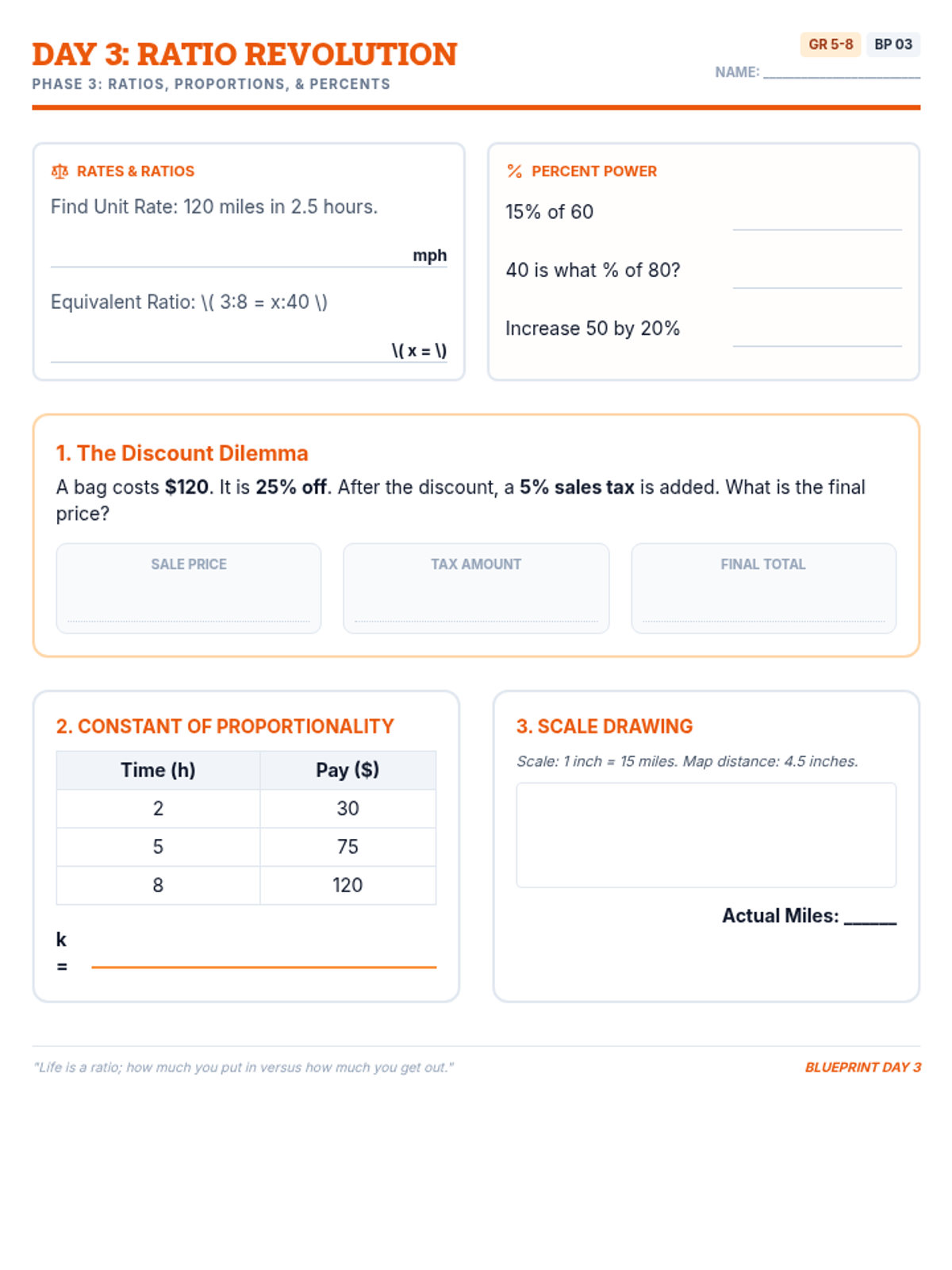
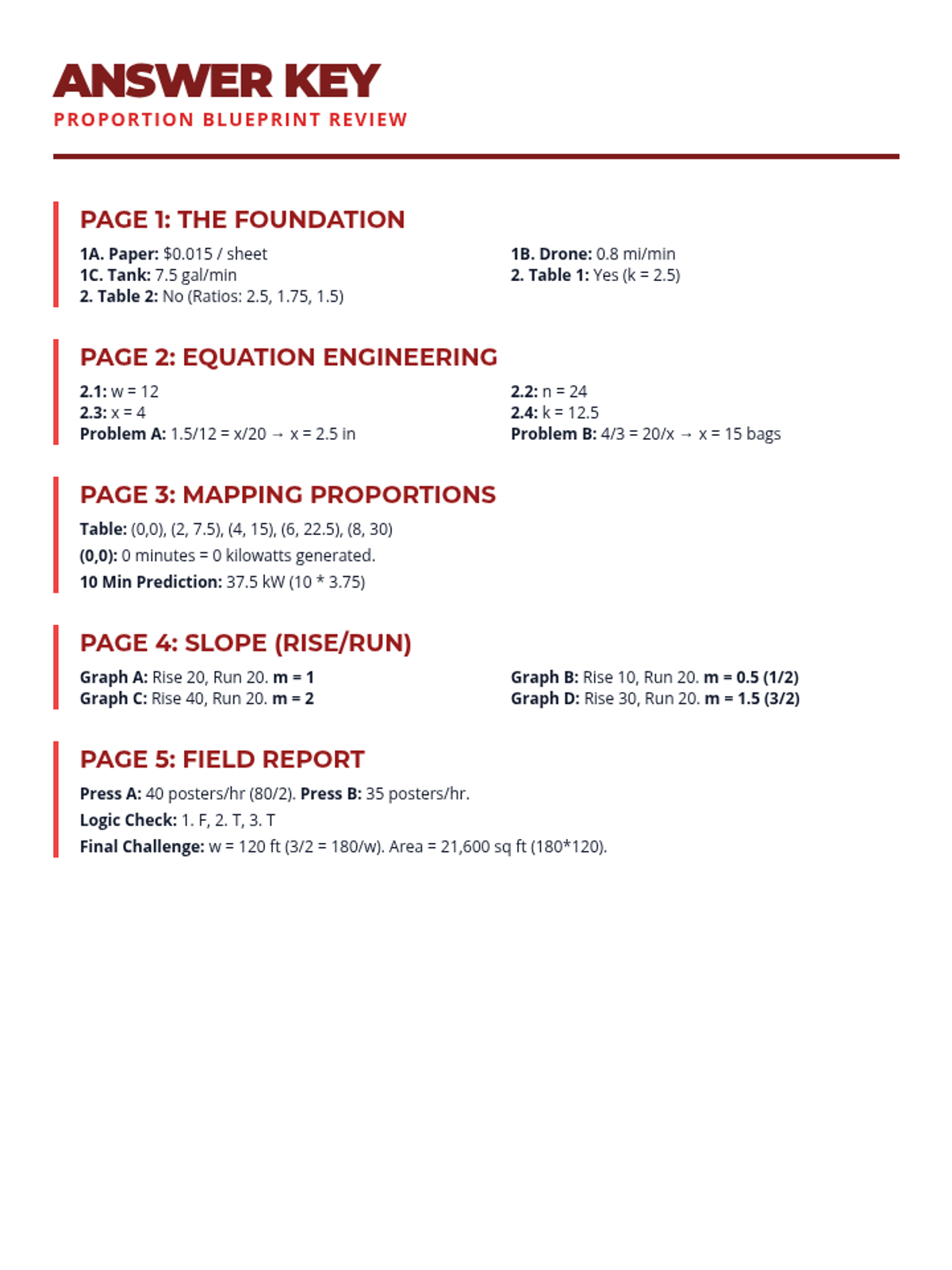
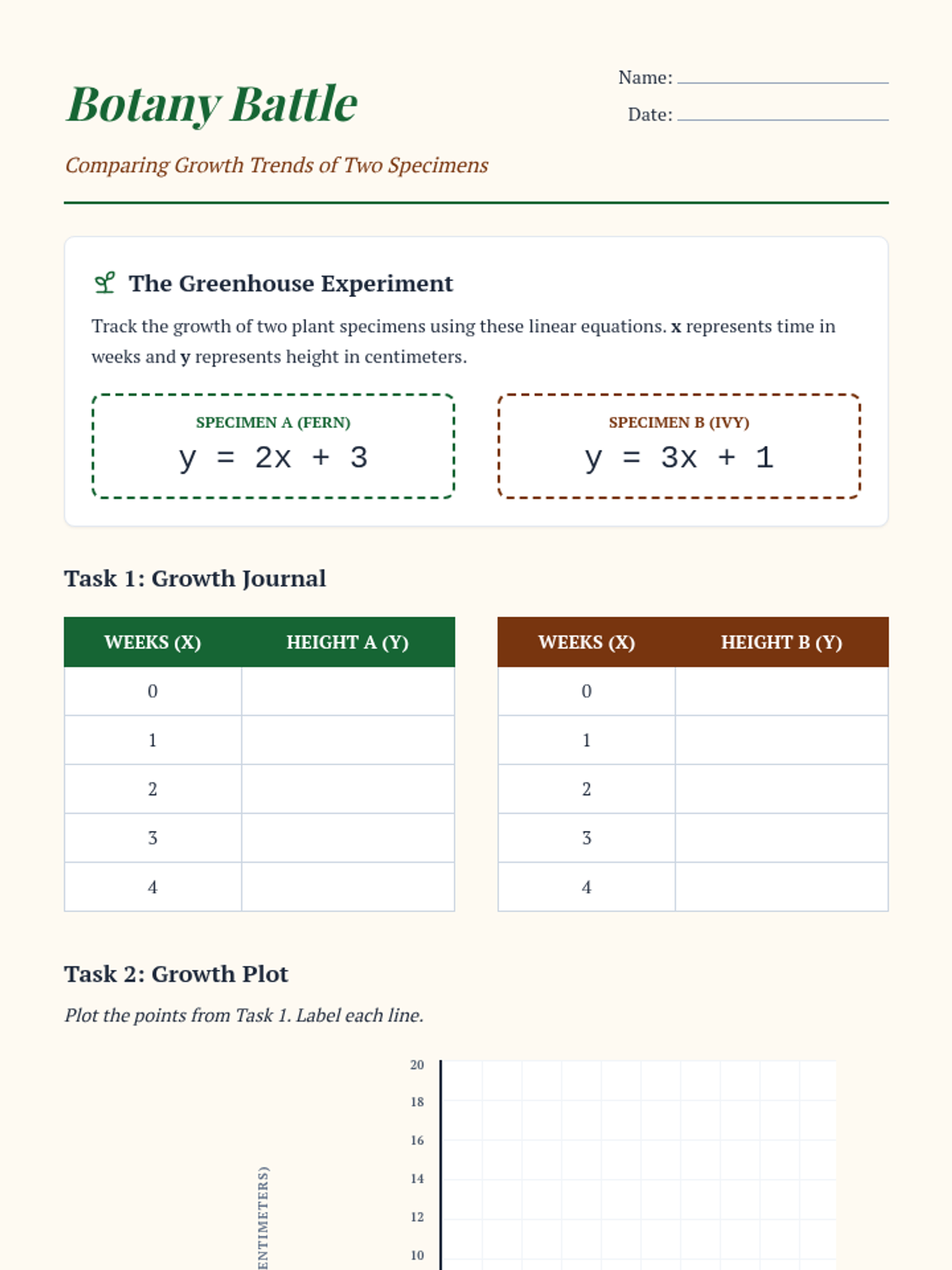
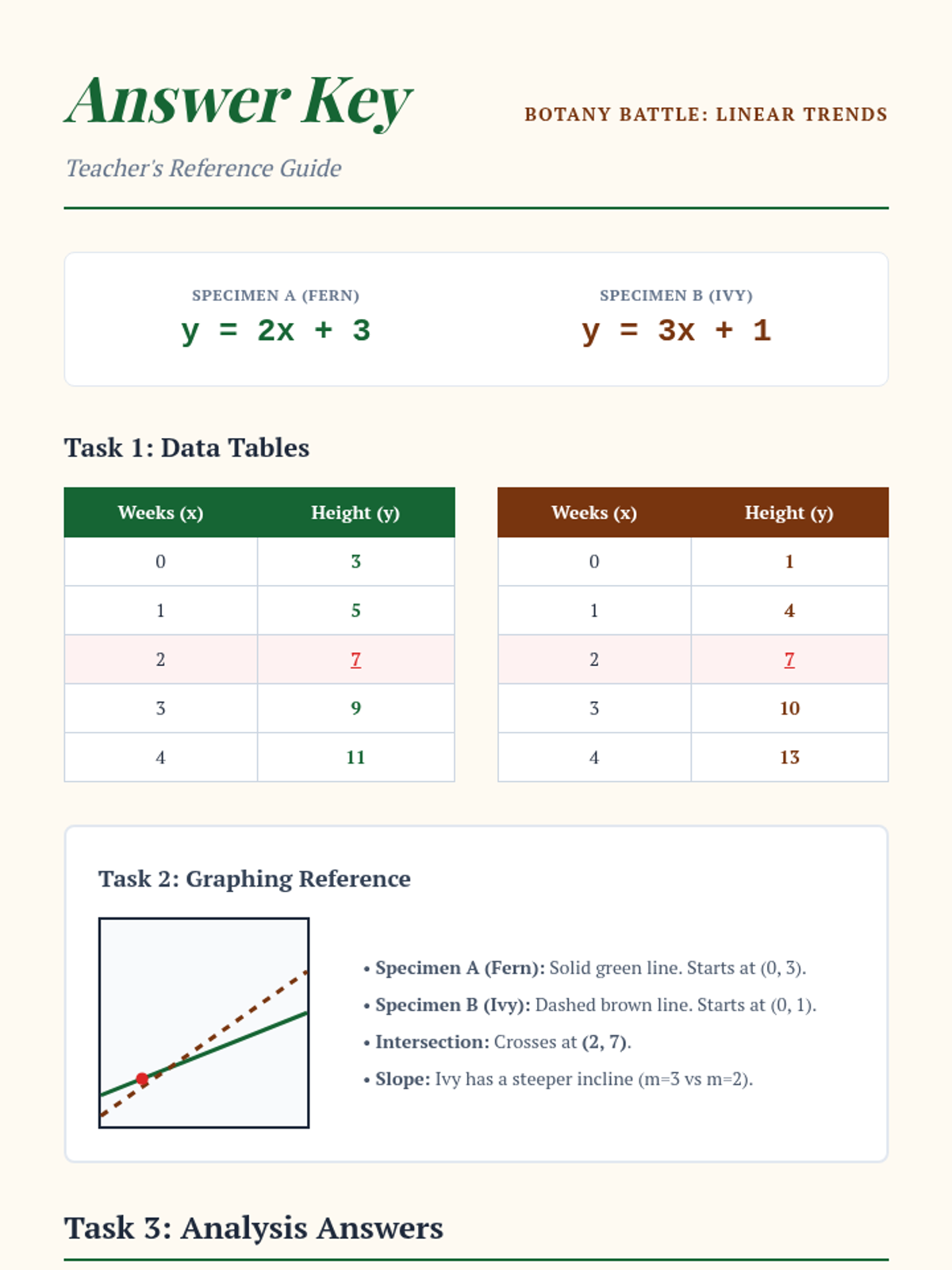
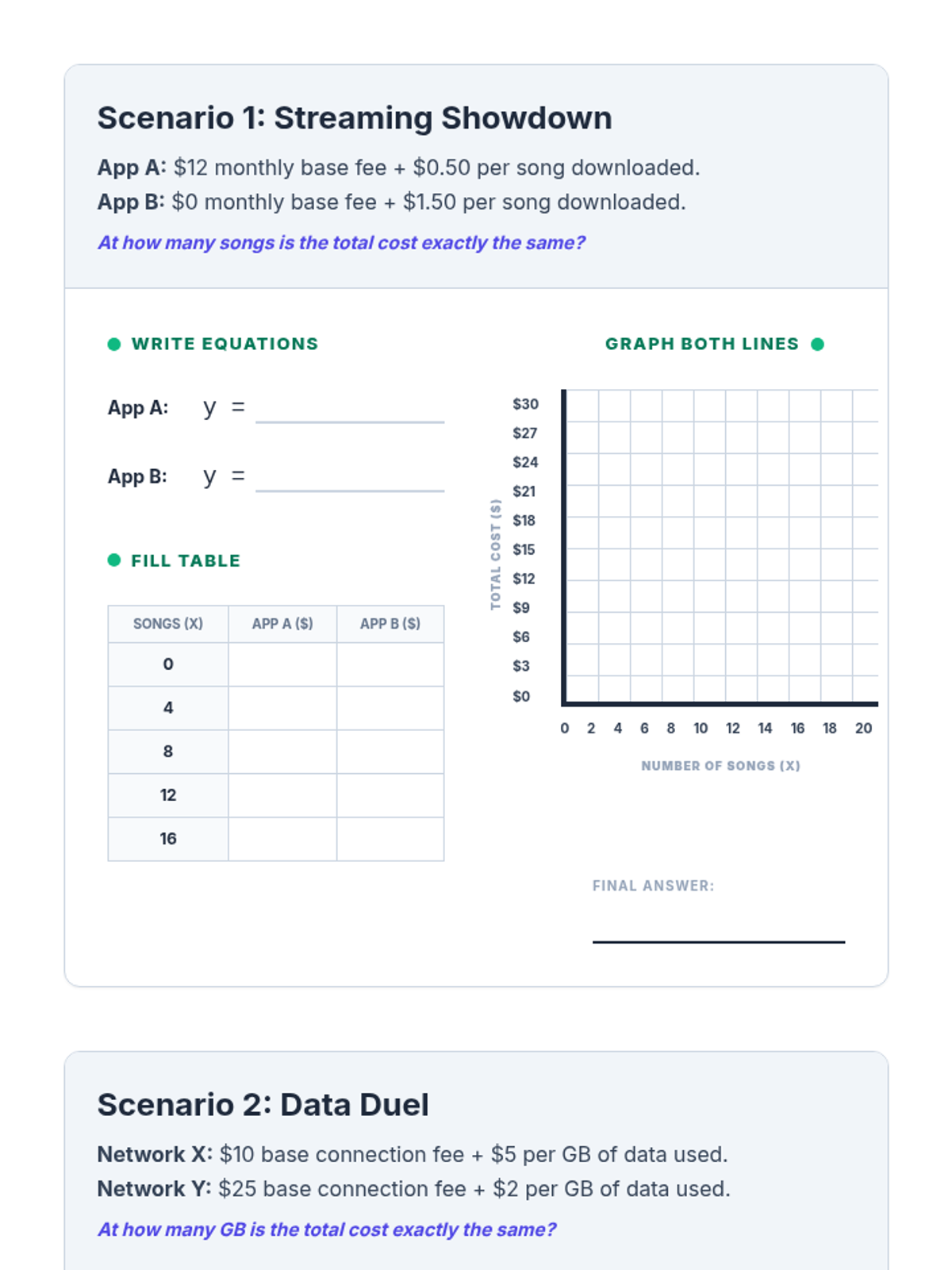
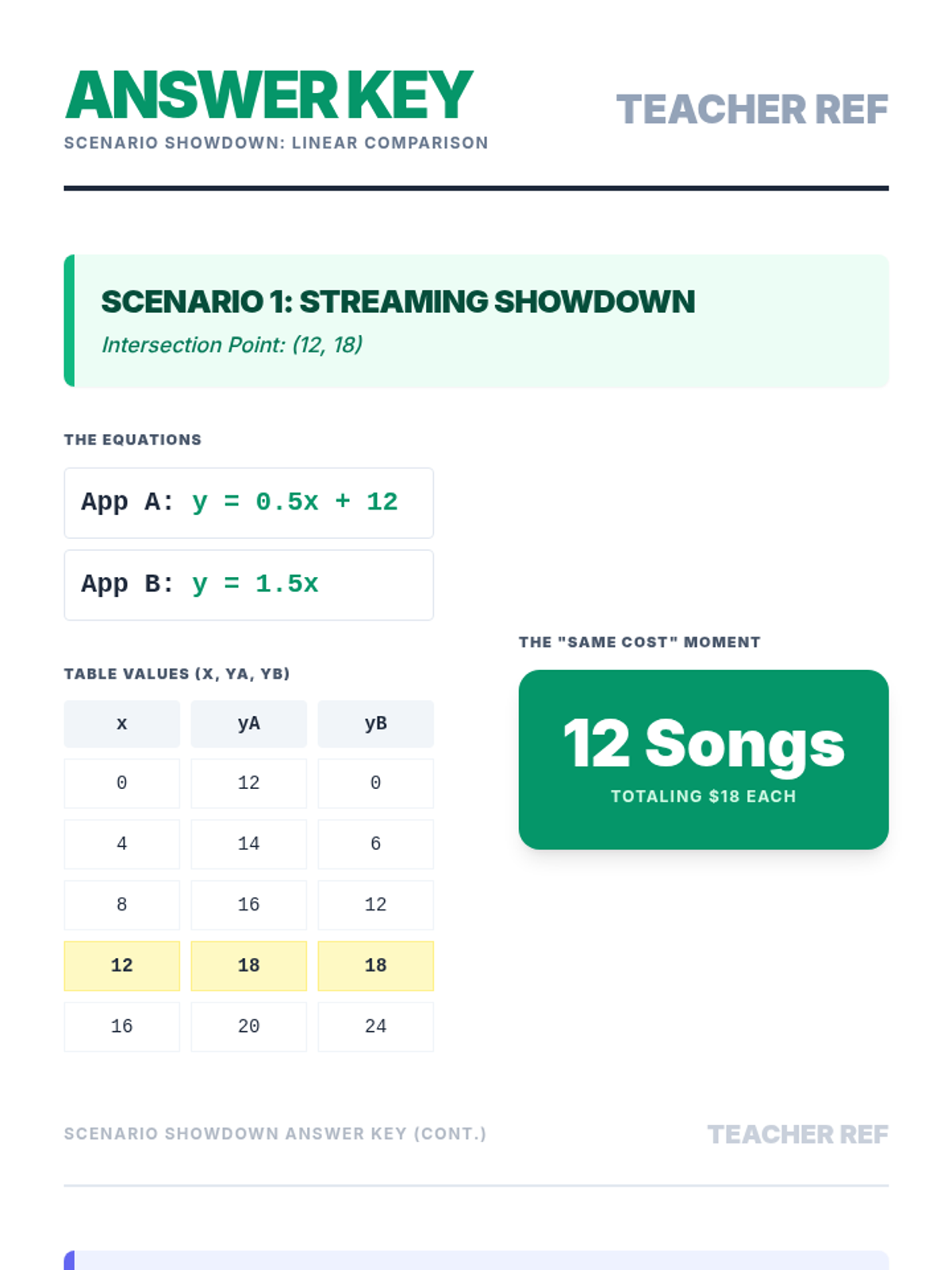
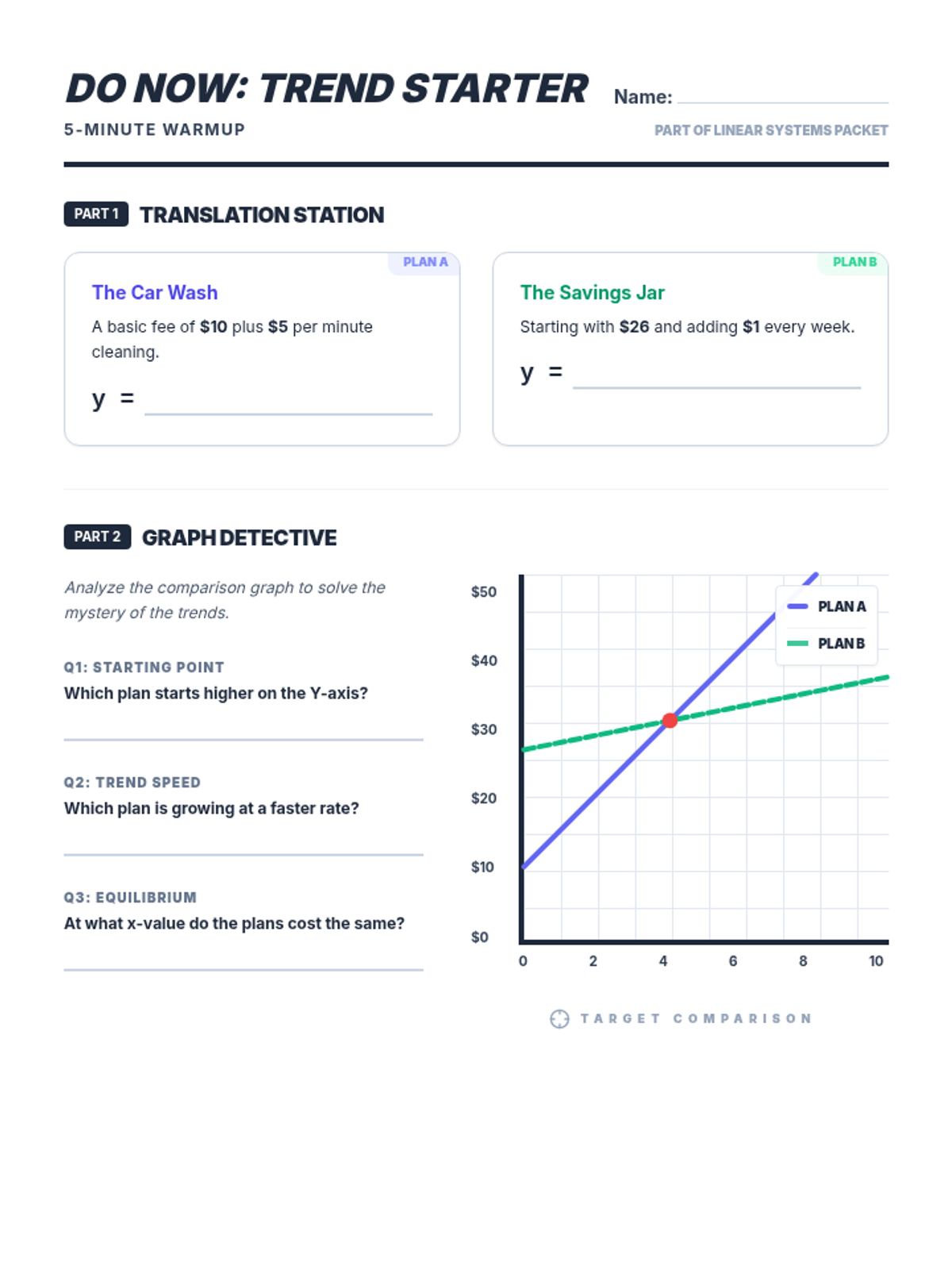
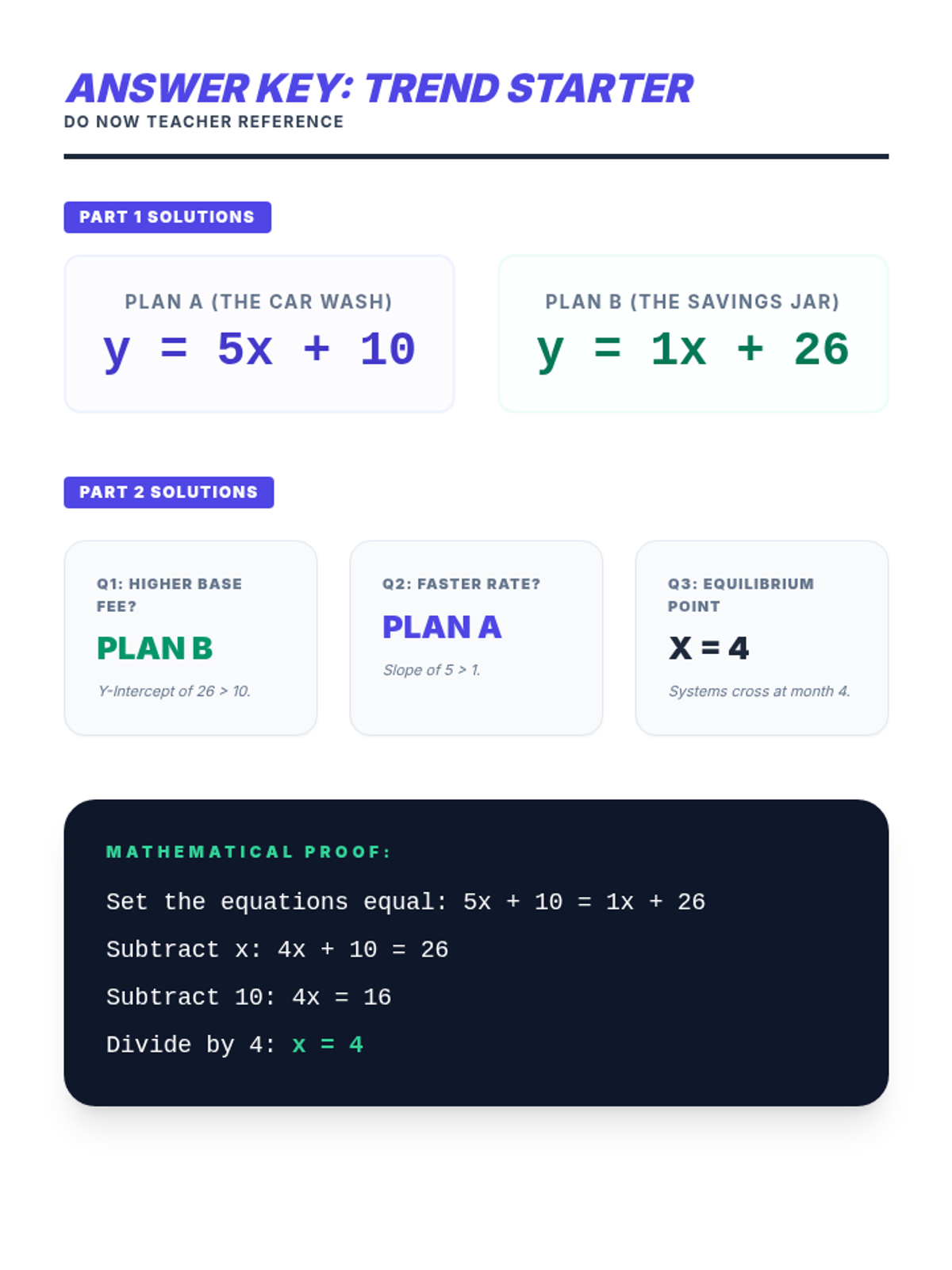
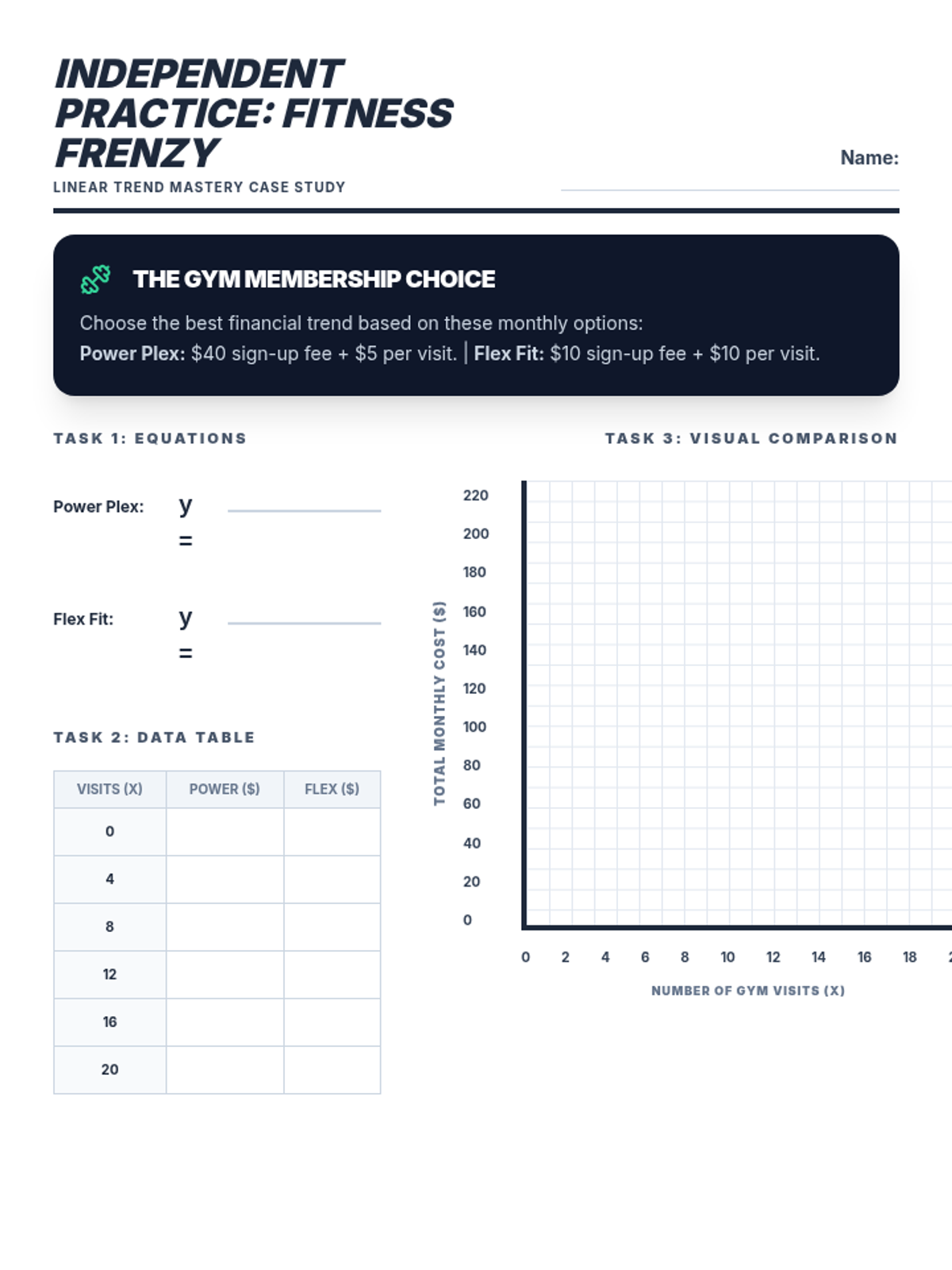
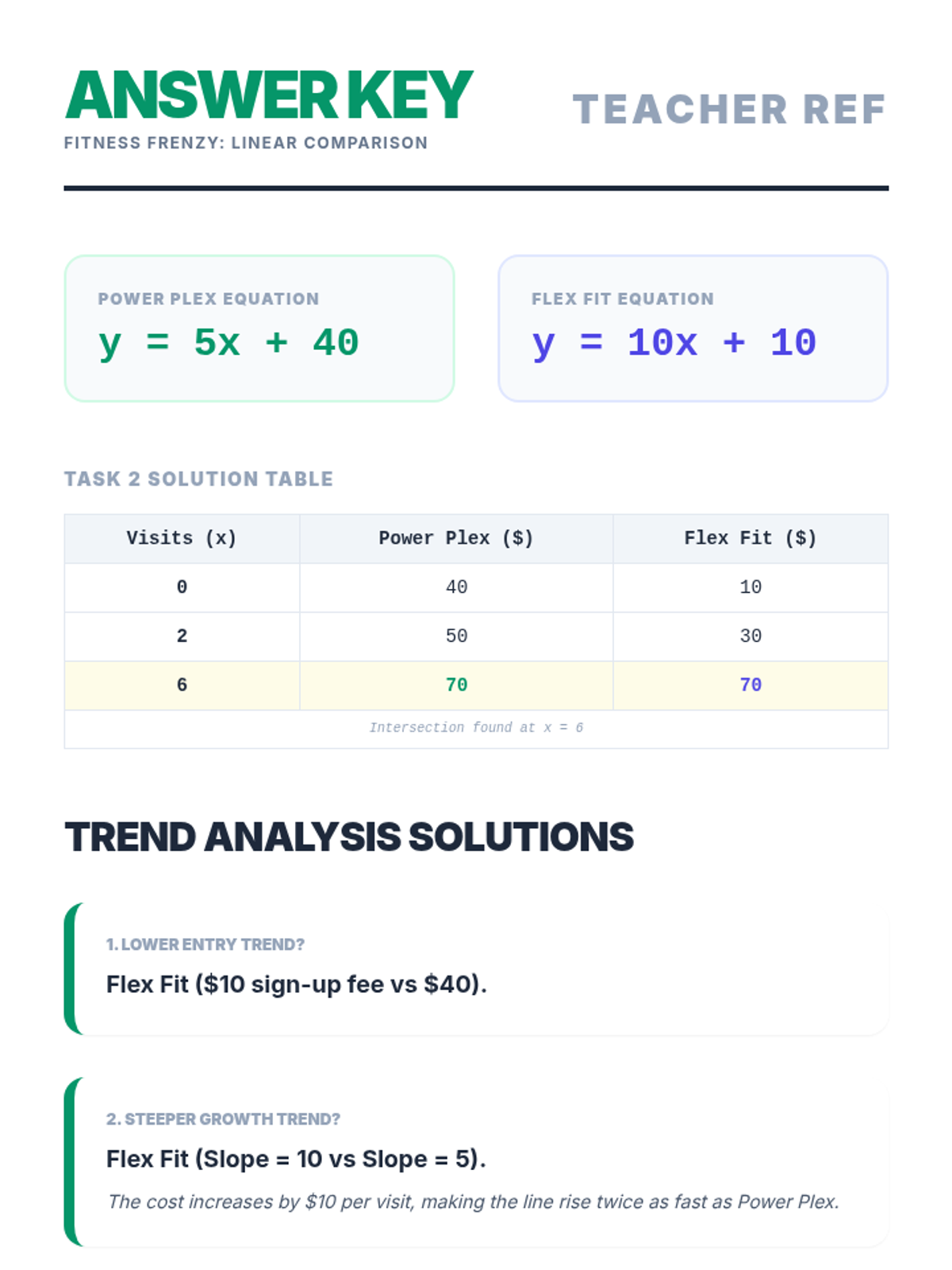
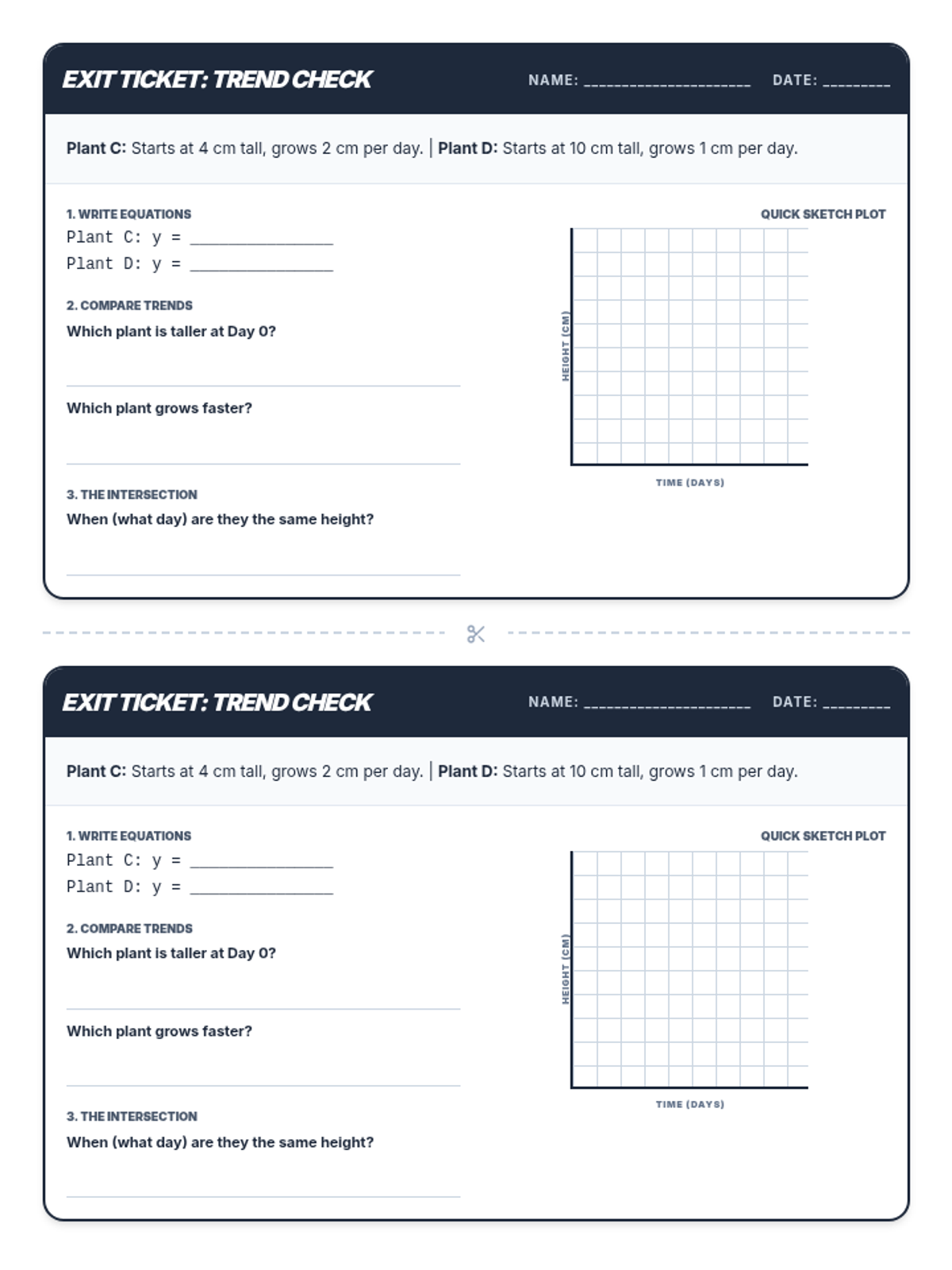
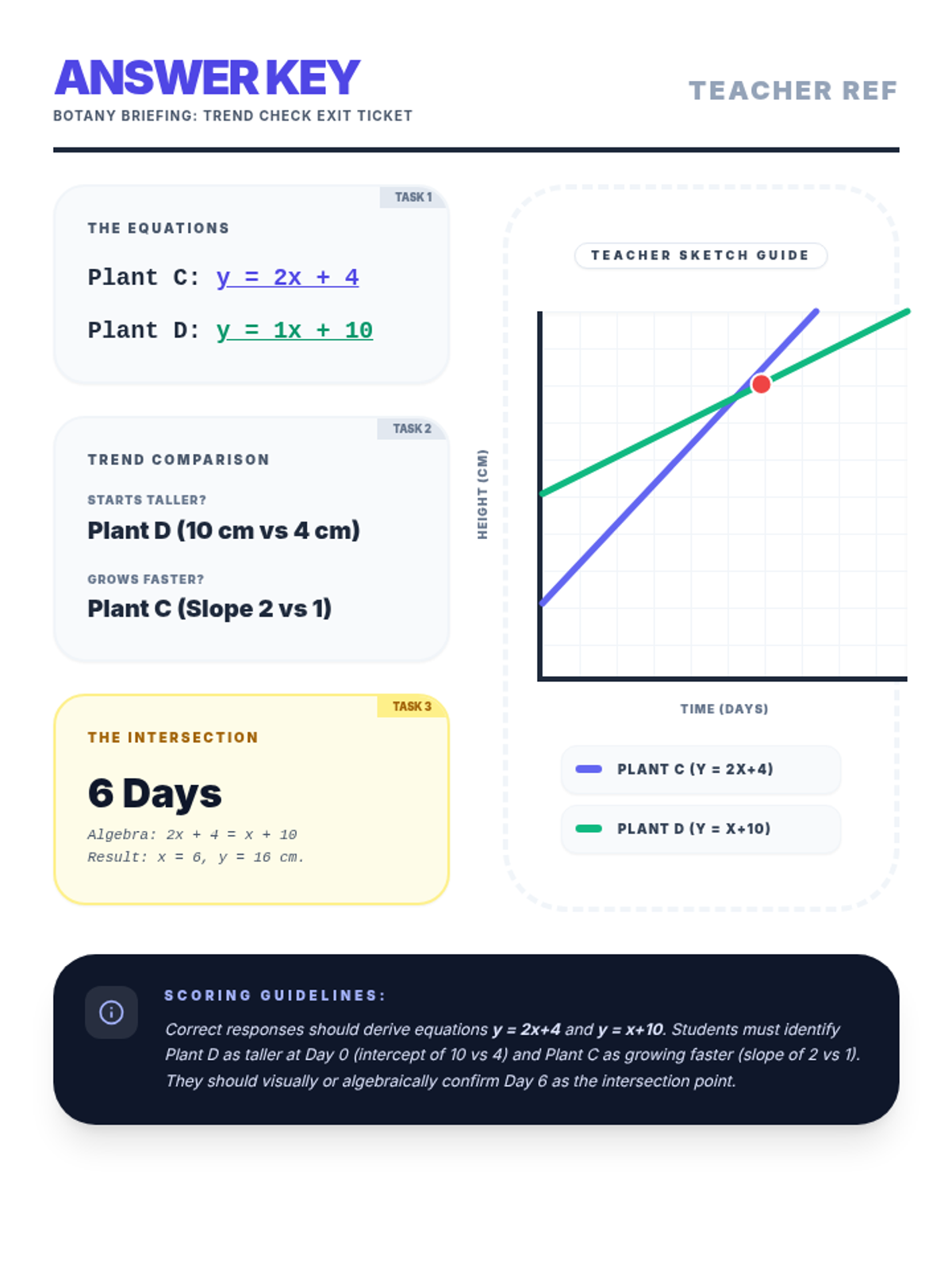
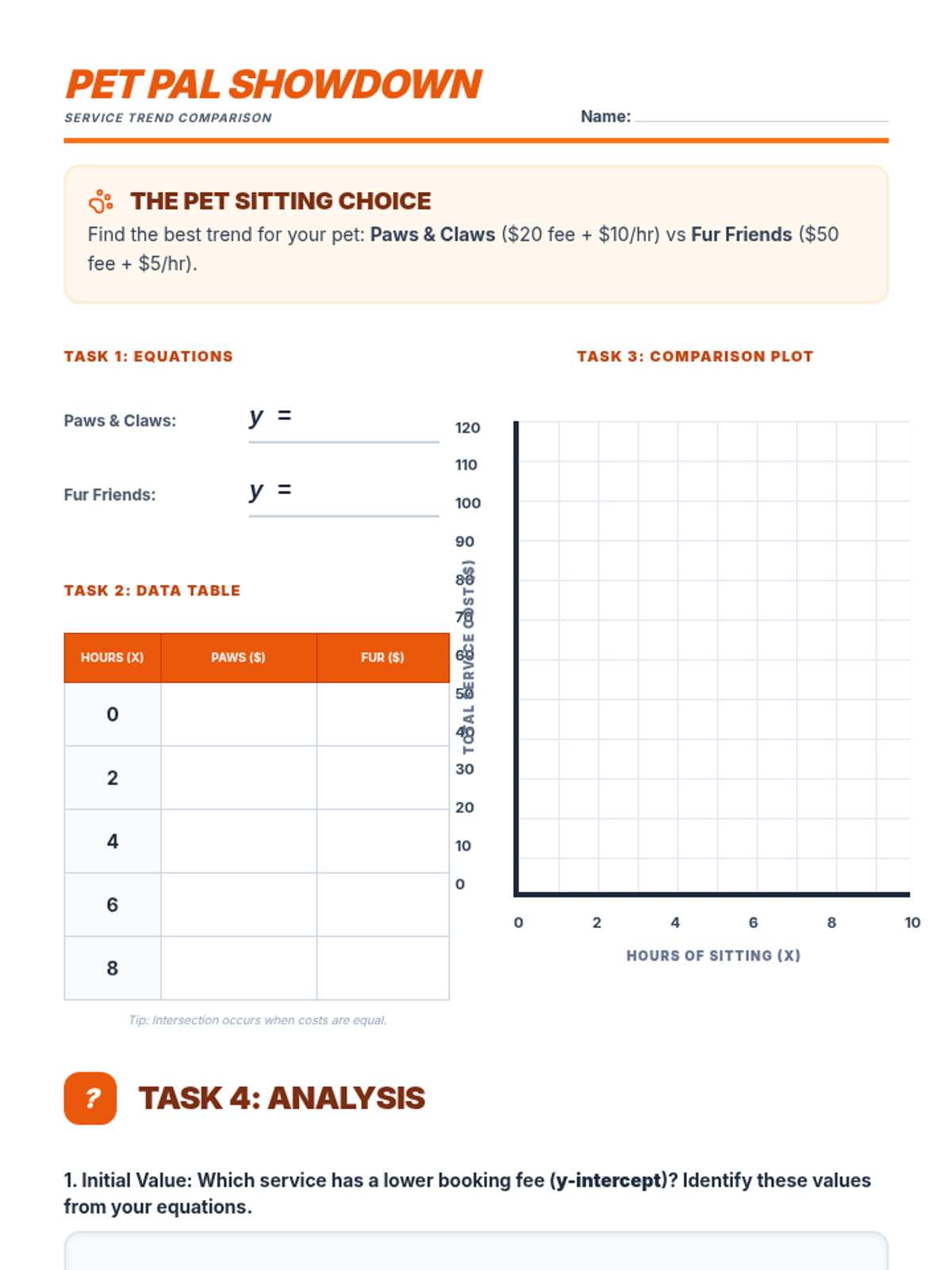
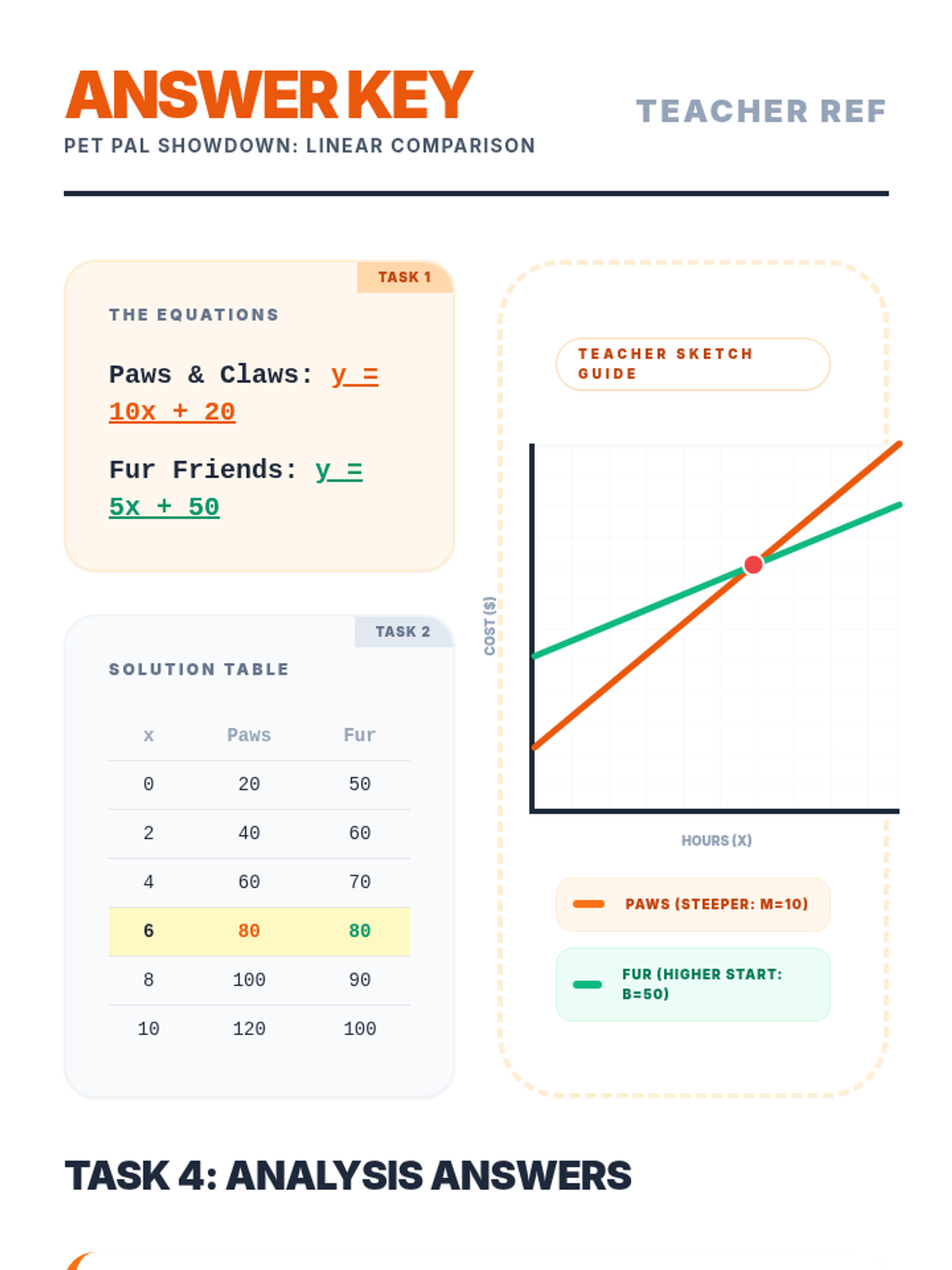
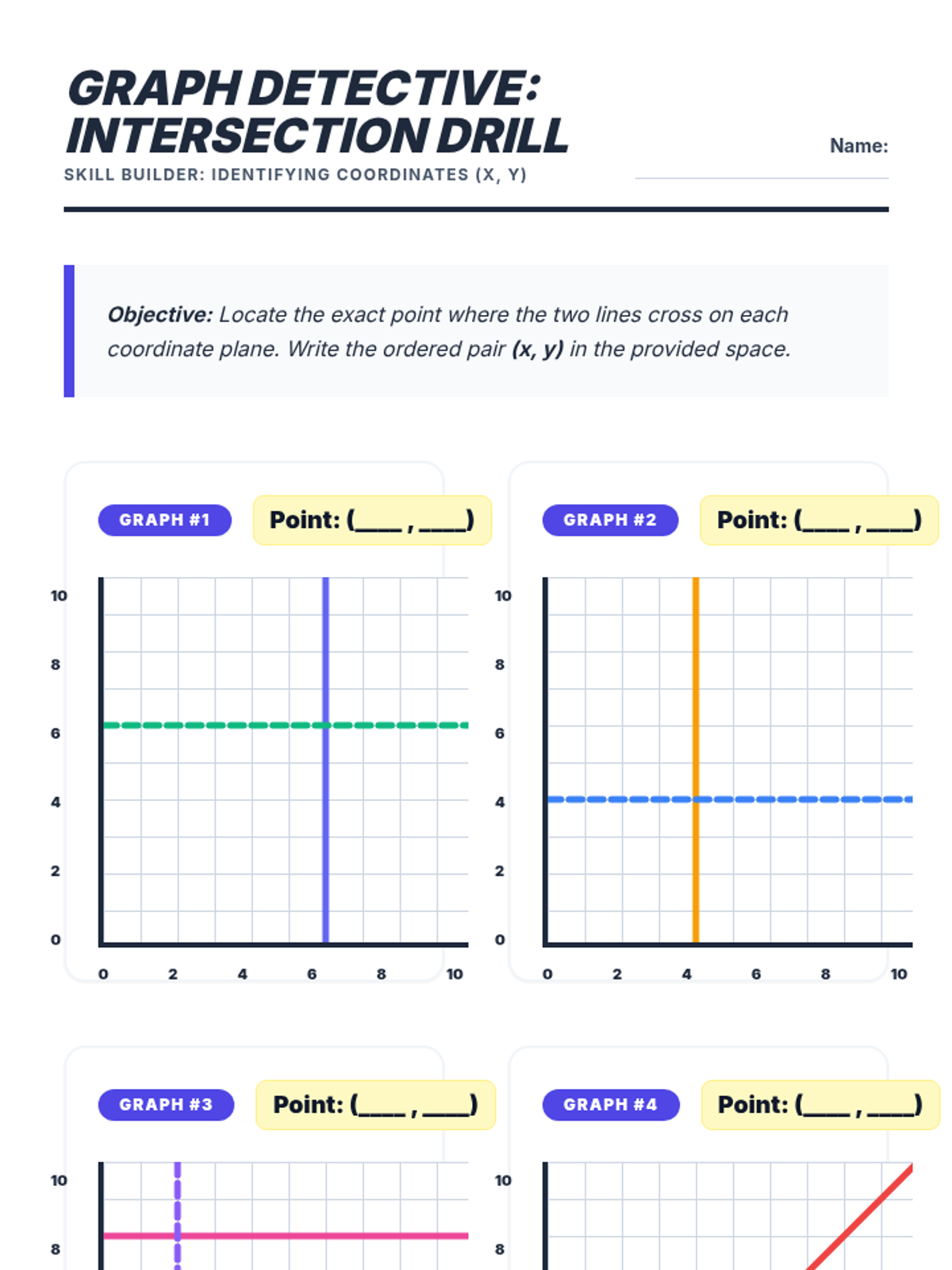
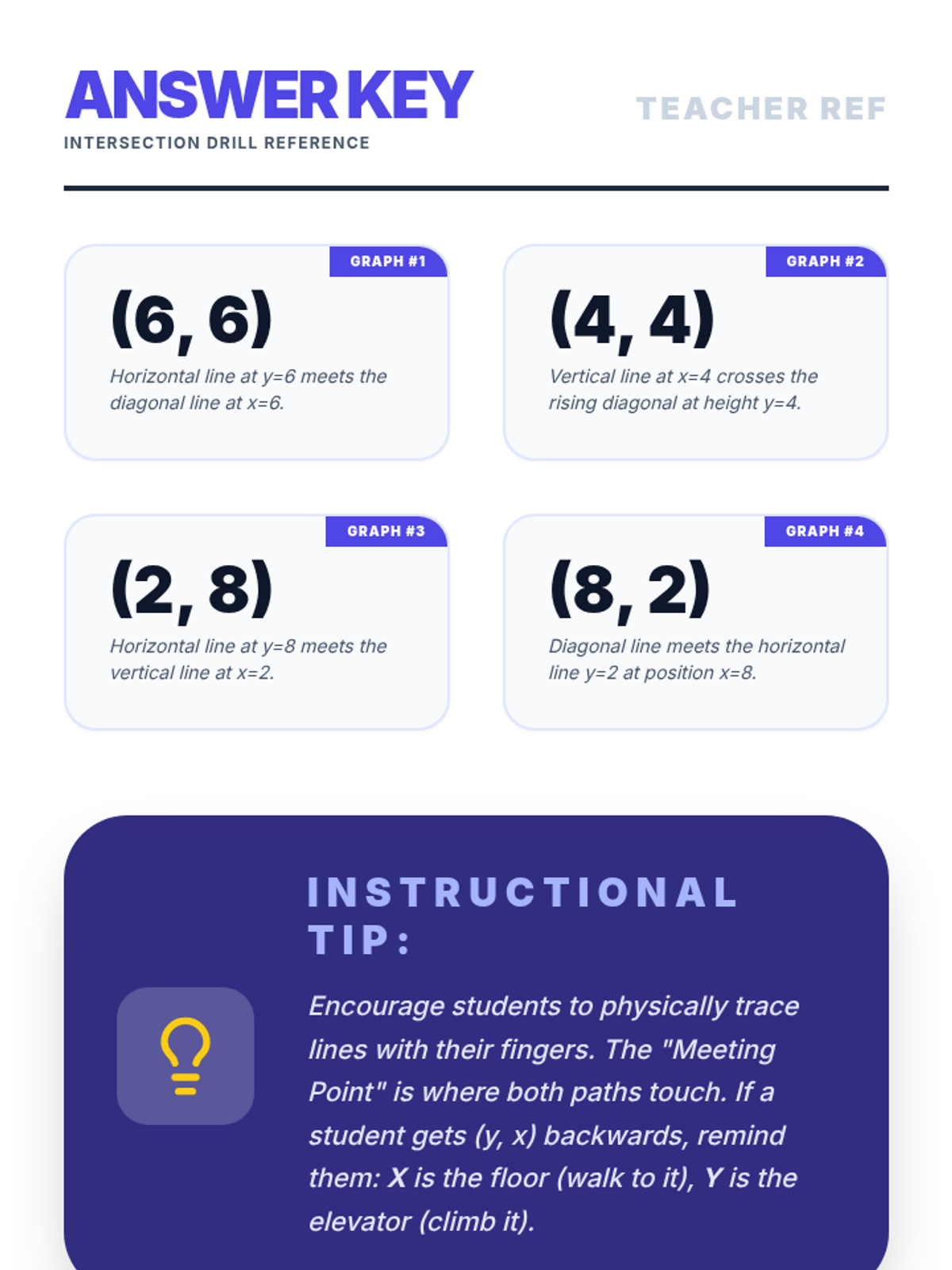
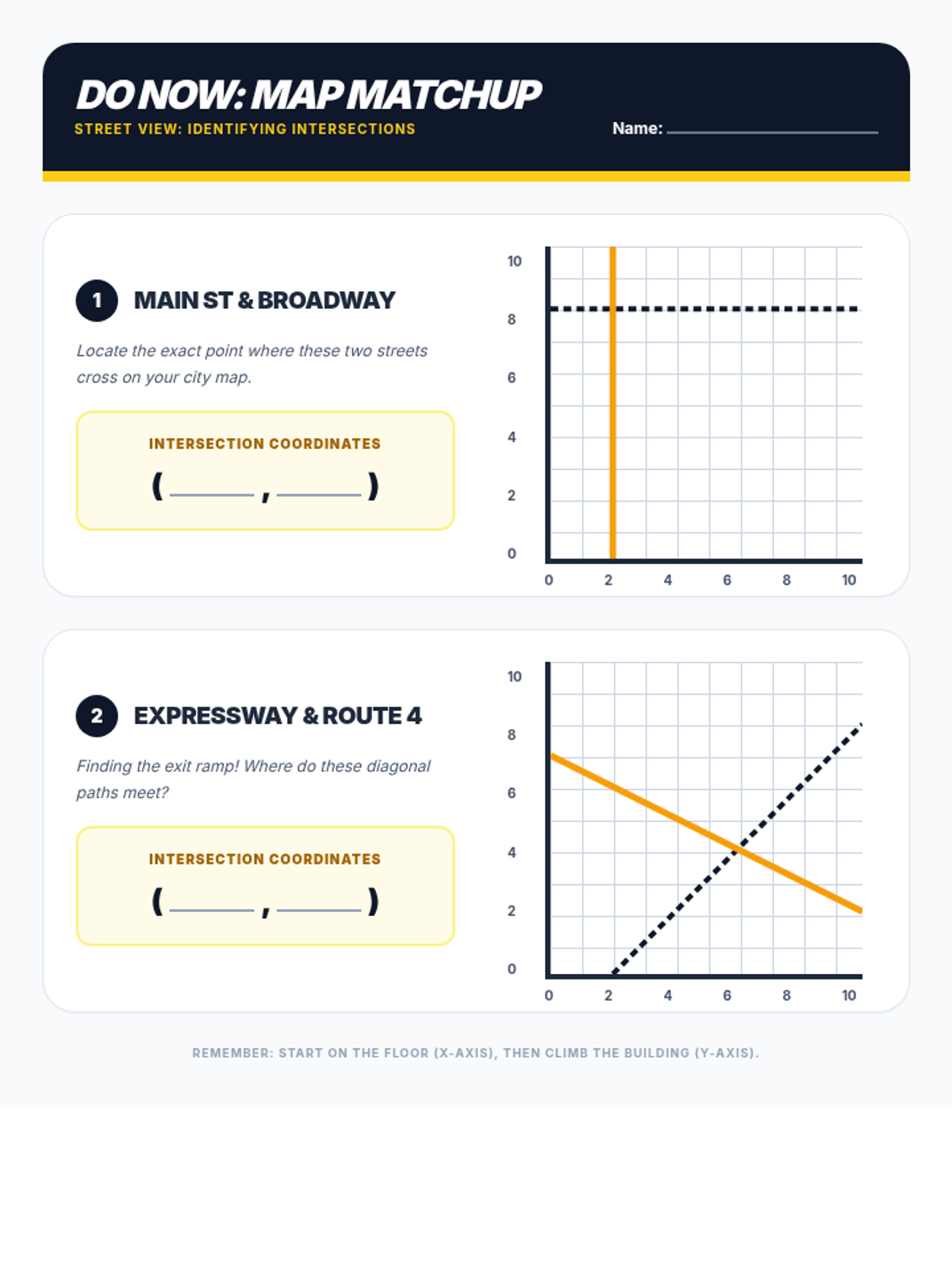
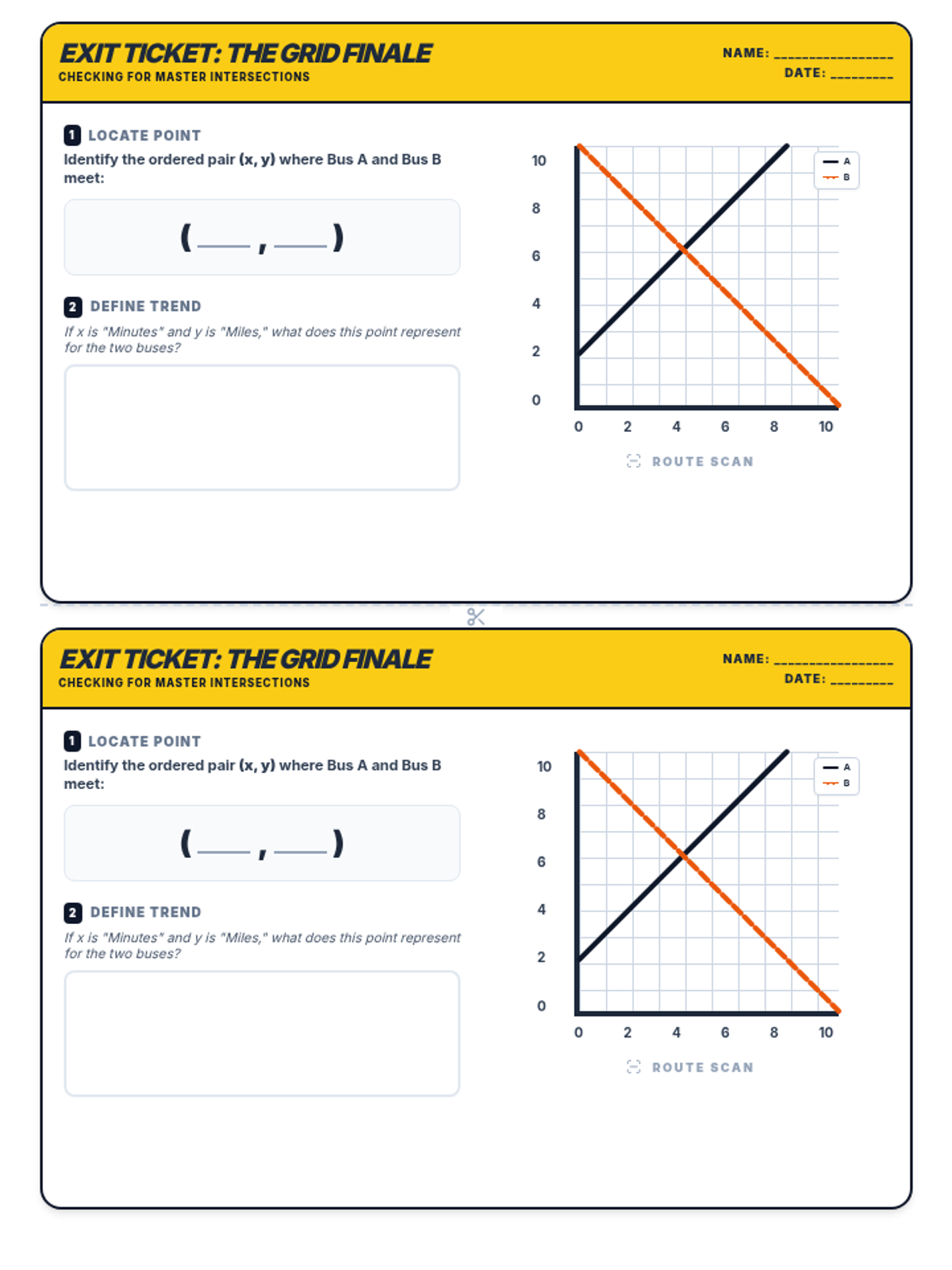
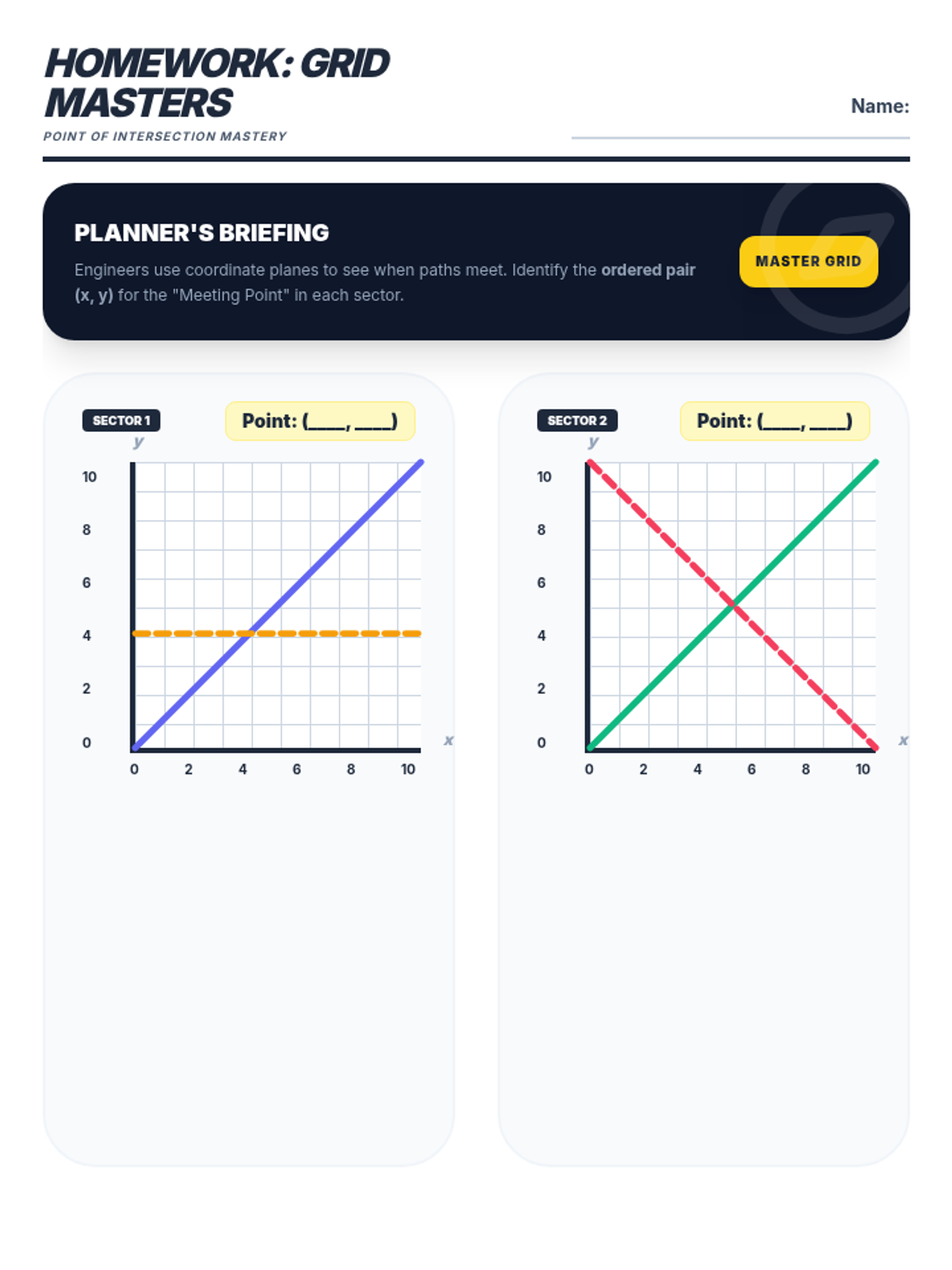
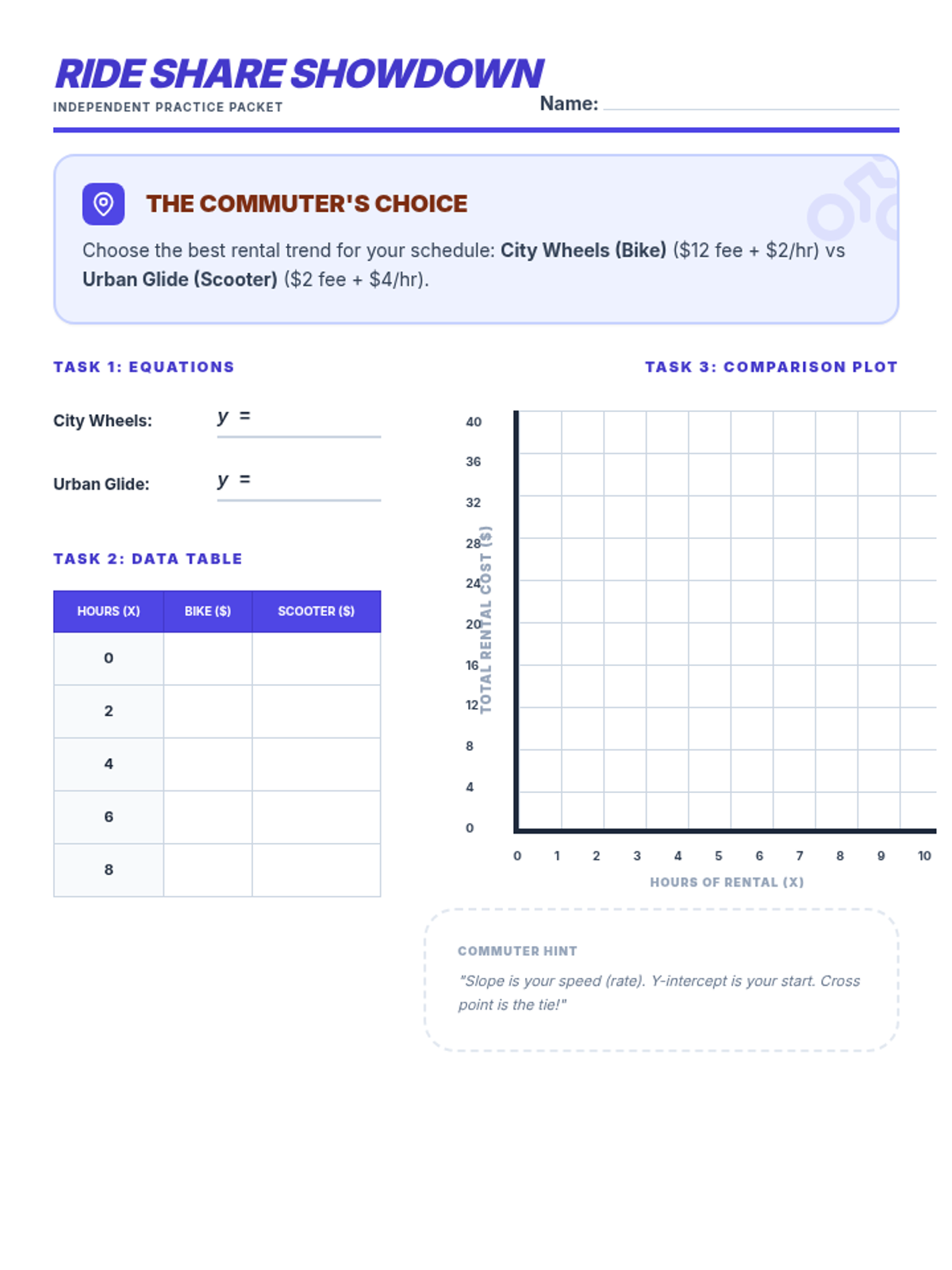
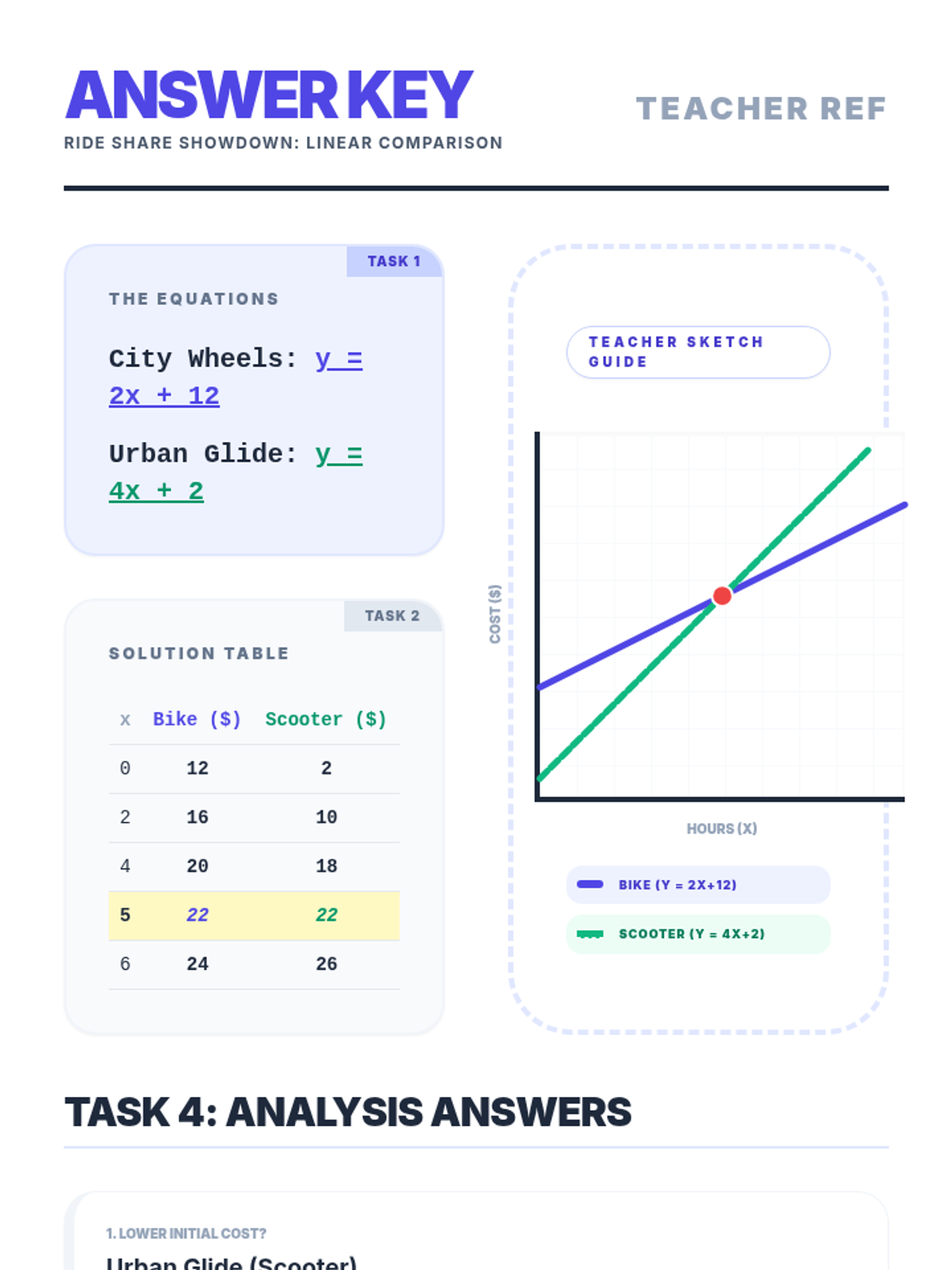
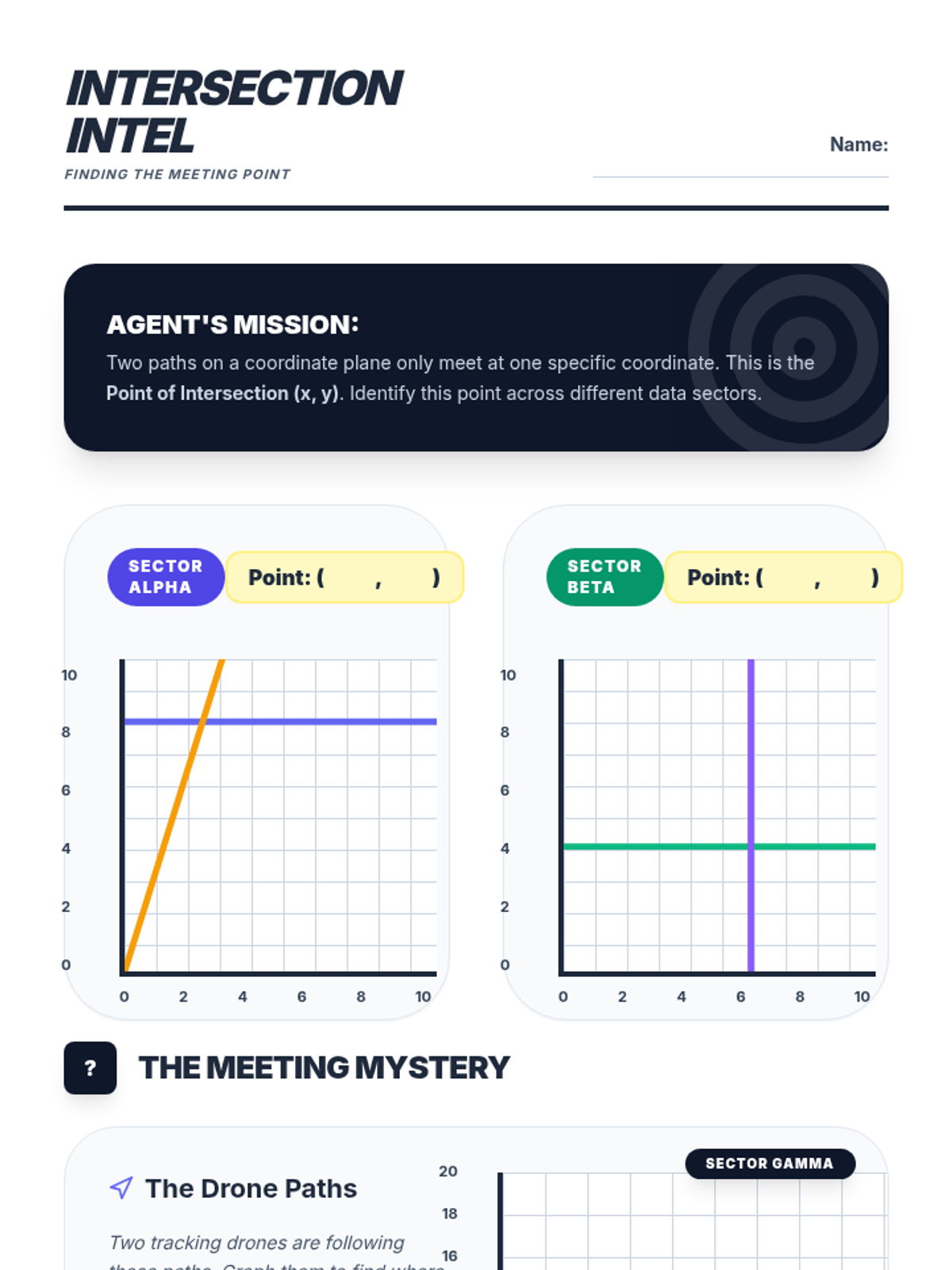
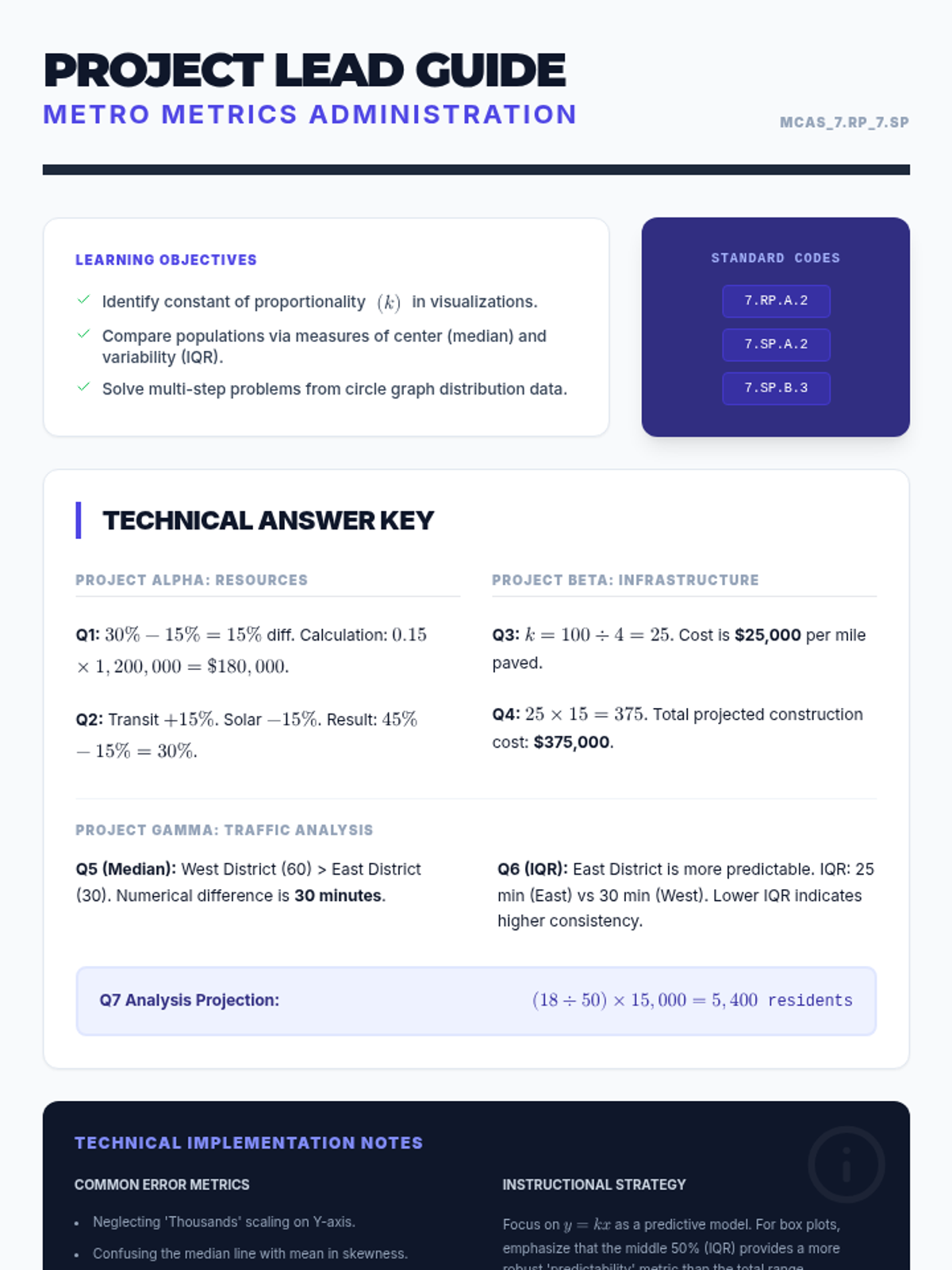
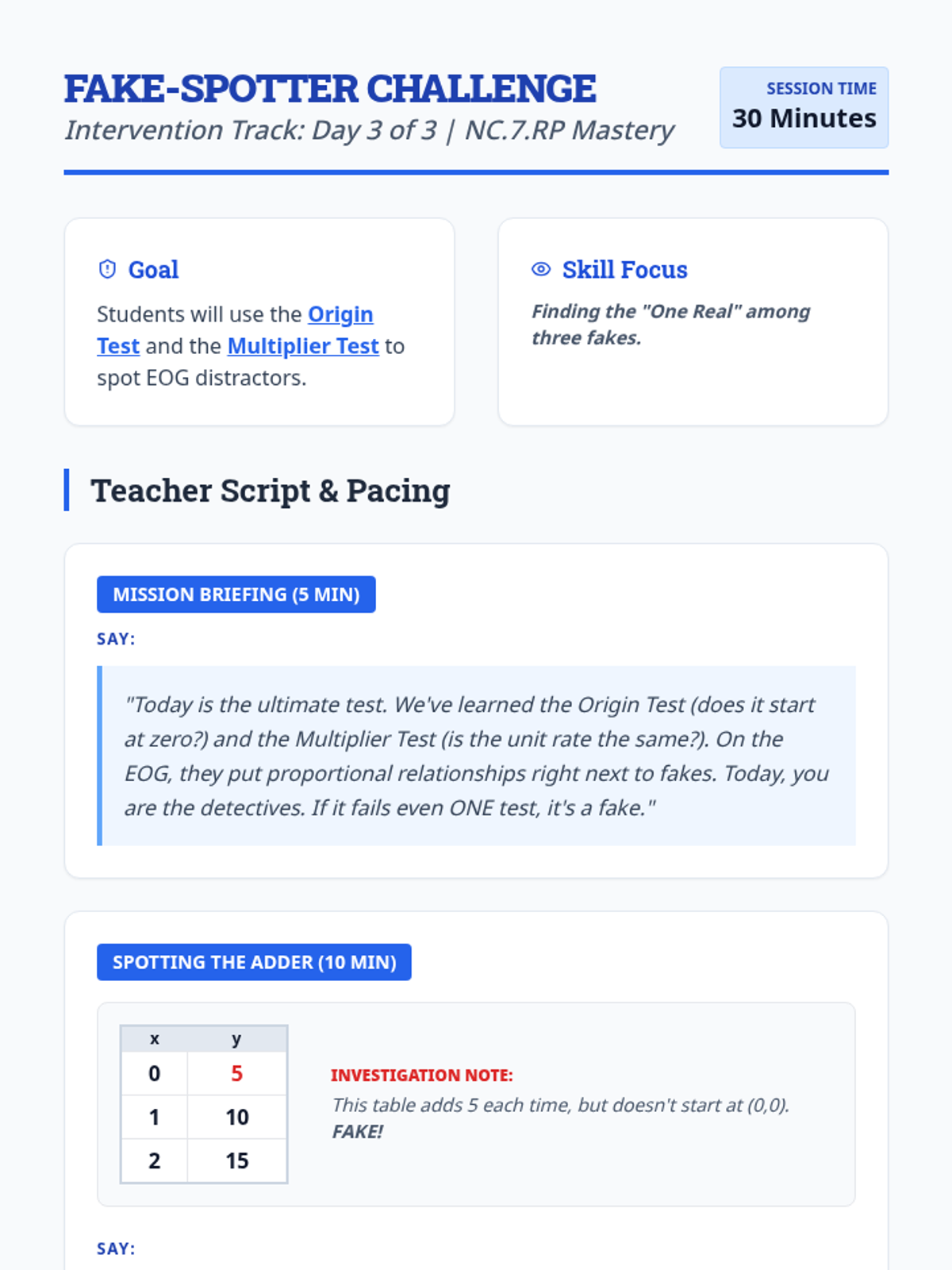
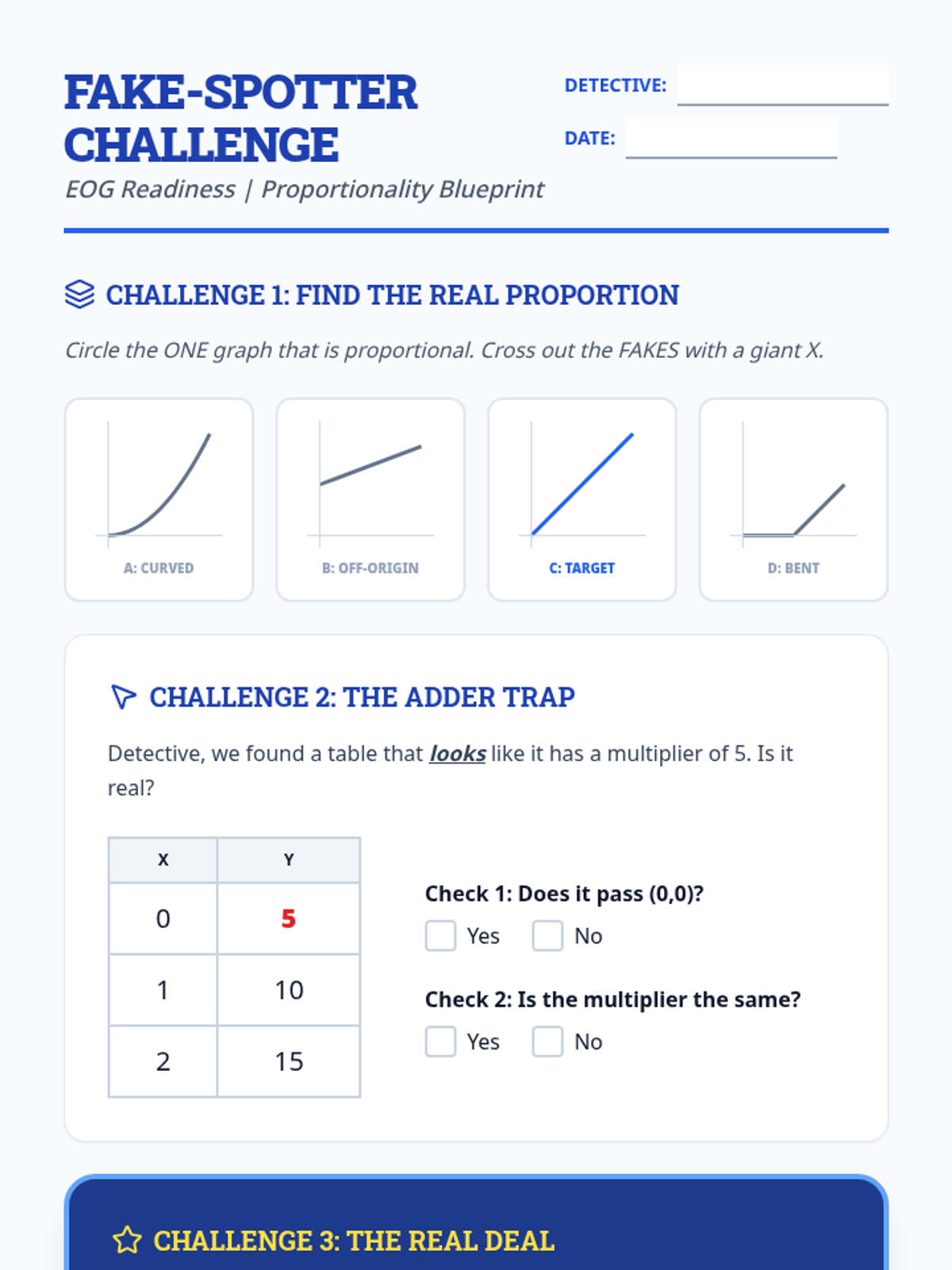
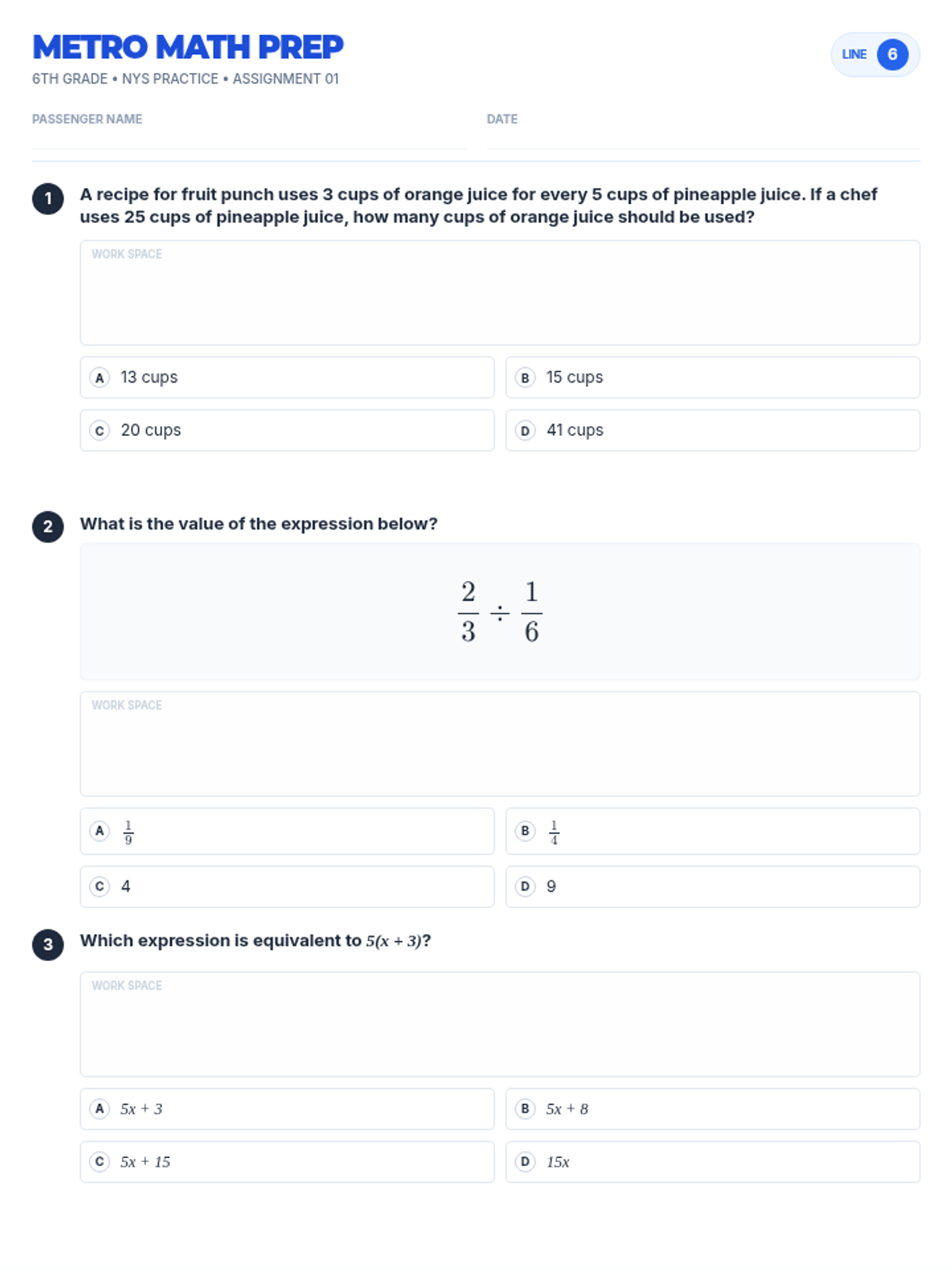
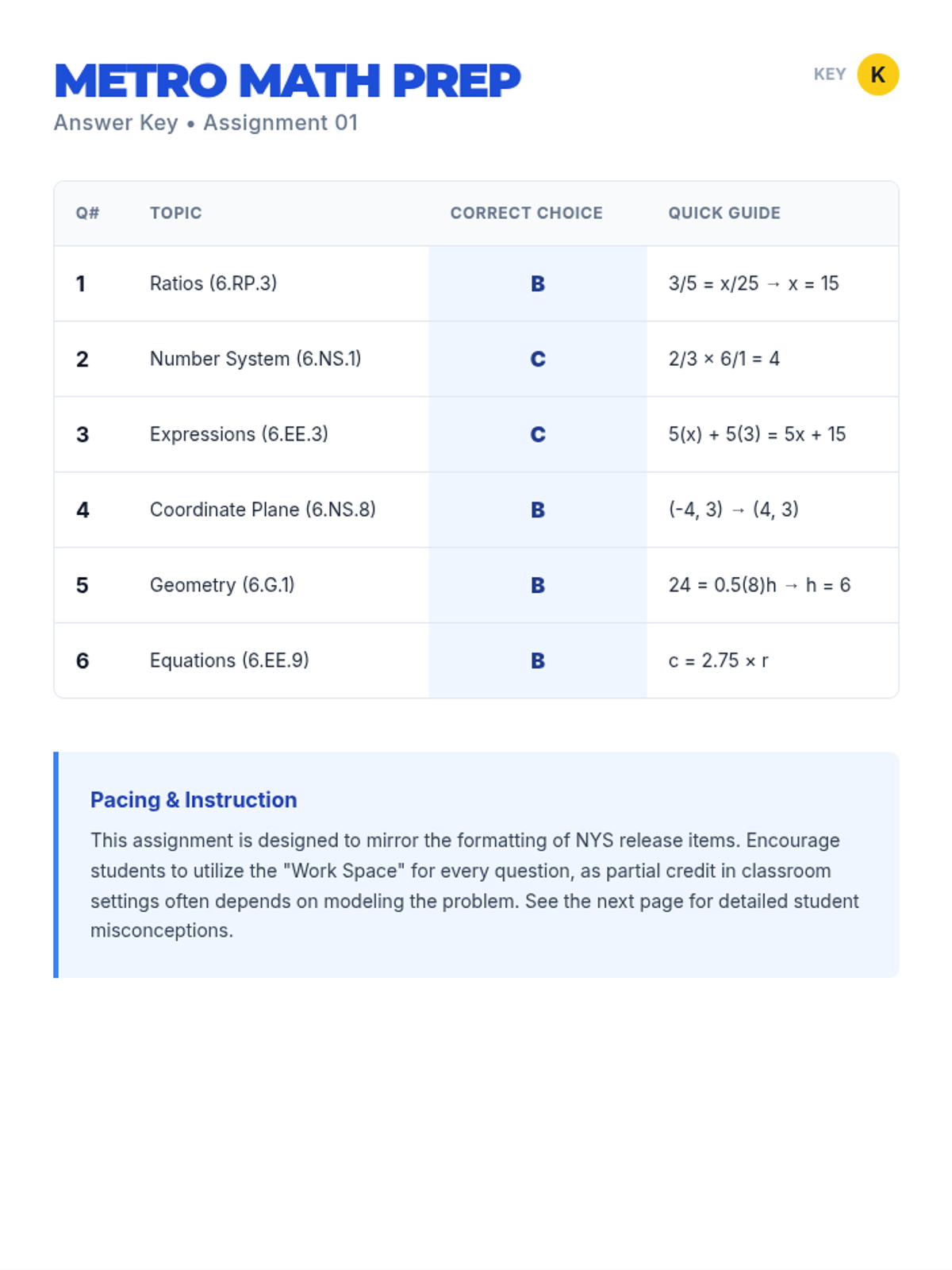
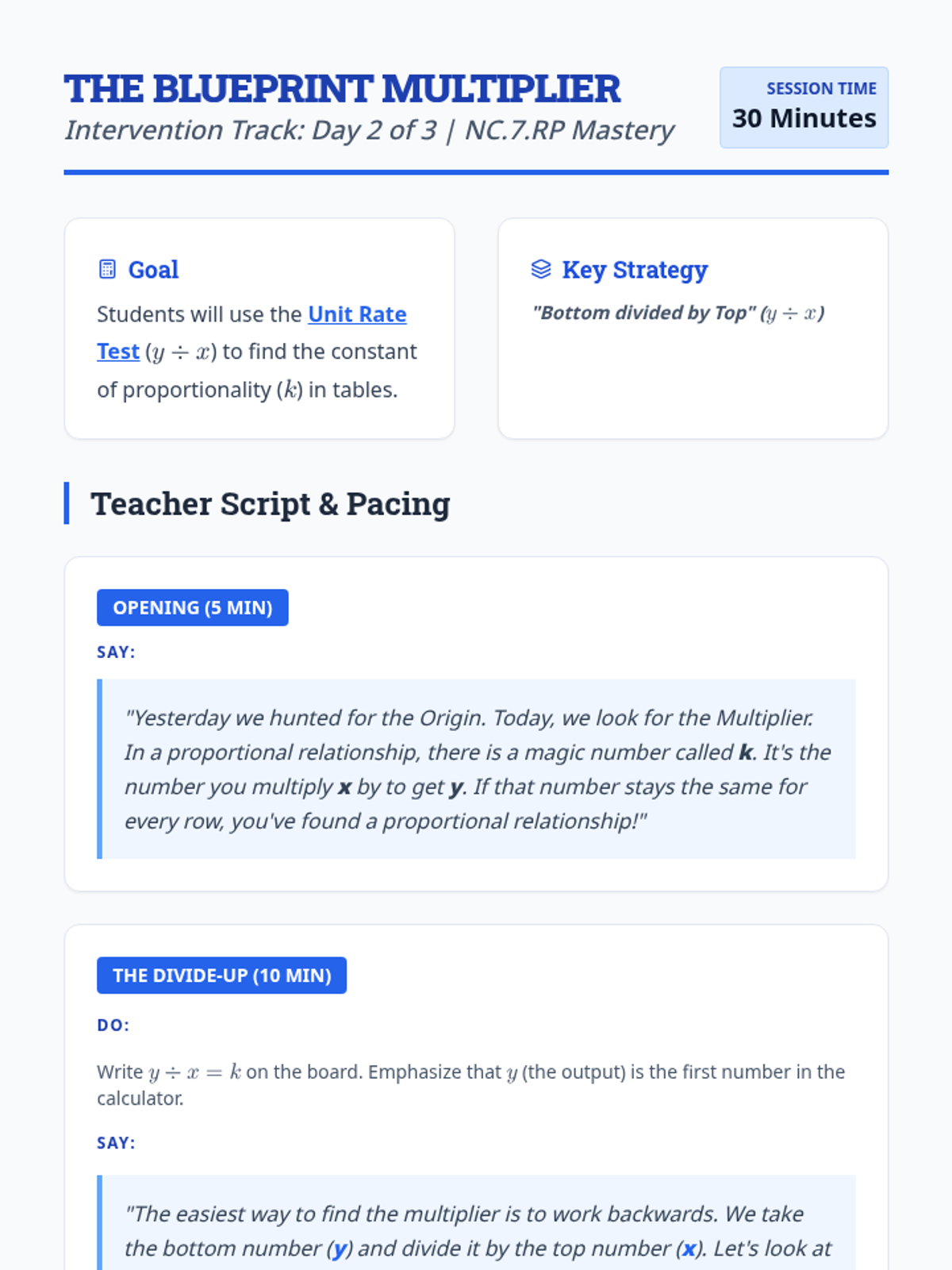
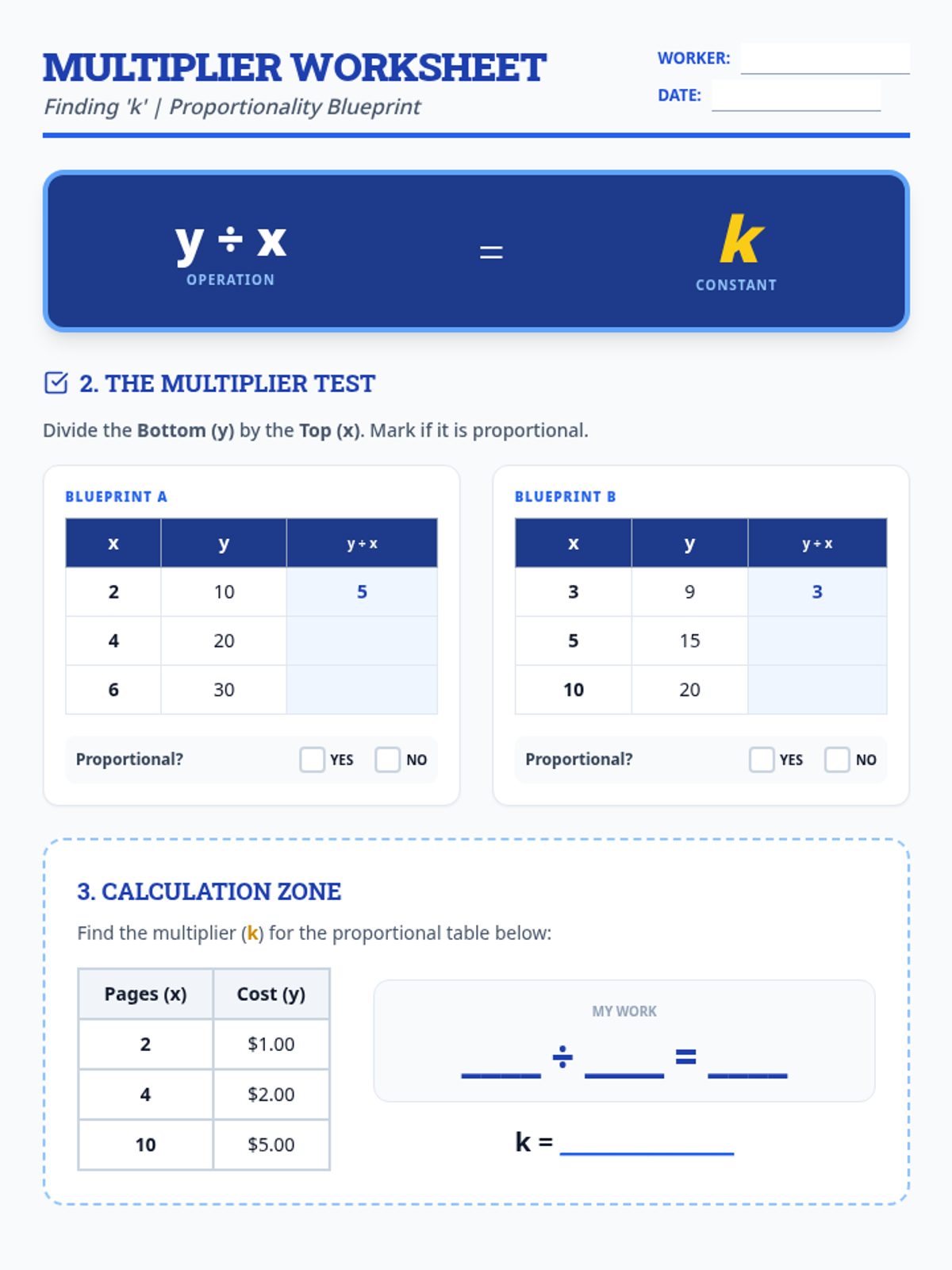
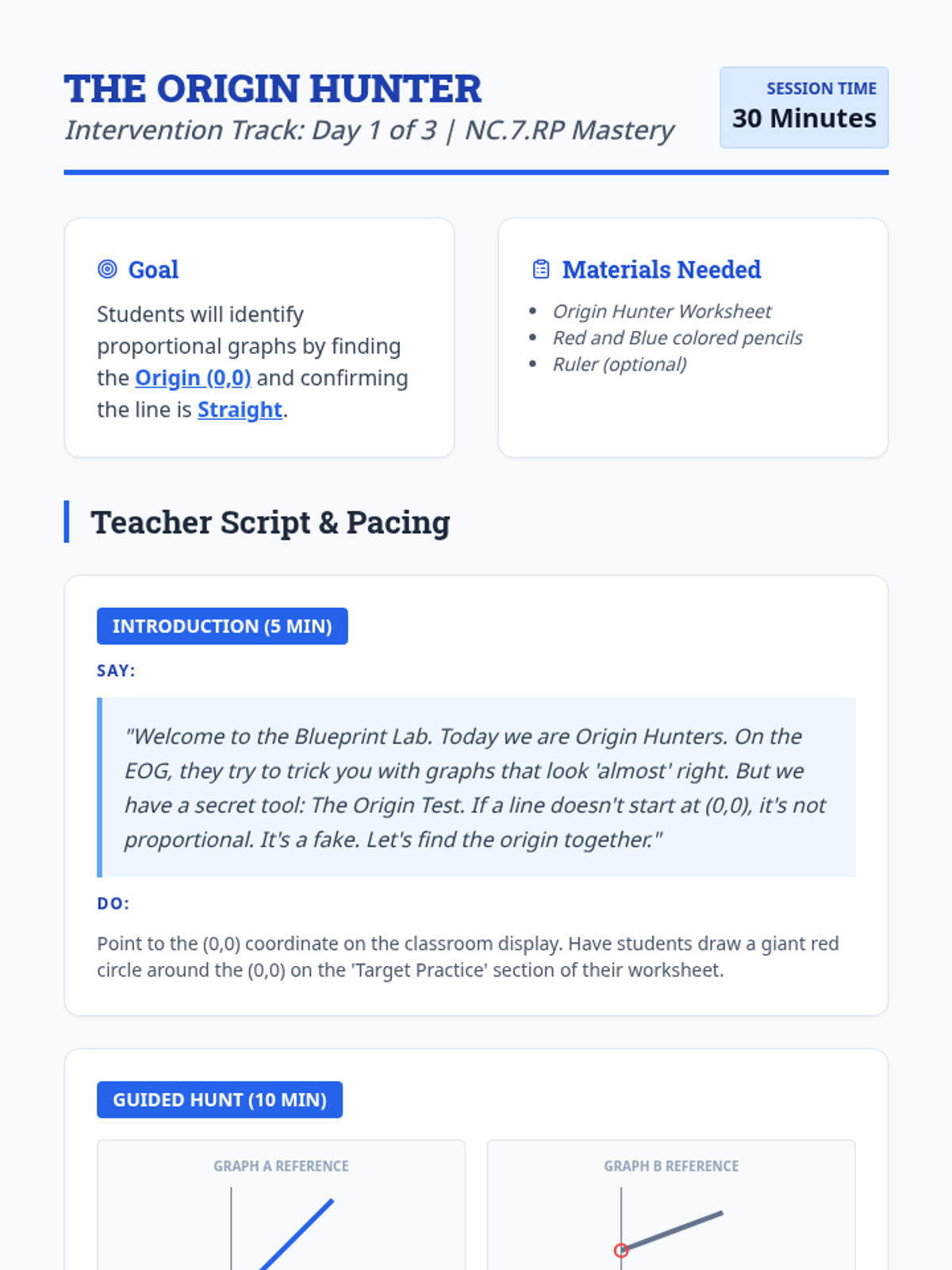
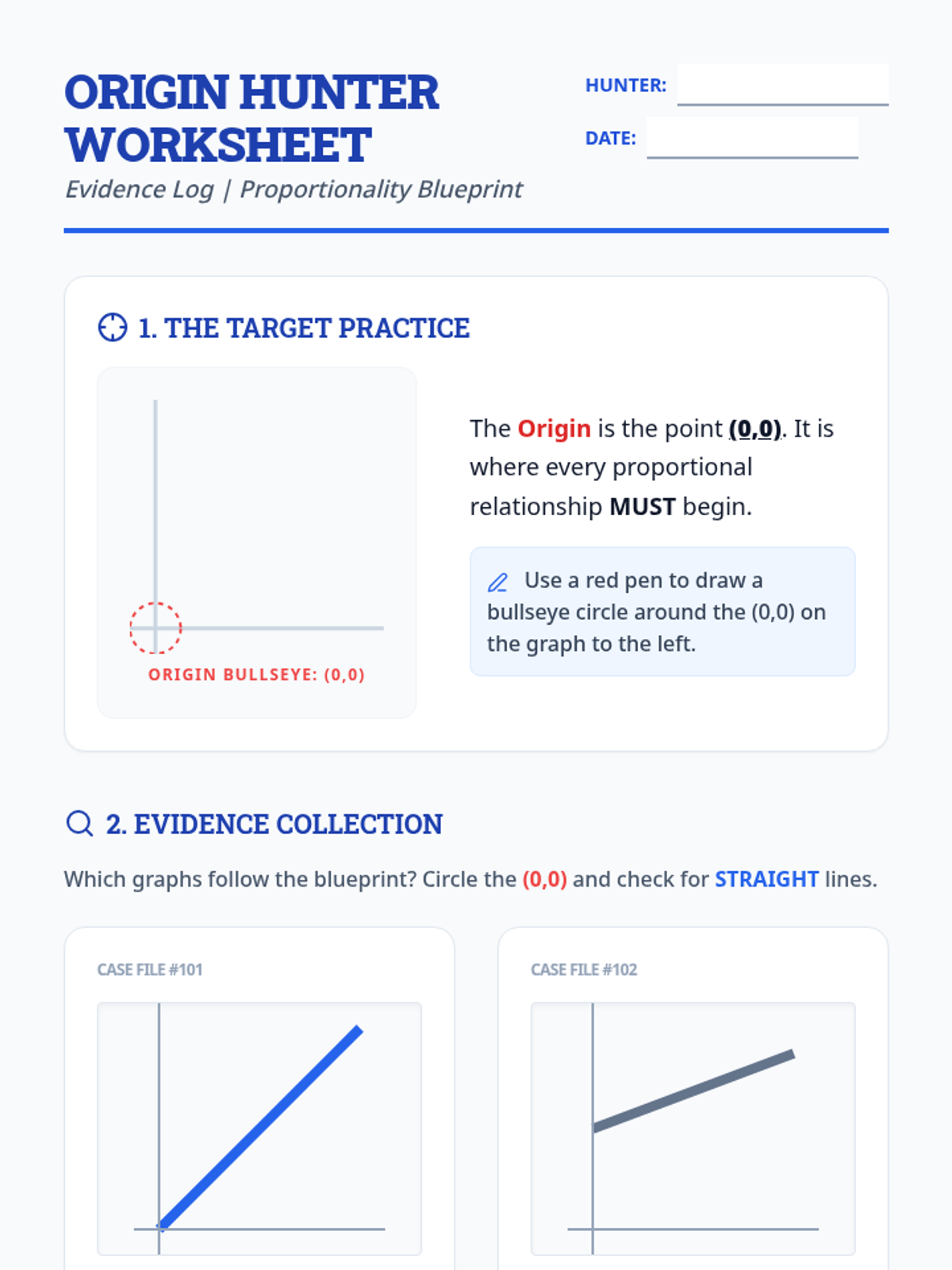
Comparisons of quantities using unit rates and proportional reasoning. Connects tables, graphs, and equations to represent constant rates of change.
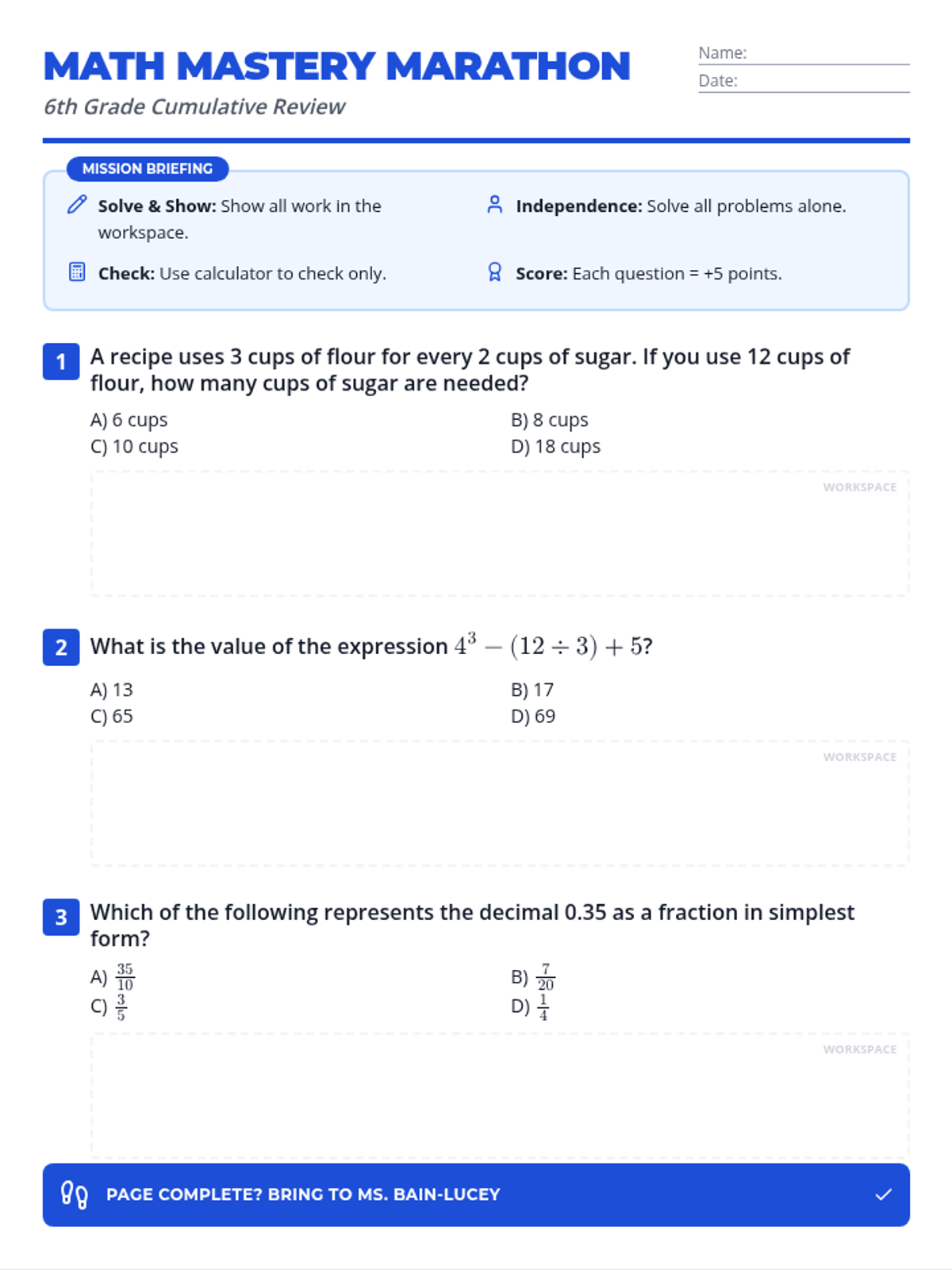
A cumulative review and assessment of ratio and rate concepts through a 'Lab Challenge'.
Students solve complex, multi-step ratio problems using a variety of visual models.
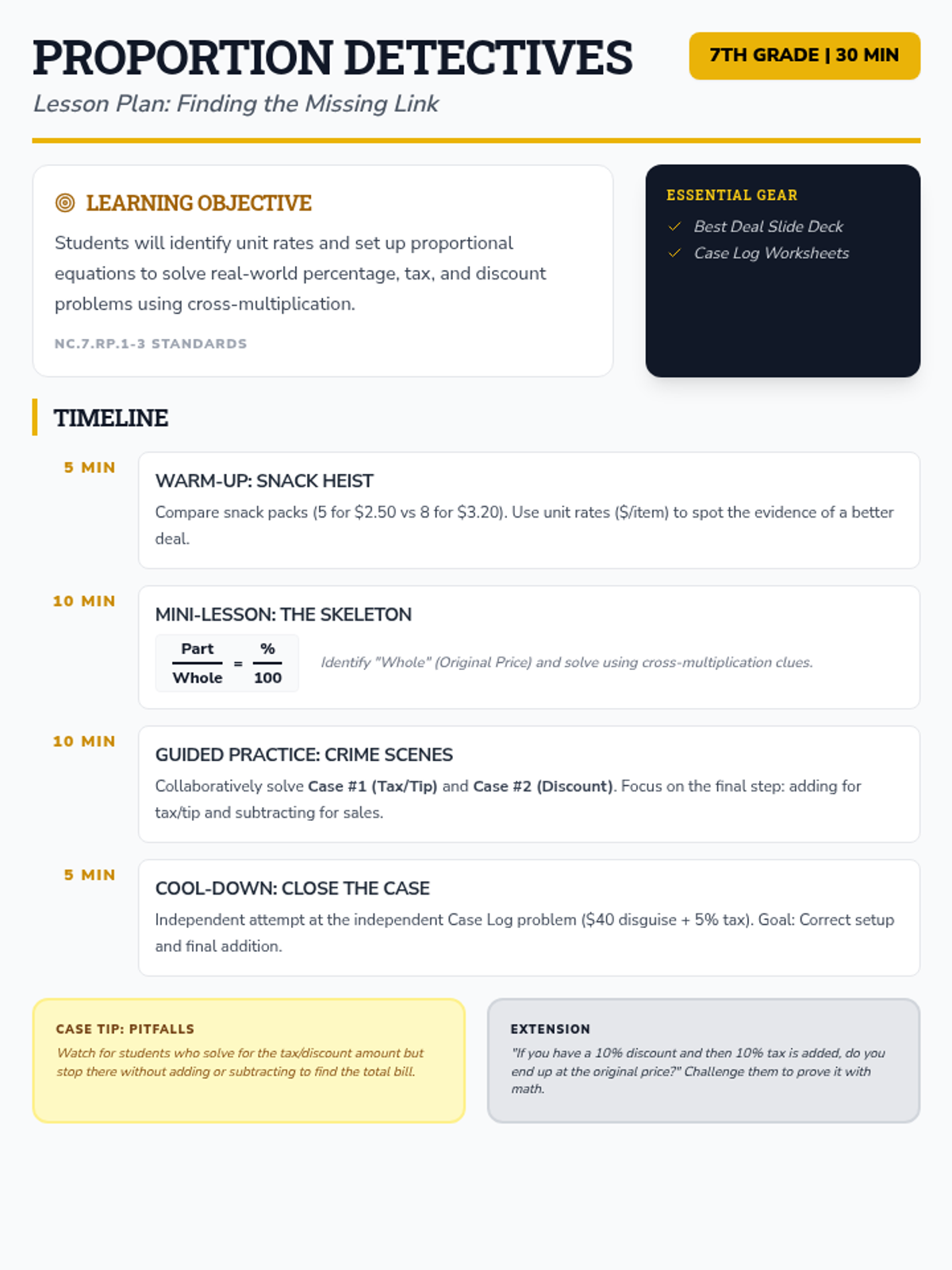
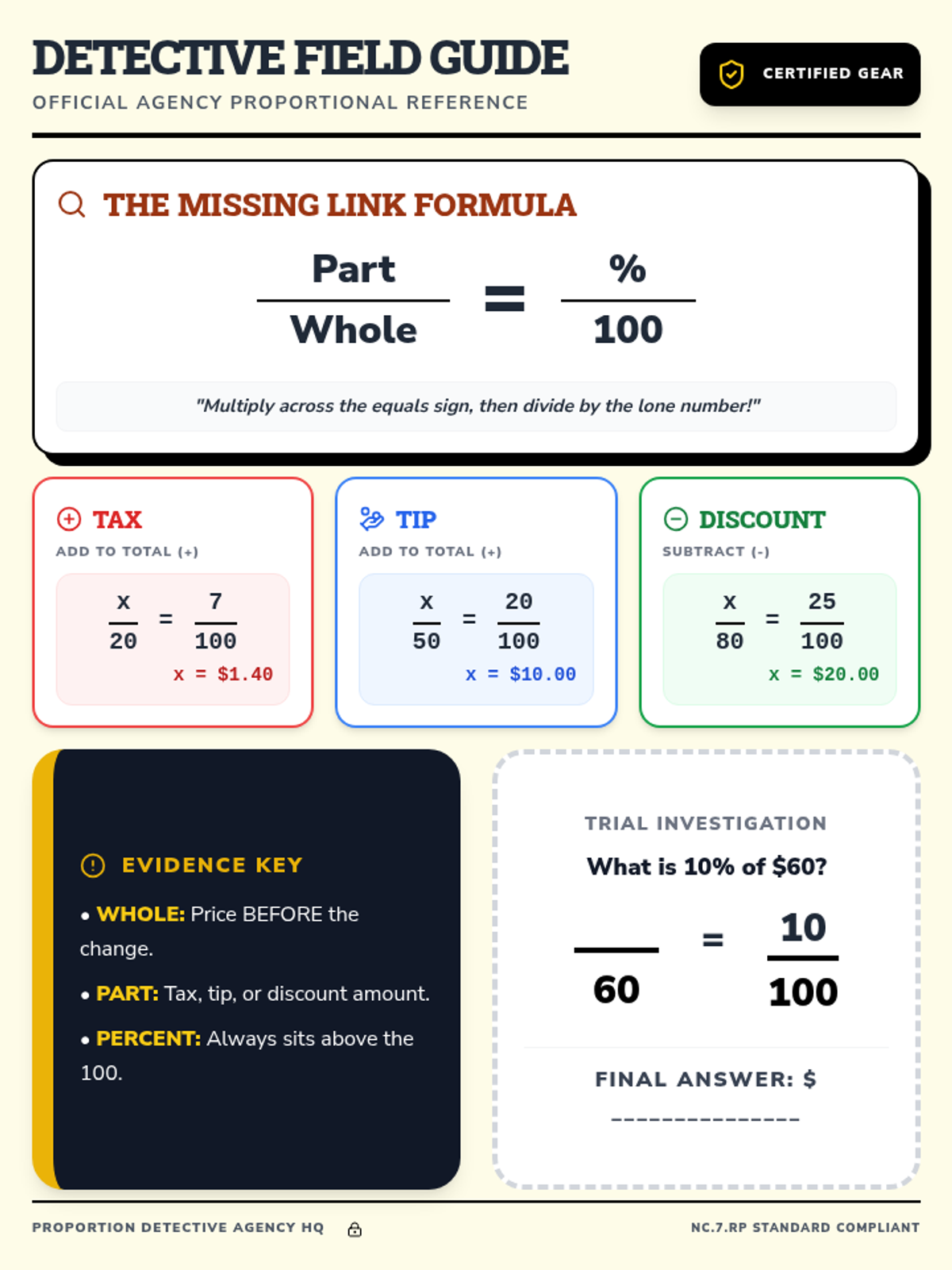
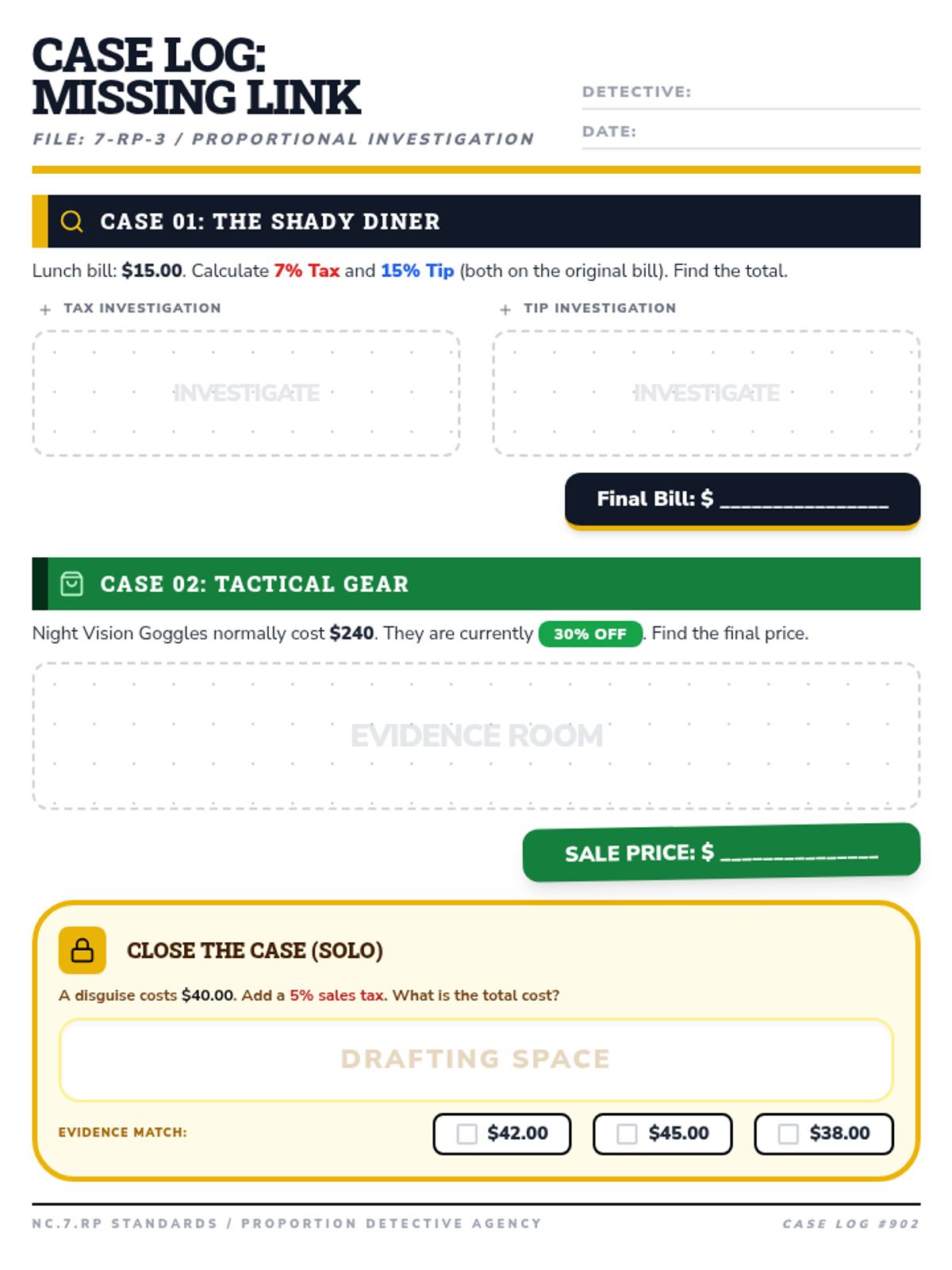
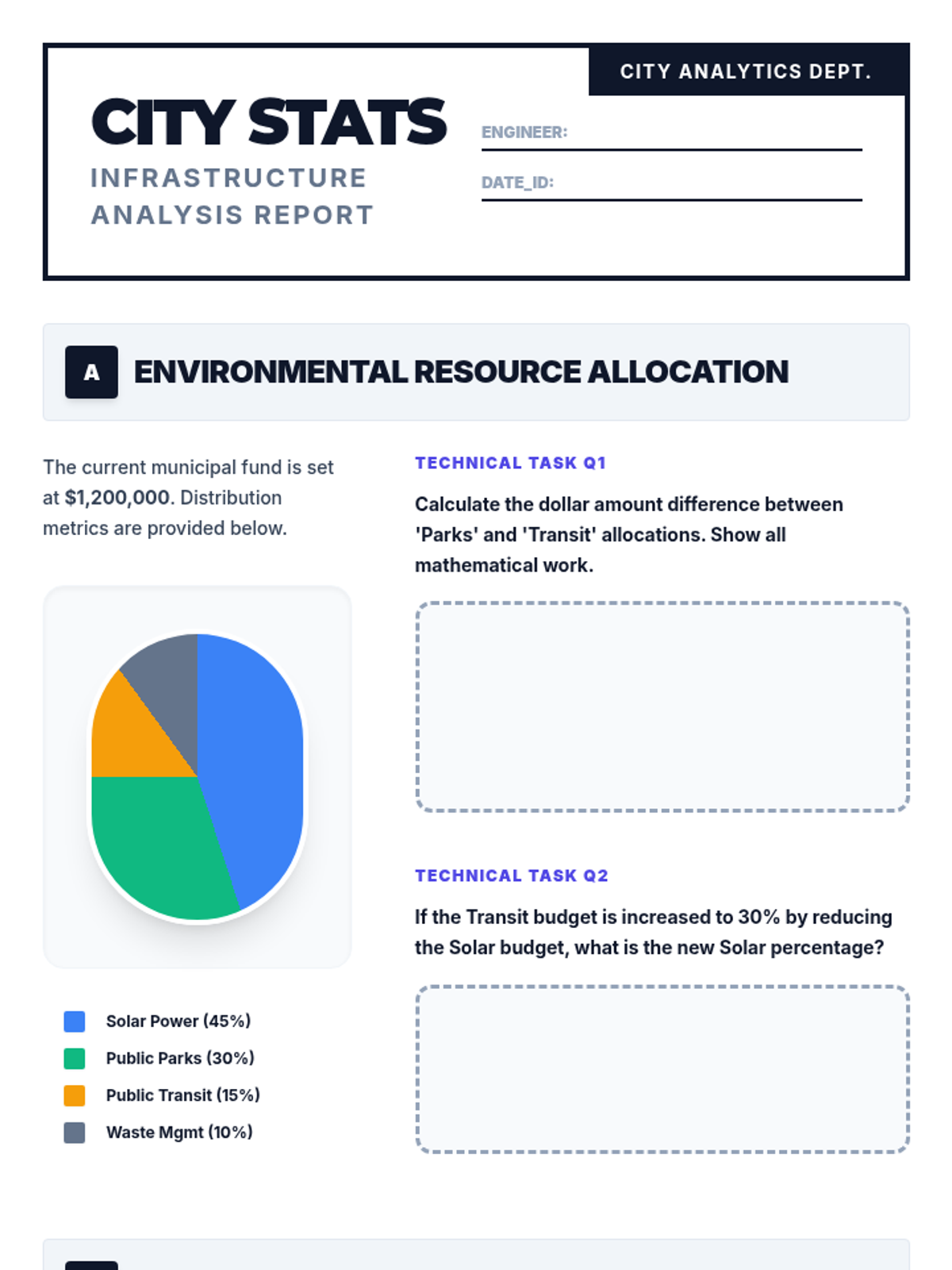
Students find the whole given a part and the percent, or find the part given the whole and percent.
Students define percent as a rate per 100 and represent percents using 10x10 grids.
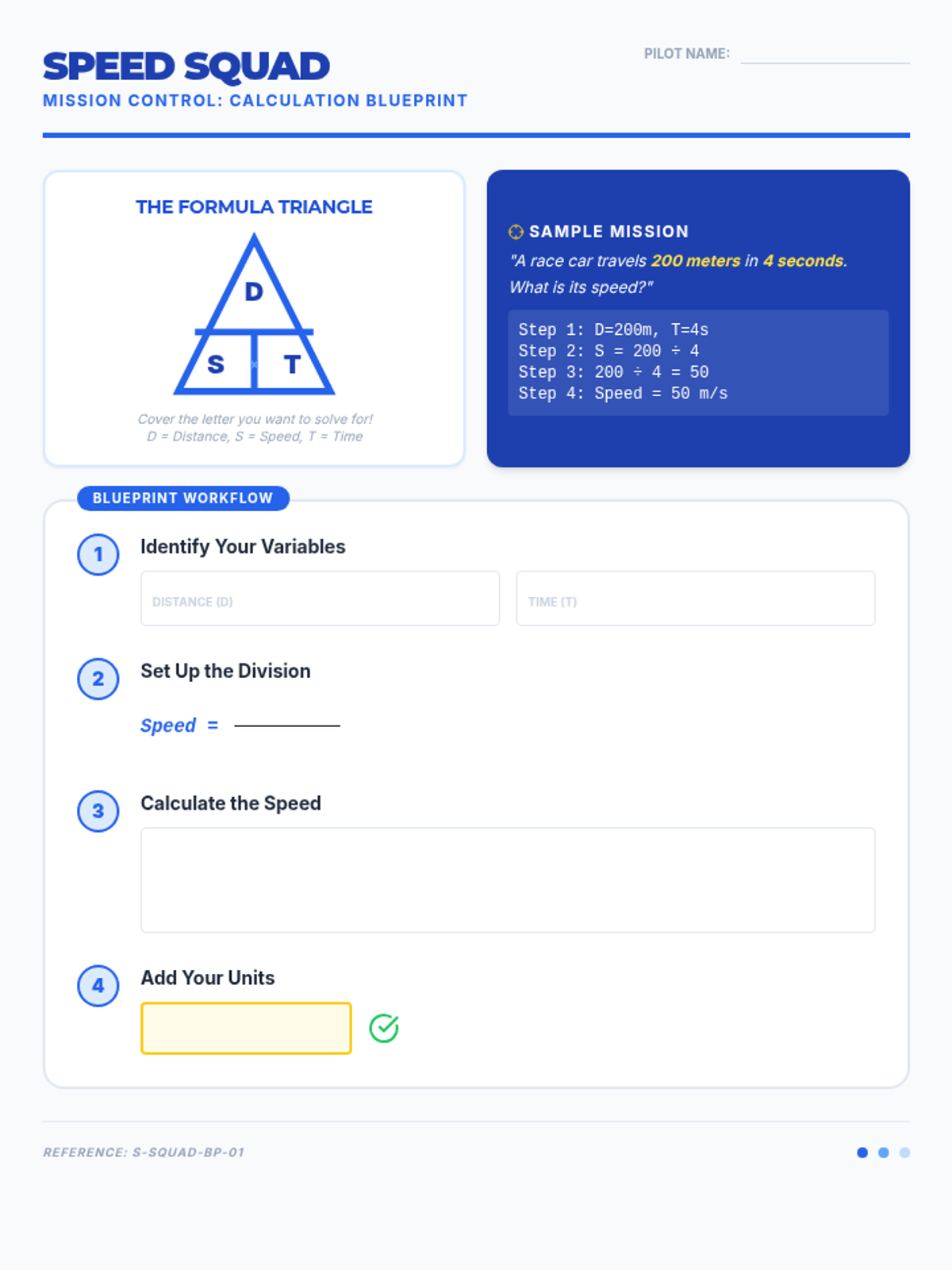
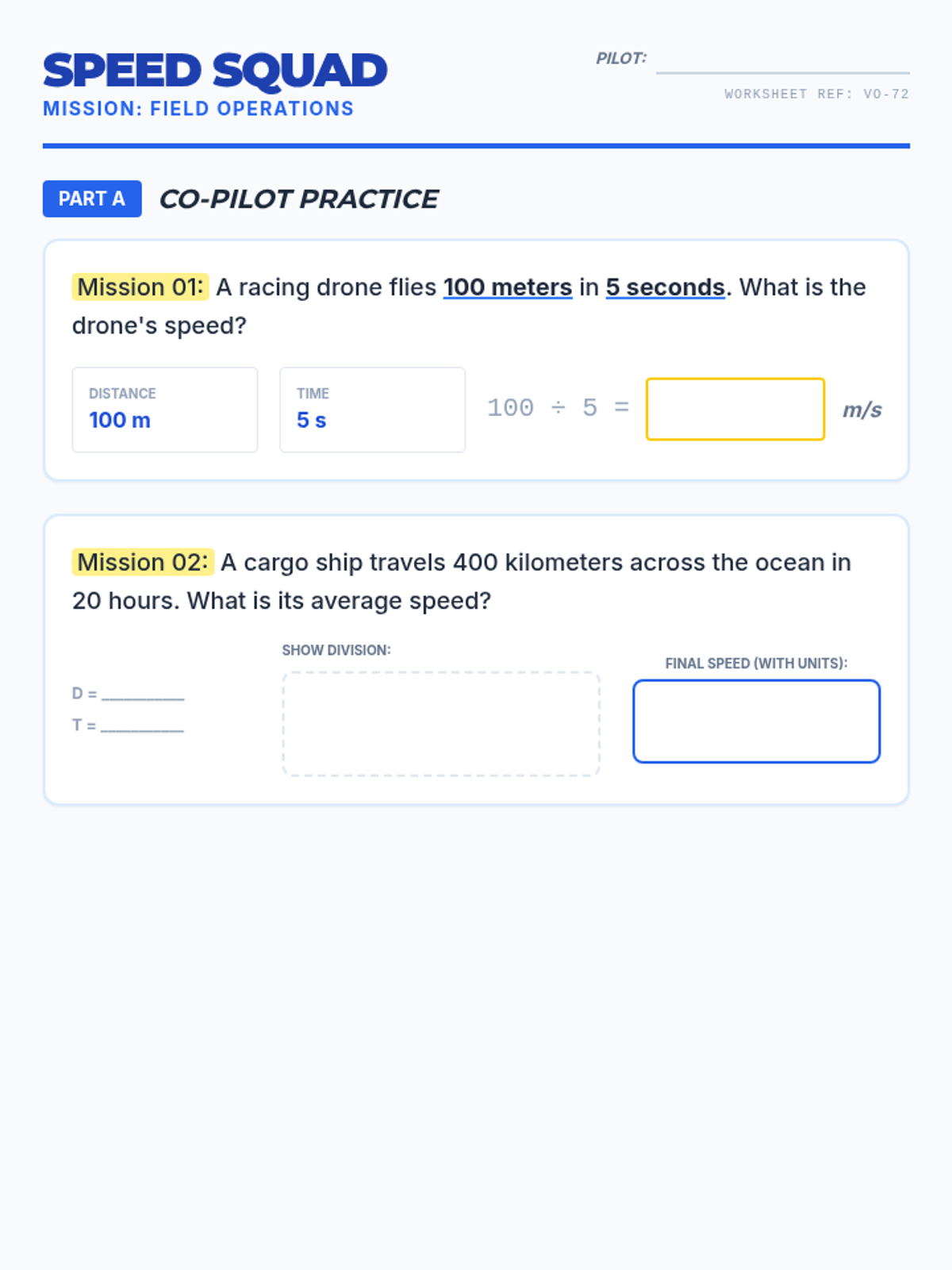
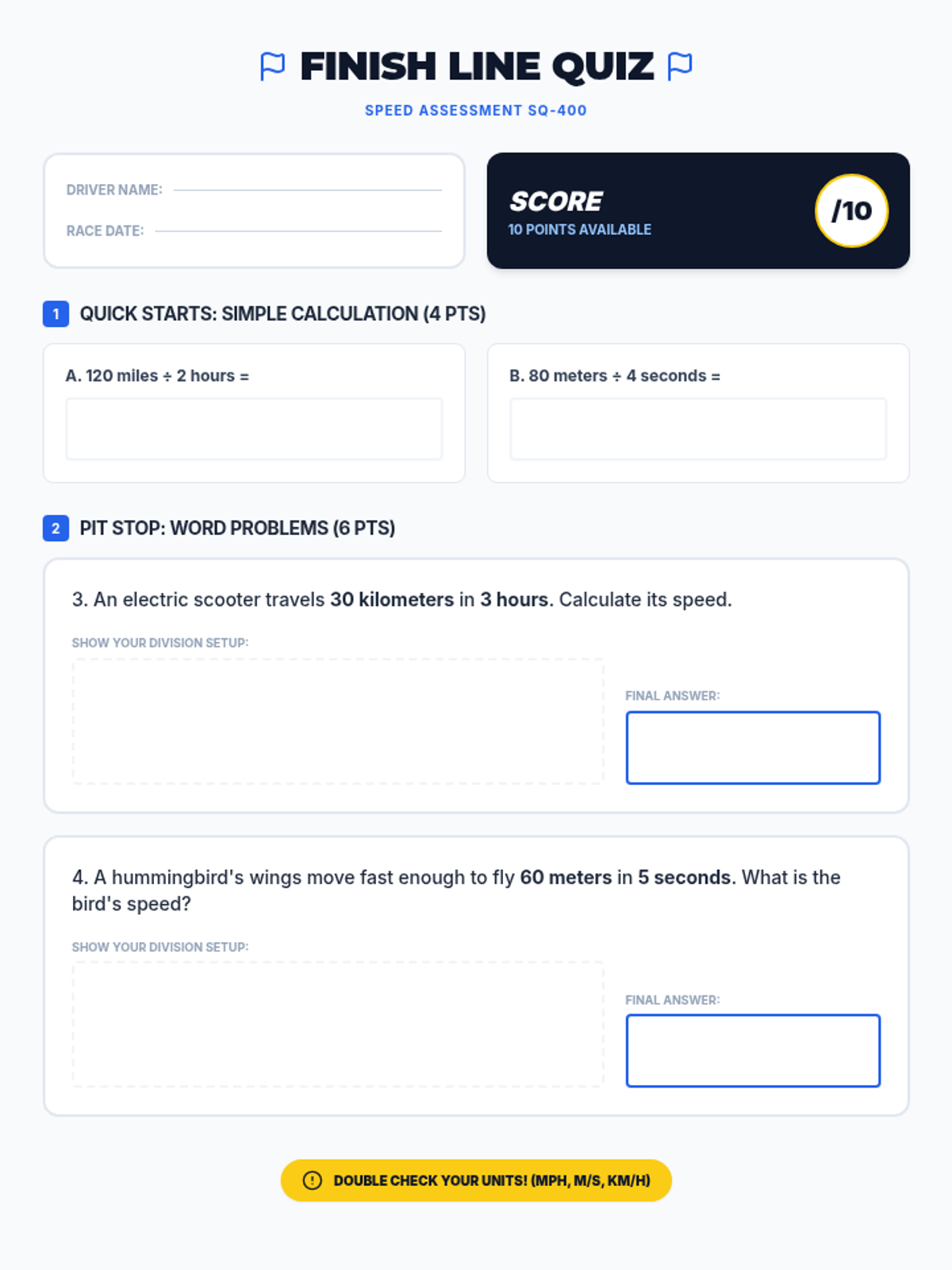
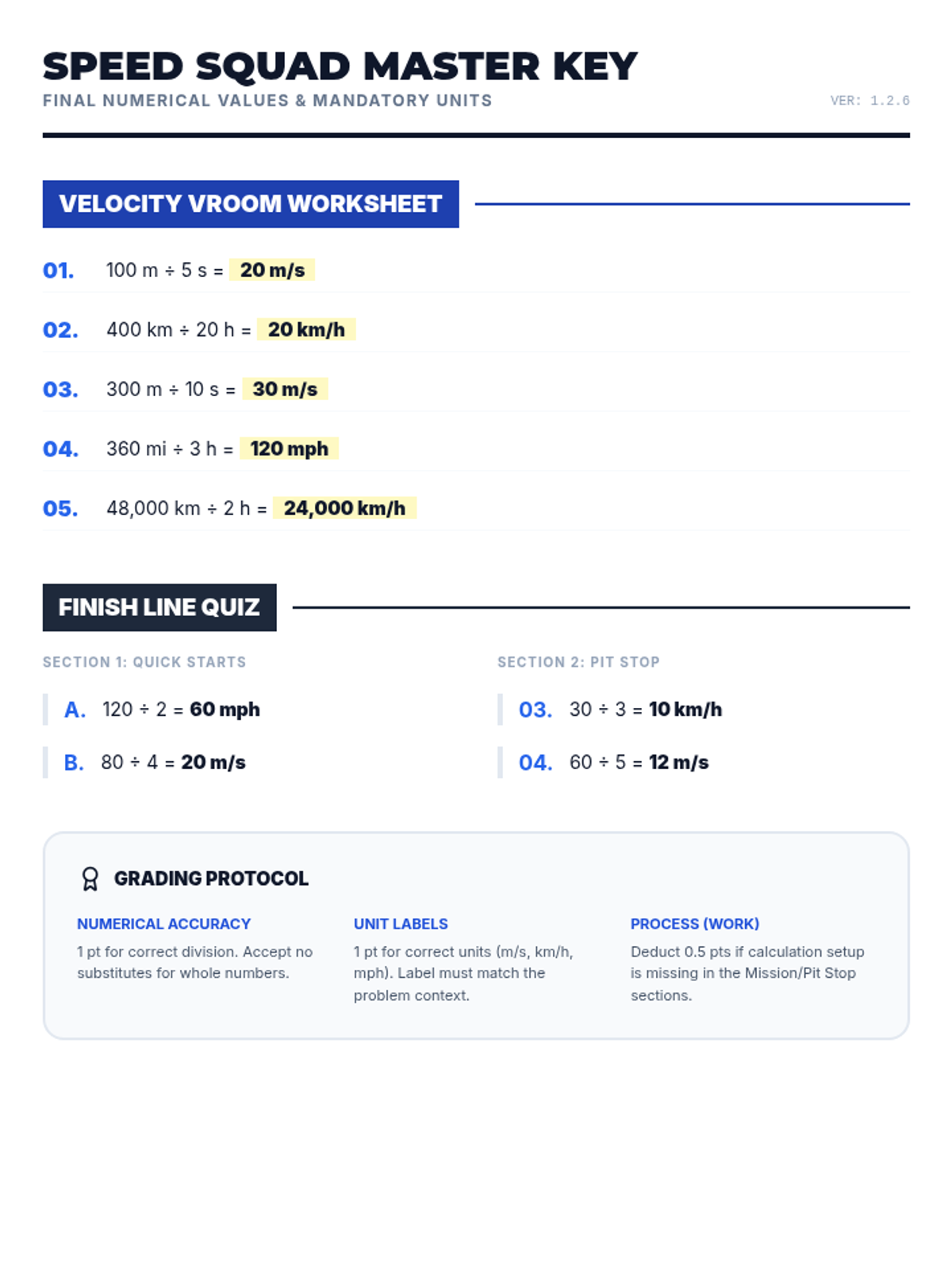
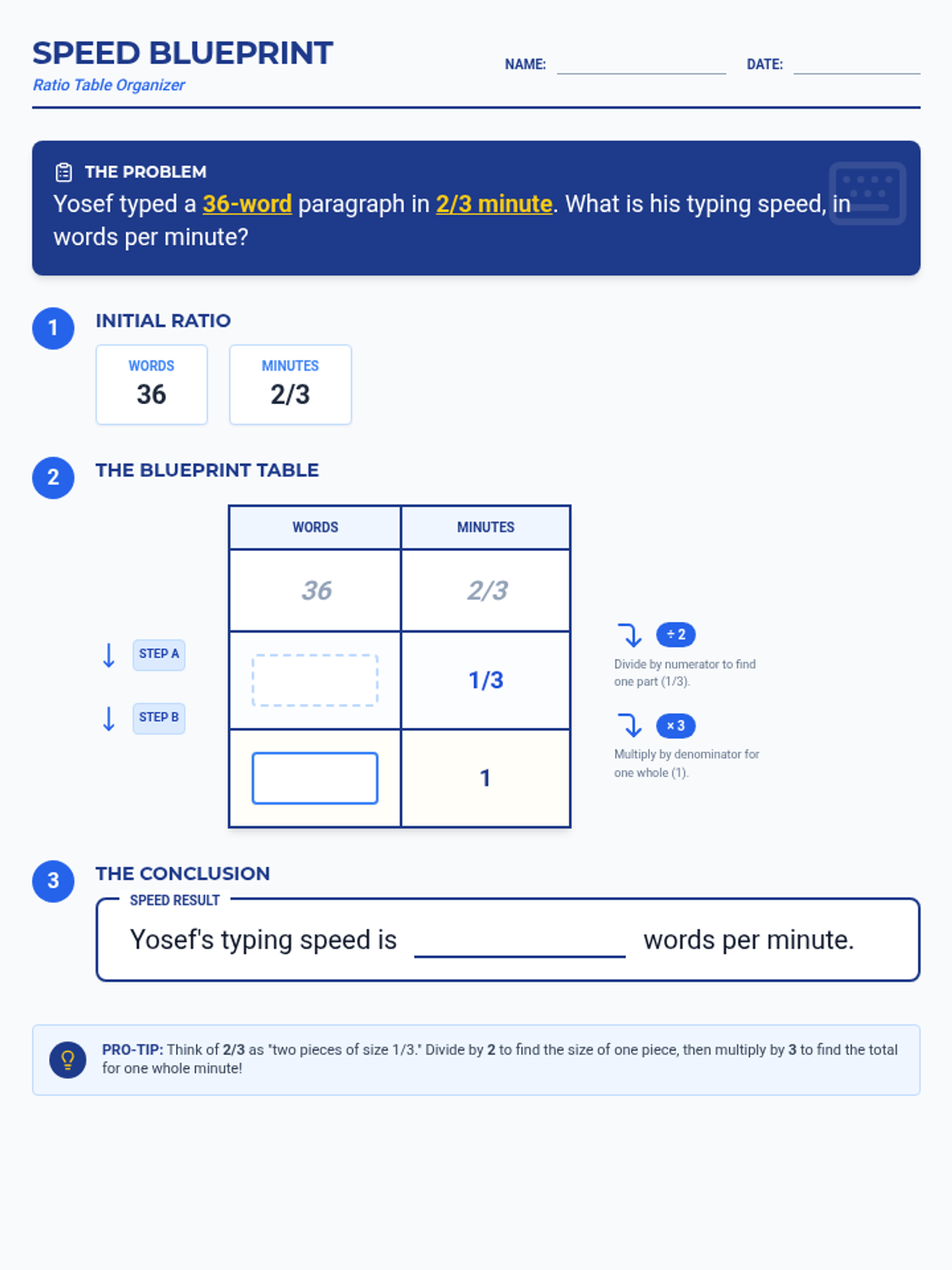
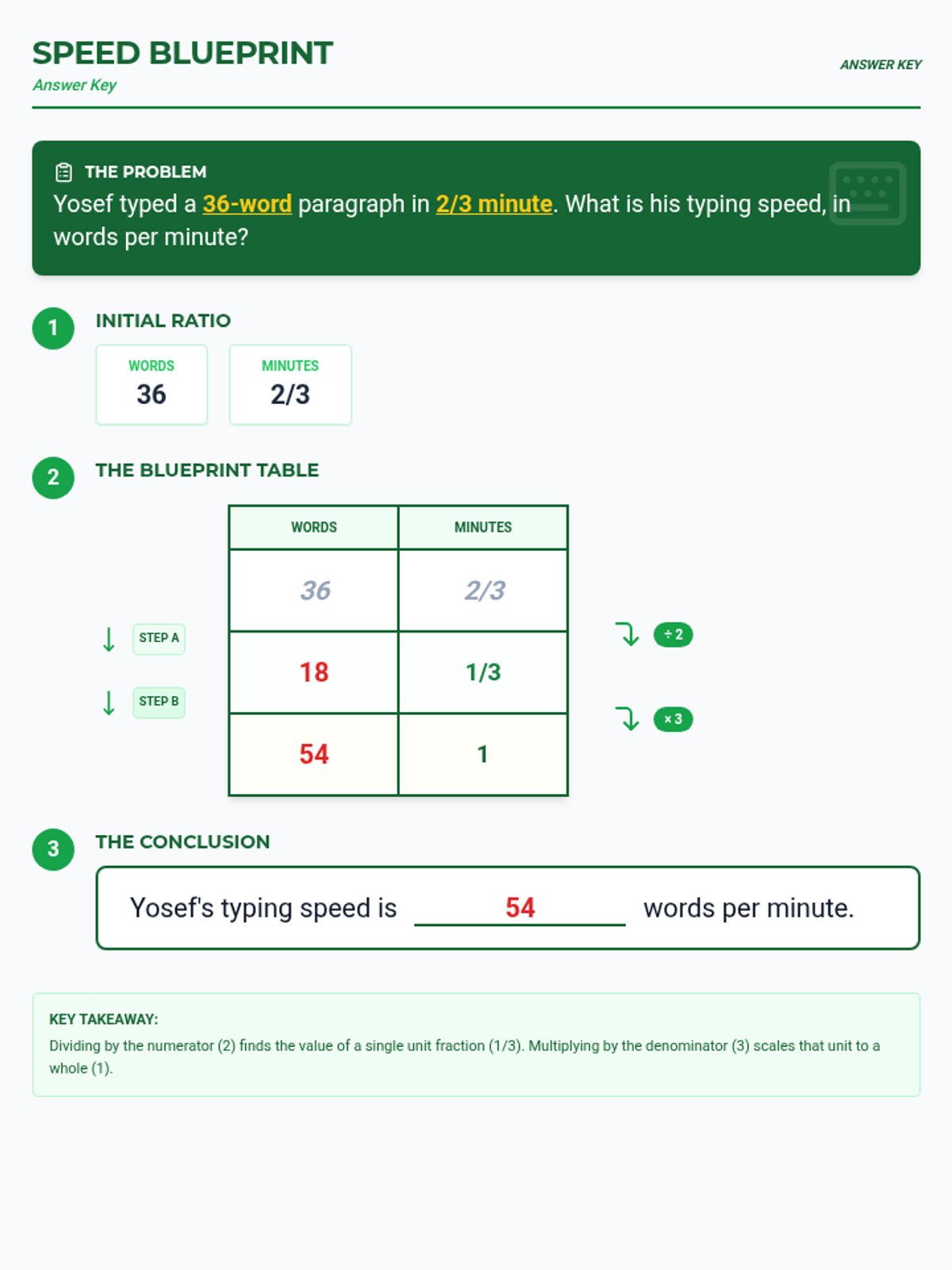
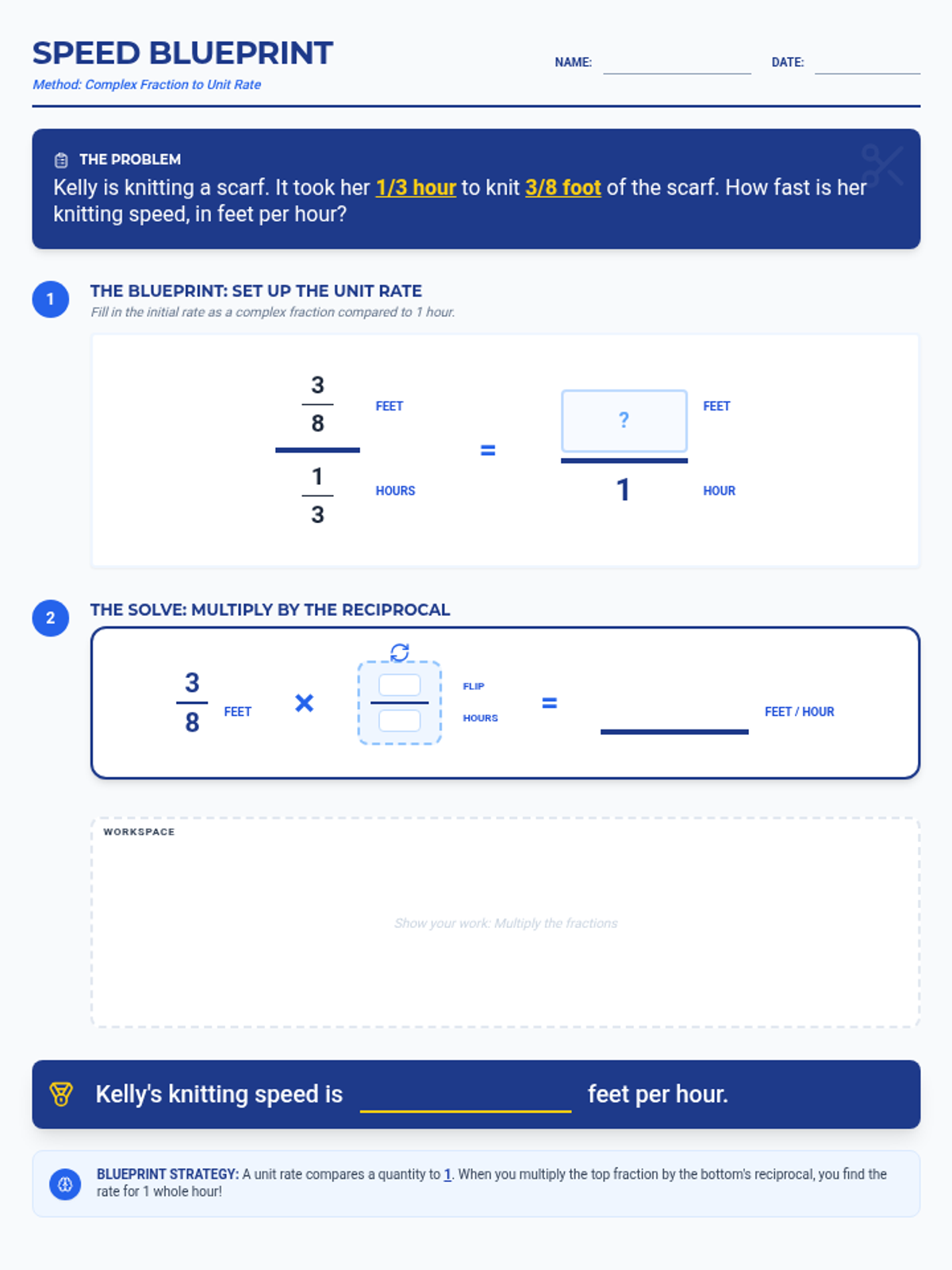
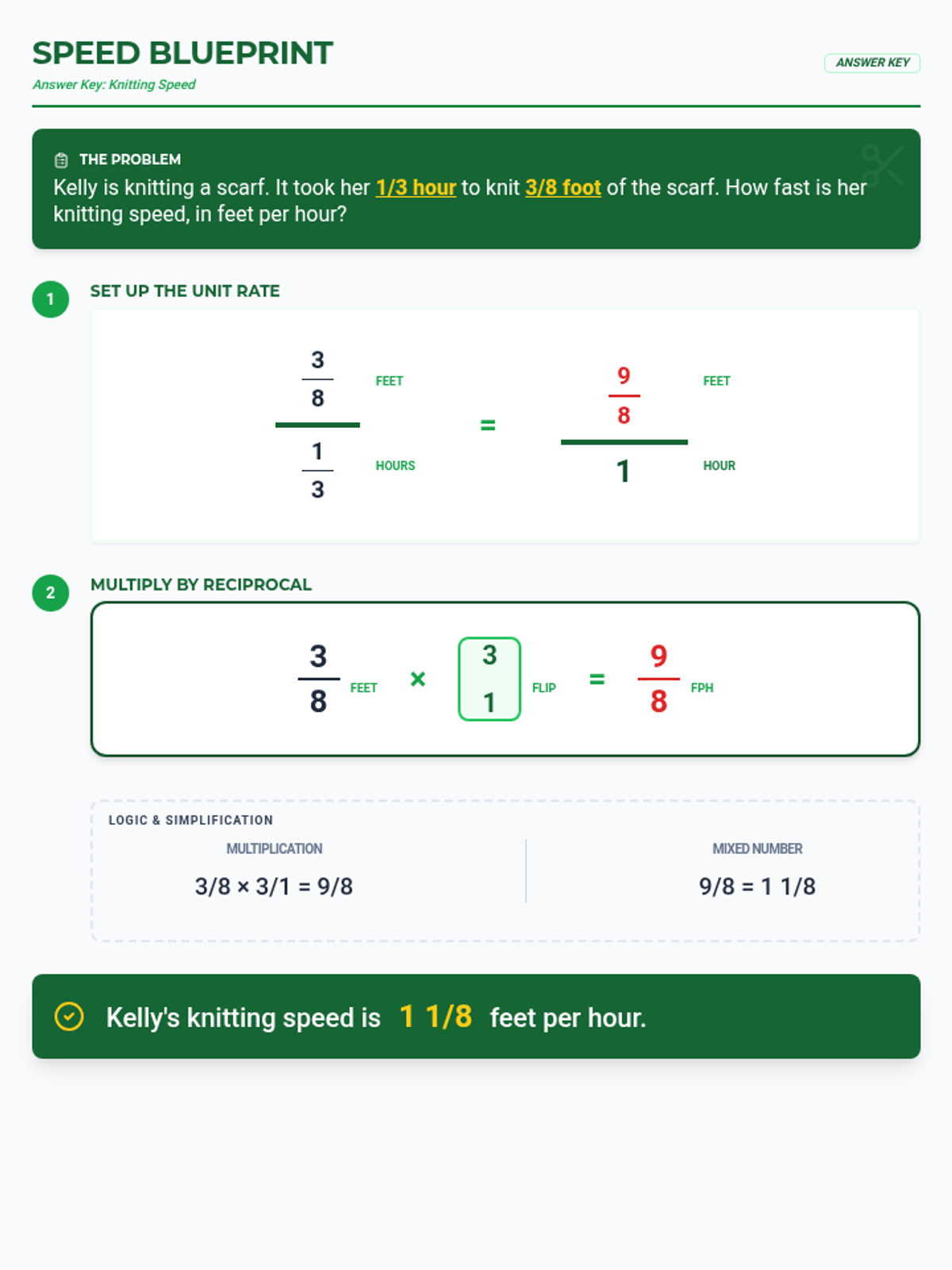
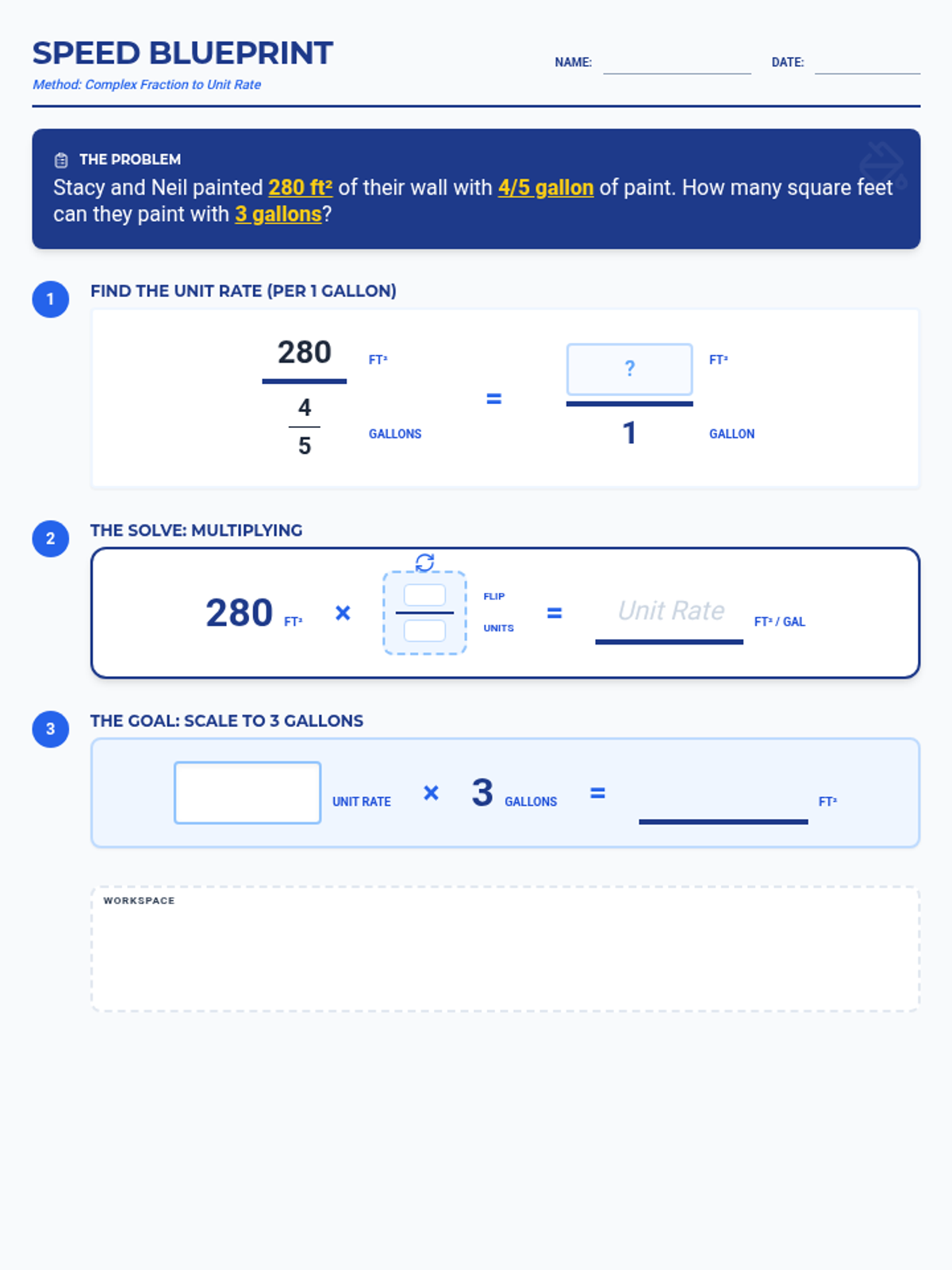
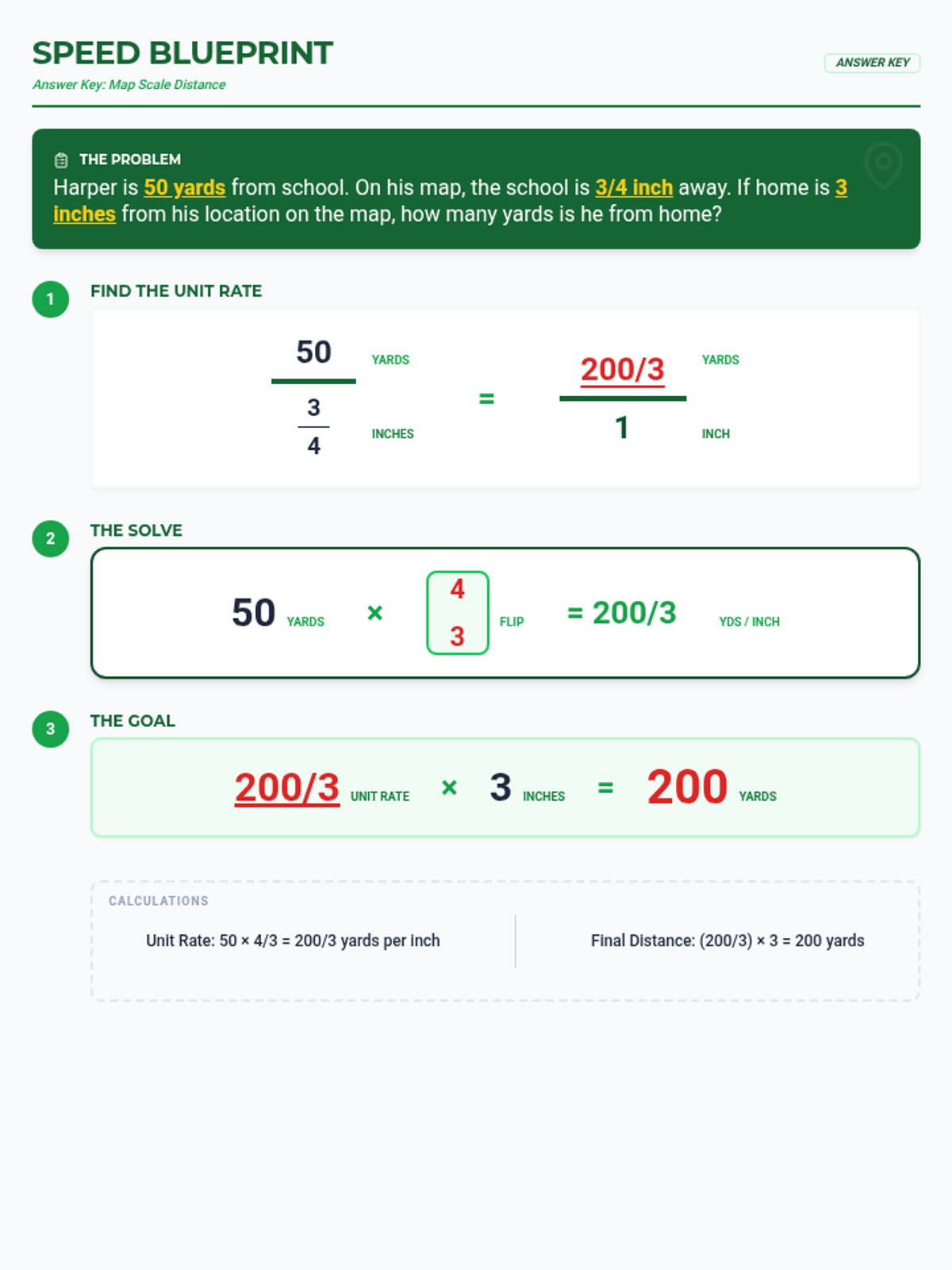
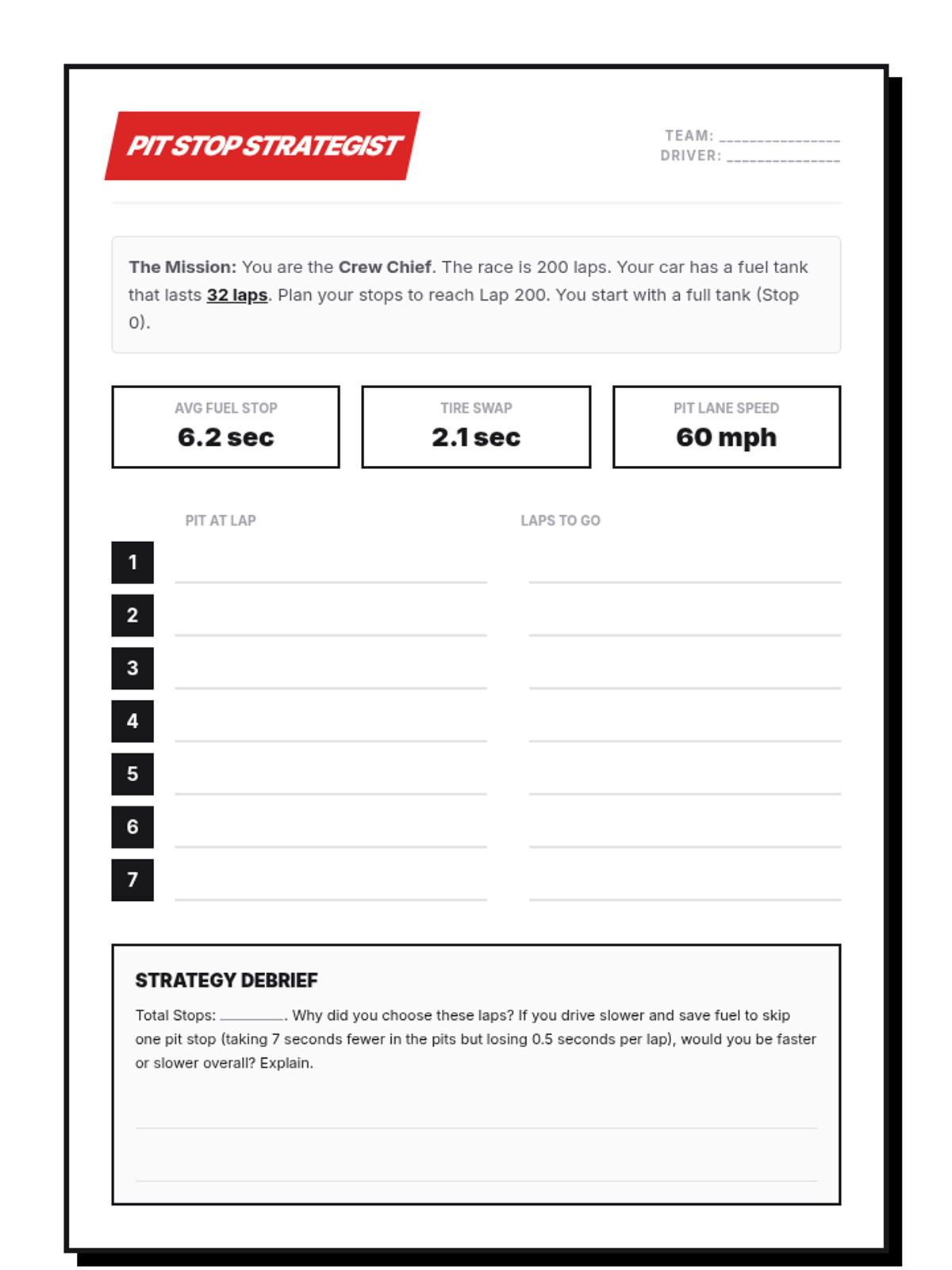
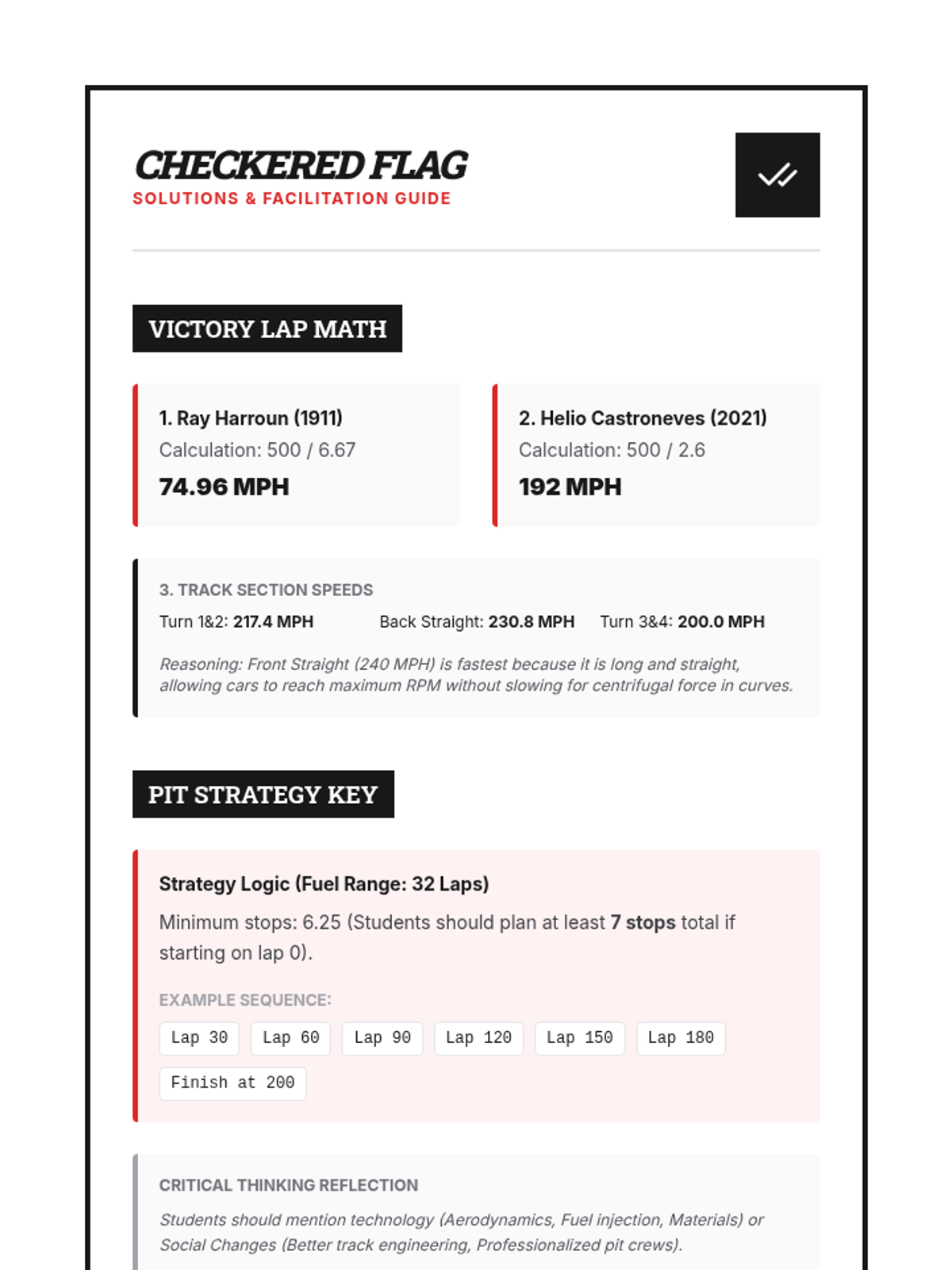
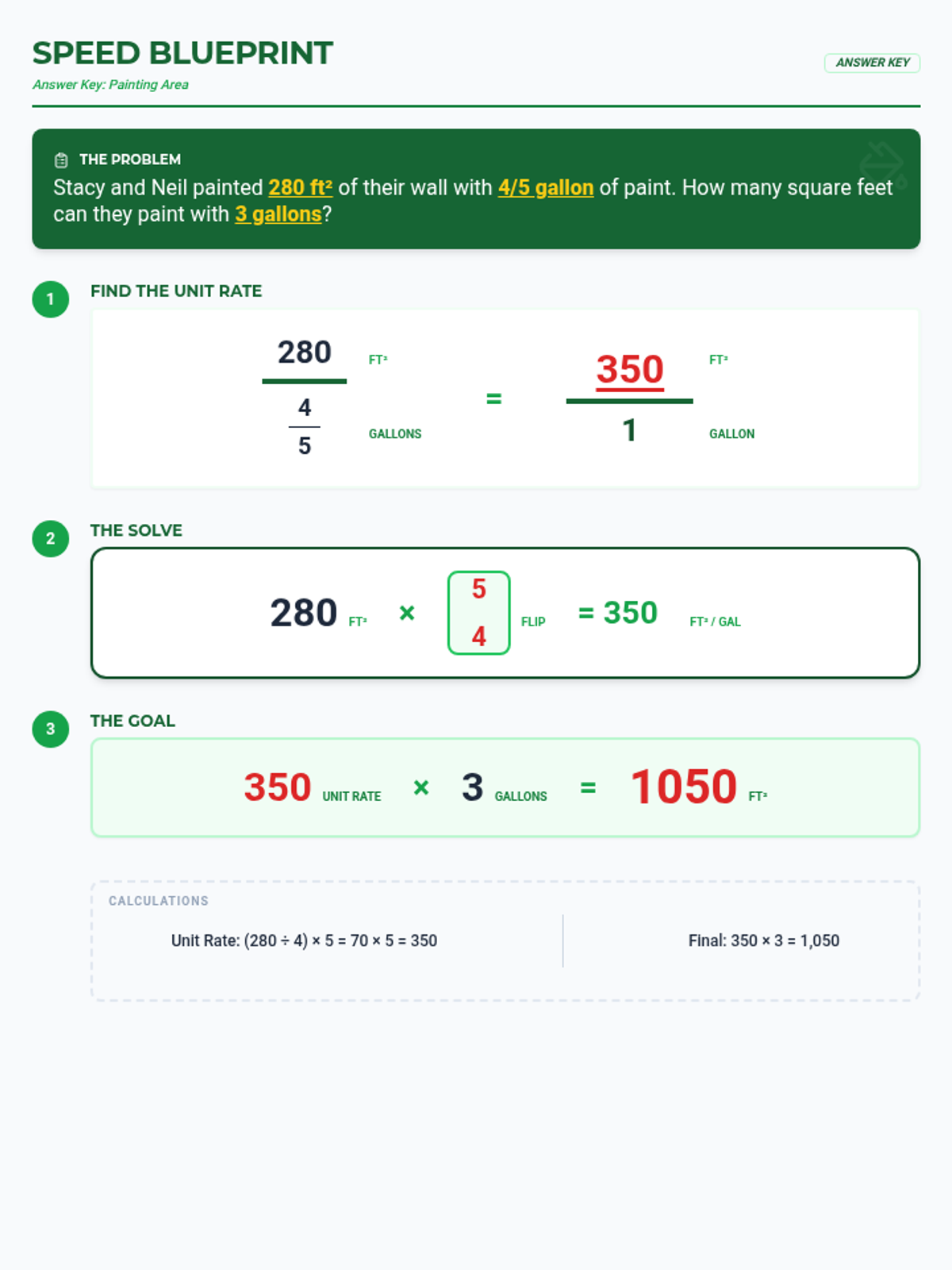
Students solve problems involving constant speed using unit rates and ratio reasoning.
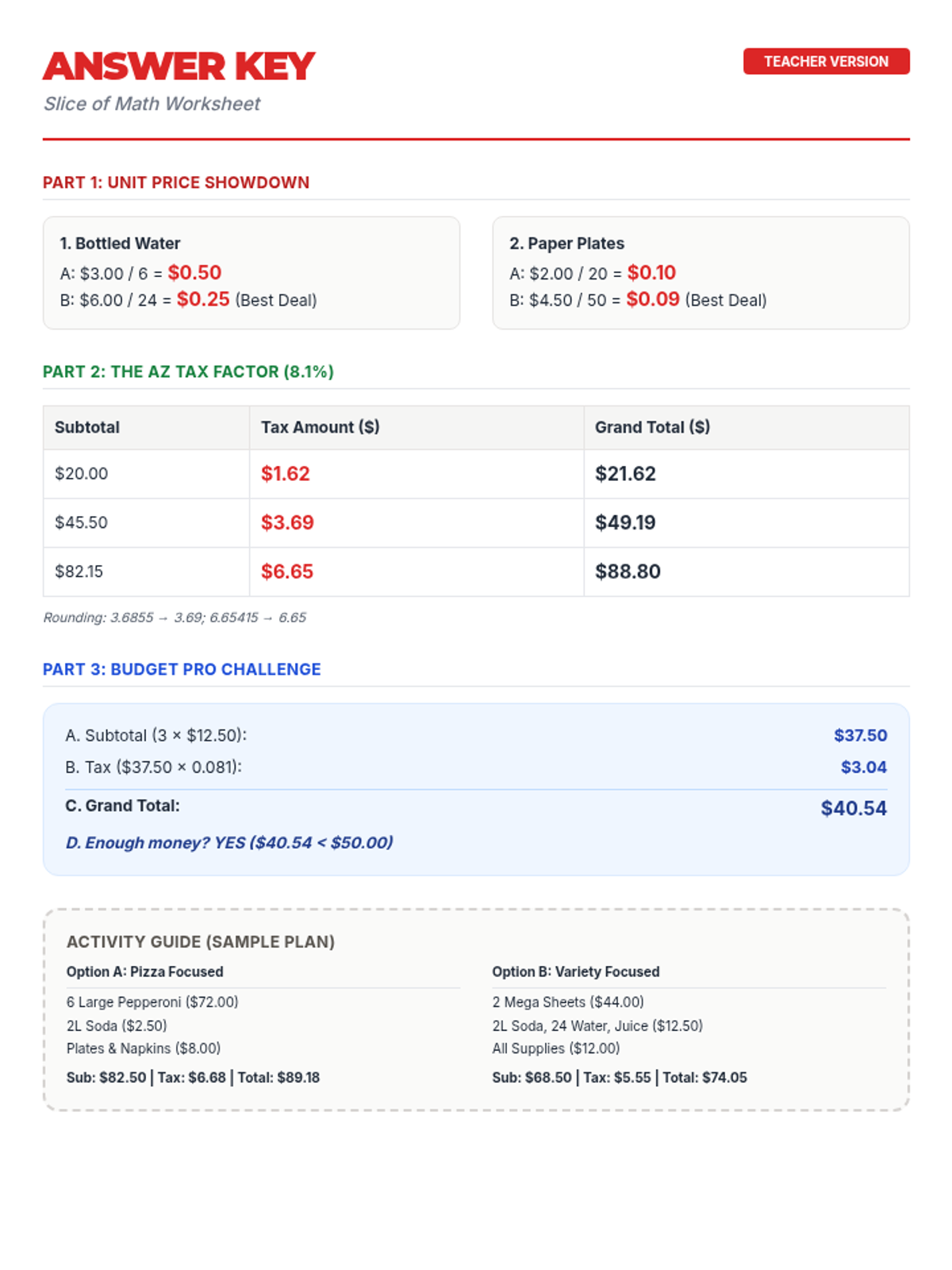
Students apply unit rate reasoning to find the 'better buy' in shopping scenarios.
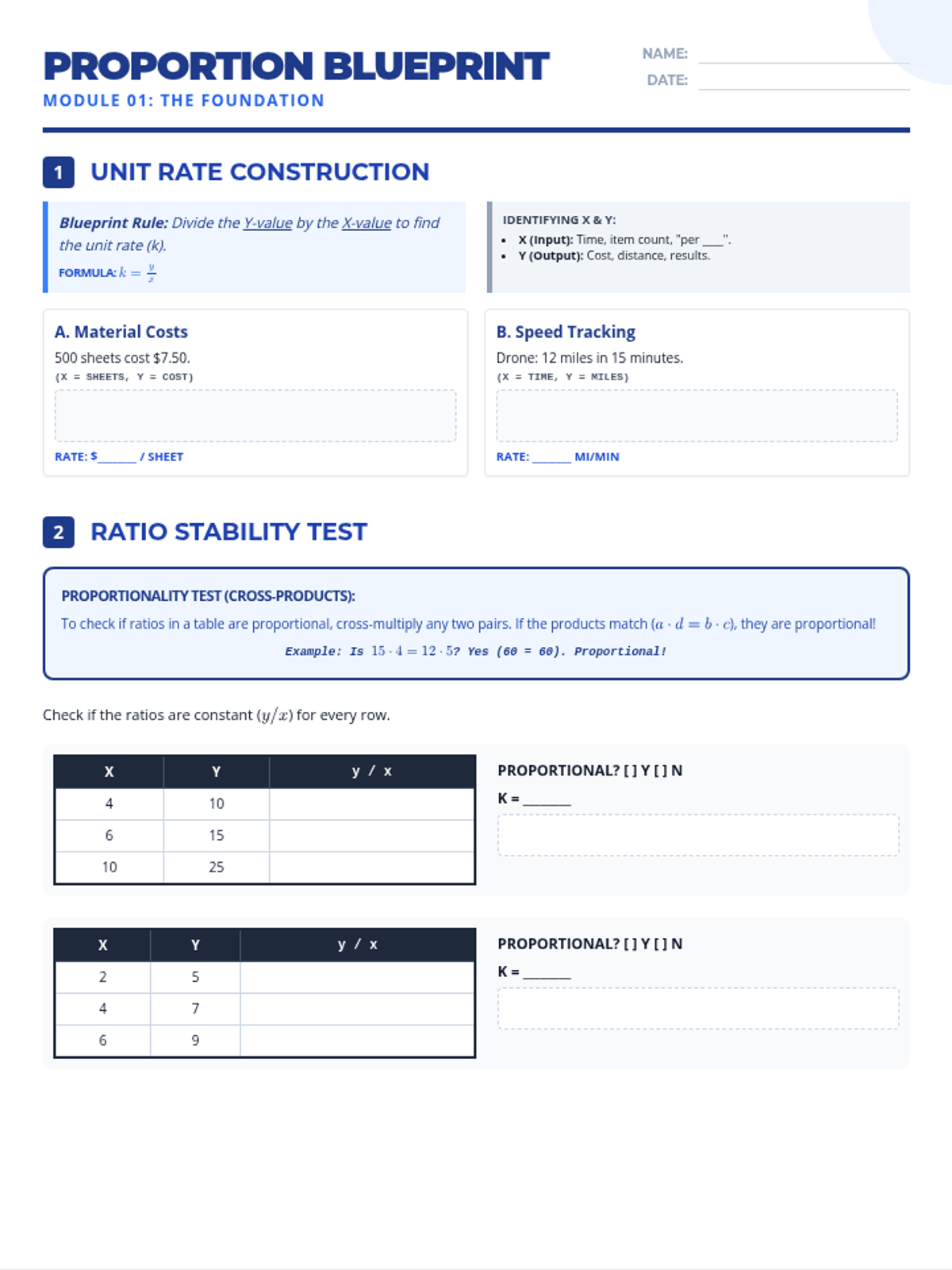
Students transition from ratios to unit rates, understanding the concept of 'per 1'.
Students use double number lines to solve ratio problems involving distance, time, and scaling.
Students organize equivalent ratios into tables to identify patterns and solve problems.
Students explore equivalent ratios using simple multiplication and division strategies.
Students use tape diagrams to represent part-to-part and part-to-whole relationships visually.
Students learn to use ratio language to describe a relationship between two quantities. Focus on "for every" language and identifying parts and wholes.
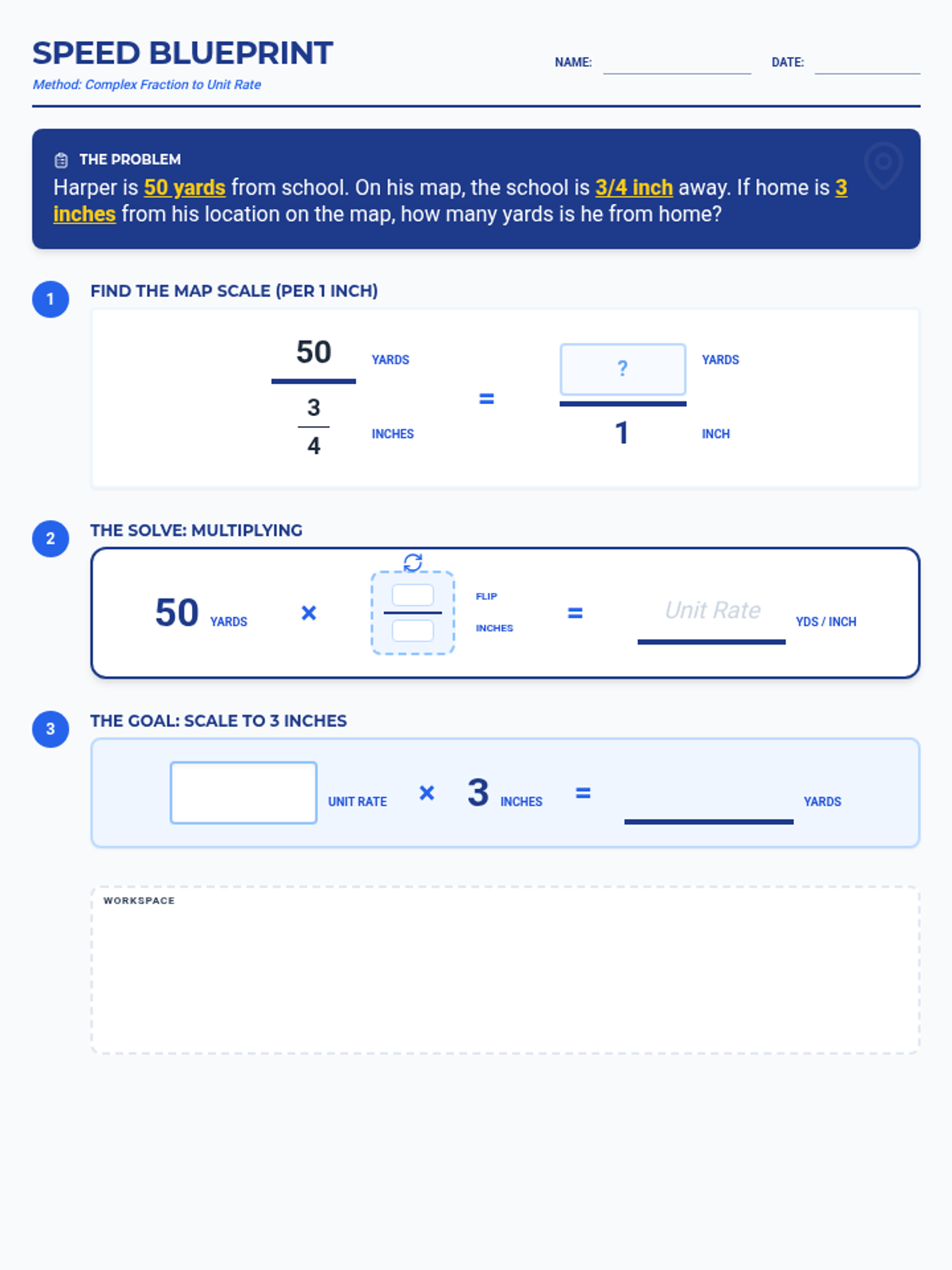
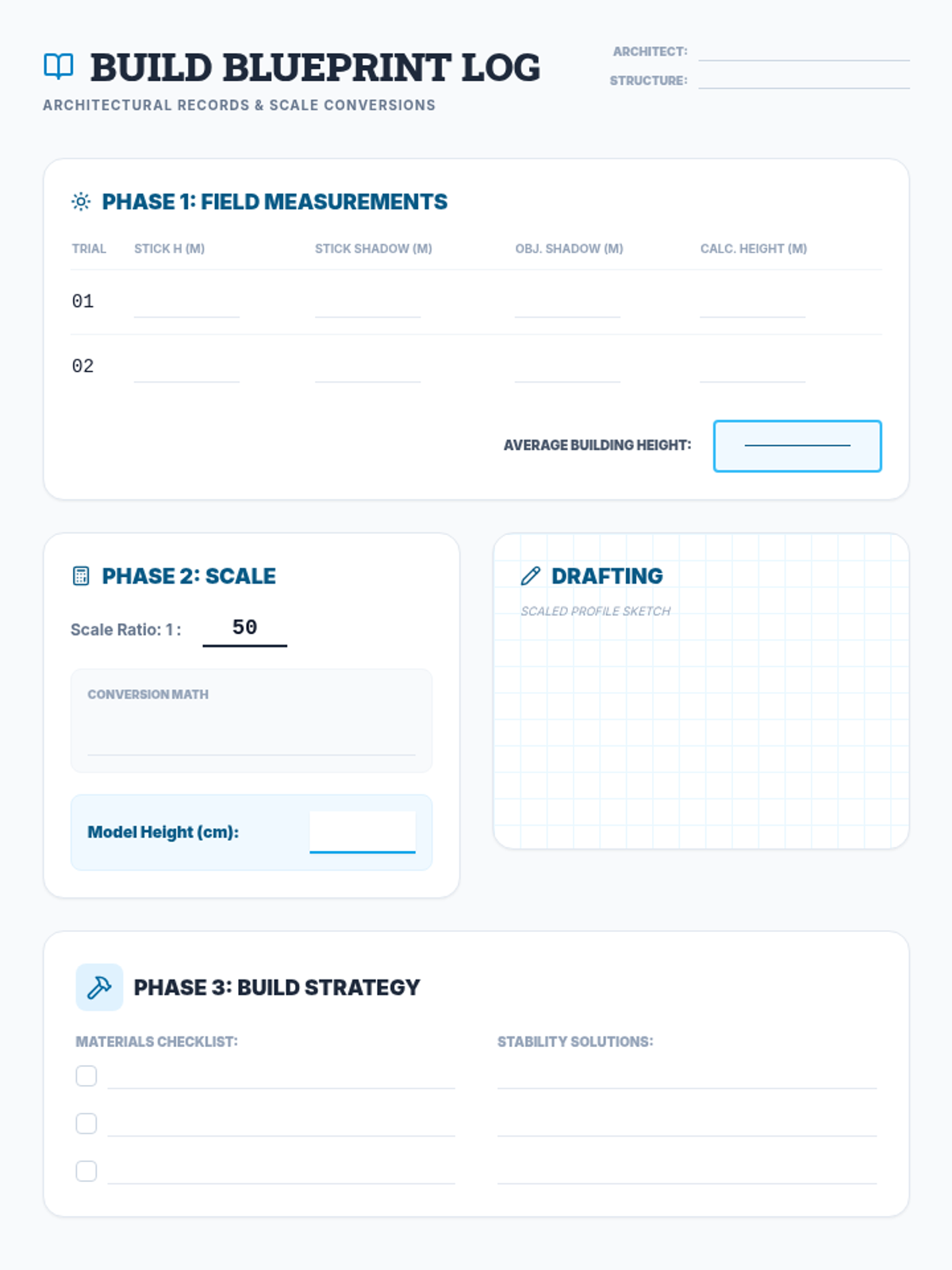
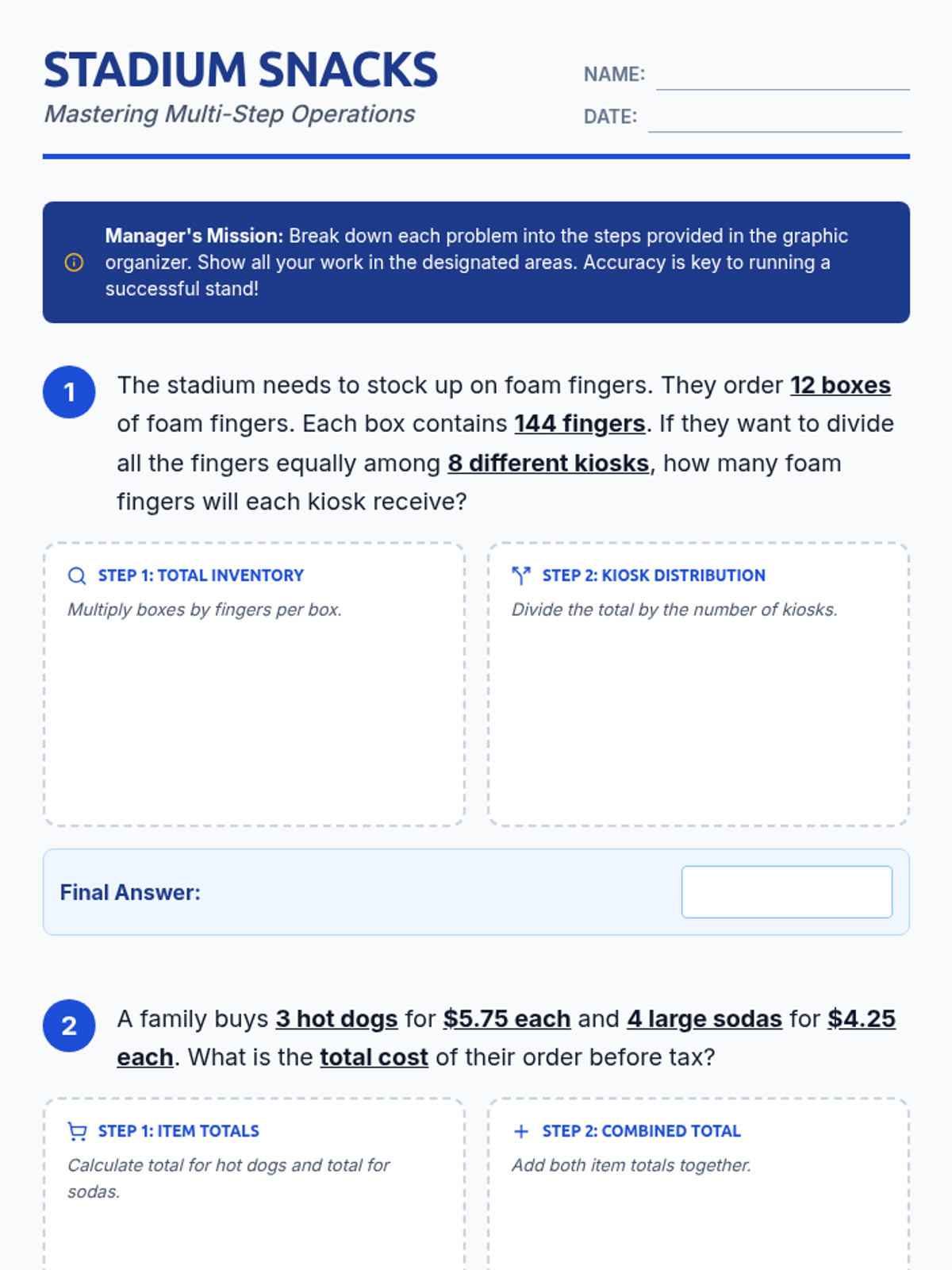
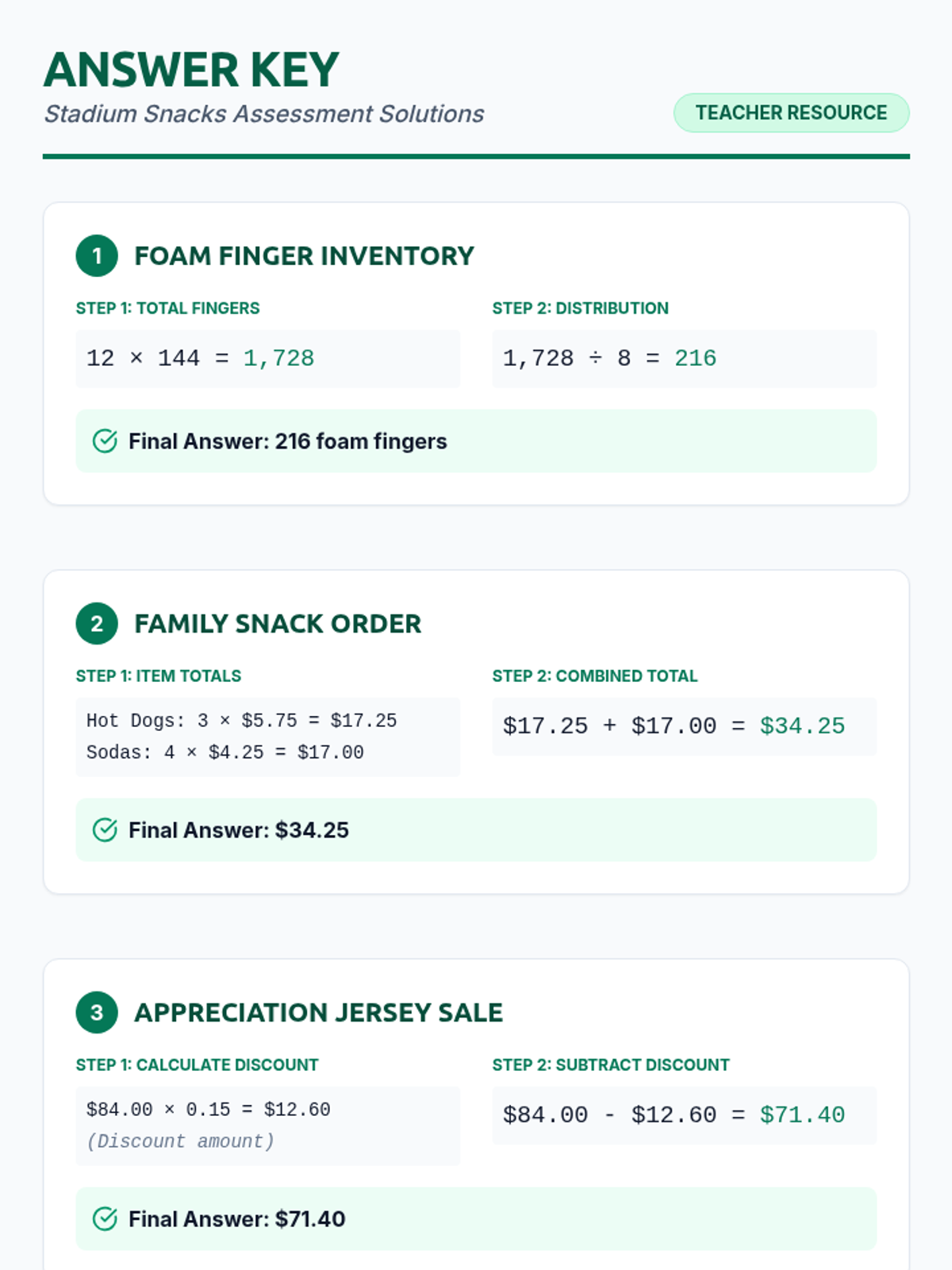
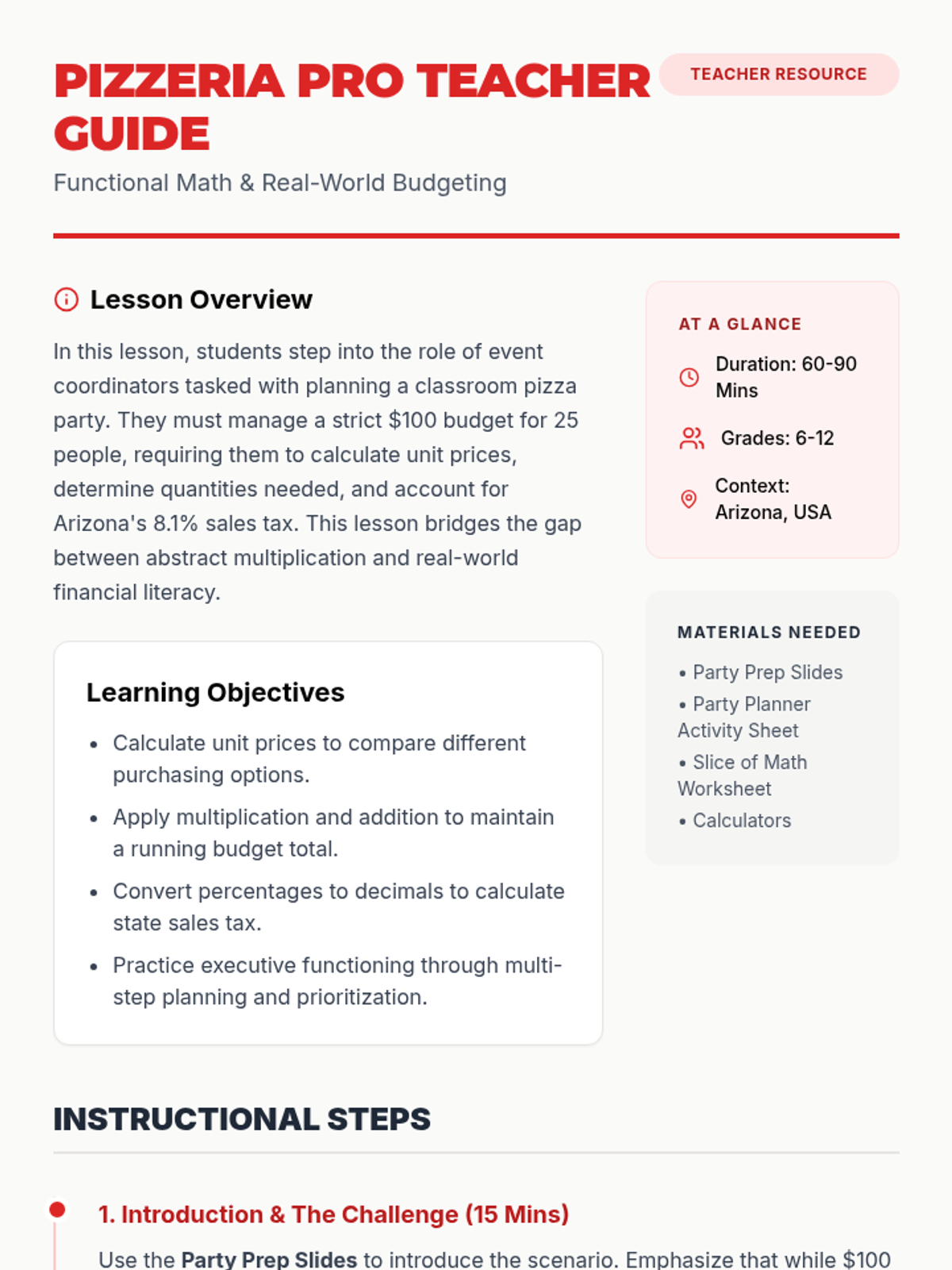
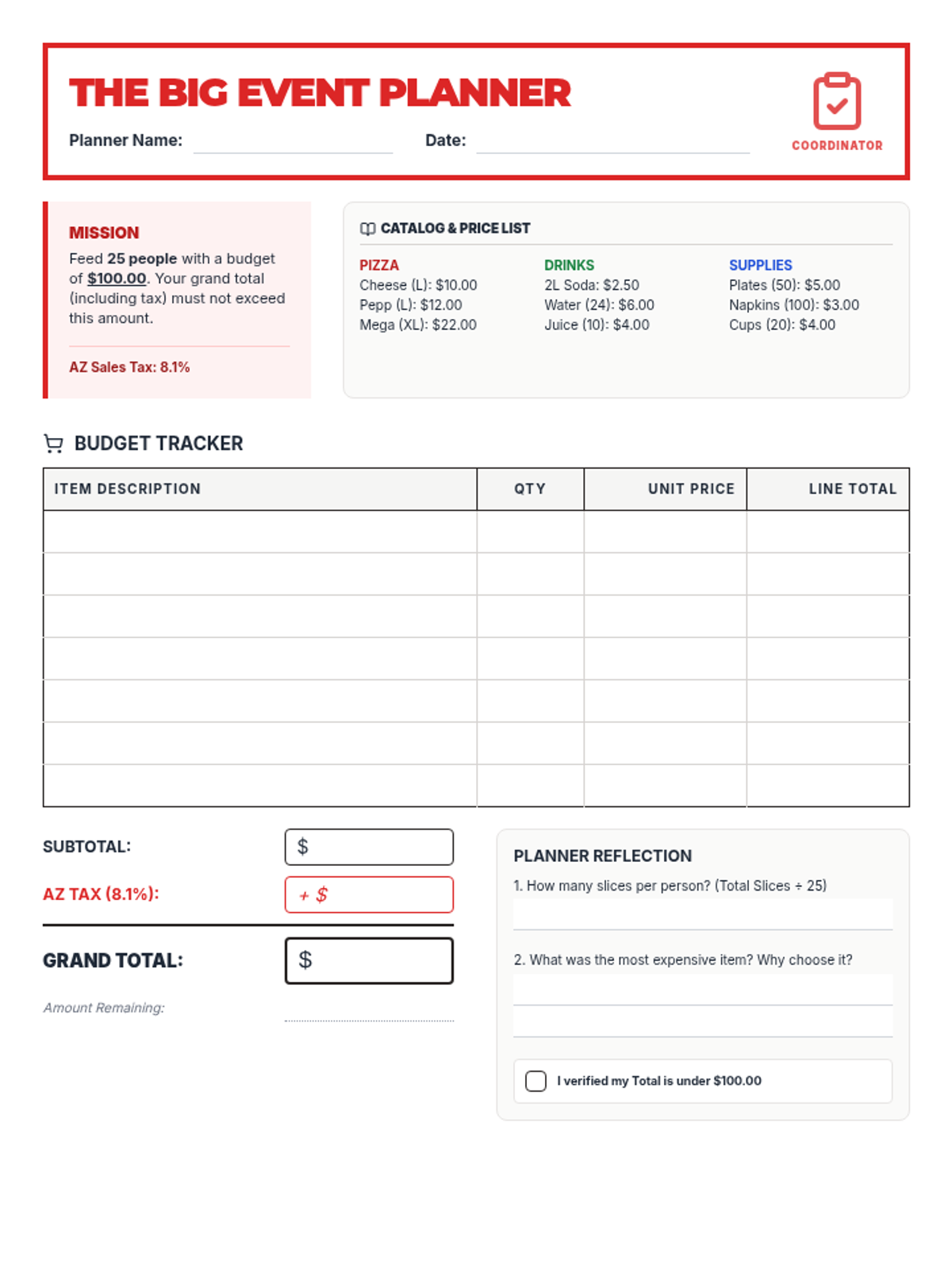
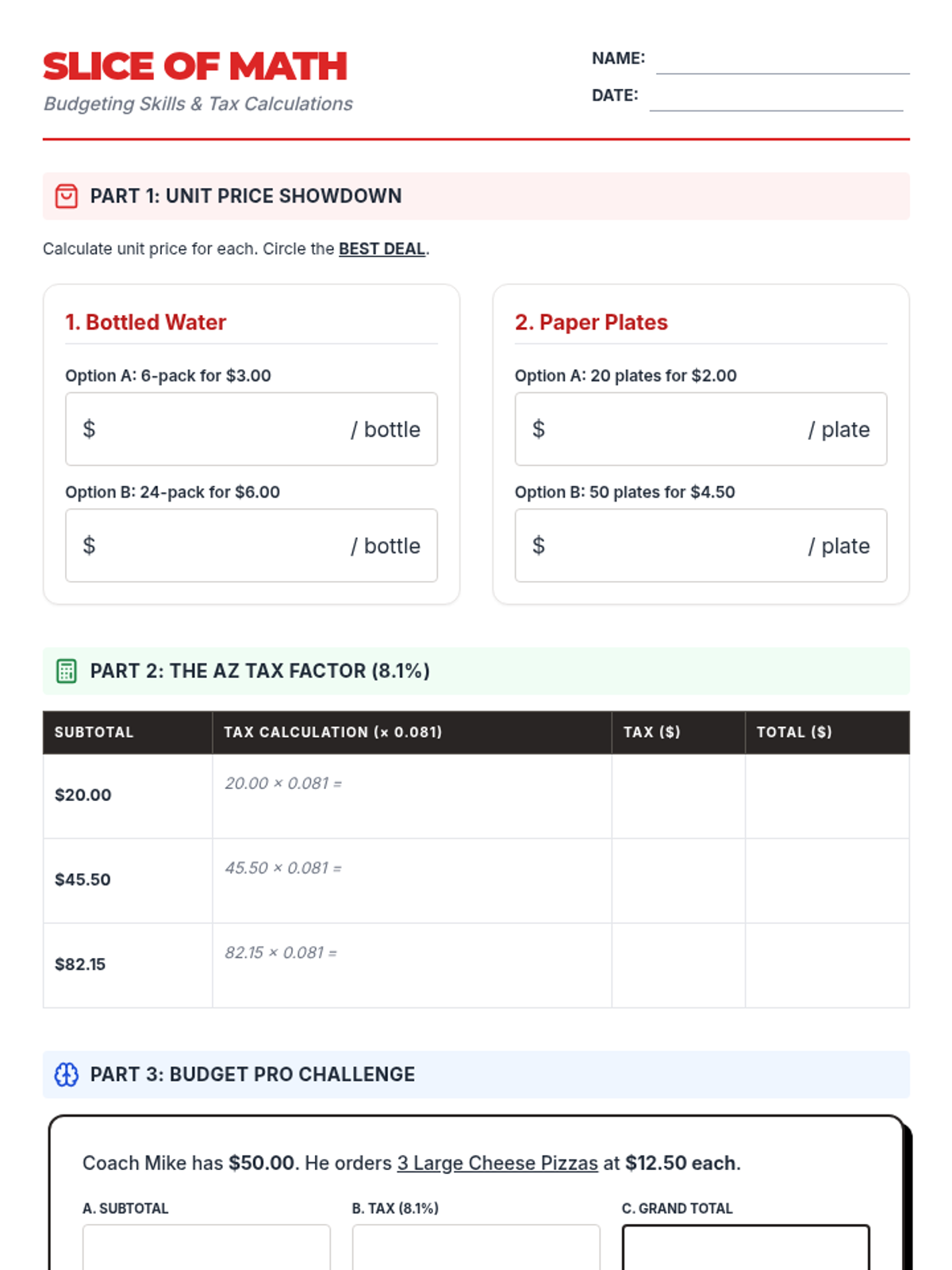
A comprehensive math lesson focusing on practical life skills: budgeting for multiple items and mastering ratio identification and simplification. This lesson integrates real-world shopping scenarios with structured mathematical organizers.
A culminating session where students apply flexible thinking to solve multi-step 'Navigator' challenges.
Introduce the concept of ratios as a comparison of two quantities, built on fractional foundations.
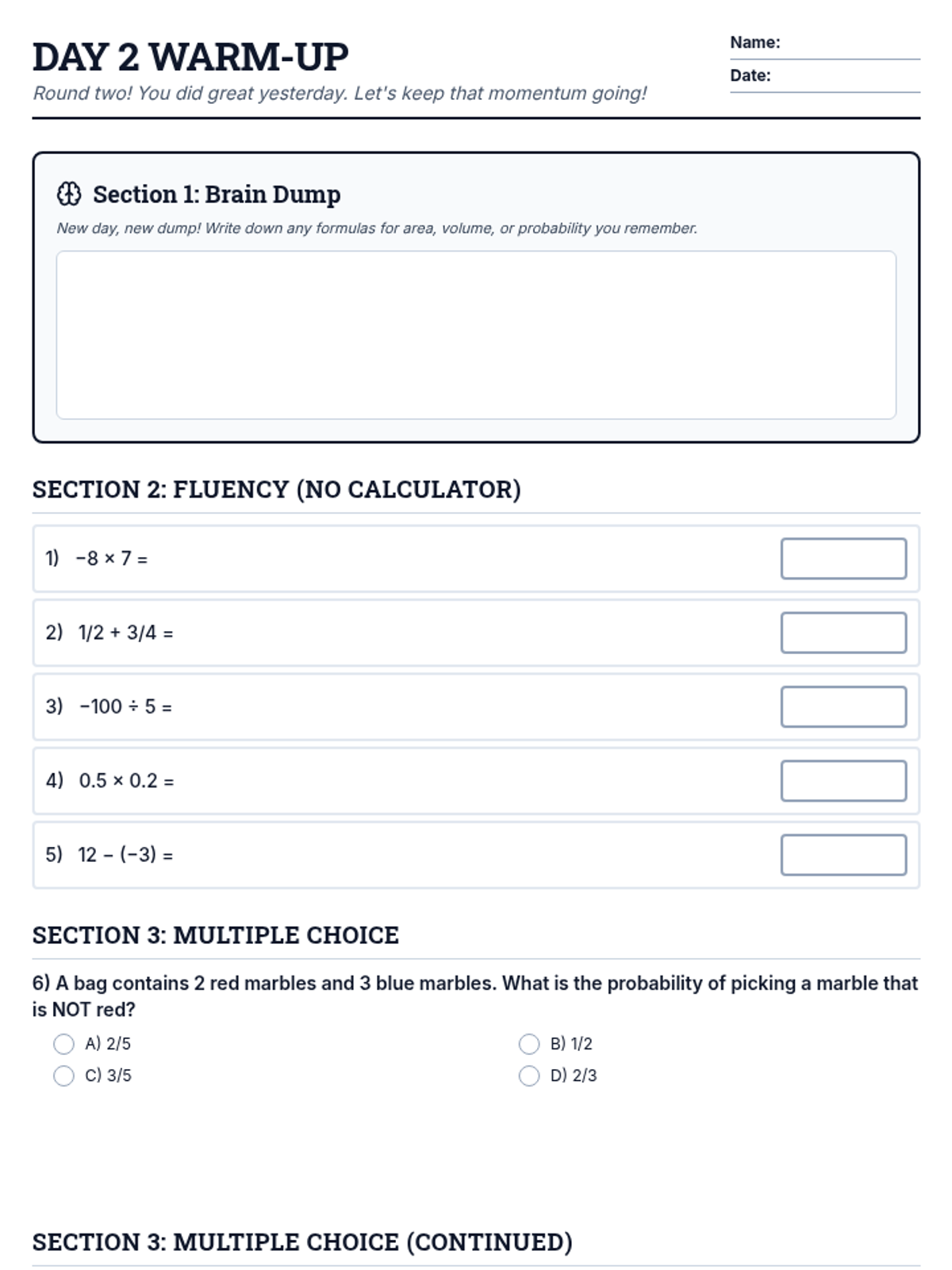
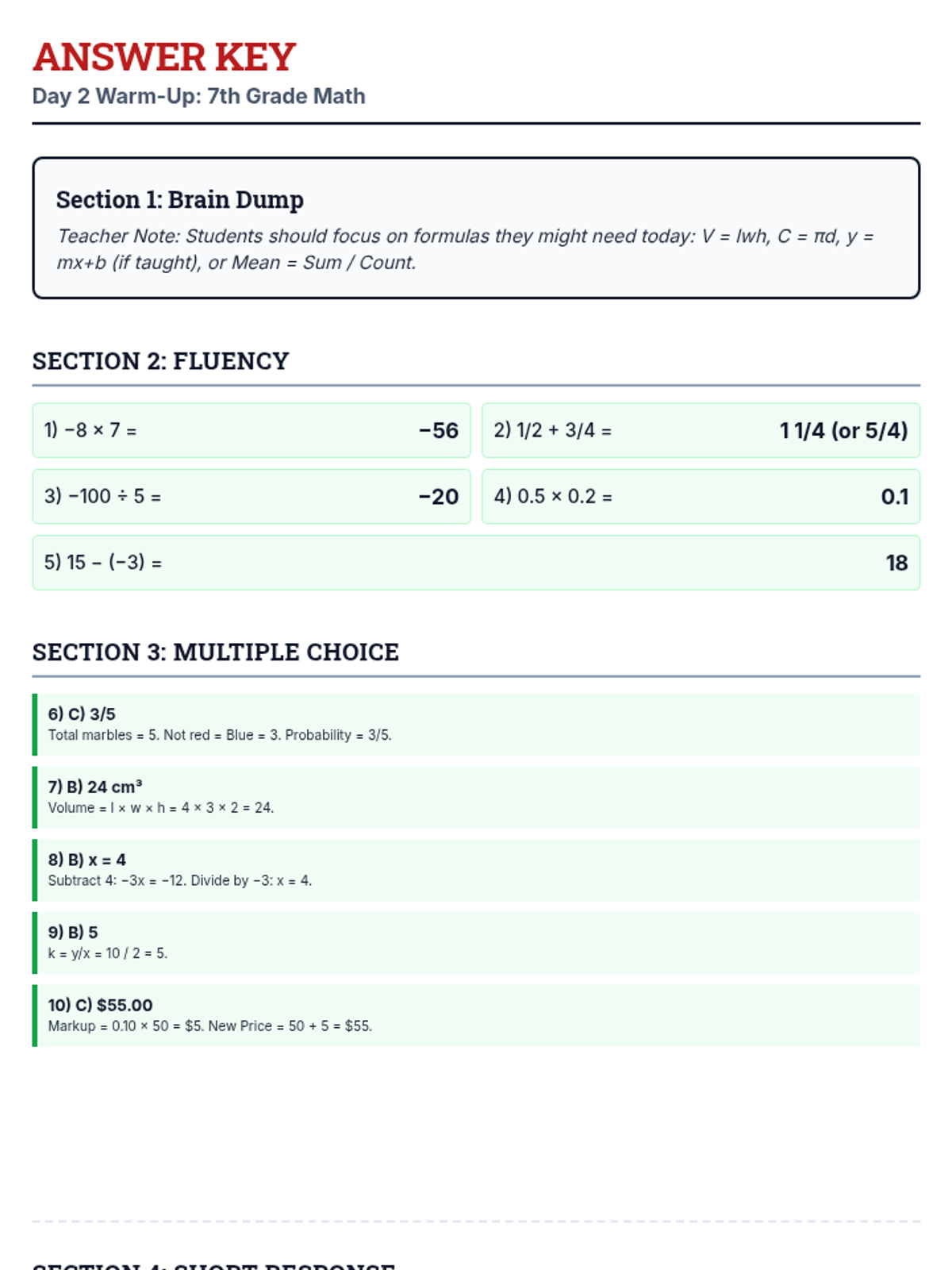
Synthesize understanding by comparing fractions, decimals, and percents in real-world contexts.
Understand fraction multiplication as 'taking a part of a part' through visual area models.
Bridge the gap between fractions and decimals by exploring 'Power of 10' denominators (1/10, 1/100).
Use benchmark fractions and visual models to add and subtract fractions with unlike denominators.
Learn to find common denominators by 'partitioning' visual models, moving from concrete to abstract.
Évaluation sommative finale pour valider les compétences sur la proportionnalité, les tableaux, les échelles et les pourcentages.
Comprendre les pourcentages comme un cas particulier de la proportionnalité et apprendre à calculer une valeur ou un taux.
Comprendre et utiliser les échelles pour calculer des distances réelles ou sur un plan, en lien avec la proportionnalité.
Introduction à la proportionnalité : reconnaître une situation de proportionnalité et utiliser des tableaux avec le coefficient de proportionnalité.
An active, competitive lesson where students perform physical tasks to collect data, then calculate and compare ratios and unit rates to determine the 'Rate Race' champions.
Students will apply their knowledge of comparisons and tables to solve multi-step real-world factory production problems.
Students will identify and describe relationships between number pairs in a table using multiplication and addition rules.
Students will learn to describe multiplication expressions as comparisons (e.g., 3 times as much as 5) using visual bar models and factory scenarios.