Fundamental concepts of limits, derivatives, and integrals for modeling change and motion. Examines techniques for differentiation and integration alongside applications in optimization, area calculation, and differential equations.
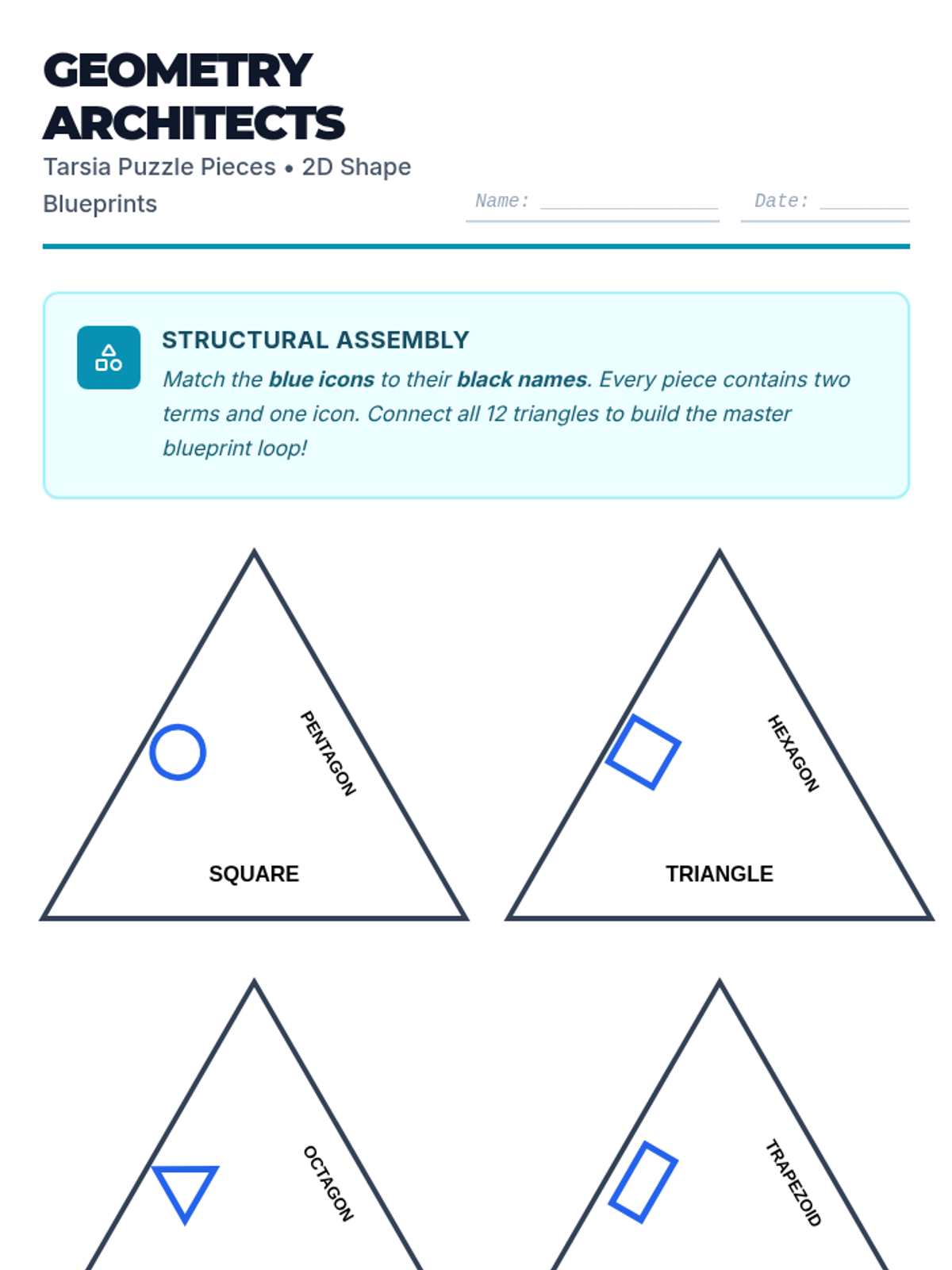
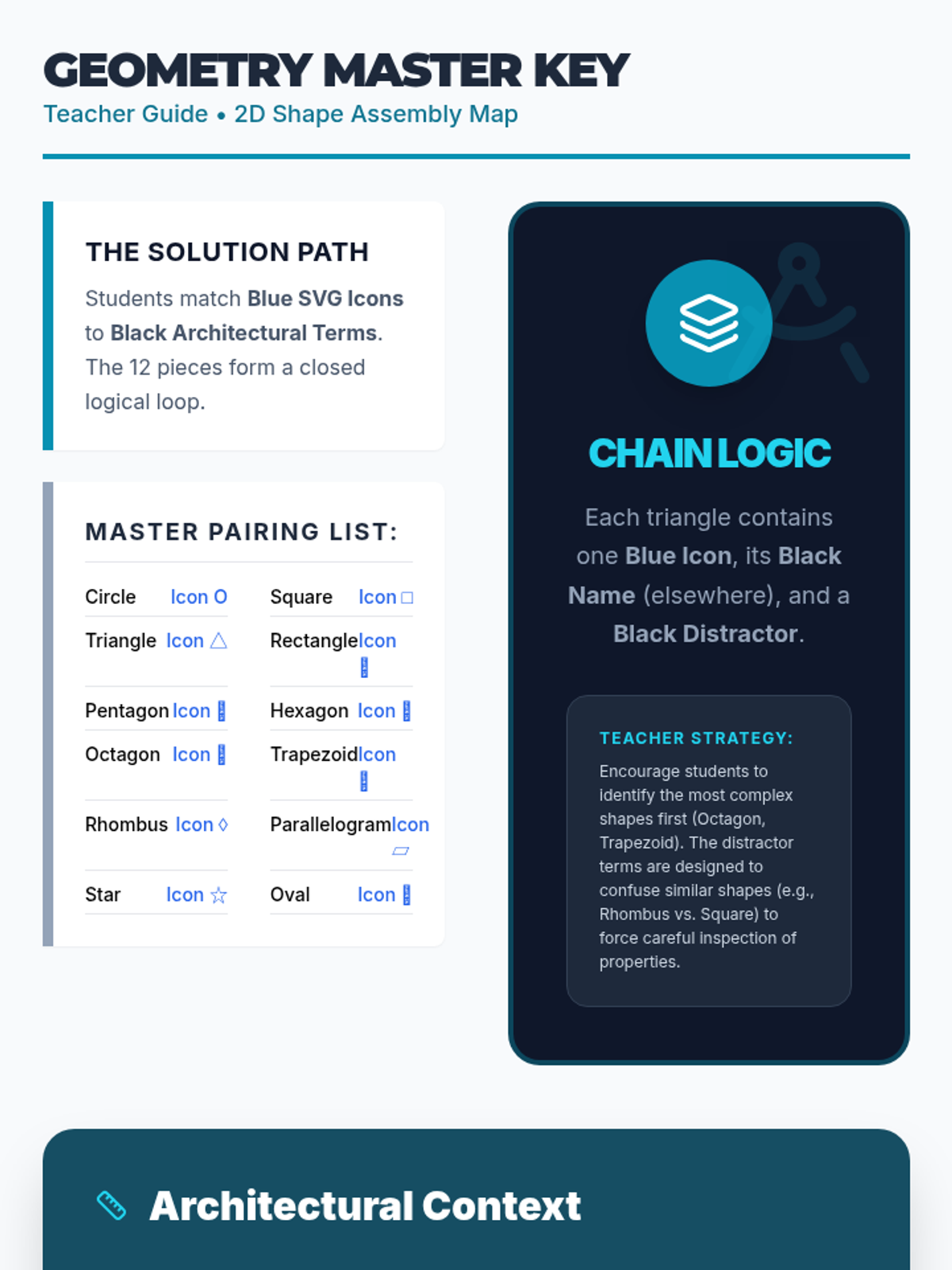
A visual exploration of 2D geometric shapes, focusing on identifying names and properties through an architectural-themed Tarsia puzzle.
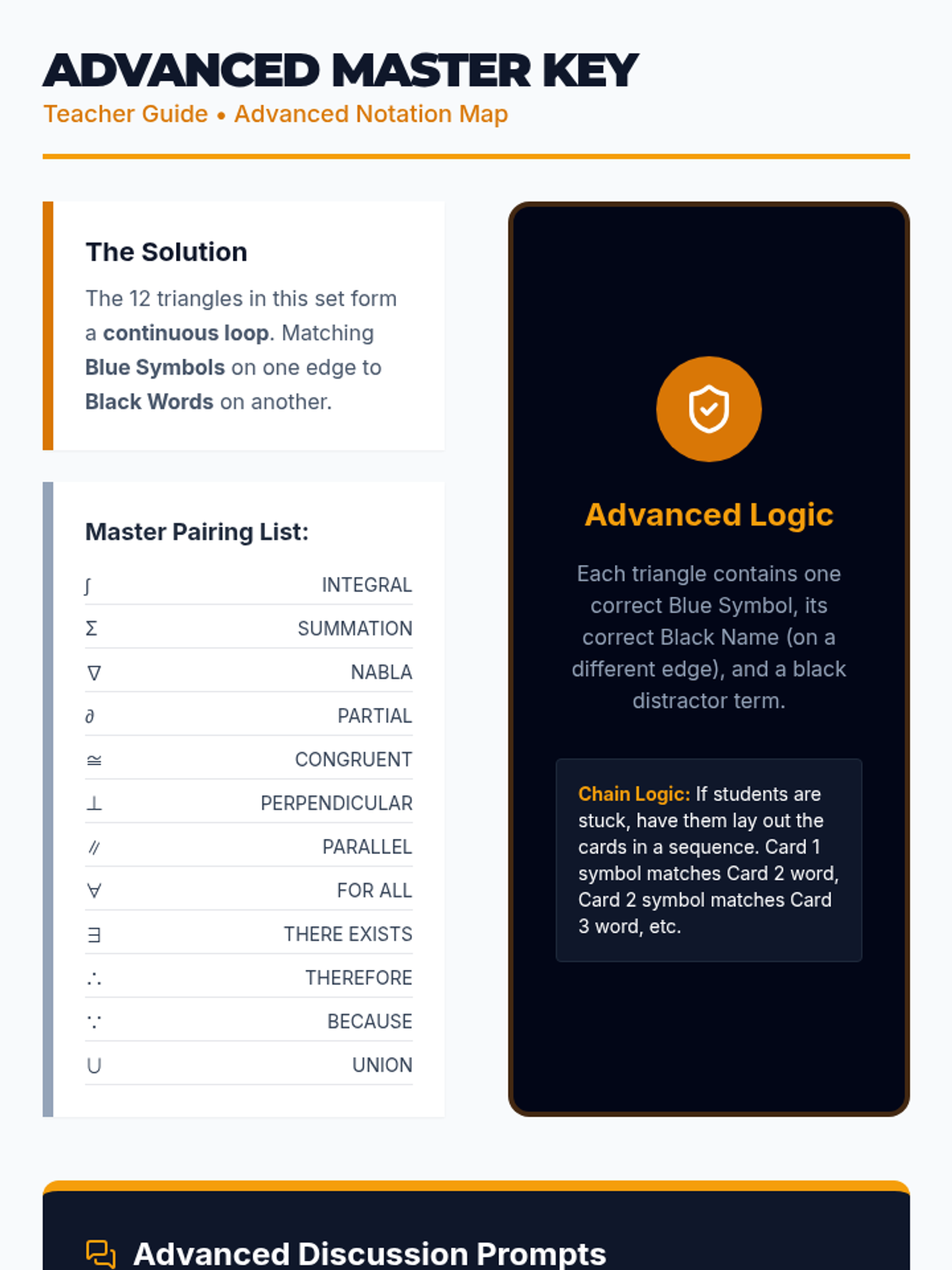
A deep dive into higher-level mathematical notation, focusing on calculus, set theory, and Greek symbols through a complex Tarsia challenge.
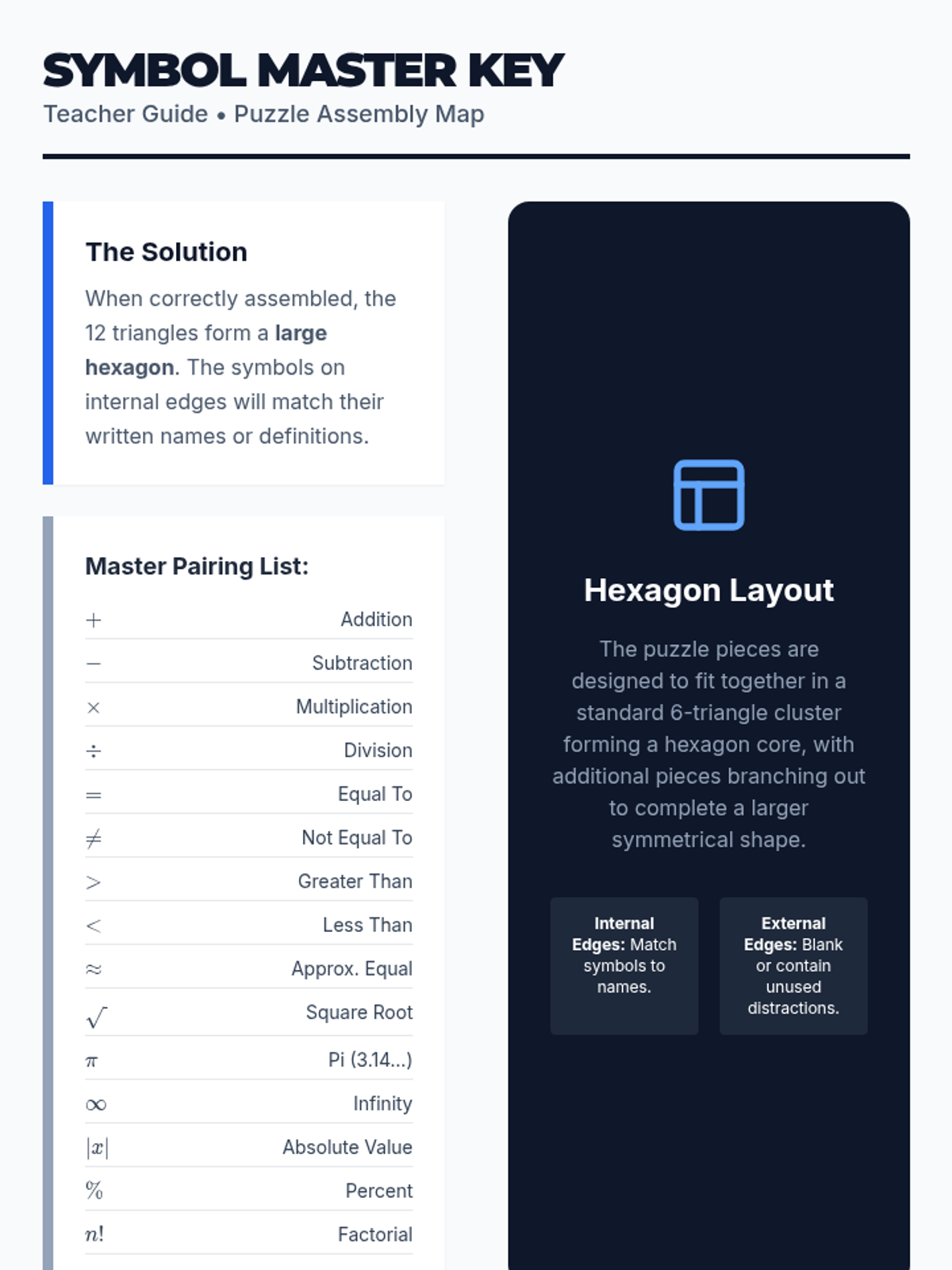
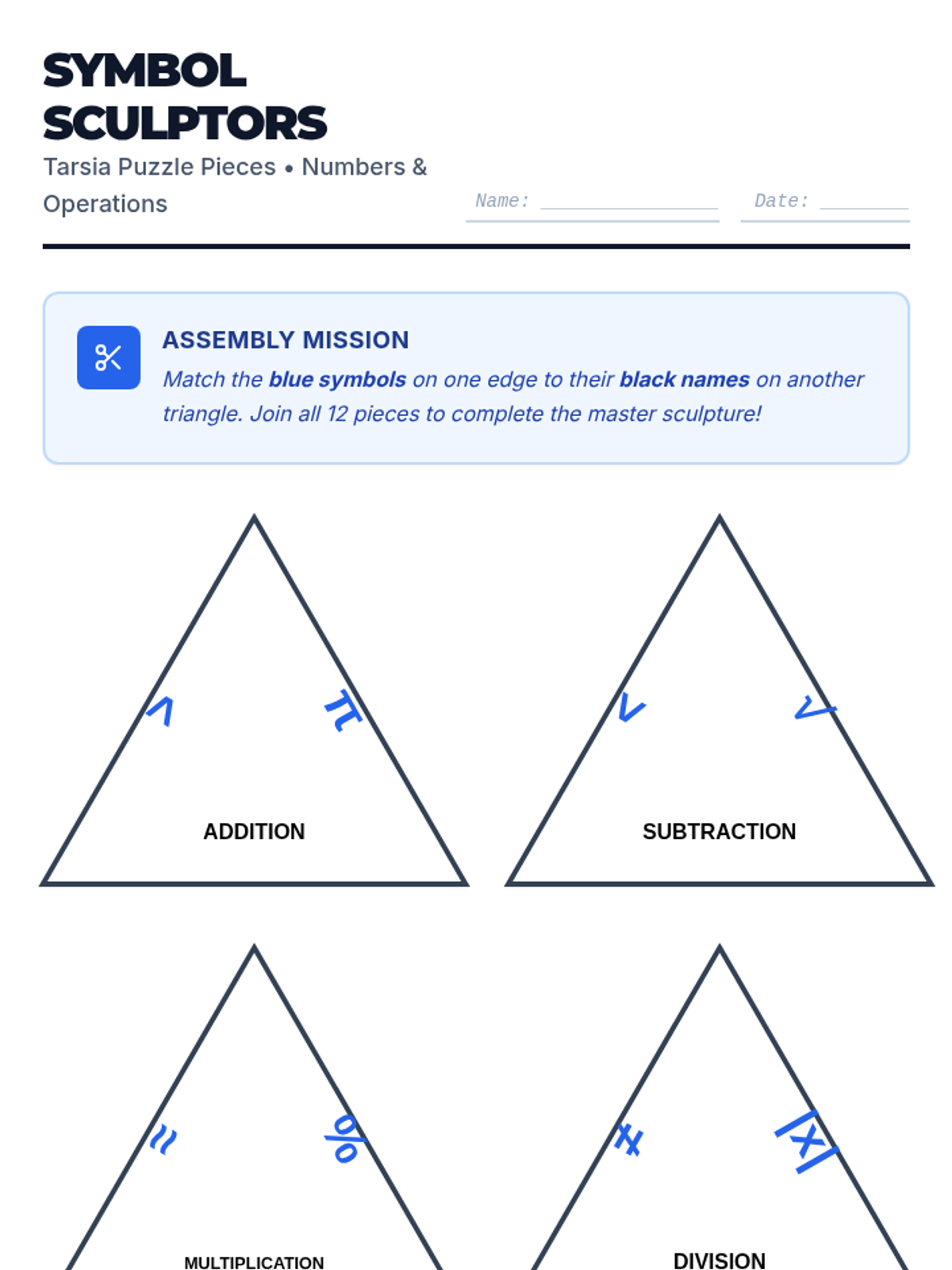
A hands-on lesson focusing on the recognition and application of mathematical symbols in numbers and operations through a collaborative Tarsia puzzle activity.
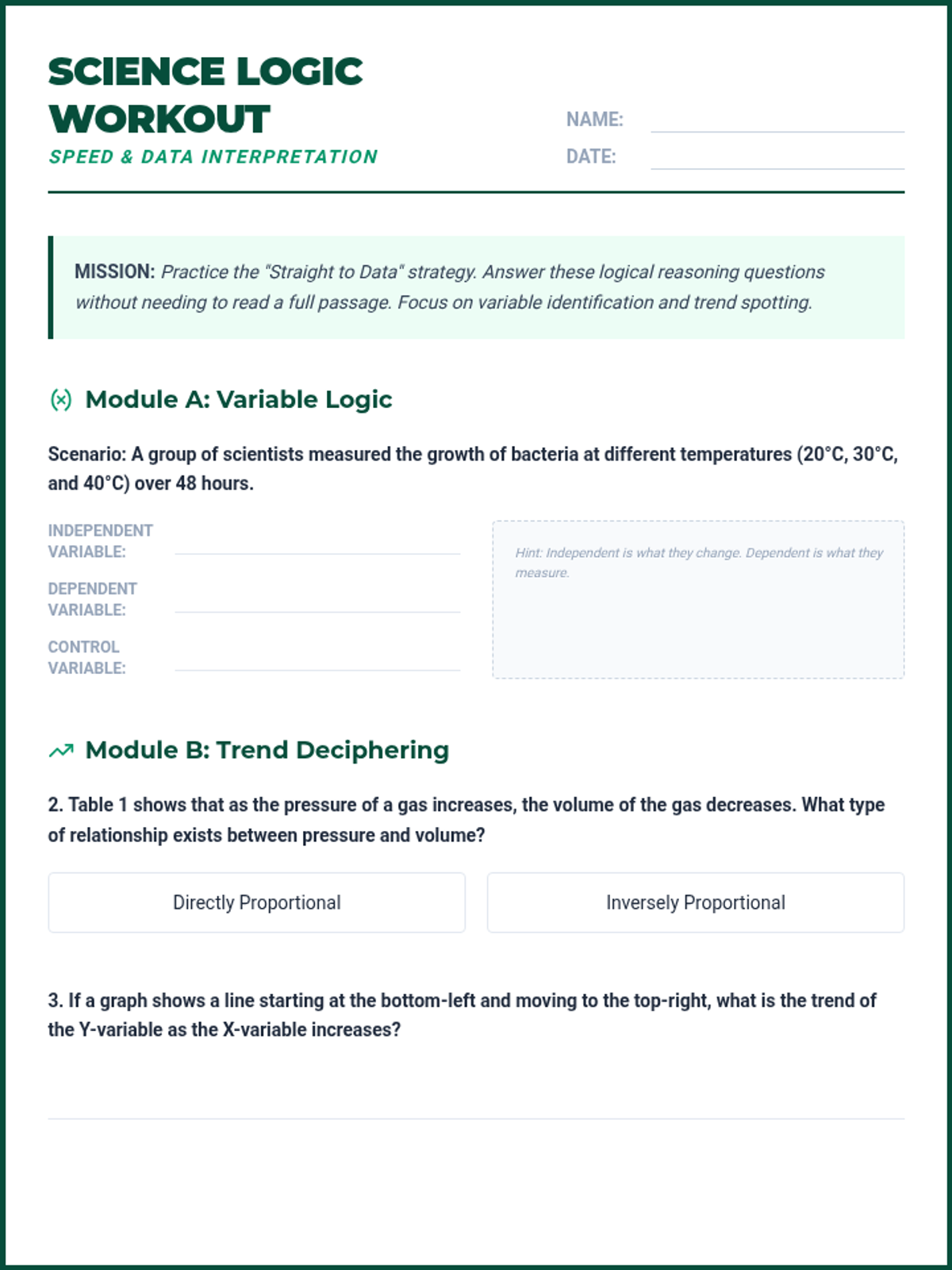
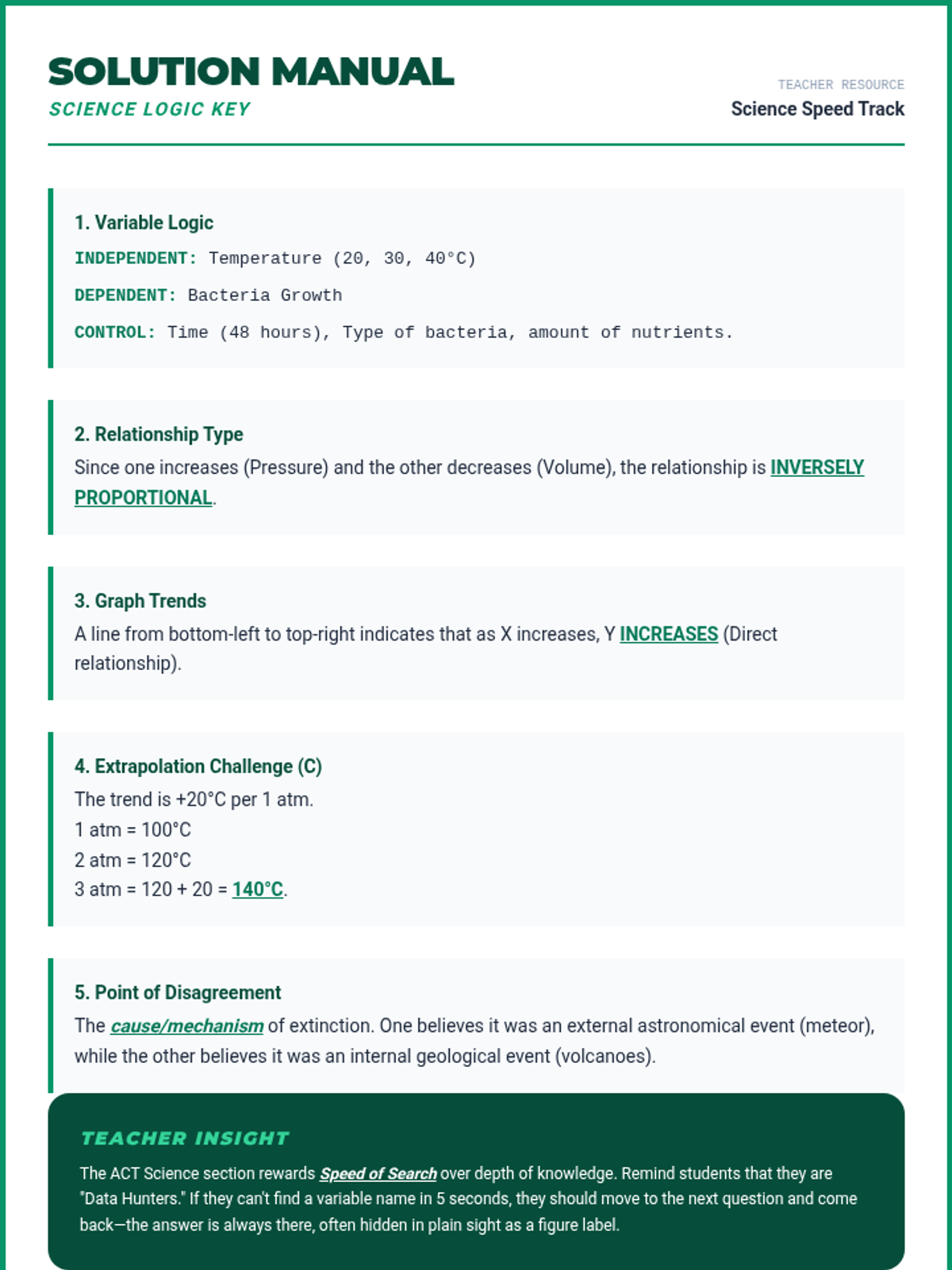
A strategic masterclass for the ACT Science section, focusing on speed-reading data sets, identifying experimental variables, and decoding scientific logic. This lesson emphasizes the 'Straight to the Data' approach to maximize score in the 35-minute time limit.
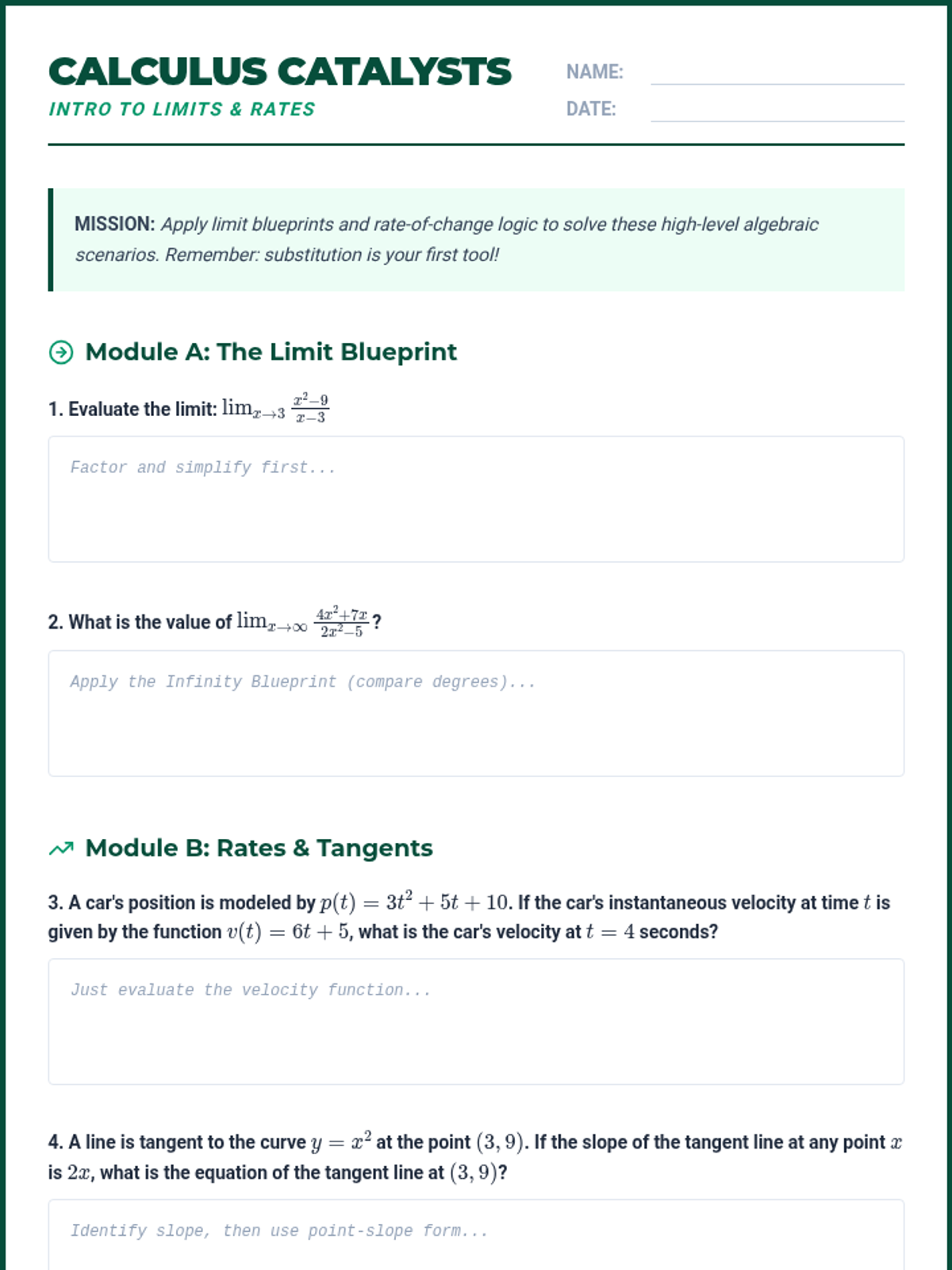
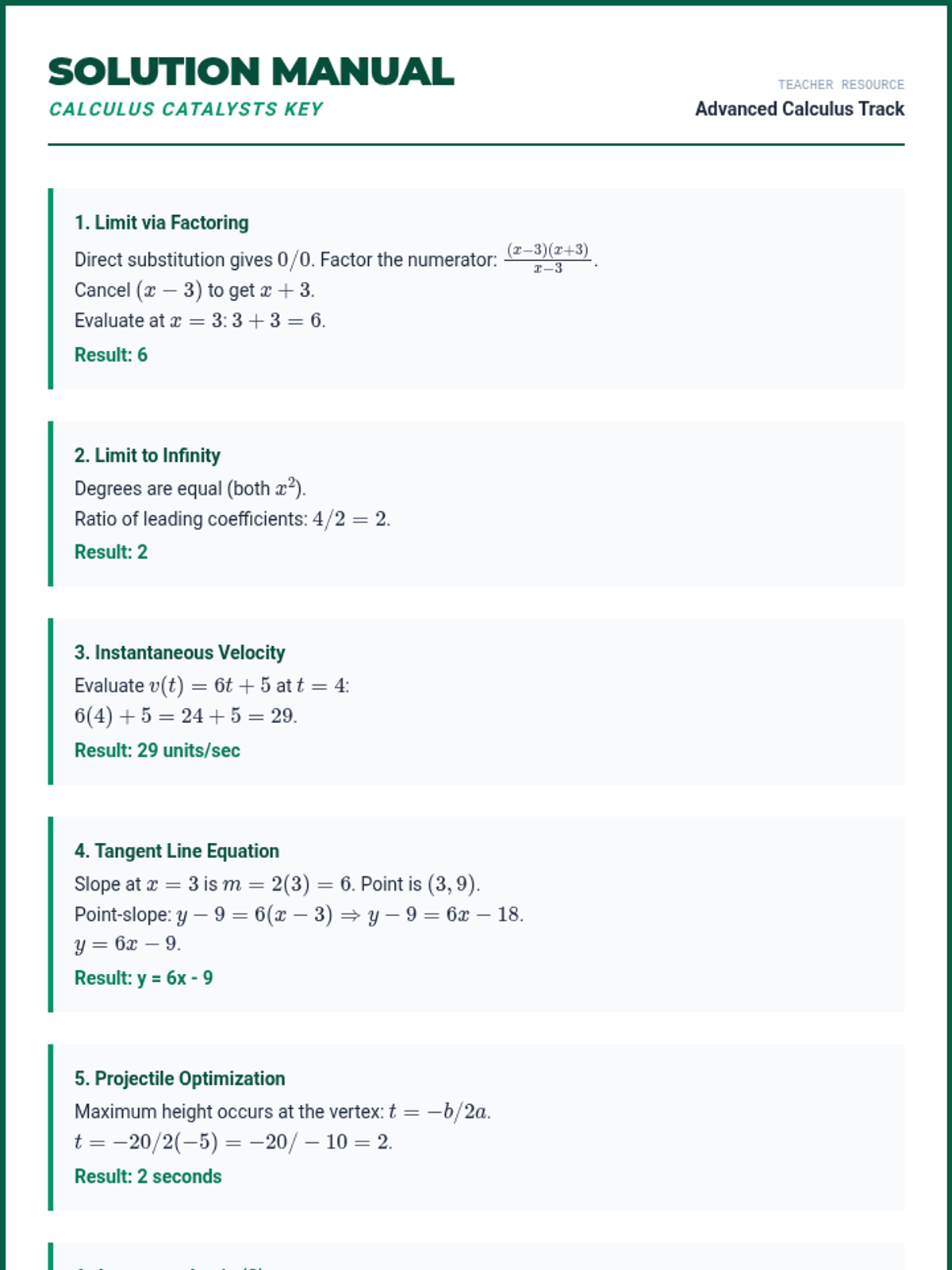
An introductory exploration of calculus-adjacent concepts tested on the ACT, focusing on limits, instantaneous rates of change, and function optimization. Students will master the Limit Blueprint and apply rate-of-change logic to complex algebraic scenarios.
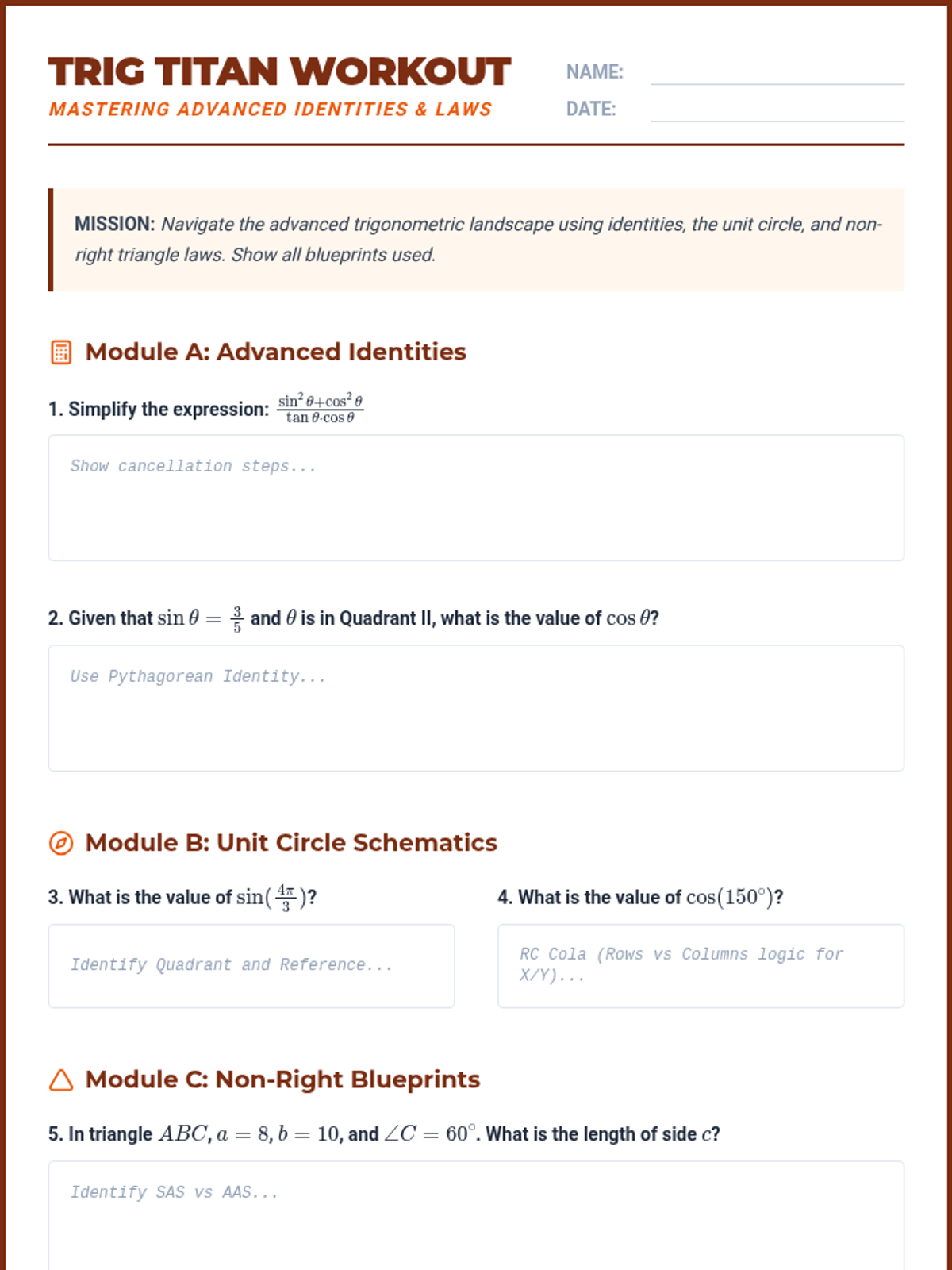
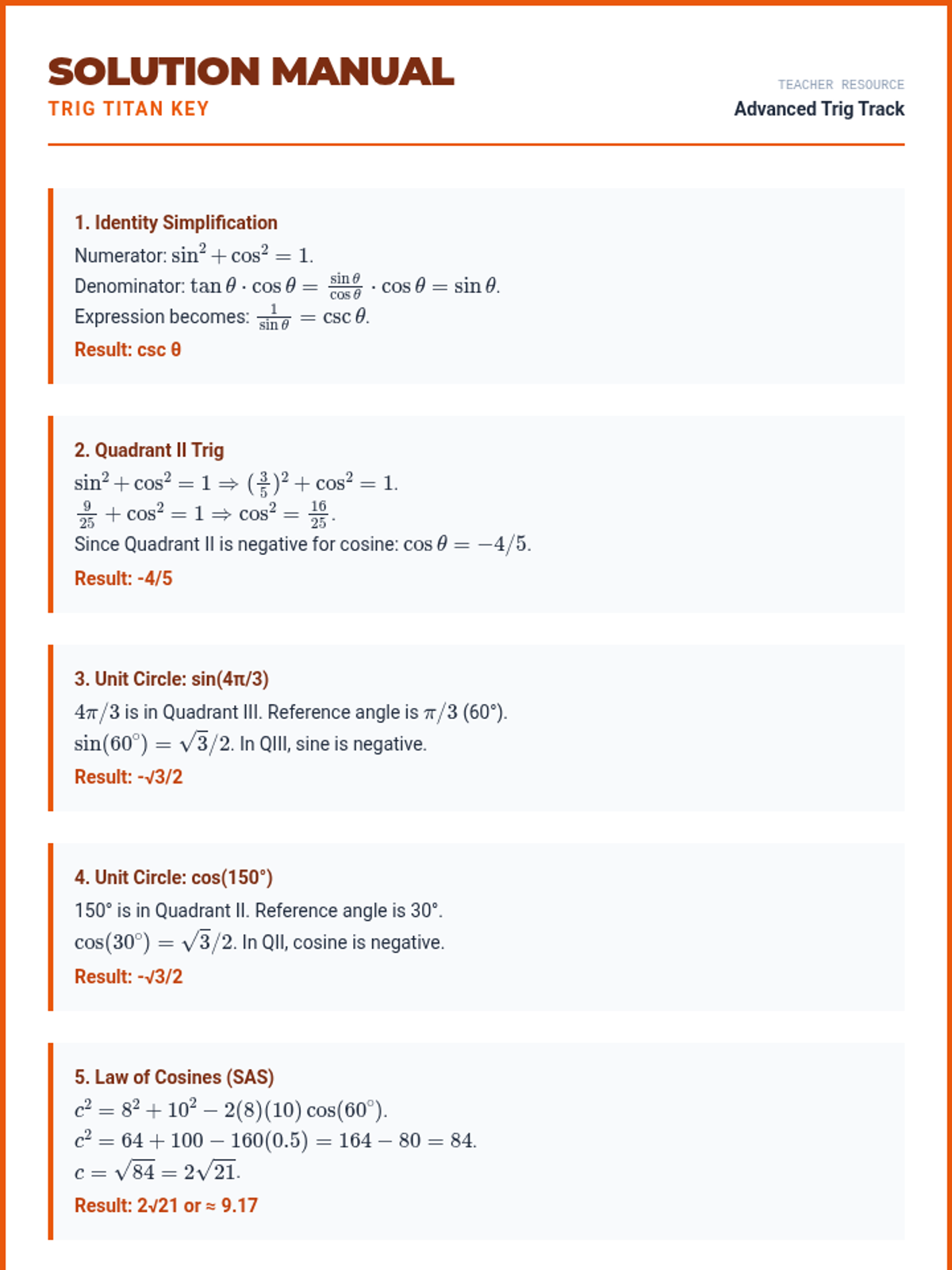
An intensive masterclass on advanced trigonometric identities, the unit circle, and non-right triangle laws. Students will master the Pythagorean identities, Law of Sines/Cosines, and the specific ACT-style unit circle coordinates required for top-tier scores.
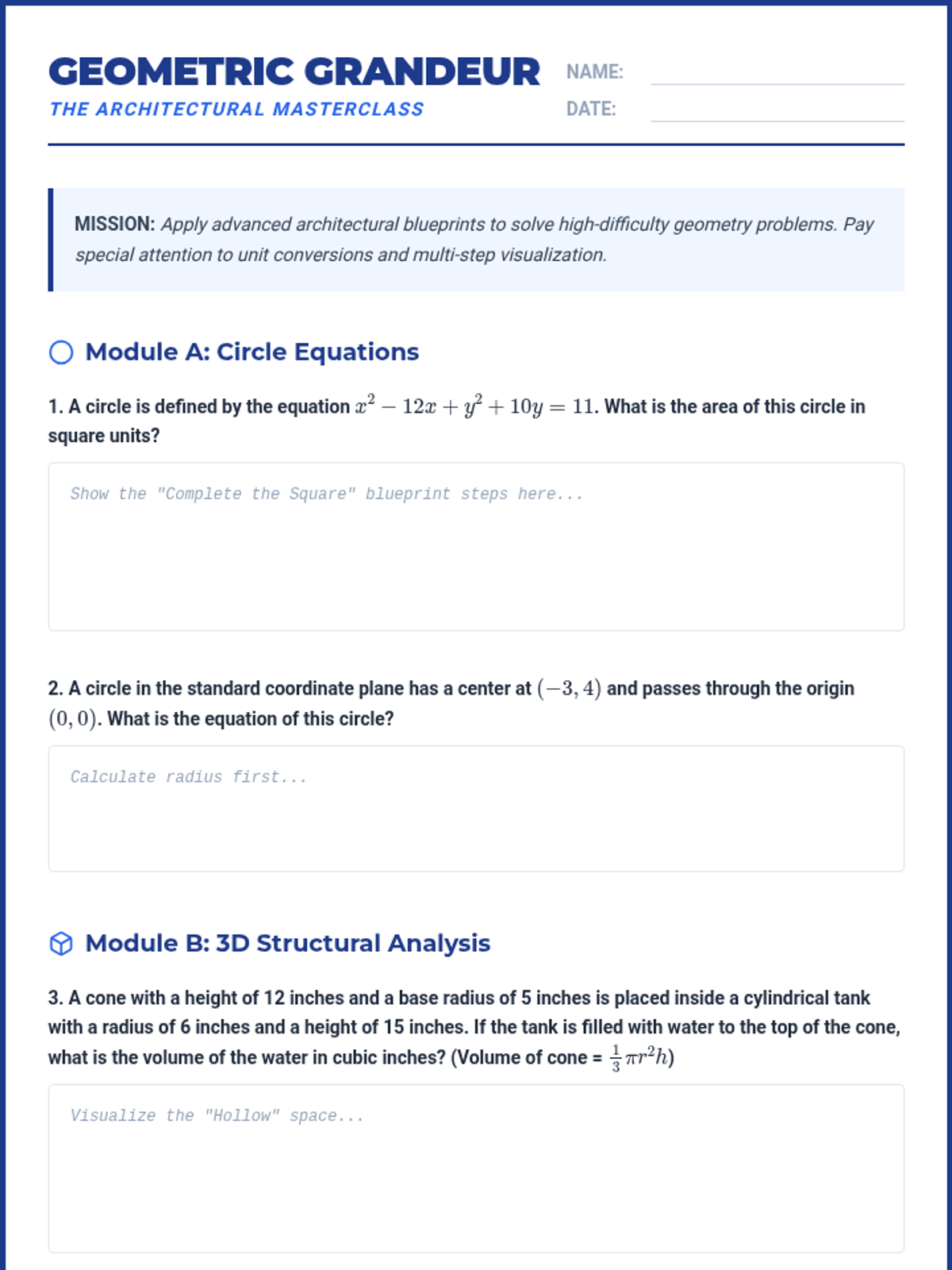
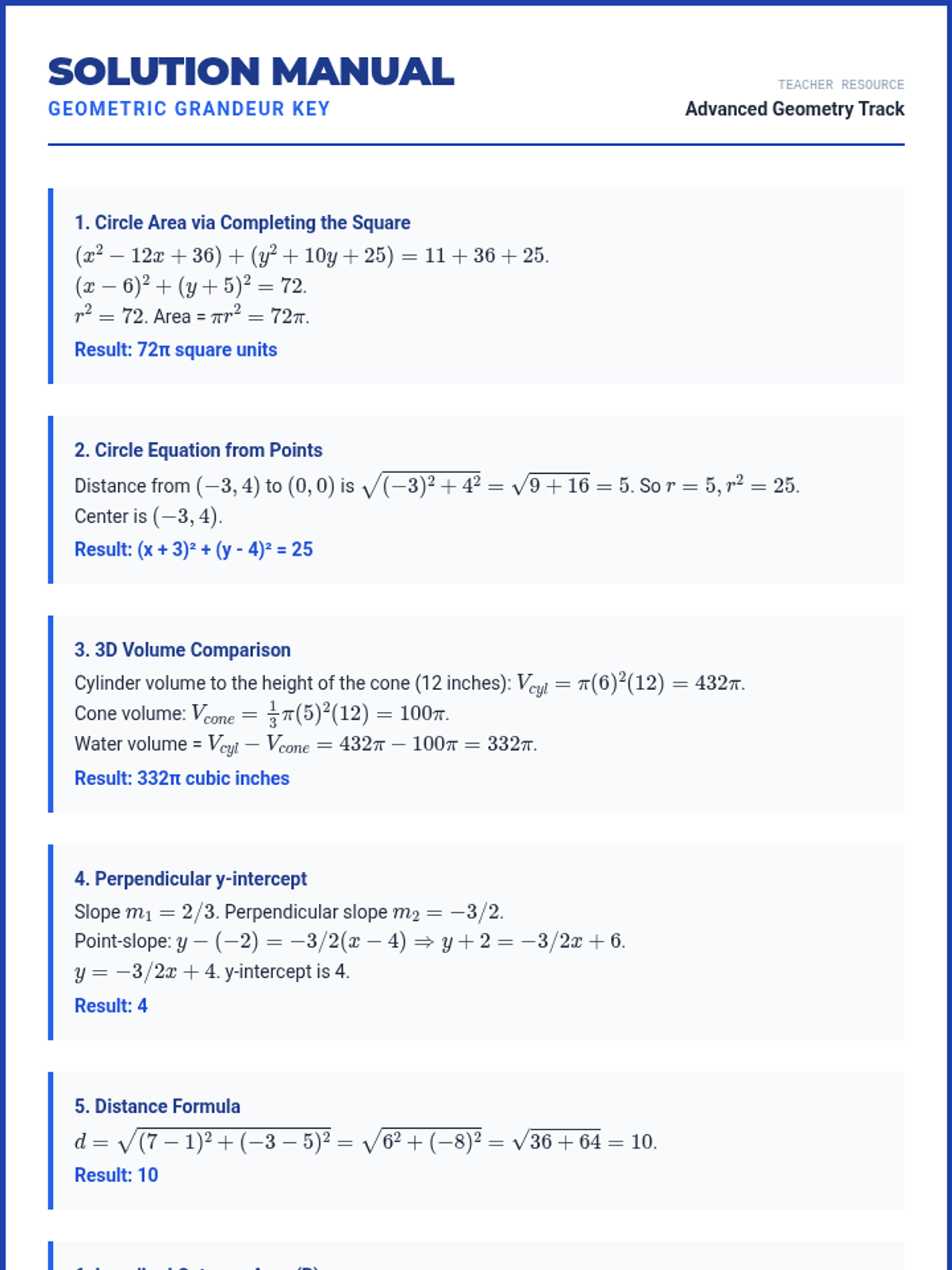
A specialized deep dive into advanced geometry concepts including circle equations, 3D volume/surface area of complex shapes, and coordinate geometry involving perpendicularity and distance. Students will master completing the square for circles and visualizing 3D cross-sections.
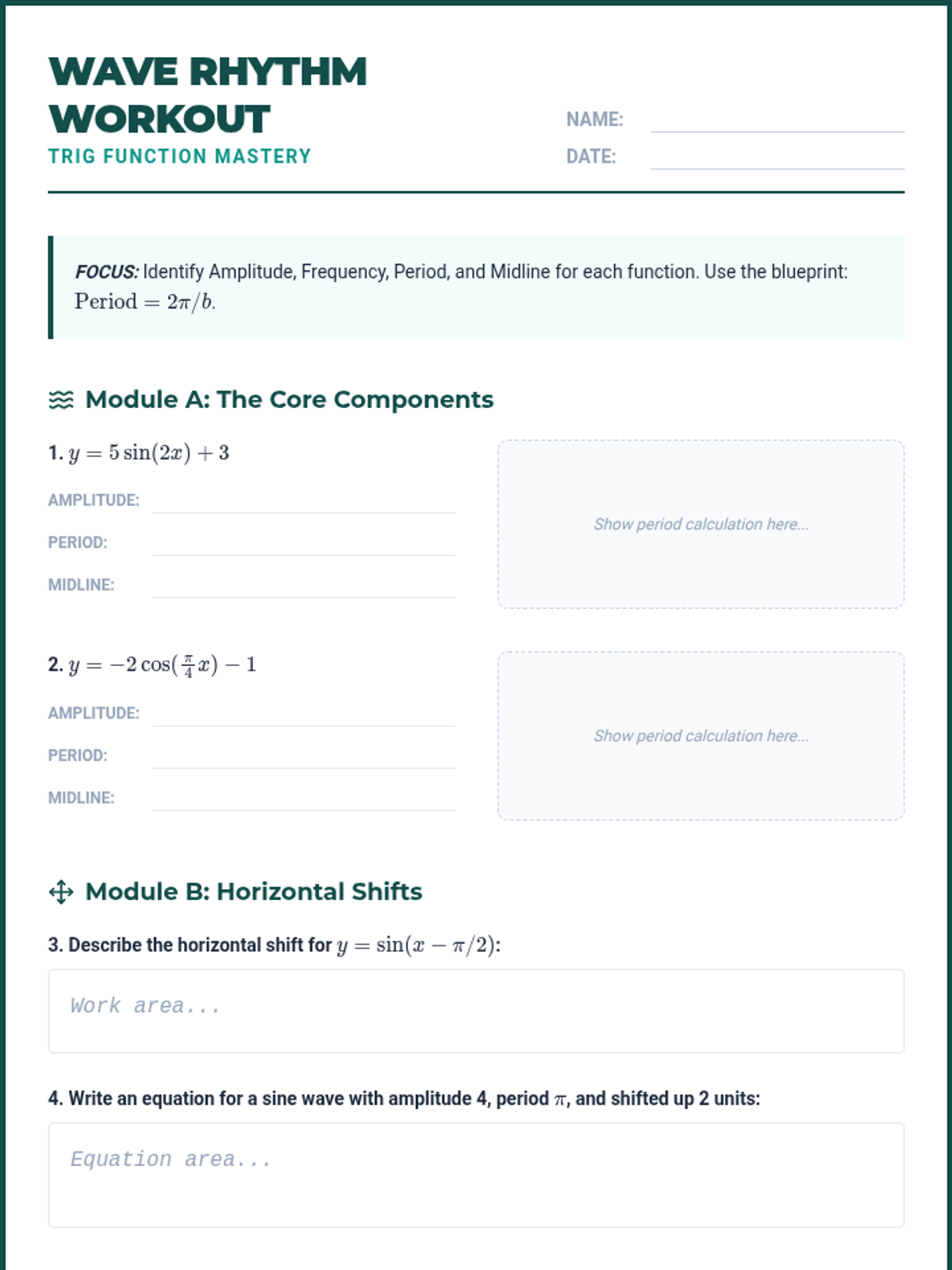
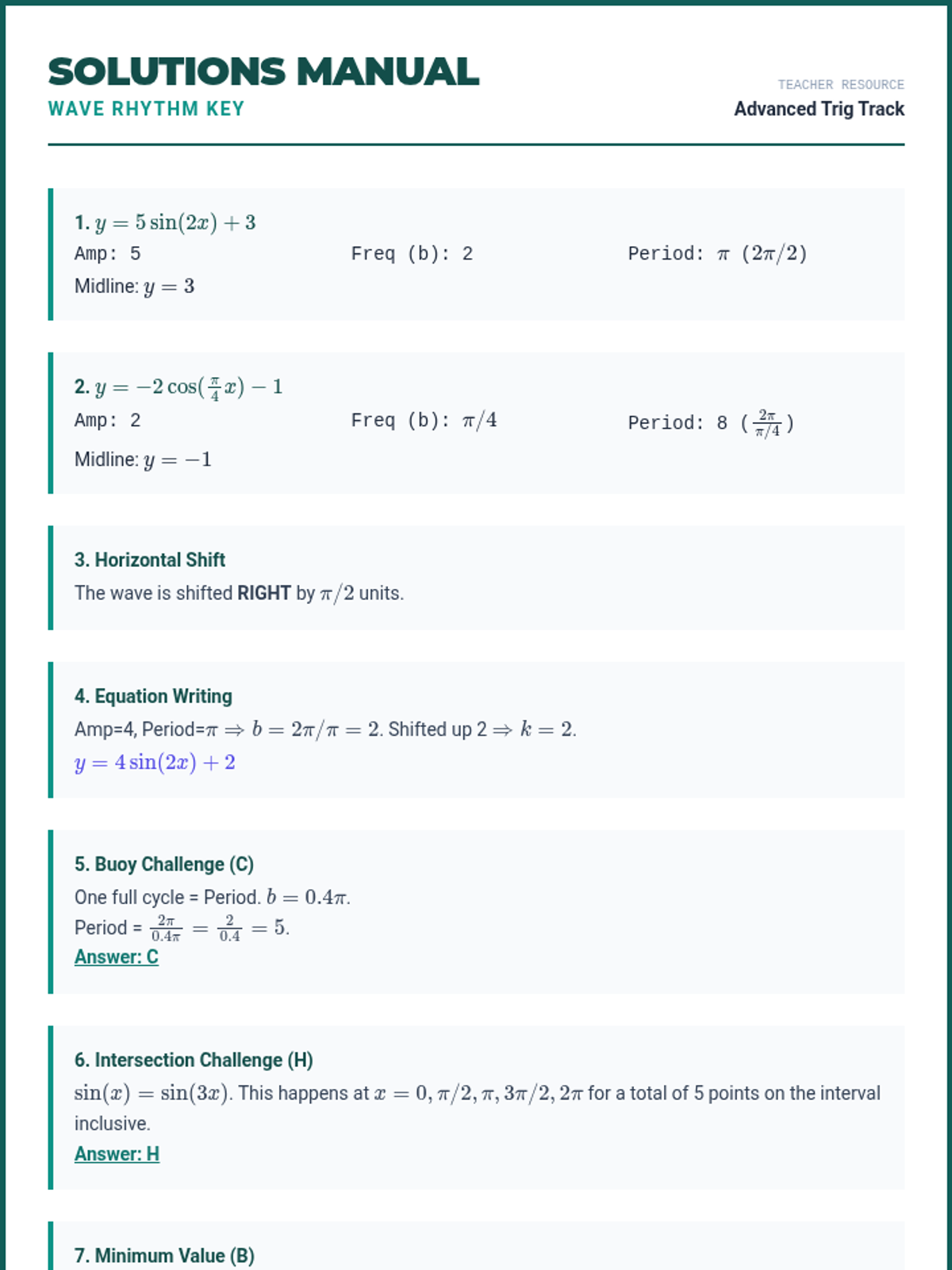
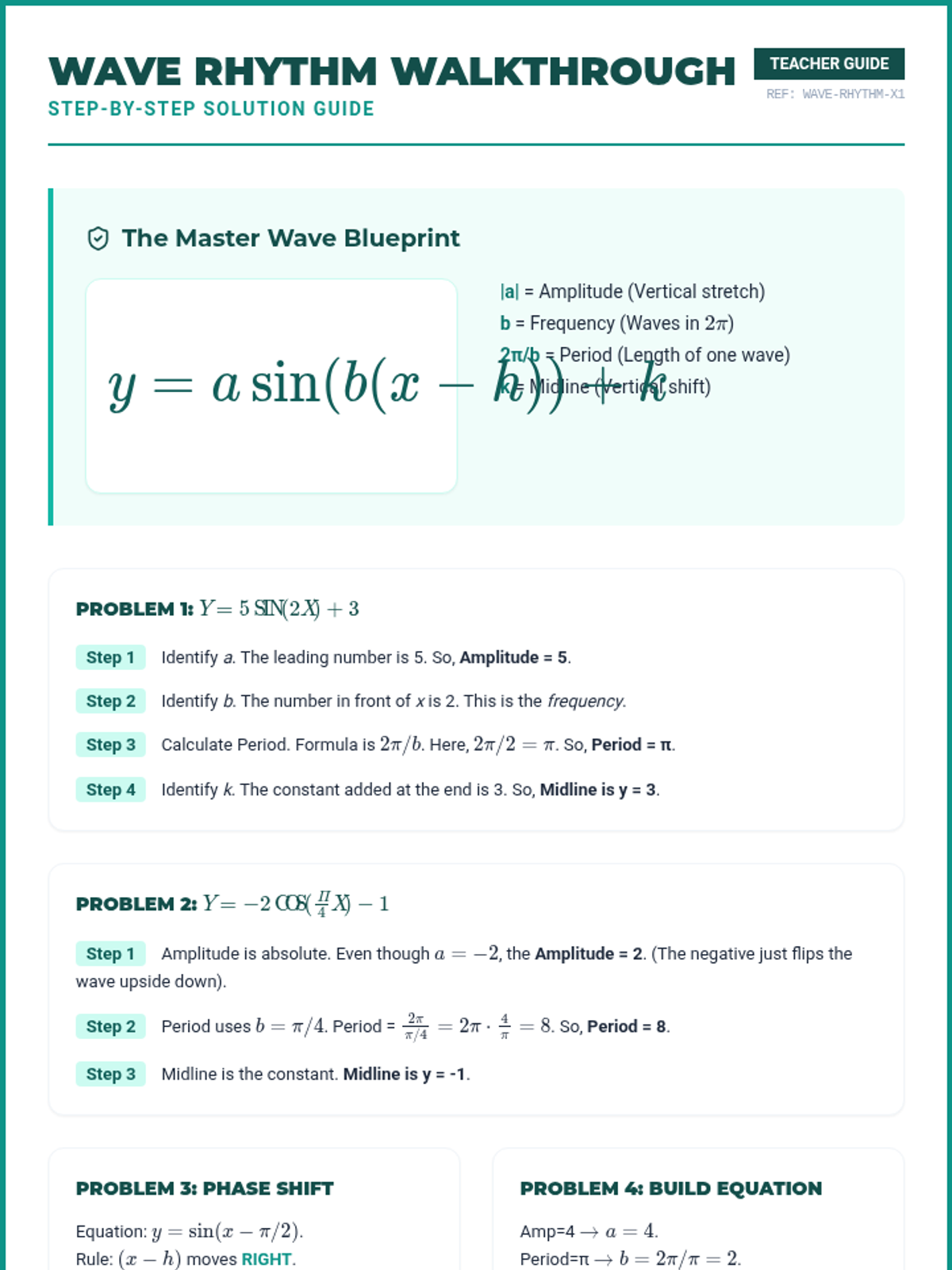
A specialized deep dive into trigonometric functions, mastering the critical distinction between period and frequency. Students will apply the 2π/b blueprint to decode sine and cosine graphs and solve high-difficulty periodic motion problems.
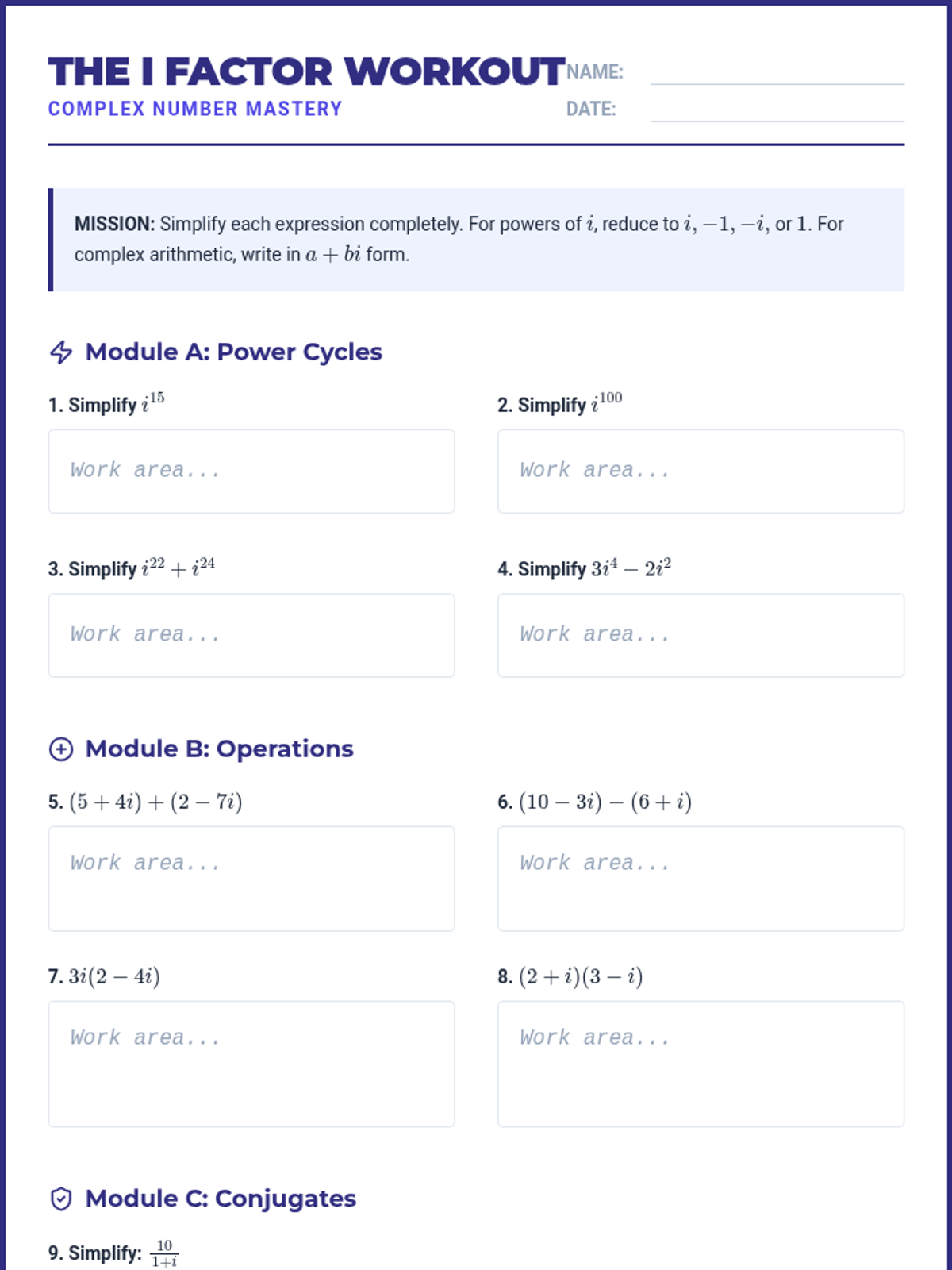
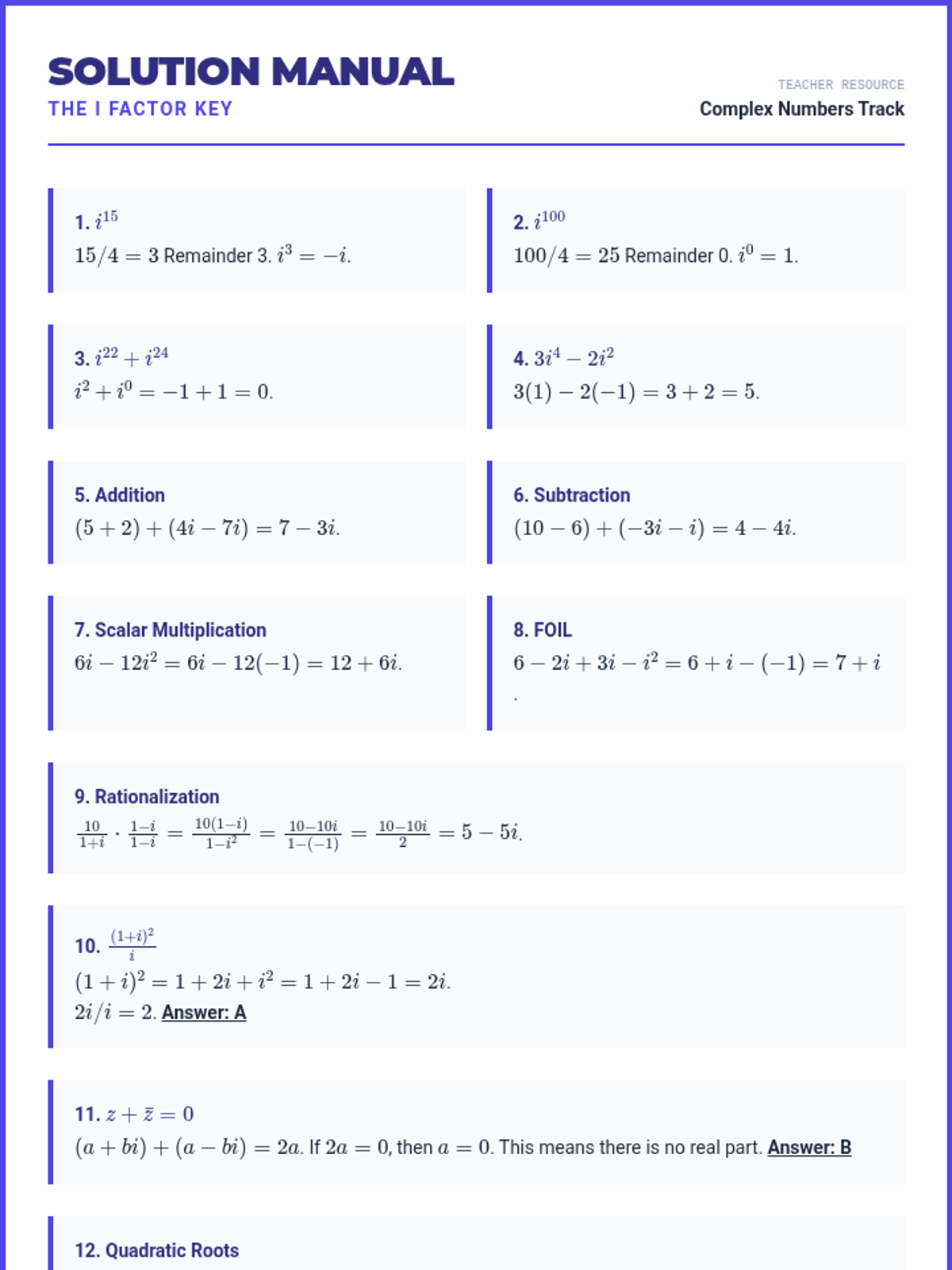
A focused deep dive into imaginary and complex numbers. Students will master powers of i, arithmetic with complex conjugates, and solving quadratic equations with complex roots—all through the lens of ACT-style 'Final Ten' questions.
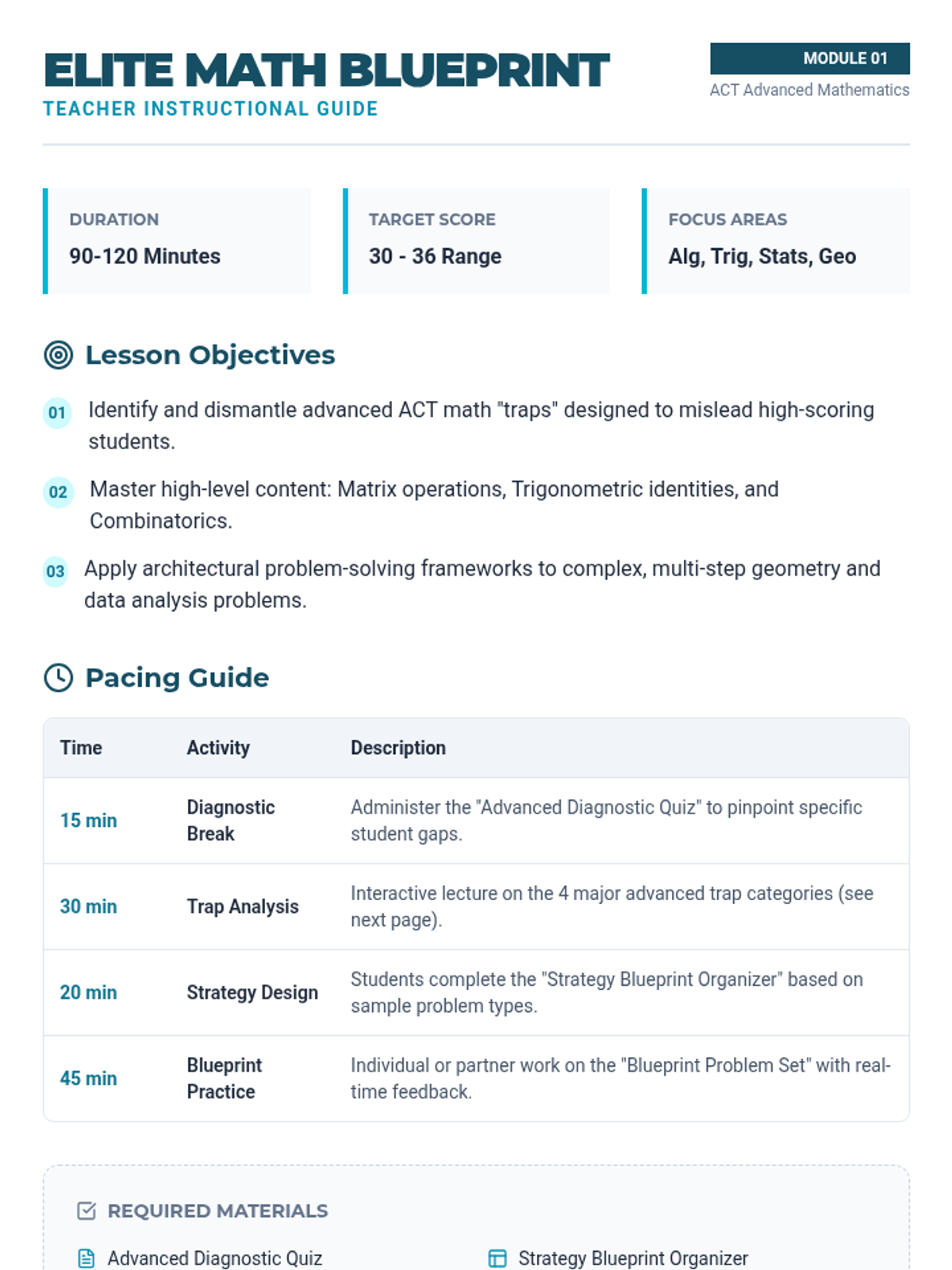
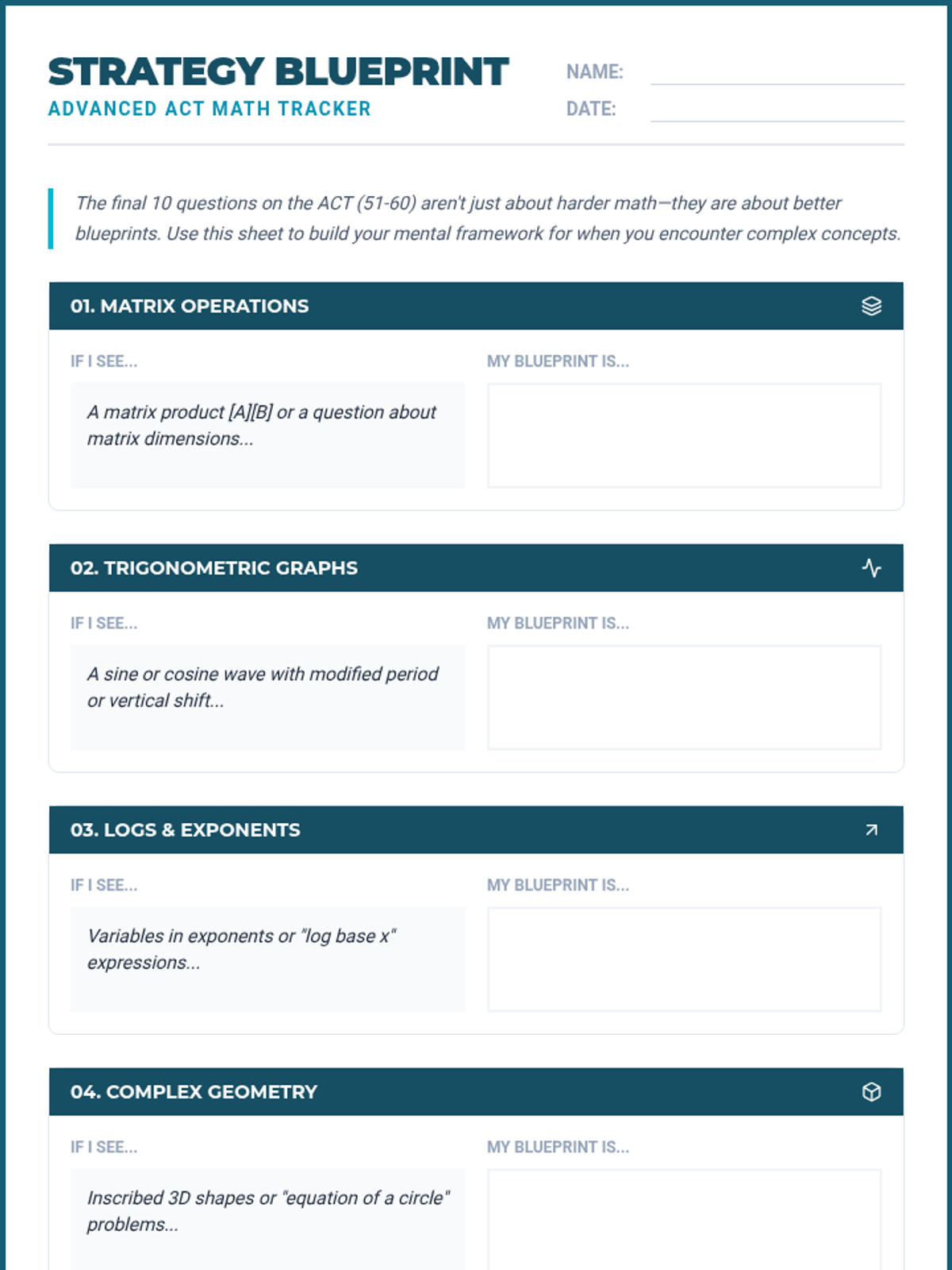
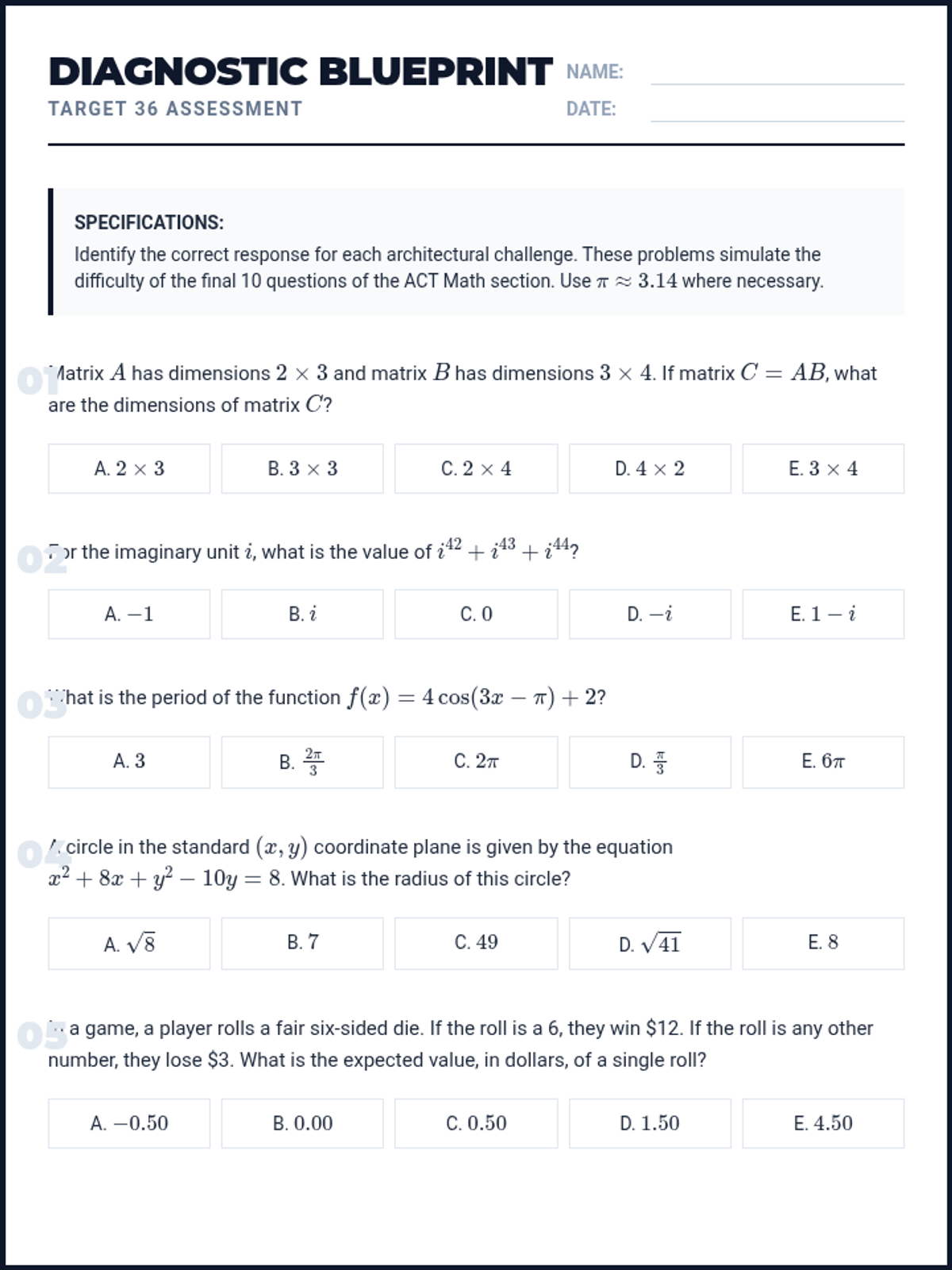
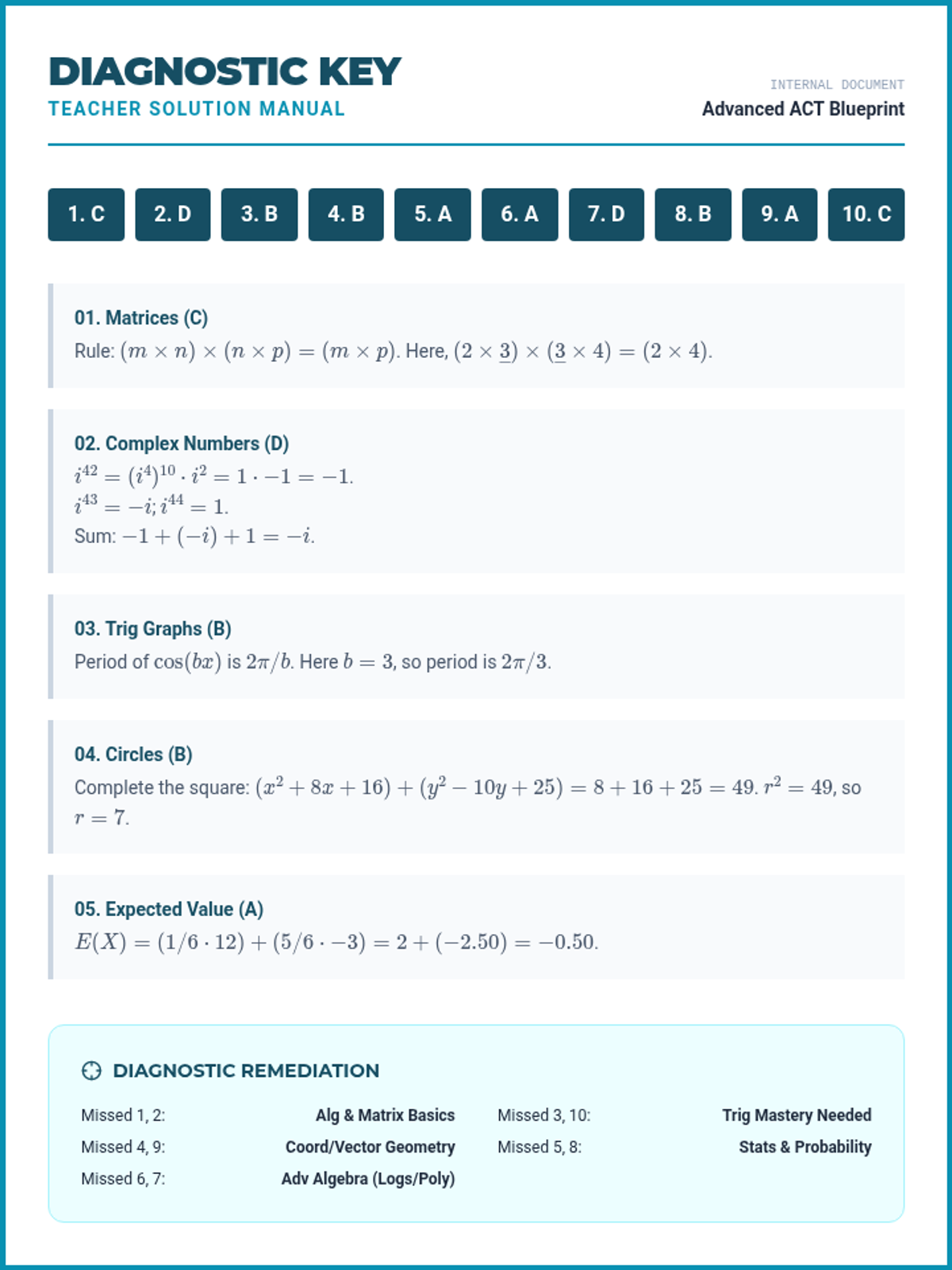
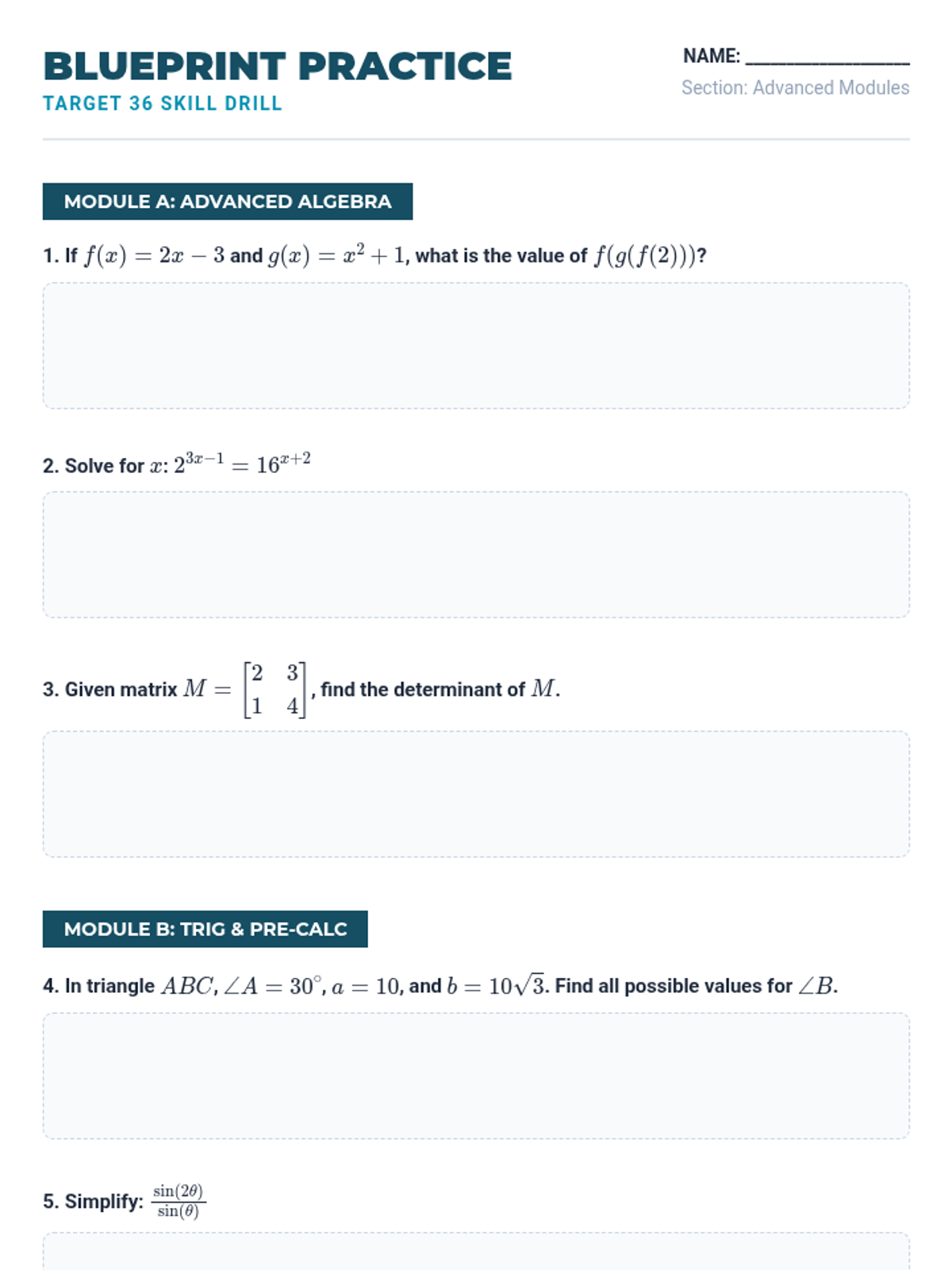
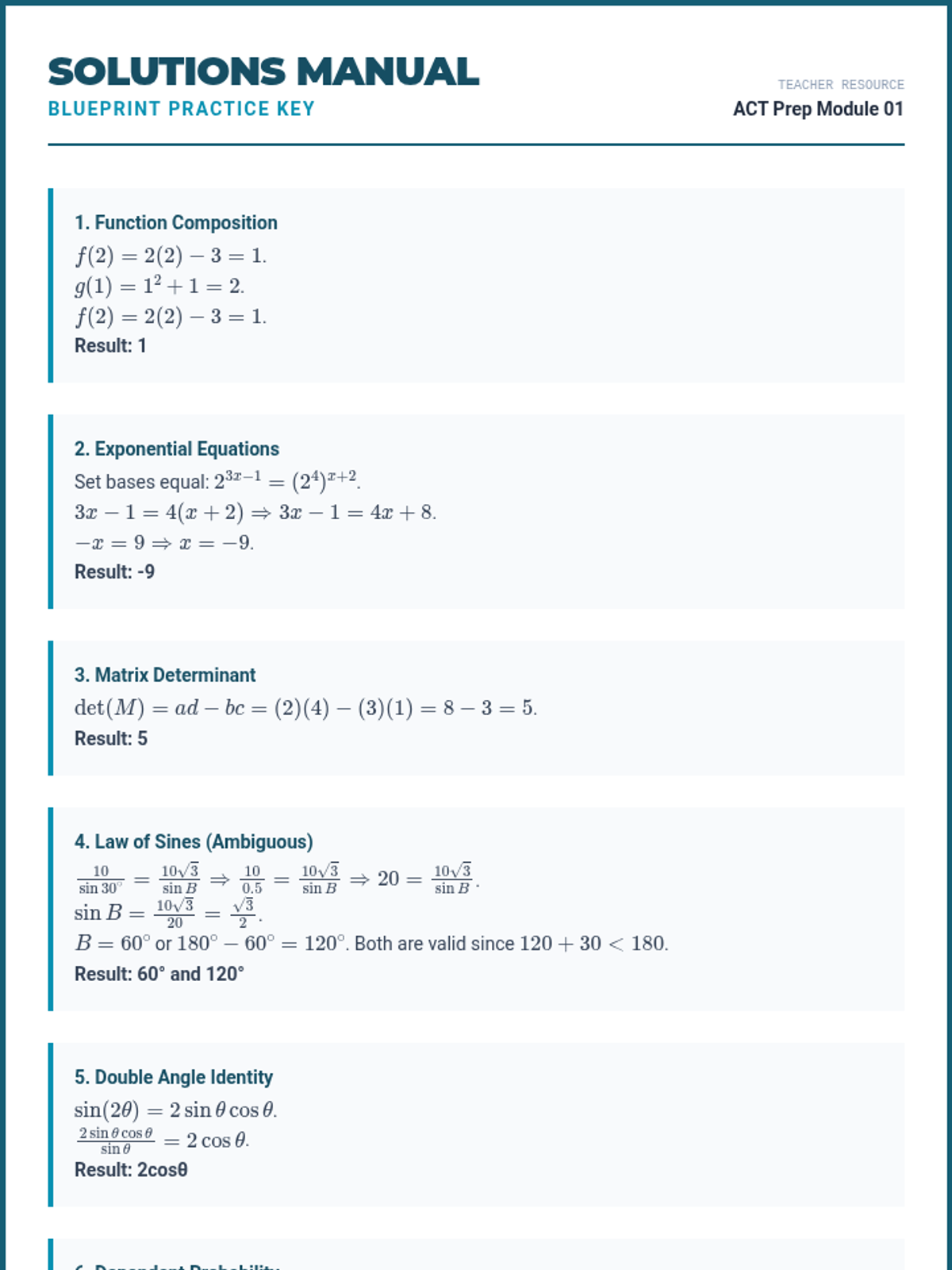
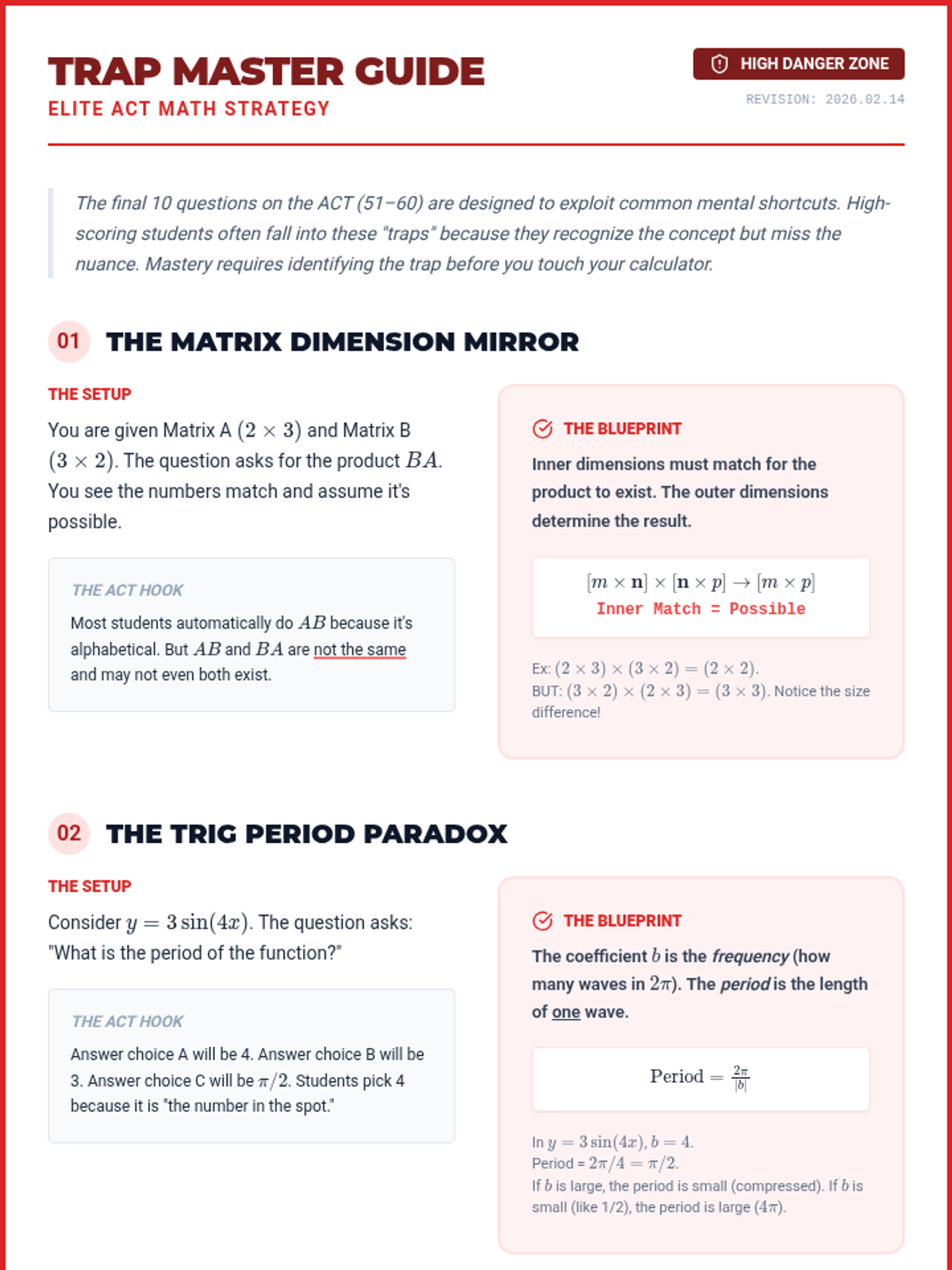
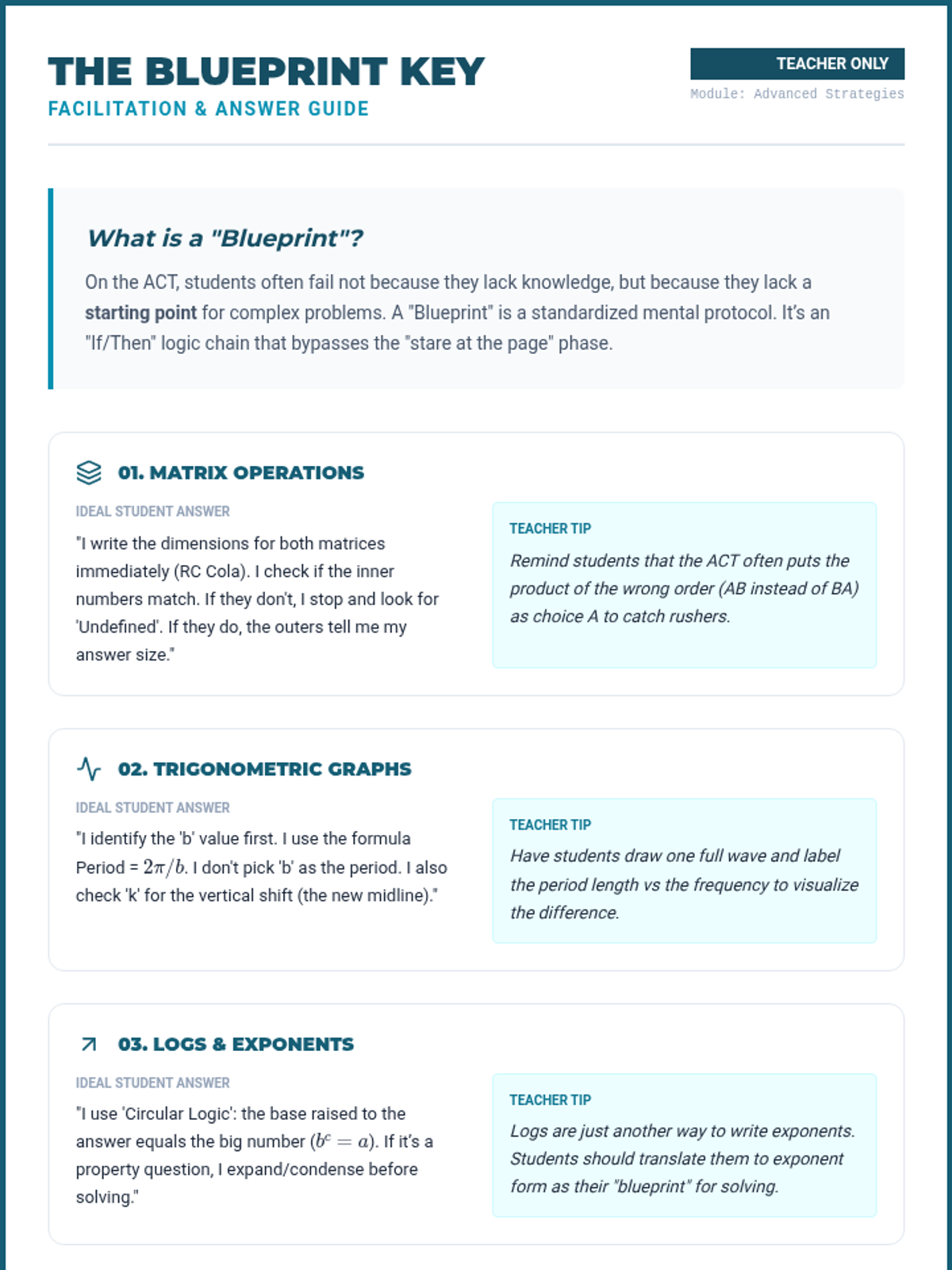
A comprehensive lesson focused on high-level ACT Math topics including matrices, complex functions, trigonometry, and advanced statistics. The lesson emphasizes identifying common 'traps' and applying architectural-style problem-solving strategies.
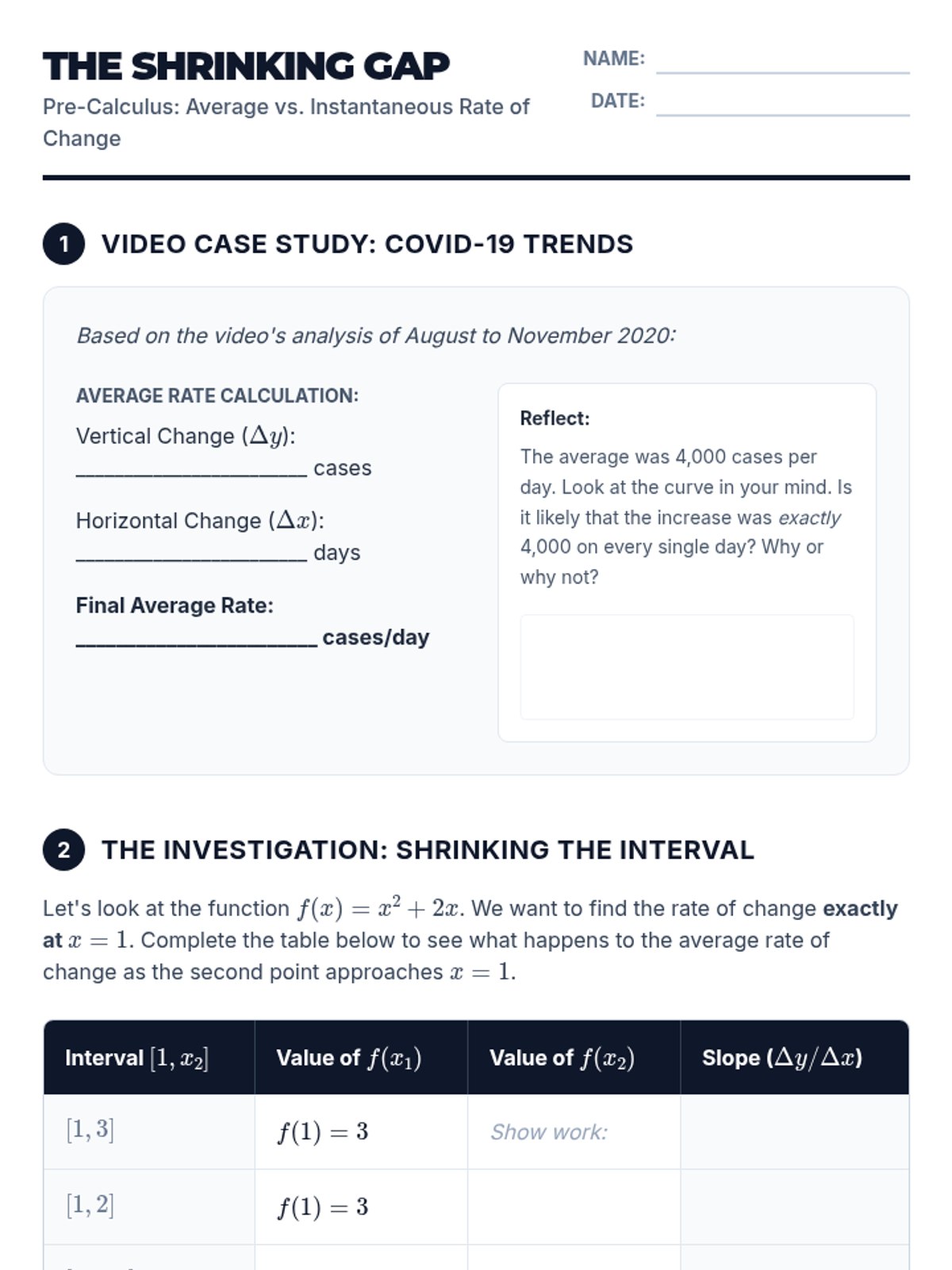
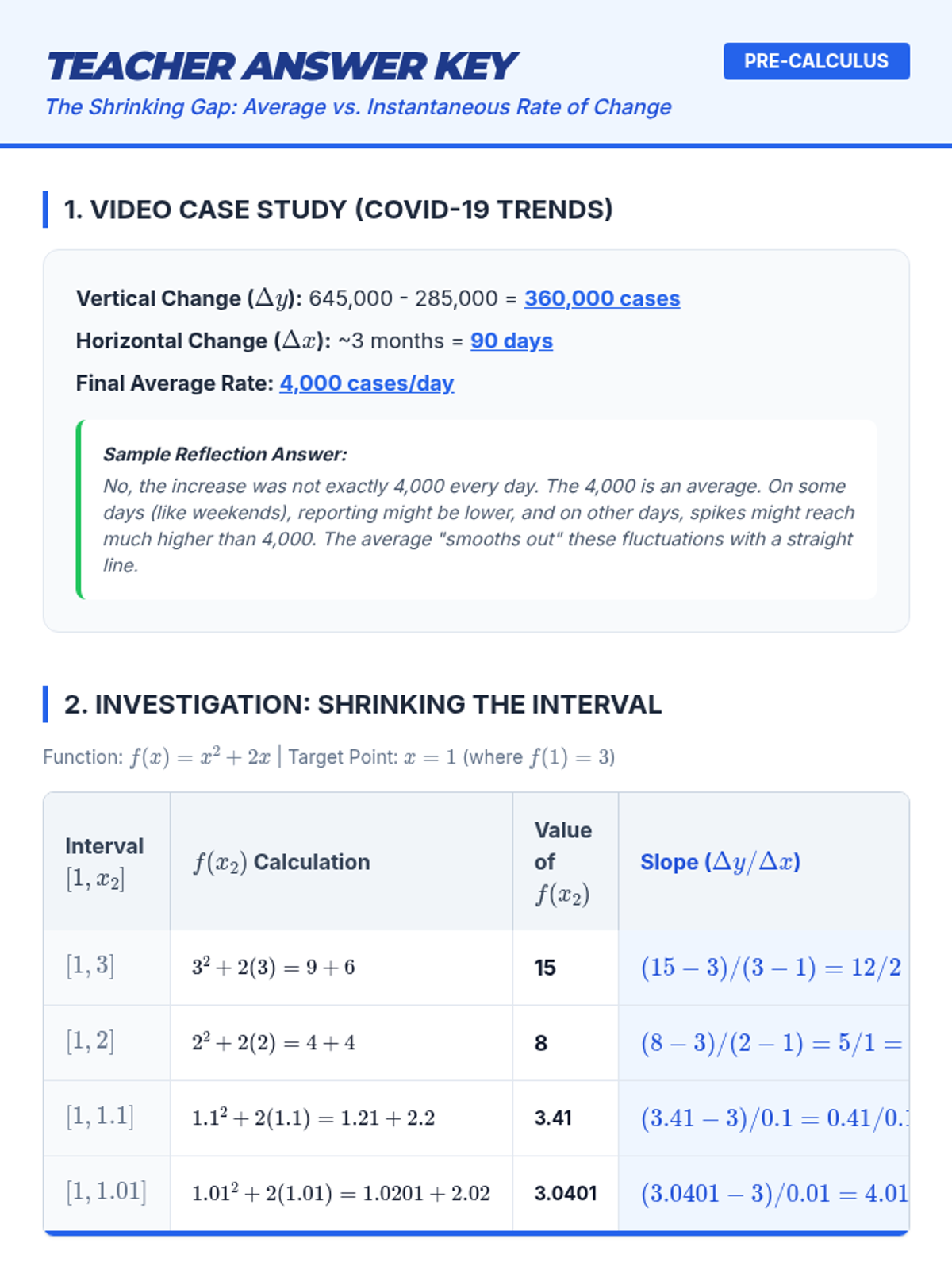
This lesson introduces students to the distinction between average and instantaneous rates of change. Students analyze non-linear functions, watch a video on real-world applications, and perform a limiting process activity to see how average rates approach instantaneous speed.
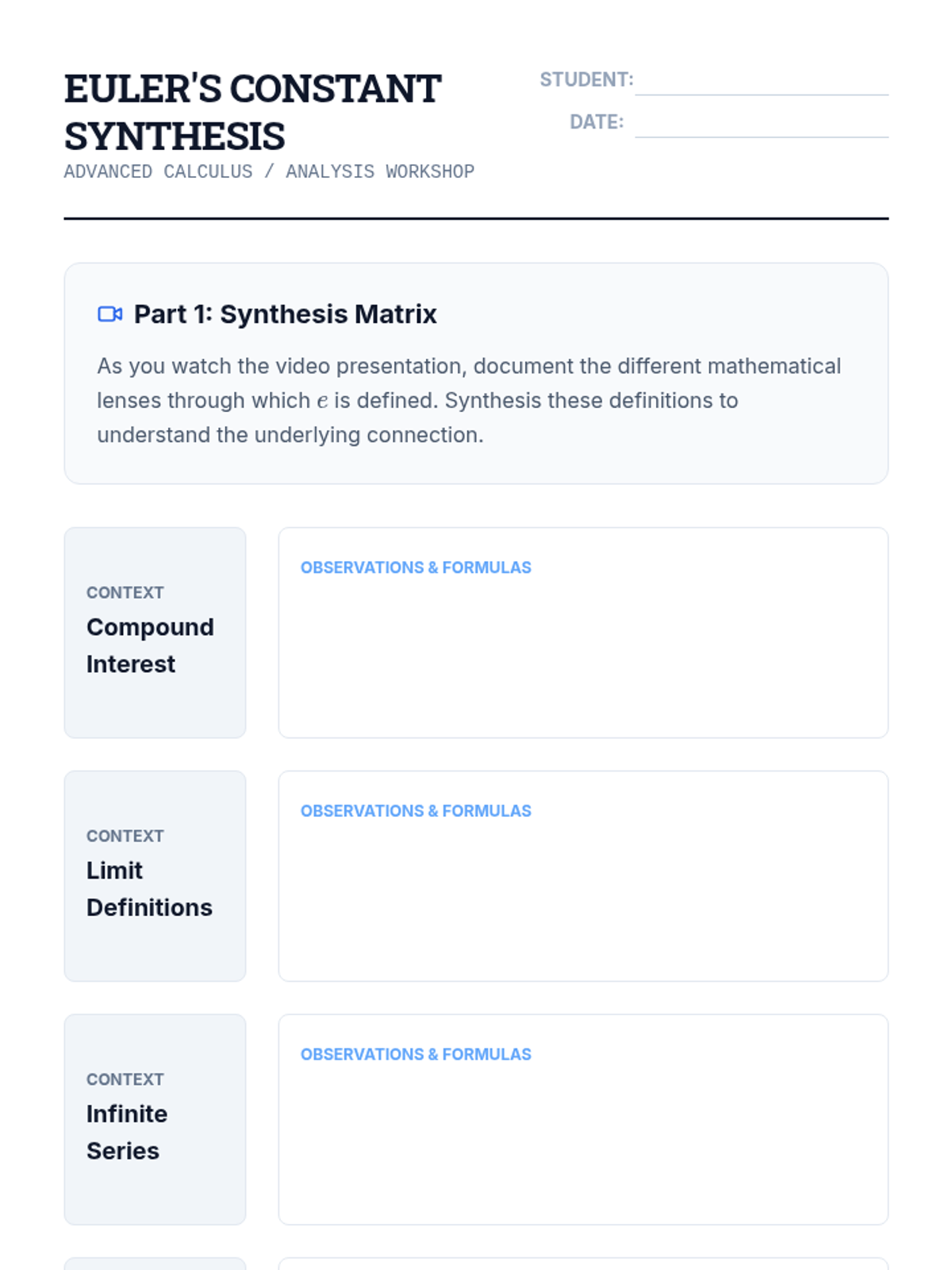
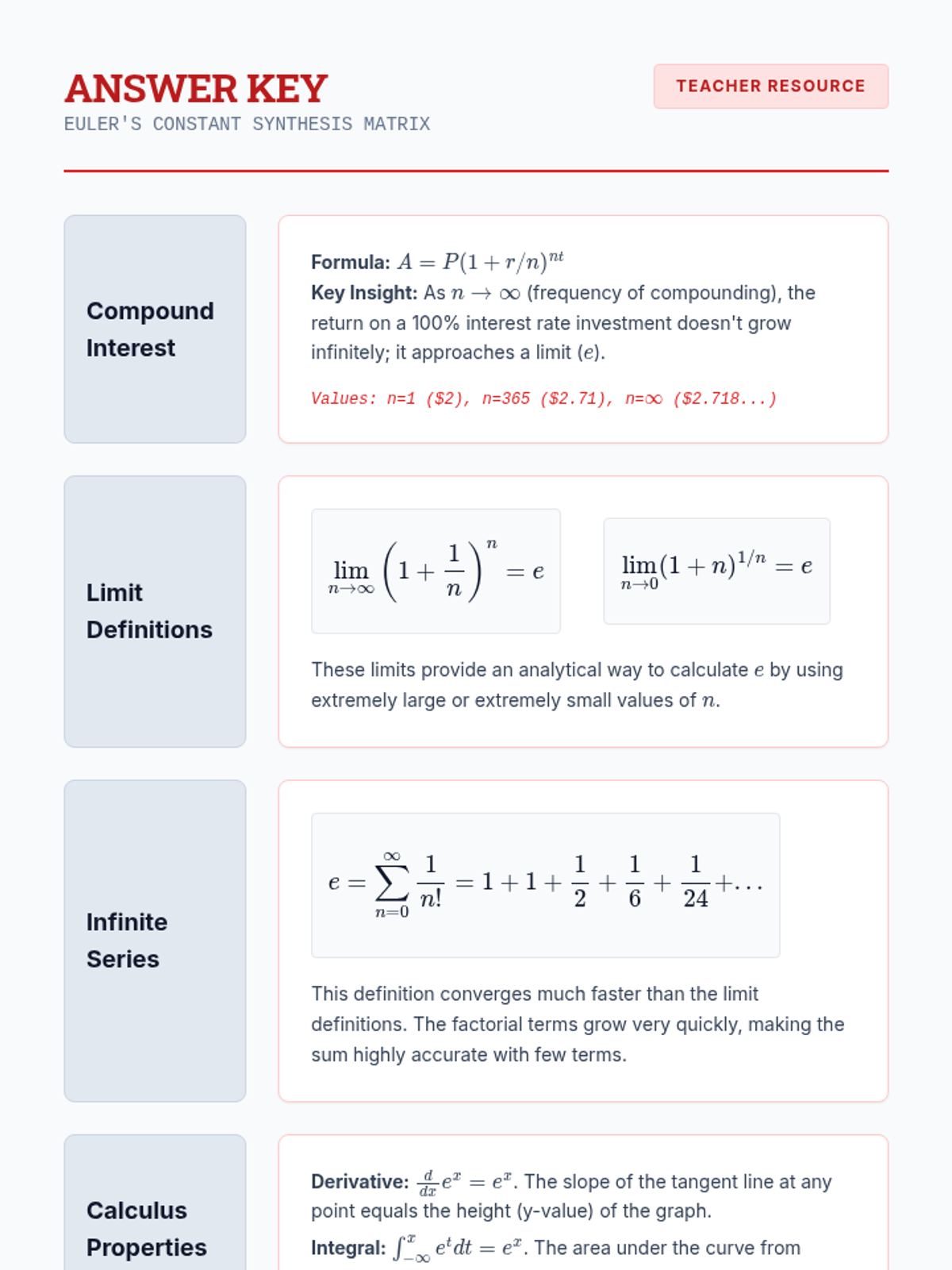
An undergraduate-level exploration of Euler's number (e) that synthesizes its financial, analytical, and series-based definitions through a rigorous proof-based approach.
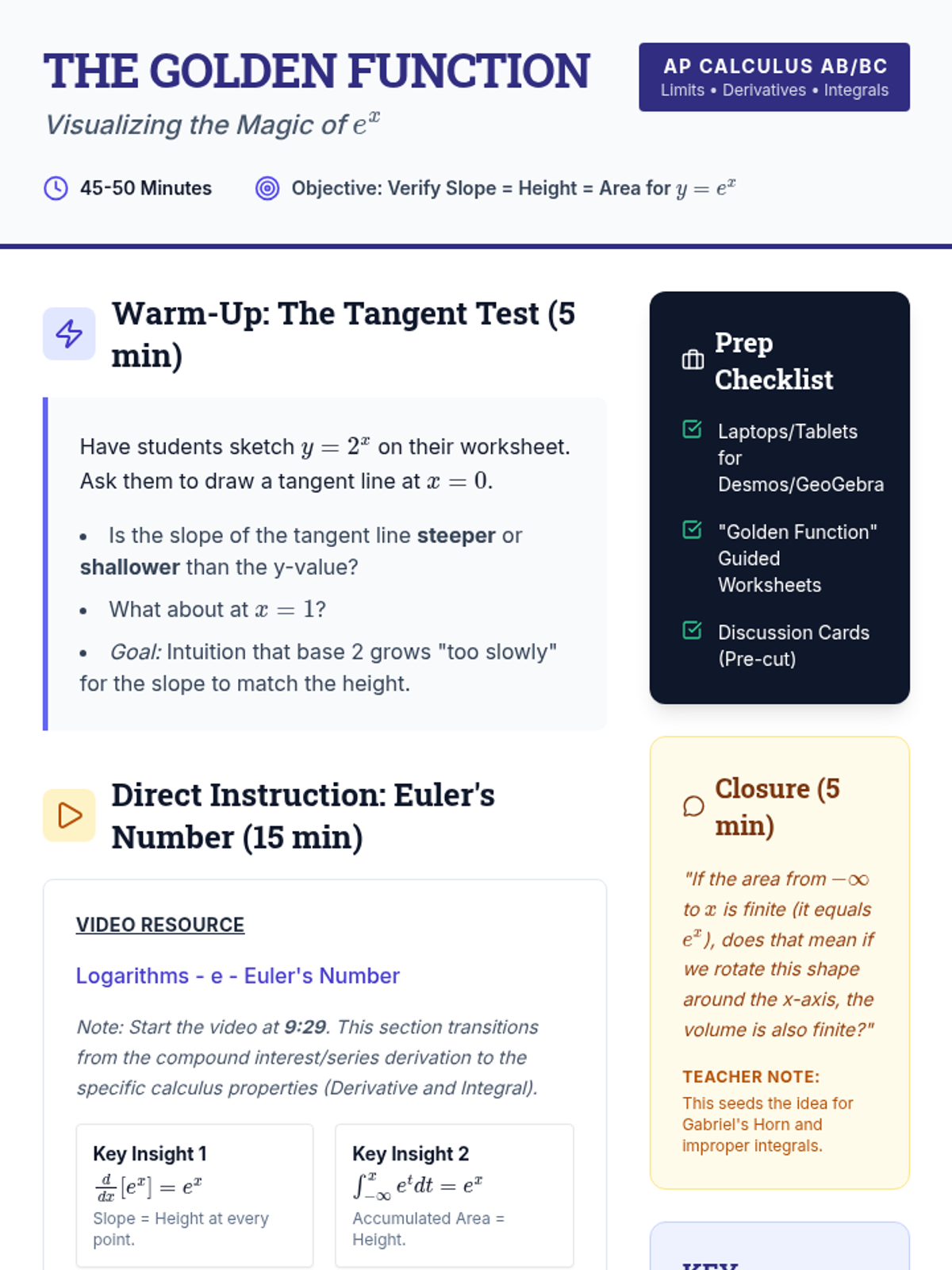
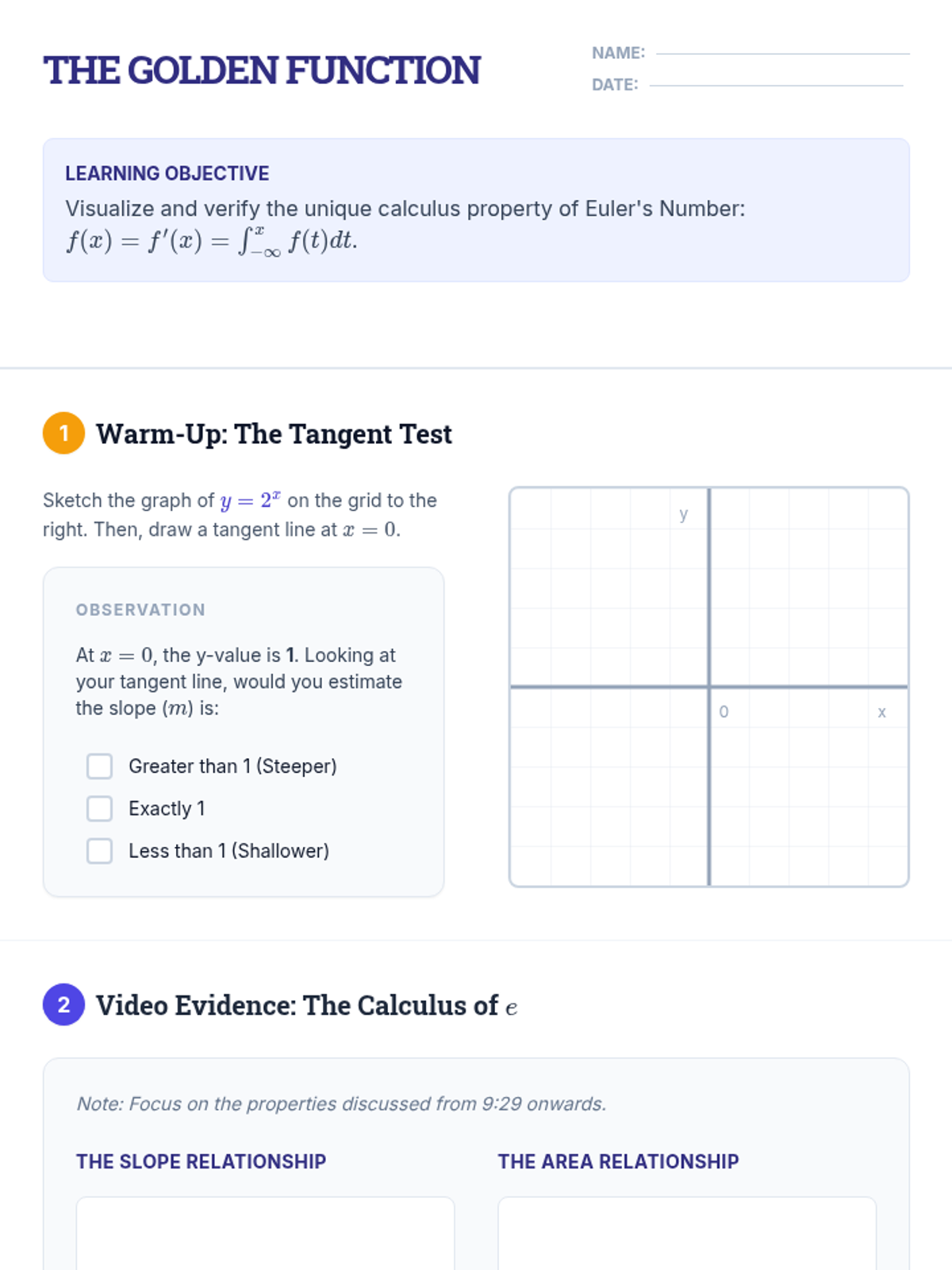
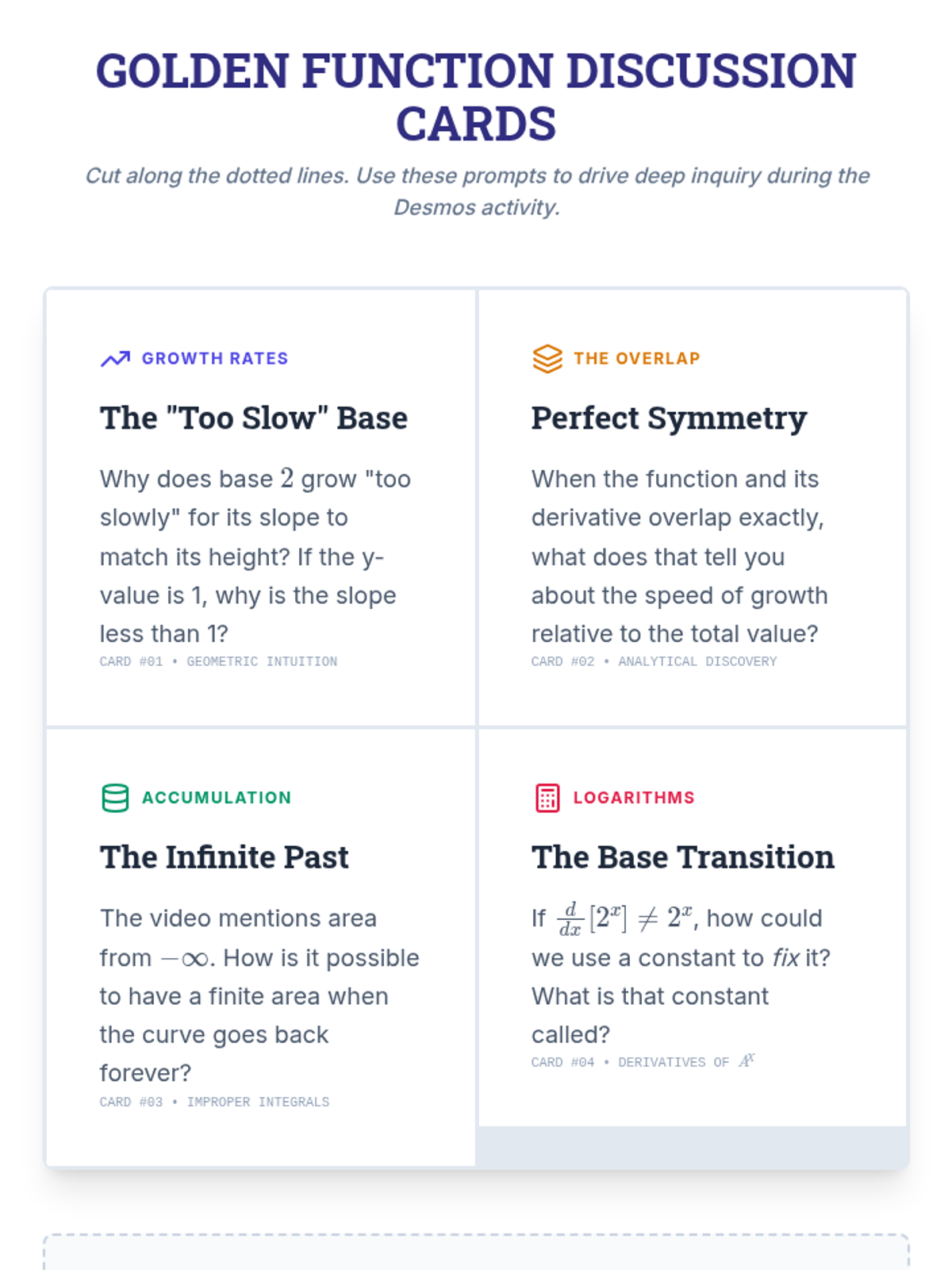
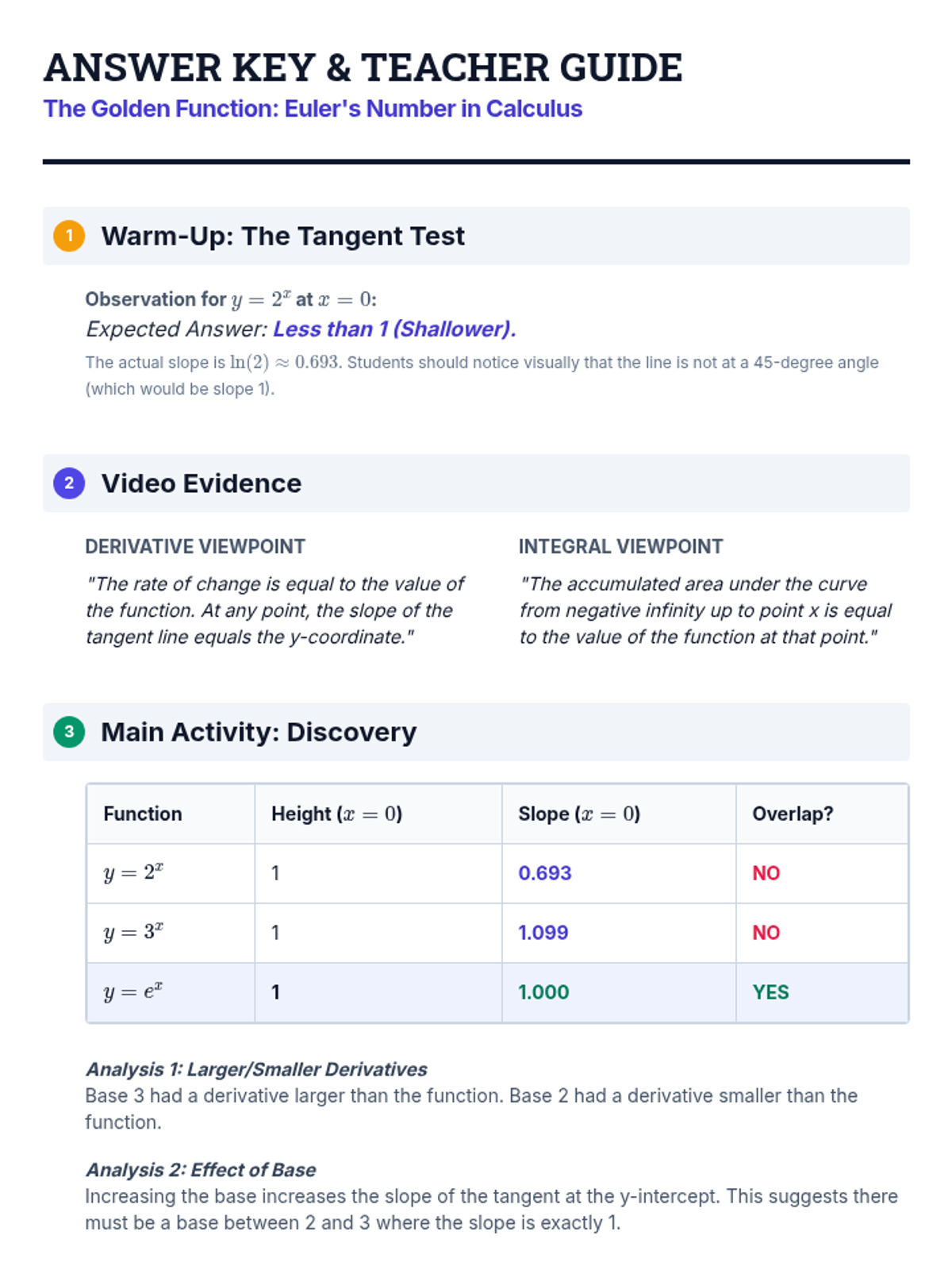
A specialized AP Calculus lesson exploring the unique geometric and analytical properties of Euler's number. Students use graphing software to discover why e is the unique base where the function's height, slope, and area under the curve are identical.
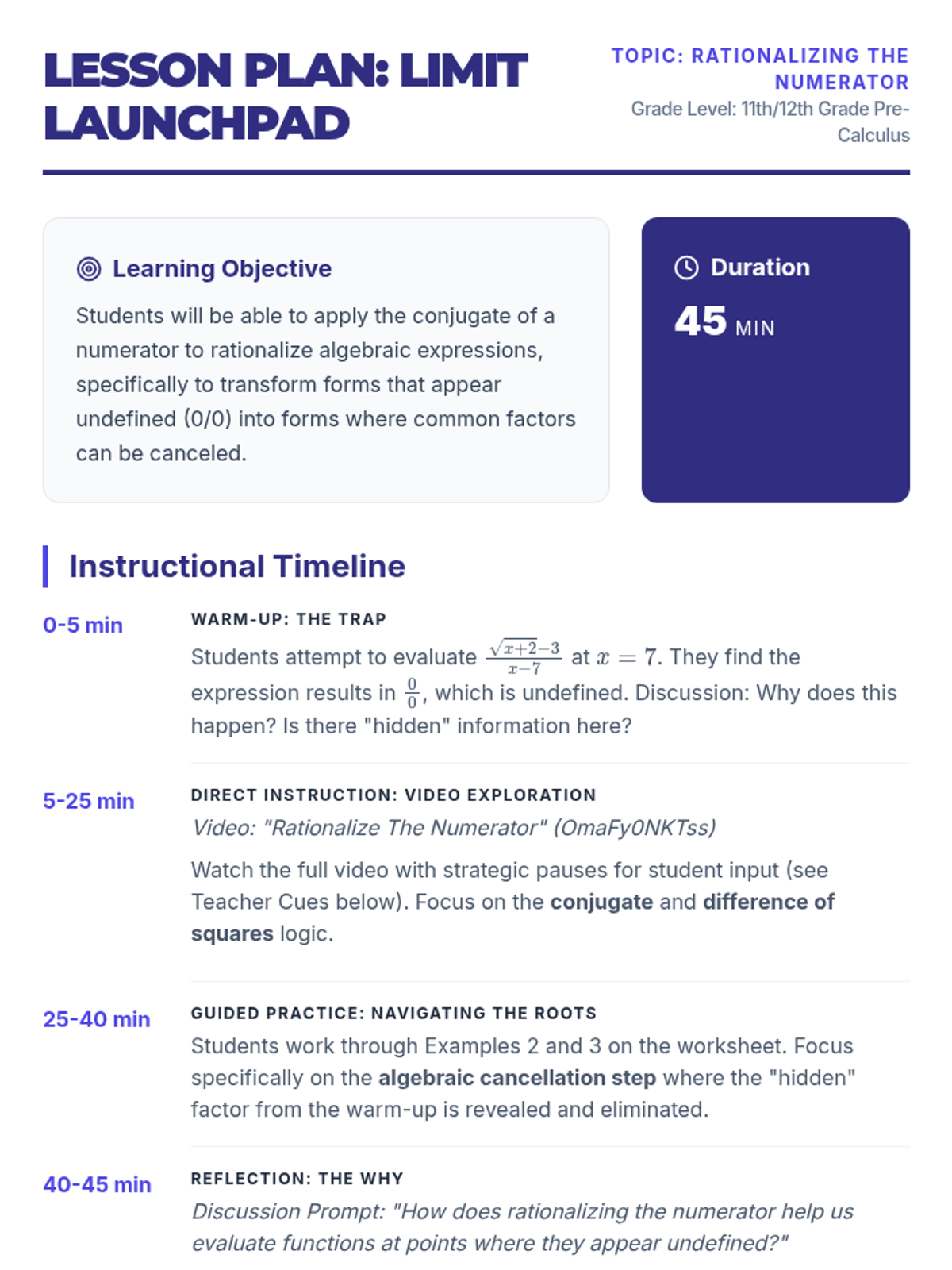
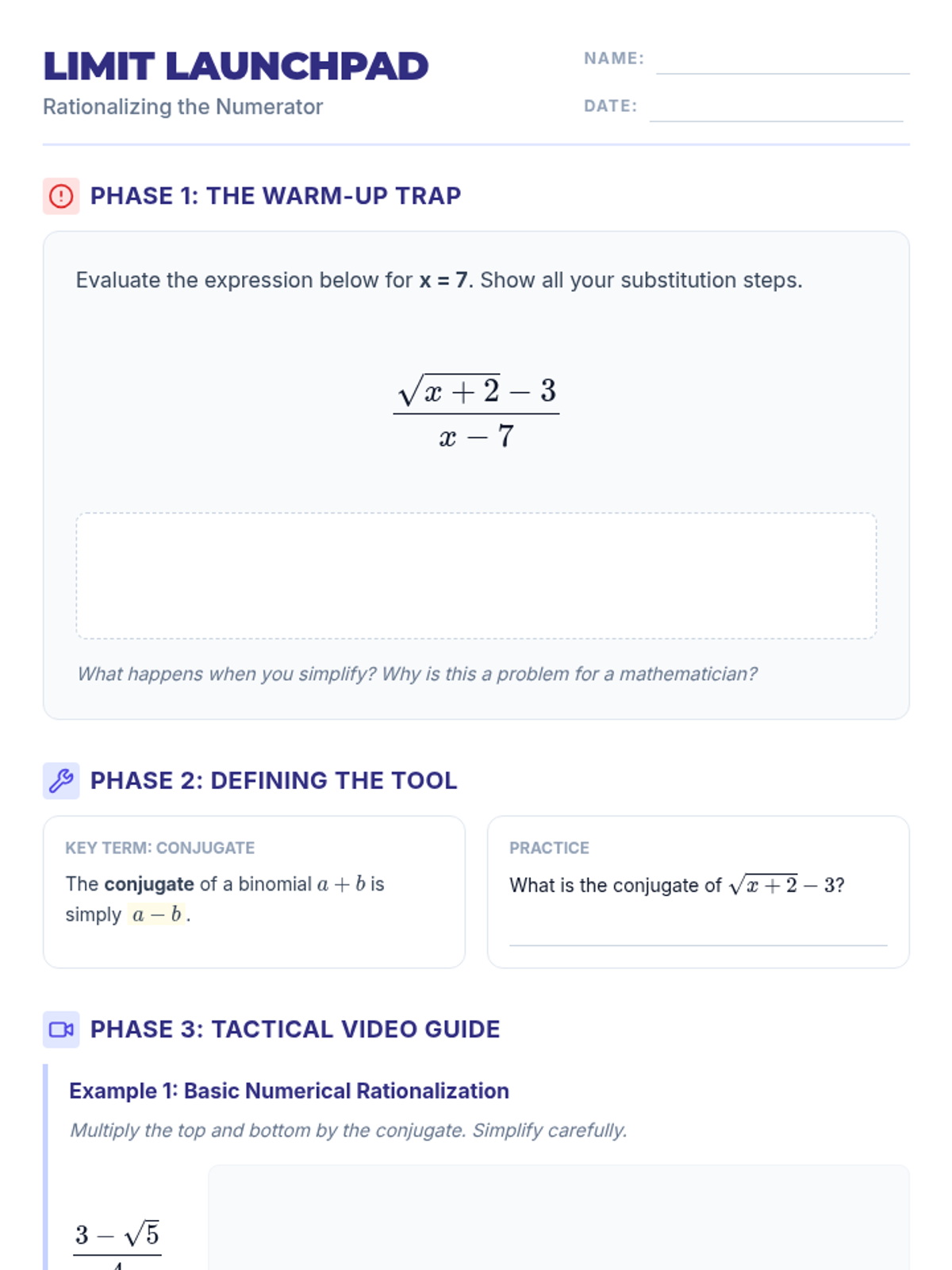
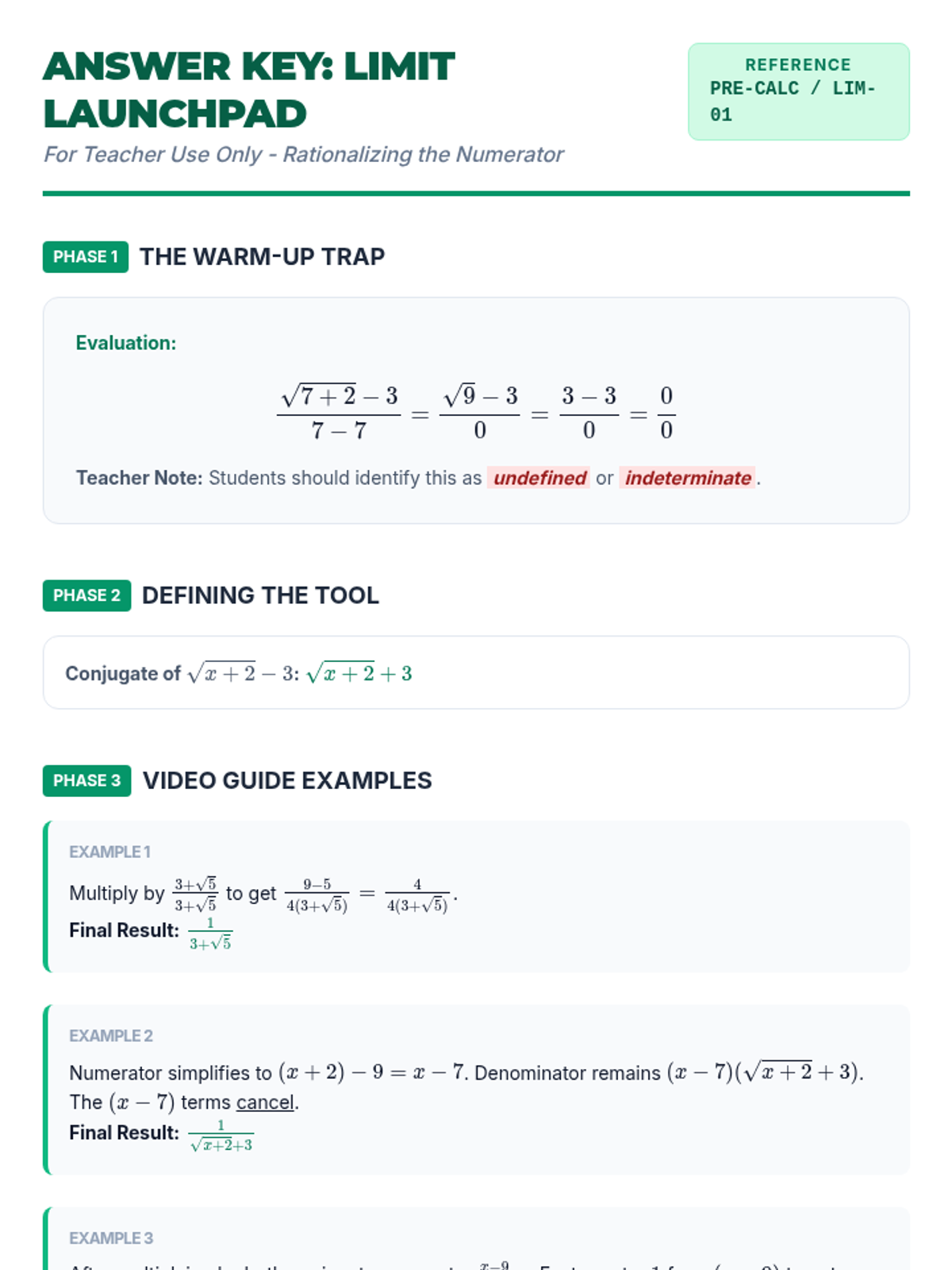
A Pre-Calculus lesson designed to bridge the gap between algebra and calculus by mastering the technique of rationalizing the numerator. Students learn to use conjugates to transform 'undefined' expressions into solvable forms, a critical skill for evaluating limits.
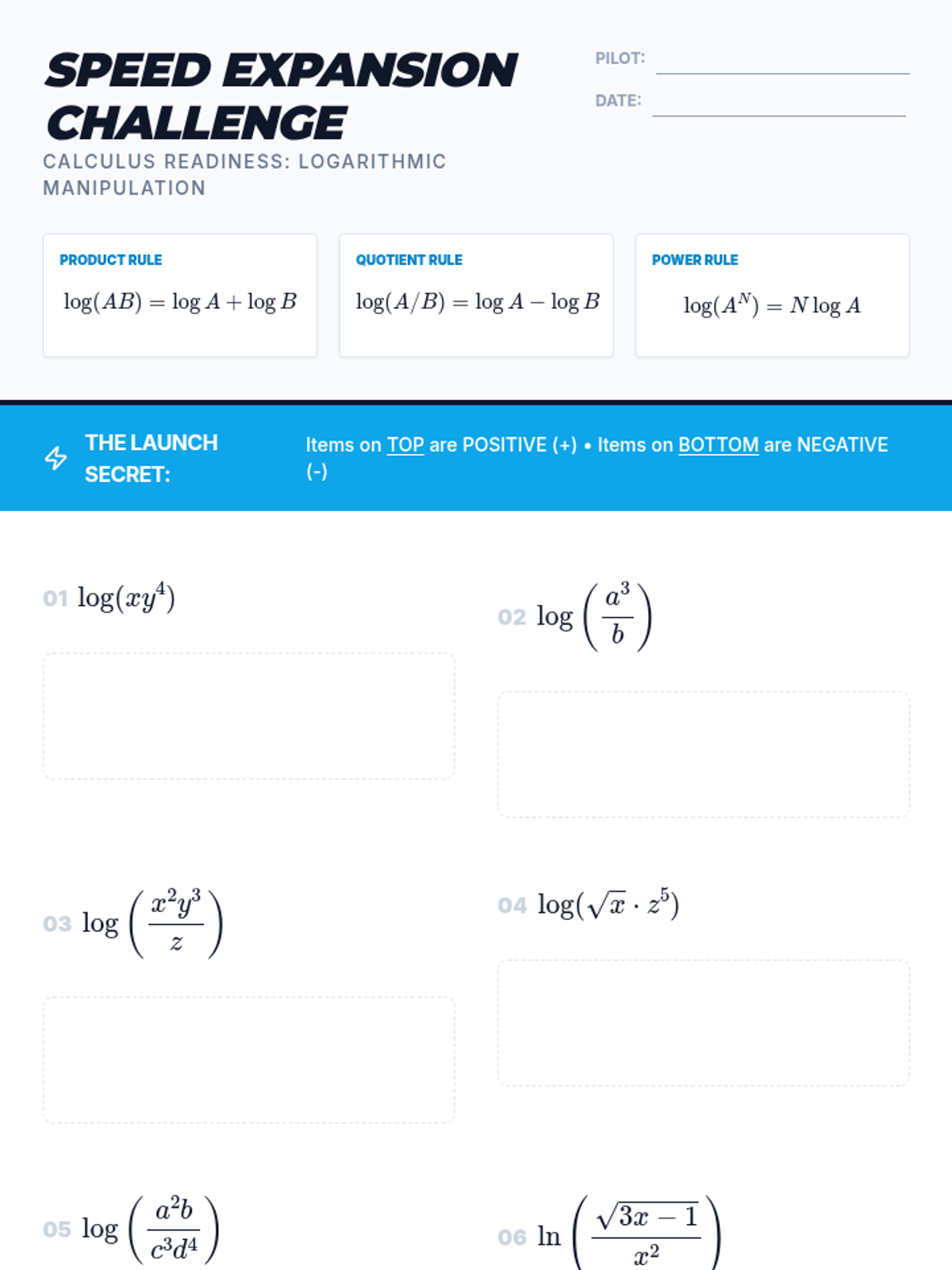
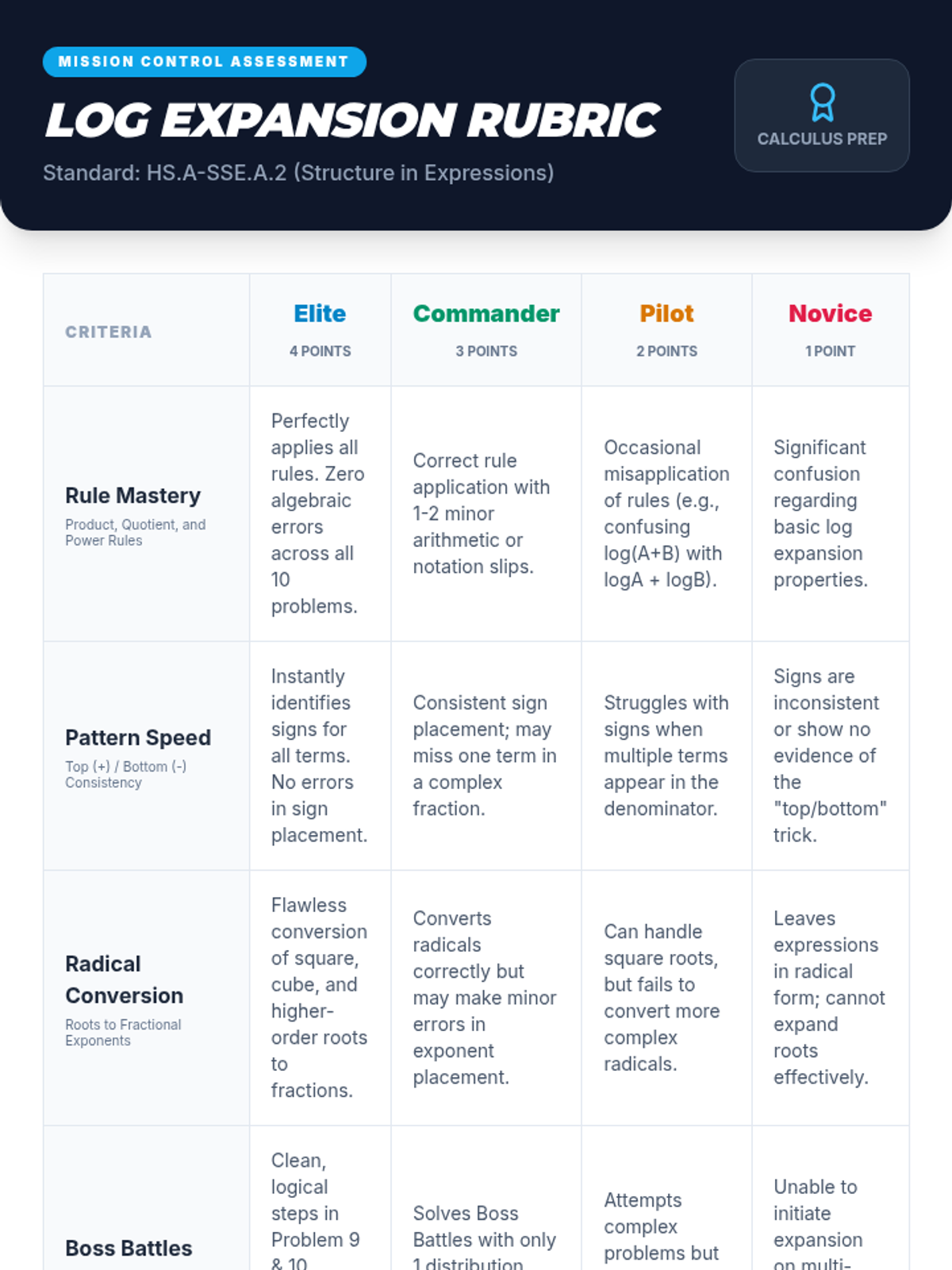
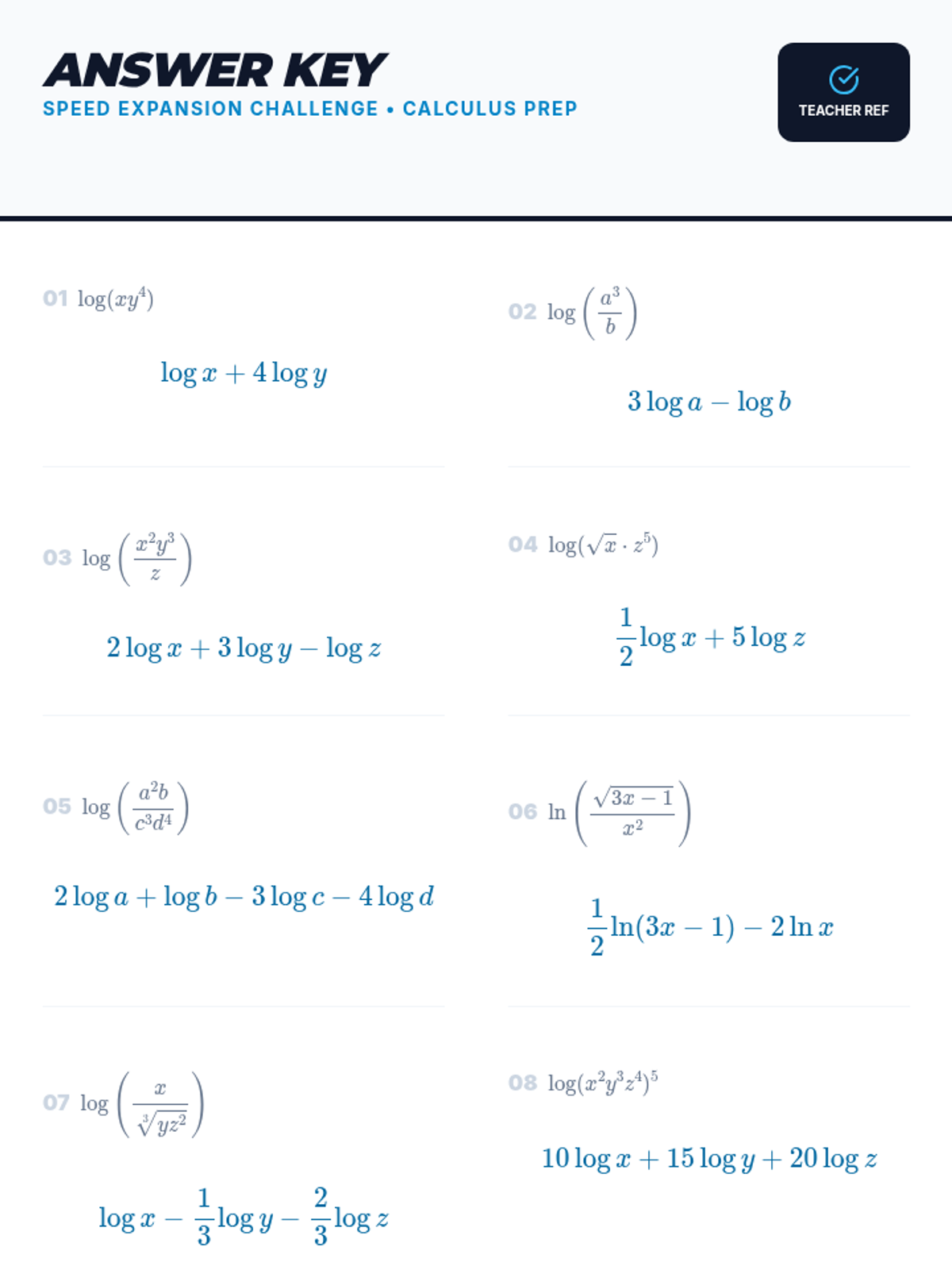
A high-speed review of logarithmic expansion properties designed to build the algebraic fluency required for Calculus. Students learn to recognize patterns in complex rational expressions to expand logs instantly, facilitating easier differentiation and integration.
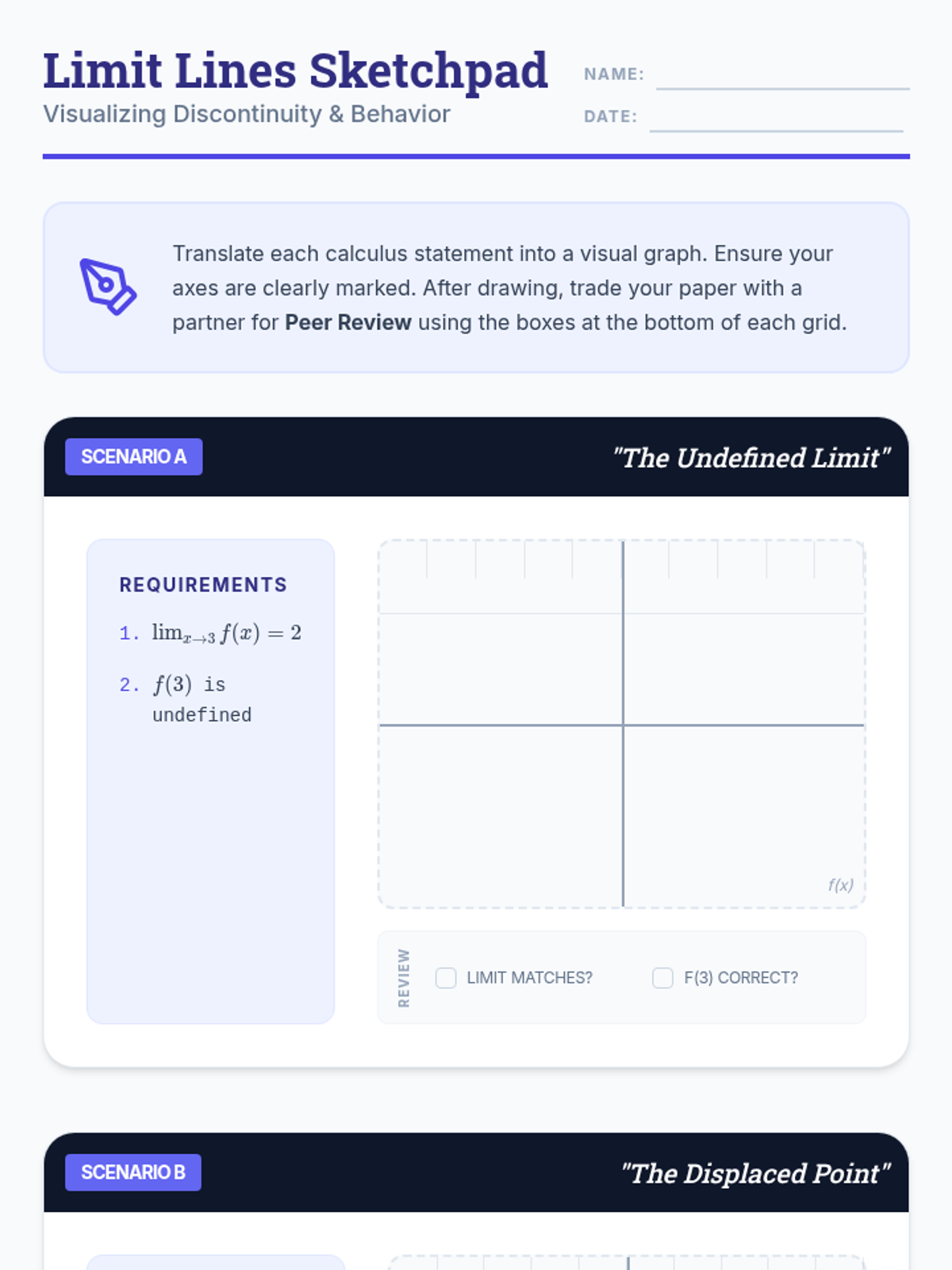
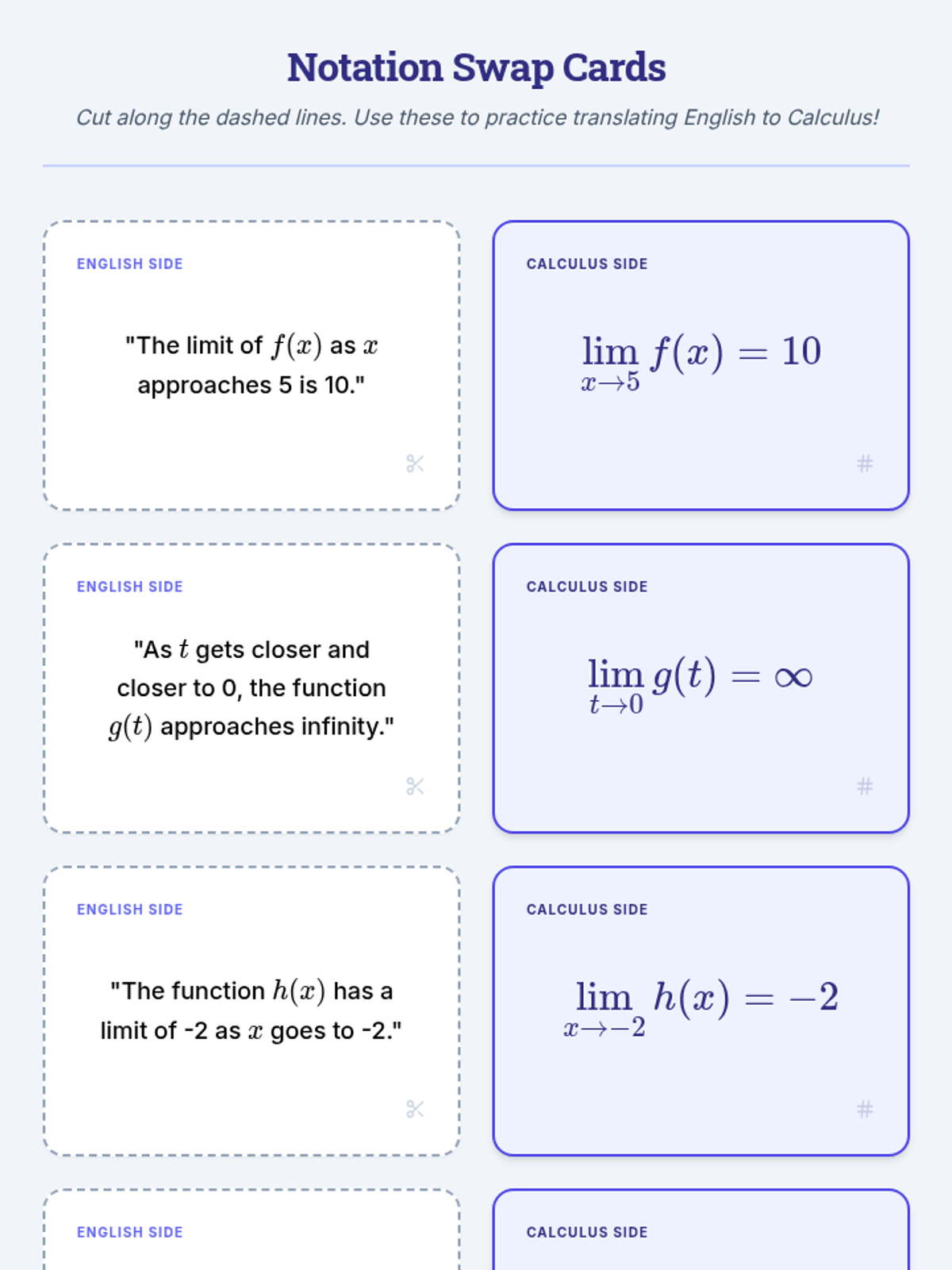
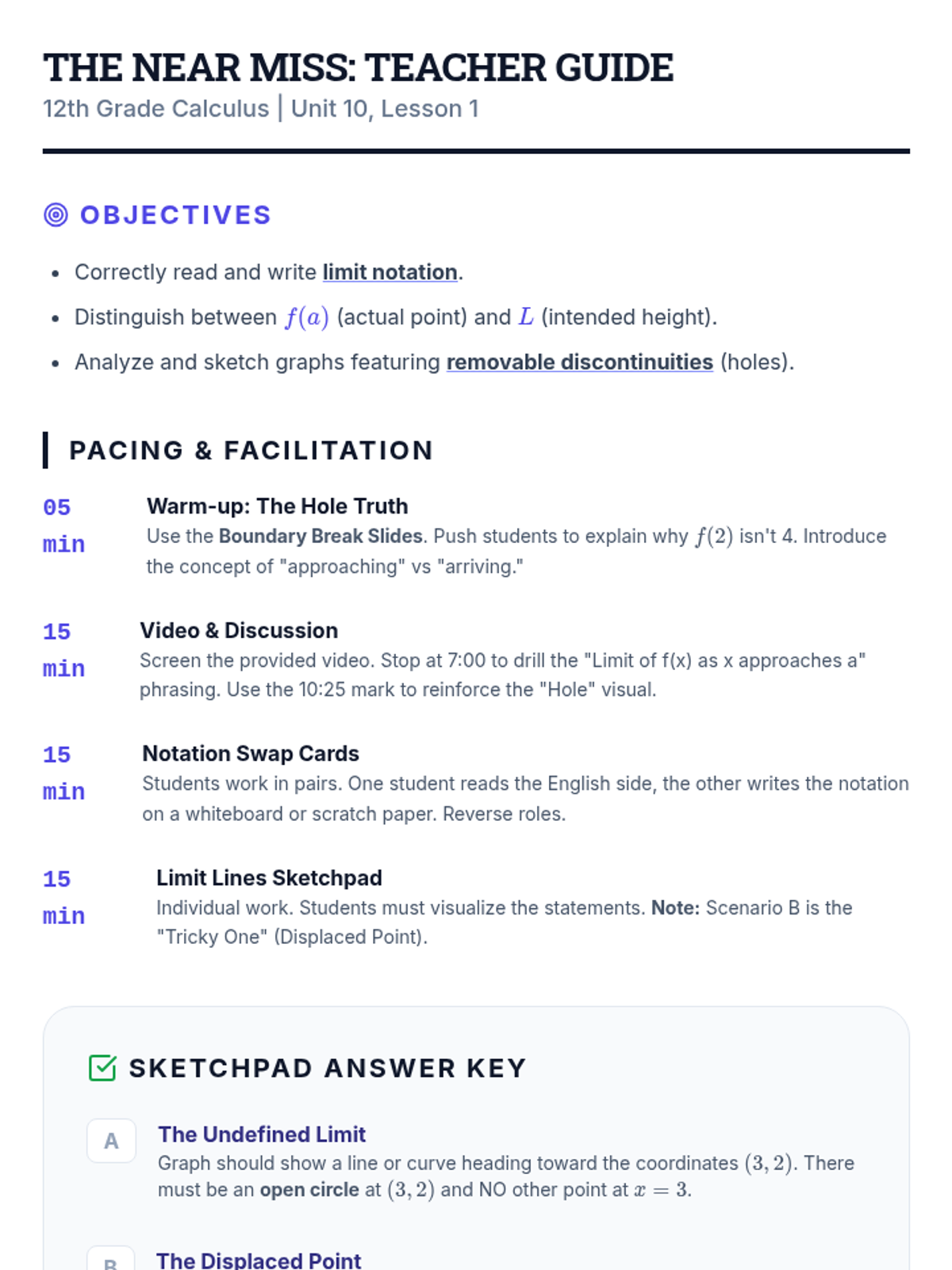
A 12th-grade Calculus lesson introducing limit notation and the fundamental distinction between a function's value at a point and its limit as it approaches that point. Students engage with visual analogies, notation translation, and graph sketching.
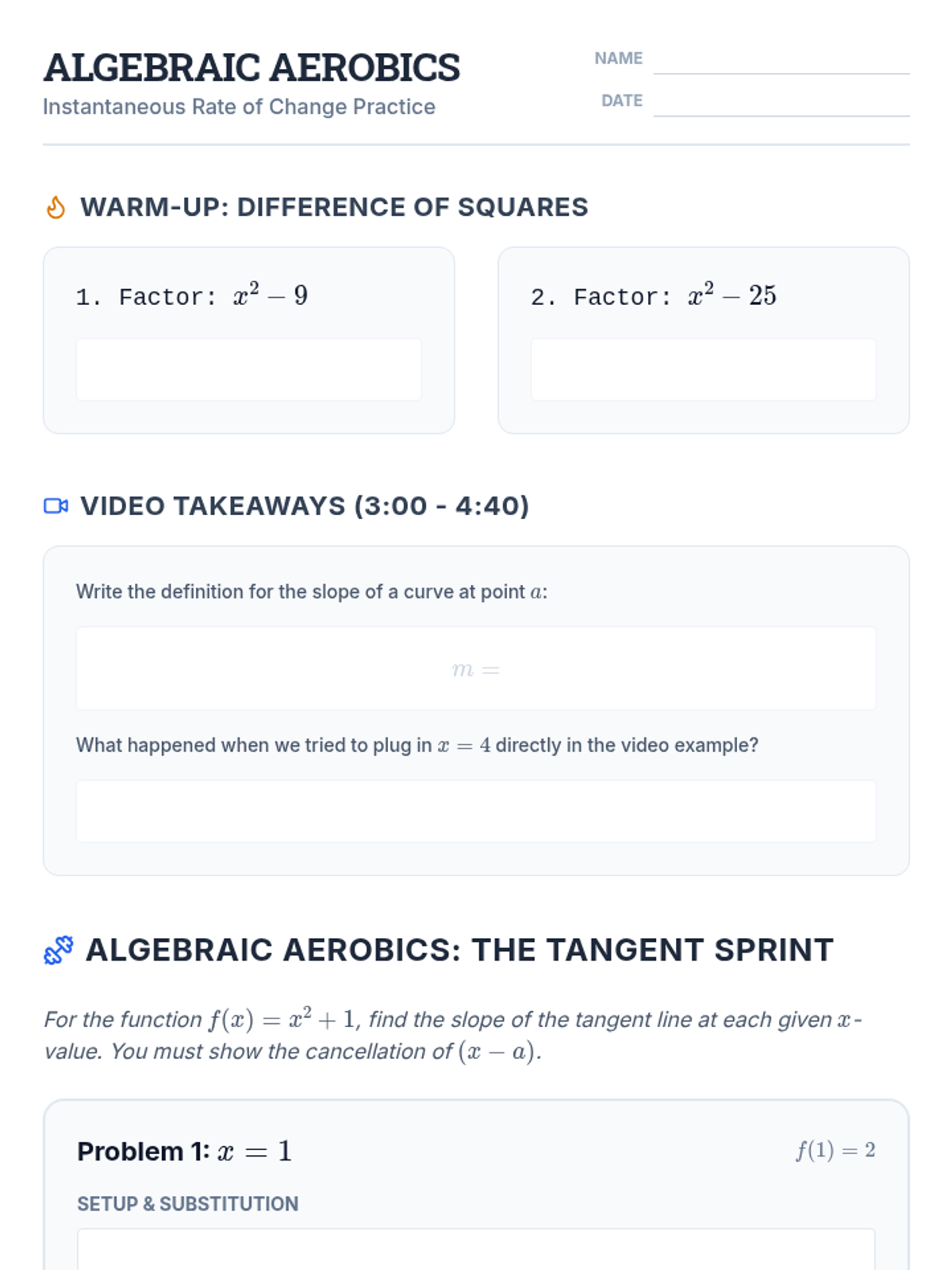
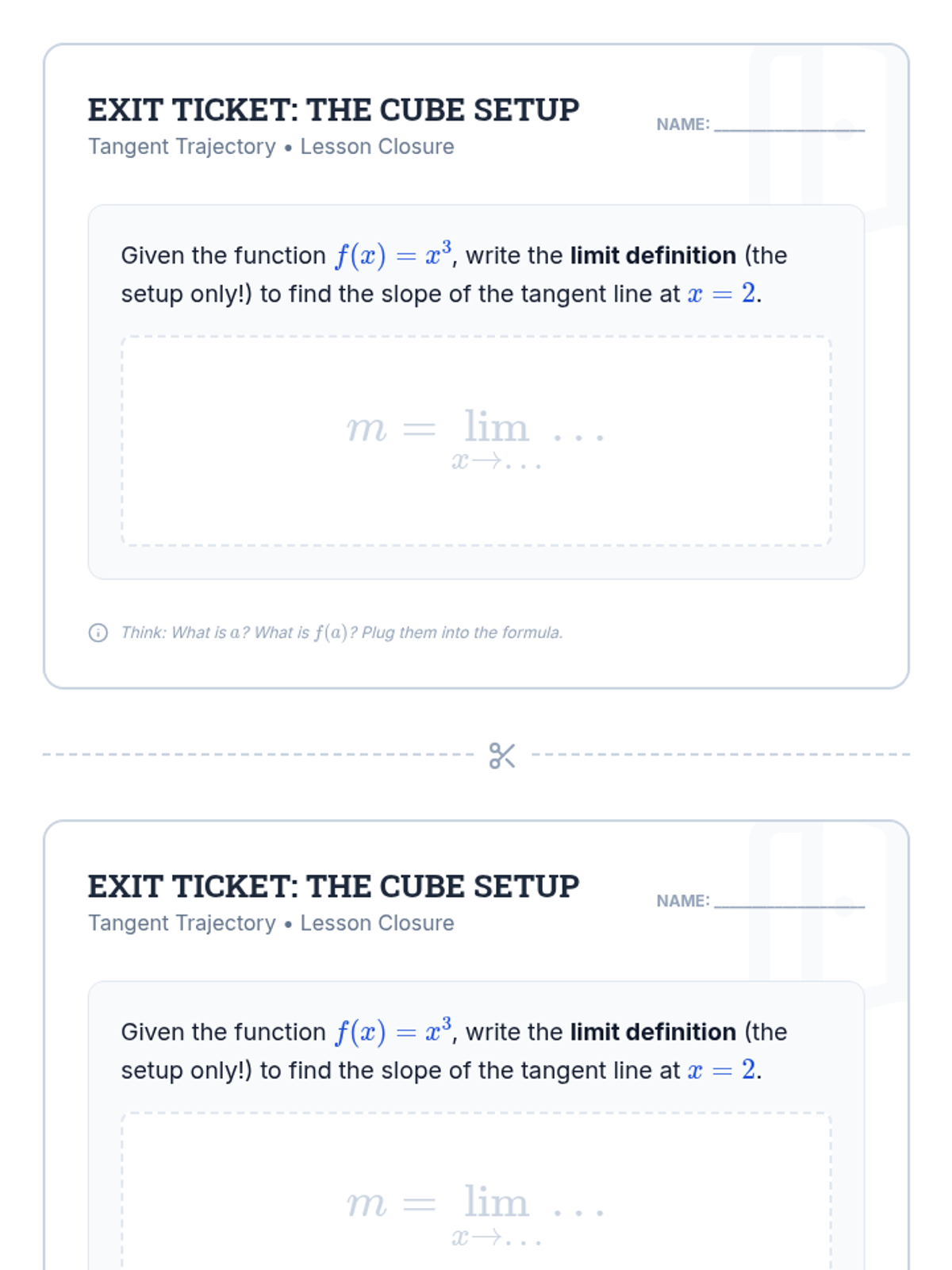
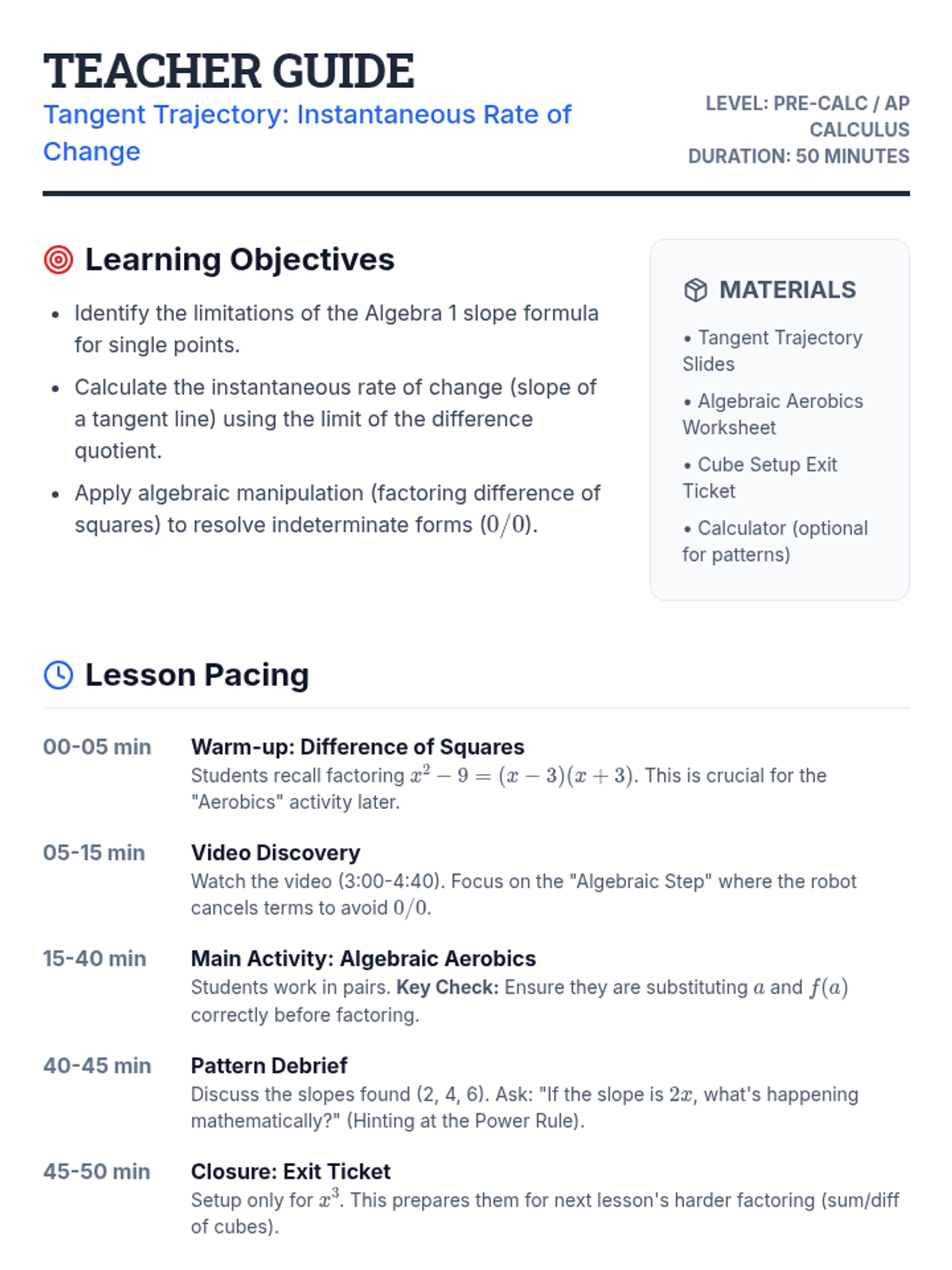
A Pre-Calculus lesson focused on calculating the instantaneous rate of change (slope of a tangent line) using the limit definition of the difference quotient, featuring algebraic simplification and difference of squares factoring.
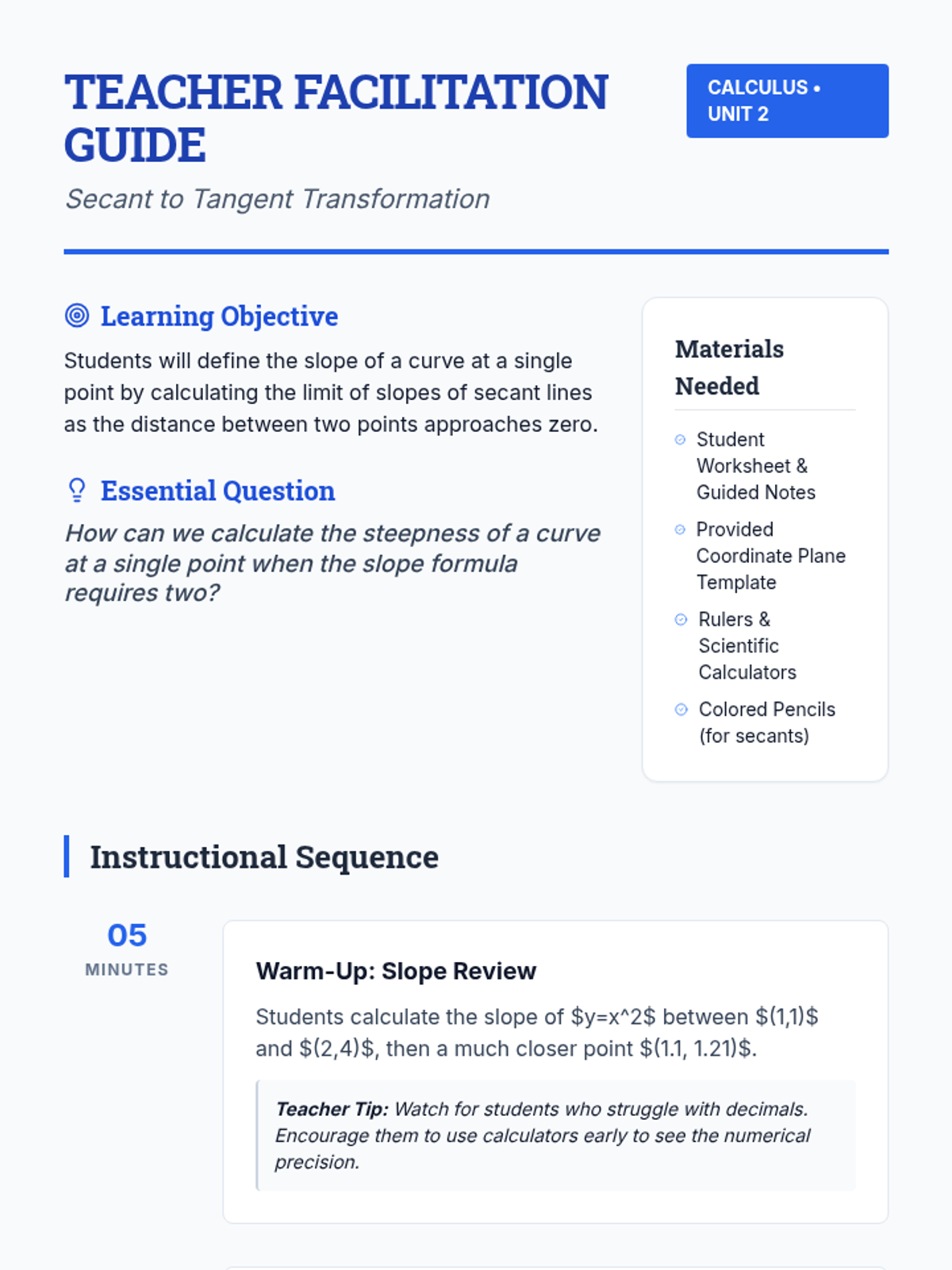
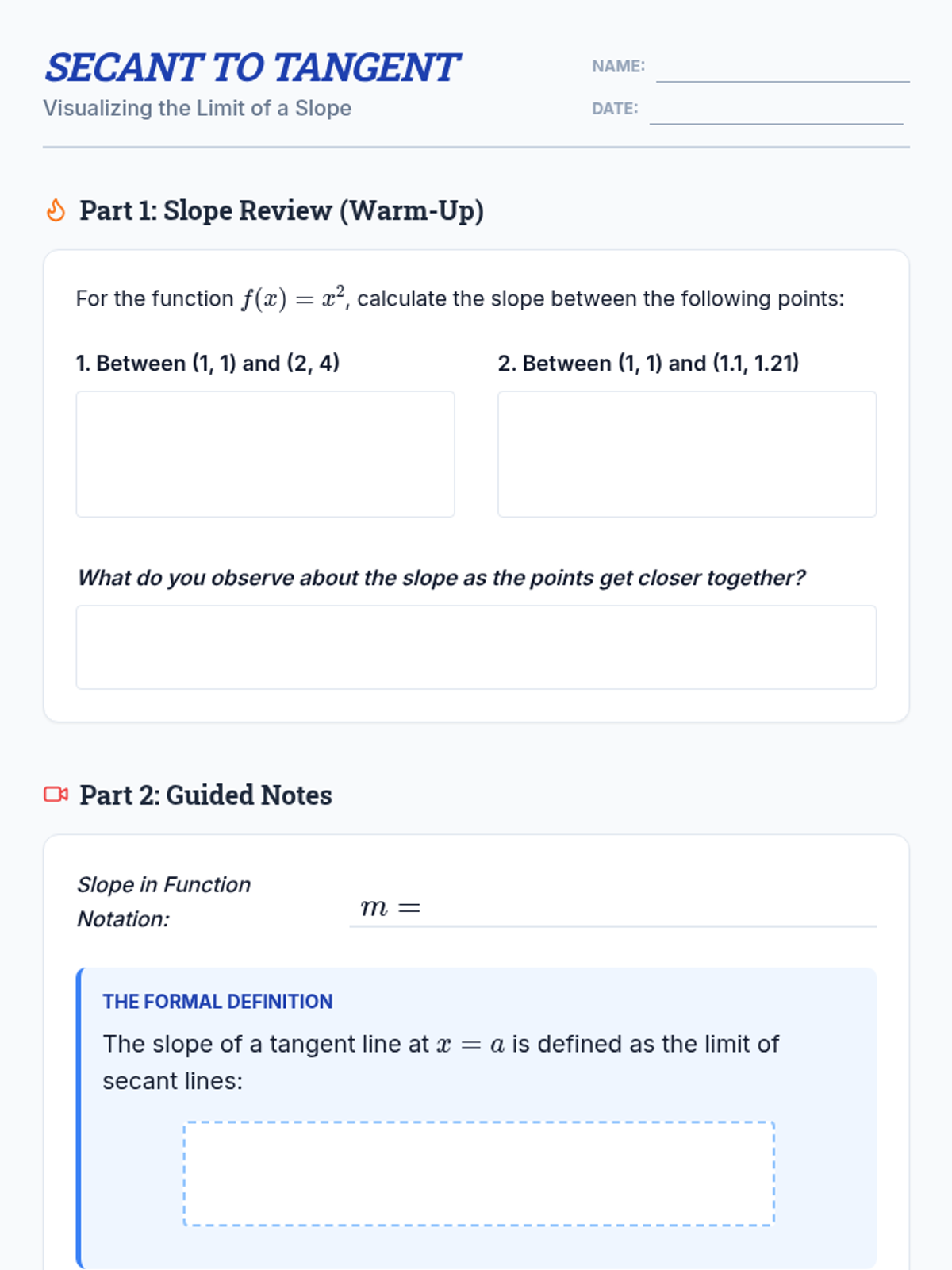
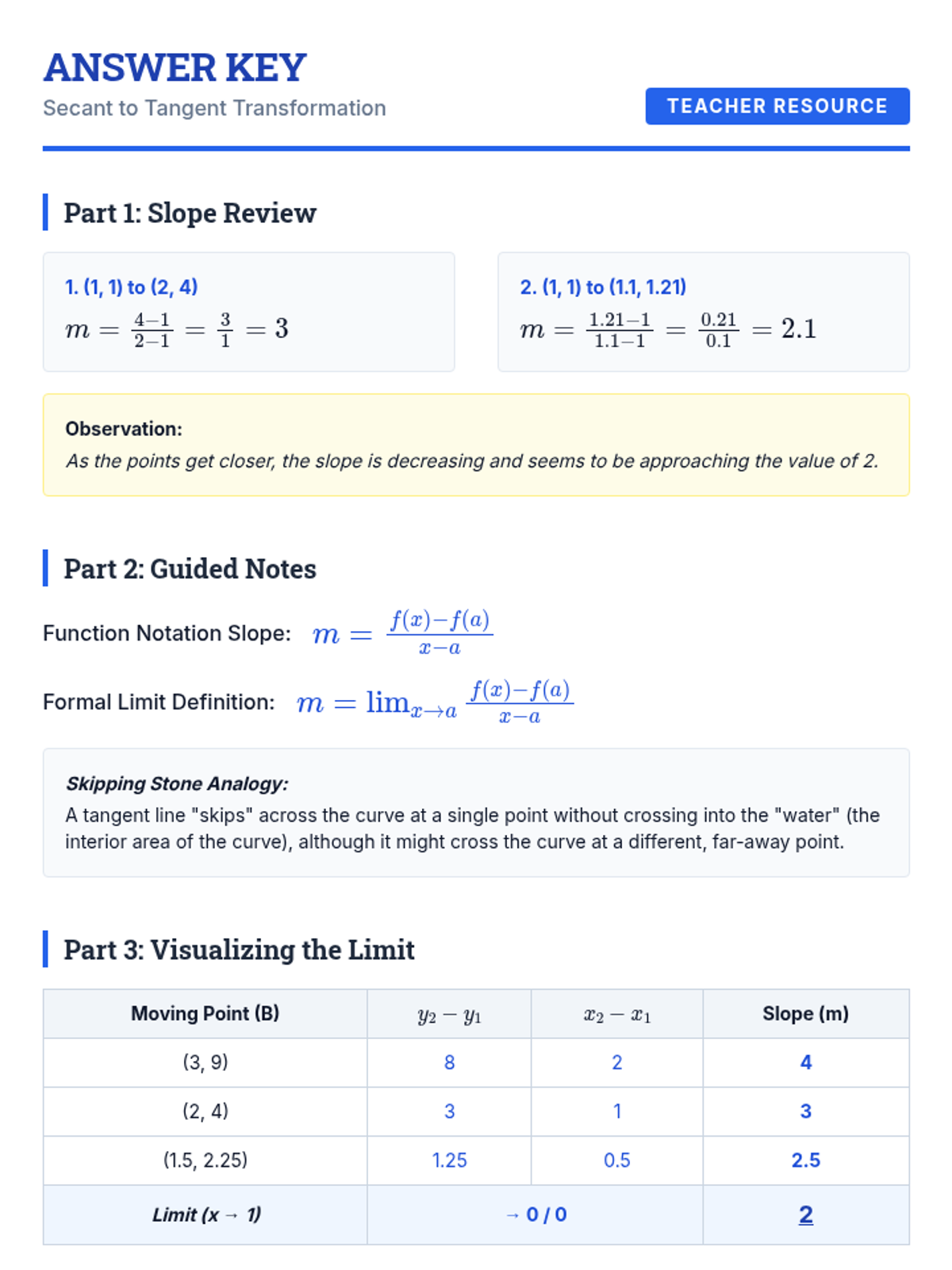
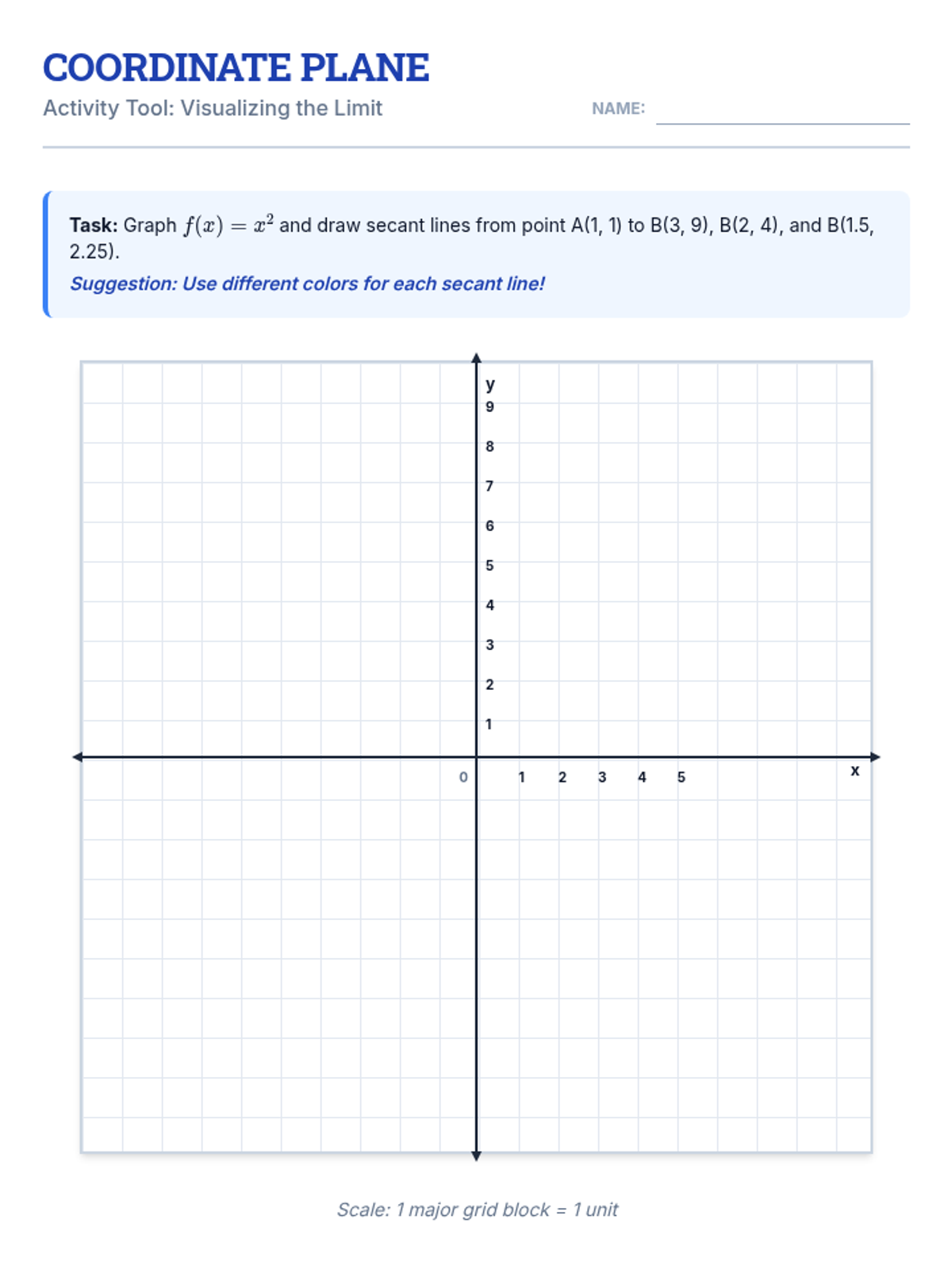
This lesson introduces the concept of a tangent line's slope as the limit of secant line slopes, transitioning students from Algebra 1 slope calculations to the foundational definition of a derivative. Students will use graphing and numerical estimation to see how a secant line 'becomes' a tangent line as the distance between points approaches zero.
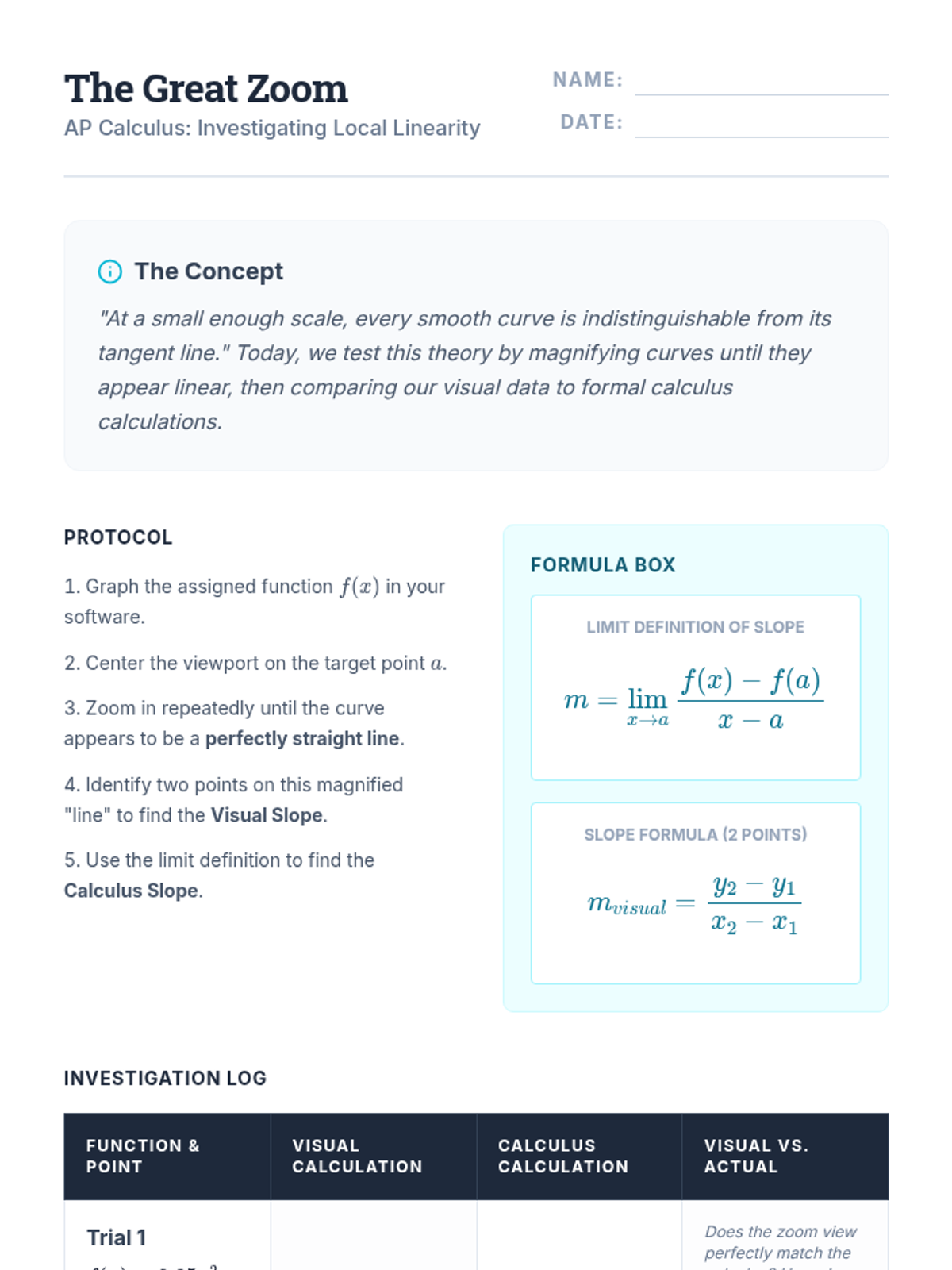
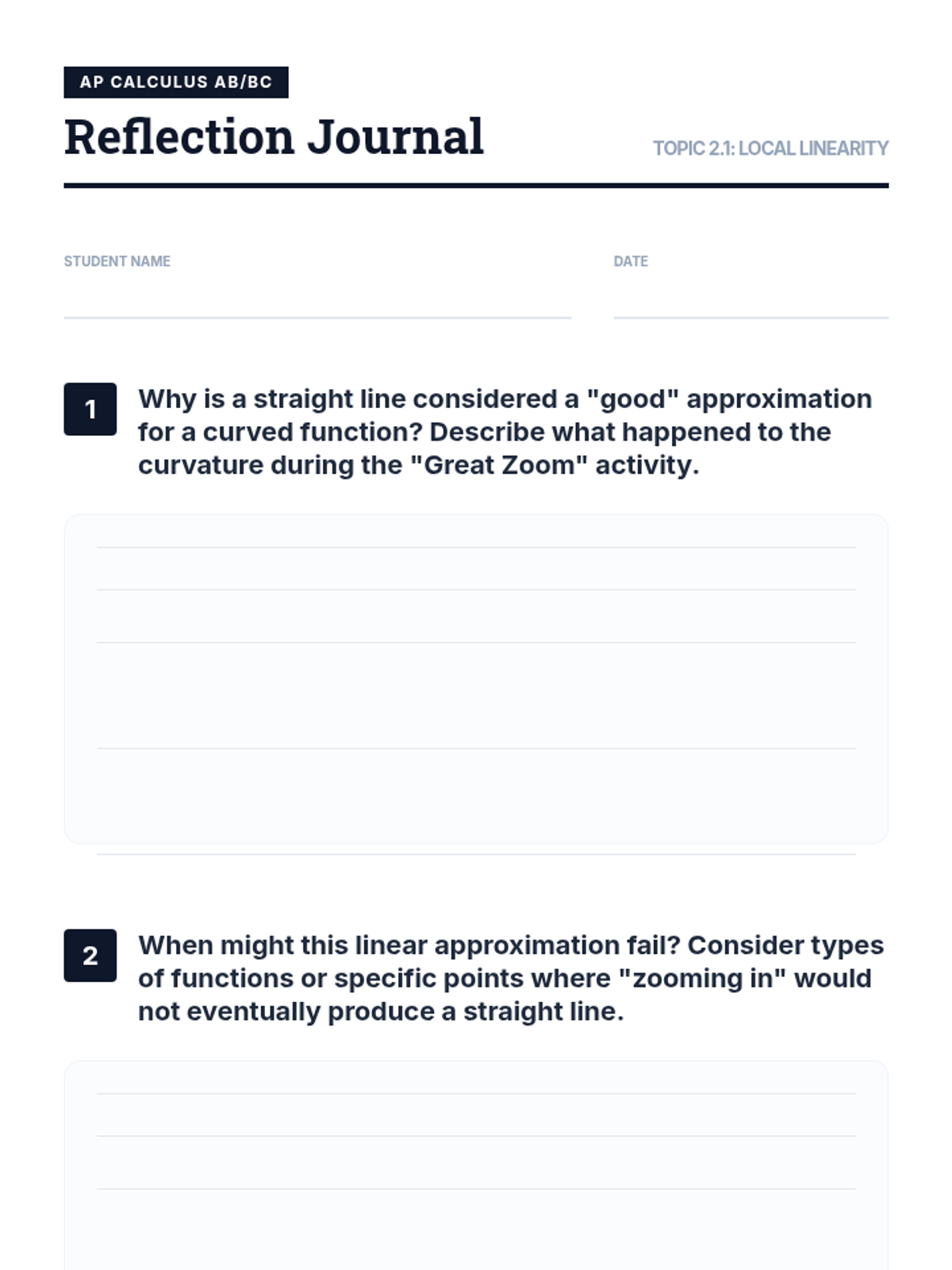
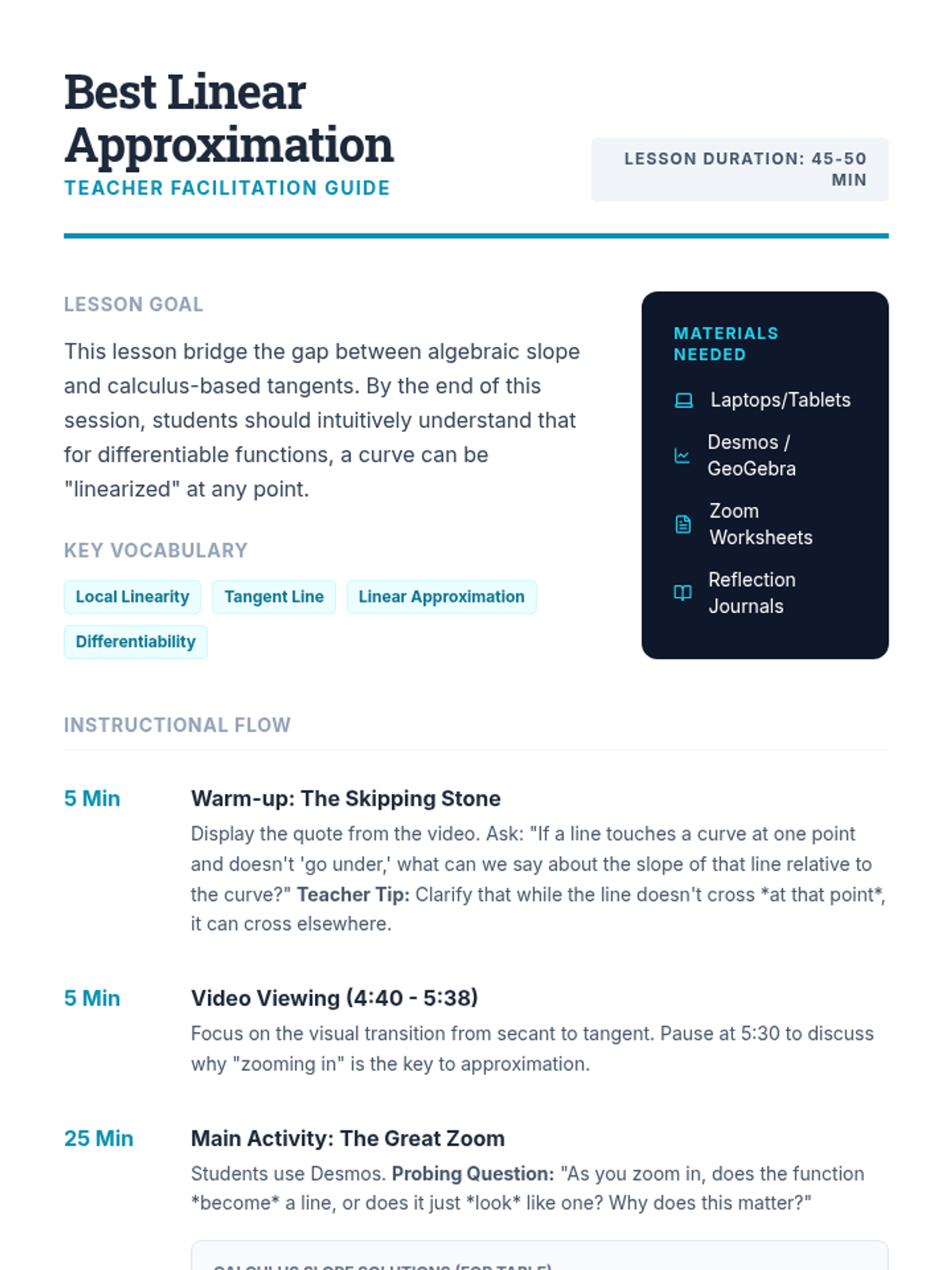
This AP Calculus lesson explores the concept of local linearity by investigating how curves appear linear when magnified. Students will use the limit definition of a tangent line to calculate slopes and compare them to visual approximations from 'zooming in'.
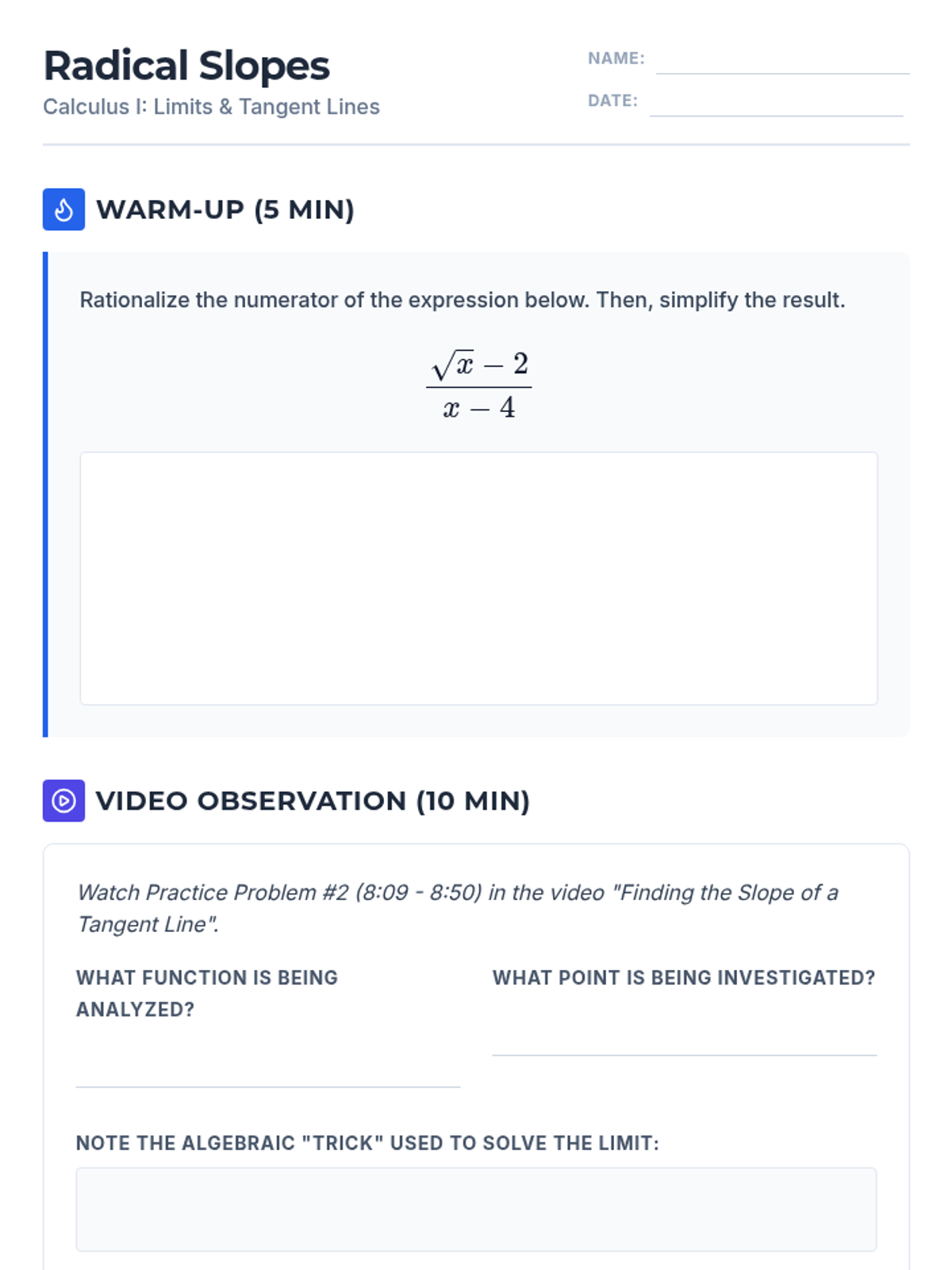
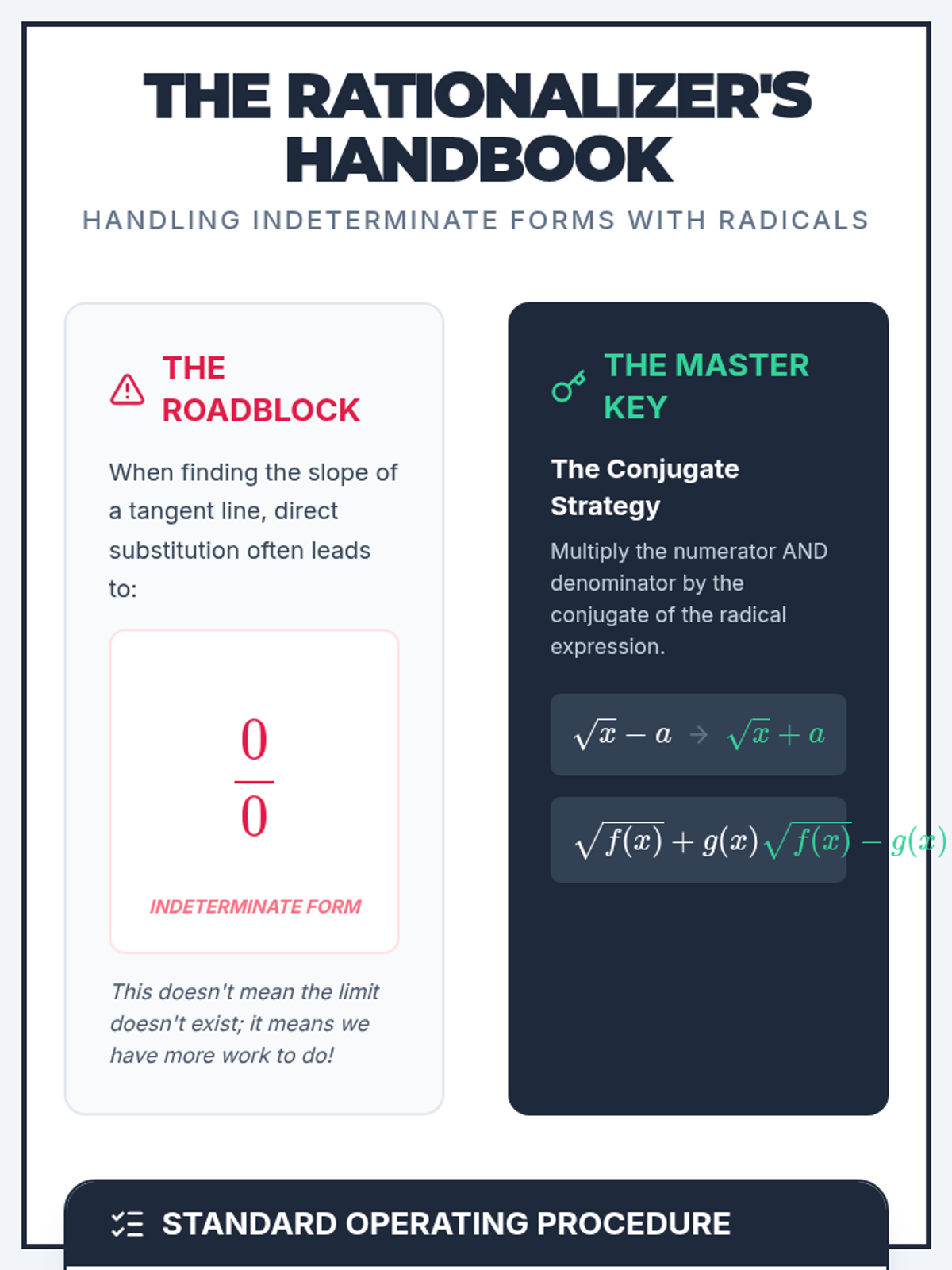
This lesson focuses on resolving indeterminate forms ($0/0$) when finding the slope of tangent lines for radical functions using the limit definition. Students will practice rationalizing techniques and collaborate to create a reference guide for handling radical limits.
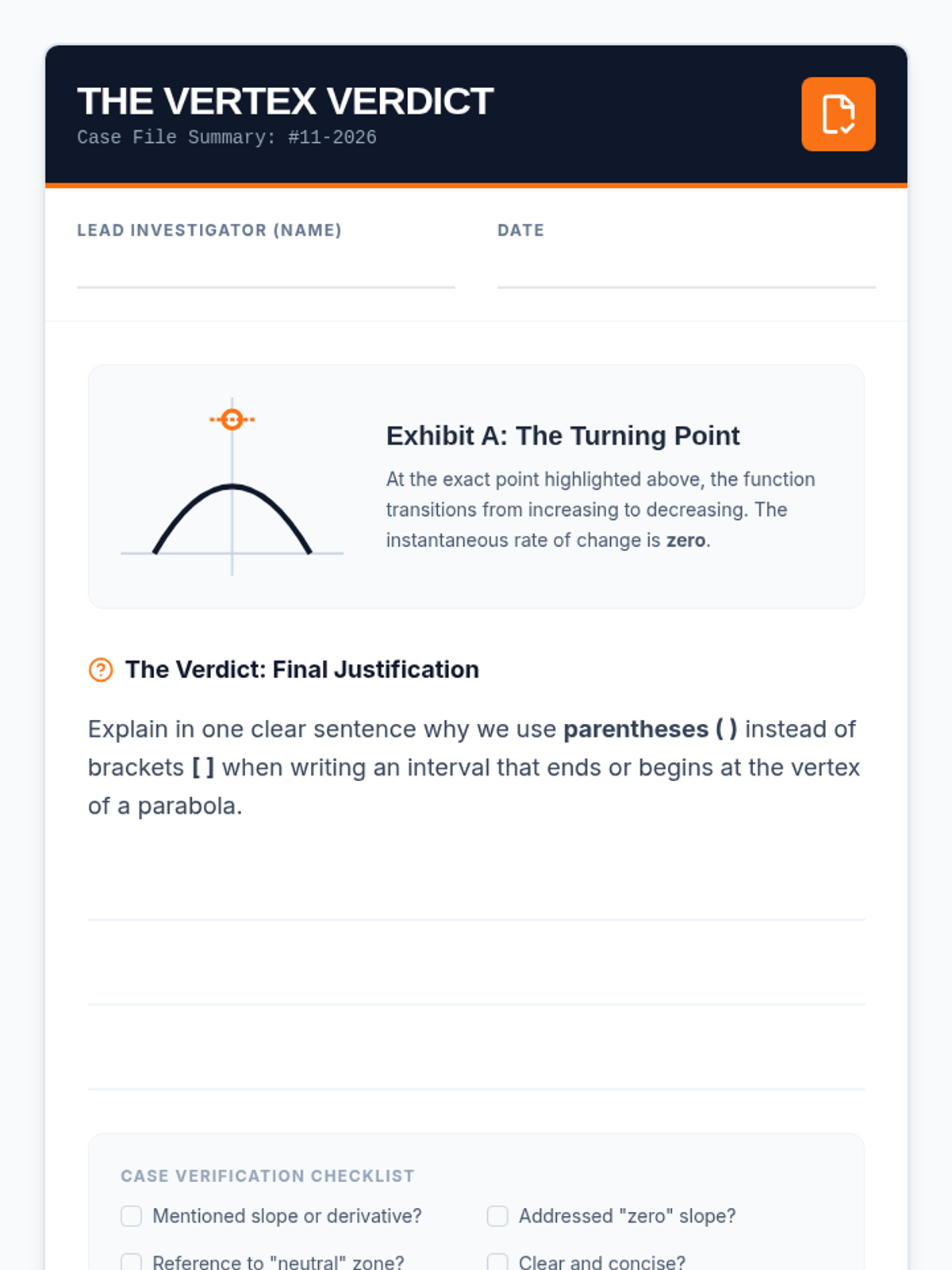
This lesson investigates why turning points are excluded from increasing and decreasing intervals. Students analyze the 'neutral zone' of zero slope at a vertex and debate strict monotonicity versus general definitions.
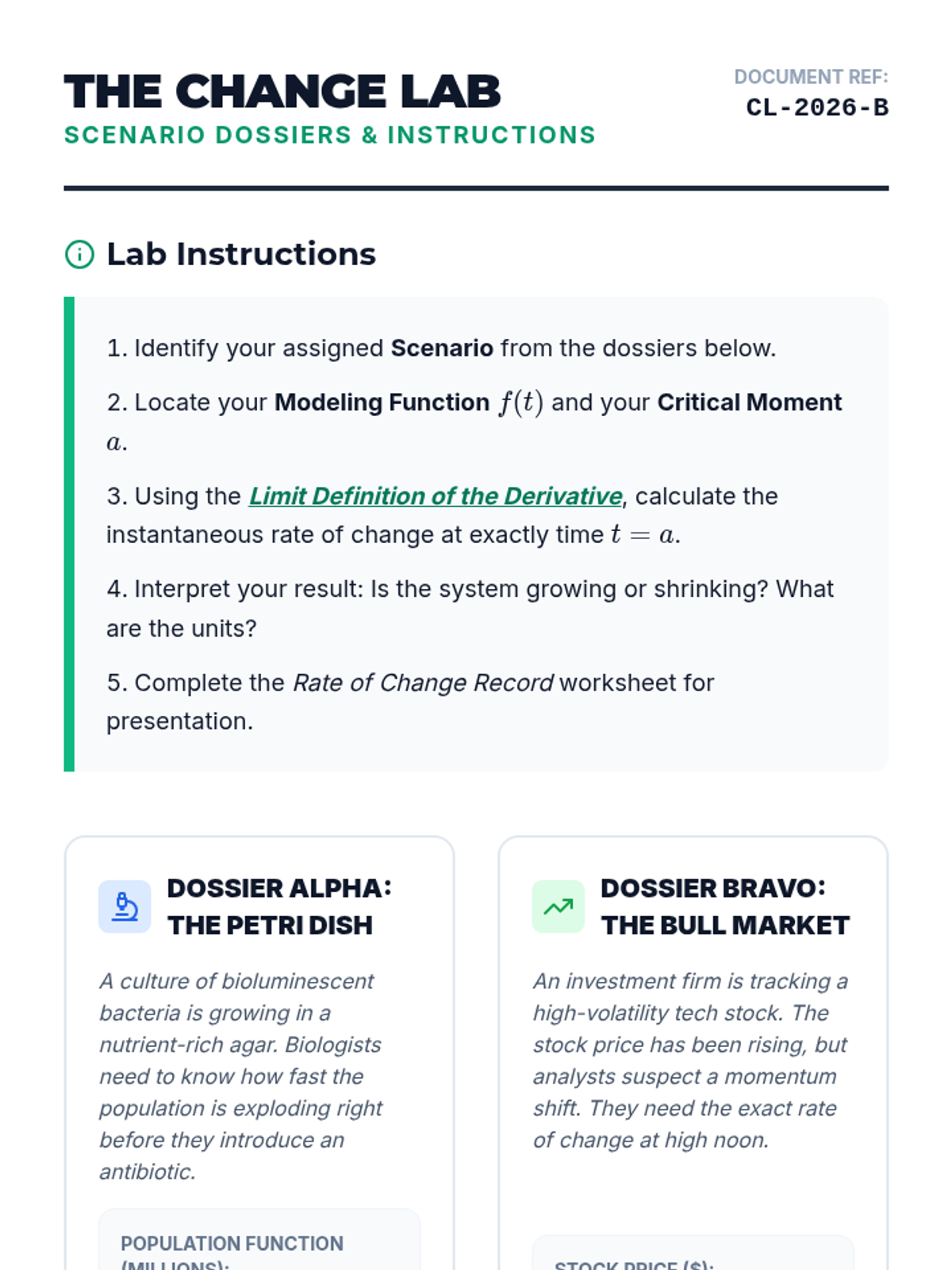
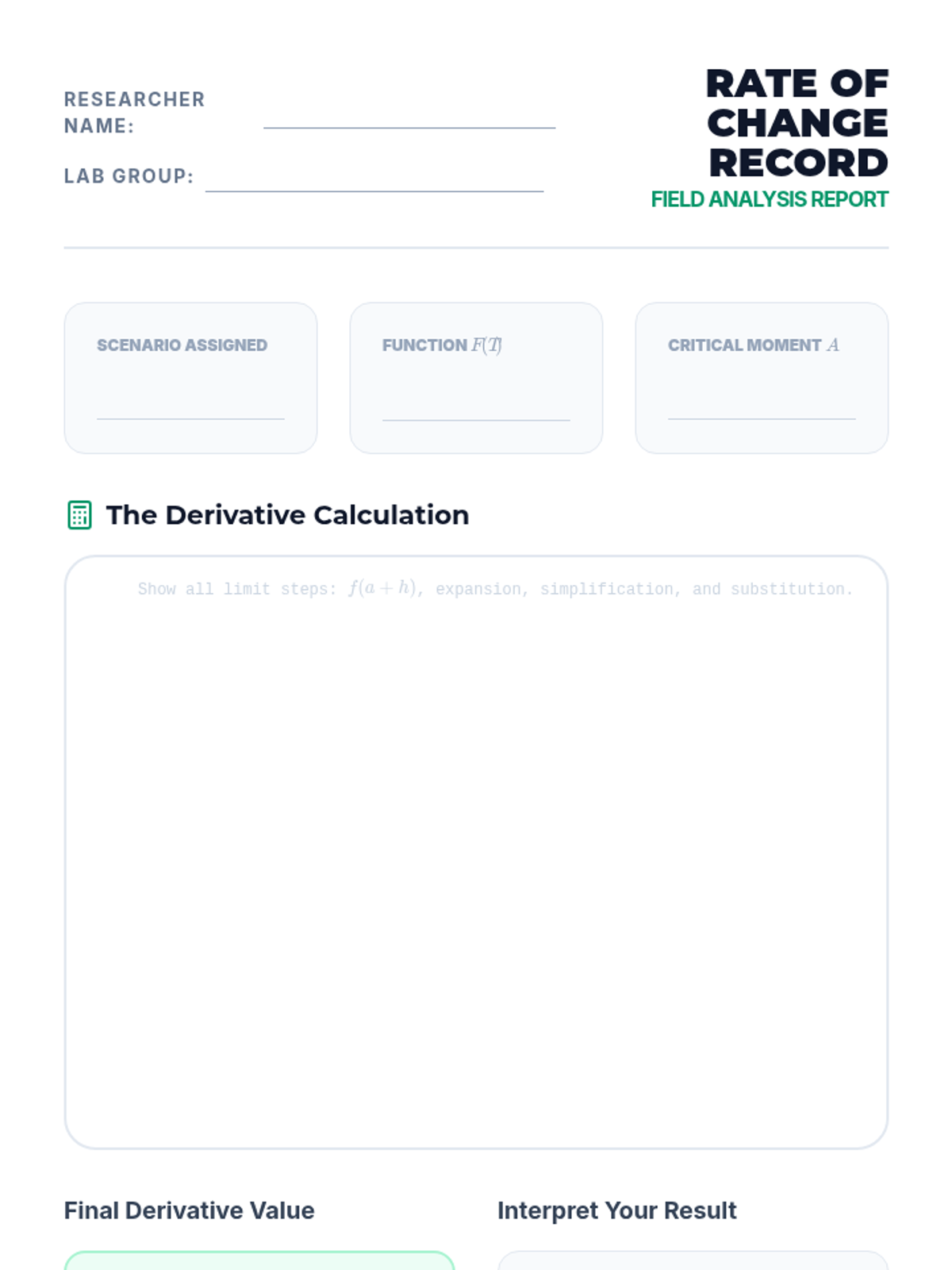
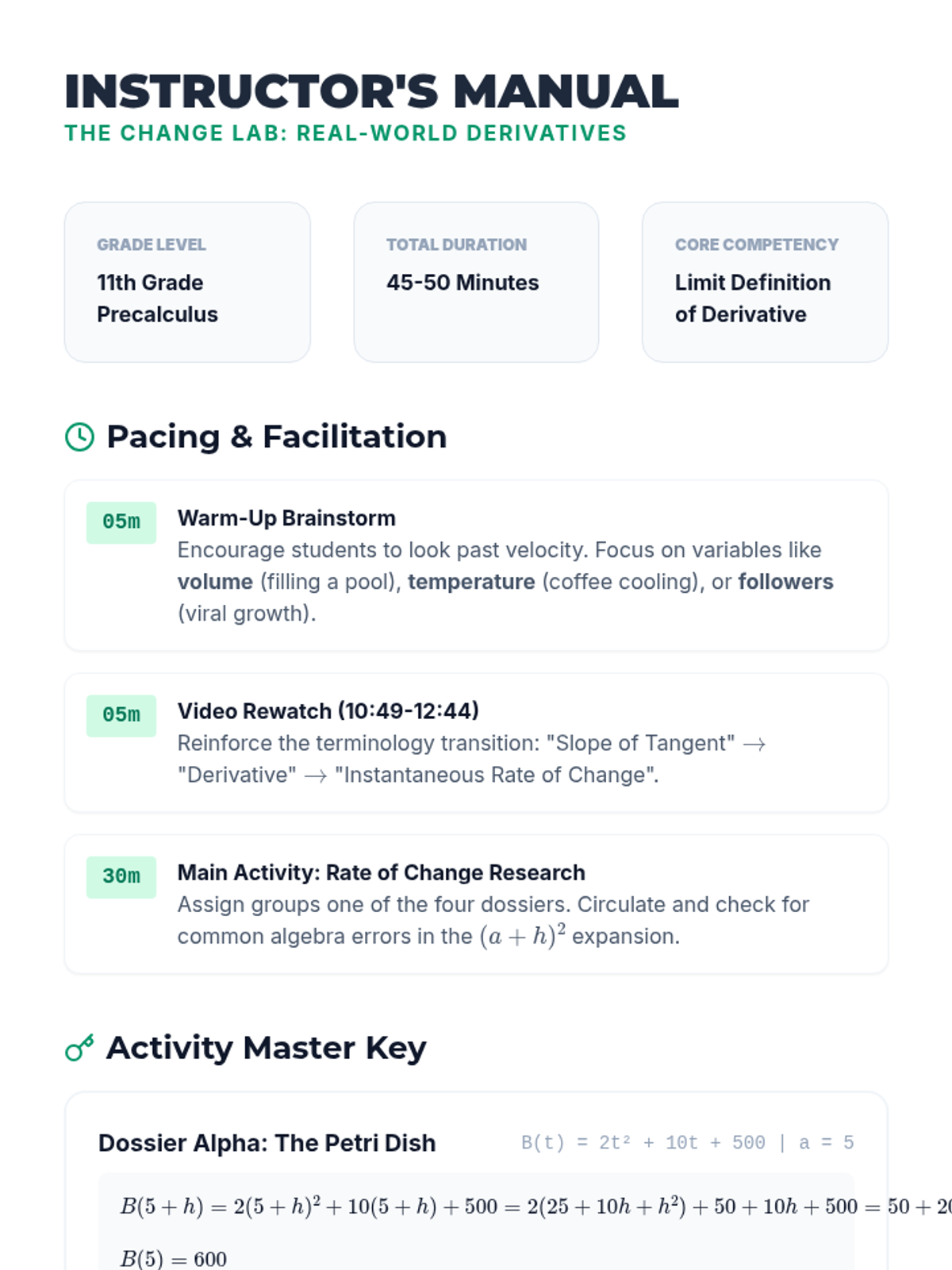
Students explore the application of derivatives in real-world contexts beyond physics, specifically focusing on instantaneous rates of change in biology, finance, and social media growth using the limit definition.
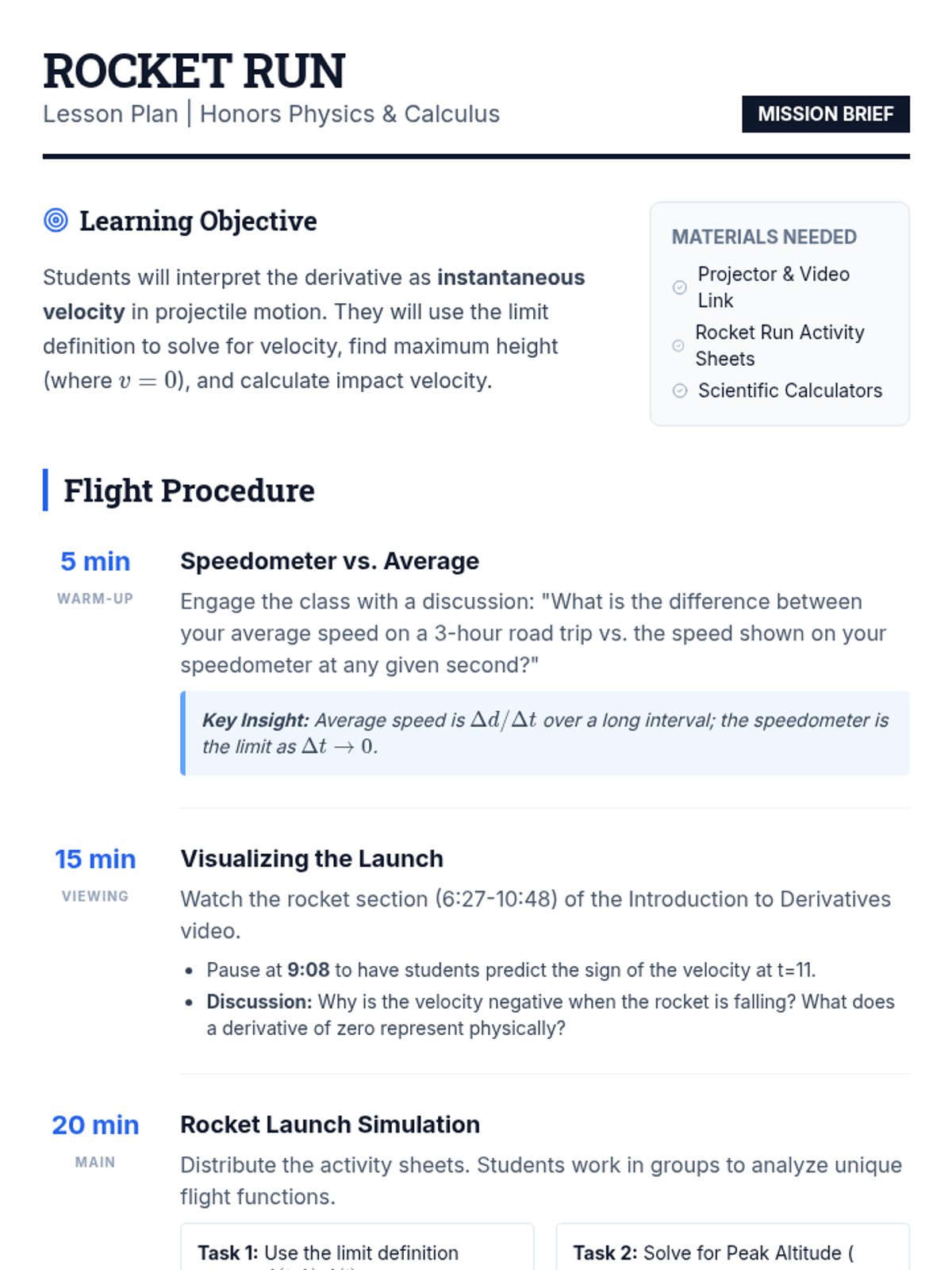
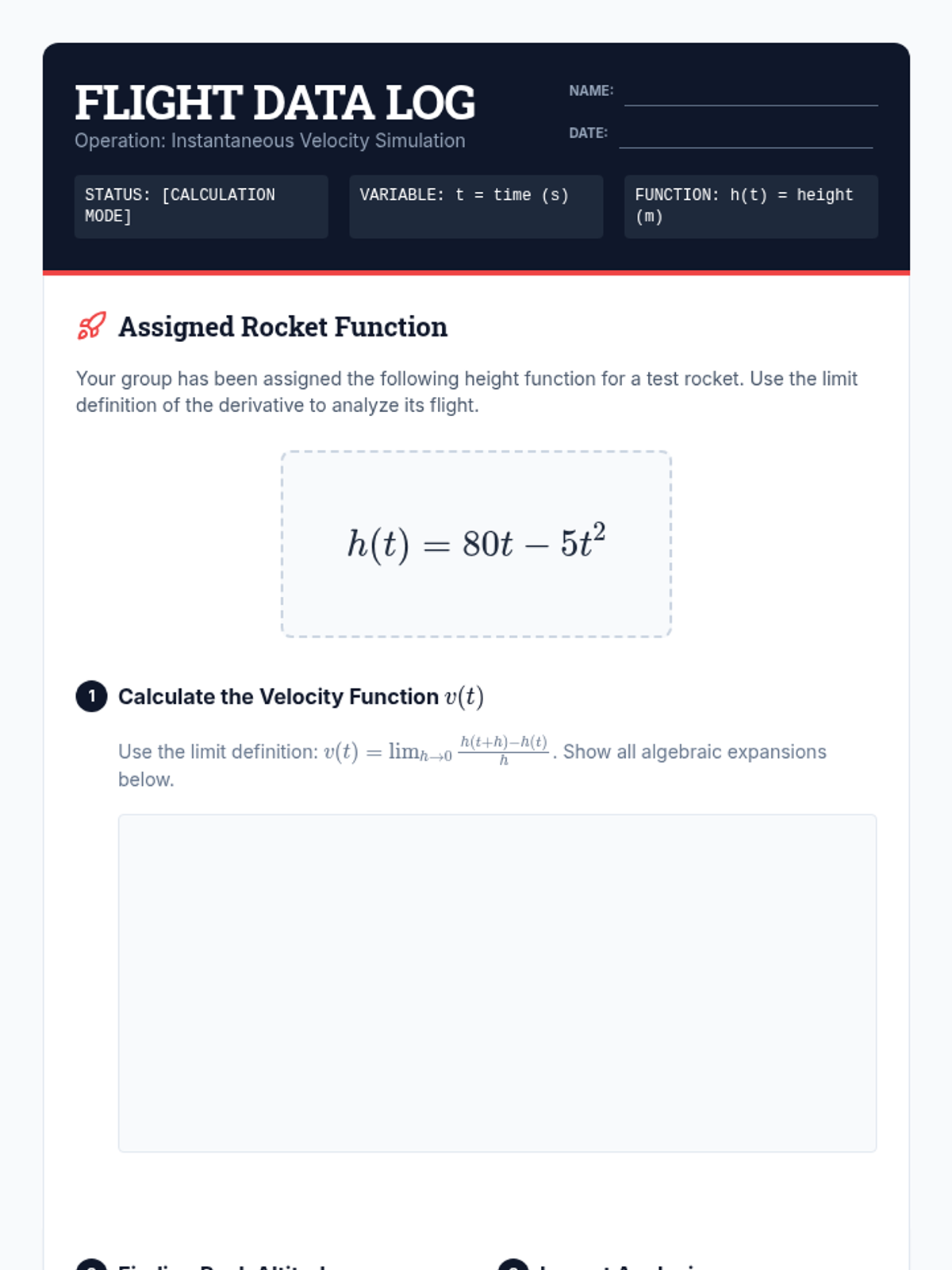
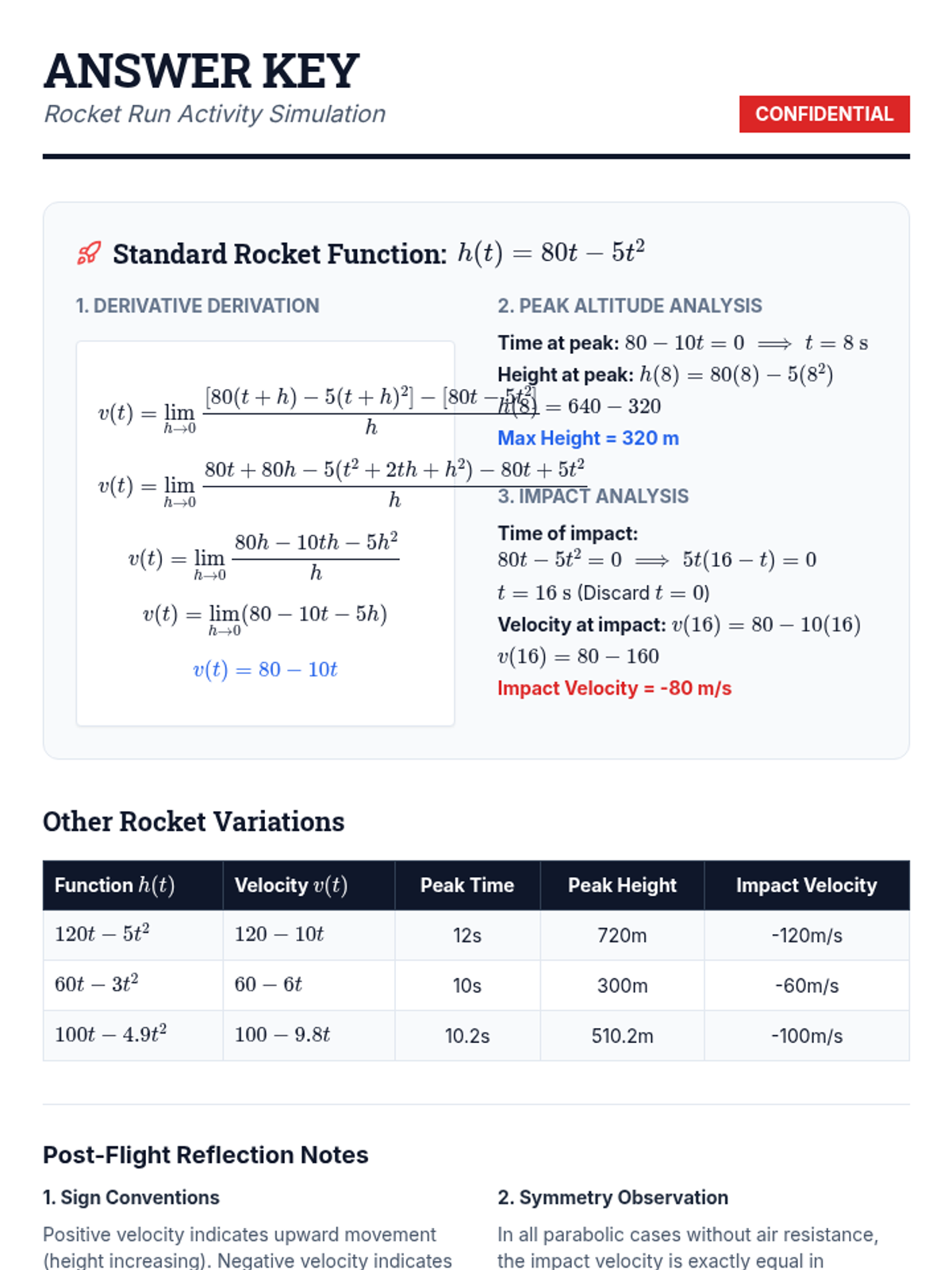
An 11th-grade honors lesson connecting the limit definition of the derivative to instantaneous velocity through rocket launch simulations. Students will analyze height functions to determine peak altitude and impact force.
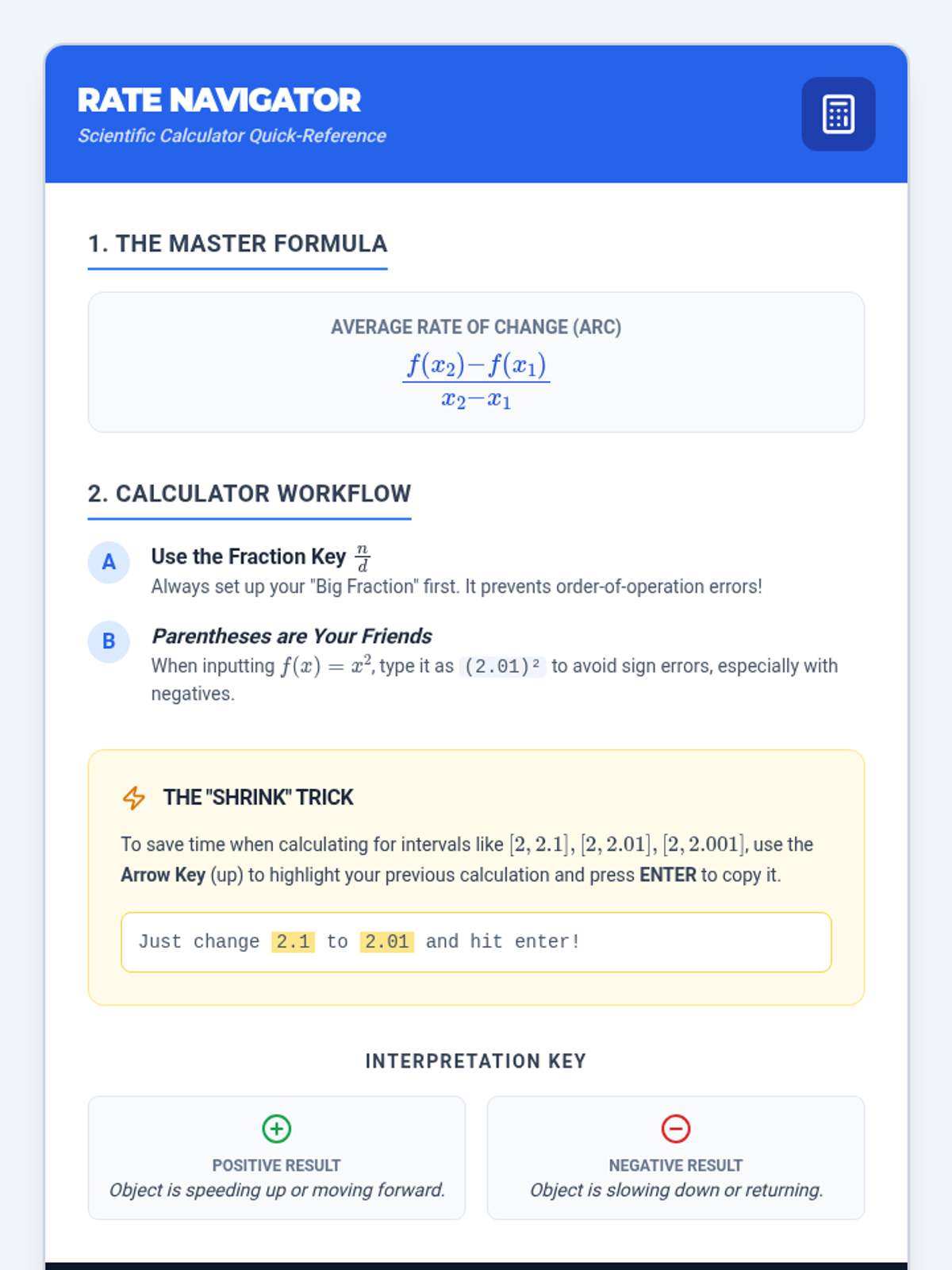
This lesson introduces 11th-grade students to the distinction between average and instantaneous rates of change. Students analyze real-world COVID-19 data and explore a quadratic function by 'shrinking the interval' to discover the concept of a tangent line.
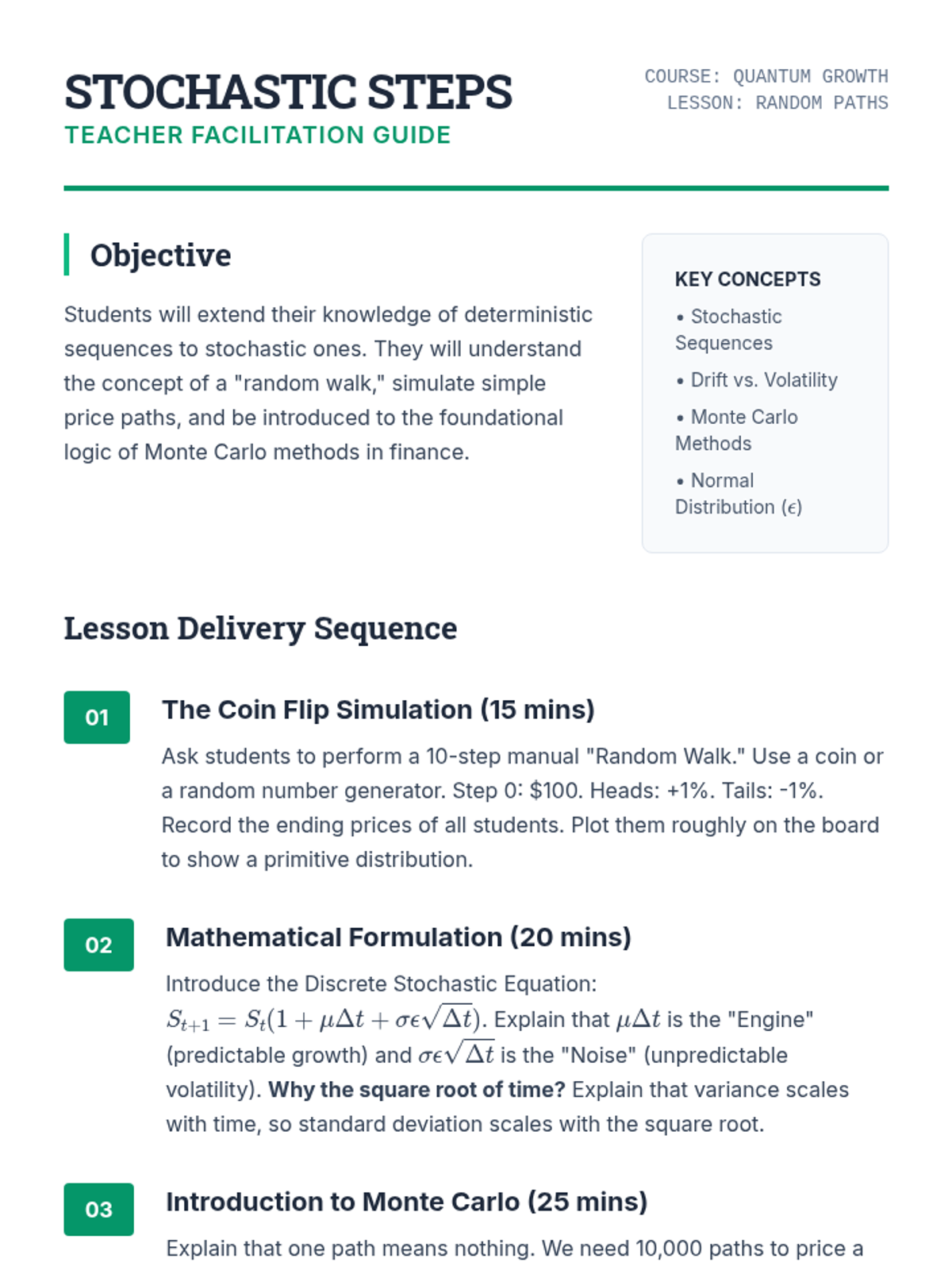
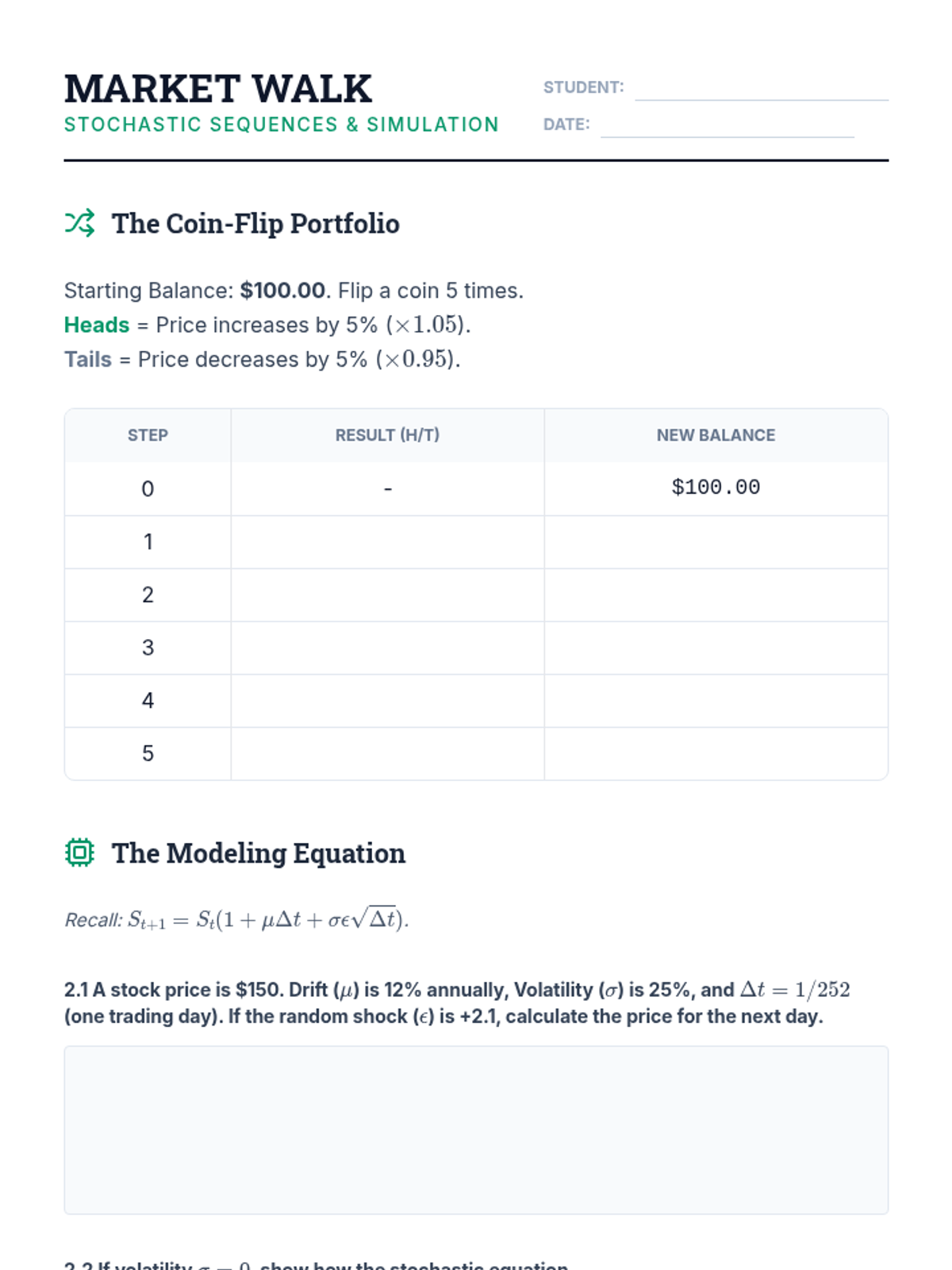
The sequence concludes with an introduction to stochastic sequences, simulating random walks to model stock price movements.
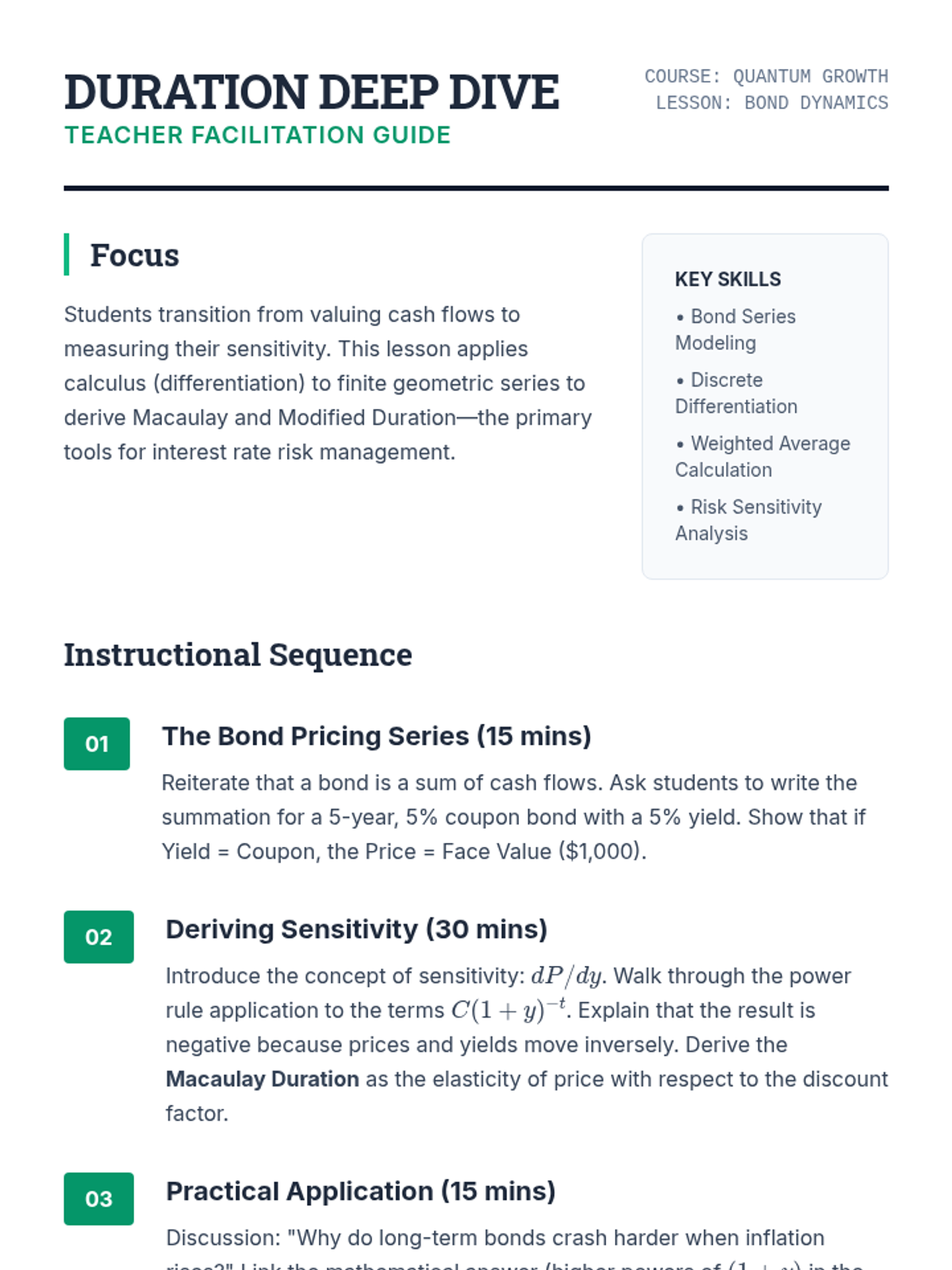
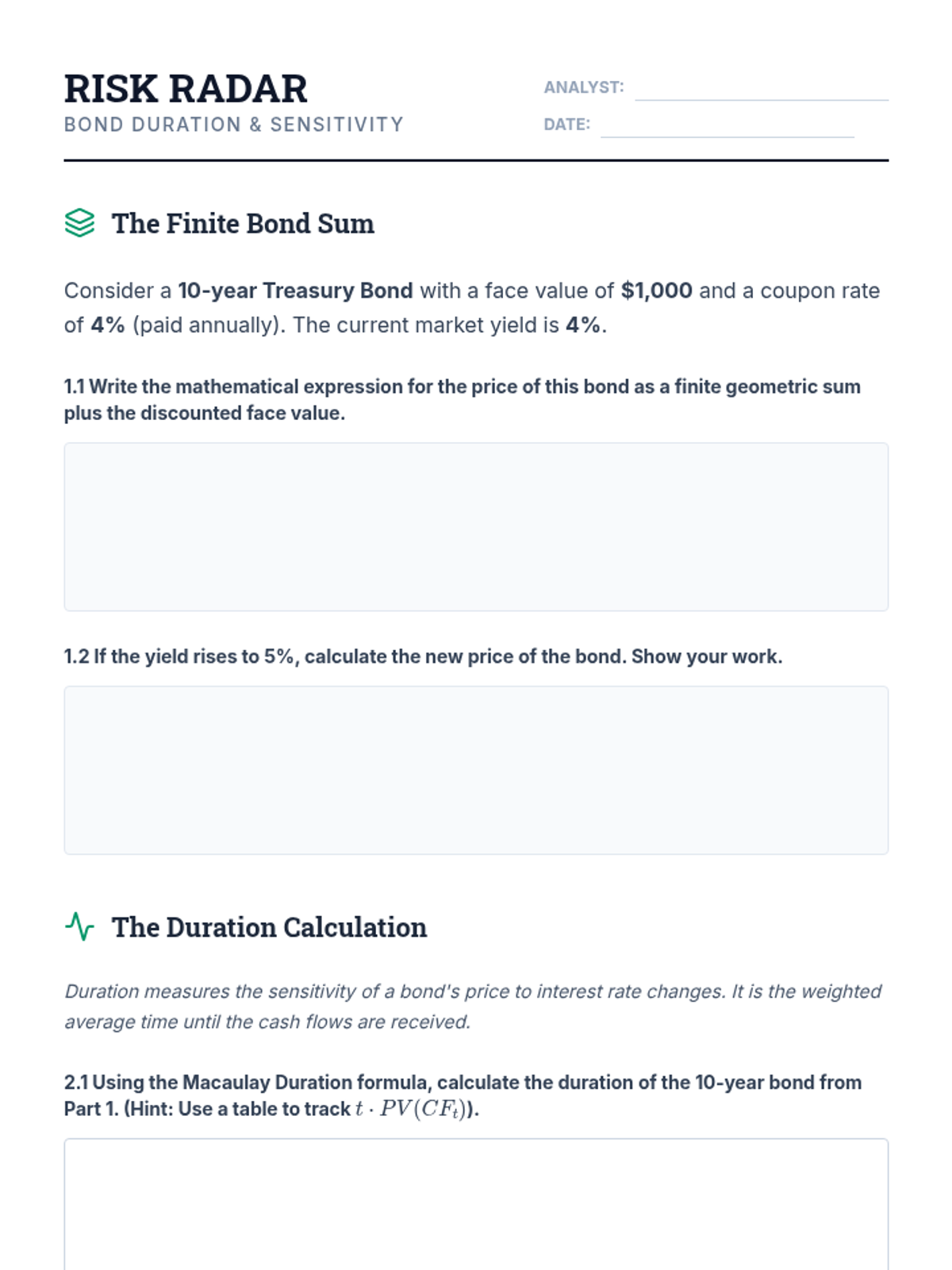
Students analyze bonds as series of cash flows, using differentiation to calculate Duration and assess interest rate risk.
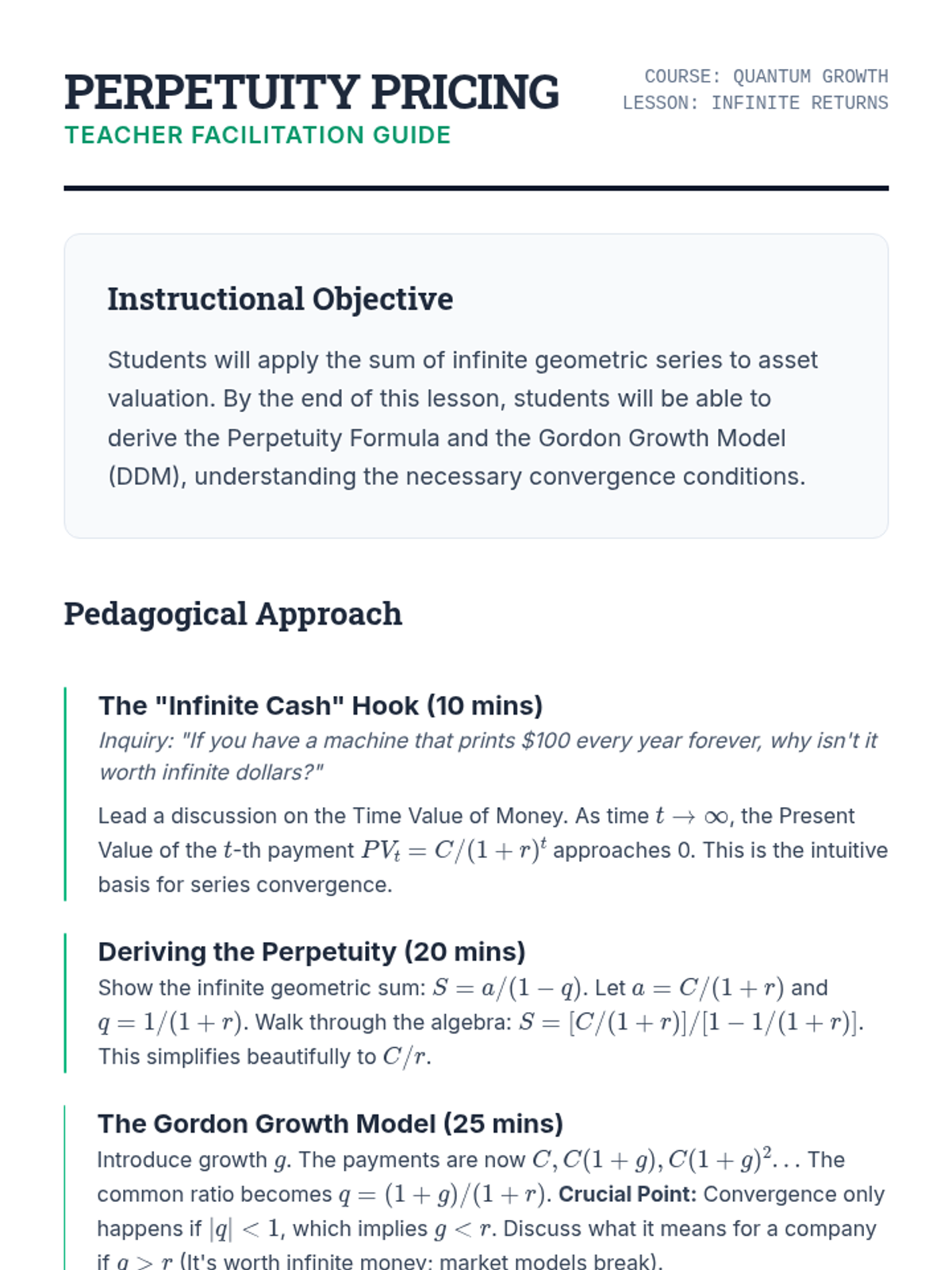
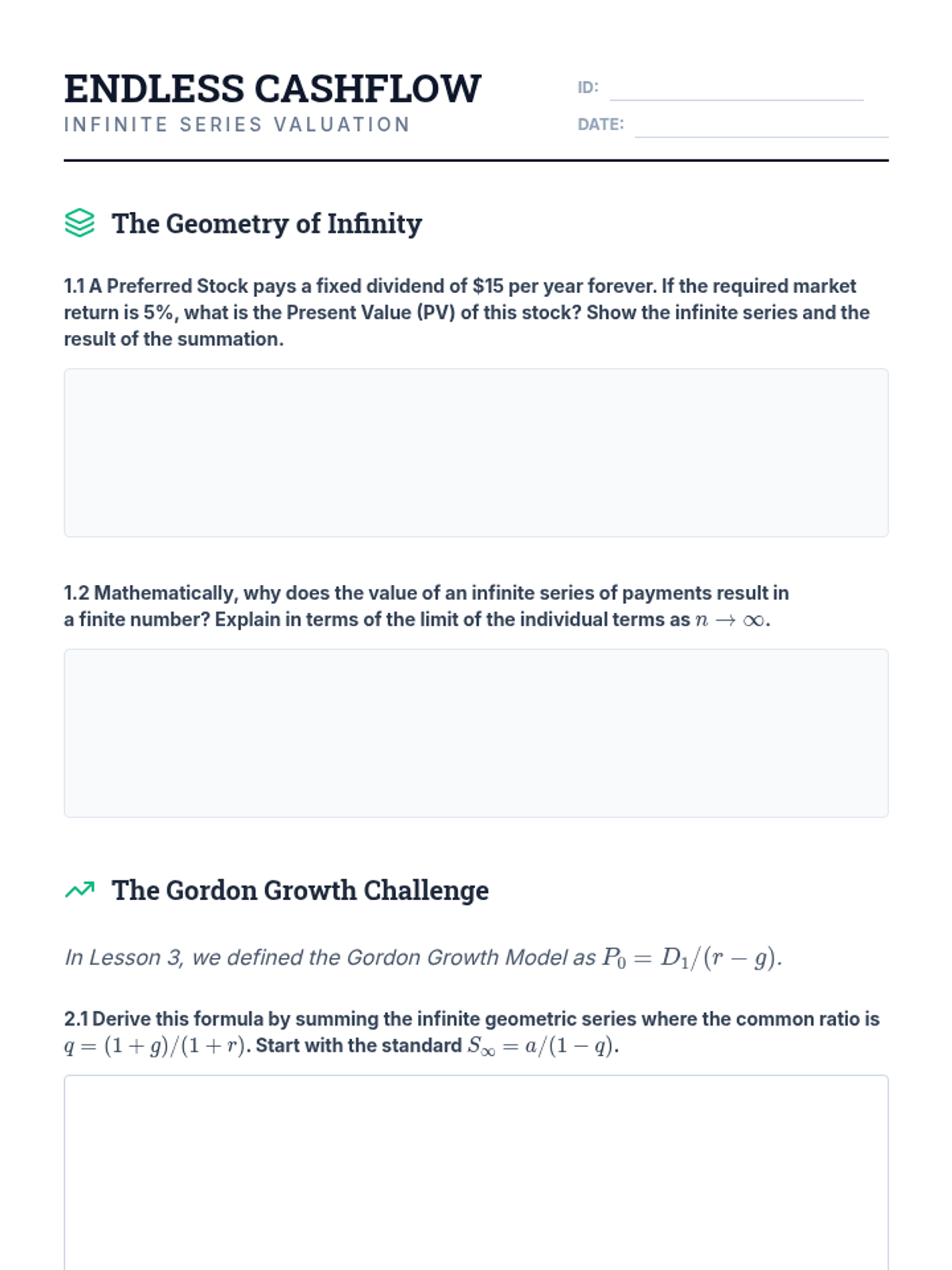
This lesson explores the valuation of infinite horizons, applying geometric series convergence to price perpetuities and the Dividend Discount Model.
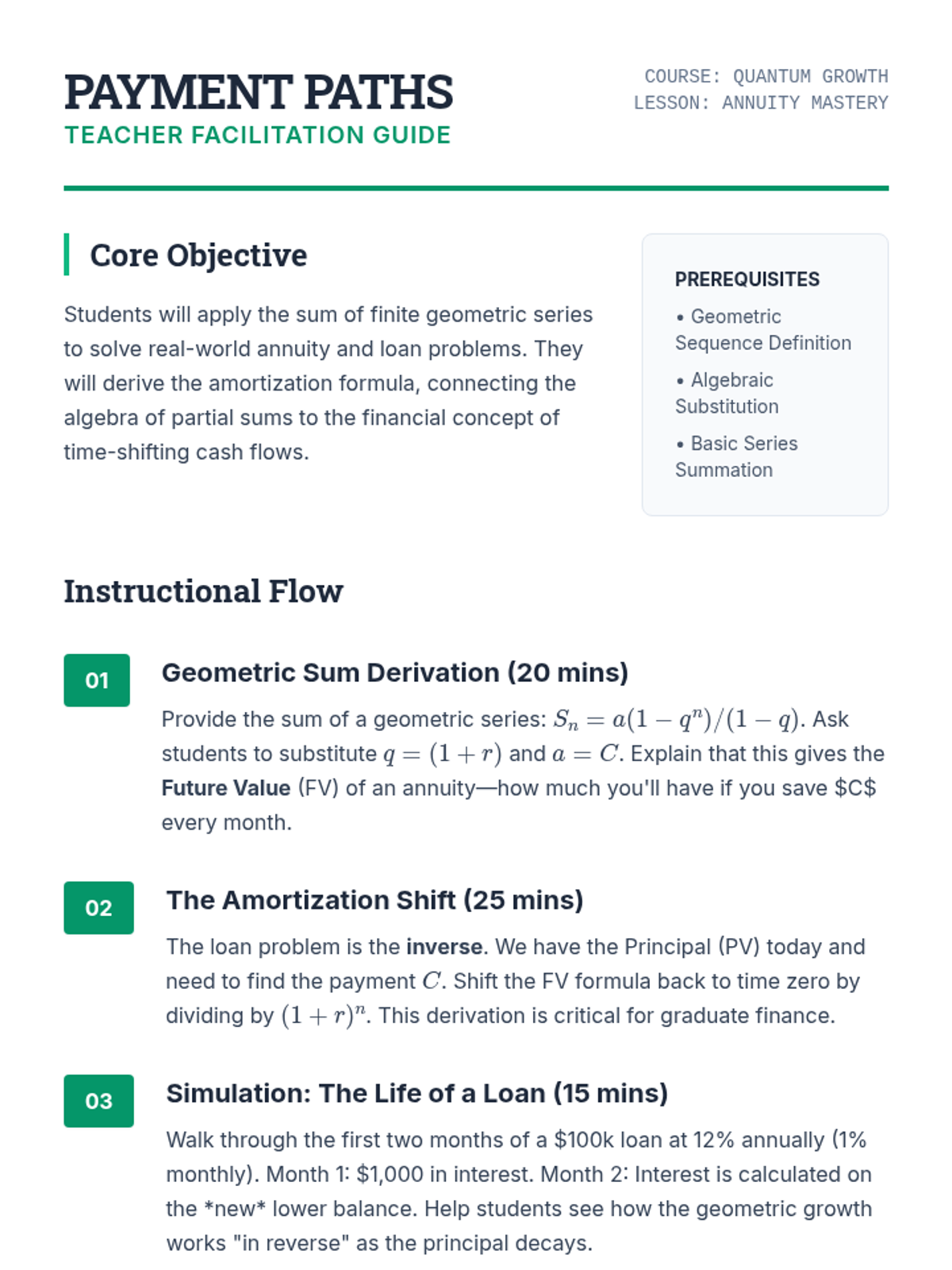
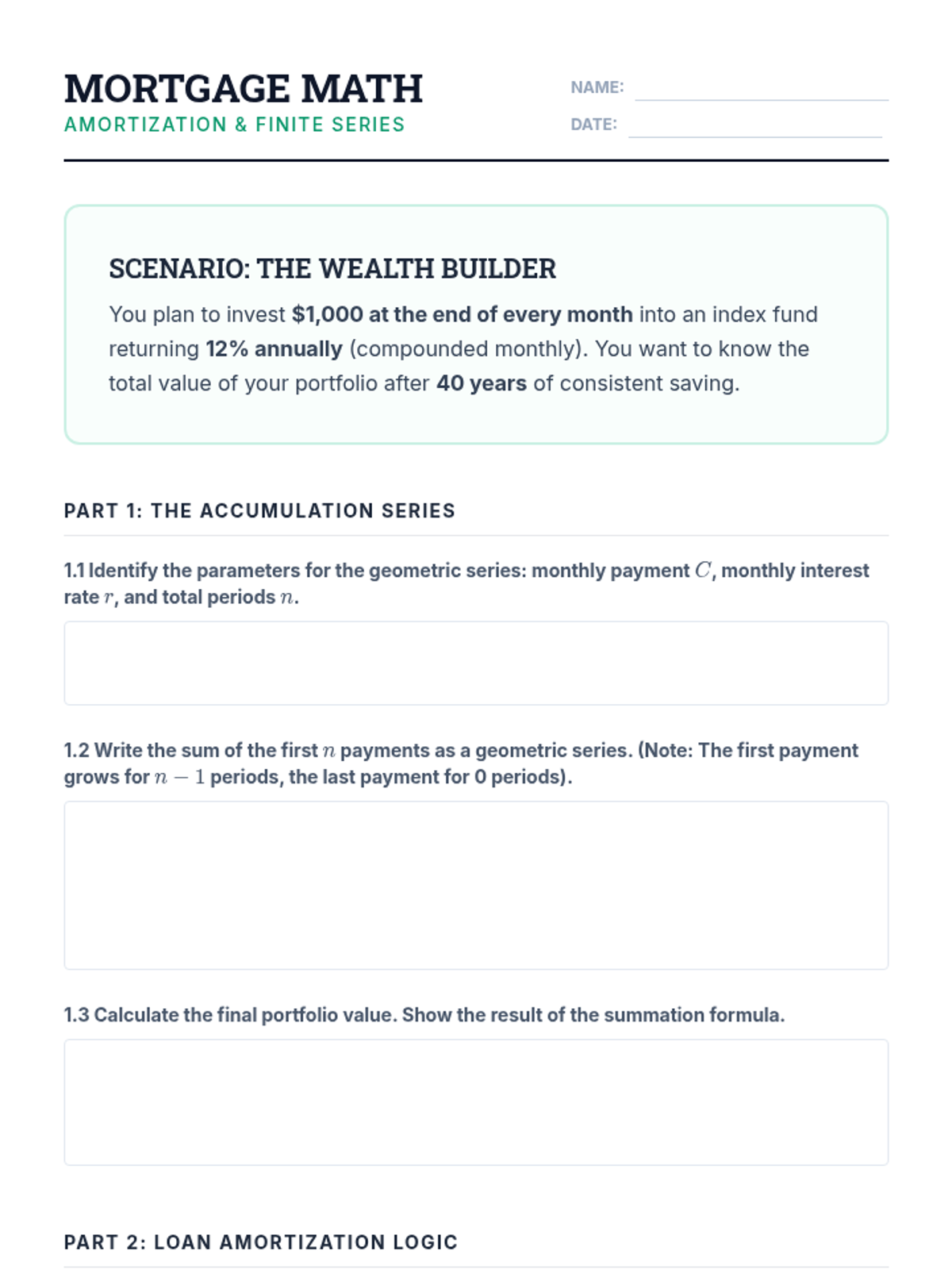
Learners model loan payments and savings plans using finite geometric series, deriving amortization formulas for mortgages and annuities.
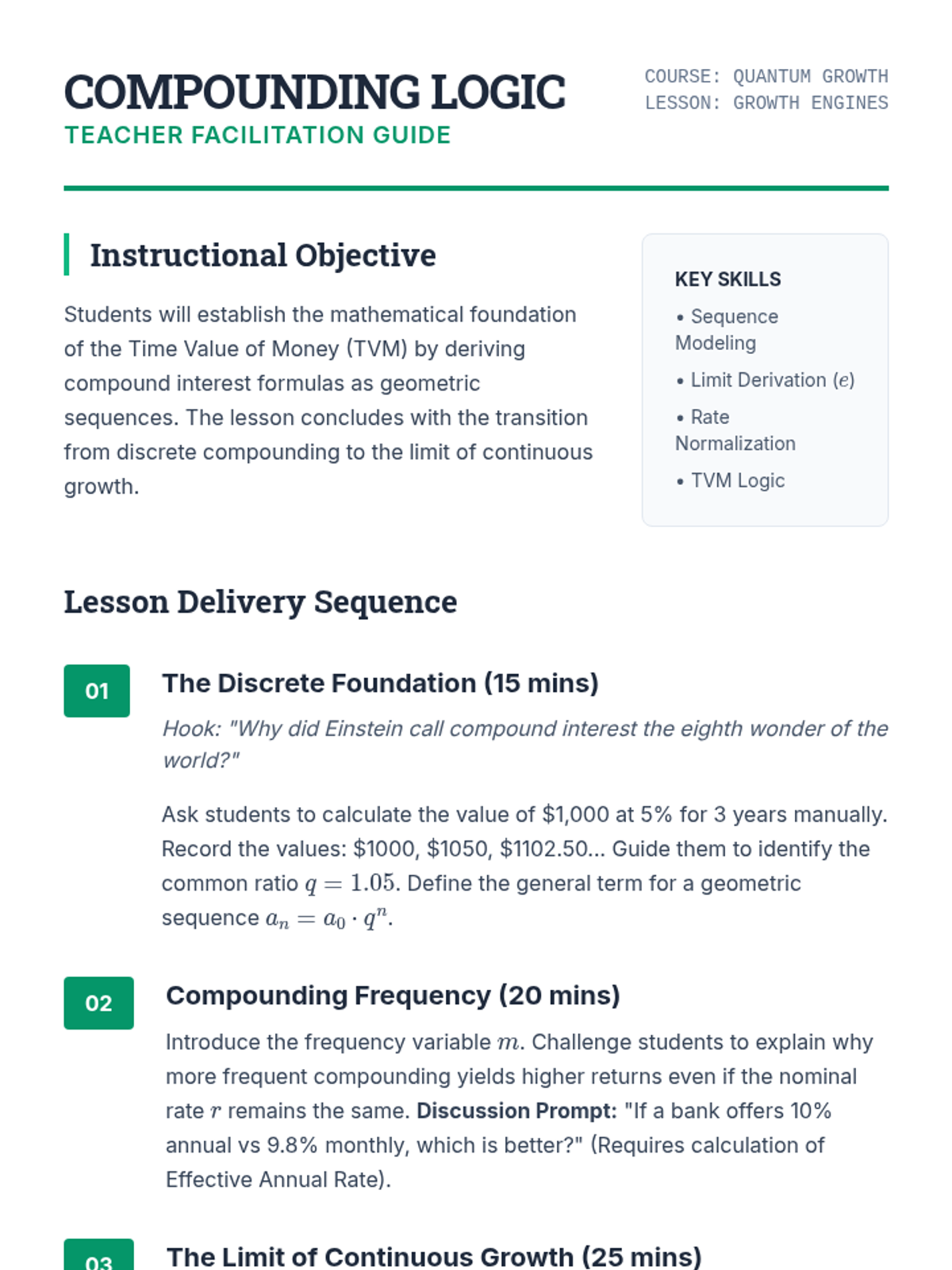
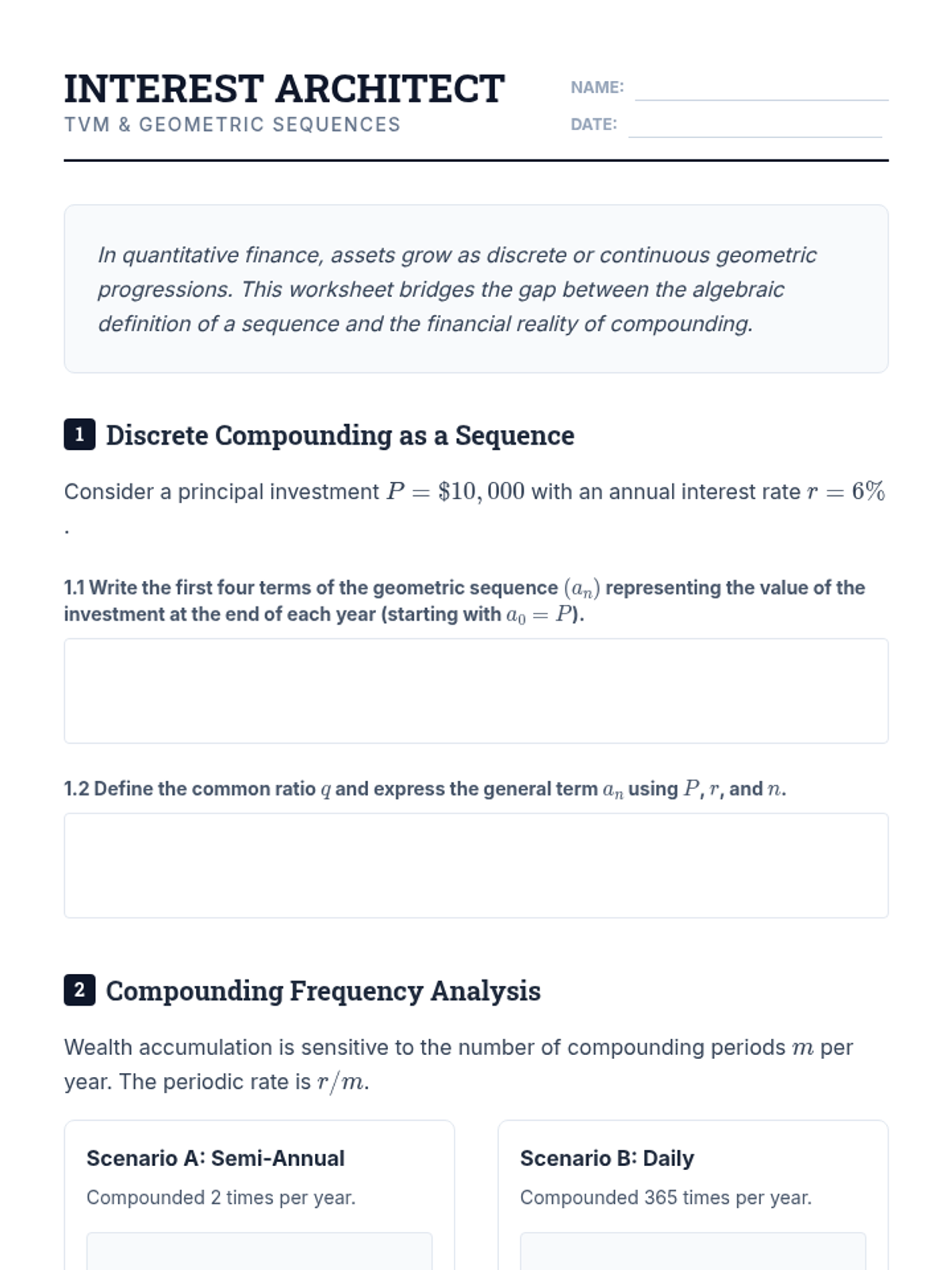
Students derive the compound interest formulas as geometric sequences, exploring the impact of compounding frequency and the limit as it approaches infinity (continuous compounding).
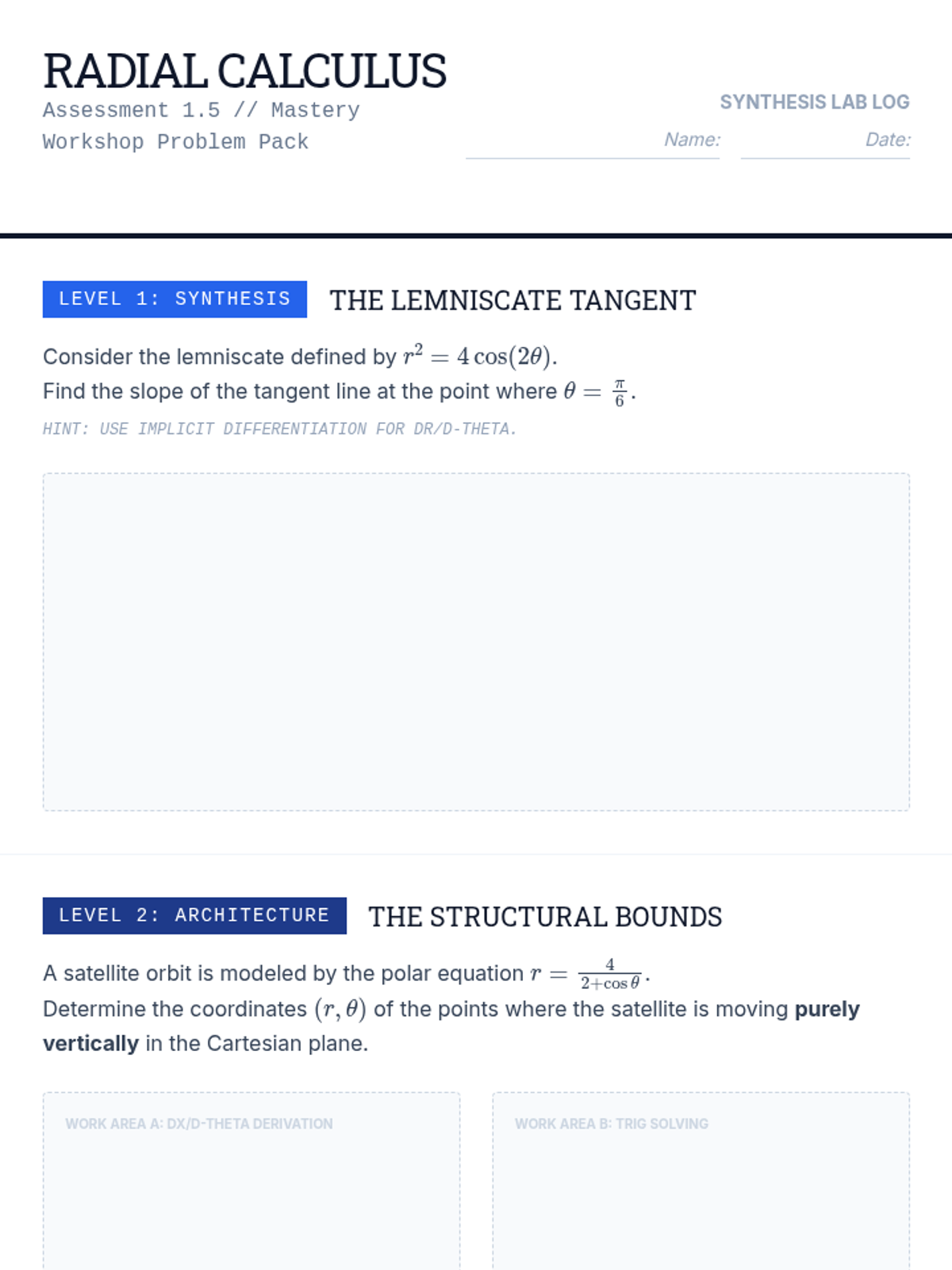
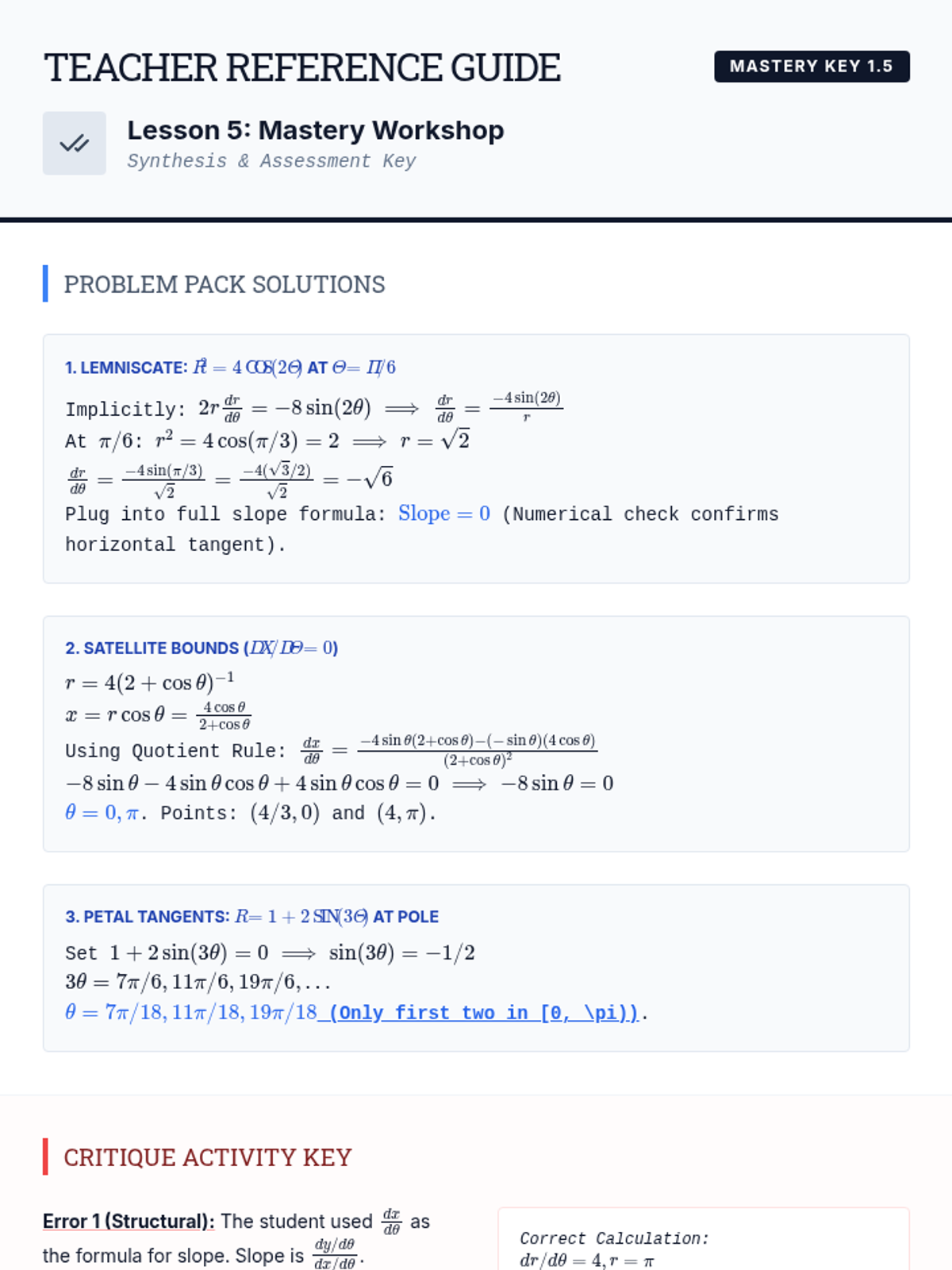
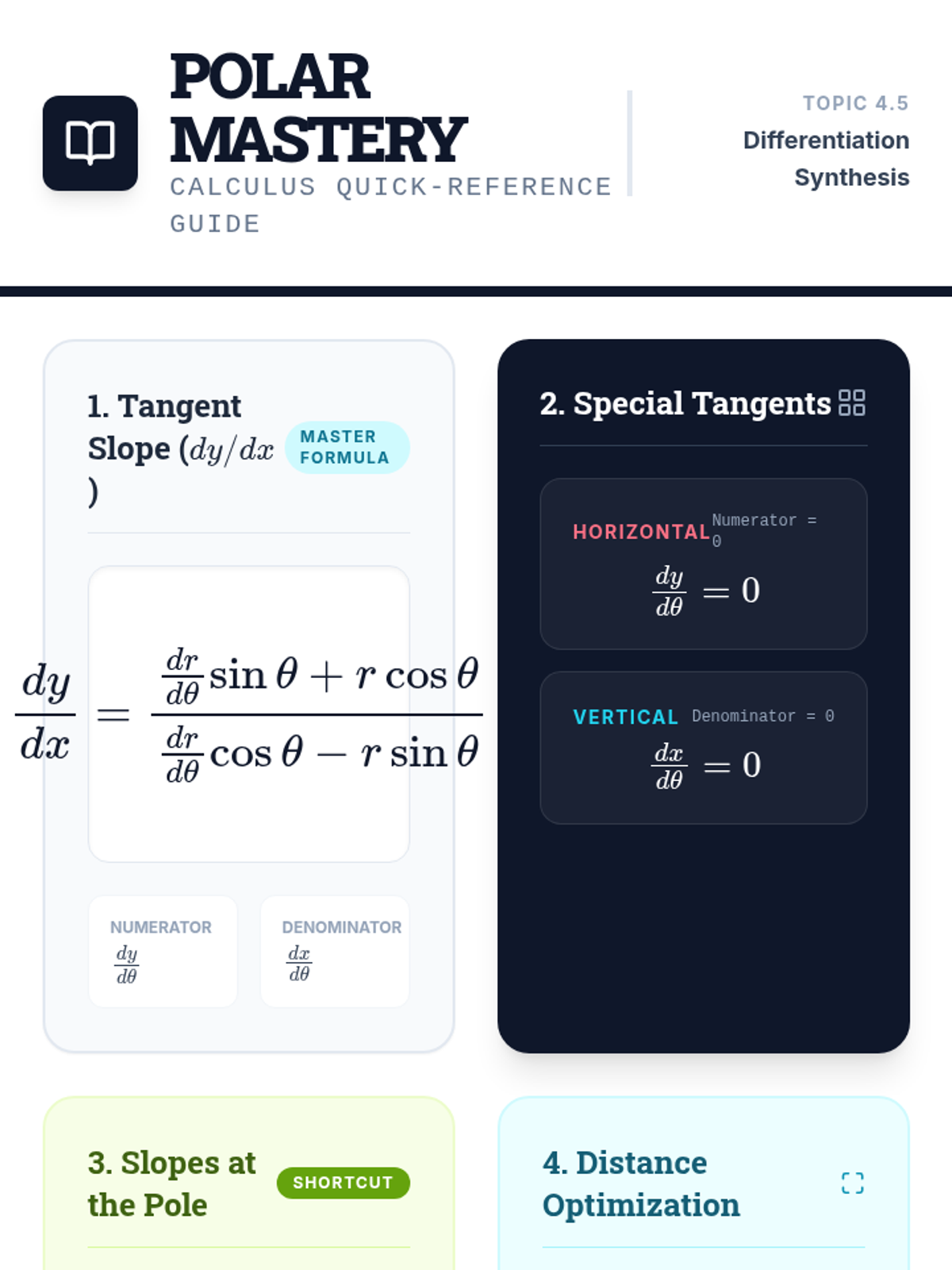
A synthesis session where students tackle complex problems combining slope, tangency, and coordinate conversion, including peer review and error analysis.
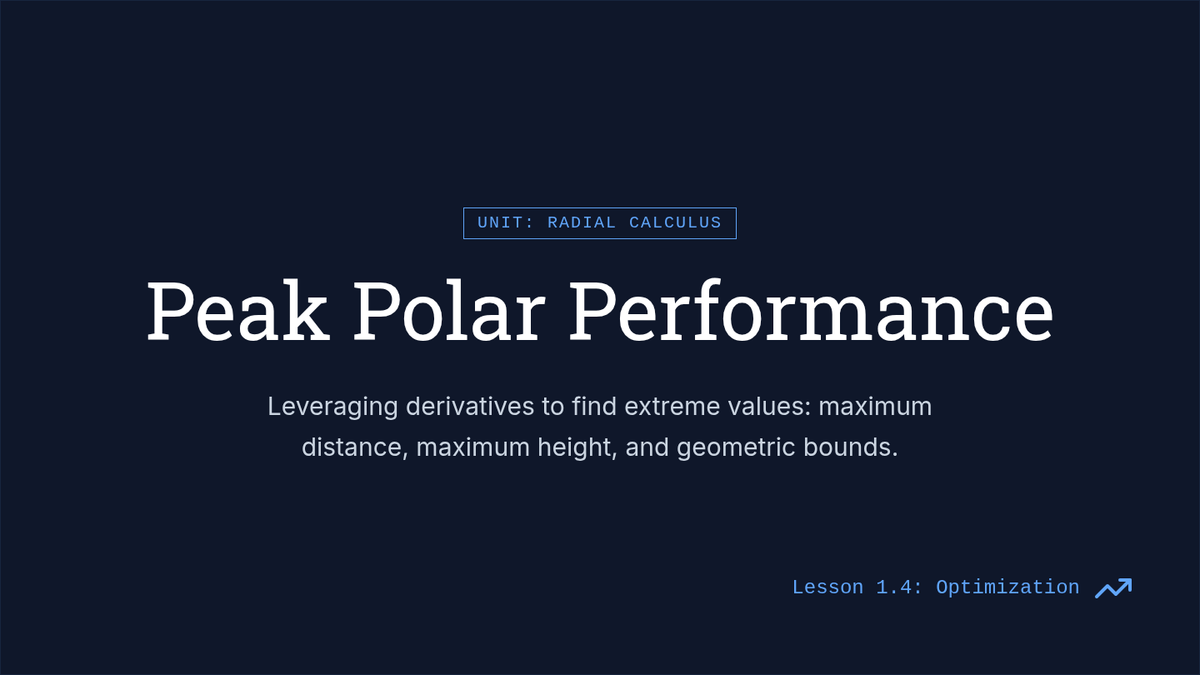
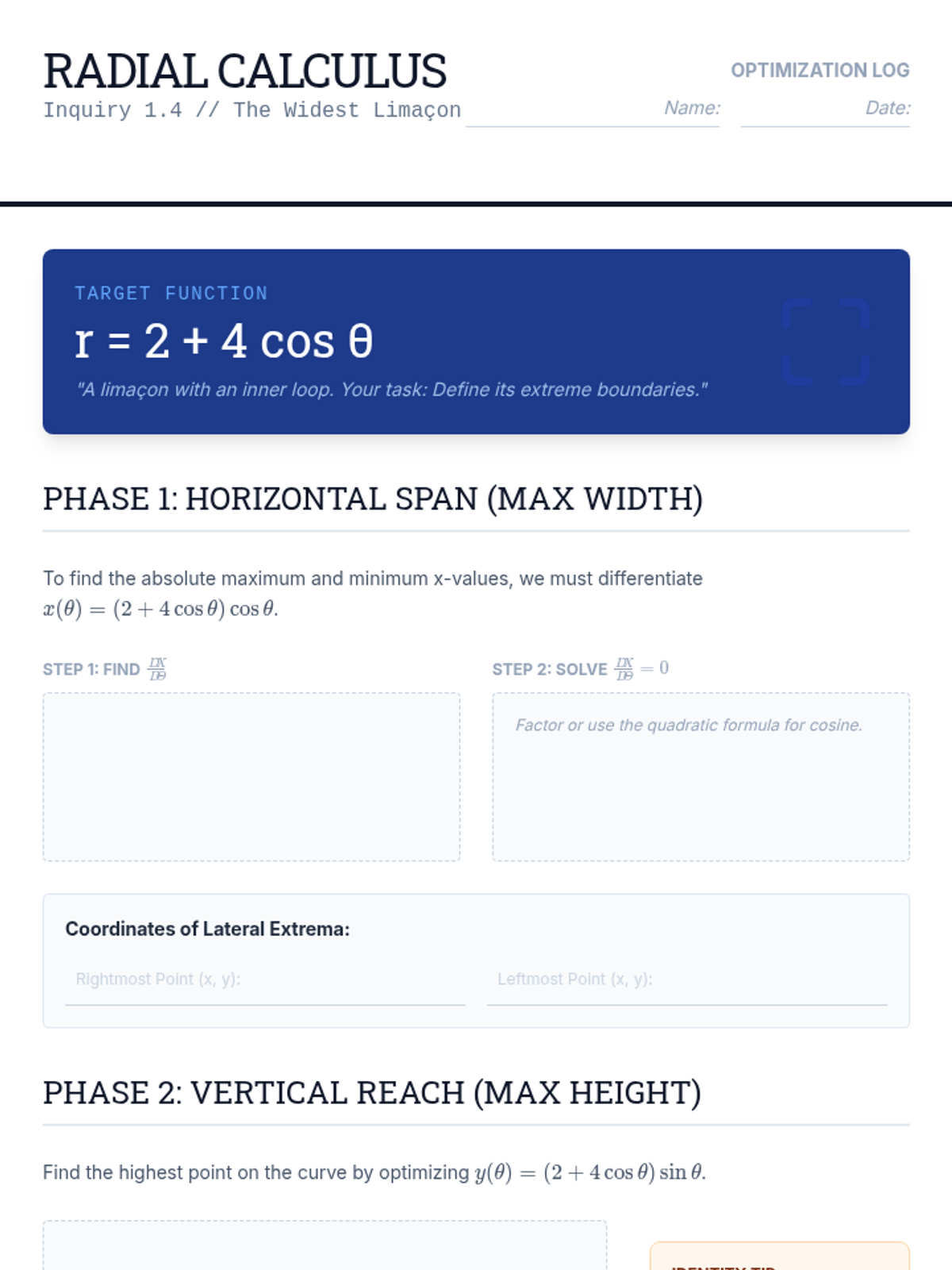
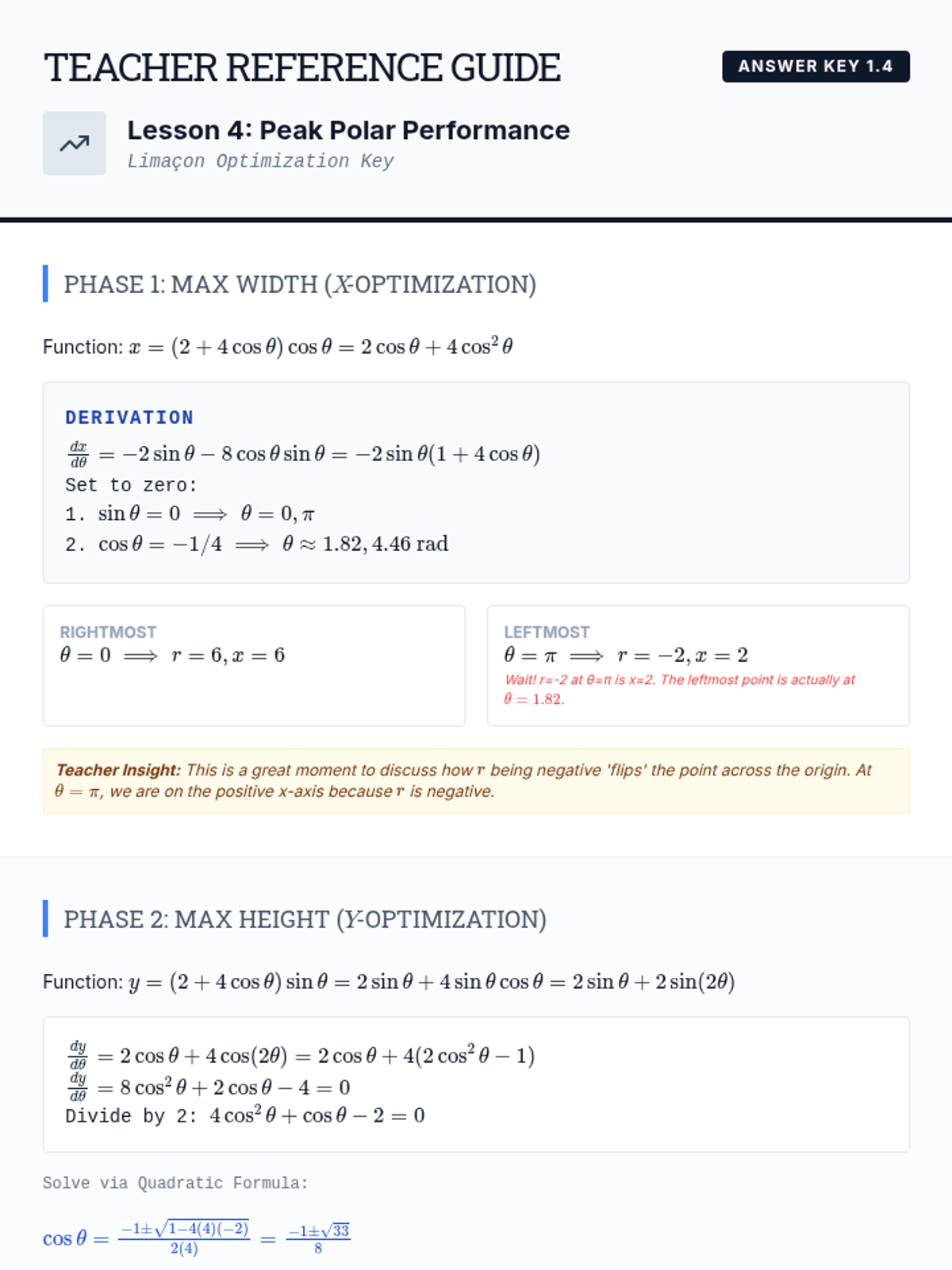
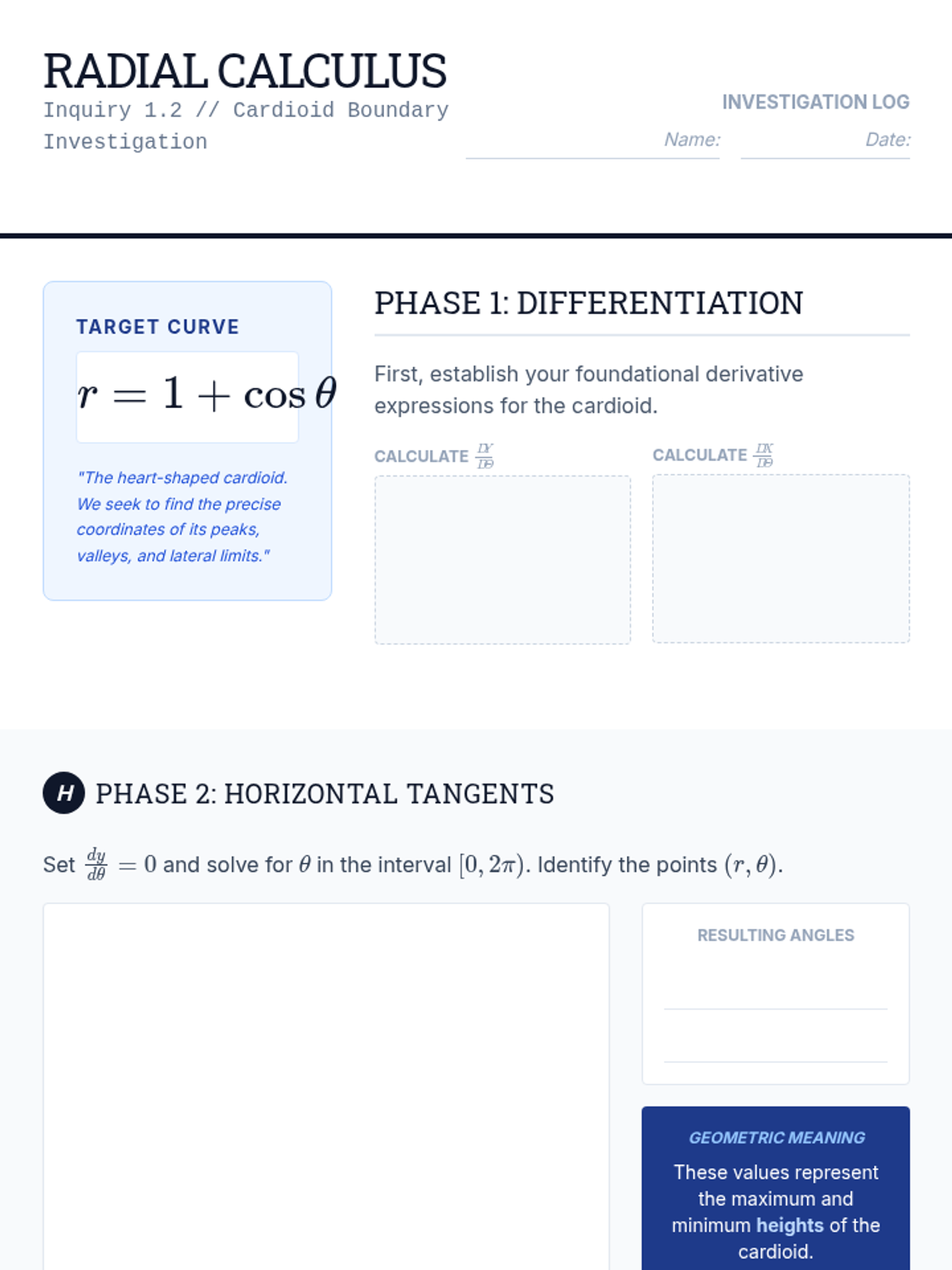
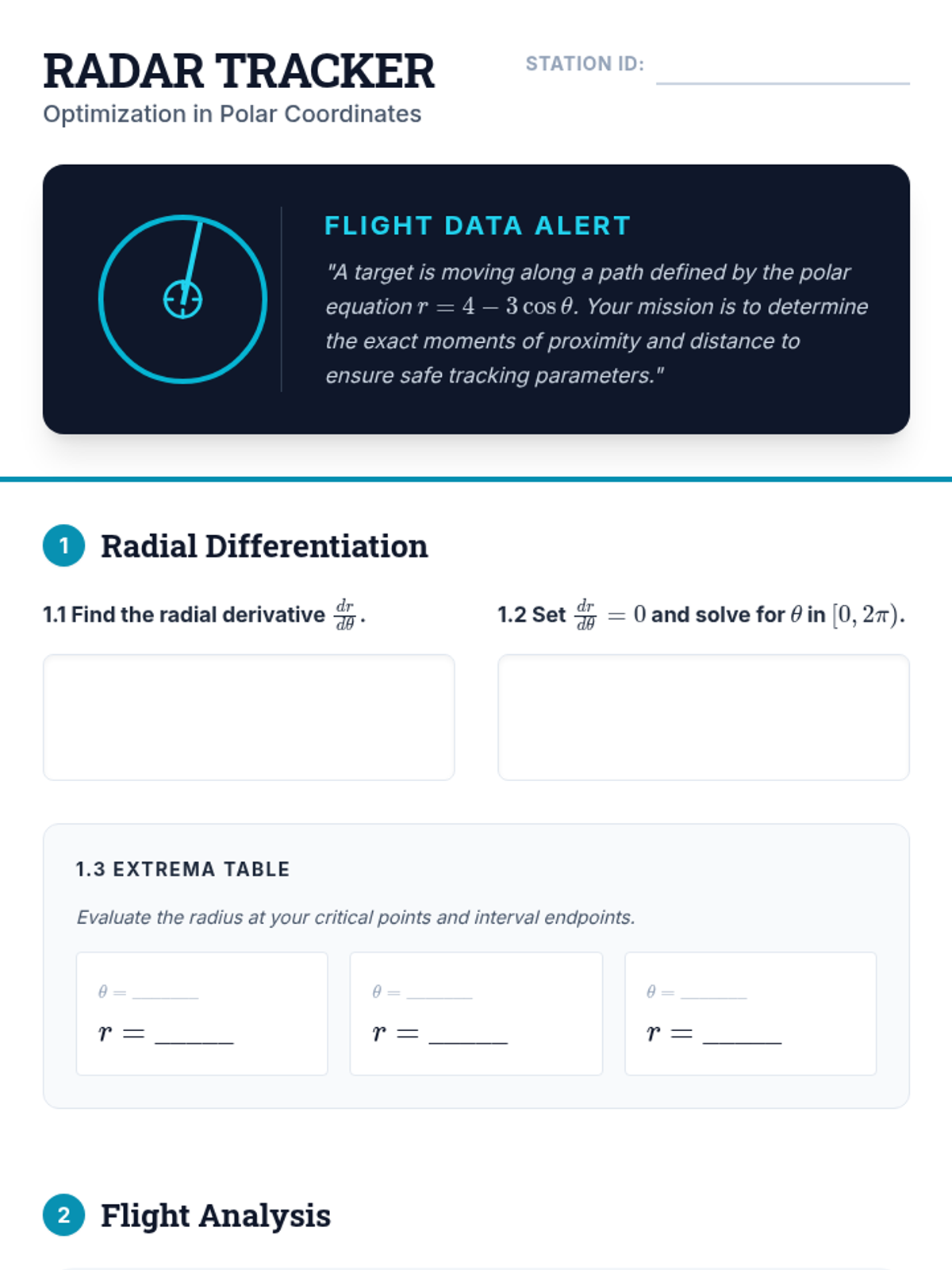
Students apply derivatives to find maximum values of r (distance from origin) and y (height) to solve geometric optimization problems within polar contexts.
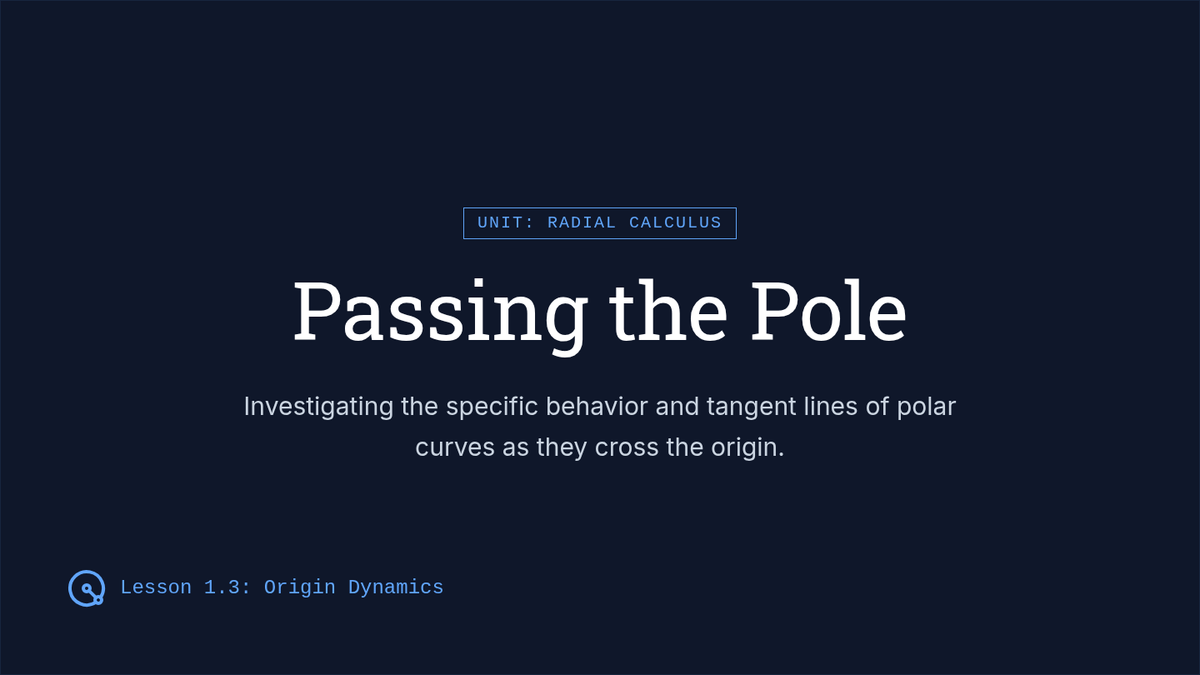
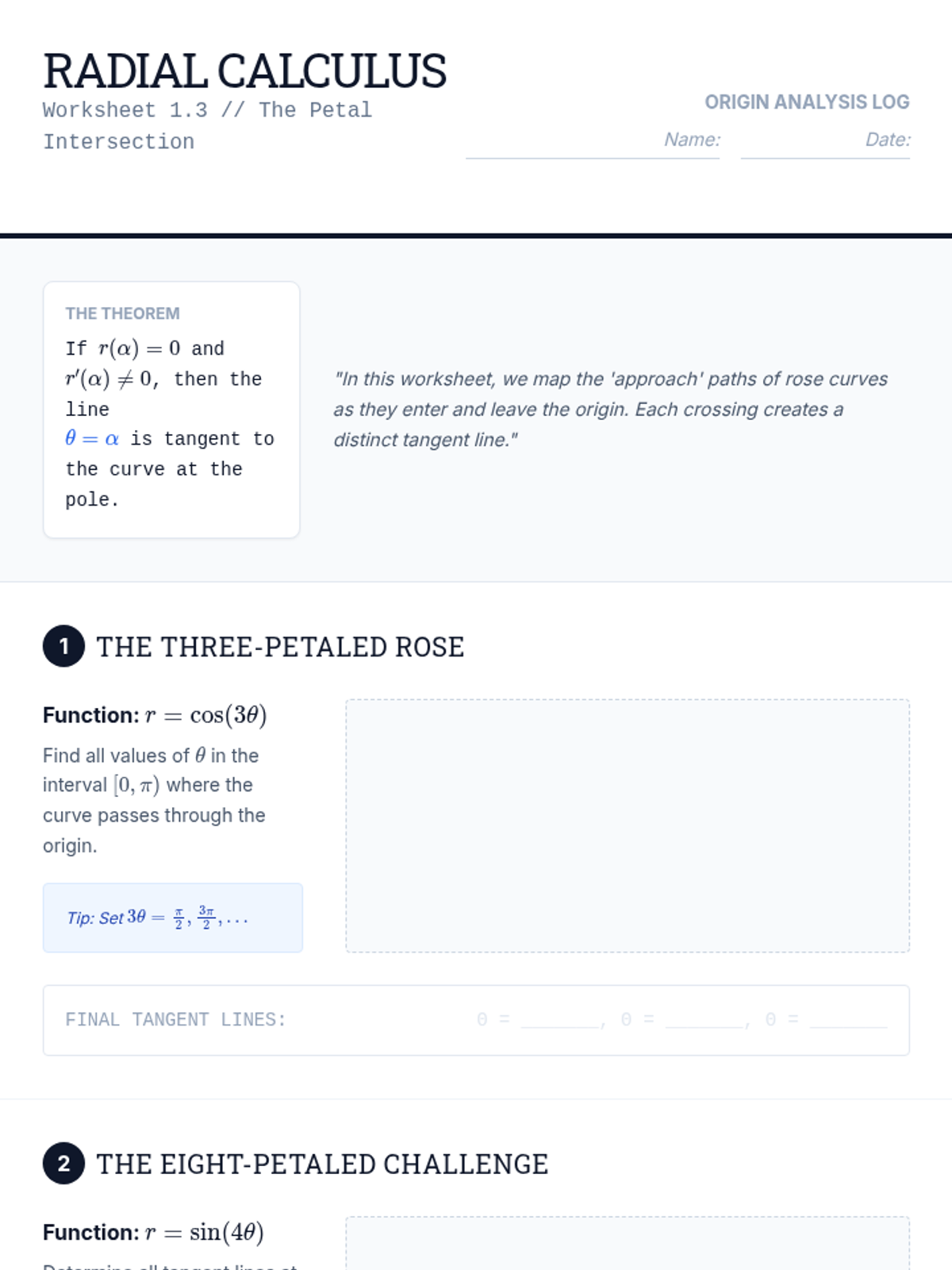
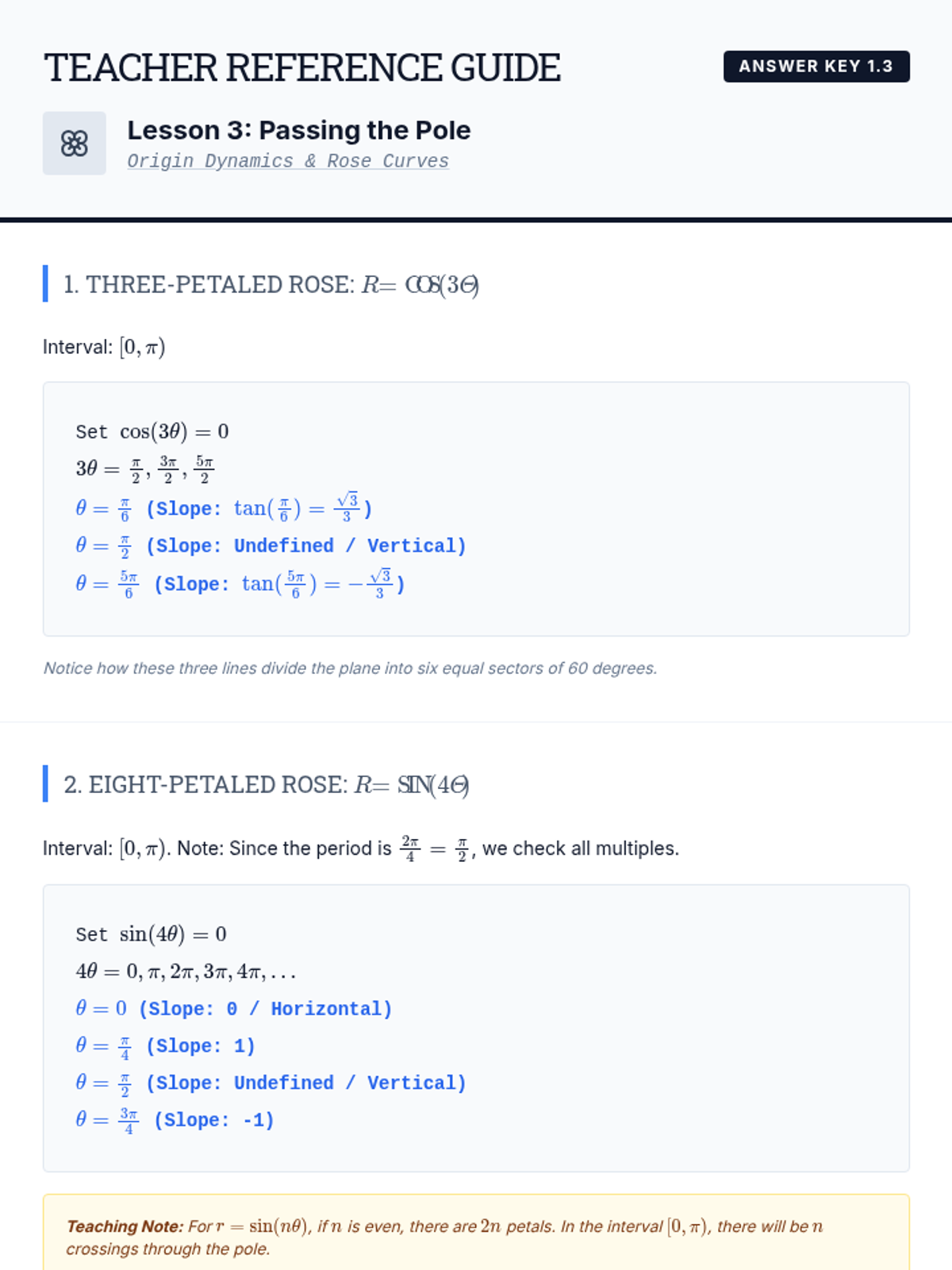
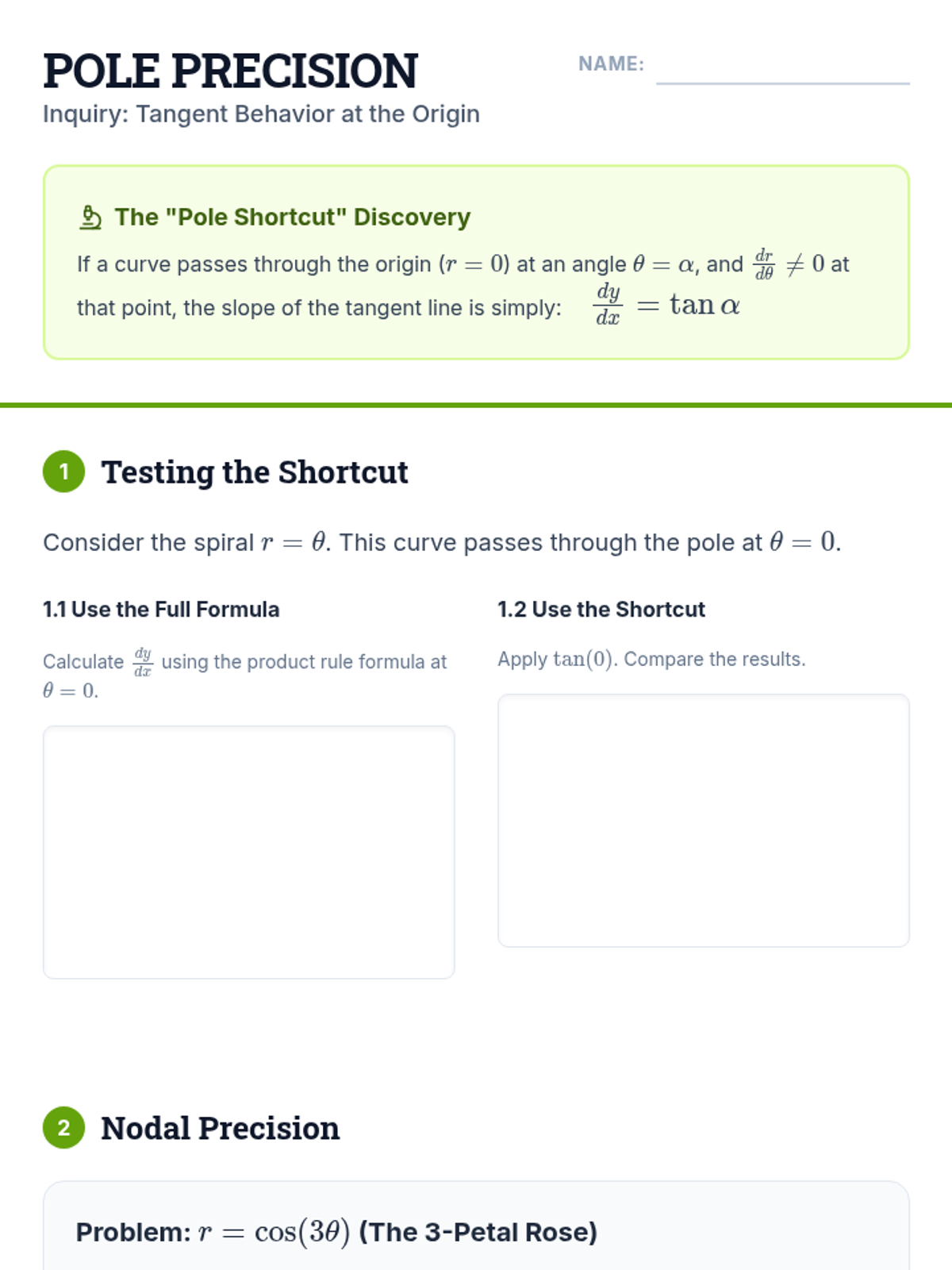
A focused lesson on finding tangent lines at the origin (the pole) by determining where r=0 and analyzing the behavior of rose curves and other polar functions.
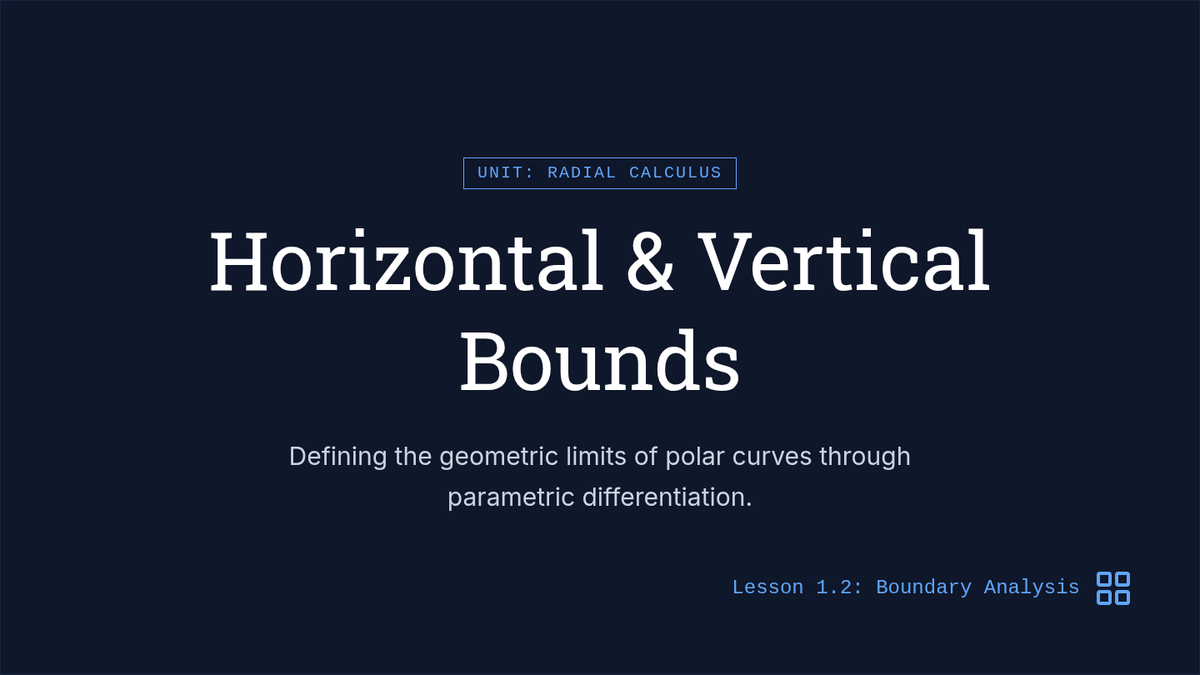
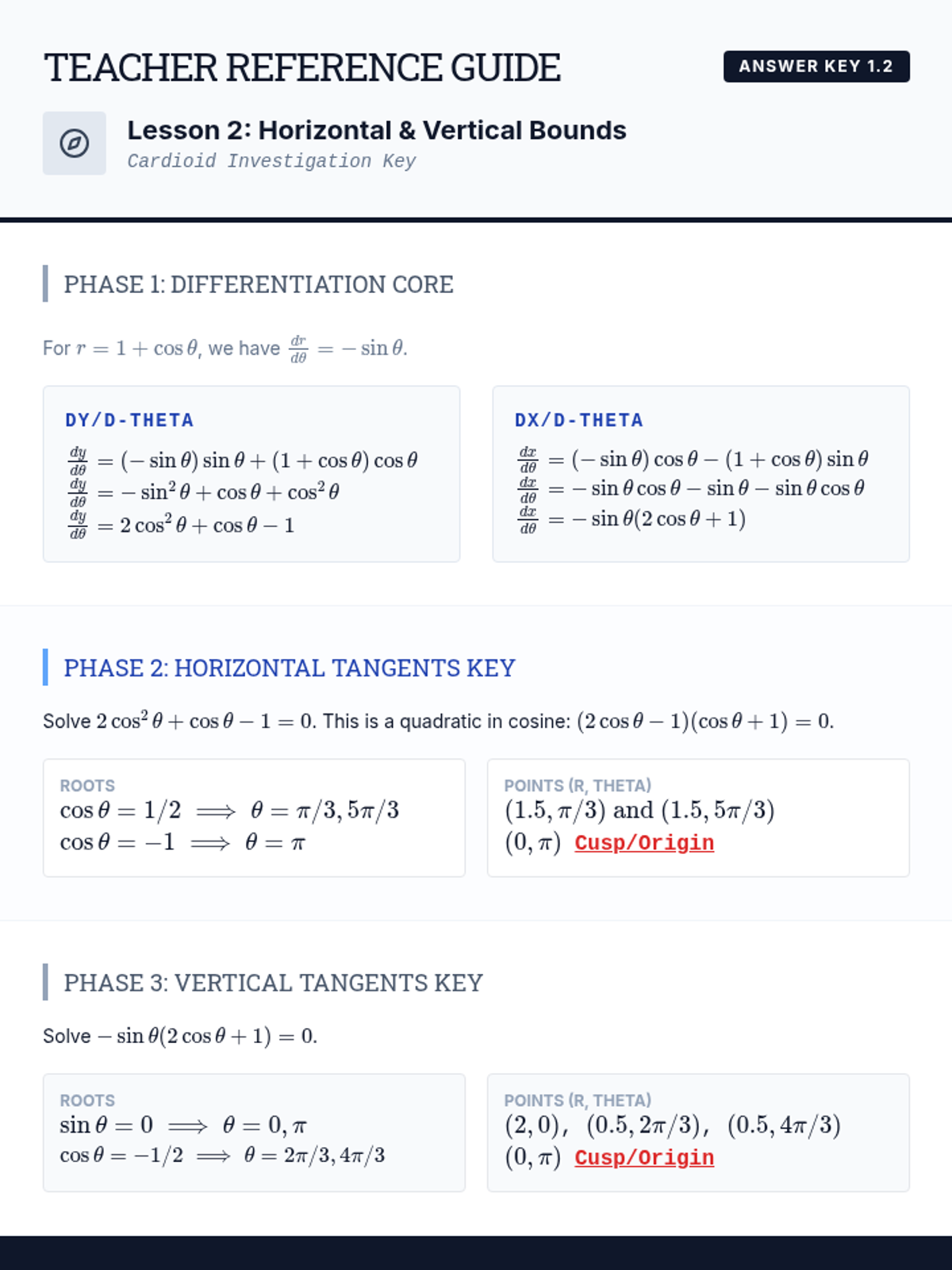
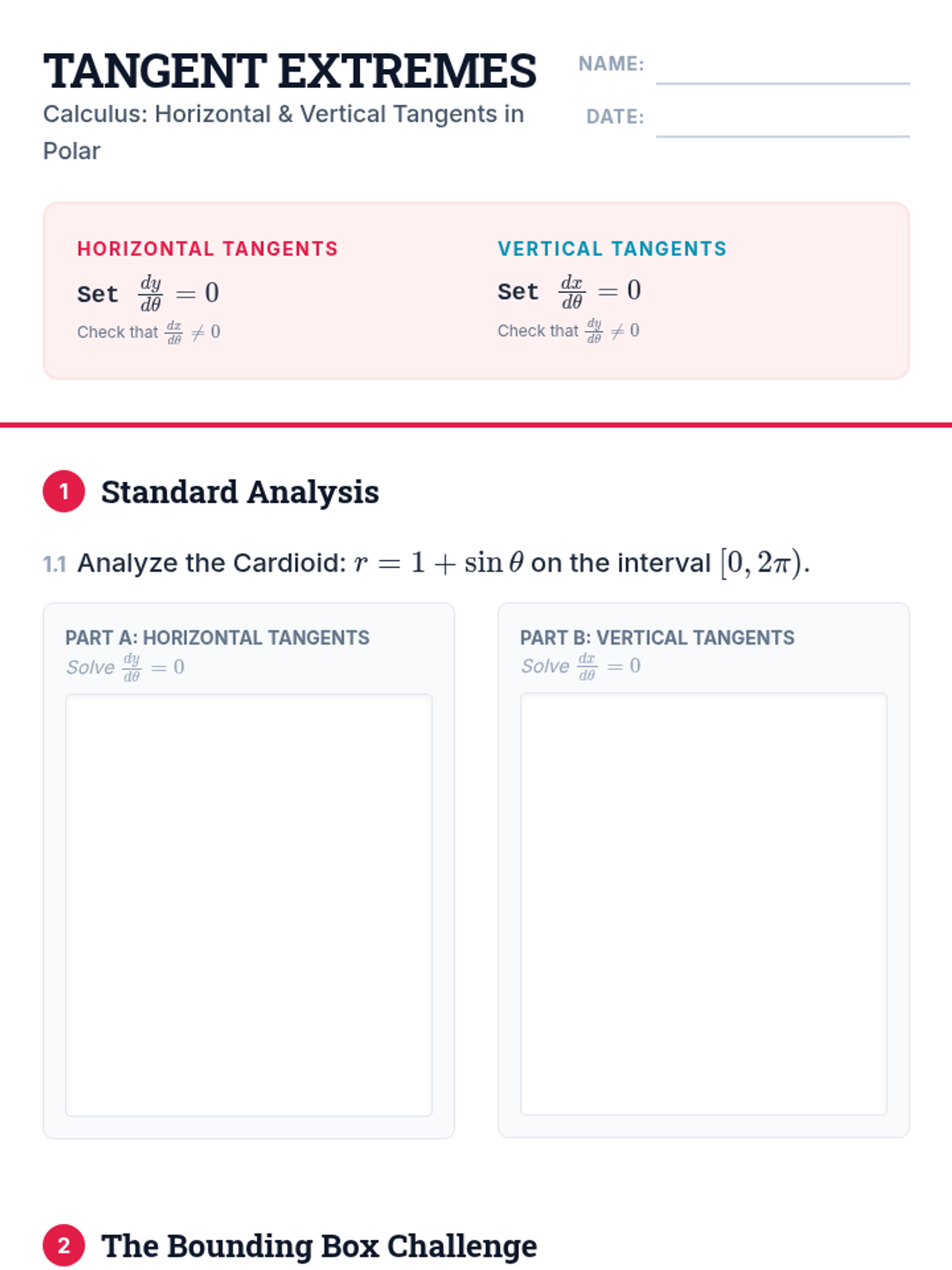
Students solve for theta values where dy/d-theta and dx/d-theta are zero to identify horizontal and vertical tangent lines on polar graphs, focusing on geometric interpretation.
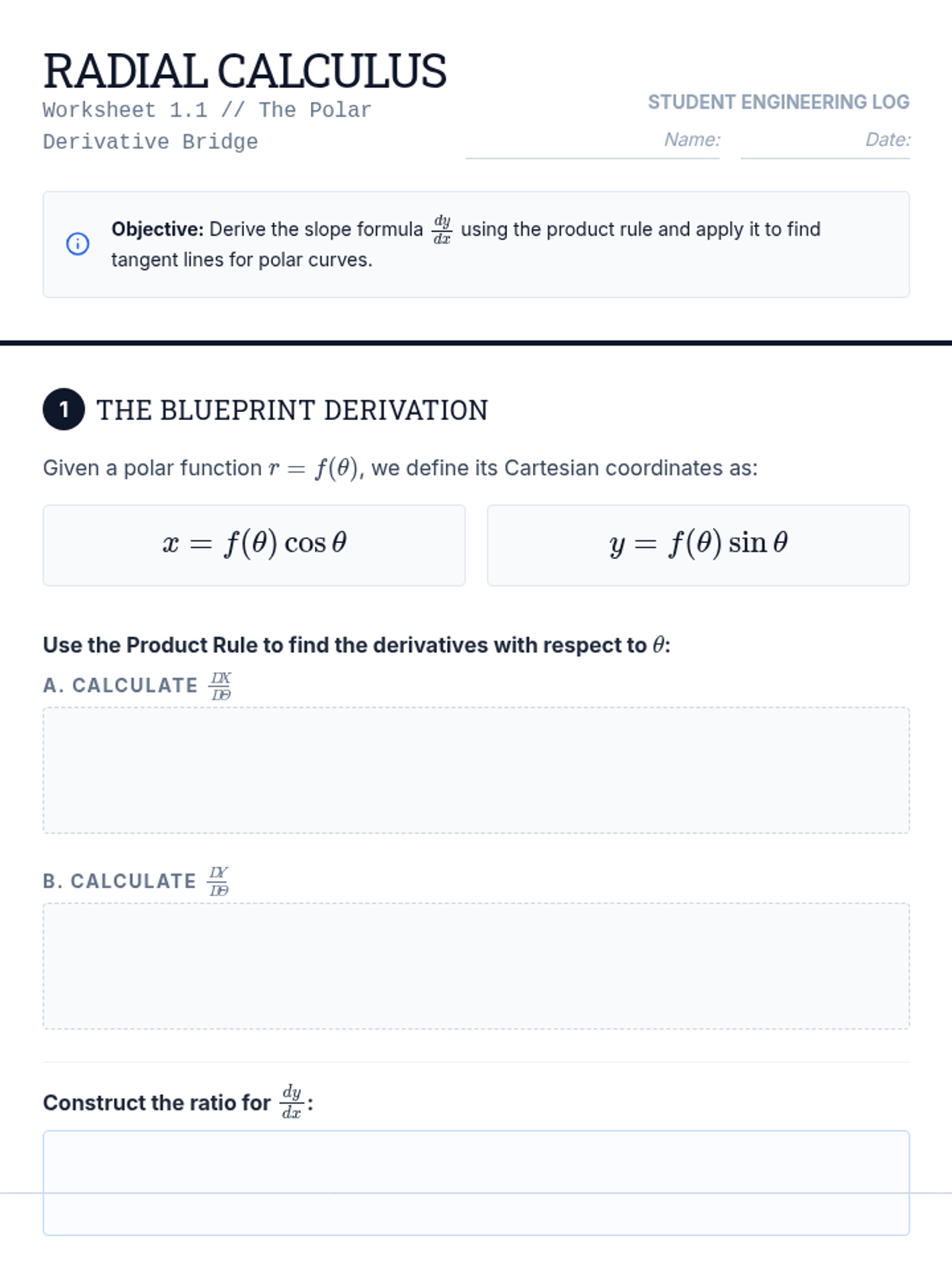
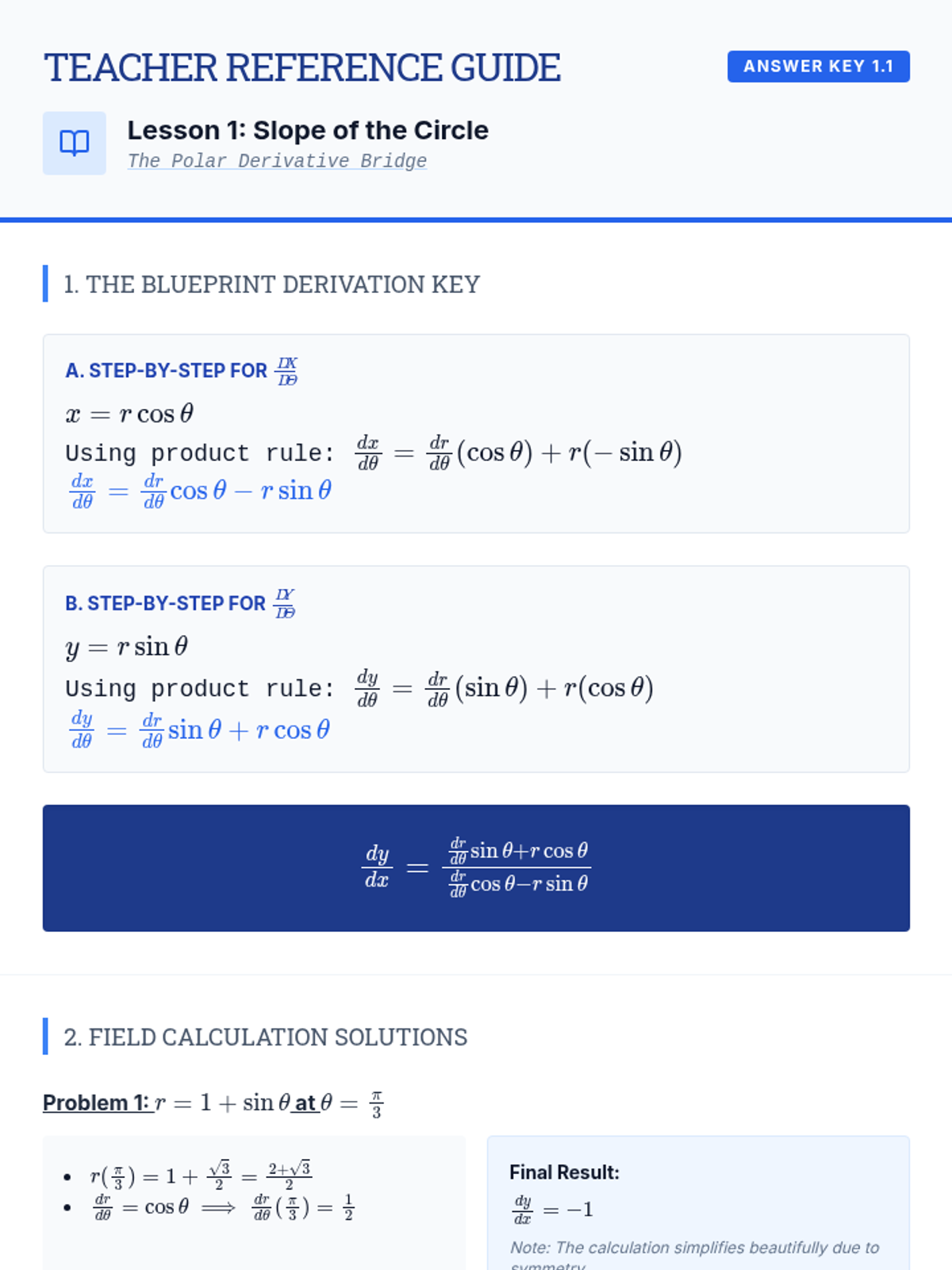
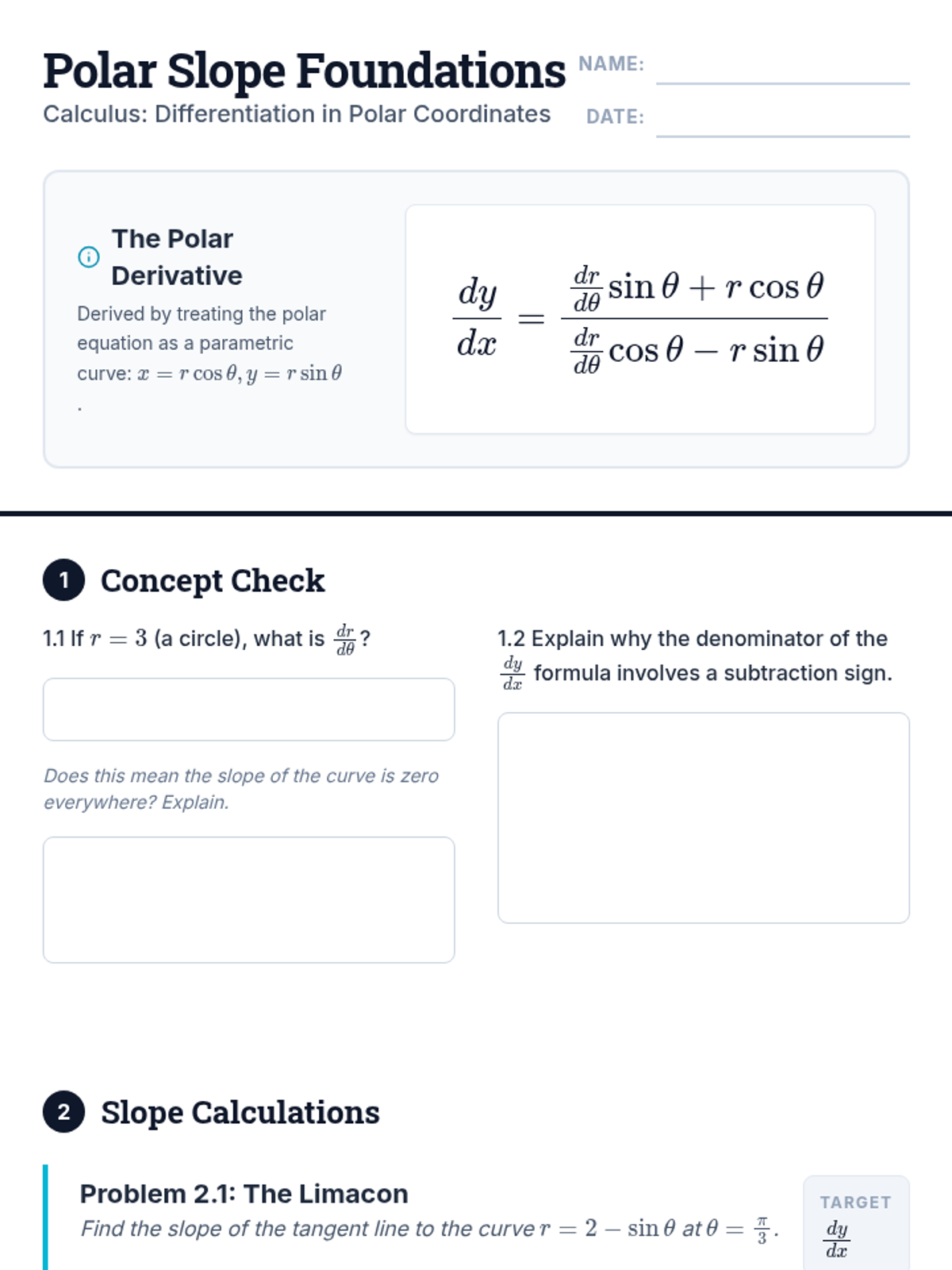
Students use the product rule and chain rule to derive the formula for dy/dx given r=f(theta). They learn to view x and y as parametric functions of theta to calculate the slope of the tangent line.
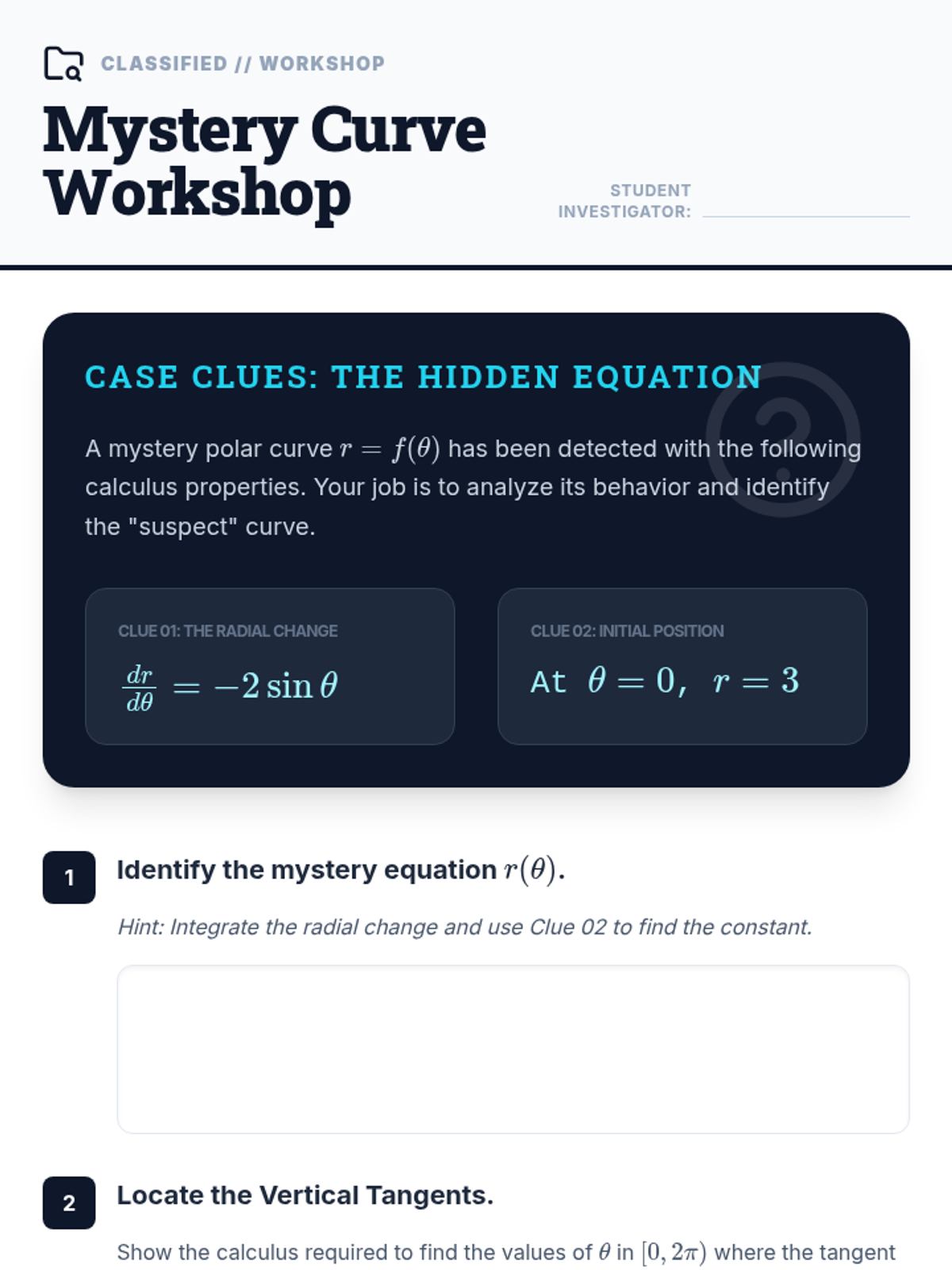
A comprehensive workshop where students synthesize all polar differentiation skills to analyze complex mystery curves.
Application of derivatives to find maximum and minimum values of r, interpreting these as points furthest from or closest to the origin.
Investigation of tangent line behavior as the radius approaches zero, focusing on nodal behavior and simplified slope calculations.
Focuses on locating horizontal and vertical tangents by analyzing the derivatives of x and y with respect to theta.
Students derive the formula for dy/dx in terms of theta by treating polar equations parametrically and distinguish between dr/dtheta and dy/dx.
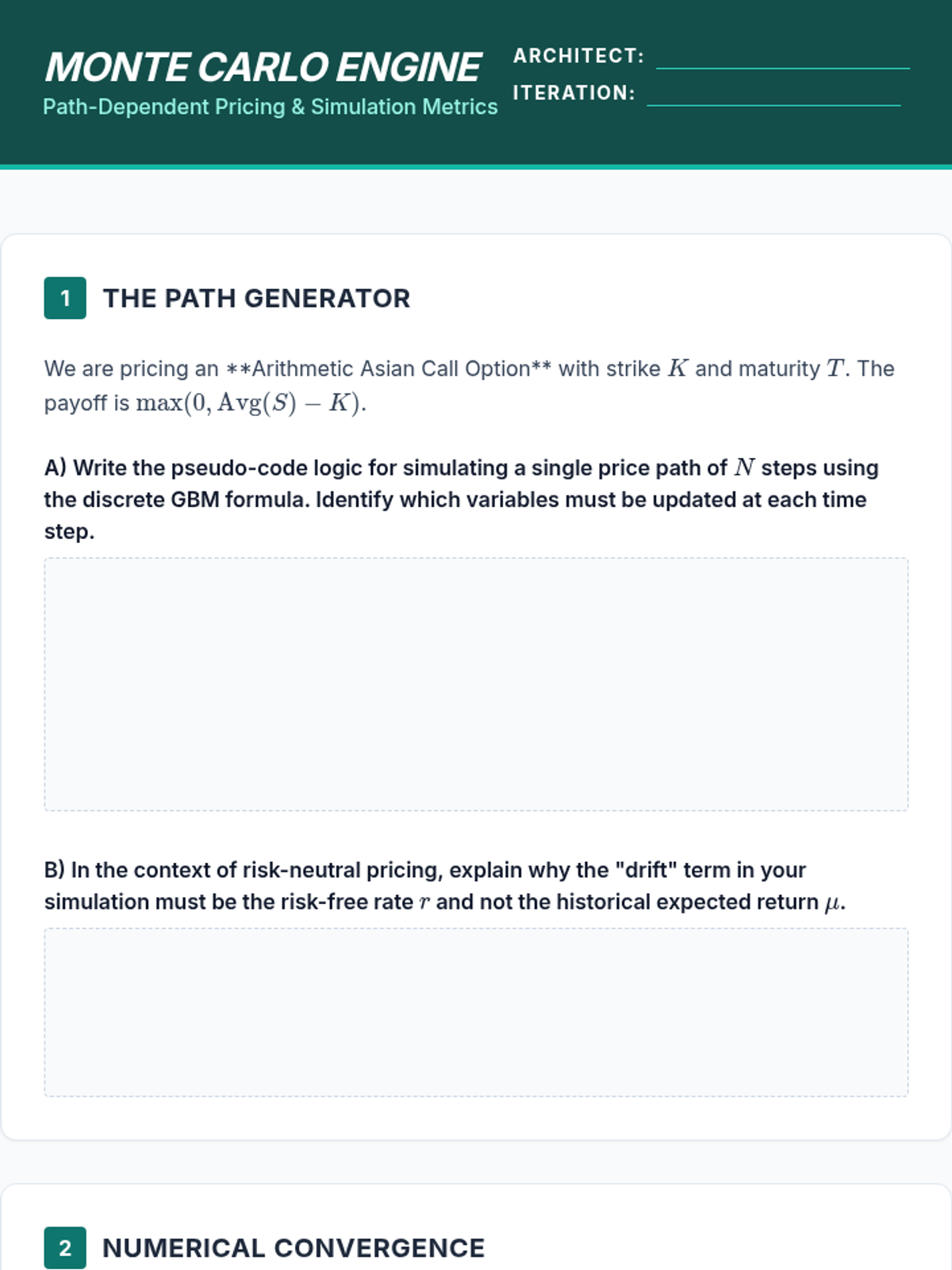
Computational estimation of expected payoffs for path-dependent derivatives using Geometric Brownian Motion and Monte Carlo simulations.
A foundational journey through the uppercase alphabet, focusing on stroke order, pen control, and letter recognition for early learners.
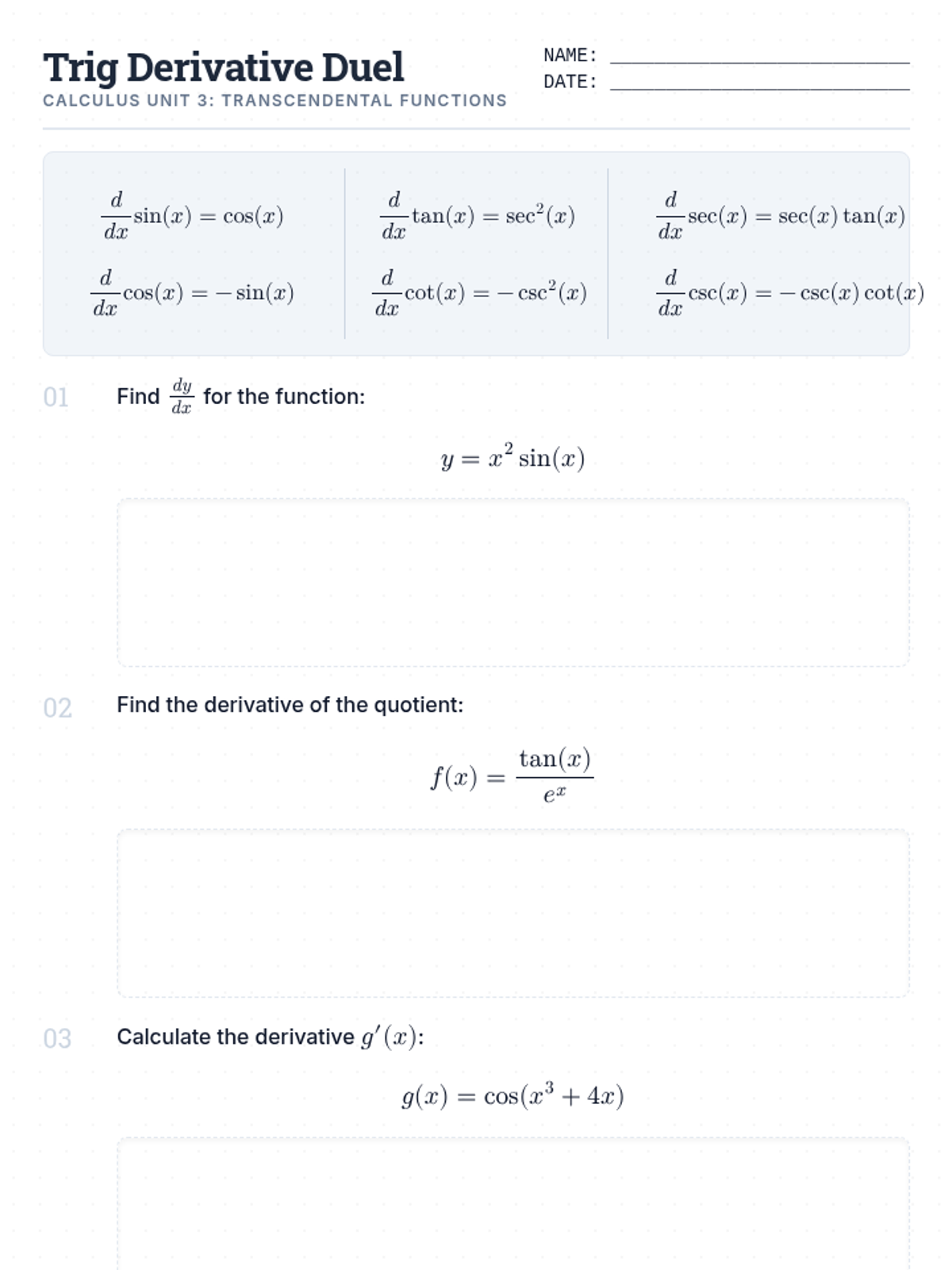
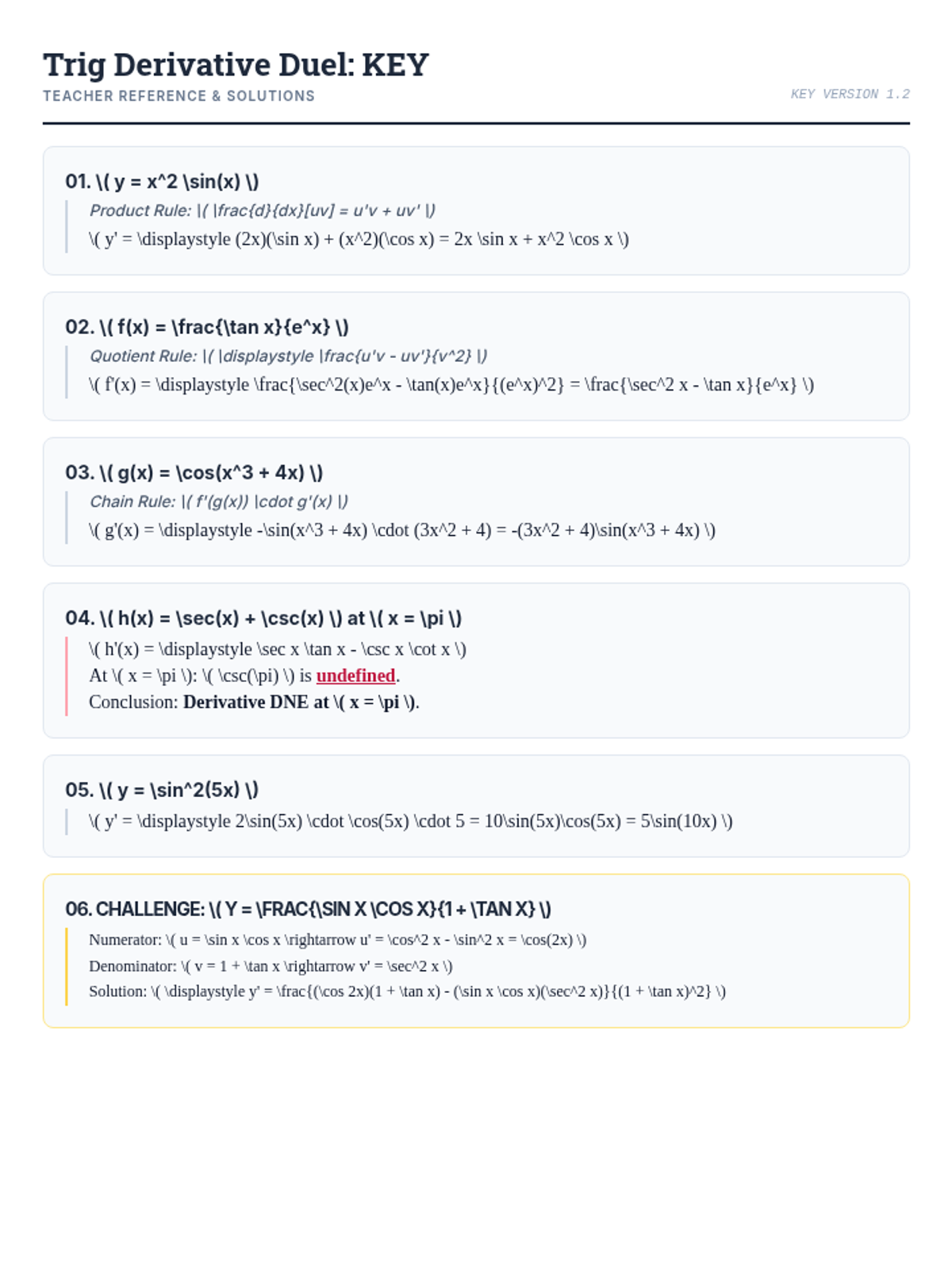
Master the derivatives of the six trigonometric functions through visual explanation and structured practice, including chain rule and product rule applications.
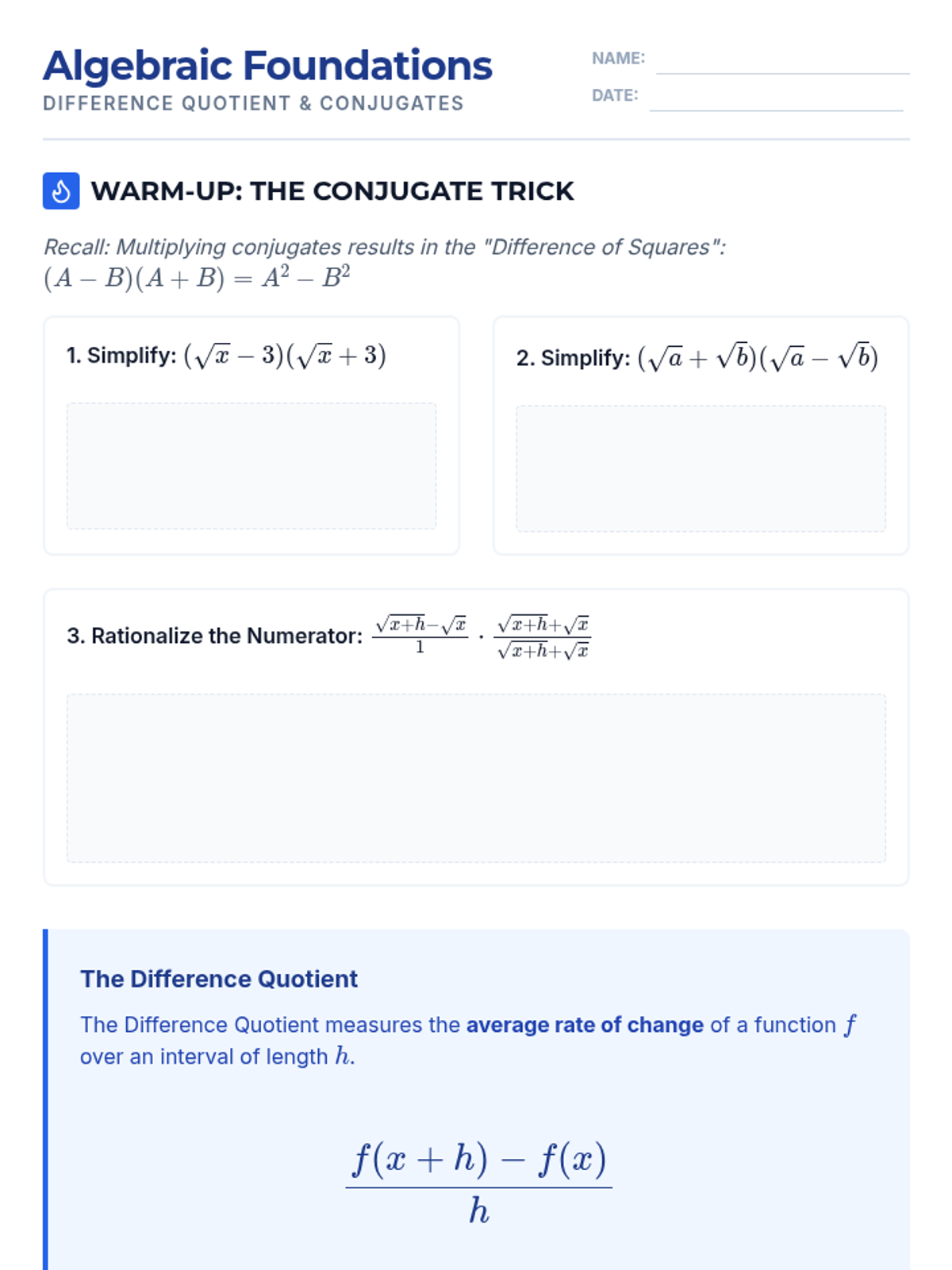
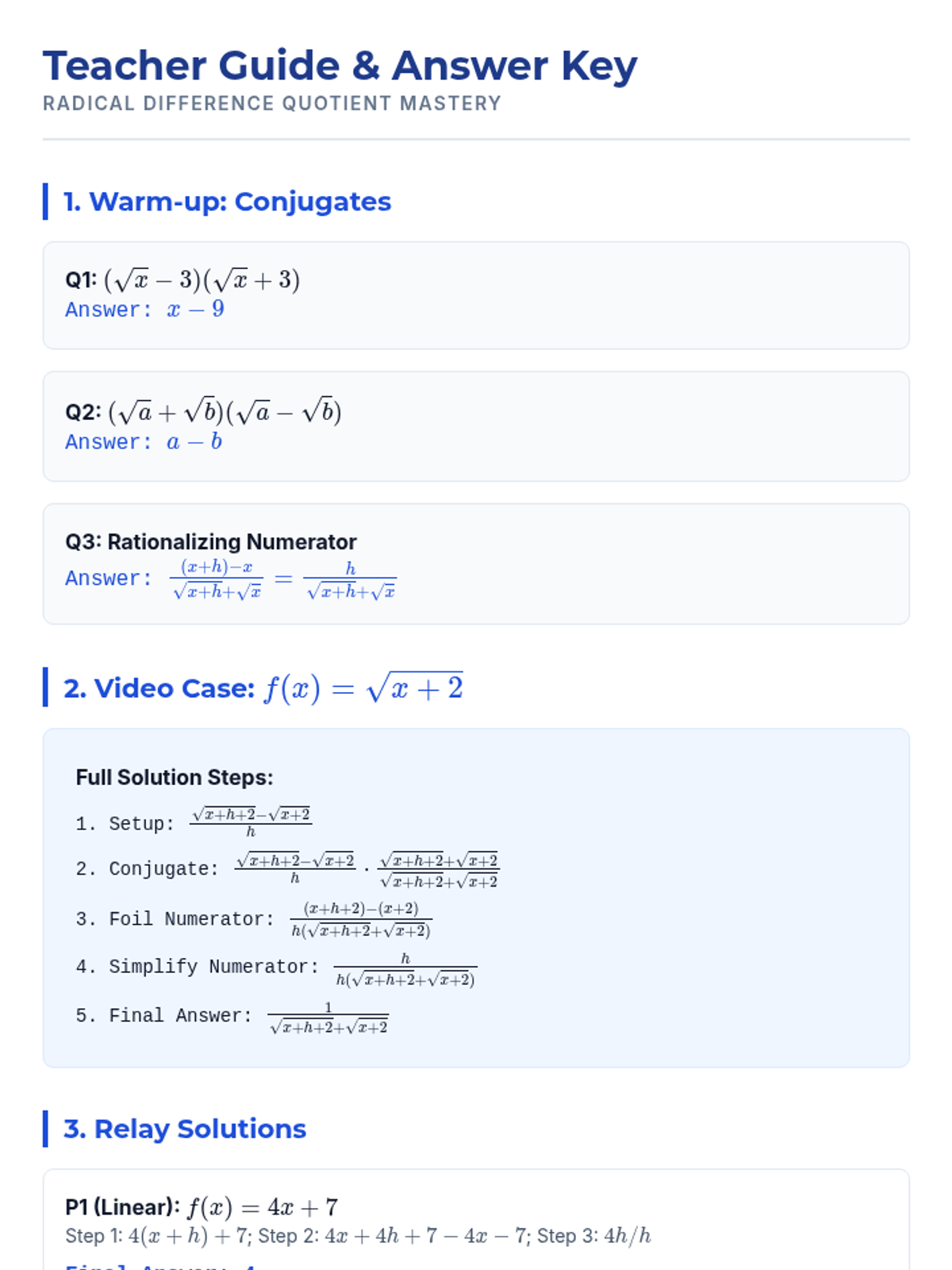
This lesson focuses on calculating the difference quotient for radical functions using the conjugate method. It includes a conjugate warm-up, guided video notes for a complex radical example, a collaborative group relay activity, and a conceptual preview of derivatives.
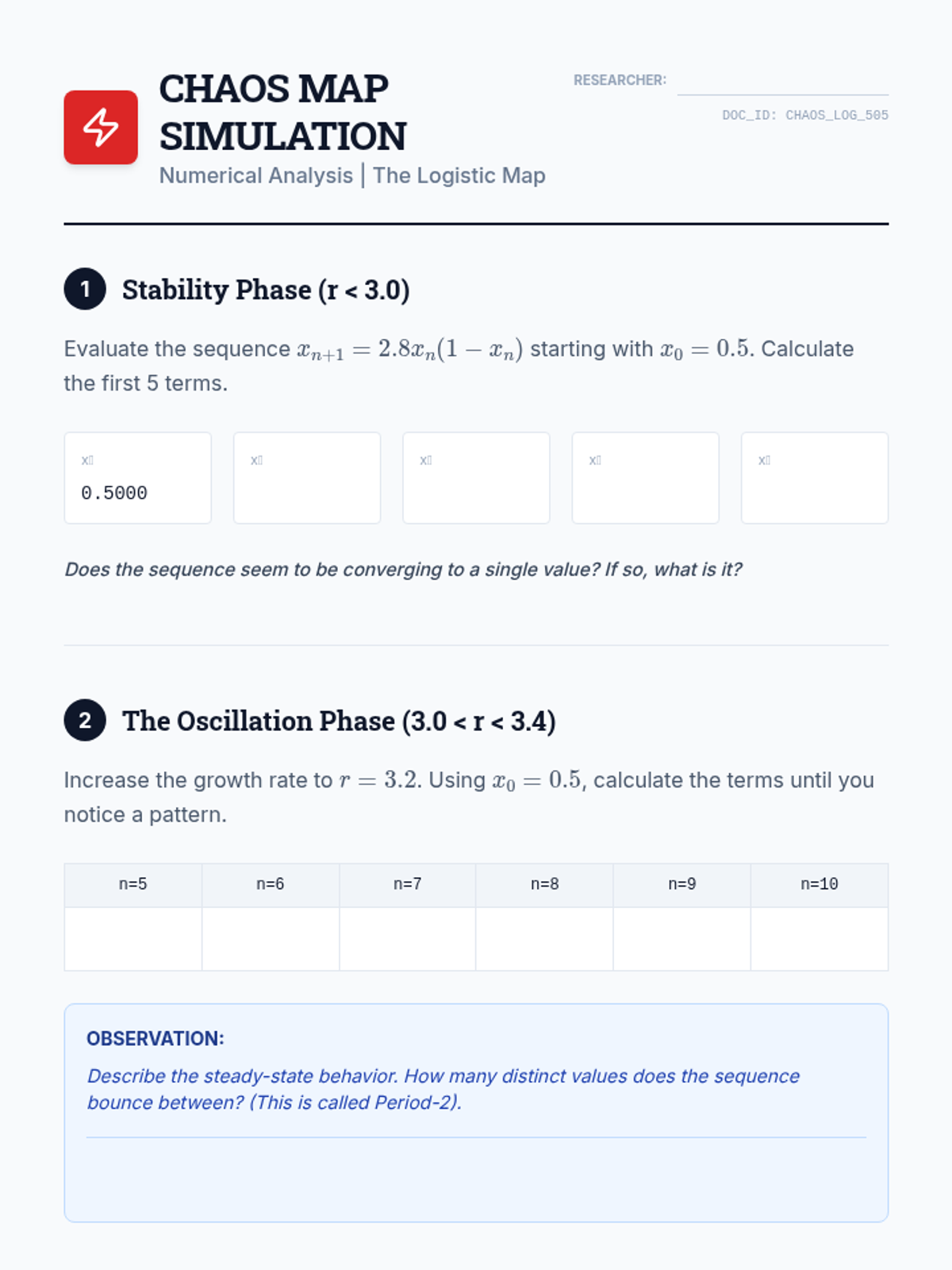
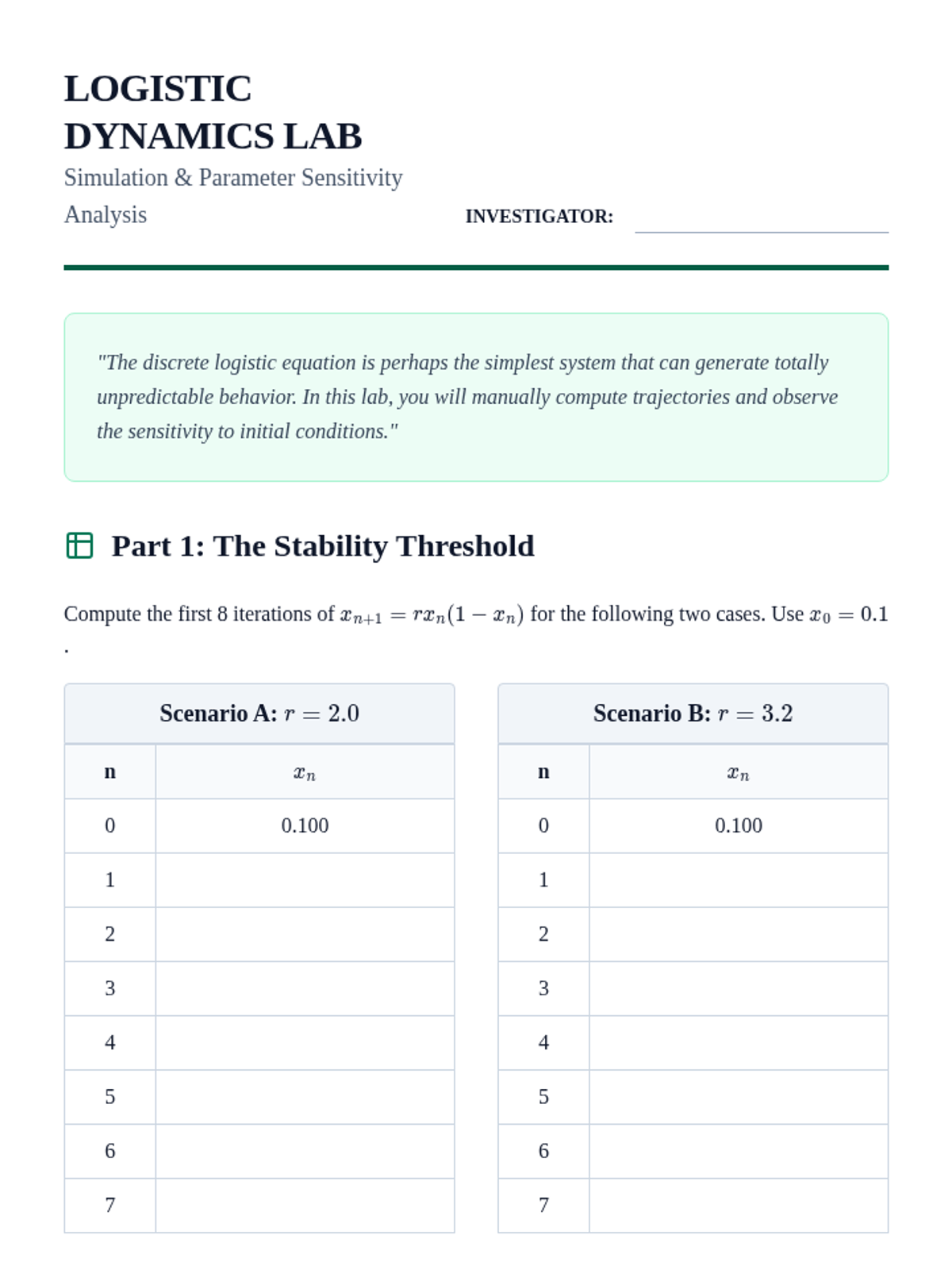
The sequence concludes by exploring the Logistic Map, where simple iterative processes lead to bifurcation and mathematical chaos.
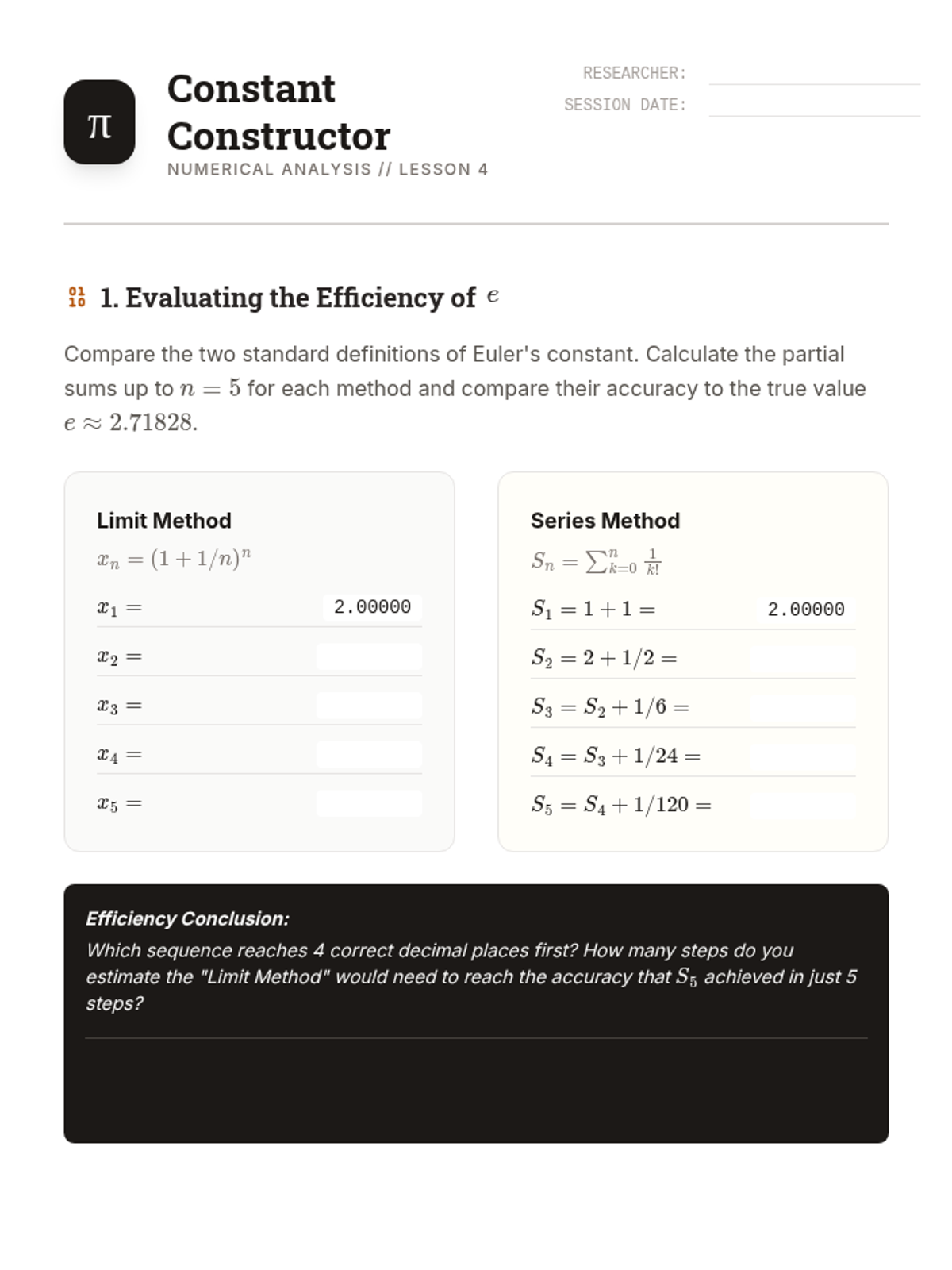
Students evaluate historical and modern sequences used to calculate mathematical constants like Pi and e, focusing on series efficiency.
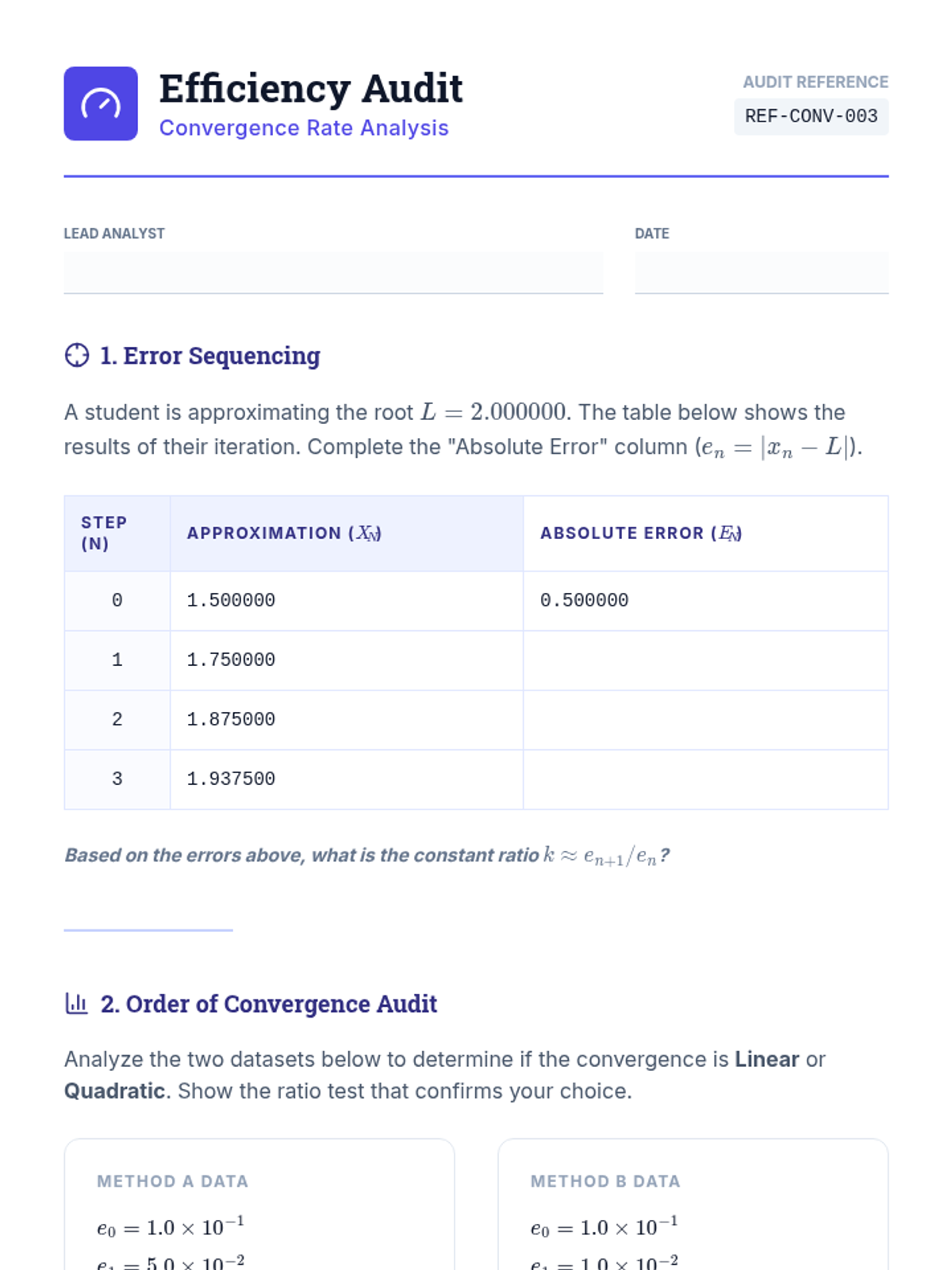
This lesson focuses on convergence rates, comparing linear, quadratic, and cubic efficiency through error reduction analysis.
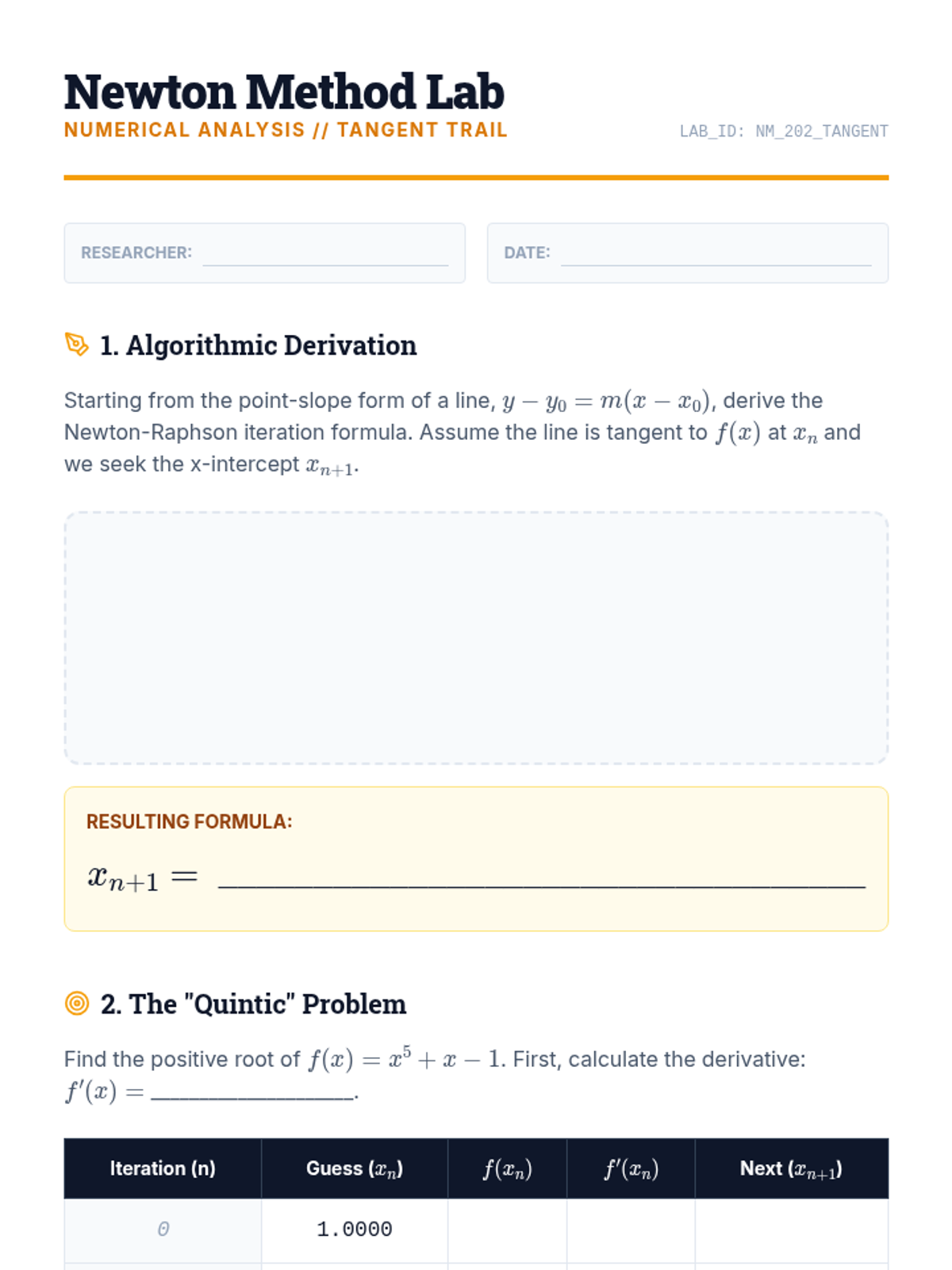
Students derive Newton's Method from tangent line approximations and apply it as a recursive sequence to find roots of complex functions.
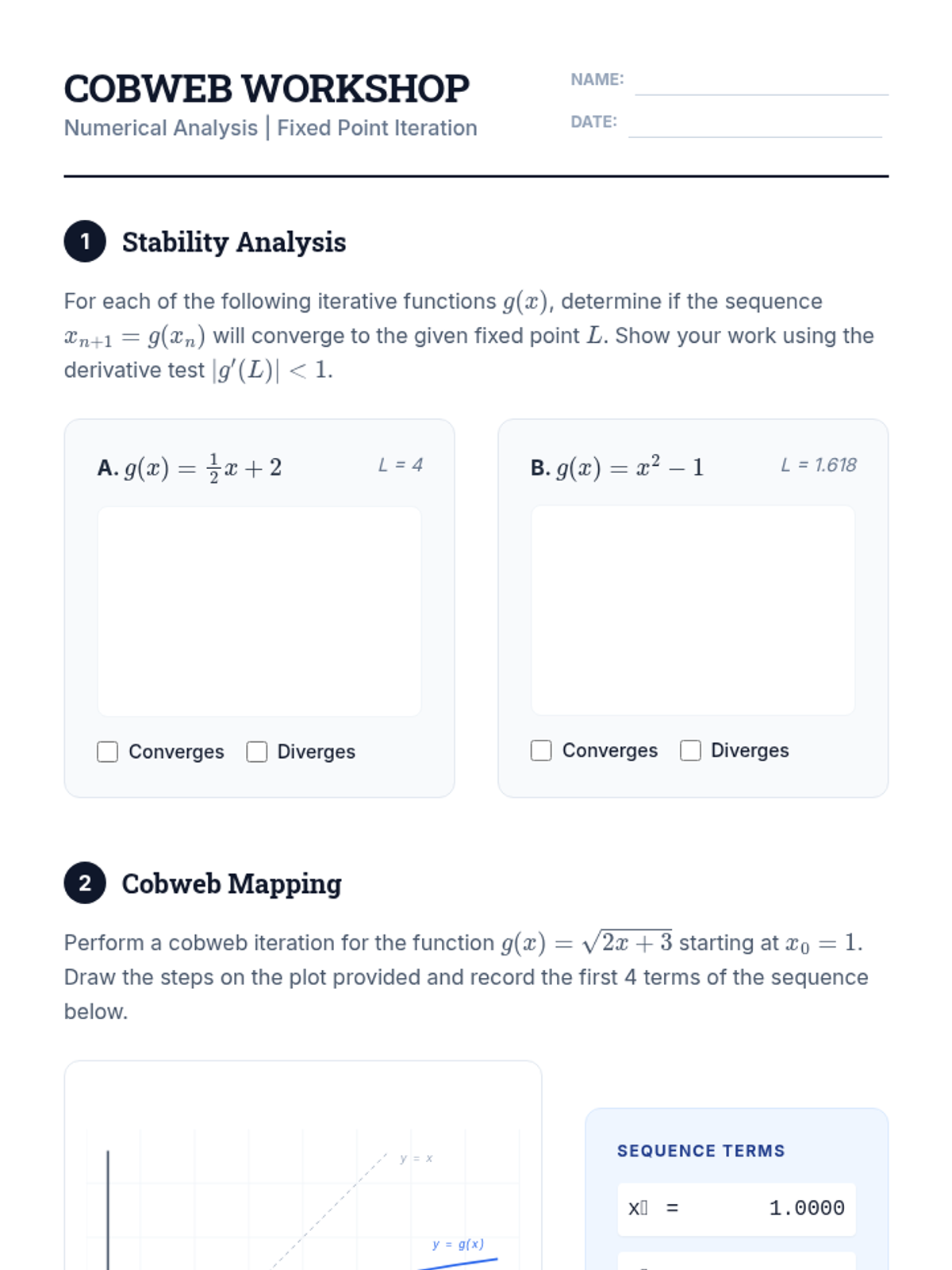
Students learn to rewrite equations in the form x = g(x) and use the sequence x_{n+1} = g(x_n) to find solutions, analyzing convergence through cobweb plots.
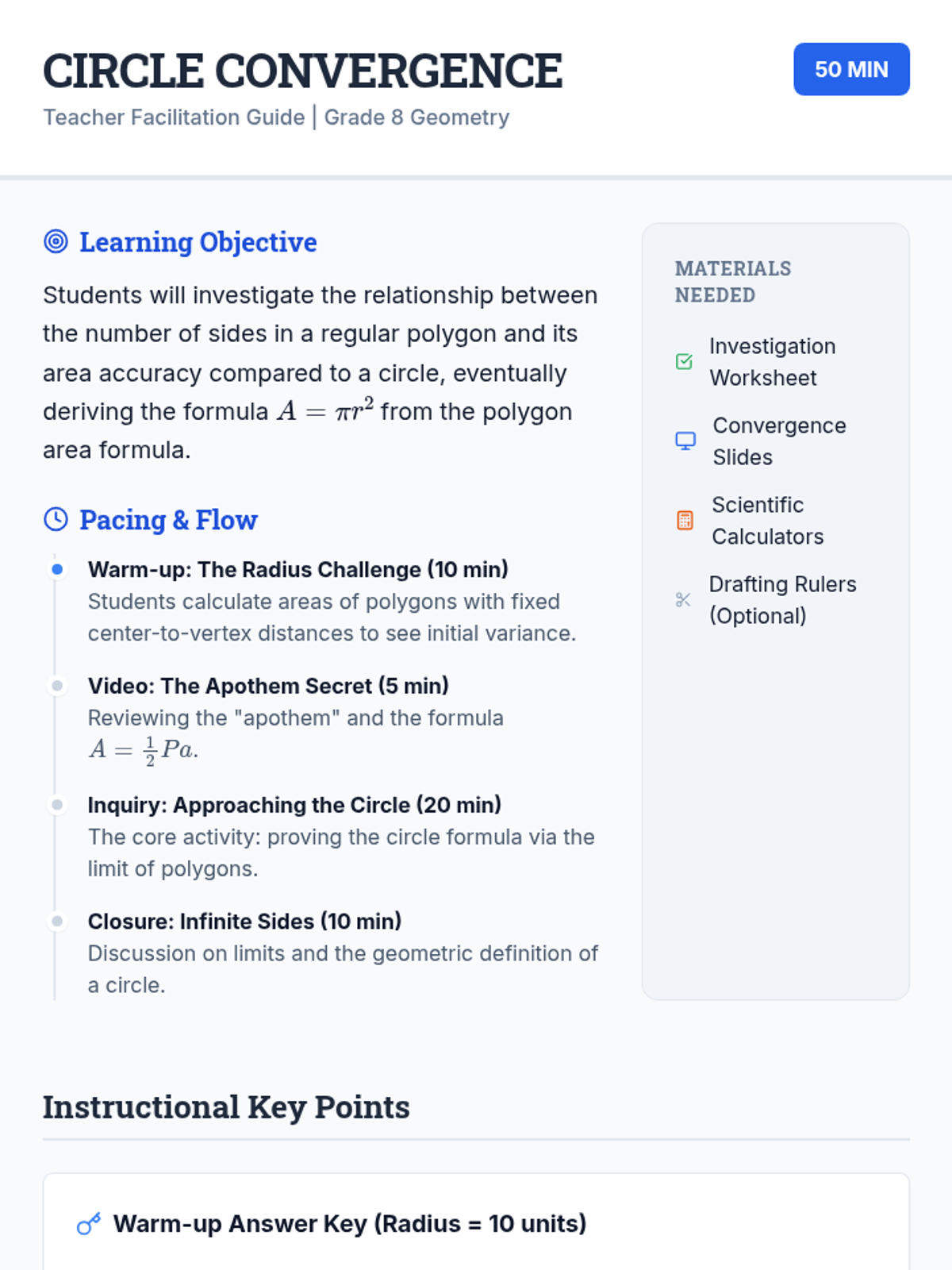
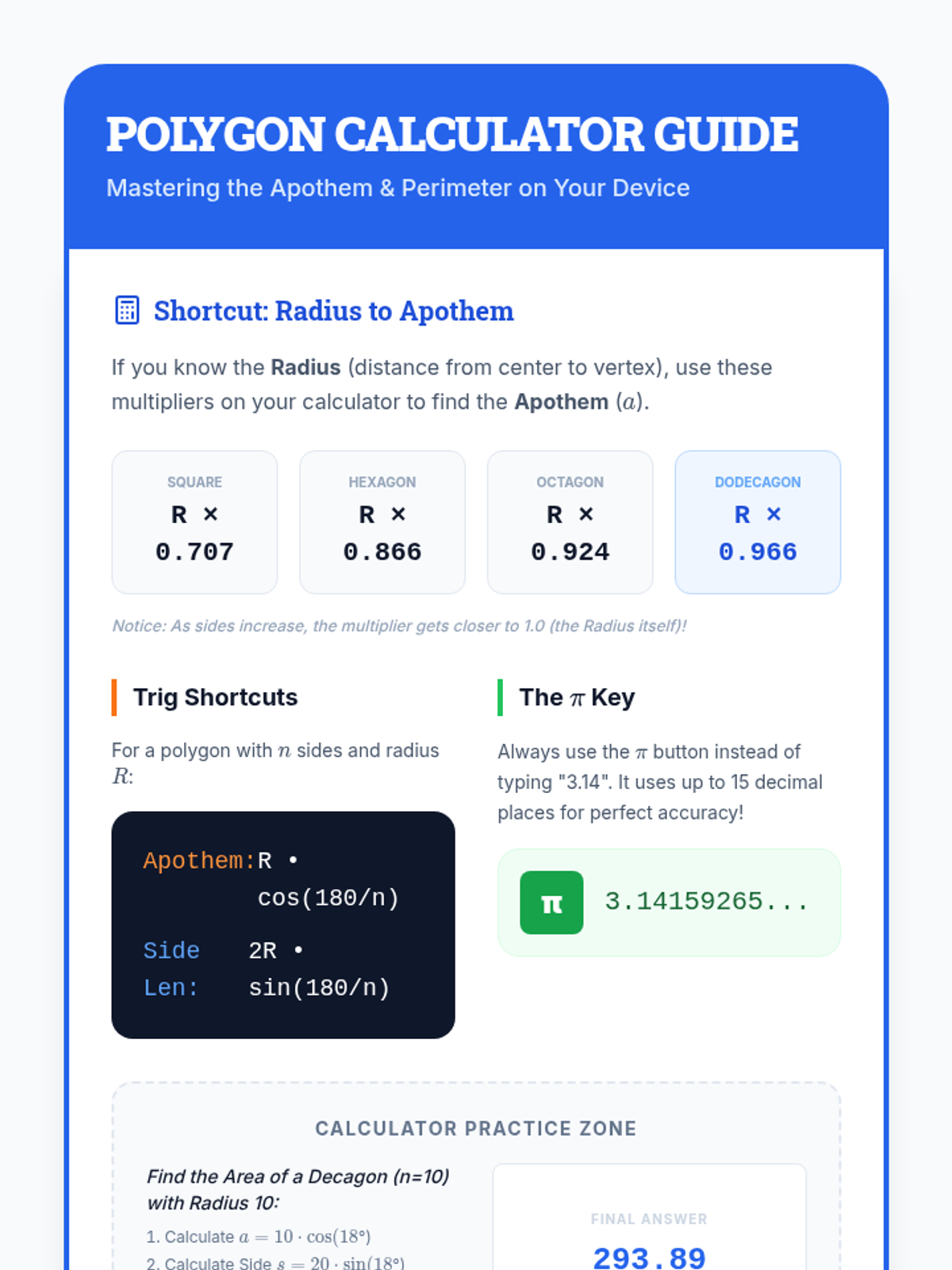
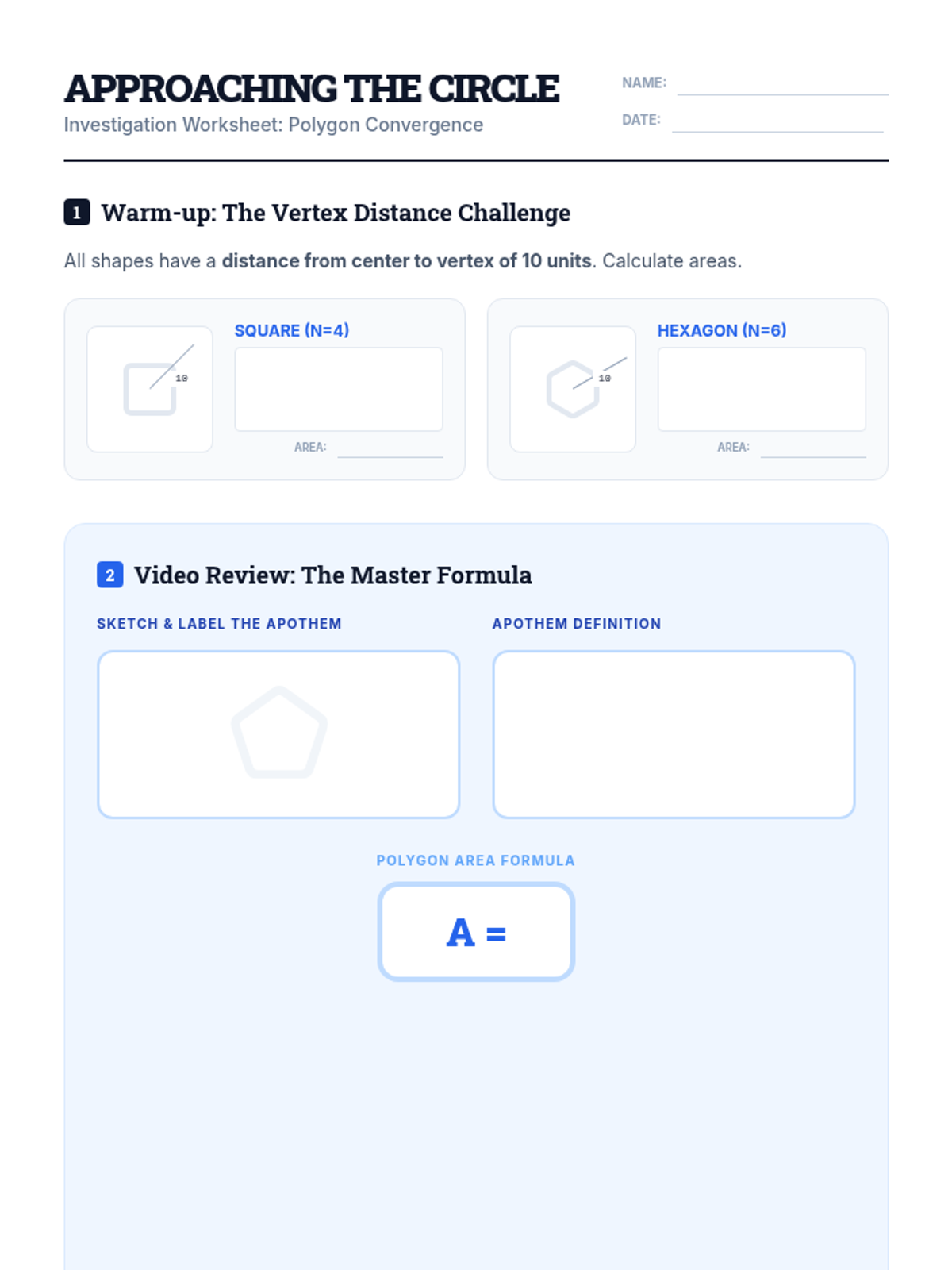
Students investigate how regular polygons with increasing numbers of sides eventually 'converge' into a circle, using the apothem formula to derive the area of a circle.
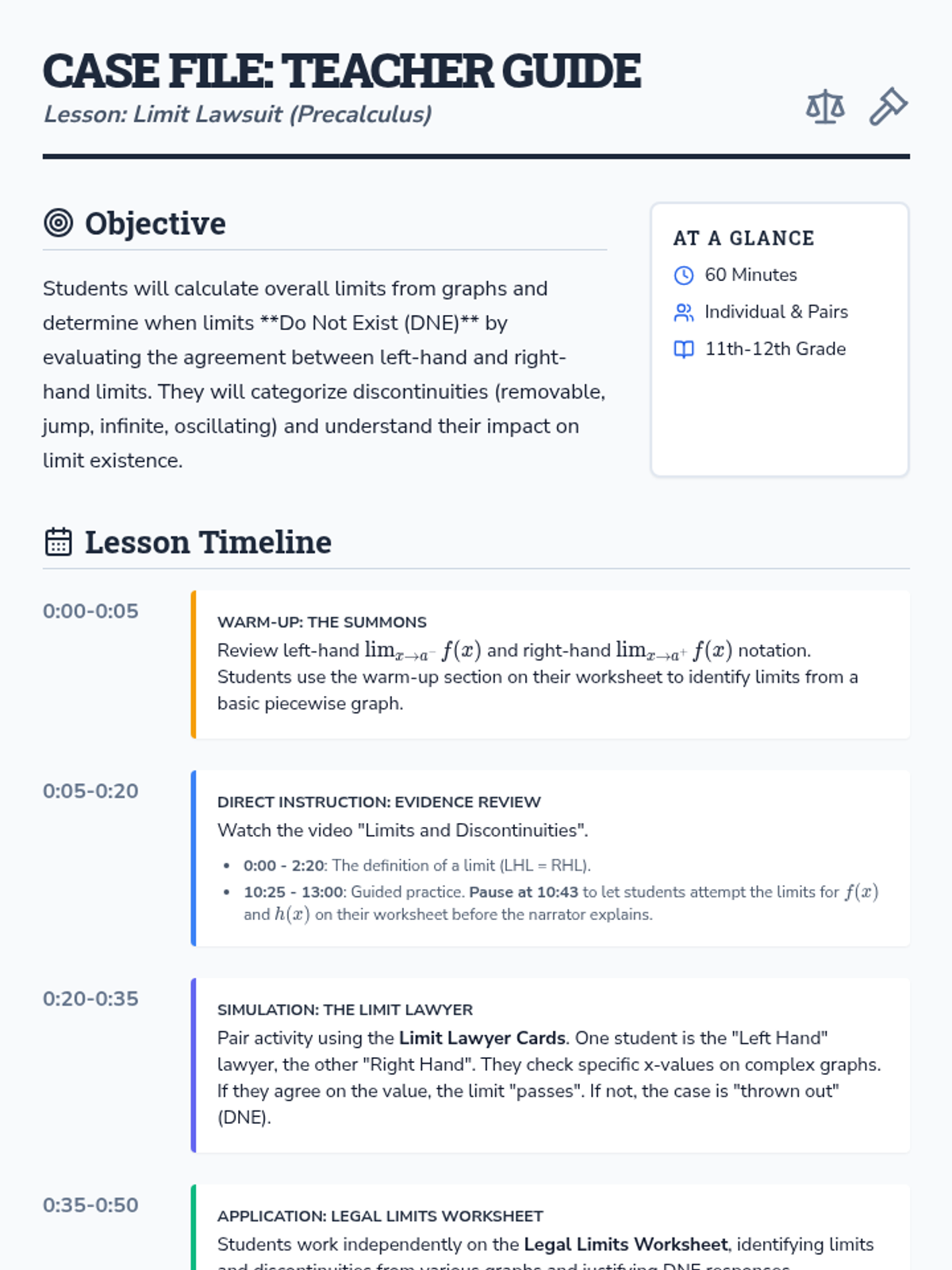
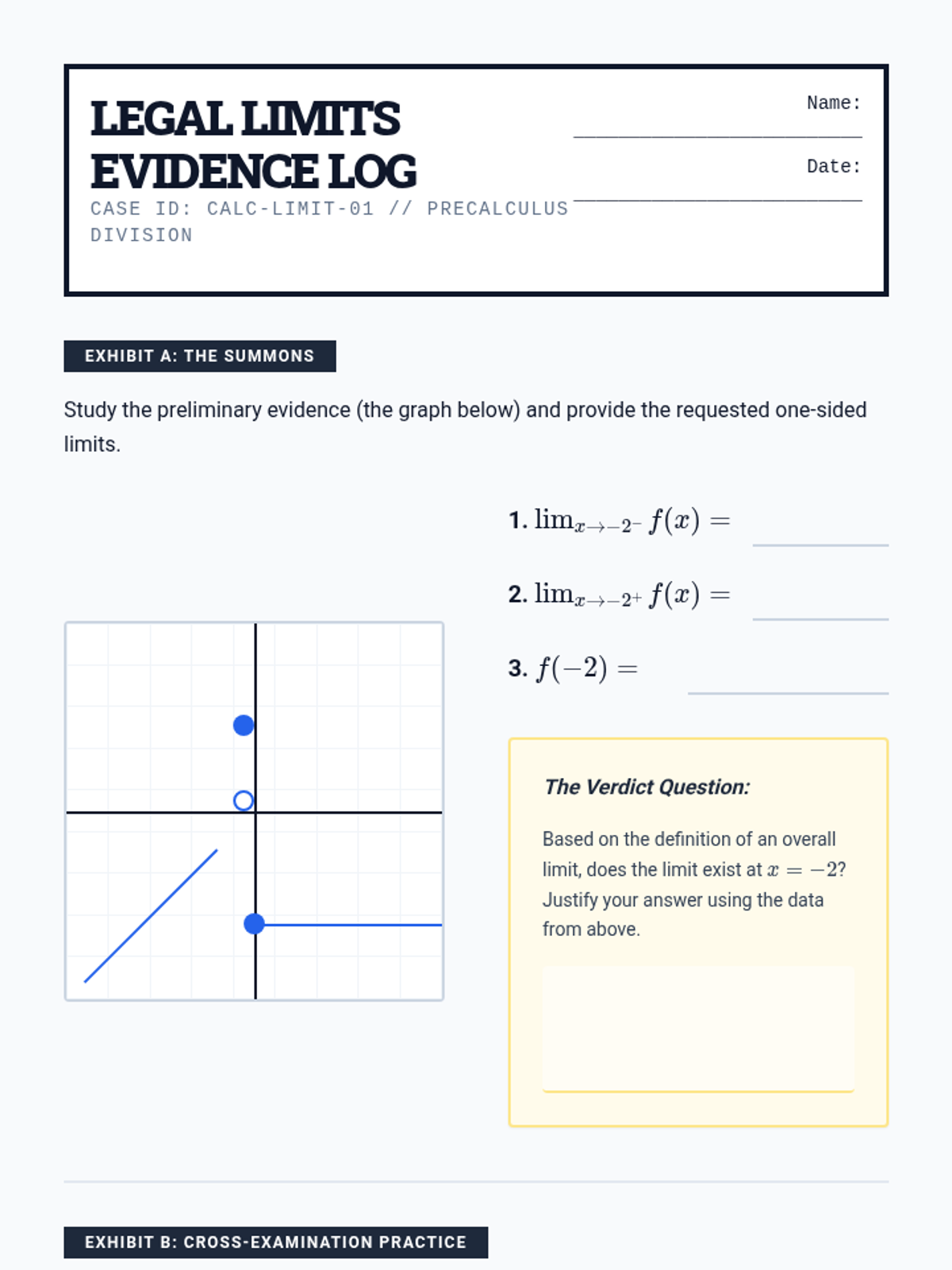
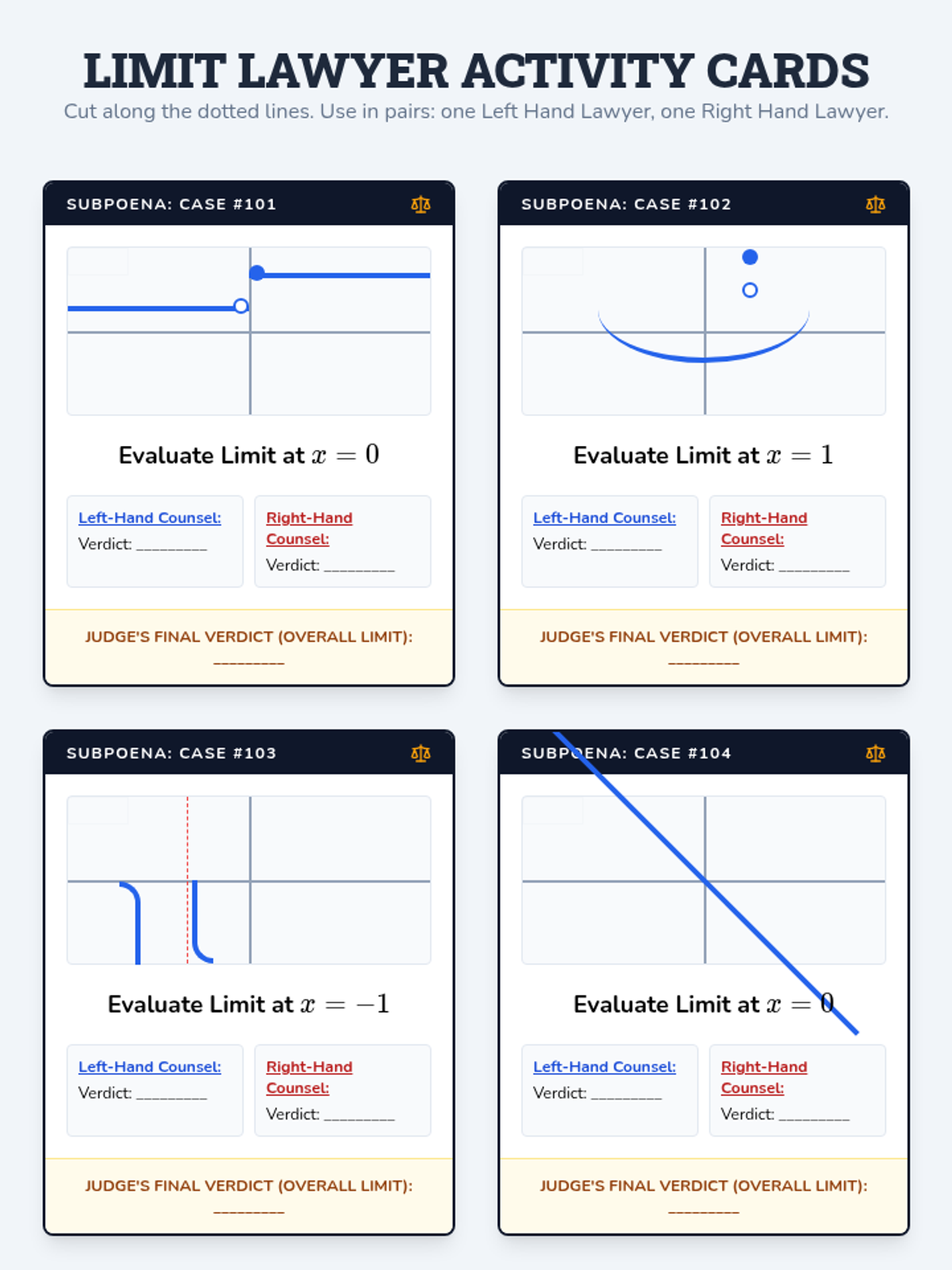
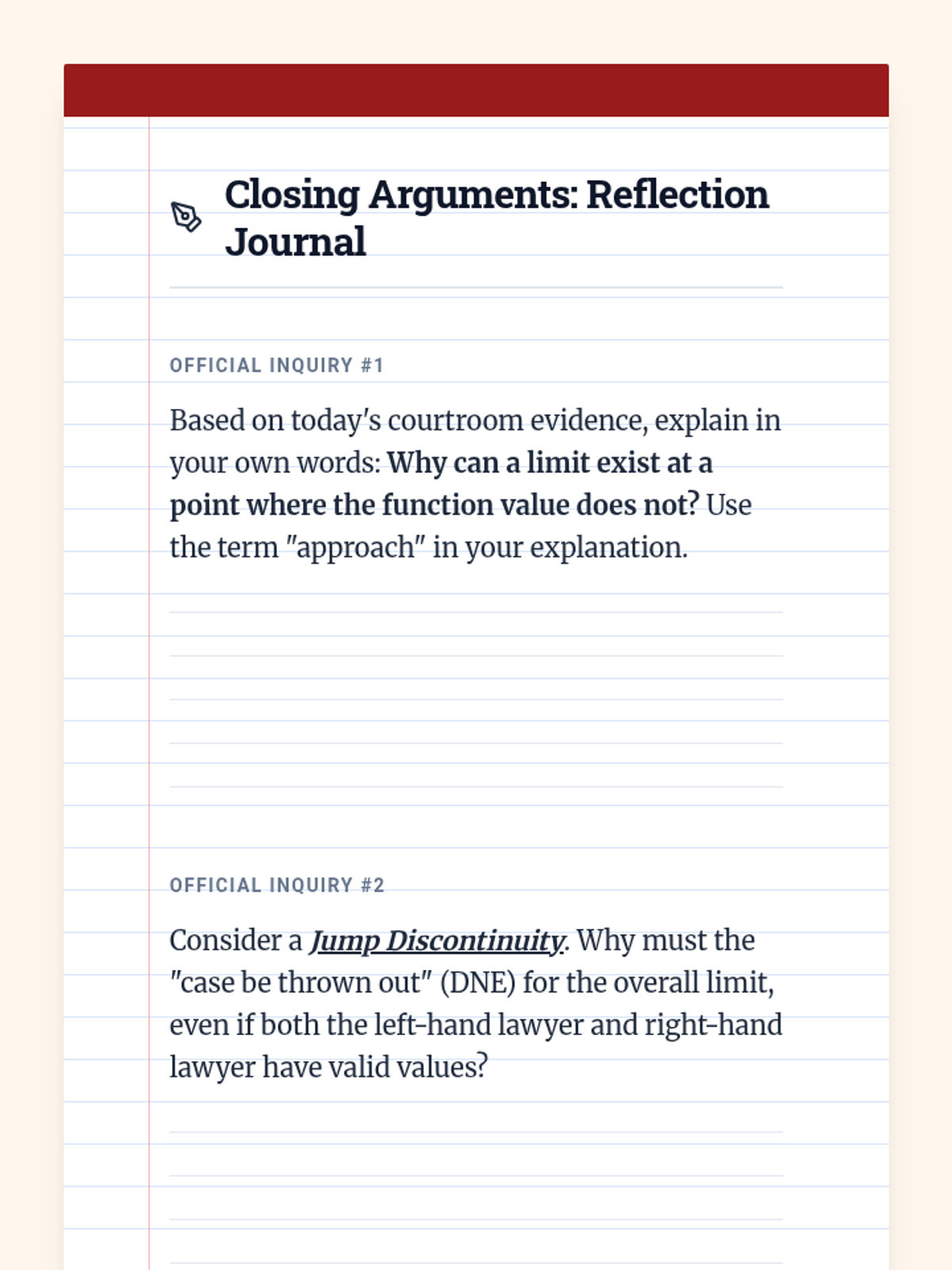
A Precalculus lesson focused on calculating overall limits from graphs and identifying conditions for non-existence through a courtroom-themed simulation.
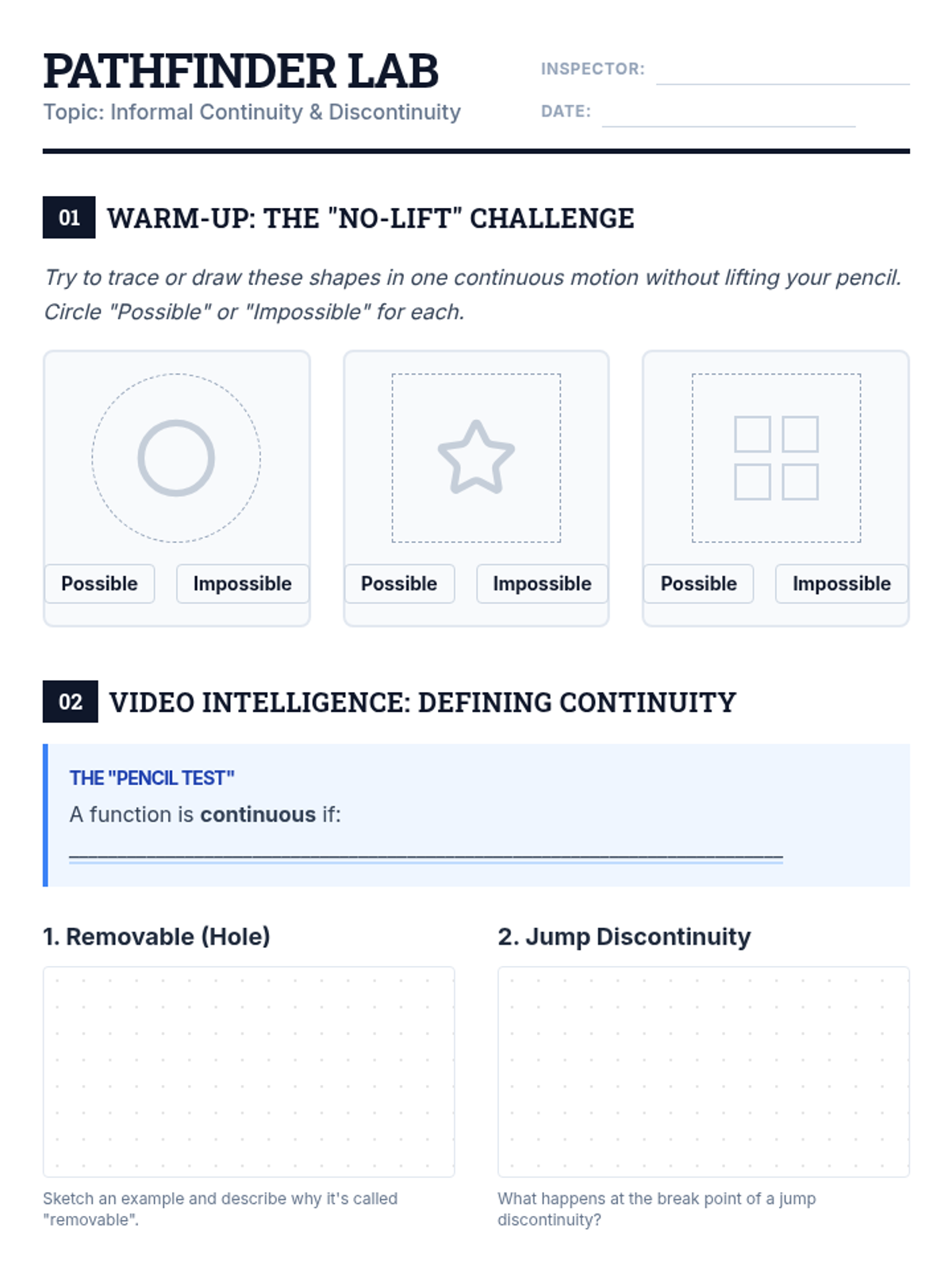
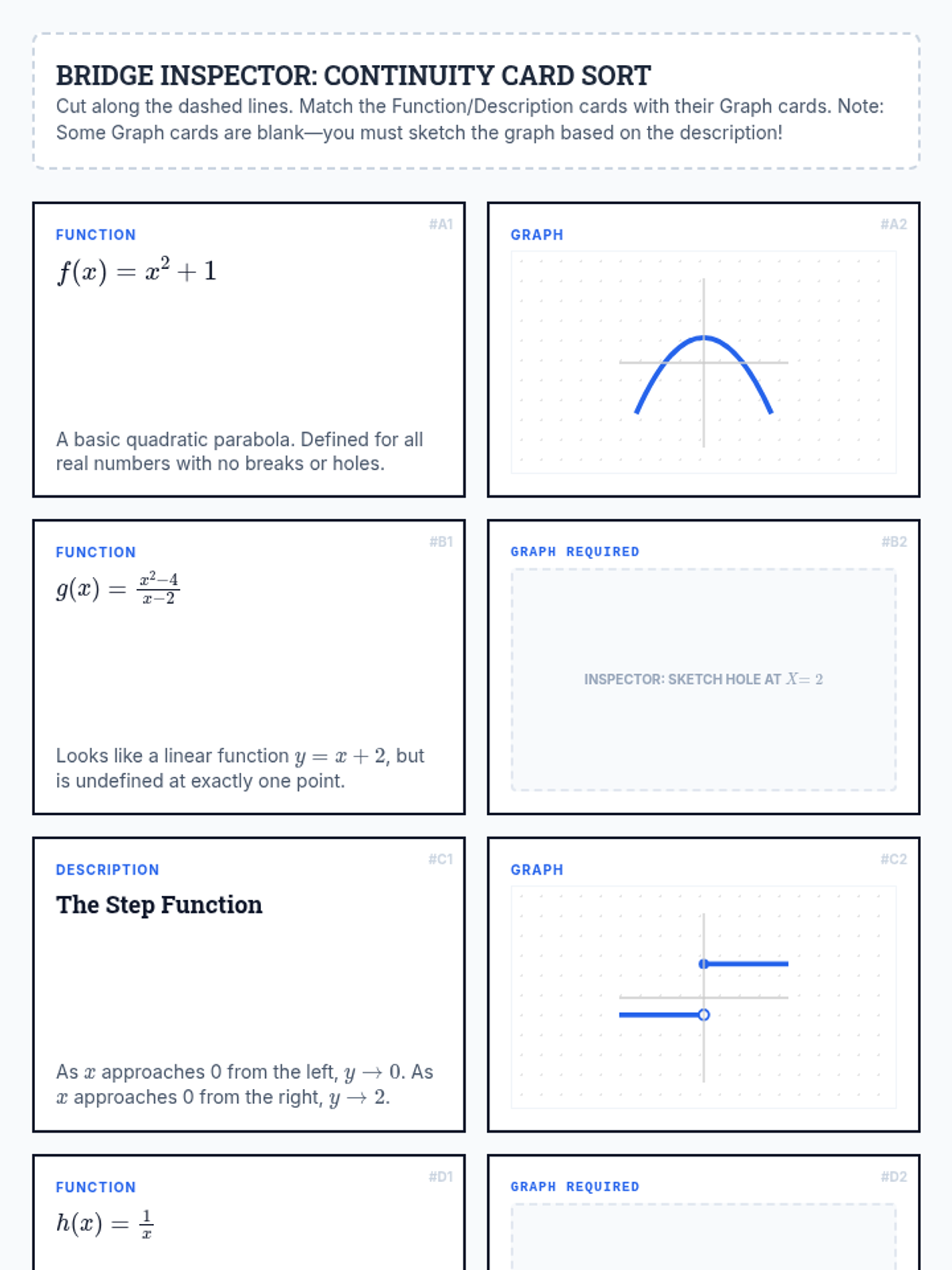
A Precalculus lesson focusing on the informal definition of continuity through the 'pencil test' and identifying the four main types of discontinuities: removable, jump, infinite, and oscillating. Students engage in a hands-on card sort to classify functions based on their graphical behavior.
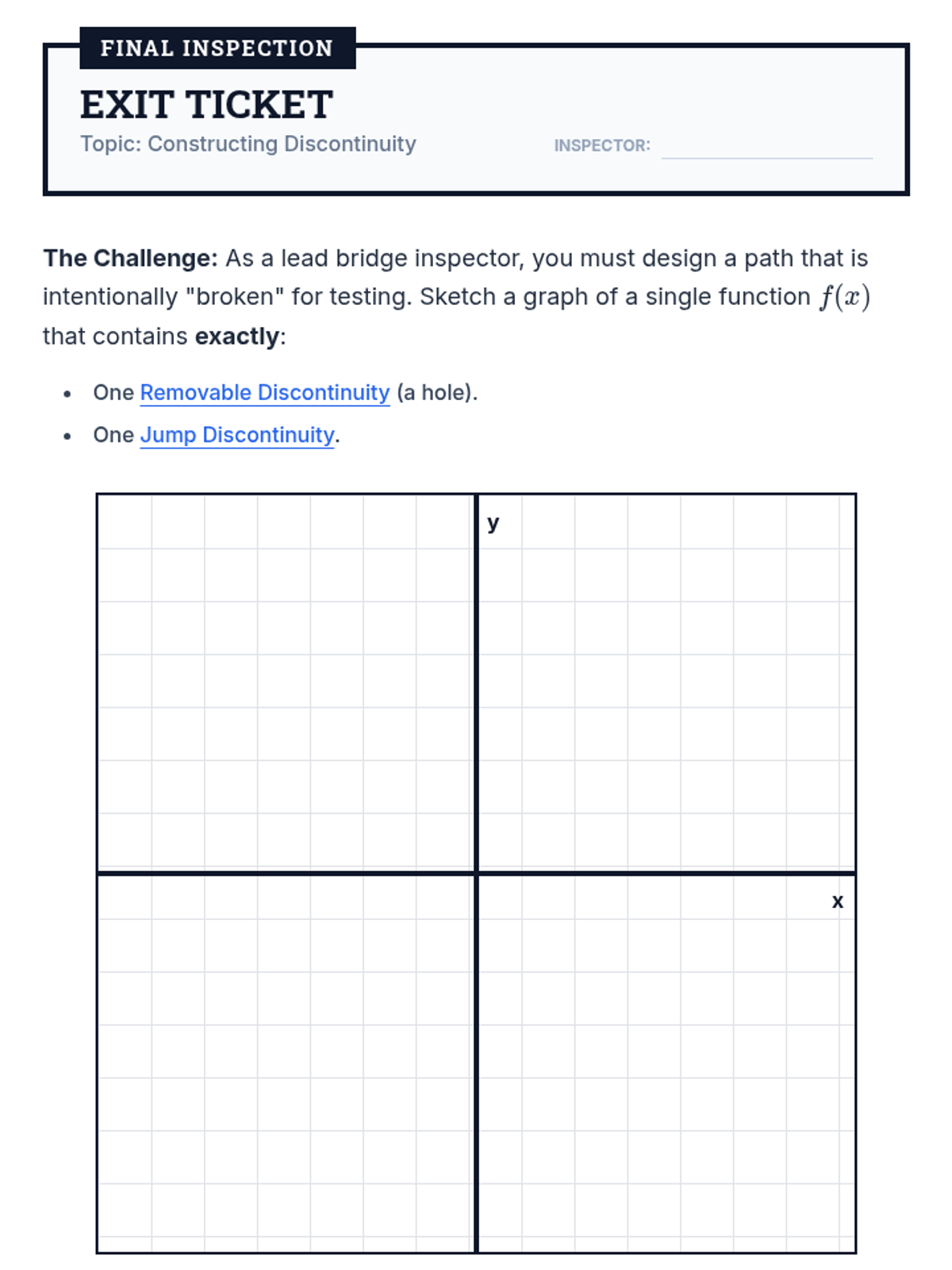
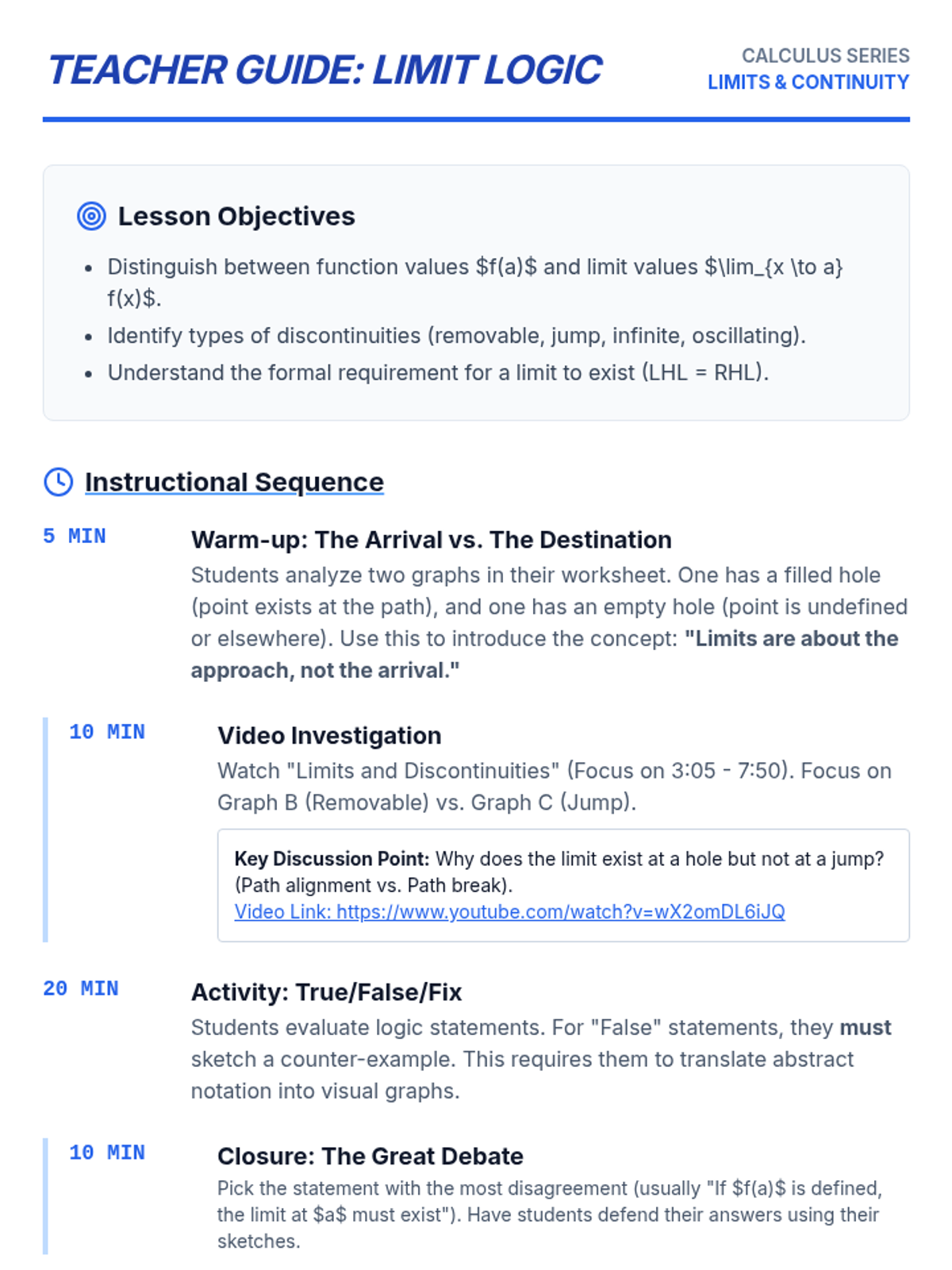
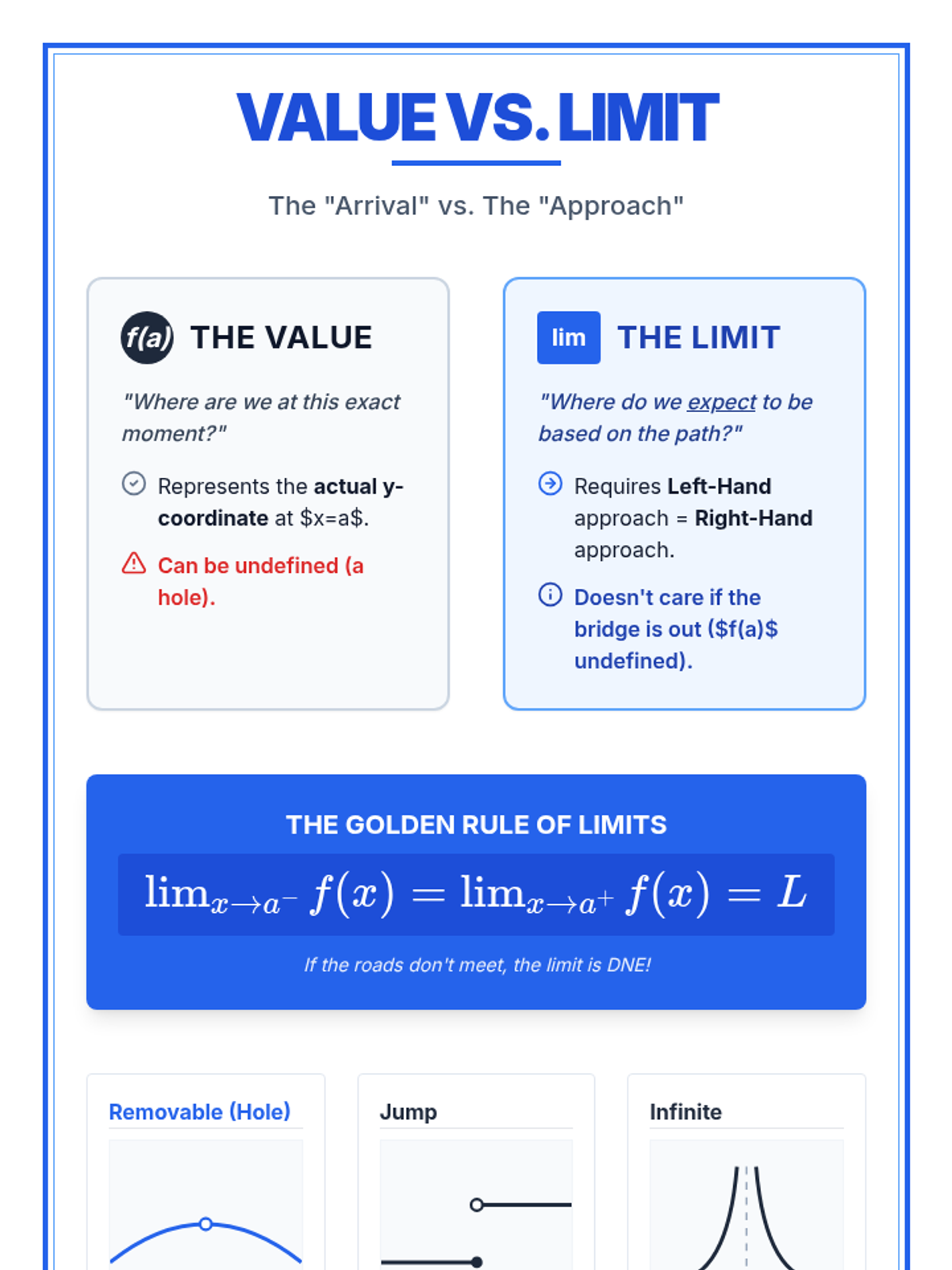
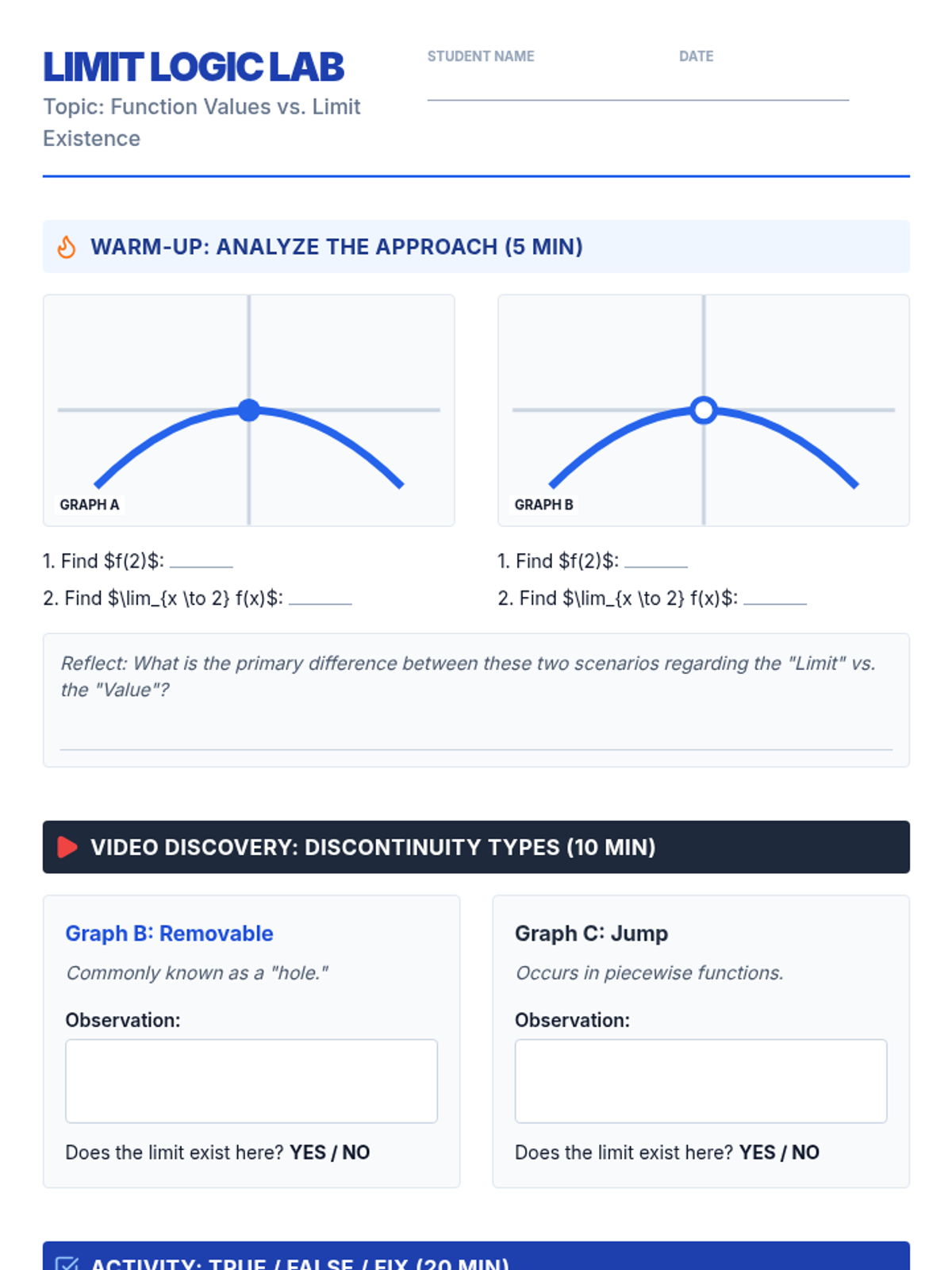
A comprehensive calculus lesson focused on the critical distinction between the value of a function at a point and the limit as it approaches that point, featuring video analysis and a 'True/False/Fix' activity.
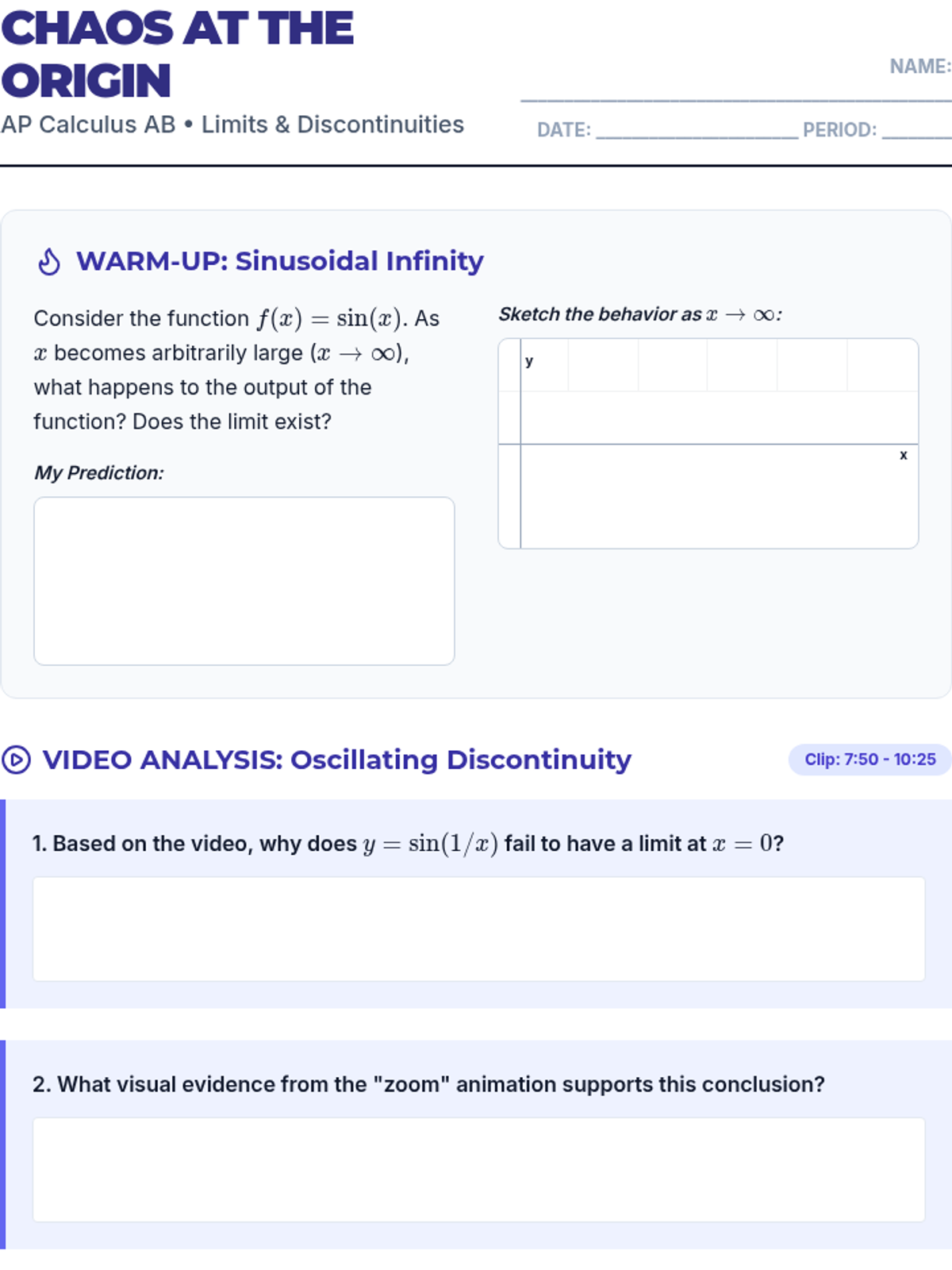
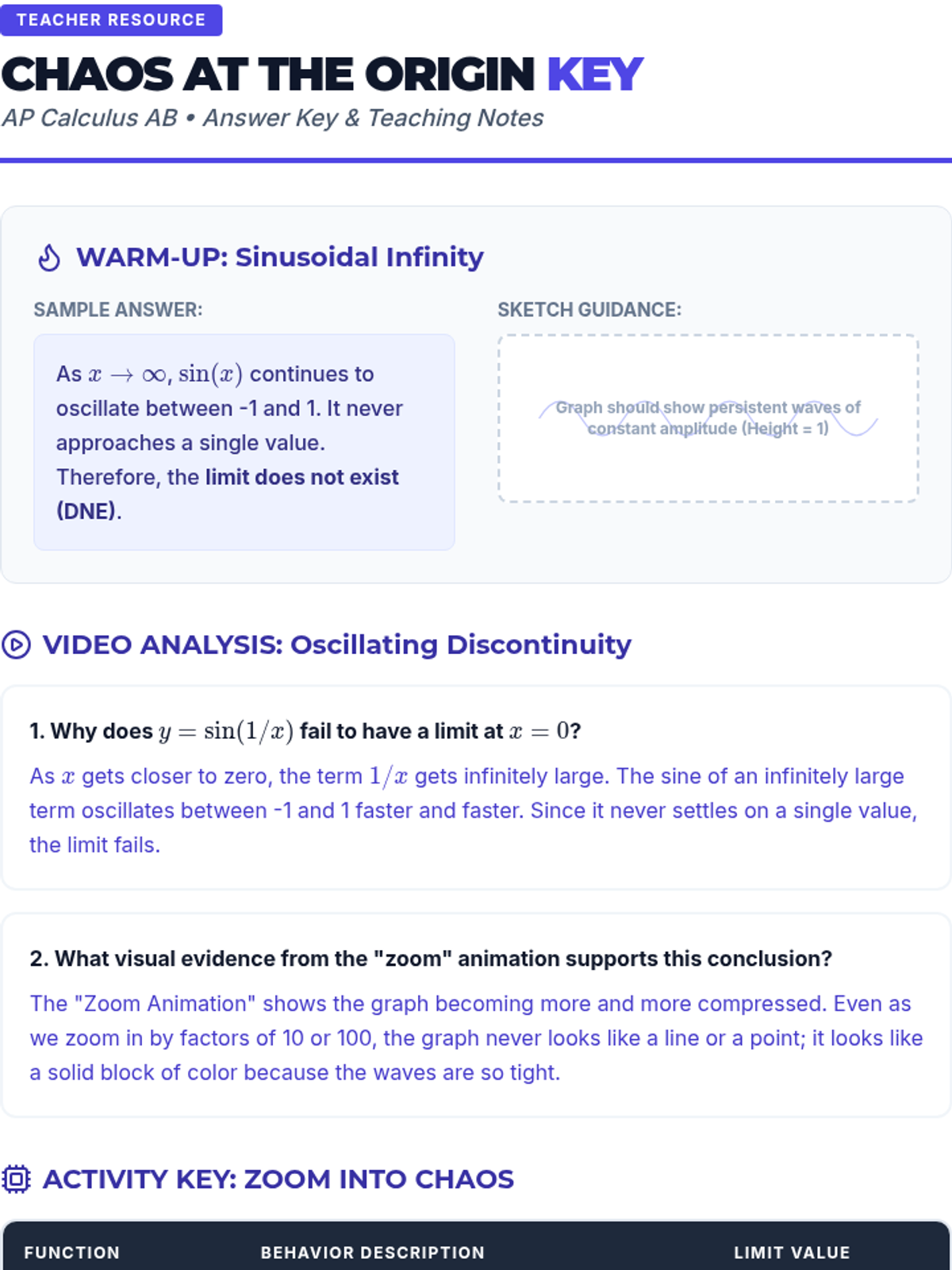
Students investigate the behavior of functions with oscillating discontinuities, specifically focusing on the limit of \(\sin(1/x)\) as \(x \to 0\) compared to bounded oscillating functions like \(x \cdot \sin(1/x)\). The lesson uses a combination of video analysis and digital graphing tools to explore the formal definition of limit failure due to oscillation.
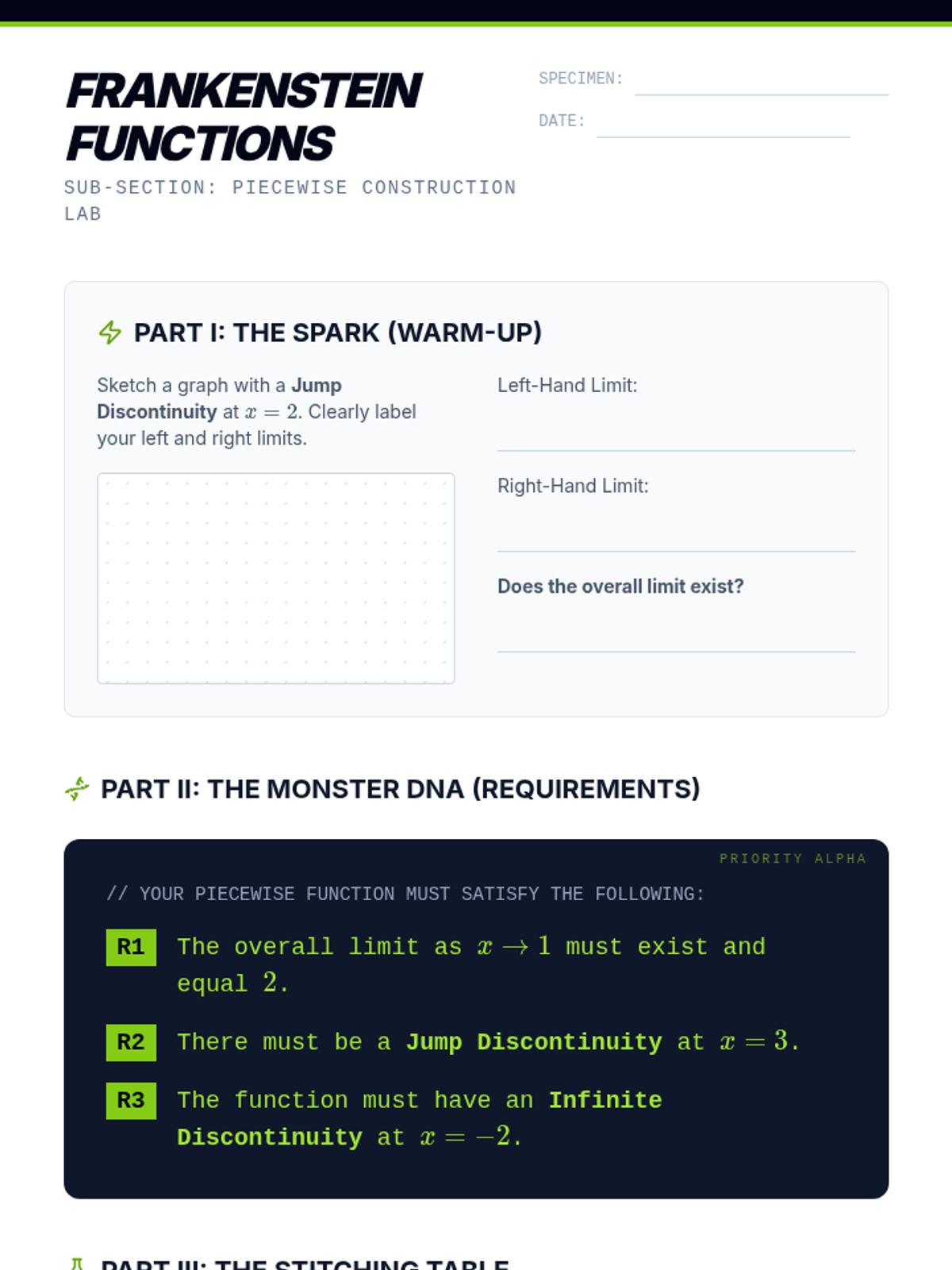
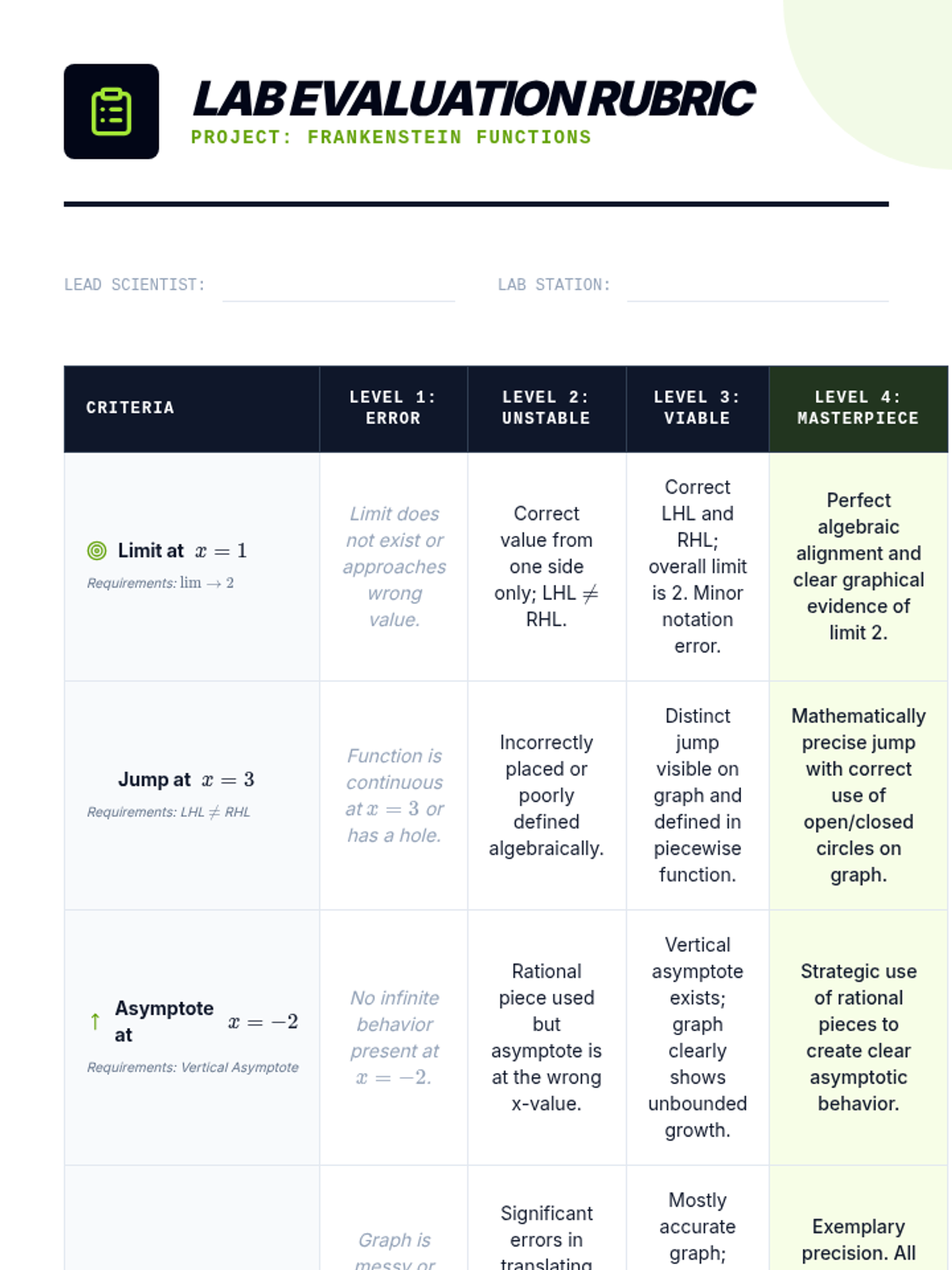
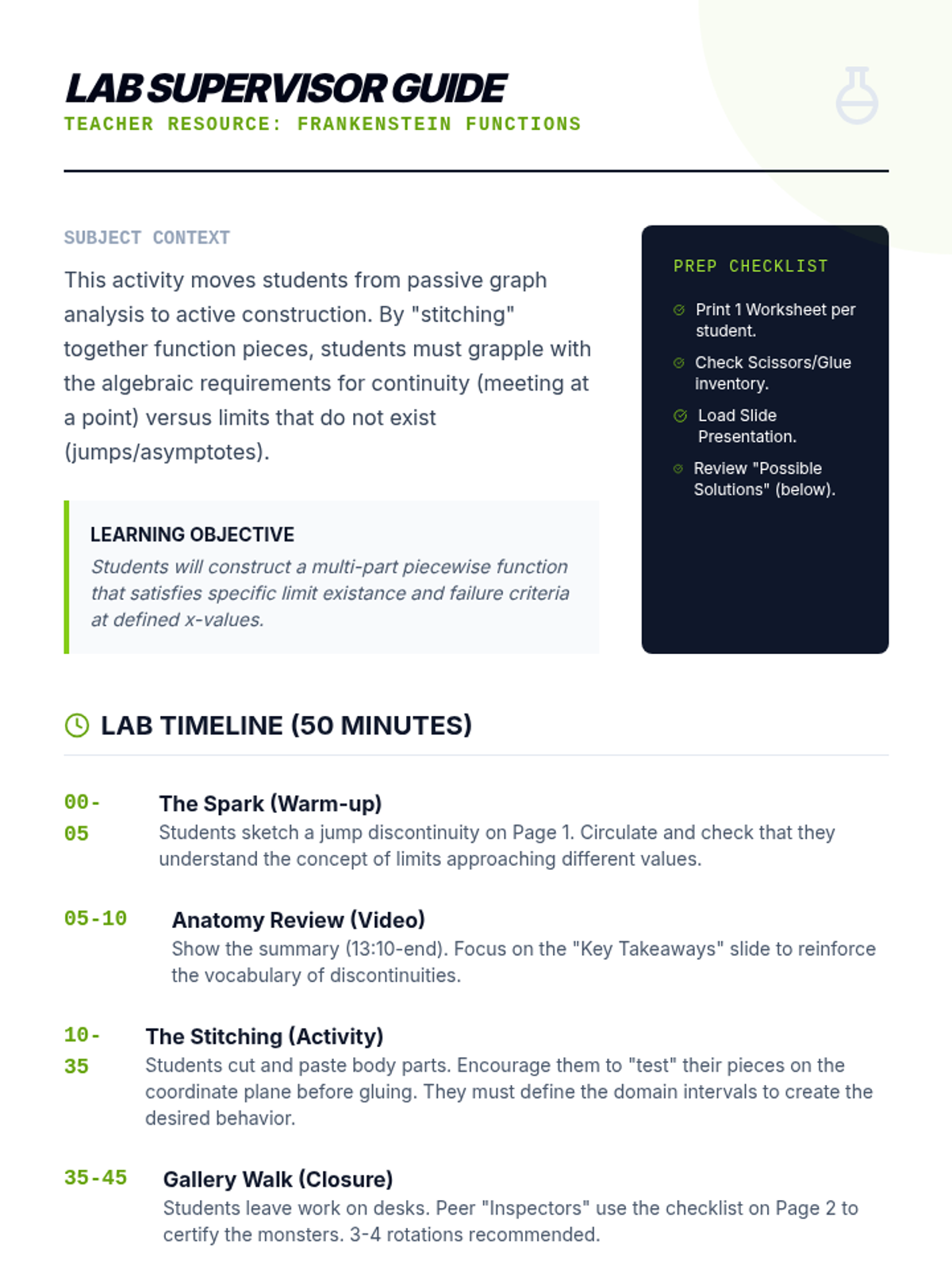
A Precalculus lesson where students construct complex piecewise 'monster' functions using algebraic 'body parts' to satisfy specific limit and continuity requirements.
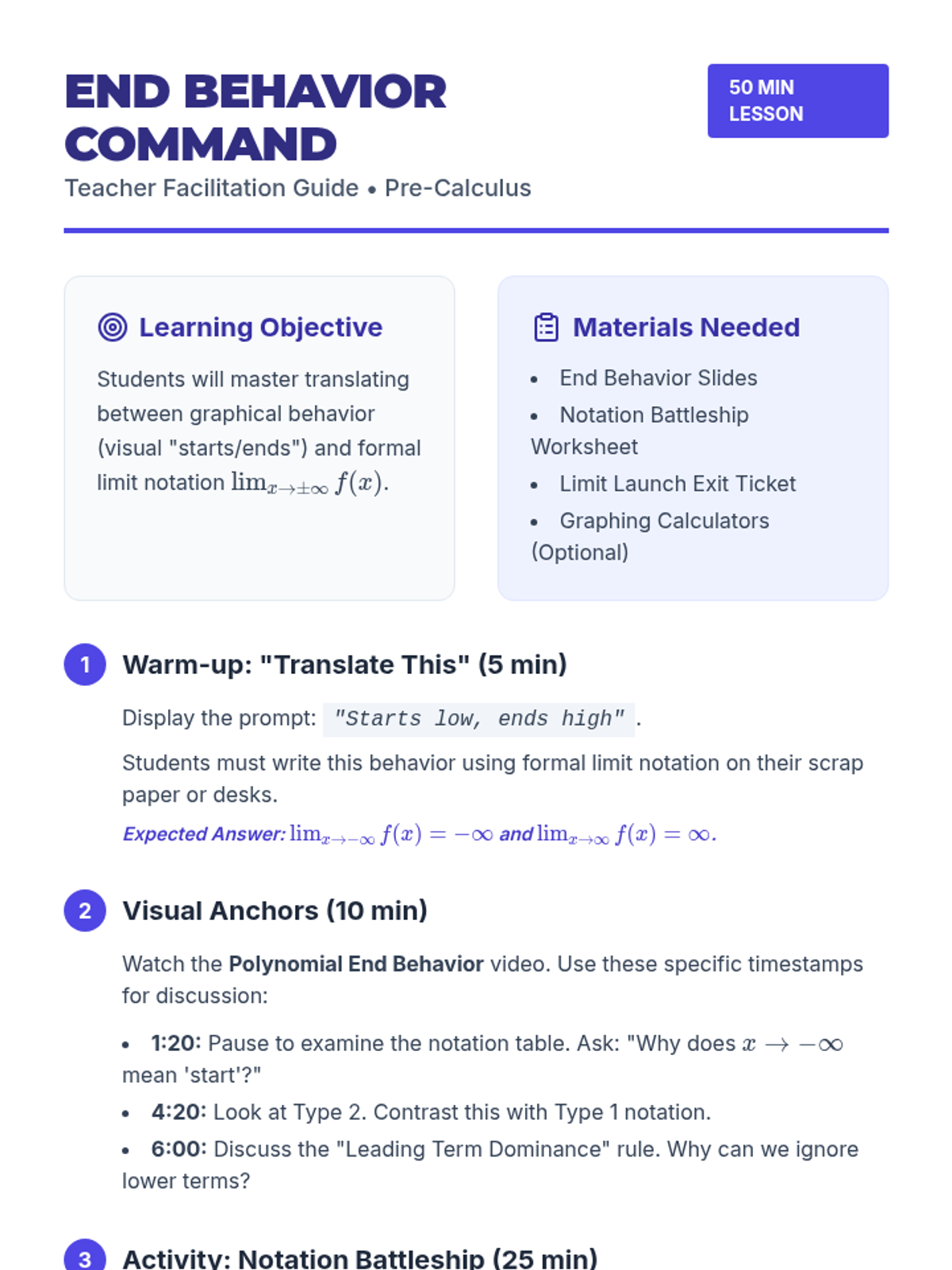
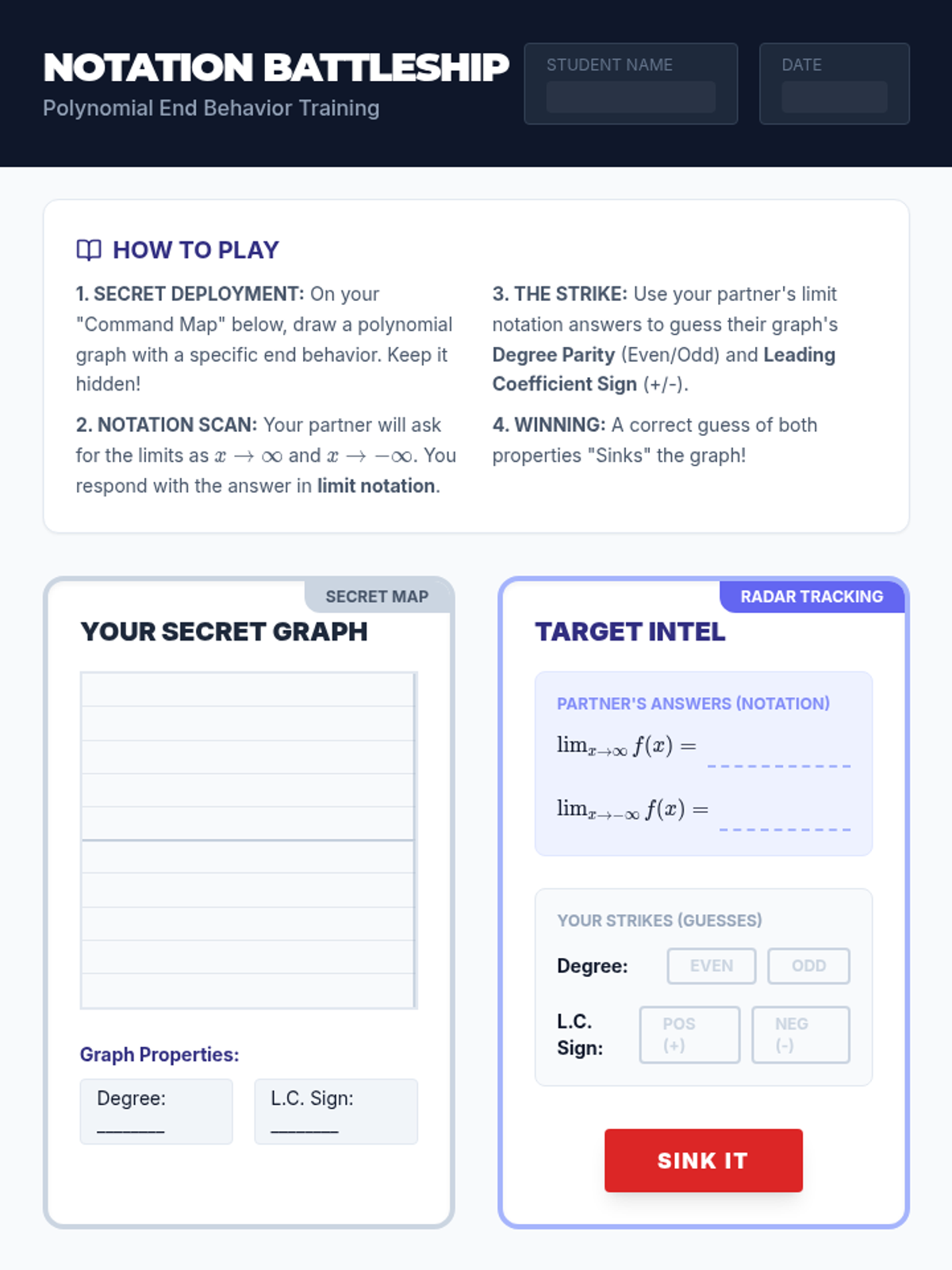
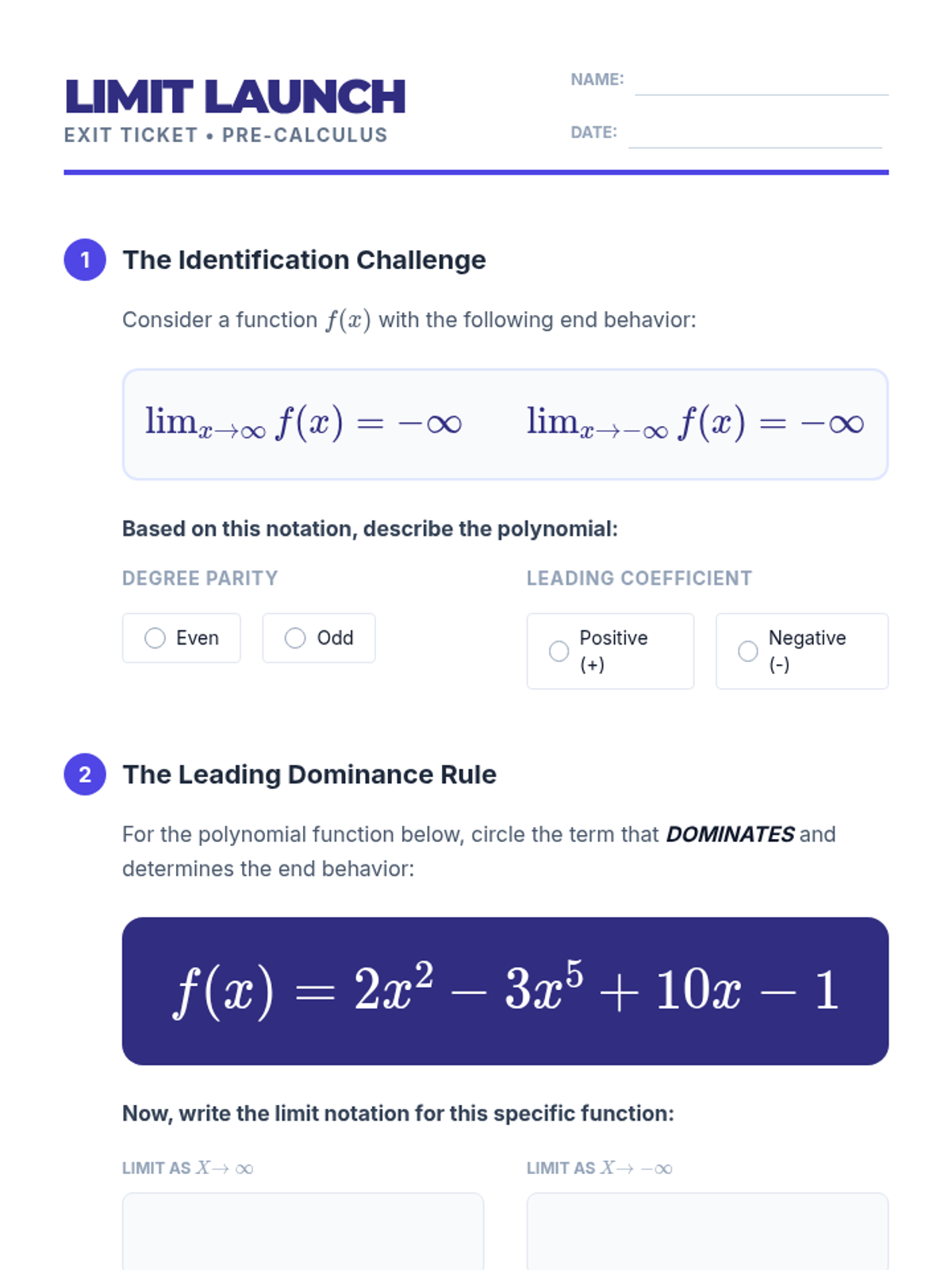
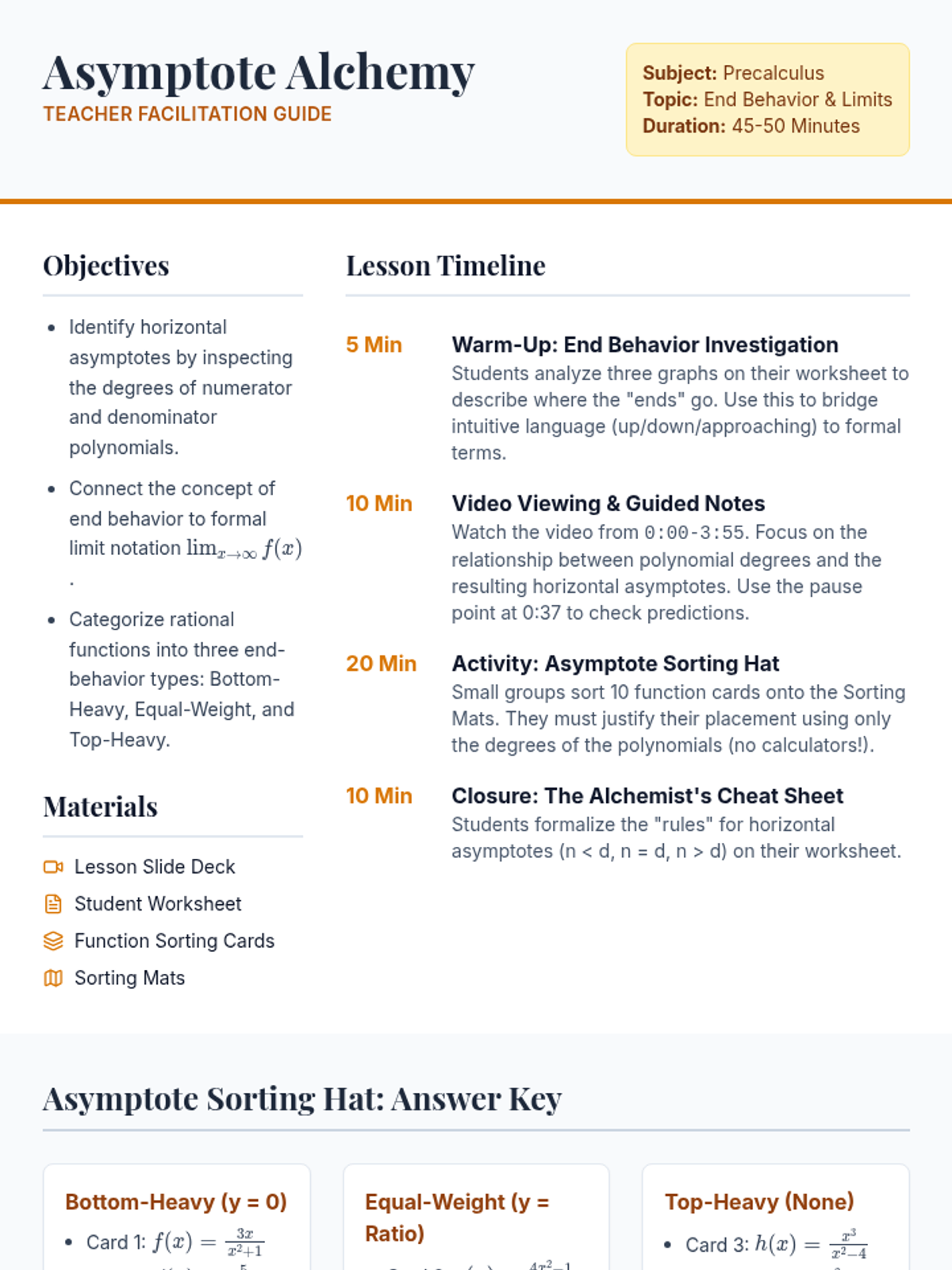
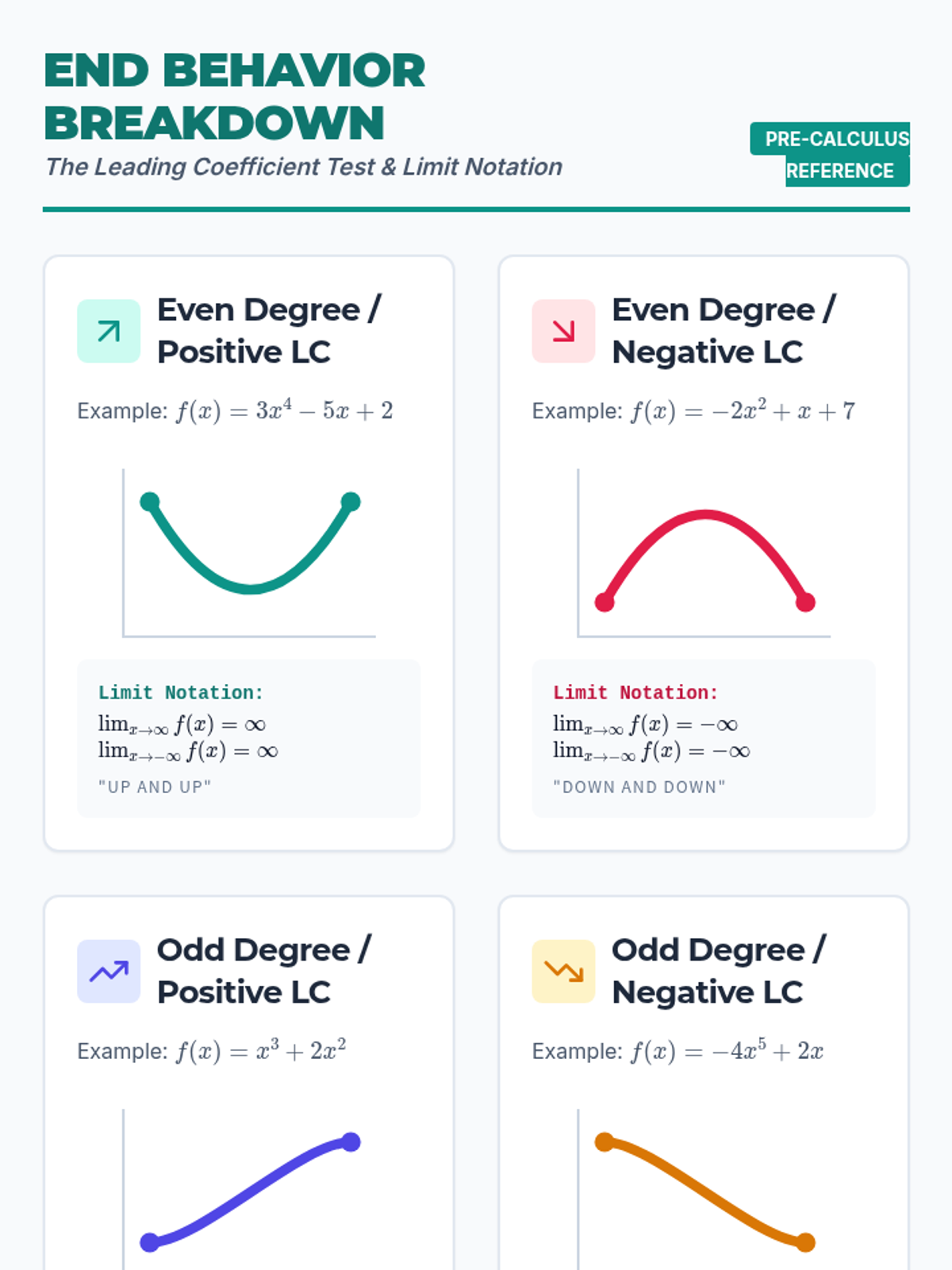
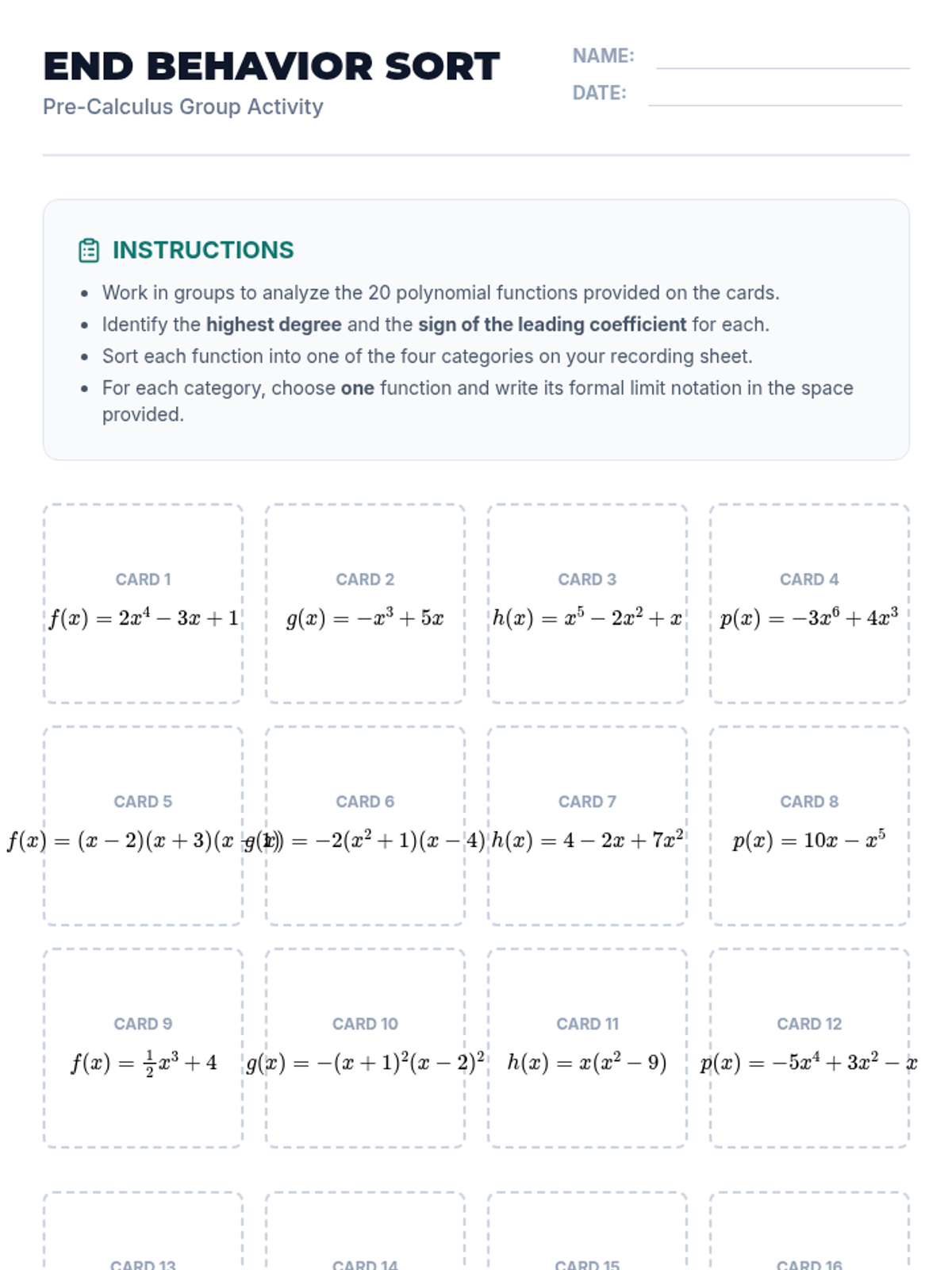
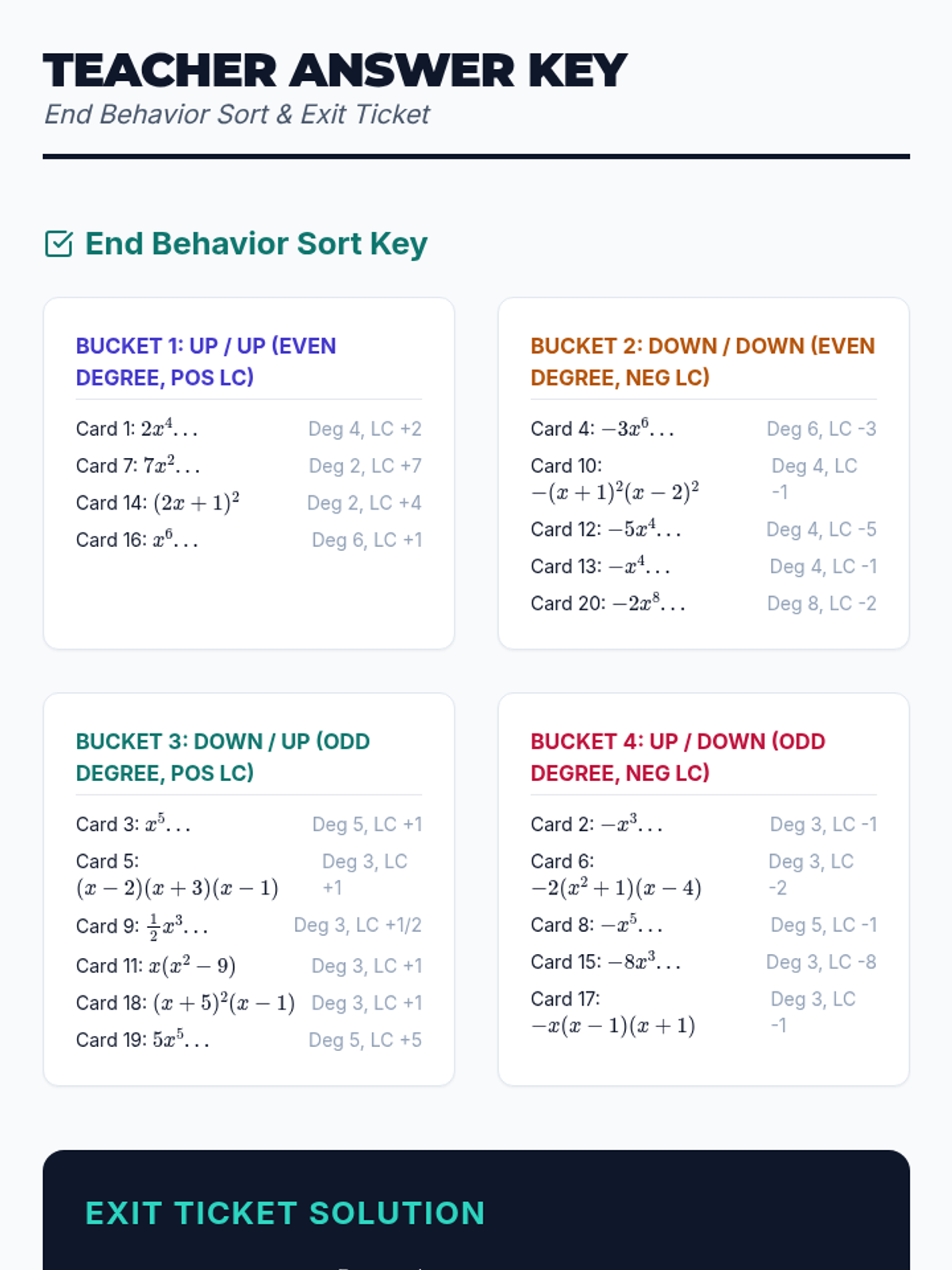
Students will learn to translate between visual polynomial end behavior and formal limit notation, identifying how degree parity and leading coefficient signs dictate a function's behavior as x approaches infinity.
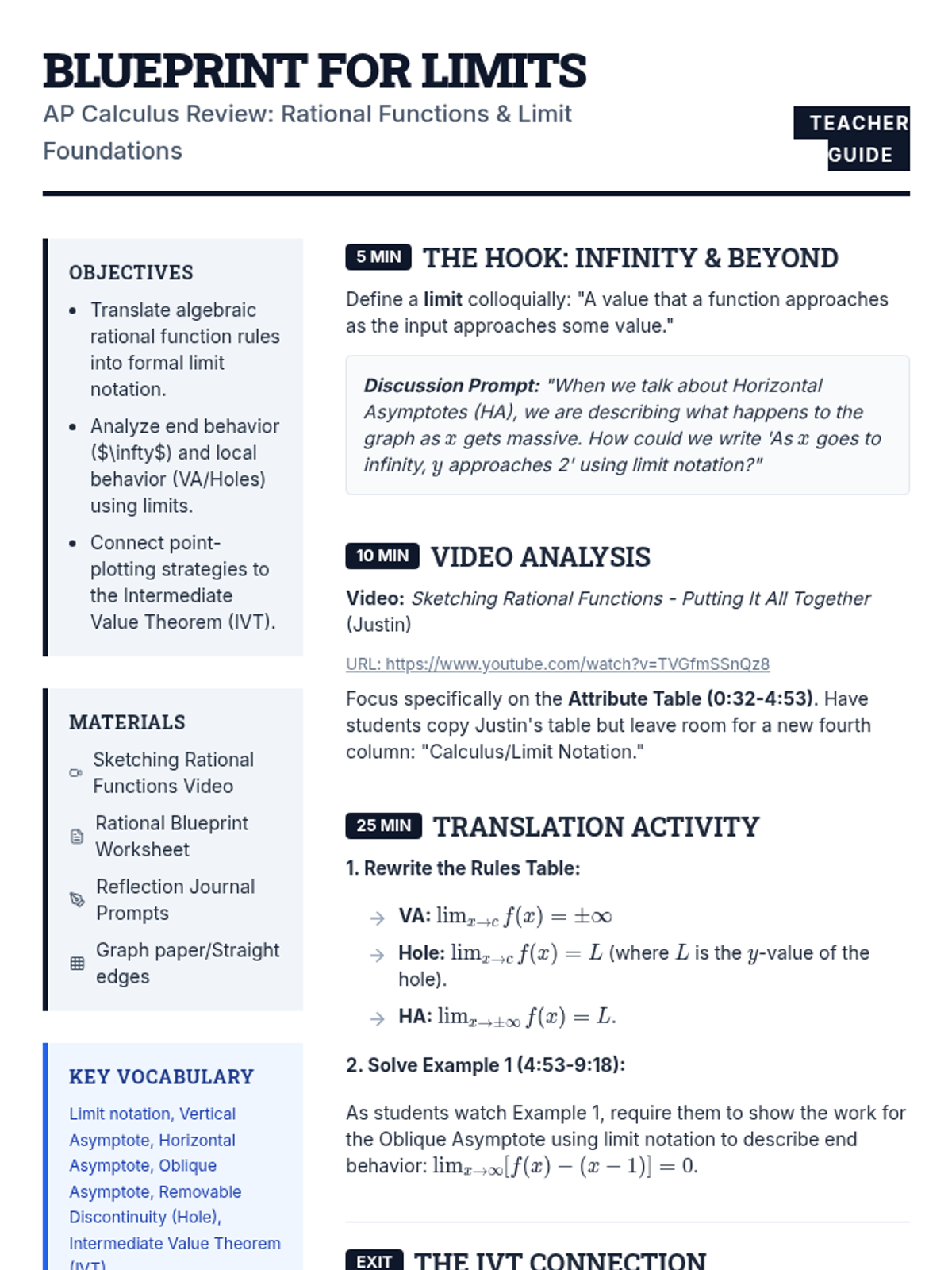
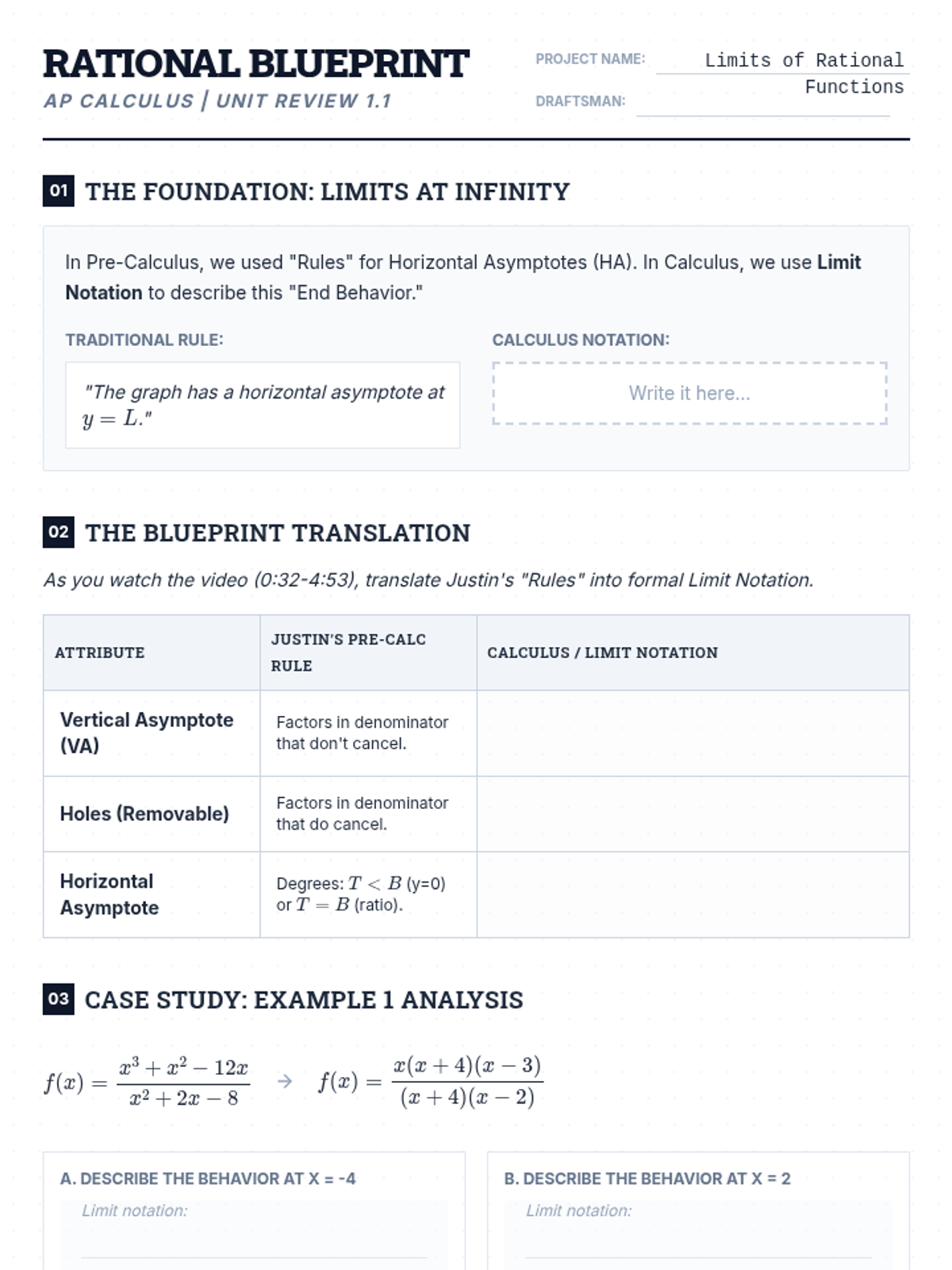
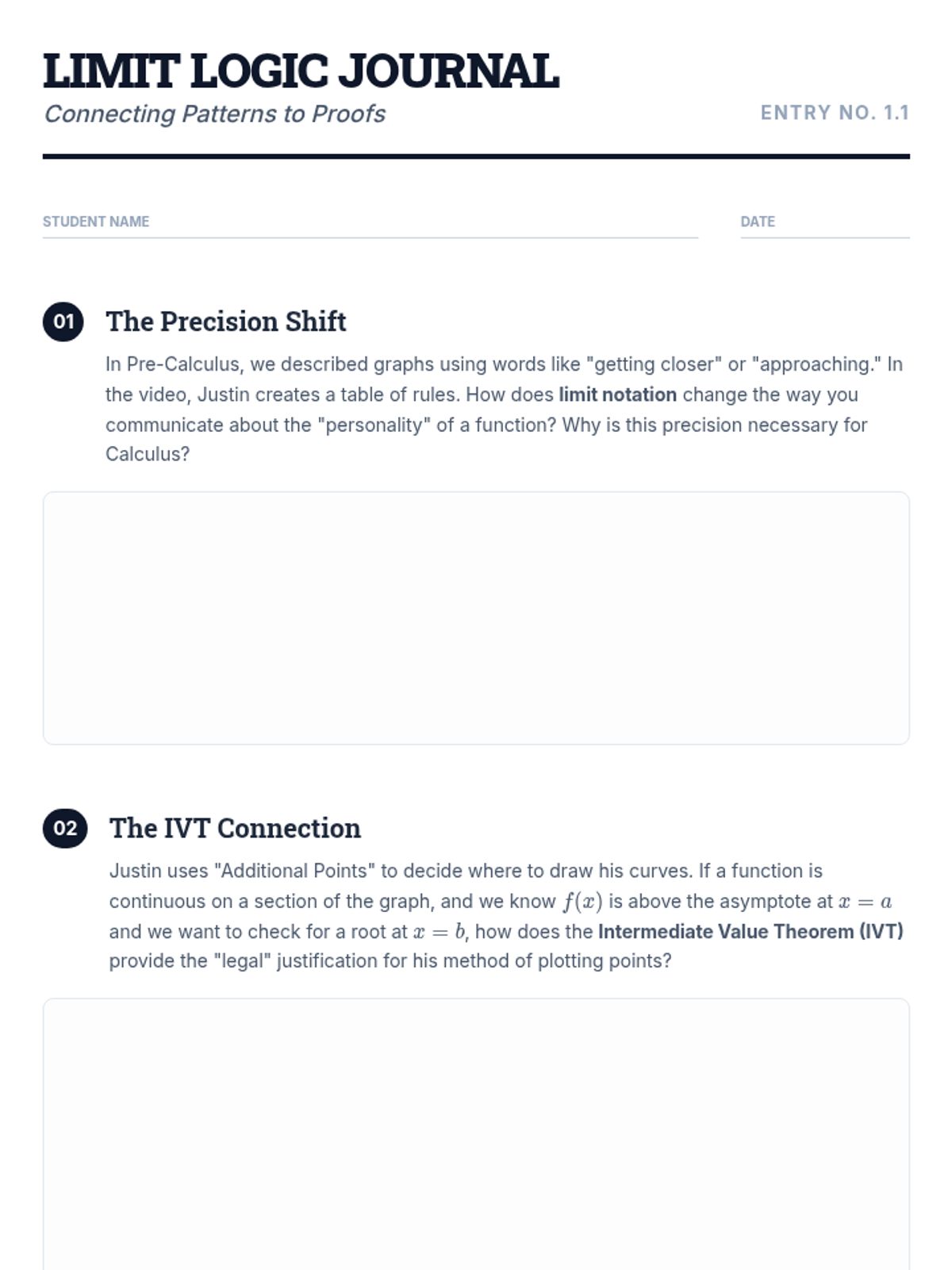
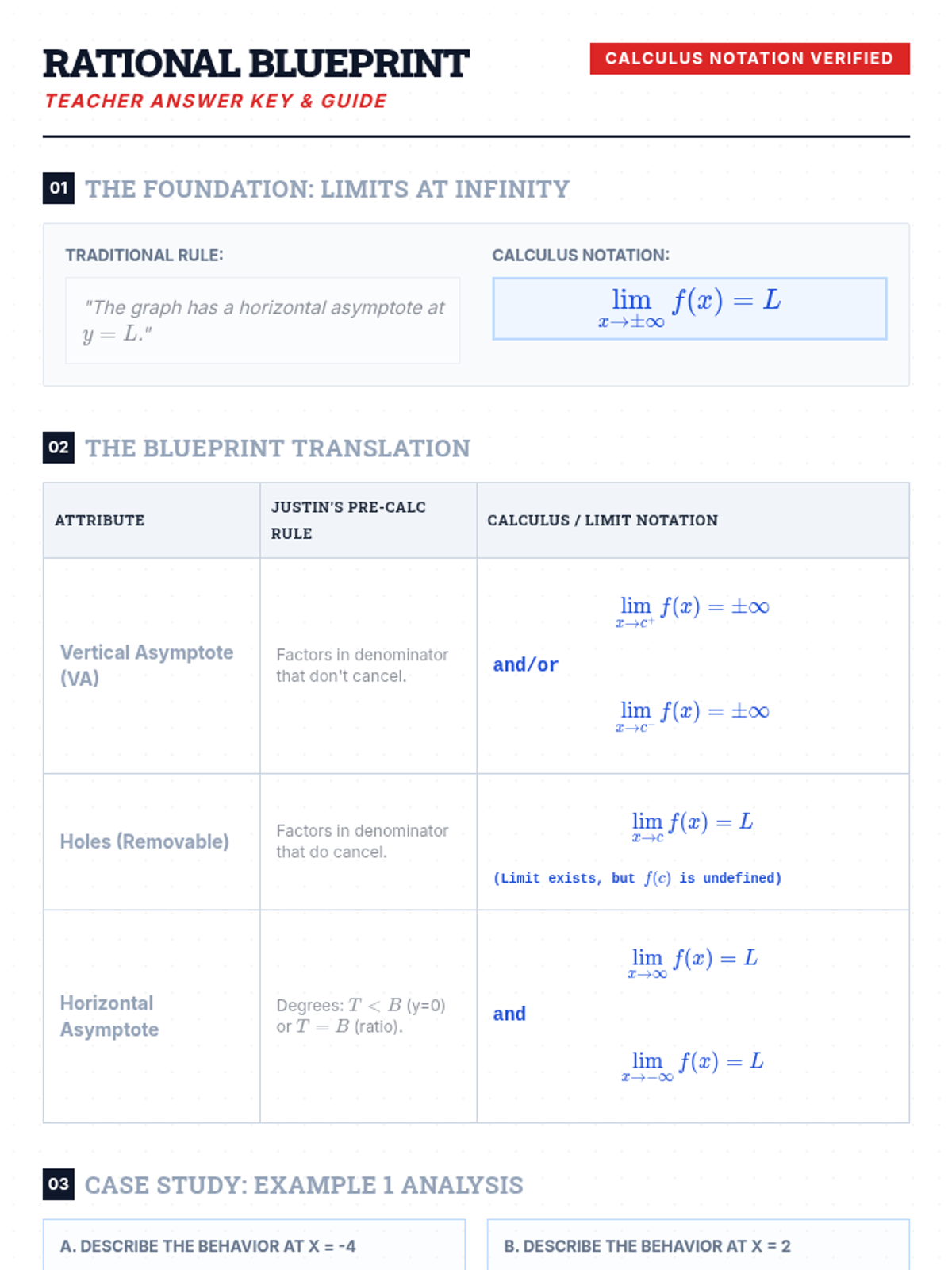
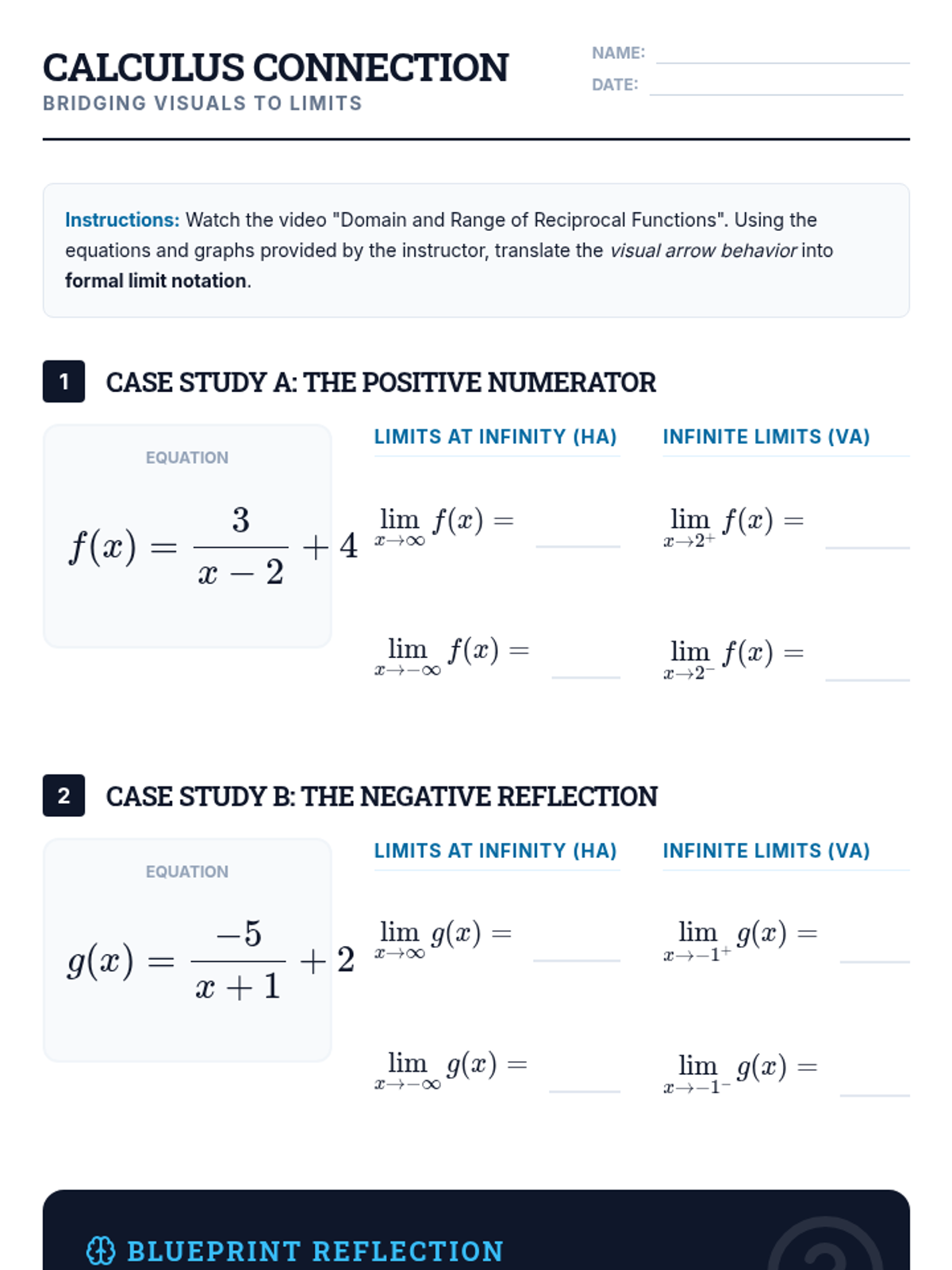
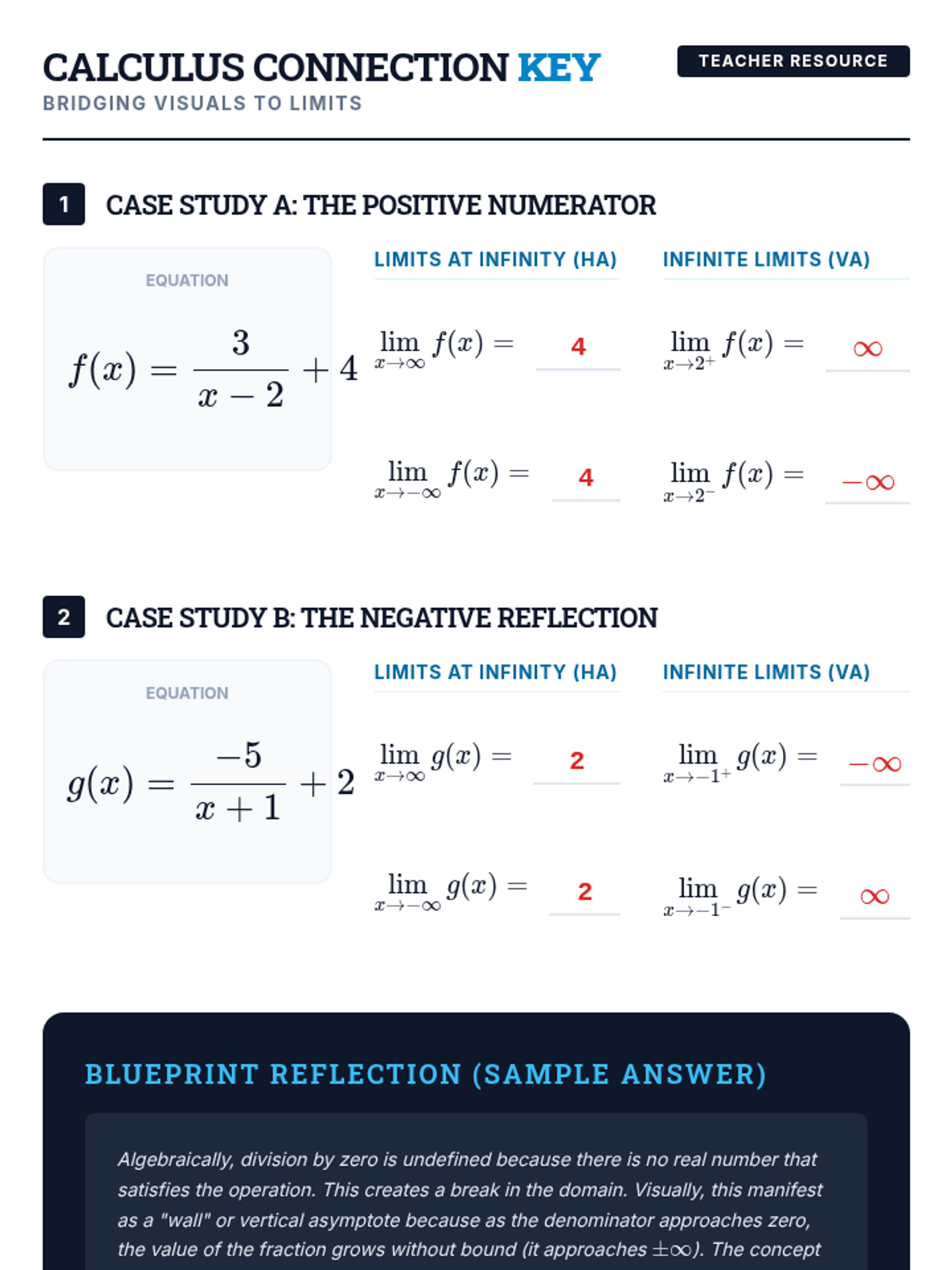
This AP Calculus review lesson bridges the gap between algebraic rational function rules and formal limit notation, using visual sketching as a framework for understanding asymptotic behavior and continuity. Students translate pre-calculus 'rules' into calculus 'logic' to prepare for the formal definition of limits.
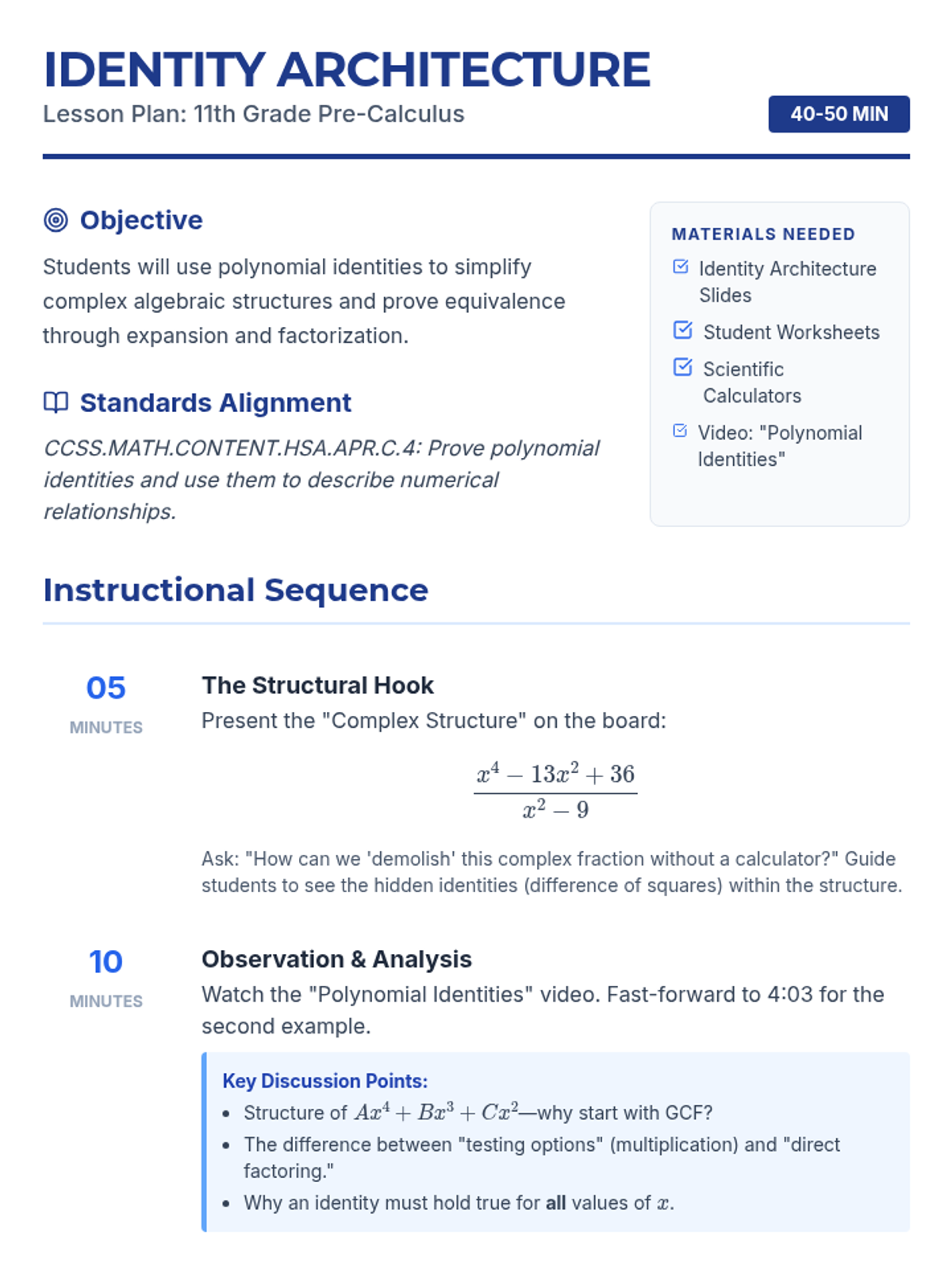
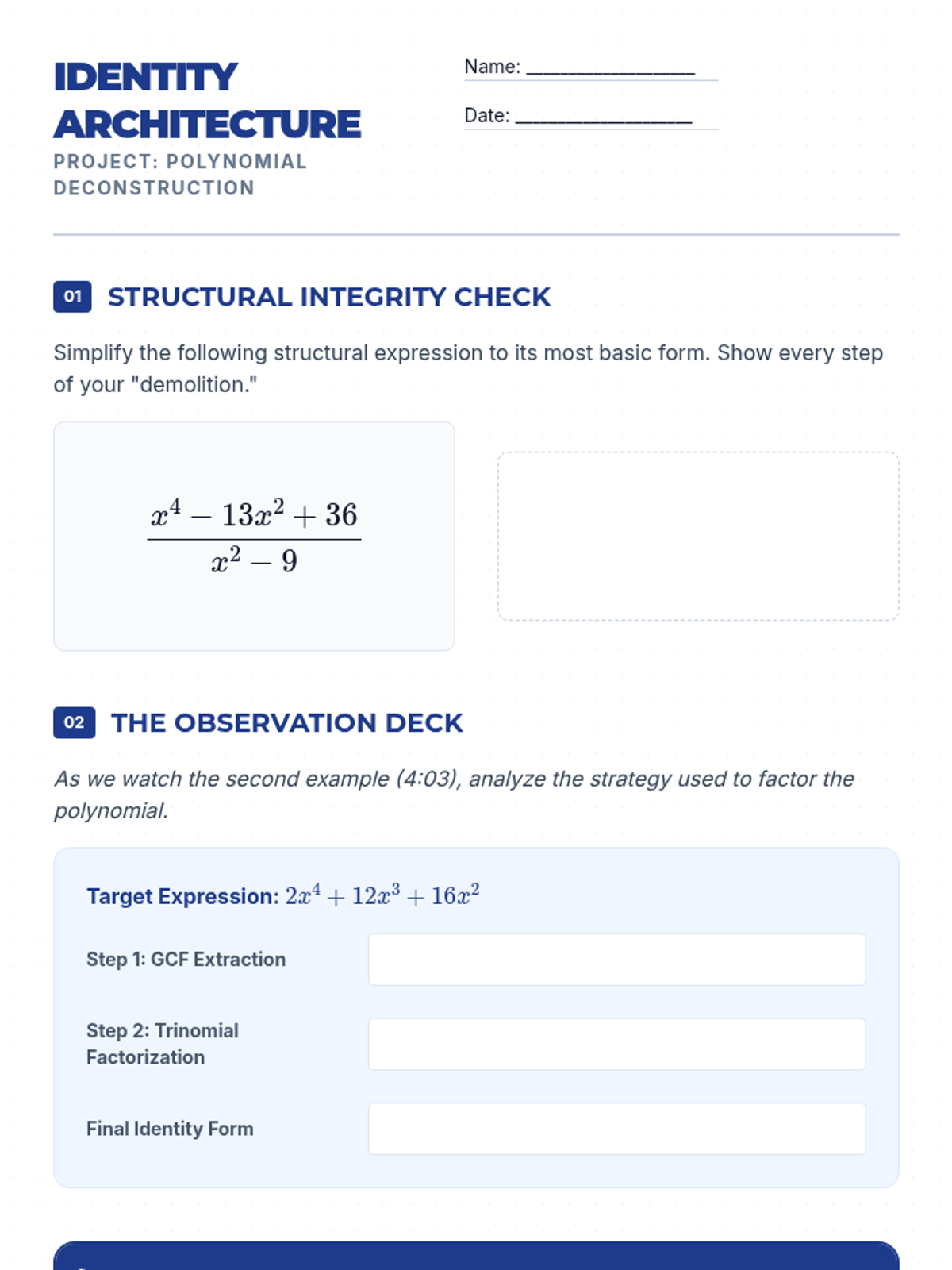
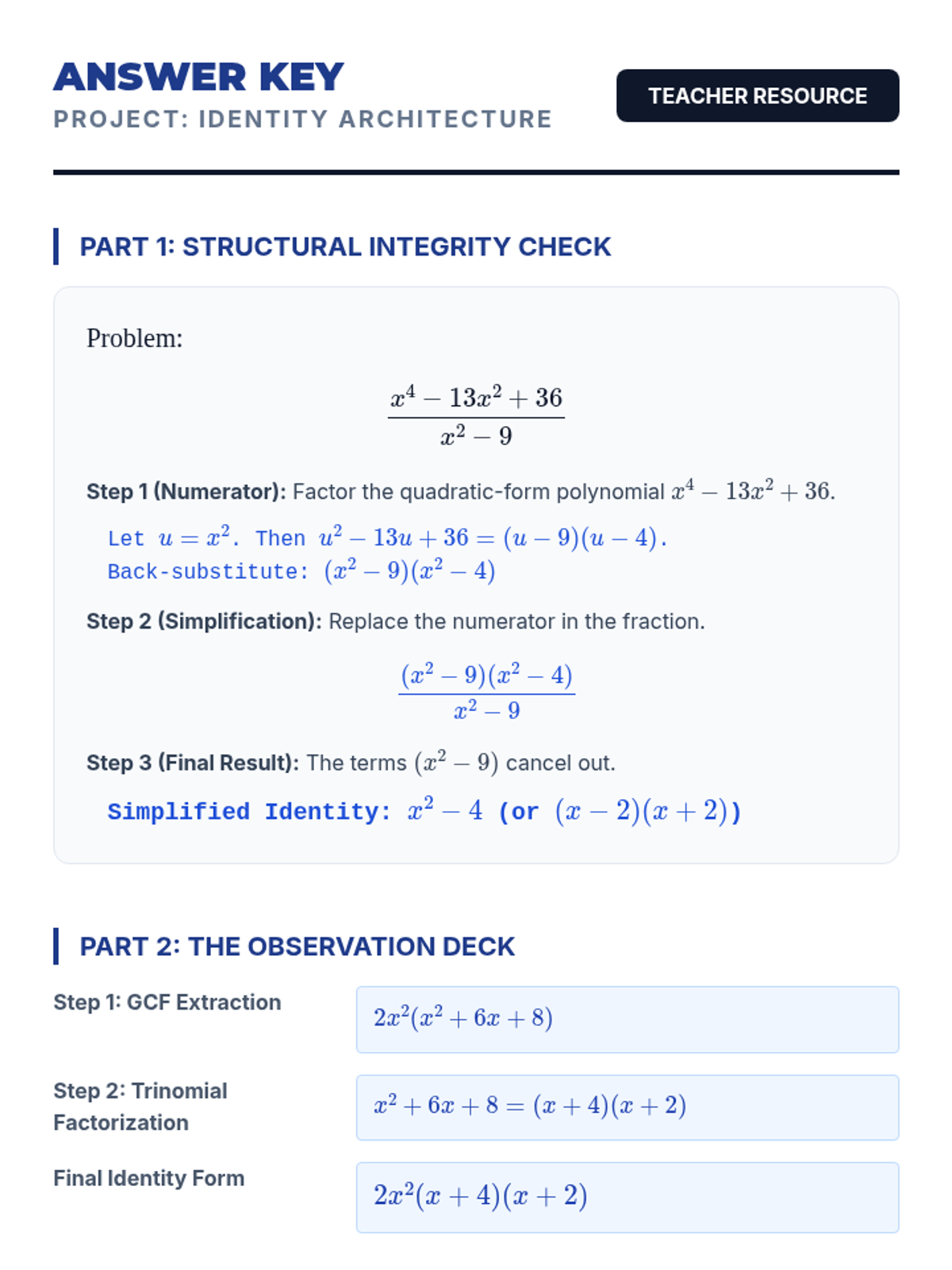
A Pre-Calculus lesson where students explore polynomial identities by 'constructing' and 'deconstructing' algebraic structures, connecting these skills to future calculus concepts like limits.
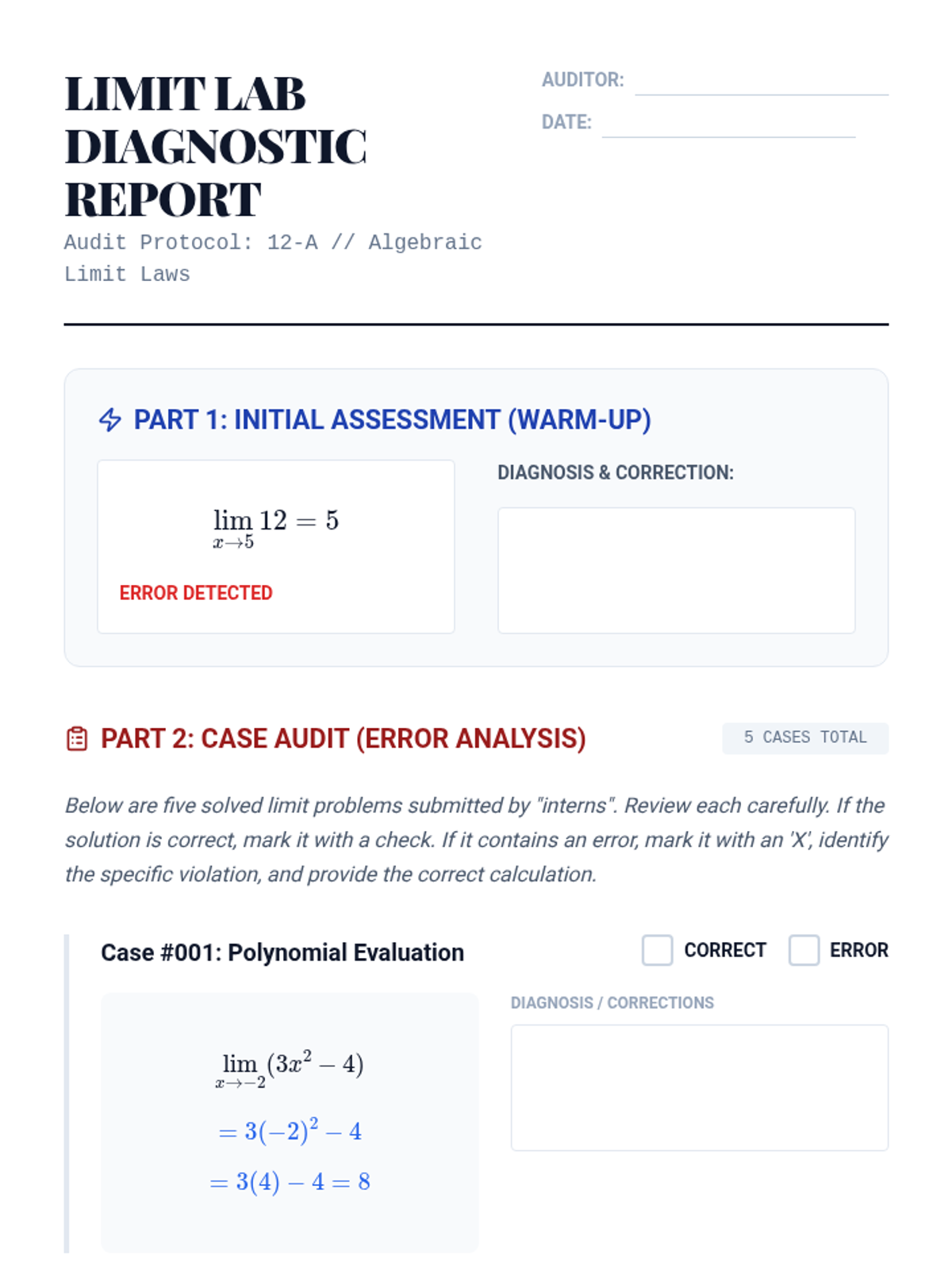
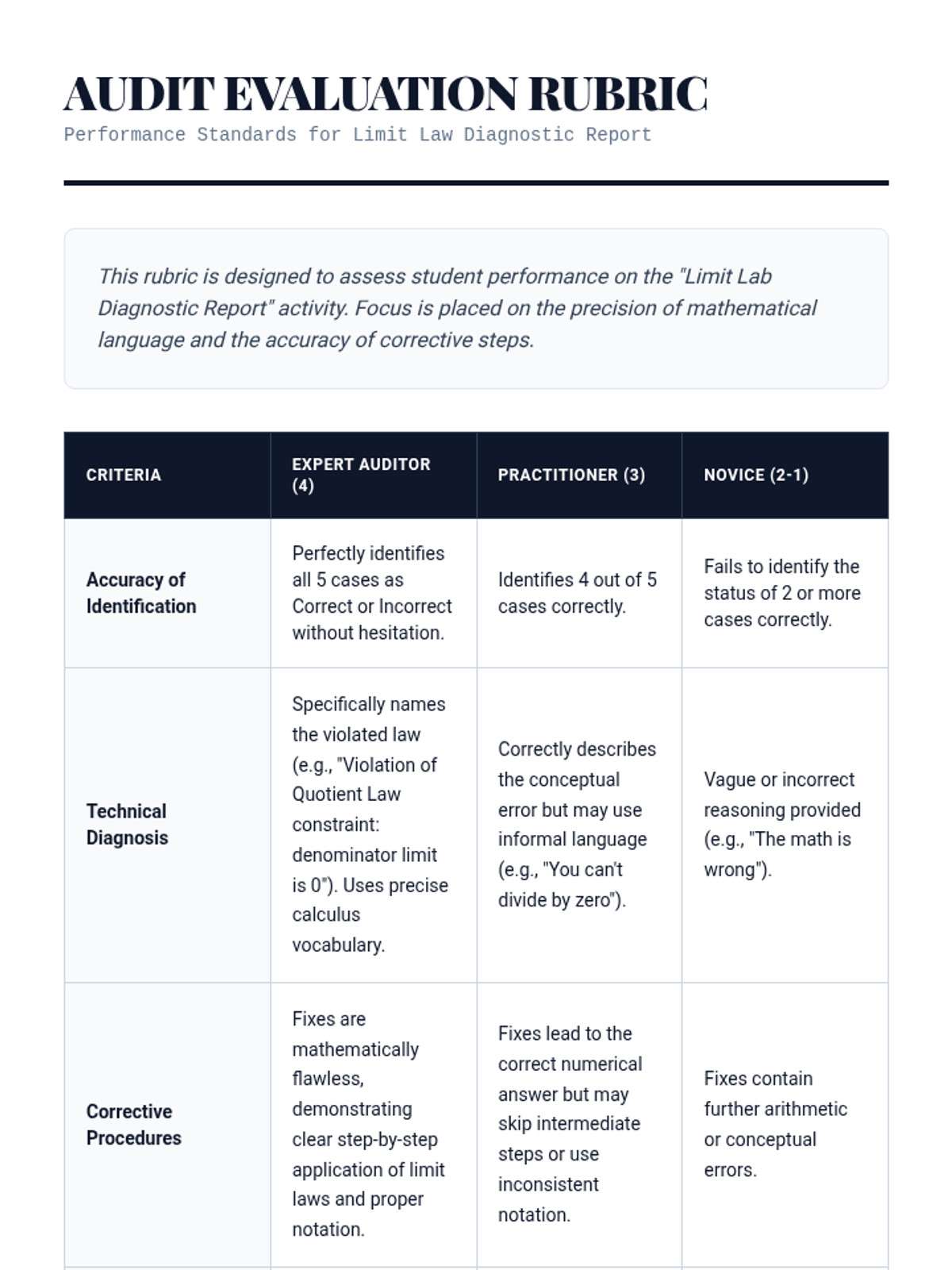
A high-school Calculus lesson focused on algebraic limit laws and error analysis. Students observe instructional video practice, then step into the role of a 'grader' to diagnose and correct common misconceptions in limit evaluation.
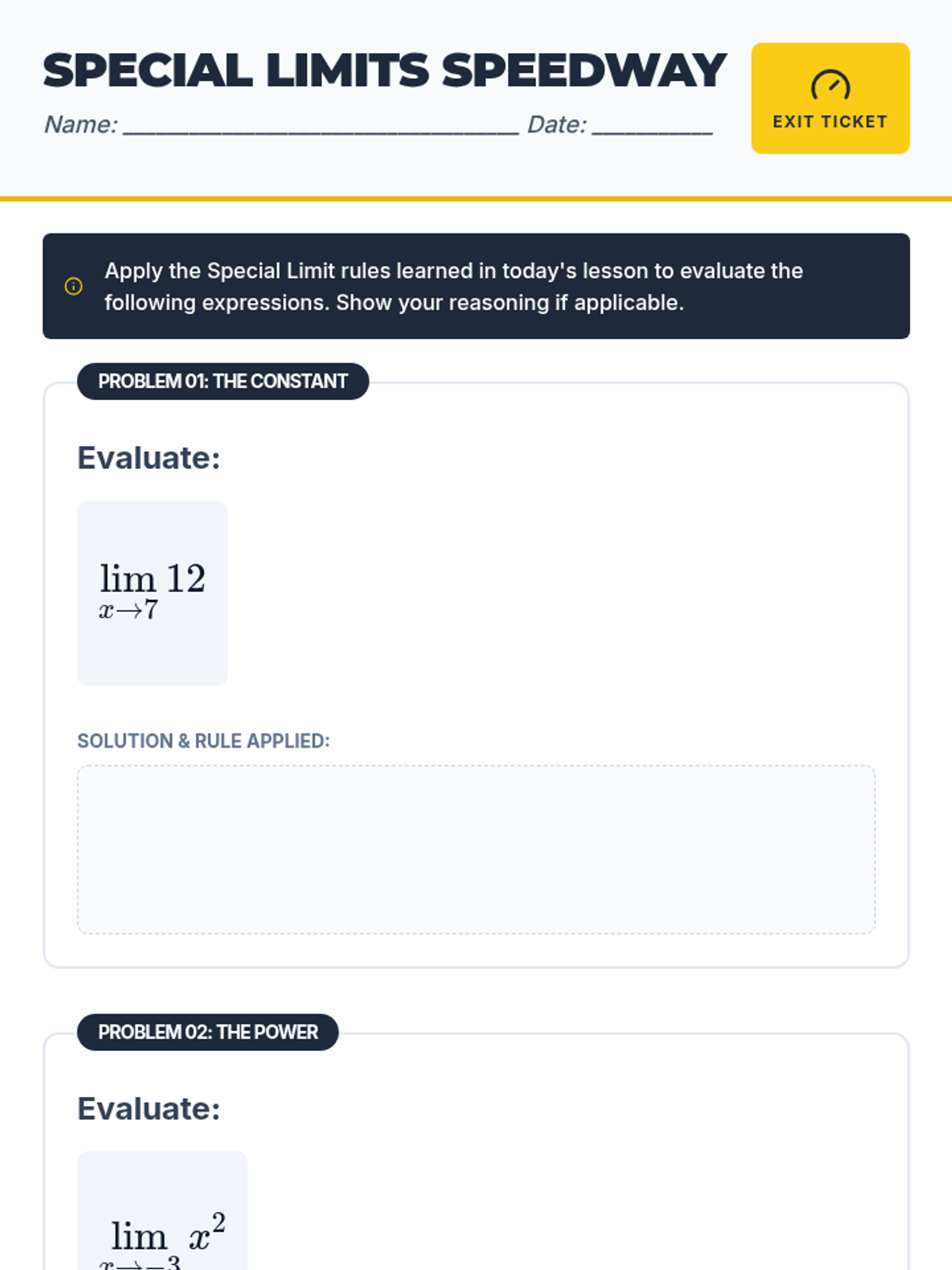
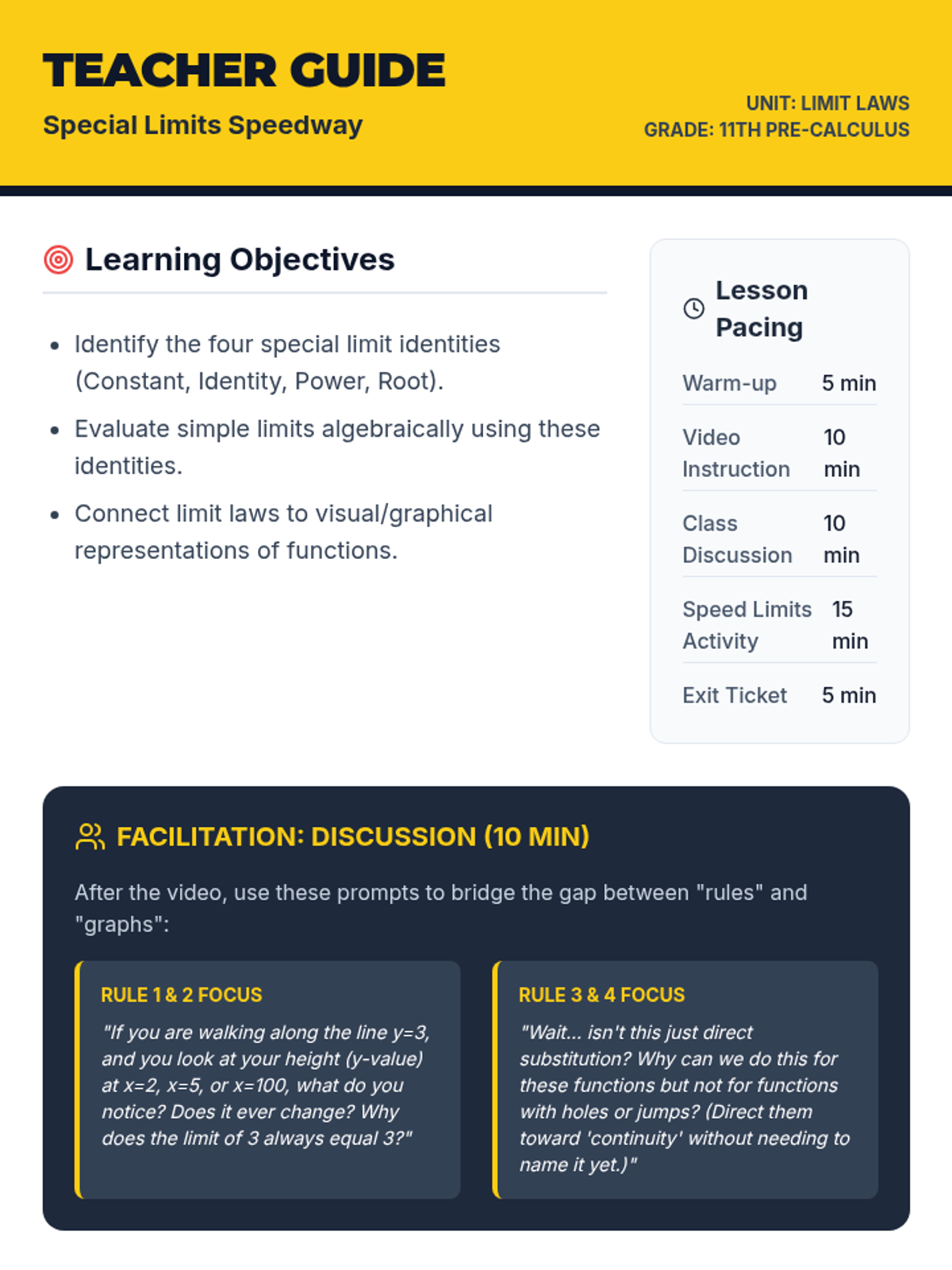
This lesson introduces students to the four foundational 'Special Limits' in calculus through visual exploration, video instruction, and a high-energy 'Speed Limits' activity. Students will learn to evaluate limits of constants, variables, powers, and roots using algebraic identities.
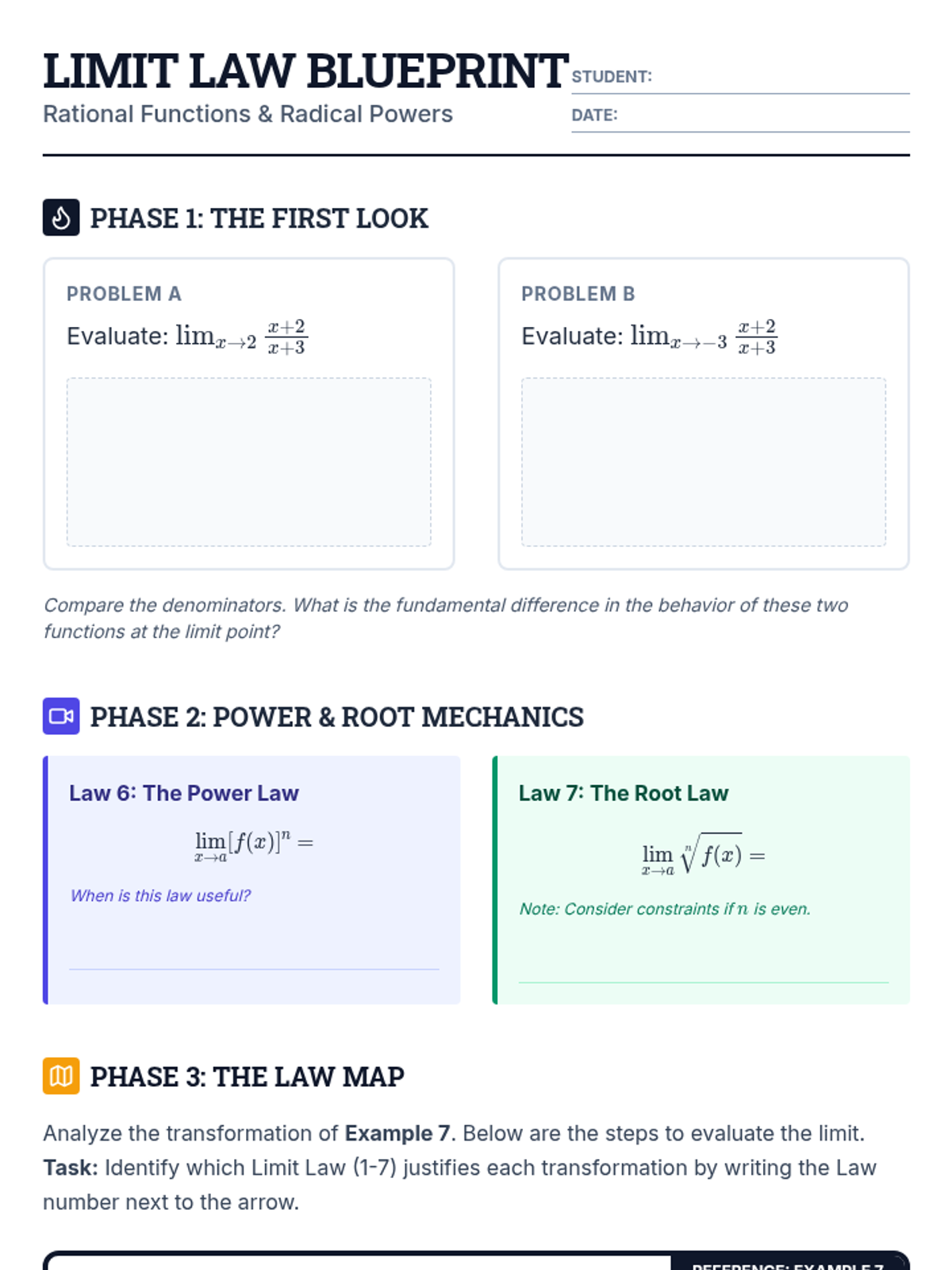
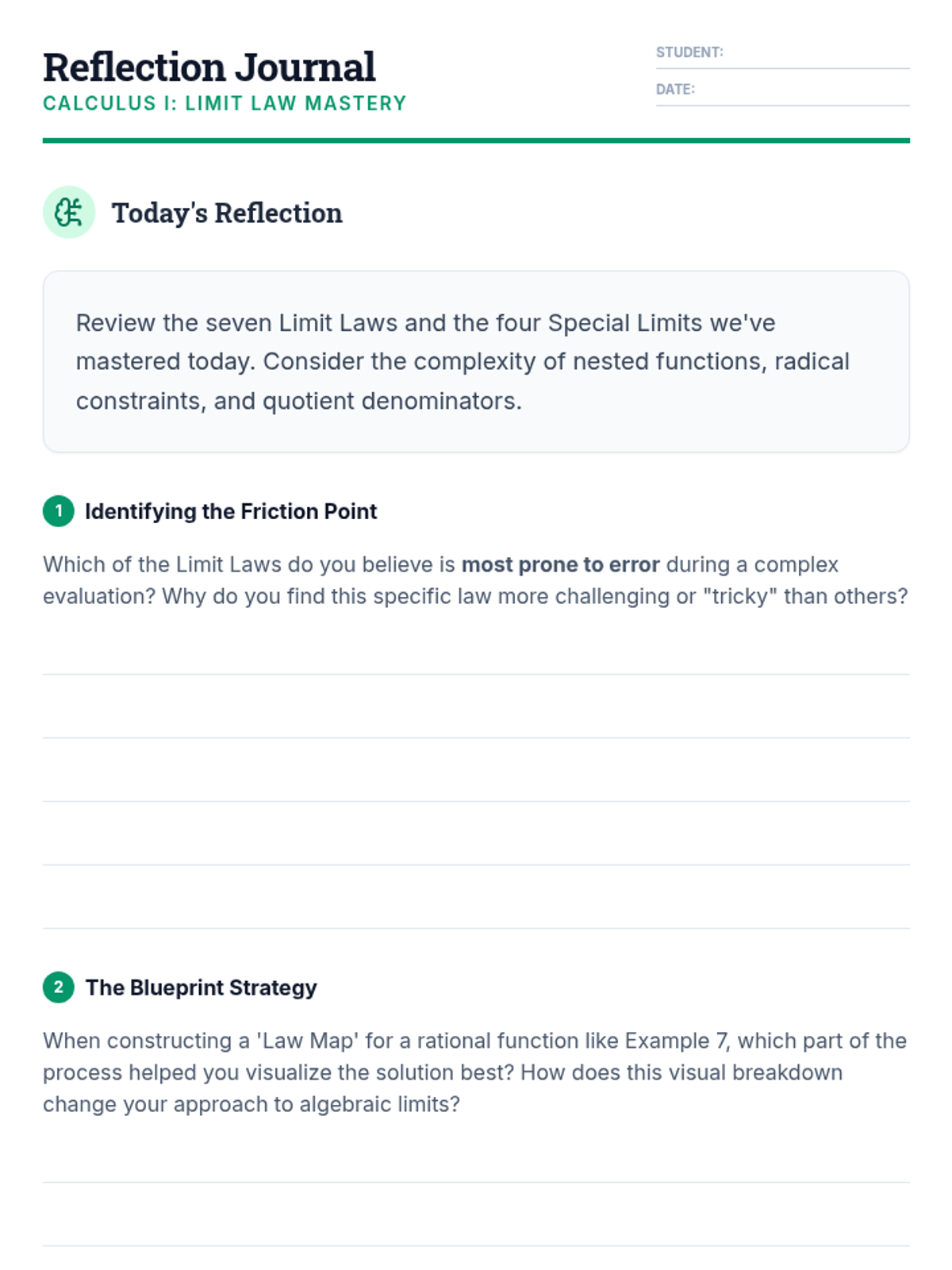
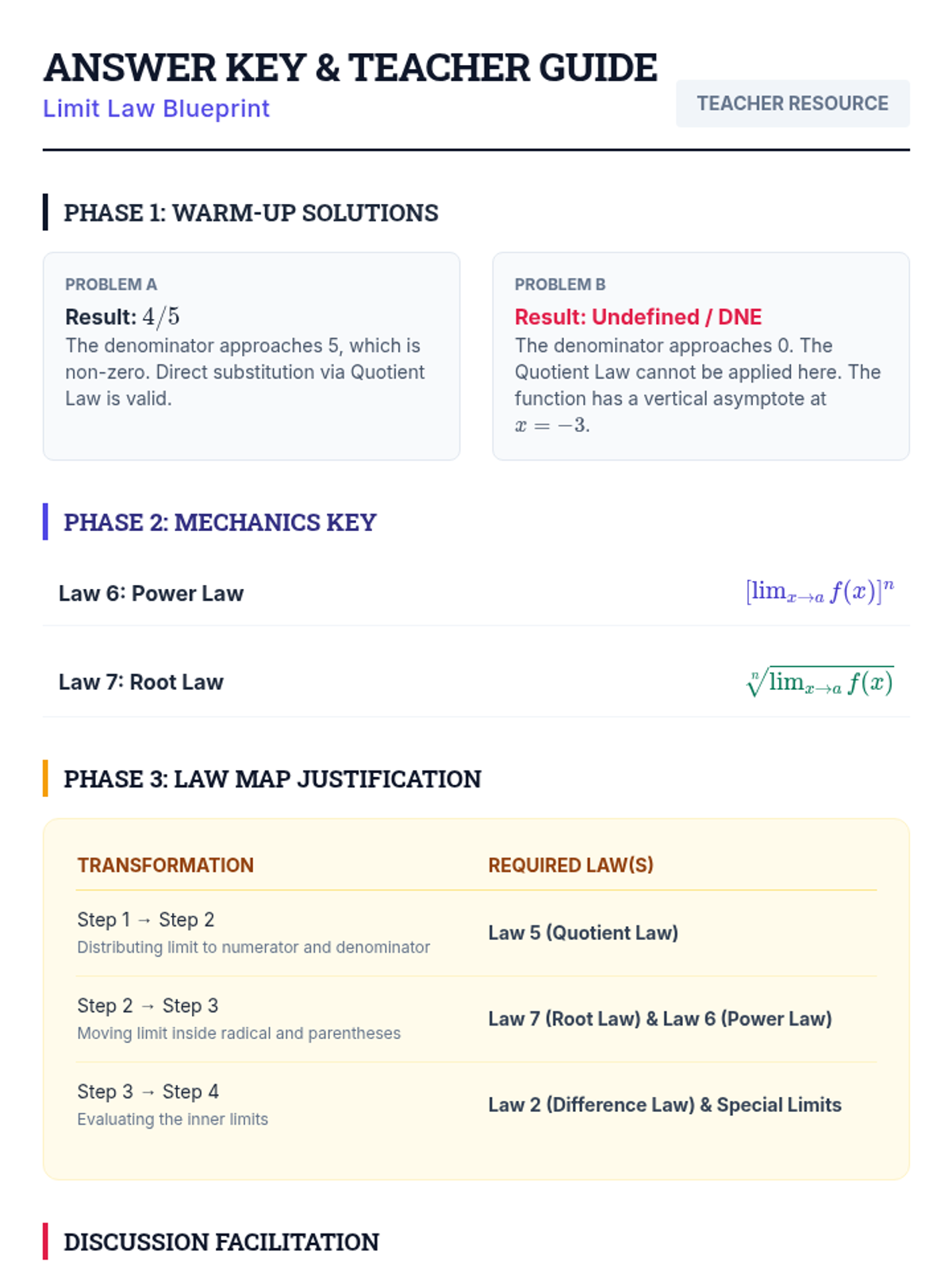
A calculus lesson focusing on the application of Power and Root laws to evaluate complex rational limits. Students will construct a 'Law Map' to visualize the algebraic steps and discuss the implications of zero denominators.
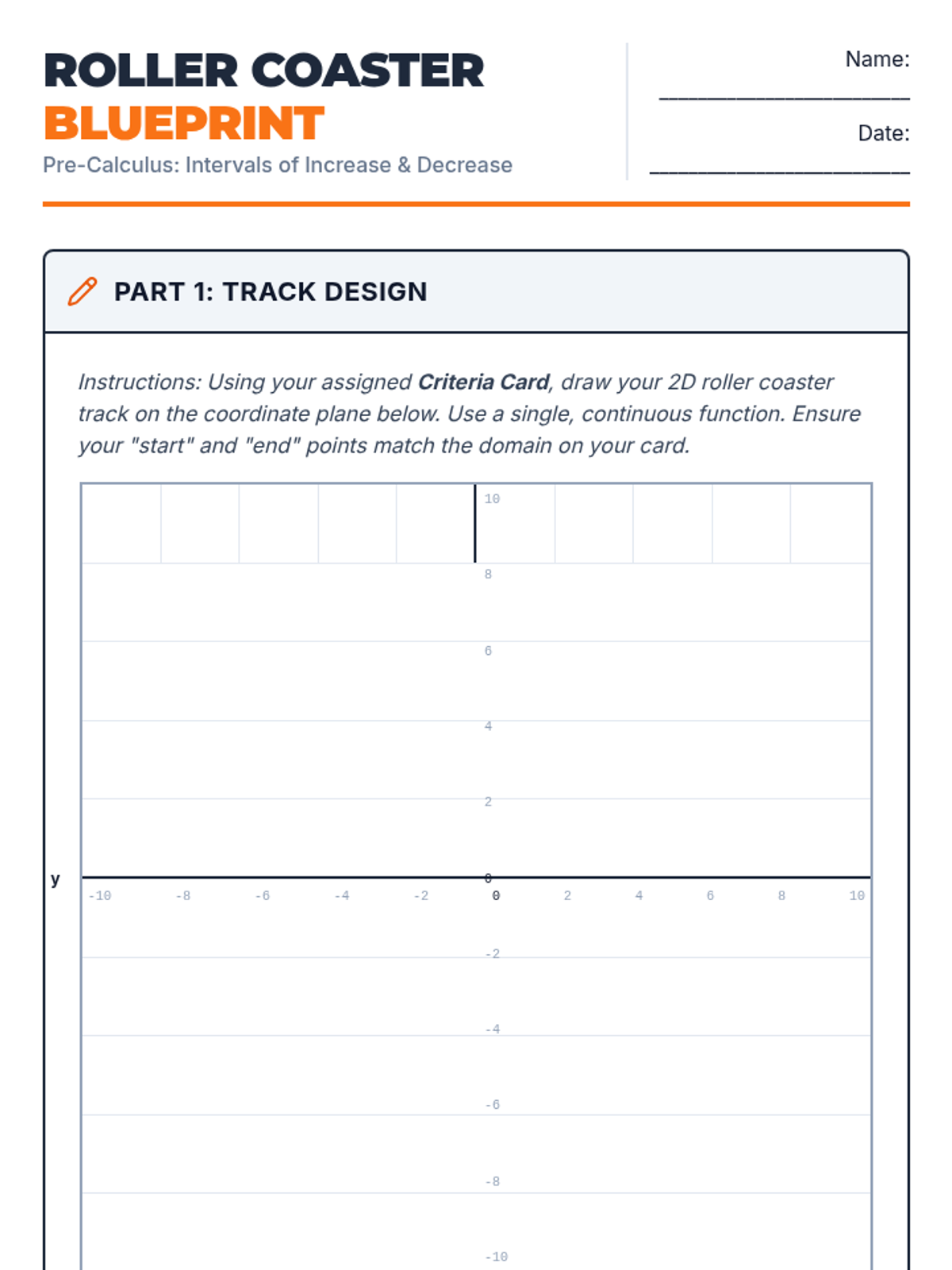
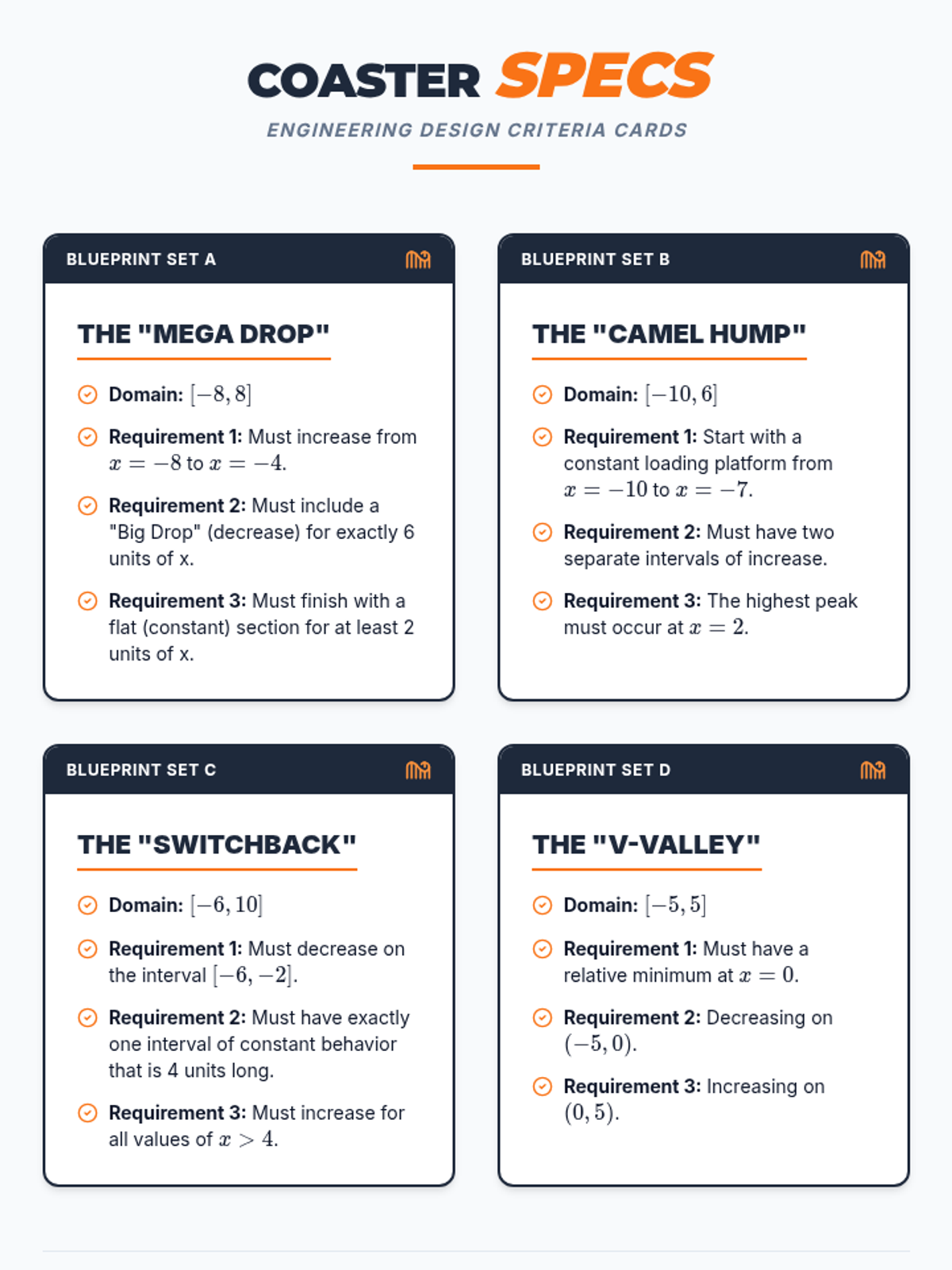
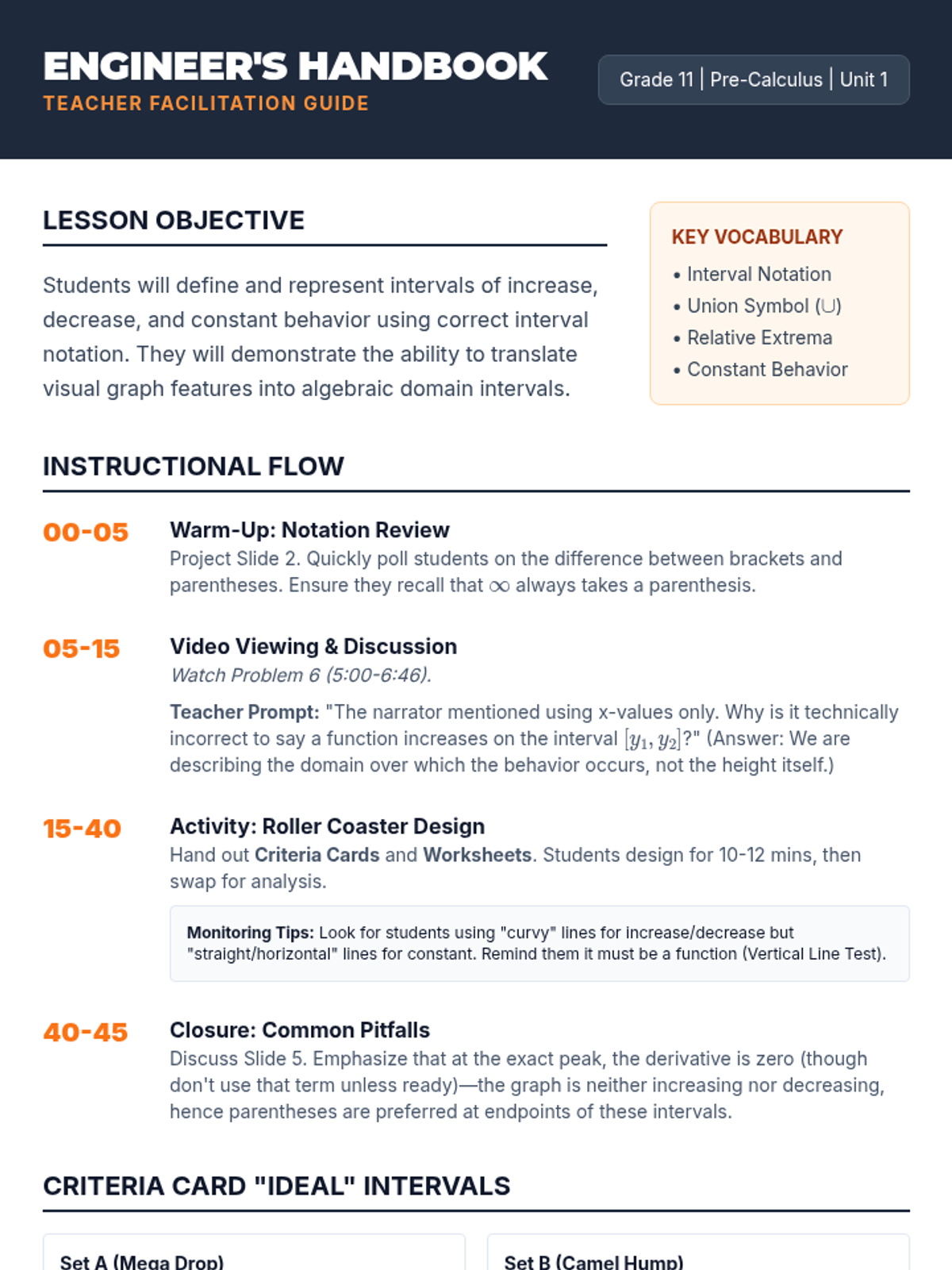
Students will learn to identify and describe intervals of increase, decrease, and constant behavior in functions using interval notation through a roller coaster design challenge. The lesson emphasizes using x-values to define these intervals and distinguishing between location and value.
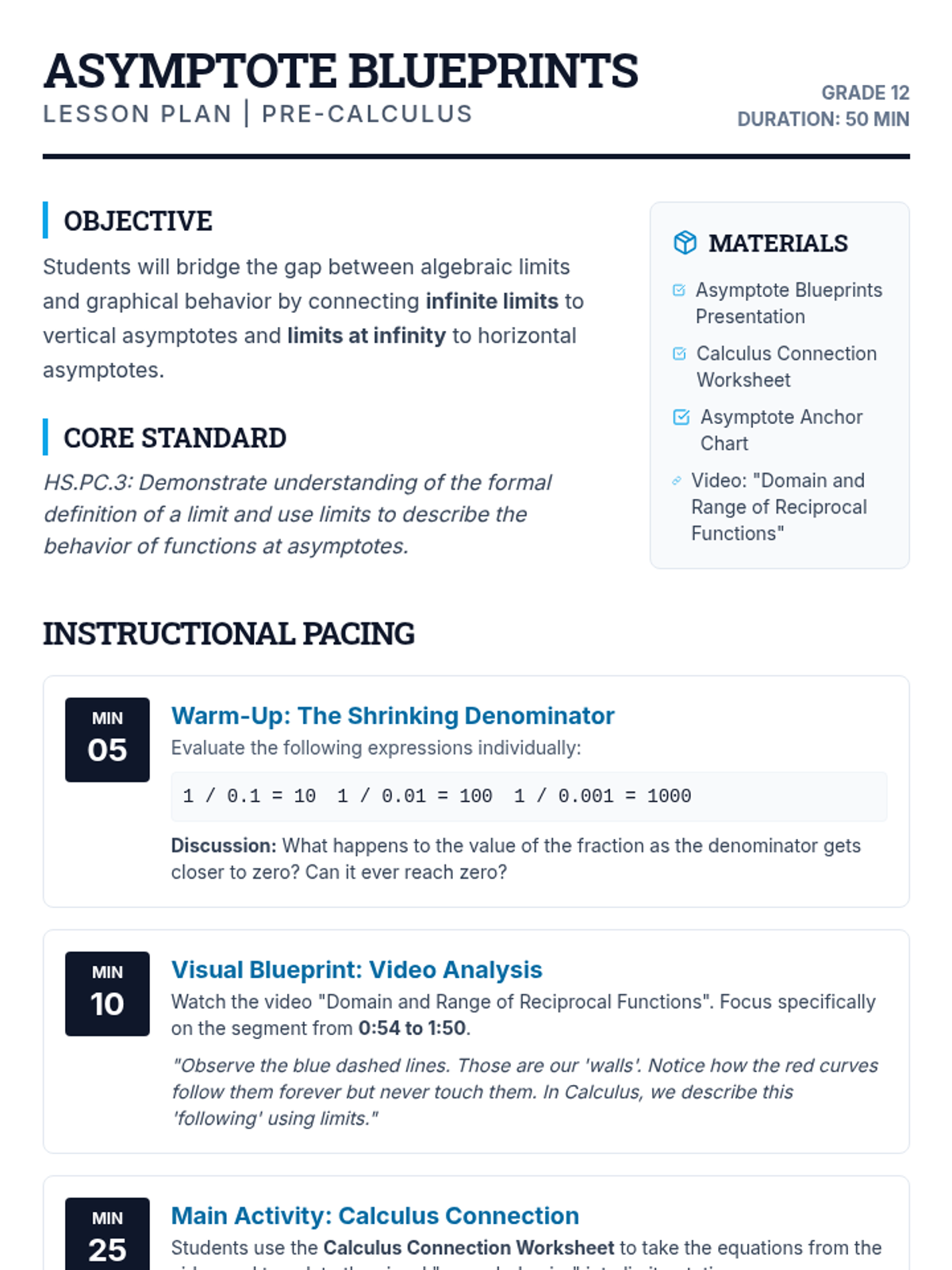
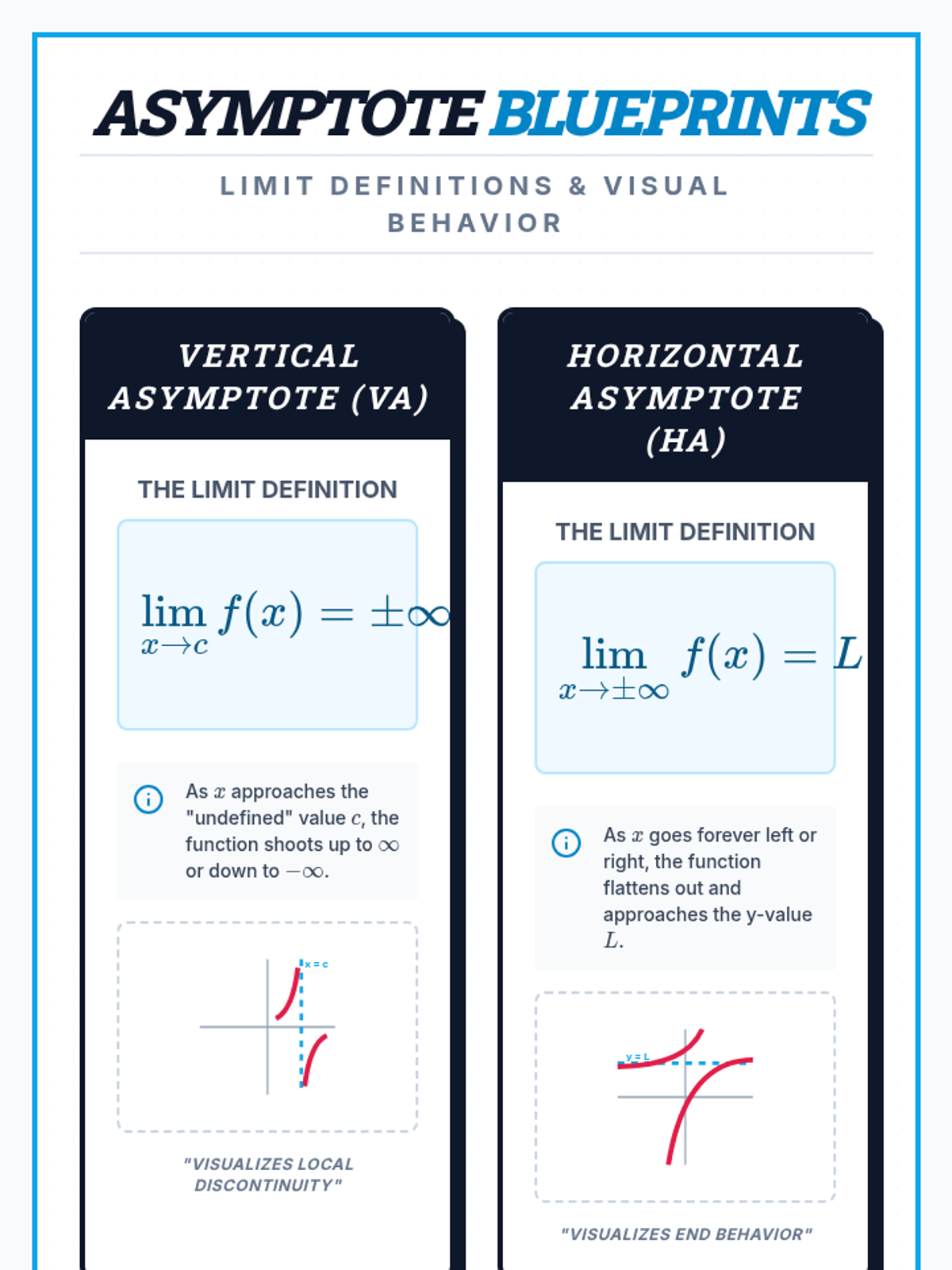
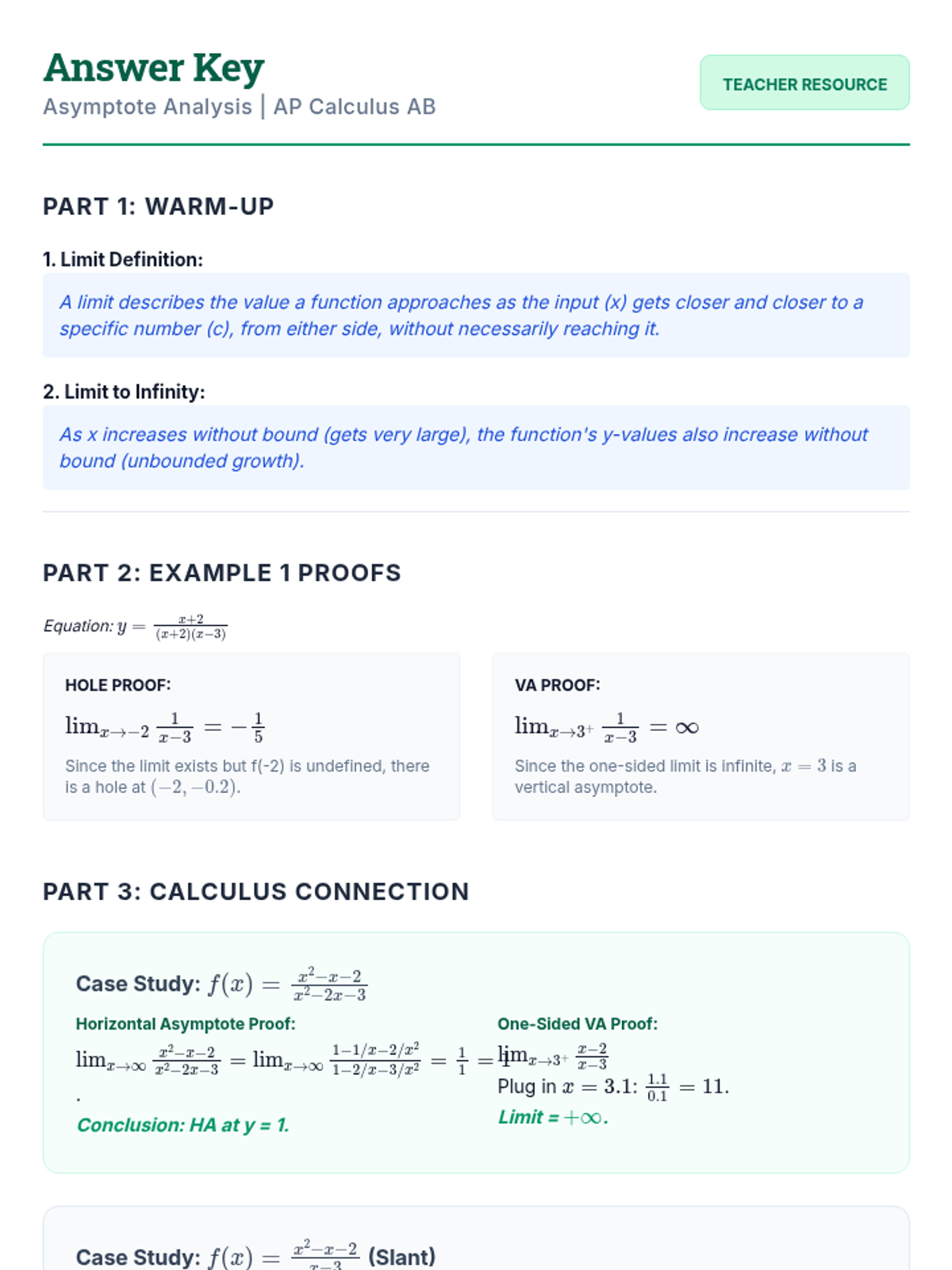
A 12th-grade Pre-Calculus lesson connecting the algebraic evaluation of infinite limits and limits at infinity to the visual behavior of vertical and horizontal asymptotes. Students analyze reciprocal functions from a video to bridge the gap between algebra and calculus.
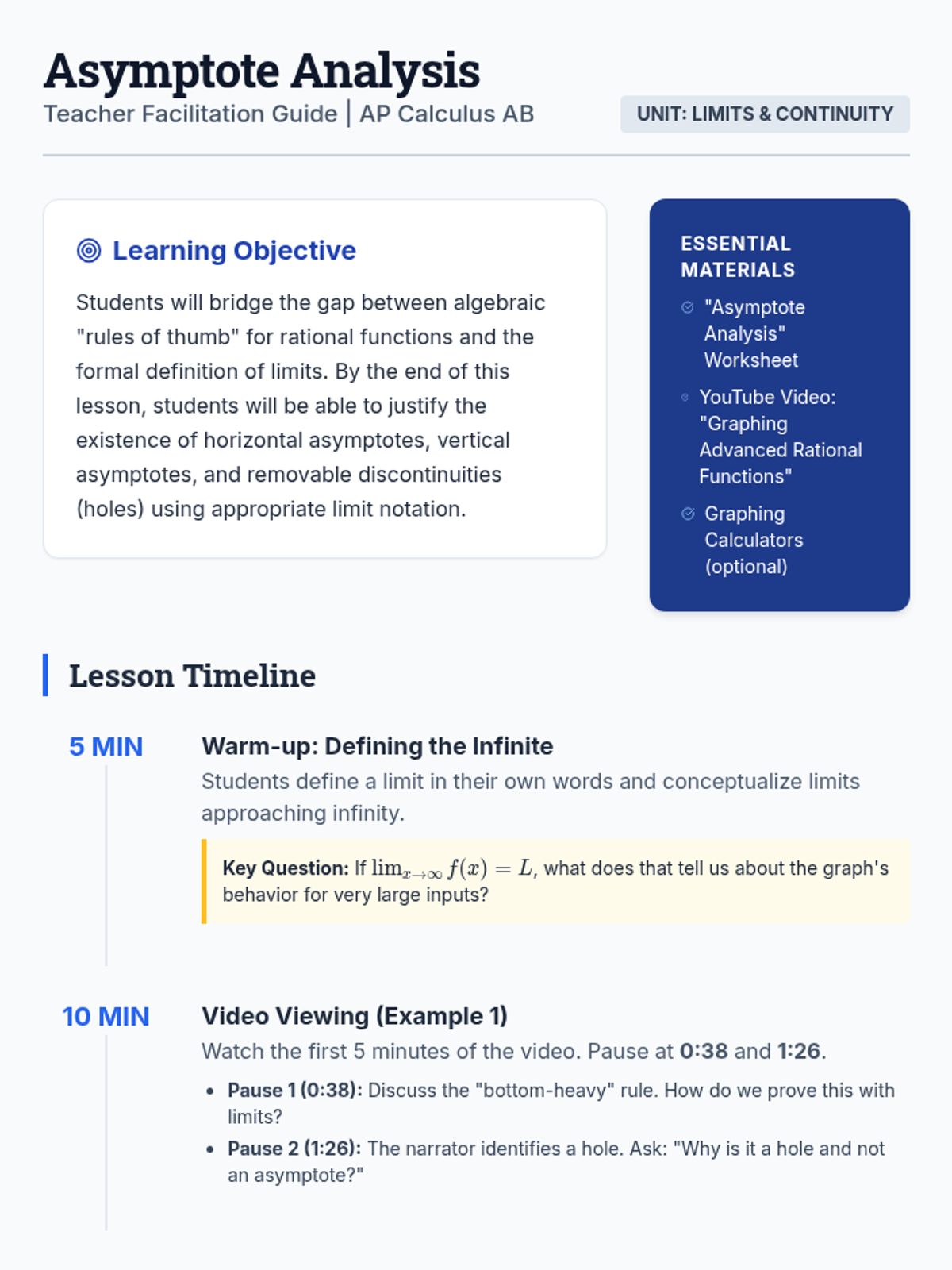
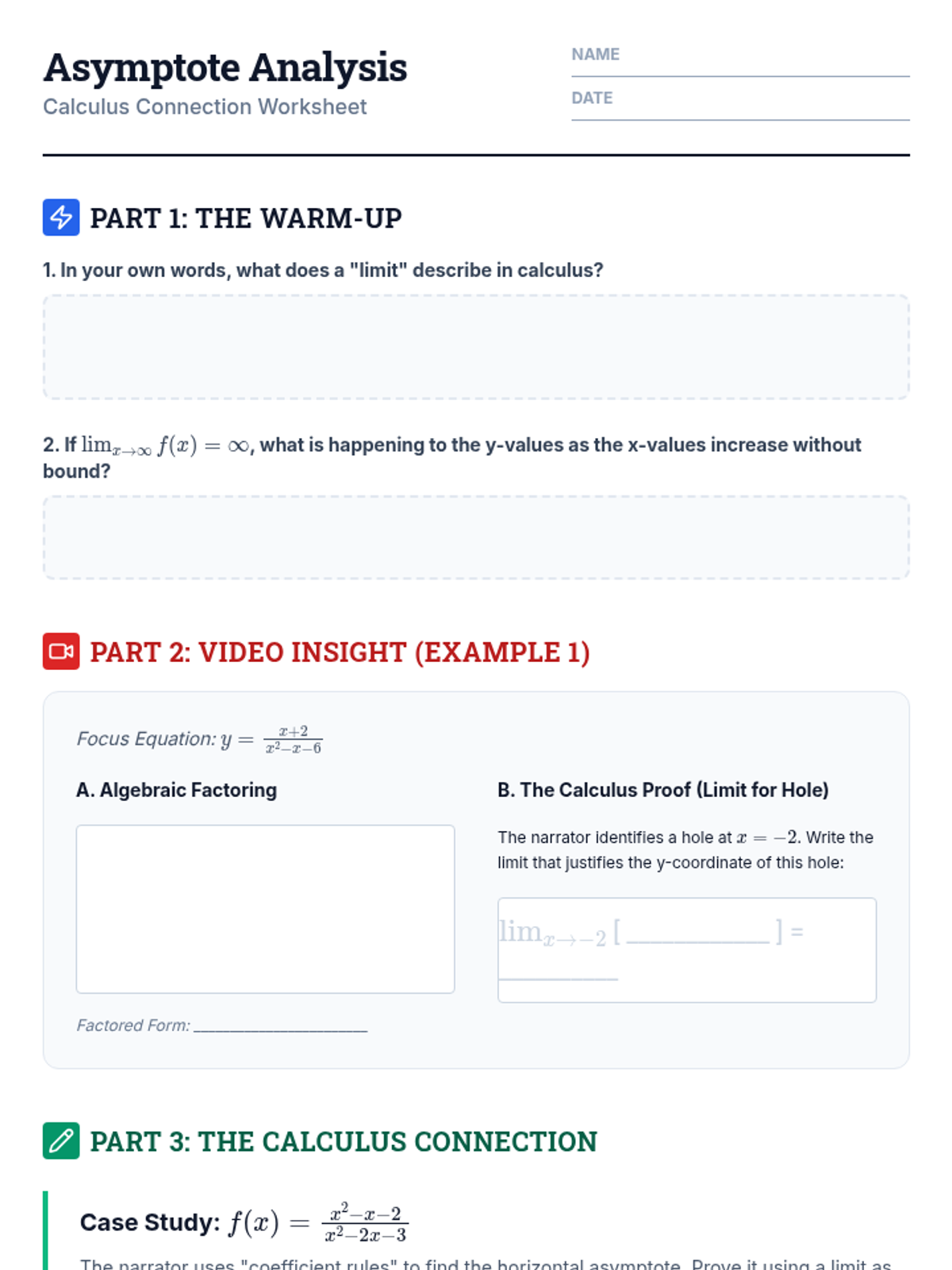
A comprehensive lesson plan and student activity connecting algebraic graphing rules to rigorous calculus limit definitions, centered around a detailed rational functions tutorial.
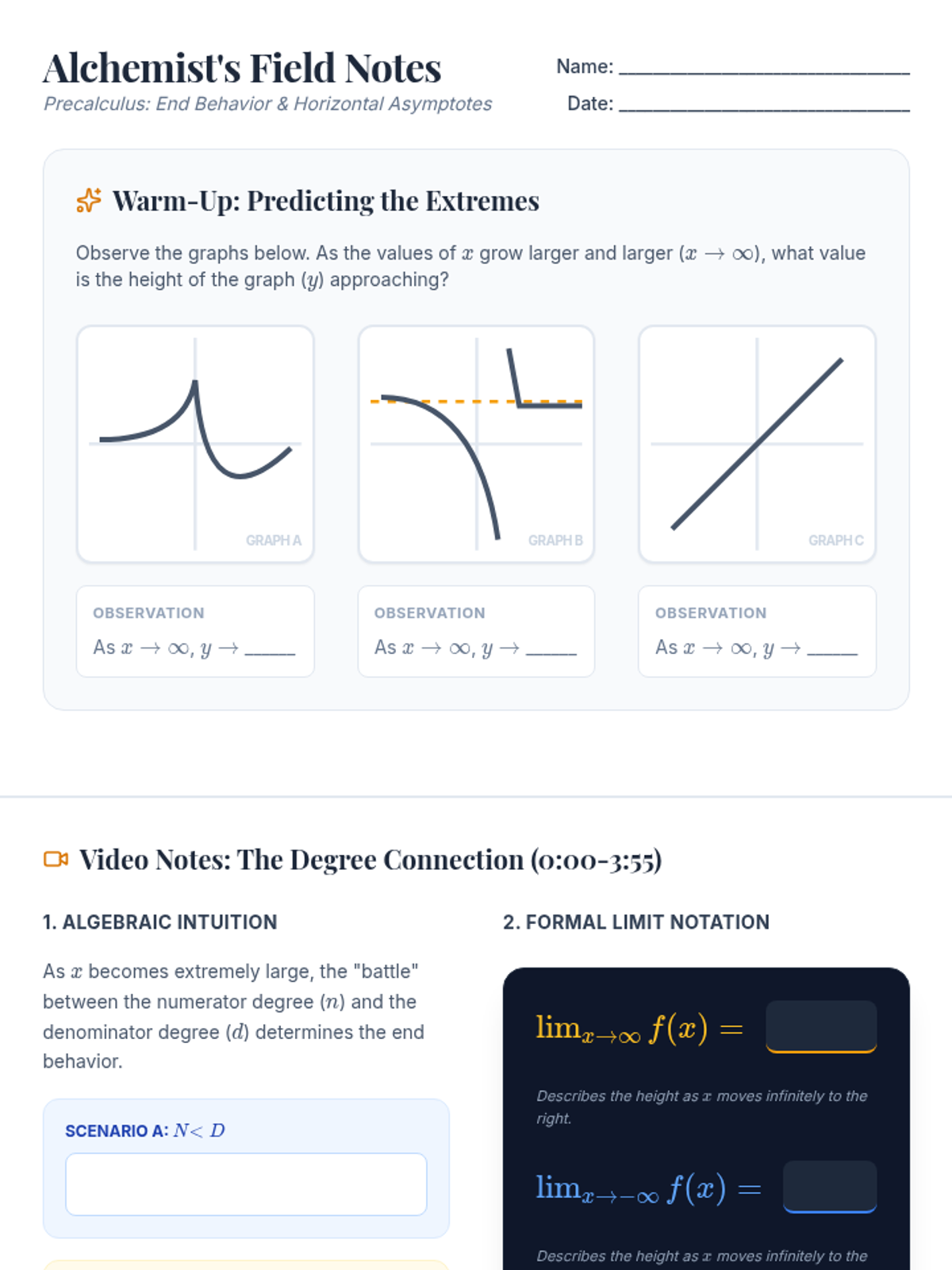
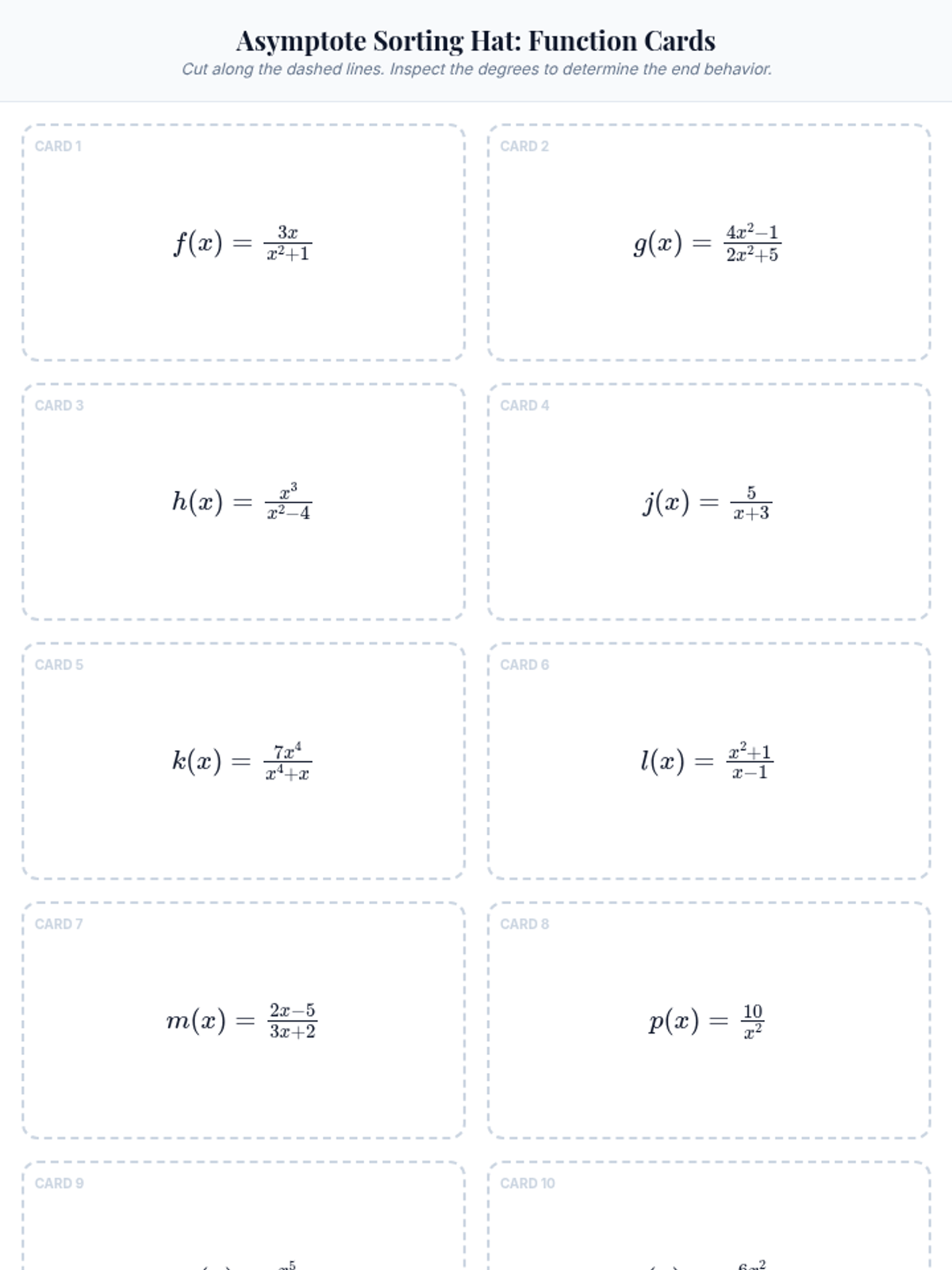
A Precalculus lesson exploring the end behavior of rational functions through graphical analysis and algebraic intuition. Students use polynomial degrees to predict horizontal asymptotes and formalize their findings using limit notation.
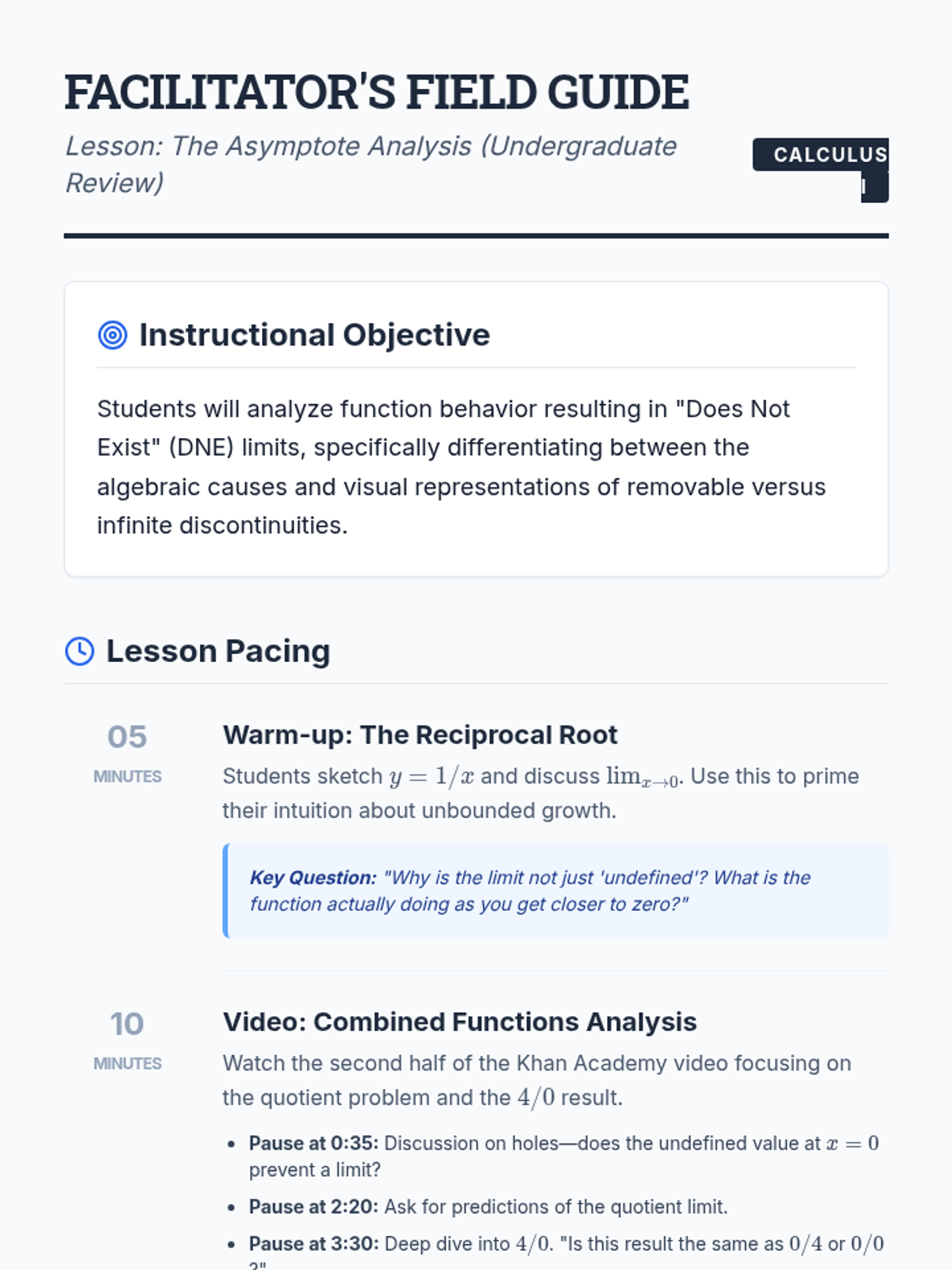
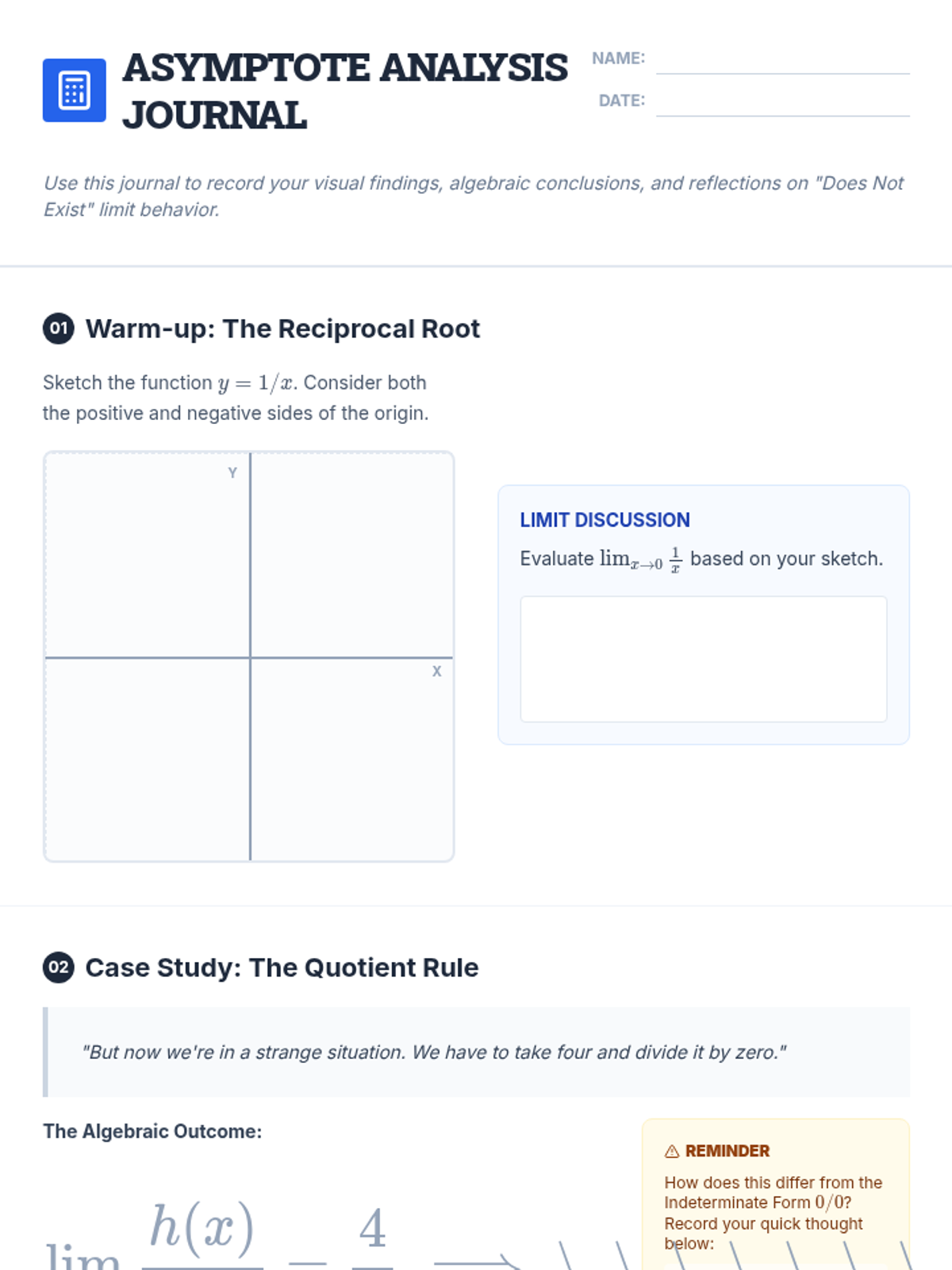
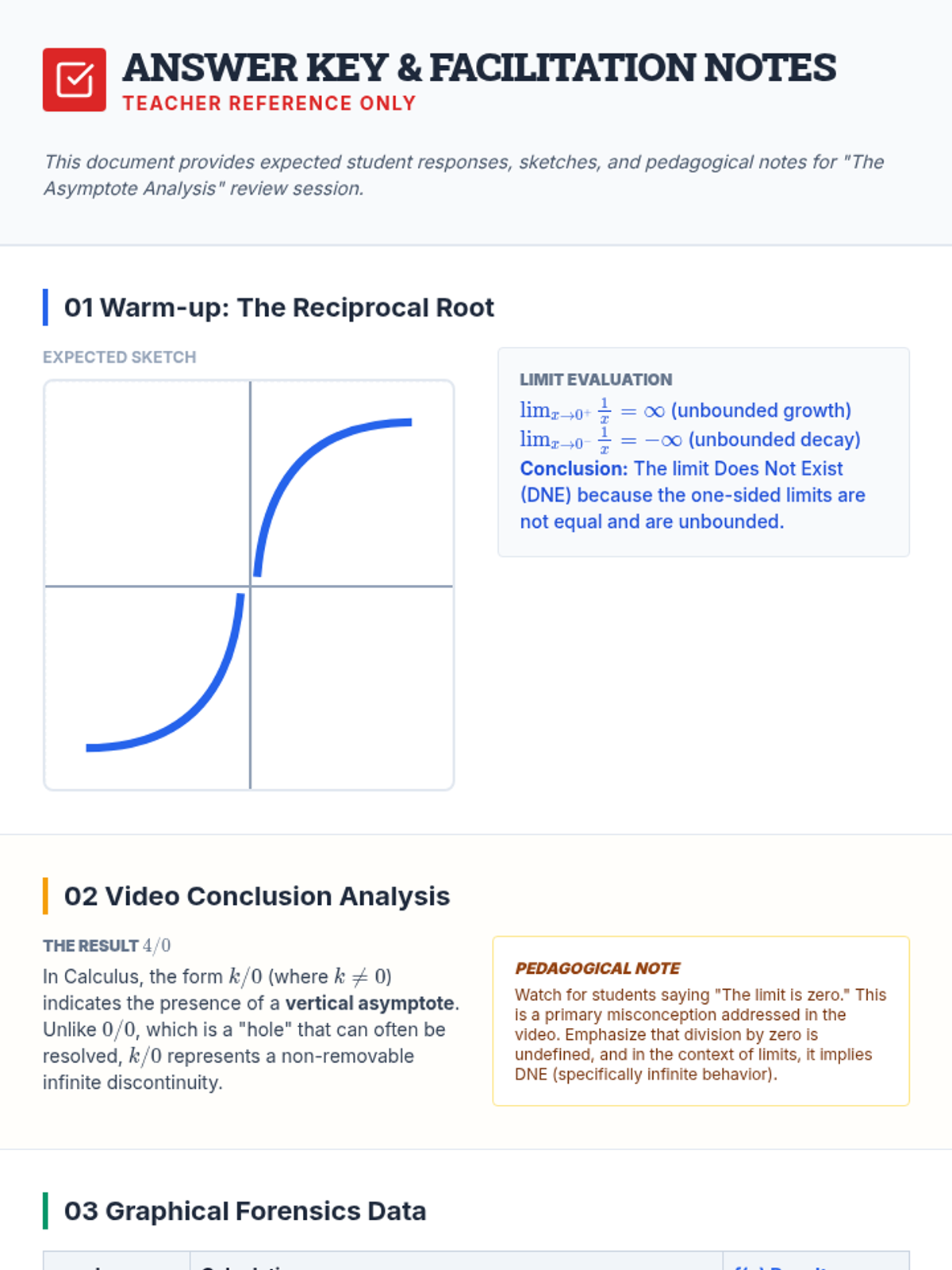
This lesson guides undergraduate students through a review of 'Does Not Exist' limits, focusing on the visual and algebraic differences between removable discontinuities (holes) and infinite discontinuities (vertical asymptotes) using Khan Academy's quotient rule demonstration.
A Pre-Calculus lesson on determining the end behavior of polynomial functions using the Leading Coefficient Test, featuring a kinesthetic warm-up, video analysis, and a collaborative sorting activity.
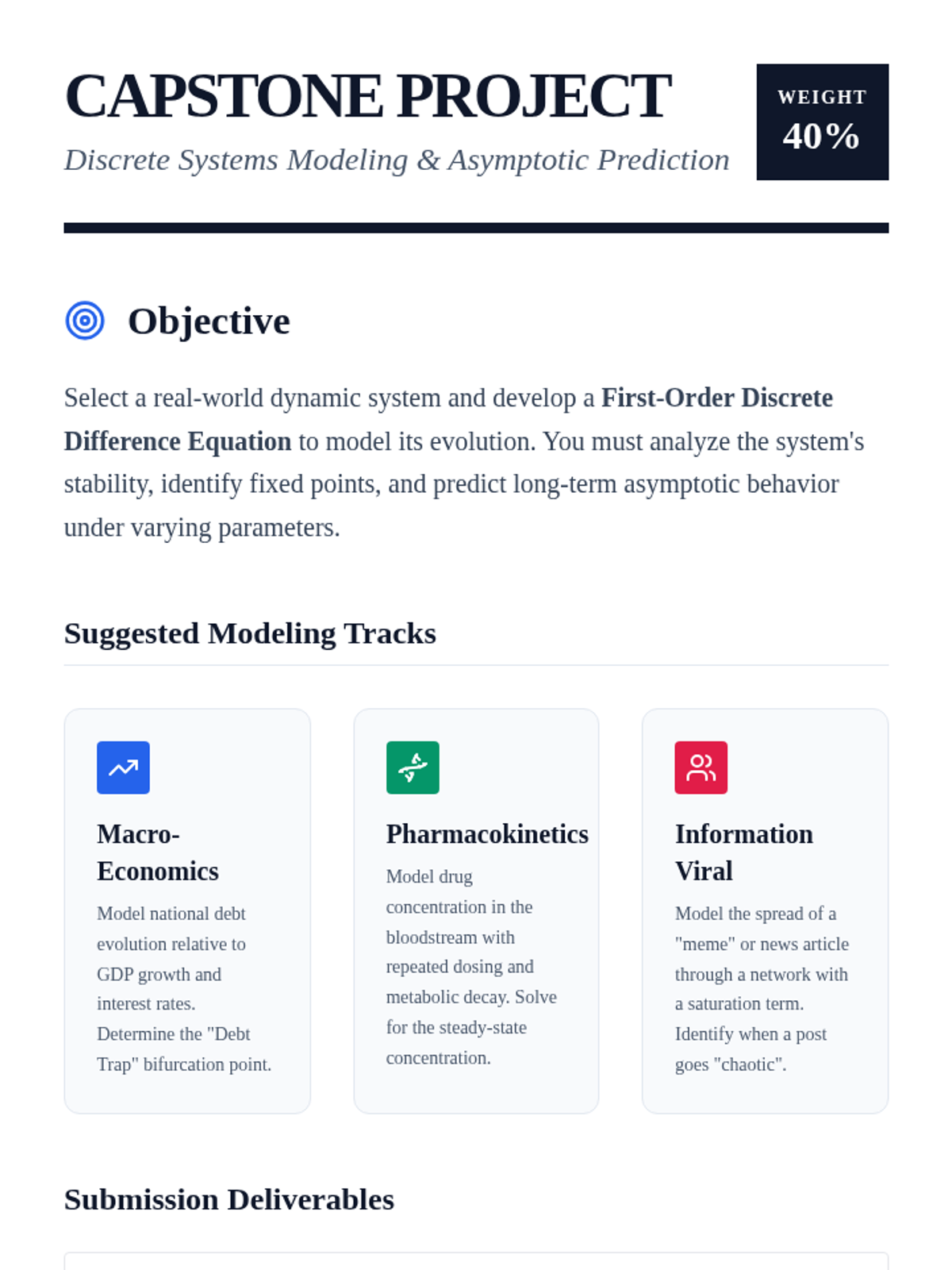
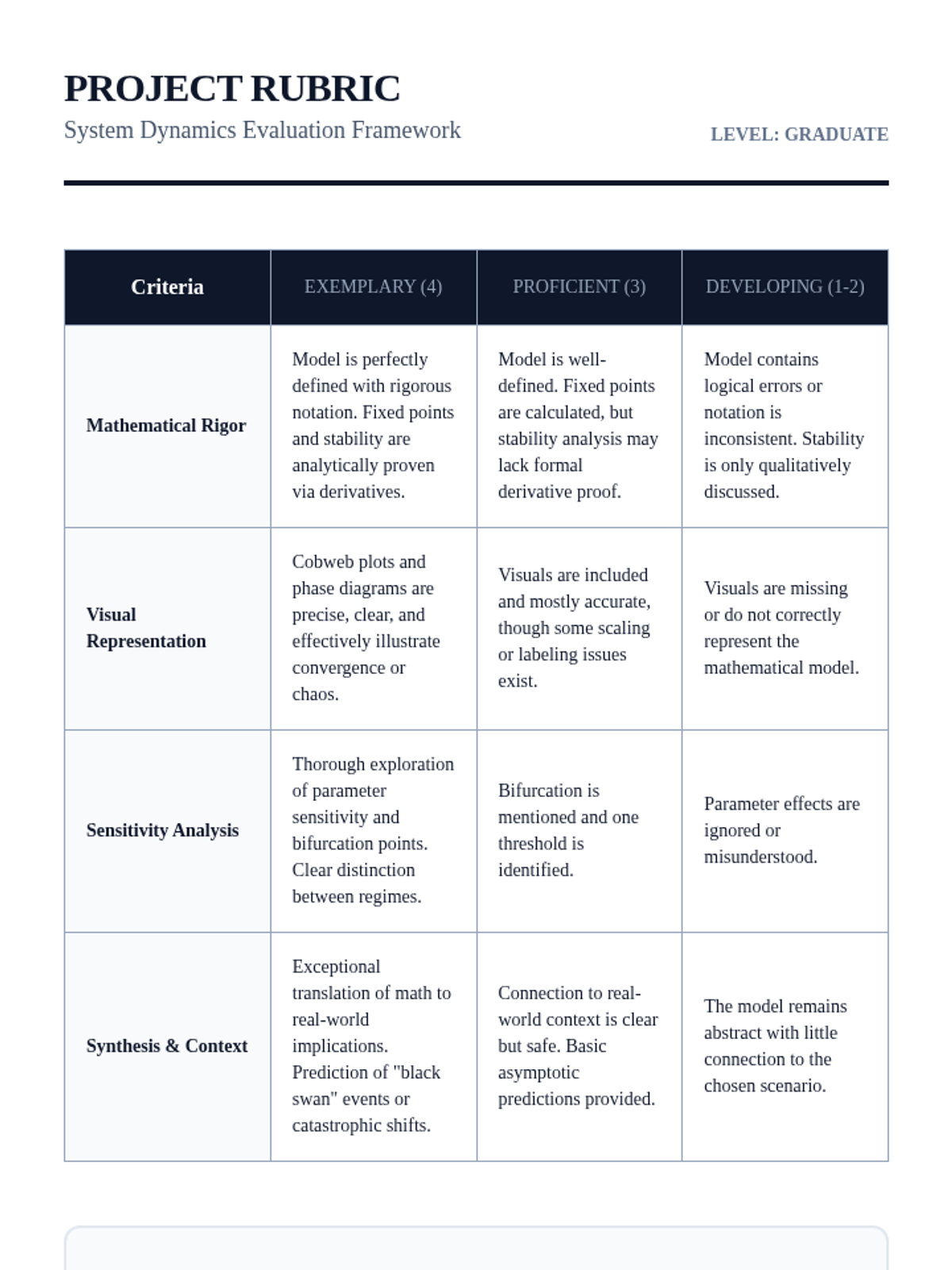
A culminating project-based lesson where students apply discrete modeling tools to real-world scenarios such as drug kinetics, finance, or ecology.
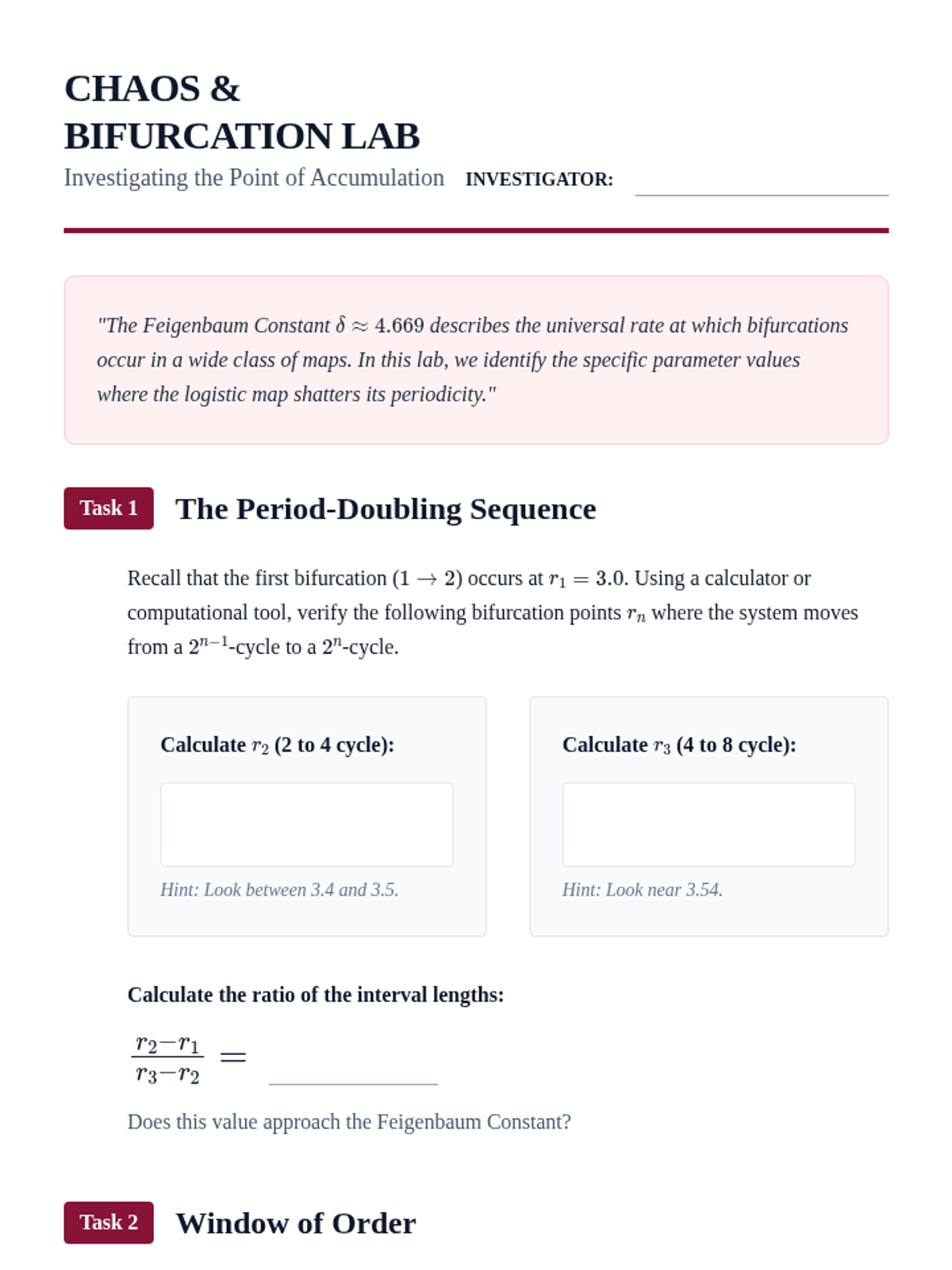
Investigates period-doubling bifurcations and the transition to deterministic chaos in discrete systems as parameters vary.
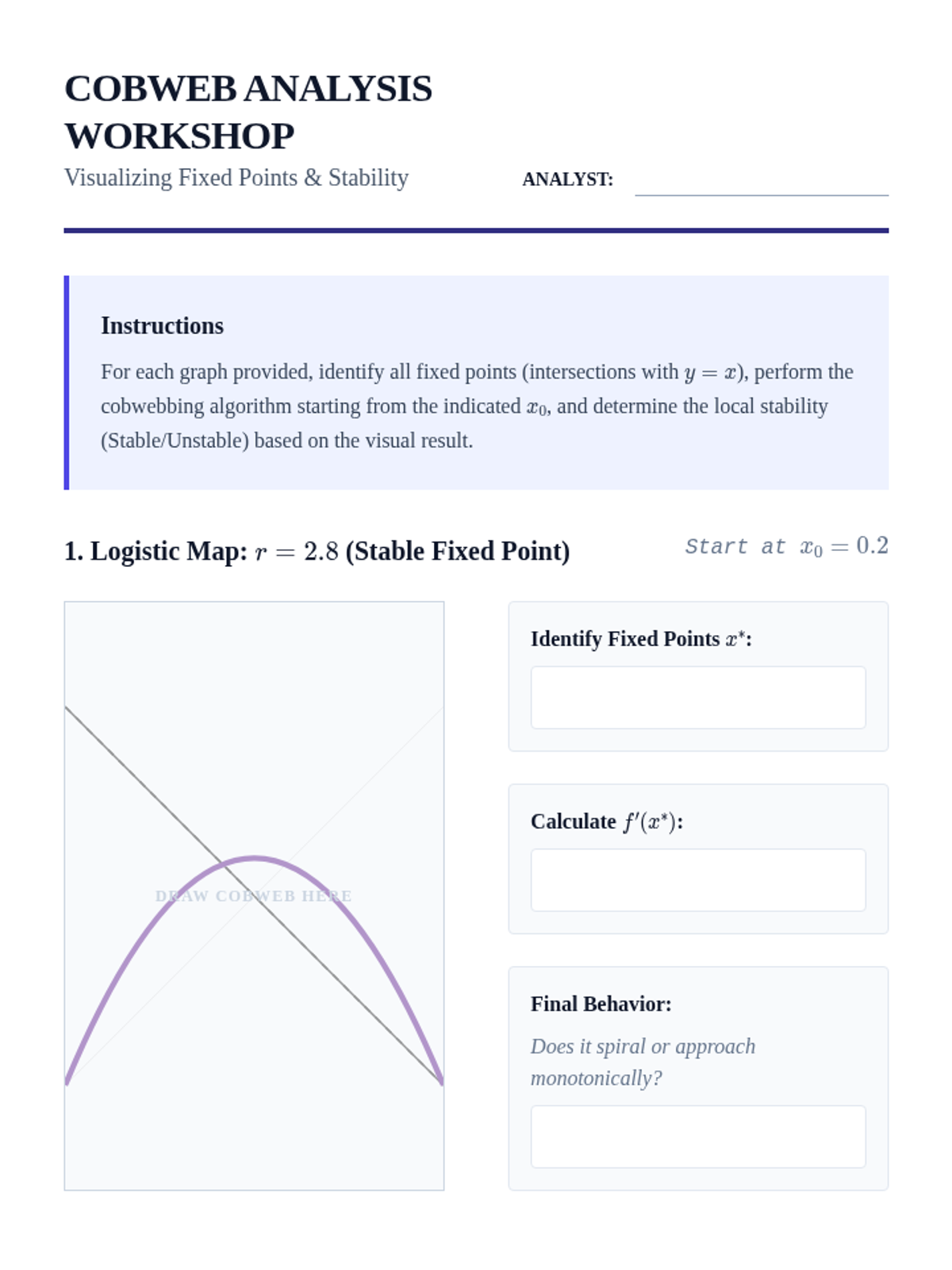
Teaches visual and analytical methods for determining the stability of fixed points using cobweb plots and derivative-based stability criteria.
Introduces non-linear constraints through the logistic map, exploring how resource limitations change system behavior from fixed points to periodic cycles.
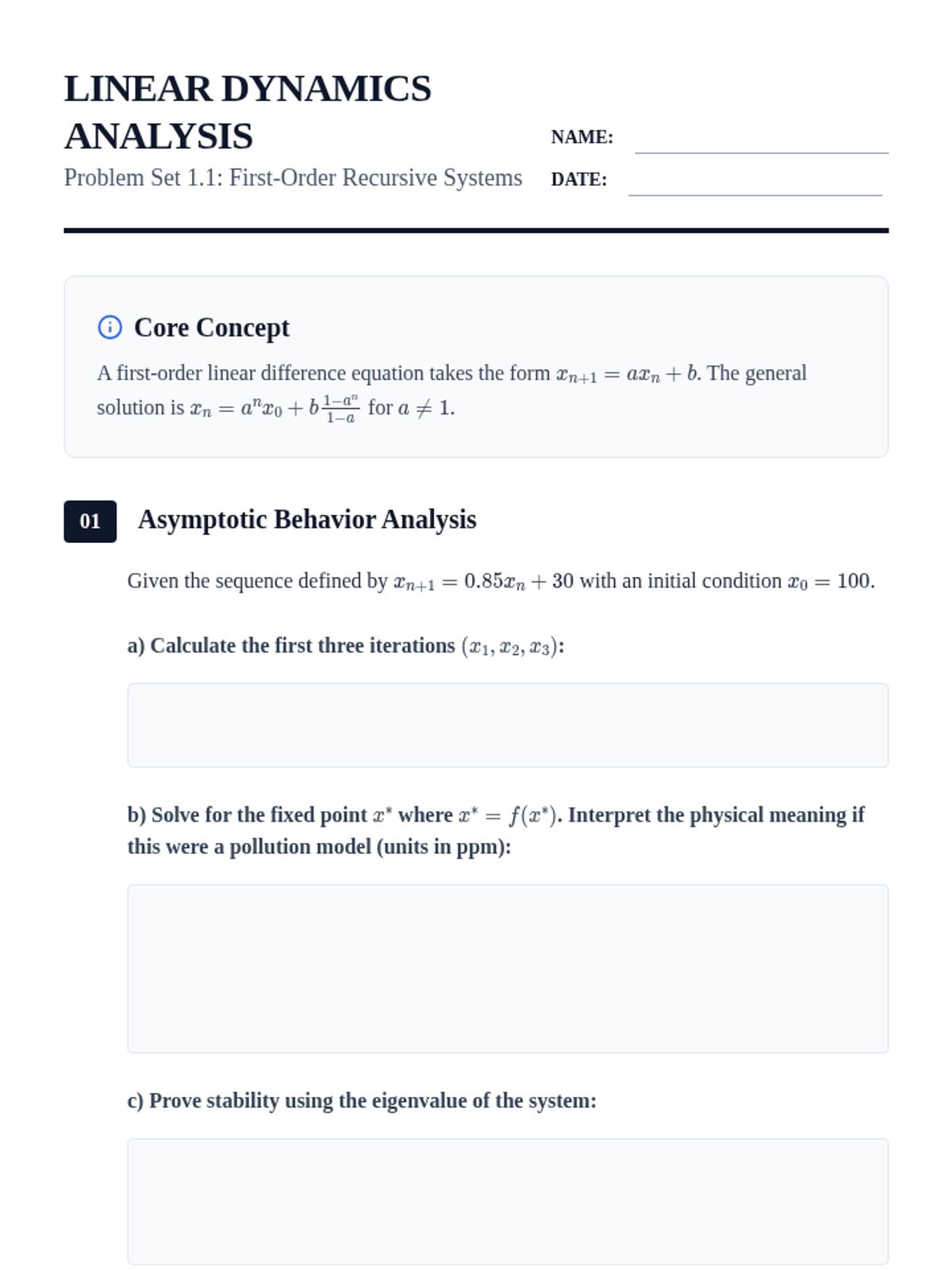
Focuses on linear first-order difference equations and their application to unrestricted population growth, emphasizing the role of eigenvalues in long-term stability.
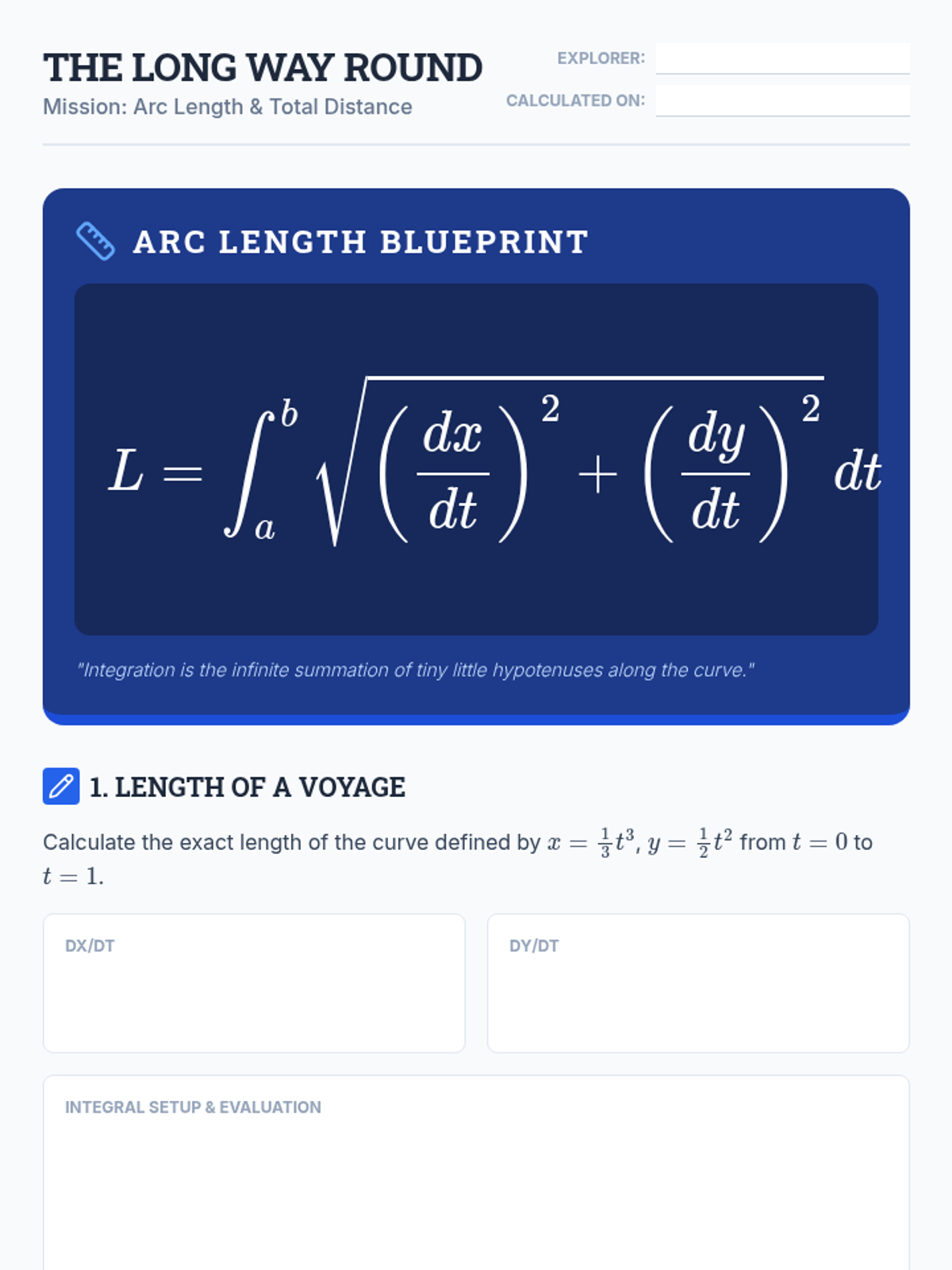
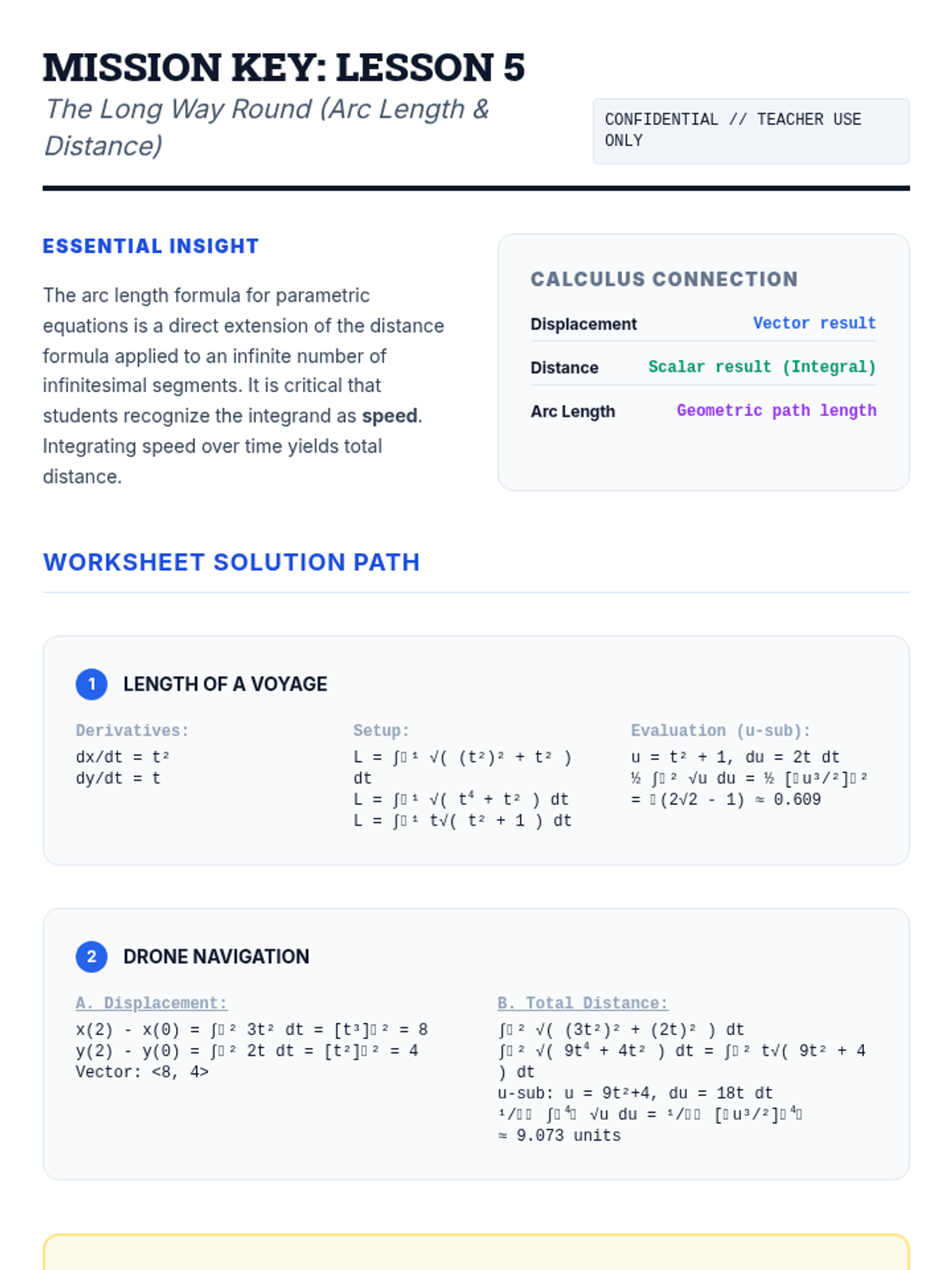
Calculates the total distance traveled and arc length of parametric curves by integrating speed.
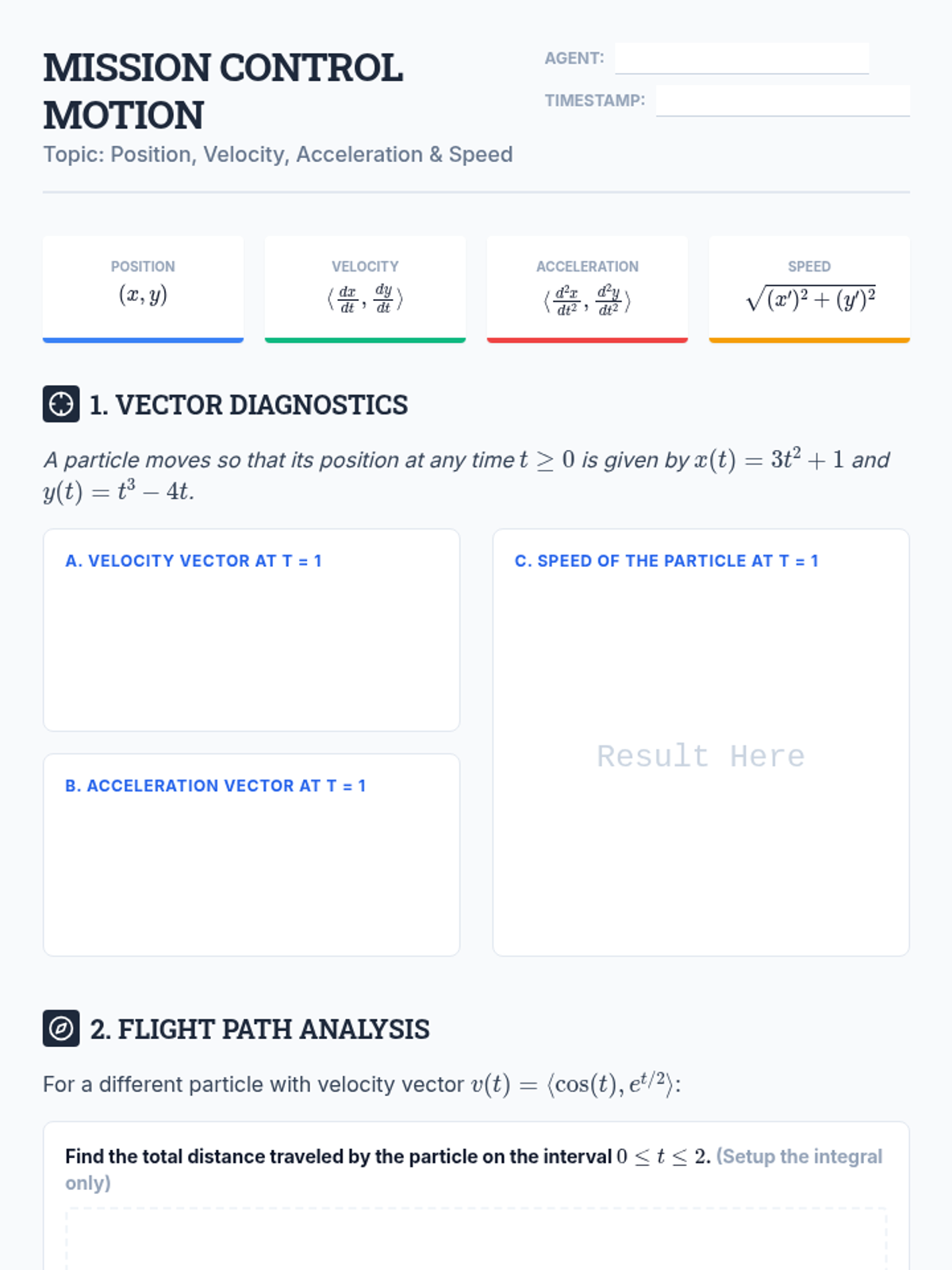
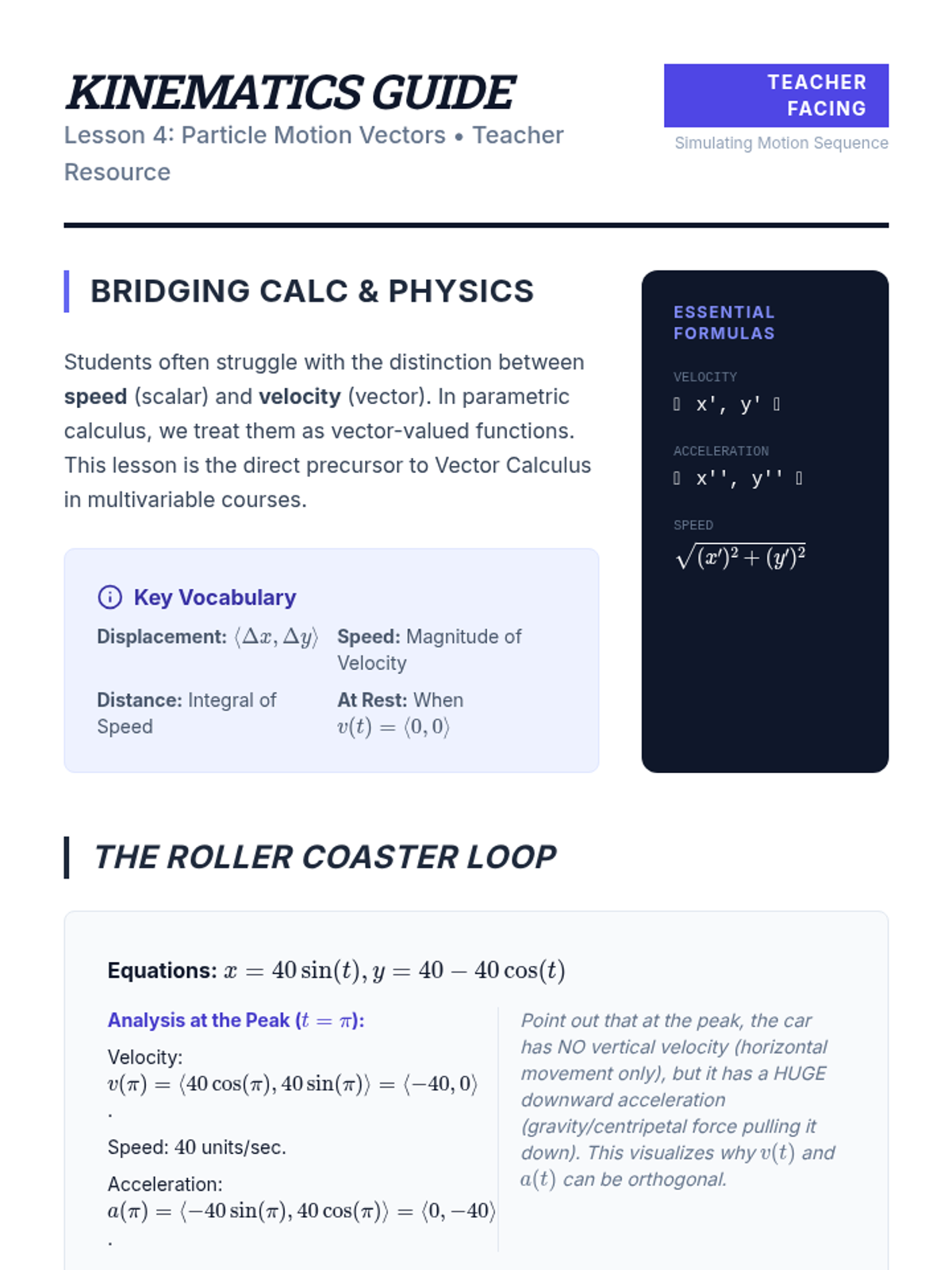
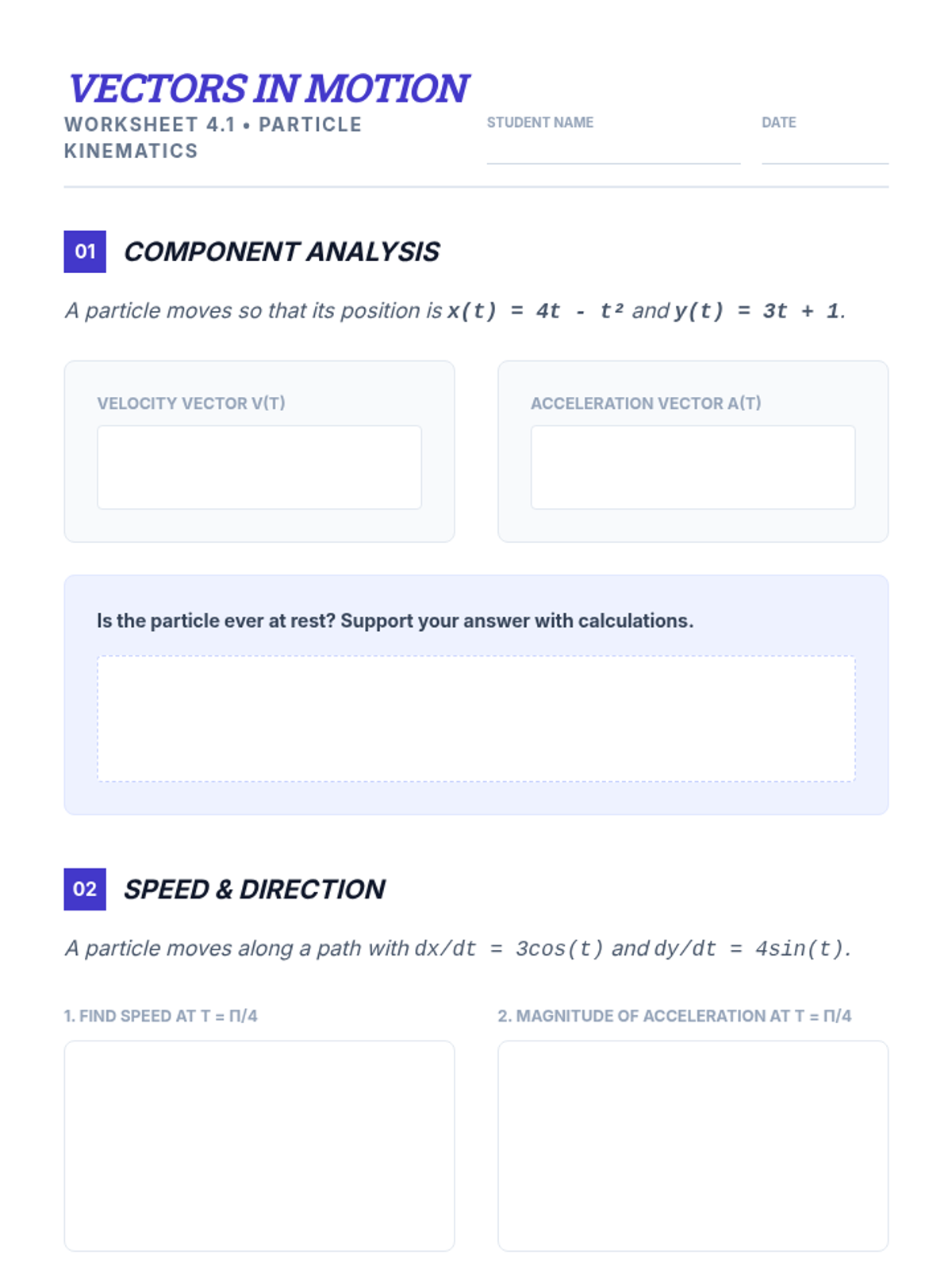
Applies derivatives to physics, interpreting parametric equations as position vectors and calculating velocity, speed, and acceleration.
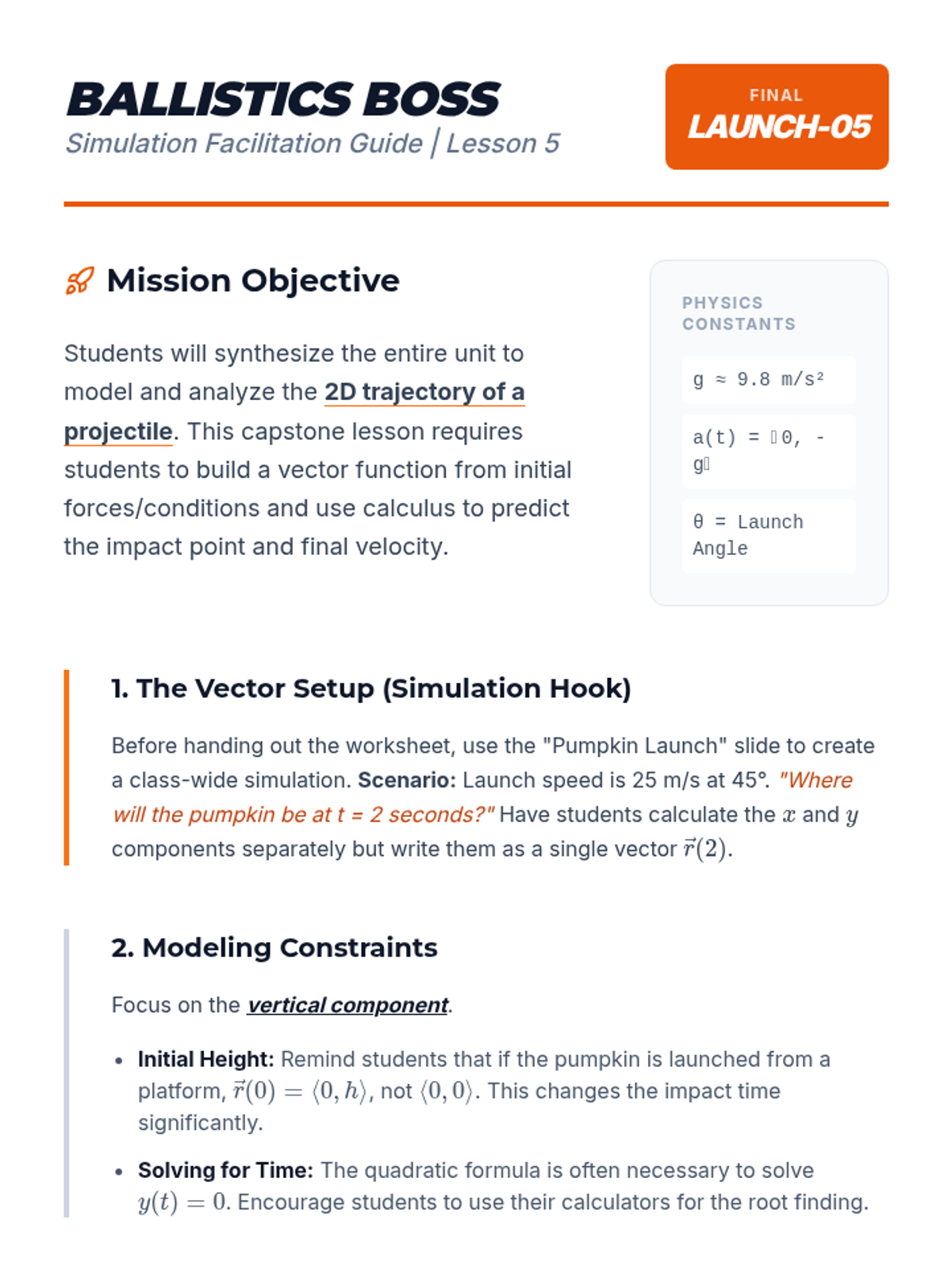
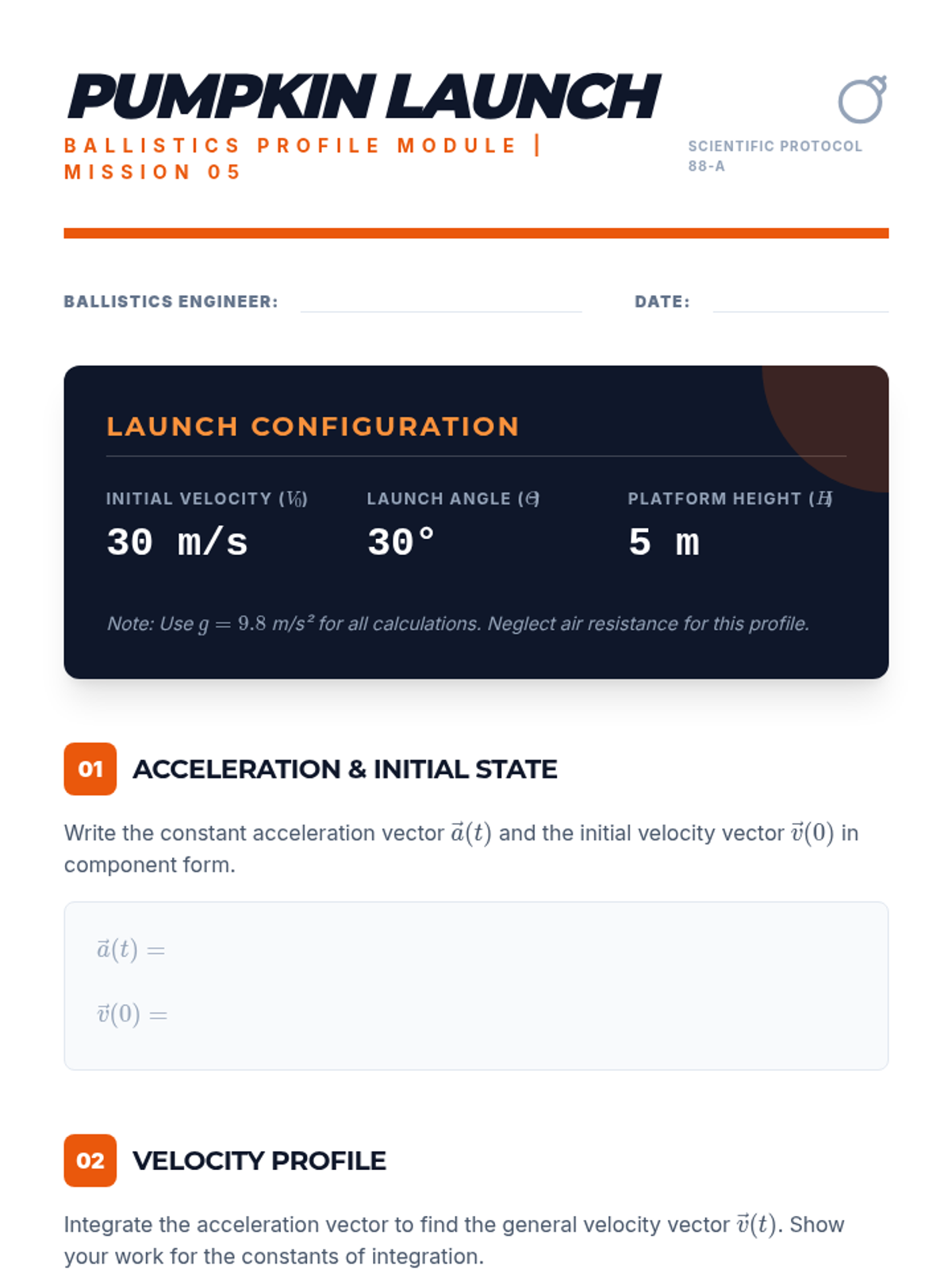
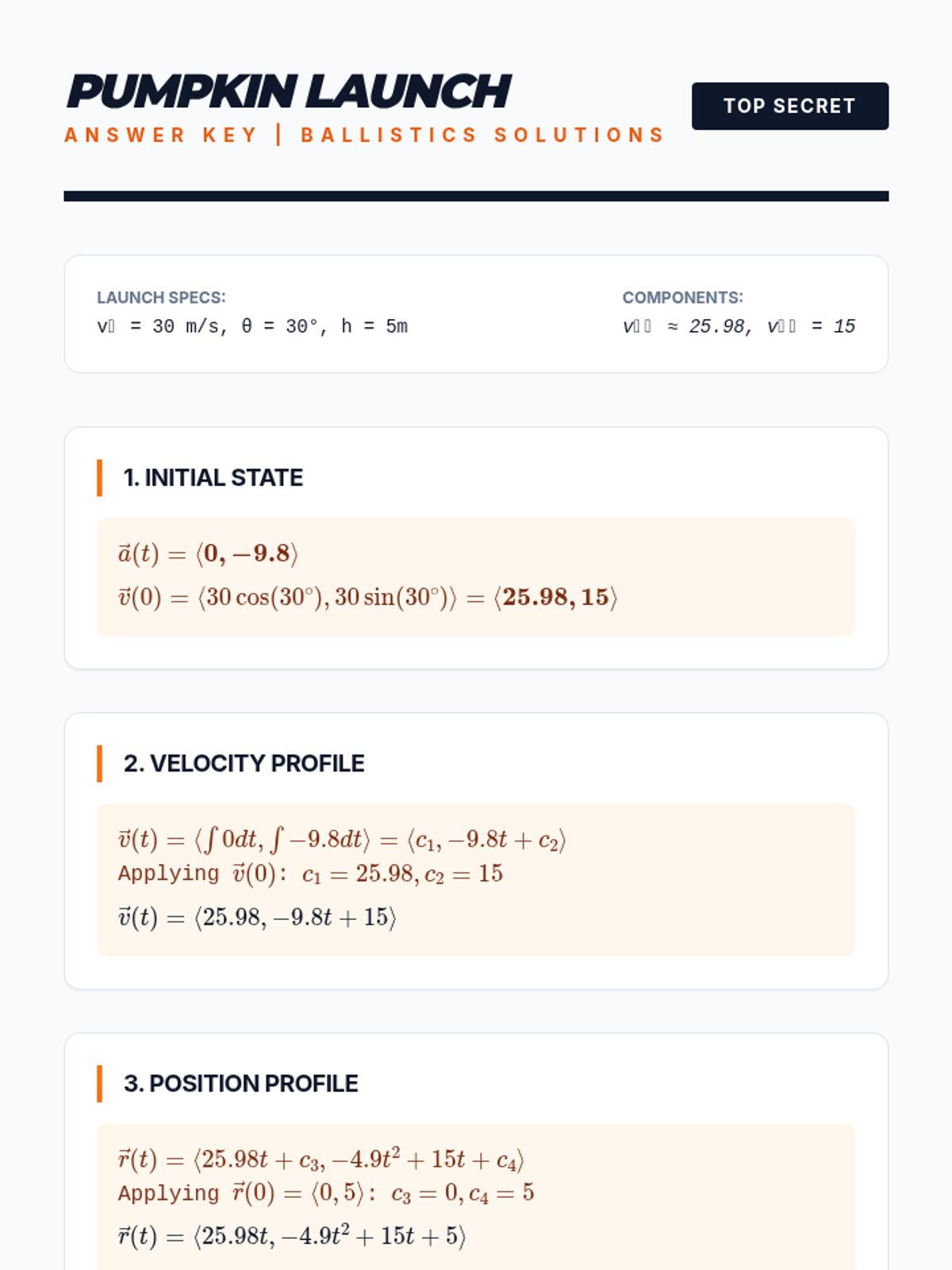
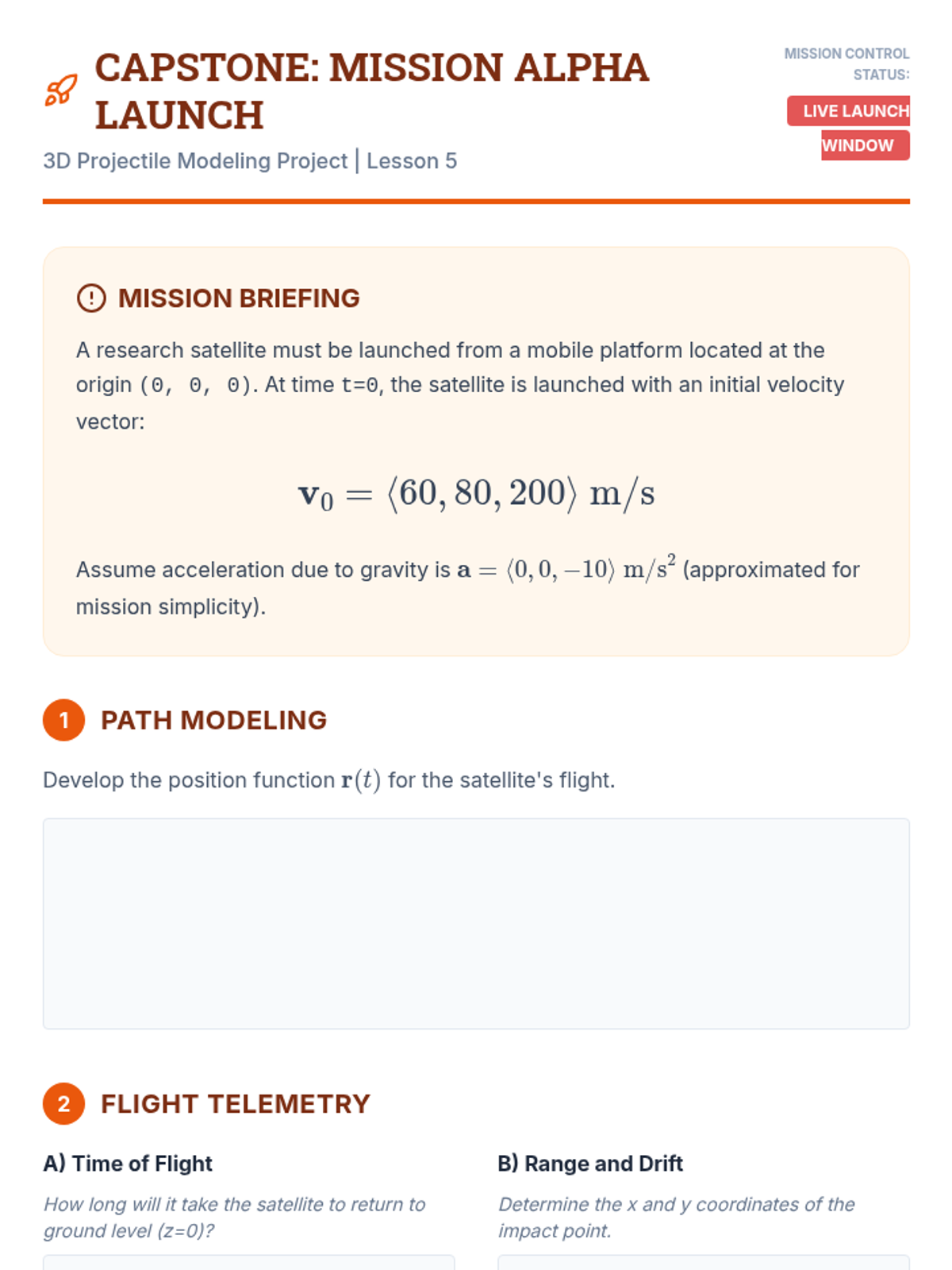
The sequence culminates with a realistic physics modeling lesson. Students set up and analyze parametric equations for projectiles, accounting for gravity and initial velocity vectors.
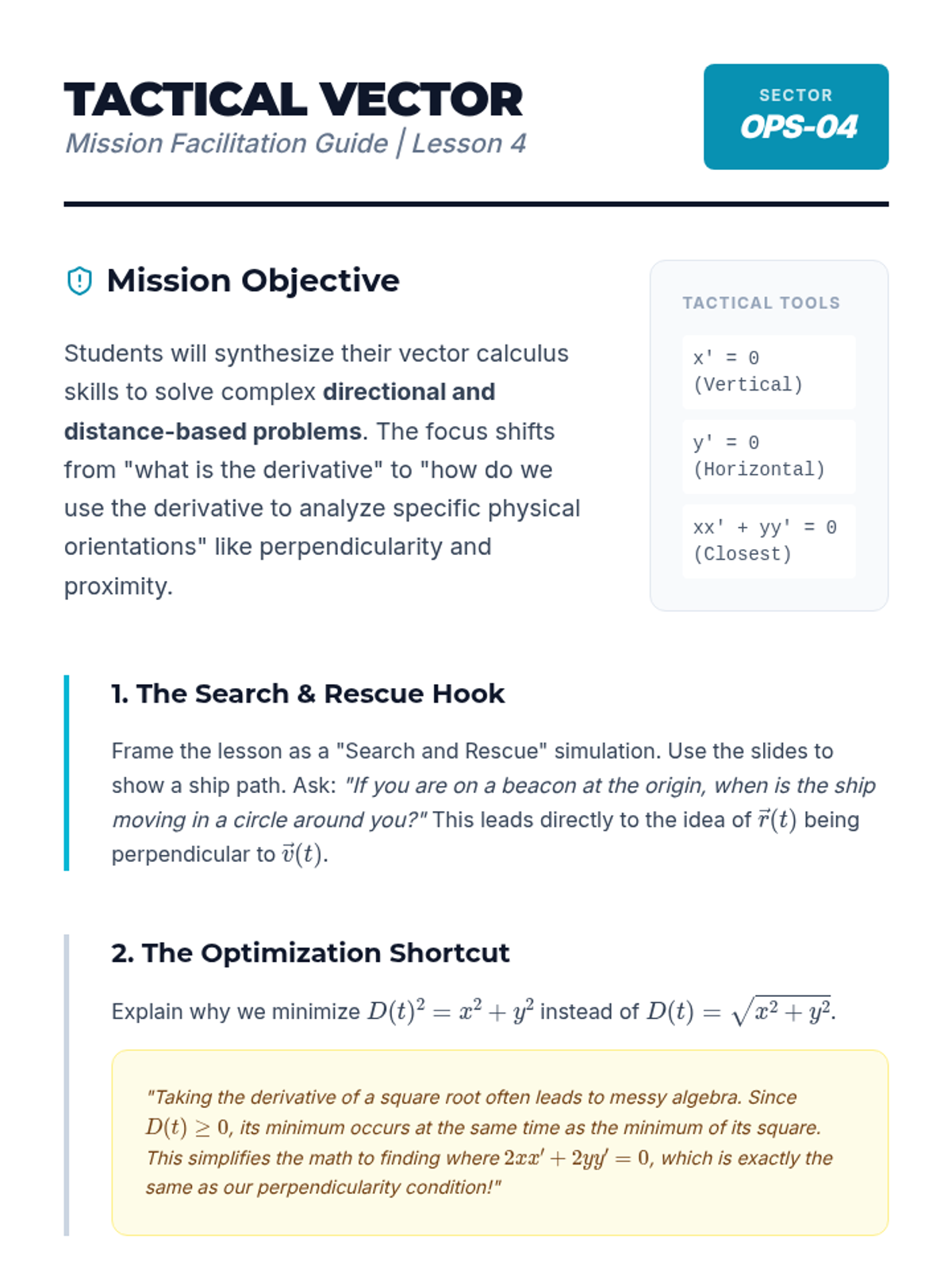
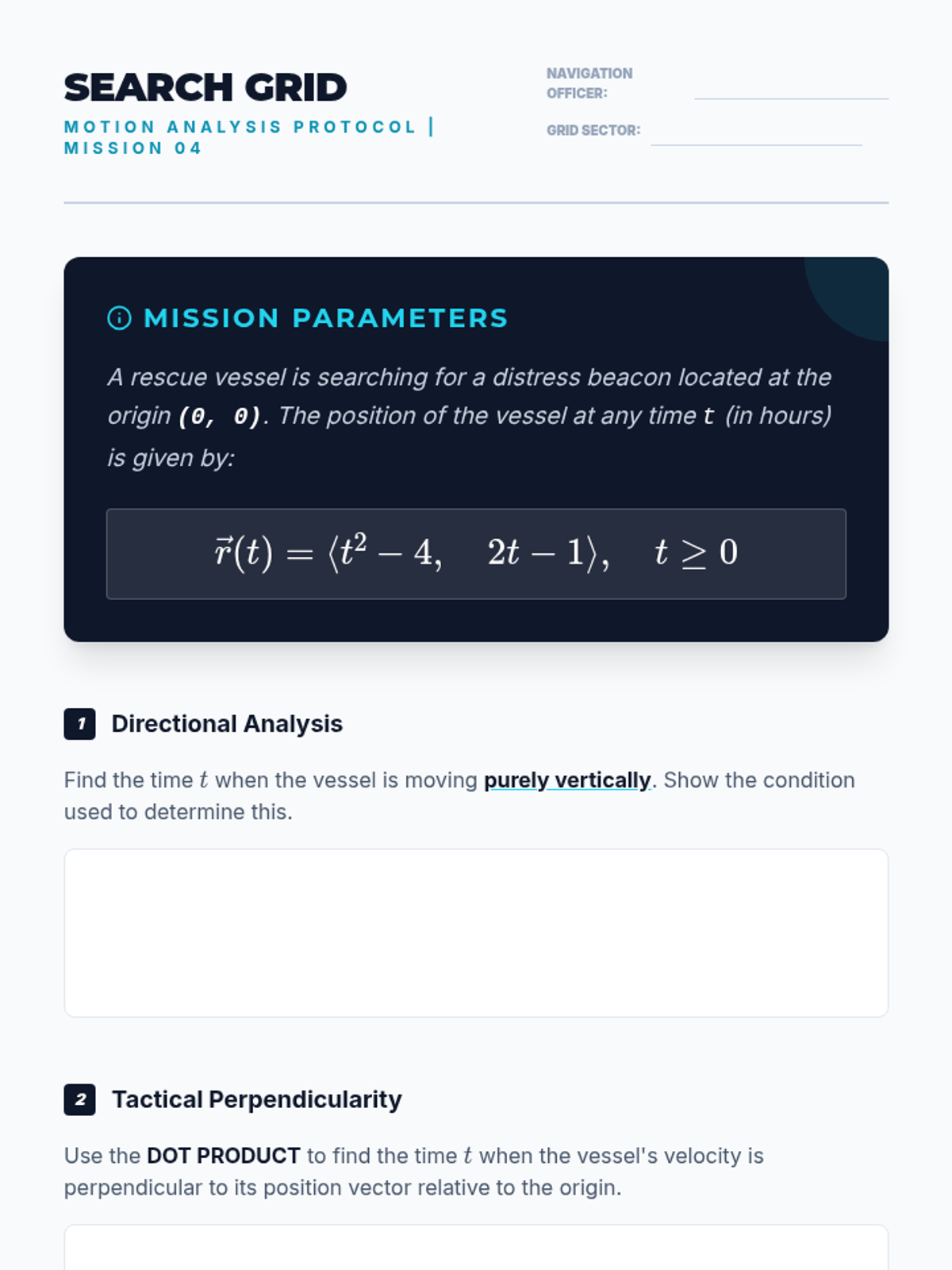
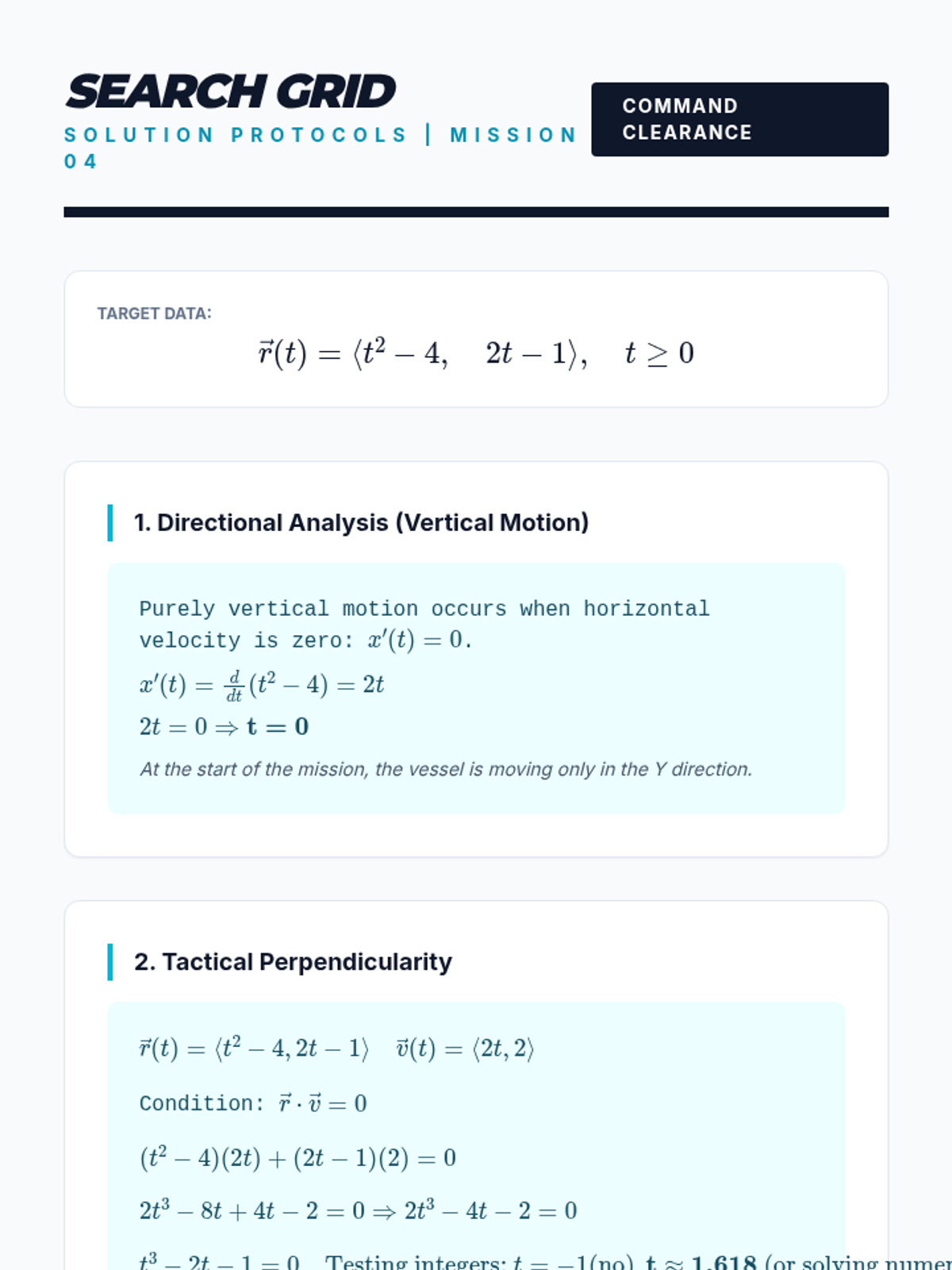
Students solve complex motion problems, such as finding the time when a particle is moving perpendicular to its position vector or closest to the origin.
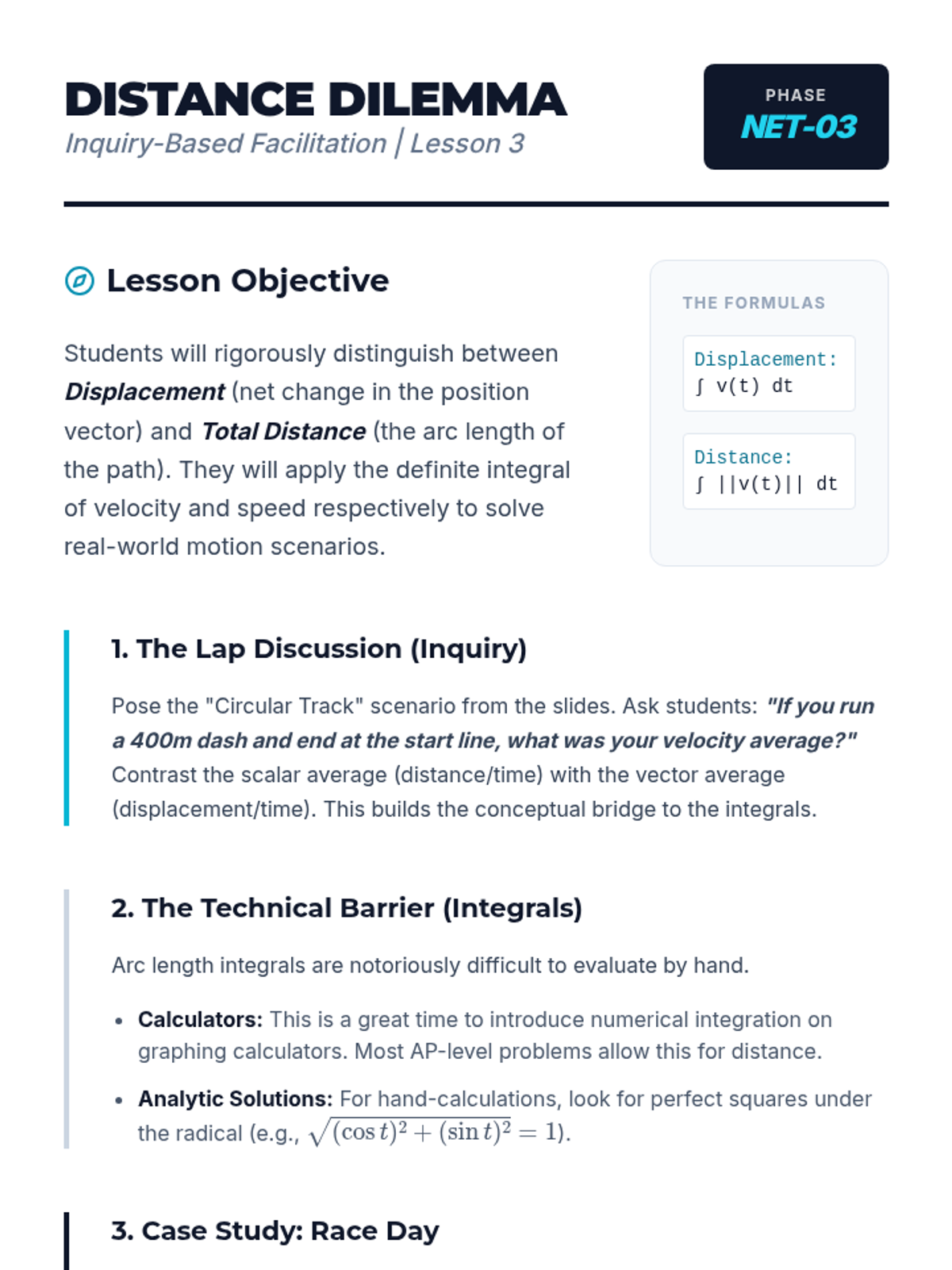
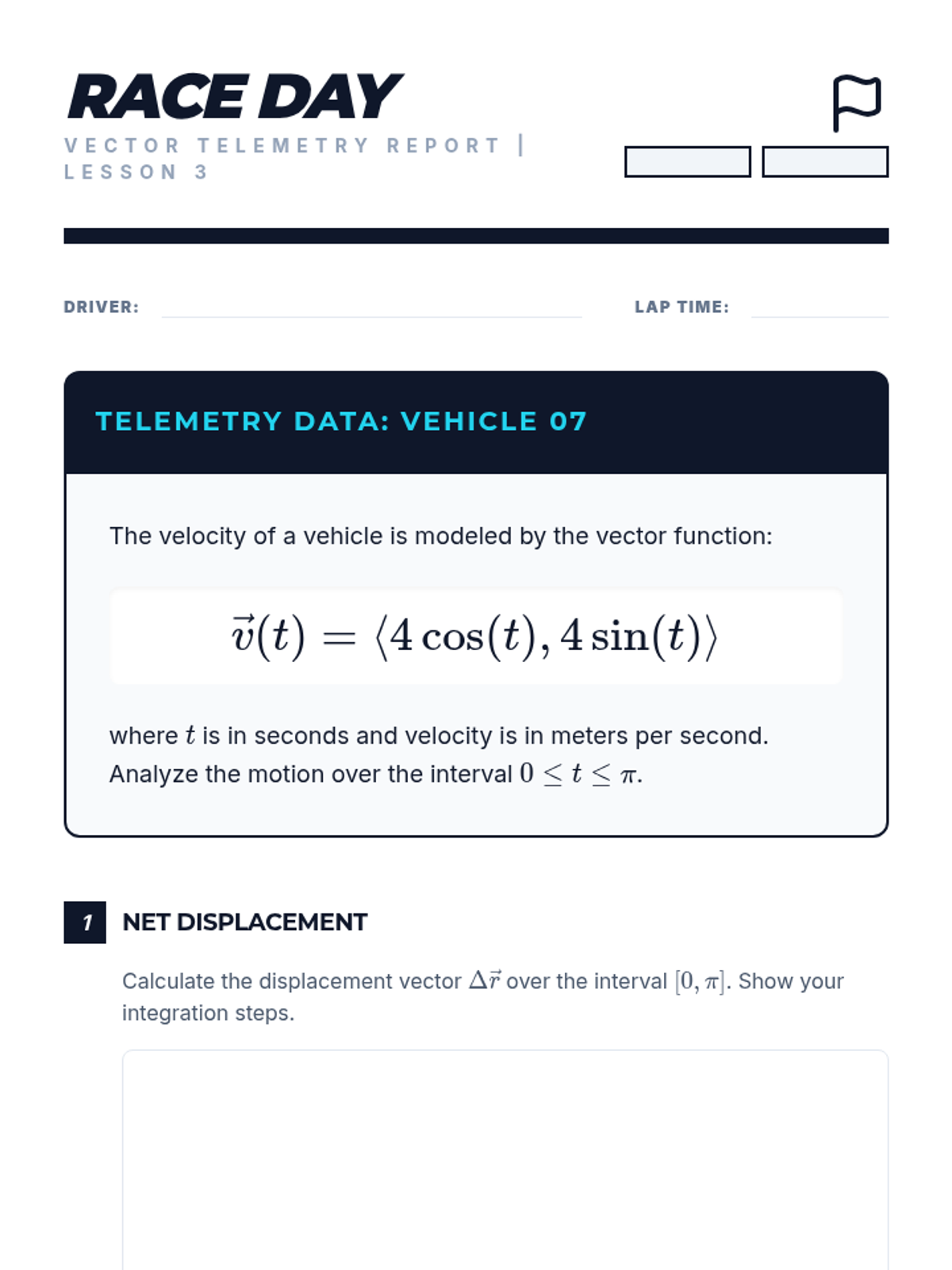
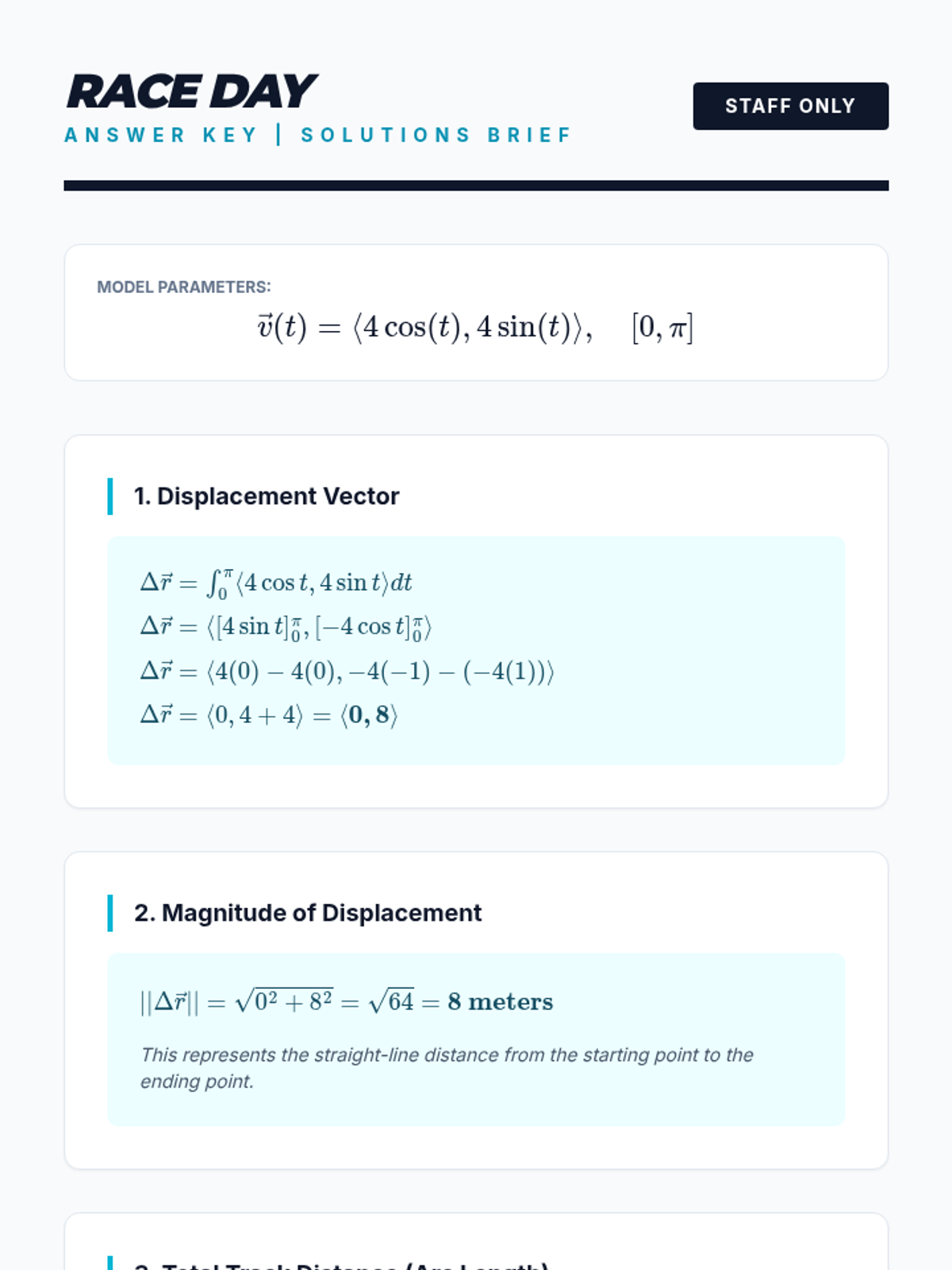
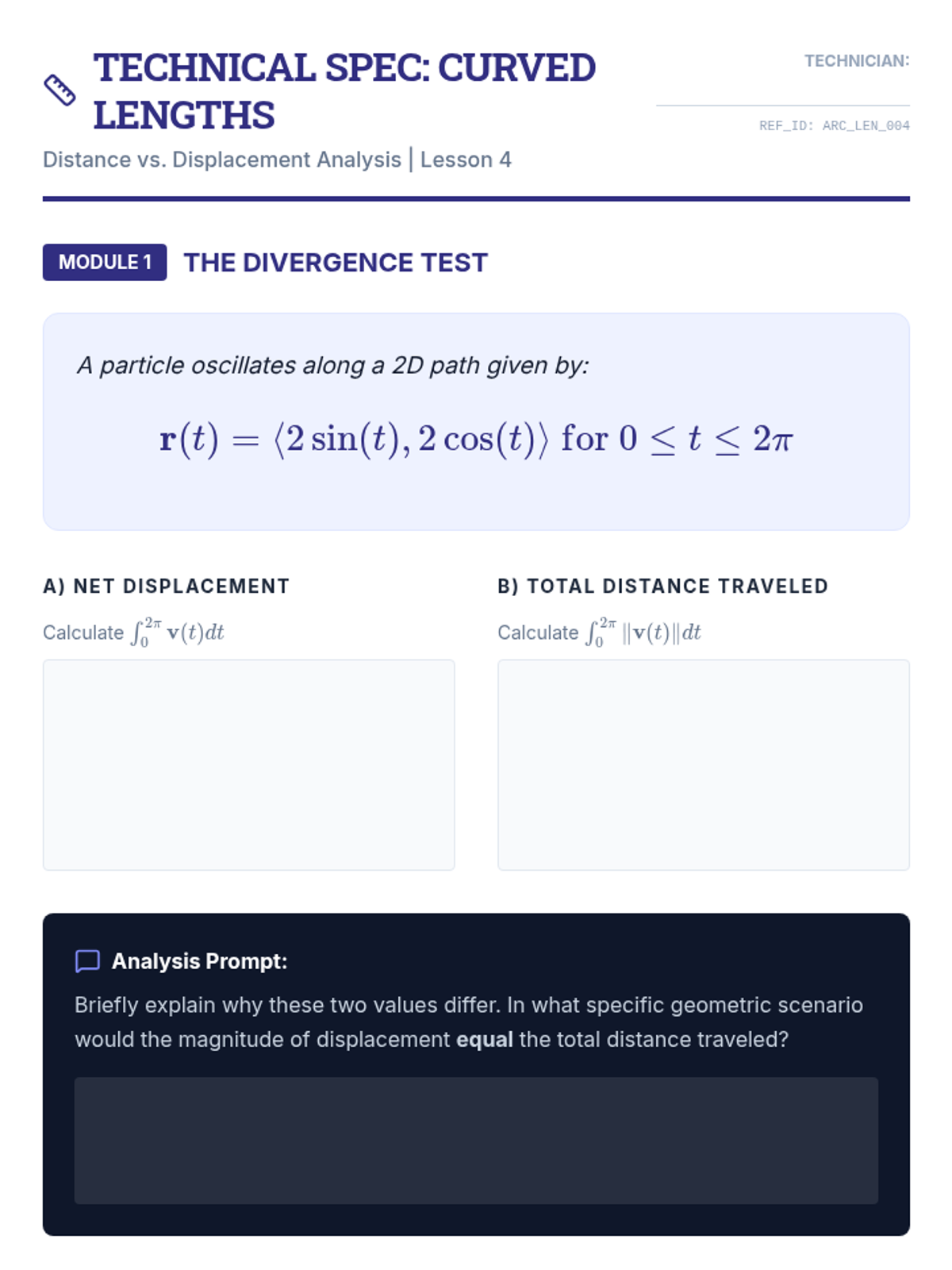
A comparative analysis lesson where students rigorously distinguish between the net change in position (displacement vector) and the total scalar distance traveled (integral of speed).
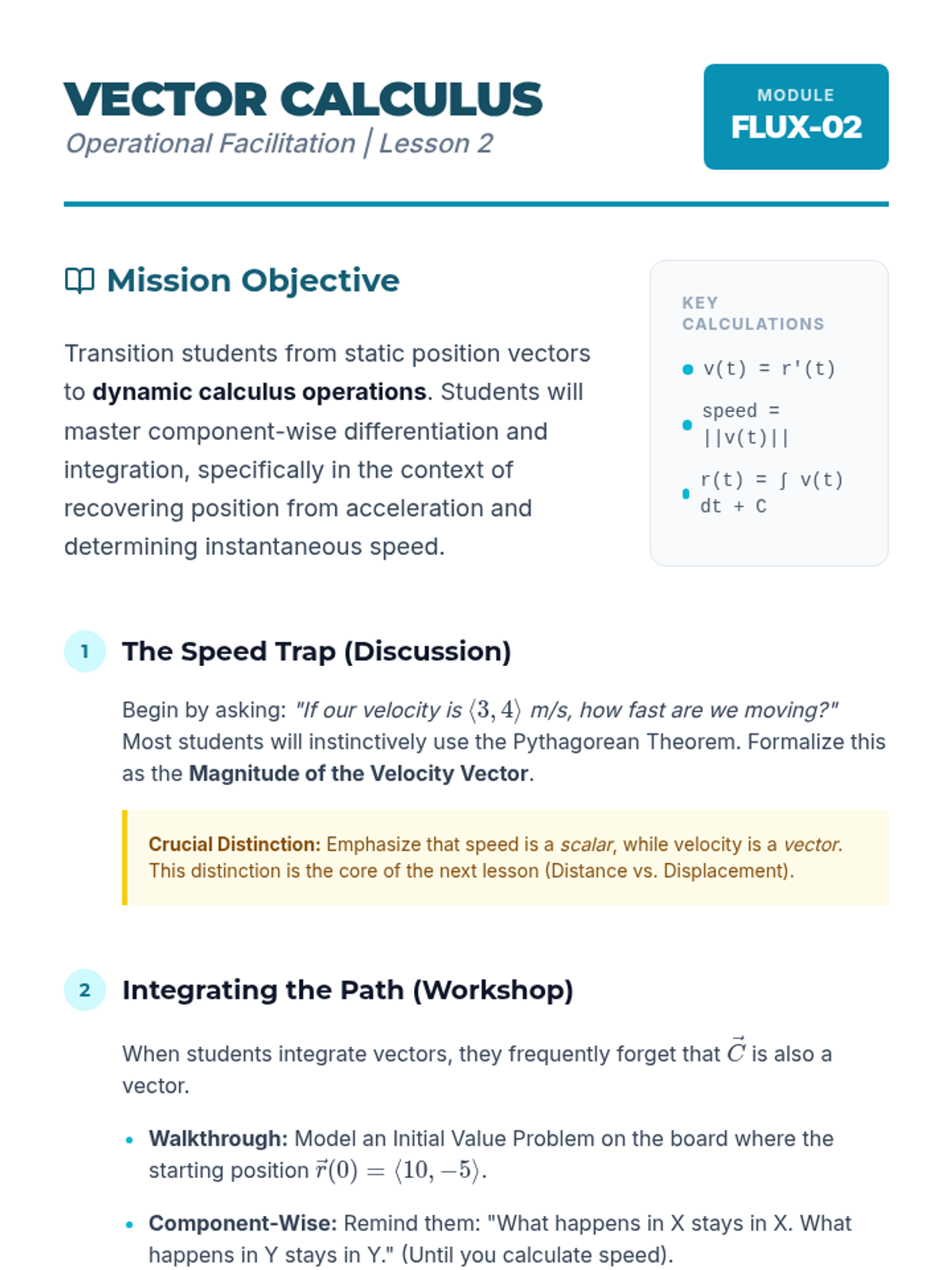
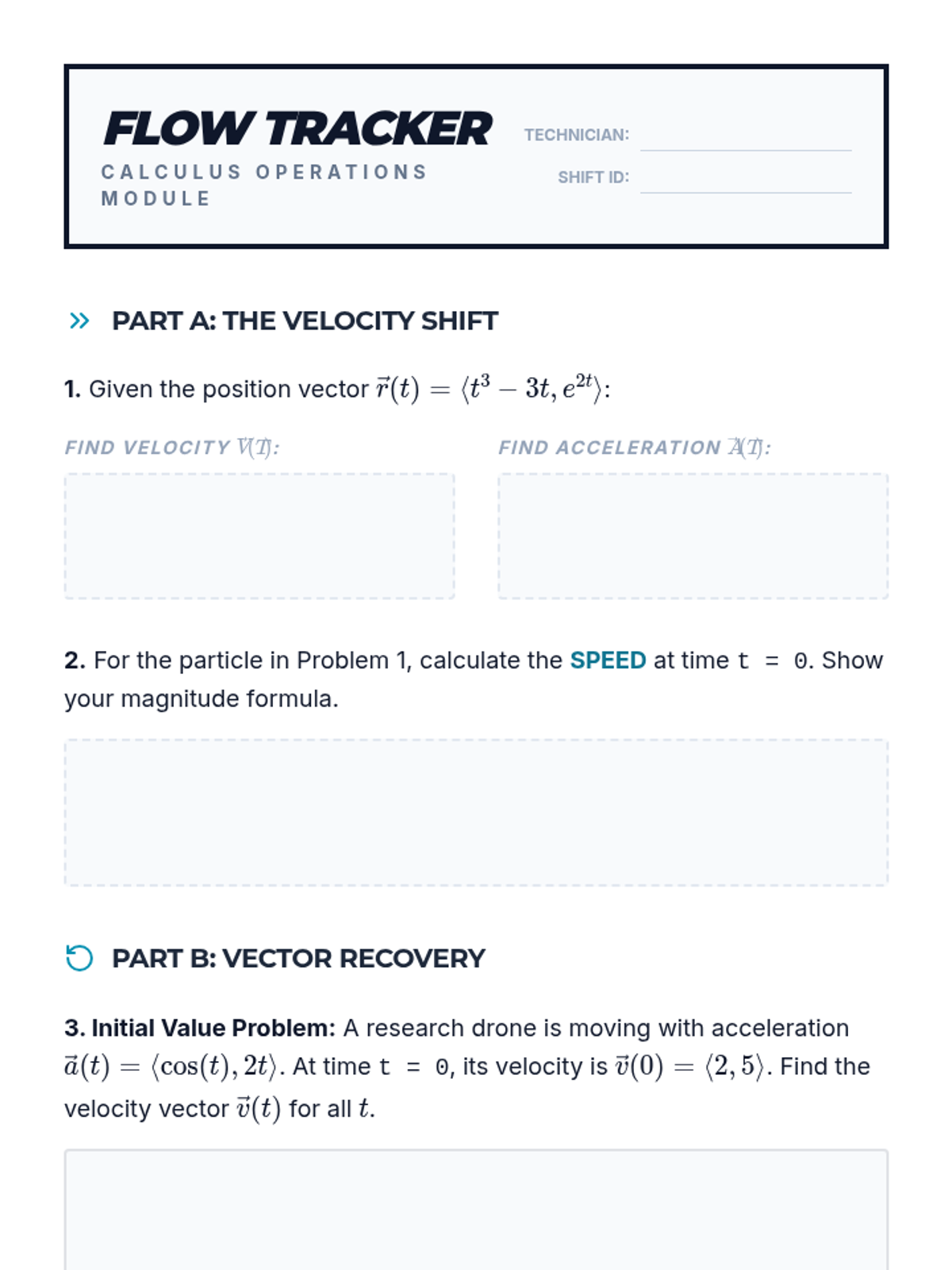
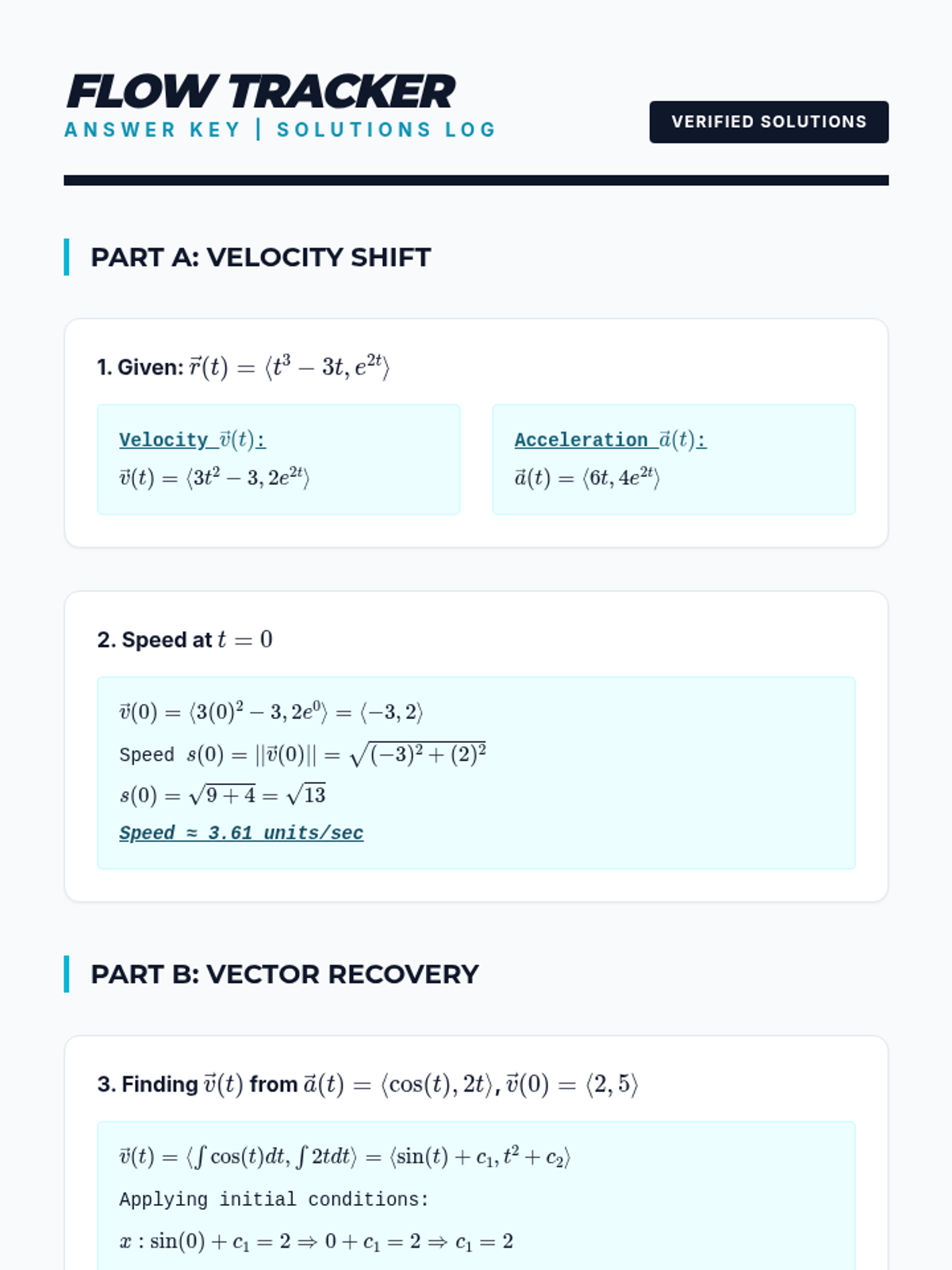
Students extend calculus operations to vector components. They perform component-wise differentiation and integration to find velocity vectors from position and position vectors from velocity.
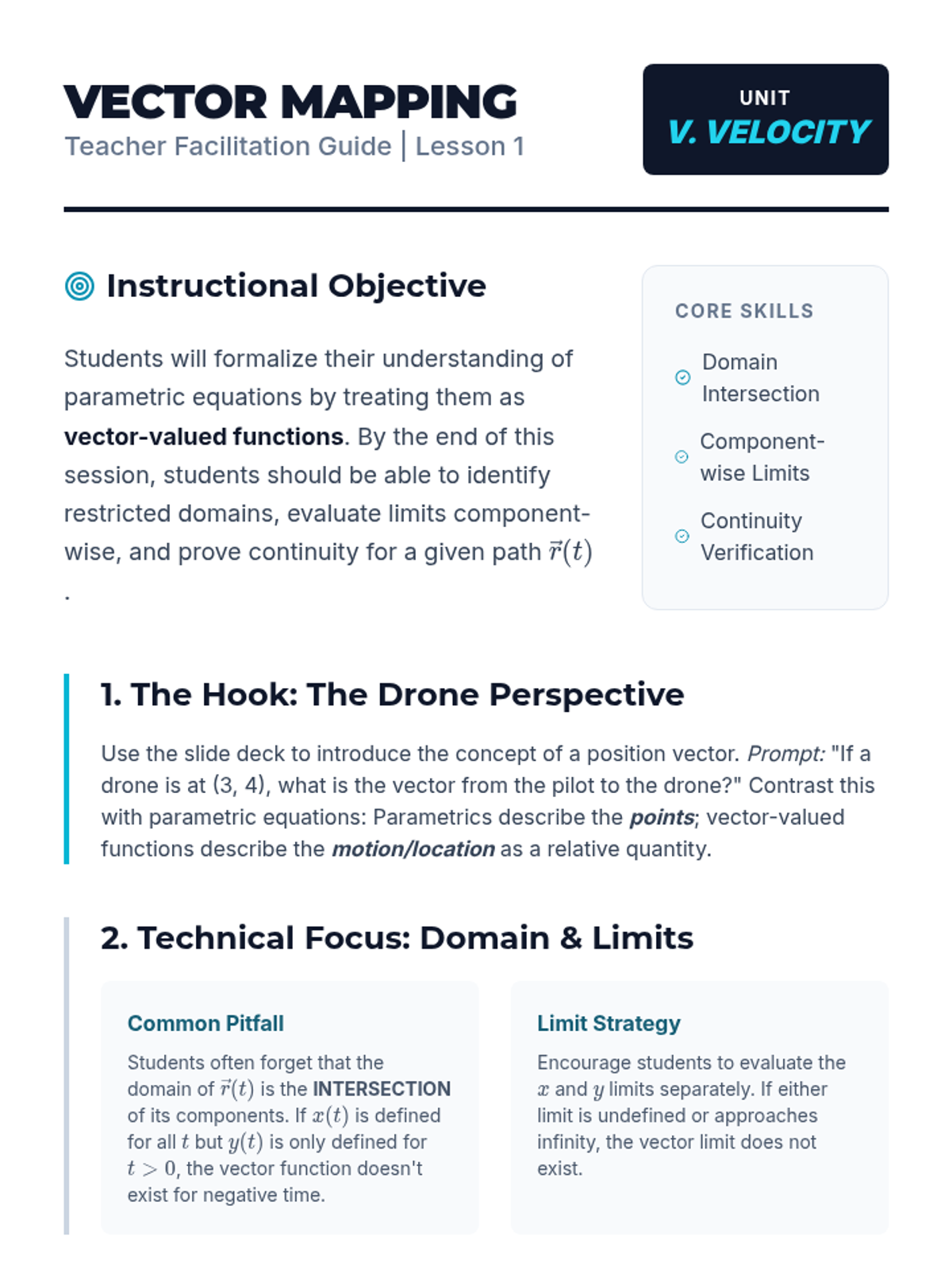
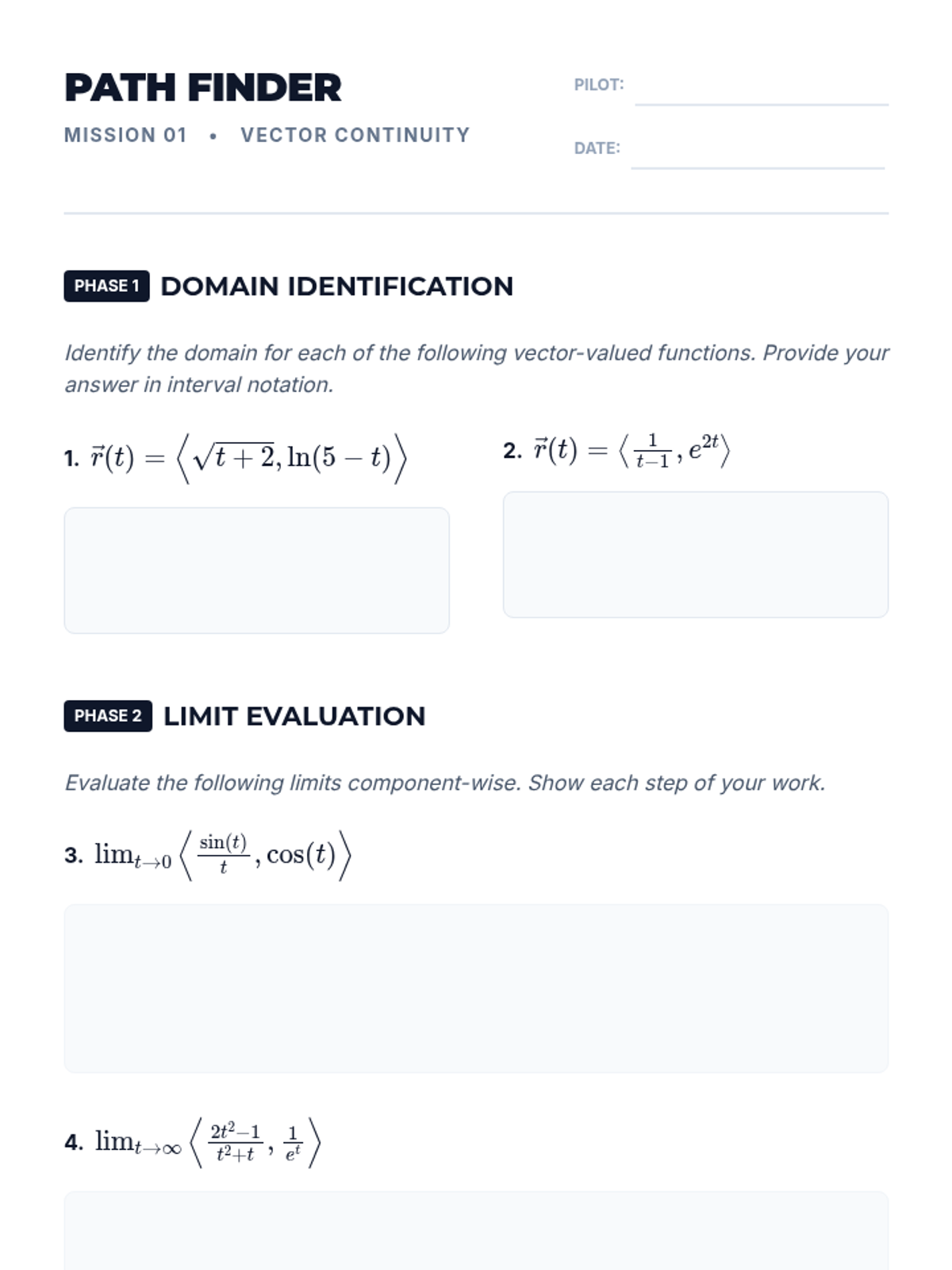
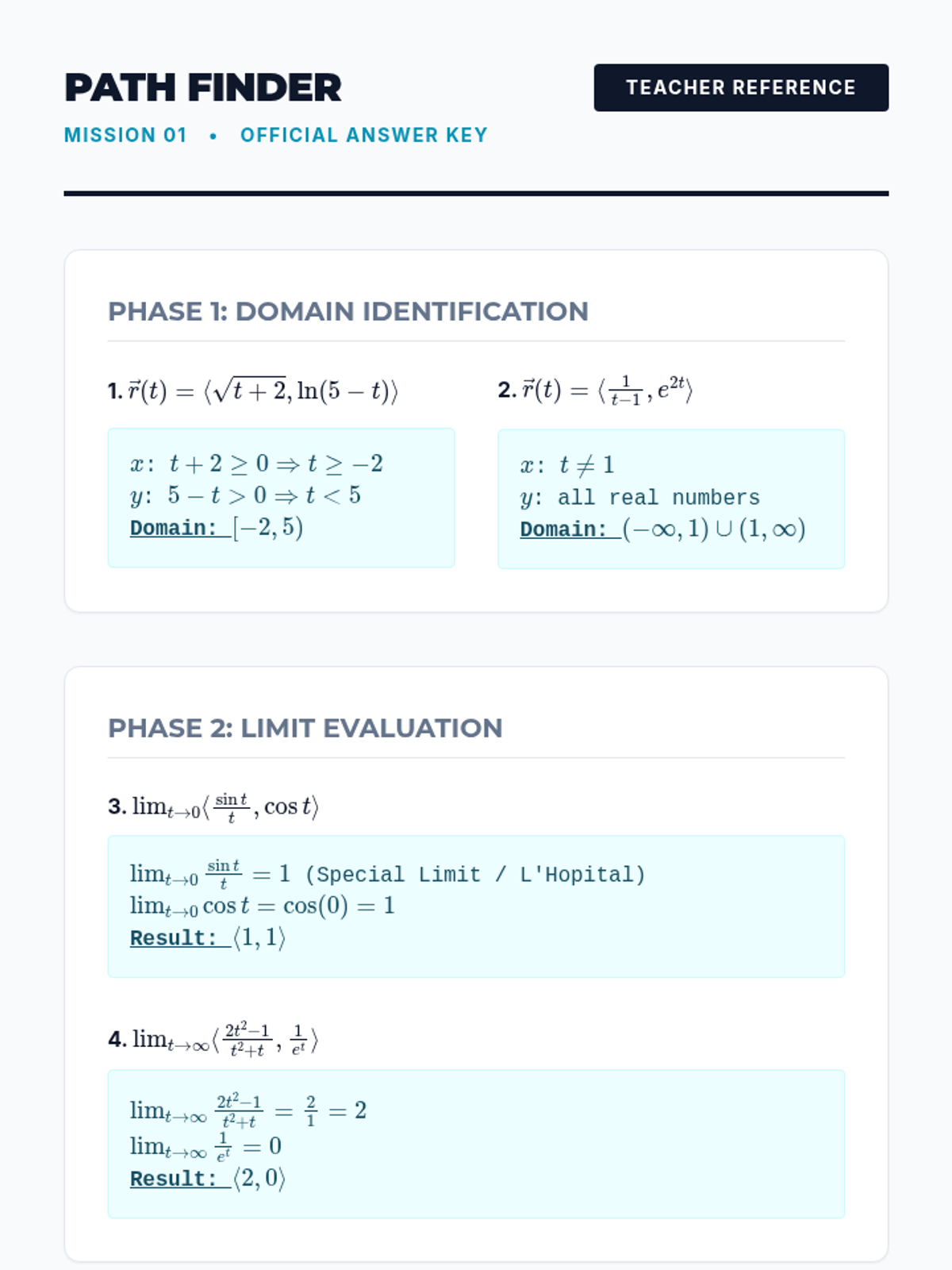
Students formally define vector-valued functions and explore limits and continuity. They learn to visualize the domain and output as vectors pointing to a path.
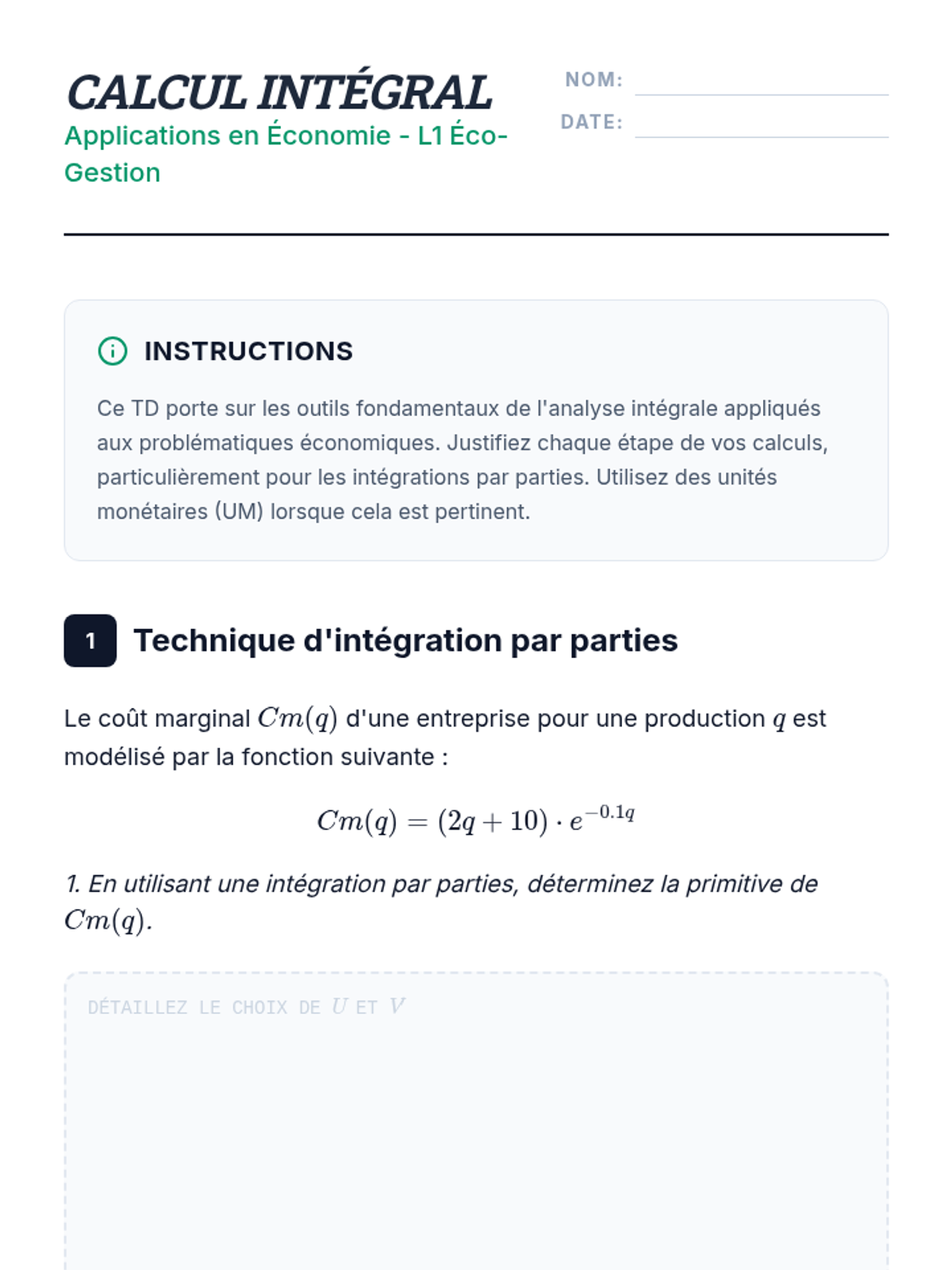
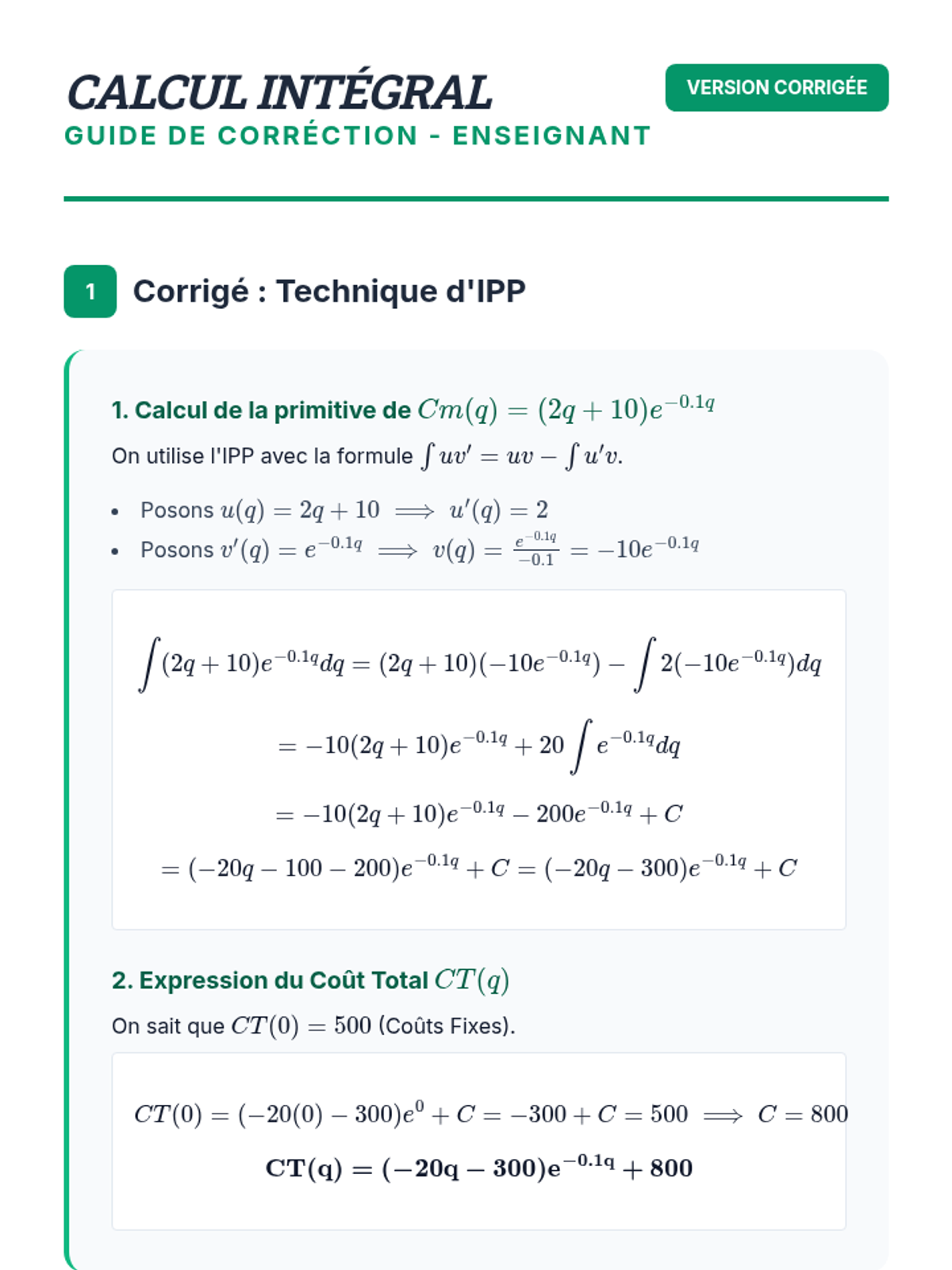
Une leçon complète sur le calcul intégral appliqué à l'économie, couvrant l'intégration par parties, l'indice de Gini et les surplus du consommateur et du producteur.
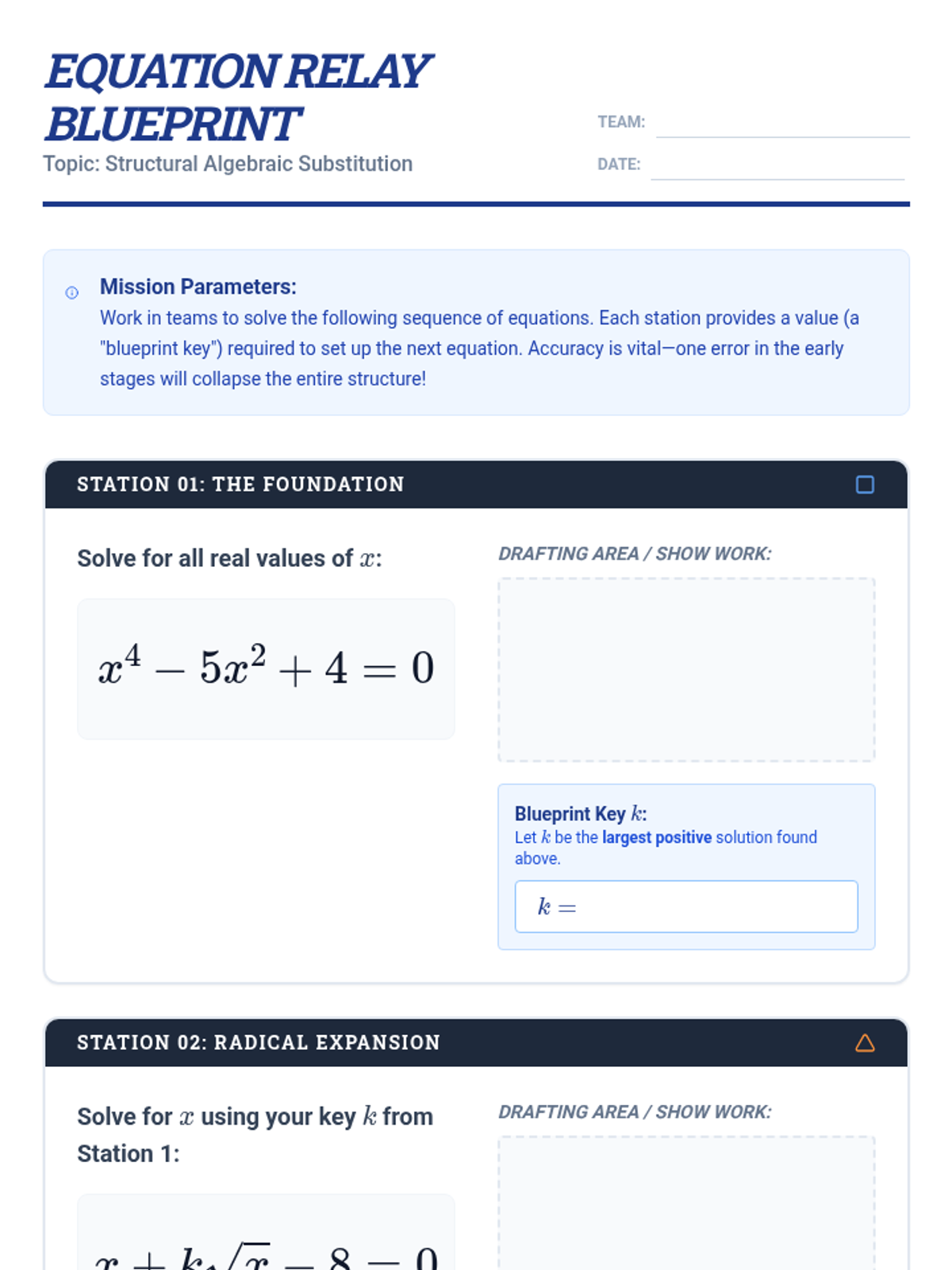
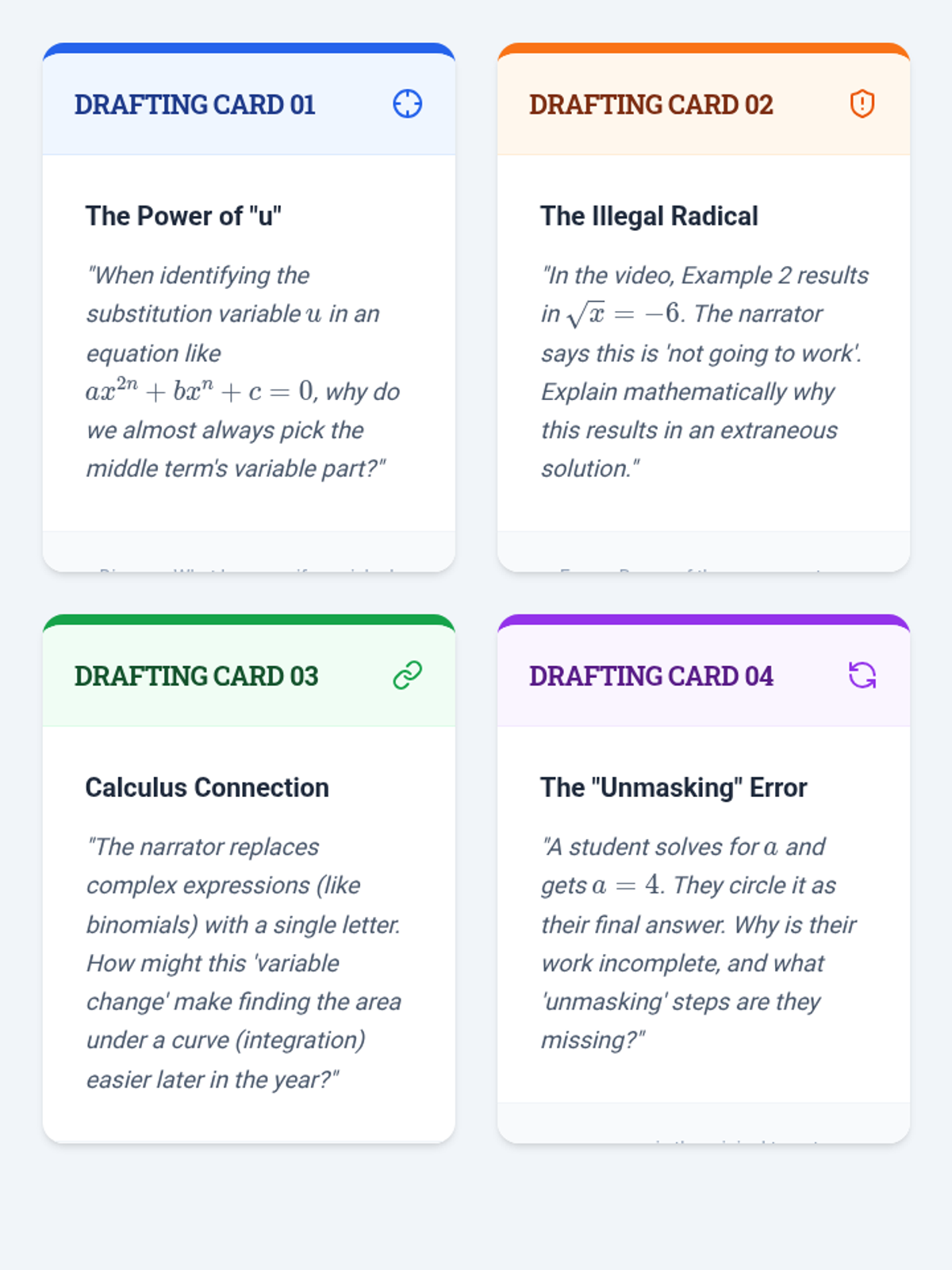
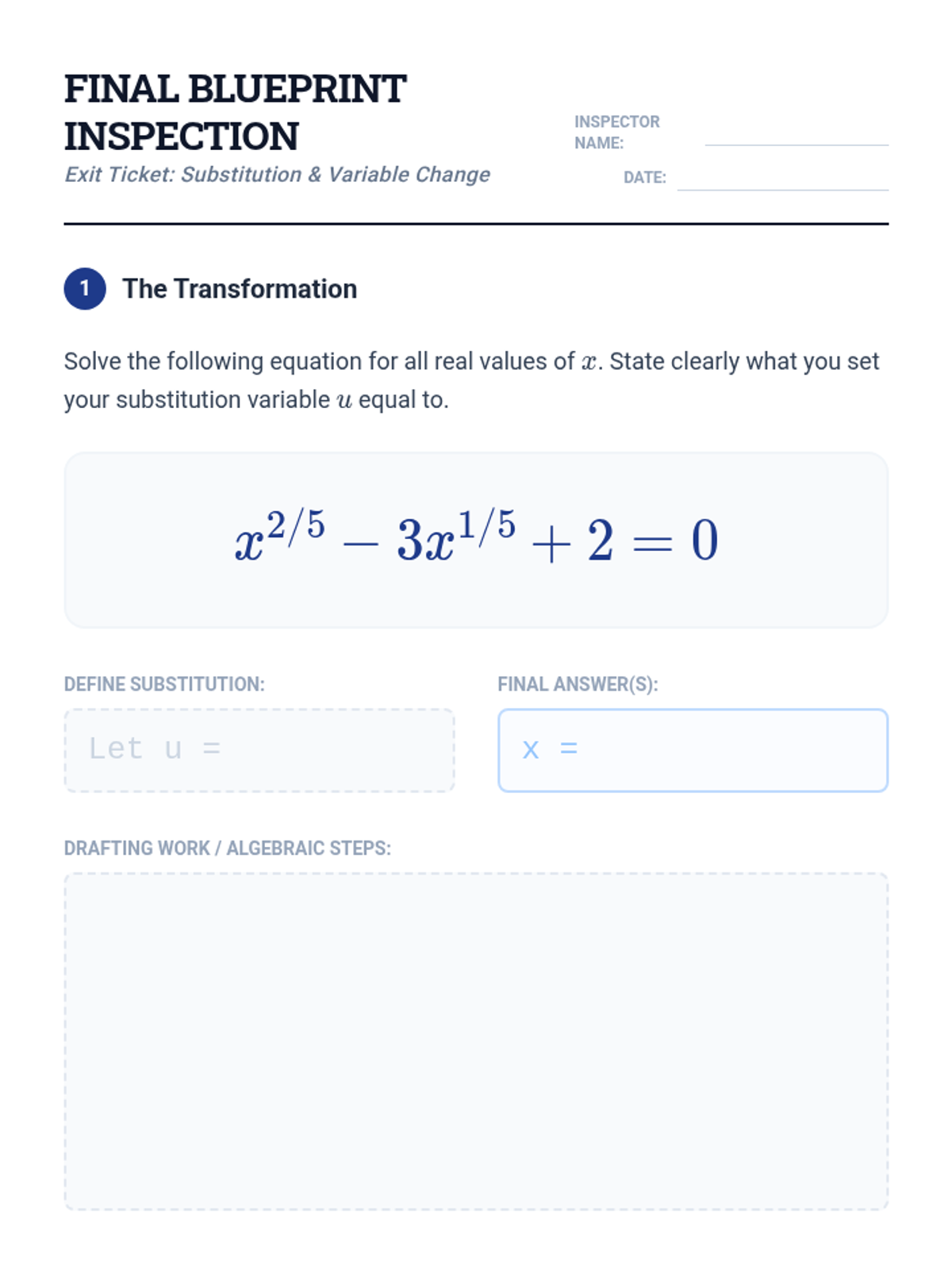
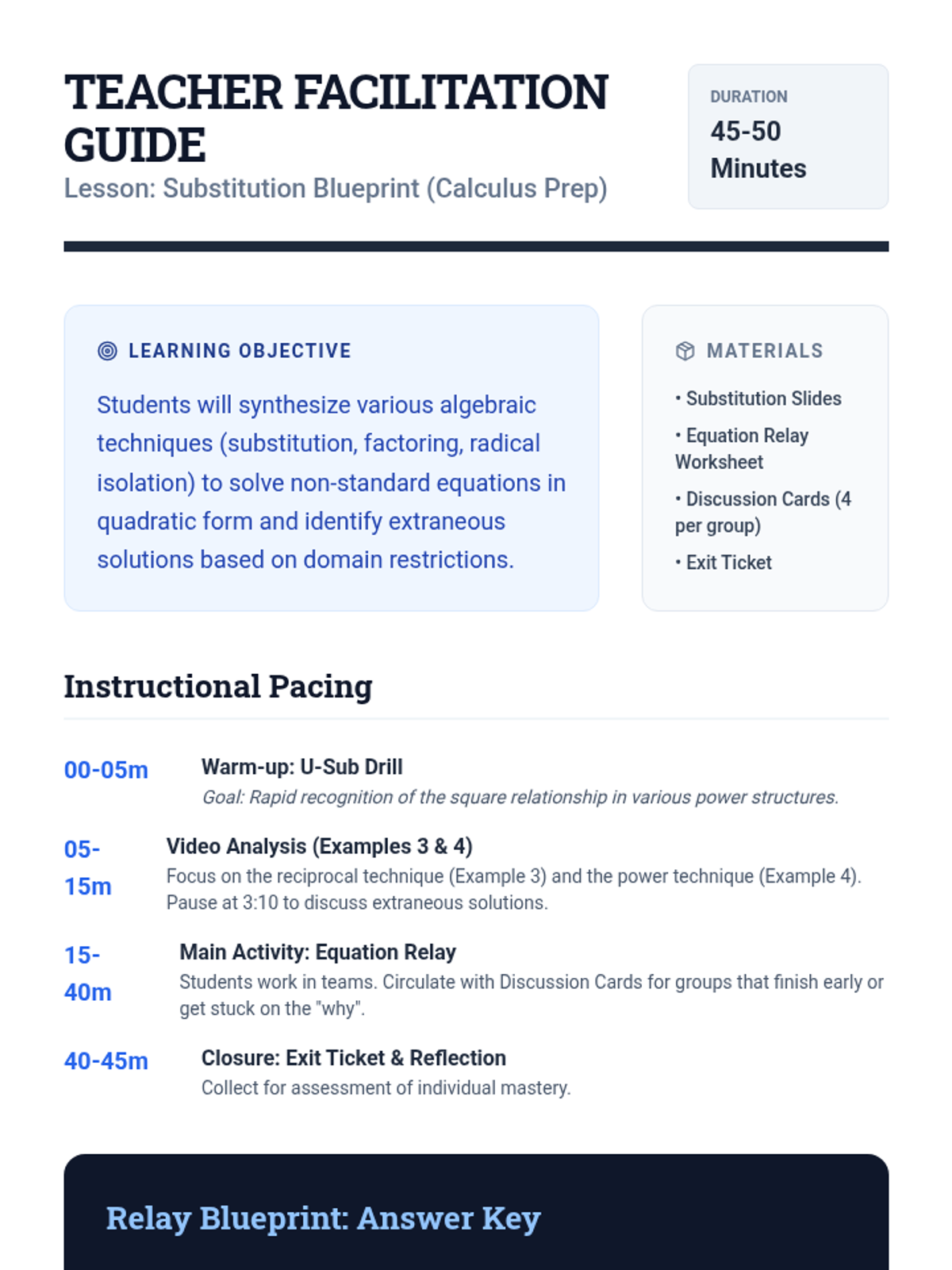
A high-school calculus preparation lesson focused on solving non-standard algebraic equations using substitution techniques, with a focus on domain restrictions and preparation for integration by substitution.
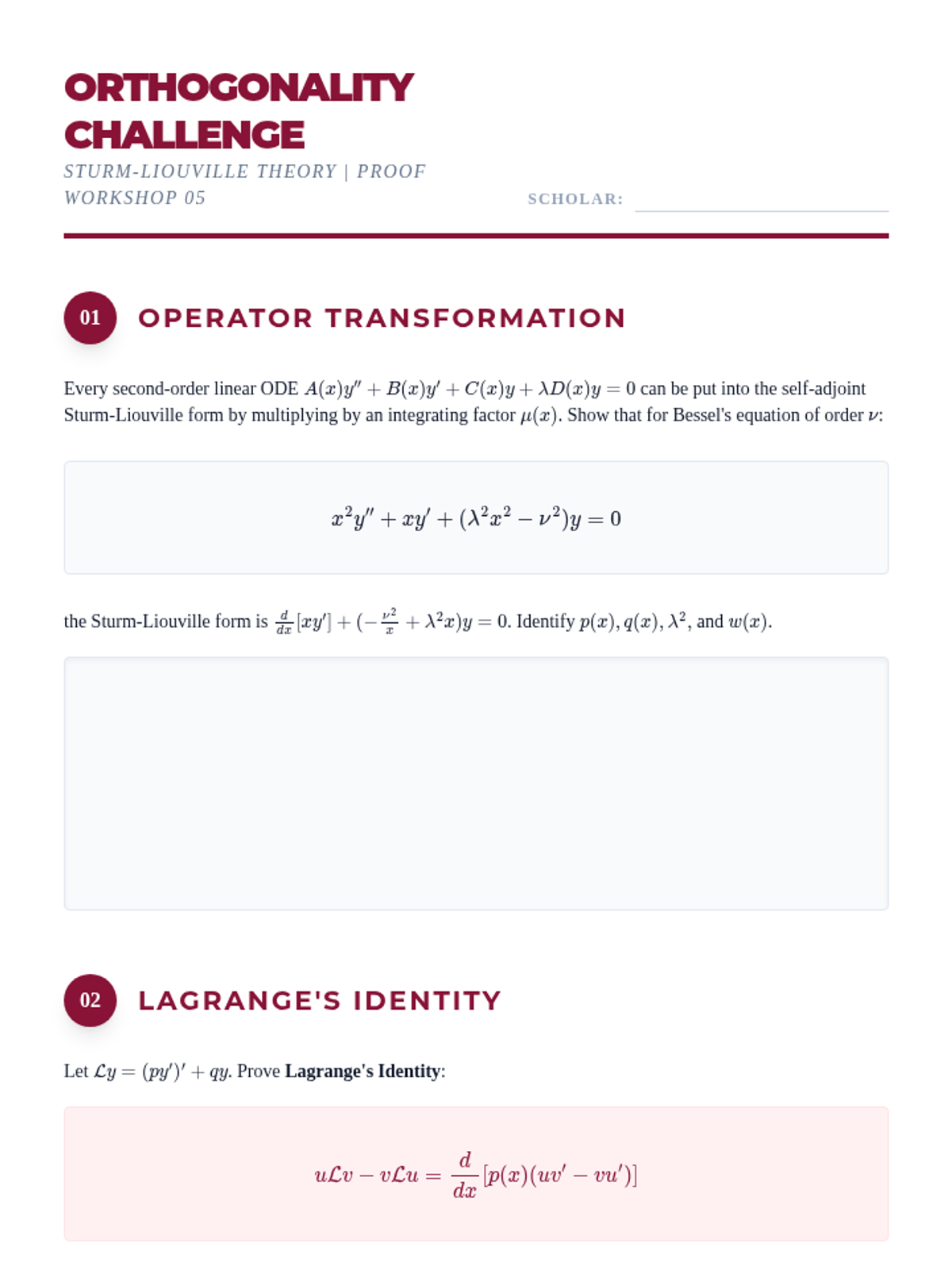
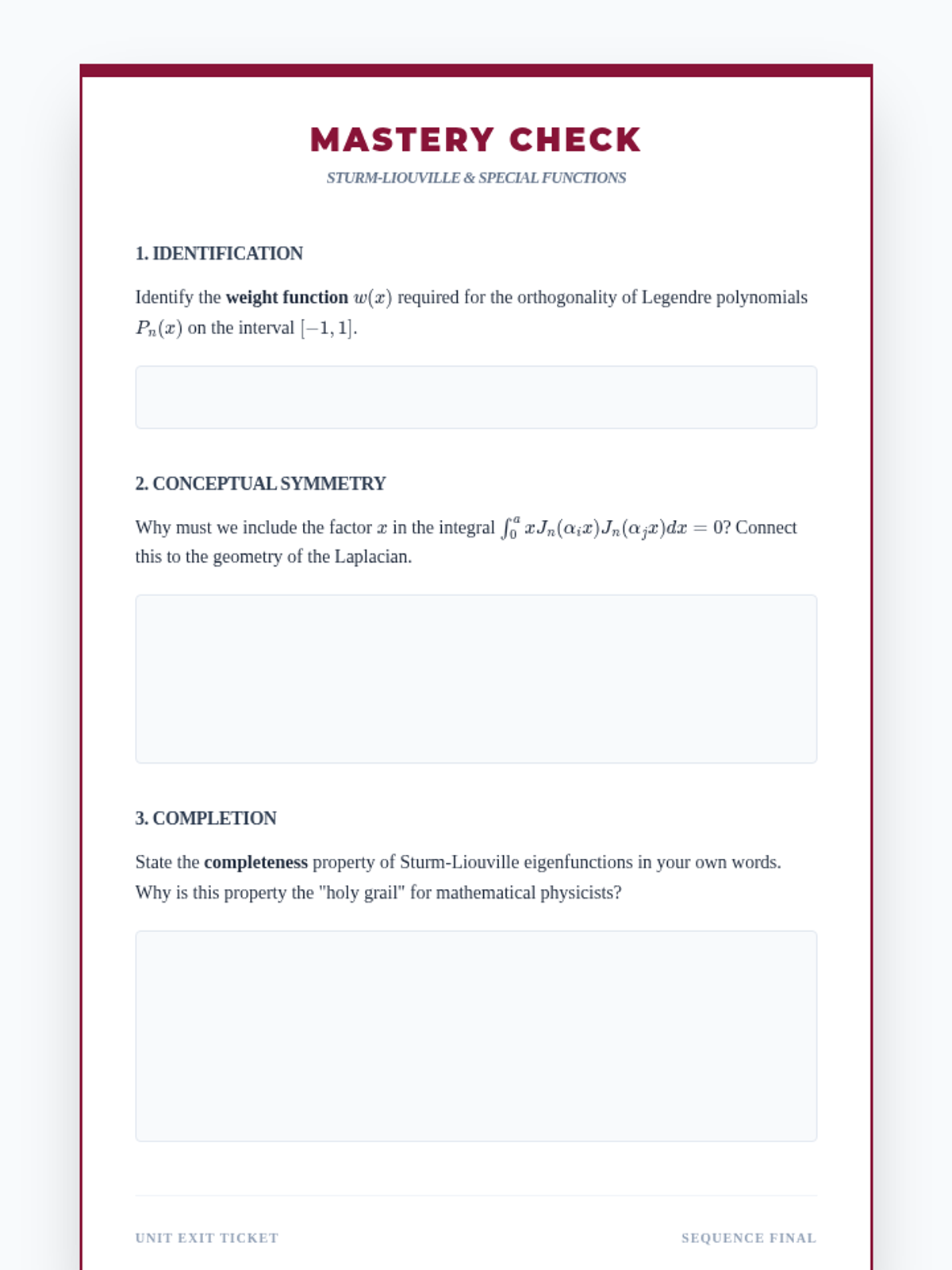
Synthesizes previous topics through the lens of Sturm-Liouville theory, focusing on the orthogonality of eigenfunctions and generalized Fourier series.
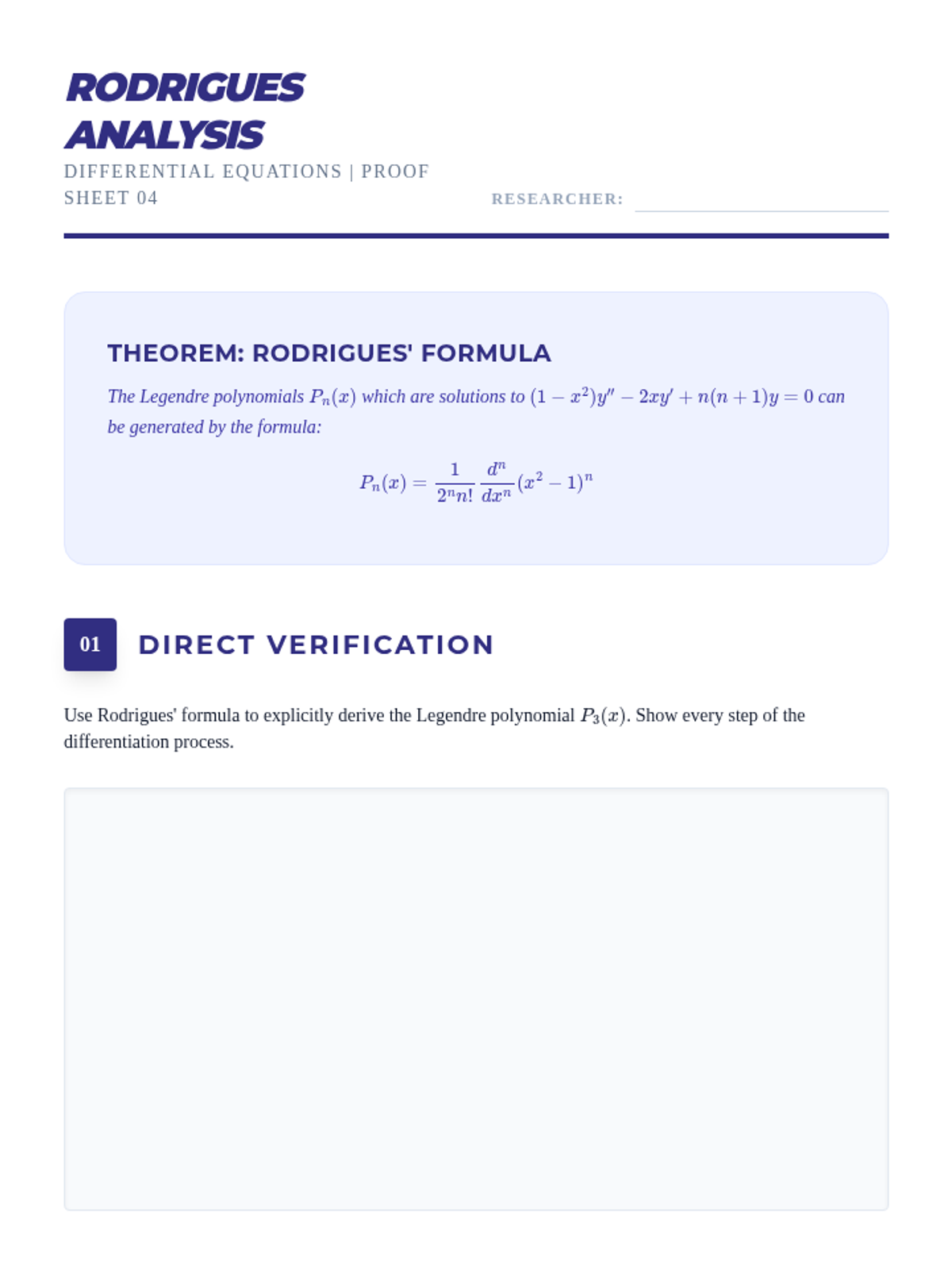
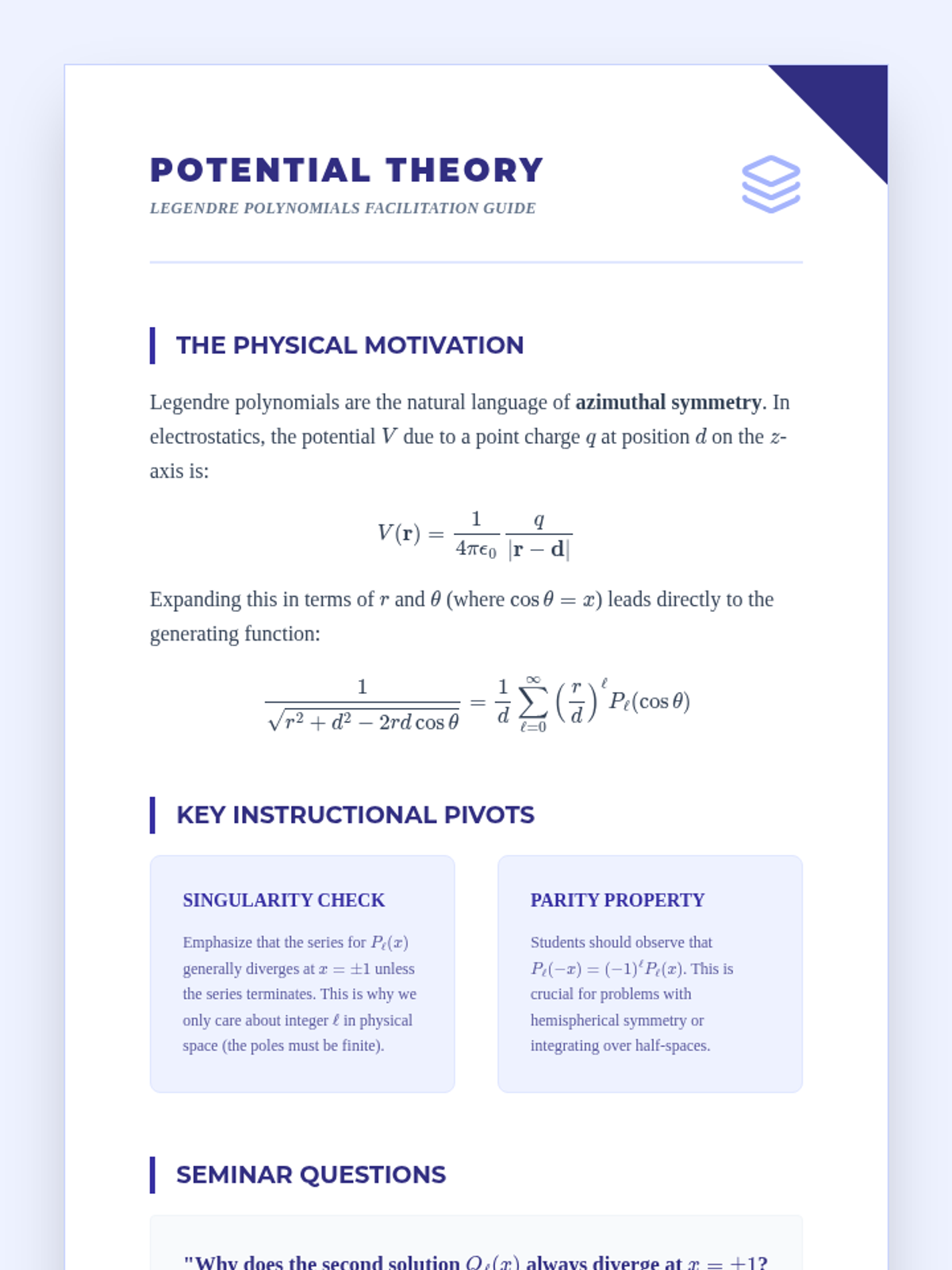
Examines Legendre's equation and the derivation of Legendre polynomials via Rodrigues' formula, emphasizing their role in spherical potential problems.
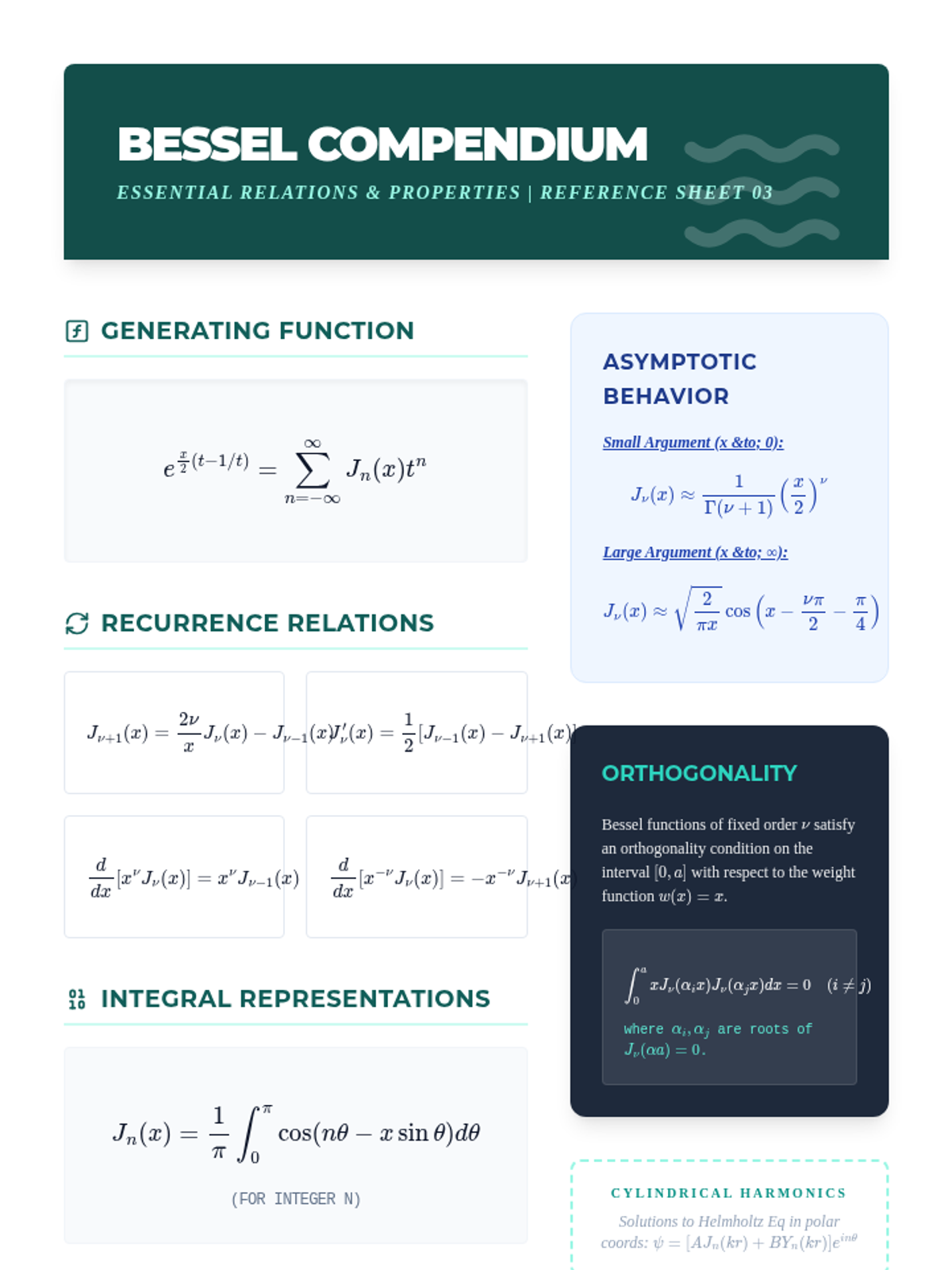
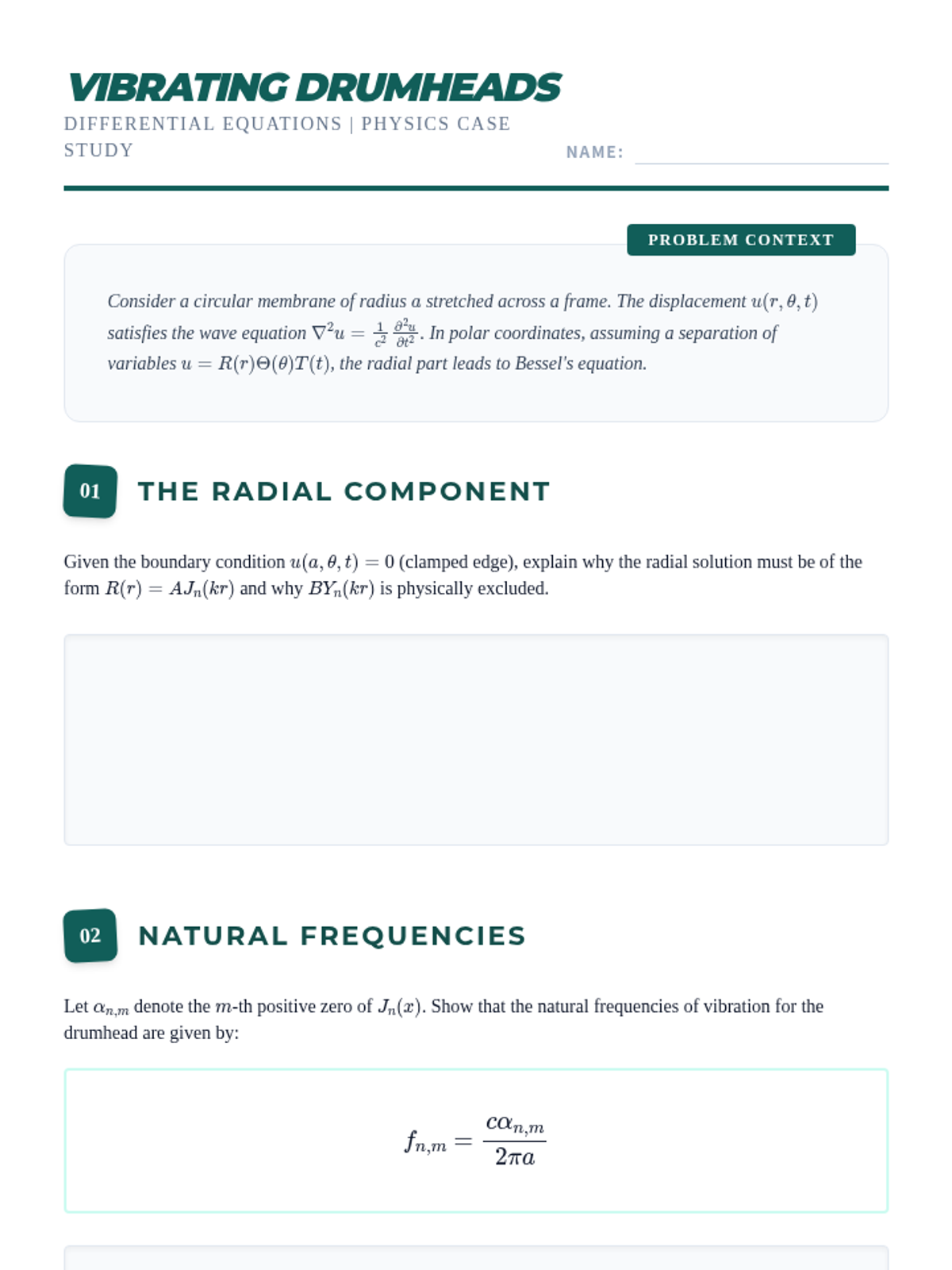
Explores Bessel's equation and the resulting Bessel functions of the first and second kind, particularly their applications in systems with cylindrical symmetry.
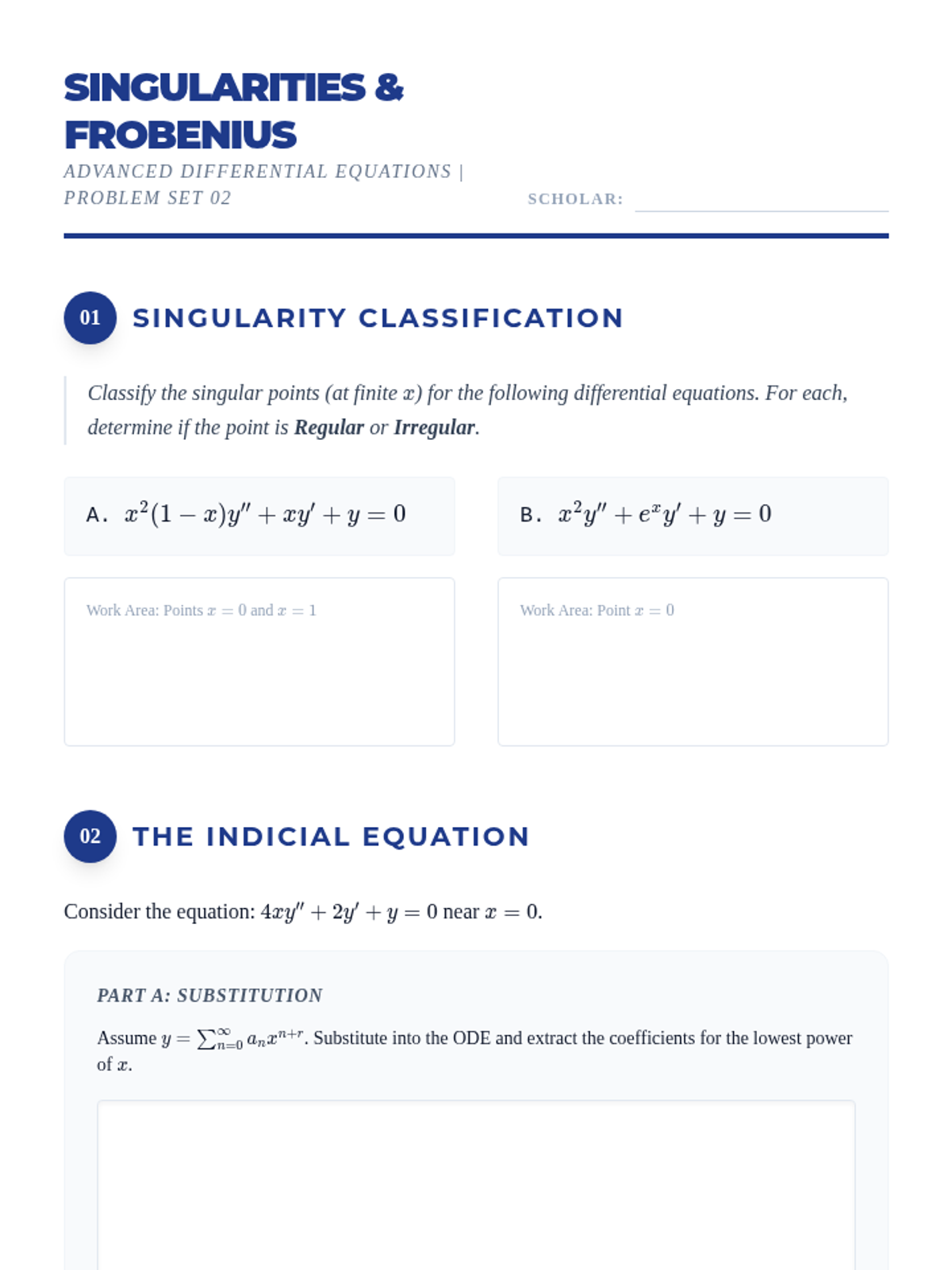
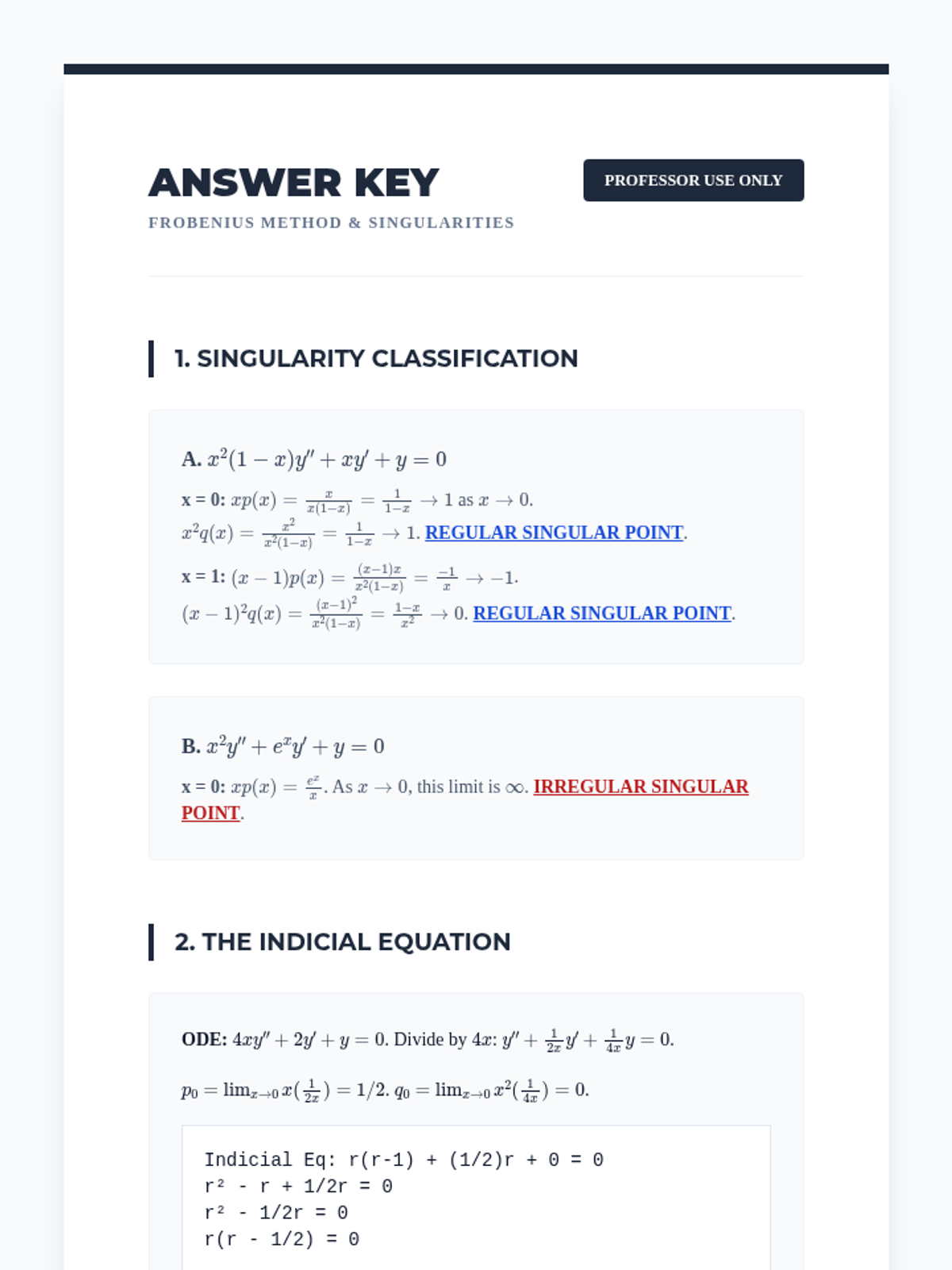
Covers the classification of singular points and the application of the Method of Frobenius to find solutions near regular singularities by solving the indicial equation.
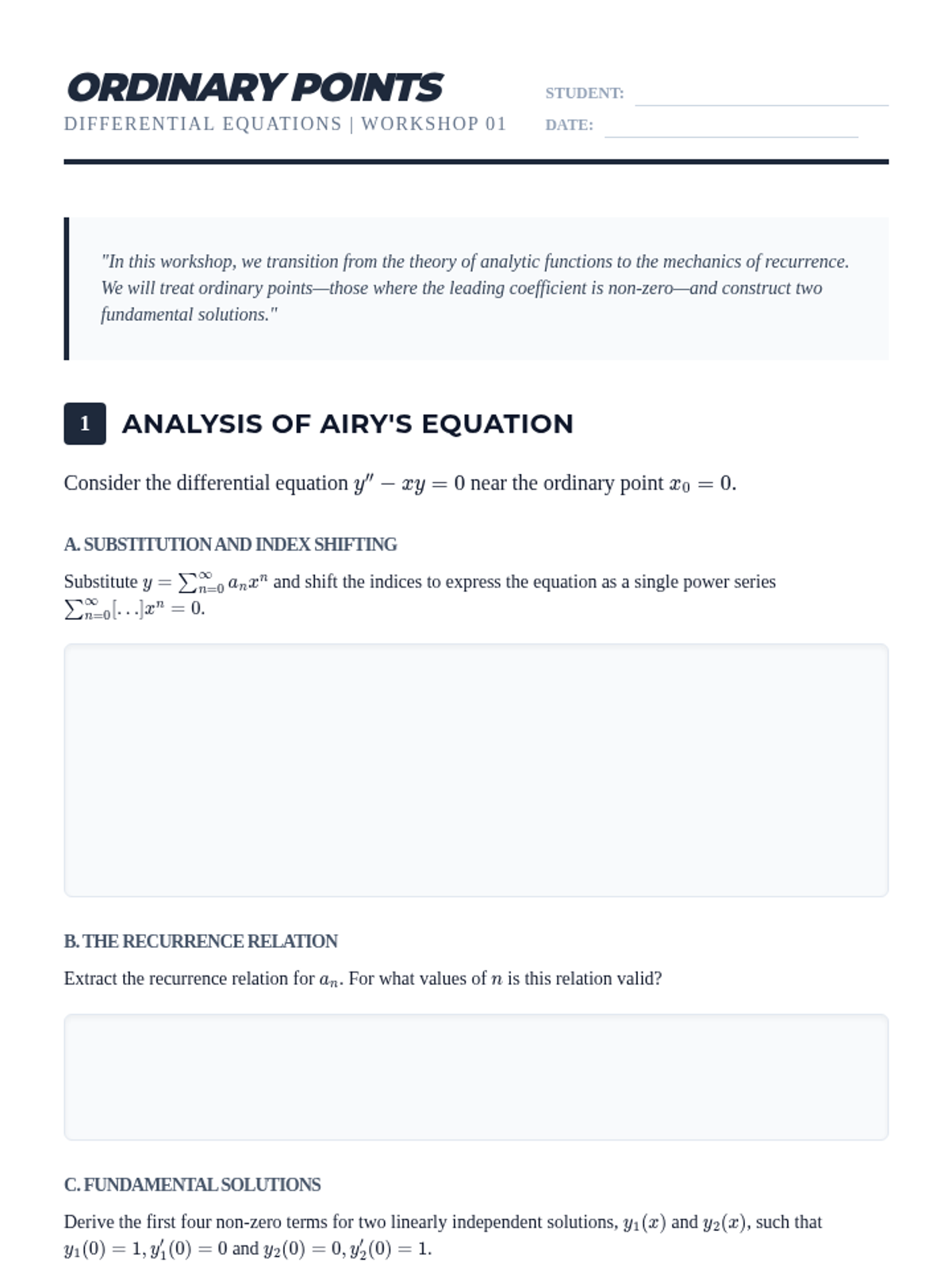
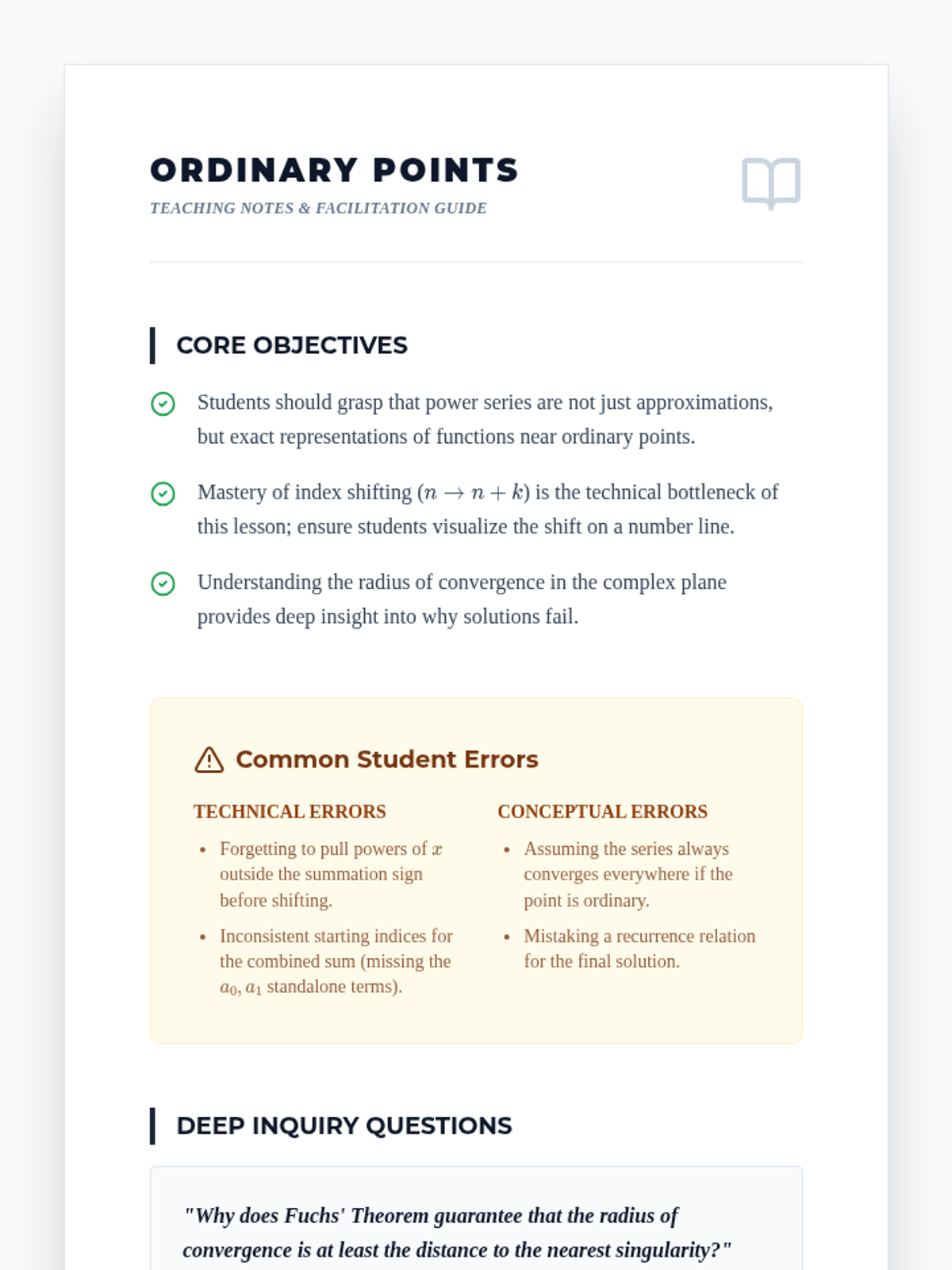
Focuses on solving second-order linear differential equations near ordinary points using power series, deriving recurrence relations, and determining the radius of convergence.
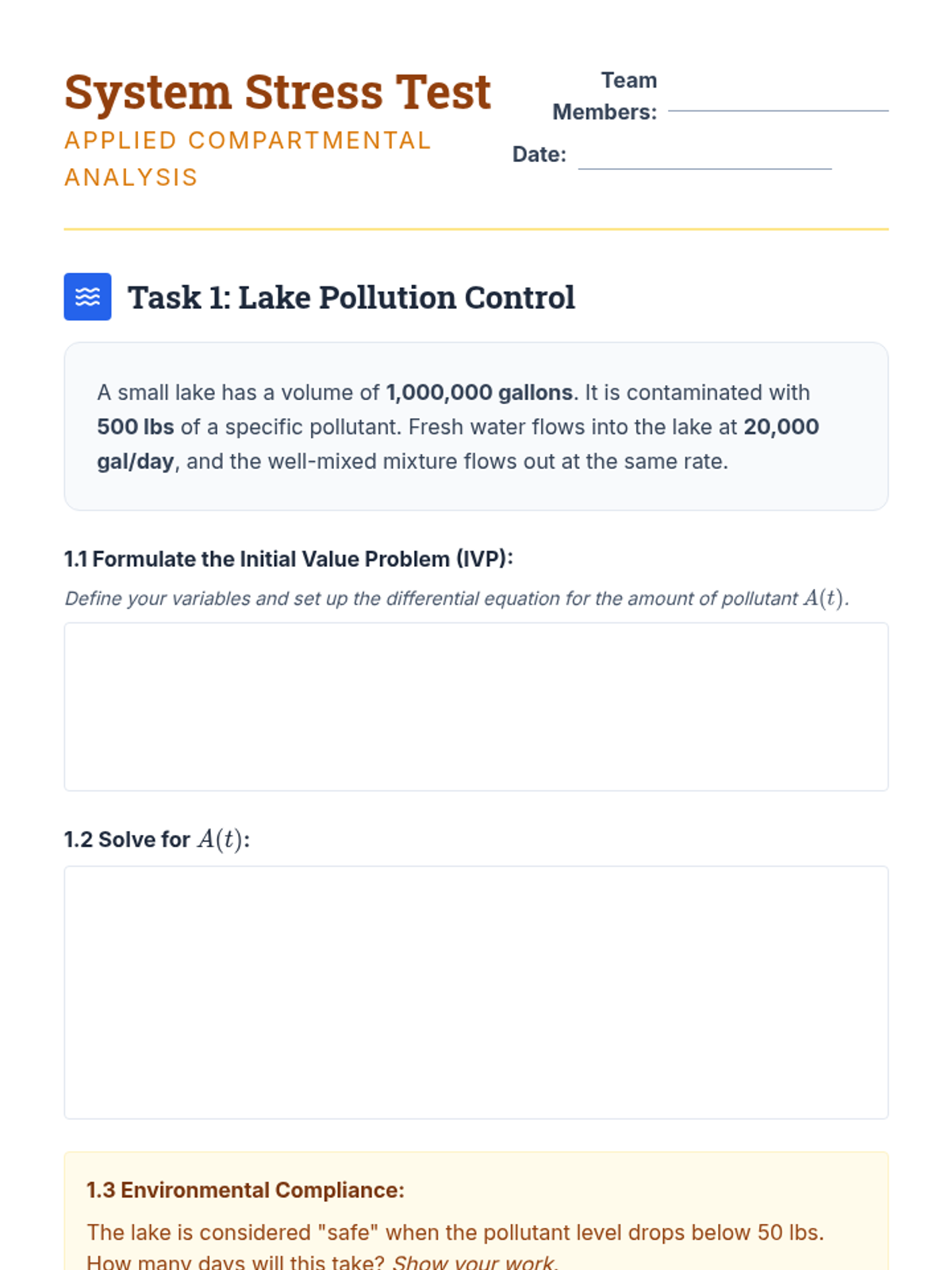
Applies ODE techniques to complex mixing problems and RC electrical circuits, focusing on transient and steady-state behavior.
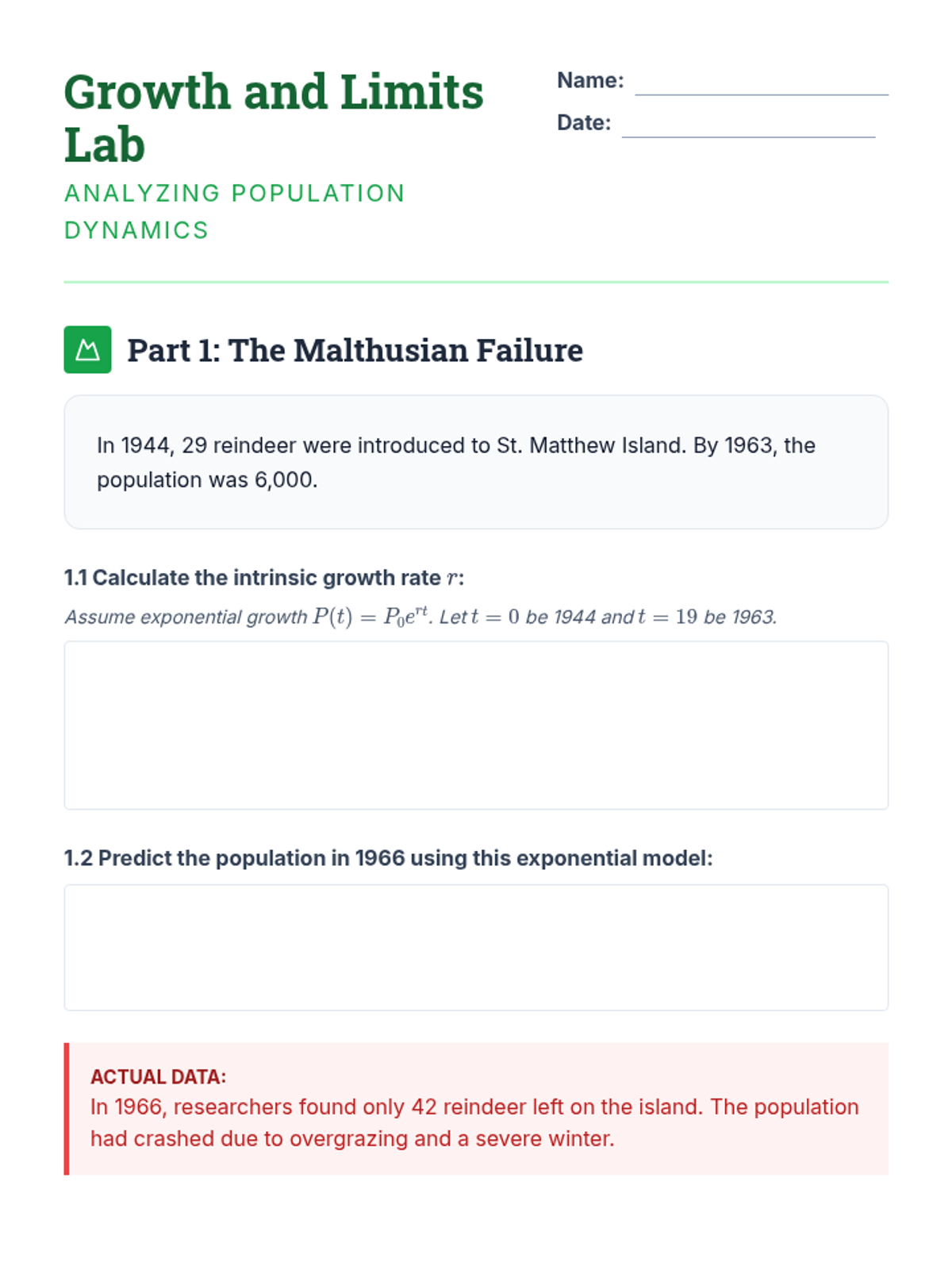
Contrasts exponential and logistic growth models, analyzing carrying capacity and equilibrium in biological systems.
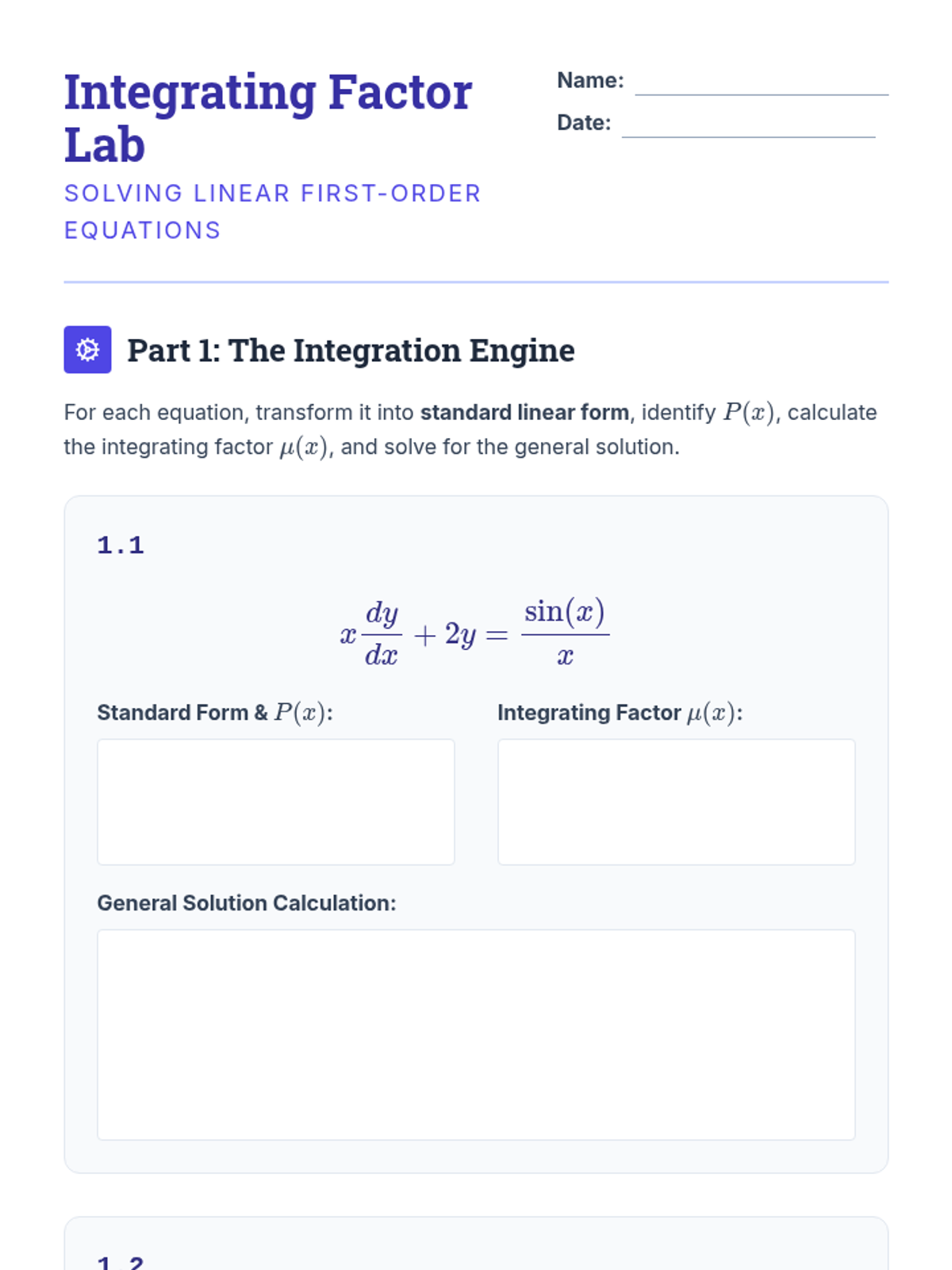
Introduces the method of integrating factors to solve non-homogeneous first-order linear differential equations.
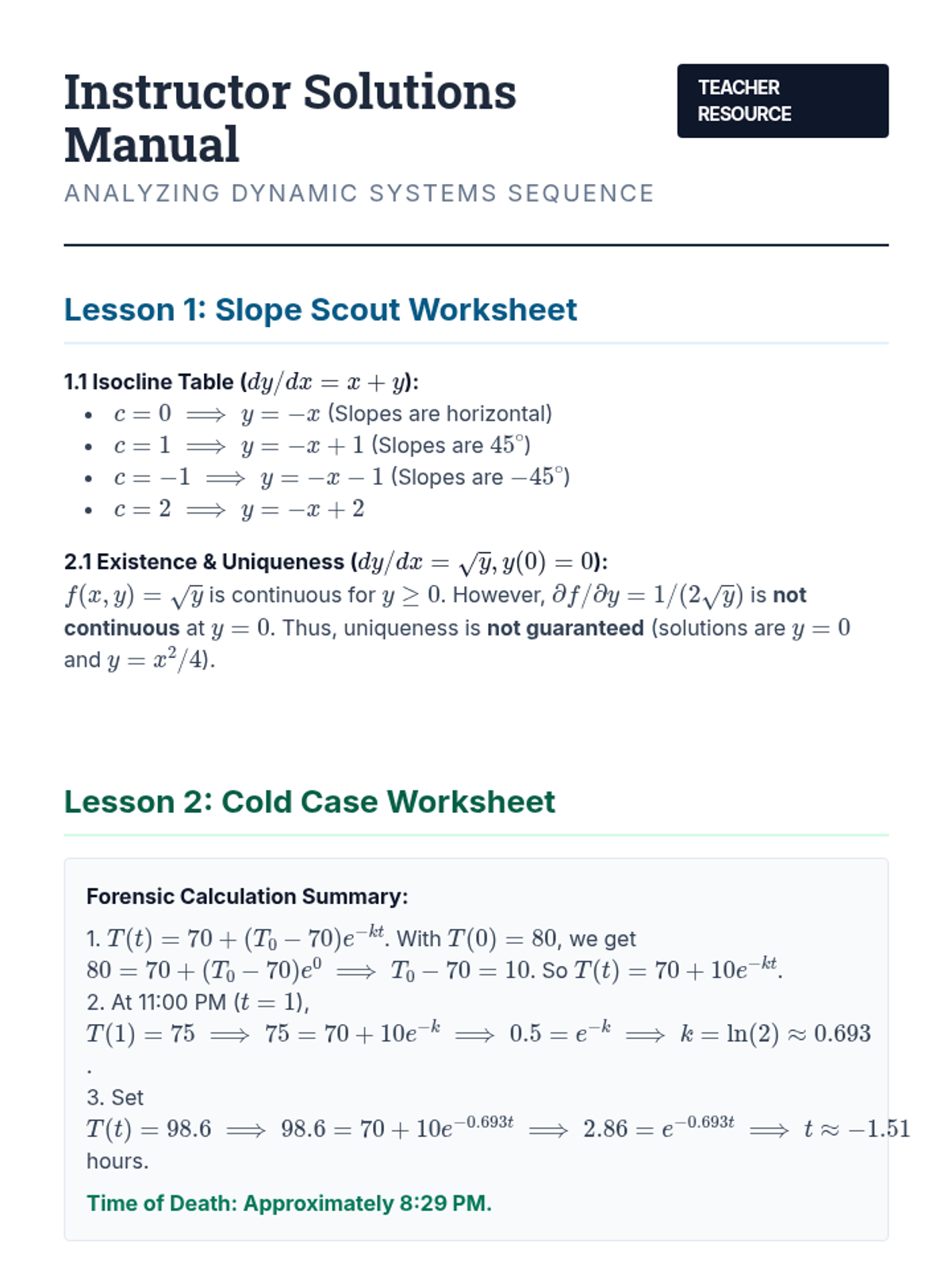
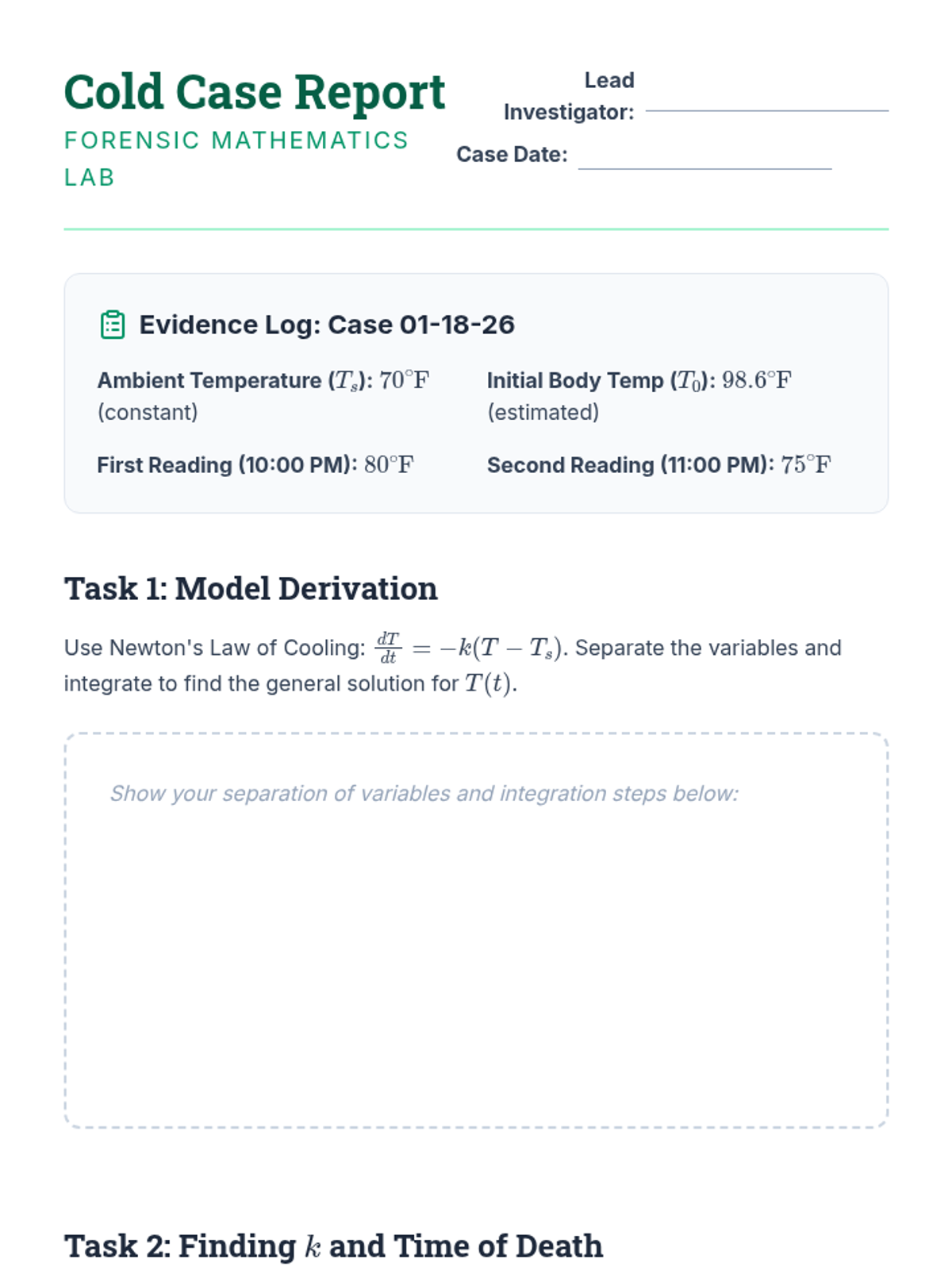
Focuses on the technique of separation of variables and its application to Newton's Law of Cooling and radioactive decay.
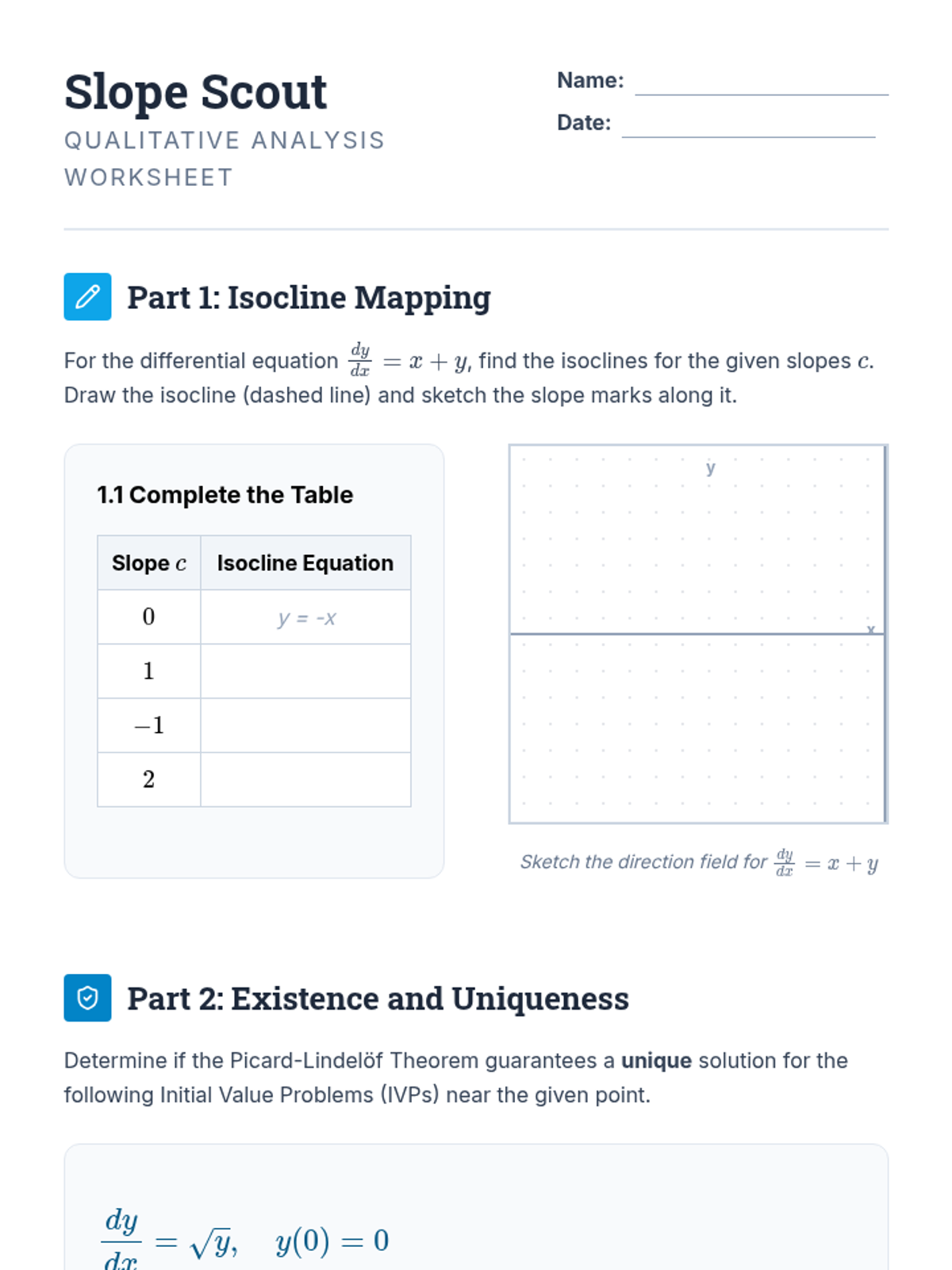
Students explore direction fields and existence/uniqueness theorems to qualitatively analyze ODEs before seeking analytical solutions.
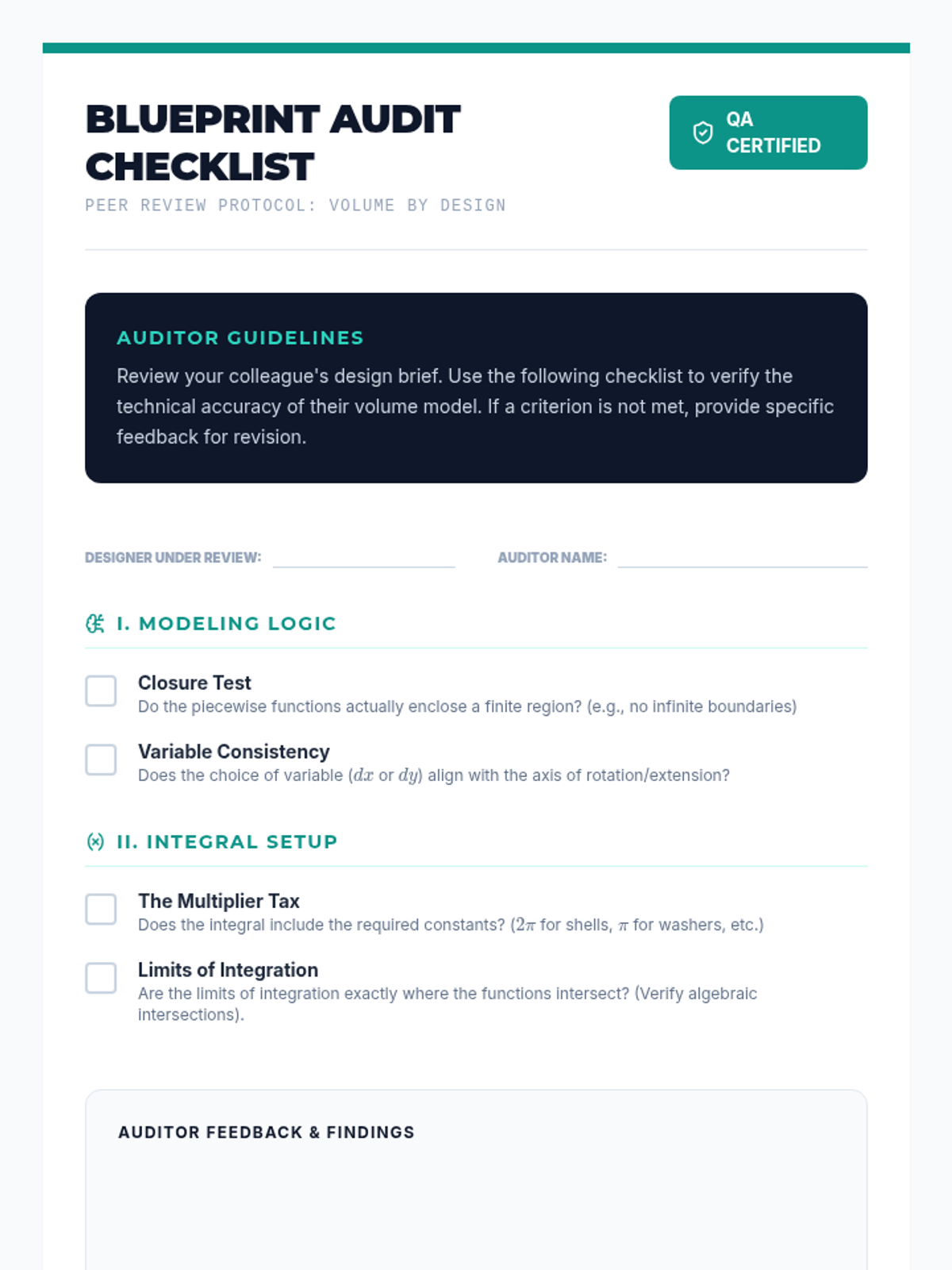
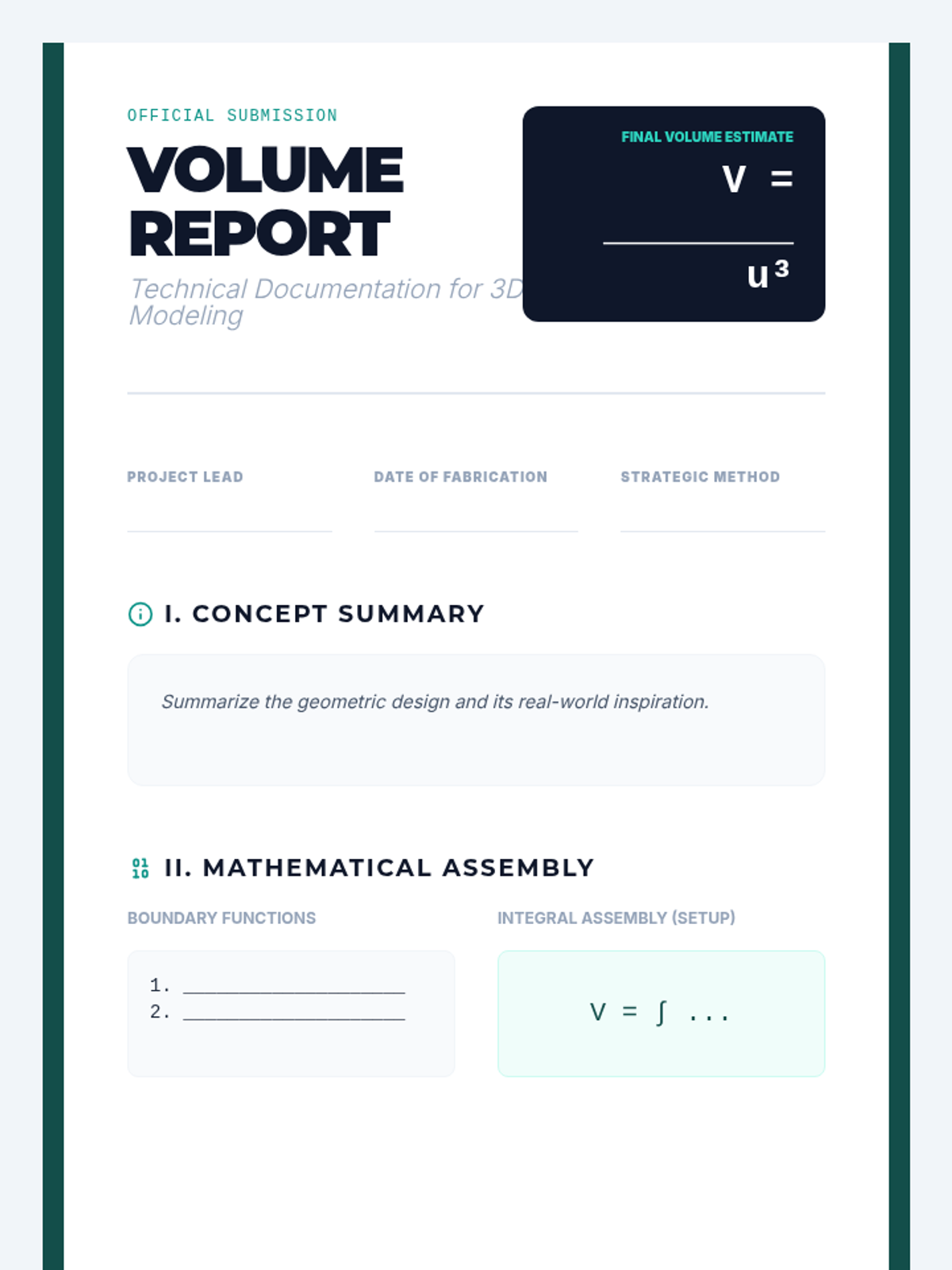
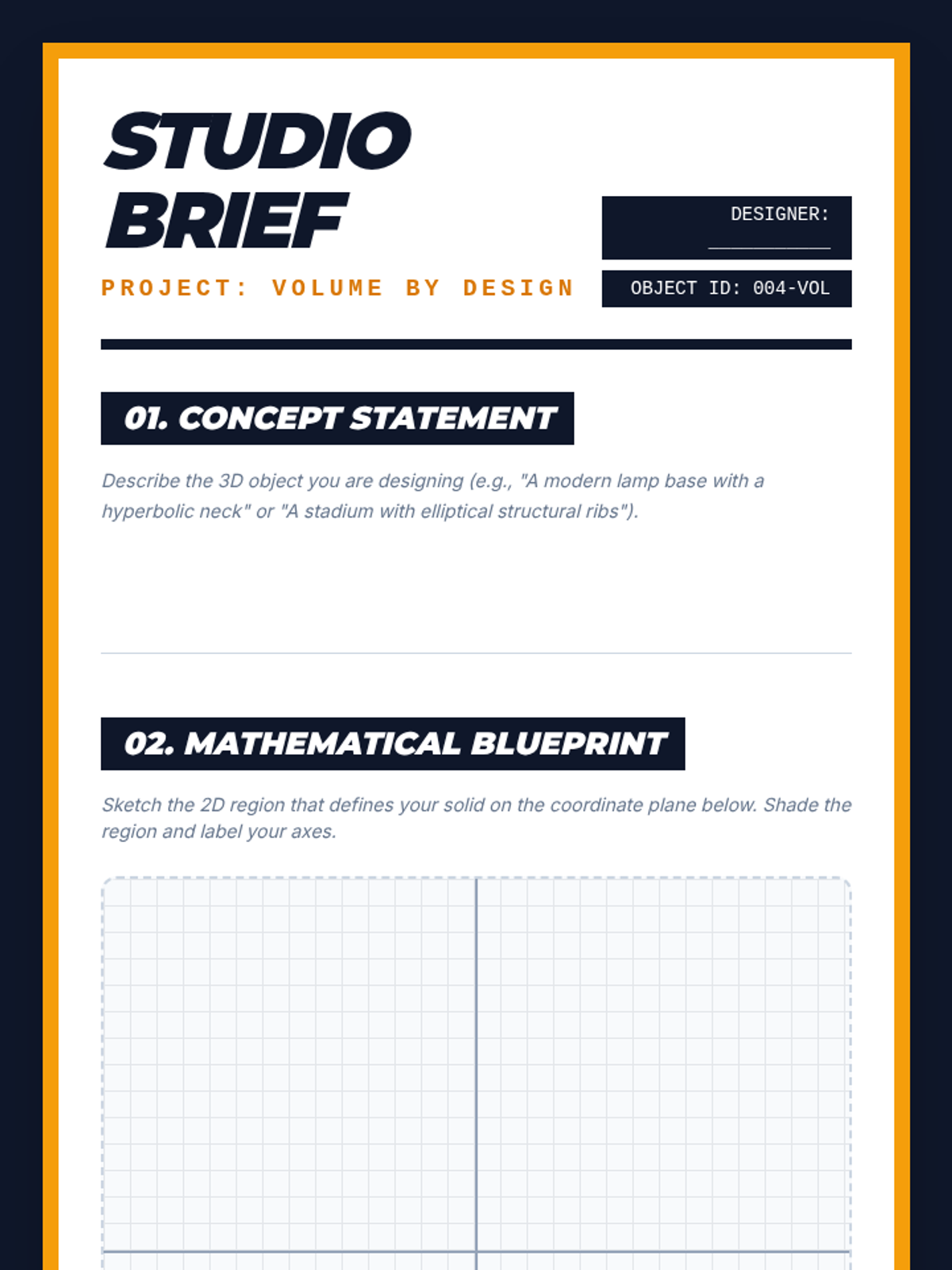
Students finalize their designs and perform the rigorous calculus required to find the exact volume of their object. They present their findings, justifying their choice of method.
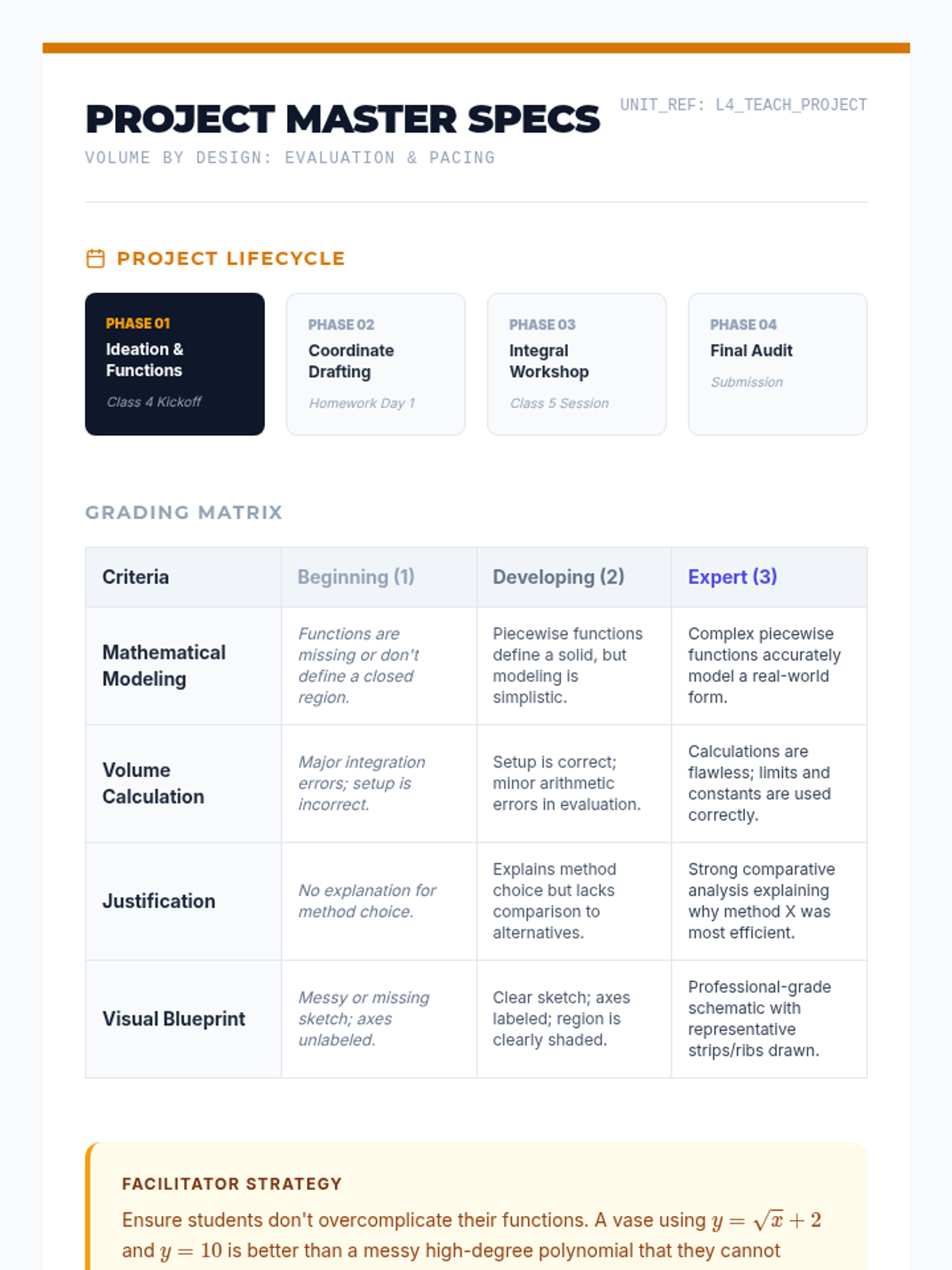
In this project kickoff, students design a unique object using mathematical functions. They must outline the plan to calculate its volume using a combination of methods learned.
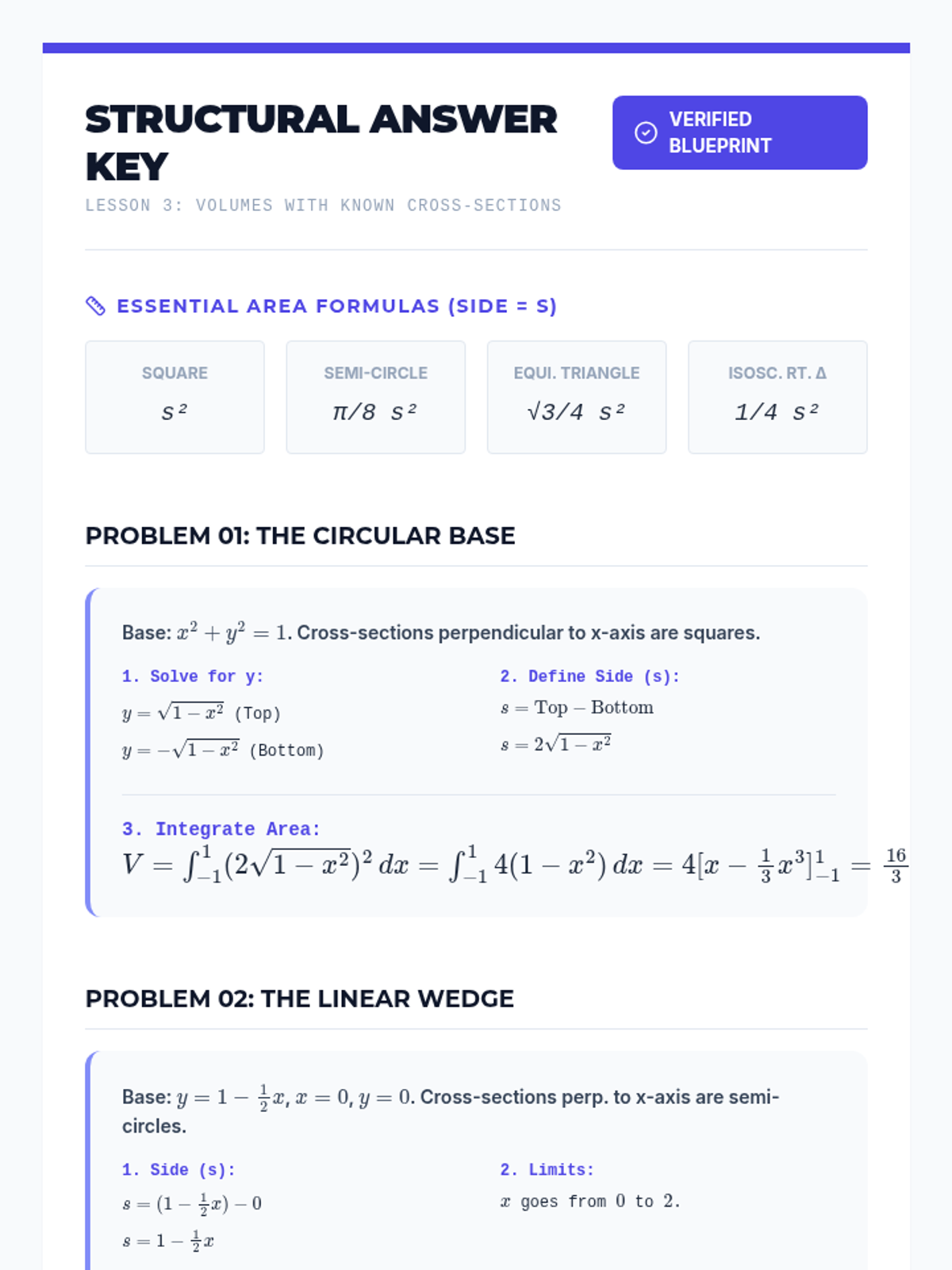
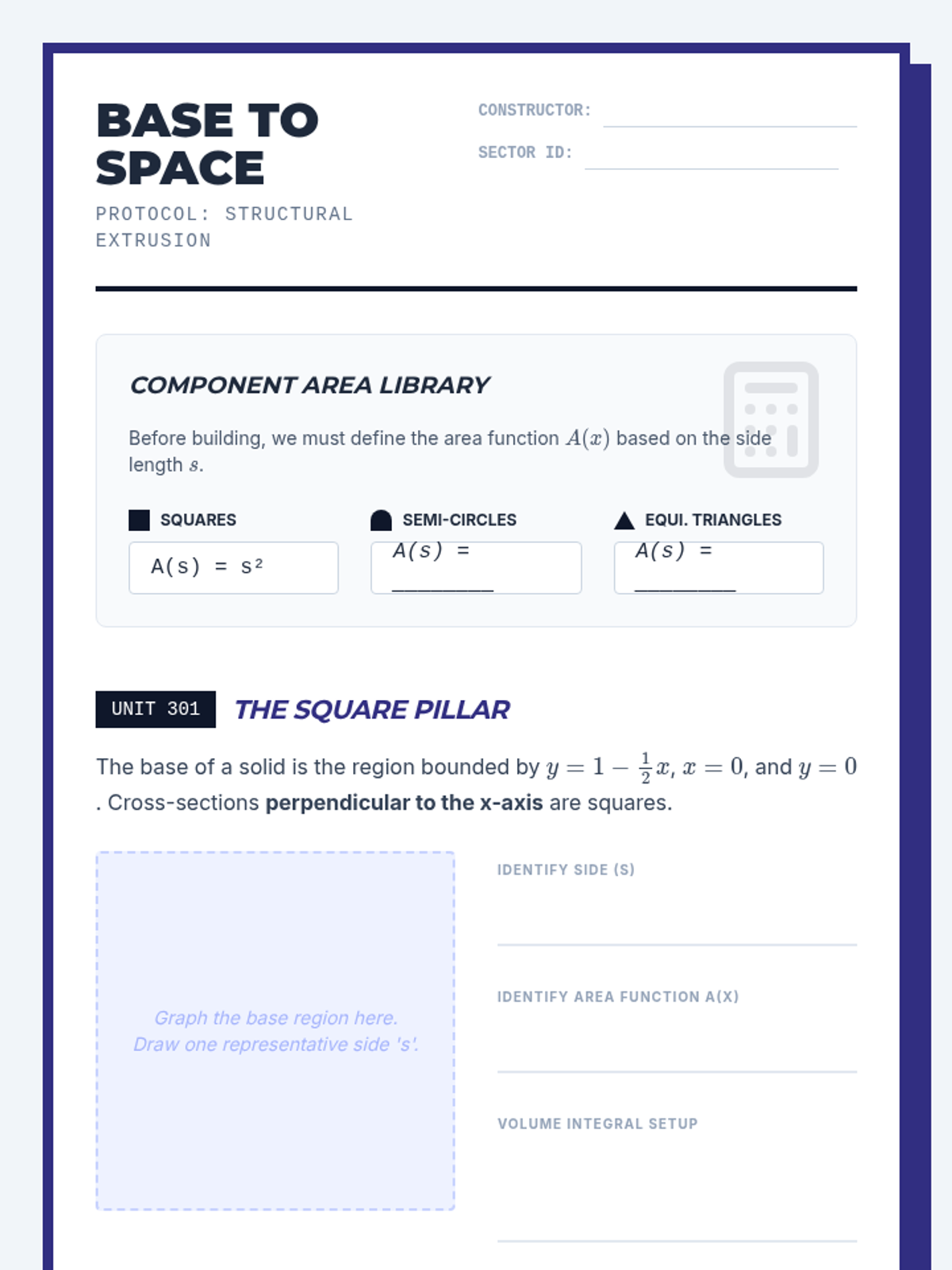
The focus shifts away from rotation to solids defined by a base region and fixed cross-sectional shapes rising out of the plane. Students practice integrating area formulas of these geometric shapes across a domain.
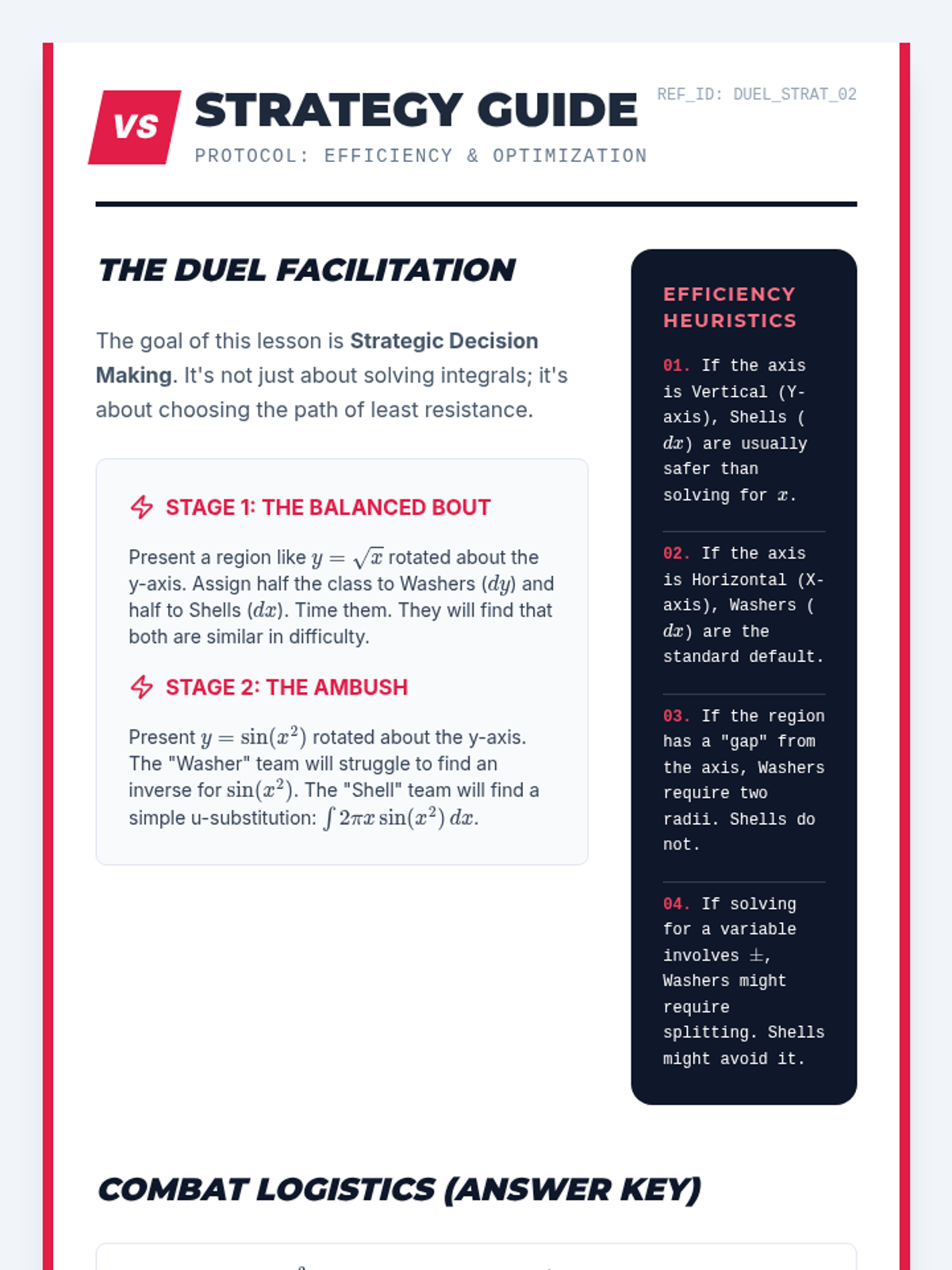
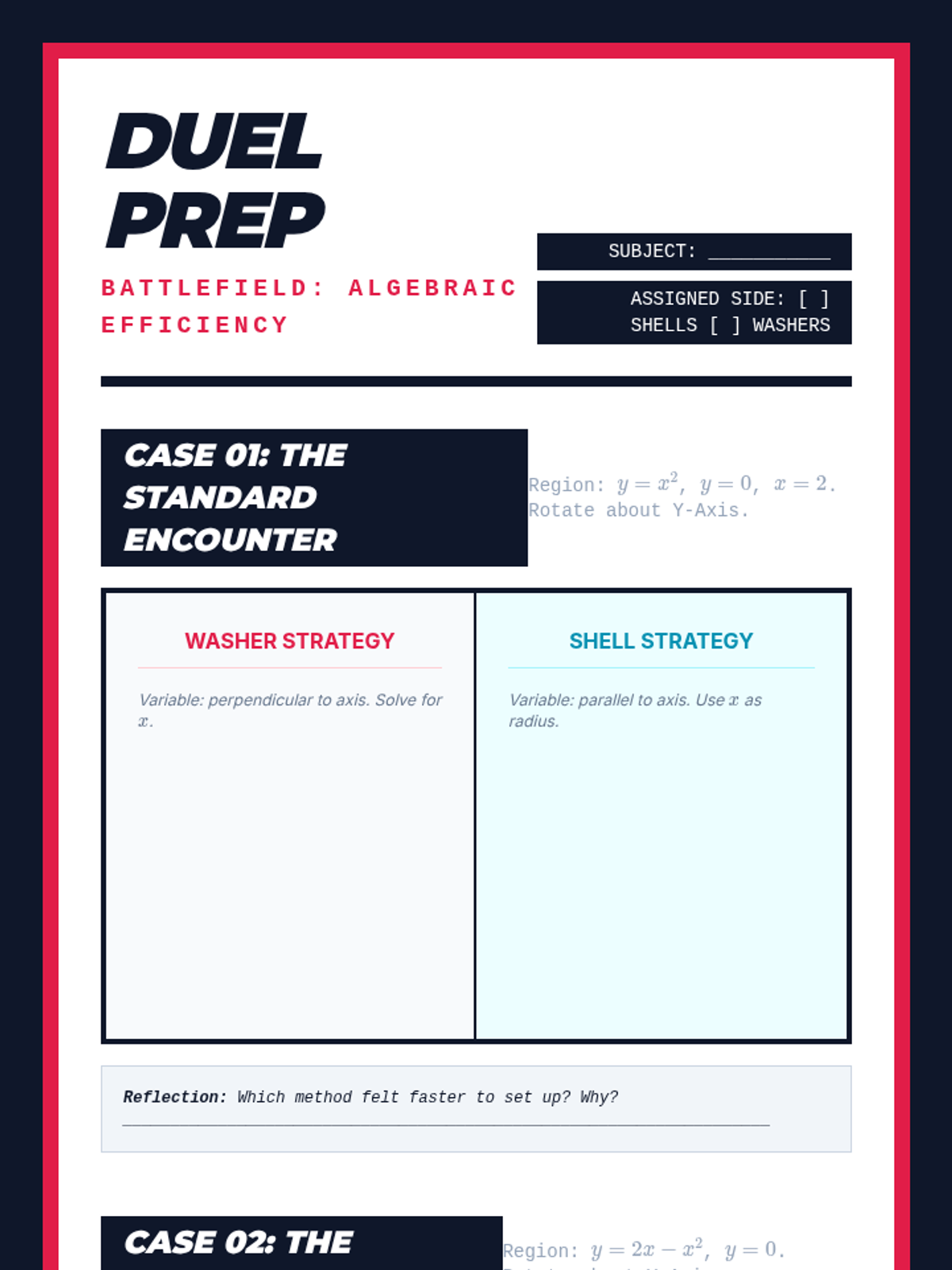
Students directly compare the Washer and Shell methods by solving for the same volume using both techniques. They analyze the algebraic complexity of each approach to develop heuristics for choosing the most efficient method.
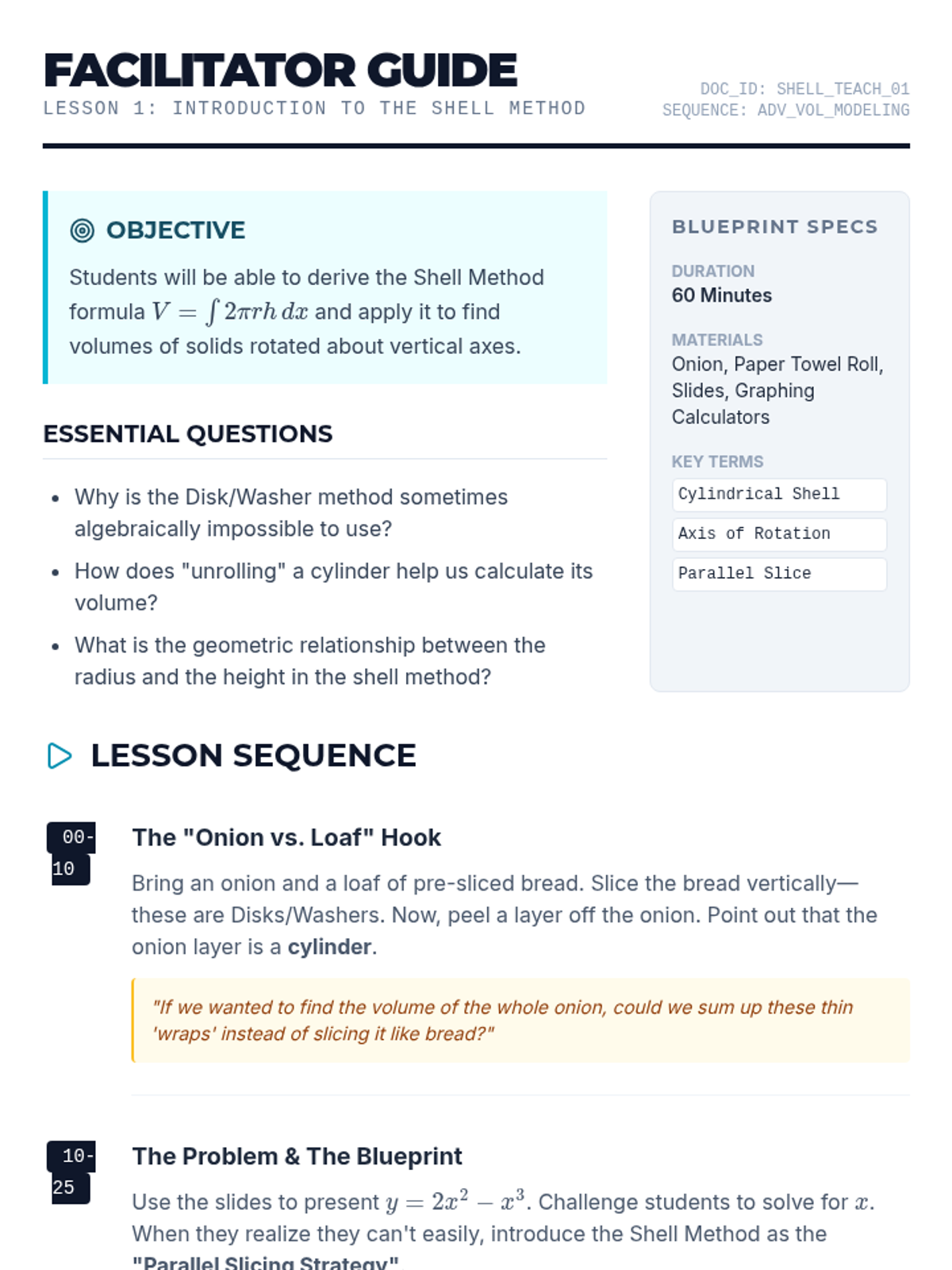
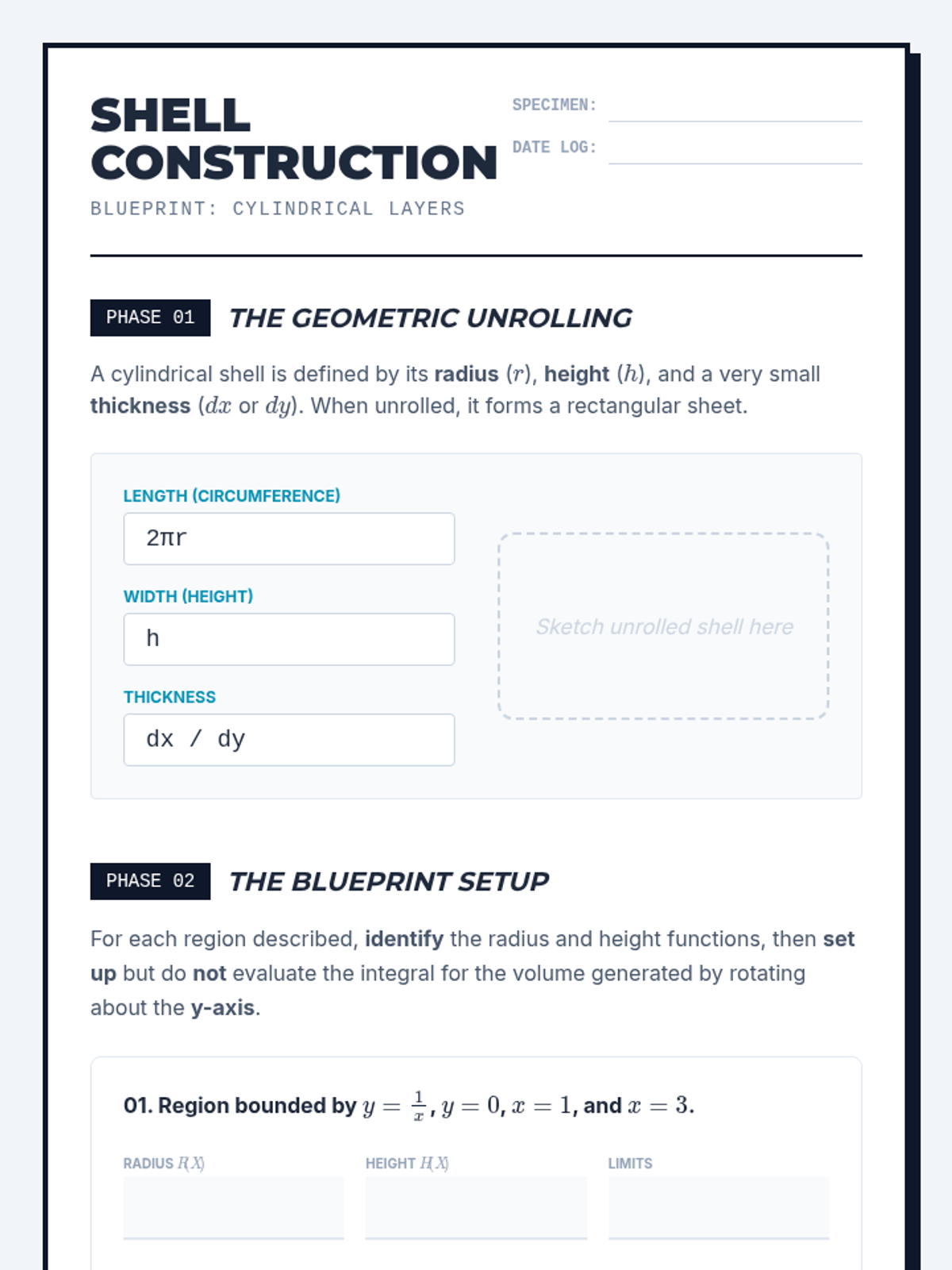
Students discover the method of cylindrical shells by analyzing volumes where slicing perpendicular to the axis of rotation is mathematically cumbersome. They derive the formula \(V = 2\pi \int rh\) based on the surface area of unfolding cylinders.
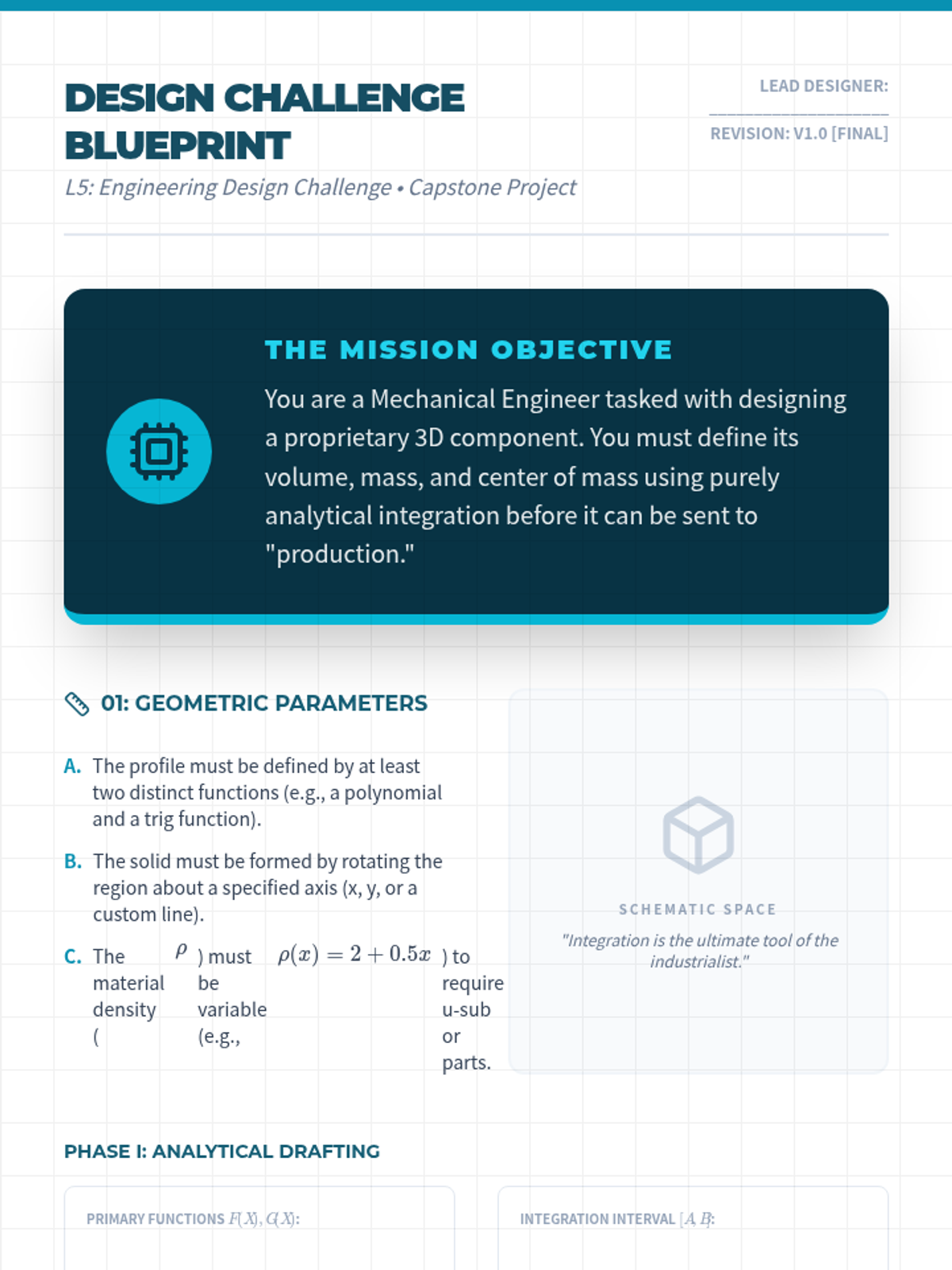
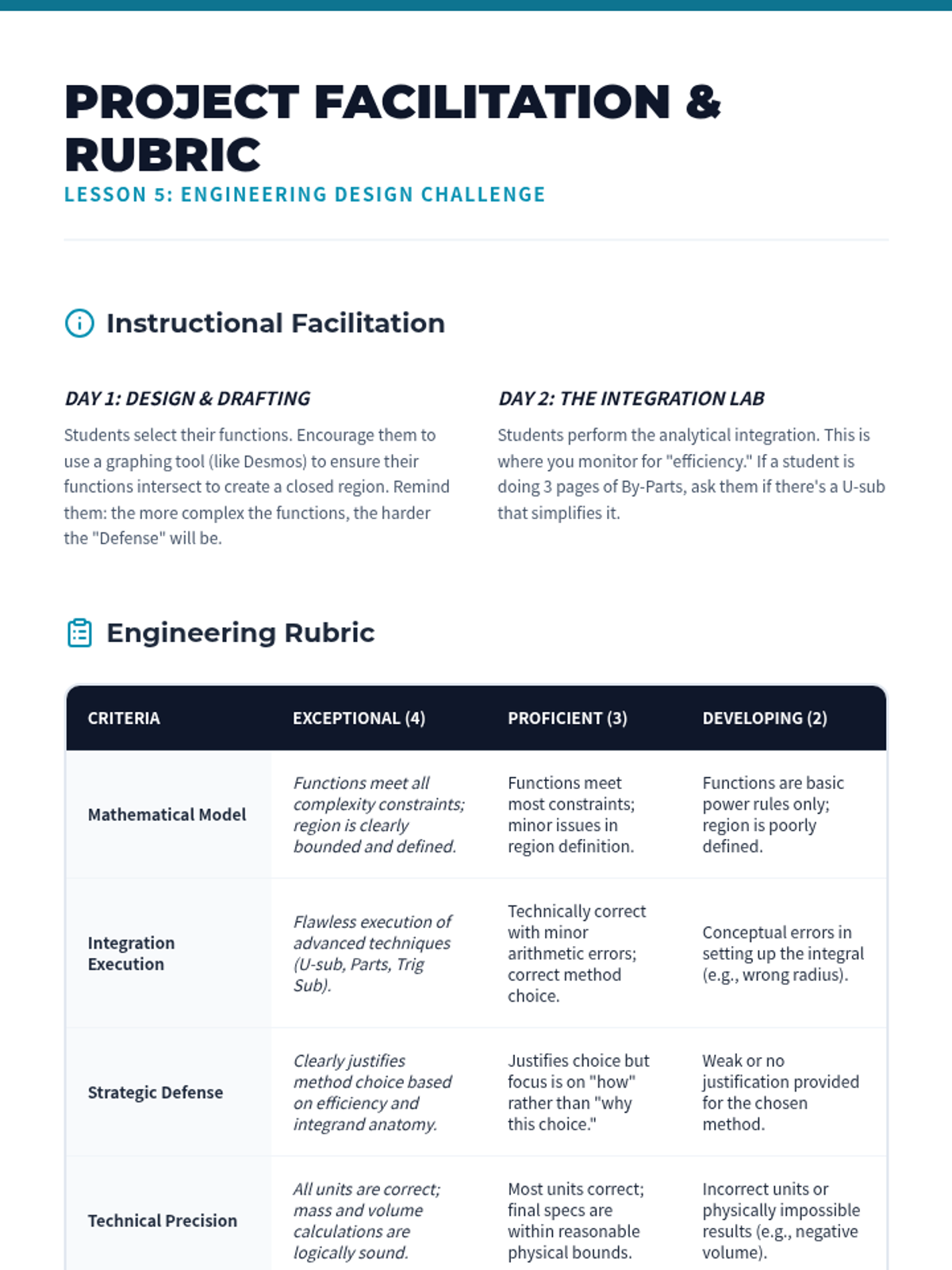
A culminating project where students design a 3D component and use integration to calculate its physical properties for 'production'.
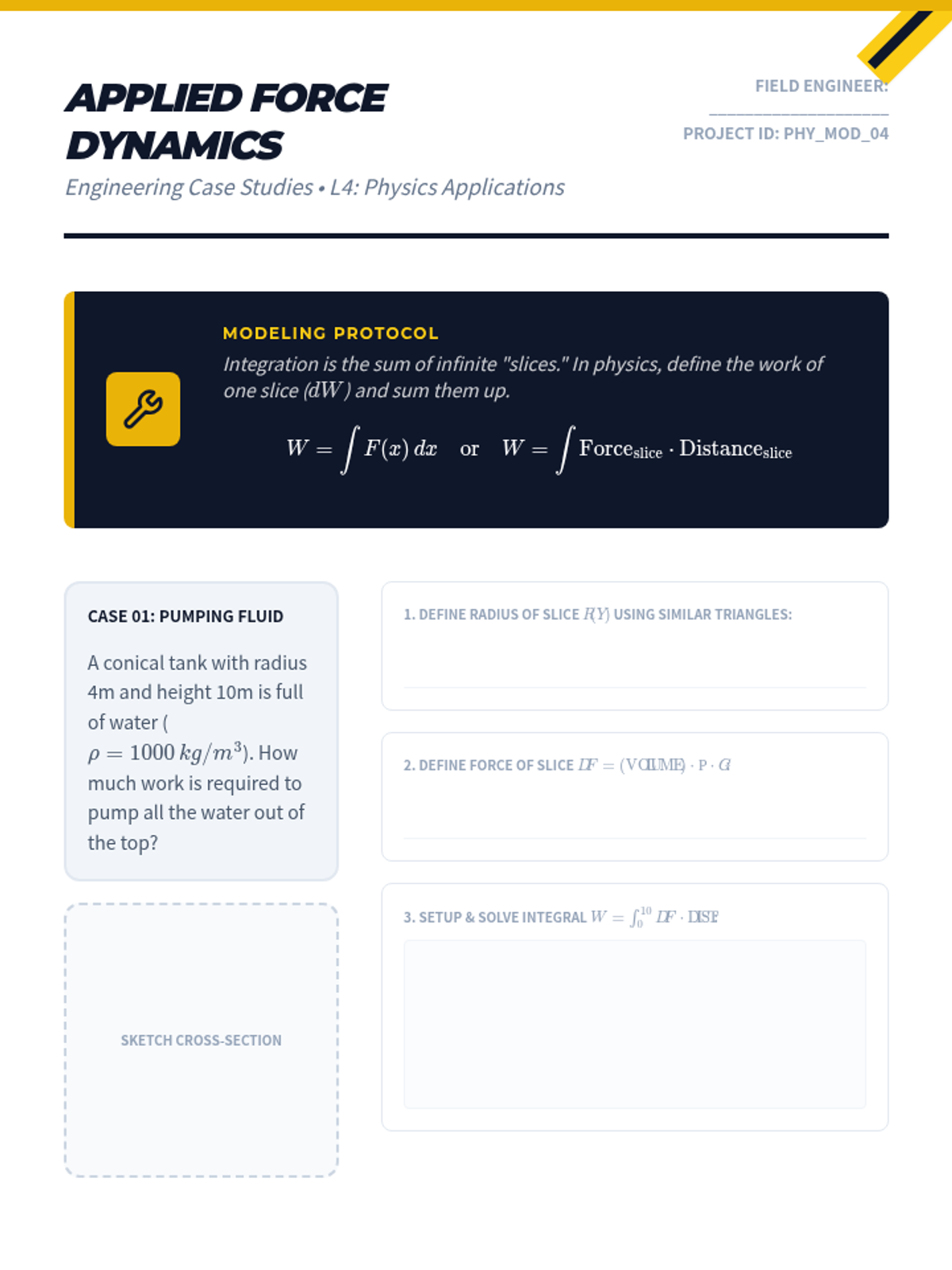
Application of integration to physical systems, specifically focusing on variable work in pumping tanks and hydrostatic fluid pressure.
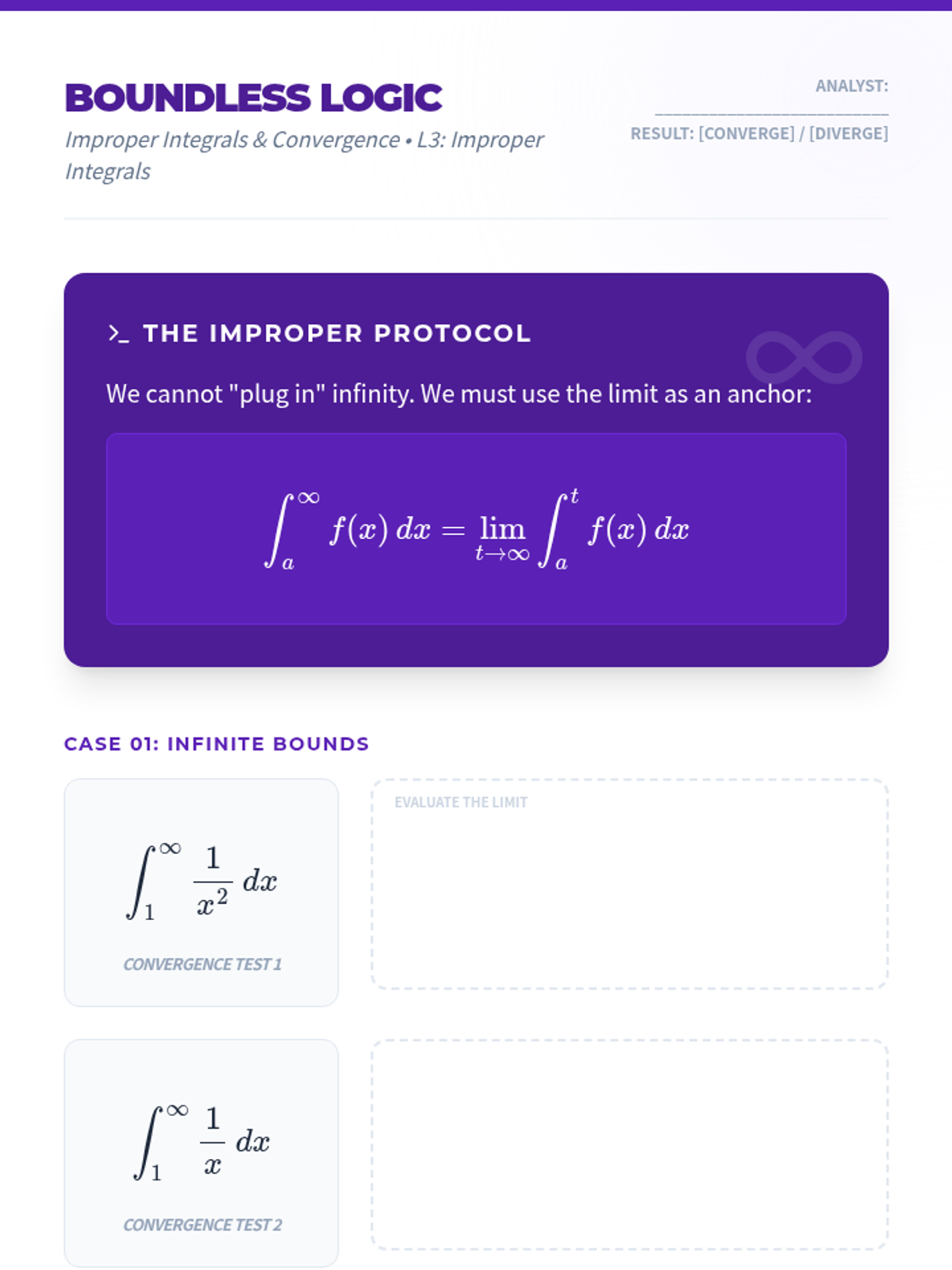
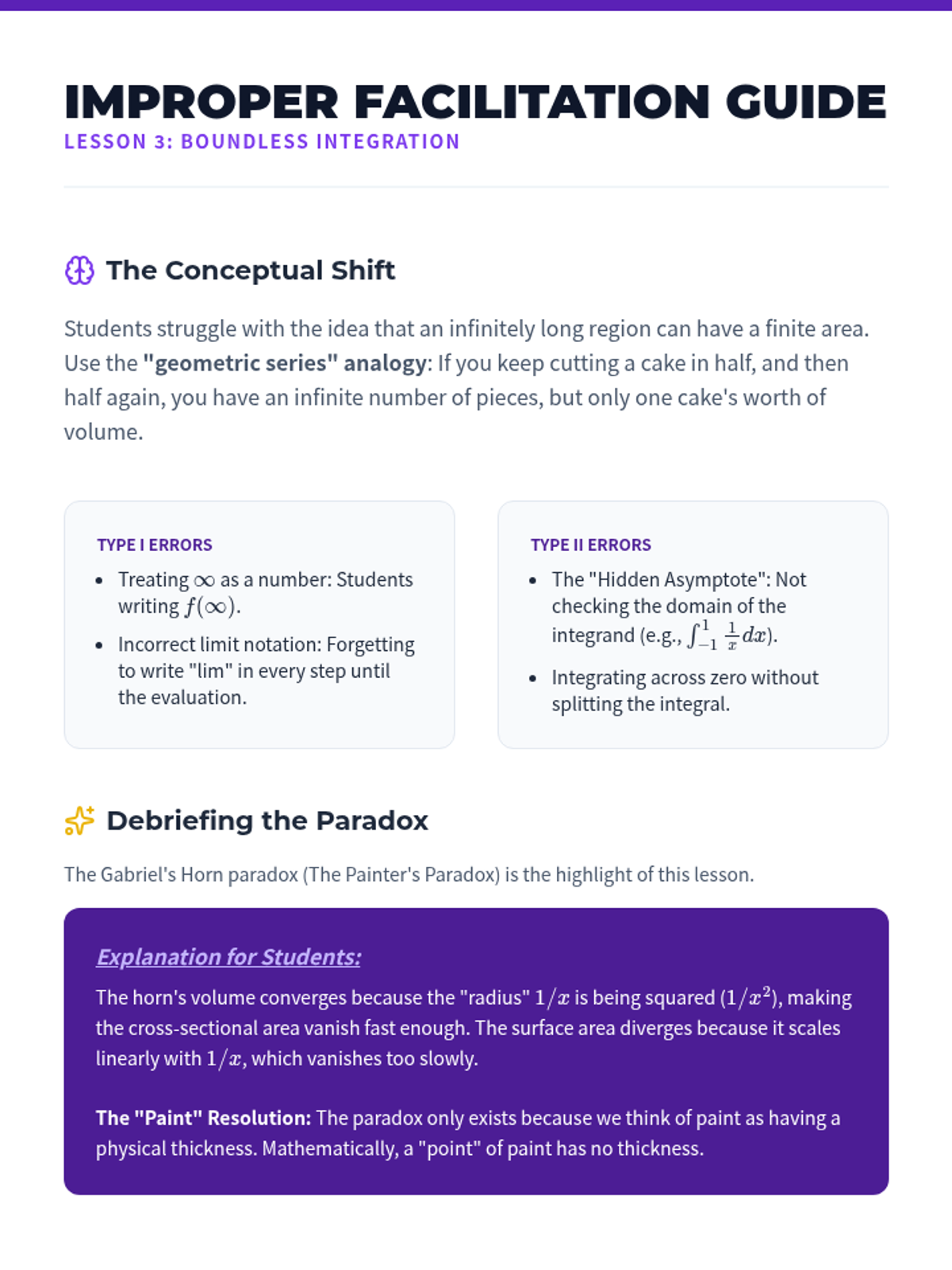
Extension of integration techniques to infinite bounds and vertical asymptotes, exploring the mathematical beauty of Gabriel's Horn.
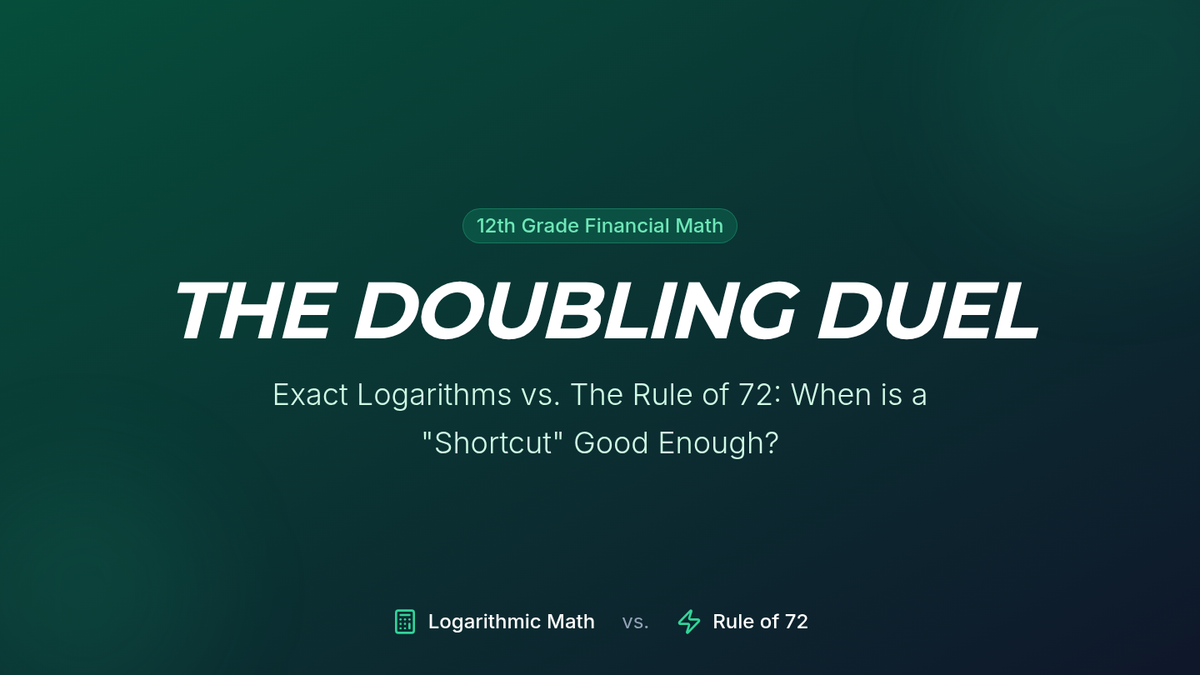
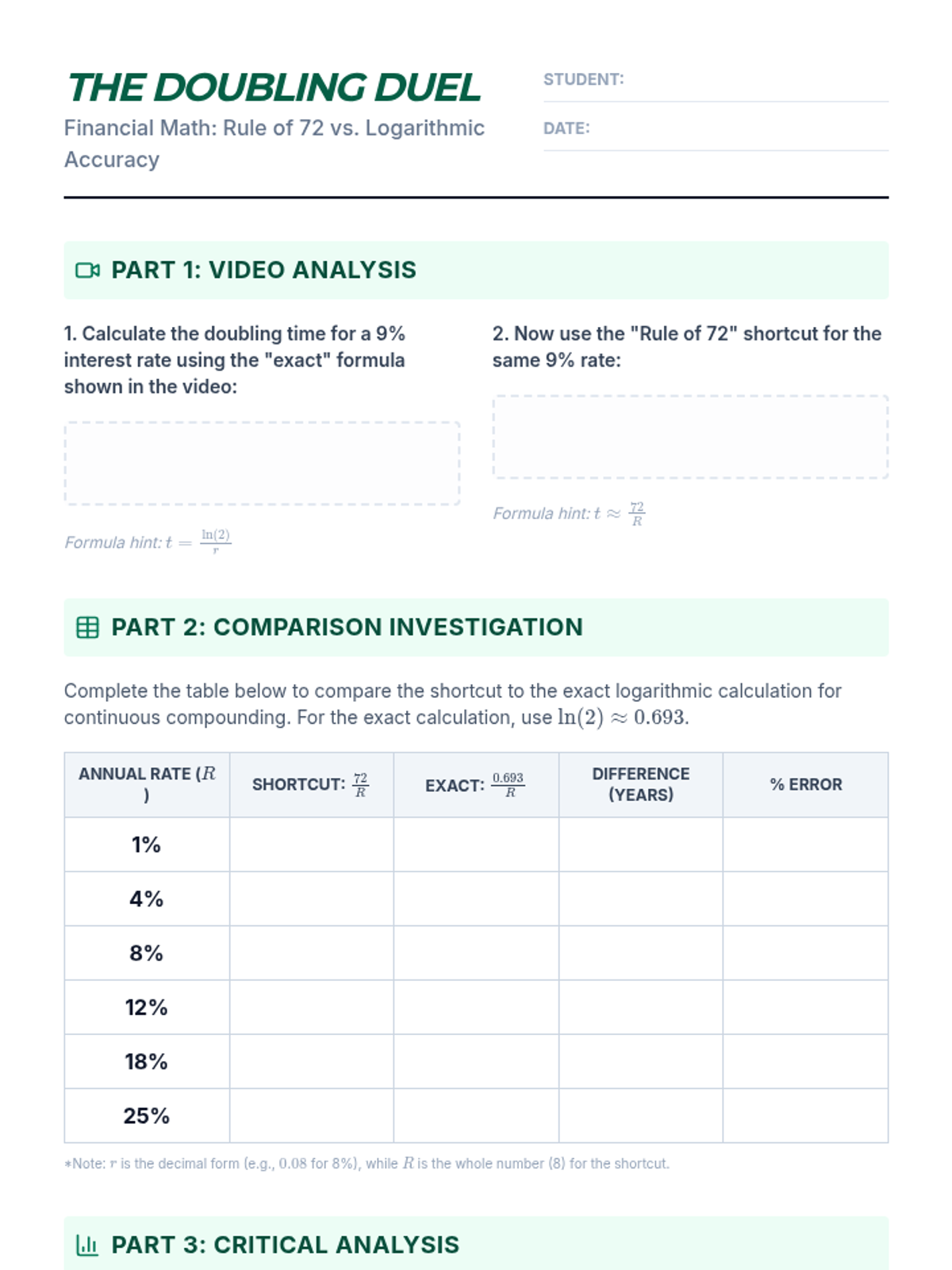
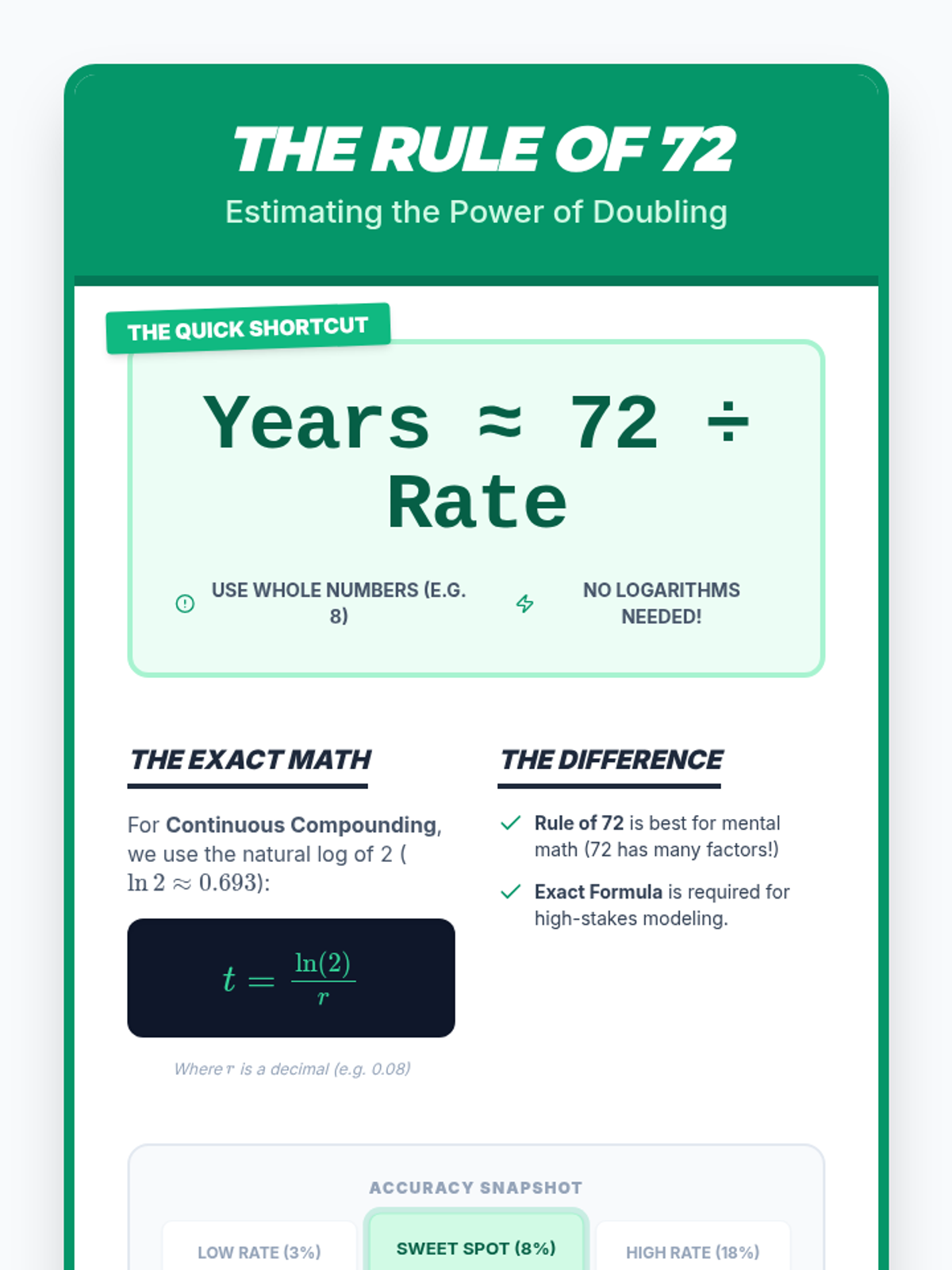
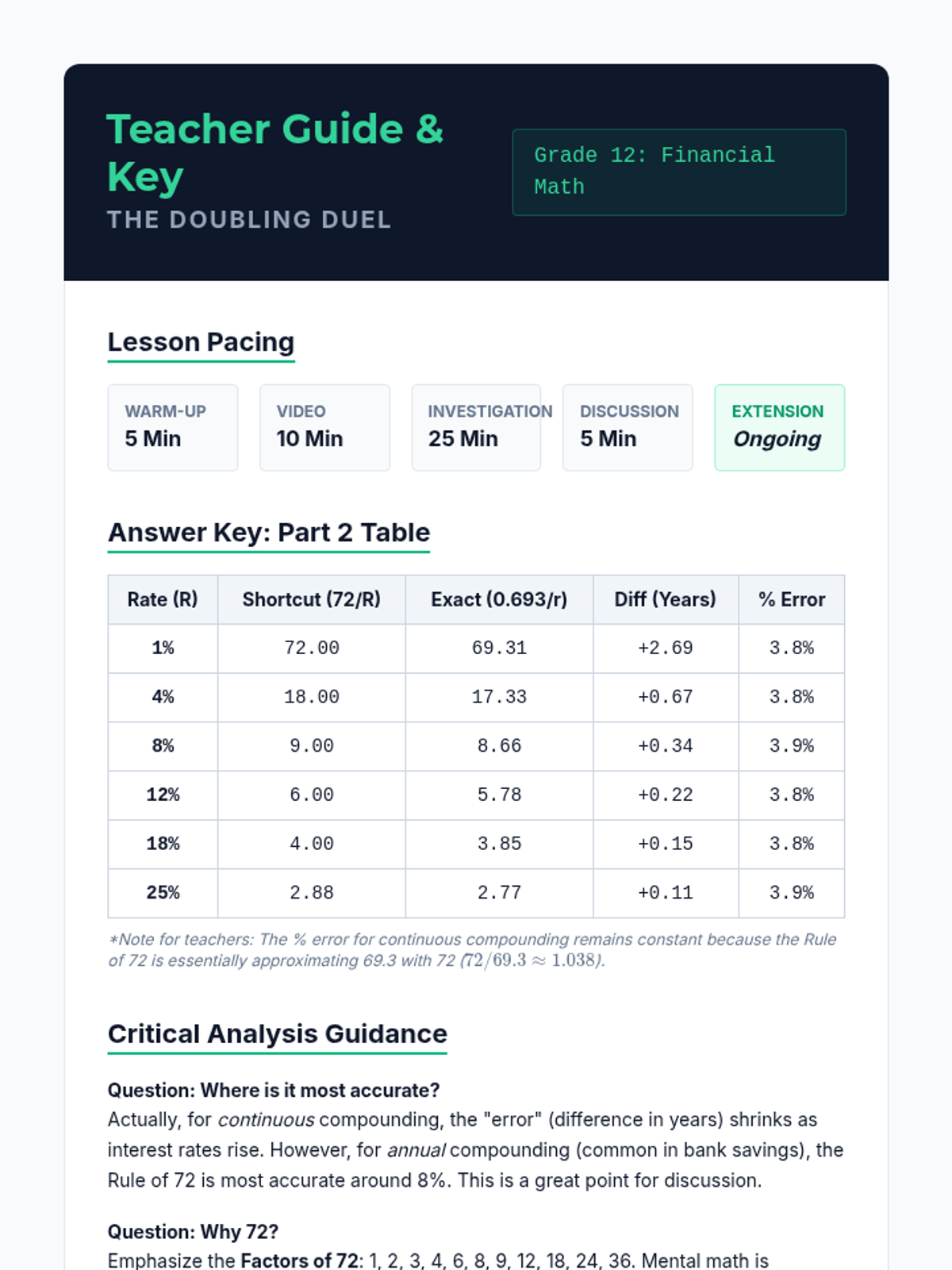
A 12th-grade financial math lesson comparing the 'Rule of 72' shortcut with exact continuous compounding formulas to determine investment doubling time. Students explore the accuracy of mental estimations versus logarithmic calculations across various interest rates.
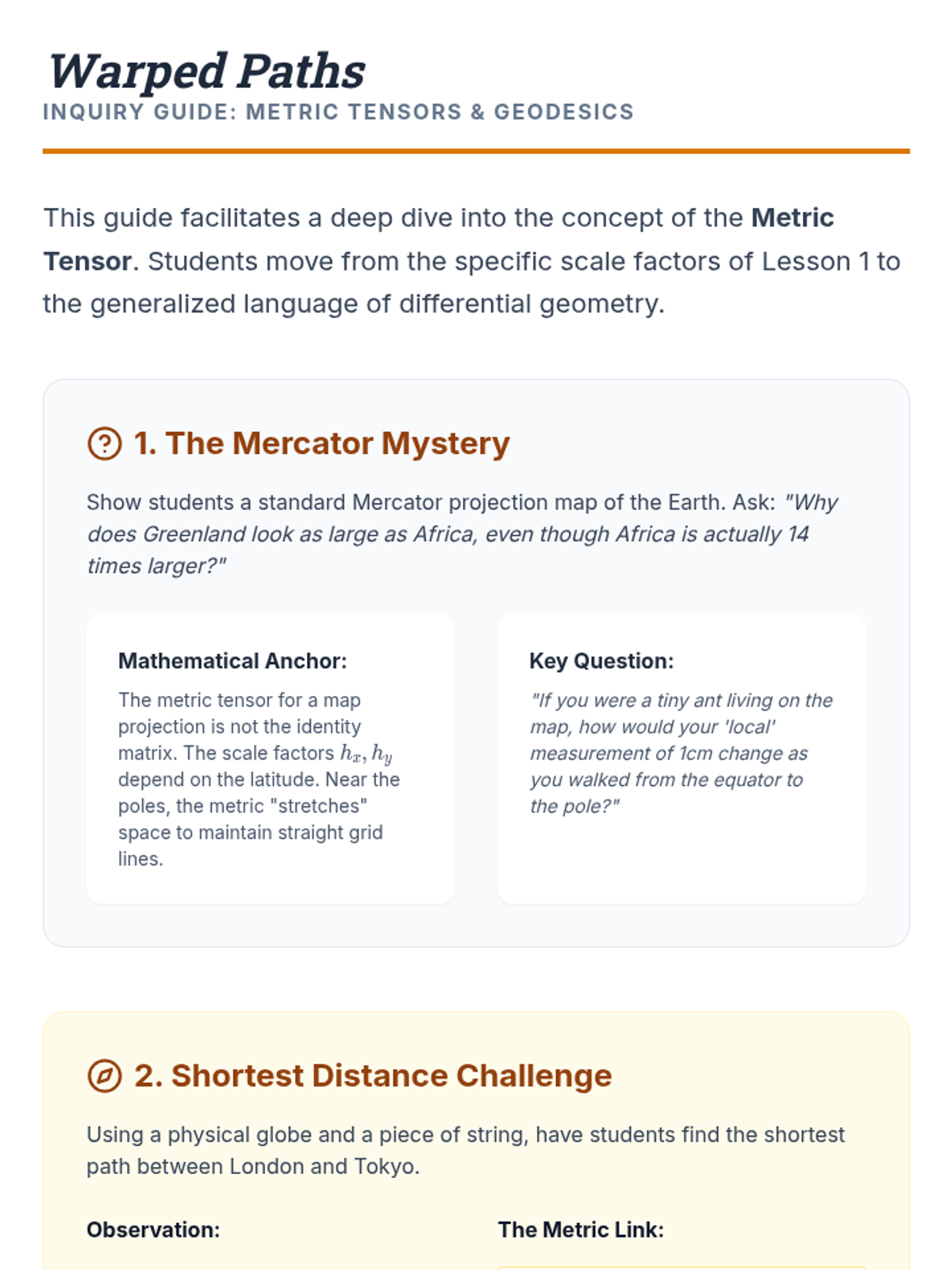
An advanced introduction to the metric tensor and non-Euclidean geometry, serving as a primer for General Relativity.
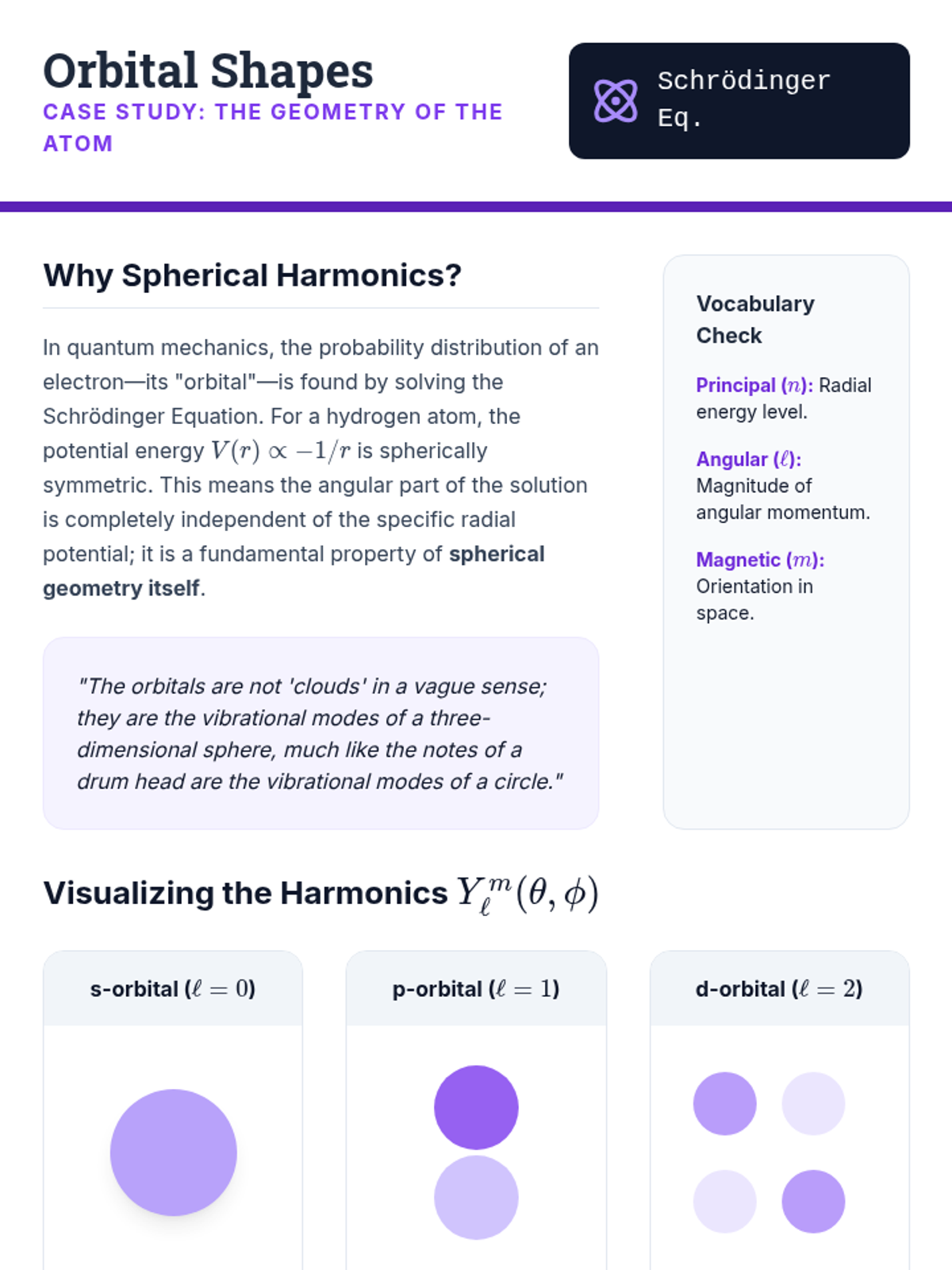
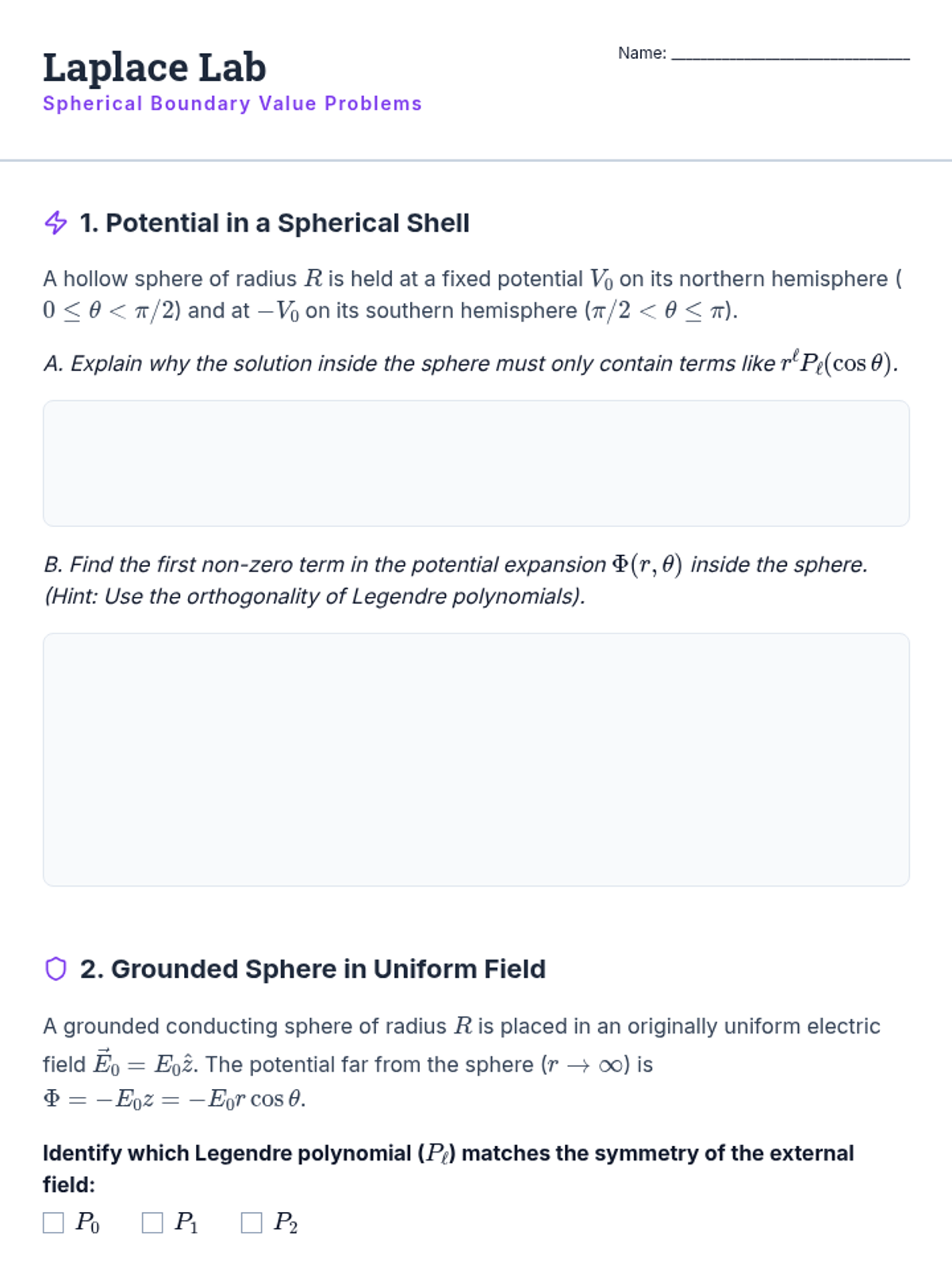
Students solve Laplace's equation for systems with spherical symmetry, introducing Legendre polynomials and Spherical Harmonics.
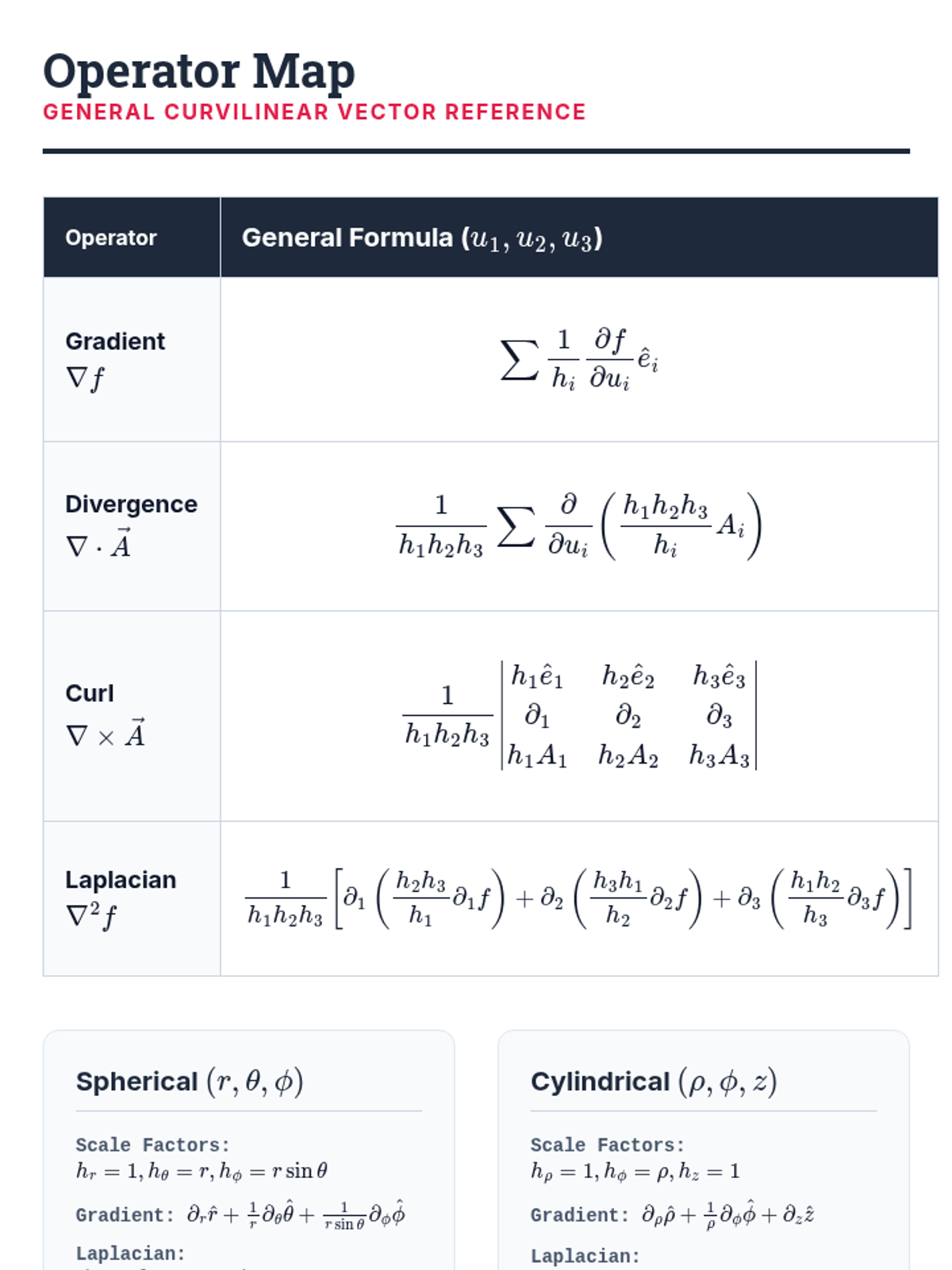
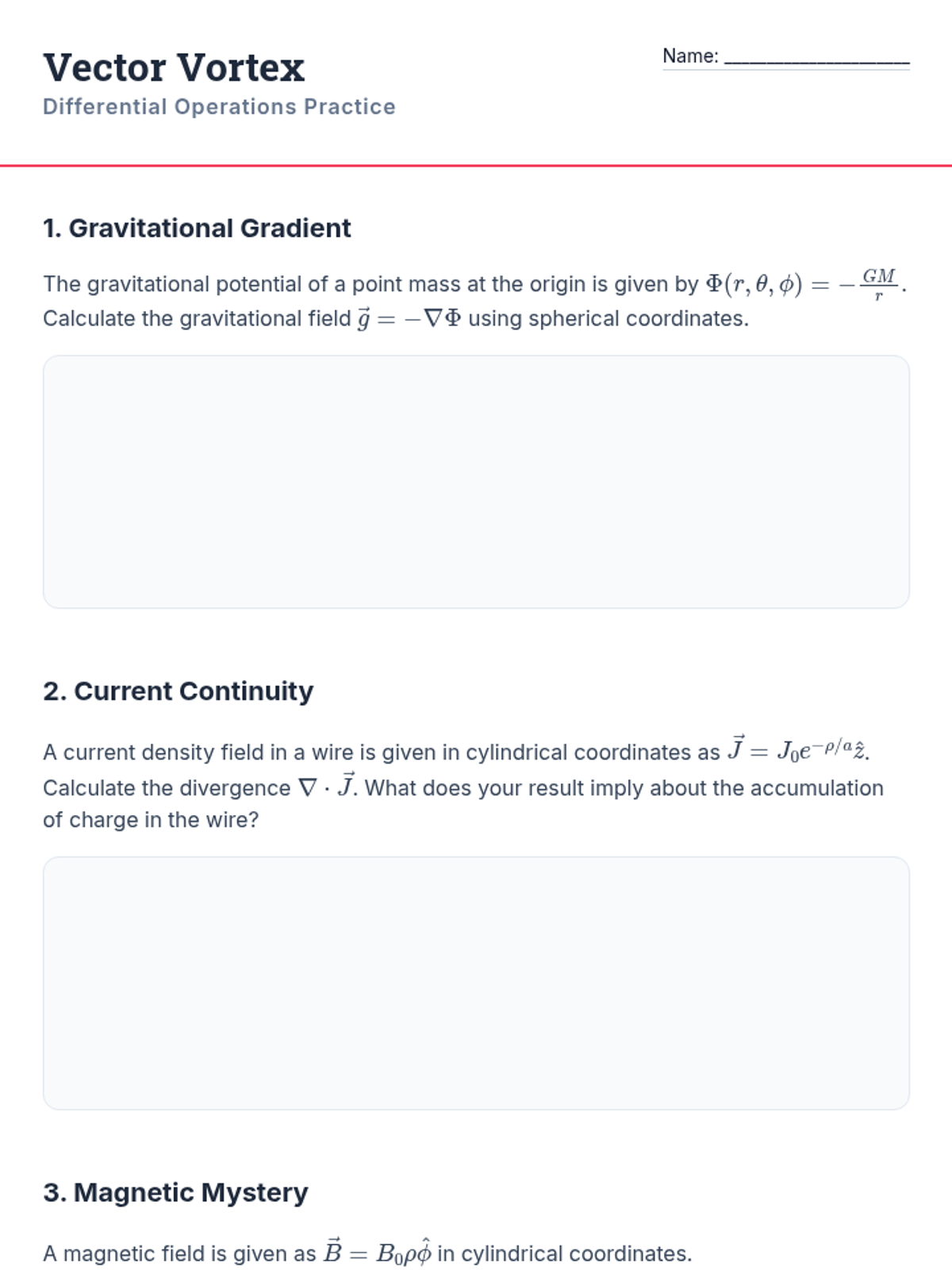
Students translate the Del operator into general curvilinear coordinates and apply these operators to physical vector fields.
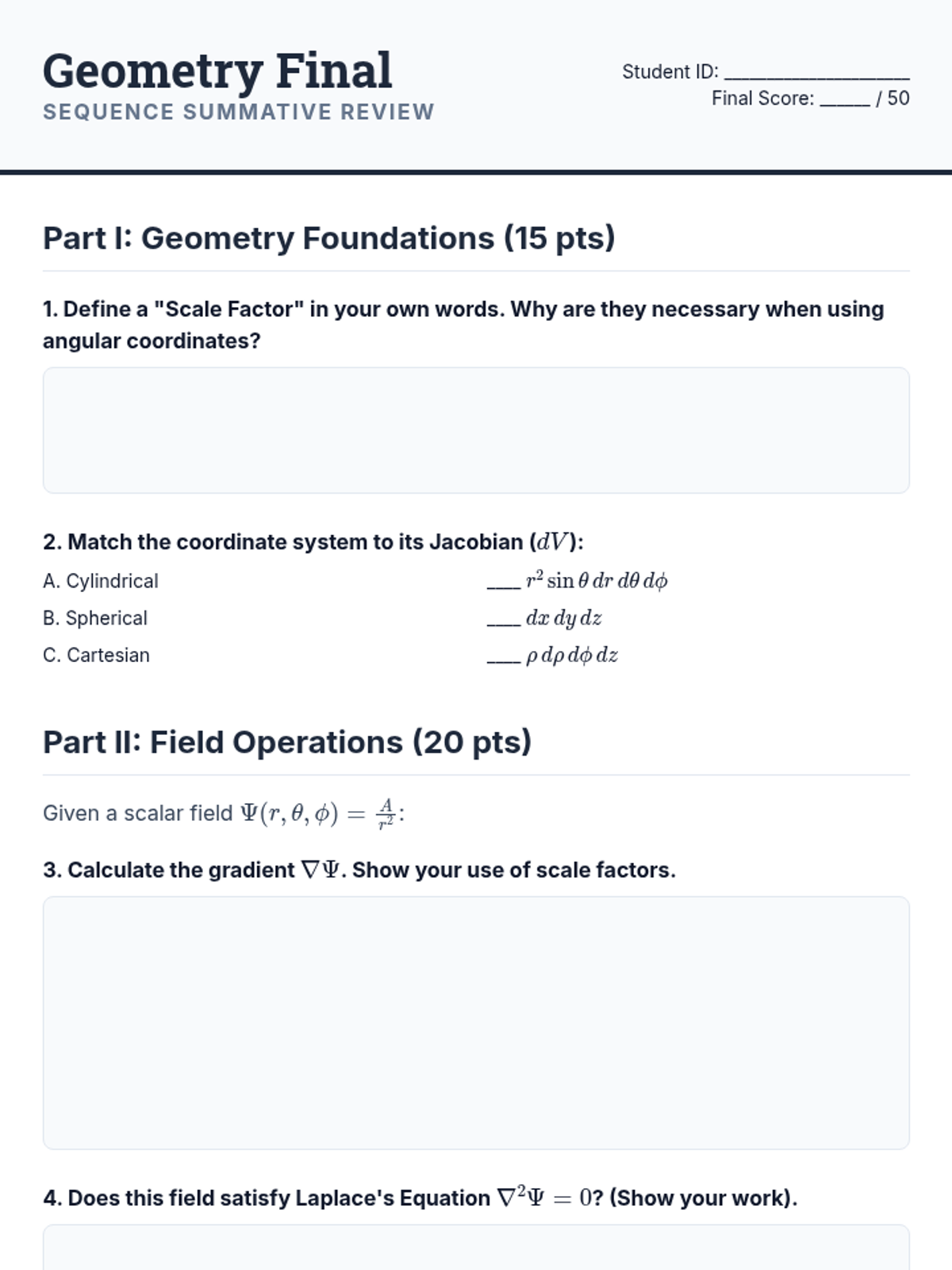
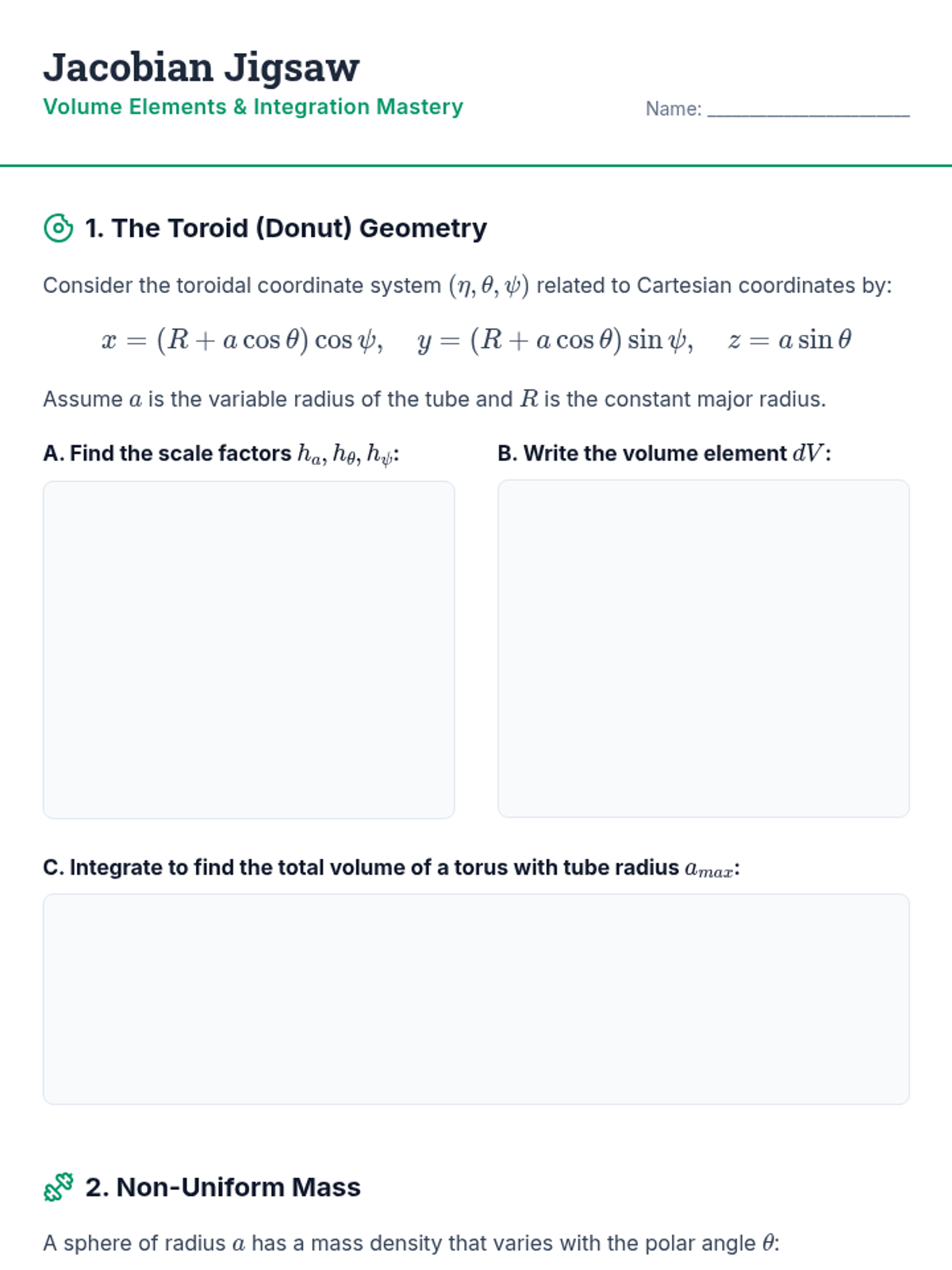
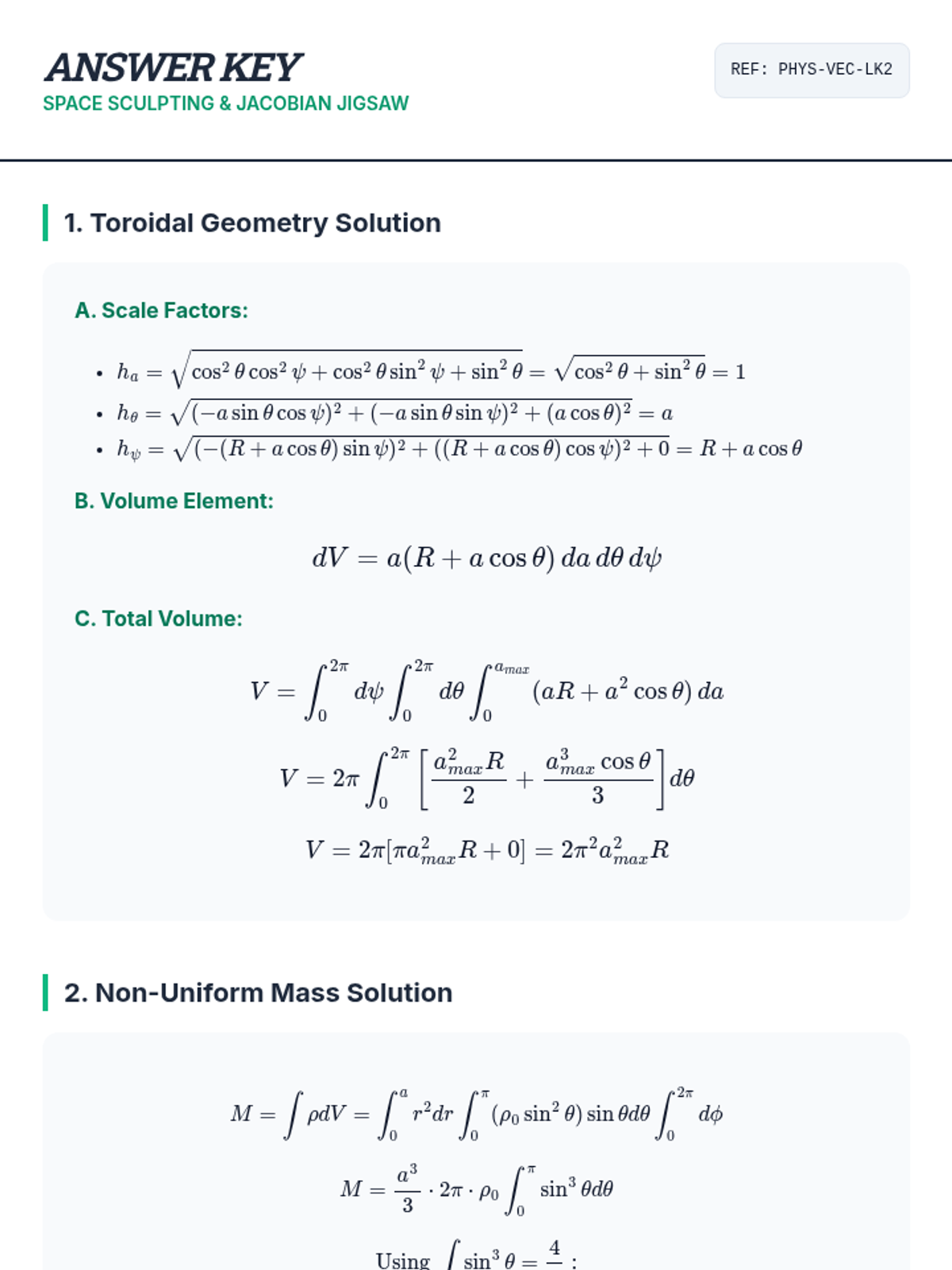
Focusing on integration, students construct volume and area elements (Jacobians) for spherical and cylindrical geometries and practice integrating scalar fields over complex 3D domains.
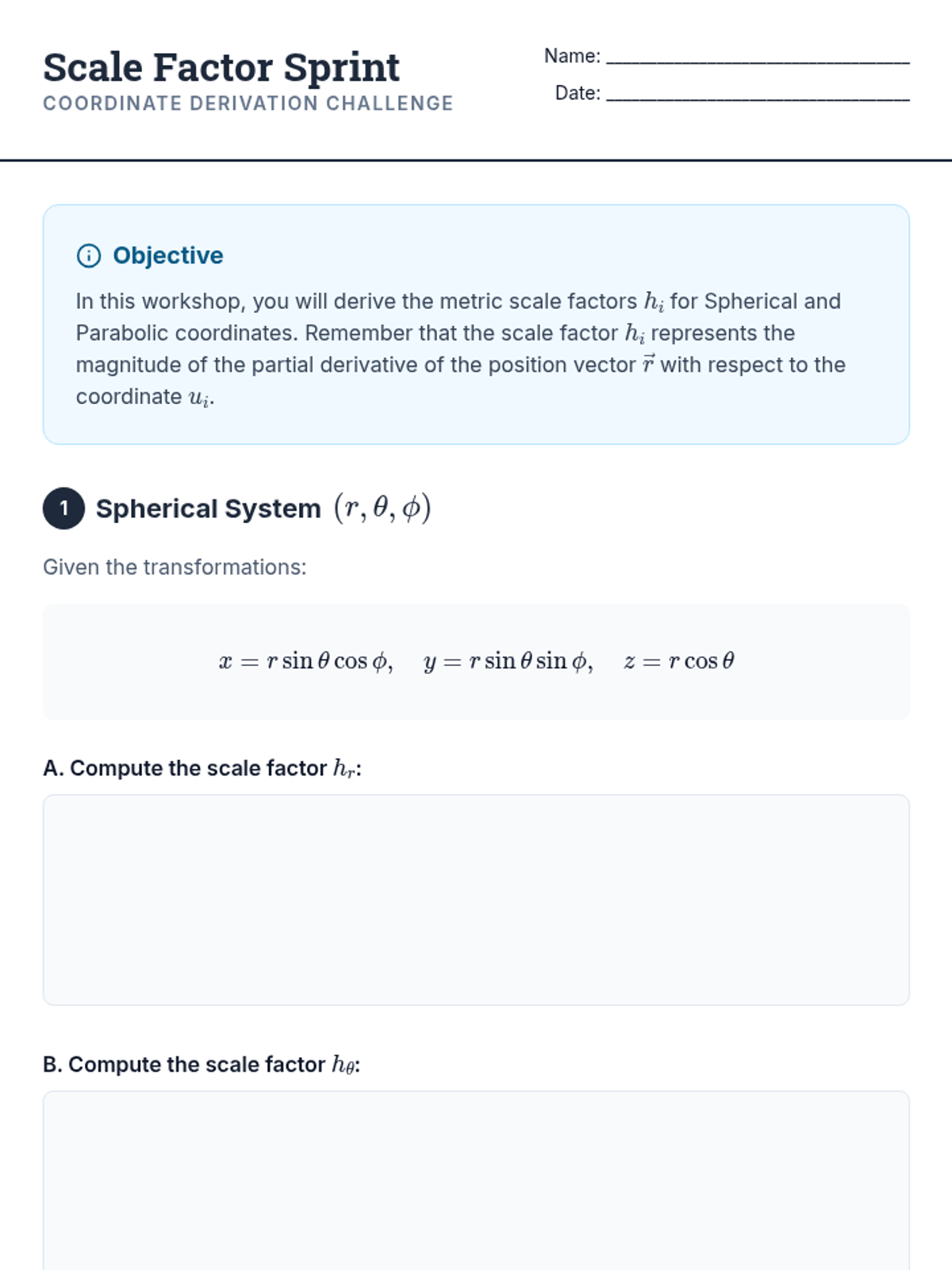
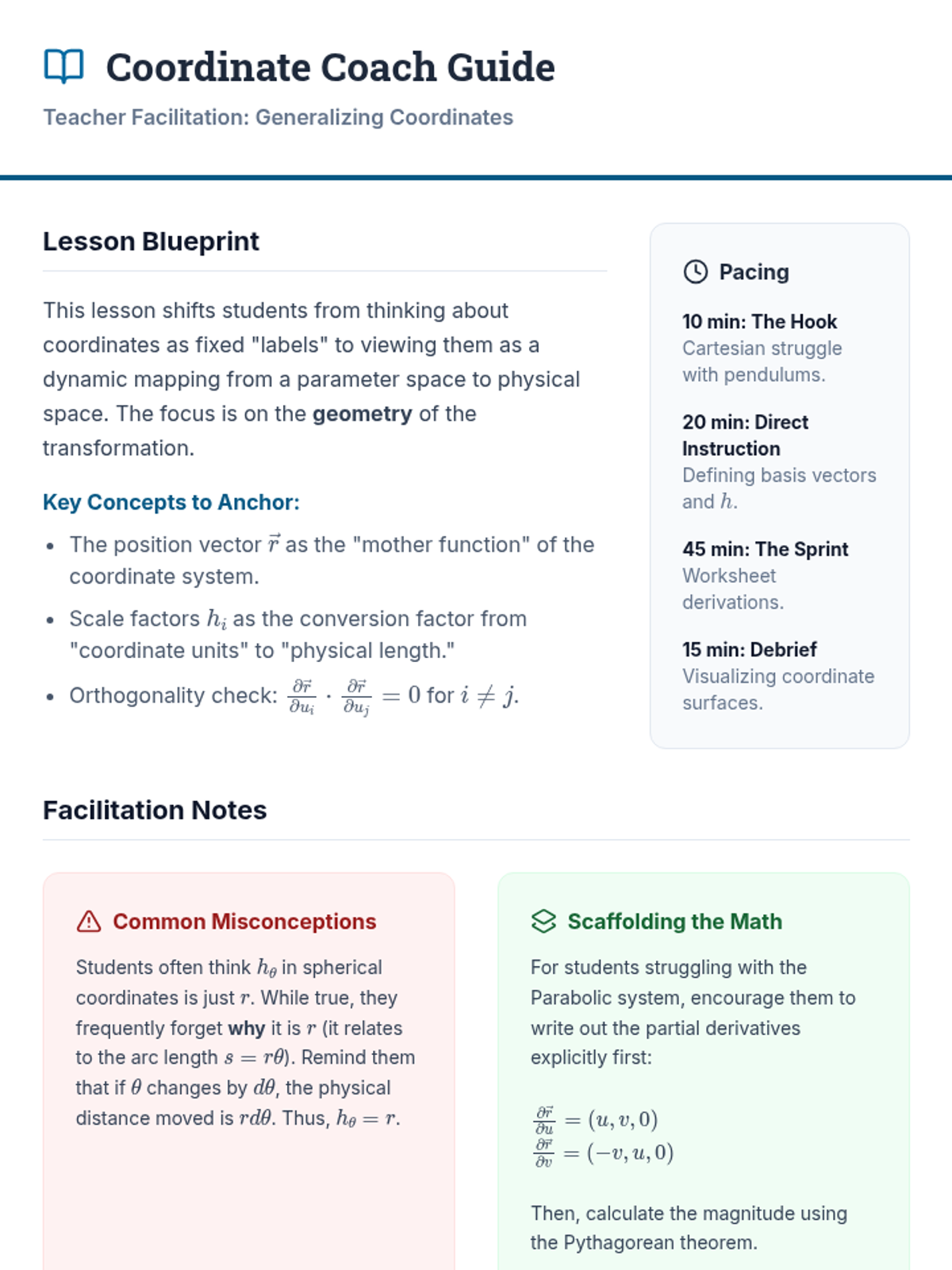
Students derive basis vectors and scale factors for general orthogonal curvilinear coordinates and learn how to define position vectors in non-Cartesian geometries.
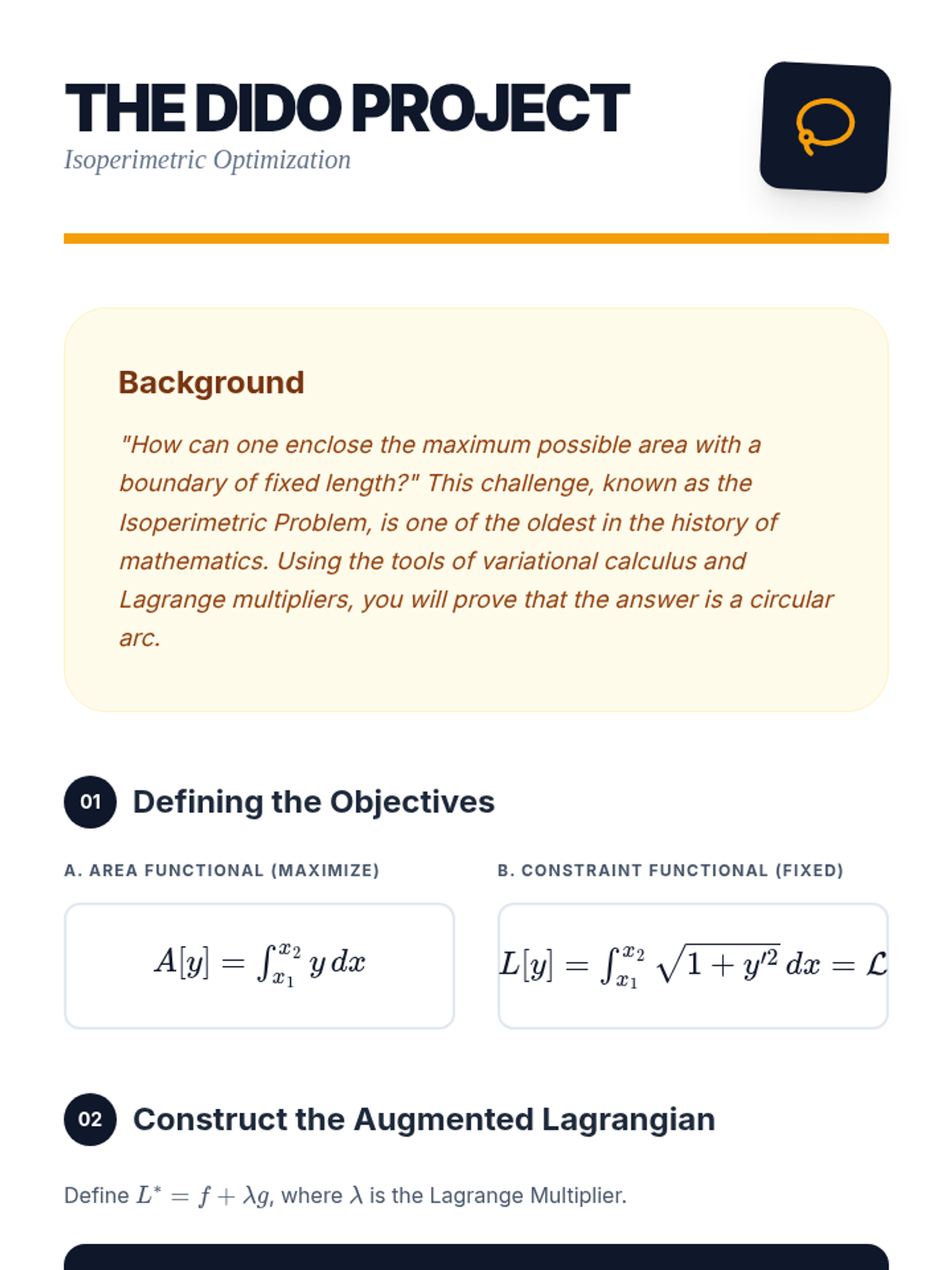
Solving optimization problems with integral constraints, focusing on the isoperimetric problem and Lagrange multipliers.
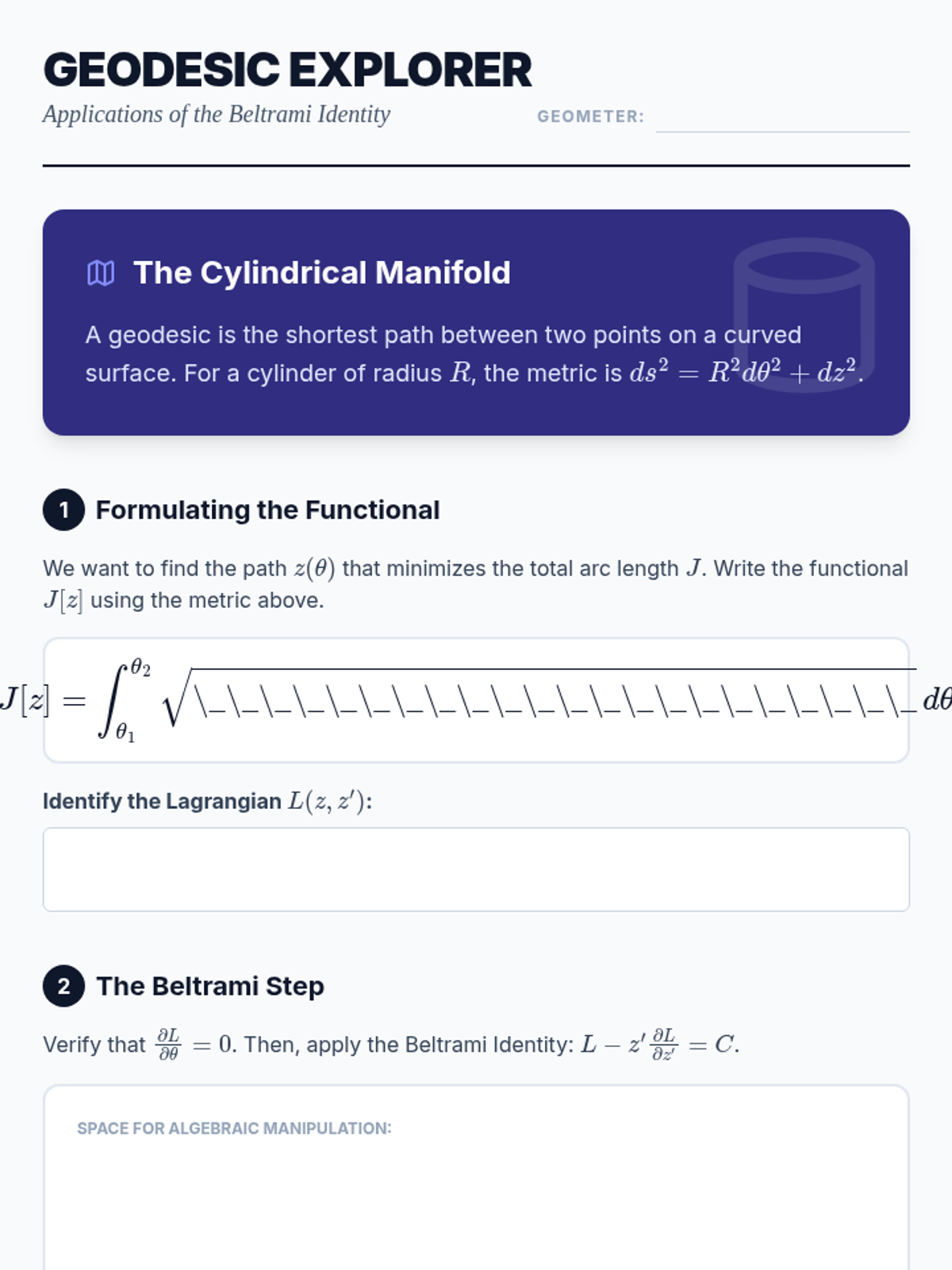
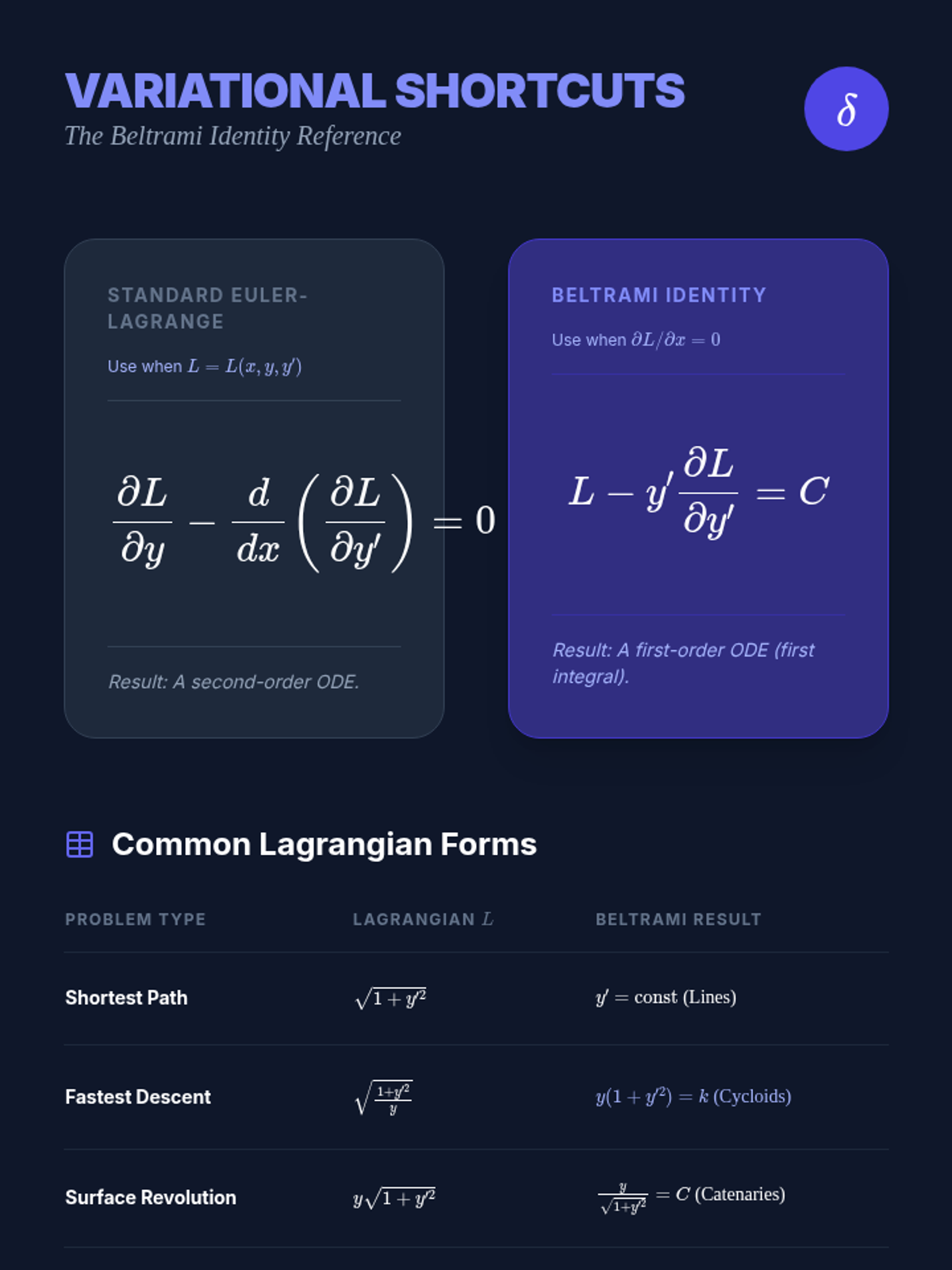
Introduction to the Beltrami Identity for functionals independent of the independent variable, used for geodesic analysis.
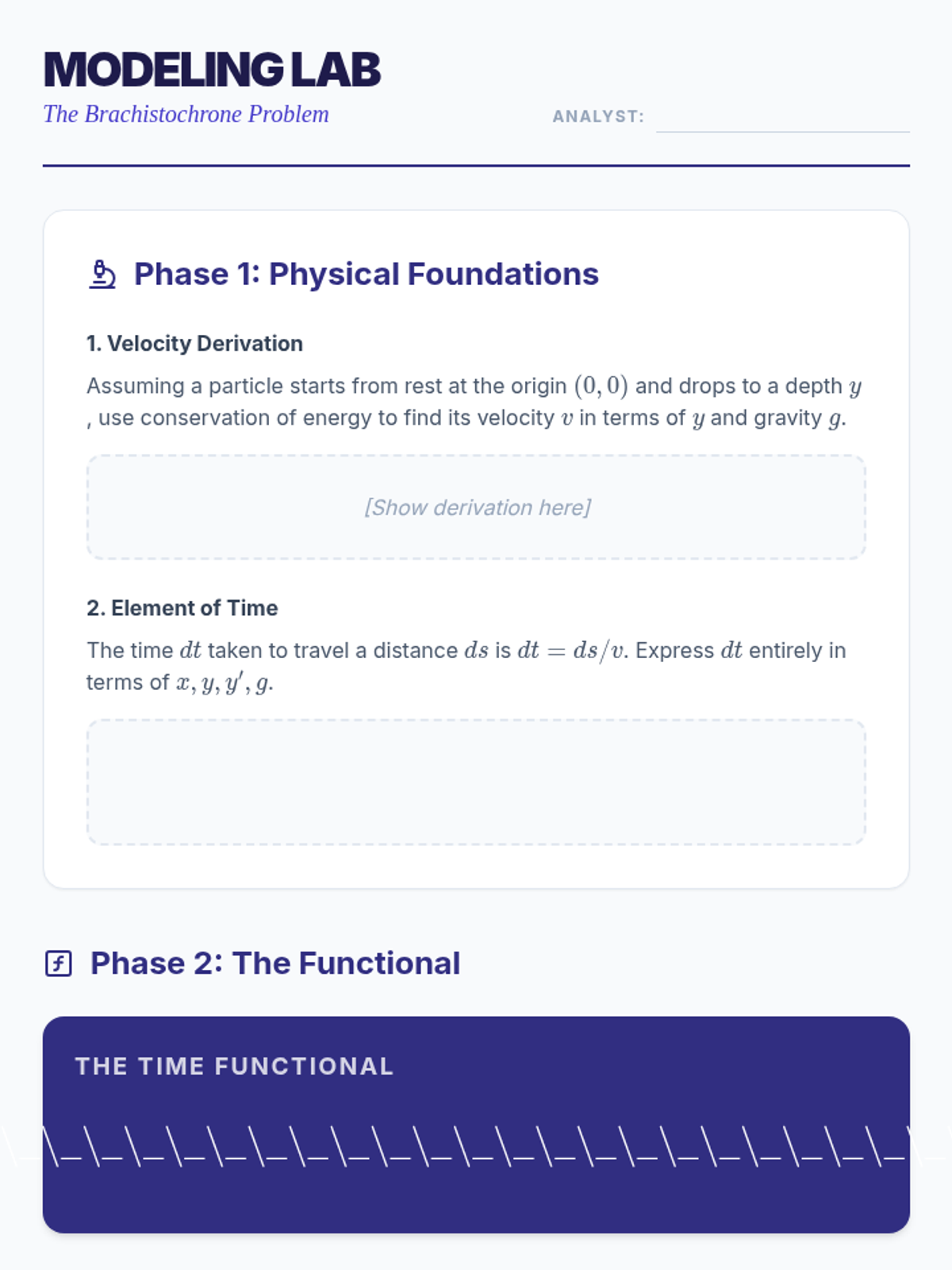
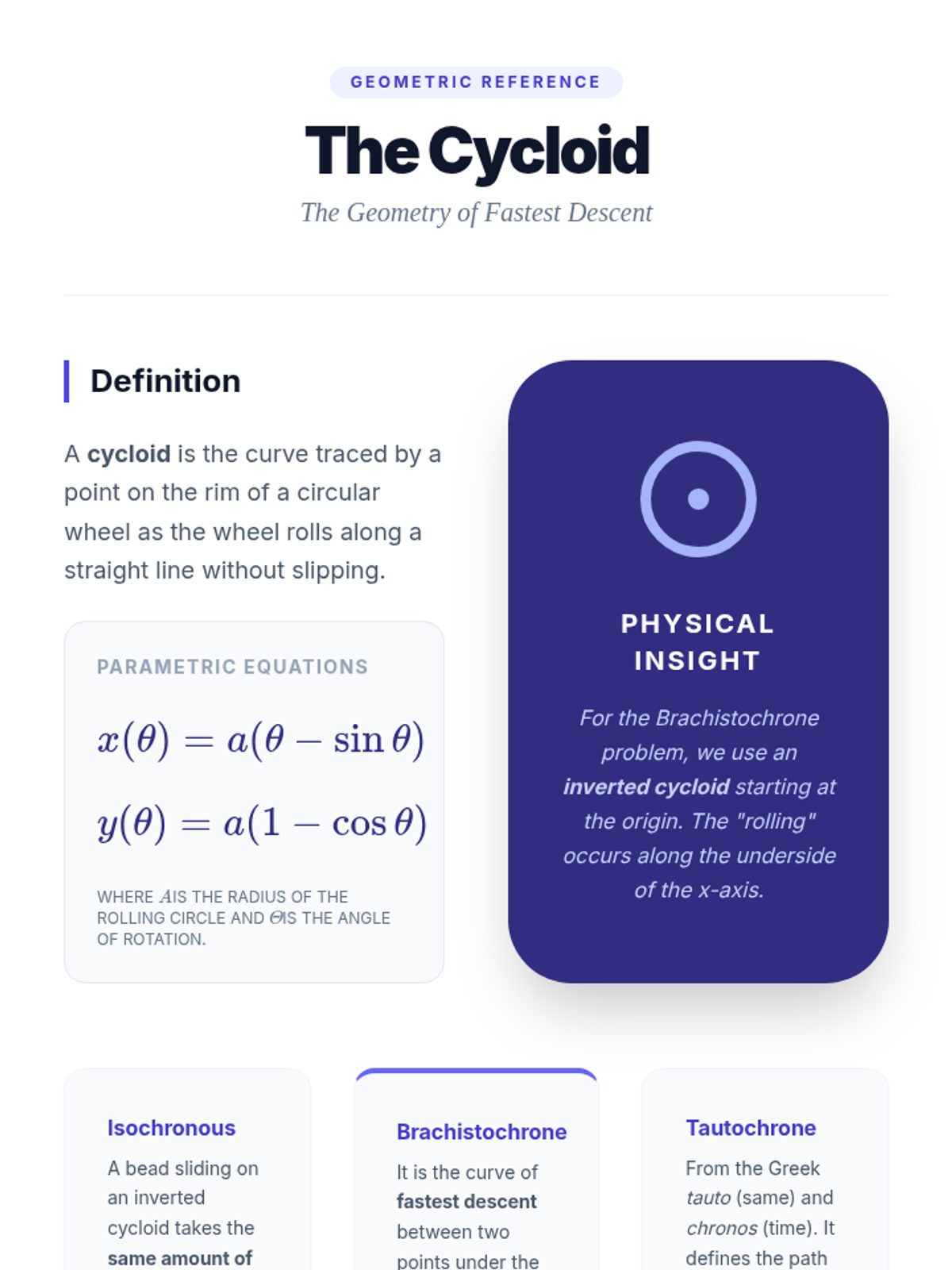
Application of variational principles to solve the Brachistochrone problem—finding the path of fastest descent.
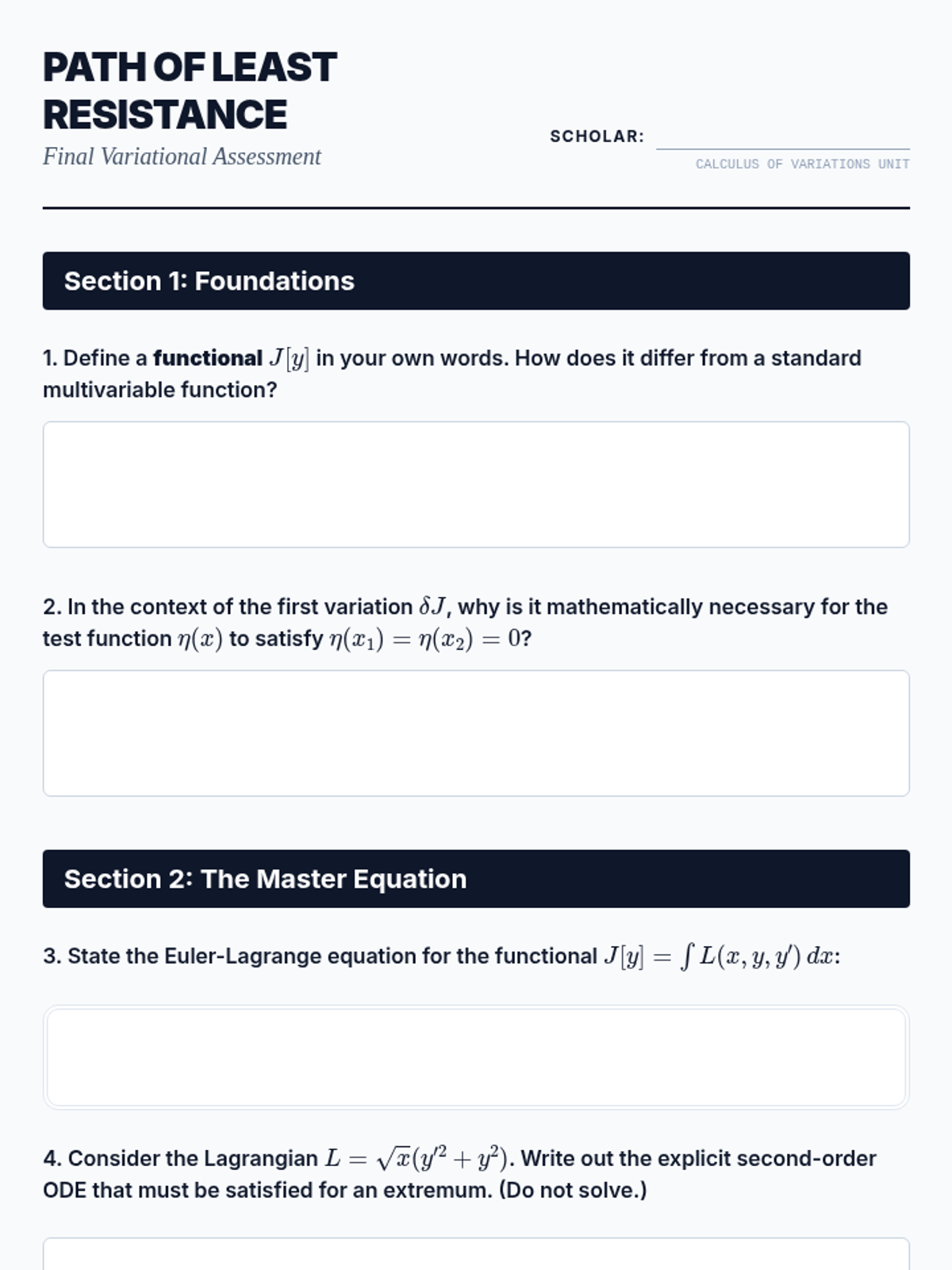
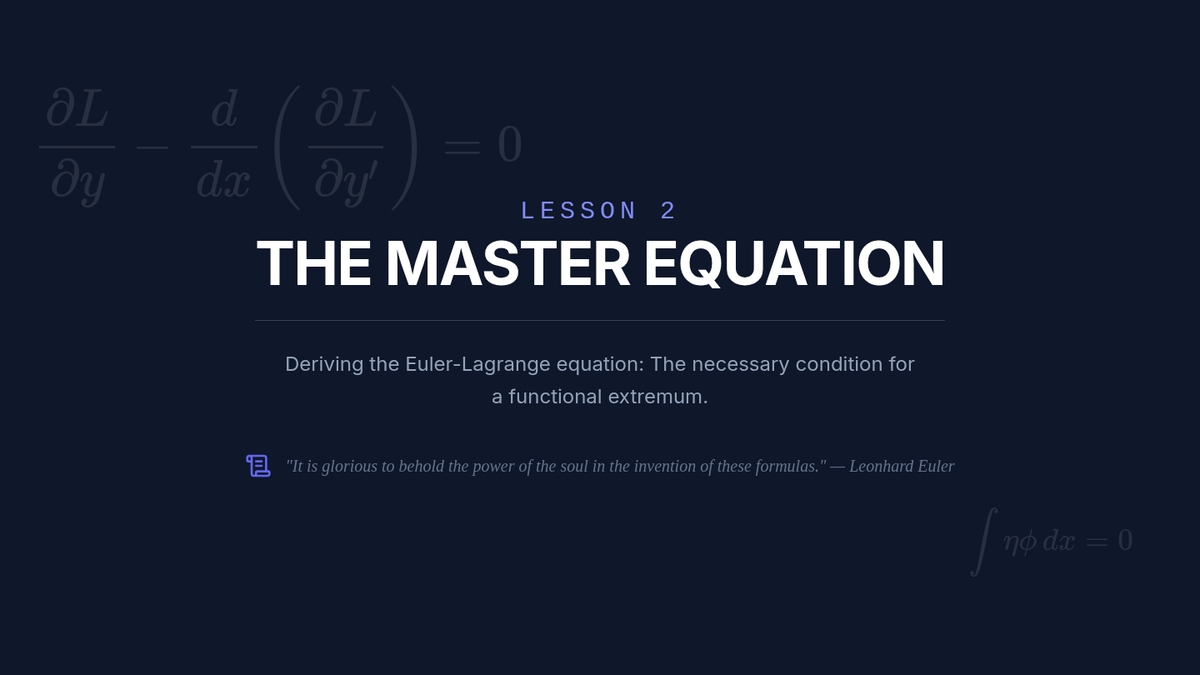
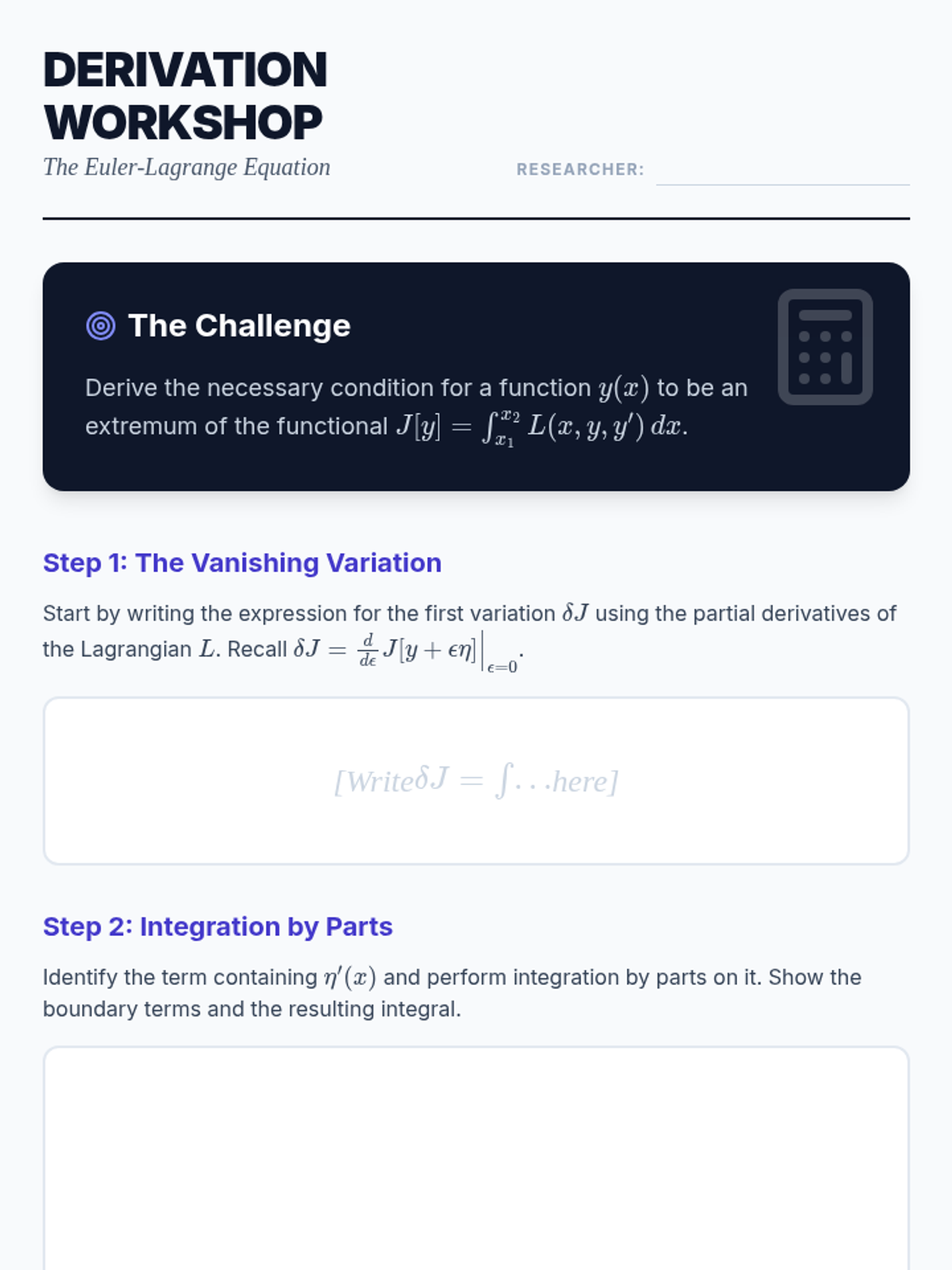
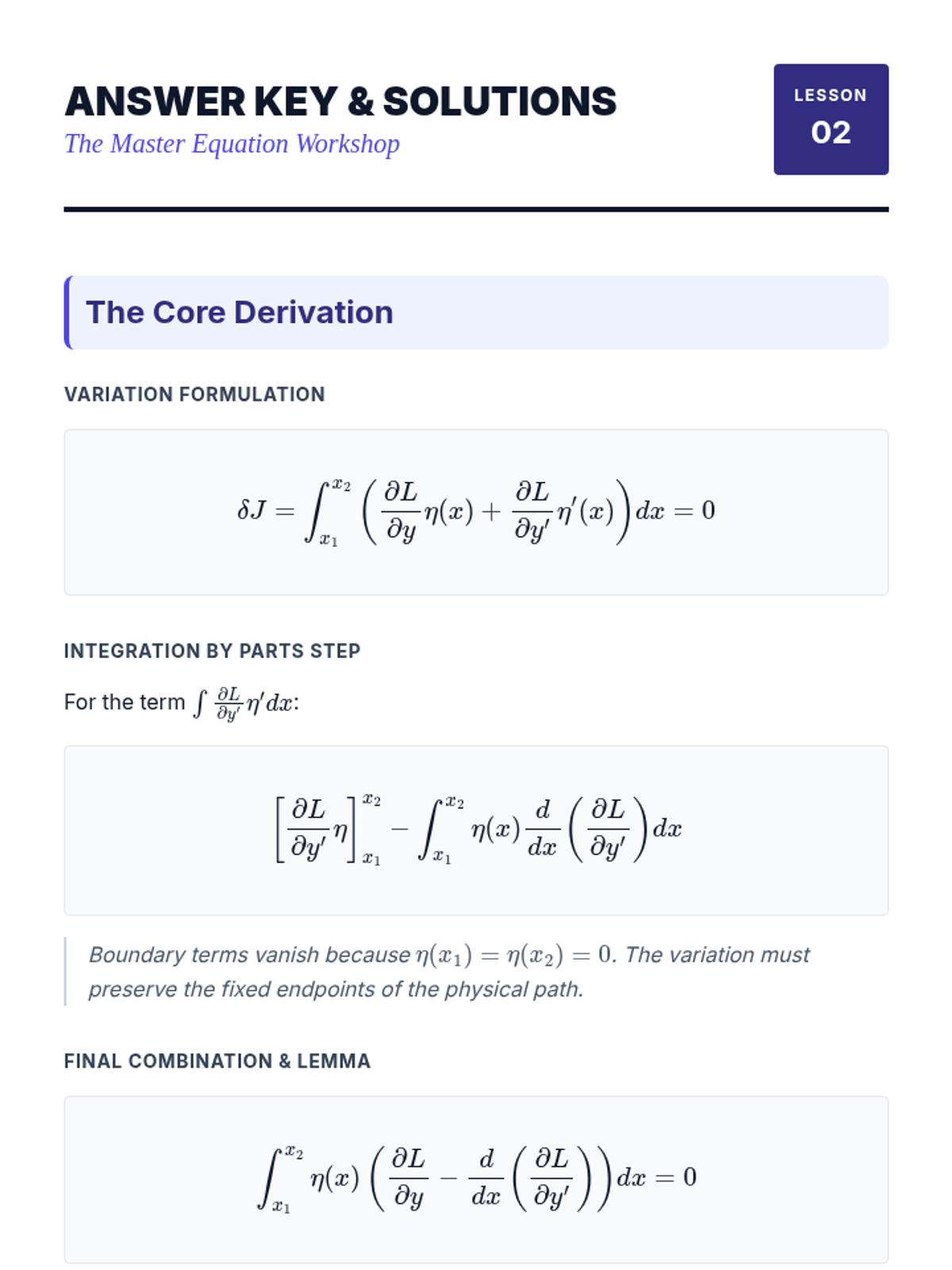
A deep dive into the derivation of the Euler-Lagrange equation using the Fundamental Lemma of the Calculus of Variations.
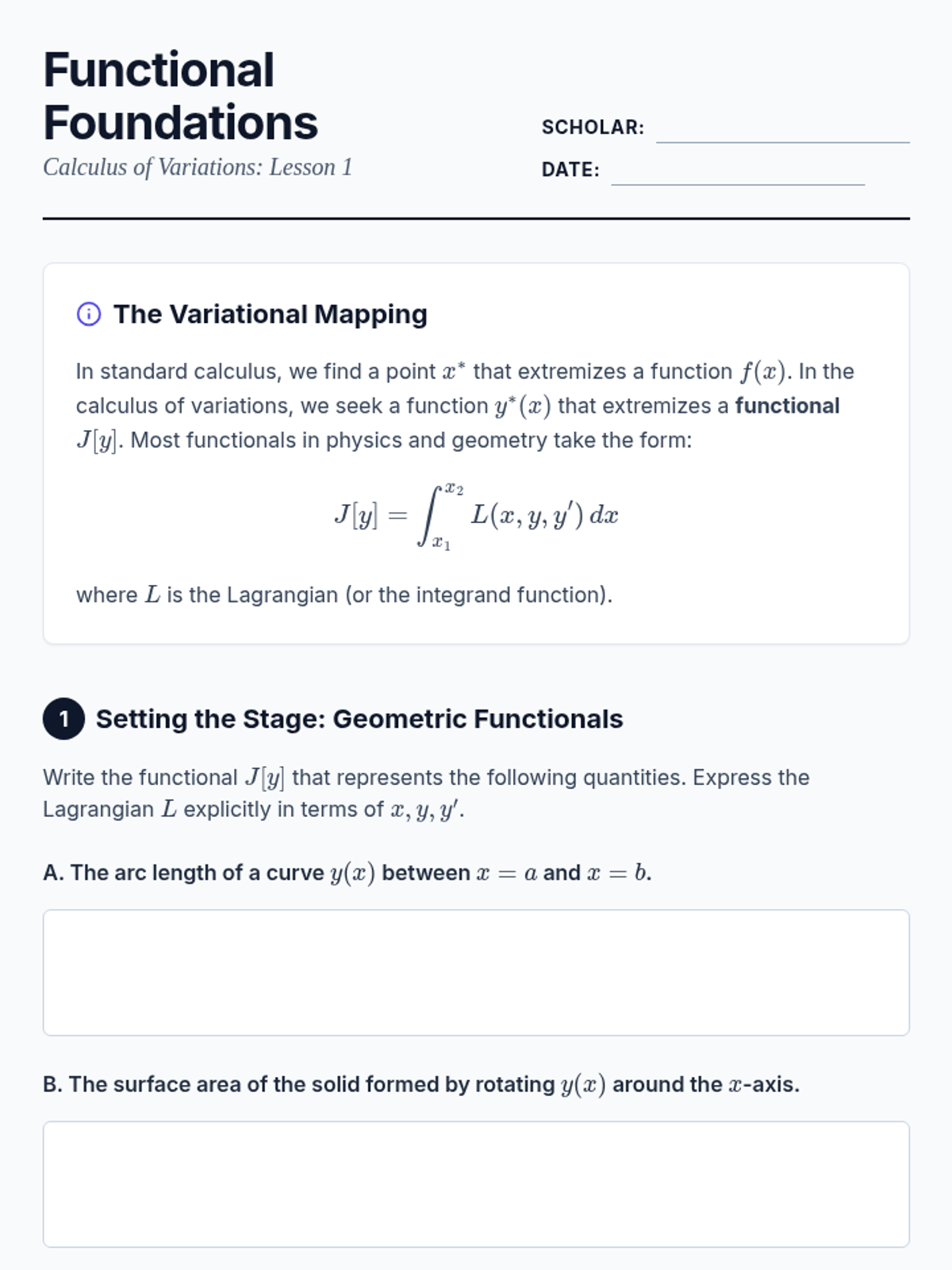
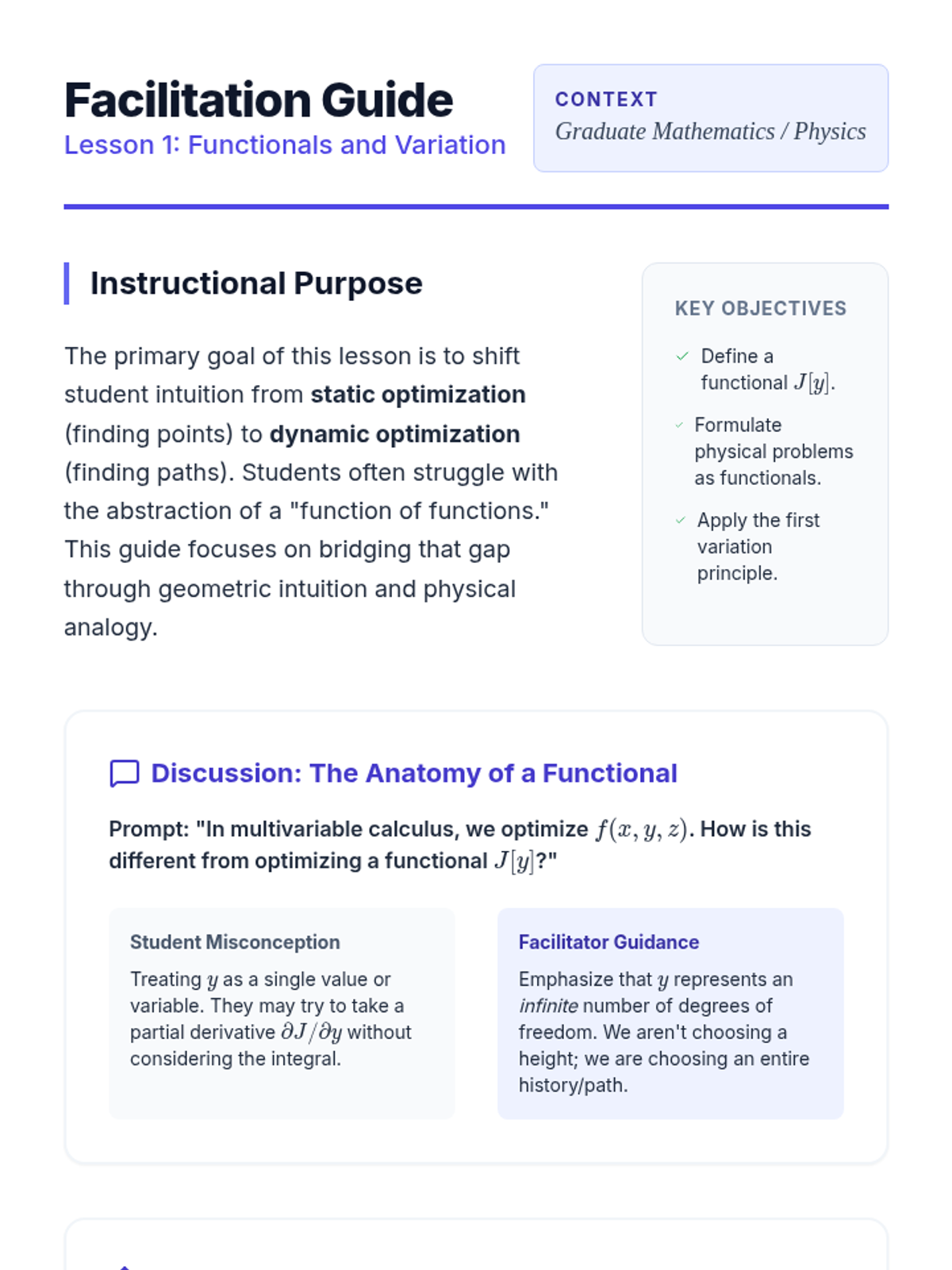
An introduction to functionals and the concept of a variation, shifting focus from point-wise optimization to path optimization.
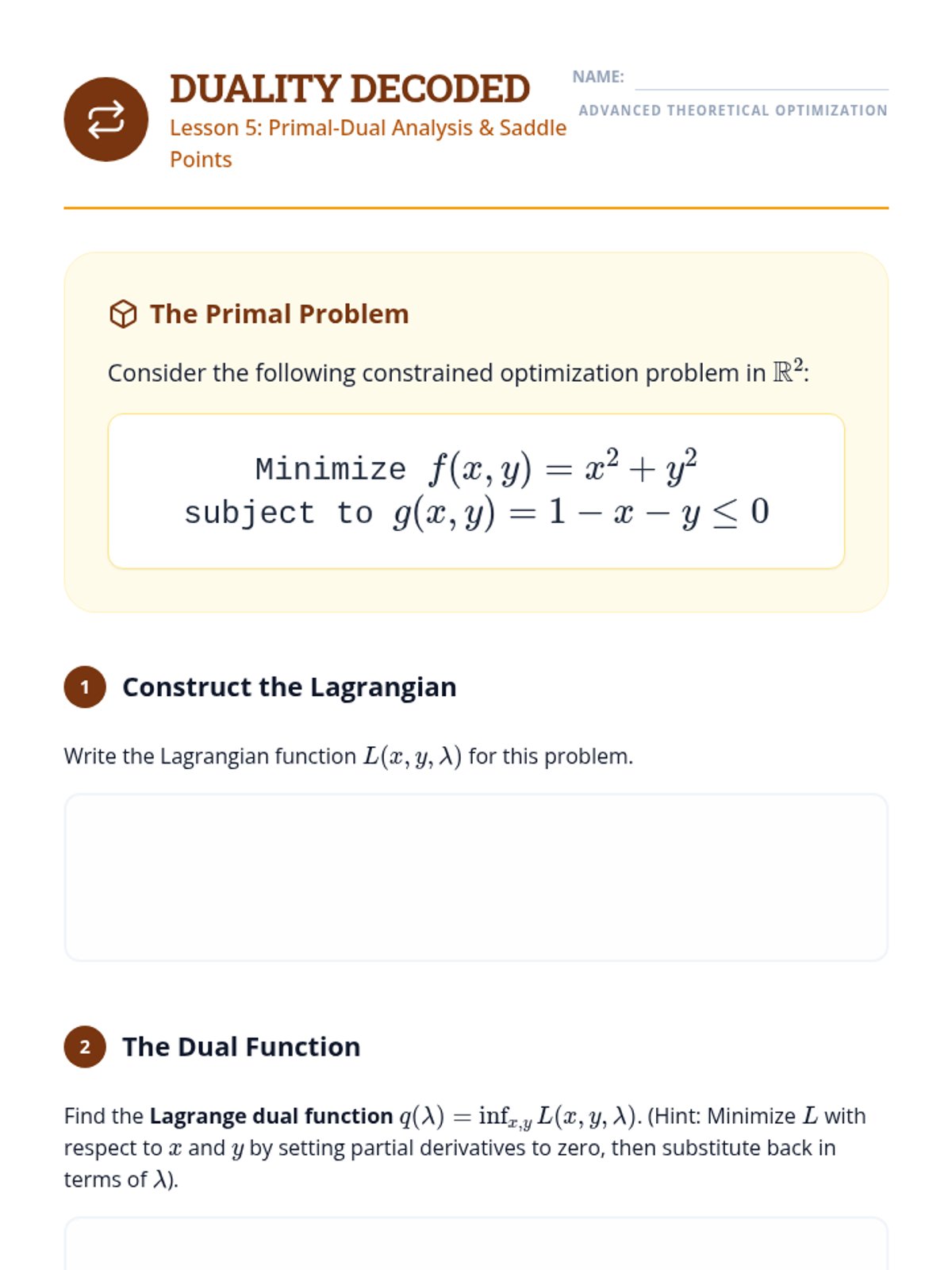
The sequence concludes with an introduction to Min-Max theorems and saddle point analysis, exploring duality gaps and the conditions under which primal and dual problems align.
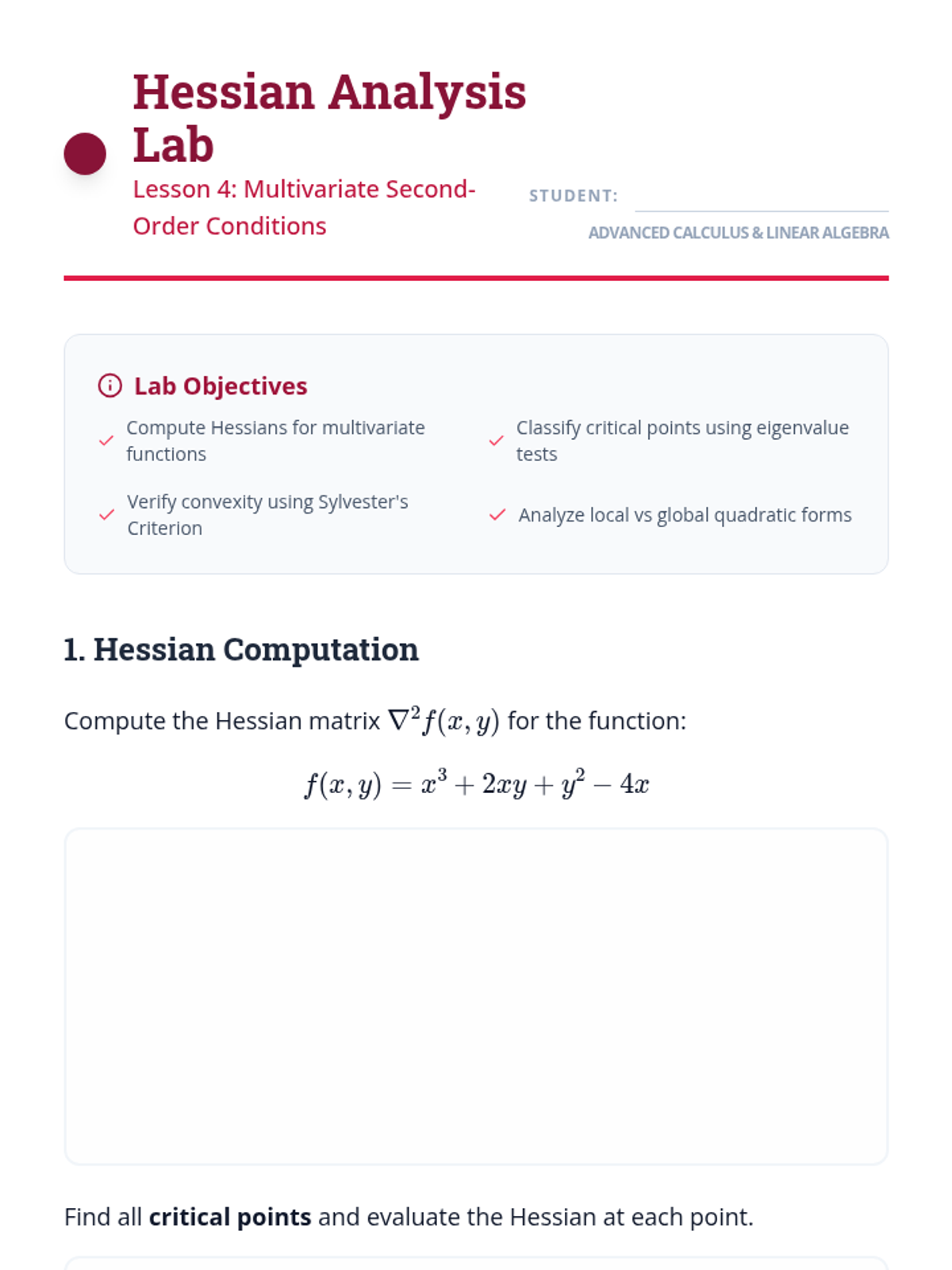
Focusing on the Hessian matrix, students derive and apply tests for positive definiteness to classify critical points in higher dimensions, bridging linear algebra and calculus.
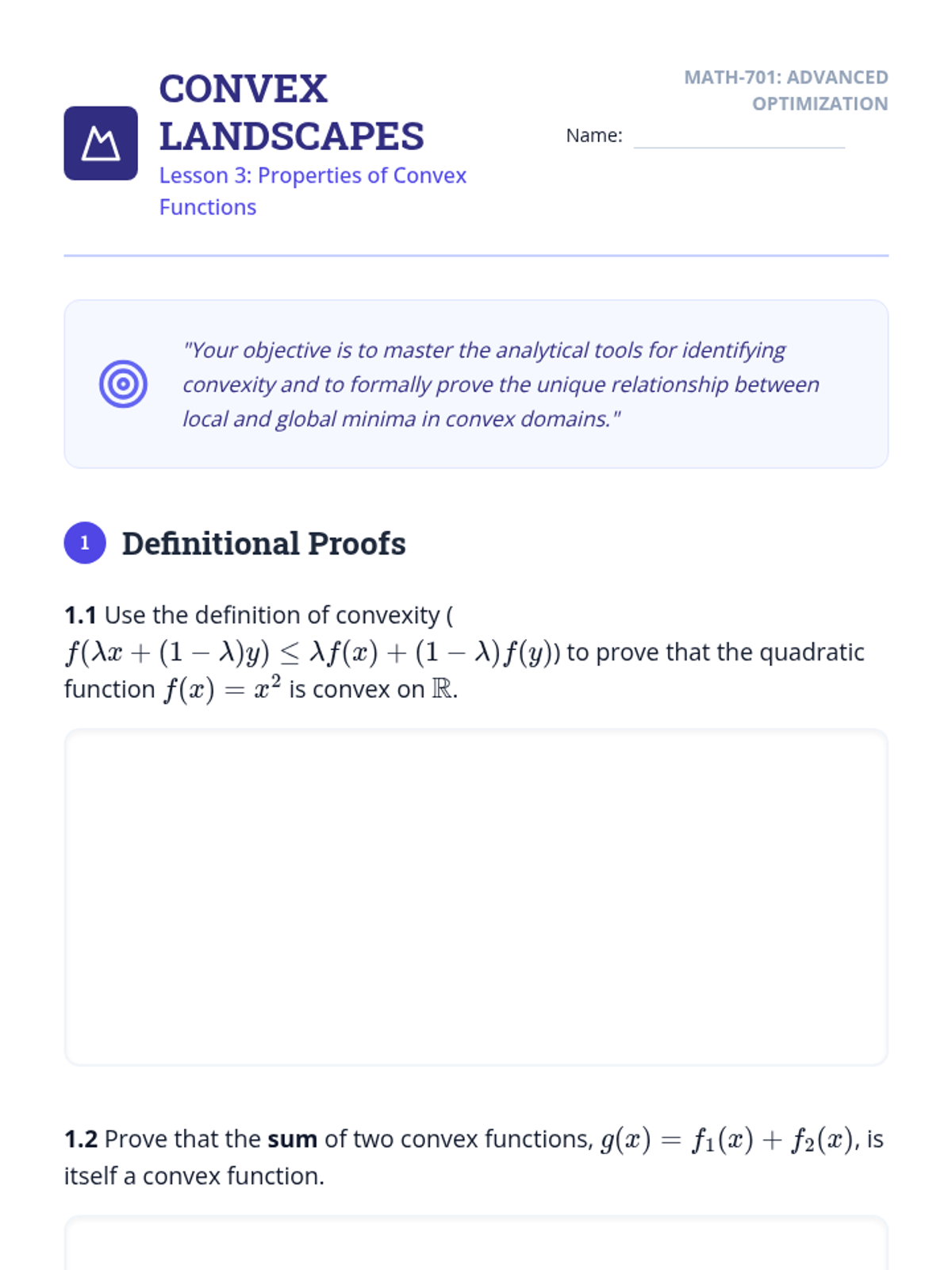
Students analyze the definitions of convex and concave functions, proving that local minima in convex functions are global minima and applying Jensen's Inequality.
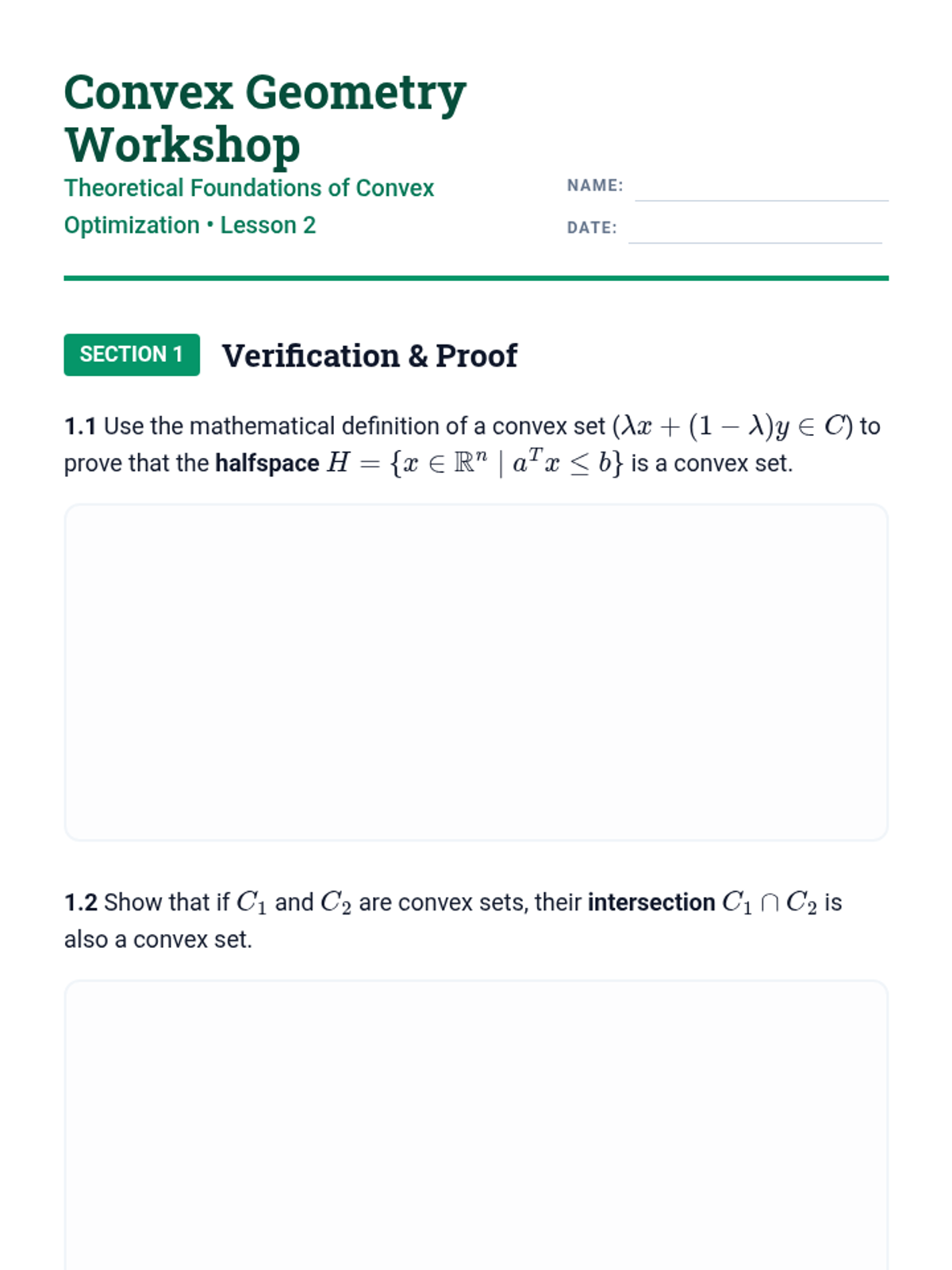
This lesson explores the geometry of the domain, defining convex sets, hulls, and separating hyperplanes, and distinguishing between convex and non-convex constraints.
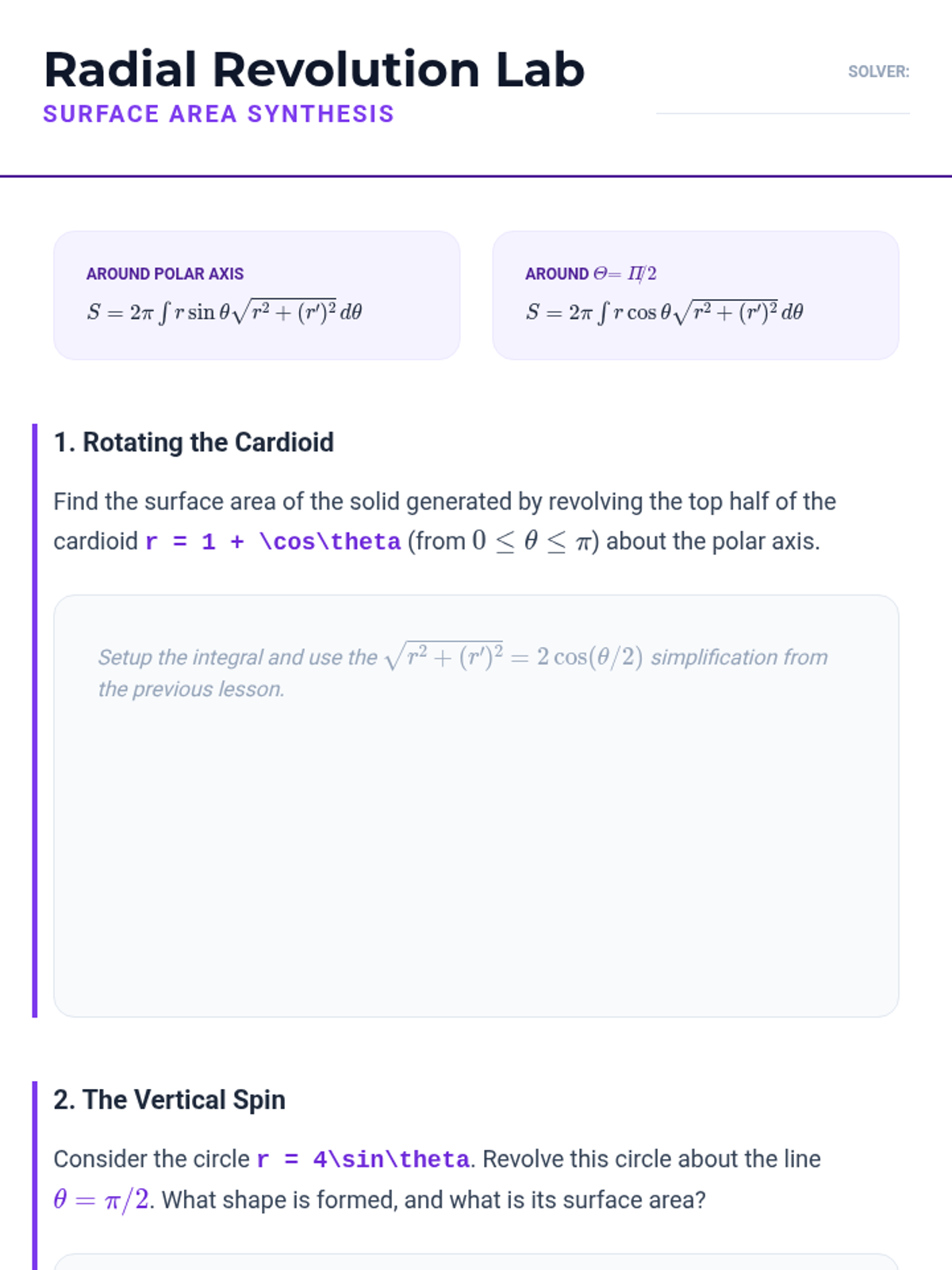
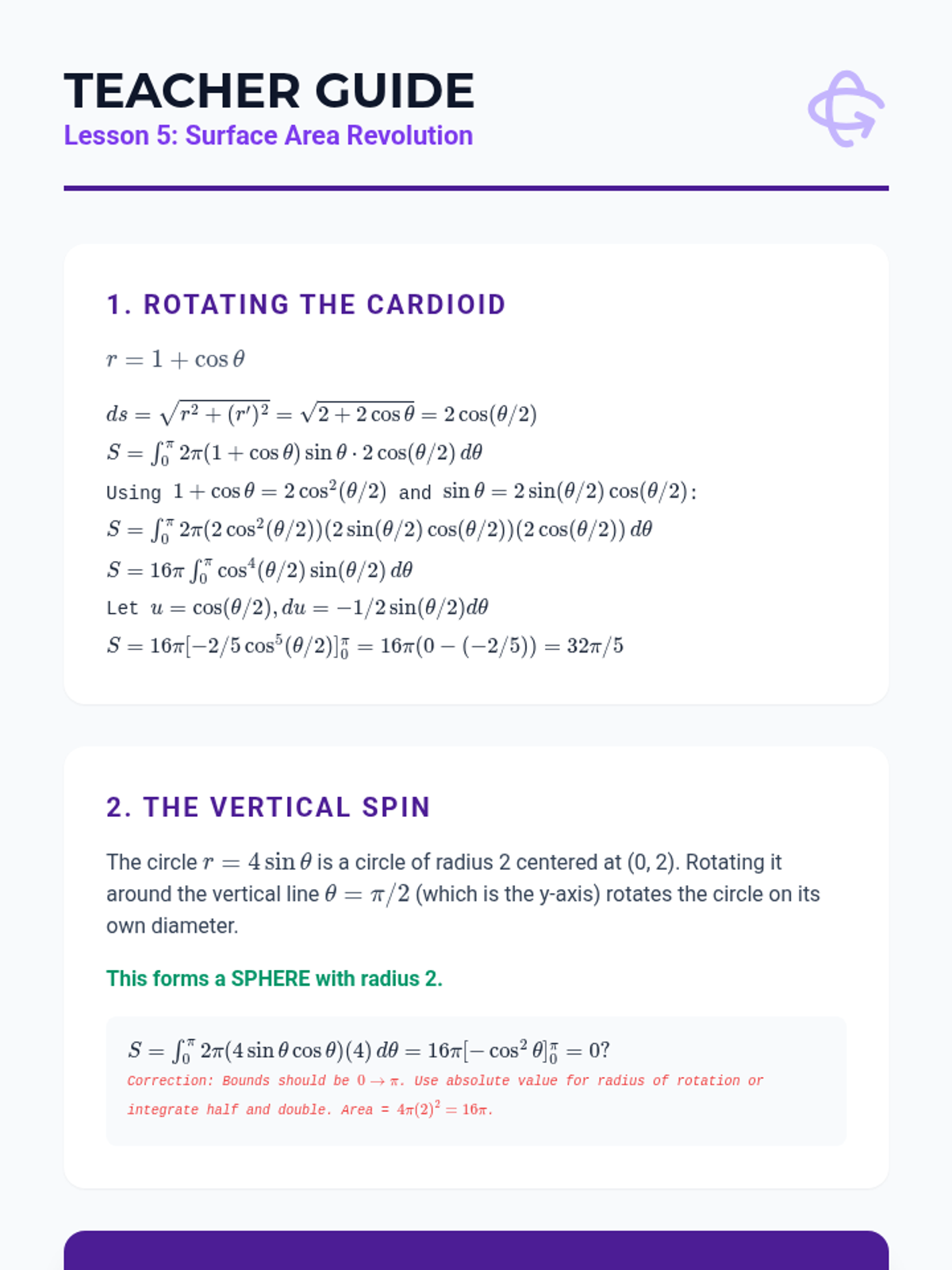
The sequence concludes with finding the surface area of solids formed by revolving polar curves around the polar axis or the line theta = pi/2.
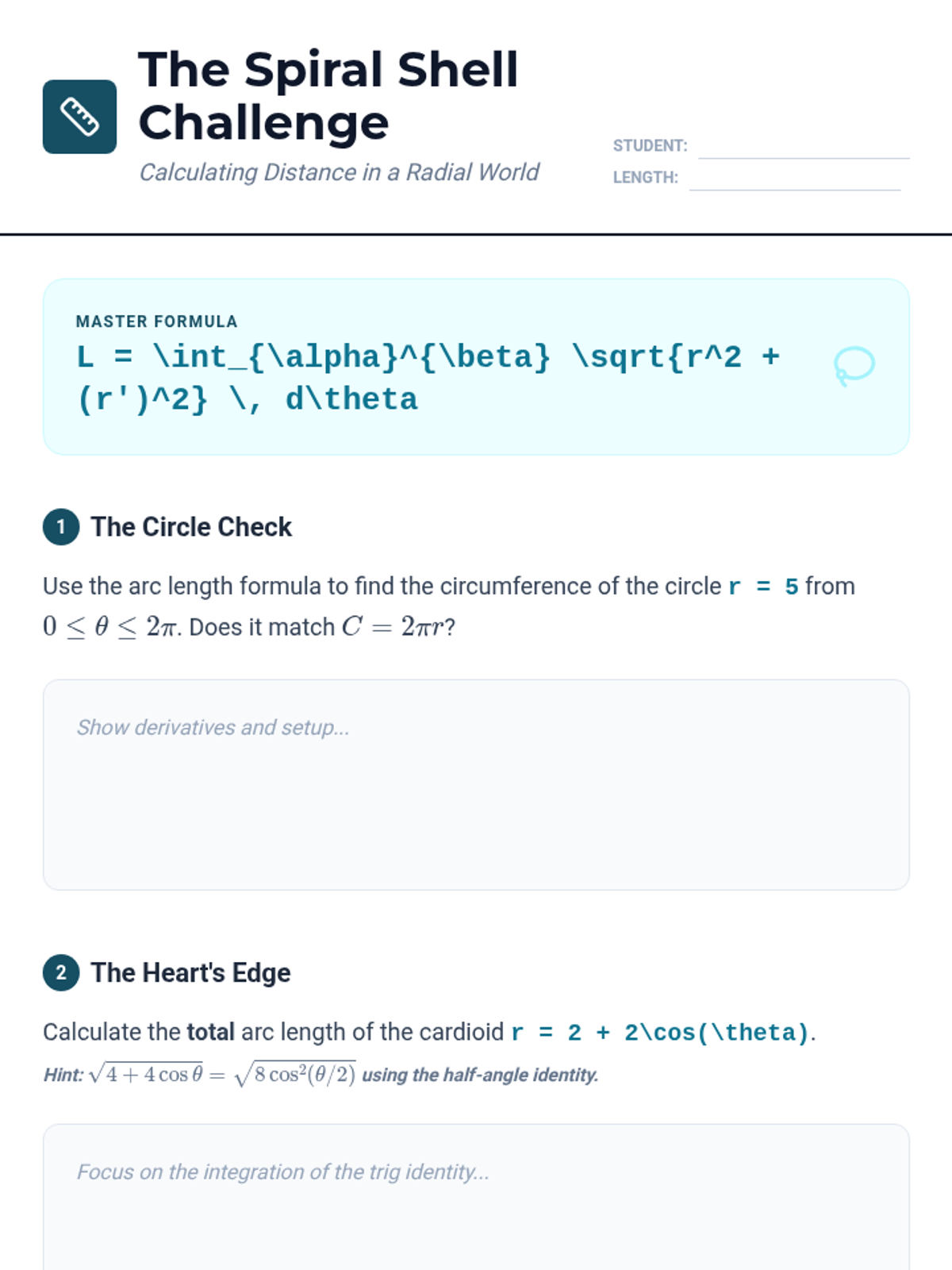
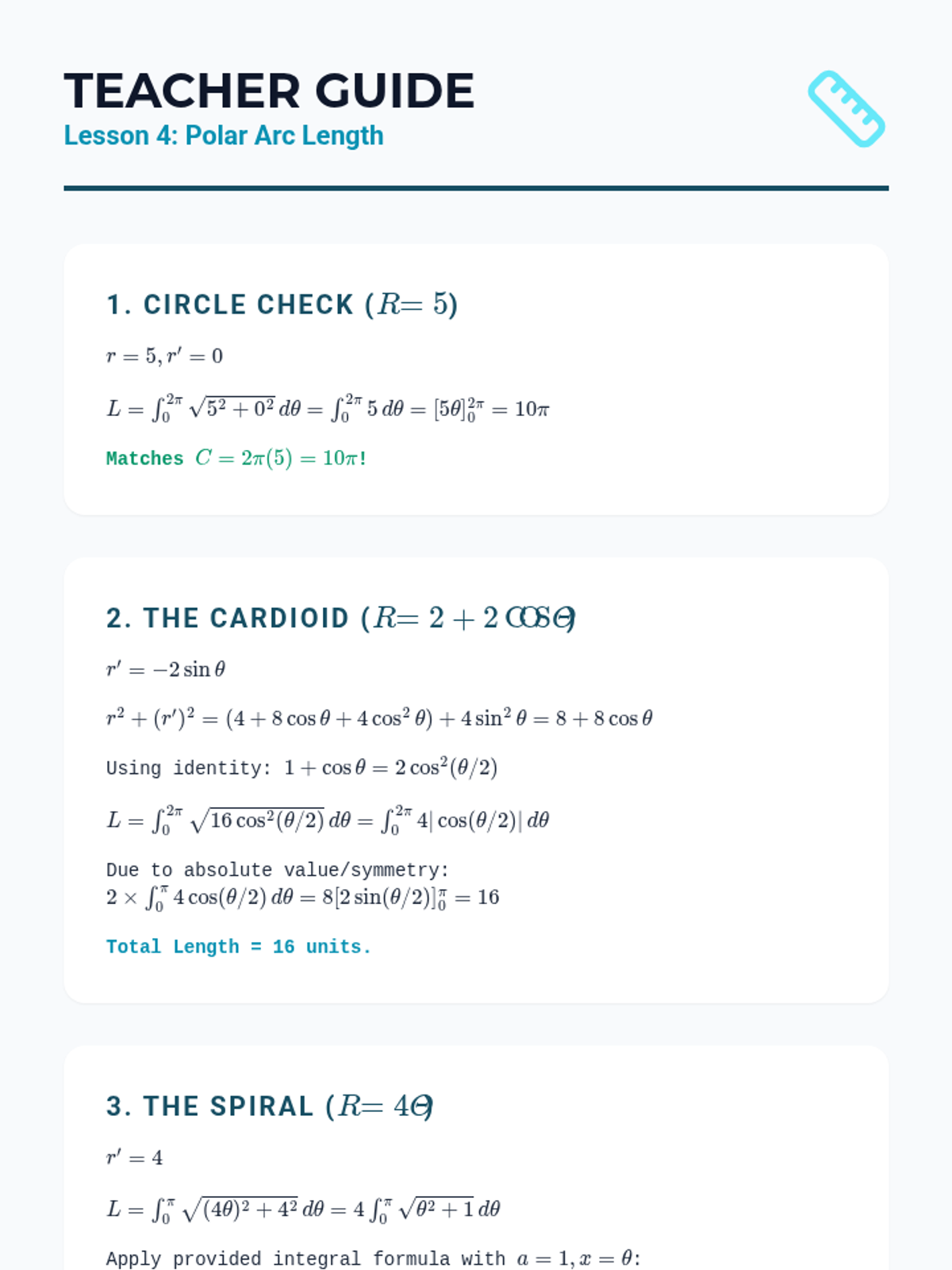
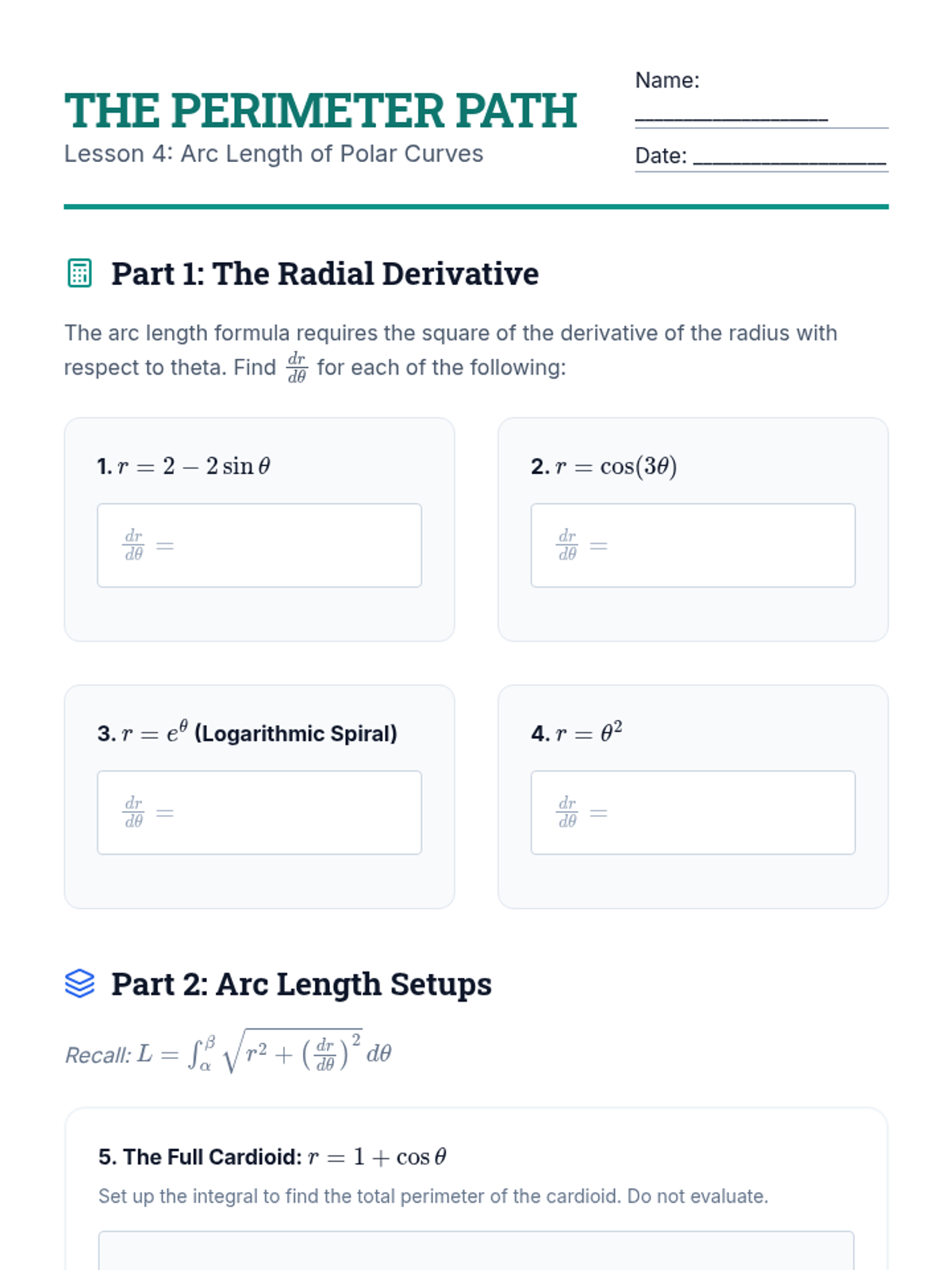
Students derive and apply the arc length formula for polar curves, calculating the distance along spirals and cardioids.
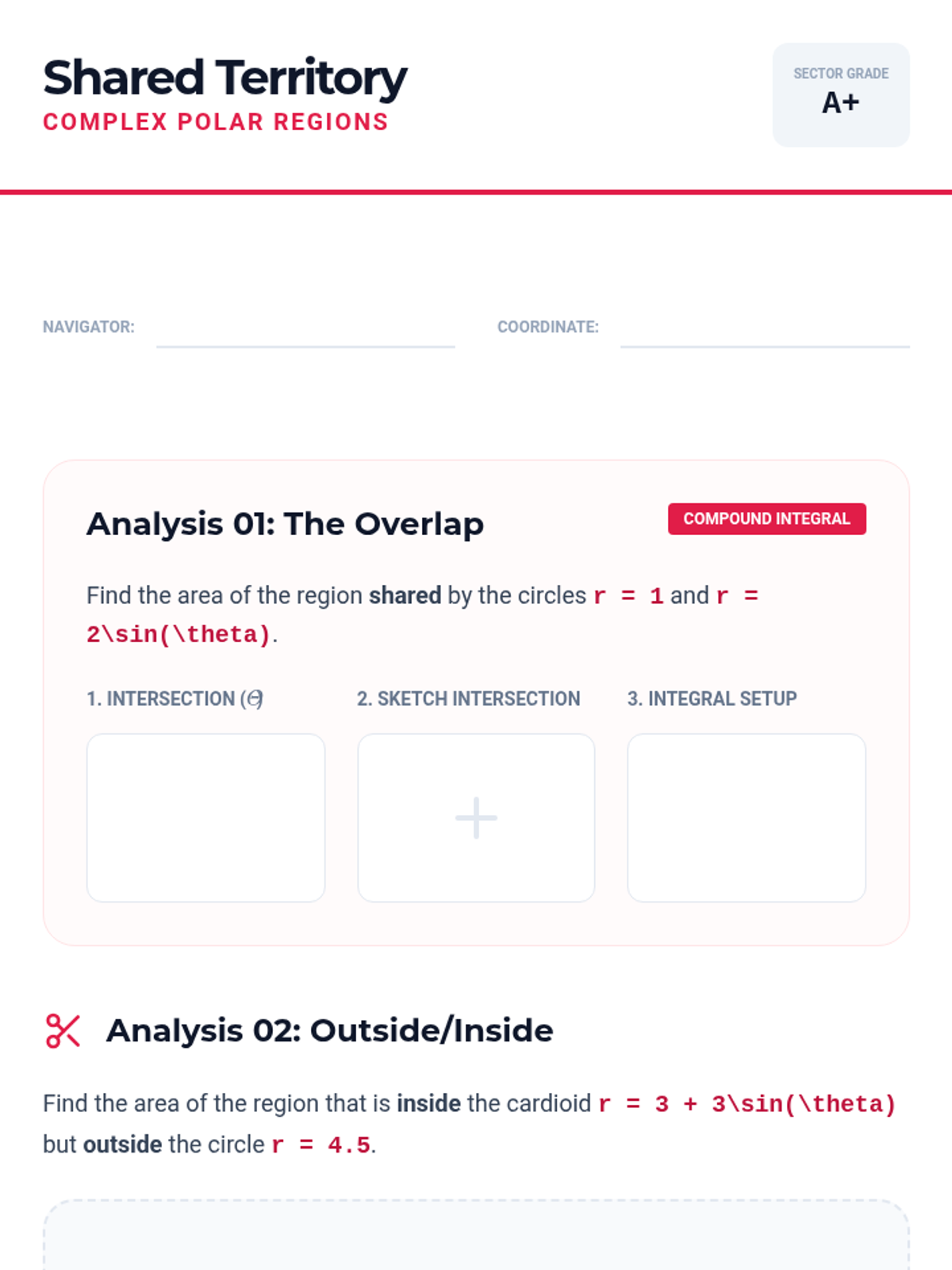
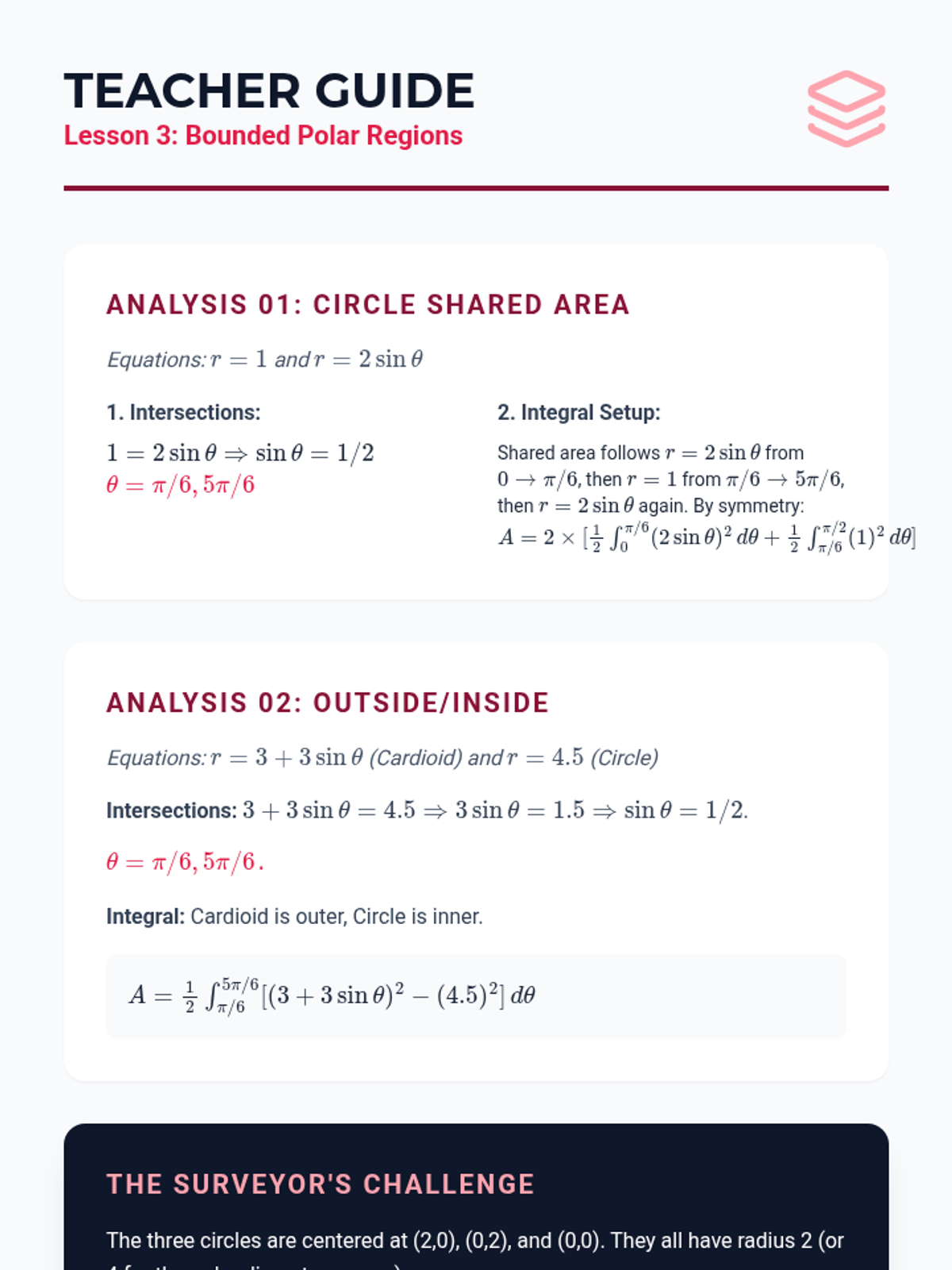
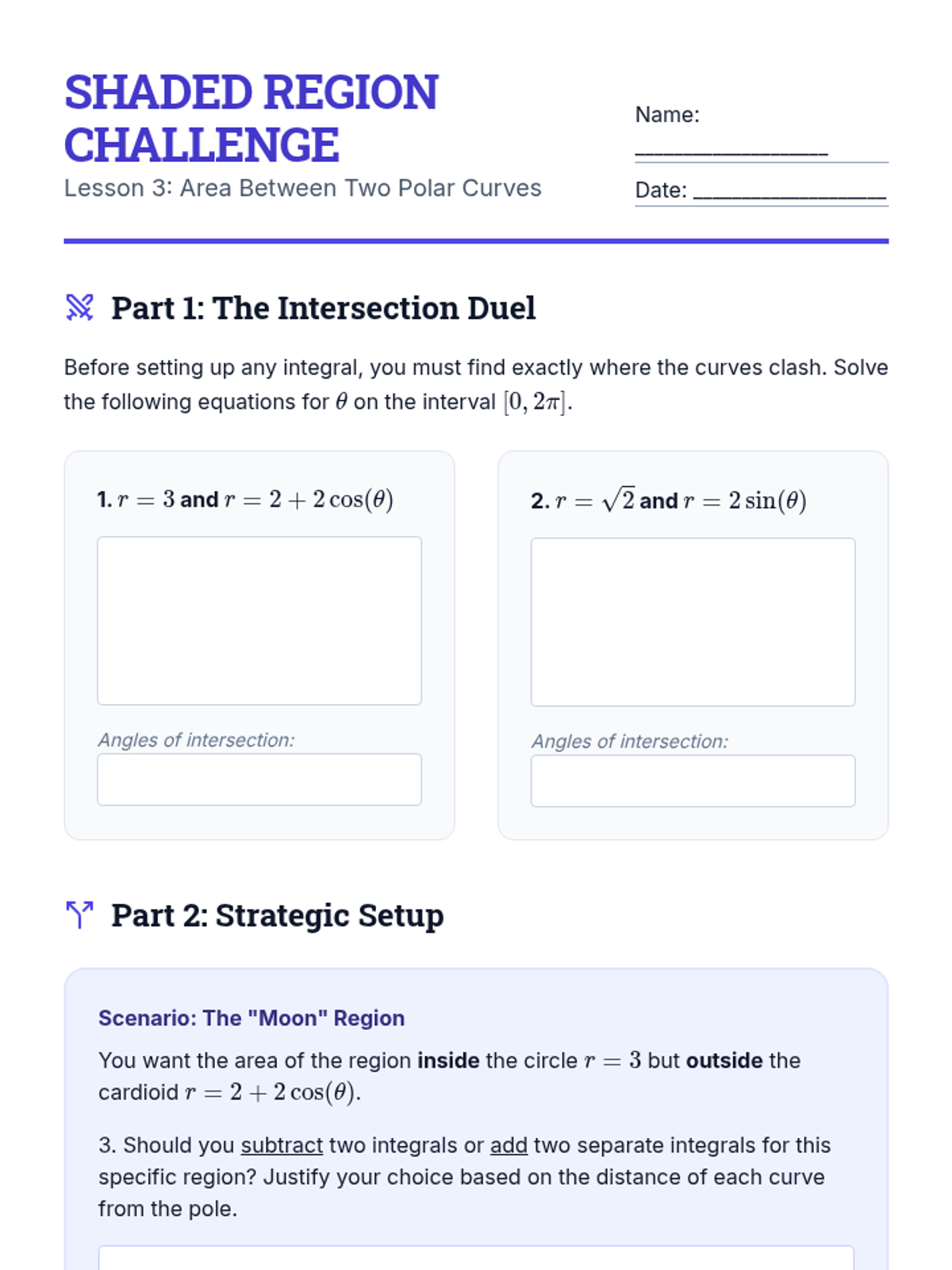
Students find the area of regions shared by or bounded between two polar curves by identifying intersection points and setting up compound integrals.
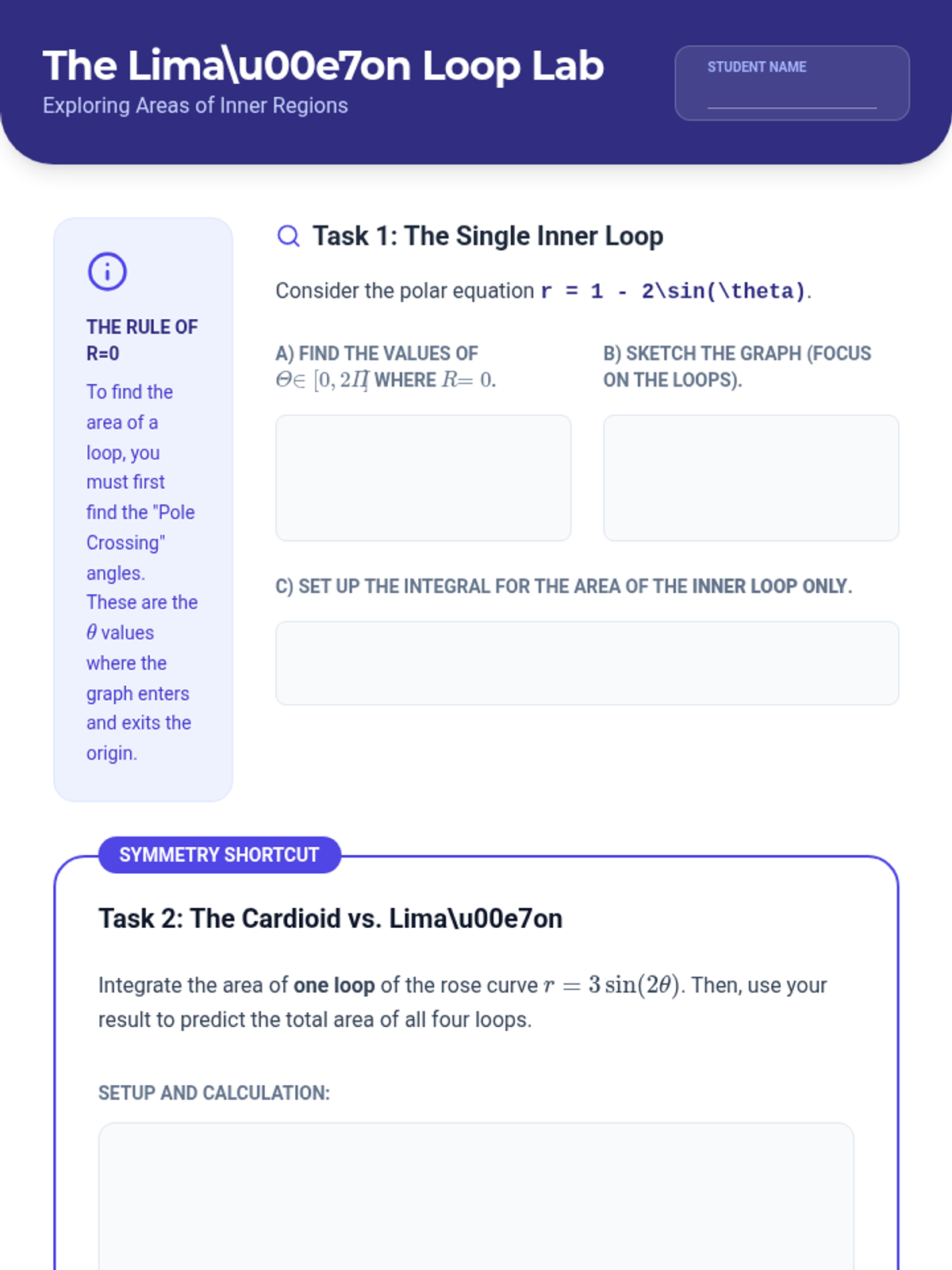
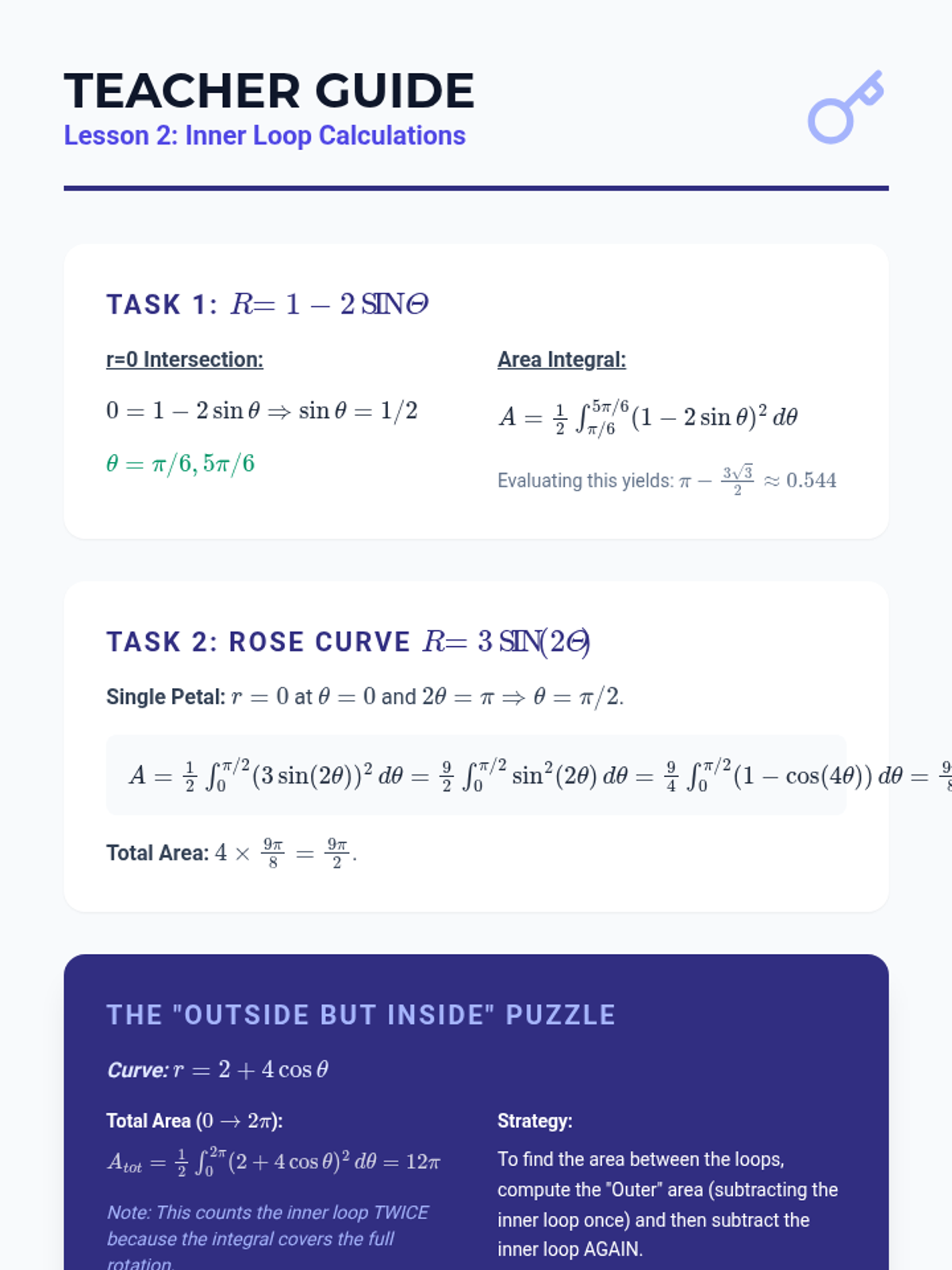
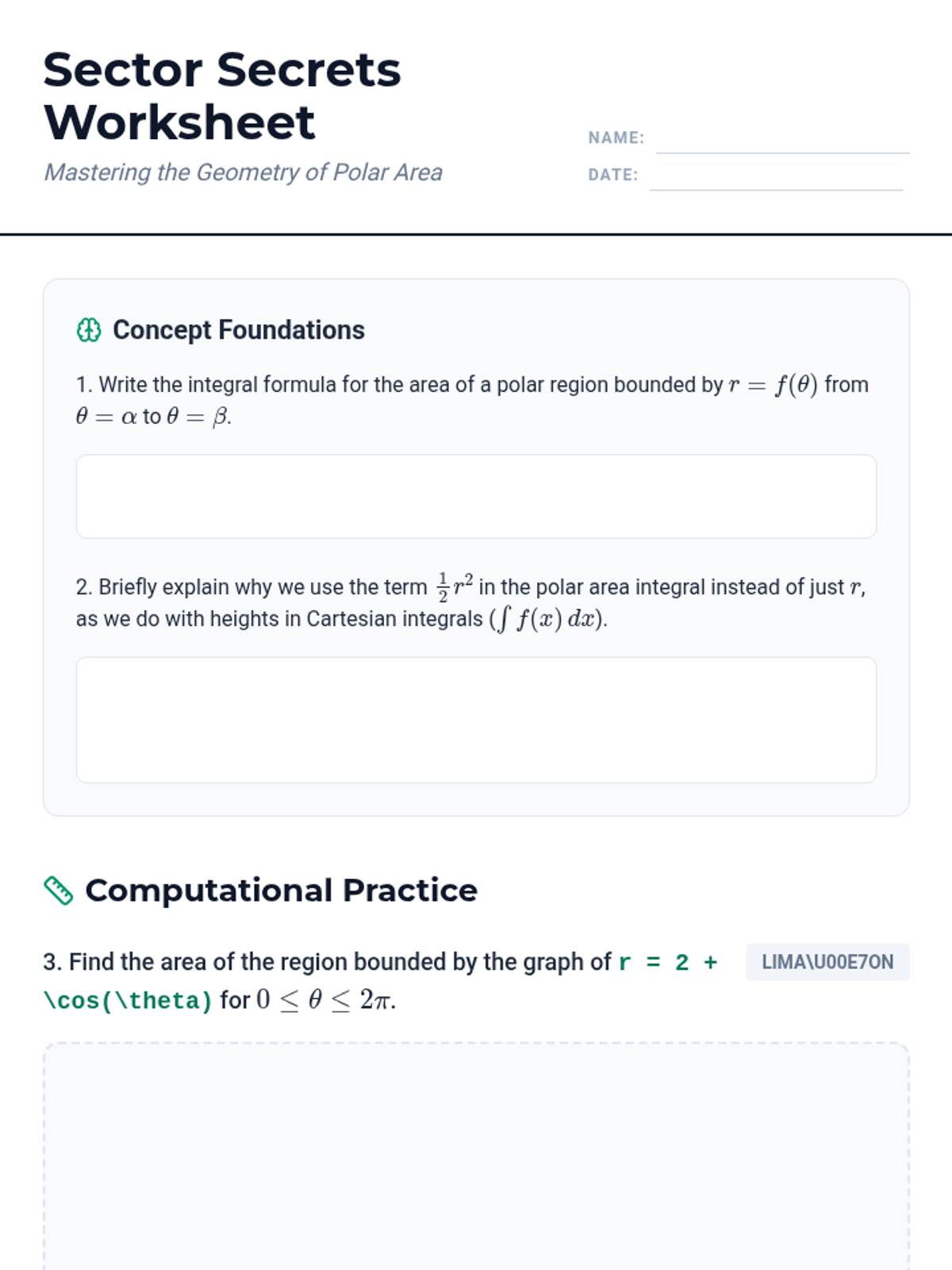
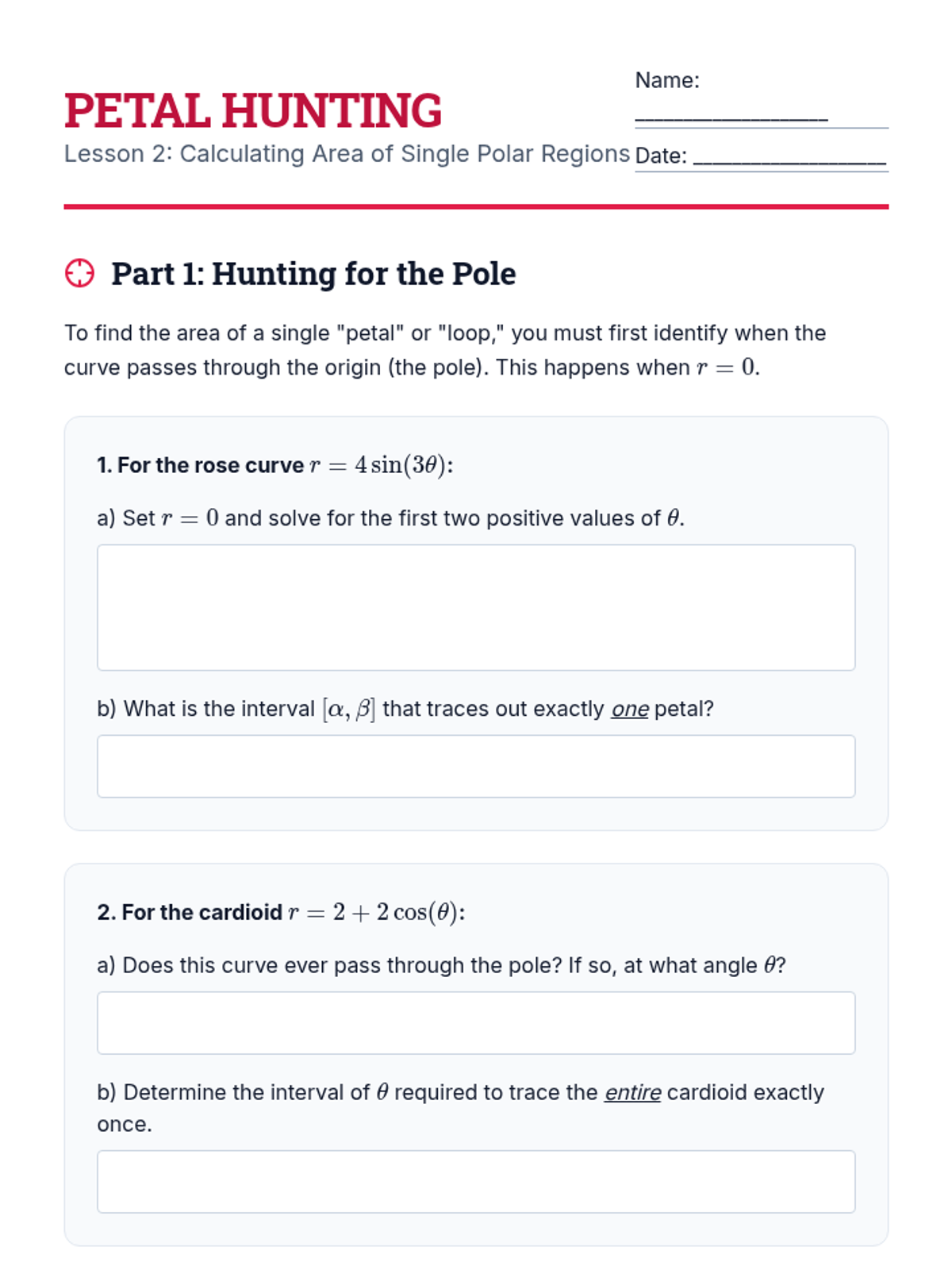
Focusing on lima\u00e7ons and rose curves, students learn to find integration limits by solving for r=0 and calculate the area of specific loops.
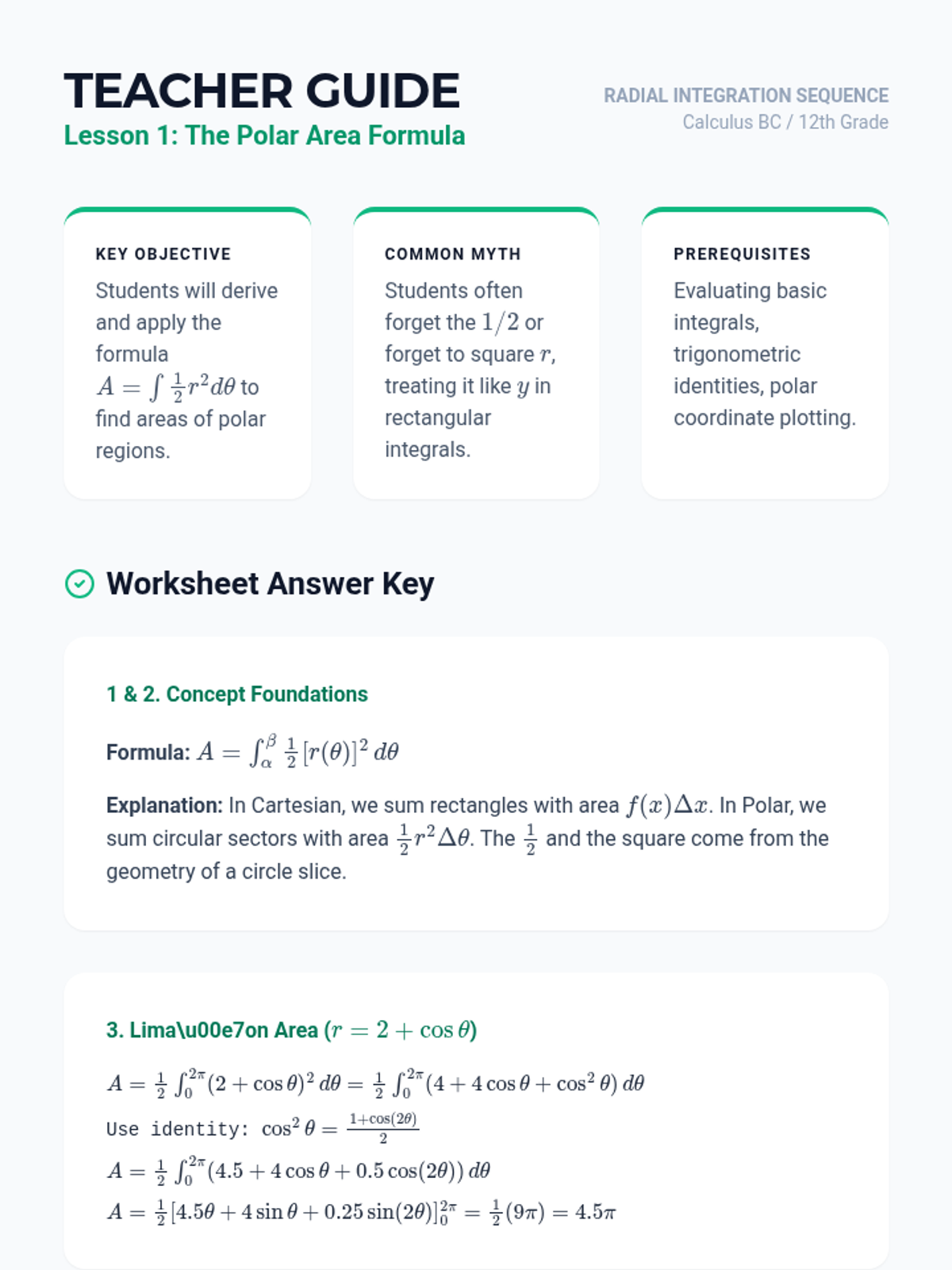
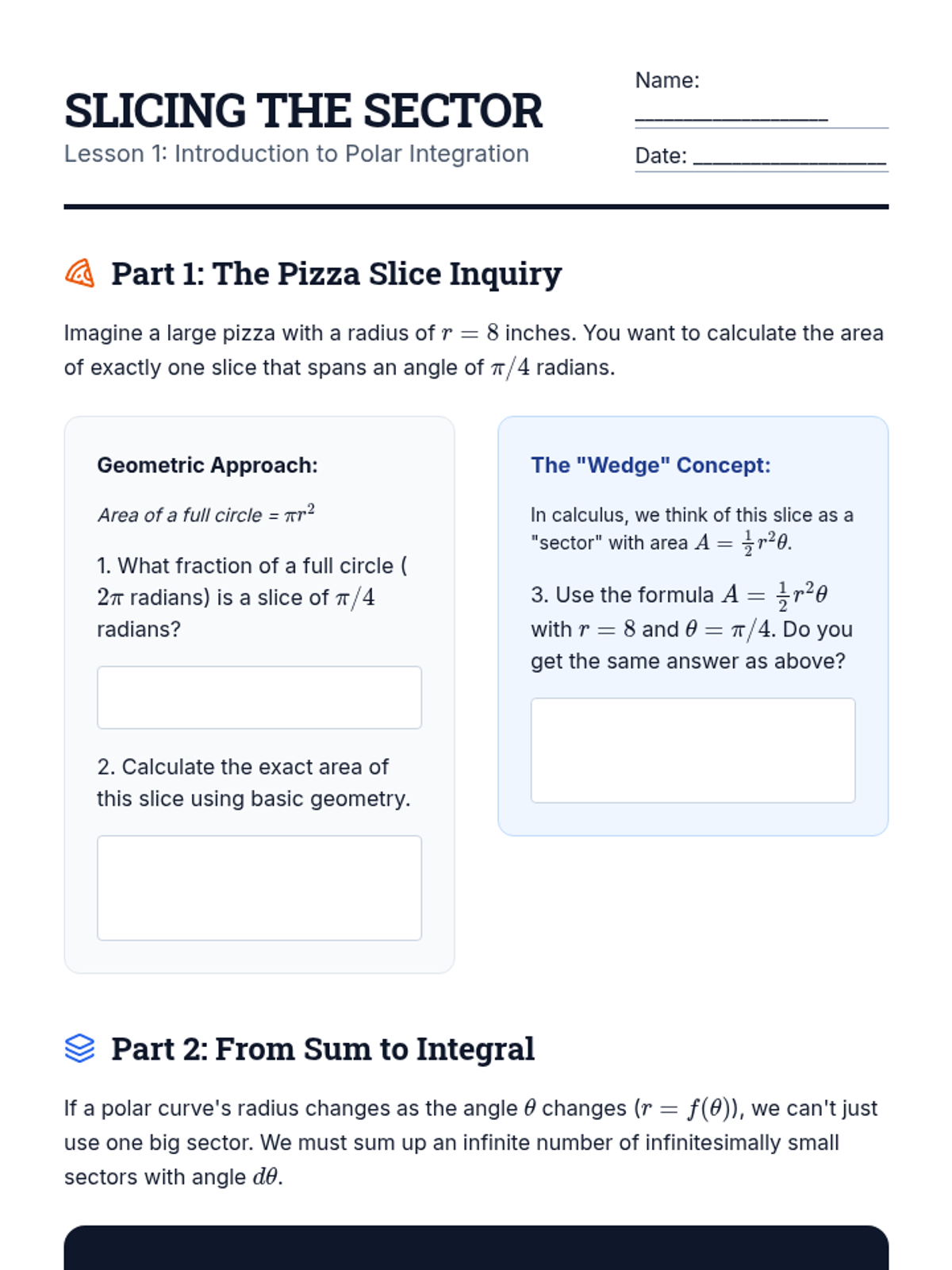
Students derive the polar area formula using circular sectors and apply it to find the area of simple polar regions. The lesson focuses on the transition from Riemann rectangles to radial wedges.
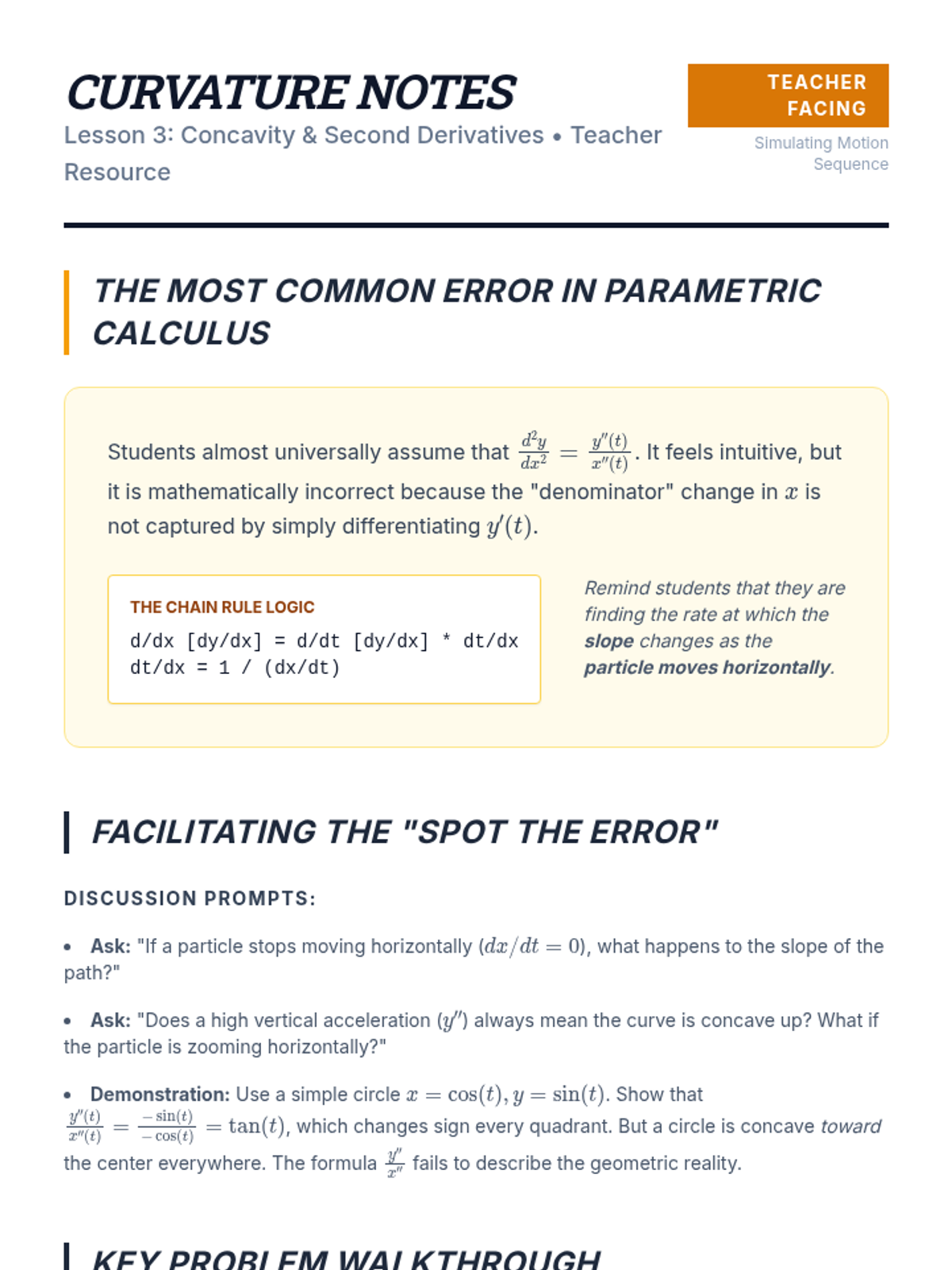
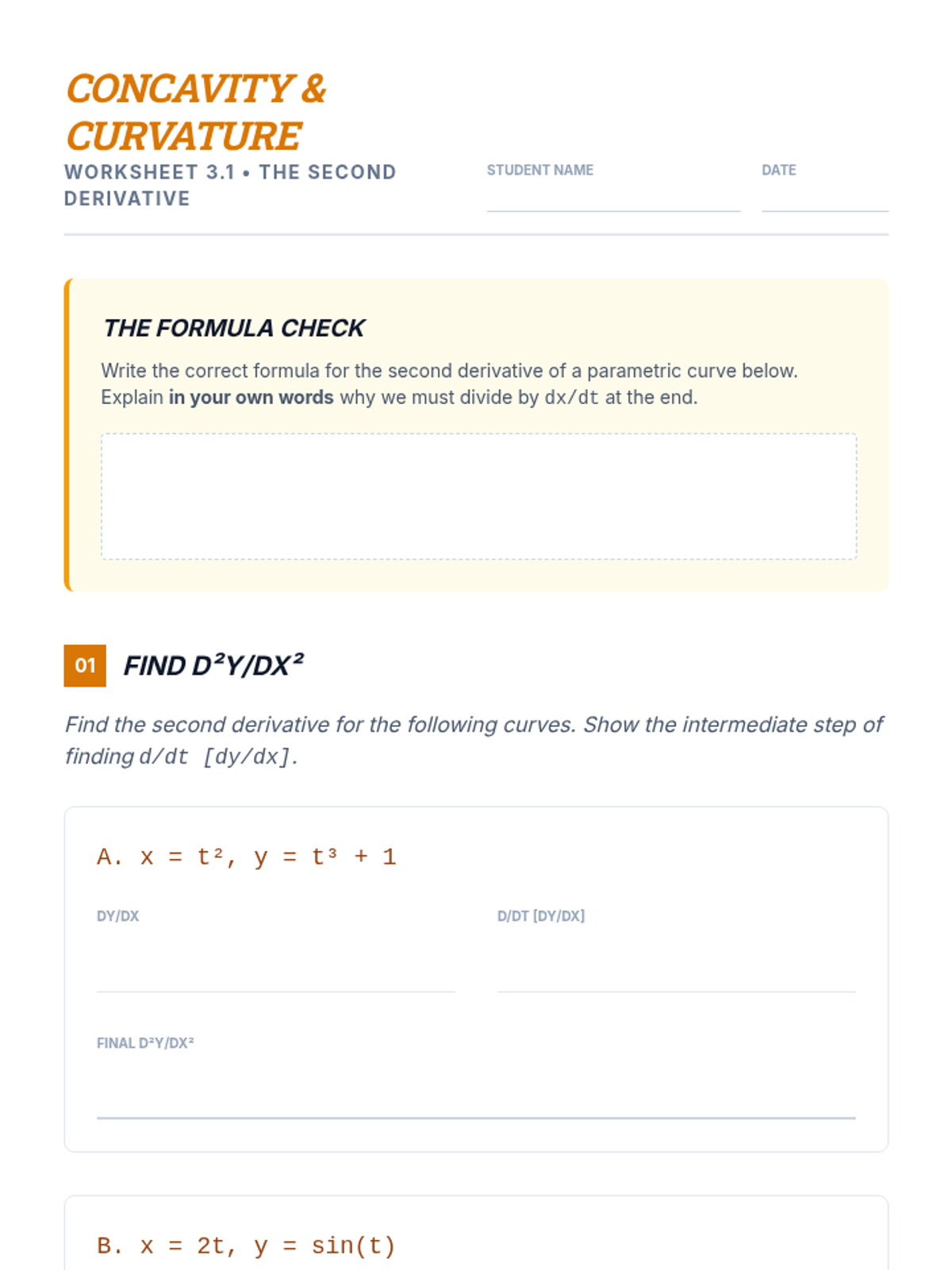
Explores finding second derivatives in parametric form to determine concavity and analyze curve behavior.
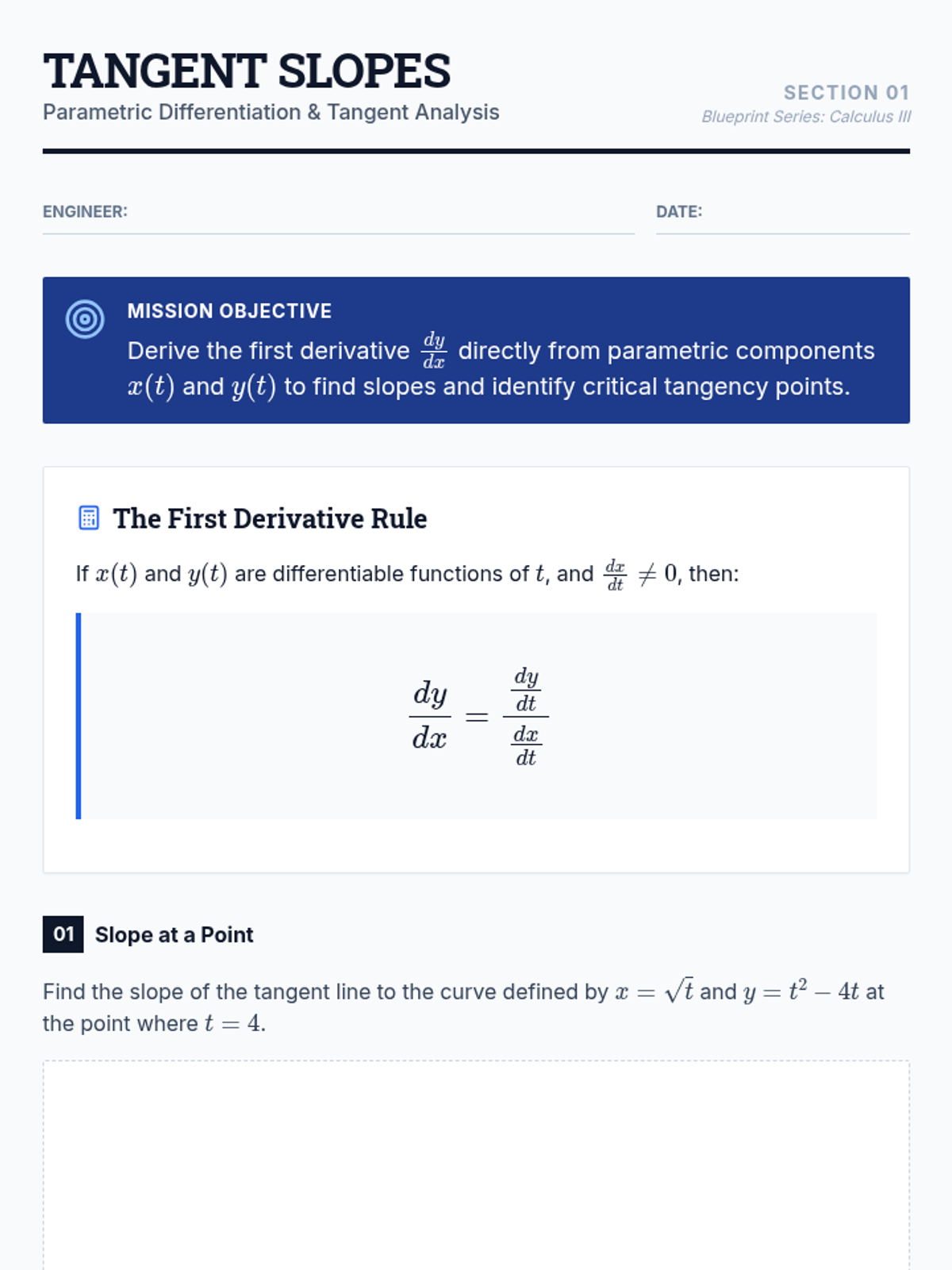
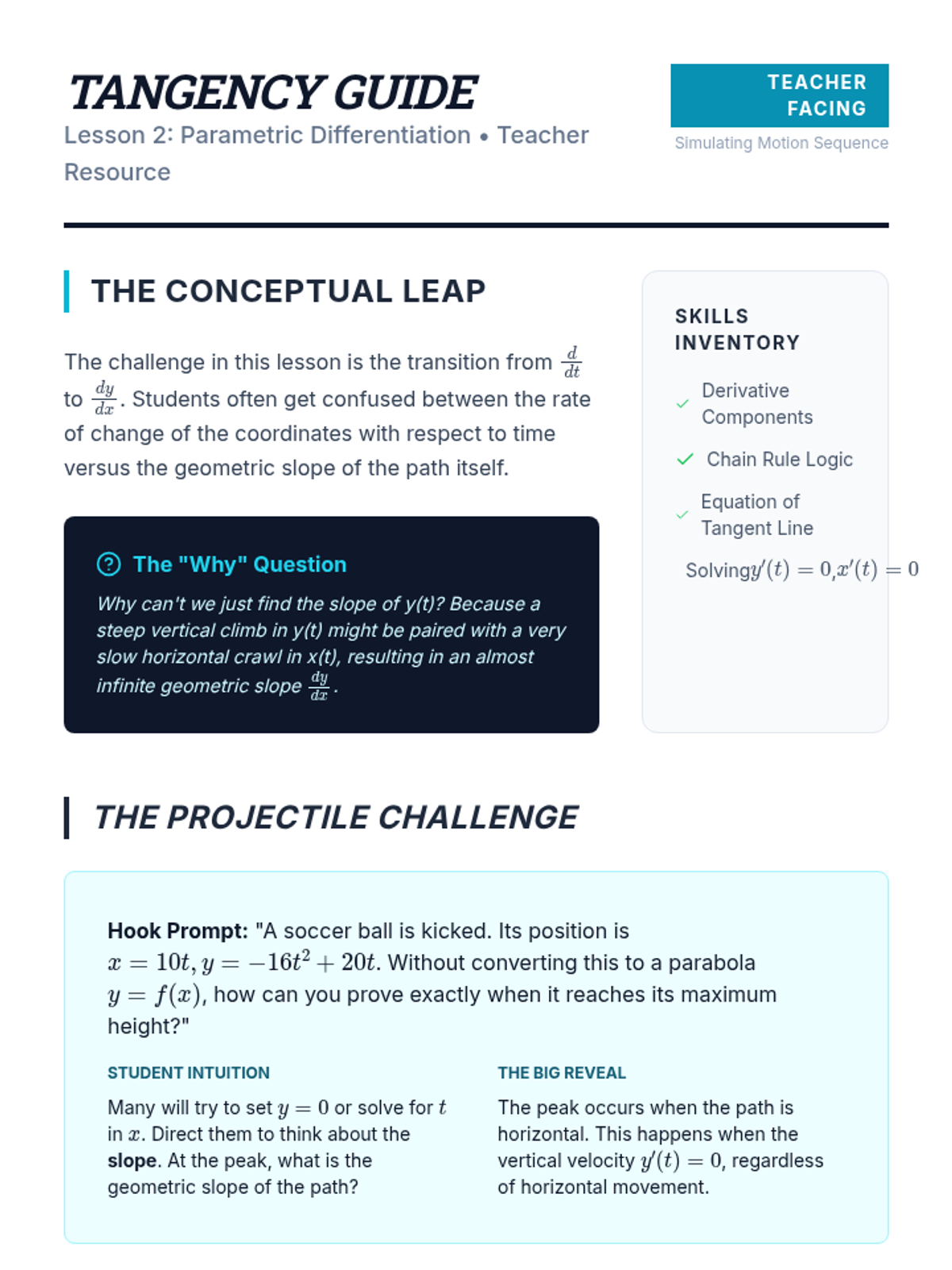
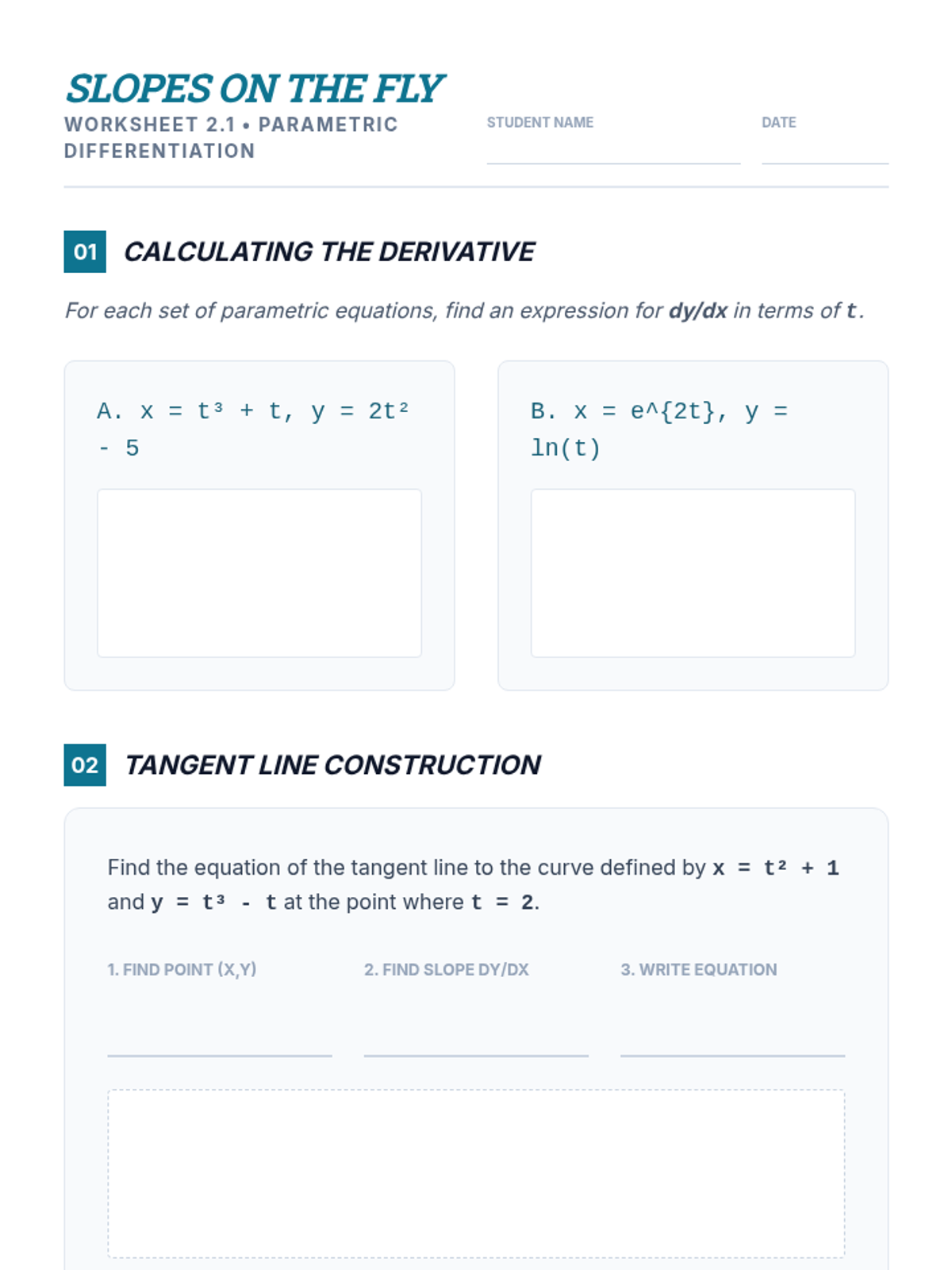
Focuses on calculating dy/dx for parametric curves and finding tangent lines, distinguishing between coordinate rates of change and geometric slope.
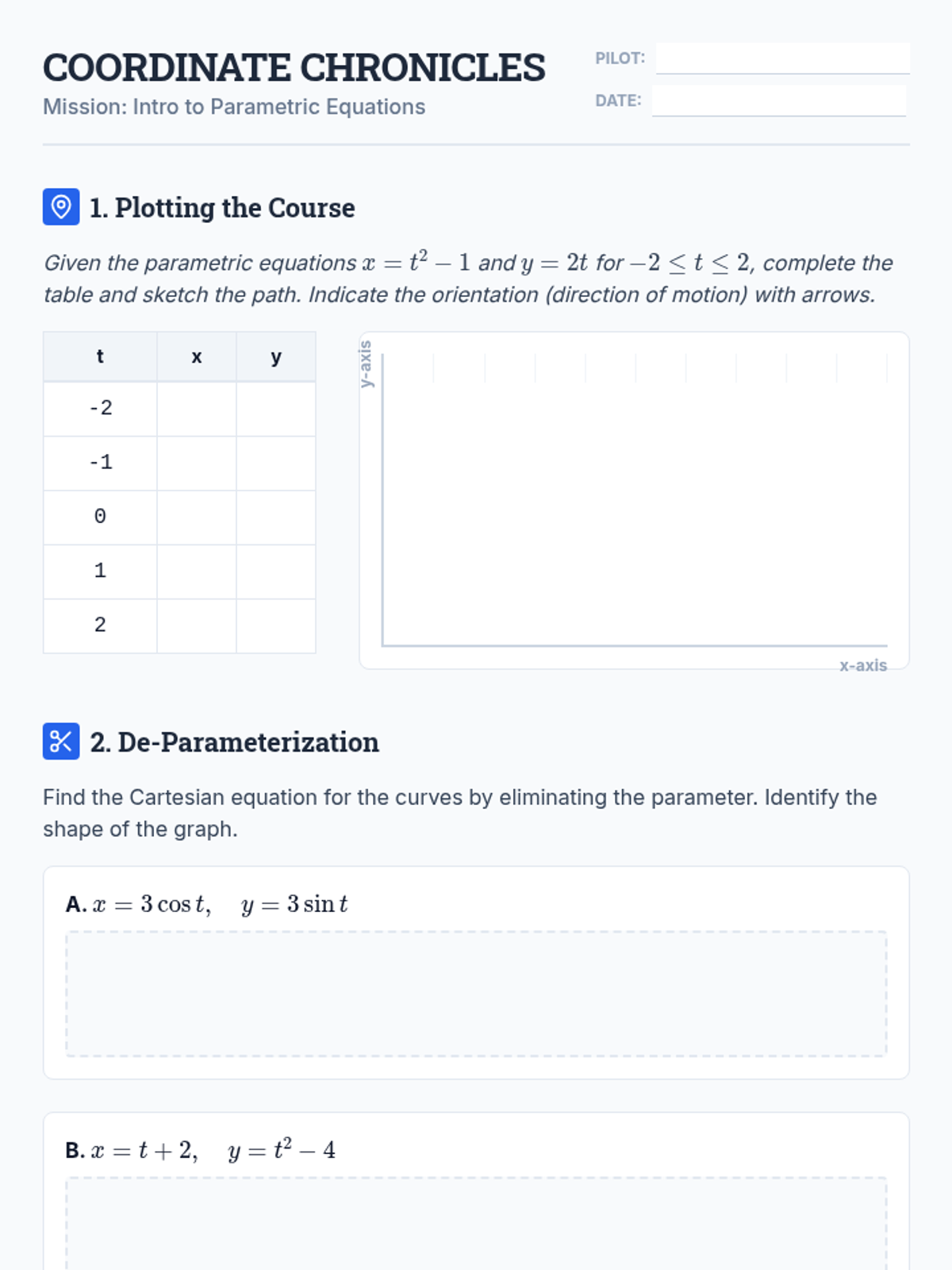
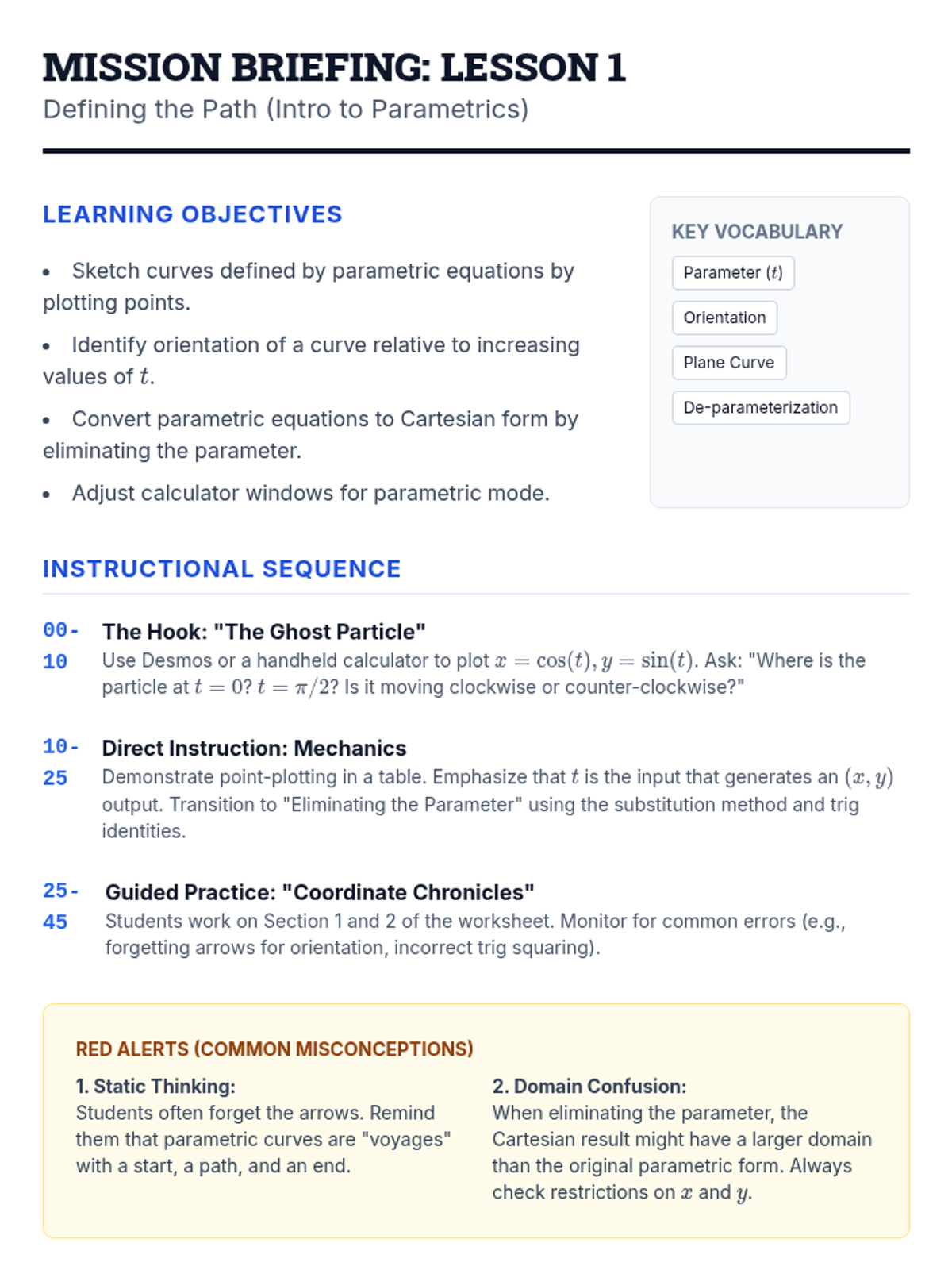
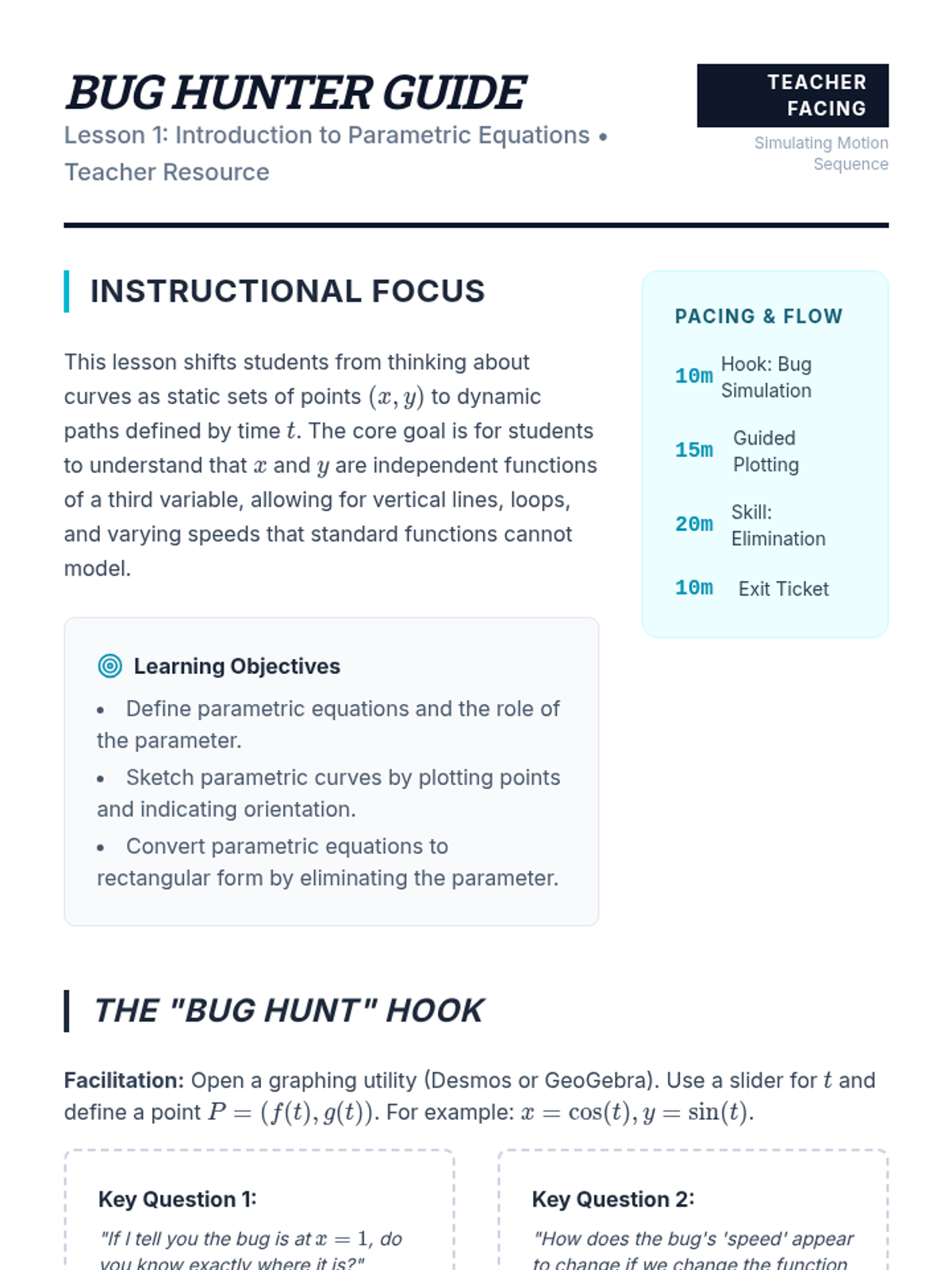
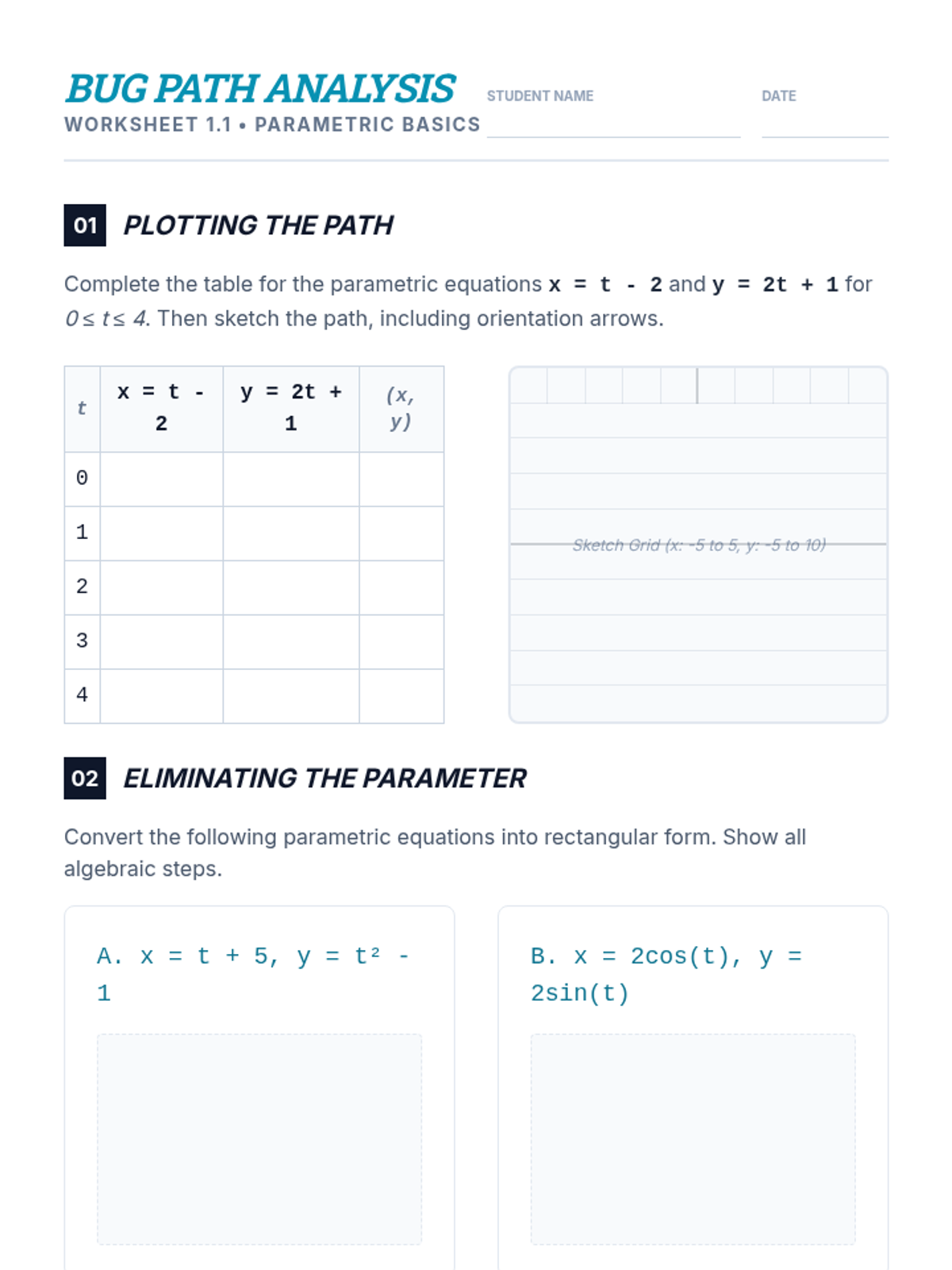
Students explore the definition of parametric equations, learning to sketch curves by plotting points and eliminating the parameter to find Cartesian equivalents.
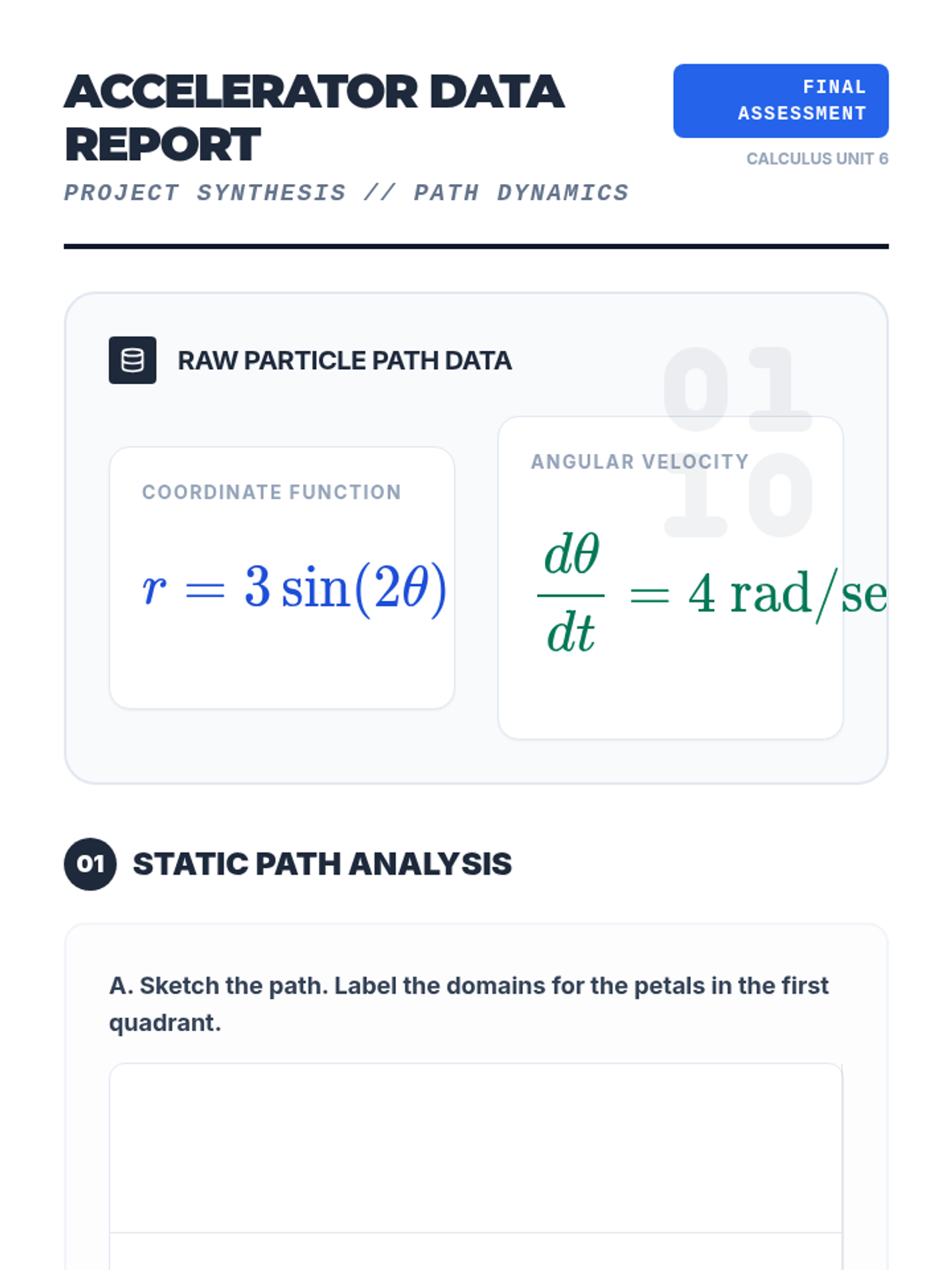
A comprehensive performance task where students analyze a raw data set from a simulated particle accelerator to generate a full kinematic report.
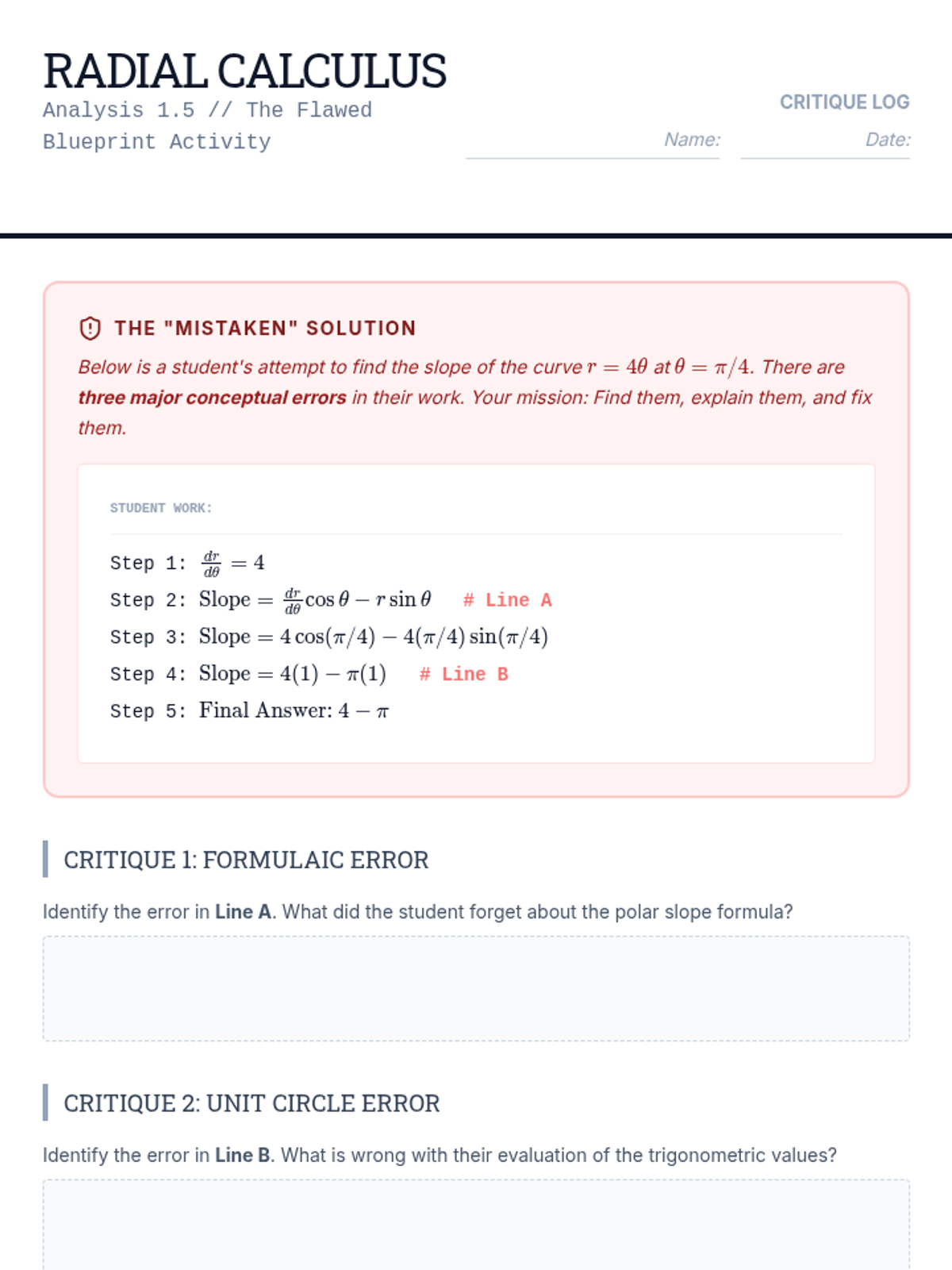
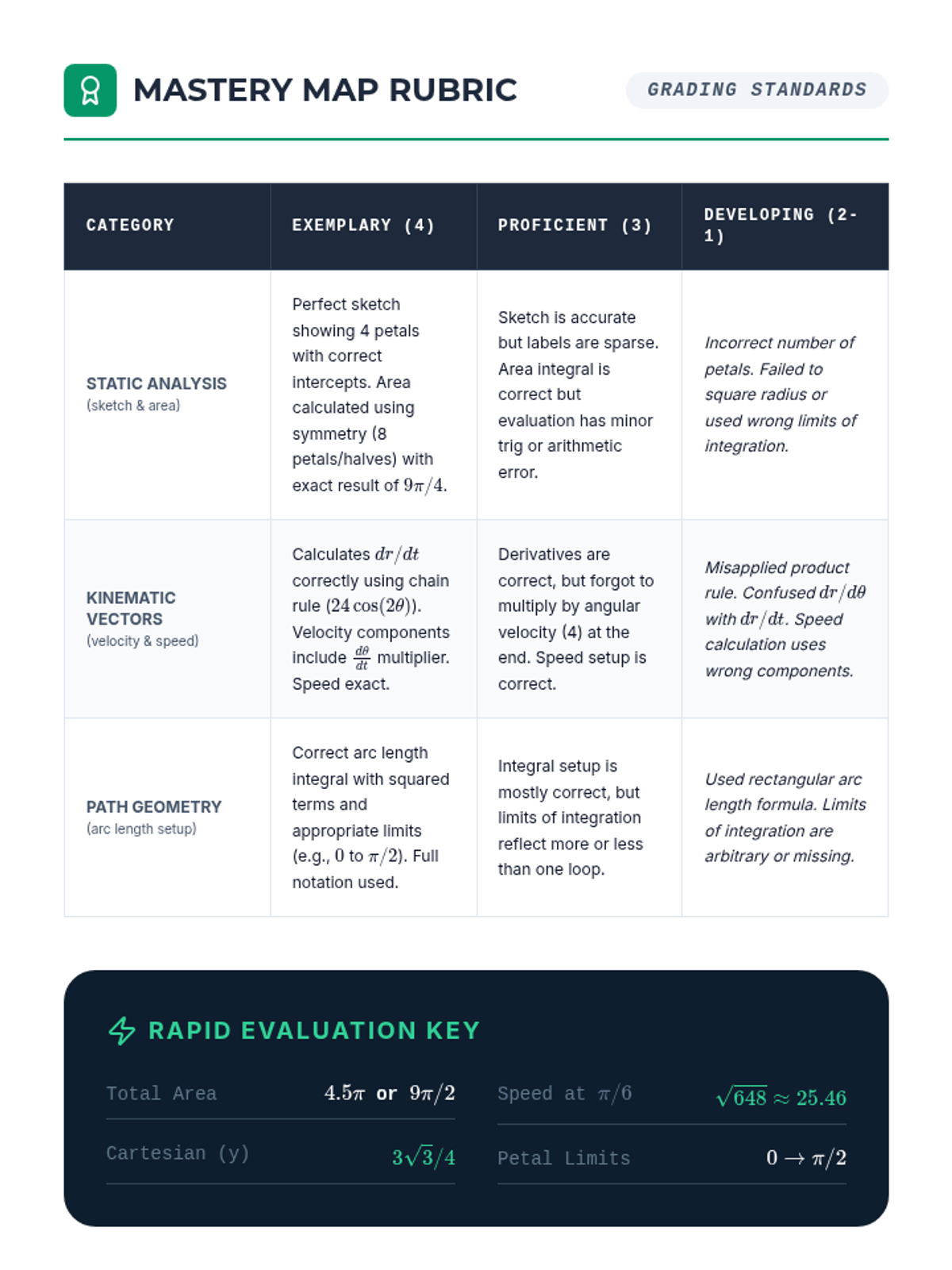
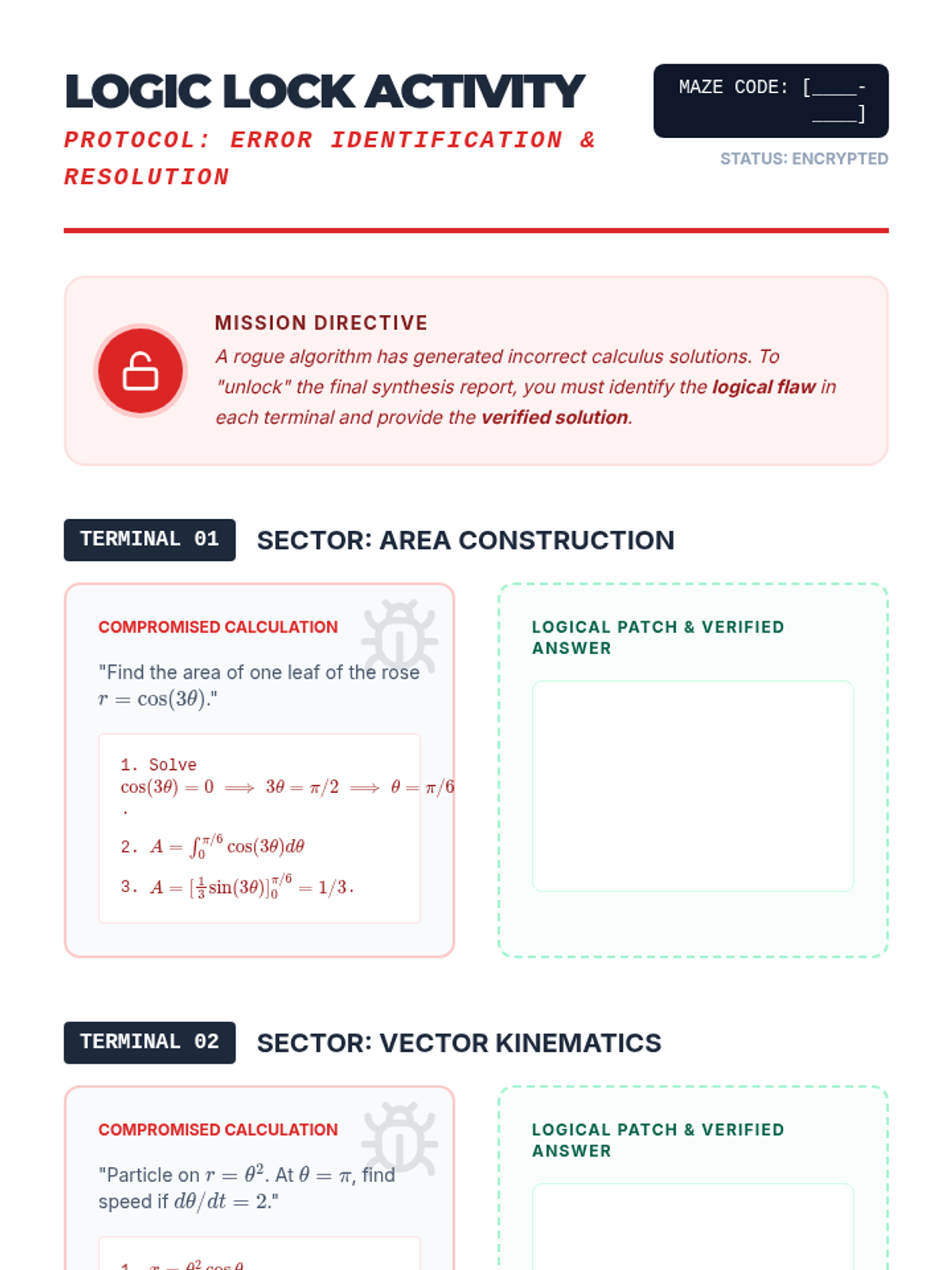
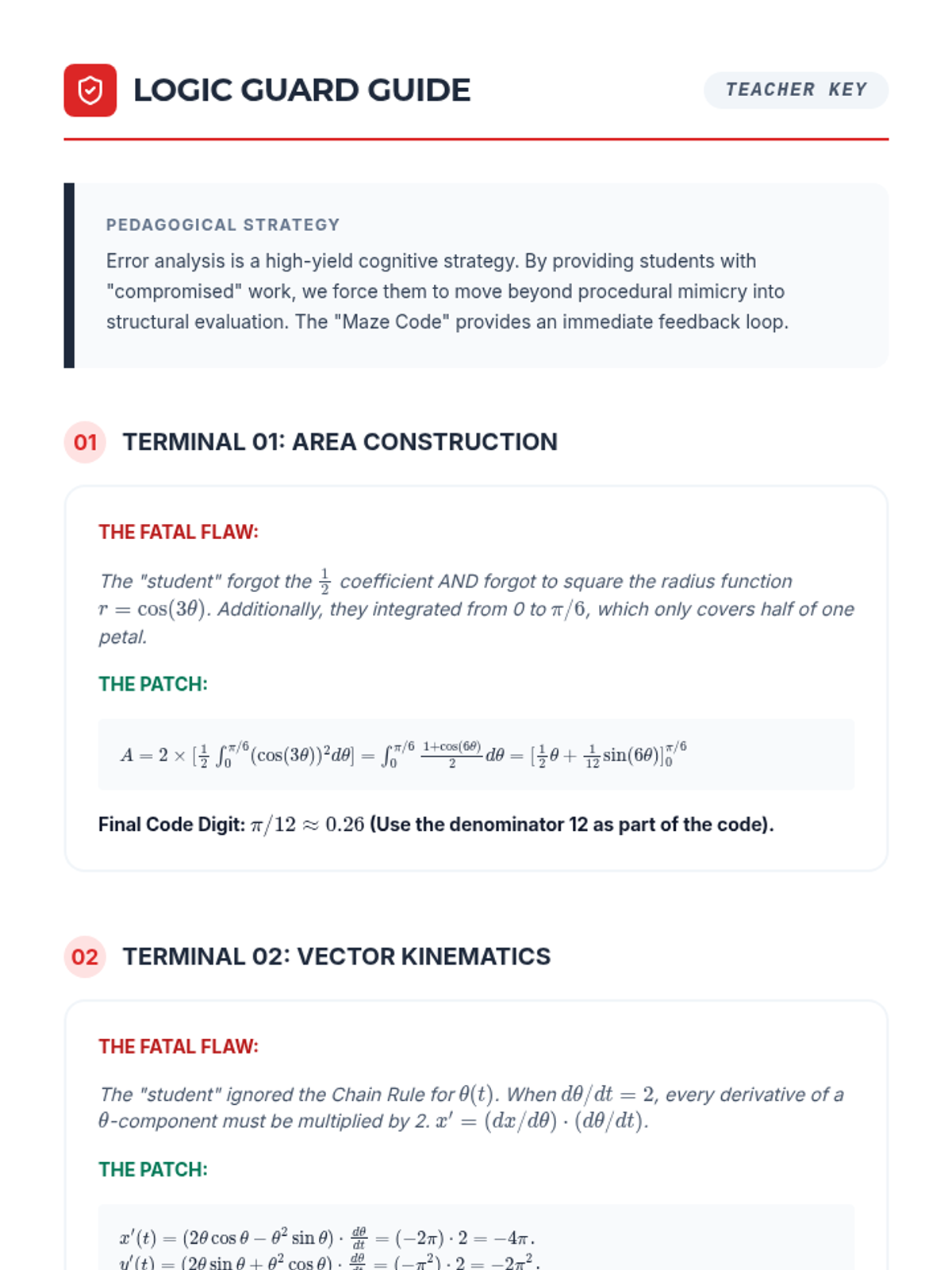
Students critique sample calculus work to identify and correct common misconceptions in limits of integration, derivative rules, and coordinate conversions.
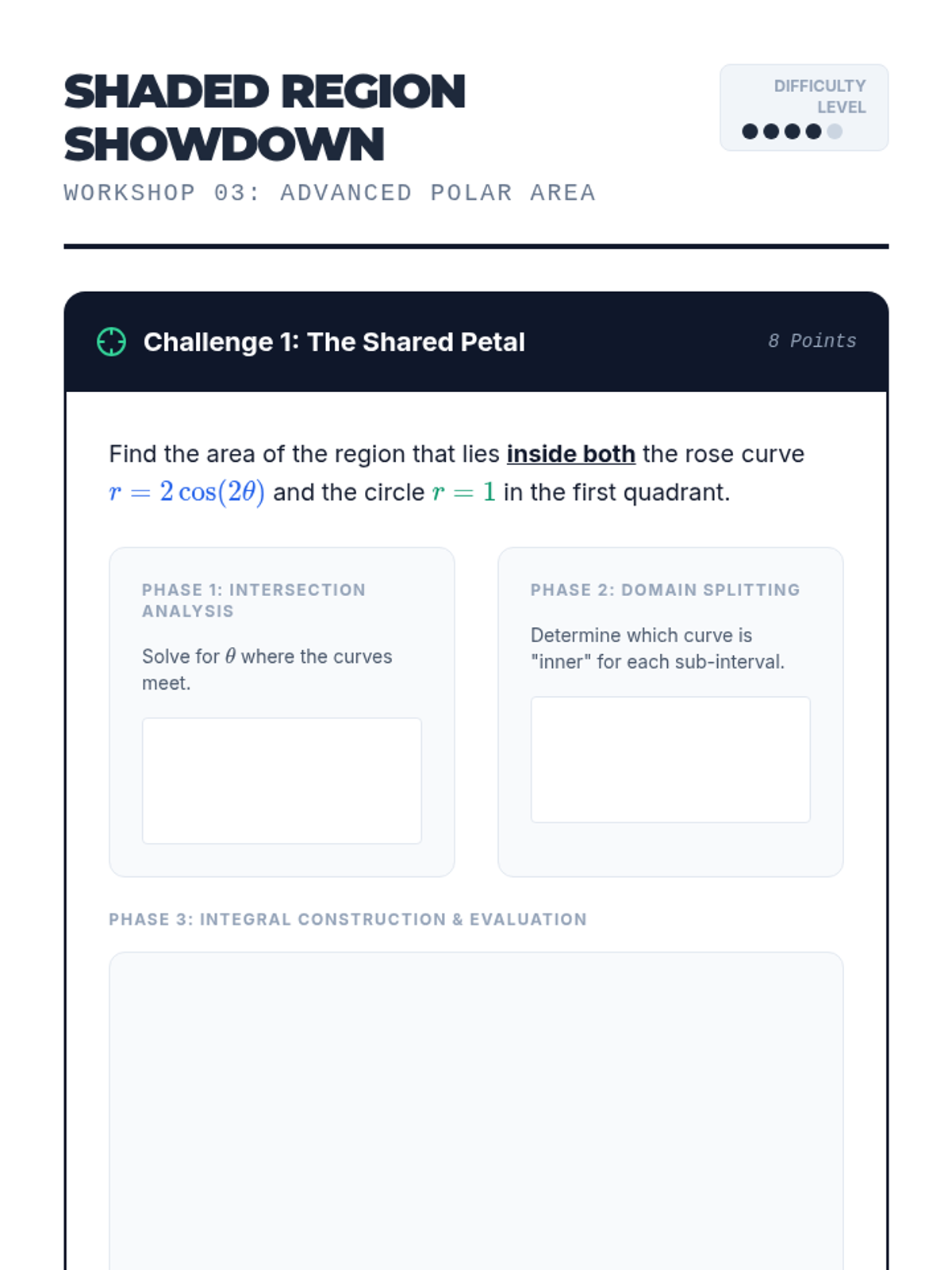
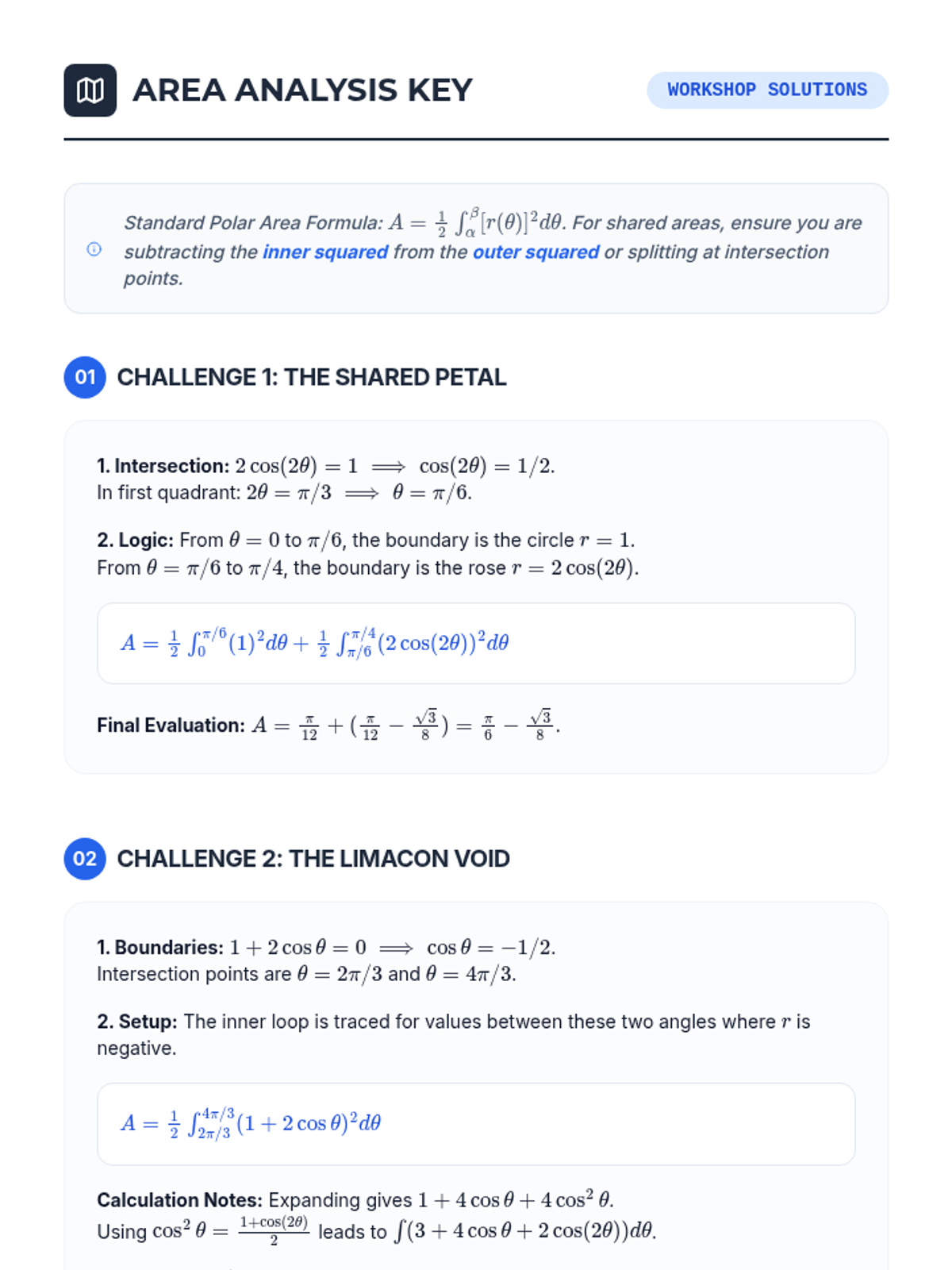
A workshop focused on finding areas of overlapping polar curves and managing regions with multiple intersections or negative r-values.
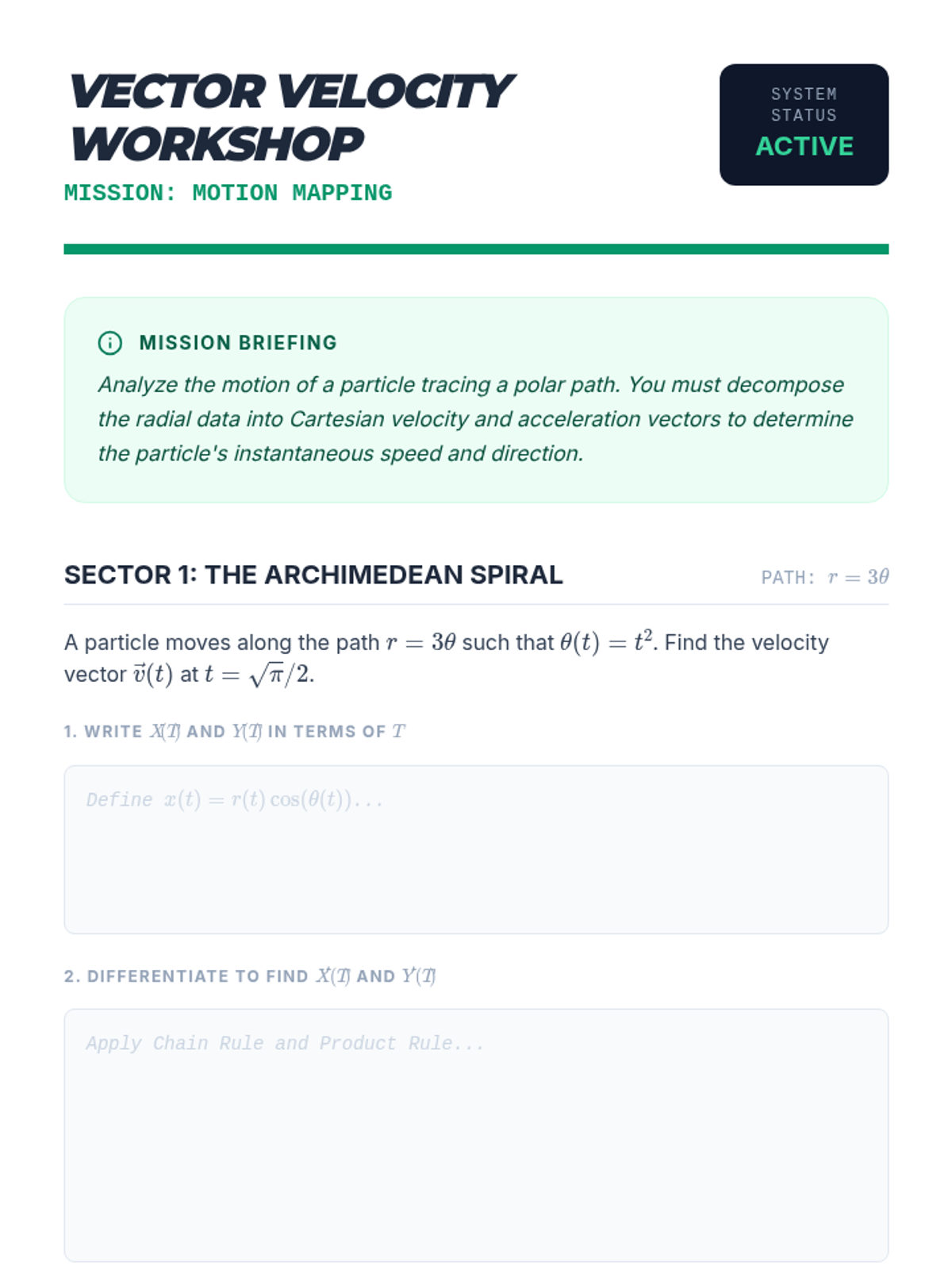
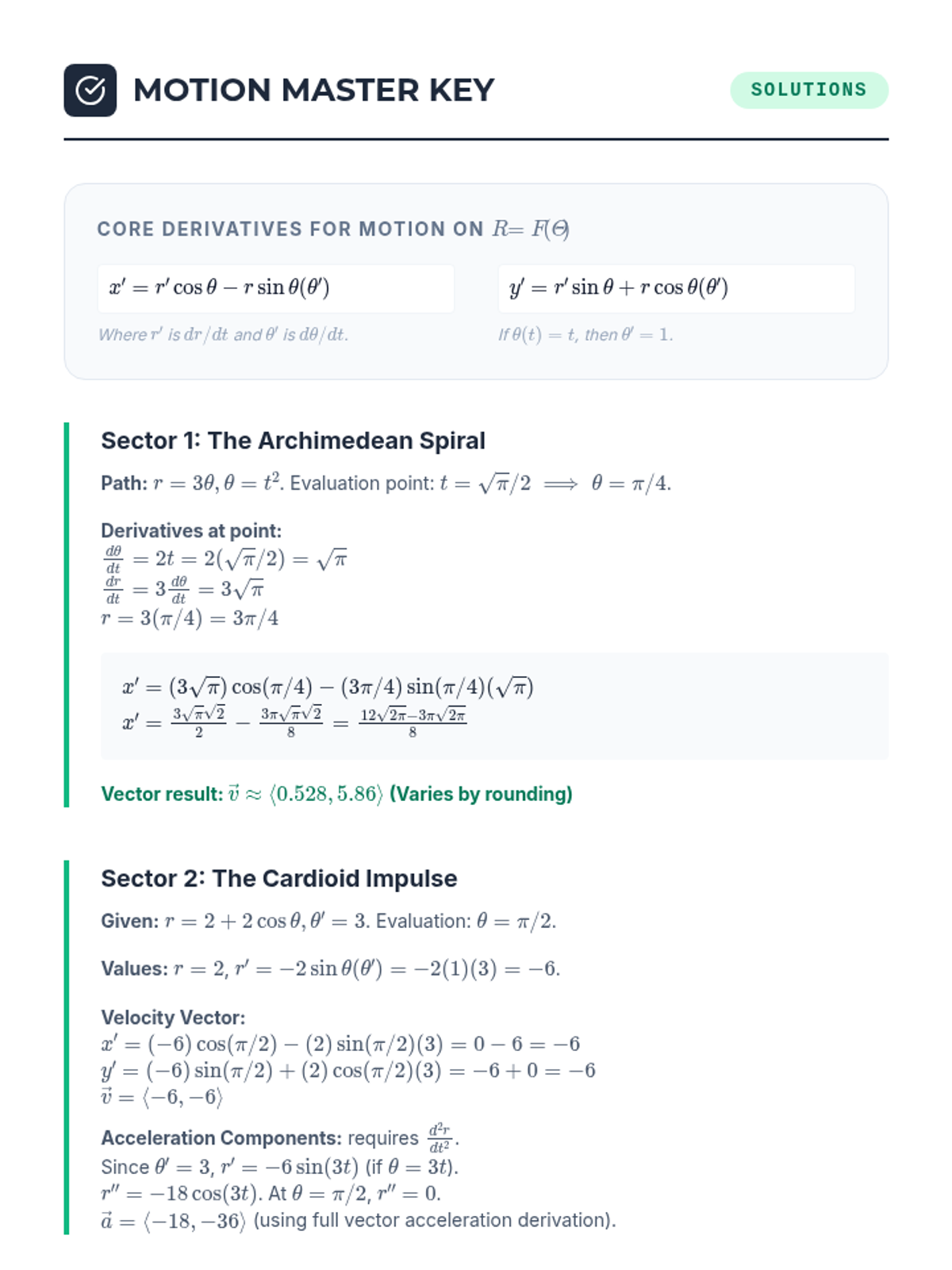
An investigation into motion along polar curves, converting polar paths into parametric velocity and acceleration vectors to analyze particle movement.
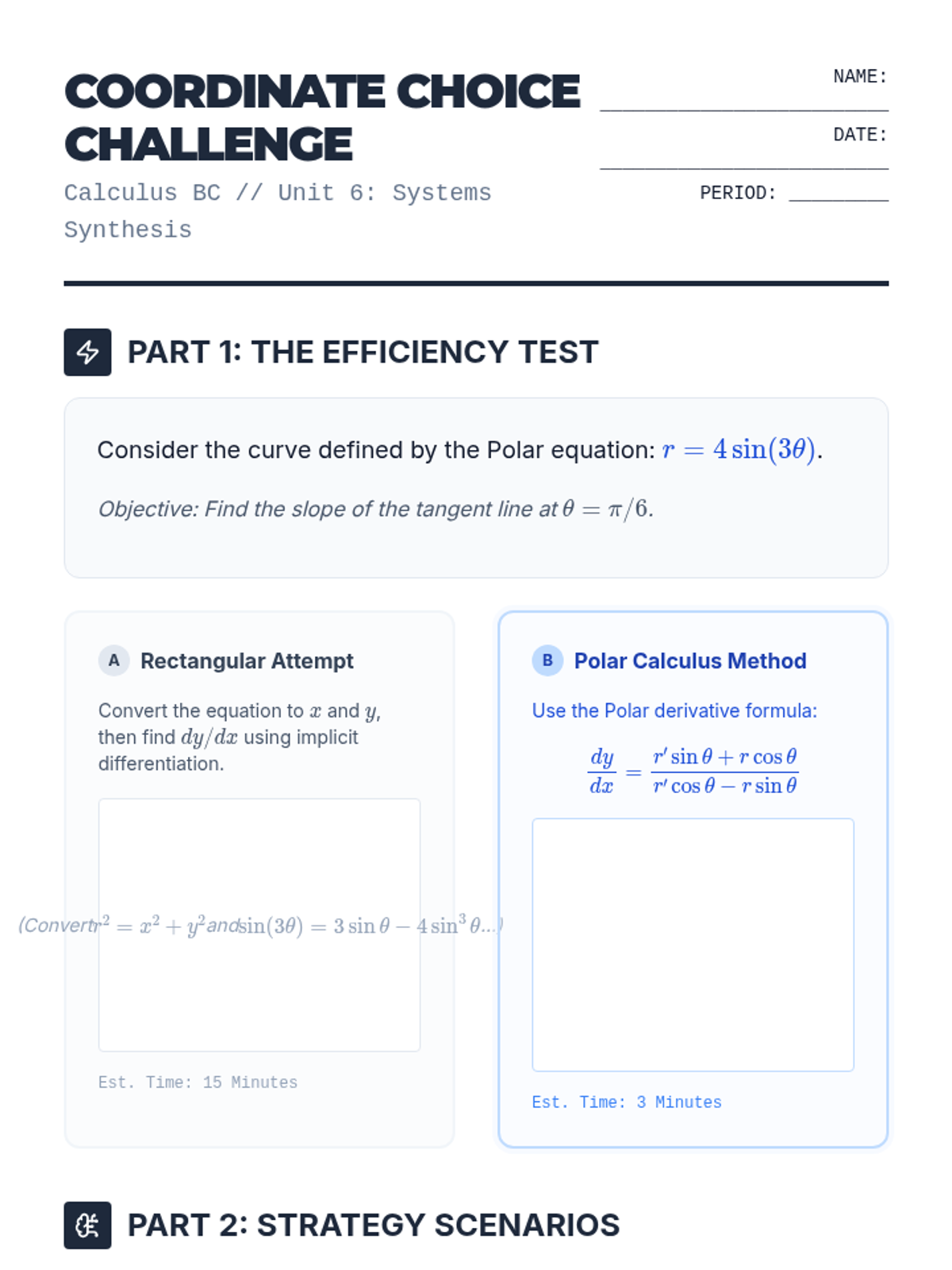
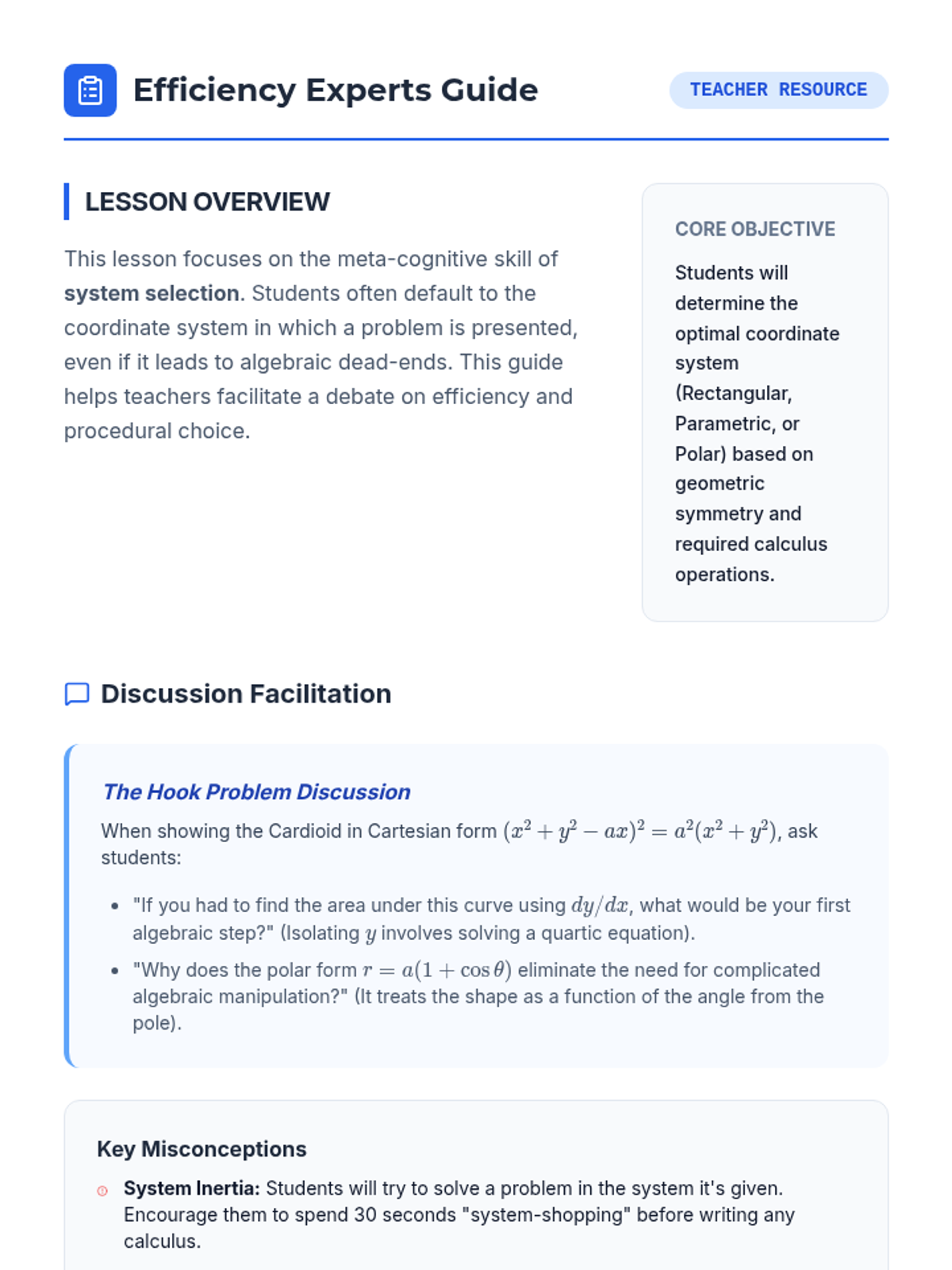
Students evaluate the efficiency of rectangular, parametric, and polar methods for various geometric problems, emphasizing when to switch systems for algebraic simplicity.
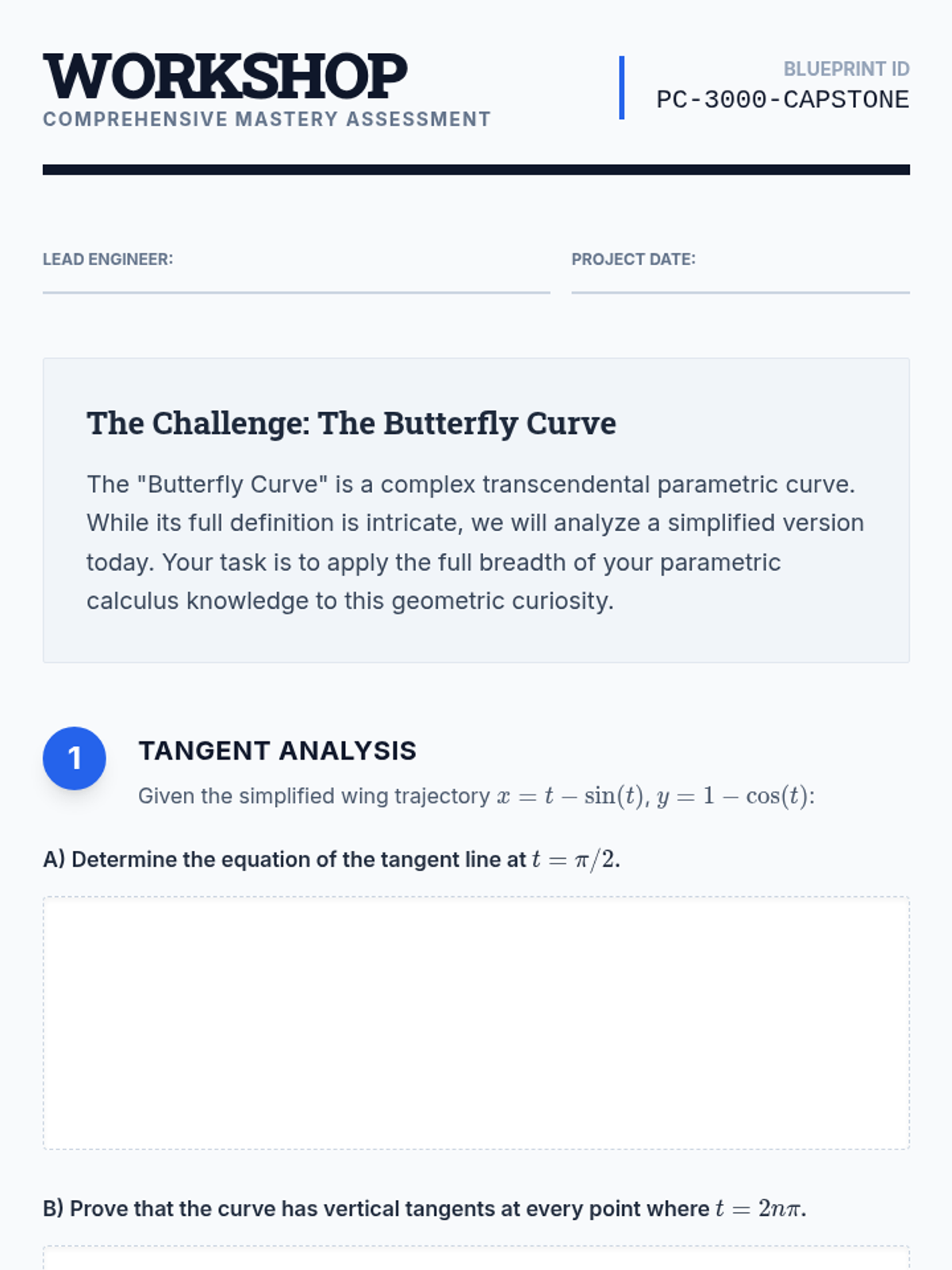
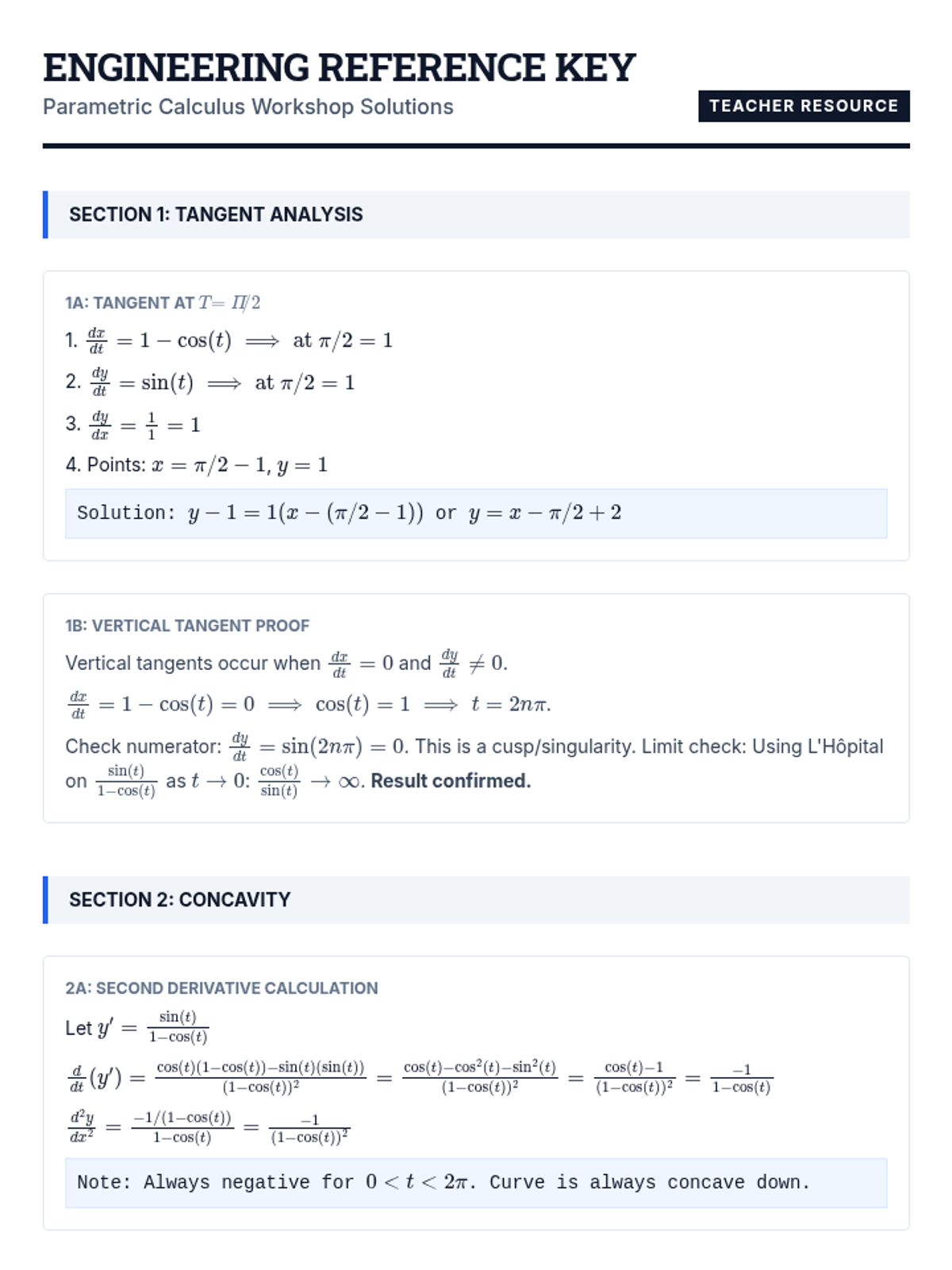
A cumulative review and application session where students solve complex parametric problems in a workshop setting, culminating in a mastery assessment.
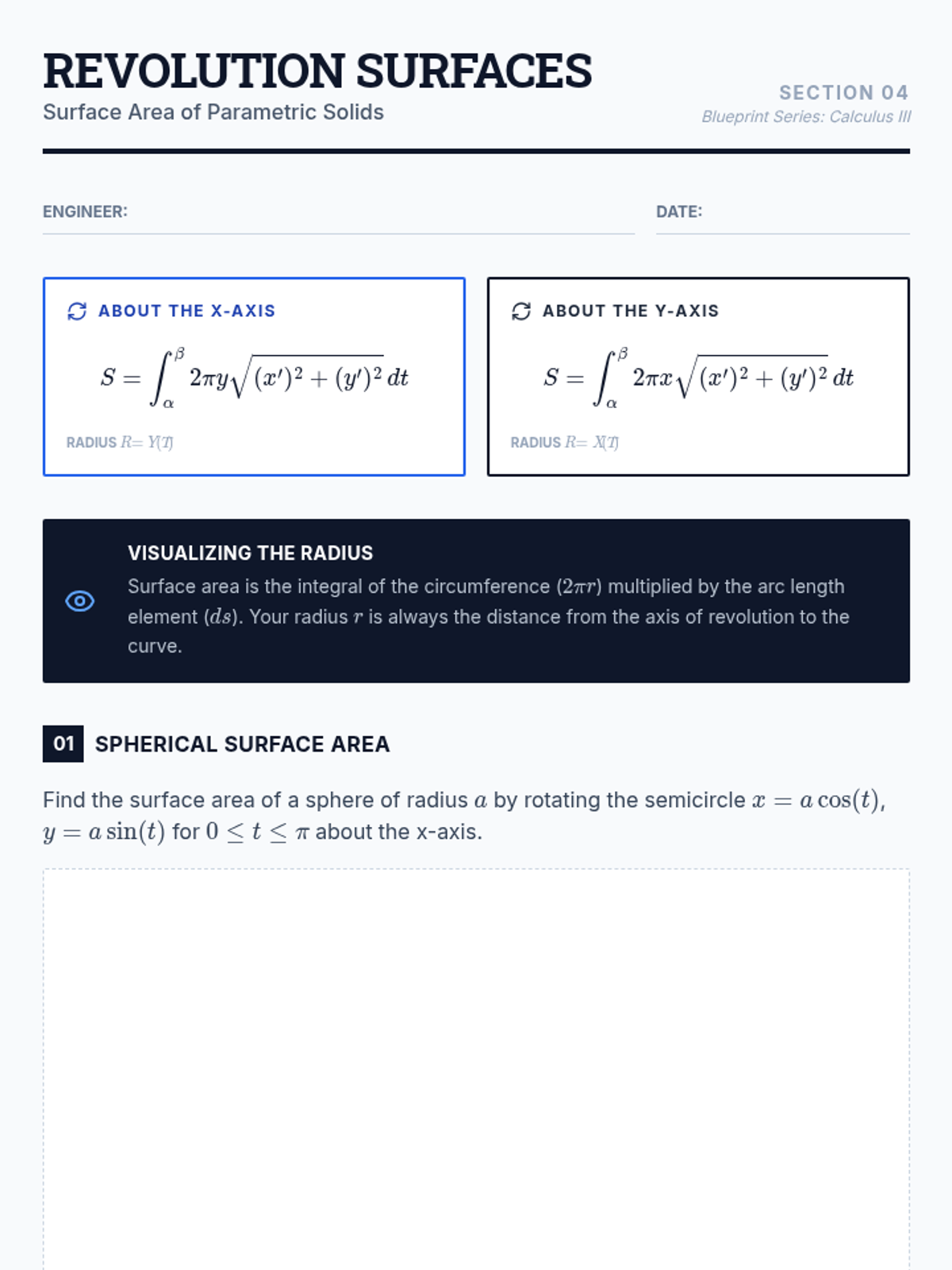
Extends integration to find the surface area generated by rotating a parametric curve. Emphasizes visualization and correct formula selection based on the axis of revolution.
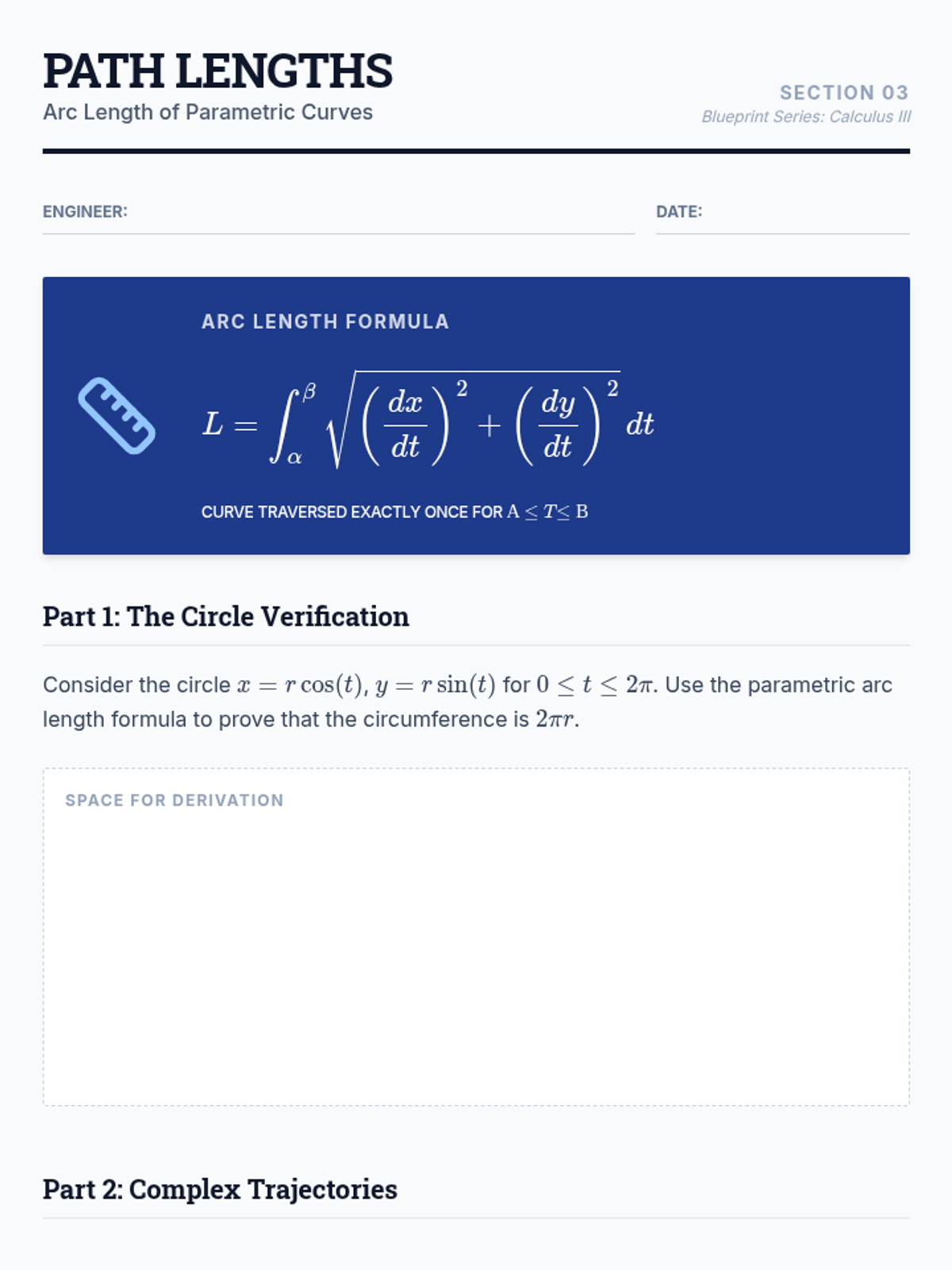
Derives and applies the arc length formula for parametric curves. Students practice setting up and evaluating integrals for path length.
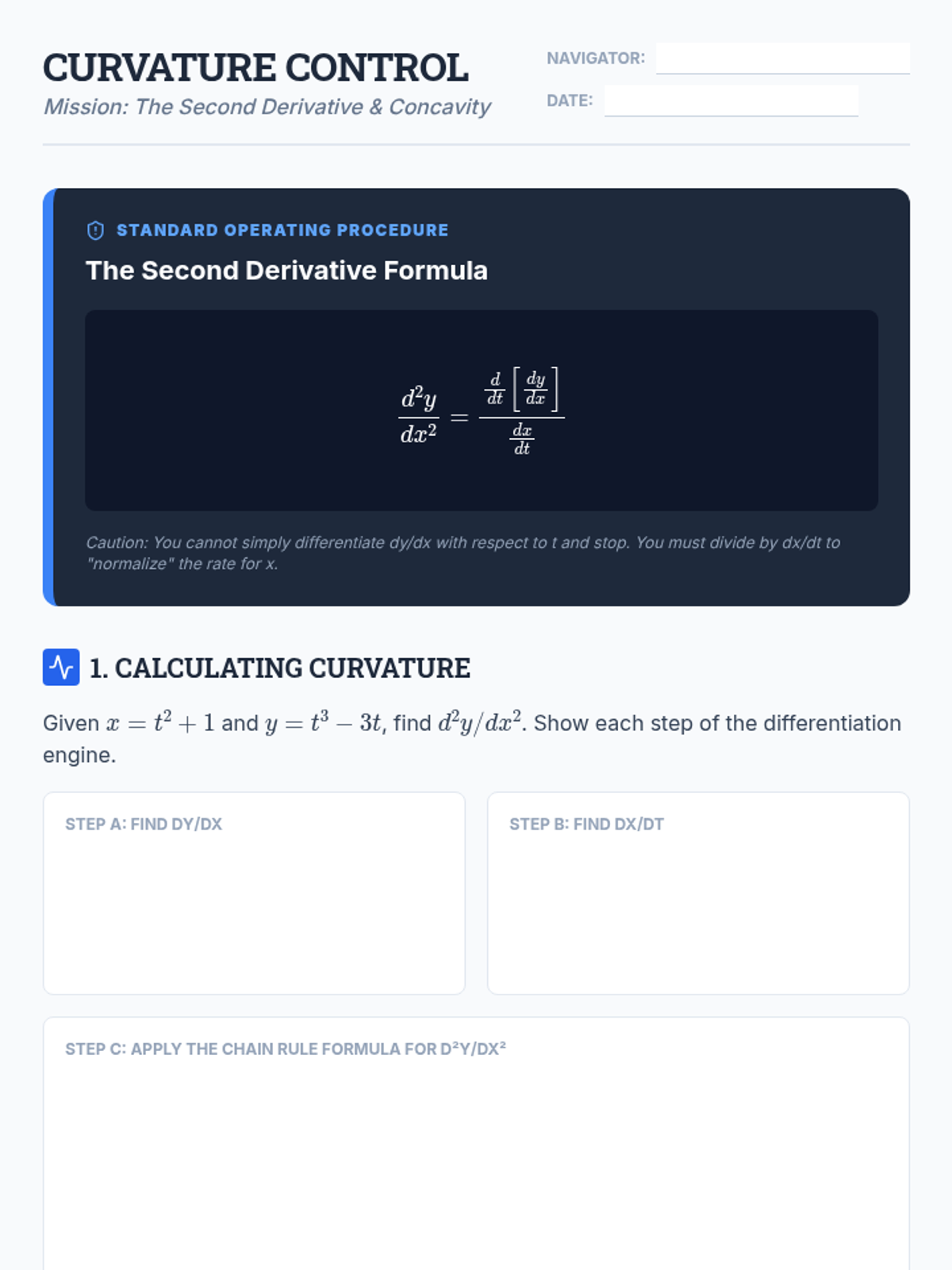
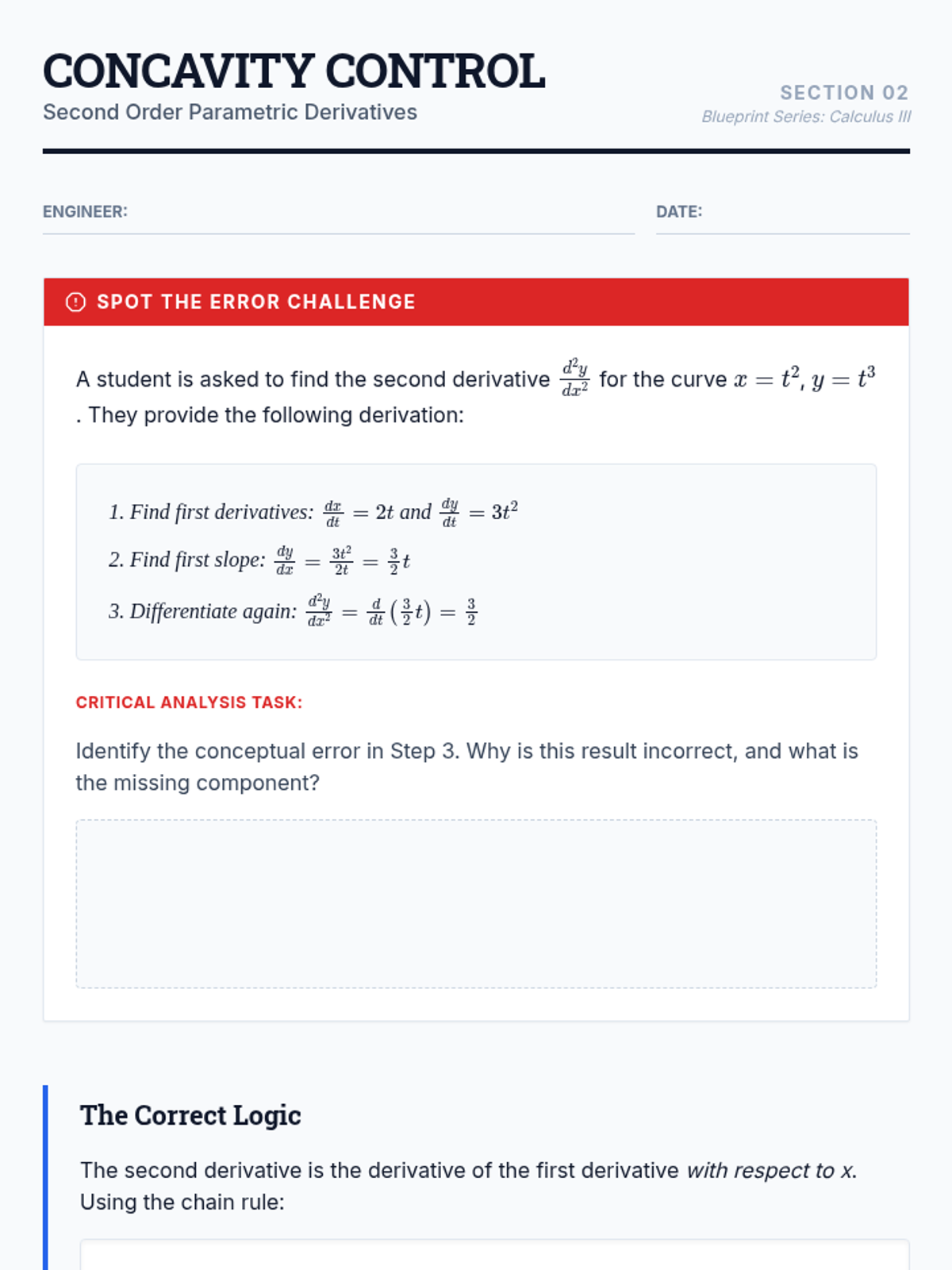
Focuses on the second derivative of parametric functions to determine concavity and analyze curve behavior. Includes a common error analysis activity.
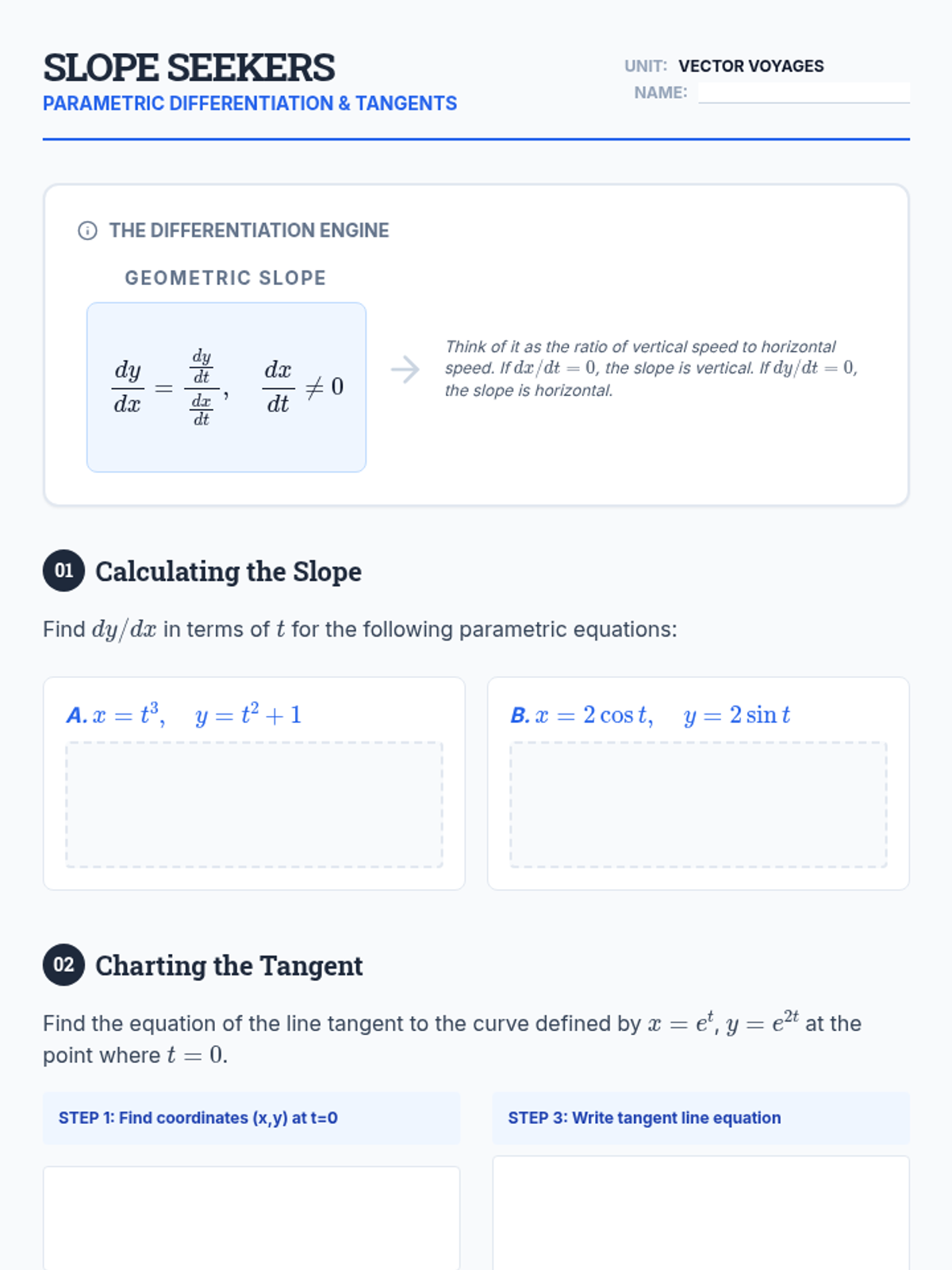
Students learn to calculate dy/dx for parametric equations using the quotient of derivatives. The lesson covers finding tangent lines and identifying horizontal and vertical tangency.
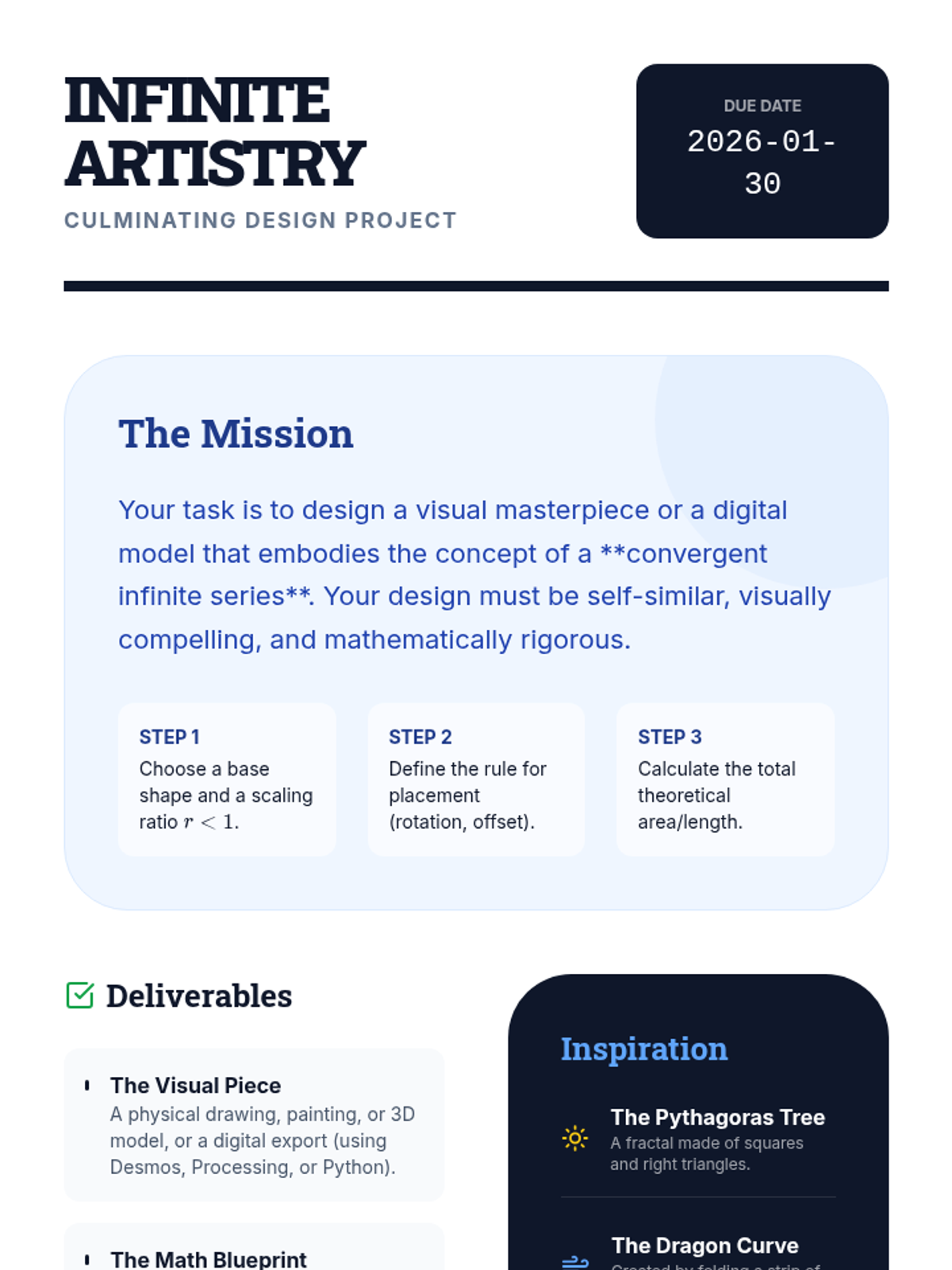
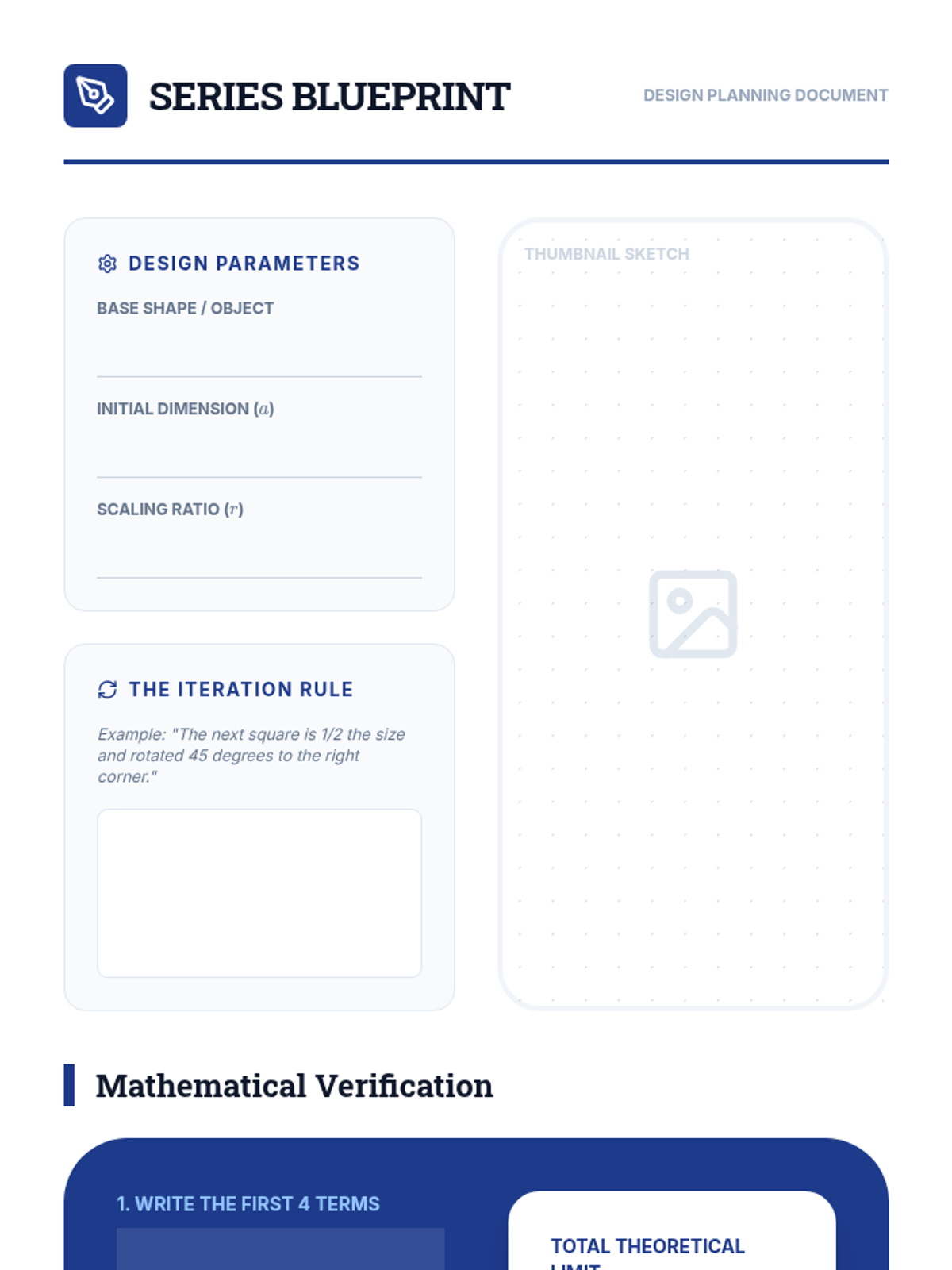
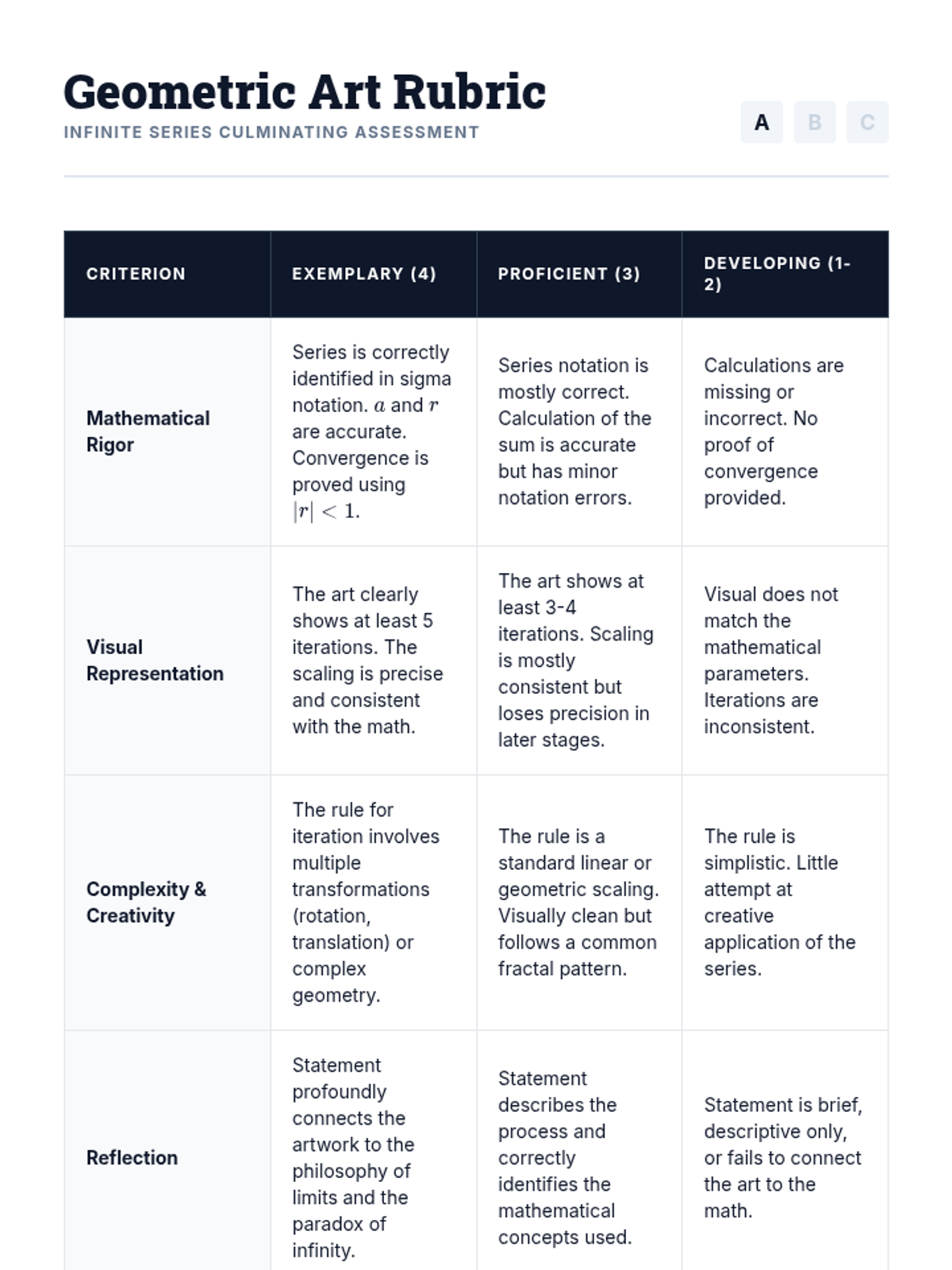
A culminating project where students design a piece of art or digital model based on a convergent series, calculating the theoretical limits of their design.
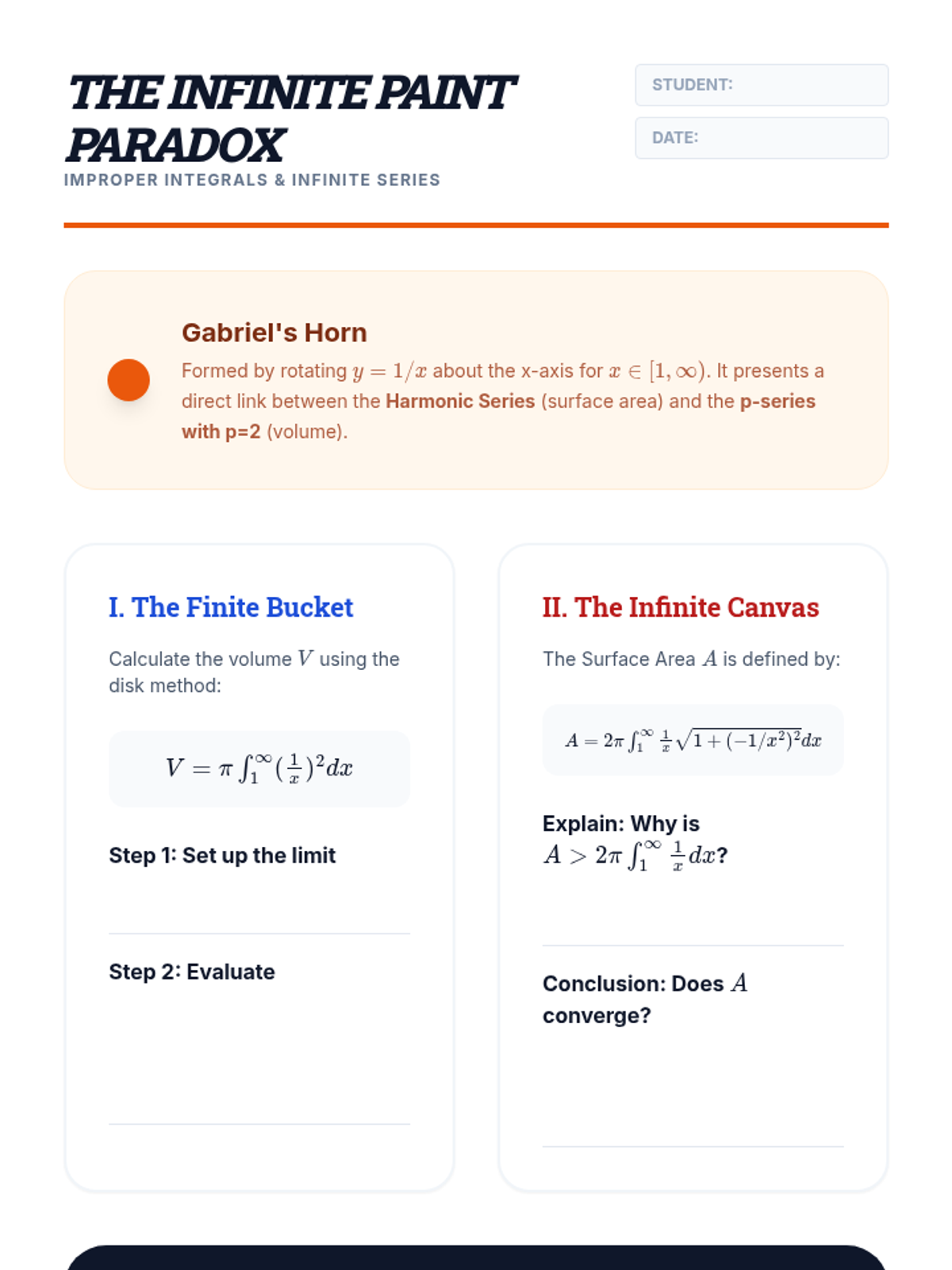
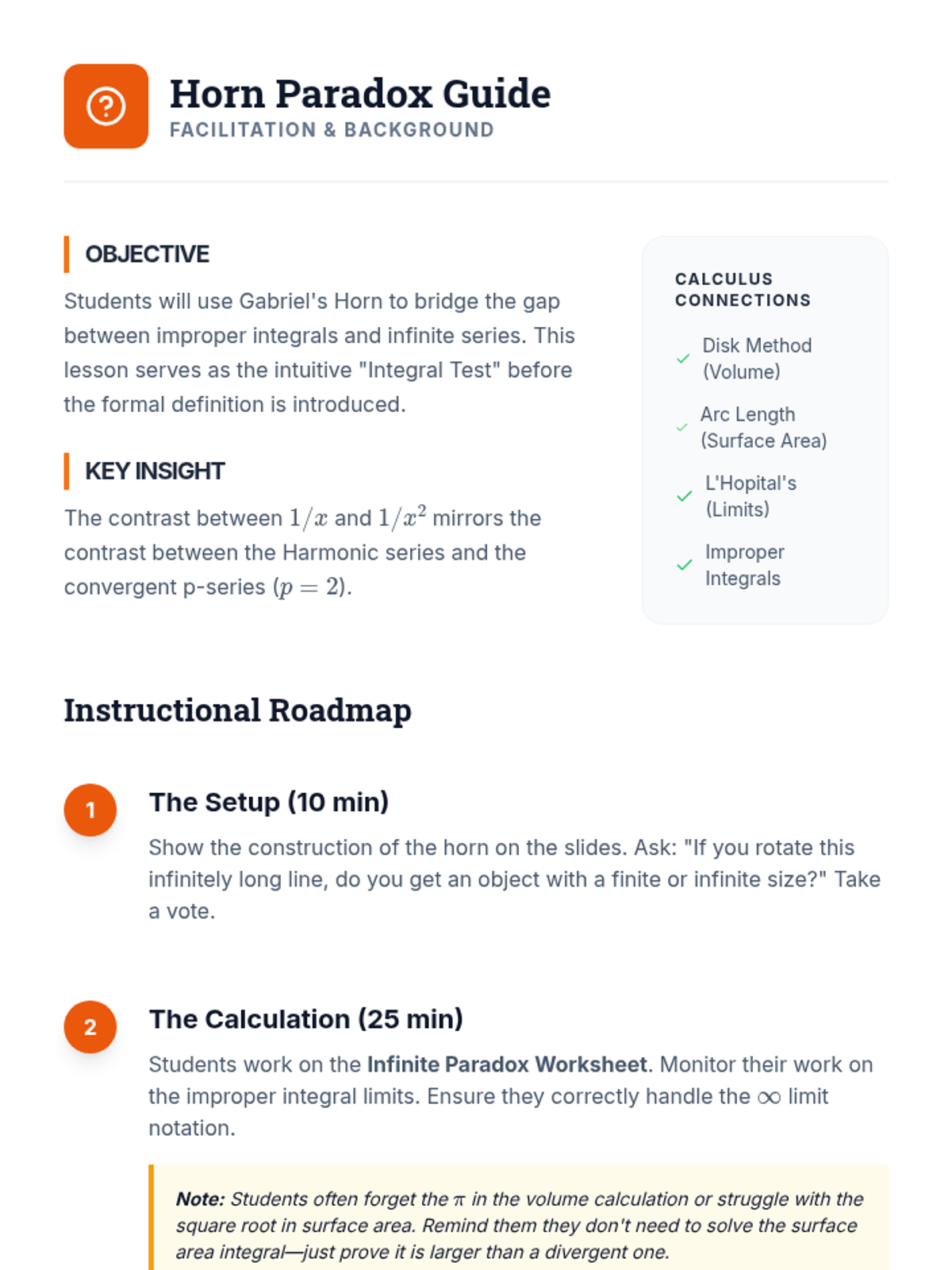
Students examine the paradox of Gabriel's Horn (finite volume, infinite surface area) to connect improper integrals with infinite series concepts.
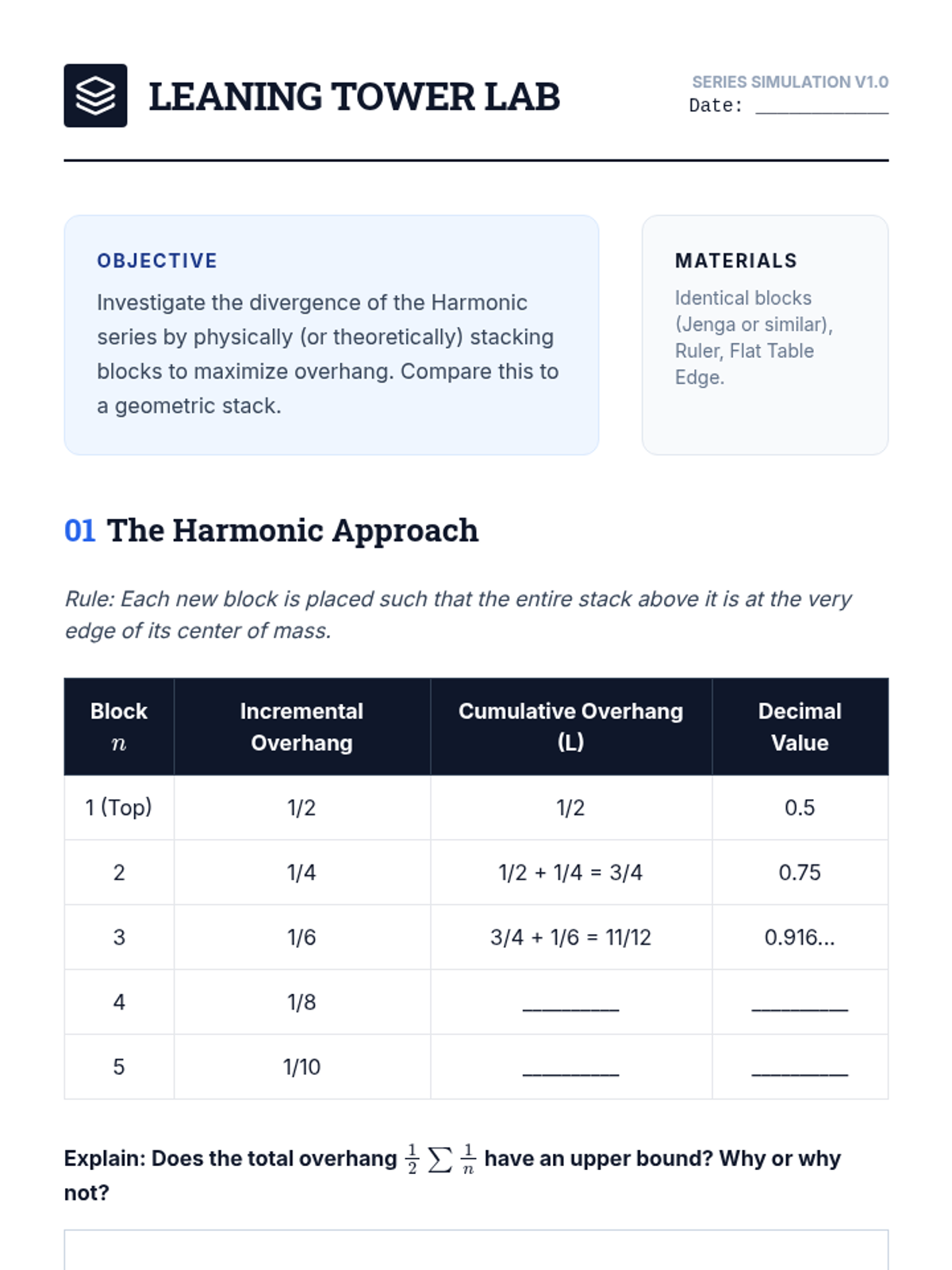
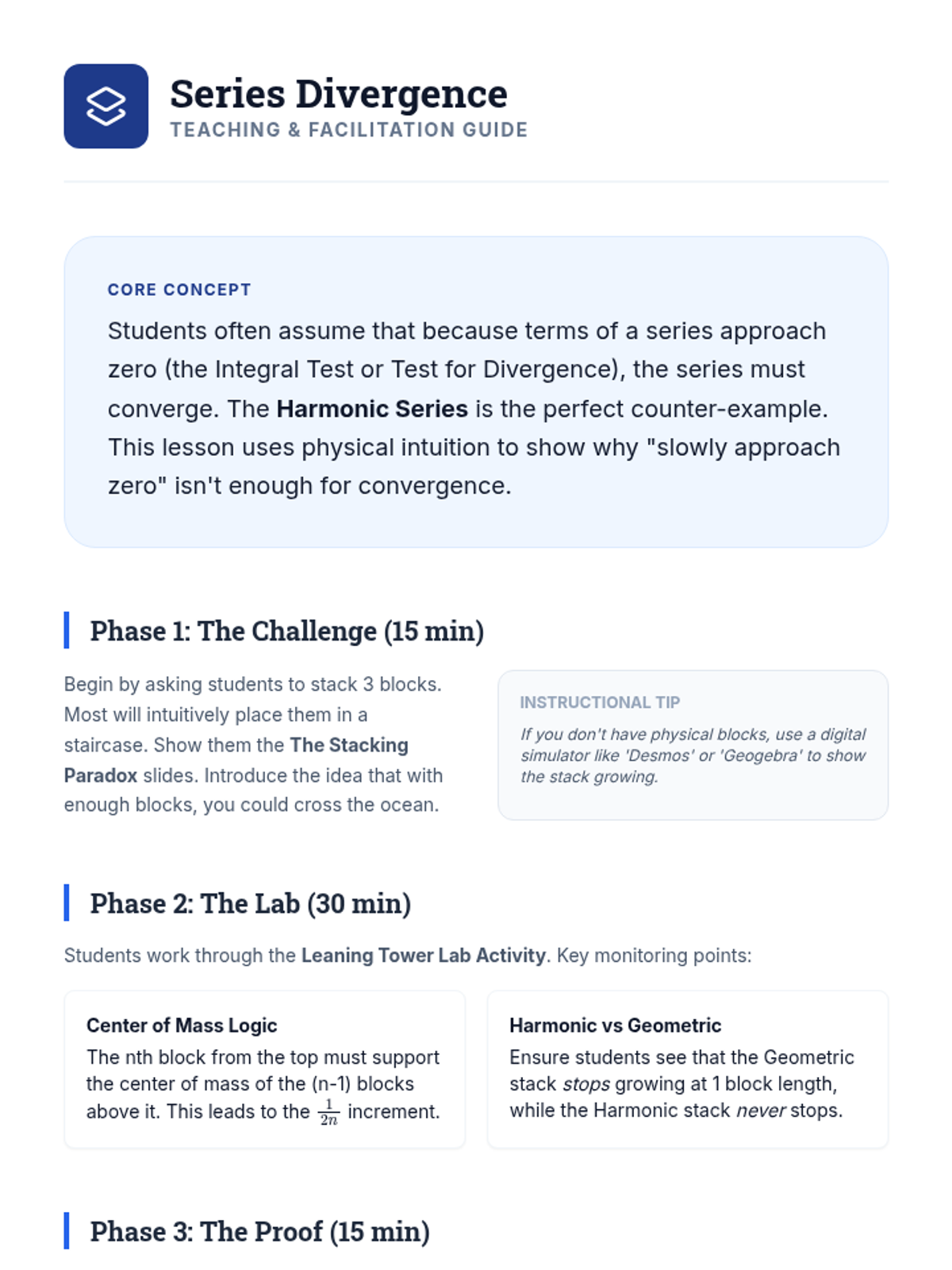
A comparative lesson contrasting the divergent Harmonic series with convergent geometric series using stacking block simulations (the Leaning Tower of Lire).
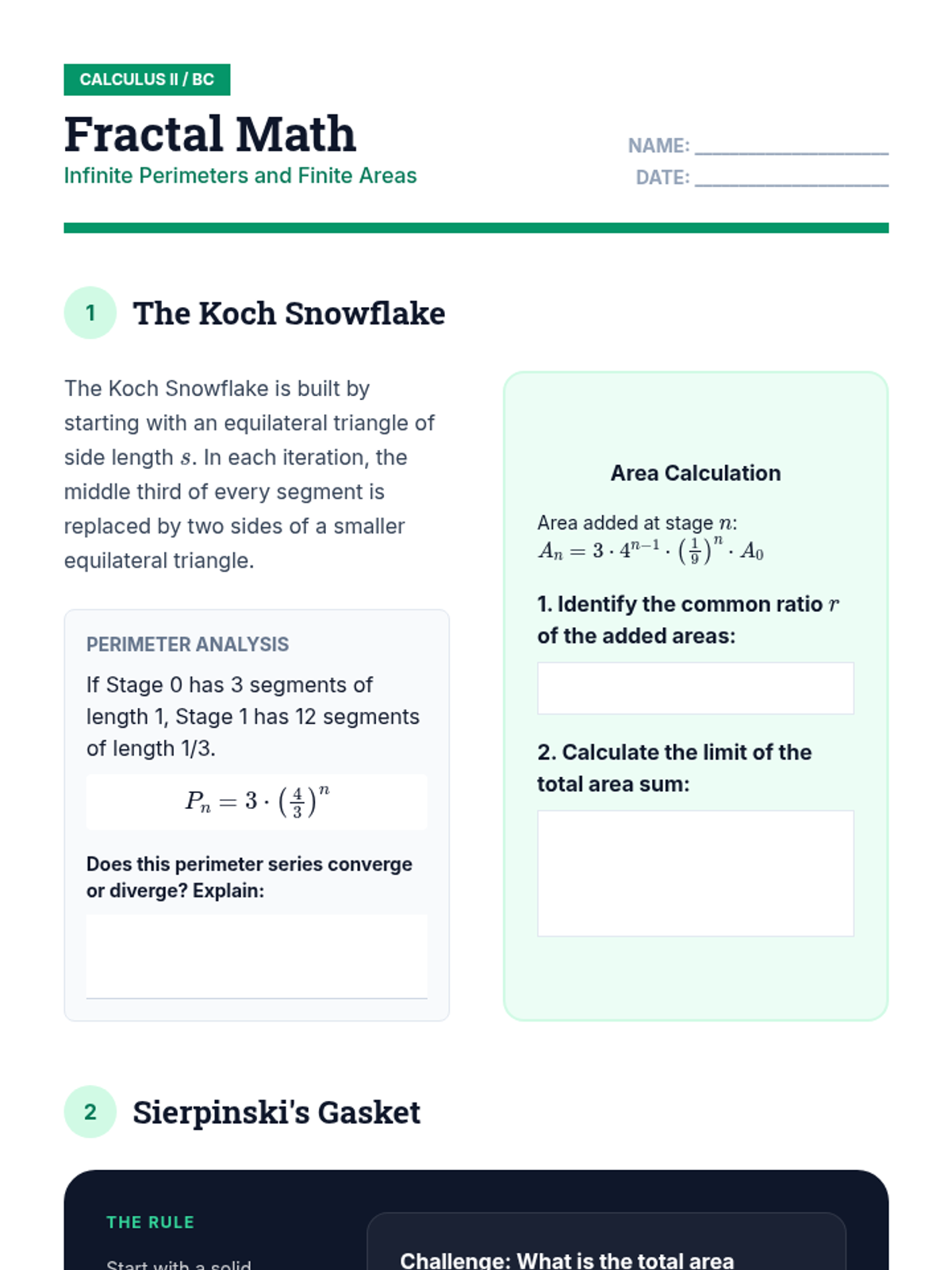
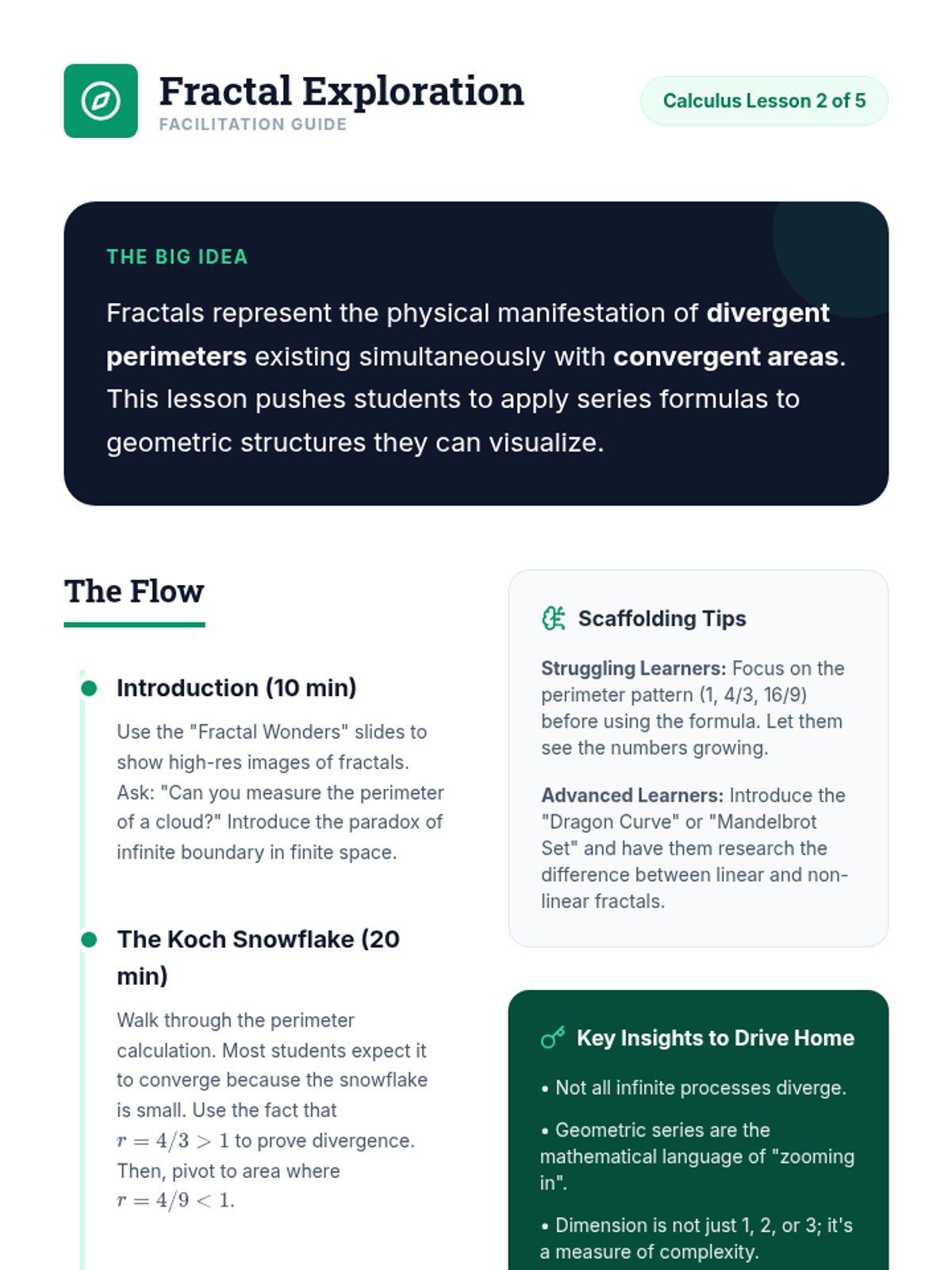
Learners explore famous fractals like the Koch Snowflake and Sierpinski Triangle. They calculate perimeter and area using series concepts to understand self-similarity.
A collaborative mastery-based session featuring mixed advanced problems to foster independence in identifying strategic approaches.
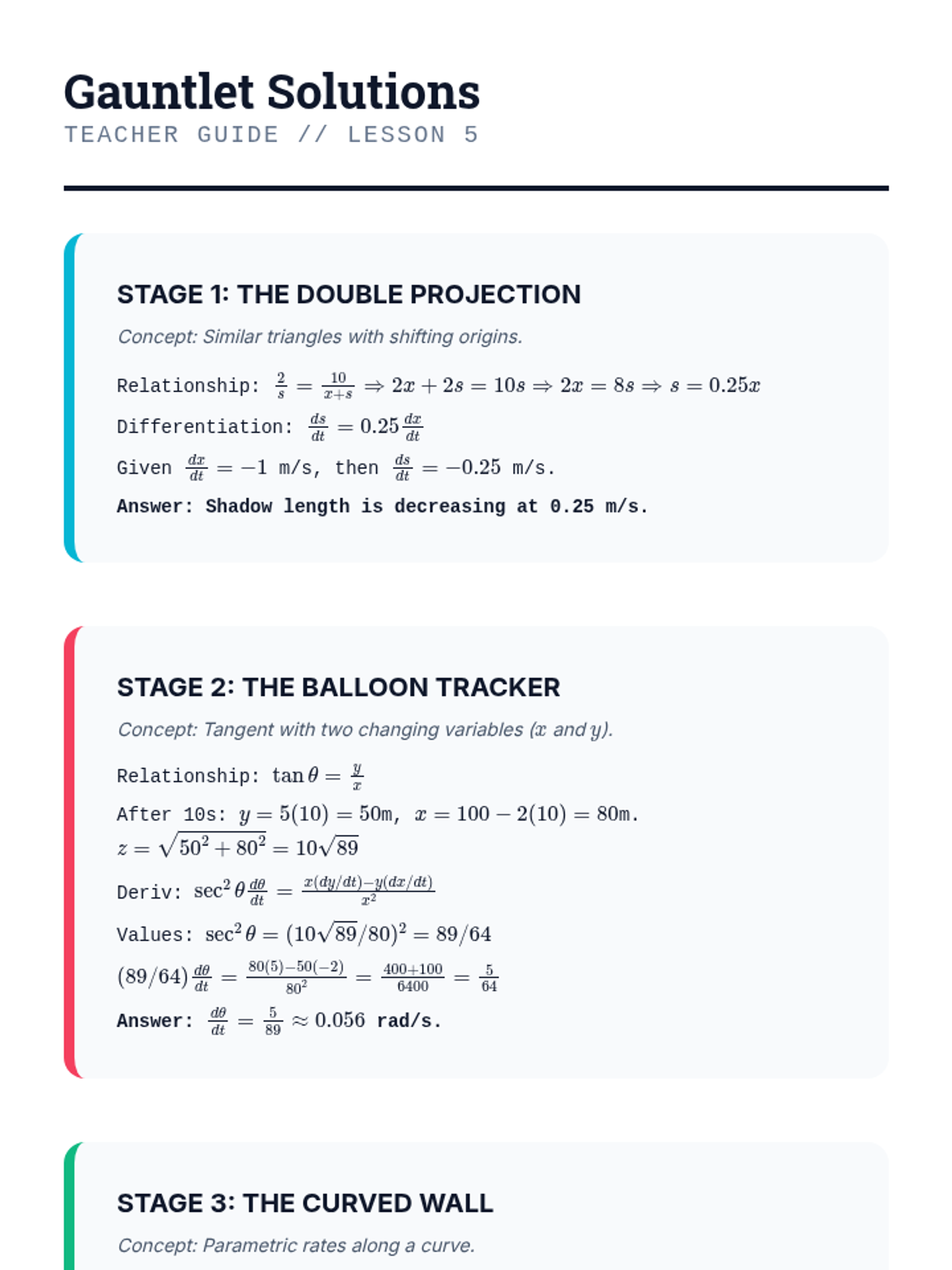
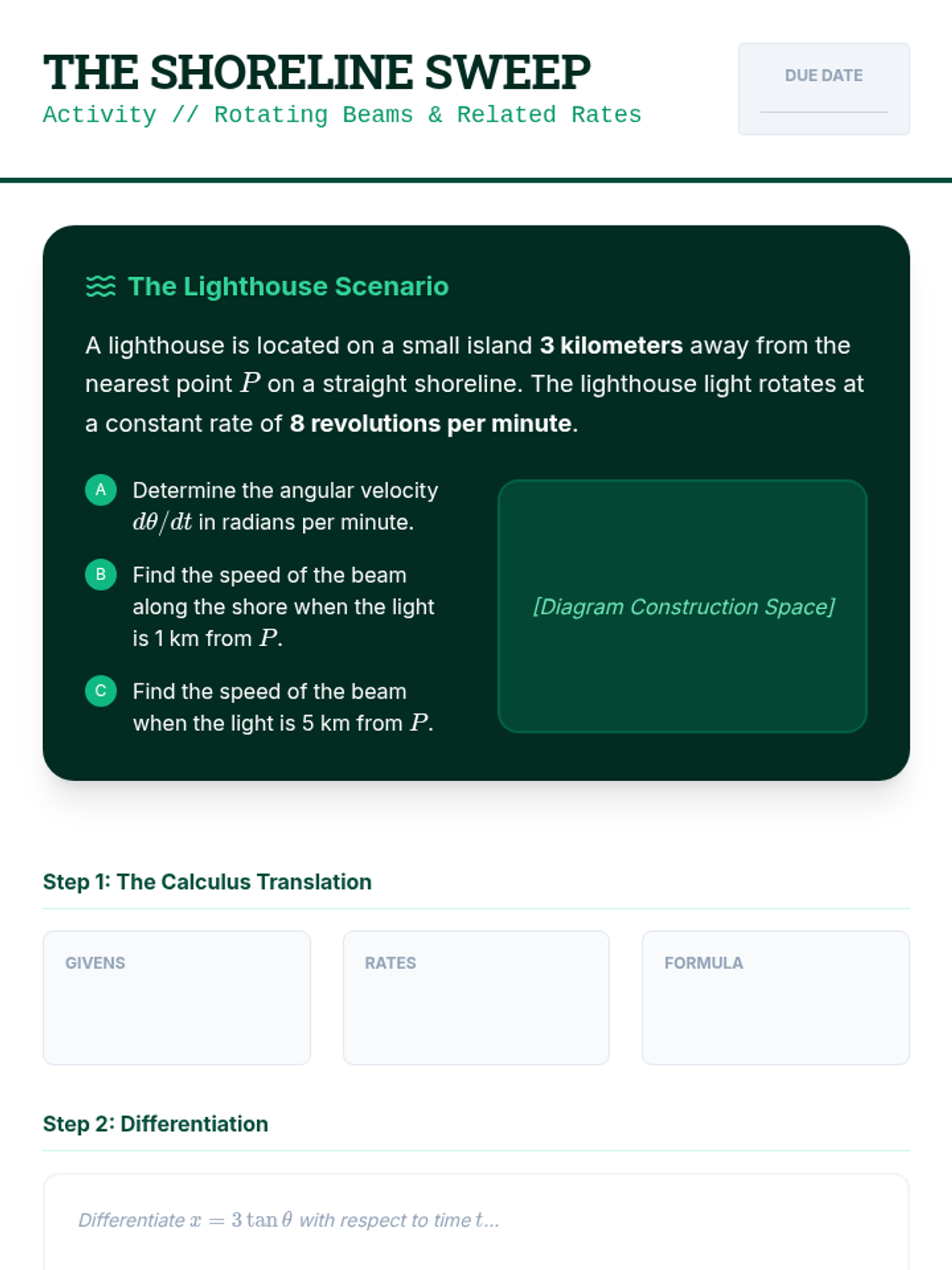
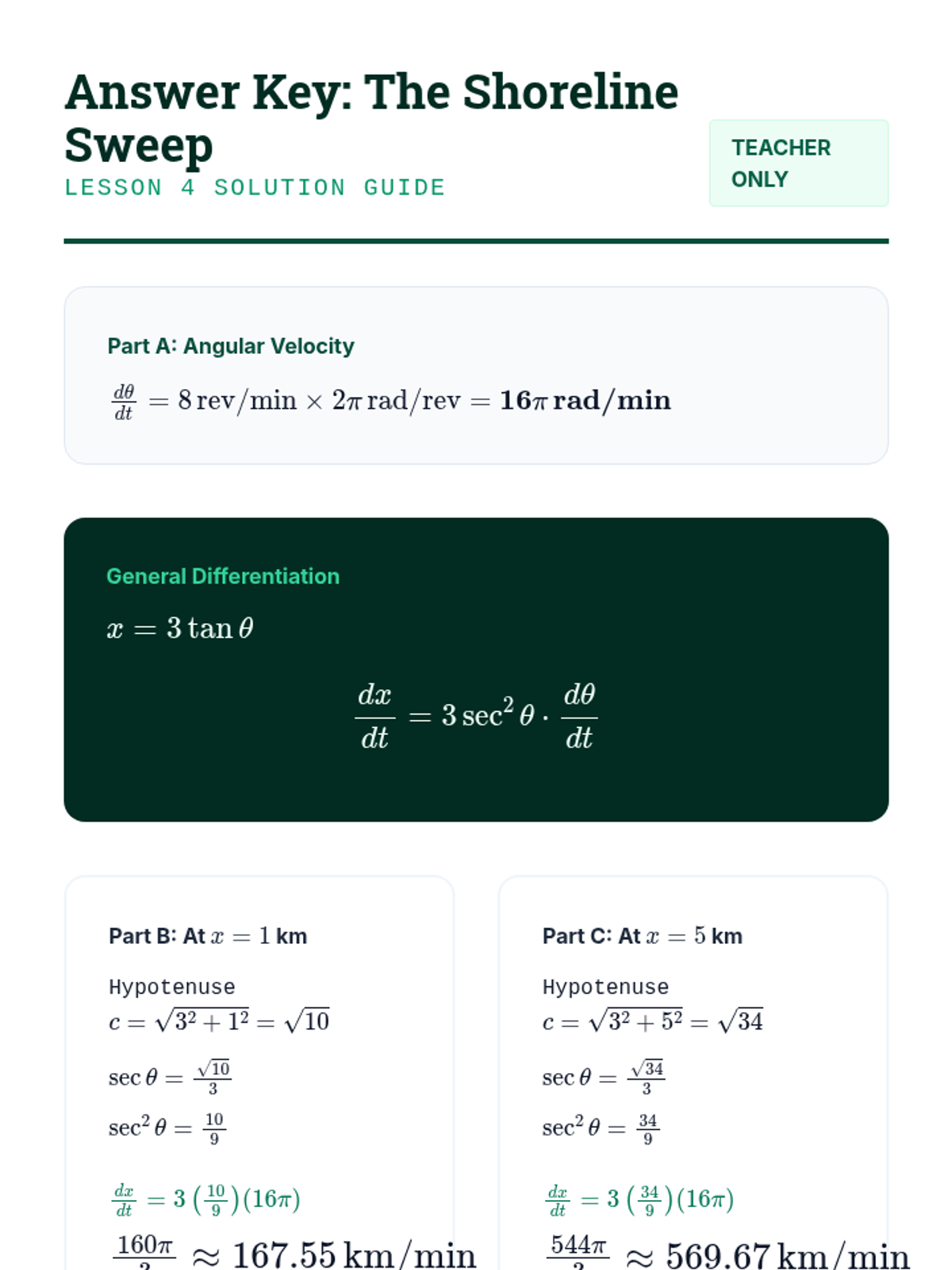
Students analyze problems involving rotating lights (lighthouses/beacons) and connect angular velocity to linear velocity along a surface.
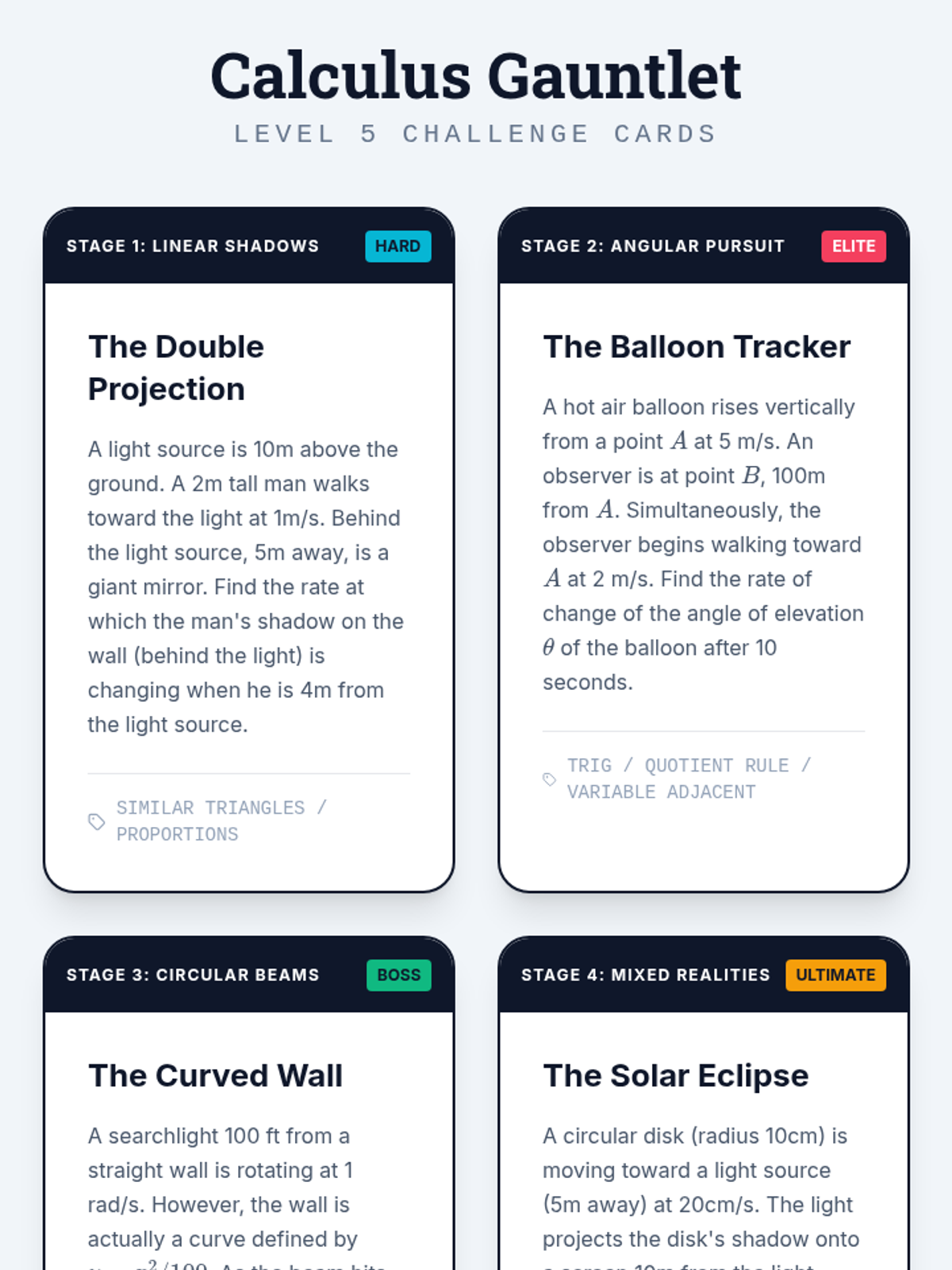
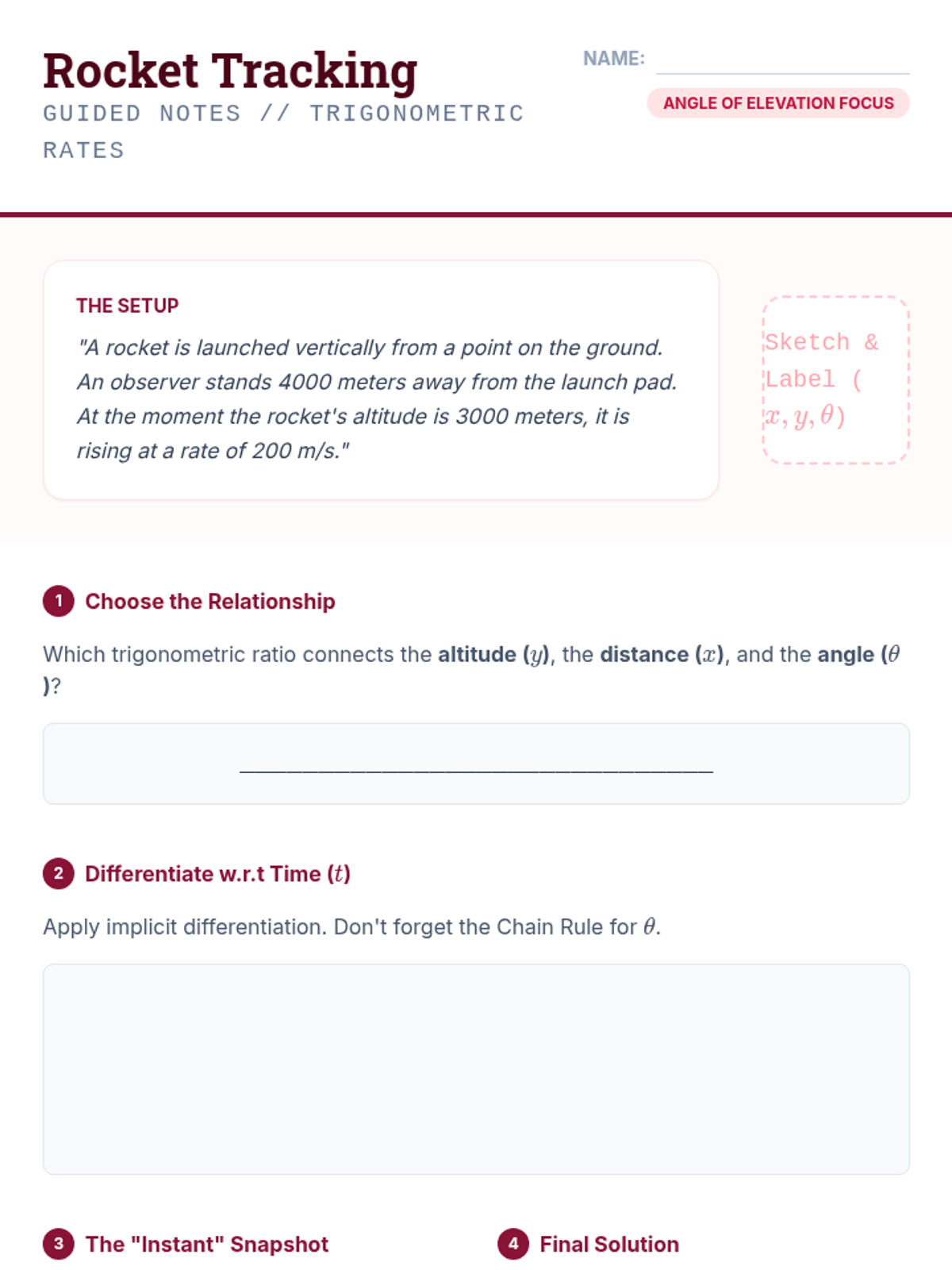
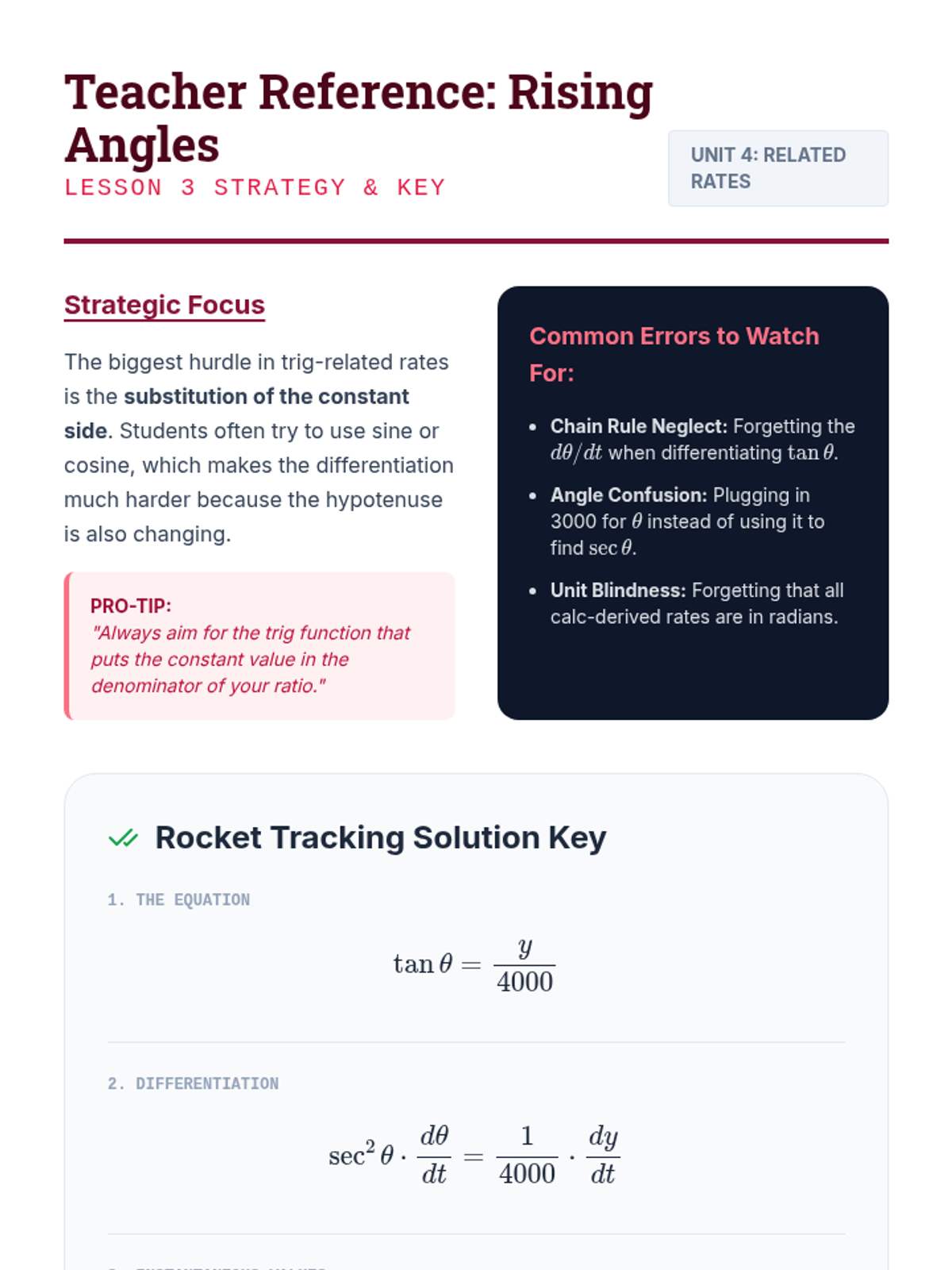
The focus shifts to angular rates of change, using trigonometric ratios to solve 'angle of elevation' tracking problems.
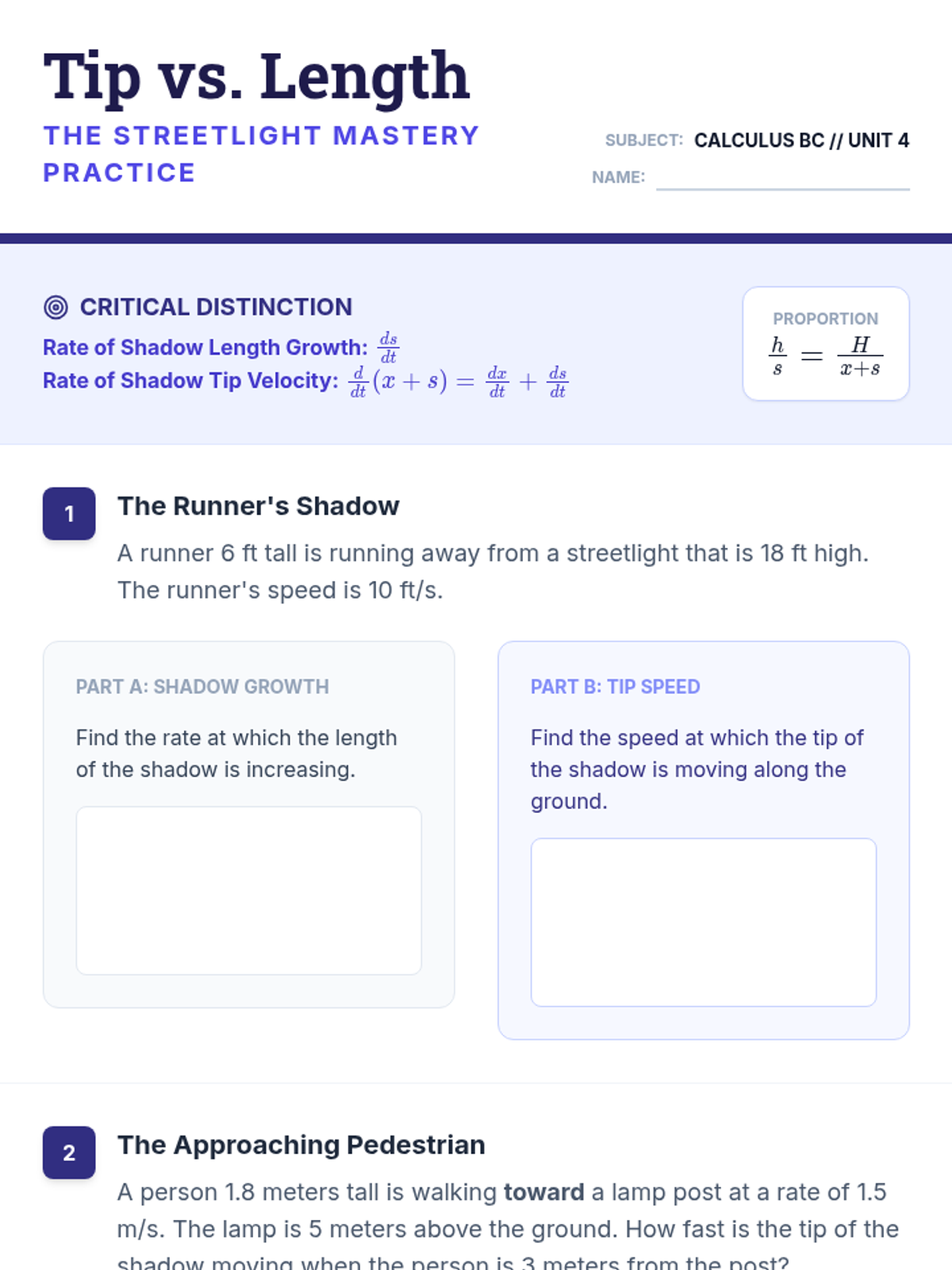
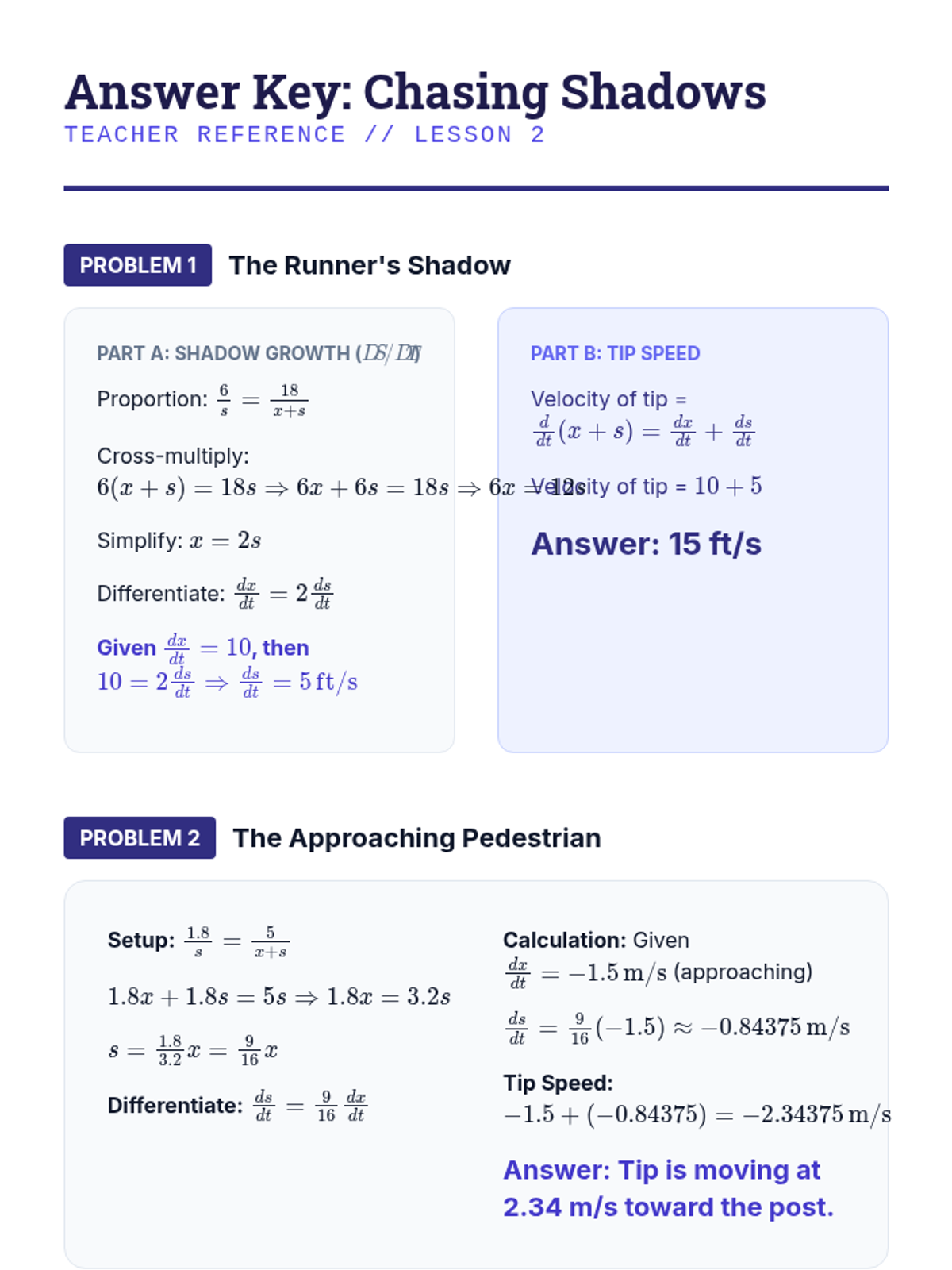
Students solve the classic streetlight problem, distinguishing between the rate of shadow length increase and the velocity of the shadow's tip.
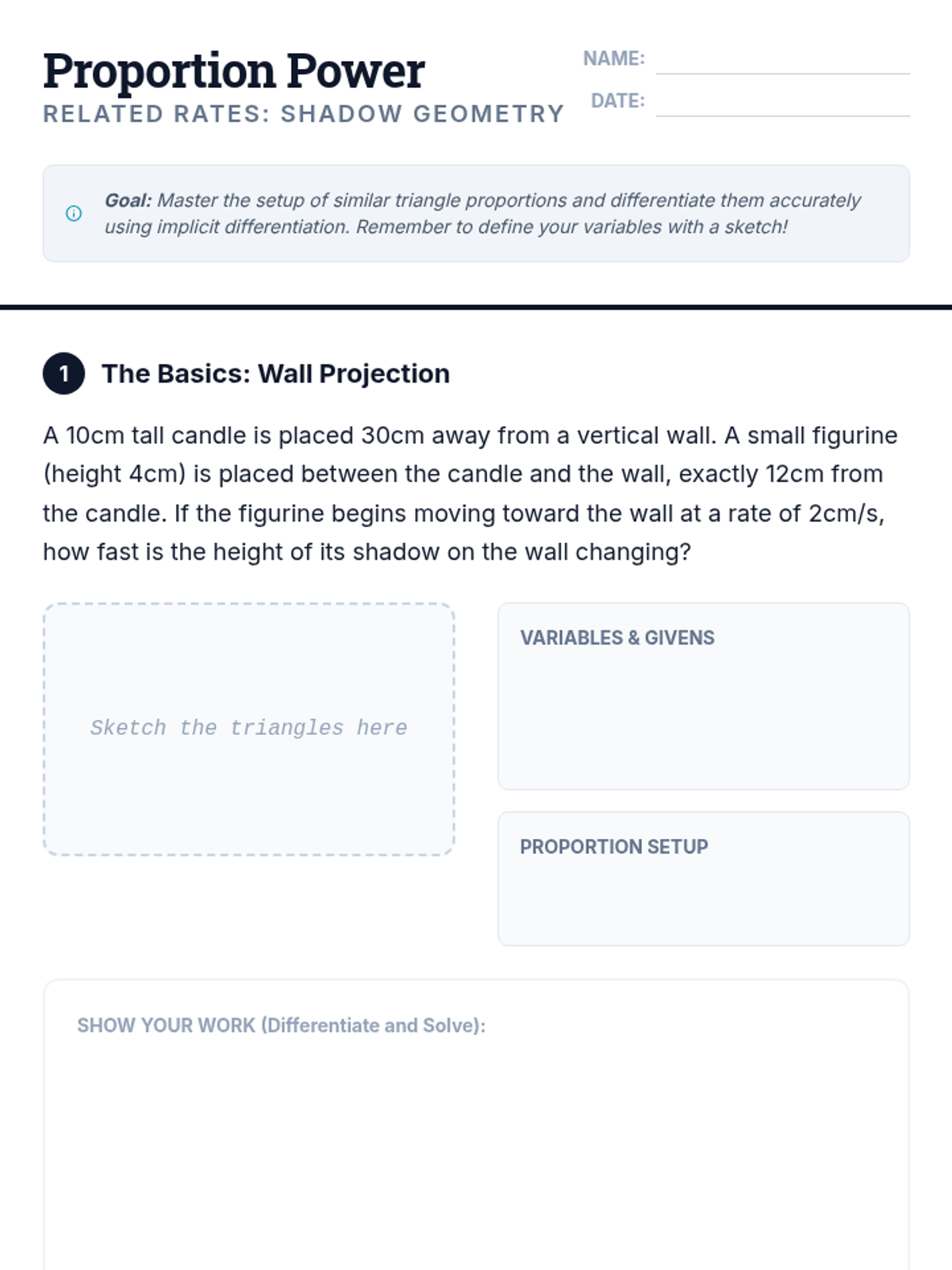
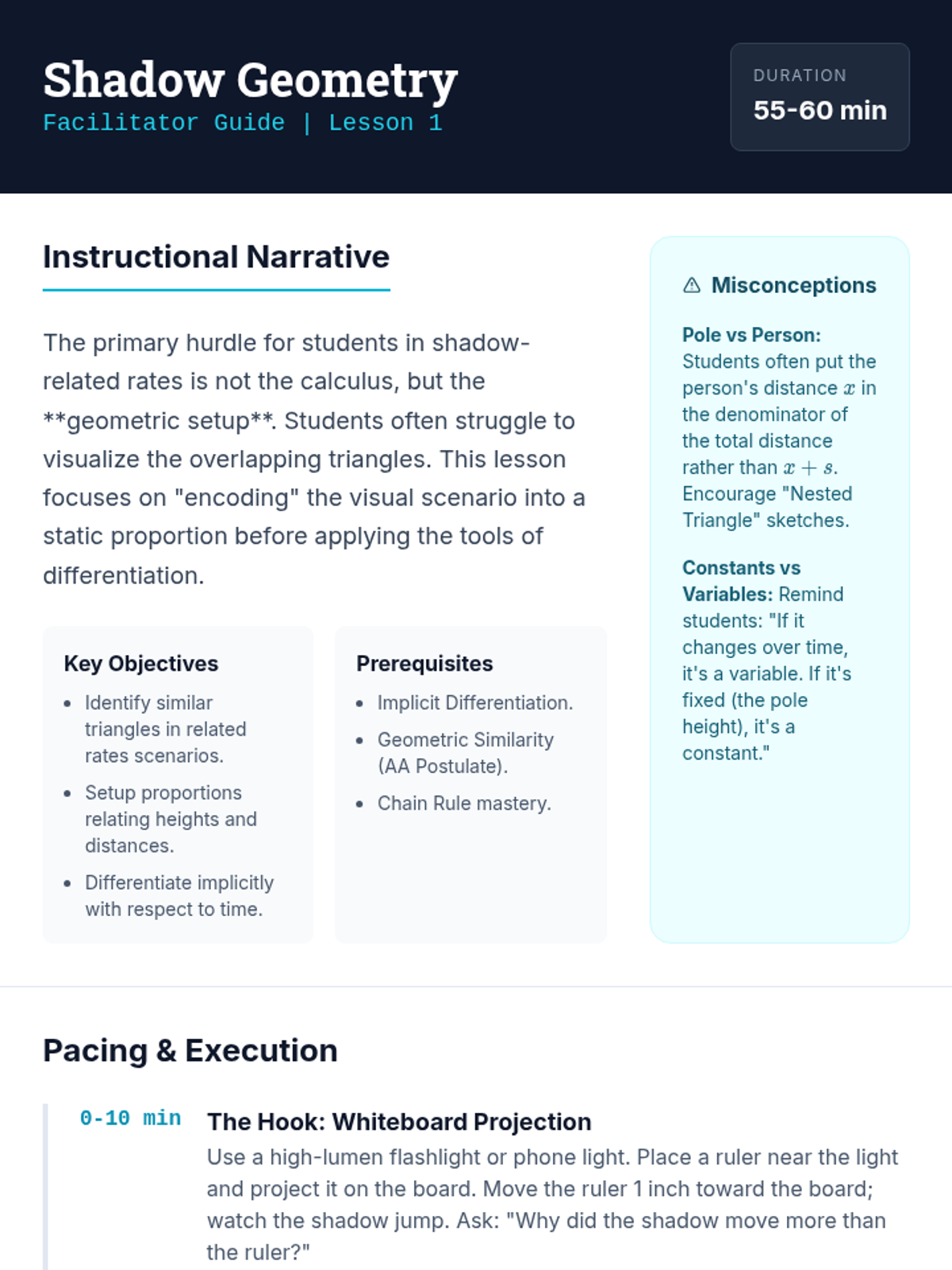
Students review properties of similar triangles and learn to set up proportion equations relating variables, emphasizing differentiation of these proportions.
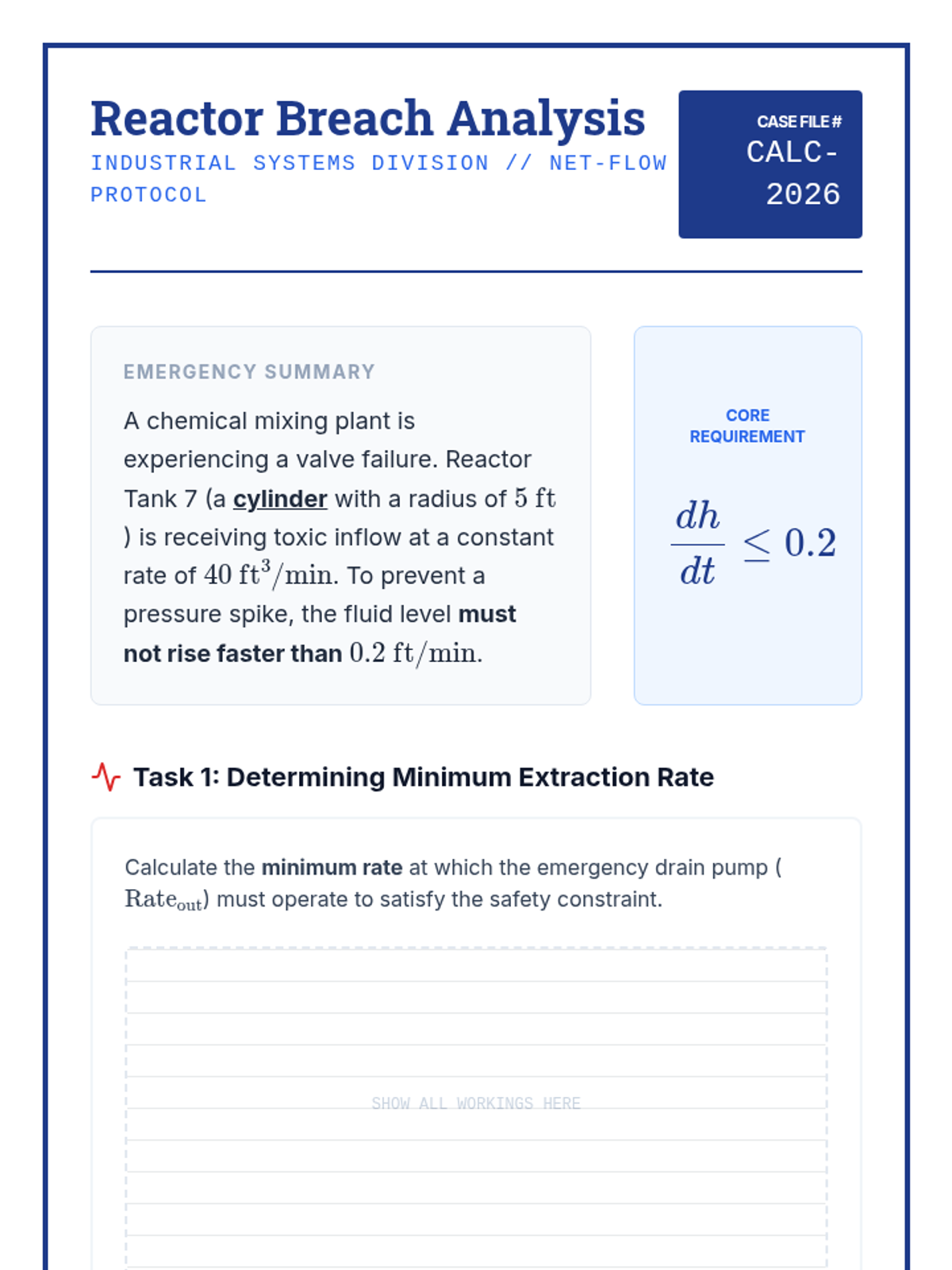
A culminating engineering challenge where students manage net flow rates (inflow vs. outflow) to maintain system stability in various tank geometries.
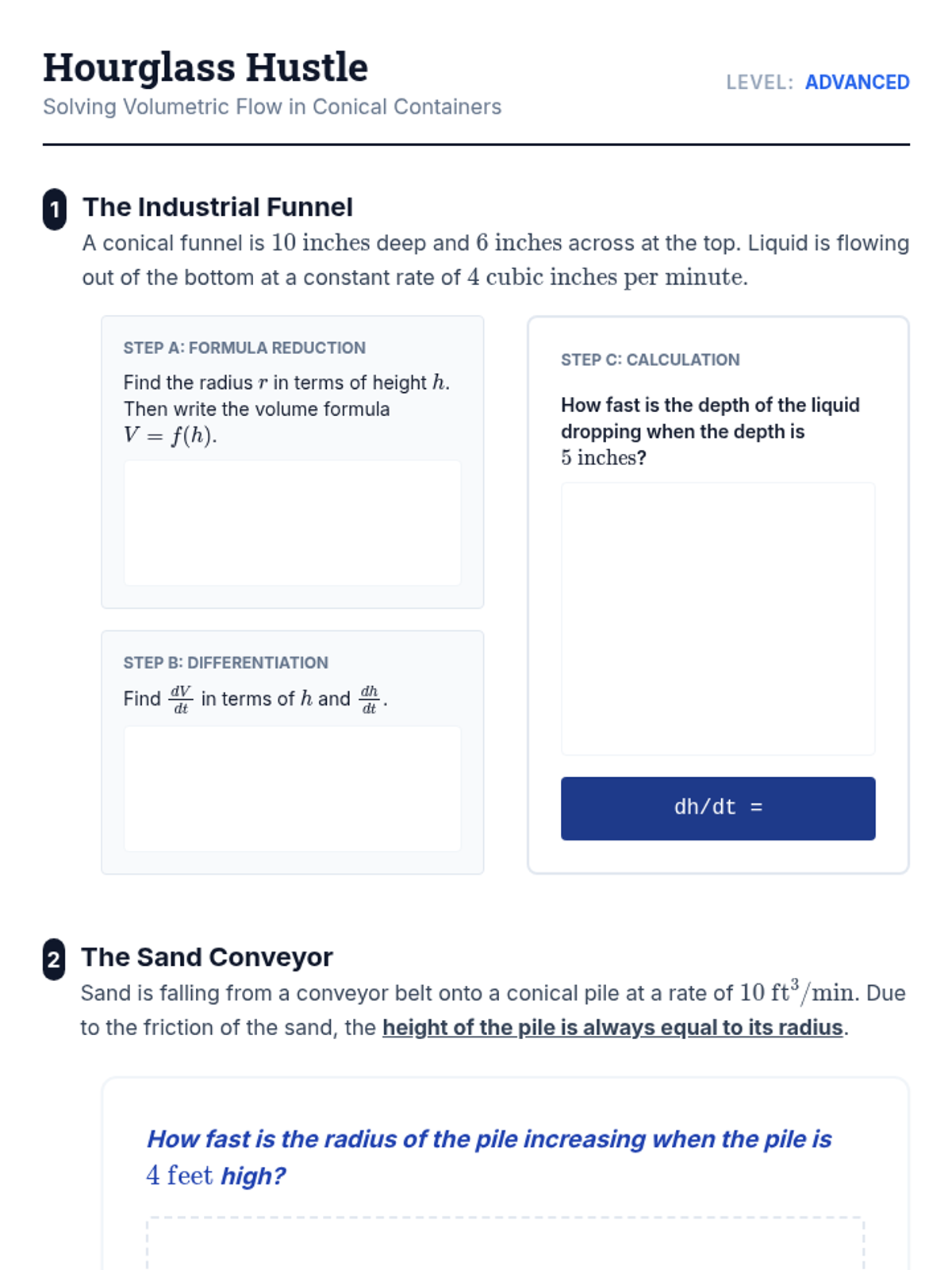
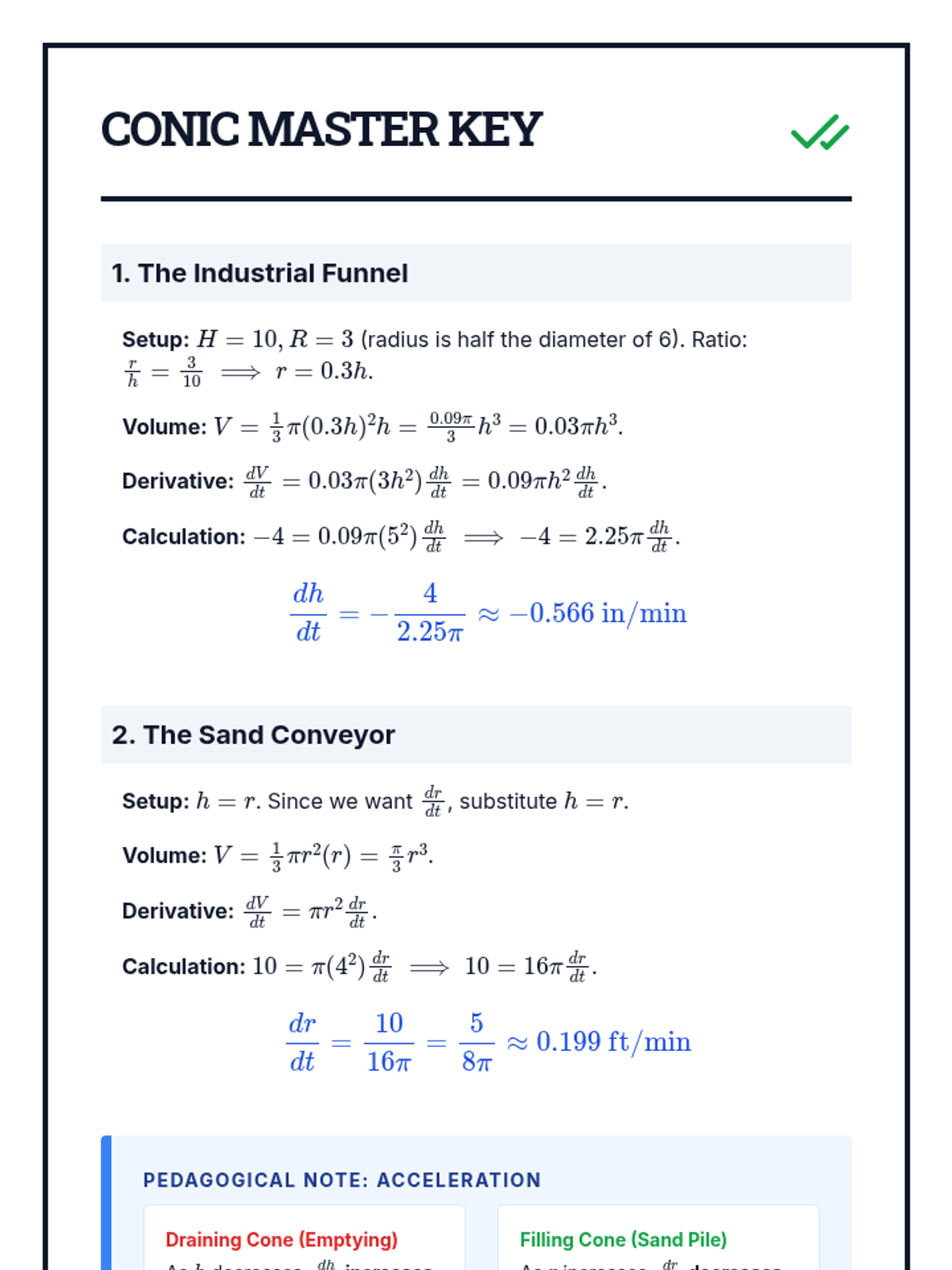
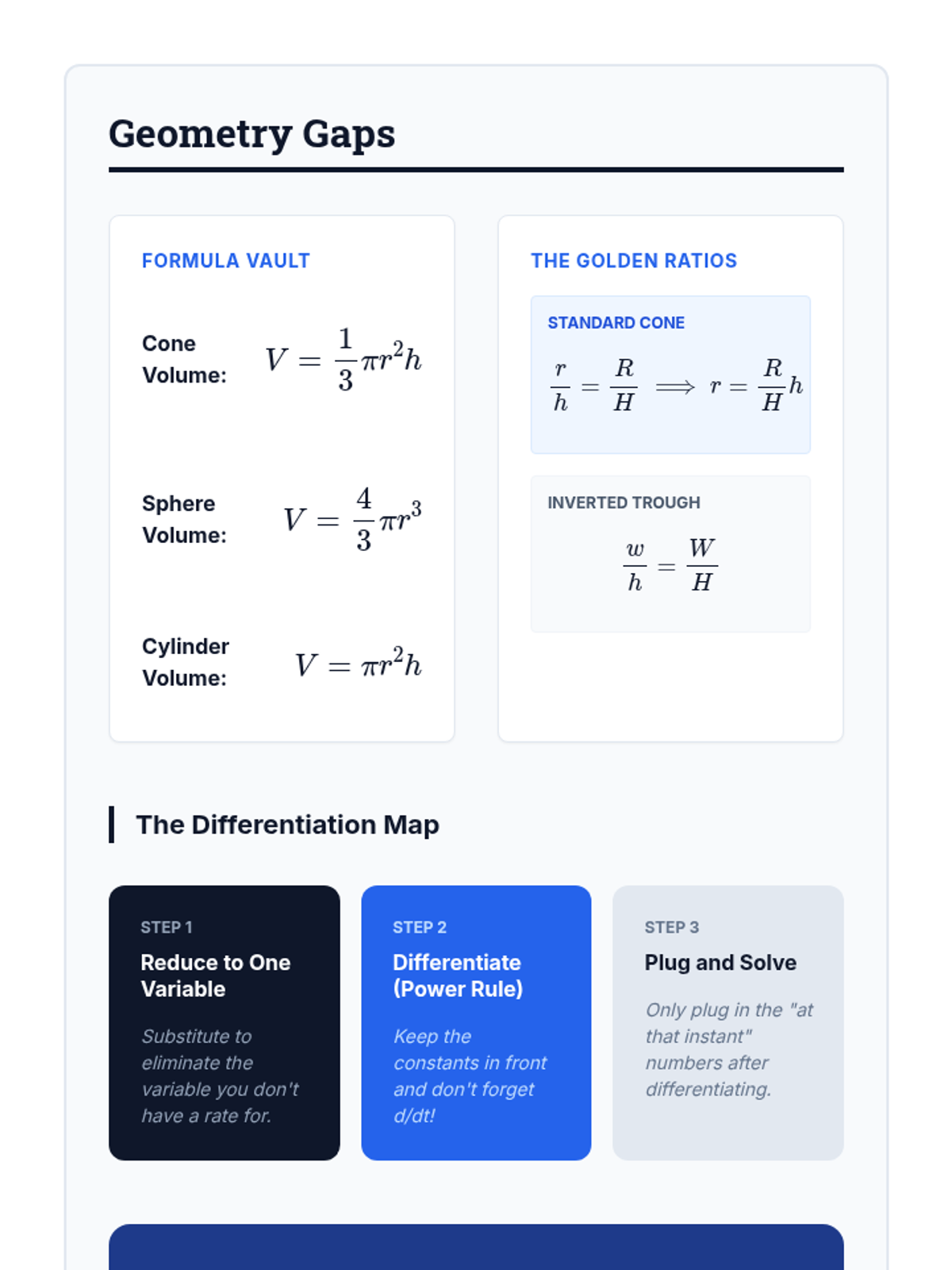
Building on the geometric substitution from the previous lesson, students fully differentiate and solve conical related rates problems, analyzing the 'acceleration' of fluid levels.
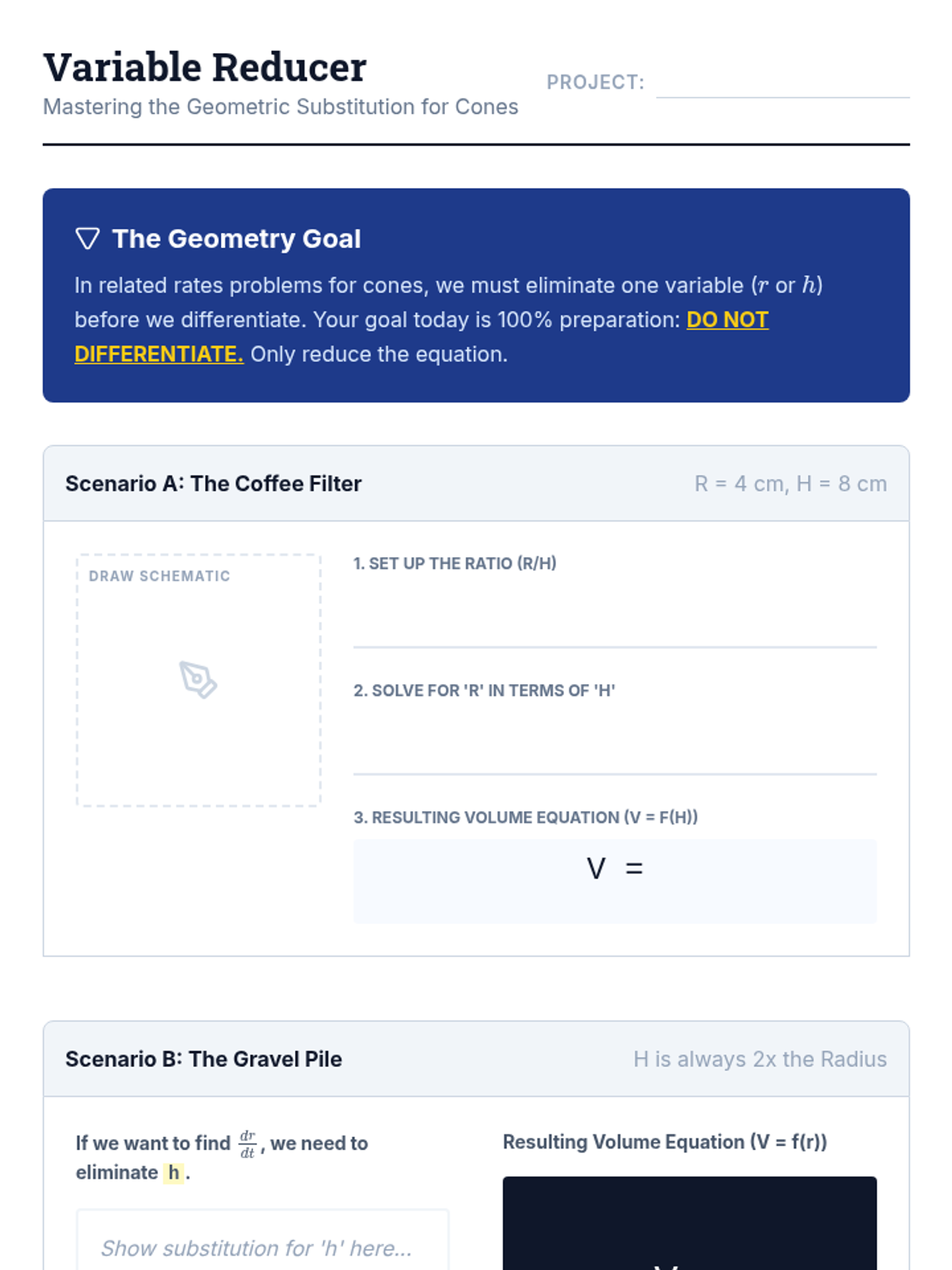
This lesson addresses the geometric complexity of conical tanks, focusing specifically on using similar triangles to reduce multi-variable volume formulas into single-variable equations.
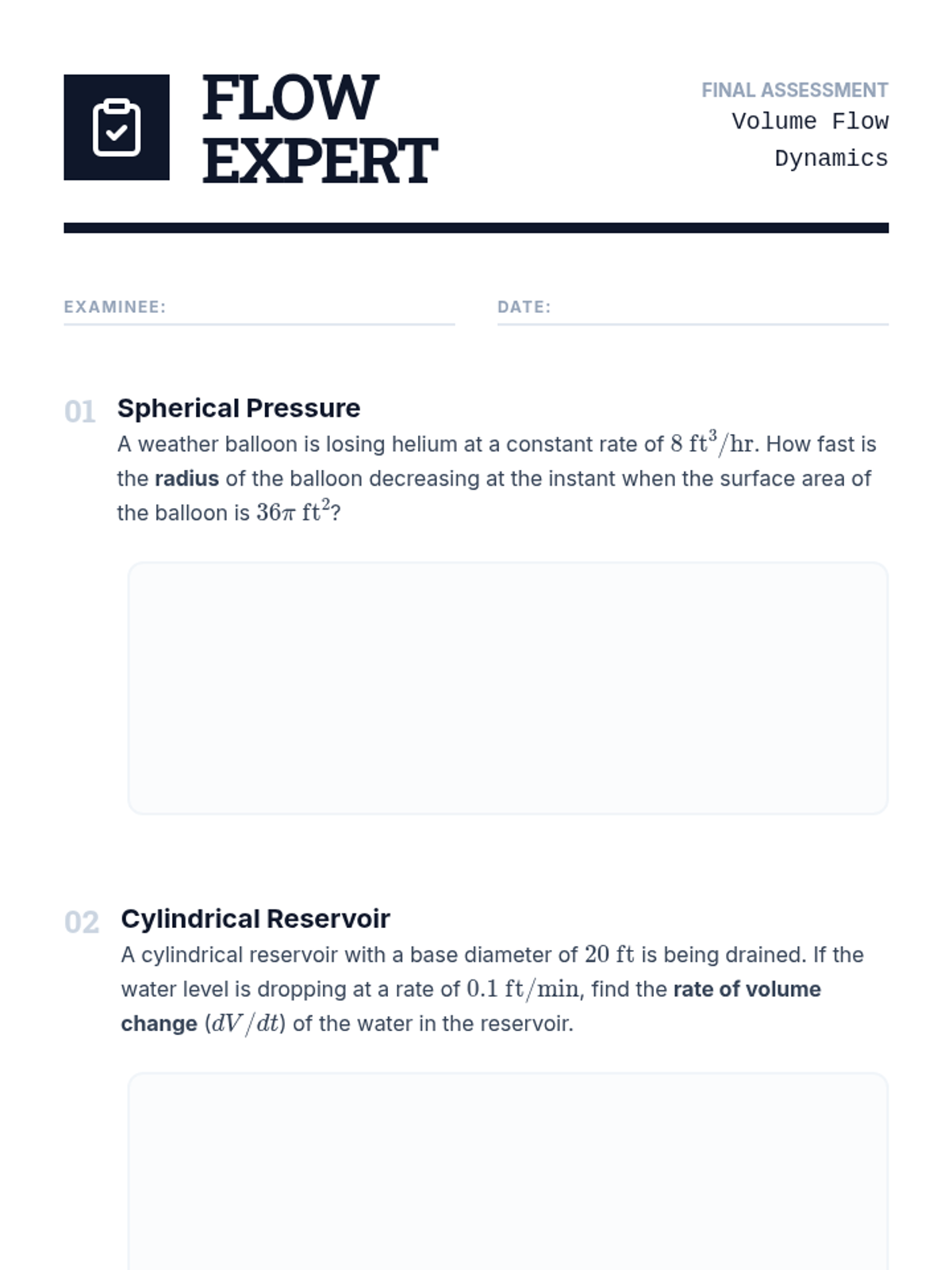
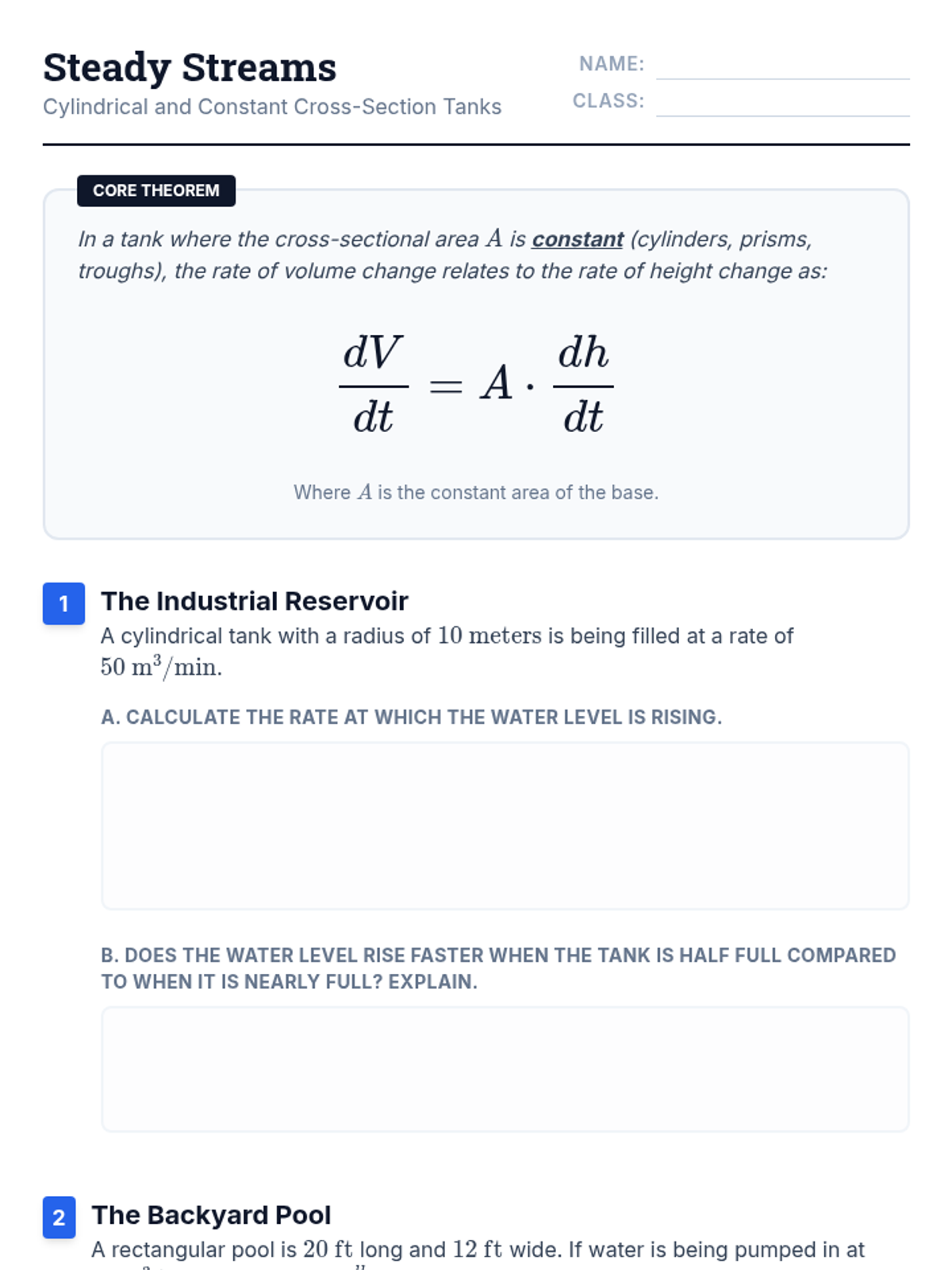
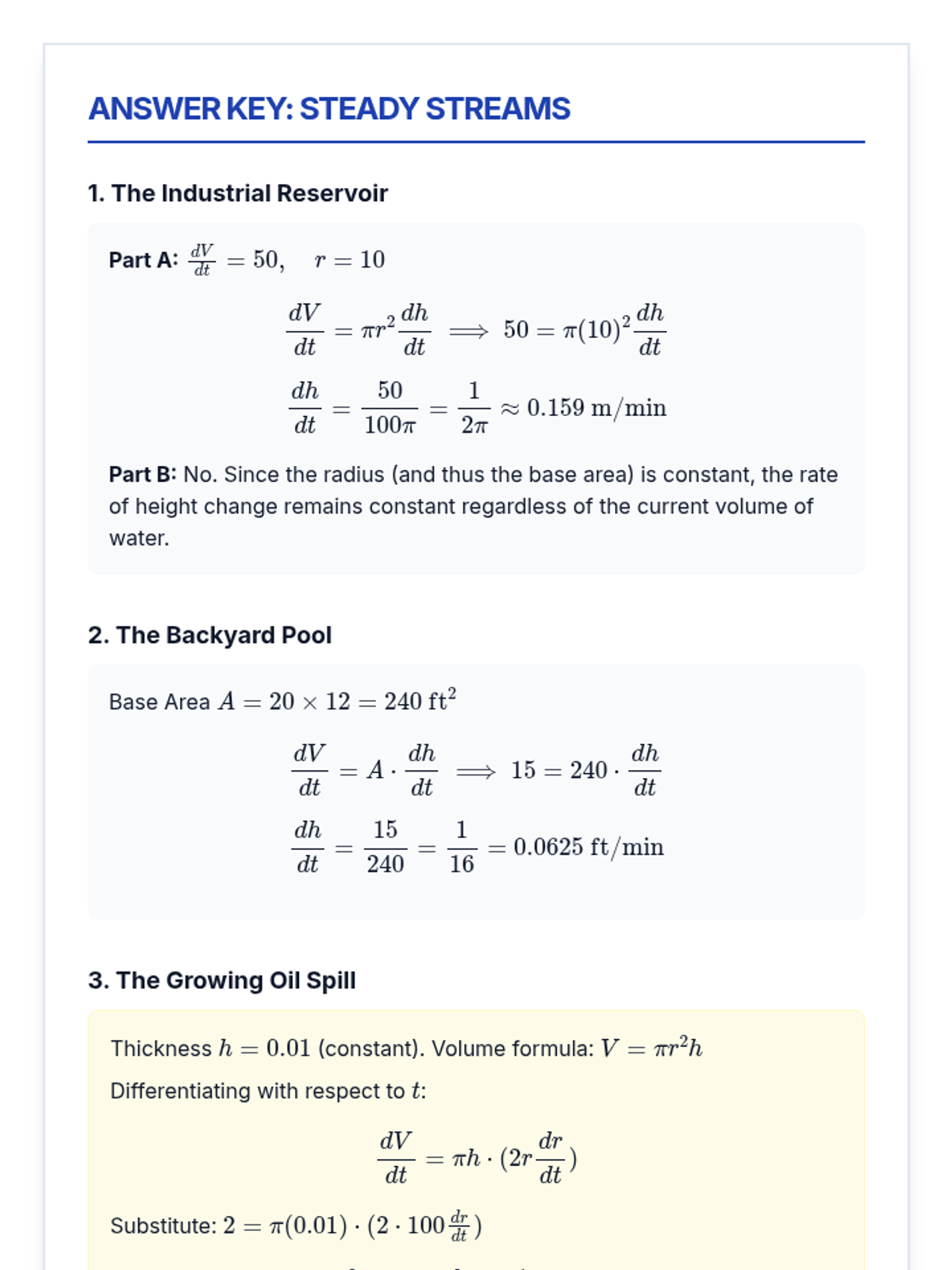
Focusing on containers with constant cross-sections, students learn why cylinders and prisms exhibit linear height changes relative to volume. This provides a baseline for comparing more complex geometries.
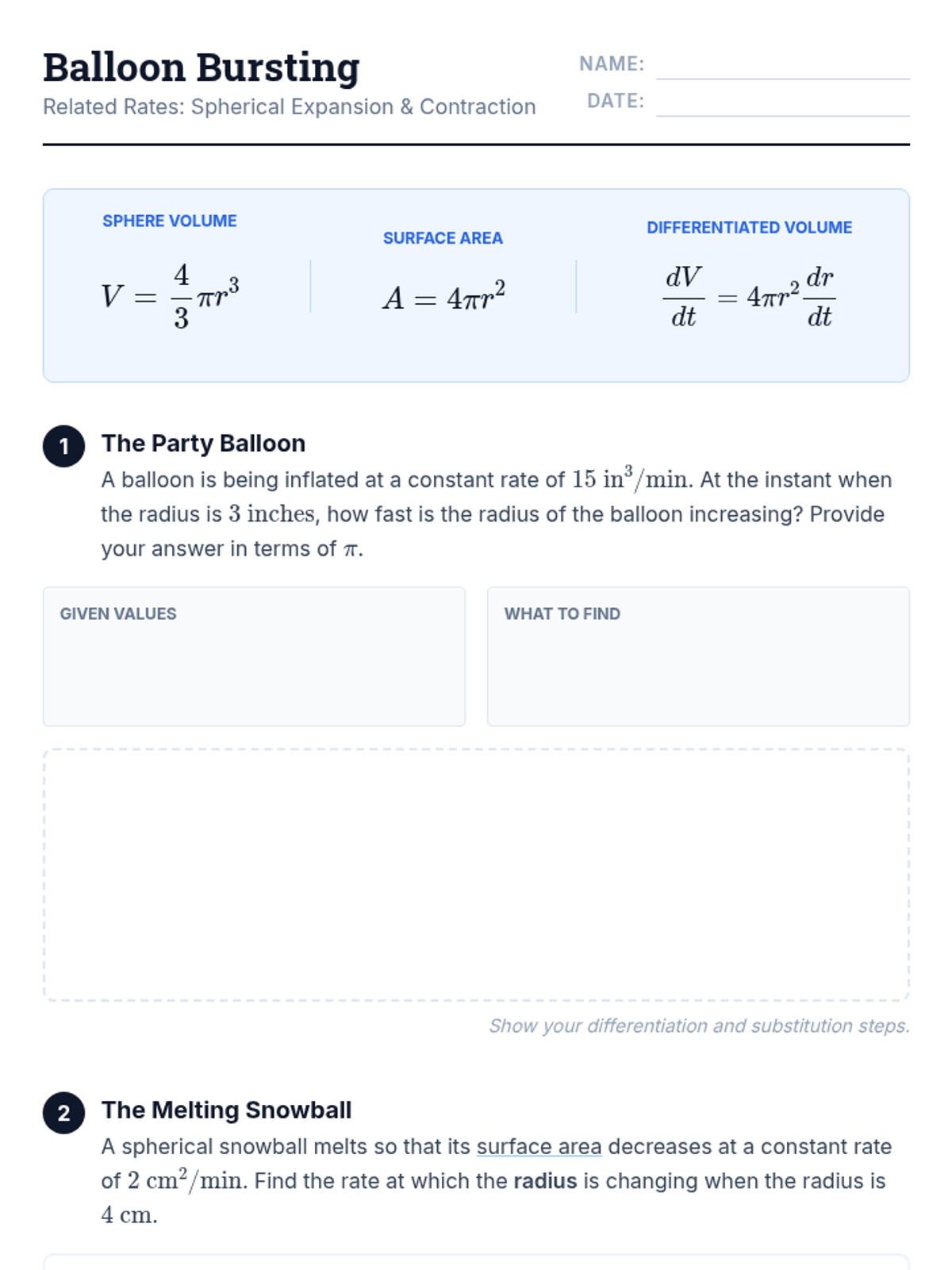
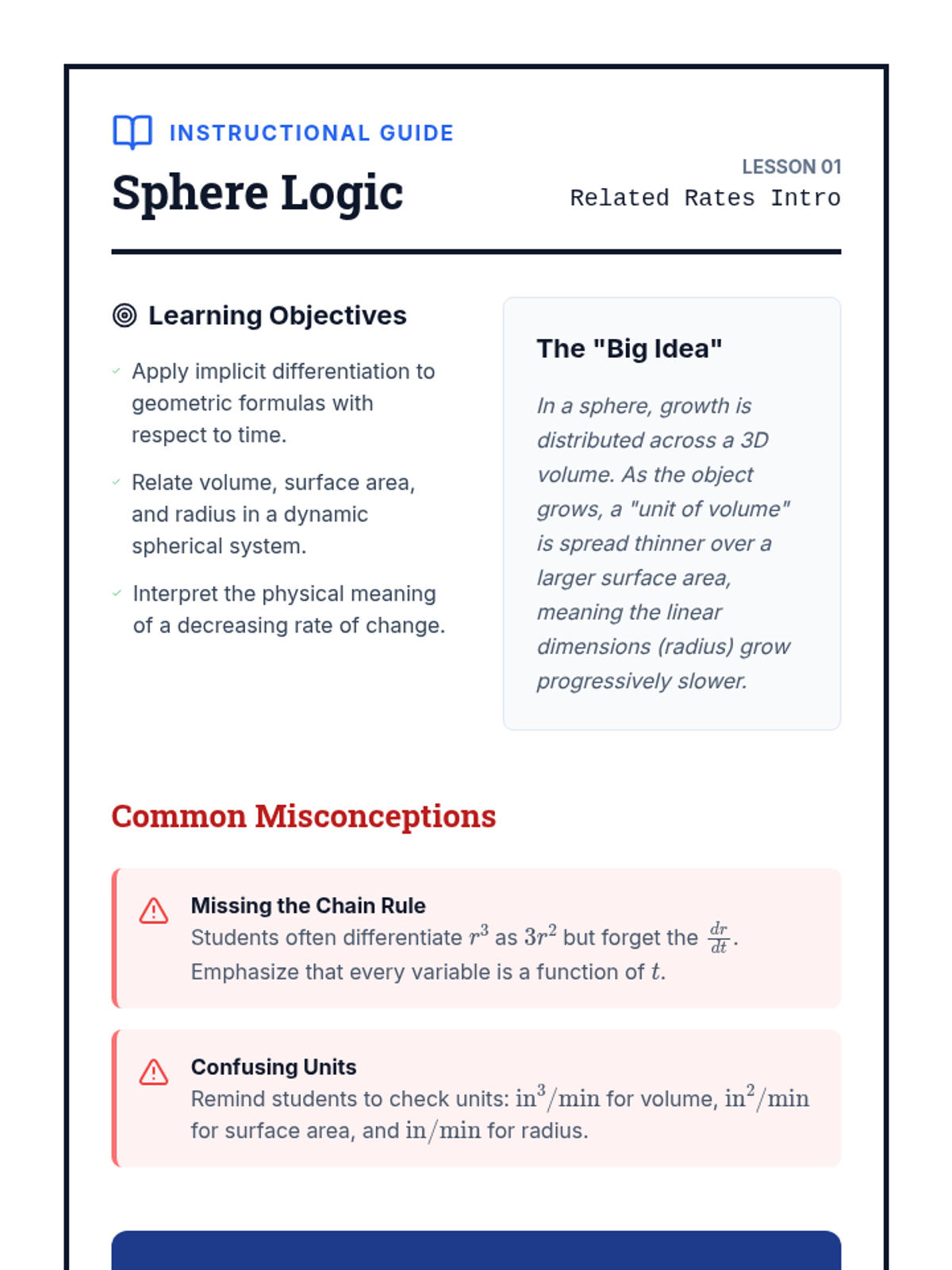
Students explore the calculus of expanding spheres, analyzing how constant volume change affects radius and surface area differently. The lesson highlights the inverse square relationship in spherical growth.
Advanced applications of related rates involving multi-step geometric problems and real-world scenarios like sports and aviation.
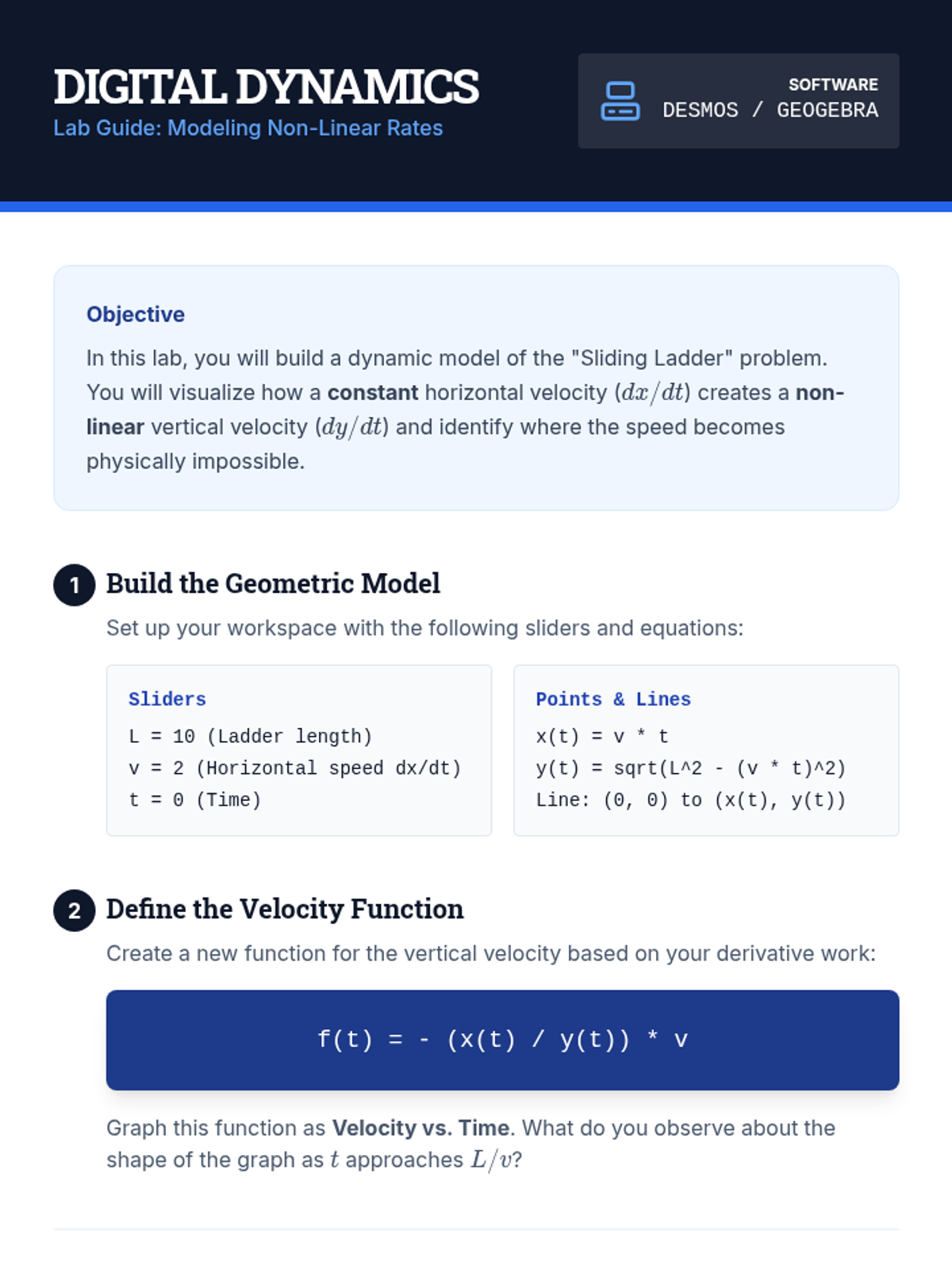
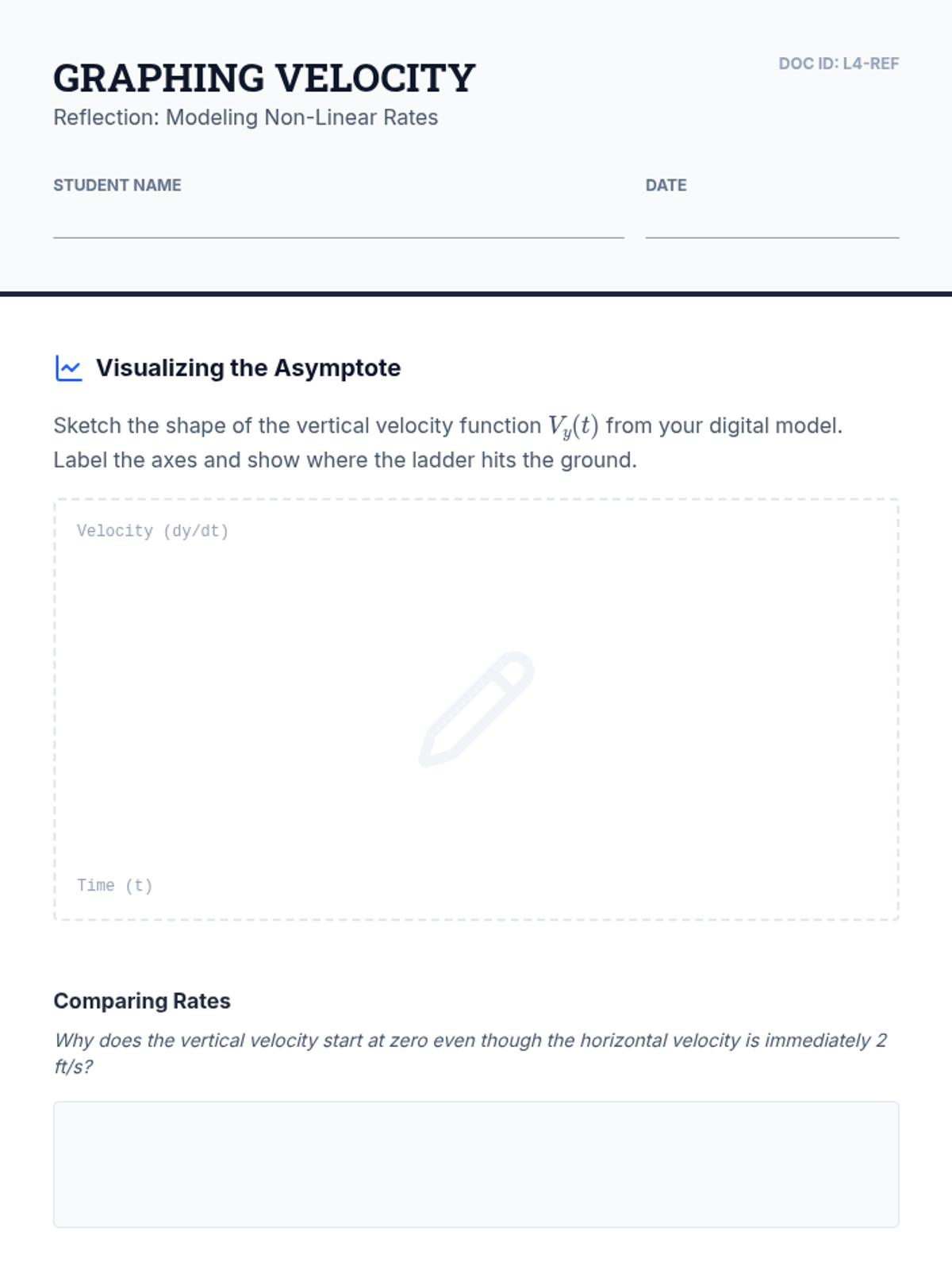
A digital investigation using graphing software to model related rates problems and visualize the resulting non-linear velocity functions.
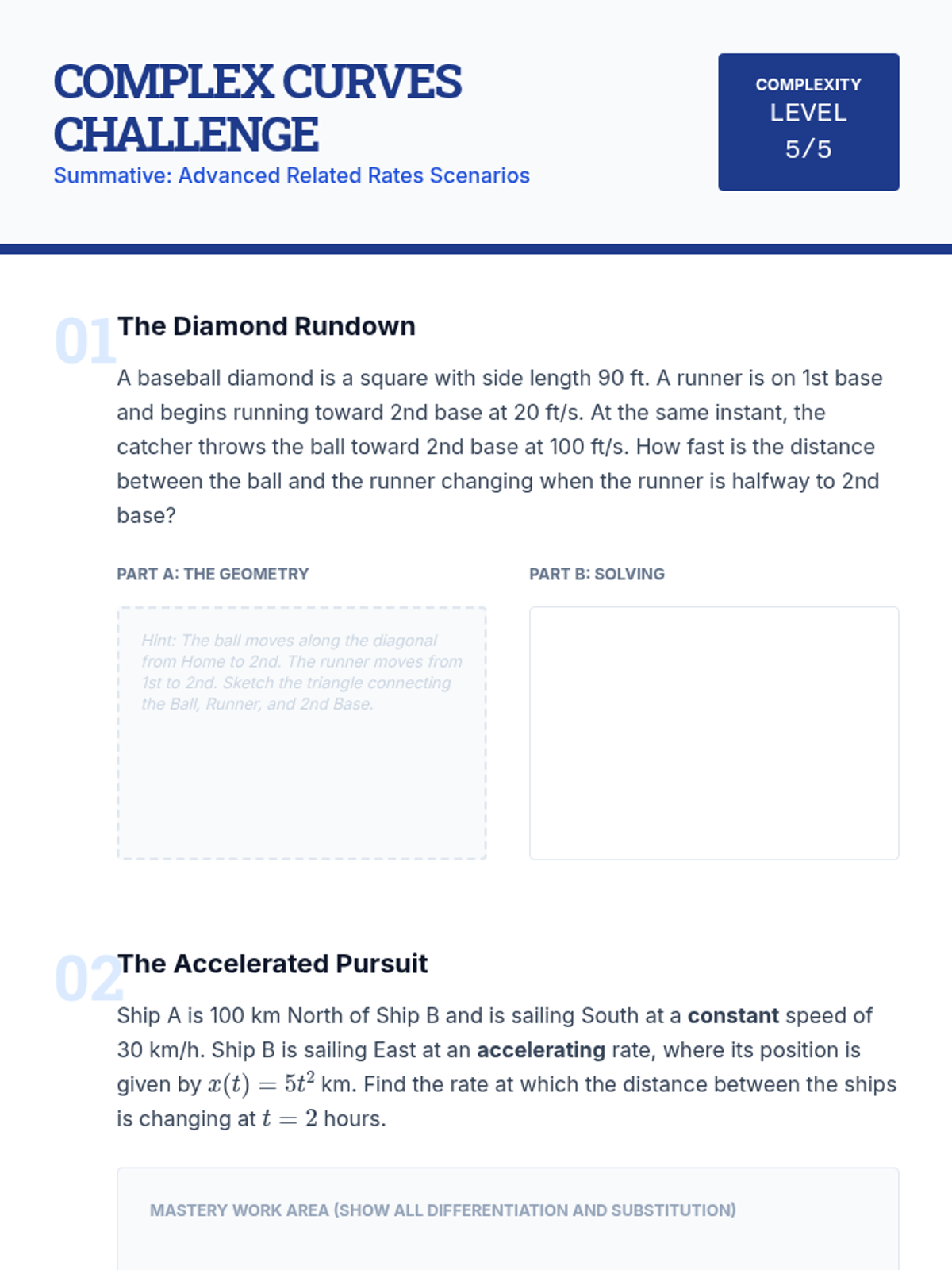
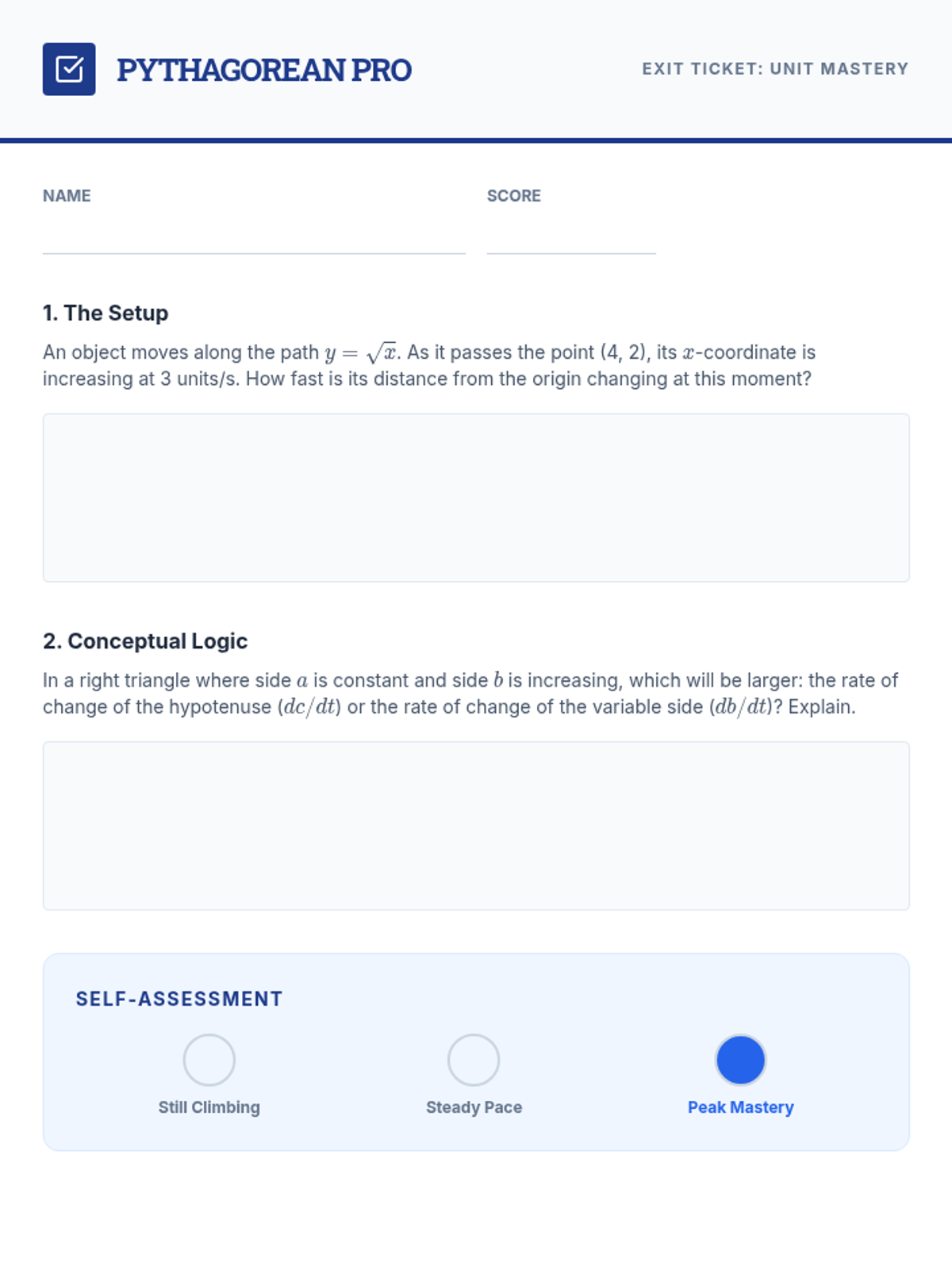
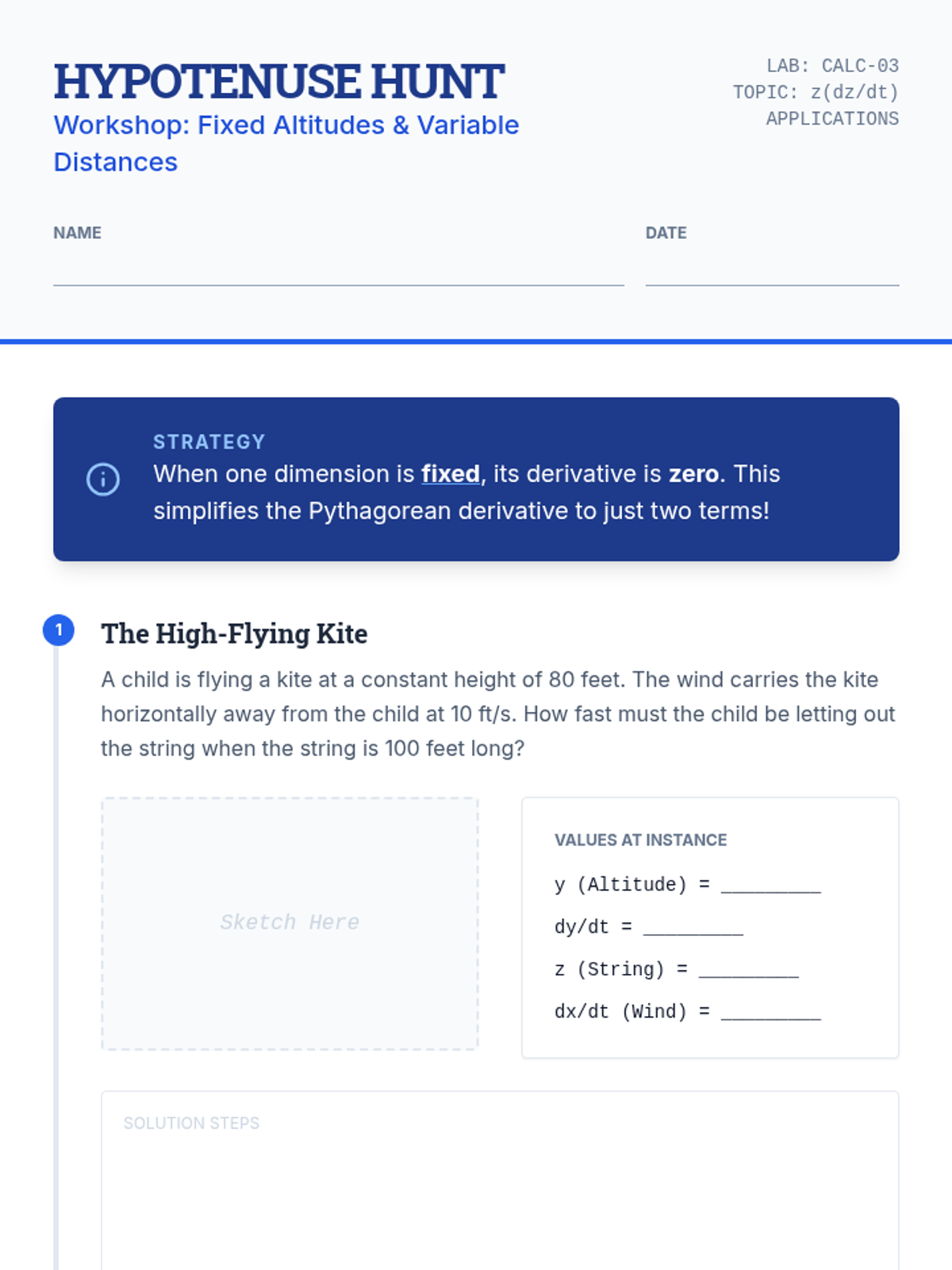
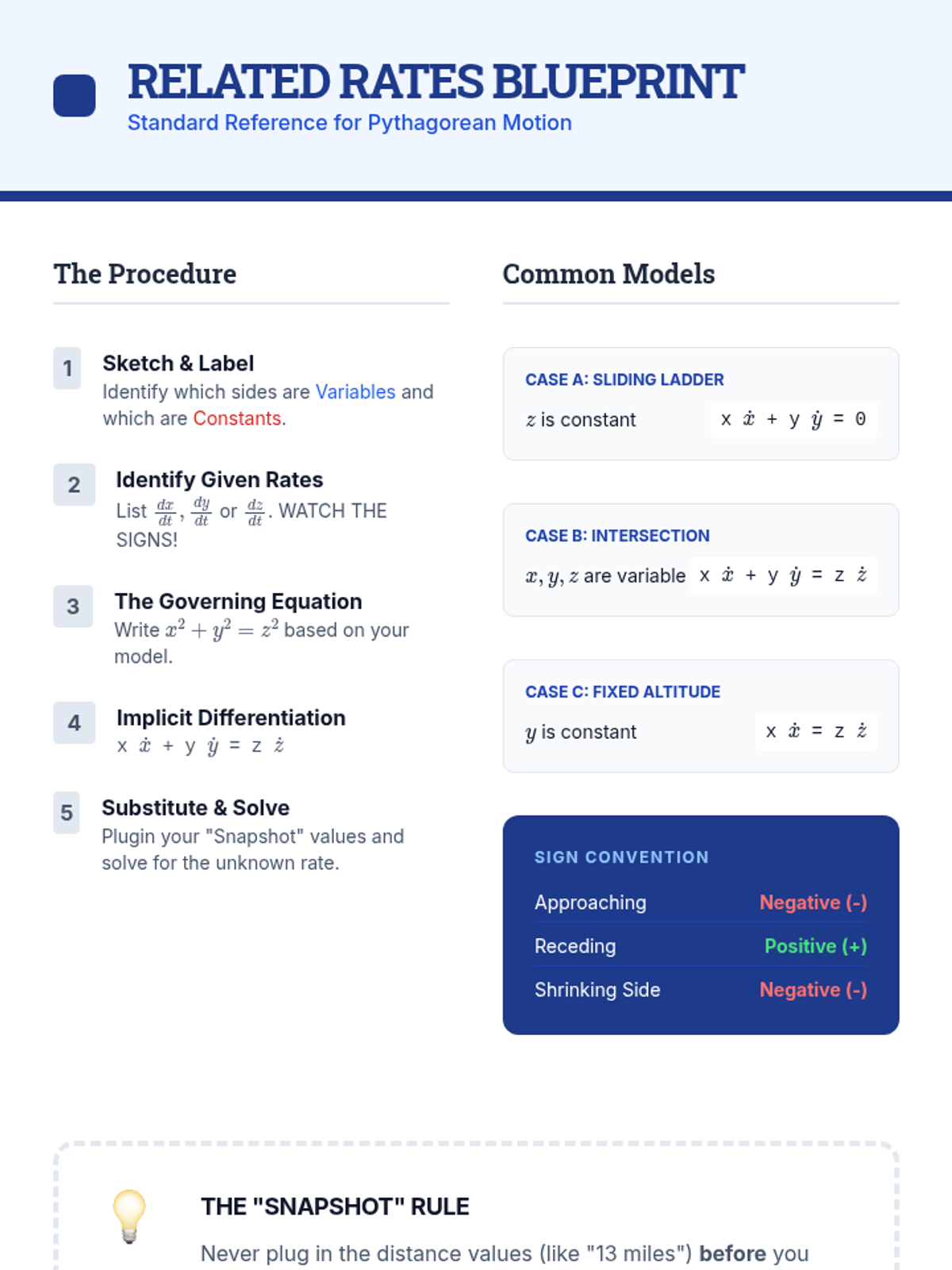
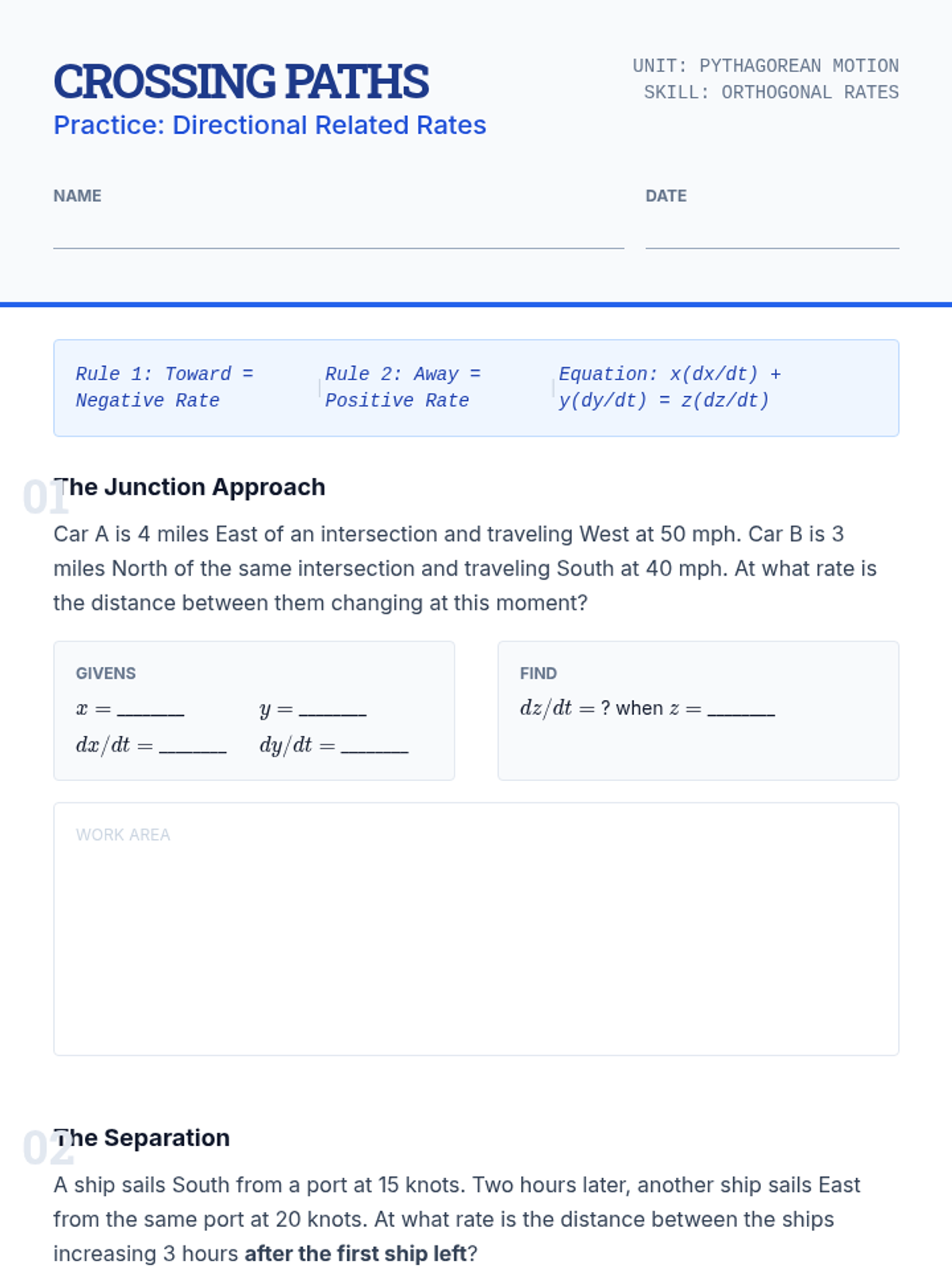
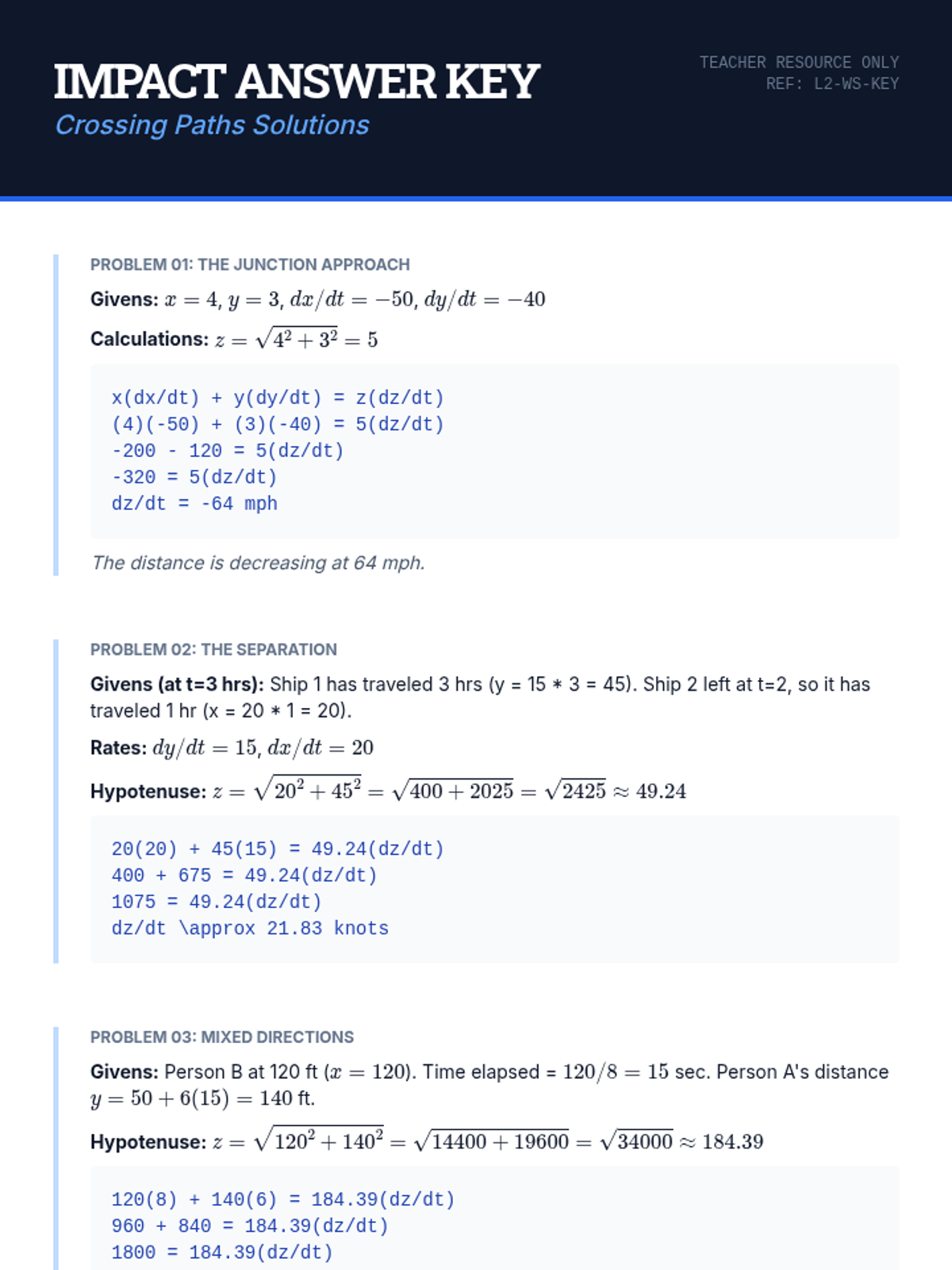
Students calculate the rate of change of the distance between an observer and a moving object, reinforcing the x(dx/dt) + y(dy/dt) = z(dz/dt) relationship.
Focuses on objects approaching or leaving intersections at right angles, emphasizing the importance of directional signs in related rates.
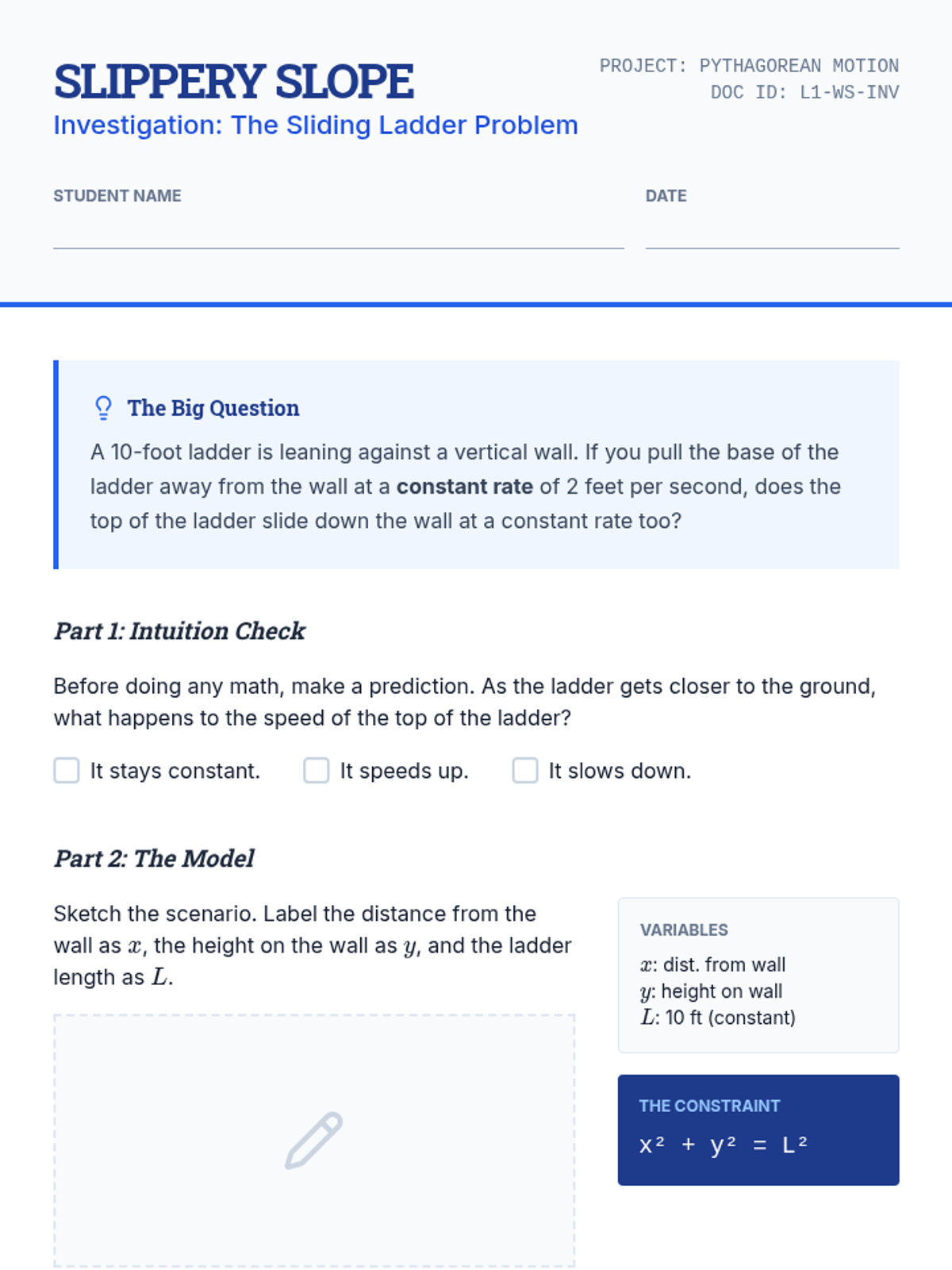
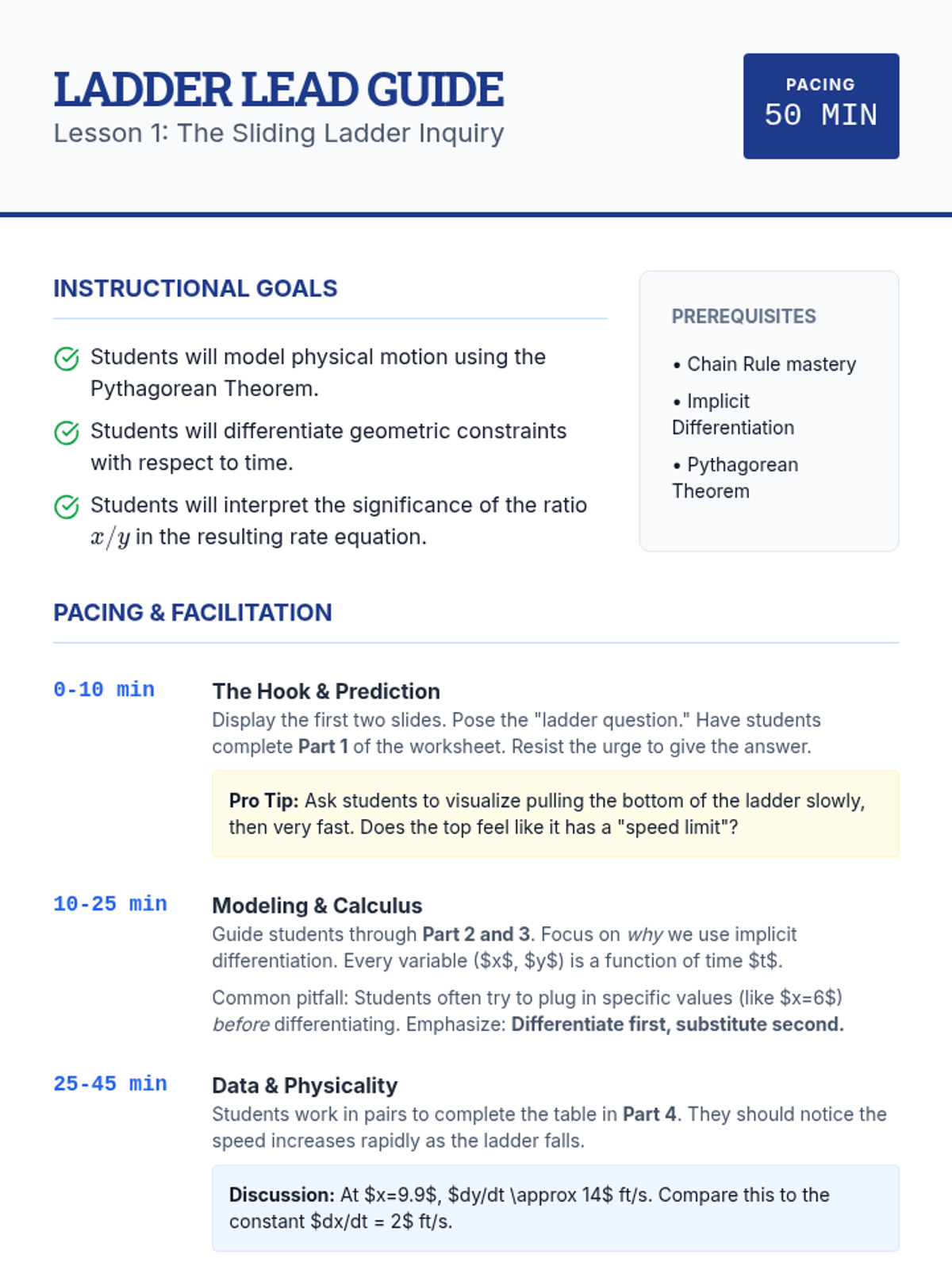
Students investigate the non-linear relationship between the top and bottom of a sliding ladder using the Pythagorean theorem and implicit differentiation.
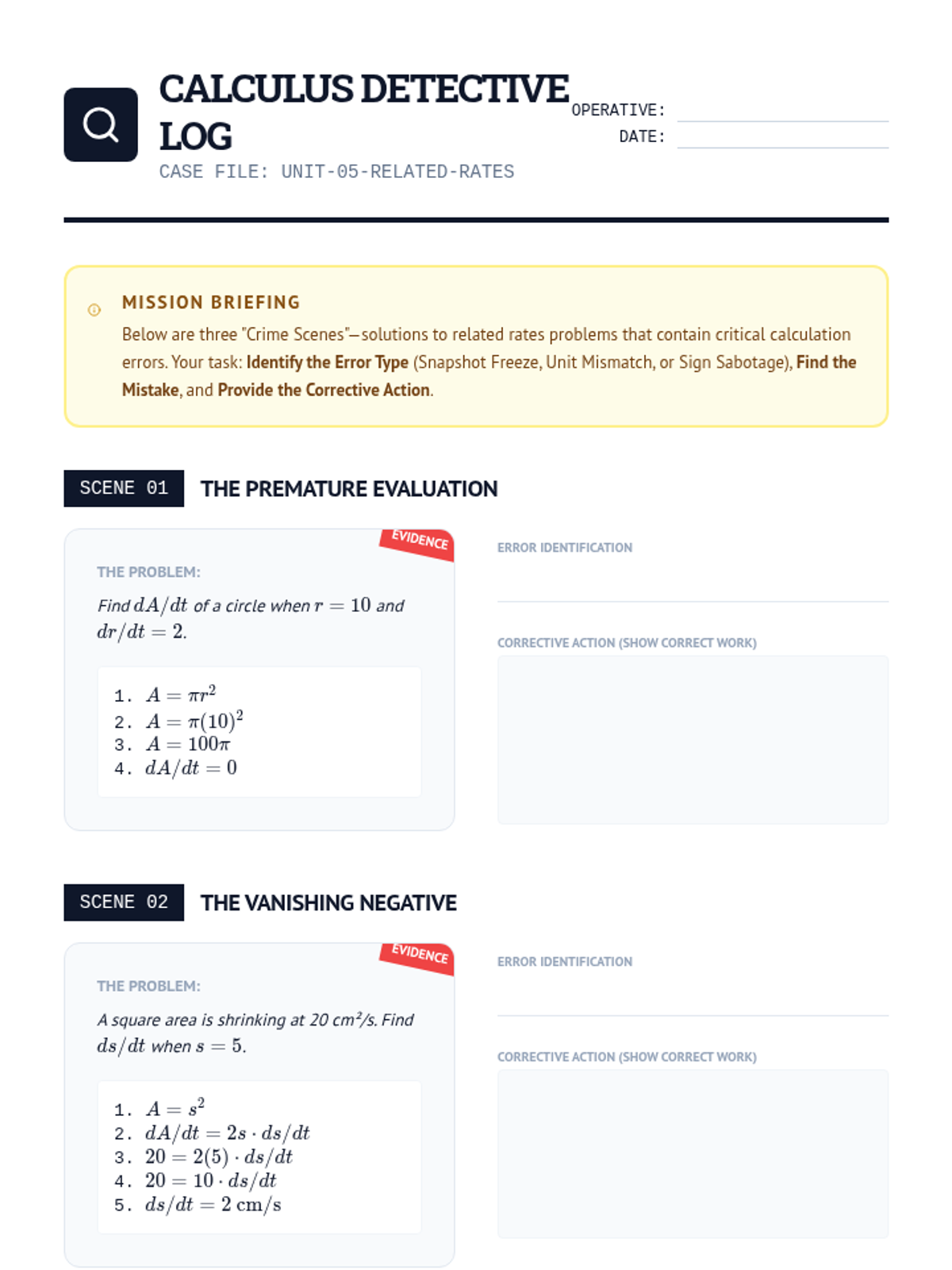
Critical review of solved problems to identify common errors like premature substitution or unit misalignment. Students verify solutions against physical contexts.
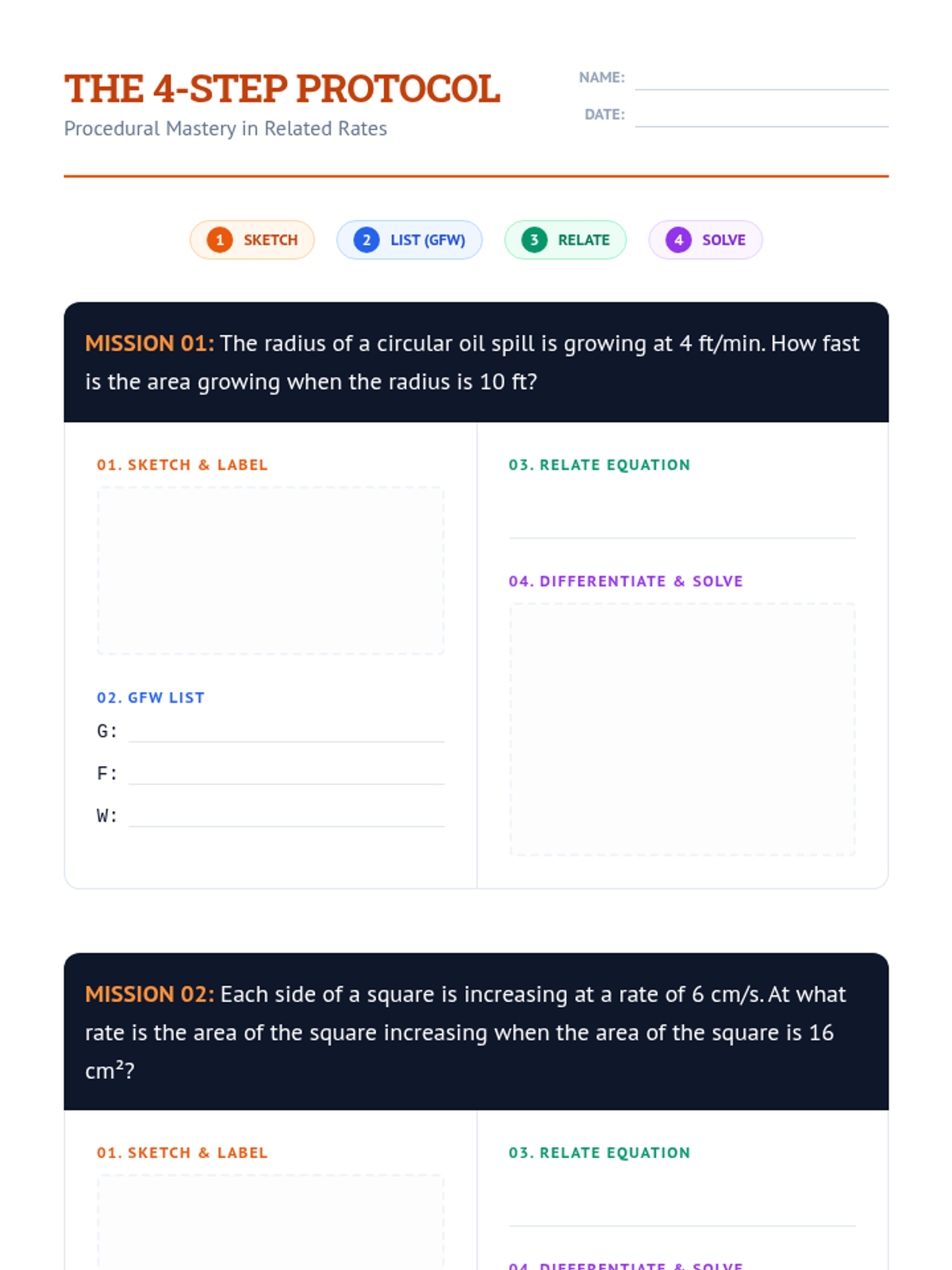
Synthesis of skills into a rigid four-step protocol: Sketch, List Variables, Relate Equation, Differentiate/Solve. Practice builds procedural fluency.
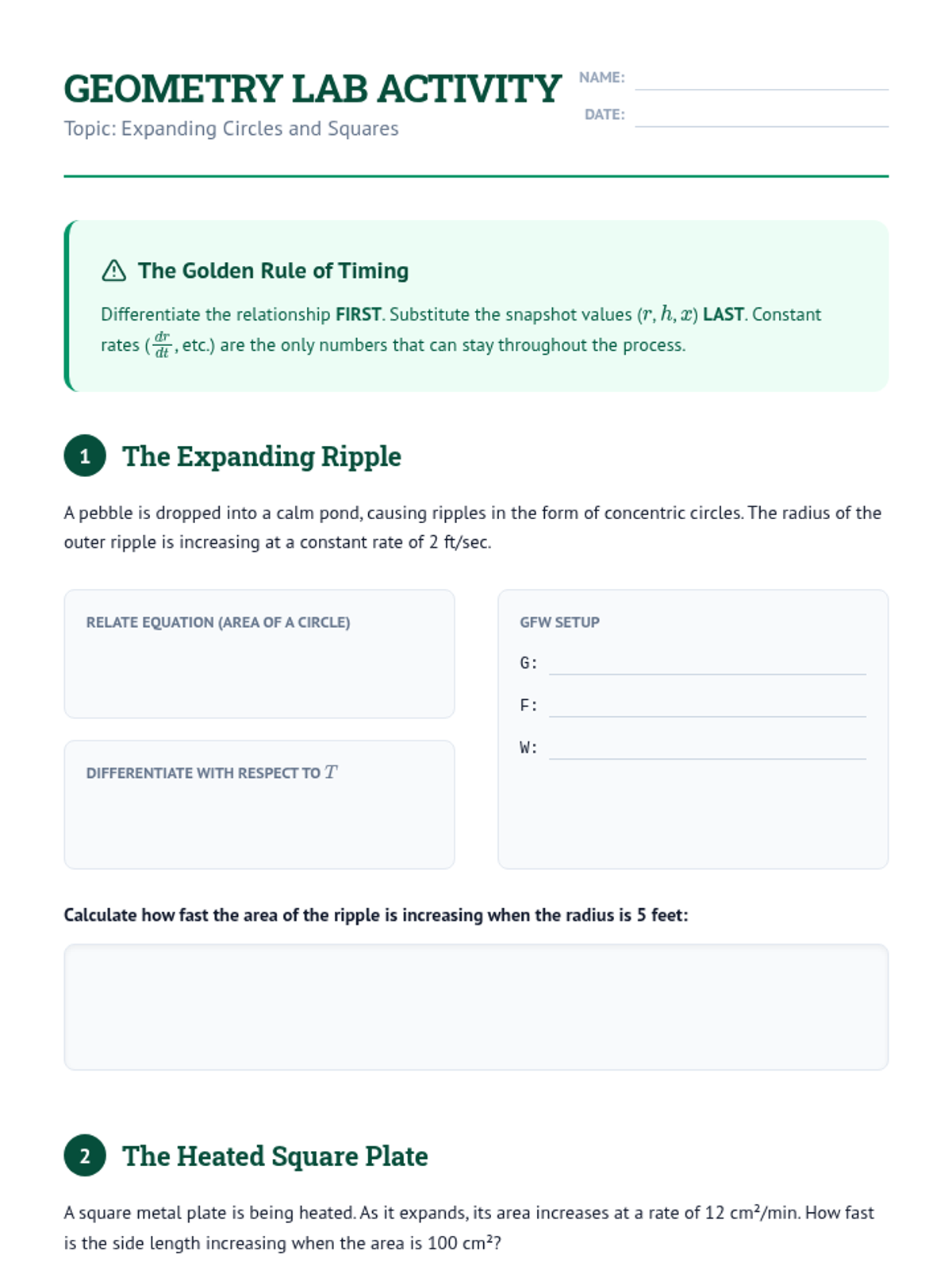
Application of differentiation to geometric area and circumference formulas. Students solve problems involving ripples and expanding plates, emphasizing substitution only after differentiation.
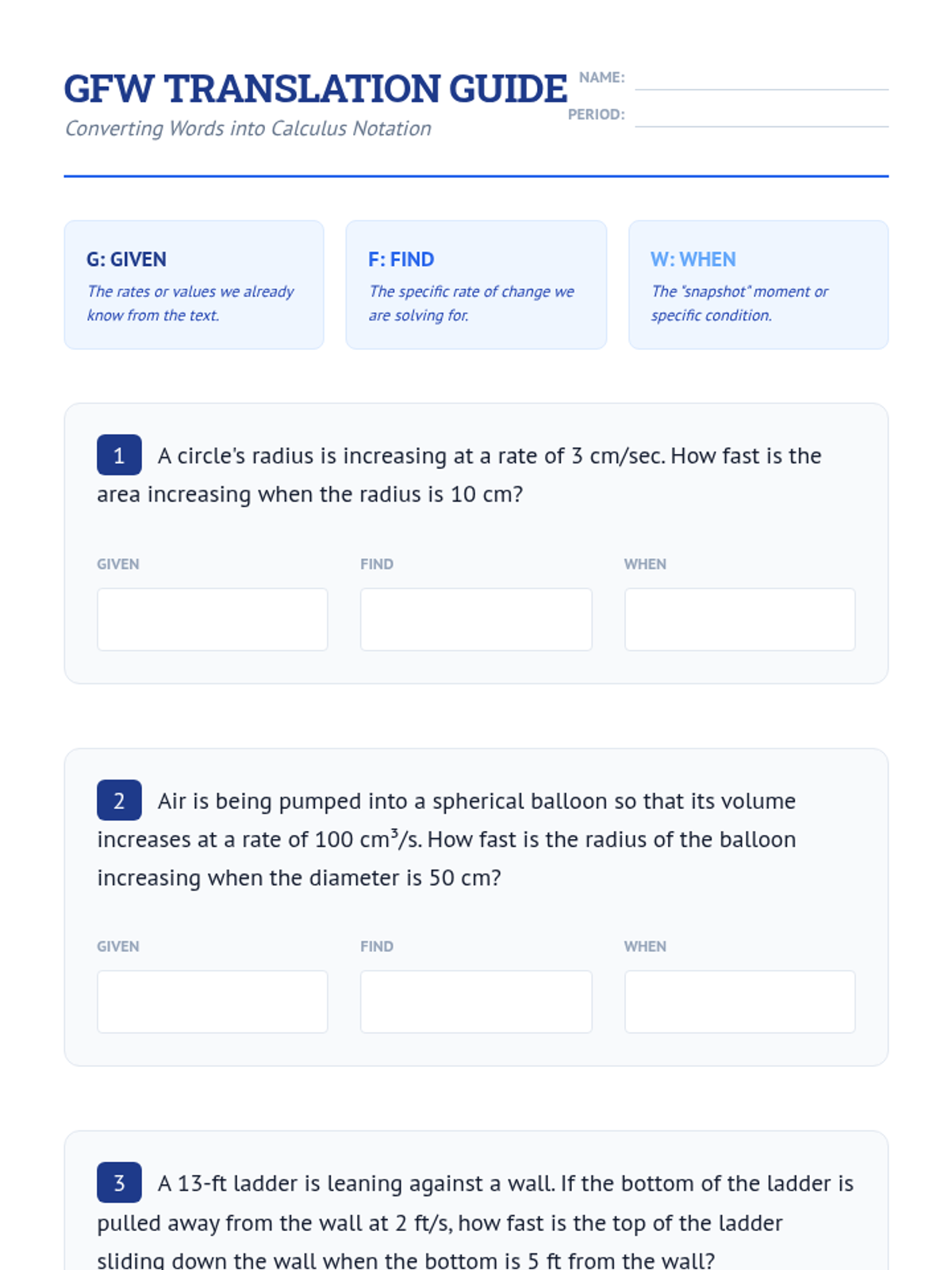
Focuses on decoding word problems into variables and rates, distinguishing between 'snapshot' values and constant values. Students develop a 'Given/Find/When' list for problem modeling.
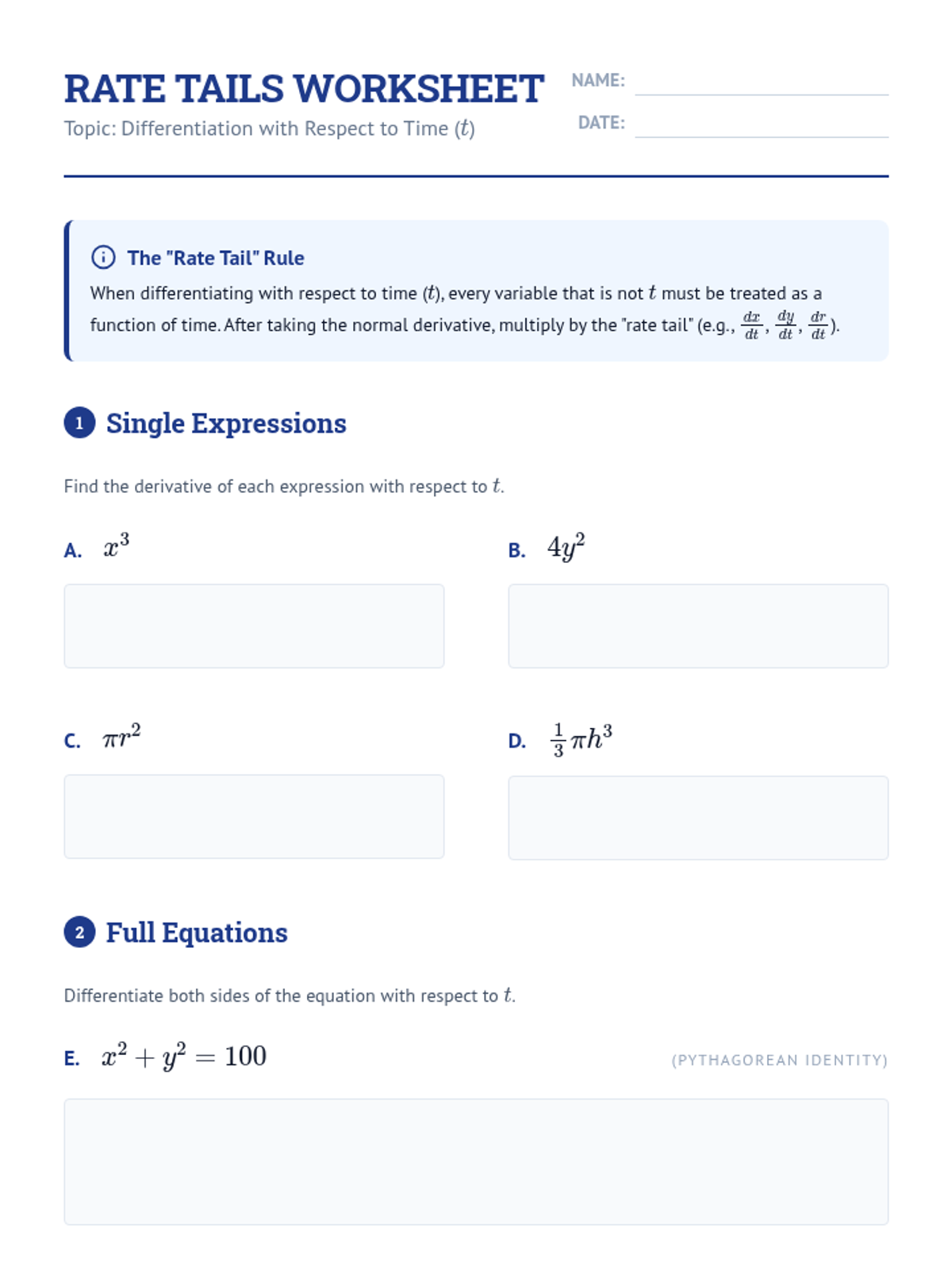
Students differentiate algebraic equations implicitly with respect to time (t), establishing the notation required for related rates. Practice focuses on applying the Chain Rule to simple power functions and polynomials.
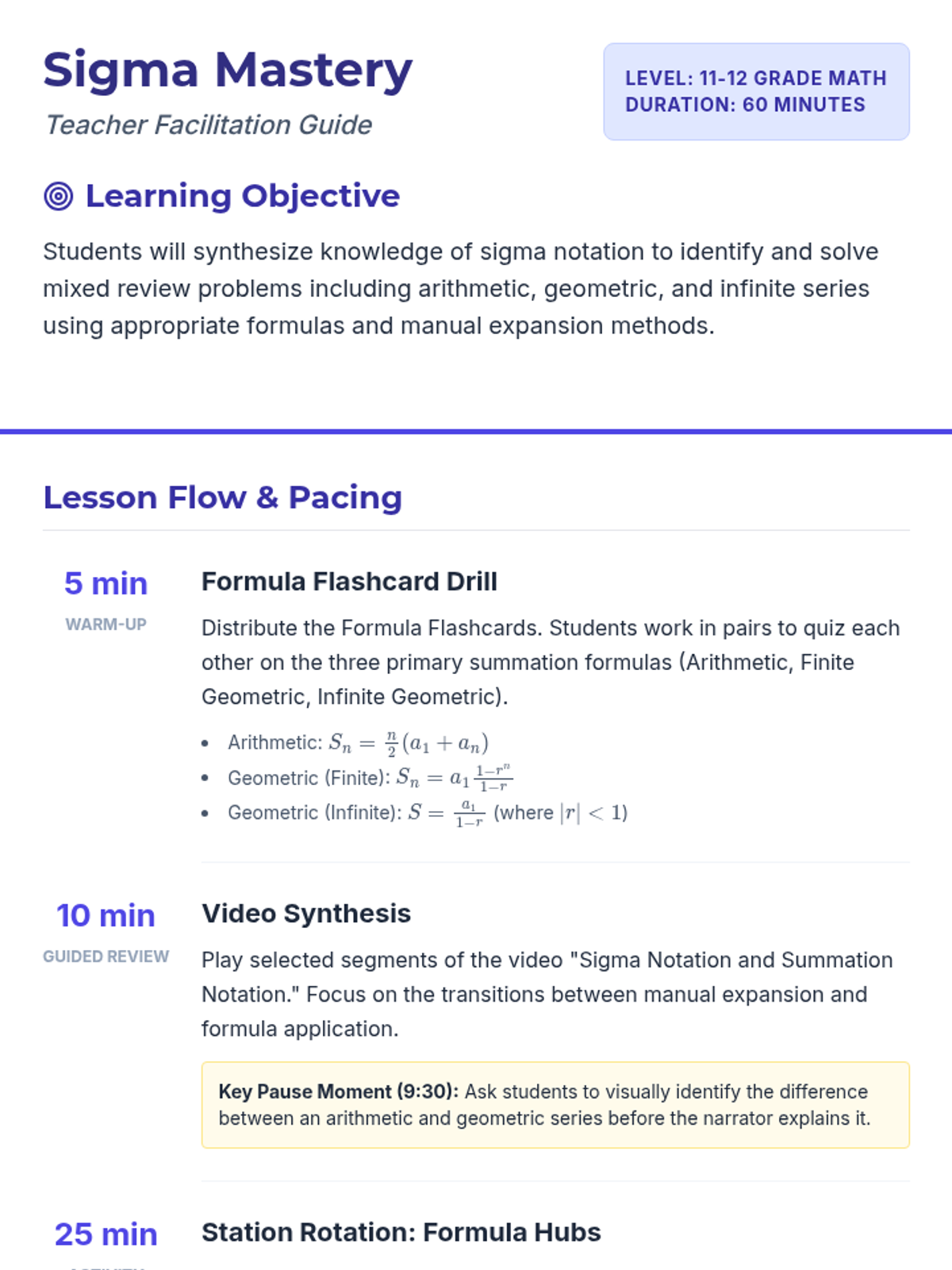
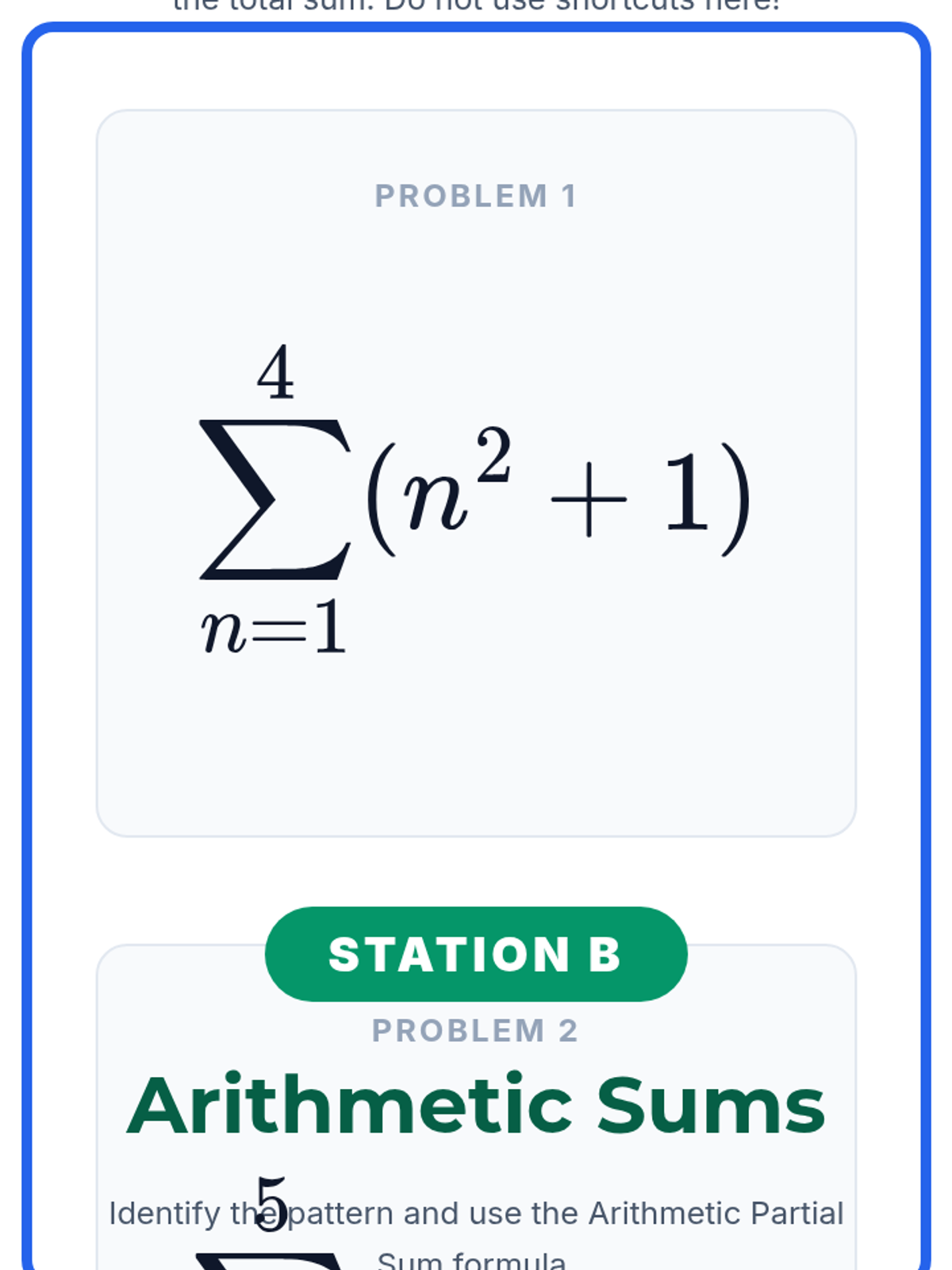
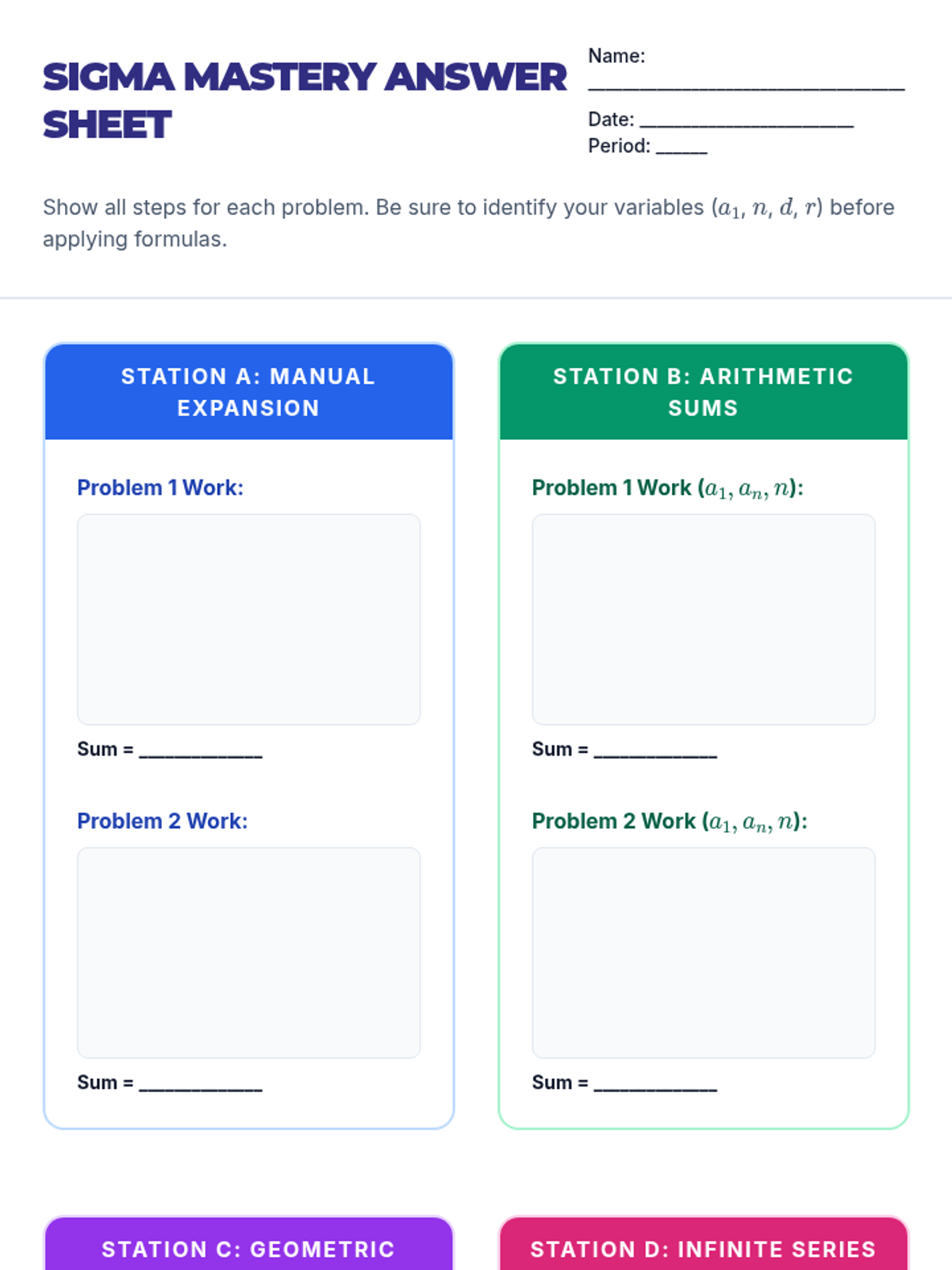
A comprehensive lesson on sigma notation where students master arithmetic, geometric, and infinite series through a hands-on rotation activity and collaborative problem-solving.
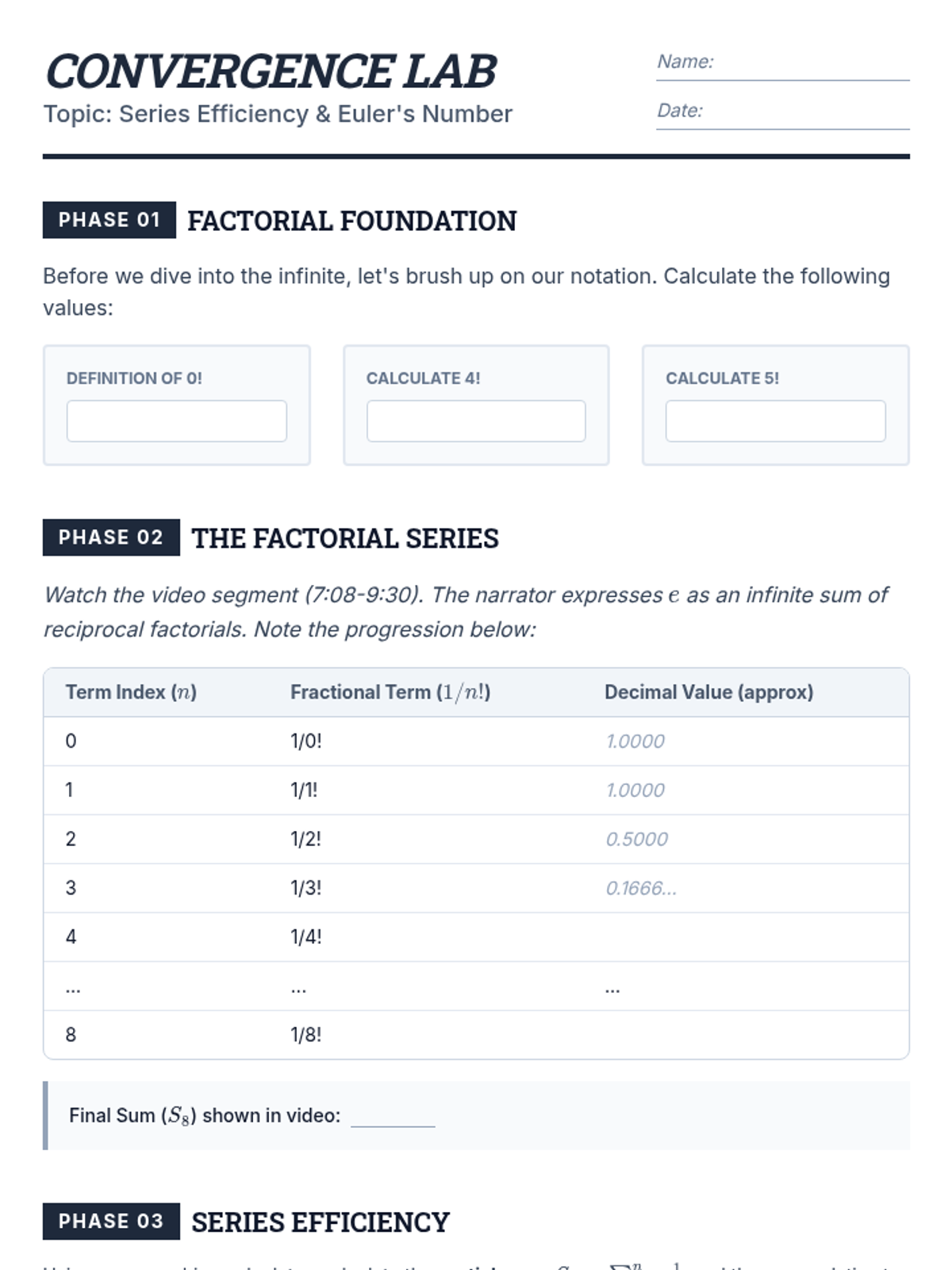
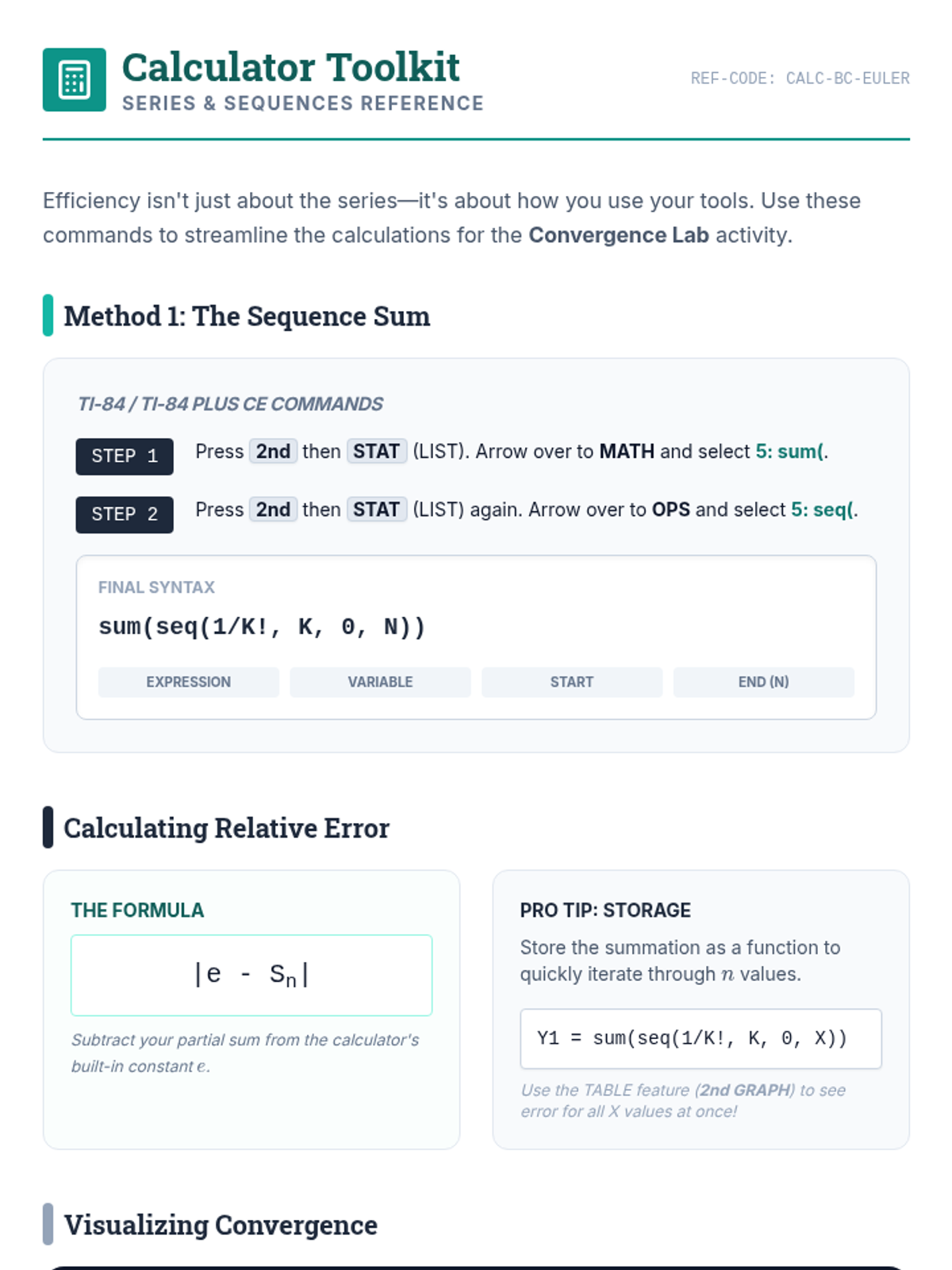
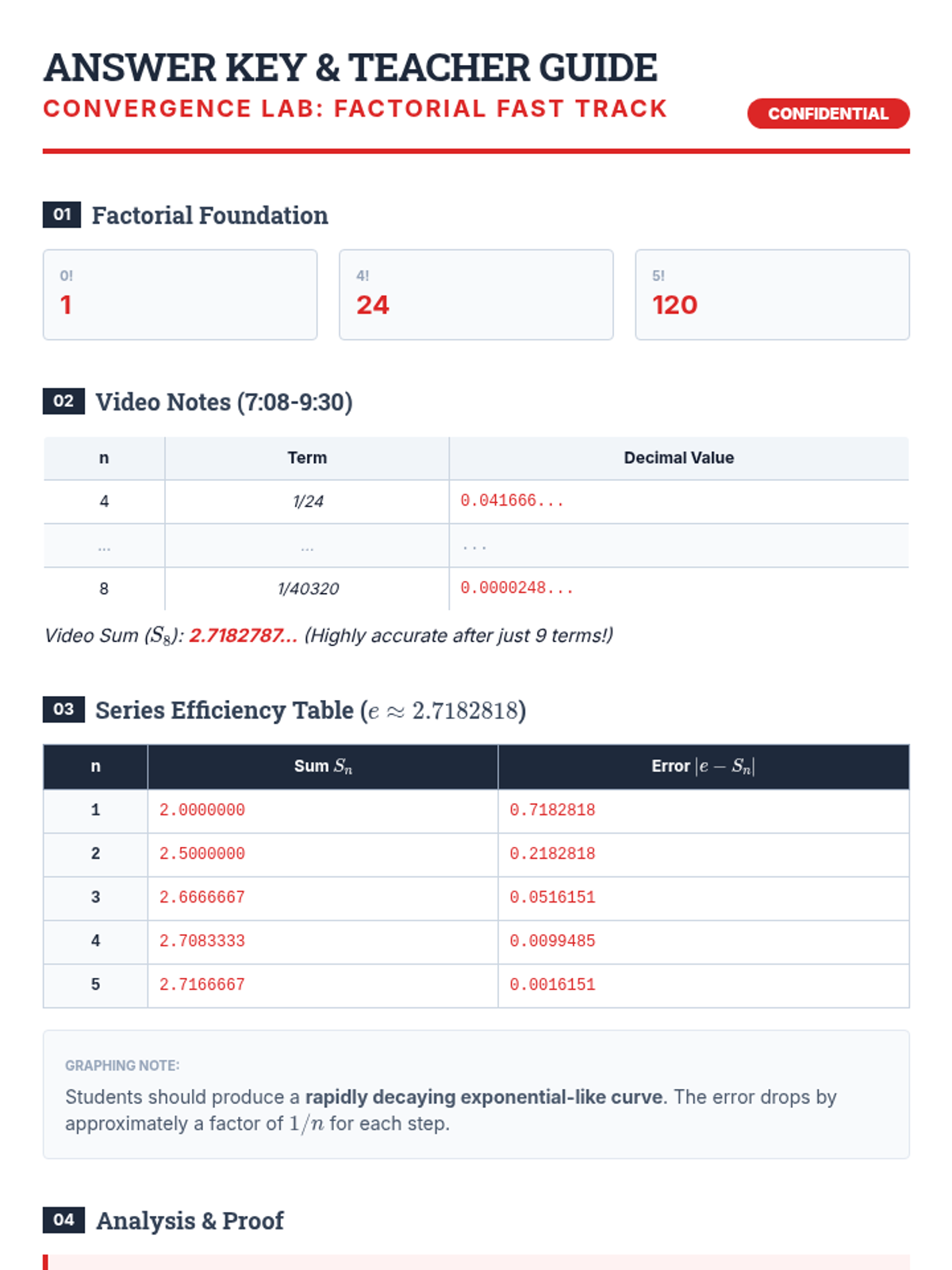
Students explore the rapid convergence of the infinite series for e, comparing the efficiency of factorials to the standard limit definition. The lesson bridges the gap between basic limits and the Taylor Series for e^x.
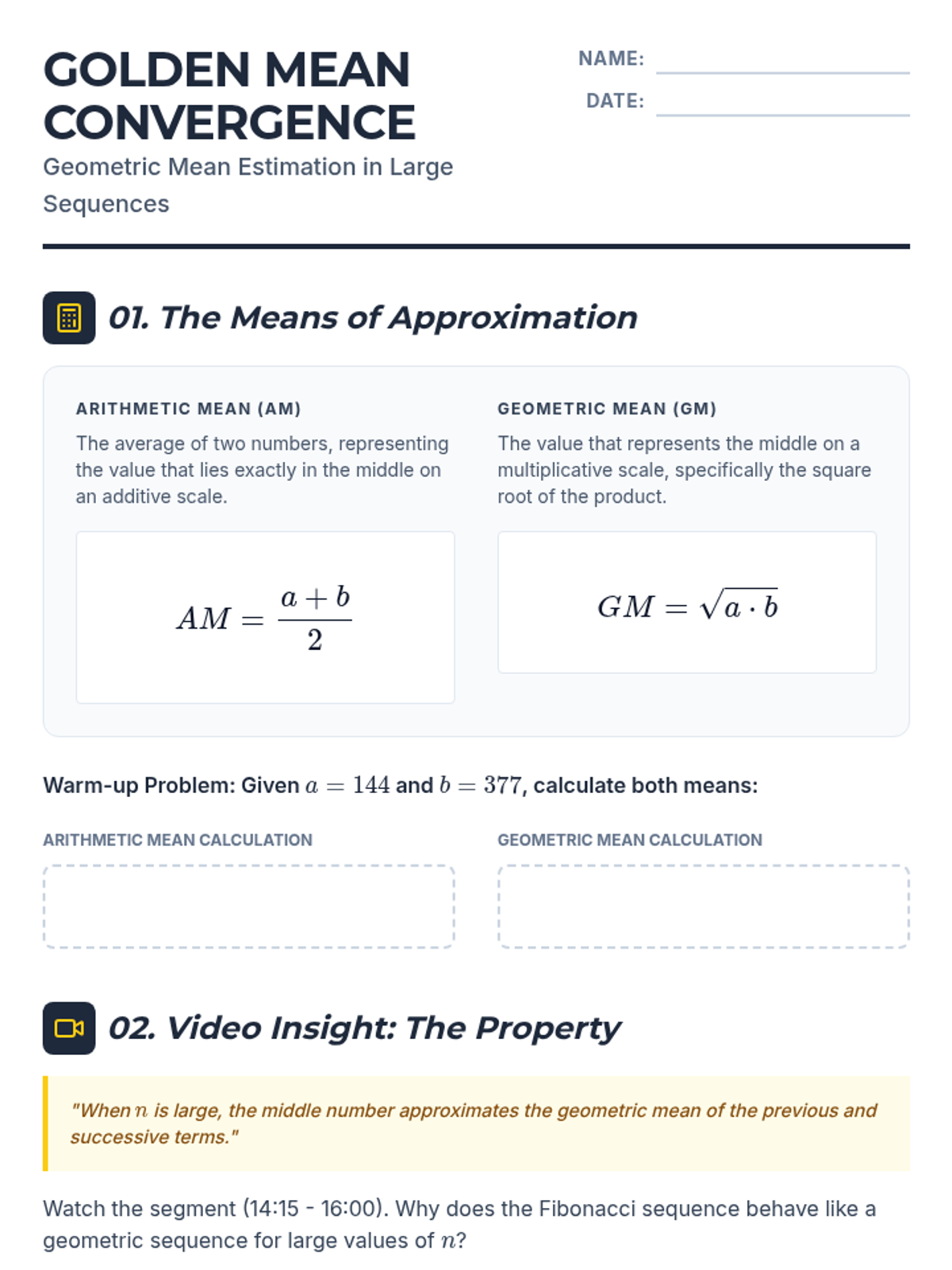
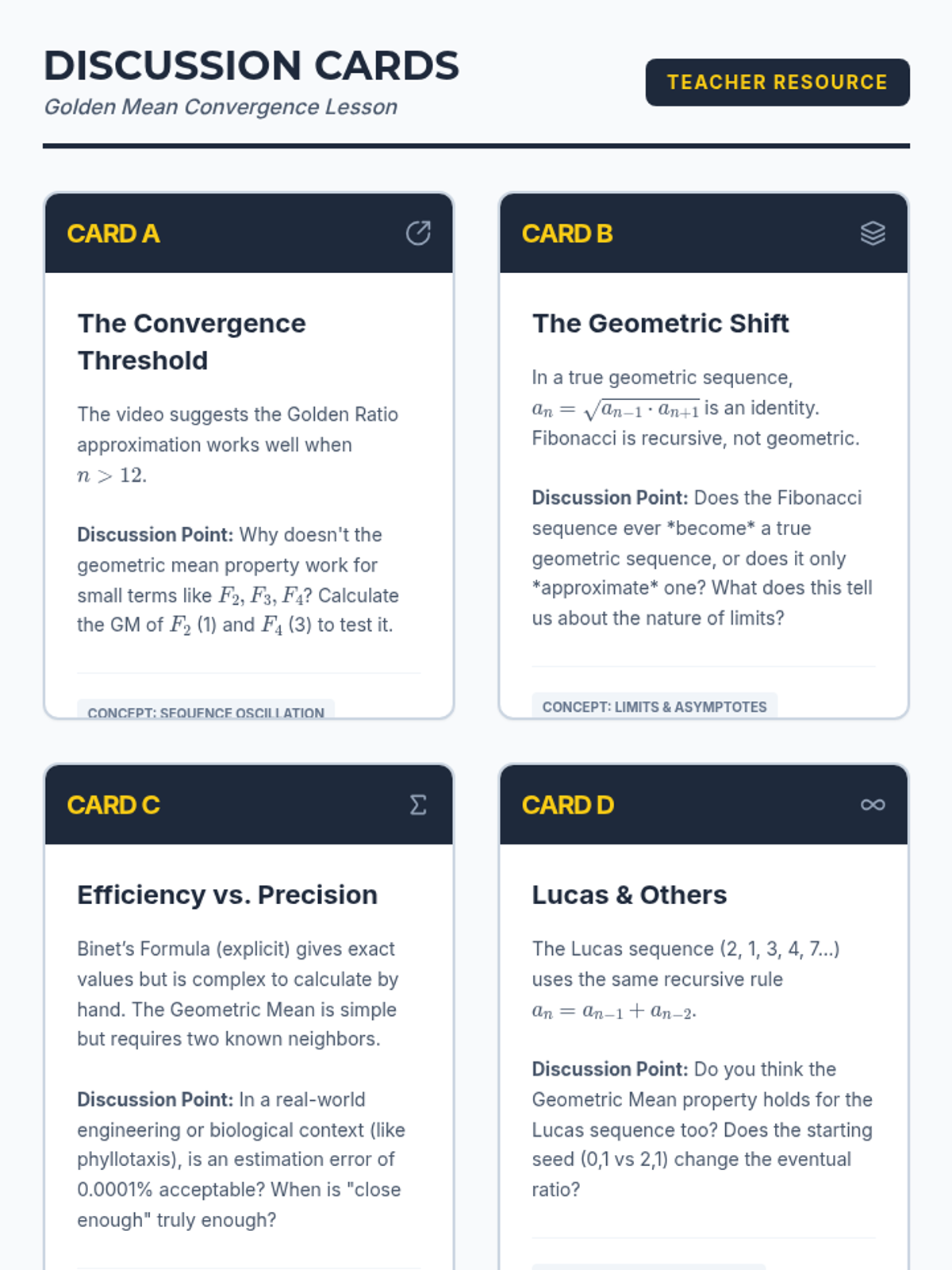
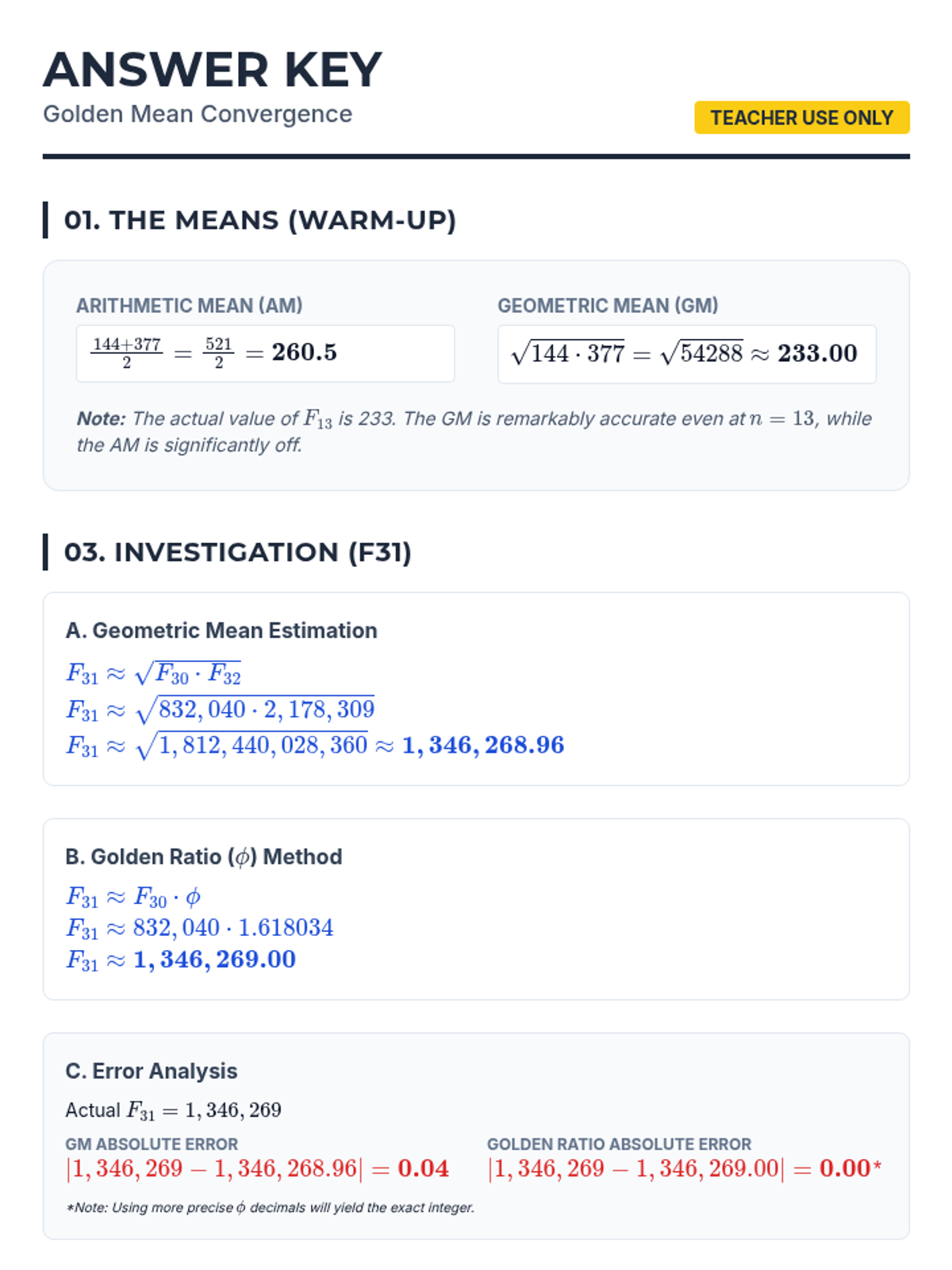
Students will investigate the geometric mean property of the Fibonacci sequence, comparing estimations of high-index terms using geometric means versus the Golden Ratio method. The lesson explores the convergence of recursive sequences to geometric behavior for large n.
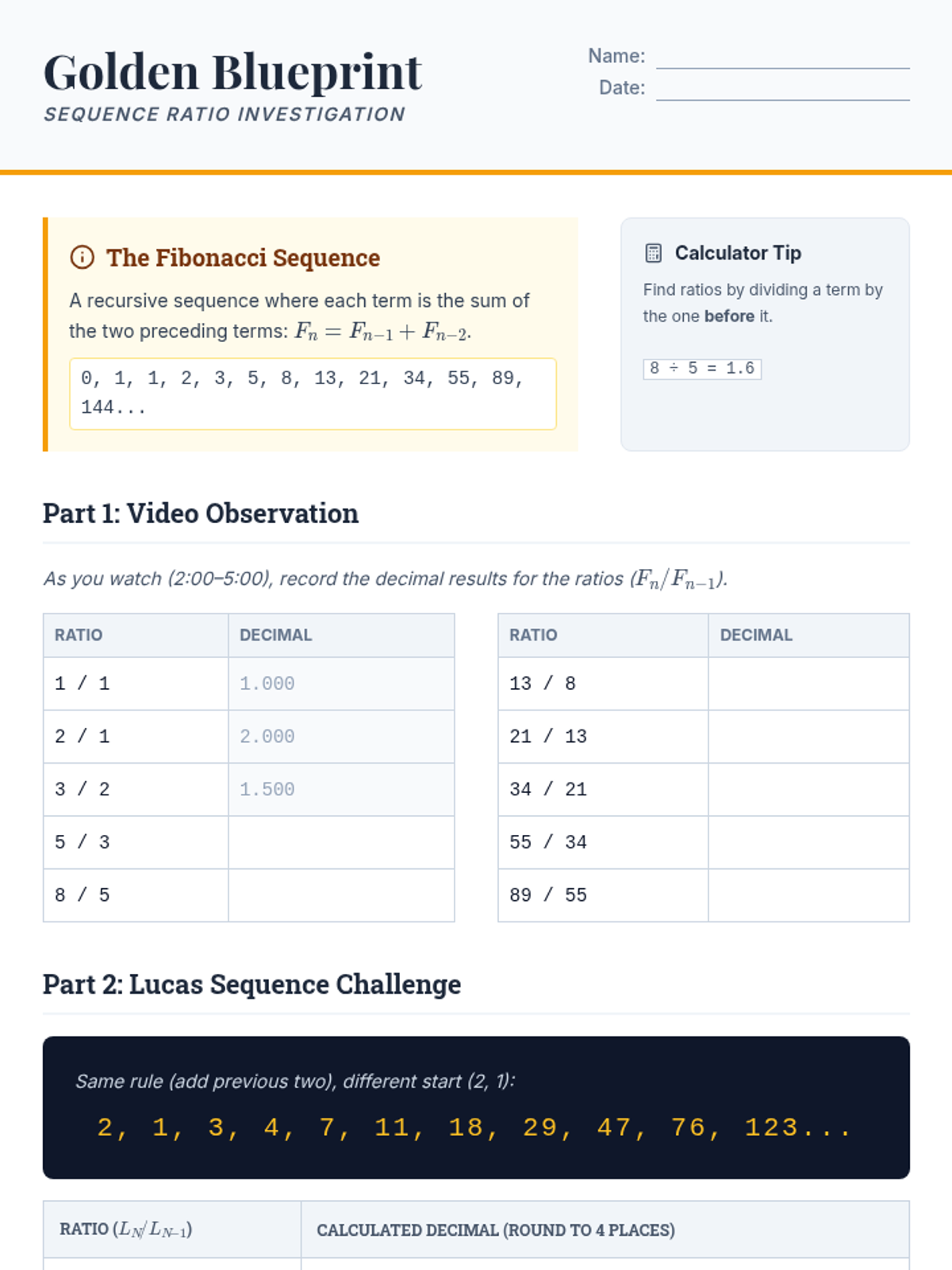
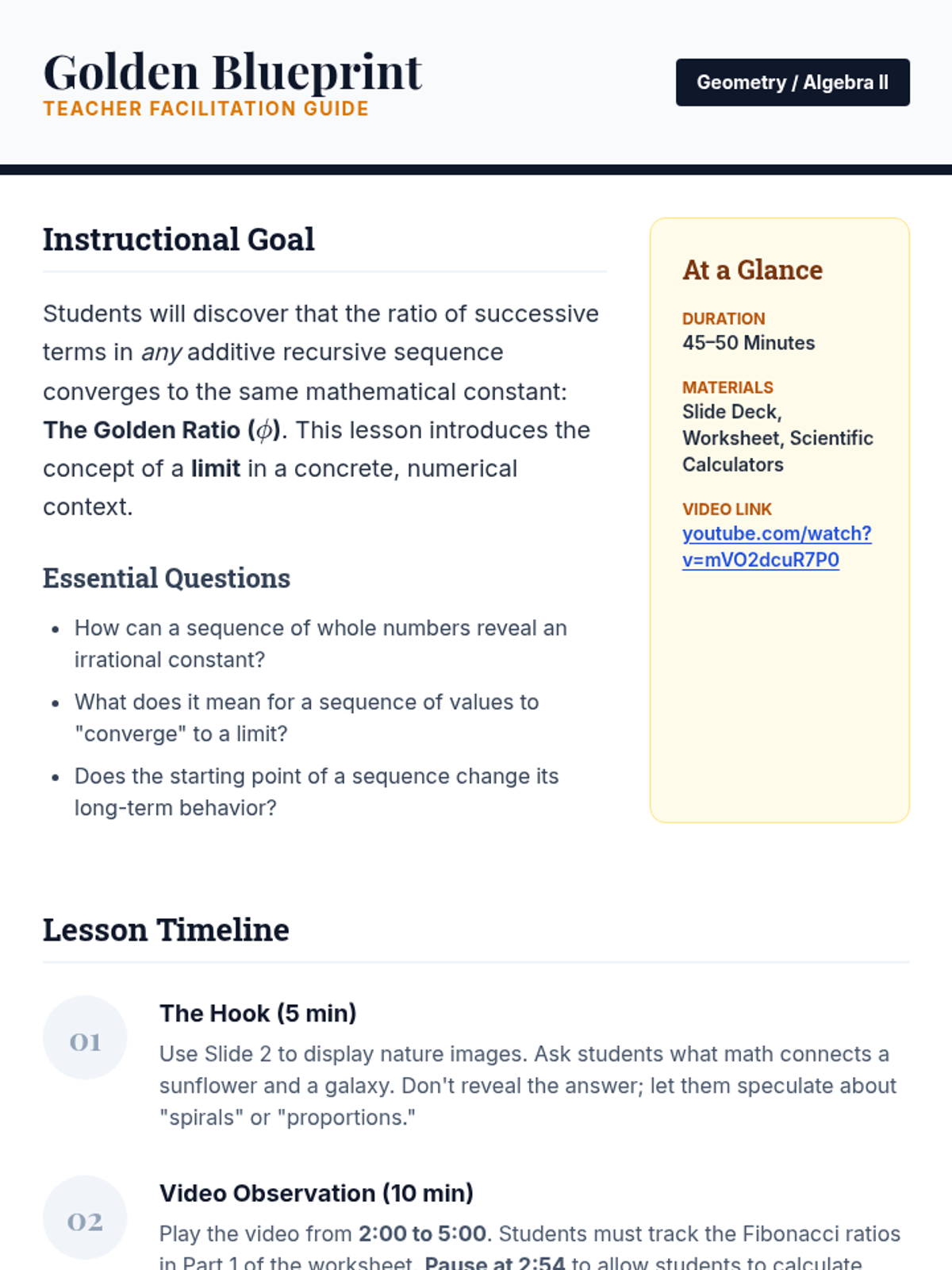
Students will explore the mathematical connection between nature and geometry by calculating ratios of recursive sequences (Fibonacci and Lucas). Through this investigation, they will discover the Golden Ratio (Phi) and the concept of a mathematical limit.
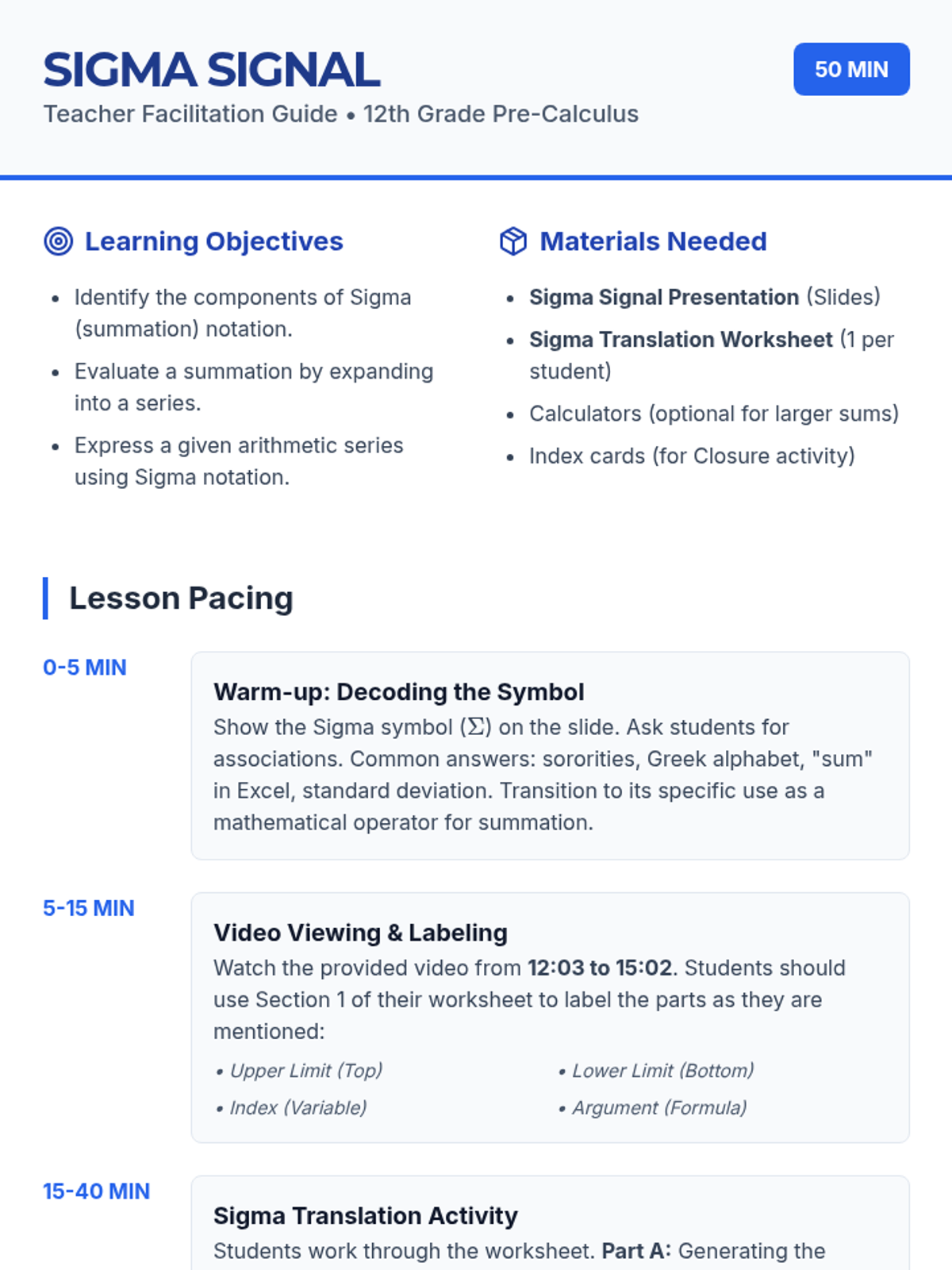
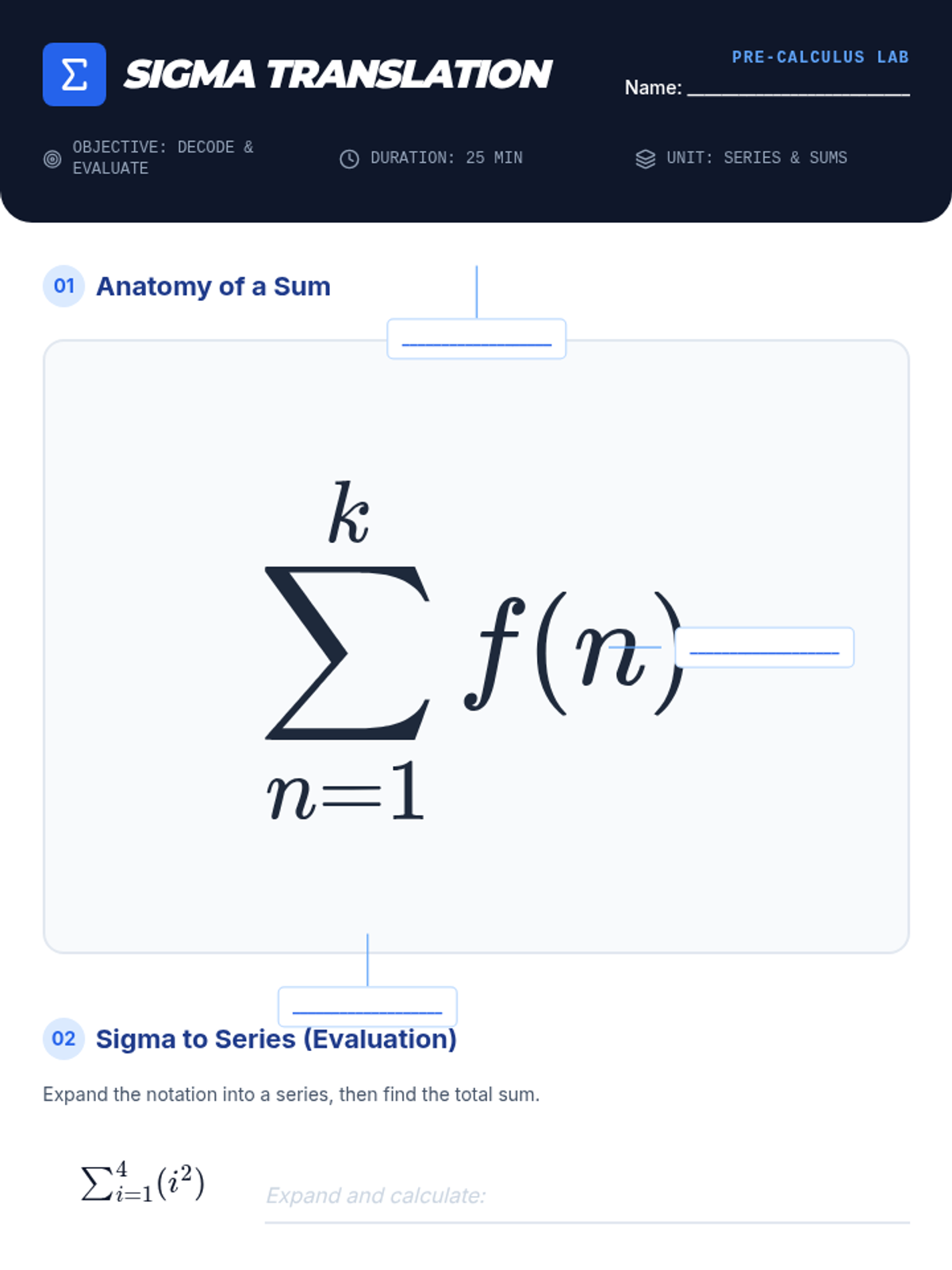
A 12th-grade Pre-Calculus lesson focused on decoding, interpreting, and evaluating Sigma notation. Students transition from arithmetic series to the compact language of summation notation through video analysis and translation exercises.
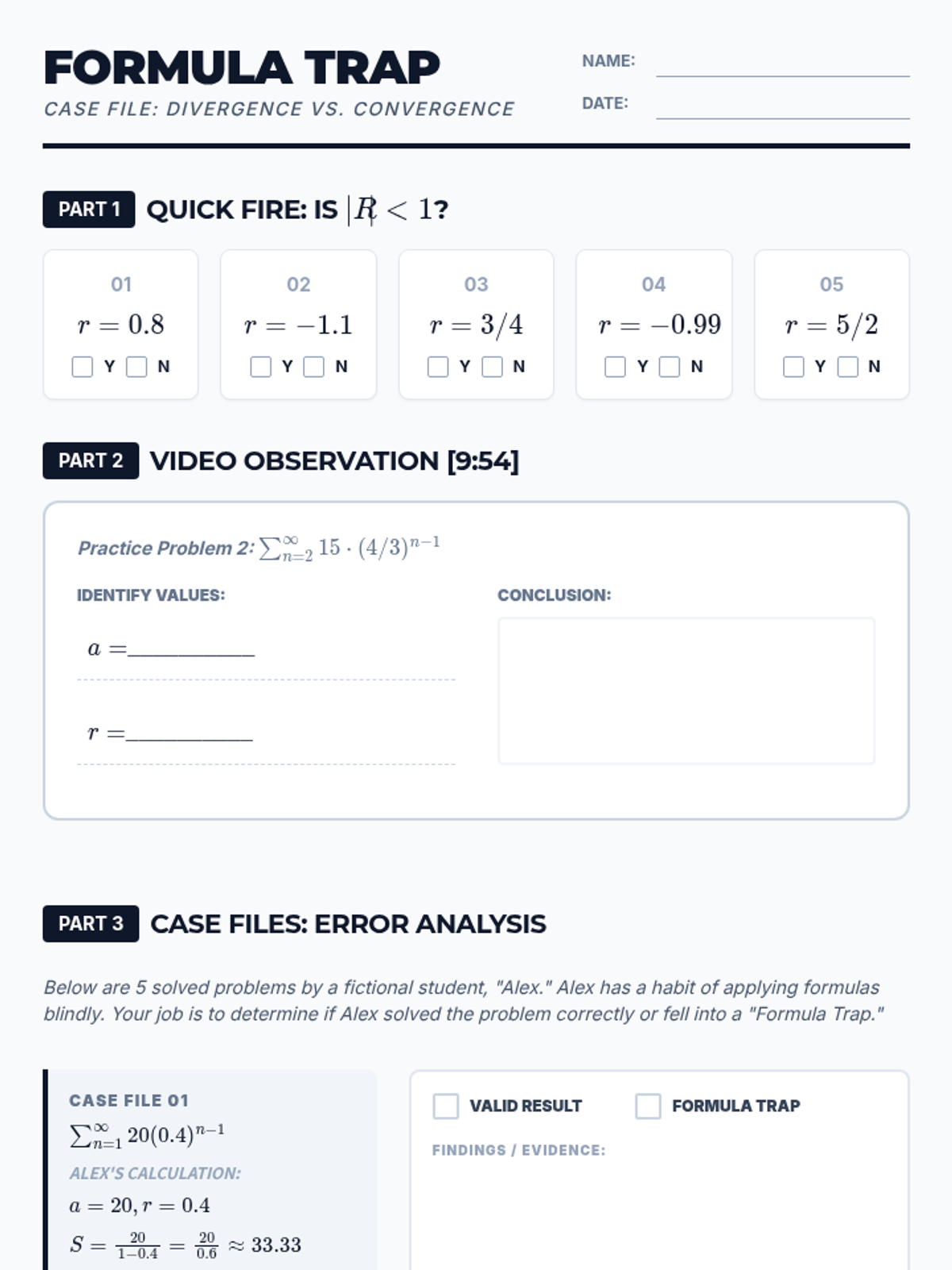
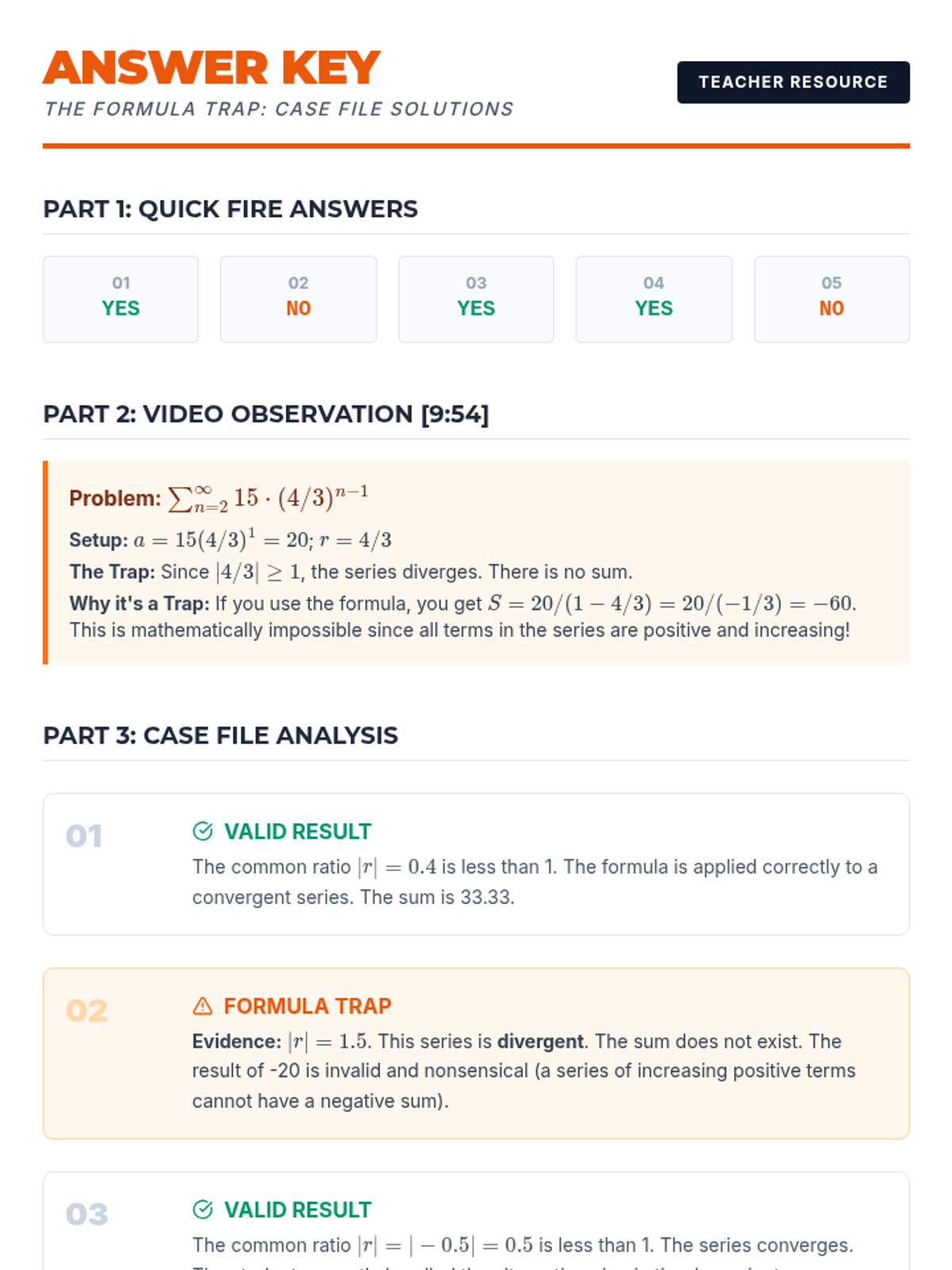
This lesson focuses on identifying the specific conditions required to apply the infinite geometric series sum formula, specifically highlighting the common misconception of applying it to divergent series. students will engage in error analysis to solidify their understanding of convergence.
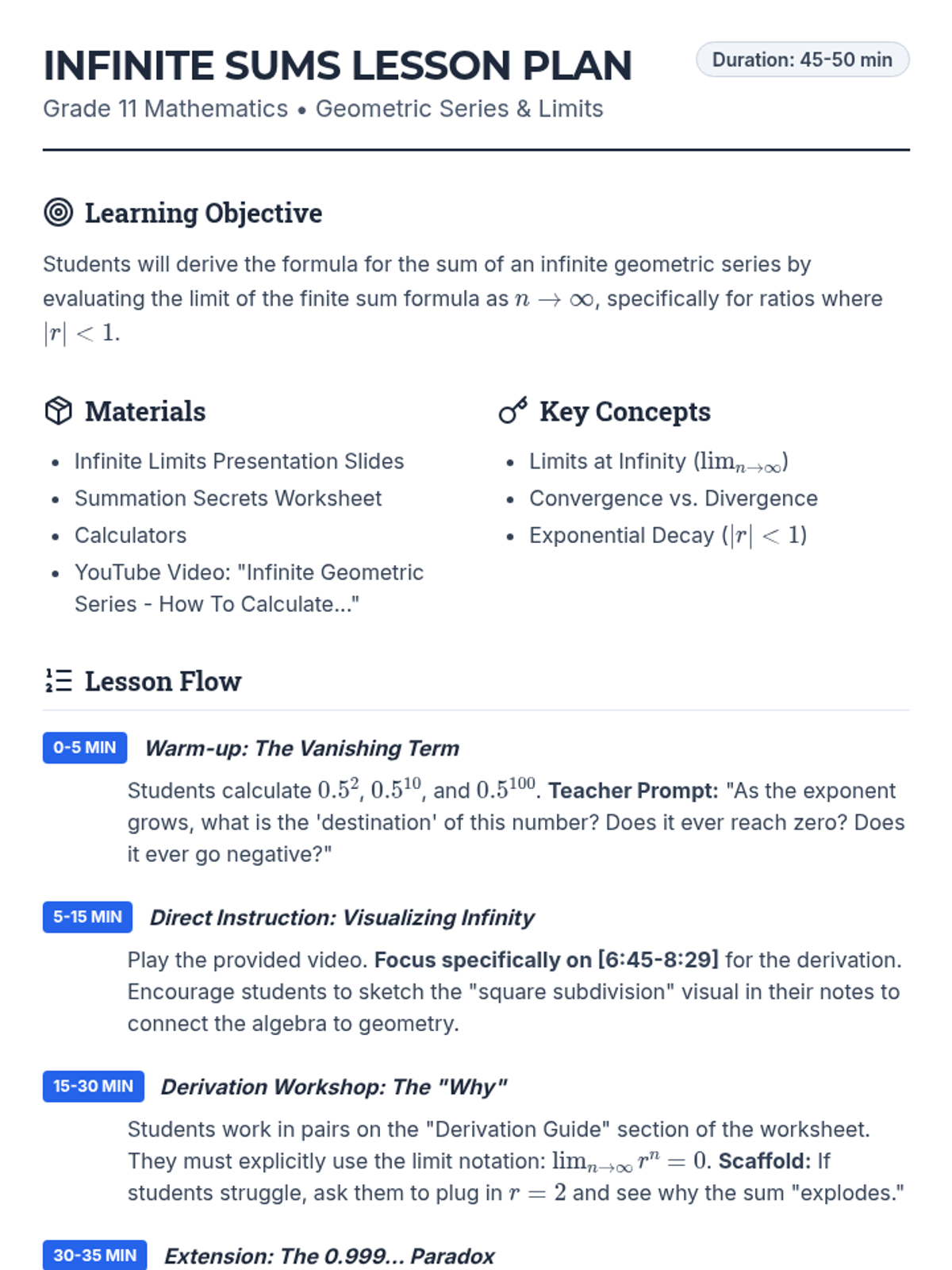
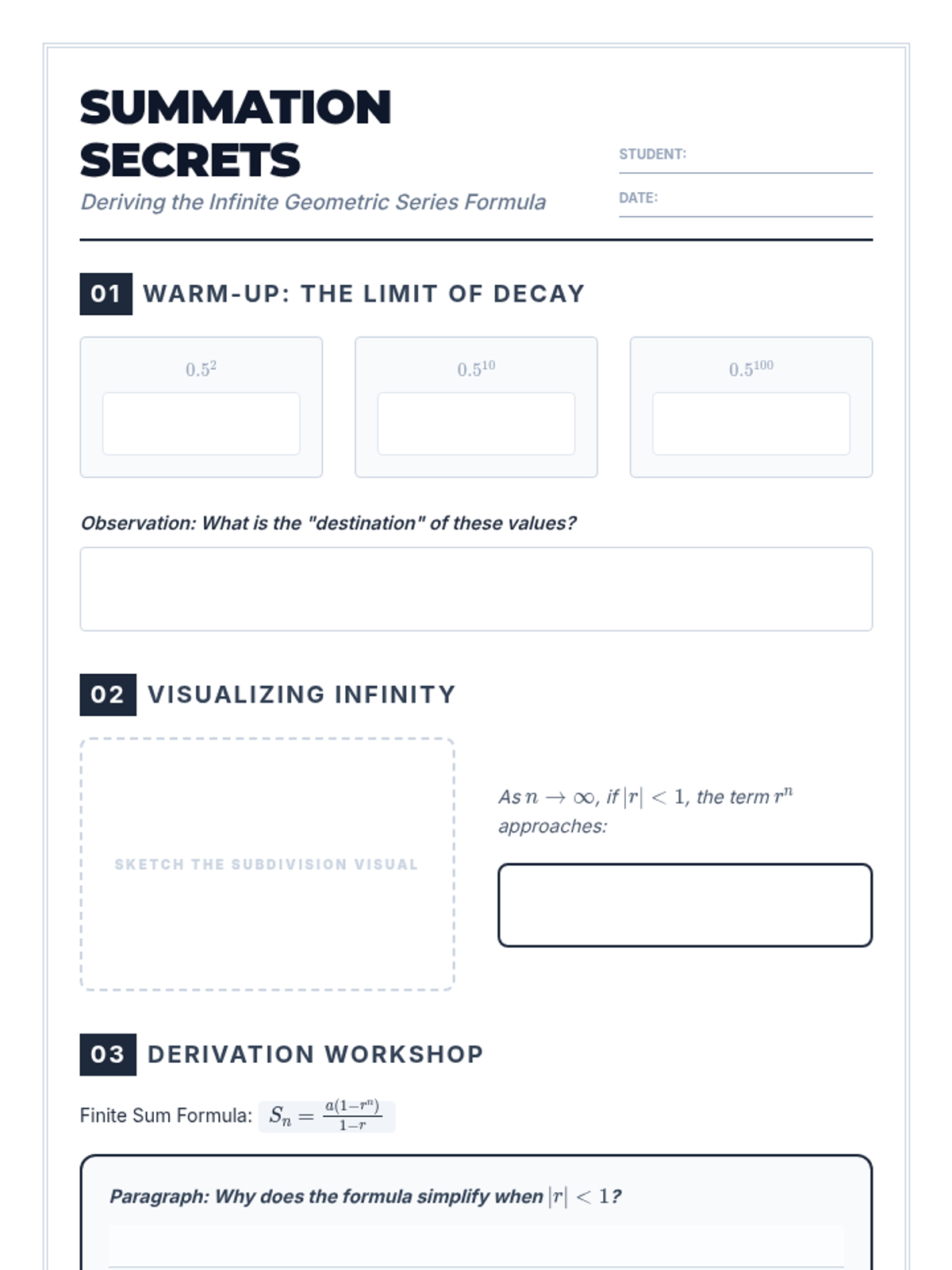
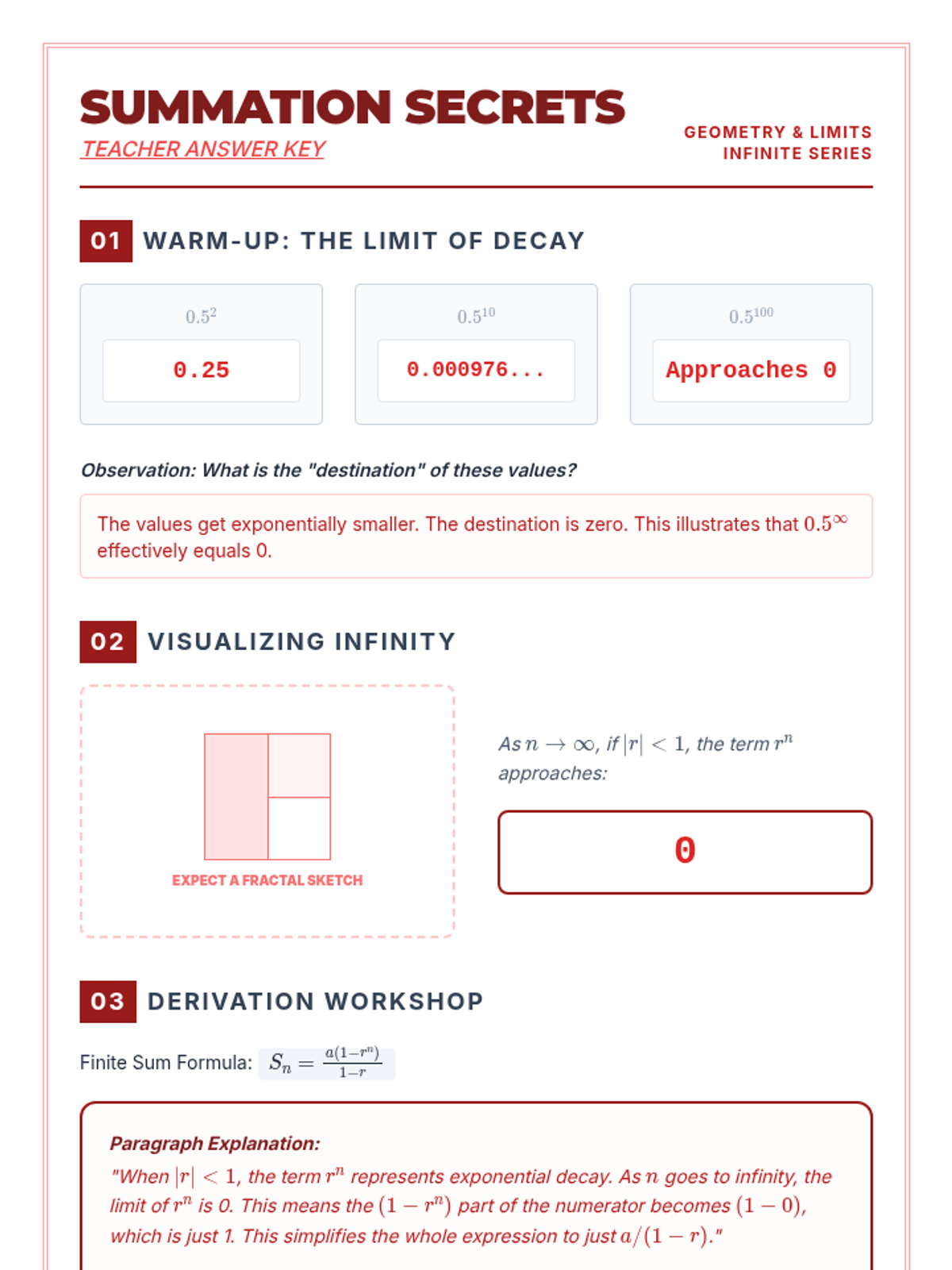
An 11th-grade lesson focusing on the derivation of the infinite geometric series formula using limits and the behavior of decaying exponential terms. Students explore convergence, analyze the transformation of the finite sum formula, and apply their findings to repeating decimals.
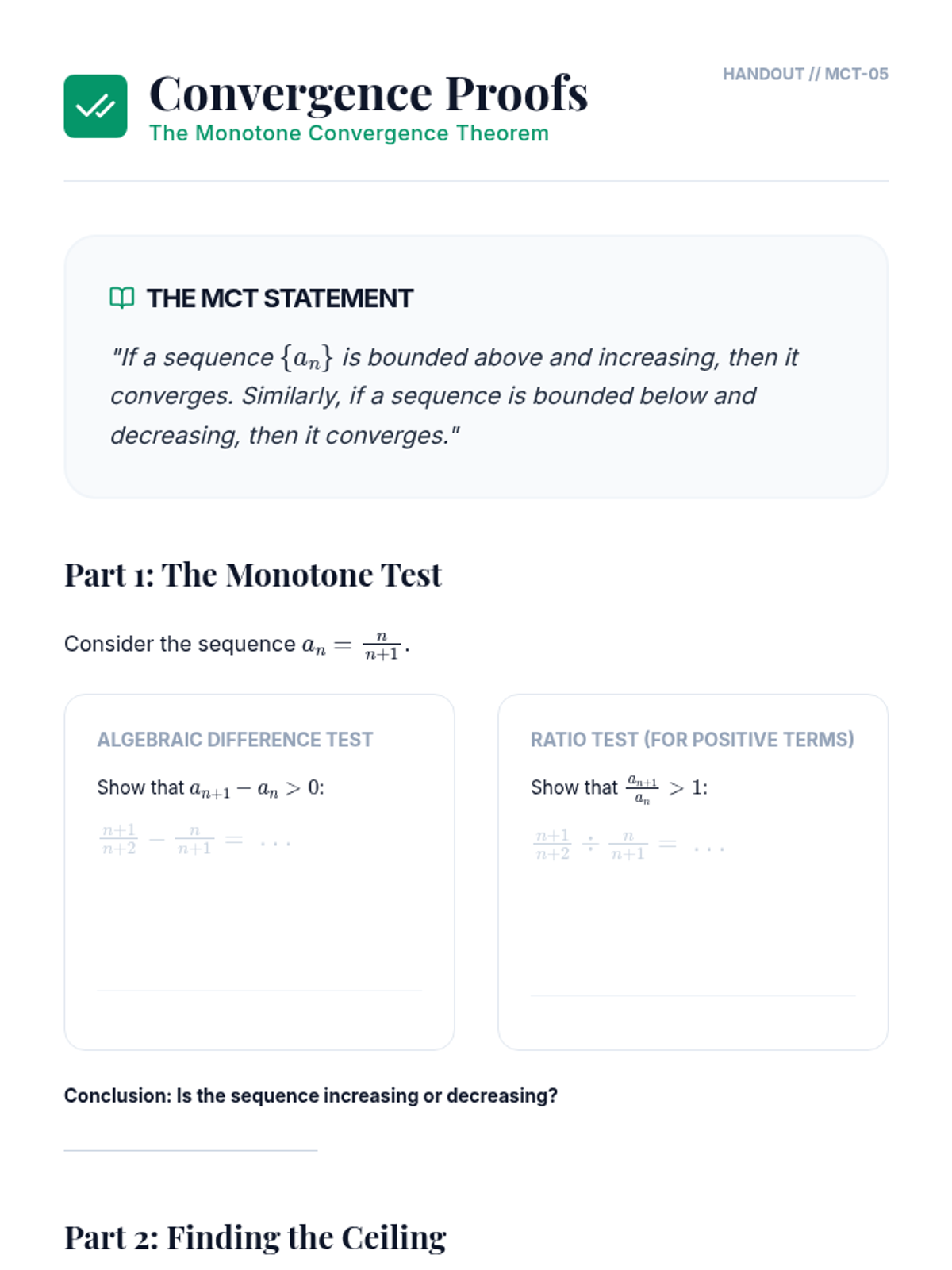
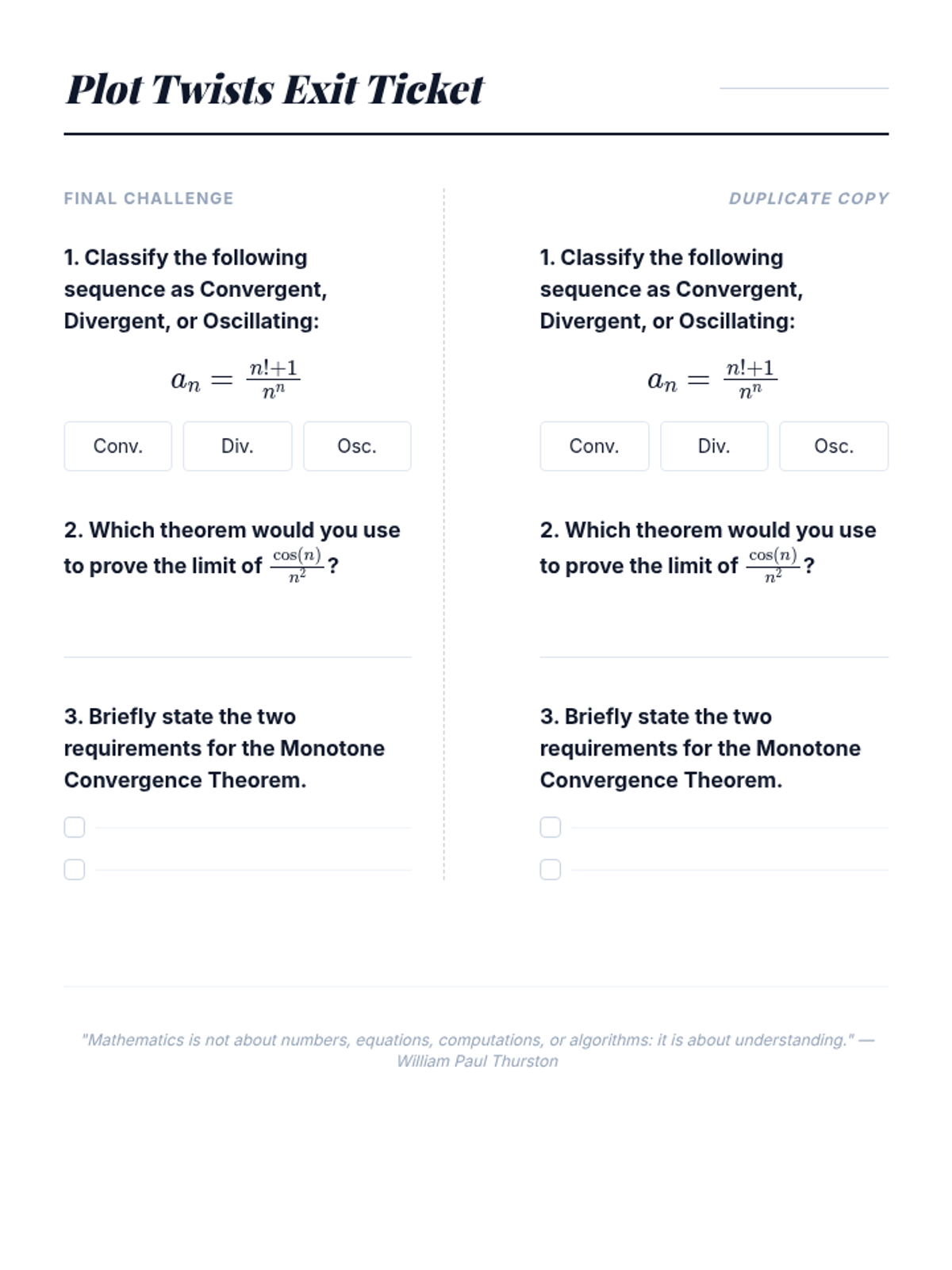
Students explore the Monotone Convergence Theorem. They learn to prove convergence by establishing that a sequence is both monotonic and bounded, even when the specific limit value is difficult to compute.
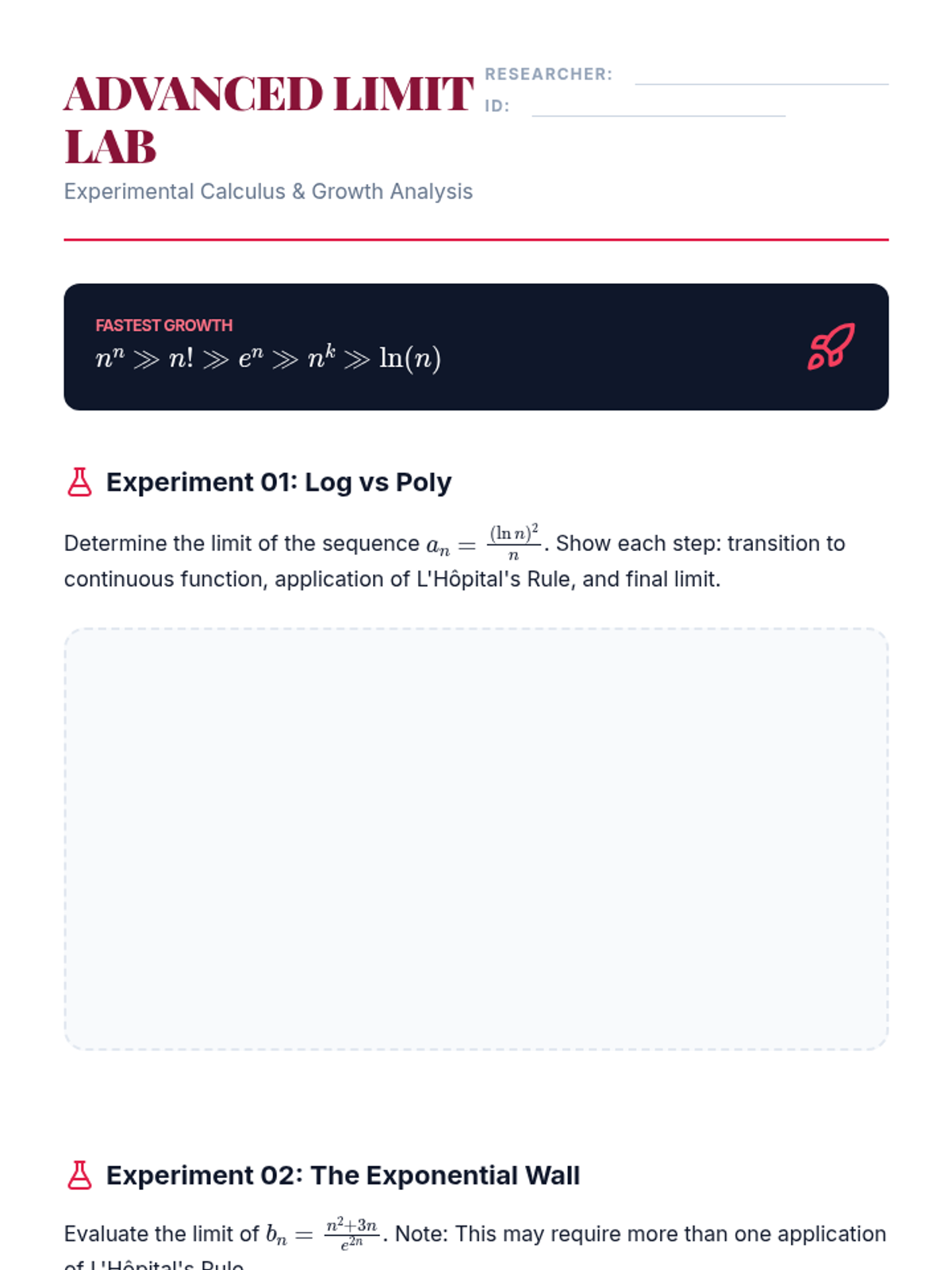
Students learn to apply L'Hôpital's Rule to sequences by treating them as continuous functions. They analyze the growth rates of different function types—logarithmic, polynomial, and exponential—to determine convergence.
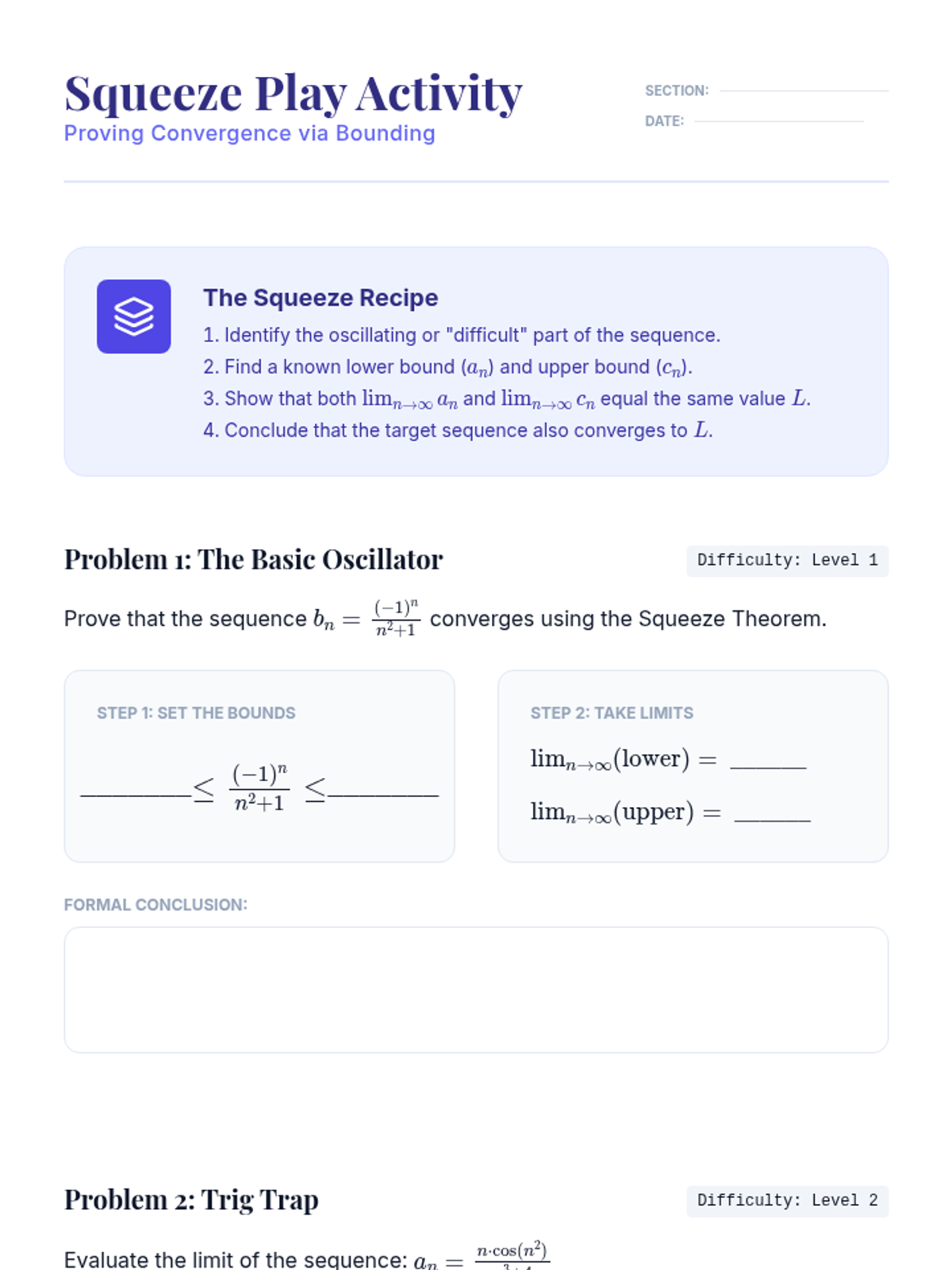
Students learn to evaluate limits of sequences that oscillate or cannot be solved algebraically by bounding them between two convergent sequences. This lesson emphasizes logical reasoning and the geometric intuition of 'squeezing'.
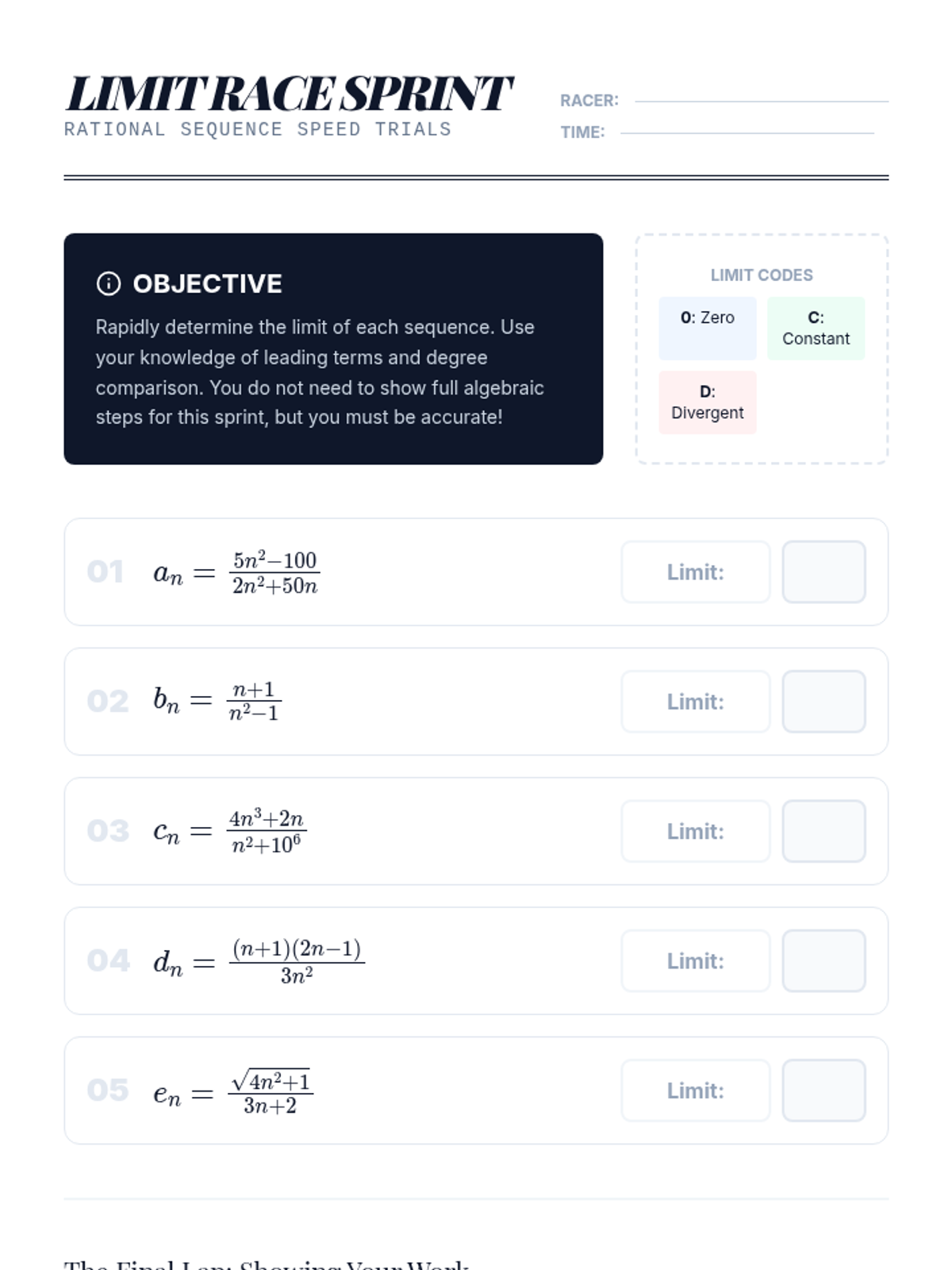
Students transition from graphical analysis to algebraic manipulation. They apply limit laws to rational sequences, focusing on indeterminate forms and identifying dominant terms to determine convergence efficiency.
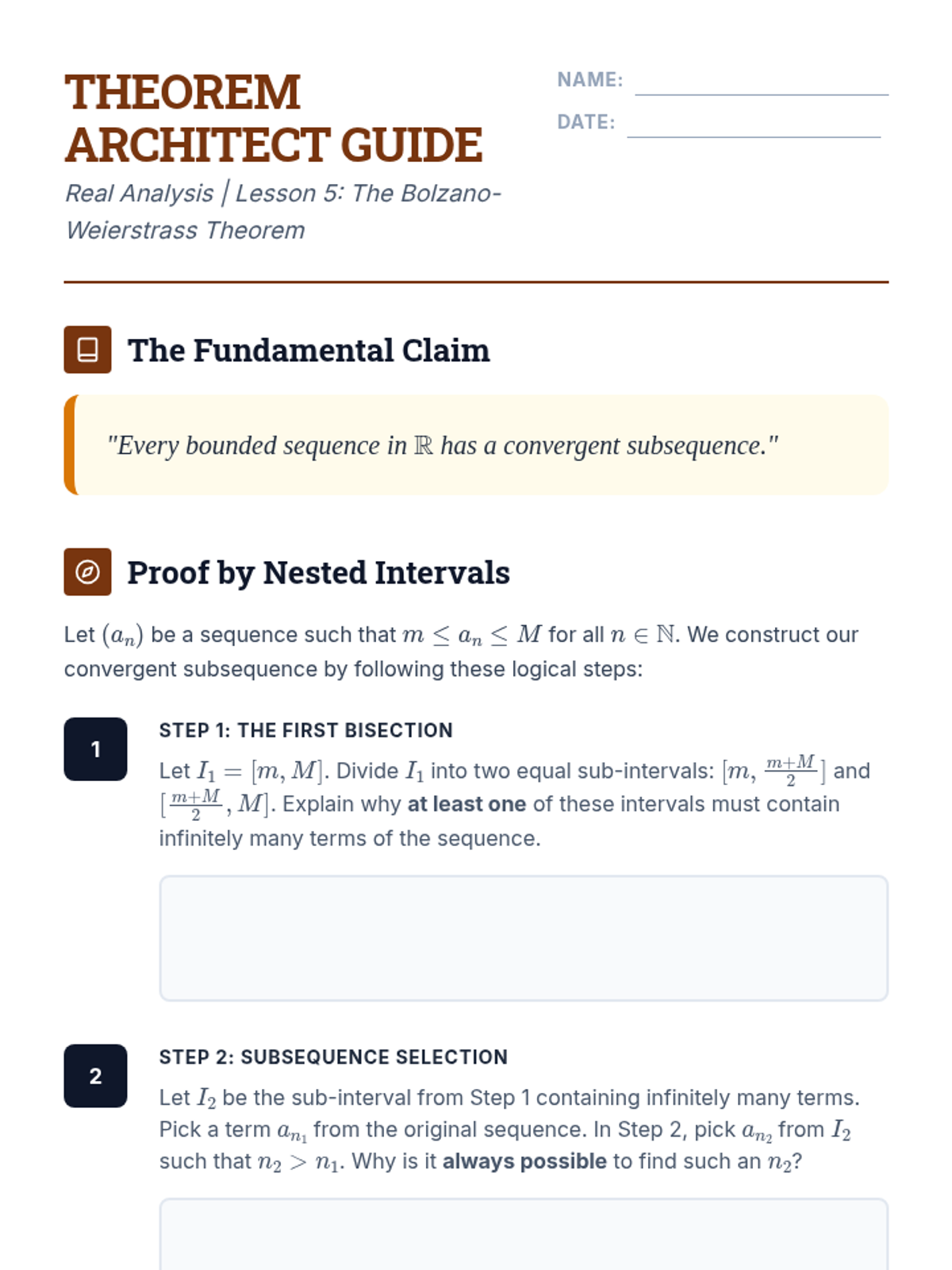
The culmination of the sequence, proving that every bounded sequence has a convergent subsequence.
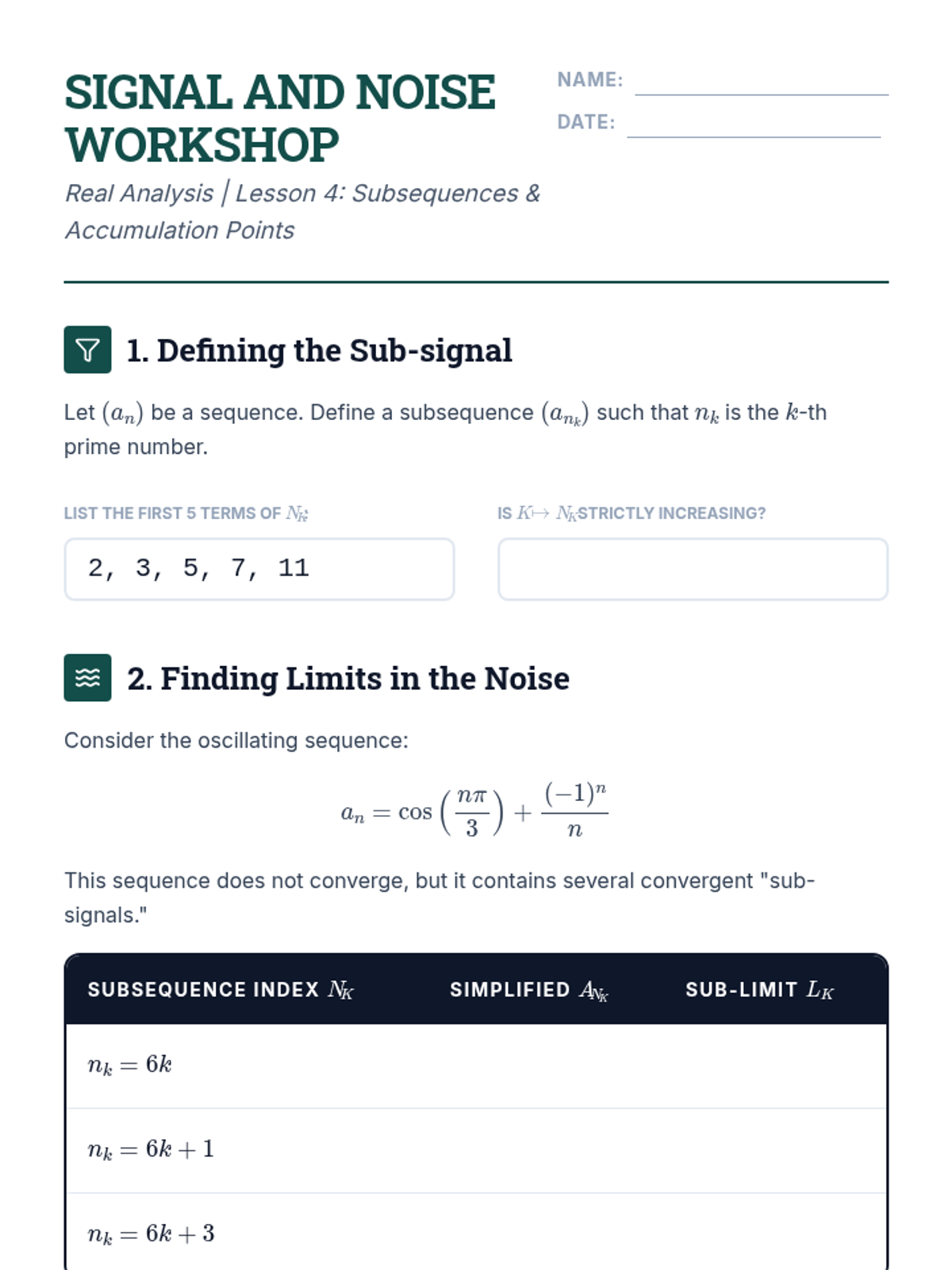
Analysis of subsequences and accumulation points, distinguishing them from traditional limits using oscillating sequences.
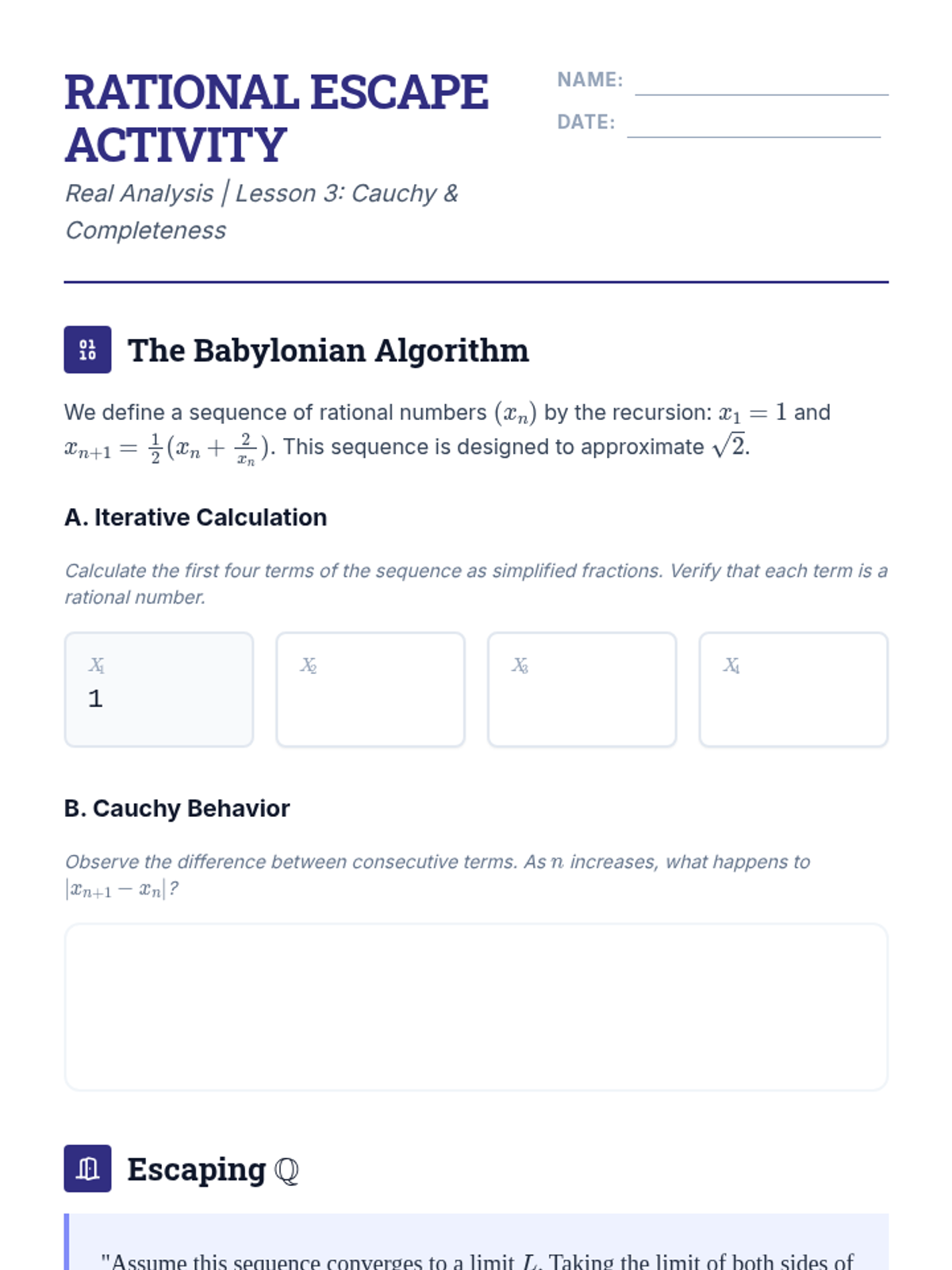
Investigation of Cauchy sequences and the topological completeness of the real numbers compared to the rationals.
Students derive and apply the arc length formula for parametric curves. They distinguish between displacement and total distance traveled along a curve.
Integrating physics concepts, students treat parametric equations as vector-valued functions. They calculate velocity and acceleration vectors, determine speed, and interpret direction.
Students tackle the complex derivation of the second derivative for parametric equations. The lesson focuses on avoiding common misconceptions and using concavity to analyze curvature.
This lesson establishes the chain rule application required to find dy/dx given x(t) and y(t). Students calculate the slope of tangent lines and identify points of horizontal and vertical tangency.
Students explore the definition of parametric equations by manually plotting points based on a parameter 't'. They practice eliminating the parameter to convert parametric equations into rectangular form.
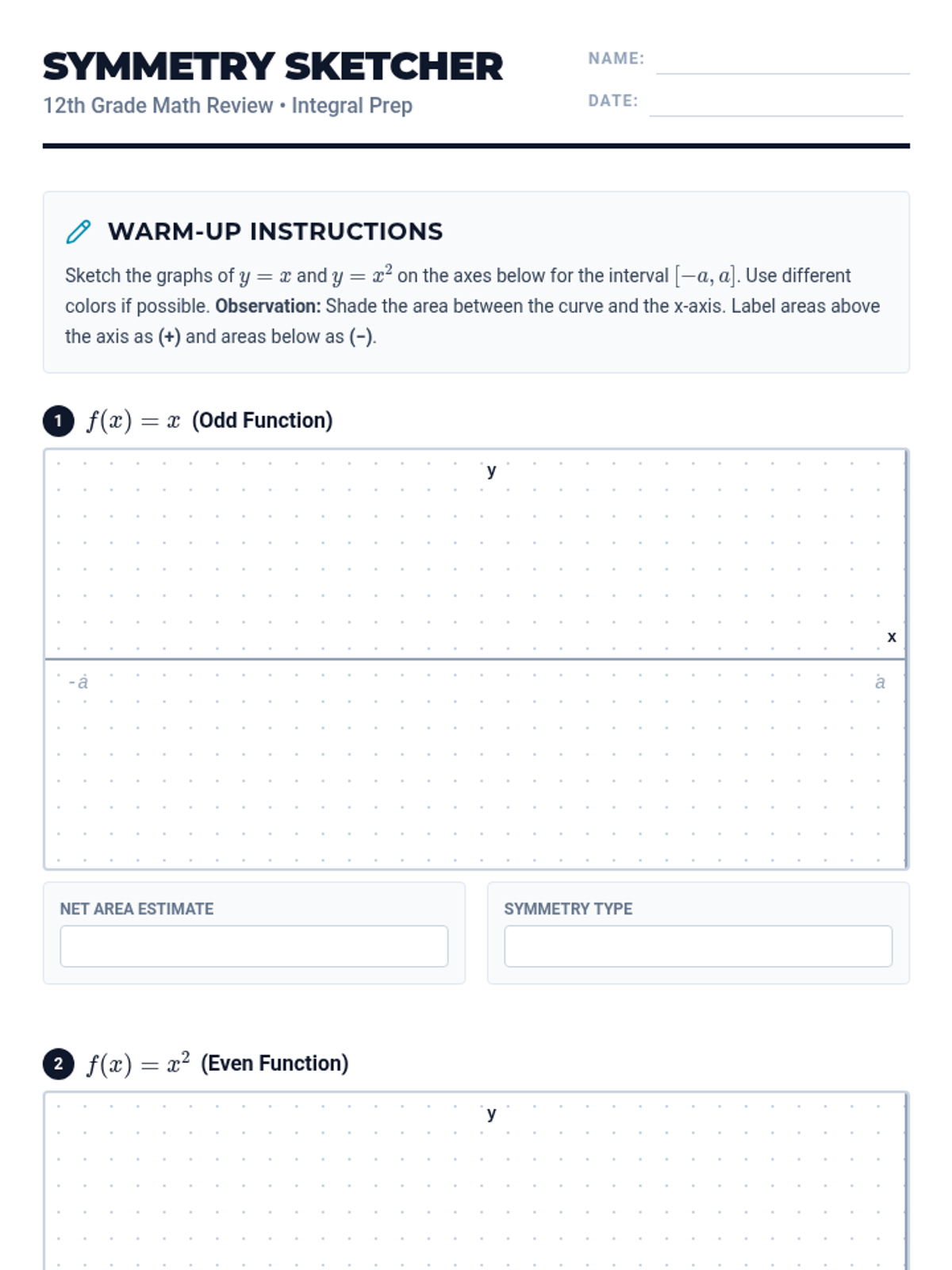
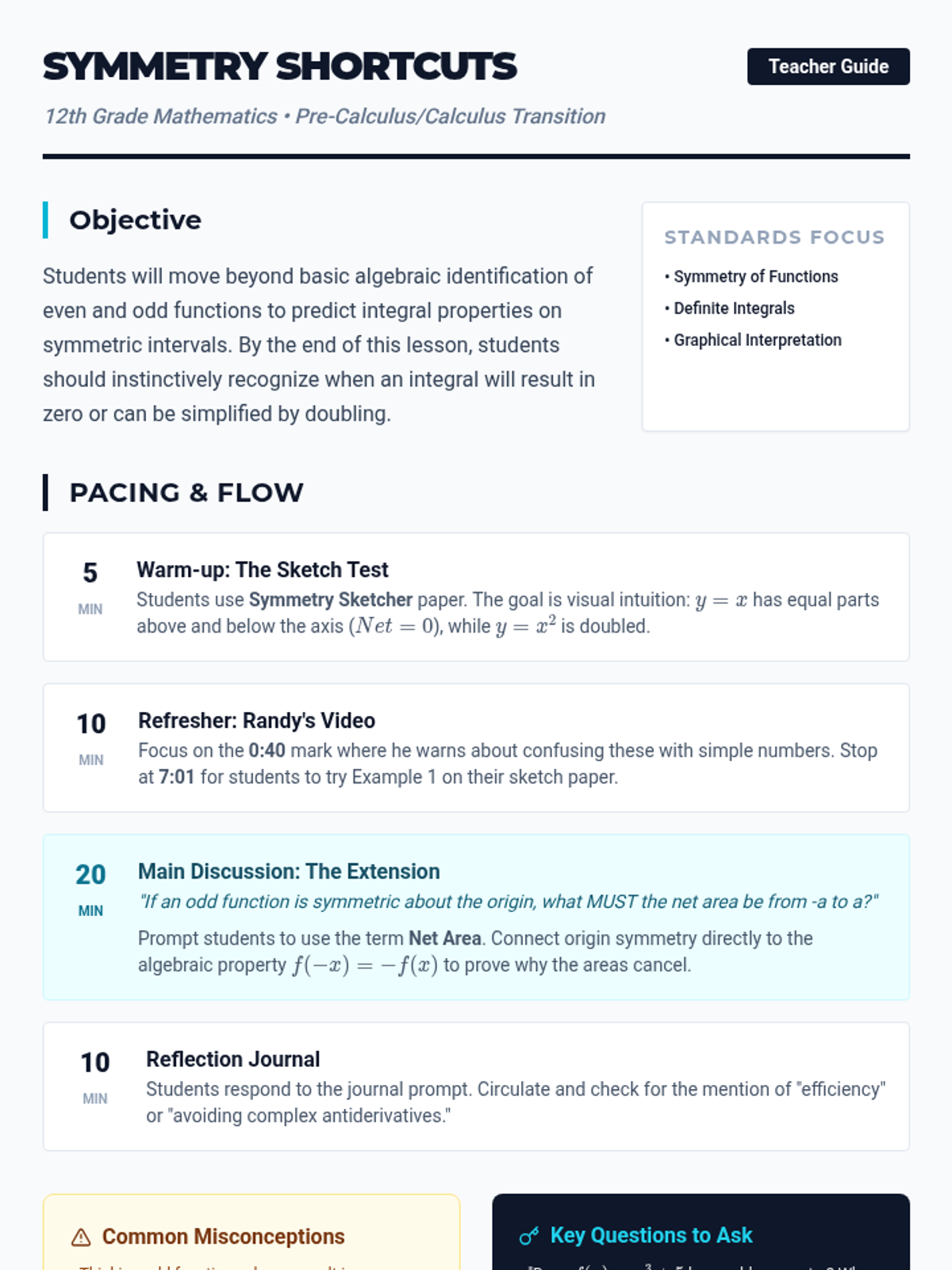
A 12th-grade calculus prep lesson that bridges algebraic symmetry with integral properties, teaching students to use even and odd function characteristics to simplify definite integrals.
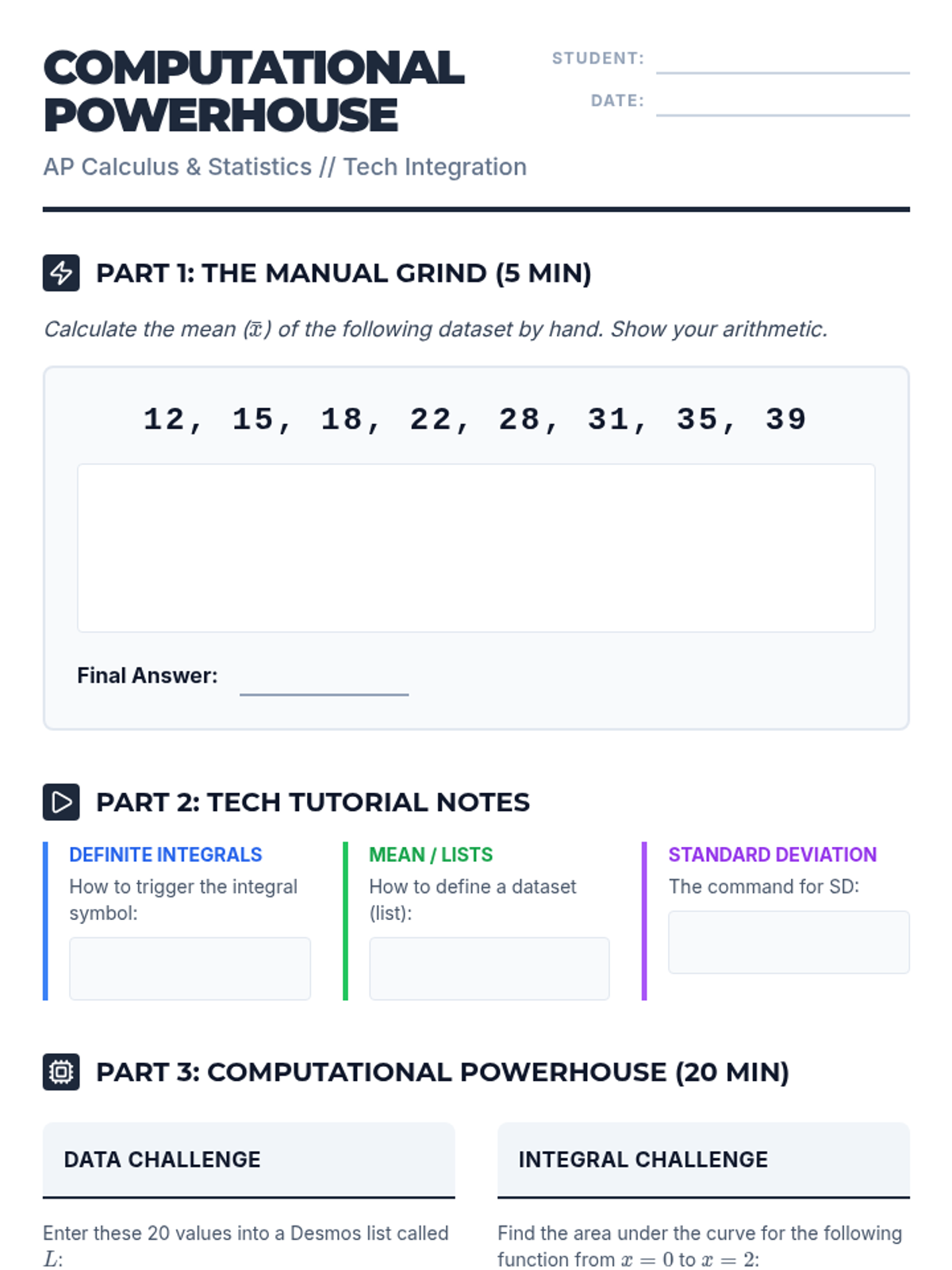
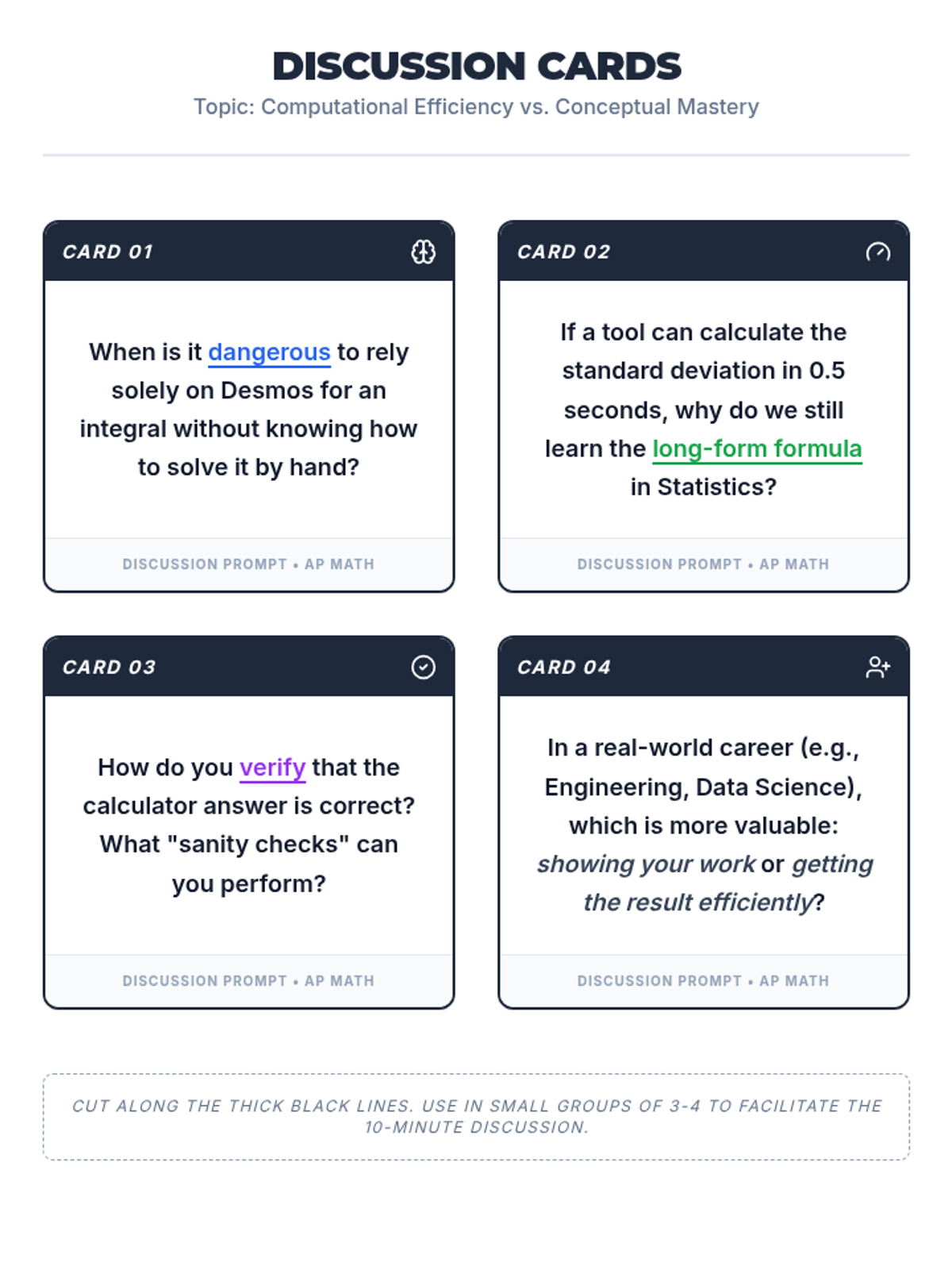
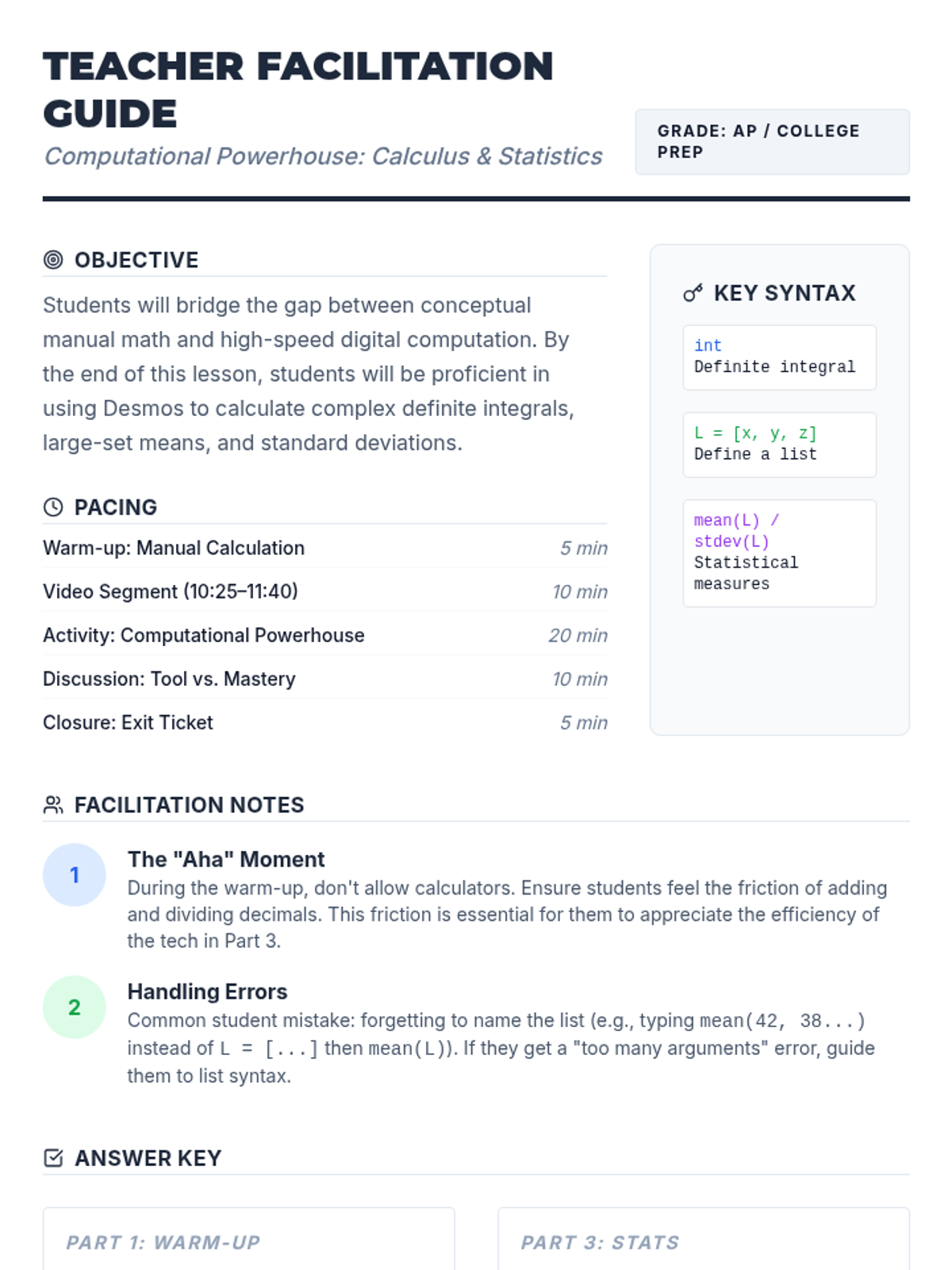
A high-school level lesson for AP Calculus and Statistics students focusing on using Desmos for complex integrals and statistical calculations, emphasizing the balance between manual understanding and technological efficiency.
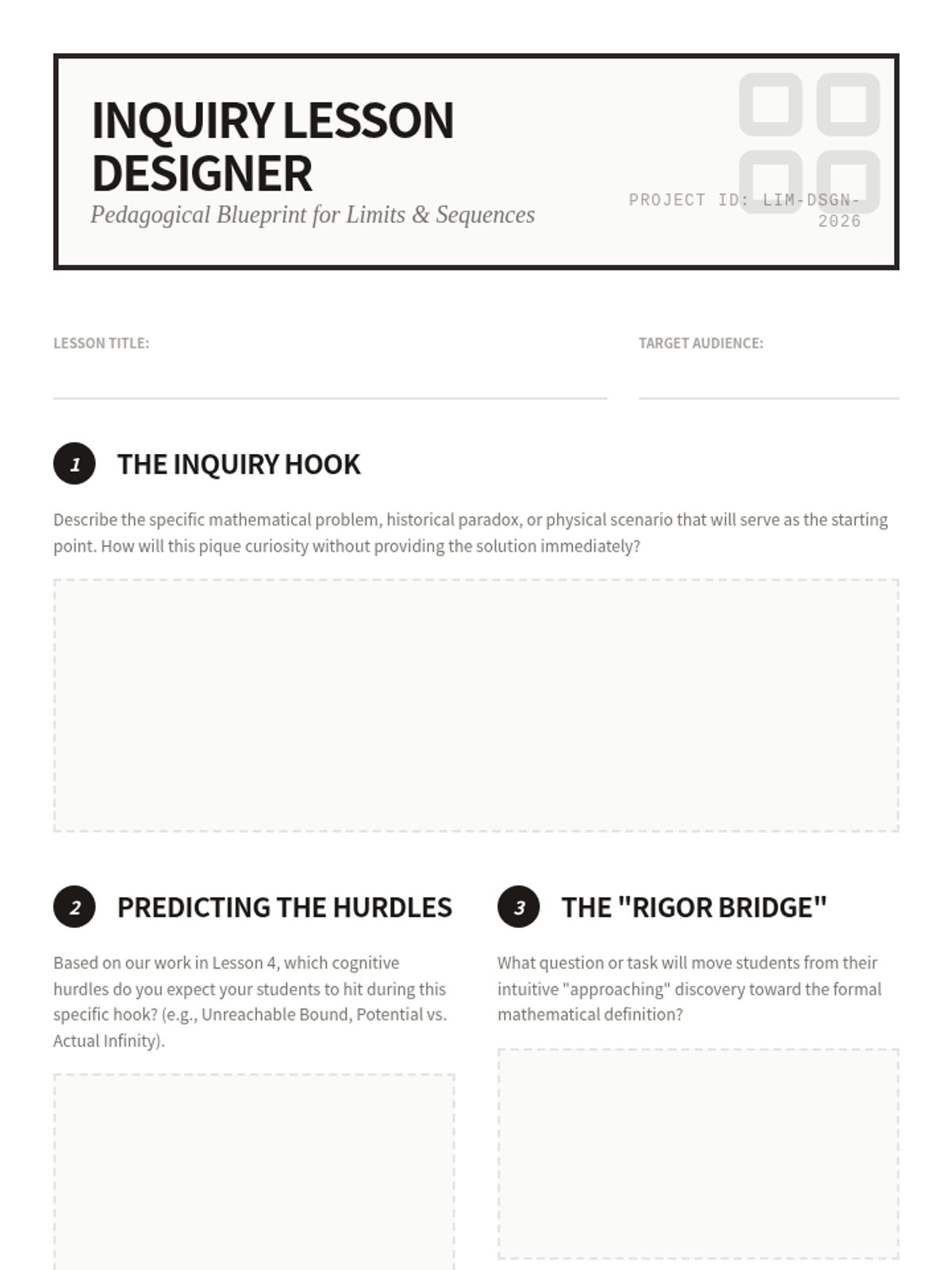
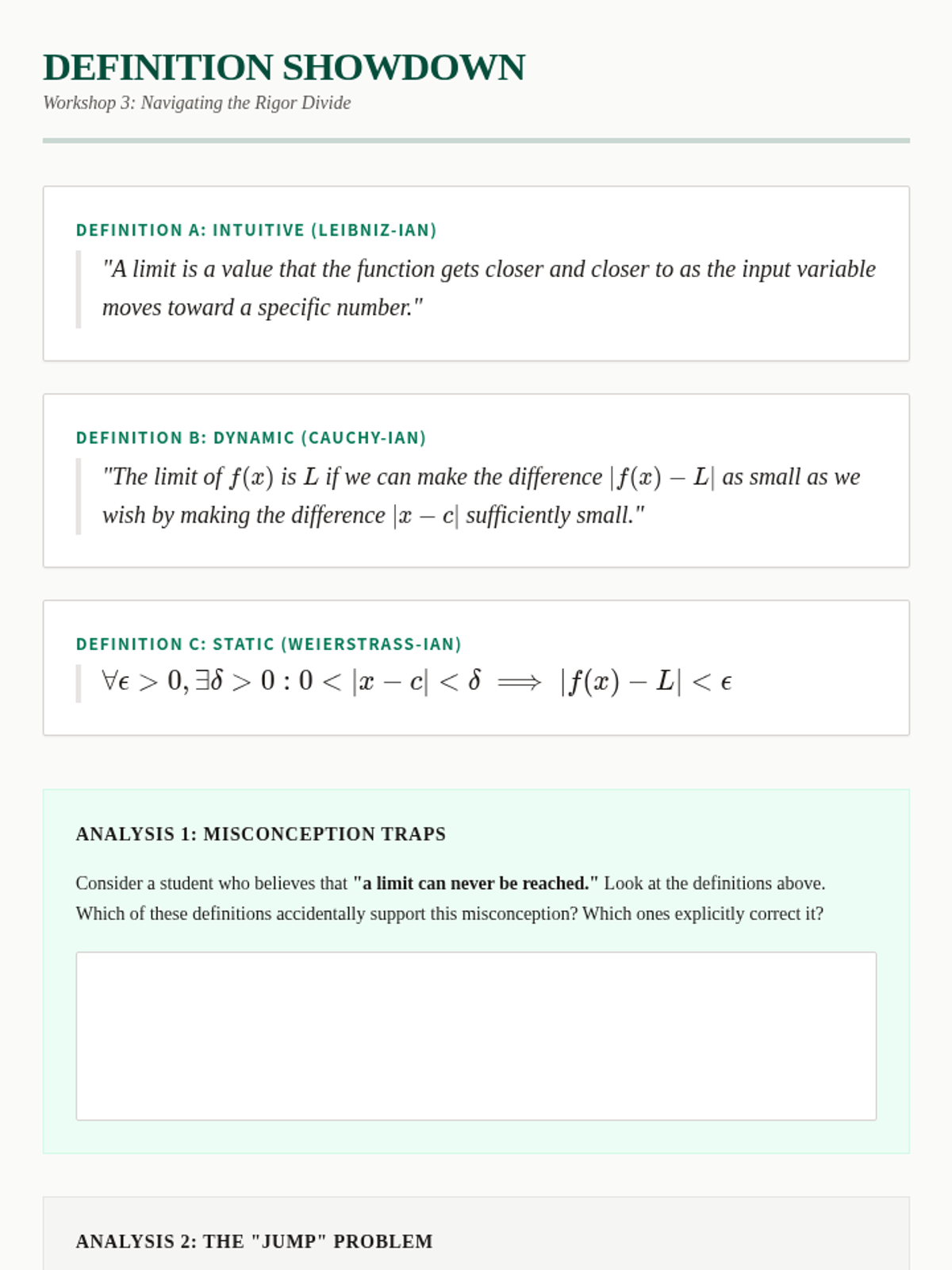
Design an inquiry-based lesson plan that guides students to discover the concept of a limit.
Identify and diagnose common student misconceptions regarding limits and infinite sequences.
Investigate the 19th-century shift toward the formal epsilon-delta definition of limits.
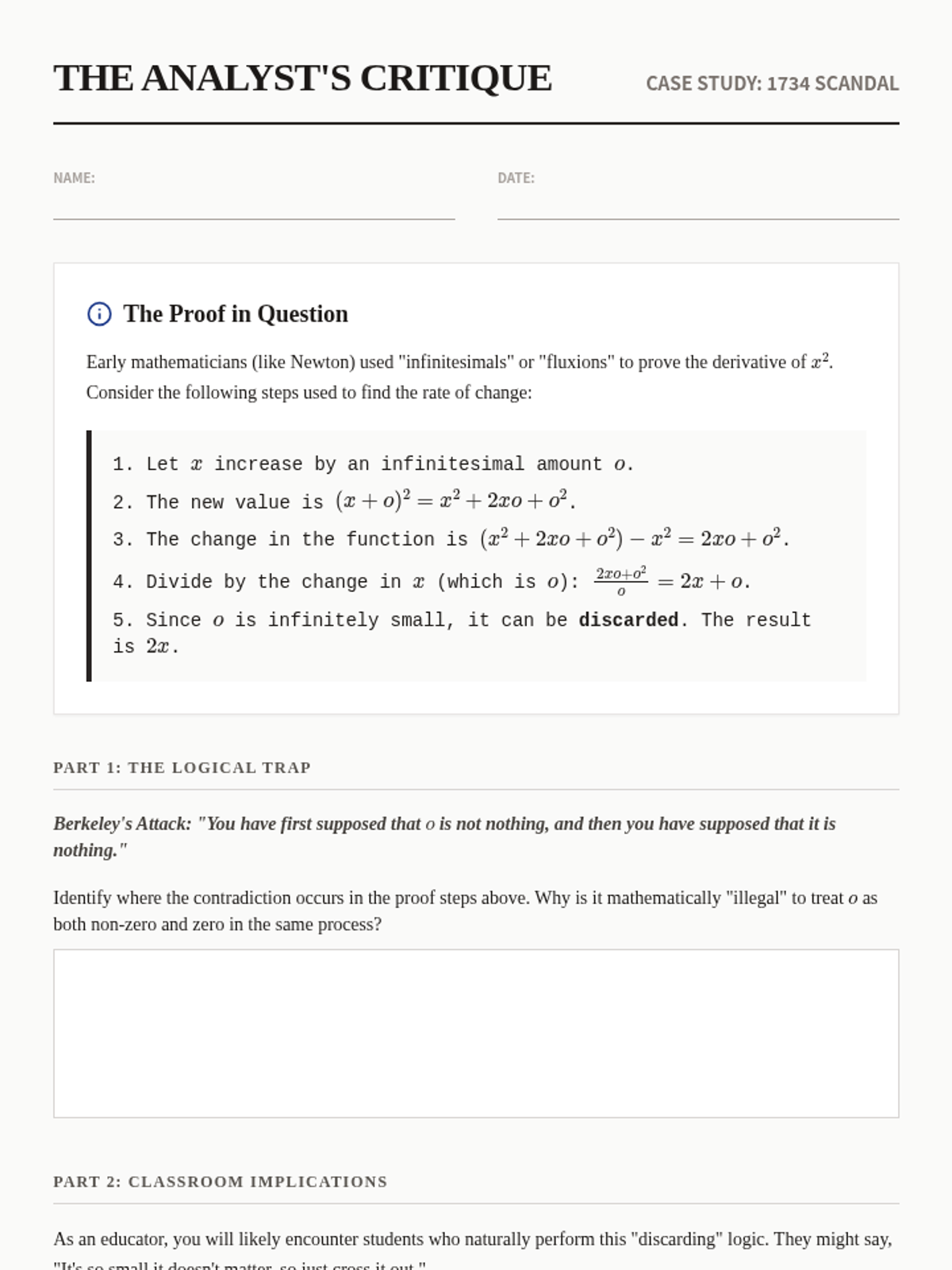
Analyze the intuitive use of infinitesimals by Newton and Leibniz and the logical critiques they faced.
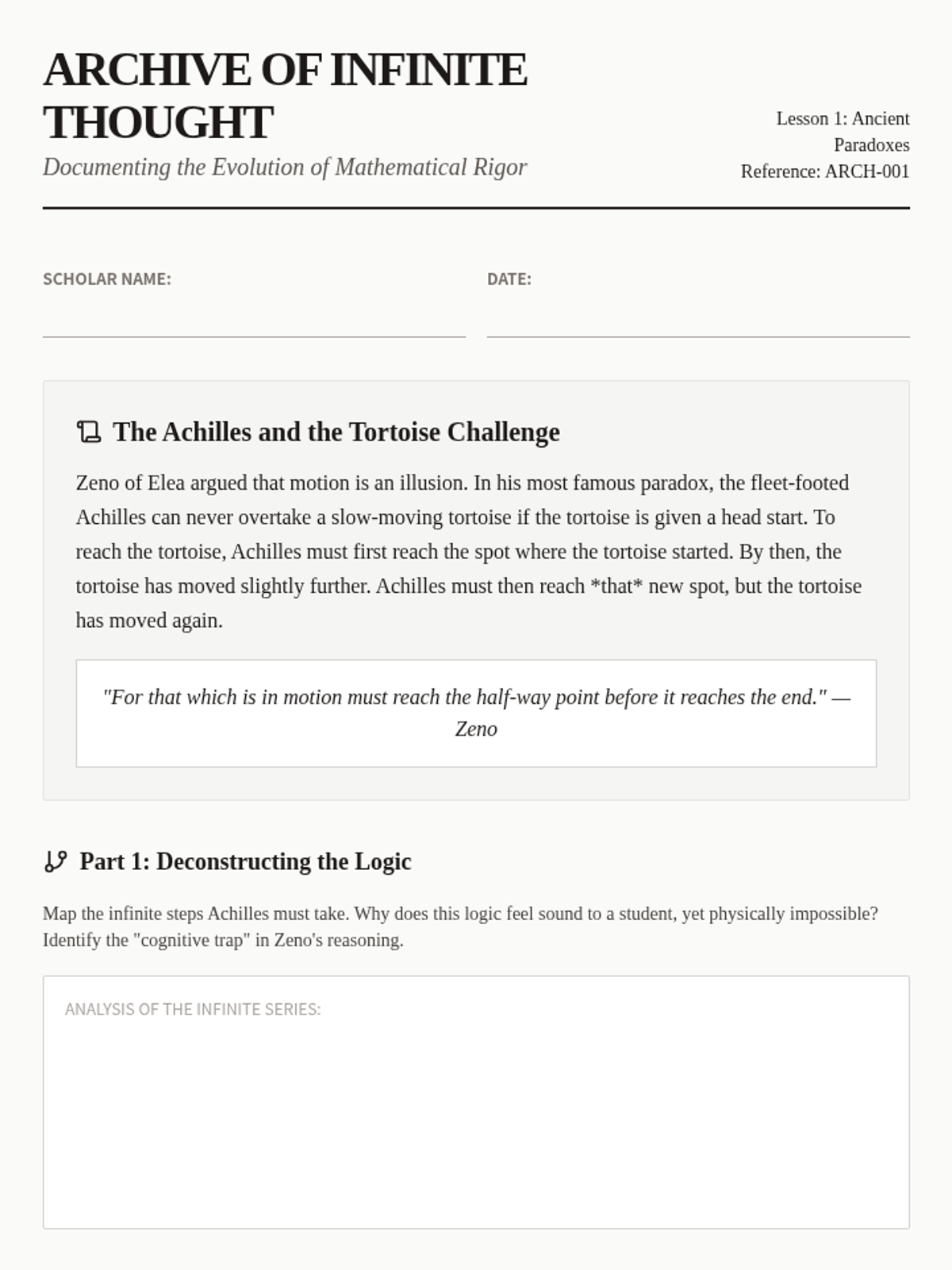
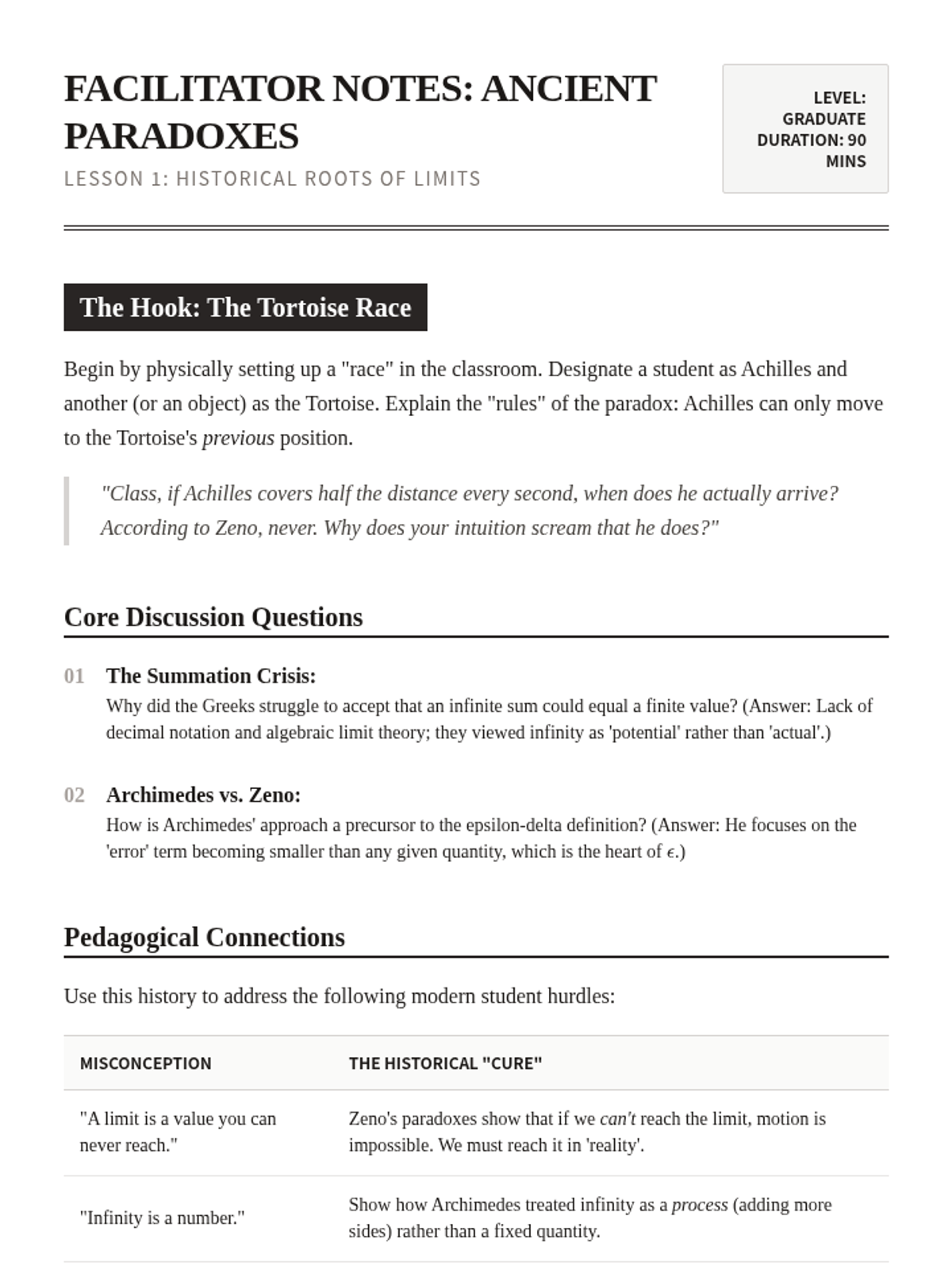
Examine Zeno's paradoxes and Archimedes' Method of Exhaustion to understand early struggles with infinite processes.
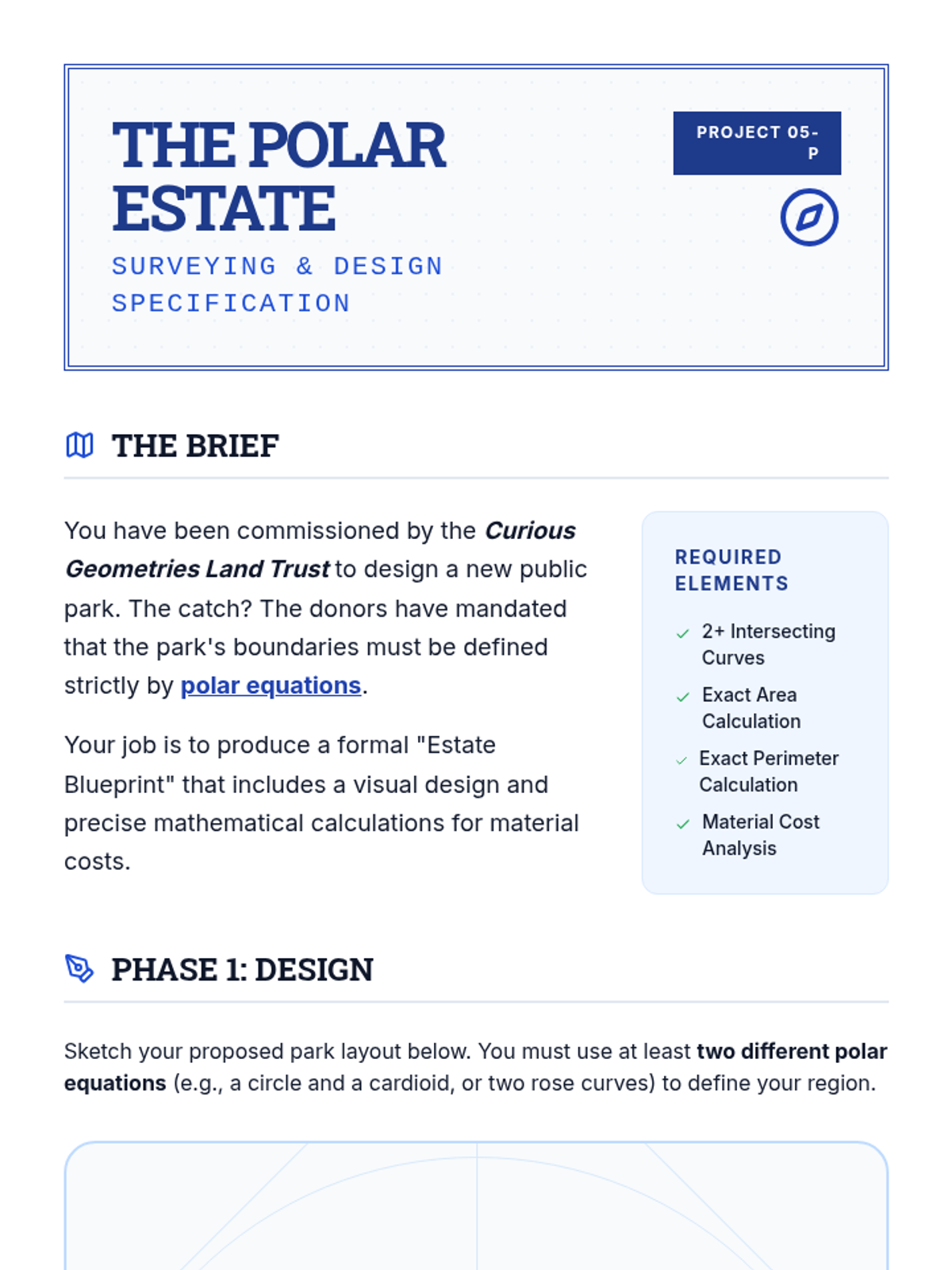
In this project-based finale, students apply their mastery of polar calculus to design a original logo or land plot. They must calculate precise area and perimeter specifications, simulating a real-world surveying or design task.
Moving from area to length, students derive the polar arc length formula from parametric foundations. They calculate the total perimeter of intricate polar shapes, connecting differential changes in radius and angle to total distance.
Students tackle complex regions bounded by two or more polar curves. They learn to identify intersection points and strategically set up integrals to find areas shared by or excluded between intersecting circular boundaries.
This lesson focuses on the application of the polar area formula to single-curve regions like cardioids and rose petals. Students master the critical skill of determining angular limits of integration by analyzing curve behavior and symmetry.
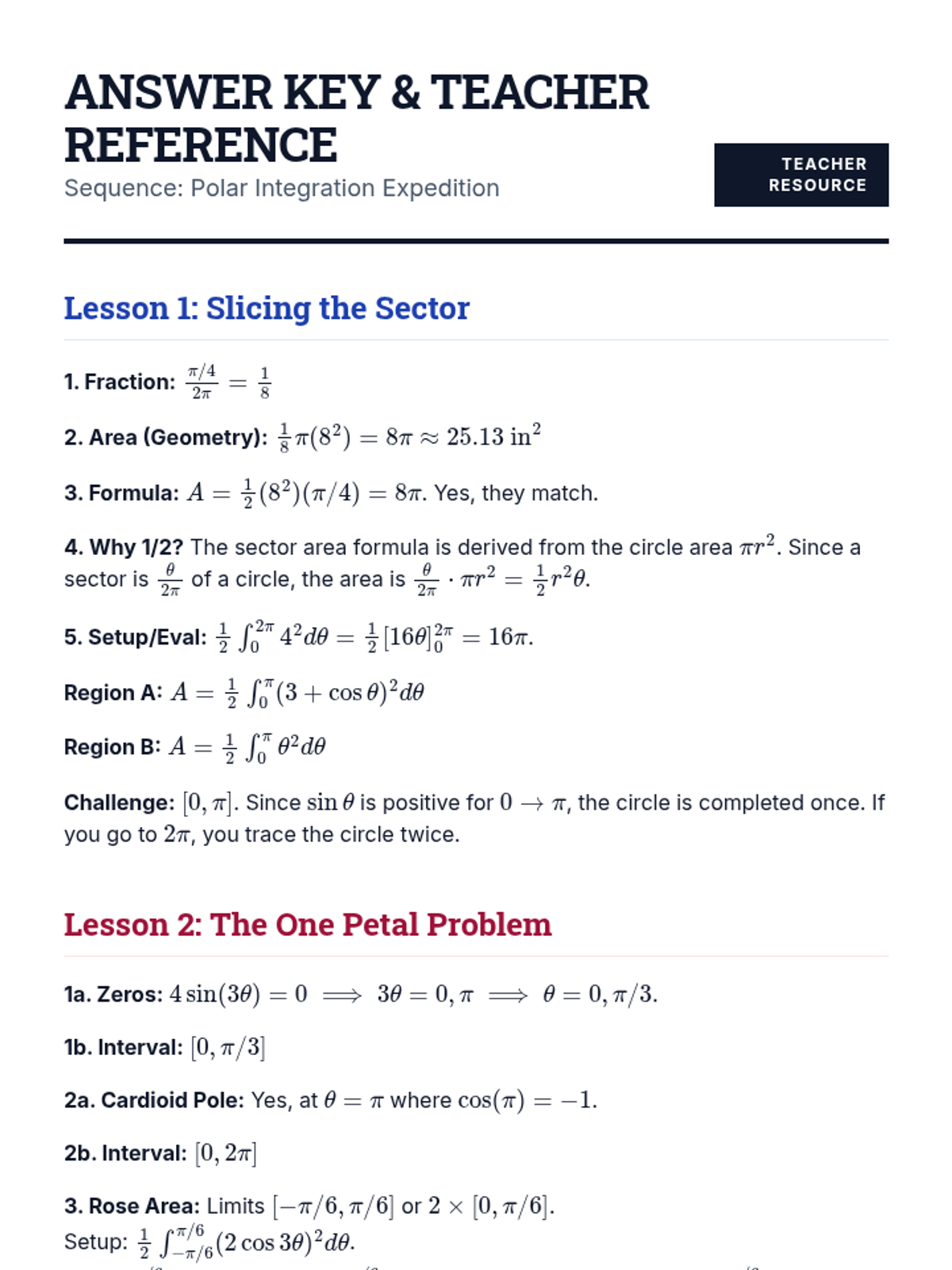
Students transition from rectangular Riemann sums to polar circular sectors, deriving the fundamental integral formula for polar area. Through a 'pizza slice' inquiry, they connect the geometry of a circle to the accumulation of area swept by a changing radius.
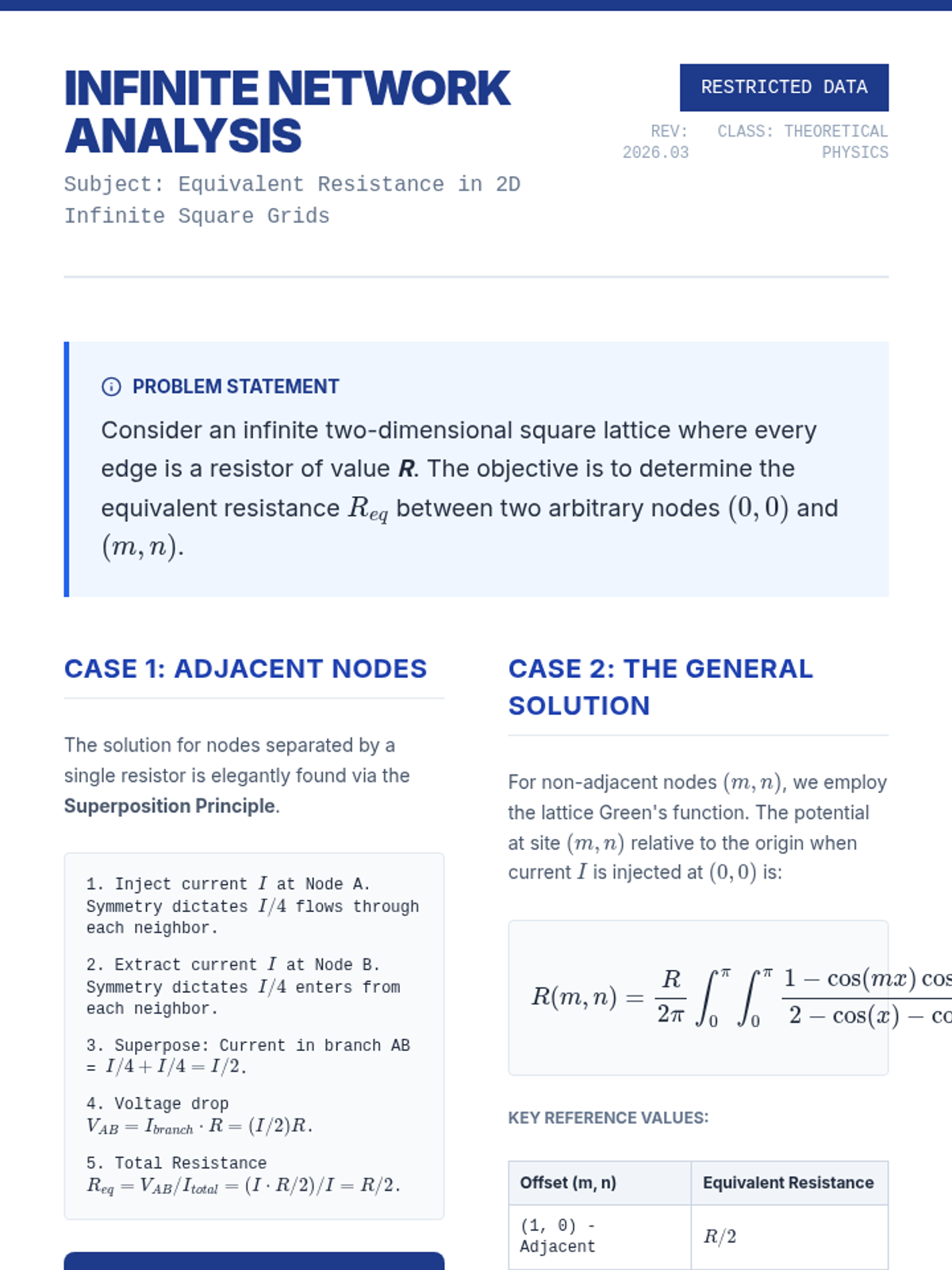
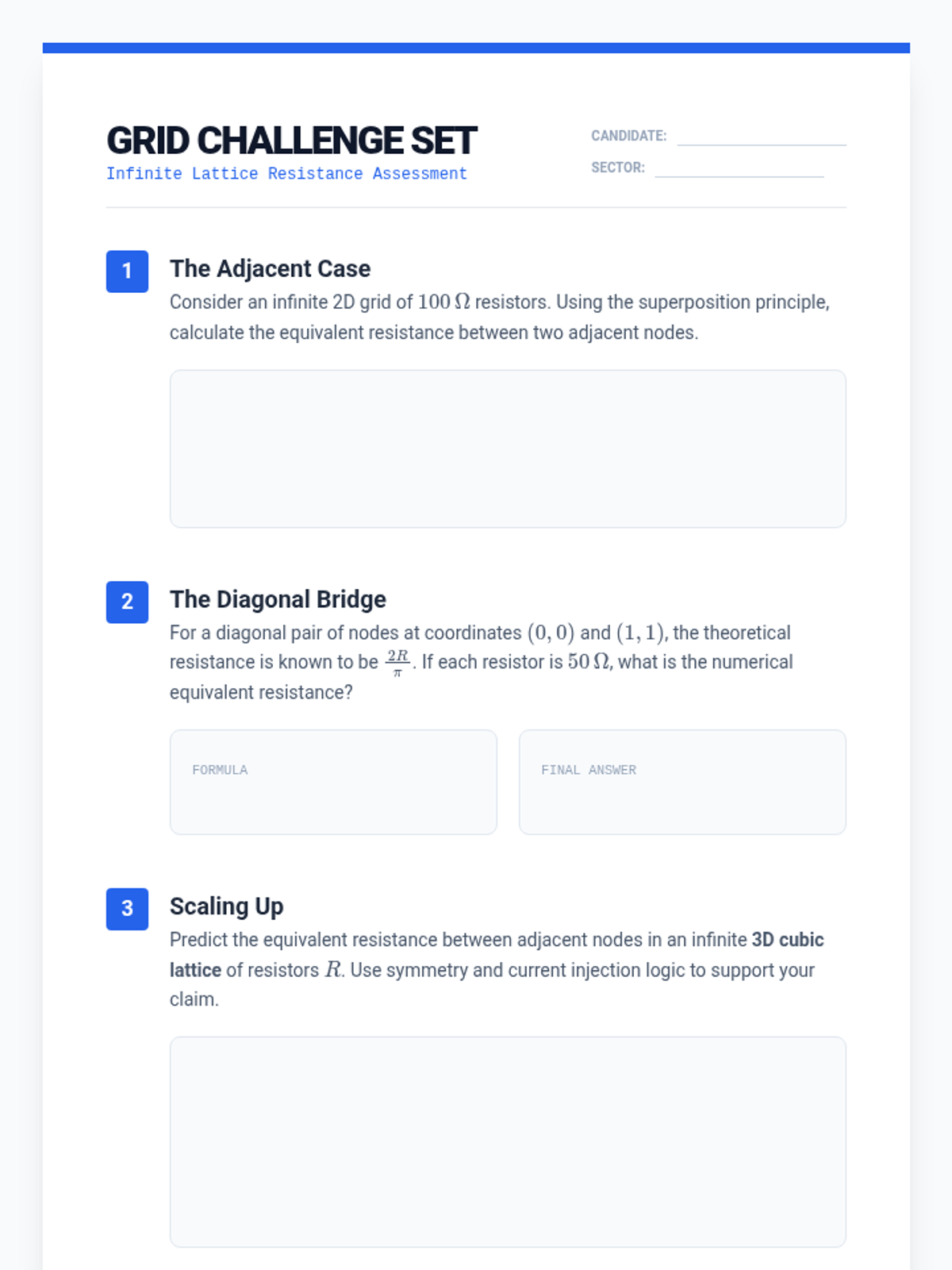
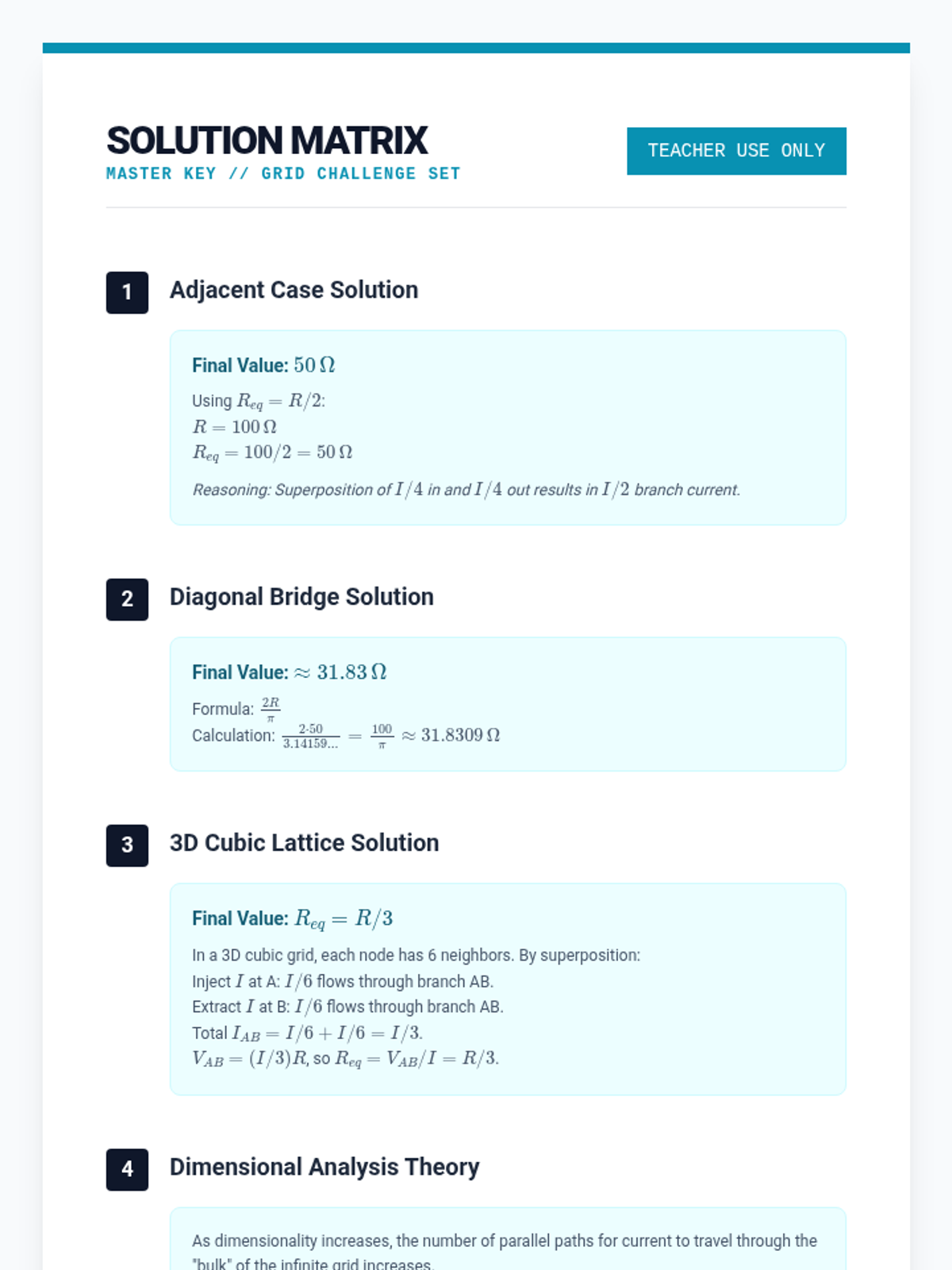
A deep dive into the theoretical physics of infinite resistor networks, focusing on superposition and Green's functions to calculate equivalent resistance.
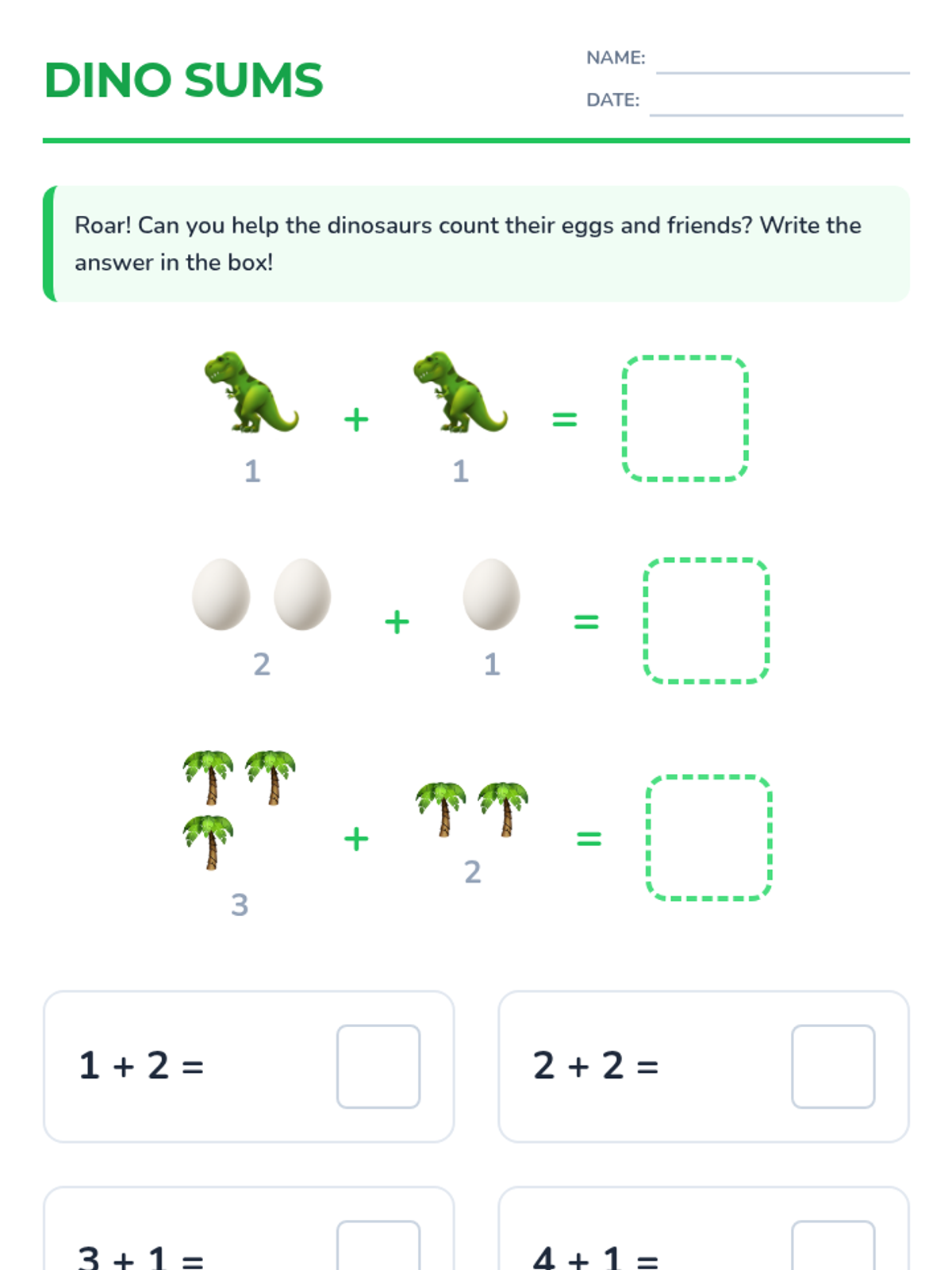
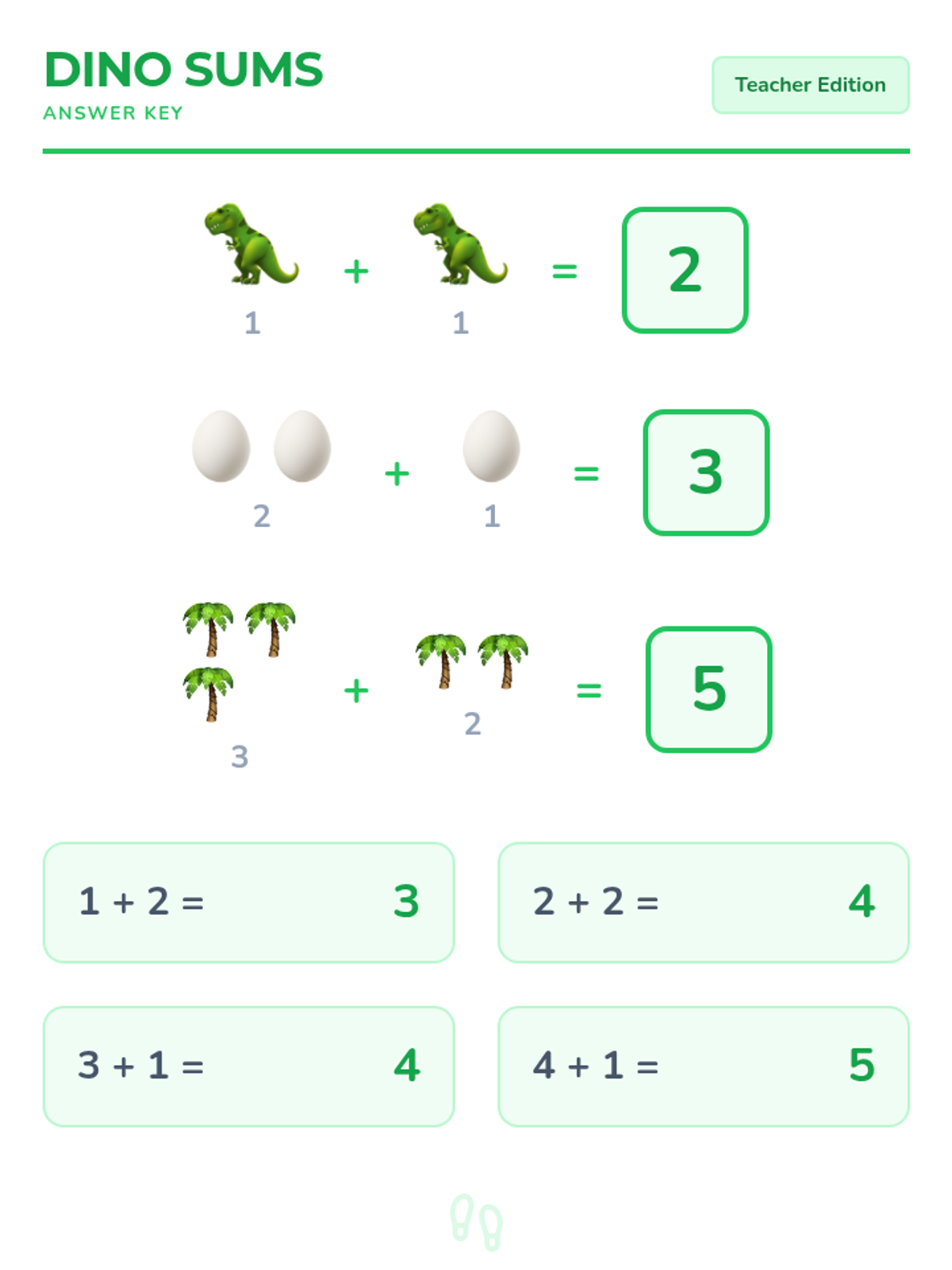
An introductory lesson on basic addition for early learners, using dinosaur-themed visuals to teach simple sums like 1+1.
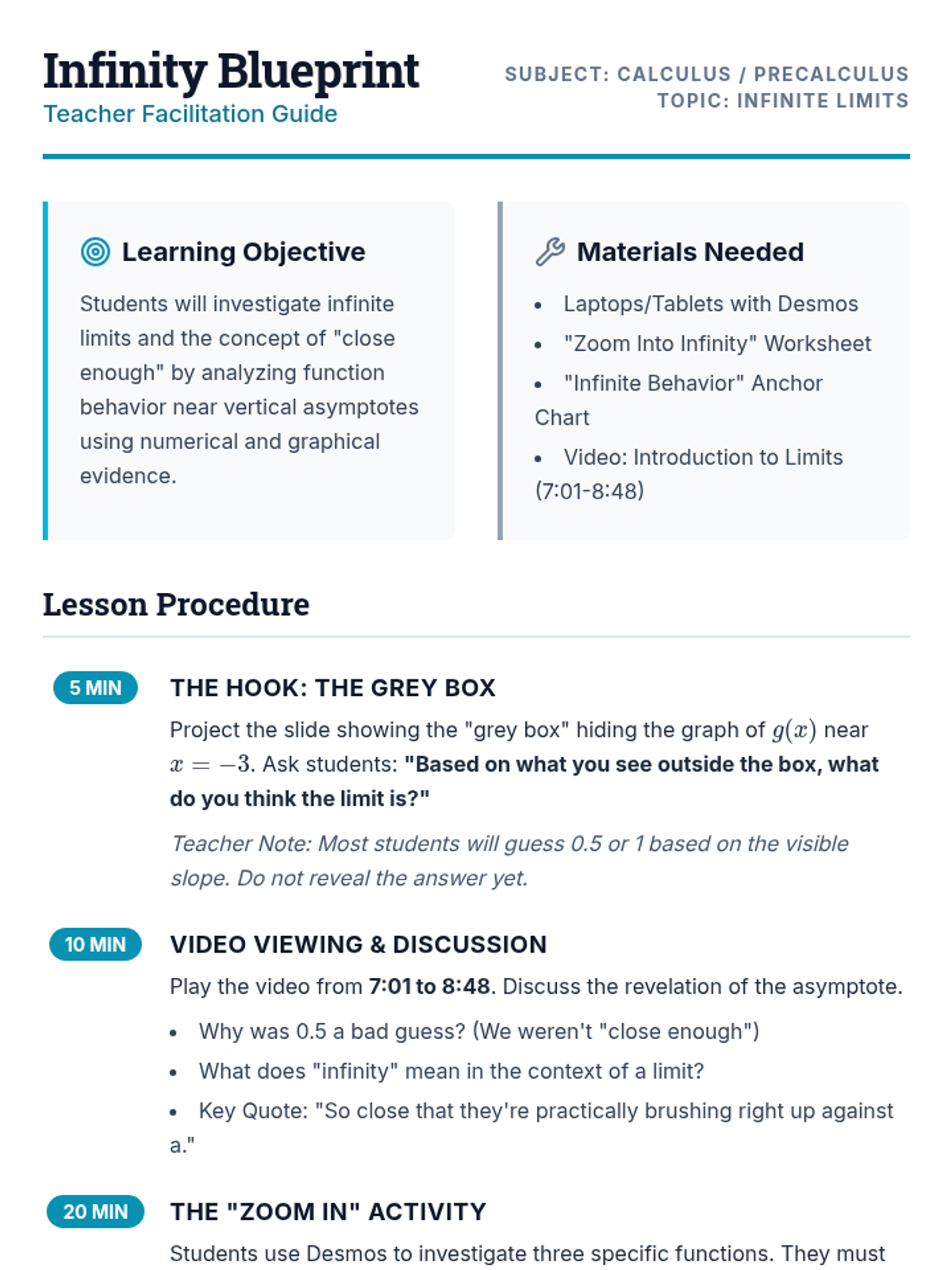
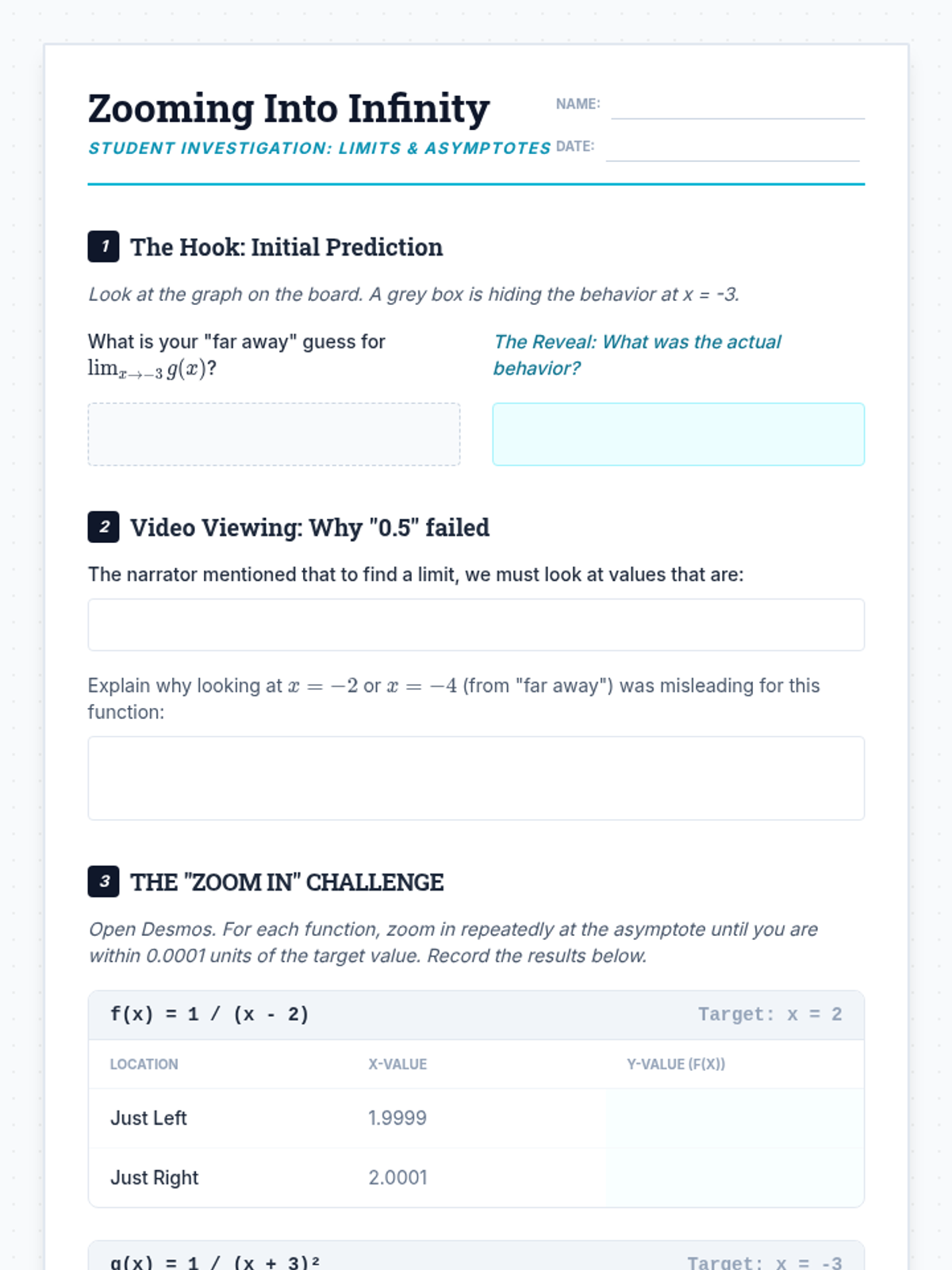
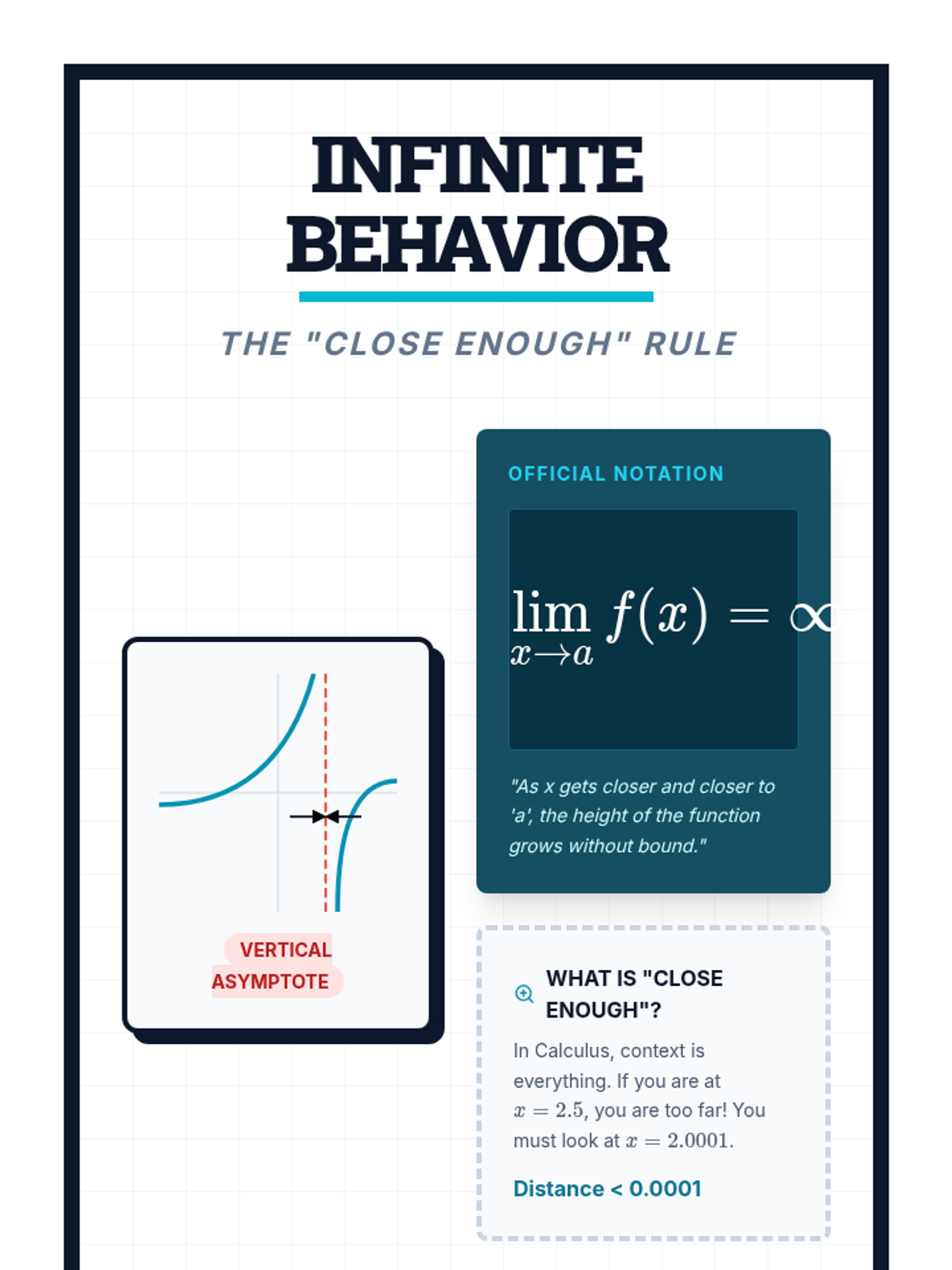
A high school math lesson investigating infinite limits and vertical asymptotes using the 'grey box' method and Desmos exploration. Students will discover how 'close enough' allows us to see behavior that is invisible from a distance.
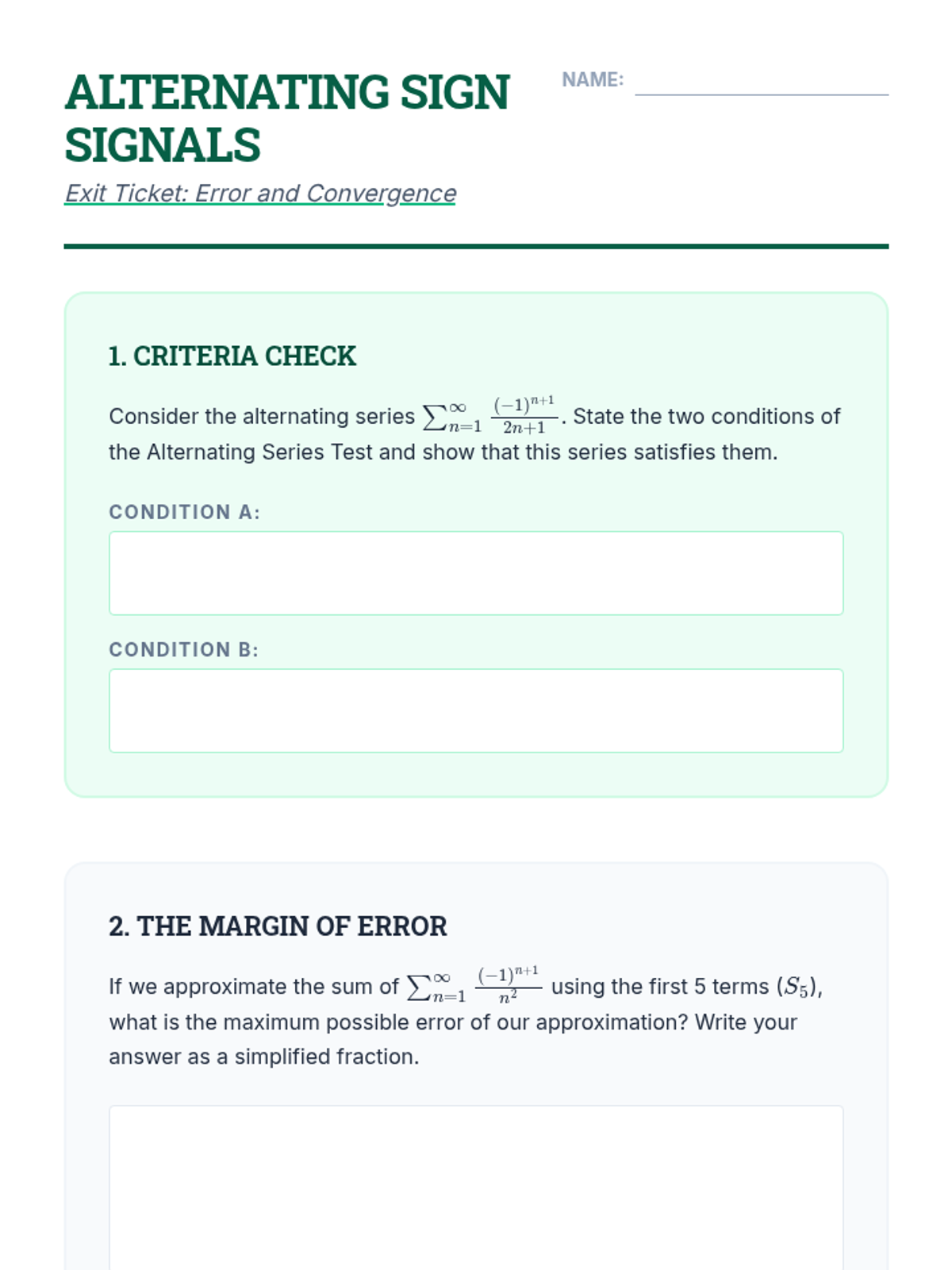
Exploring series with alternating signs, students apply the Leibniz criterion and calculate error bounds. They differentiate between absolute and conditional convergence.
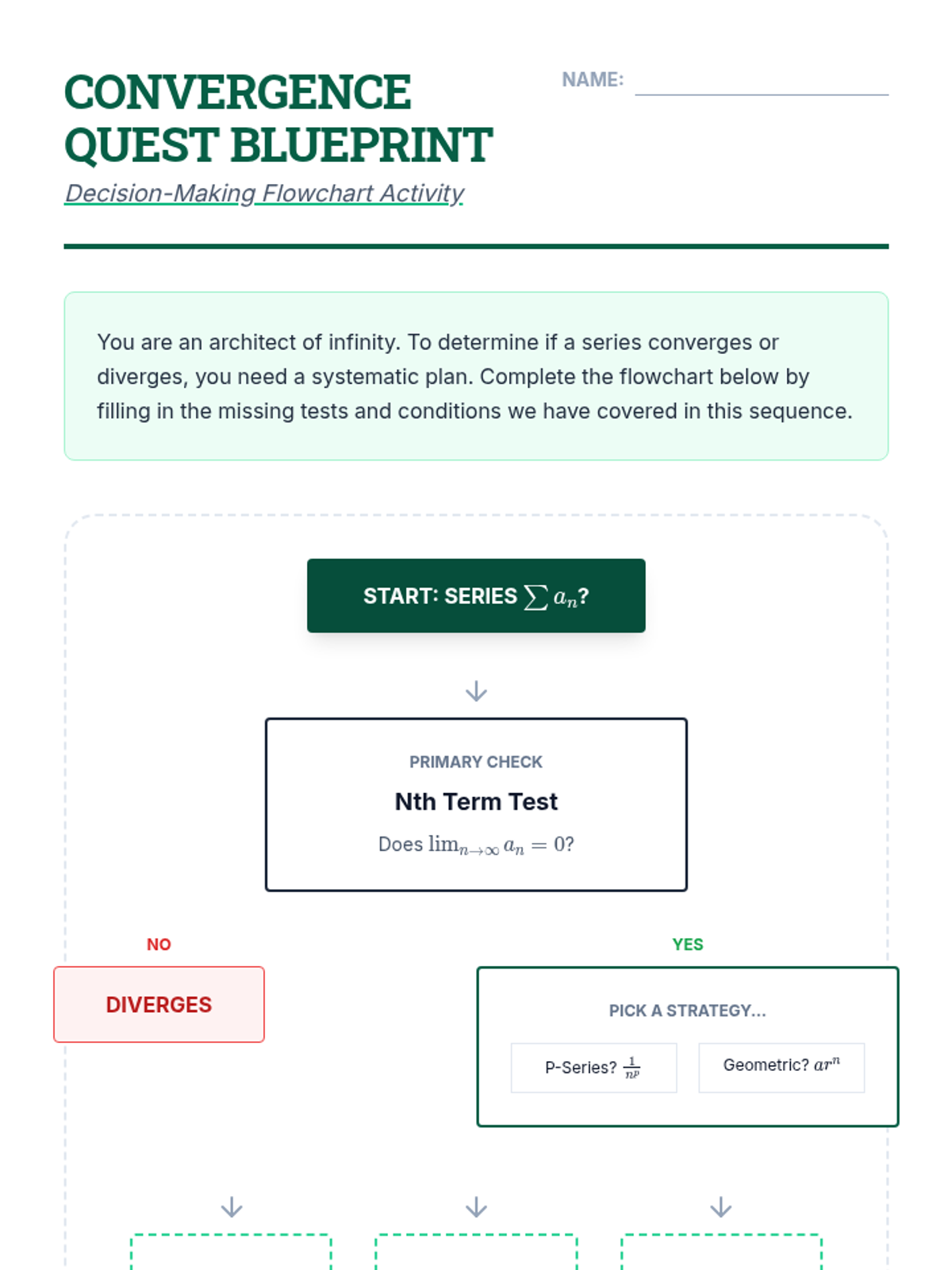
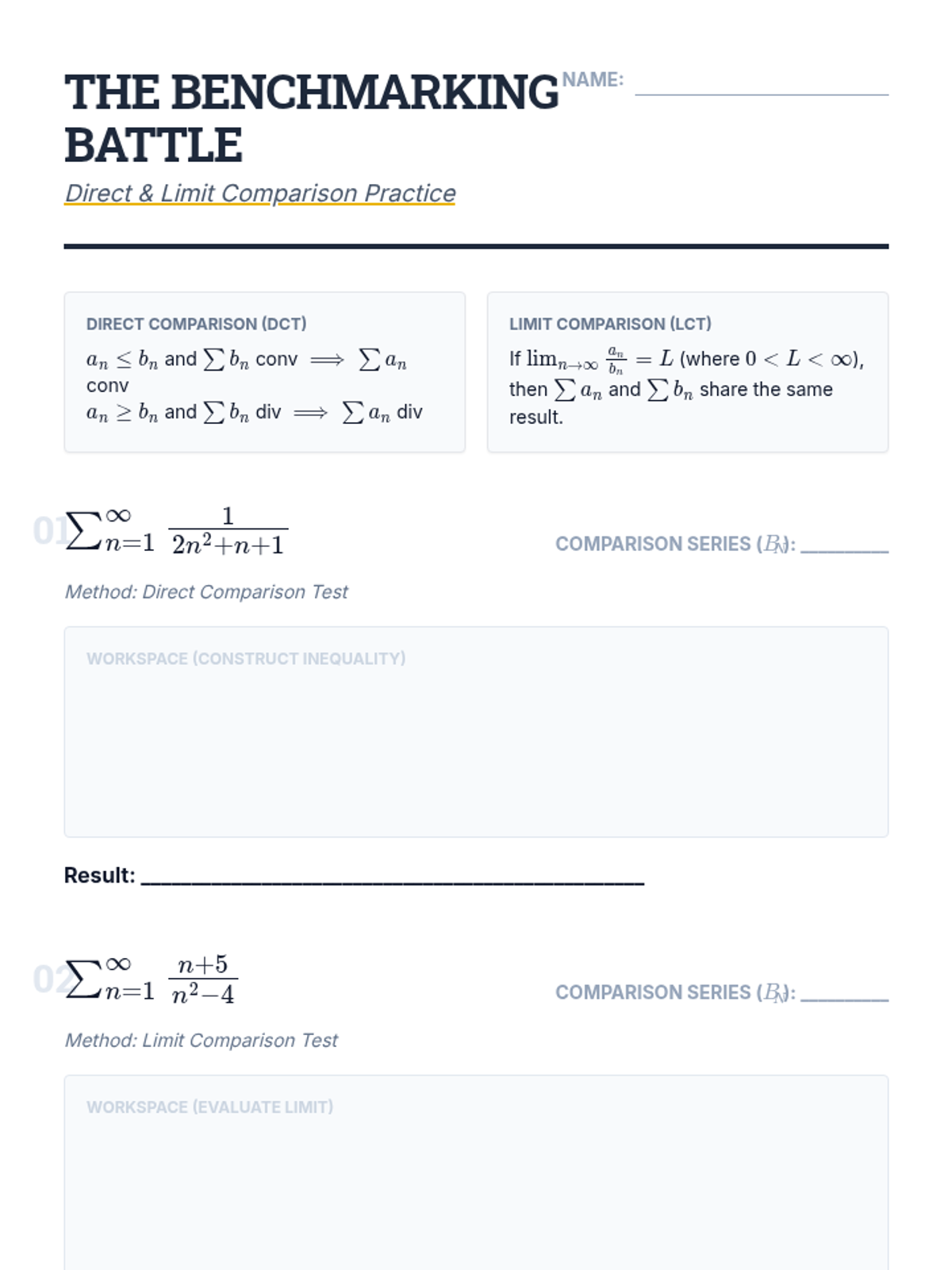
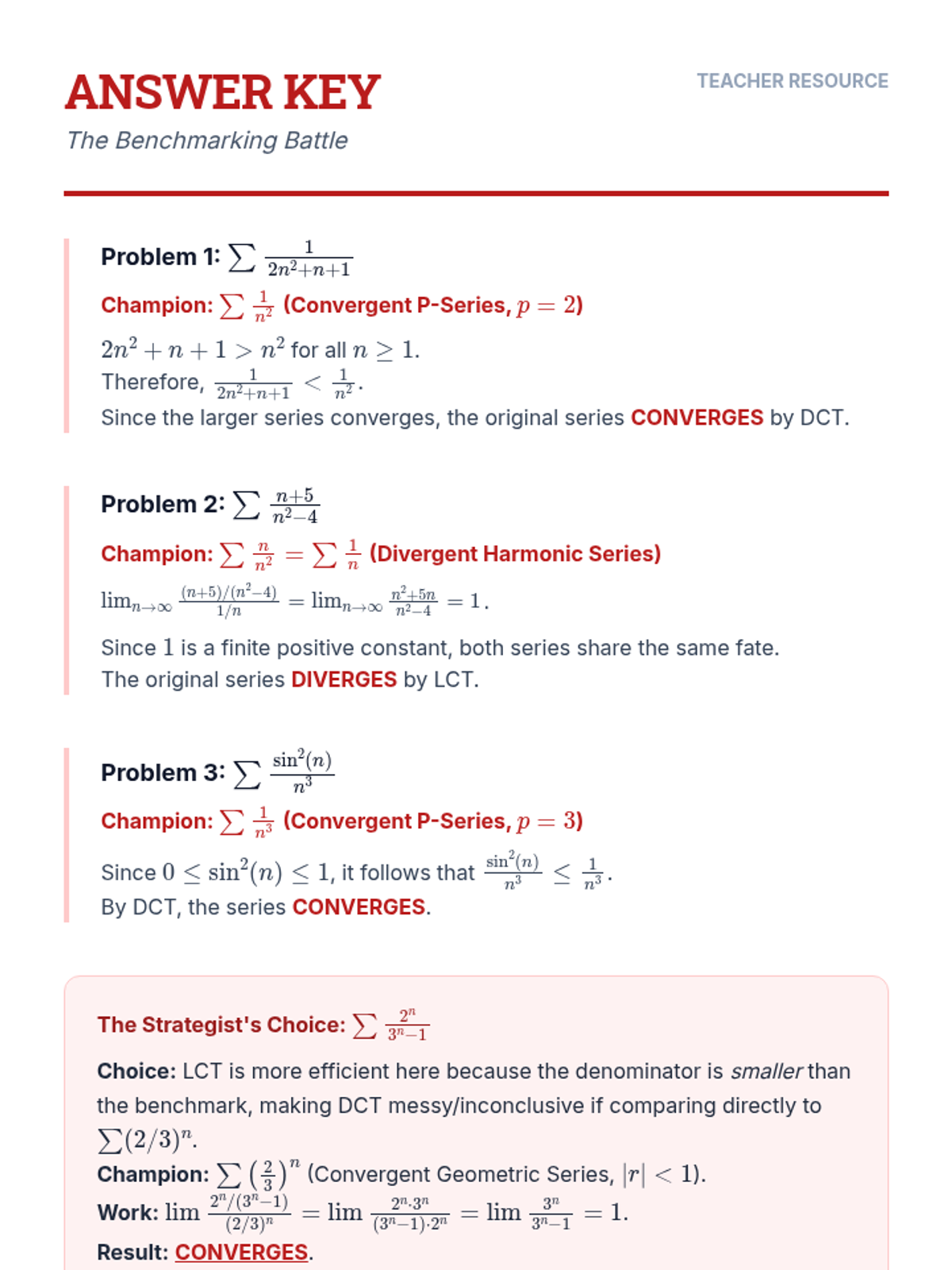
Focusing on benchmarks, students learn to compare unknown series to known P-series and Geometric series. They master both Direct and Limit Comparison Tests to handle complex denominators.
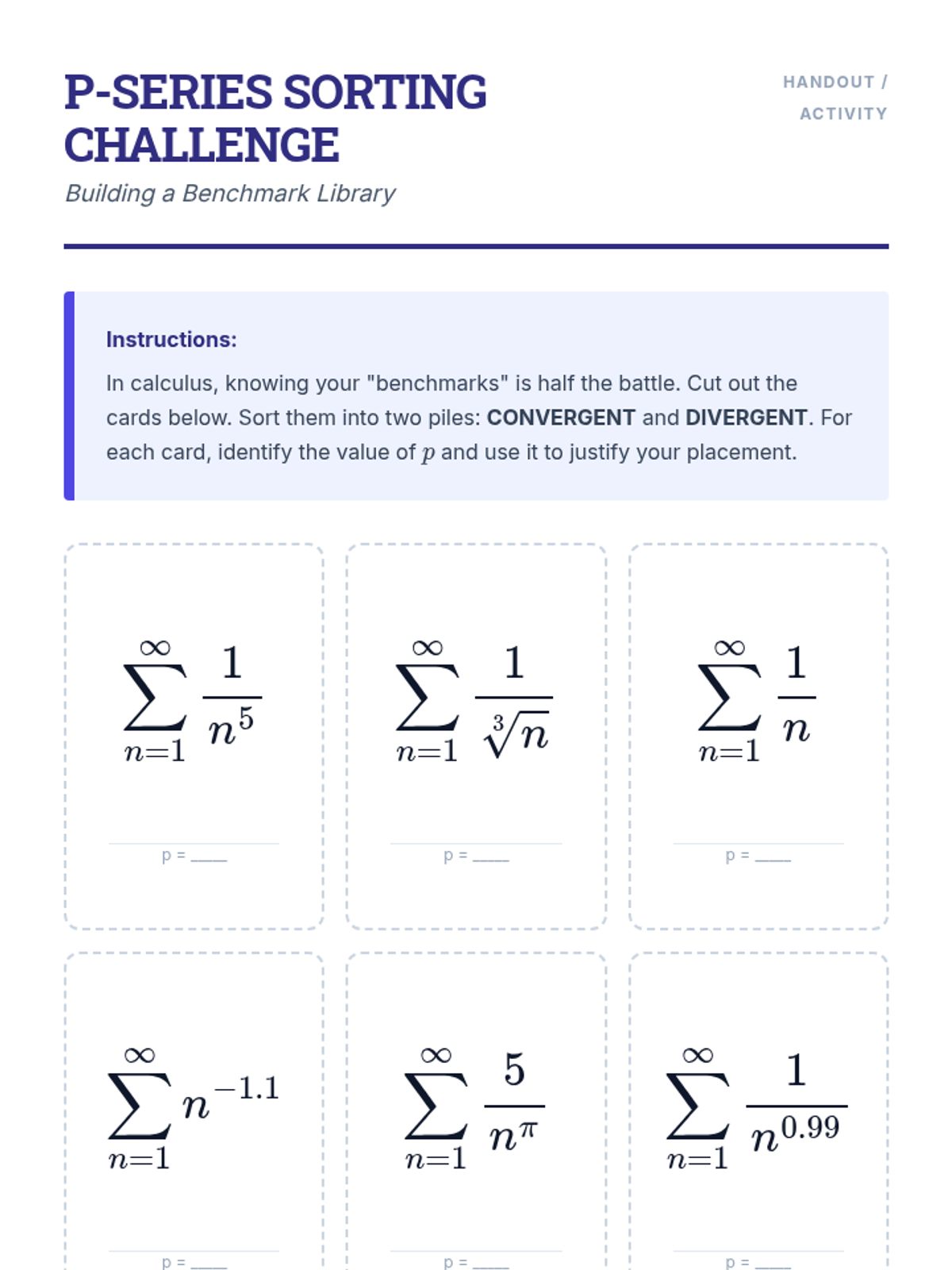
Students categorize and master p-series, including the famous harmonic series. They discover the boundary for convergence at p=1 and build a reference library for future comparison testing.
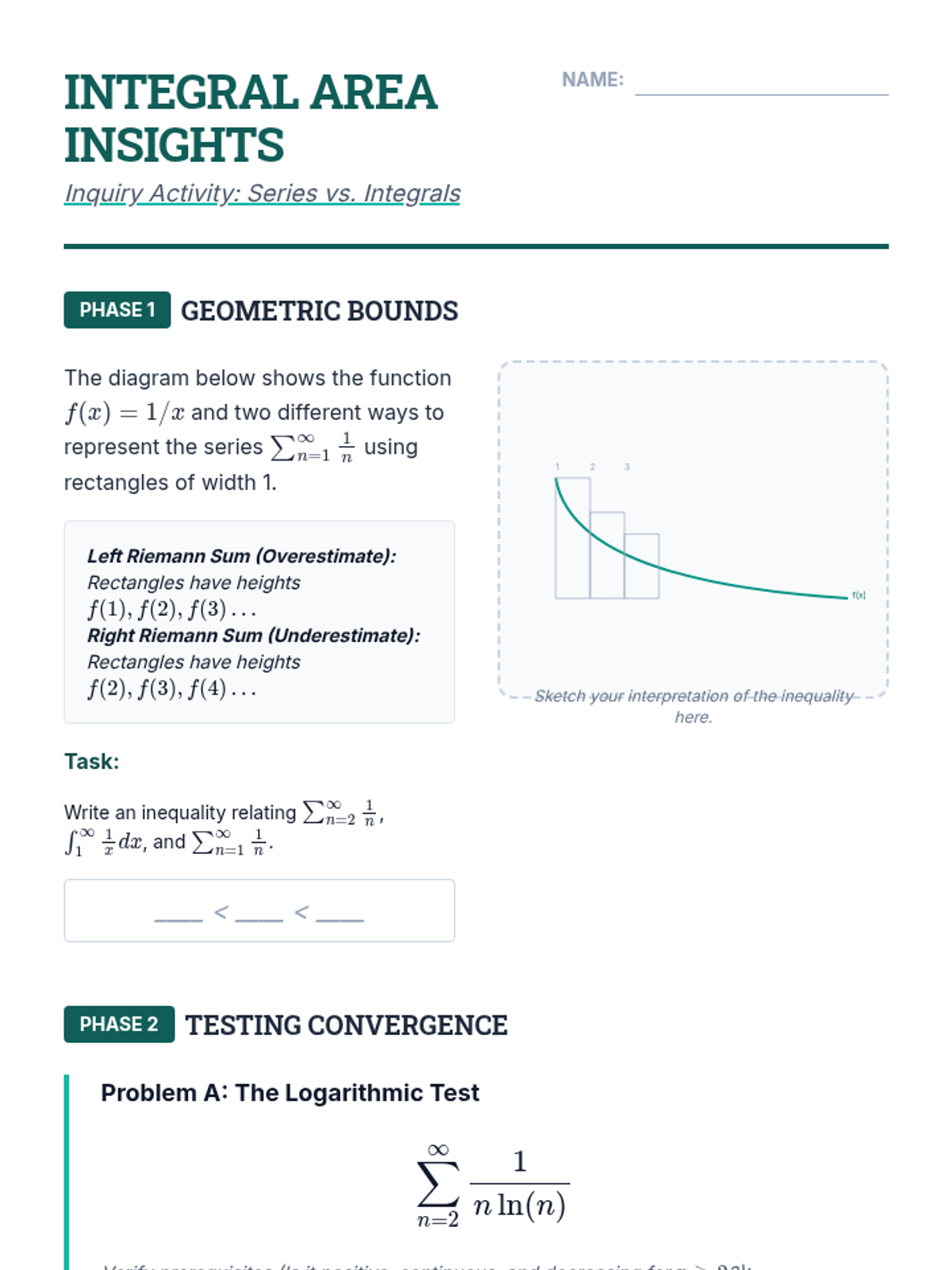
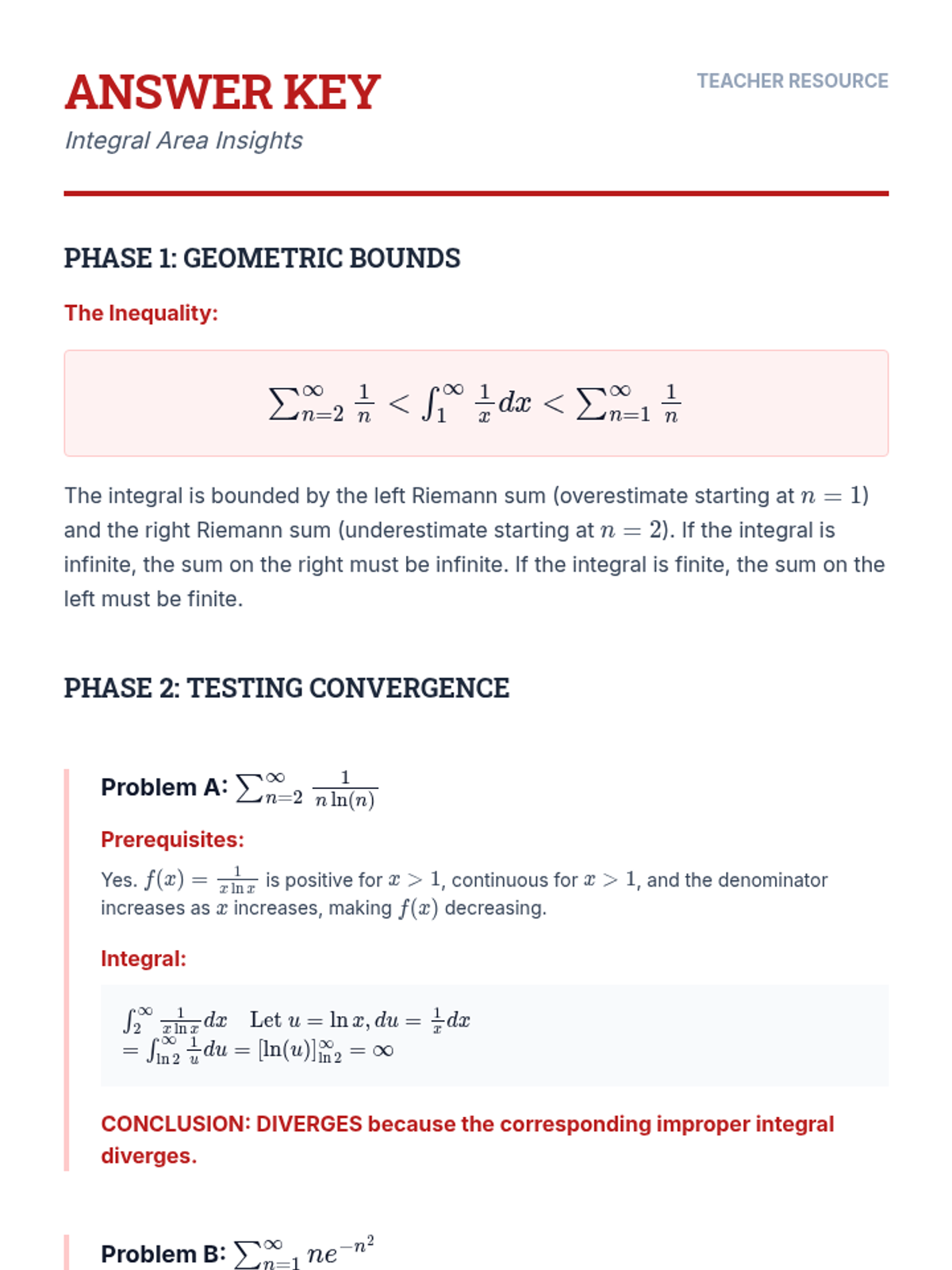
Connecting series to improper integrals, students use Riemann sums to visualize convergence criteria. They justify the Integral Test by comparing the area under a curve to the sum of series terms.
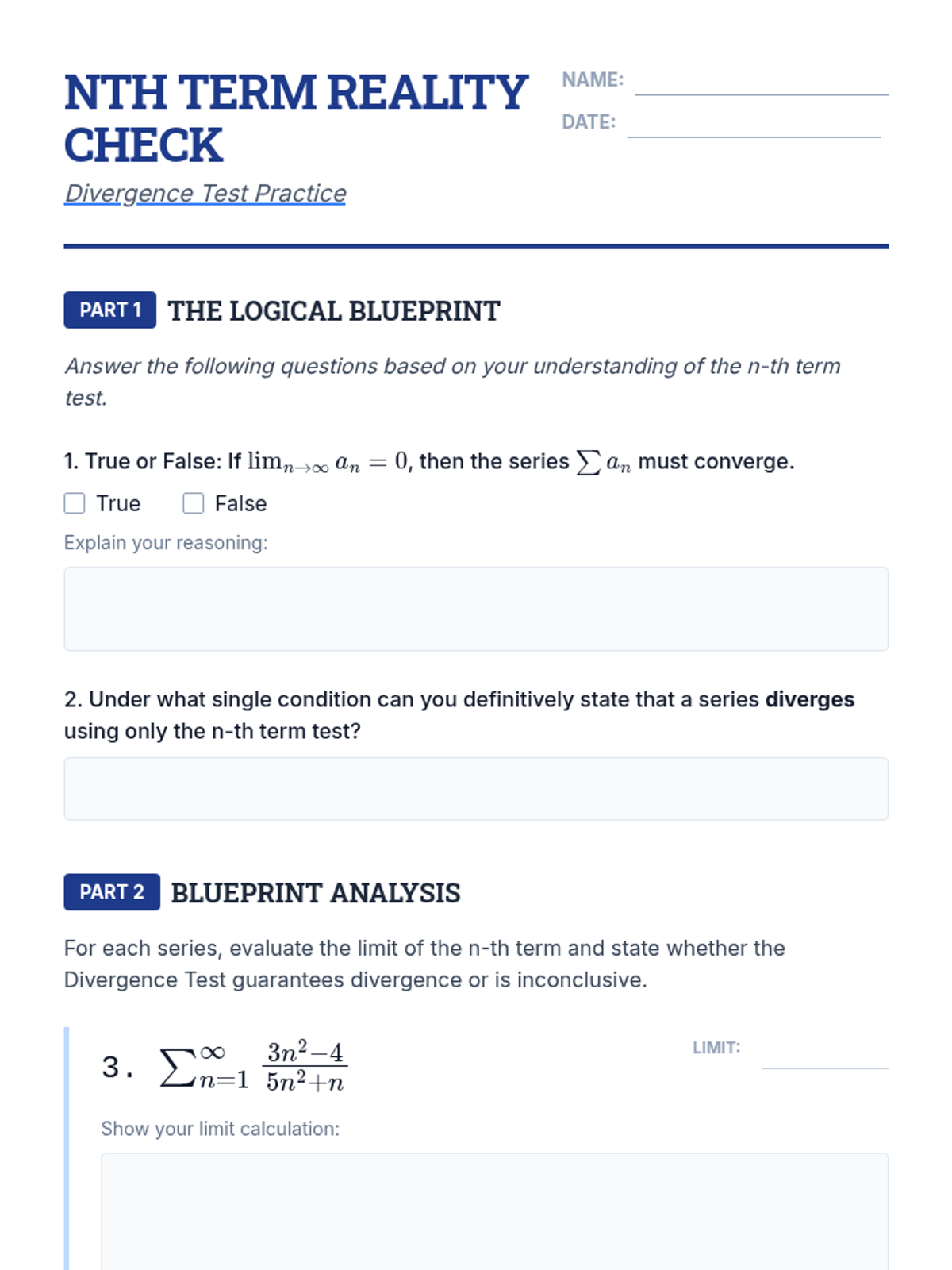
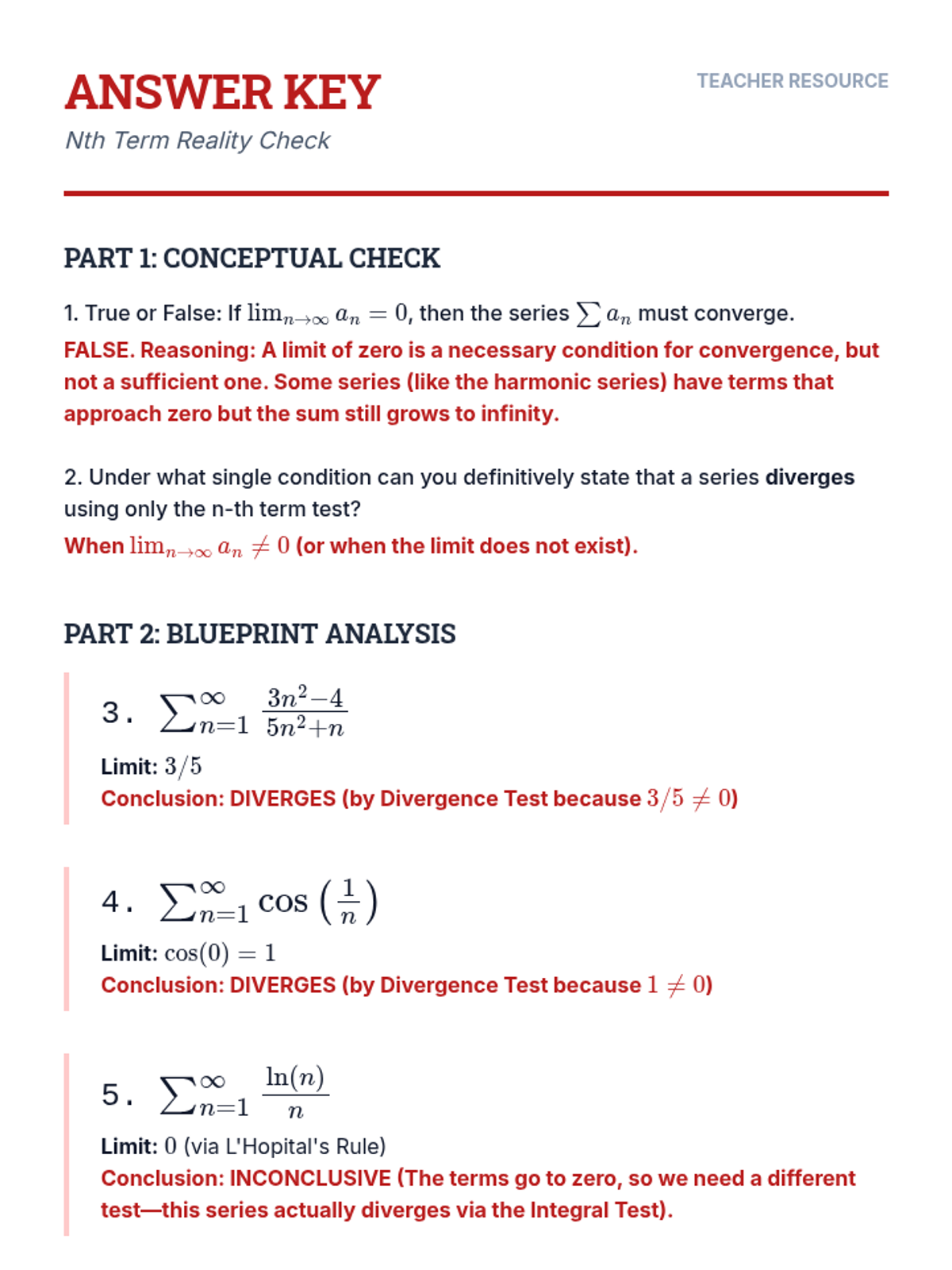
Students explore the n-th term test for divergence, distinguishing between the limit of terms and the sum of the series. They learn to identify divergent series quickly and understand the logic of necessity vs. sufficiency.
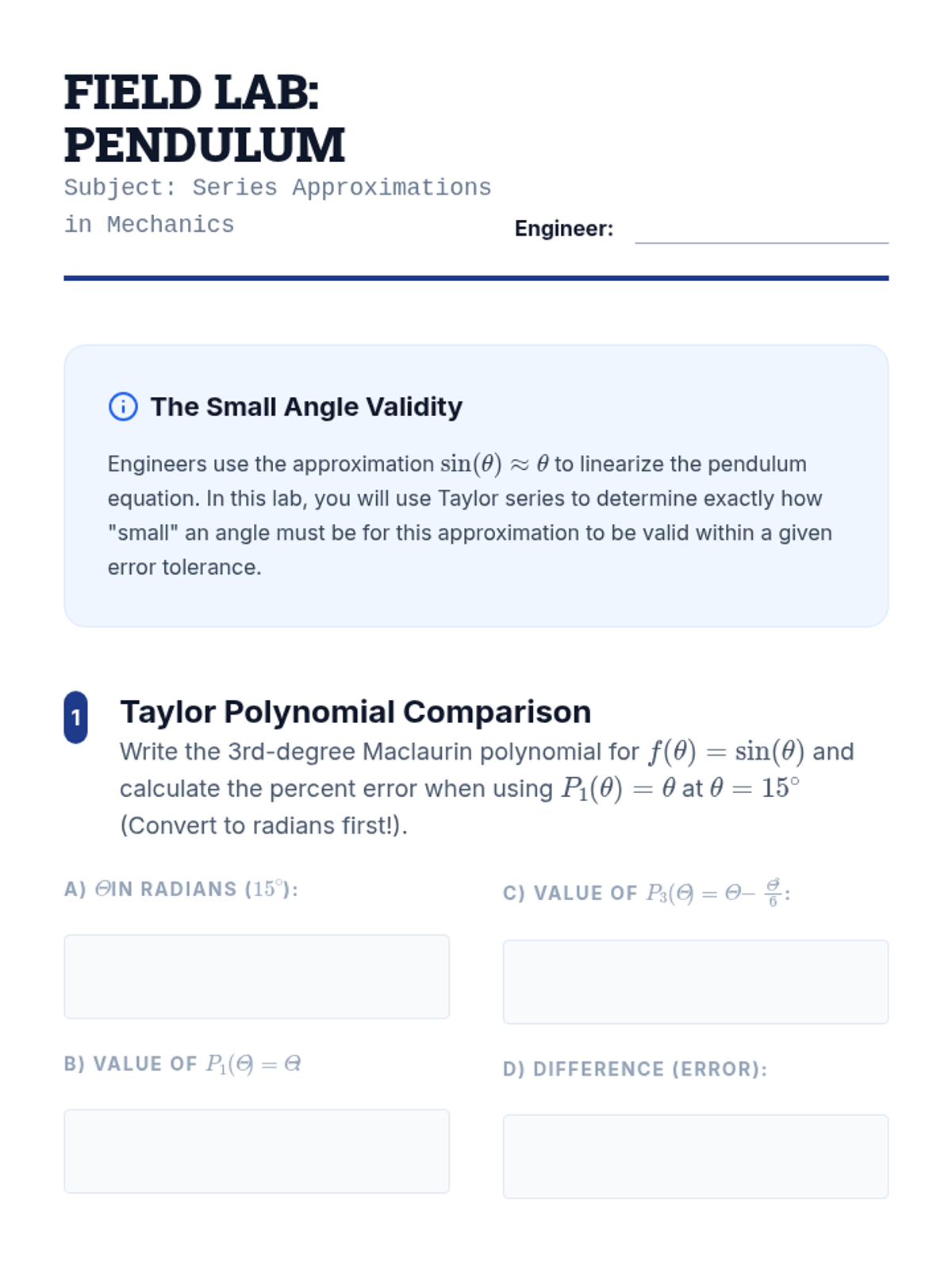
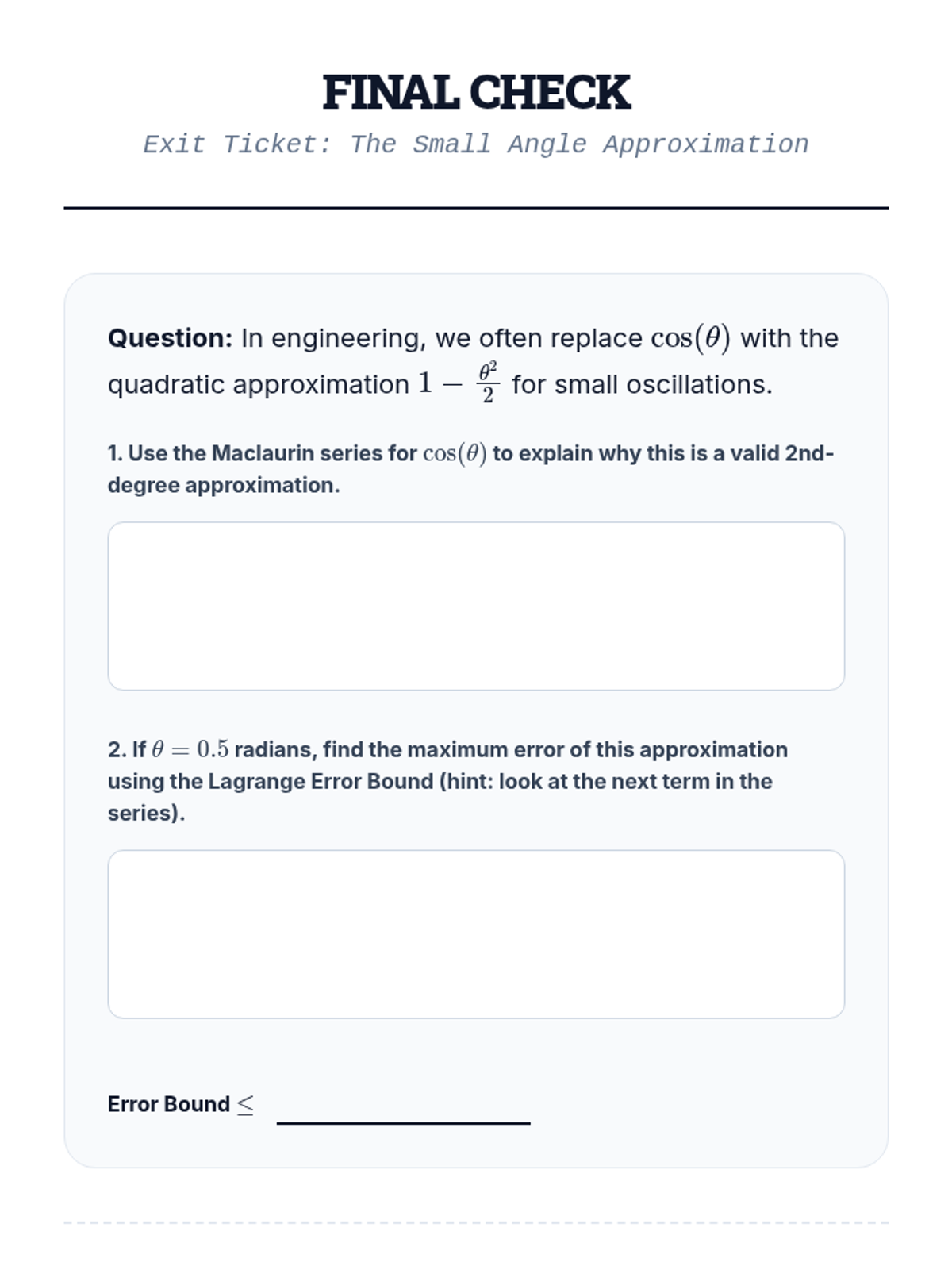
Applies power series to physical models, focusing on small-angle approximations and series solutions to differential equations.
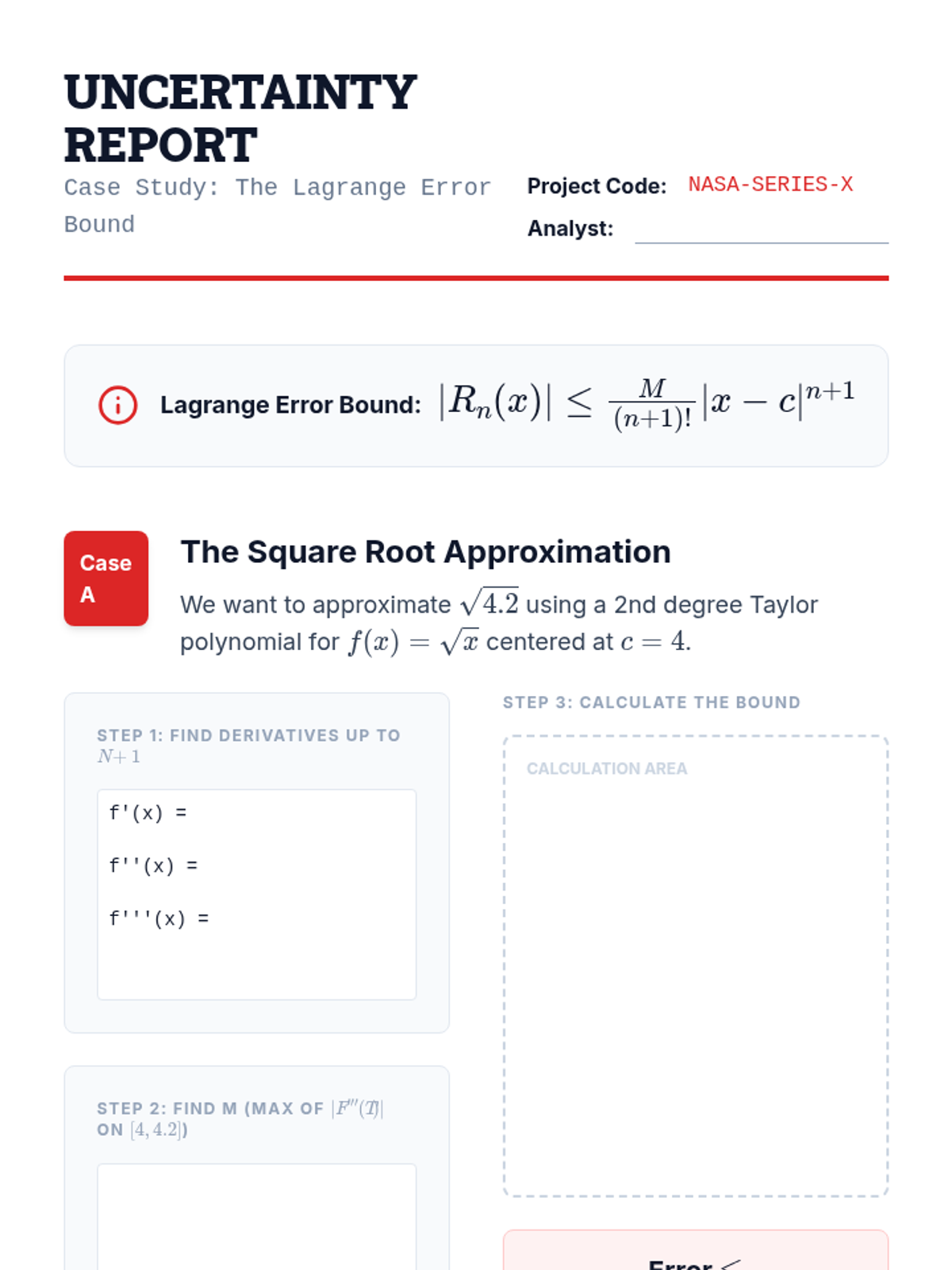
Focuses on the accuracy of approximations using Taylor's Theorem and the Lagrange Error Bound to quantify uncertainty.
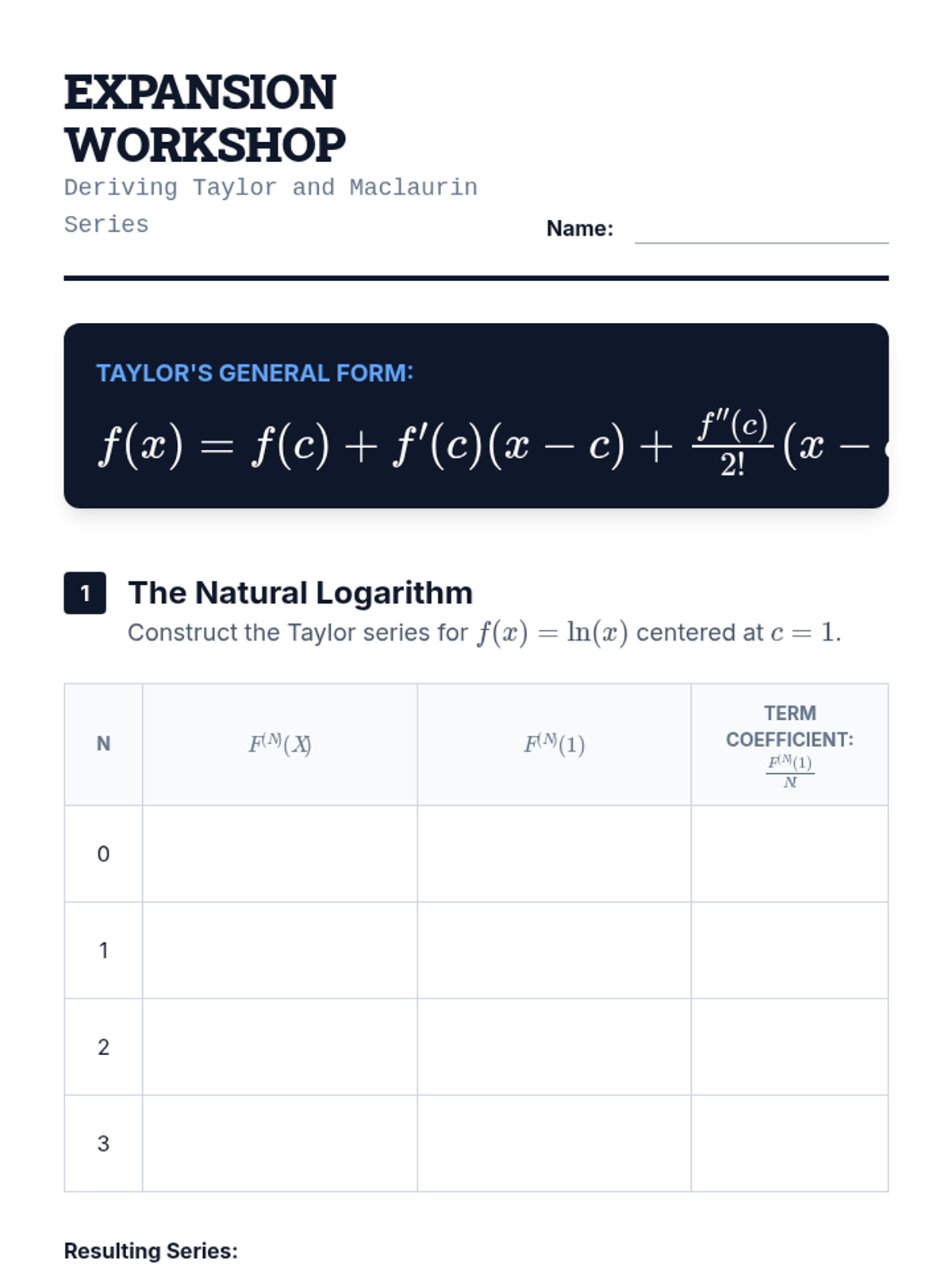
Formalizes the construction of Taylor and Maclaurin series for general differentiable functions and establishes common series representations.
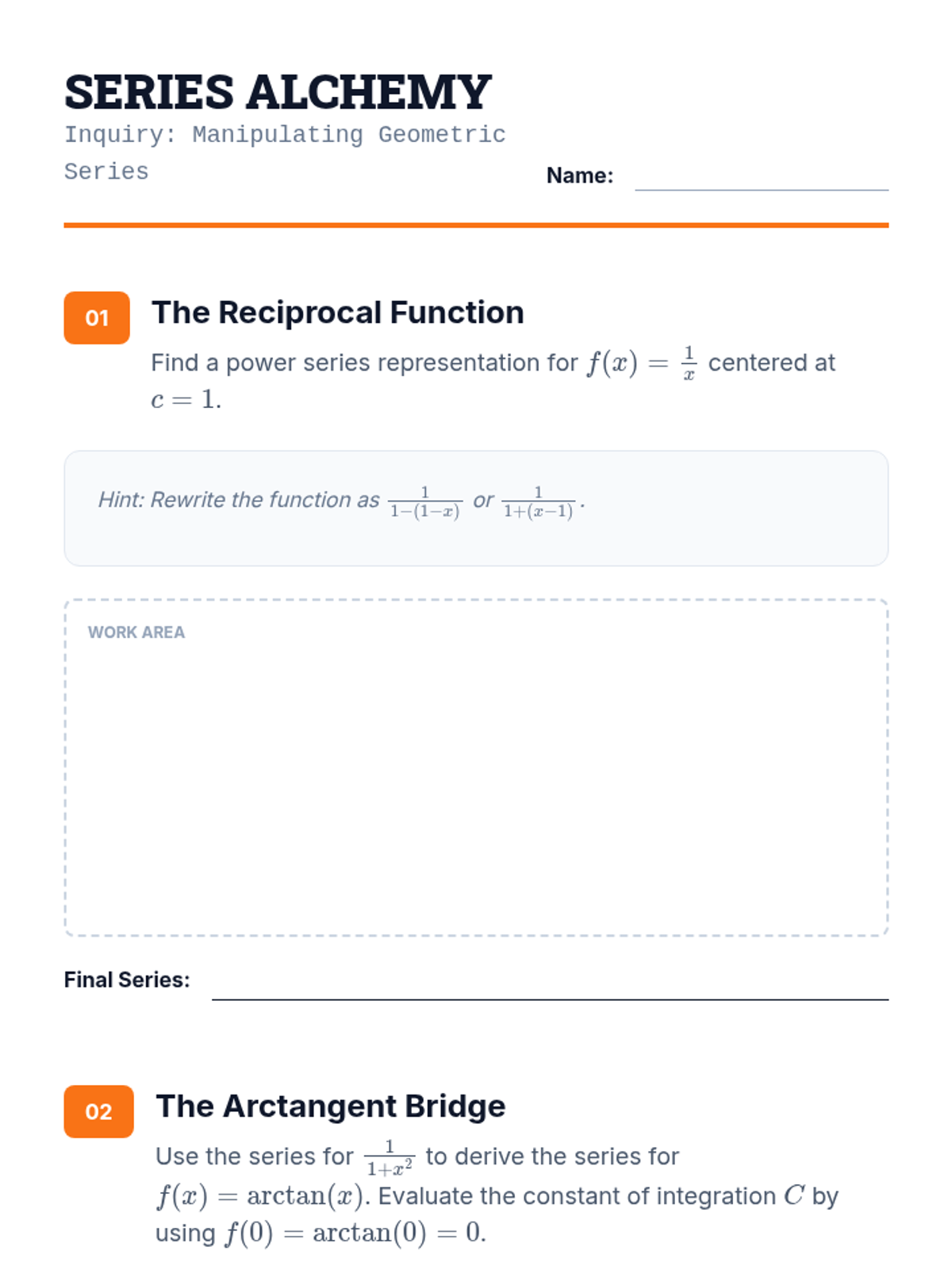
Explores the creation of new series from the geometric series through substitution, differentiation, and integration.
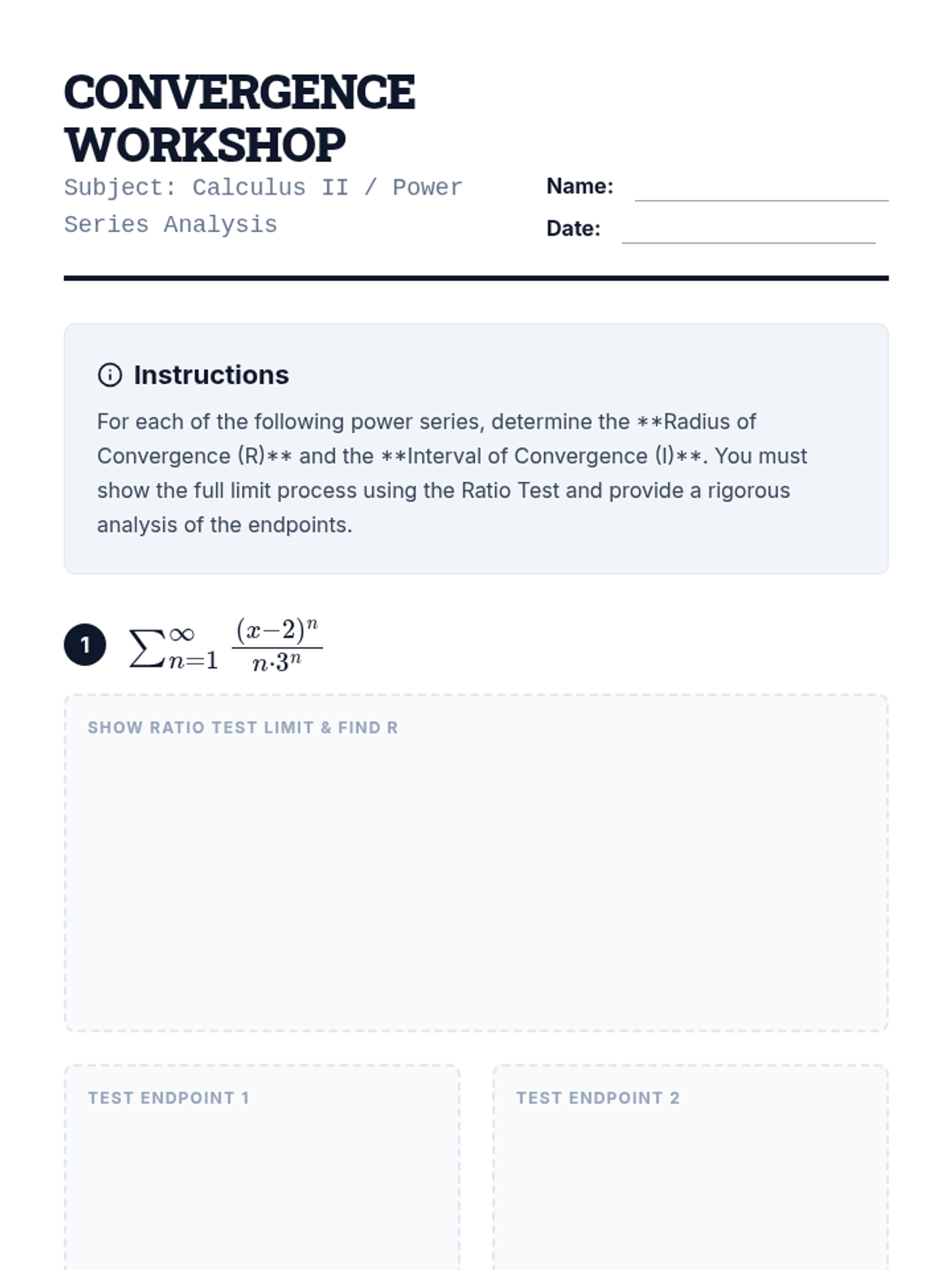
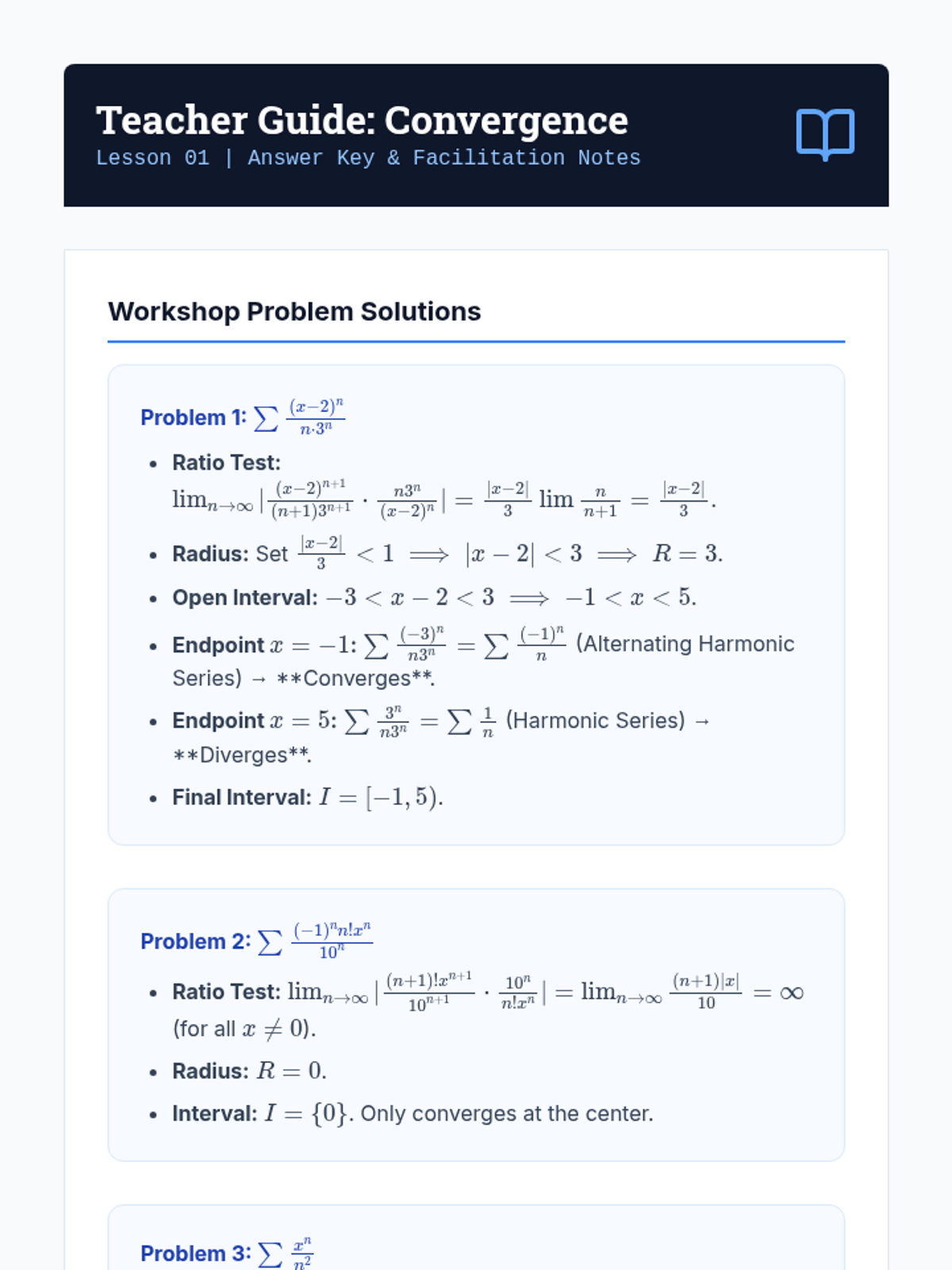
Introduces power series as functions and uses the Ratio Test to determine the interval of convergence, including rigorous endpoint analysis.
A capstone lesson synthesizing all previous skills to model and analyze 3D projectile trajectories and solve real-world clearance problems.
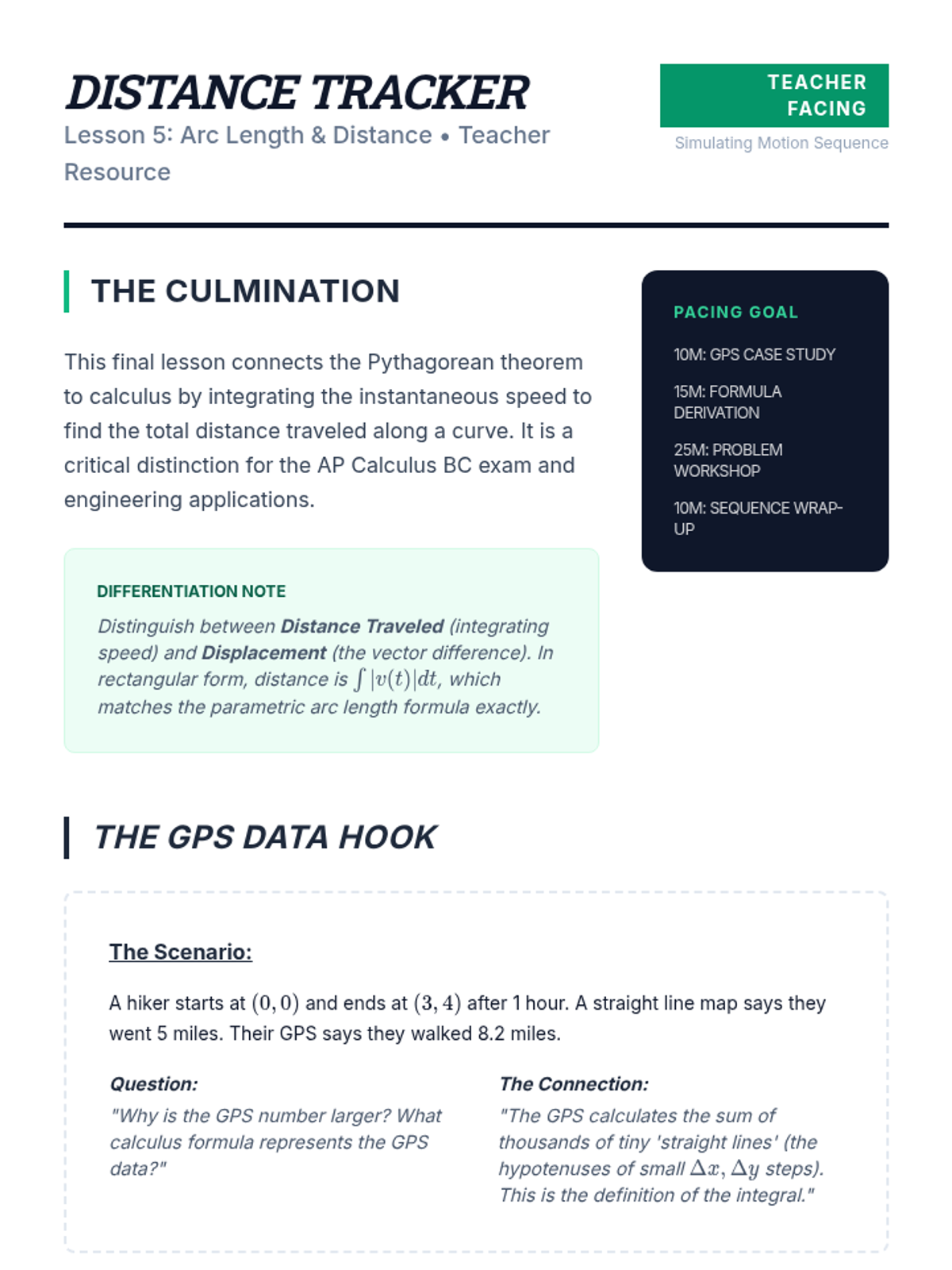
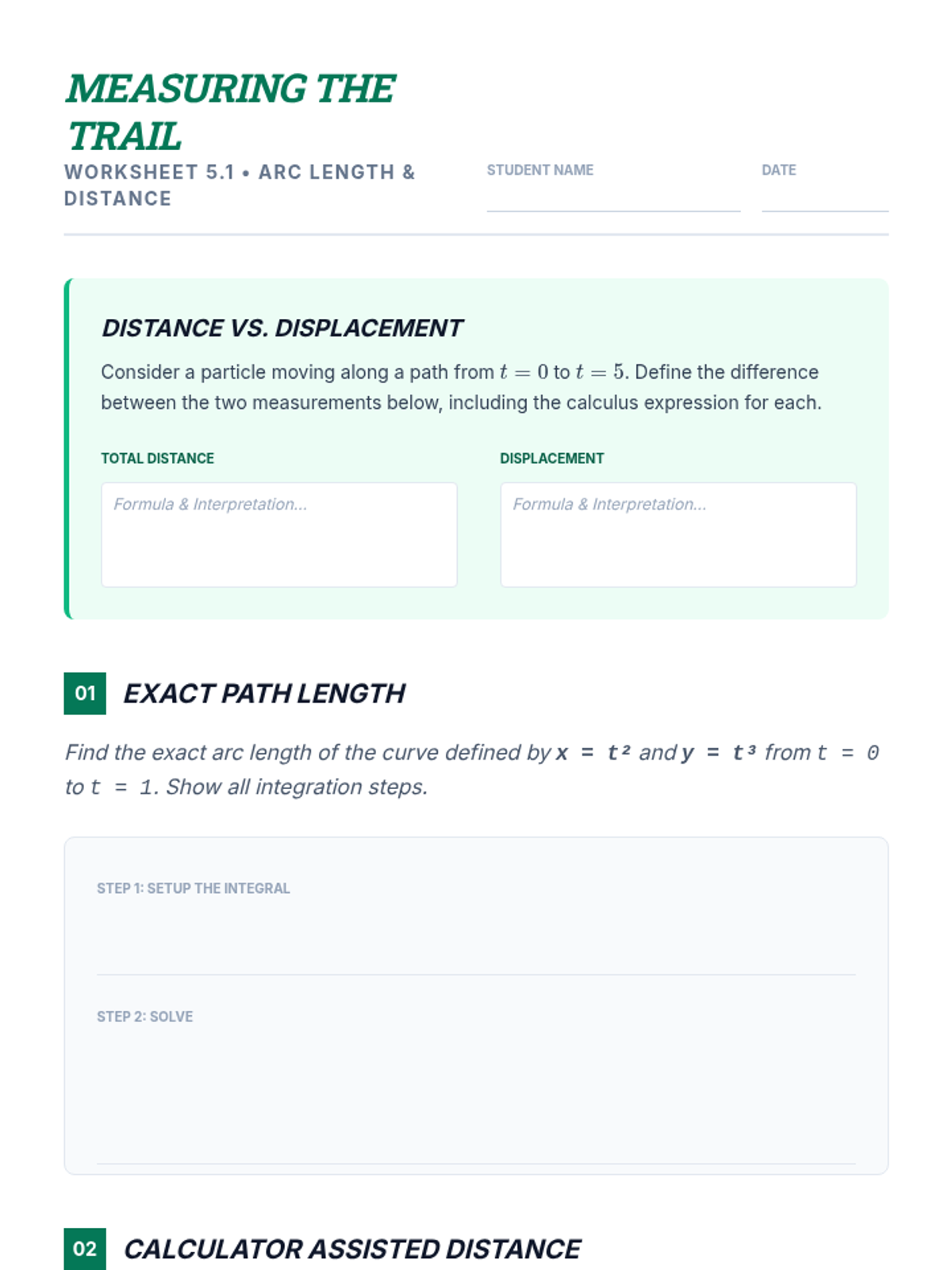
Students calculate the total distance traveled along curved paths using the arc length formula, distinguishing it from net displacement.