Tangent Trajectory Slides Tangent Trajectory
Calculating Instantaneous Rate of Change
Pre-Calculus / AP Calculus
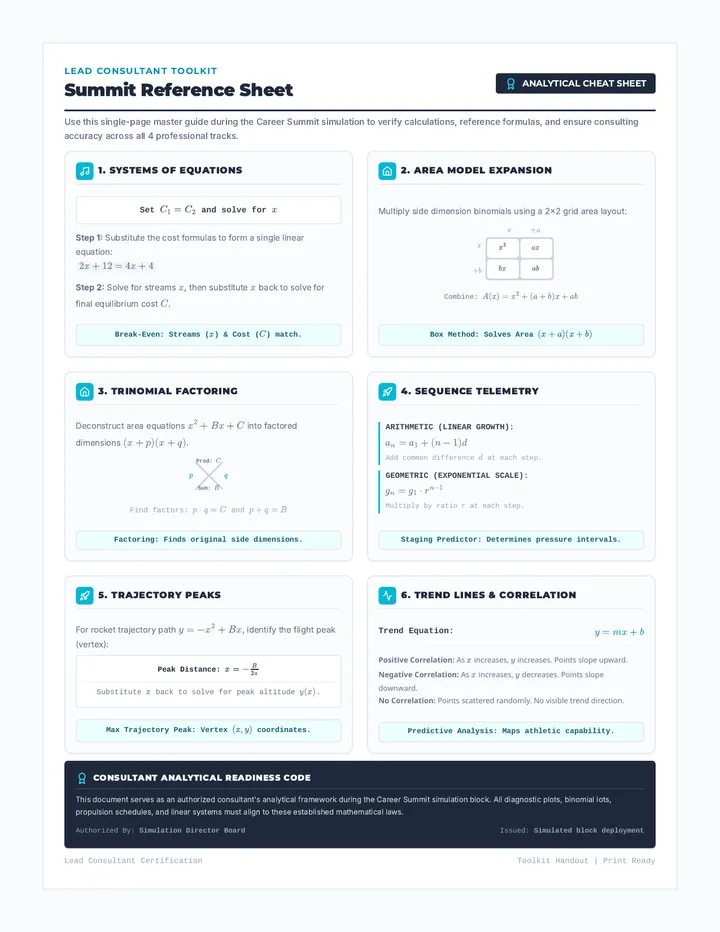
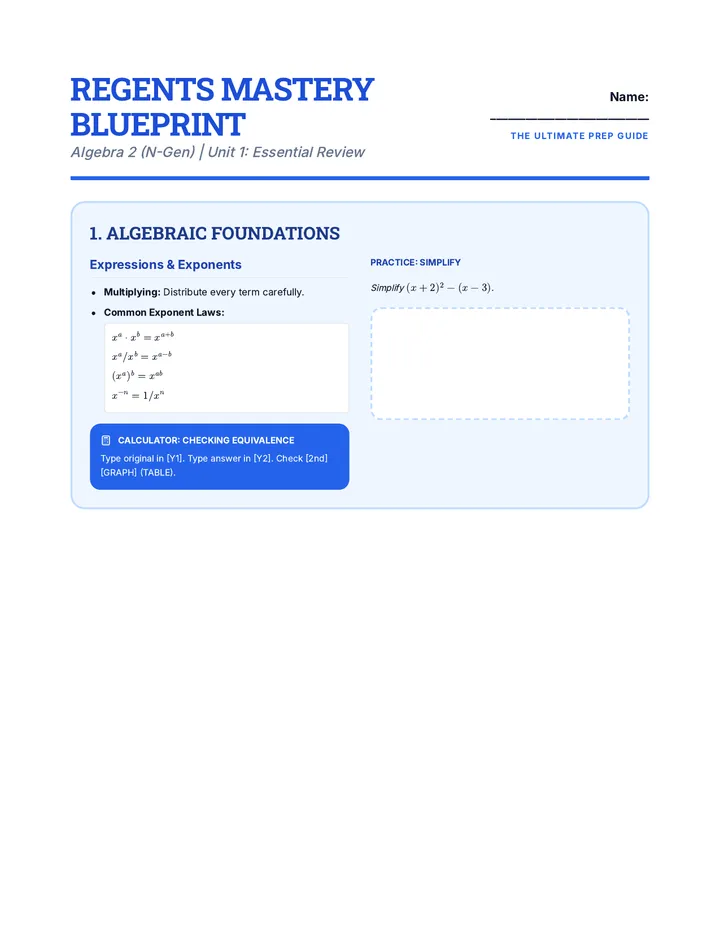
Warm-up: Algebraic Recall
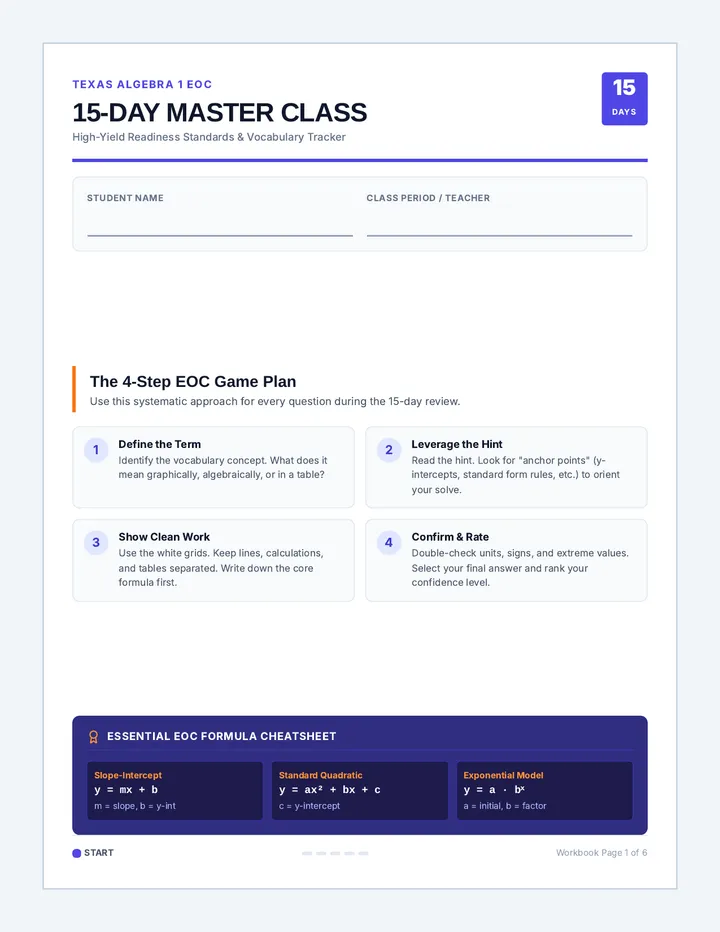
Factor the following difference of squares expressions:
\(x^2 - 9\)
\(x^2 - 25\)
Remember: \(a^2 - b^2 = (a - b)(a + b)\). This will be our "secret weapon" for today's calculus challenge!
Visualizing the Slope
Embedded media
Watch the algebraic steps from 3:00 to 4:40 carefully.
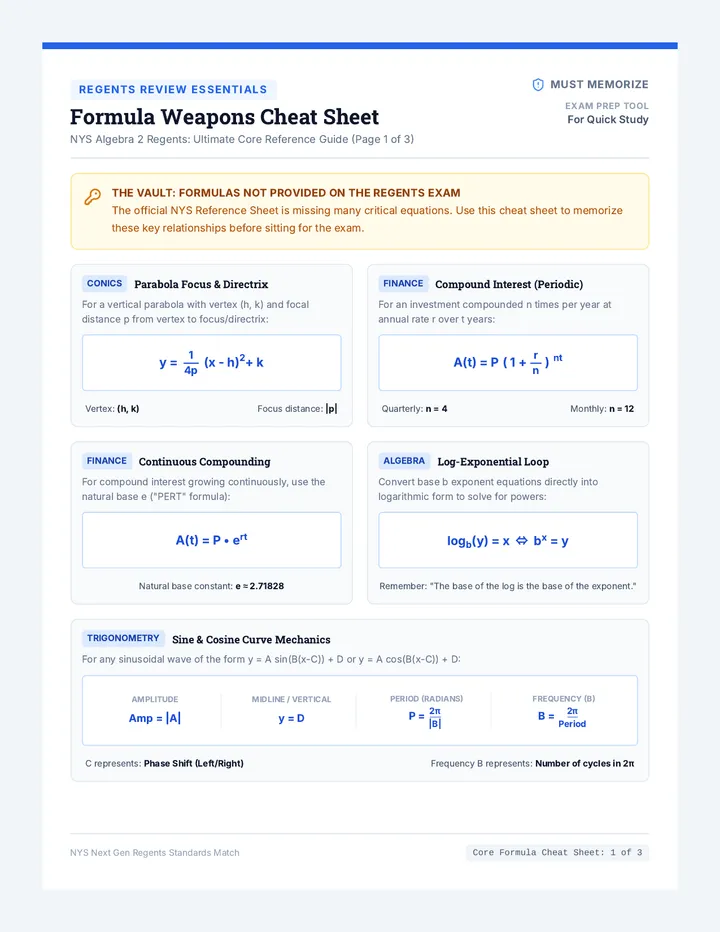
The Limit Definition
To find the slope of a curve at a single point \(a\), we find the limit of the secant slope as \(x\) approaches \(a\):
\[m = \lim_{x \to a} \frac{f(x) - f(a)}{x - a}\]
Goal
Find slope at one point
Challenge
Direct sub yields \(0/0\)
Solution
Factor and cancel \((x - a)\)
Main Activity: Algebraic Aerobics
The Challenge
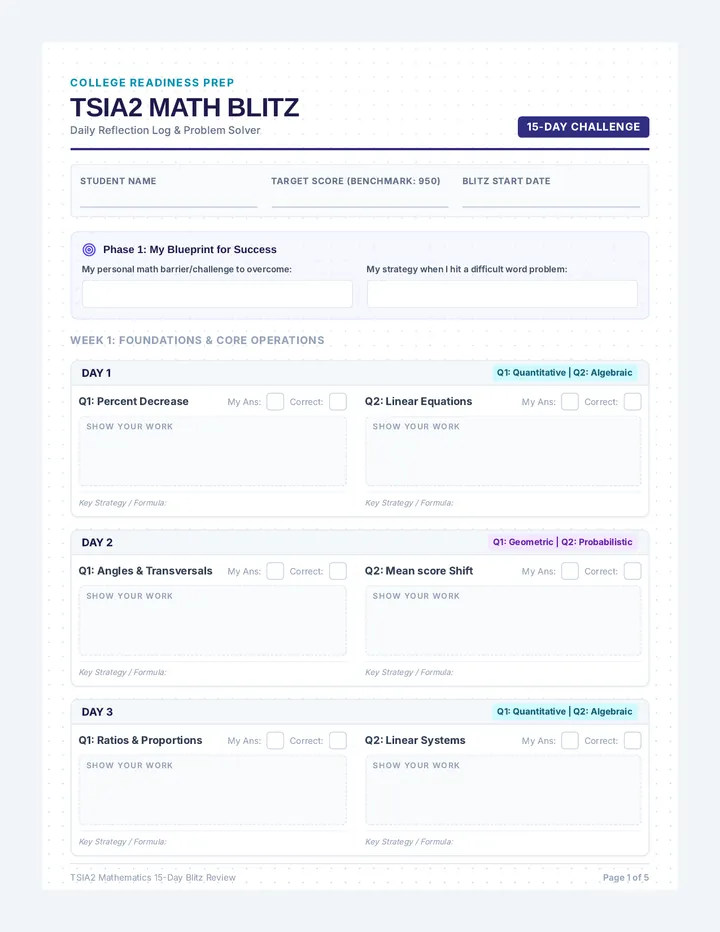
In pairs, find the slope of the tangent line for \(f(x) = x^2 + 1\) at three different points:
Round 1
\(x = 1\)
Round 2
\(x = 2\)
Round 3
\(x = 3\)
Rule: You MUST explicitly show the cancellation of the \((x-a)\) term!
Closure: Exit Ticket
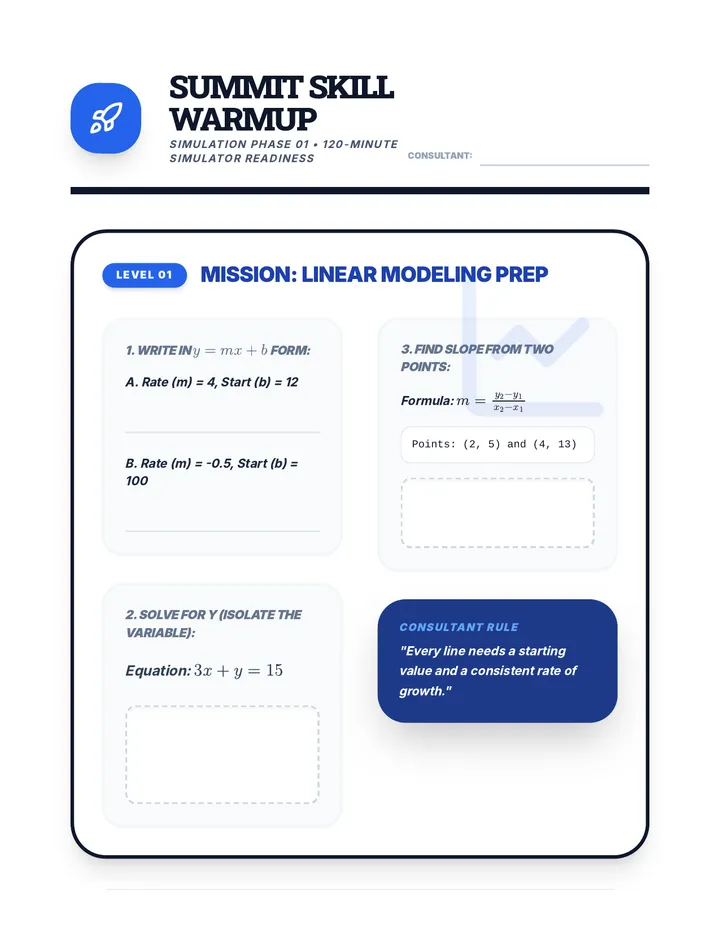
Setup the limit definition (formula only) for finding the slope of:
\(f(x) = x^3\)
at \(x = 2\)
You have 5 minutes to complete and turn this in. Focus on accurate notation!
Algebraic Aerobics Worksheet Algebraic Aerobics
Instantaneous Rate of Change Practice
Name
Date
Warm-up: Difference of Squares
1. Factor: \(x^2 - 9\)
2. Factor: \(x^2 - 25\)
Video Takeaways (3:00 - 4:40)
Write the definition for the slope of a curve at point \(a\):
\(m = \)
What happened when we tried to plug in \(x = 4\) directly in the video example?
Algebraic Aerobics: The Tangent Sprint
For the function \(f(x) = x^2 + 1\), find the slope of the tangent line at each given \(x\)-value. You must show the cancellation of \((x-a)\).
Problem 1: \(x = 1\)
\(f(1) = 2\)
Setup & Substitution
Simplify & Factor
Cancel & Evaluate
Problem 2: \(x = 2\)
\(f(2) = 5\)
Setup & Substitution
Simplify & Factor
Cancel & Evaluate
Problem 3: \(x = 3\)
\(f(3) = 10\)
Setup & Substitution
Simplify & Factor
Cancel & Evaluate
Pattern Recognition
Look at your results for \(x = 1, 2, 3\). Do you notice a pattern in the final slopes? If we found the slope at \(x = 4\), what would you predict it to be?
Cube Setup Exit Ticket Exit Ticket: The Cube setup
Tangent Trajectory • Lesson Closure
Name: ____________________
Given the function \(f(x) = x^3\), write the limit definition (the setup only!) to find the slope of the tangent line at \(x = 2\).
\[m = \lim_{x \to \dots} \dots \]
Think: What is \(a\)? What is \(f(a)\)? Plug them into the formula.
Exit Ticket: The Cube setup
Tangent Trajectory • Lesson Closure
Name: ____________________
Given the function \(f(x) = x^3\), write the limit definition (the setup only!) to find the slope of the tangent line at \(x = 2\).
\[m = \lim_{x \to \dots} \dots \]
Think: What is \(a\)? What is \(f(a)\)? Plug them into the formula.
Tangent Trajectory Teacher Guide Teacher Guide
Tangent Trajectory: Instantaneous Rate of Change
Level: Pre-Calc / AP Calculus
Duration: 50 Minutes
Learning Objectives
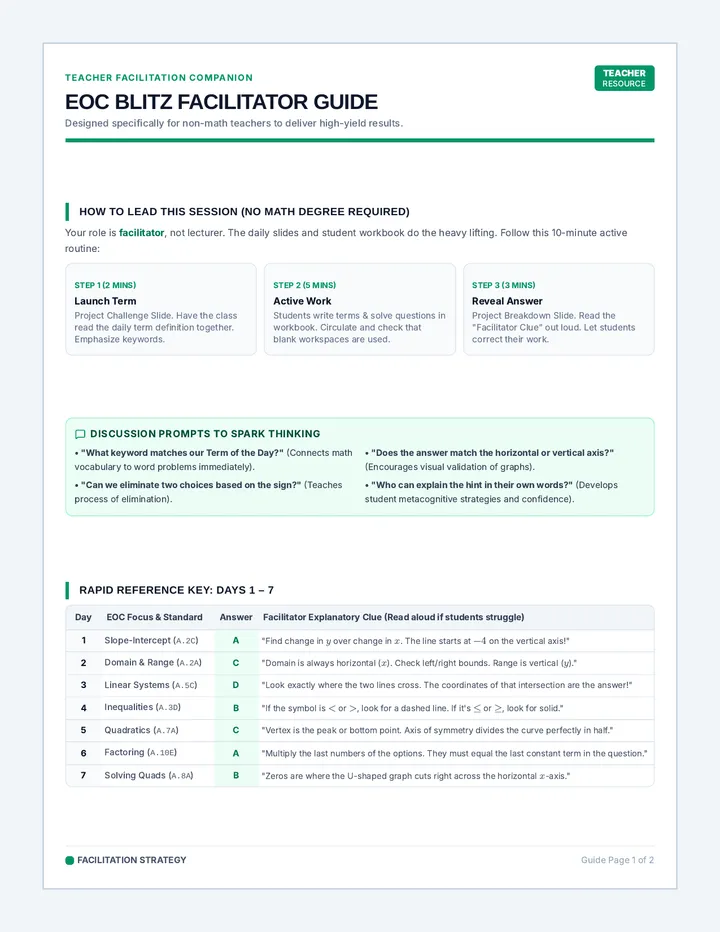
Identify the limitations of the Algebra 1 slope formula for single points.
Calculate the instantaneous rate of change (slope of a tangent line) using the limit of the difference quotient.
Apply algebraic manipulation (factoring difference of squares) to resolve indeterminate forms (\(0/0\)).
Materials
• Tangent Trajectory Slides
• Algebraic Aerobics Worksheet
• Cube Setup Exit Ticket
• Calculator (optional for patterns)
Lesson Pacing
00-05 min
Warm-up: Difference of Squares
Students recall factoring \(x^2-9 = (x-3)(x+3)\). This is crucial for the "Aerobics" activity later.
05-15 min
Video Discovery
Watch the video (3:00-4:40). Focus on the "Algebraic Step" where the robot cancels terms to avoid \(0/0\).
15-40 min
Main Activity: Algebraic Aerobics
Students work in pairs. Key Check: Ensure they are substituting \(a\) and \(f(a)\) correctly before factoring.
40-45 min
Pattern Debrief
Discuss the slopes found (2, 4, 6). Ask: "If the slope is \(2x\), what's happening mathematically?" (Hinting at the Power Rule).
45-50 min
Closure: Exit Ticket
Setup only for \(x^3\). This prepares them for next lesson's harder factoring (sum/diff of cubes).
Master Answer Key
Algebraic Aerobics
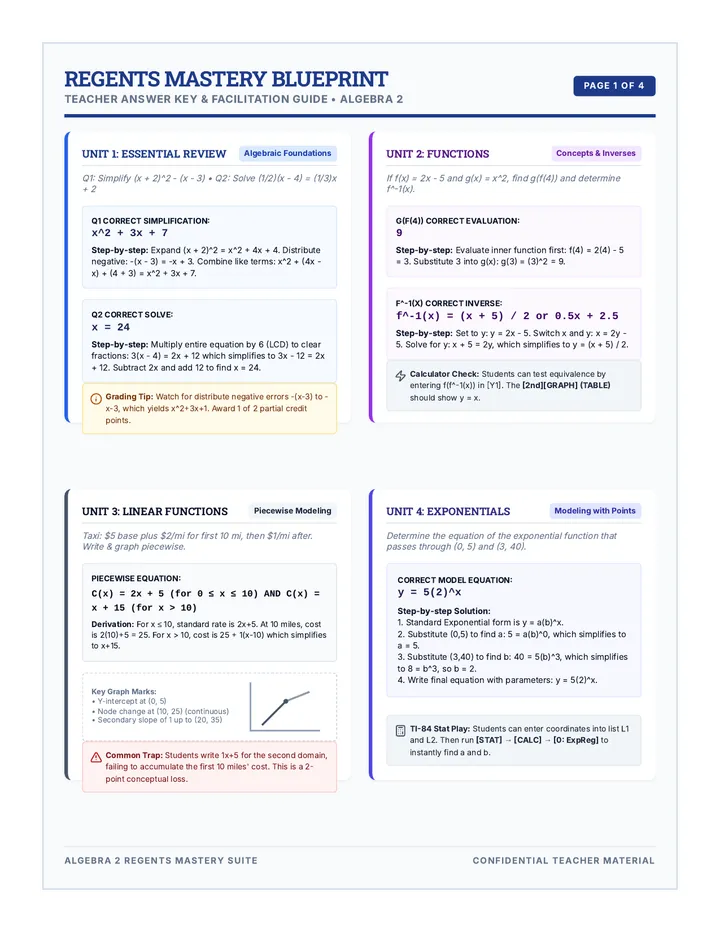
Problem 1: \(x=1, f(1)=2\)
\(\lim_{x \to 1} \frac{(x^2+1)-2}{x-1} = \lim_{x \to 1} \frac{x^2-1}{x-1} = \lim_{x \to 1} (x+1) = \mathbf{2}\)
Problem 2: \(x=2, f(2)=5\)
\(\lim_{x \to 2} \frac{(x^2+1)-5}{x-2} = \lim_{x \to 2} \frac{x^2-4}{x-2} = \lim_{x \to 2} (x+2) = \mathbf{4}\)
Problem 3: \(x=3, f(3)=10\)
\(\lim_{x \to 3} \frac{(x^2+1)-10}{x-3} = \lim_{x \to 3} \frac{x^2-9}{x-3} = \lim_{x \to 3} (x+3) = \mathbf{6}\)
Exit Ticket
Setup for \(f(x) = x^3\) at \(x = 2\):
\[m = \lim_{x \to 2} \frac{x^3 - 8}{x - 2}\]
Note: Students only need to provide the setup, not the solution.
Misconception Alert
Students often forget to evaluate \(f(a)\) and just put \(x^2+1\) in the numerator without the subtraction. Remind them: \(f(x) - f(a)\).