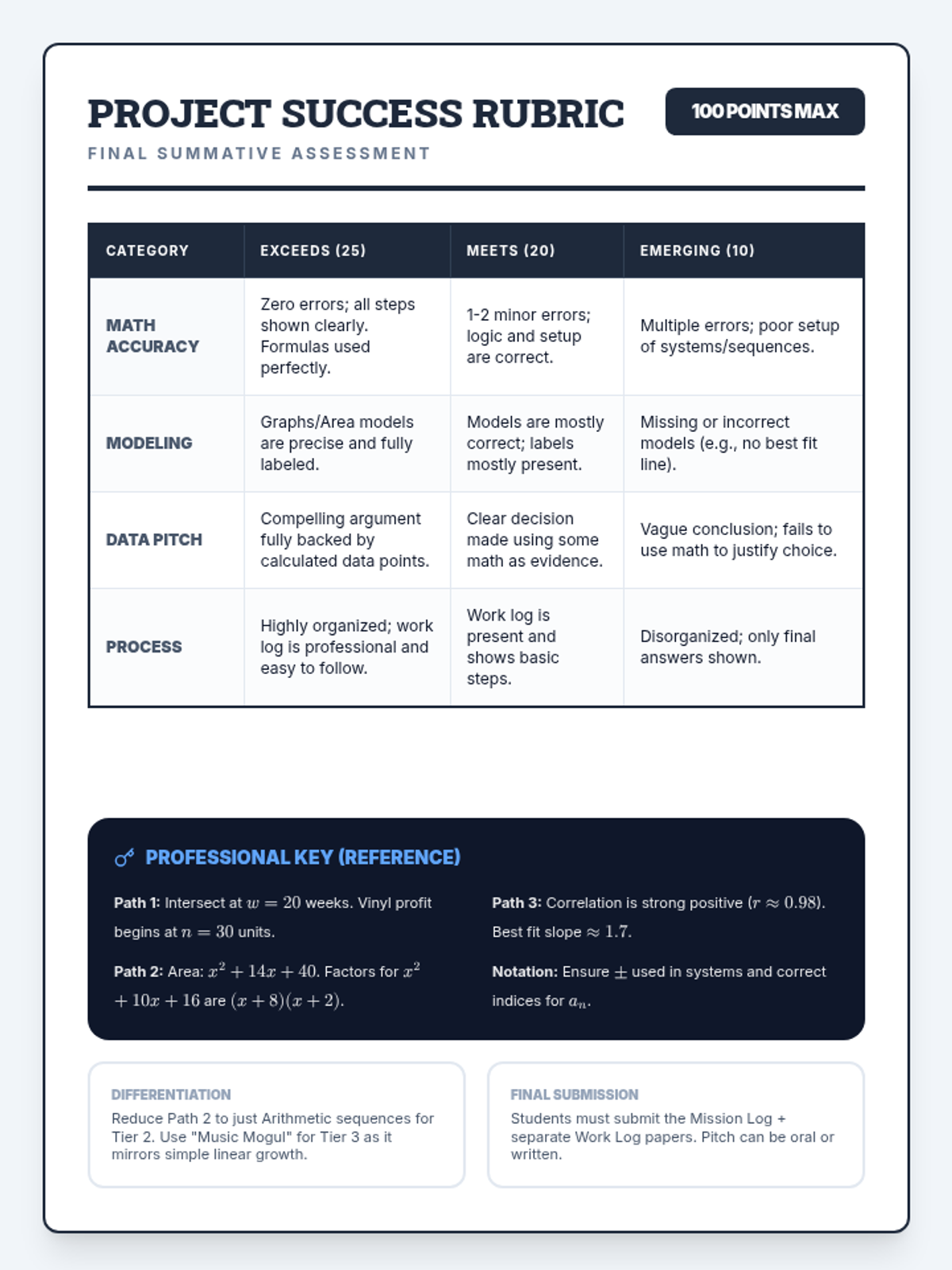
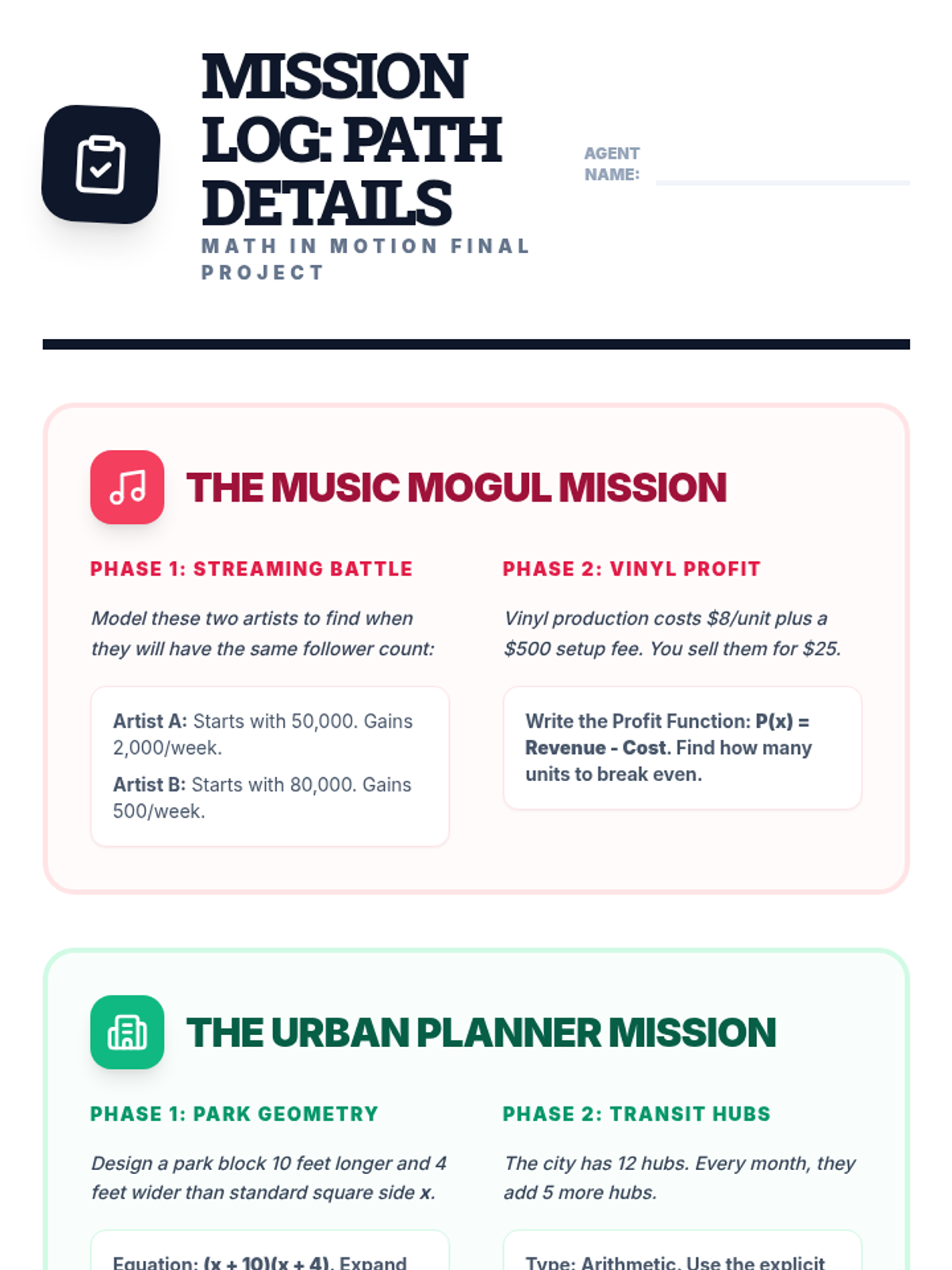
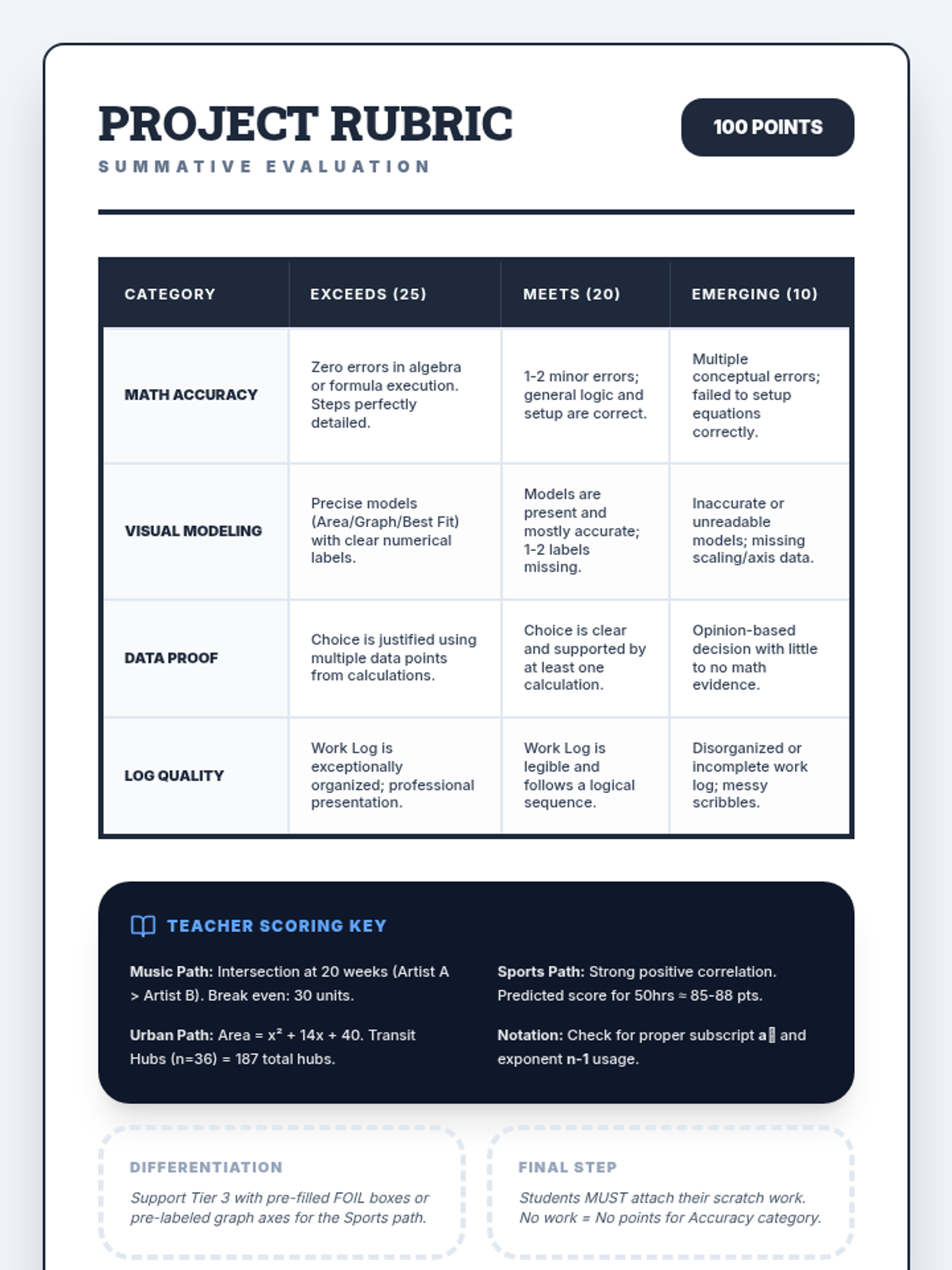
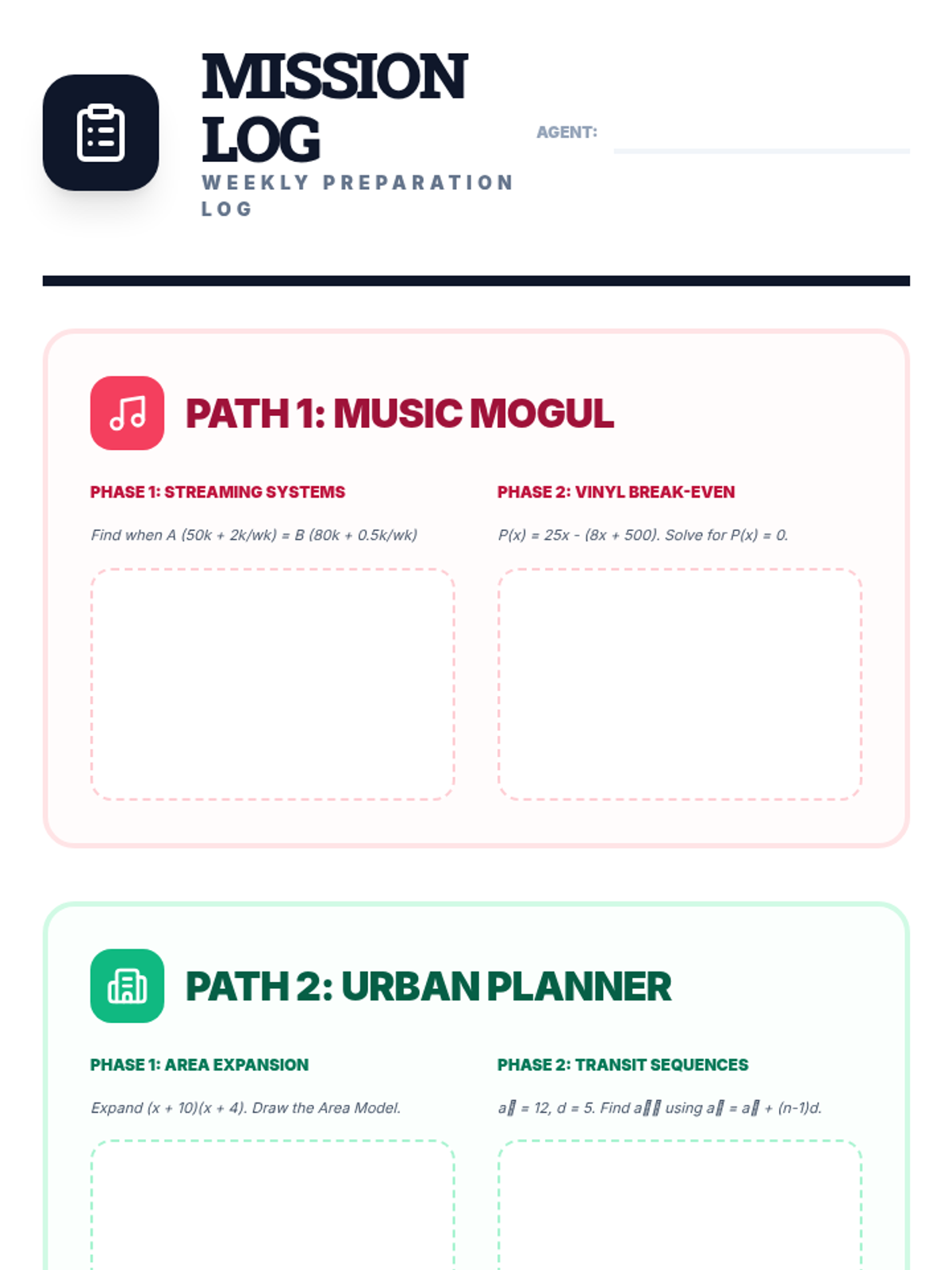
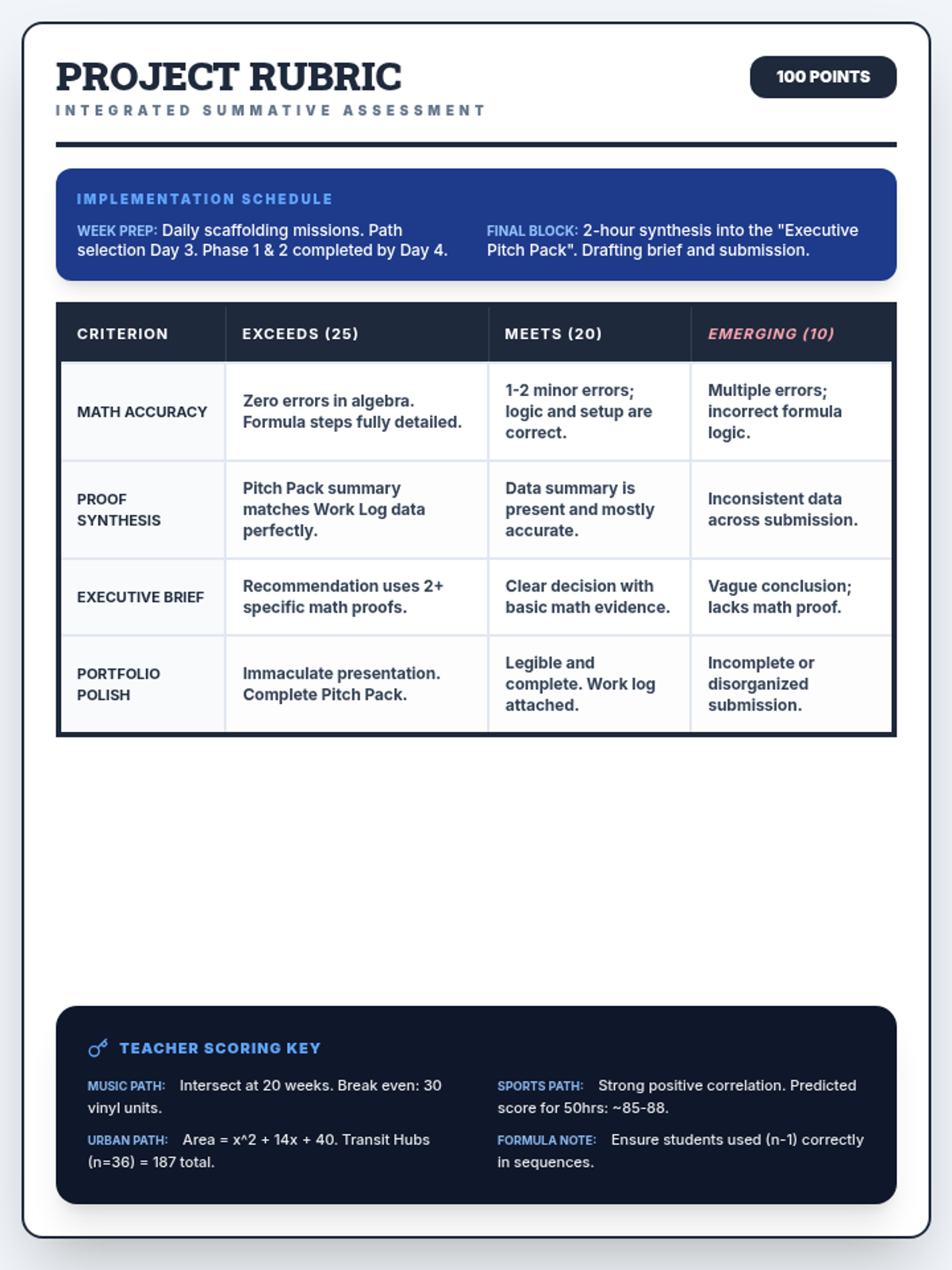
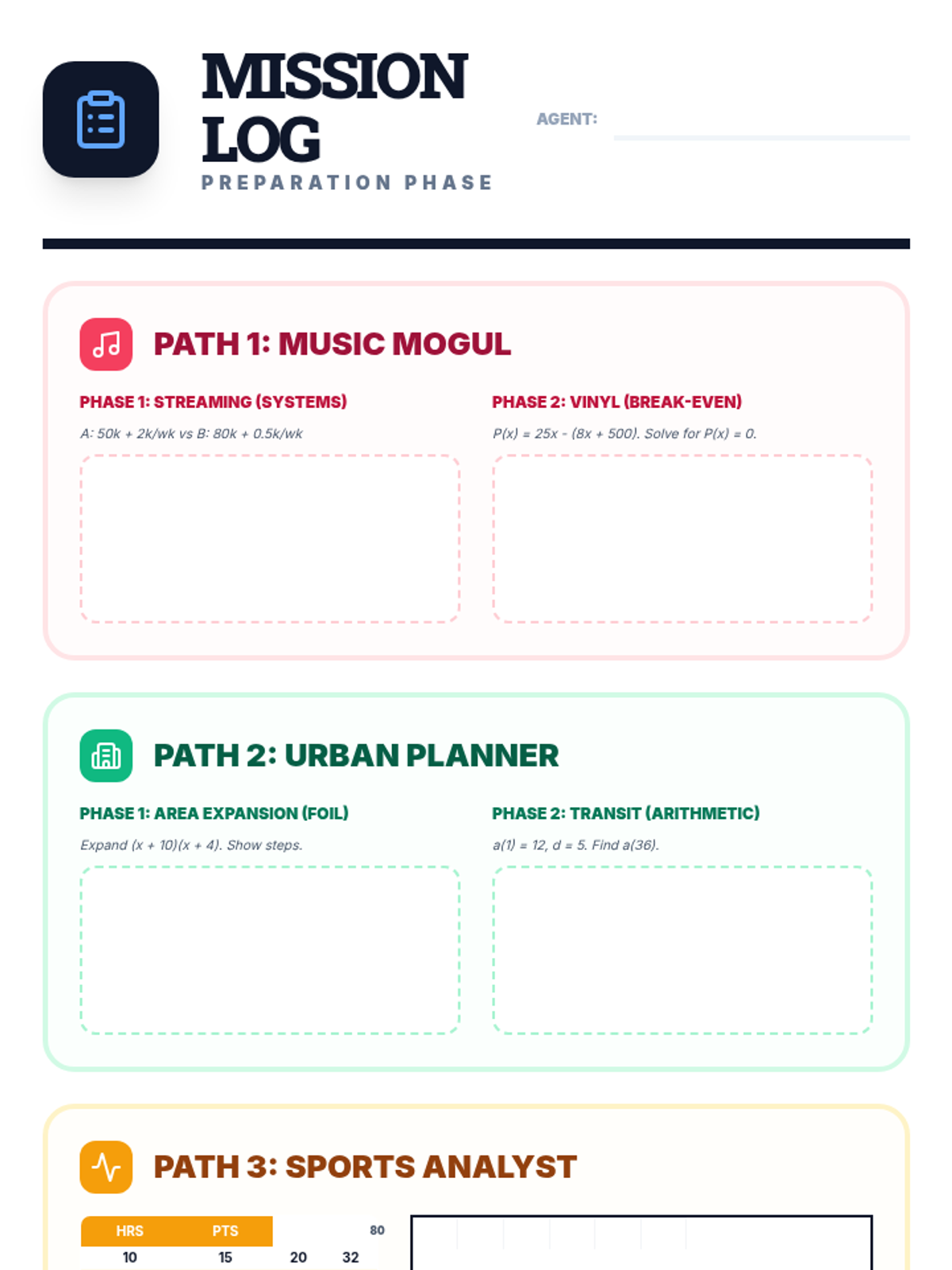
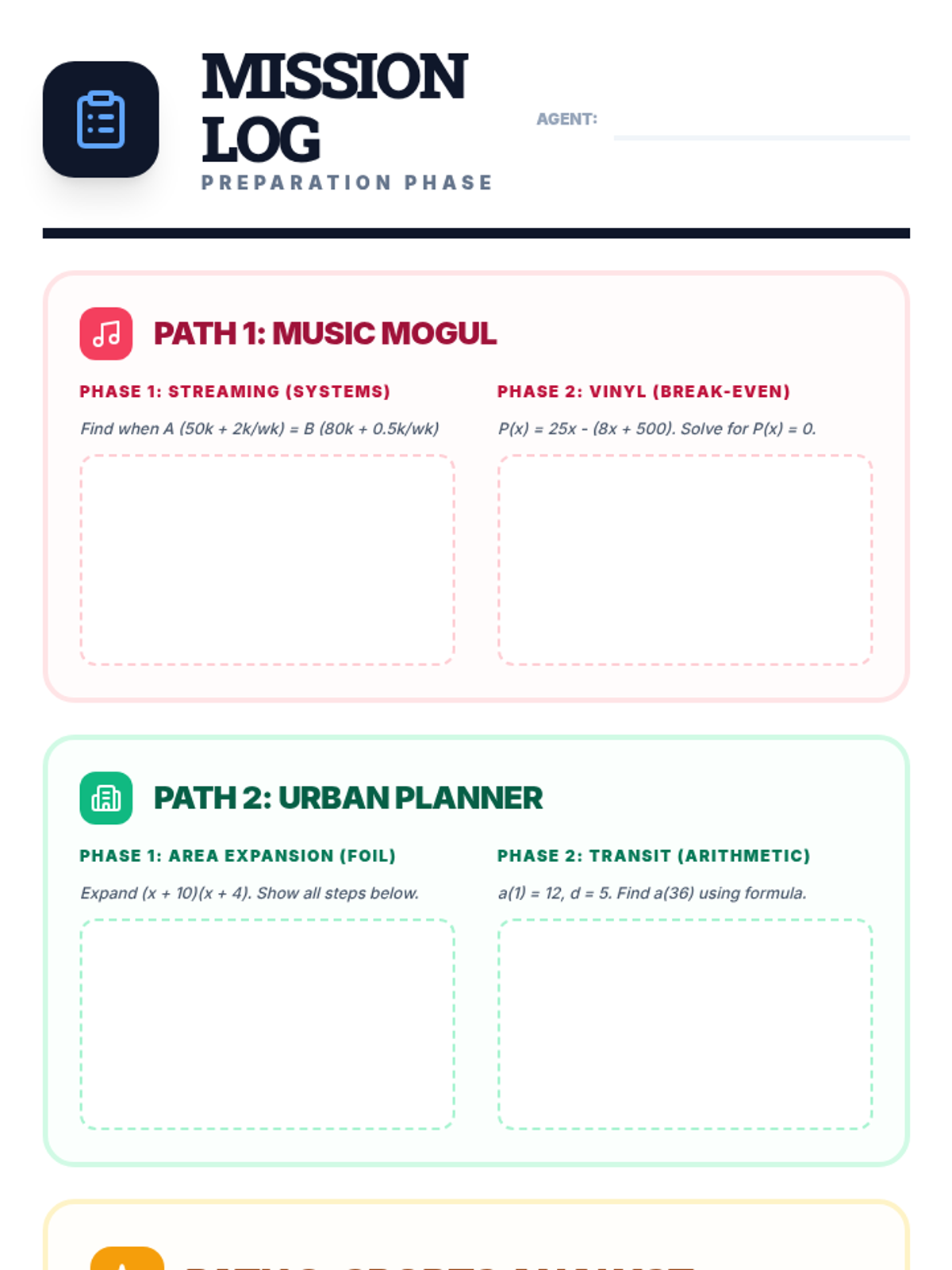
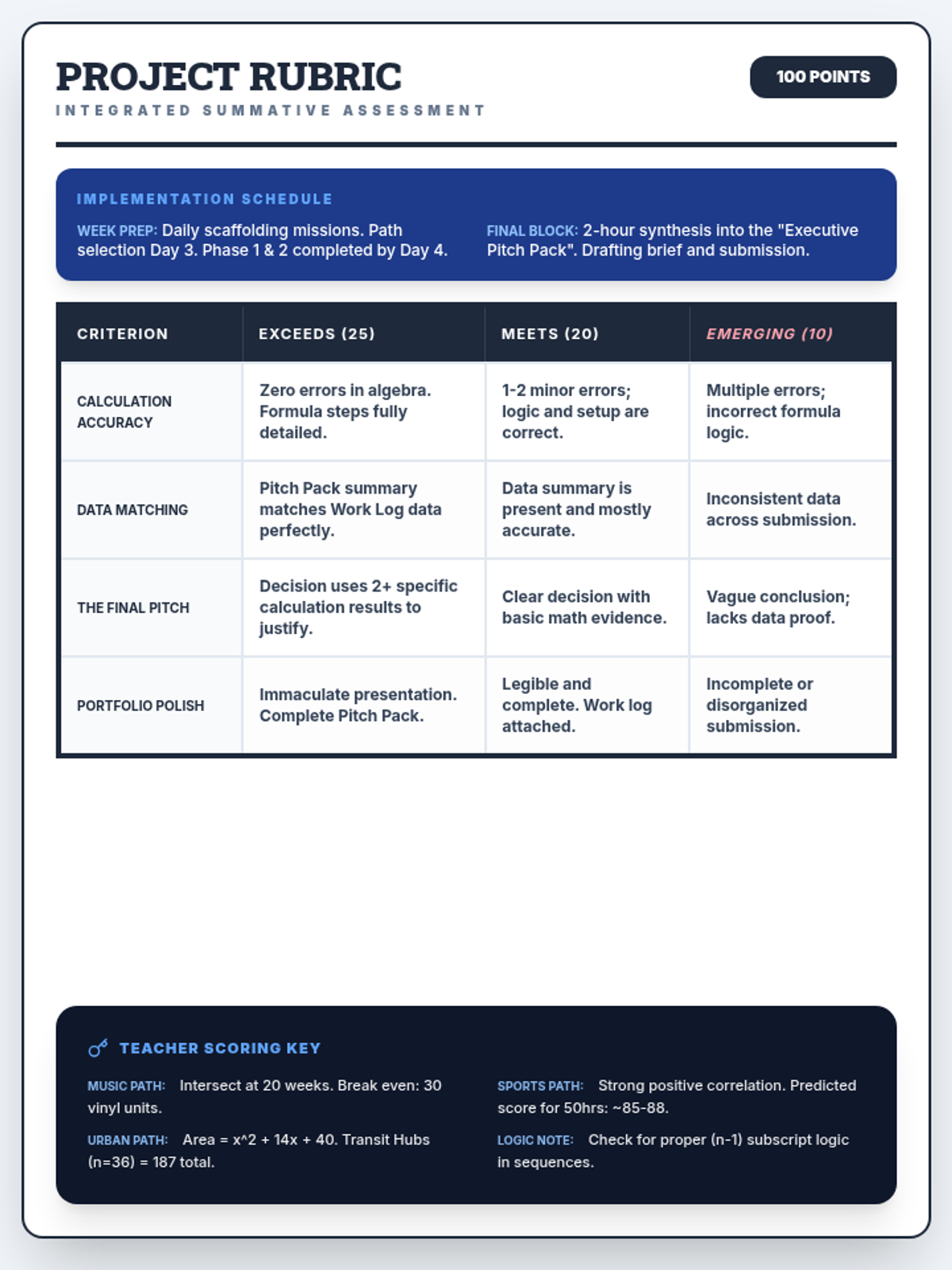
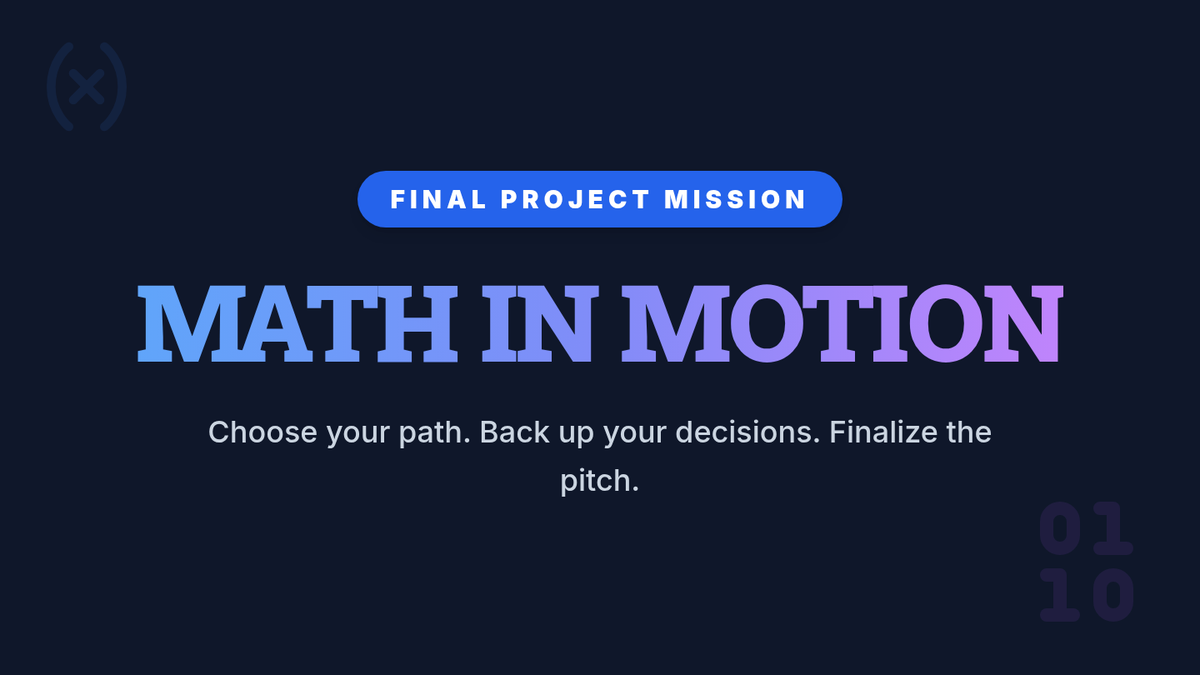
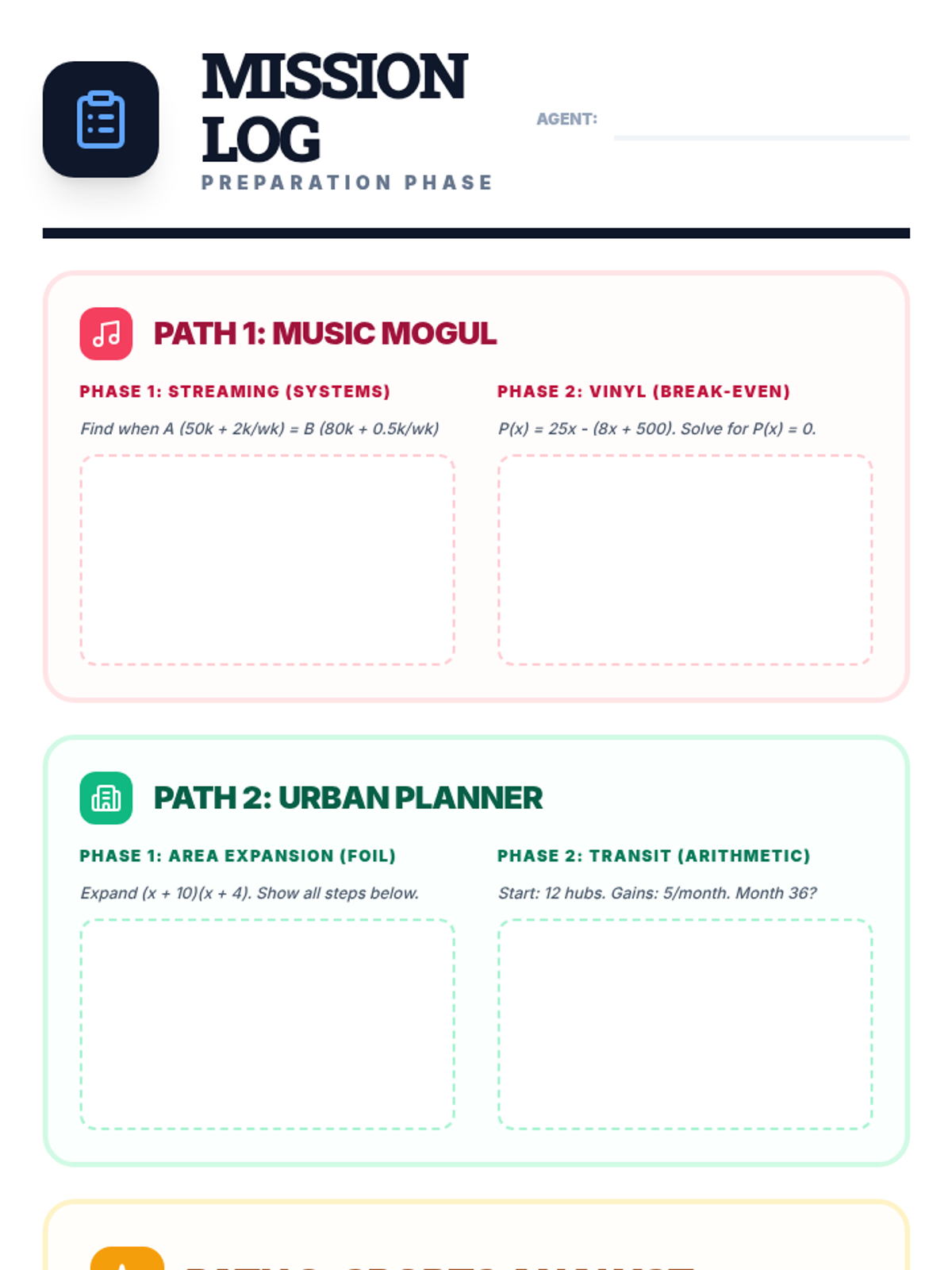
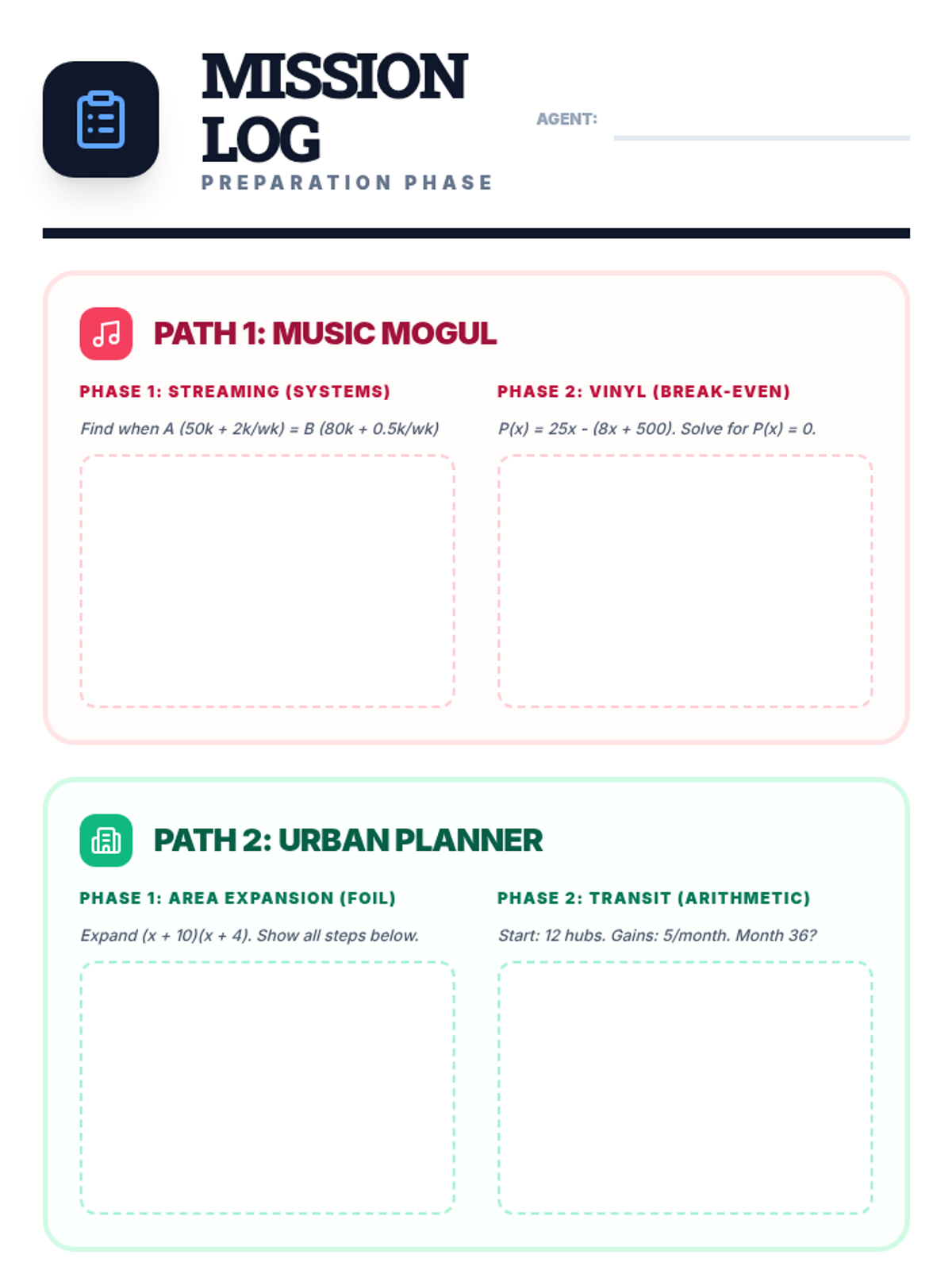
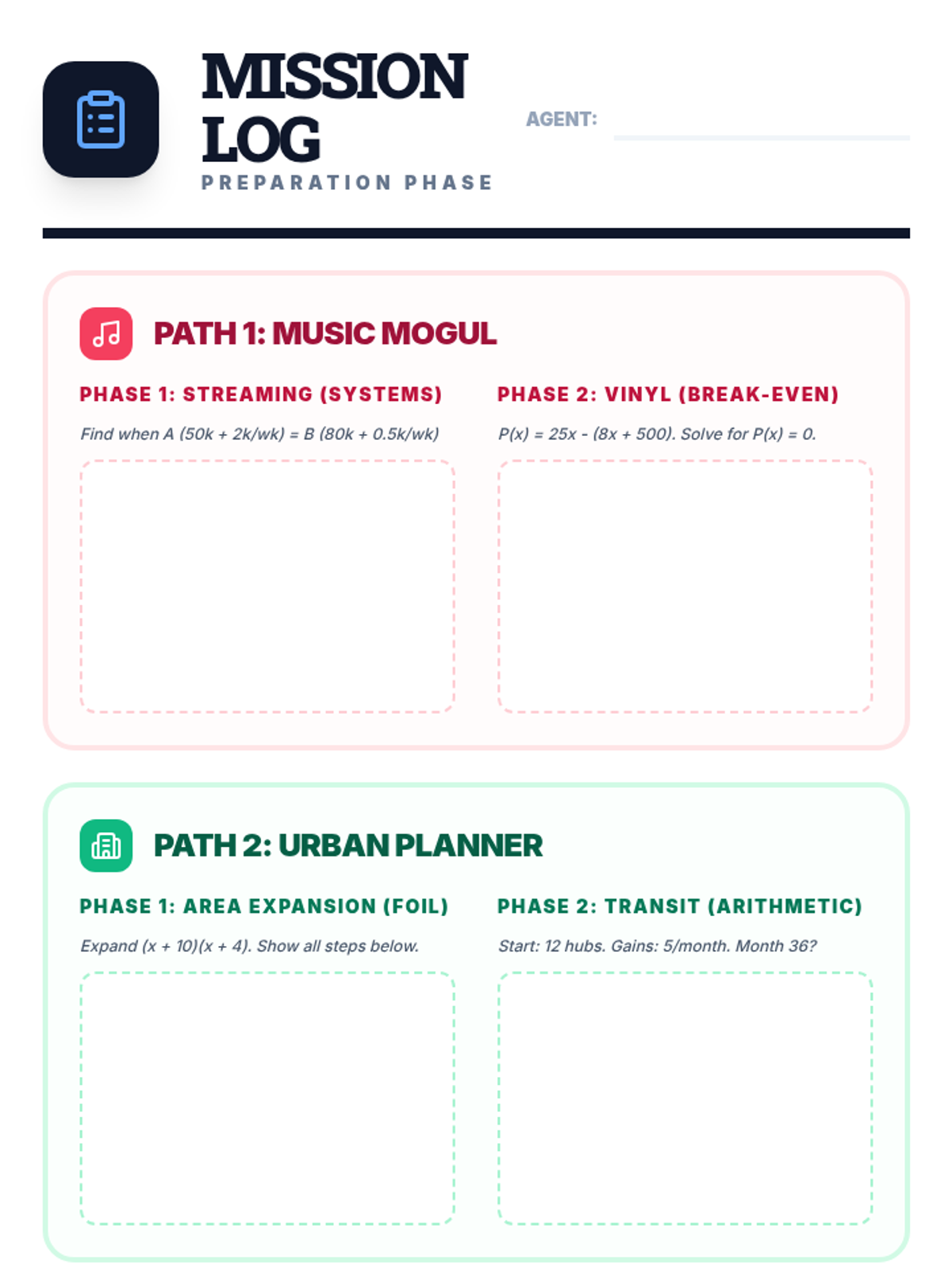
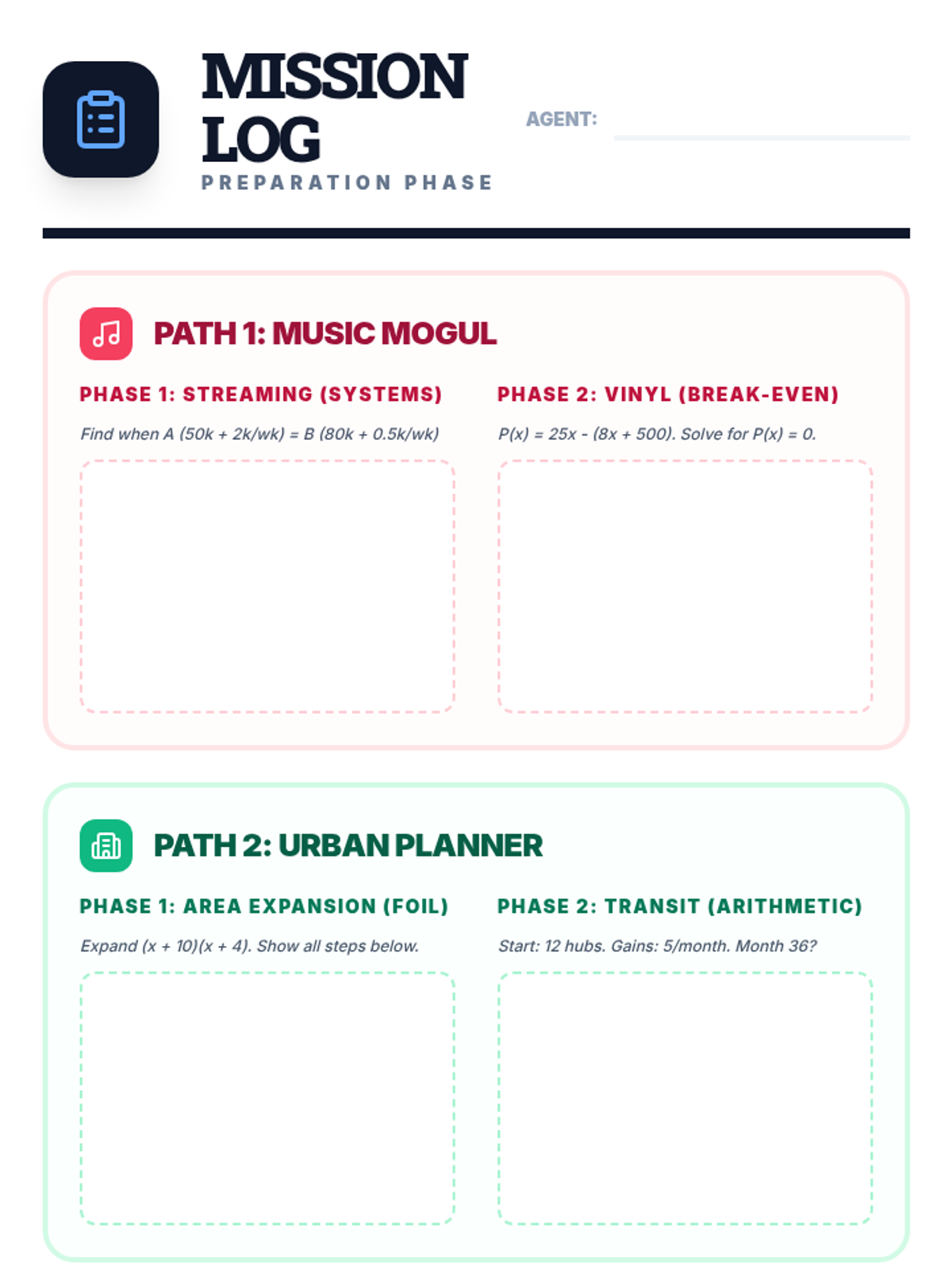
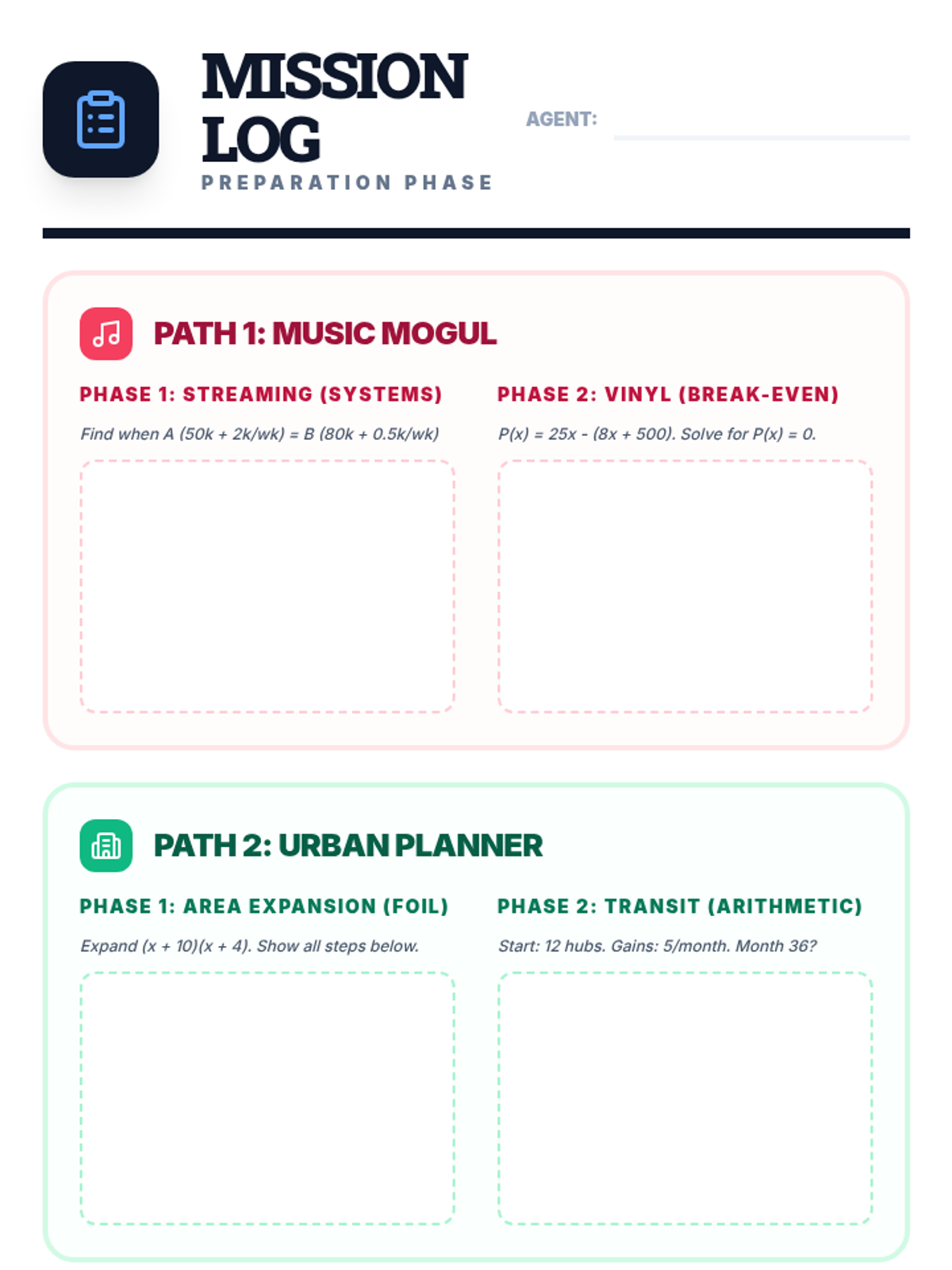
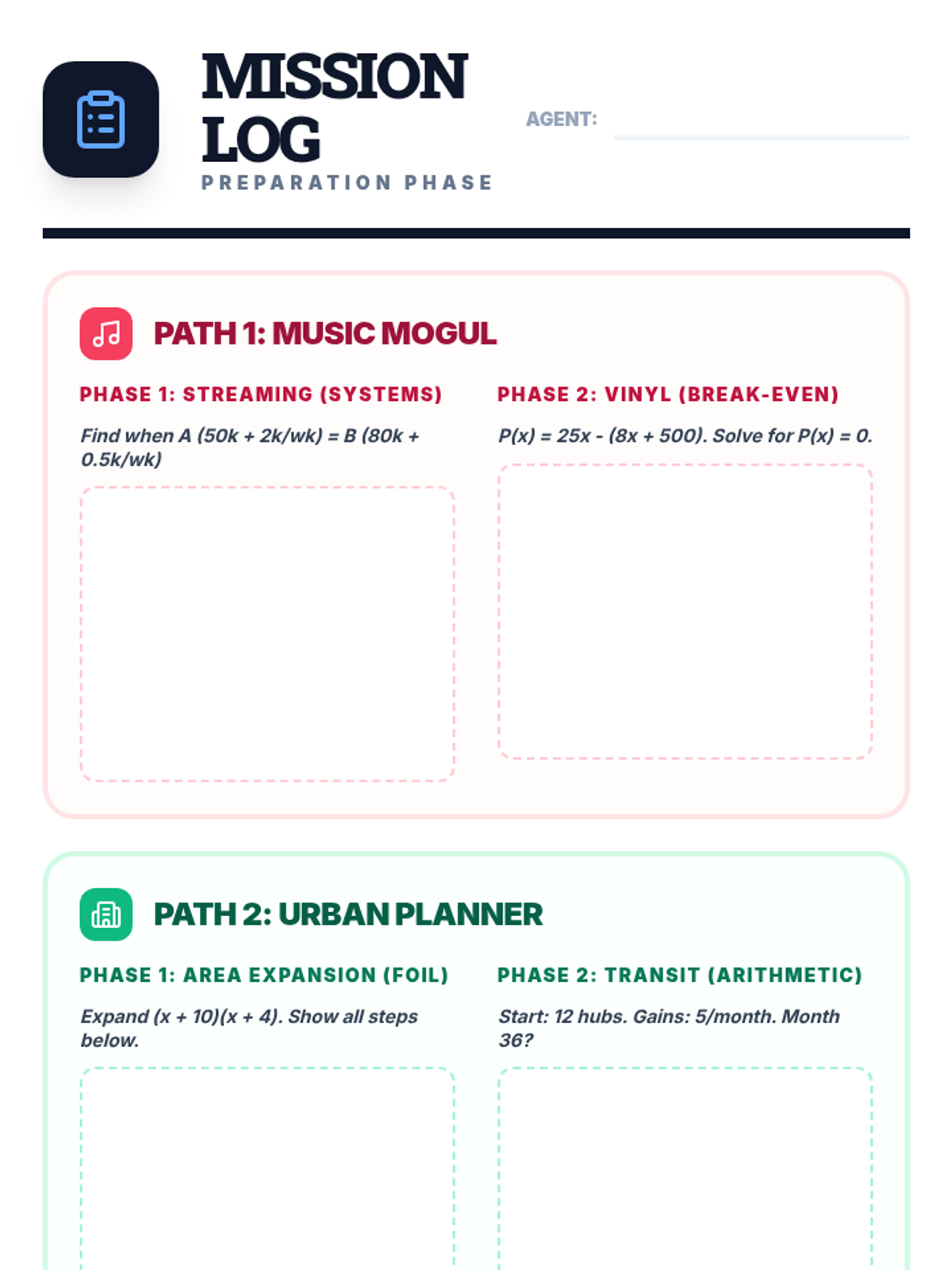
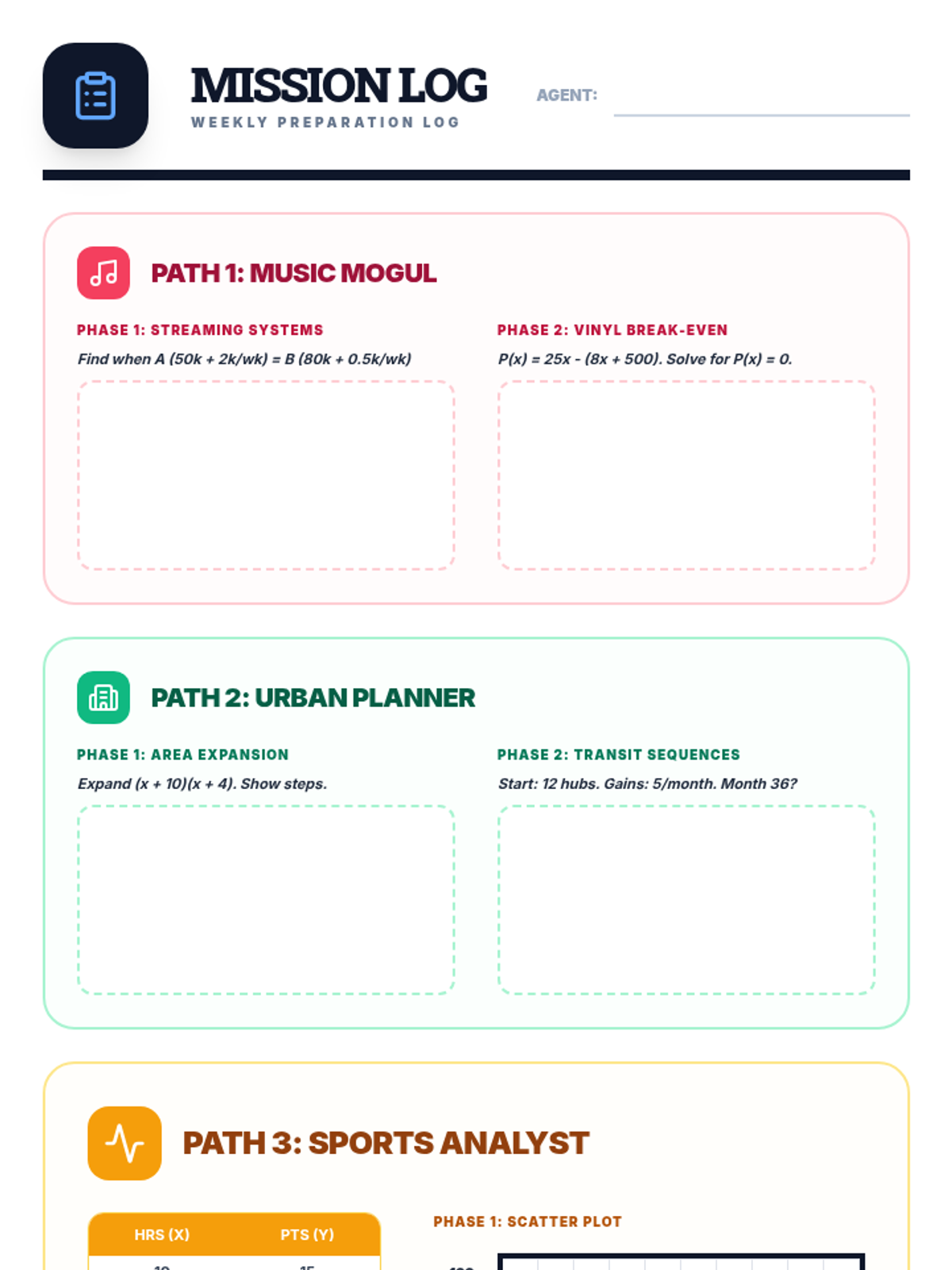
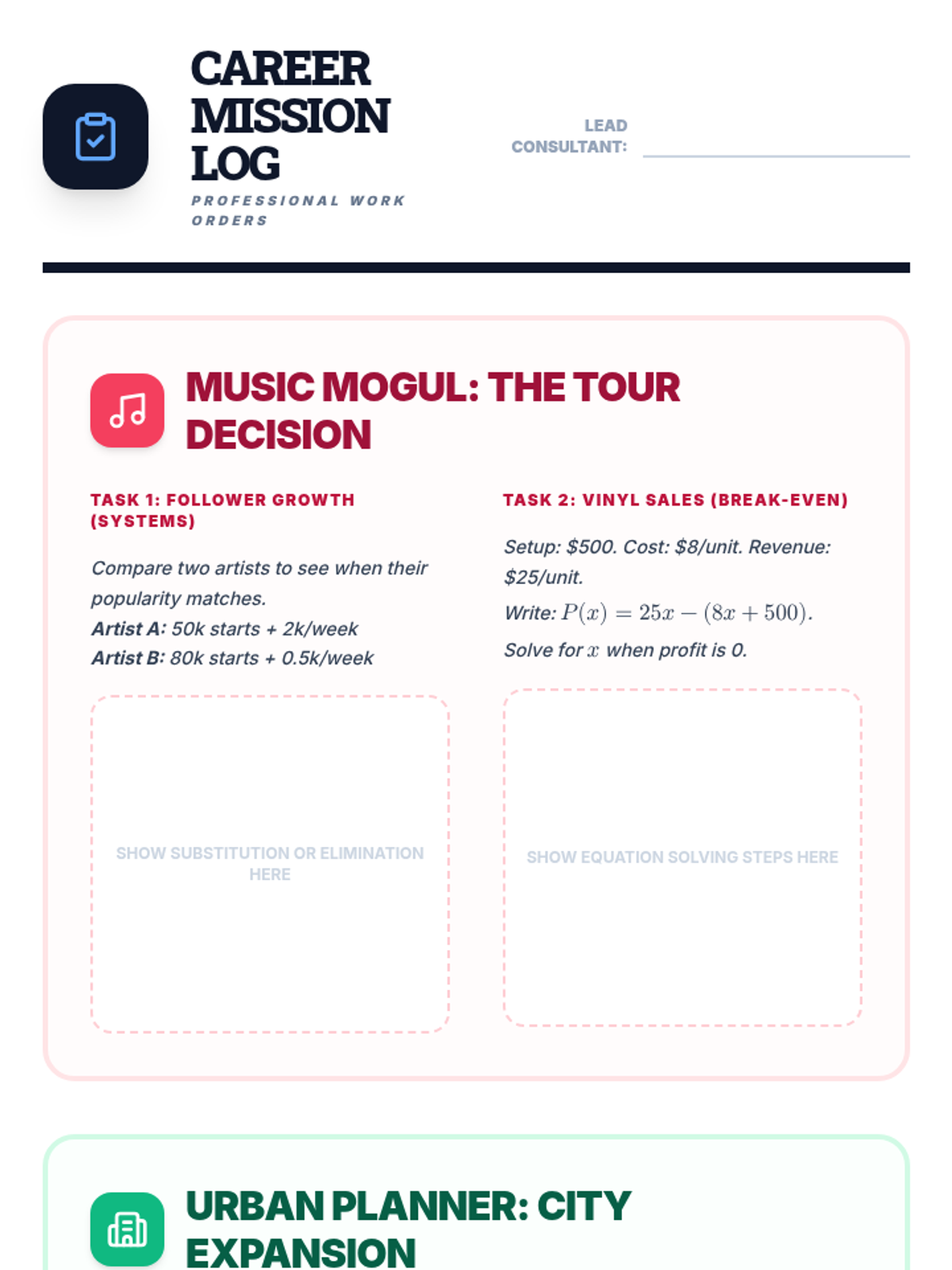
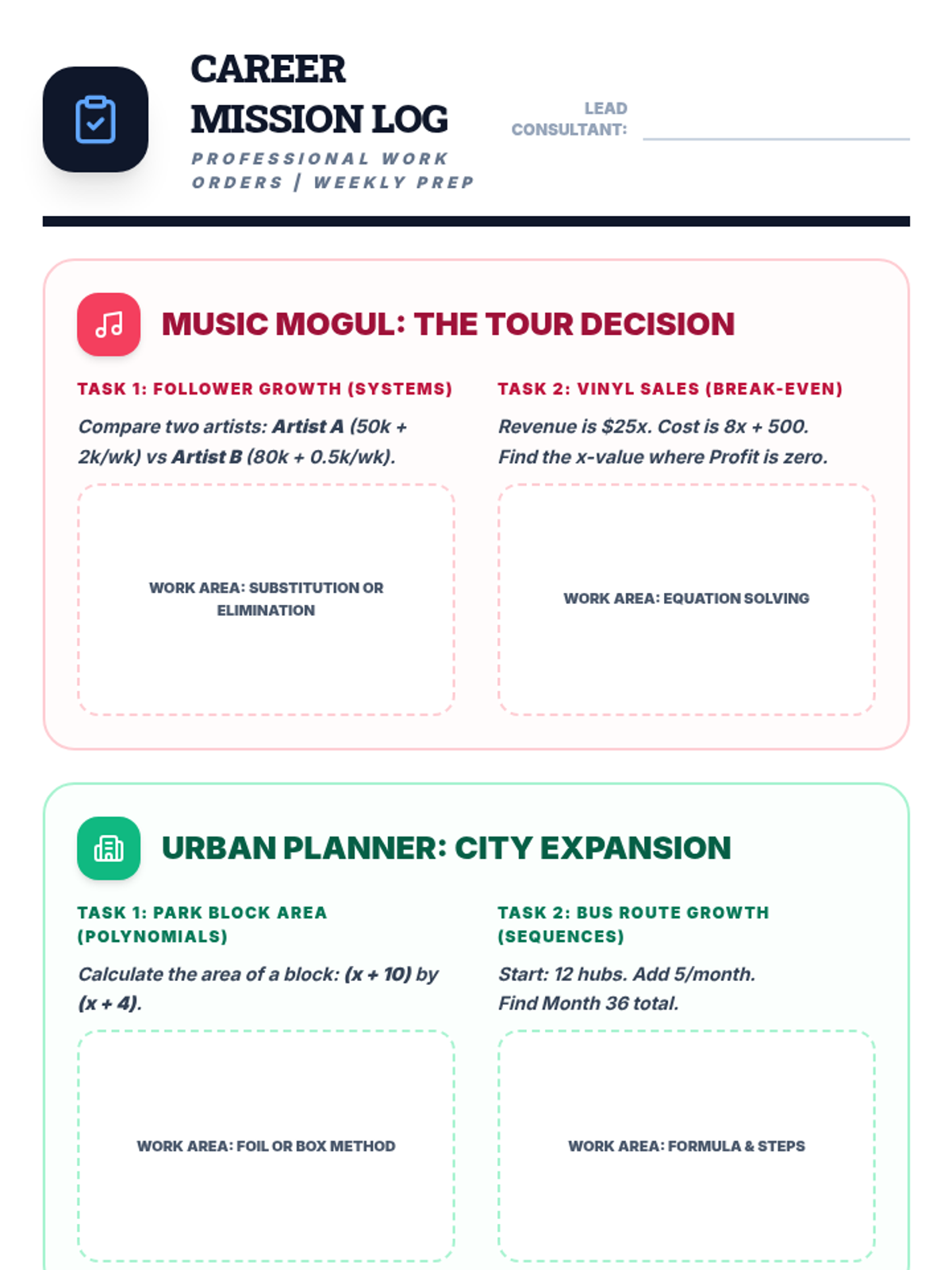
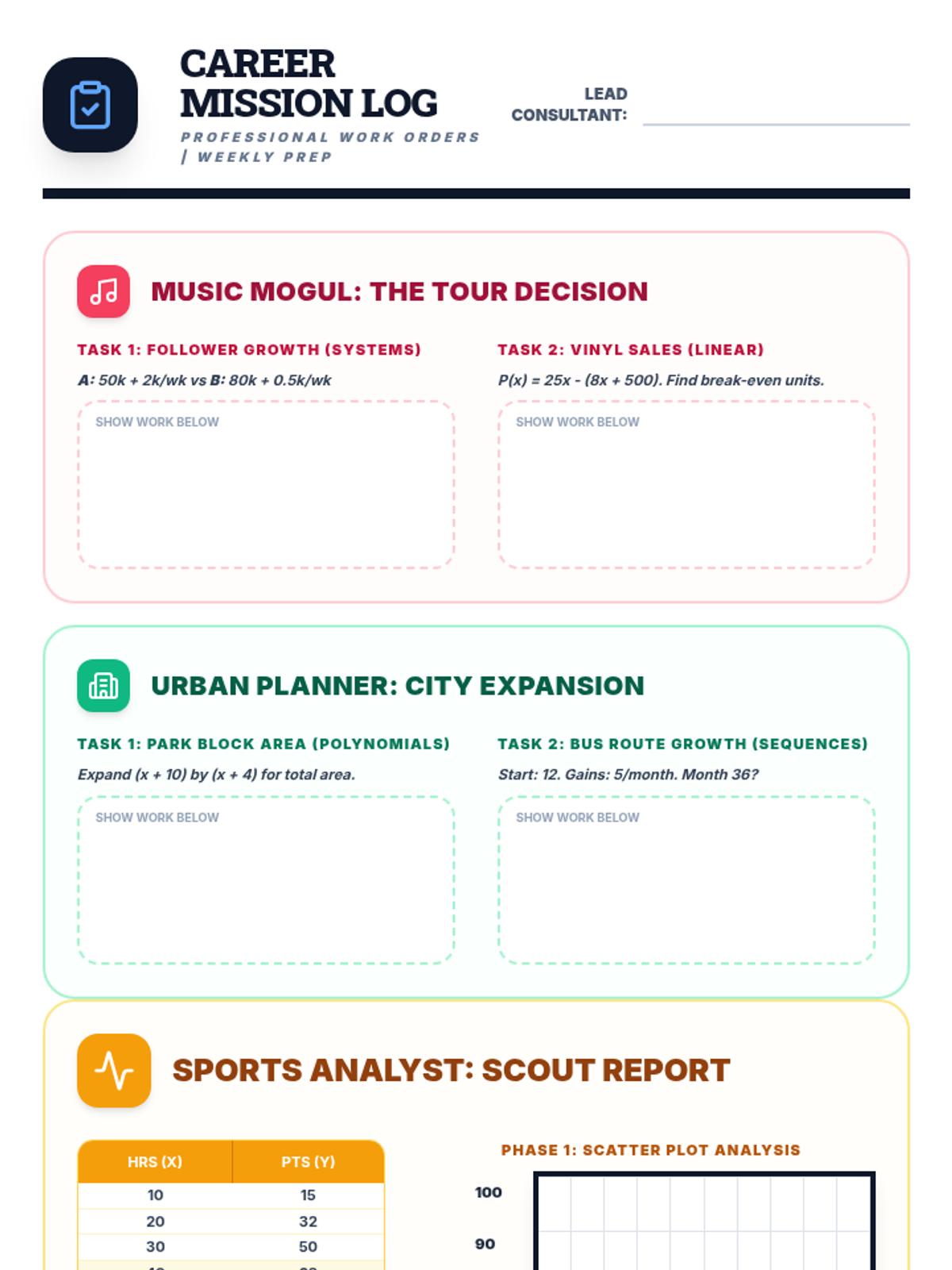
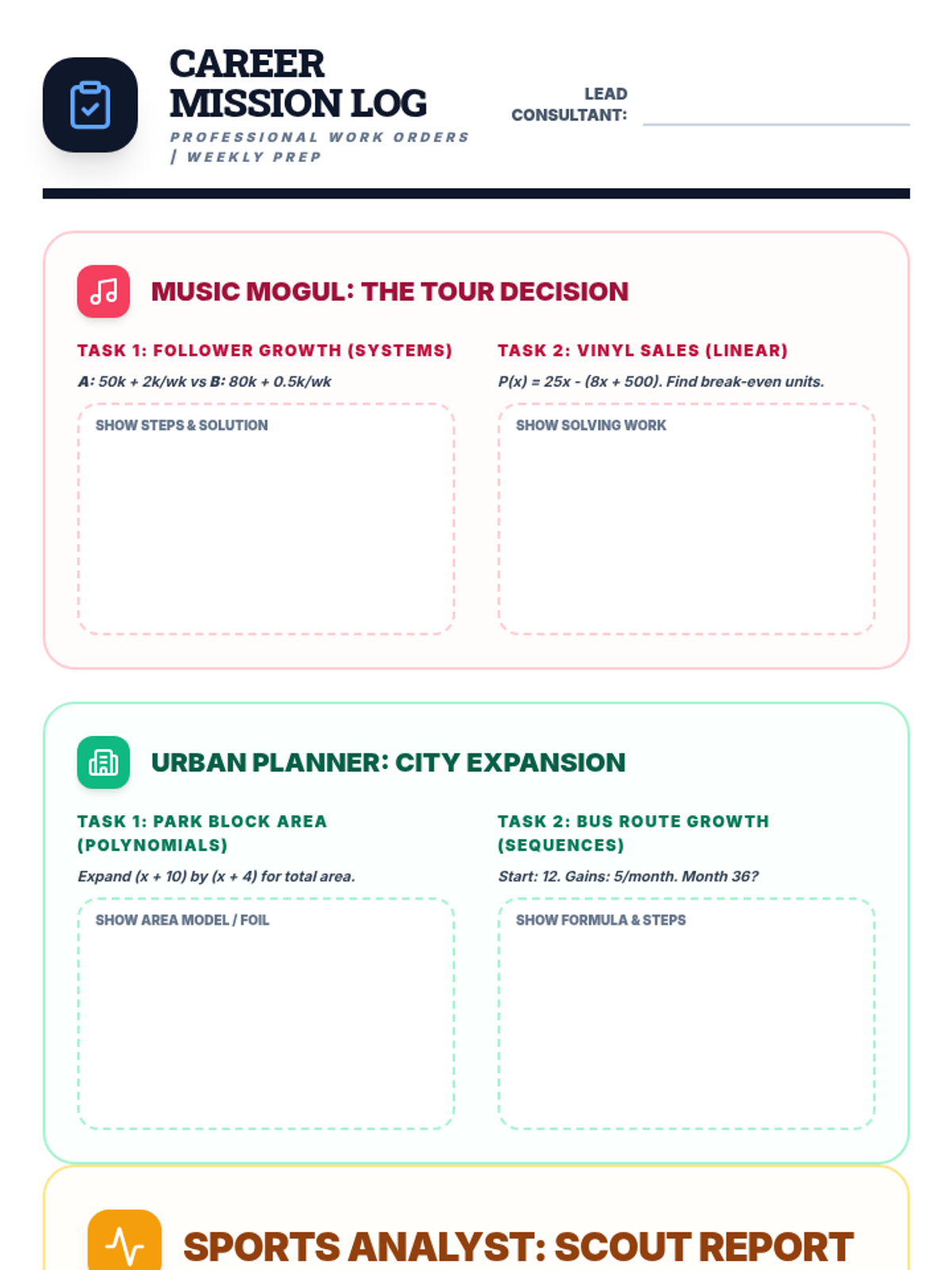
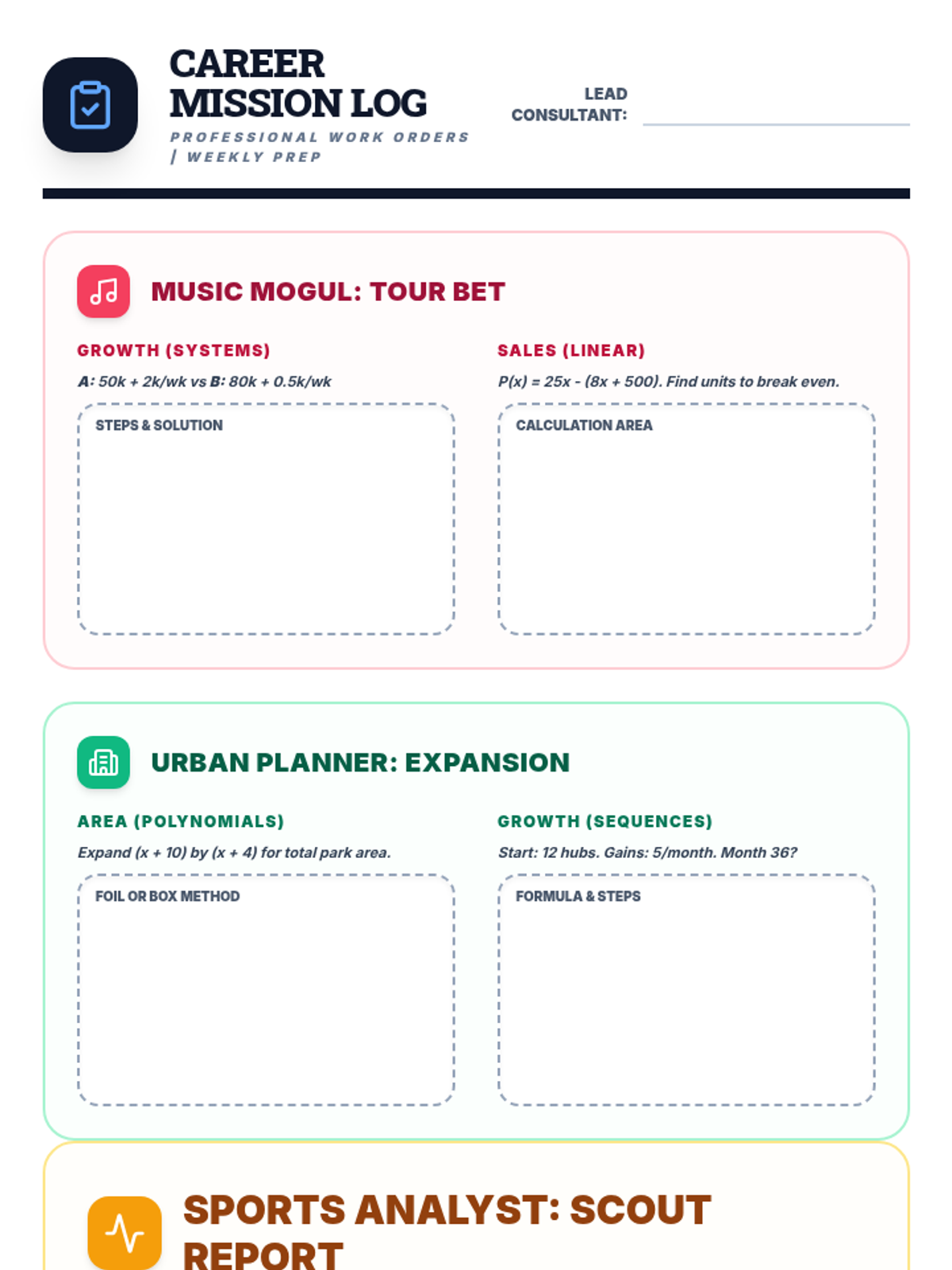
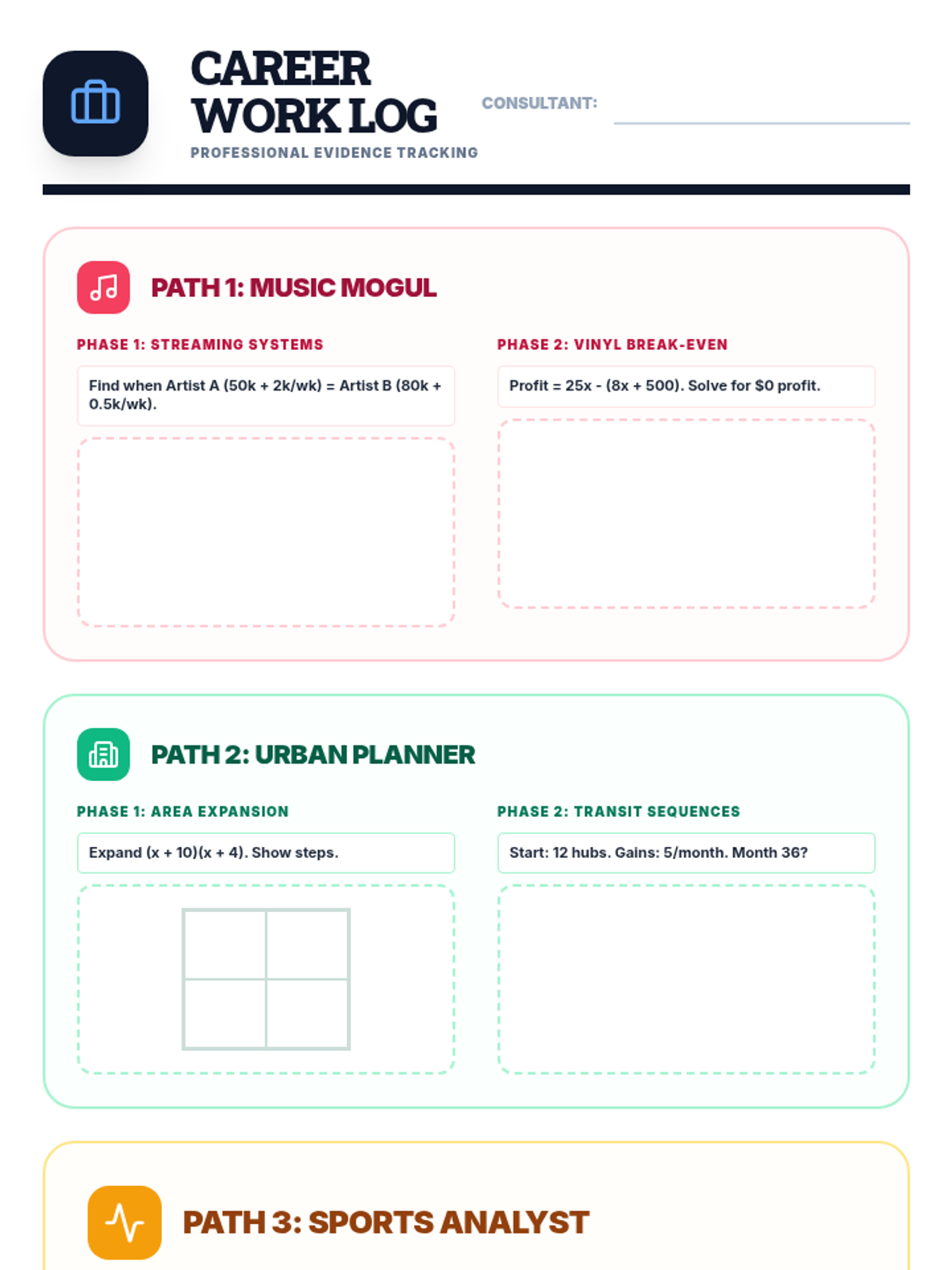
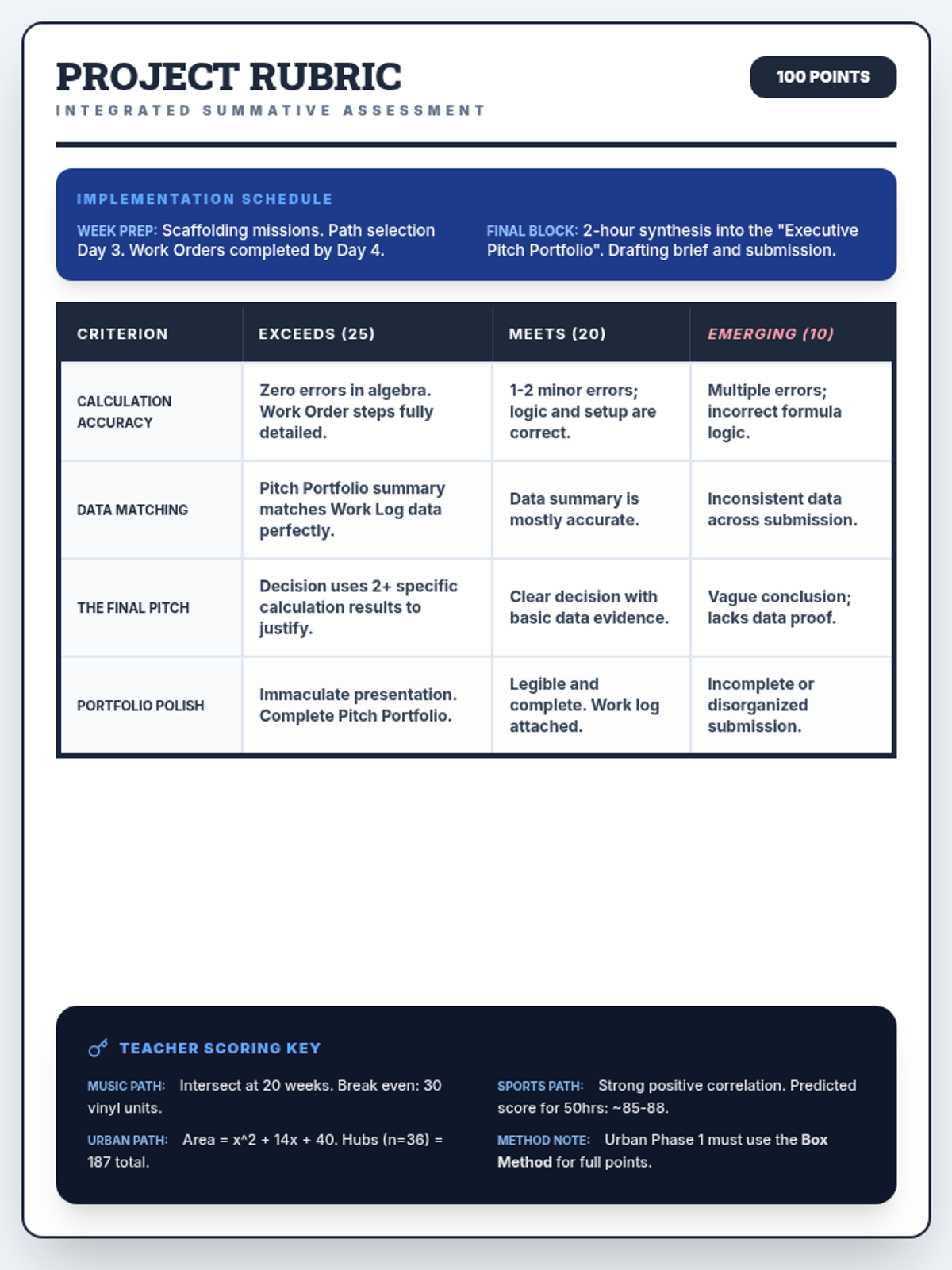
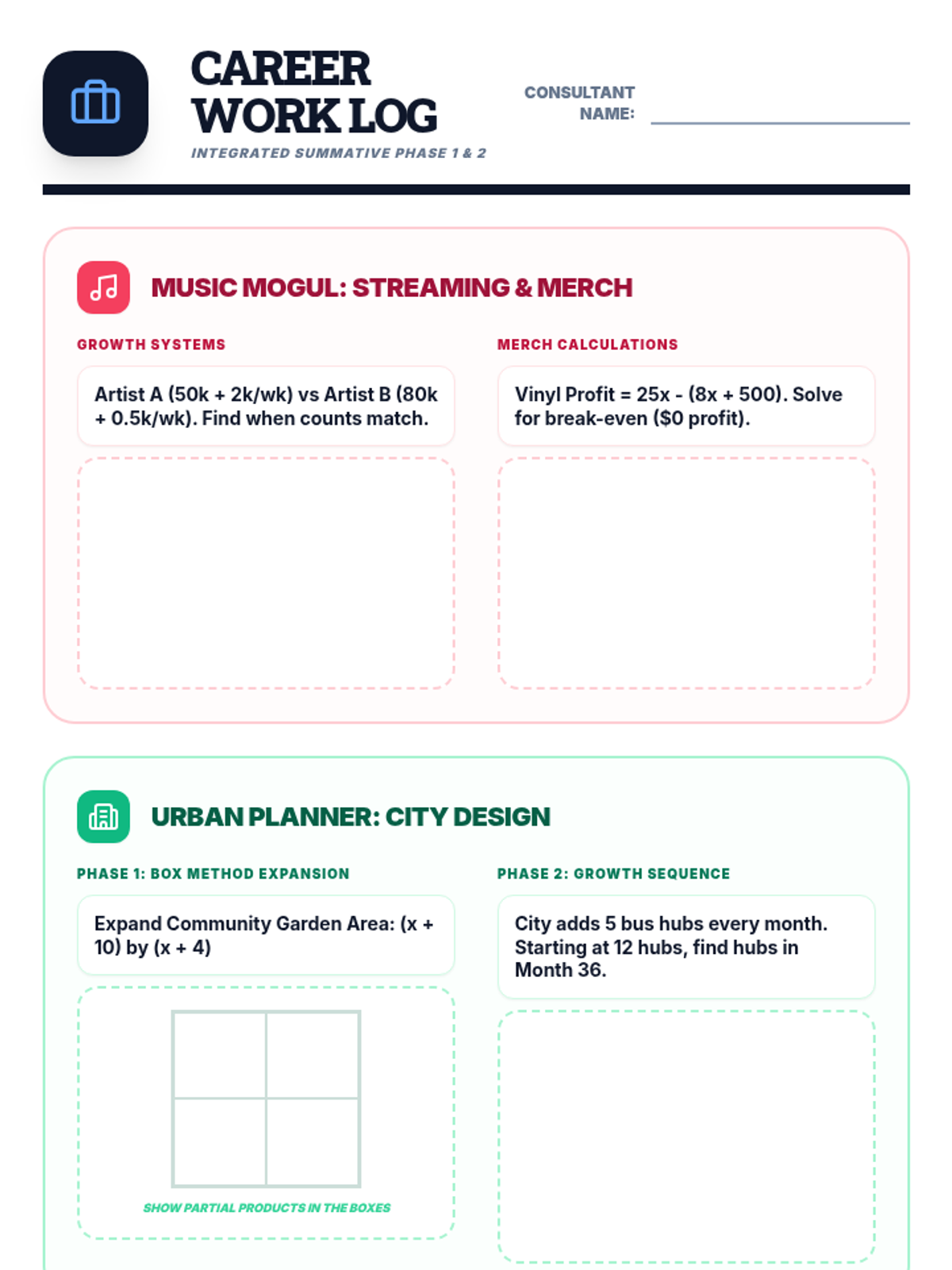
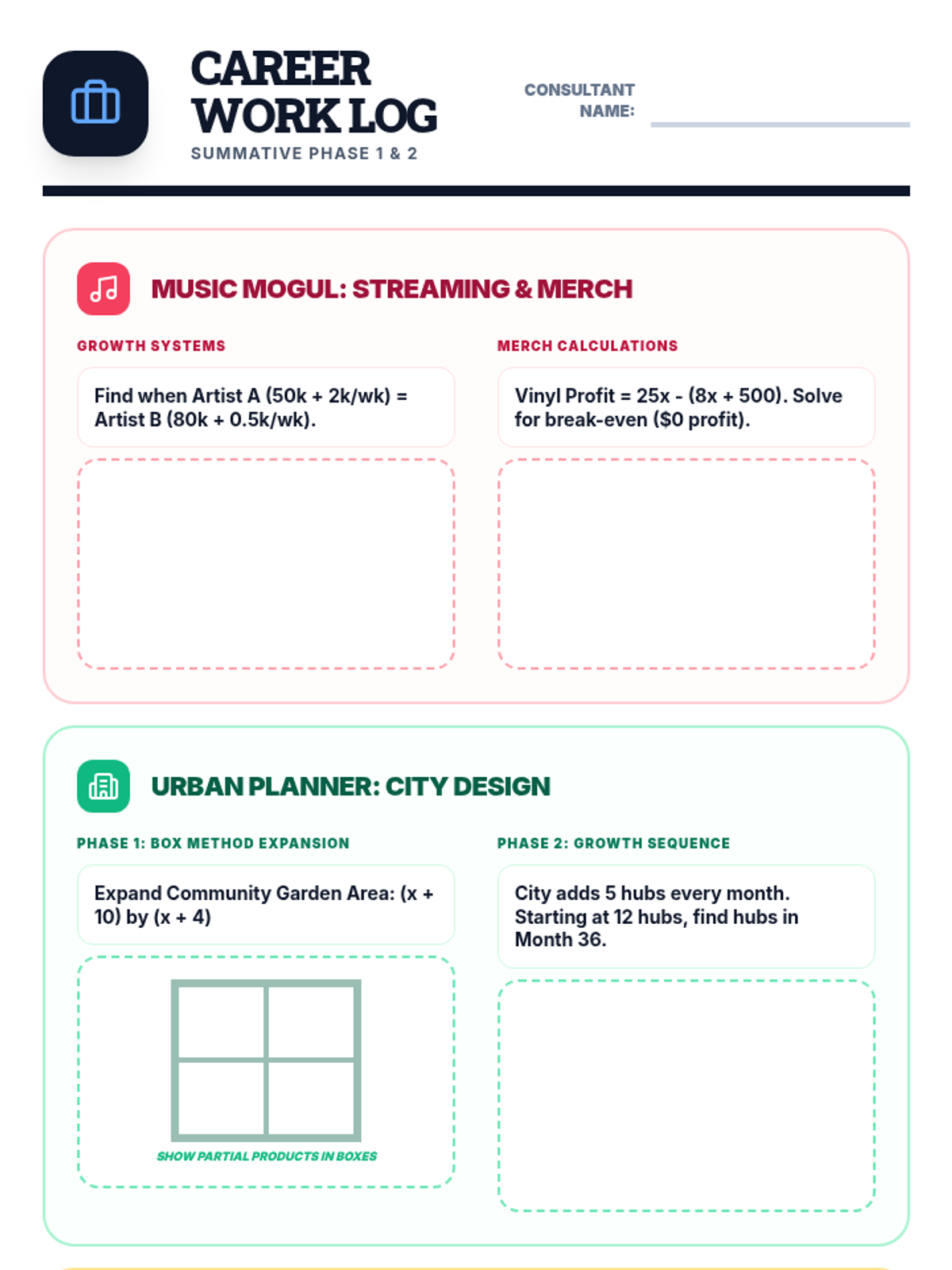
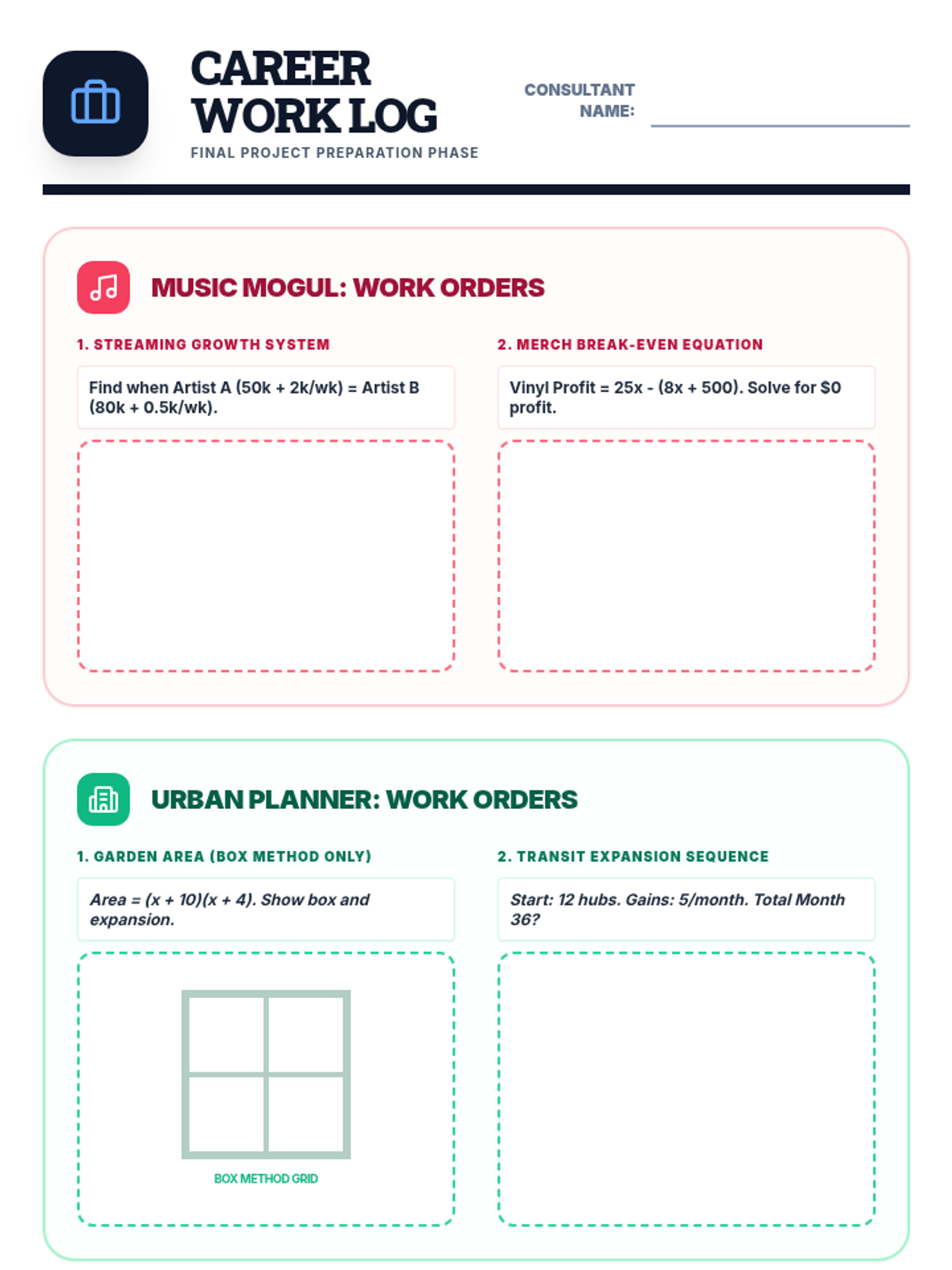
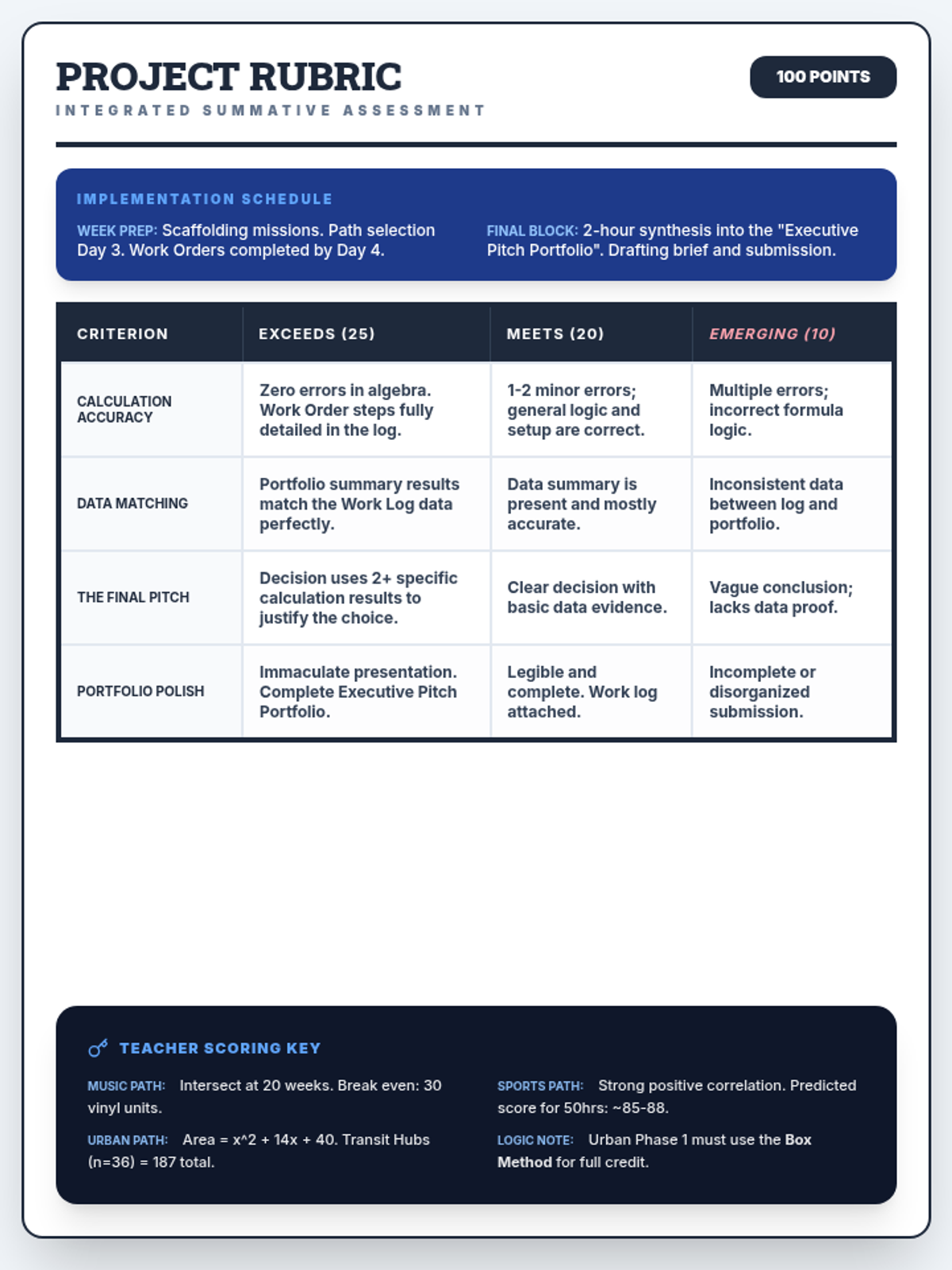
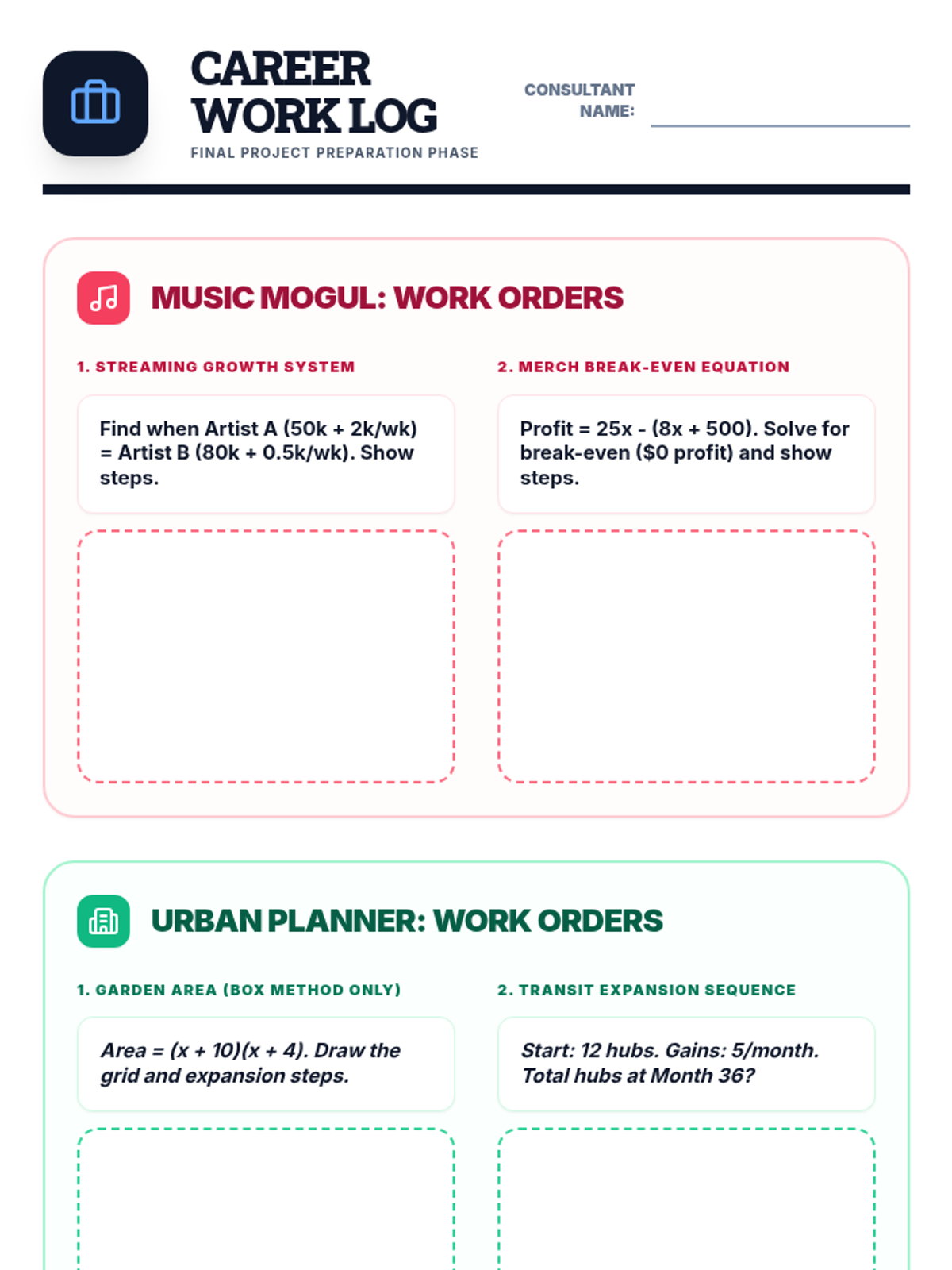
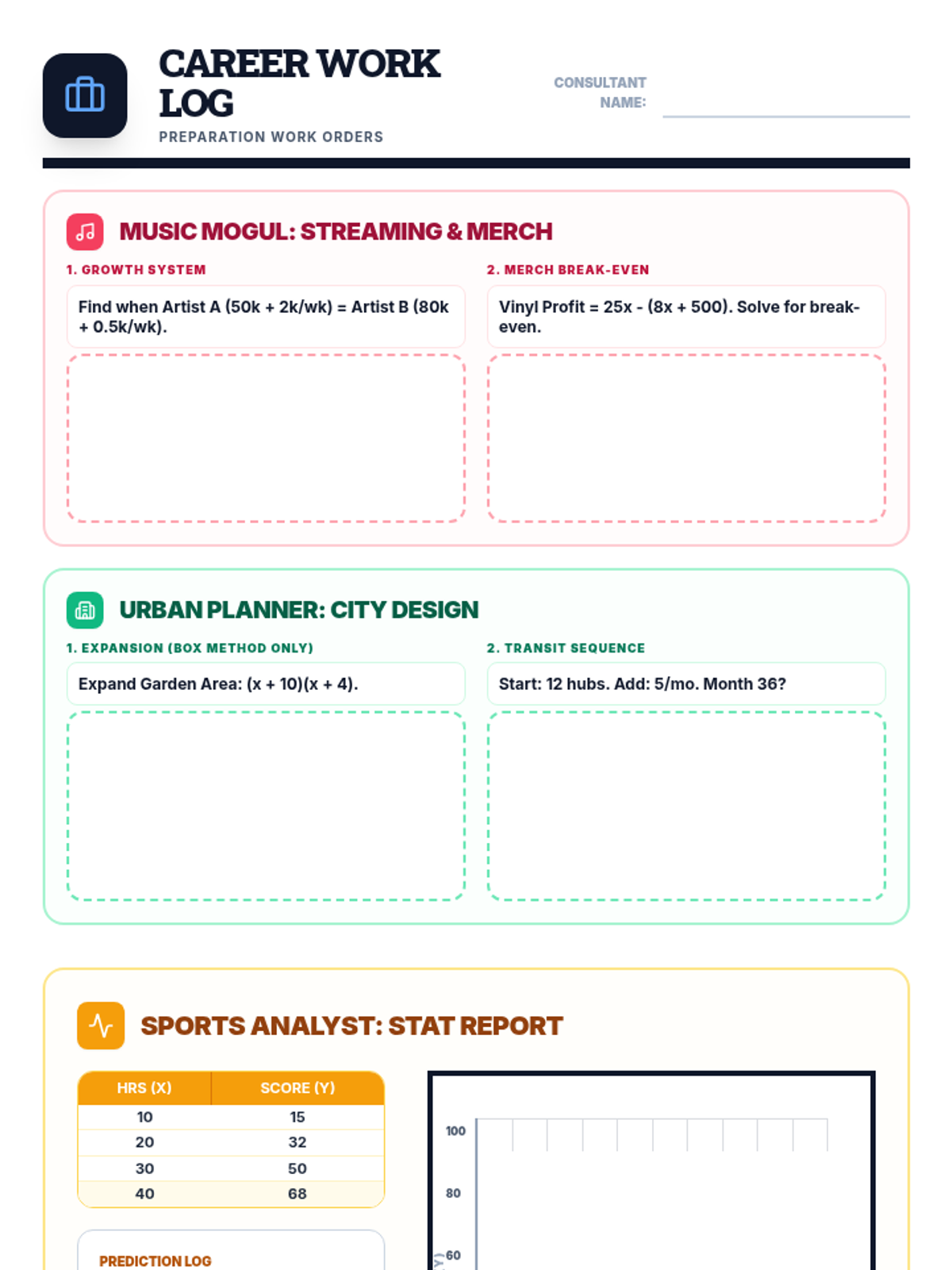
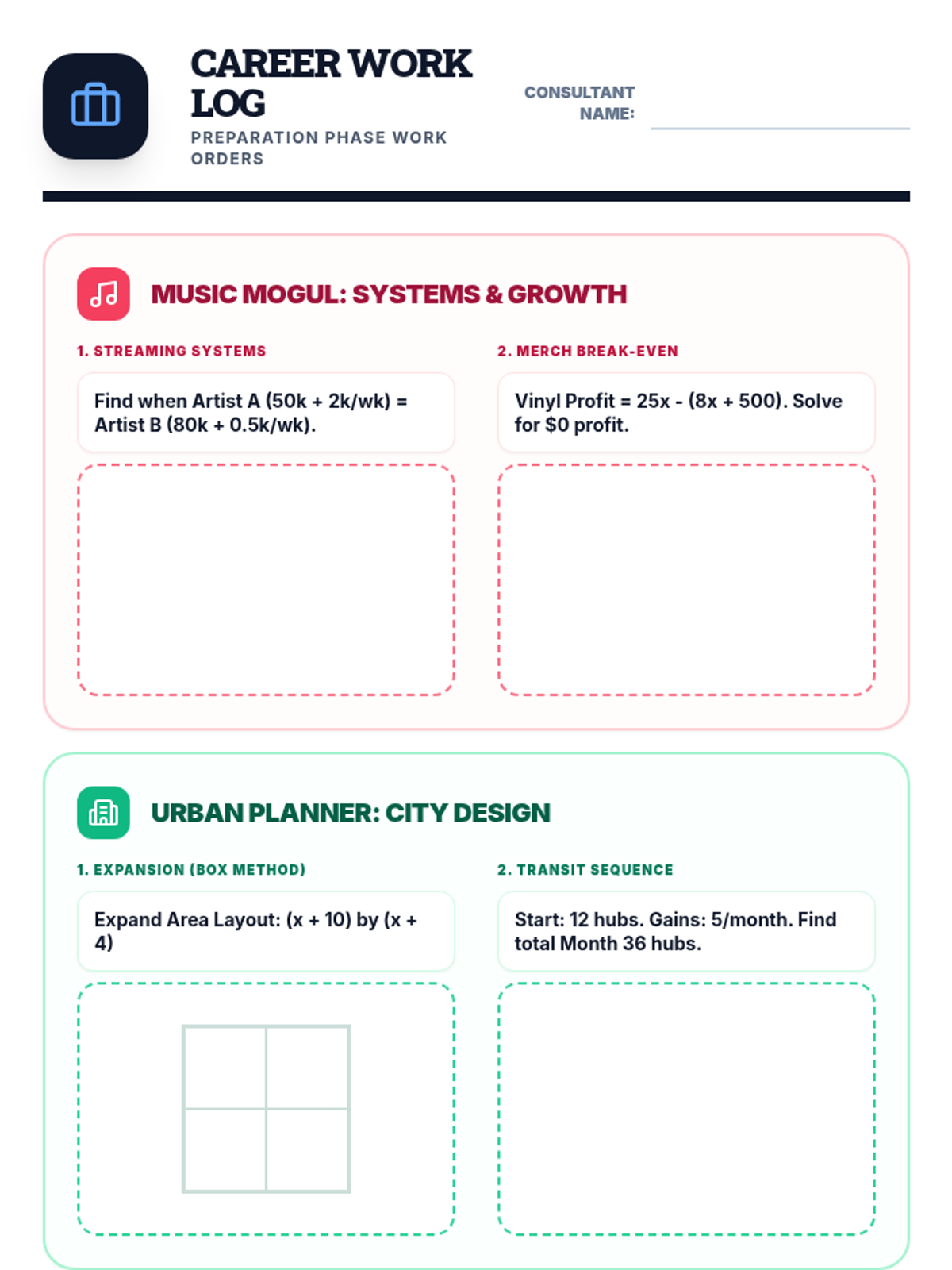
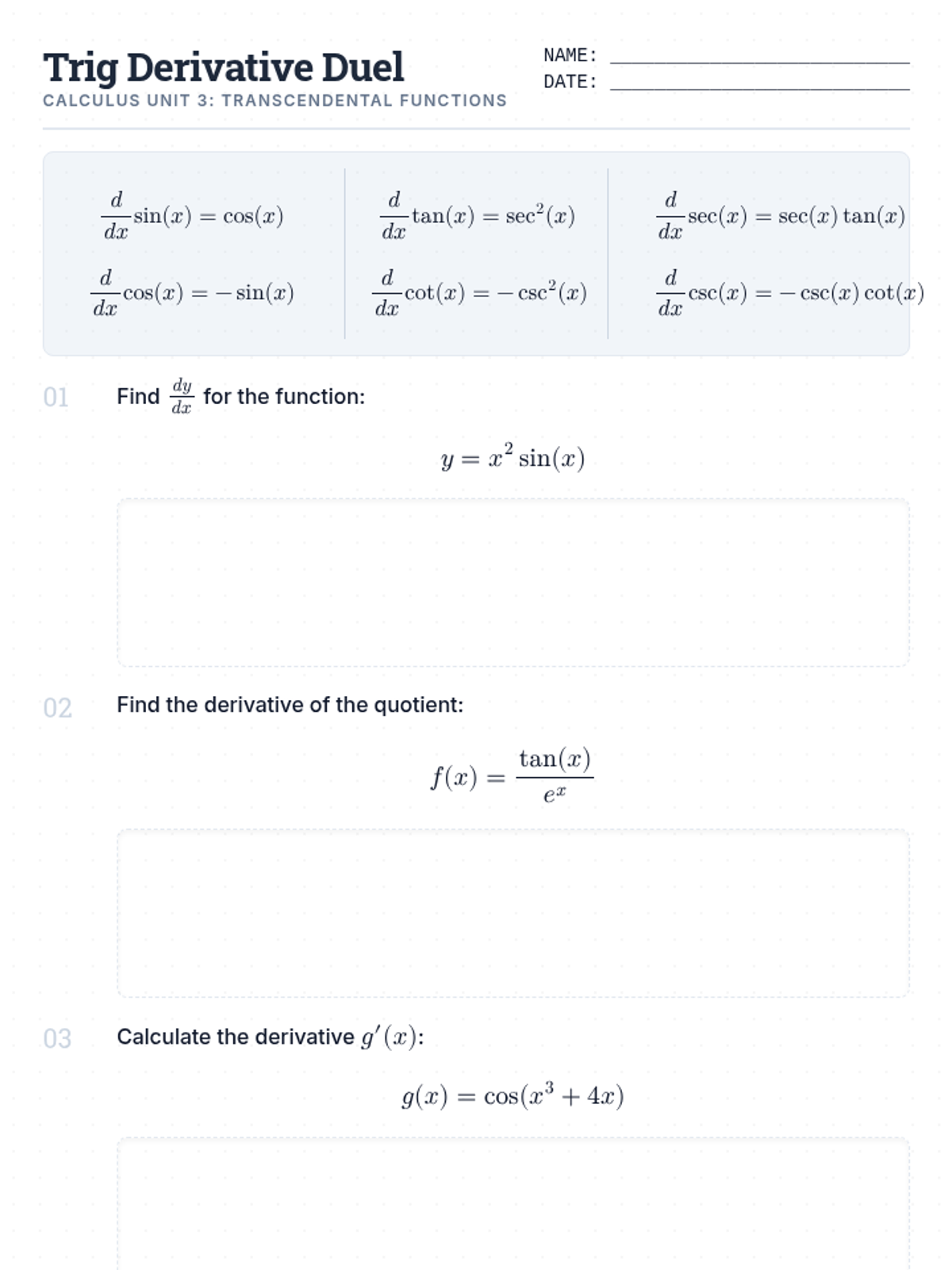
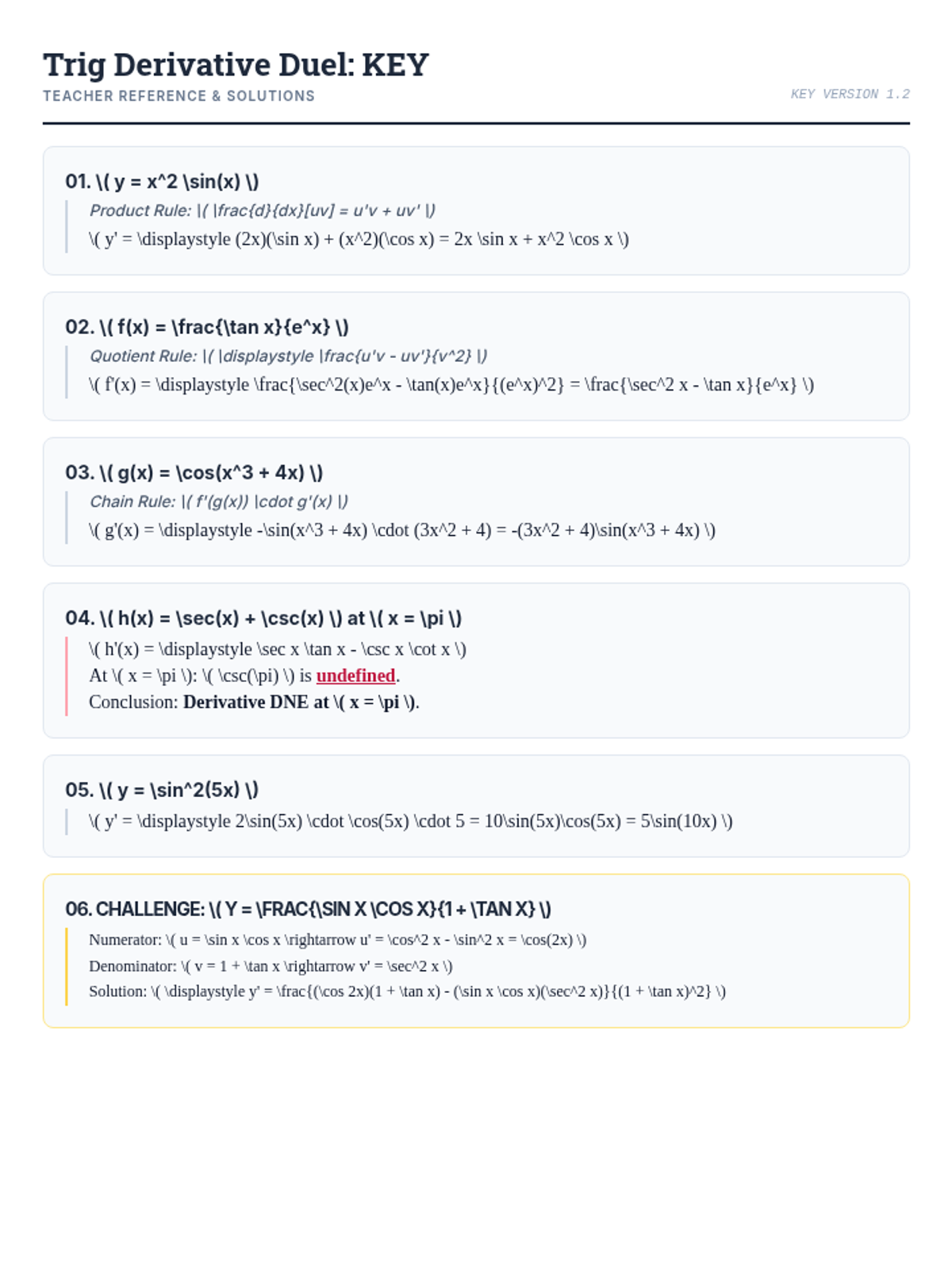
Students finalize their designs and perform the rigorous calculus required to find the exact volume of their object. They present their findings, justifying their choice of method.
A comprehensive guide to mastering exponent laws, from basic products to complex fractional roots. Includes a detailed reference sheet and scaffolded practice problems.
A comprehensive guide for students to master factoring quadratic expressions using the GCF, X-Method, and Grouping. This lesson breaks down complex expressions into manageable construction-themed steps.
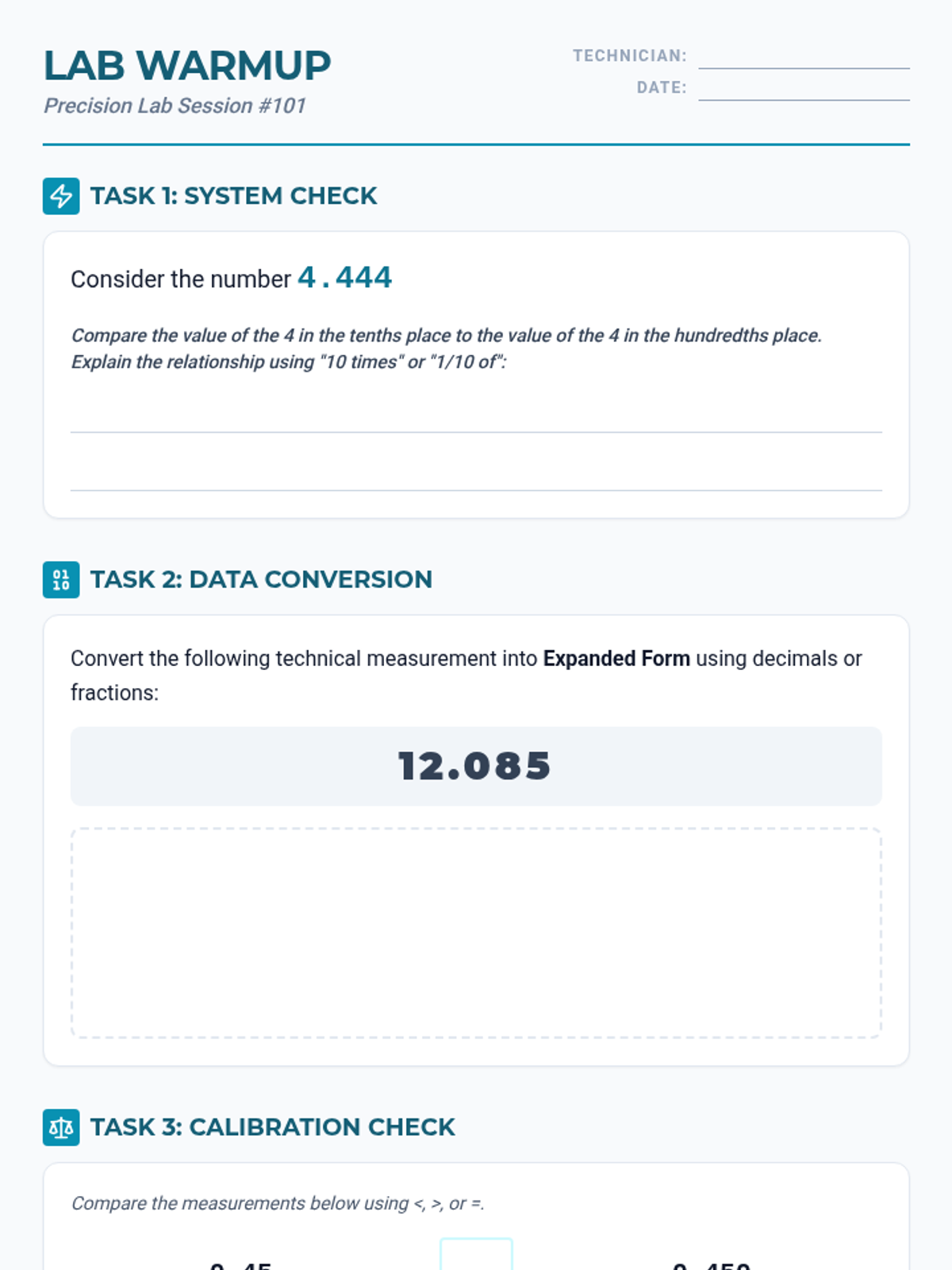
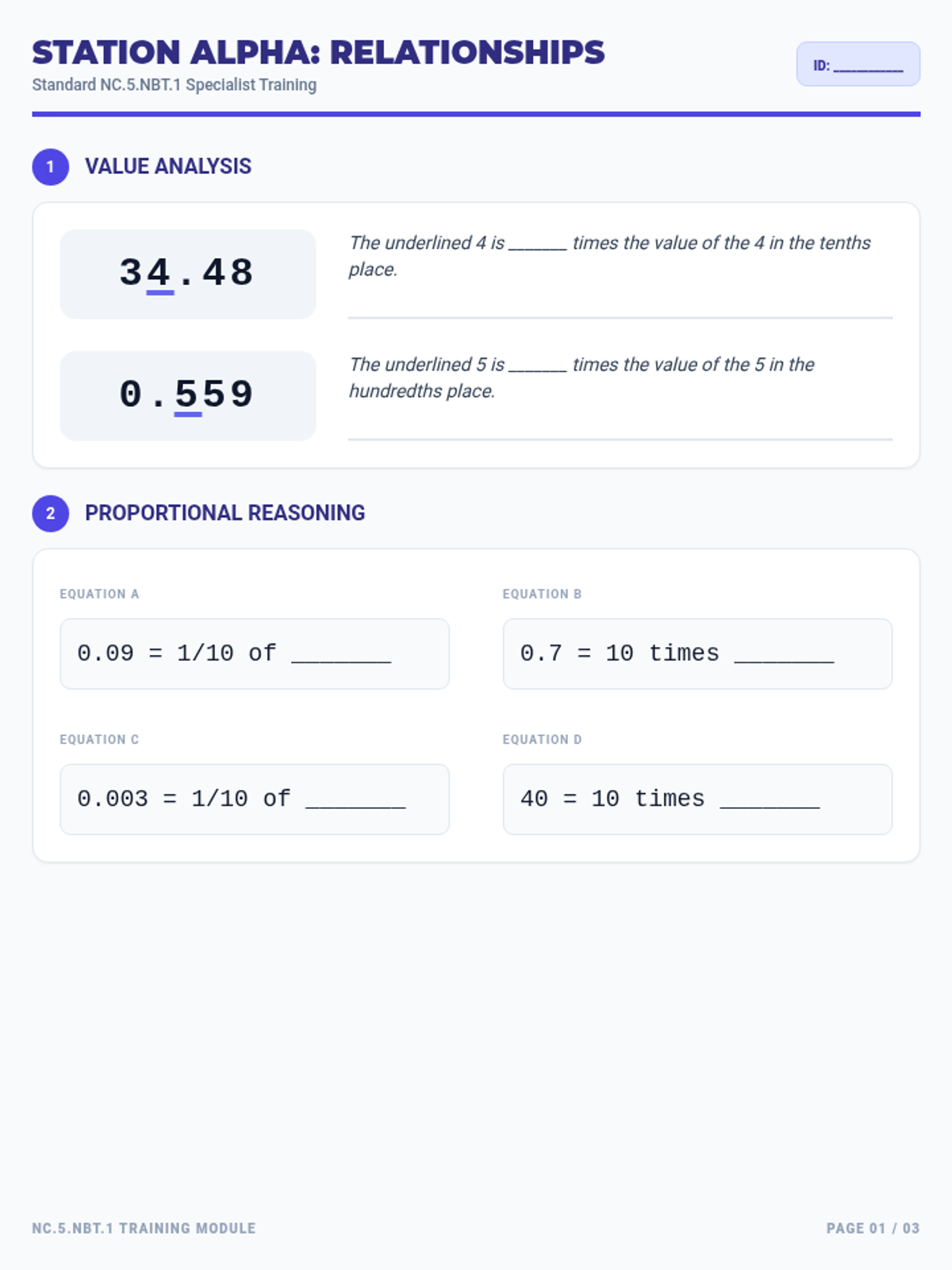
A lesson focused on understanding the magnitude of numbers through powers of 10, comparing small units like milligrams to larger quantities like grams using visual scales and scaffolded practice.
A lesson focused on calculating the margin of error for population means when the population standard deviation is known. Students practice using z-scores for different confidence levels.
A focused practice session on constructing z-confidence intervals for the mean using raw data and known population standard deviations.
A lesson focused on calculating and interpreting confidence intervals for population means when the population standard deviation is known. Students practice identifying key statistics and applying the Z-interval formula to real-world scenarios.
A practice lesson focusing on the relationship between confidence levels and interval width. Students analyze sets of intervals to identify specific confidence levels based on their precision.
A comprehensive lesson on scaled picture and bar graphs with a festive Cinco de Mayo theme, featuring taco toppings and piñata treats. Students will practice drawing graphs and solving 'how many more/less' problems.
A math lesson for 3rd-grade RSP students focusing on foundational 2nd-grade number sense skills. Students will practice mental addition of 10 and 100 and use place value to compare numbers up to 1,000 using scaffolding such as place value mats and visual aids.
Foundational tools for assessing student levels and planning instruction based on California Power Standards across grades K-5.
A short assessment focused on the 4th-grade skill of finding common denominators to create equivalent fractions. Includes a student exit ticket and a teacher proficiency guide.
A lesson on comparing fractions with same numerators or same denominators using visual models and number lines.
Applies geometry and arithmetic to everyday tasks like cooking measurements, home DIY projects, and travel planning.
Covers the financial aspects of independent living, including renting, utility usage math, and basic insurance concepts.
Practical applications of percentages and ratios in shopping, including sales tax, discounts, tips, and unit price comparisons.
Explores the math behind interest rates (APR), credit card statements, and the long-term impact of debt.
Teaches students how to categorize expenses, use the 50/30/20 rule, and build a sustainable monthly budget.
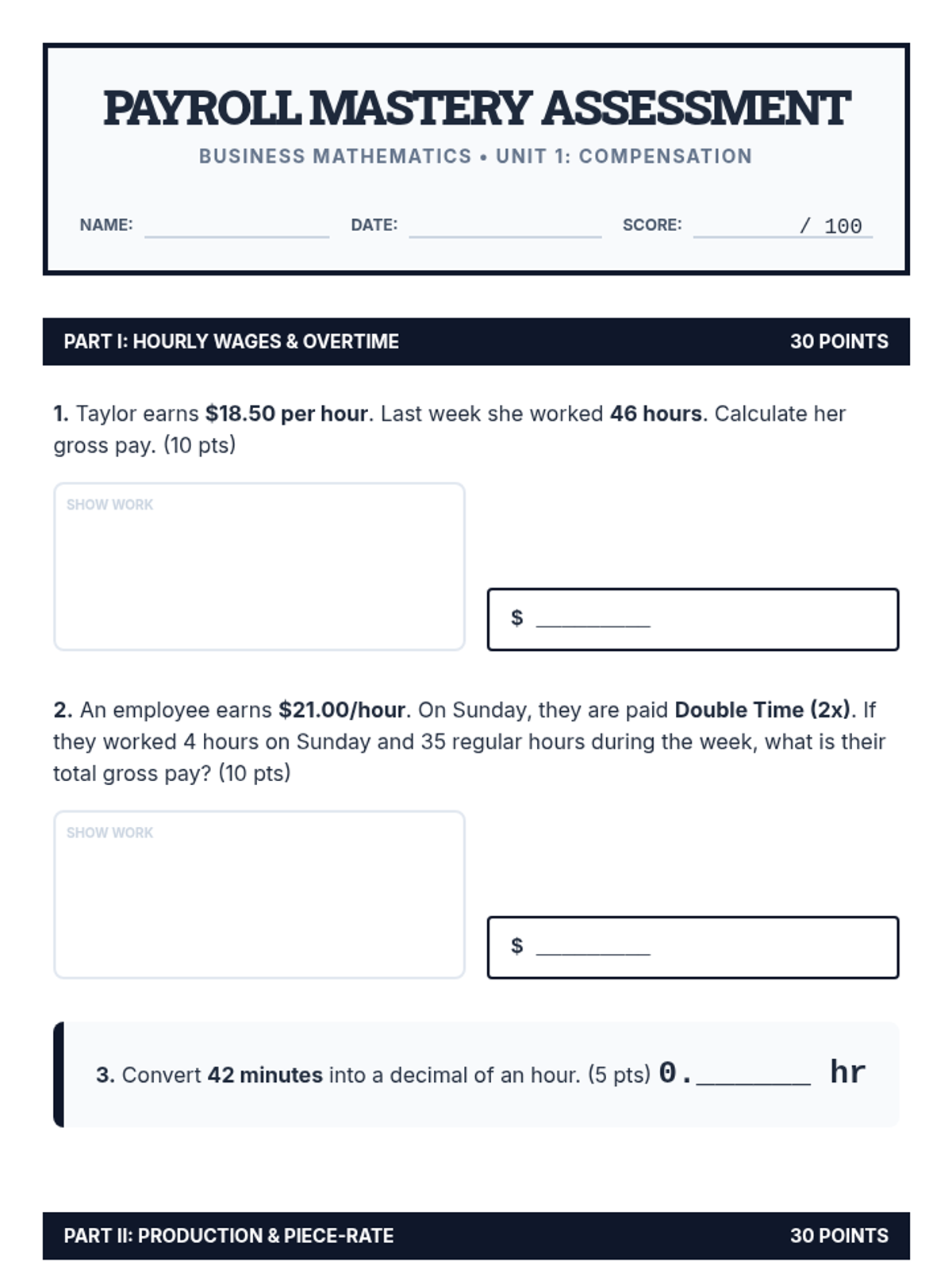
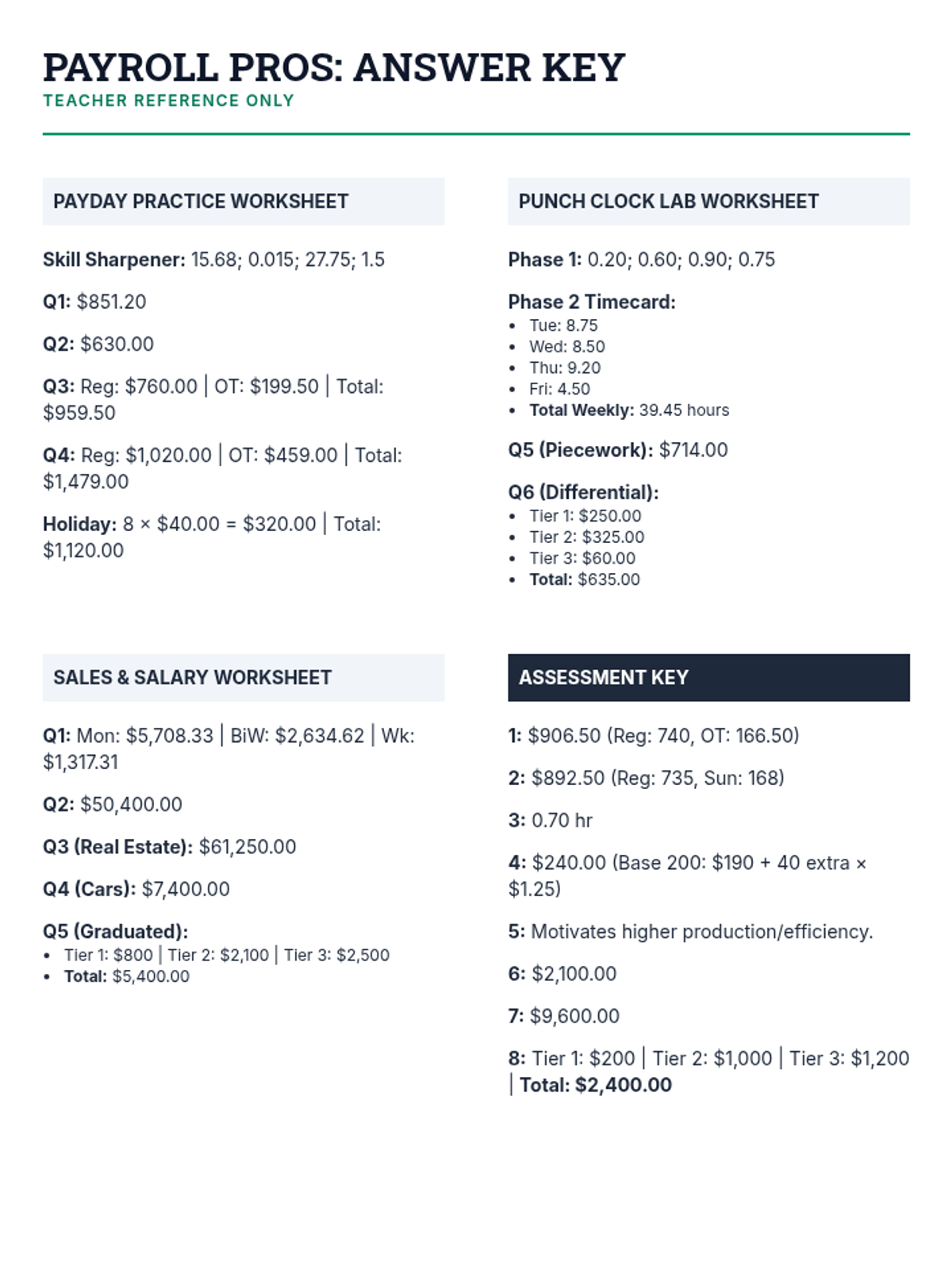
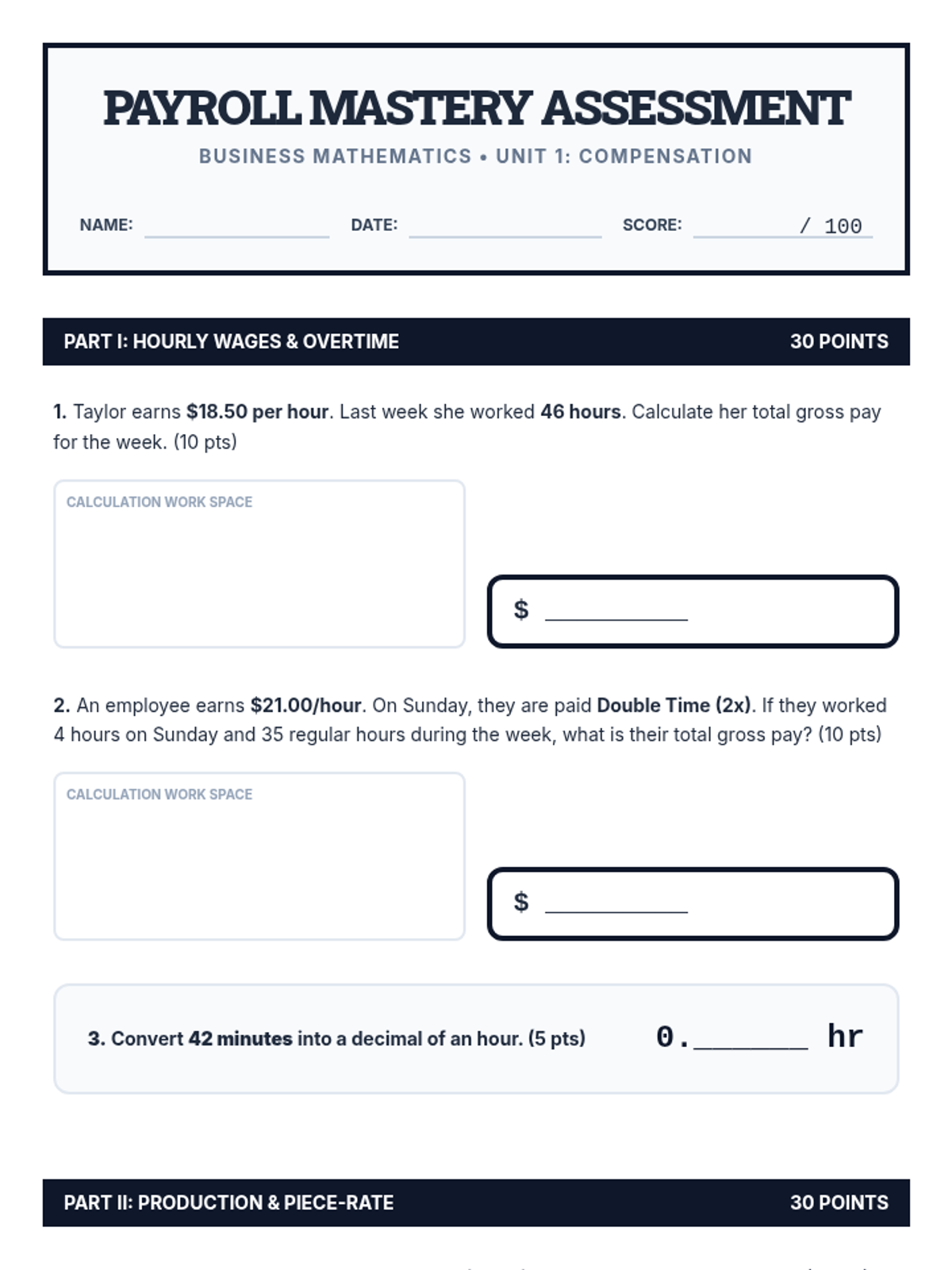
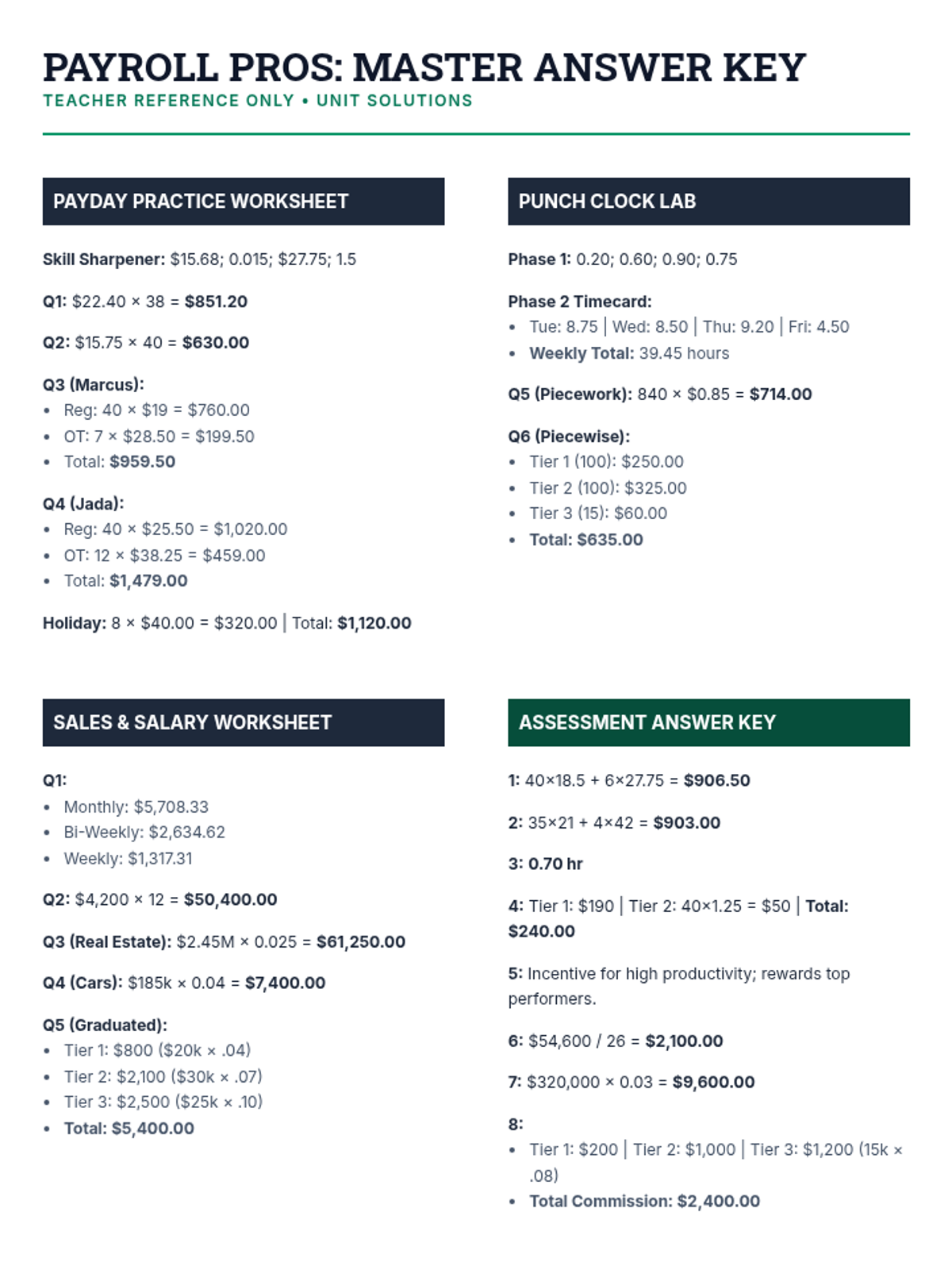
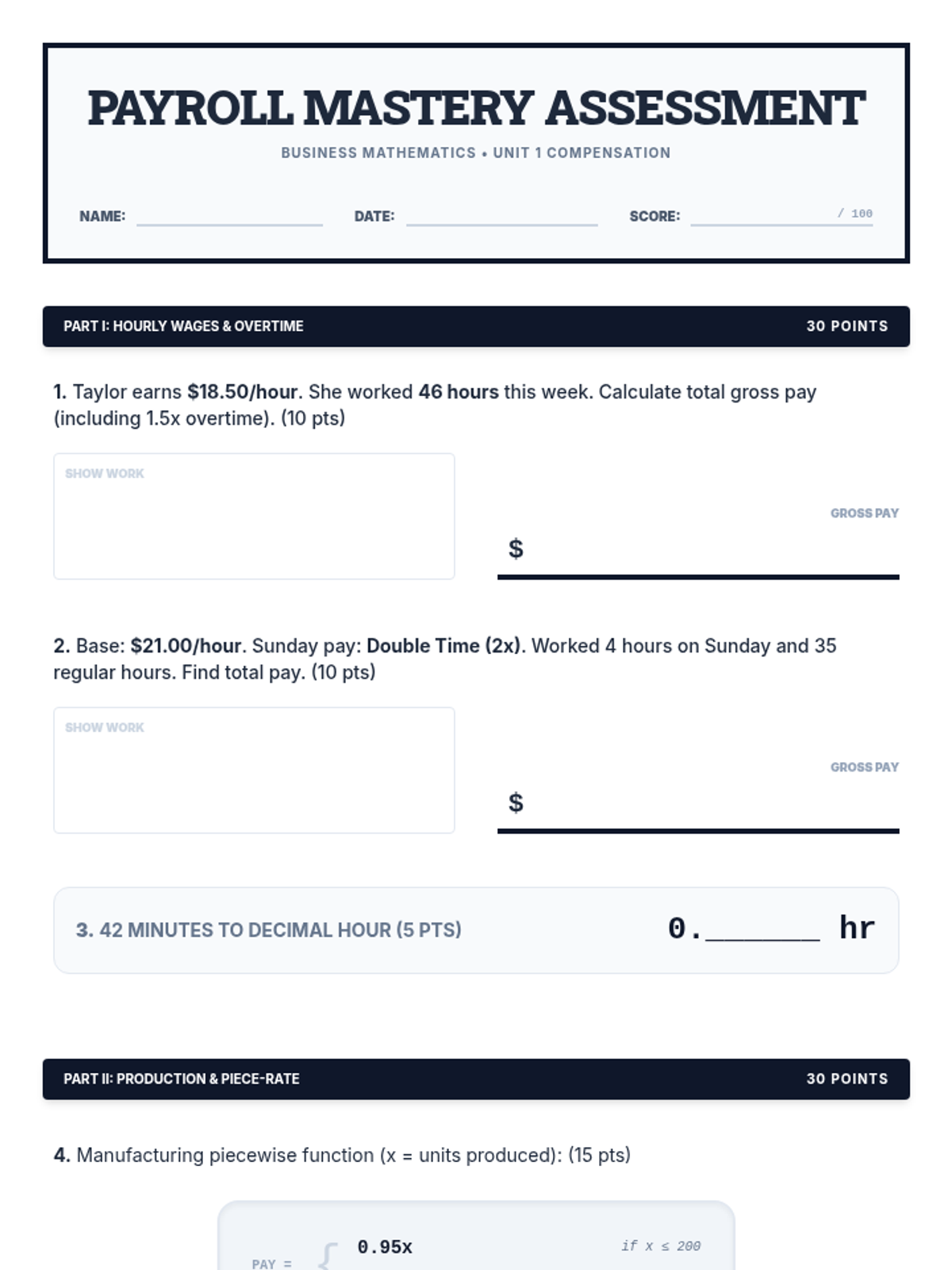
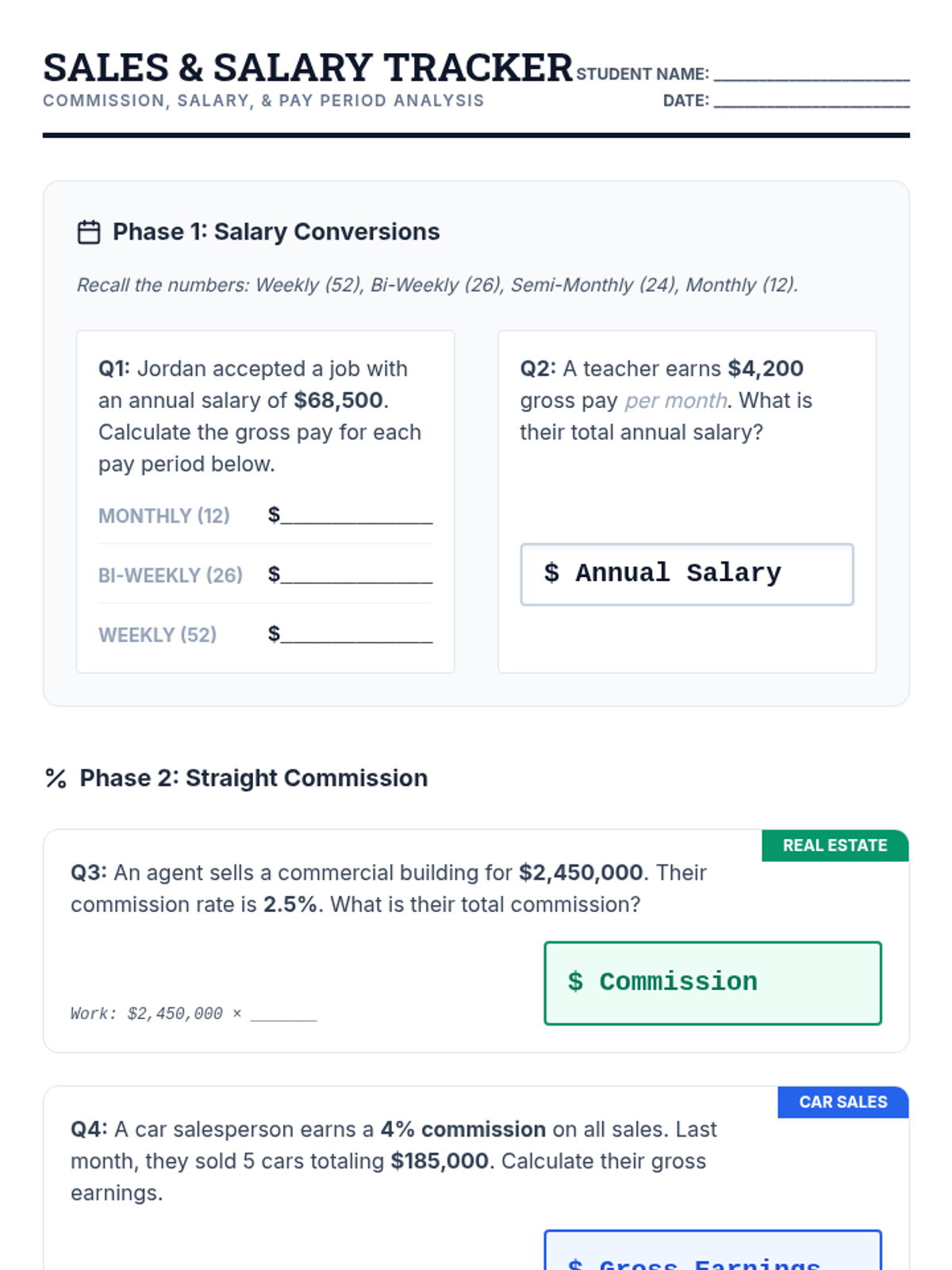
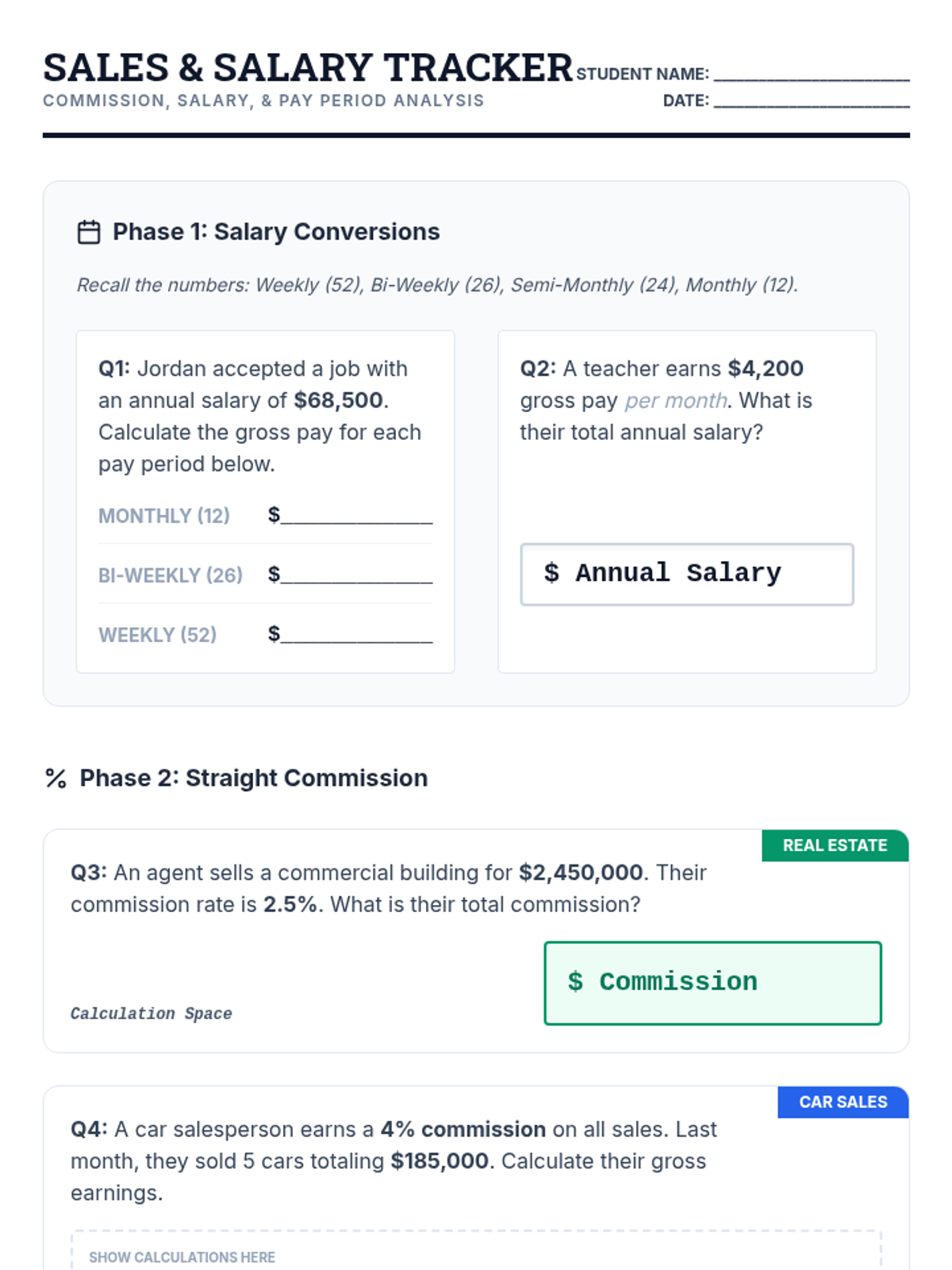
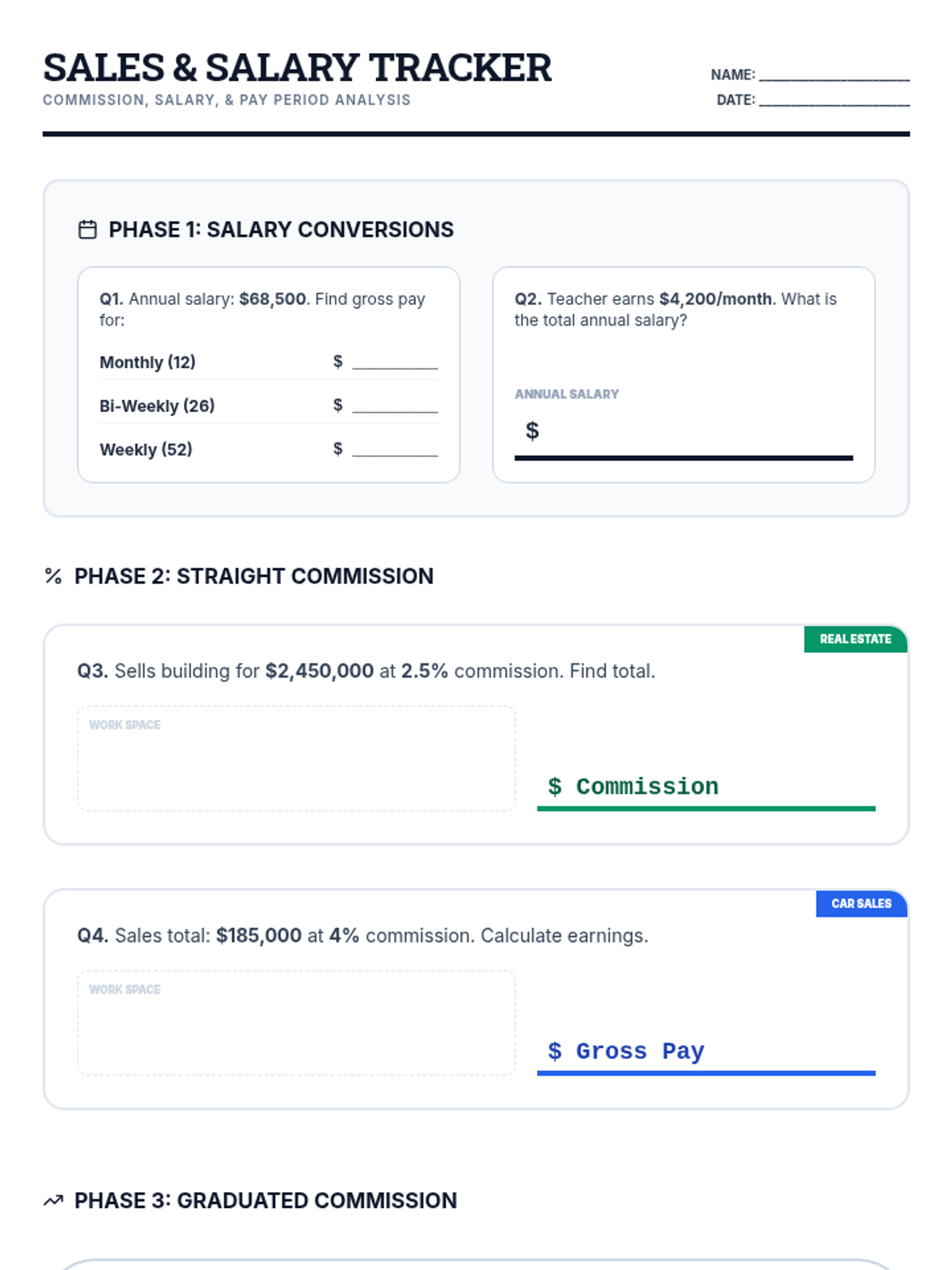
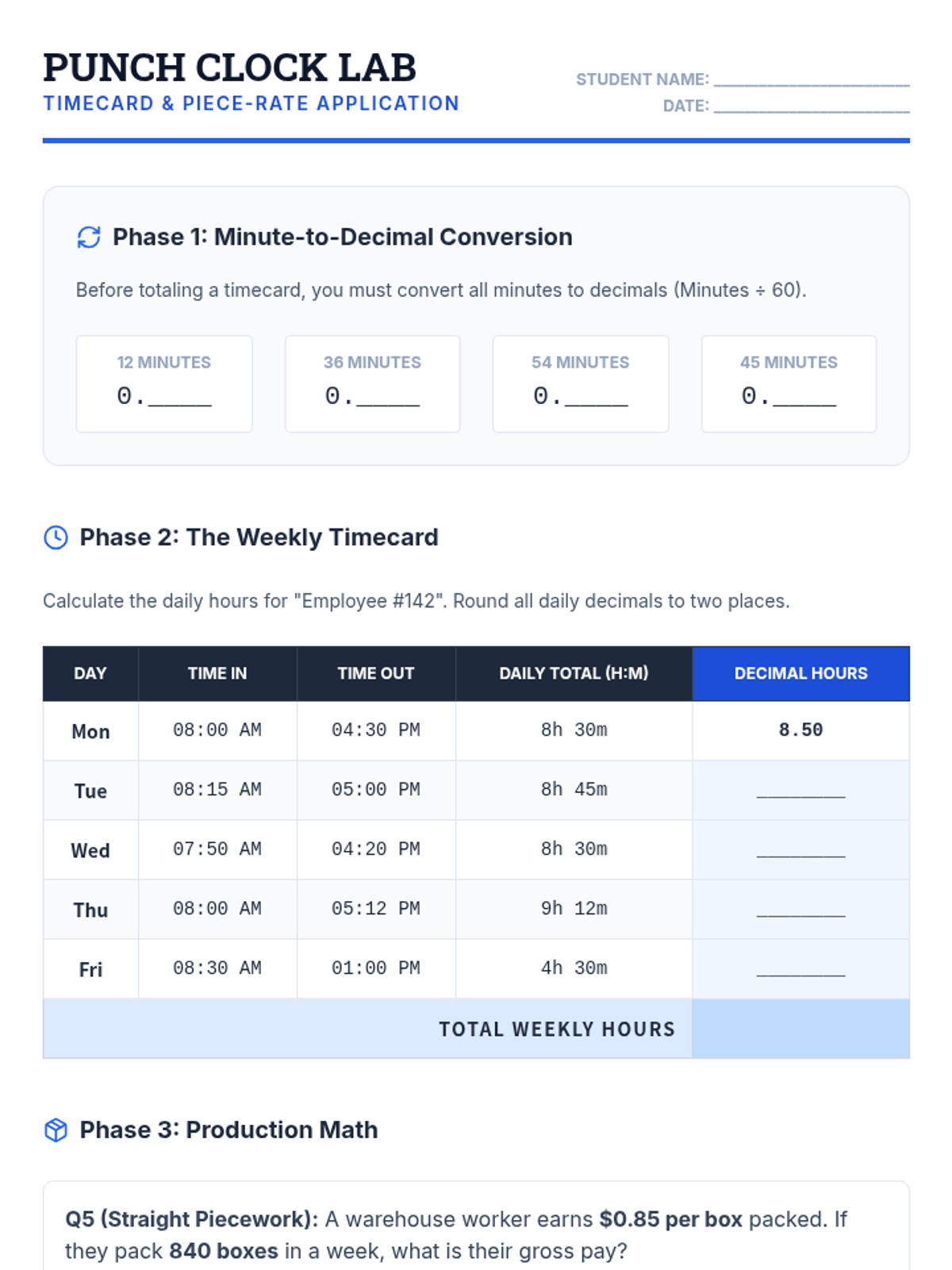
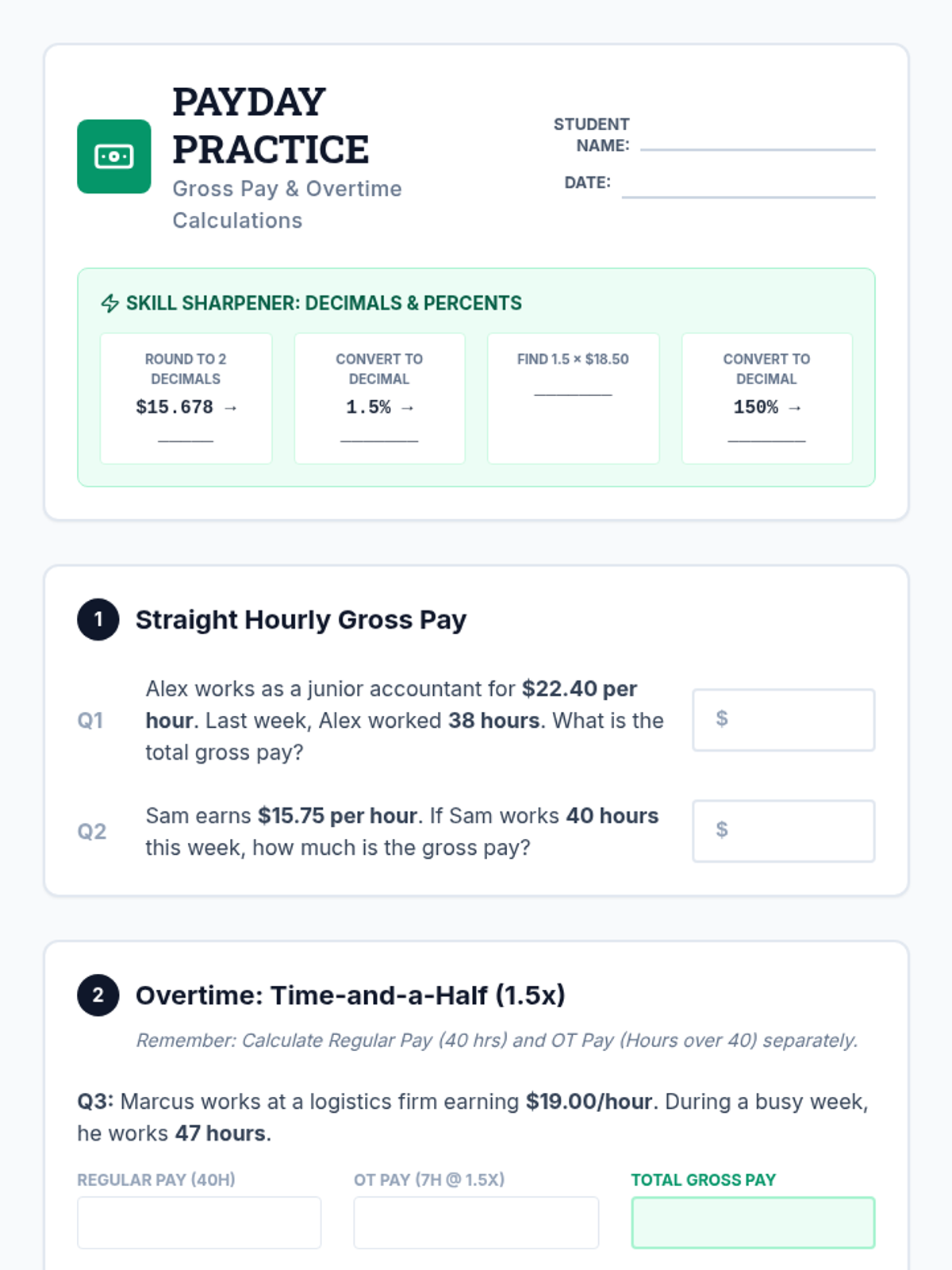
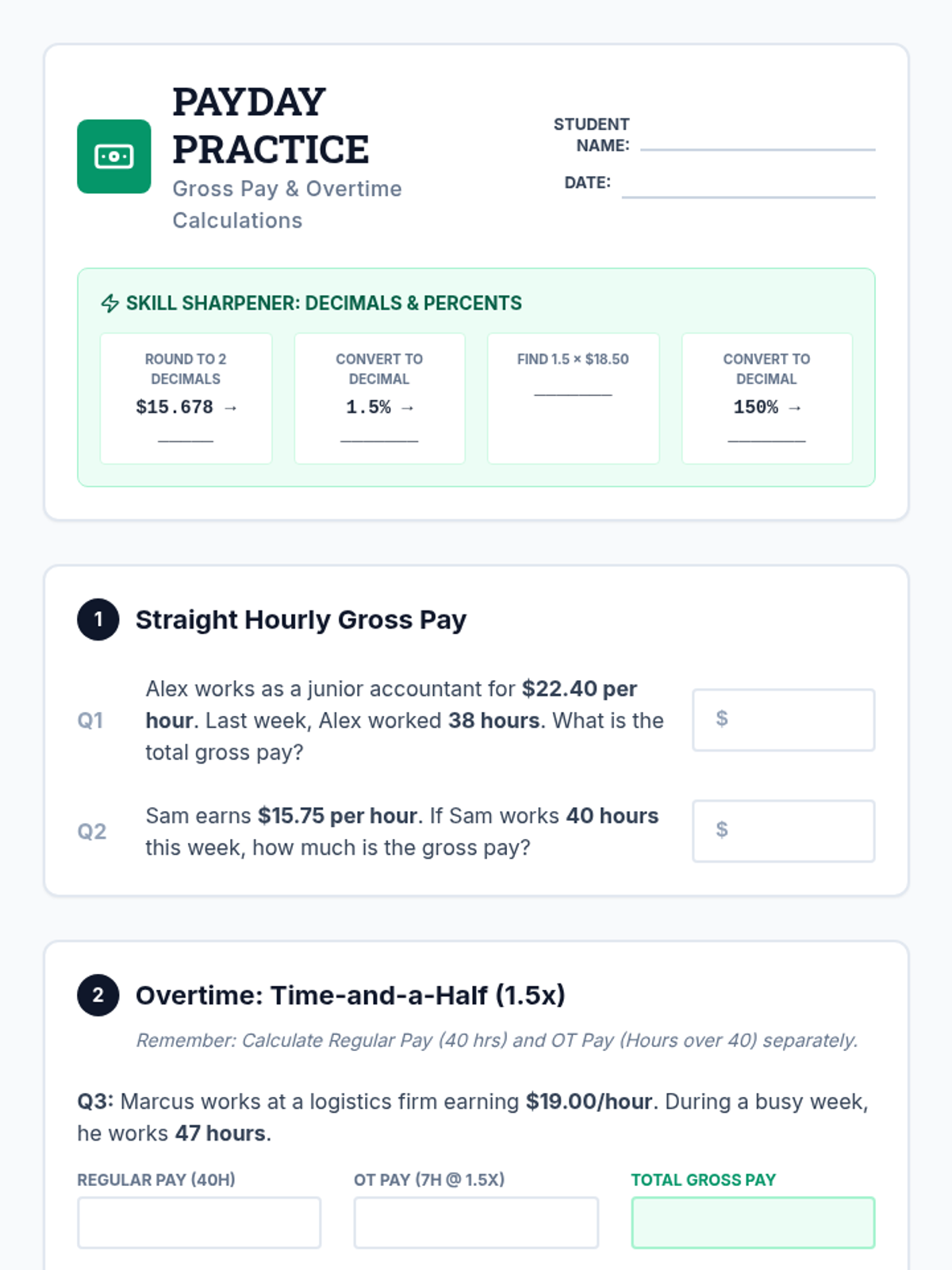
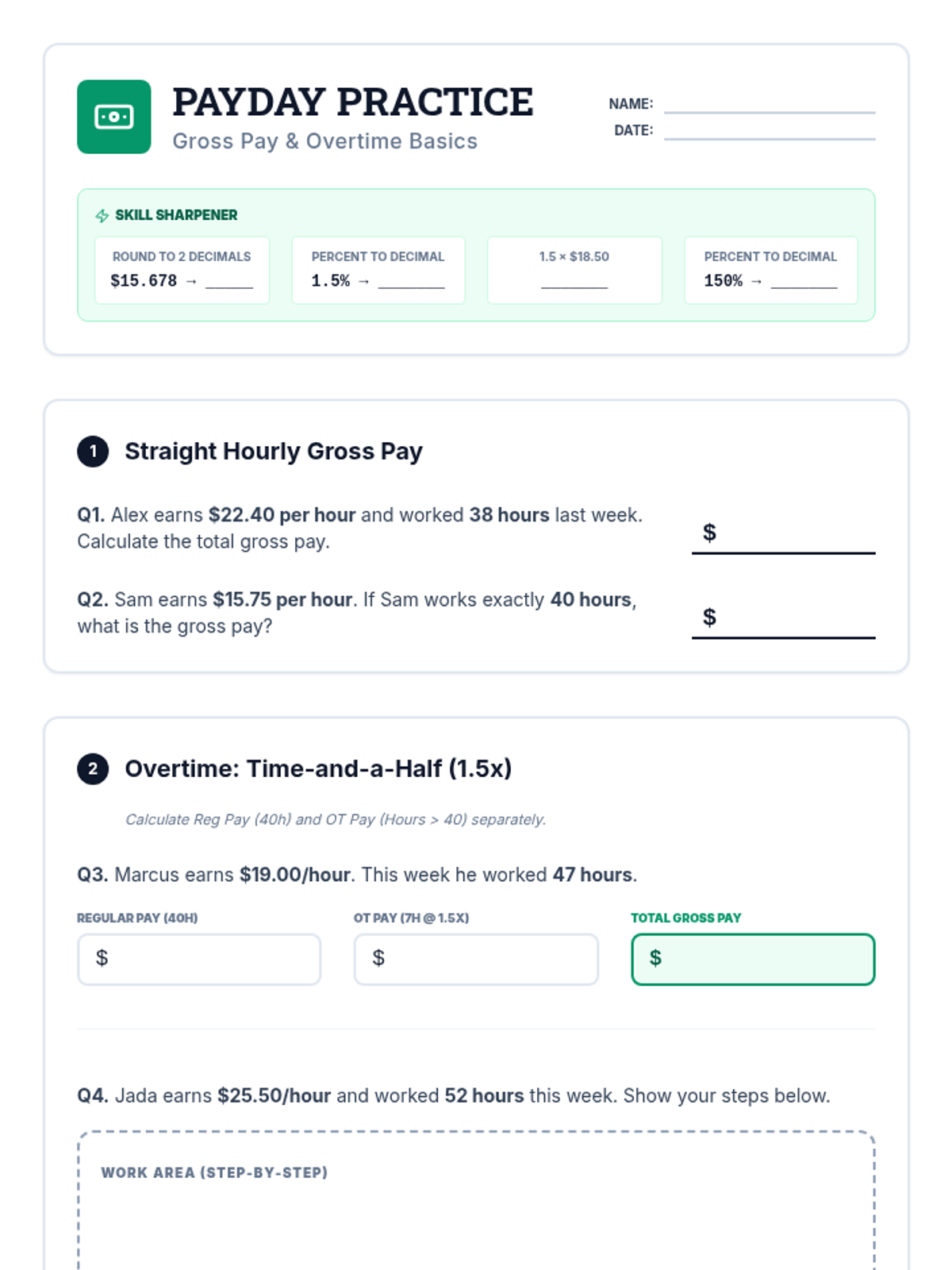
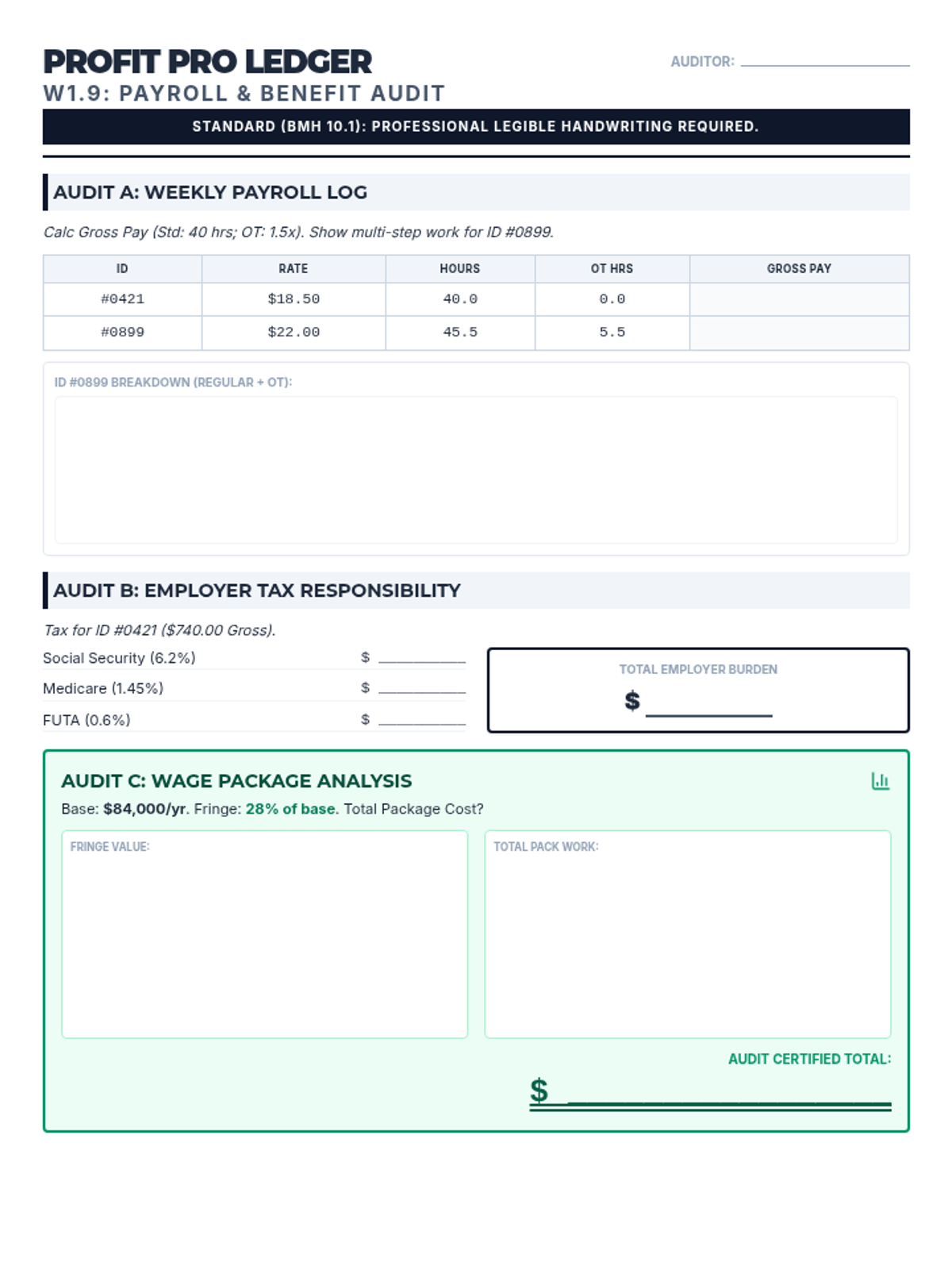
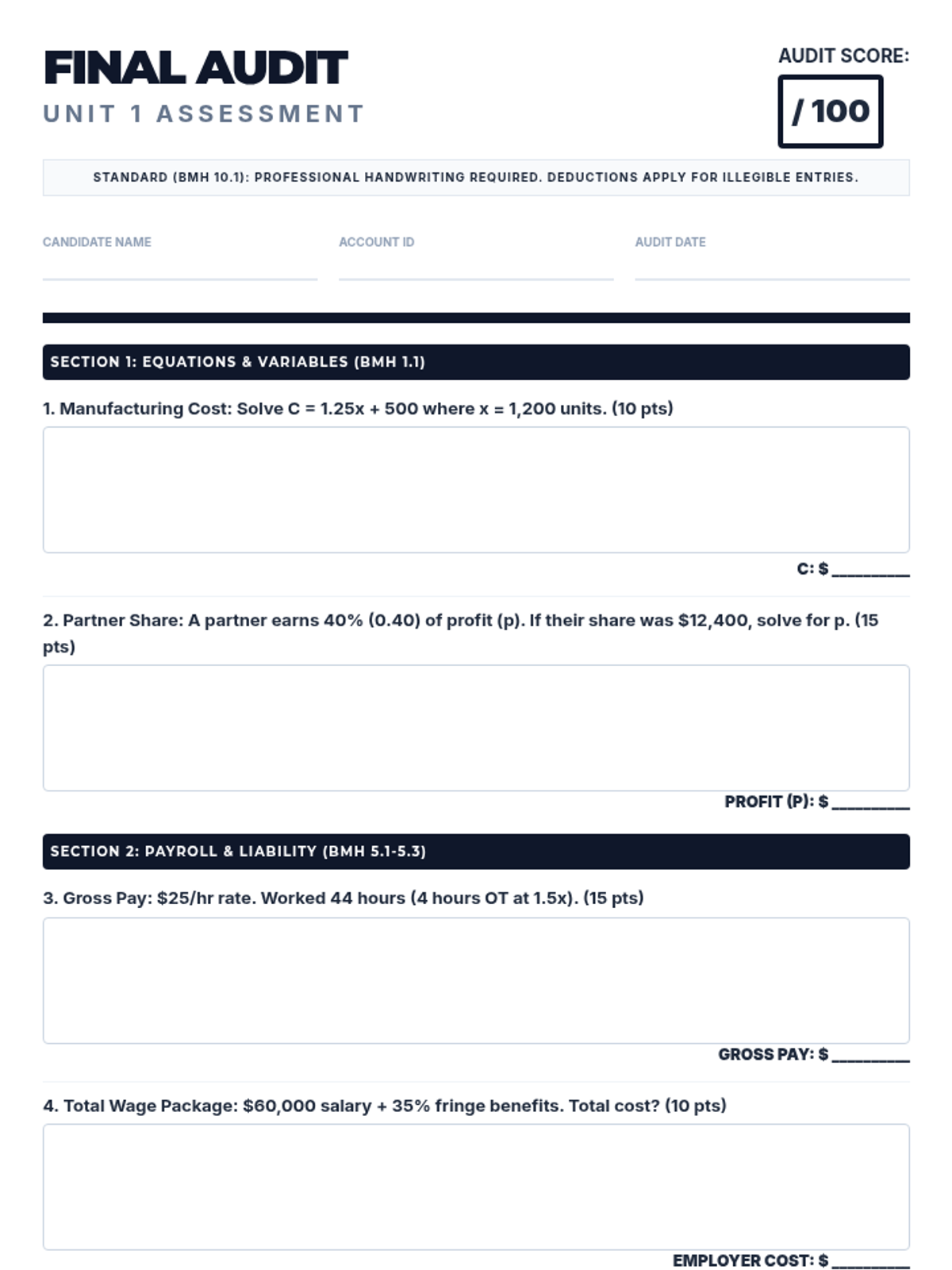
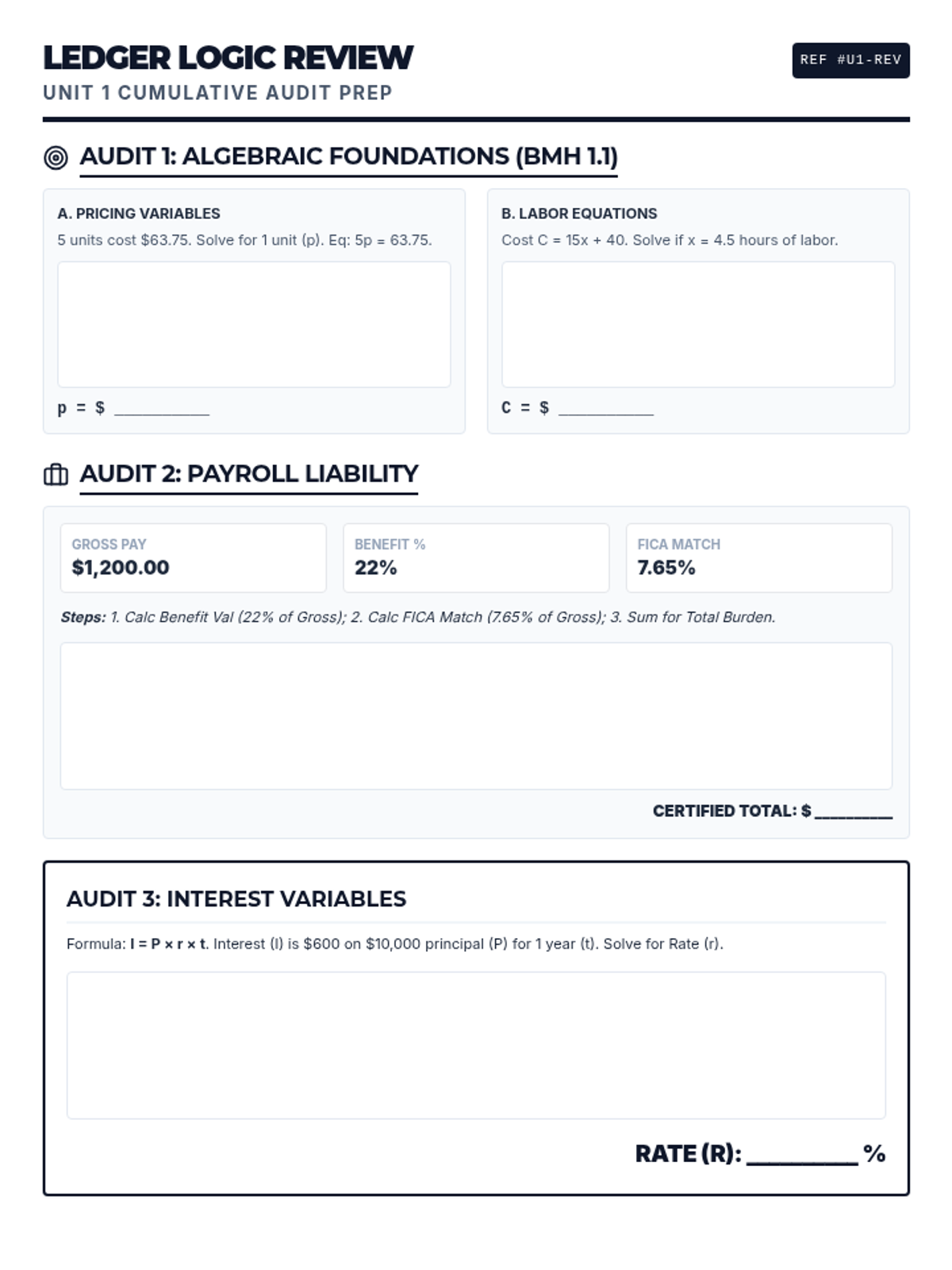
Focuses on understanding gross vs. net pay, reading paystubs, and calculating common tax deductions to prepare students for their first professional earnings.
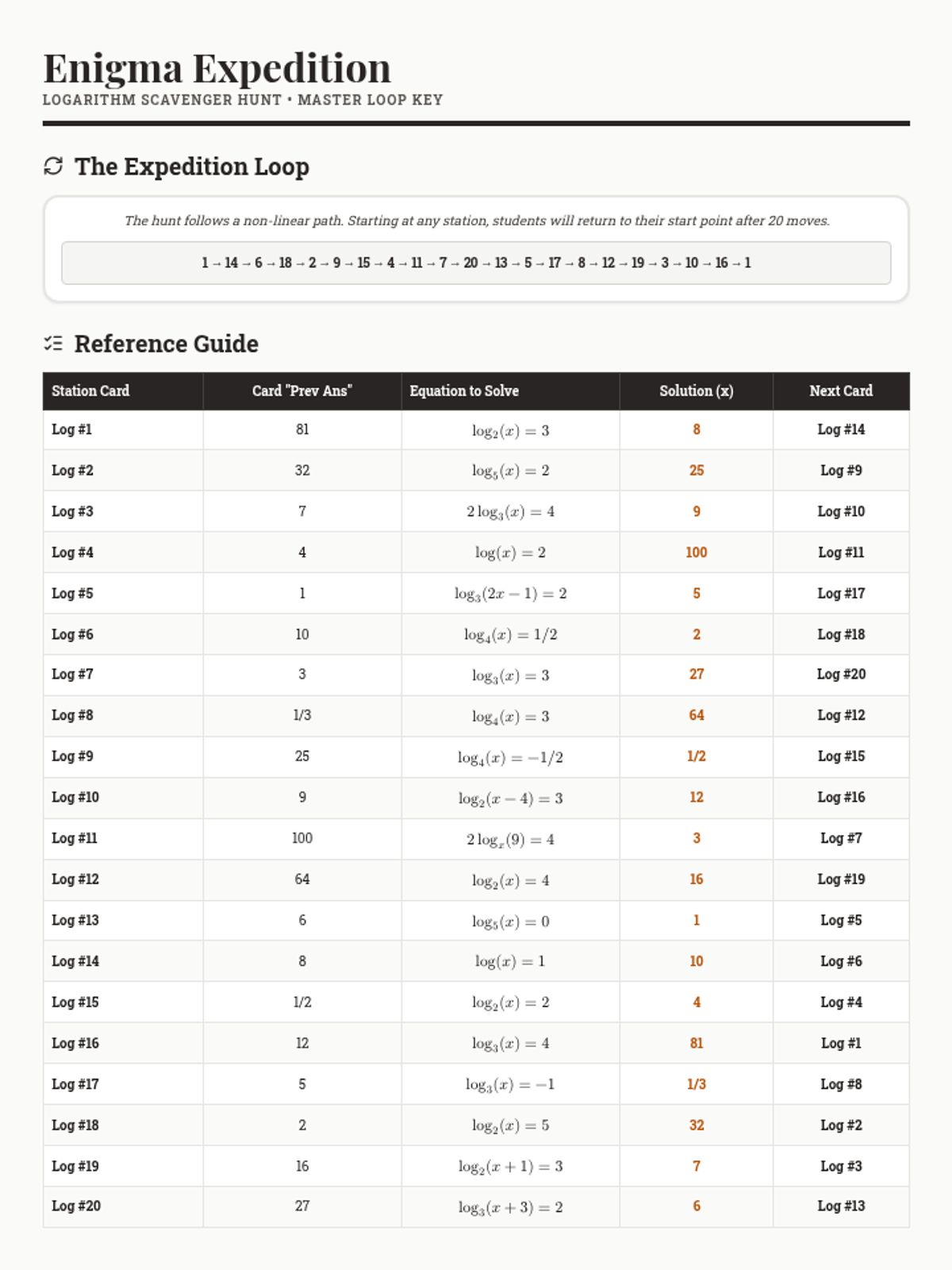
A lesson focused on solving radical equations derived from function notations, specifically finding the input value (x) given an output value (g(x)).
A lesson focused on solving for the input of radical functions when given a specific output value. Students will practice algebraic manipulation and squaring both sides of an equation to isolate variables.
A comprehensive lesson on identifying and calculating vertical asymptotes, horizontal asymptotes, and removable discontinuities (holes) in rational functions. Students will practice factoring and simplifying functions to reveal their underlying structure.
A lesson comparing the structural attributes of exponential and rational functions, focusing on asymptotes, domain, and range.
A quick practice set focused on solving basic rational equations where a single variable is in the denominator. Students will develop their algebraic manipulation skills to isolate the variable and find solutions.
A practice lesson focusing on identifying solutions to rational equations using function tables. Students analyze given functions and their corresponding tables to find specific x-values for target outputs.
A lesson focused on identifying the domain and range of rational functions using set-builder notation. Students analyze various horizontal and vertical asymptotes to determine functional constraints.
A lesson focused on identifying and applying transformations to the rational parent function f(x) = 1/x. Students will master horizontal and vertical shifts, vertical stretches and compressions, and reflections.
A lesson on multiplying radical expressions focusing on square roots and cube roots with numerical radicands. Students will learn the product property of radicals and apply it to simplify expressions.
An introductory statistics lesson themed around Roblox Forsaken LSM and the Jane Doe entity, covering central tendency, data collection, and probability.
A spooky and fun introduction to the basics of statistics (mean, median, and mode) featuring the characters from Billy and Mandy. Students will use visual icons to calculate data sets and solve a logic mystery to help Grim find his missing scythe.
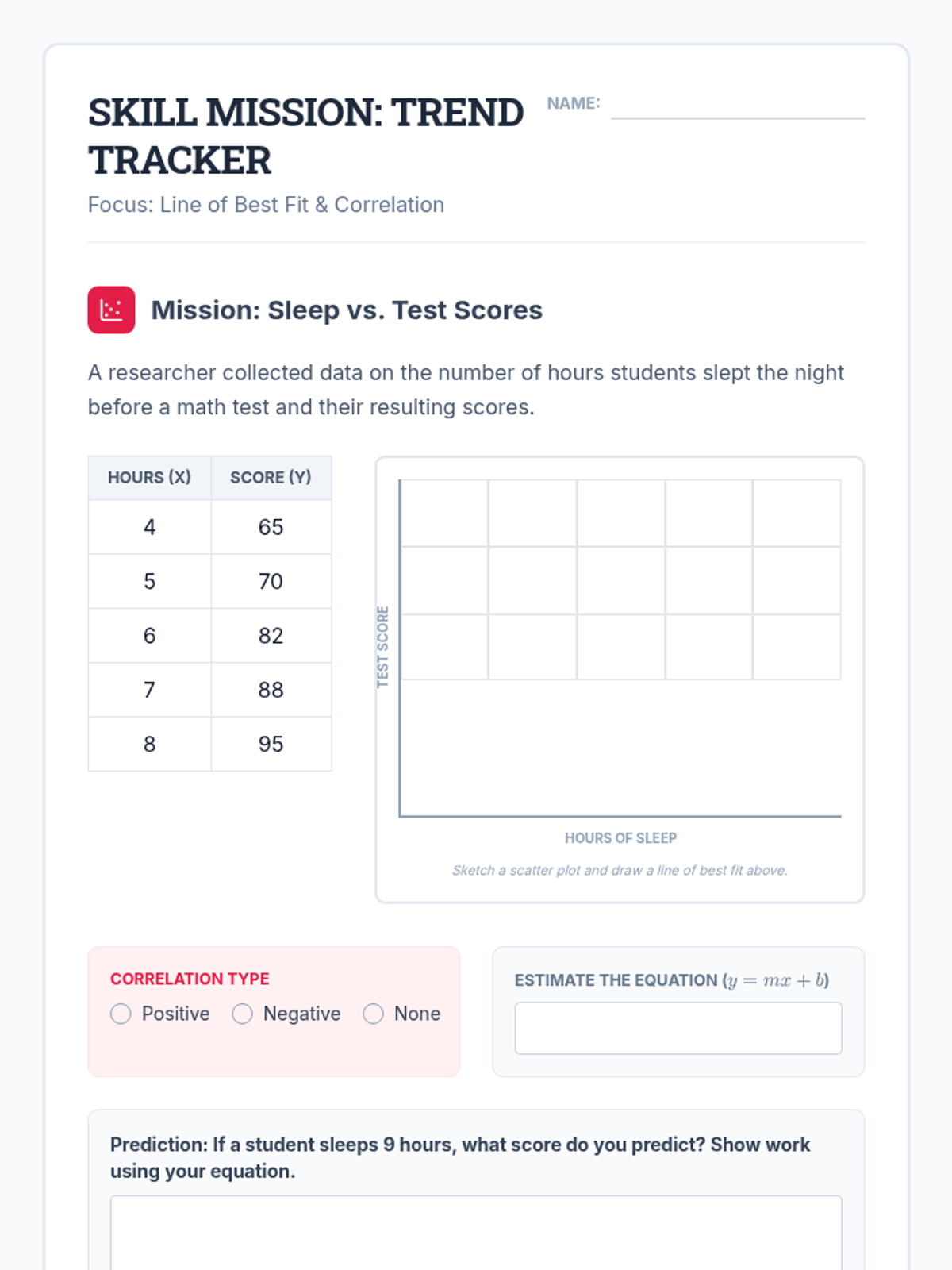
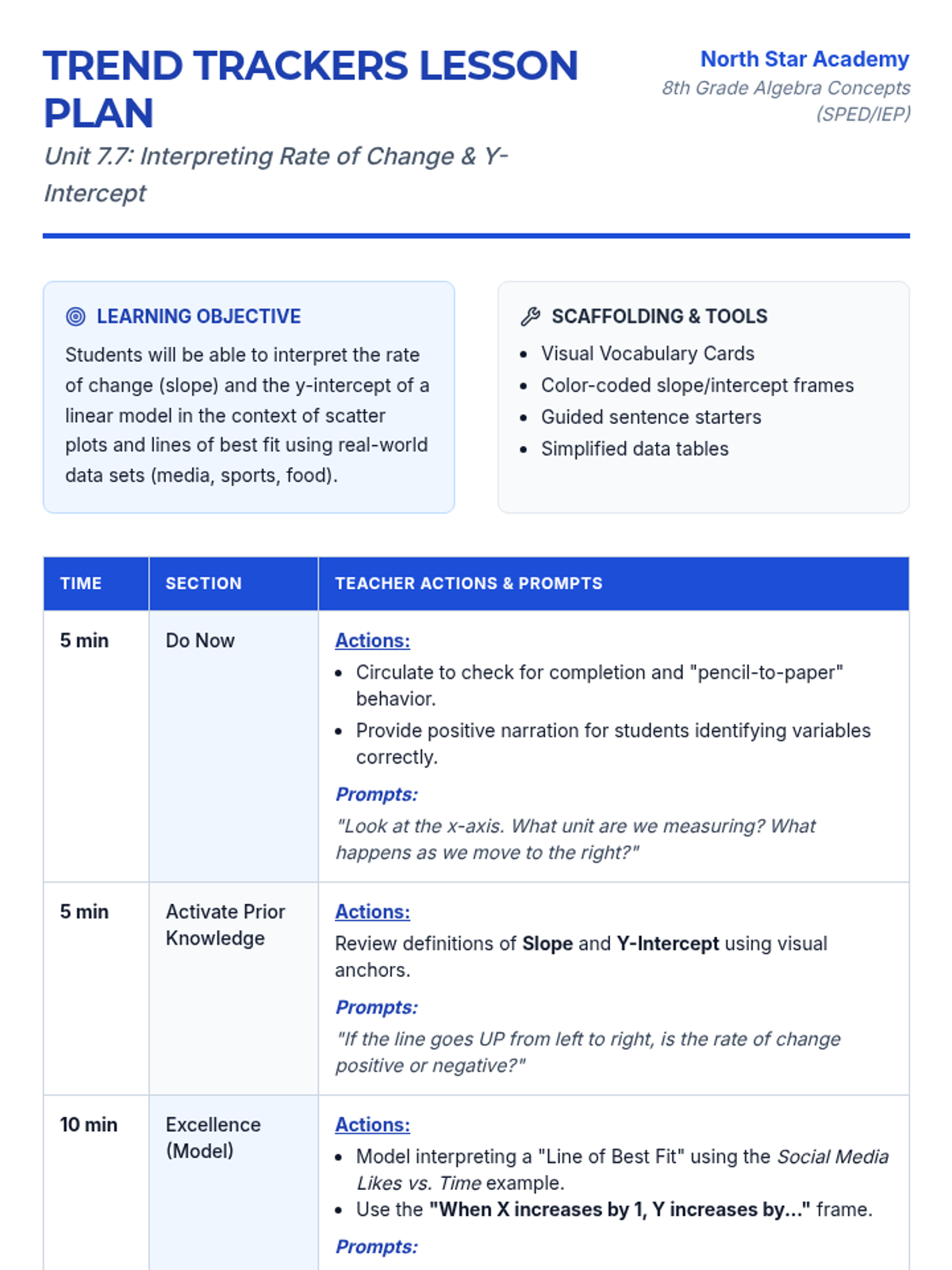
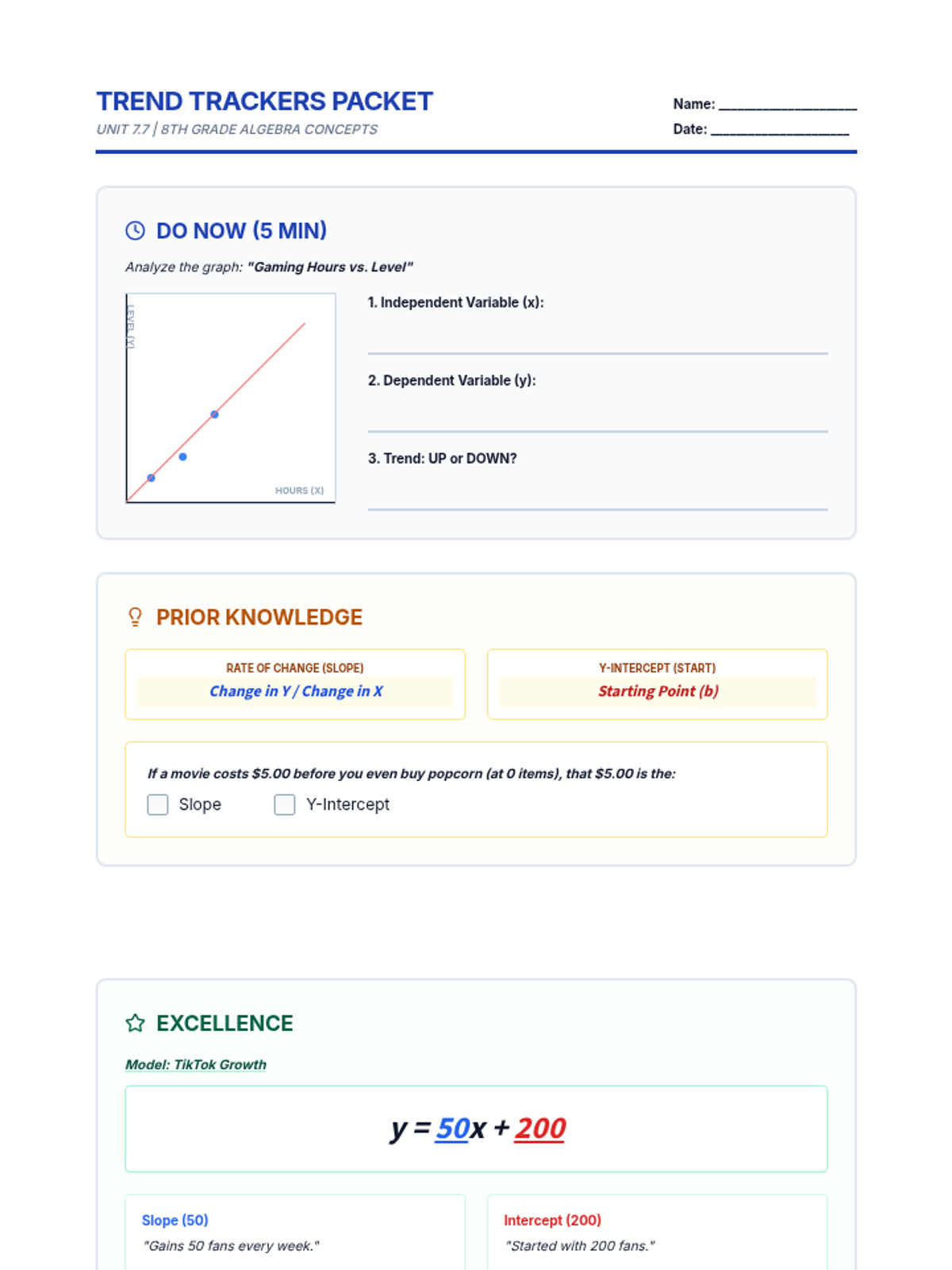
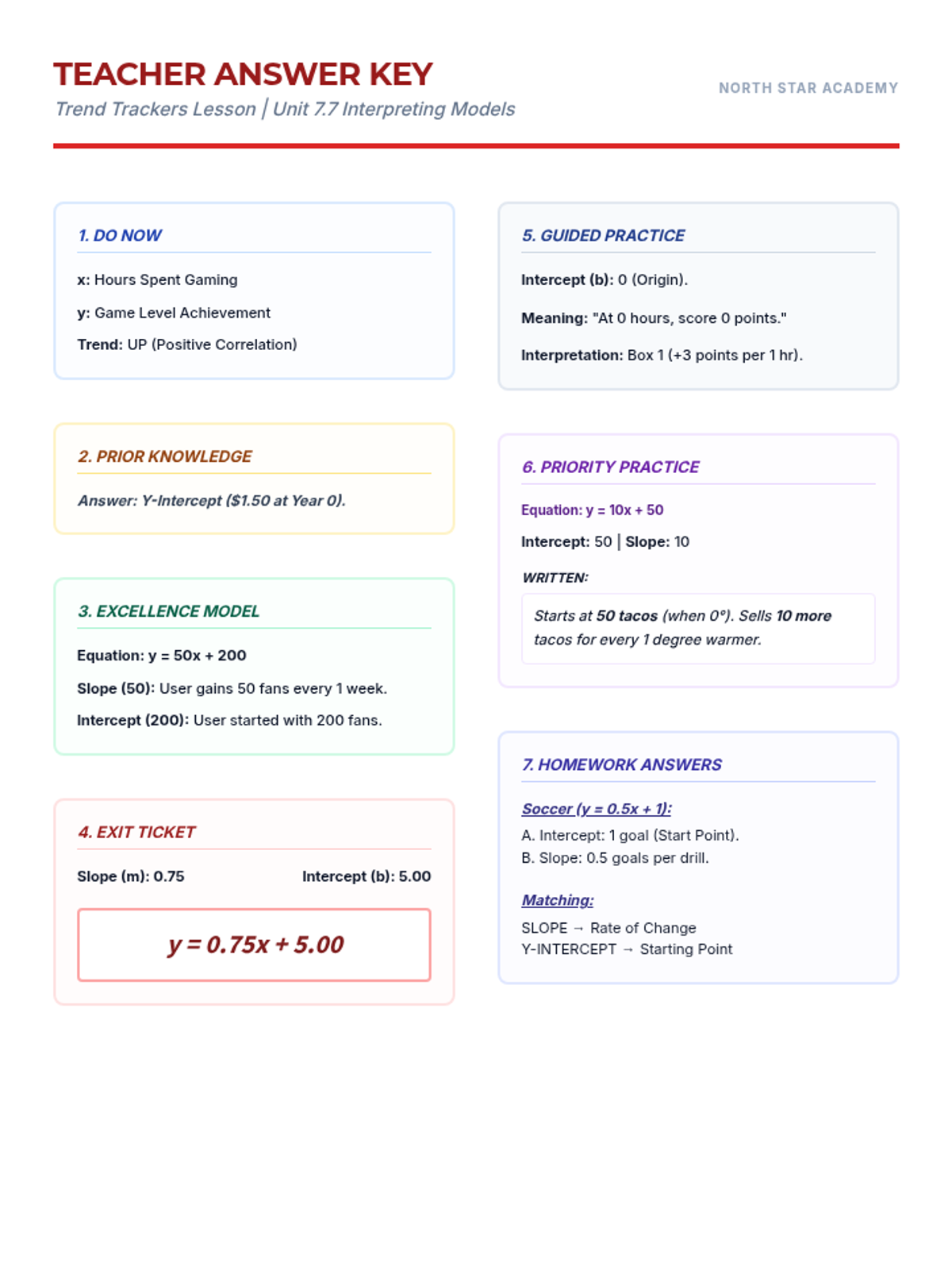
A 30-minute Tier 2 small group intervention for 8th grade math focused on decomposing real-world scenarios into linear equations by identifying slope (rate of change) and y-intercept (initial value). Includes NC EOG-aligned practice with cell phone plans, distance-time, and savings accounts.
A Tier 2 intervention lesson for 8th-grade students focusing on constructing linear functions from tables and real-world scenarios, bridging the gap between identifying slope and writing complete equations.
A Tier 2 math intervention focused on building conceptual understanding of fraction multiplication through visual models and mathematical discourse. Students move from repeated addition to area models and number line jumps to explain 'why' the math works.
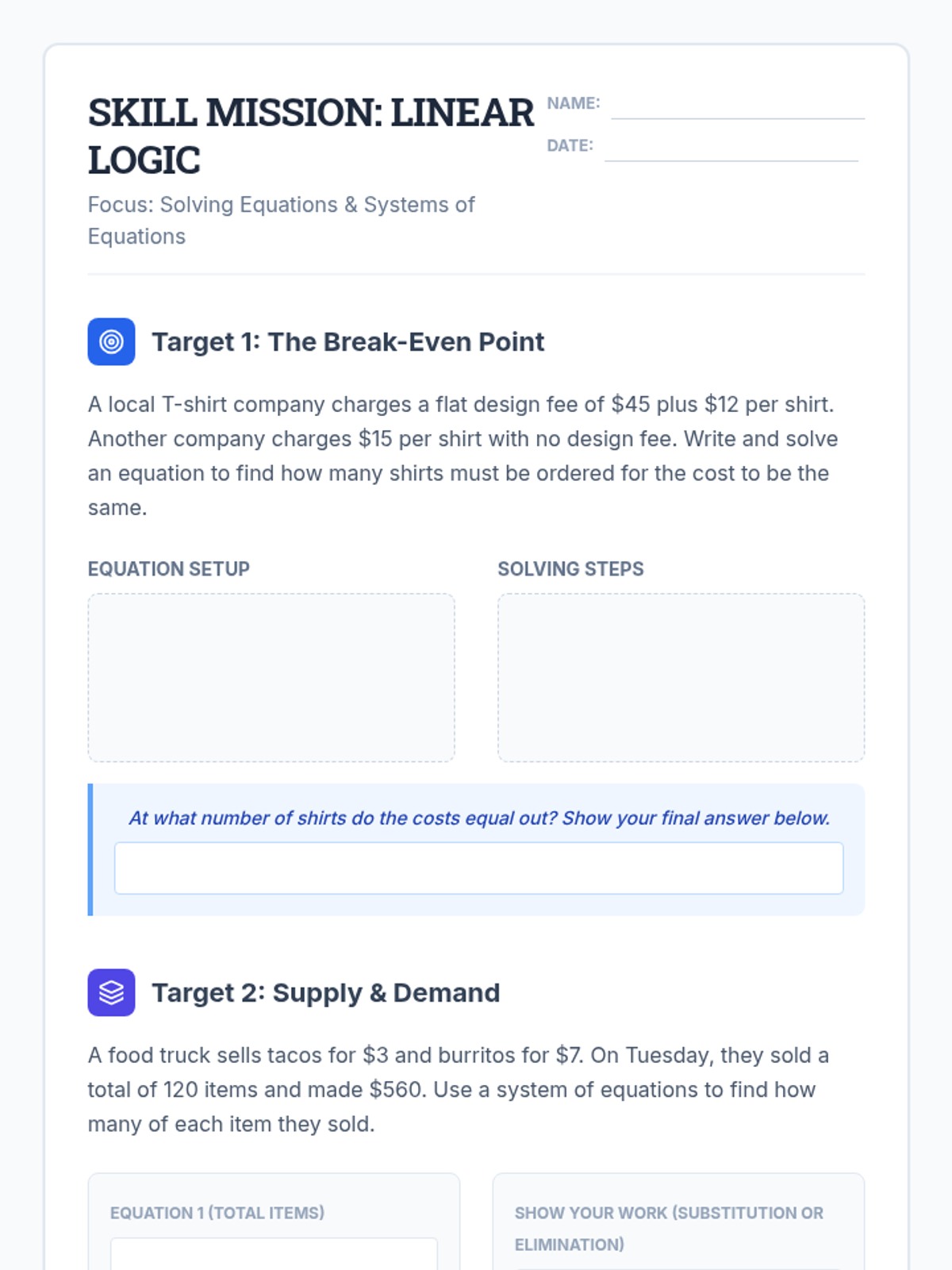
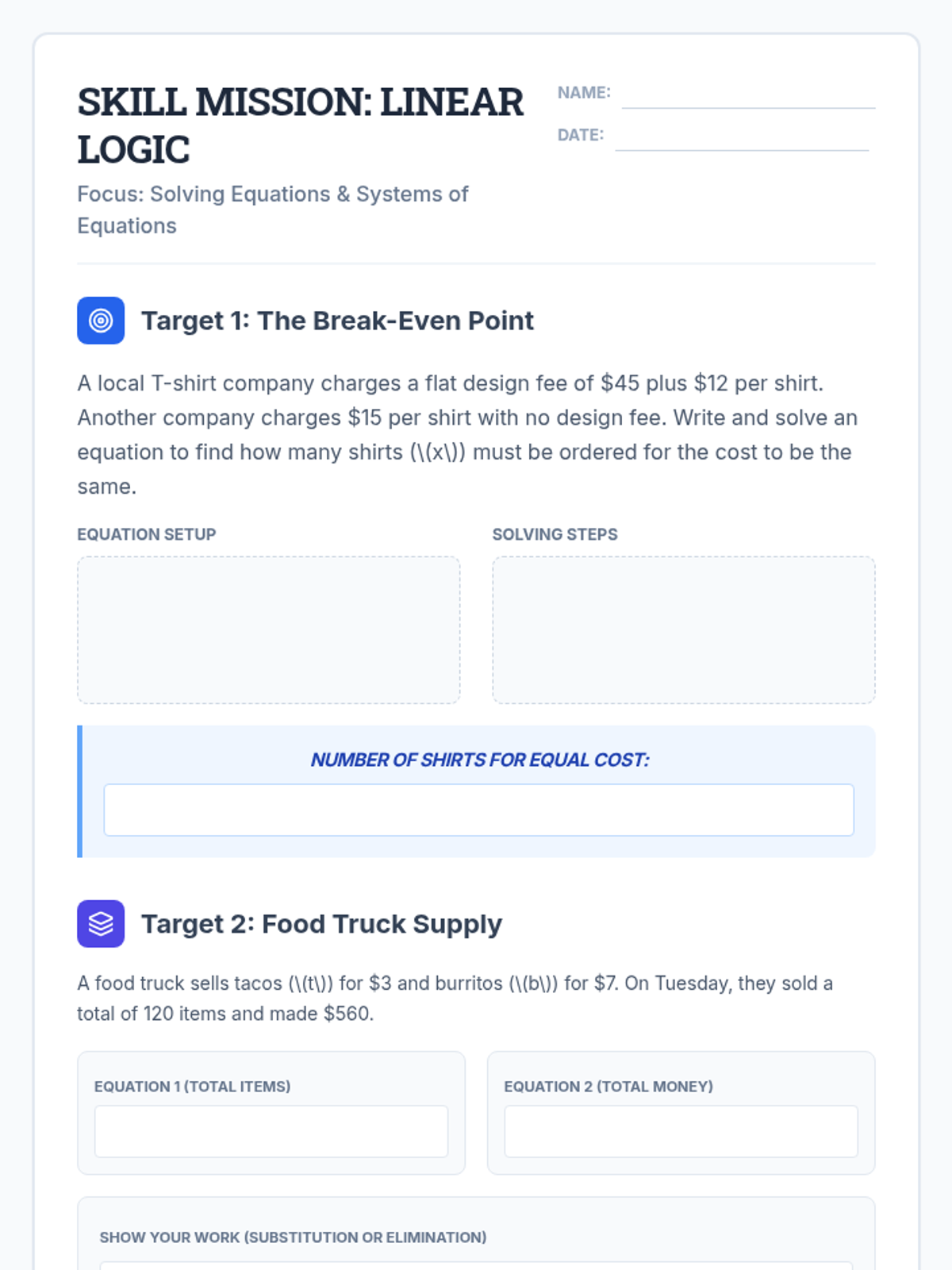
An 8th-grade algebra lesson where students master systems of linear equations by graphing. Through the lens of a 'Break-Even Battle,' students identify the intersection point of two paths to find equilibrium between competing rates of change.