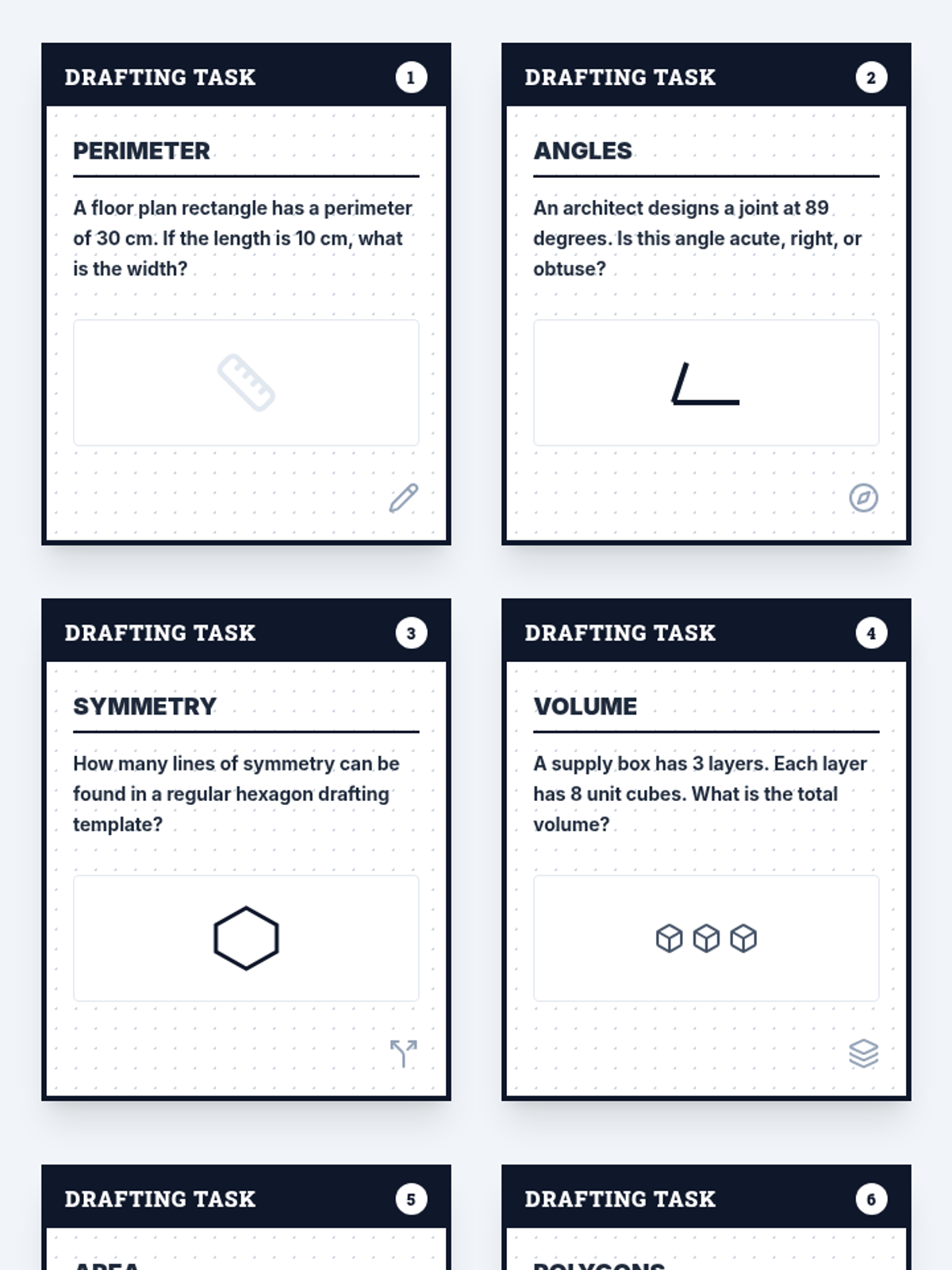
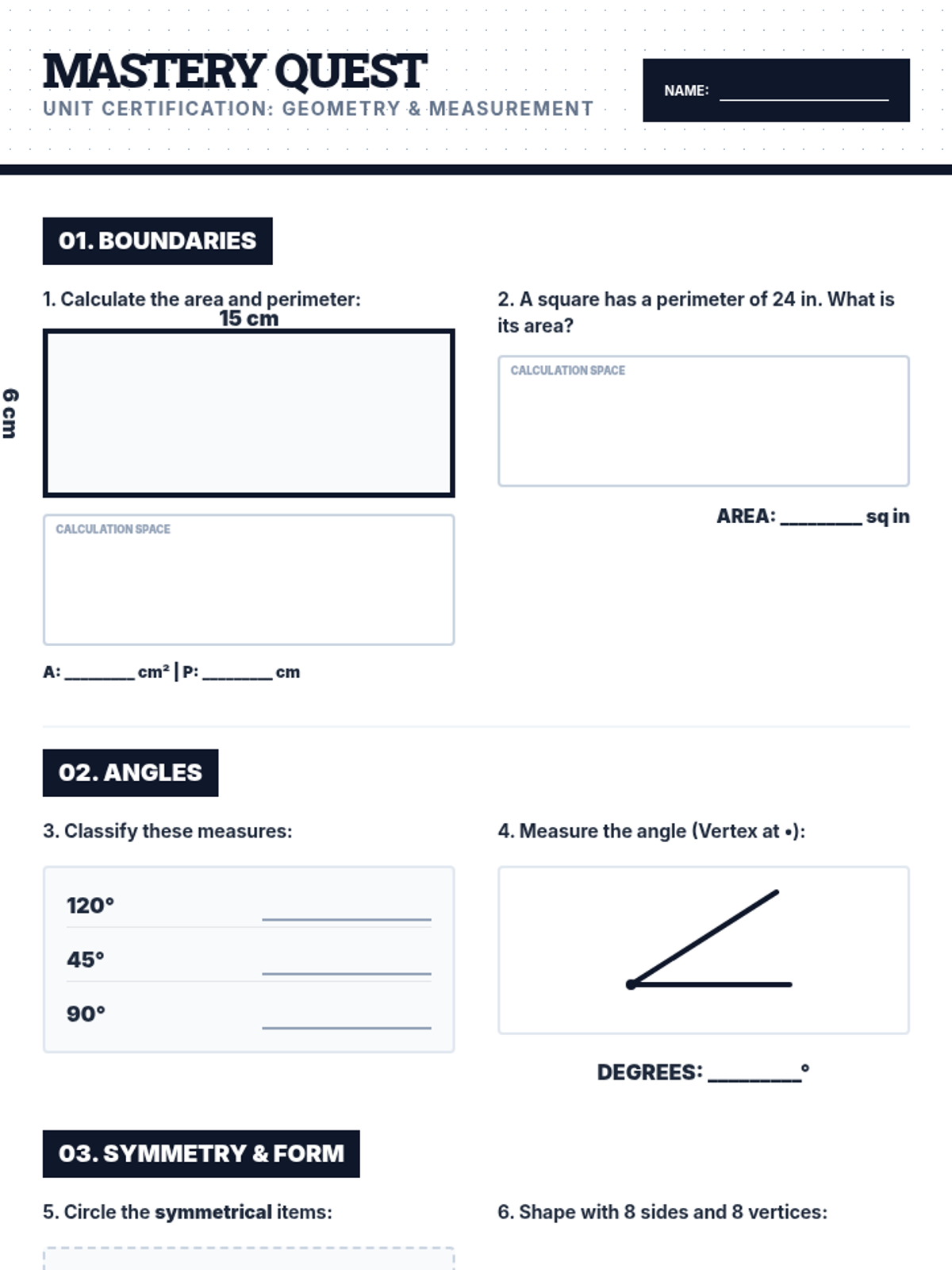
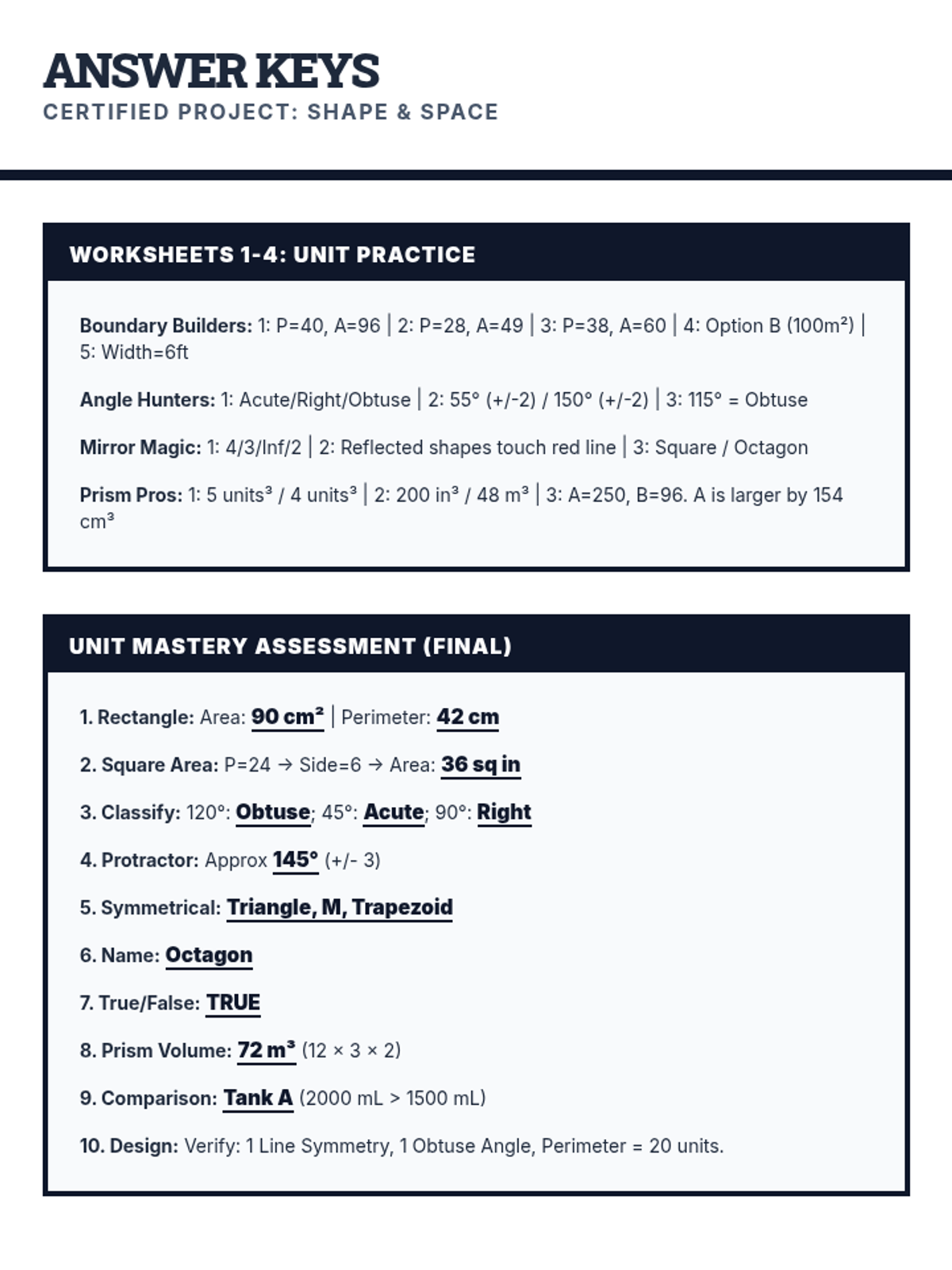
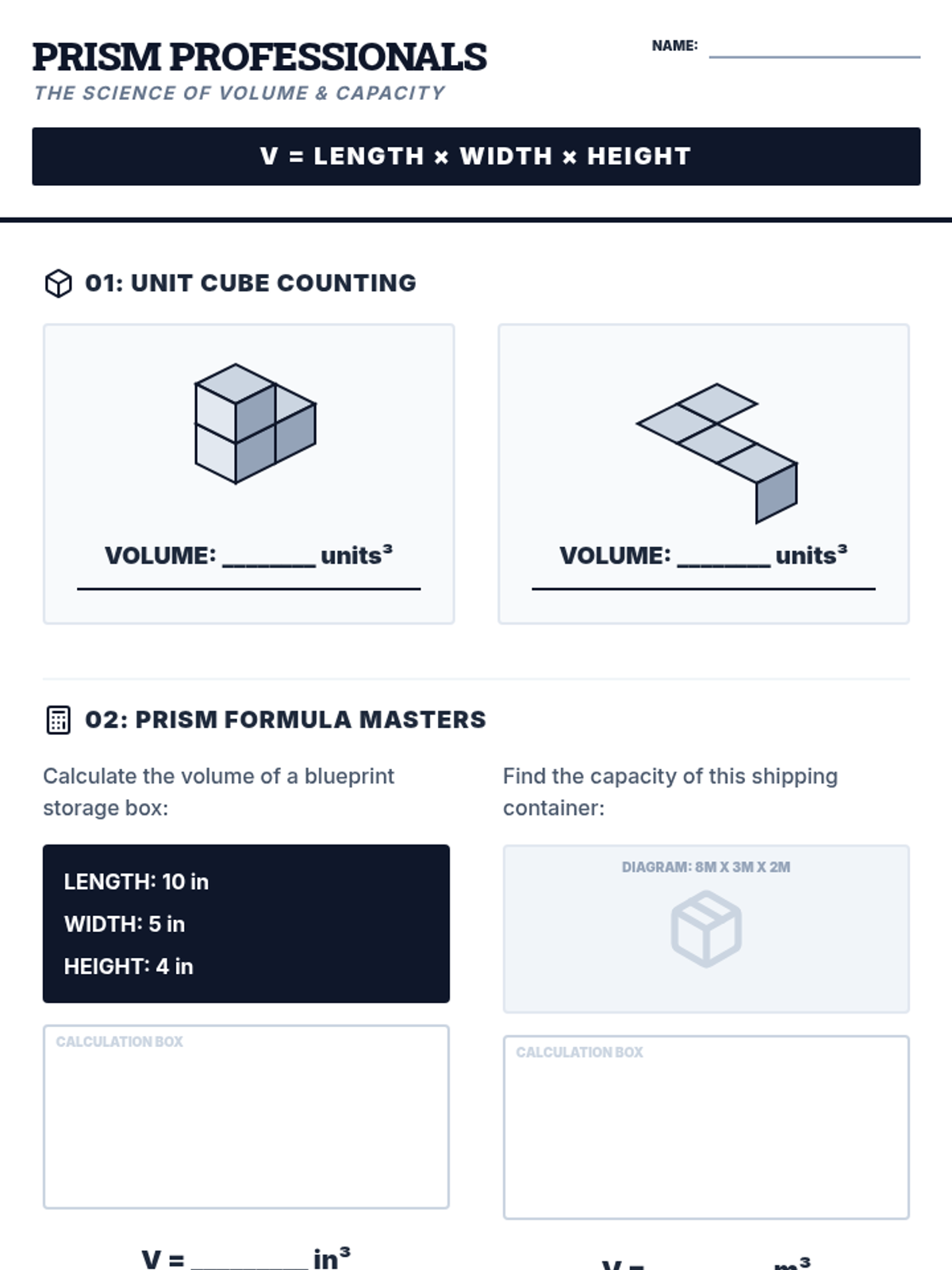
Geometric classification, measurement of area and volume, and the study of transformations and rigid motions. Builds toward complex proofs, trigonometry for general triangles, and the algebraic representation of conic sections.
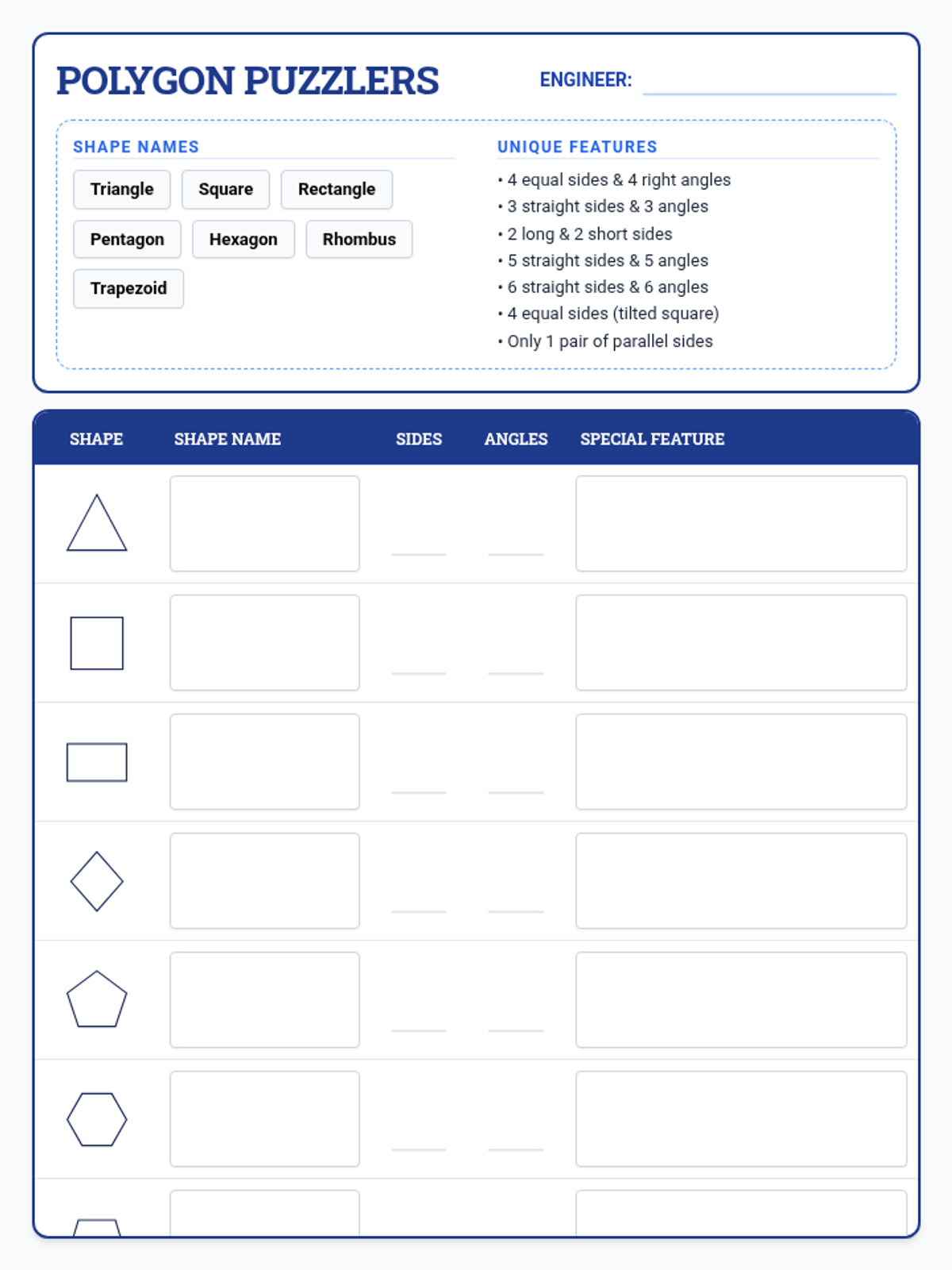
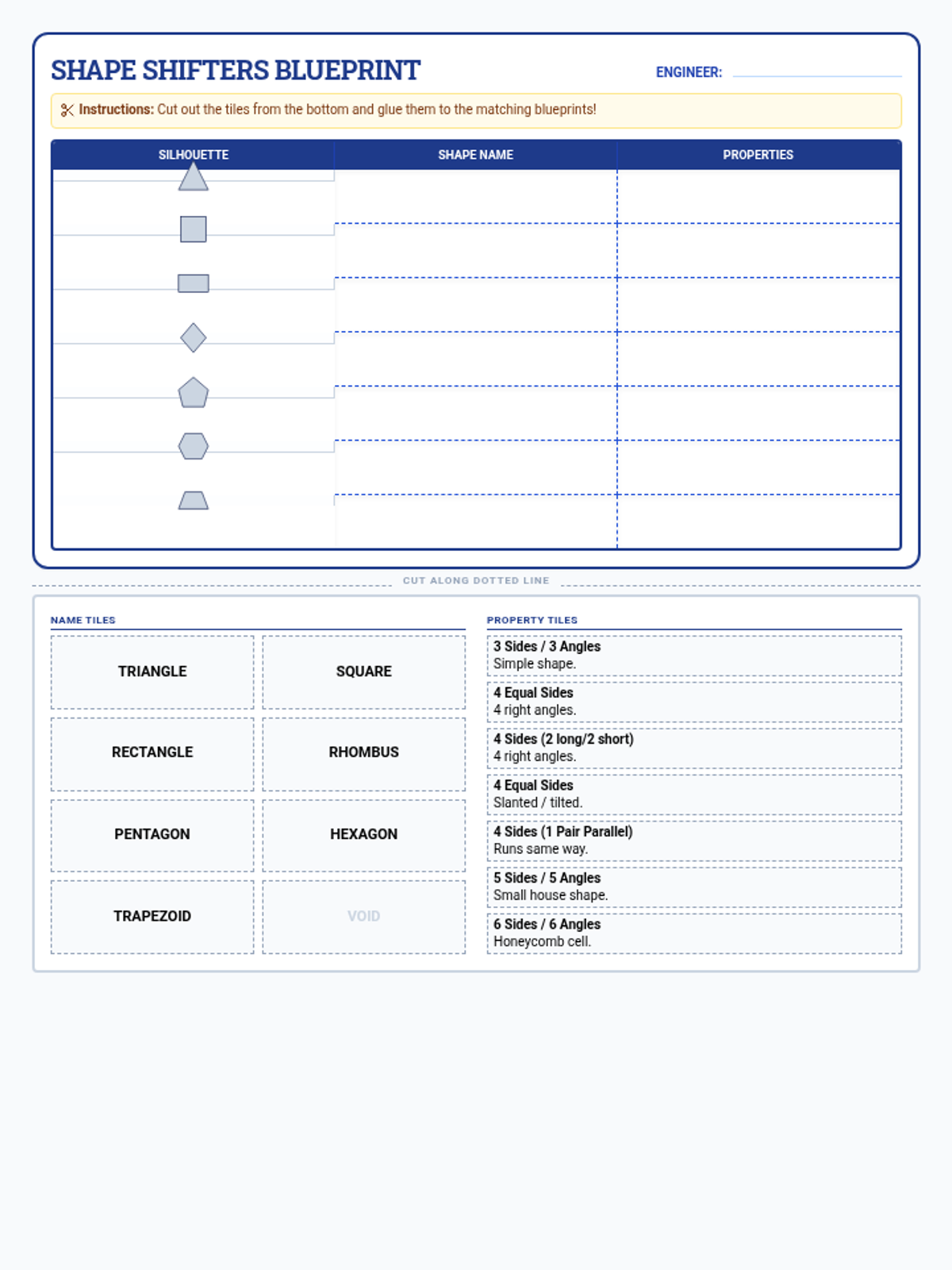
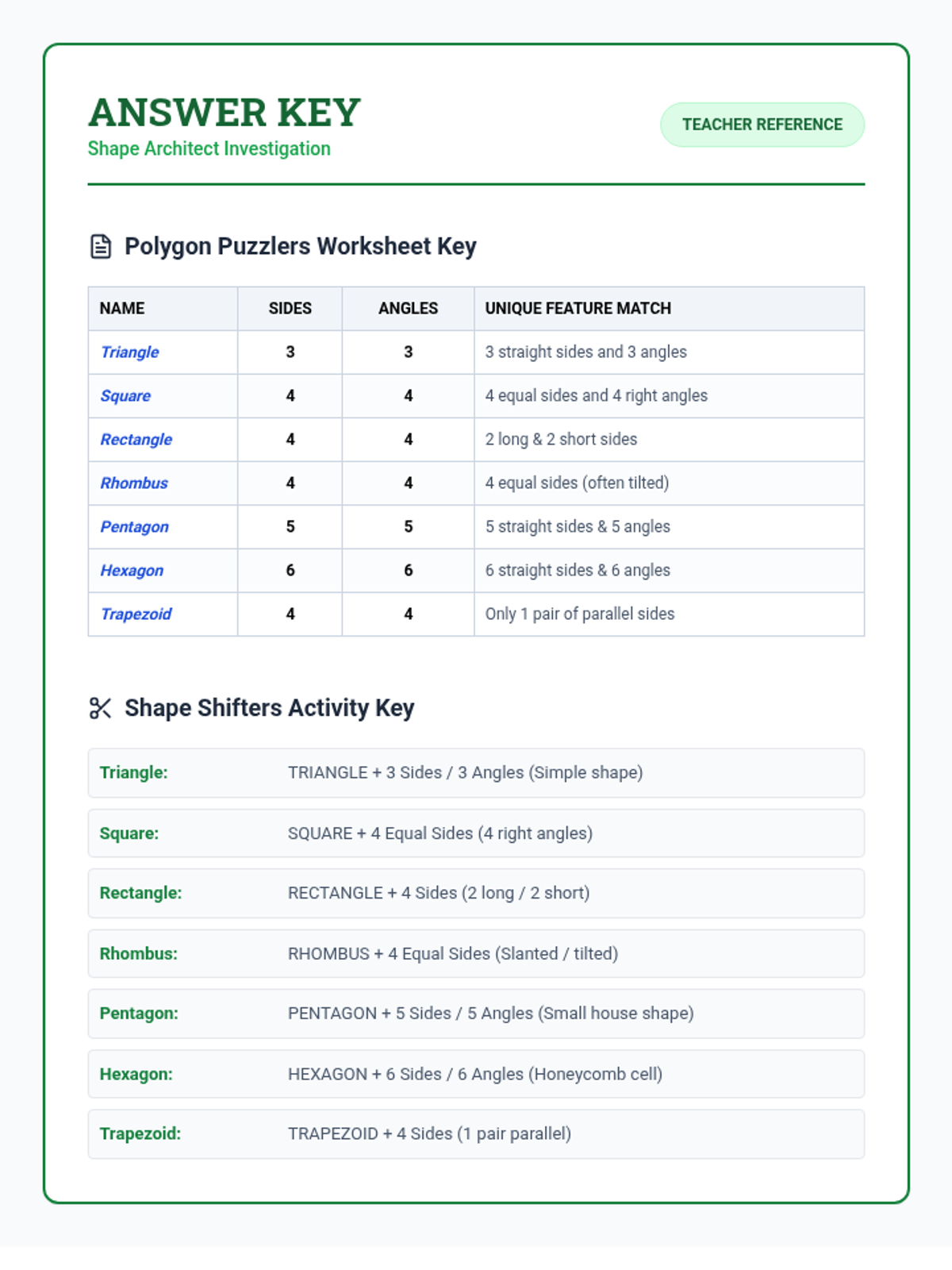
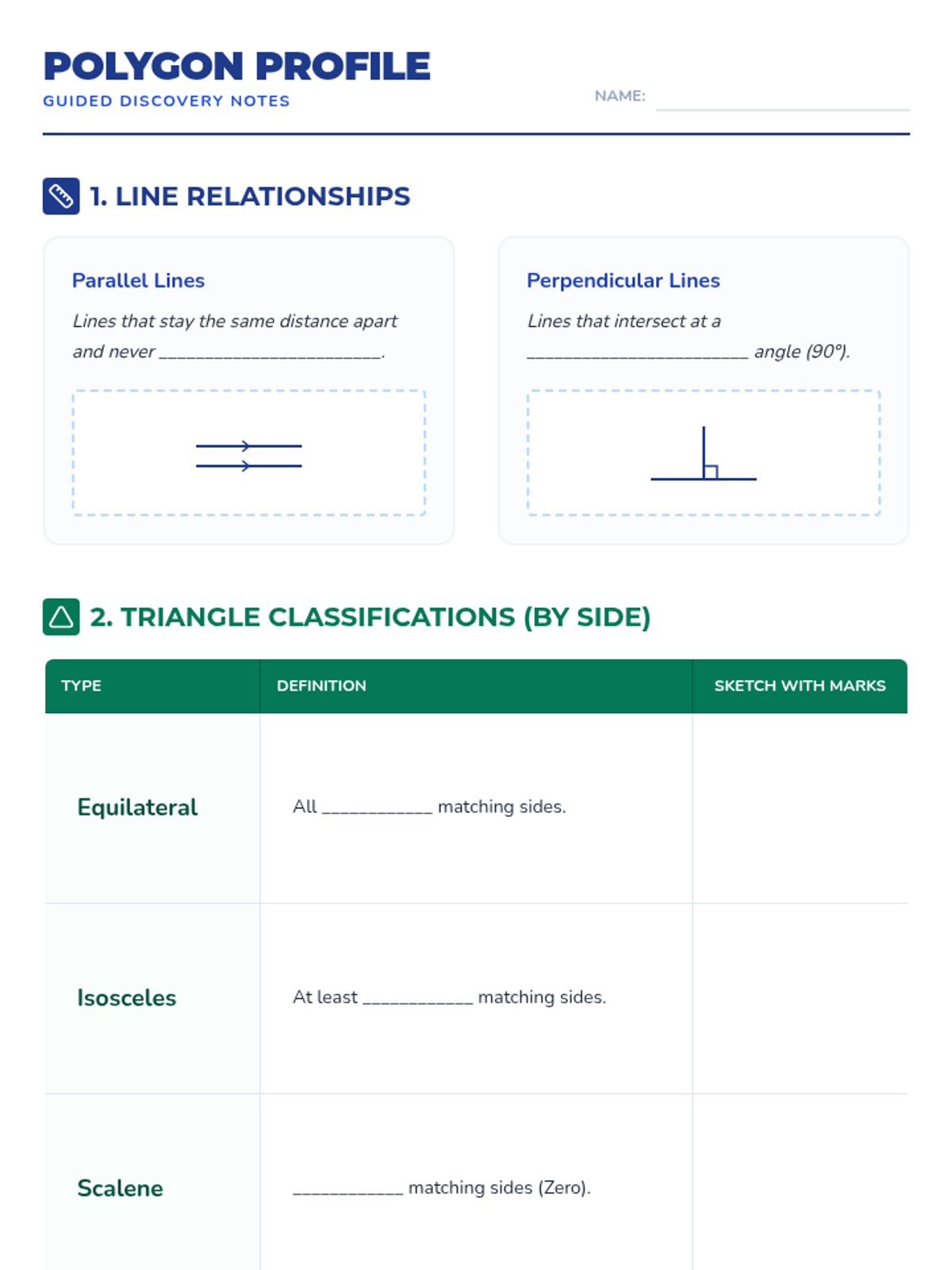
A hands-on geometry lesson where students explore the properties of 2D polygons, including sides, angles, and defining characteristics through classification and sorting.
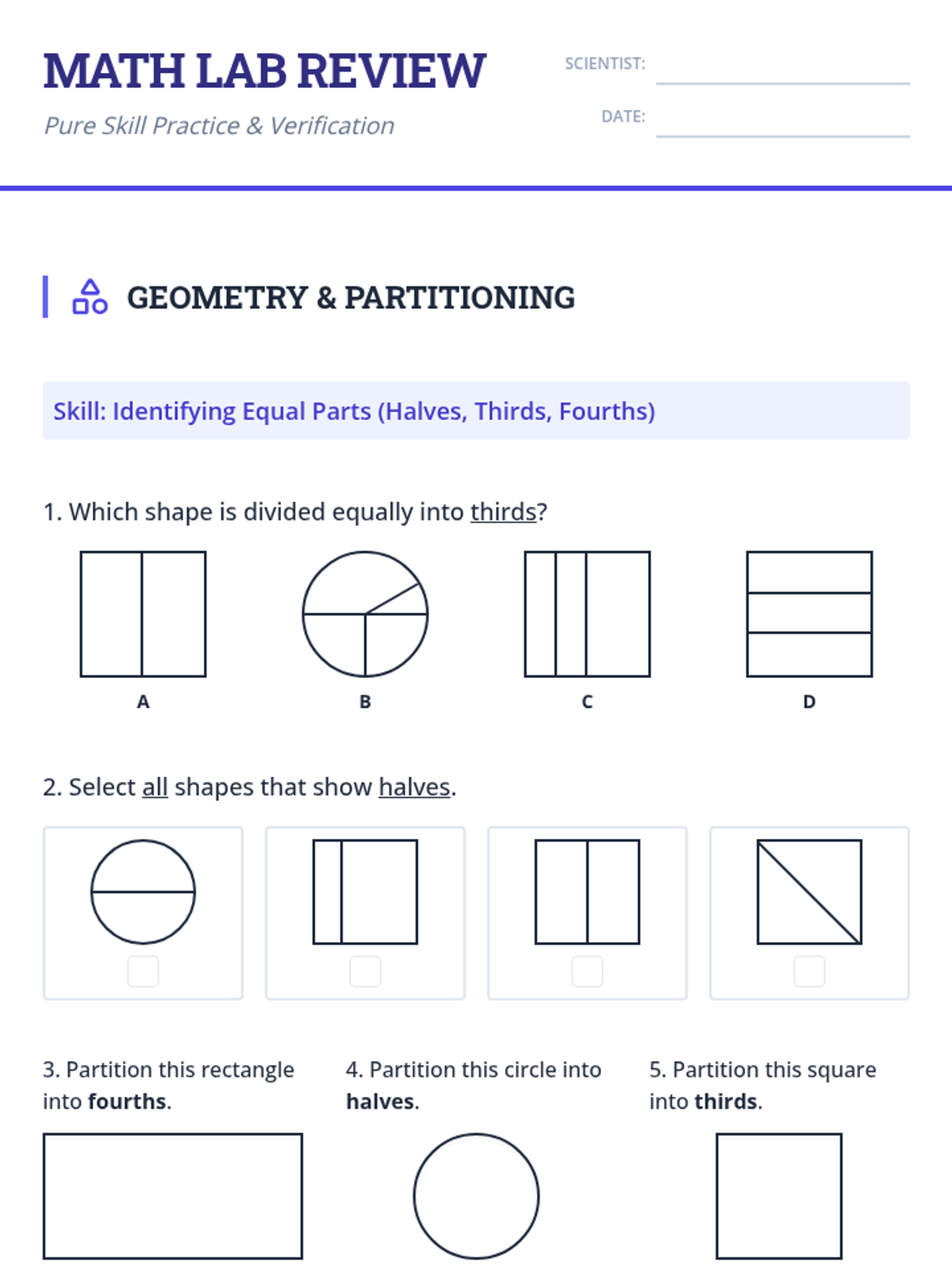
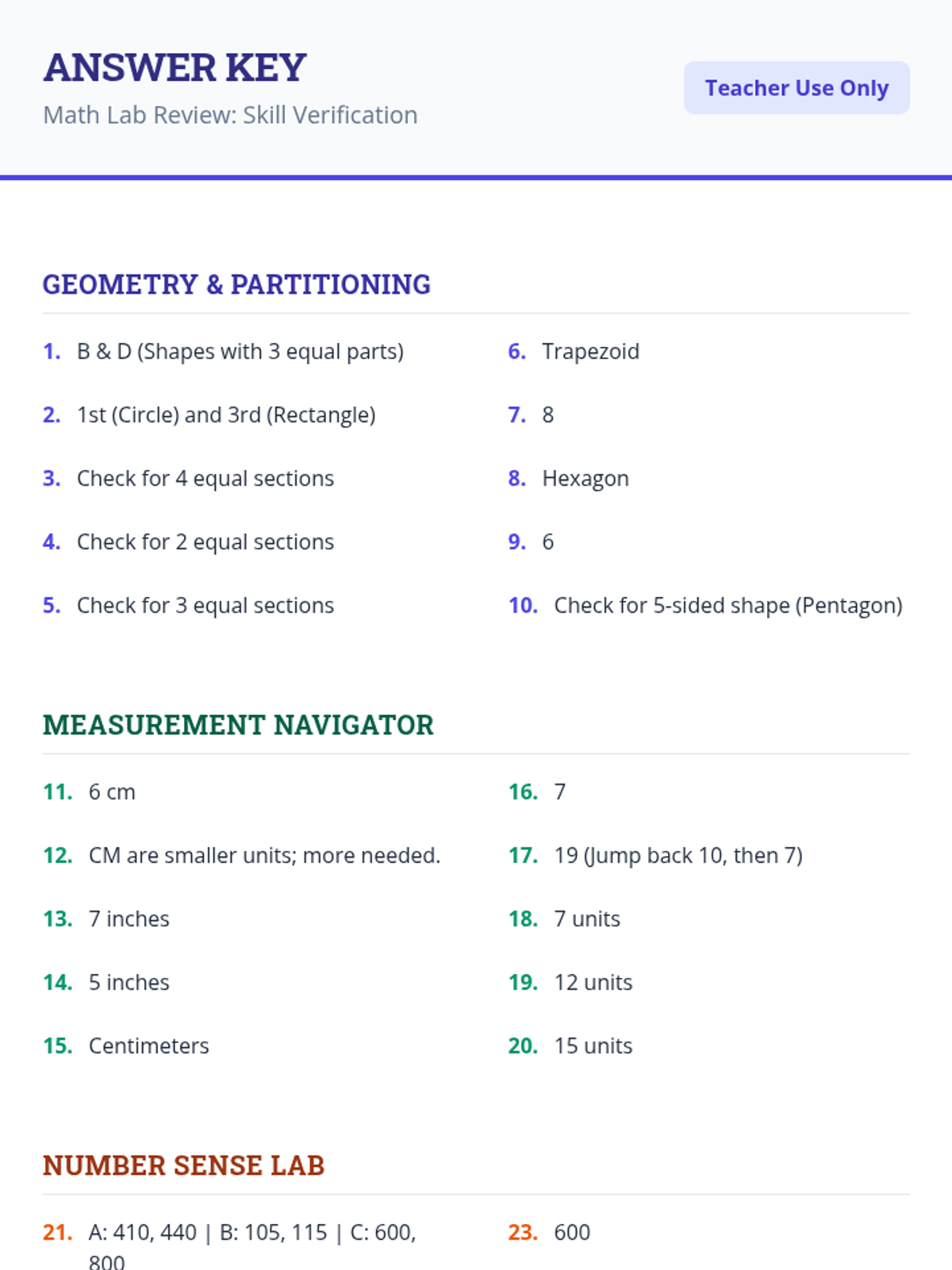
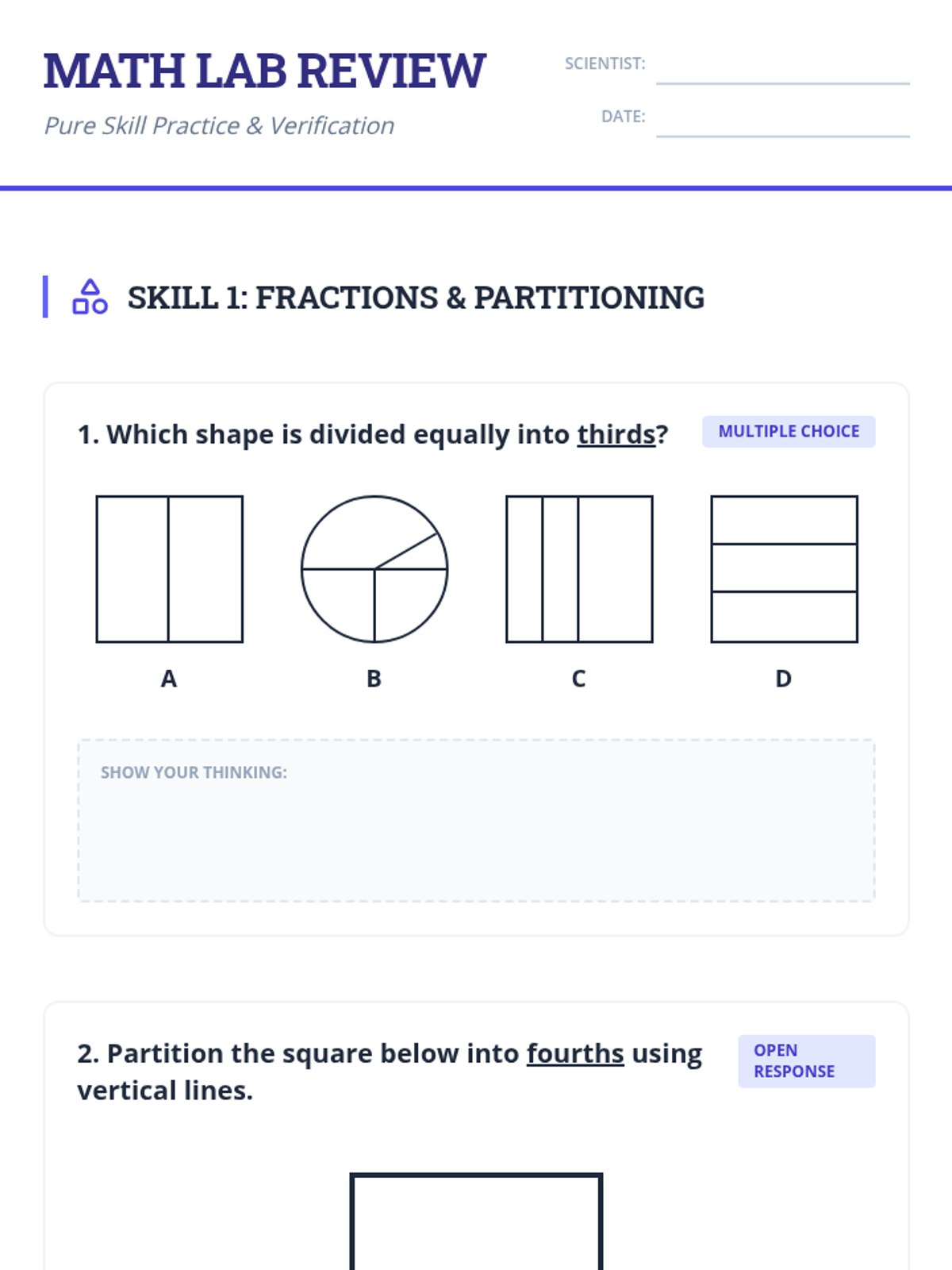
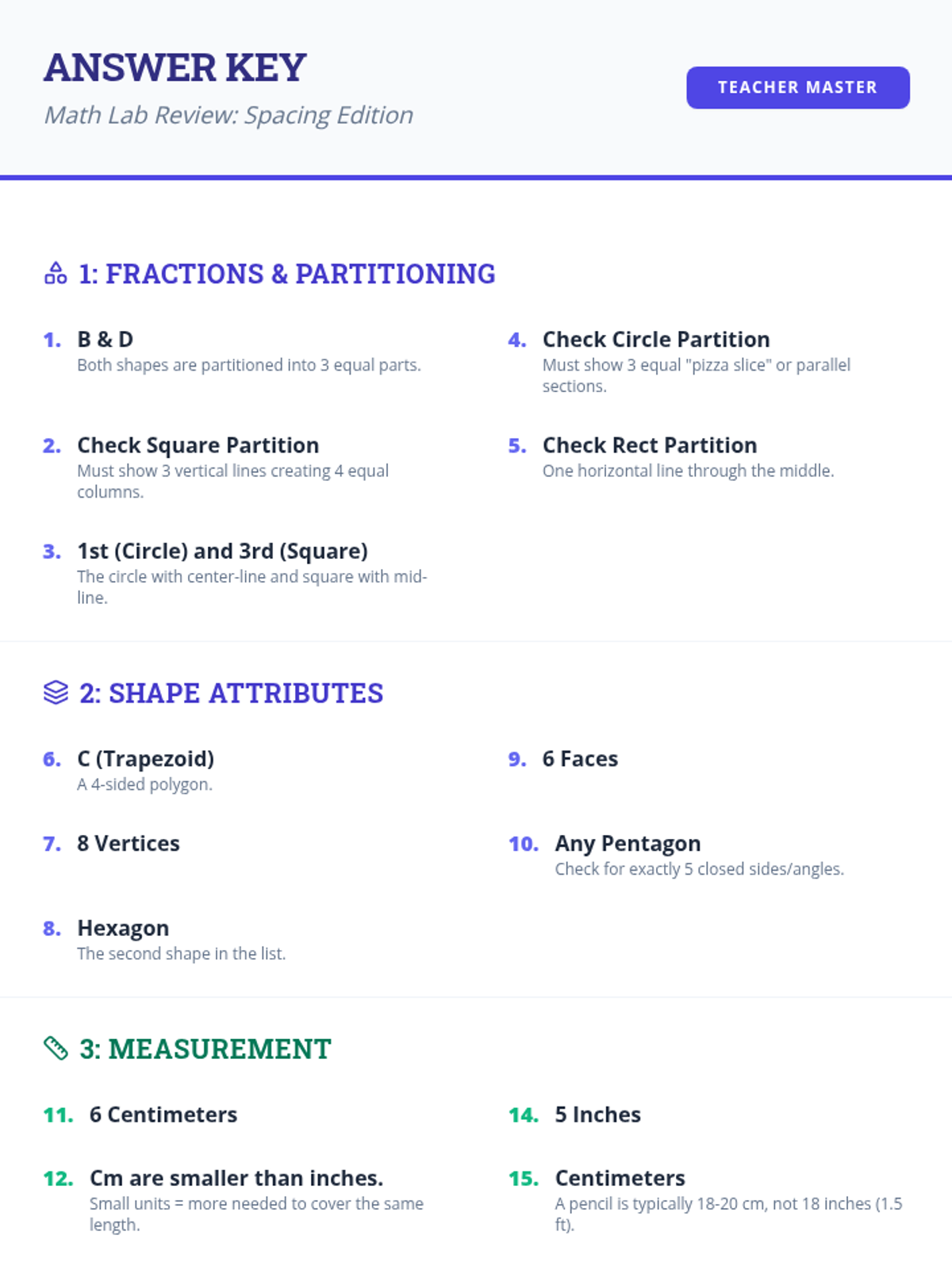
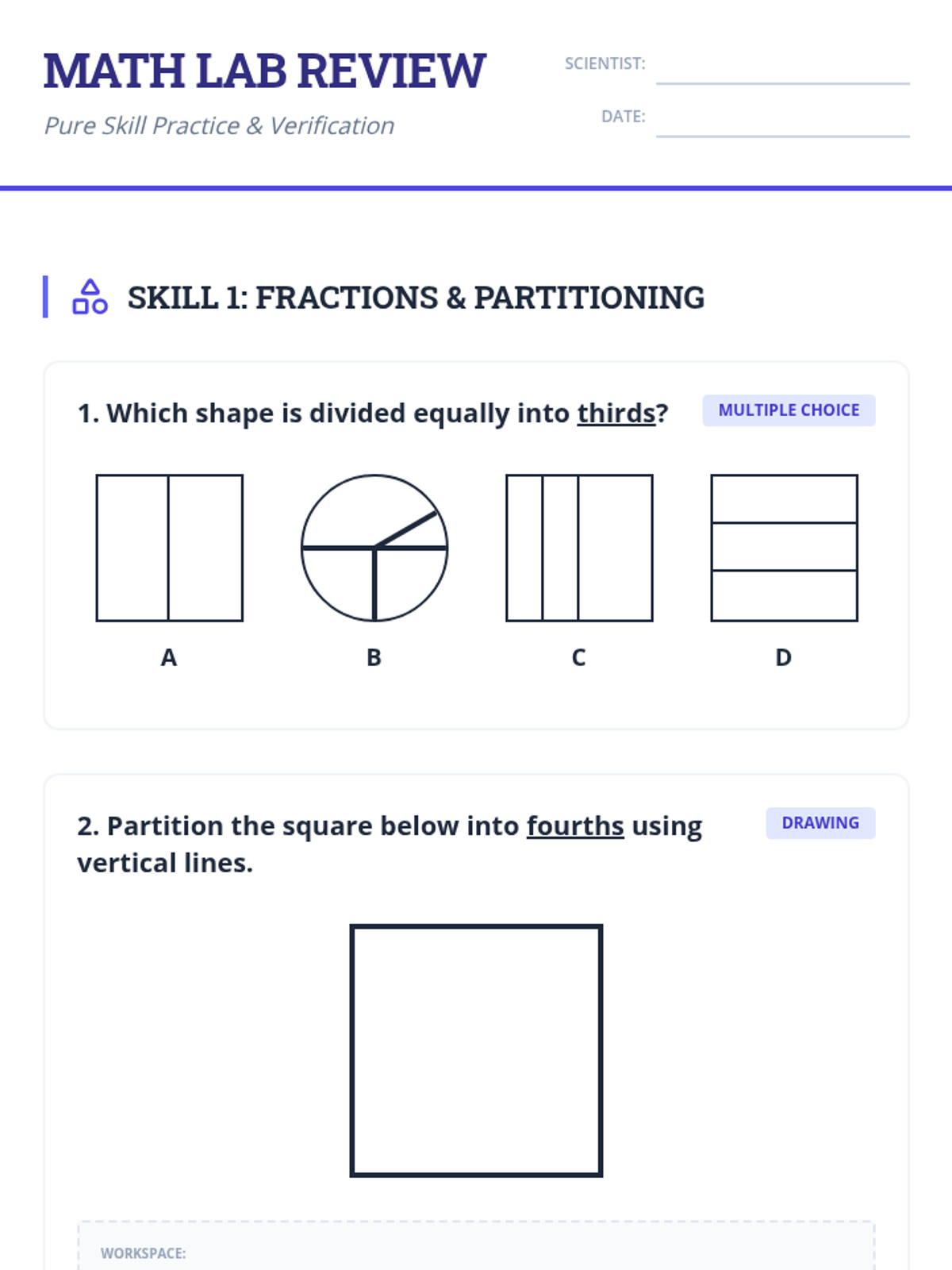
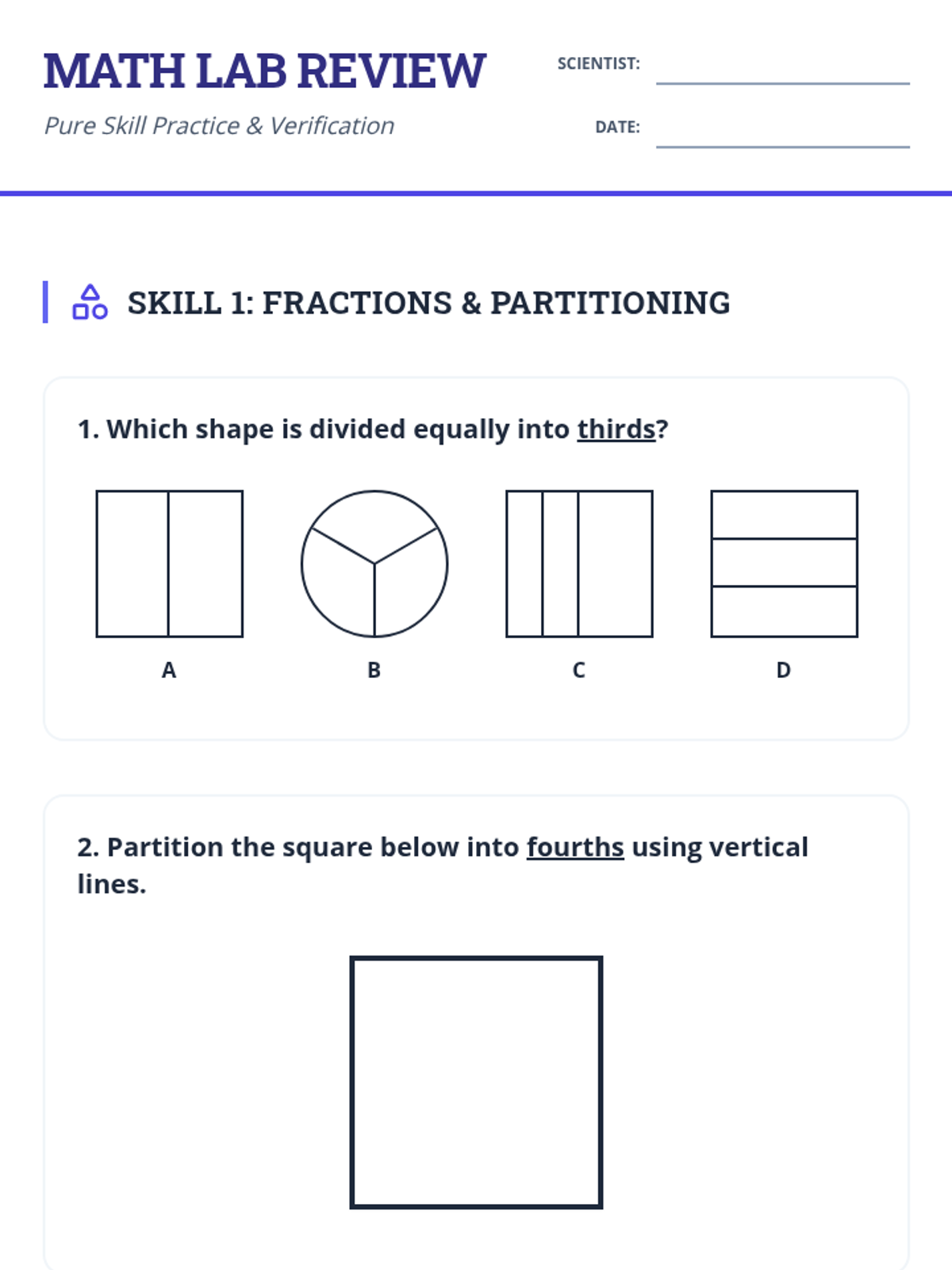
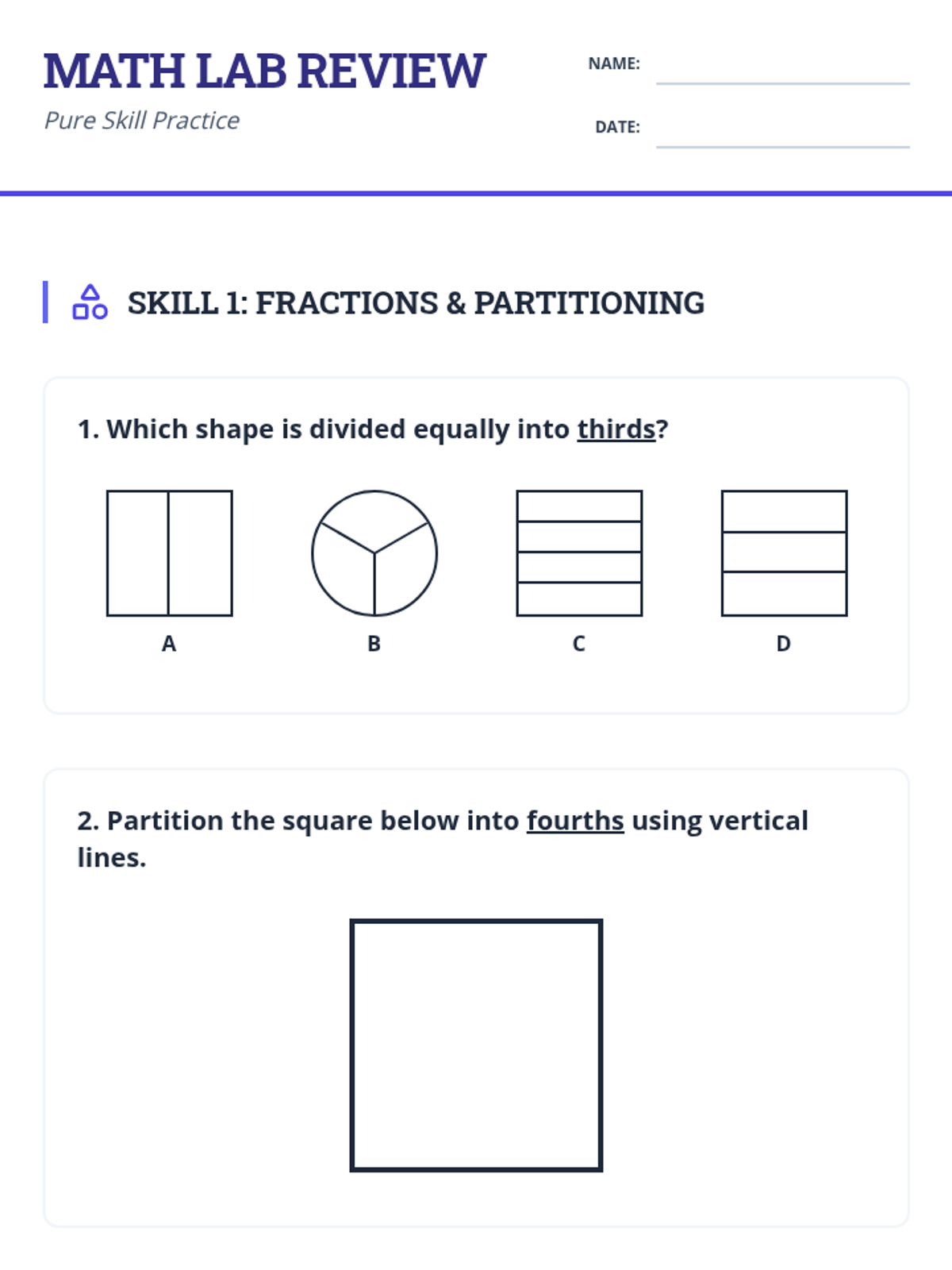
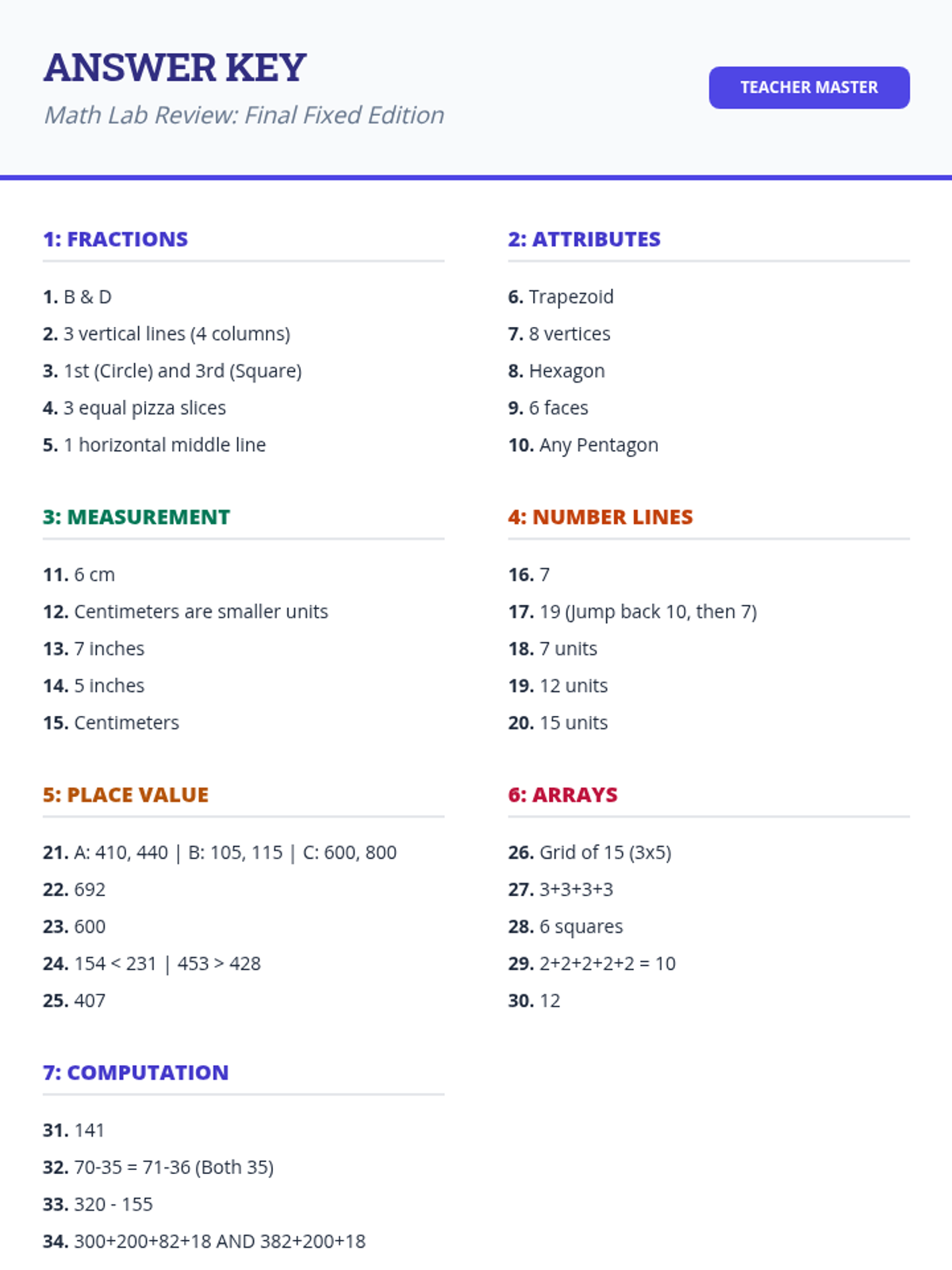
A comprehensive review packet covering Grade 2 math standards including geometry, measurement, place value, and computation, stripped of word problem context for pure skill practice.
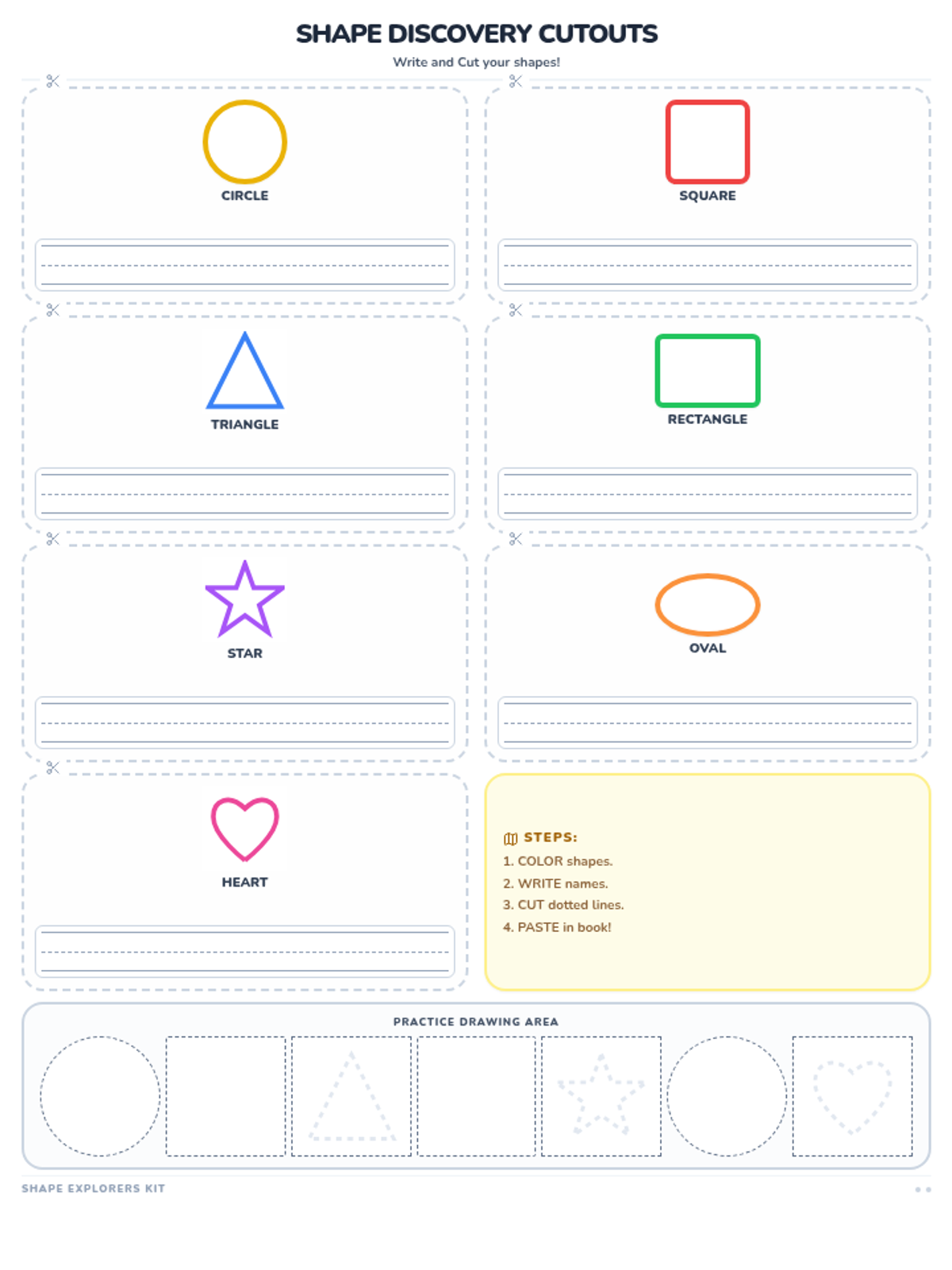
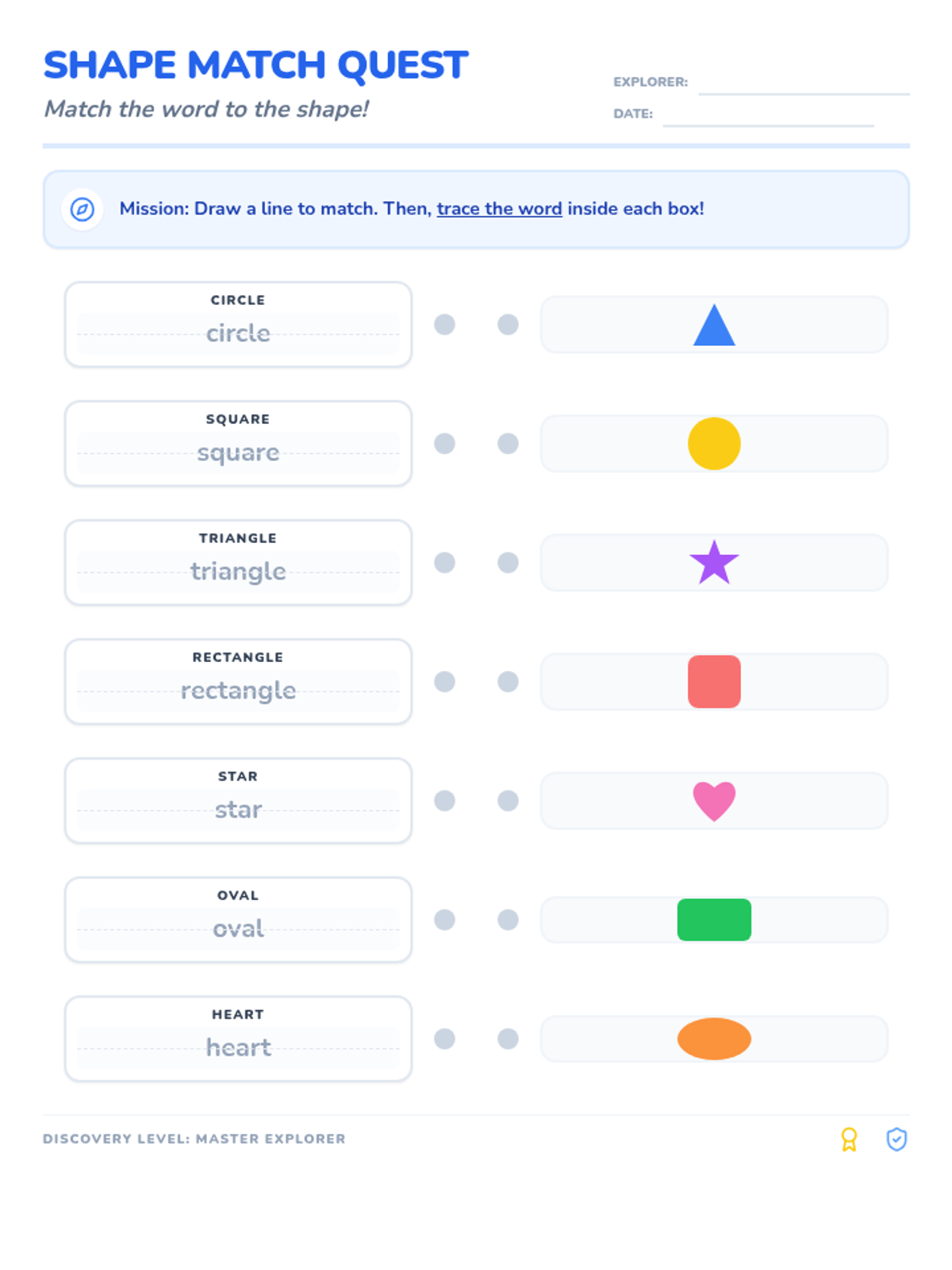
A hands-on introduction to basic shapes (circle, square, triangle) where students identify, write, and manipulate shapes to create their own reference book.
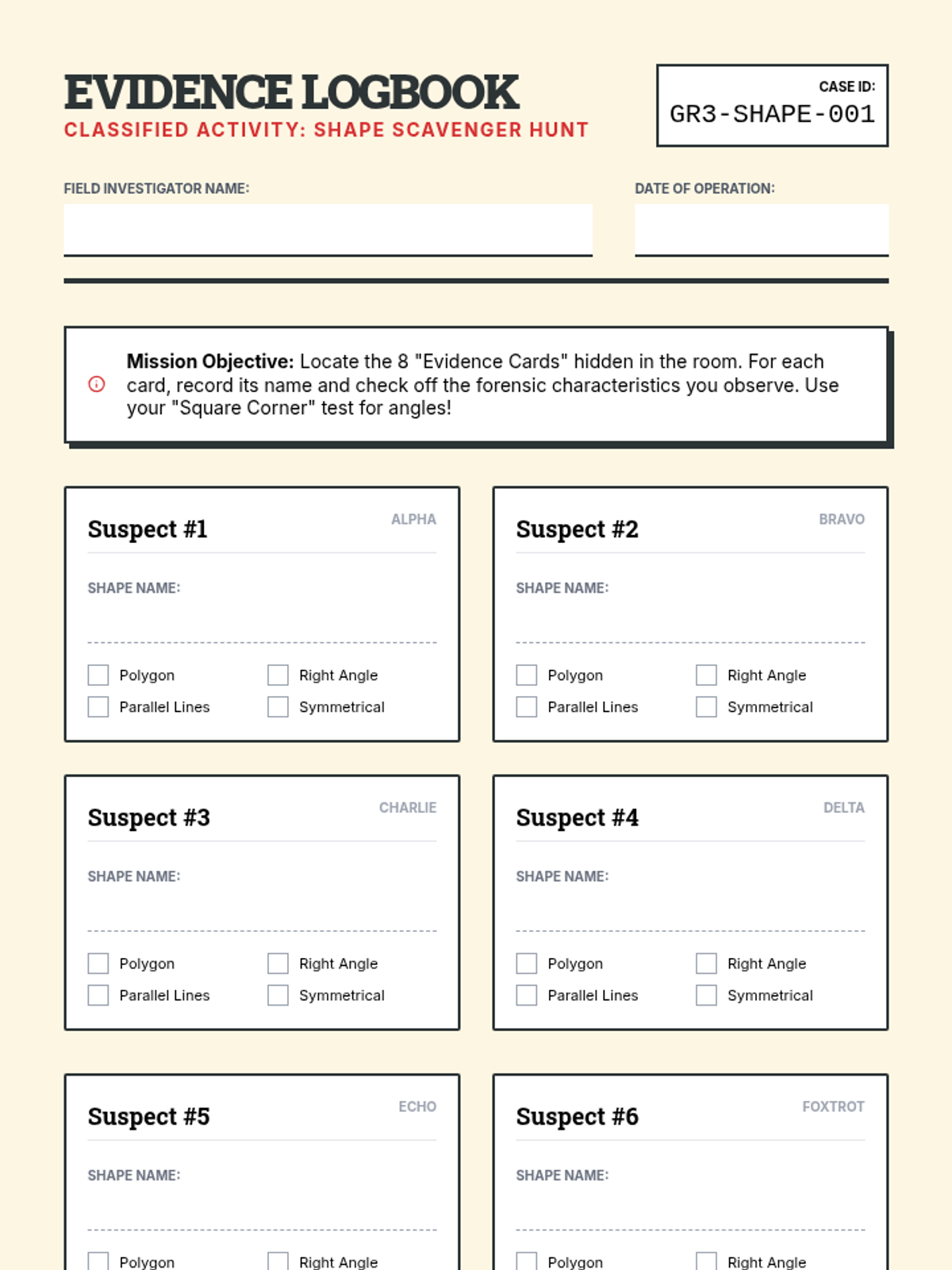
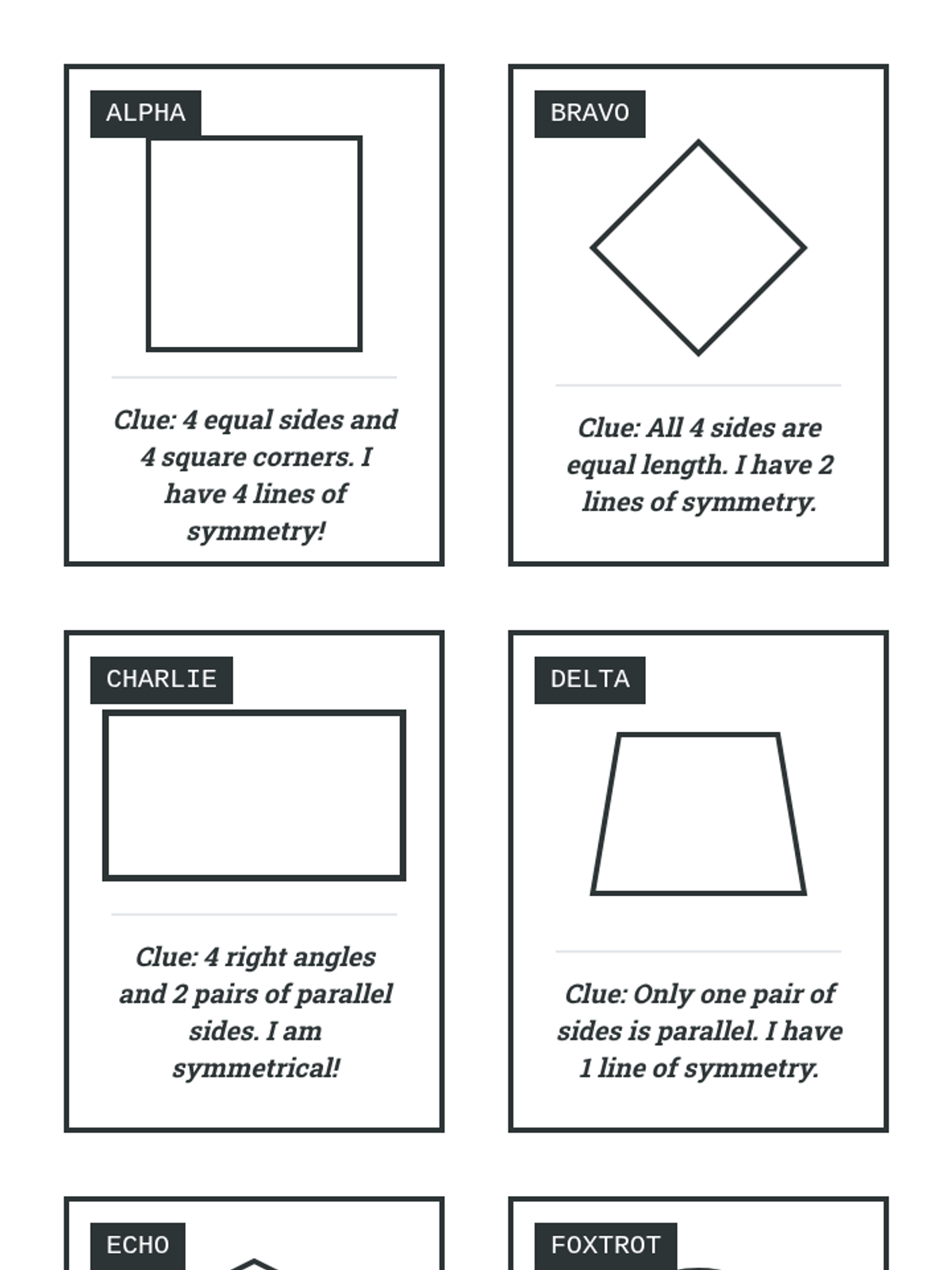
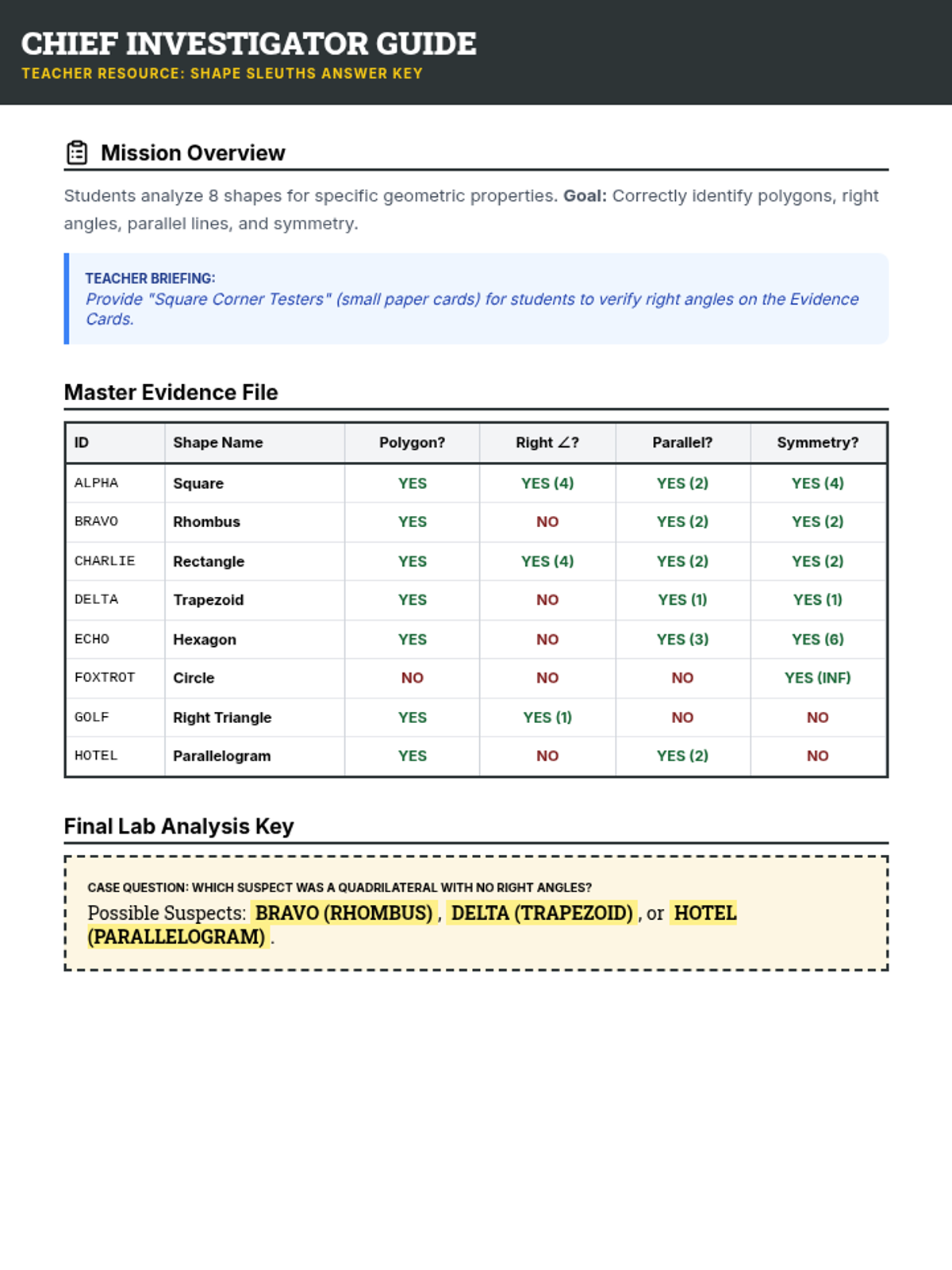
A Grade 3 math lesson where students act as detectives to identify 2D shapes, polygons, quadrilaterals, right angles, parallel lines, and lines of symmetry in the classroom.
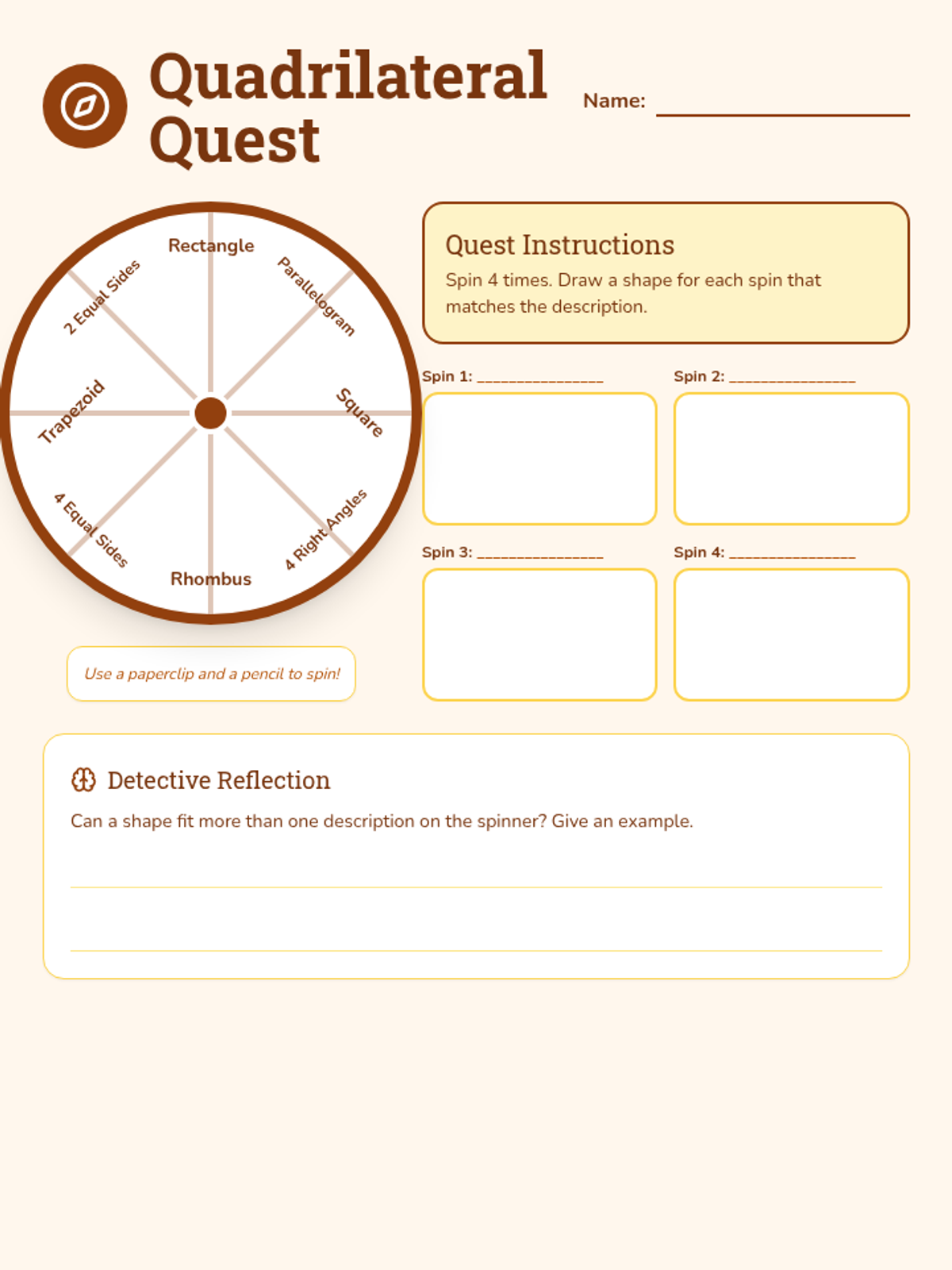
A foundational geometry lesson where students identify, classify, and compare different types of quadrilaterals using visual scaffolds.
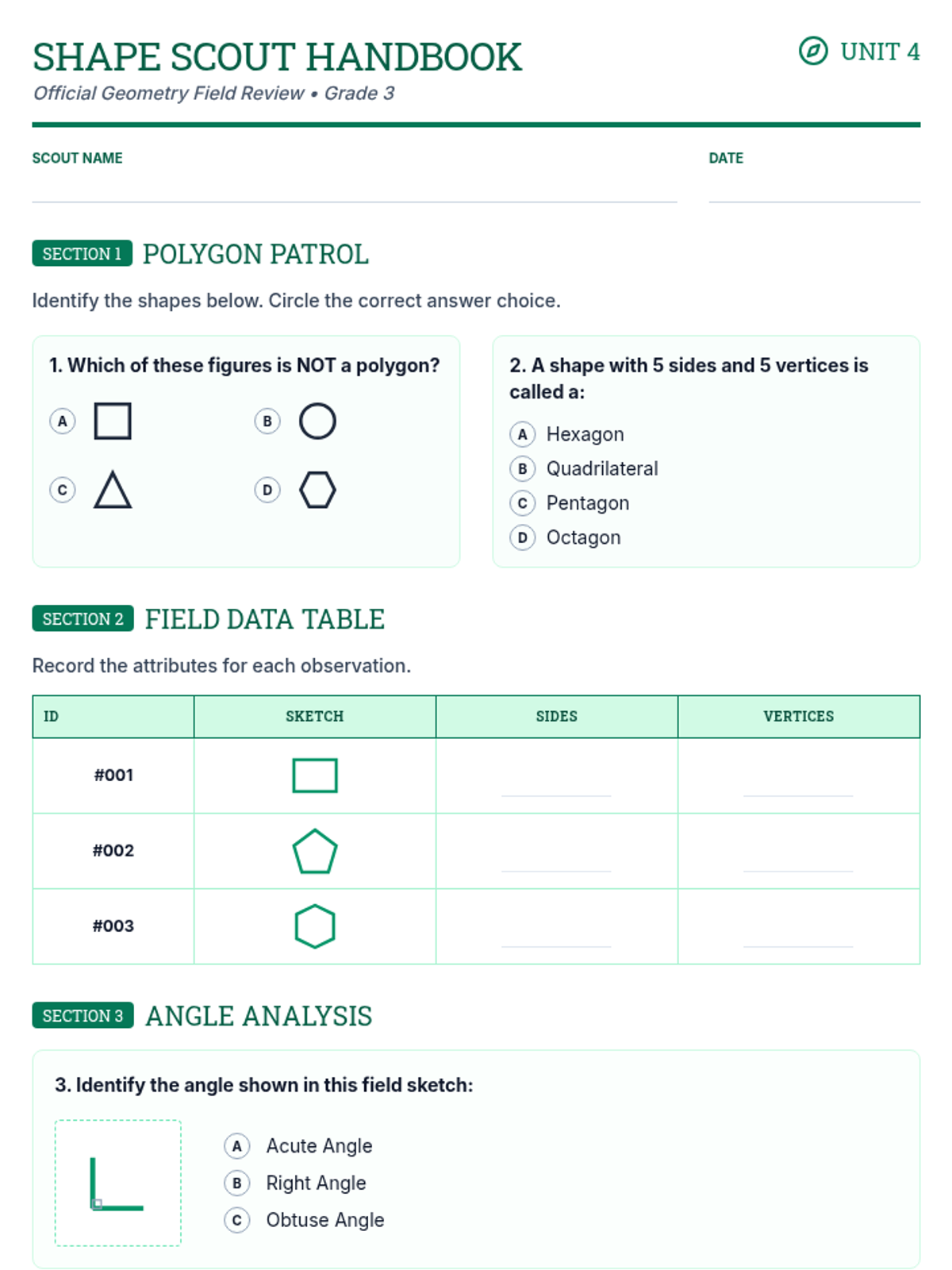
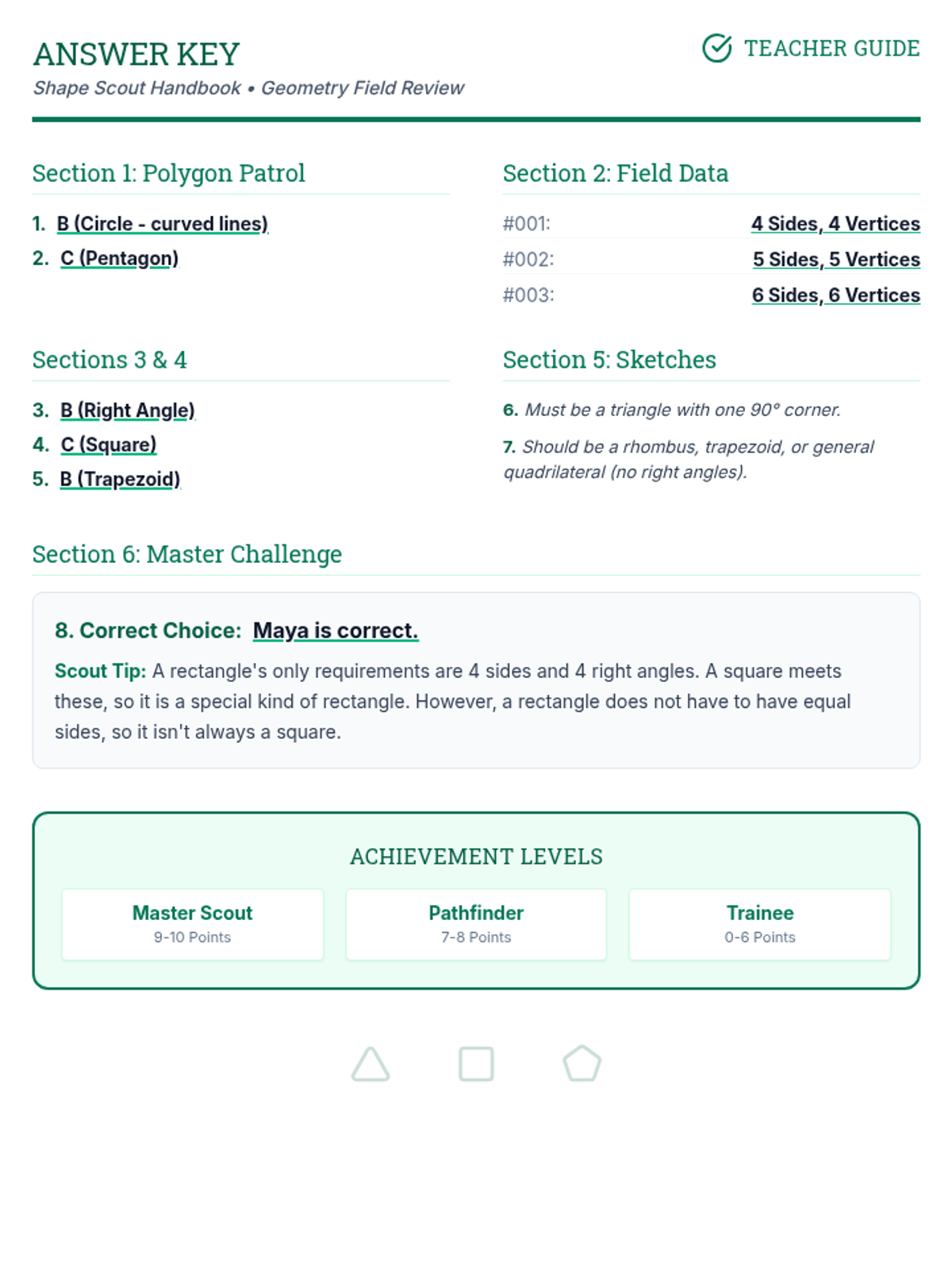
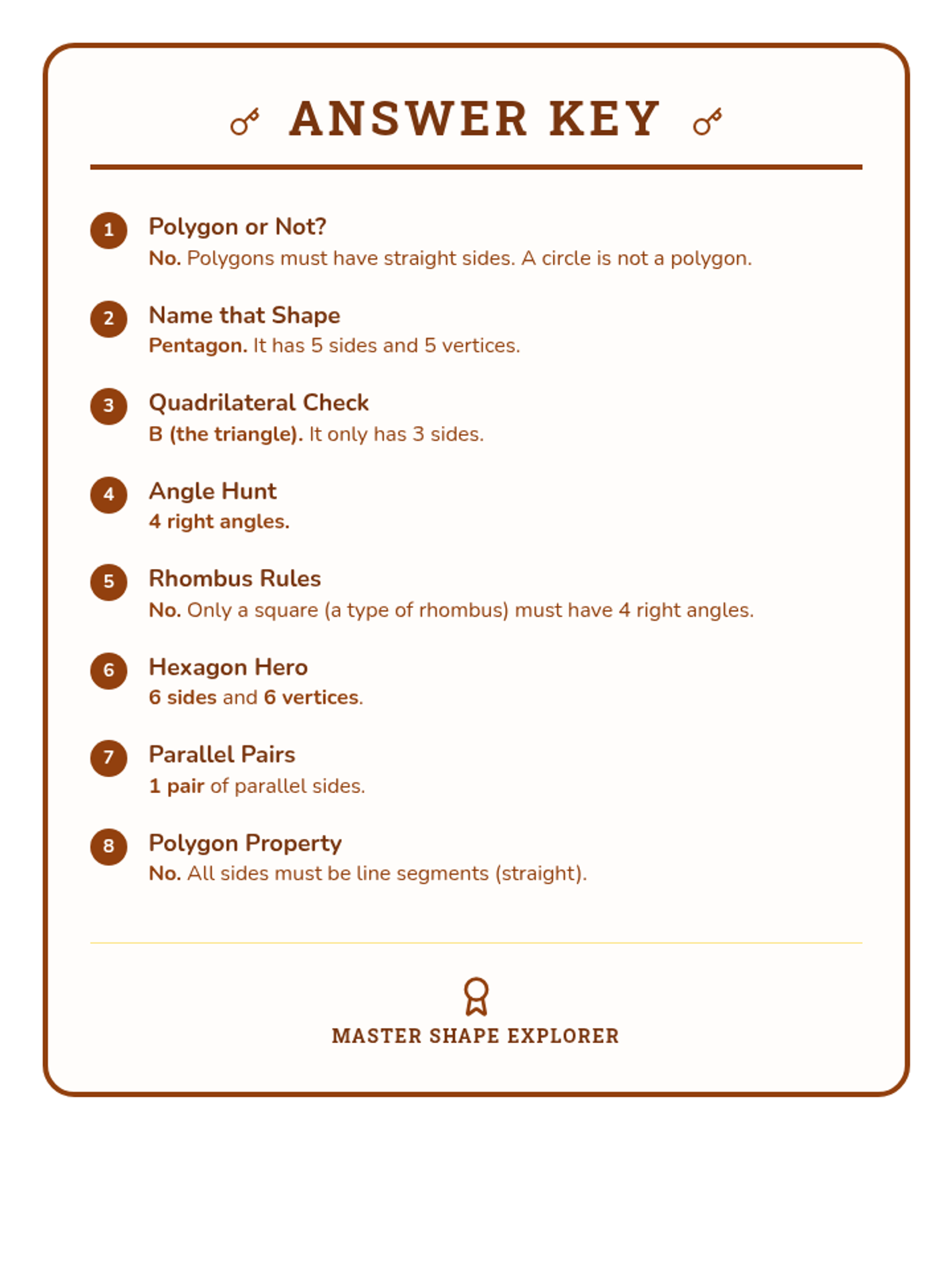
A comprehensive review of 3rd-grade geometry concepts including polygons, quadrilaterals, angles, and vertices, styled as a field scout's handbook.
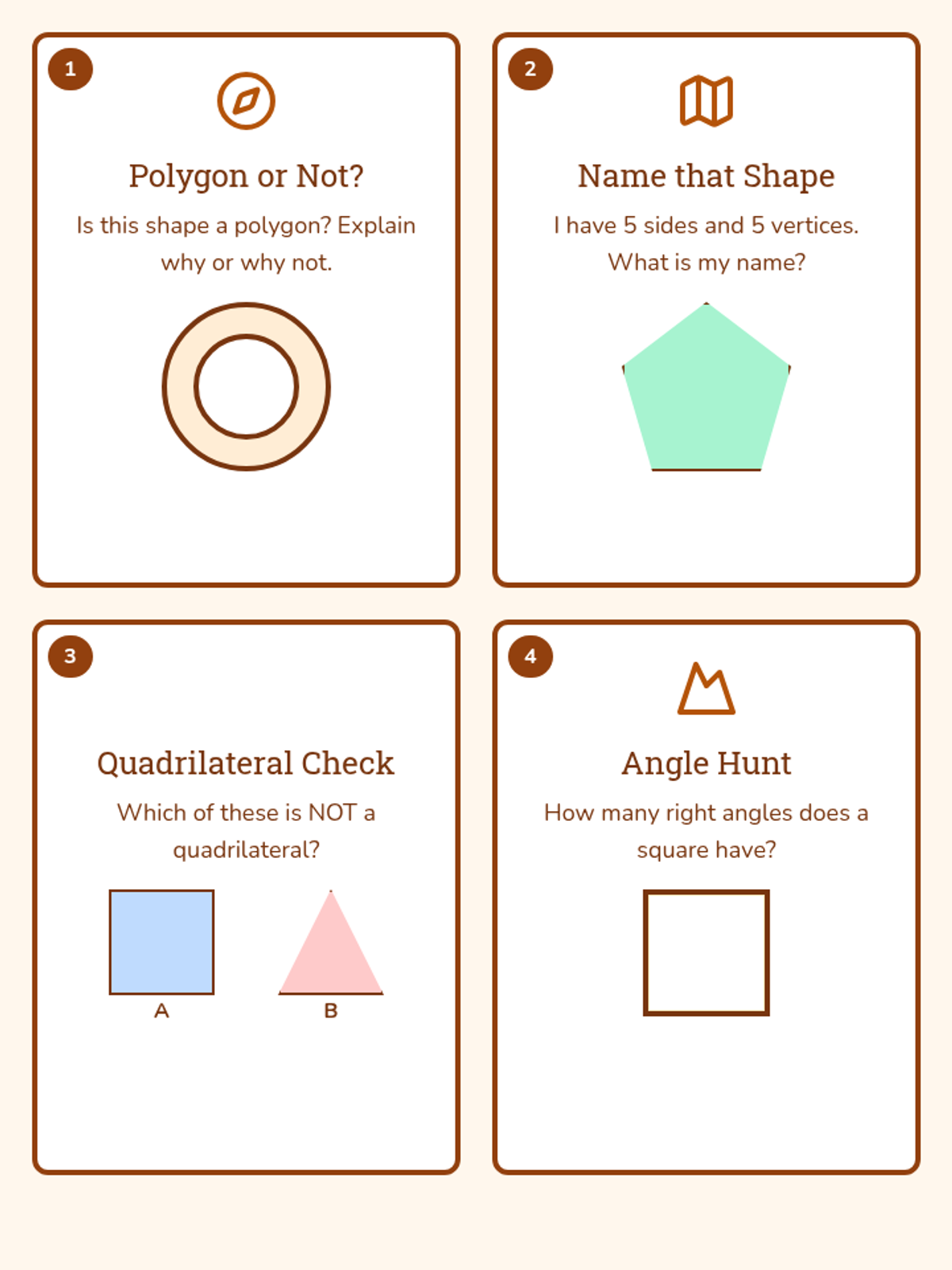
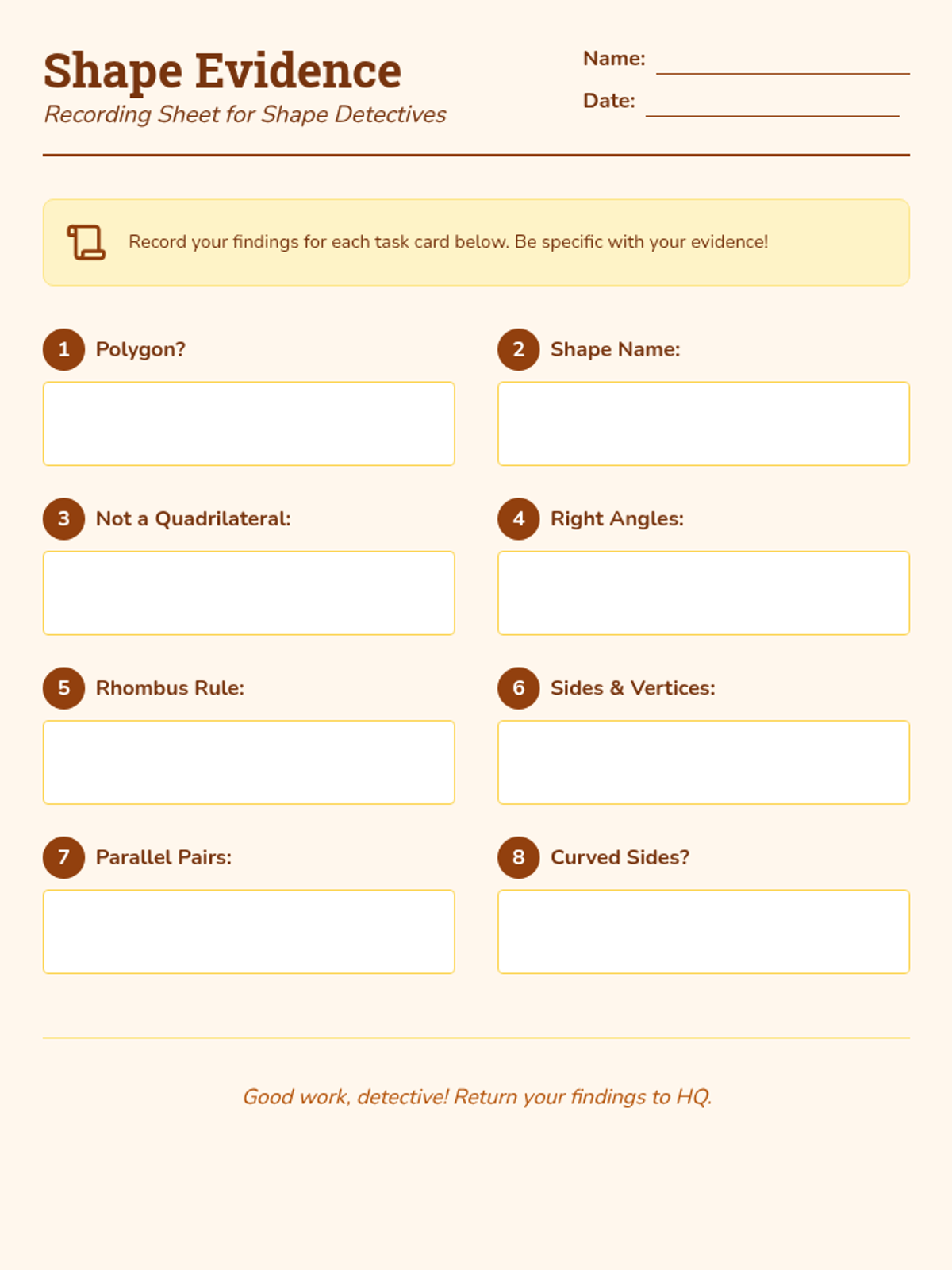
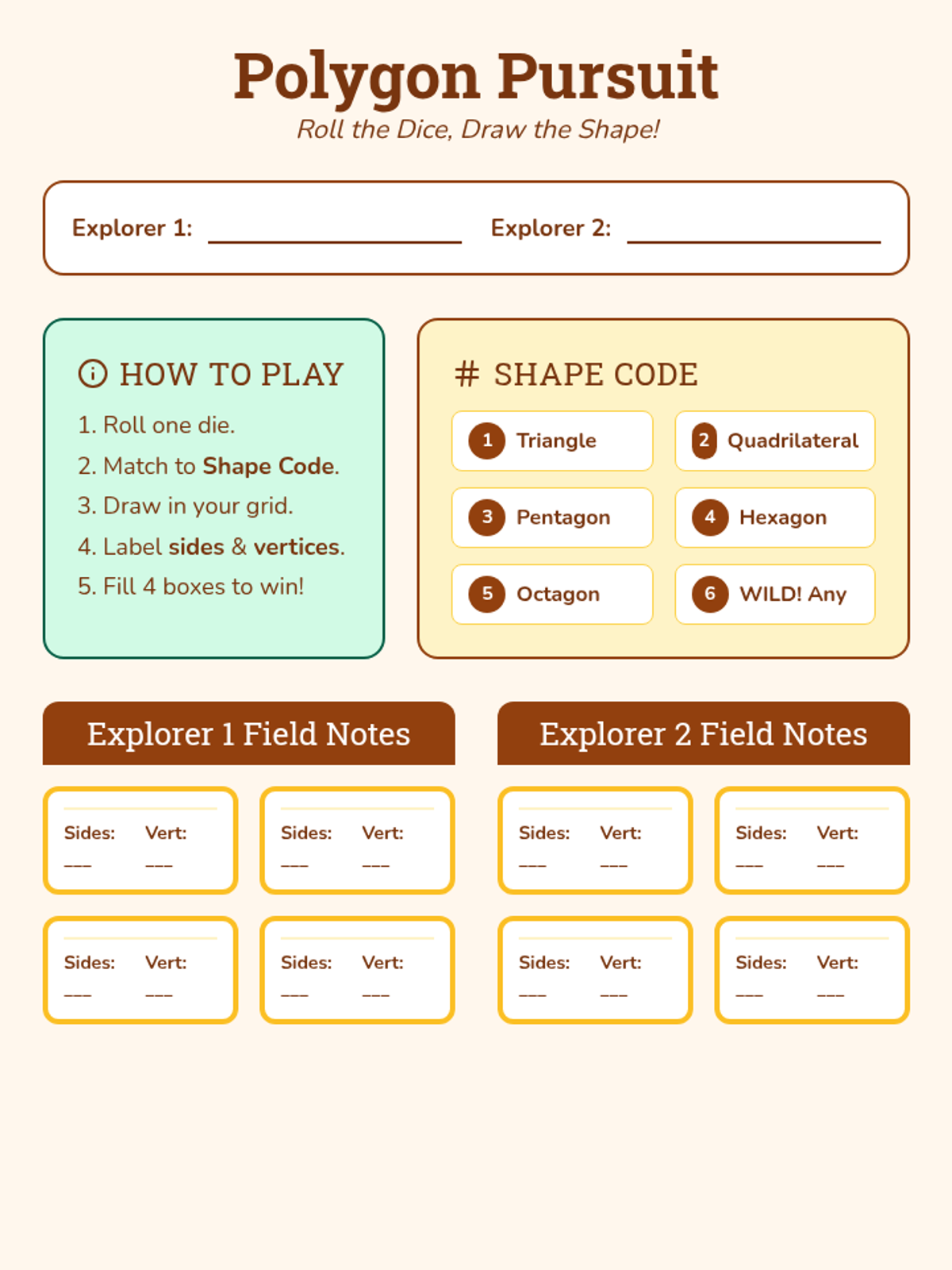
A comprehensive review of quadrilaterals and polygons for 3rd grade explorers, featuring hands-on games and task cards.
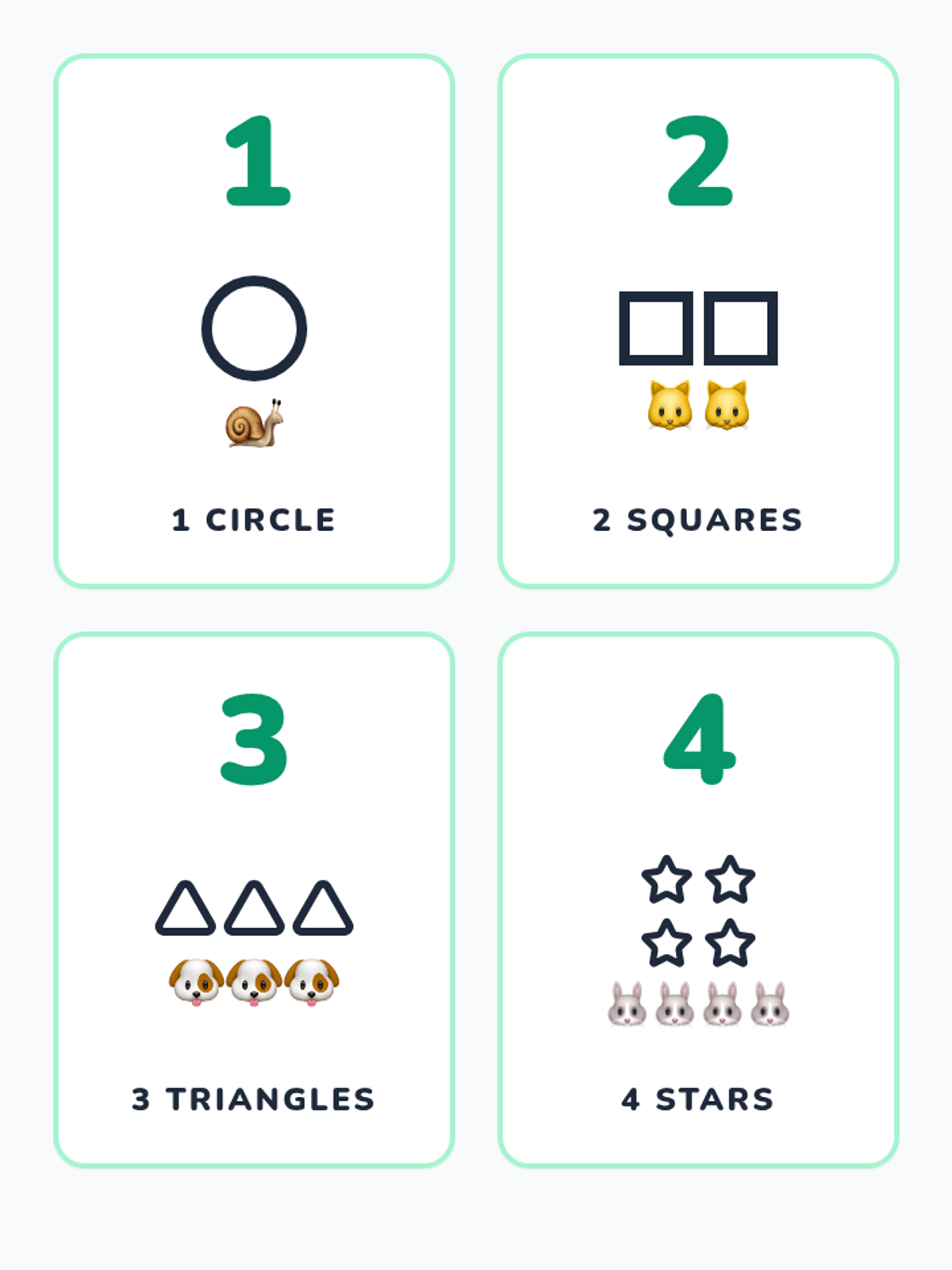
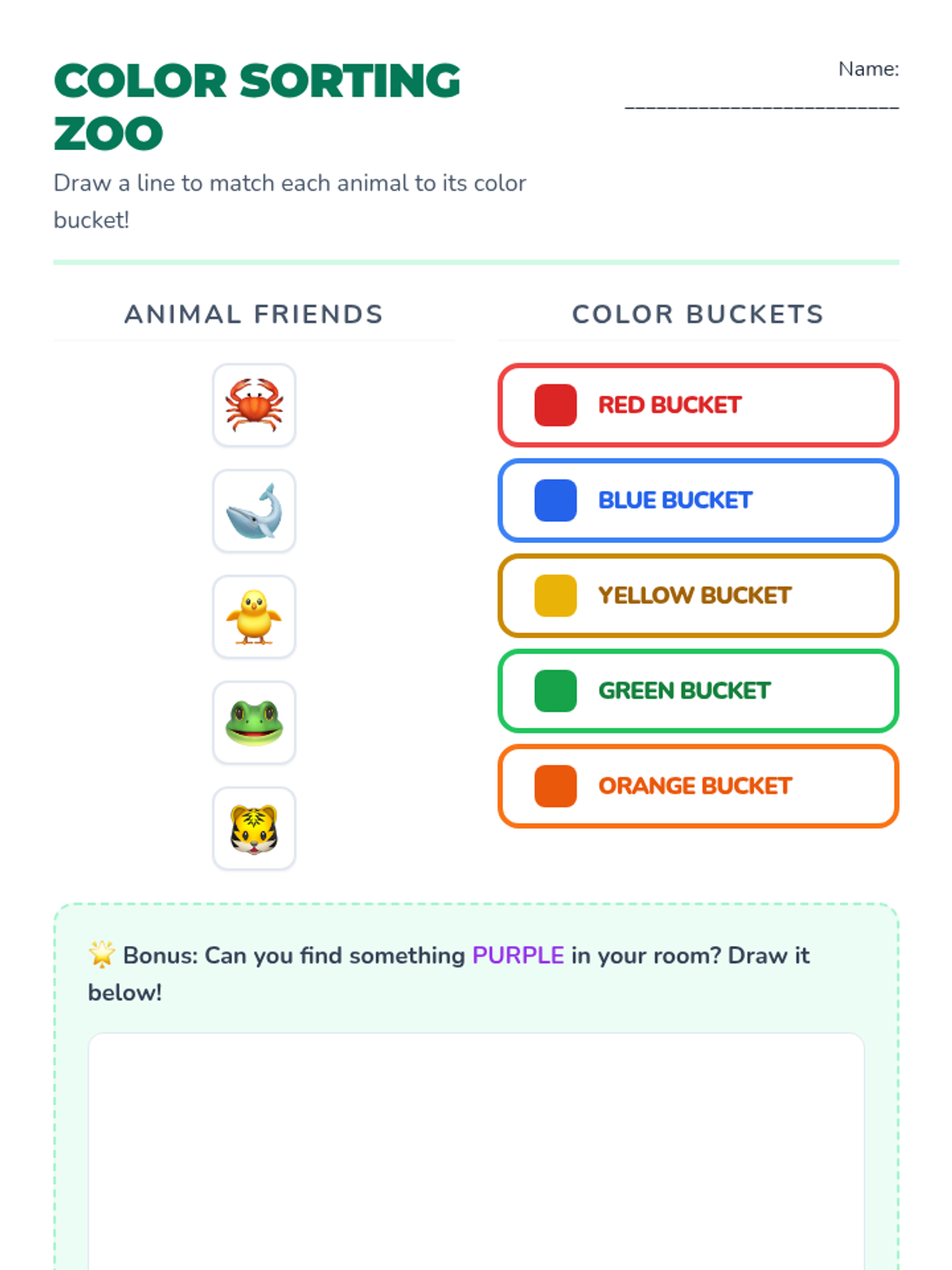
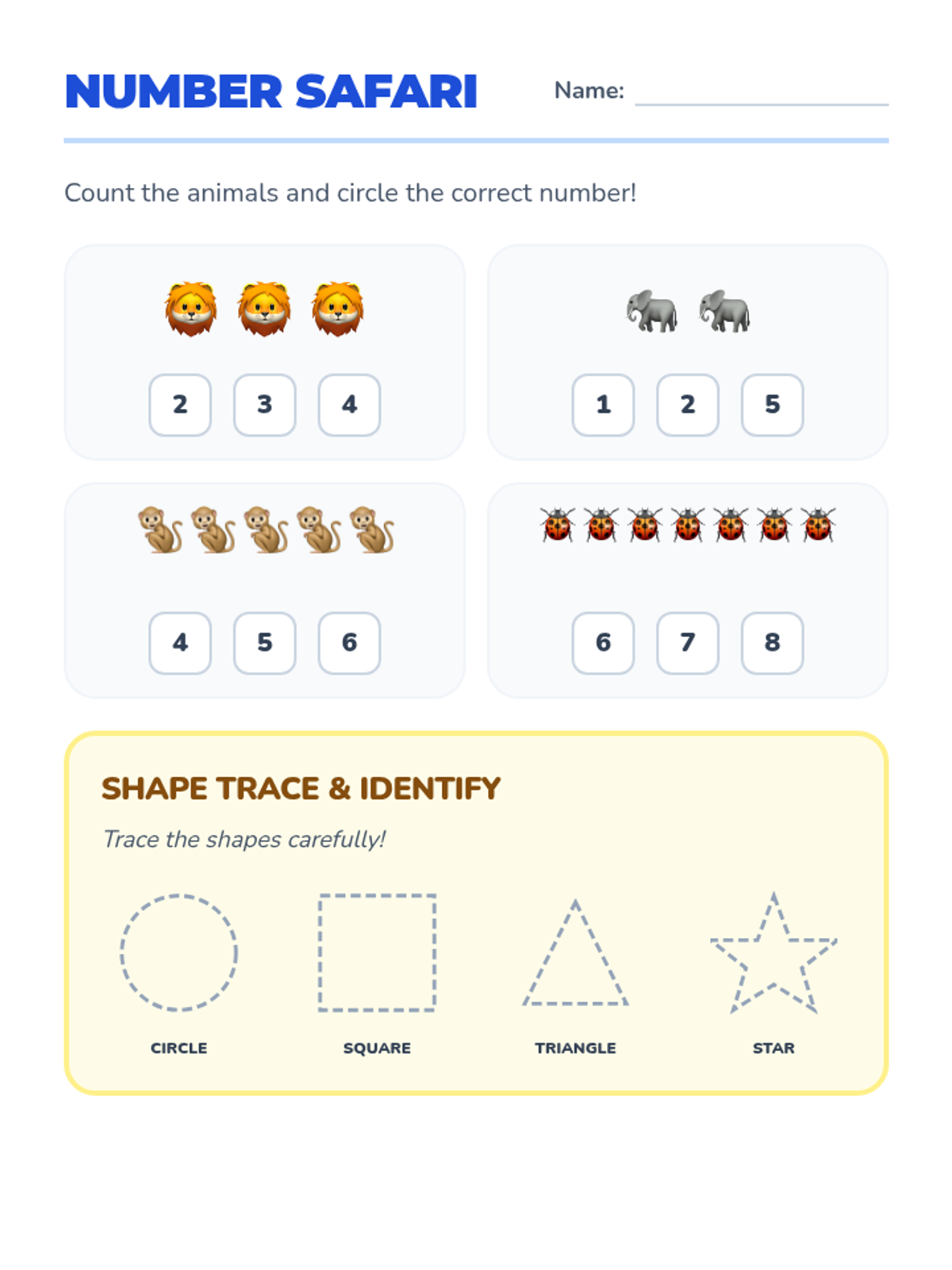
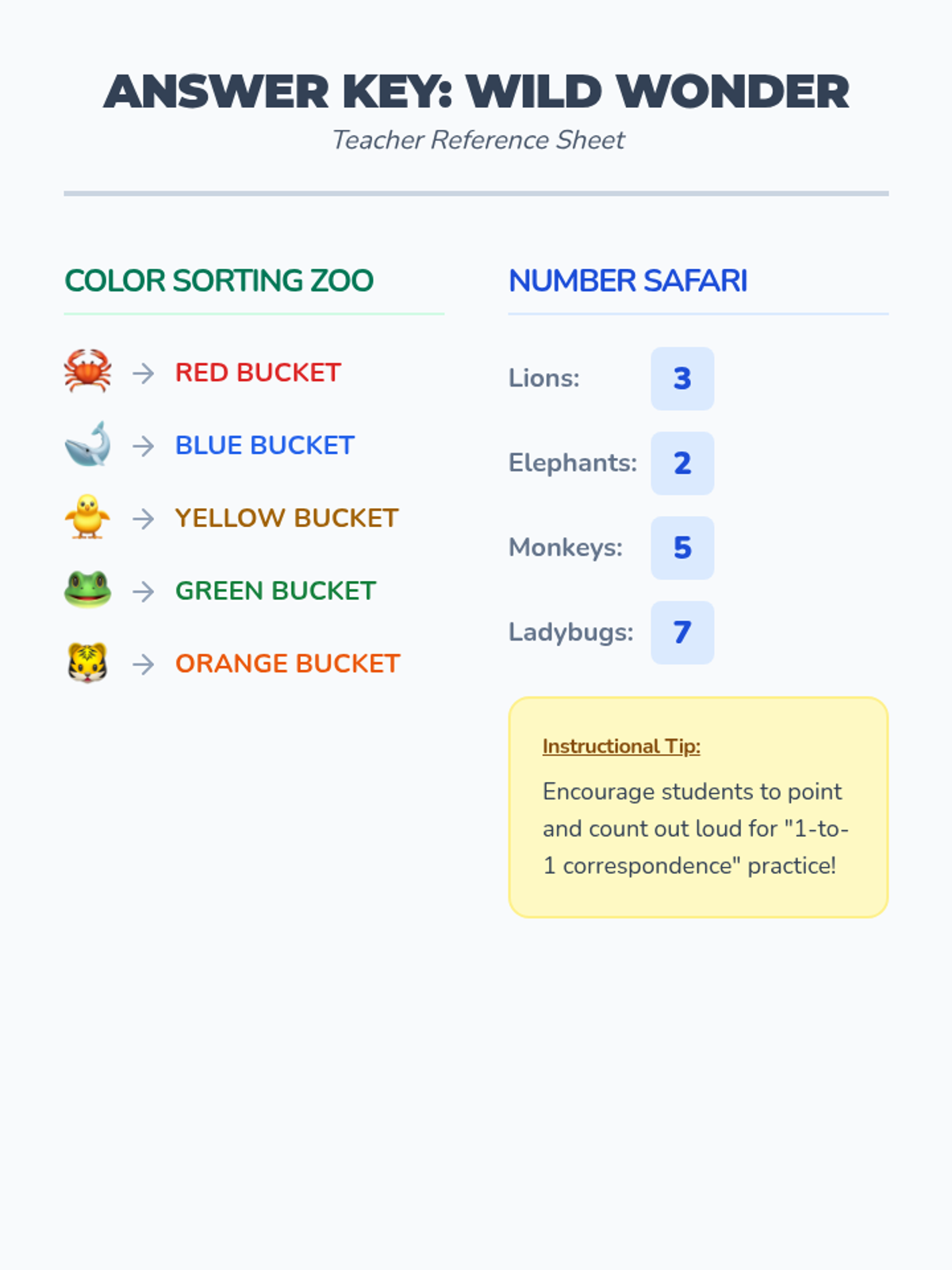
An engaging introduction to foundational skills including numbers 1-10, primary and secondary colors, basic 2D shapes, and counting through a vibrant animal-themed curriculum.
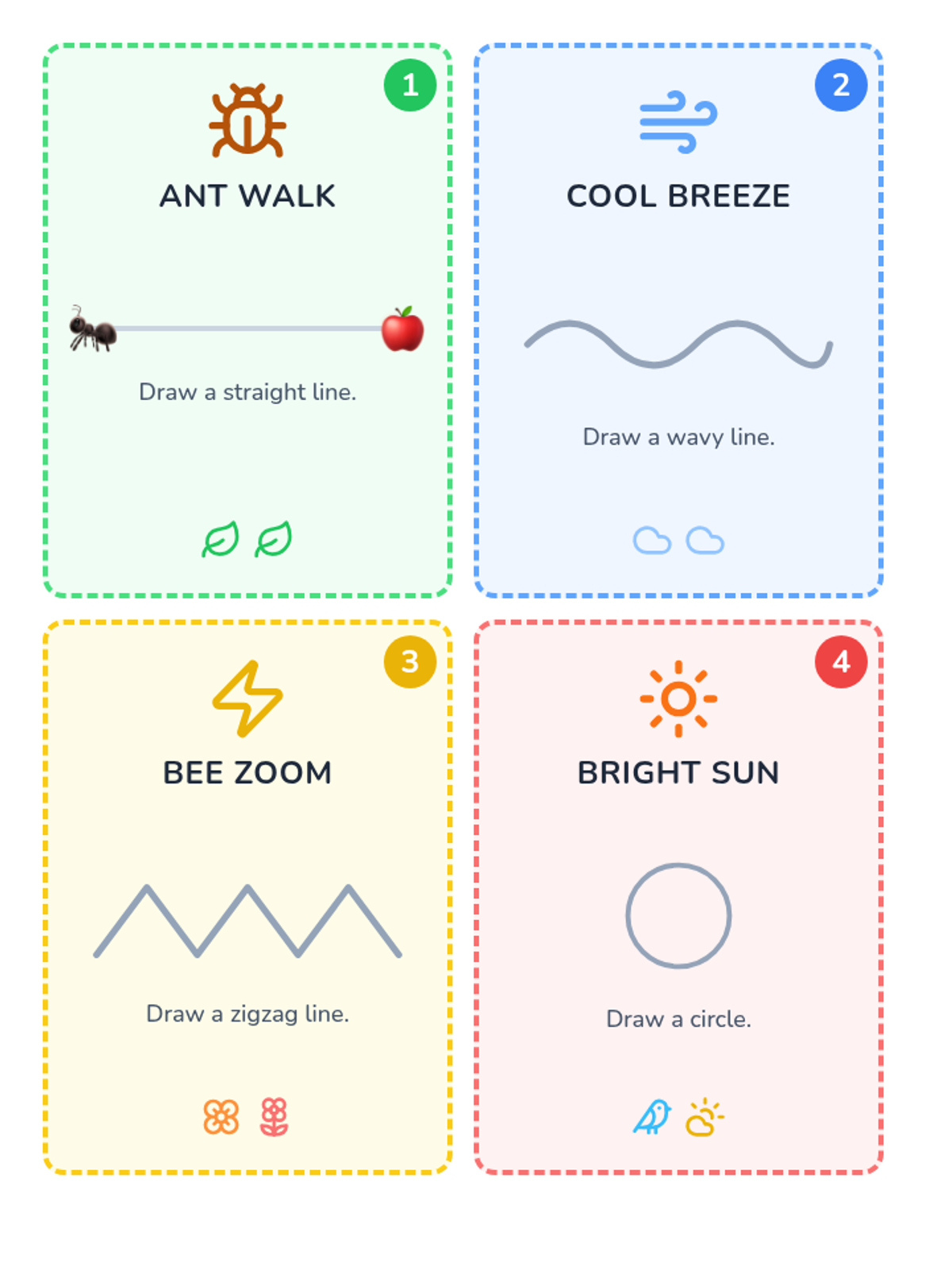
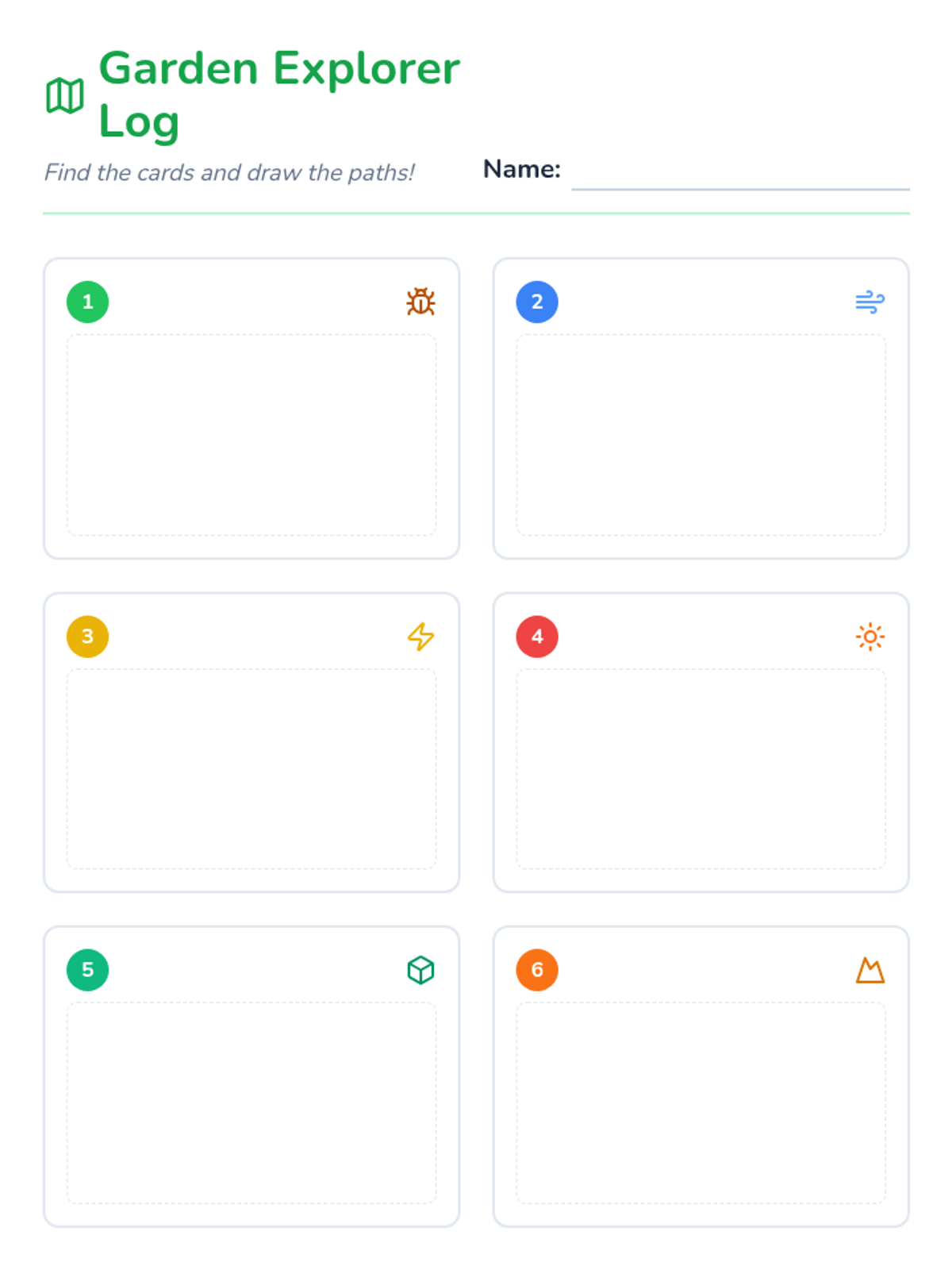
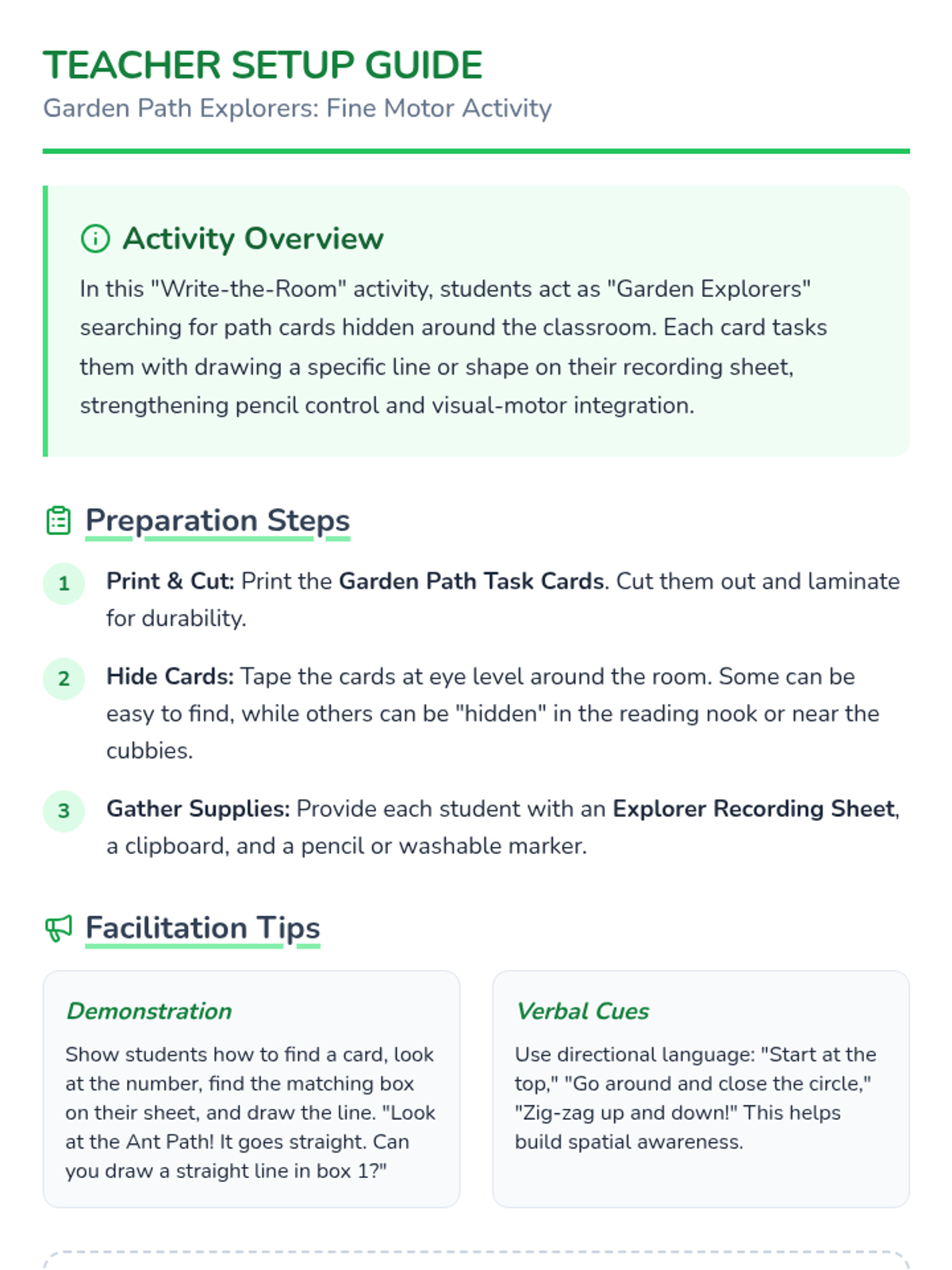
A hands-on fine motor activity where Pre-K students hunt for garden-themed task cards to practice drawing various lines and shapes.
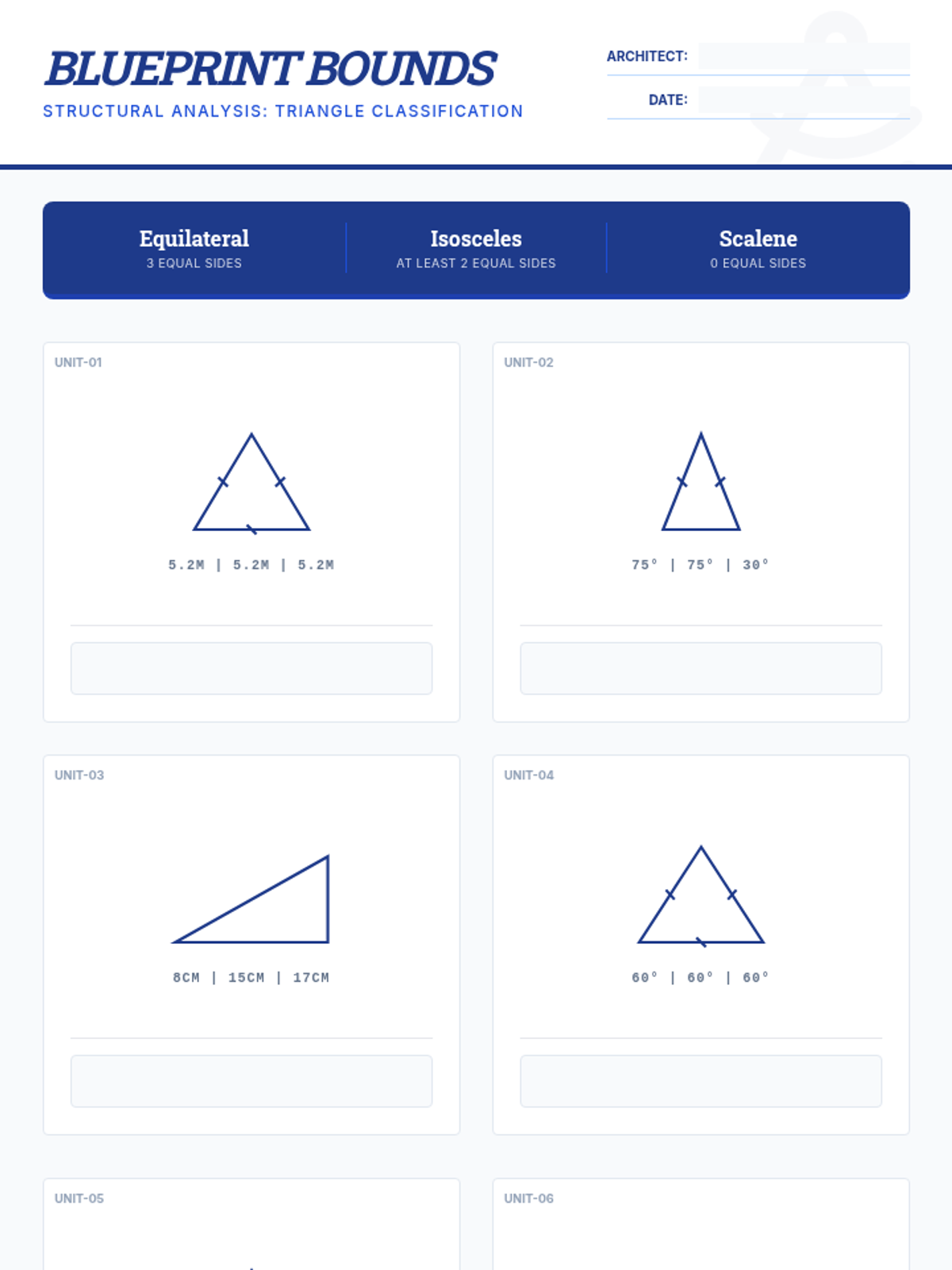
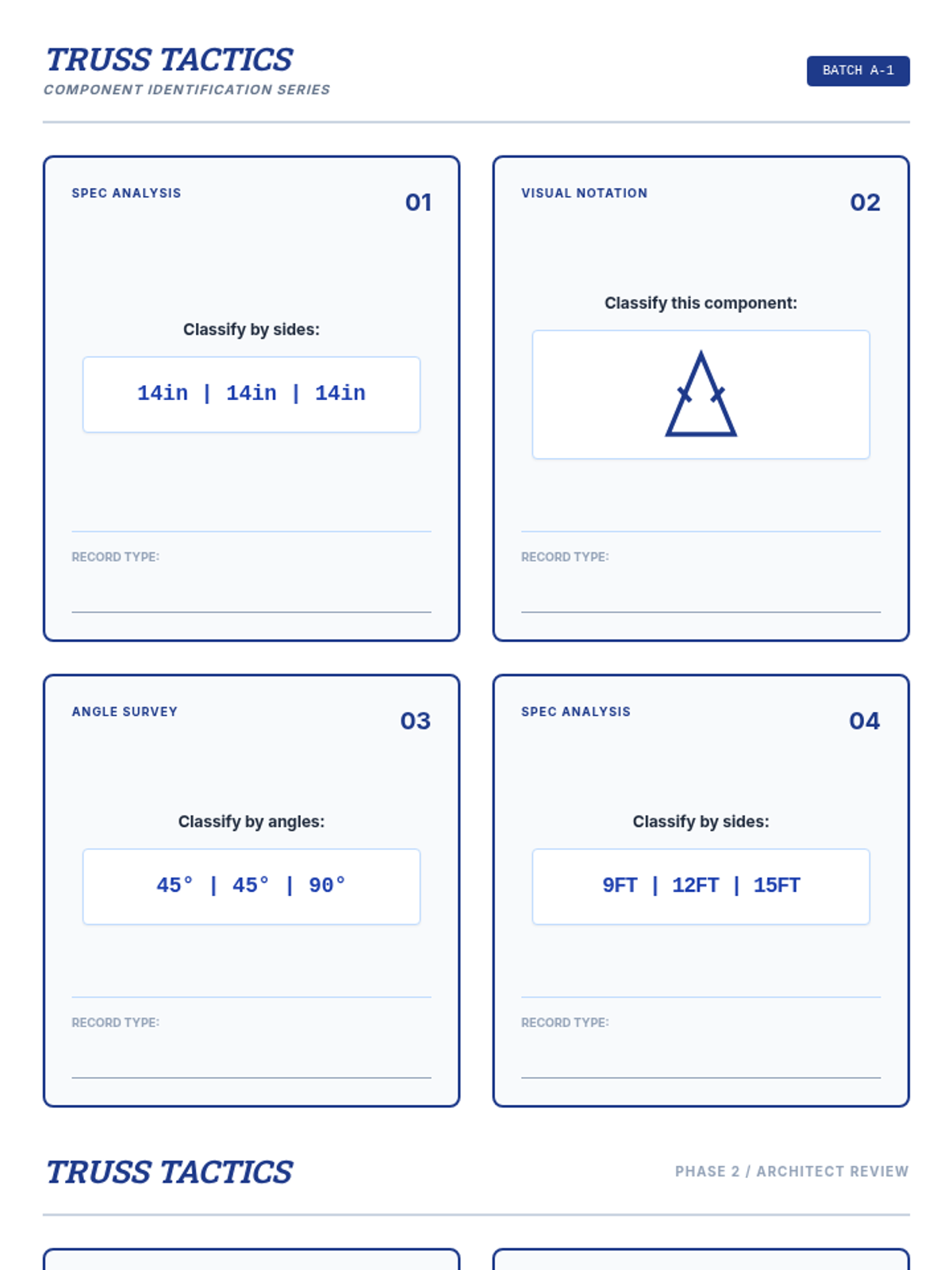
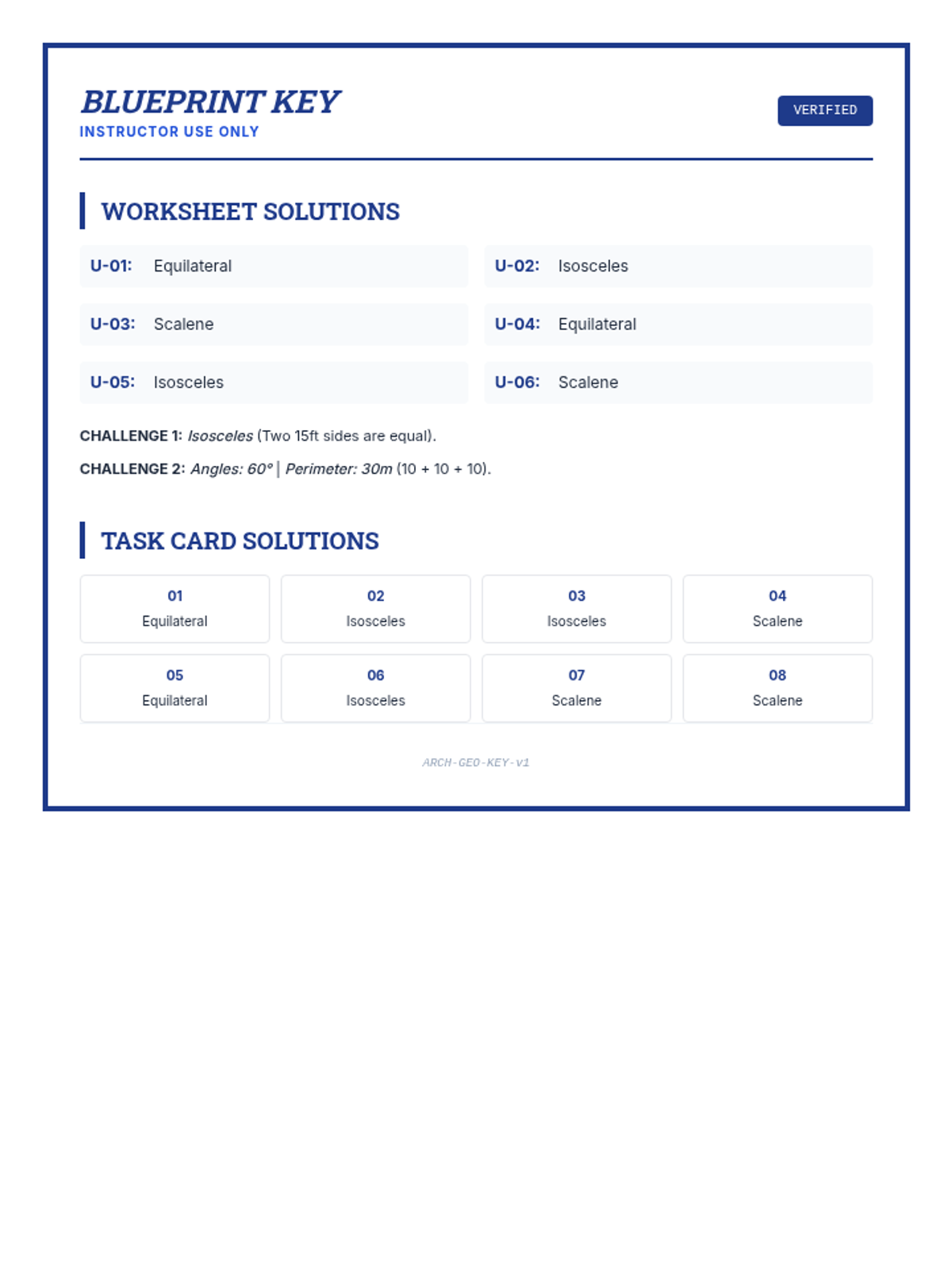
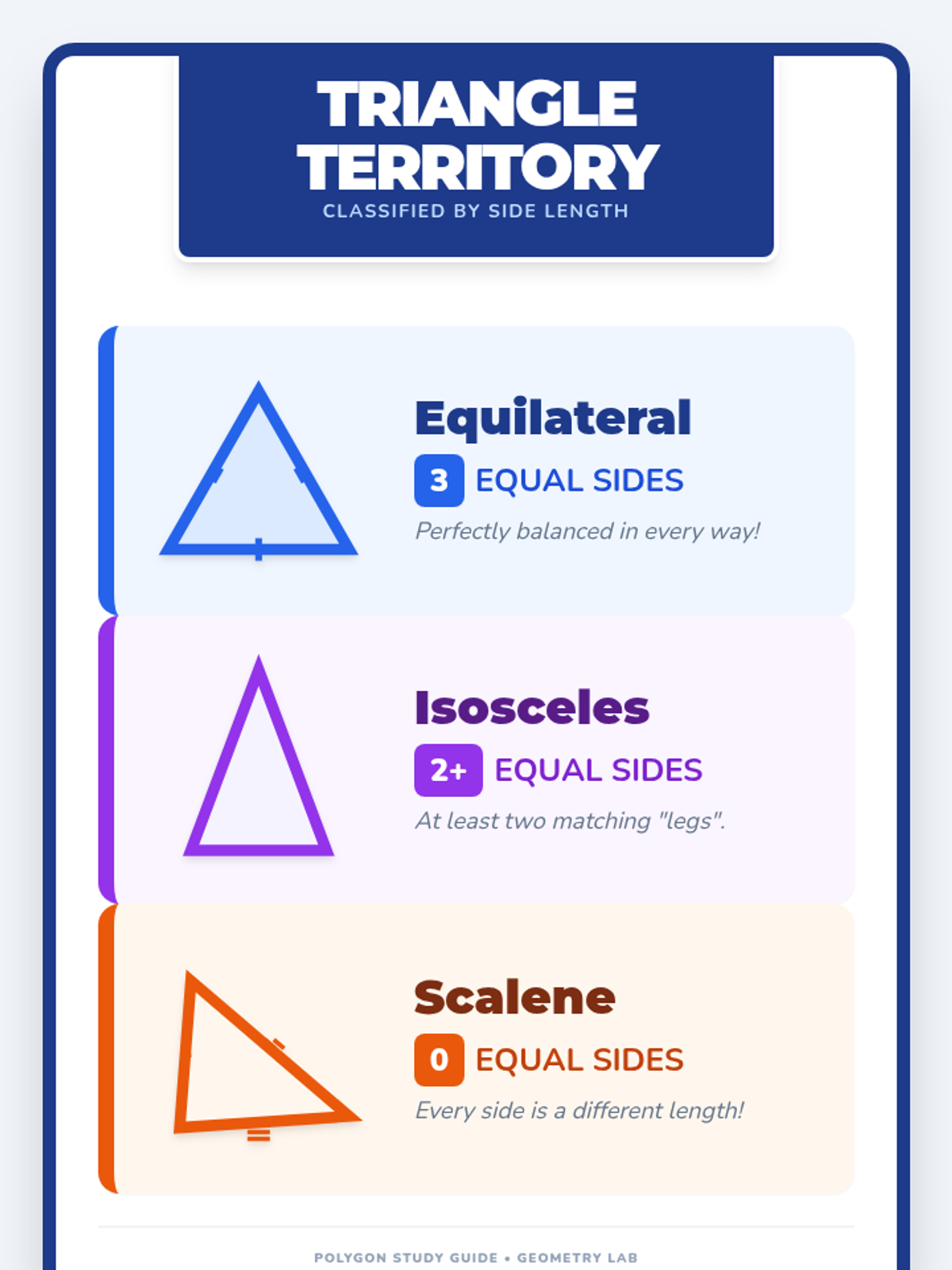
A hands-on geometry lesson focused on classifying triangles by side lengths (scalene, isosceles, equilateral) using geometric notation and measurements within an architectural drafting context.
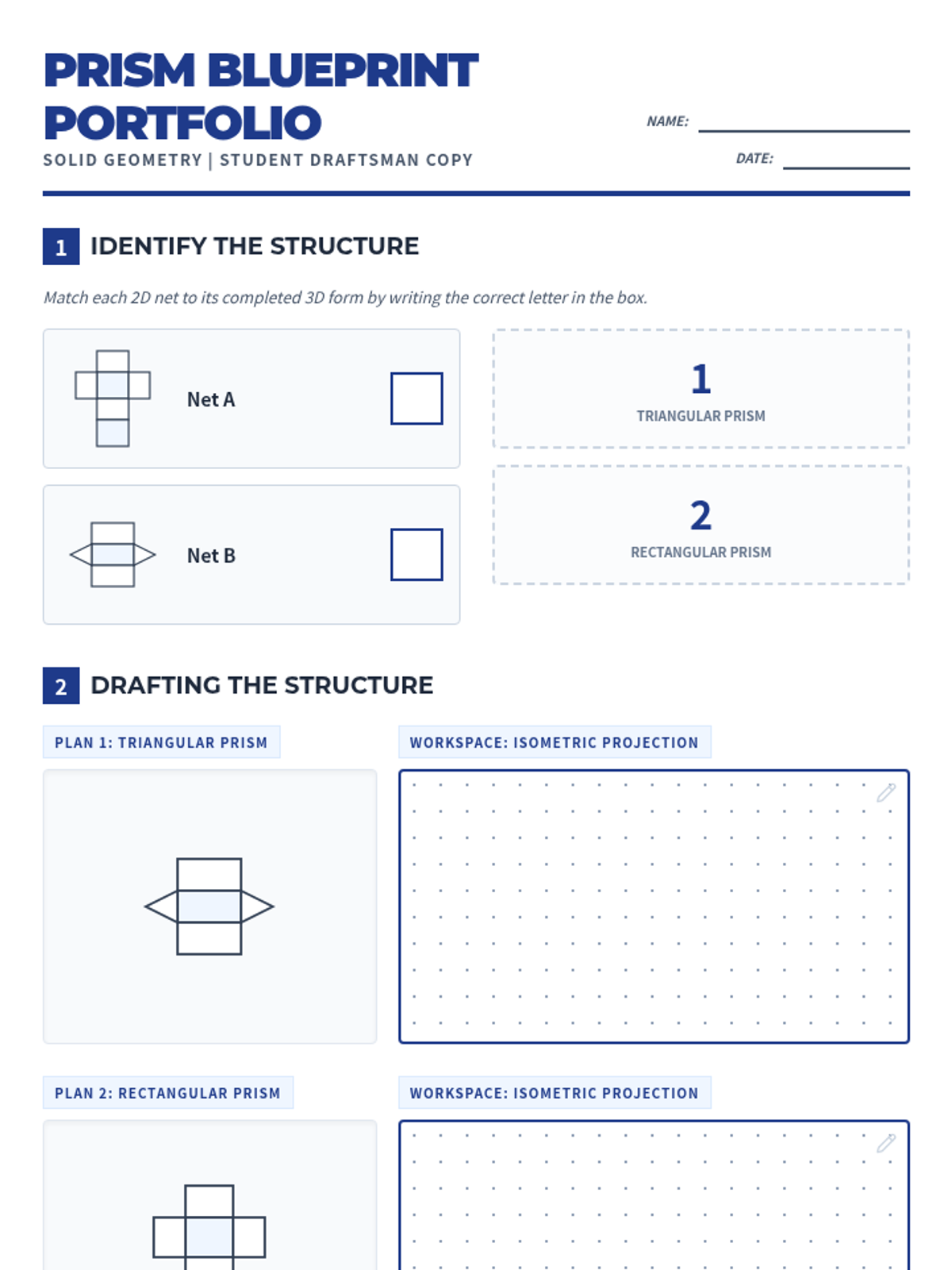
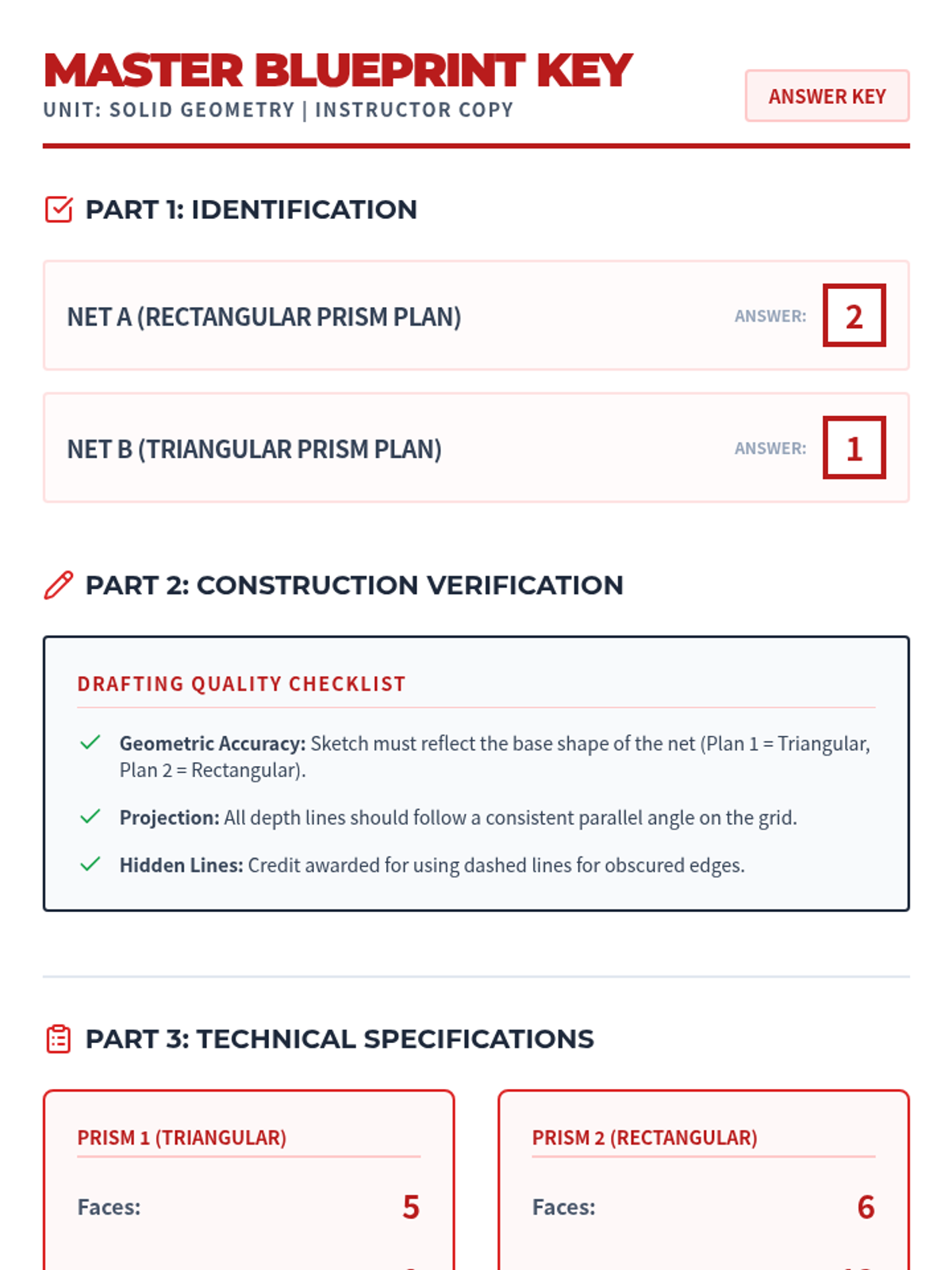
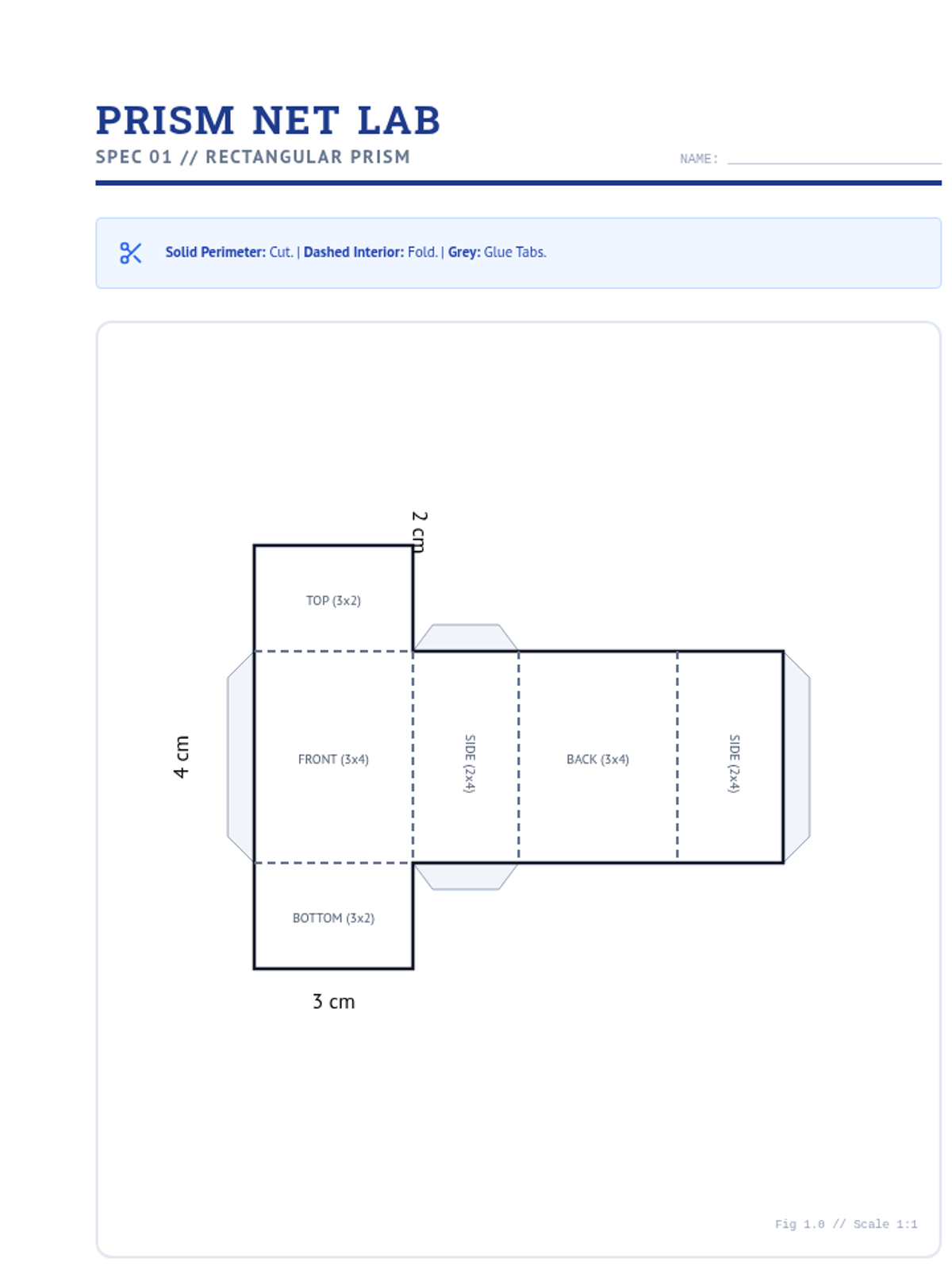
A hands-on lesson focusing on the transition from 2D nets to 3D prism constructions, specifically targeting rectangular and triangular prisms through visualization and drawing techniques.
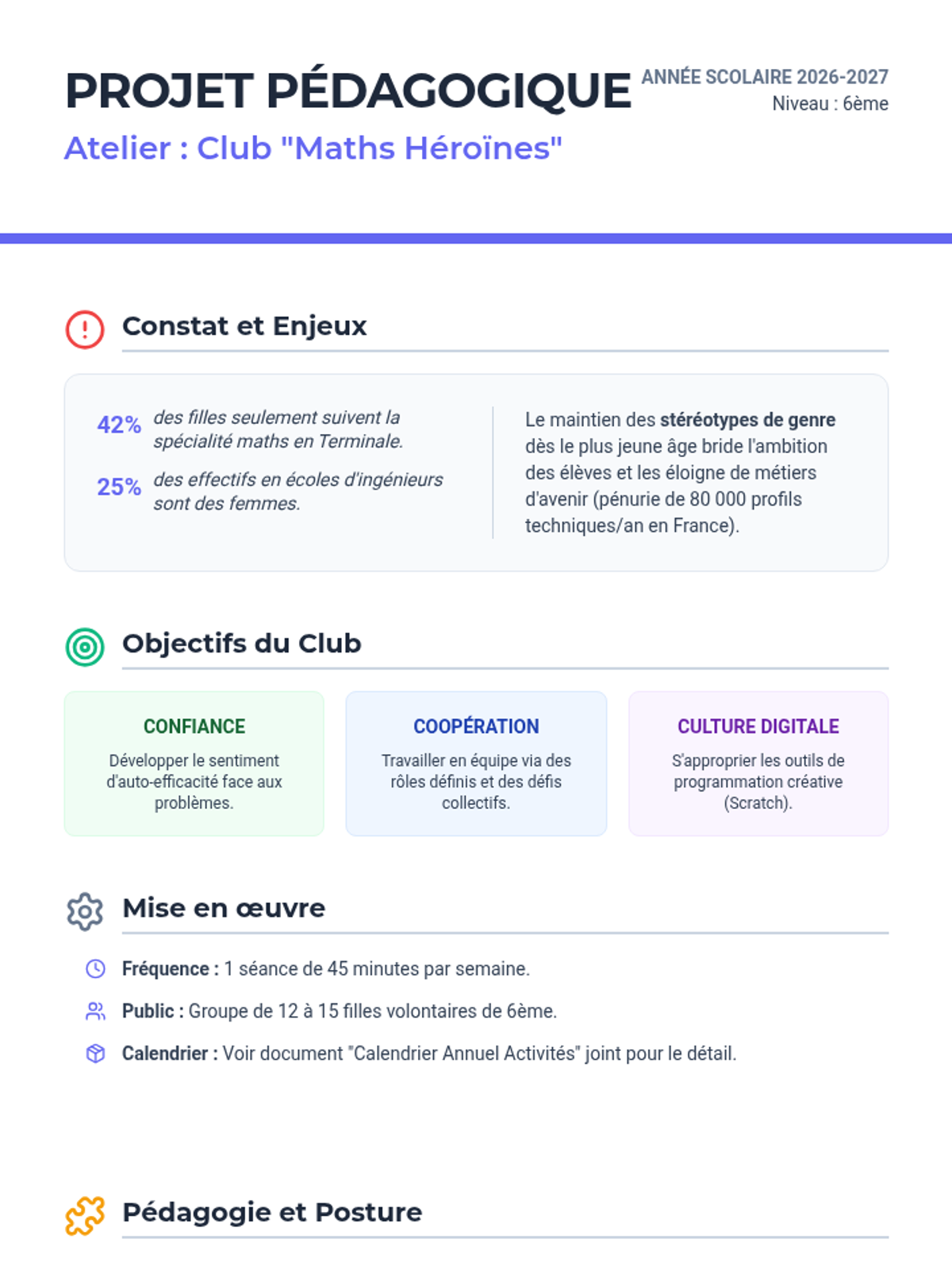
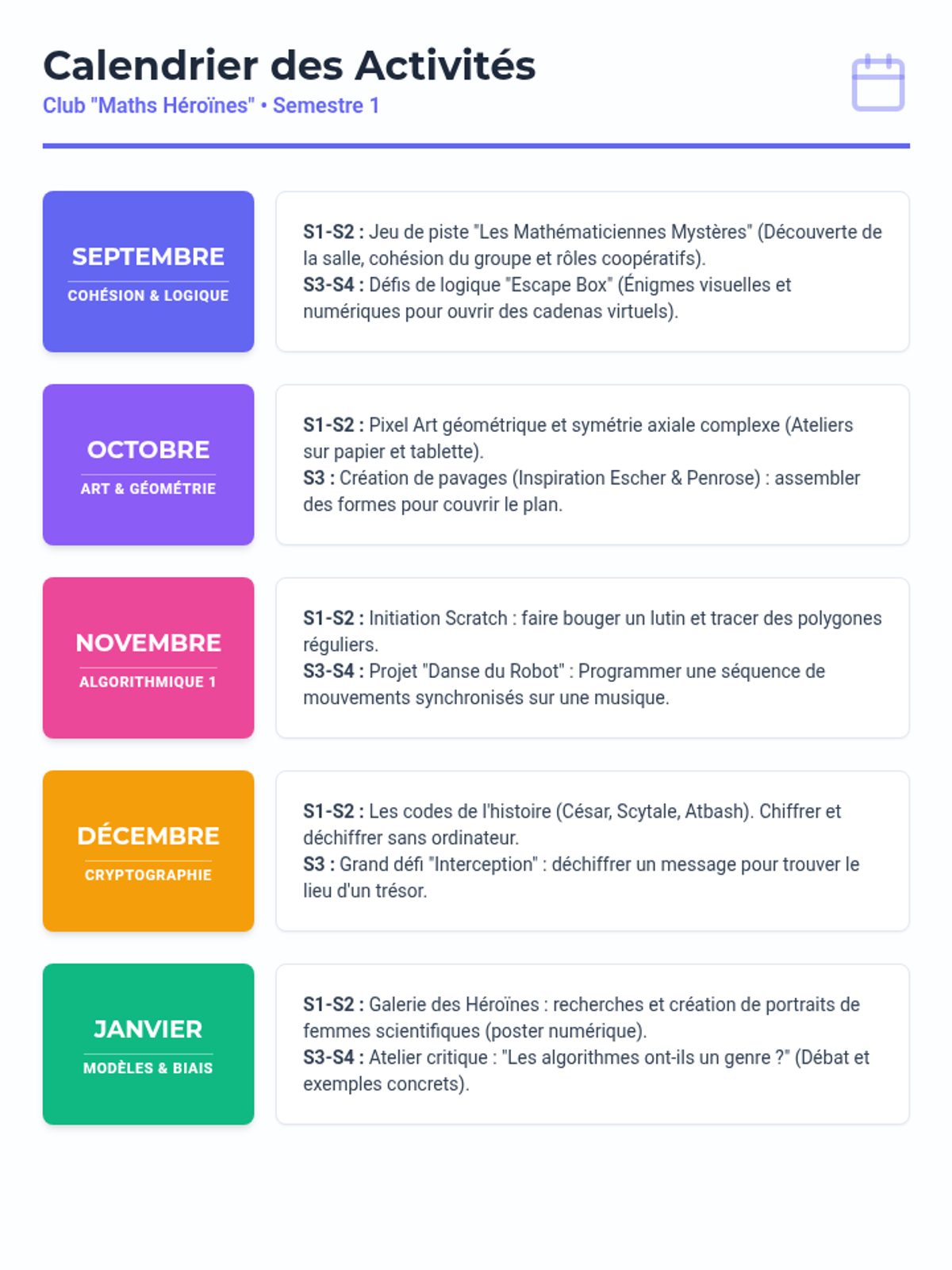
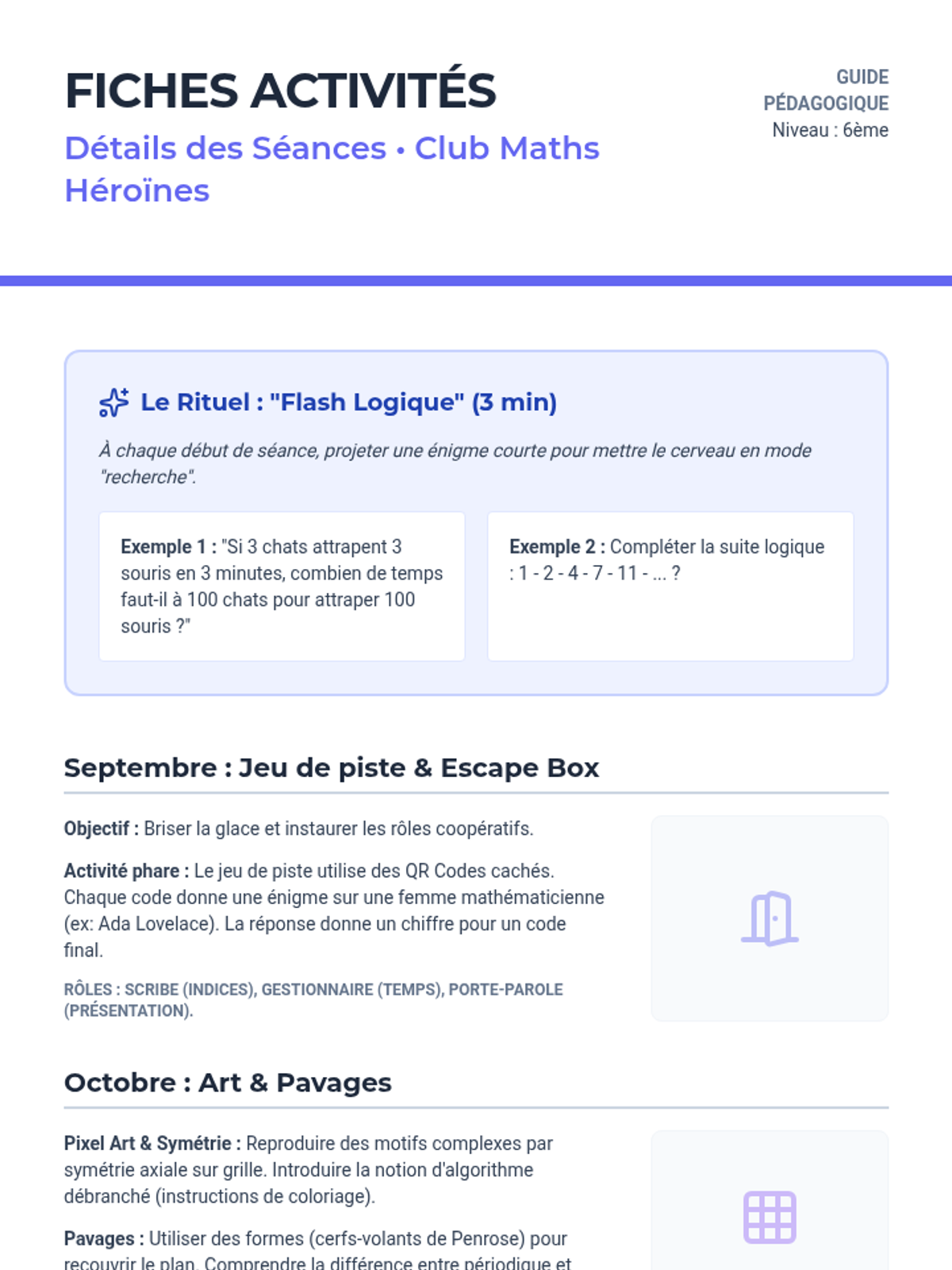
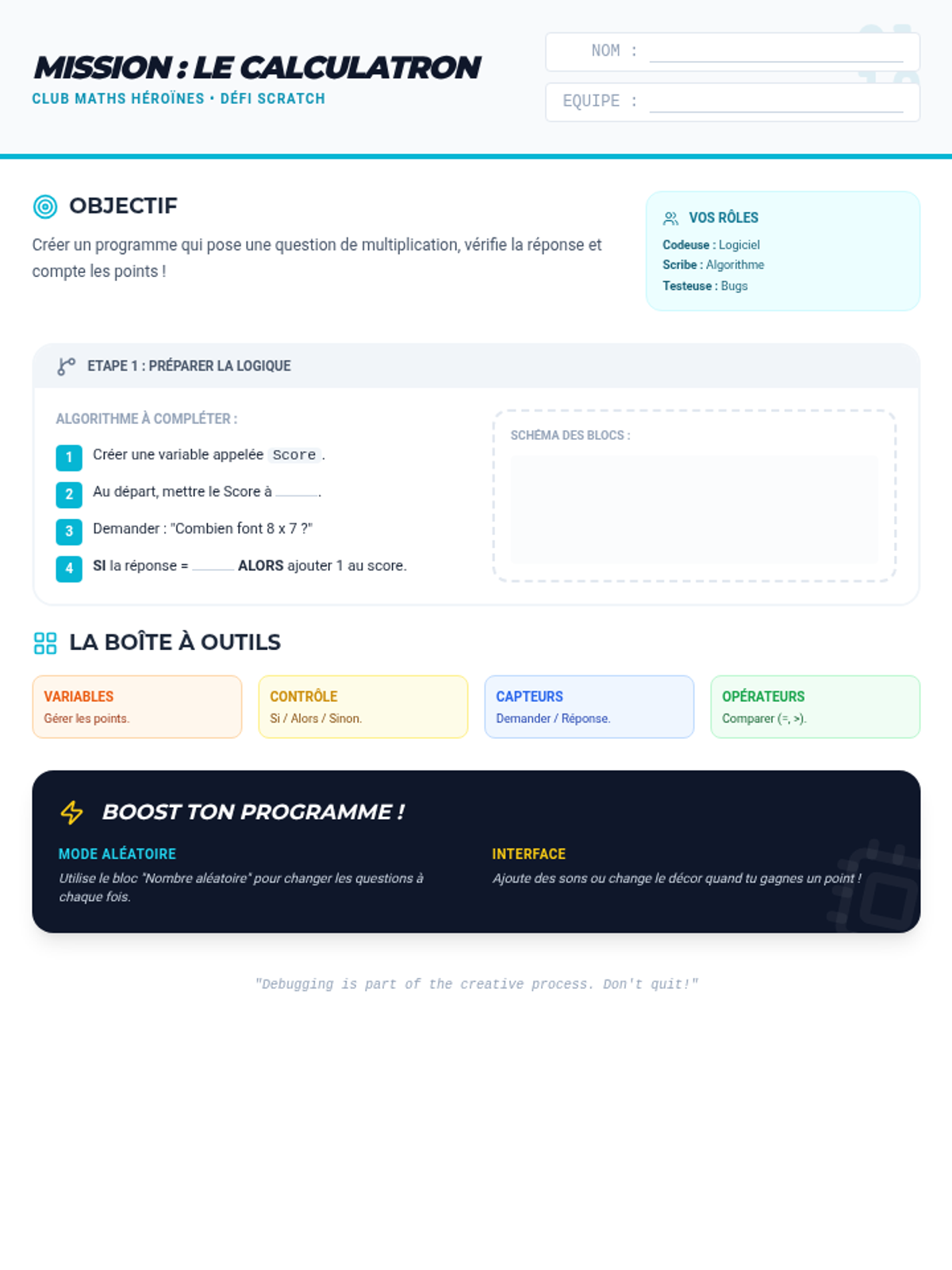
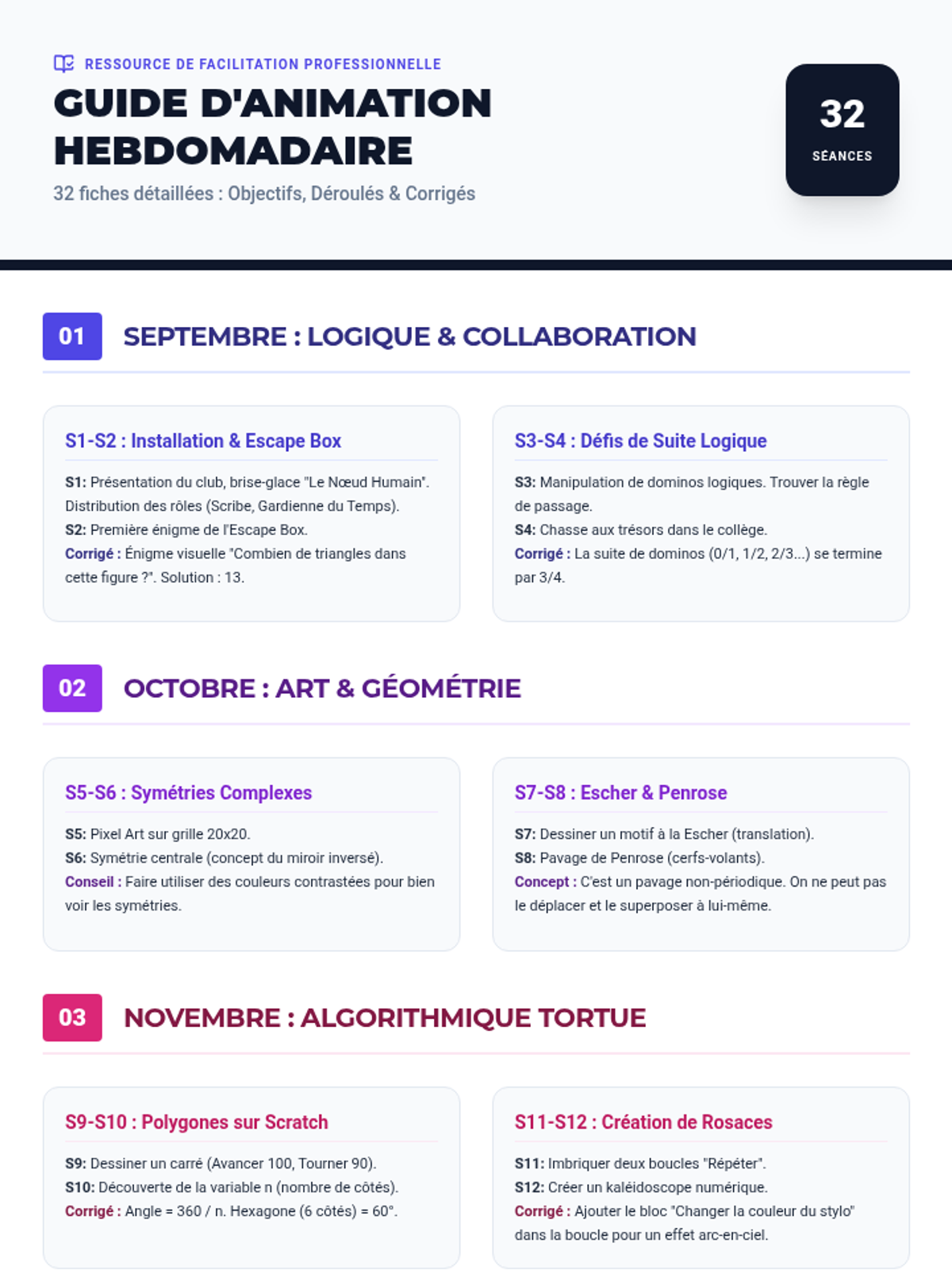
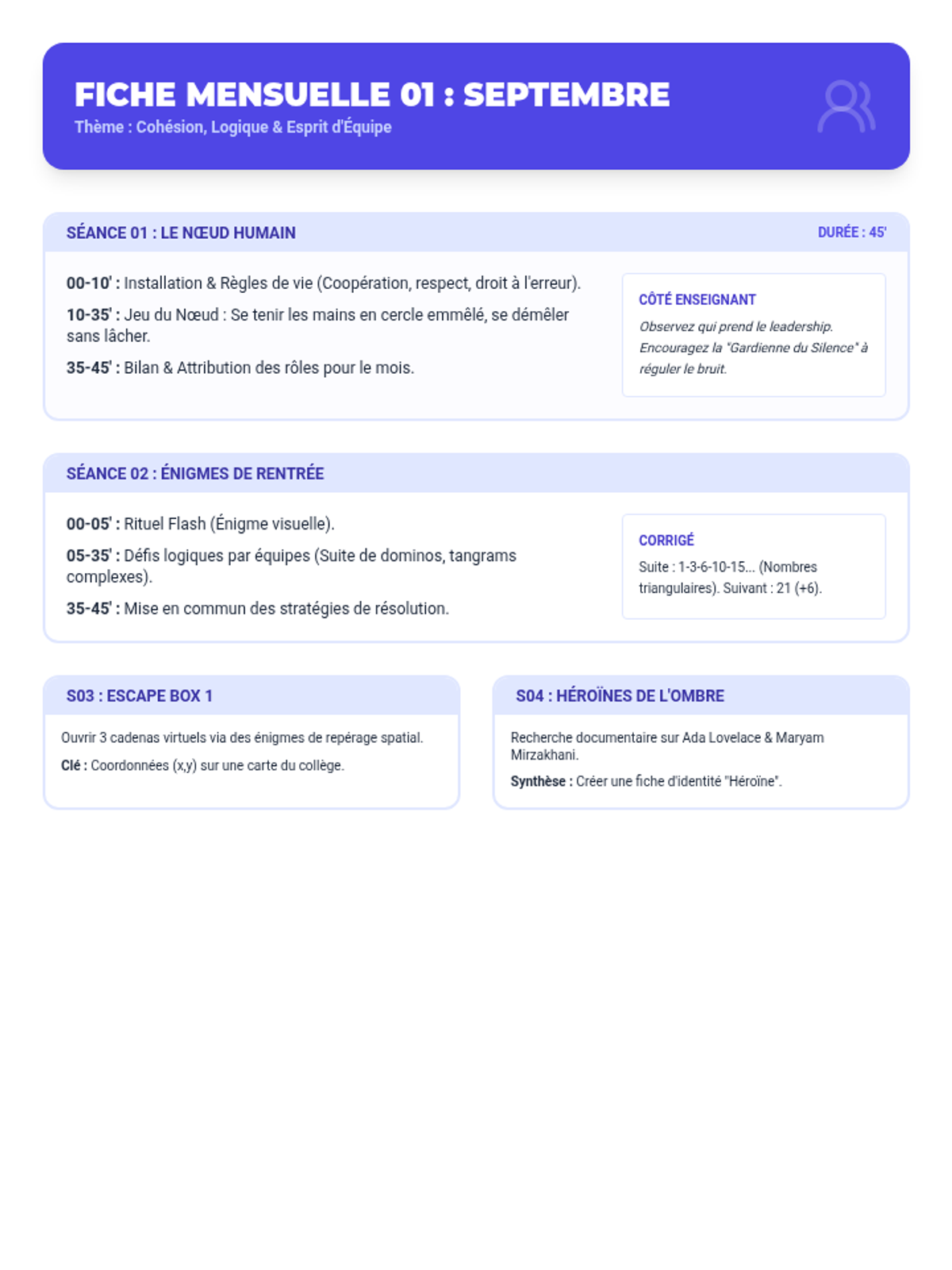
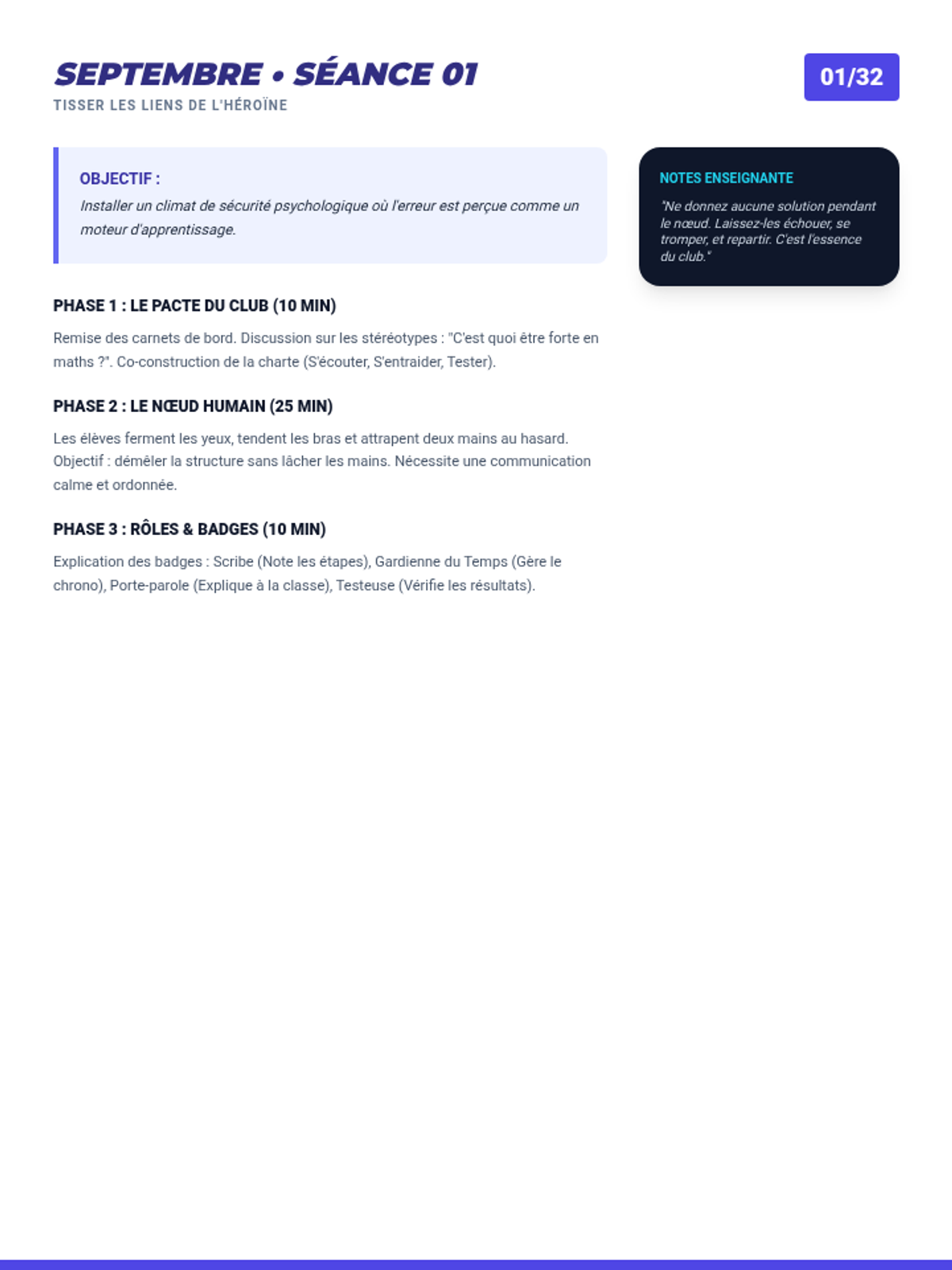
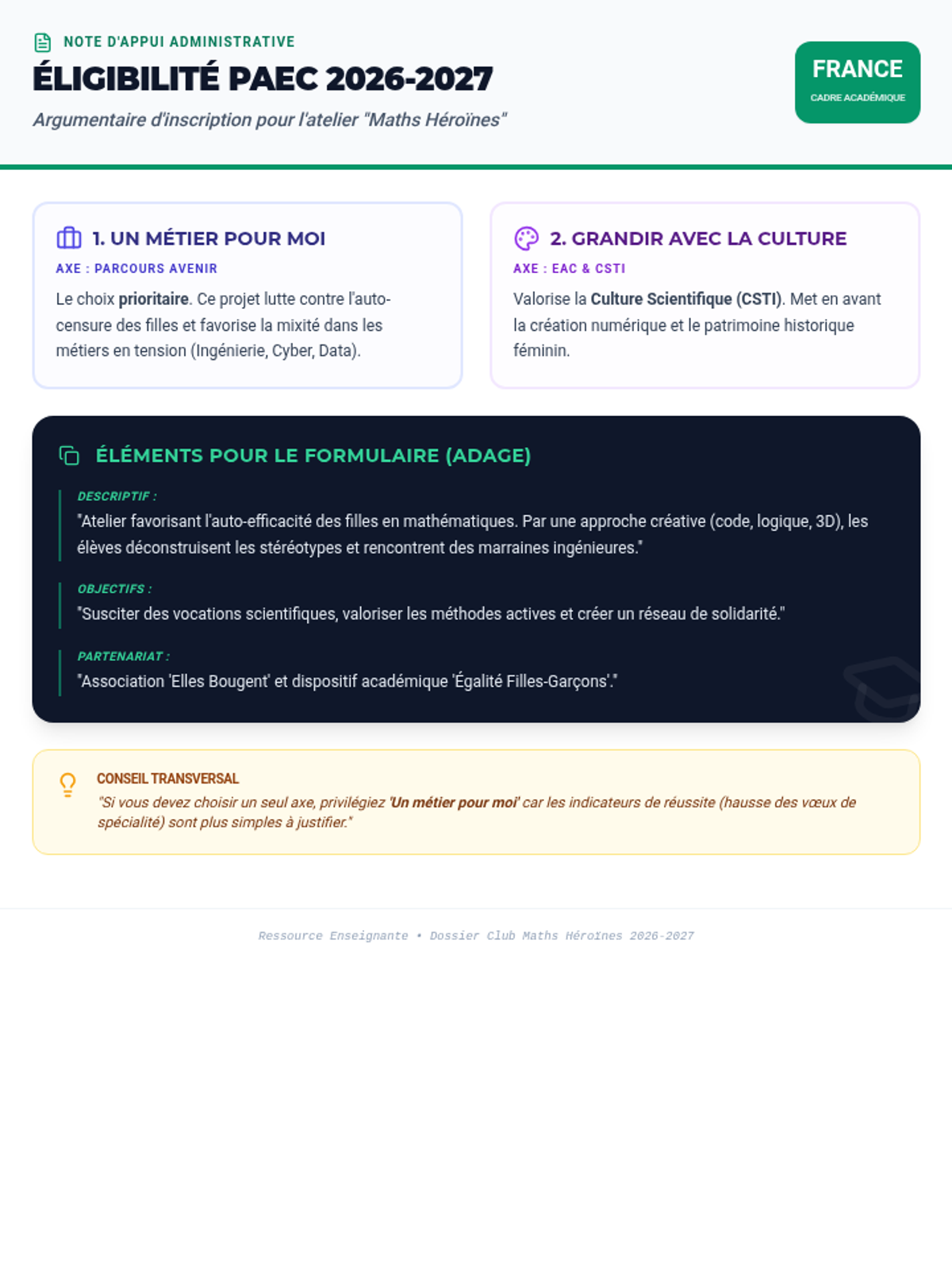
Ce module regroupe les documents administratifs et pédagogiques nécessaires à la mise en place d'un atelier hebdomadaire de 45 minutes pour promouvoir les mathématiques auprès des jeunes filles.
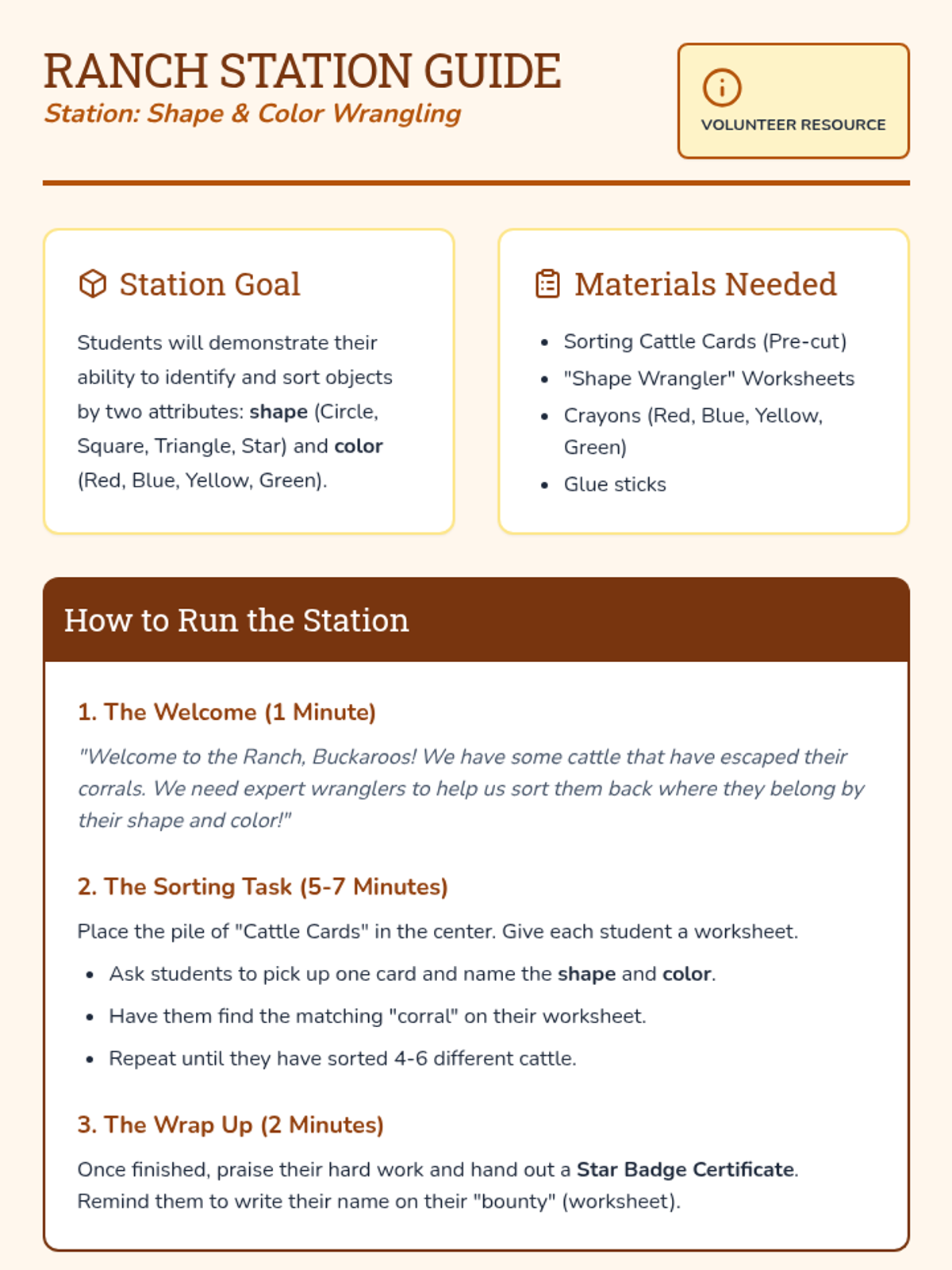
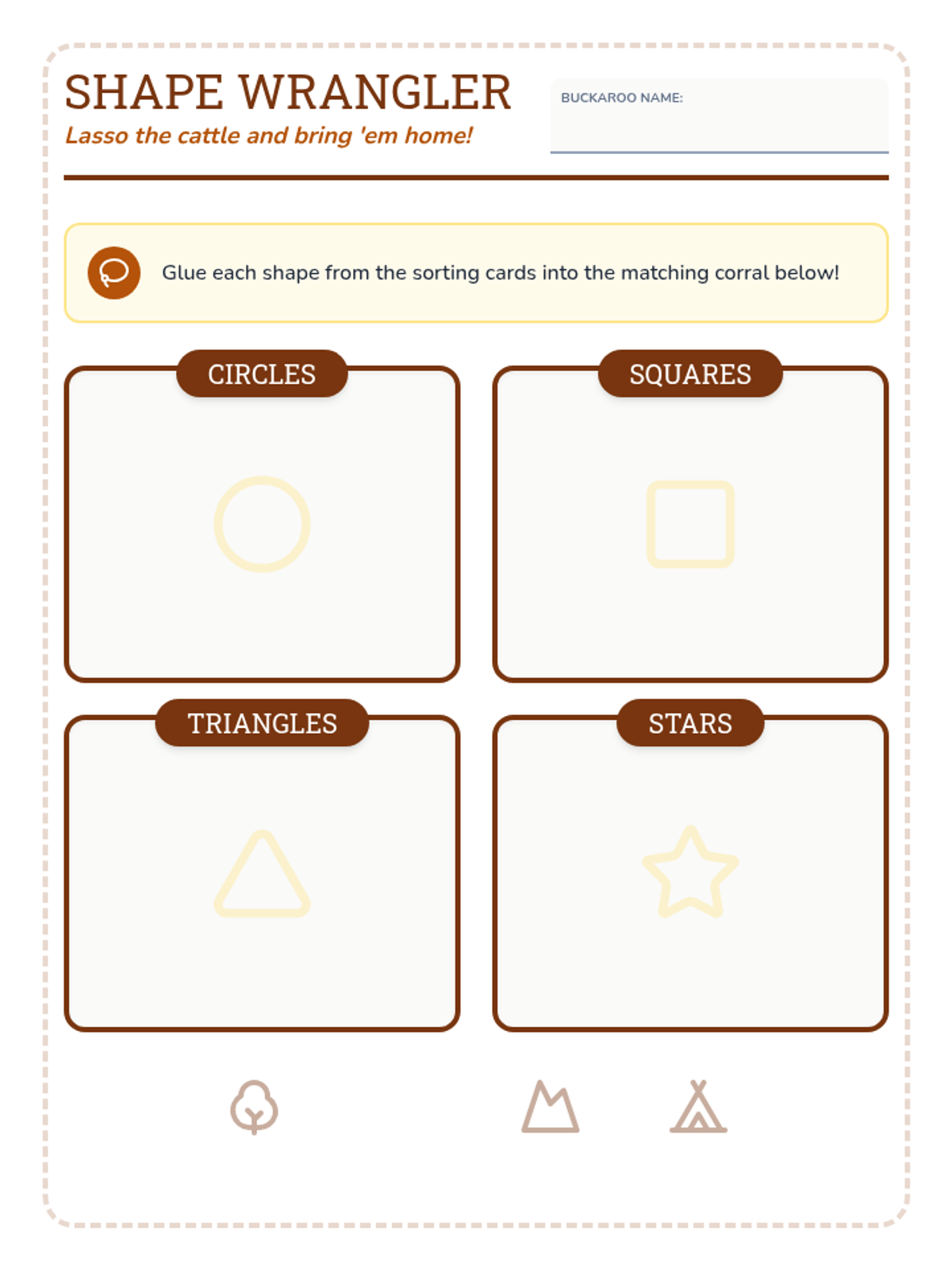
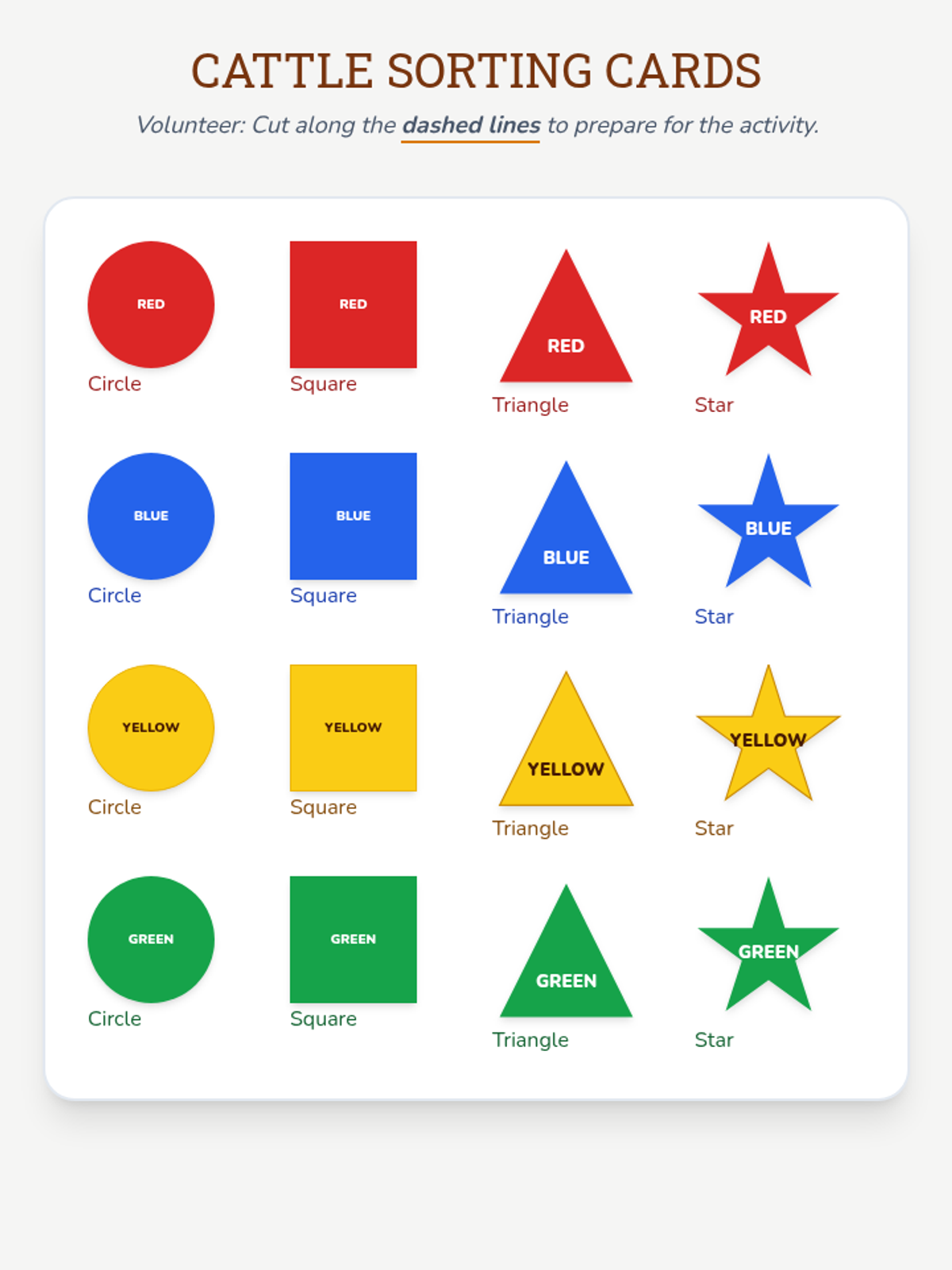
A collection of Western-themed activities for a Kindergarten Round Up, focusing on fundamental color and shape identification through engaging hands-on "ranch" tasks.
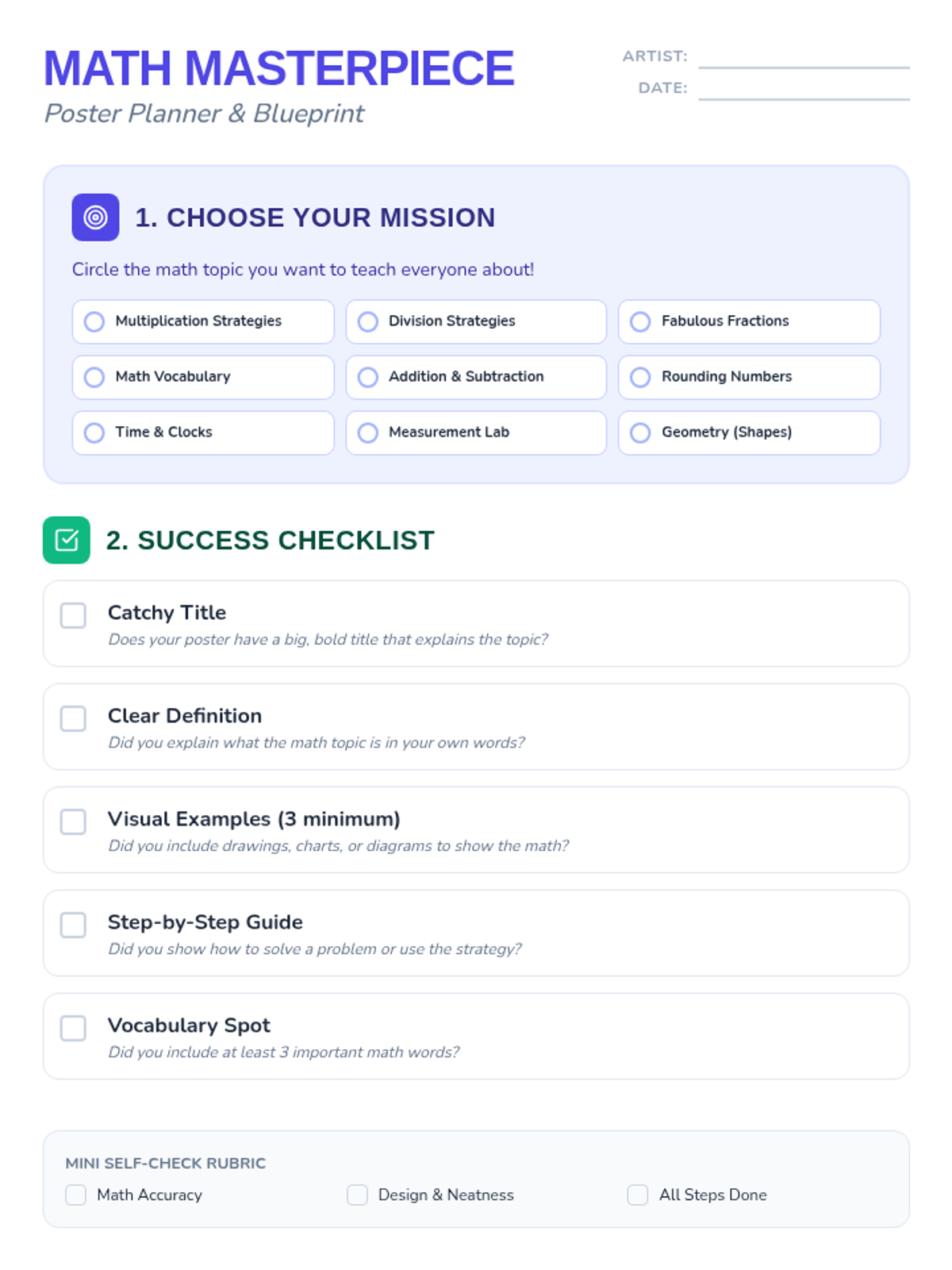
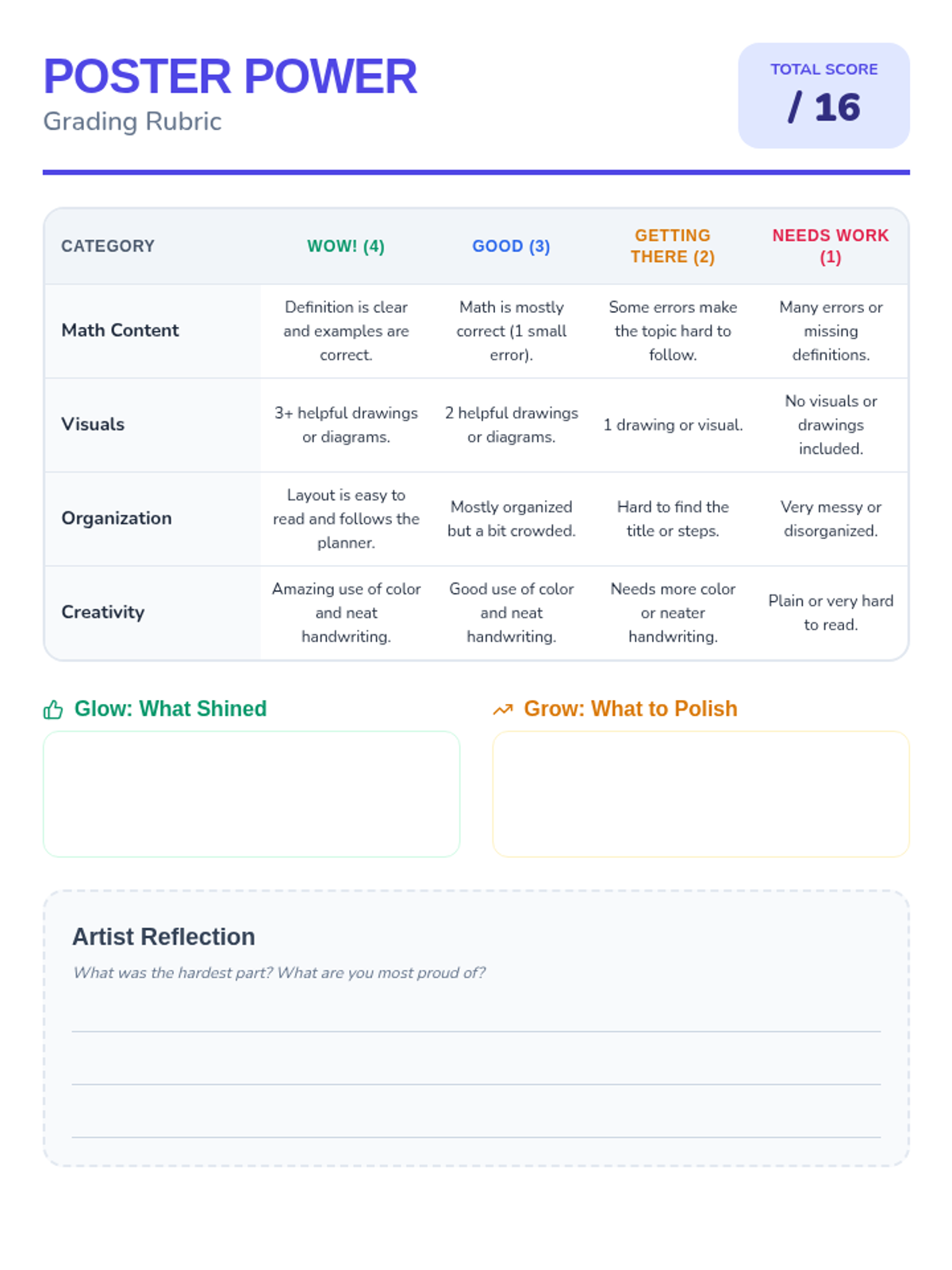
A creative project where students design and create a math poster to showcase their understanding of key 3rd-grade concepts like multiplication, fractions, and geometry.
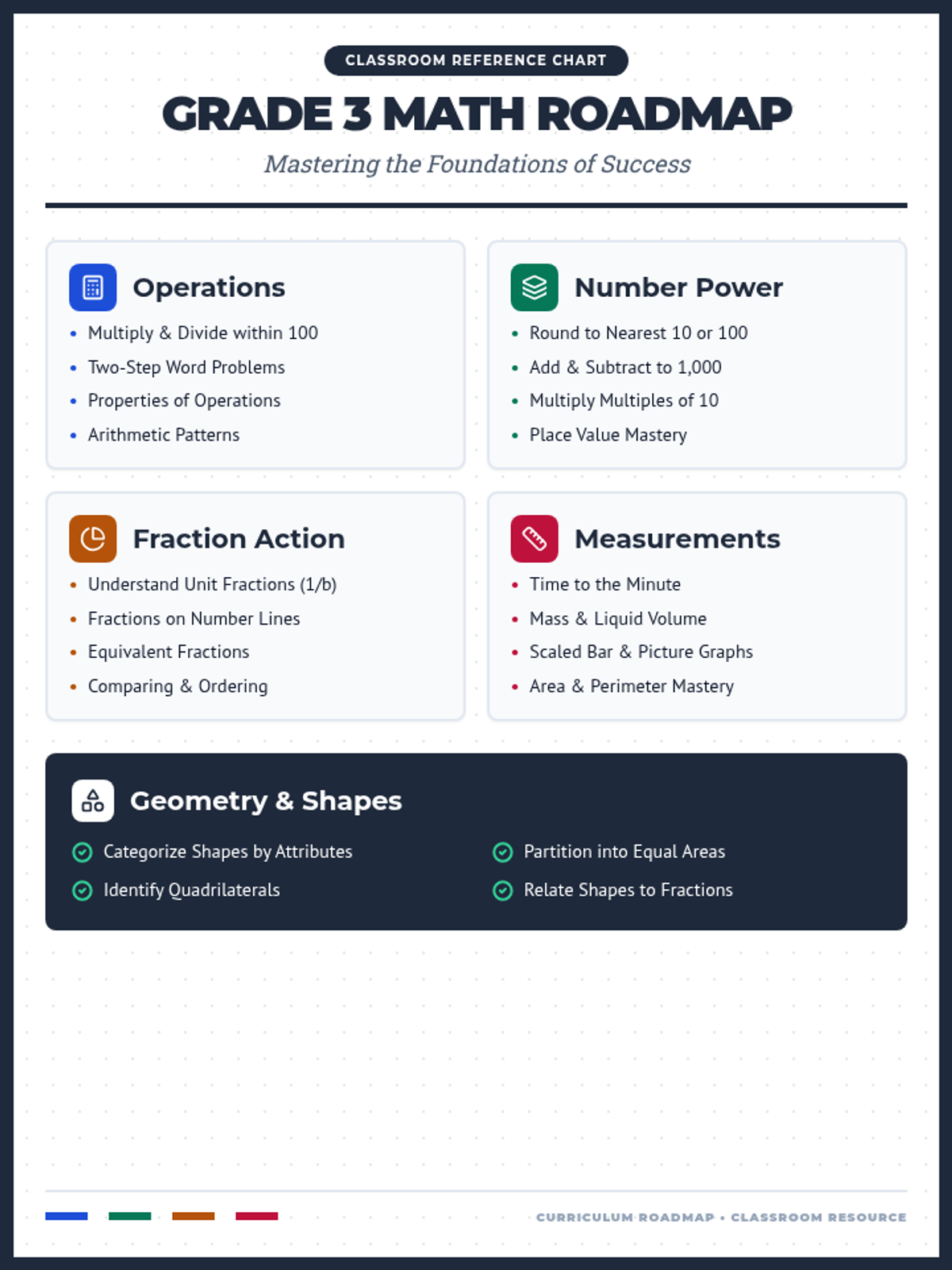
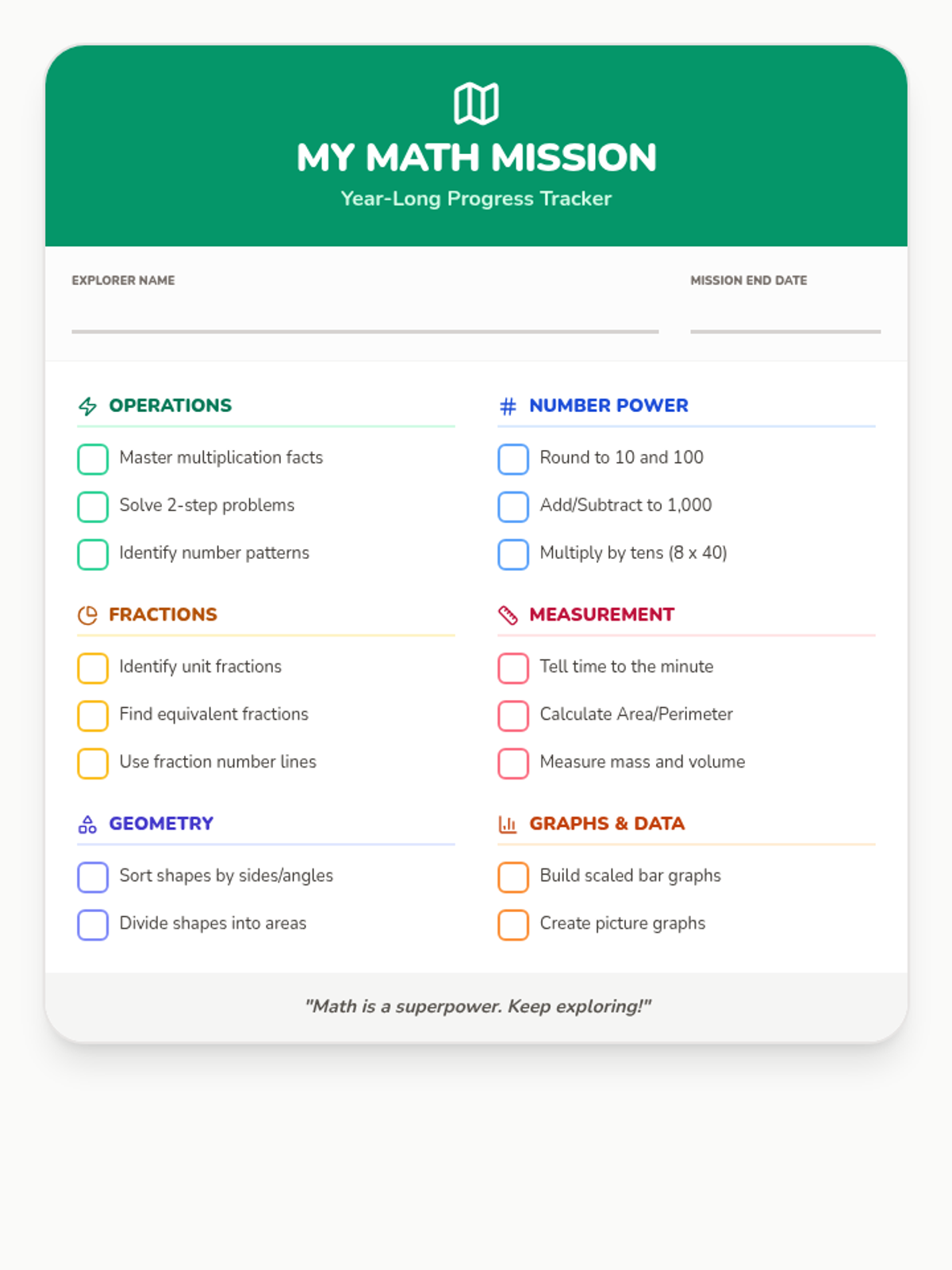
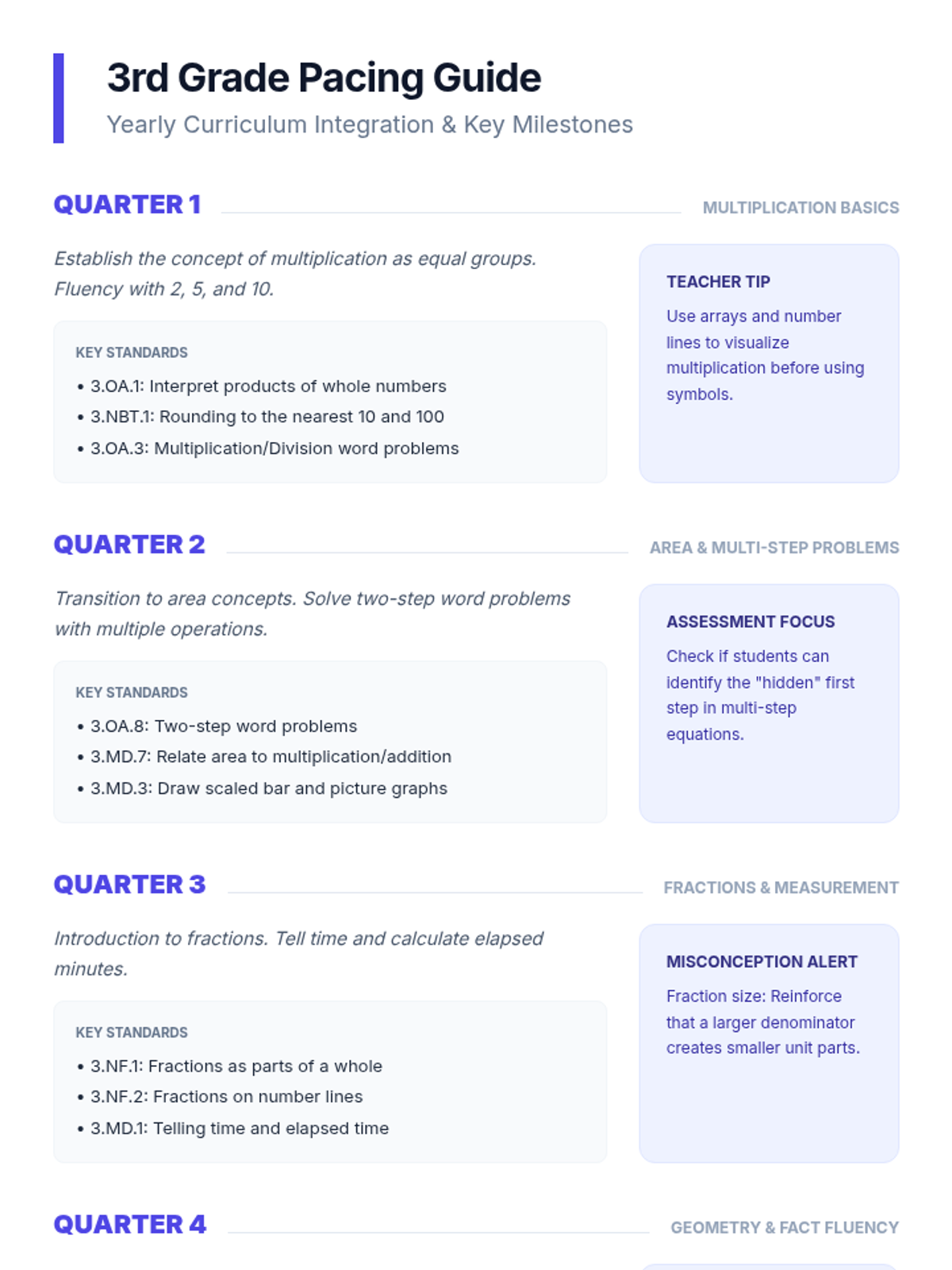
A comprehensive set of visual aids and planning documents for the Grade 3 mathematics curriculum, designed to provide students and teachers with a clear roadmap for the year ahead.
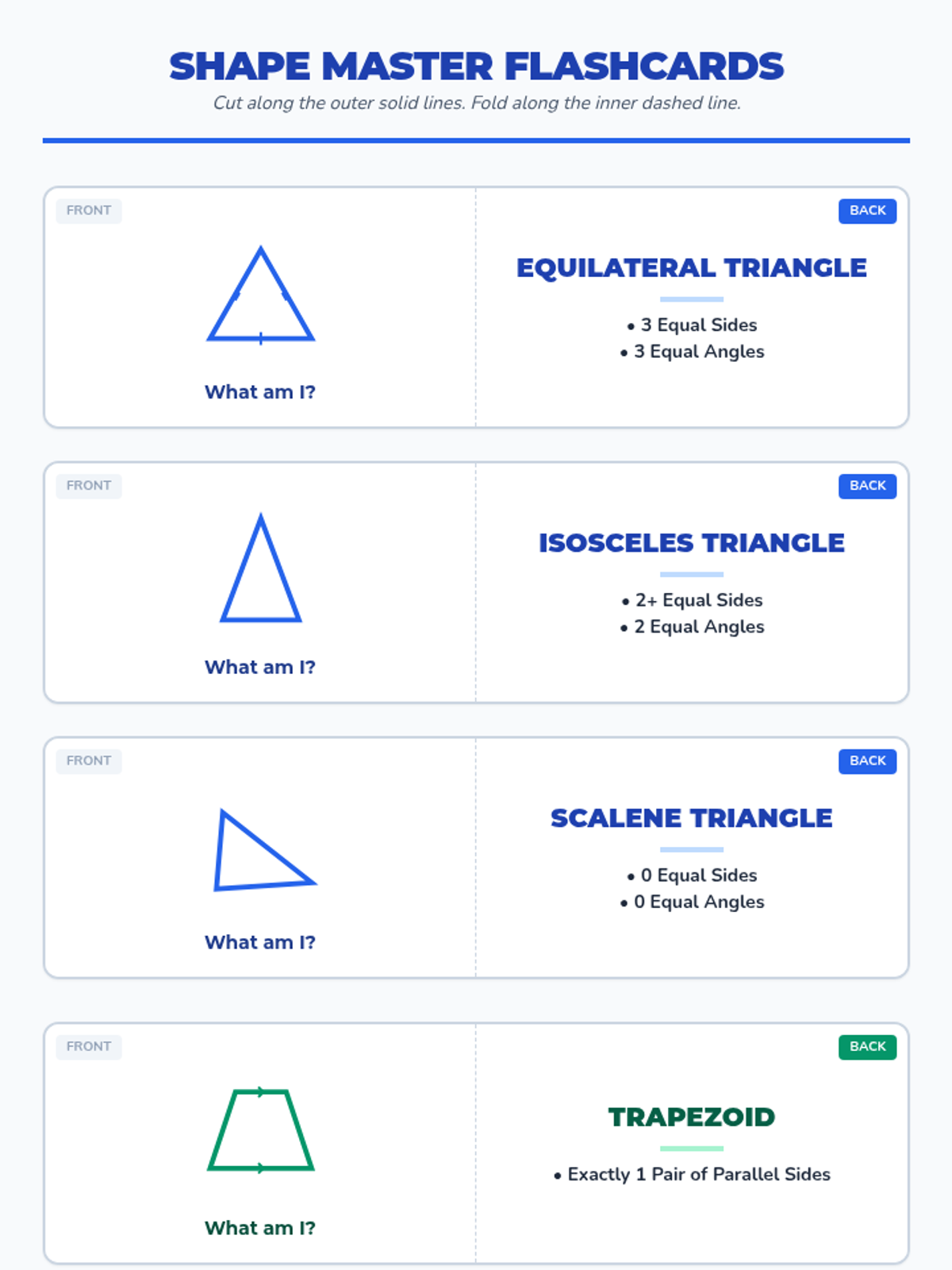
A comprehensive lesson on classifying triangles and quadrilaterals by their properties, including side lengths and line relationships. Students explore the hierarchical relationships between shapes.
The culmination of the unit featuring comprehensive task cards for review and a final assessment to measure mastery across all topics.
Introduces volume and capacity through the study of 3D objects and liquid measurements in real-world contexts.
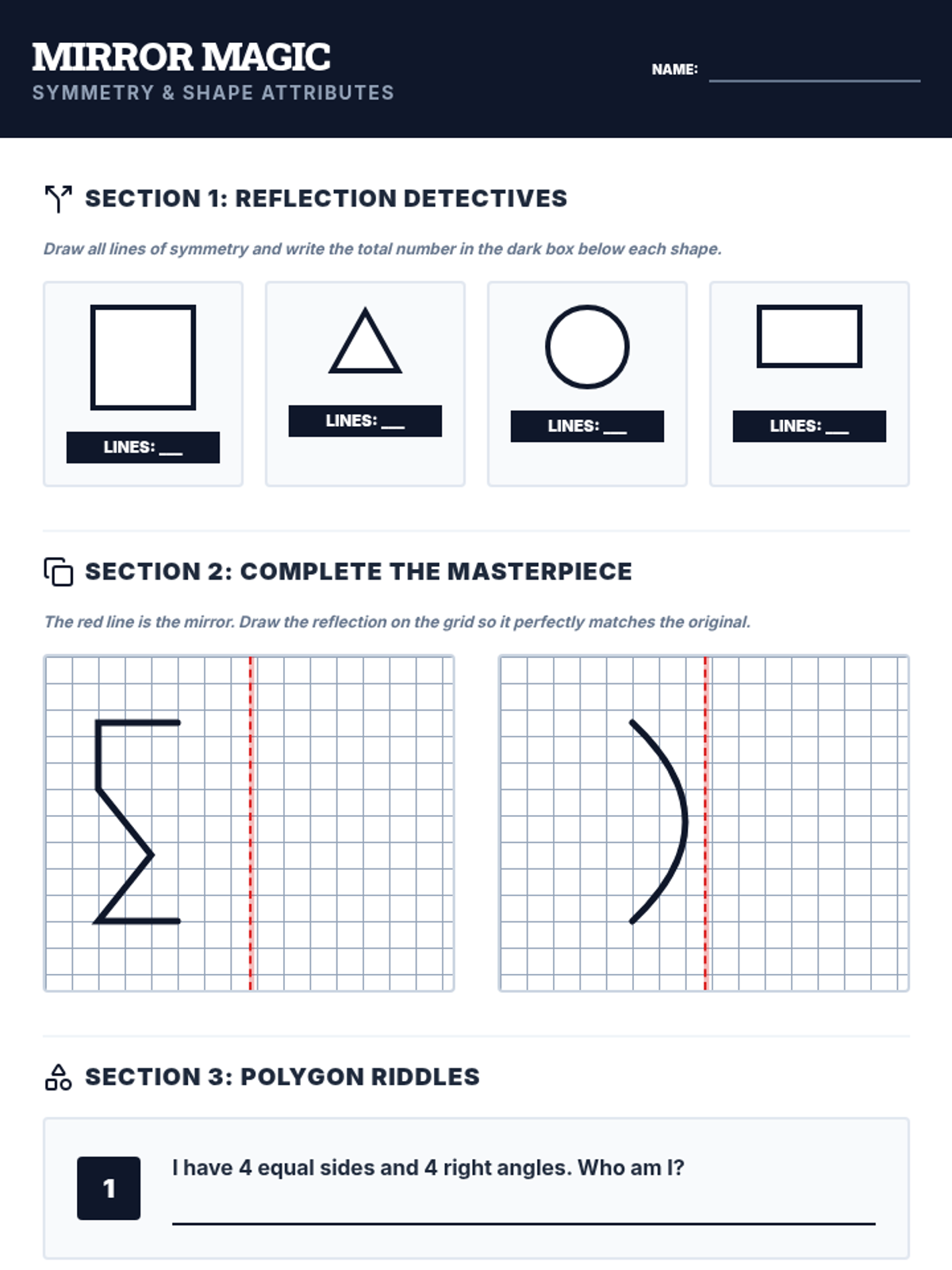
Focuses on identifying lines of symmetry and classifying 2D and 3D shapes based on their properties and attributes.
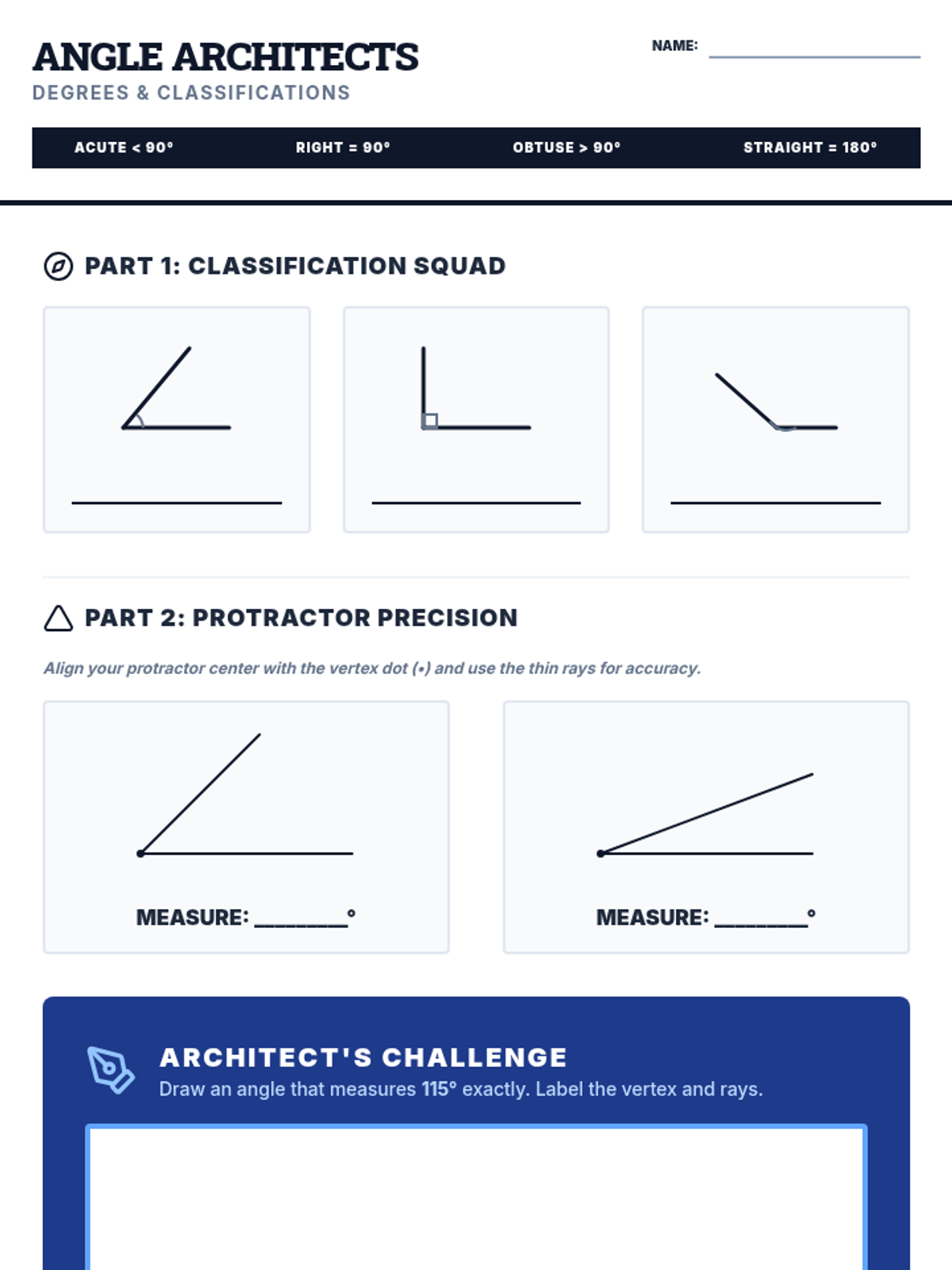
Students learn to identify, measure, and draw angles using protractors while understanding their role in geometric construction.
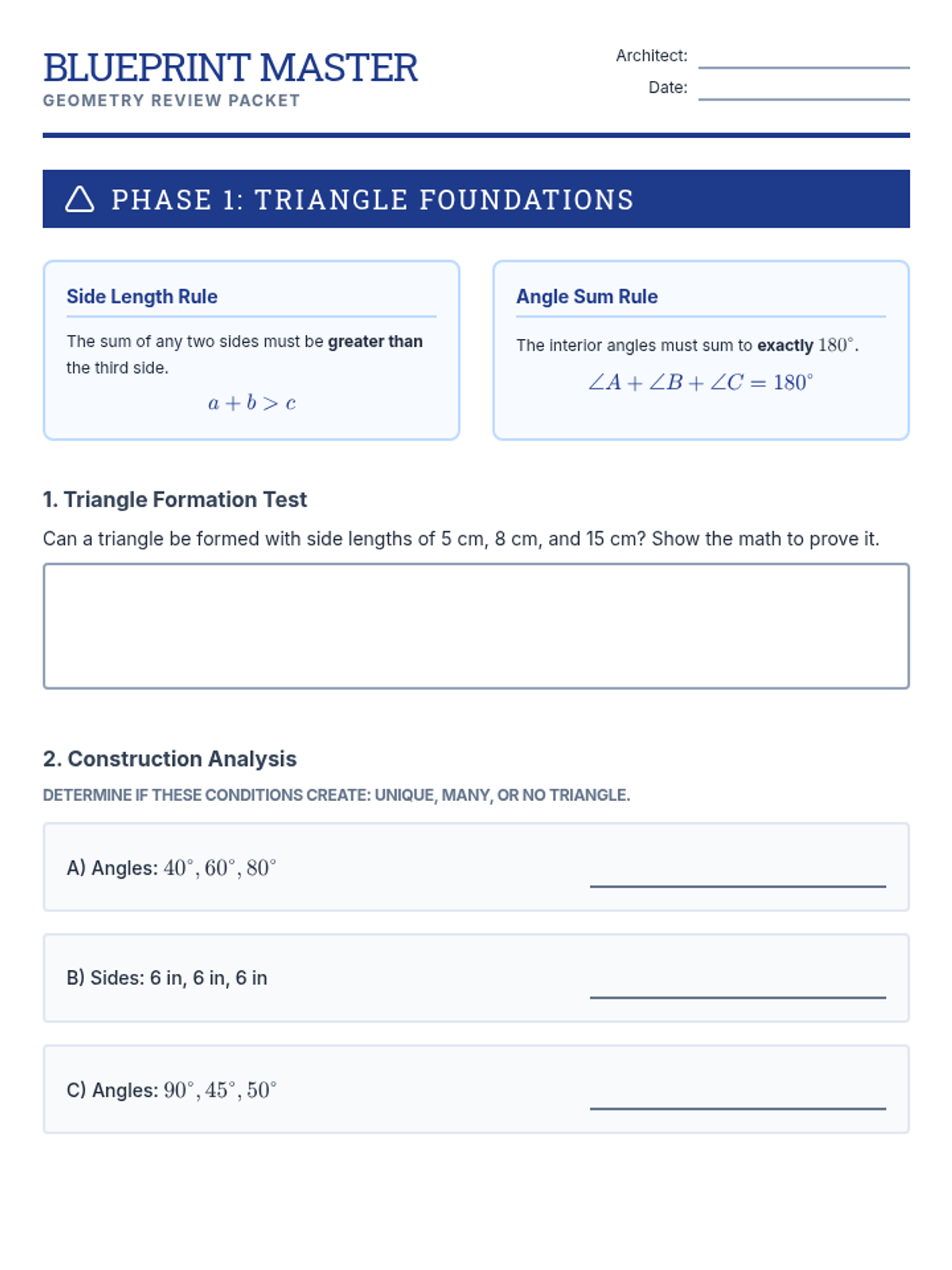
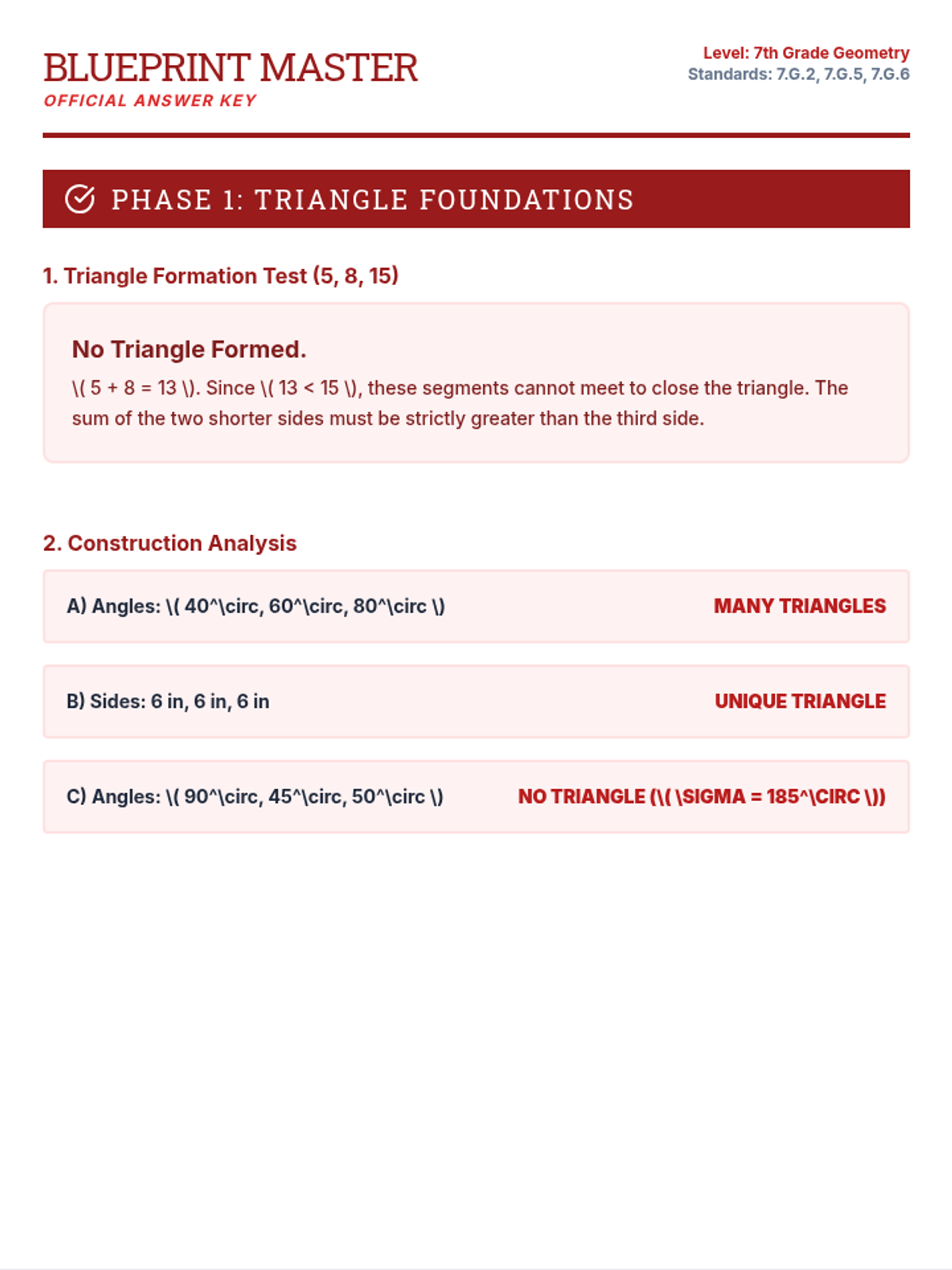
A comprehensive geometry review covering triangle construction, angle relationships, and 2D/3D measurements. Students take on the role of an architect to master essential geometric principles.
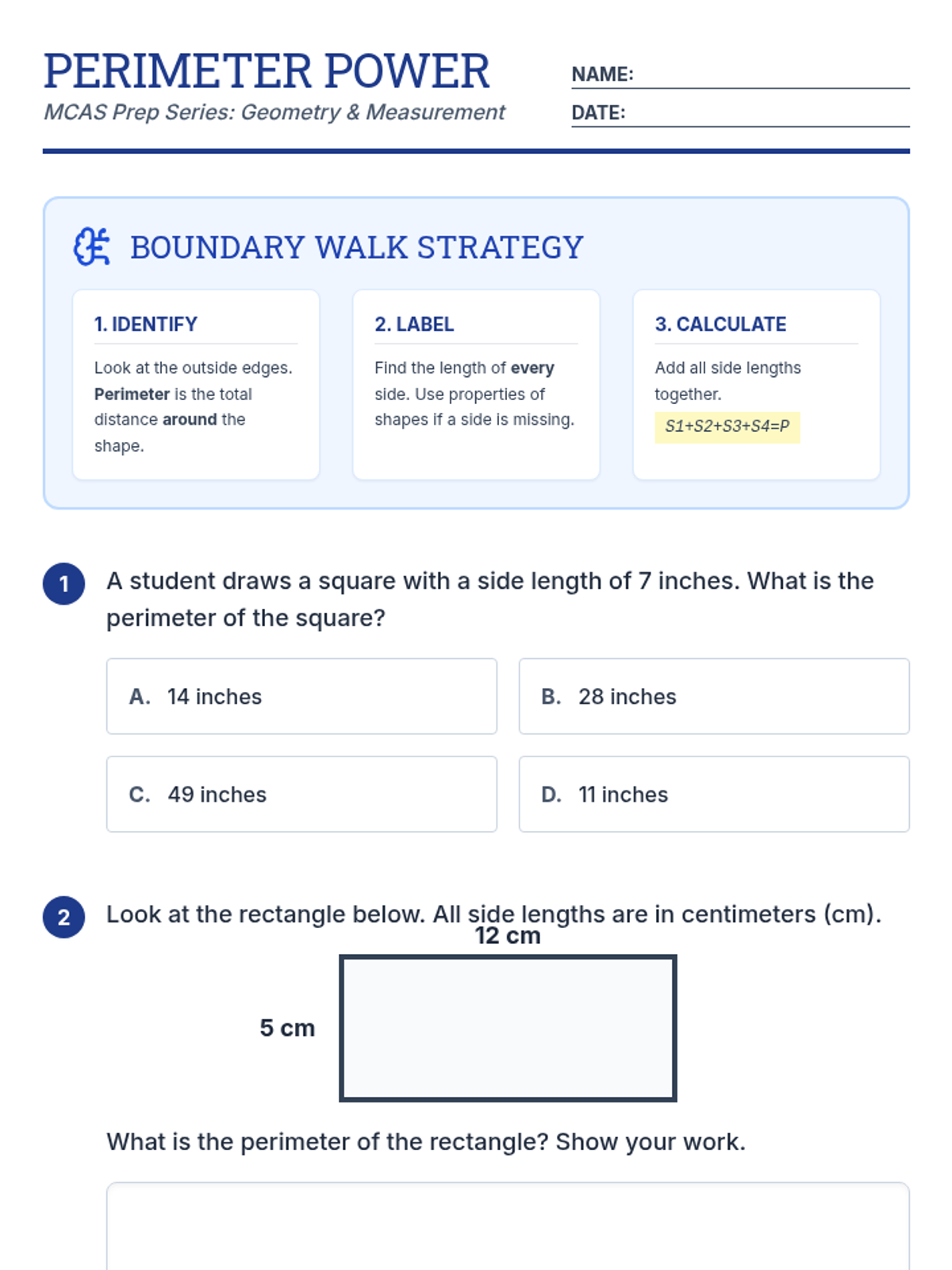
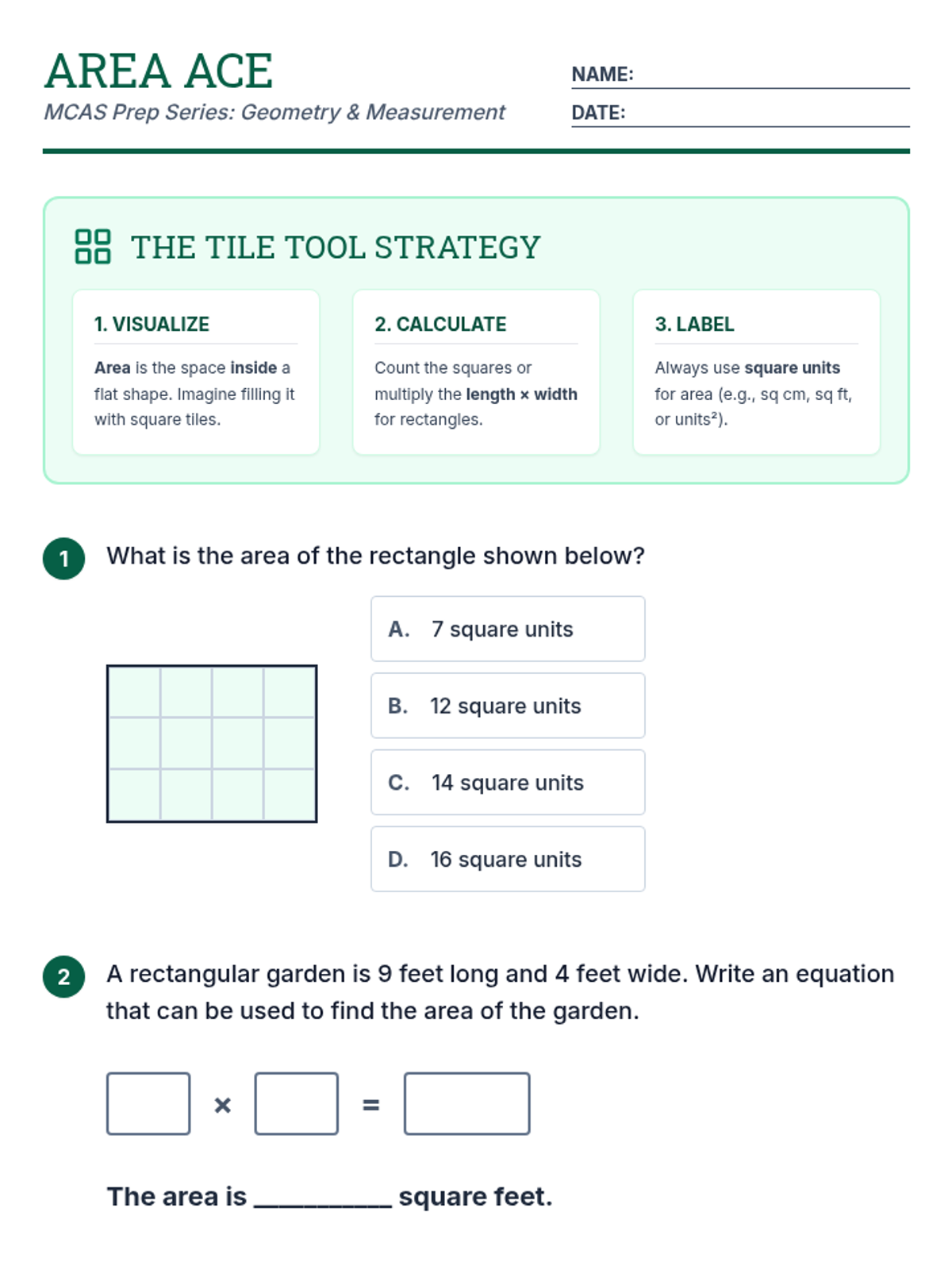
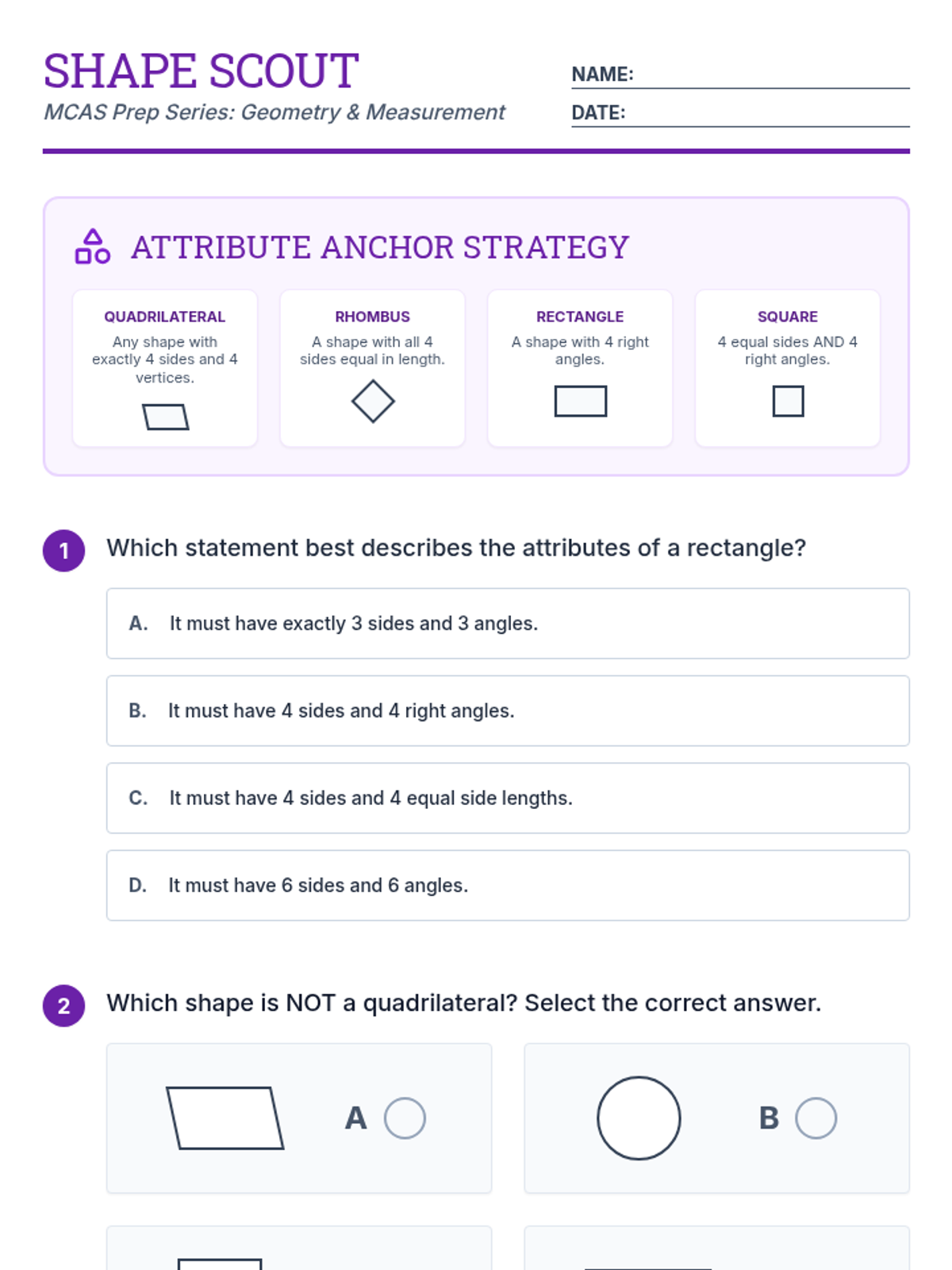
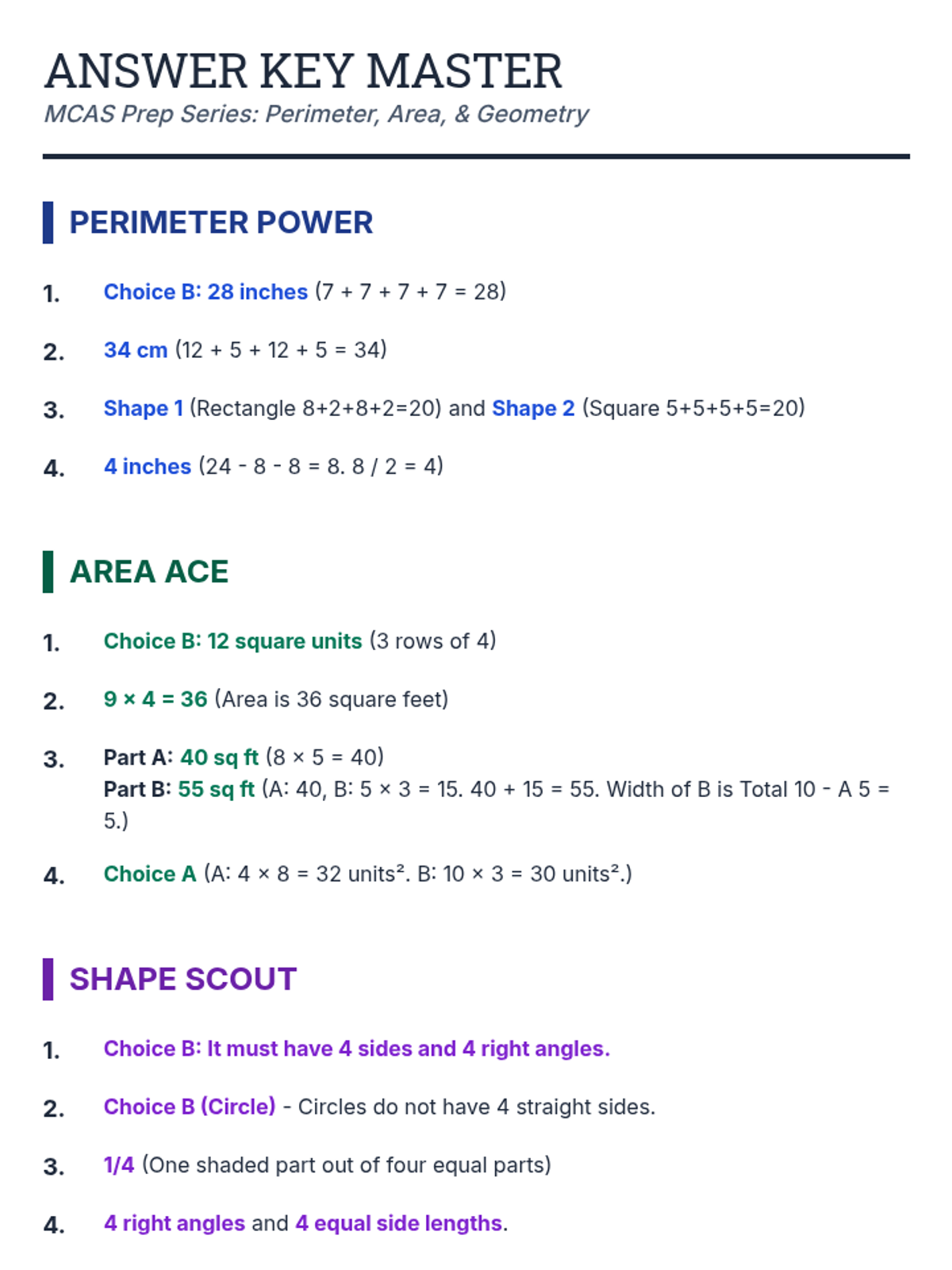
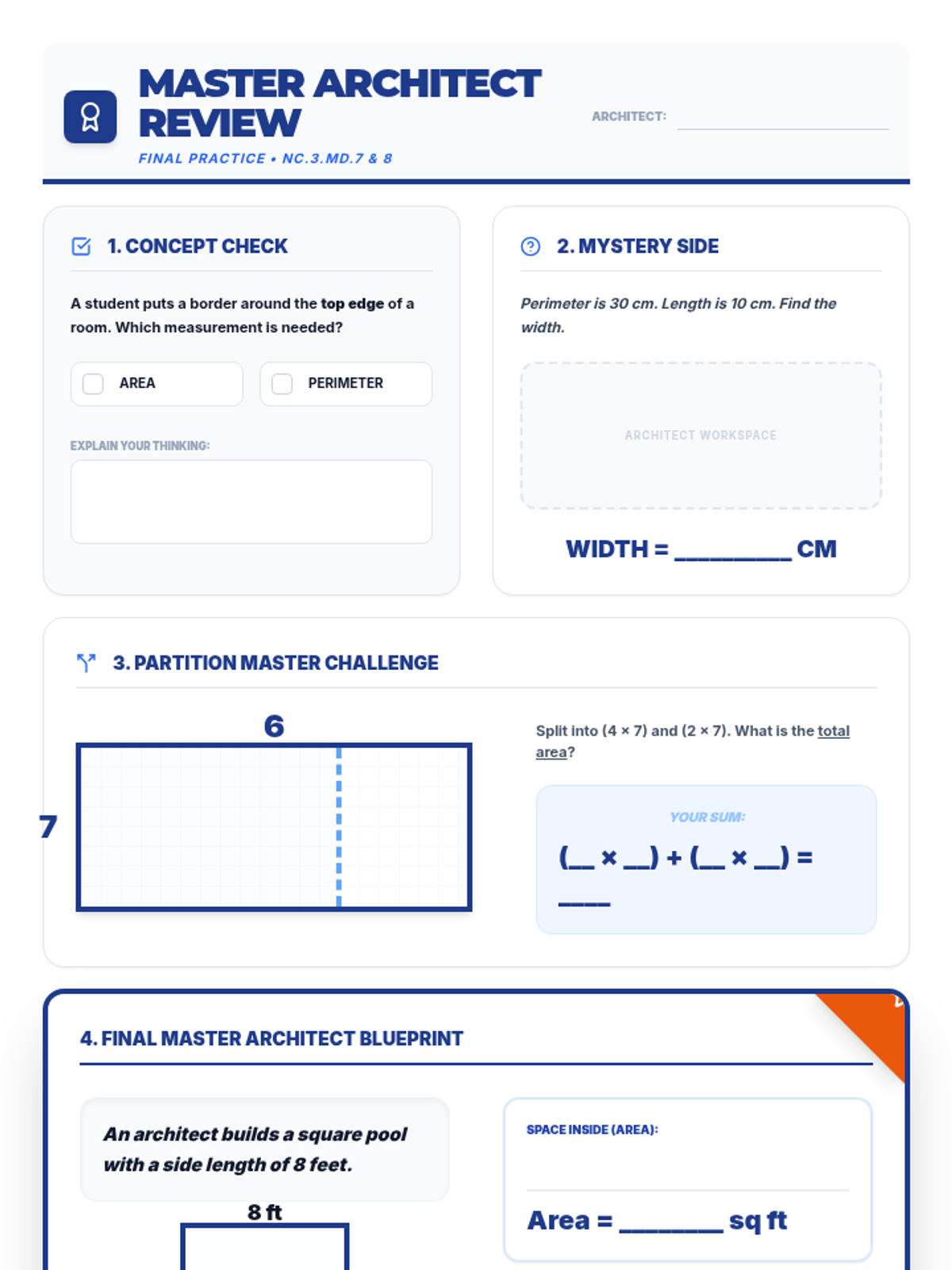
A comprehensive review unit focusing on Grade 3 MCAS standards for Area, Perimeter, and Geometry. This lesson includes practice worksheets with built-in strategy organizers to help students master common test-prep challenges.
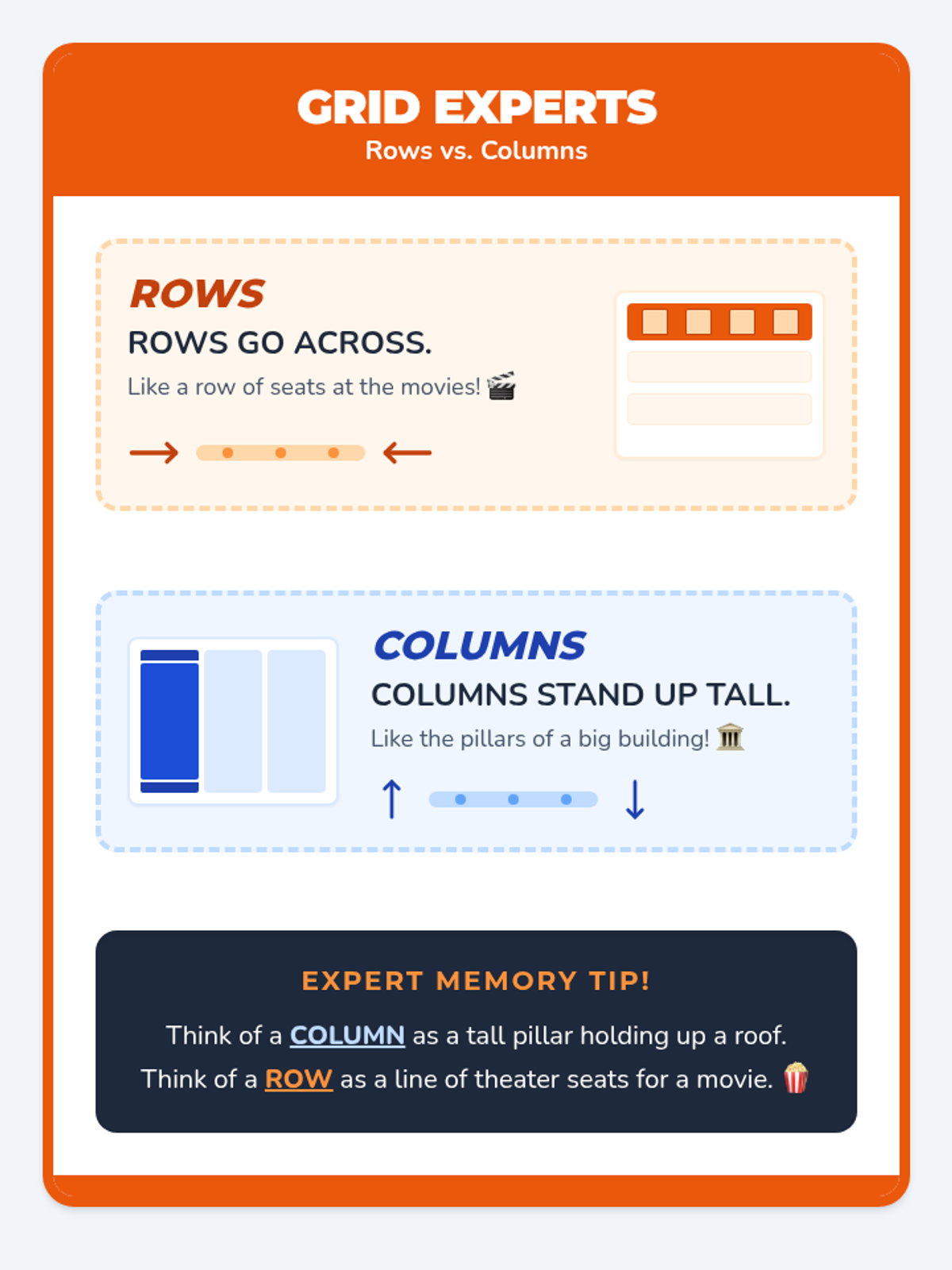
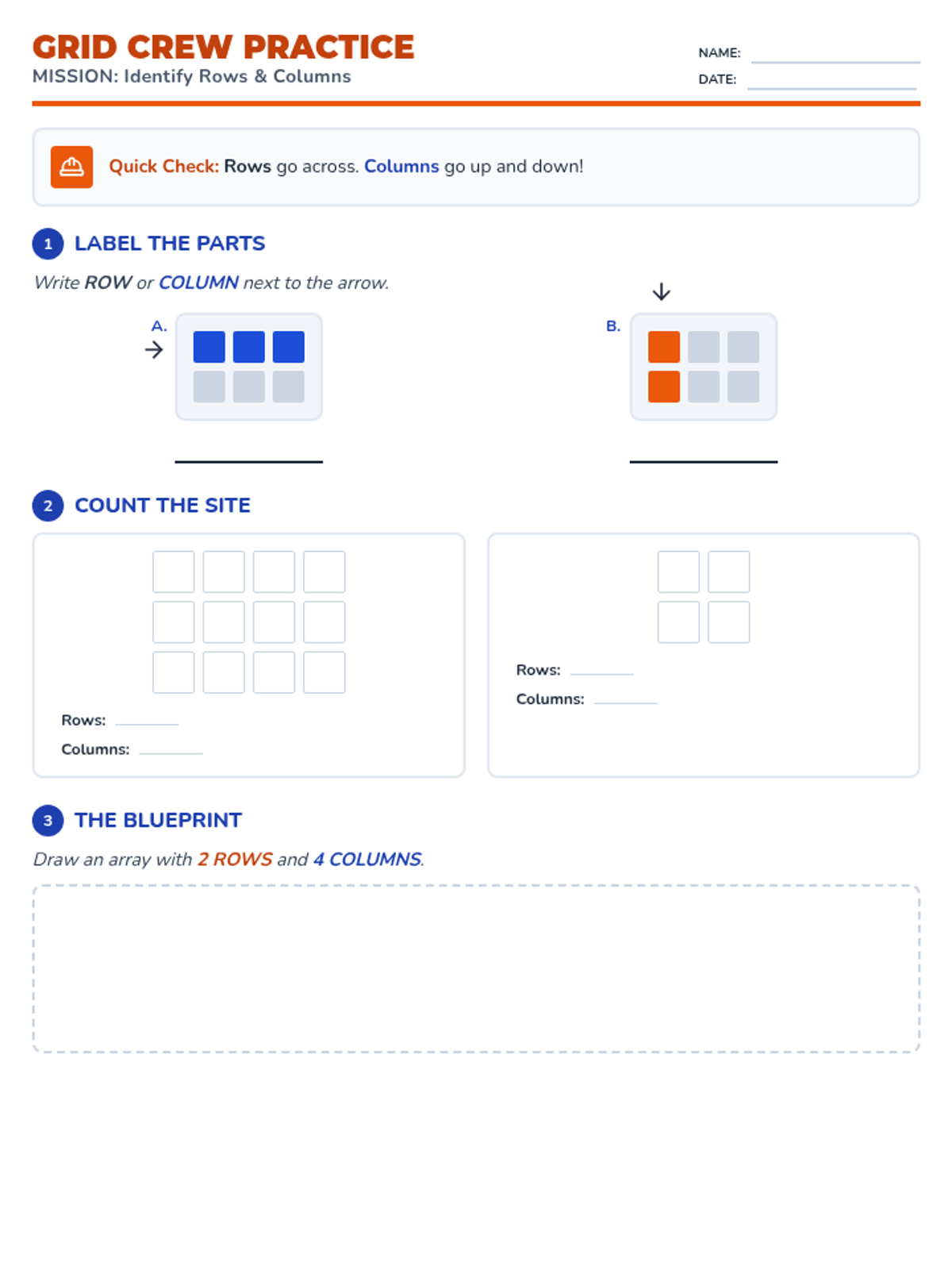
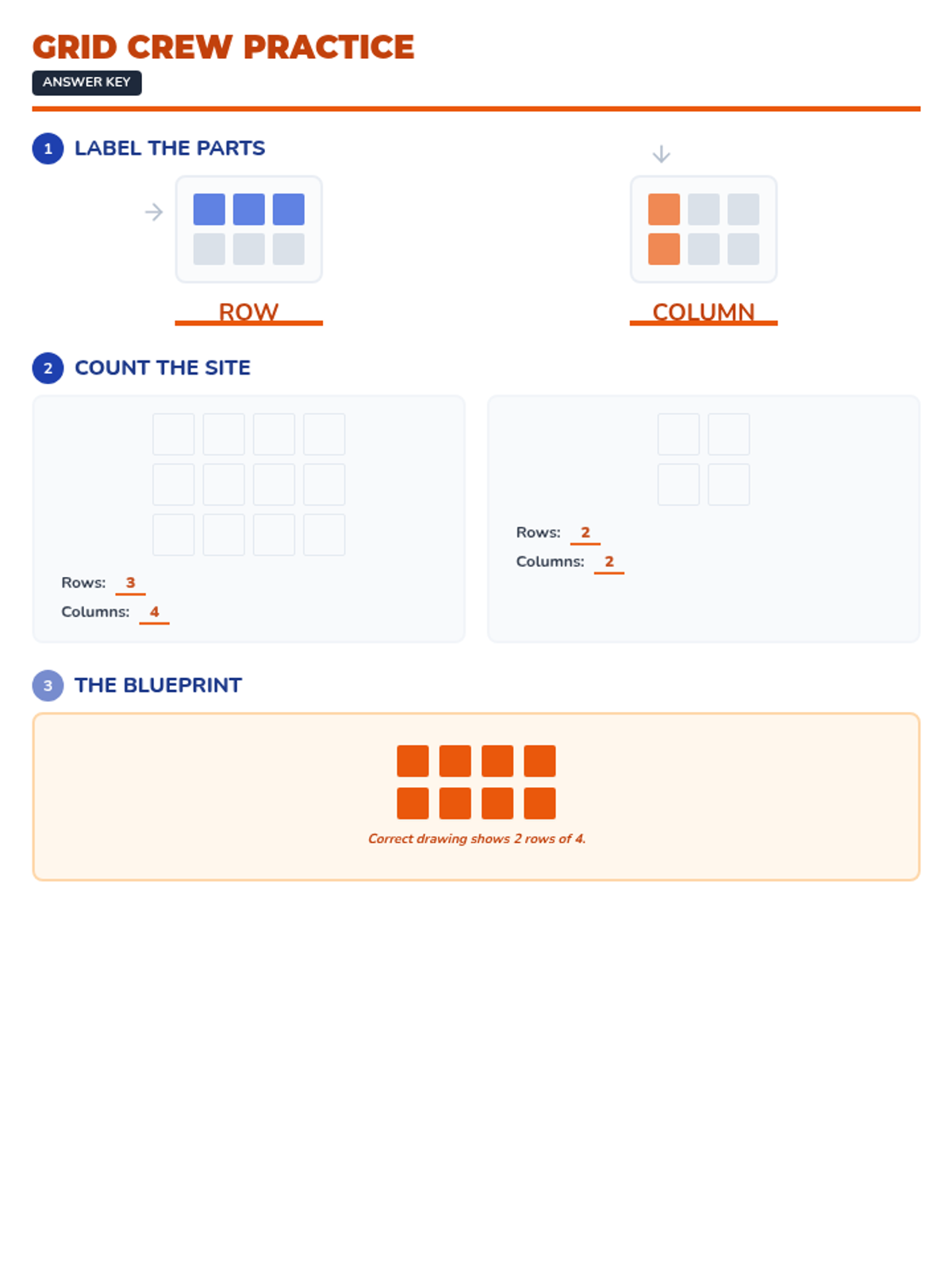
A fundamental geometry and measurement lesson focused on distinguishing between horizontal rows and vertical columns using architectural mnemonics. Students will learn to identify and count components of a grid or array.
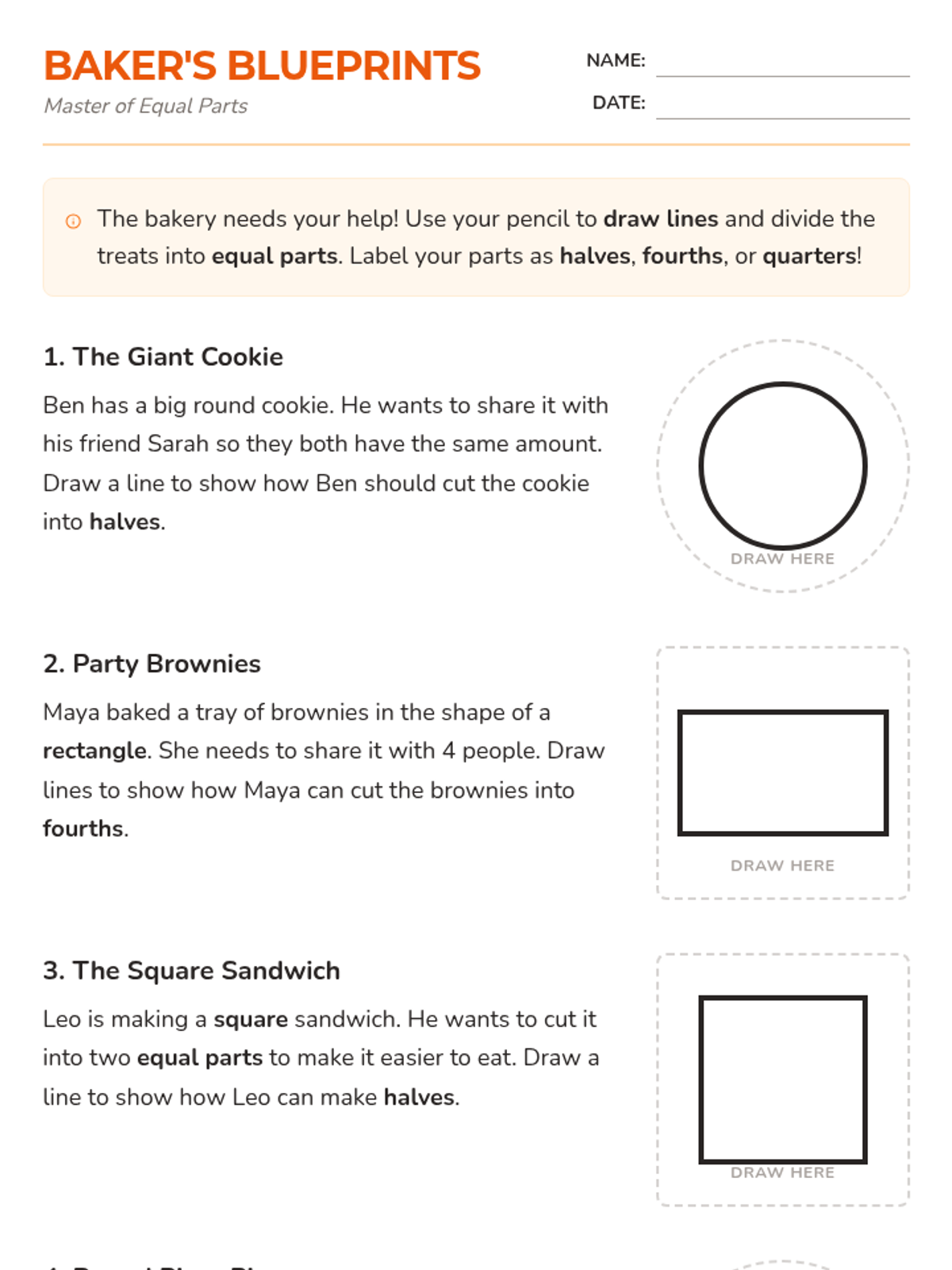
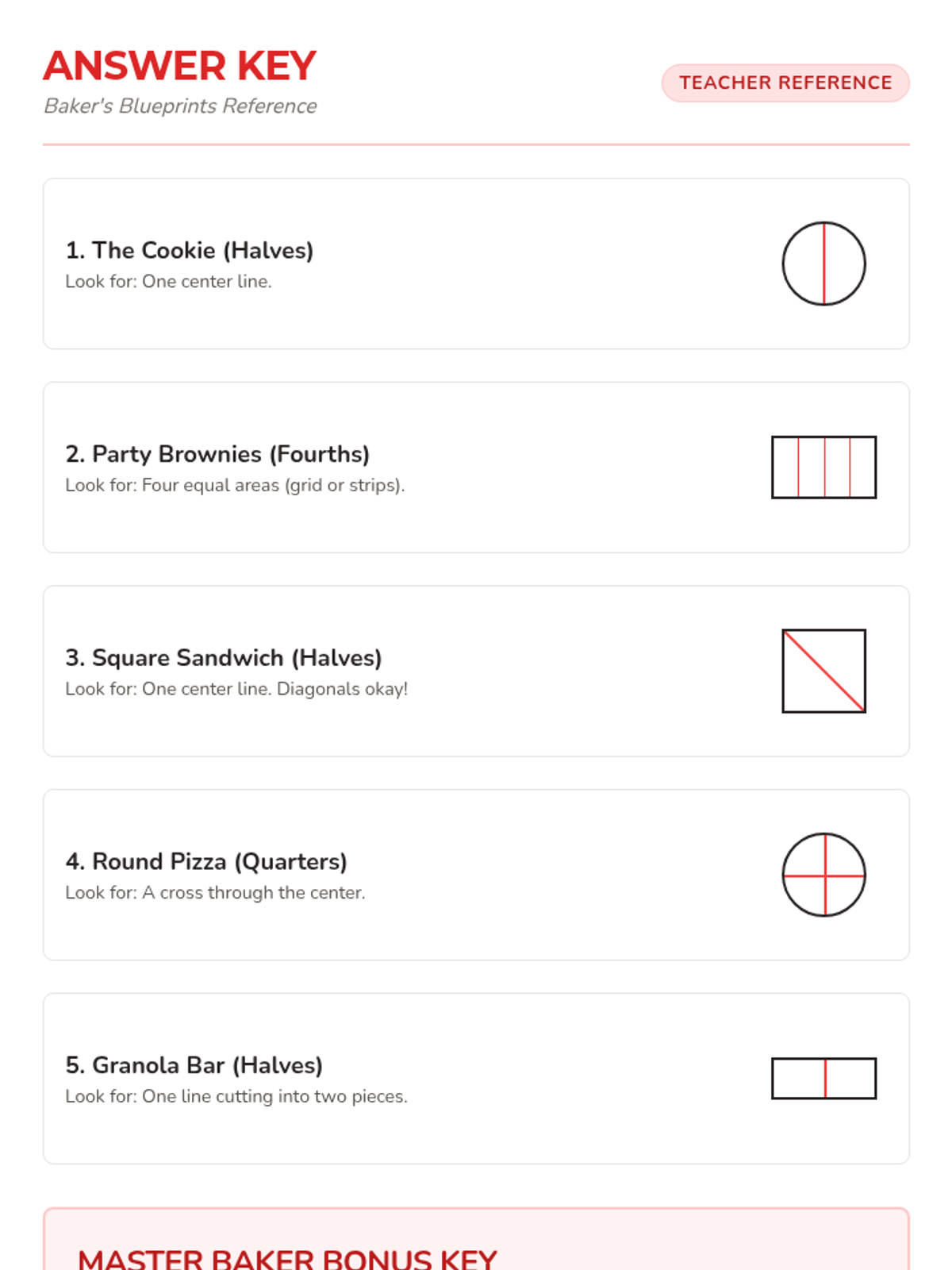
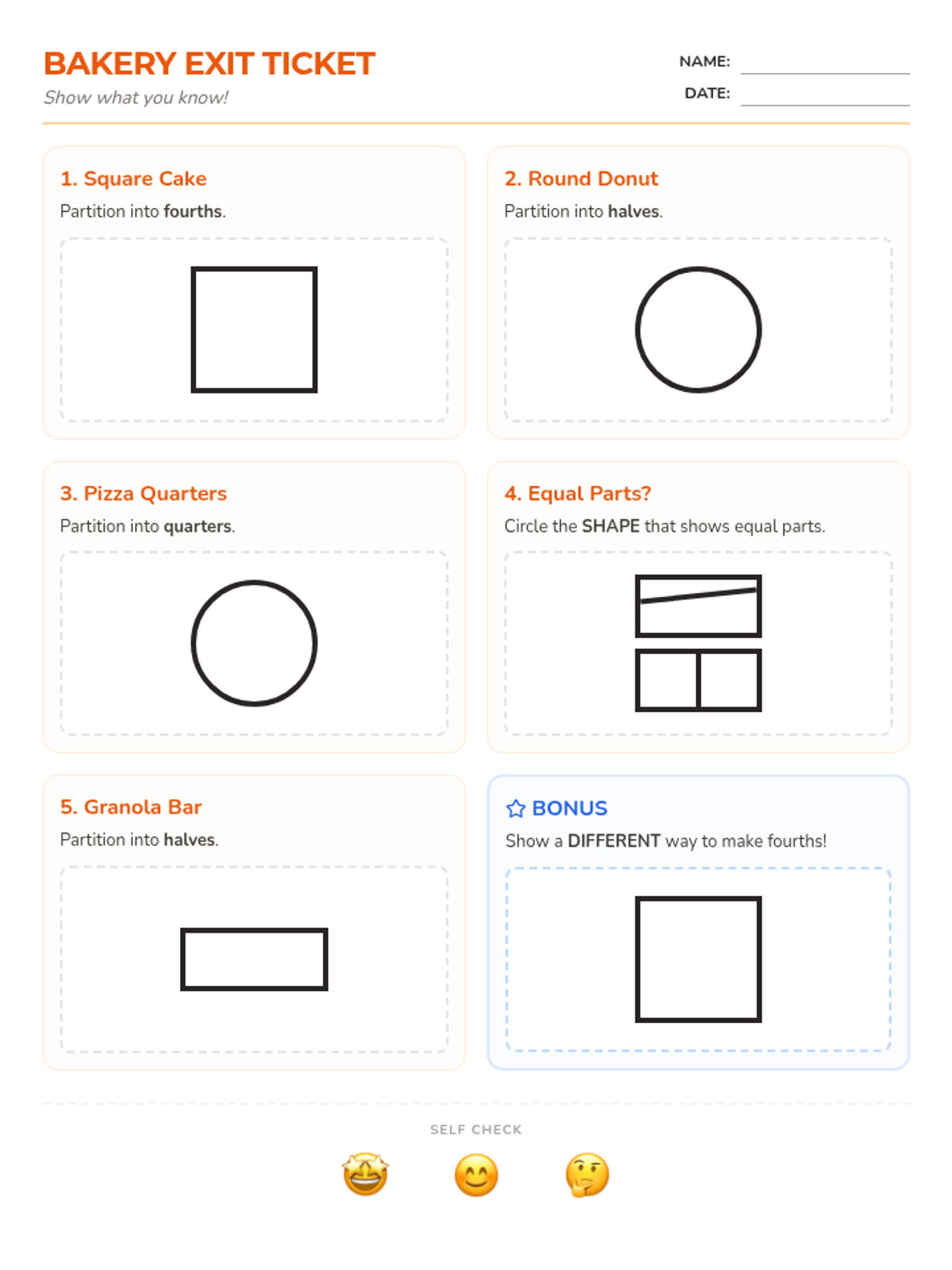
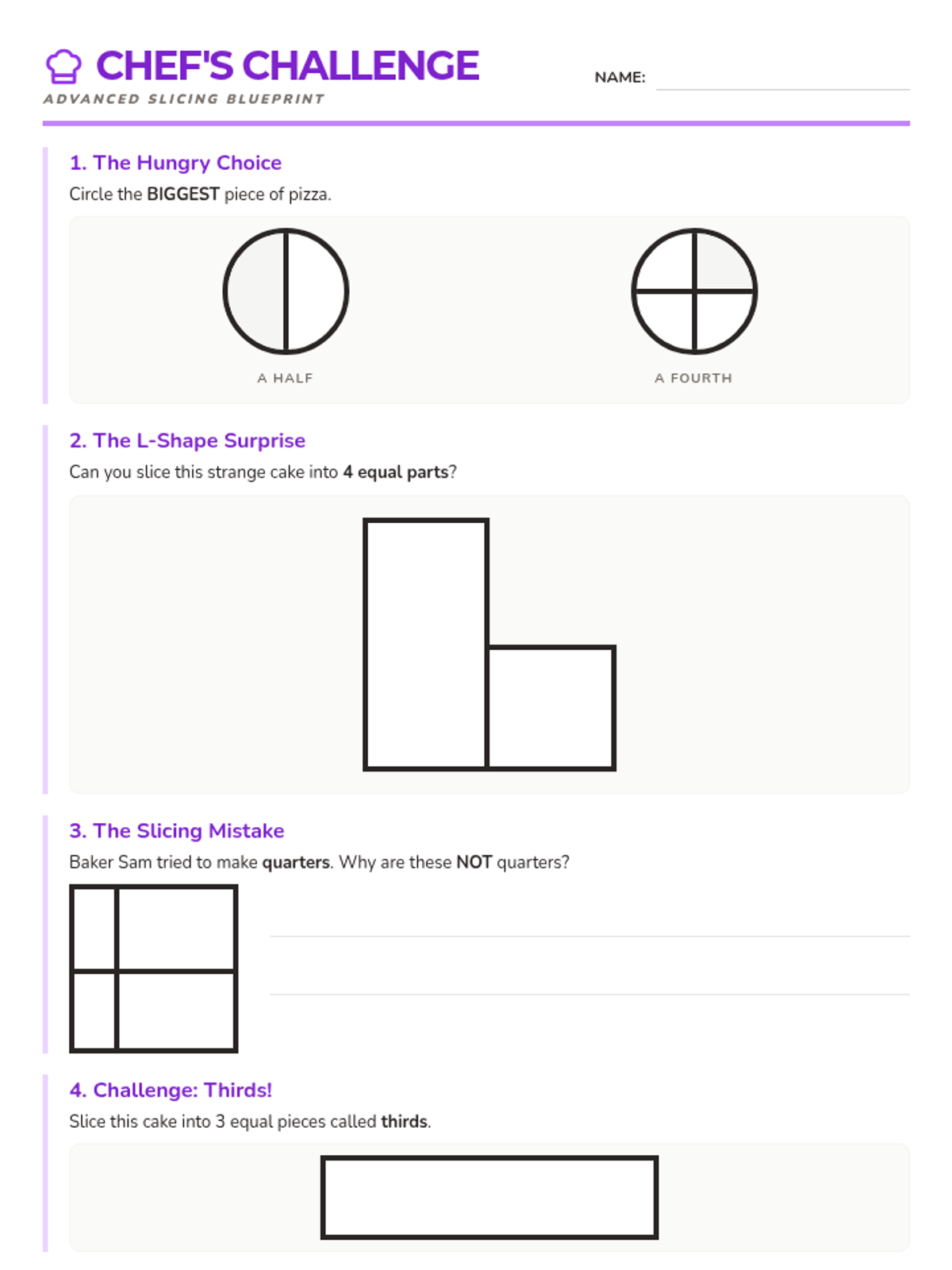
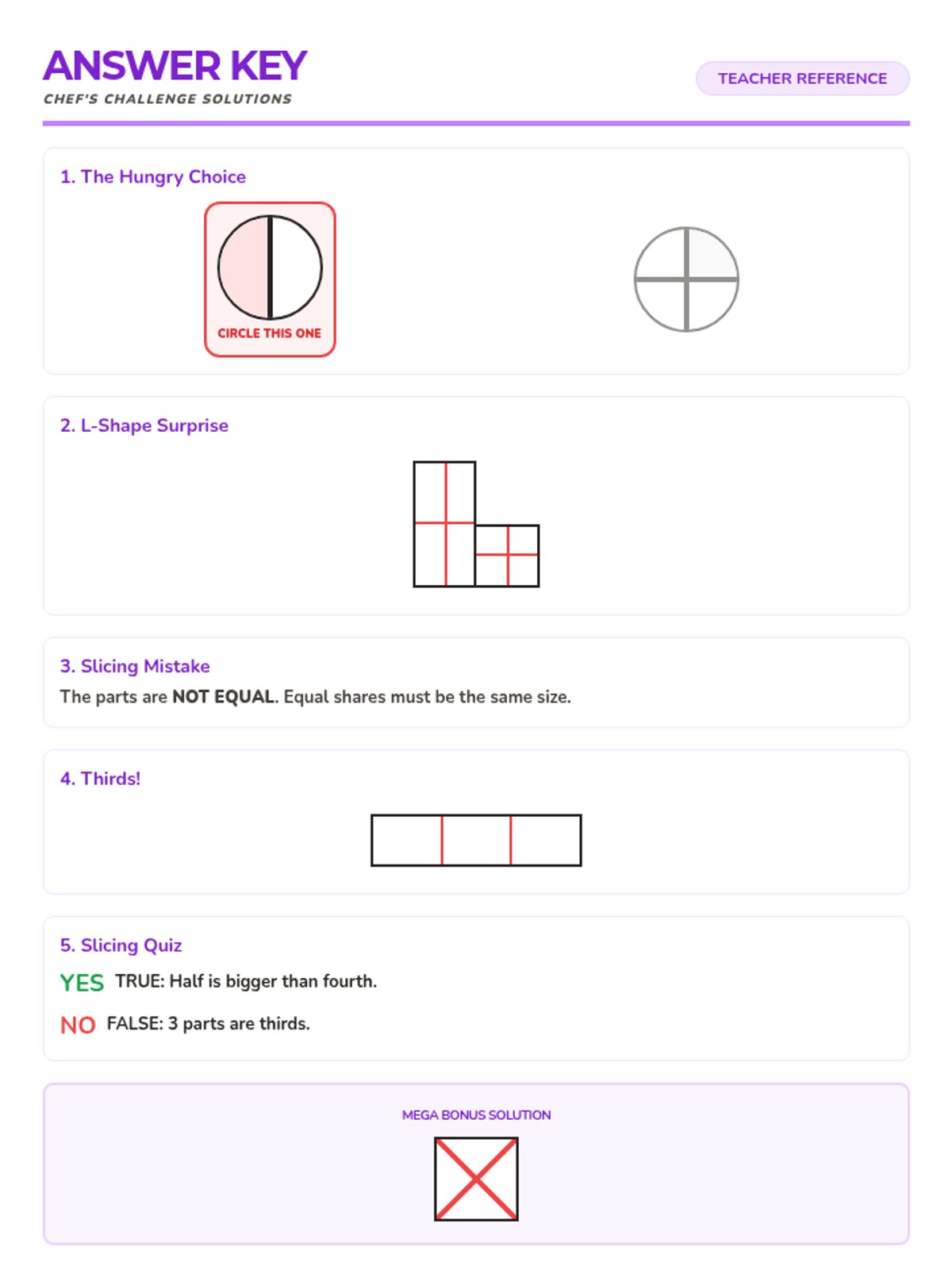
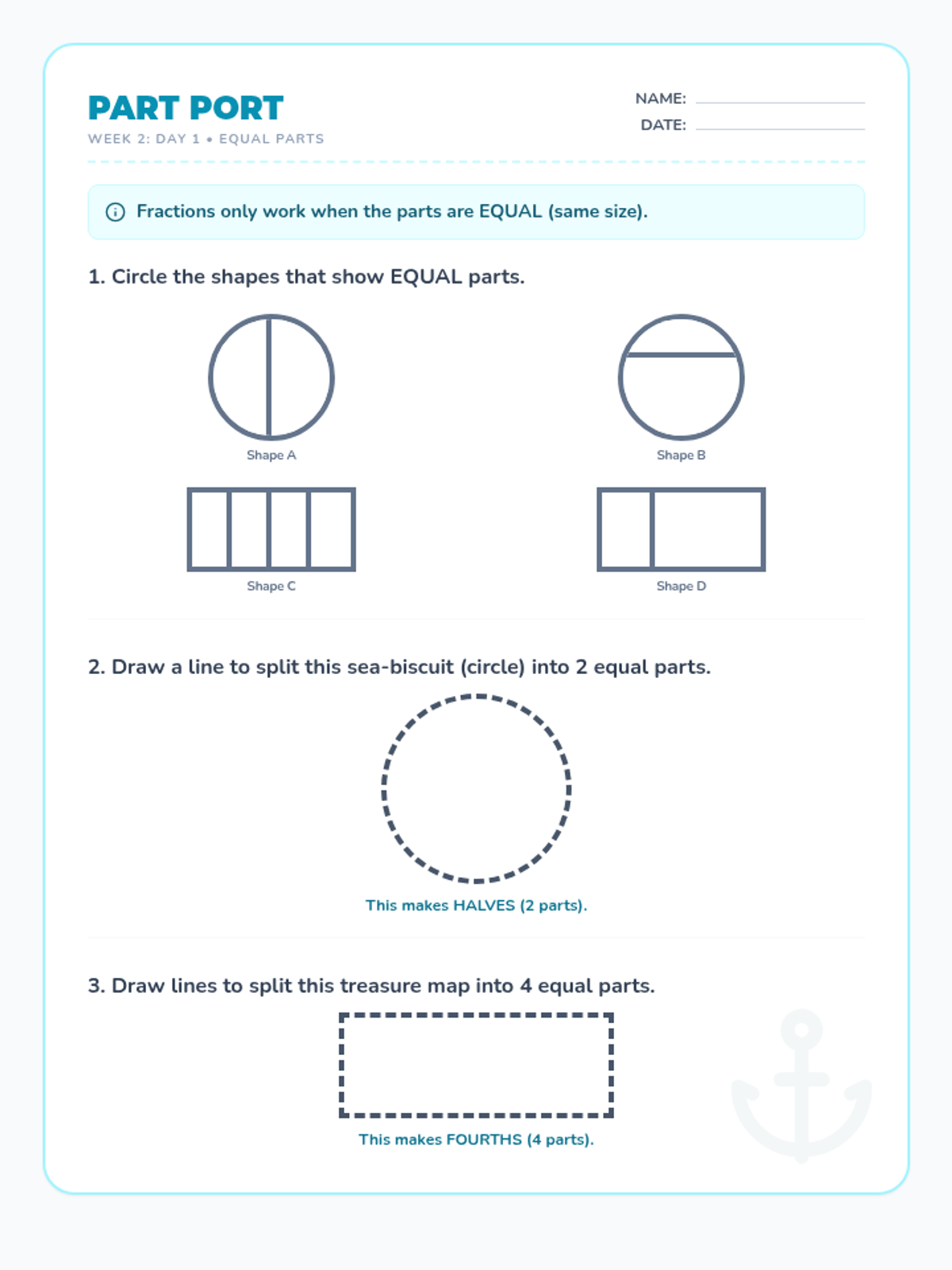
A first-grade math lesson focused on partitioning circles, squares, and rectangles into equal shares (halves and fourths) through real-world word problems.
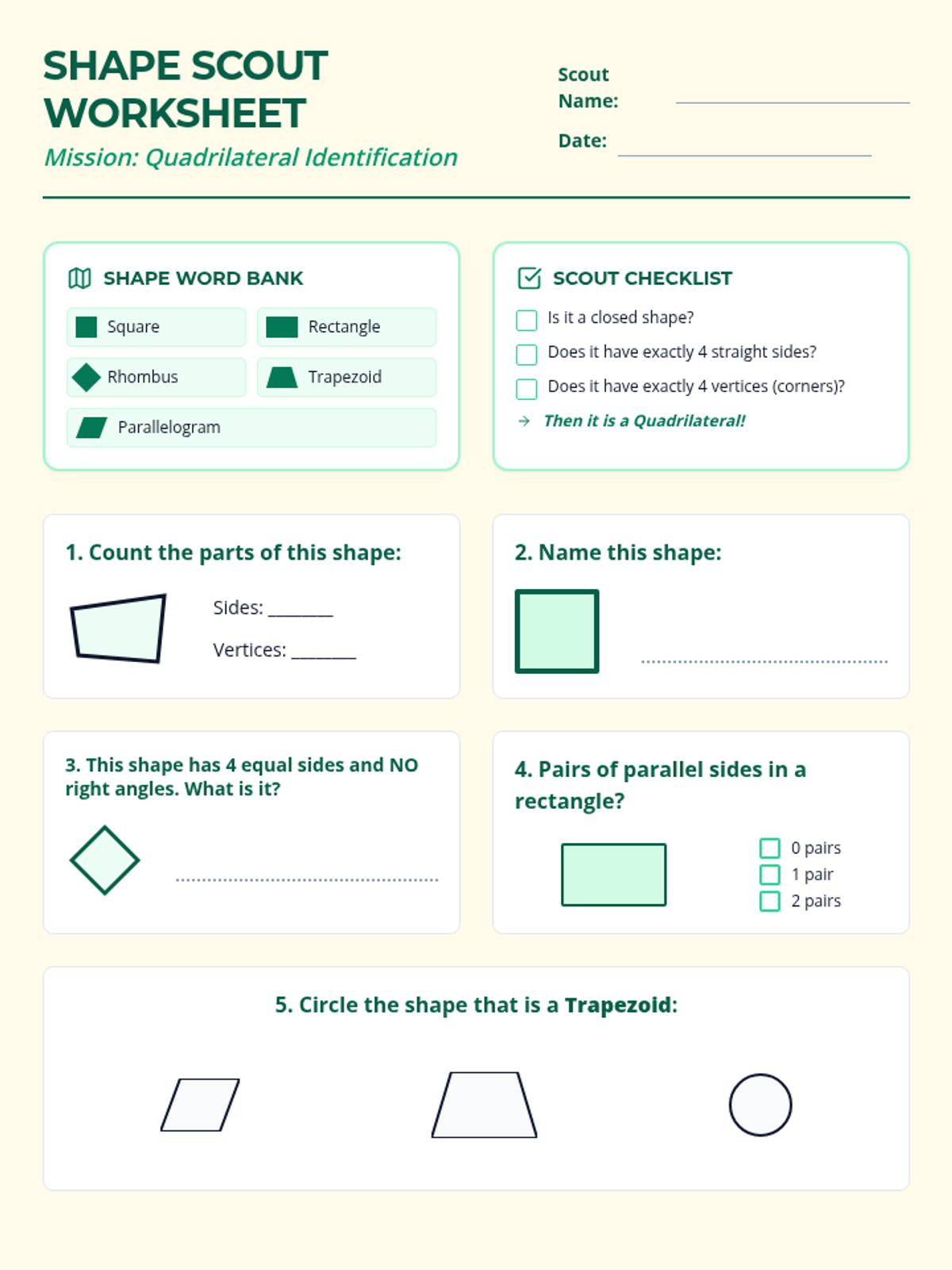
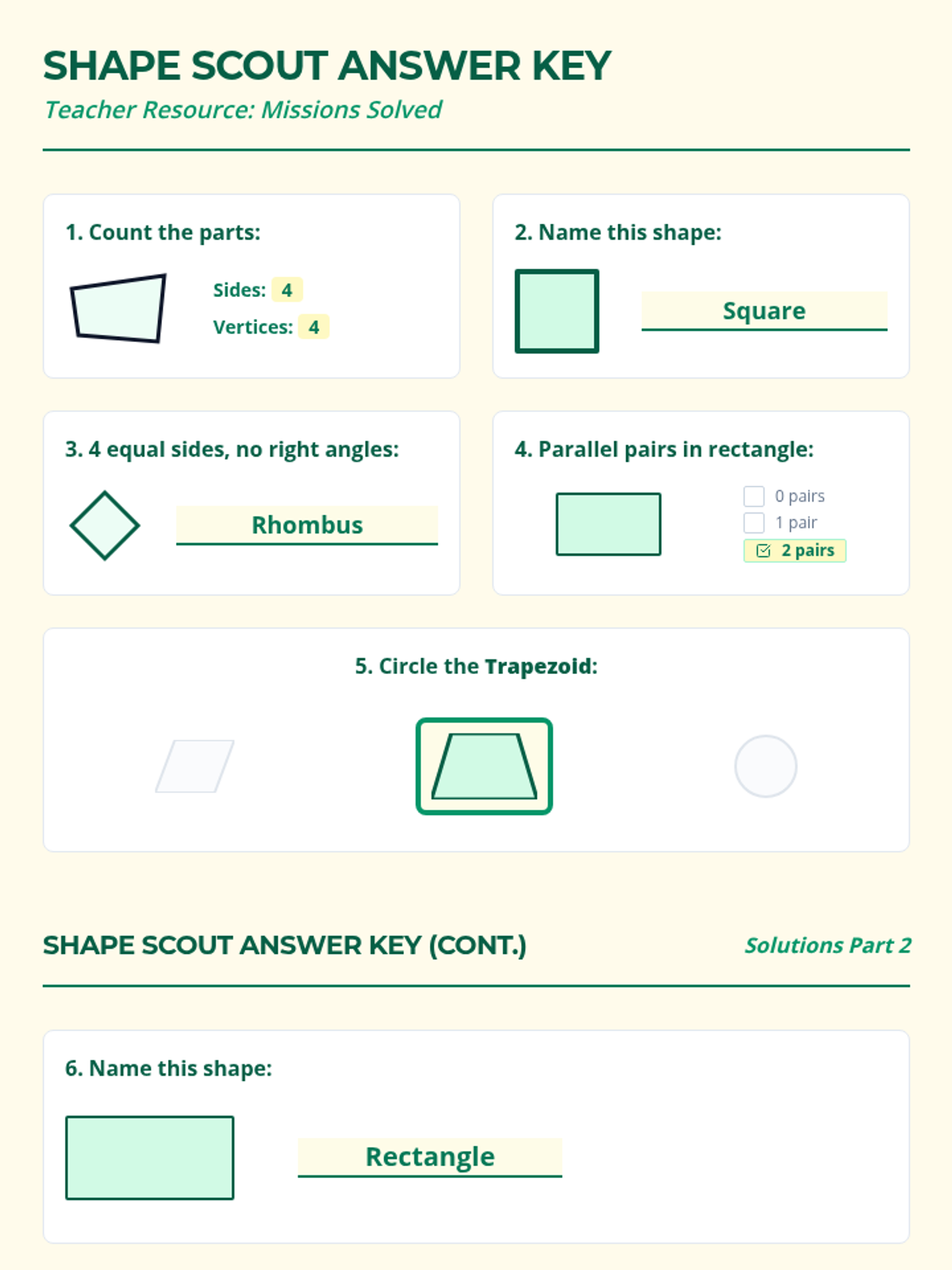
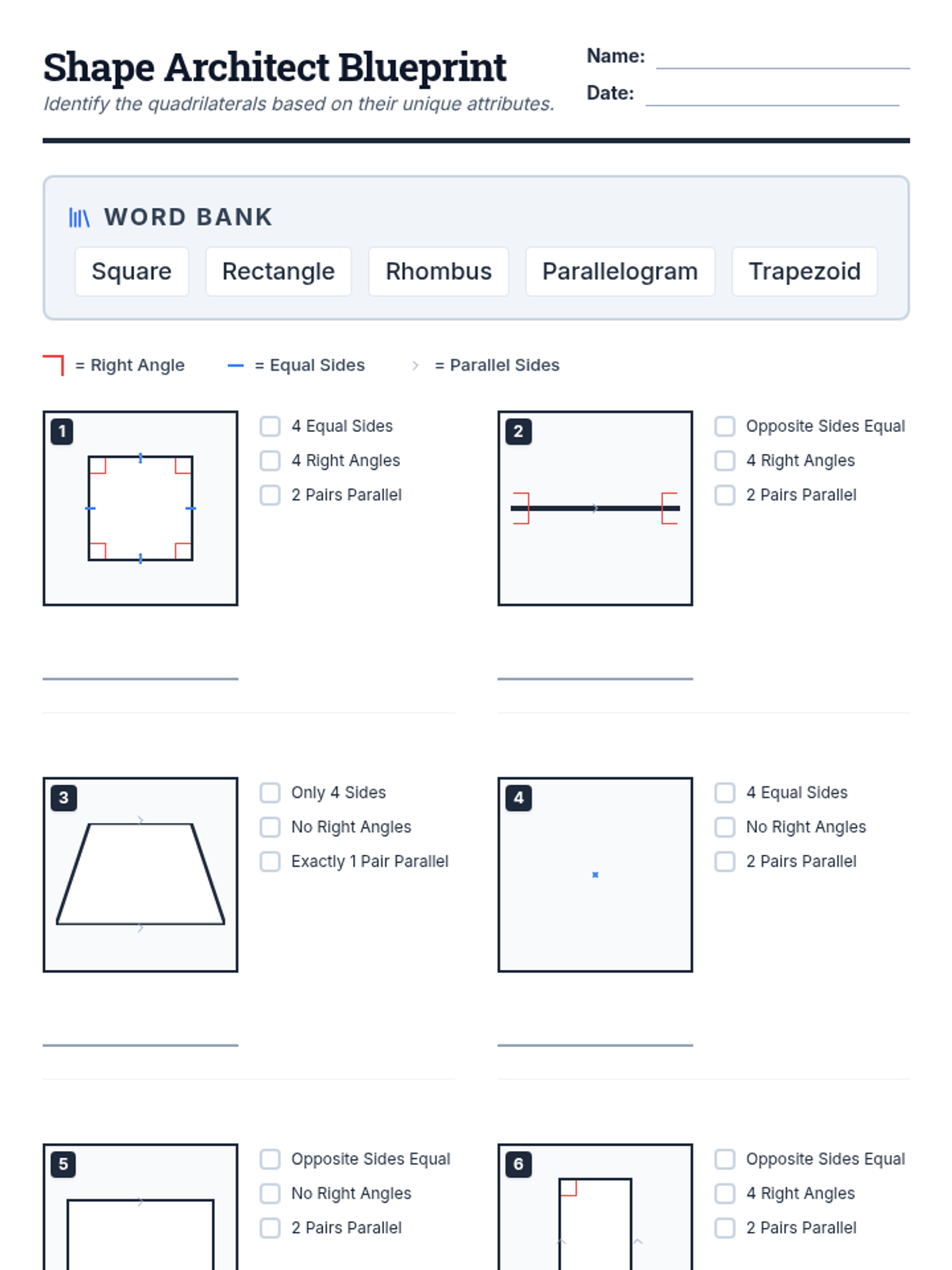
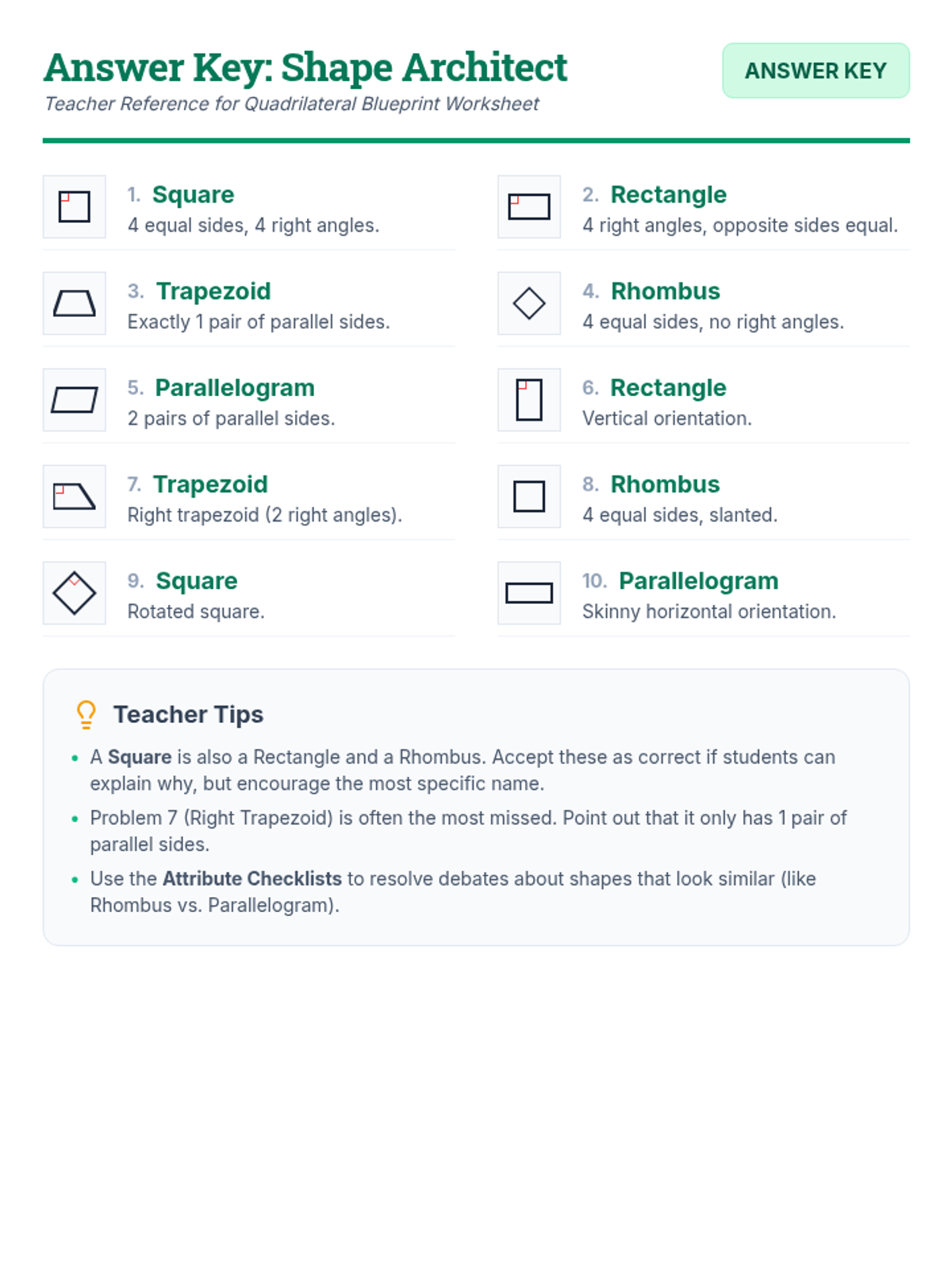
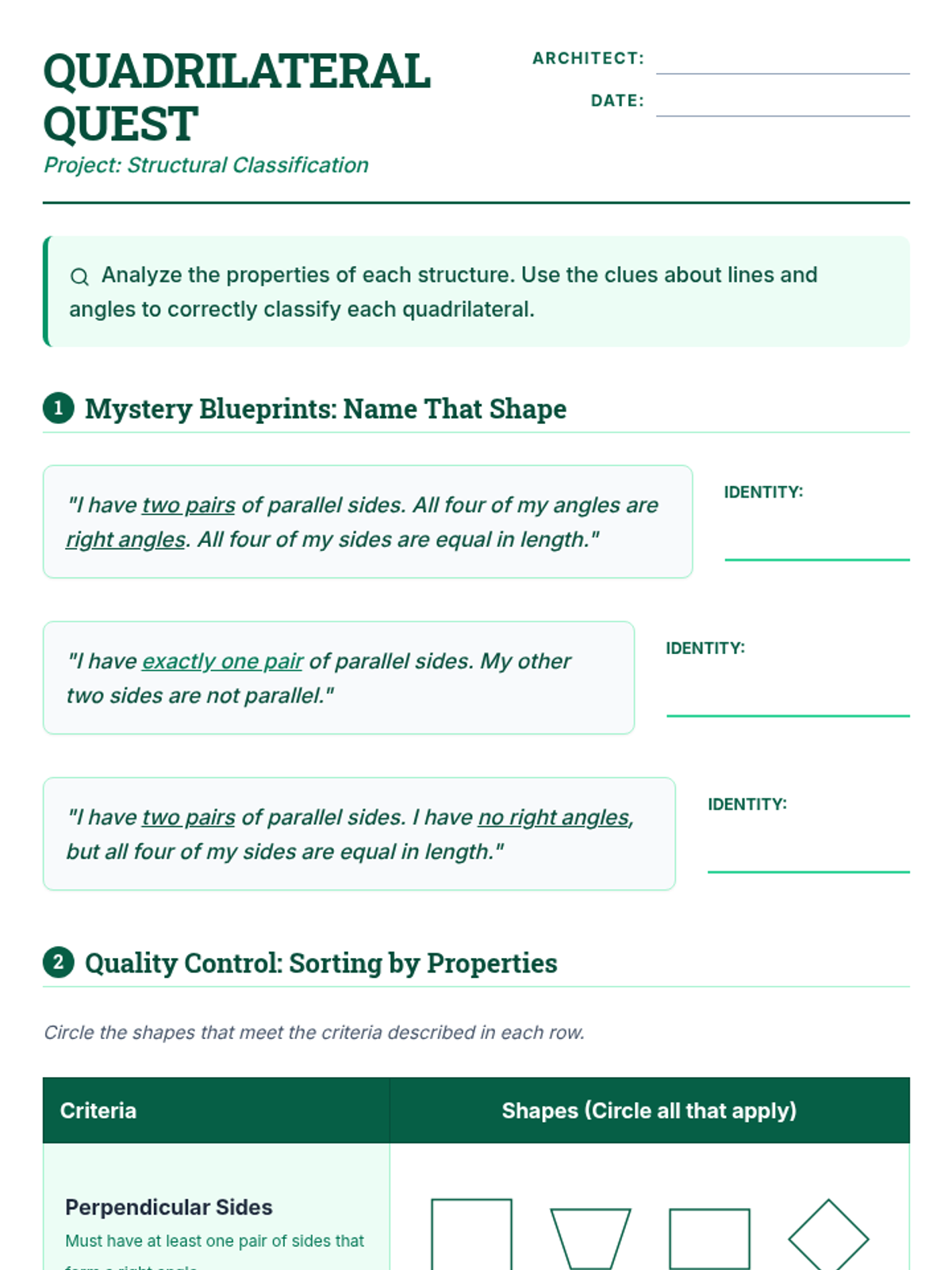
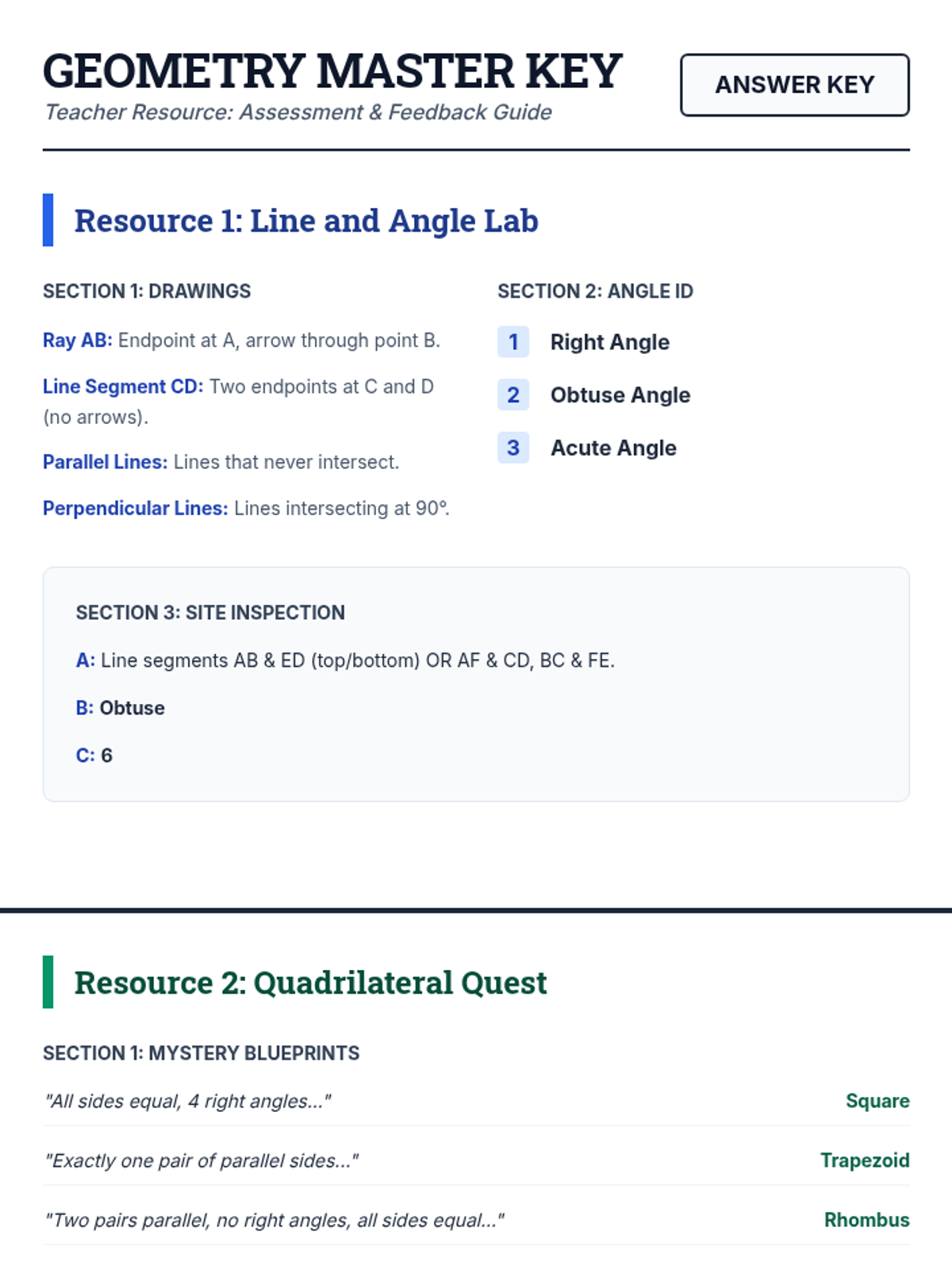
A geometry lesson where students become 'Shape Architects', identifying quadrilaterals by their unique attributes like angles and side lengths. Students use color-coded visual cues and checklists to classify squares, rectangles, rhombuses, parallelograms, and trapezoids.
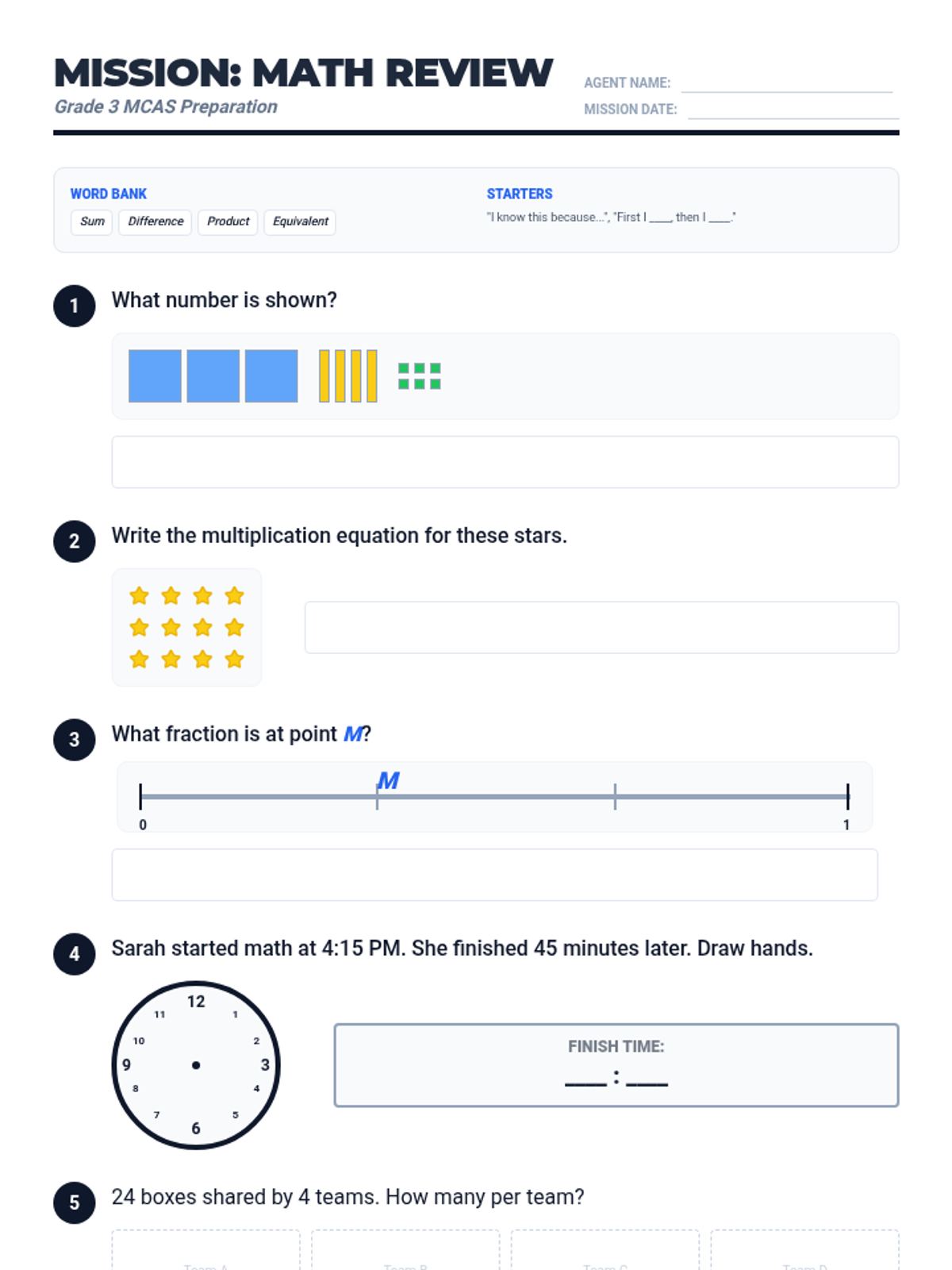
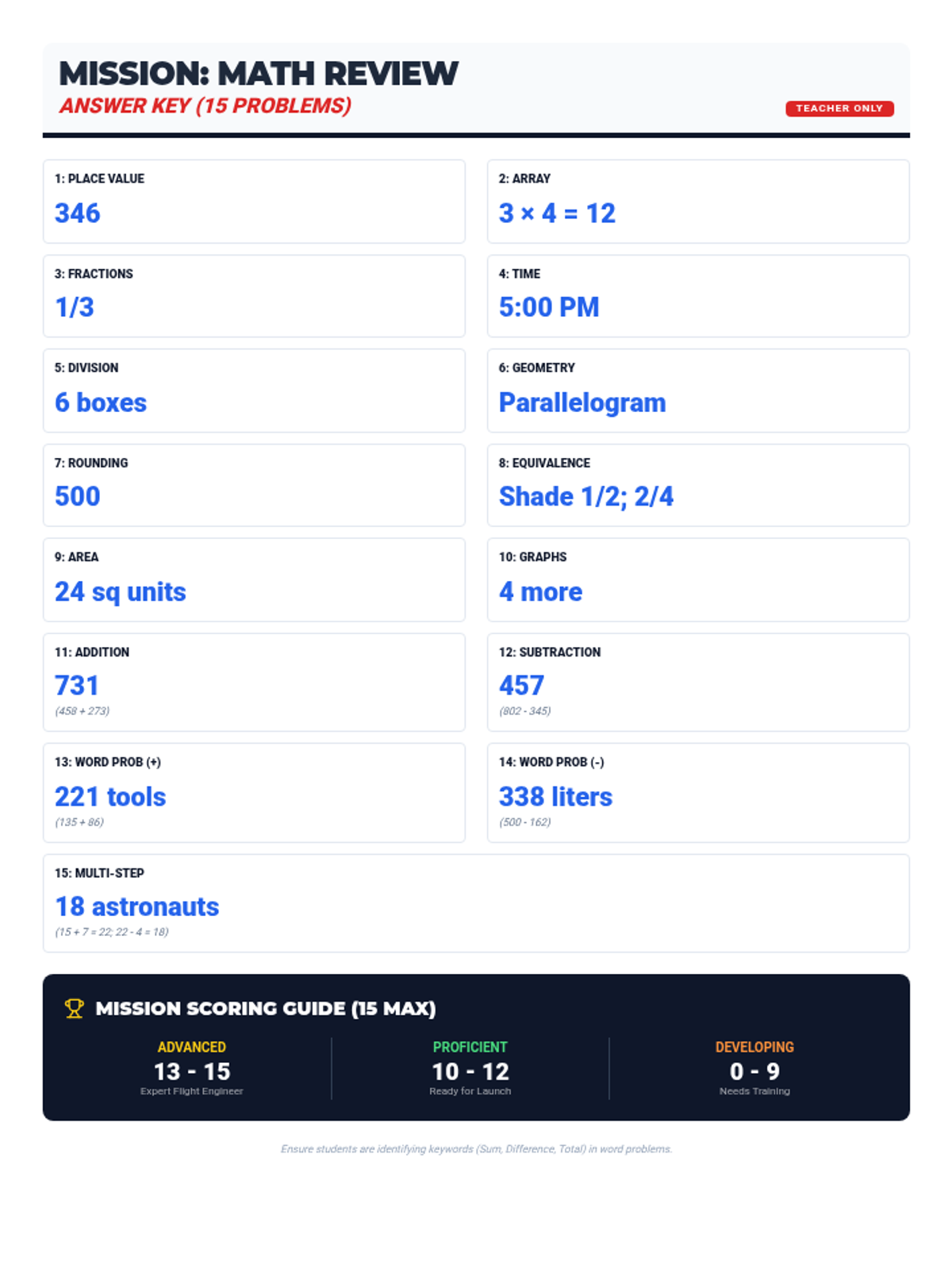
A comprehensive review session covering all 3rd-grade math domains to prepare students for the MCAS. This lesson provides visual aids like base-ten blocks, number lines, and arrays to support problem-solving strategies.
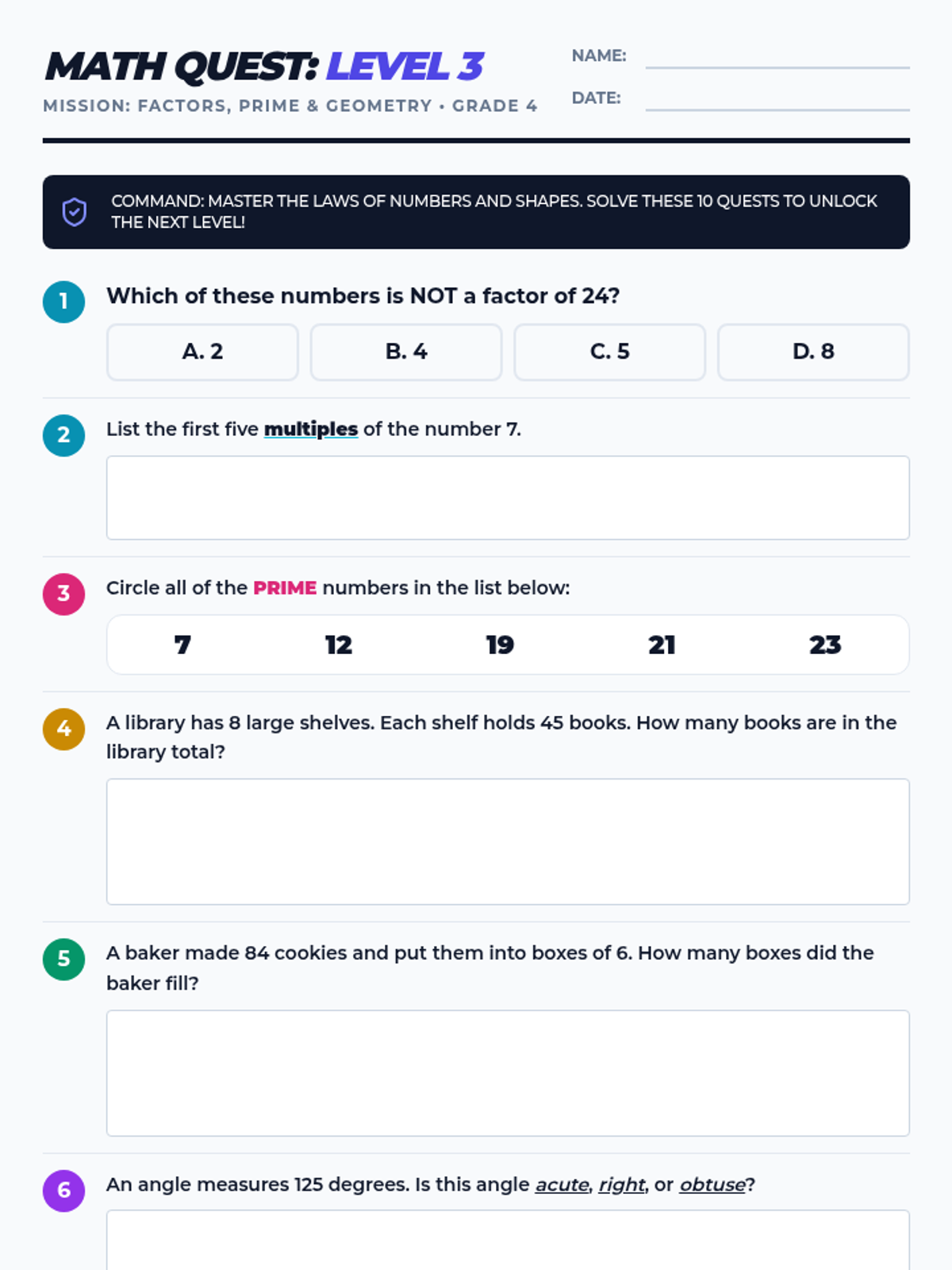
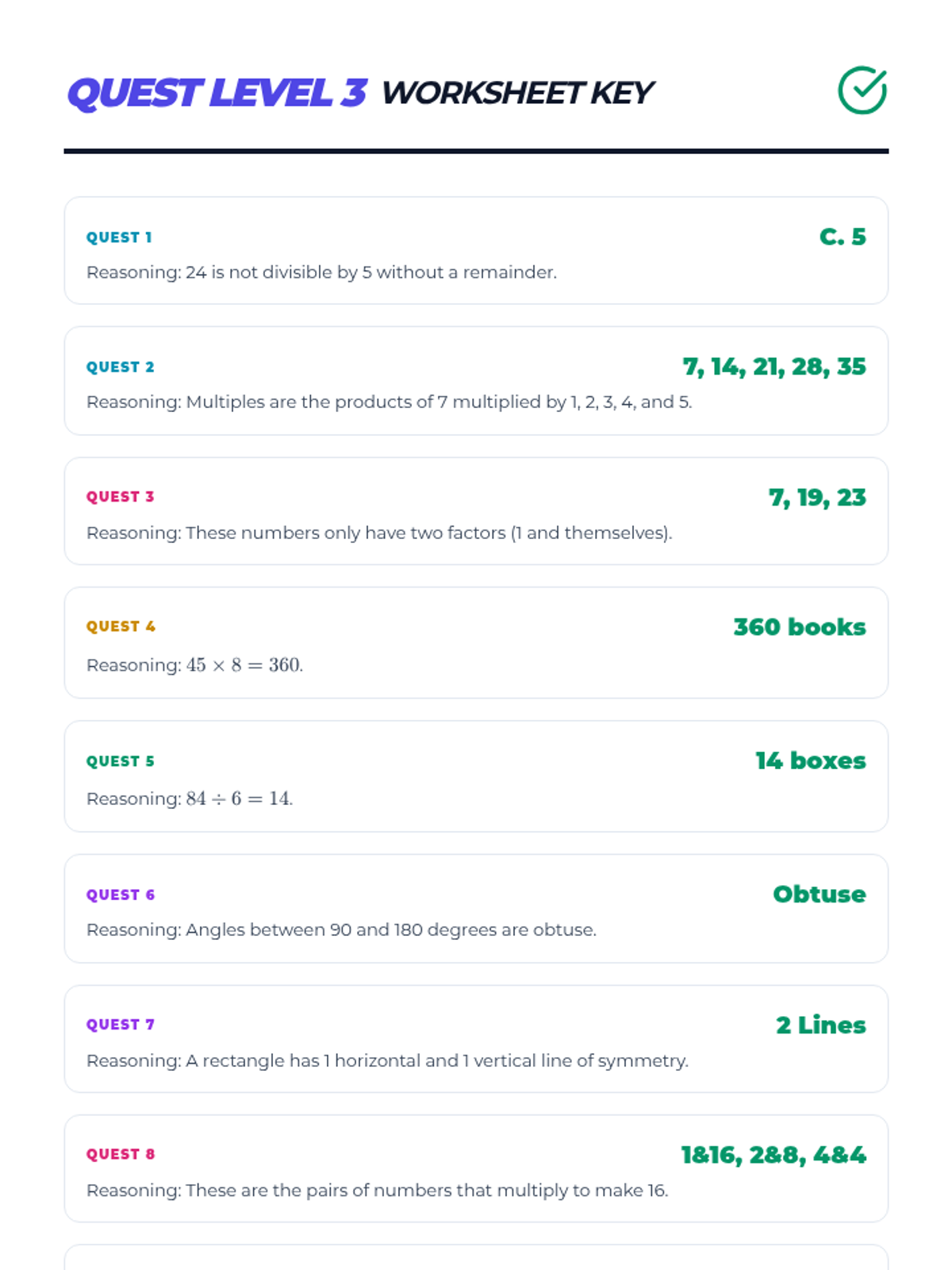
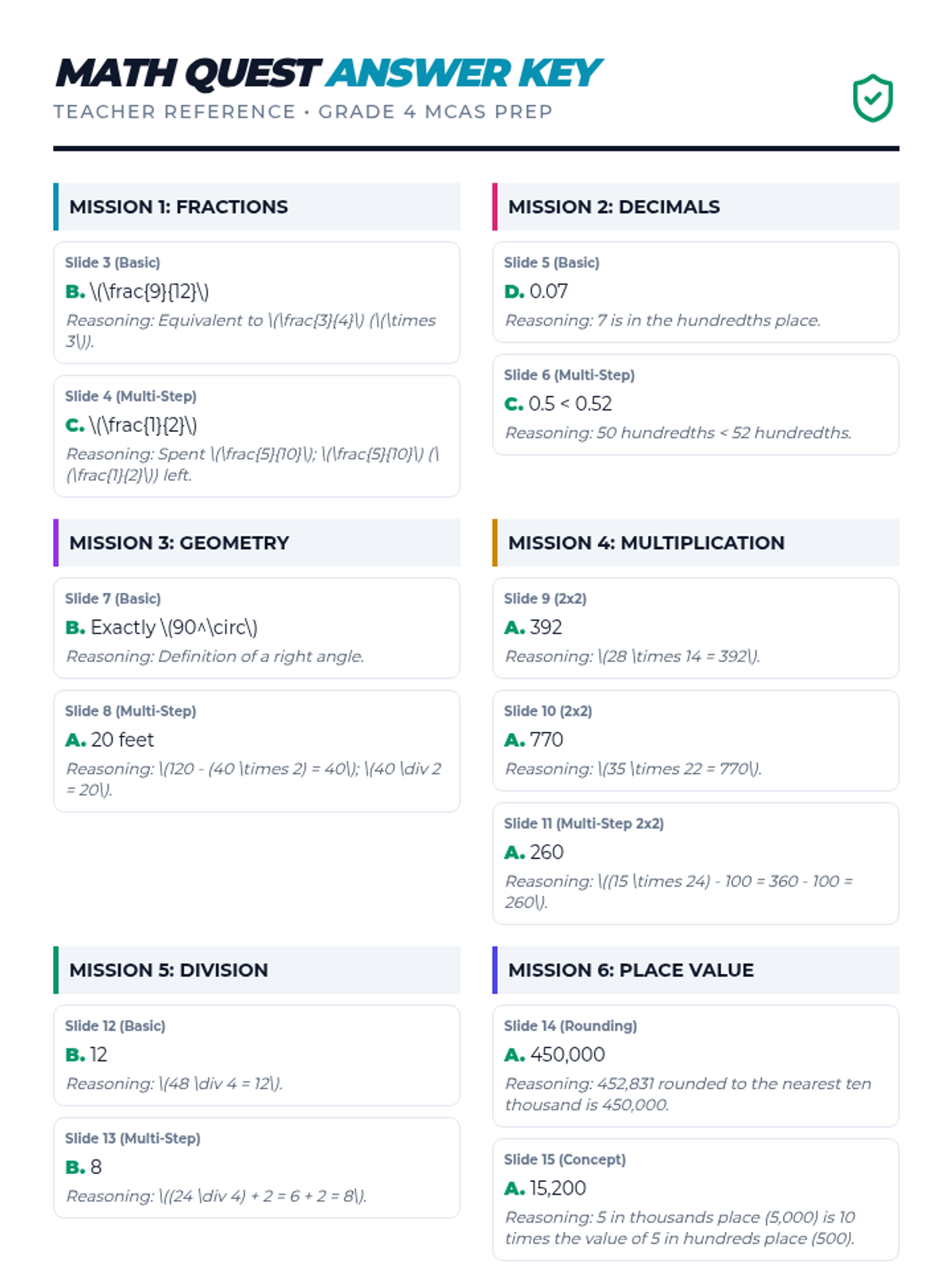
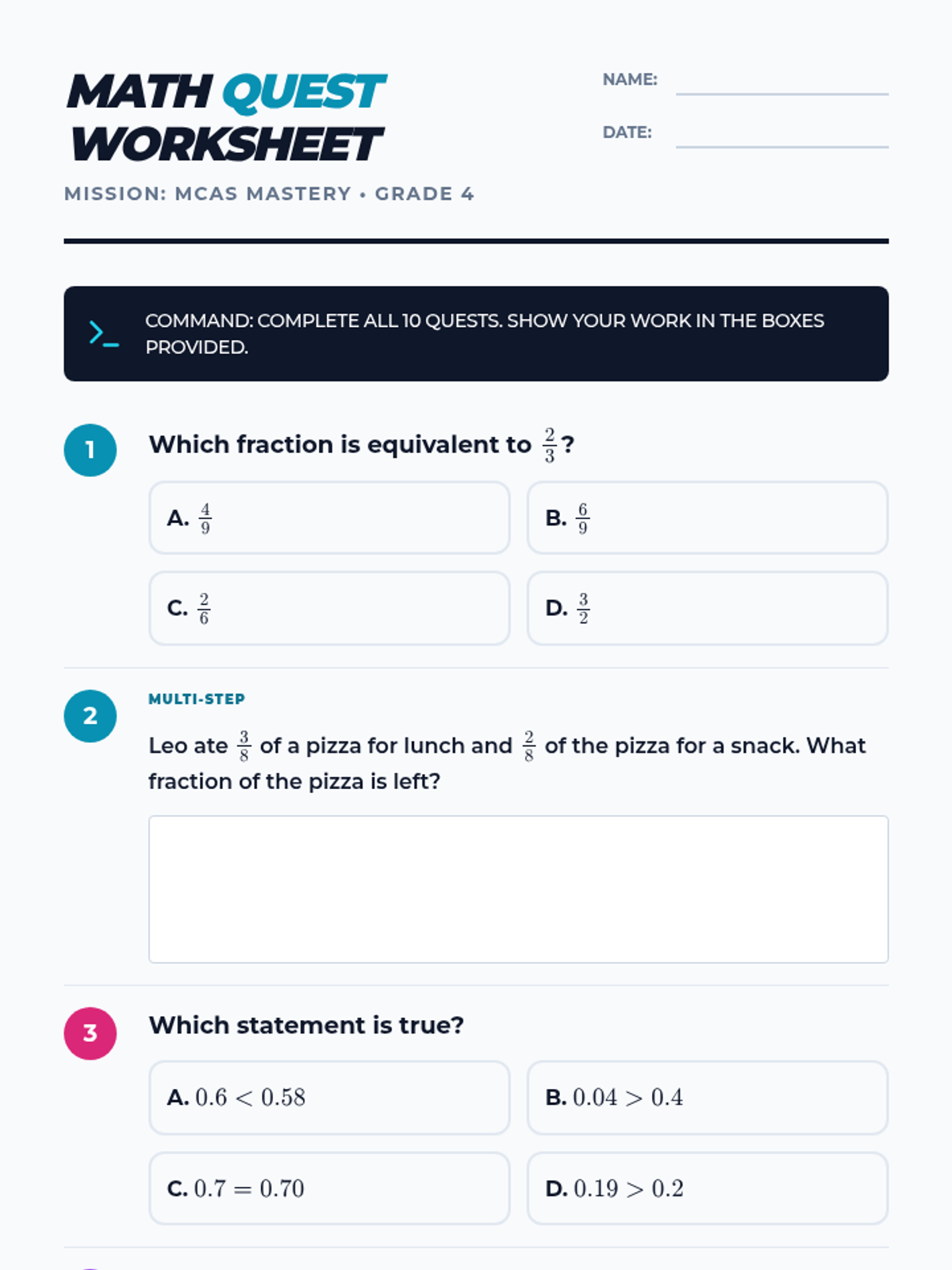
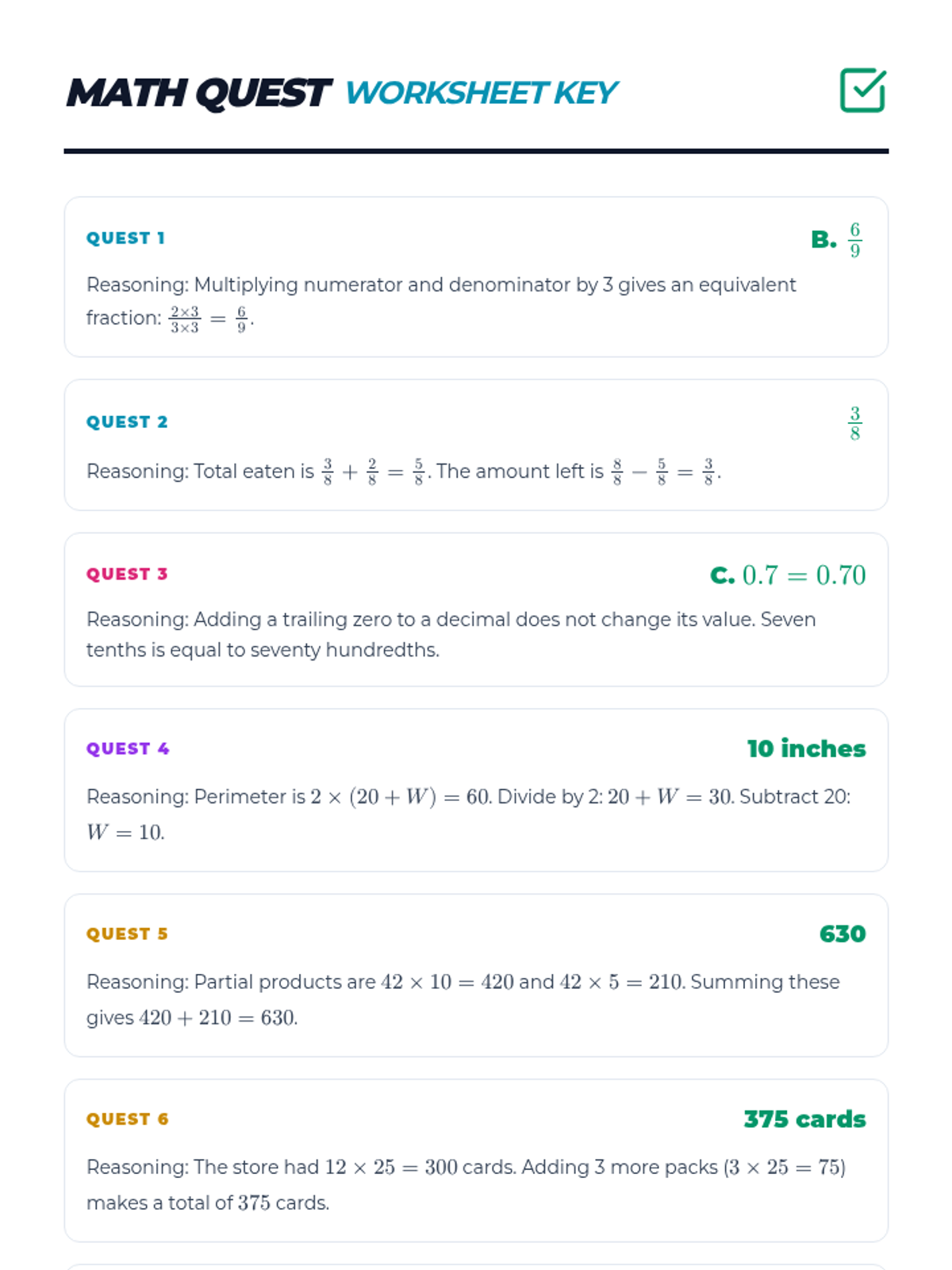
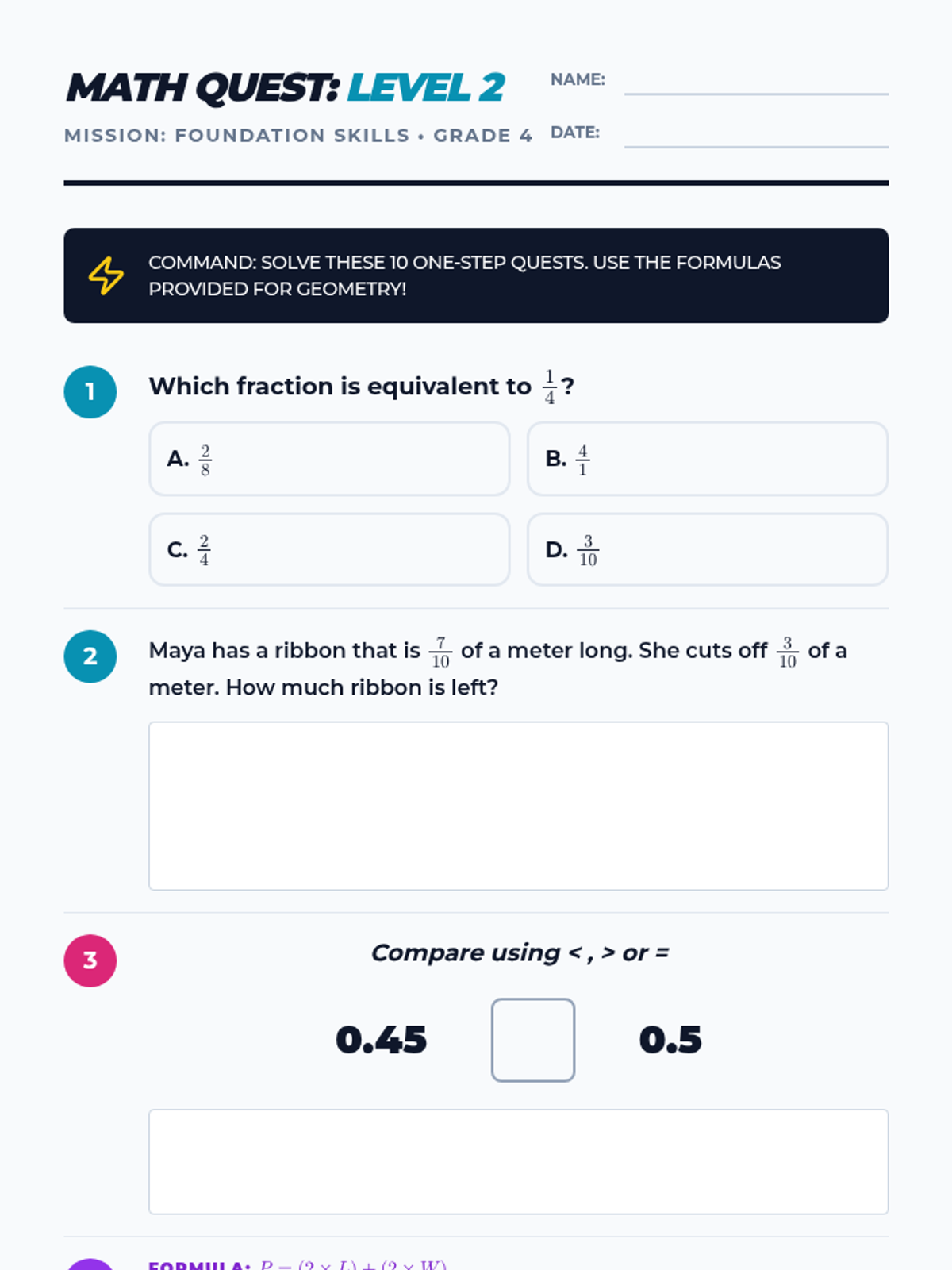
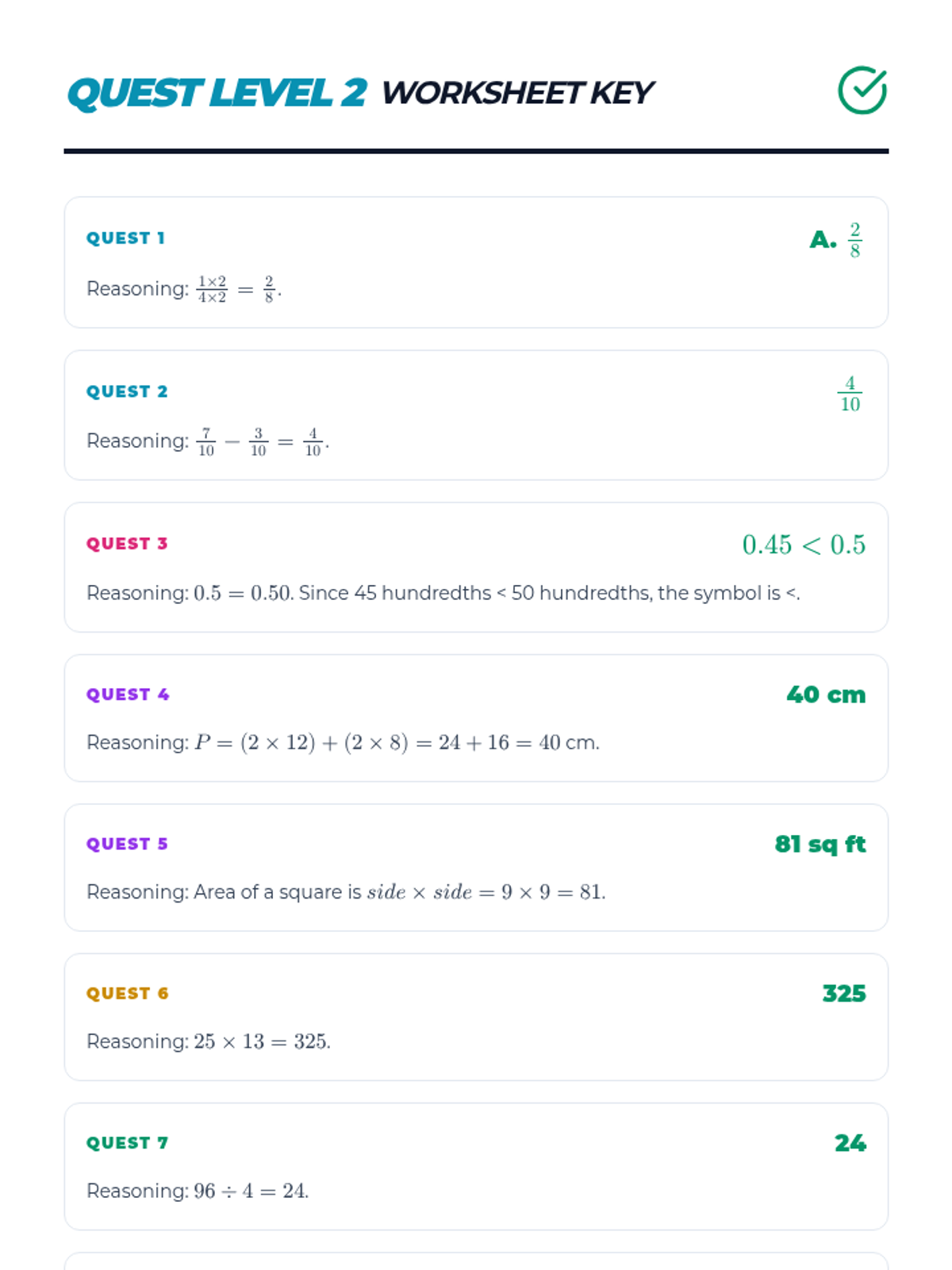
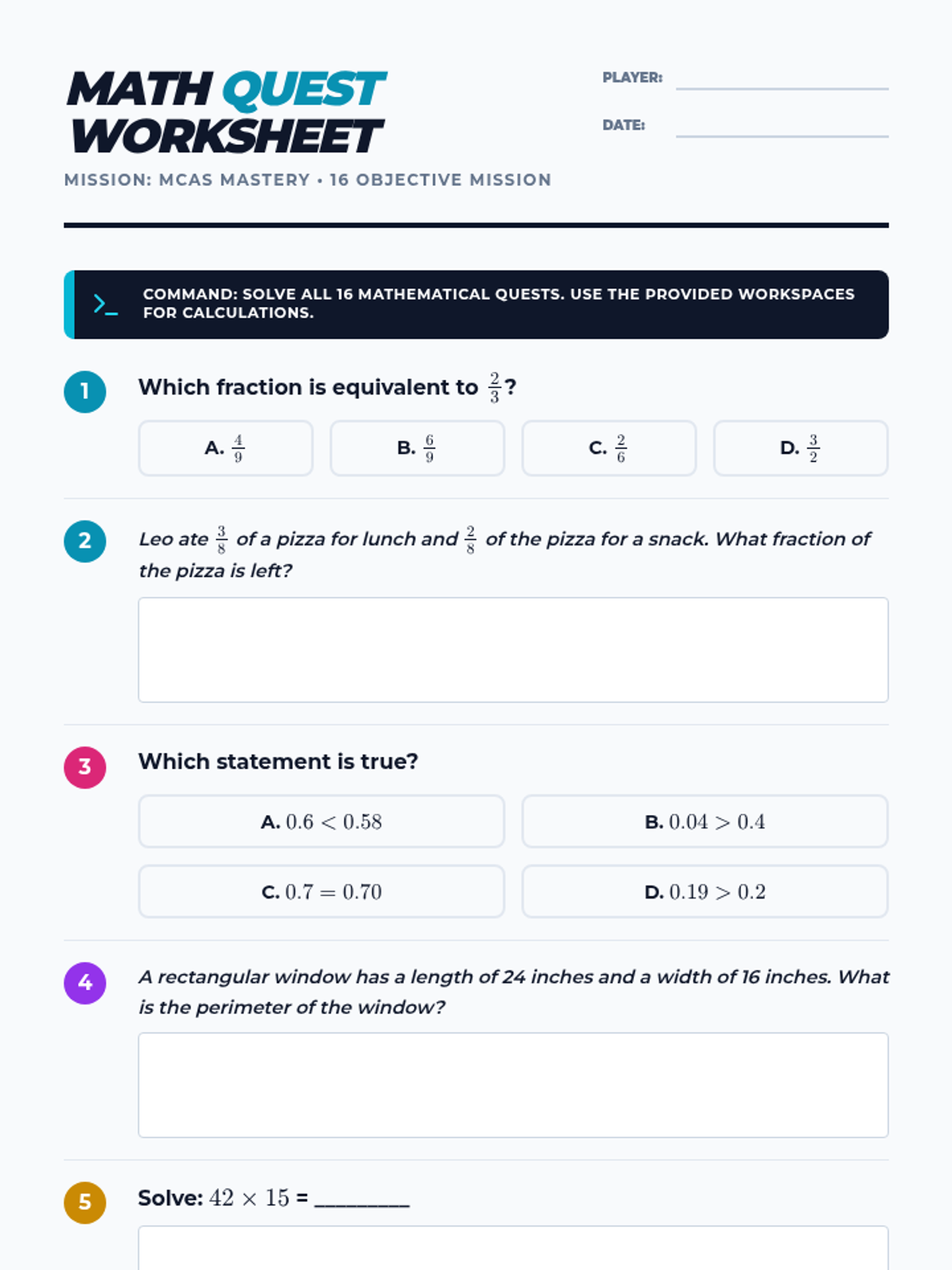
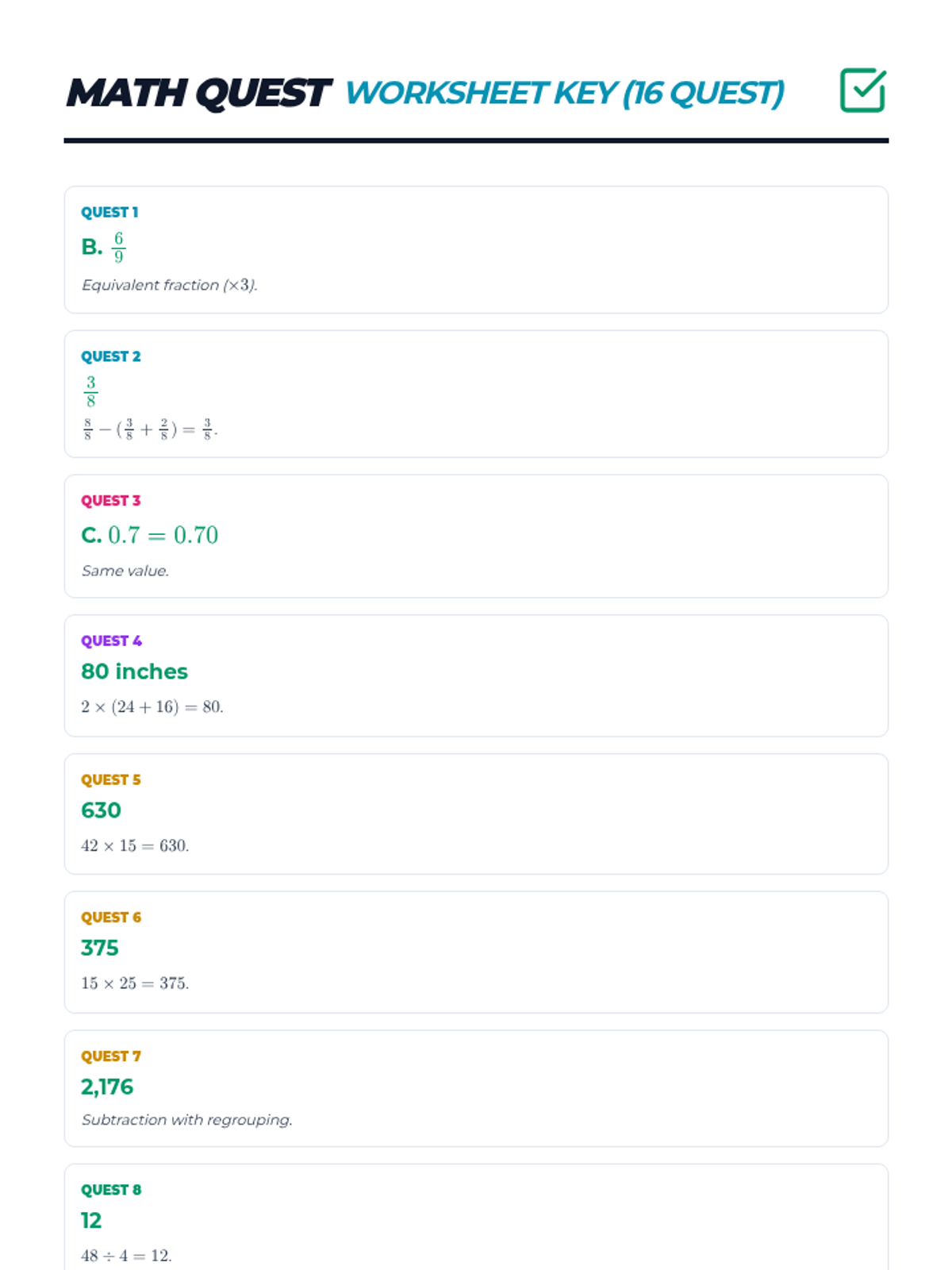
A comprehensive review of 4th Grade Math standards focused on fractions, decimals, geometry, and operations through the lens of MCAS-style questions. Students solve 12 "quests" ranging from basic recall to complex multi-step problems.
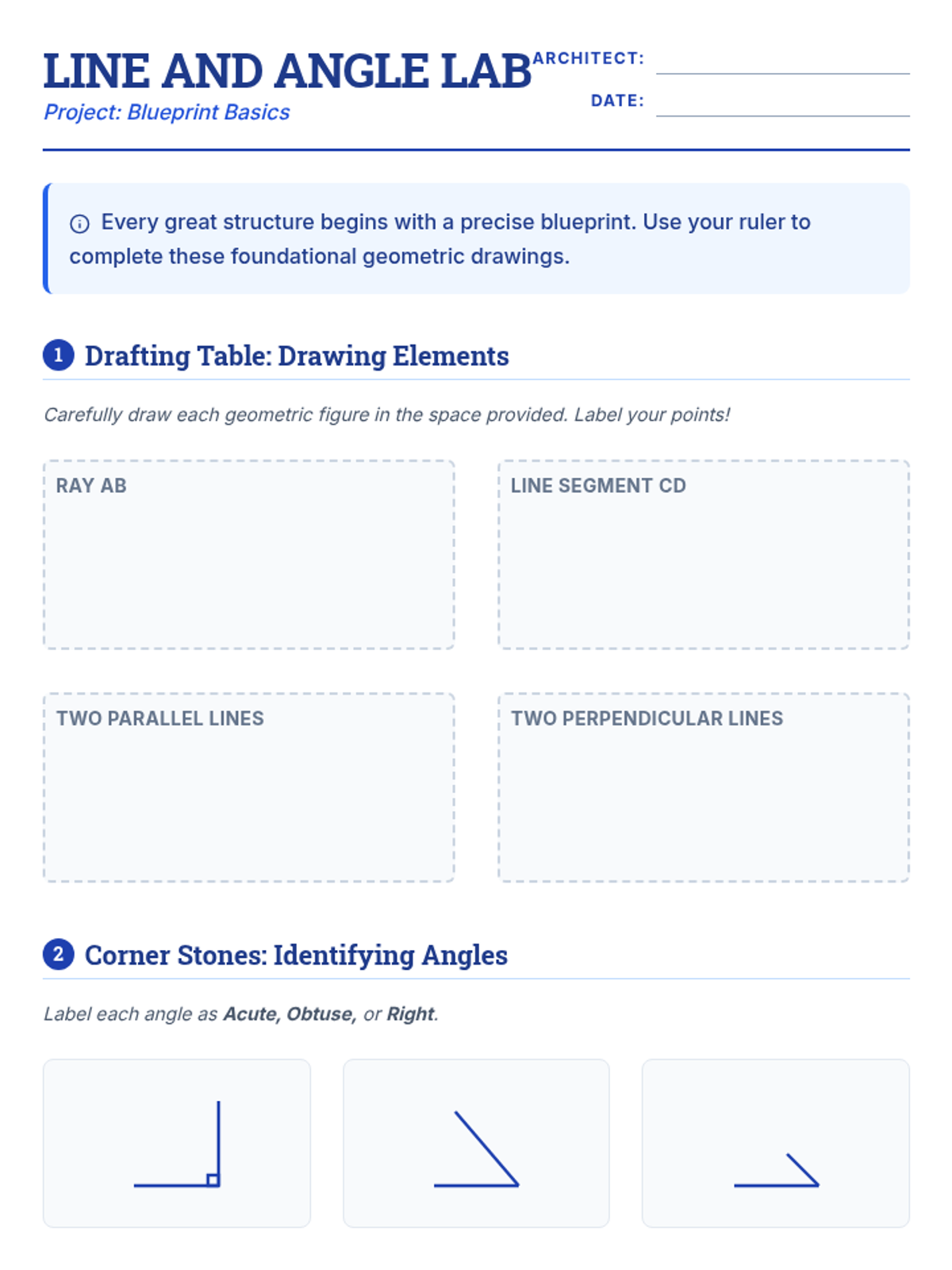
A comprehensive lesson on identifying and drawing geometric elements including lines, angles, and quadrilaterals through a 'Blueprint Builder' theme.
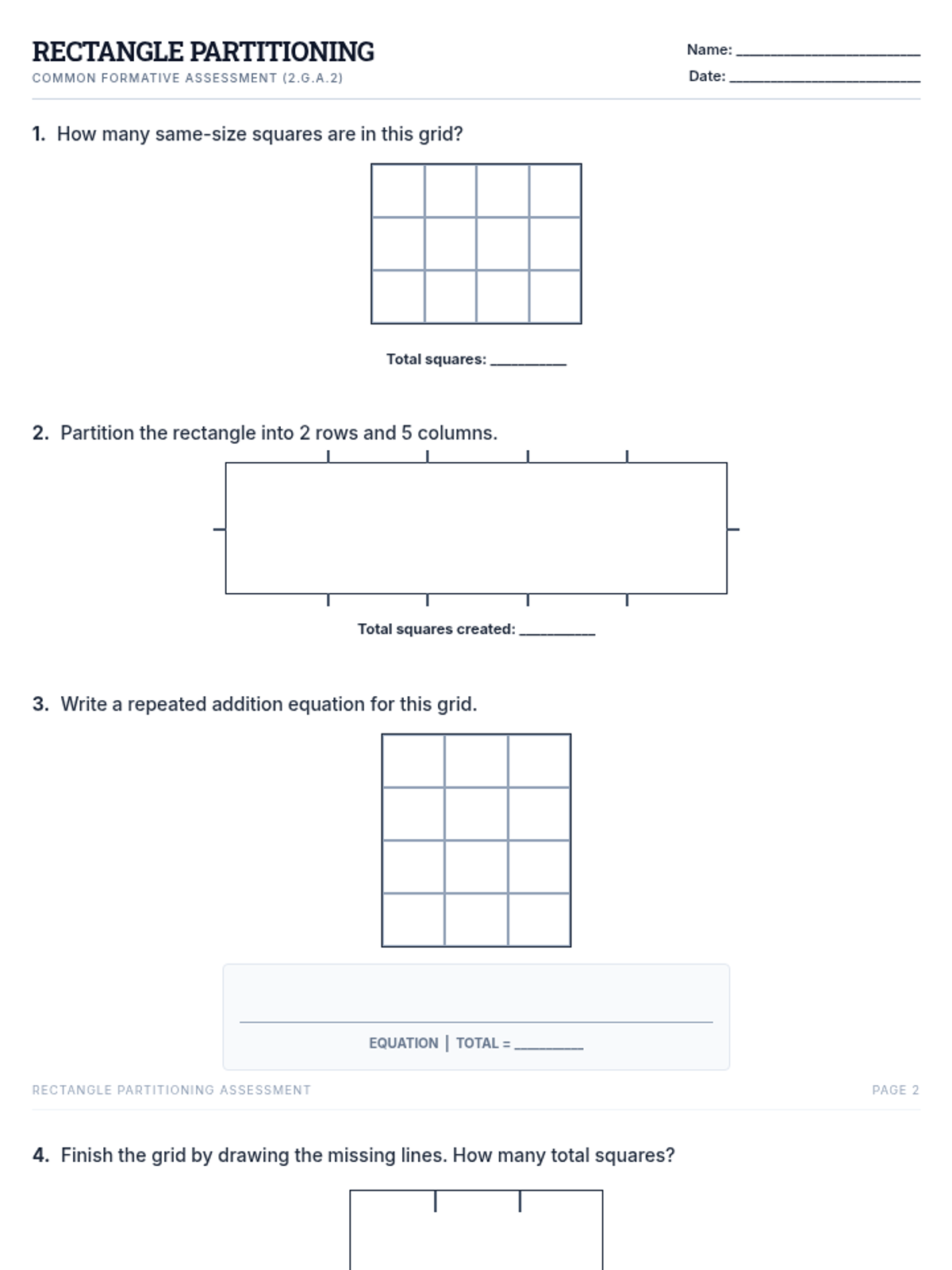
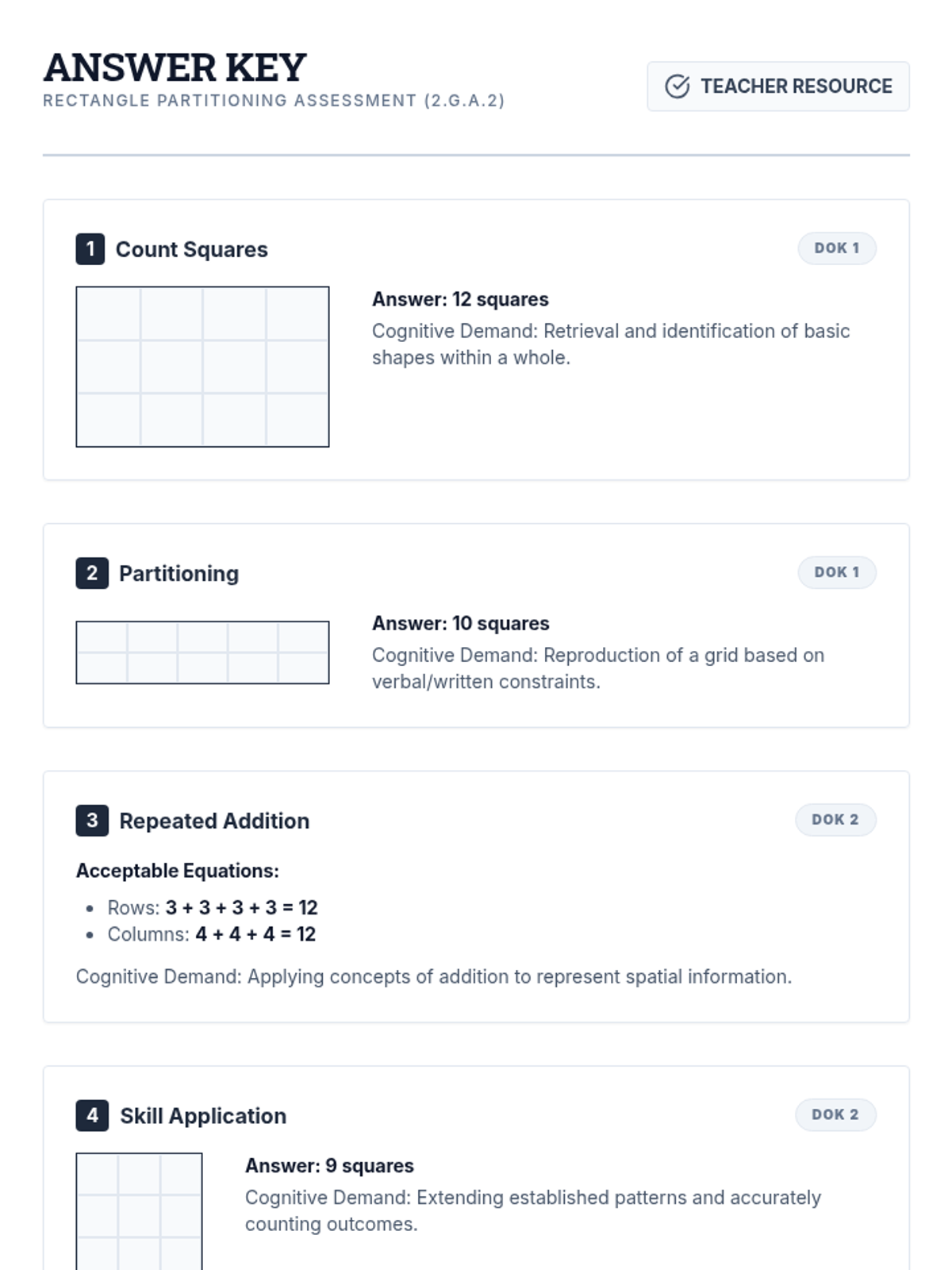
A formative assessment focused on partitioning rectangles into rows and columns of same-size squares, aligned with 2.G.A.2. This lesson includes a student-facing assessment and a comprehensive answer key with DOK level alignment.
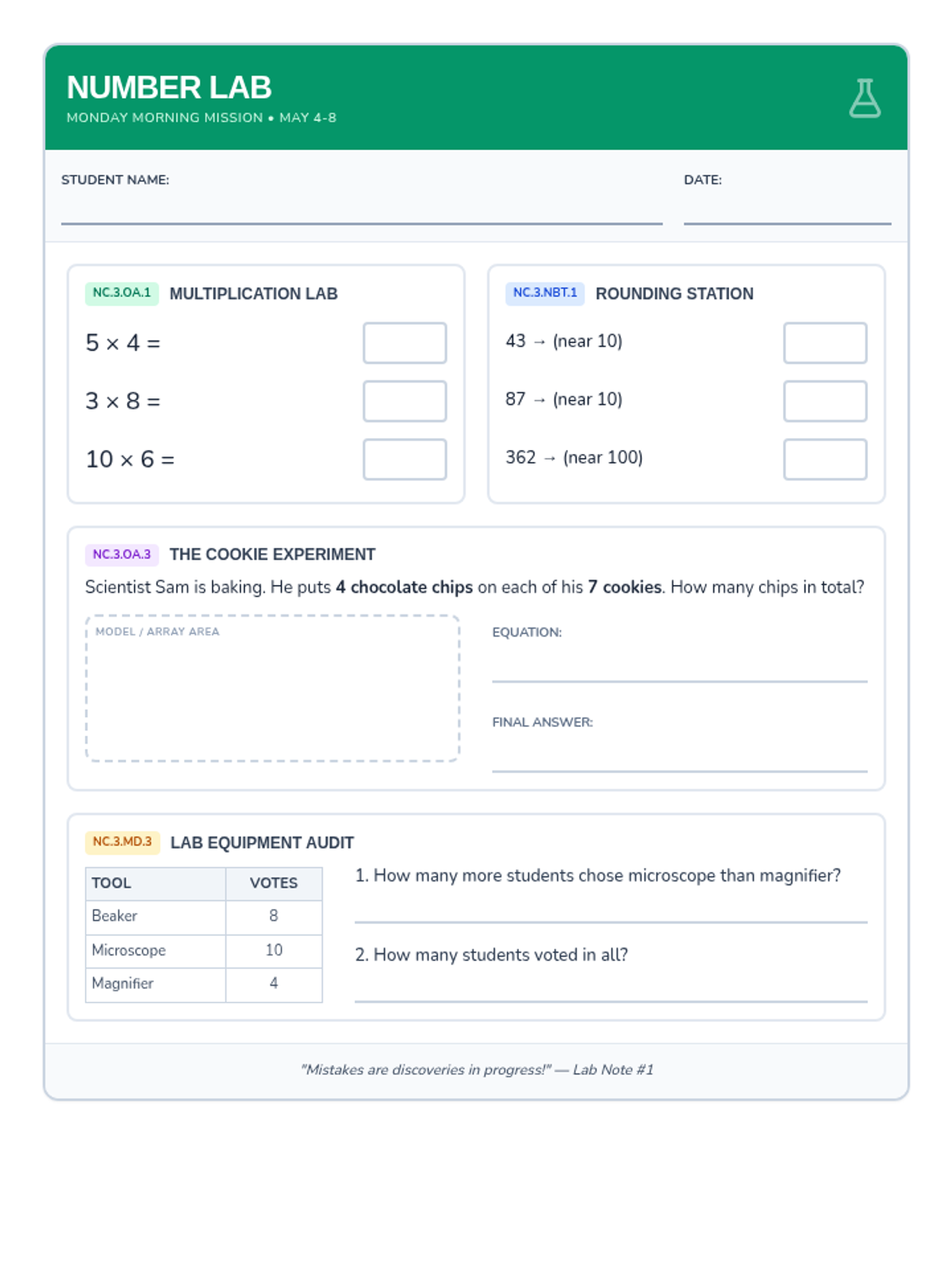
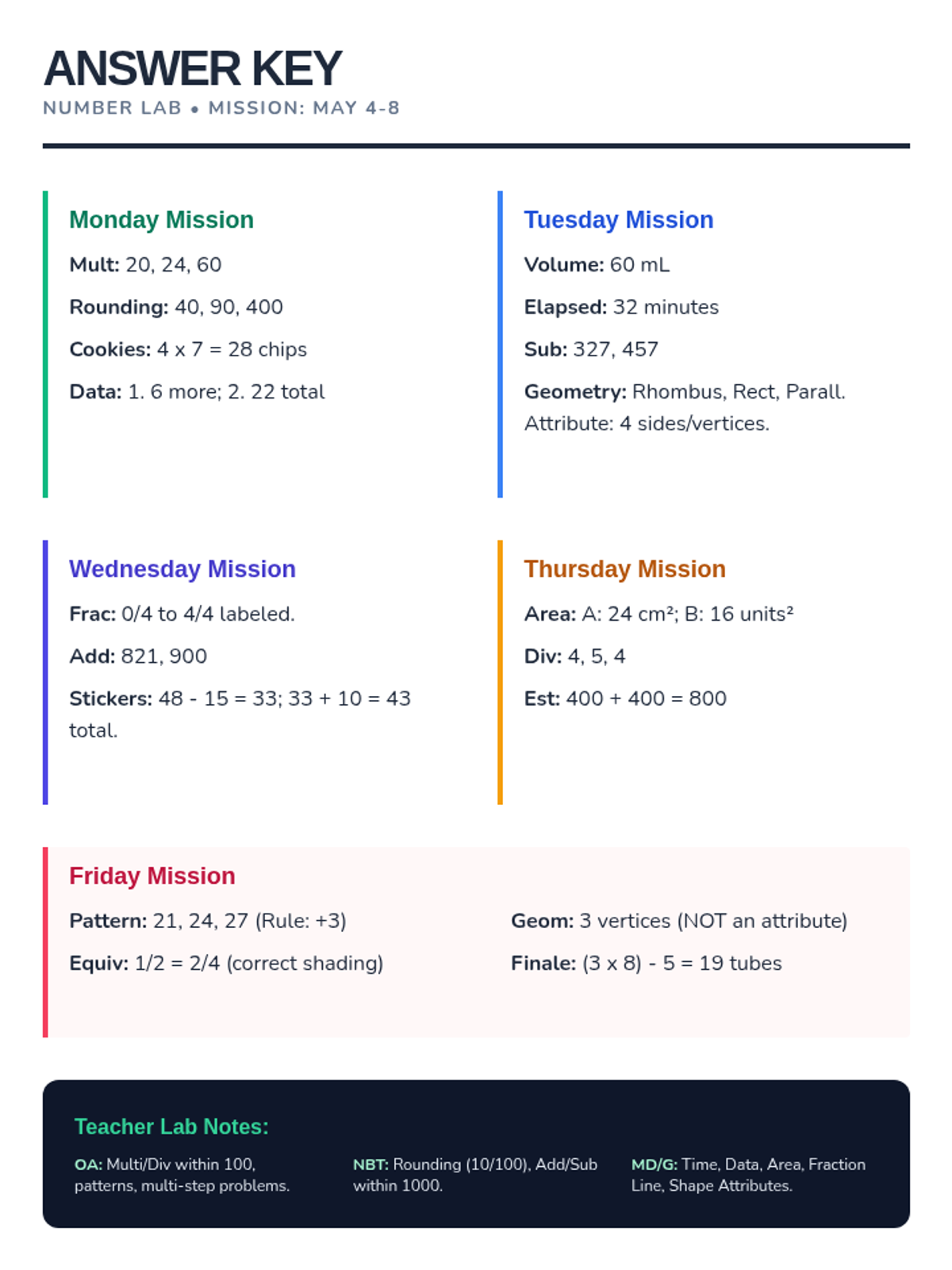
The first week of mixed spiral review covering rounding, multiplication within 100, elapsed time, fractions on number lines, and area.
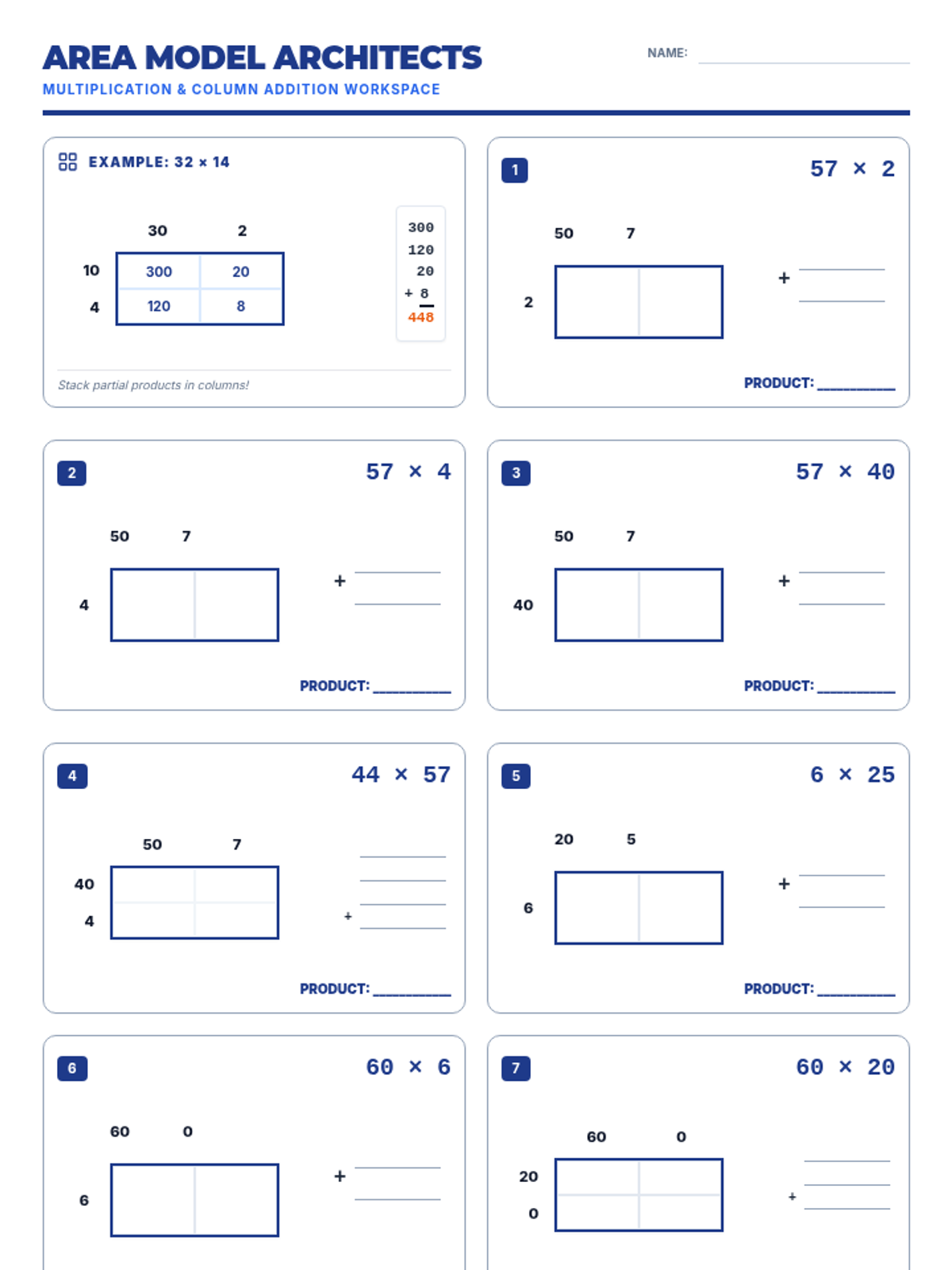
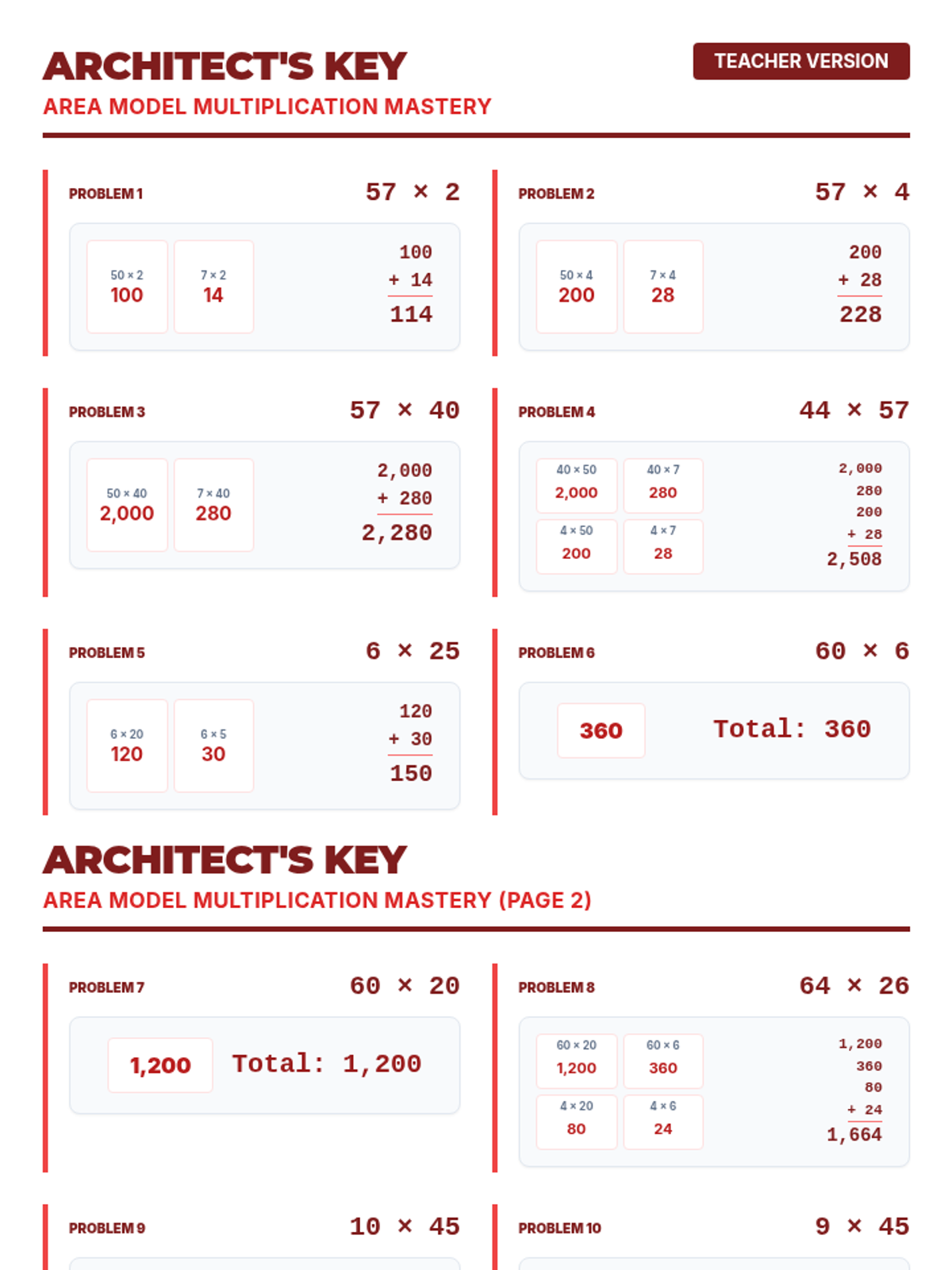
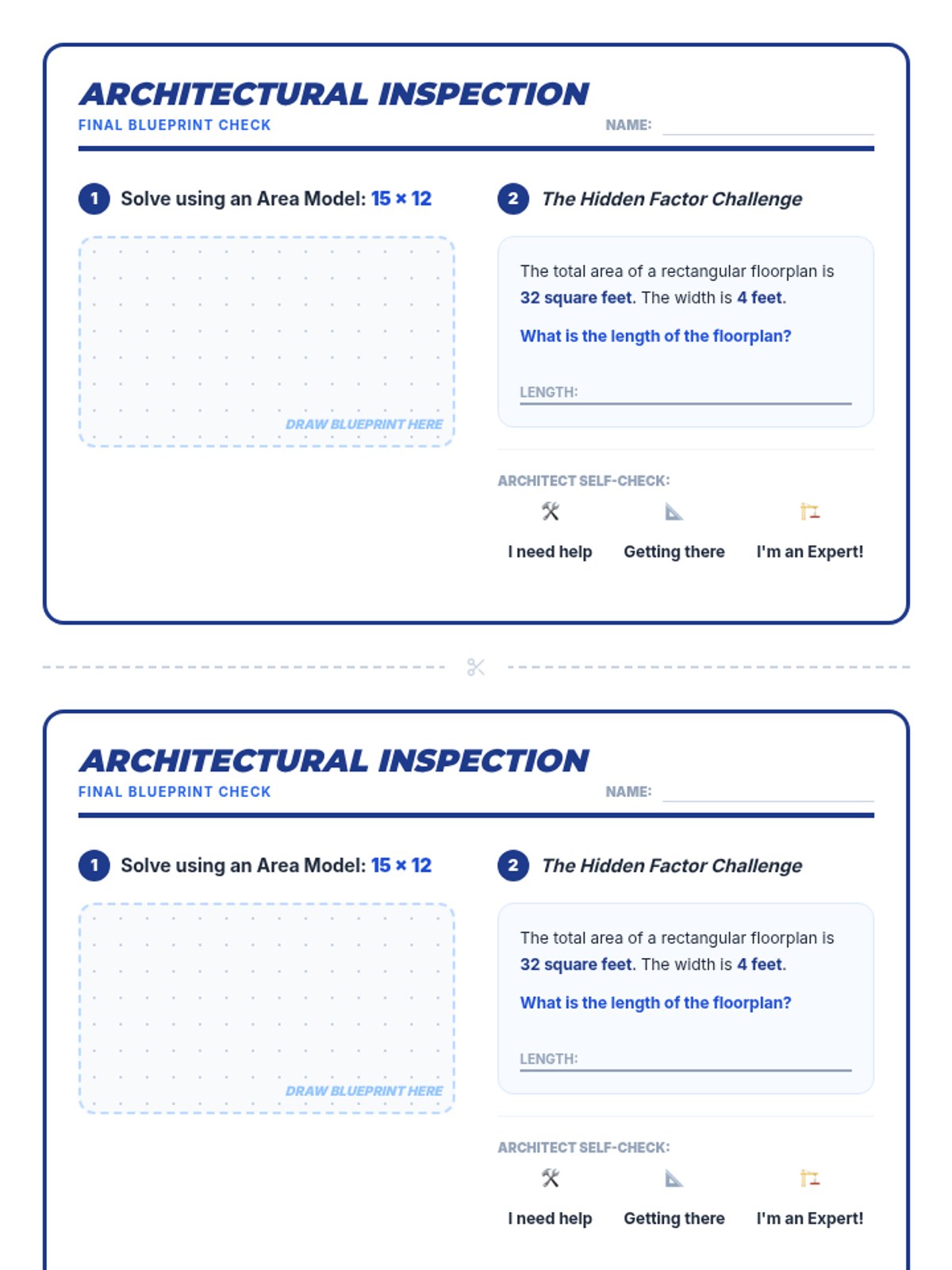
A lesson on using the area model (partial products) to solve multiplication problems involving 1-digit and 2-digit numbers. Students will learn to decompose numbers by place value and use geometric diagrams to organize their work.
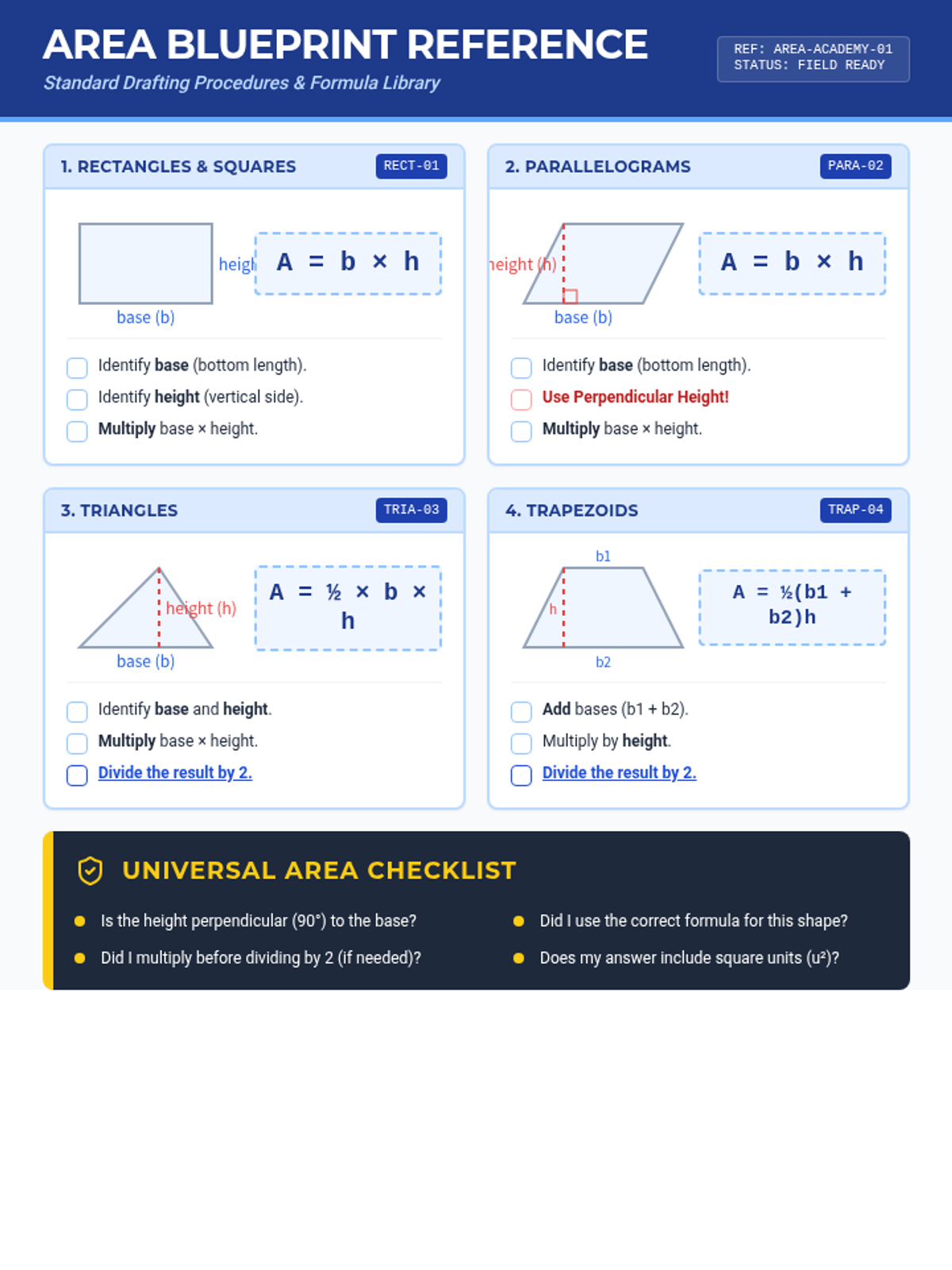
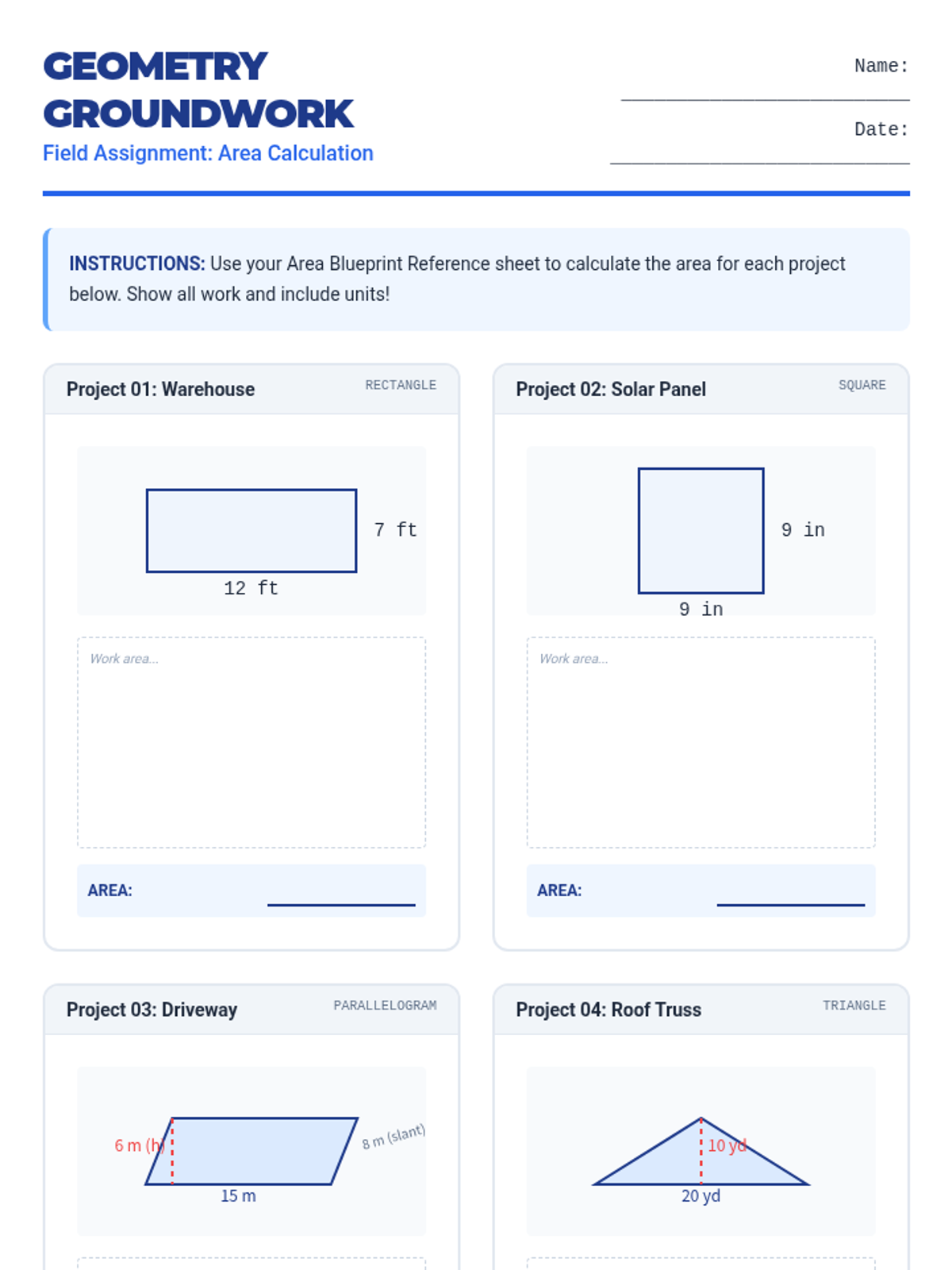
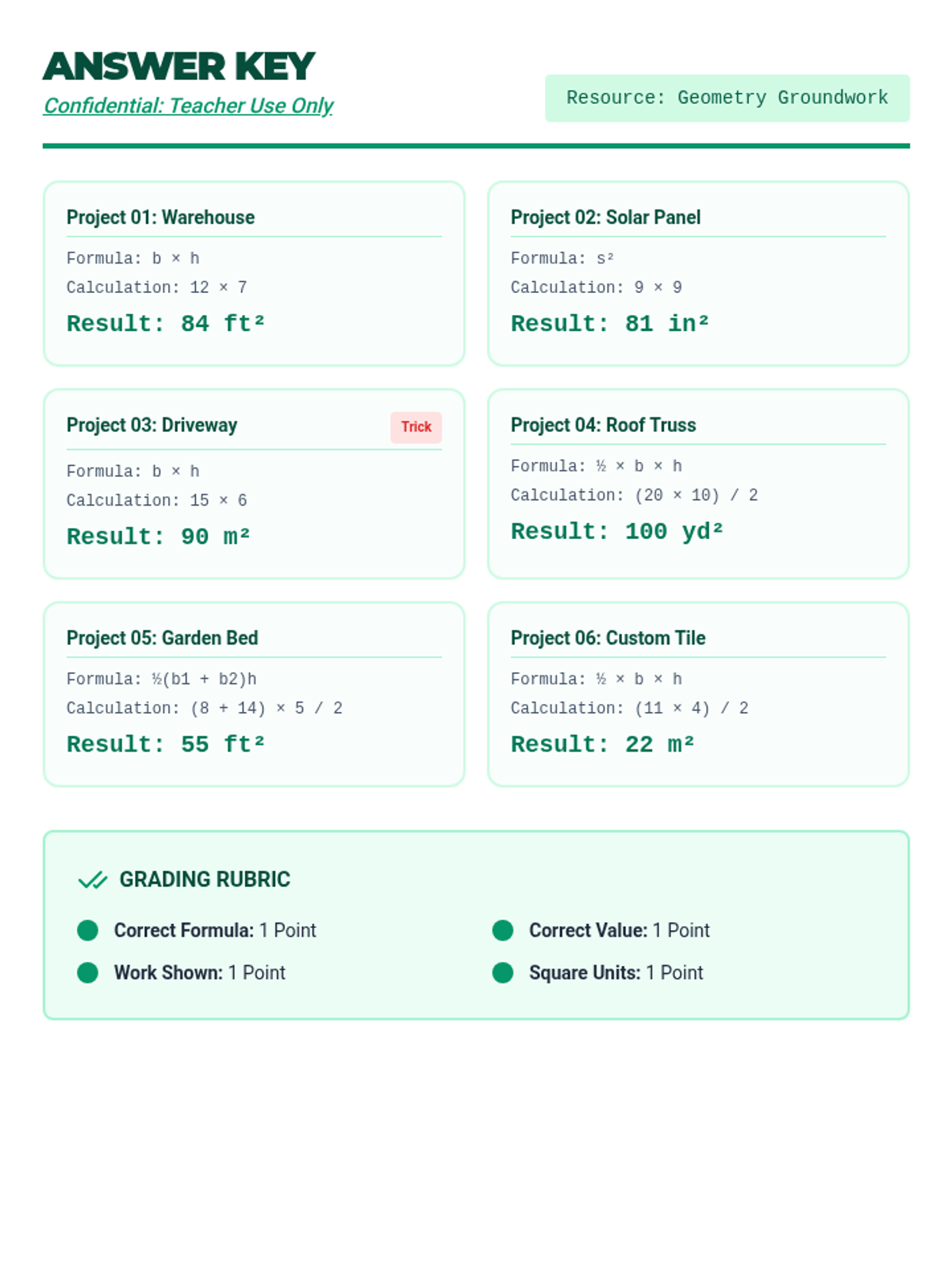
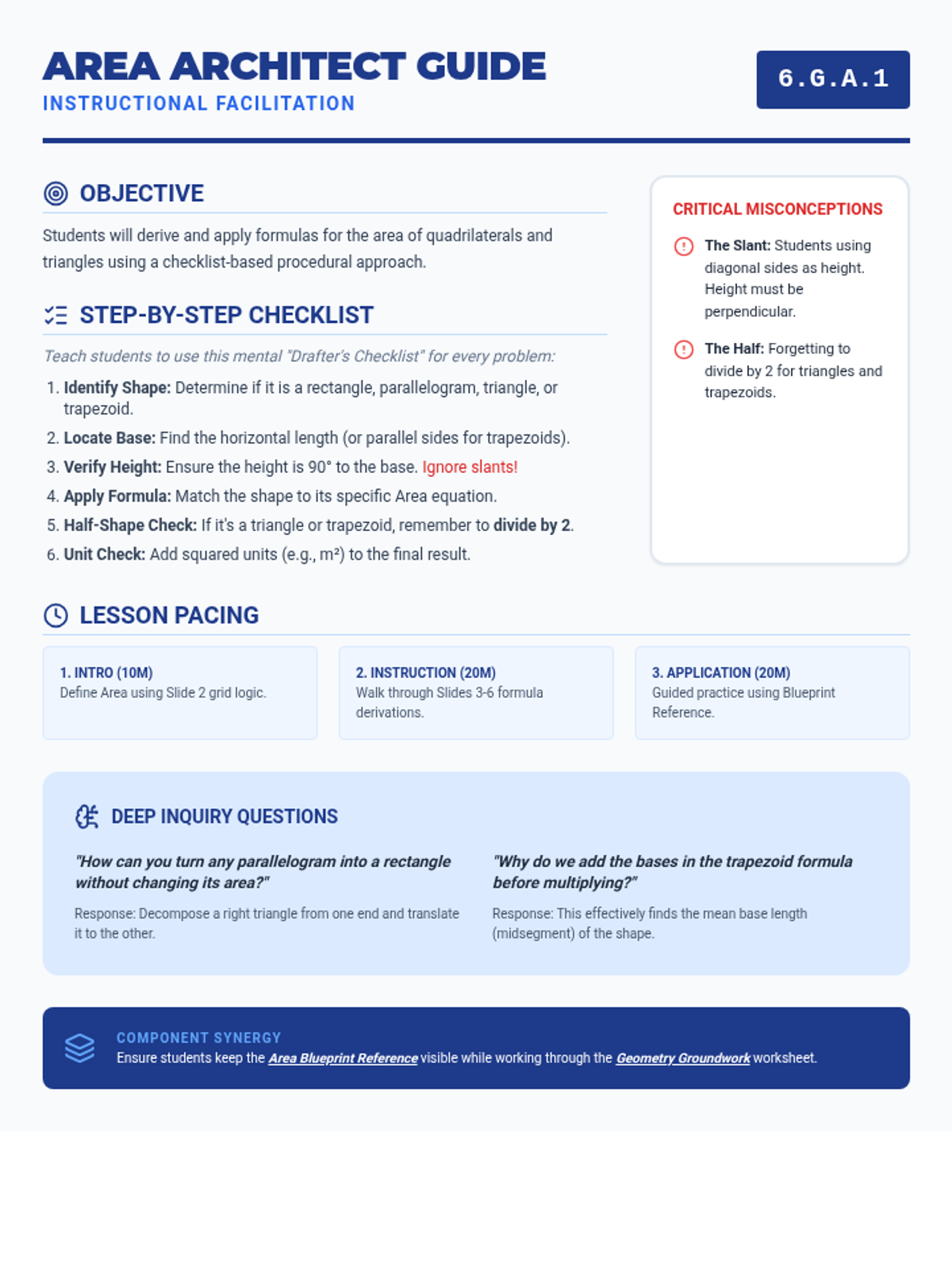
Students will learn to identify base and height dimensions and apply formulas to find the area of various quadrilaterals and triangles using step-by-step checklists.
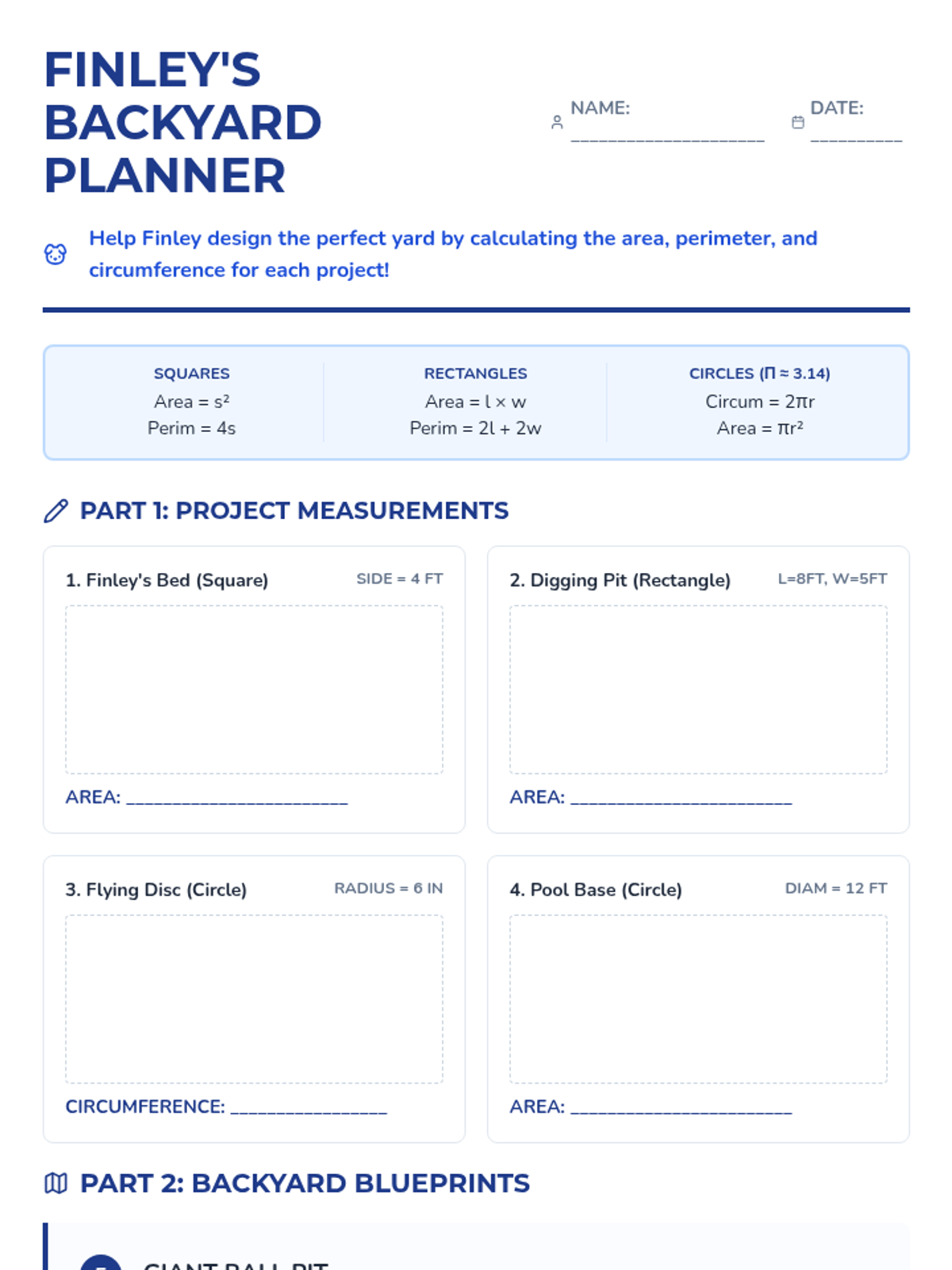
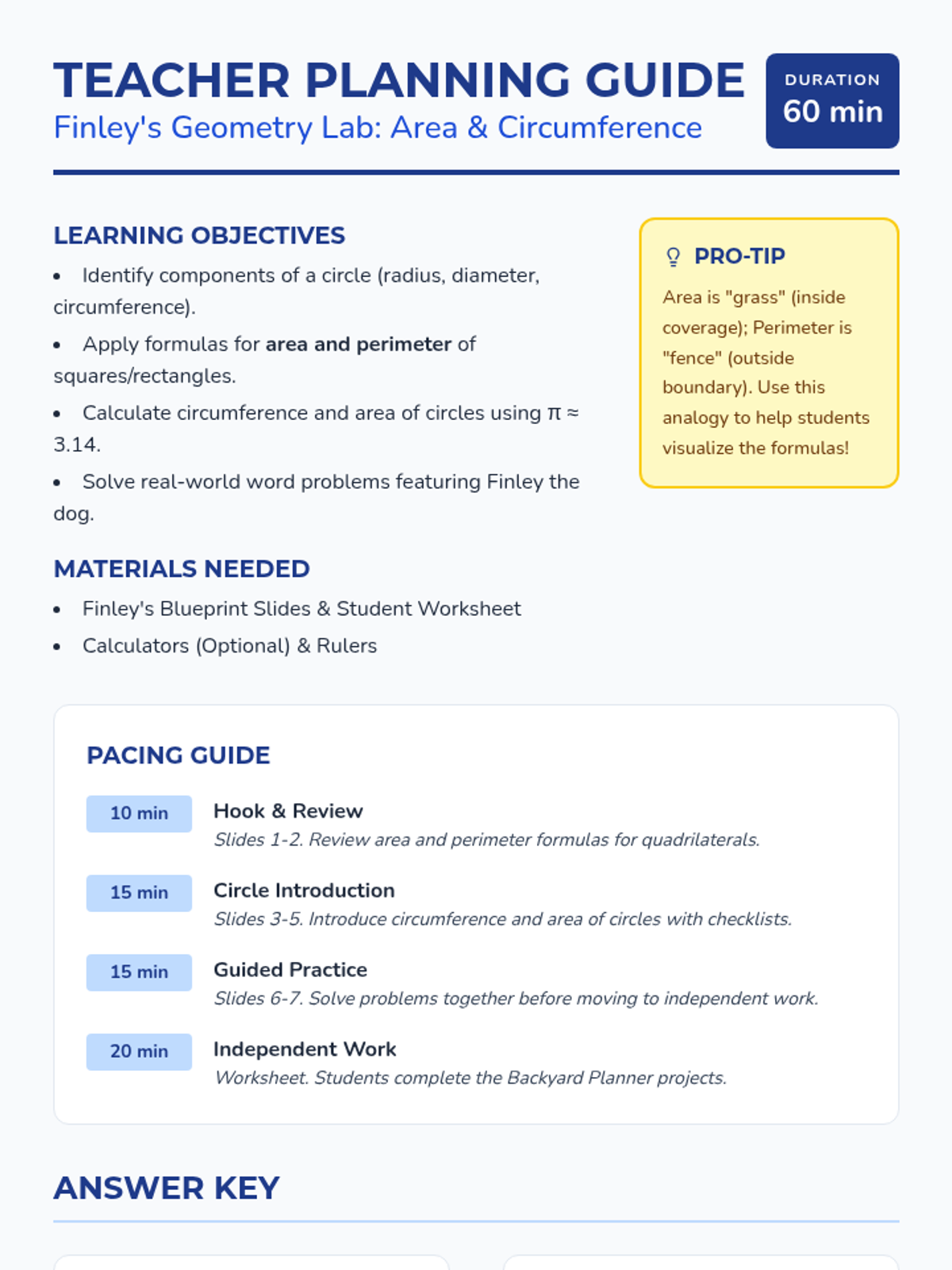
A geometry lesson focused on calculating the area of squares, rectangles, and circles, as well as the circumference of circles, featuring Finley the dog.
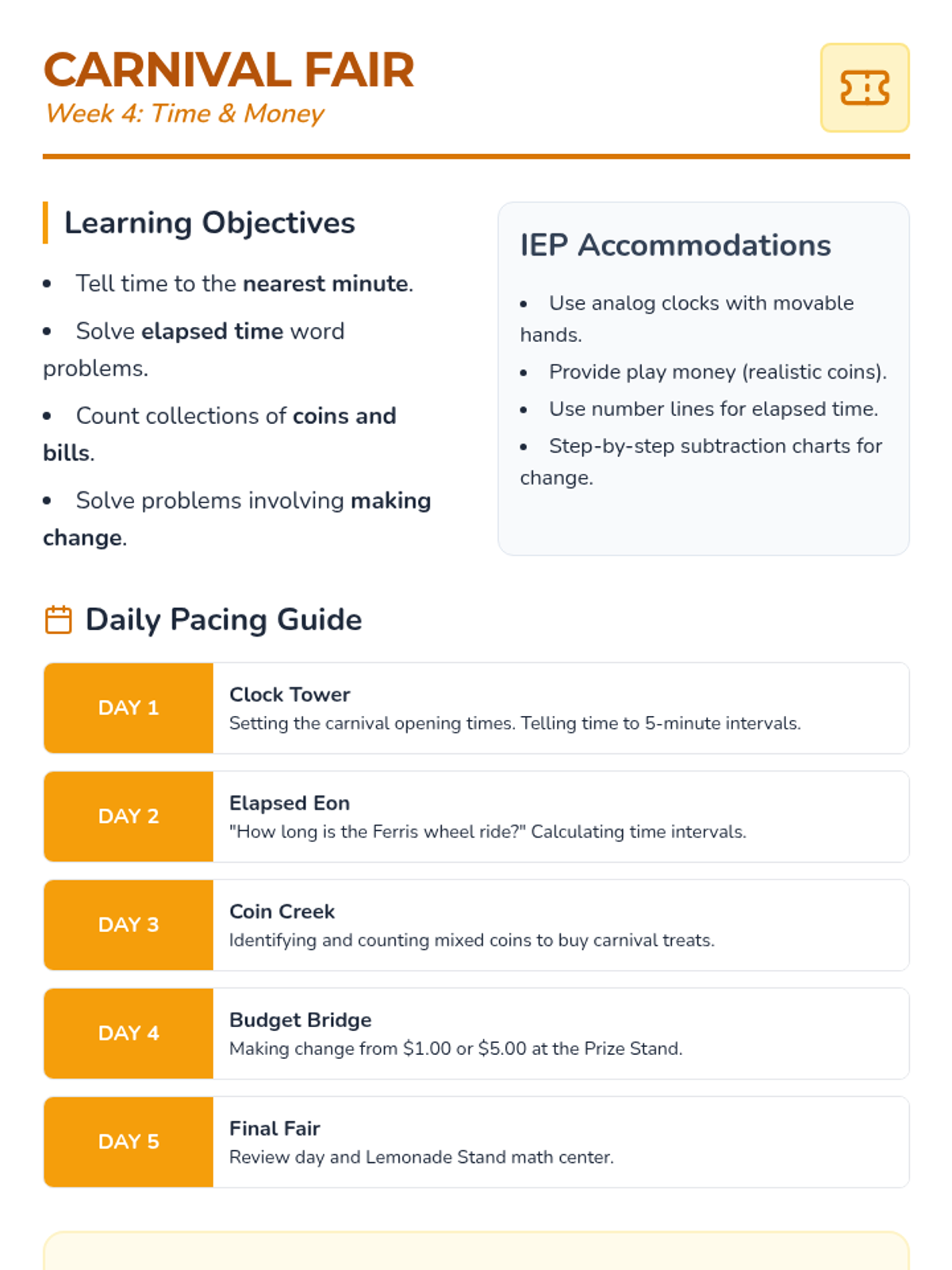
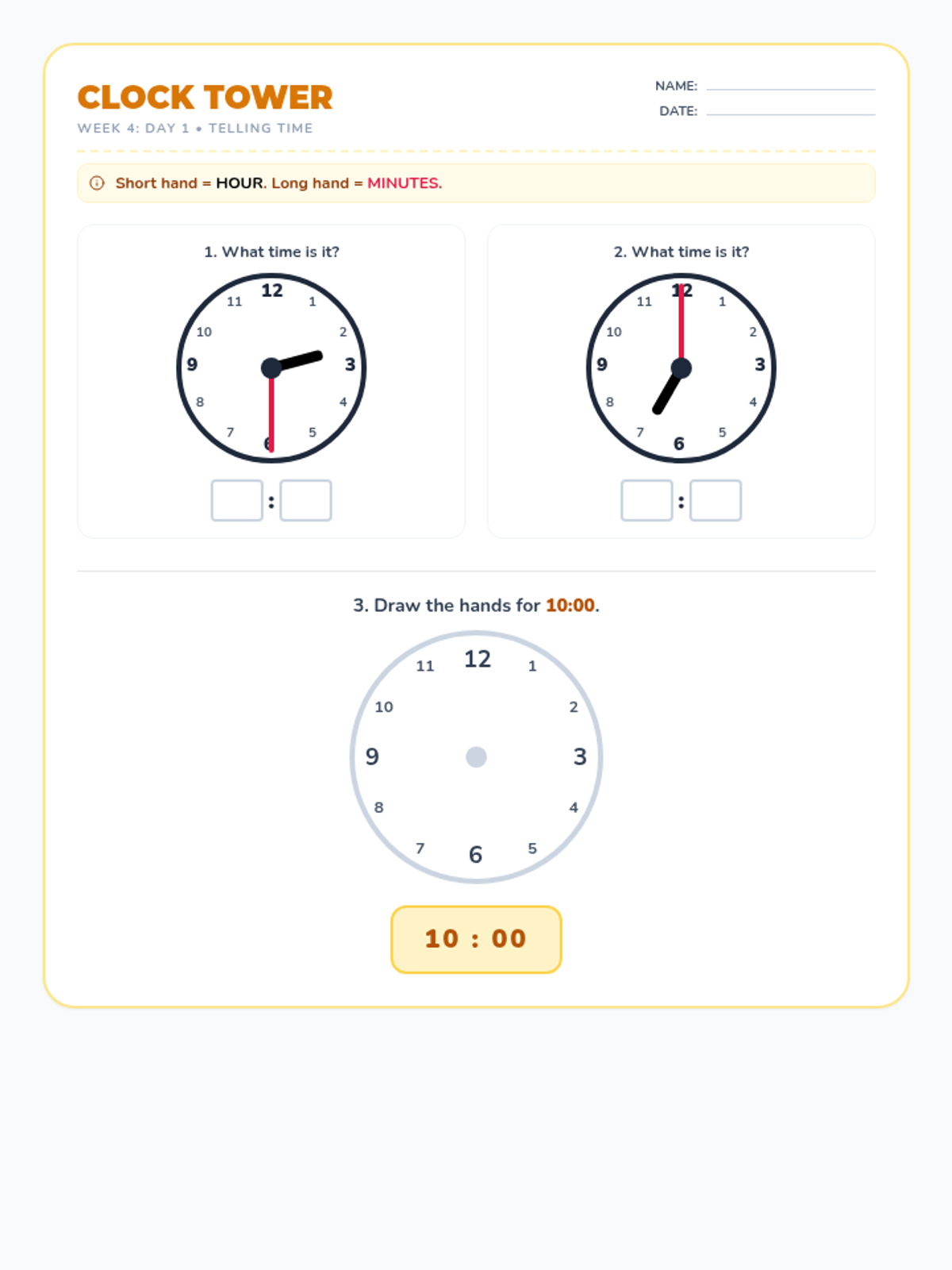
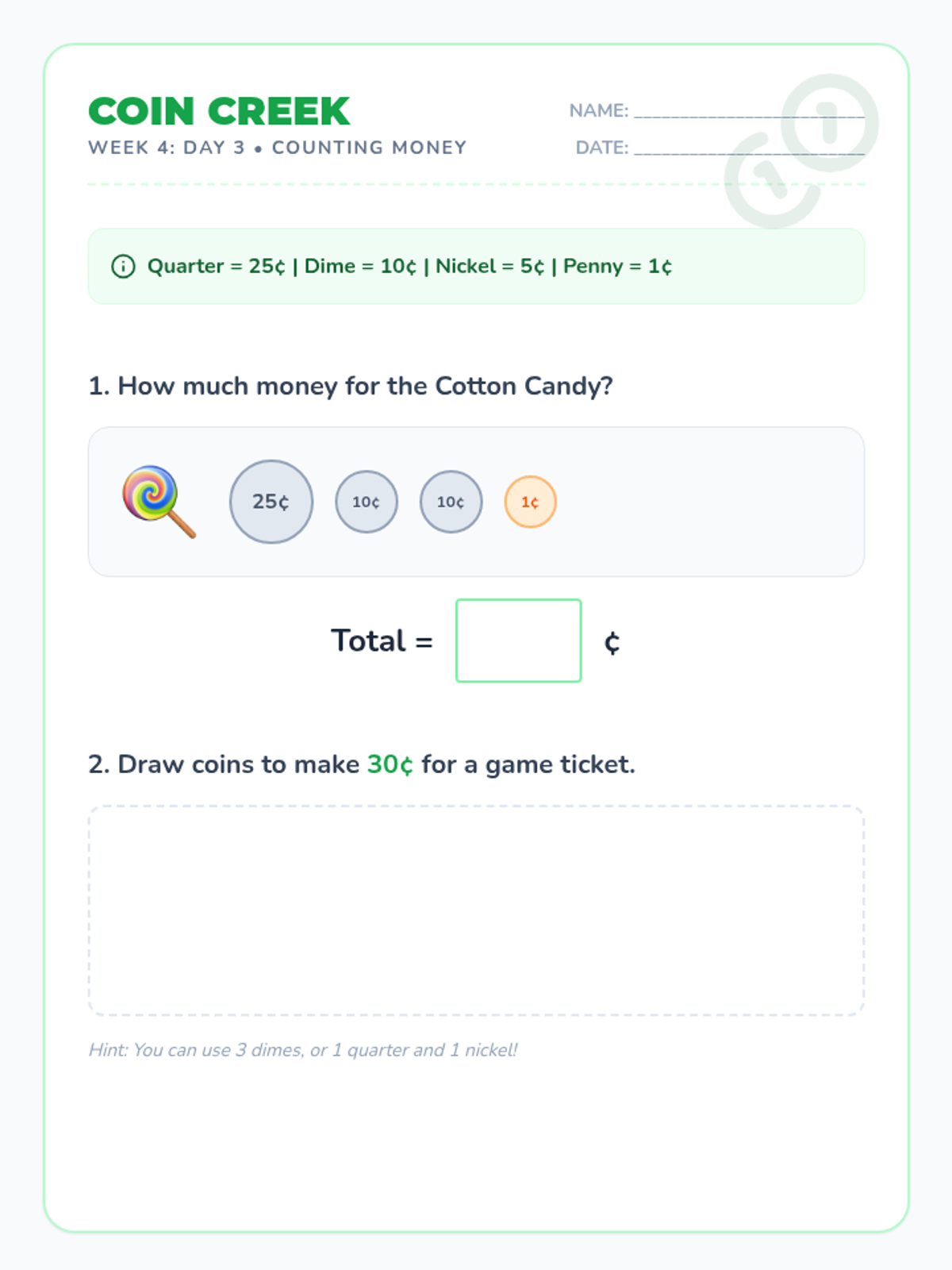
Week 4 focuses on telling time and counting money in a Carnival setting, teaching elapsed time, coin identification, and basic budgeting.
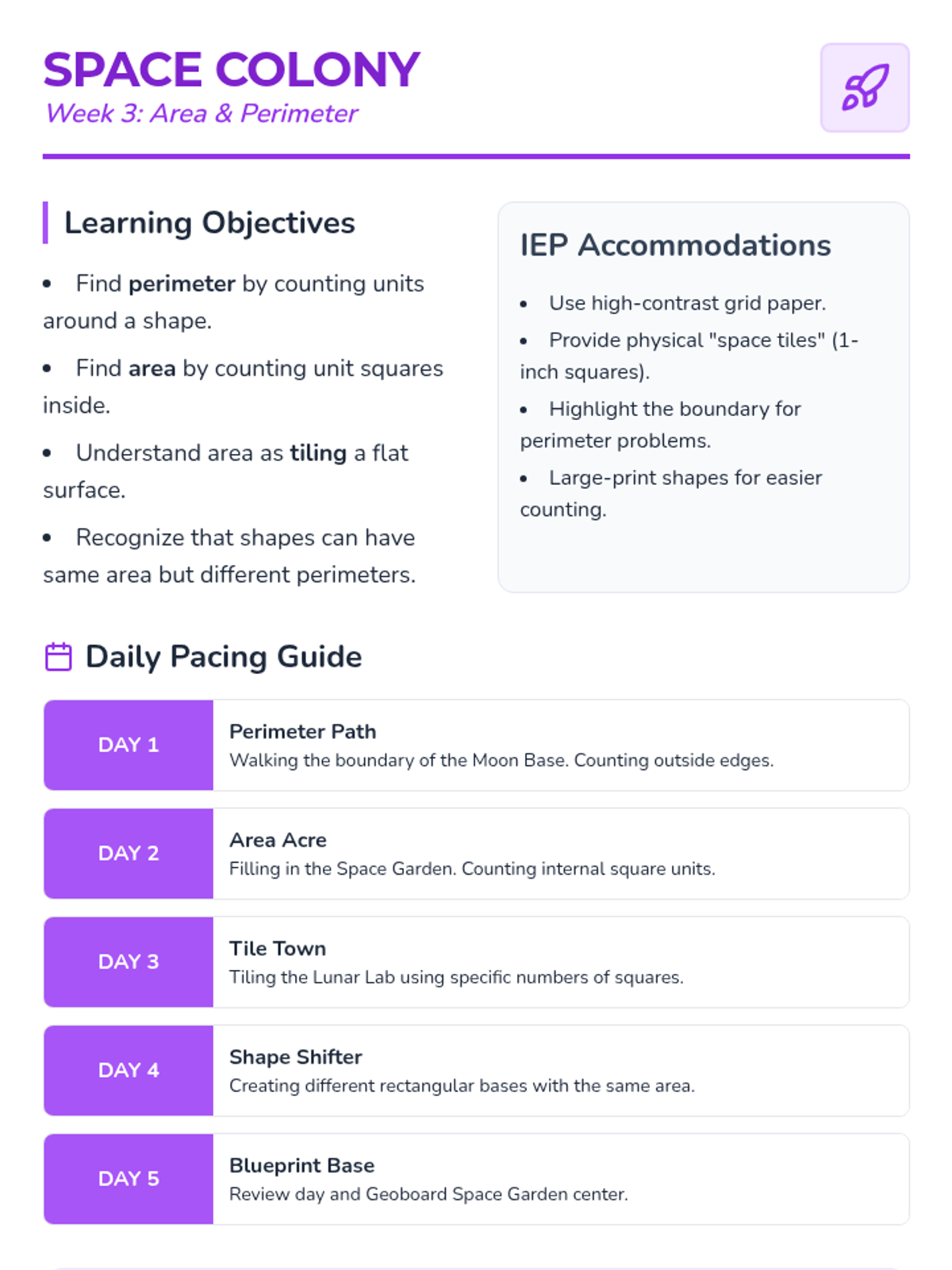
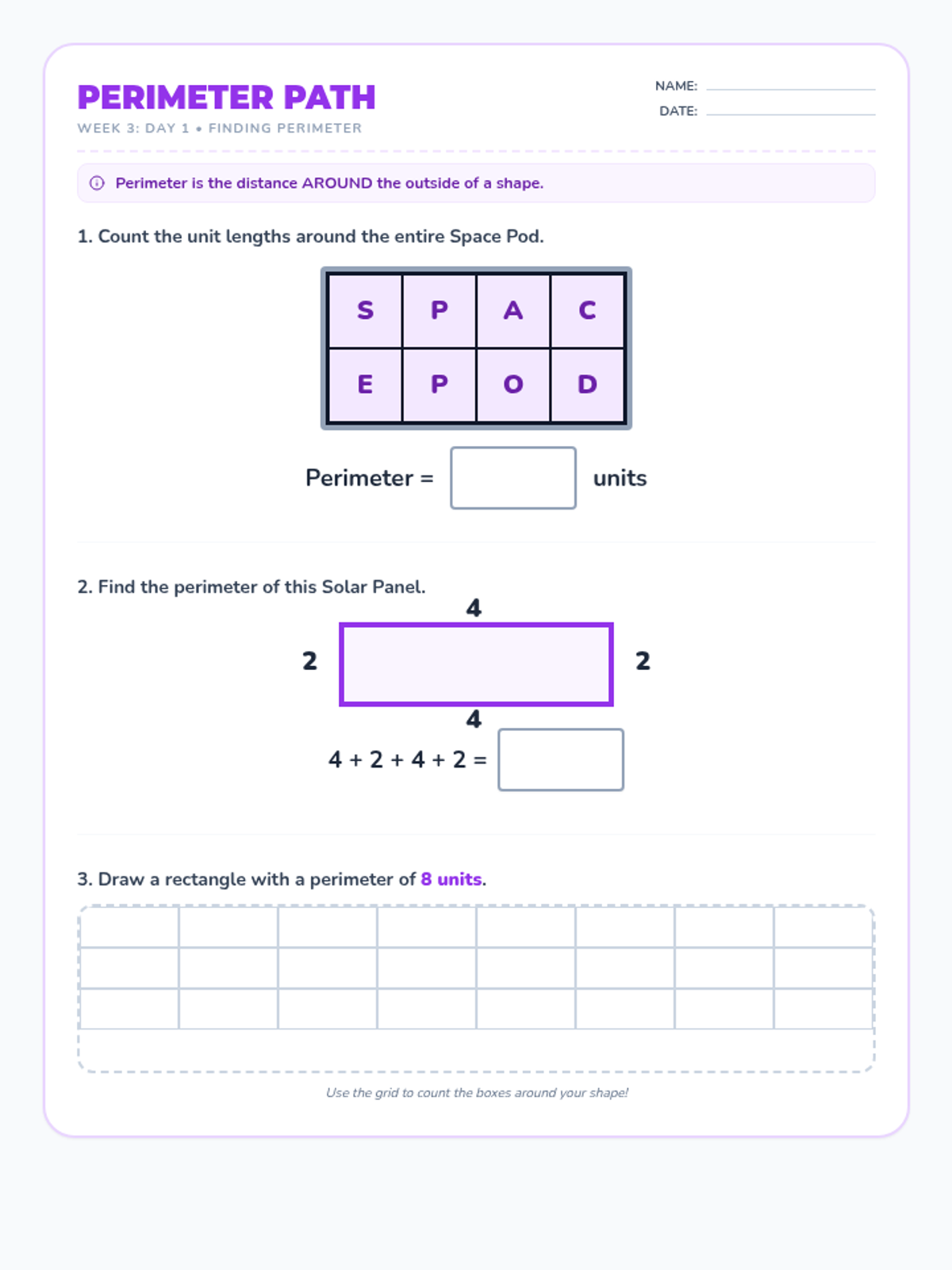
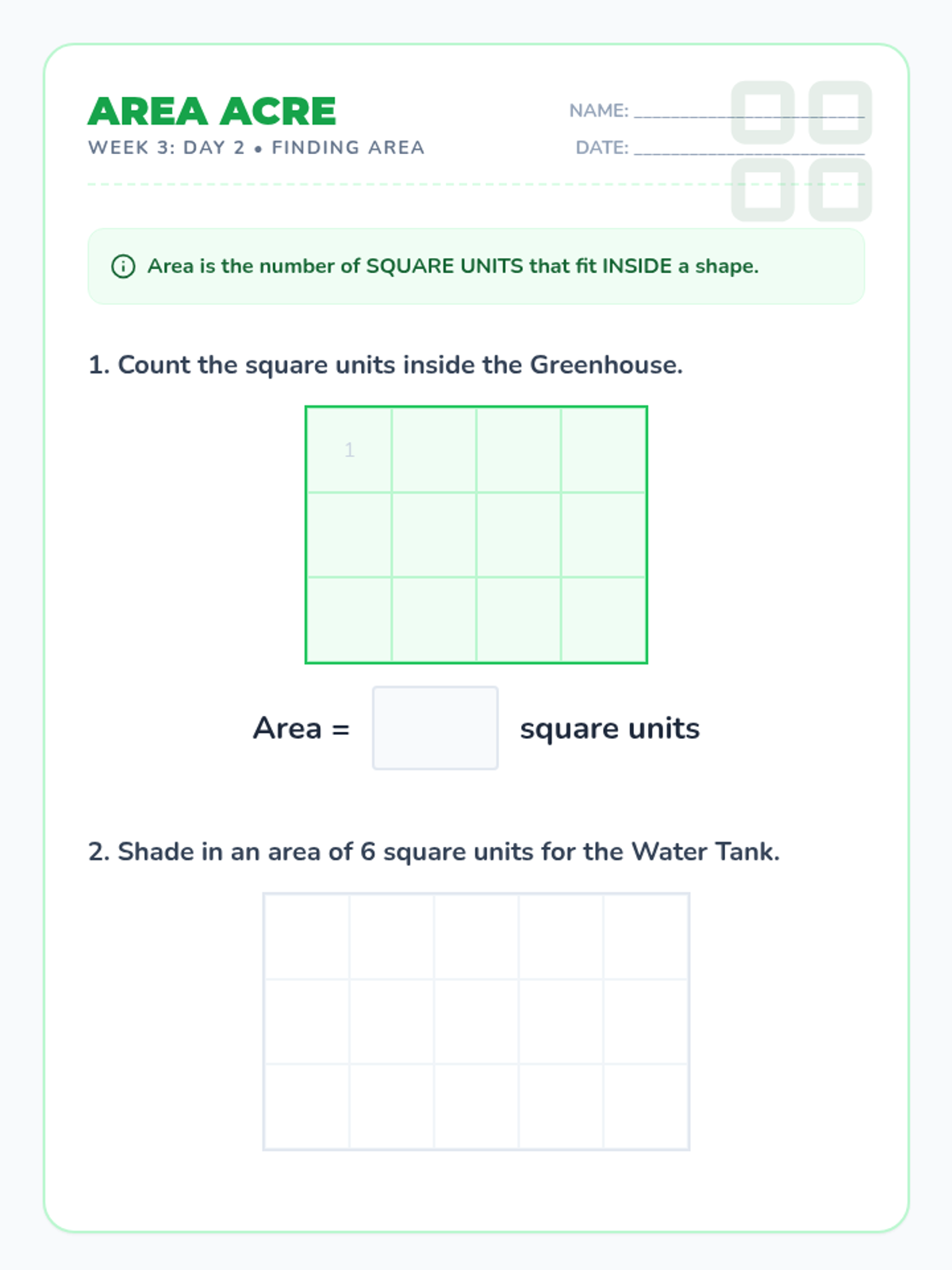
Week 3 covers area and perimeter while building a Space Colony, using grid paper, tiling, and simple addition to find boundaries and space.
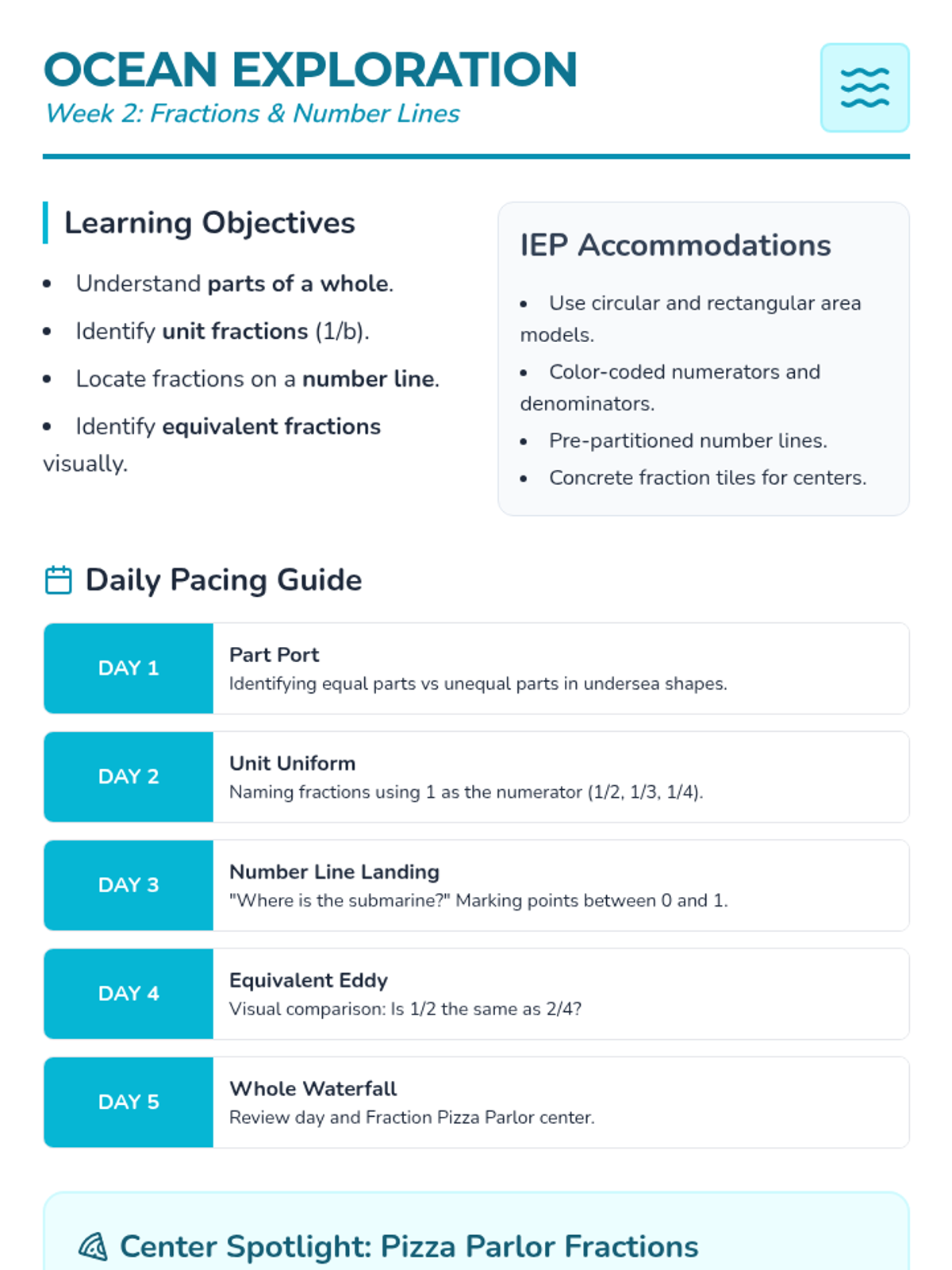
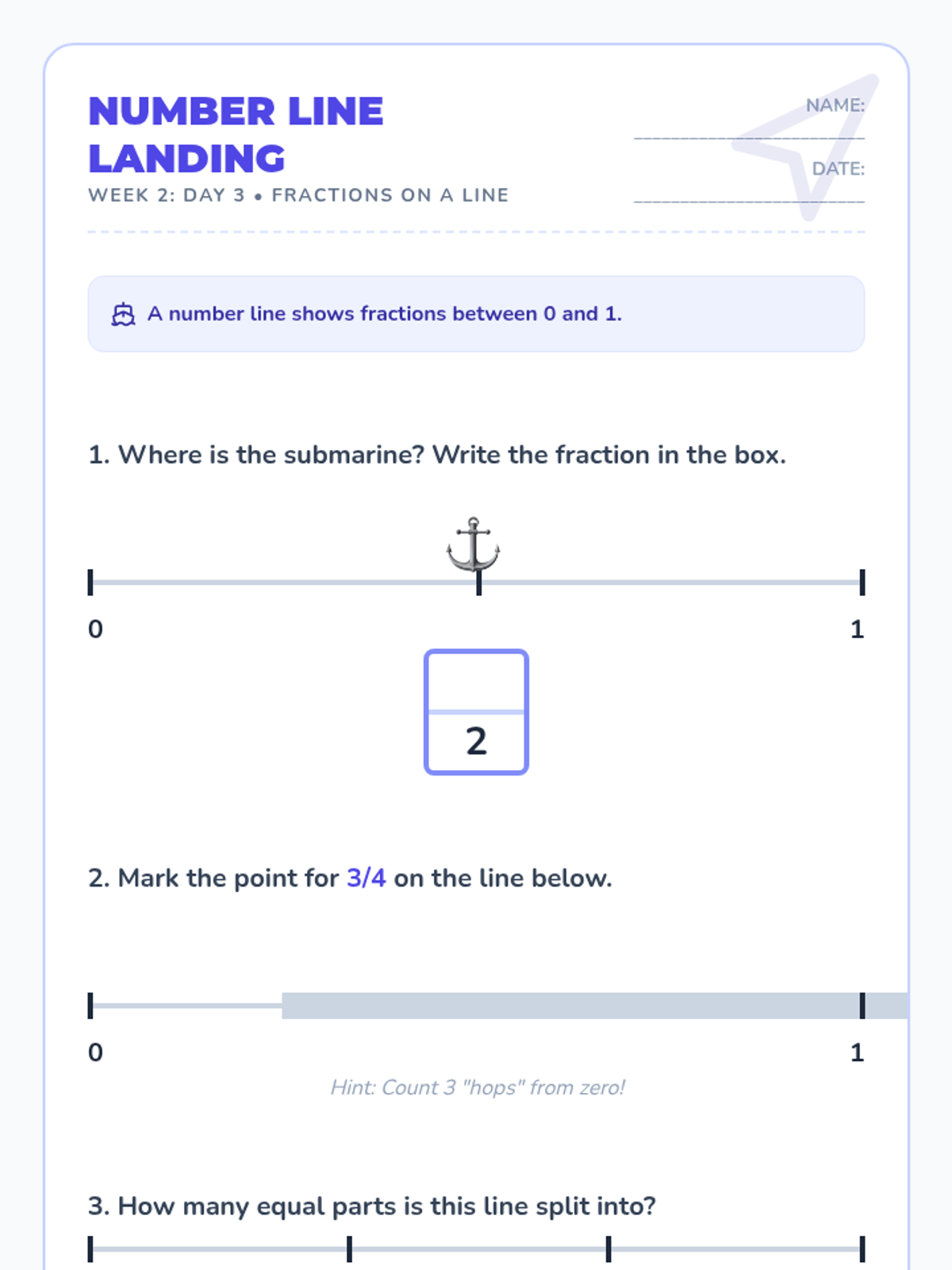
Week 2 explores fractions and number lines with an Ocean Exploration theme, focusing on parts of a whole, unit fractions, and locating numbers on a line.
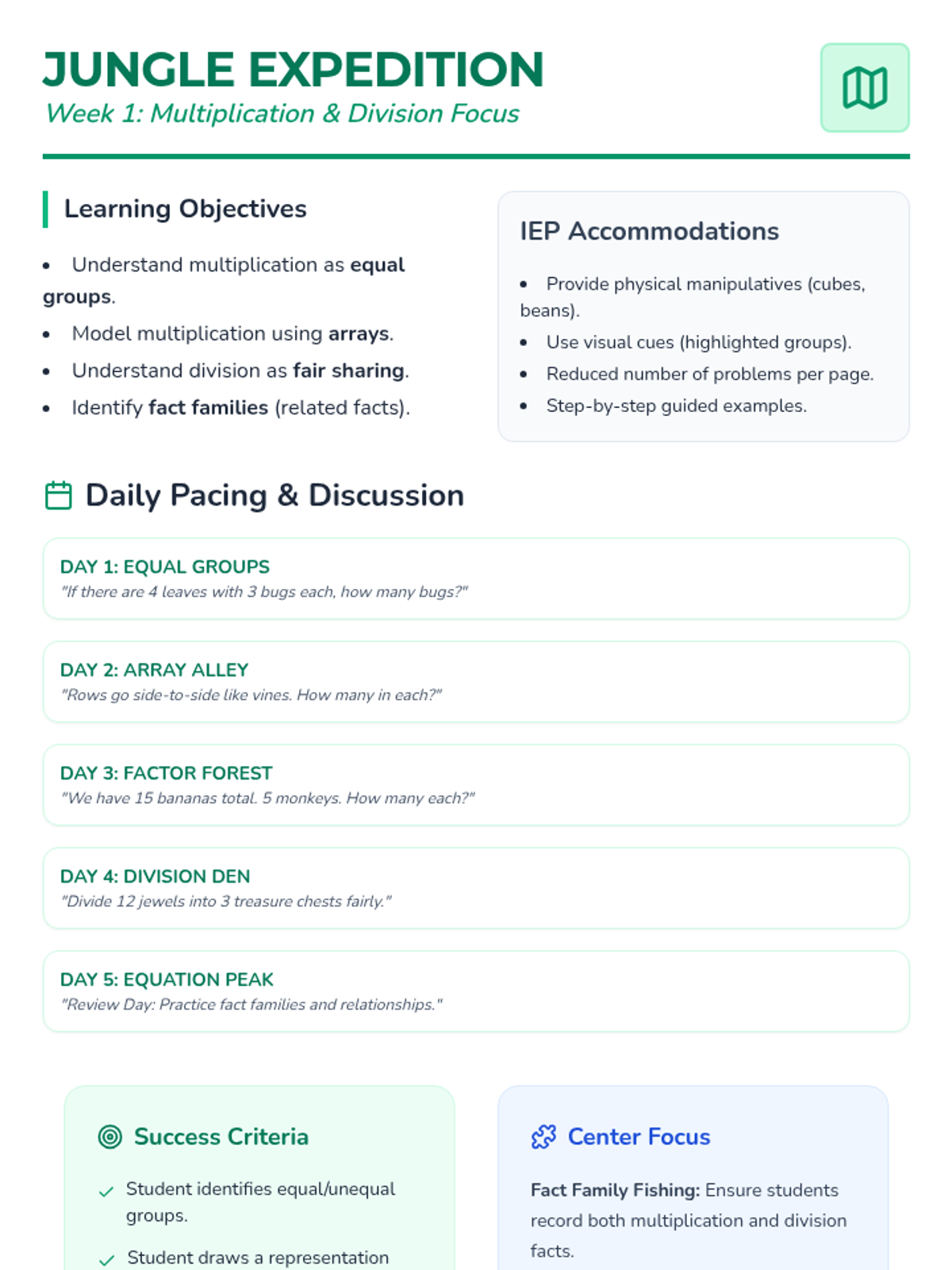
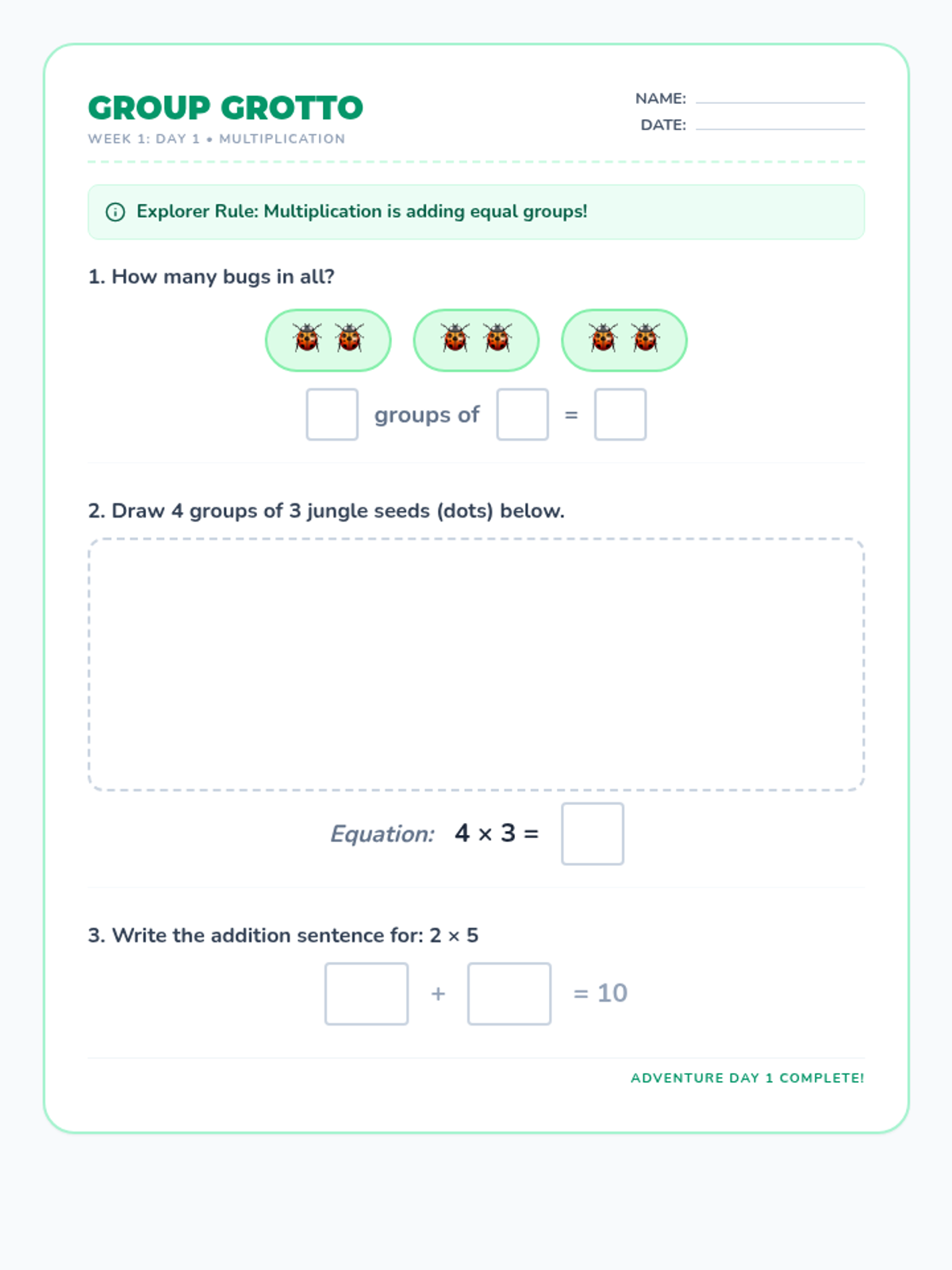
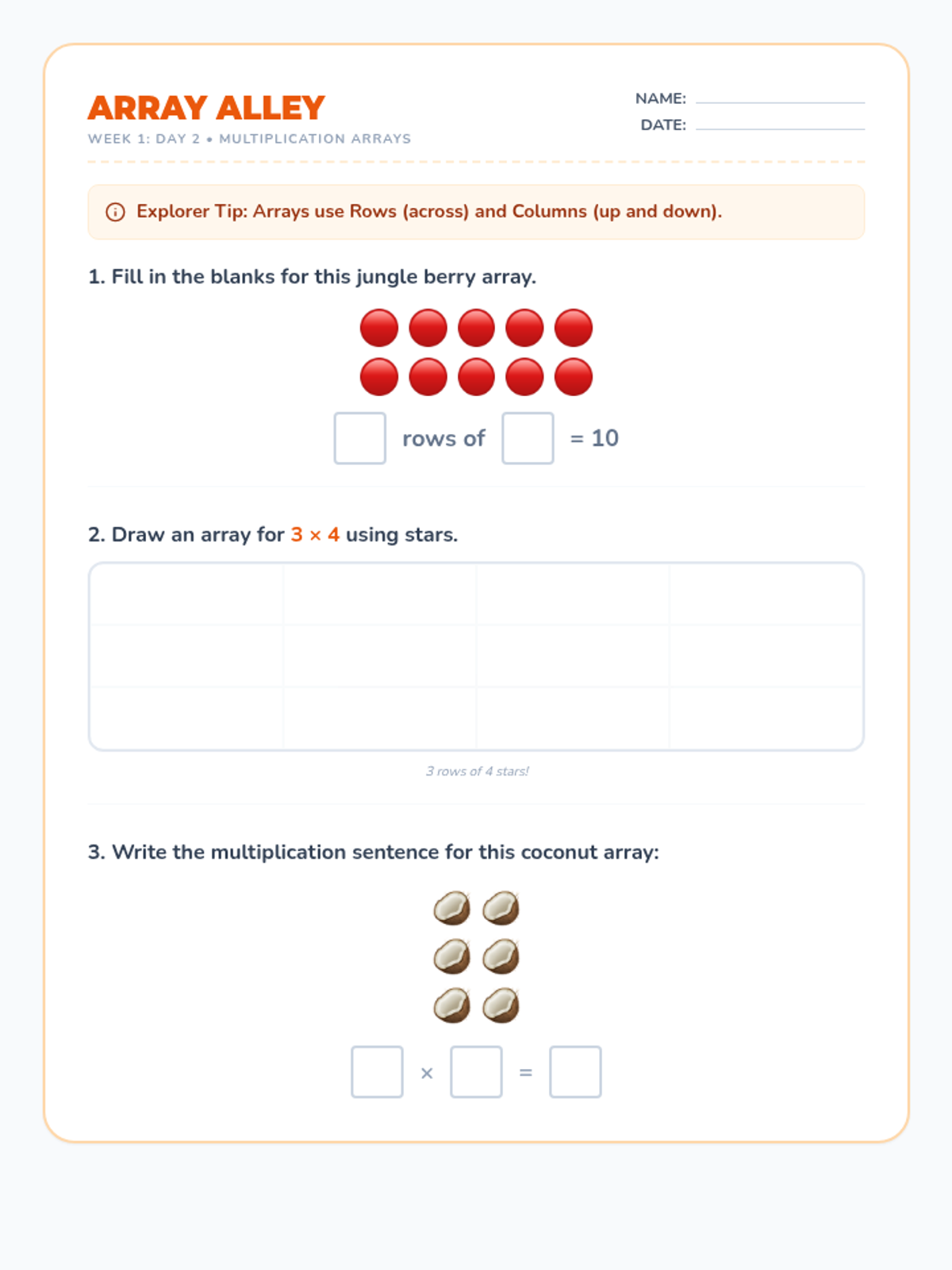
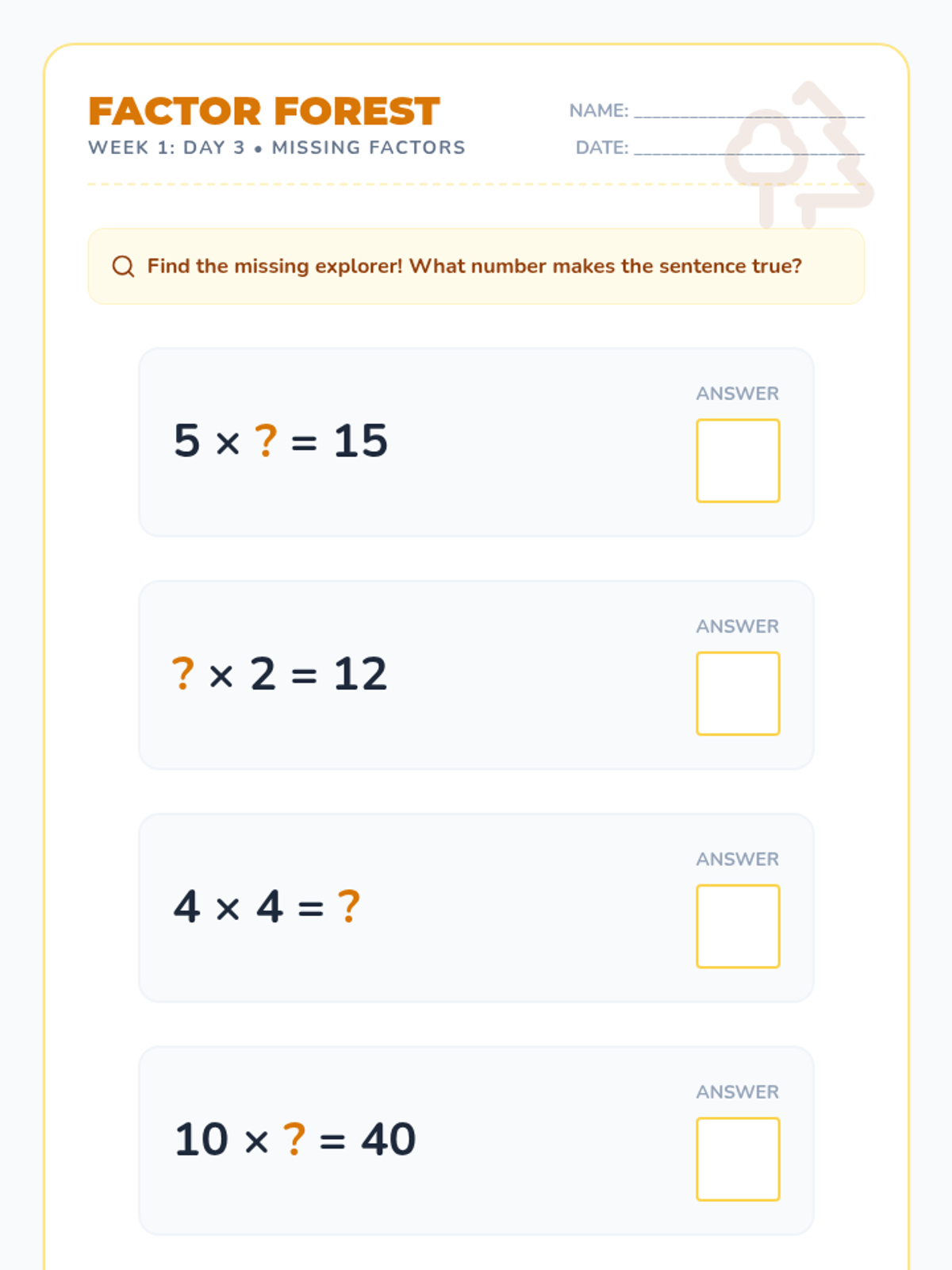
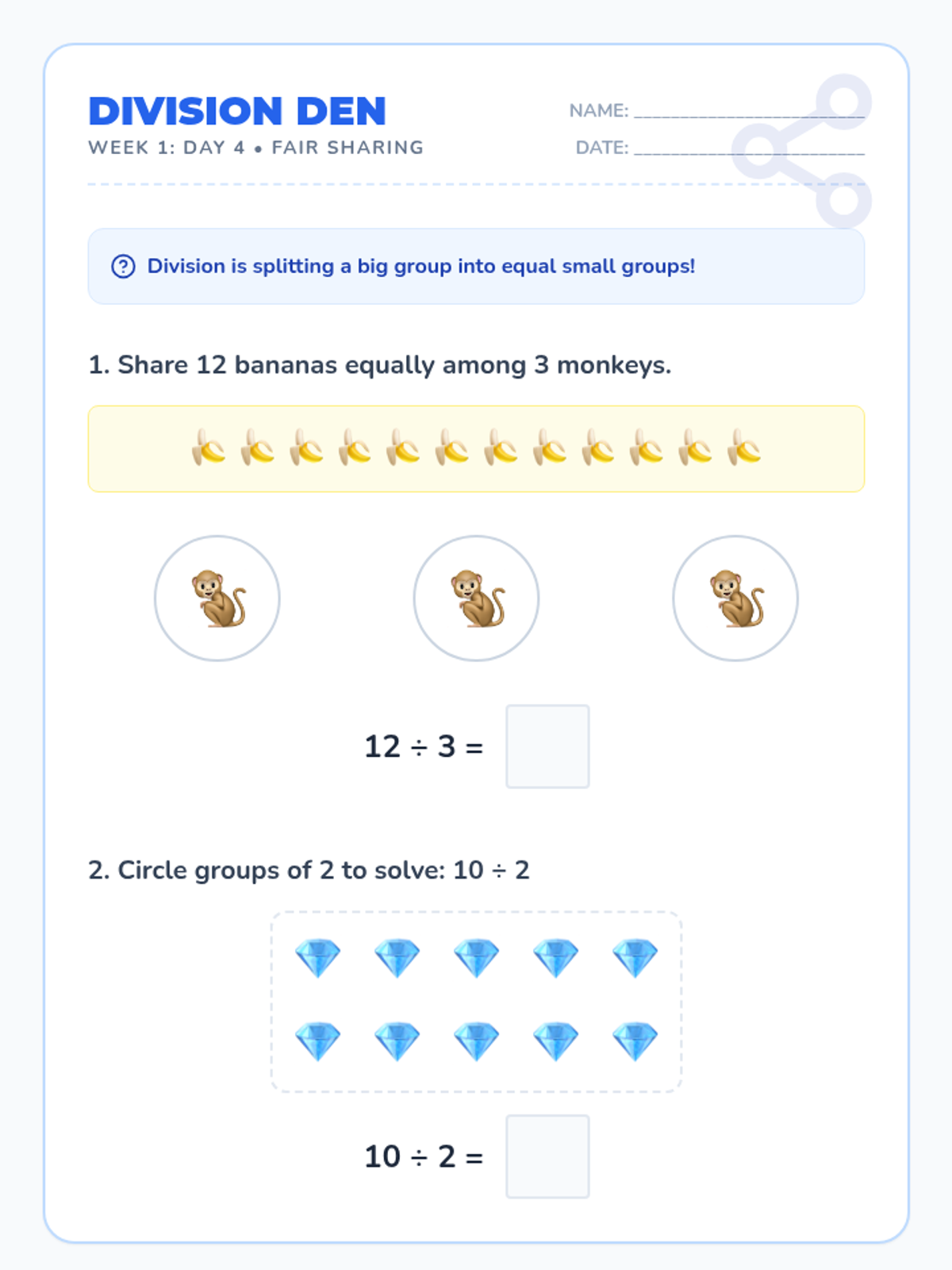
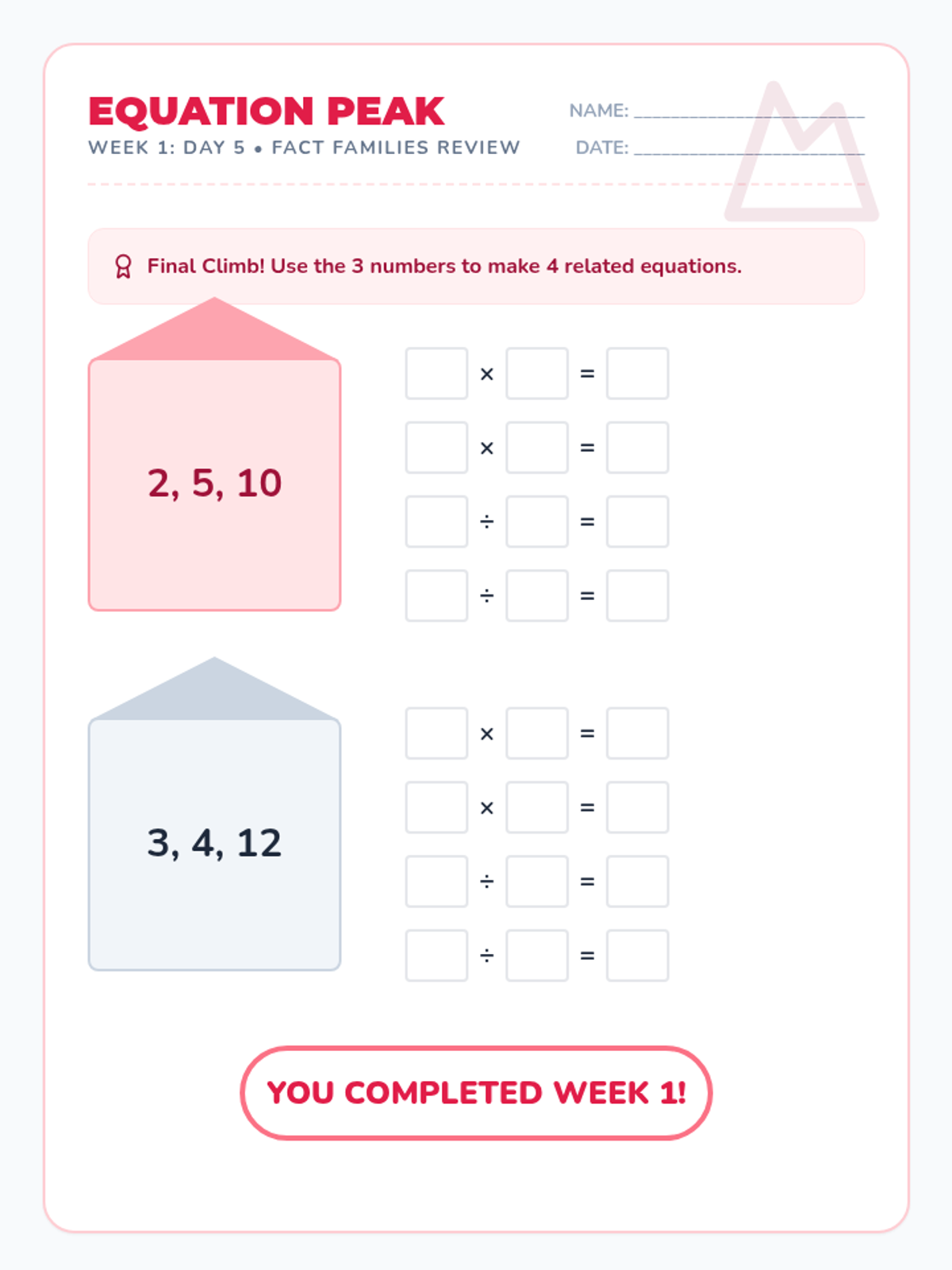
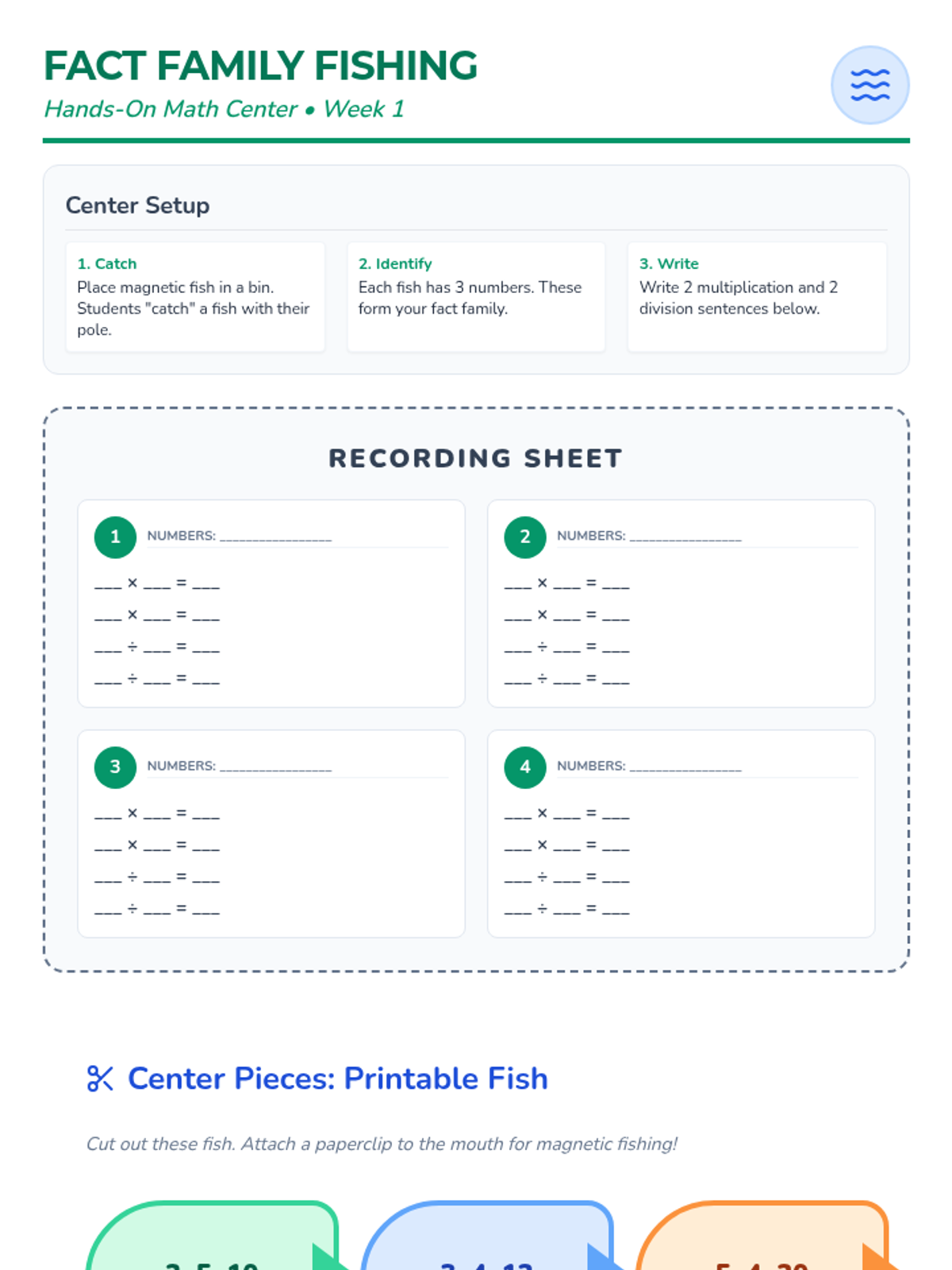
Week 1 focuses on multiplication and division through the lens of a Jungle Expedition, emphasizing equal groups, arrays, and basic fact fluency.
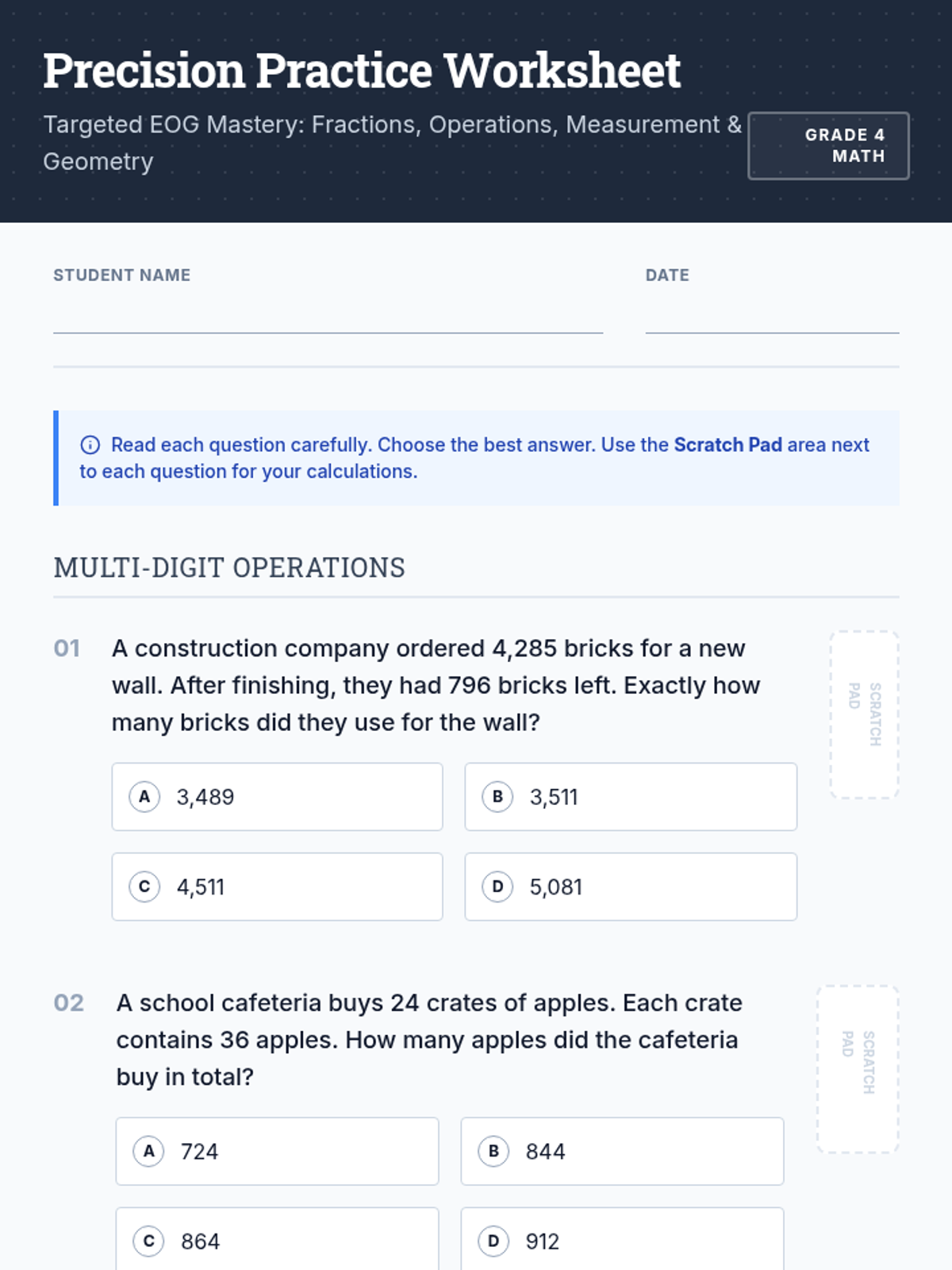
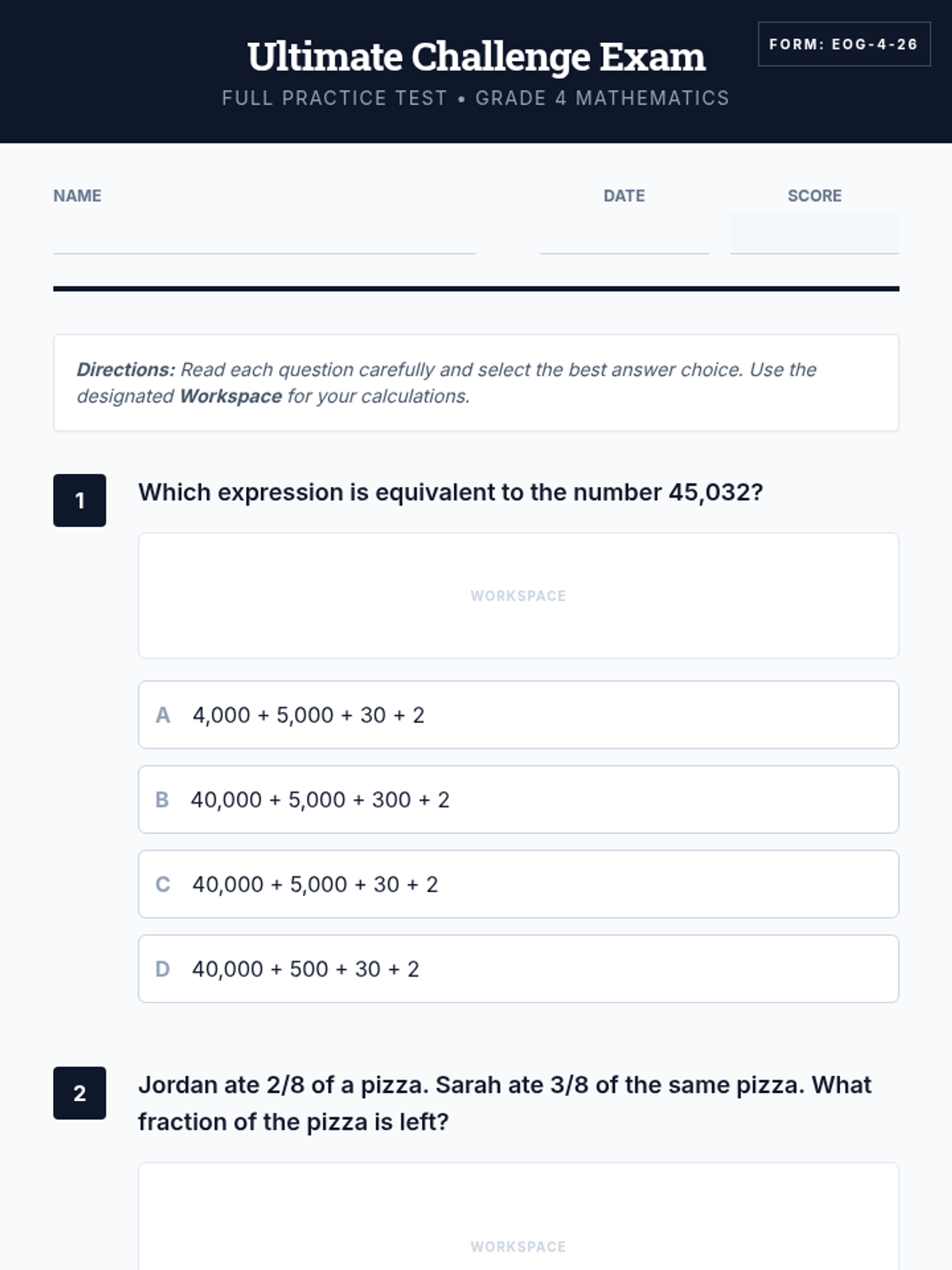
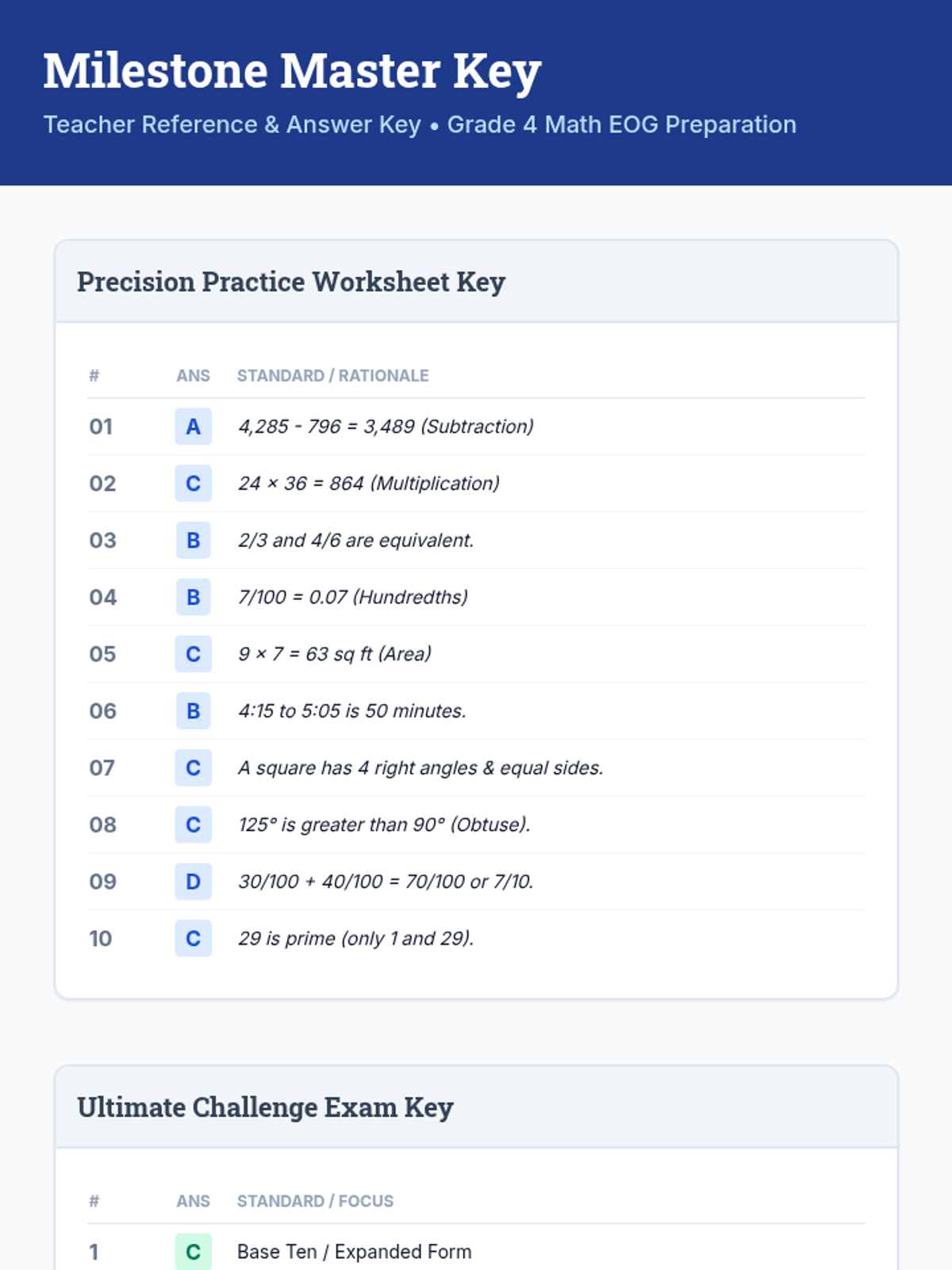
A comprehensive practice suite for 4th Grade Math EOG preparation, focusing on fractions, decimals, multi-digit operations, measurement, data, and geometry. This lesson includes targeted worksheets and a full-length practice exam designed to mimic the rigor of state assessments.
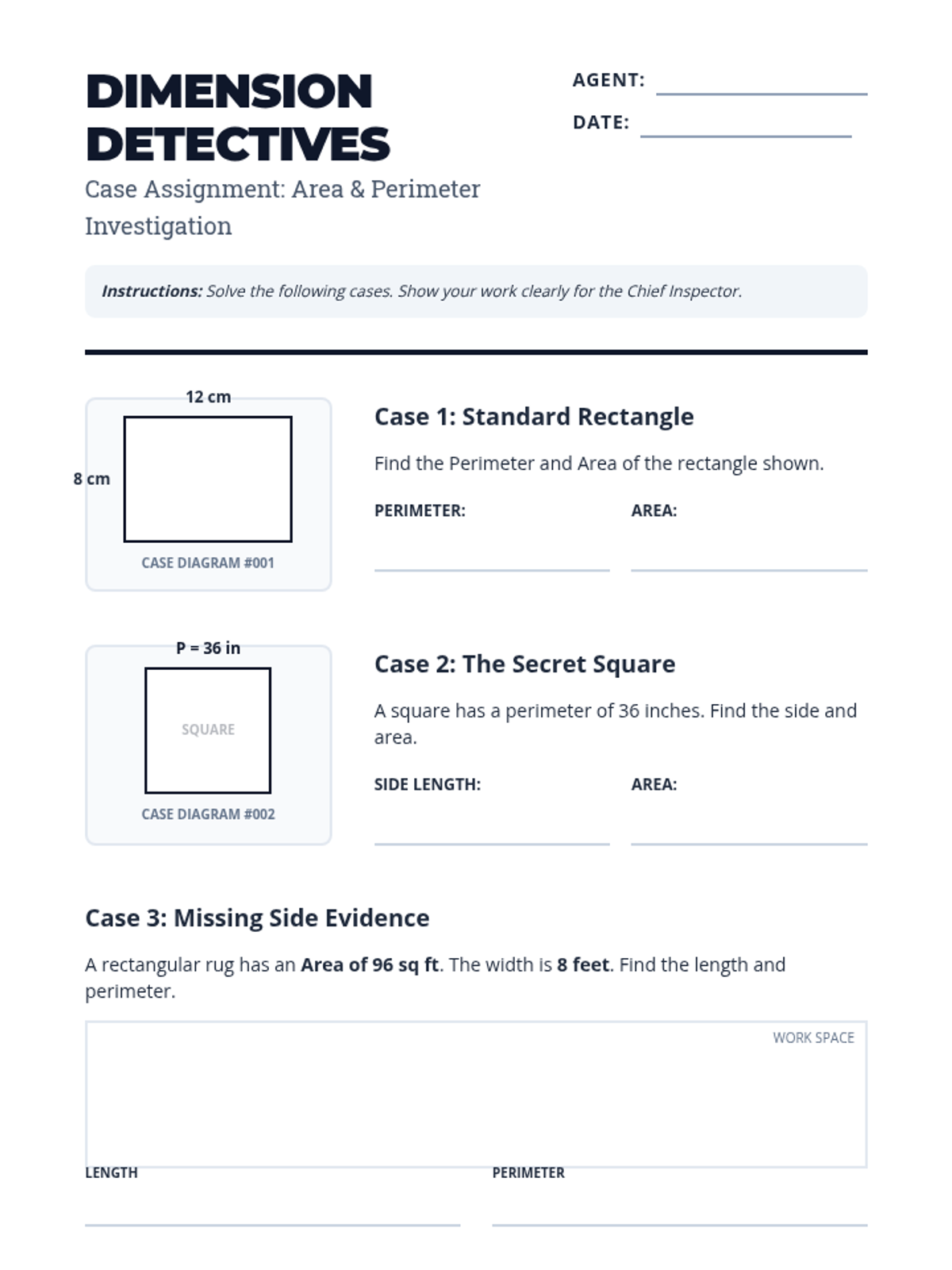
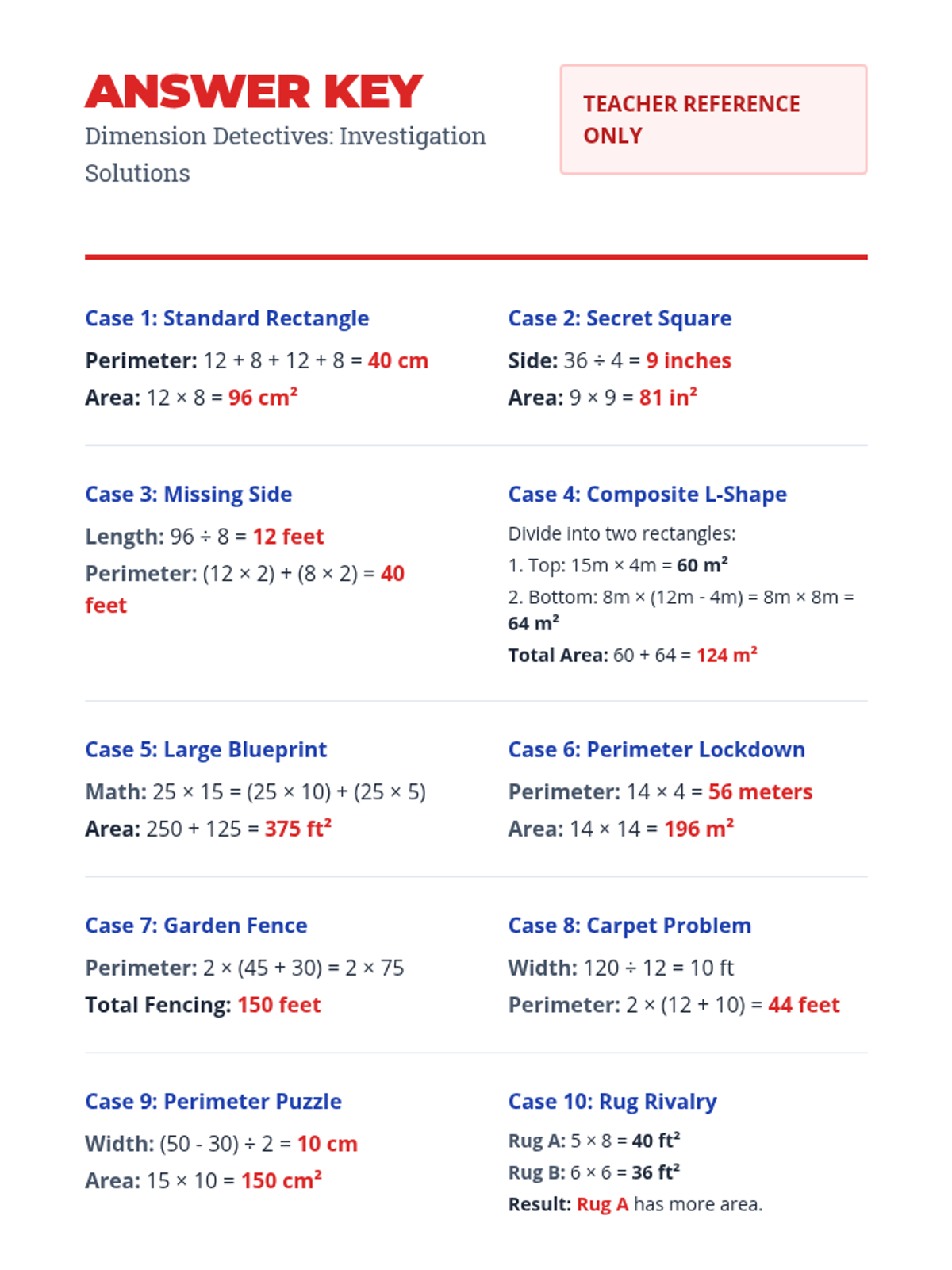
A fourth-grade lesson focusing on calculating area and perimeter of rectangles, squares, and composite L-shapes, including problems with missing dimensions and multi-digit multiplication.
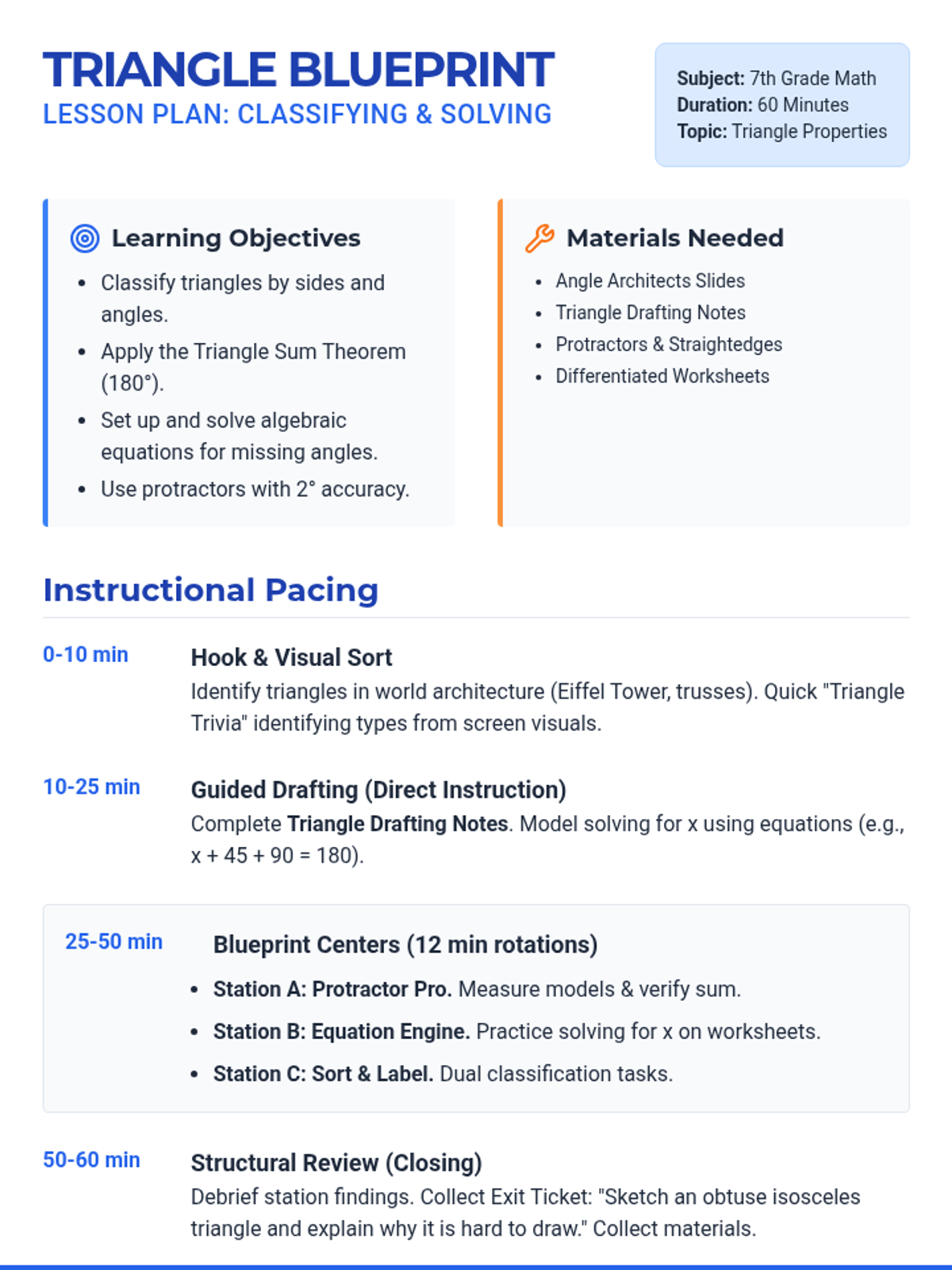
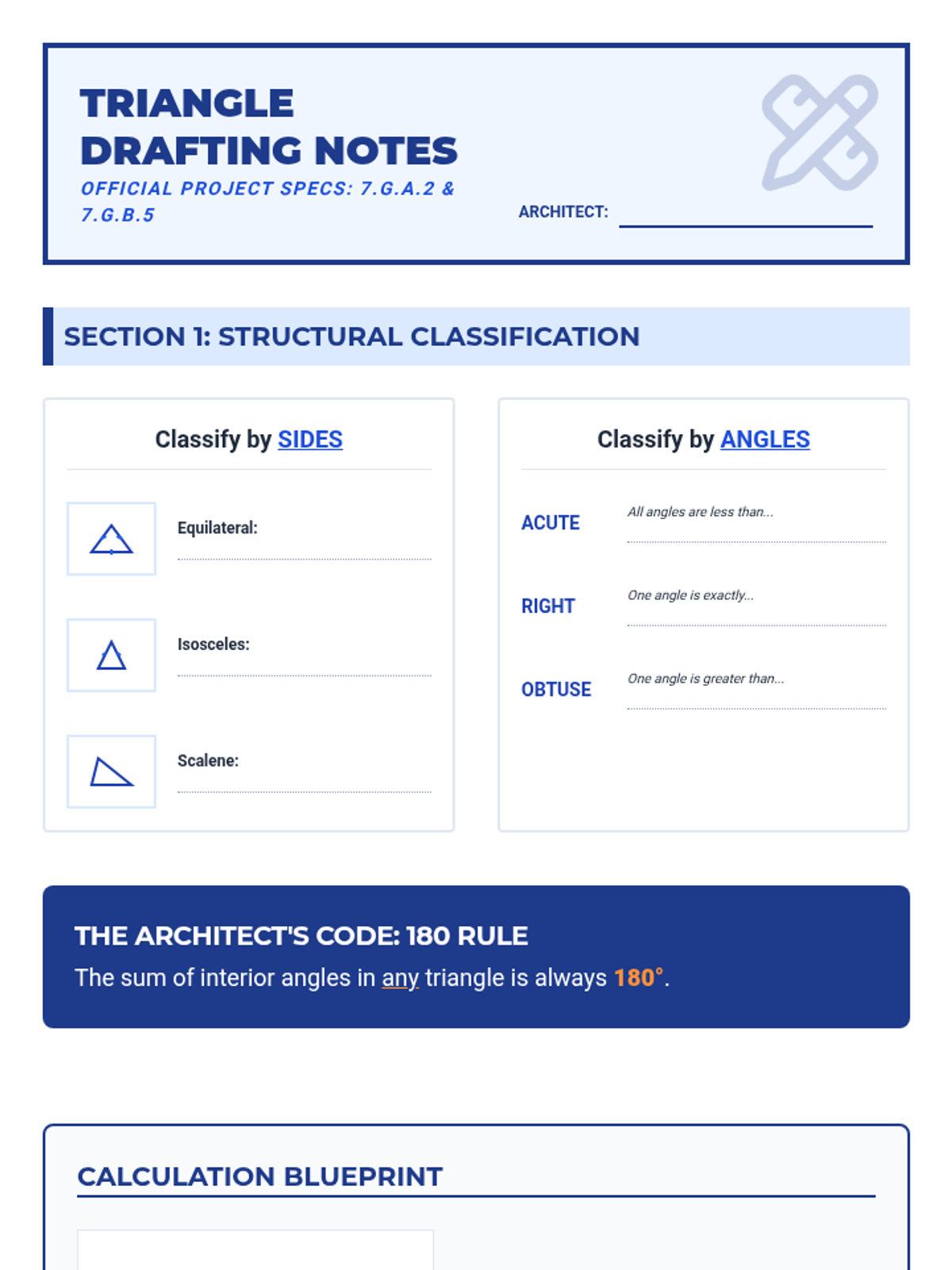
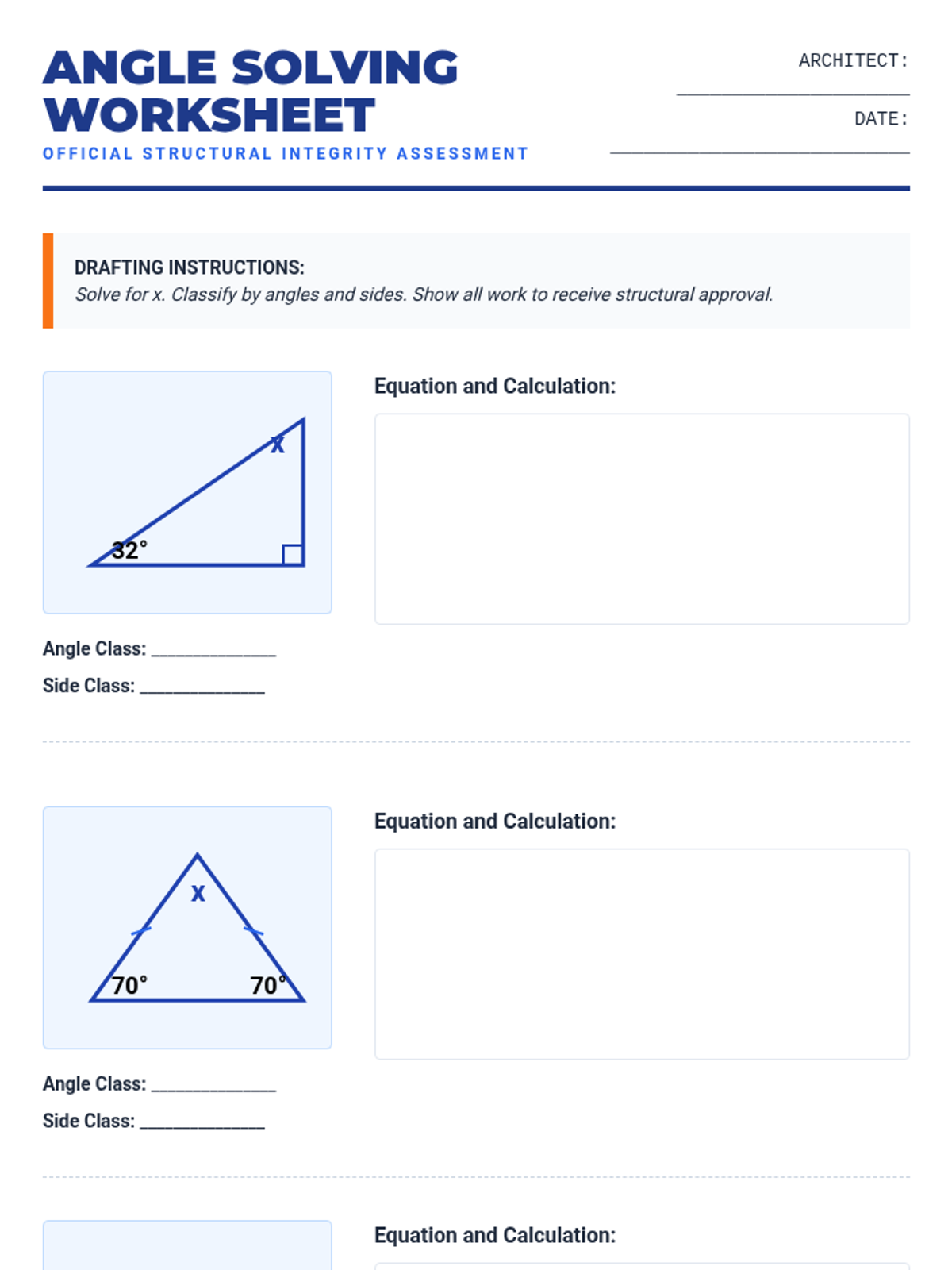
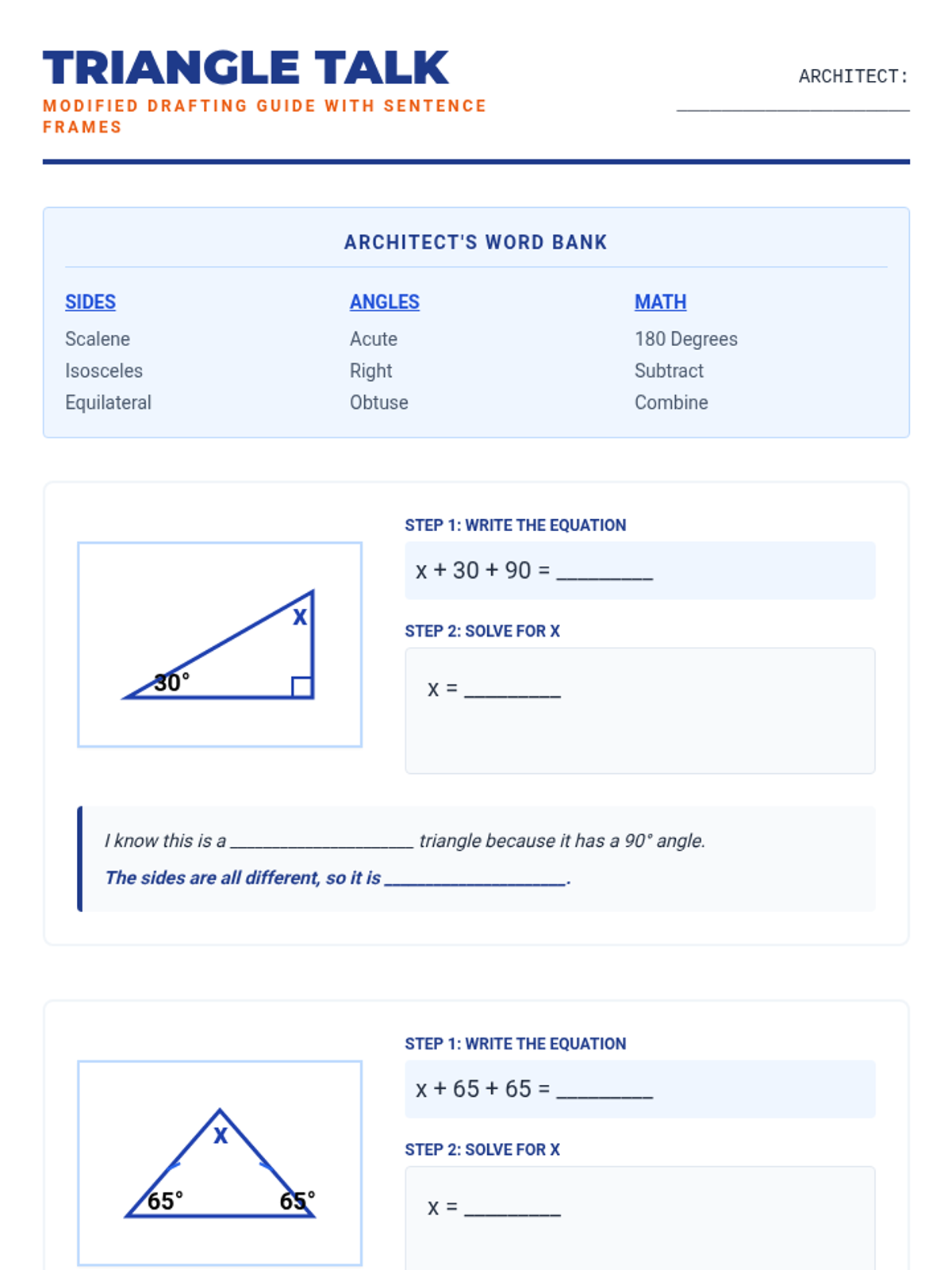
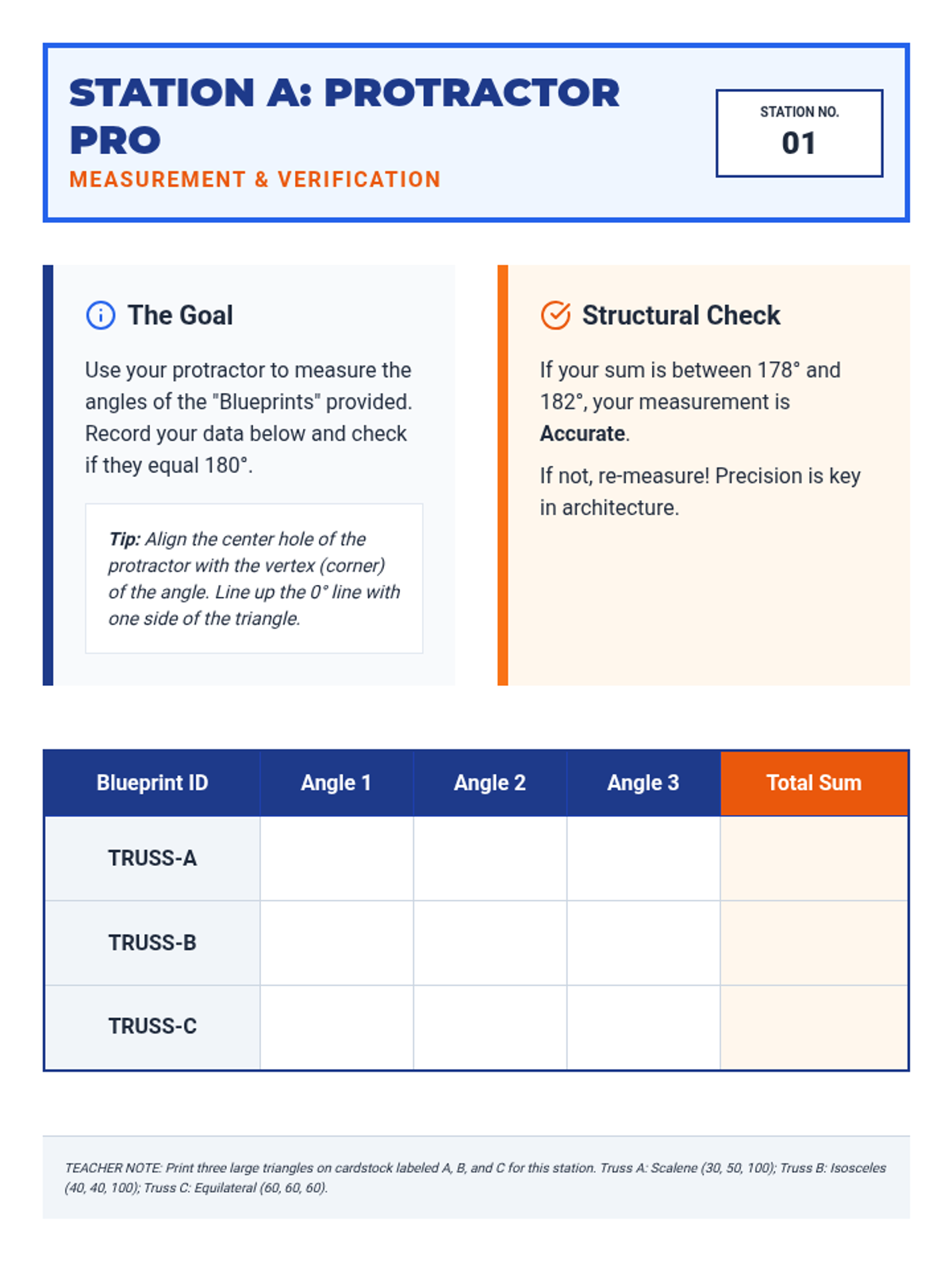
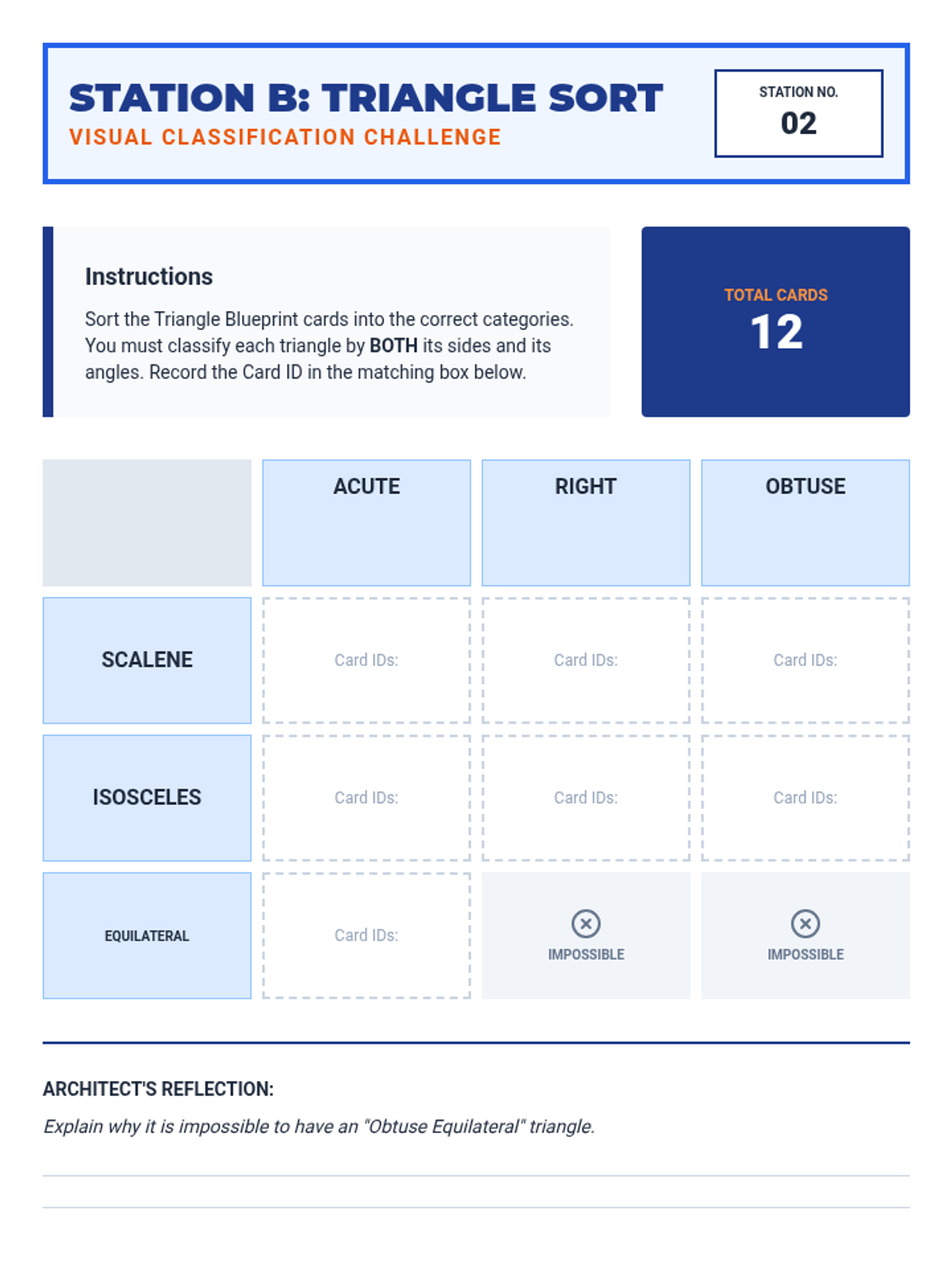
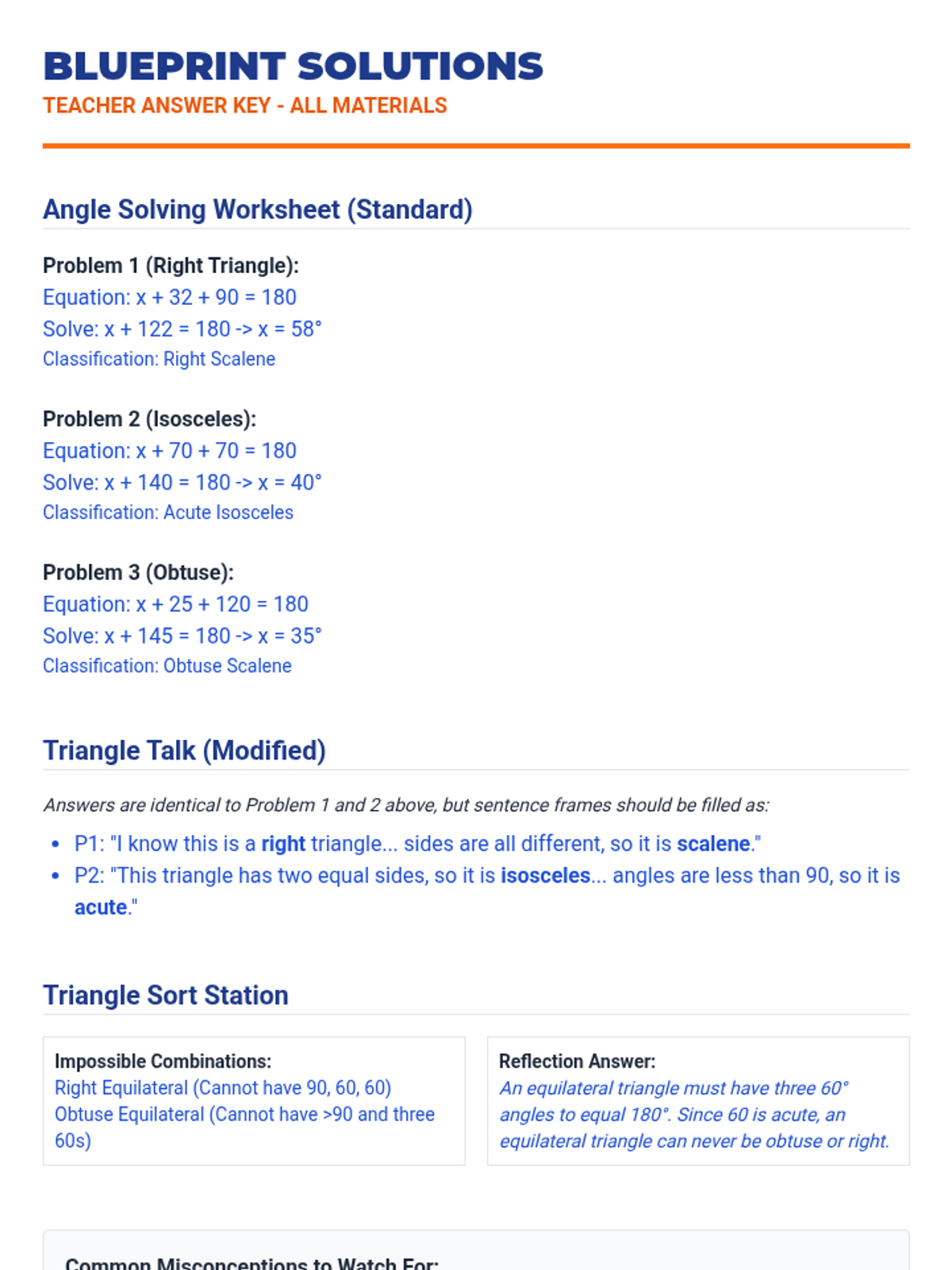
A comprehensive 7th-grade math lesson on triangle classification and angle relationships, featuring a blueprint-inspired aesthetic and tiered differentiation. Students will master visual identification, algebraic solving, and precise measurement using protractors.
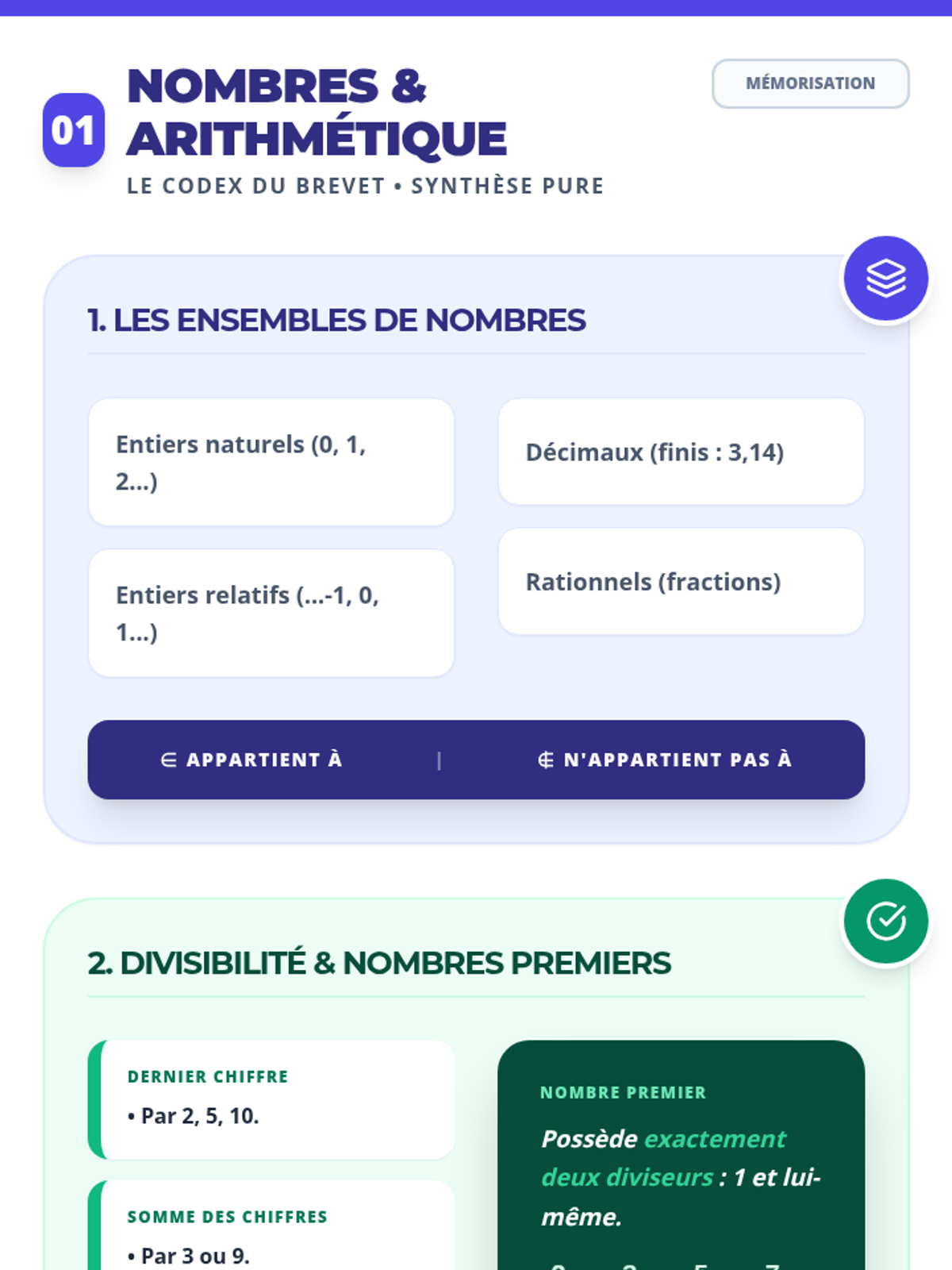
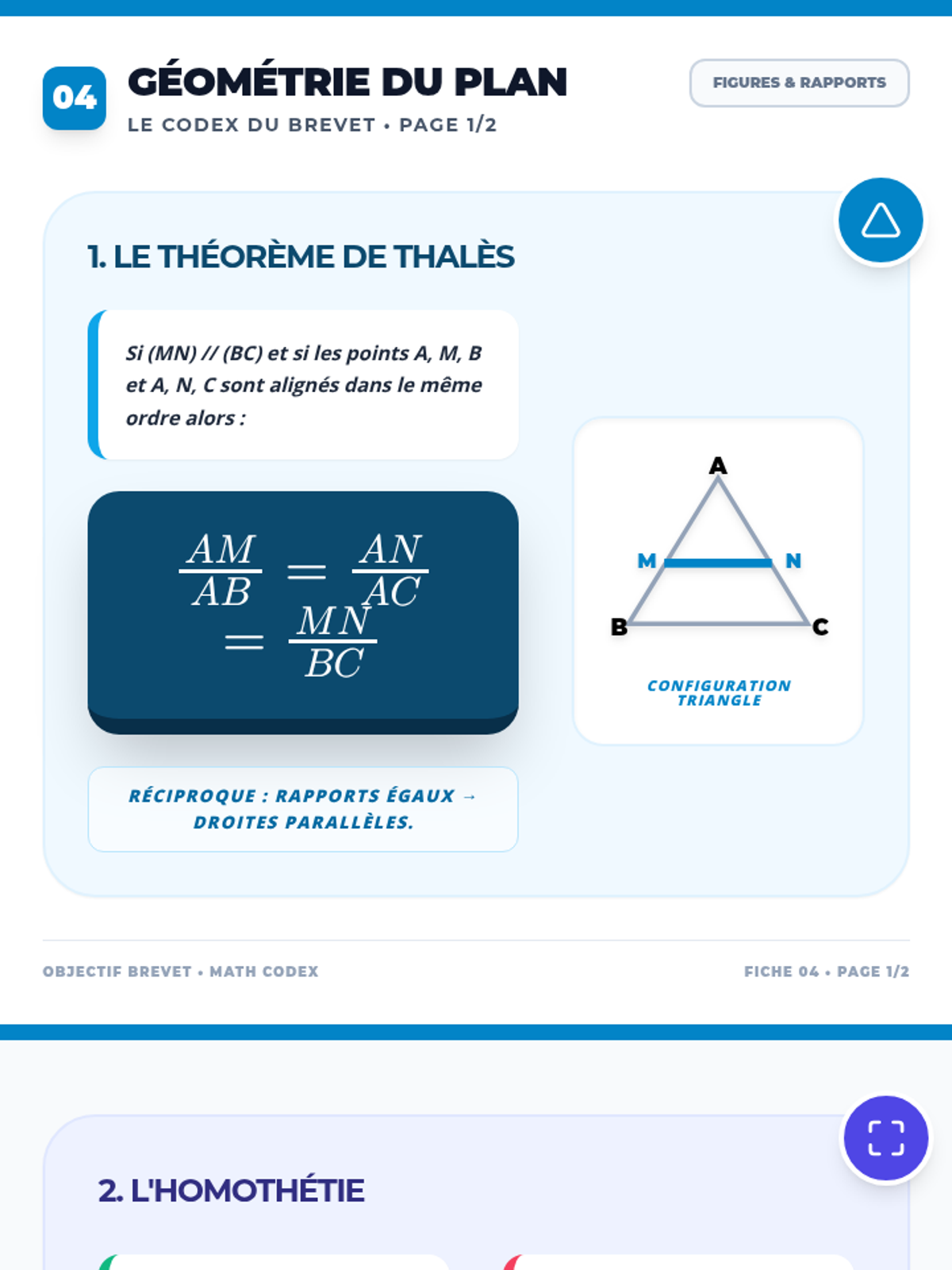
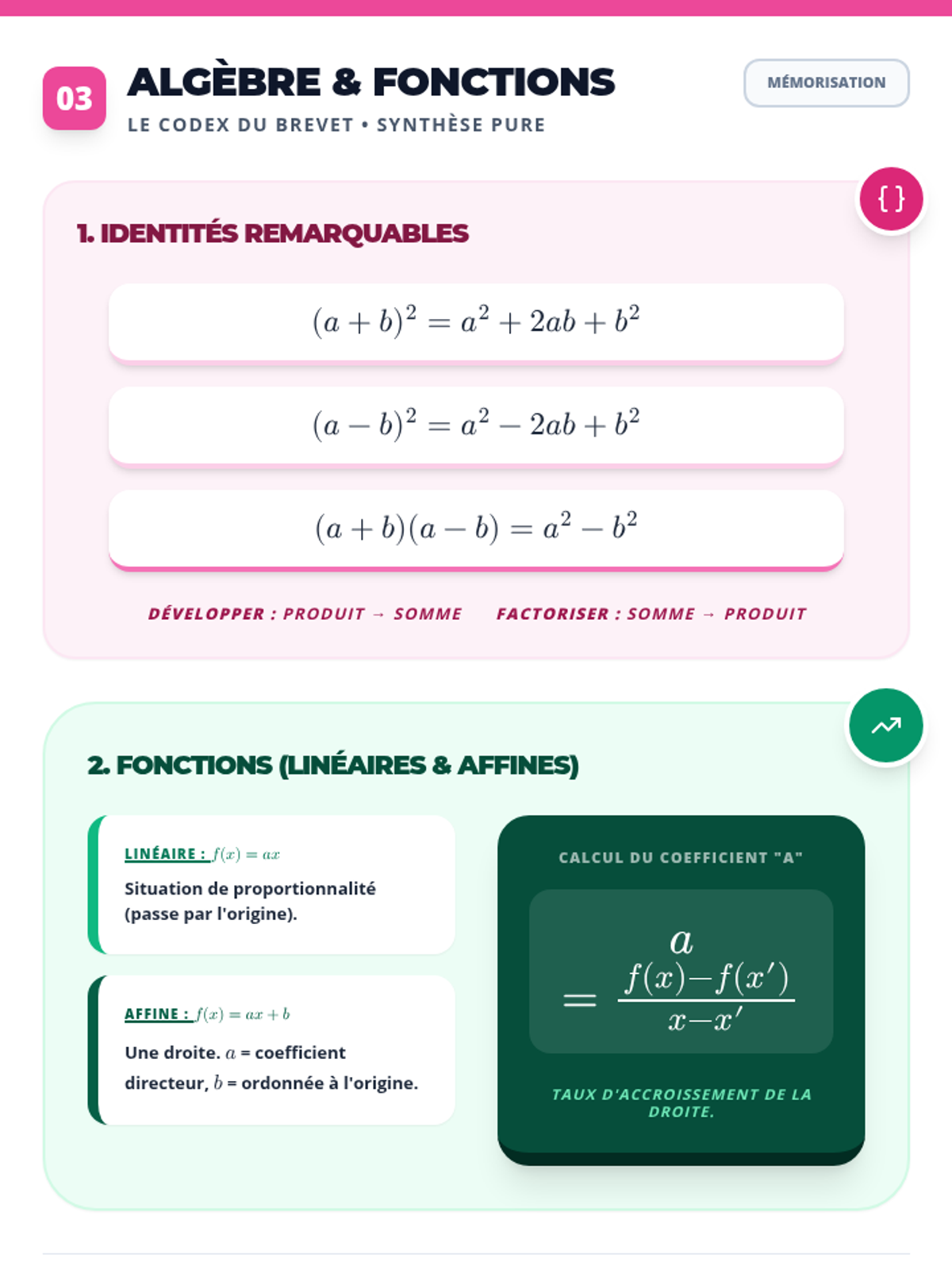
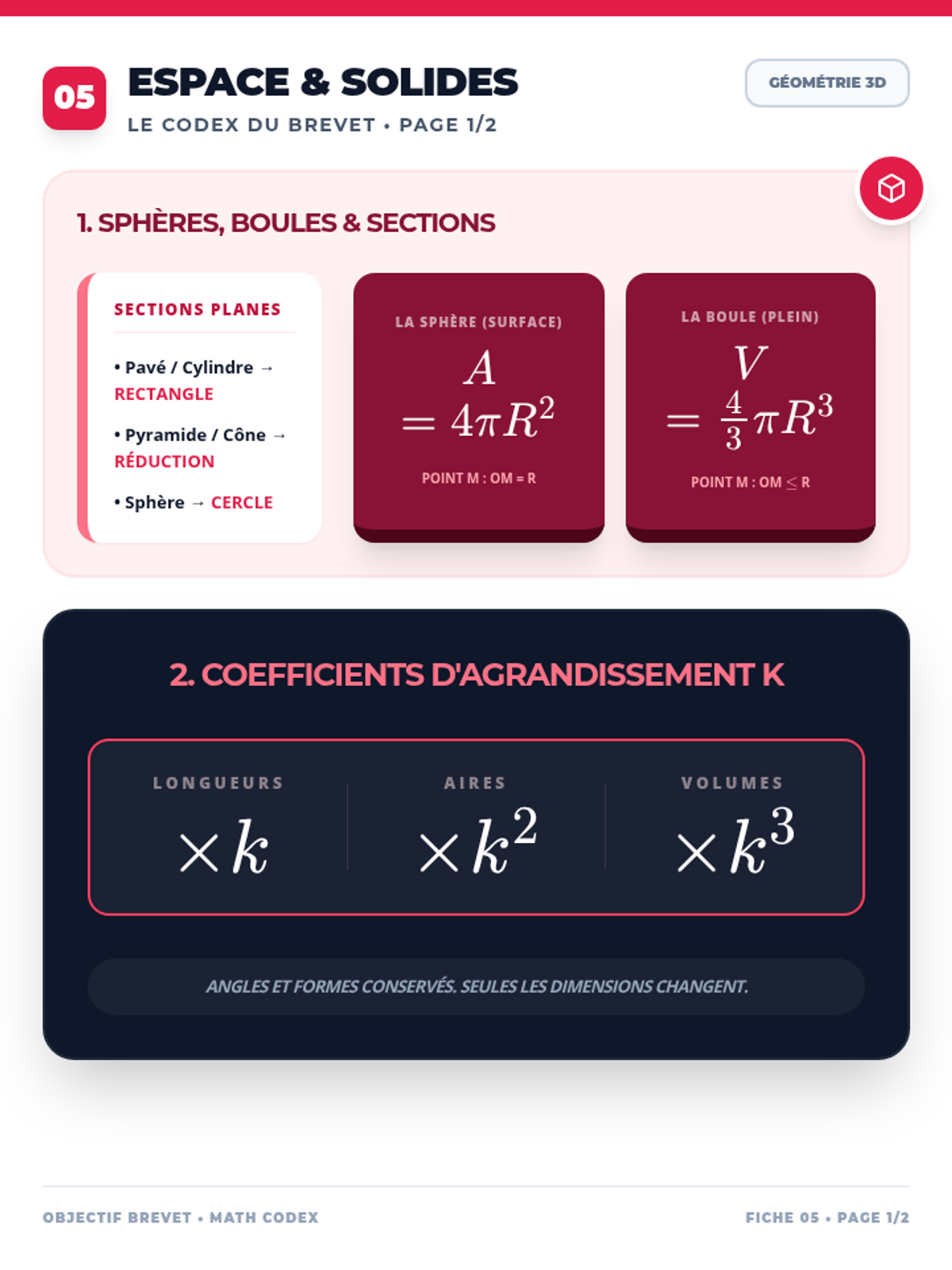
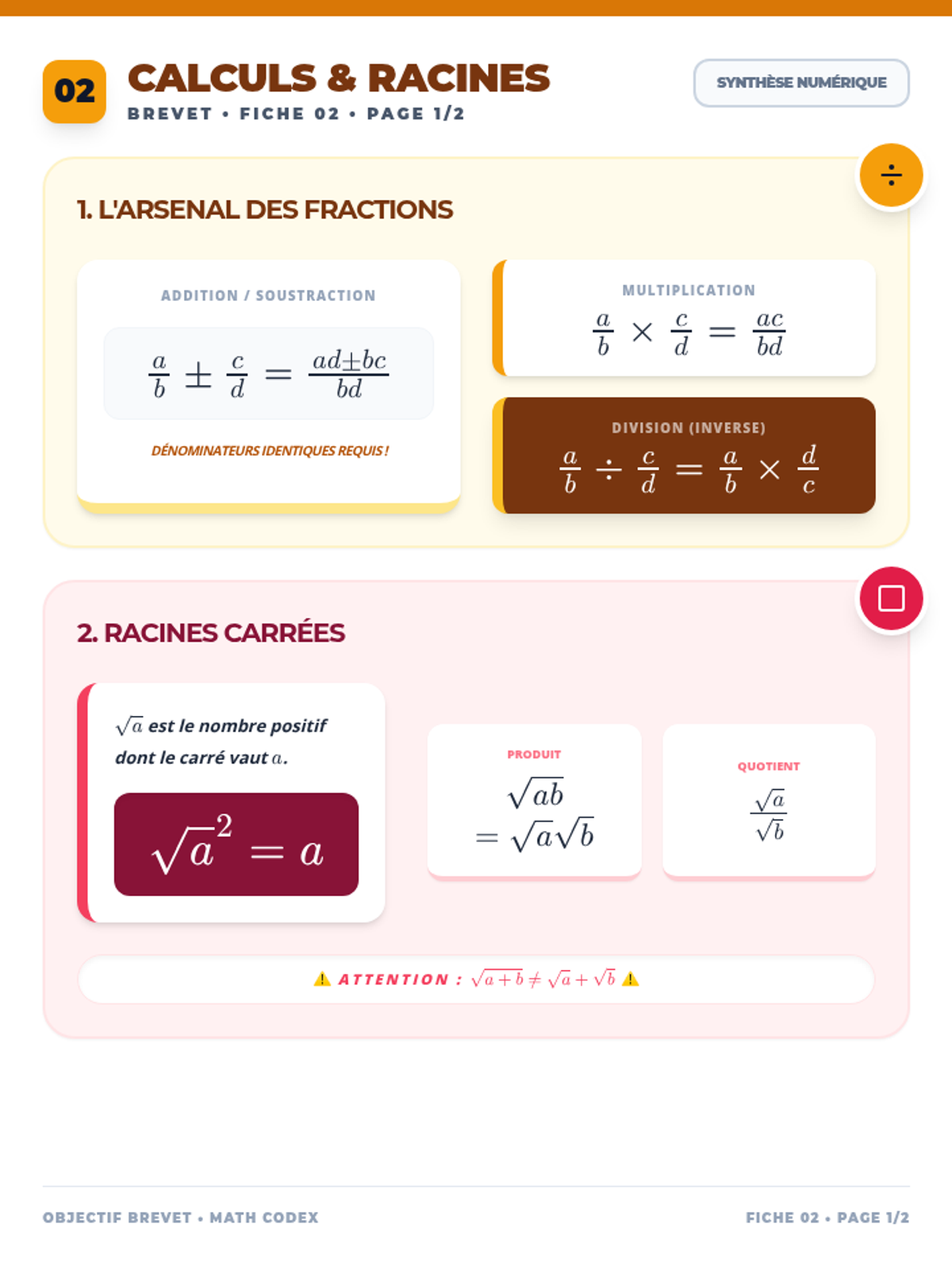
Une collection complète de fiches de révision et un diaporama dynamique pour maîtriser le programme de mathématiques de 3ème. Couvre l'arithmétique, l'algèbre, la géométrie et la trigonométrie avec des visuels clairs et modernes.
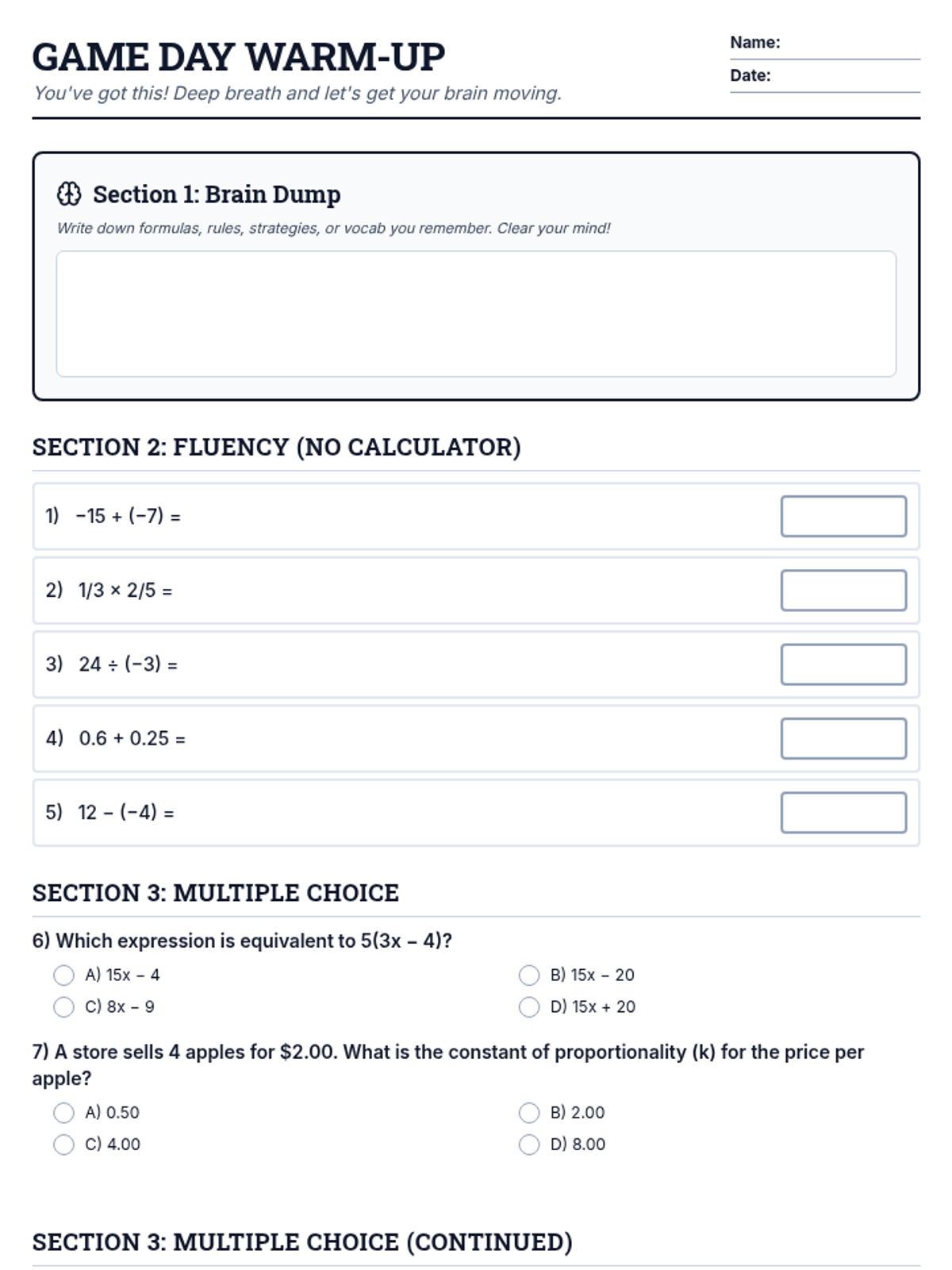
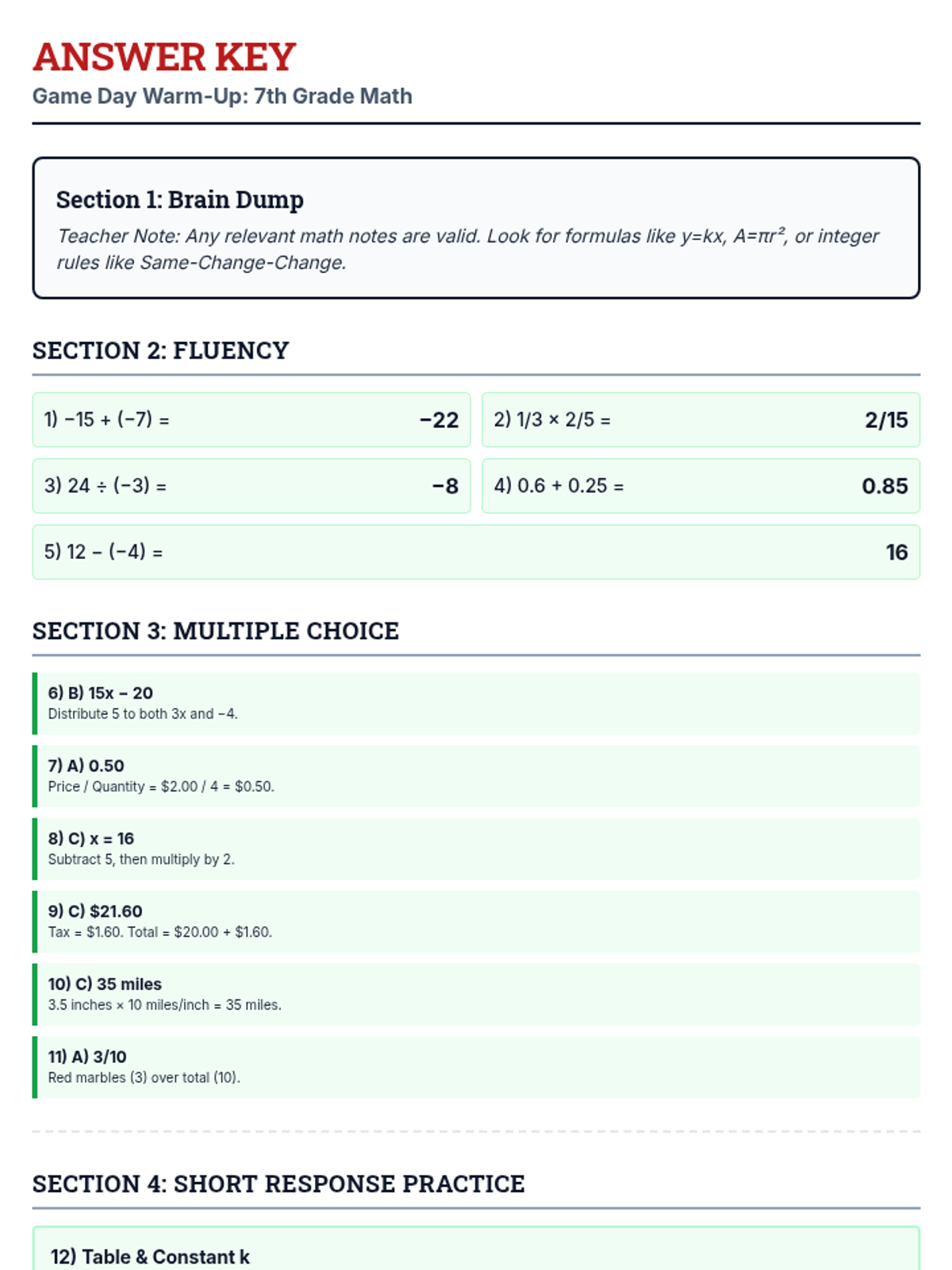
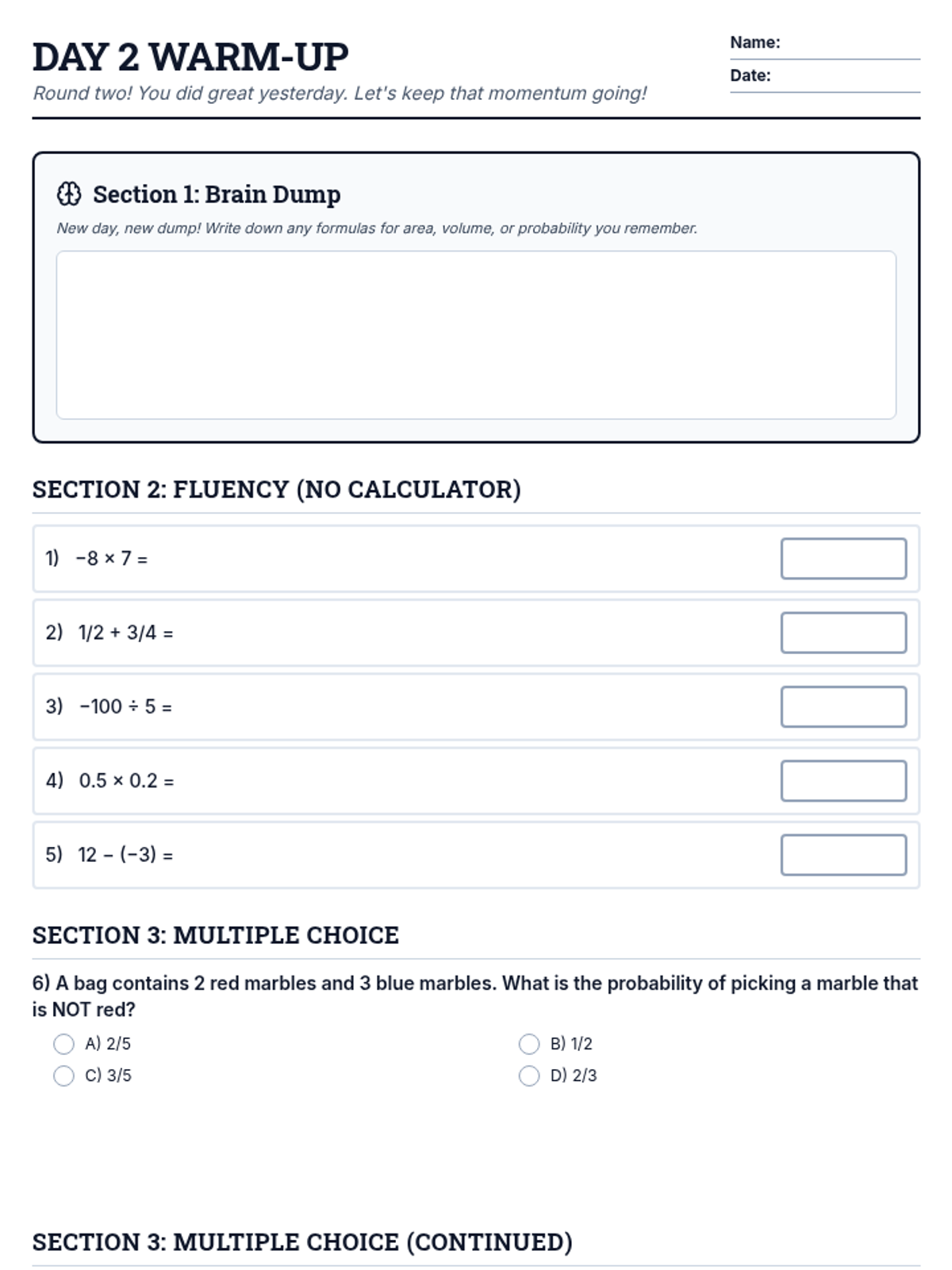
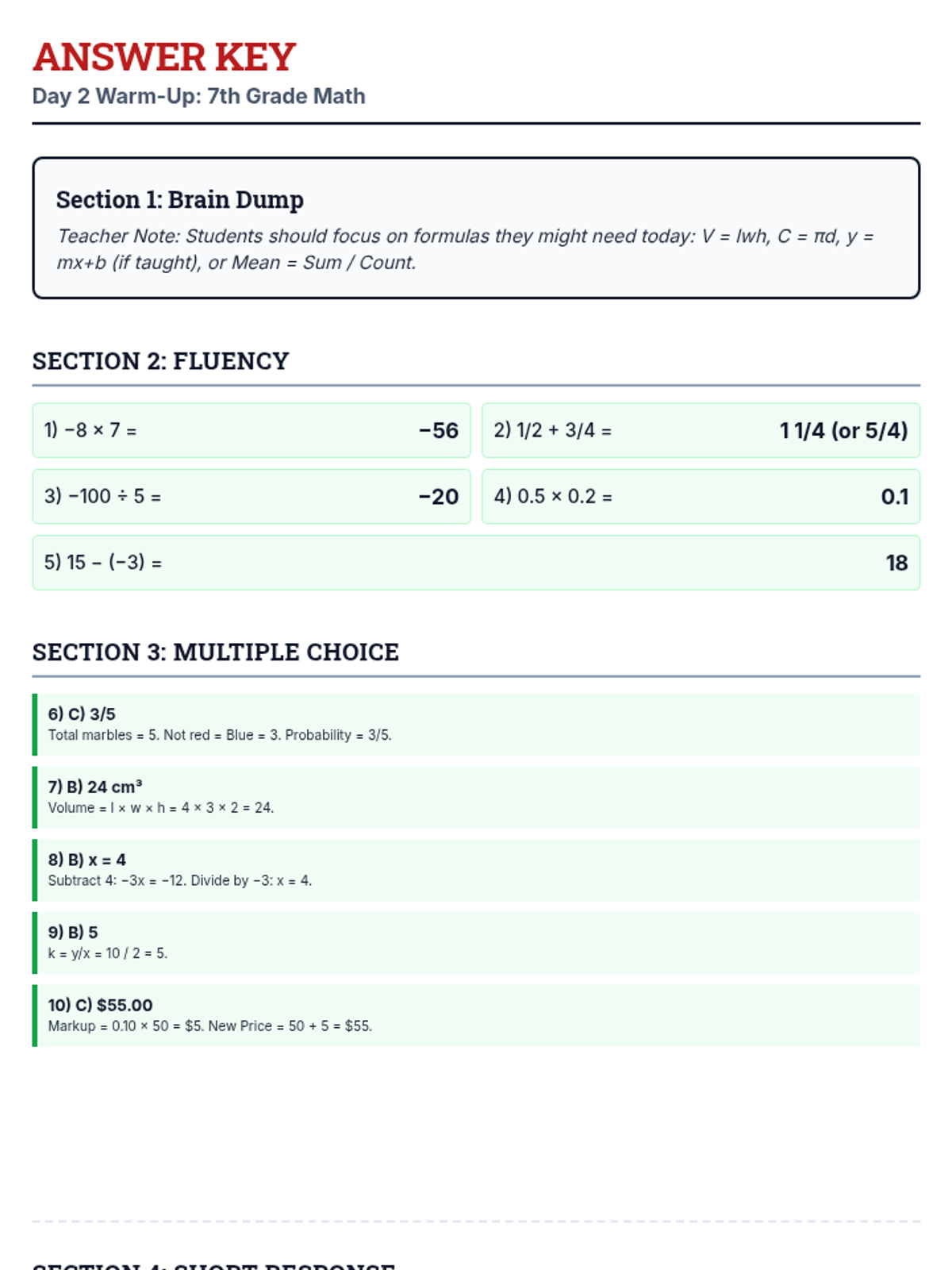
A low-pressure, confidence-building morning work packet designed for 7th-grade students on the day of their state math exam to help them warm up their thinking.
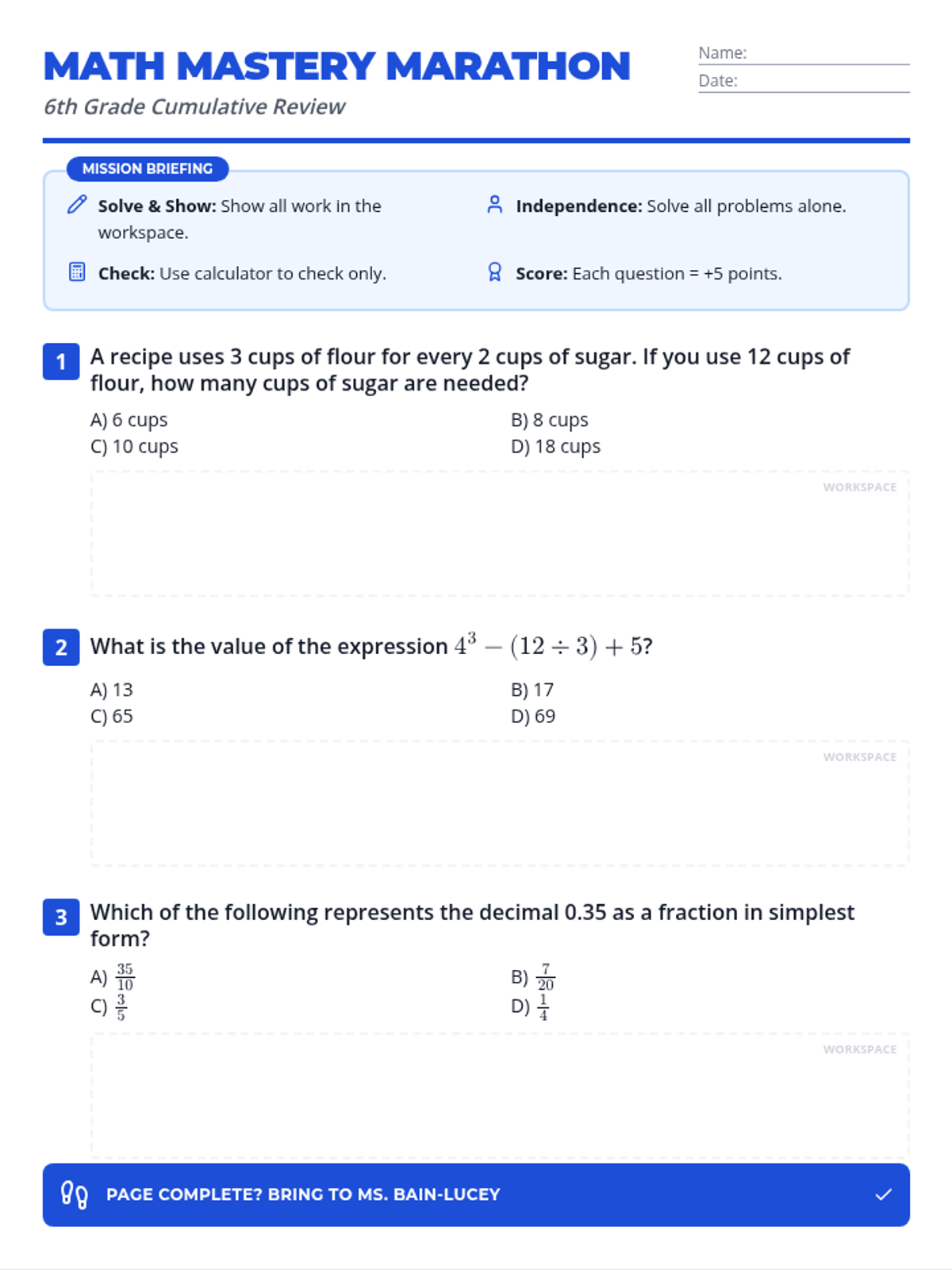
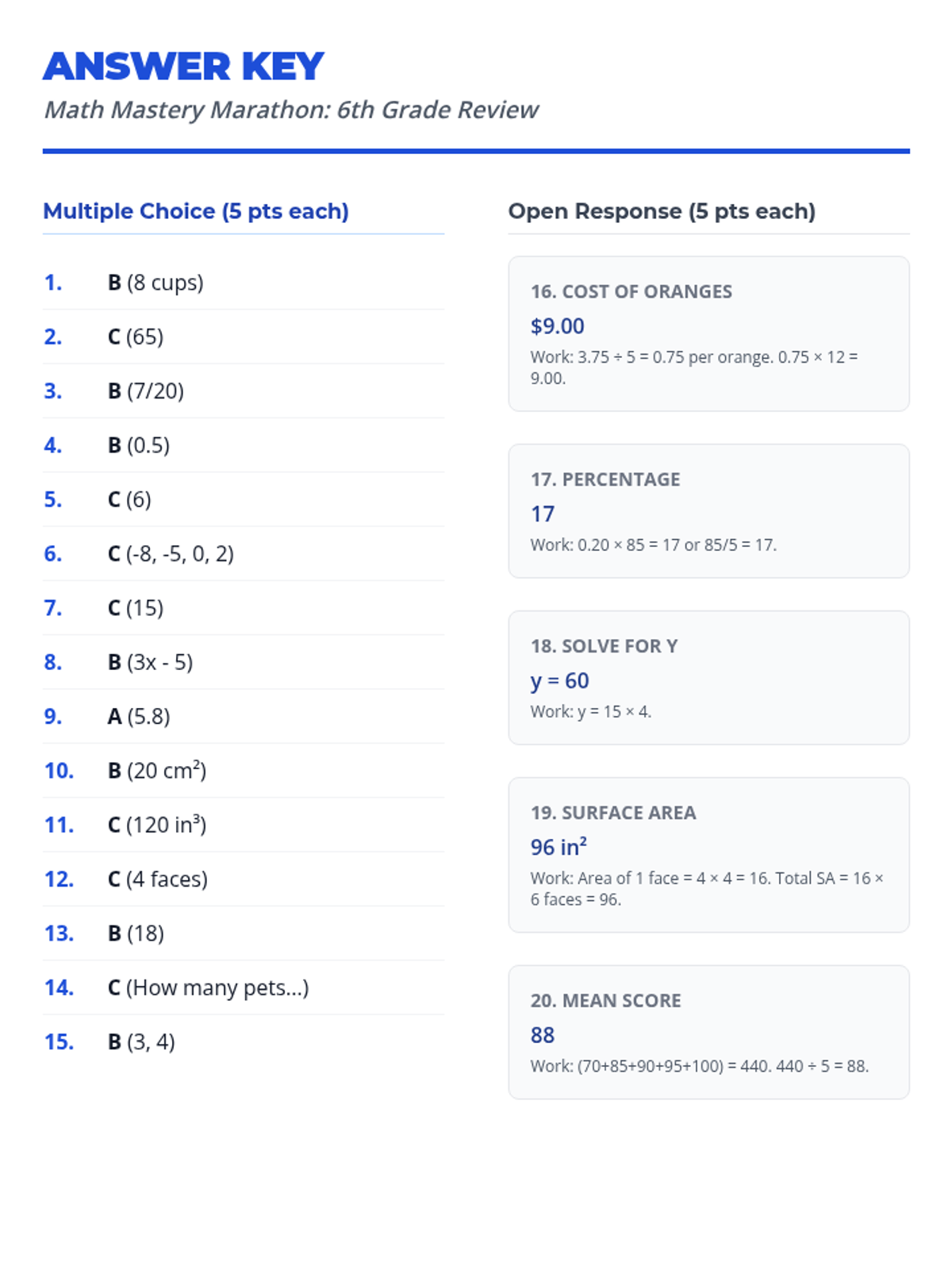
A comprehensive 6th-grade math cumulative review packet covering ratios, number systems, expressions, equations, geometry, and statistics.
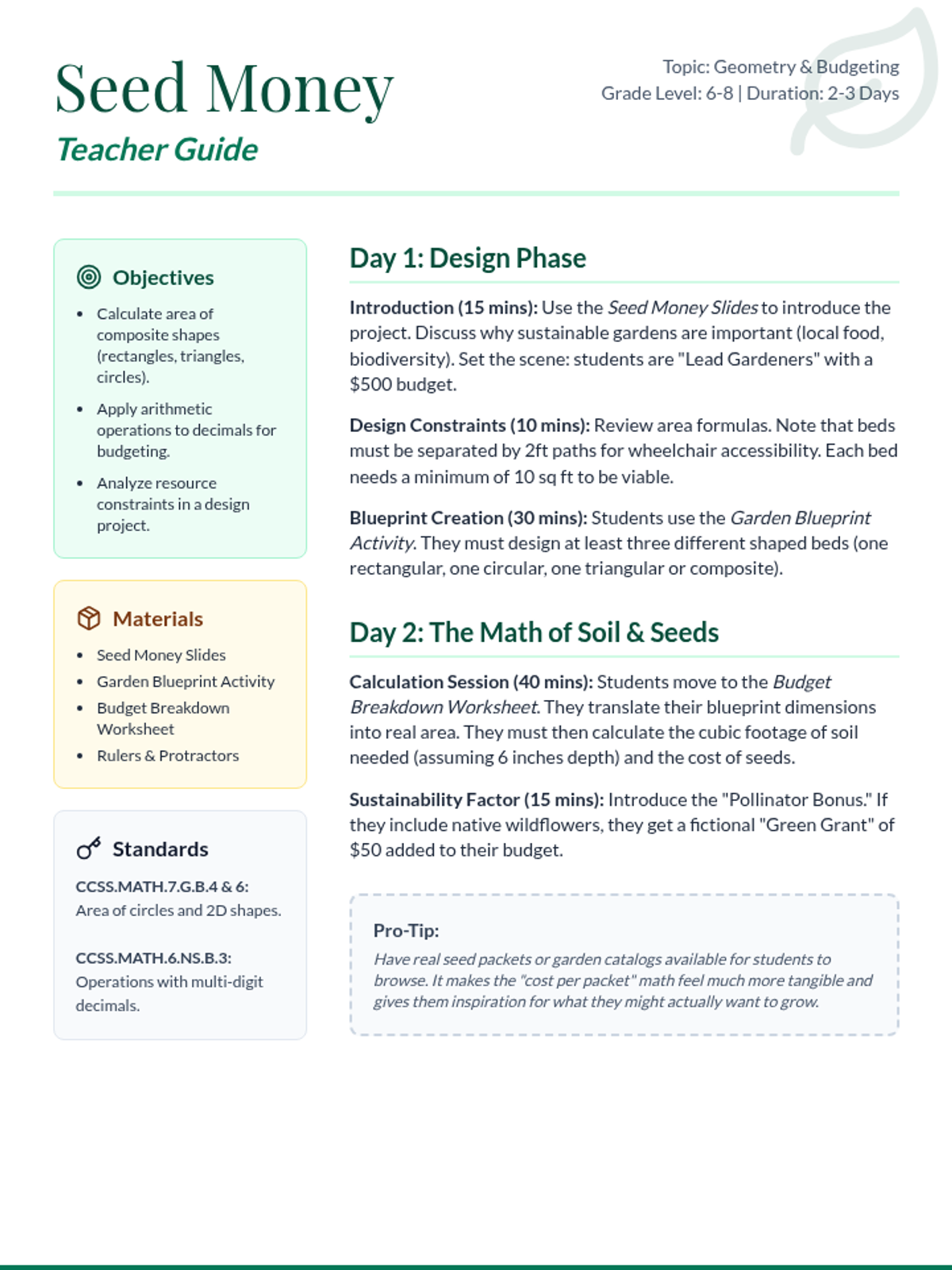
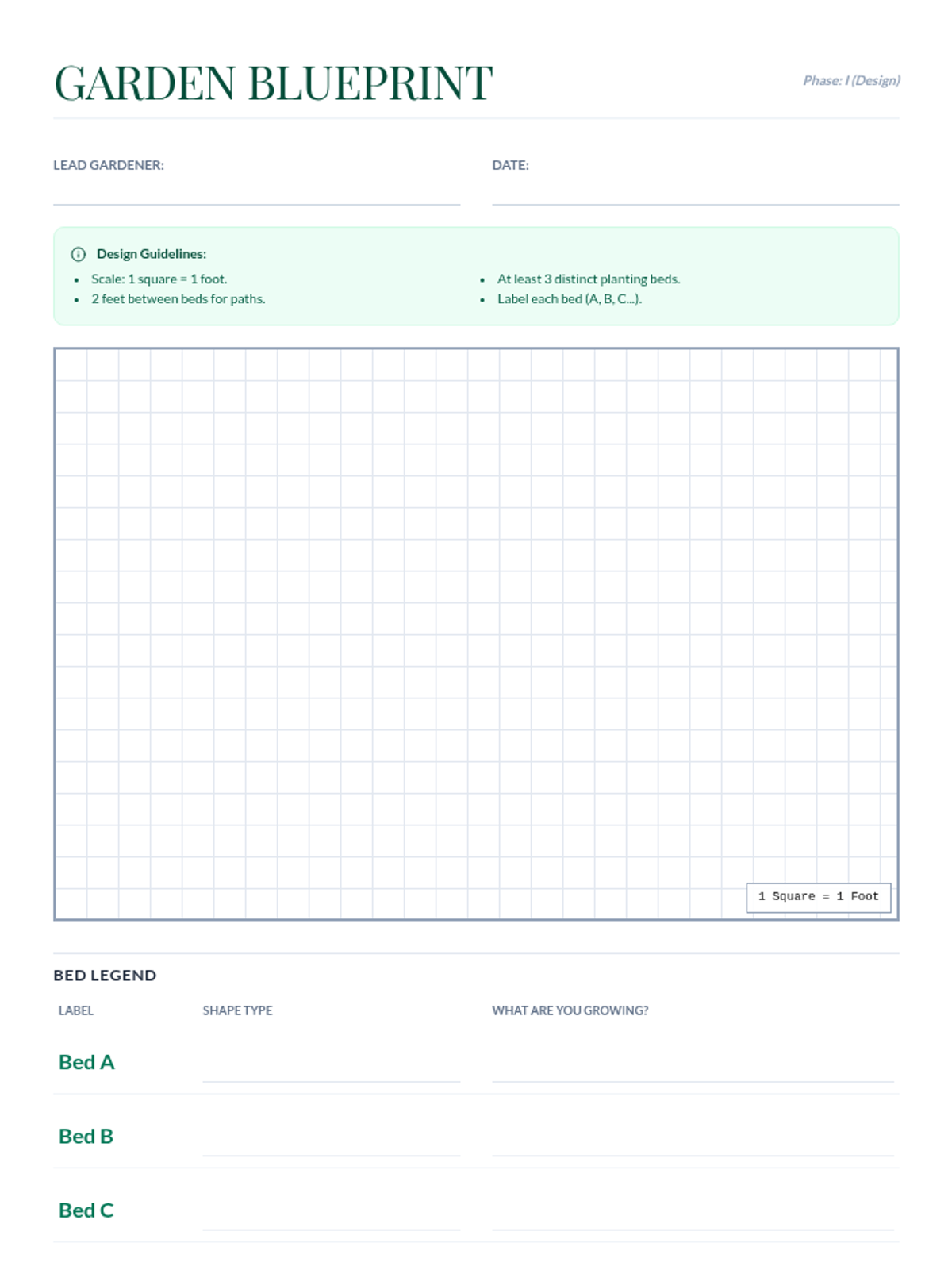
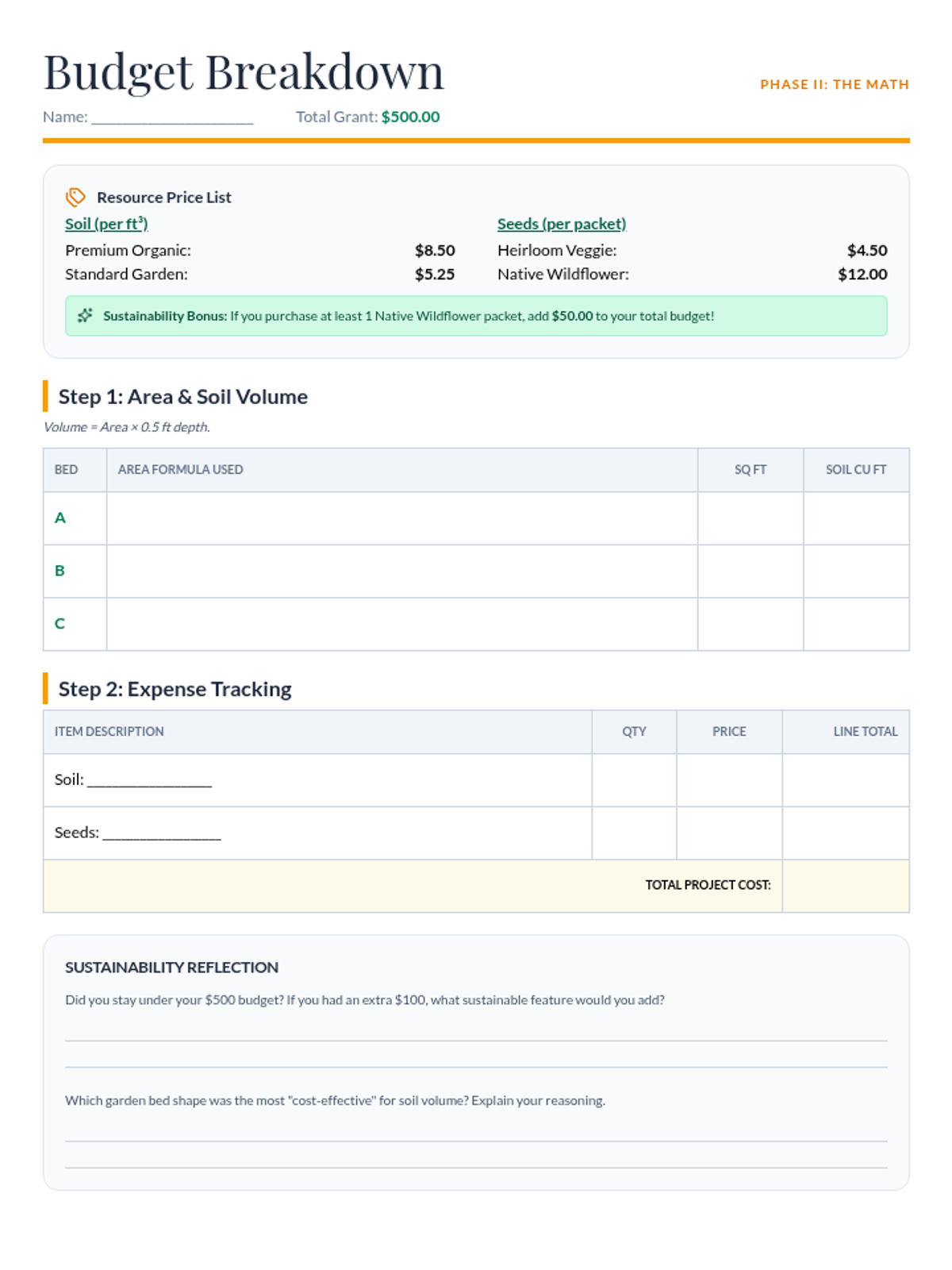
Students apply geometry and arithmetic to design a sustainable school garden, calculating area for planting beds and managing a $500 budget for soil and seeds.
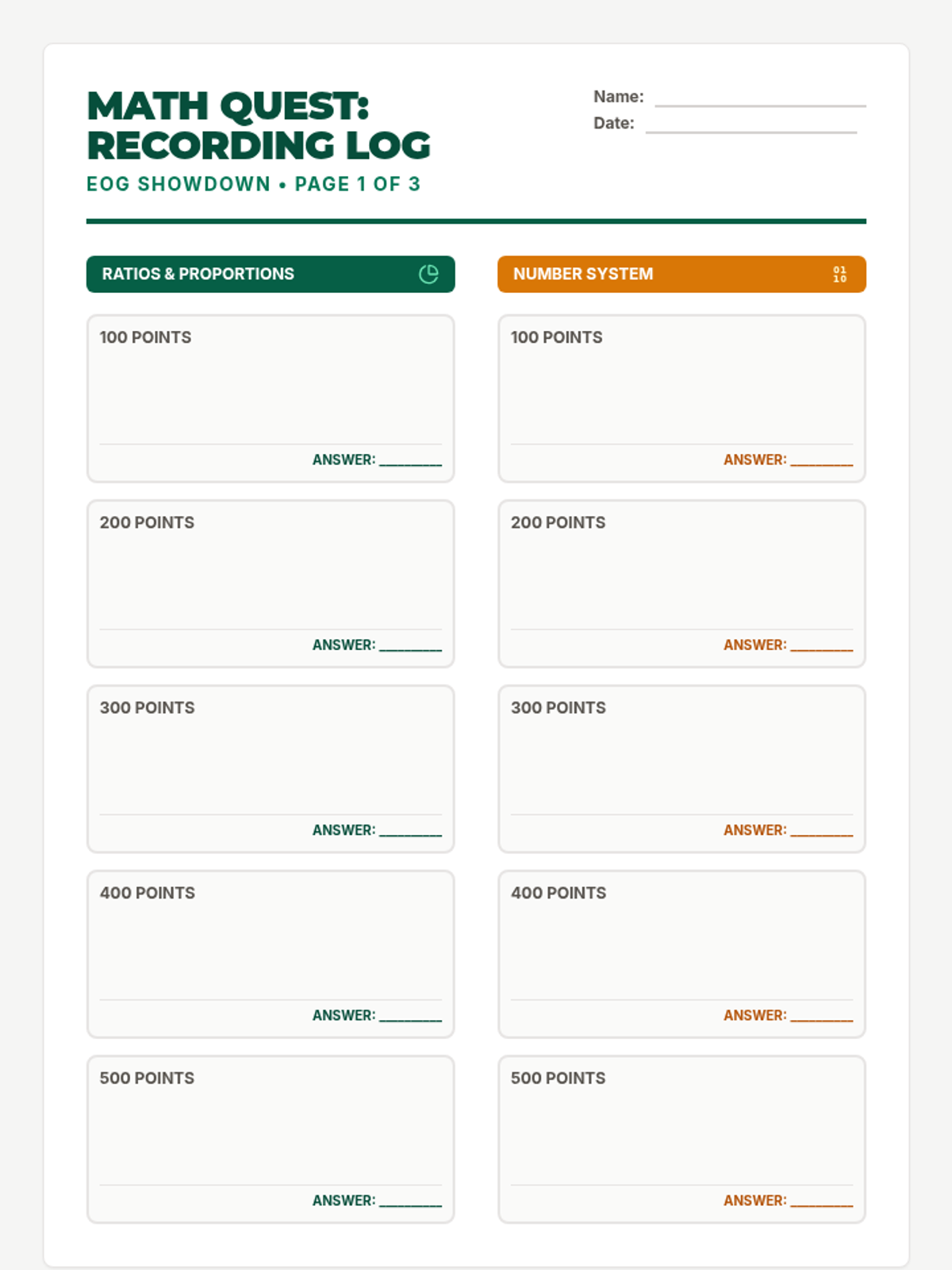
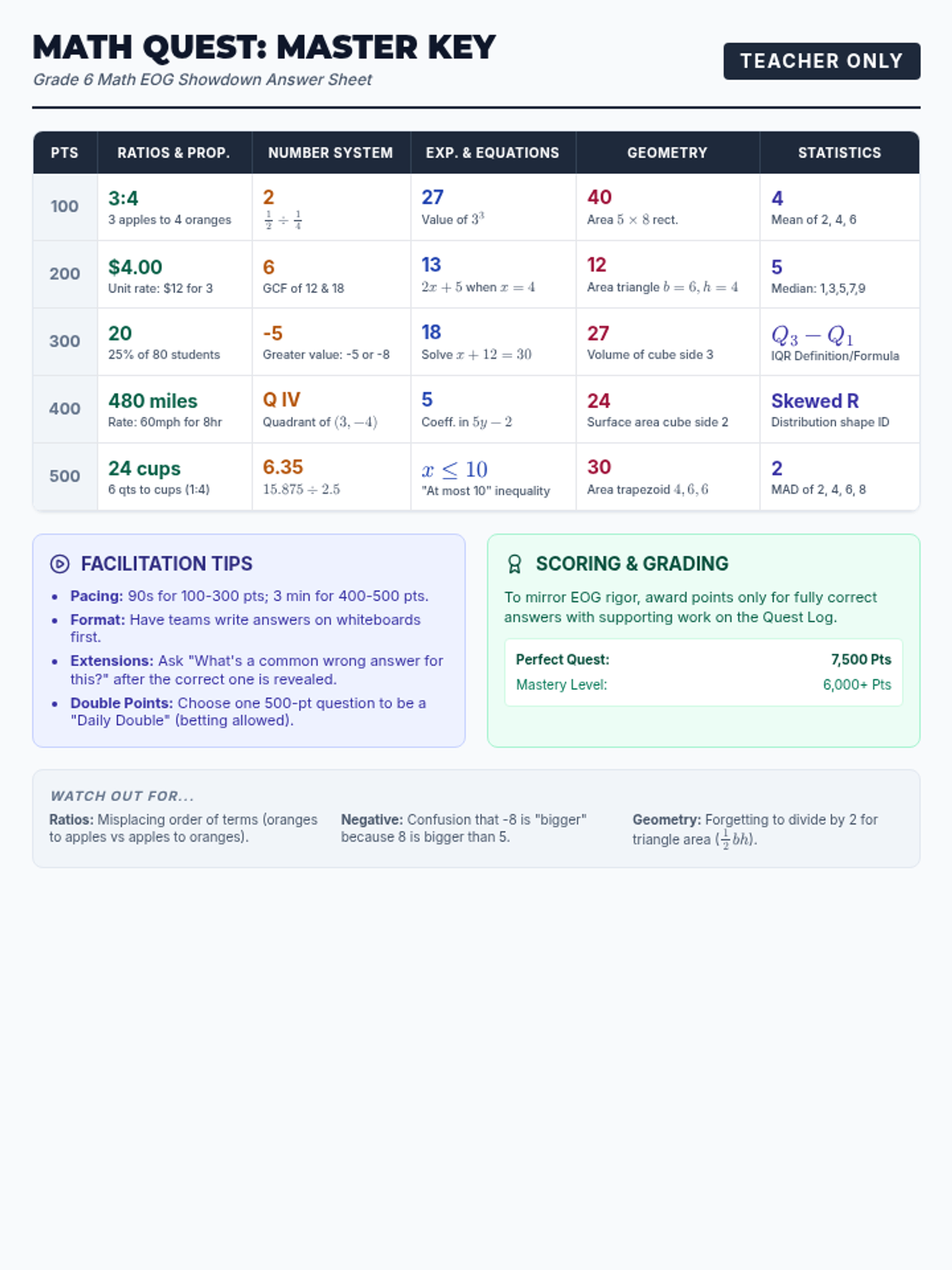
A high-energy review session using a Jeopardy-style game format to cover Ratios, The Number System, Expressions & Equations, Geometry, and Statistics. Students work individually or in teams to solve rigorous EOG-aligned problems.
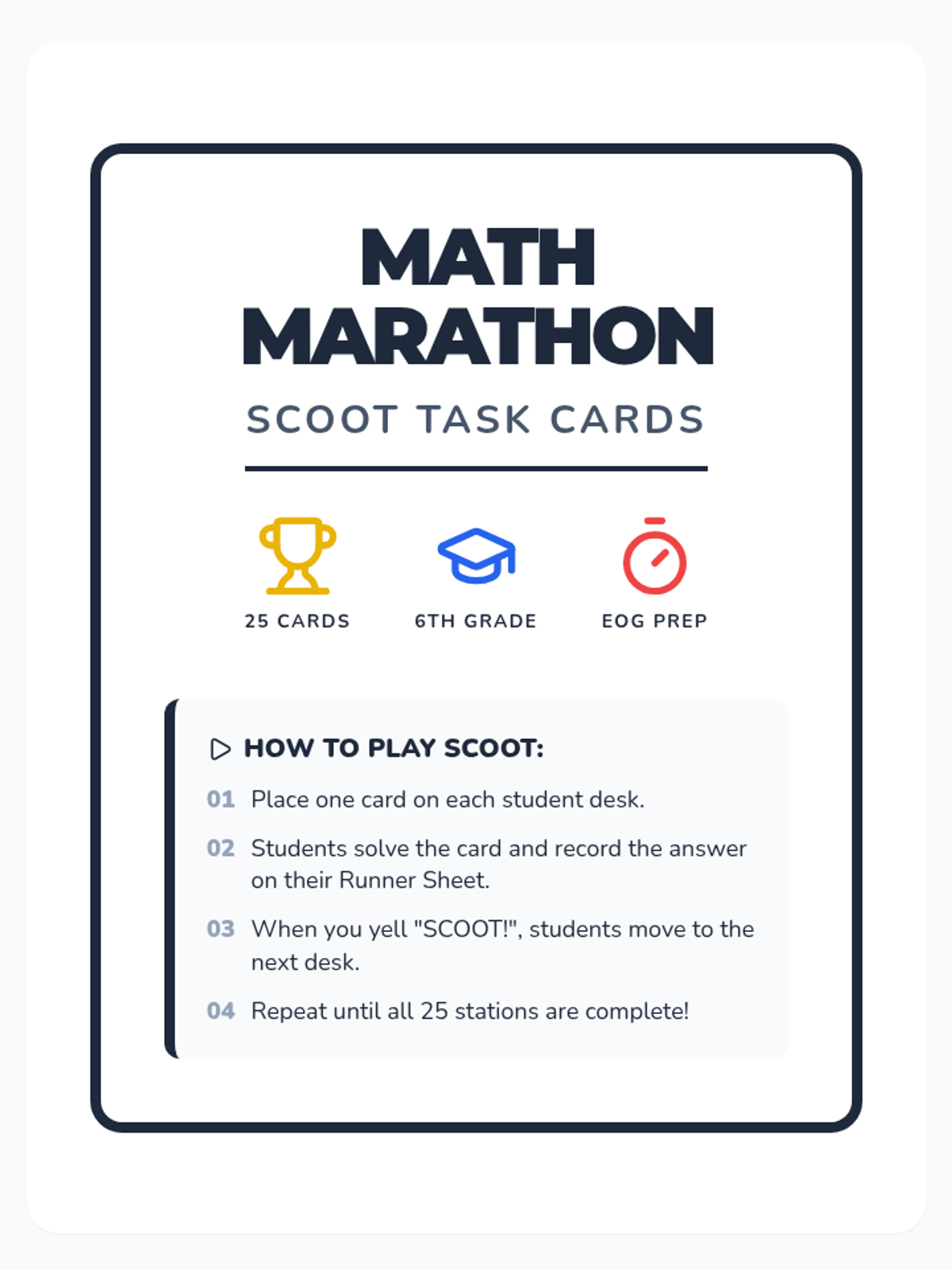
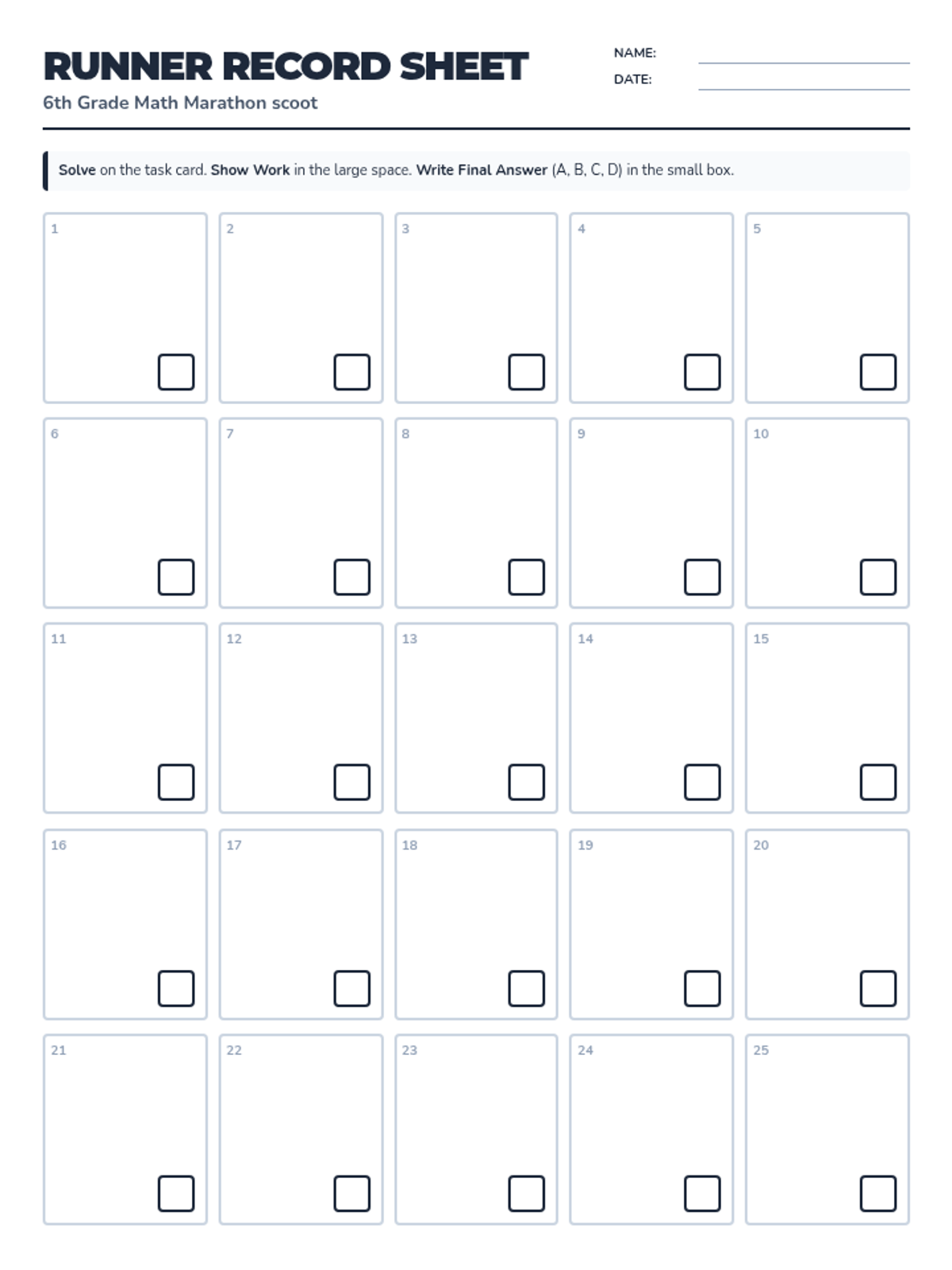
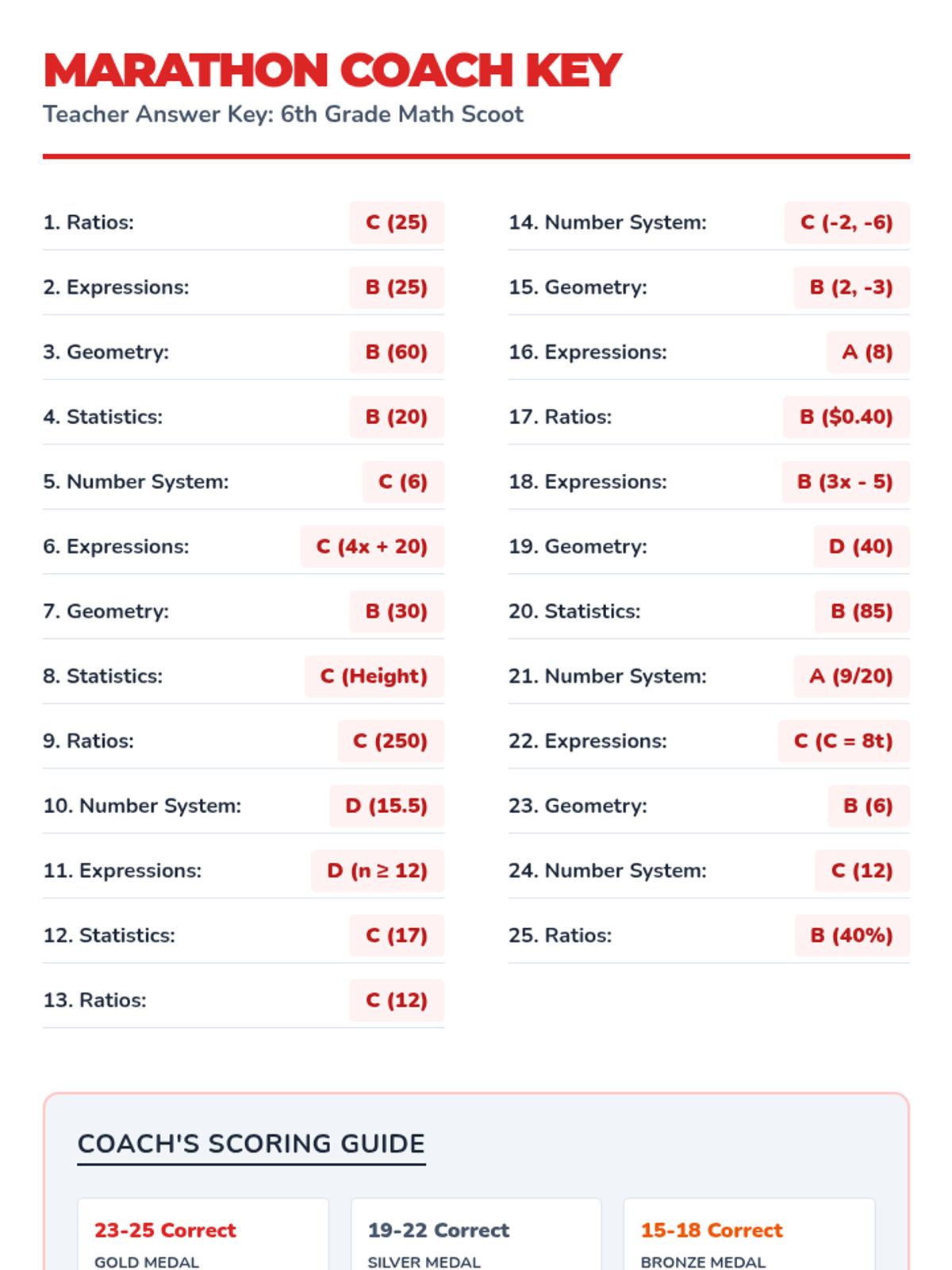
A comprehensive test prep activity using the Scoot game format, covering all 6th-grade math domains to prepare students for End of Grade (EOG) testing.
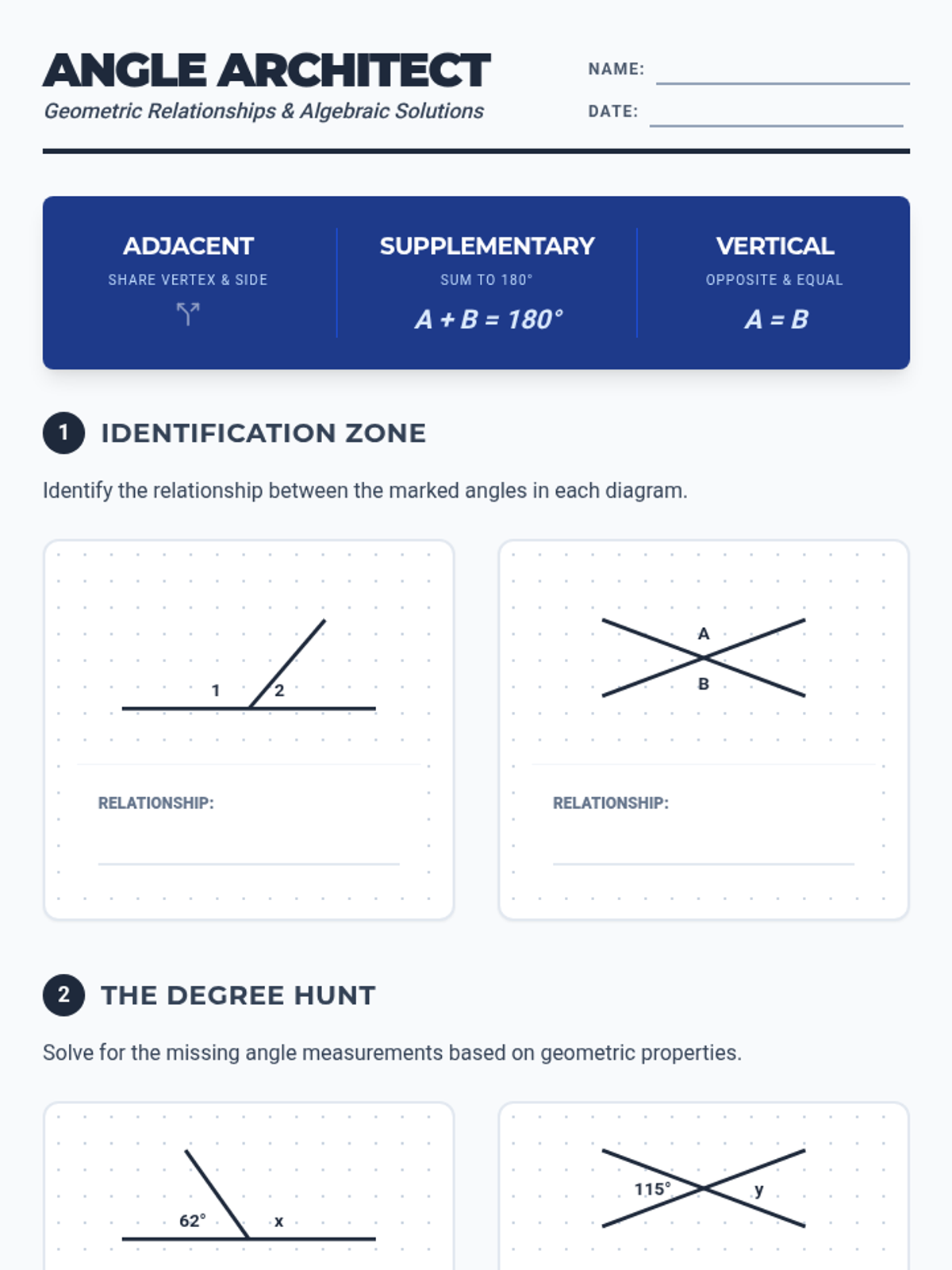
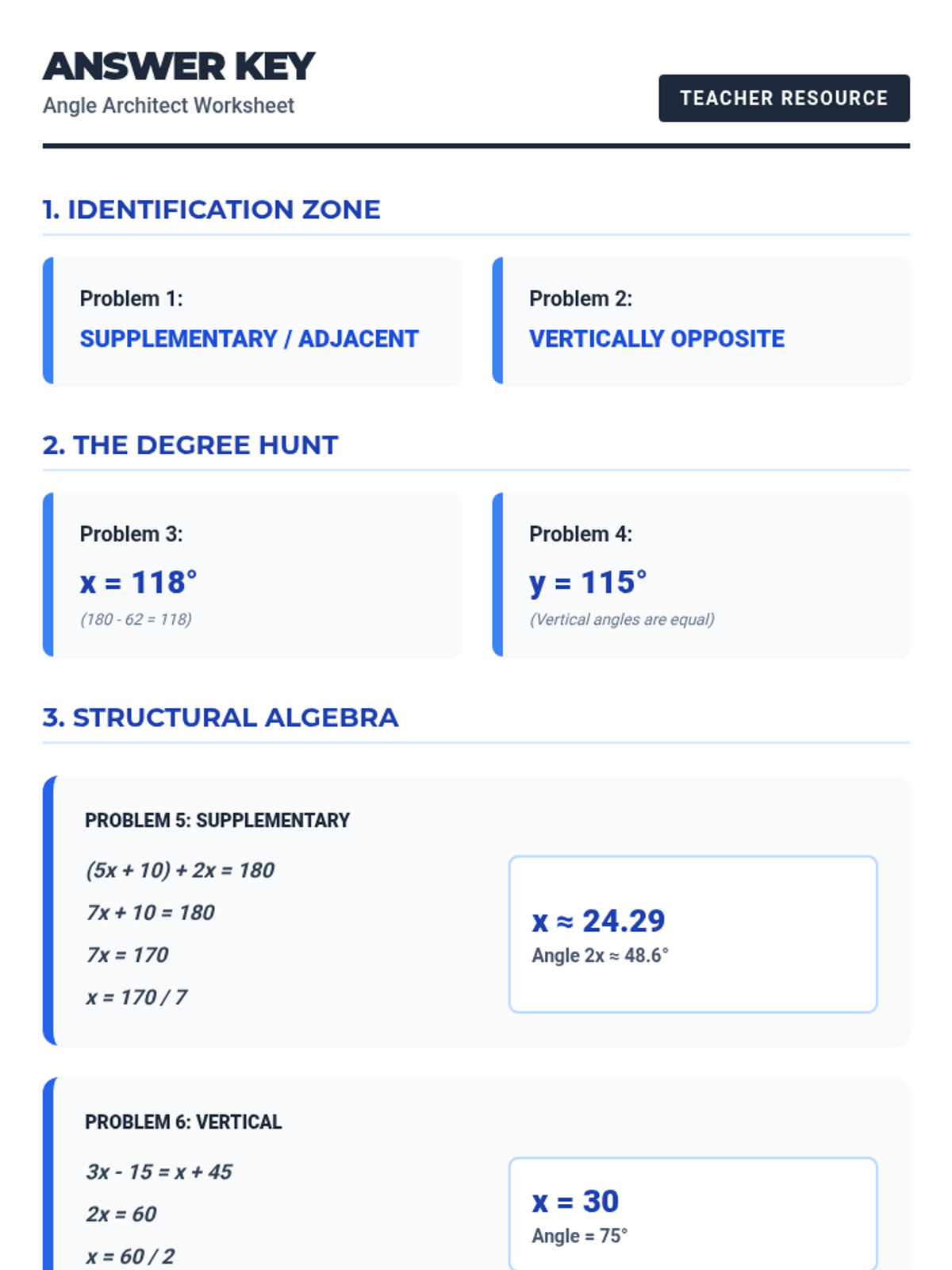
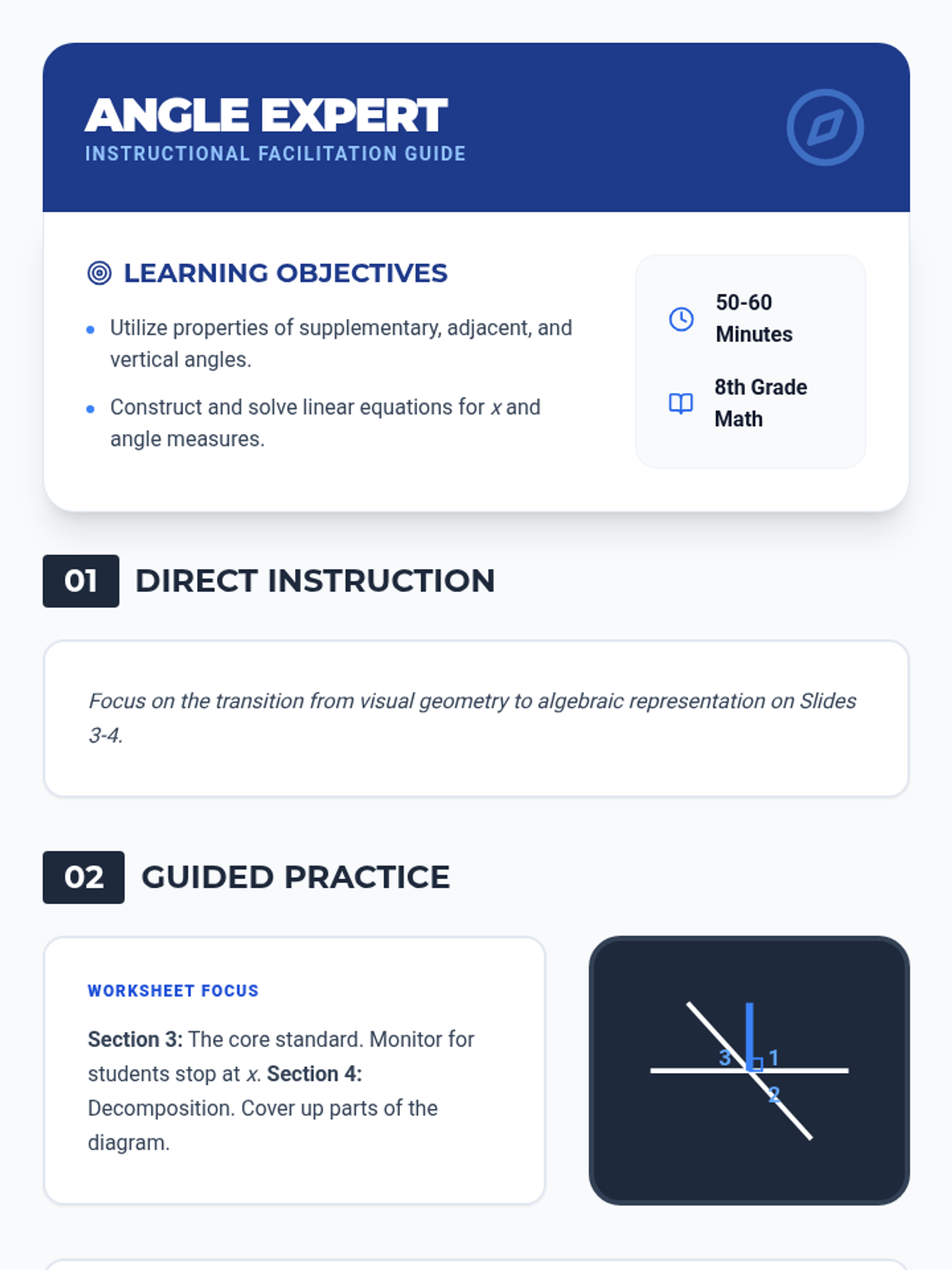
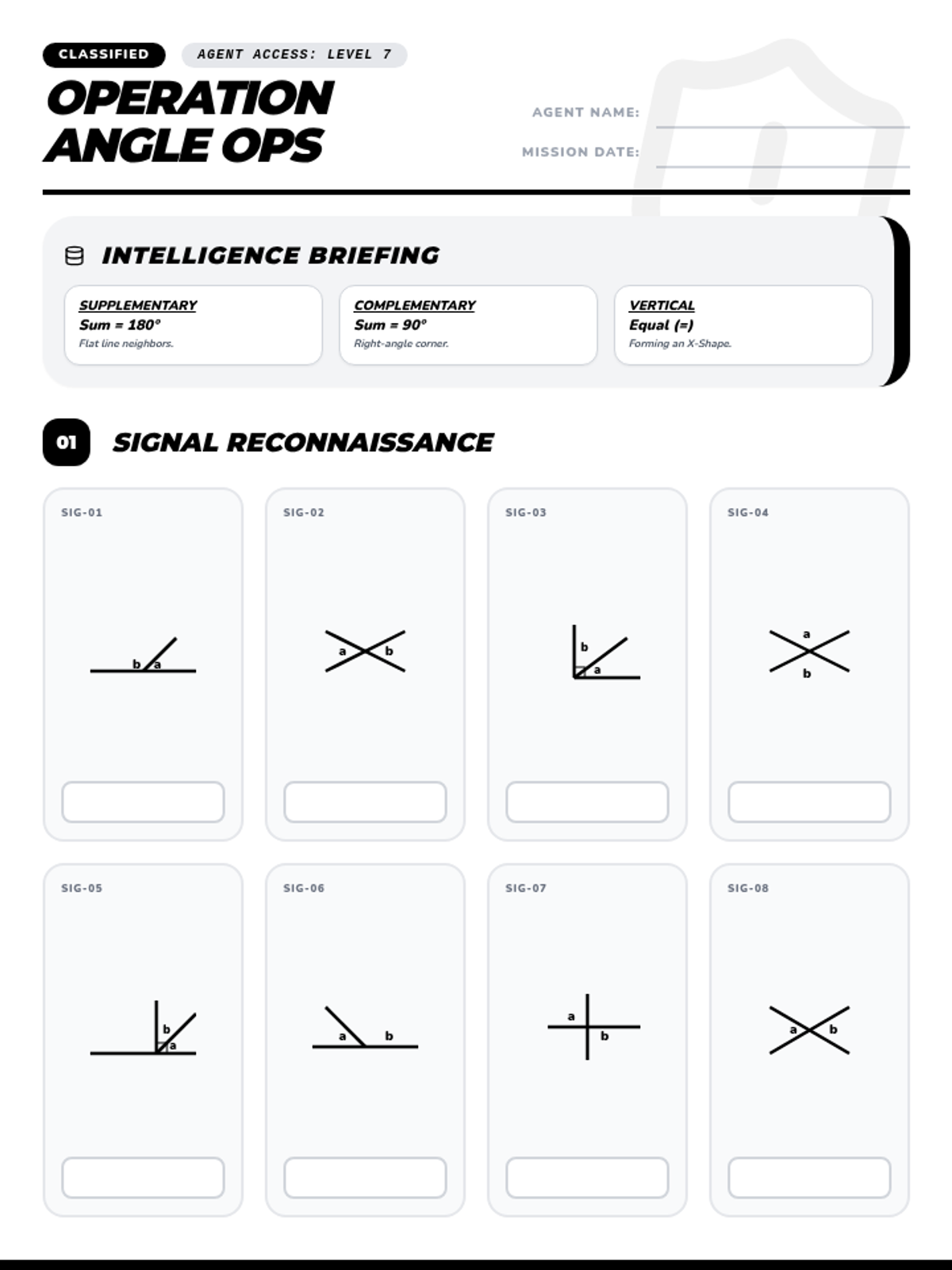
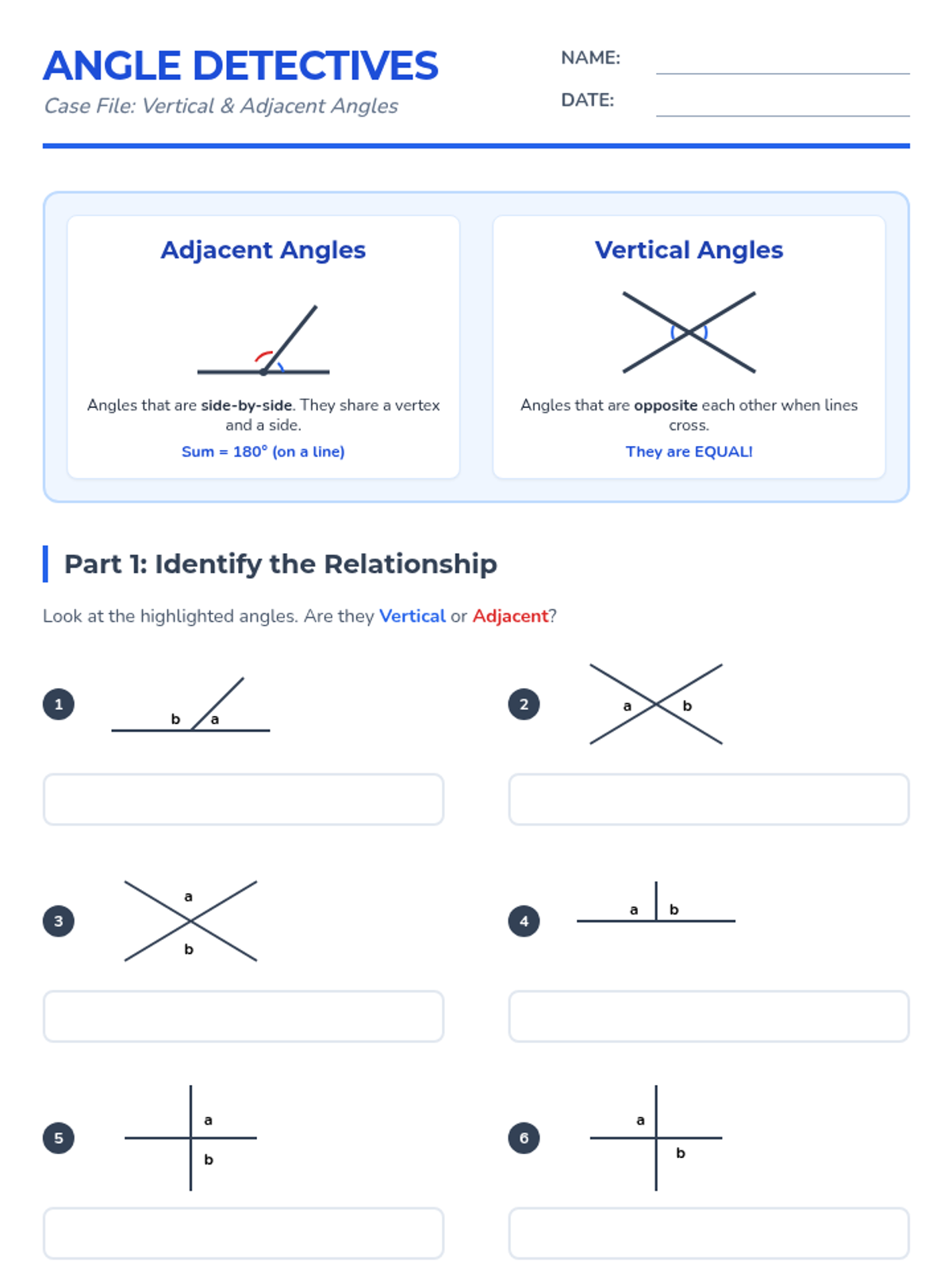
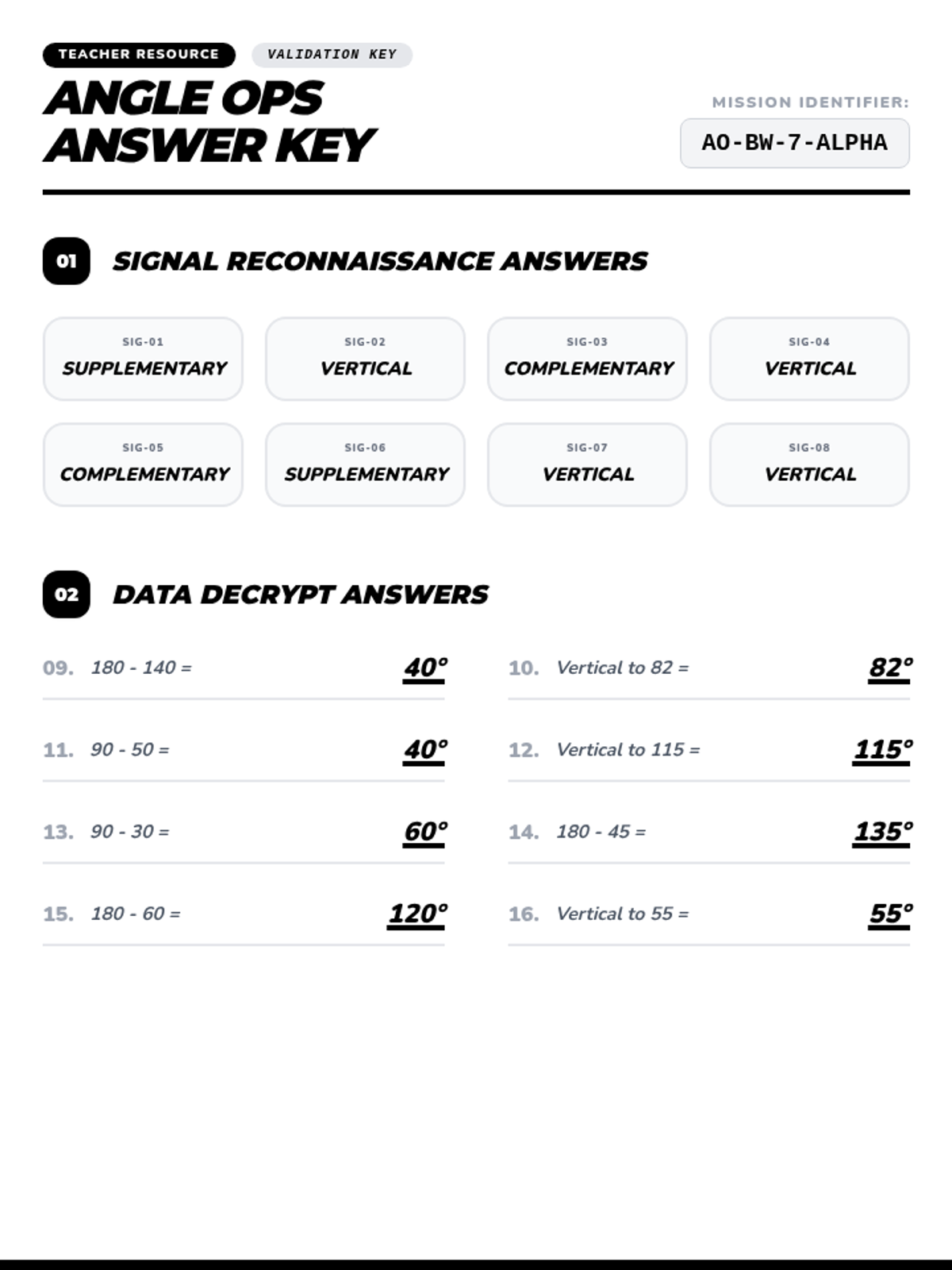
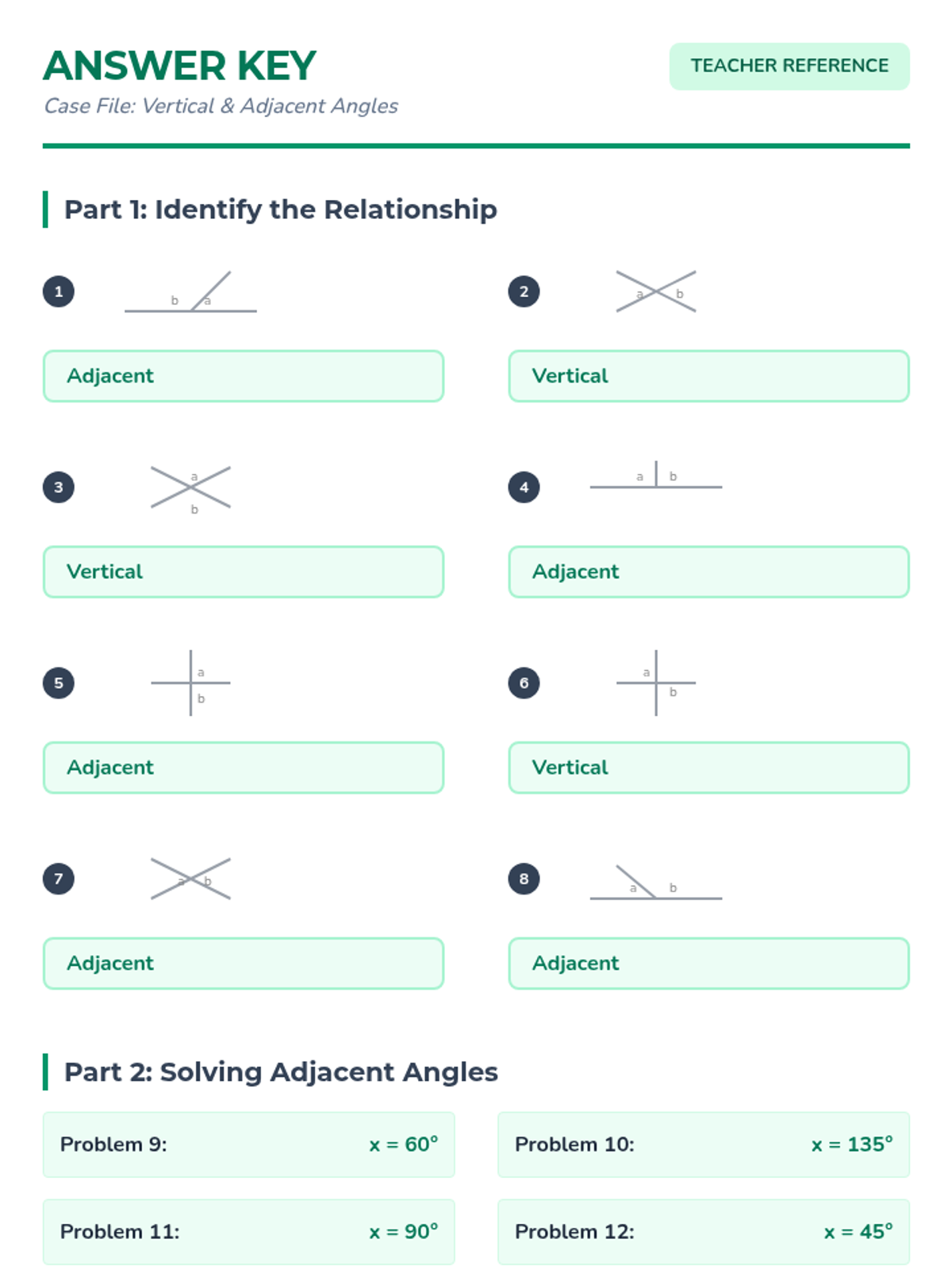
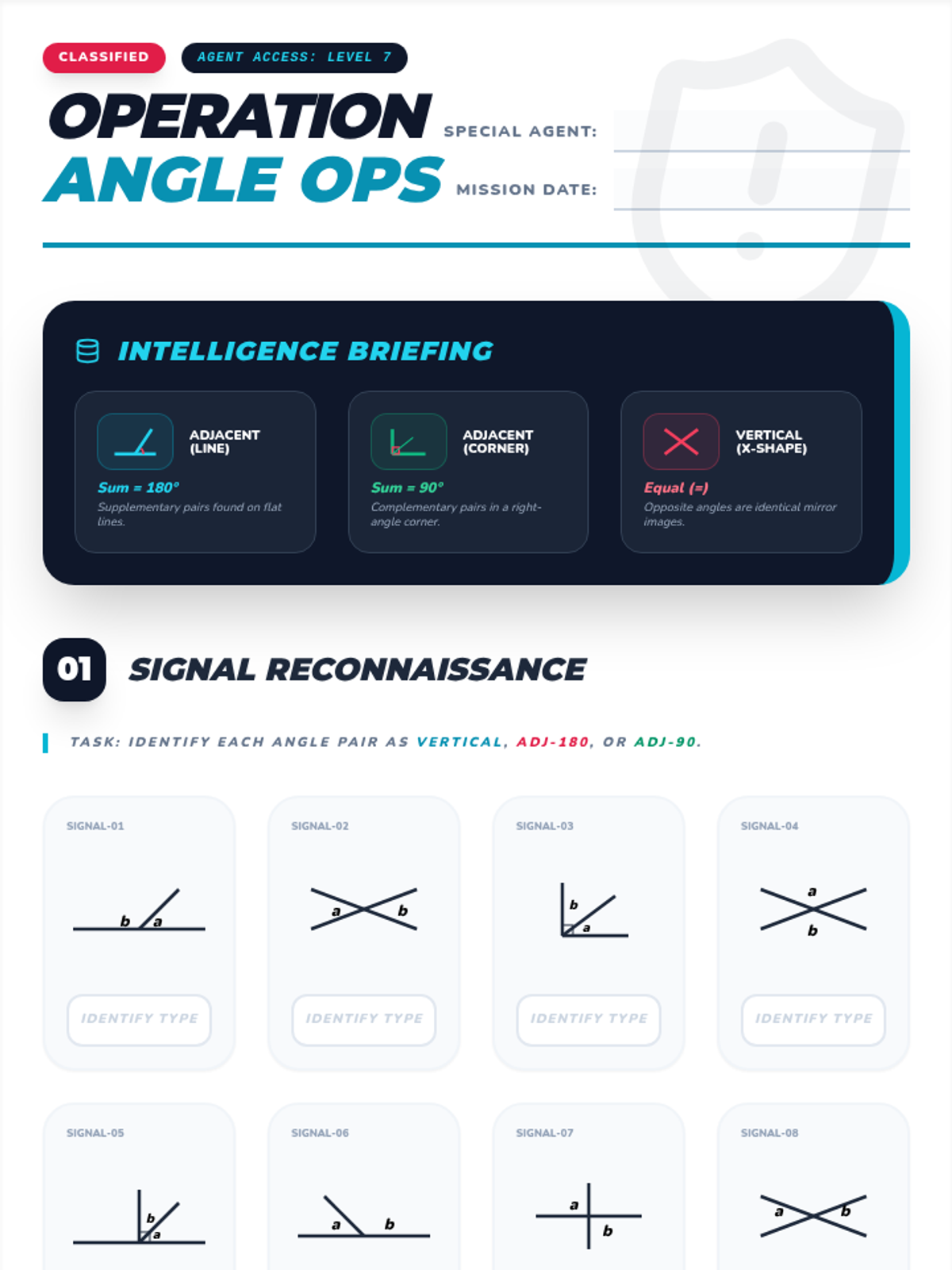
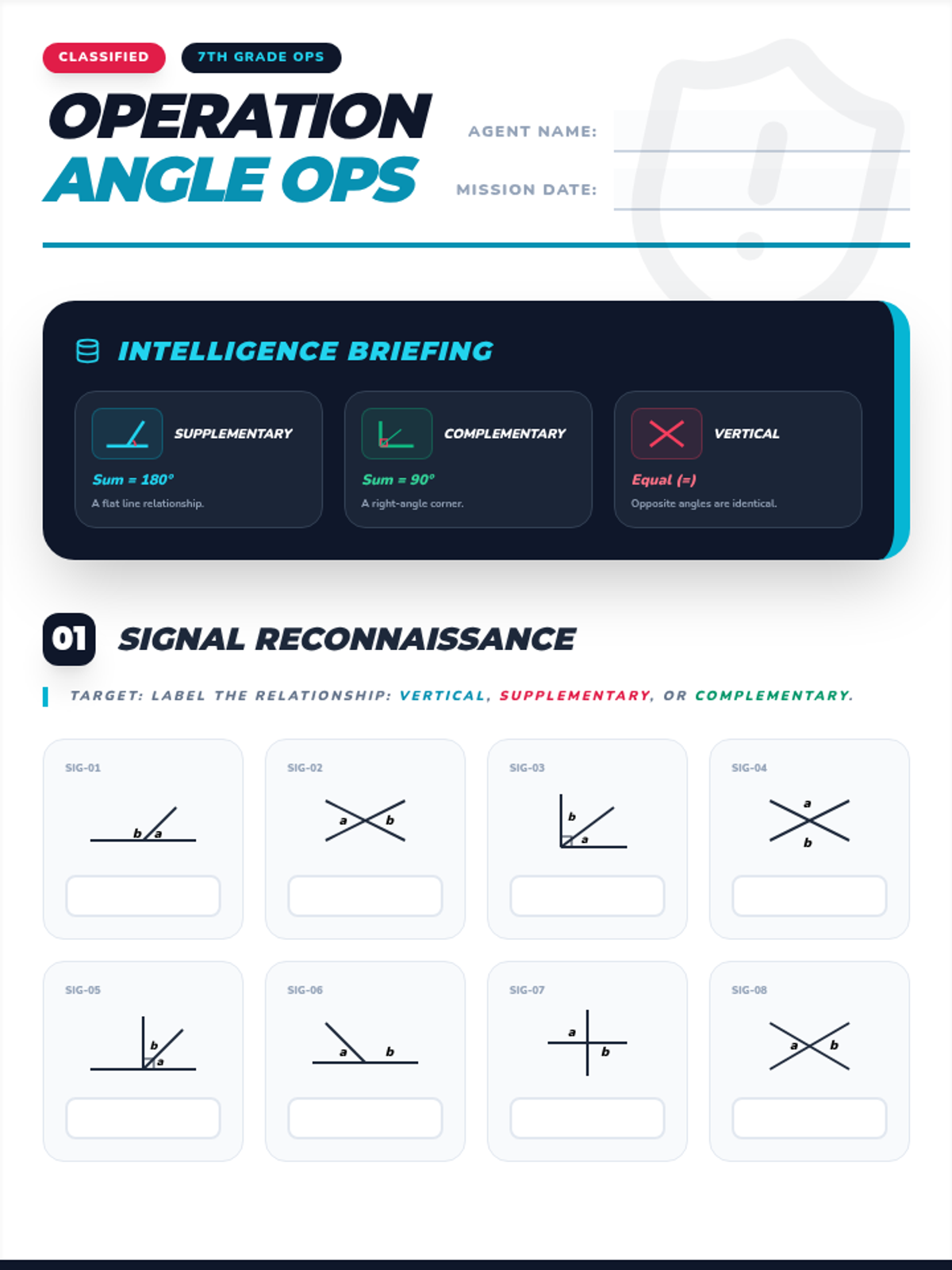
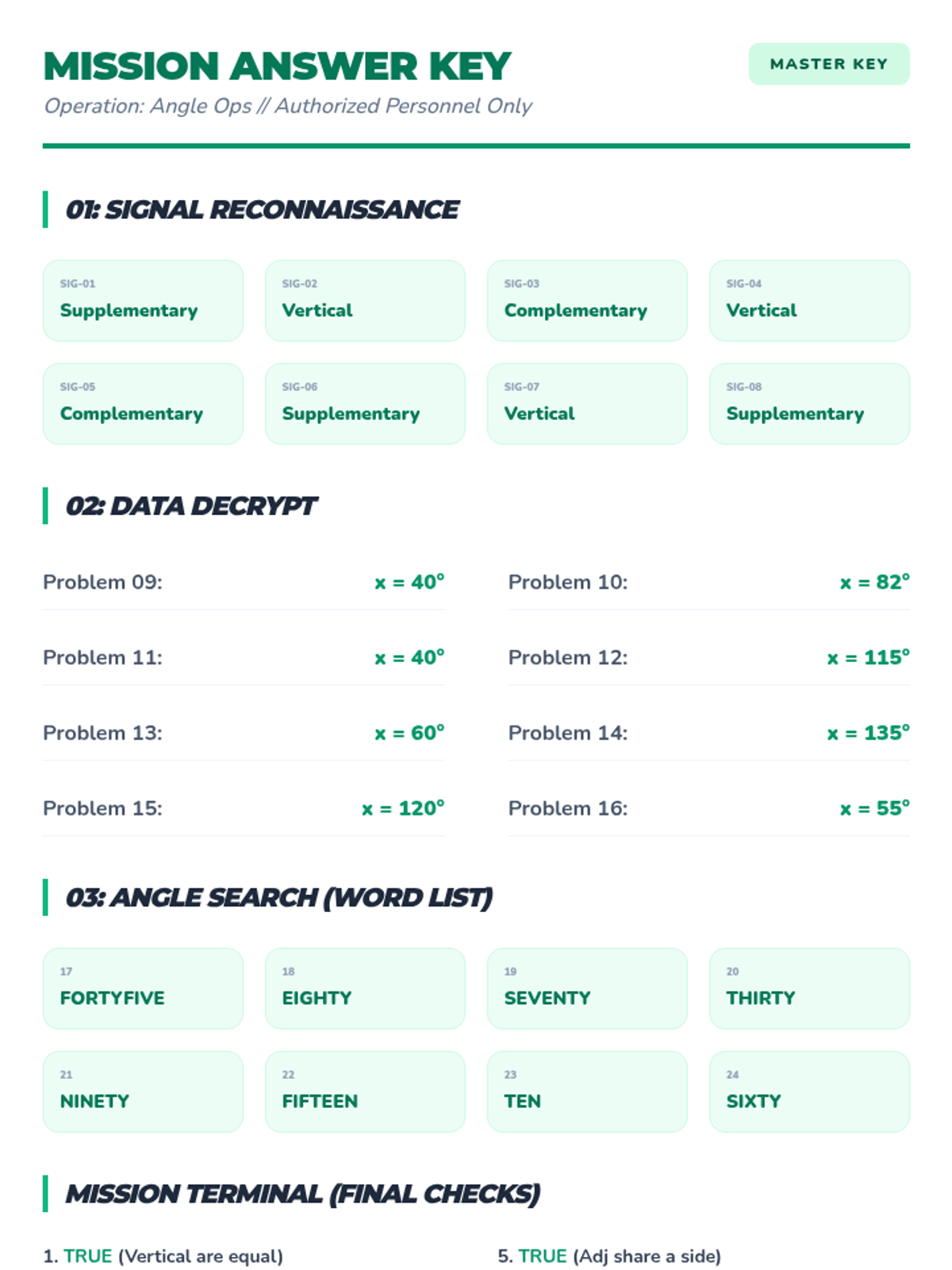
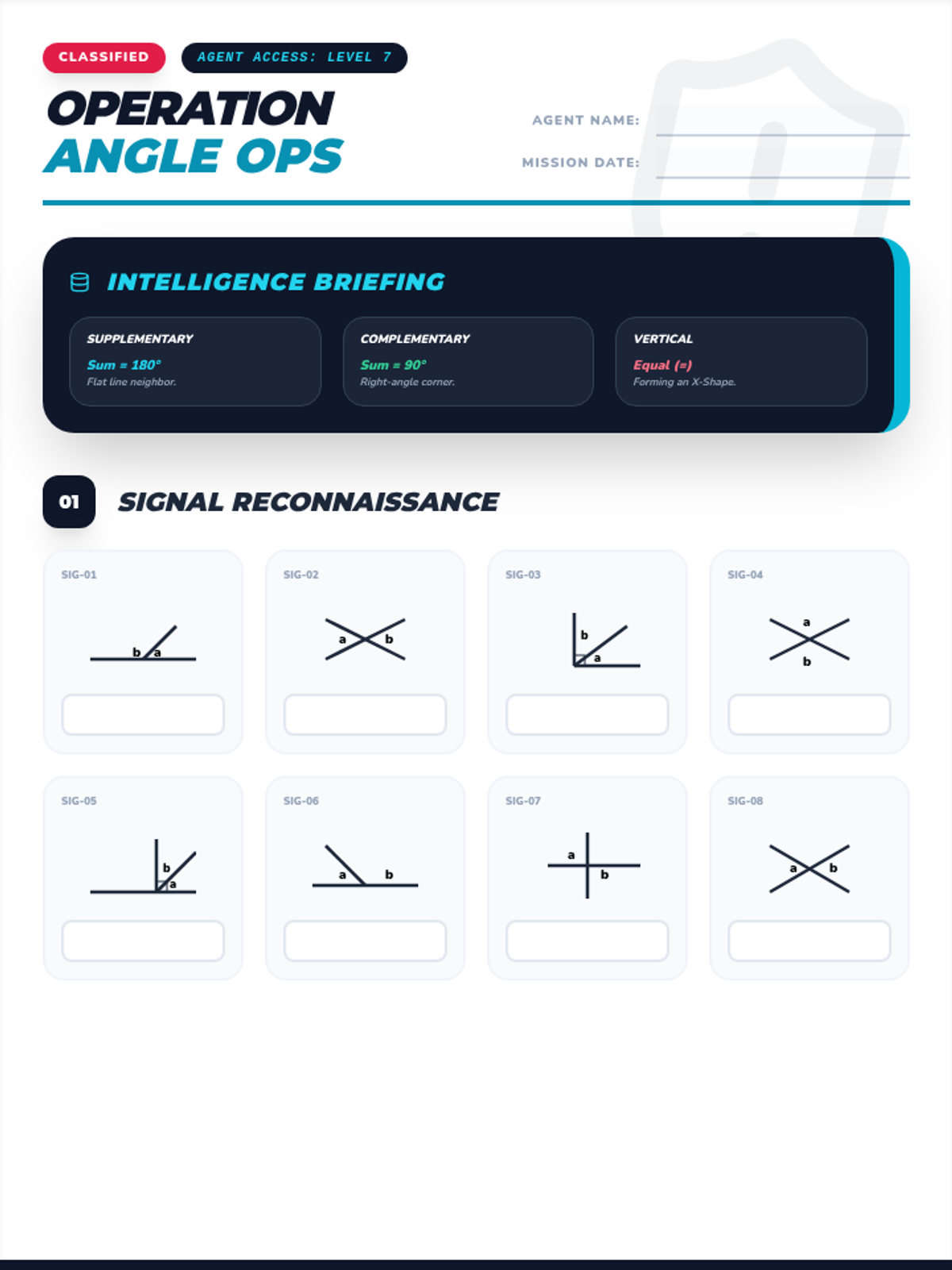
A lesson exploring the relationships between supplementary, adjacent, and vertically opposite angles through geometric visualization and algebraic problem-solving. Students move from basic identification to solving complex multi-step equations based on geometric properties.
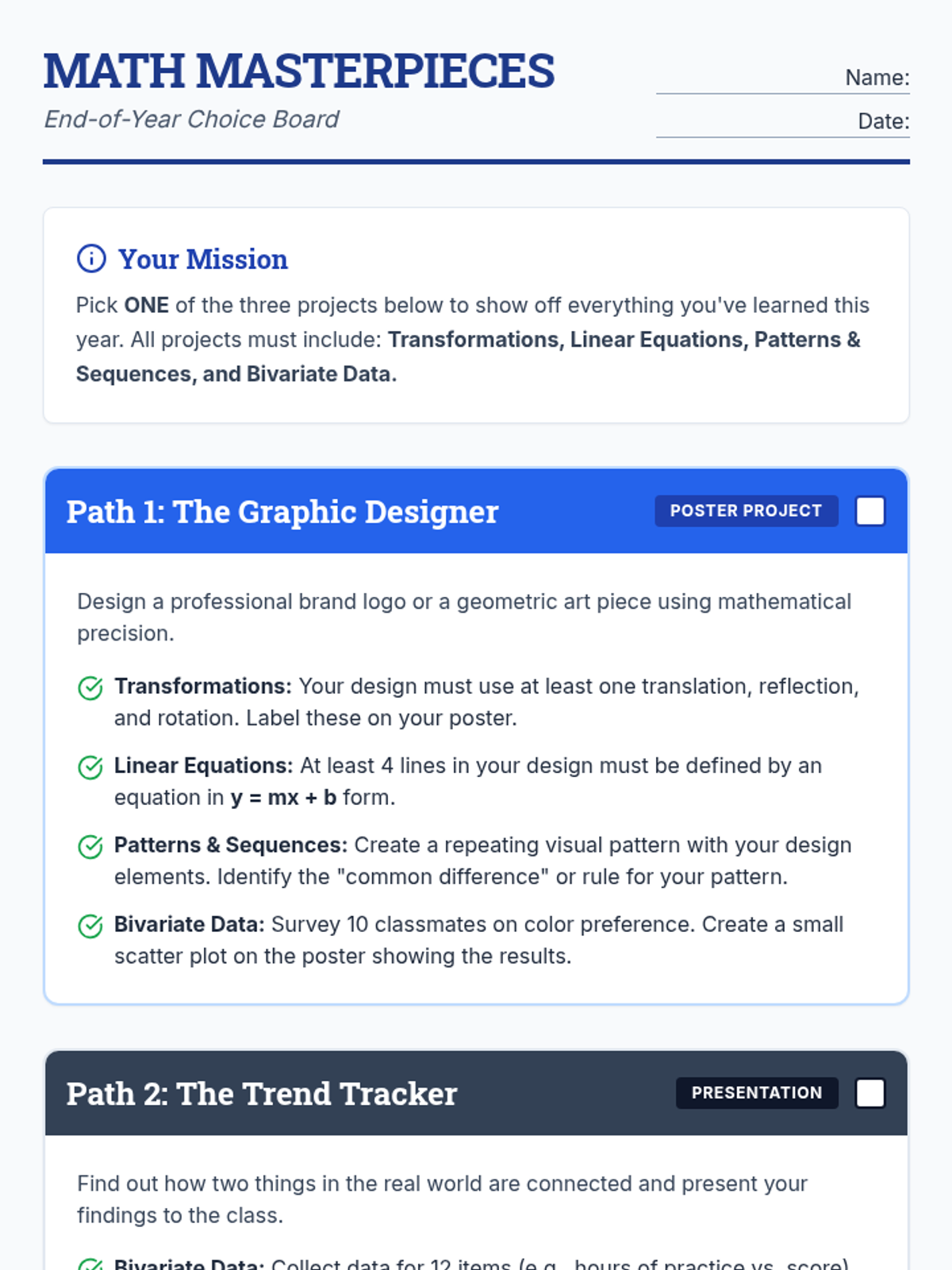
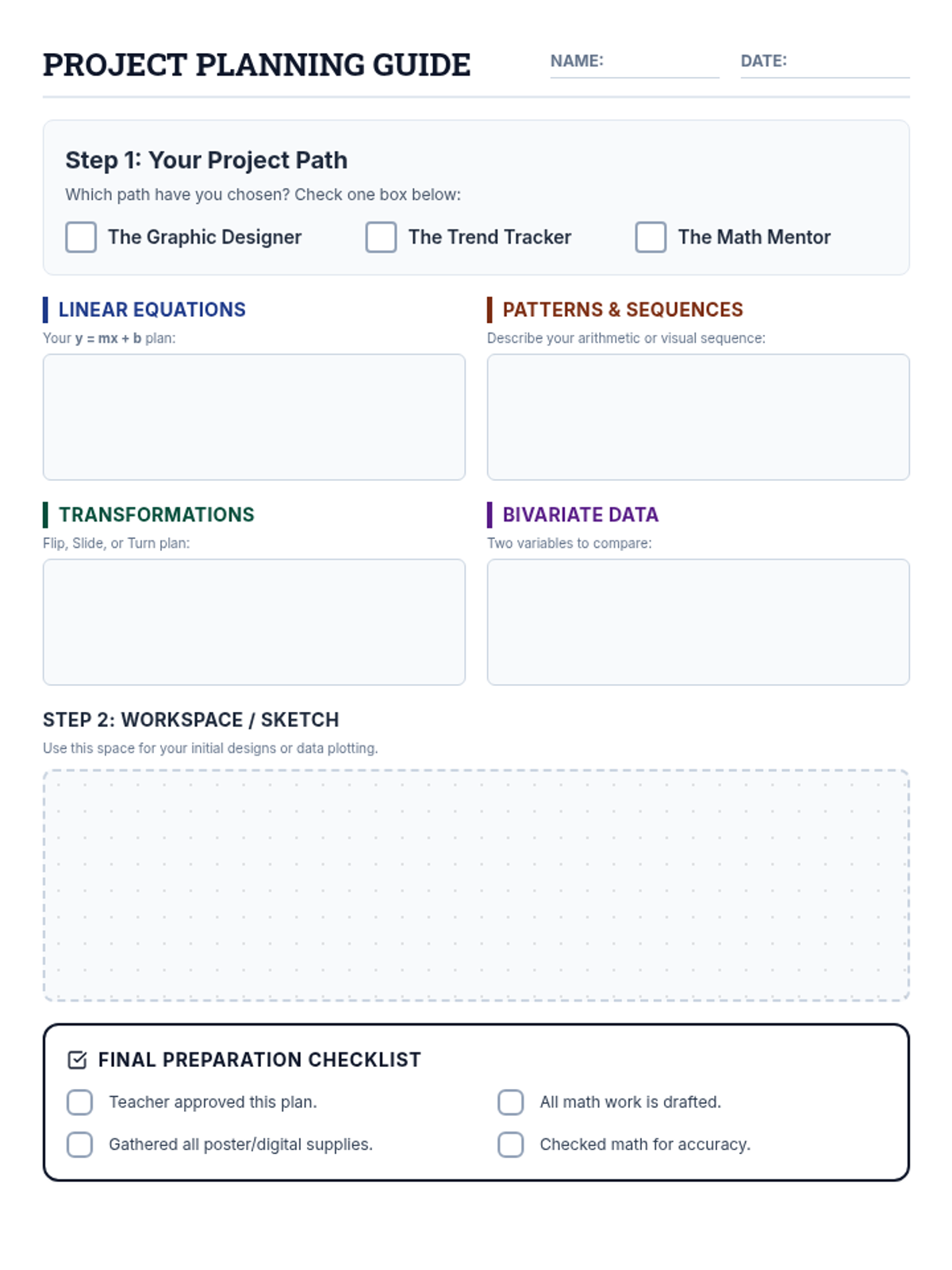
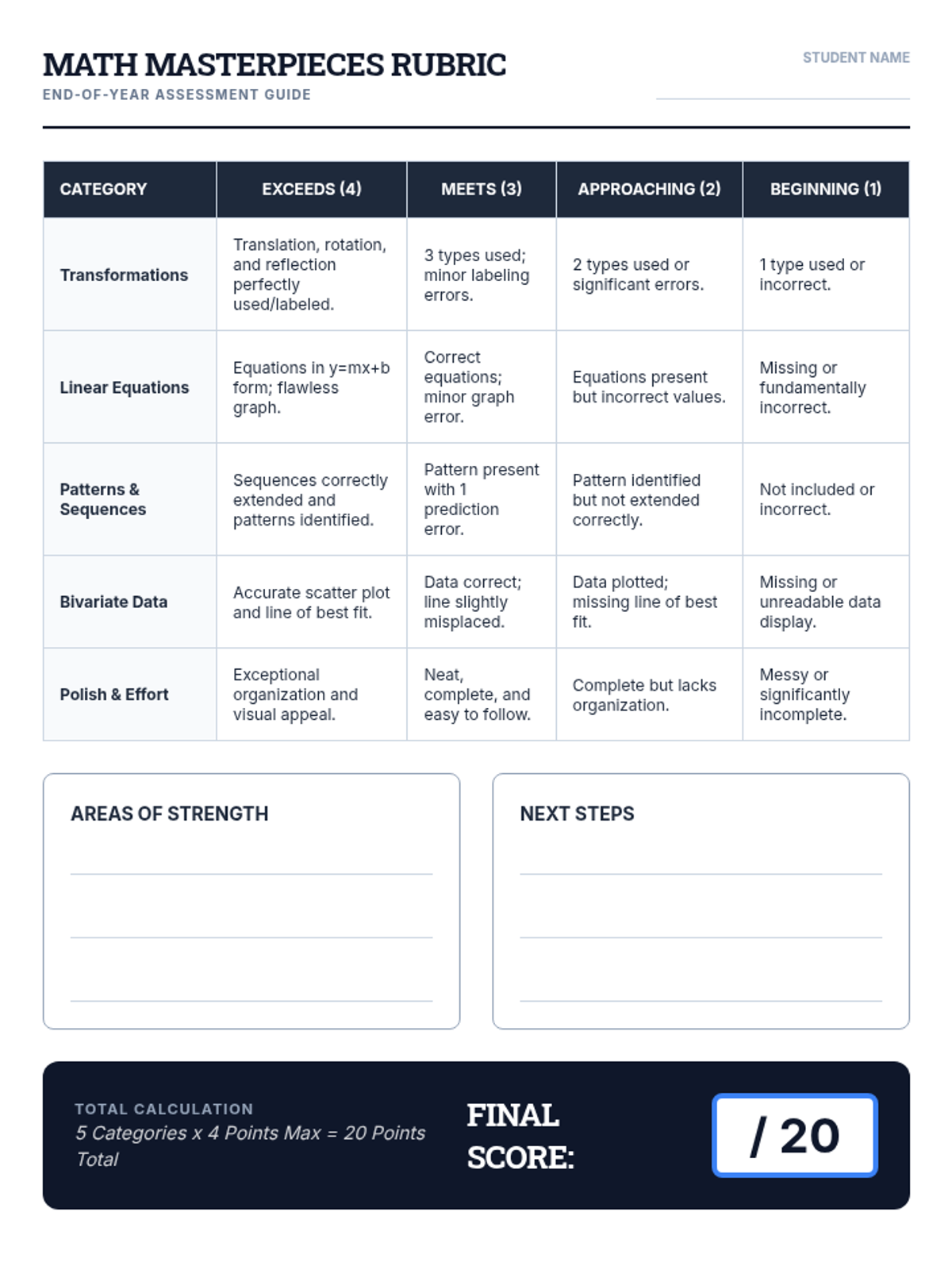
A creative end-of-year project where students choose between three paths to demonstrate mastery of transformations, linear equations, exponents, and bivariate data. Designed with scaffolded options for 8th-grade students.
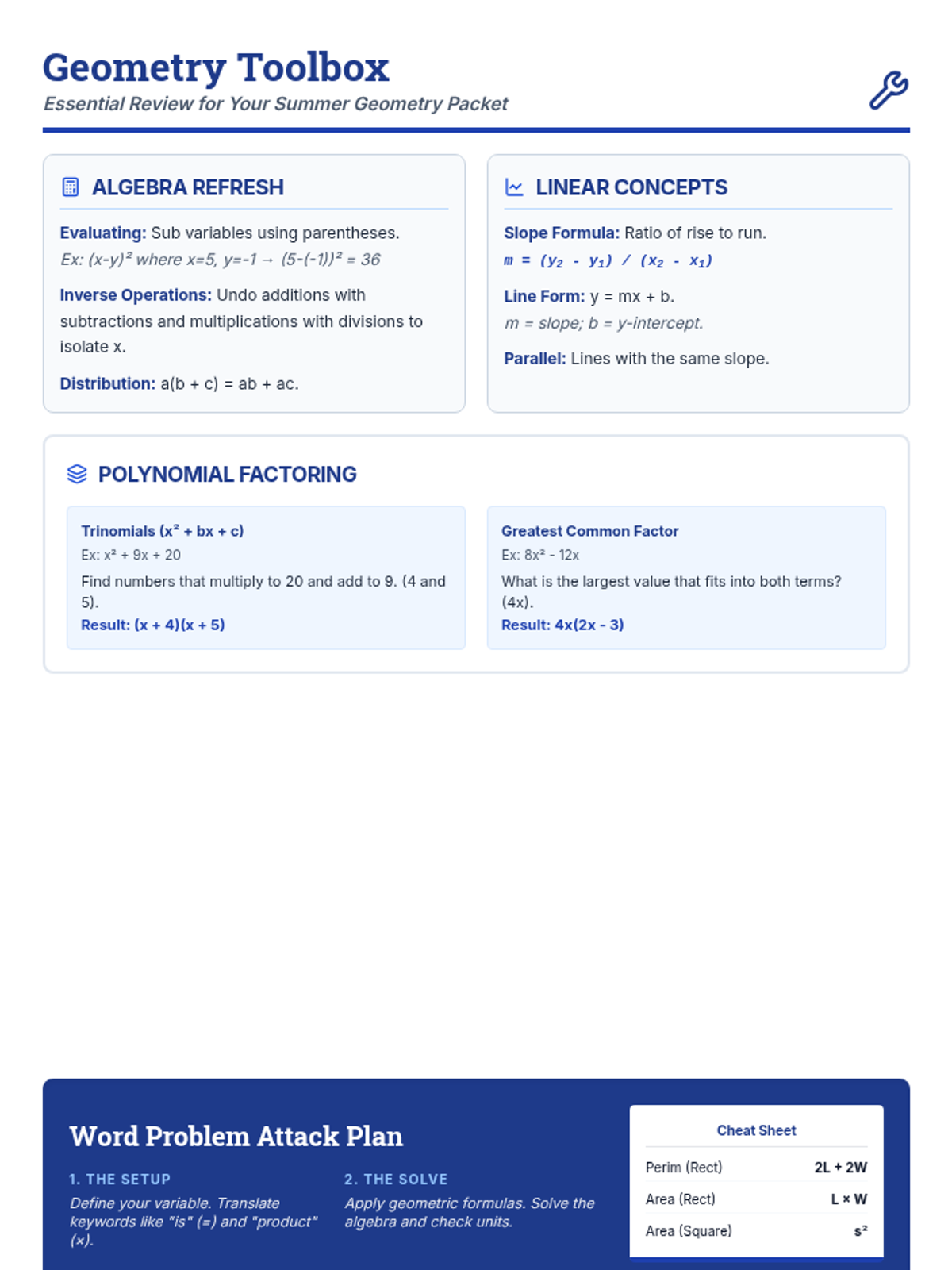
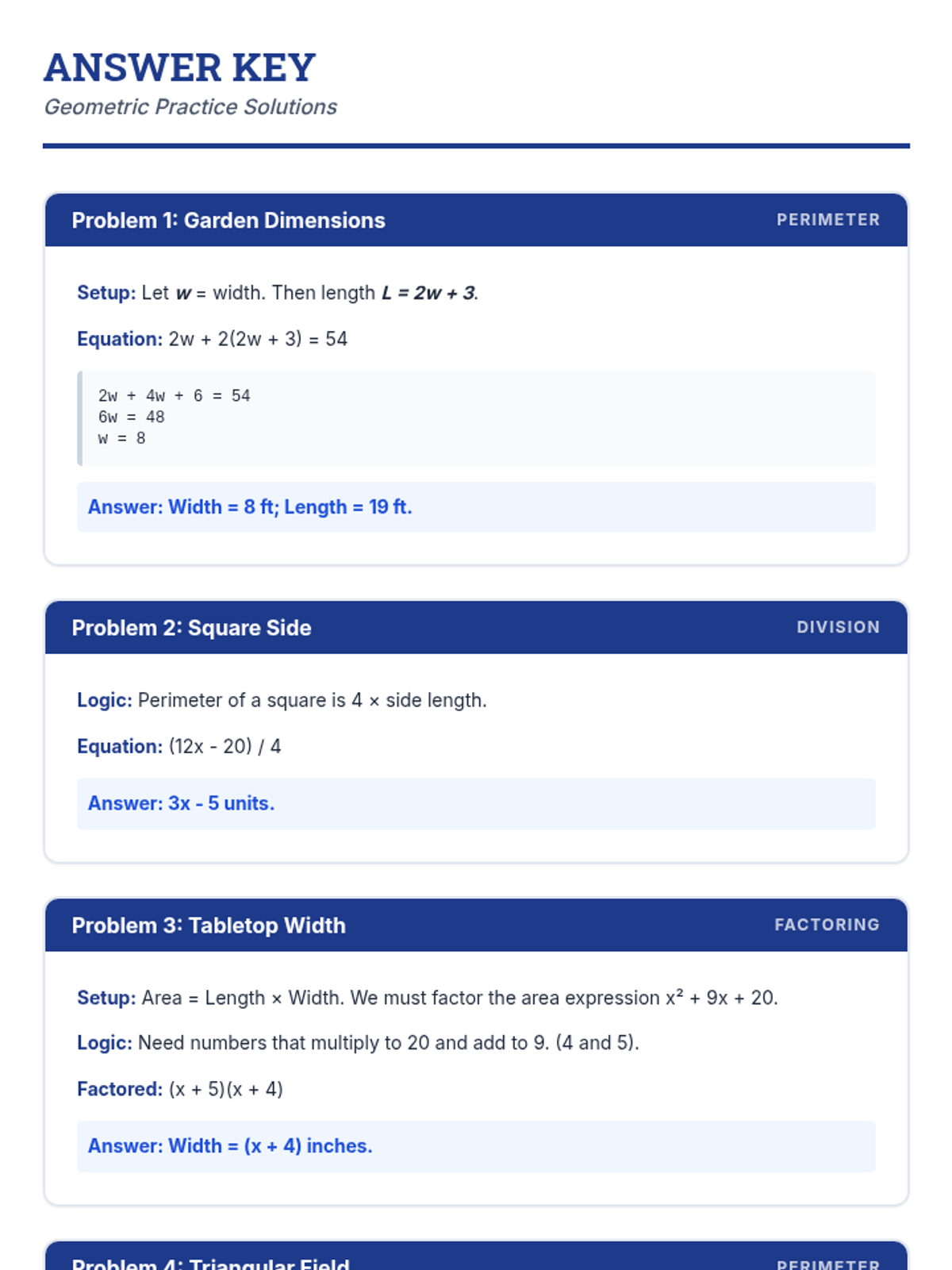
A collection of resources to support students completing their summer geometry packet, focusing on algebra foundations and geometric word problem applications.
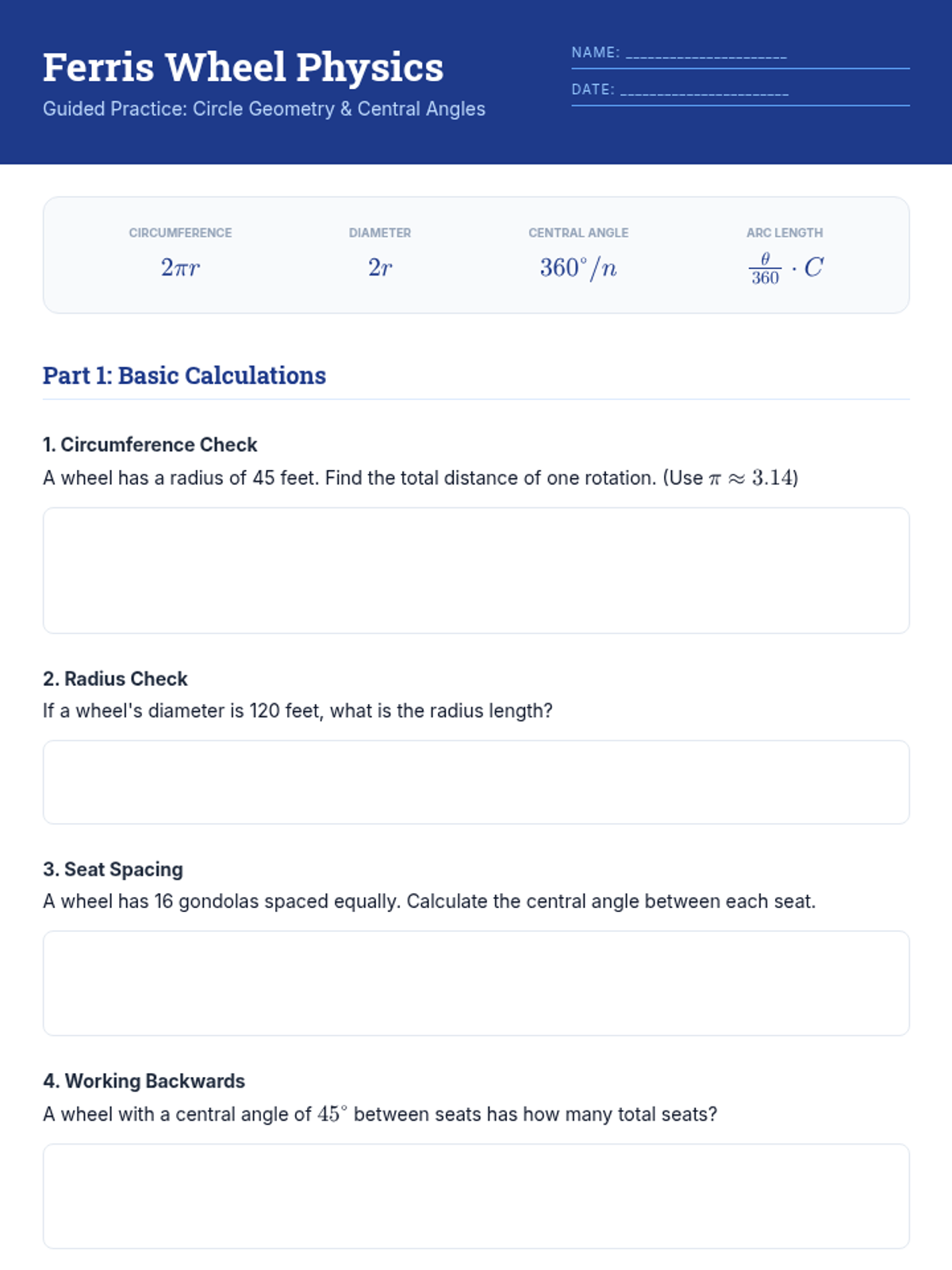
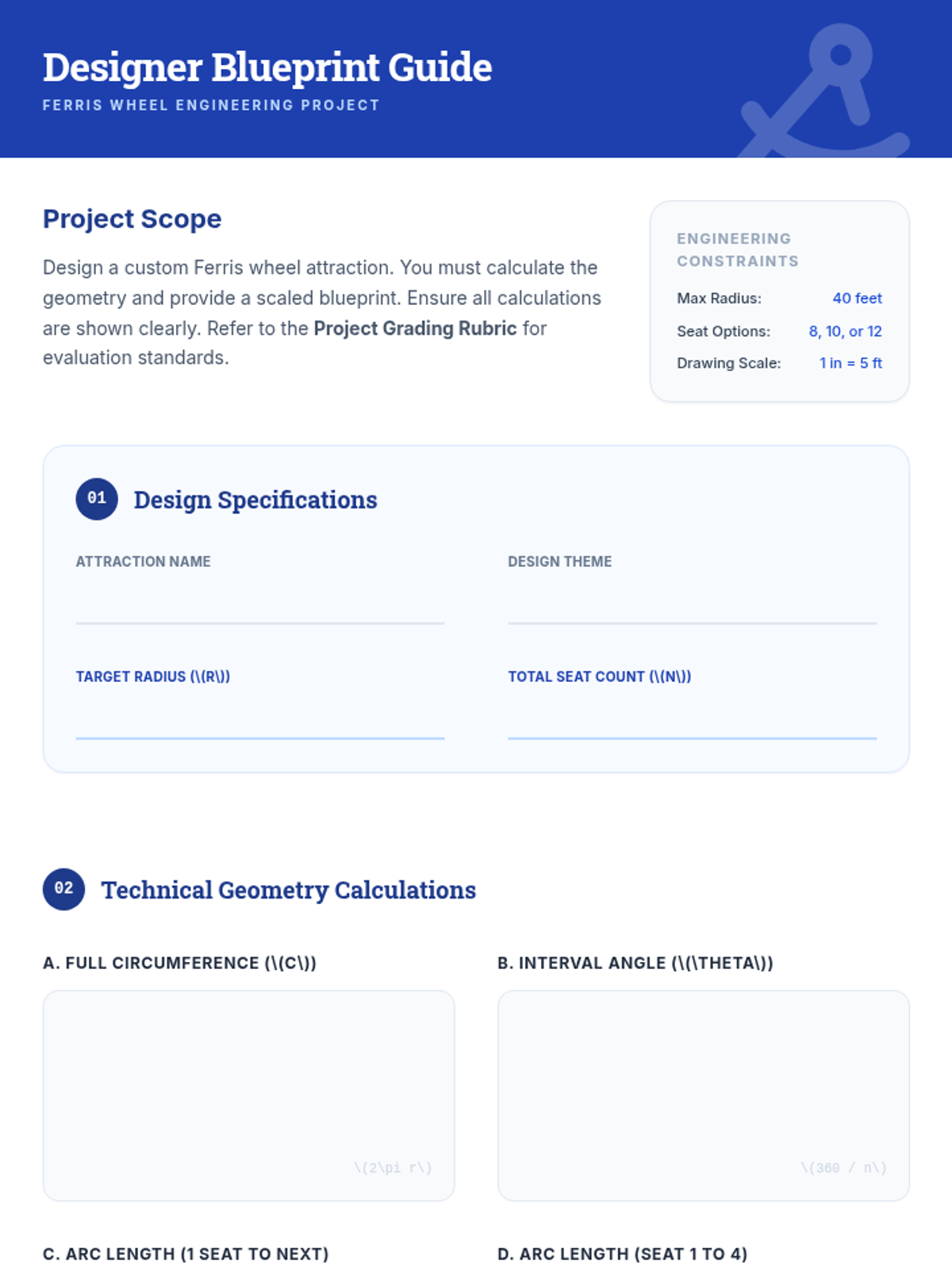
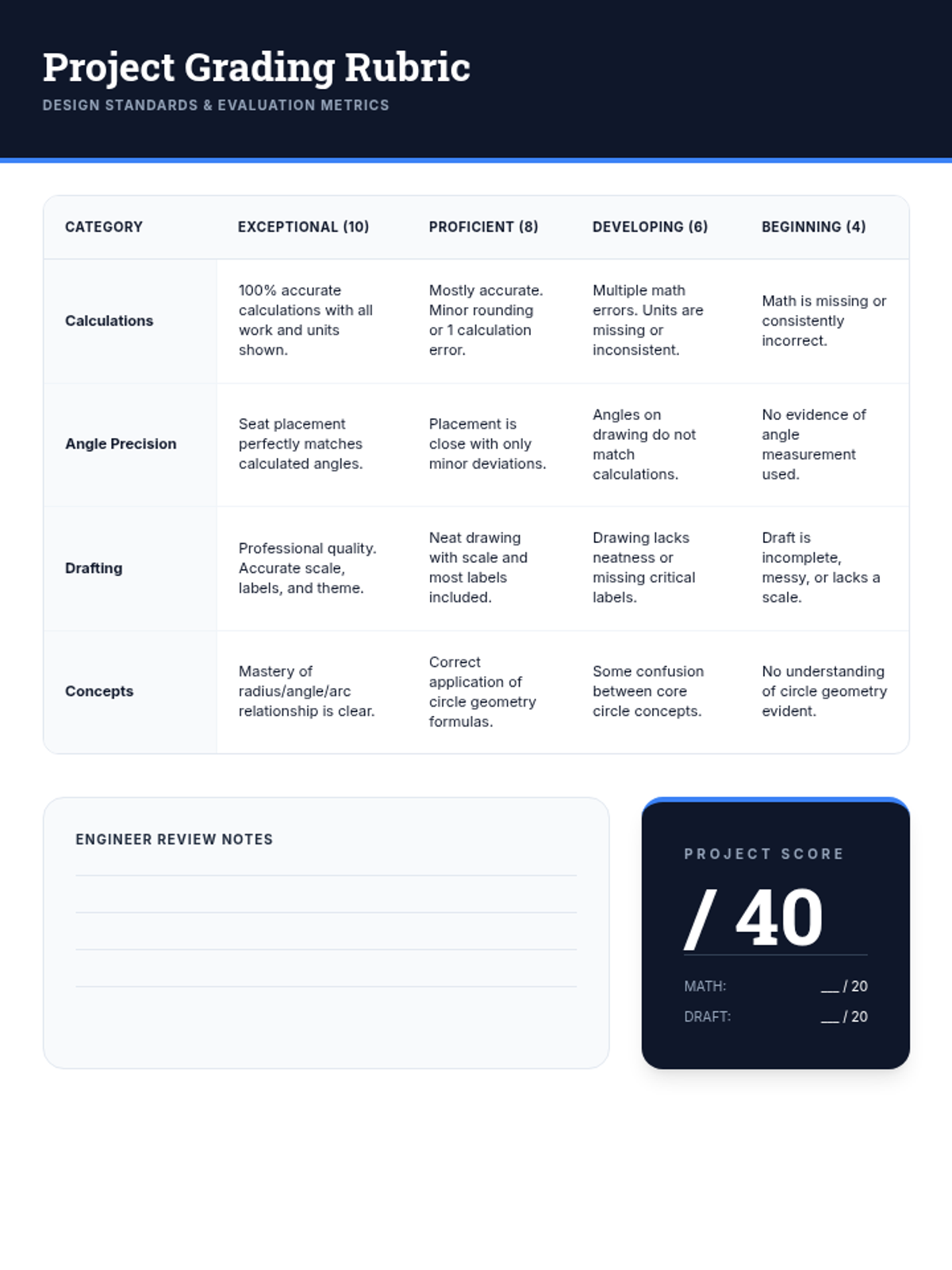
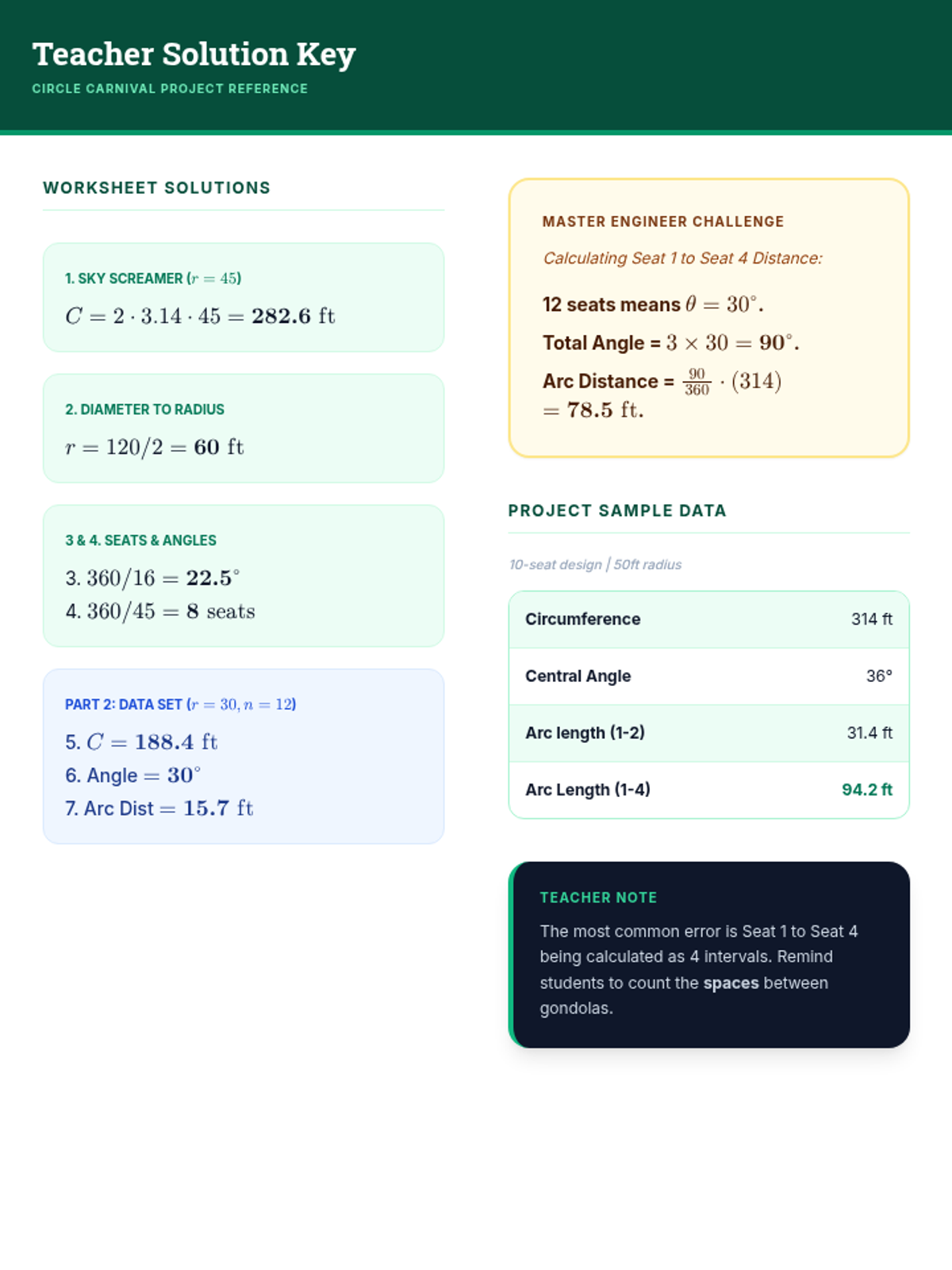
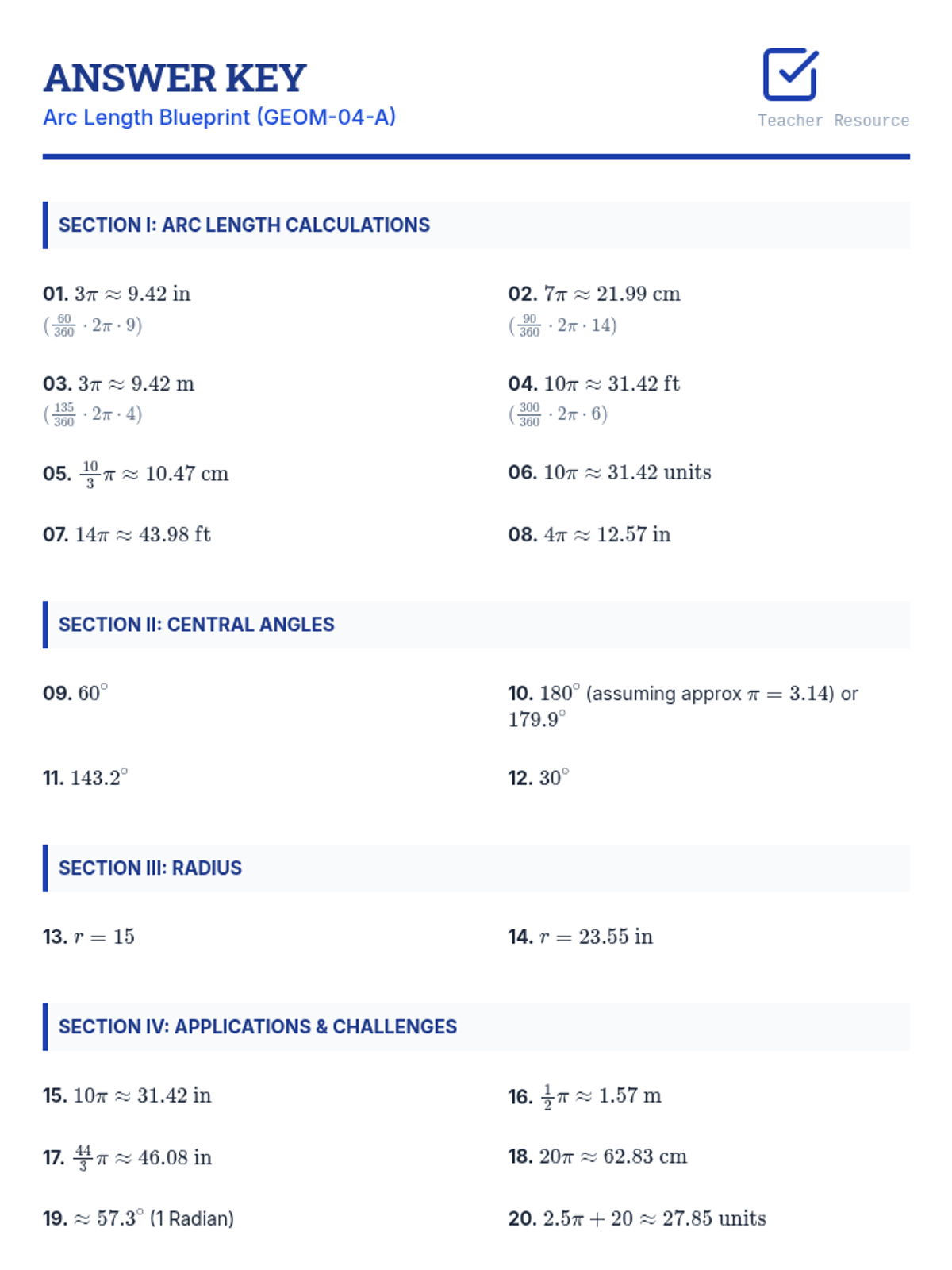
A middle school math project exploring circle geometry through the design and analysis of a Ferris wheel, focusing on central angles, radius, and arc length.
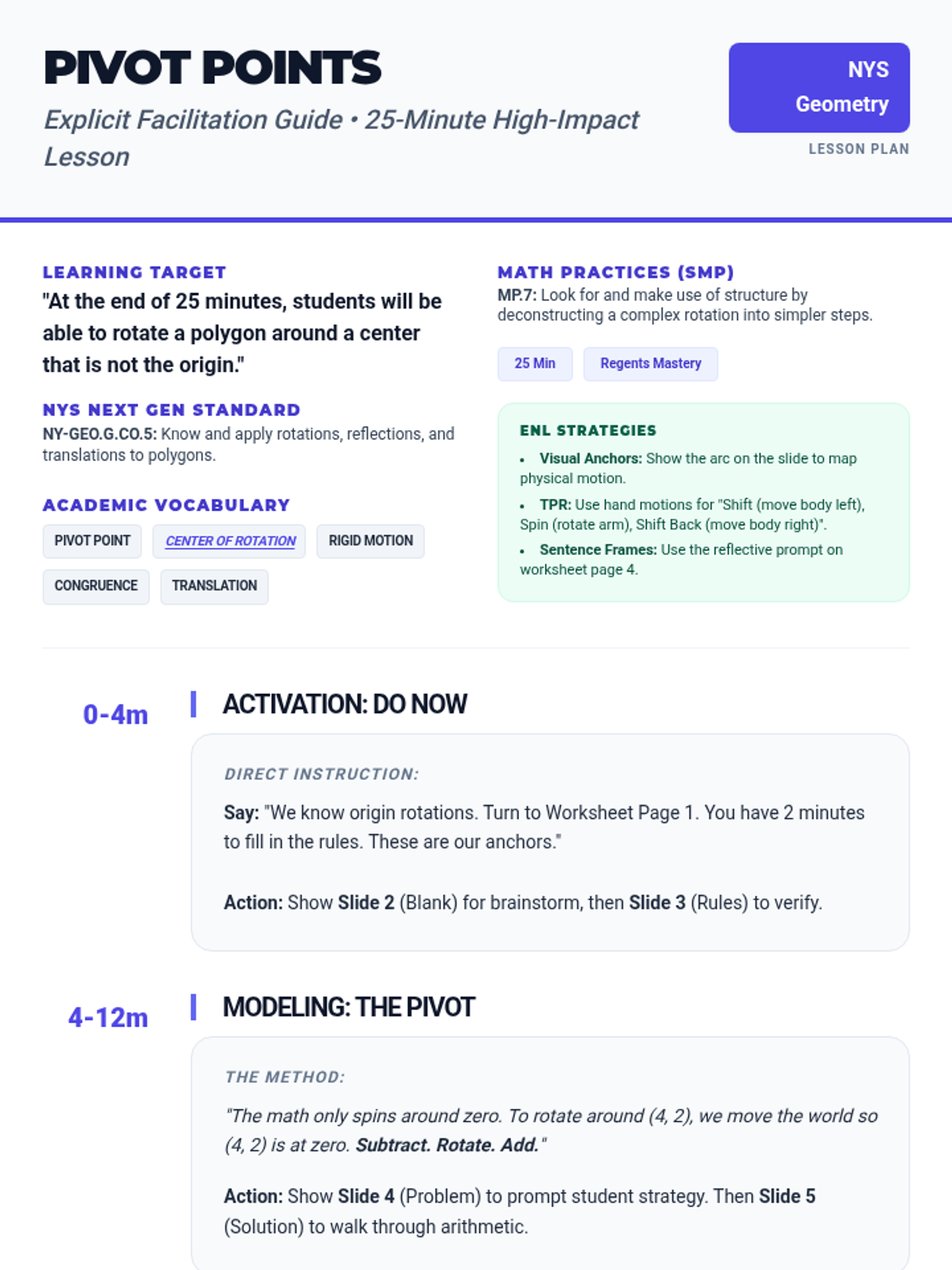
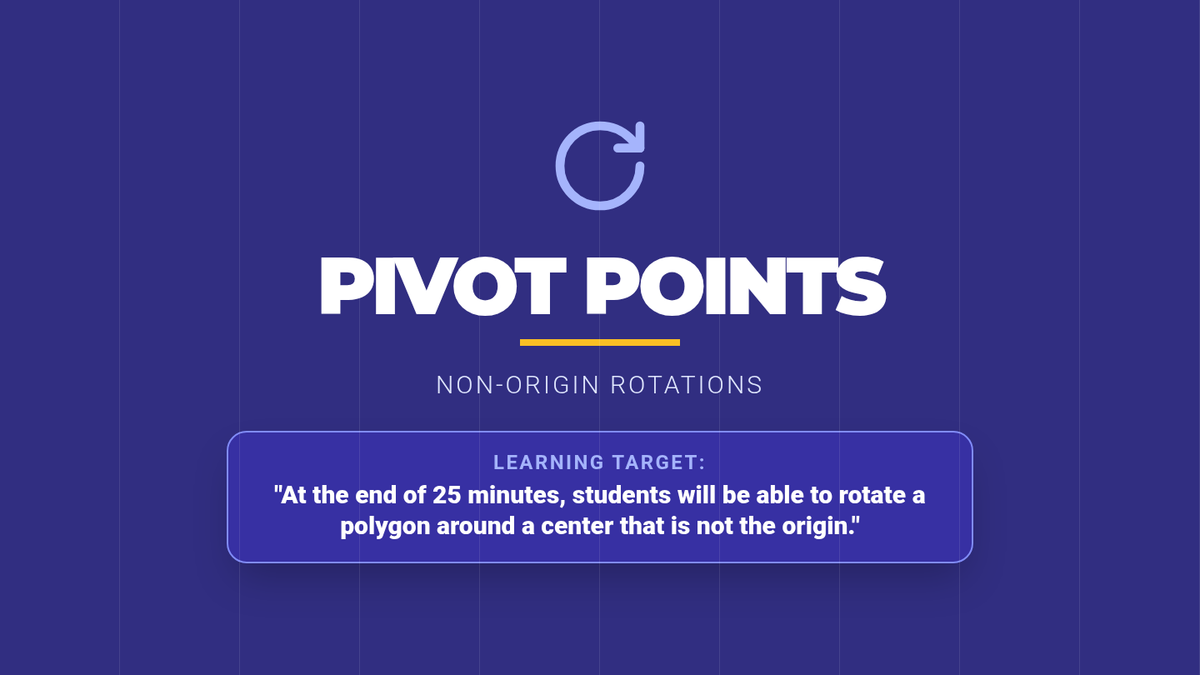
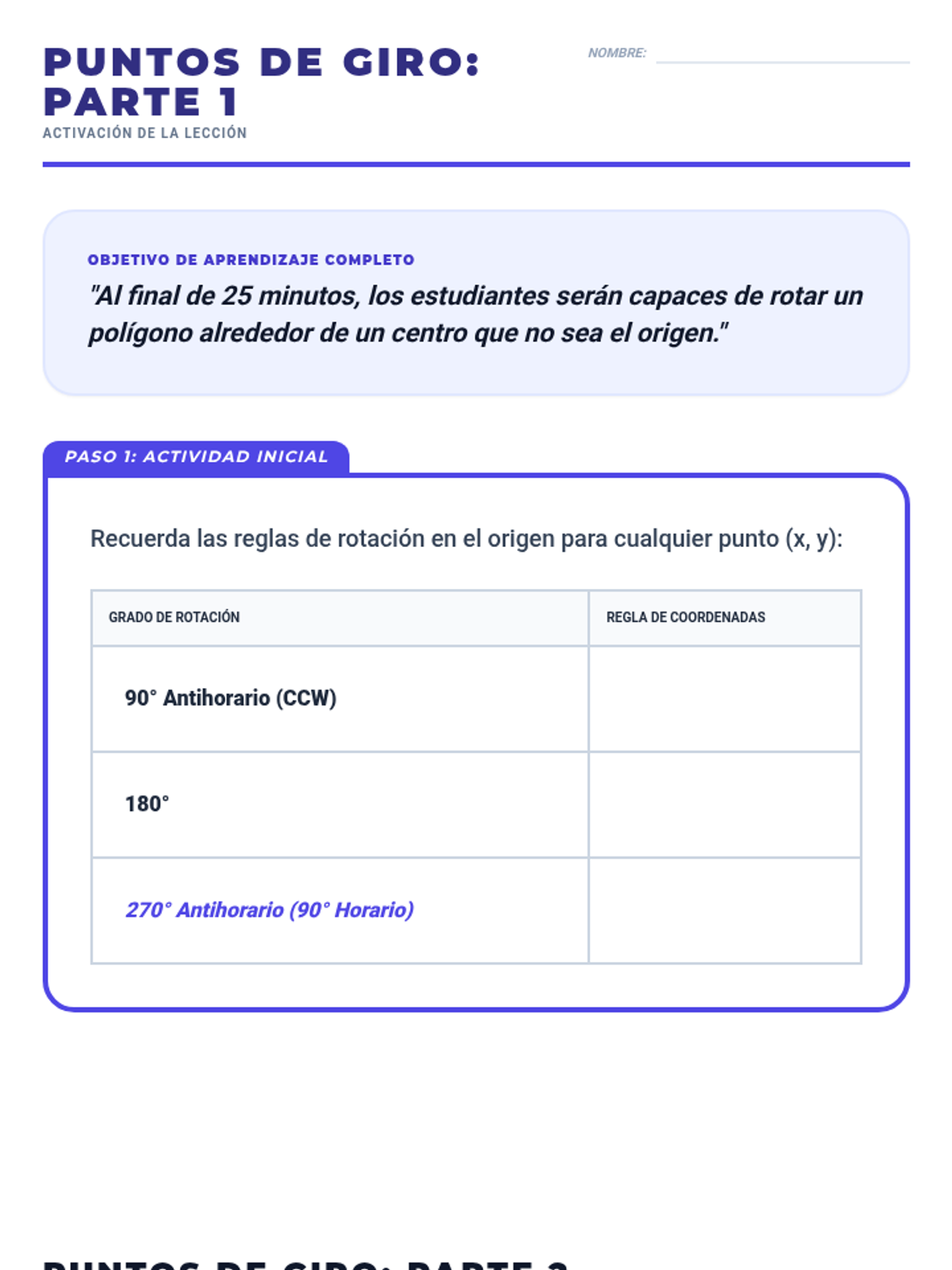
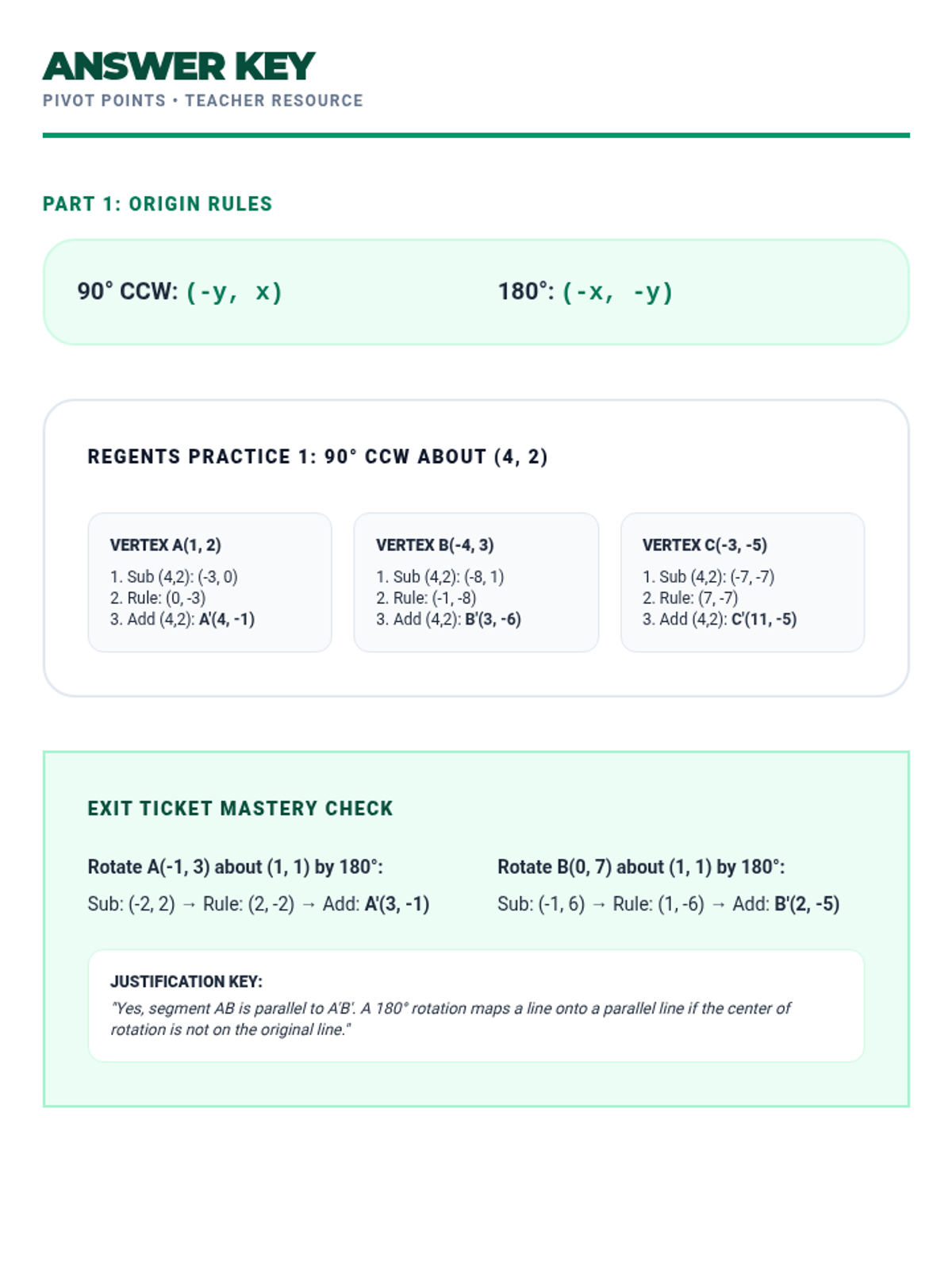
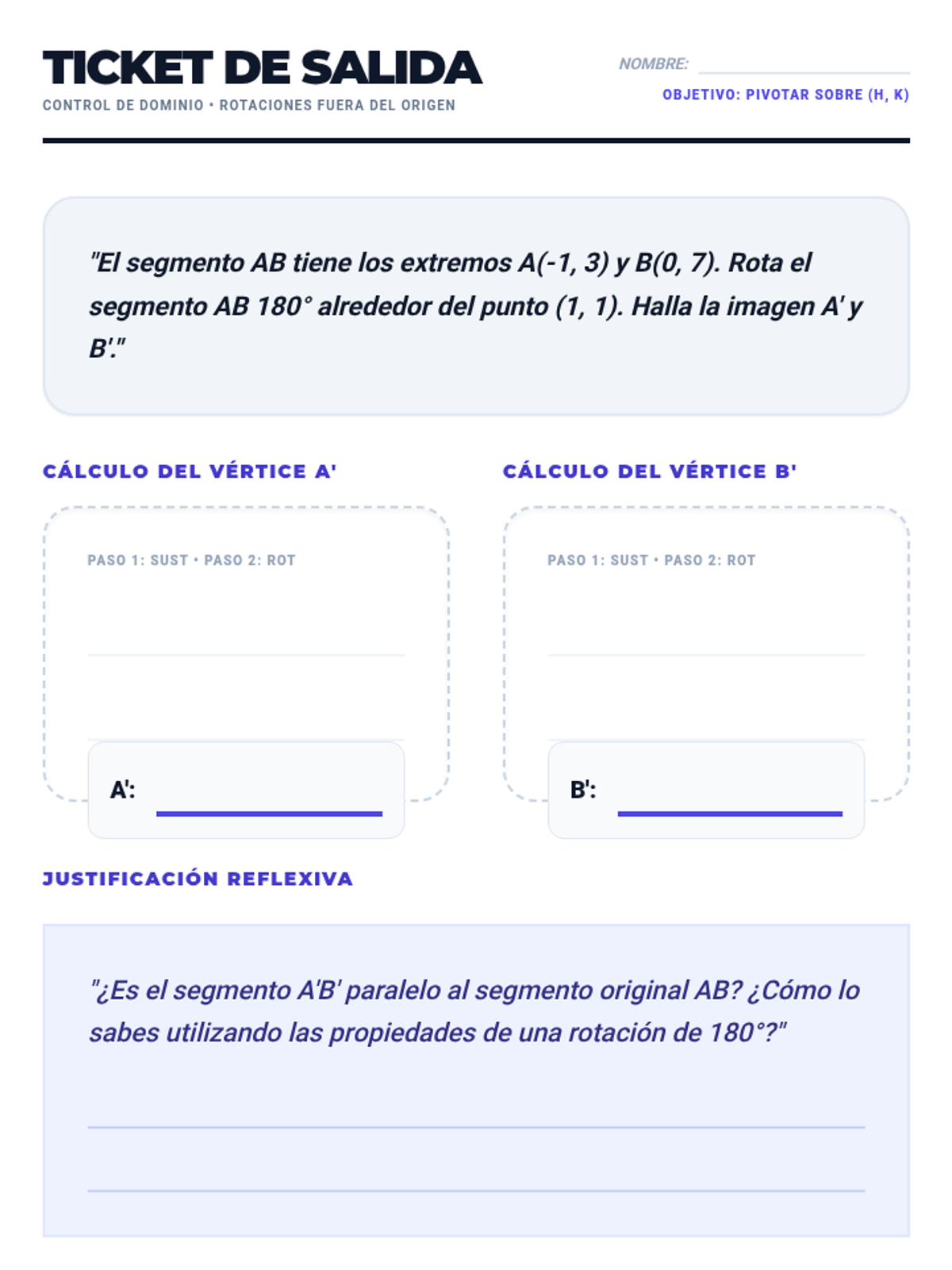
A high-school Geometry lesson focused on performing rotations about points other than the origin, featuring a three-step translation method and NYS Regents practice.
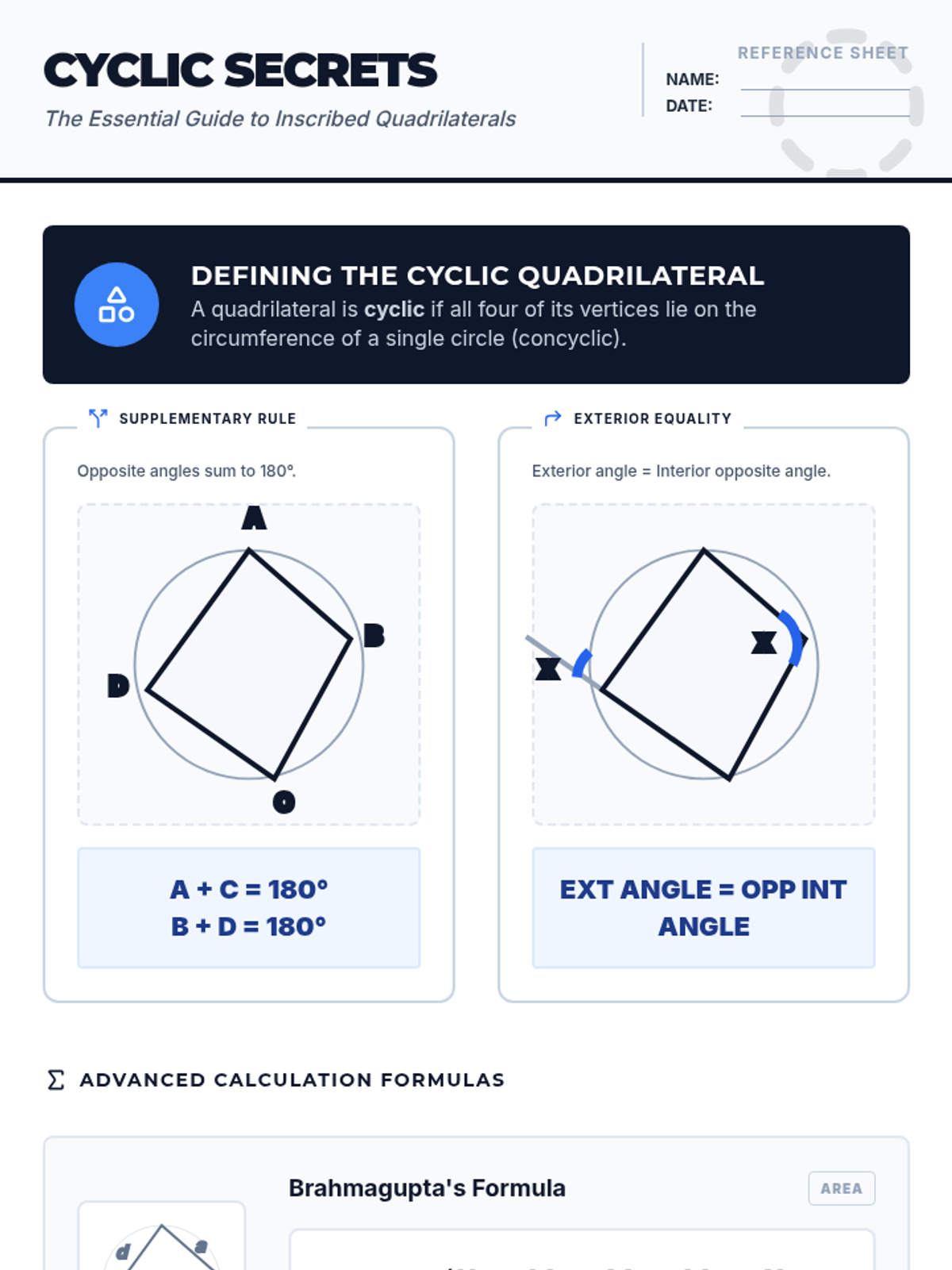
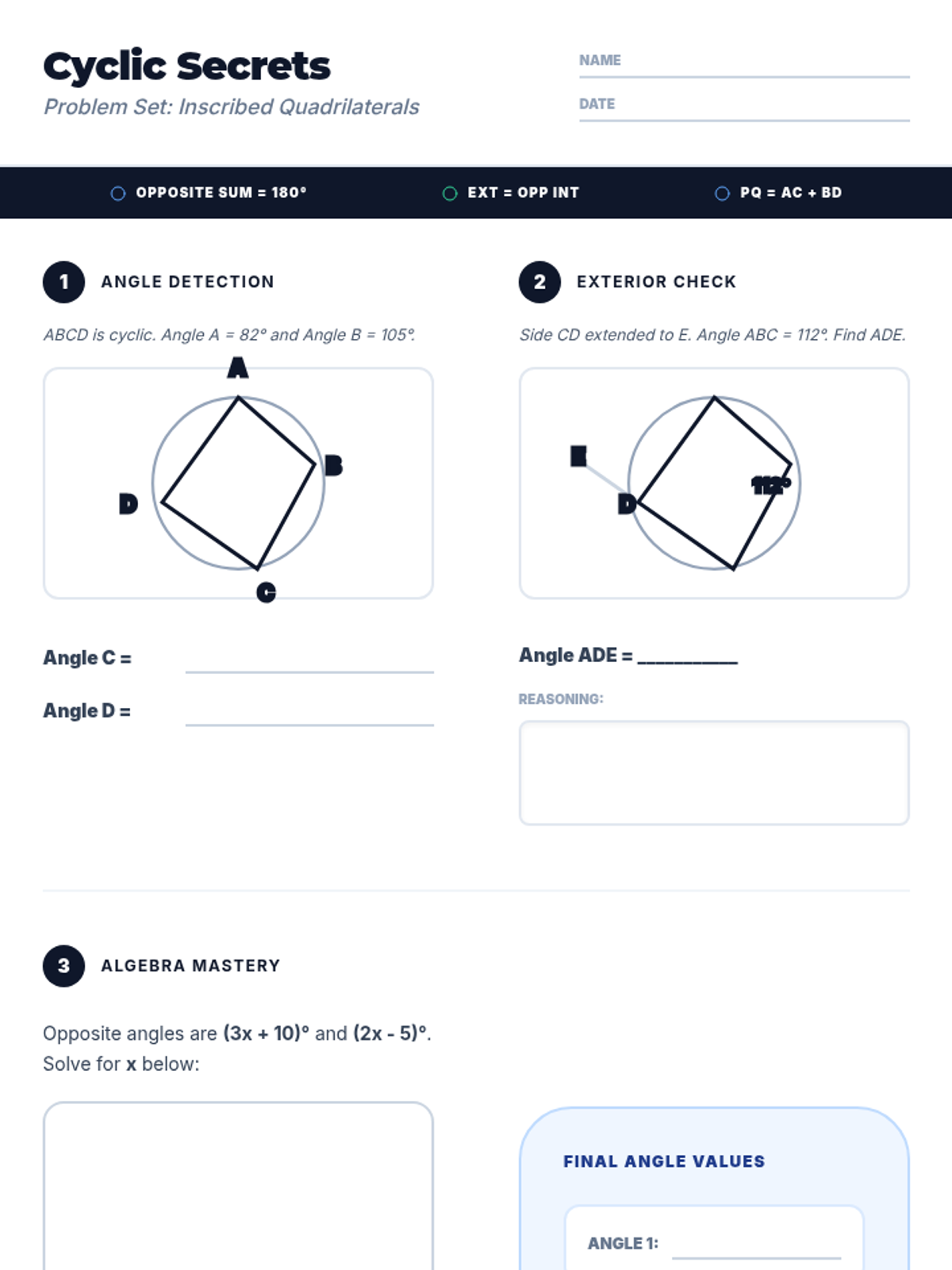
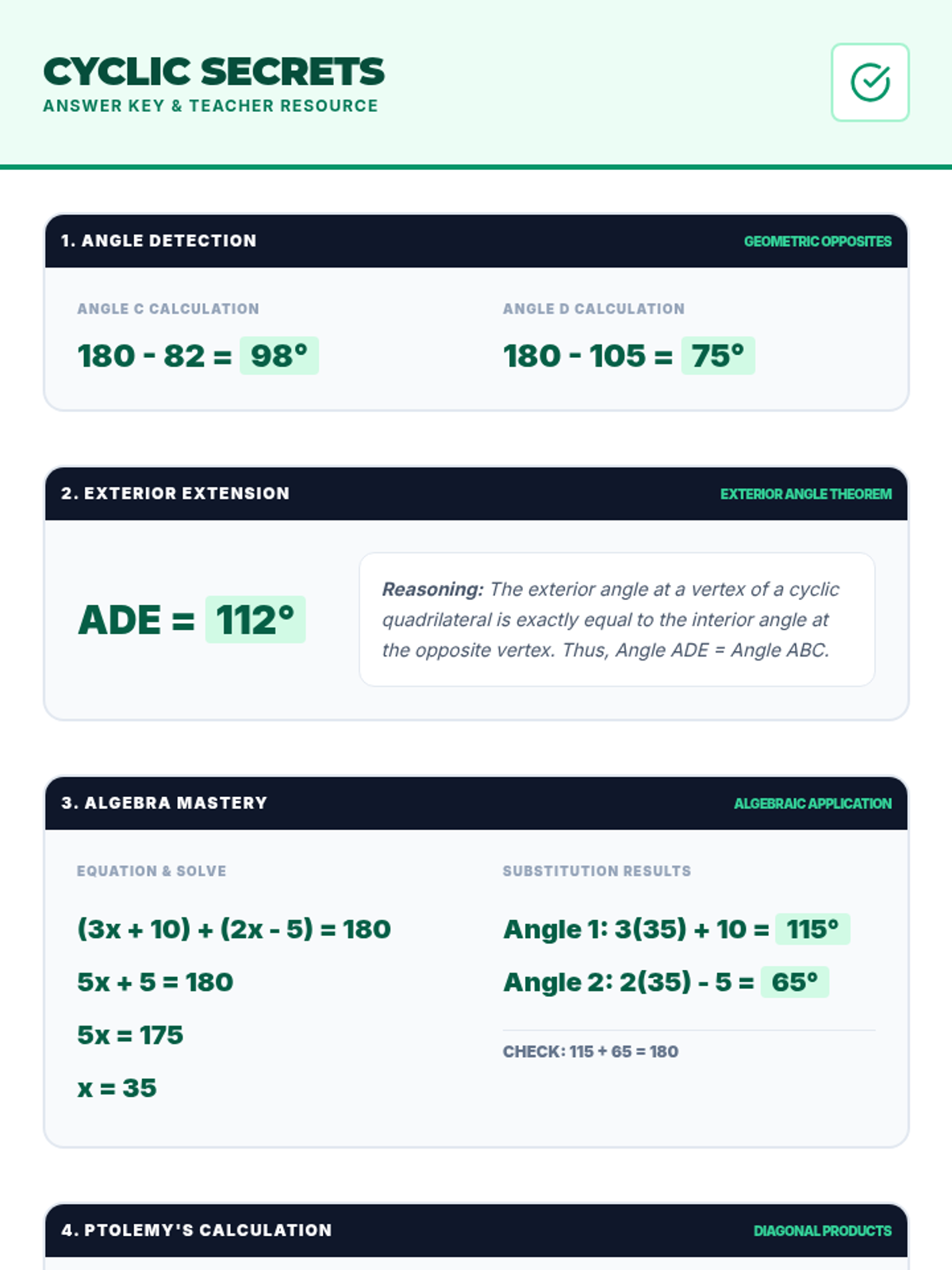
A concise exploration of cyclic quadrilaterals, focusing on the essential theorems and formulas governing four-sided shapes inscribed within circles.
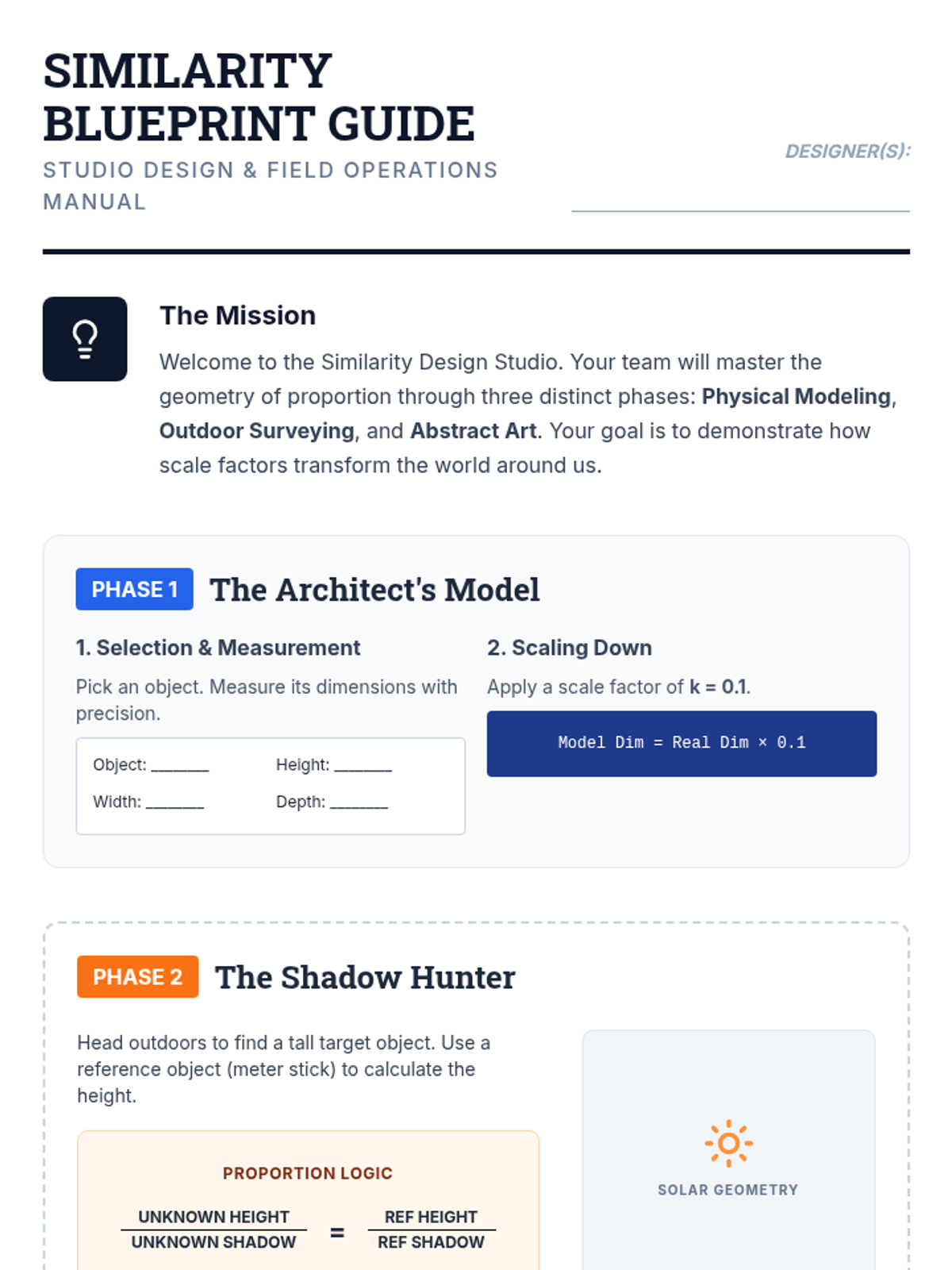
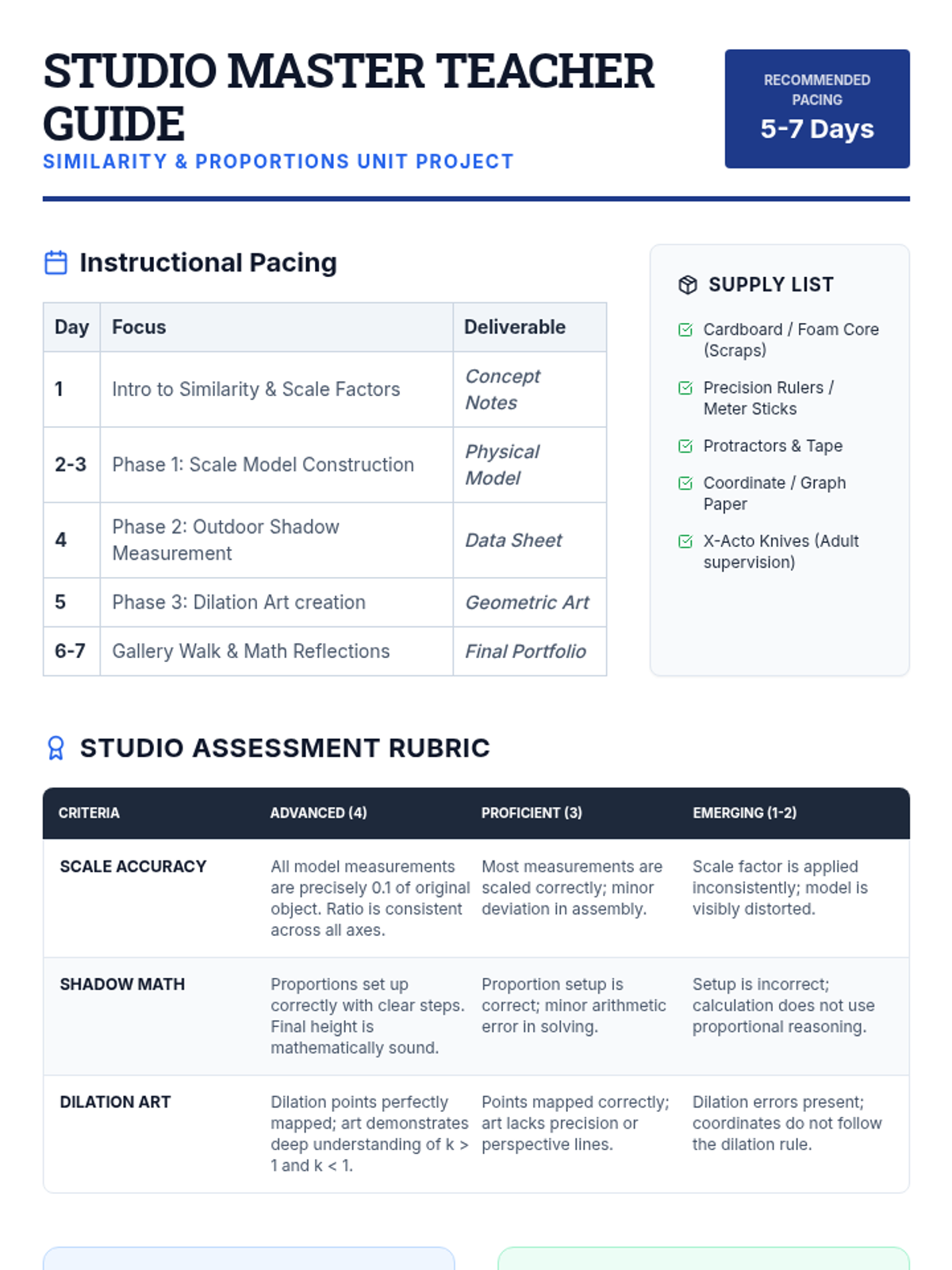
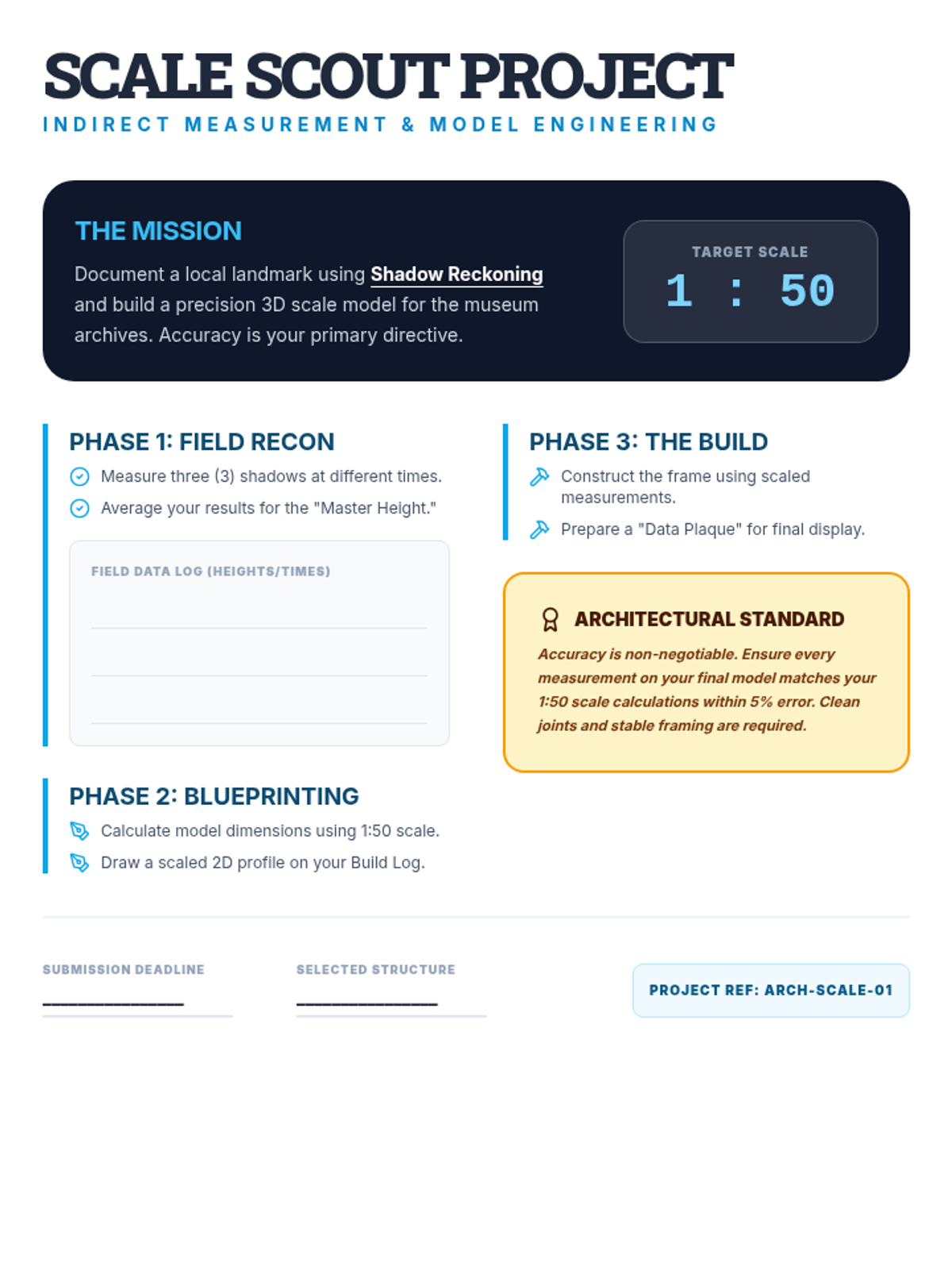
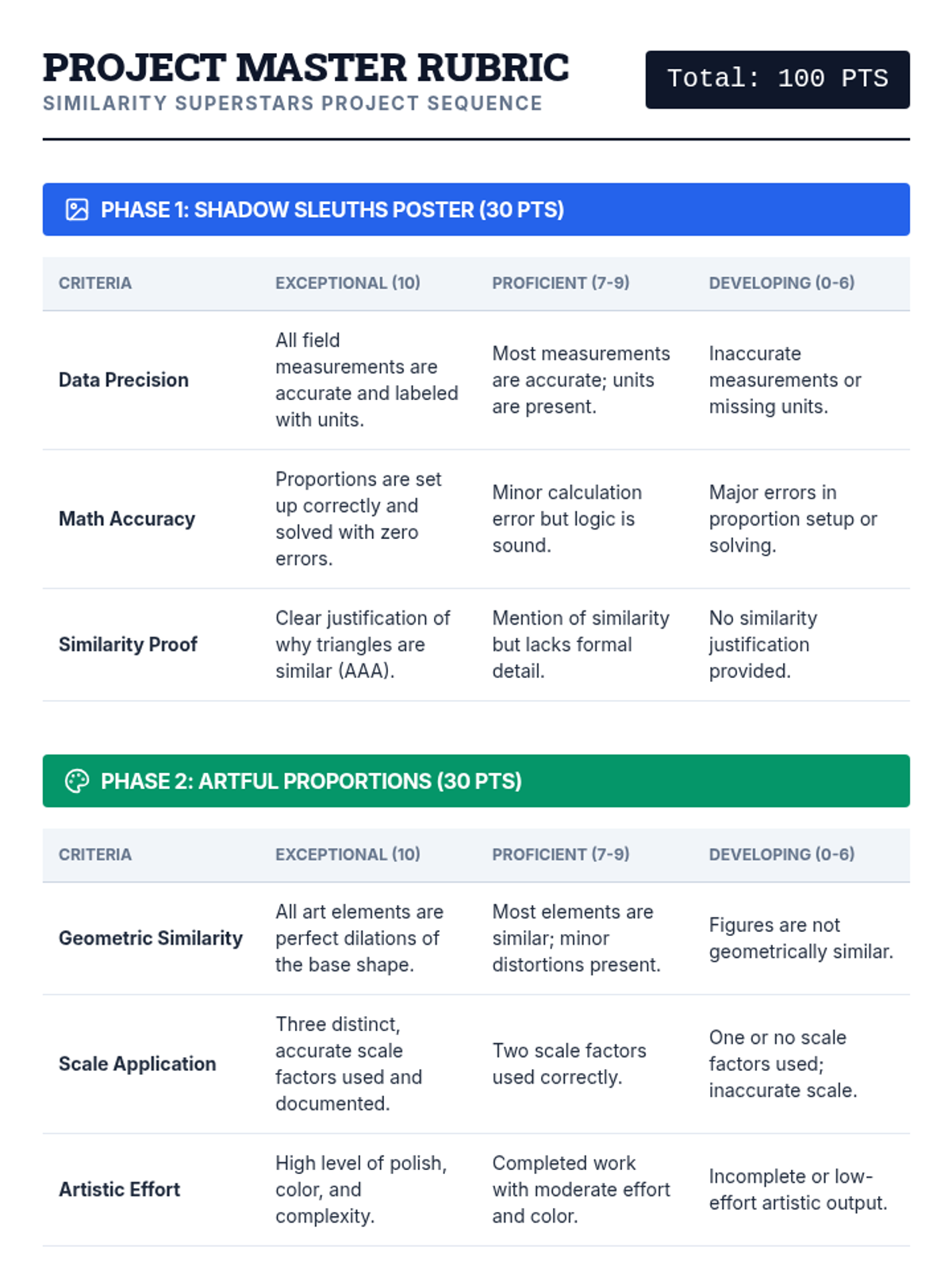
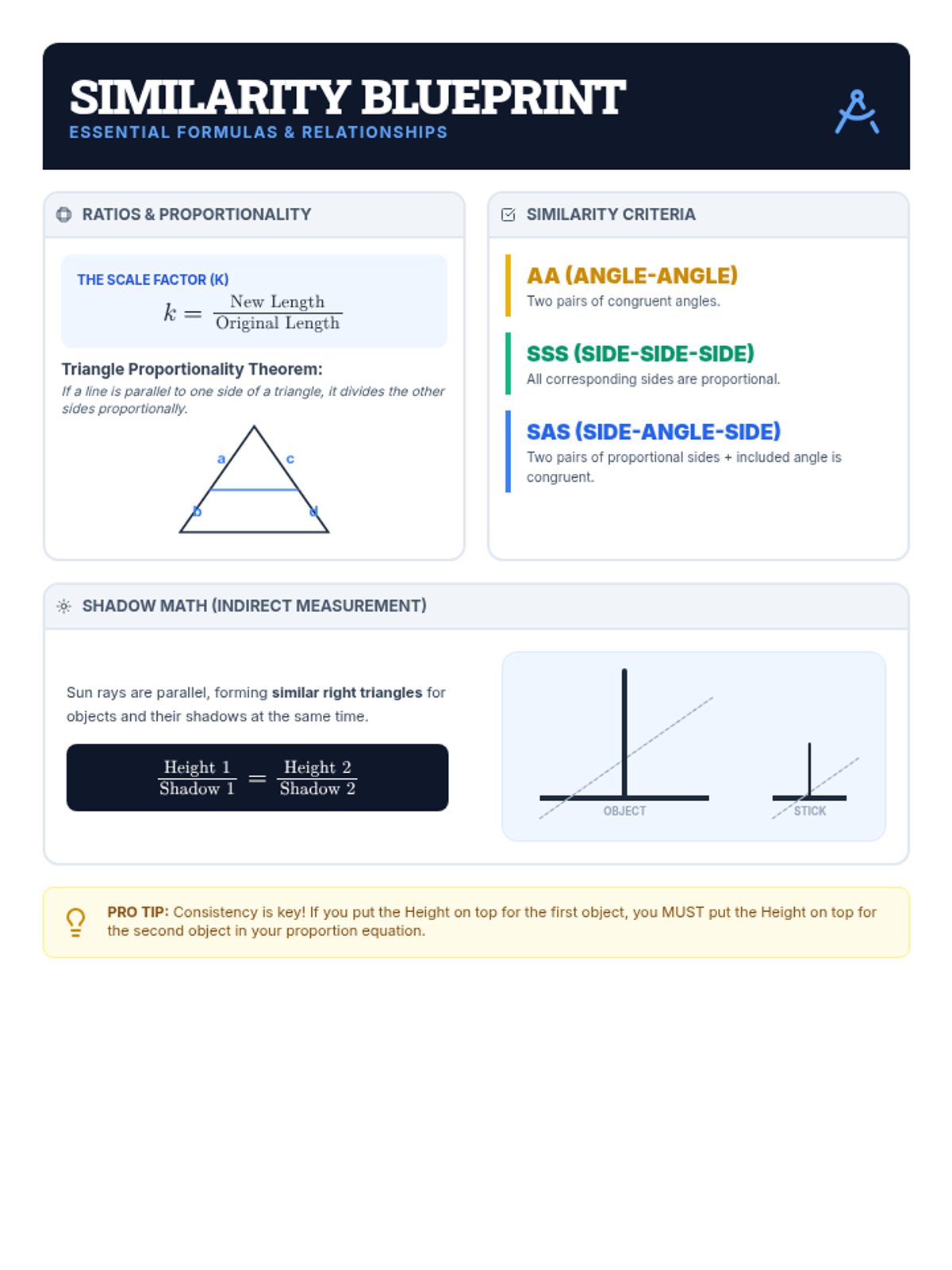
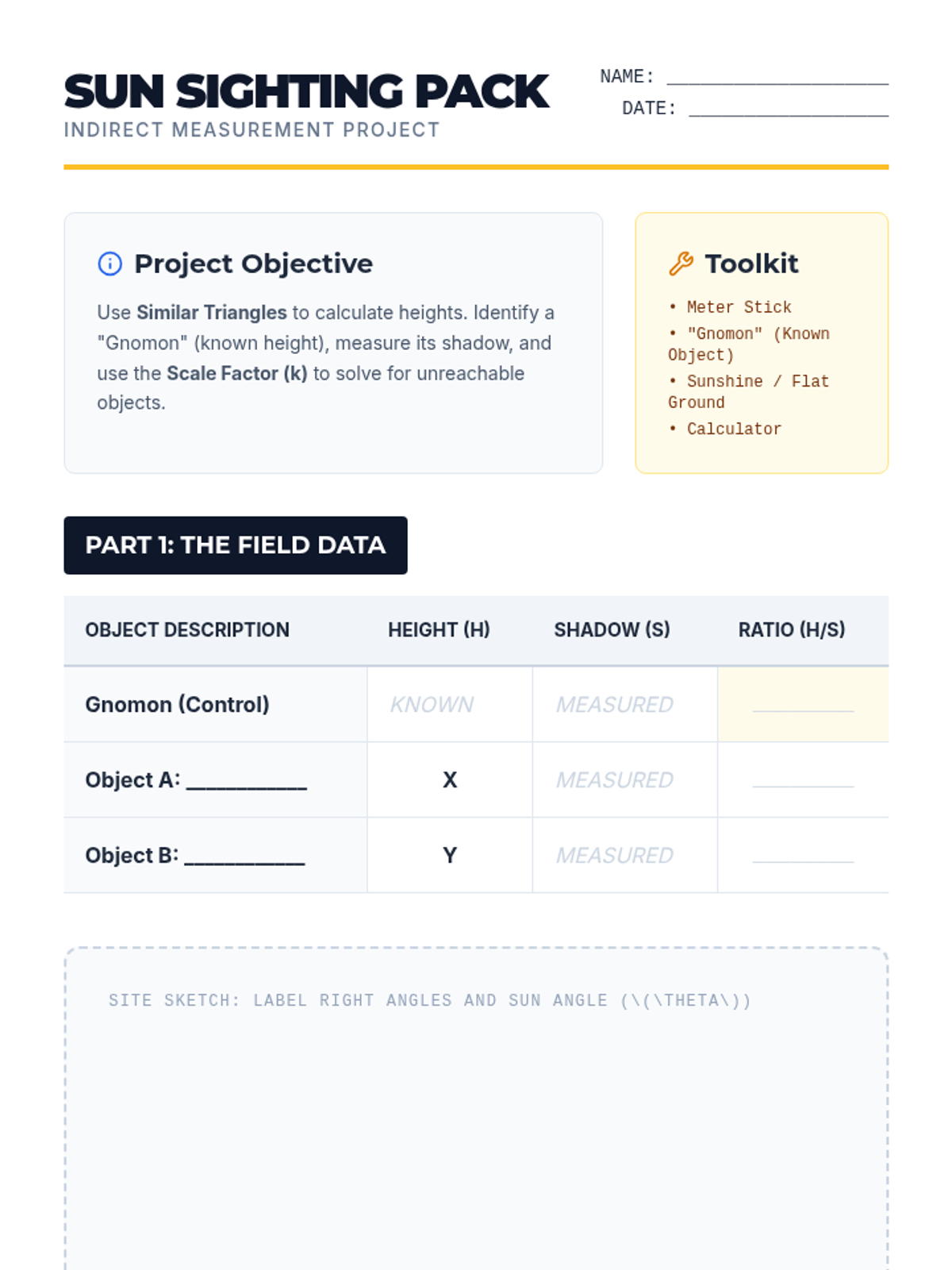
A comprehensive geometry project where students explore similarity through scale modeling, outdoor shadow measurement, and artistic dilations. This lesson integrates hands-on construction with real-world mathematical applications.
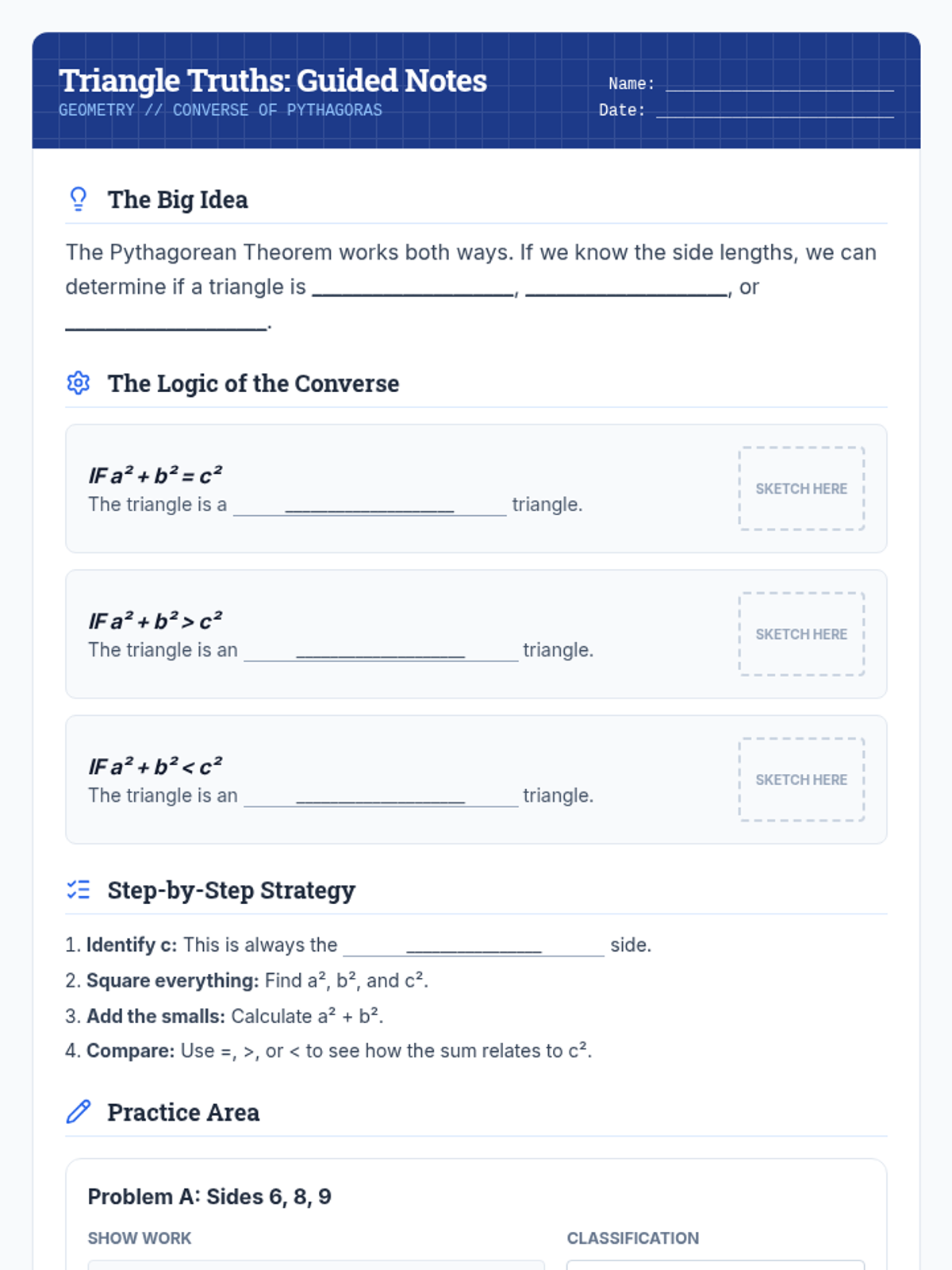
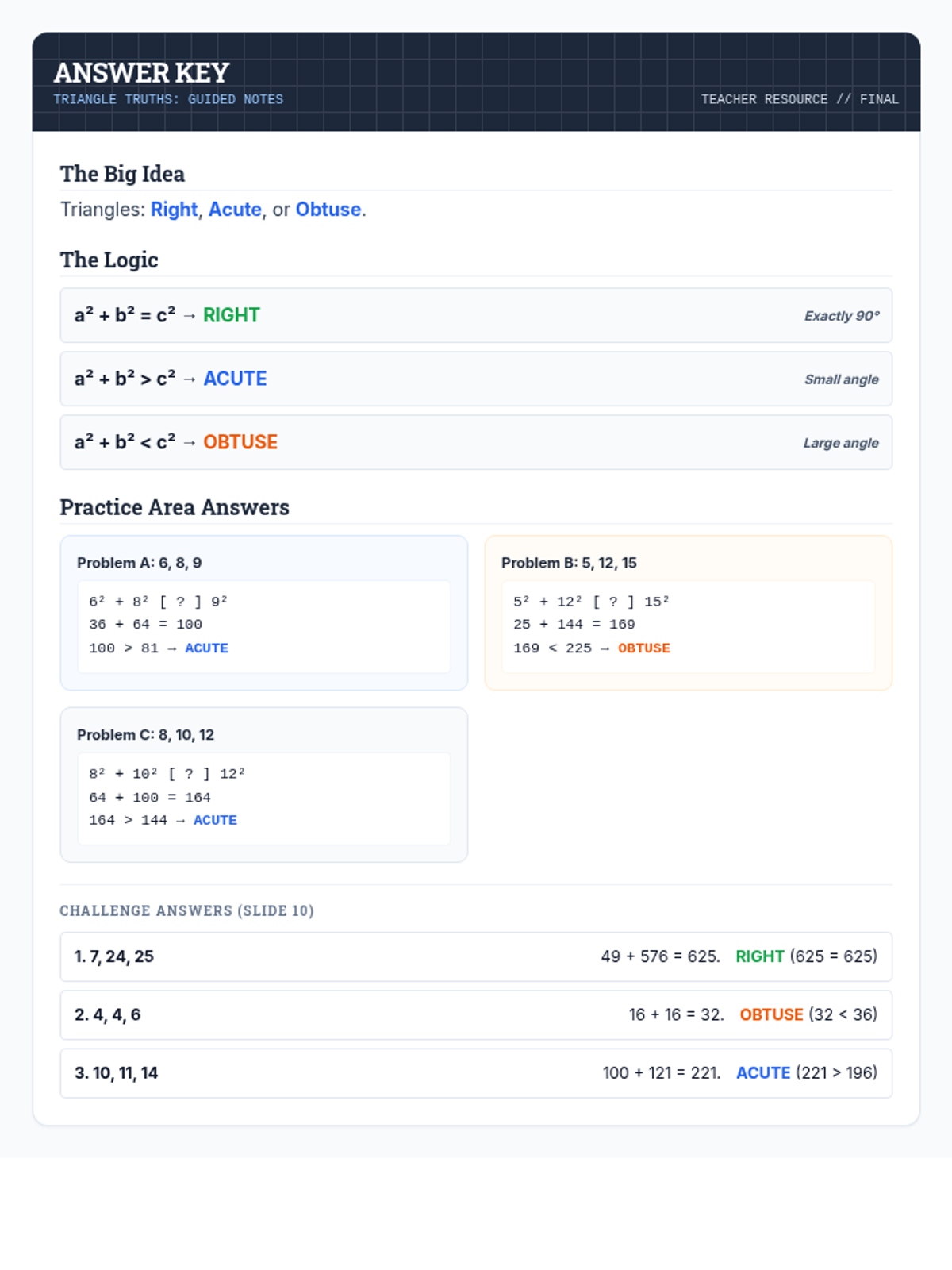
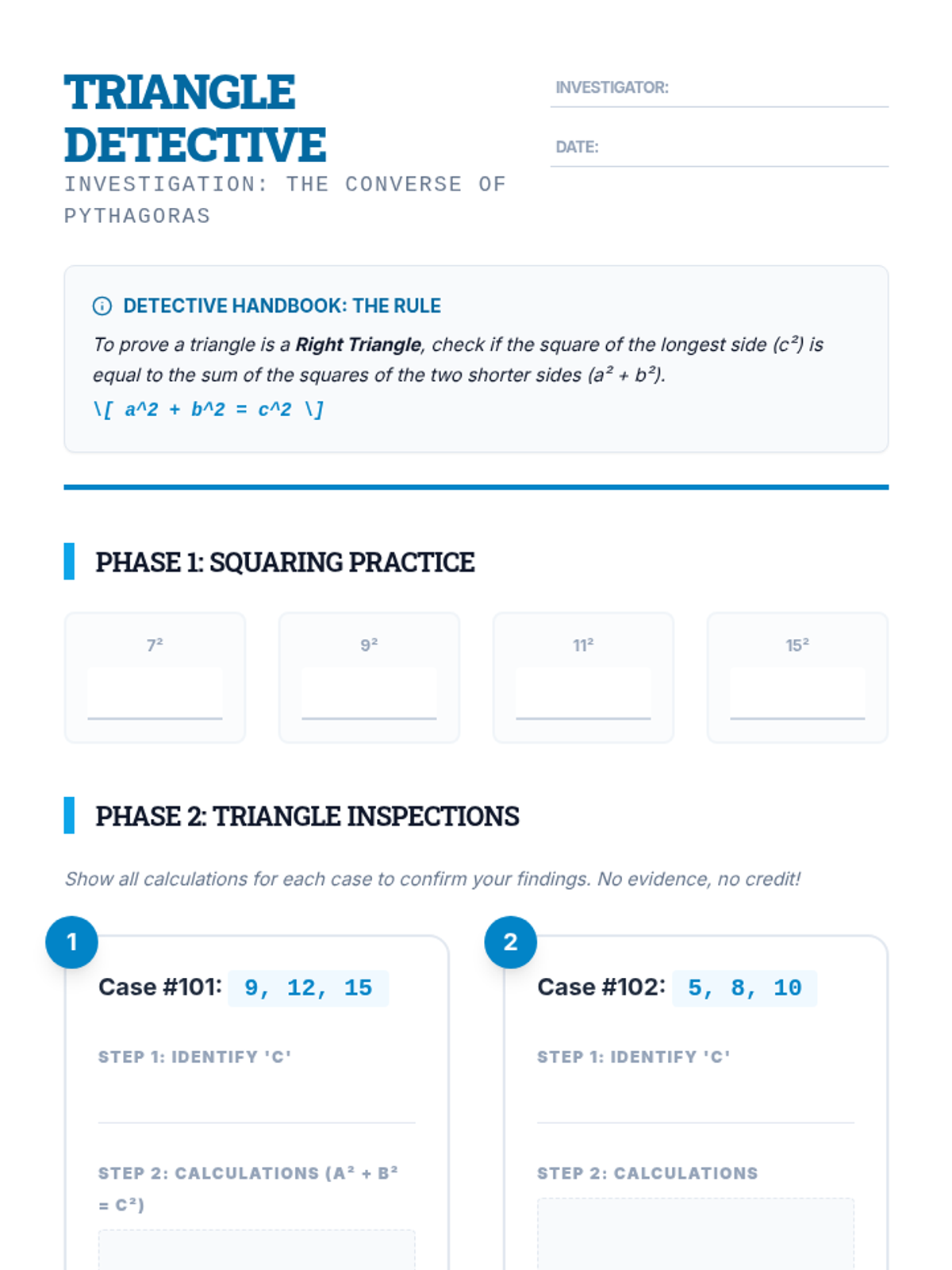
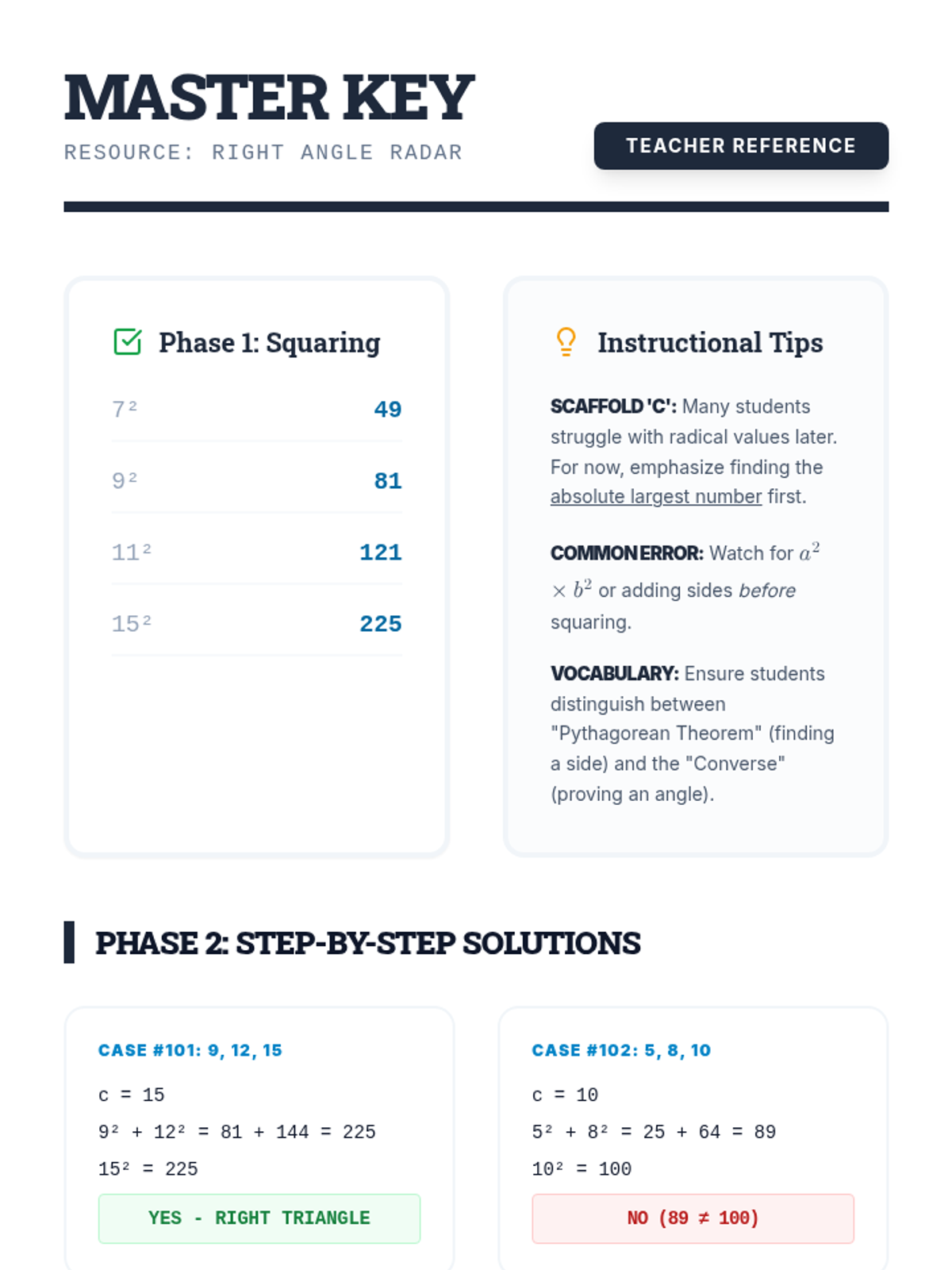
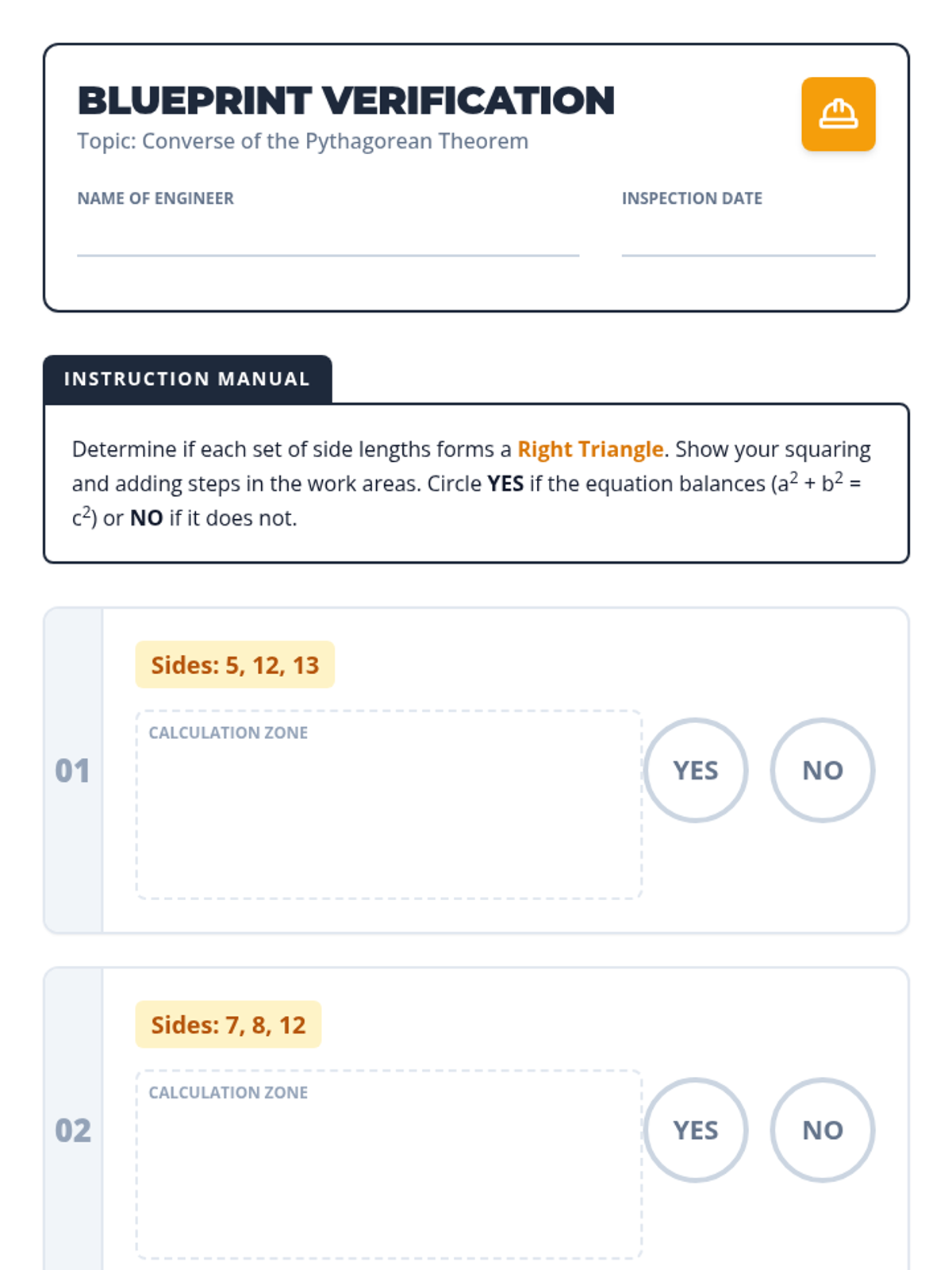
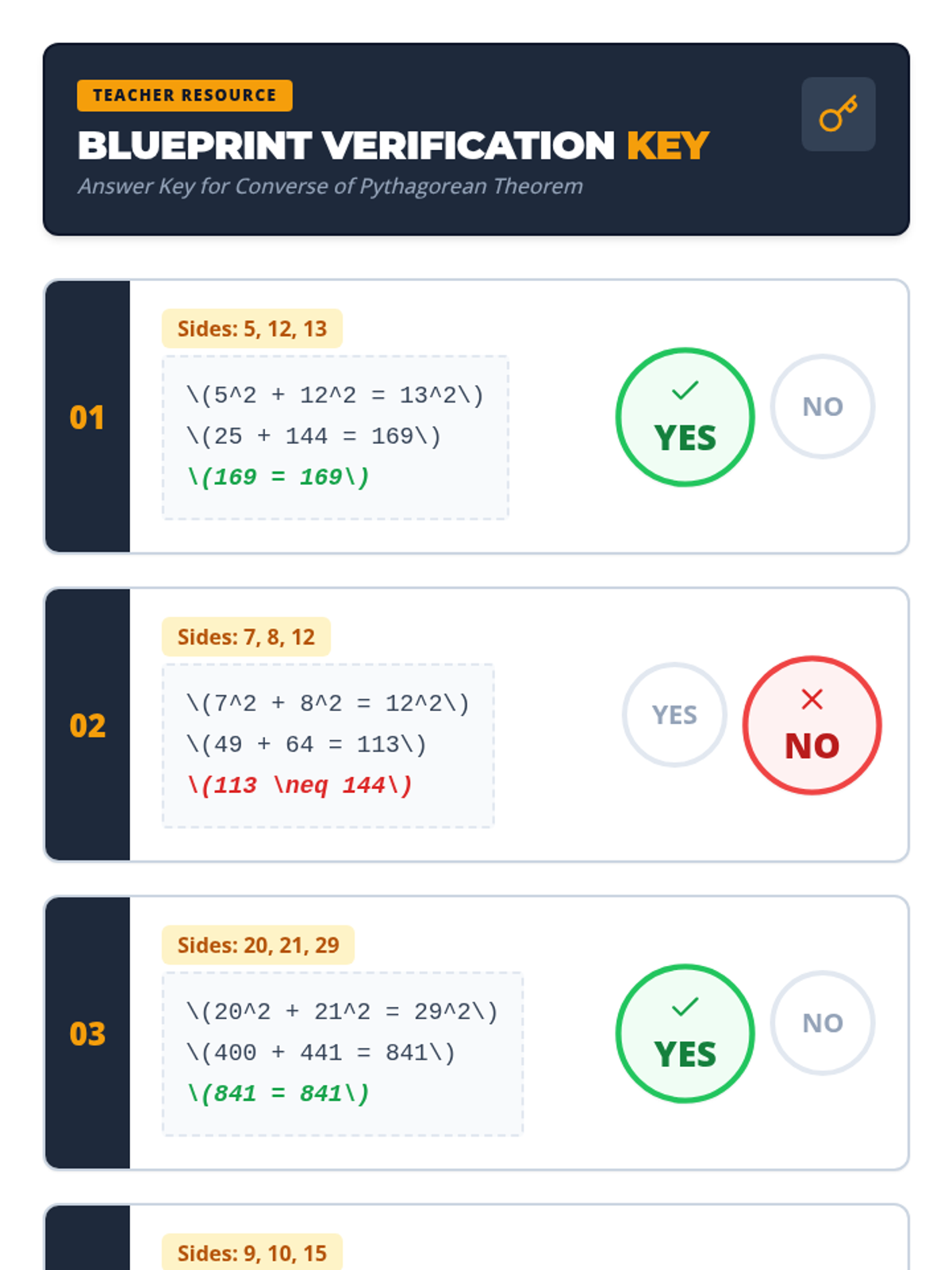
A lesson exploring the Converse of the Pythagorean Theorem, teaching students how to classify triangles as right, acute, or obtuse based on side lengths.
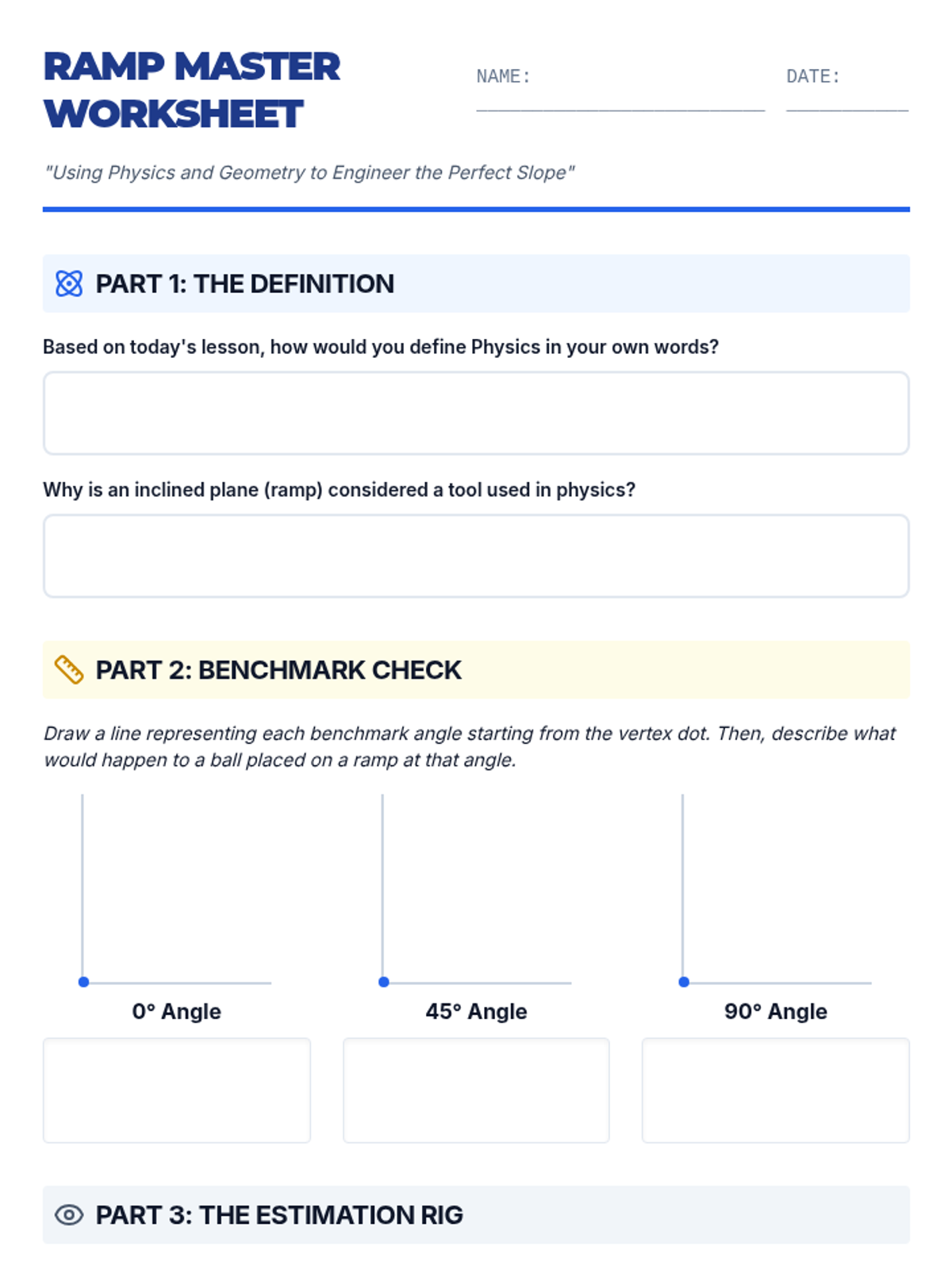
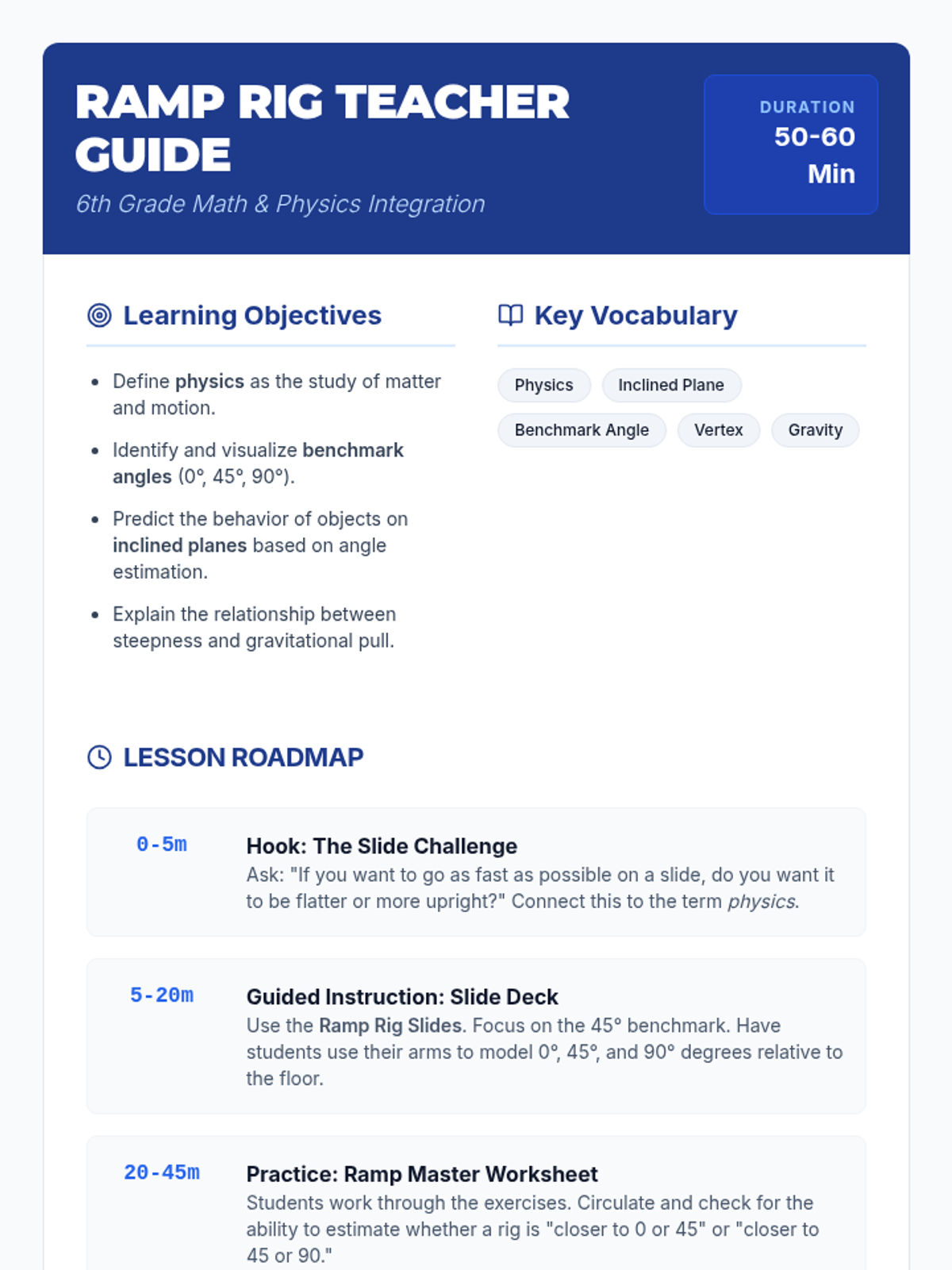
A 6th-grade math lesson exploring physics through the lens of geometry. Students learn to define physics and use benchmark angles (0, 45, 90) to predict the behavior of ramps and inclined planes.
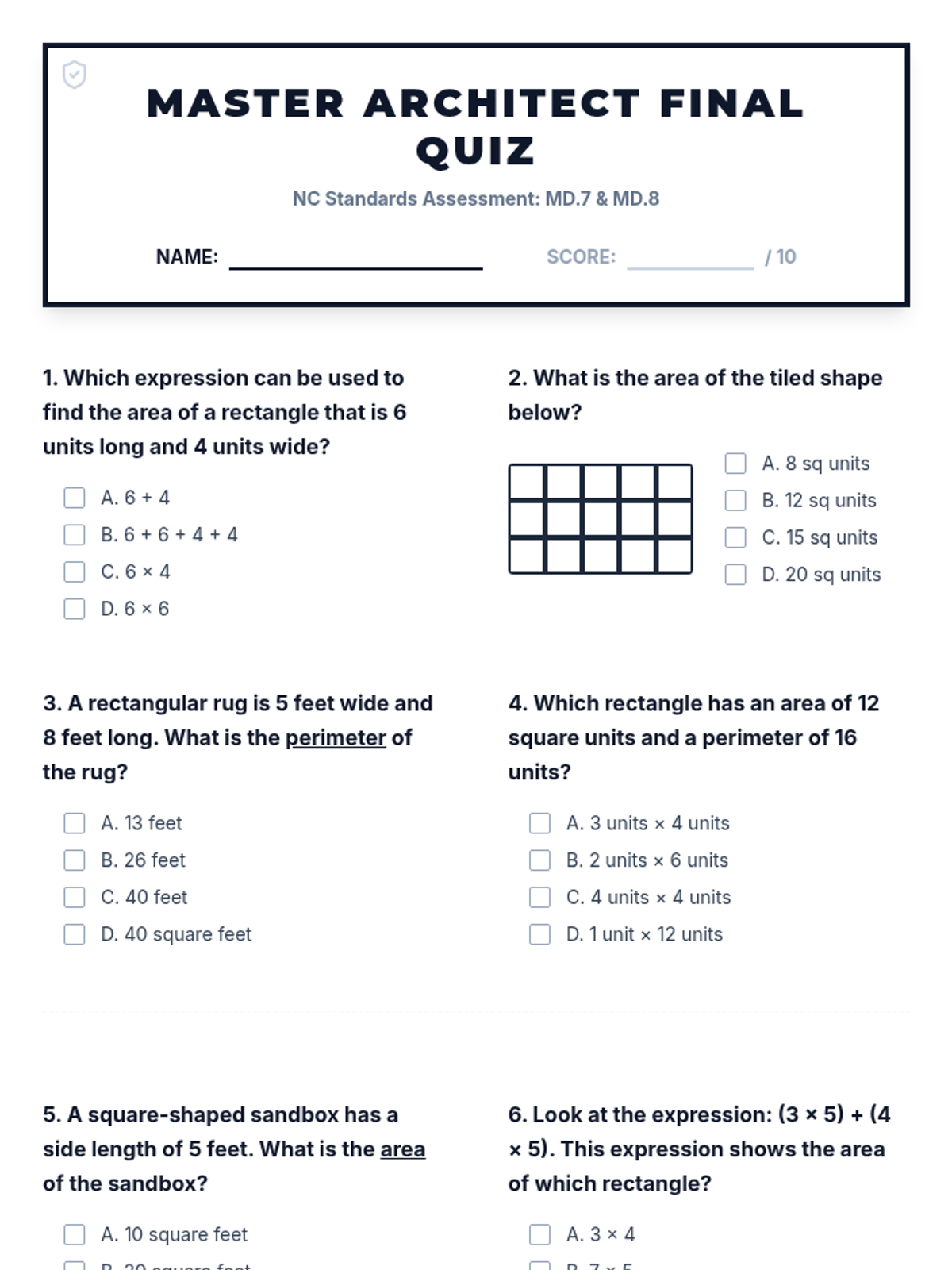
A comprehensive review of area and perimeter standards followed by a 10-question EOG-style final assessment.
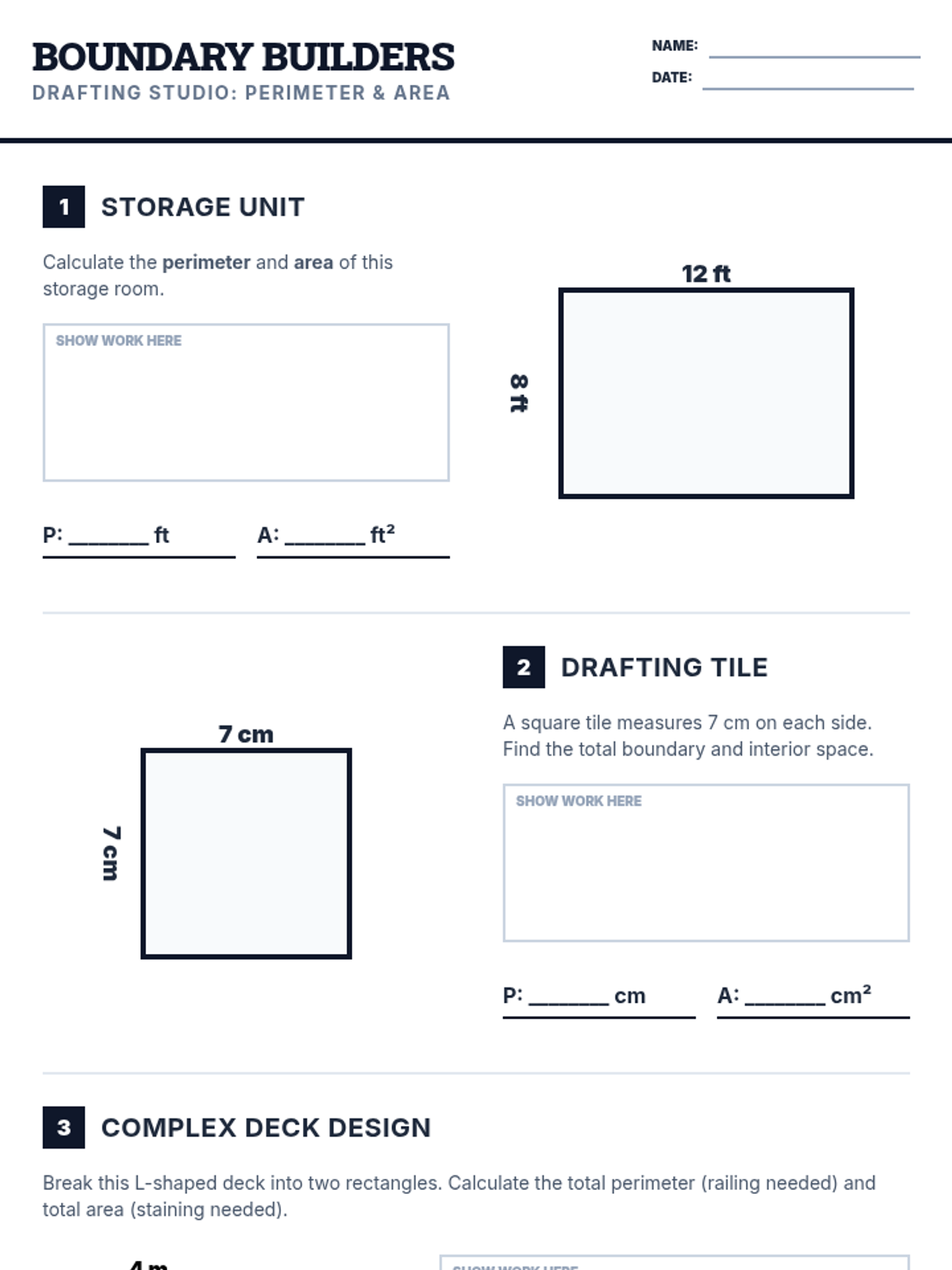
Students explore the relationships between perimeter and area through practical calculation and problem-solving on various polygons.
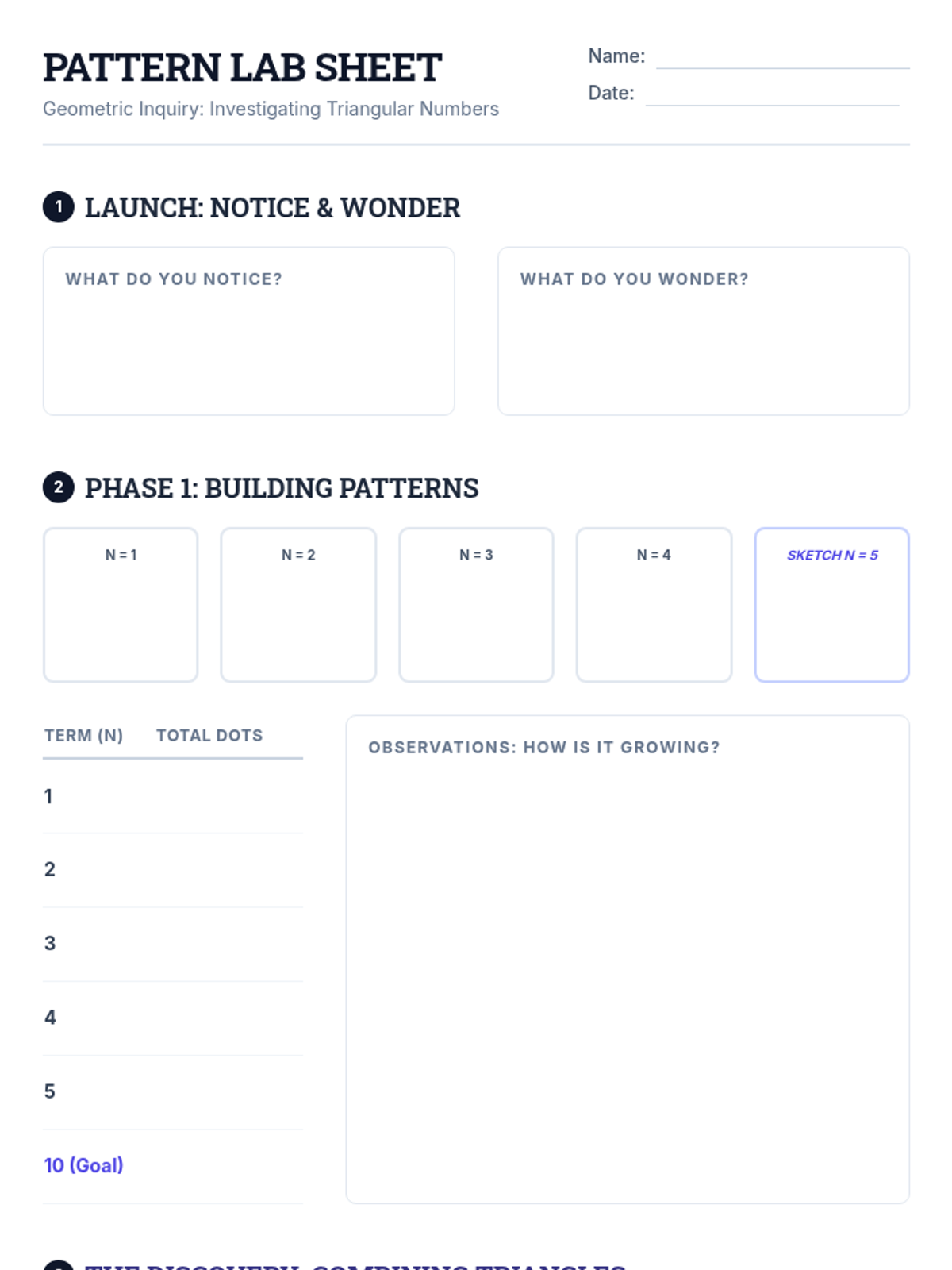
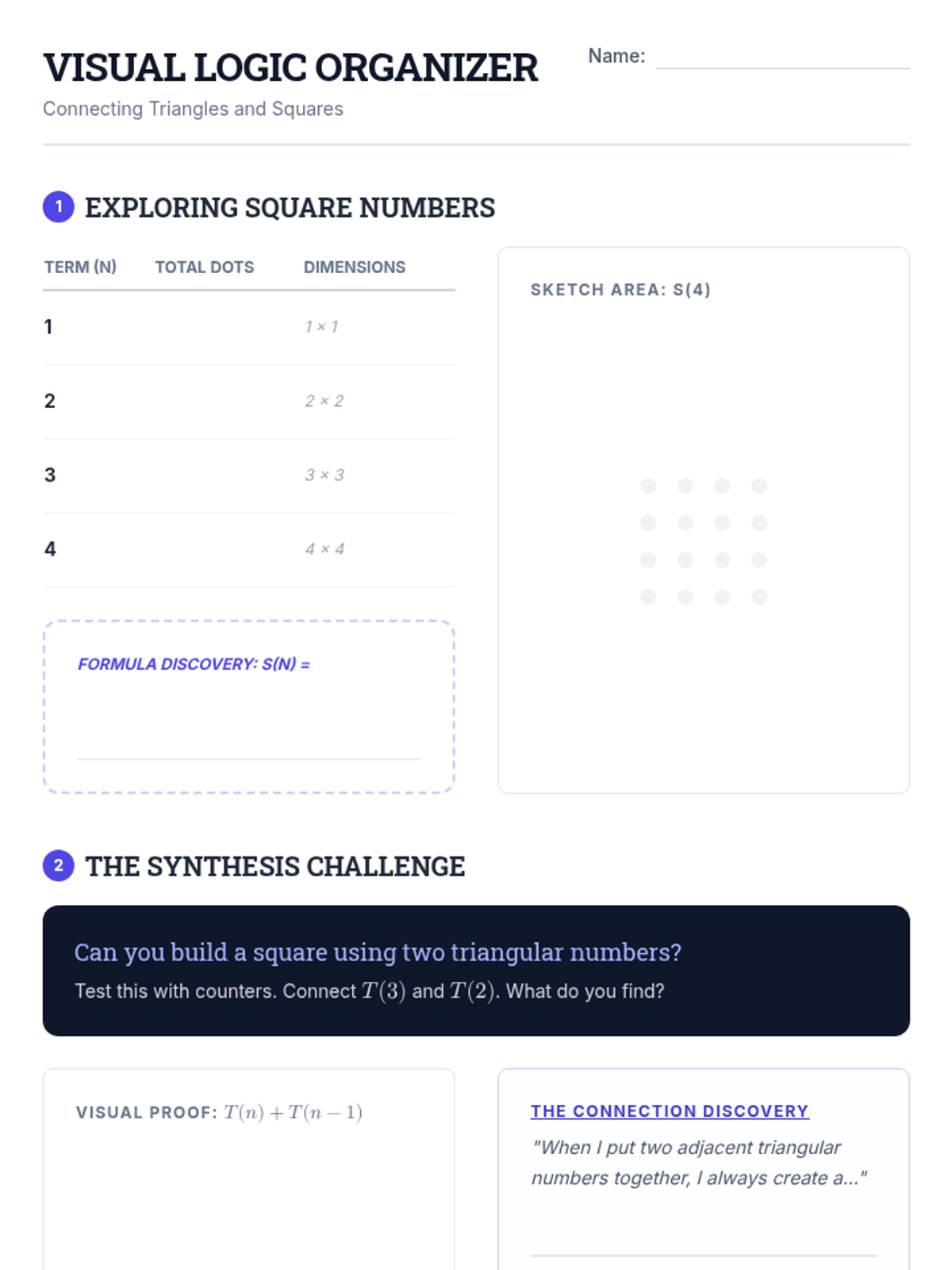
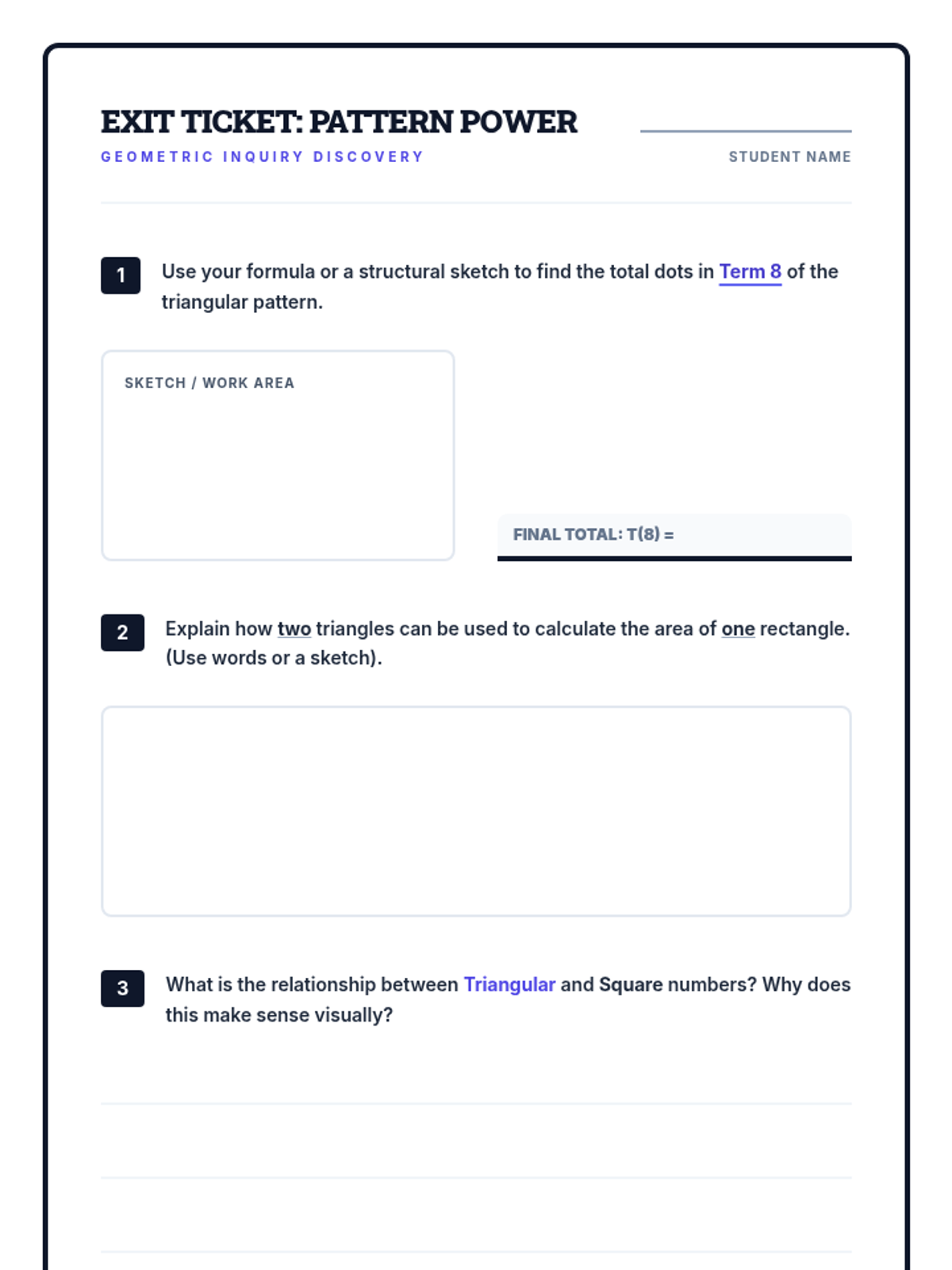
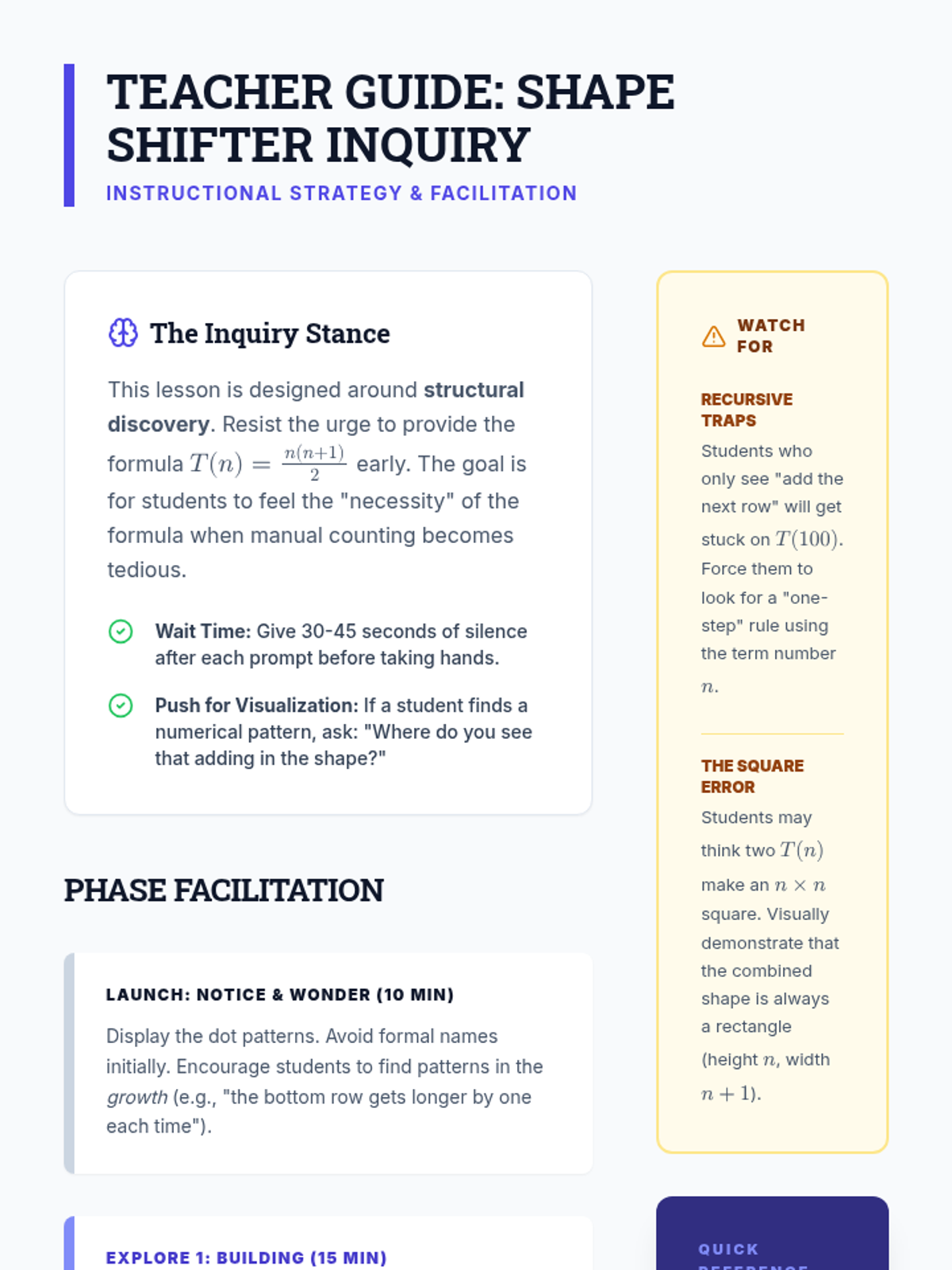
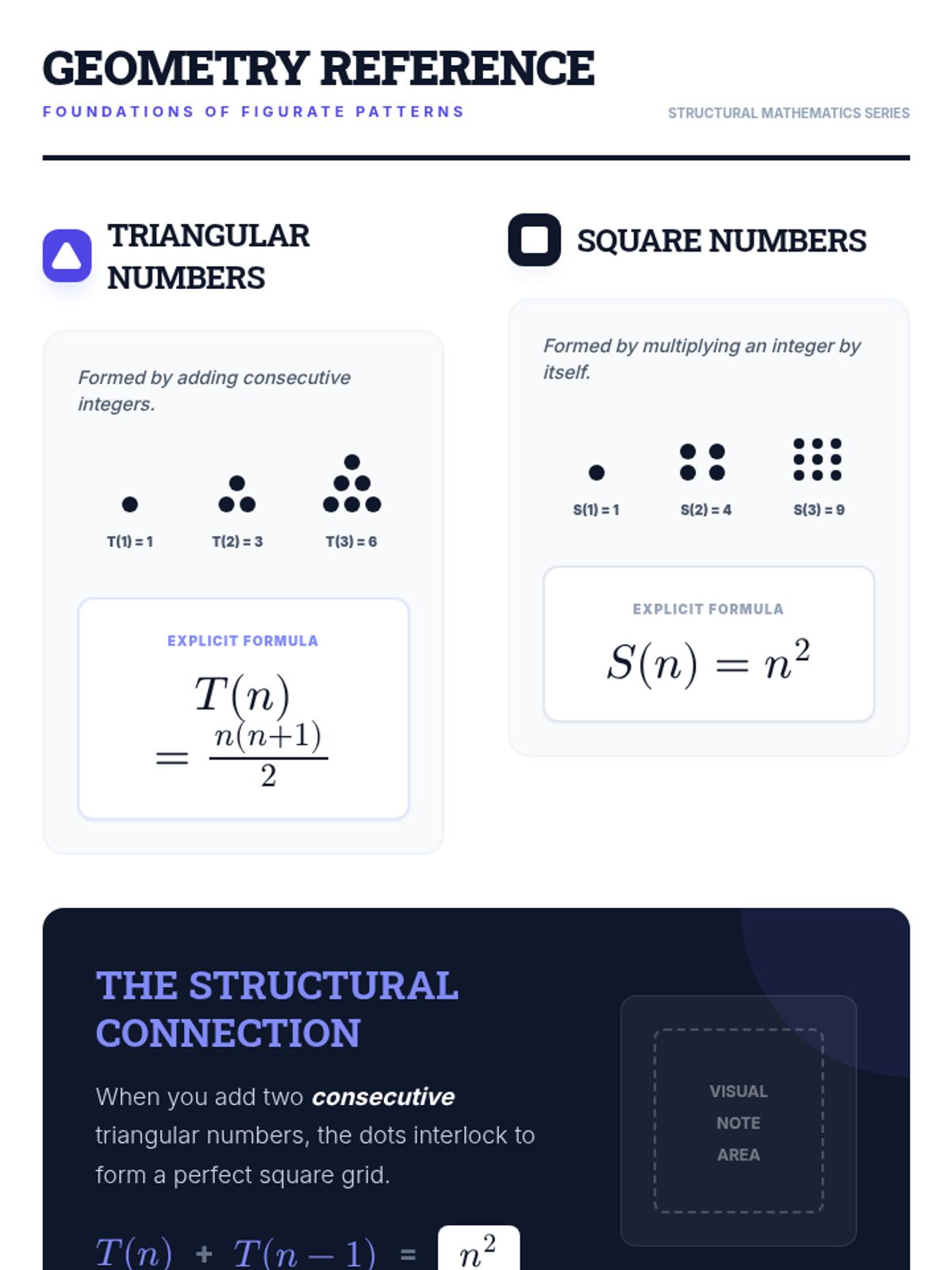
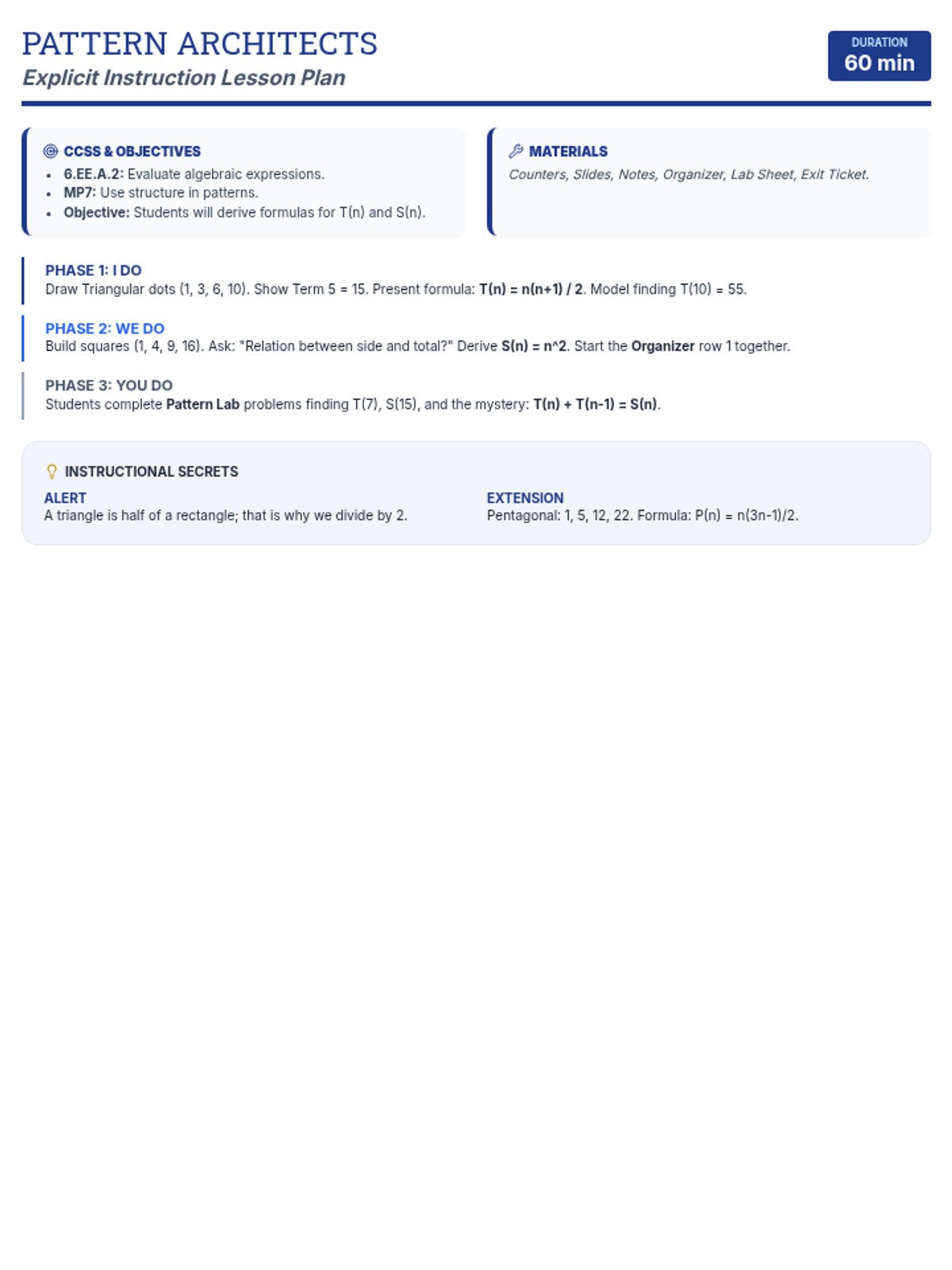
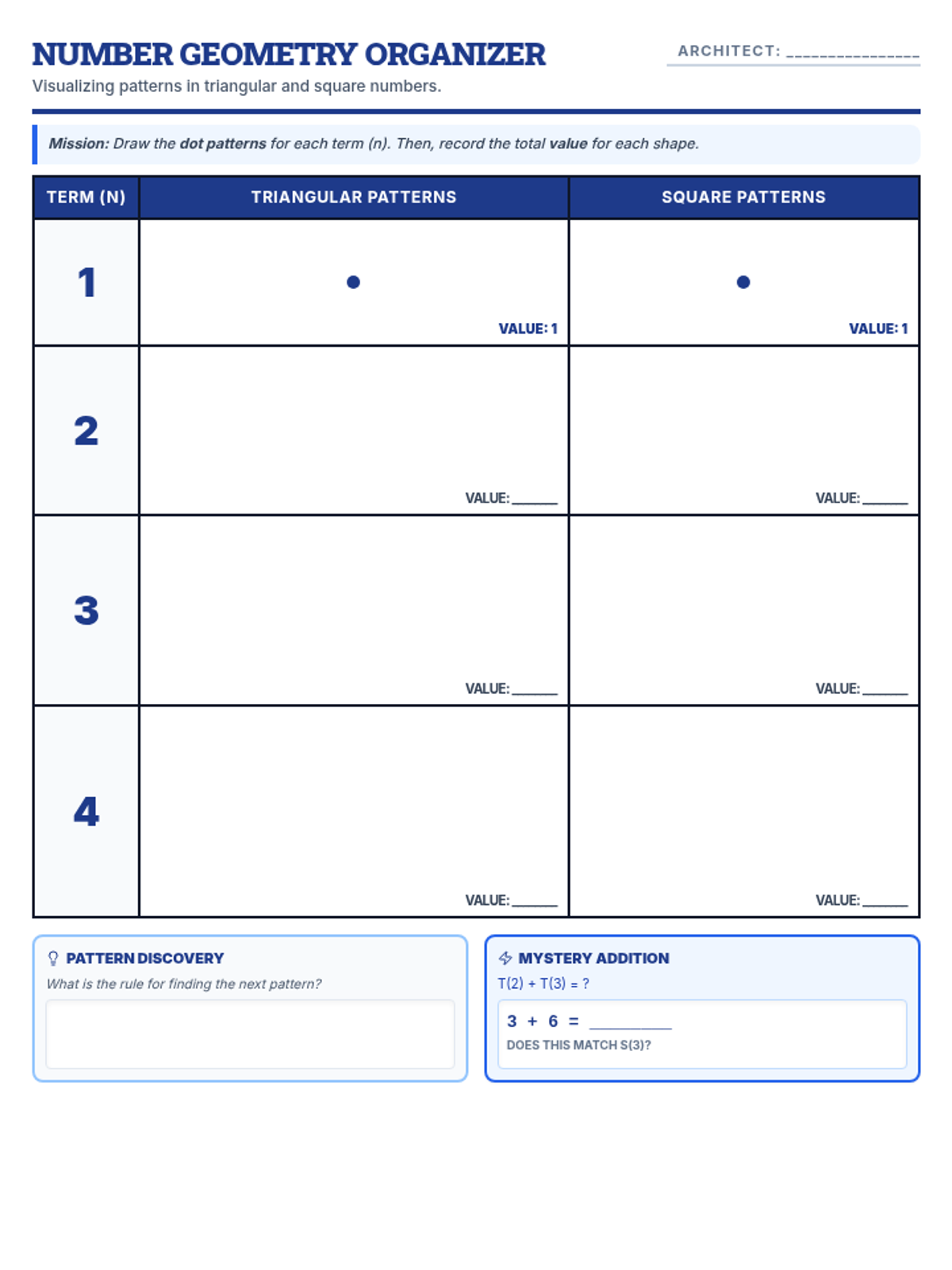
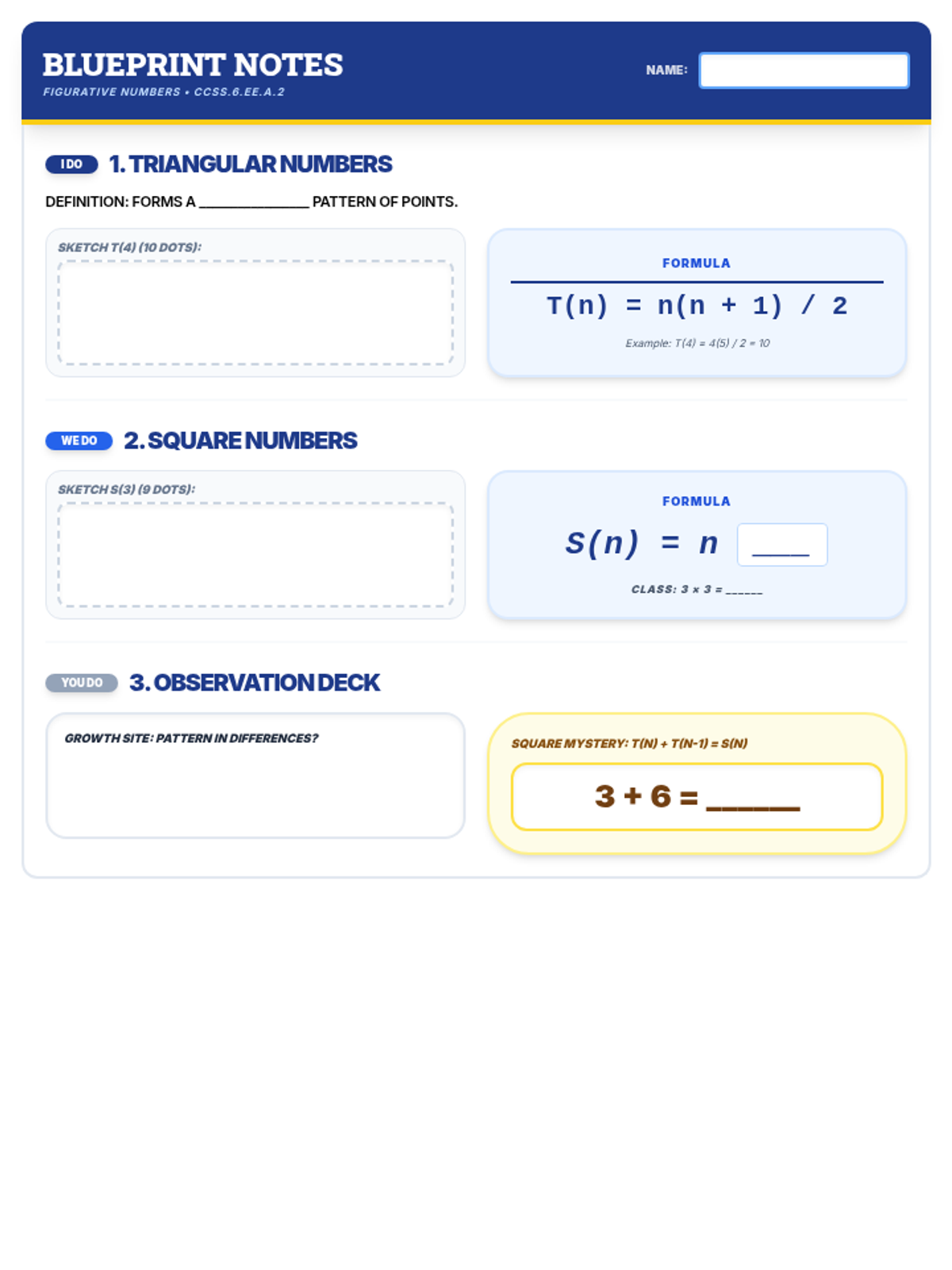
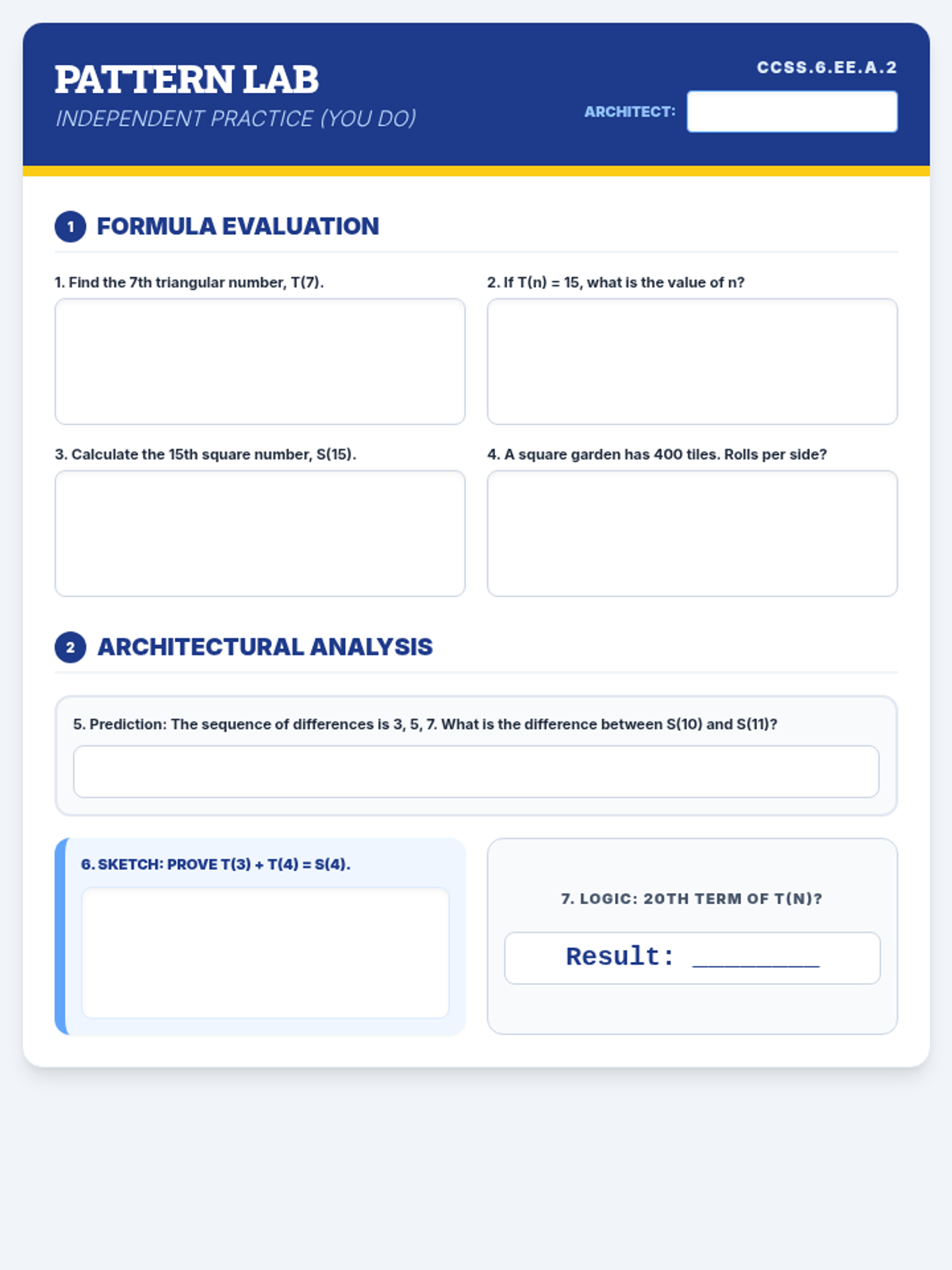
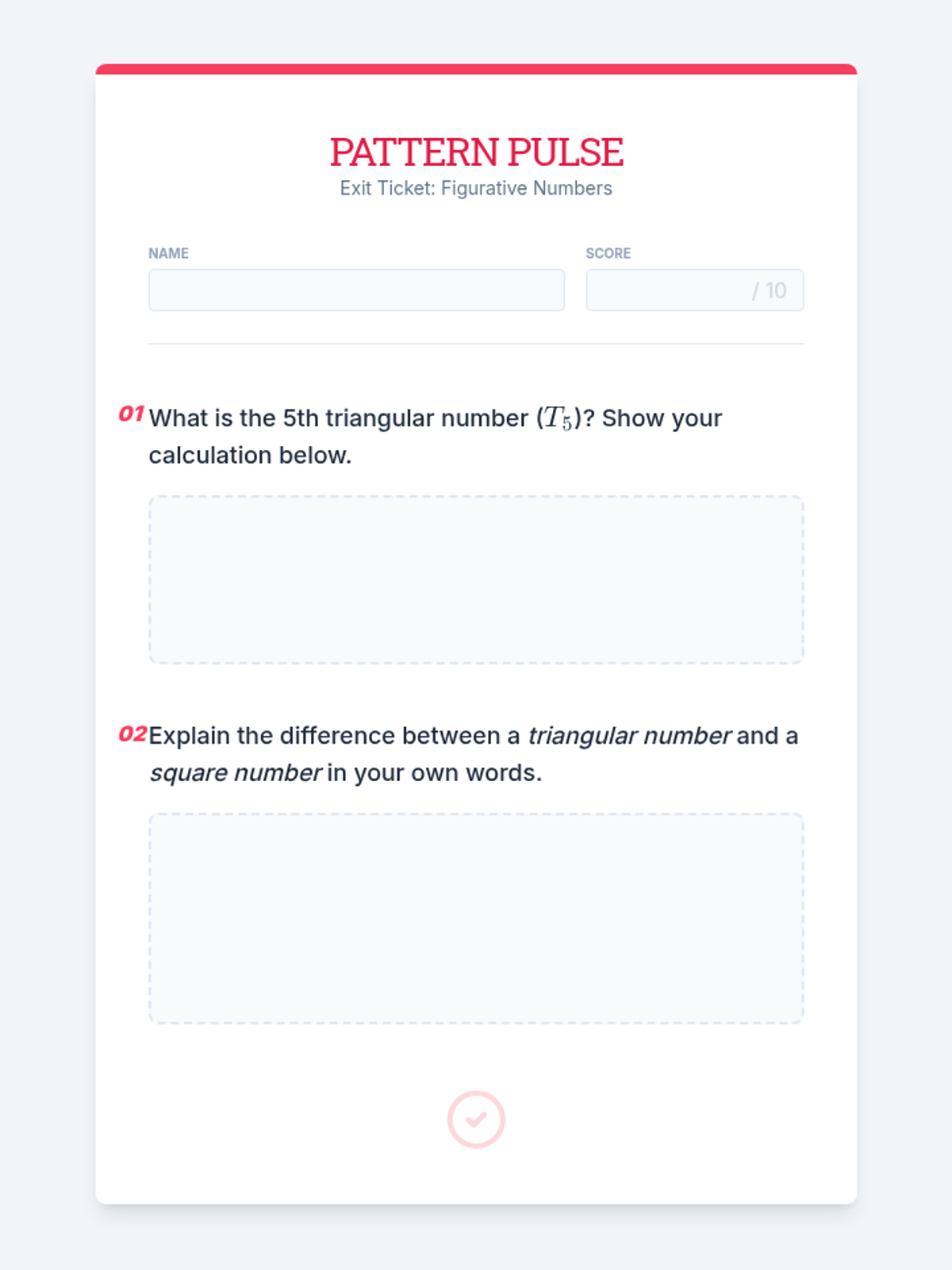
An inquiry-based exploration of triangular and square numbers where students discover formulas through visual manipulation and structural analysis.
A comprehensive 5E lesson exploring the intersection of geometry and arithmetic through triangular and square numbers. Students will identify patterns, build geometric representations, and derive algebraic formulas for figurative numbers.
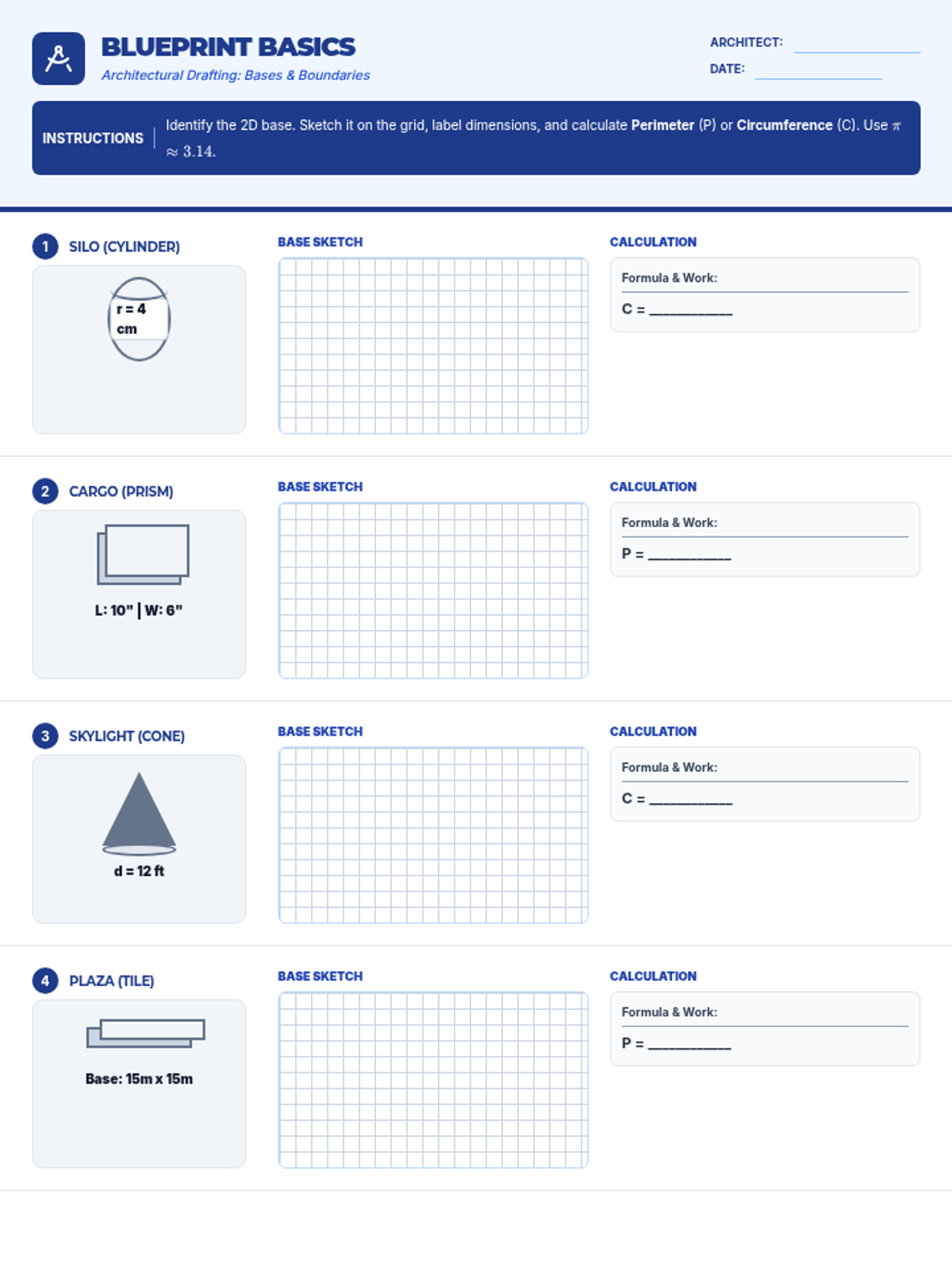
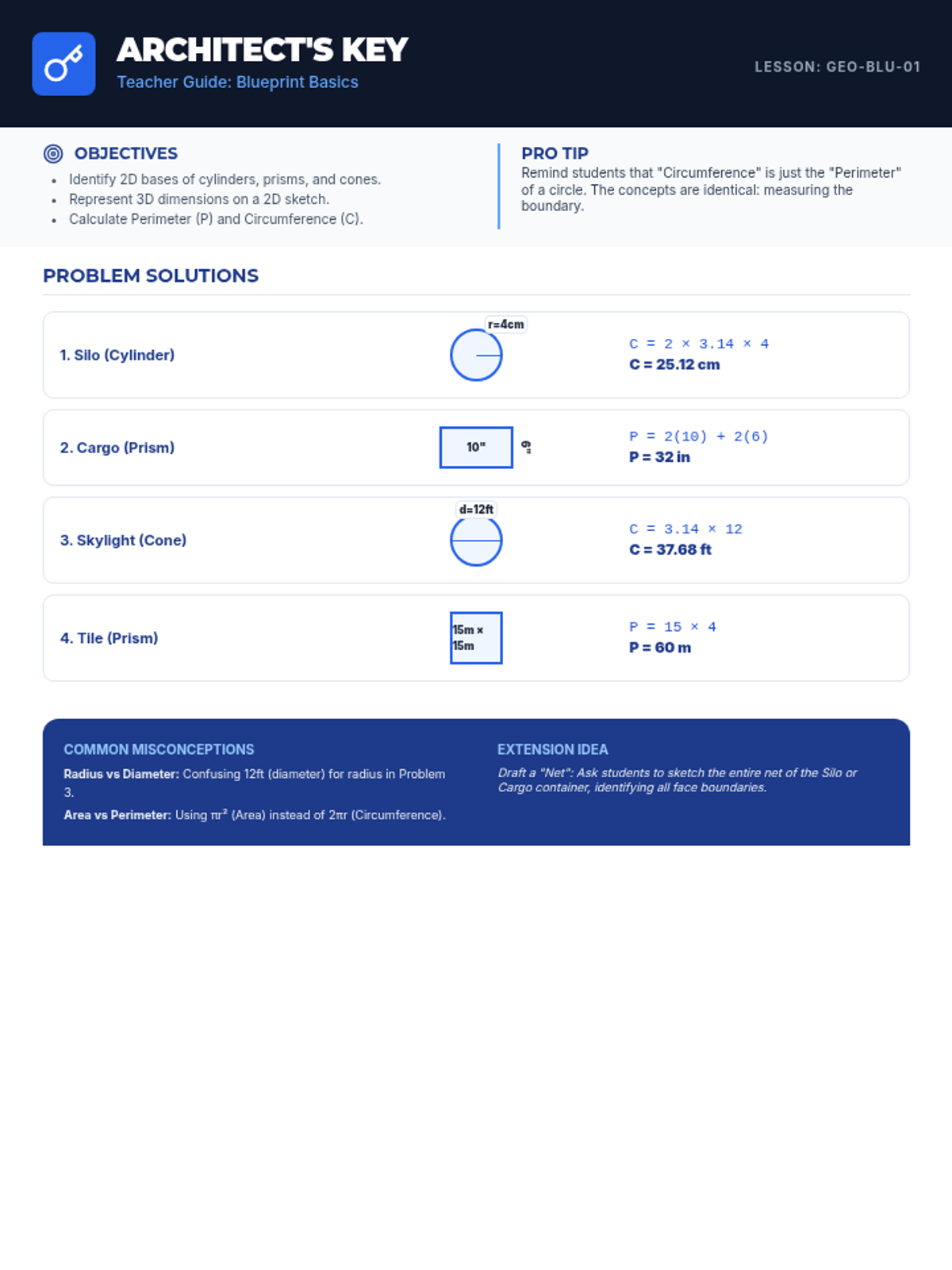
A lesson focused on identifying the 2D bases of 3D figures and calculating their perimeter or circumference. Students will practice sketching bases and applying geometry formulas in an architectural context.
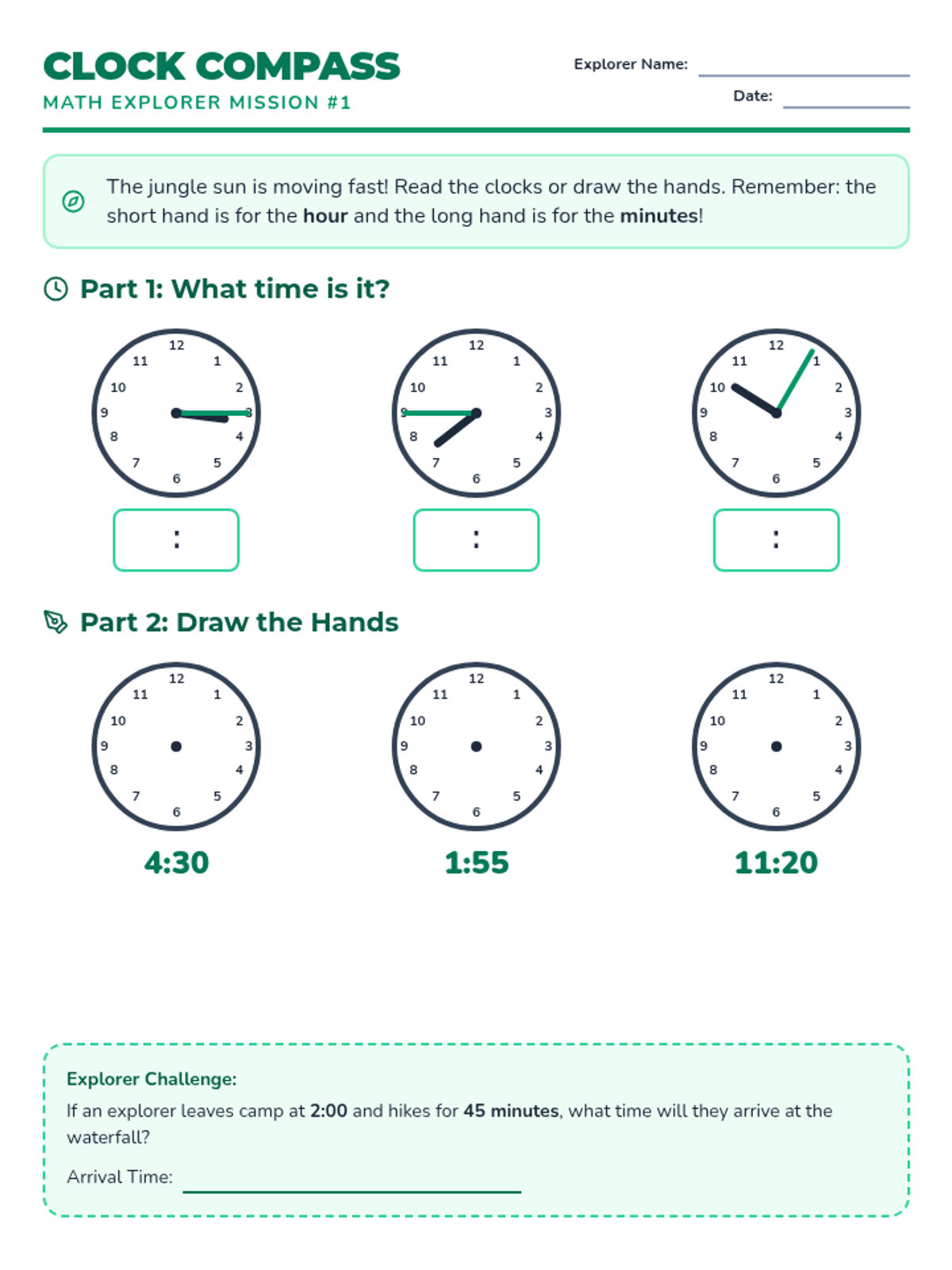
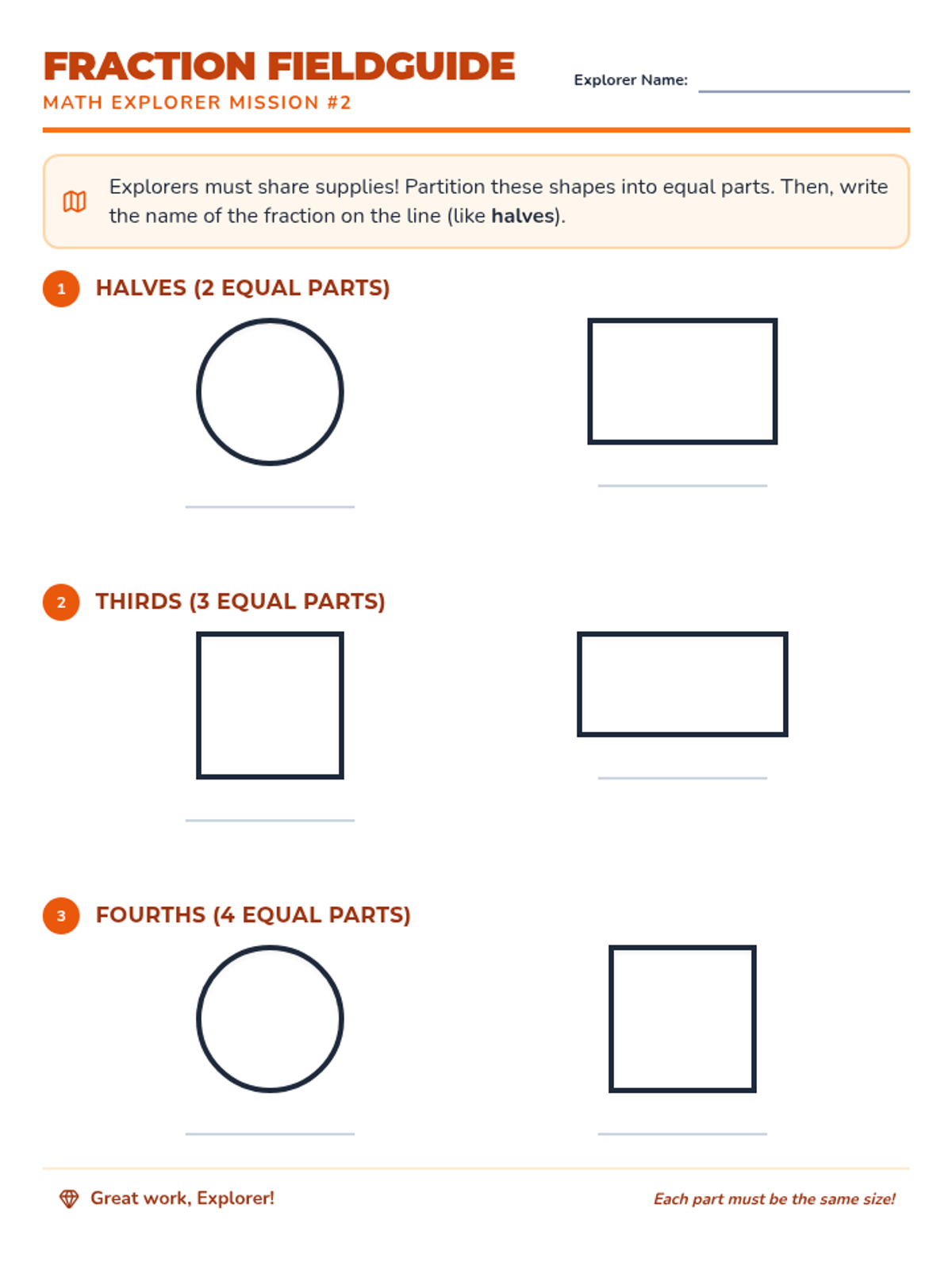
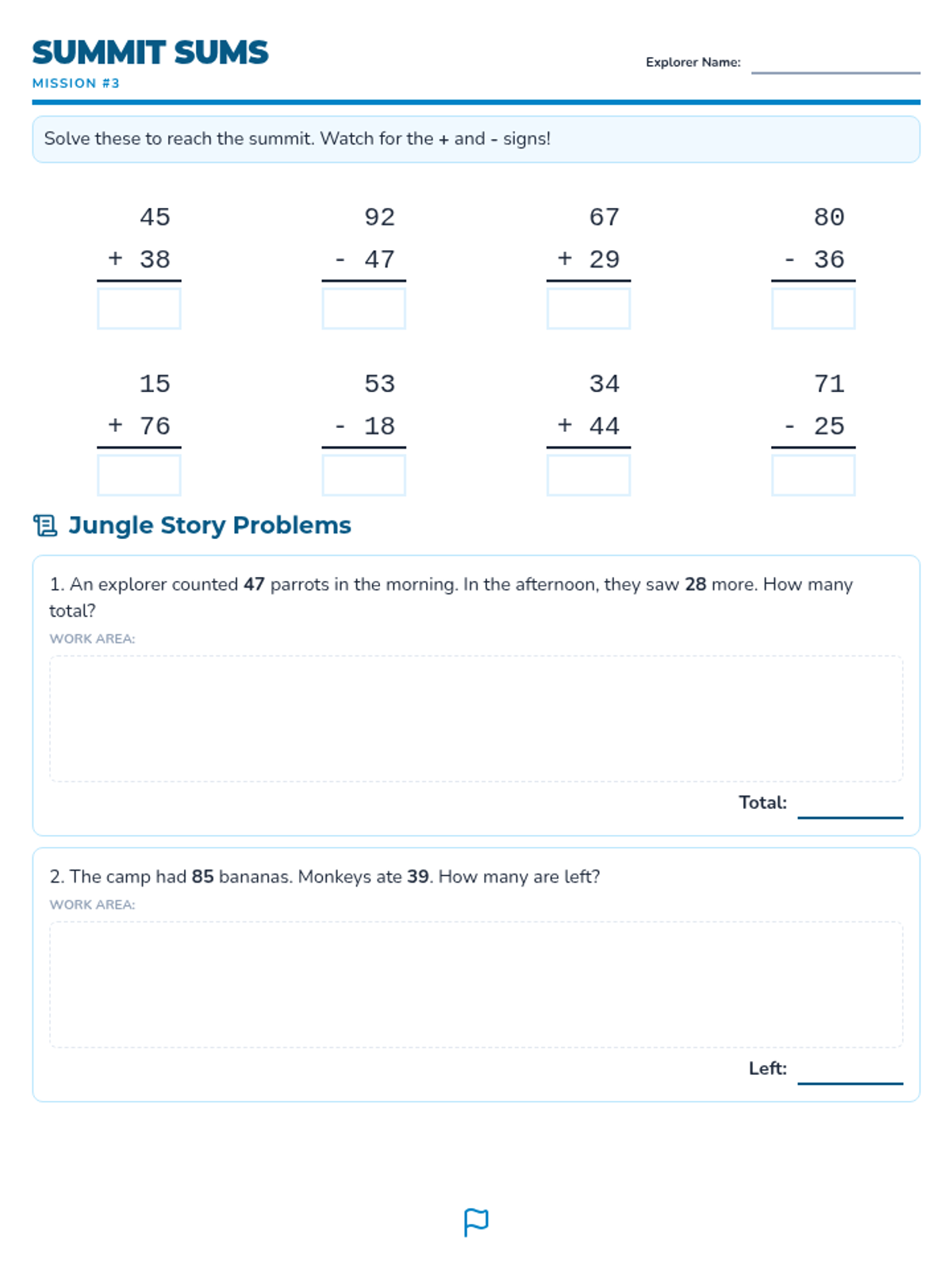
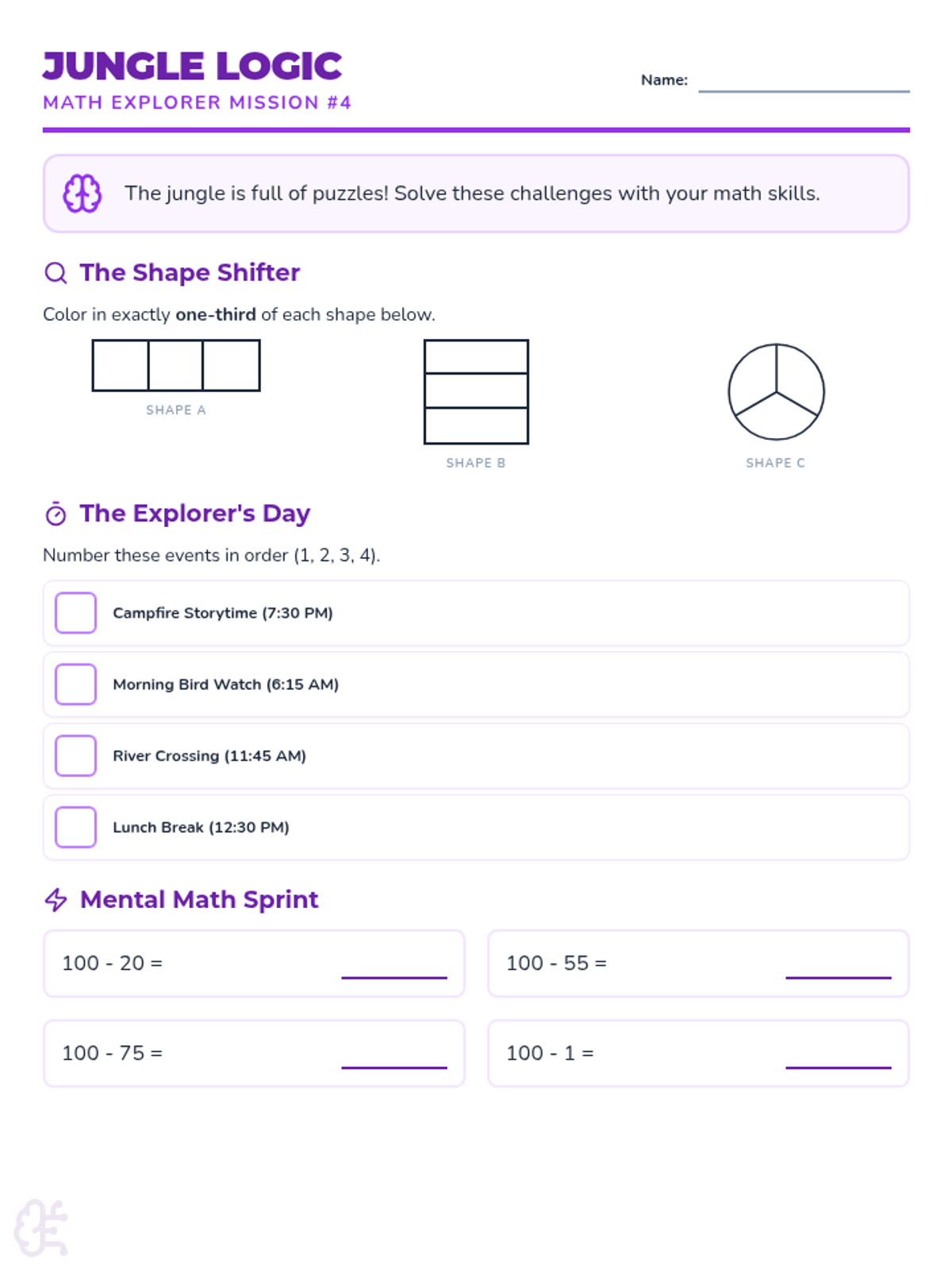
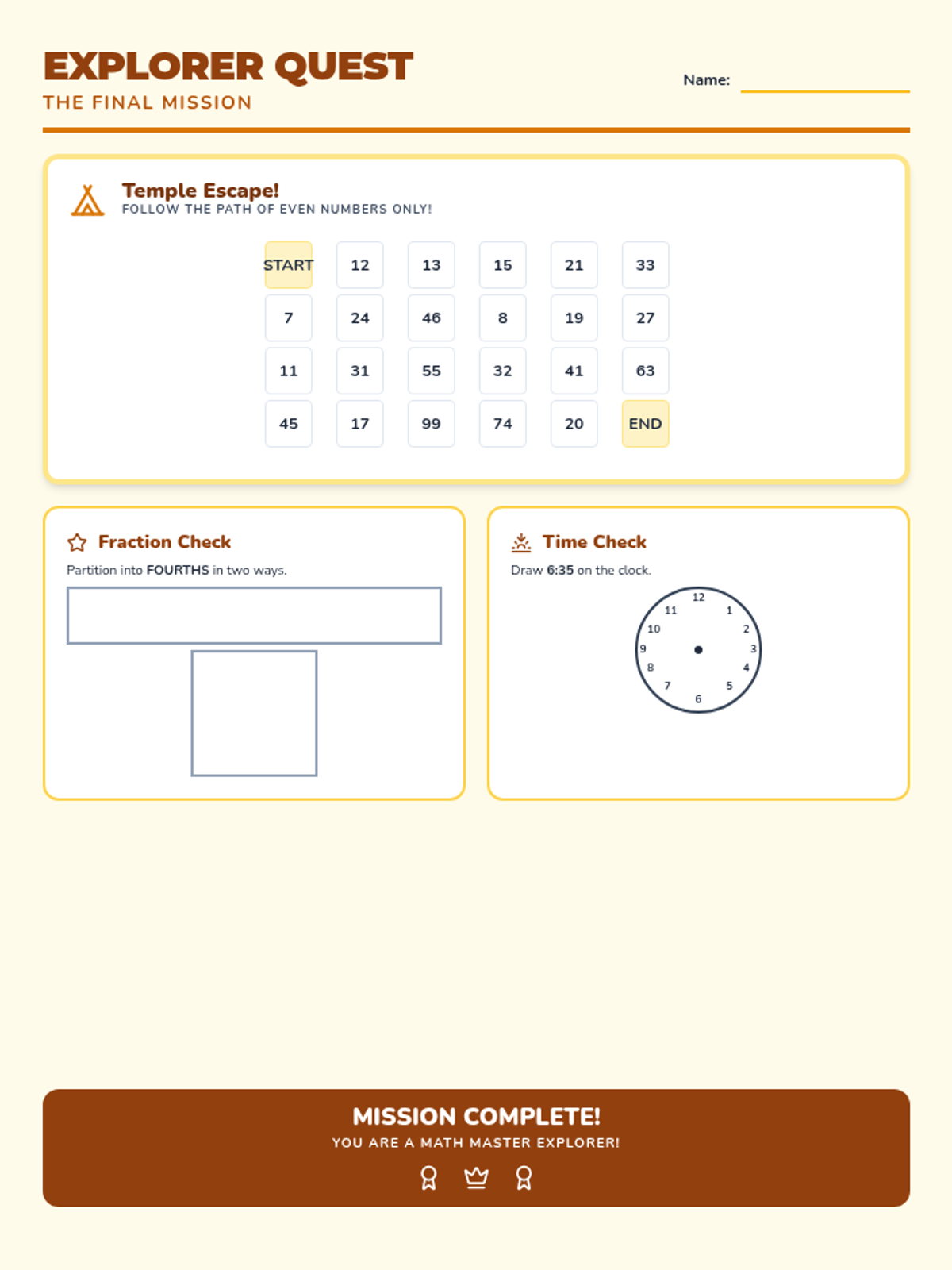
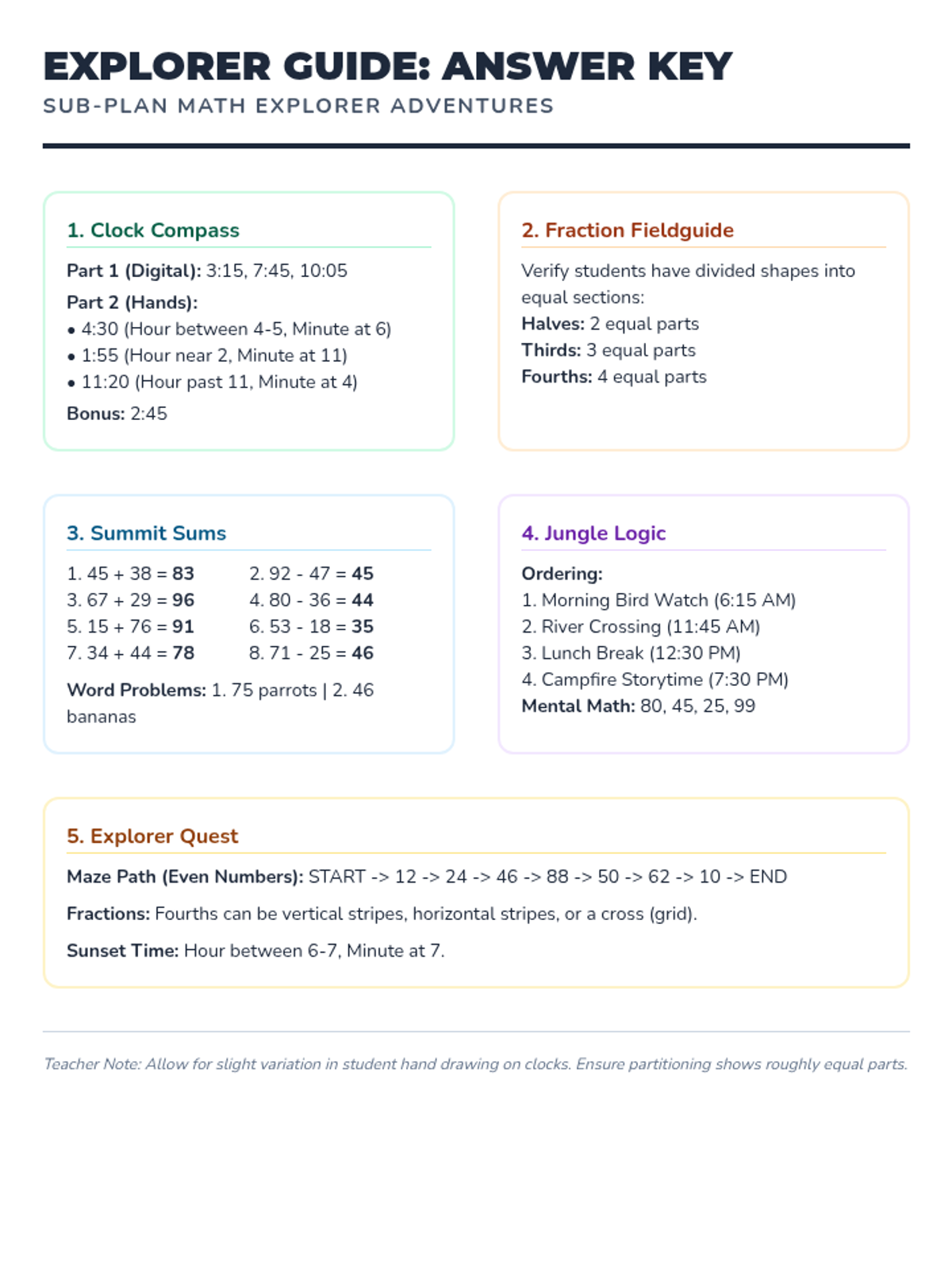
A comprehensive sub-plan packet for 2nd grade math, covering telling time, partitioning shapes into fractions, and addition/subtraction within 100 through an engaging jungle exploration theme.
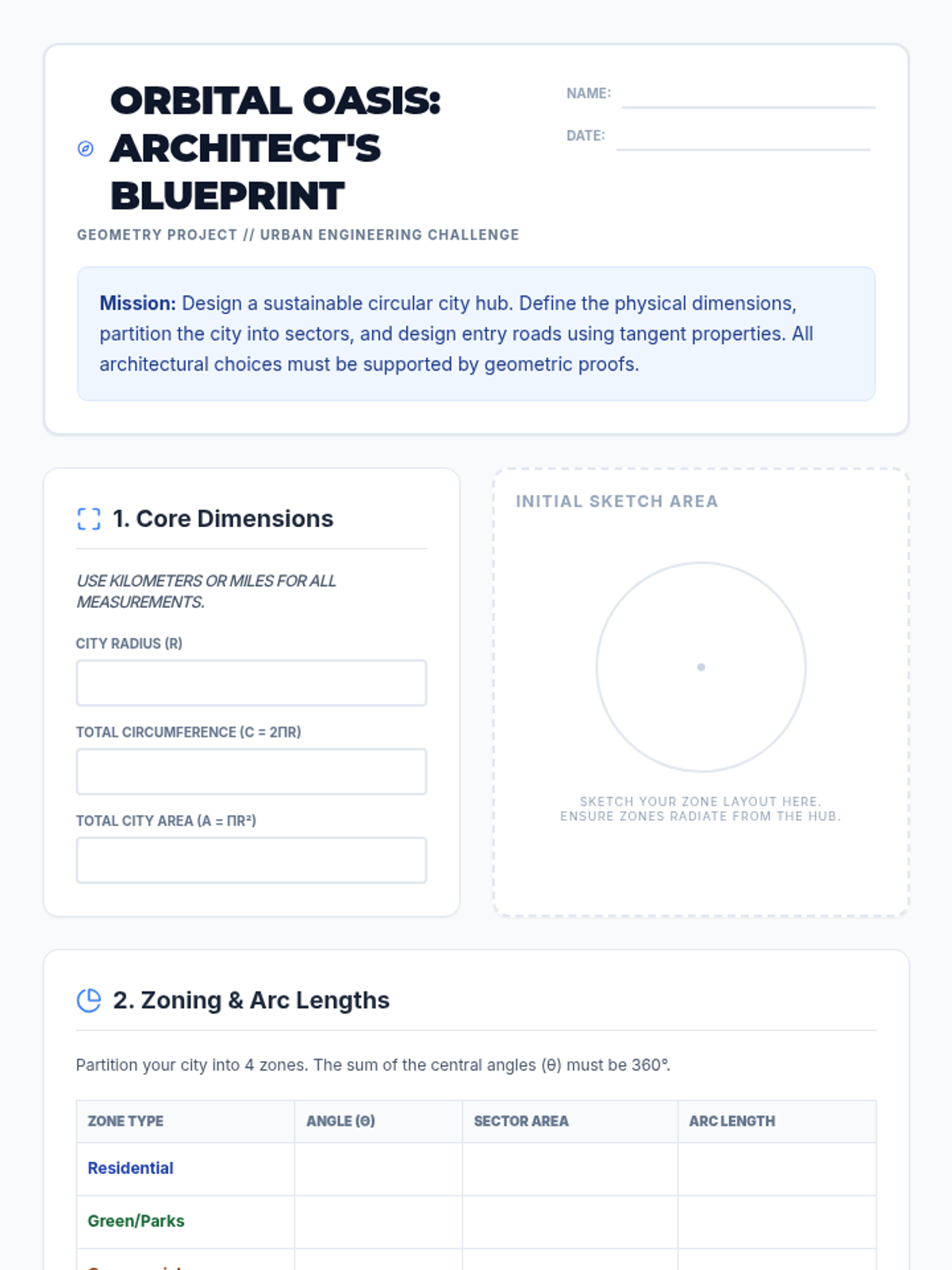
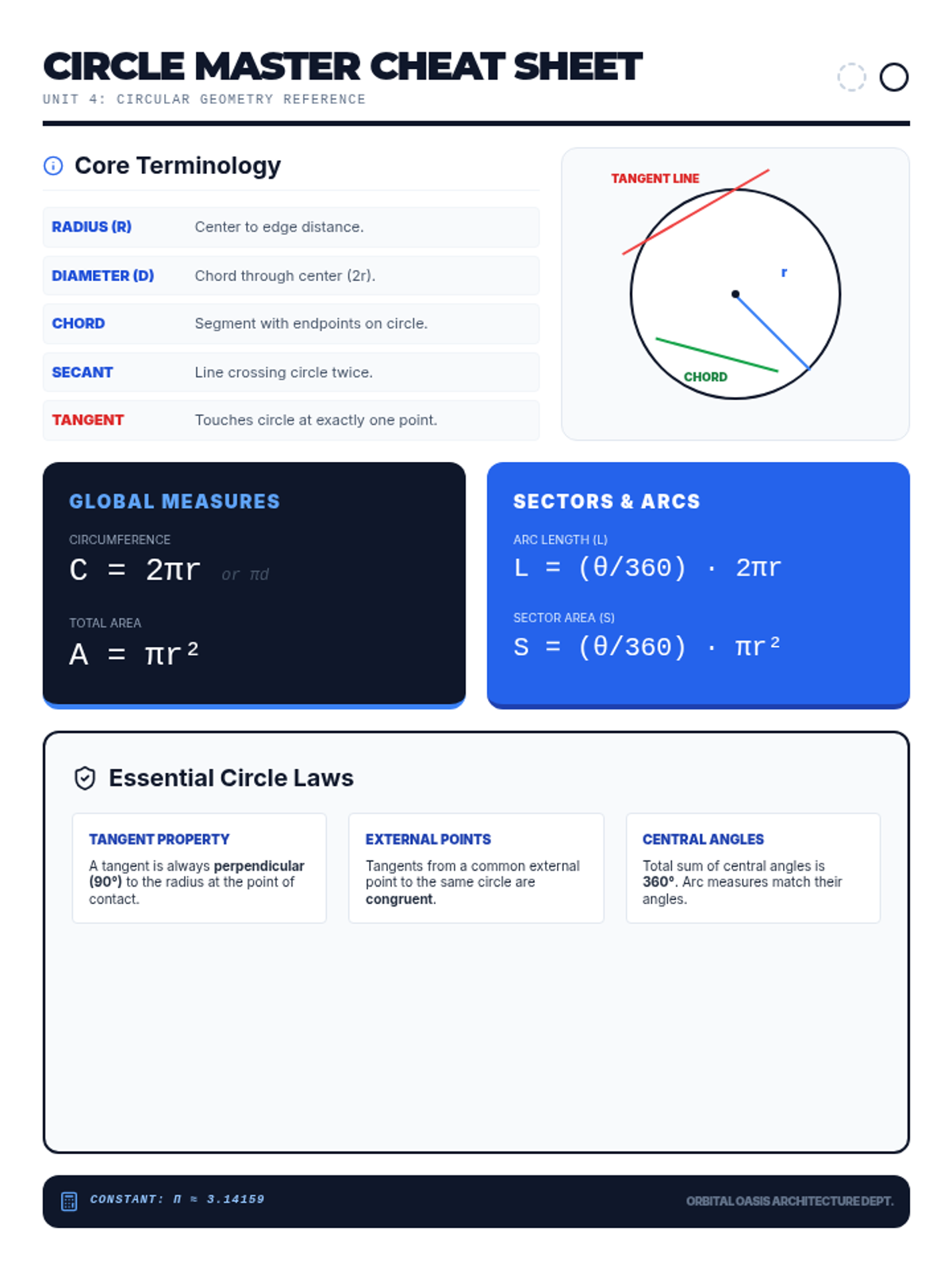
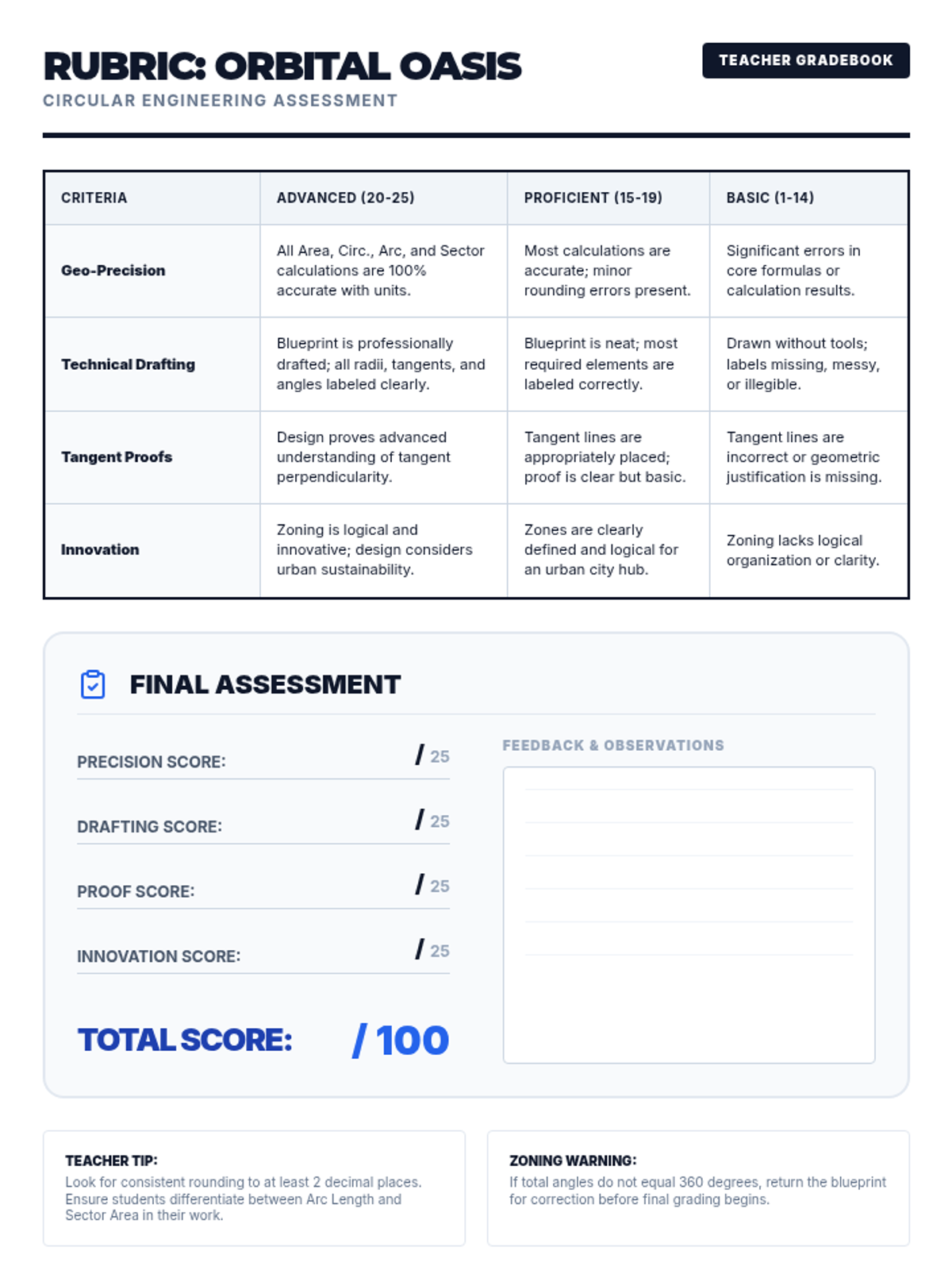
A high school geometry project where students design a sustainable circular city hub, applying circle theorems, area/circumference calculations, and tangent properties to architectural design.
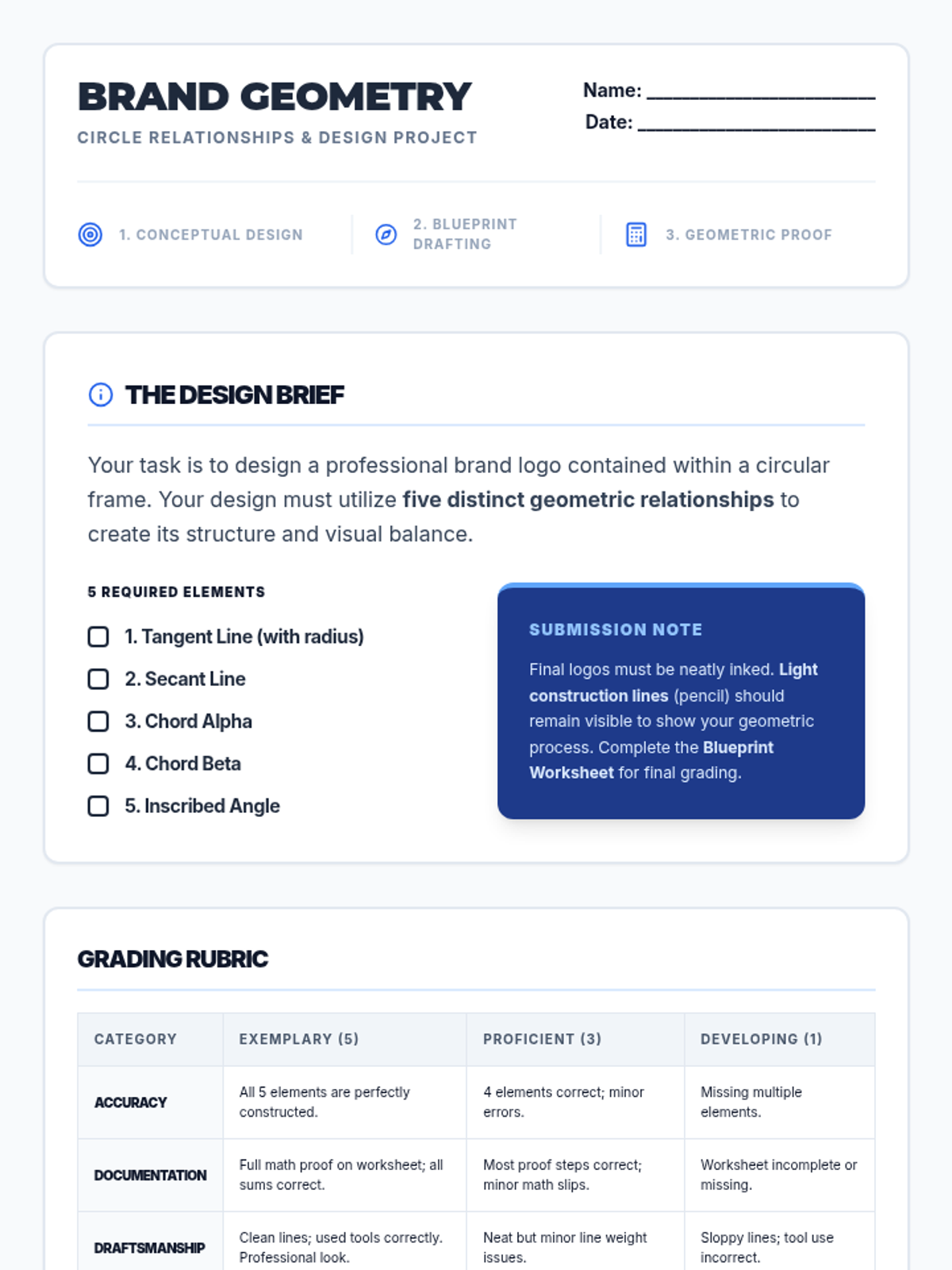
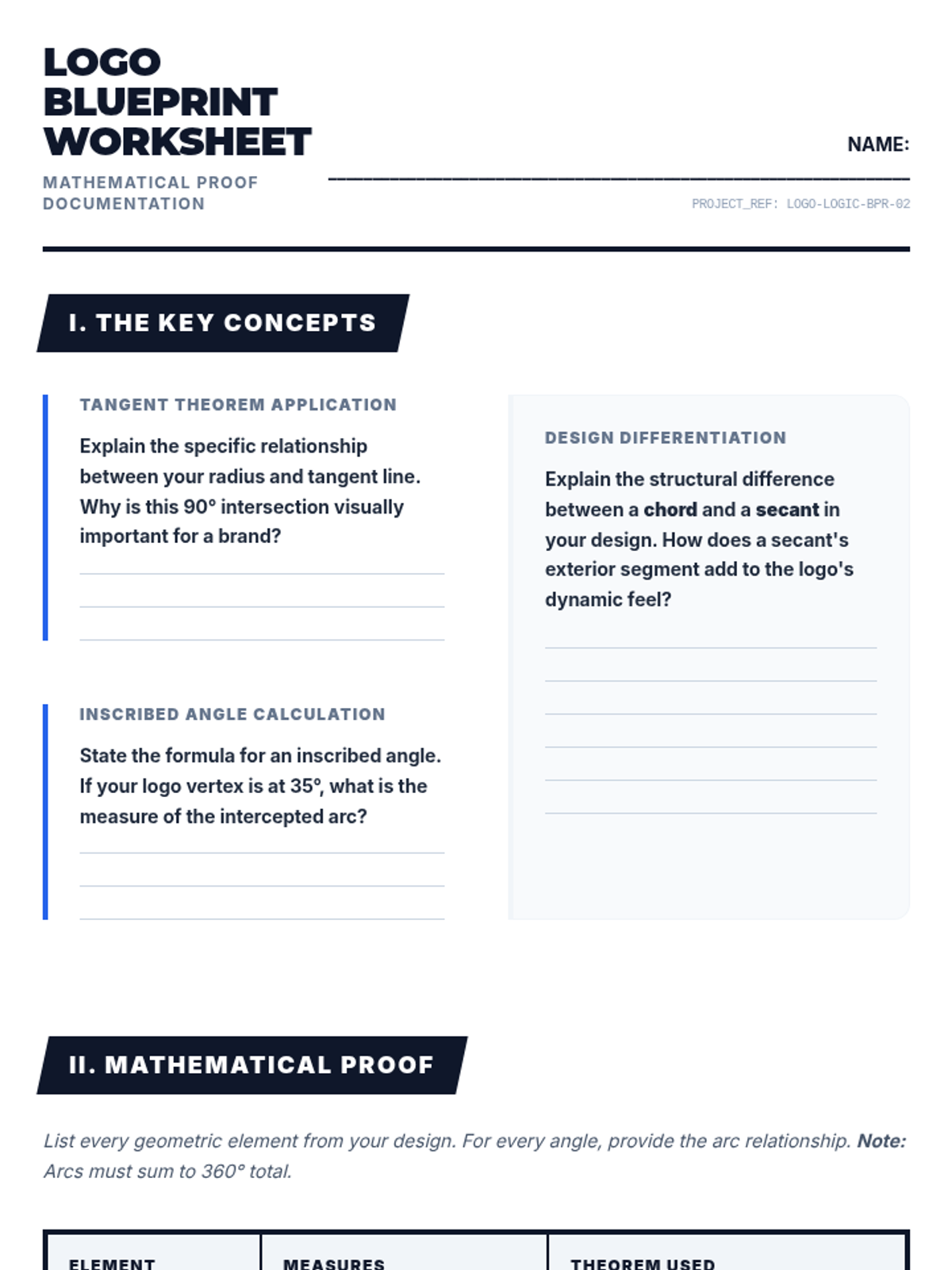
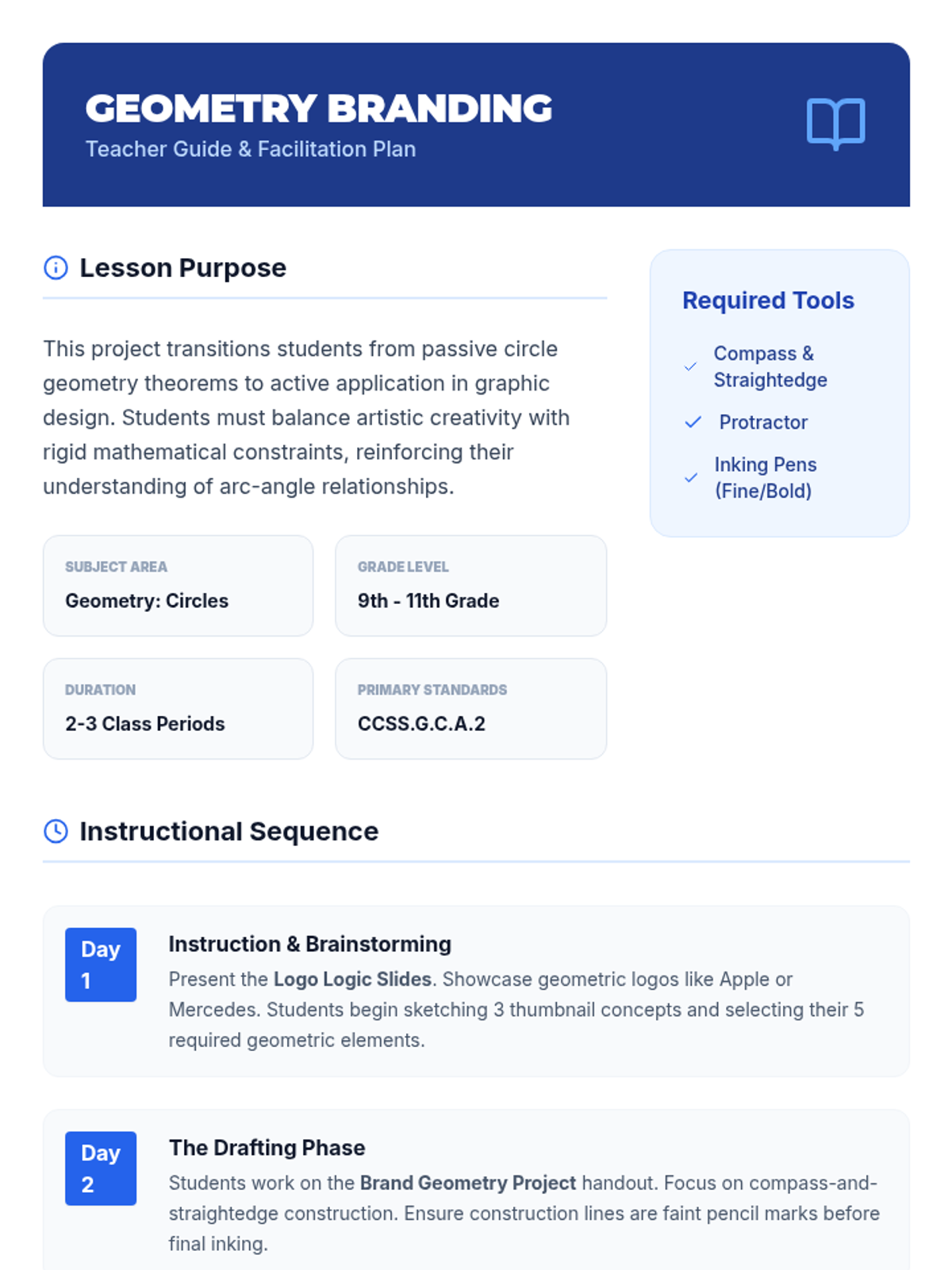
A creative geometry project where students design a brand logo using specific circle properties, including tangents, secants, chords, and inscribed angles. Students must demonstrate both artistic design and geometric precision through calculations.
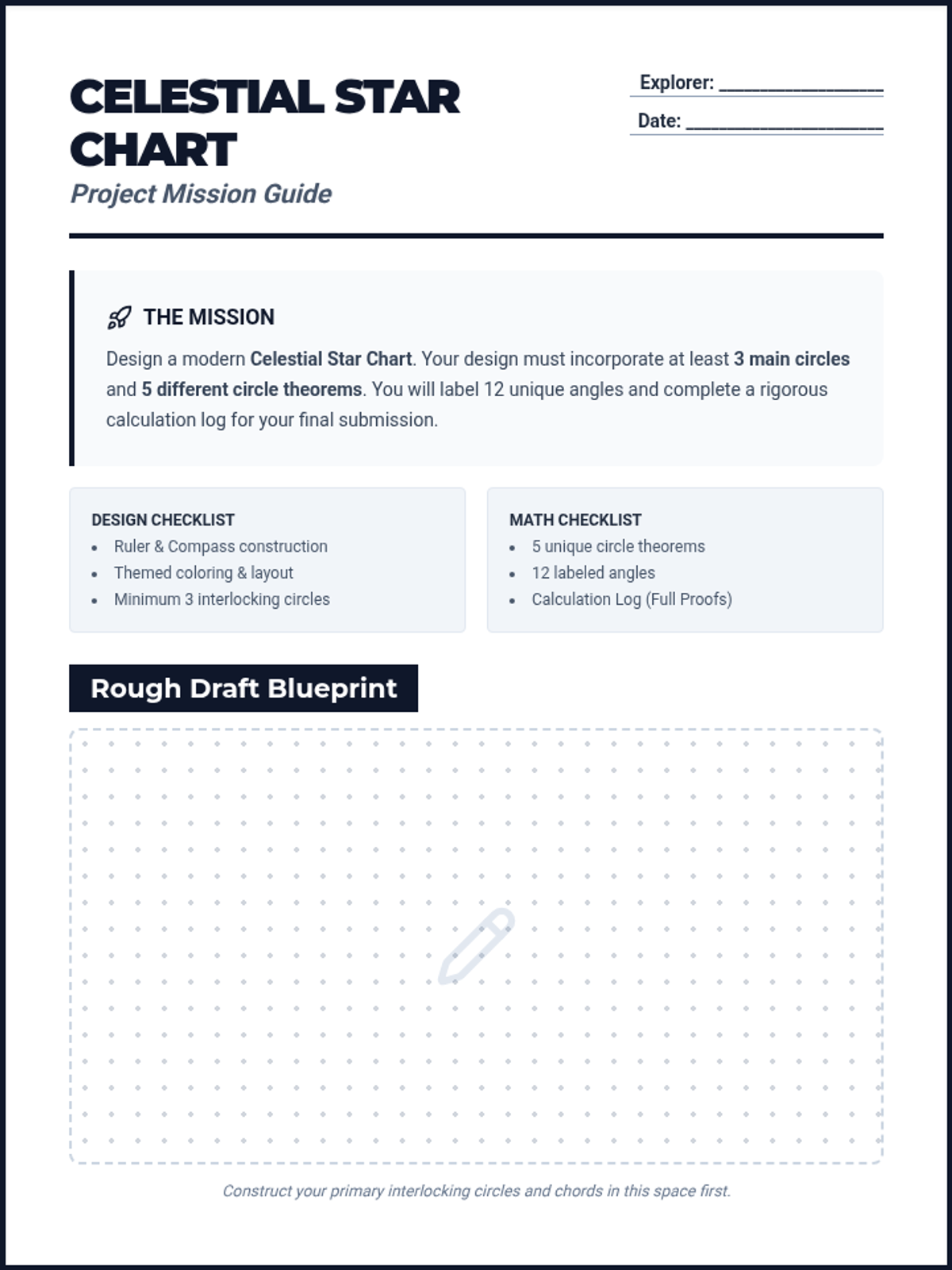
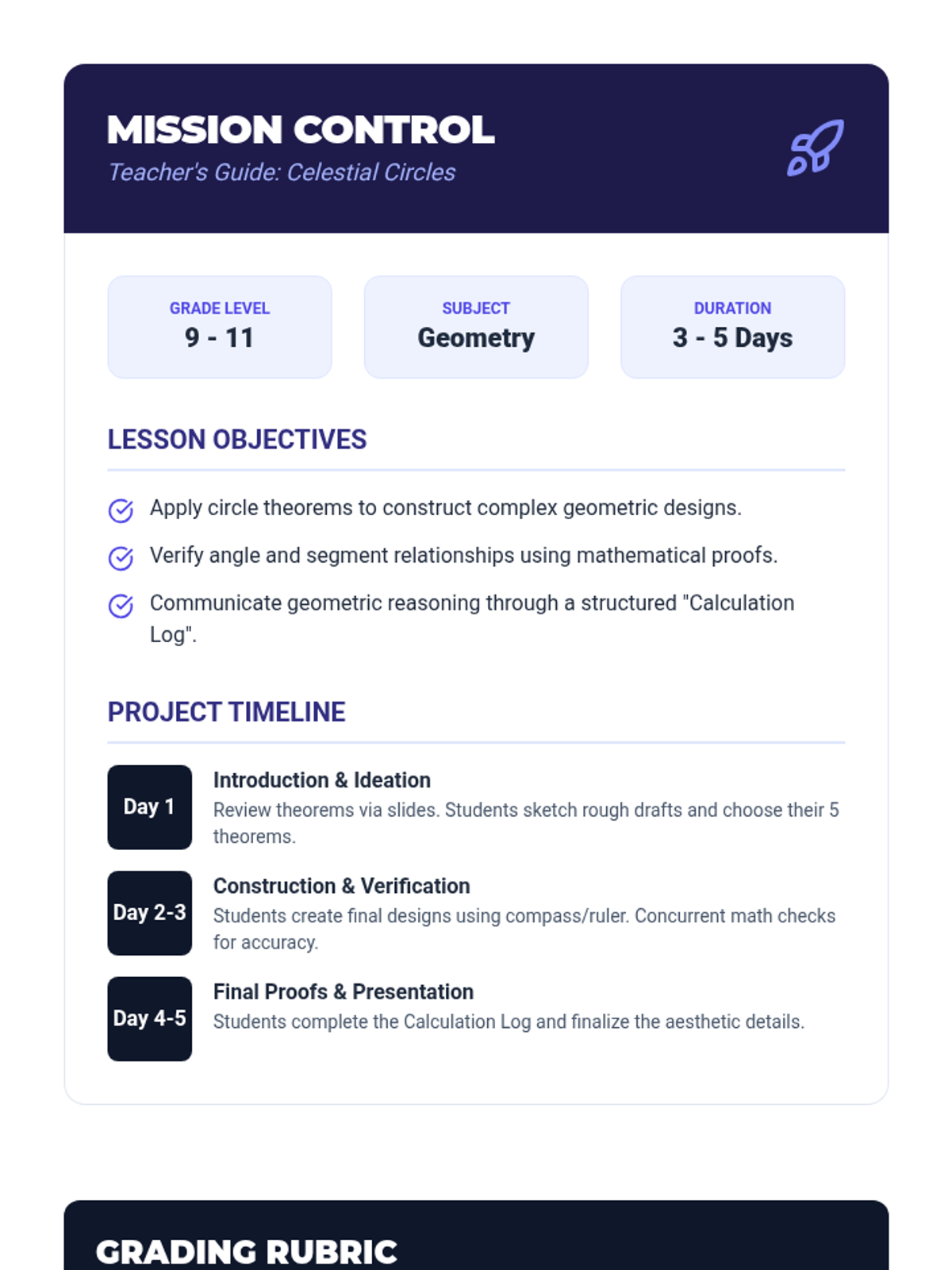
A creative geometry project where students apply circle theorems to design a celestial map or star chart, combining art with rigorous mathematical proofs of angles and segments.
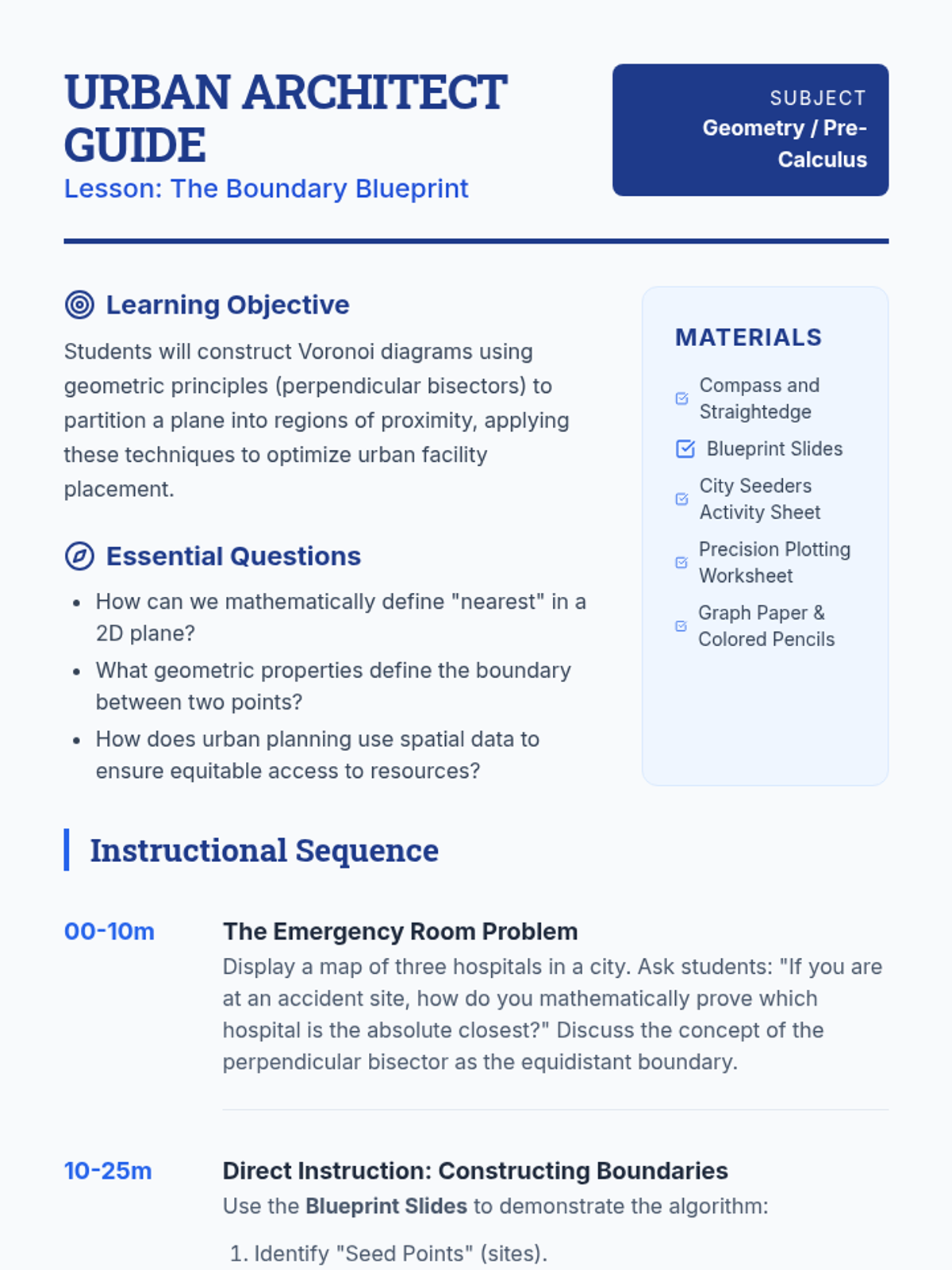
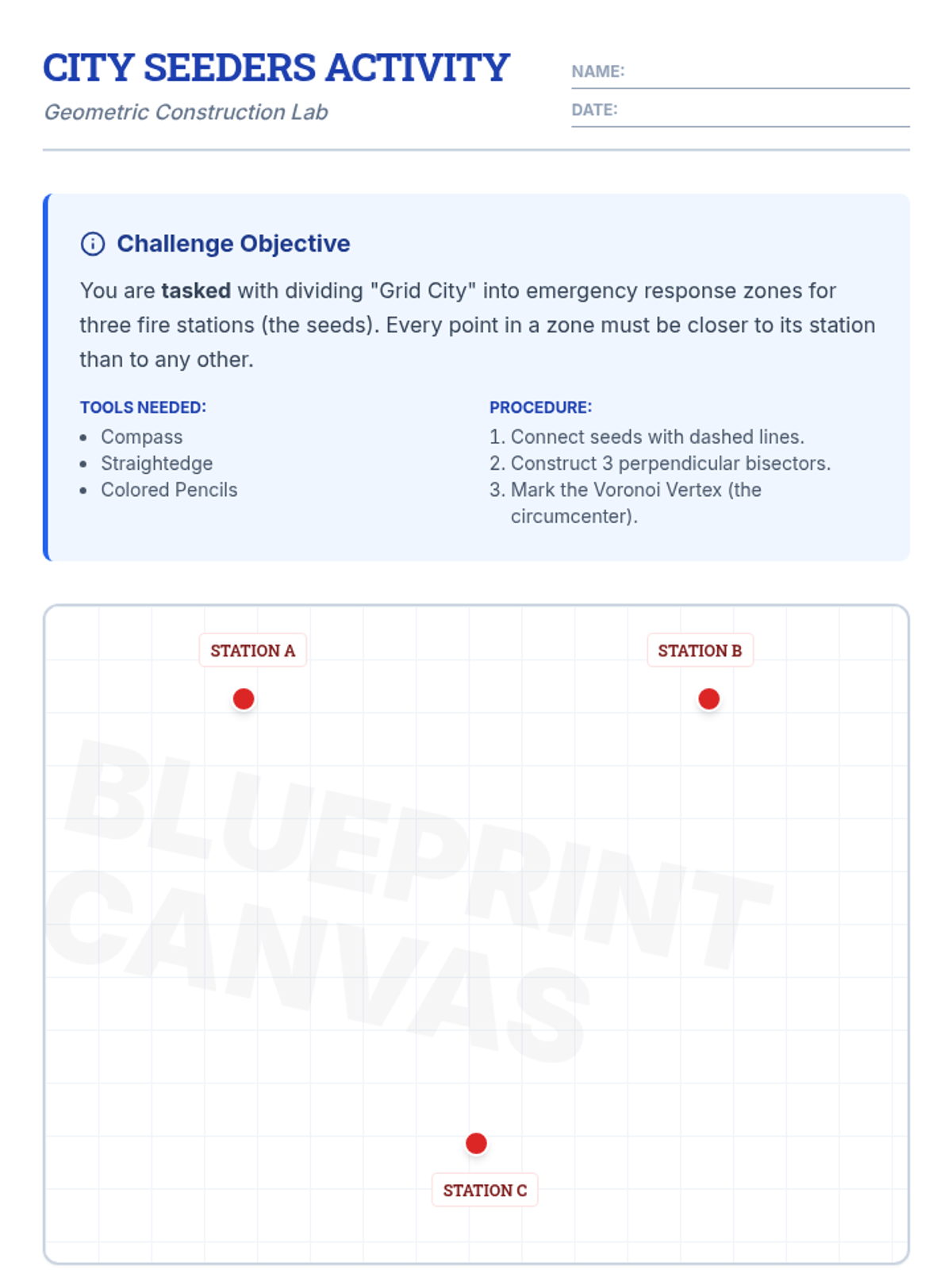
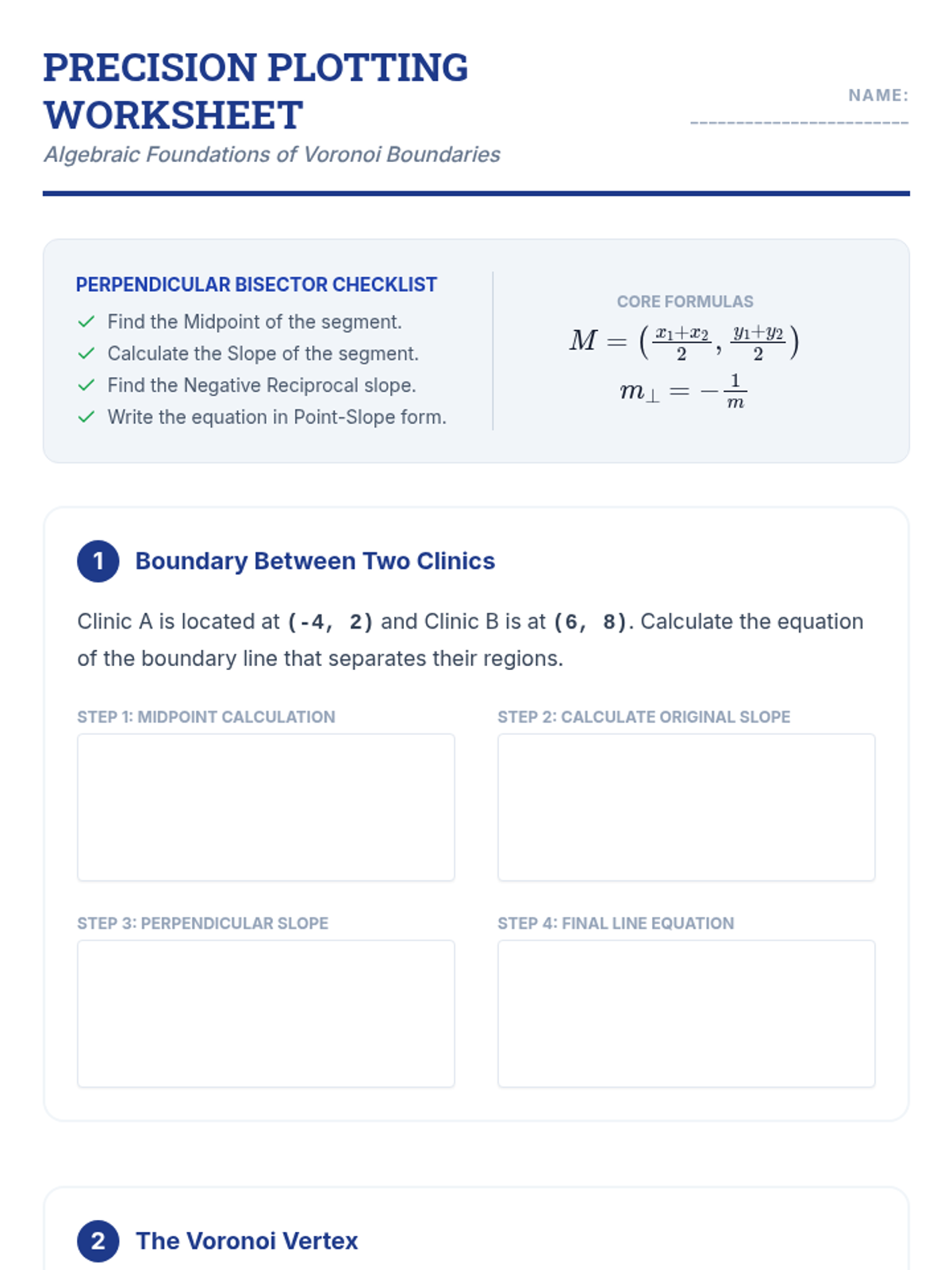
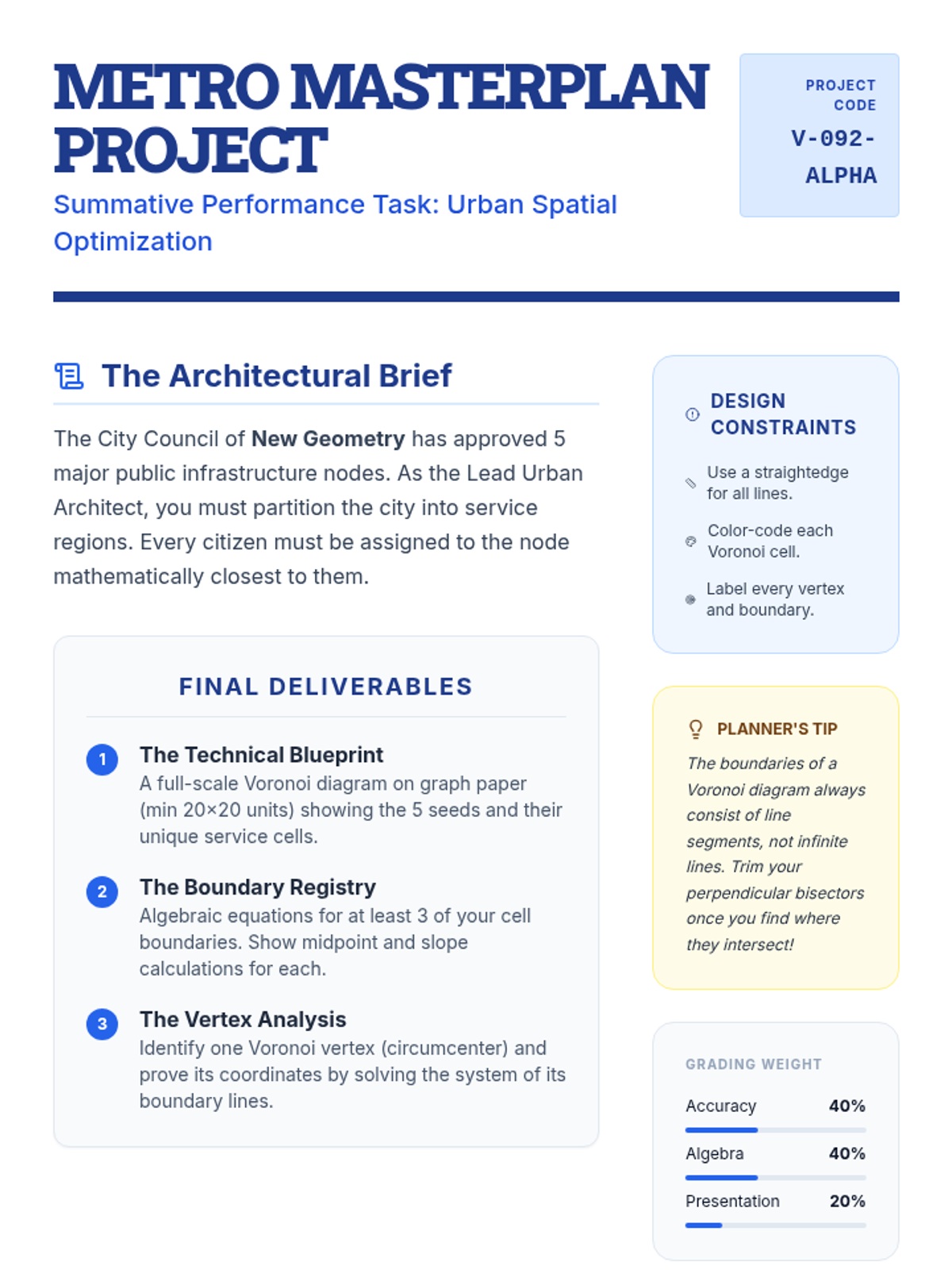
A high school geometry lesson where students learn to construct Voronoi diagrams using perpendicular bisectors to solve real-world spatial optimization problems in urban planning.
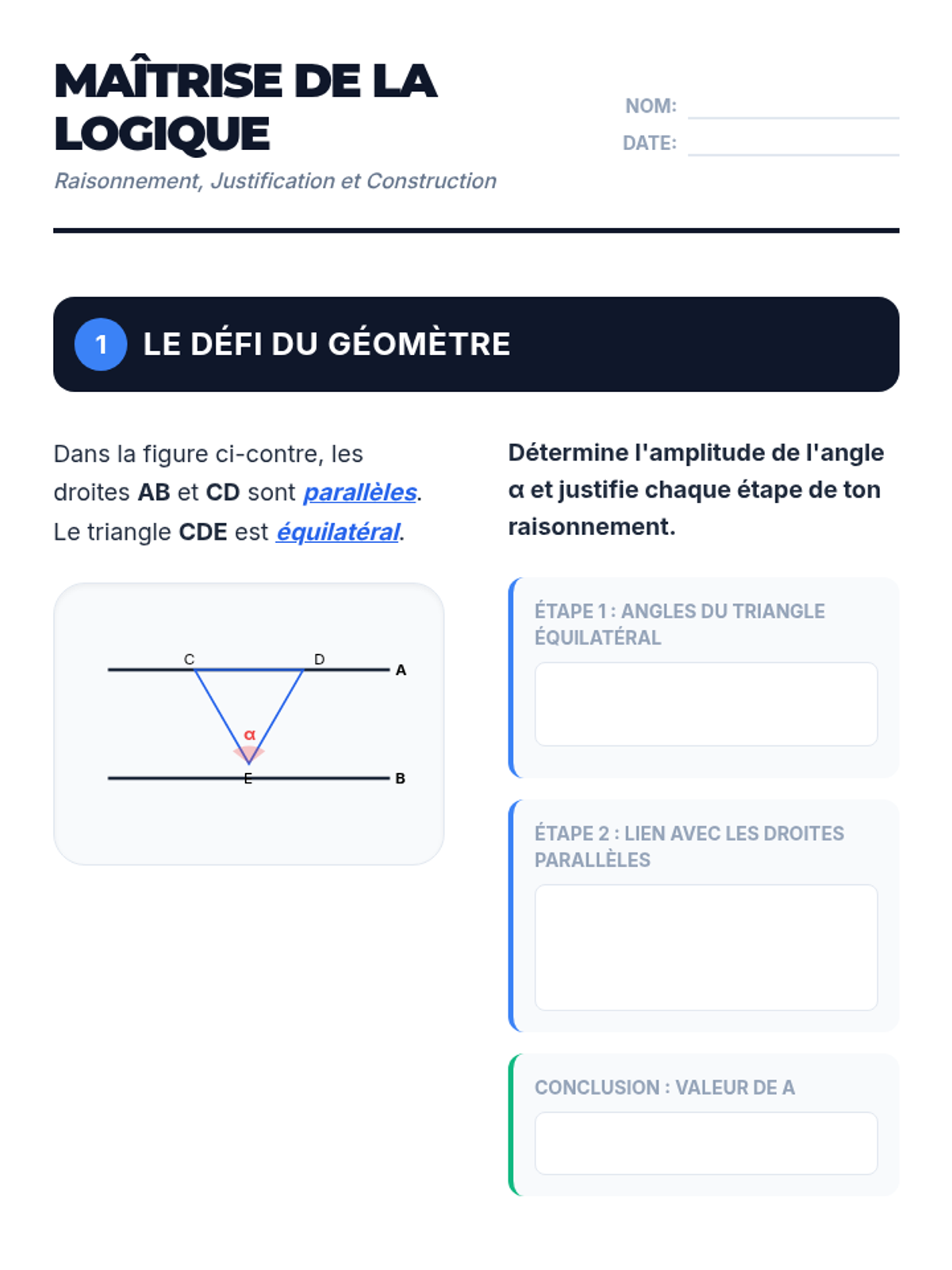
Apprendre à justifier rigoureusement chaque étape d'un calcul ou d'une construction géométrique.
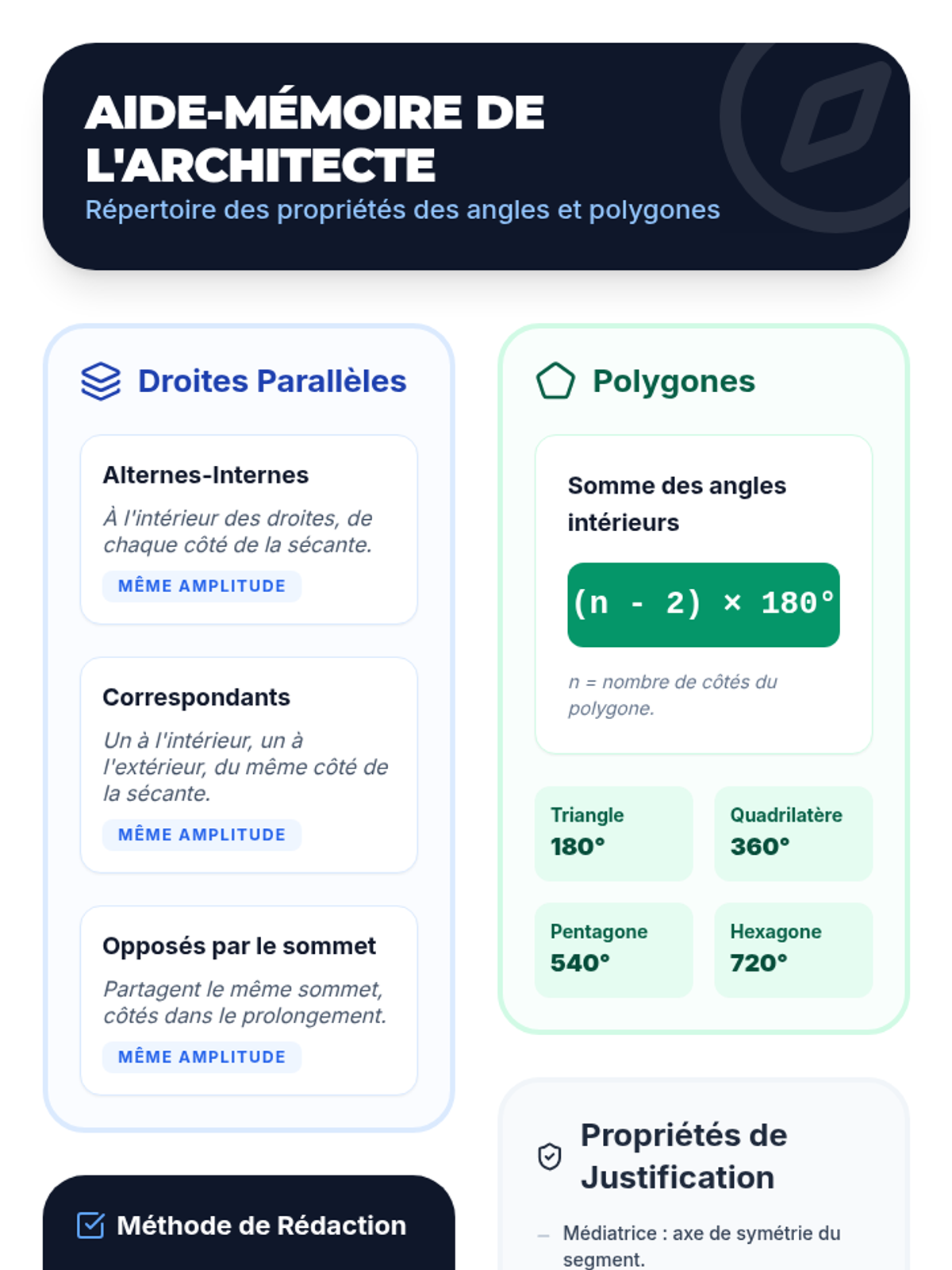
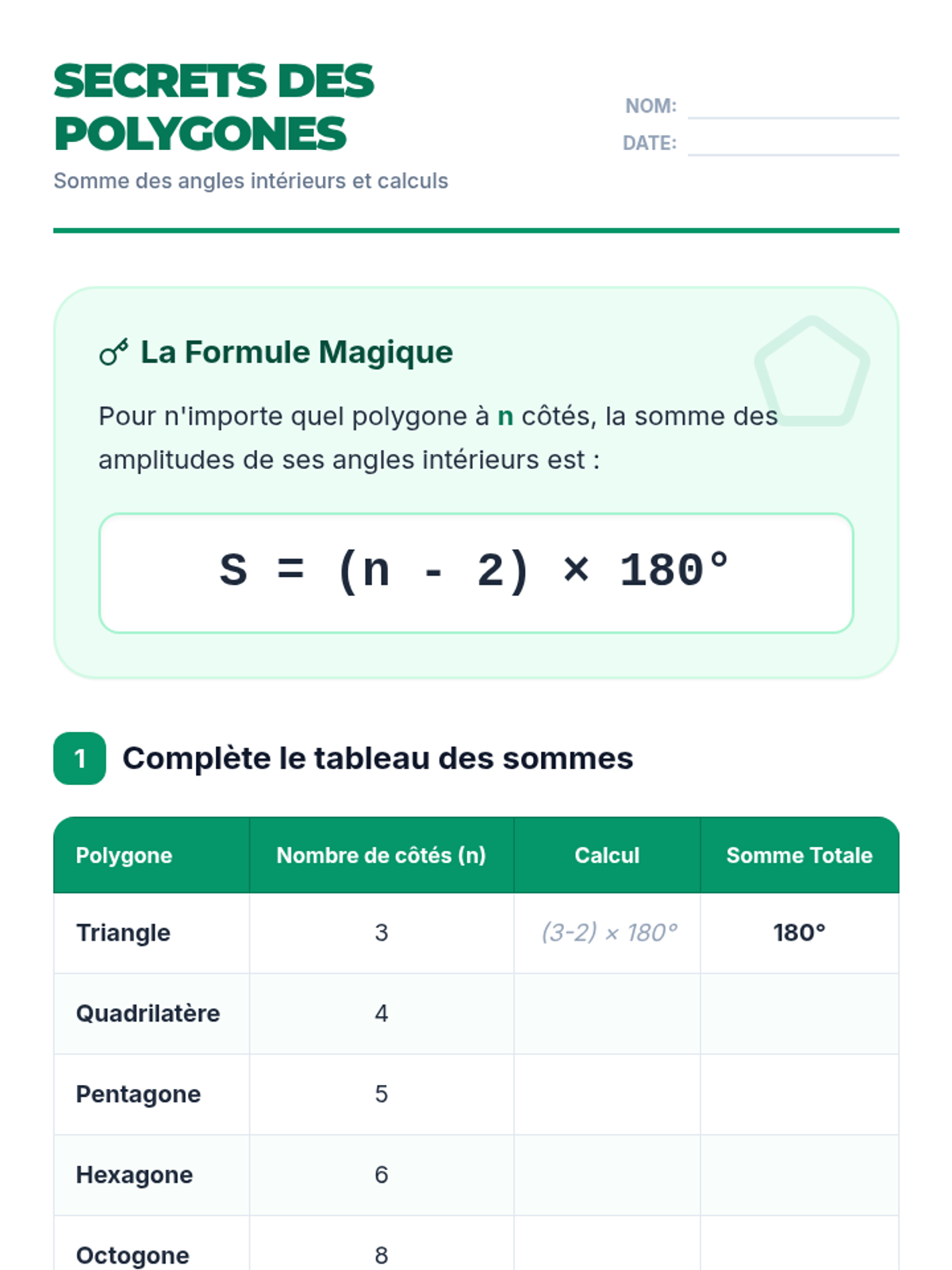
Calculer la somme des angles intérieurs des polygones et résoudre des problèmes complexes d'amplitudes d'angles.
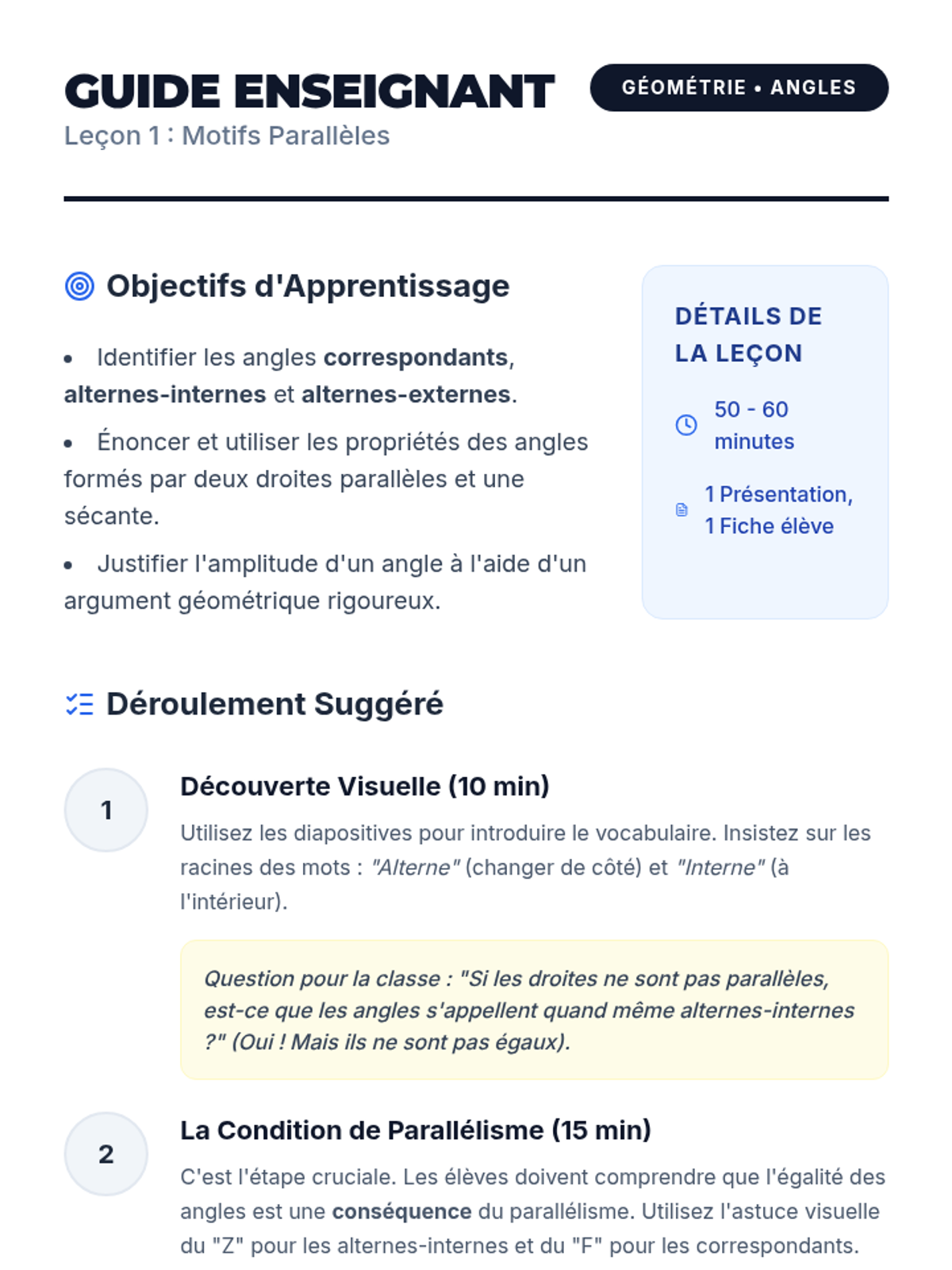
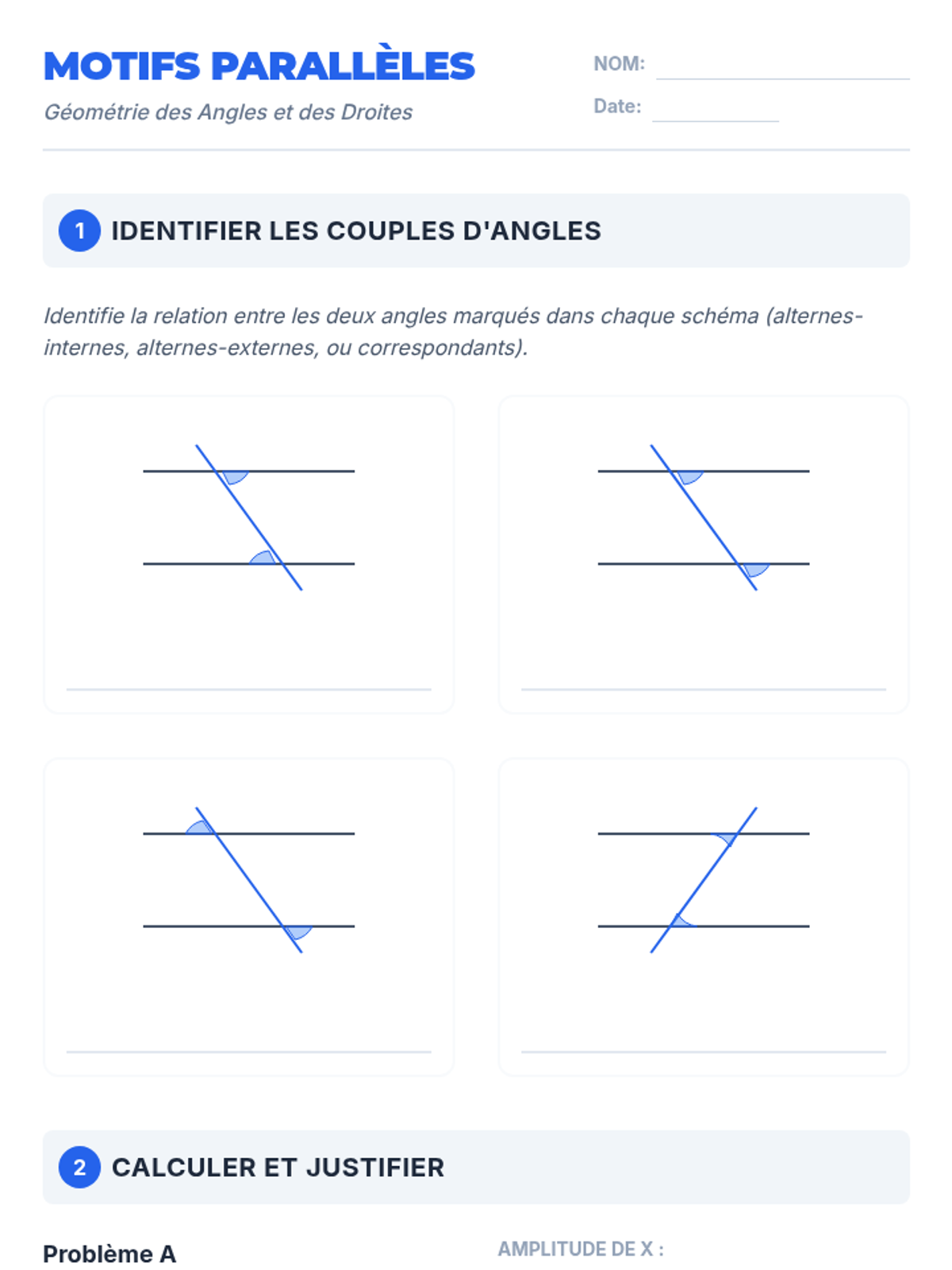
Identifier les angles correspondants, alternes-internes et alternes-externes, et découvrir les propriétés des droites parallèles coupées par une sécante.
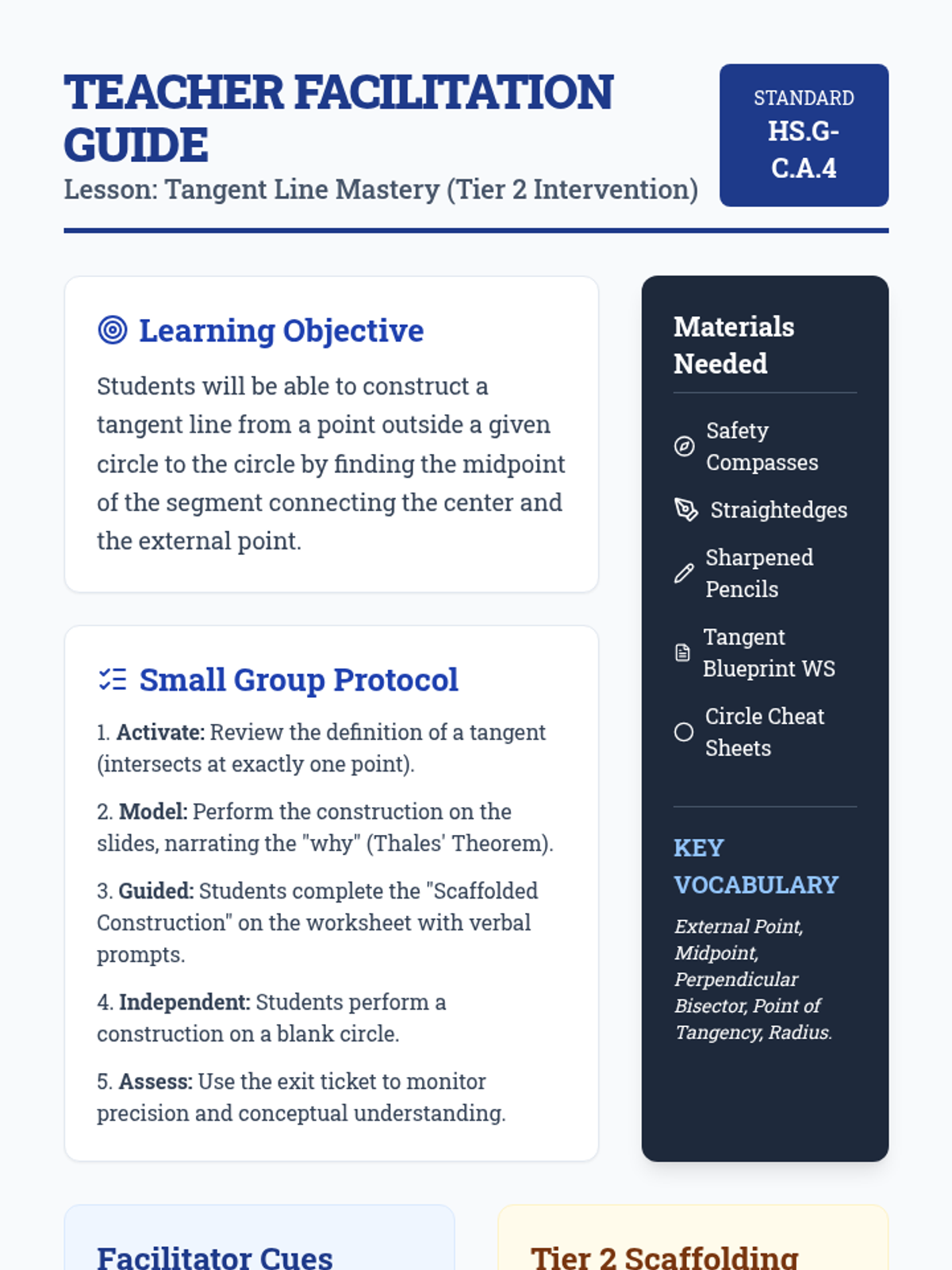
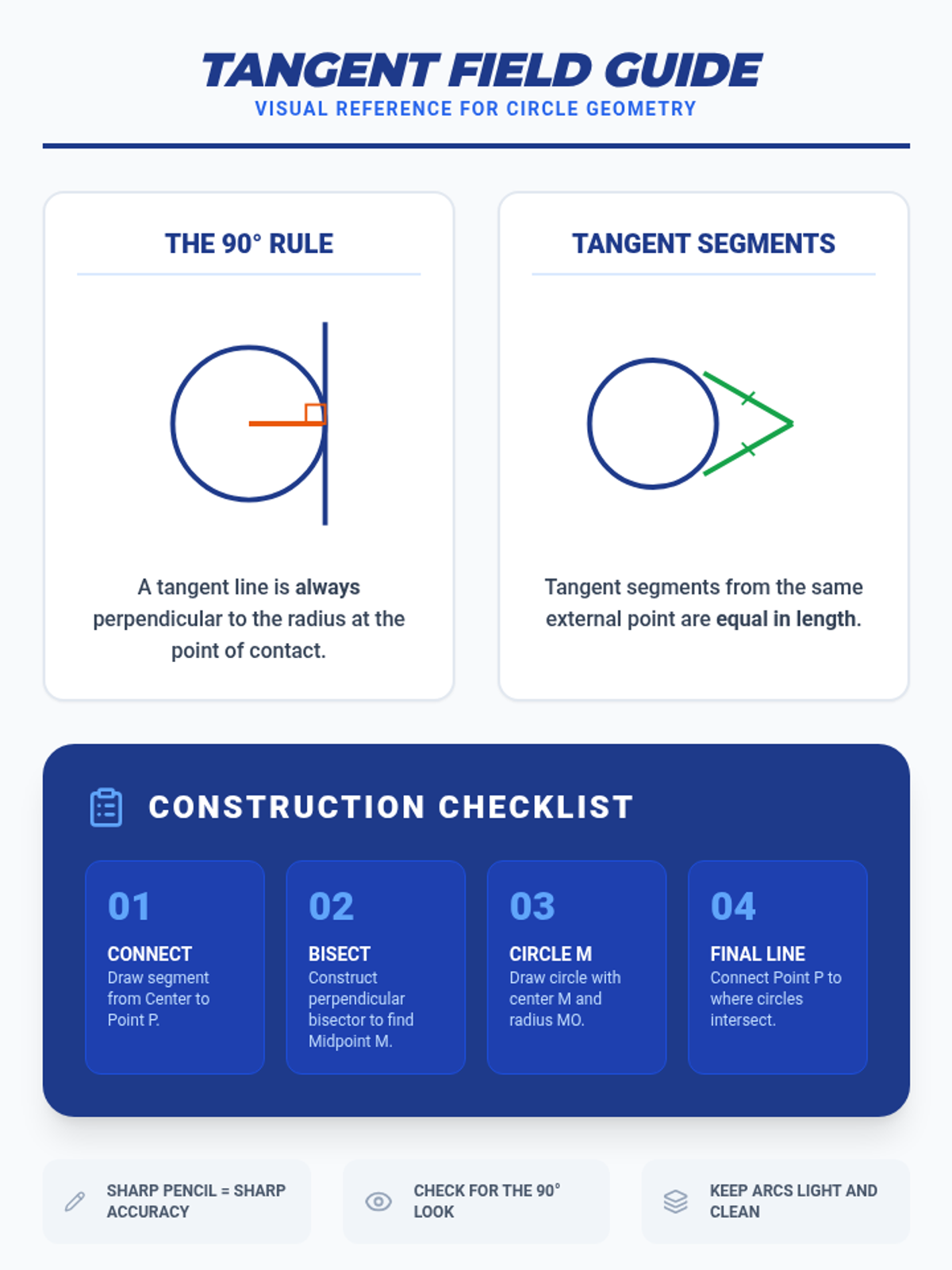
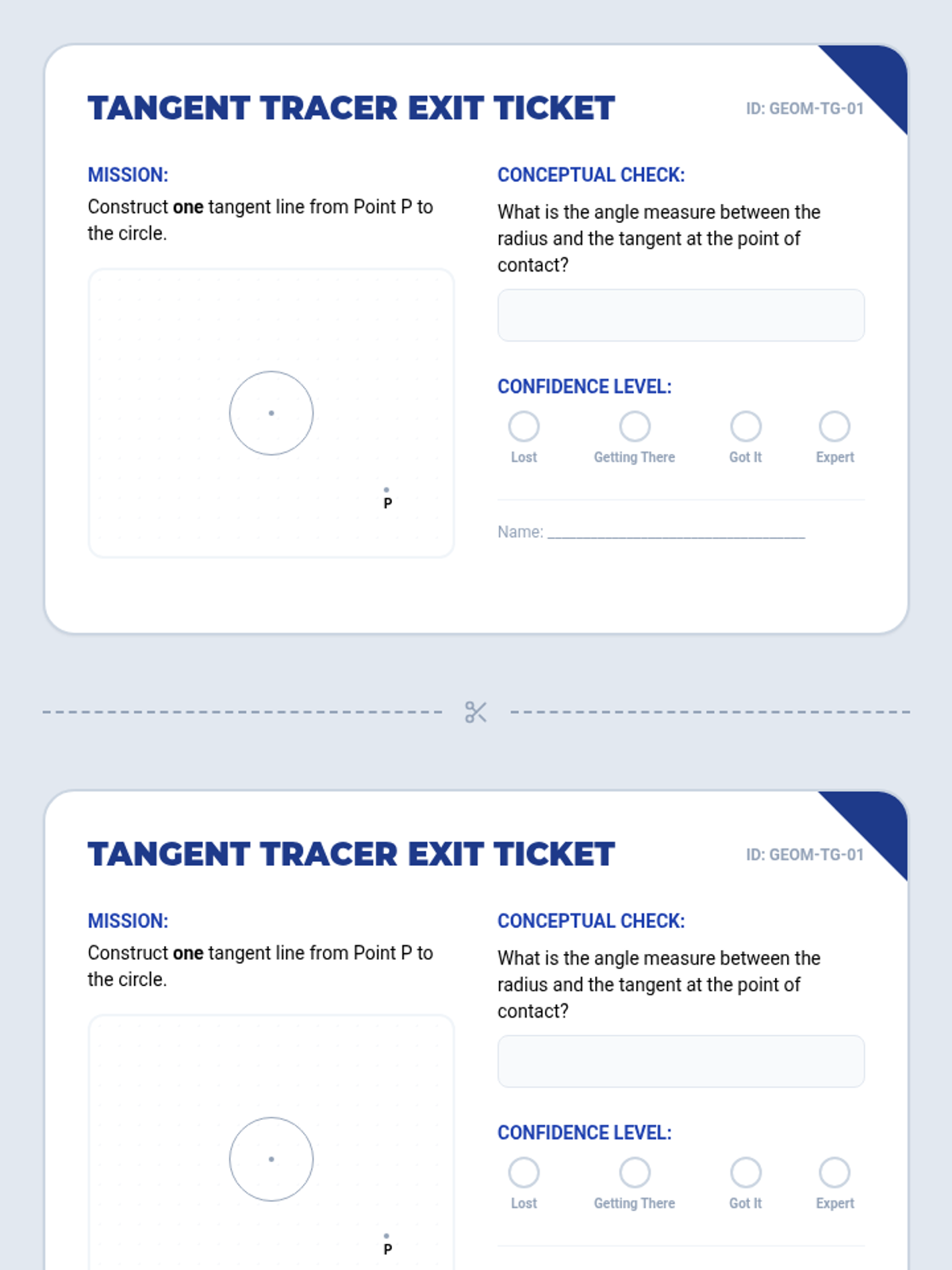
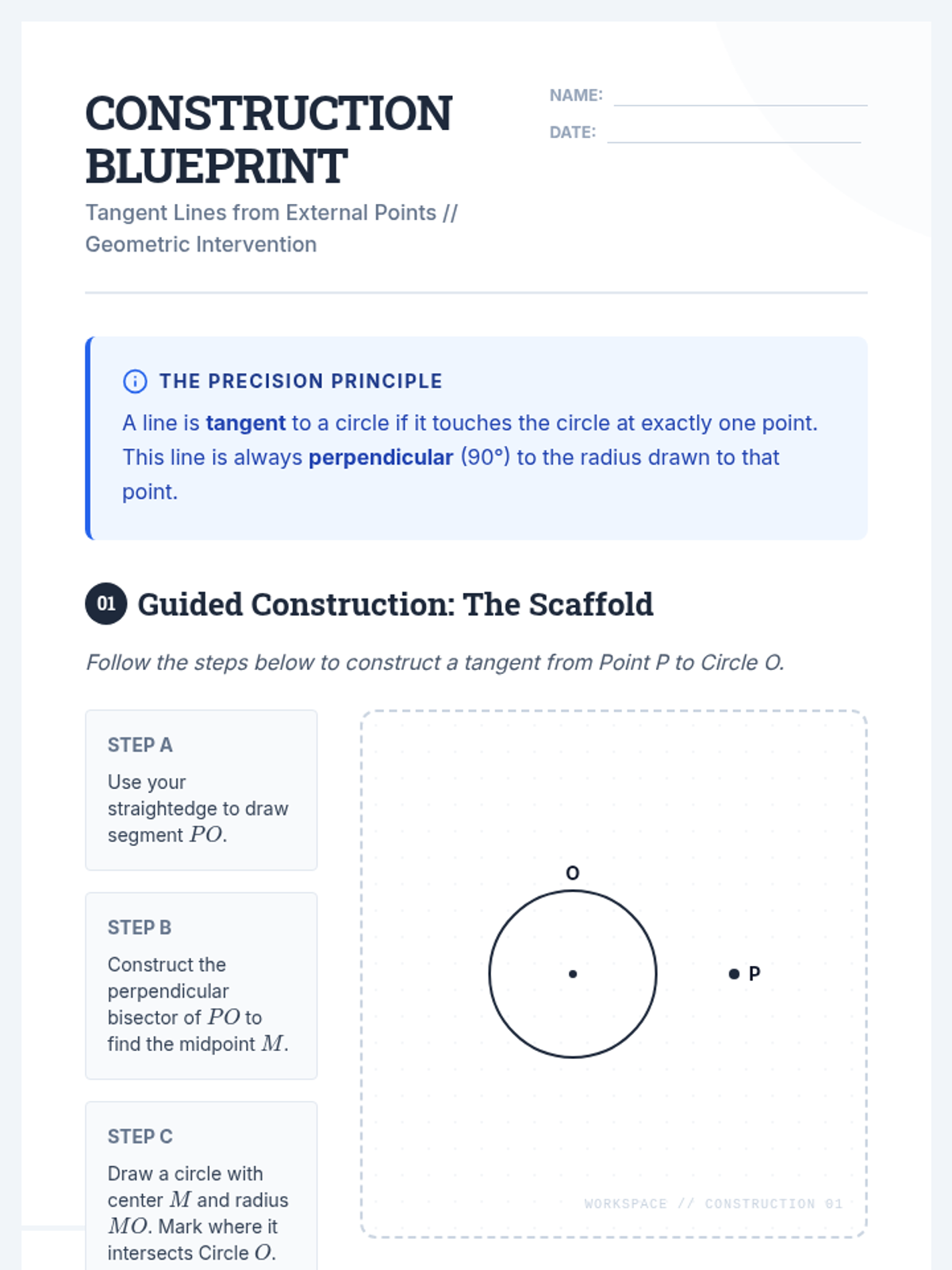
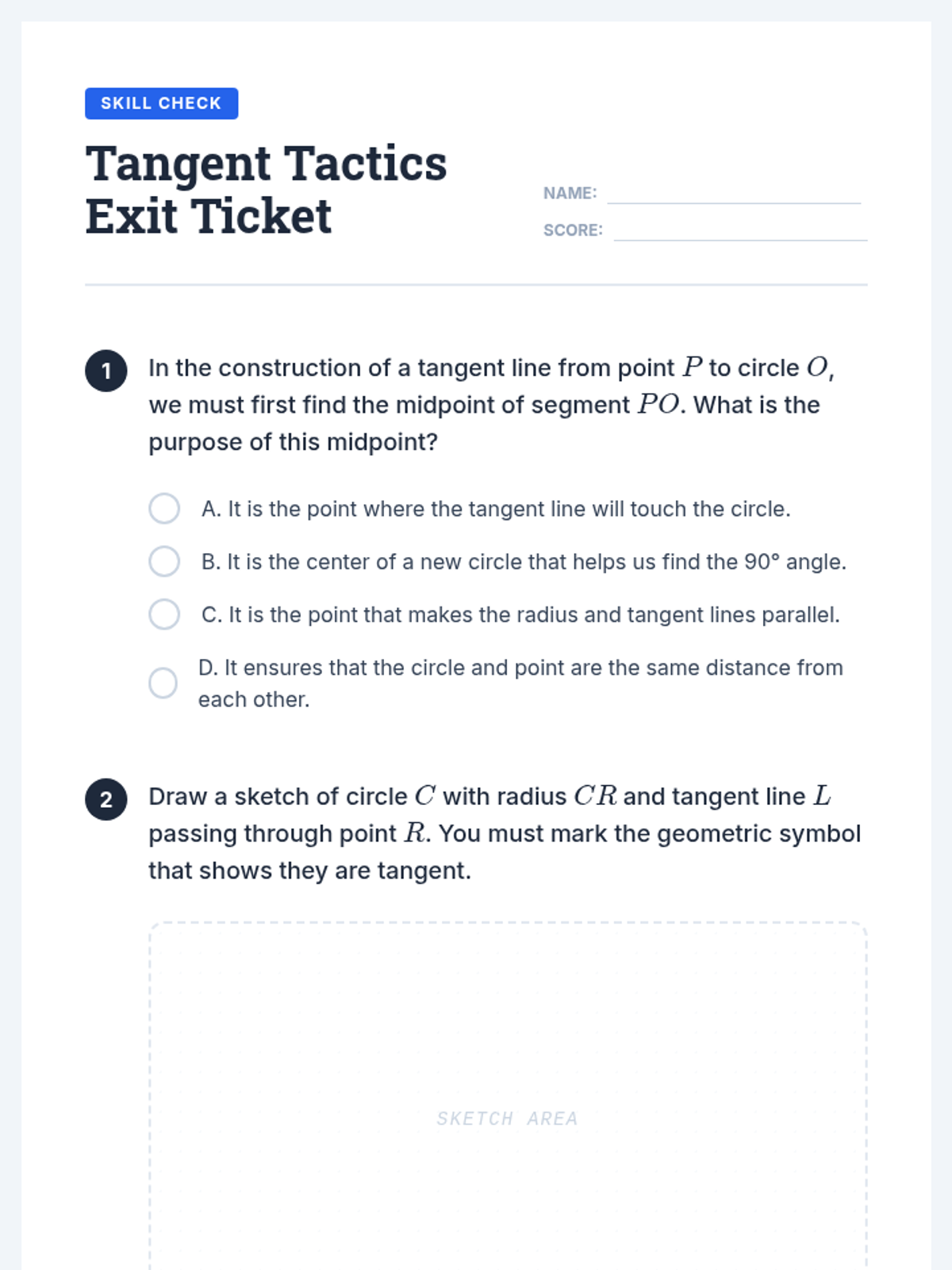
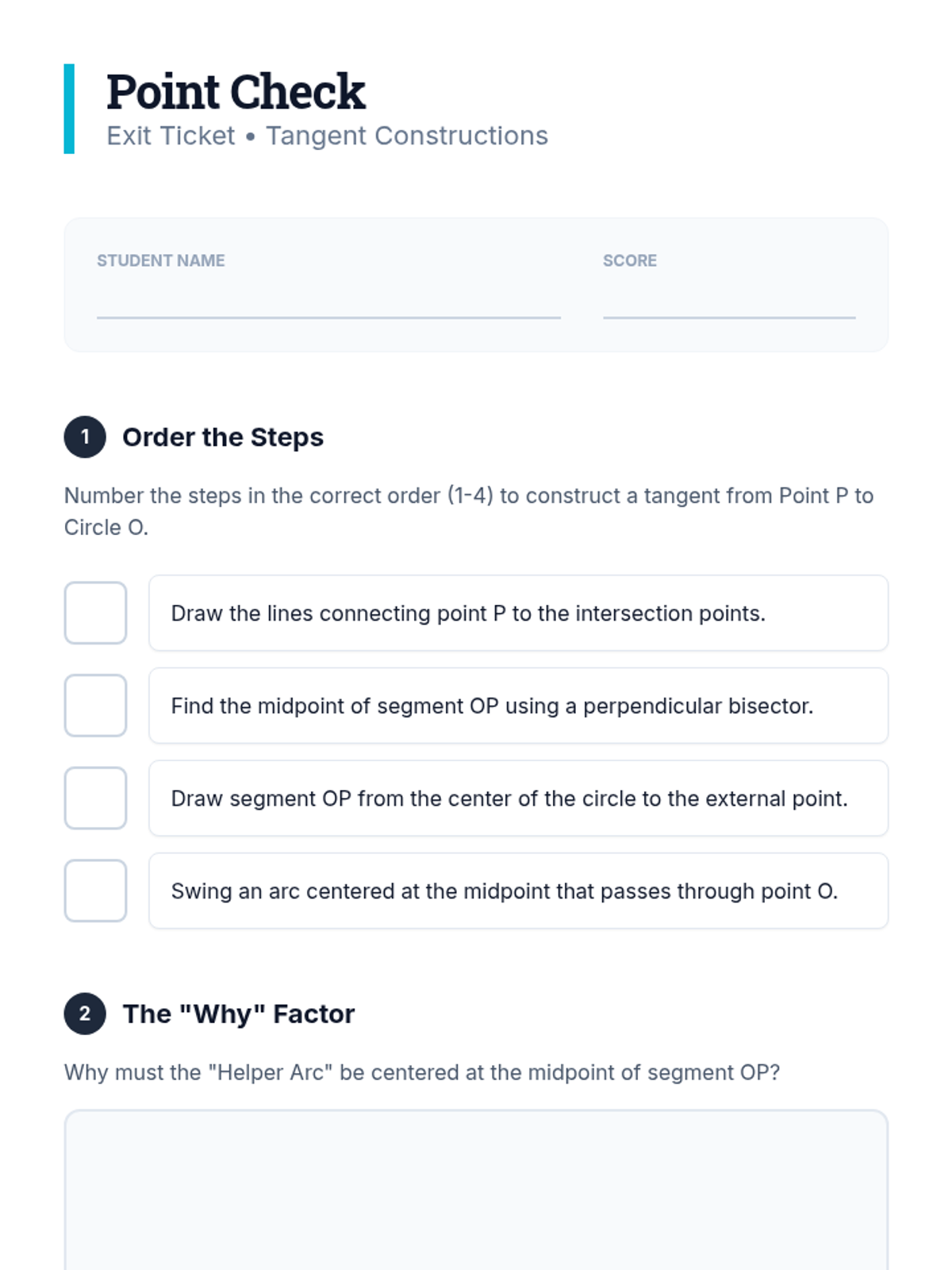
A scaffolded intervention lesson teaching students to construct tangent lines from external points using midpoints and intersecting circles, grounded in Colorado standard HS.G-C.A.4.
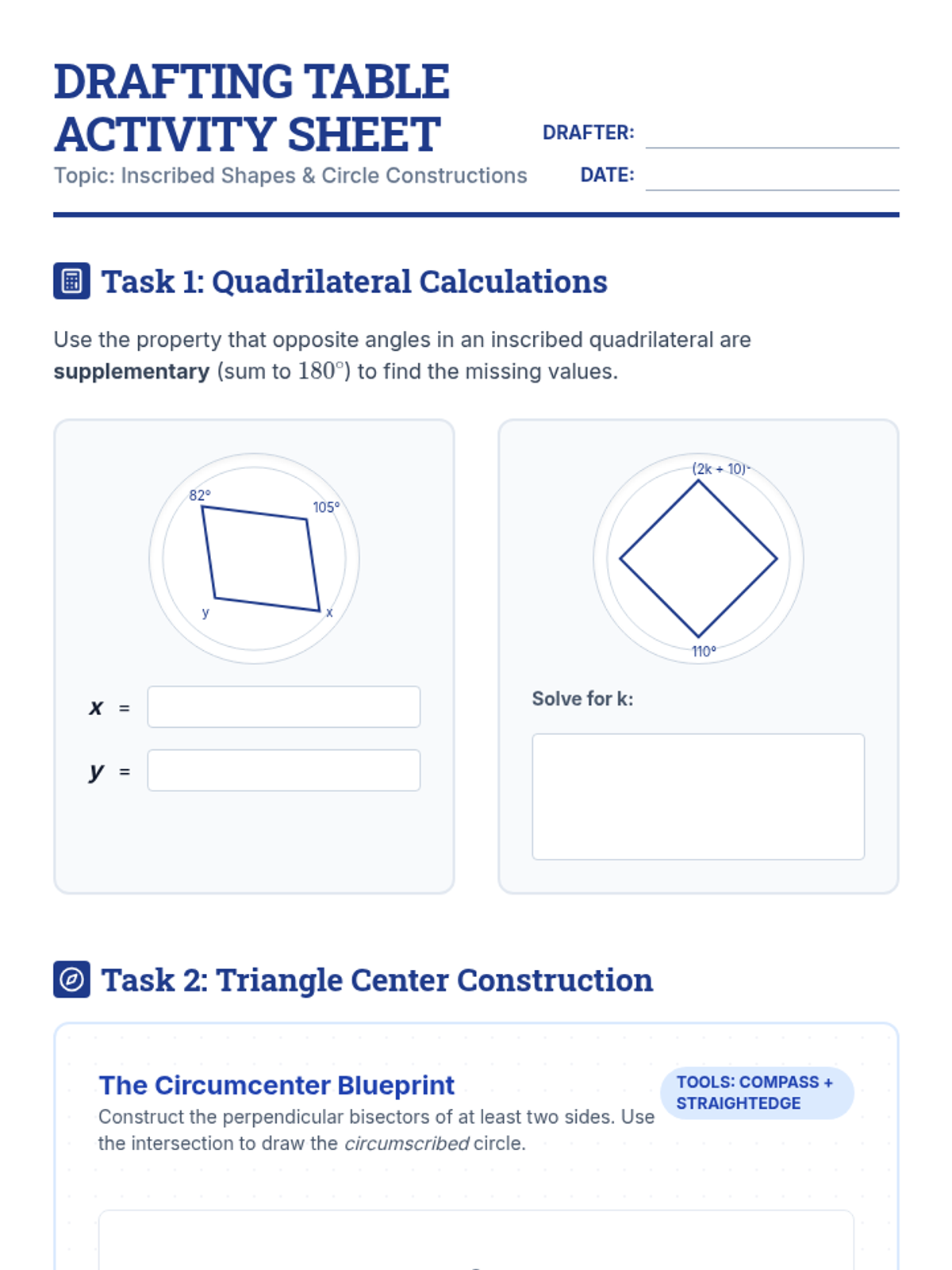
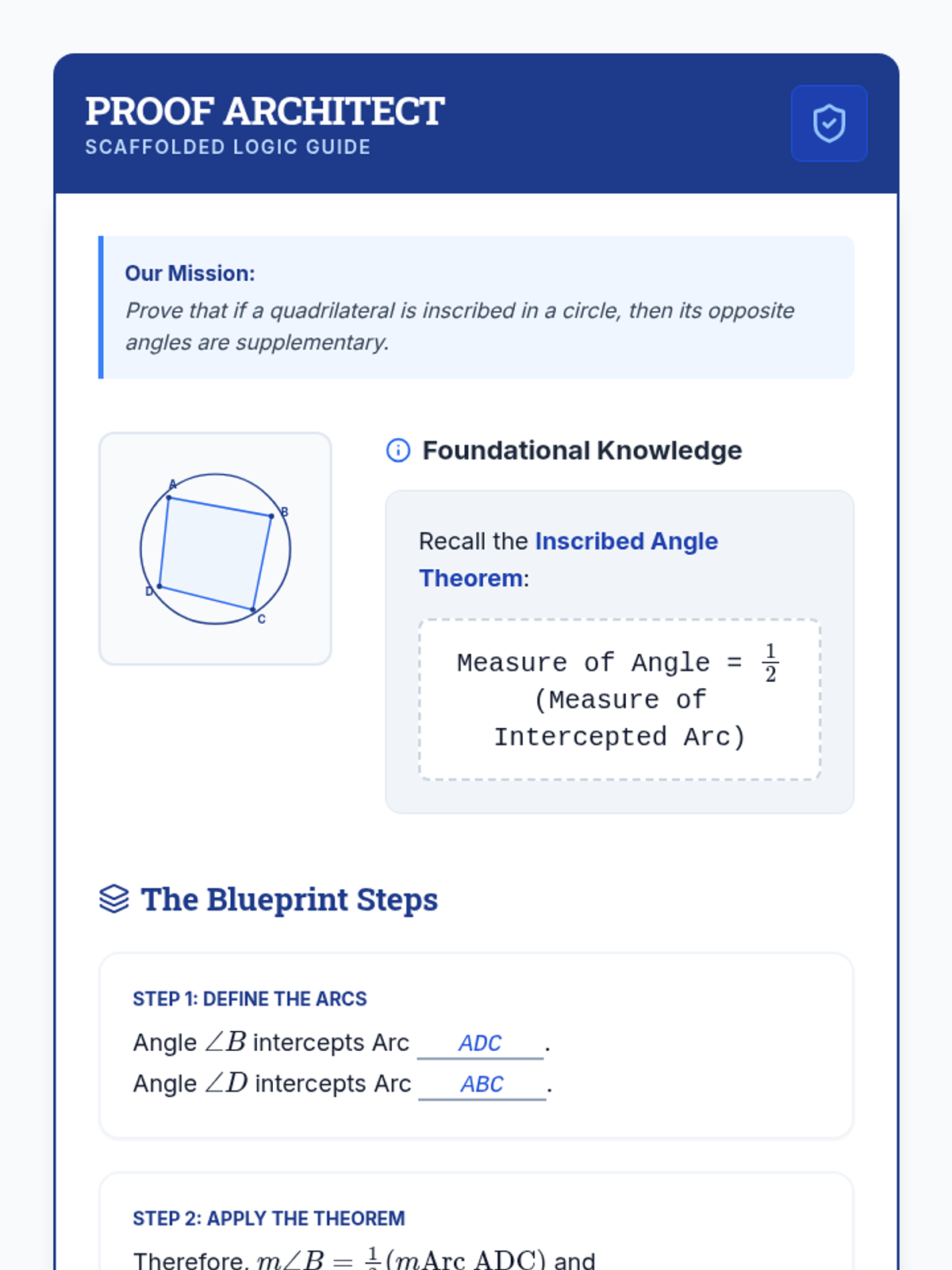
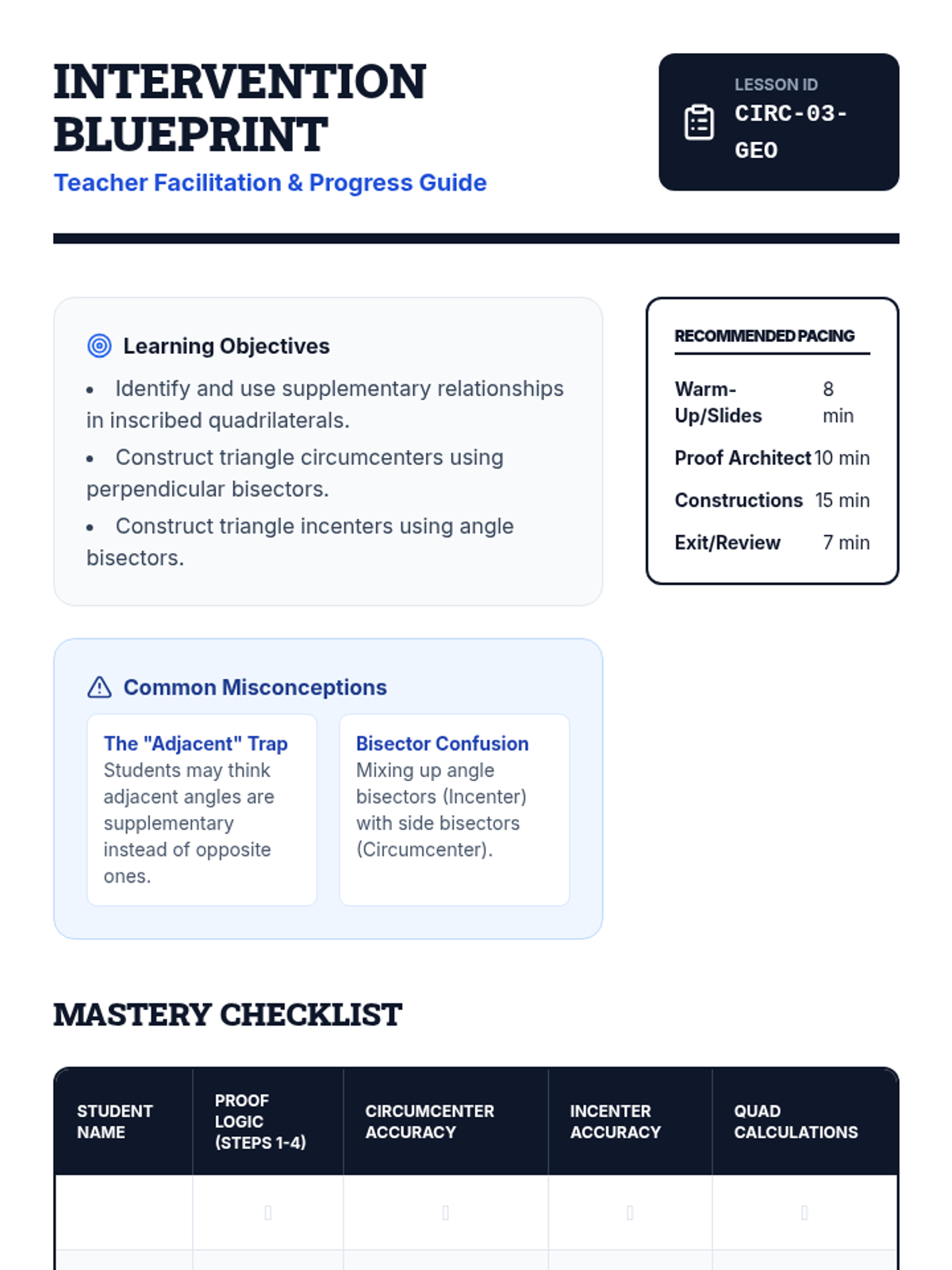
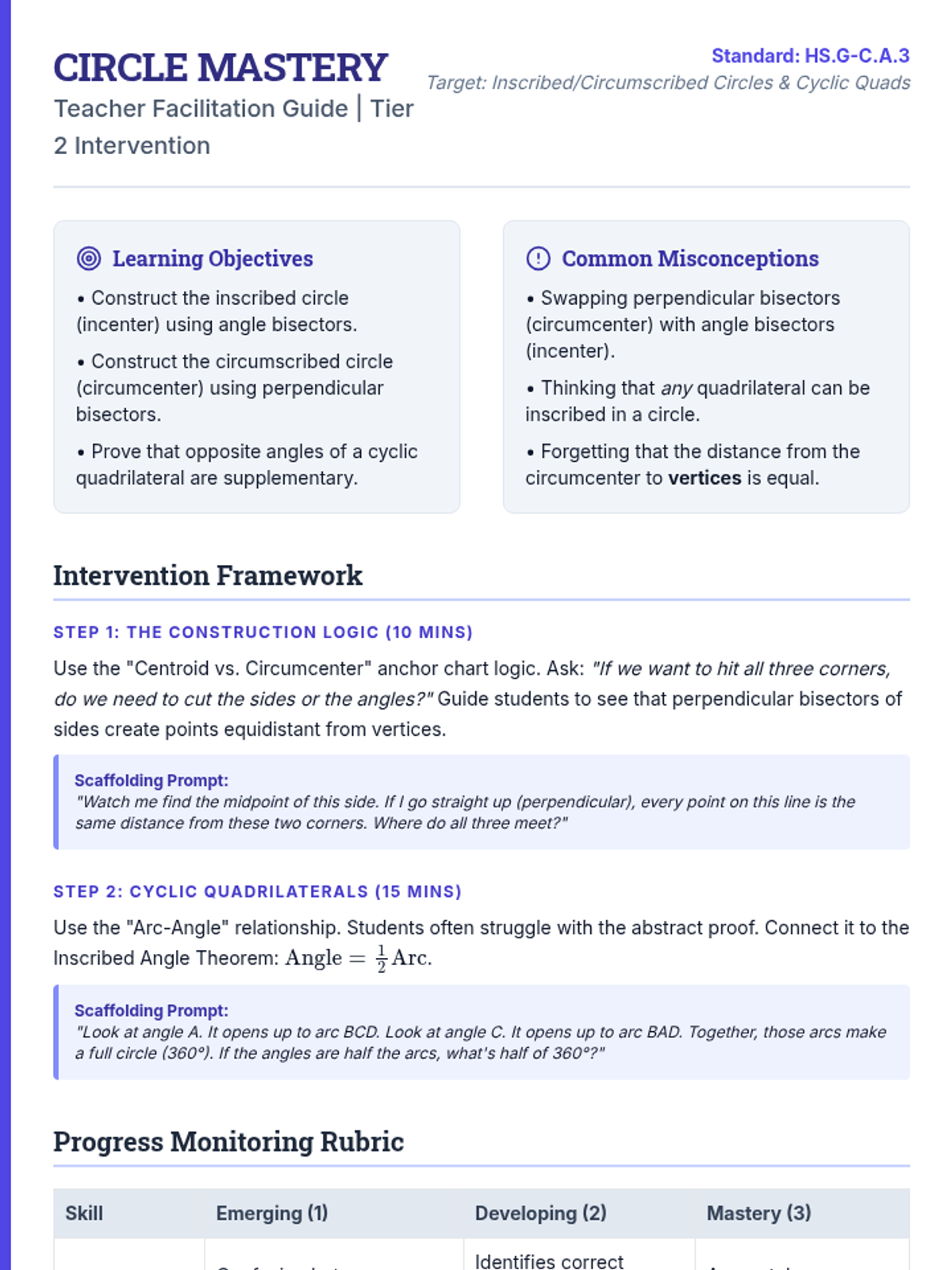
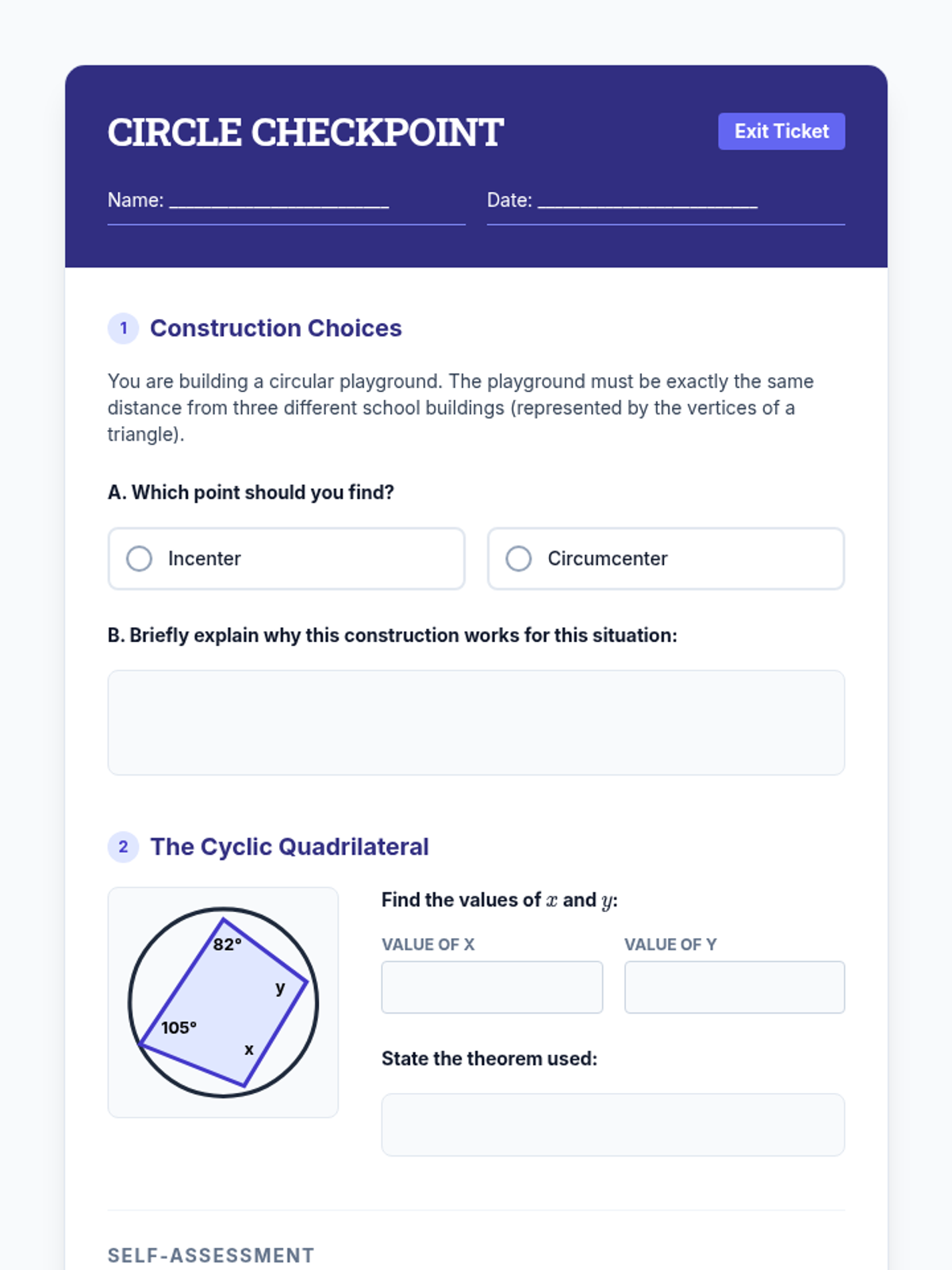
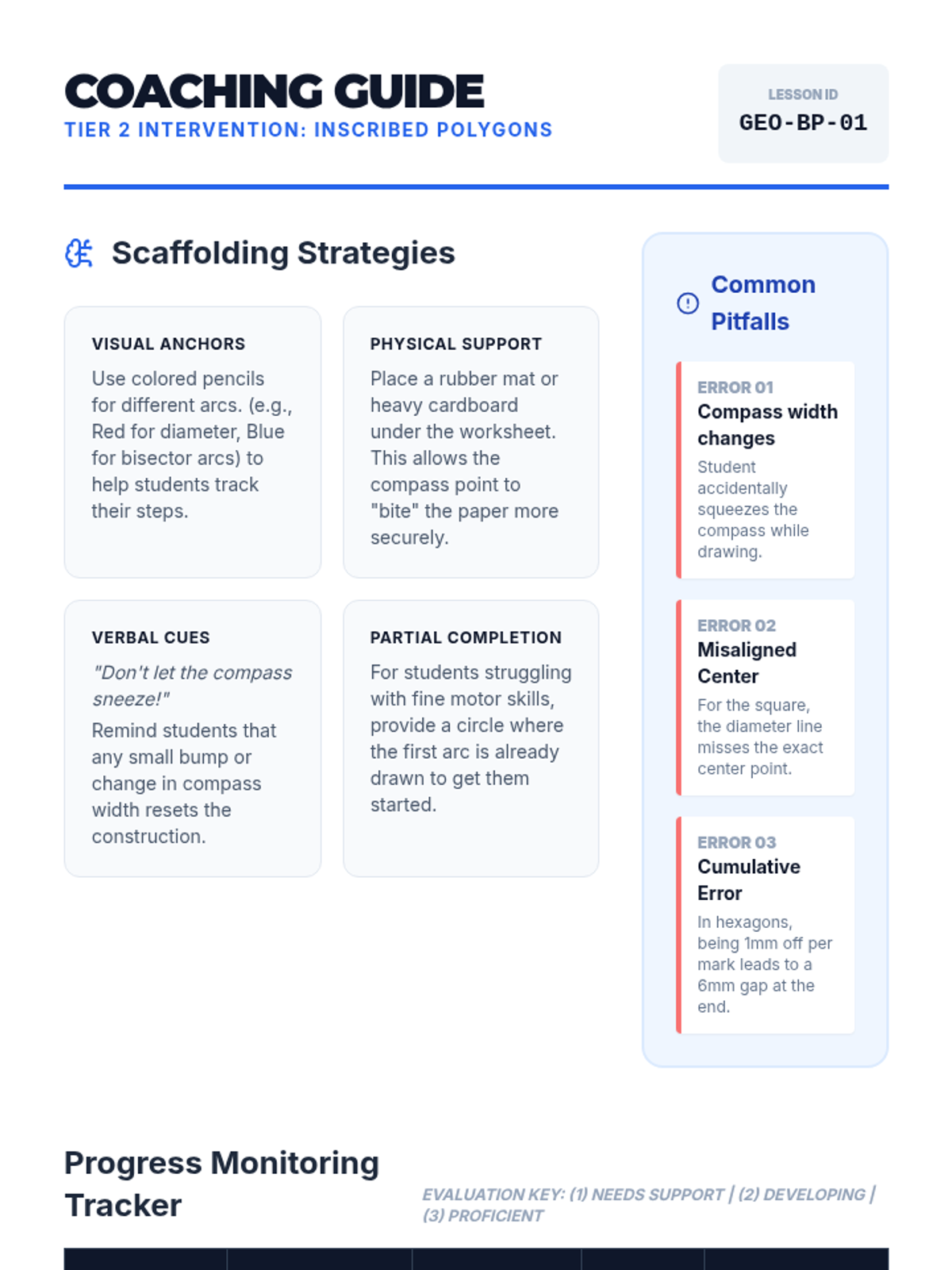
A targeted Tier 2 intervention lesson focusing on the properties of inscribed quadrilaterals and the construction of triangle centers (circumcenter and incenter). Students use compass and straightedge tools to explore geometric relationships and complete scaffolded proofs.
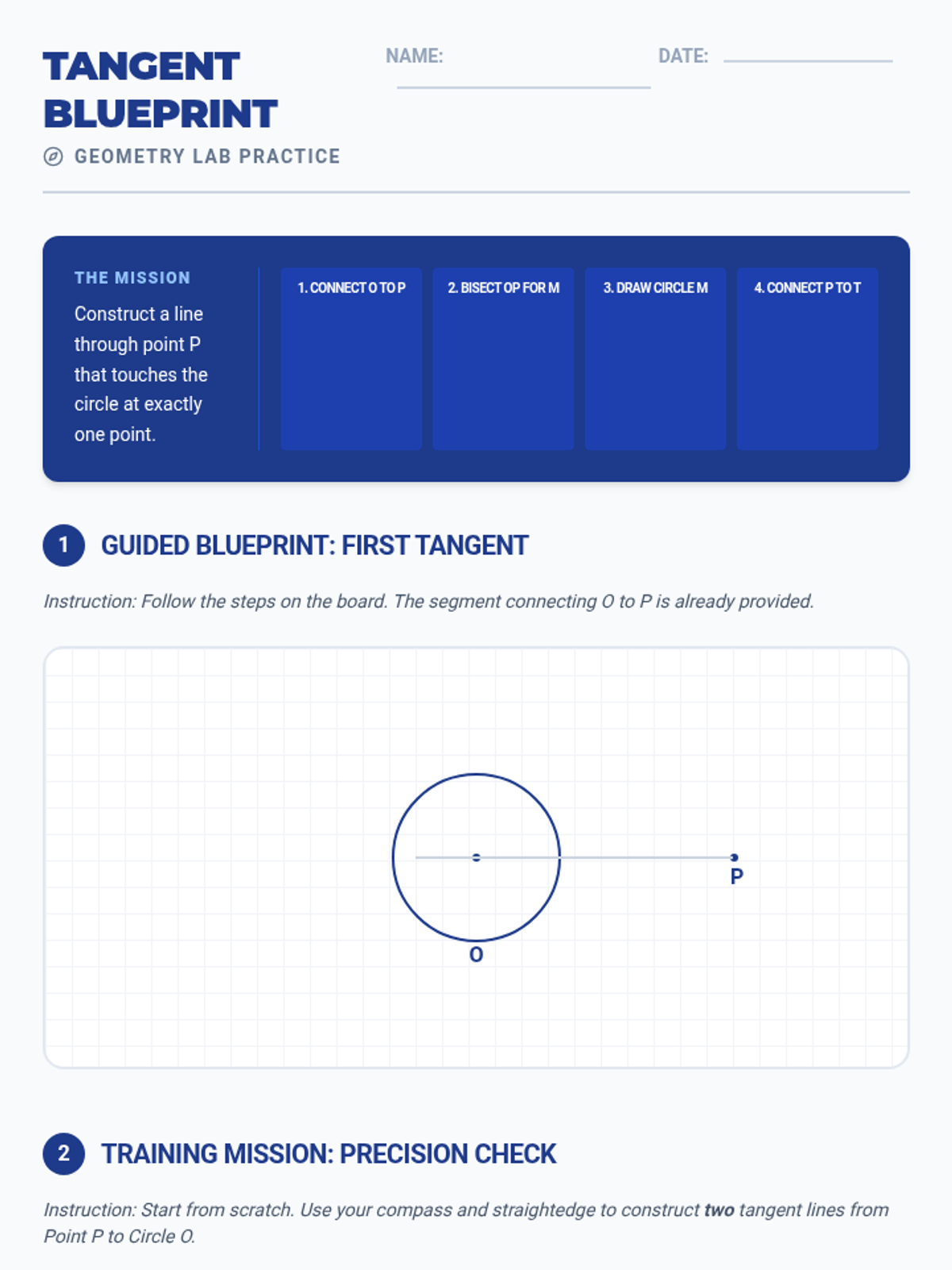
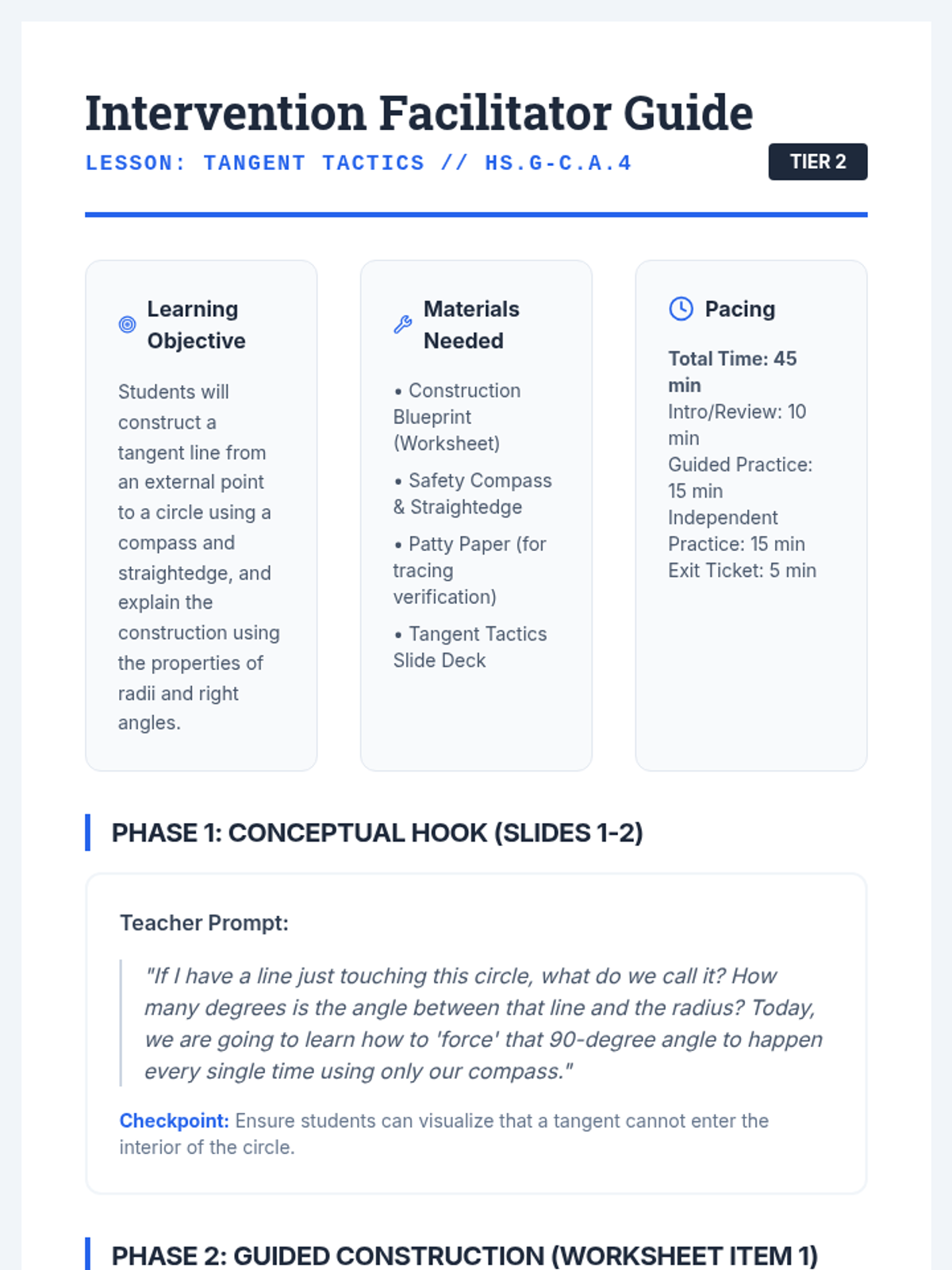
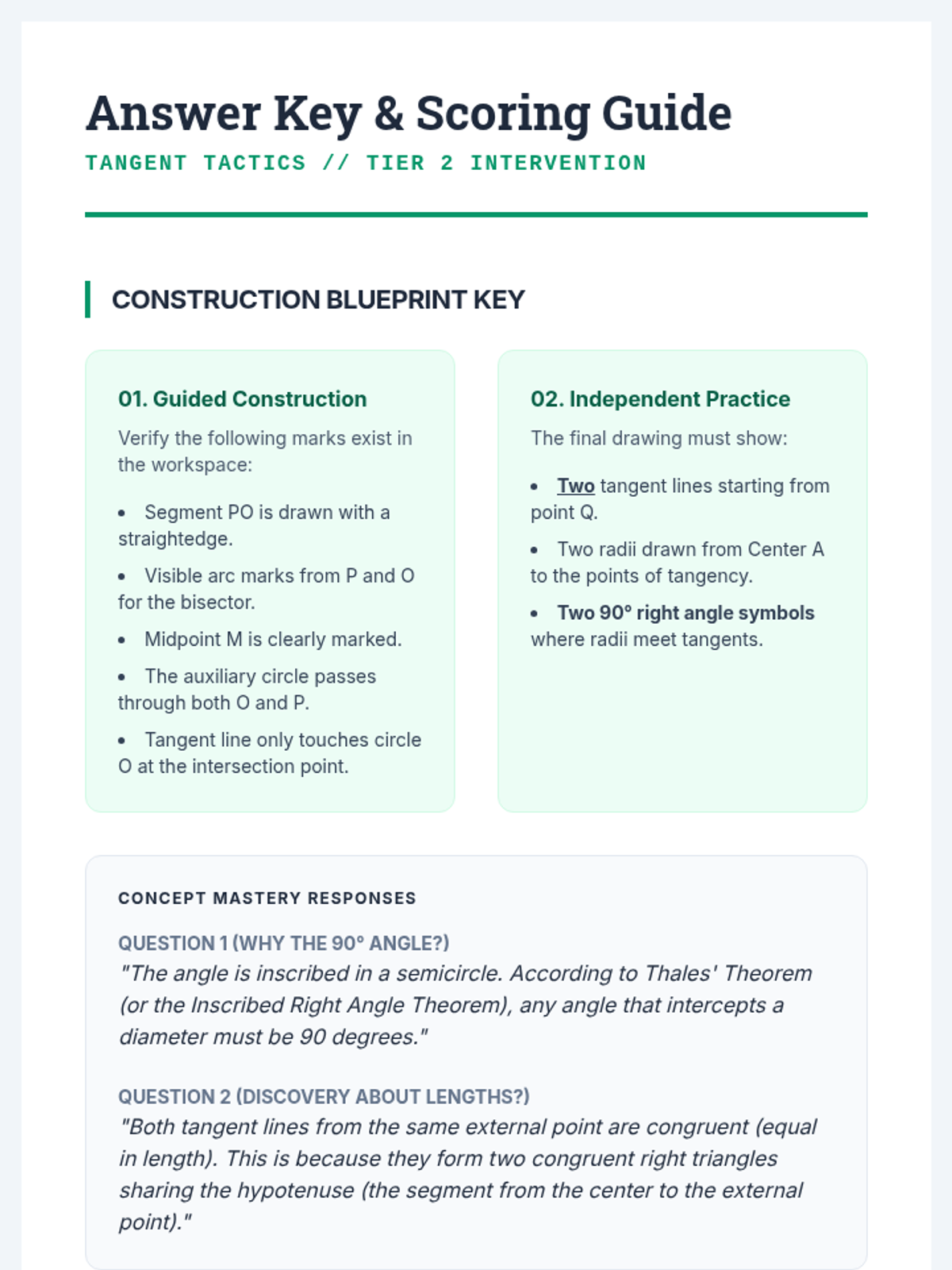
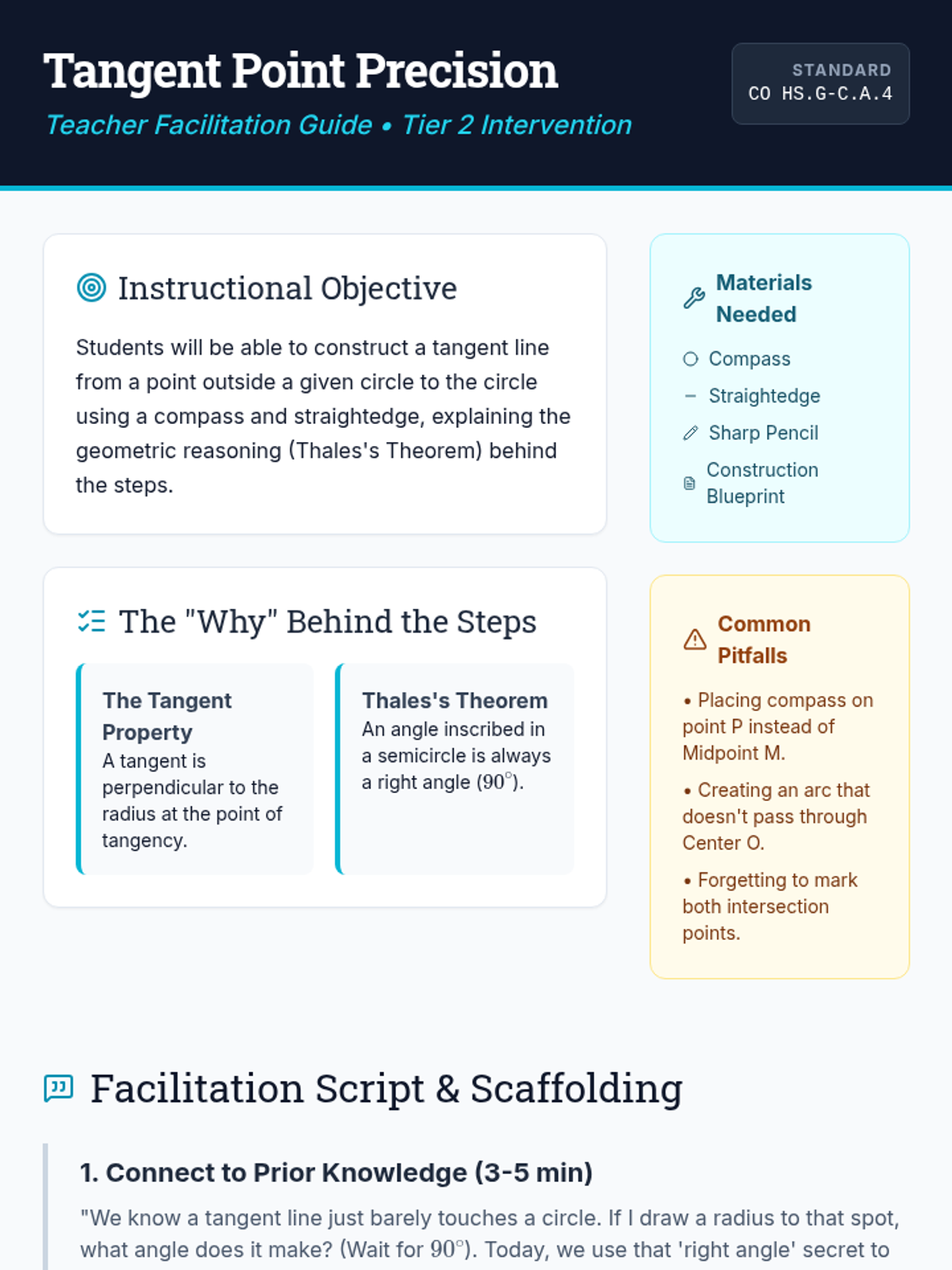
A Tier 2 intervention lesson focusing on the geometric construction of tangent lines from an external point, emphasizing the relationship between radii and right angles. This small-group session uses scaffolded compass and straightedge work to help struggling learners master construction techniques and conceptual proofs.
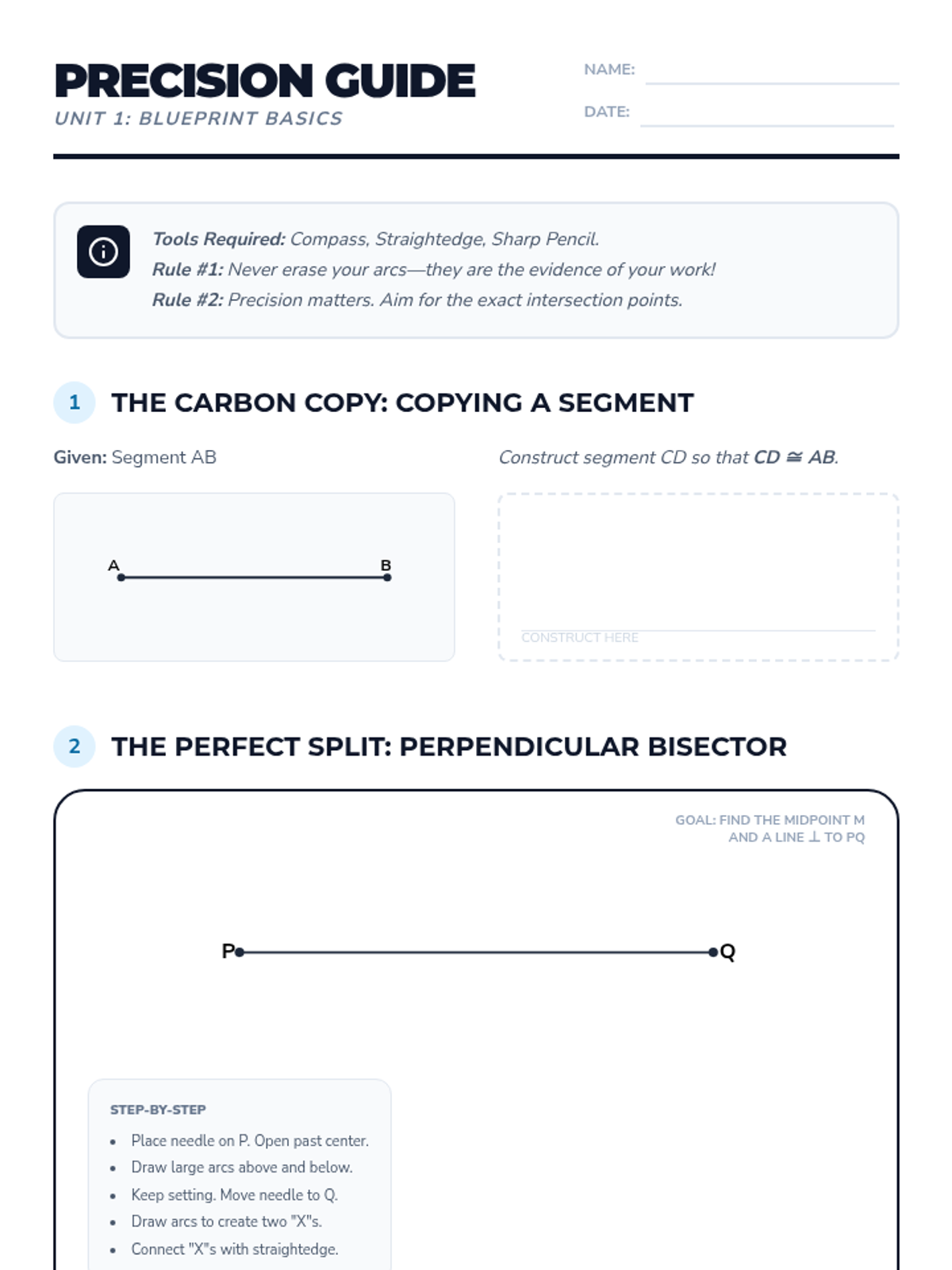
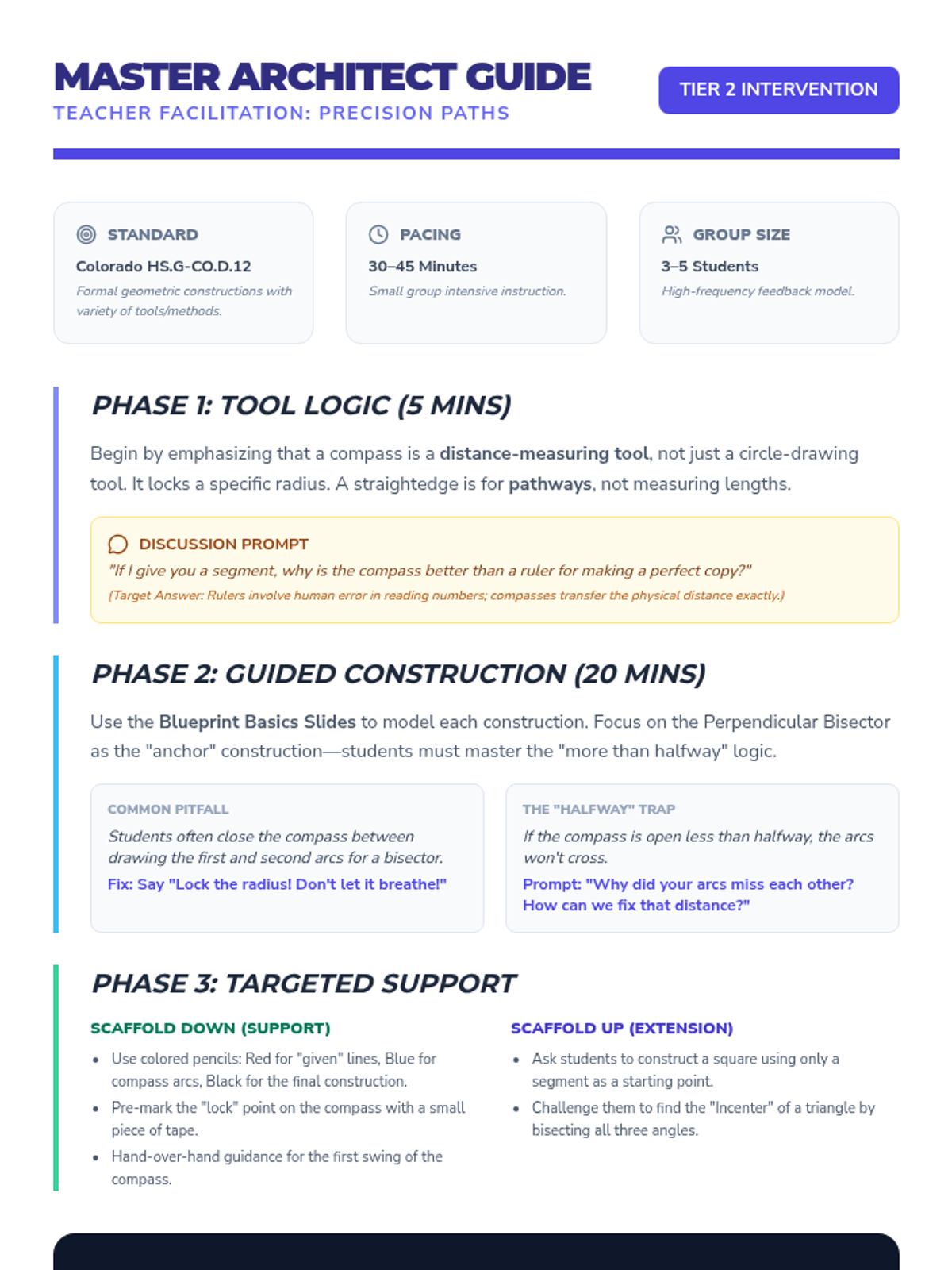
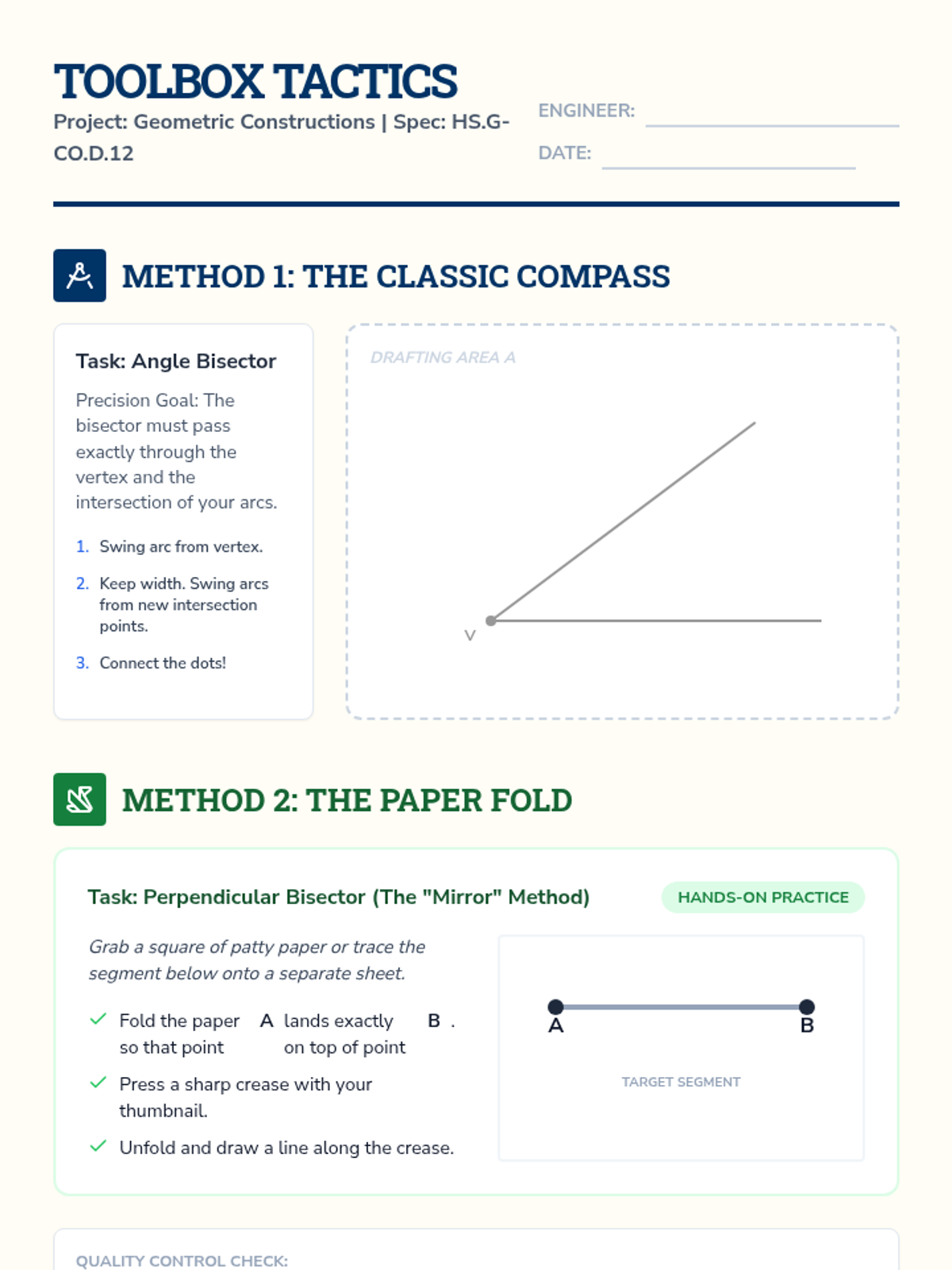
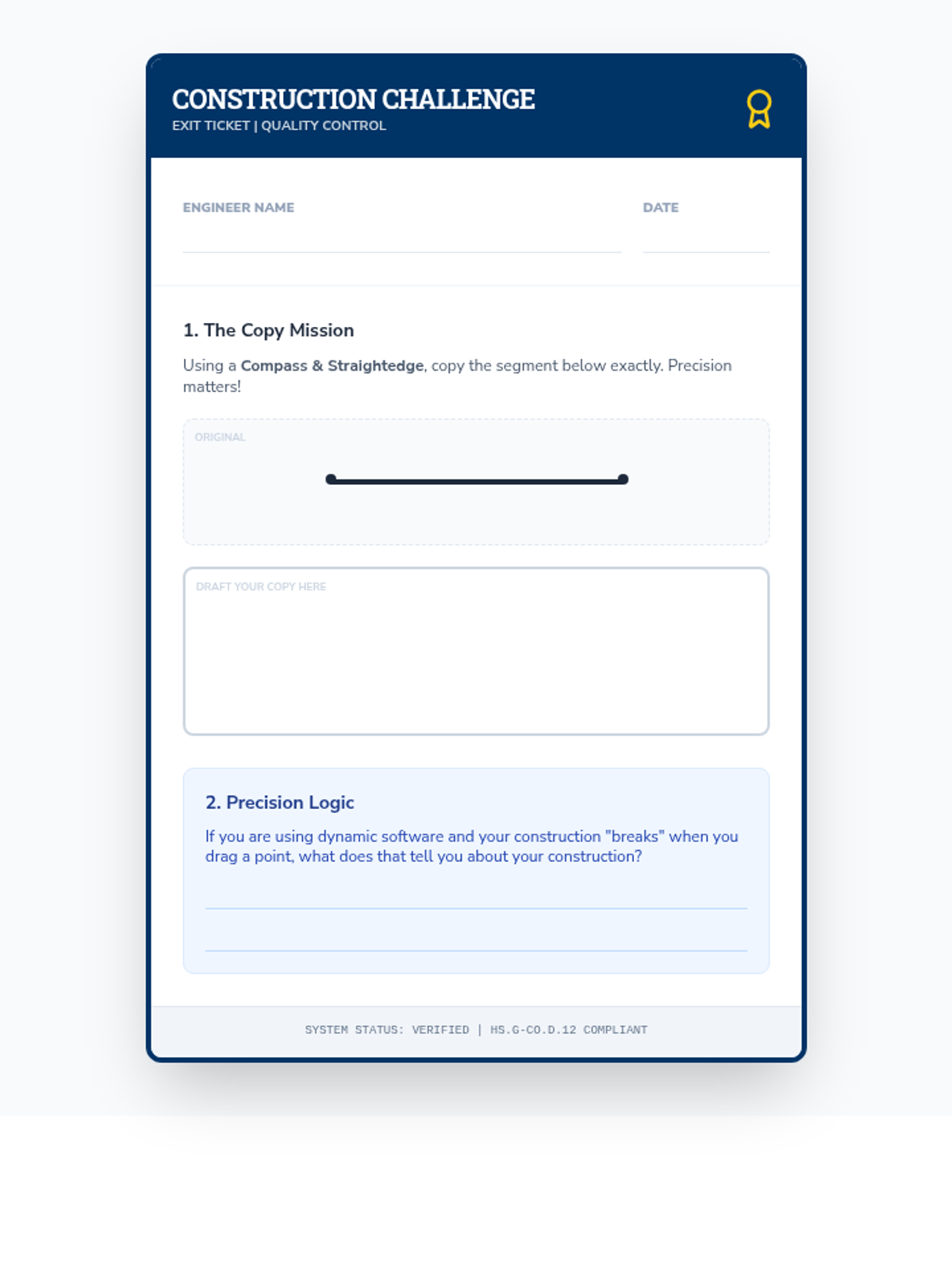
Focuses on the fundamental geometric constructions: copying segments/angles, bisecting segments/angles, and constructing perpendicular and parallel lines. Includes scaffolded instruction for Tier 2 intervention.
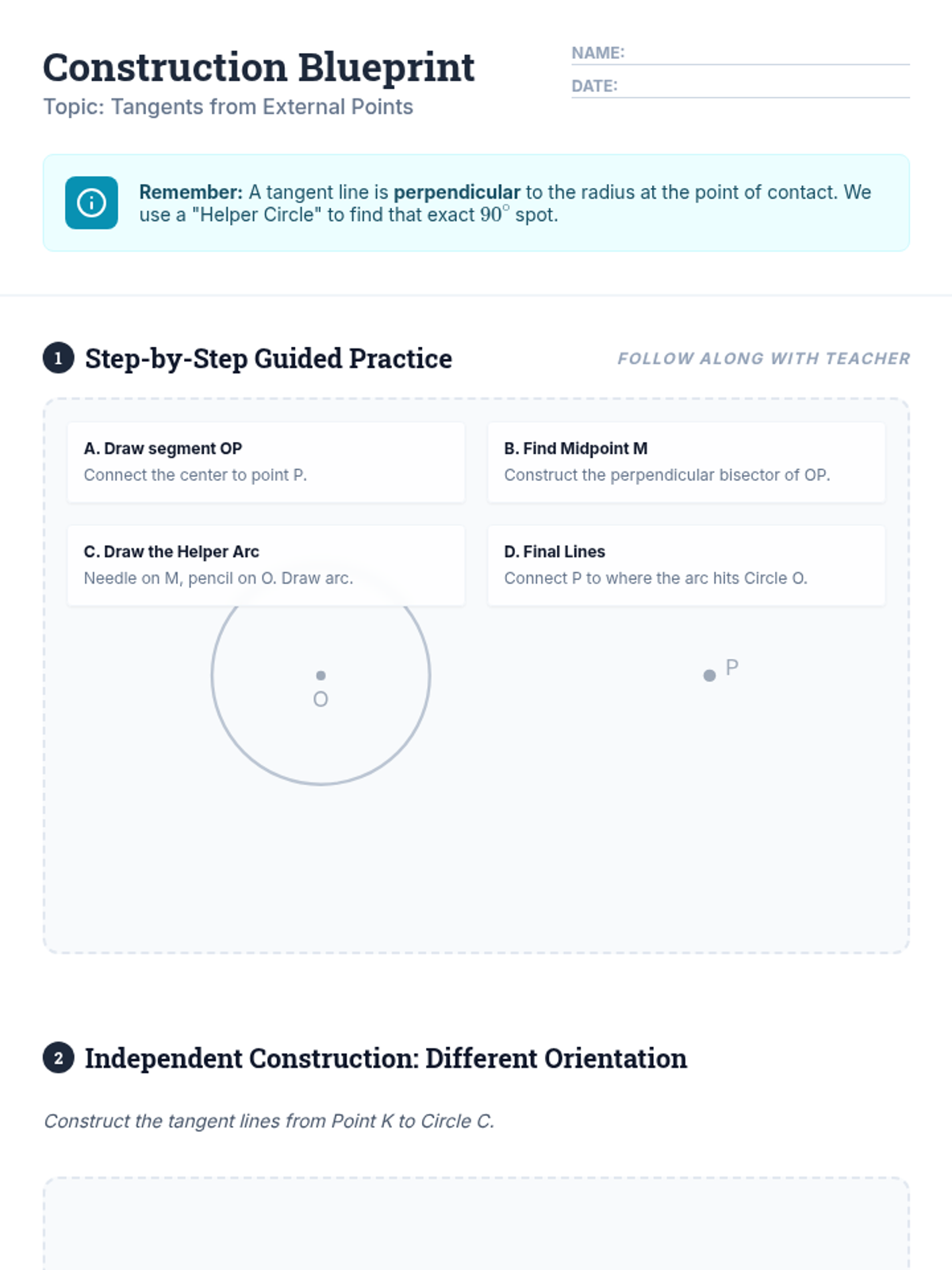
A targeted intervention lesson for high school students to master the construction of a tangent line from an external point to a circle. This lesson breaks down the complex construction into manageable, scaffolded steps with built-in progress monitoring.
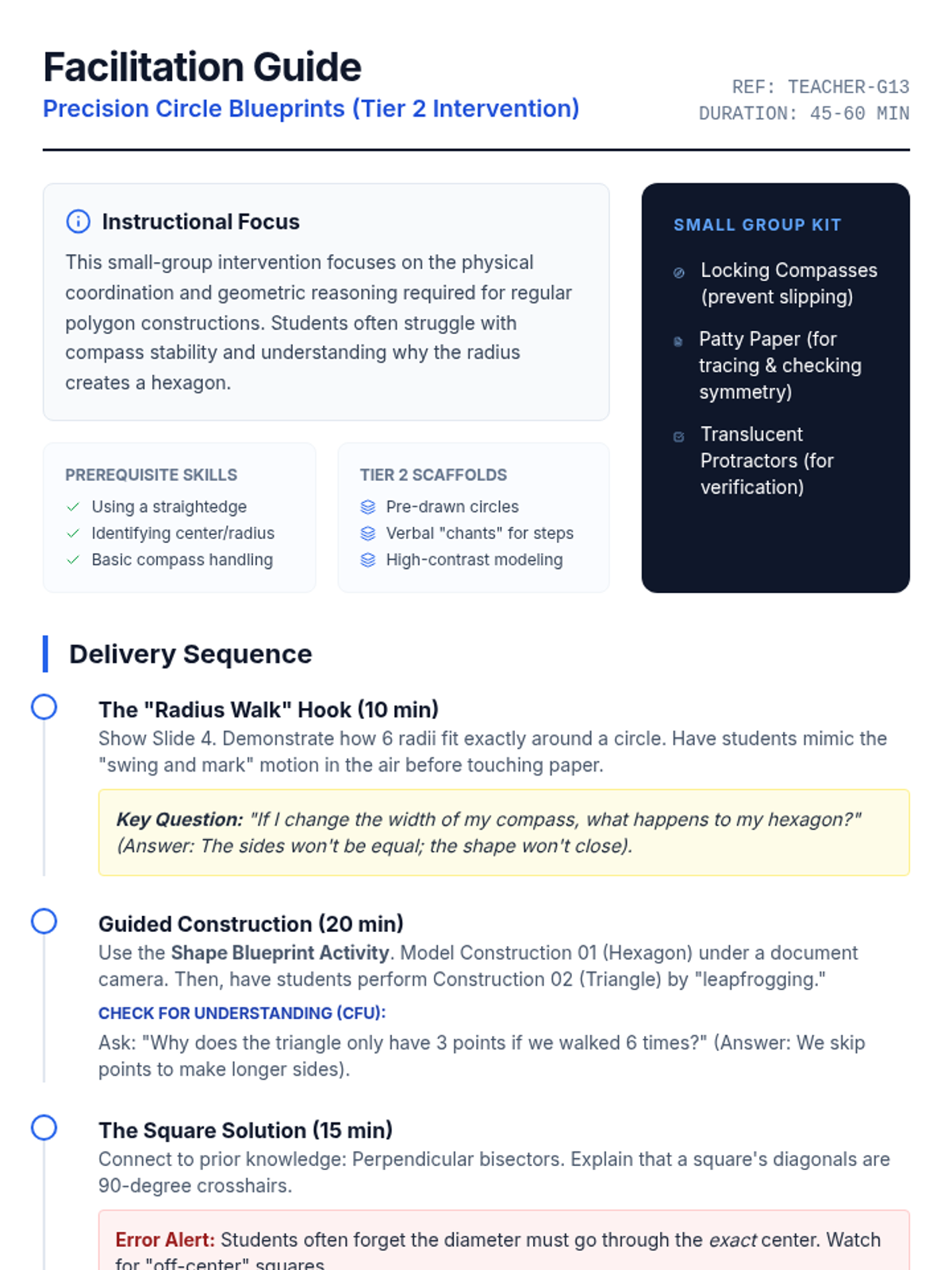
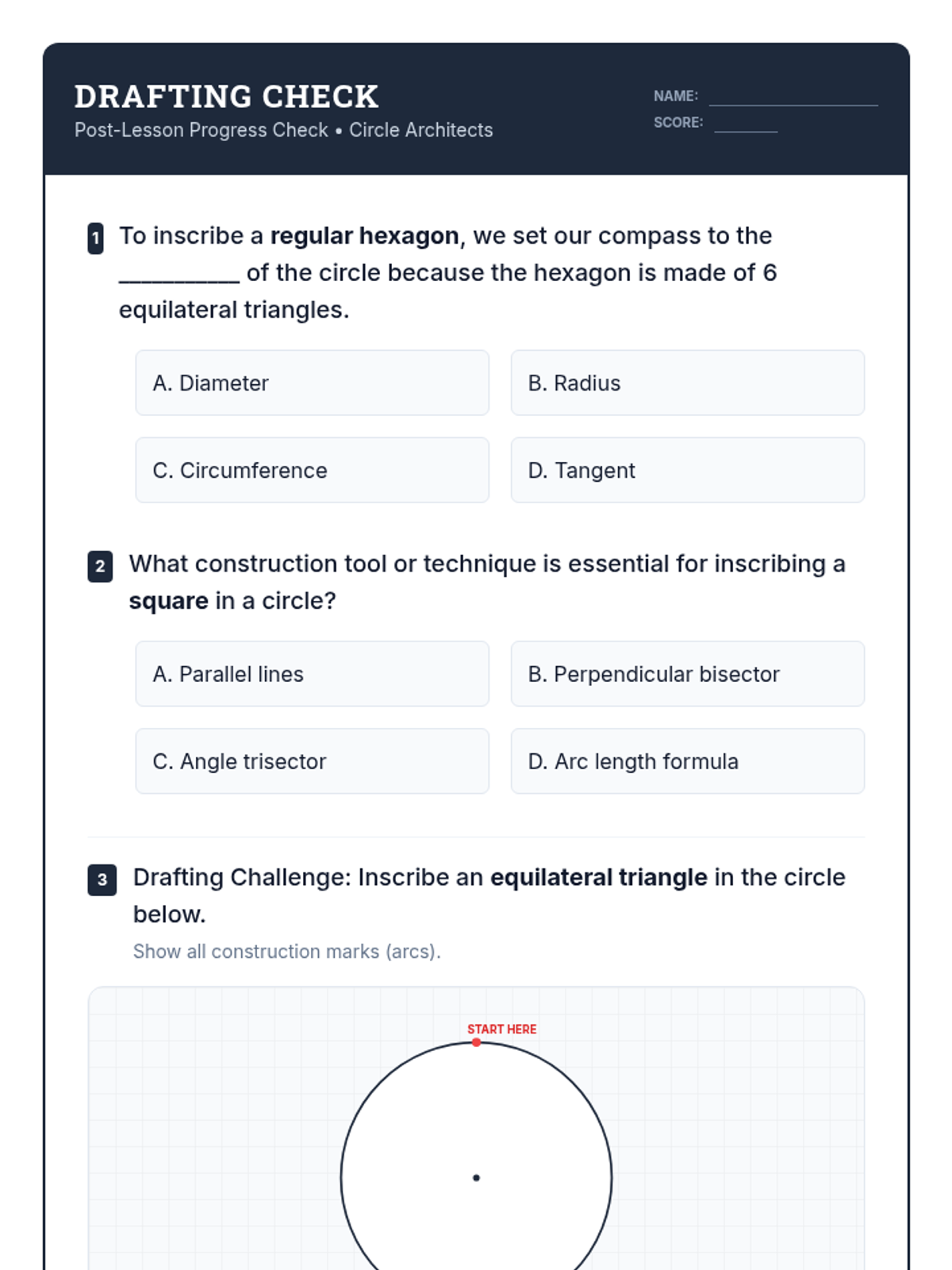
A Tier 2 intervention lesson focusing on the geometric relationship between circles and inscribed regular polygons, providing step-by-step scaffolded construction practice for struggling learners.
A Tier 2 intervention lesson focusing on geometric constructions (inscribed/circumscribed circles) and proving angle properties of cyclic quadrilaterals using scaffolded support.
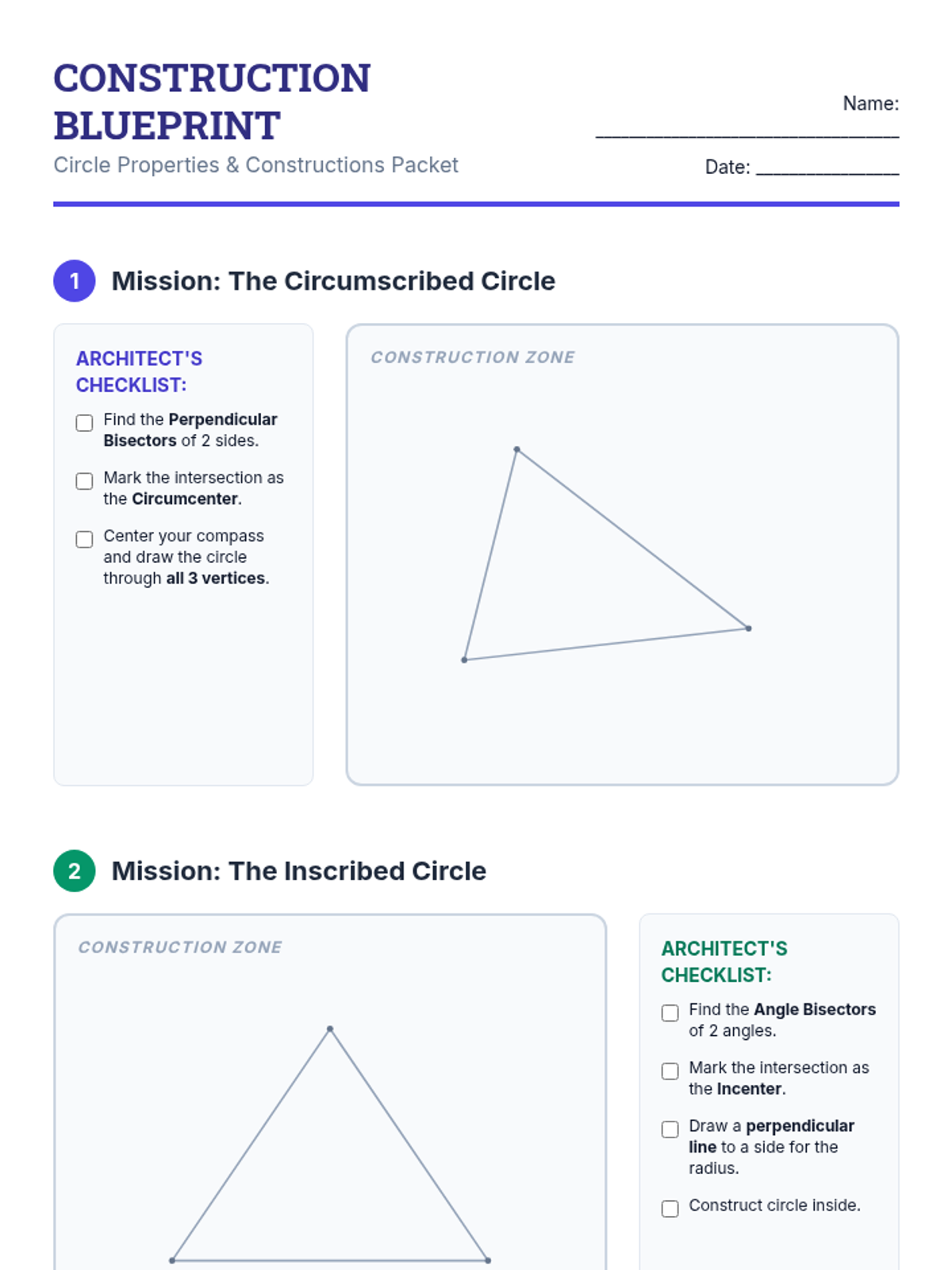
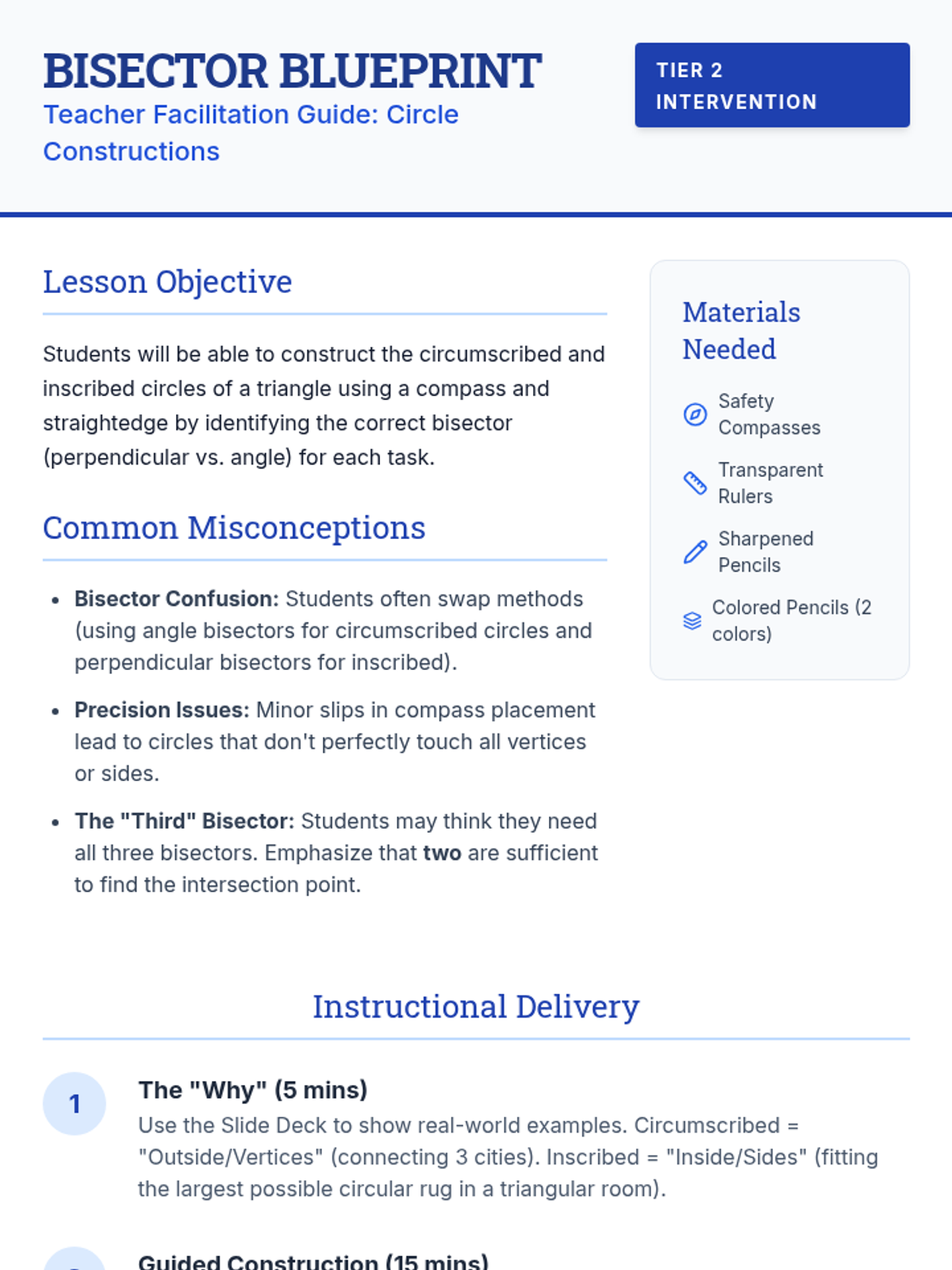
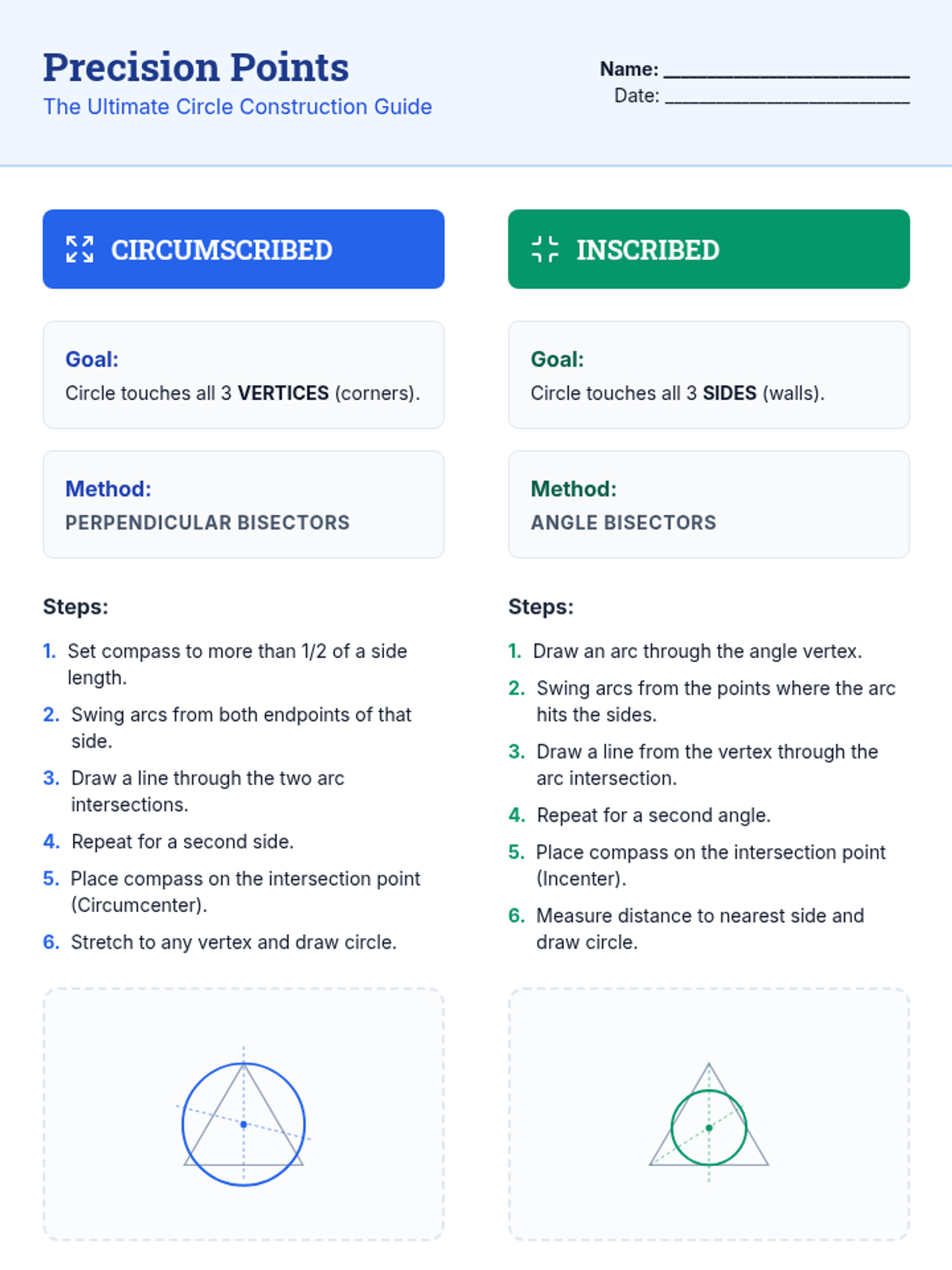
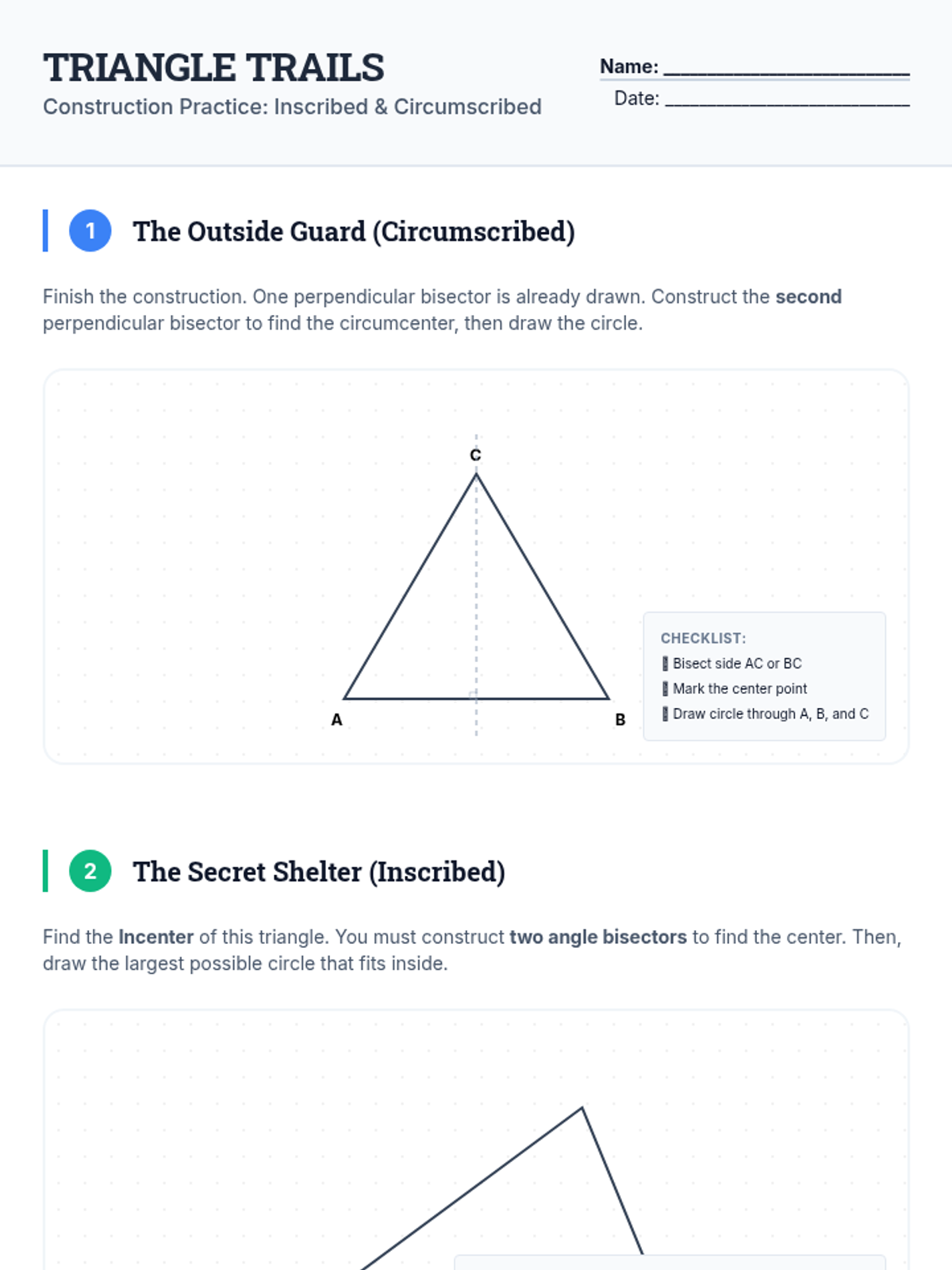
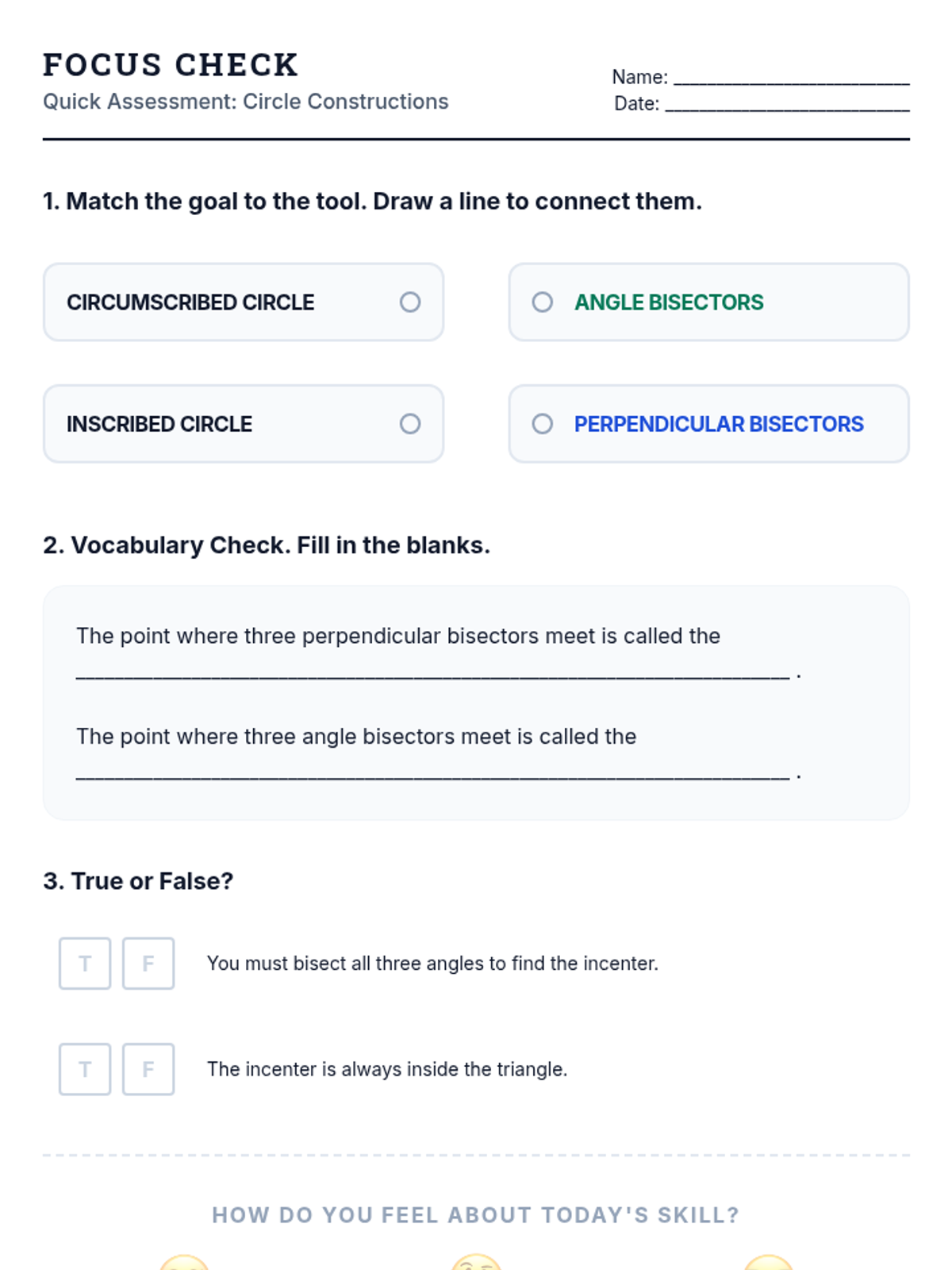
A focused intervention lesson on constructing circumscribed and inscribed circles of a triangle using perpendicular and angle bisectors.
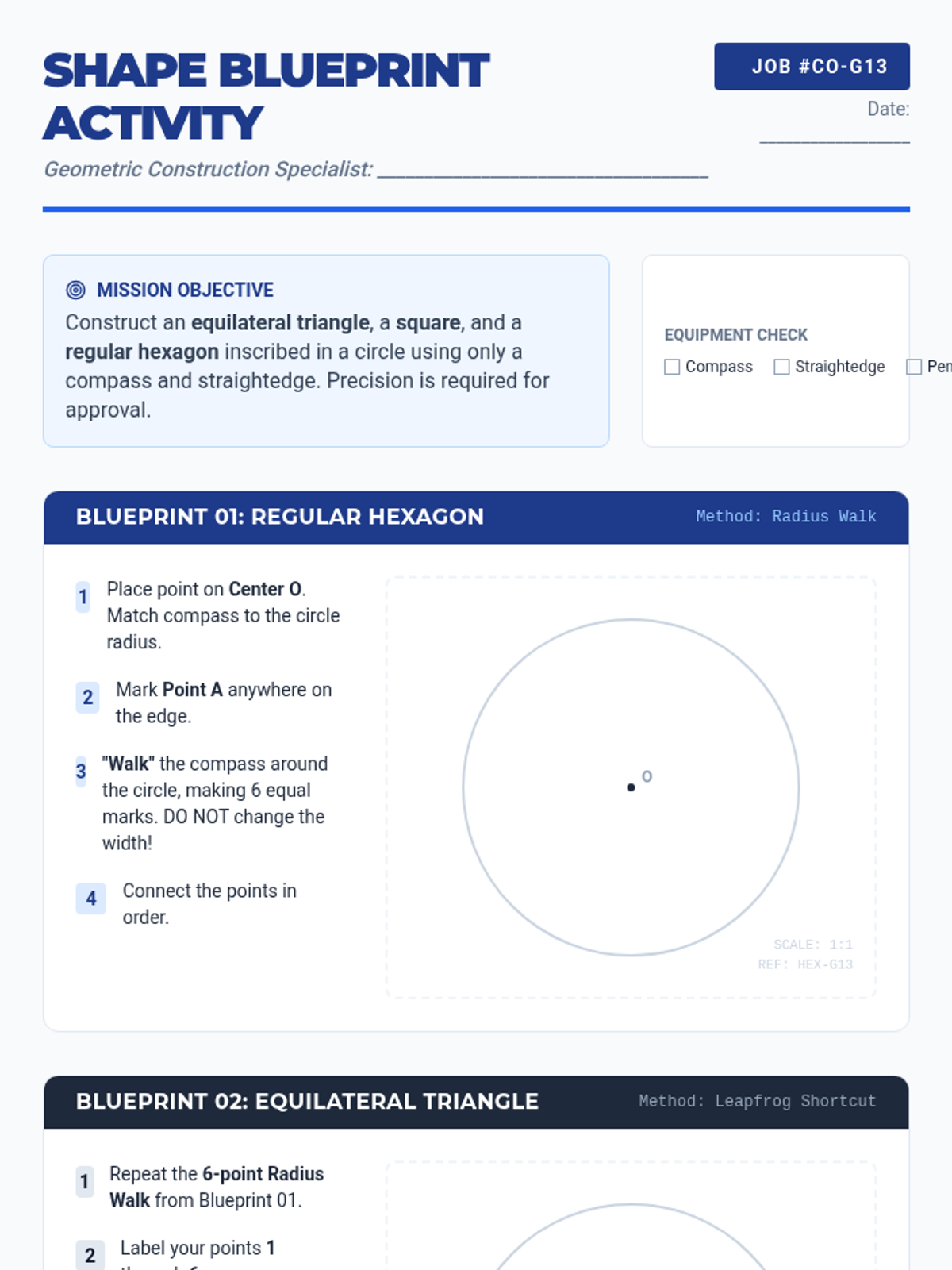
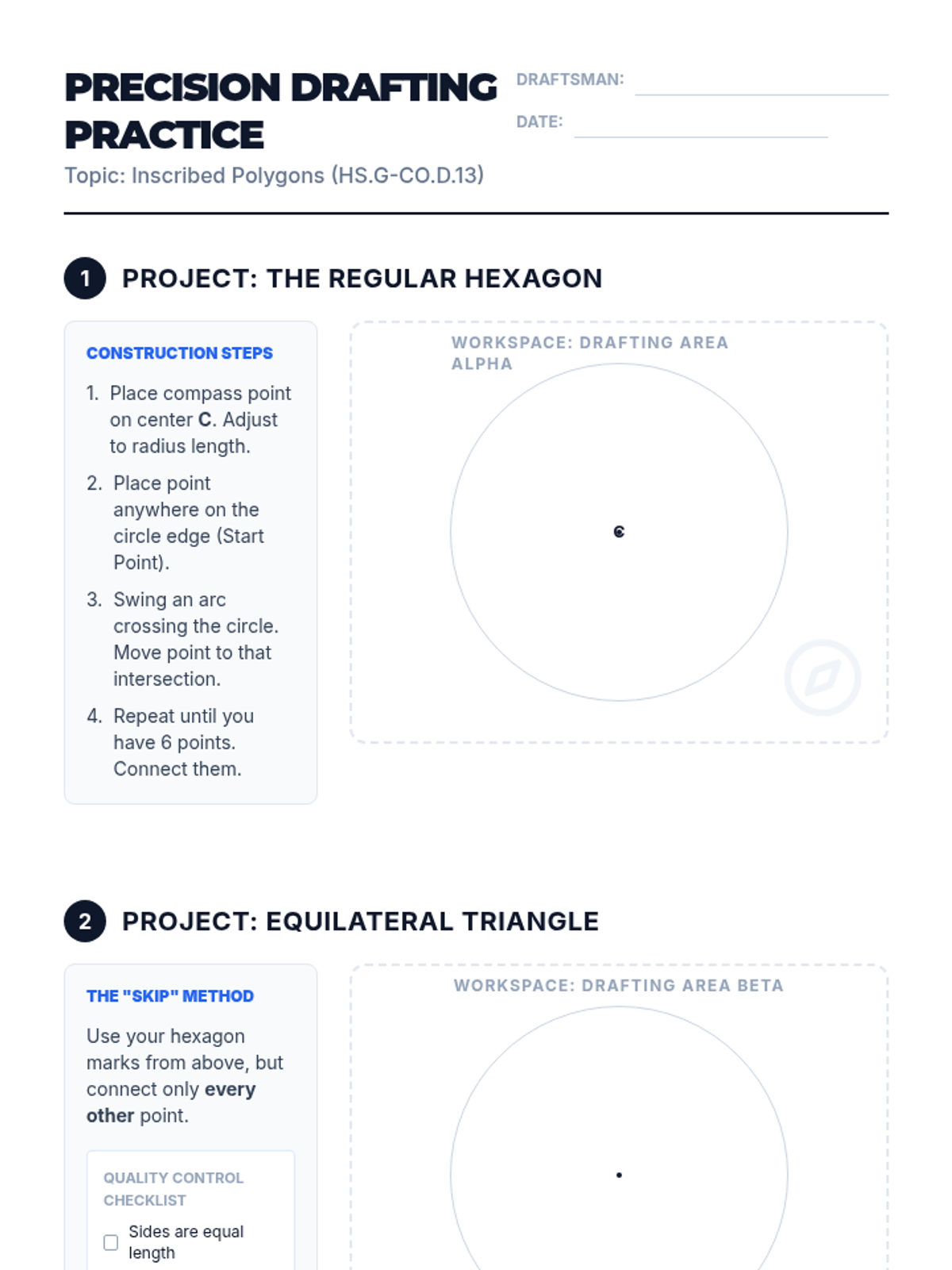
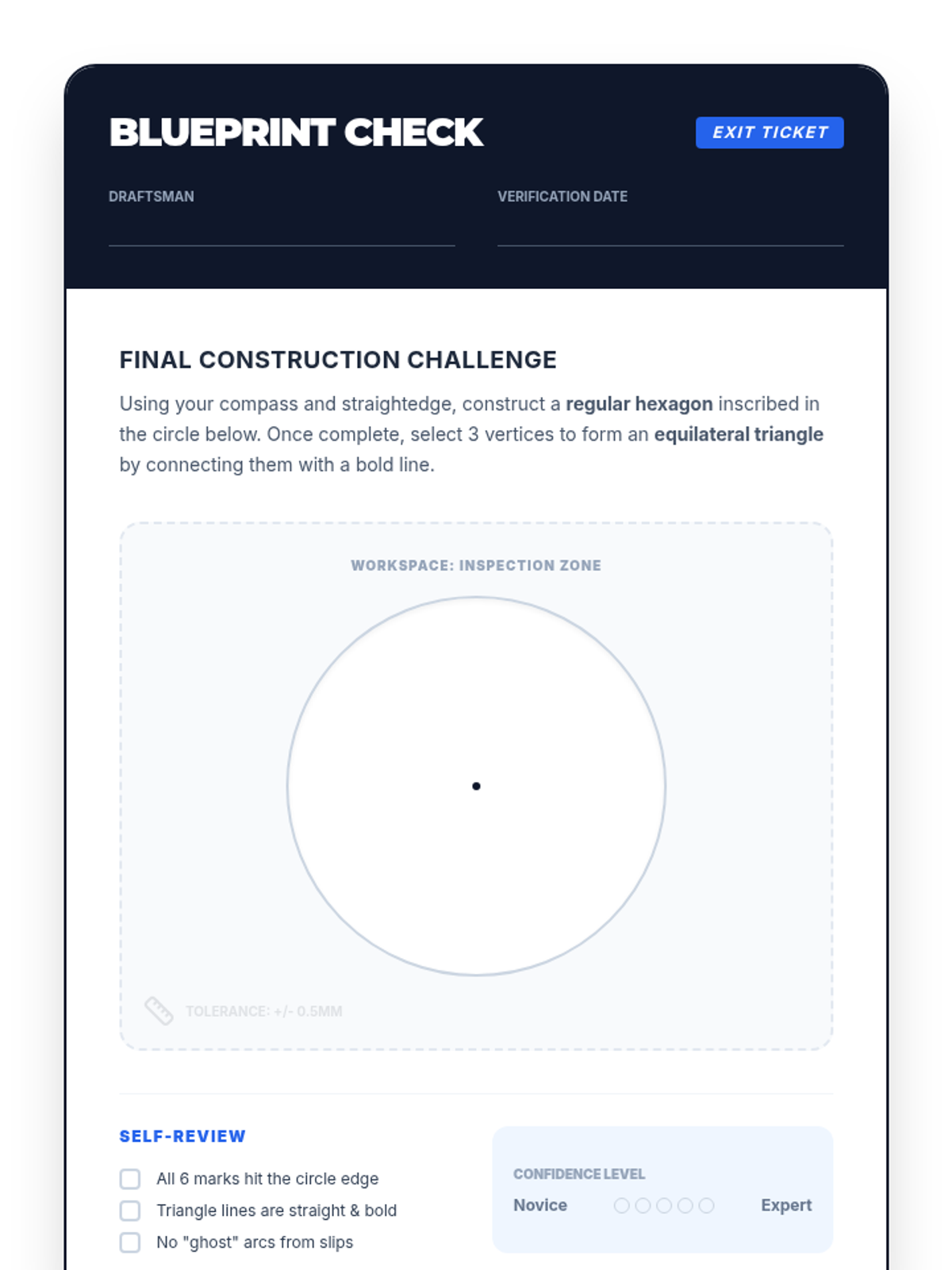
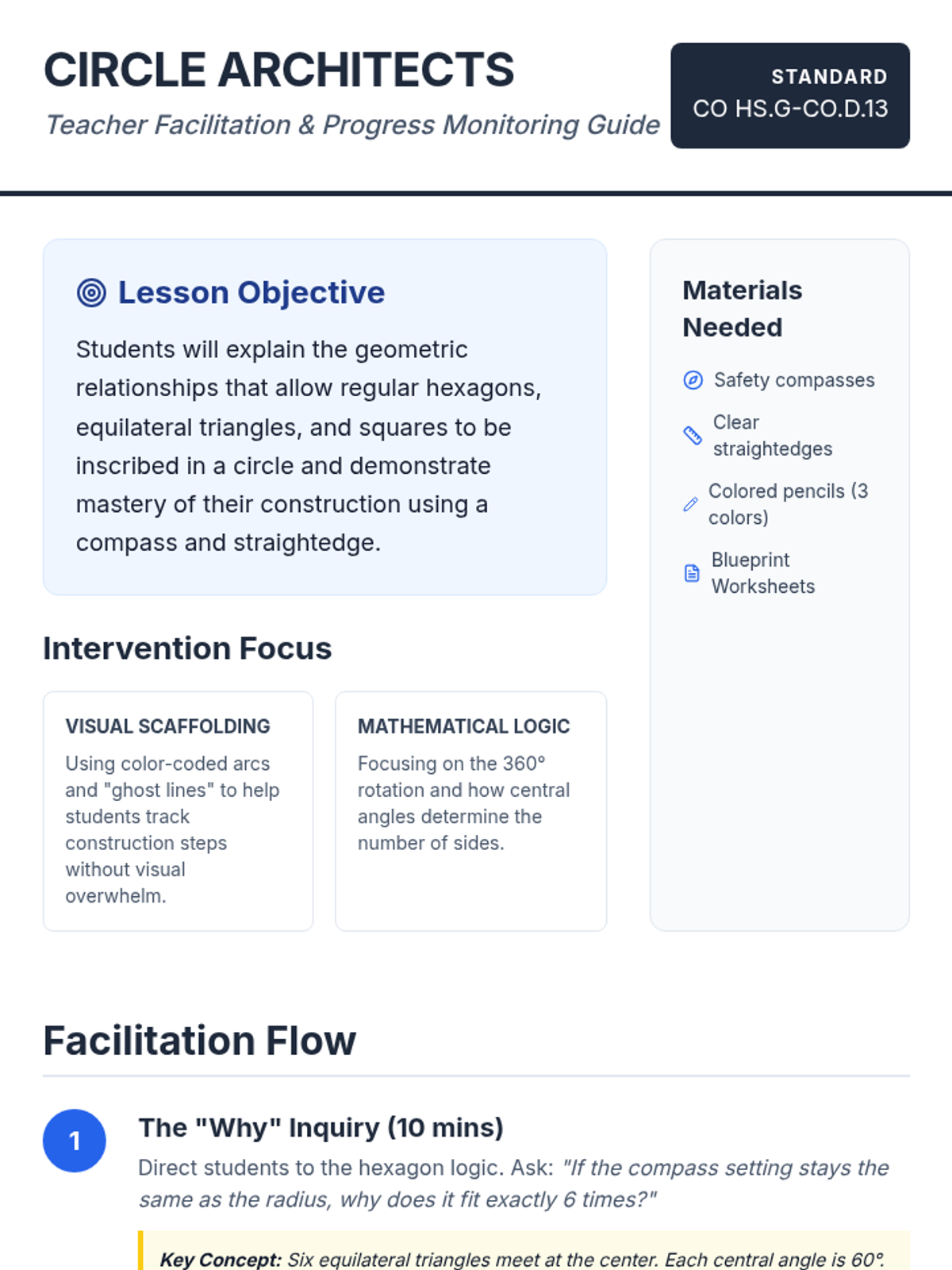
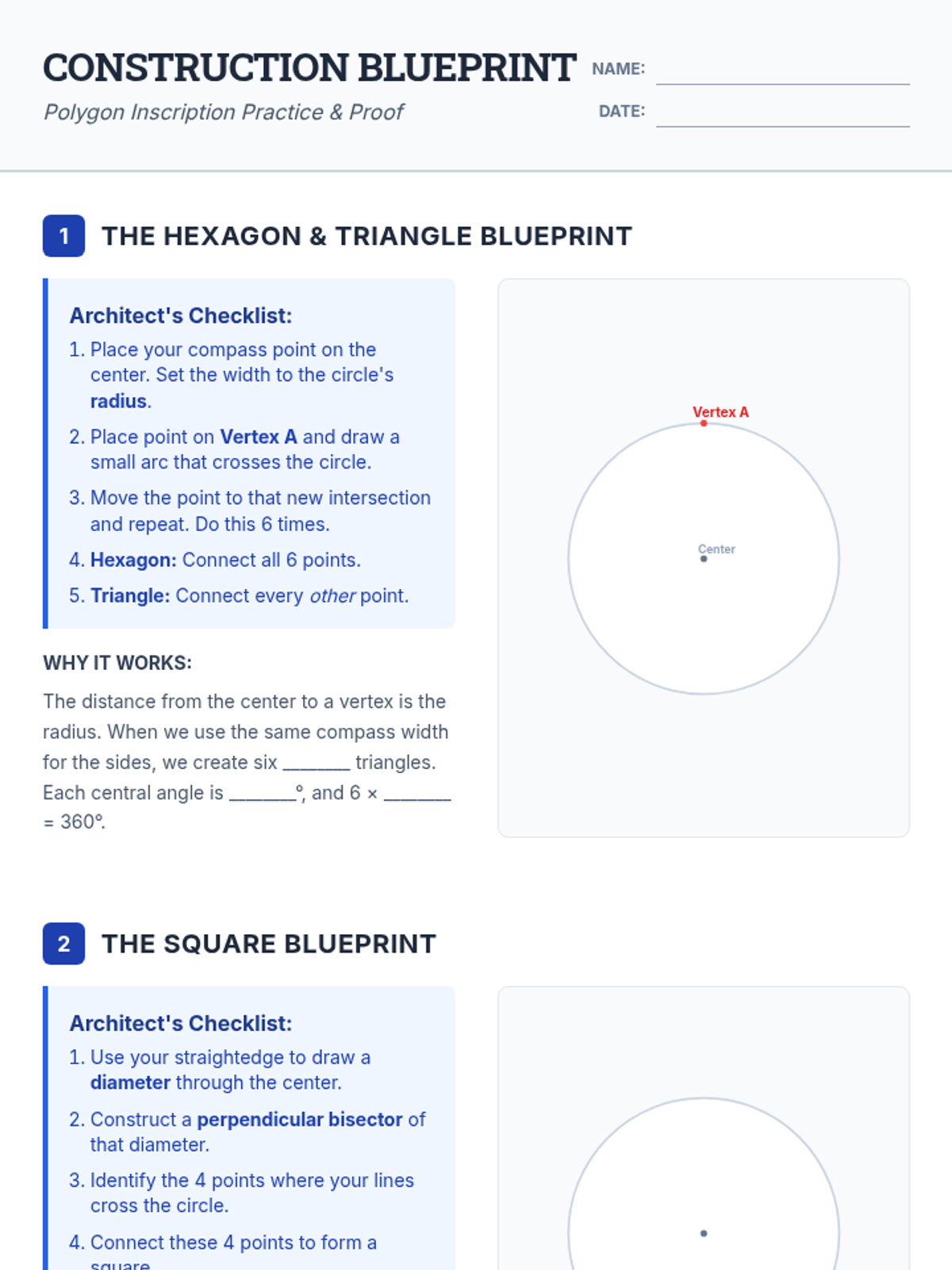
A targeted intervention lesson for high school geometry students focusing on the step-by-step construction of regular polygons inscribed in a circle. This lesson uses scaffolded instruction and a blueprint-themed aesthetic to help students master compass and straightedge techniques.
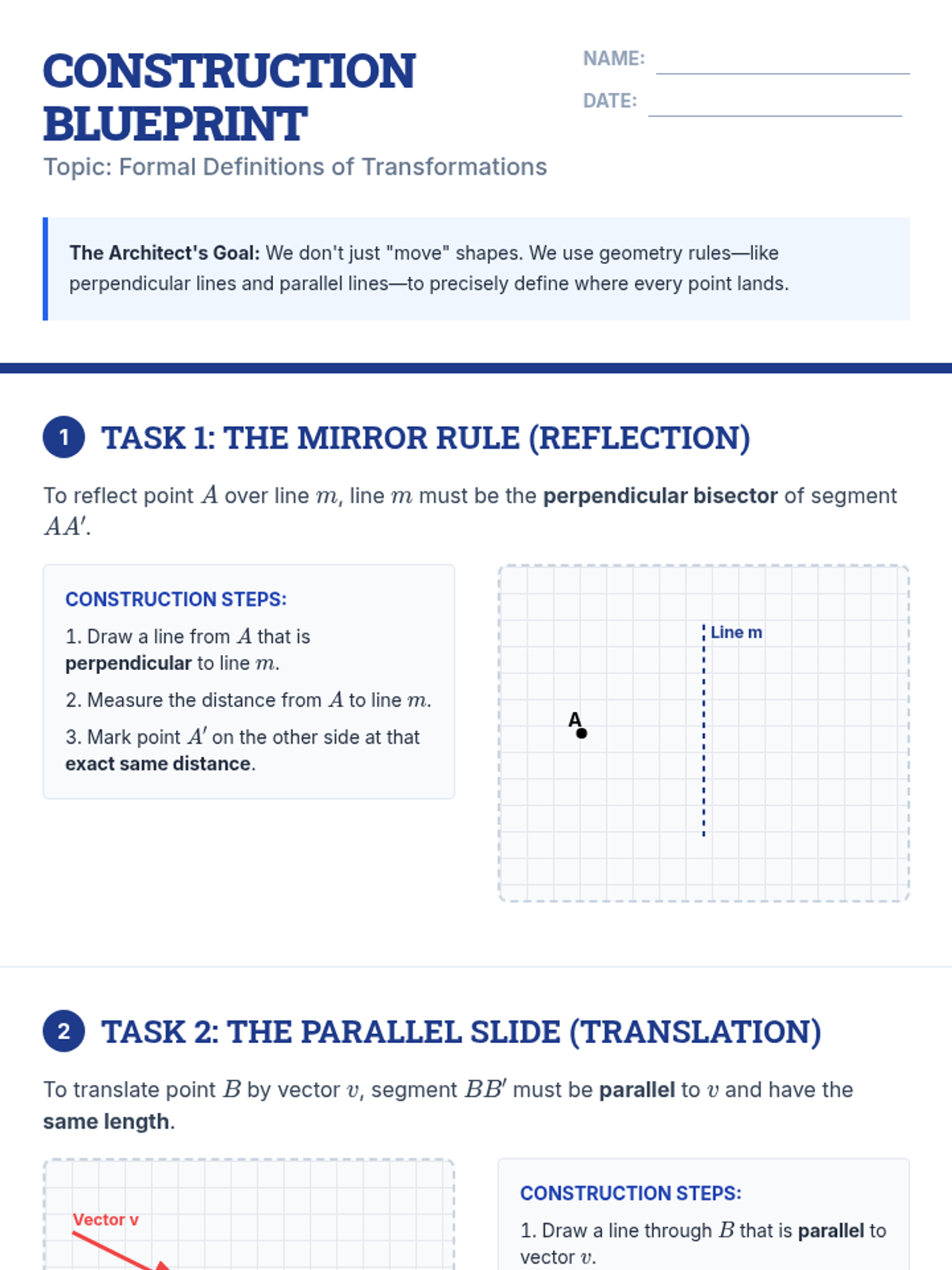
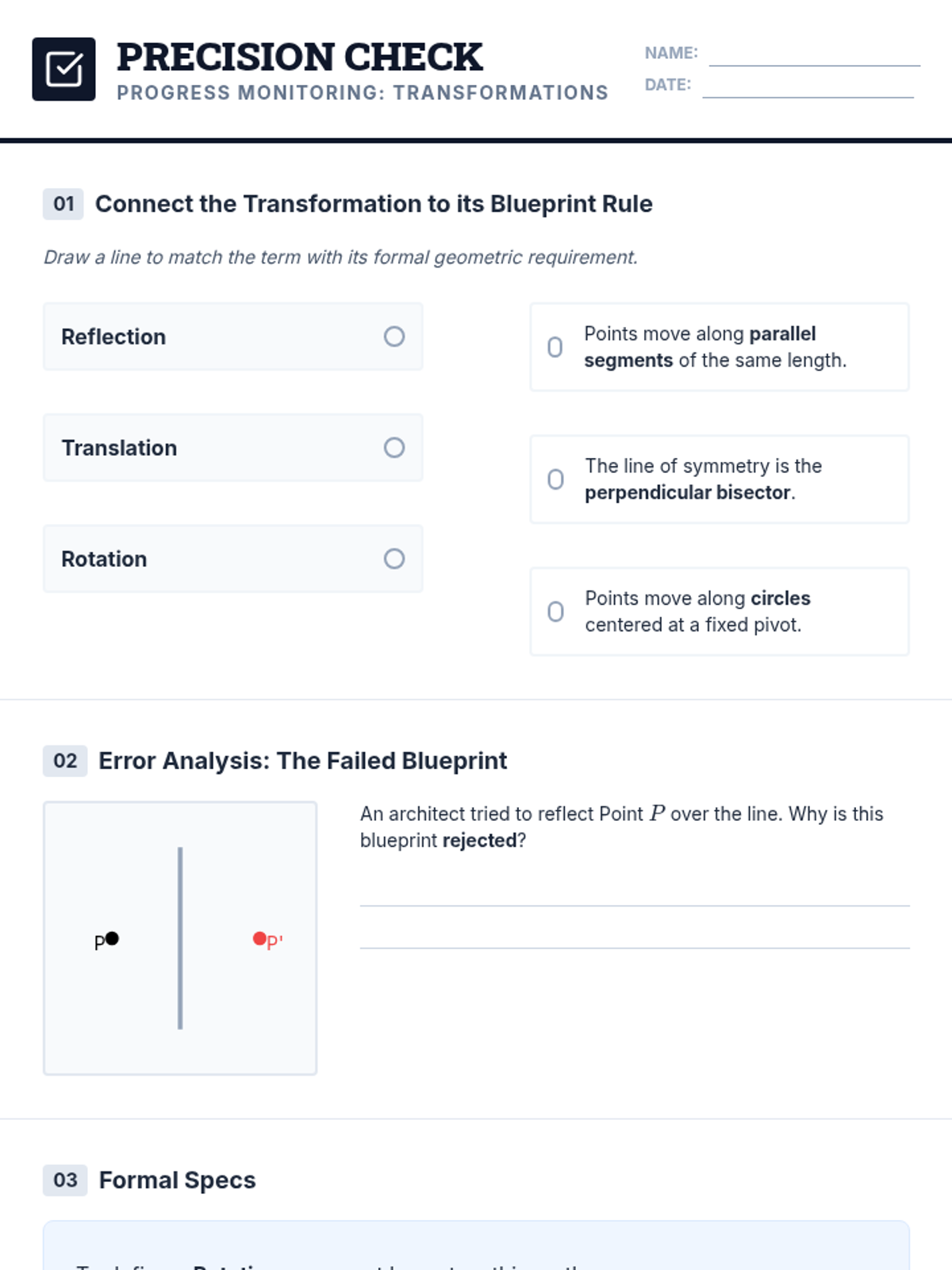
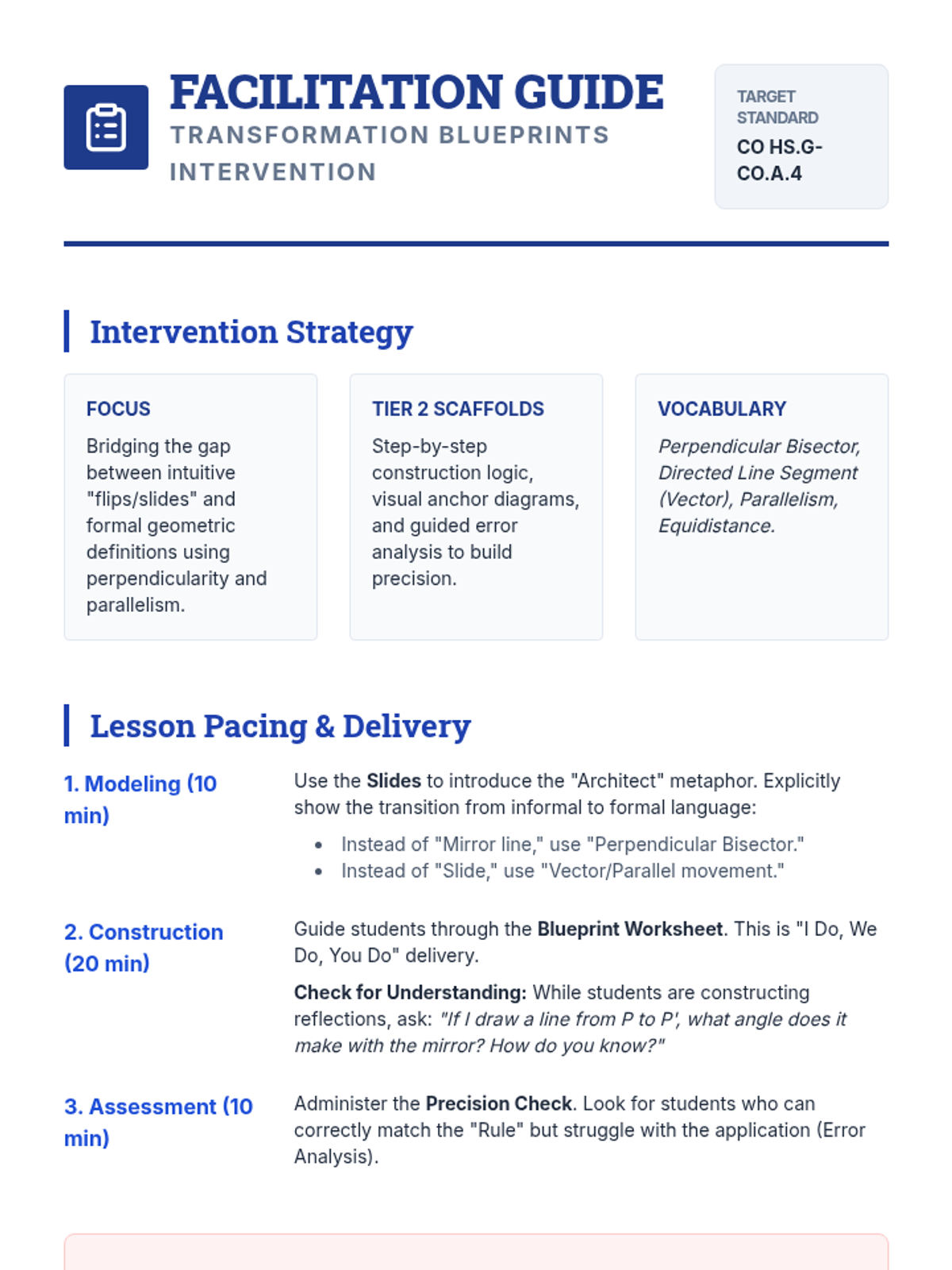
Focuses on developing formal definitions for reflections, translations, and rotations using the language of perpendicular lines, parallel lines, and angles. Students use step-by-step construction logic to define rigid motions.
A Tier 2 intervention lesson focusing on the geometric logic and step-by-step construction of regular polygons inscribed in circles. Designed for small group support with visual scaffolding and collaborative inquiry.
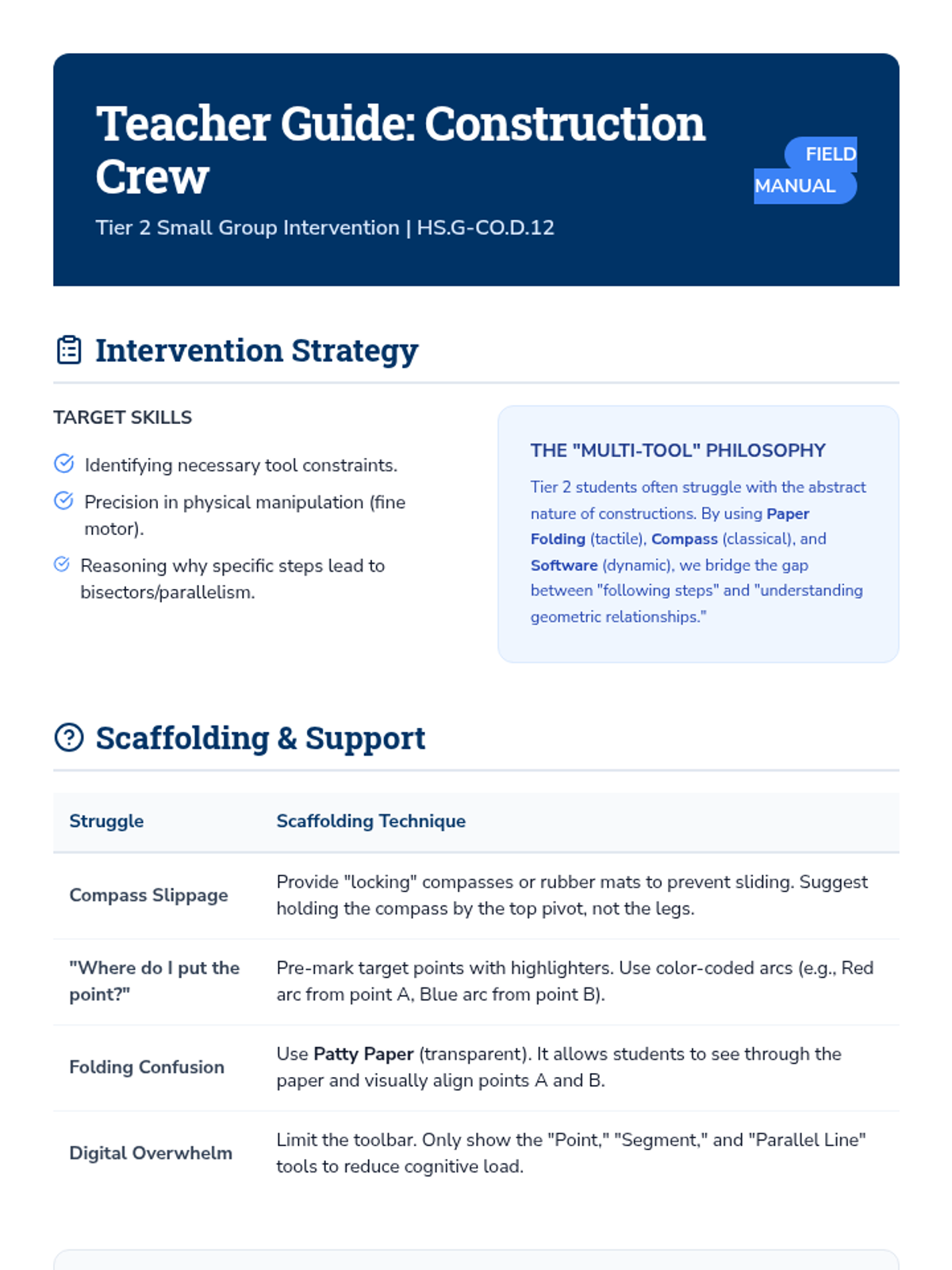
A Tier 2 intervention lesson focusing on geometric constructions using various tools. Students explore precision through compass and straightedge, paper folding, and dynamic software.
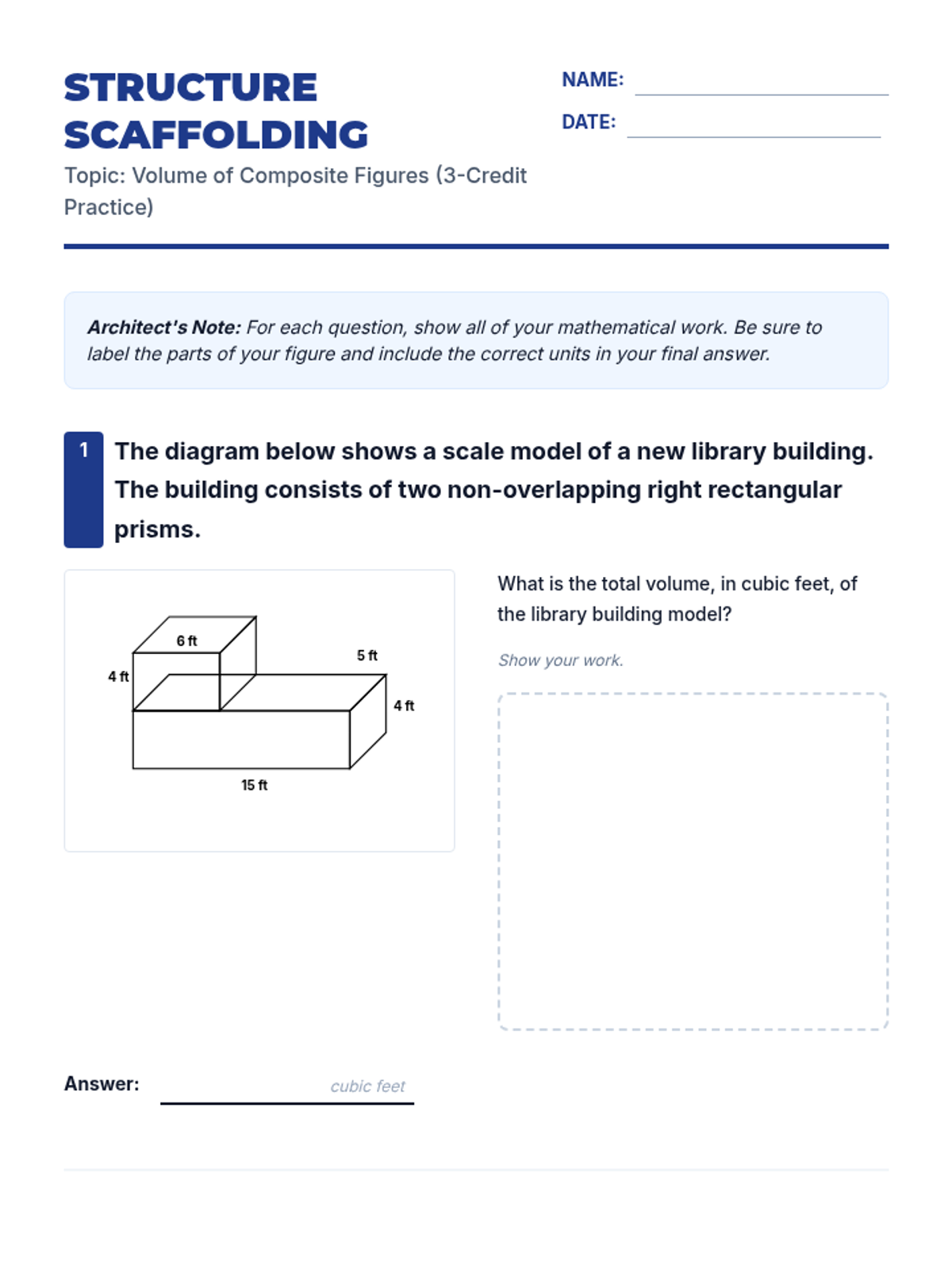
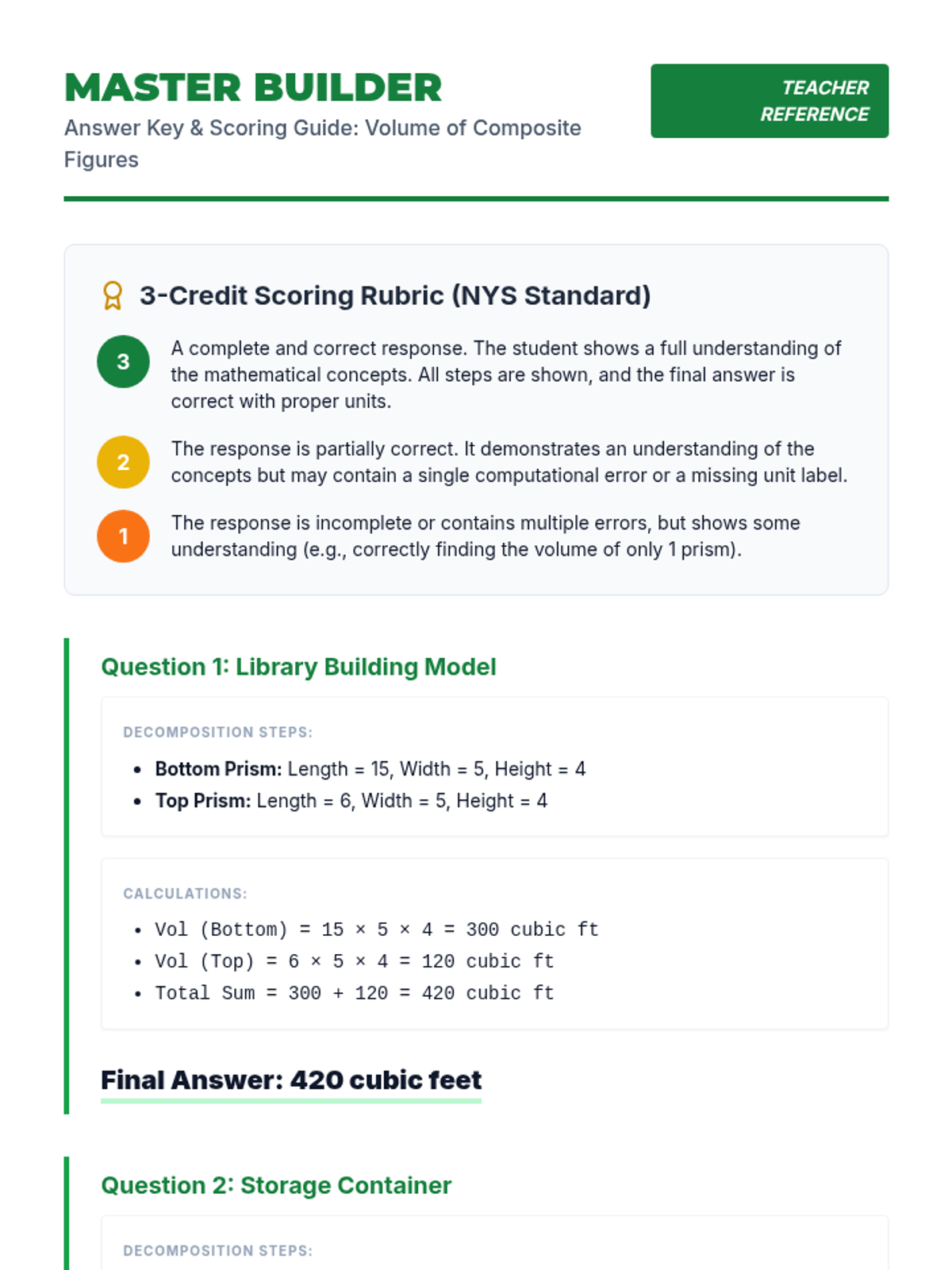
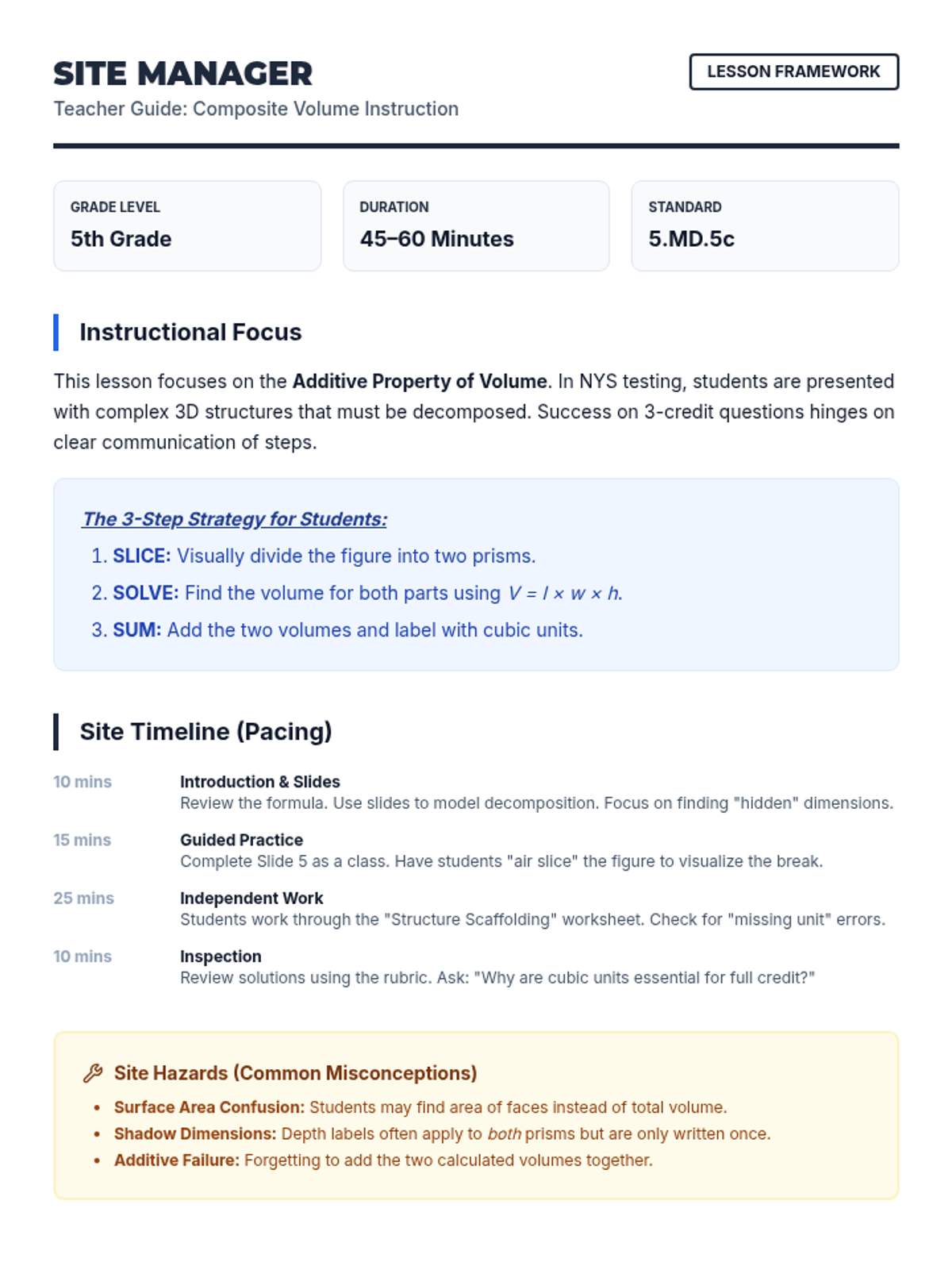
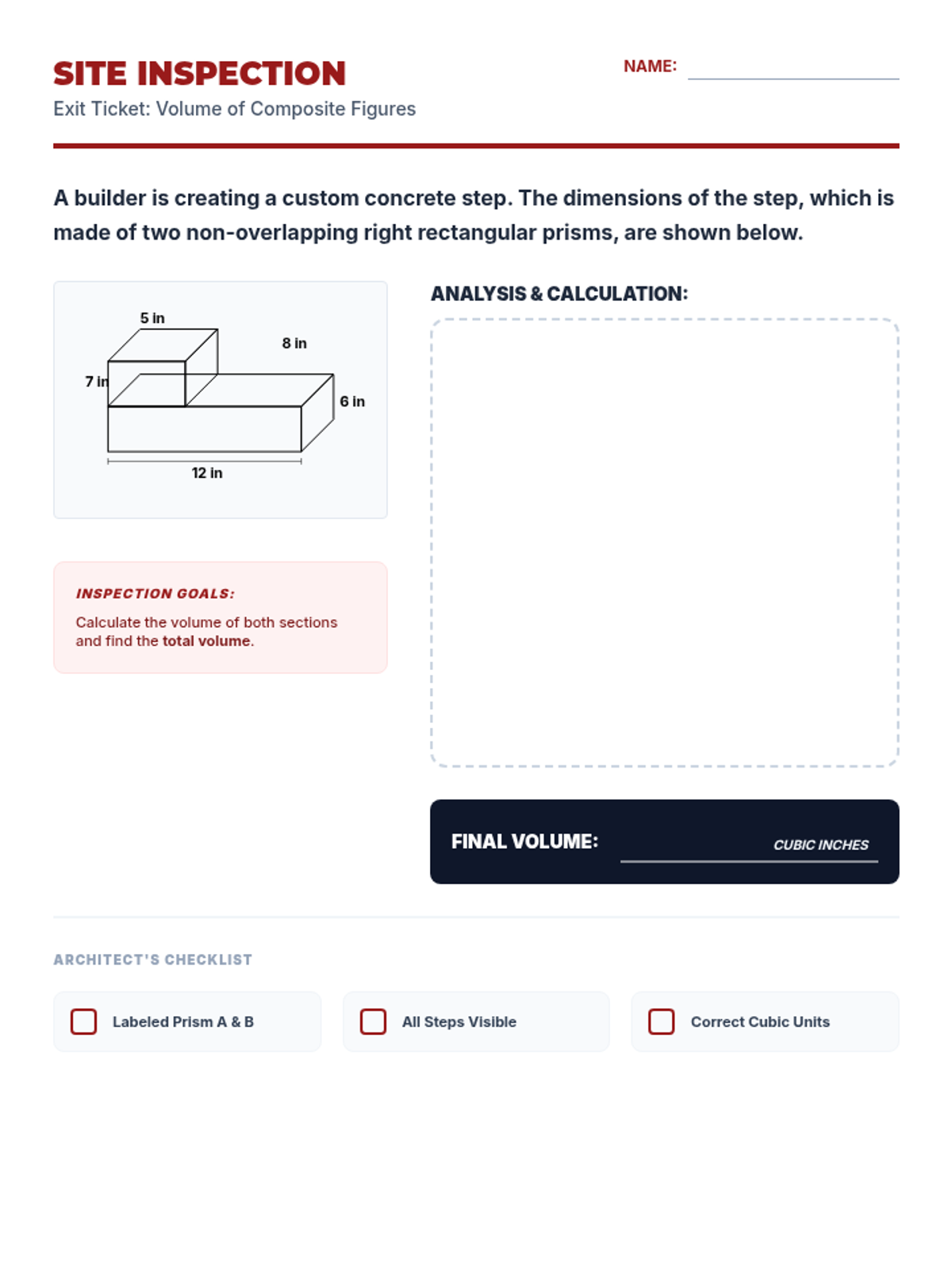
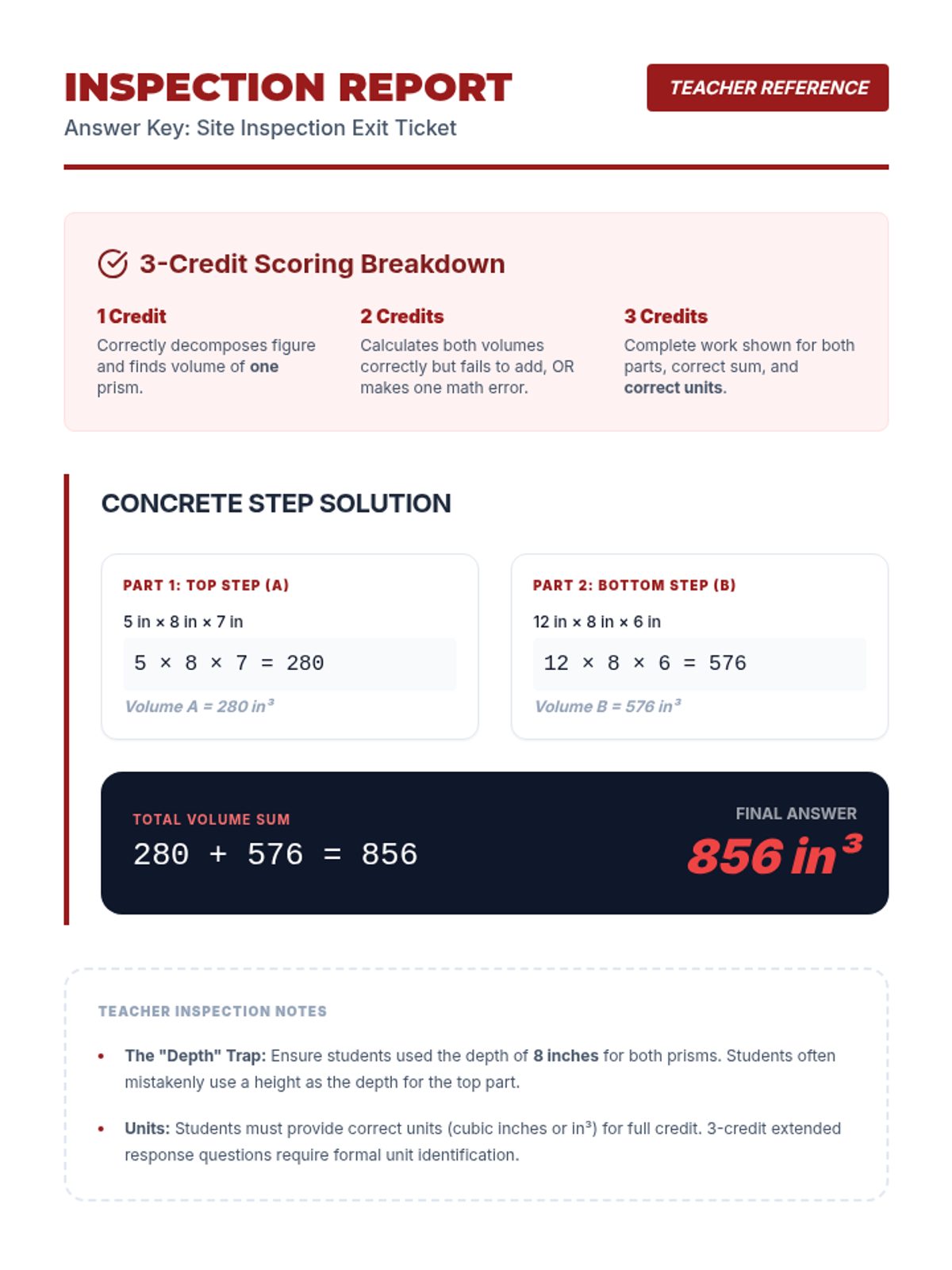
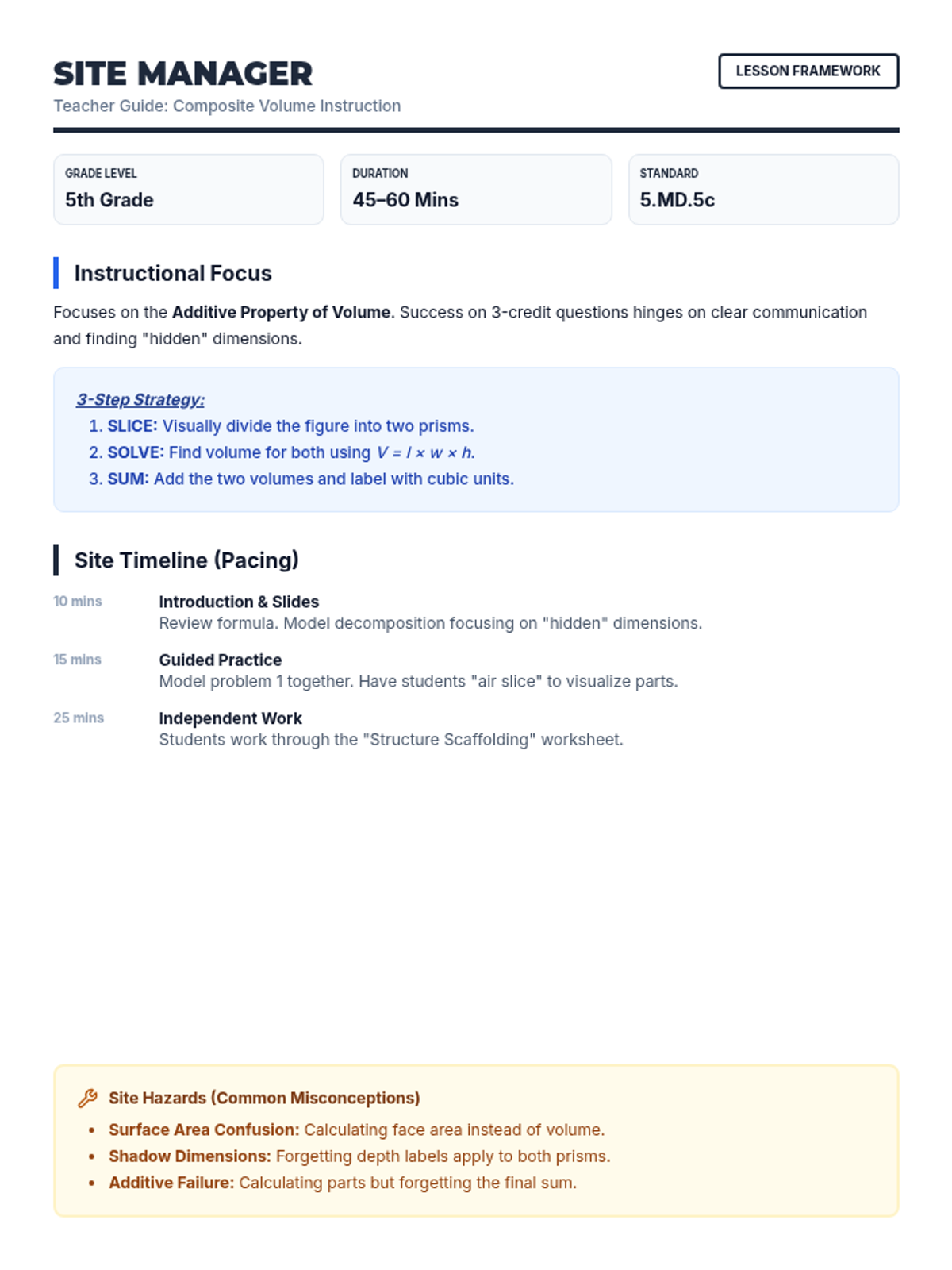
A comprehensive lesson on calculating the volume of composite figures composed of two non-overlapping right rectangular prisms, specifically modeled after NYS 3-credit extended response questions.
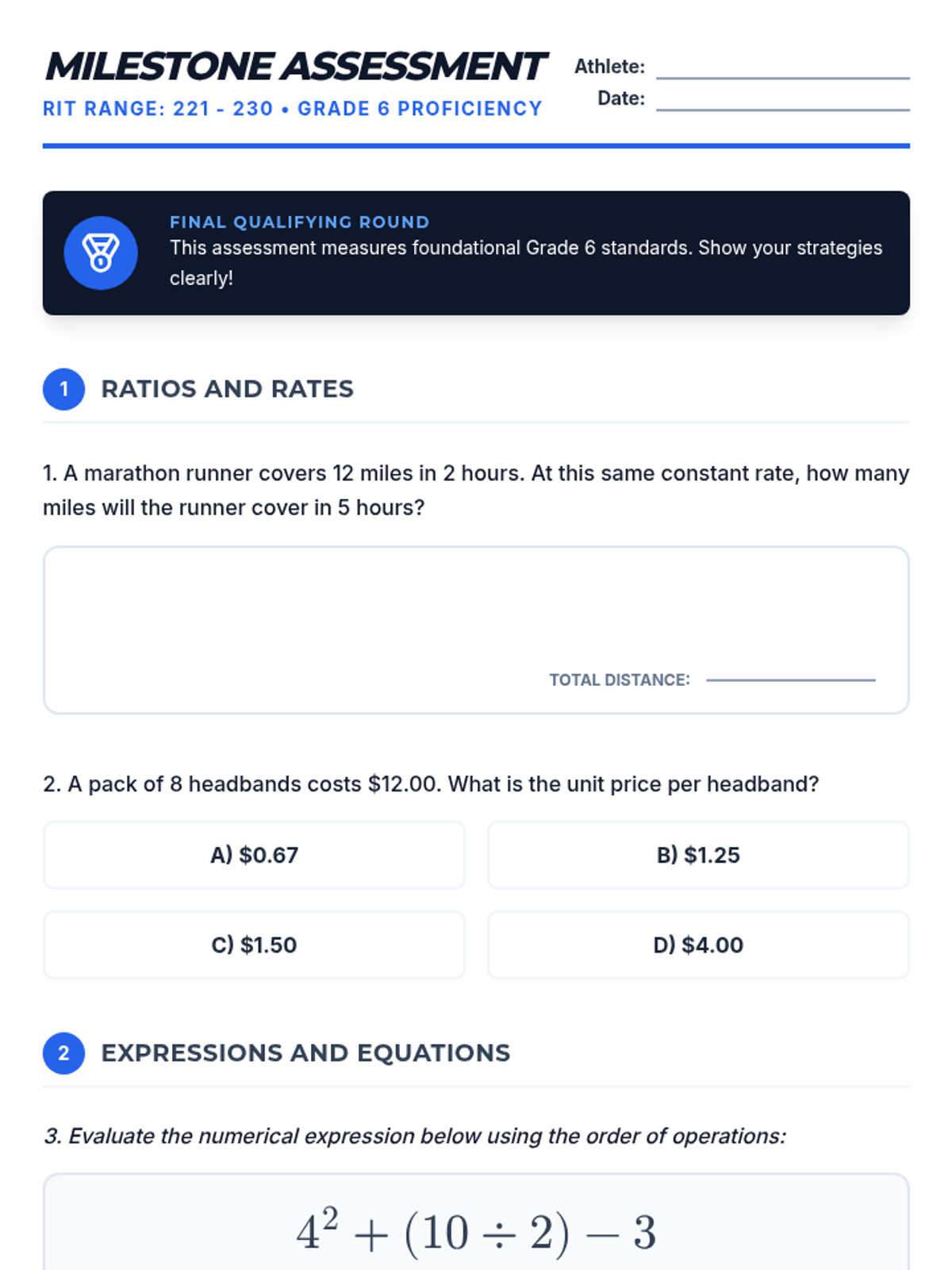
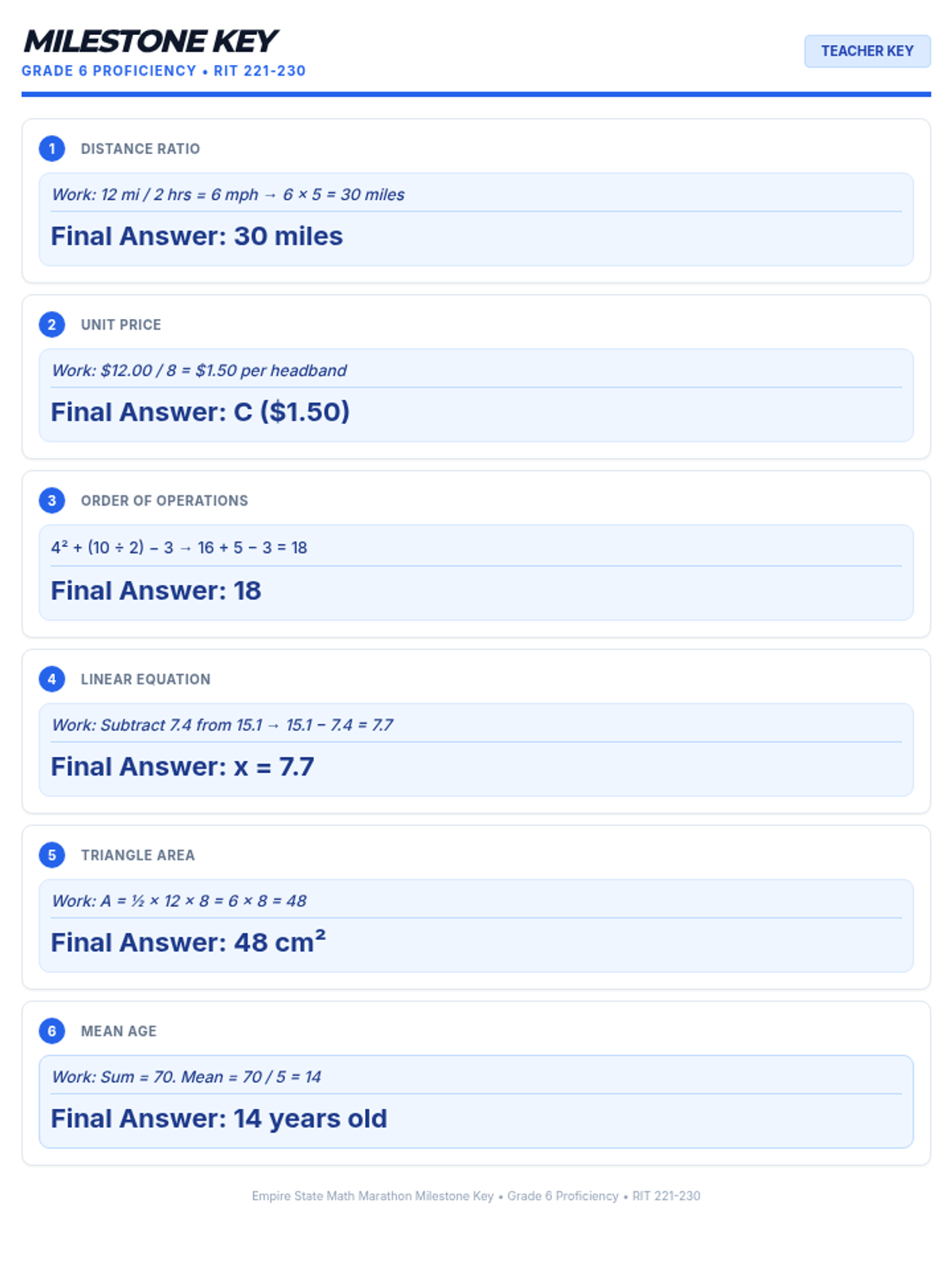
A cumulative milestone assessment designed for students at Grade 6 proficiency (RIT 221-230). This assessment checks foundational understanding of ratios, expressions, and geometry needed for 8th-grade success.
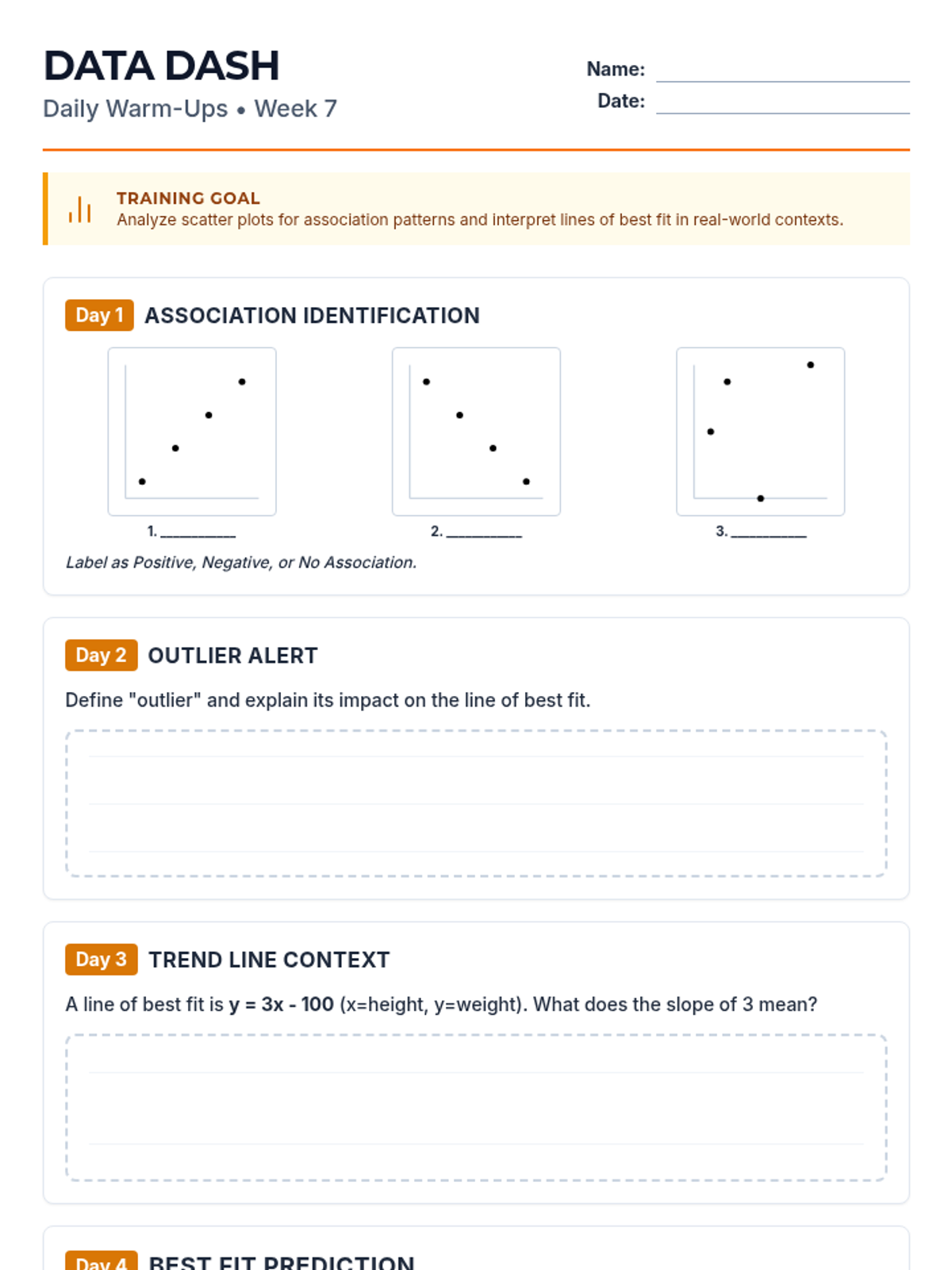
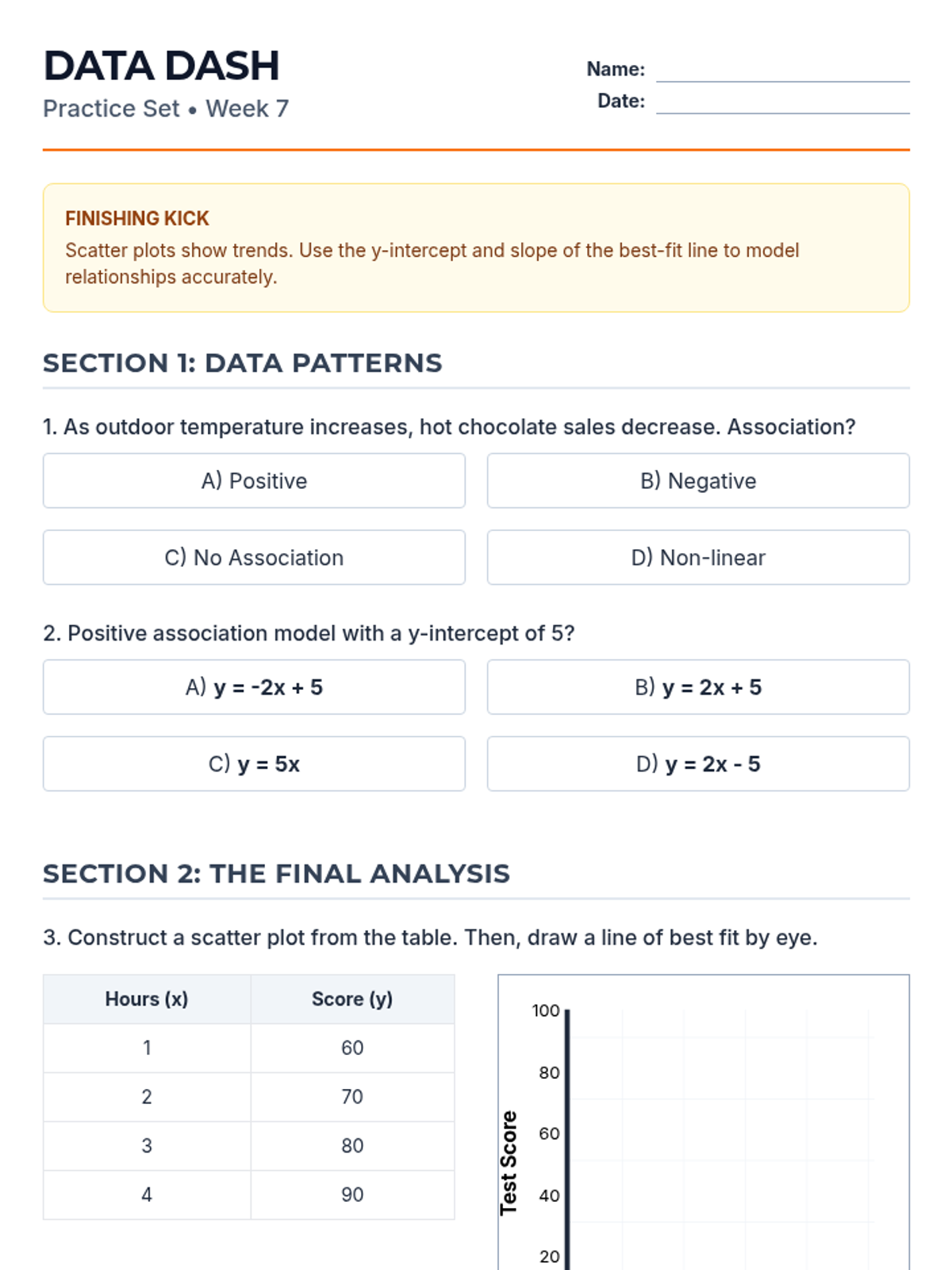
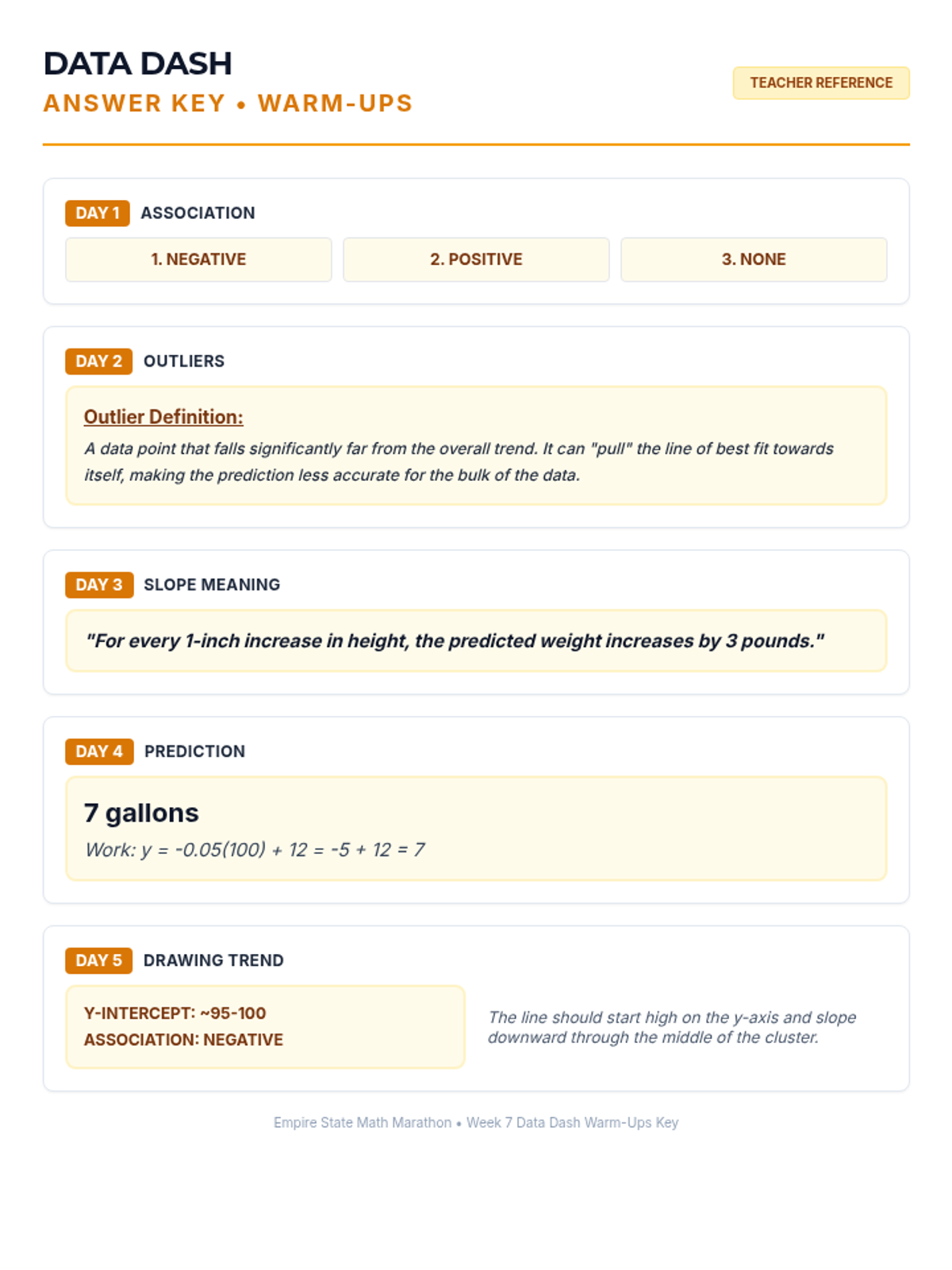
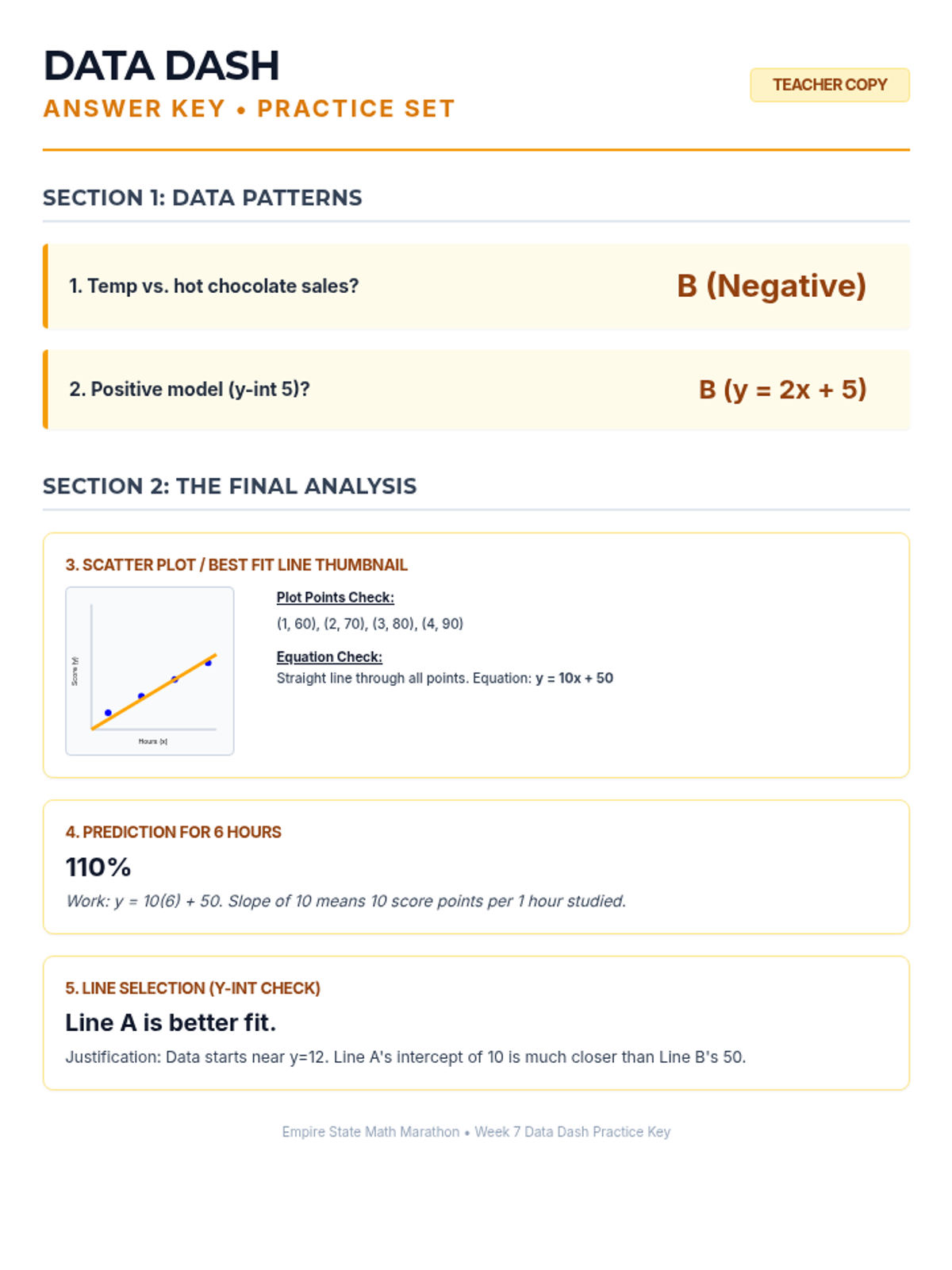
Week 7 analyzes bivariate data through scatter plots, interpreting lines of best fit, and using linear models to make predictions.
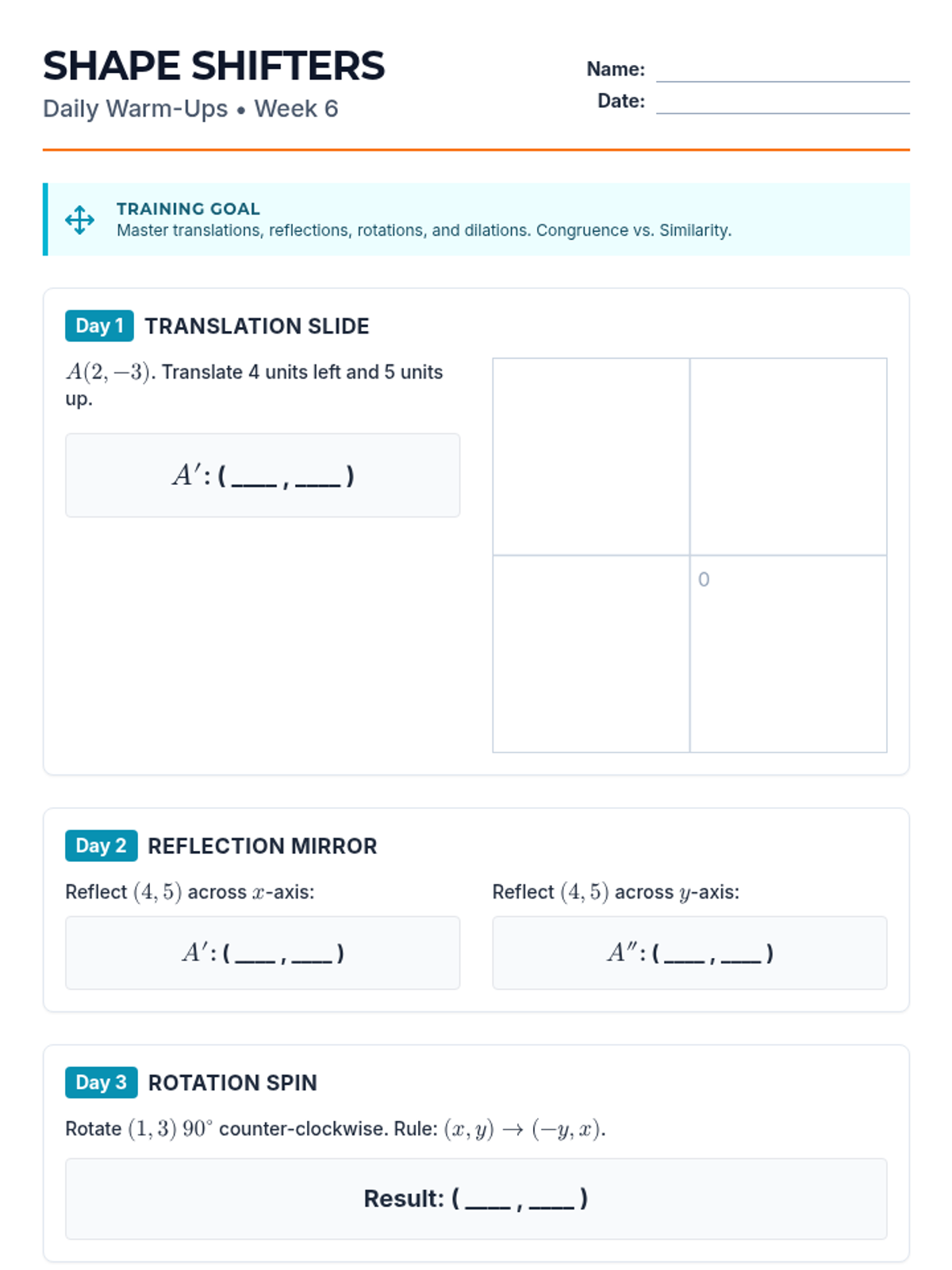
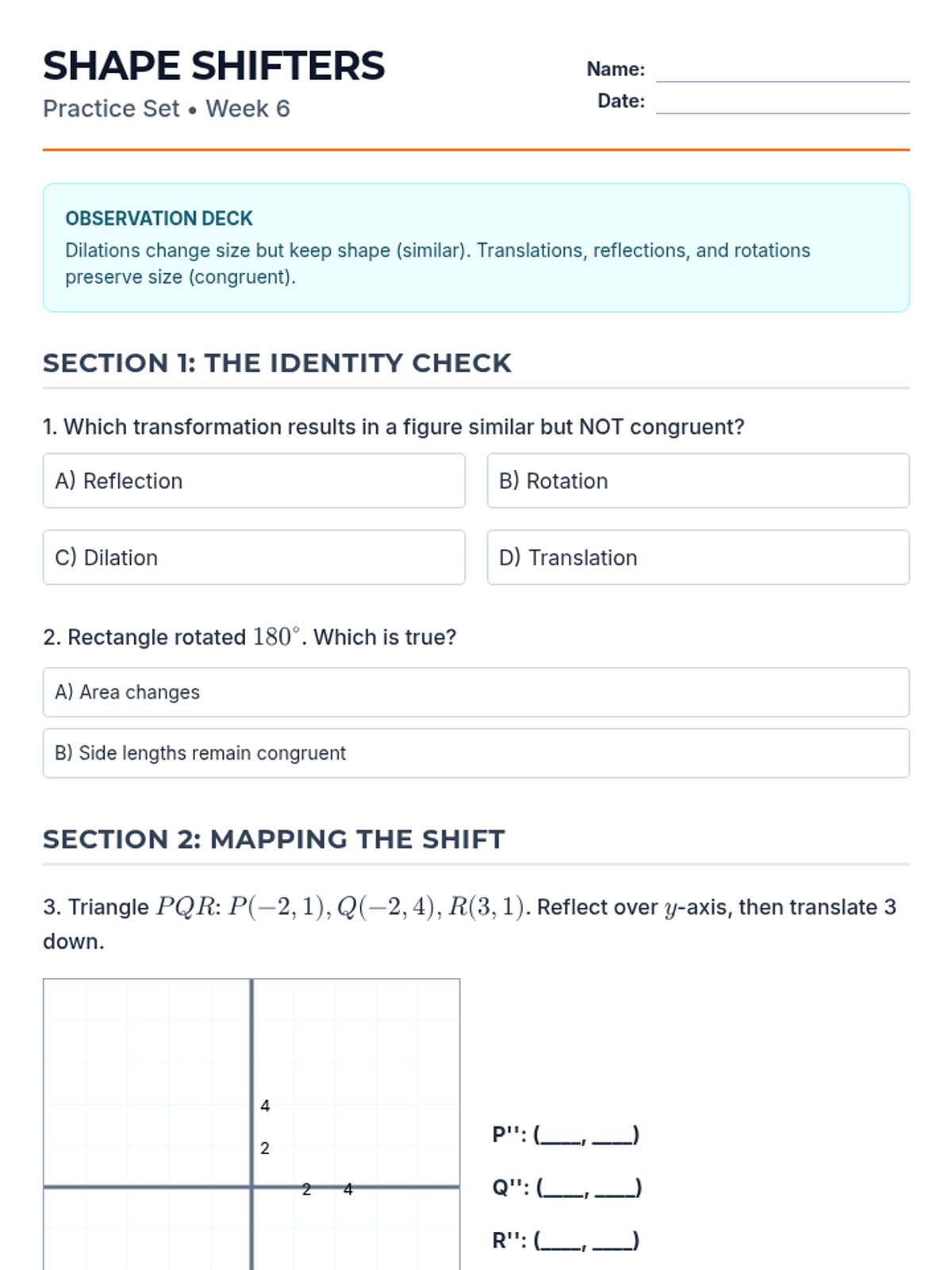
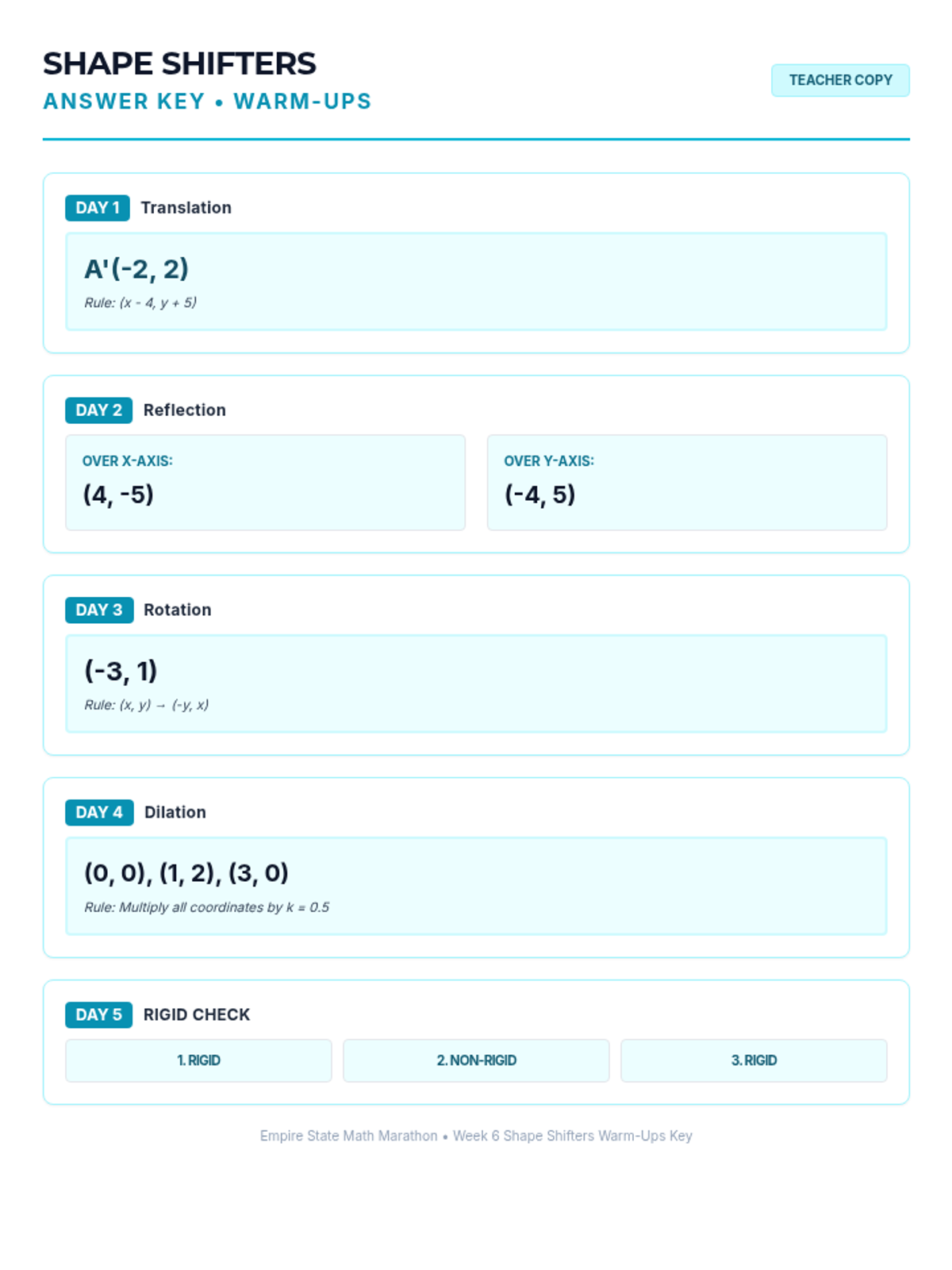
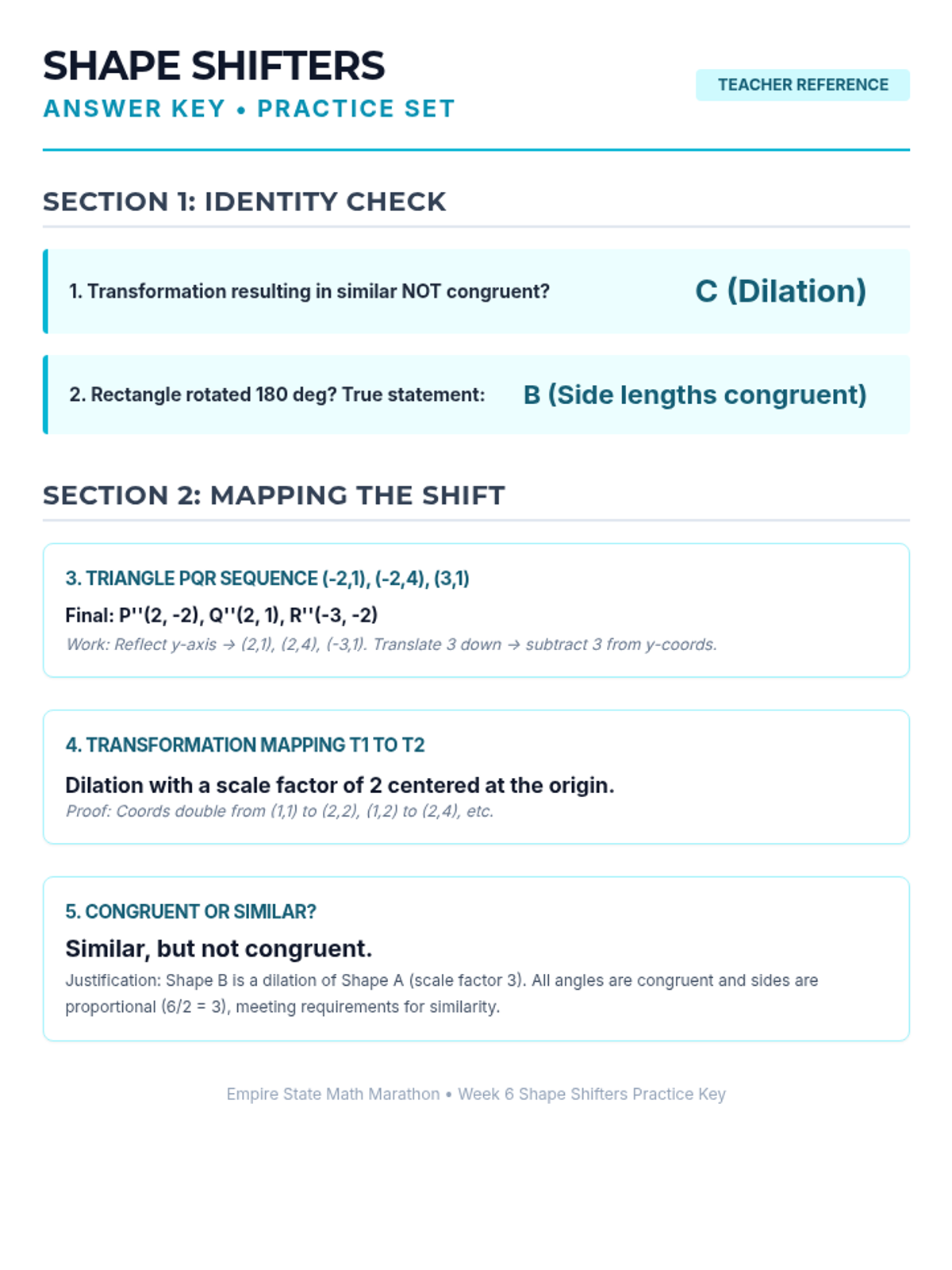
Week 6 focuses on rigid transformations (translations, reflections, rotations) and similarity transformations (dilations).
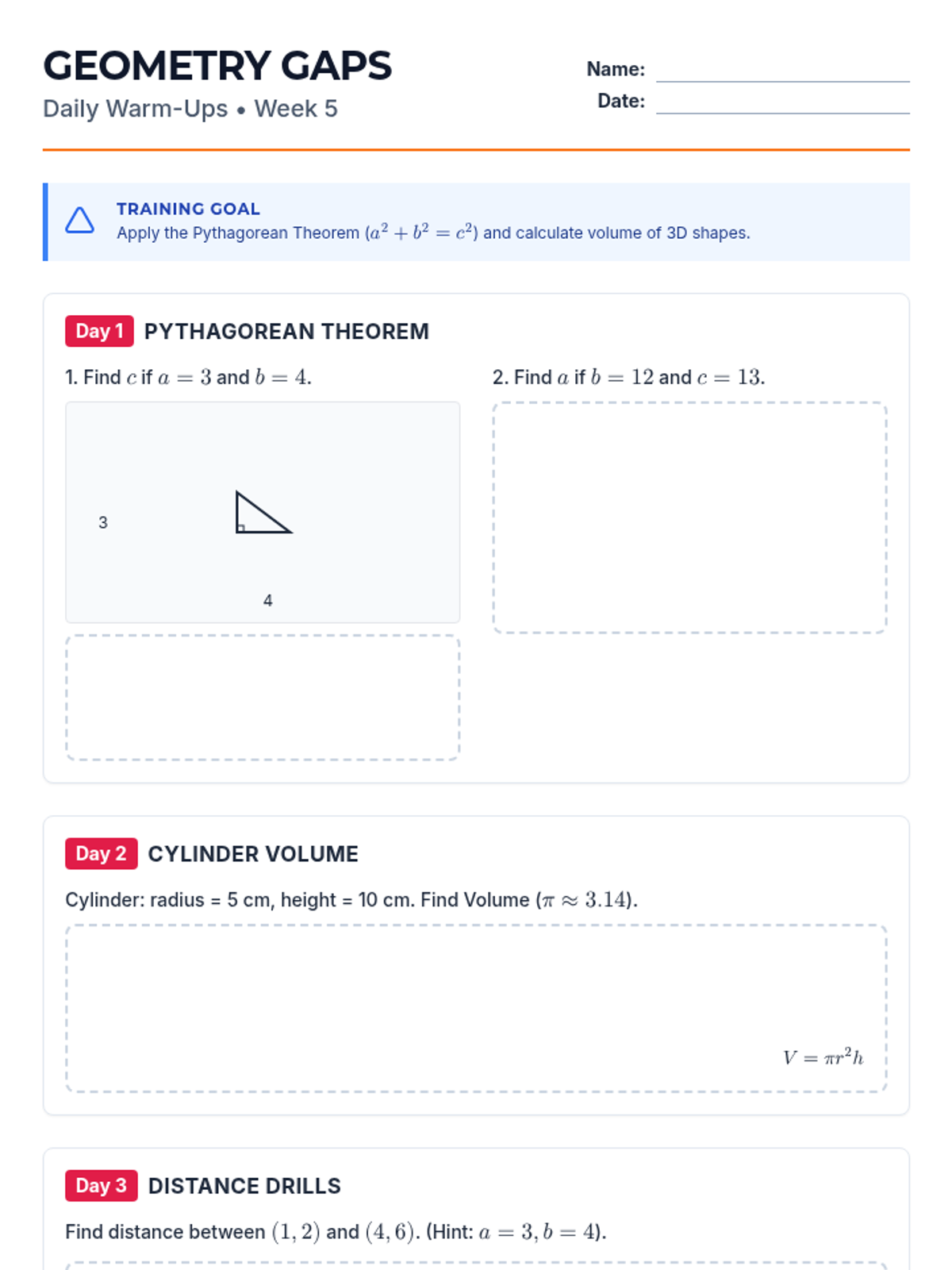
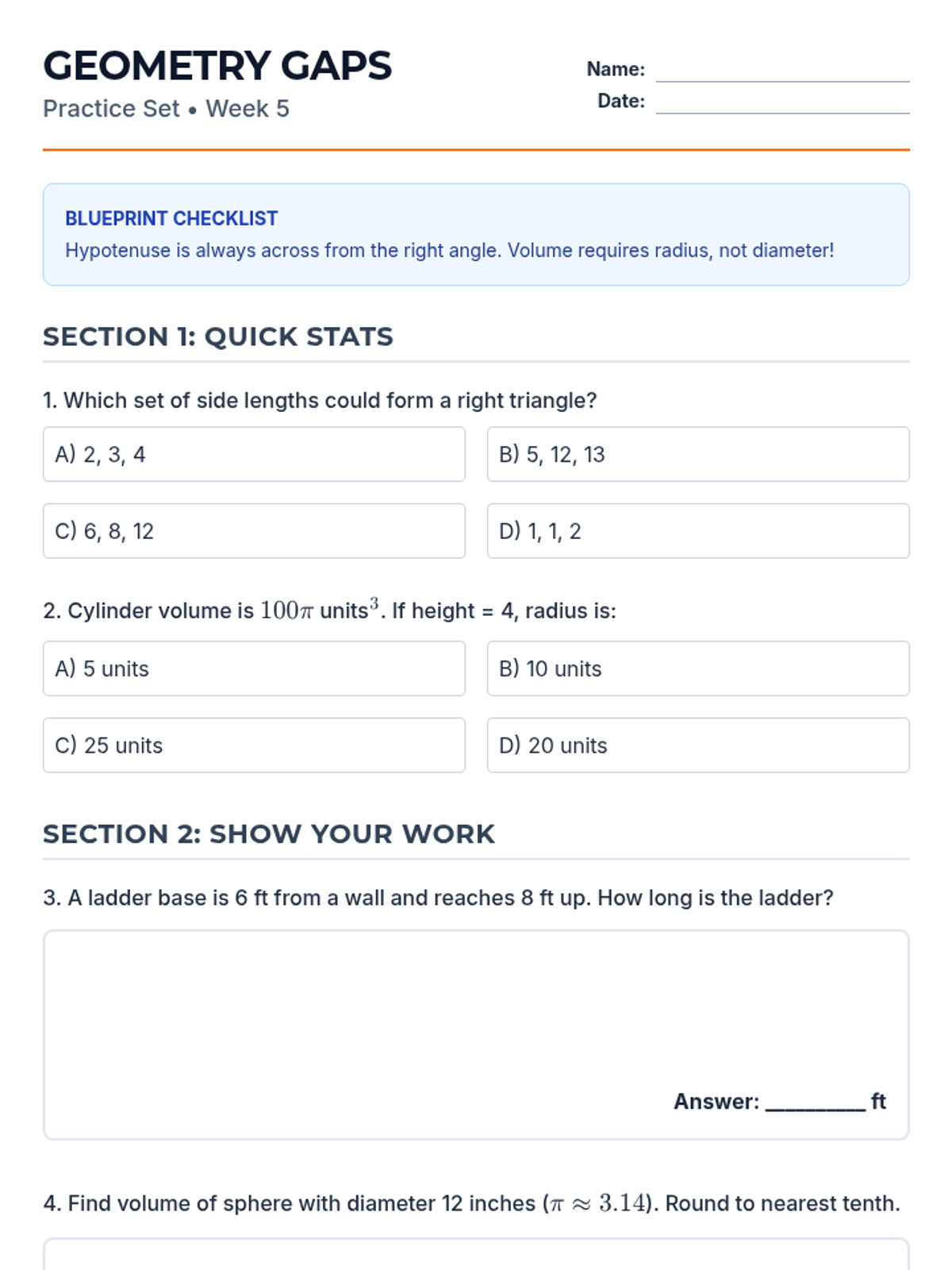
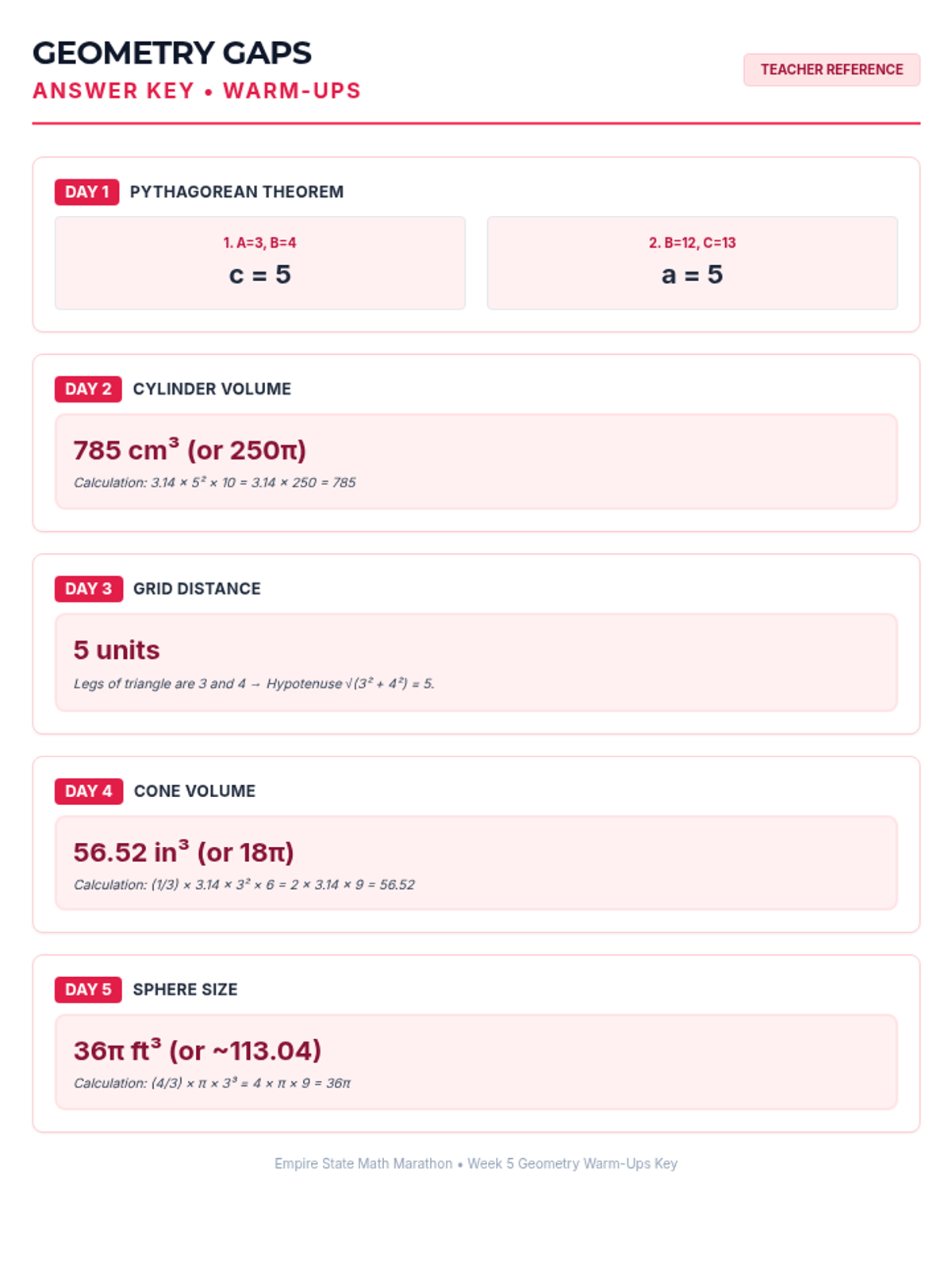
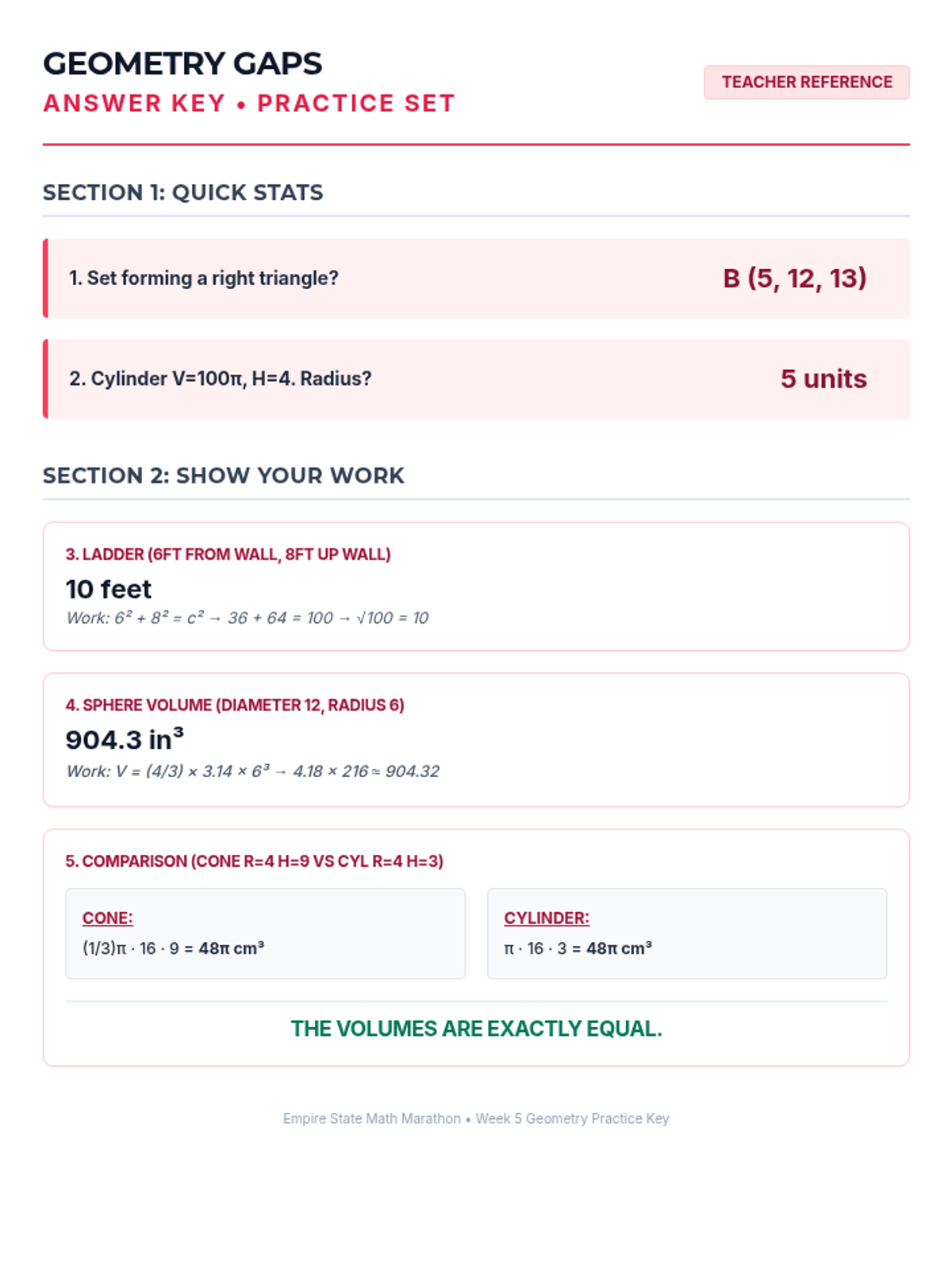
Week 5 reviews the Pythagorean Theorem and volume formulas for cylinders, cones, and spheres.
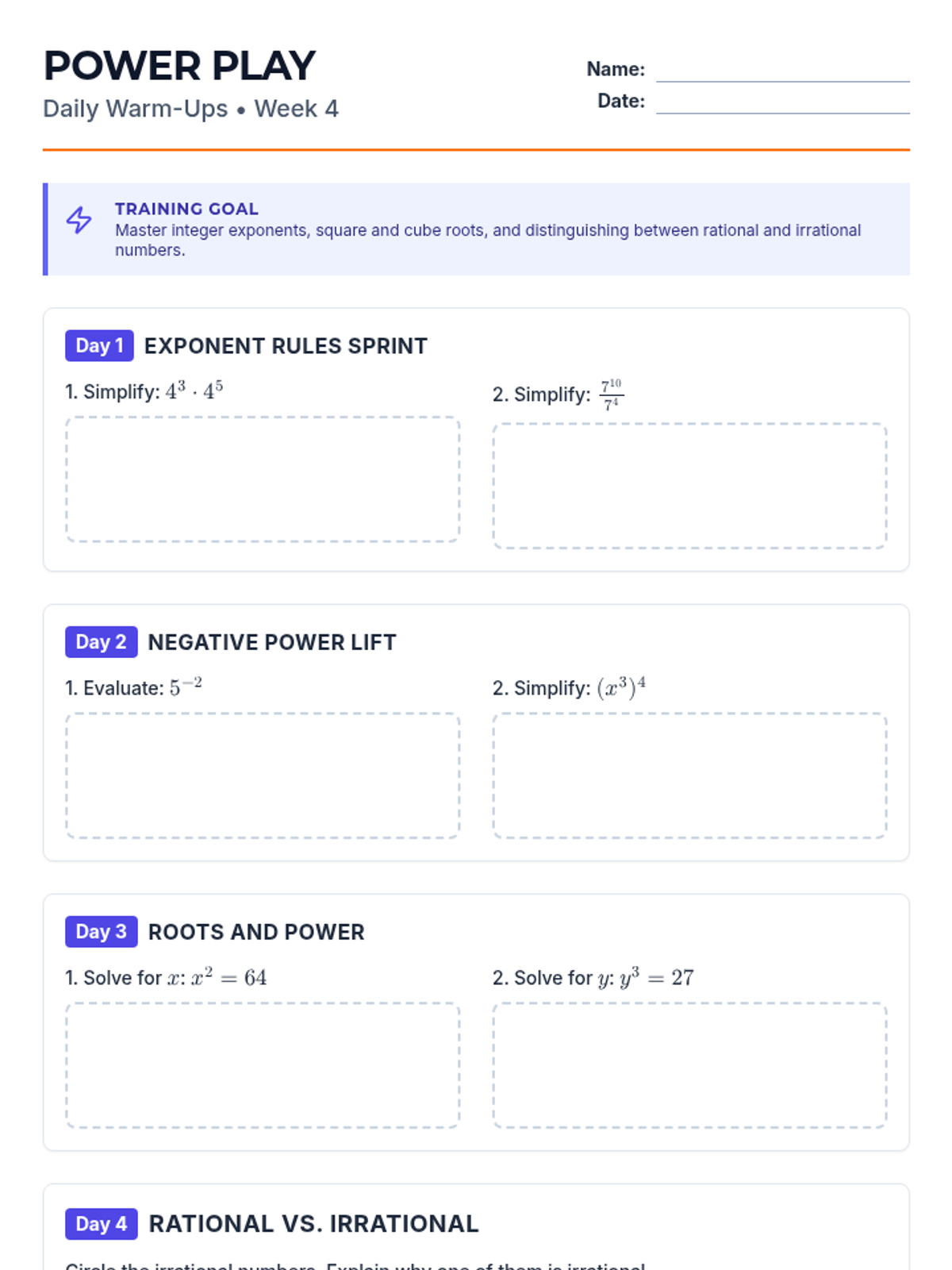
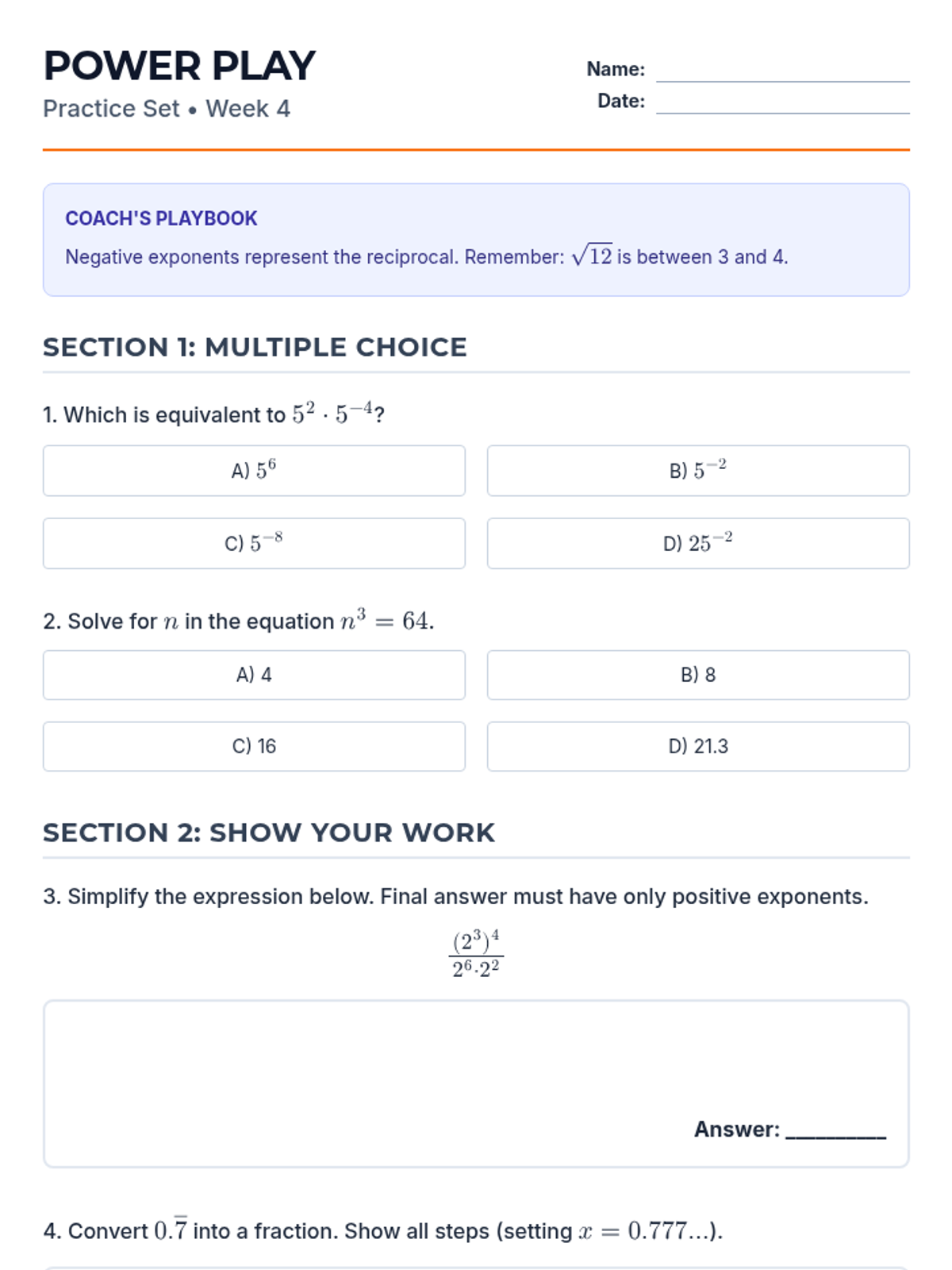
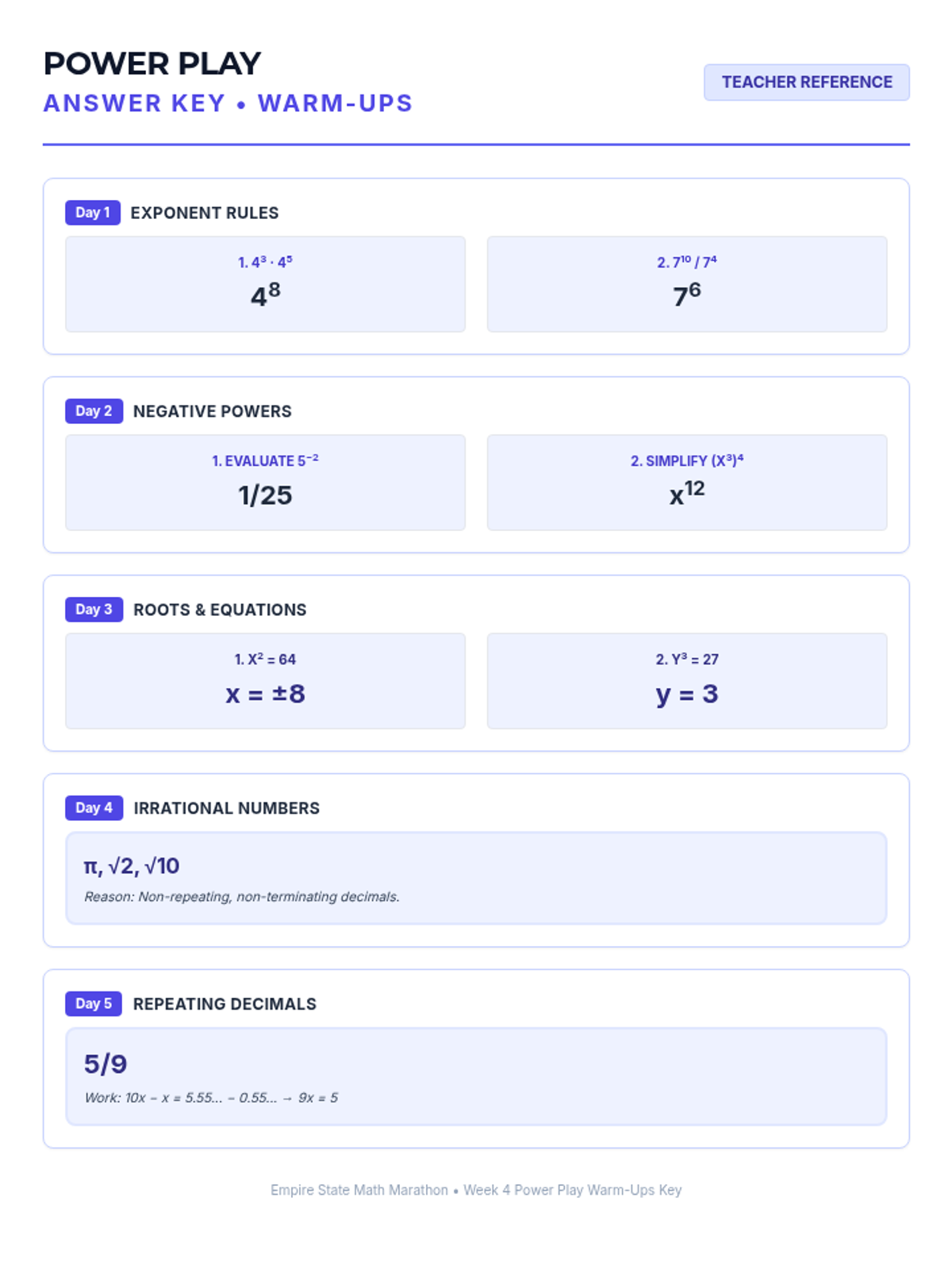
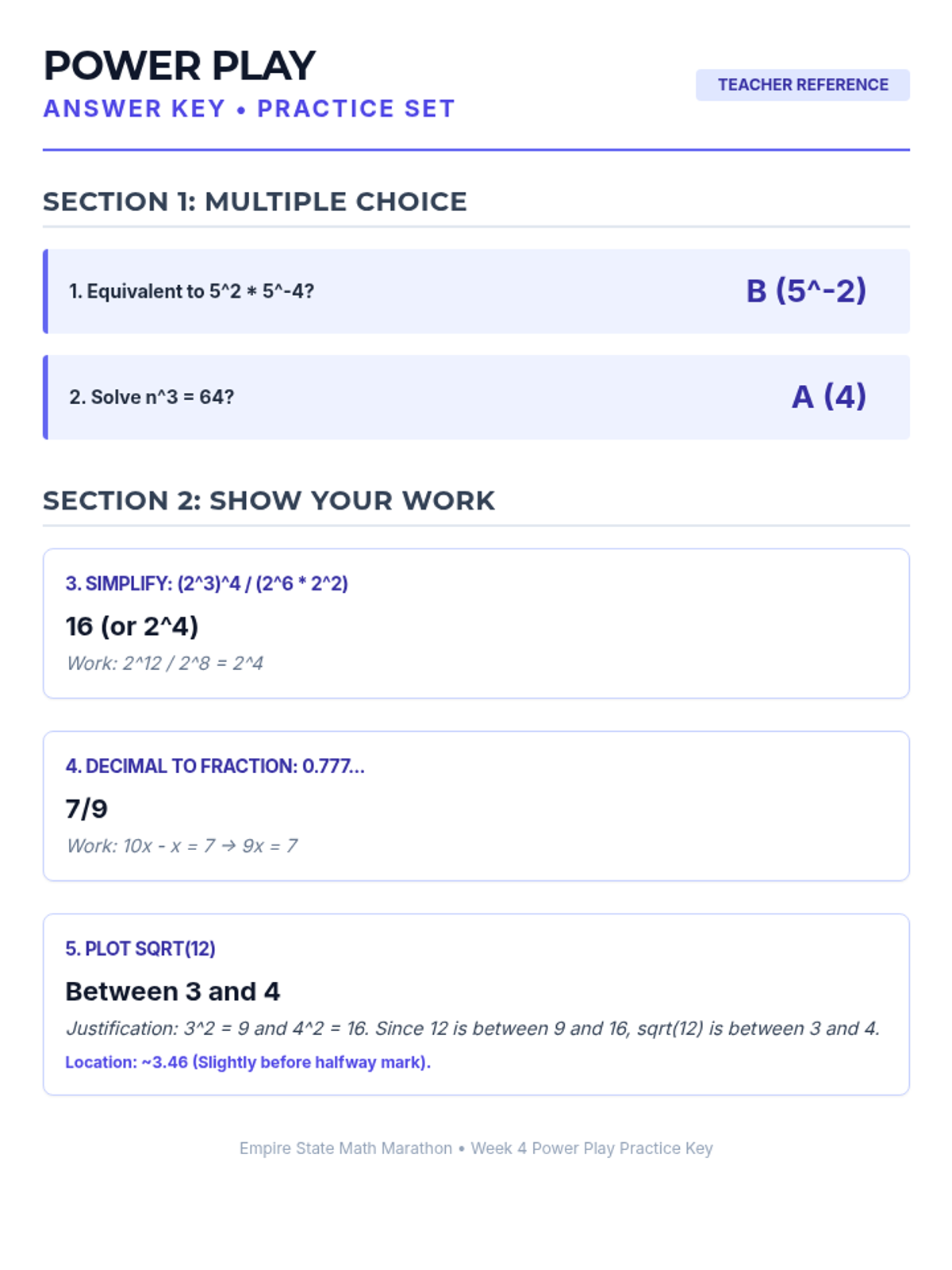
Week 4 explores integer exponent rules, perfect squares and cubes, and distinguishing between rational and irrational numbers.
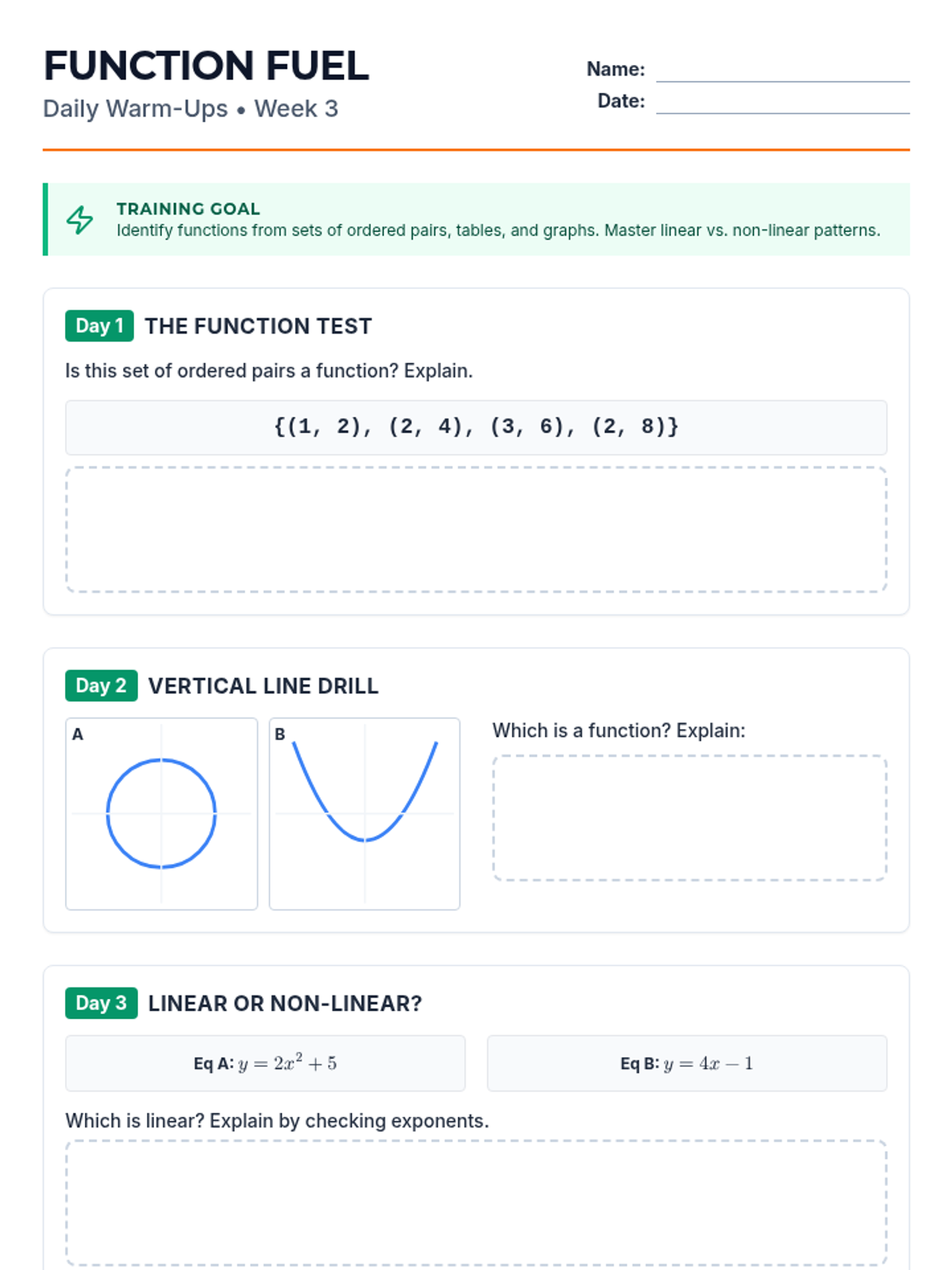
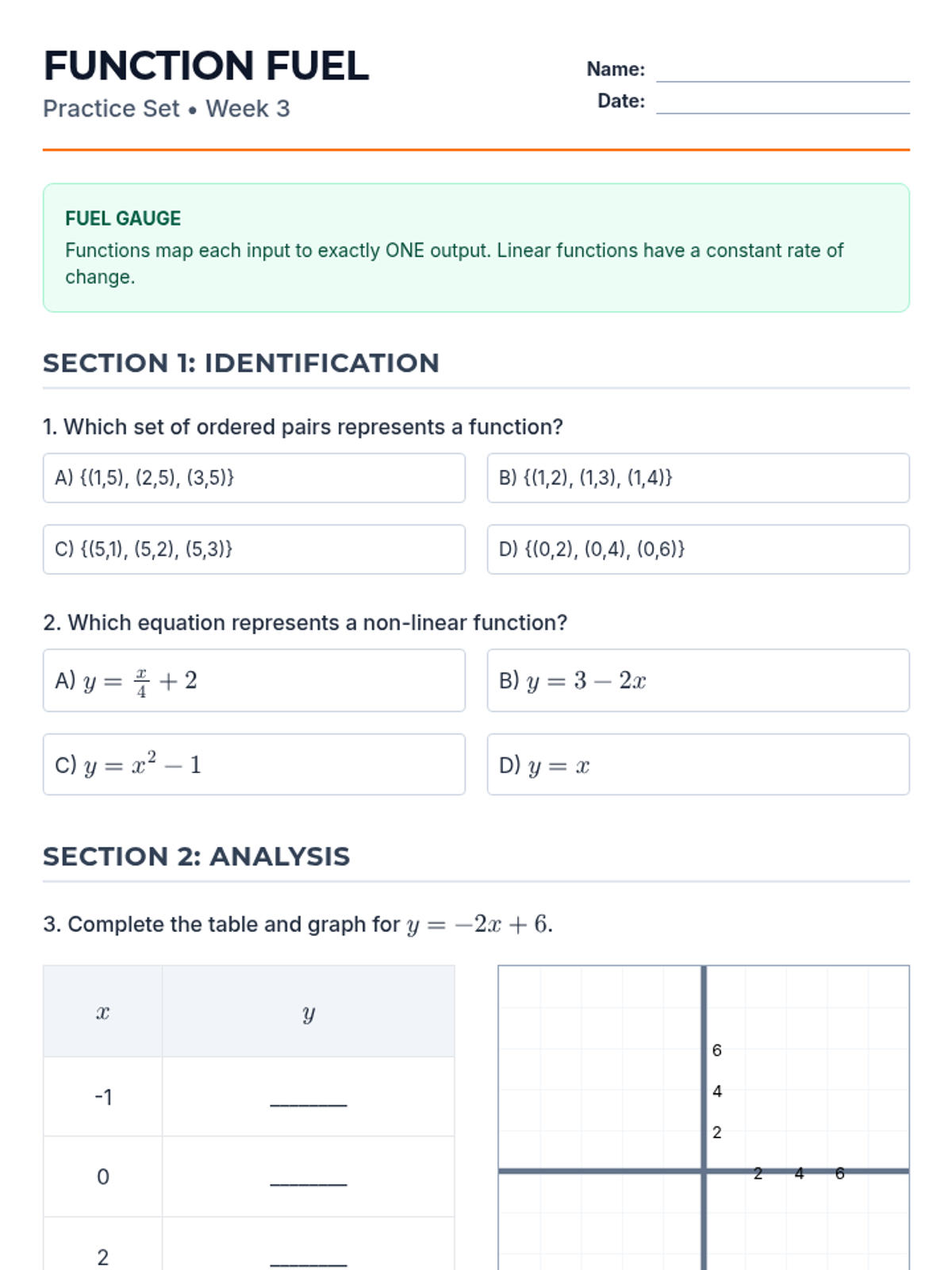
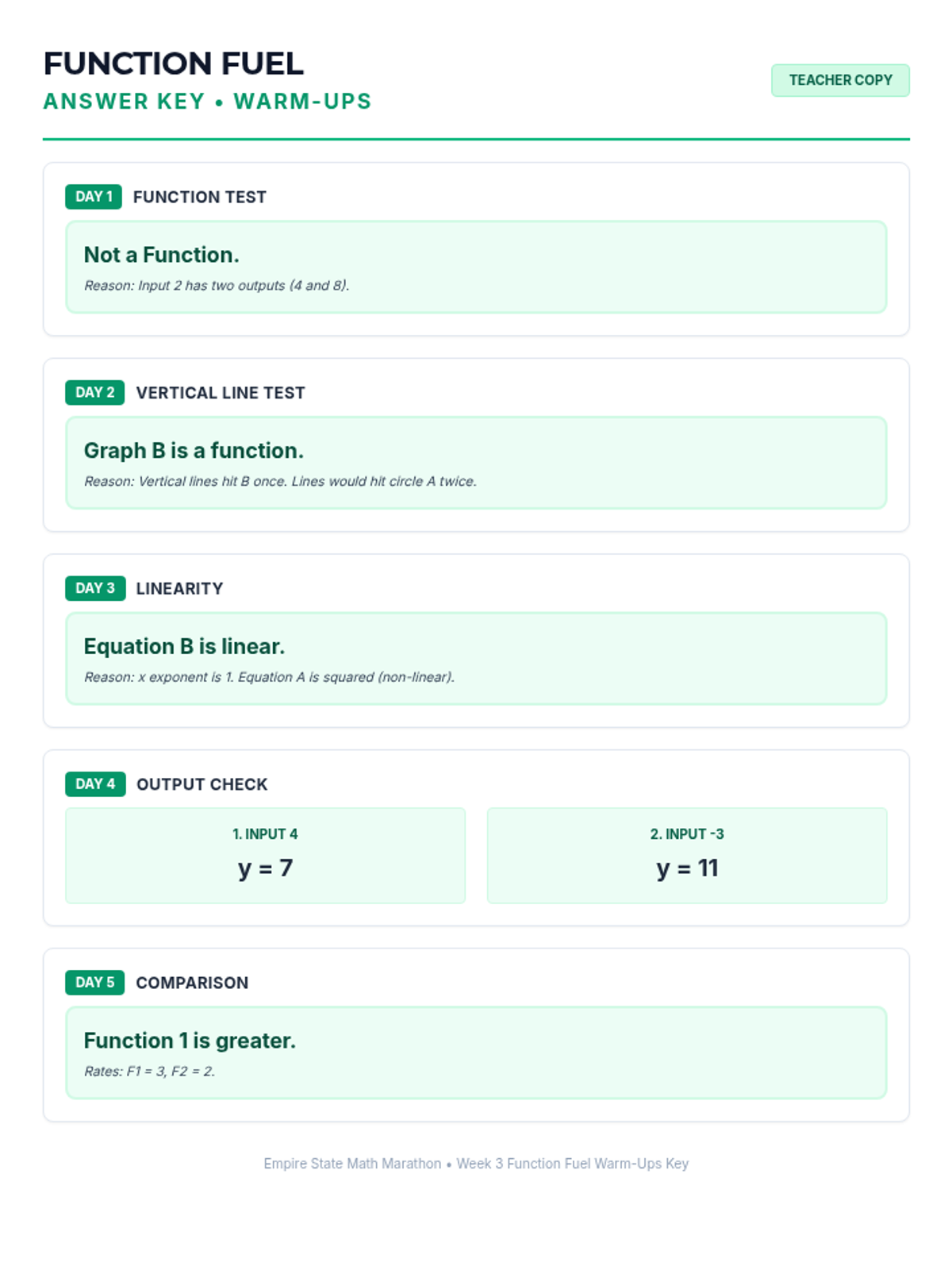
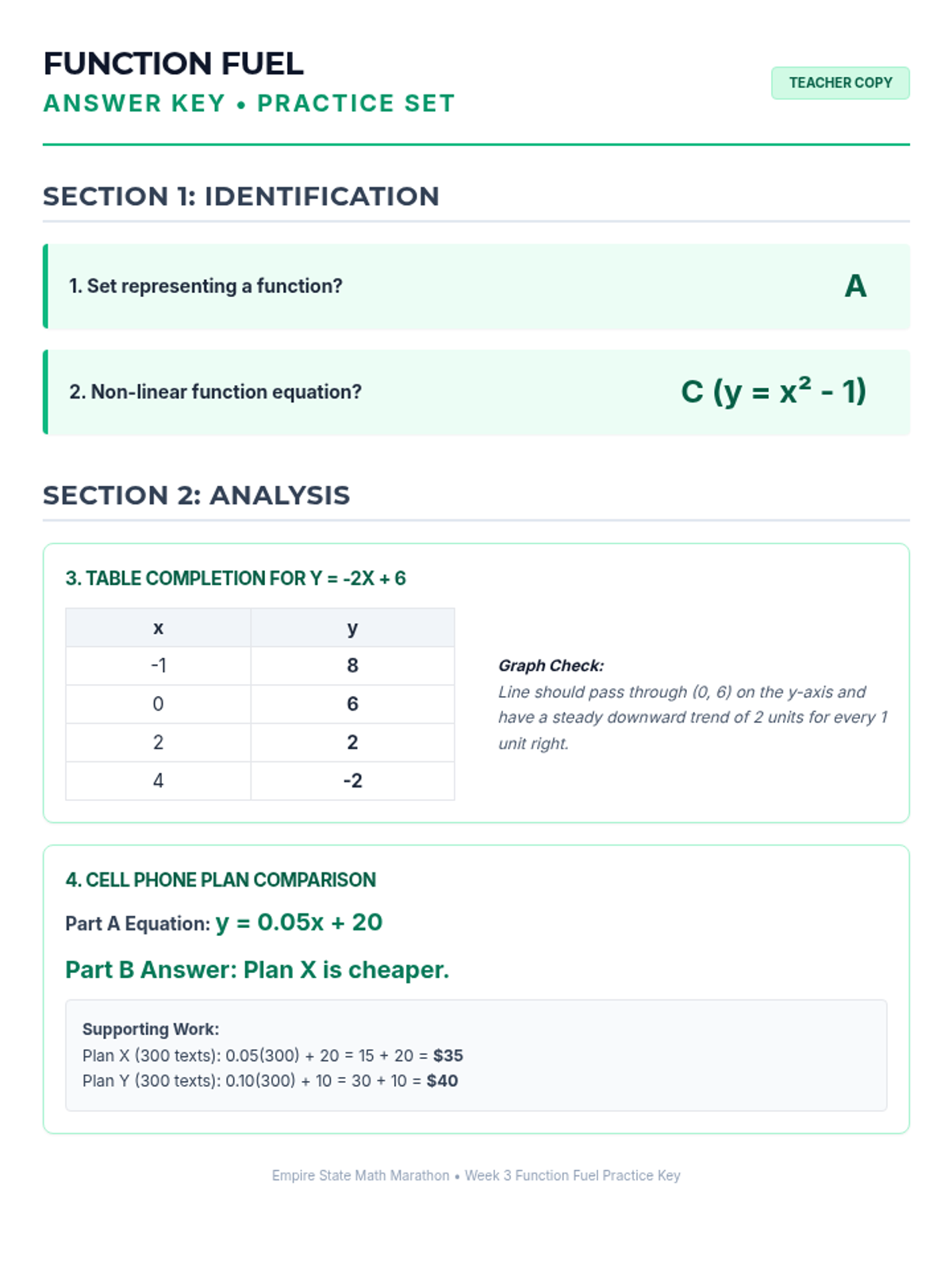
Week 3 defines, evaluates, and compares functions represented in different ways (tables, graphs, equations).
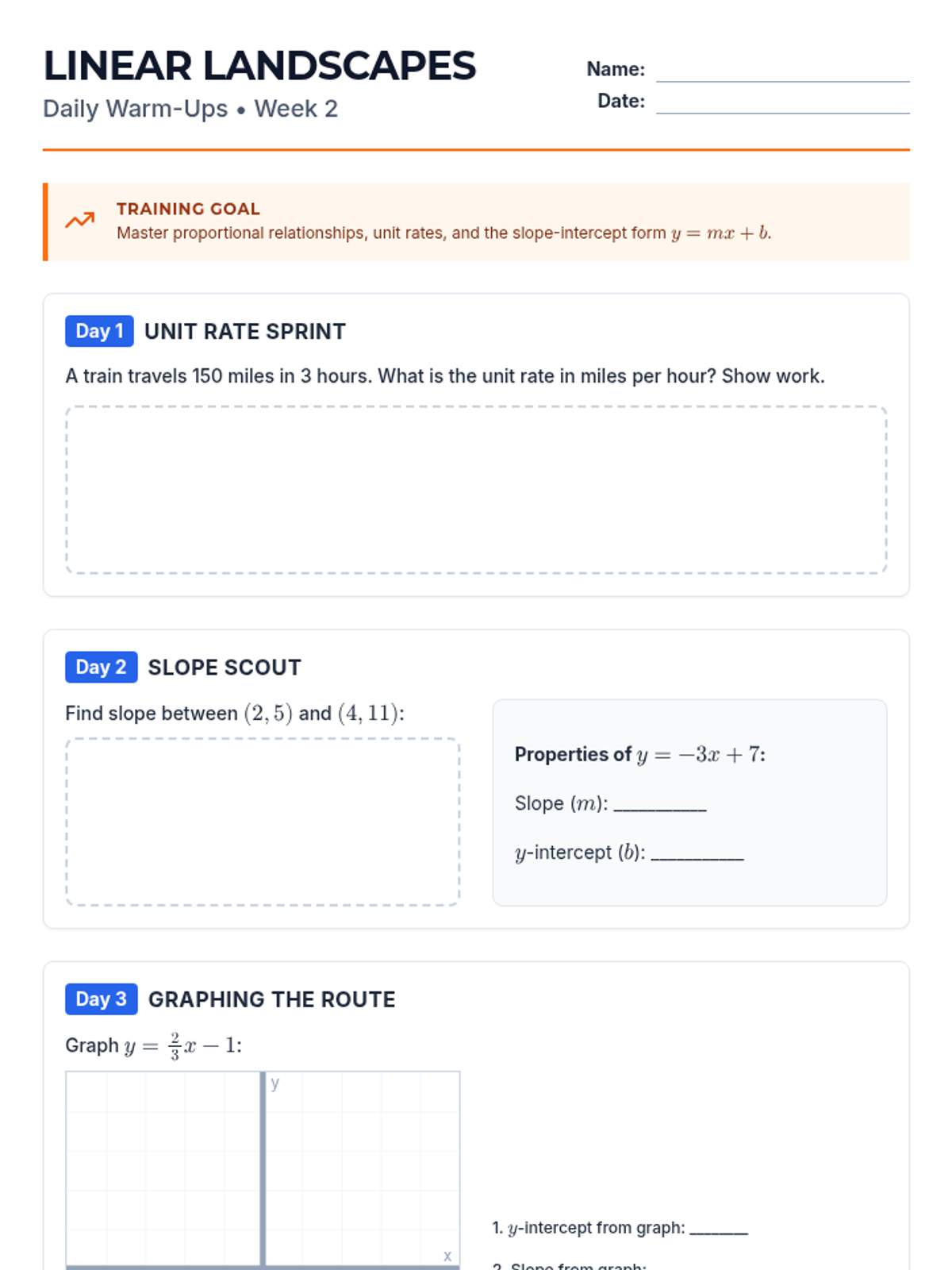
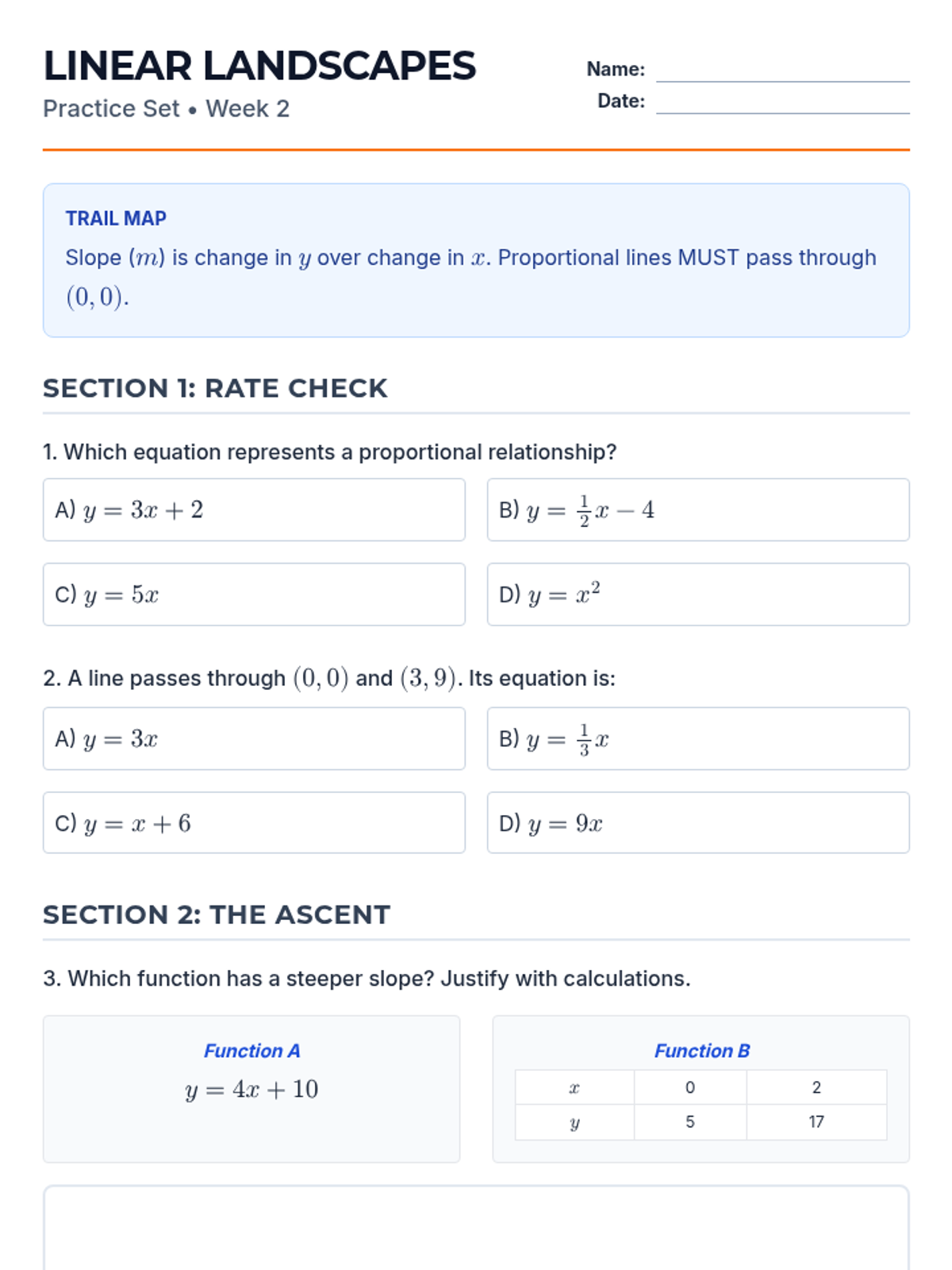
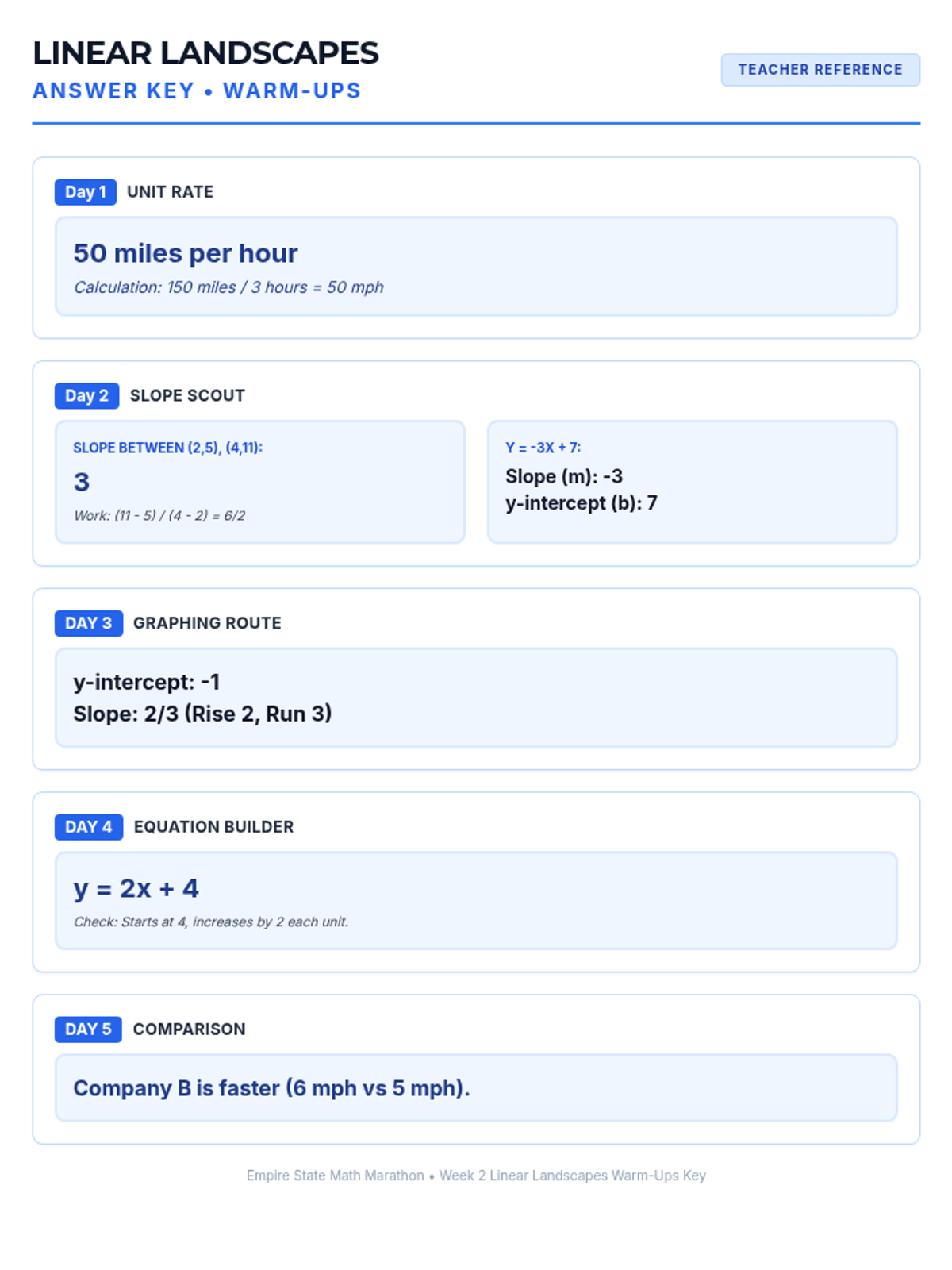
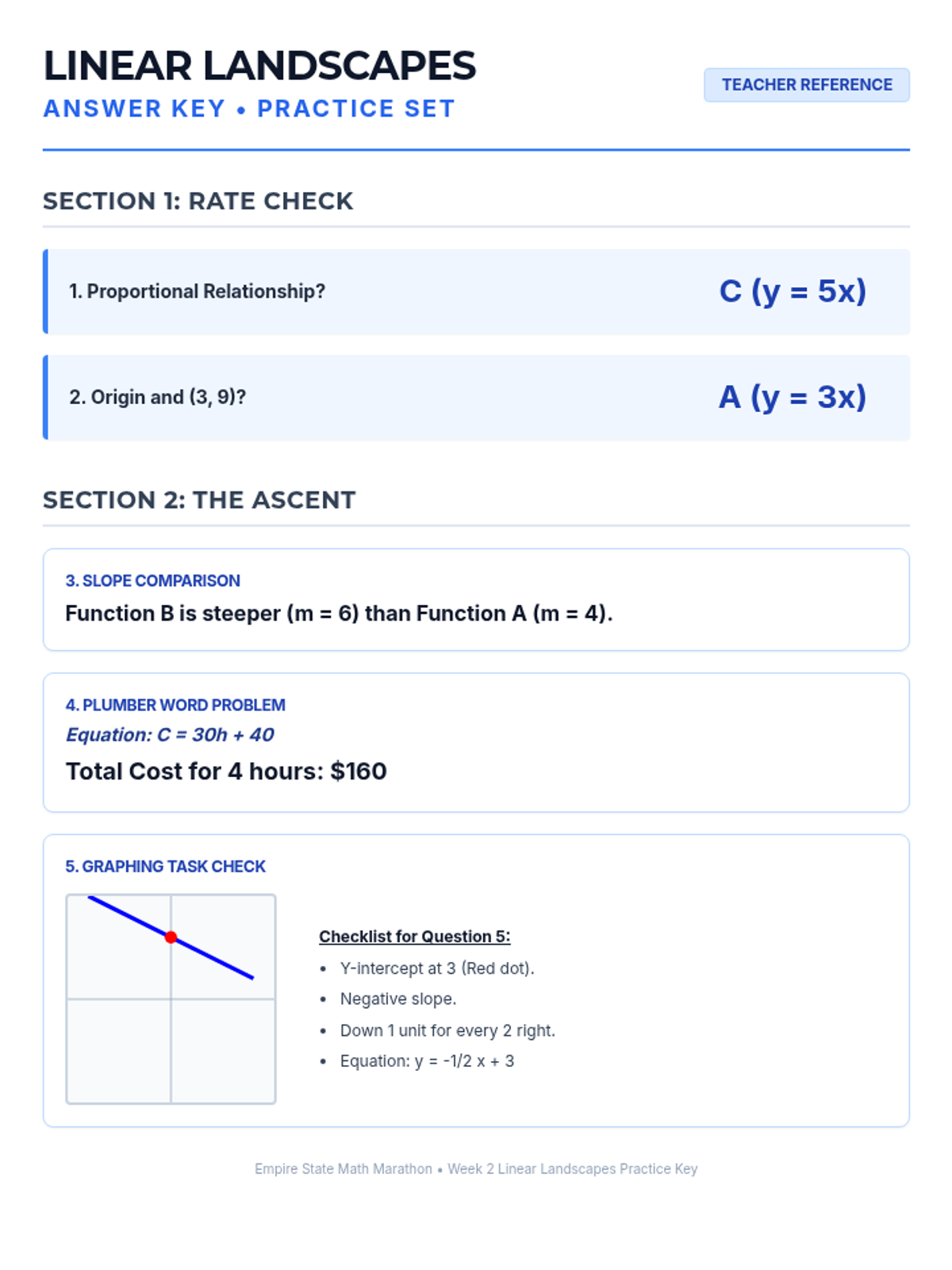
Week 2 covers proportional relationships, unit rates, and the slope-intercept form of linear equations.
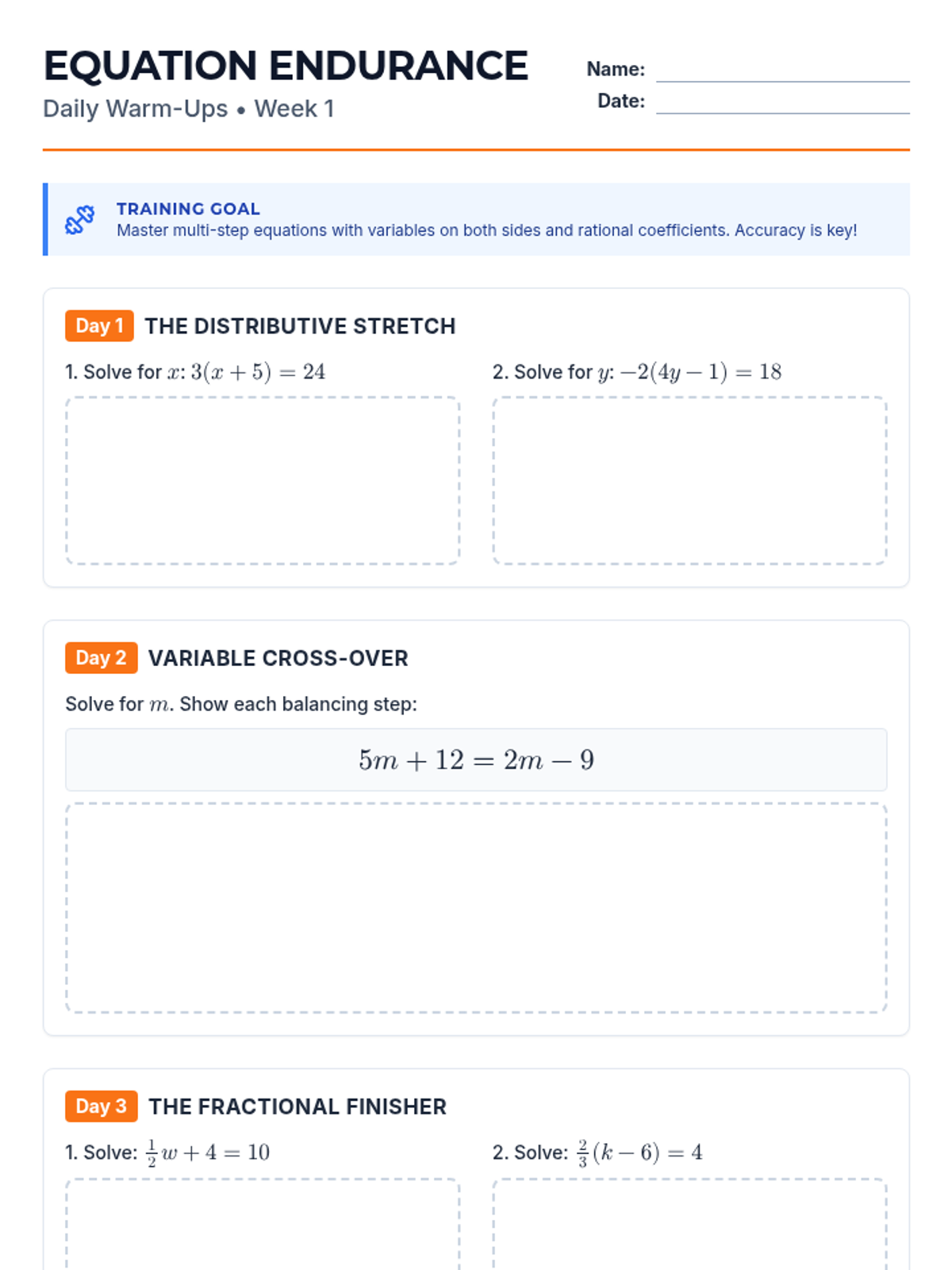
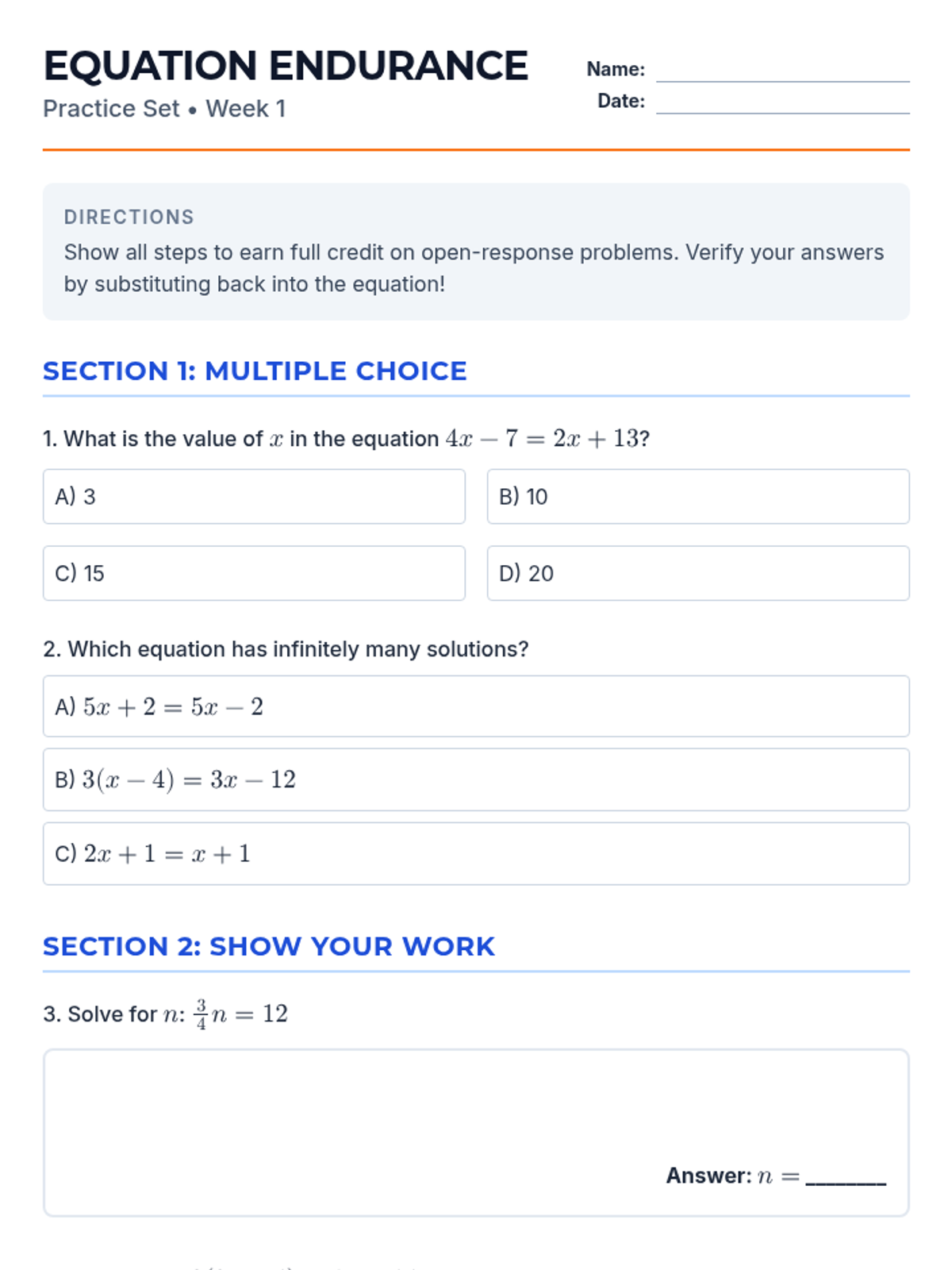
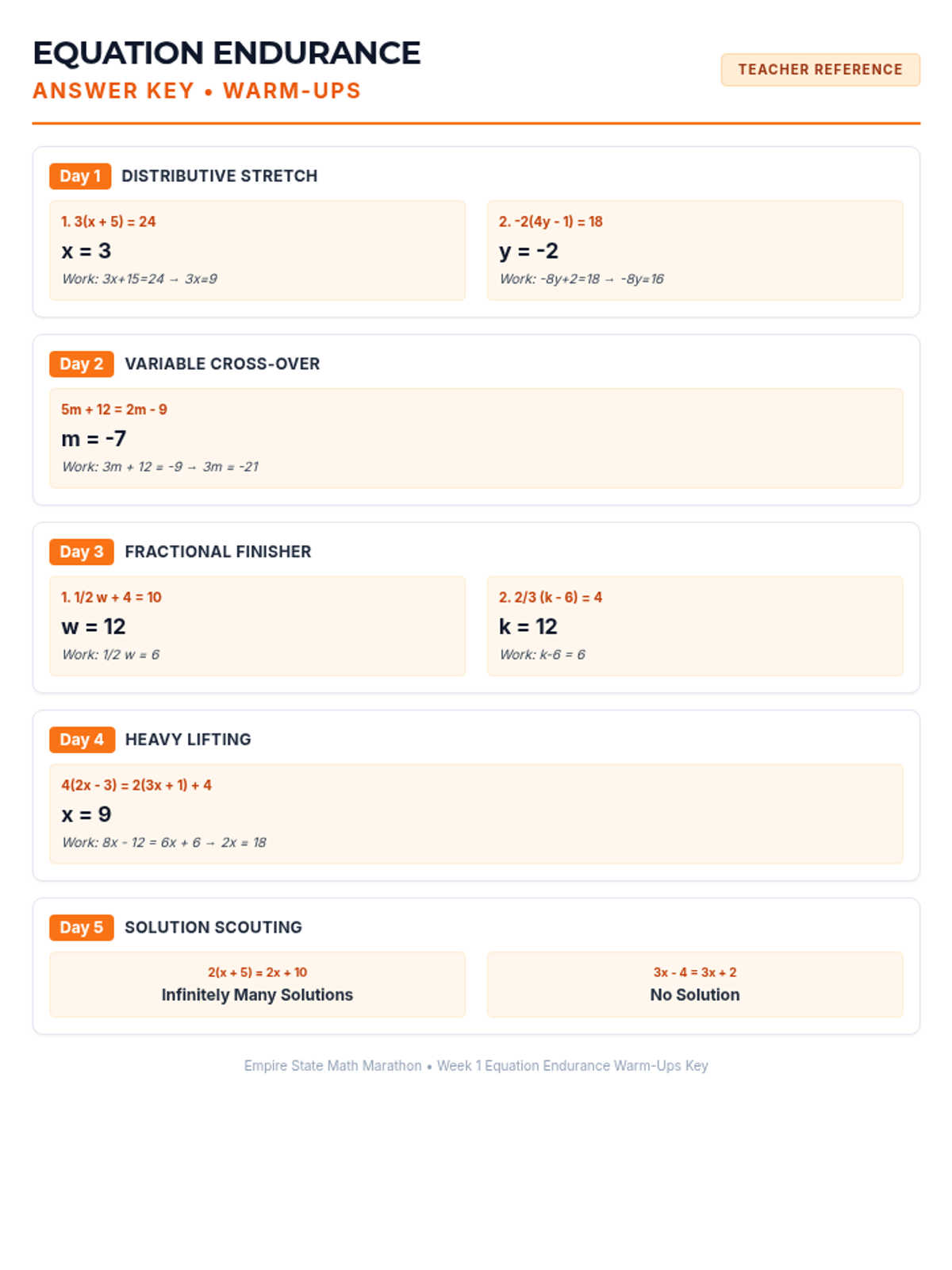
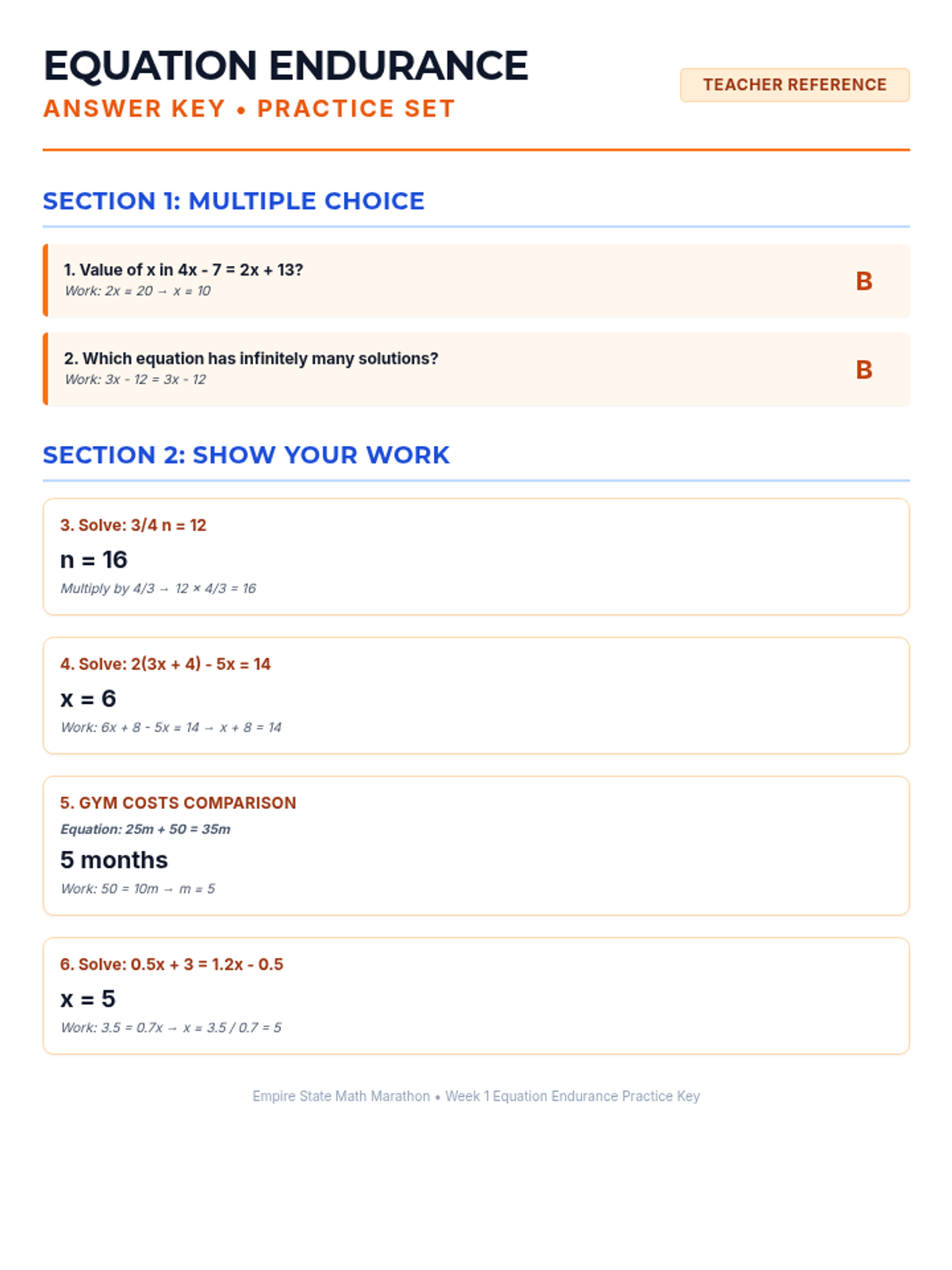
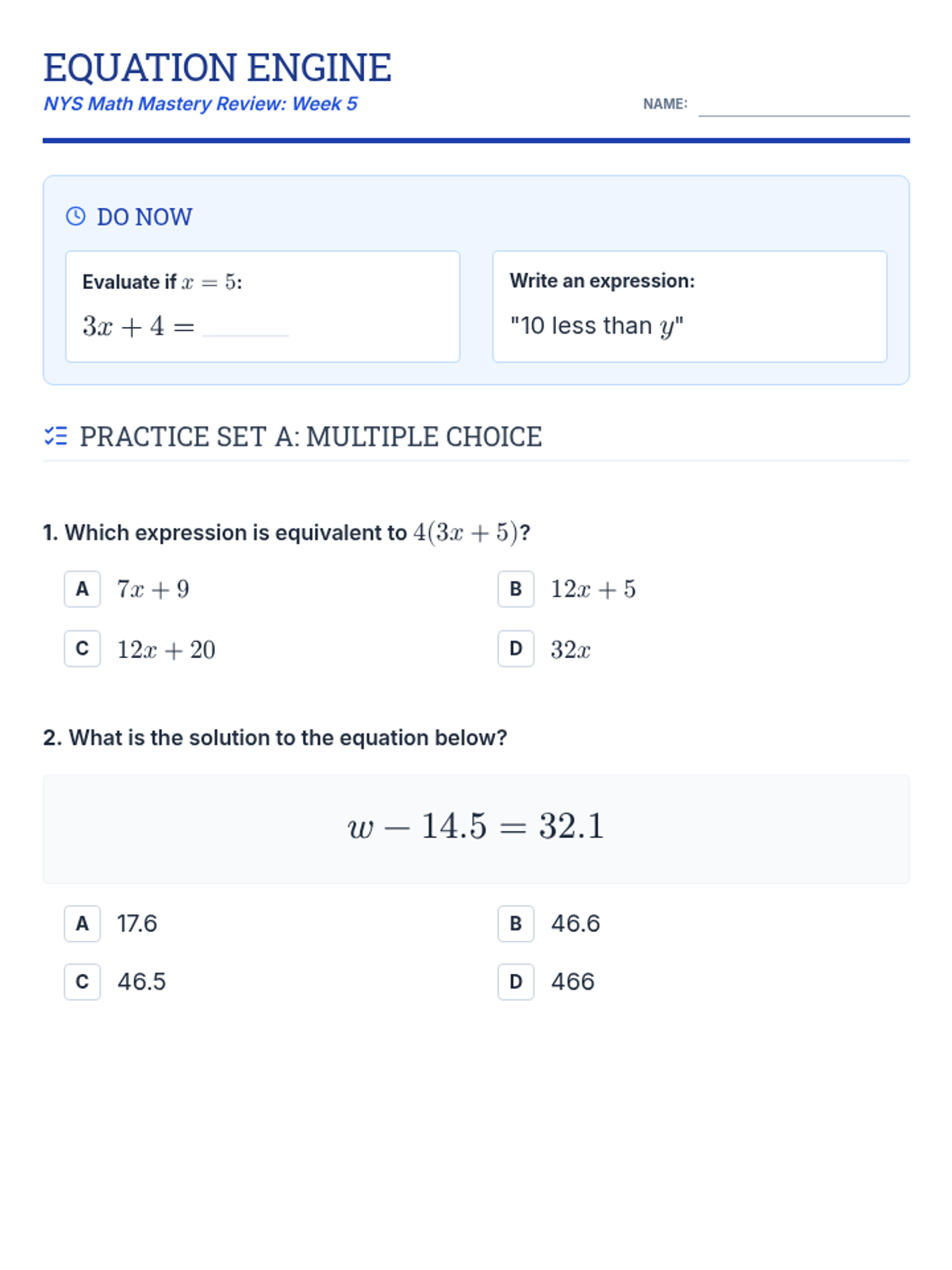
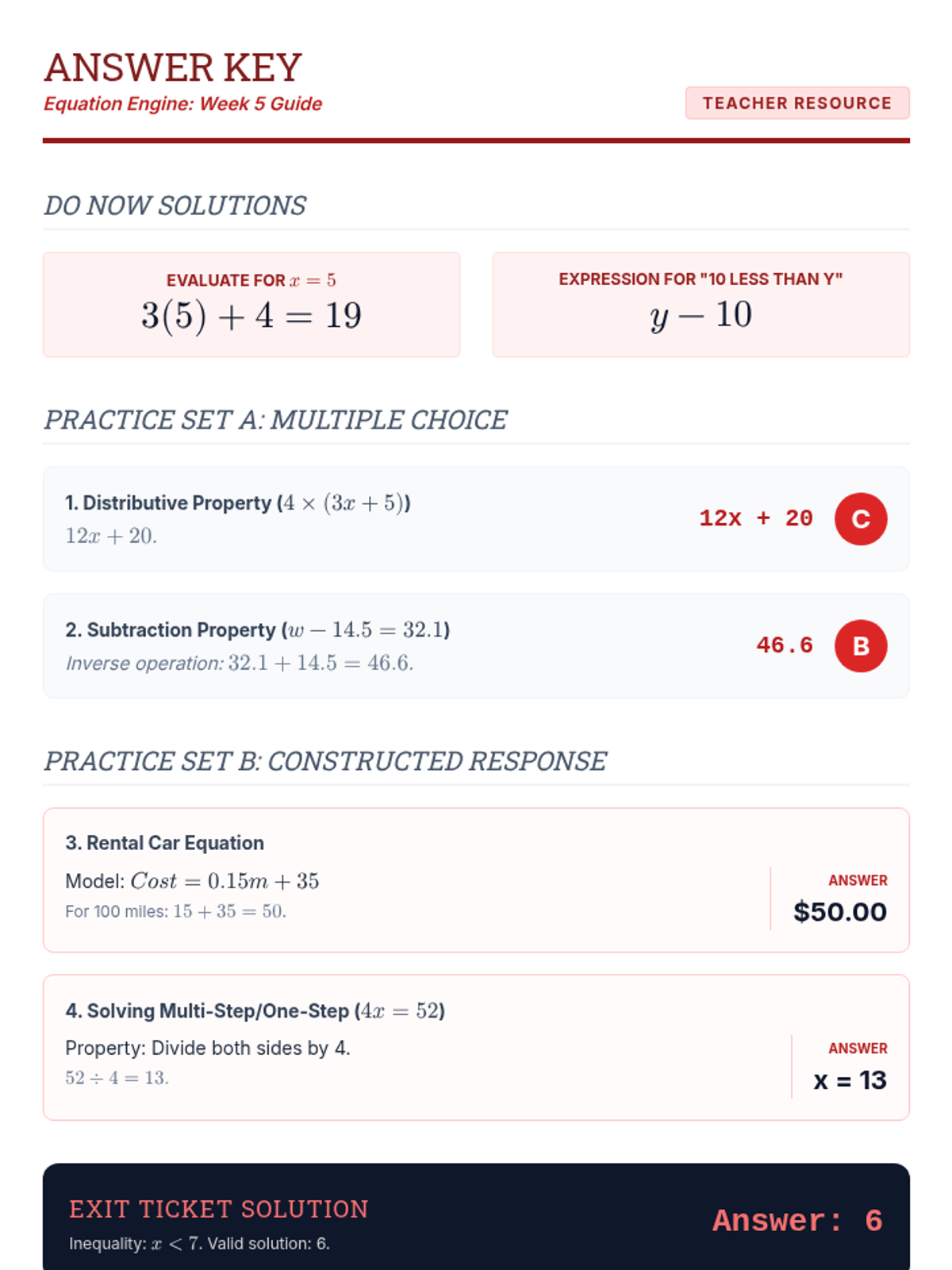
Week 1 focuses on solving multi-step equations, including those with variables on both sides, rational coefficients, and checking solutions.
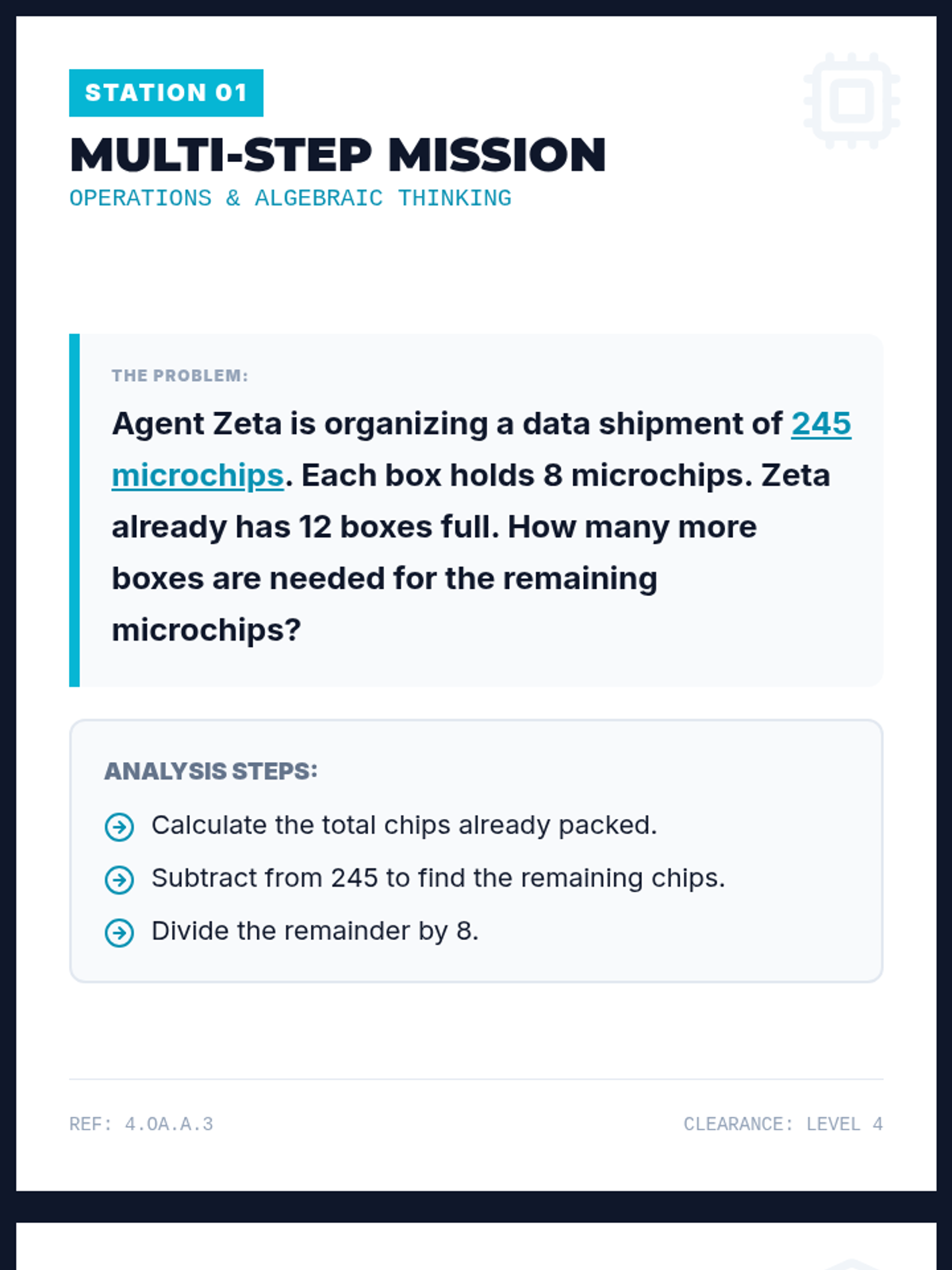
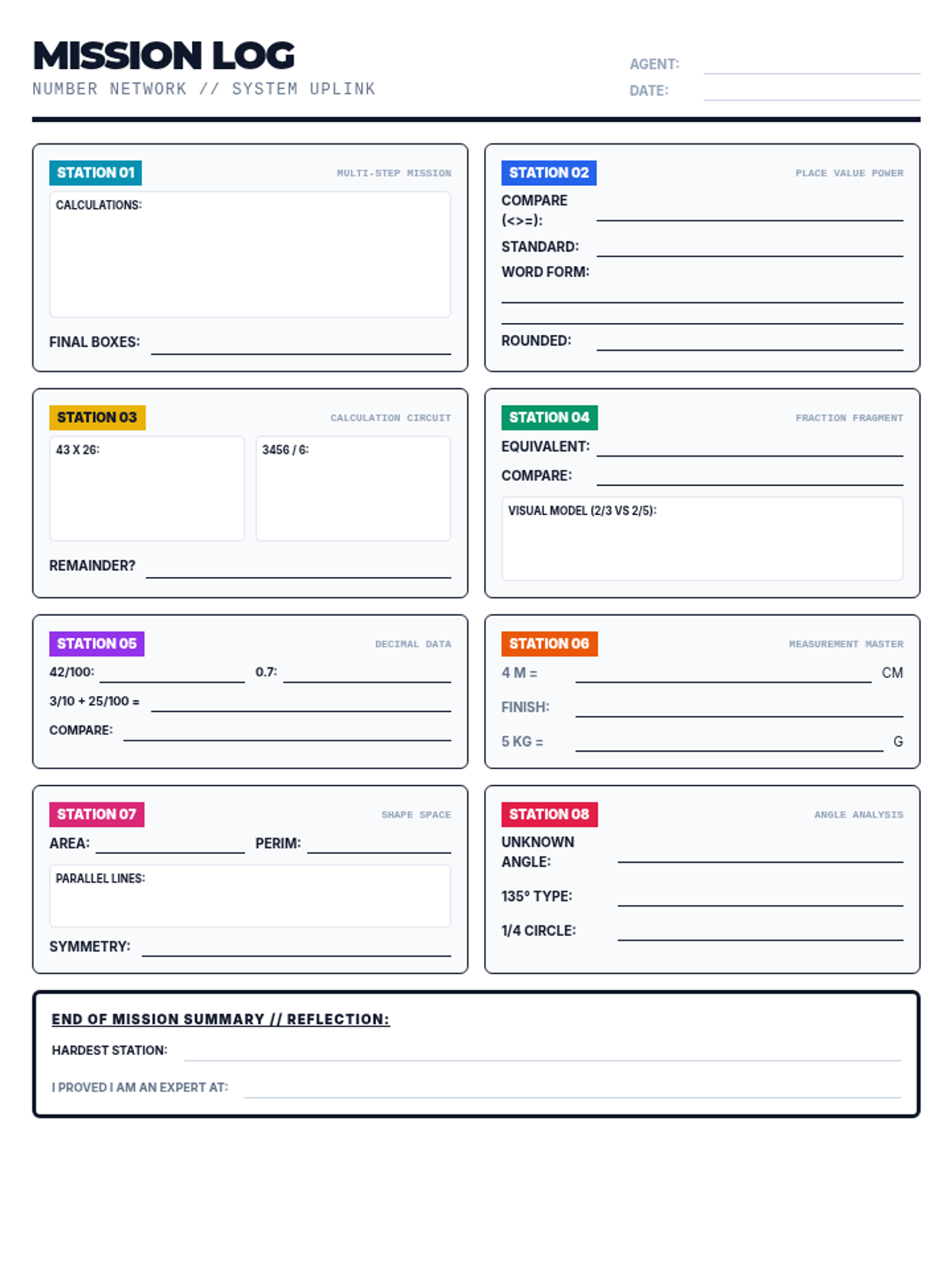
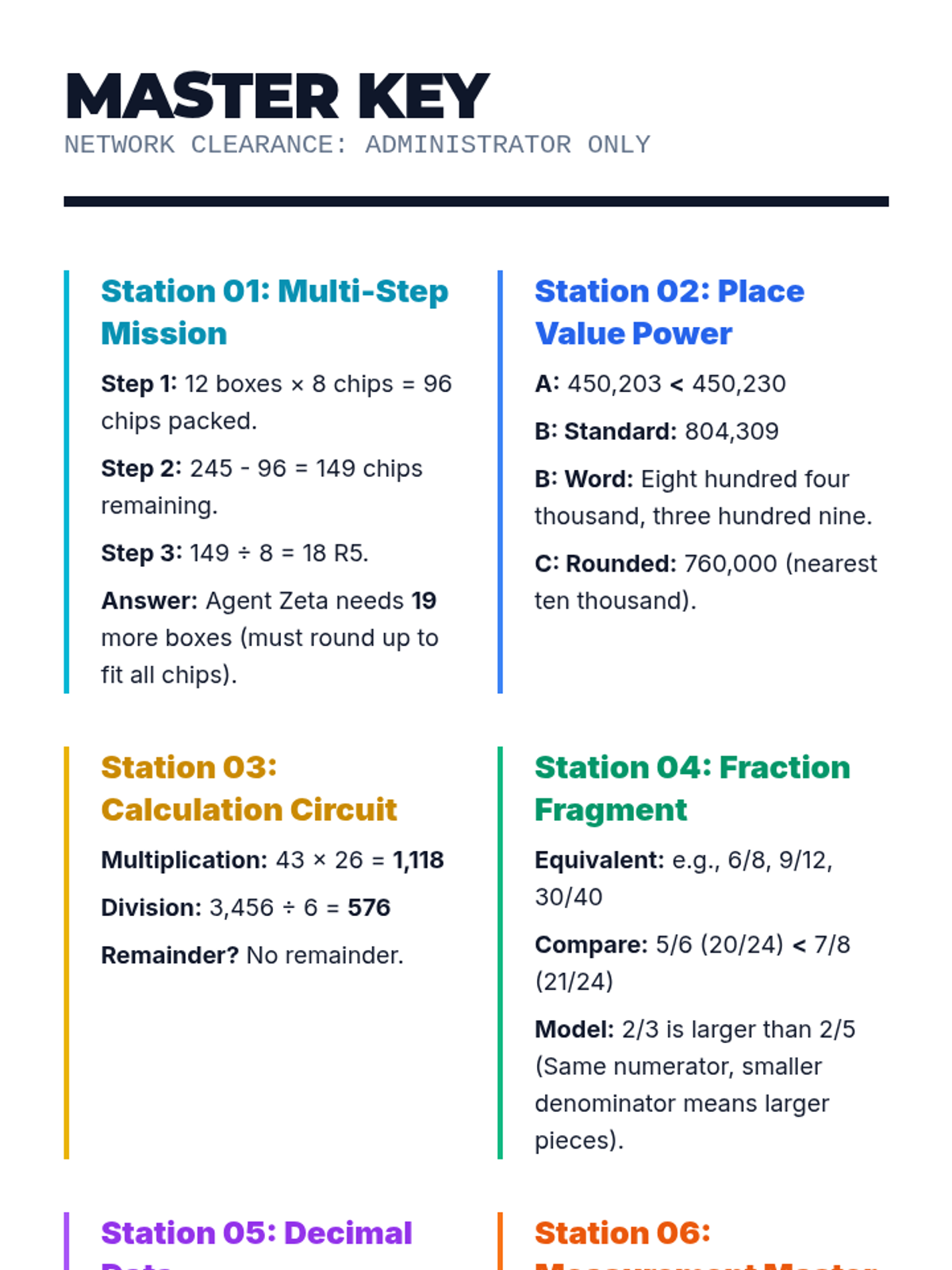
A comprehensive 4th-grade math spiral review designed as an interactive gallery walk. Students rotate through 8 high-energy stations covering all major domains to prepare for end-of-grade testing.
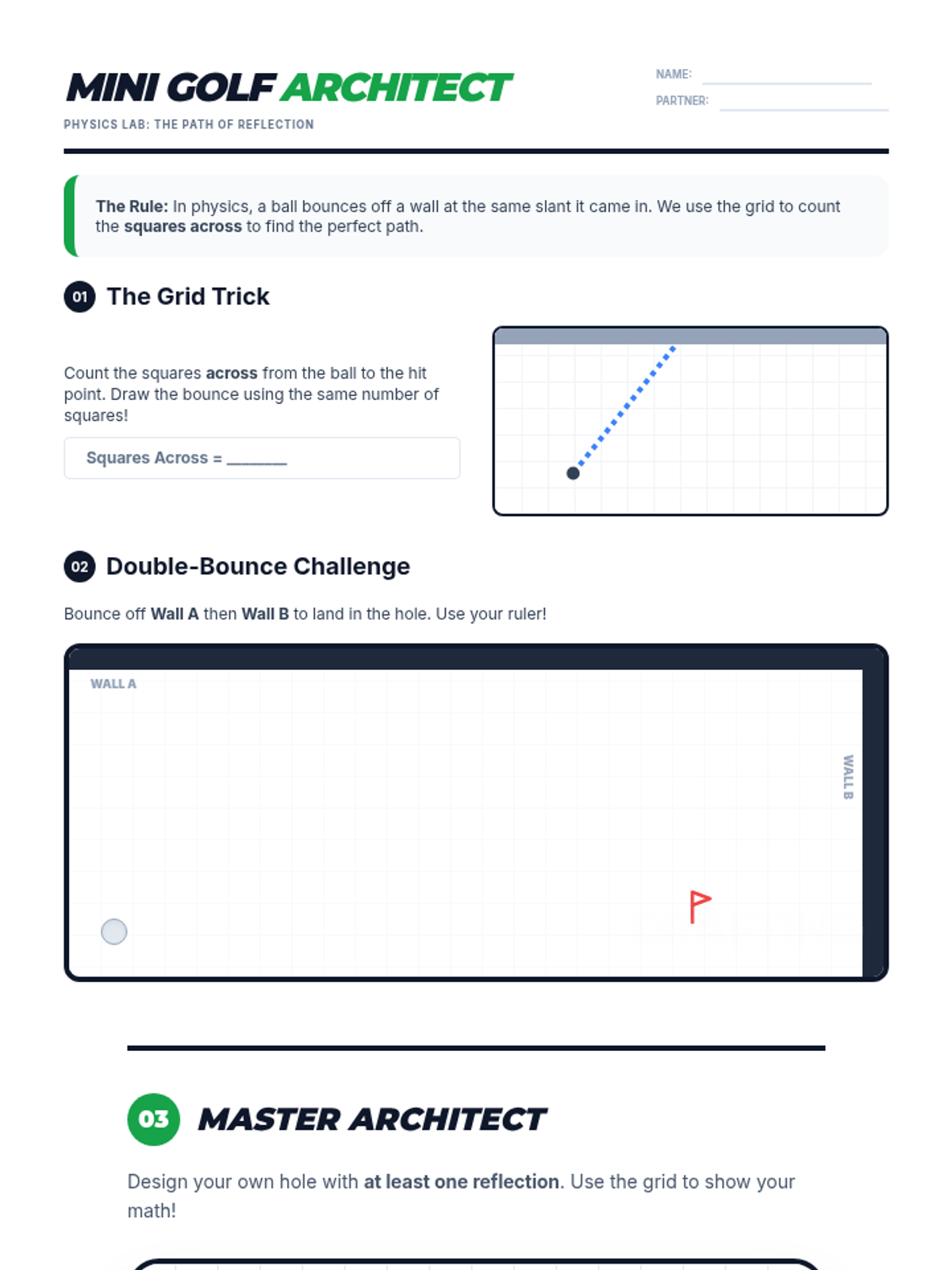
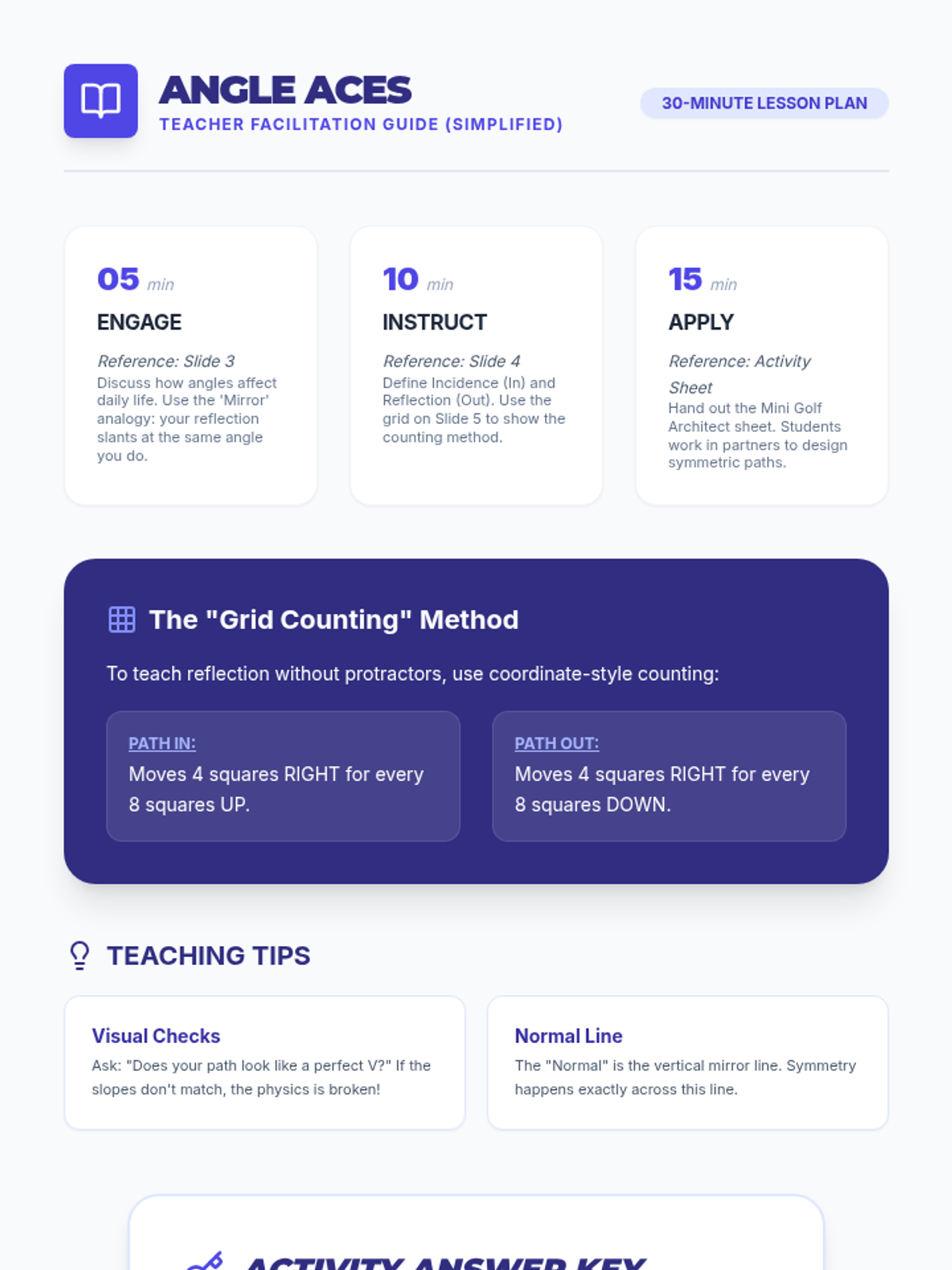
A 30-minute introductory physics lesson for 6th-grade math students focusing on the law of reflection and angles in mini-golf. Students learn to calculate and predict paths of motion using geometric principles.
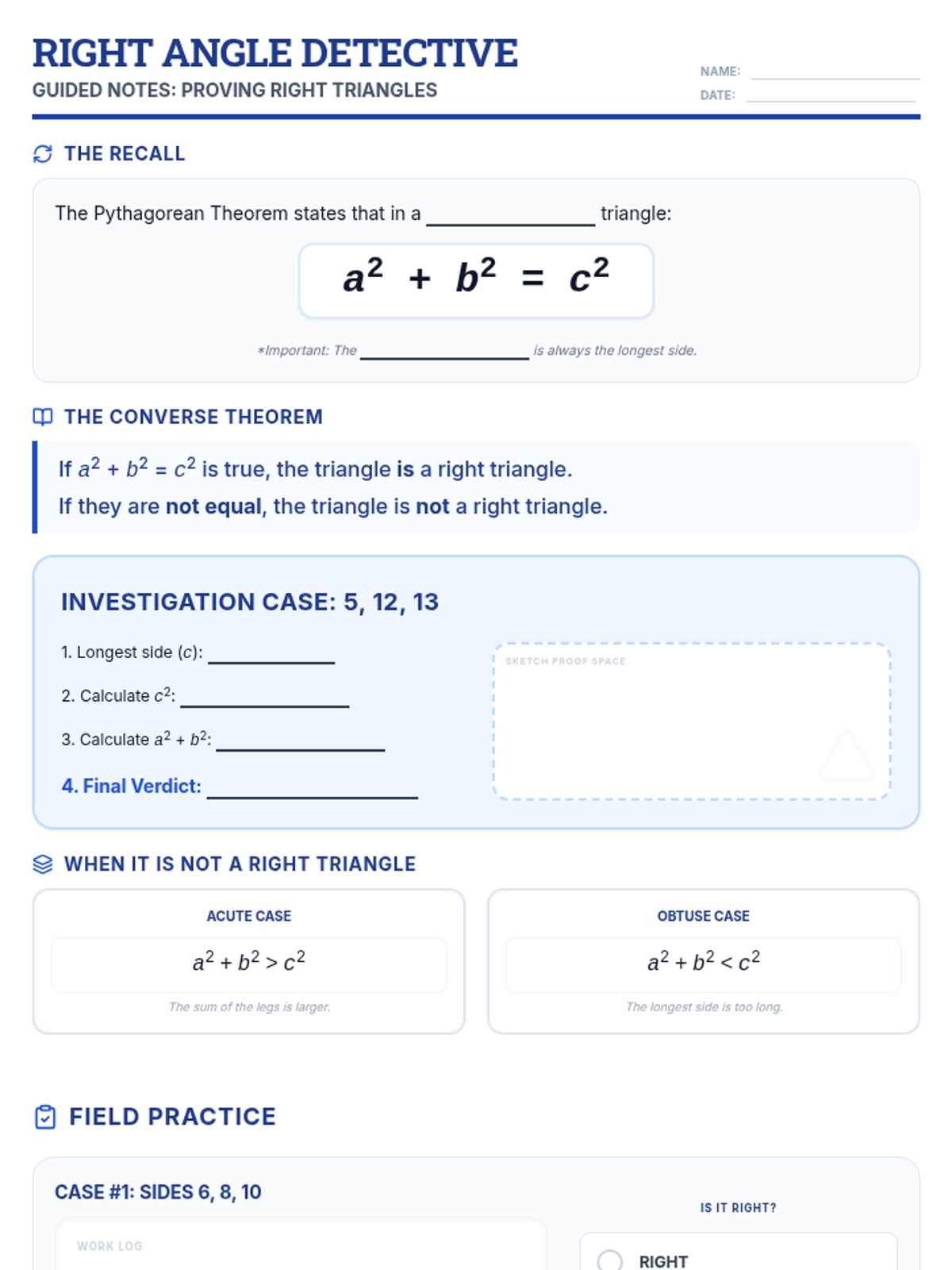
A lesson exploring the Converse of the Pythagorean Theorem to prove right angles and classify triangles as acute, obtuse, or right based on side lengths.
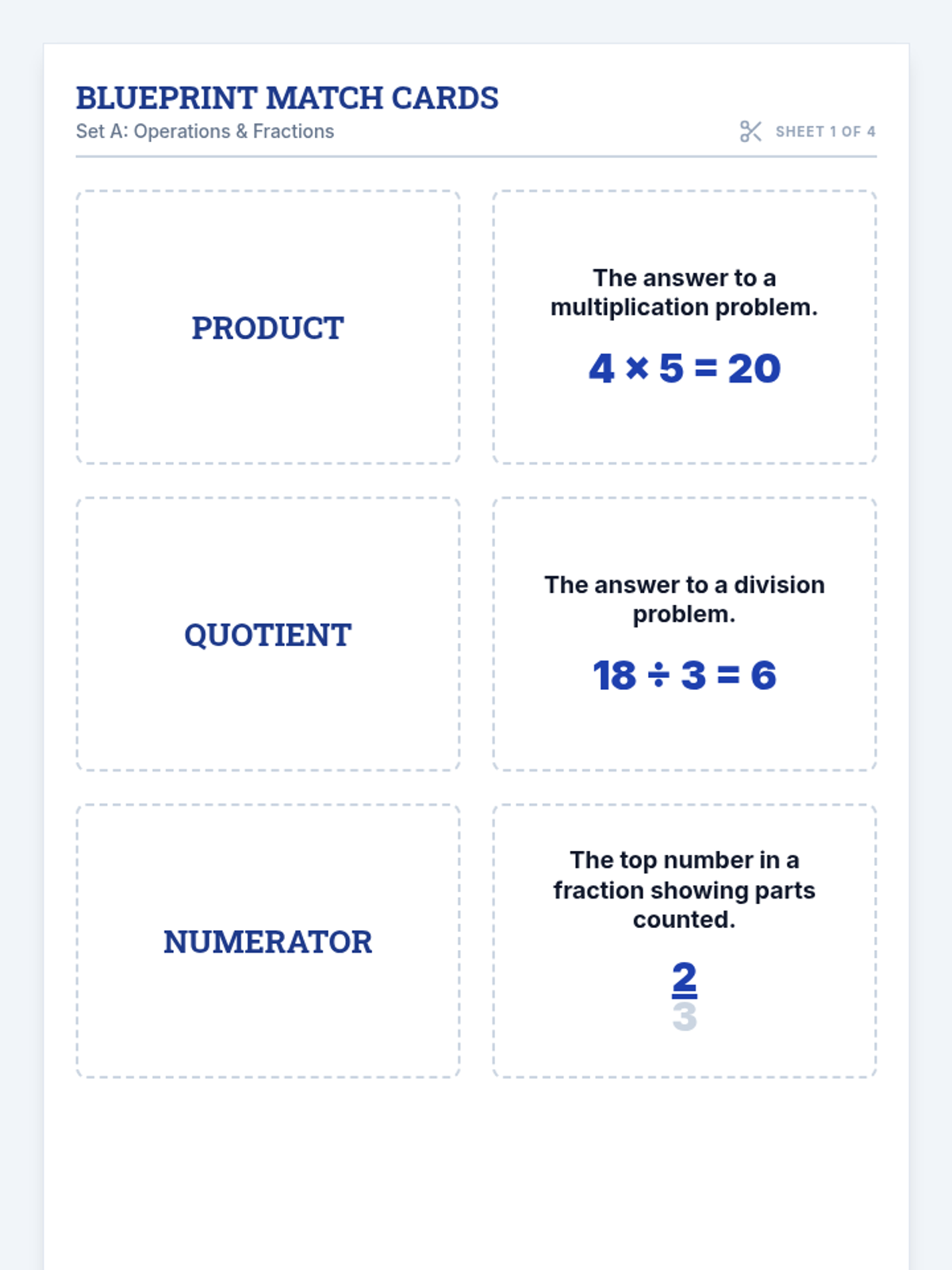
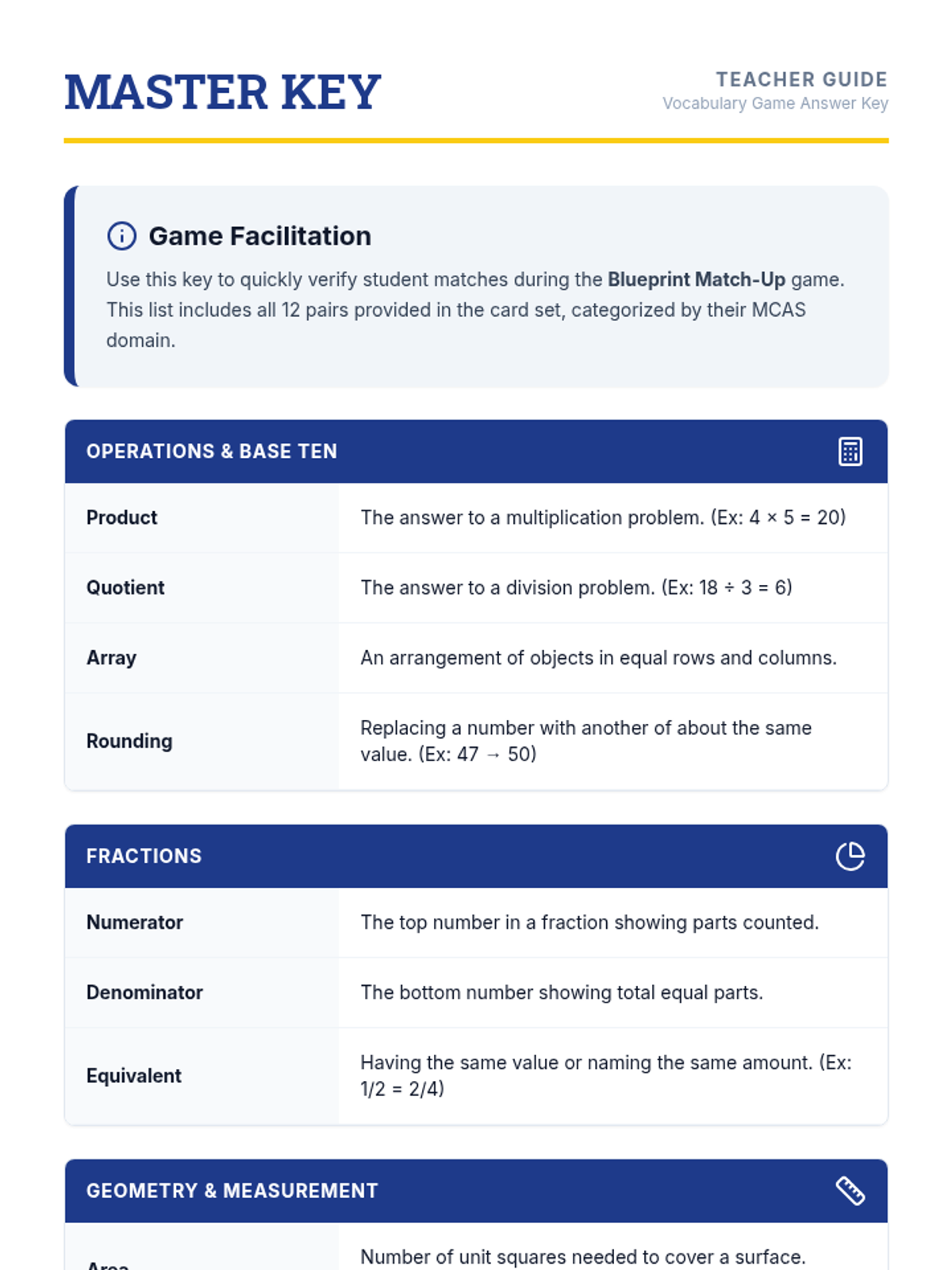
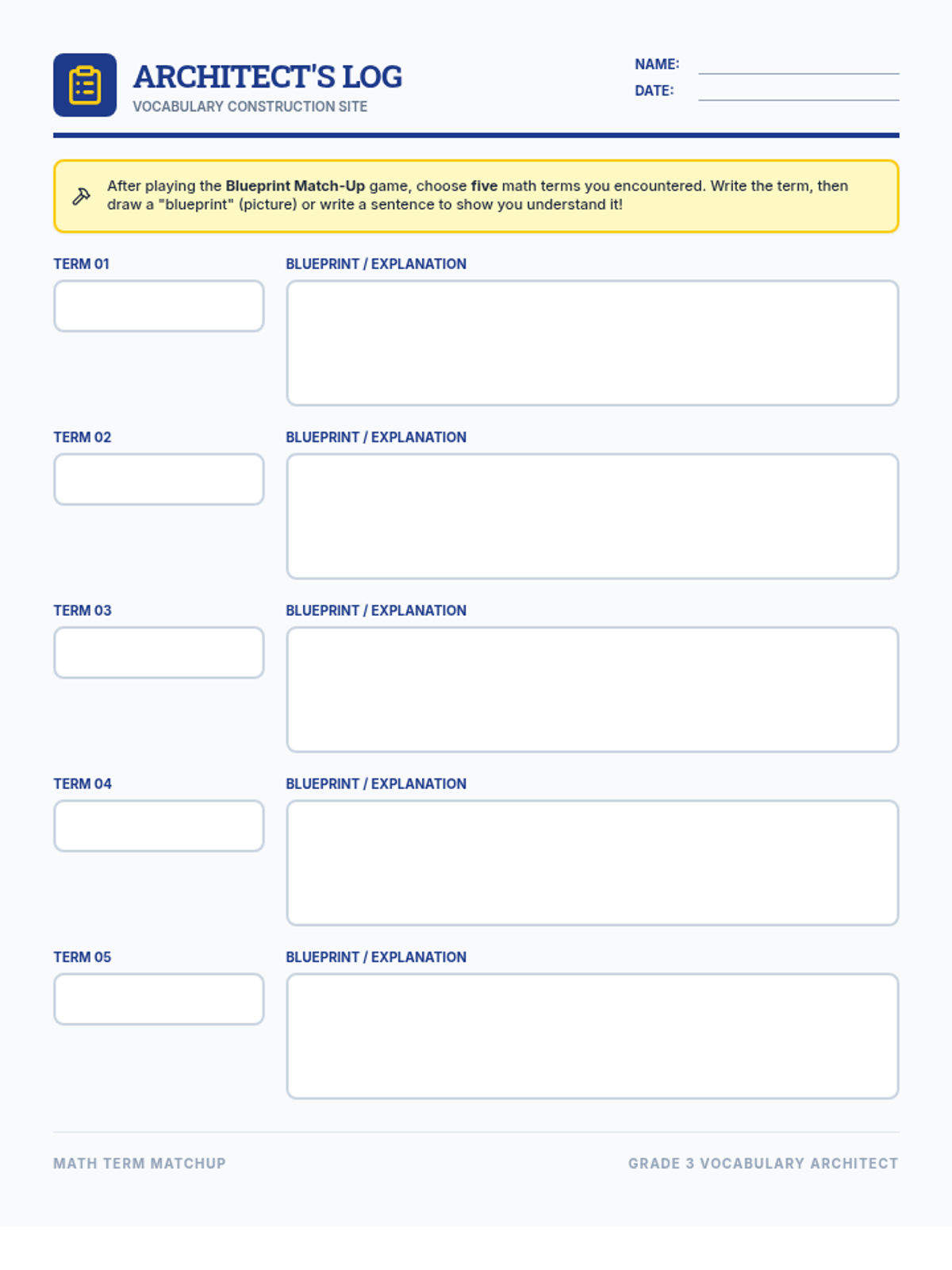
A comprehensive review of 3rd grade math vocabulary across all domains (Algebraic Thinking, Base Ten, Fractions, Measurement, and Geometry) using a blueprint-themed matching game.
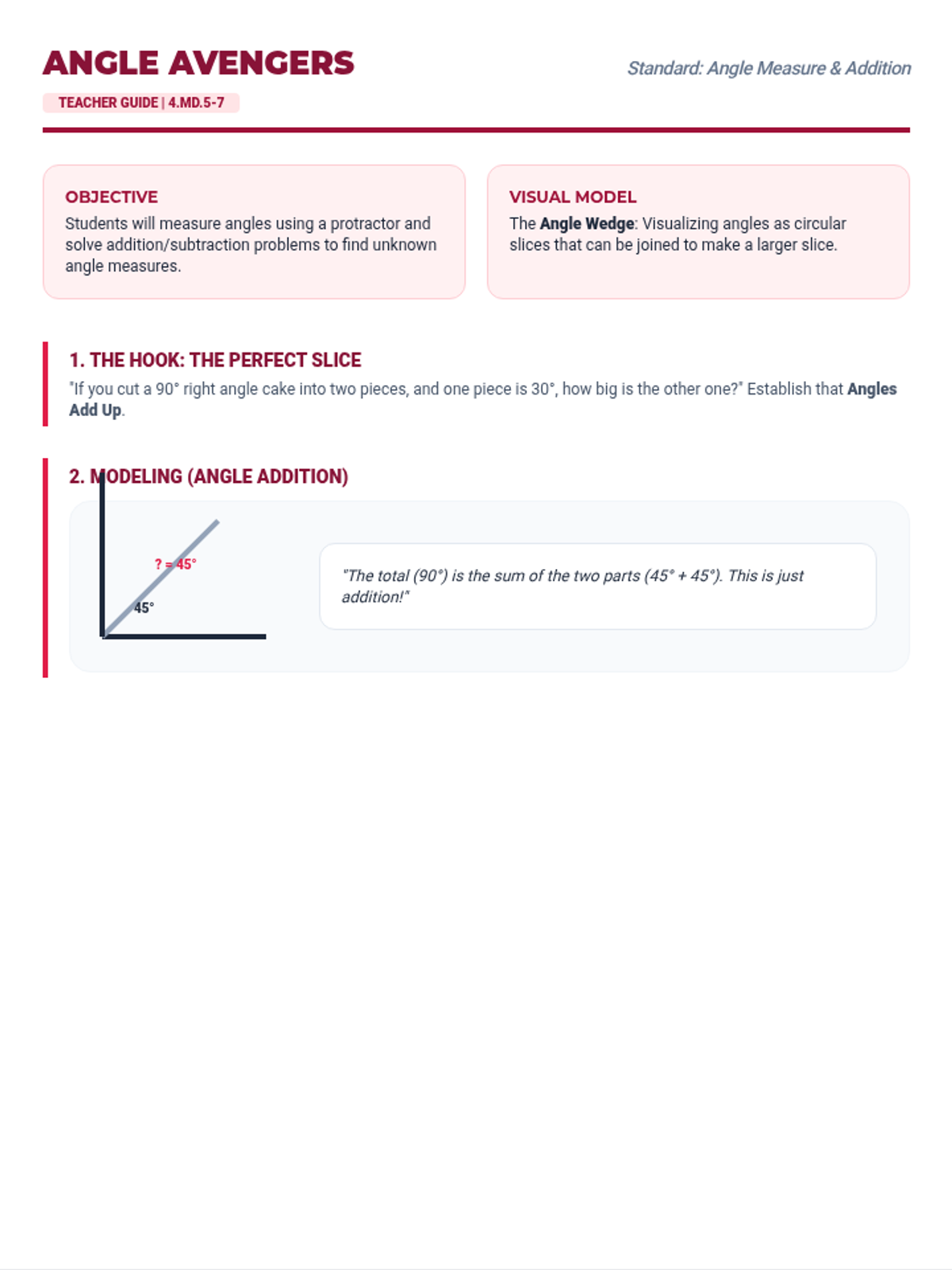
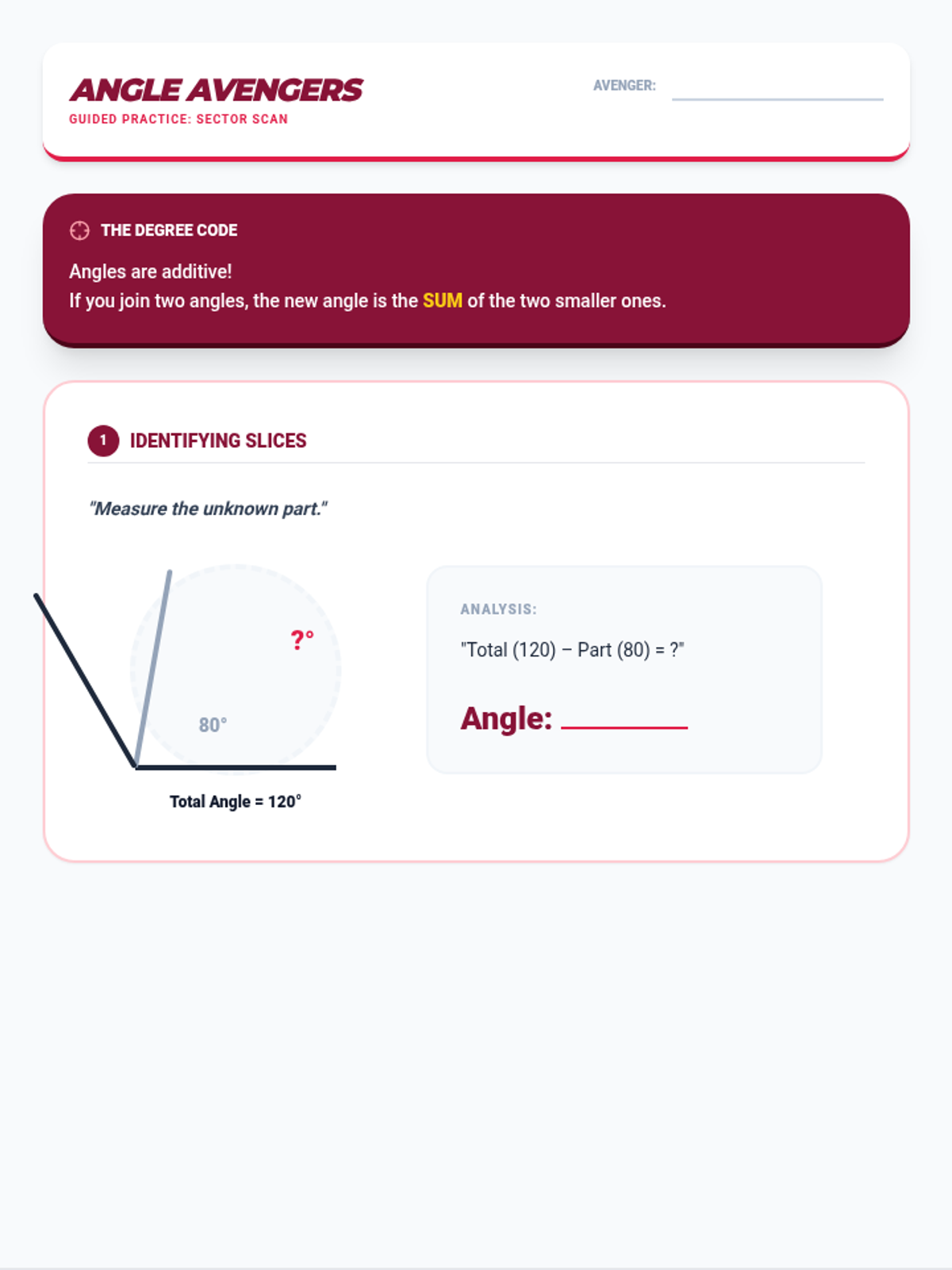
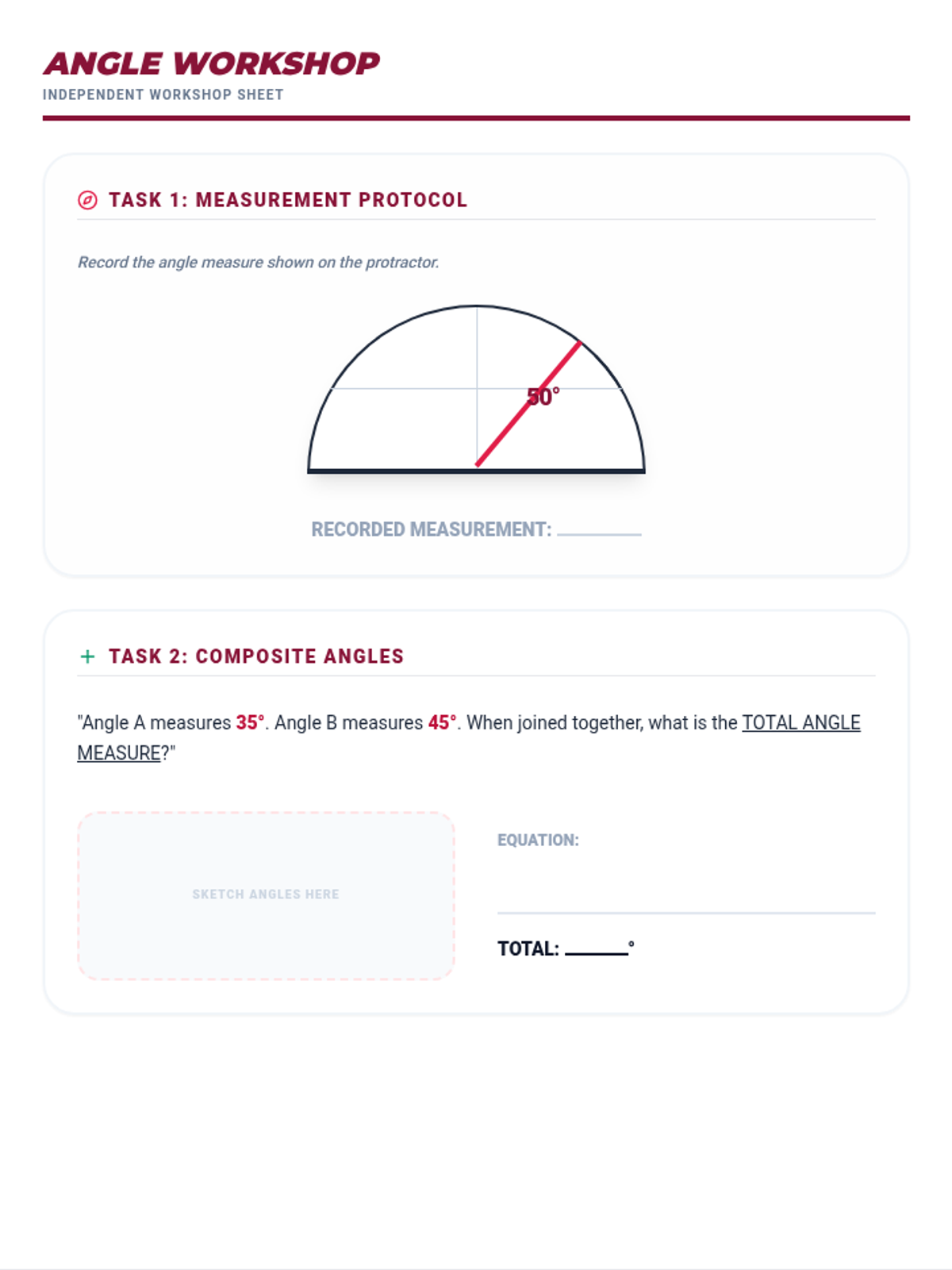
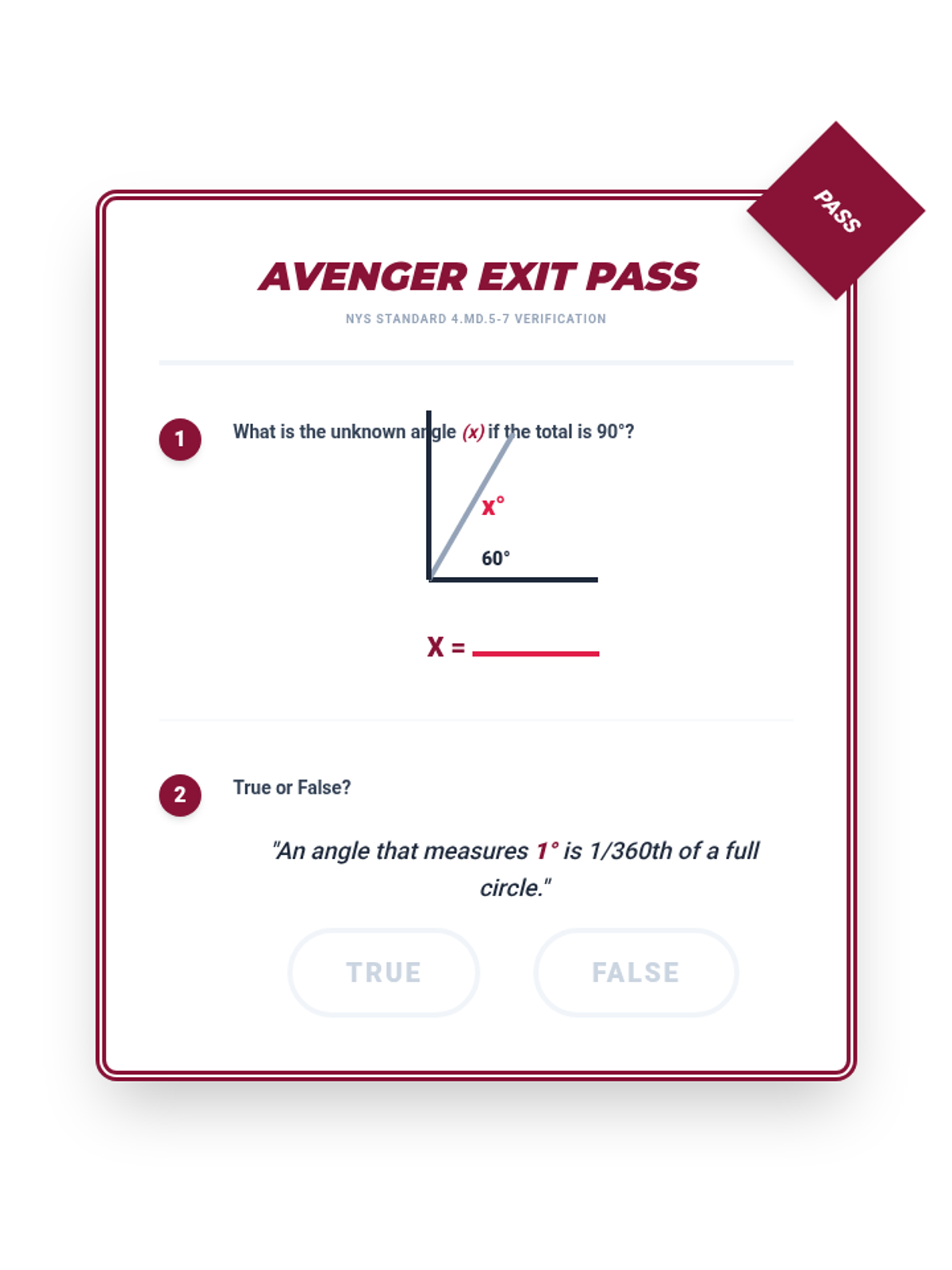
Tier 2 reteach for standards 4.MD.5, 4.MD.6, & 4.MD.7: Angle measurement with protractors and additive angle properties.
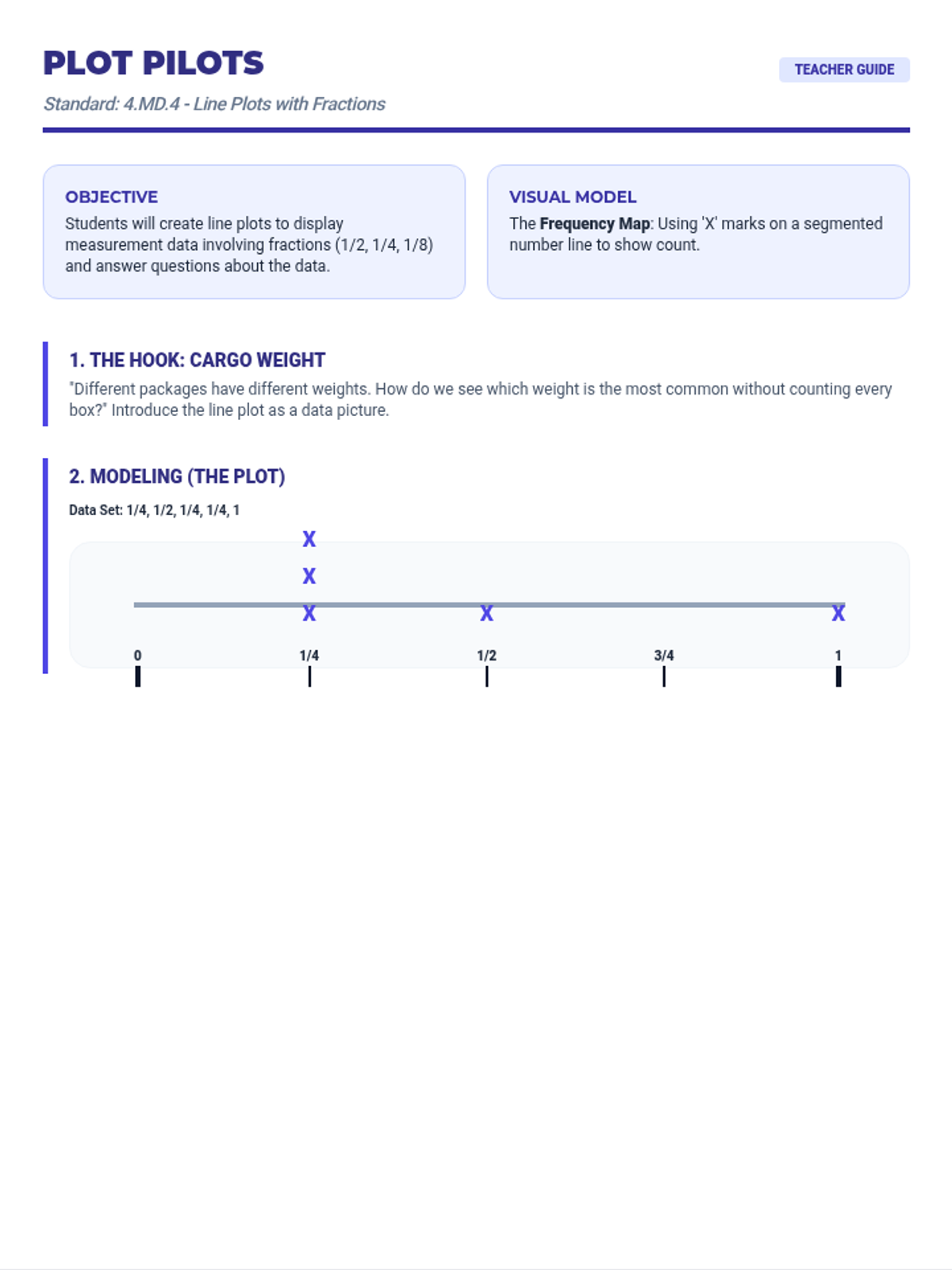
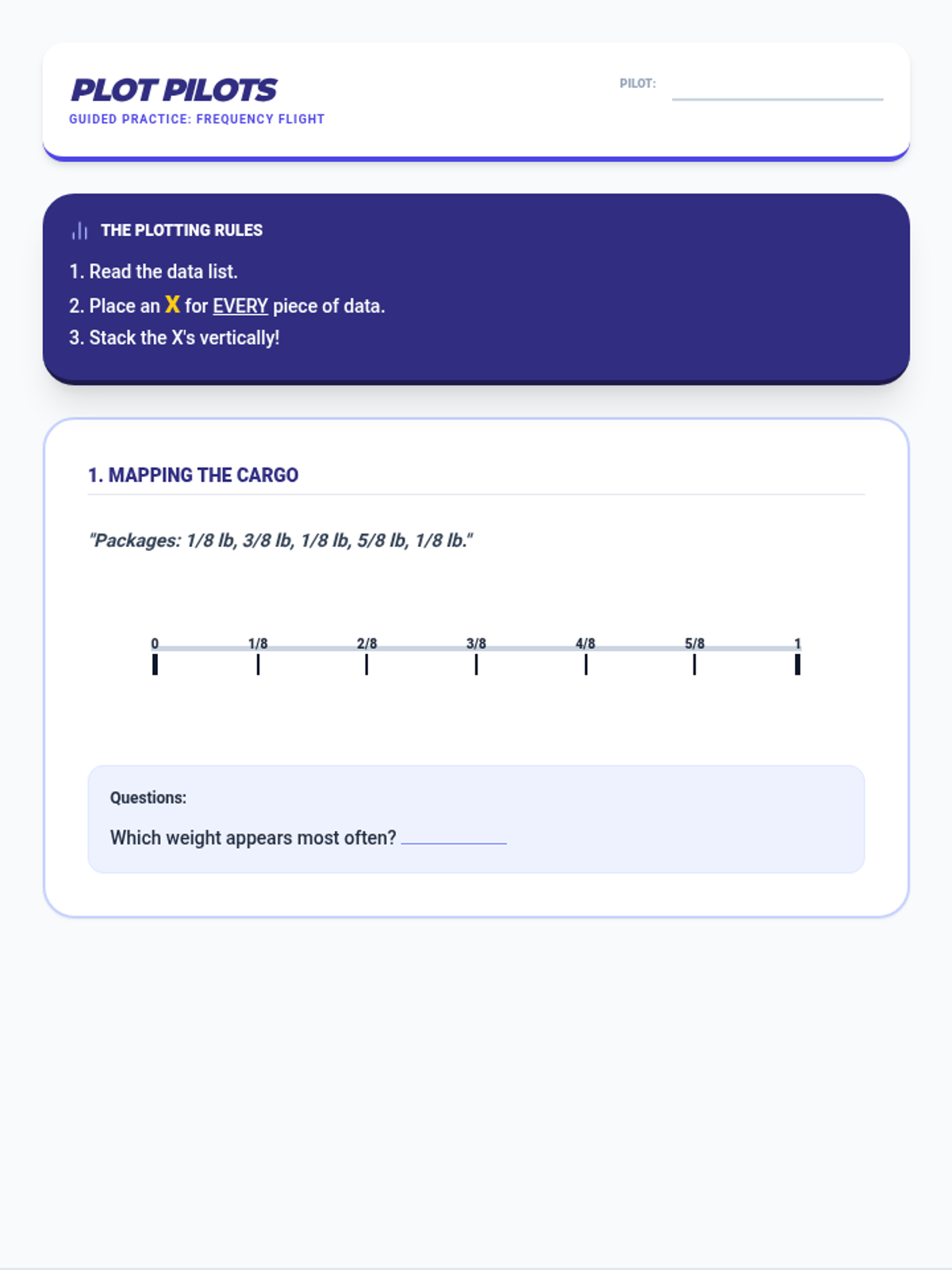
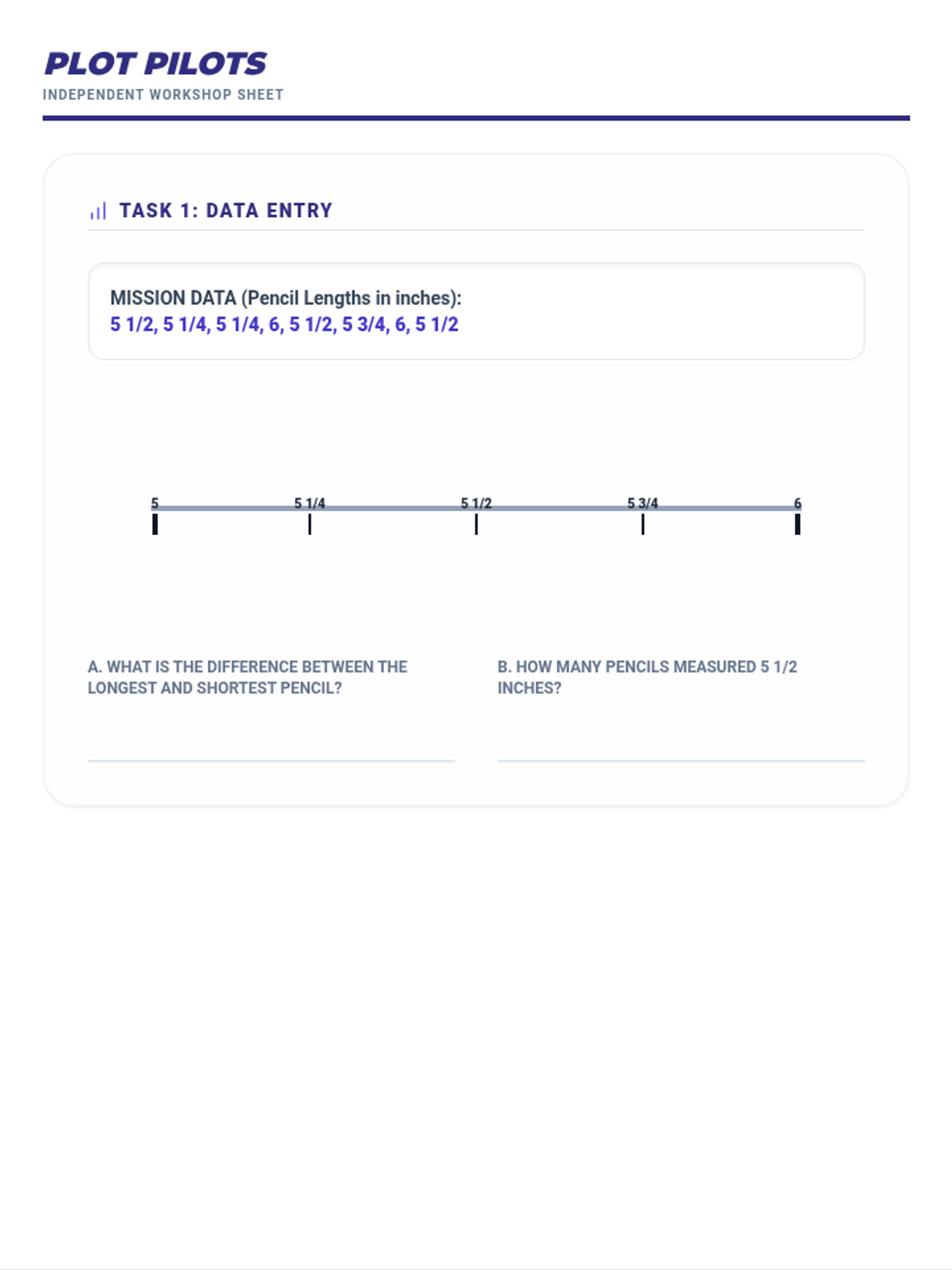
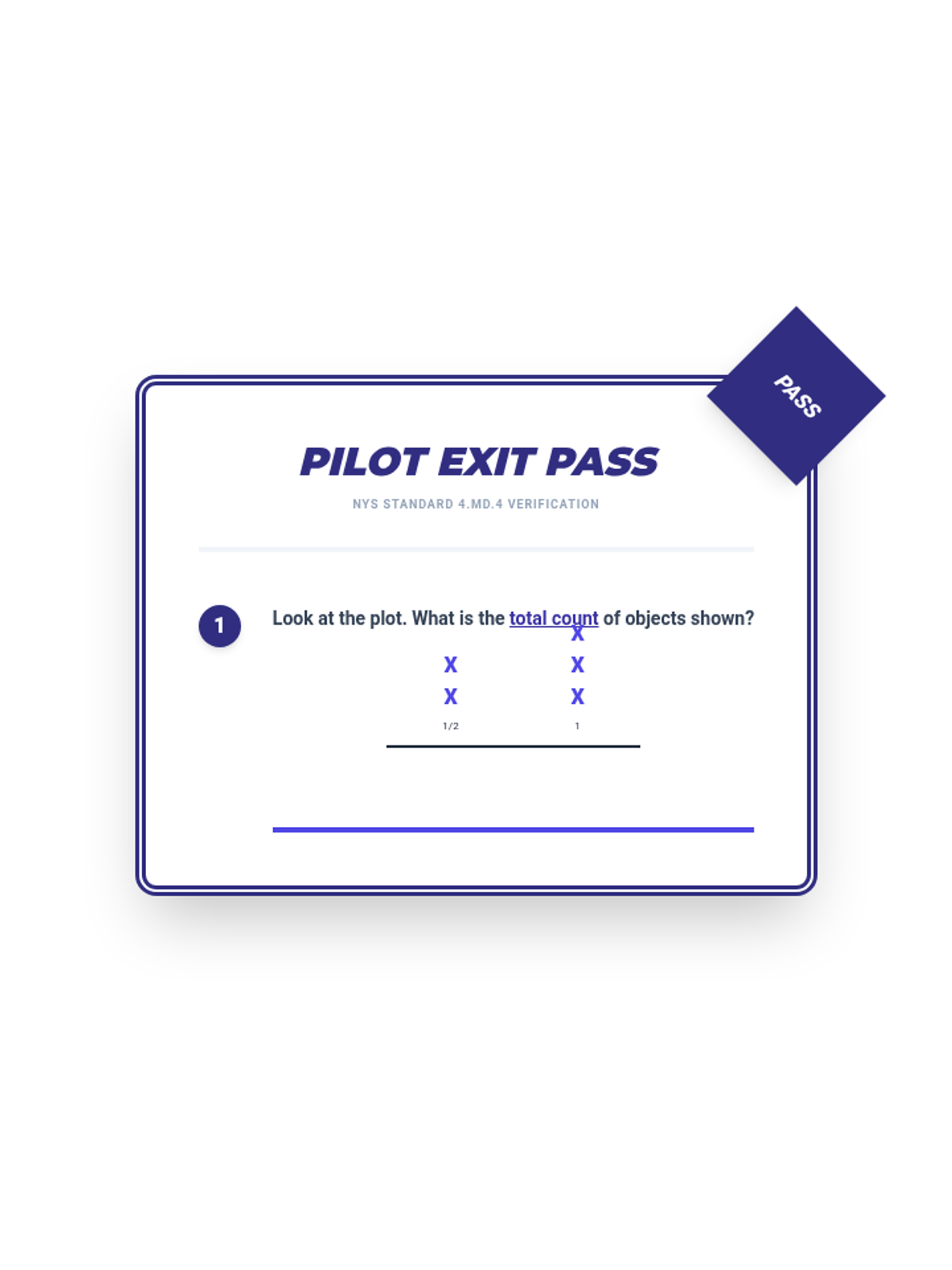
Tier 2 reteach for standard 4.MD.4: Make a line plot to display a data set of measurements in fractions of a unit.
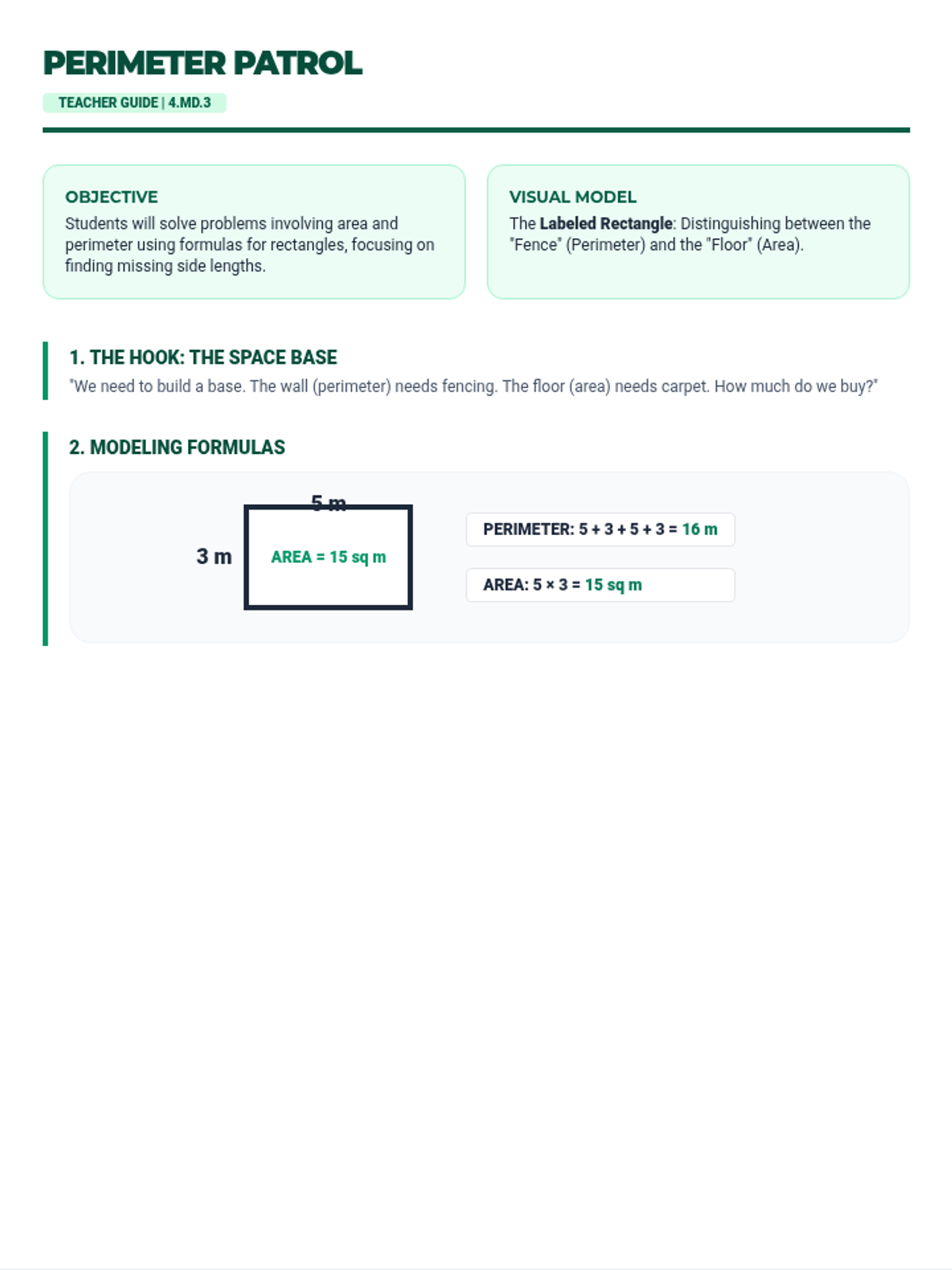
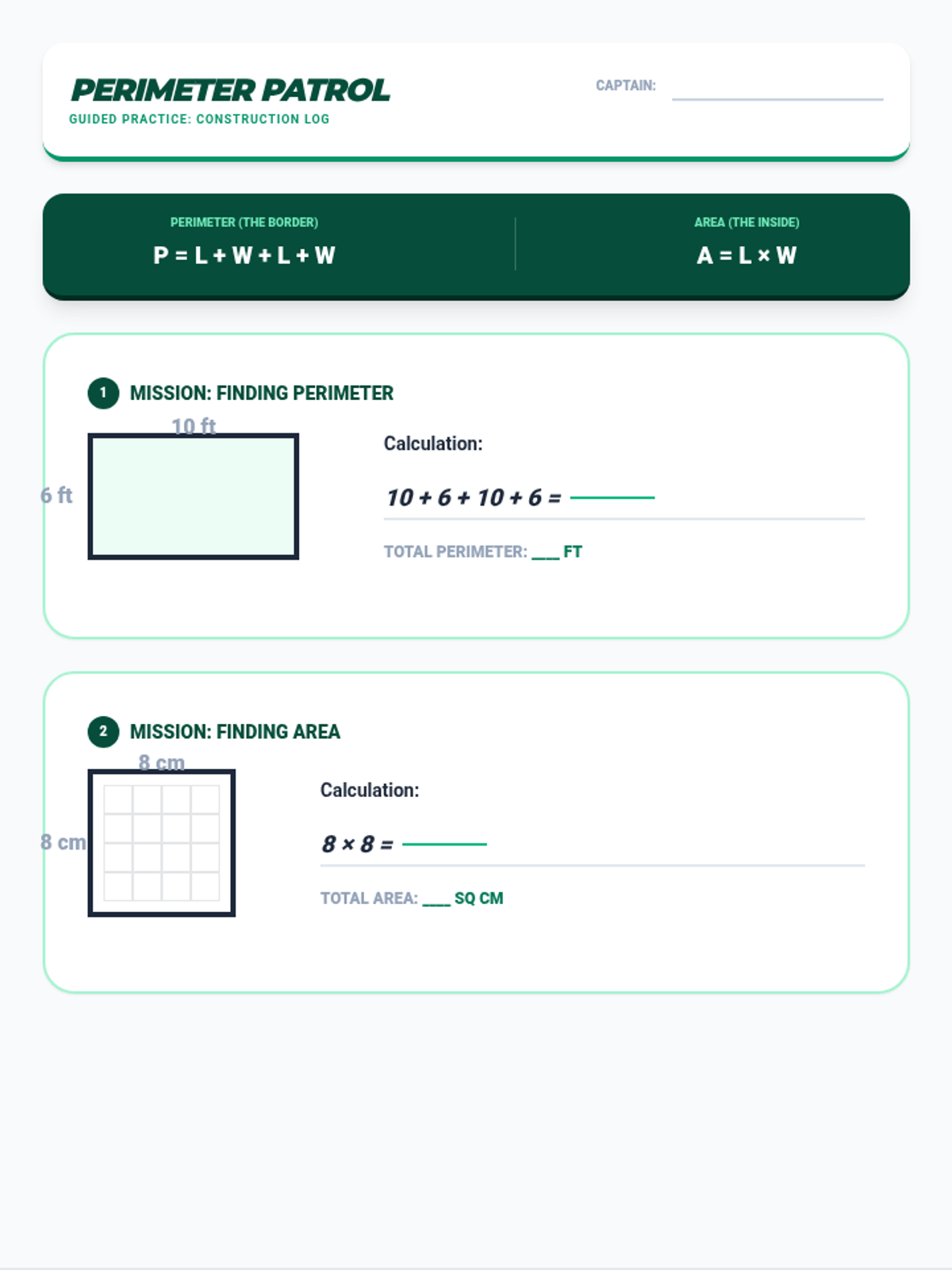
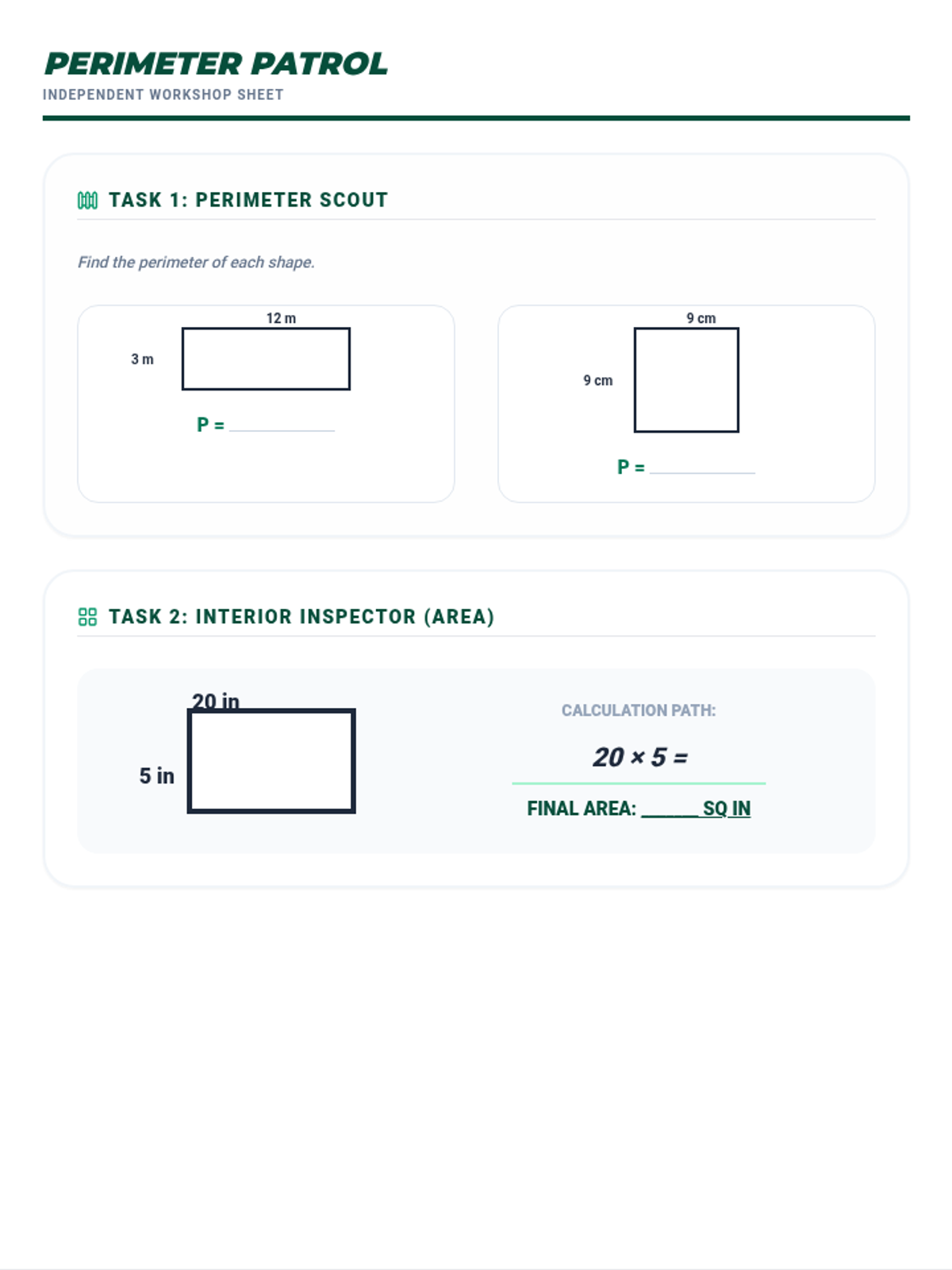
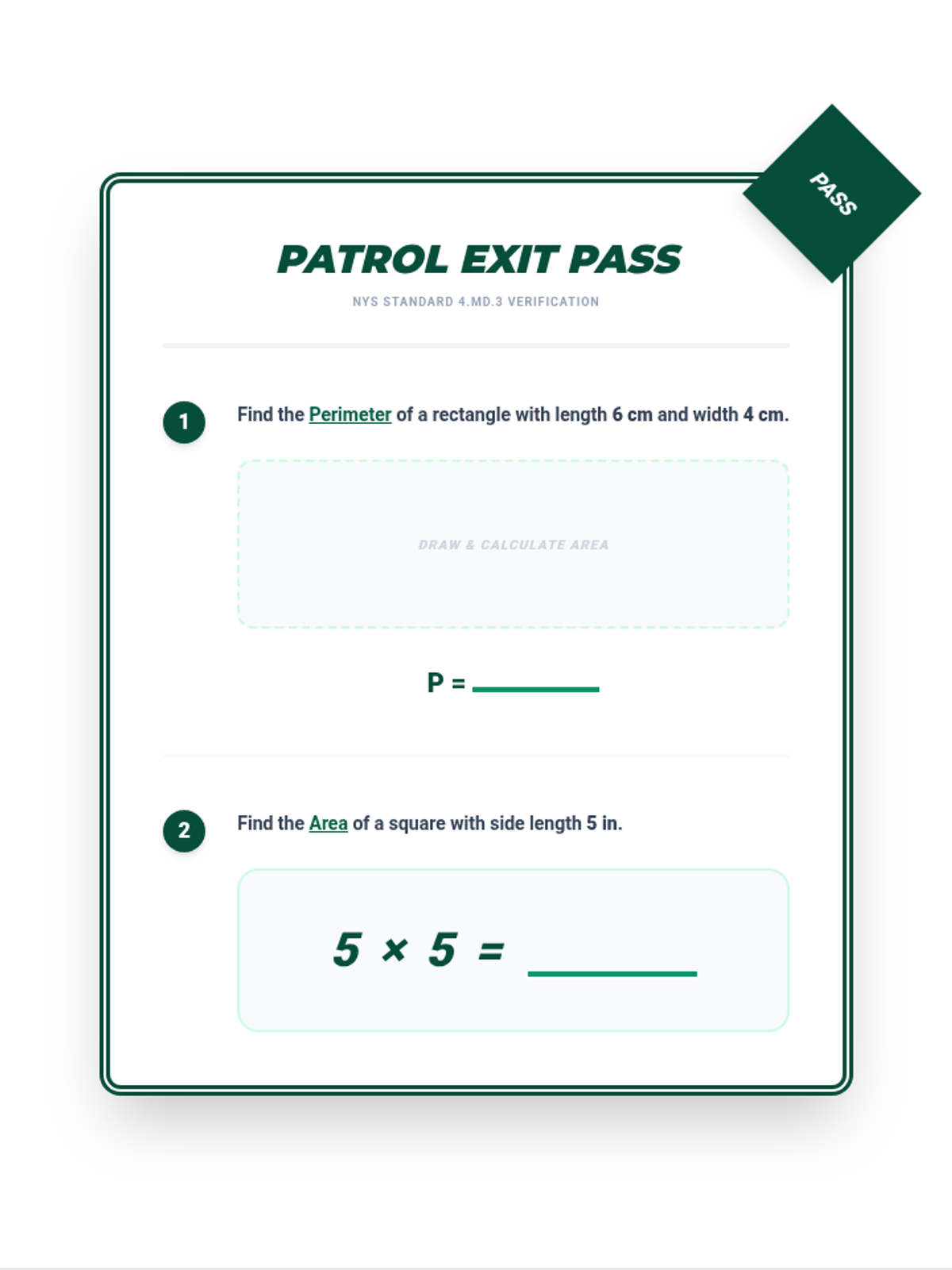
Tier 2 reteach for standard 4.MD.3: Apply the area and perimeter formulas for rectangles.
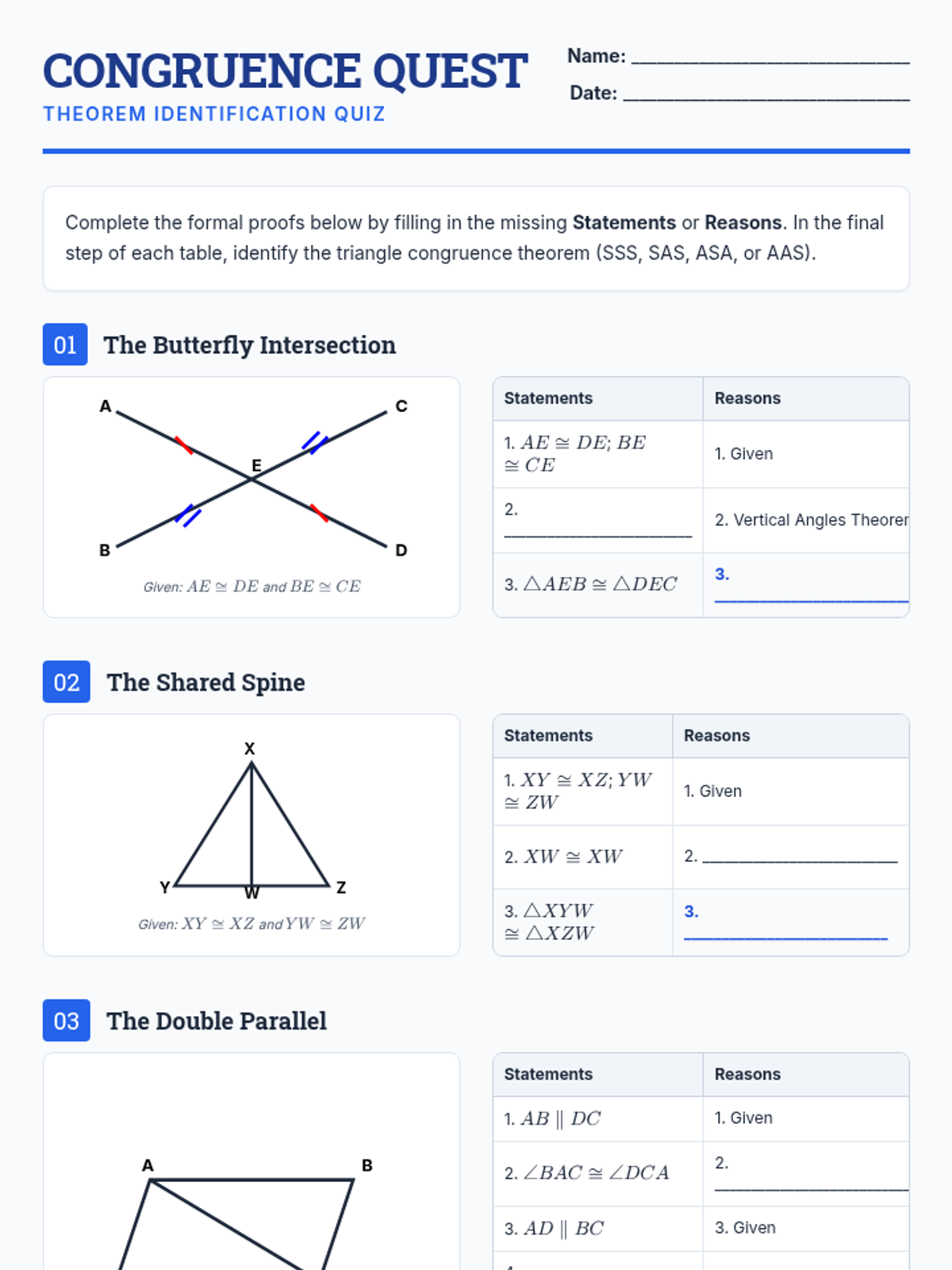
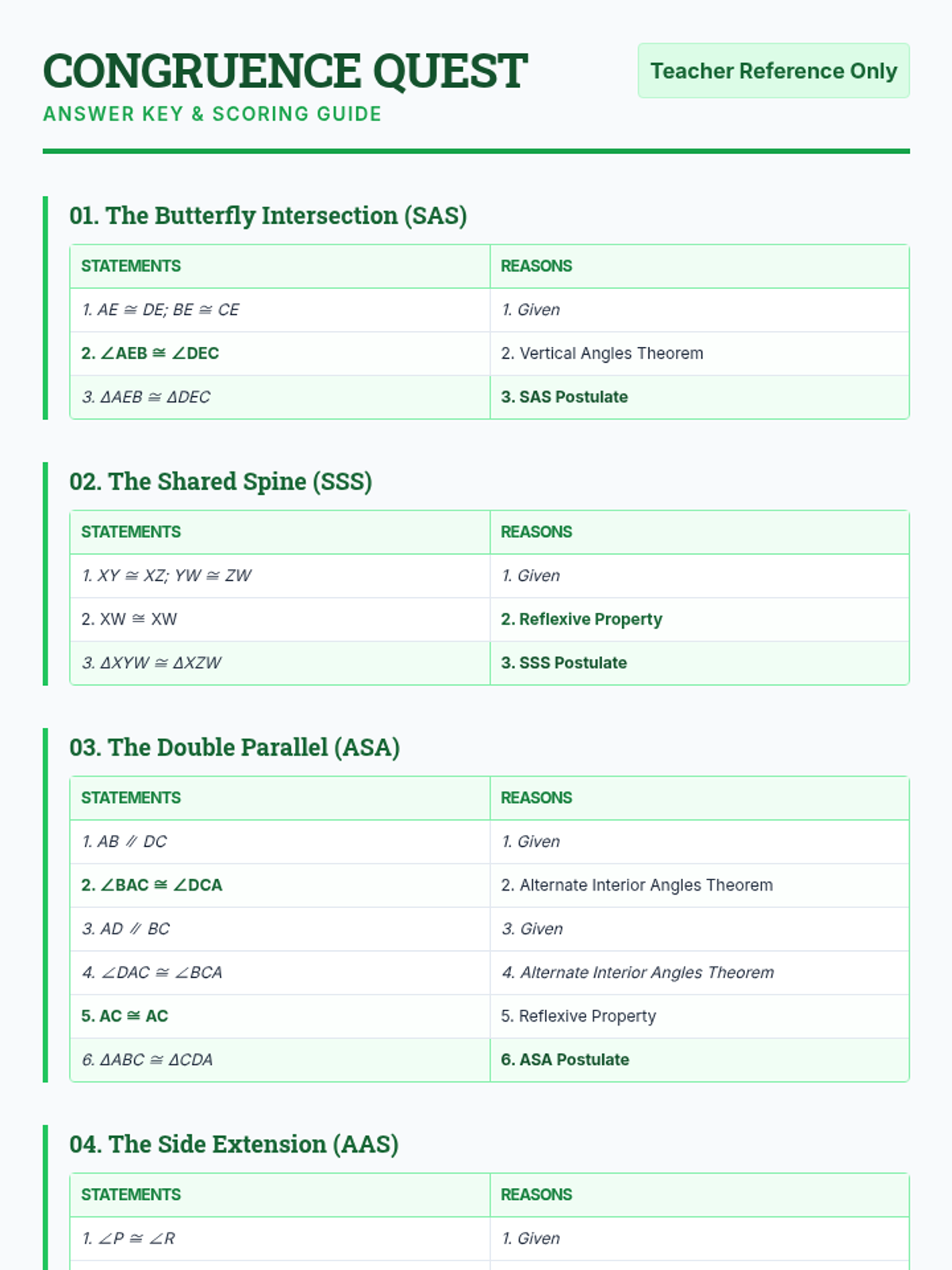
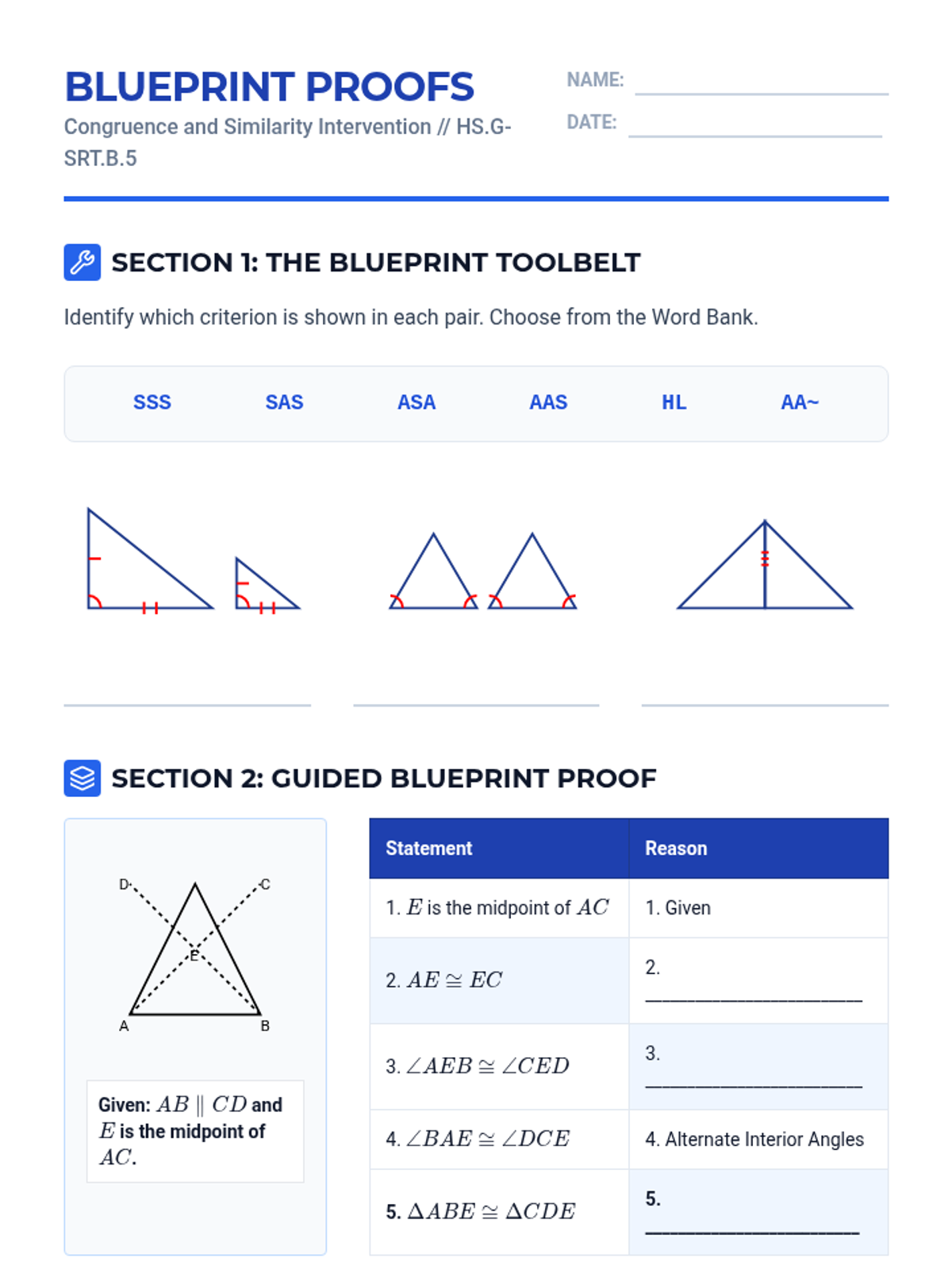
A focused challenge on identifying triangle congruence theorems through formal proofs, requiring students to complete statement-reason tables.
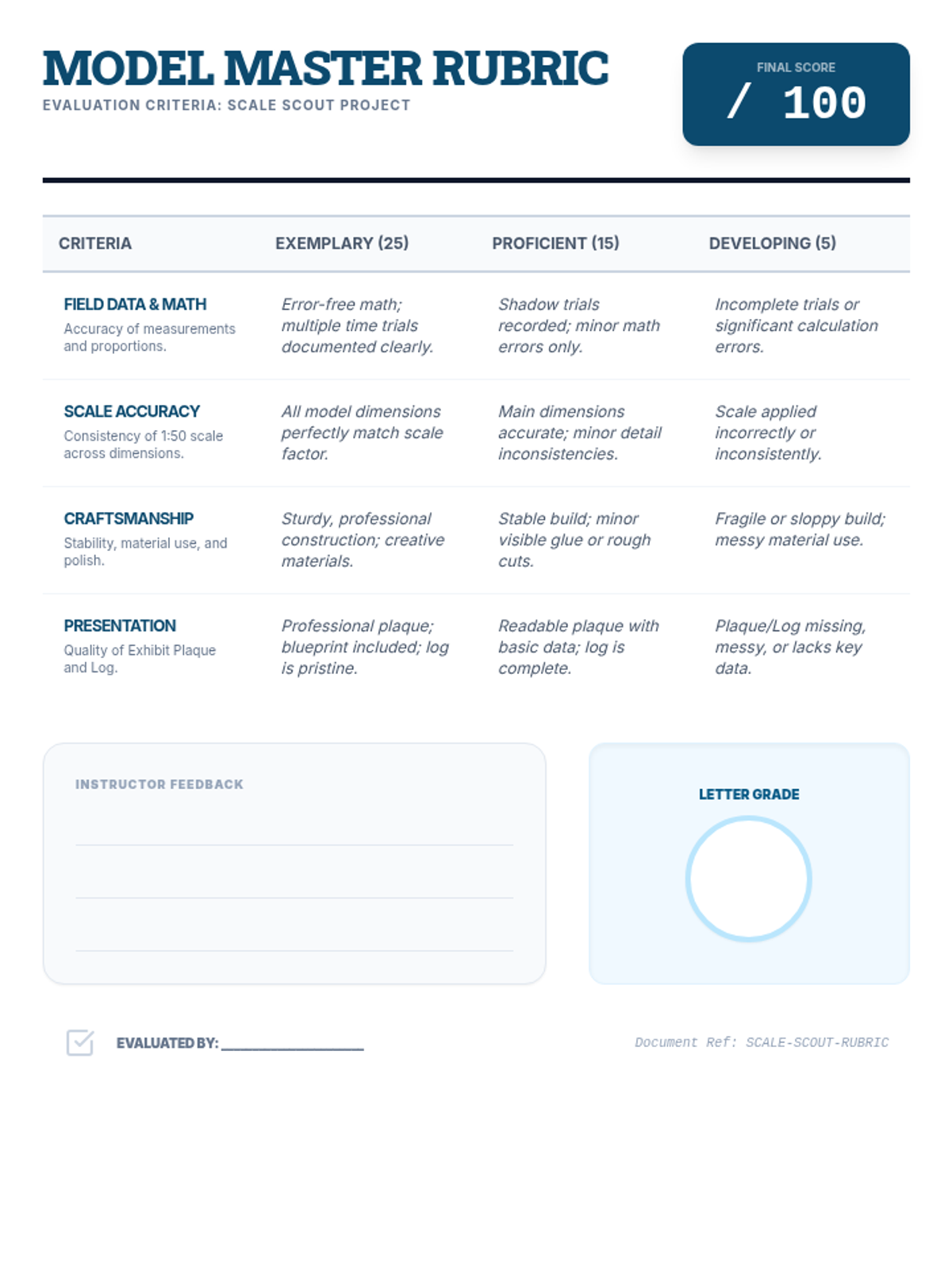
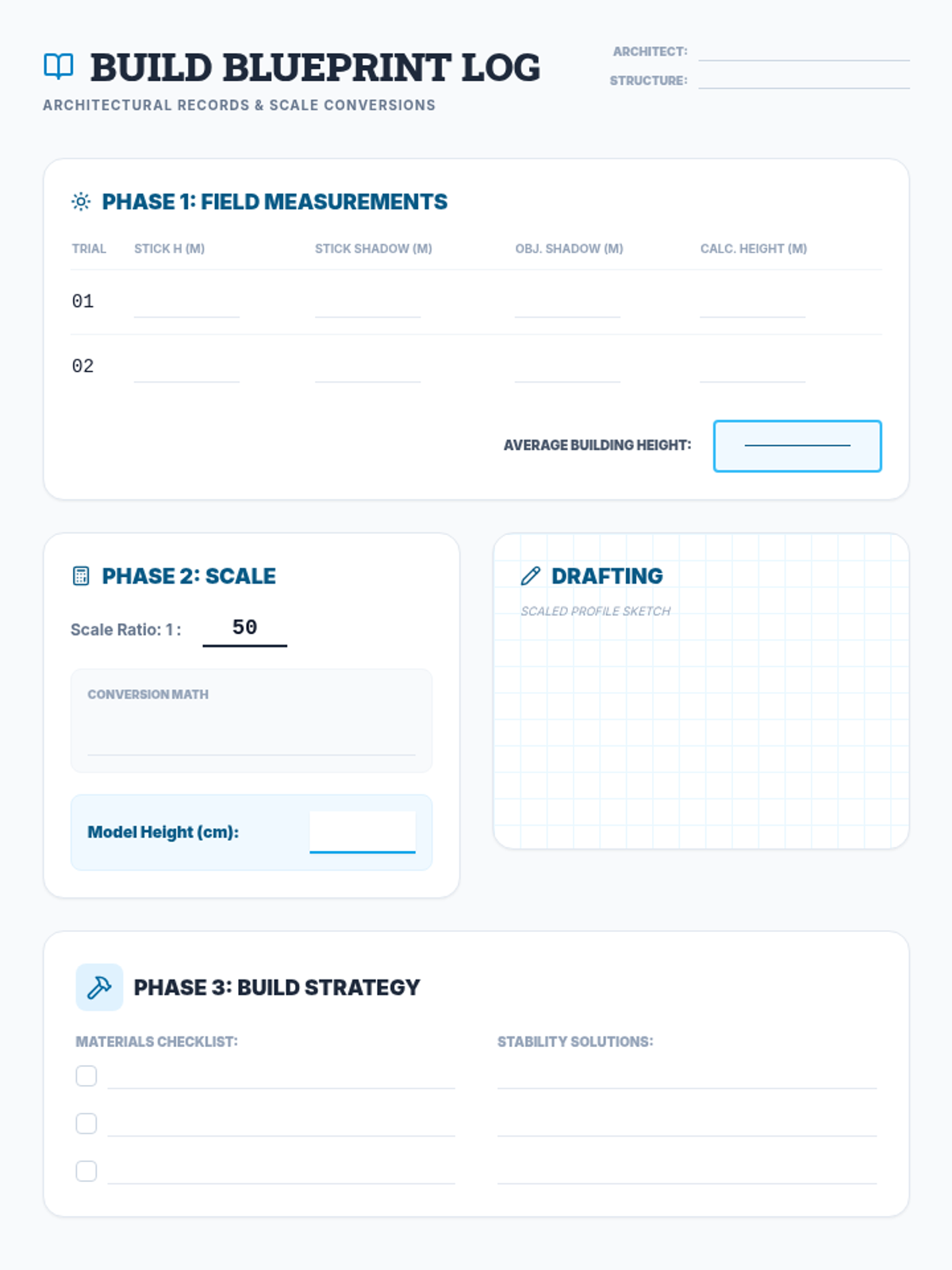
Students apply their indirect measurement skills to a real-world object, calculate scale factors, and construct a precision scale model of their chosen structure.
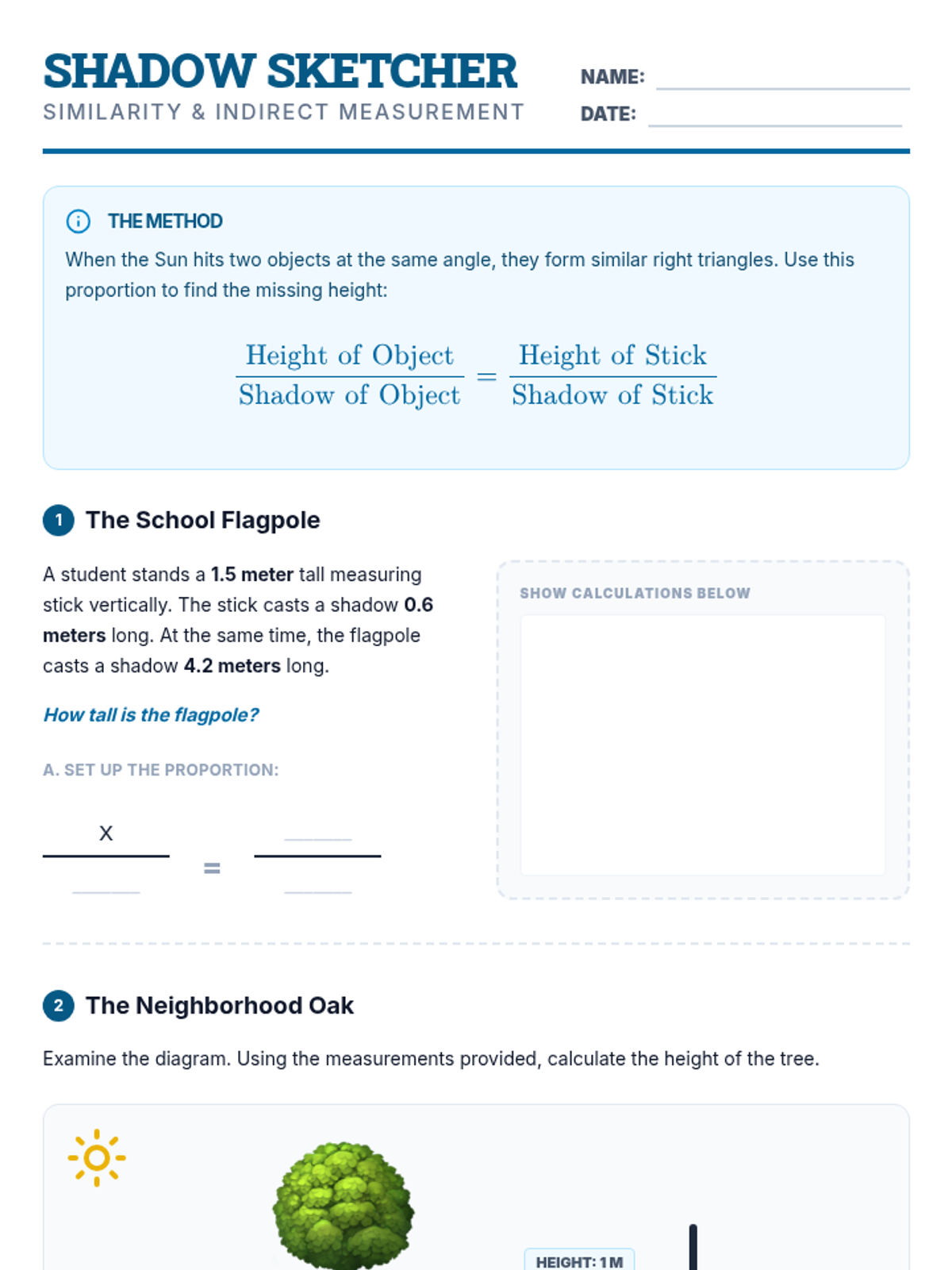
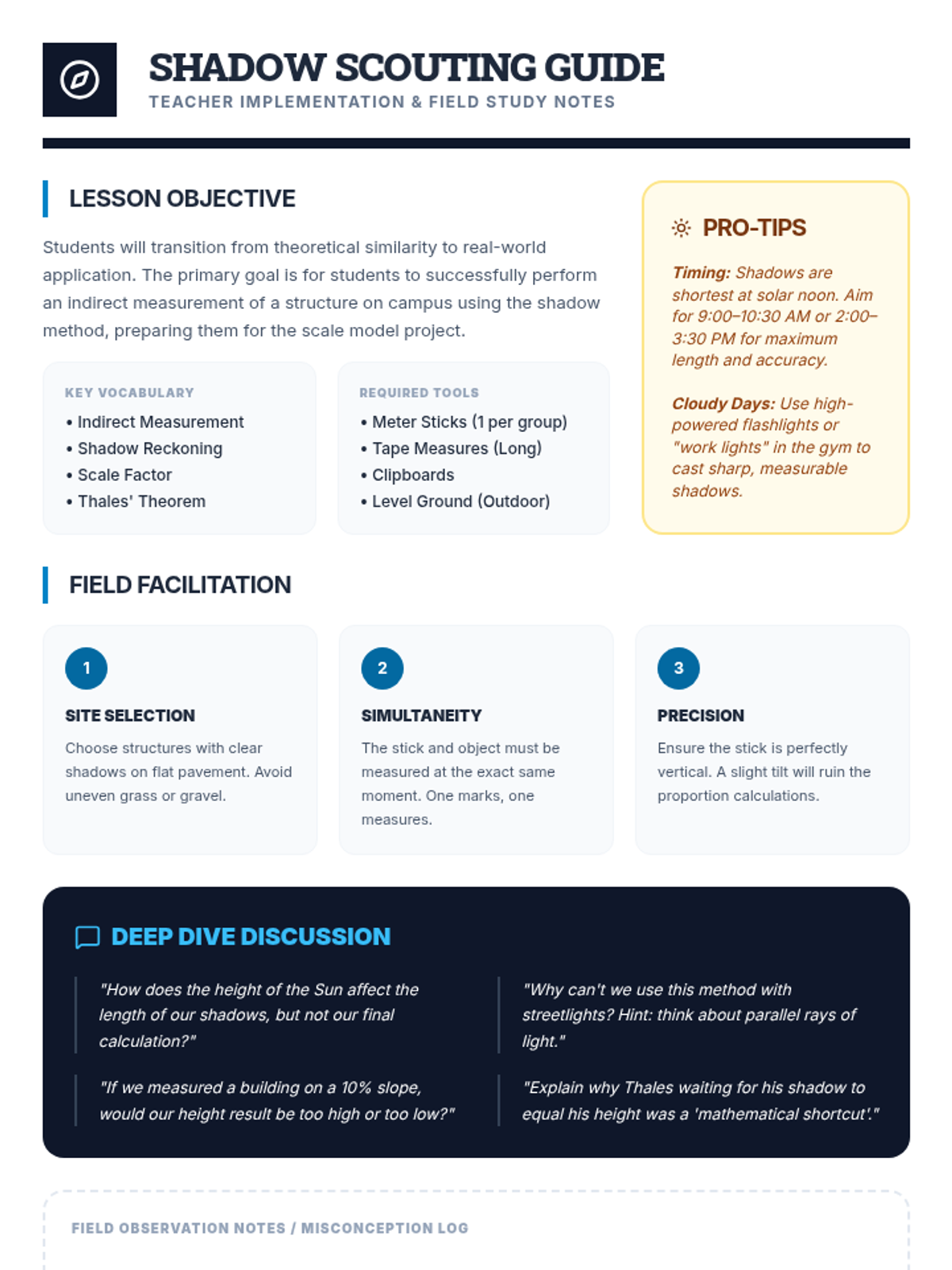
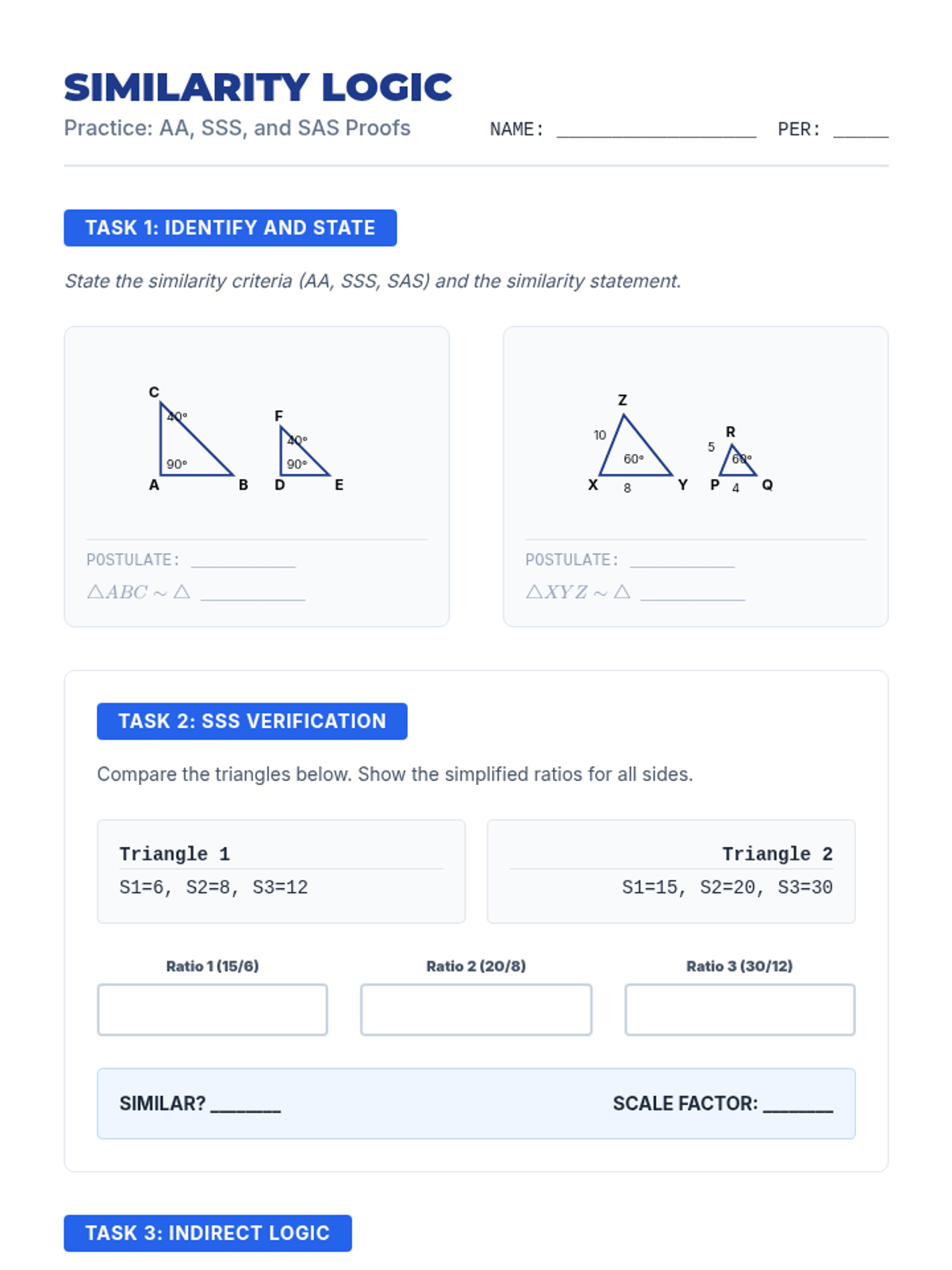
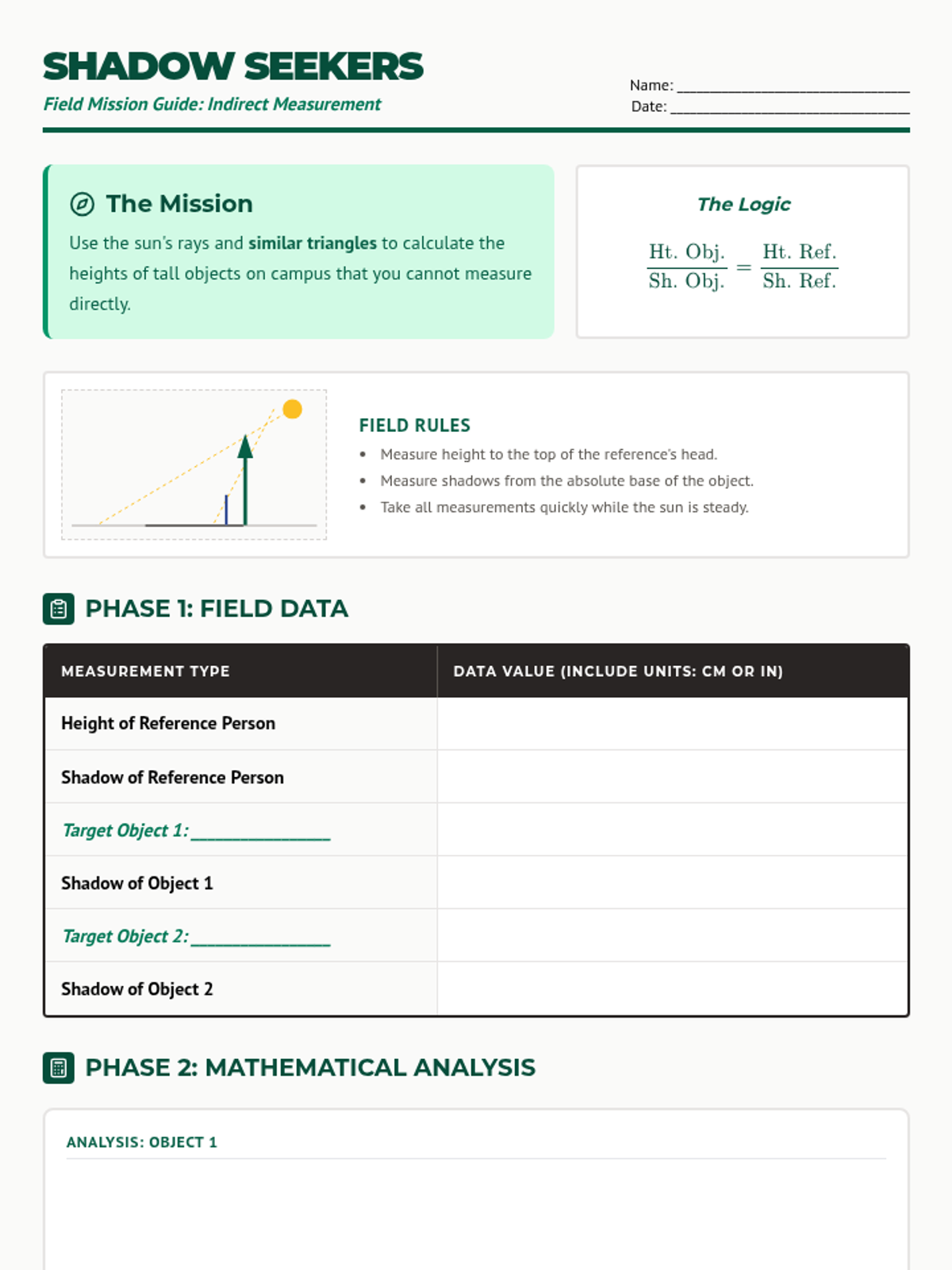
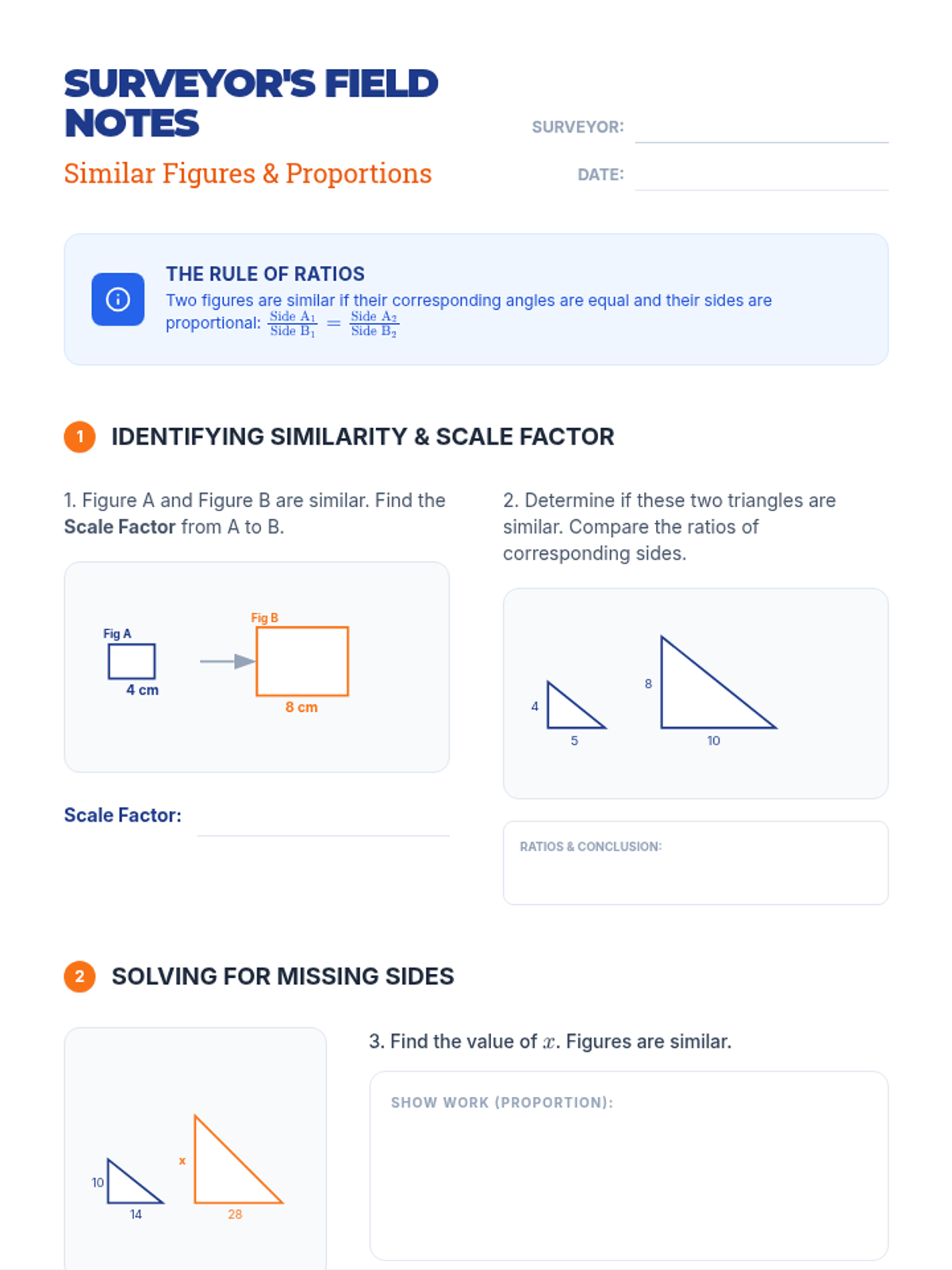
Students learn the mathematical principles of similarity and the shadow method for indirect measurement through guided practice and outdoor exploration.
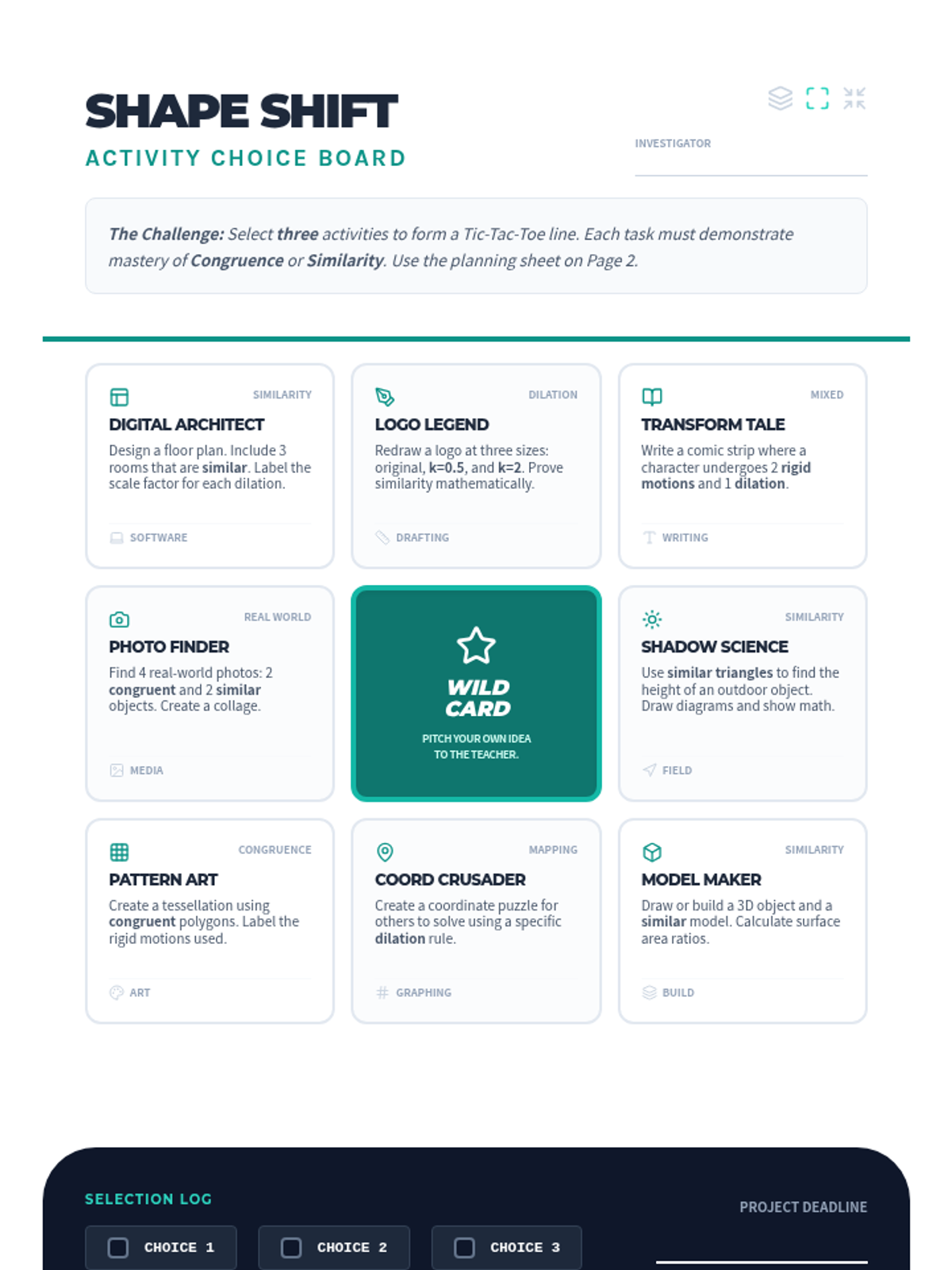
A hands-on project exploration where 8th-grade students investigate the geometric relationships between congruent and similar shapes through creative tasks and real-world applications.
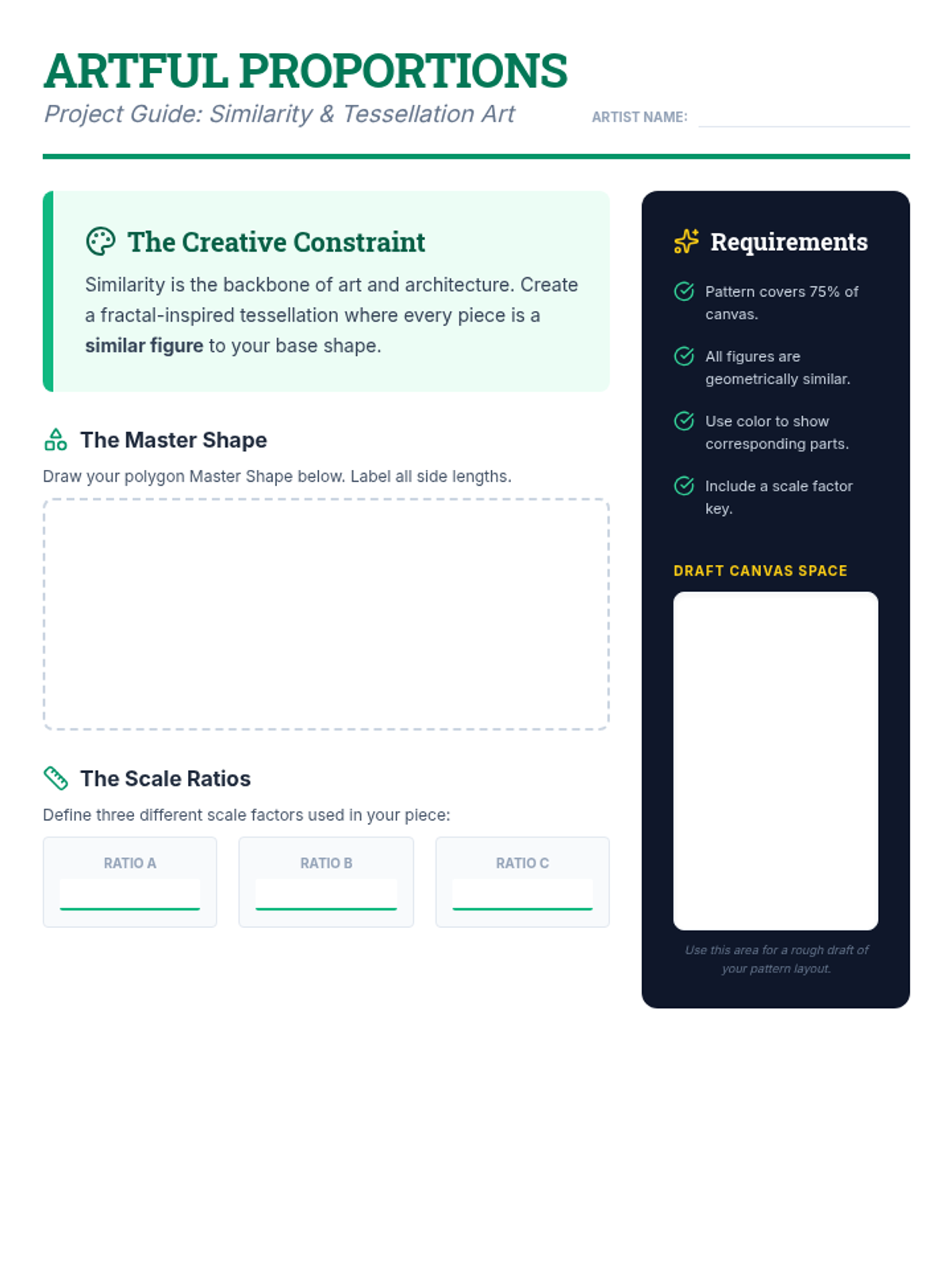
Students explore geometric similarity through art and tessellations, applying ratios and proportional parts to create scaled masterpieces.
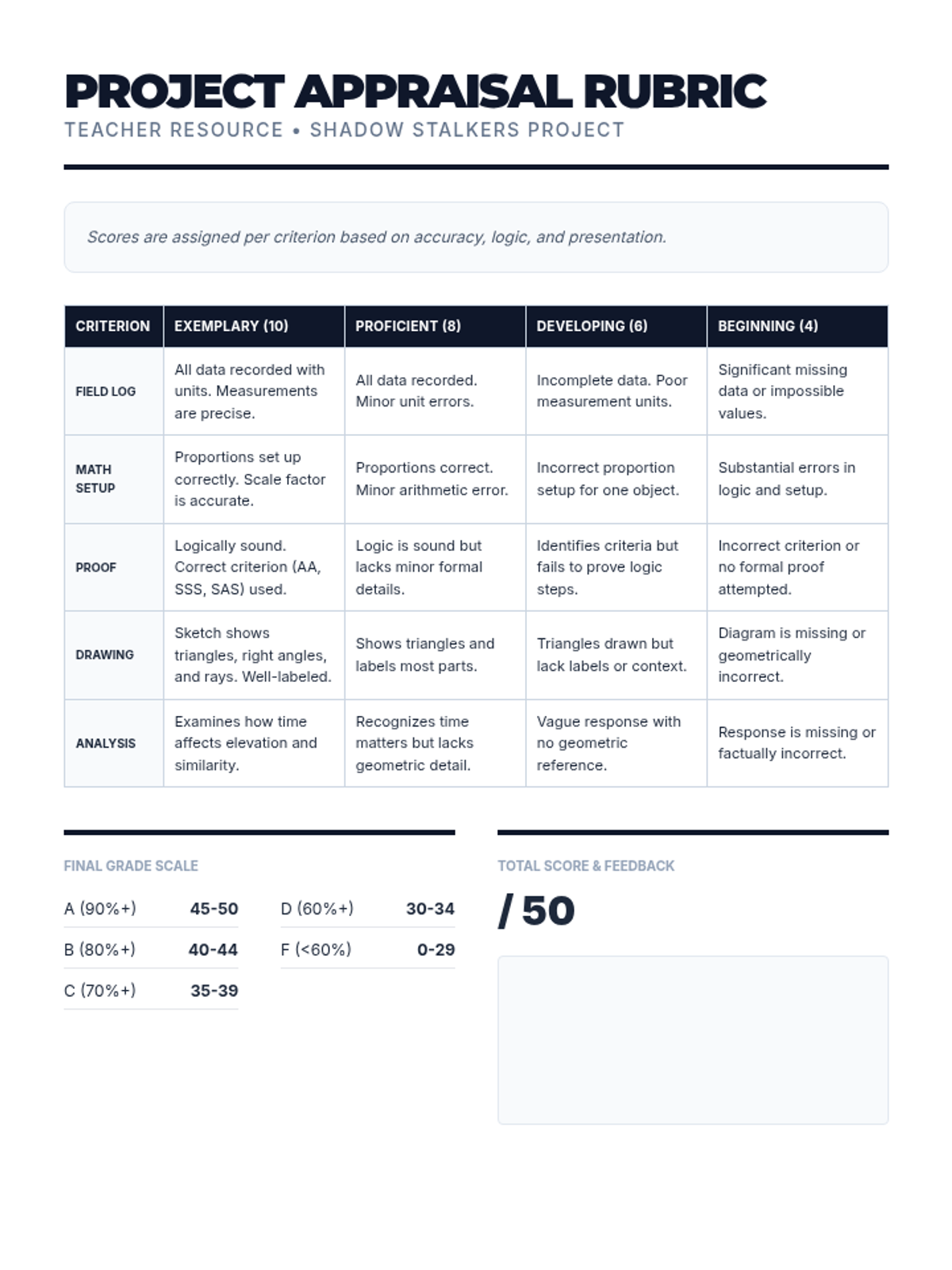
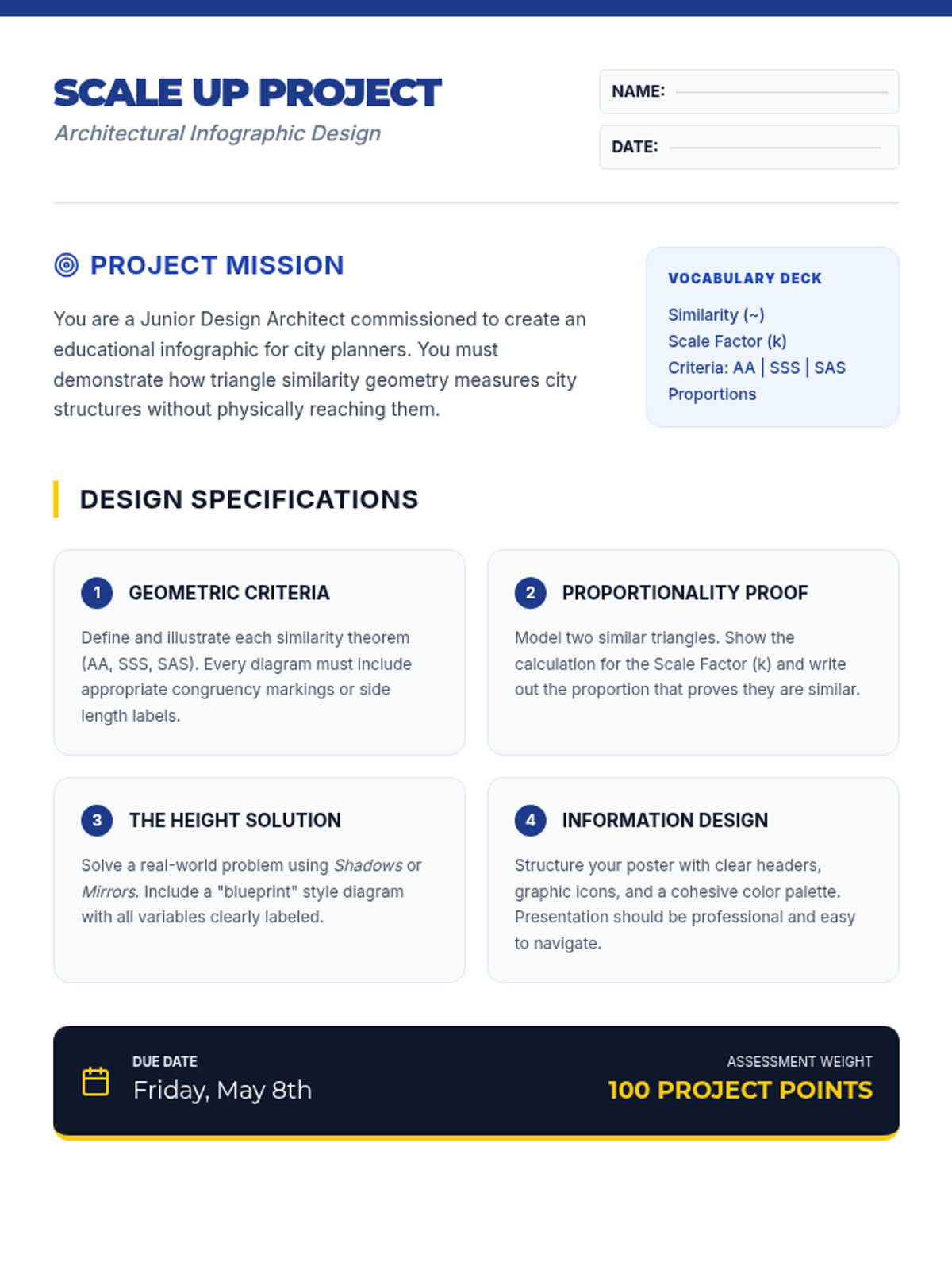
A hands-on geometry project where students apply similarity criteria (AA, SSS, SAS) to measure unreachable heights using shadow casting and mirror reflections. Students will perform outdoor measurements, calculate scale factors, and provide formal geometric proofs for their methods.
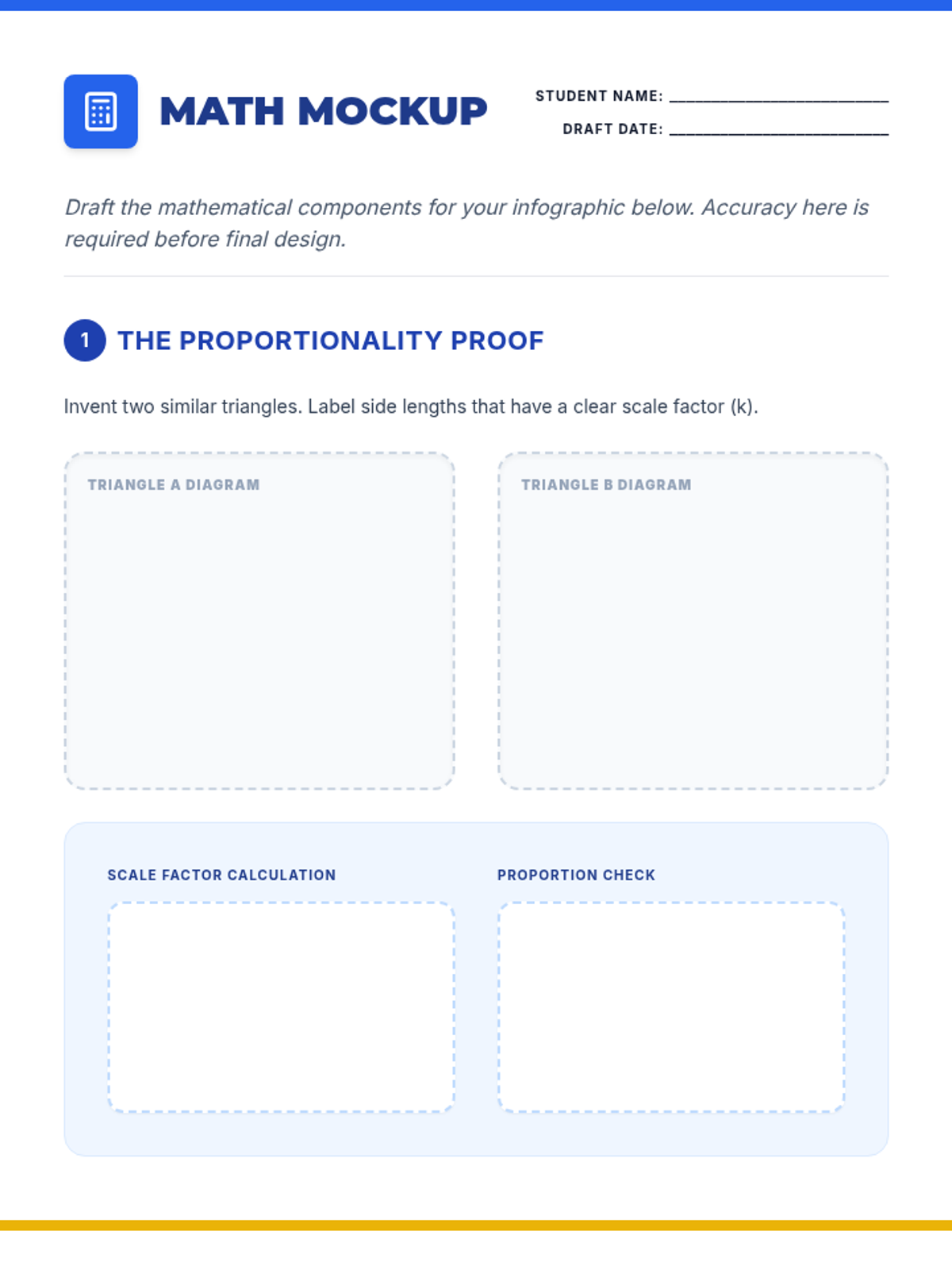
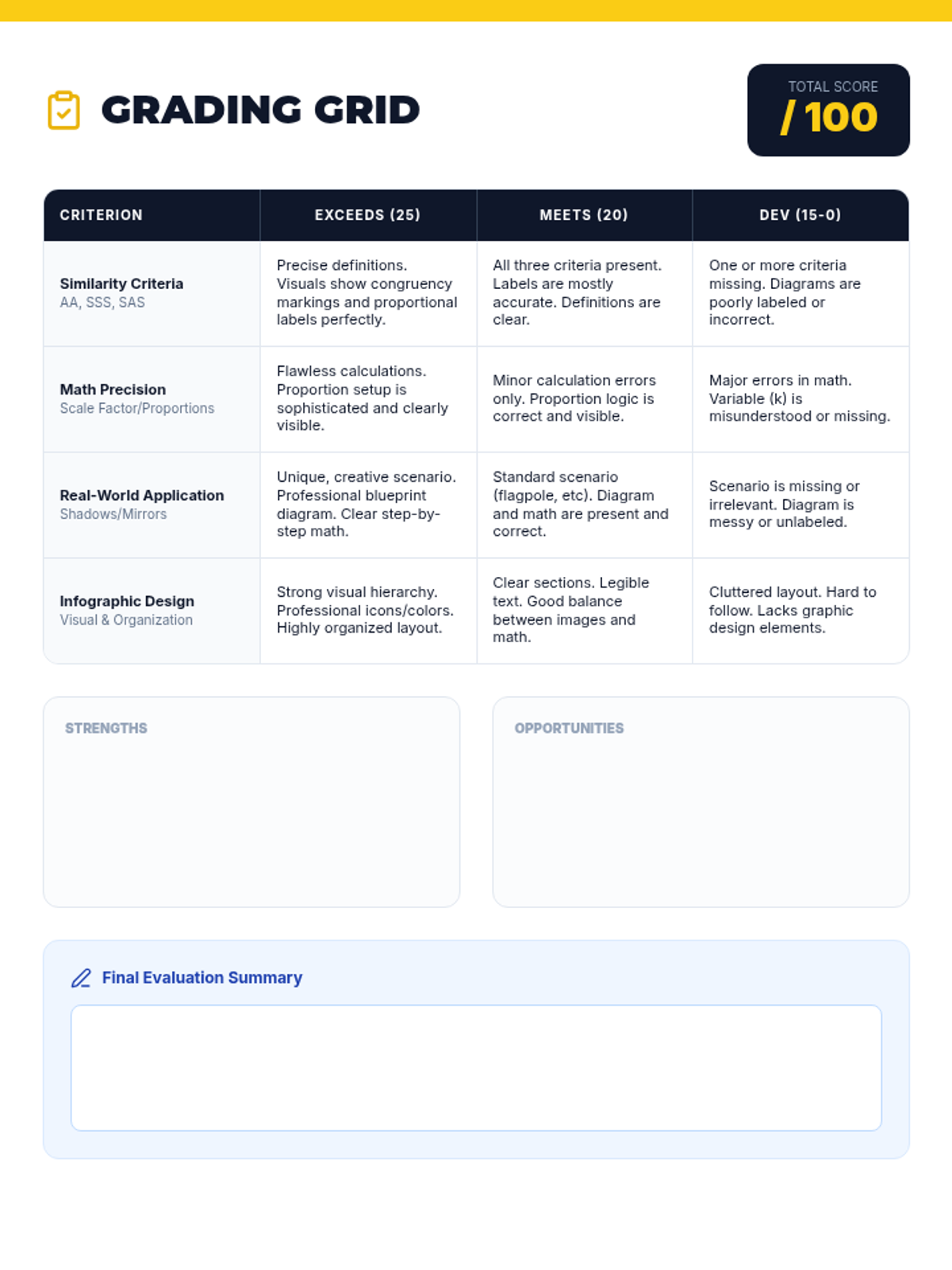
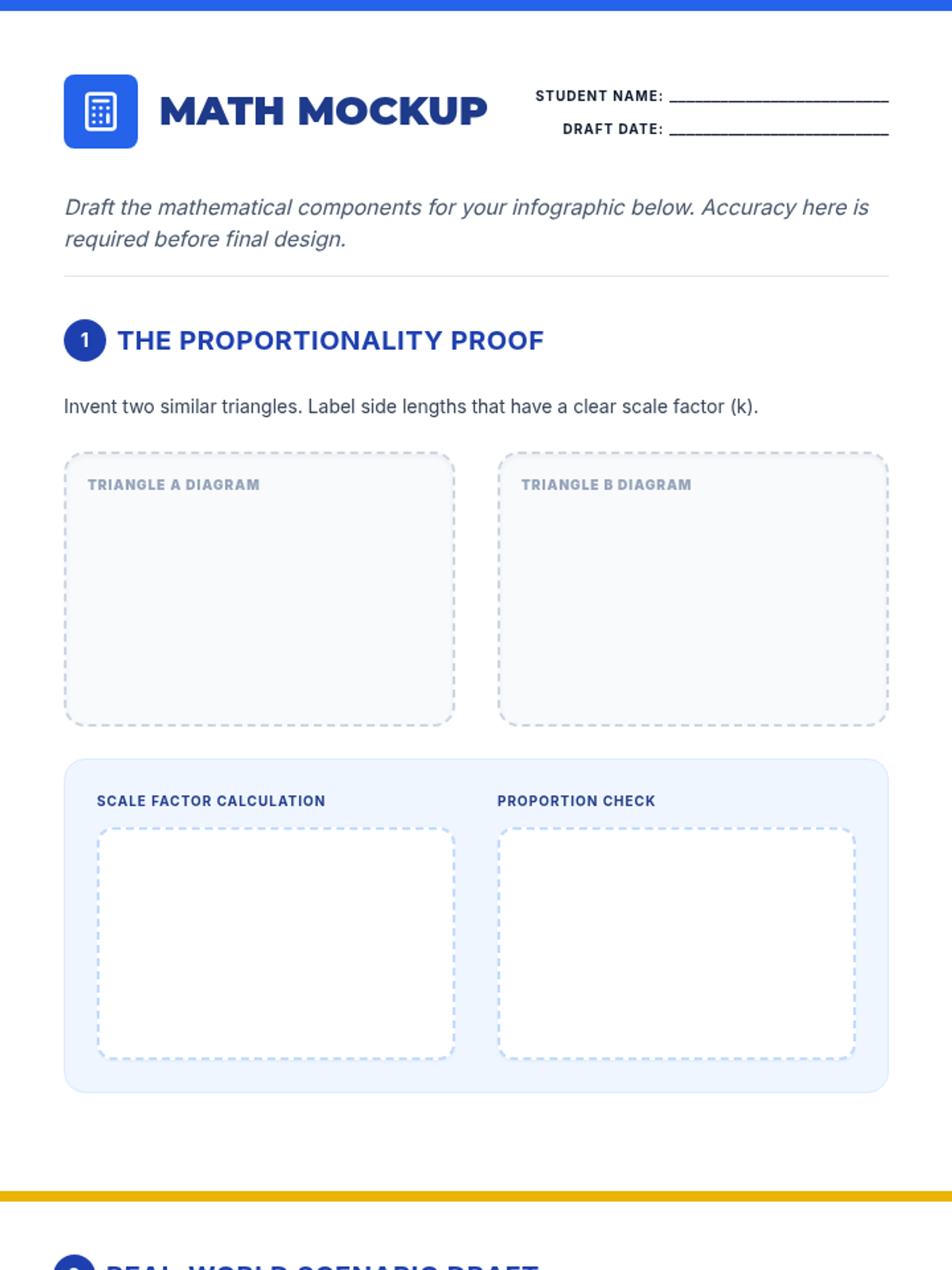
A project-based lesson where students design an infographic poster demonstrating their mastery of triangle similarity criteria and real-world proportional reasoning.
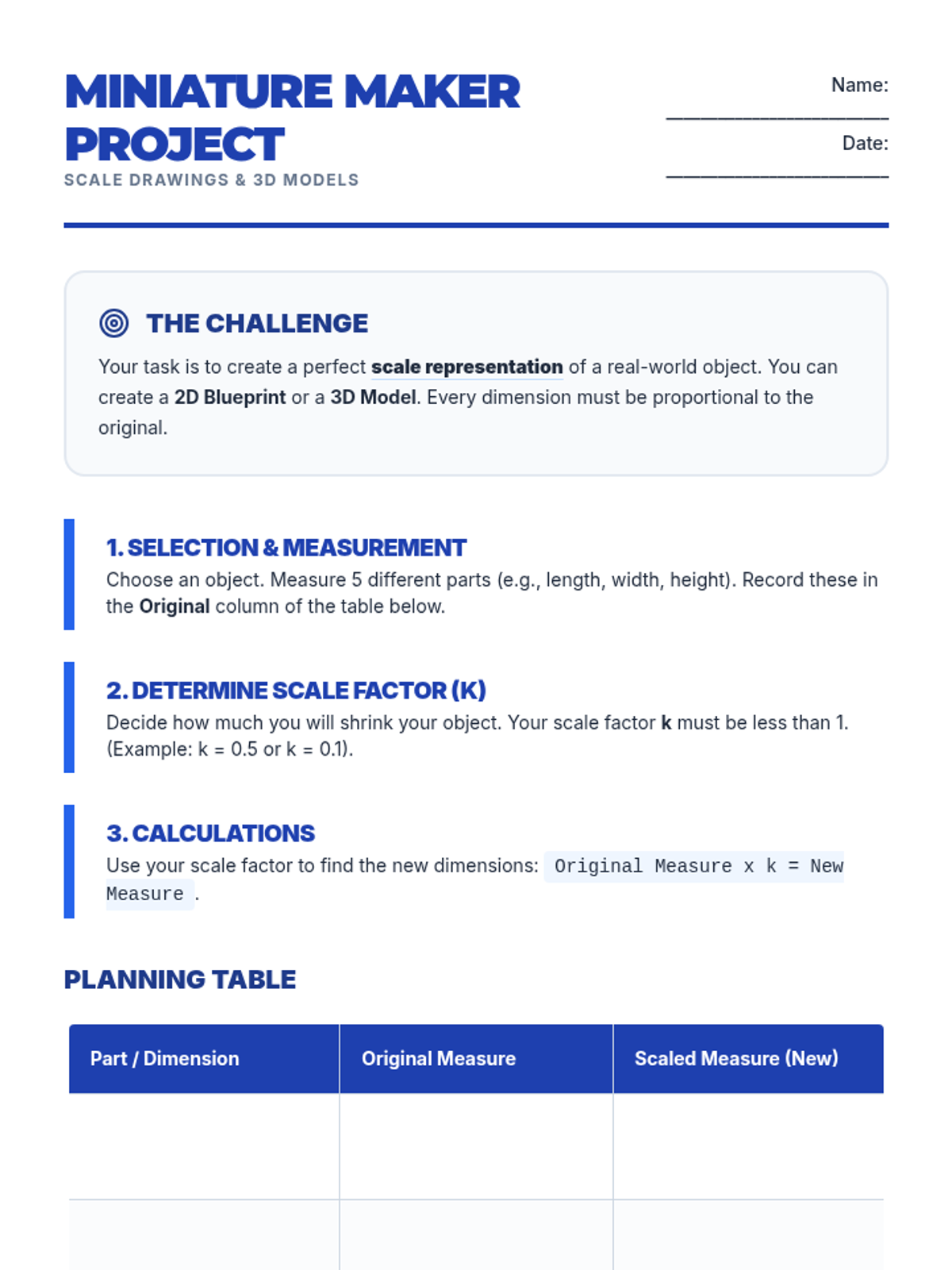
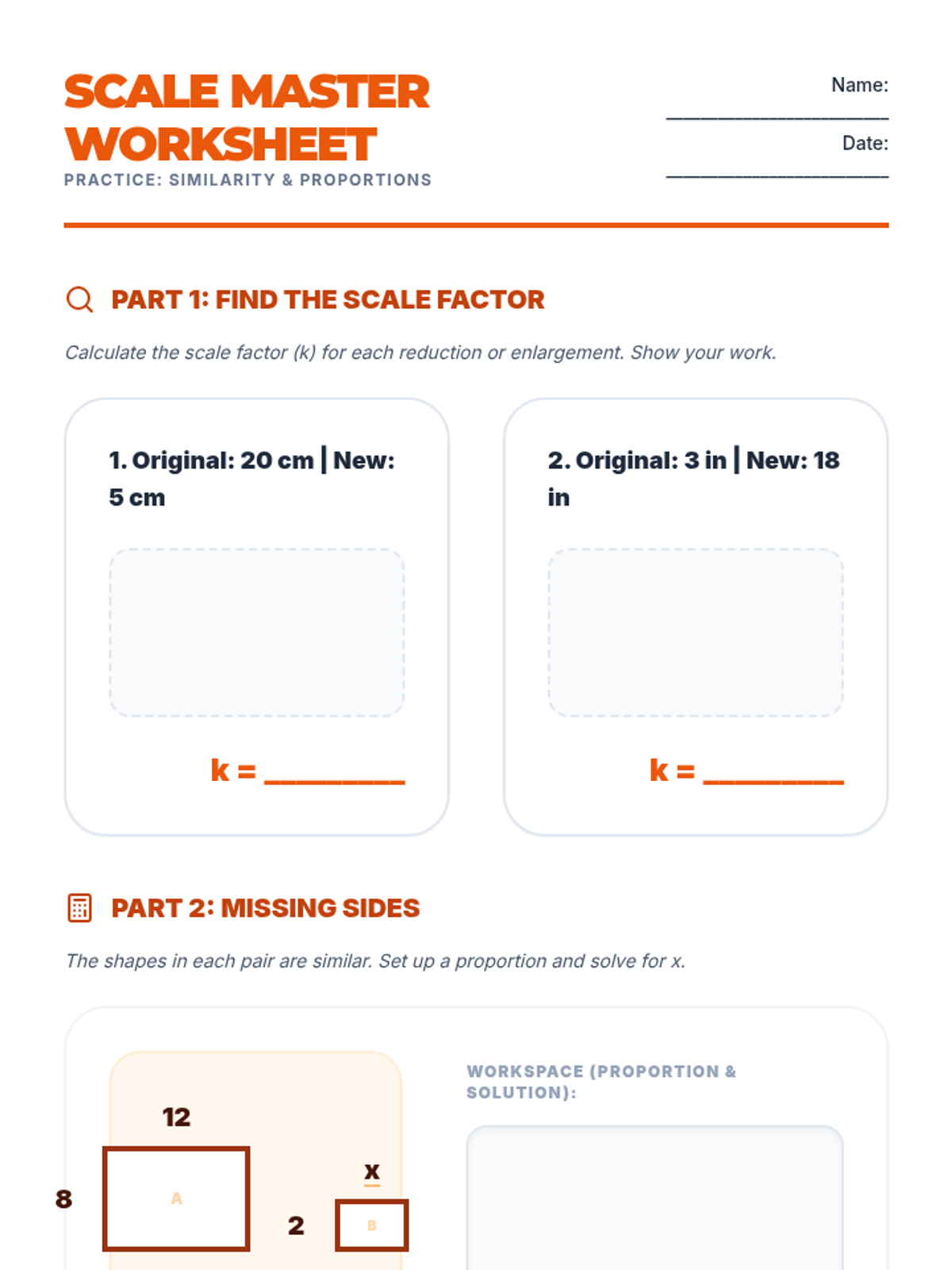
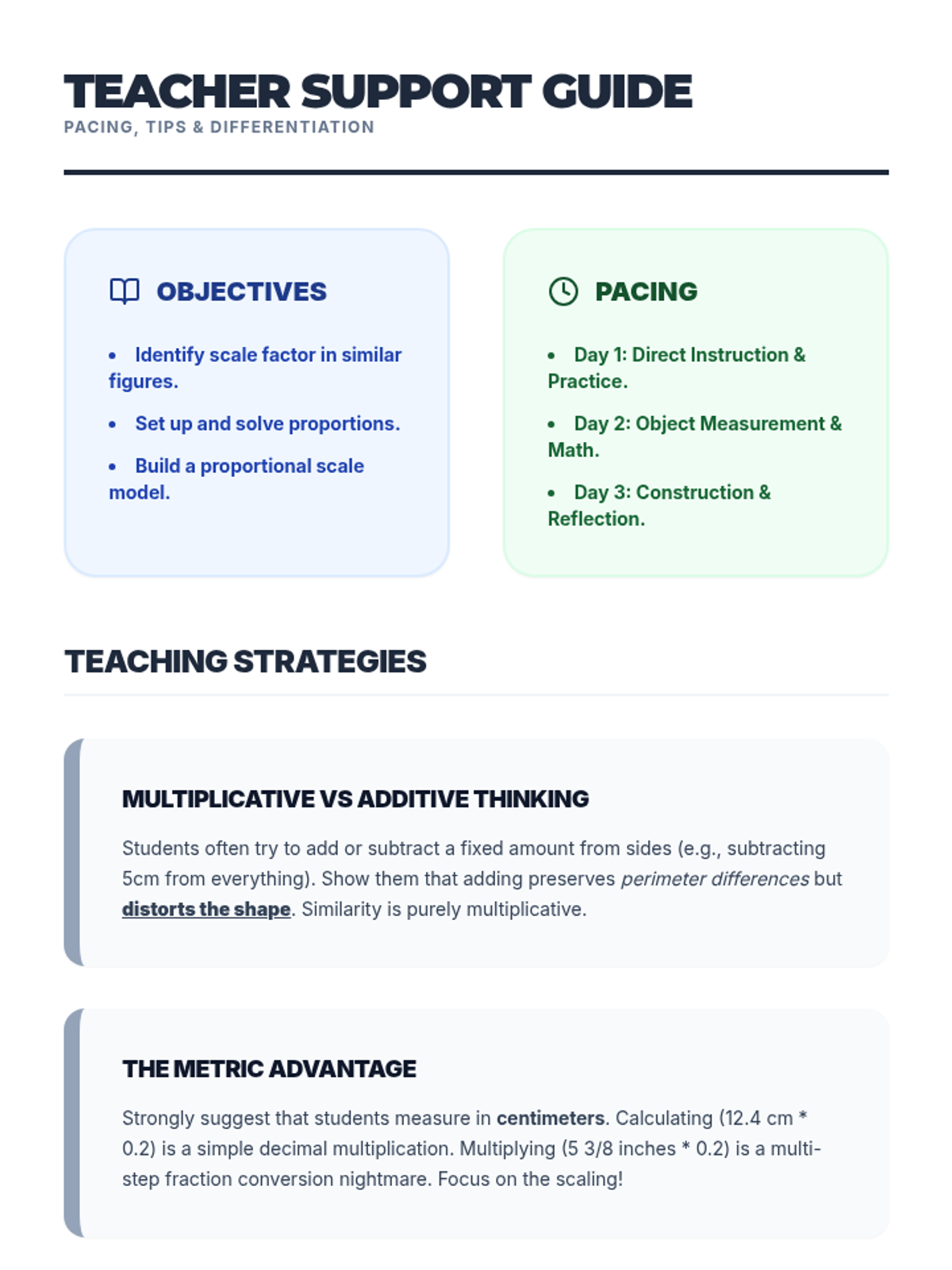
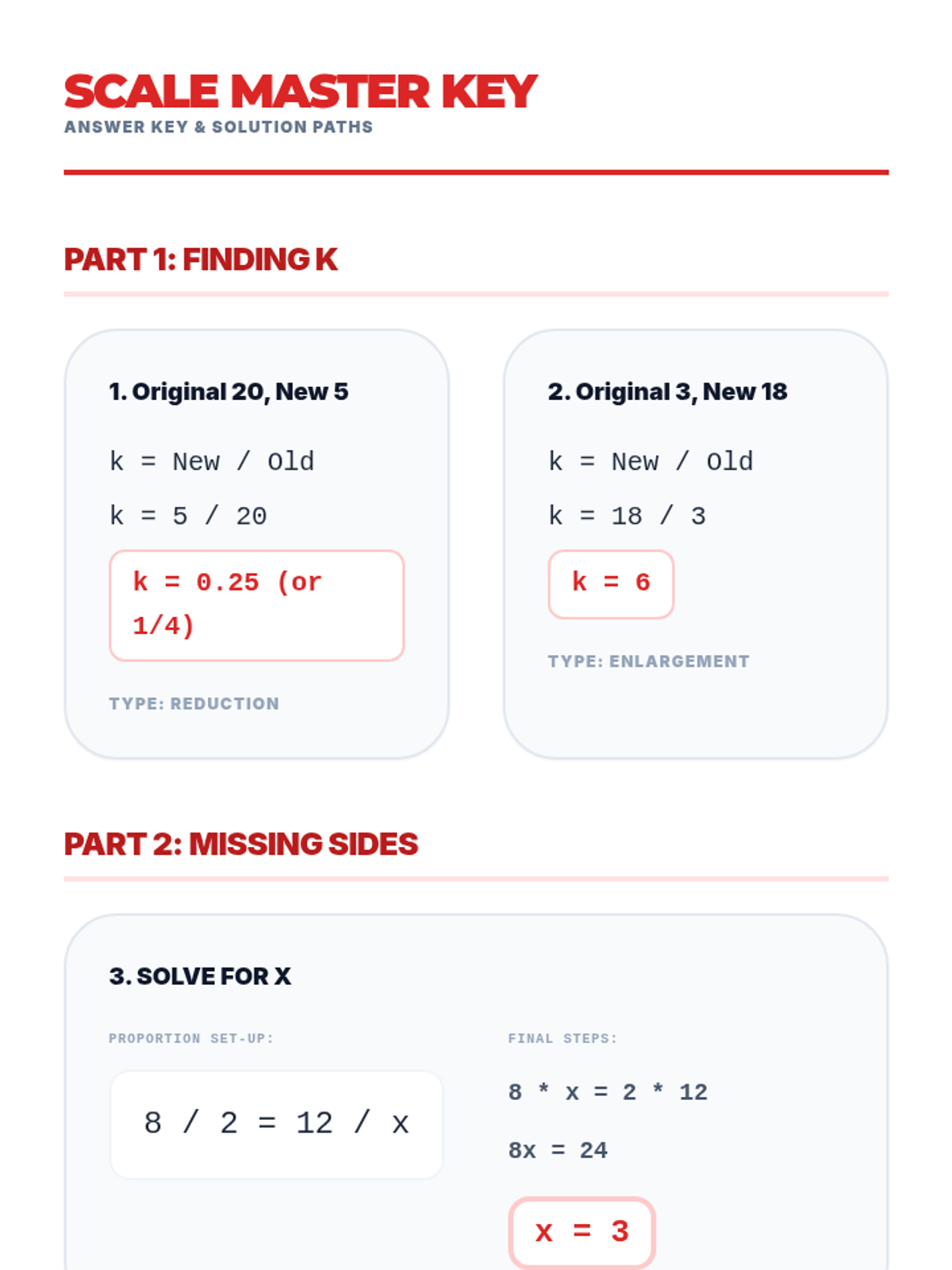
A project-based lesson where students apply concepts of similarity, scale factor, and proportions to create a scale drawing or 3D model of a real-world object. Students move from mathematical practice to creative application.
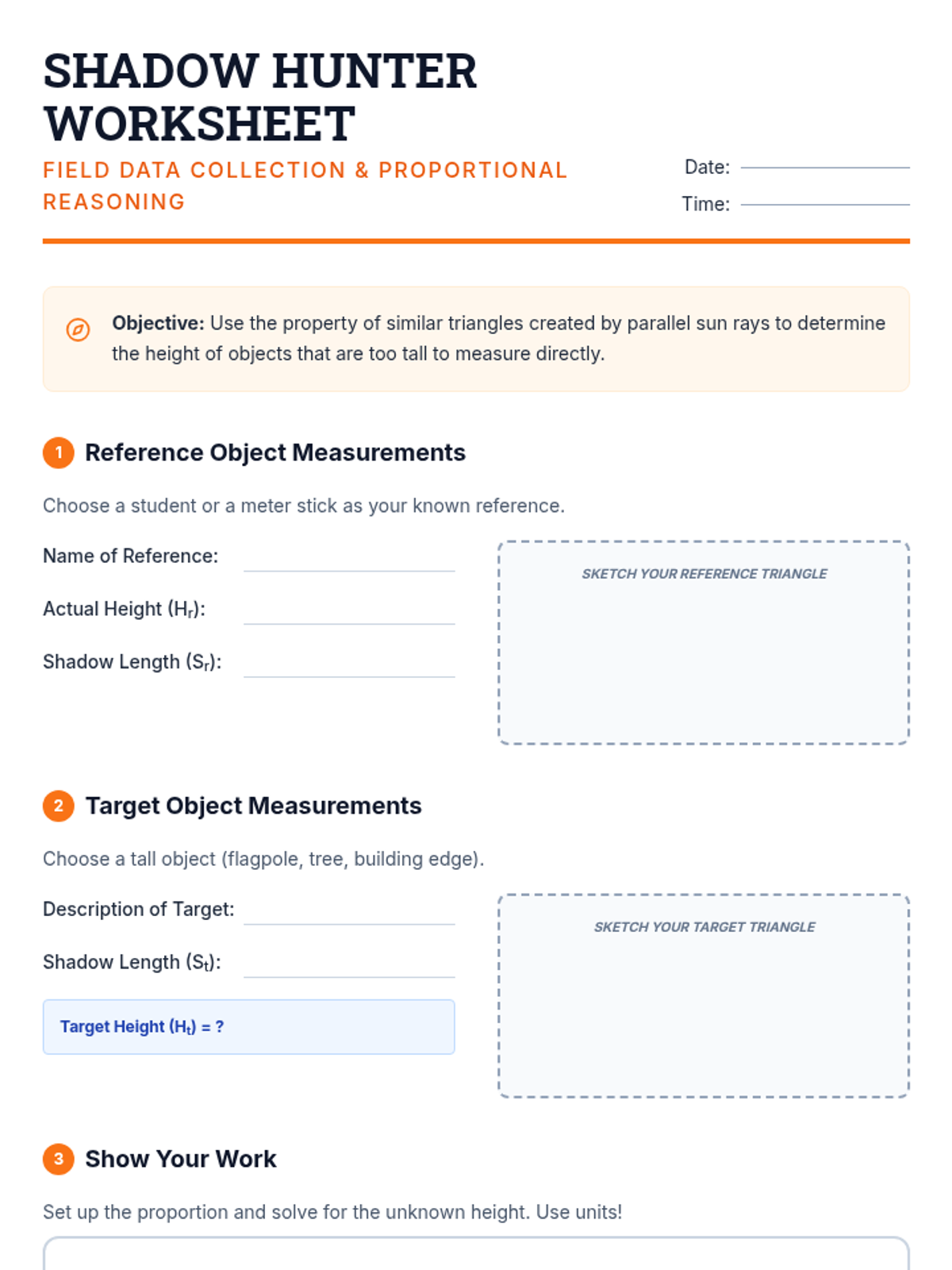
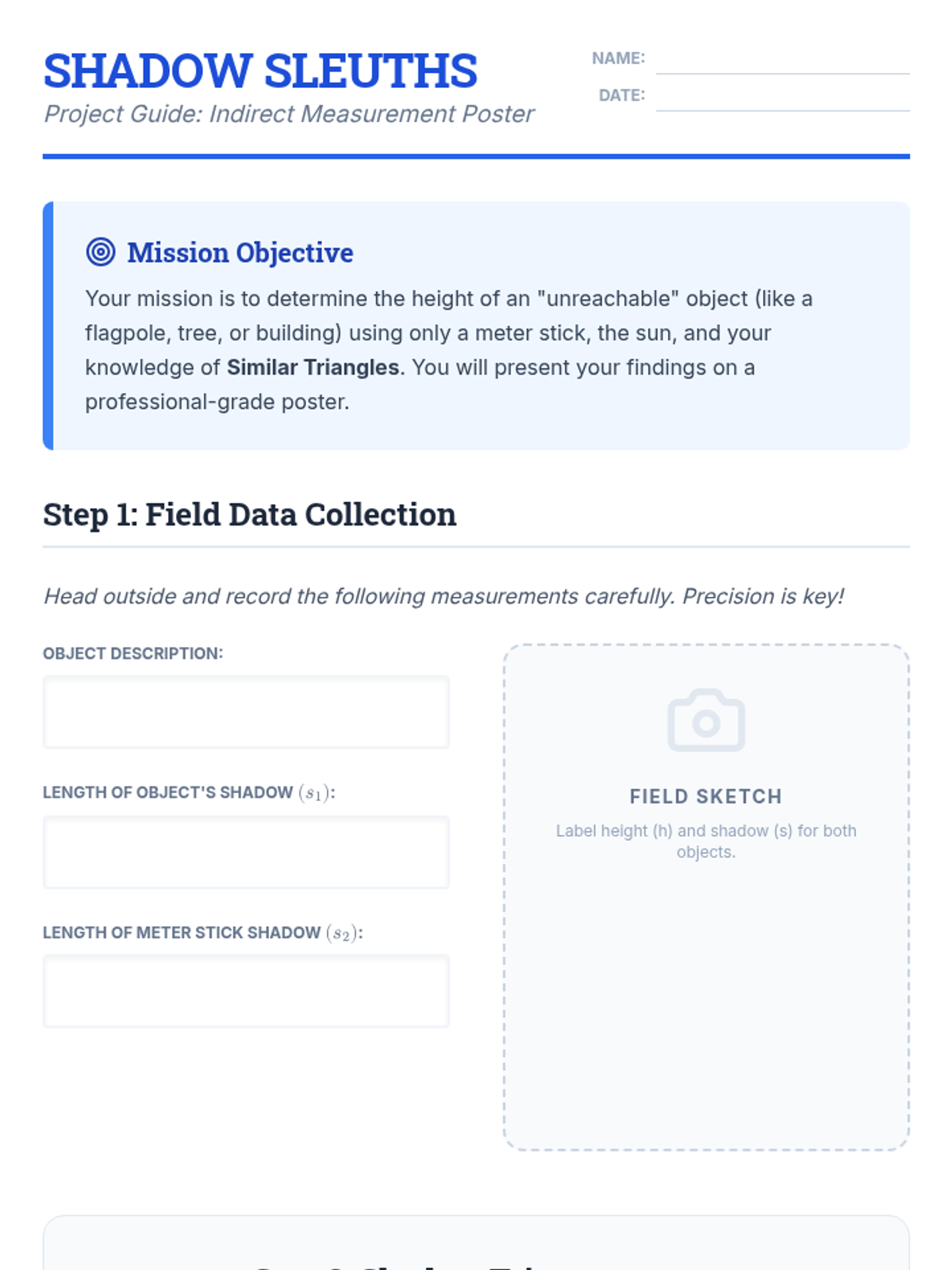
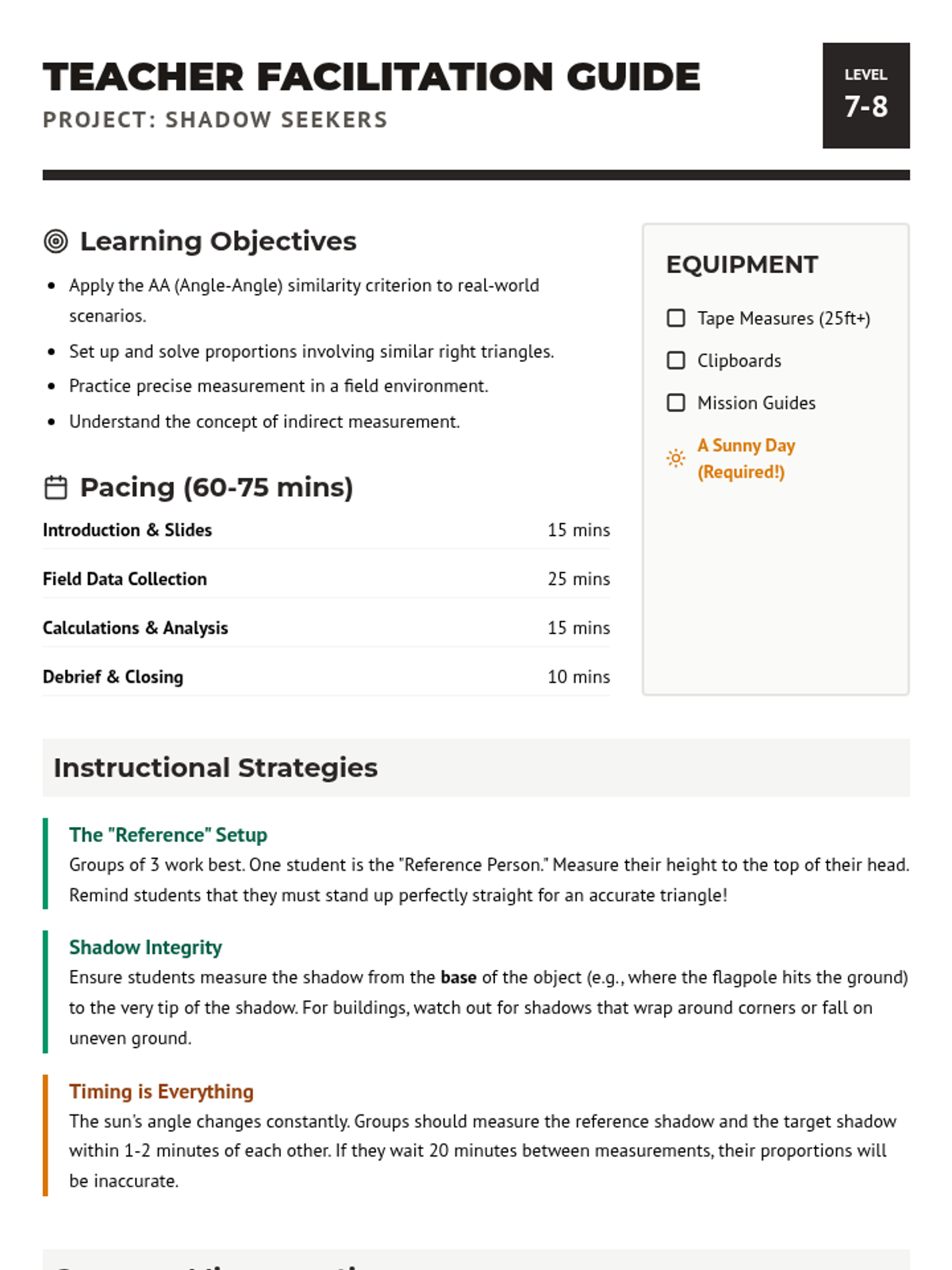
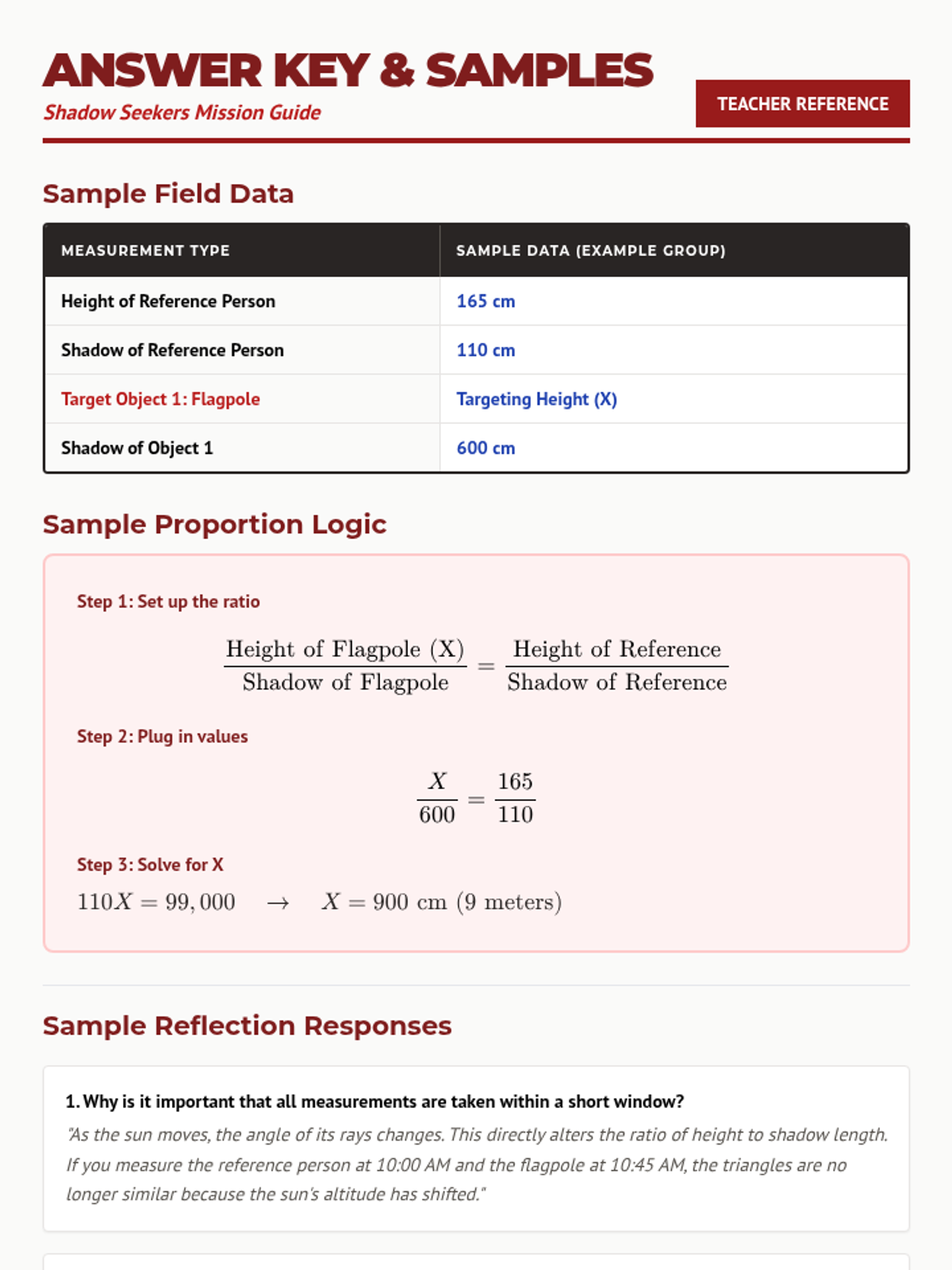
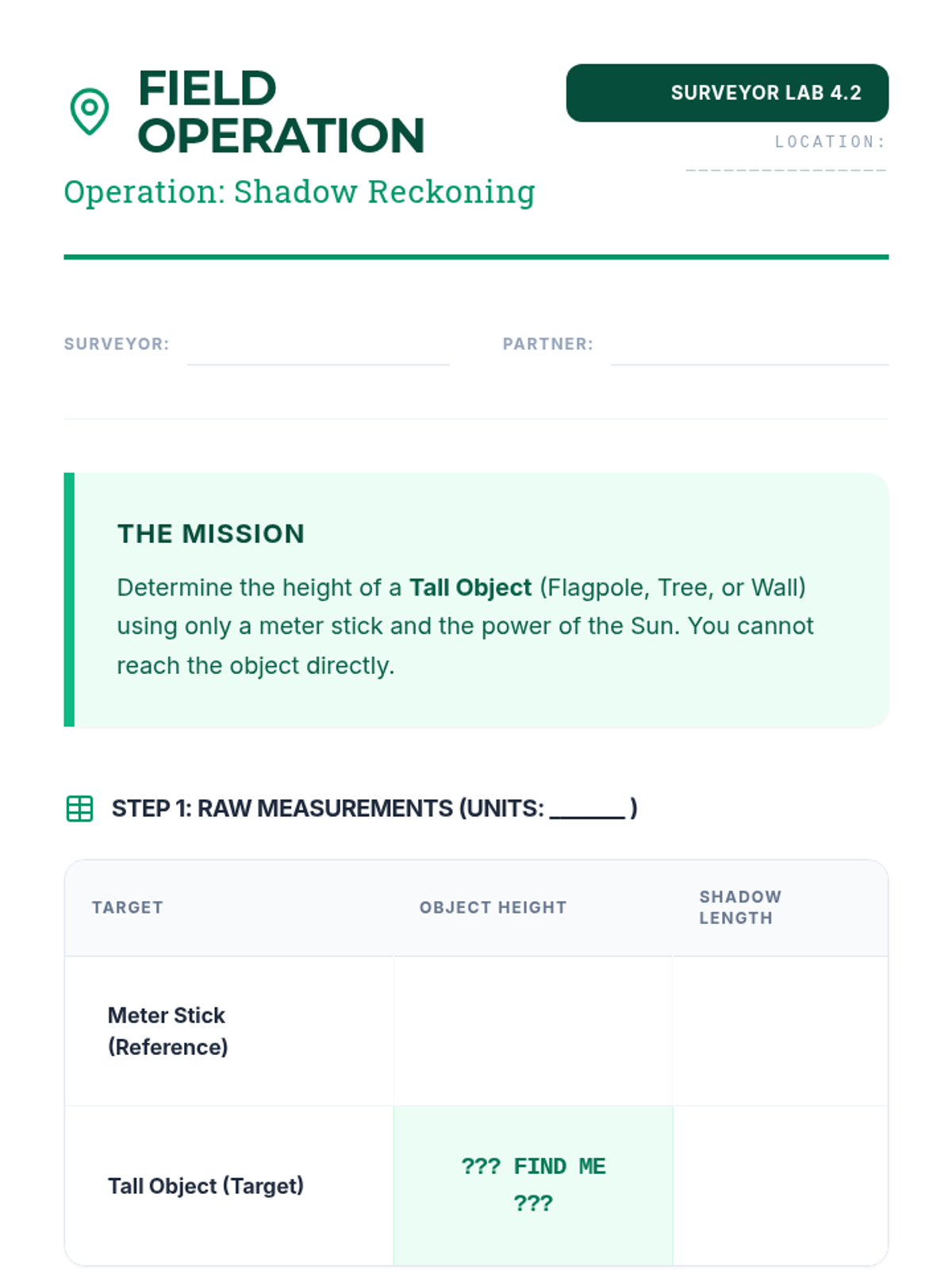
A hands-on geometry project where students apply the properties of similar triangles to calculate the height of tall, unmeasurable objects using their shadows.
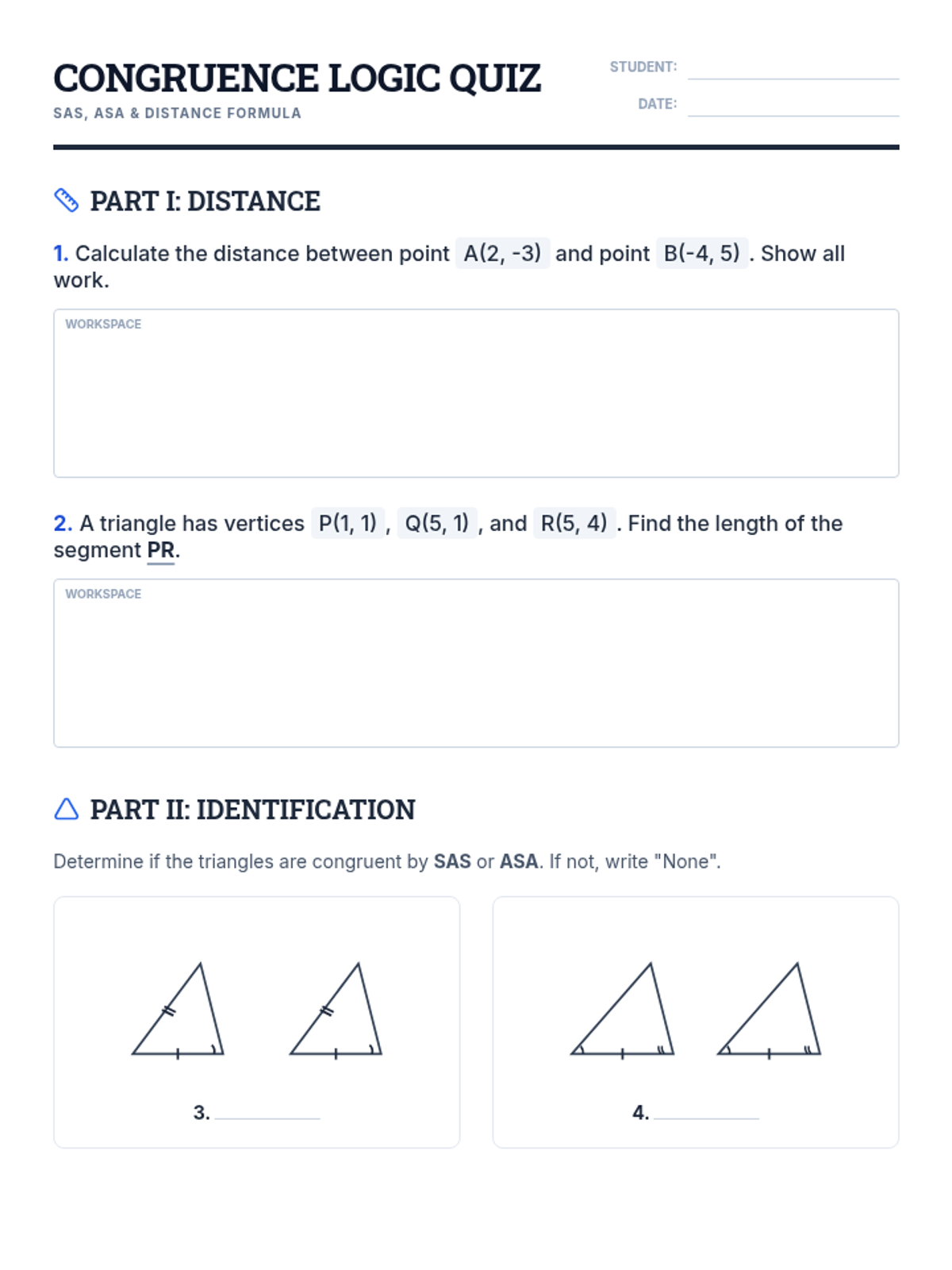
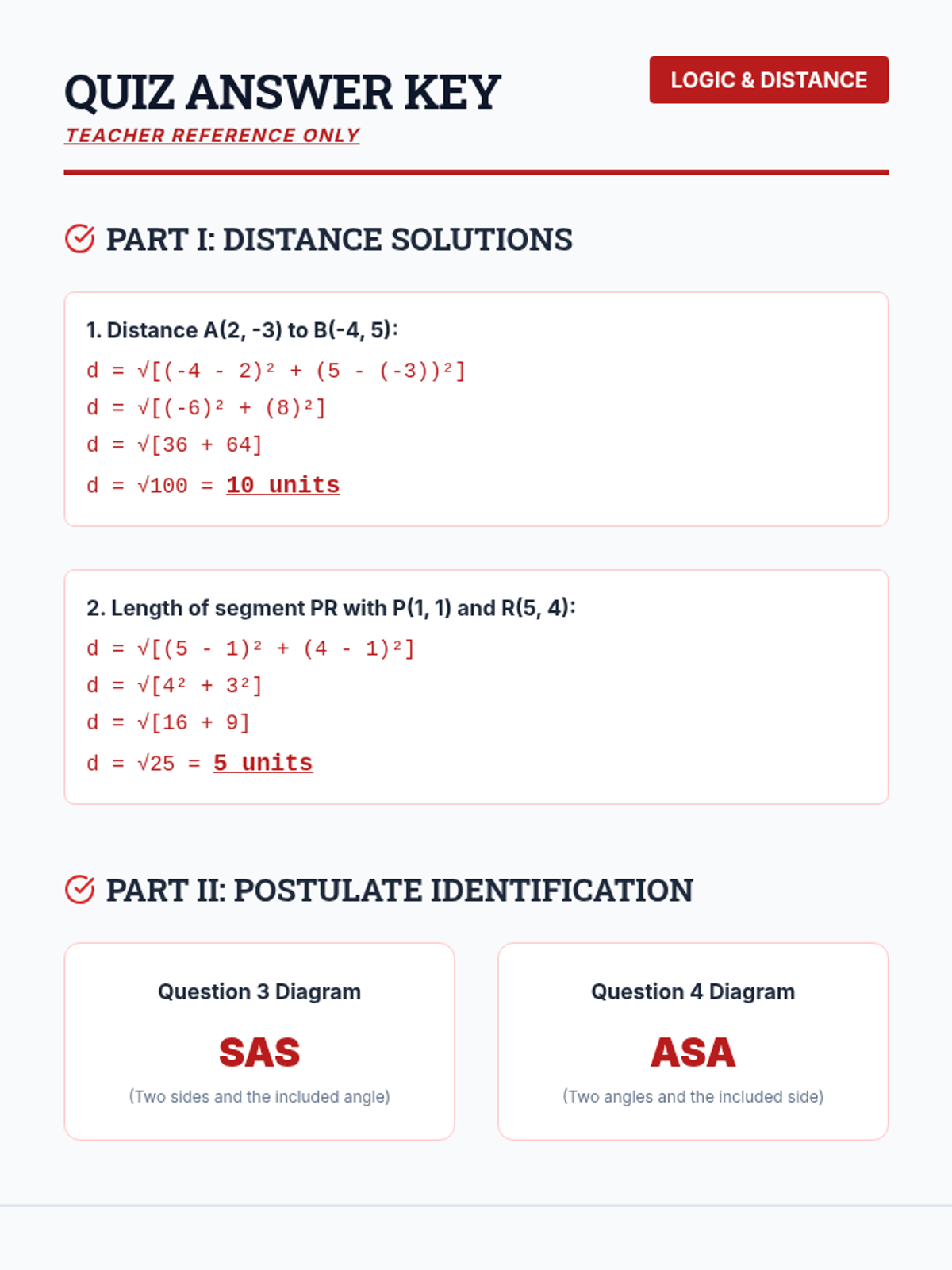
A lesson focusing on the practical application of the Distance Formula and the logical structure of SAS and ASA congruence proofs.
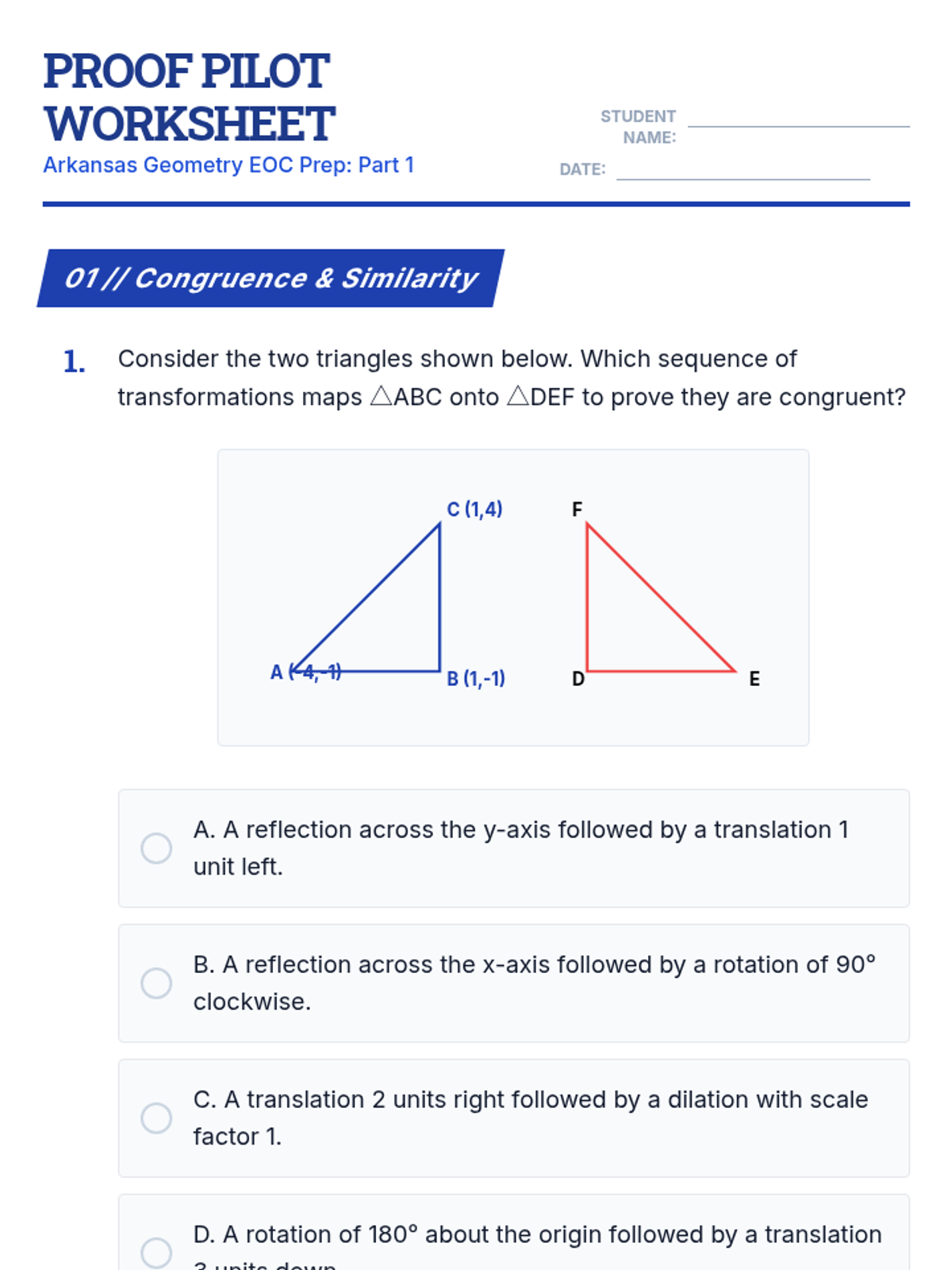
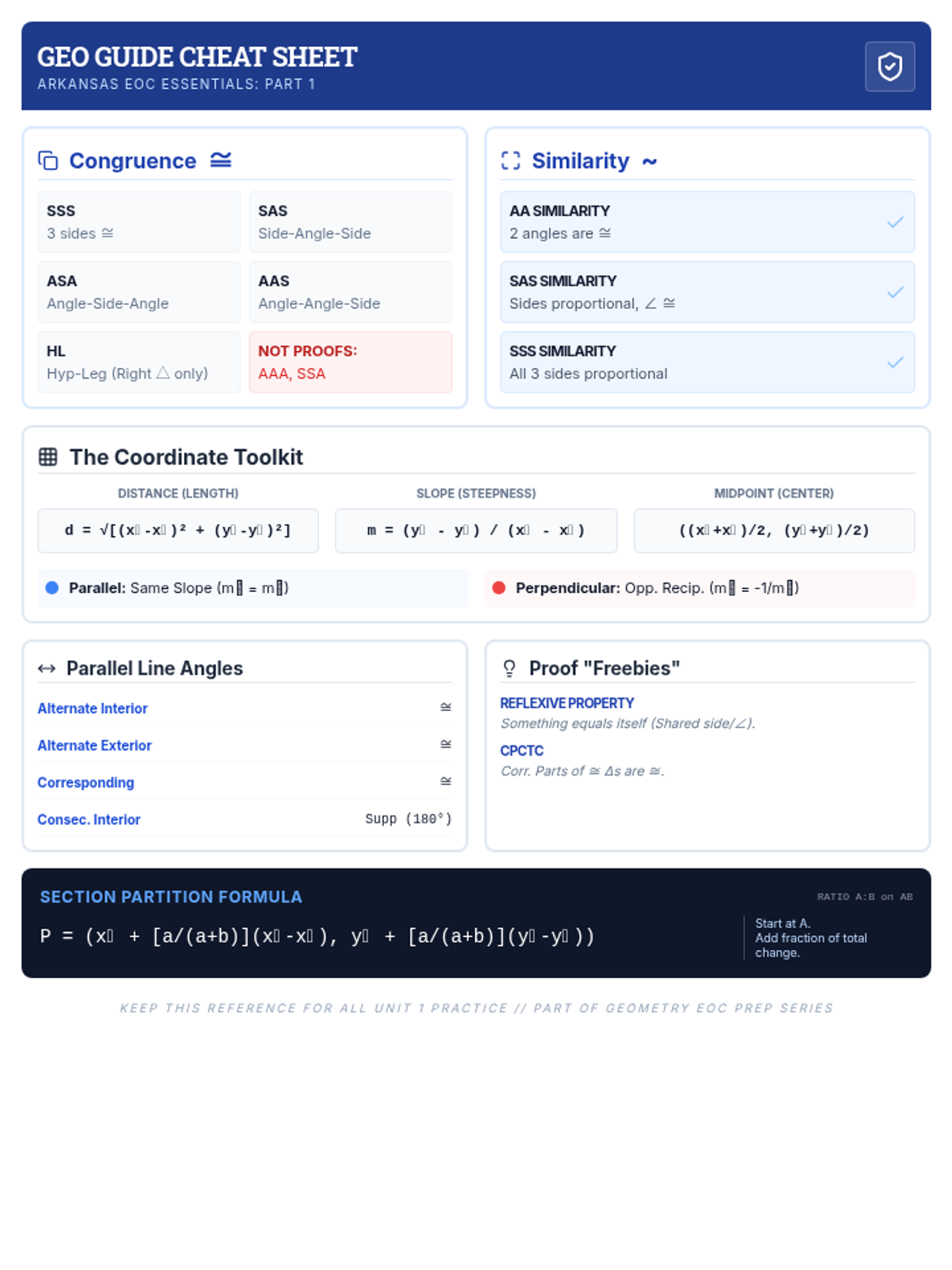
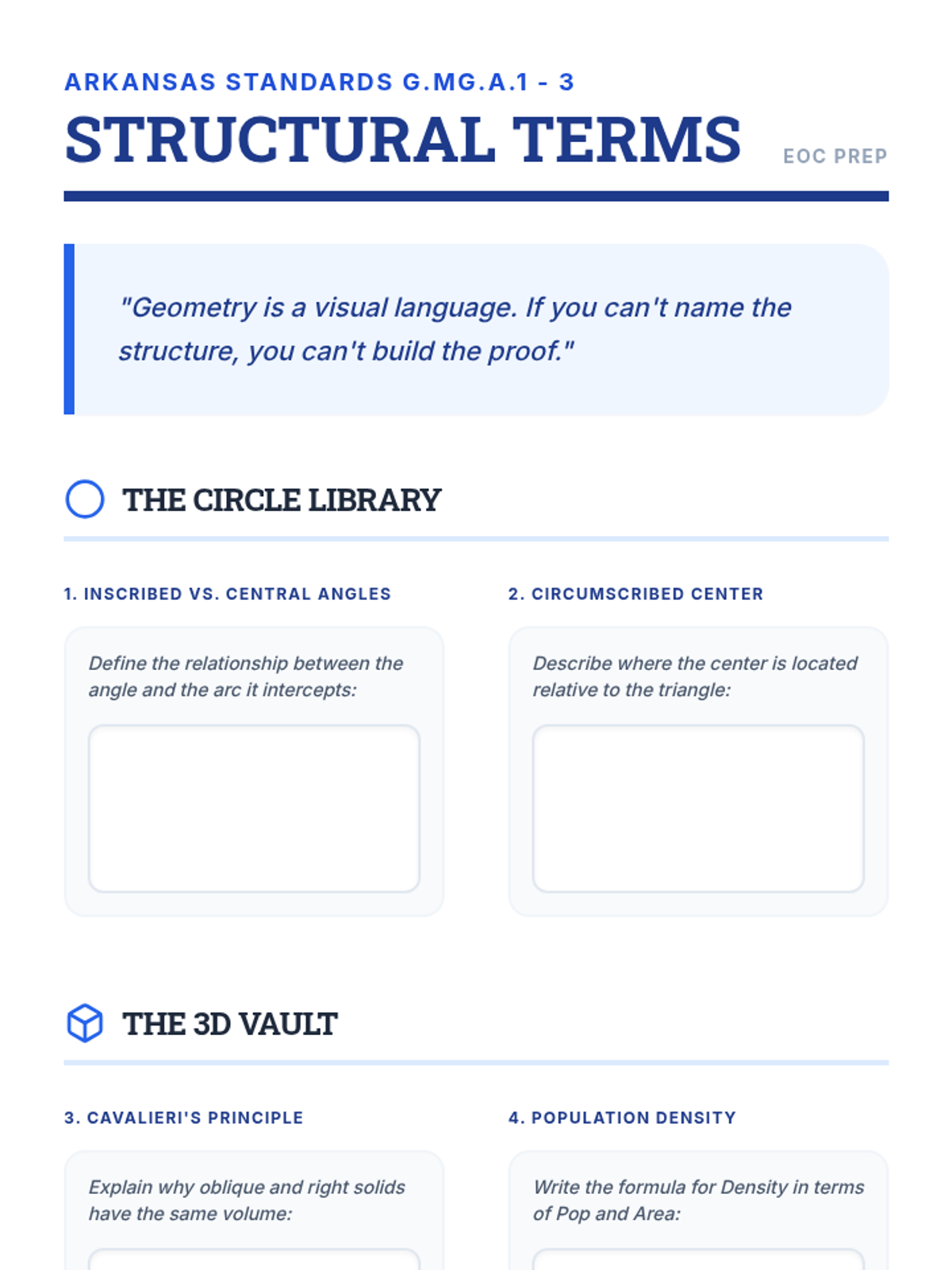
This lesson provides targeted test preparation for the Arkansas Geometry End-of-Course (EOC) exam, focusing on congruence, similarity, proofs, and coordinate geometry through diagram-heavy practice and strategic review.
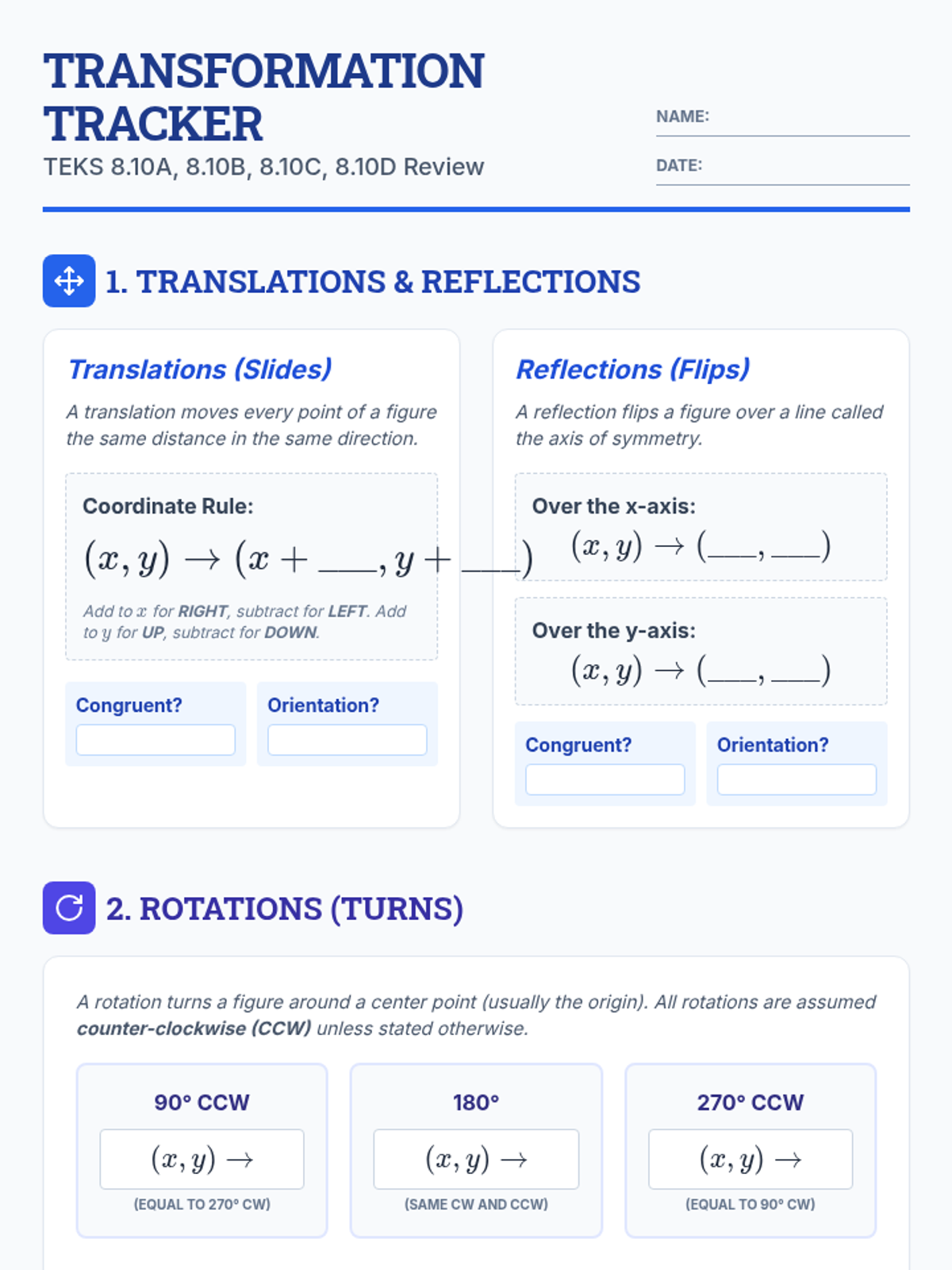
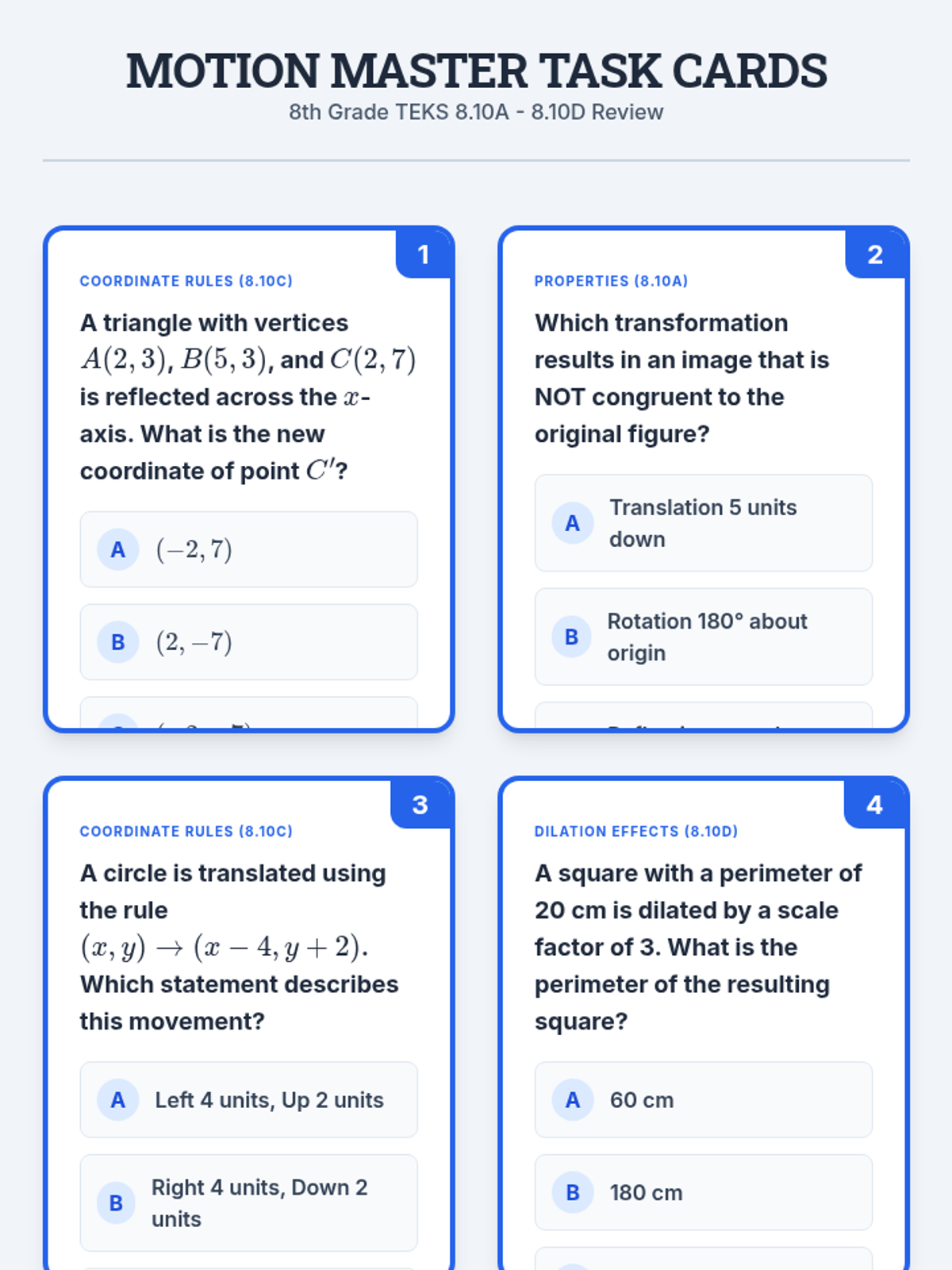
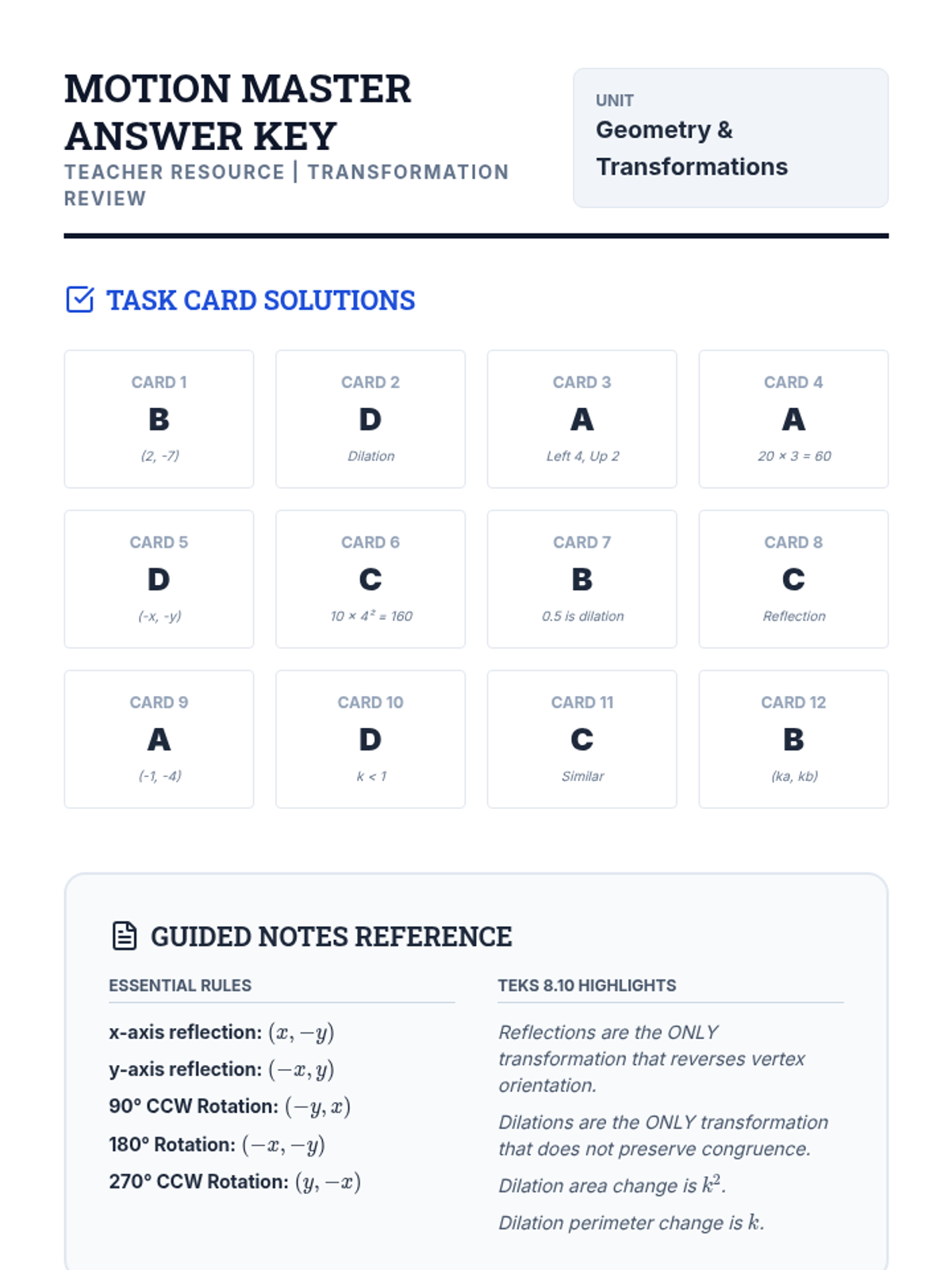
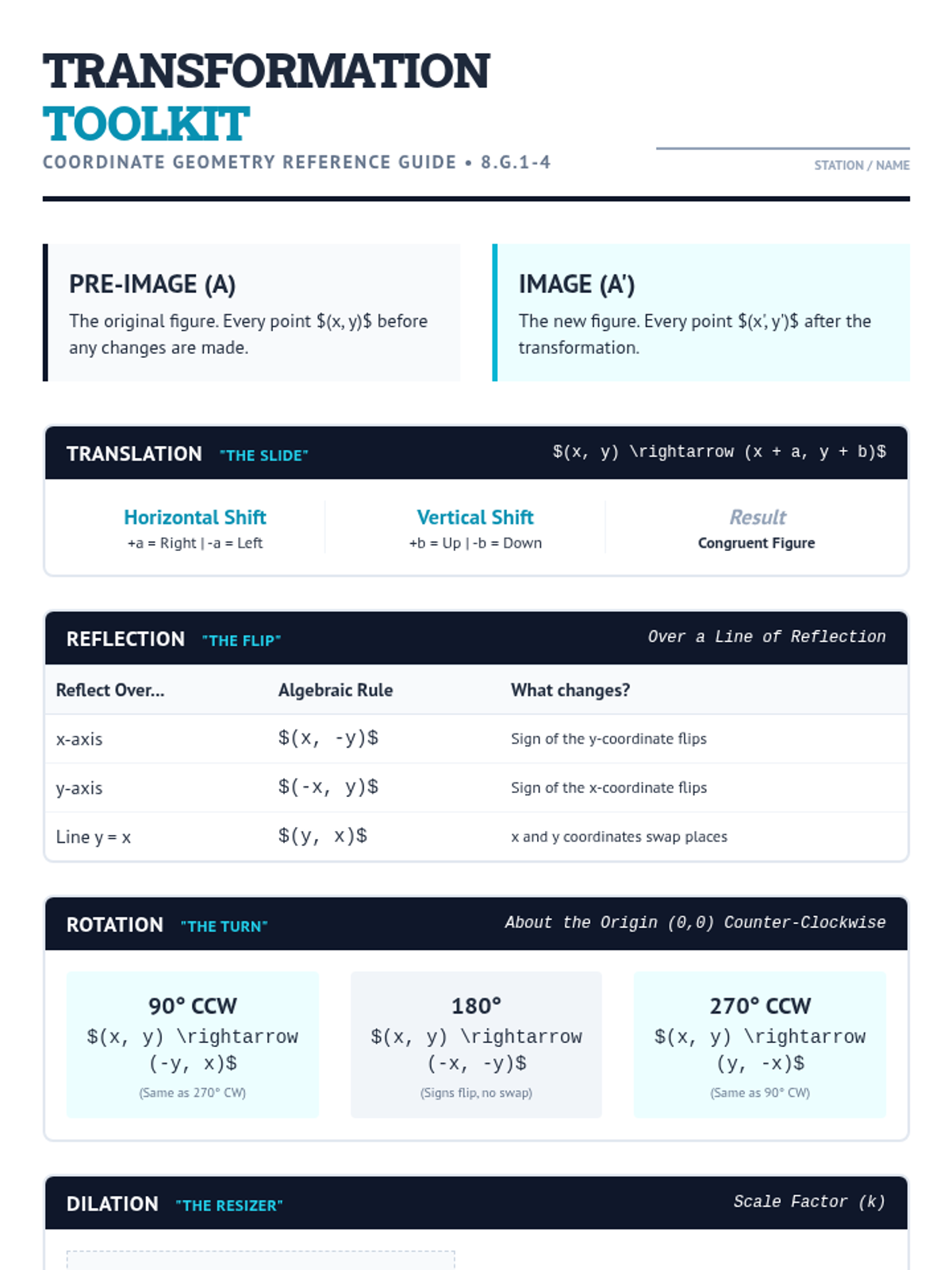
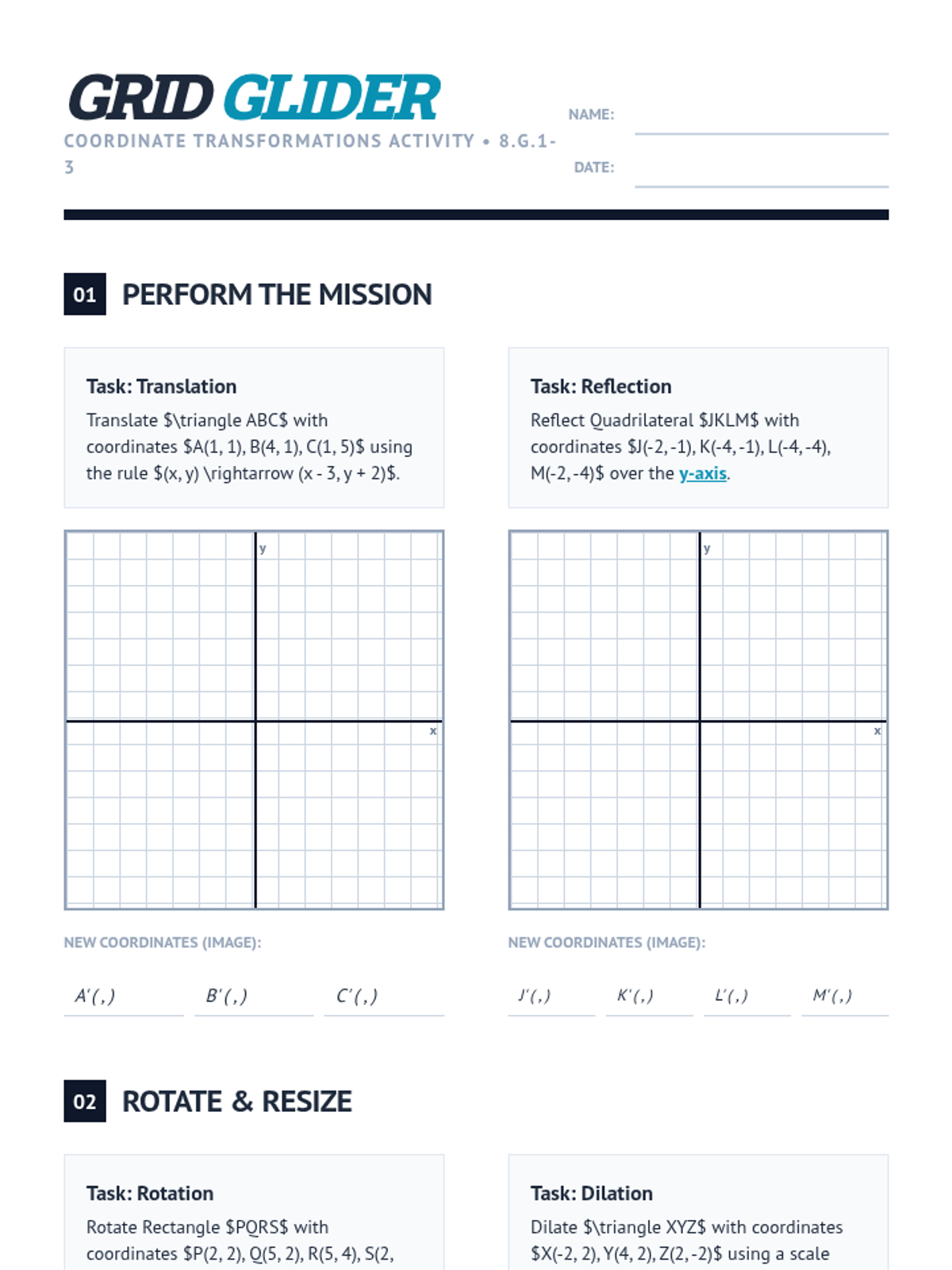
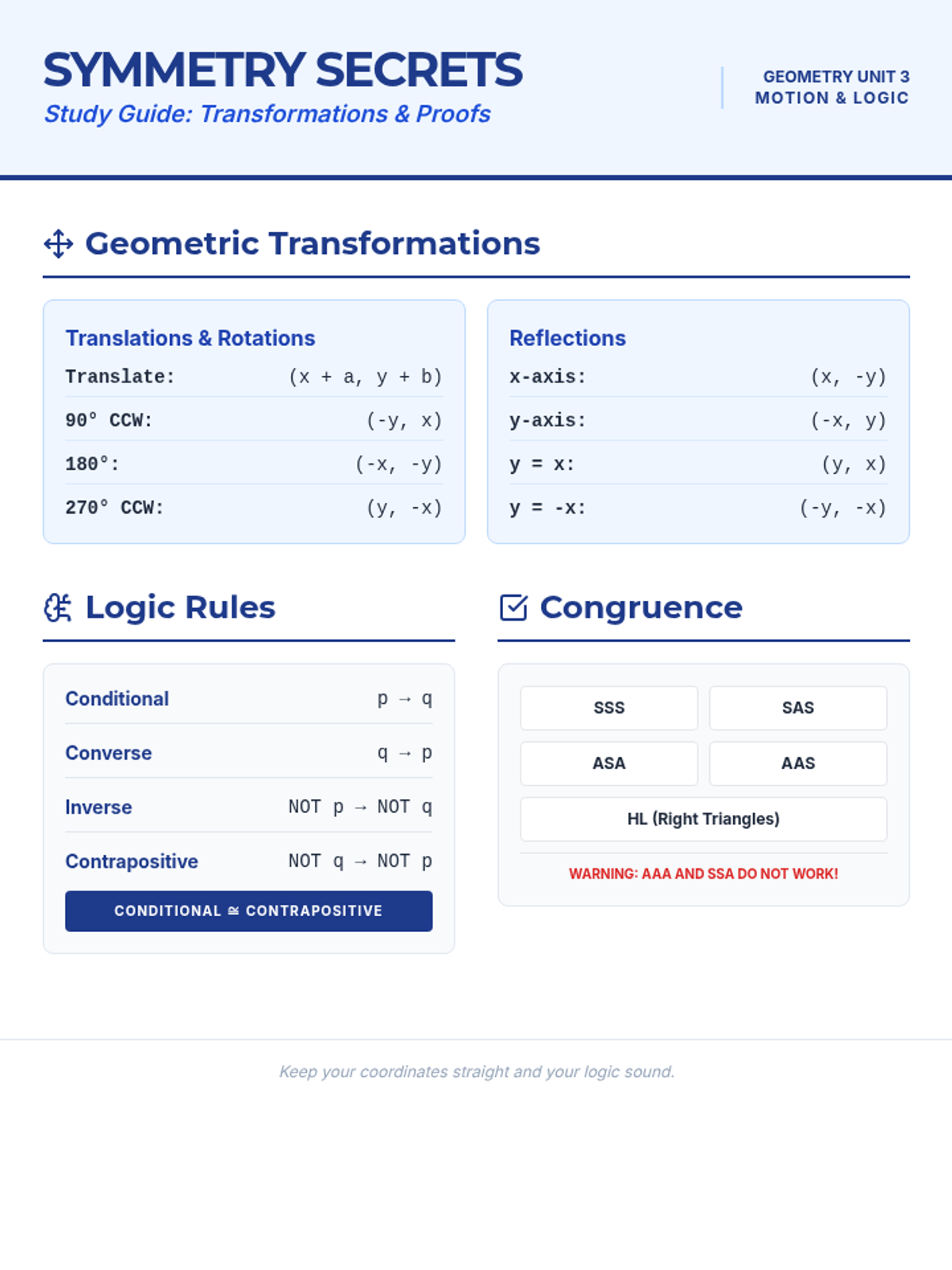
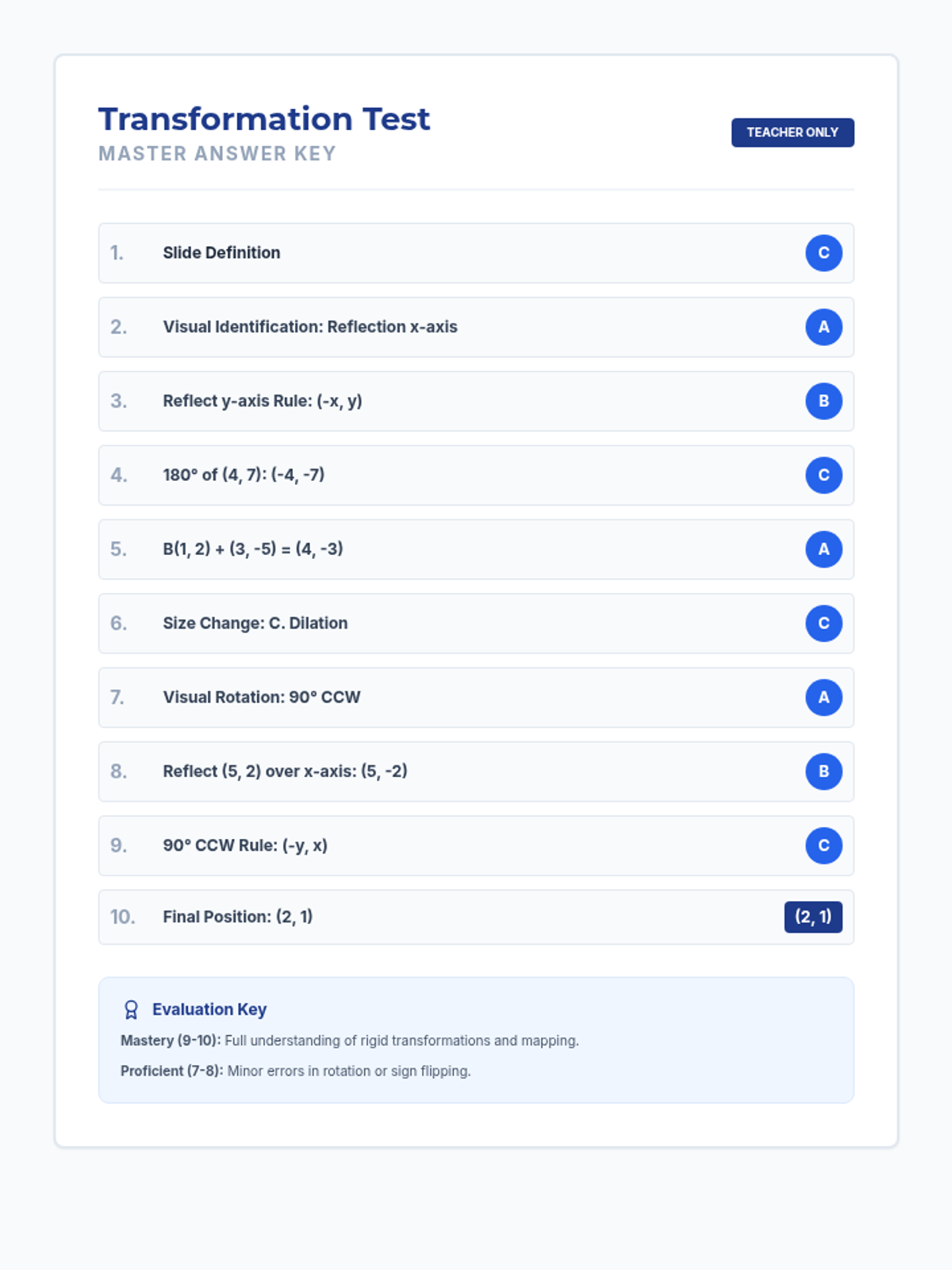
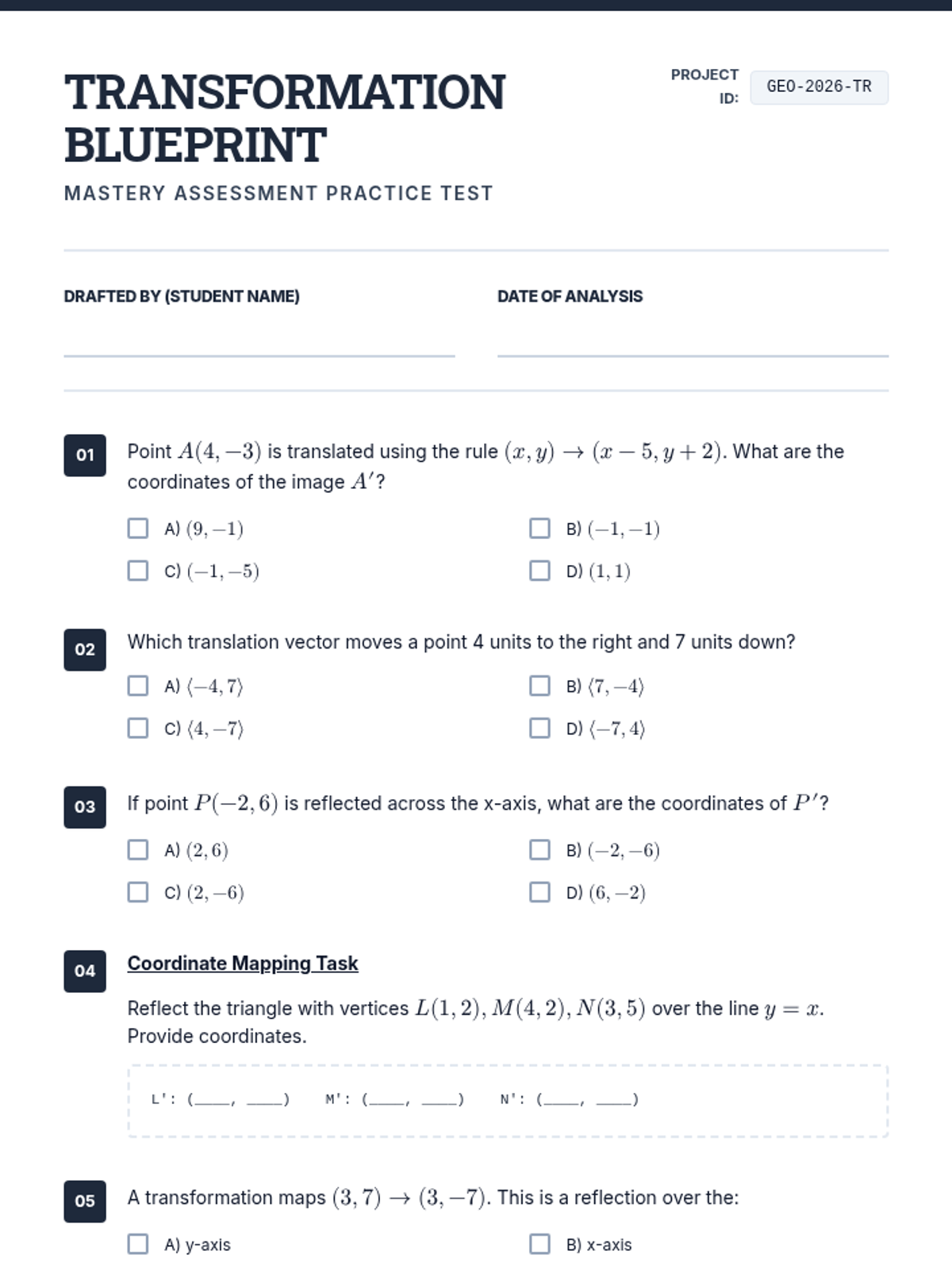
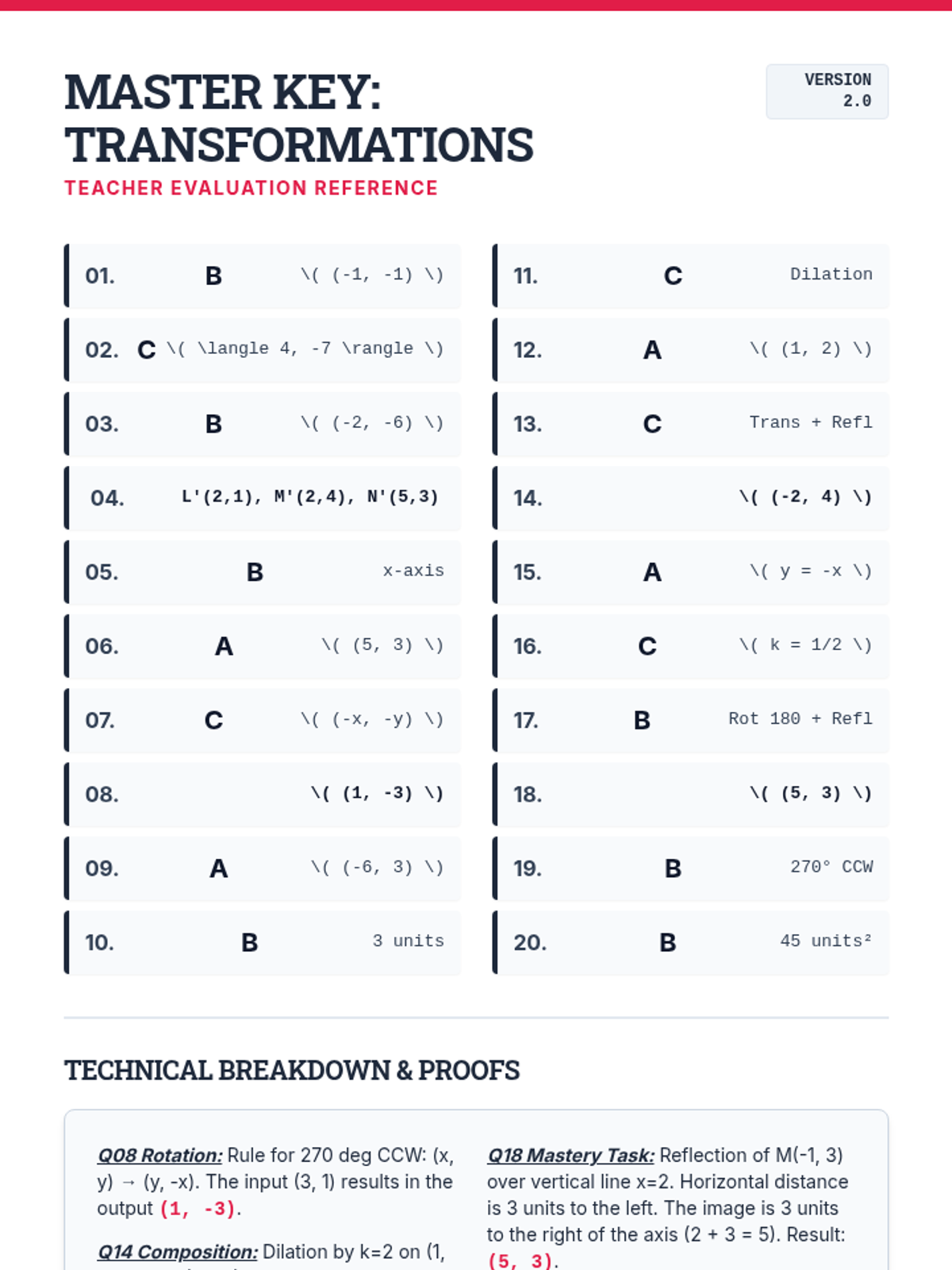
A comprehensive review of geometric transformations including translations, reflections, rotations, and dilations, focusing on coordinate rules and algebraic representations.
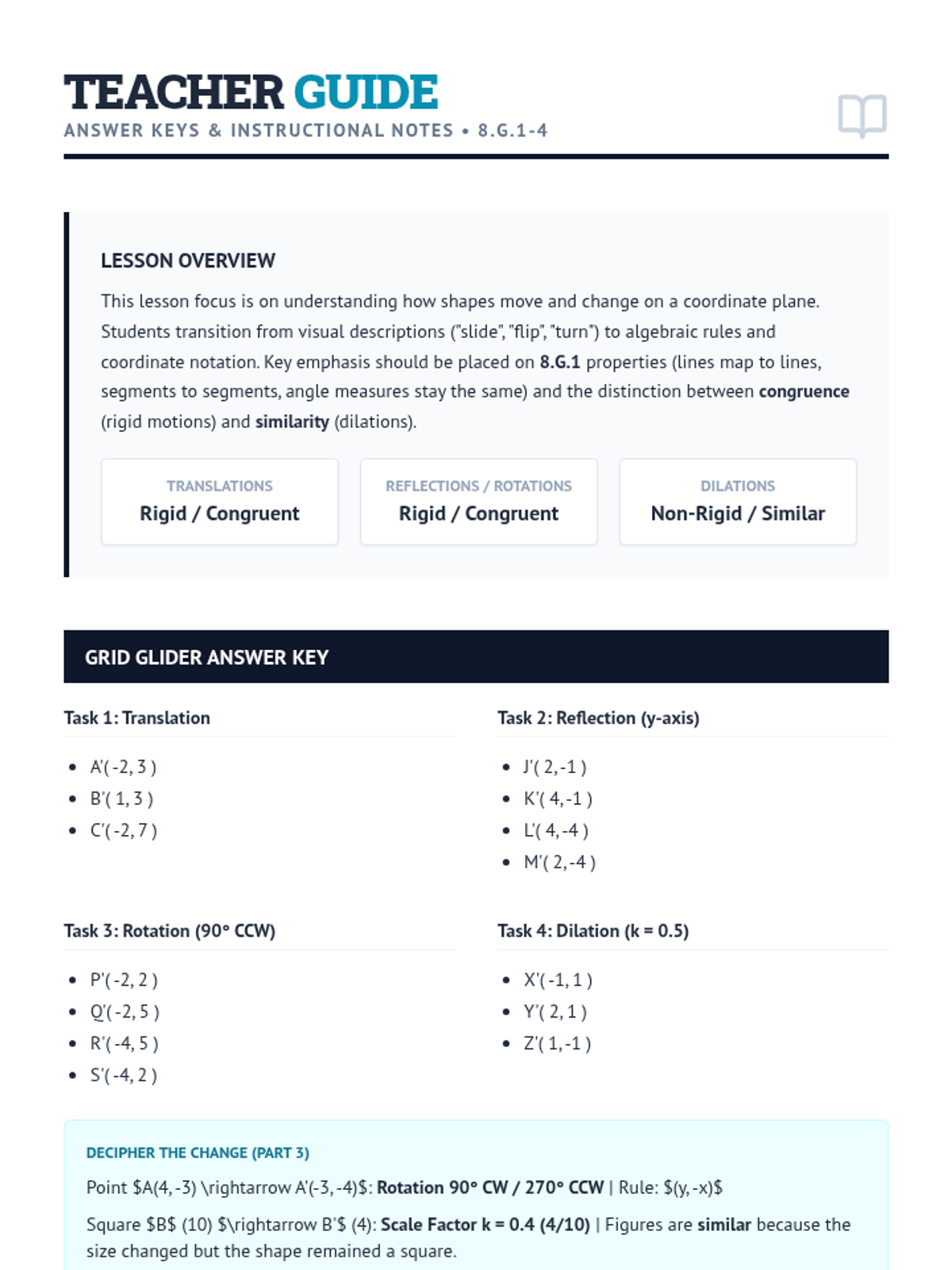
This lesson covers the four types of geometric transformations: translations, reflections, rotations, and dilations. Students will learn to perform these transformations on a coordinate plane, describe them using algebraic notation, and distinguish between congruent and similar figures.
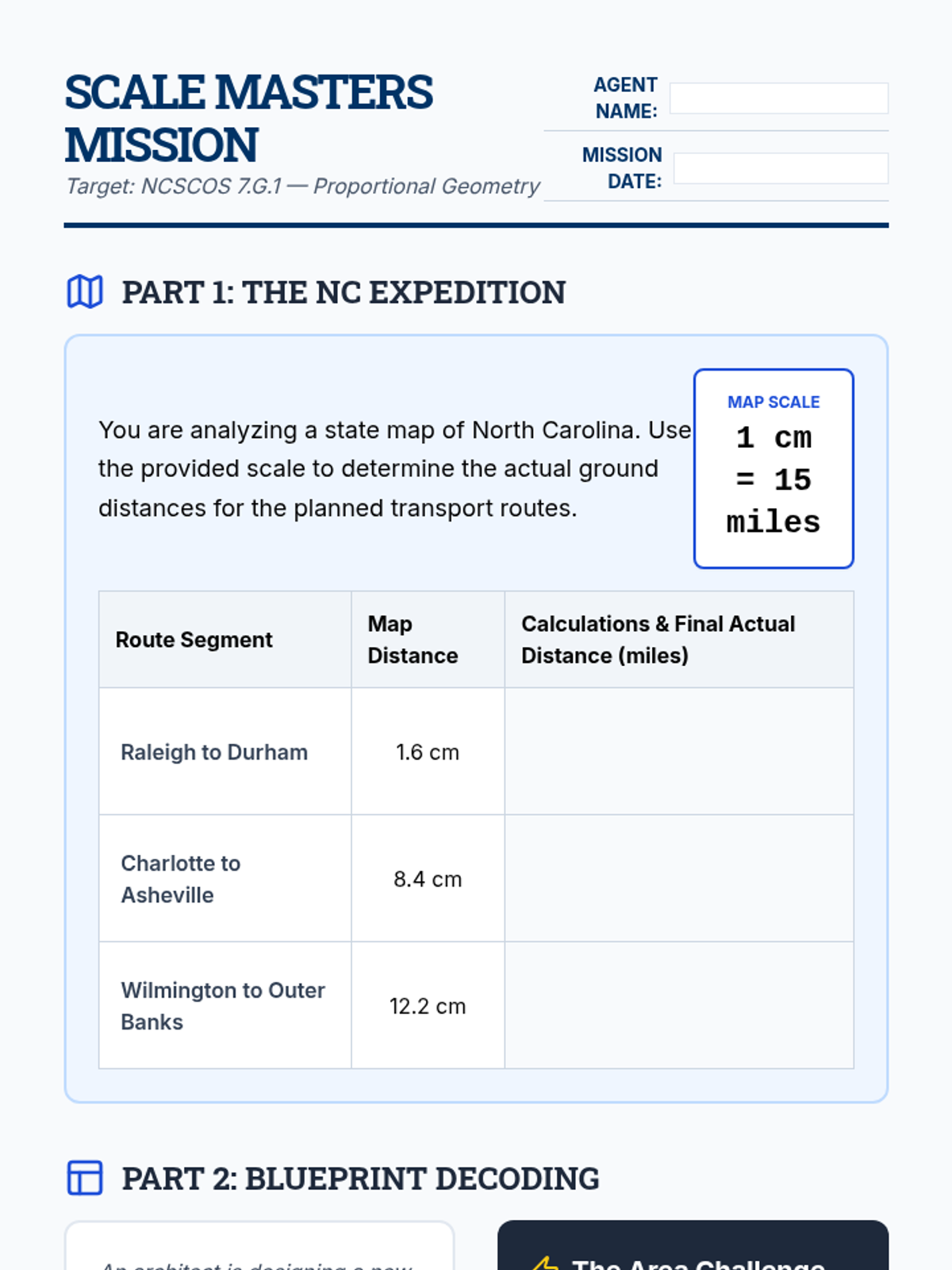
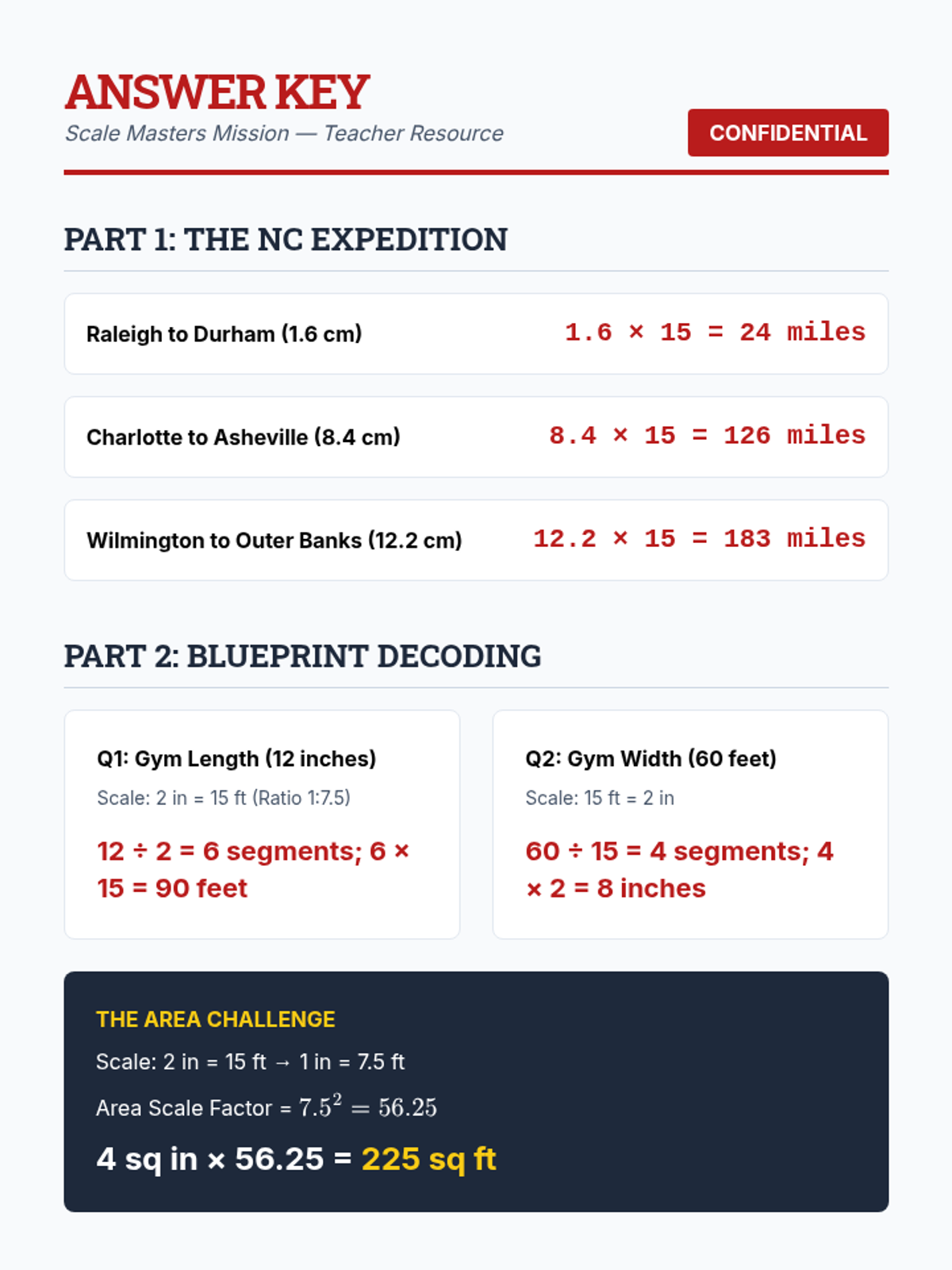
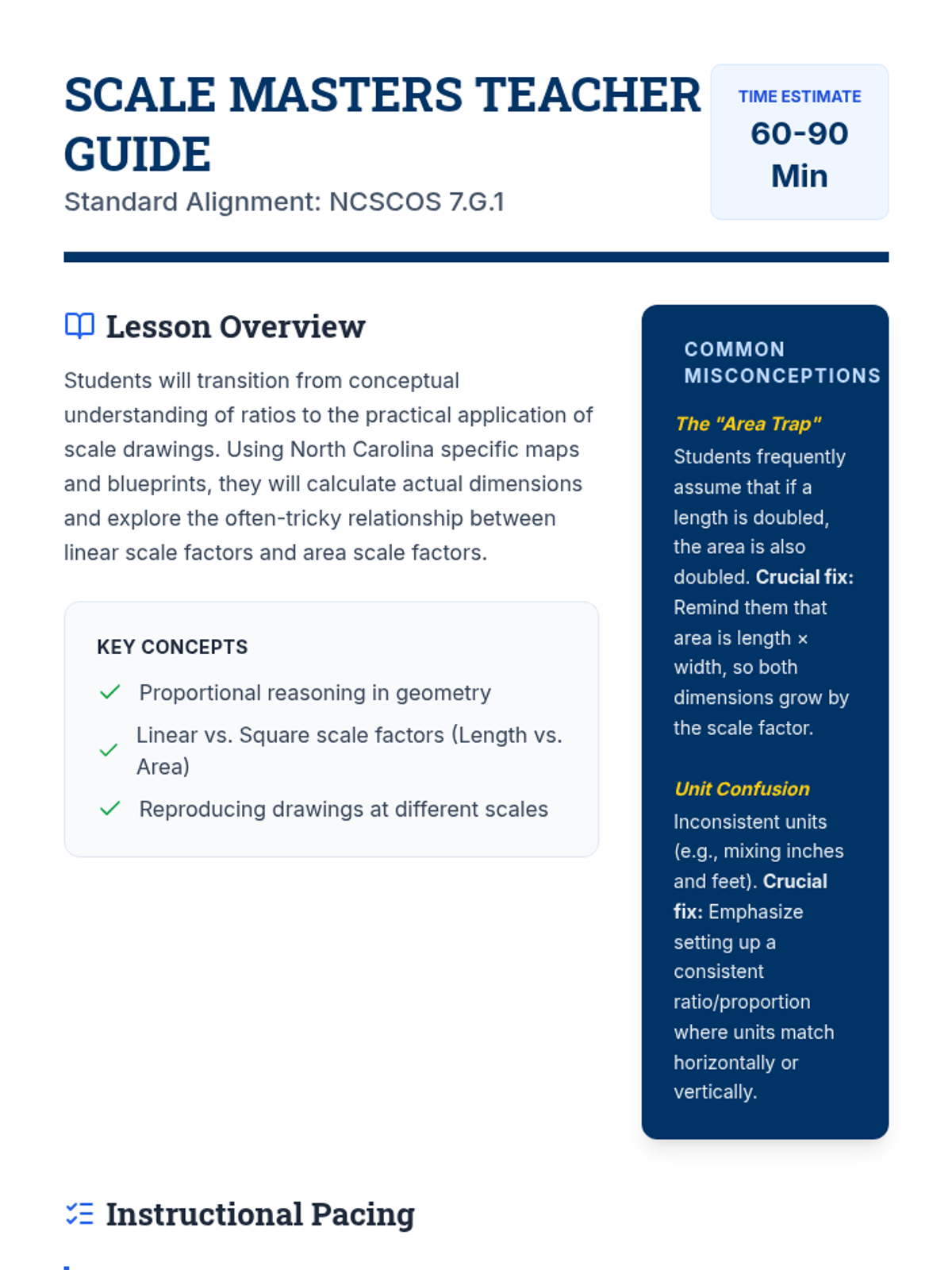
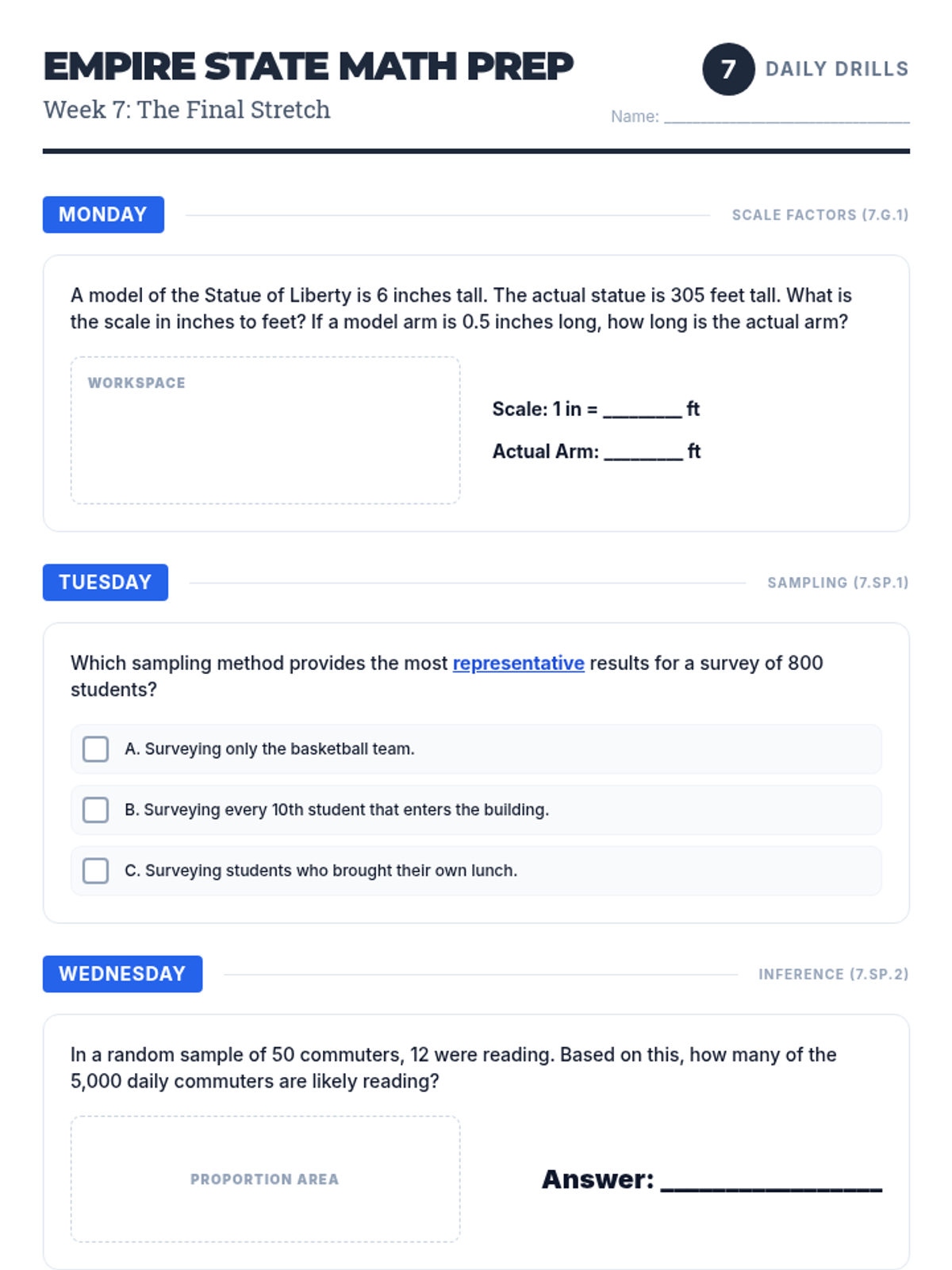
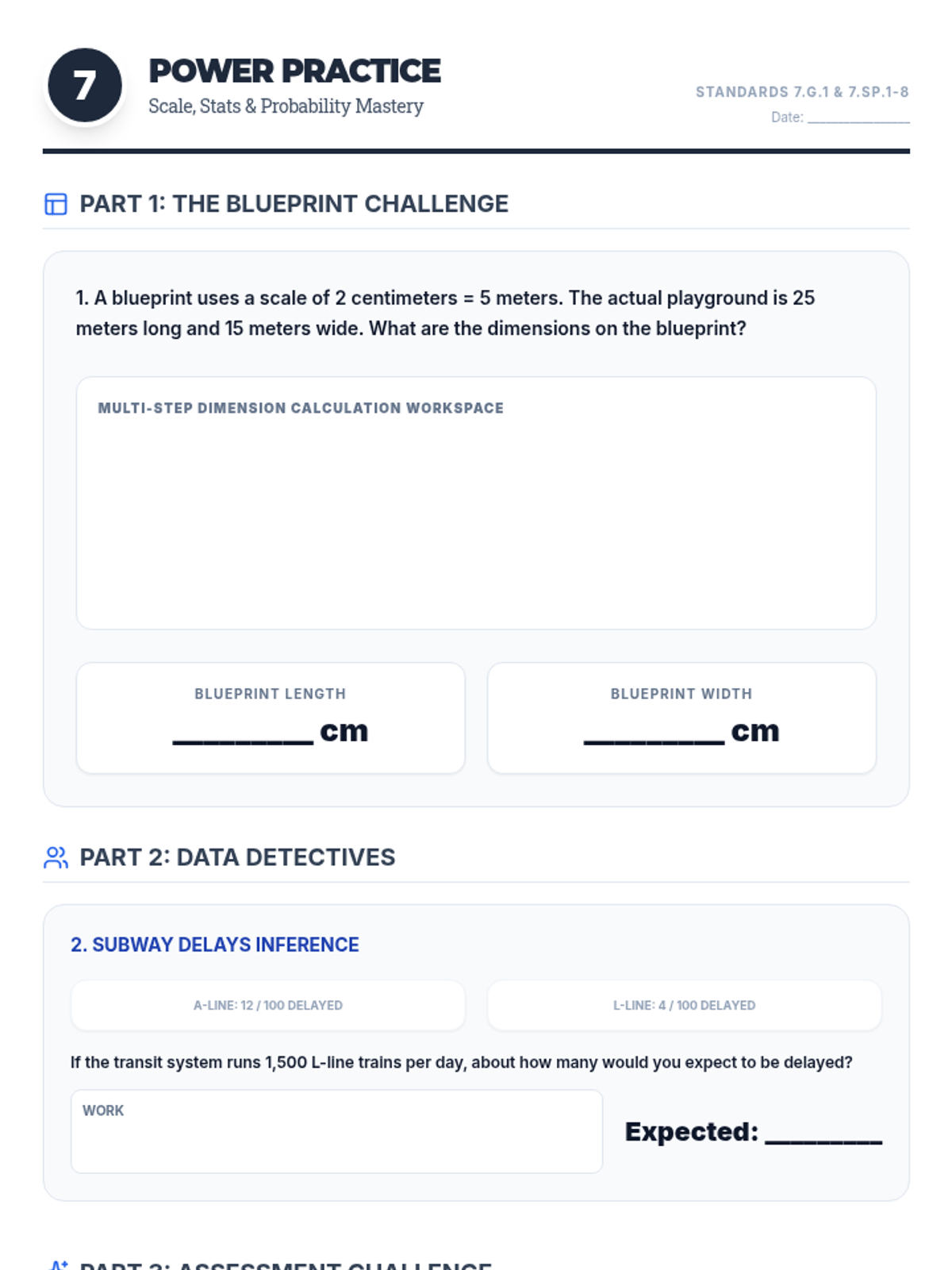
A comprehensive lesson on scale drawings and scale factors, featuring NC-themed applications including state maps and school blueprints. Students learn to compute actual dimensions and solve real-world proportional problems.
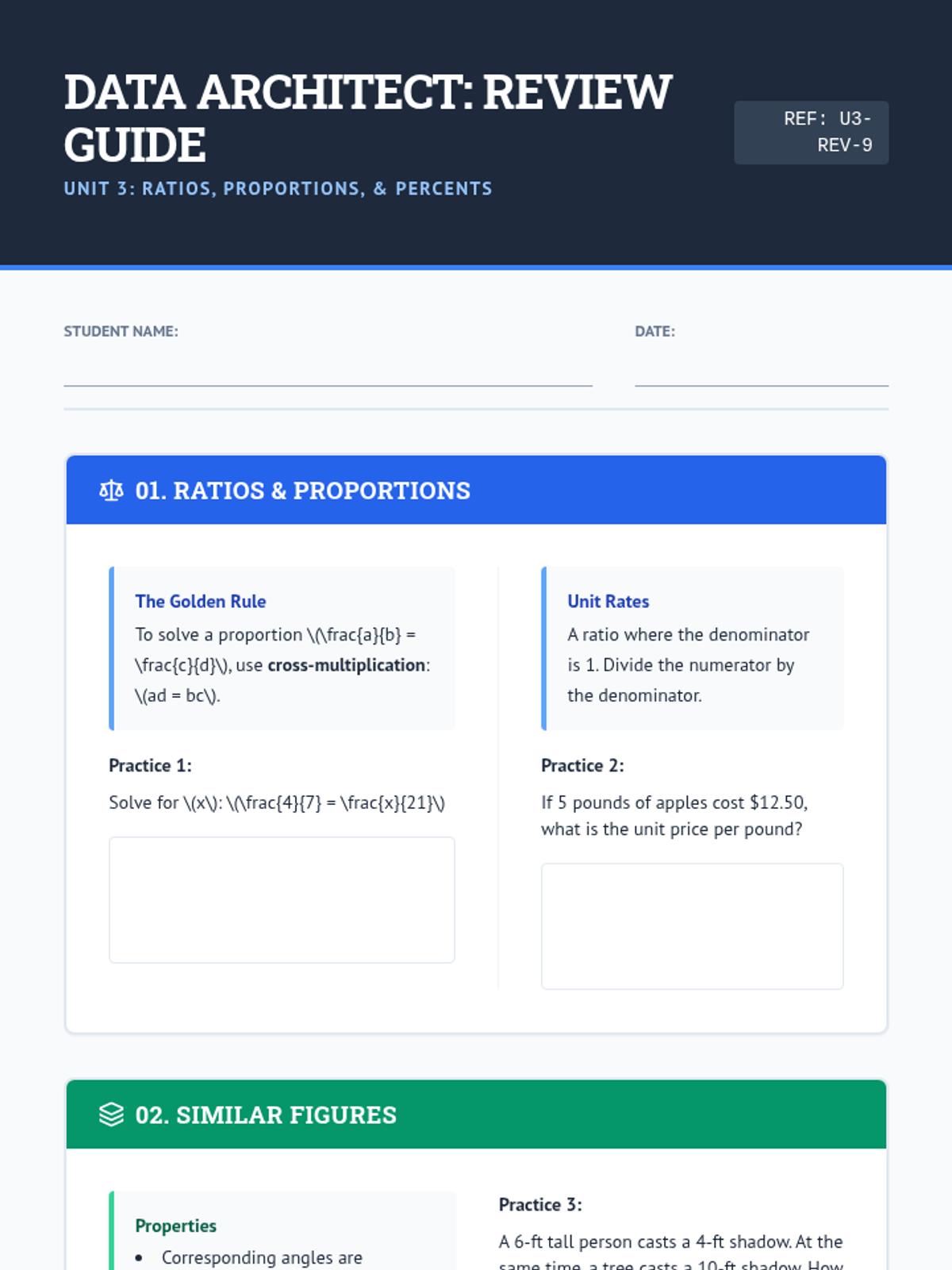
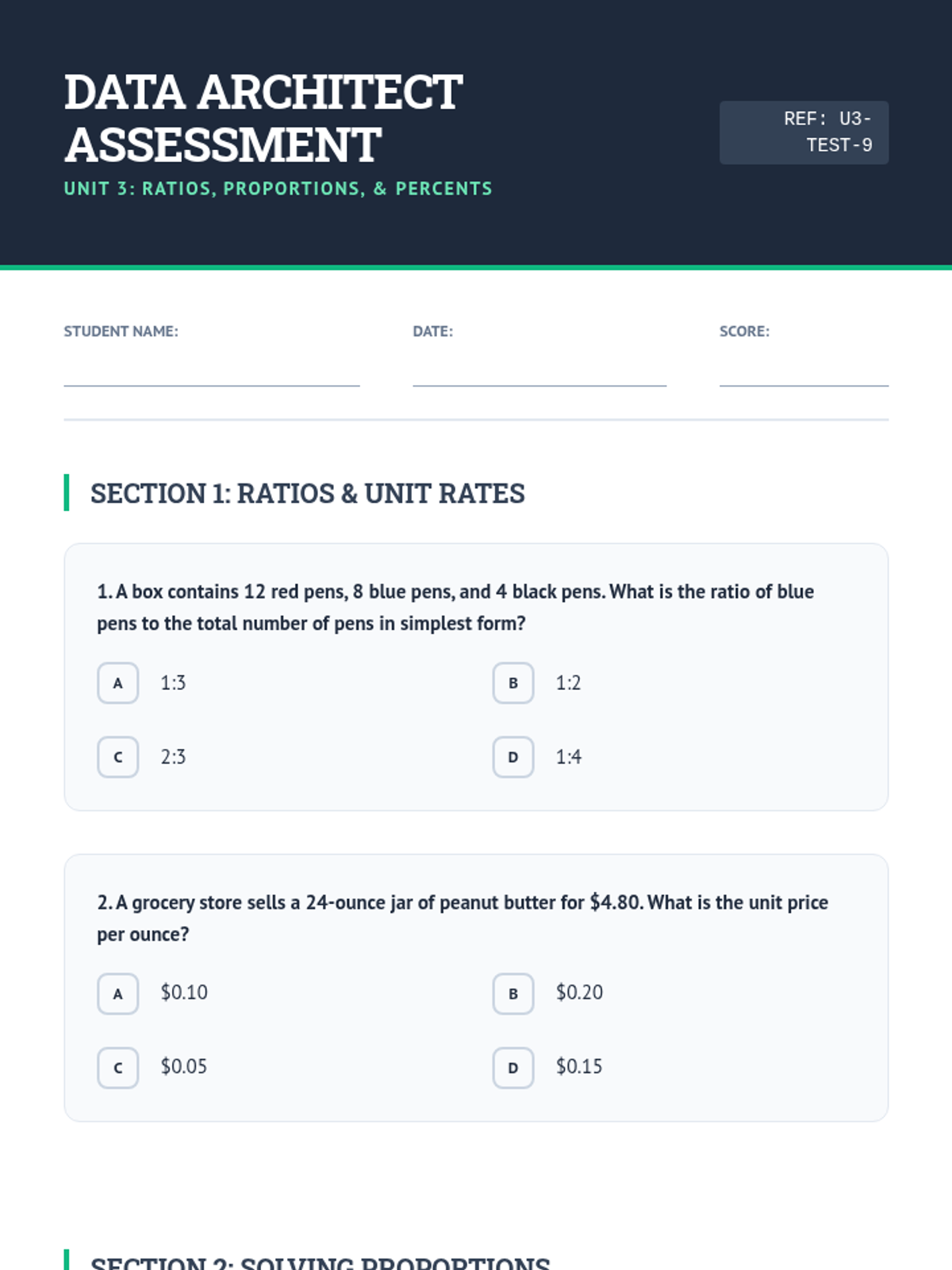
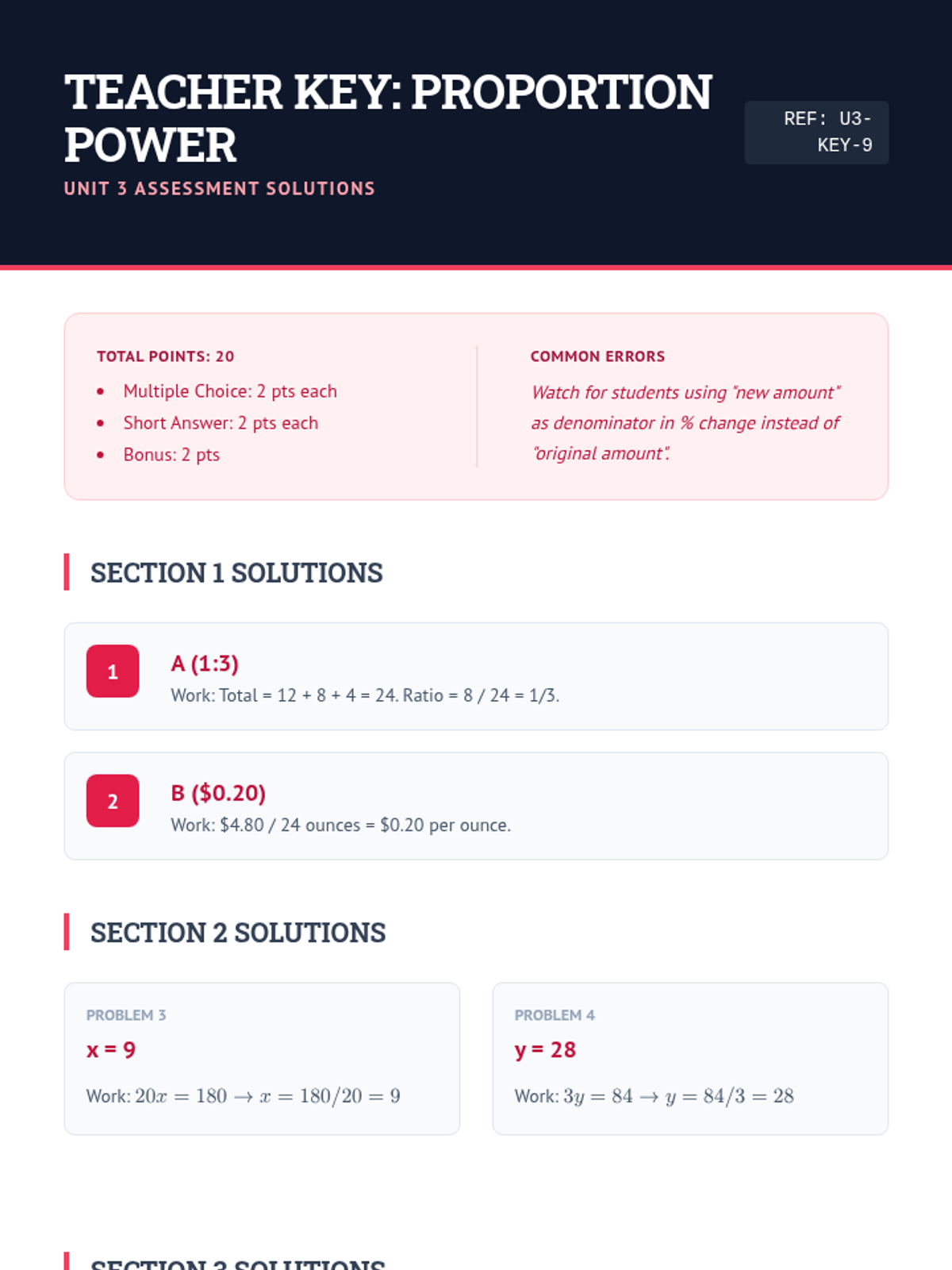
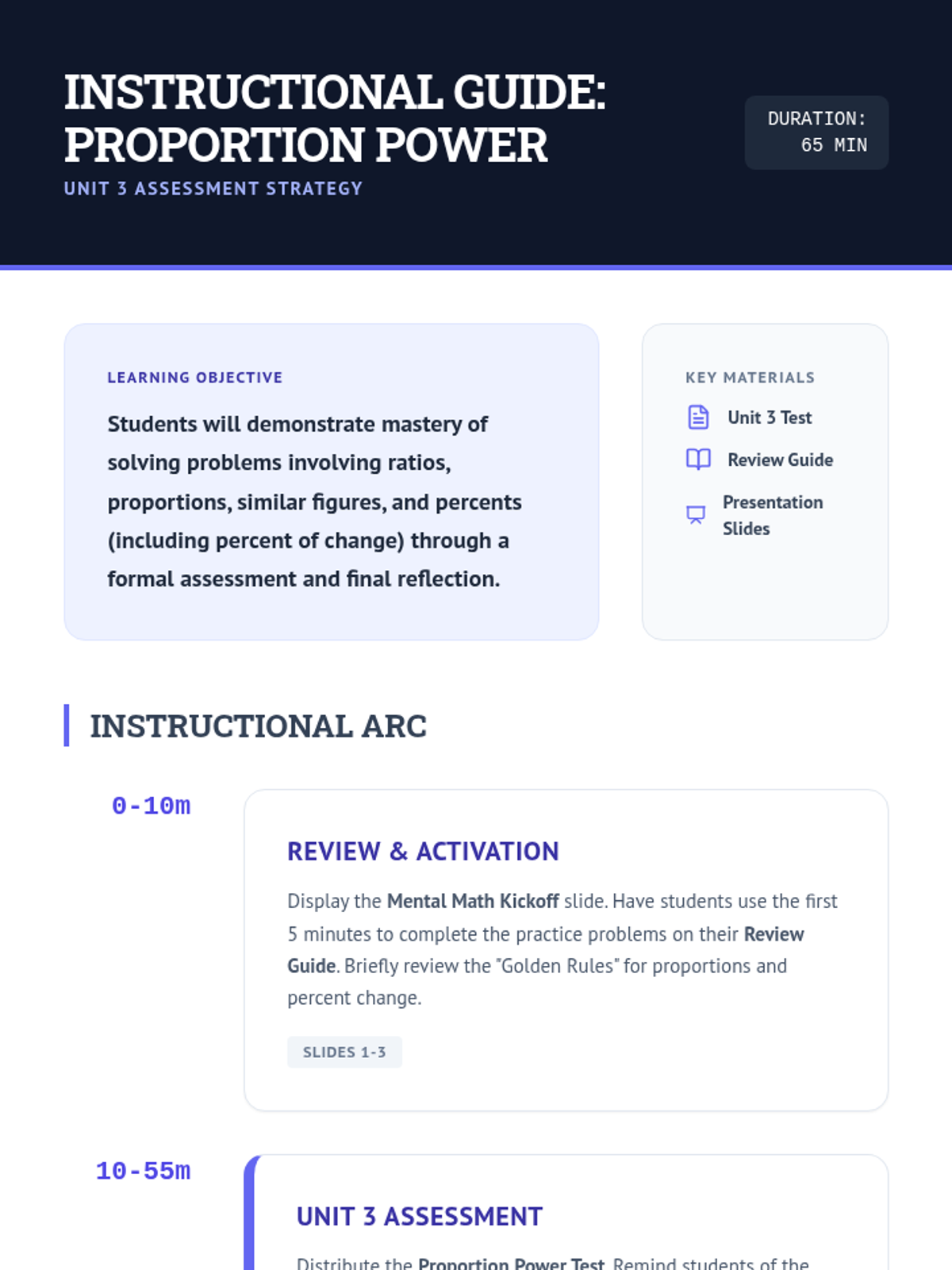
A comprehensive assessment lesson where students review key concepts of ratios, proportions, and percents before completing a formal unit test.
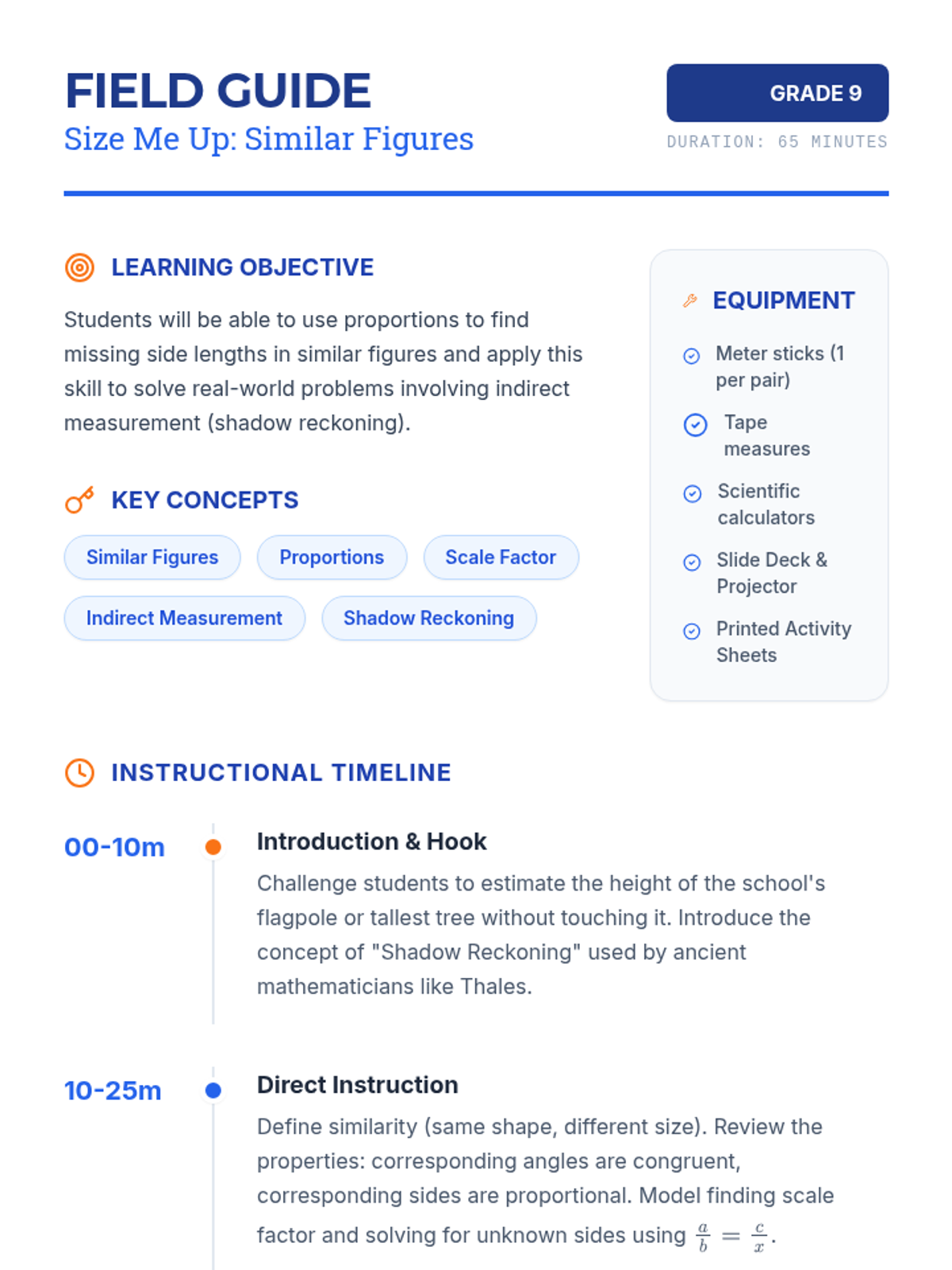
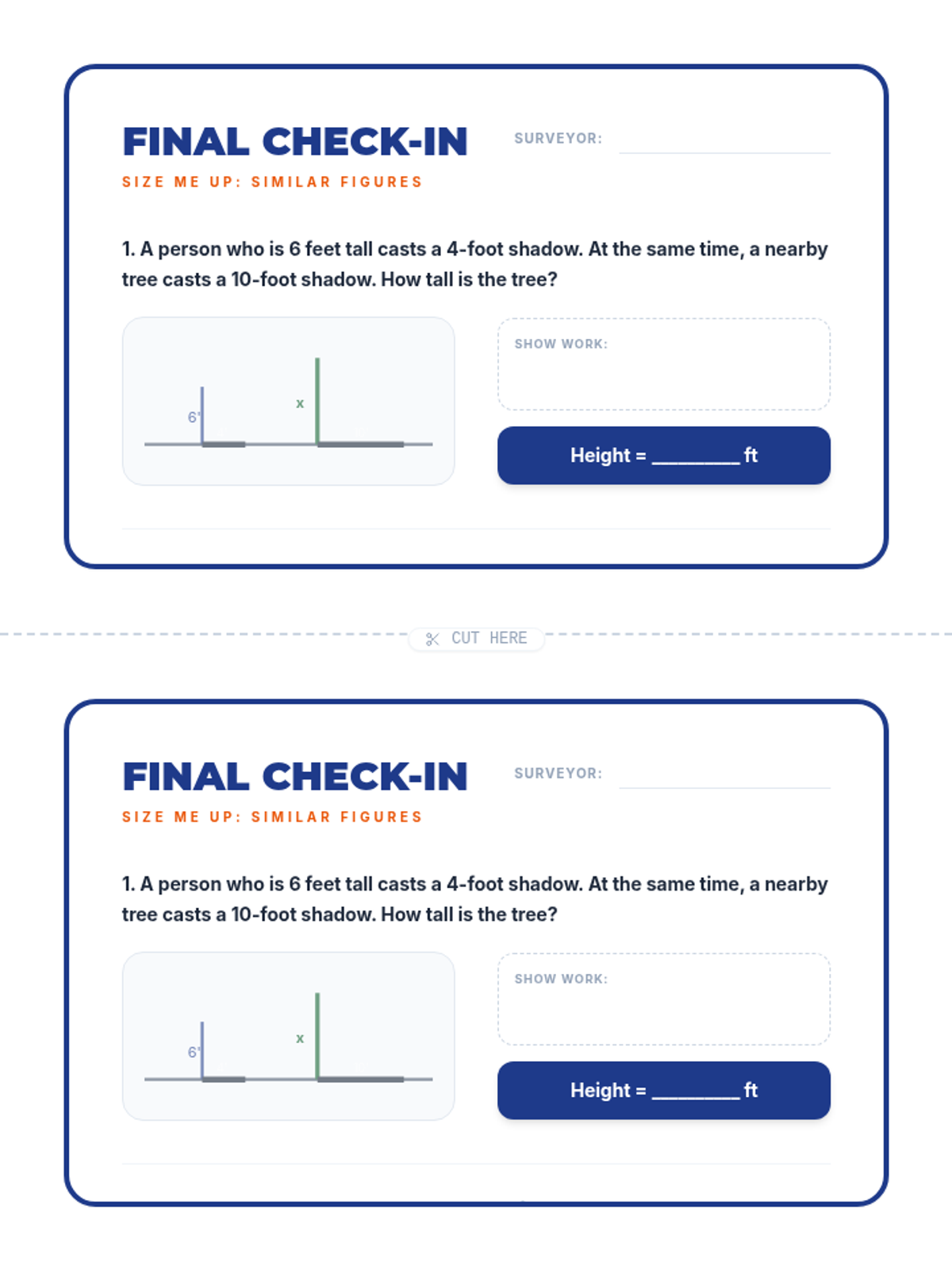
A 9th-grade geometry lesson where students master similar figures and proportions to solve real-world height problems through shadow reckoning and indirect measurement.
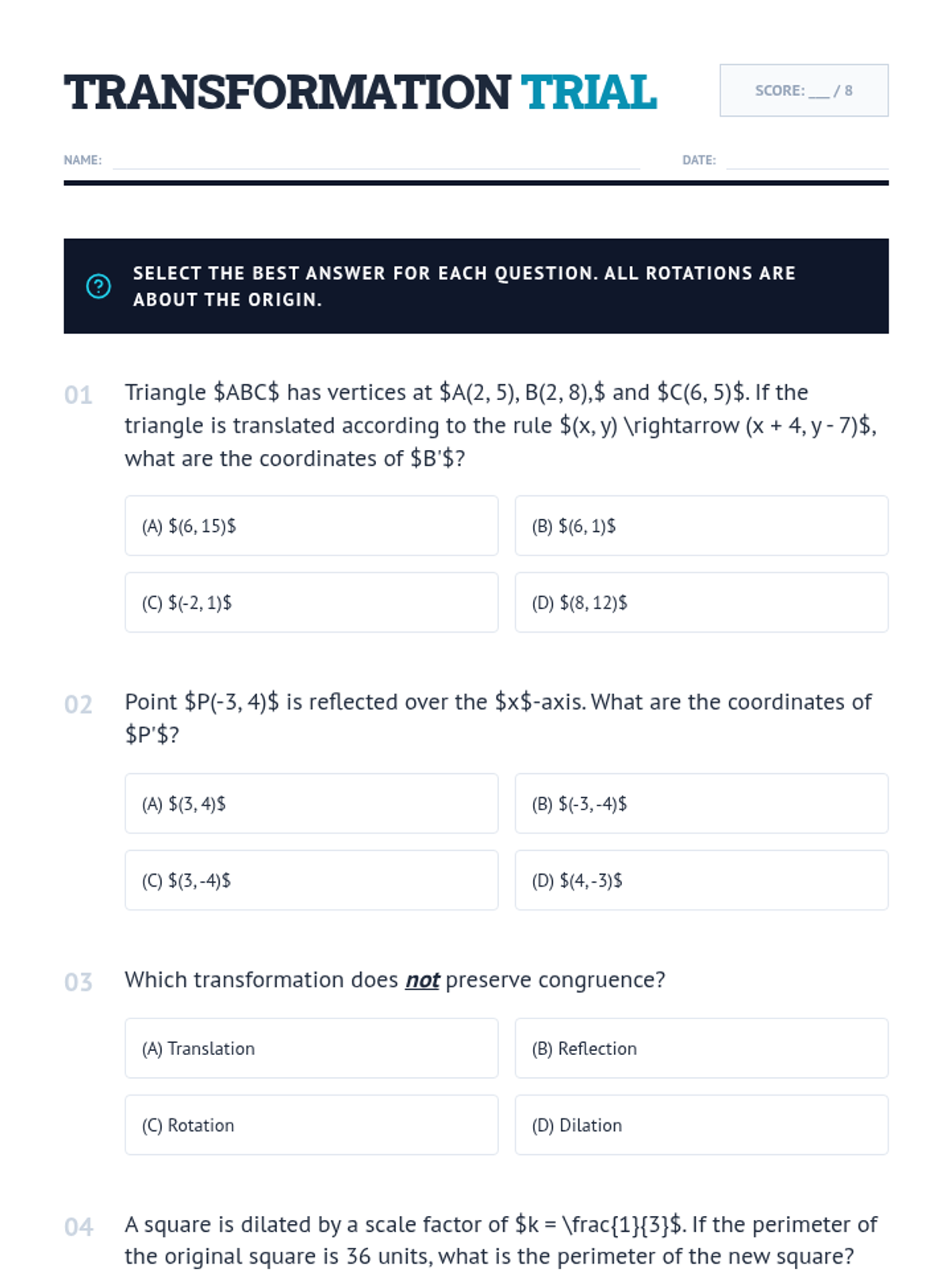
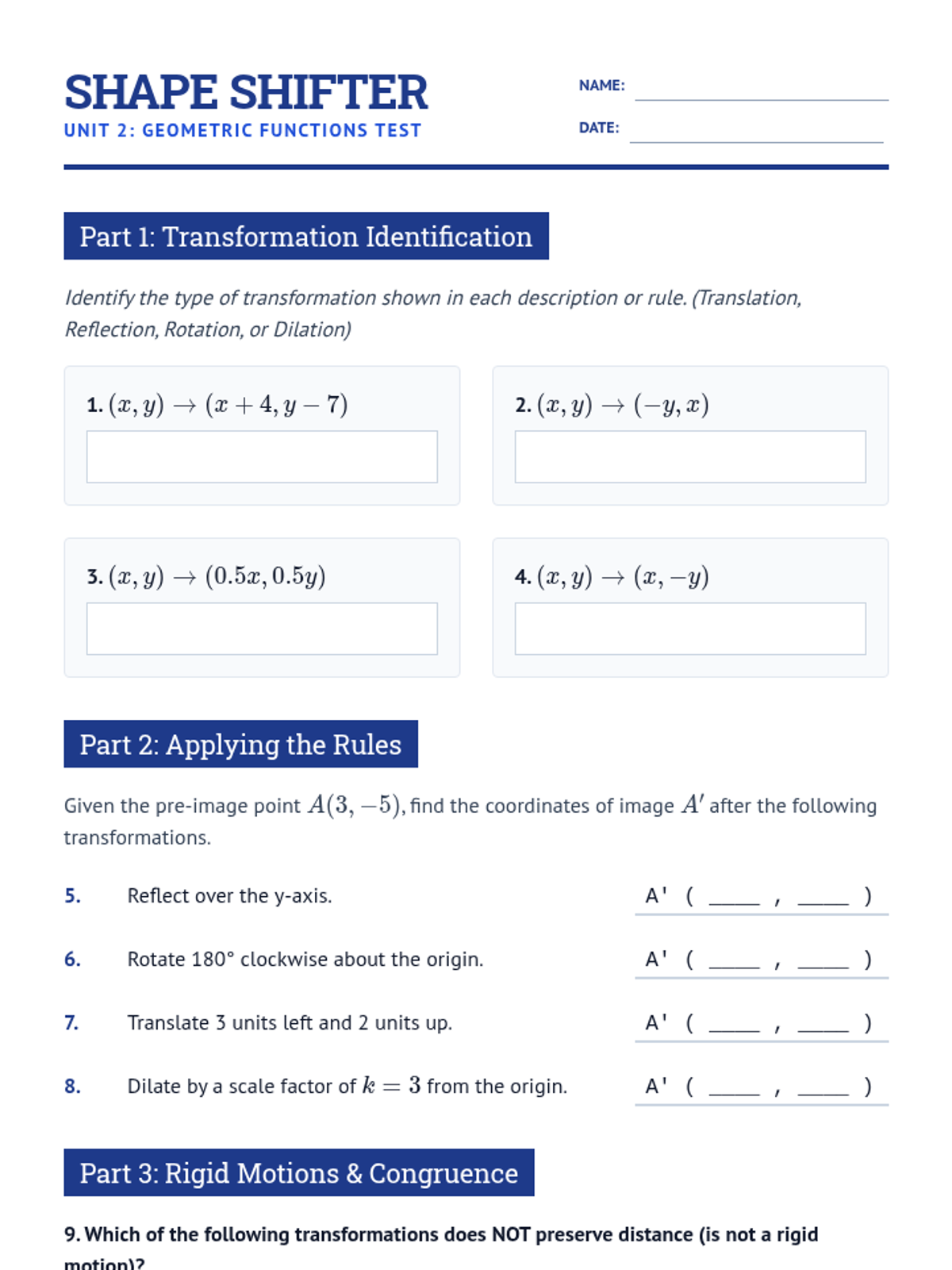
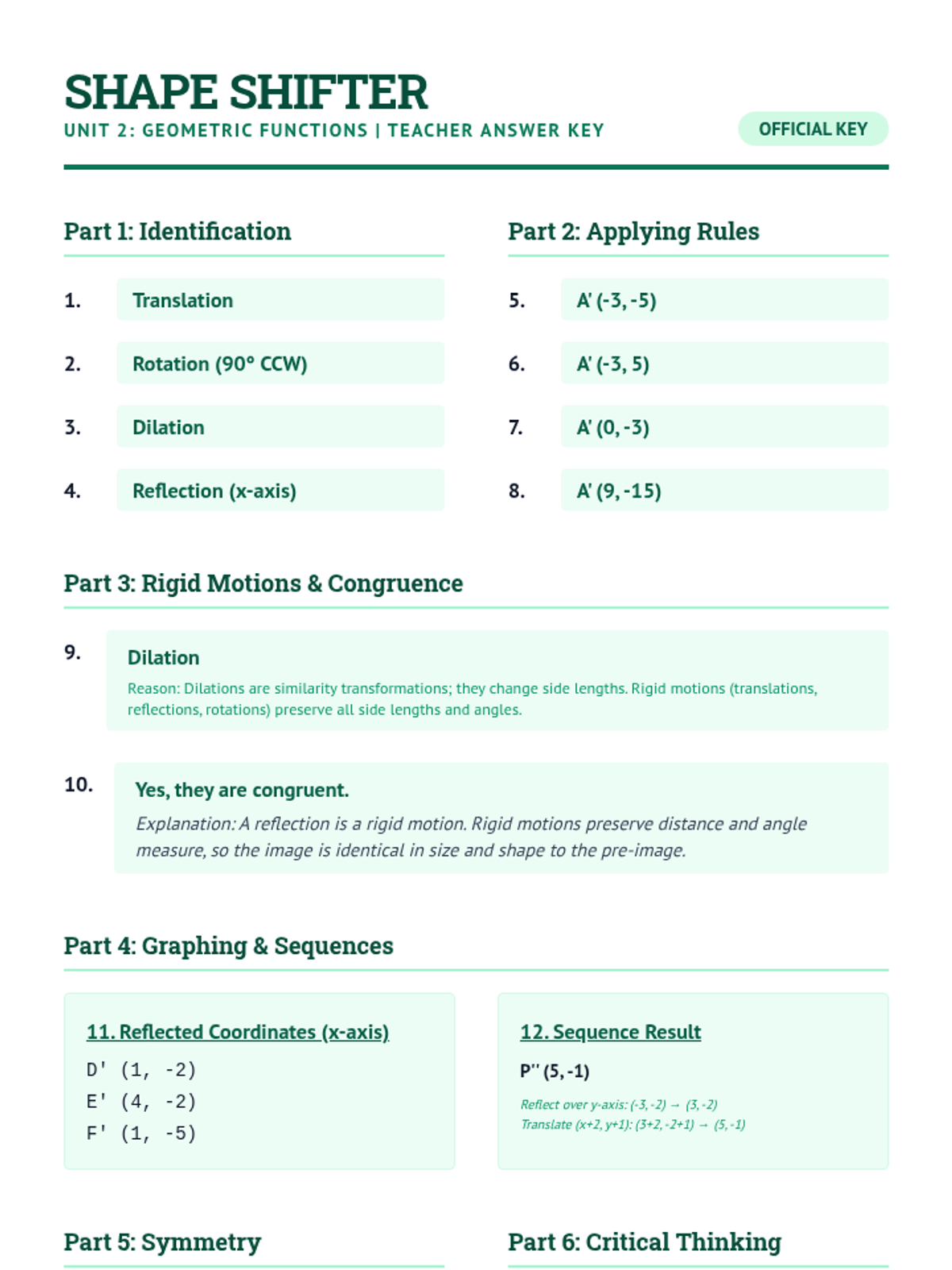
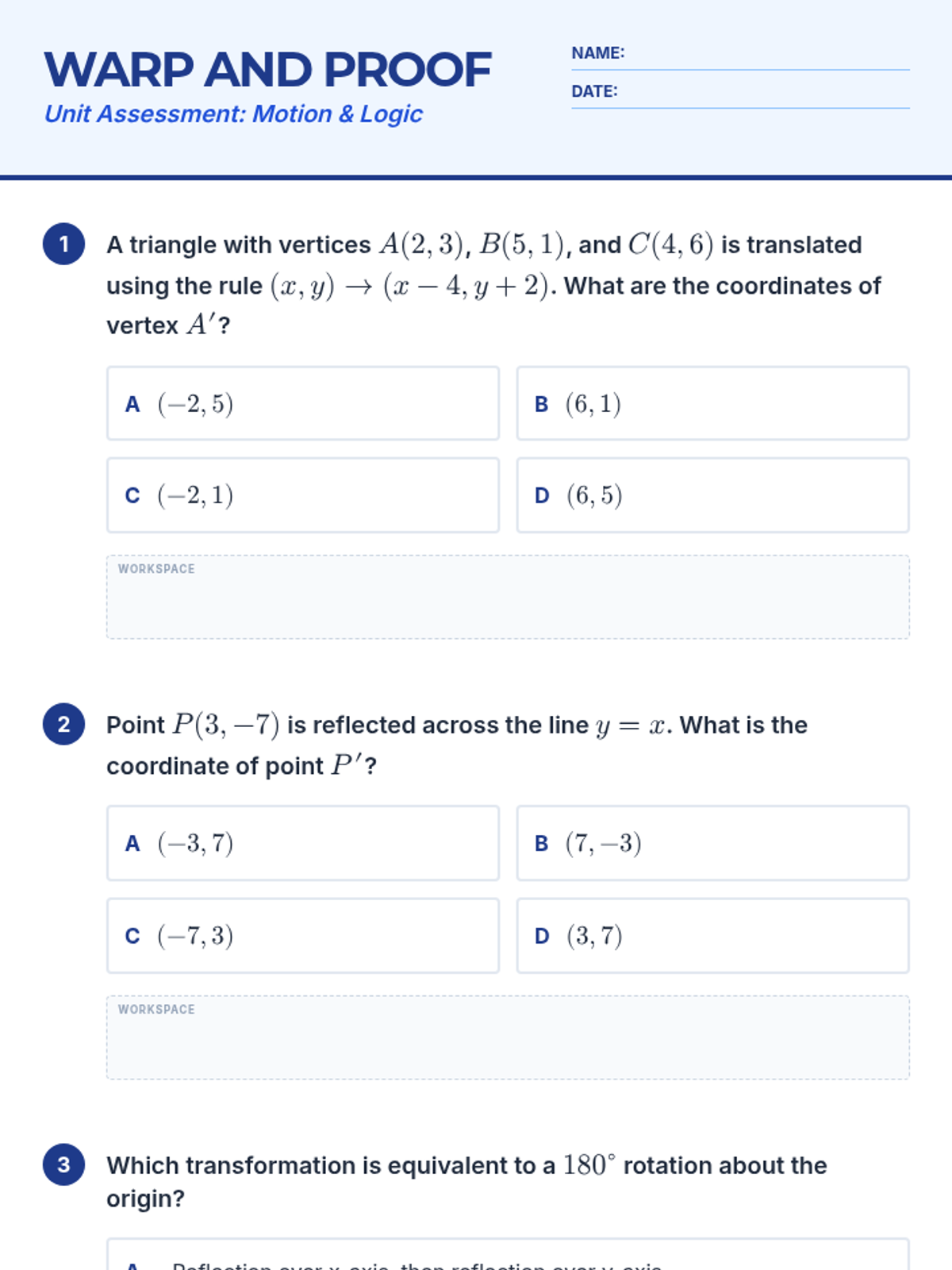
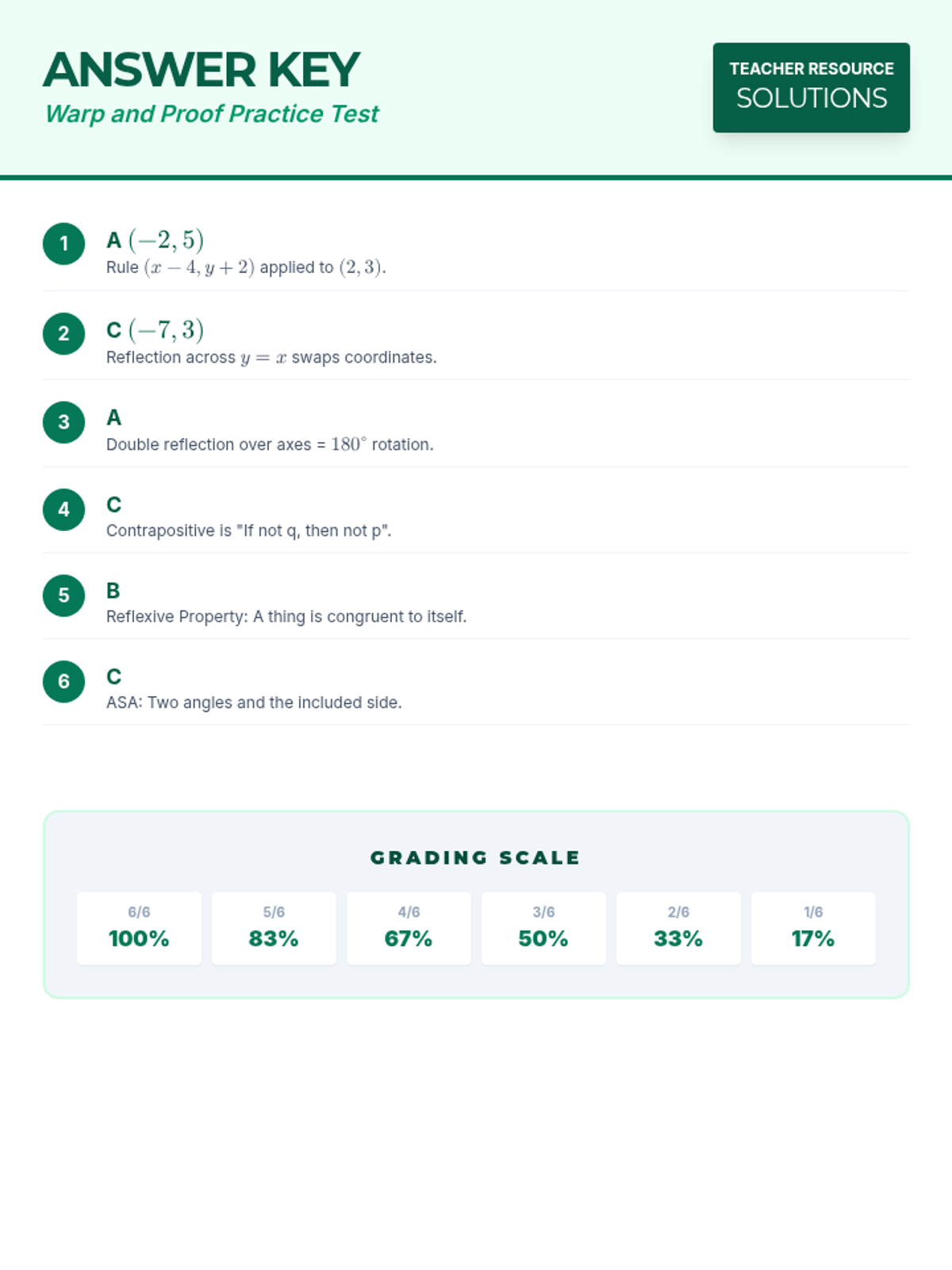
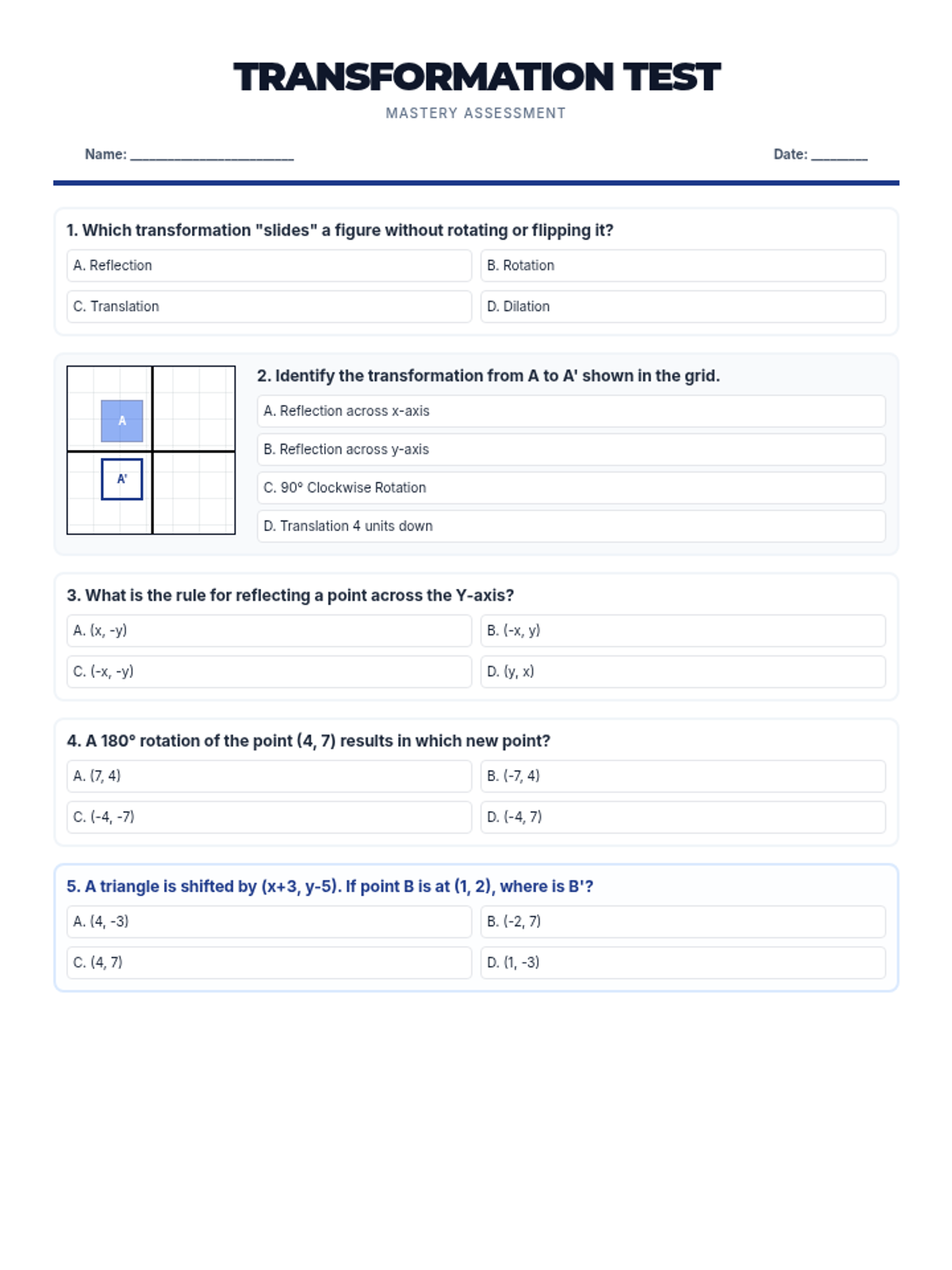
A comprehensive assessment focused on geometric transformations including translations, reflections, rotations, and dilations. Students will demonstrate their mastery of coordinate rules, sequences of transformations, and symmetry.
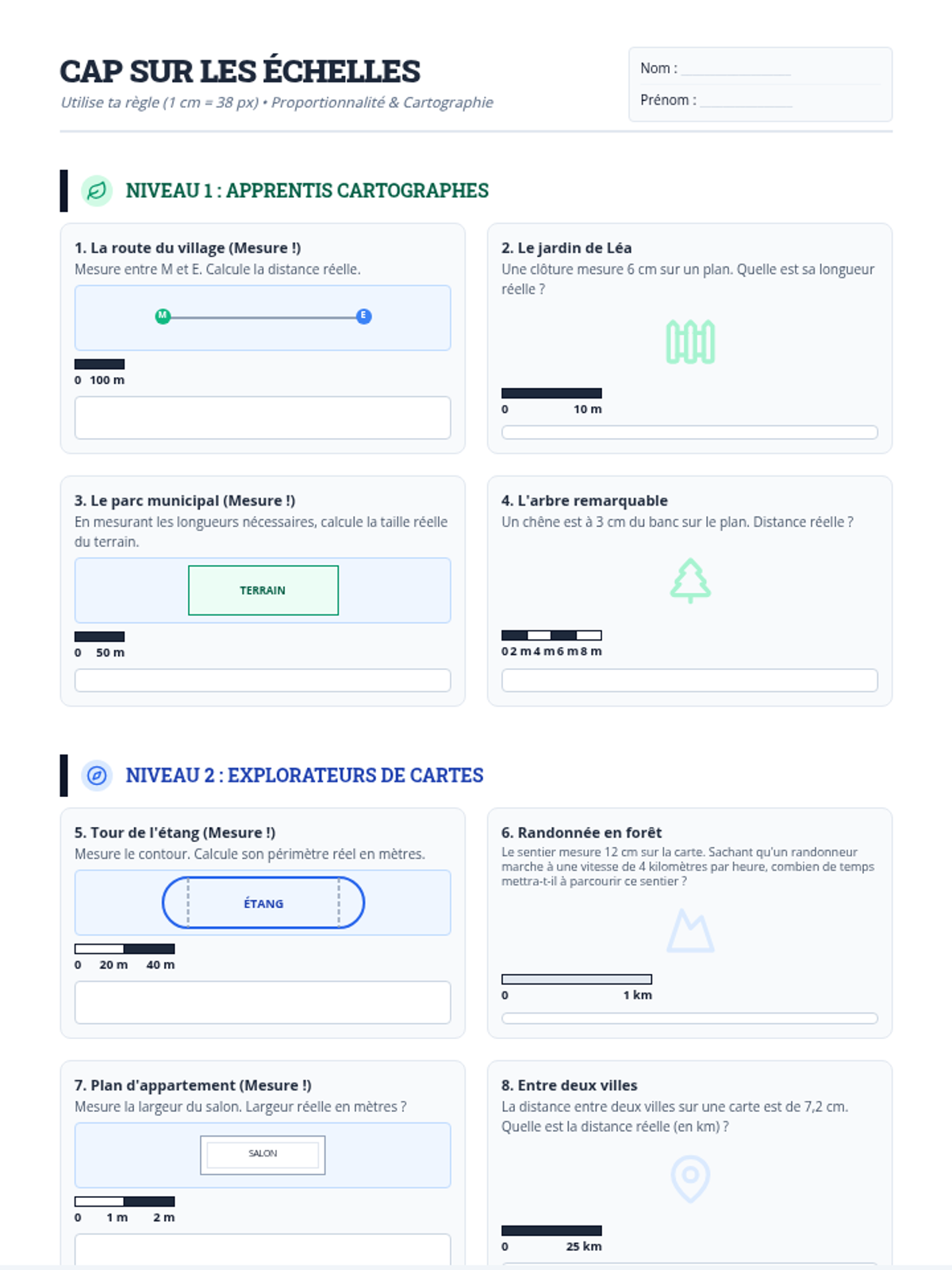
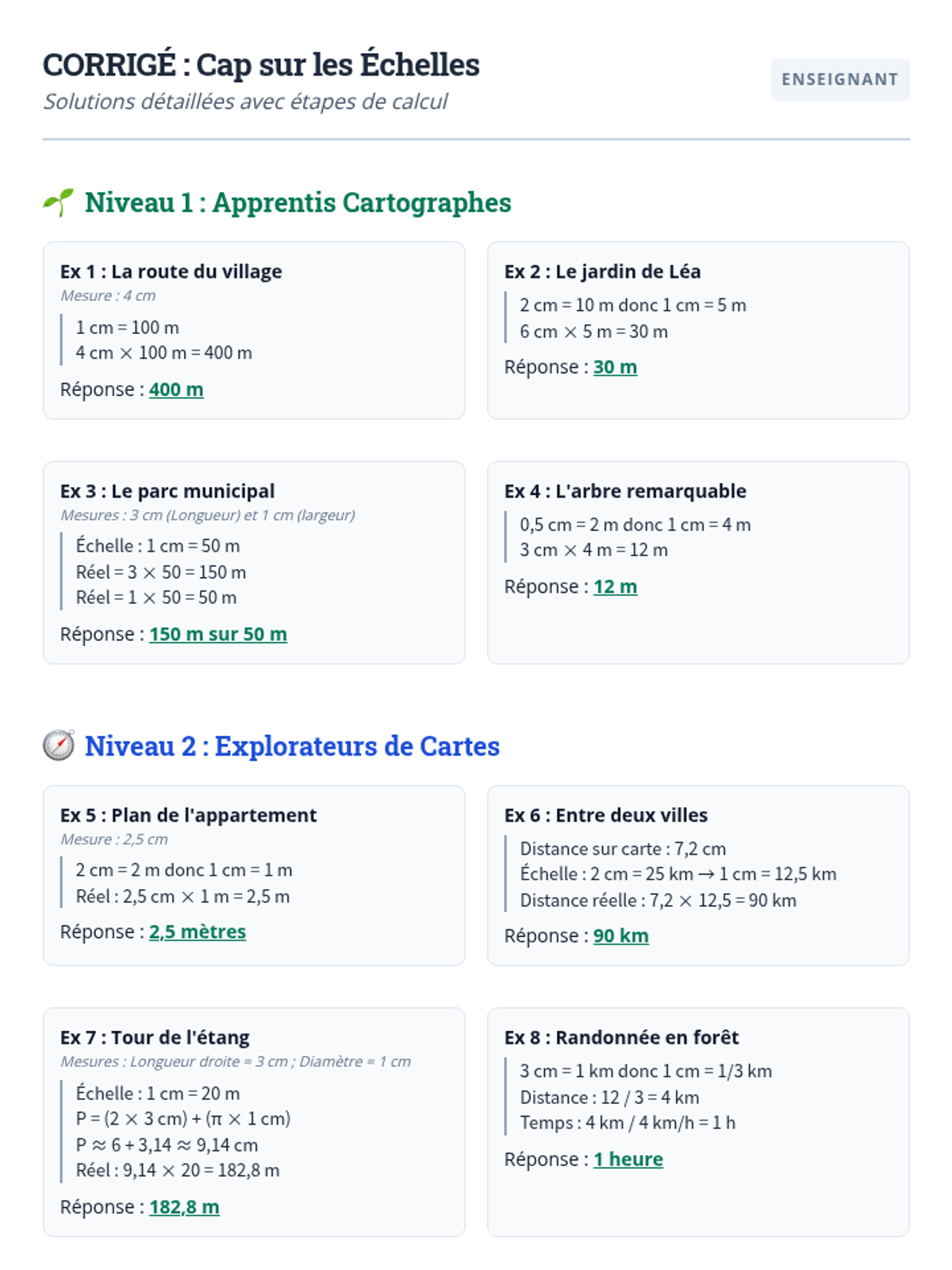
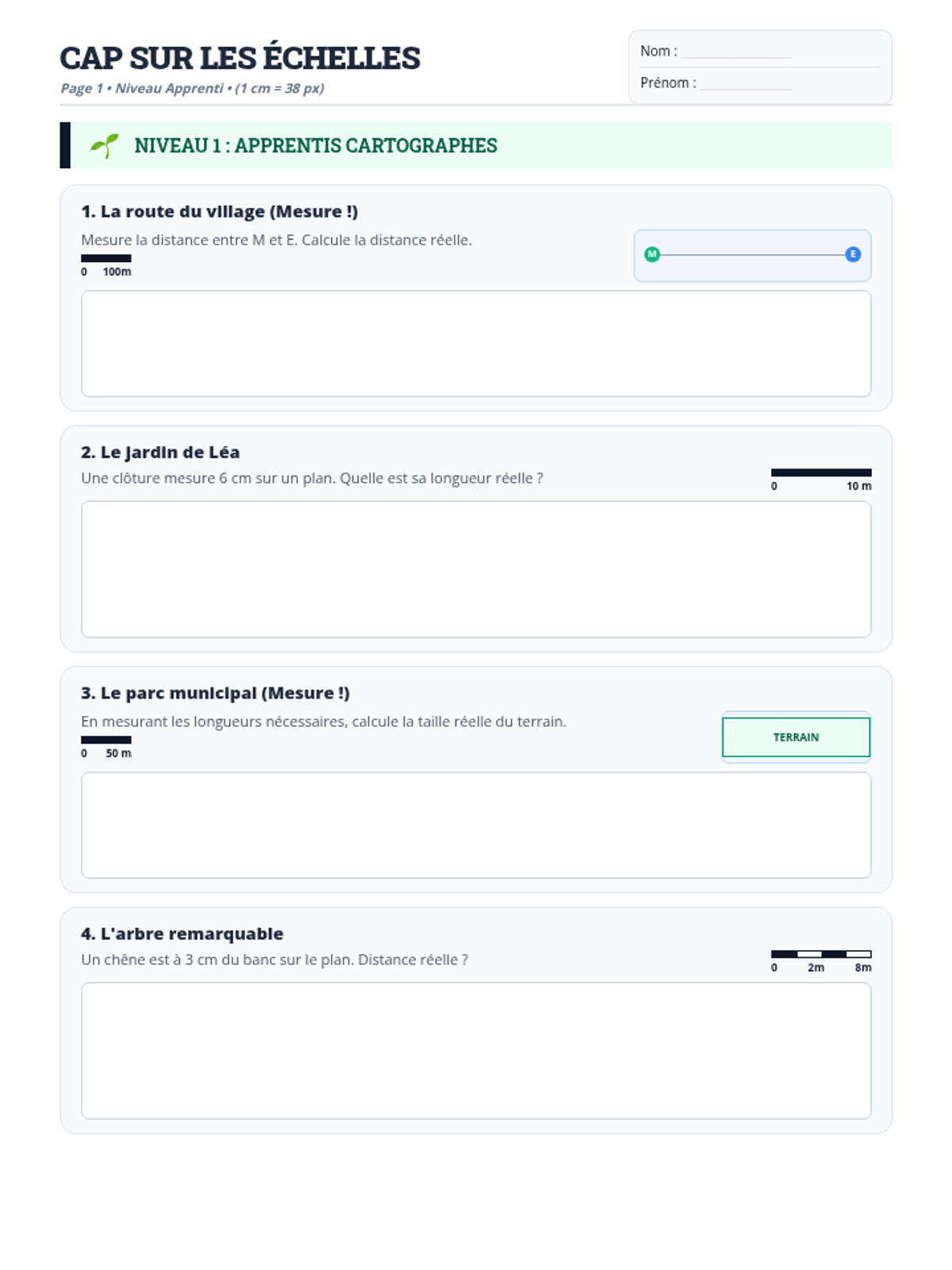
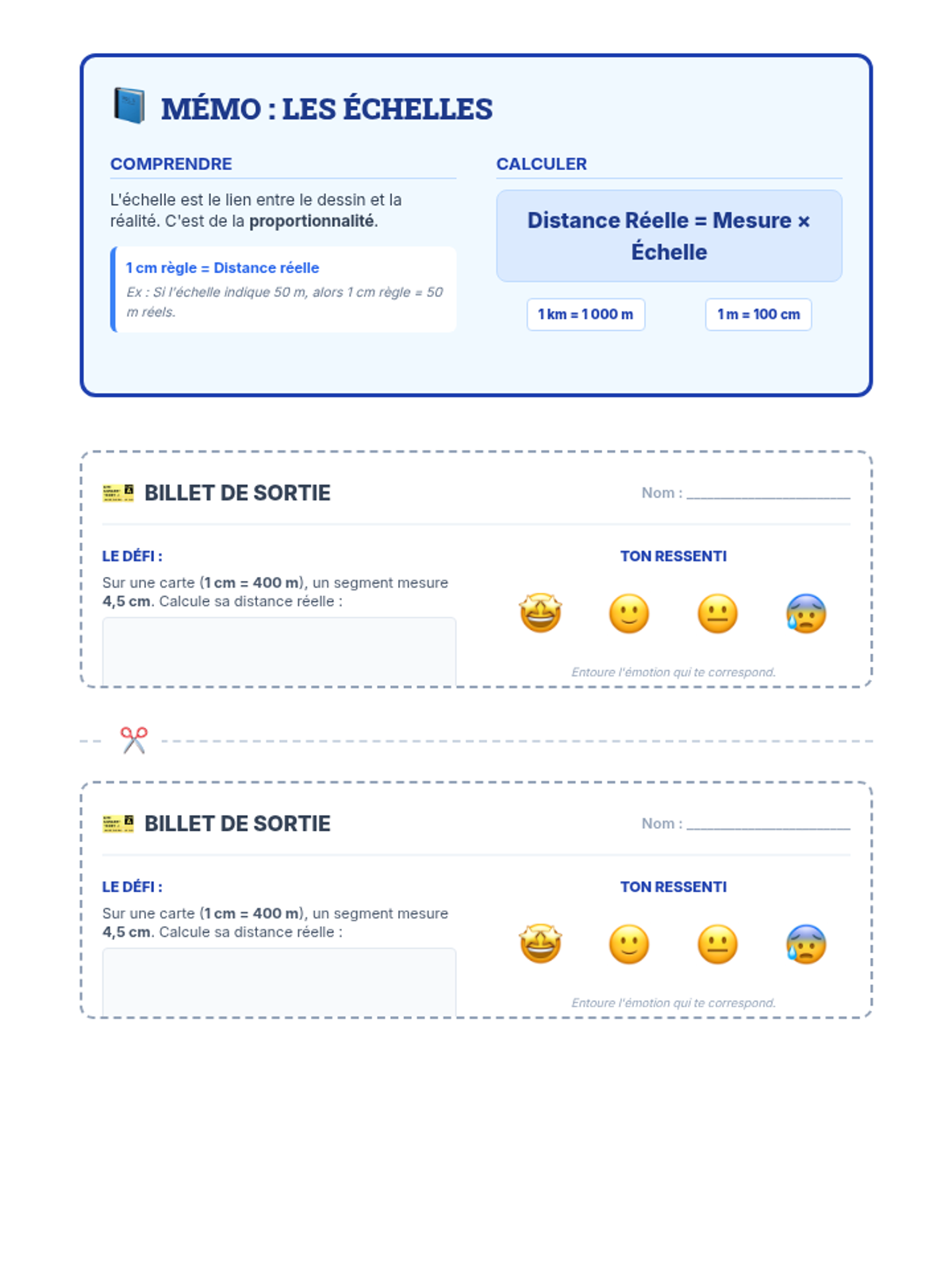
Une séance d'exercices différenciés sur la proportionnalité et les échelles (données graphiquement) pour trois niveaux de difficulté.
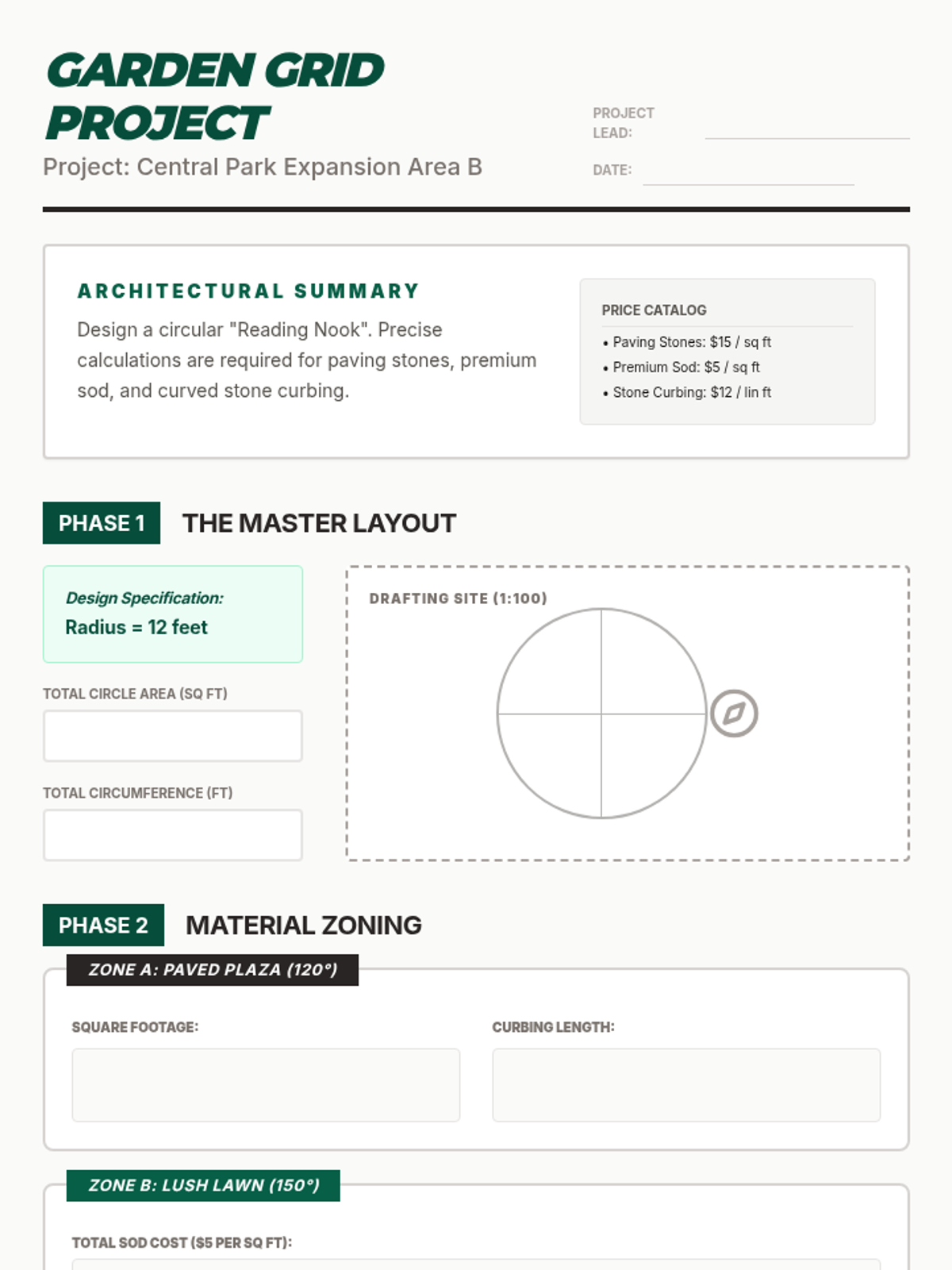
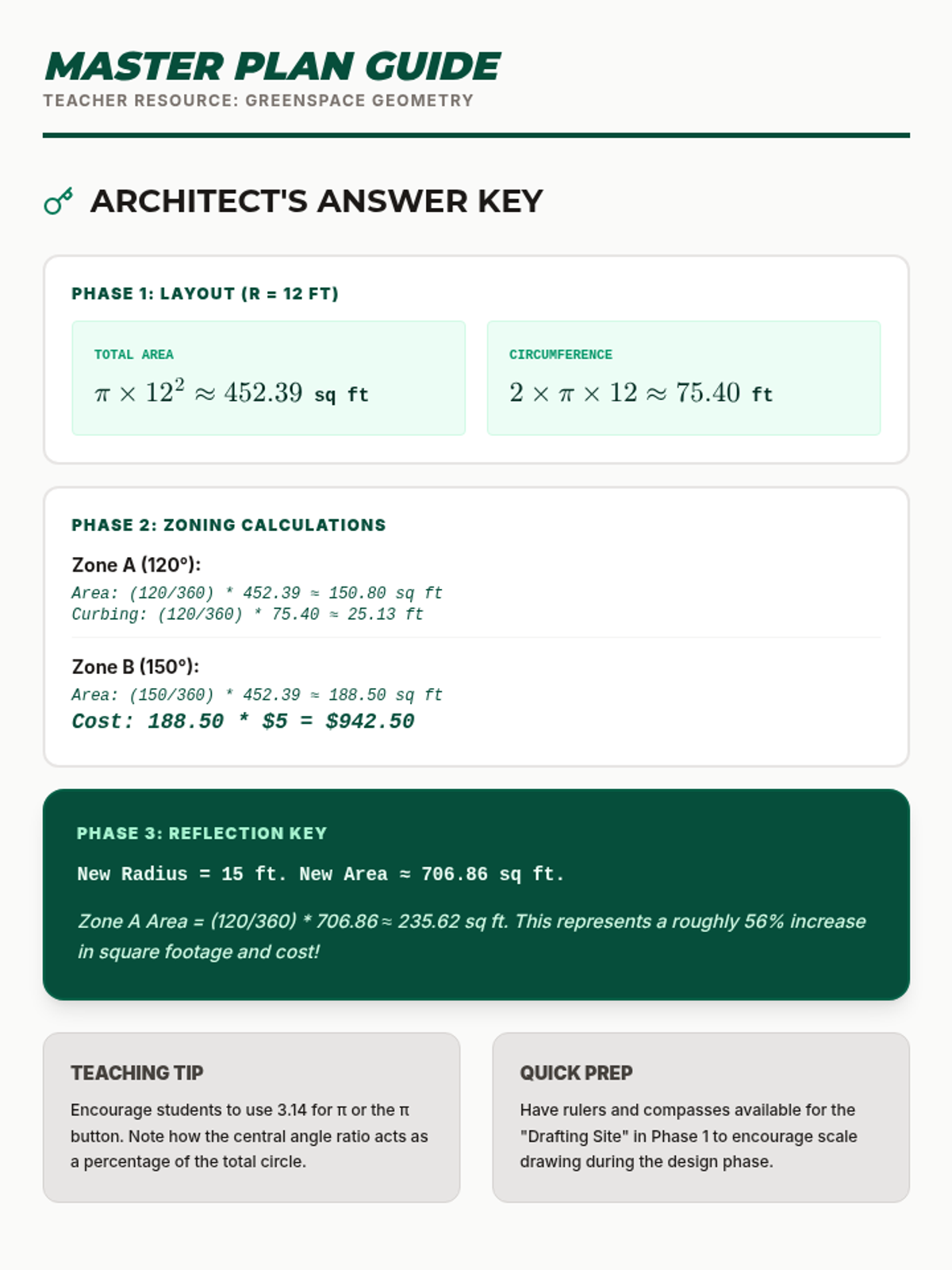
Students act as landscape designers, using circular geometry to plan curved garden paths, irrigation zones, and decorative park features.
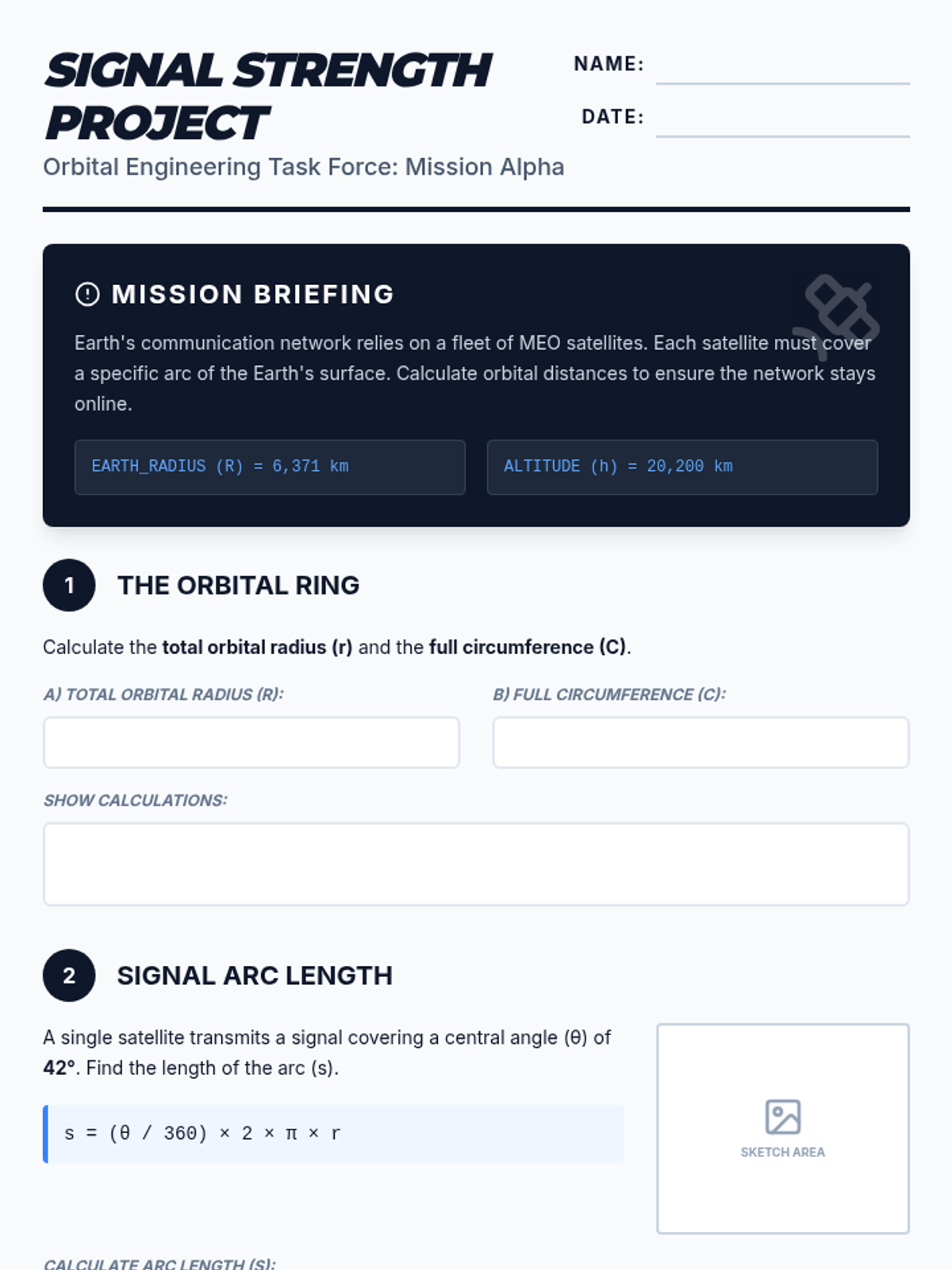
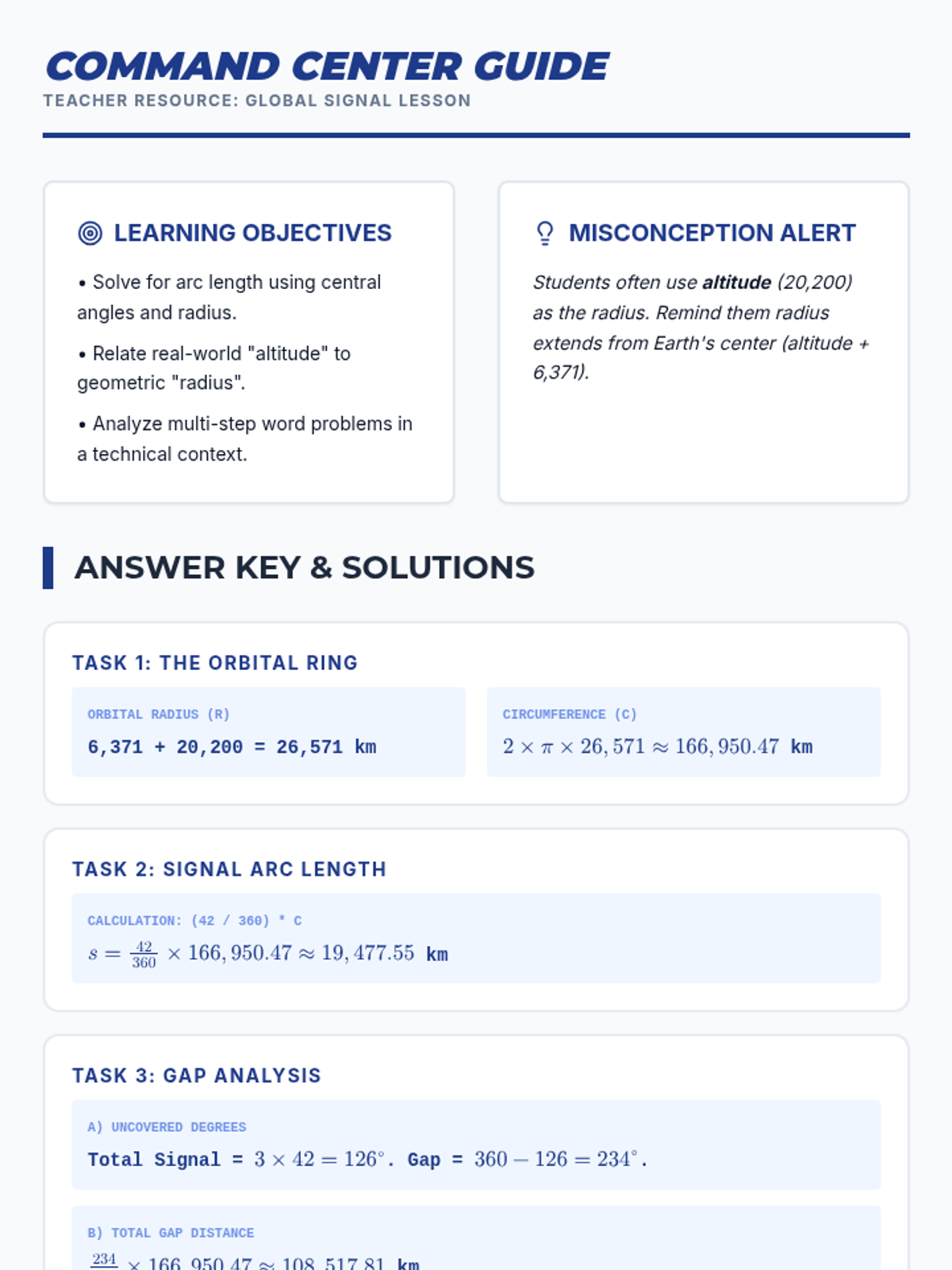
Students take on the role of orbital engineers to calculate satellite coverage areas and signal paths using central angles and arc length calculations.
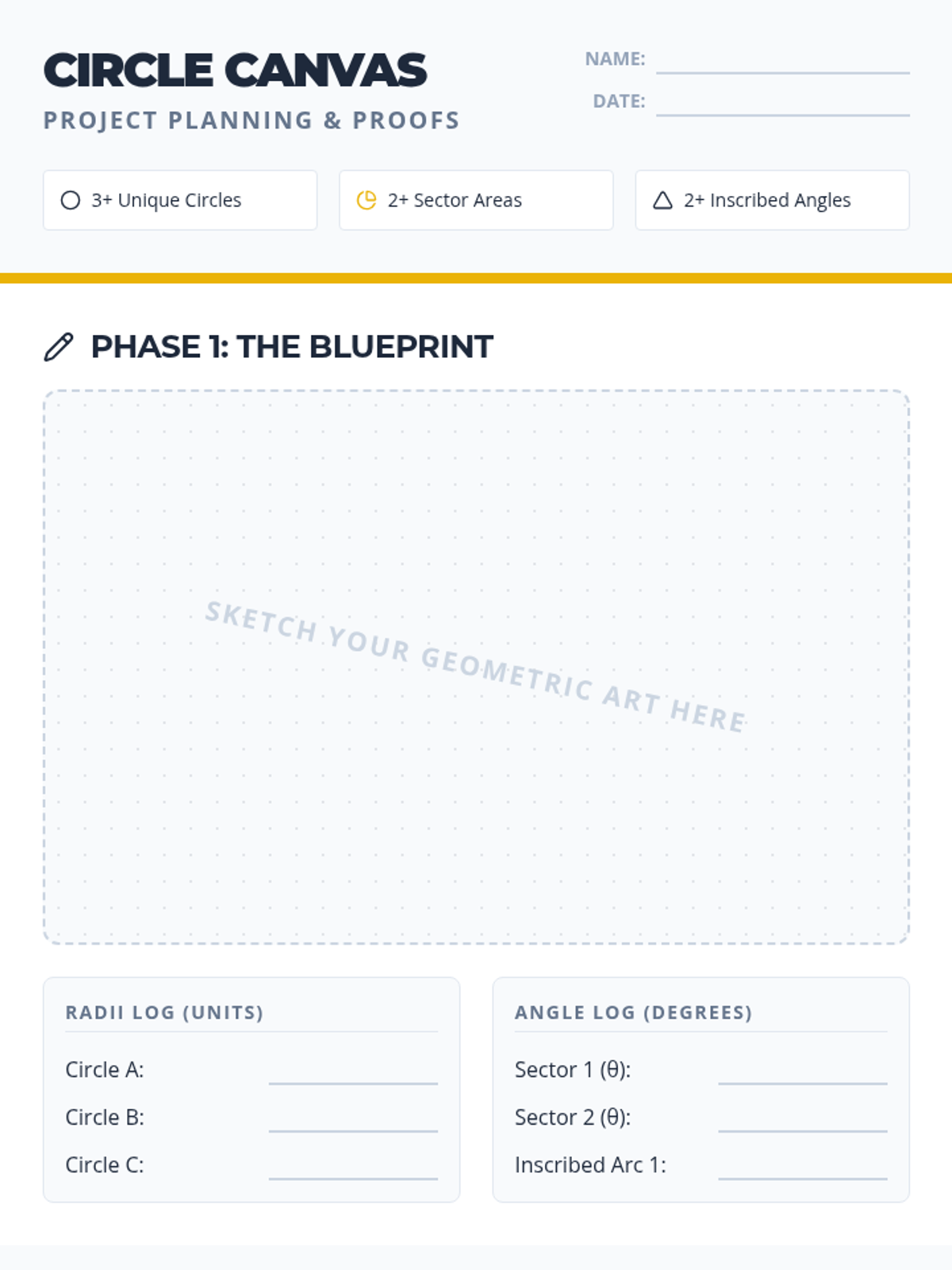
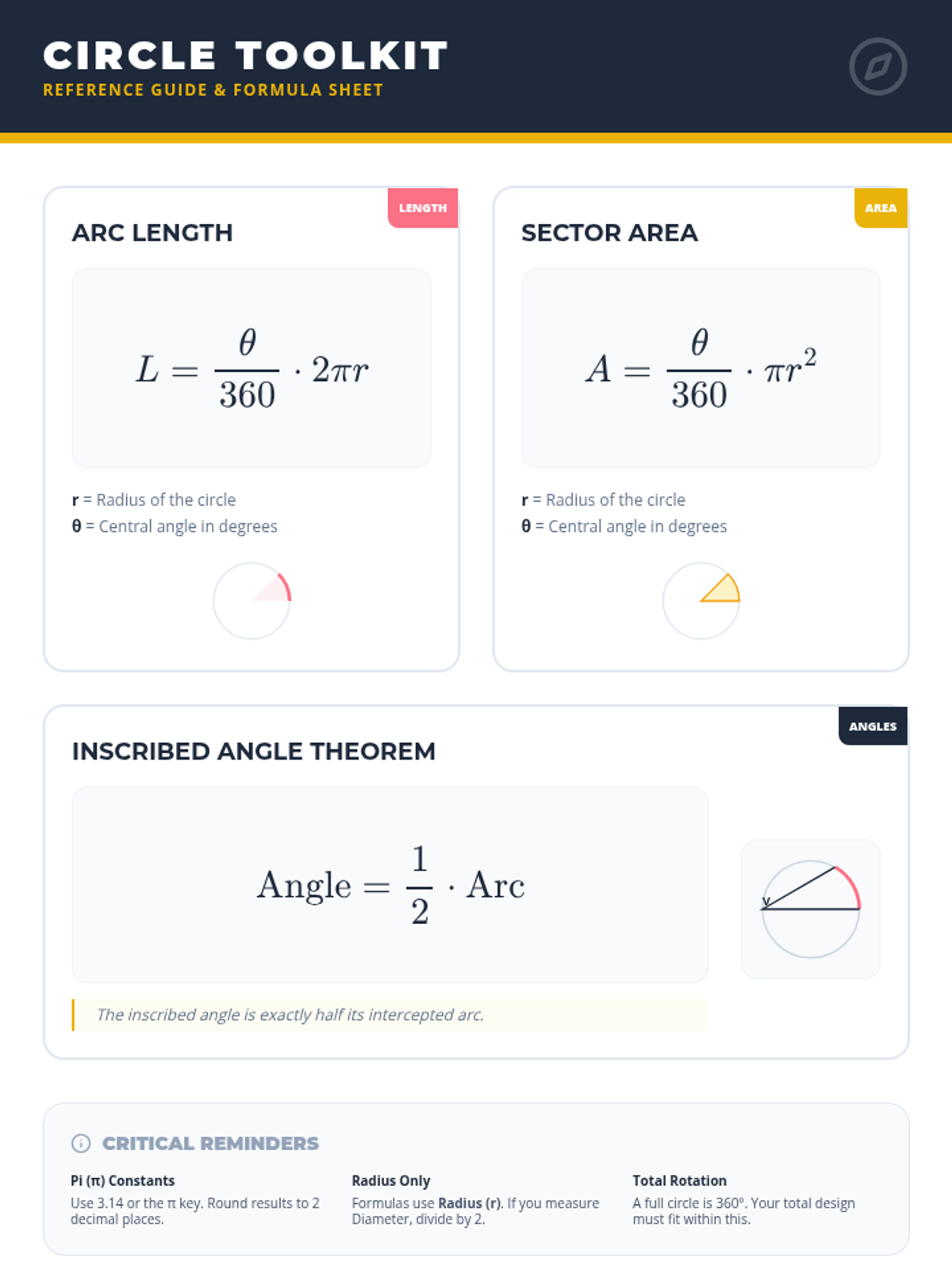
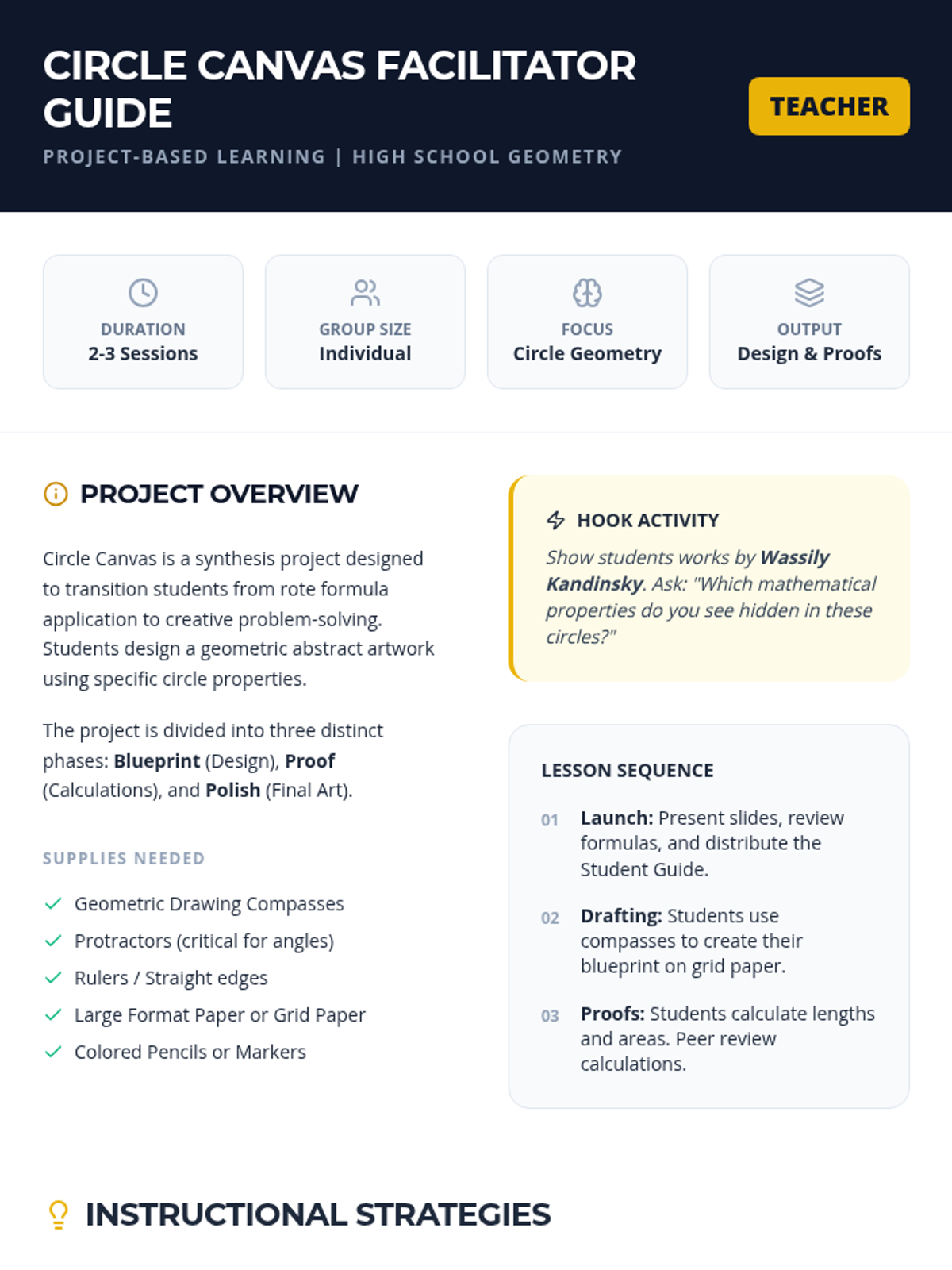
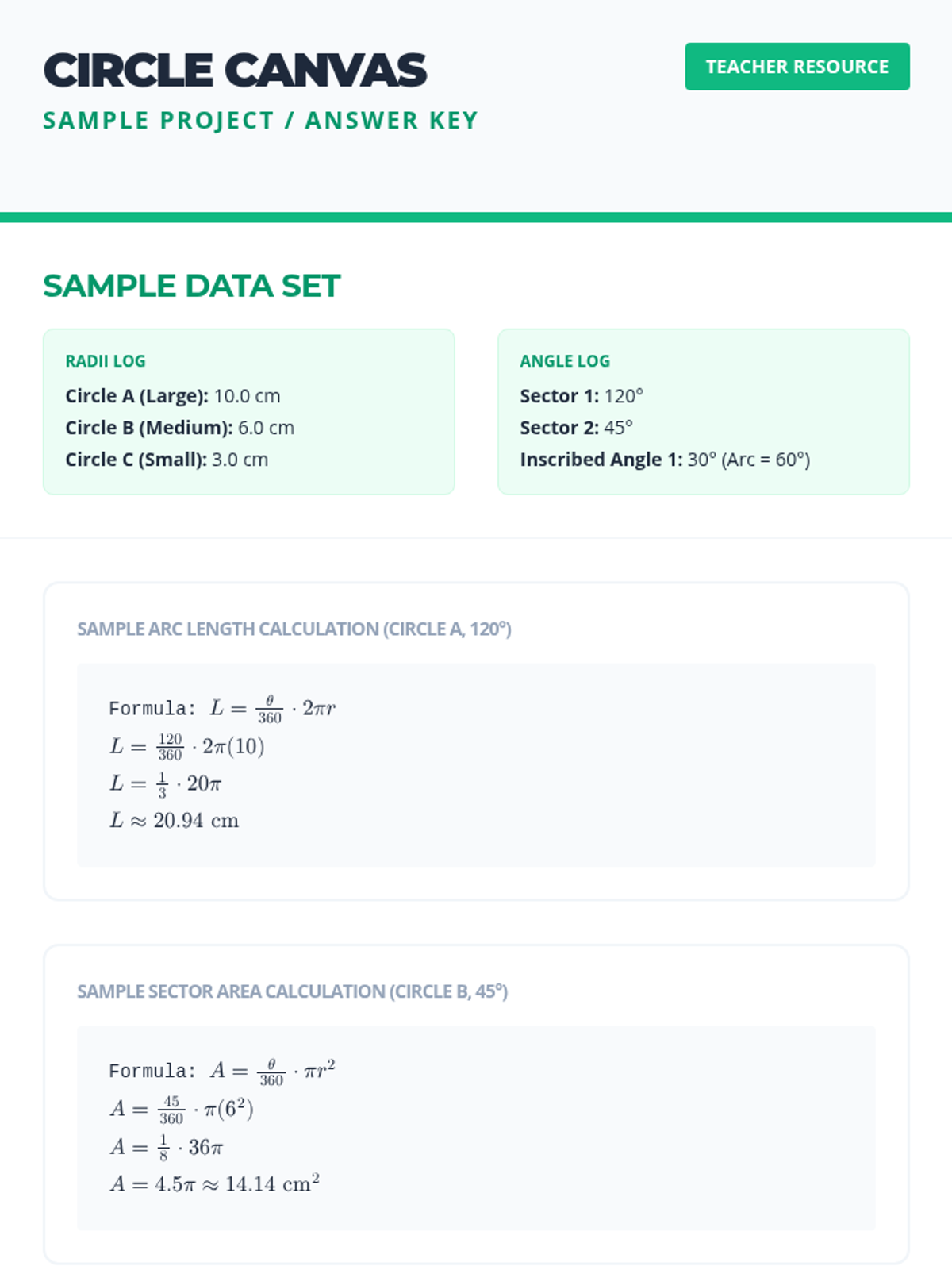
A creative art-based project where students apply circle geometry concepts—arc length, sector area, and inscribed angles—to design and calculate a geometric masterpiece.
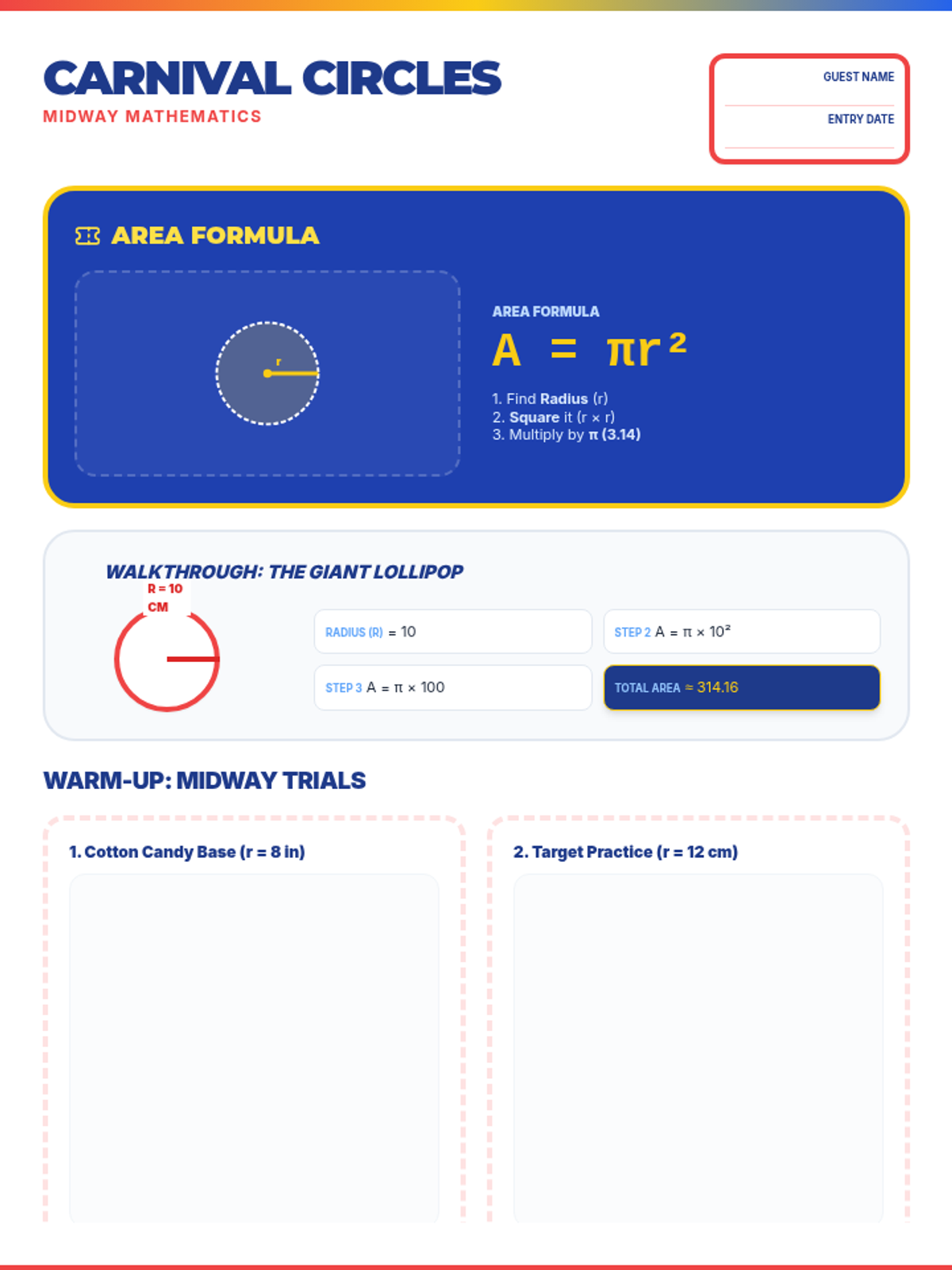
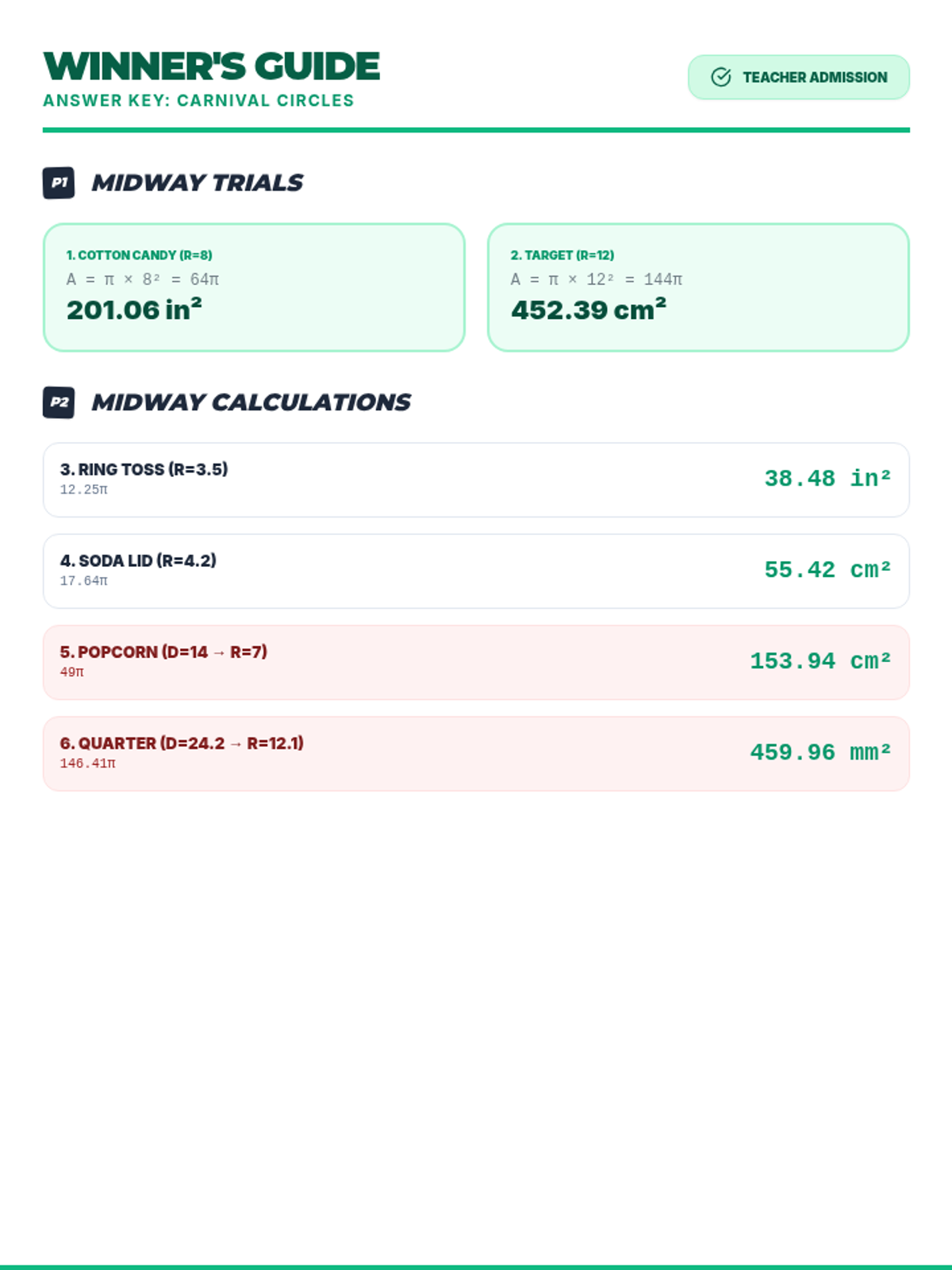
A high-energy, amusement park-themed packet for calculating the area of a circle. Students explore the Midway and Thrill Rides while solving radius and diameter problems using visual aids and calculators.
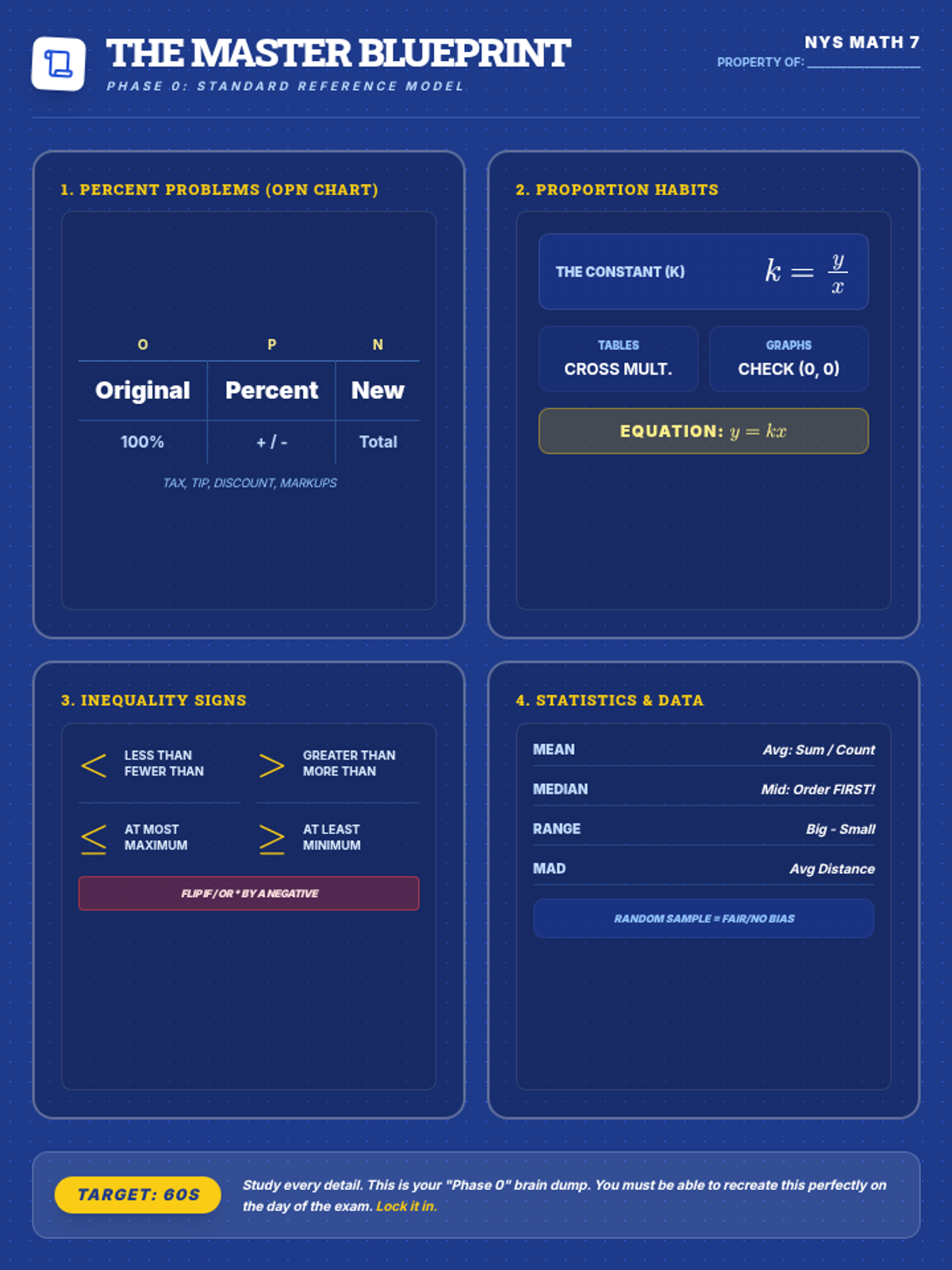
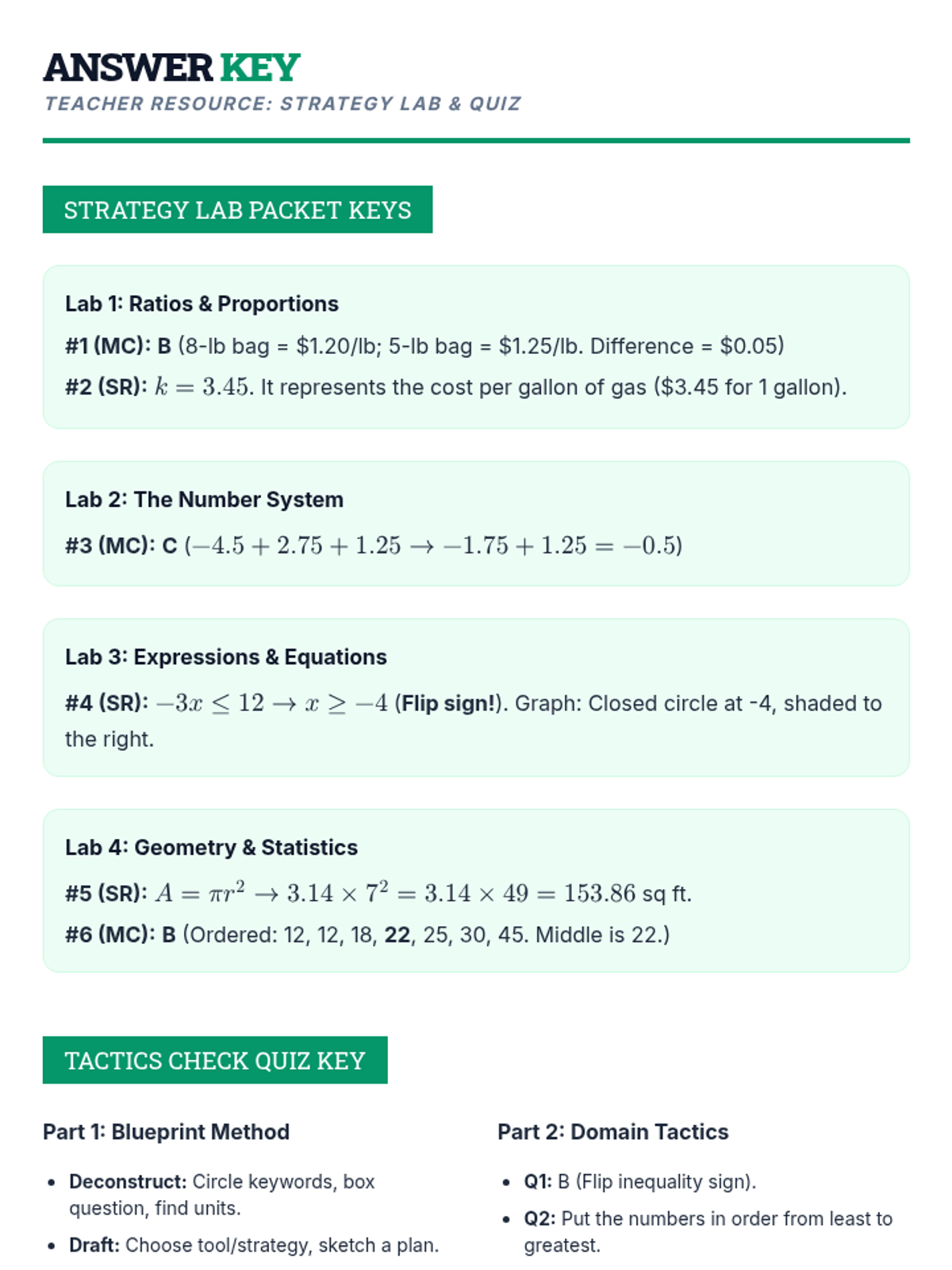
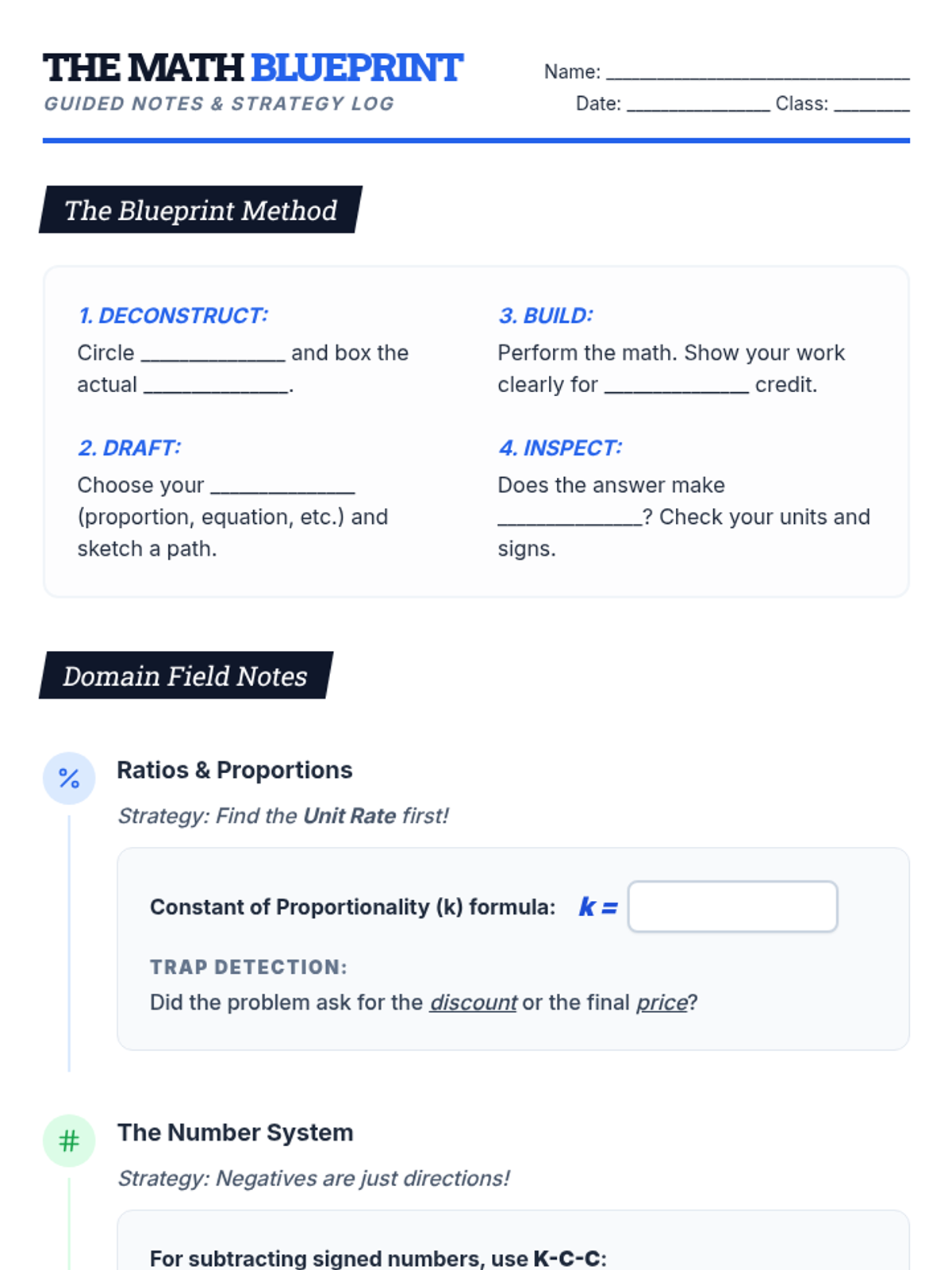
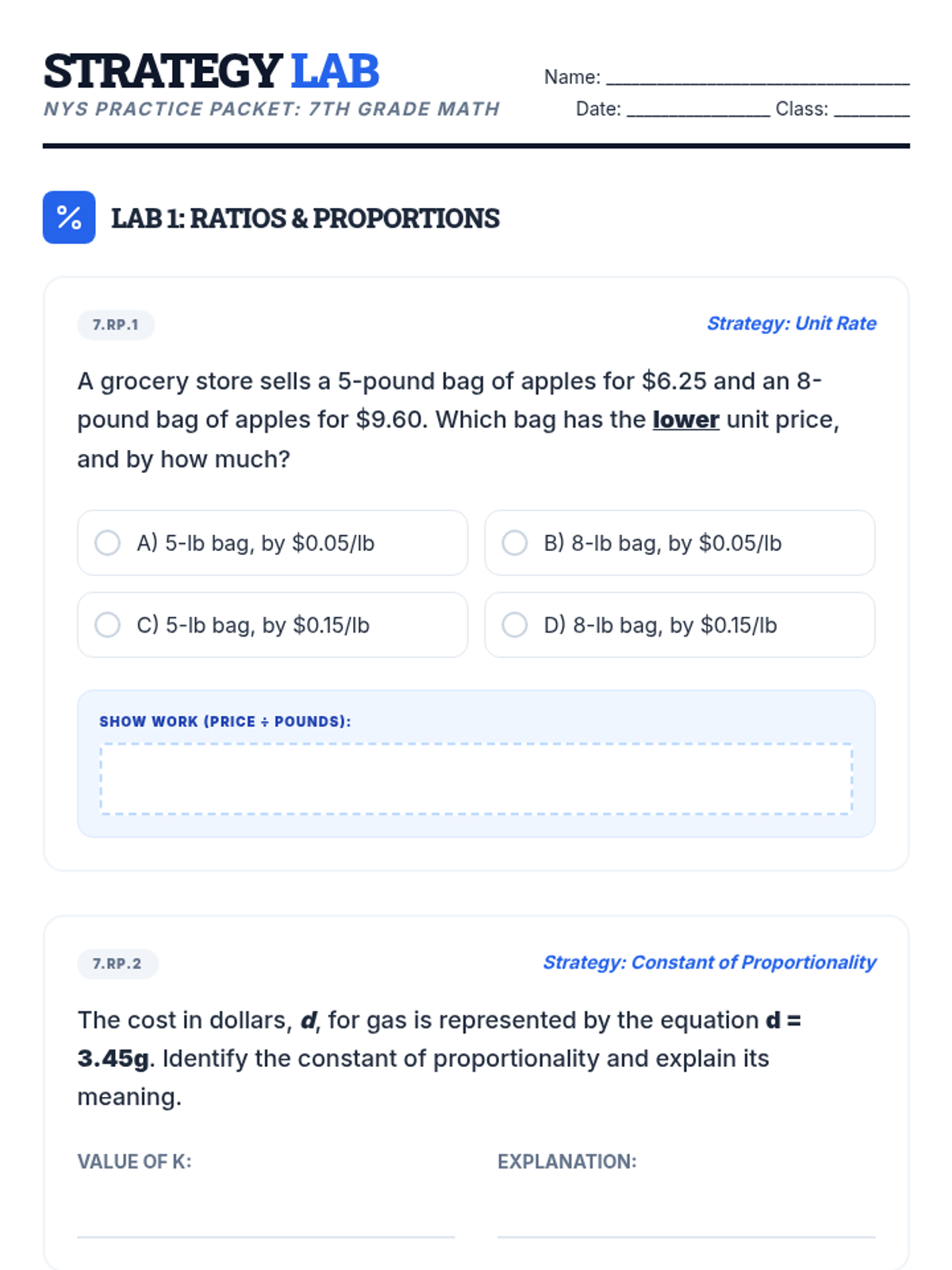
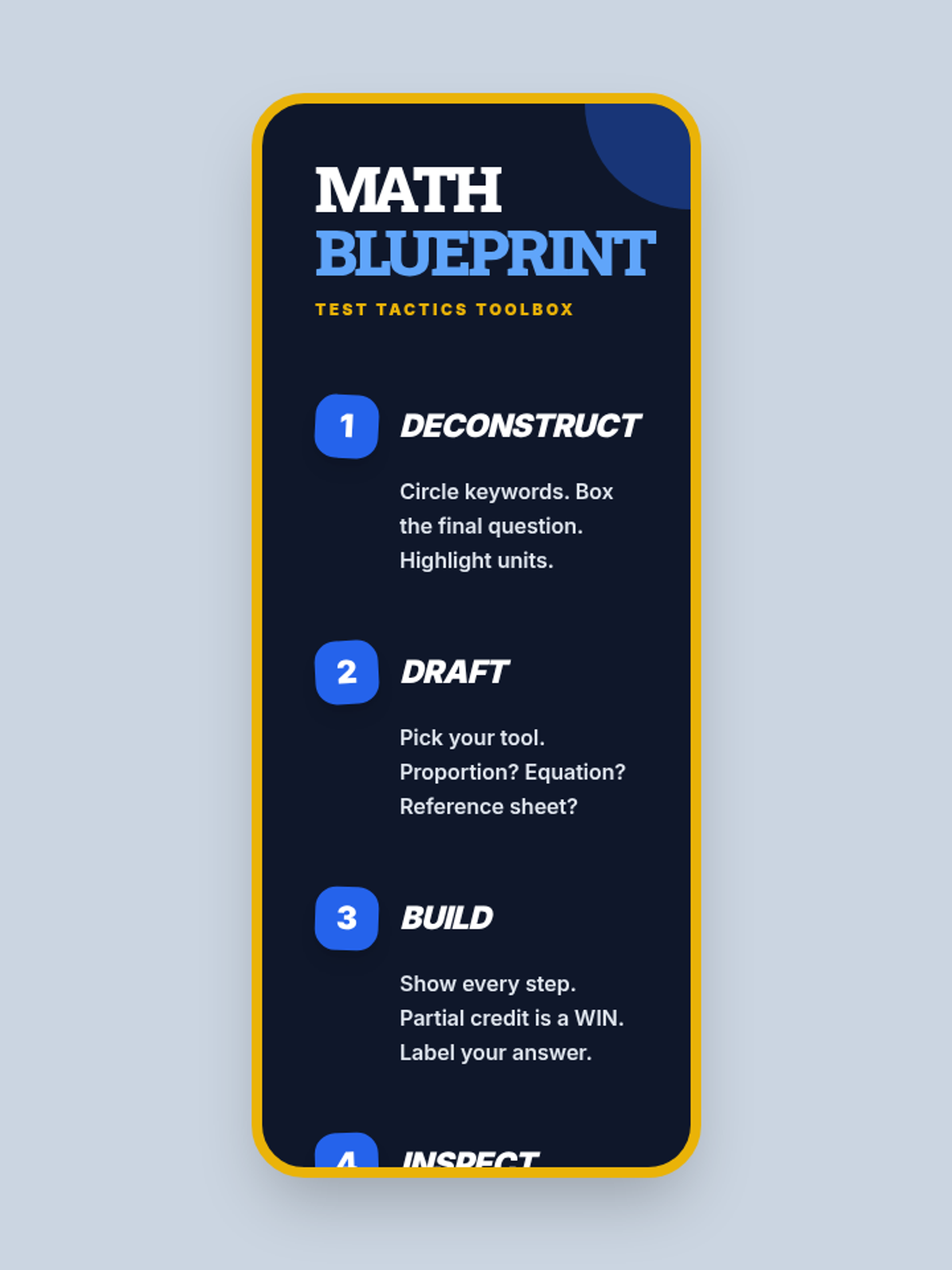
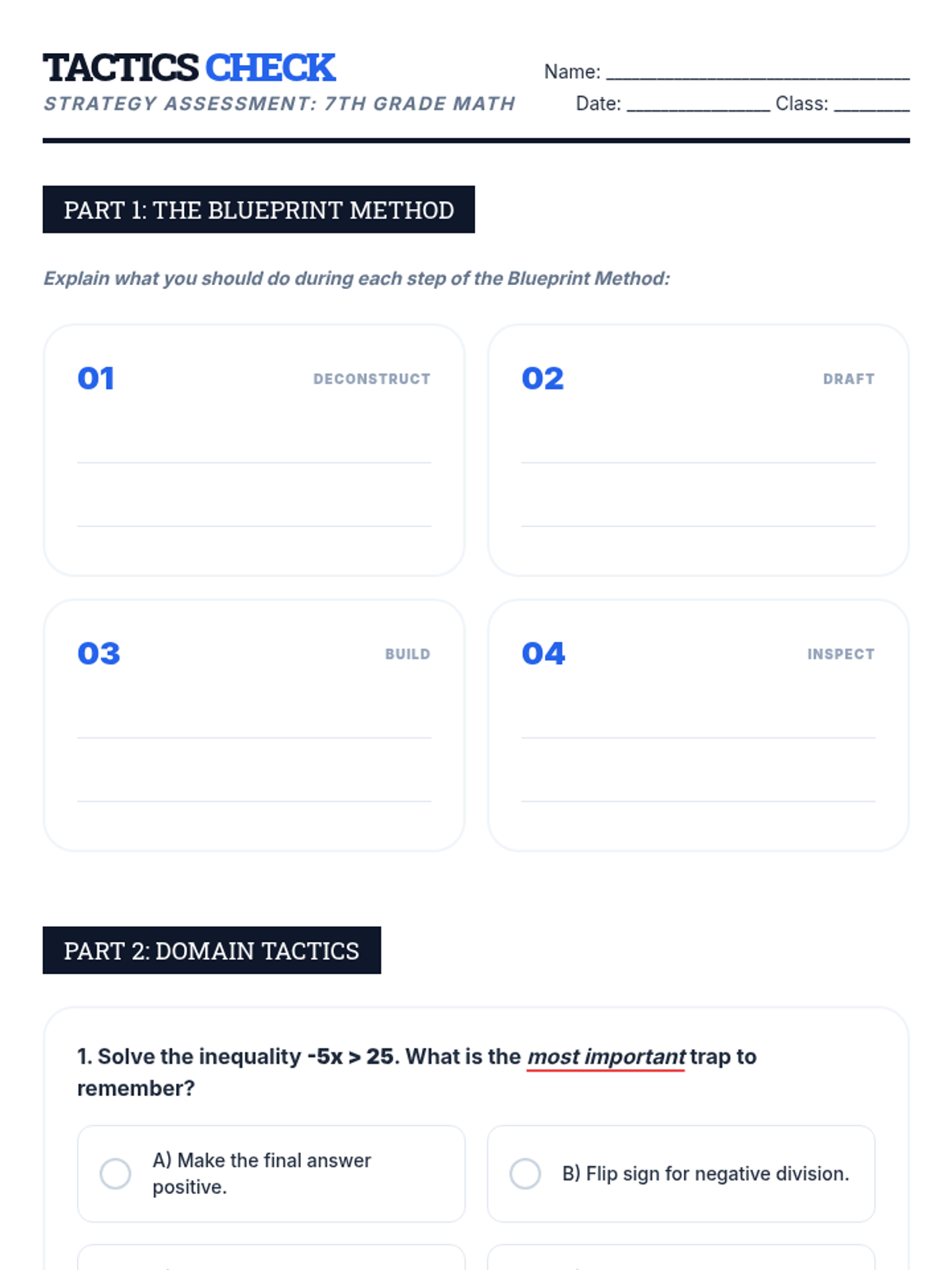
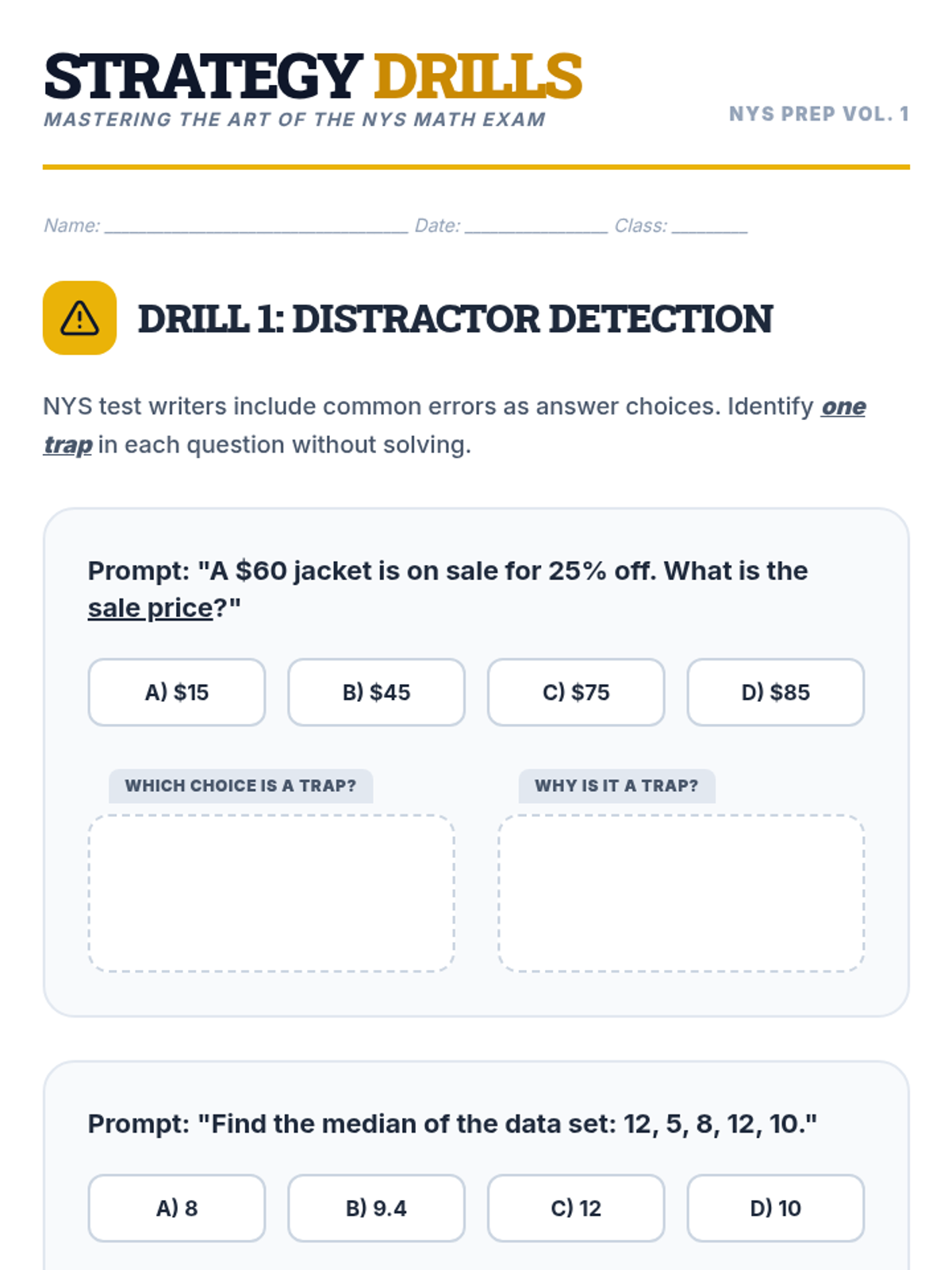
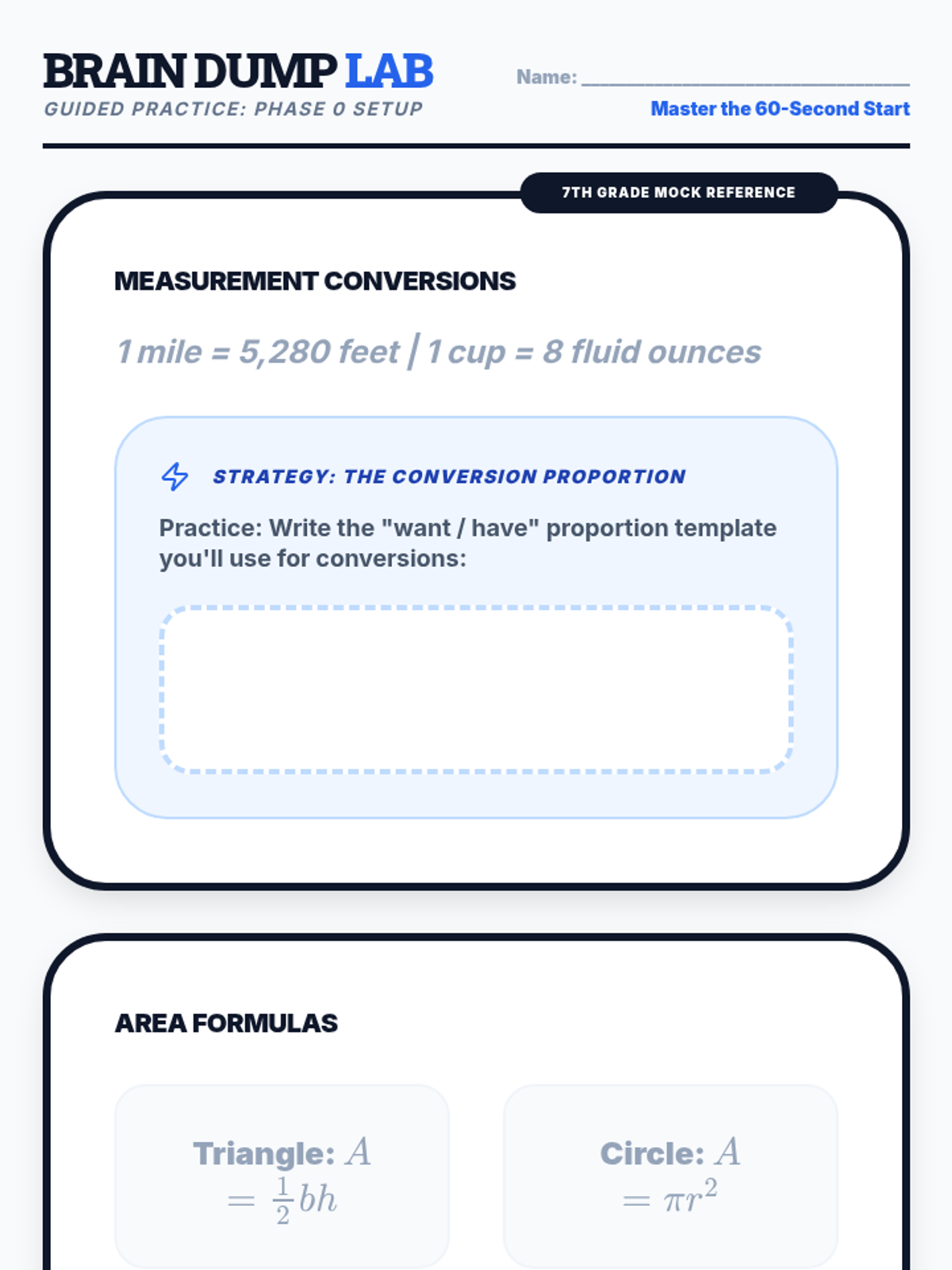
A comprehensive 7th-grade math lesson focused on test-taking strategies for the NYS exam, covering Ratios, Number Systems, Expressions, Geometry, and Statistics. Students learn the 'Blueprint Method' for deconstructing complex problems and apply specific tactics to standard-aligned questions.
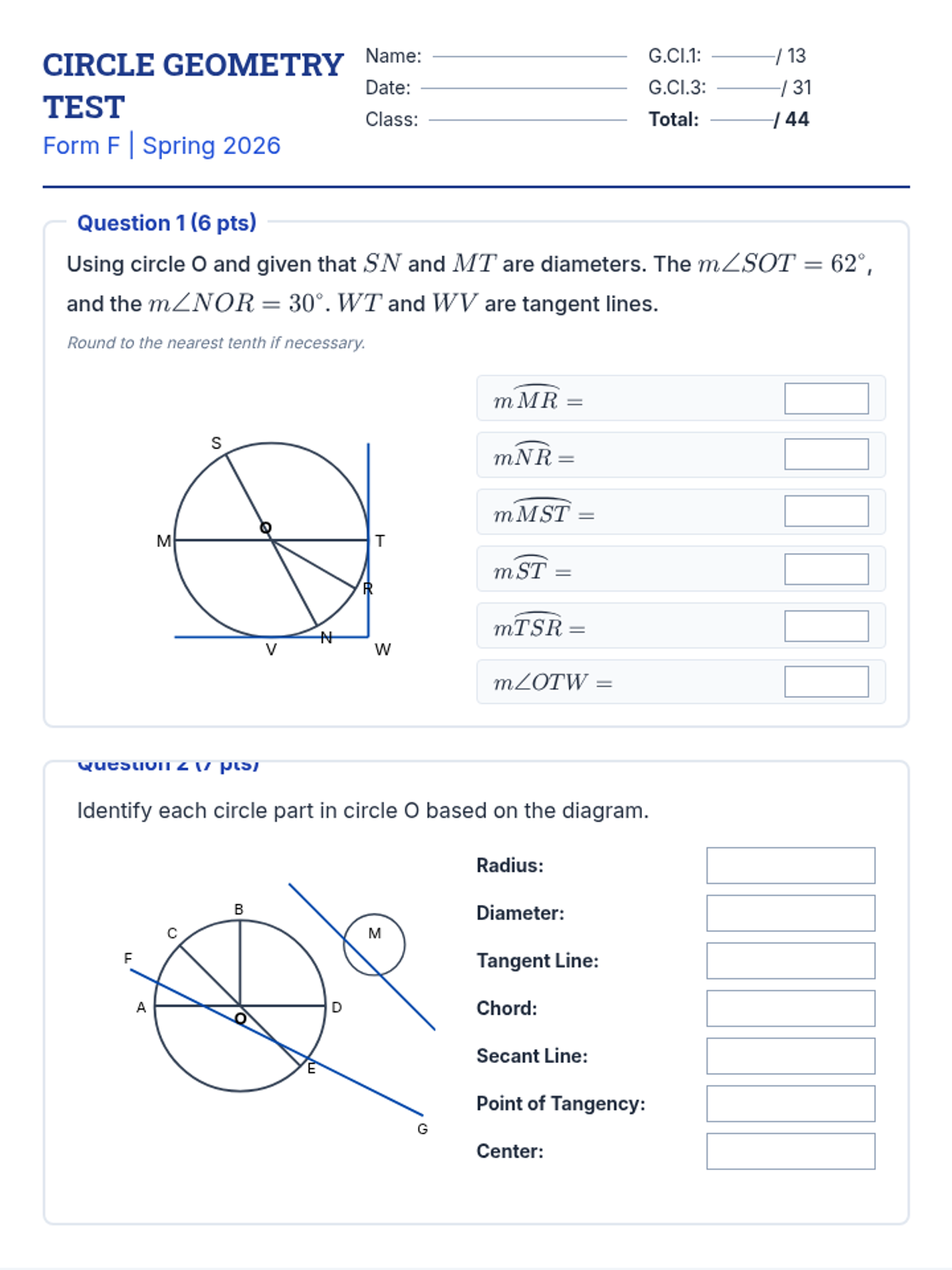
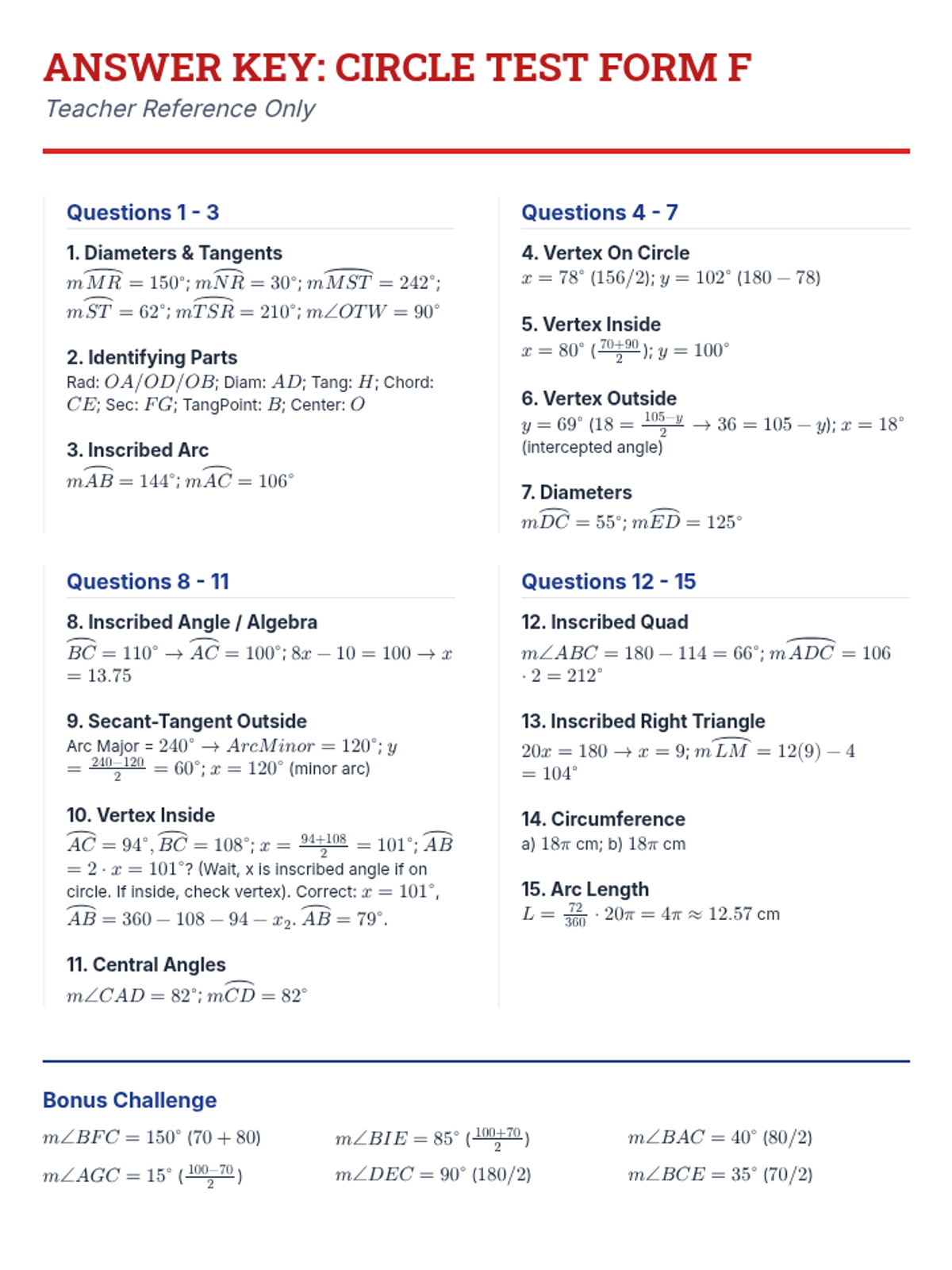
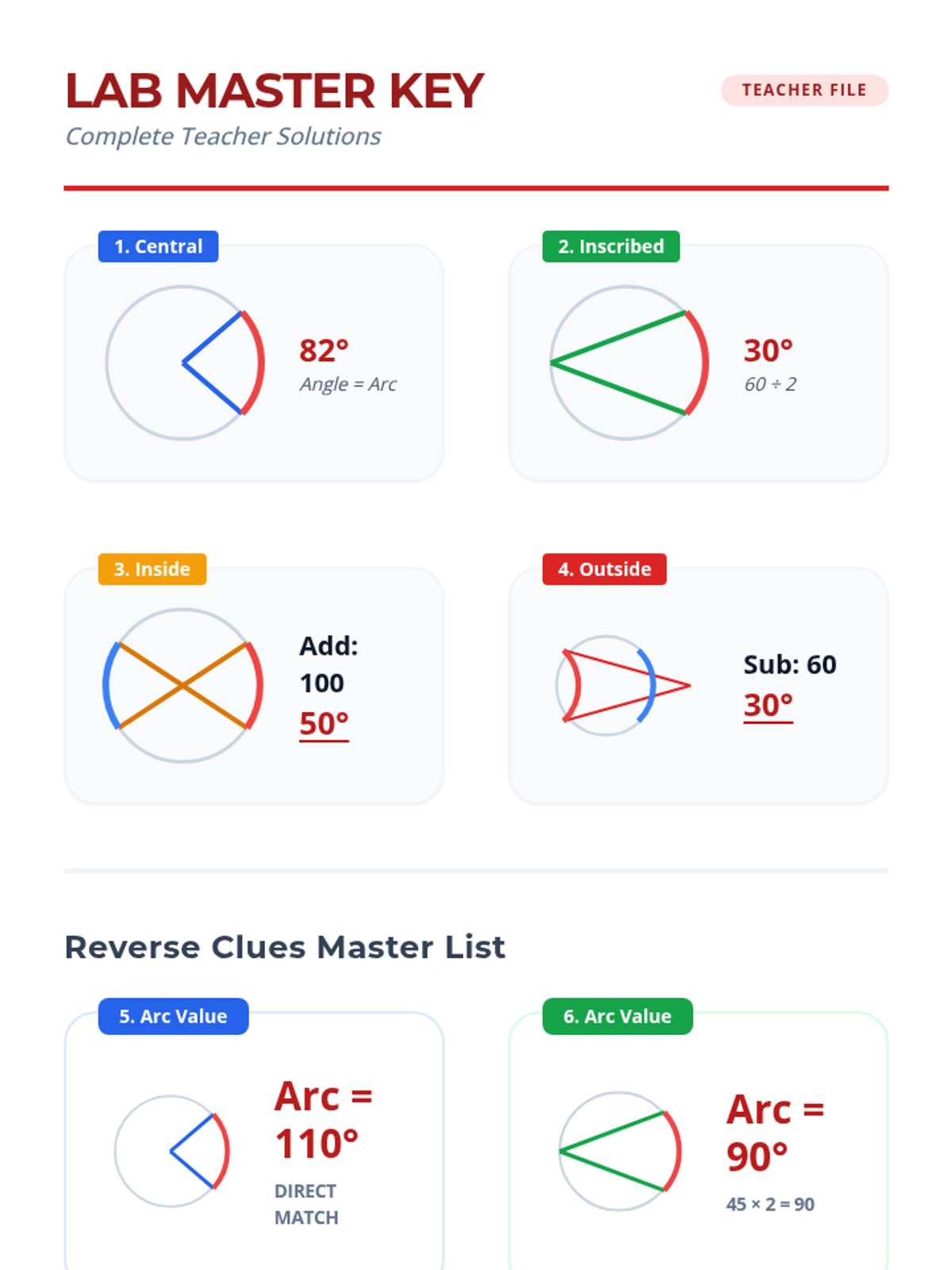
A comprehensive assessment covering circle geometry, including angle relationships, arc measures, and circle components. Students will identify circle parts, calculate angle and arc measures using various theorems, and determine circumference and arc length.
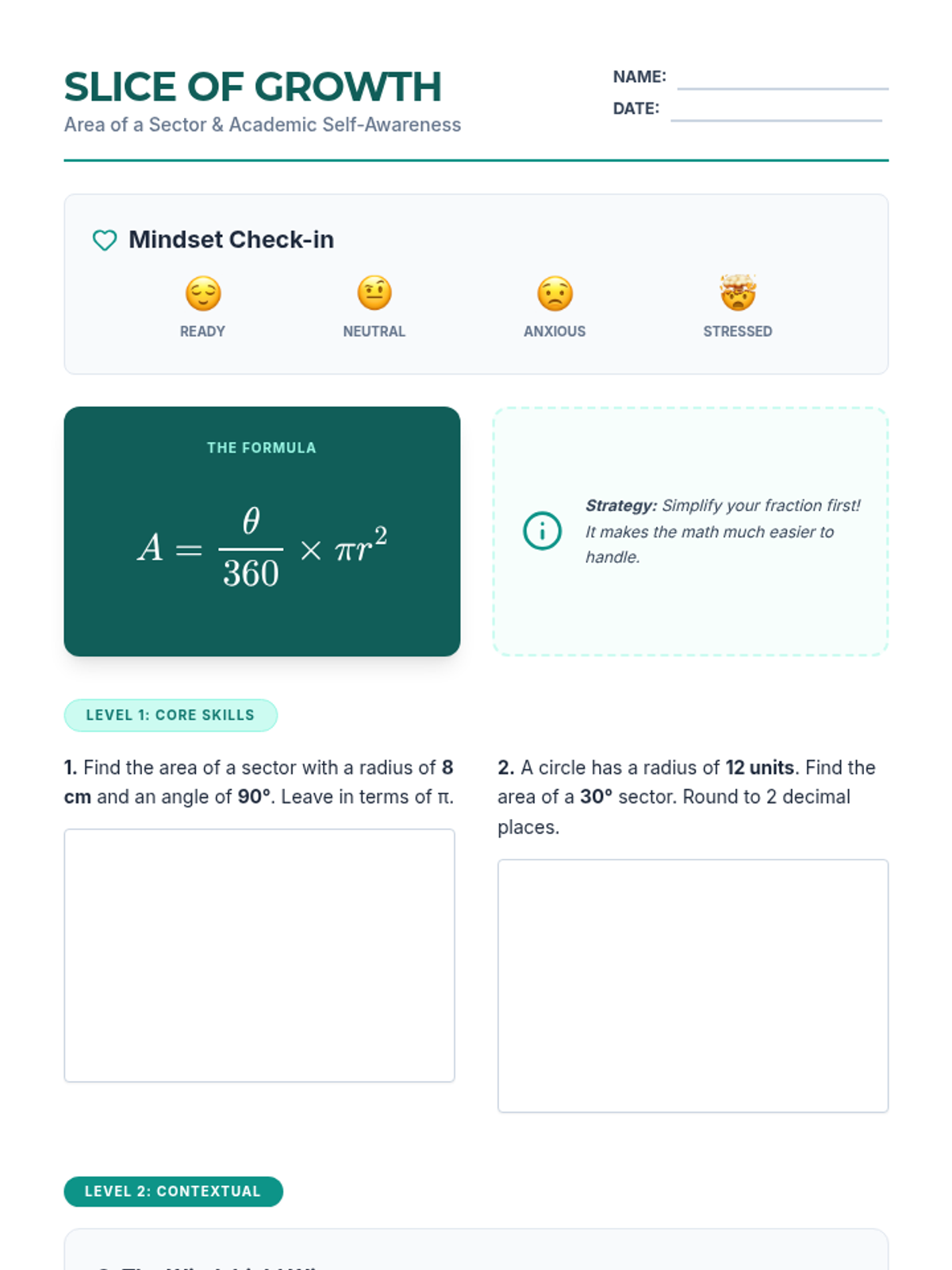
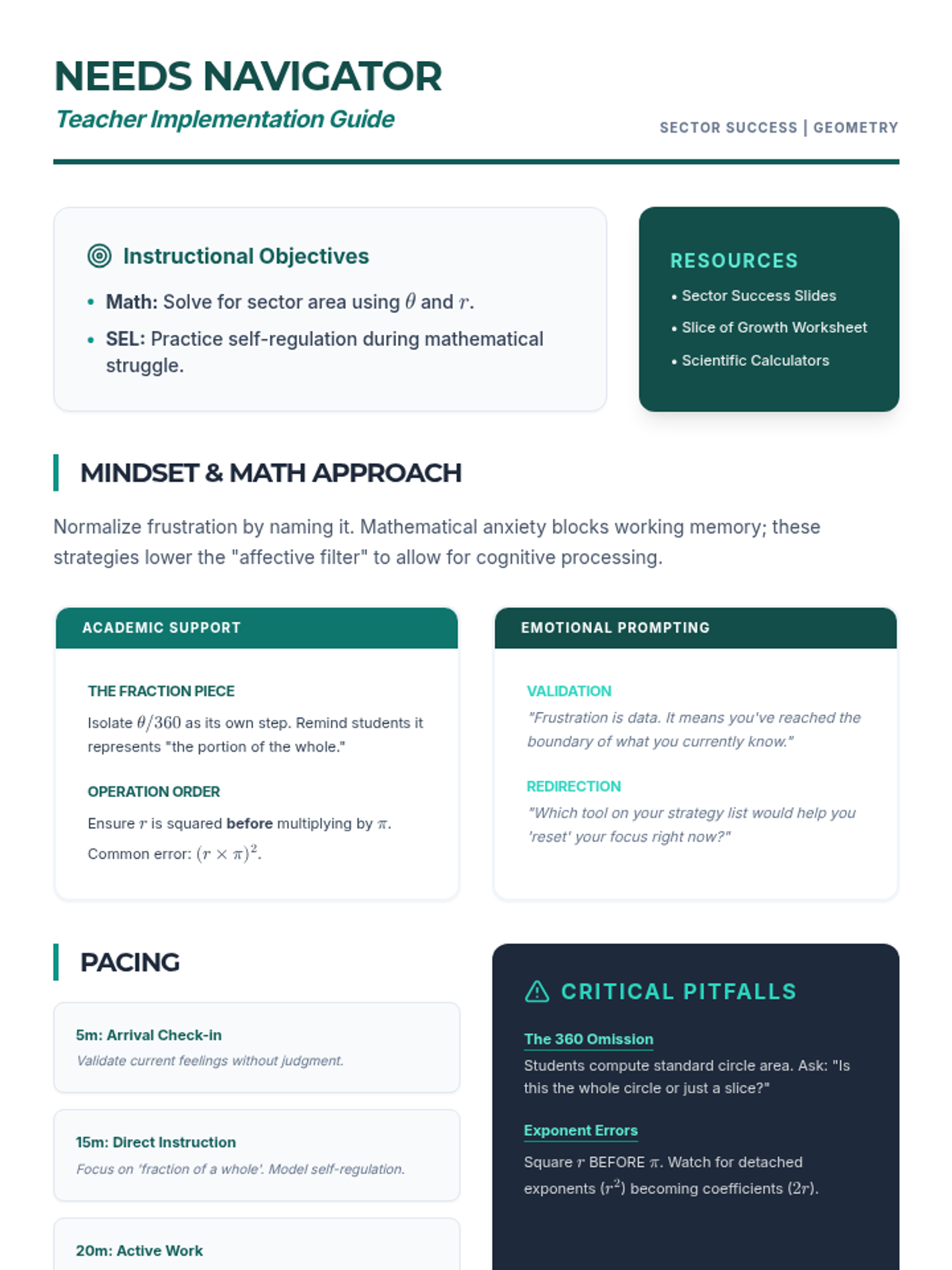
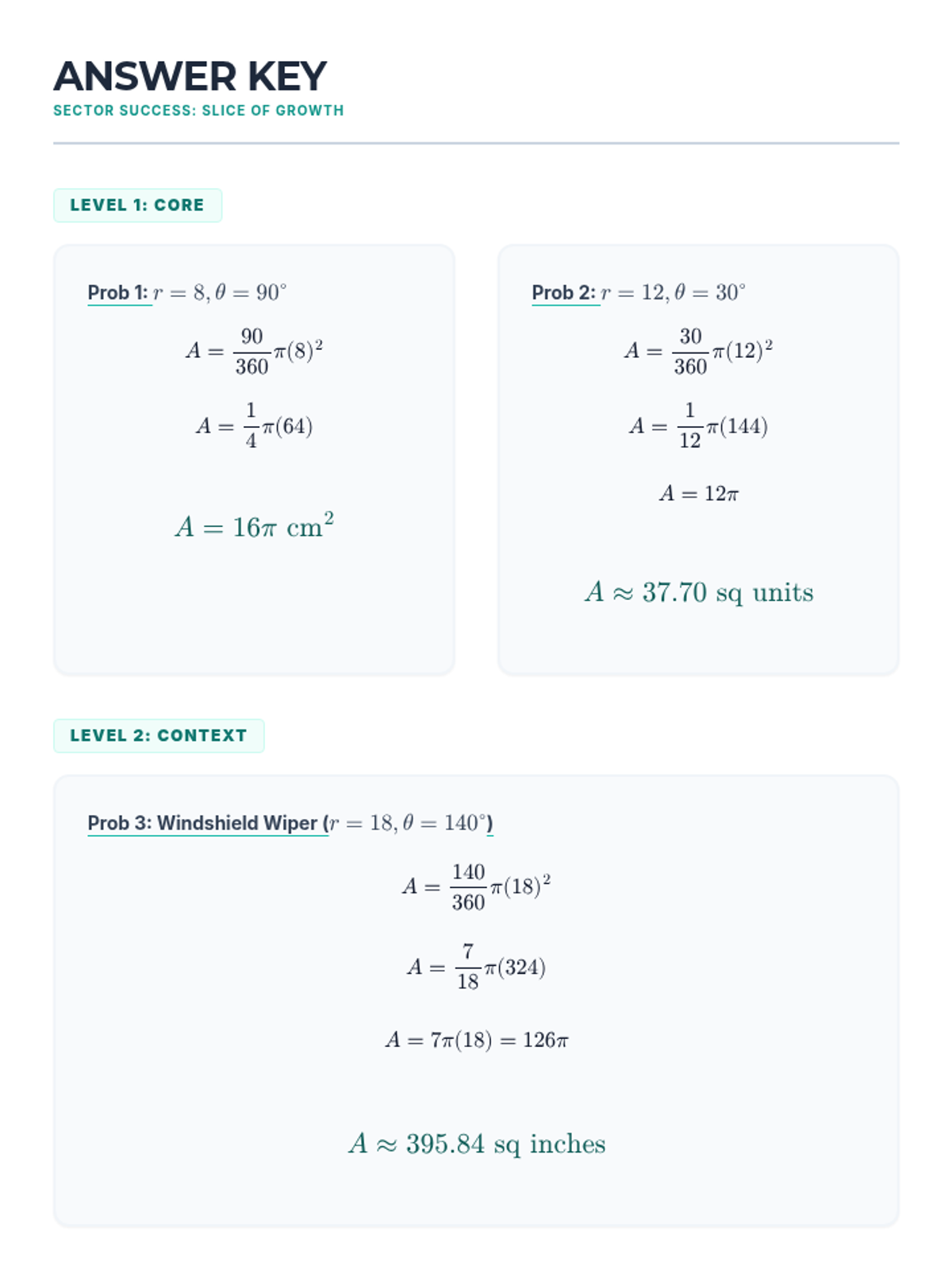
A geometry lesson that balances rigorous academic instruction on calculating the area of a sector with integrated social-emotional support strategies. Students learn the mathematical formula while practicing self-regulation and academic self-advocacy.
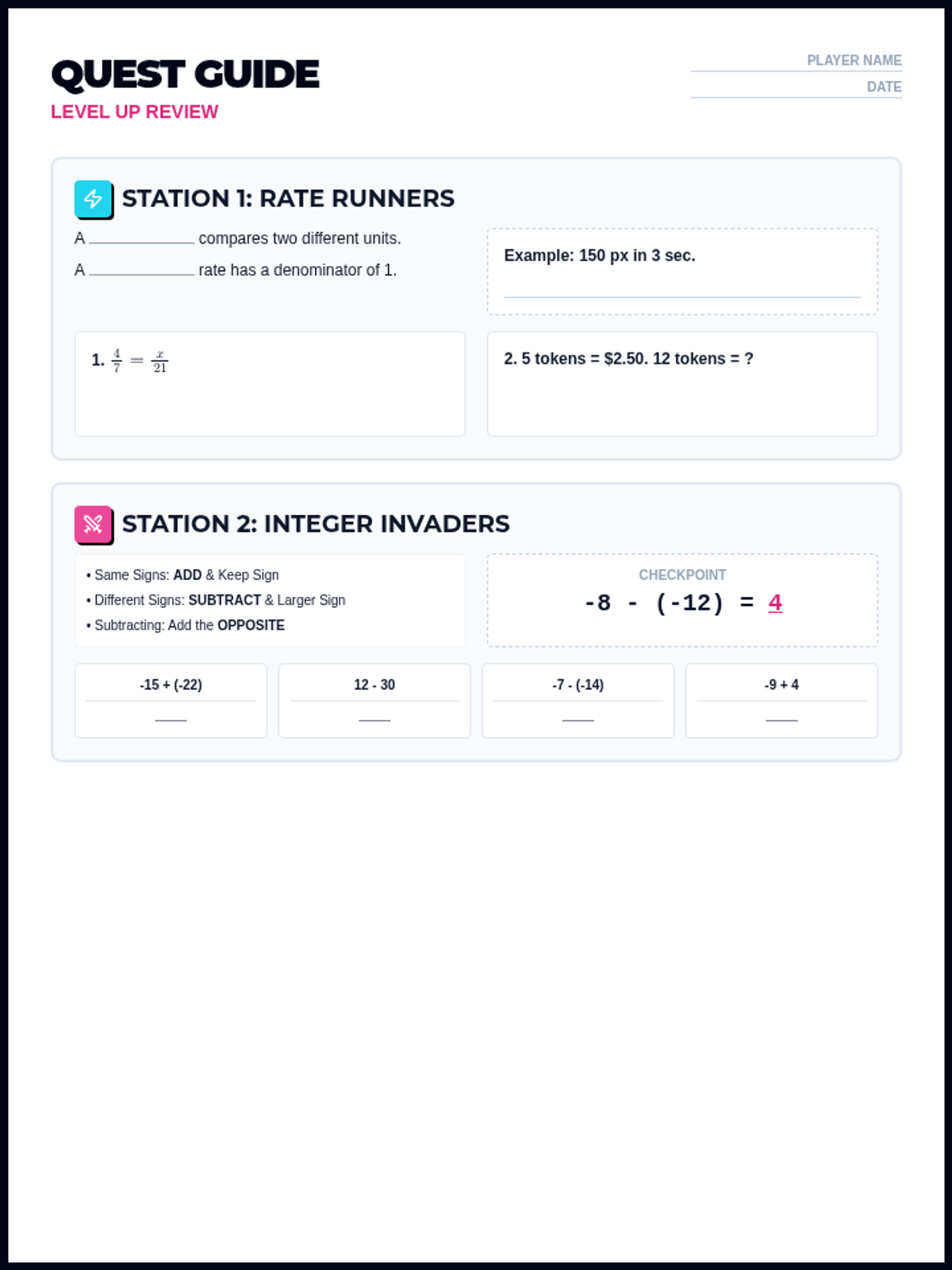
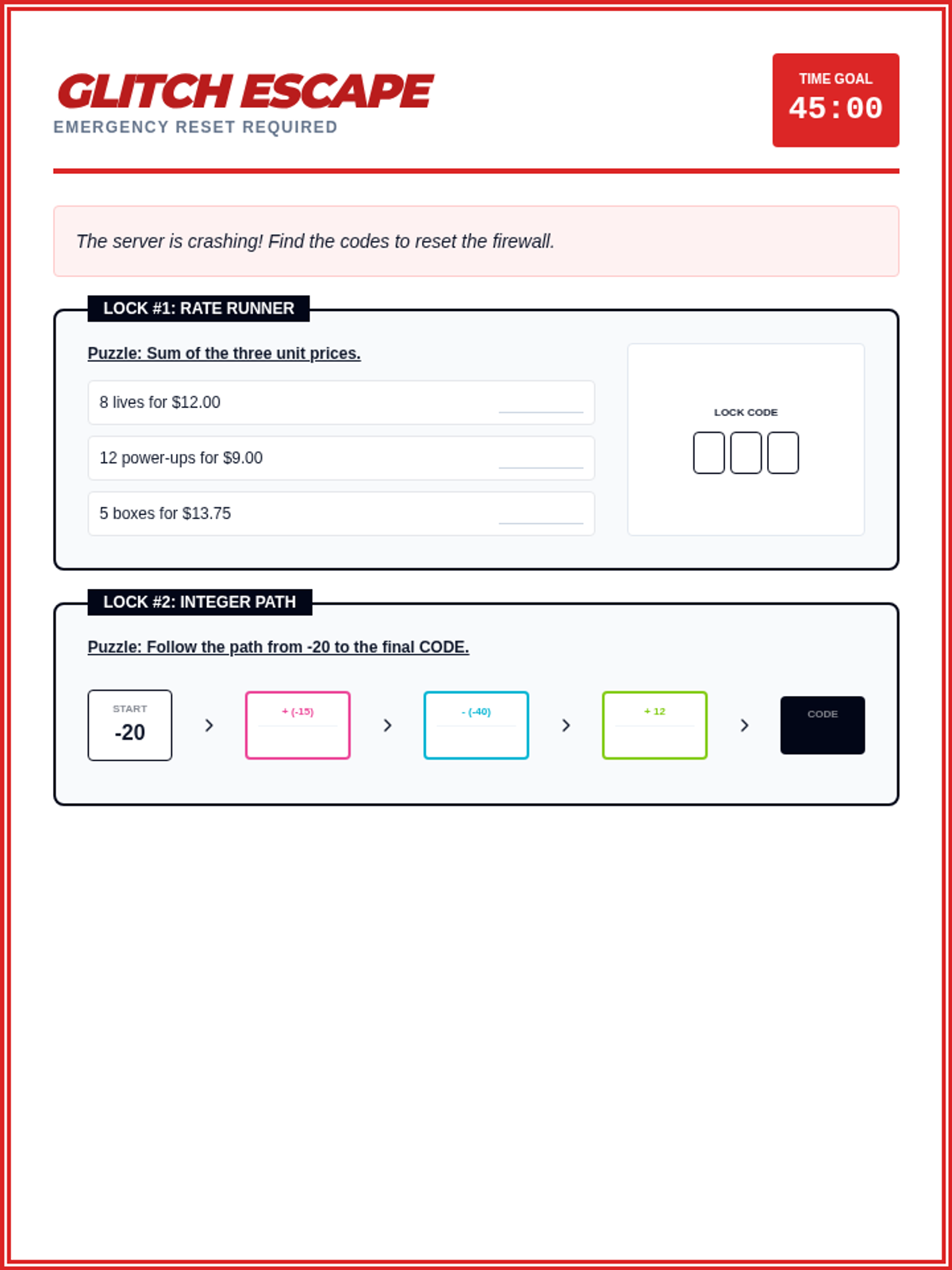
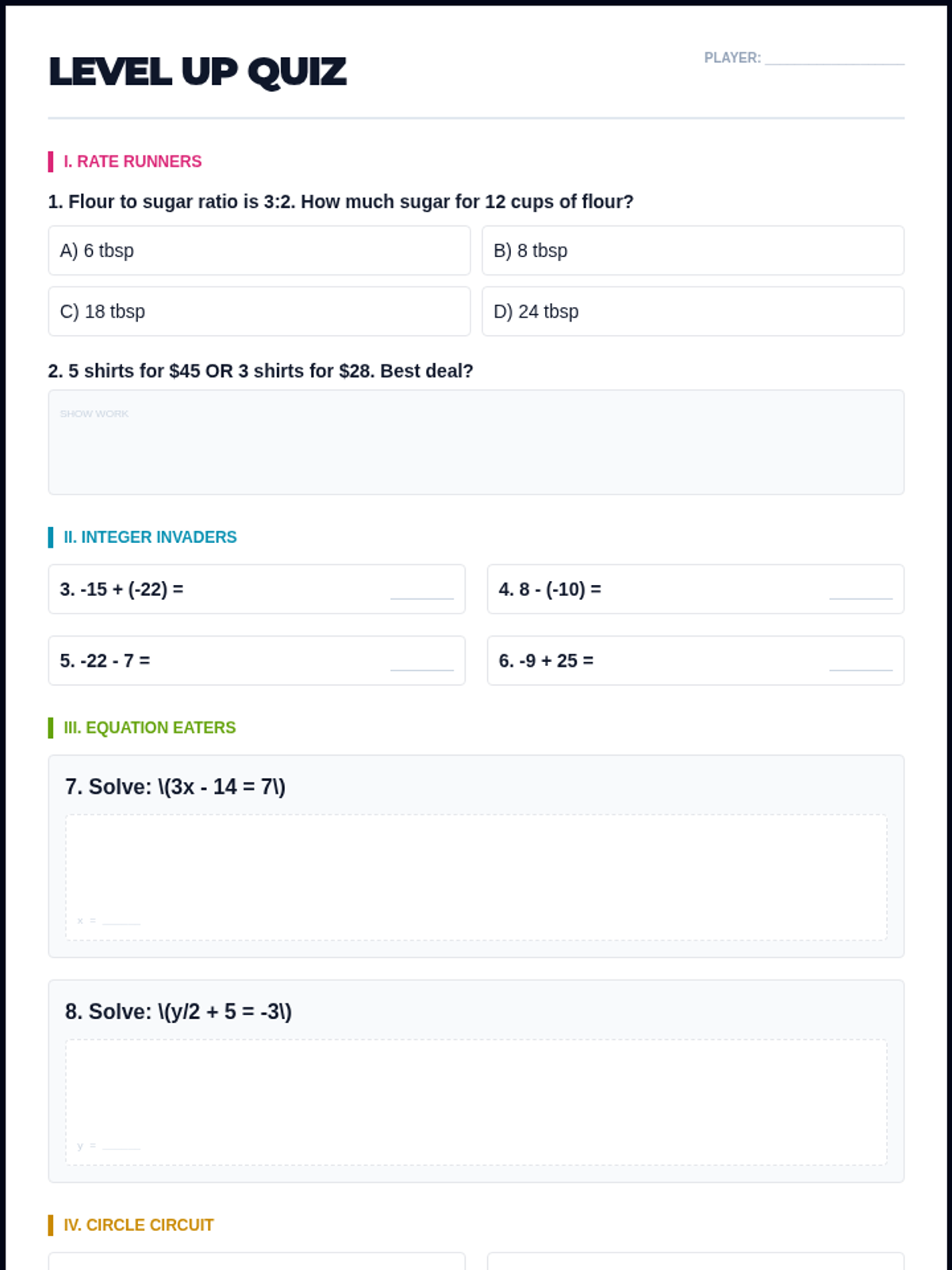
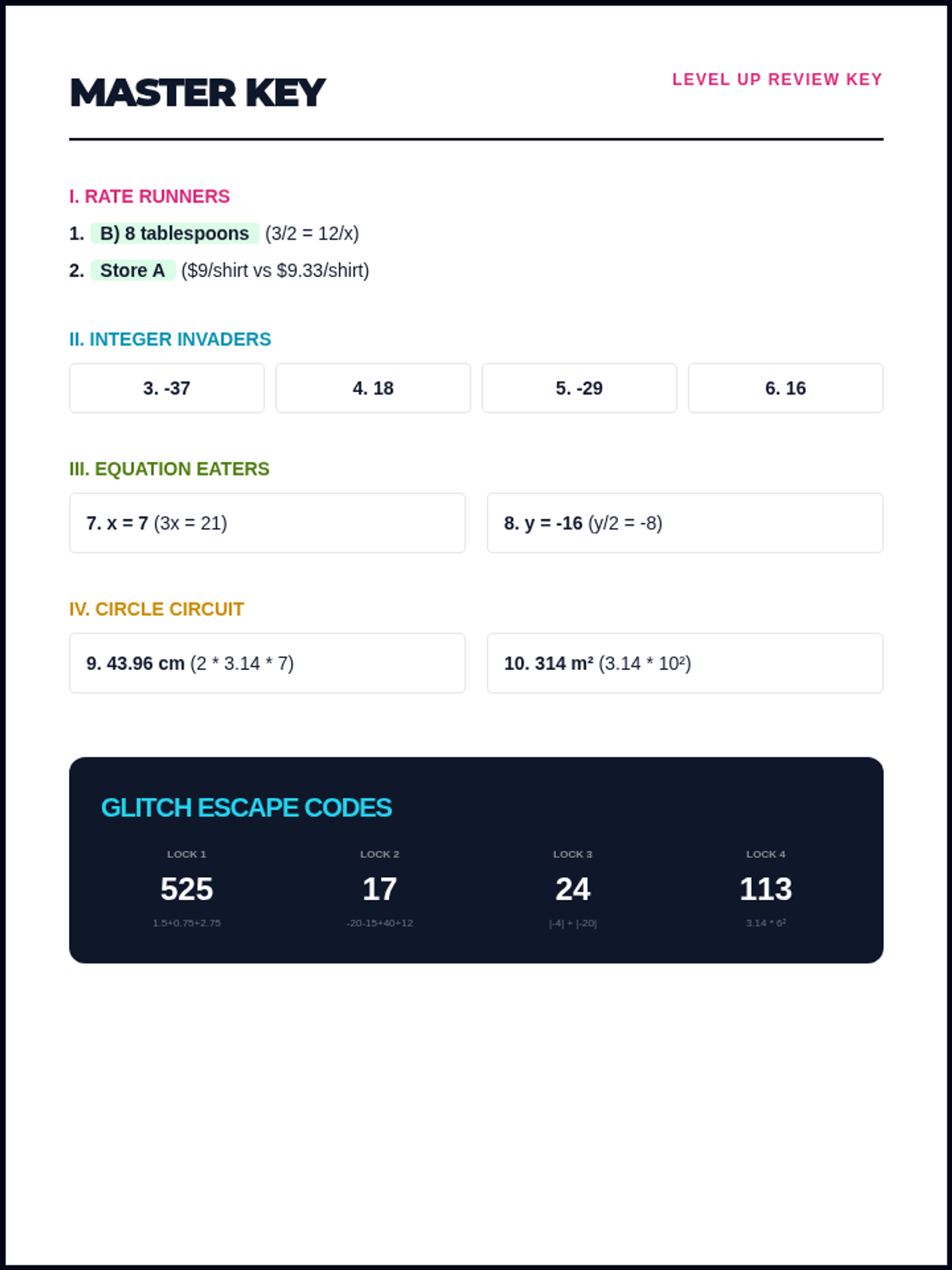
A mixed-skills lesson designed to review unit rates, integer addition/subtraction, two-step equations, and circle properties through interactive instruction and high-stakes practice.
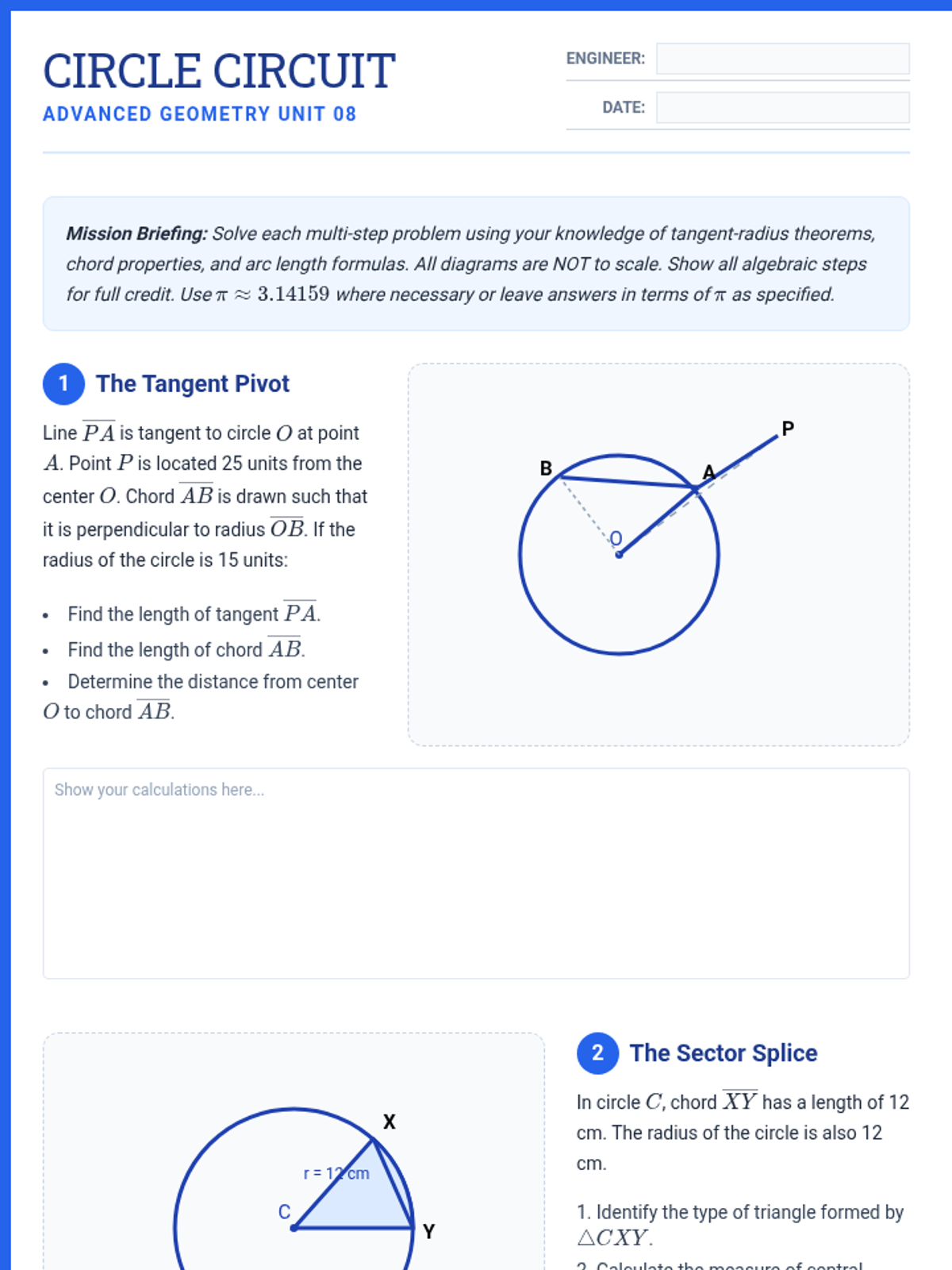
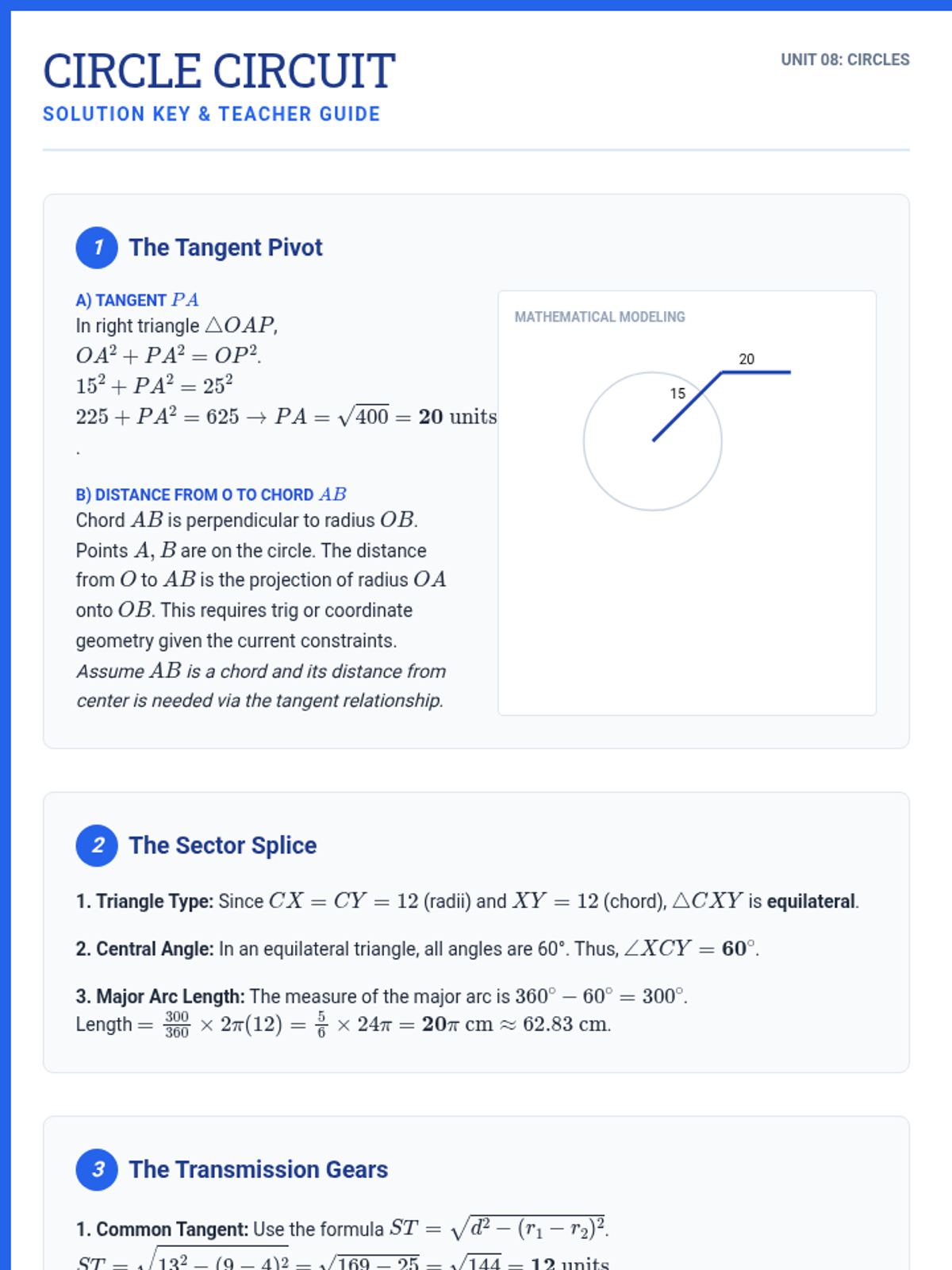
A challenging set of geometry problems focusing on the intricate relationships between tangents, chords, and arc lengths in circles. Designed for 10th-grade students ready for multi-step applications.
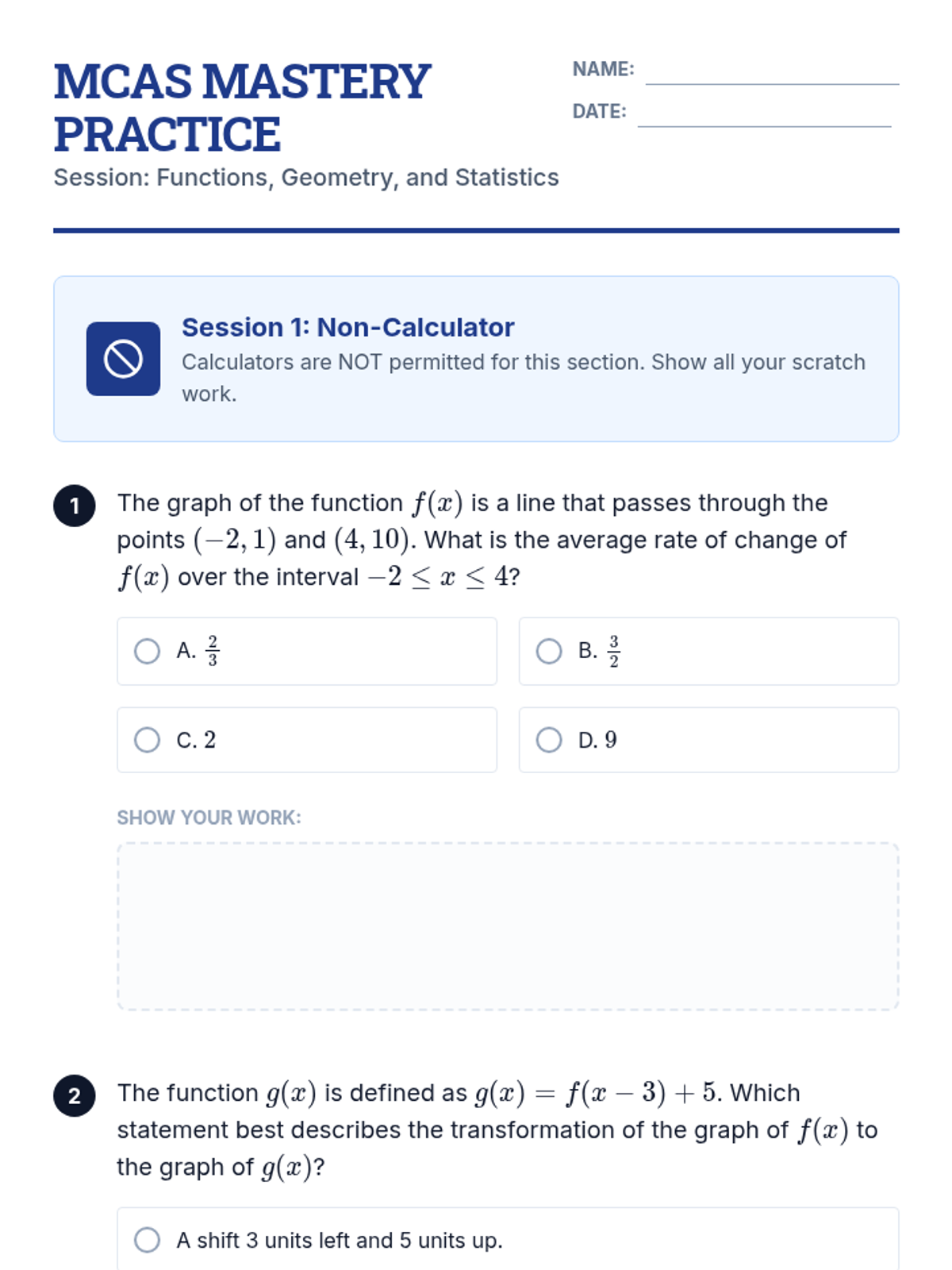
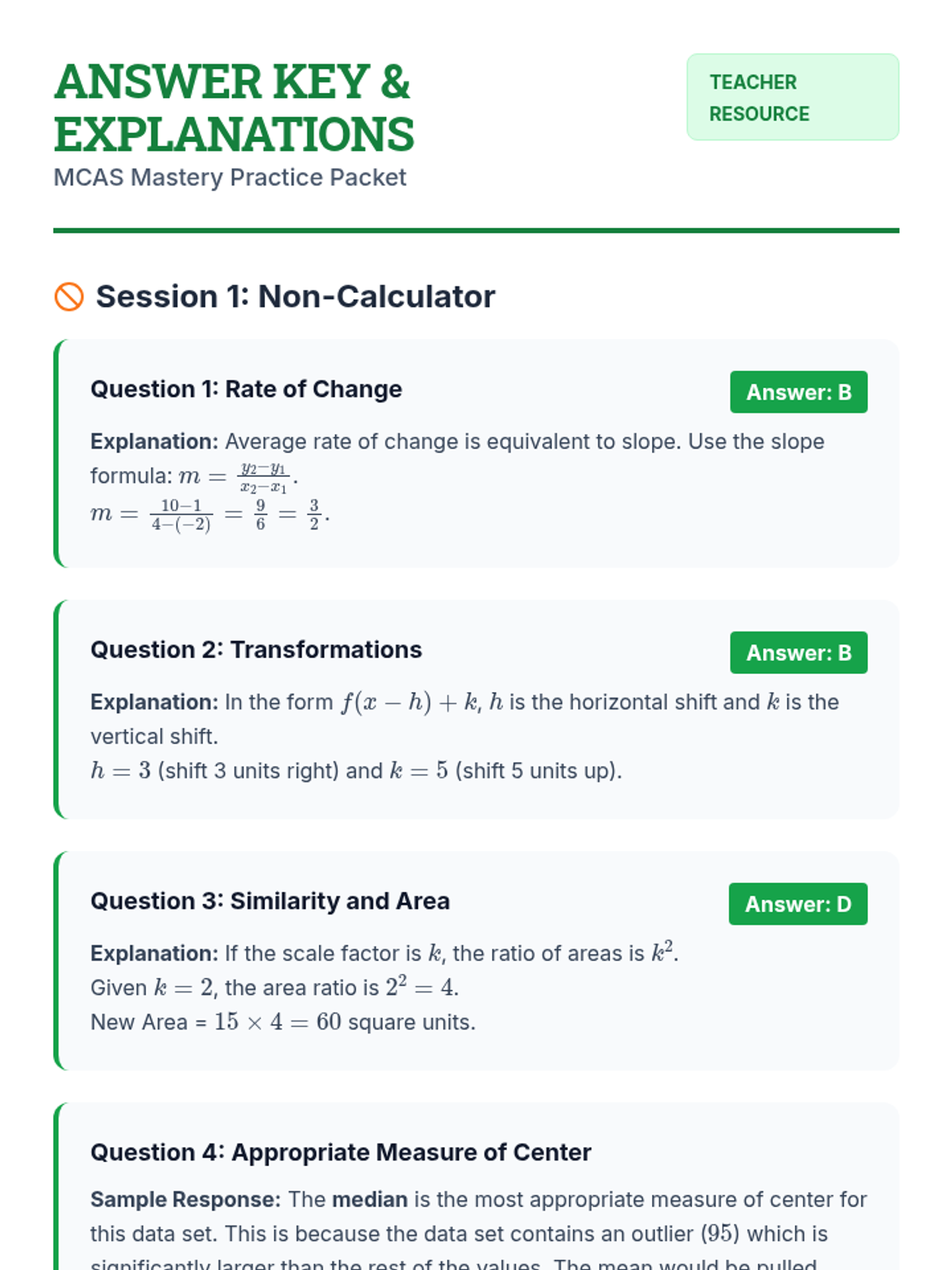
A comprehensive MCAS prep lesson focusing on high-frequency 10th-grade topics in Functions, Geometry, and Statistics. Includes test-taking strategies for both calculator and non-calculator sections aligned to Massachusetts Mathematics Curriculum Frameworks.
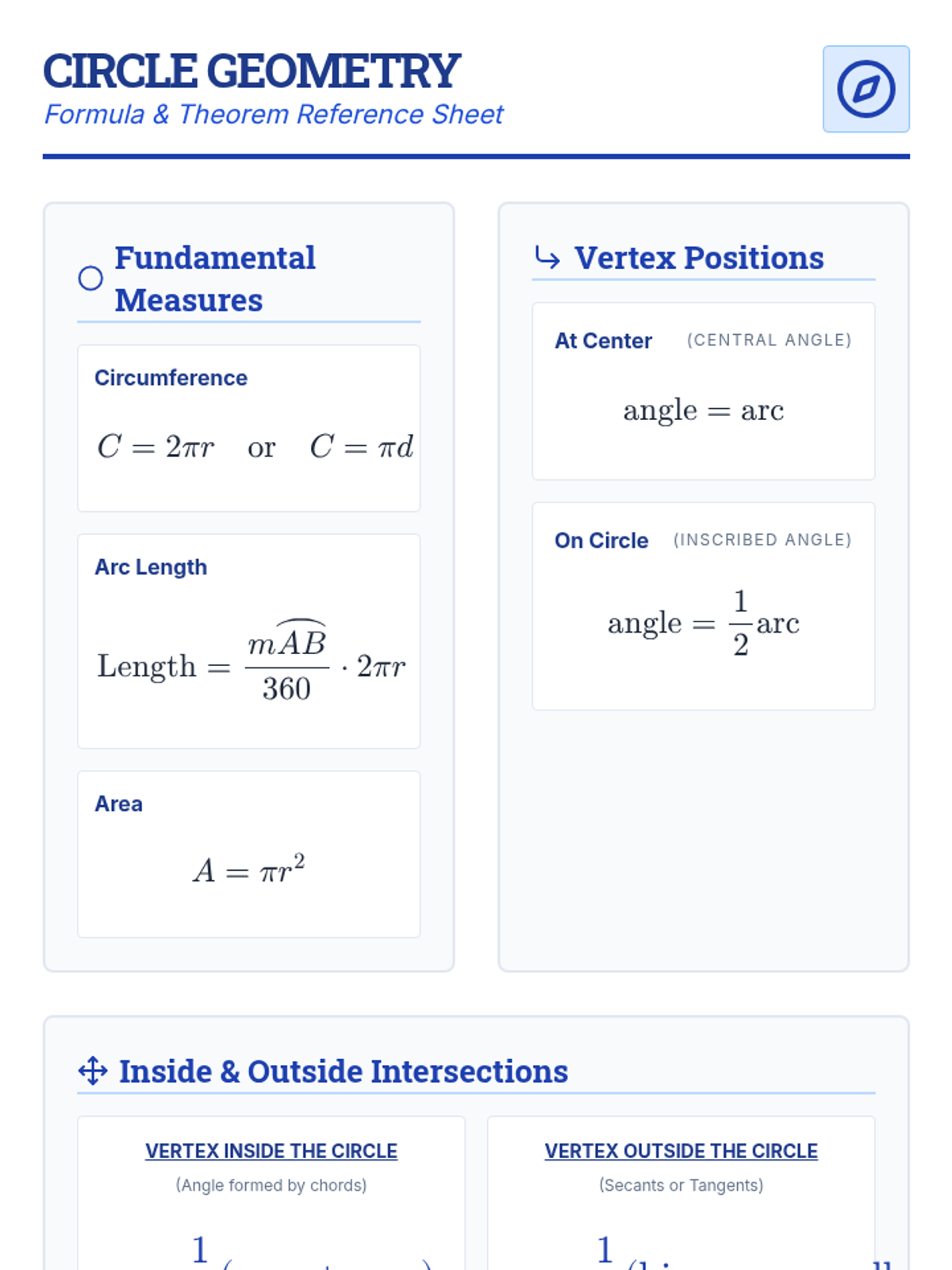
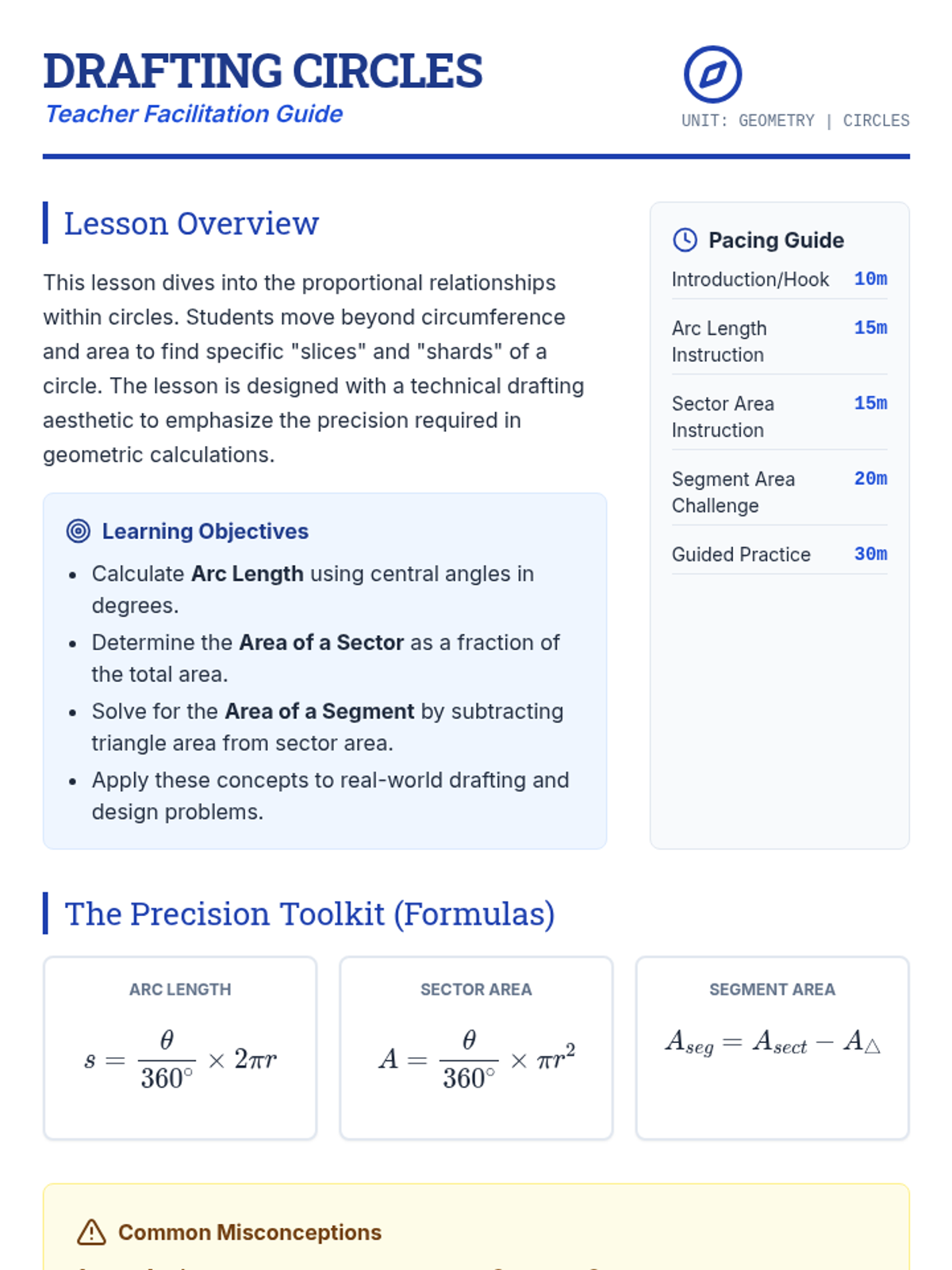
A comprehensive lesson covering the calculation of arc length, area of a sector, and area of a segment within circles, utilizing a precision drafting theme.
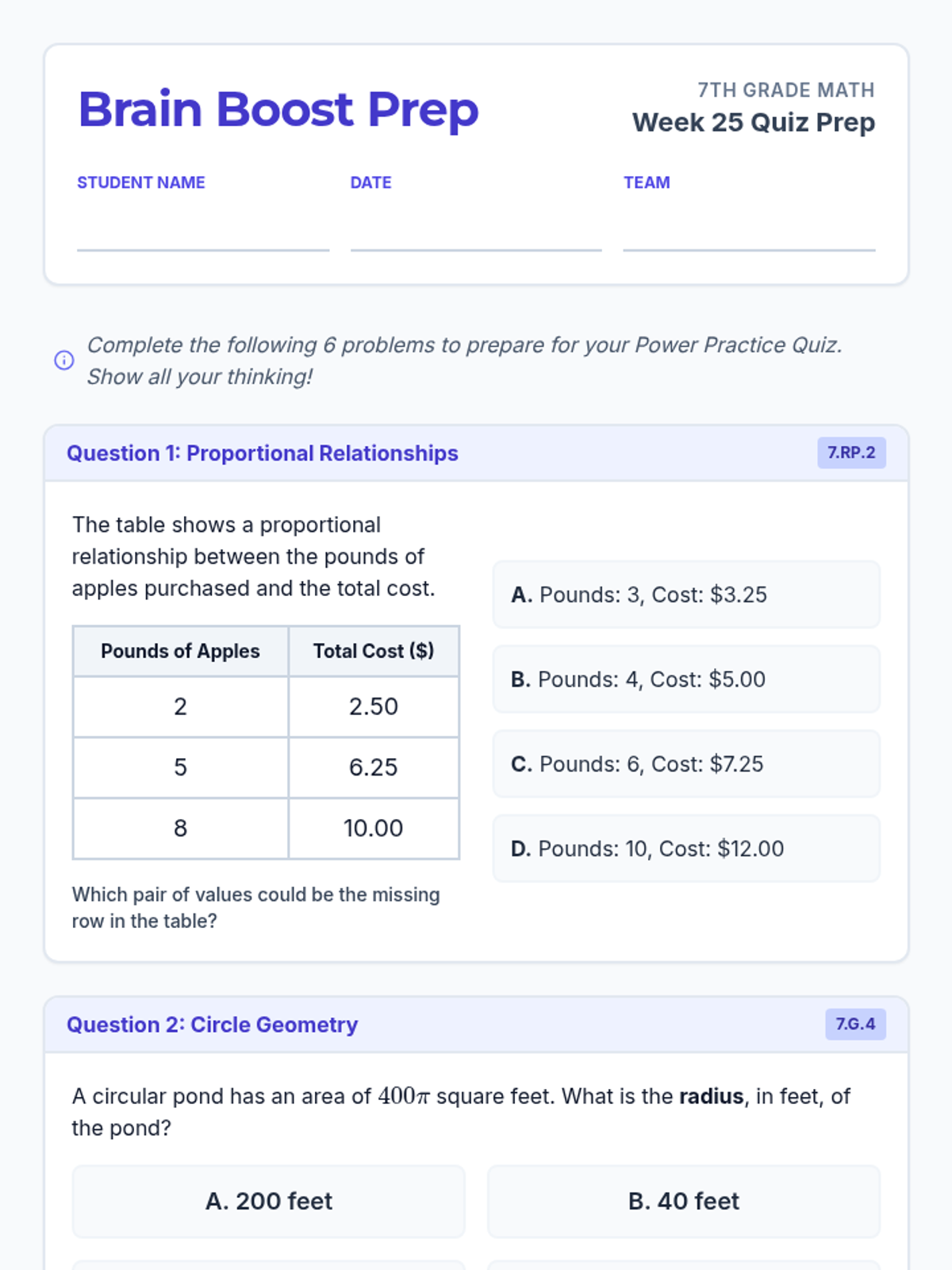
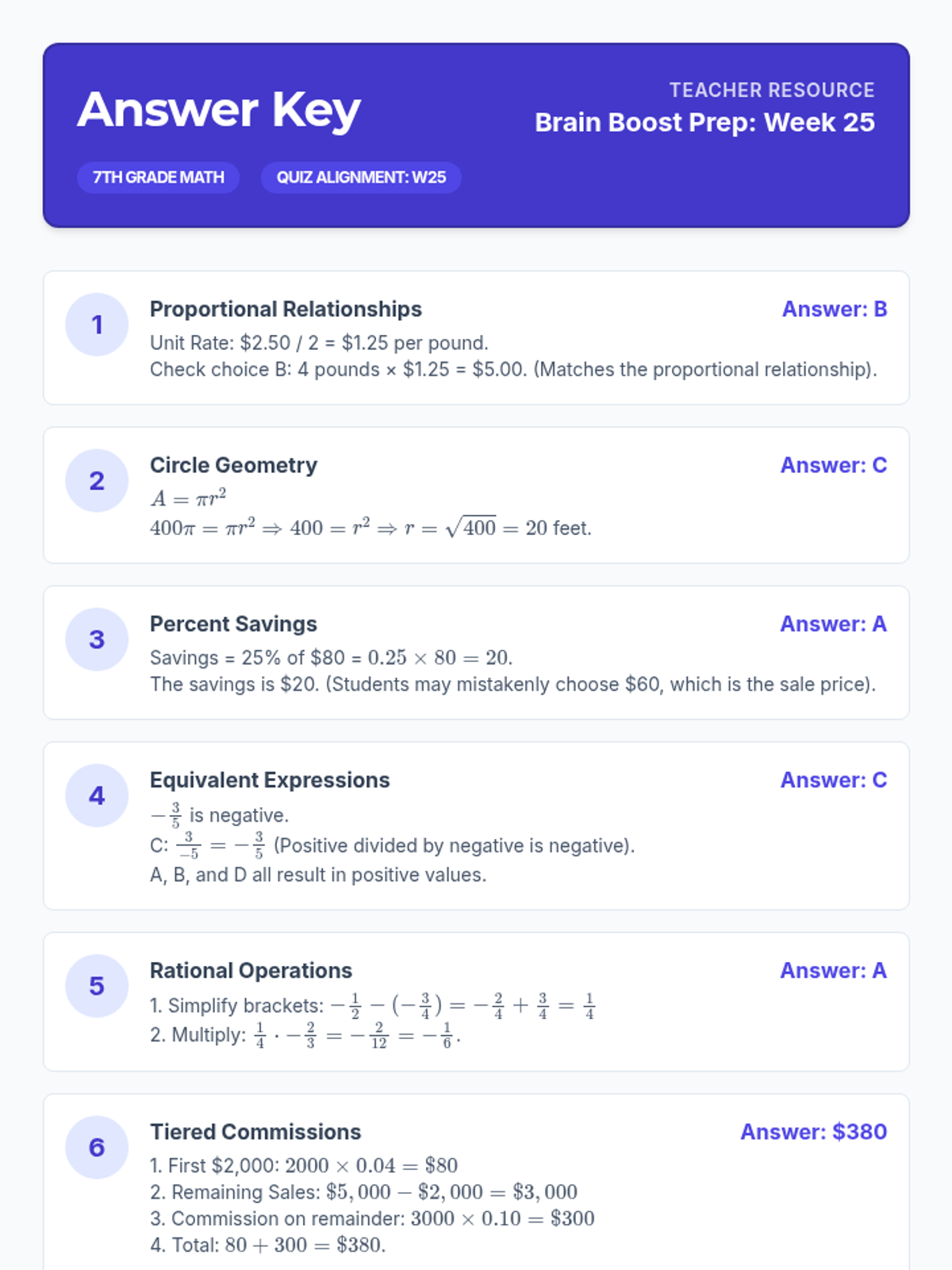
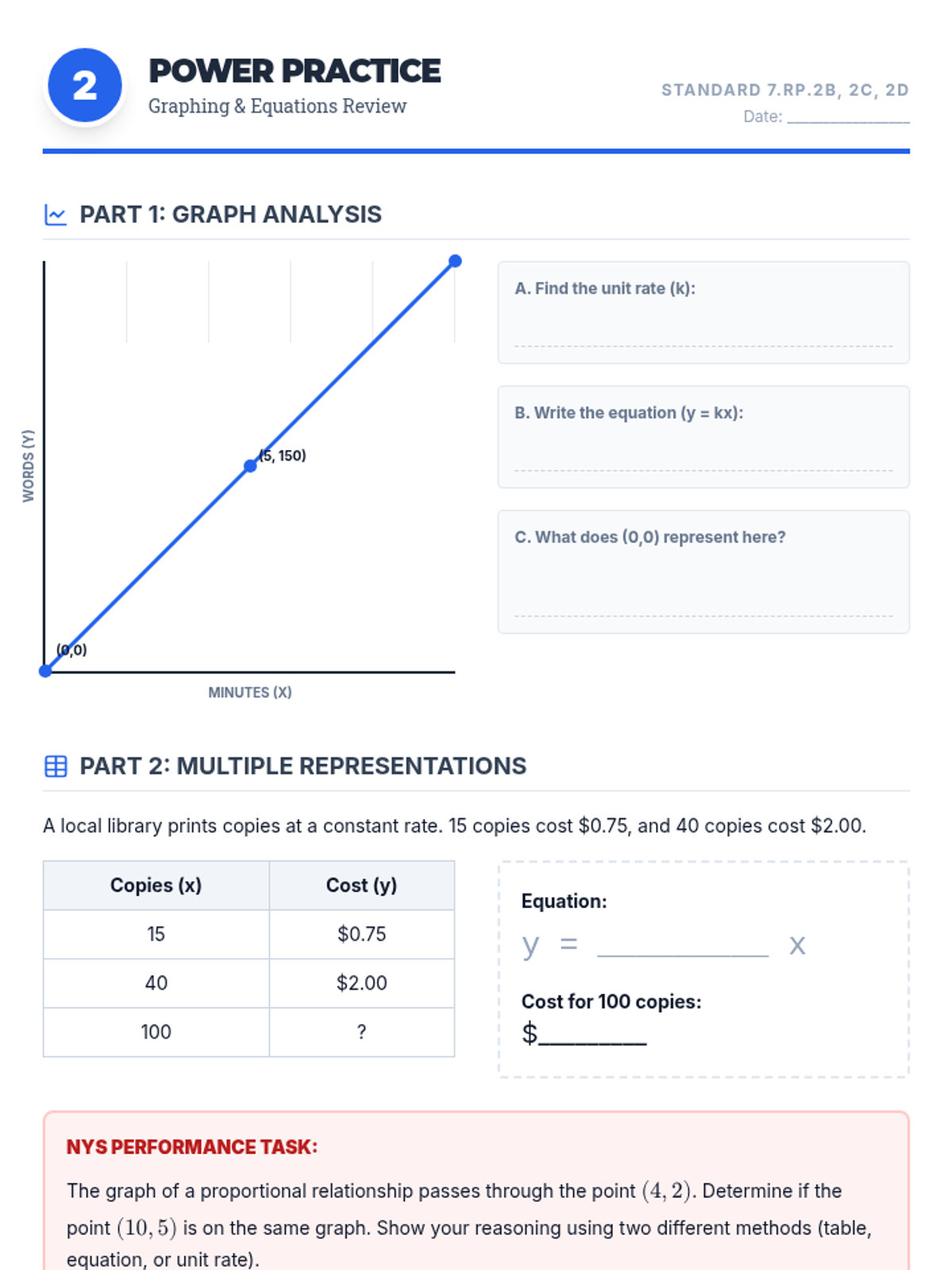
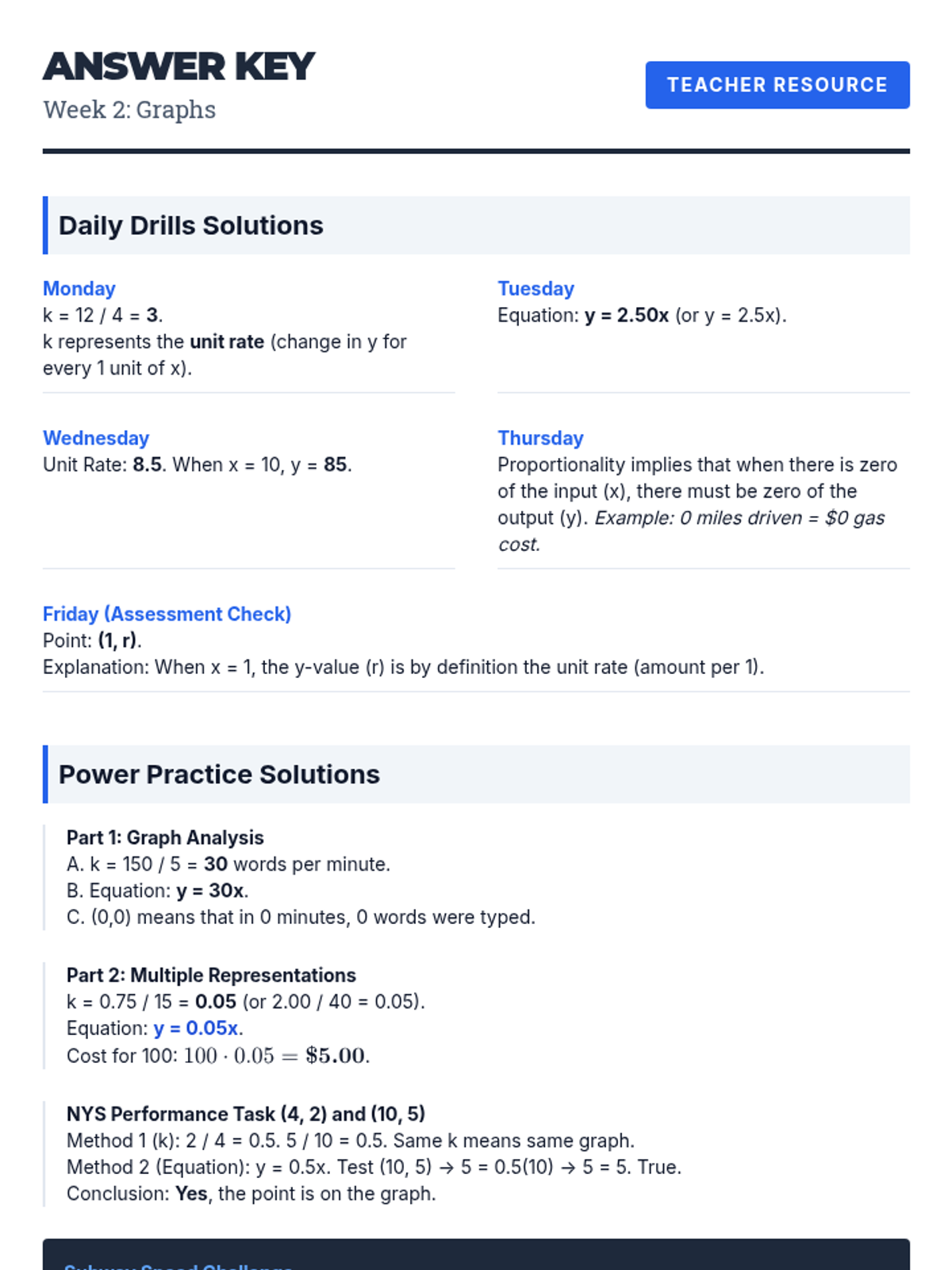
A lesson focused on reviewing key 7th-grade math concepts from Week 25, including proportional tables, circle area, percent problems, and rational number operations, to prepare students for their Power Practice Quiz.
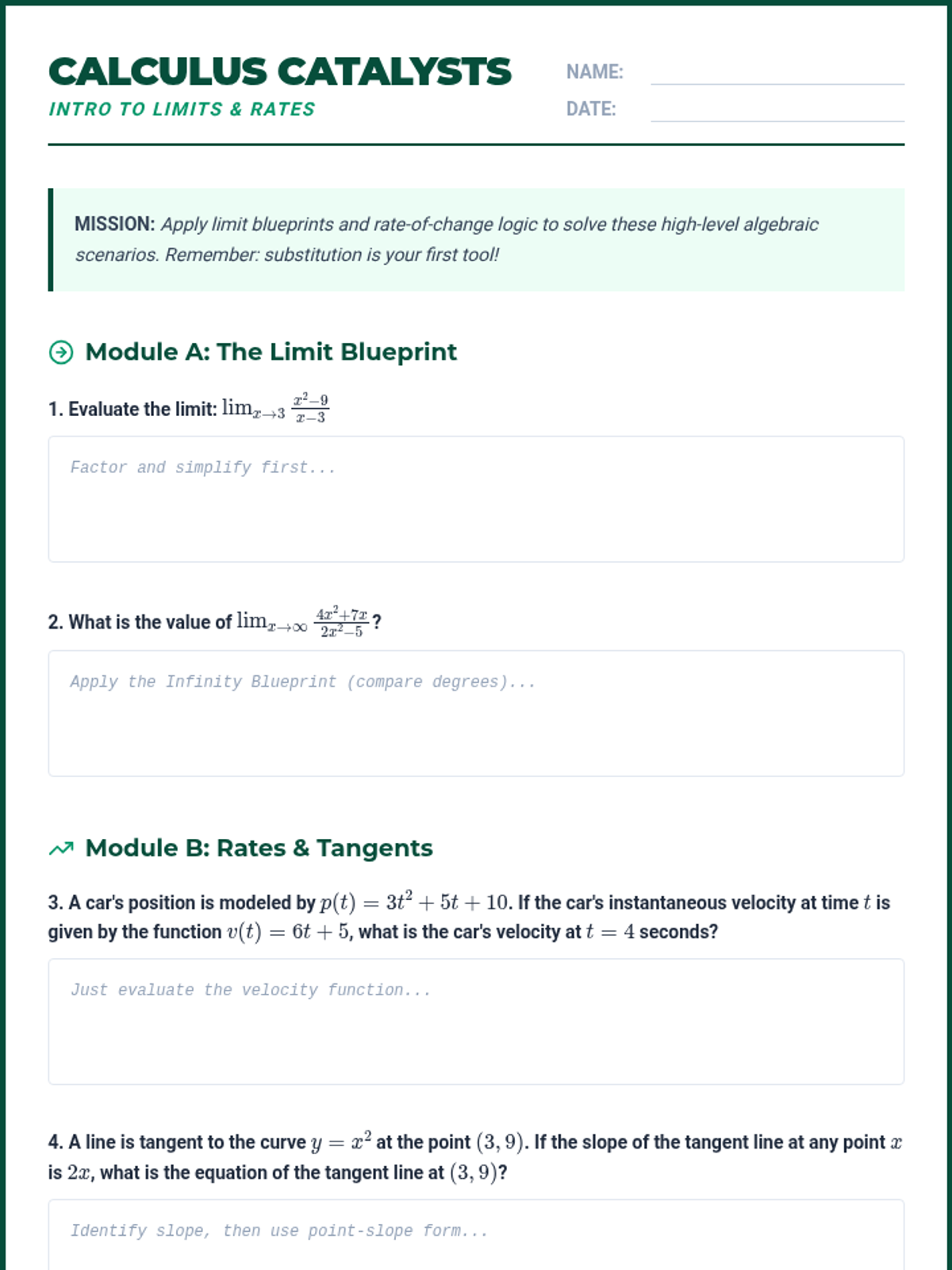
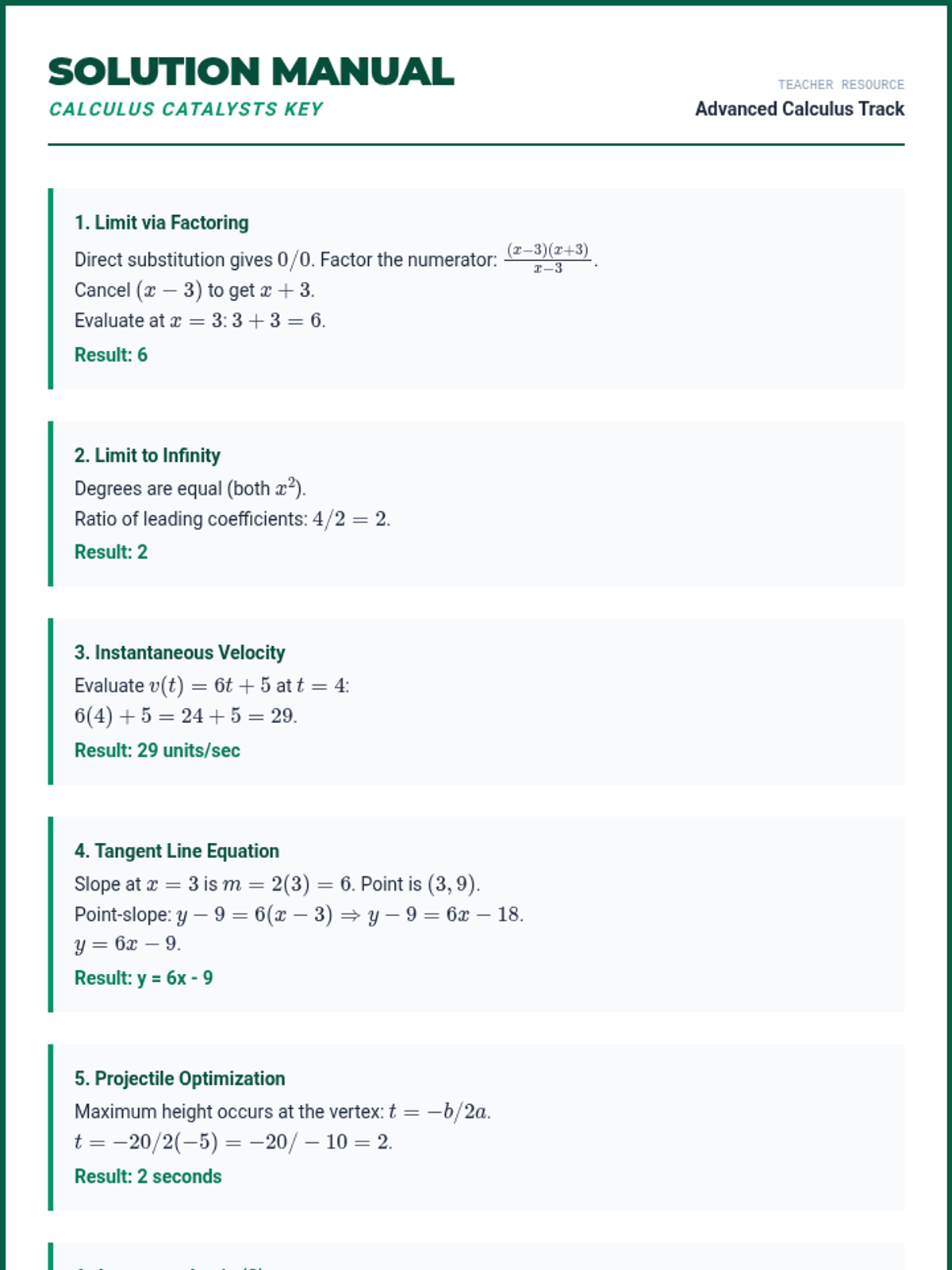
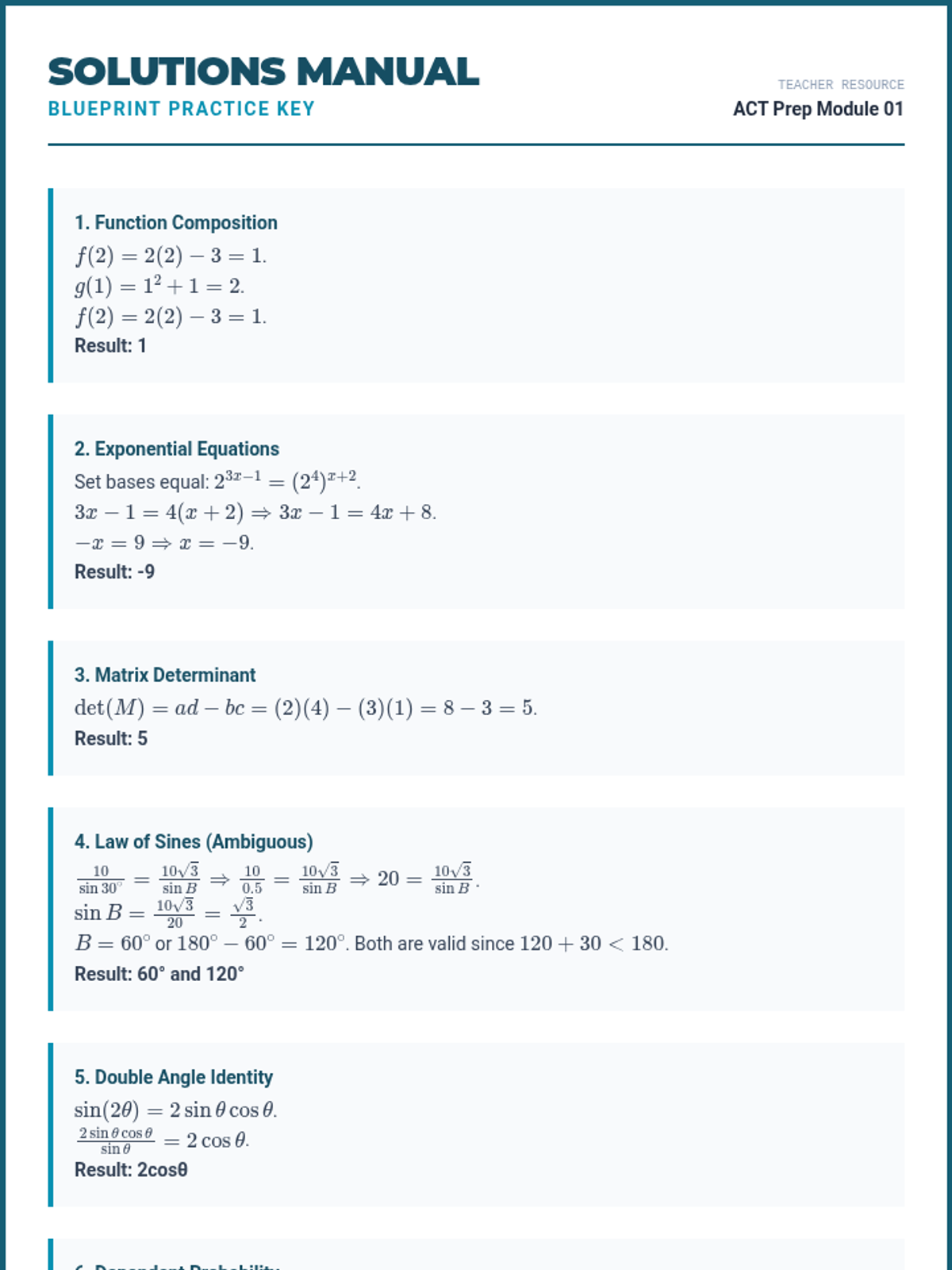
An introductory exploration of calculus-adjacent concepts tested on the ACT, focusing on limits, instantaneous rates of change, and function optimization. Students will master the Limit Blueprint and apply rate-of-change logic to complex algebraic scenarios.
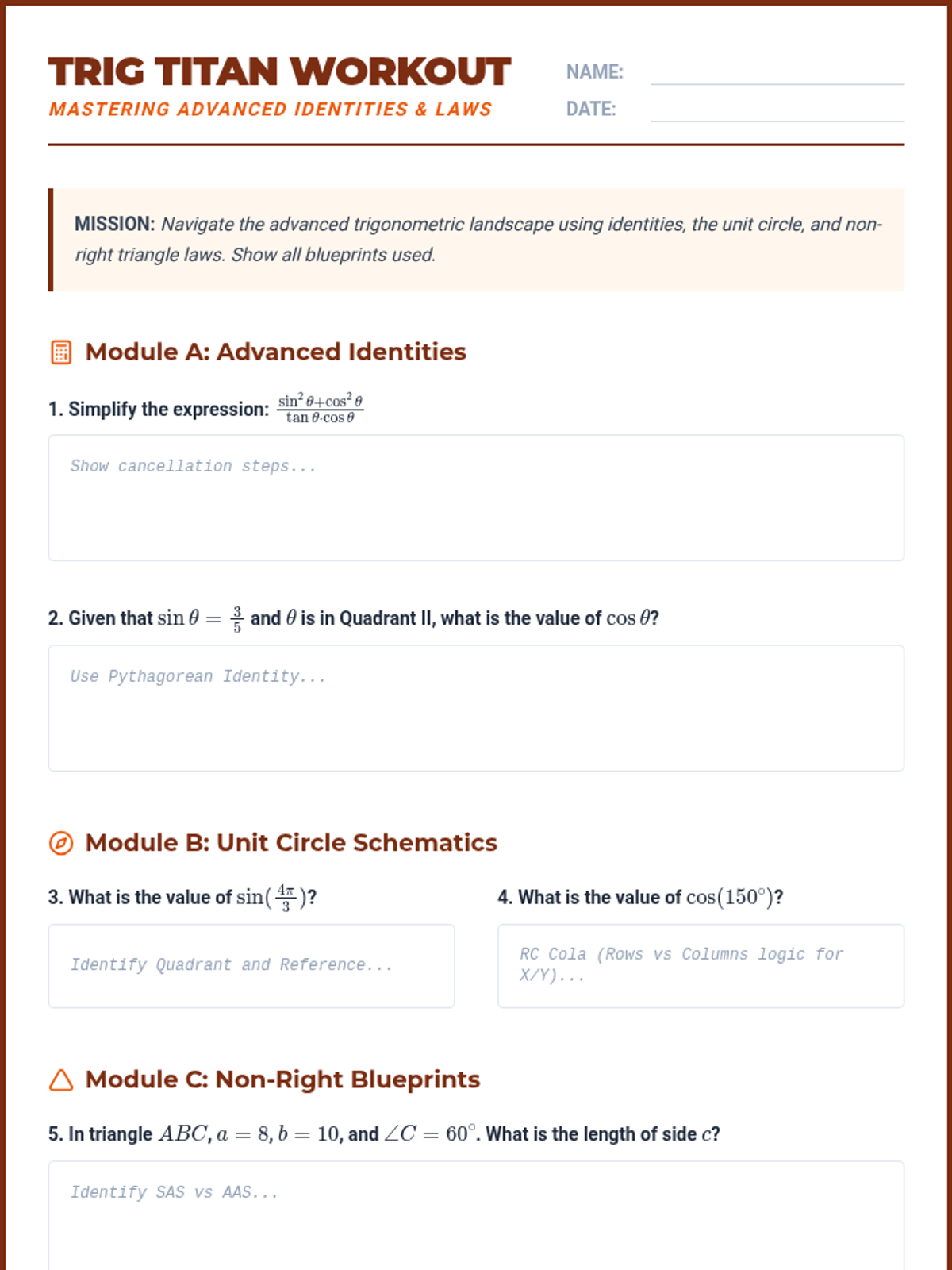
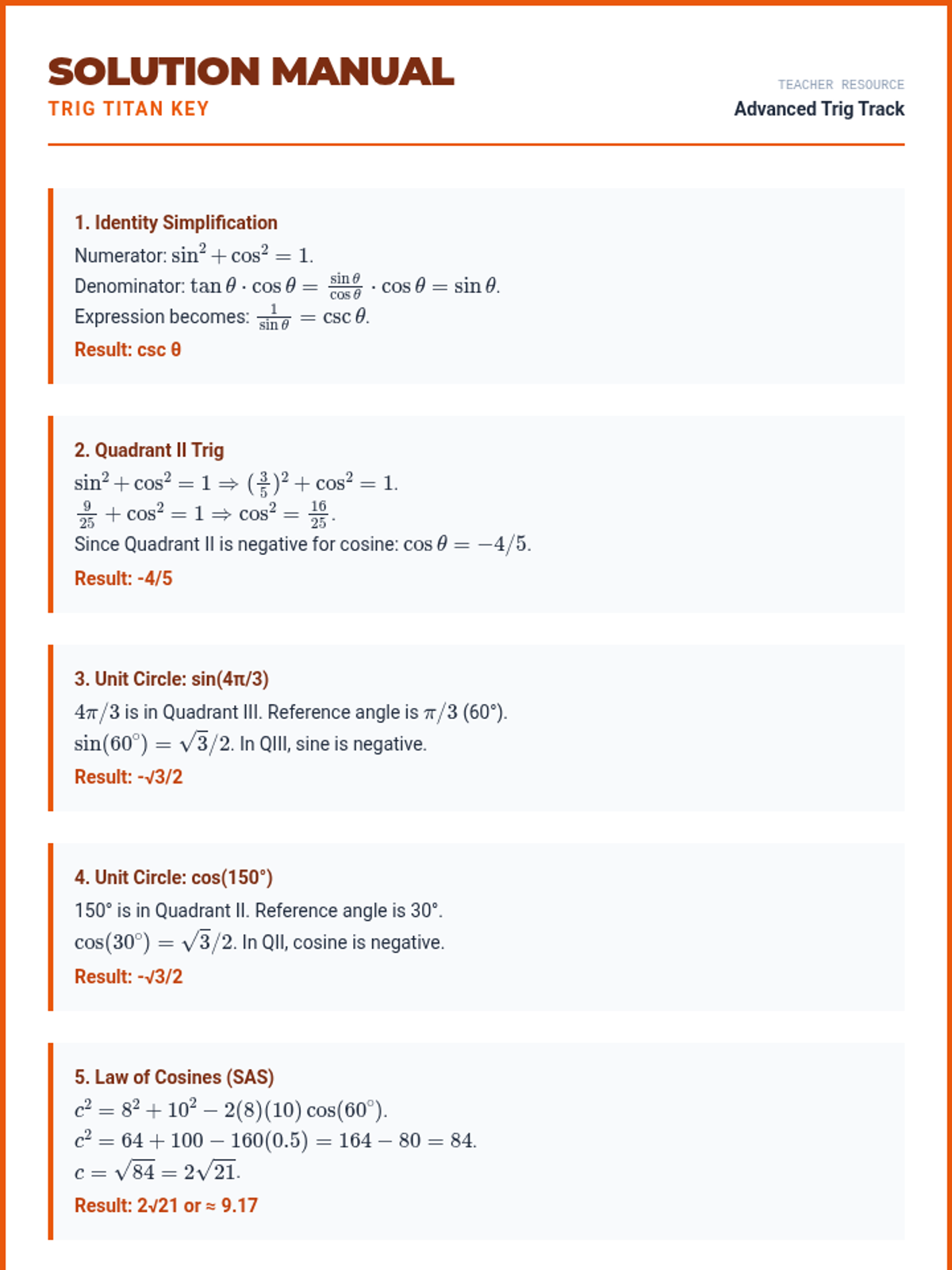
An intensive masterclass on advanced trigonometric identities, the unit circle, and non-right triangle laws. Students will master the Pythagorean identities, Law of Sines/Cosines, and the specific ACT-style unit circle coordinates required for top-tier scores.
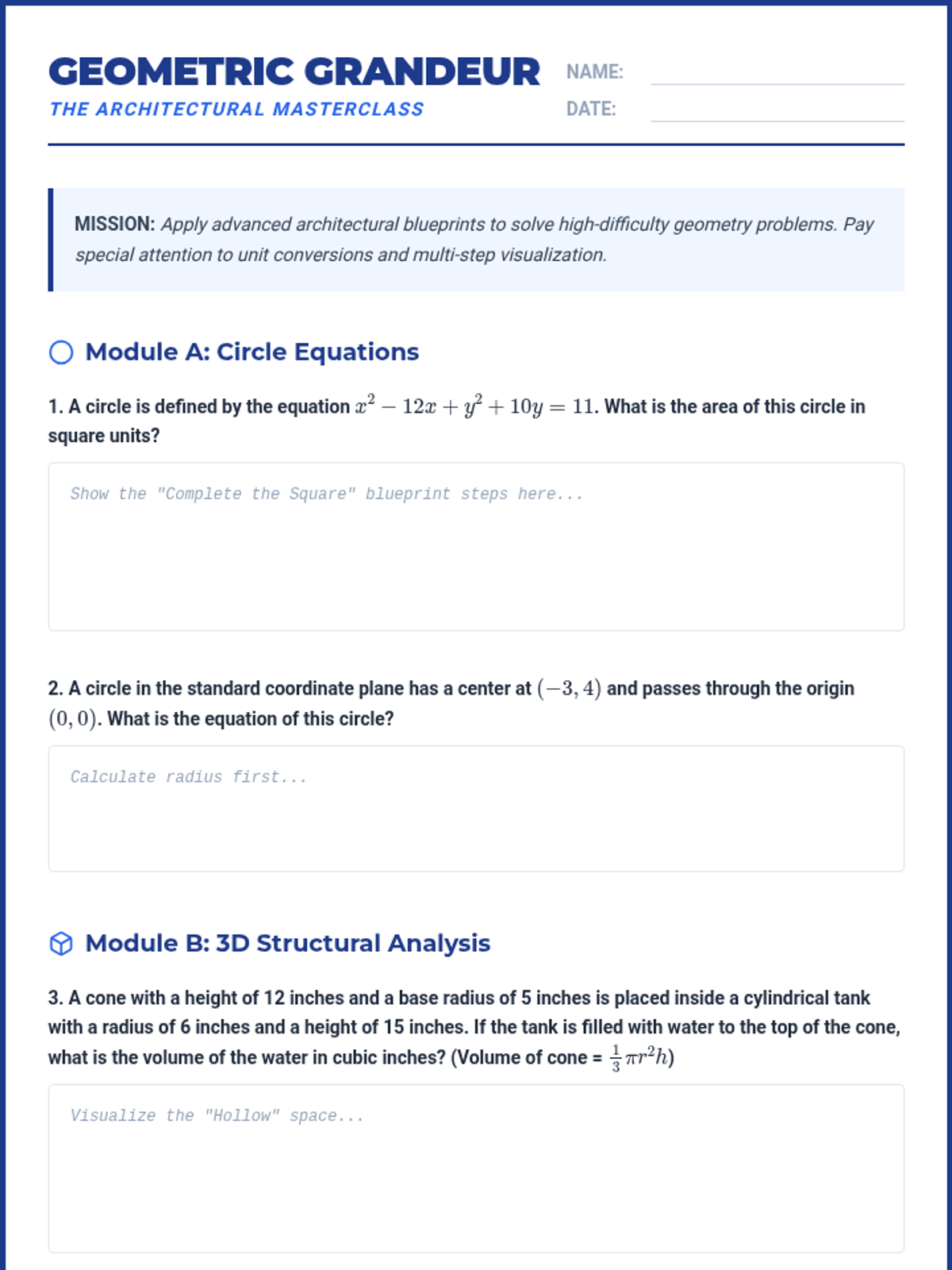
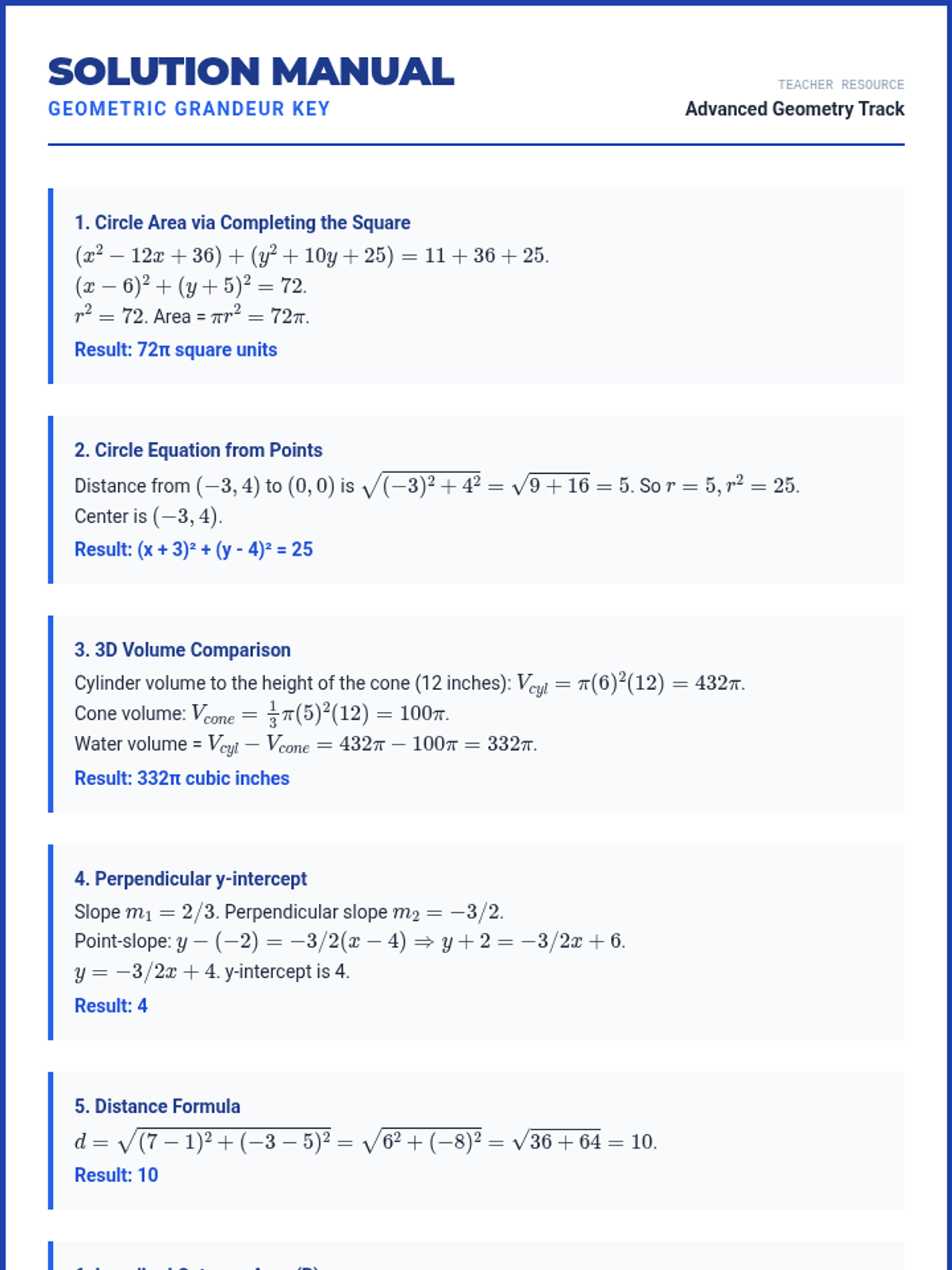
A specialized deep dive into advanced geometry concepts including circle equations, 3D volume/surface area of complex shapes, and coordinate geometry involving perpendicularity and distance. Students will master completing the square for circles and visualizing 3D cross-sections.
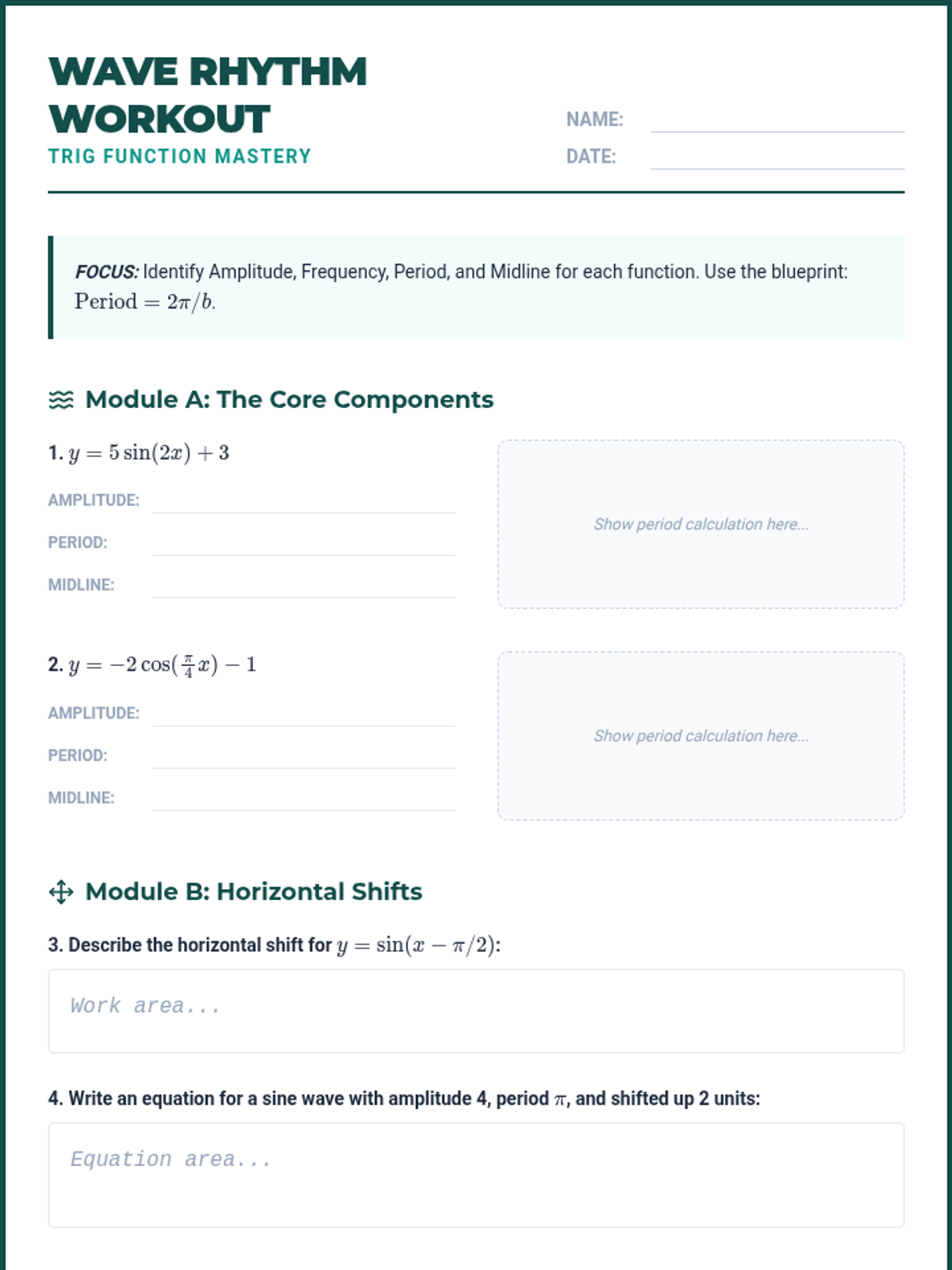
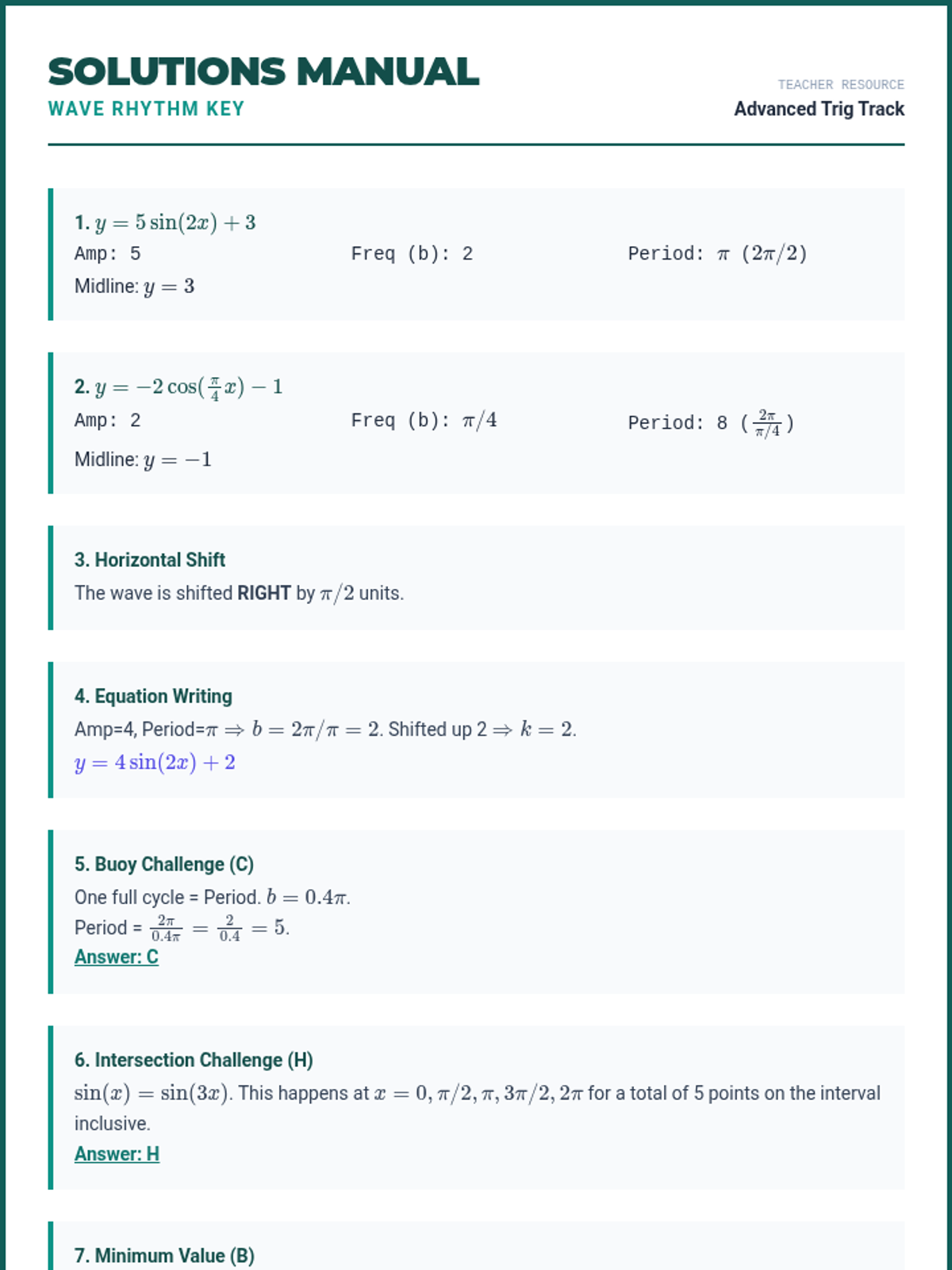
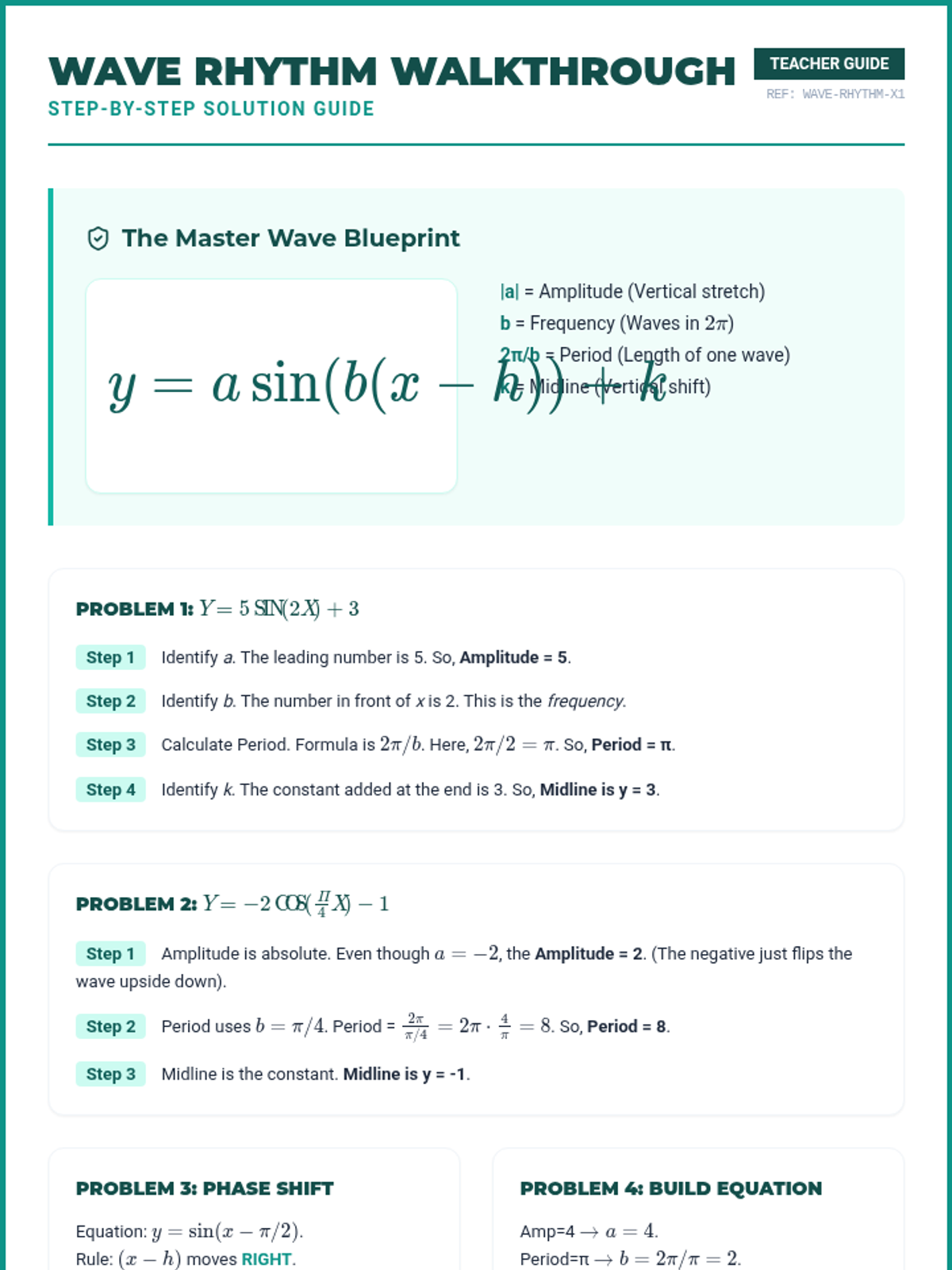
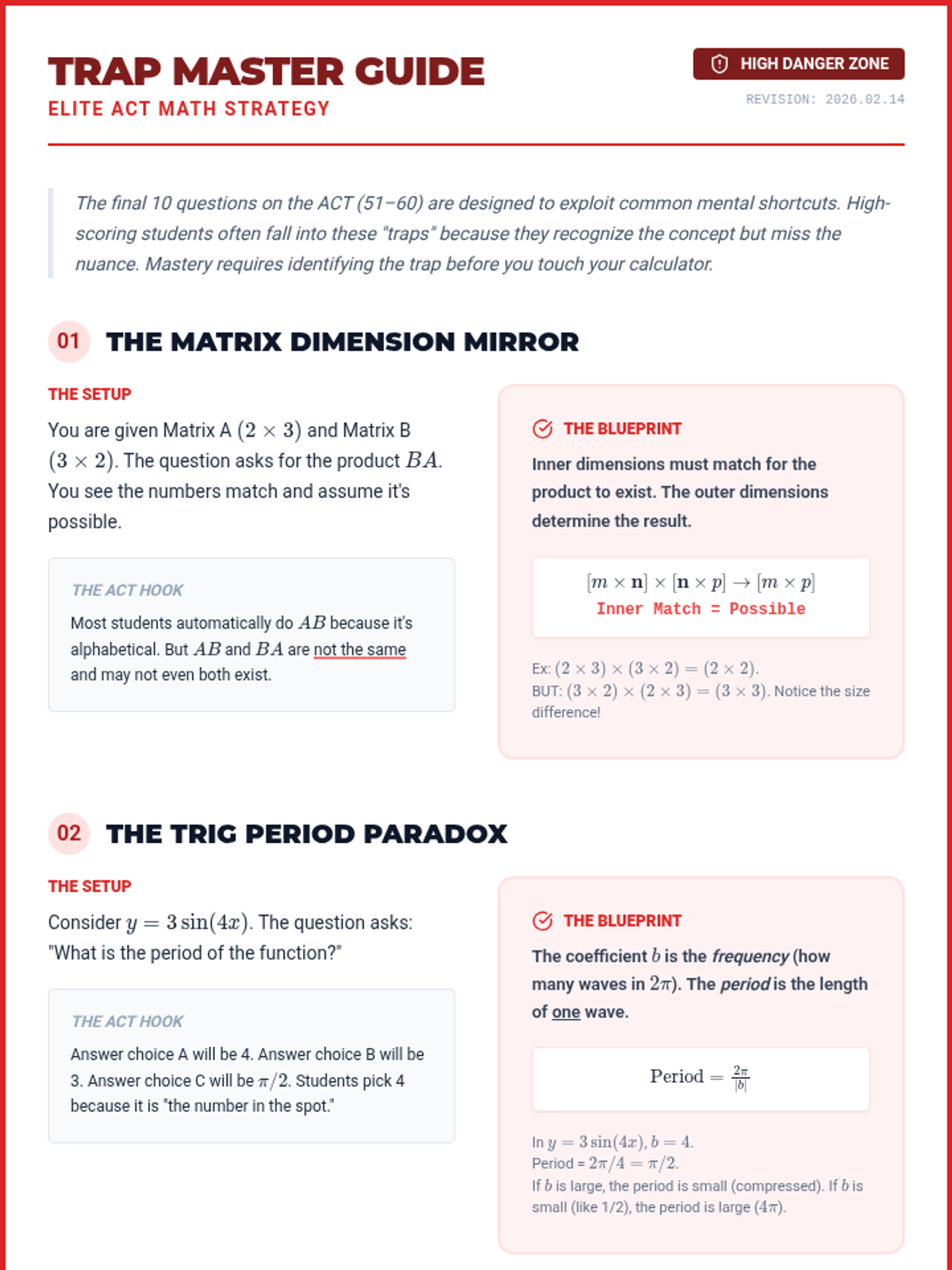
A specialized deep dive into trigonometric functions, mastering the critical distinction between period and frequency. Students will apply the 2π/b blueprint to decode sine and cosine graphs and solve high-difficulty periodic motion problems.
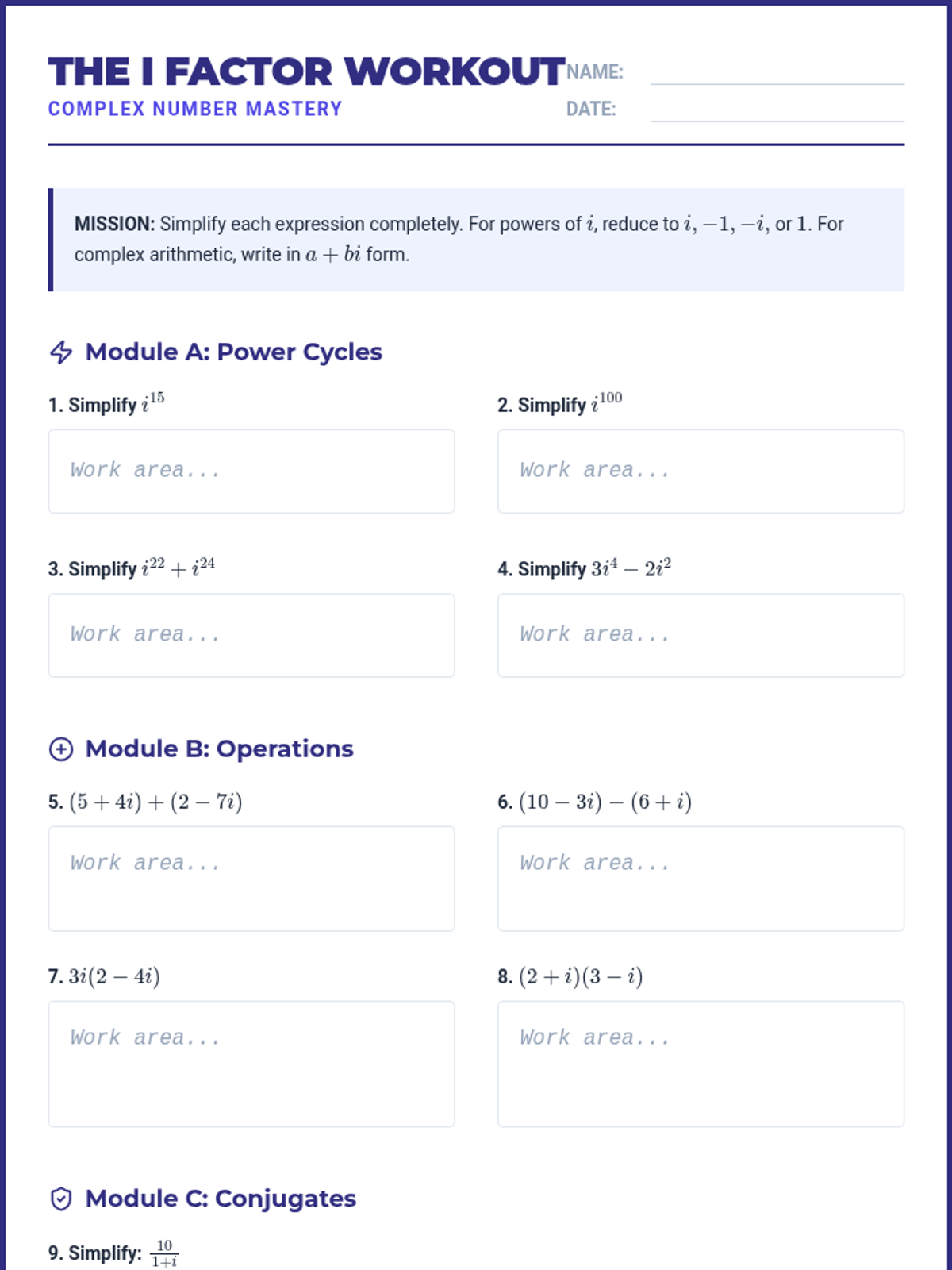
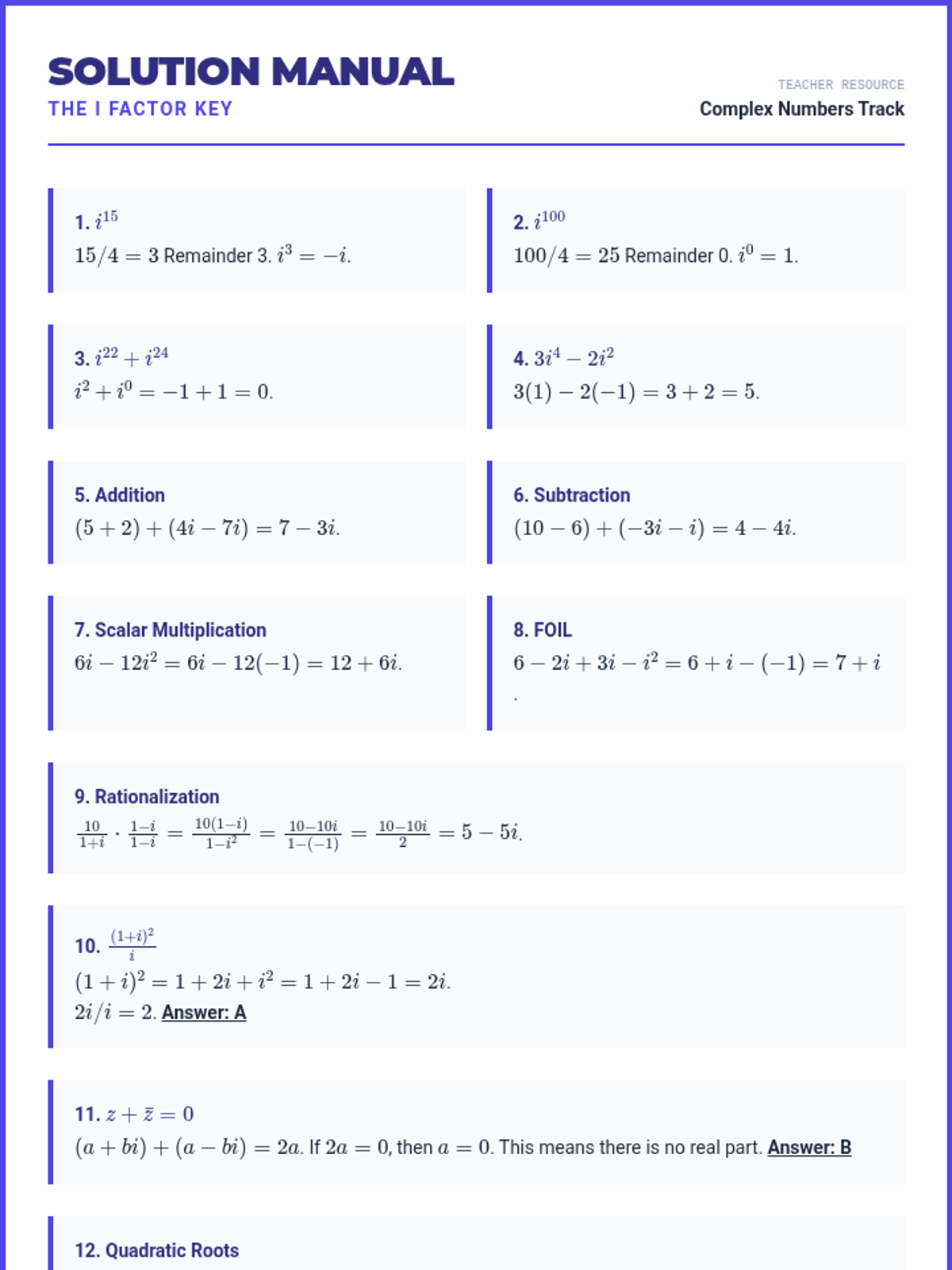
A focused deep dive into imaginary and complex numbers. Students will master powers of i, arithmetic with complex conjugates, and solving quadratic equations with complex roots—all through the lens of ACT-style 'Final Ten' questions.
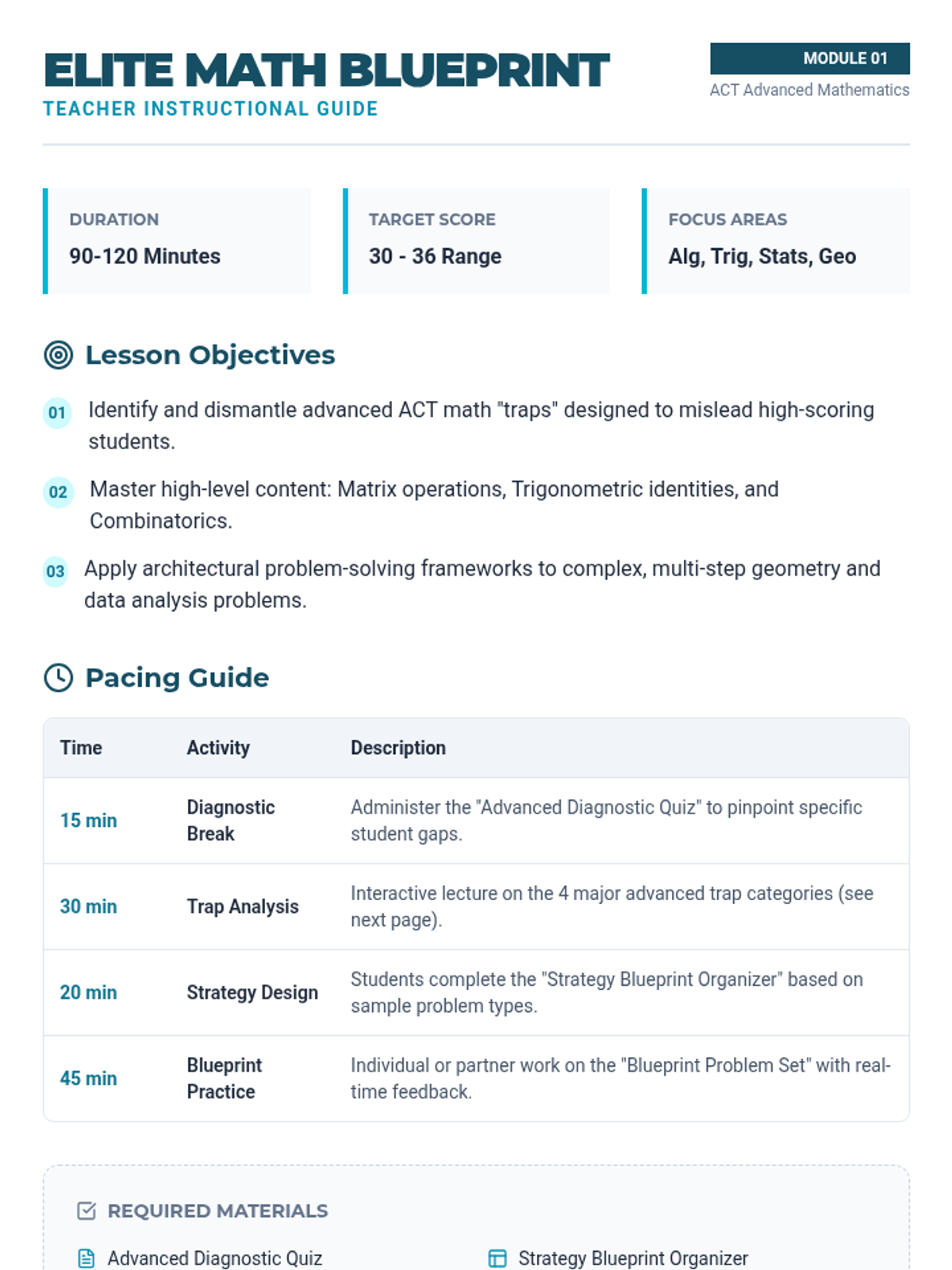
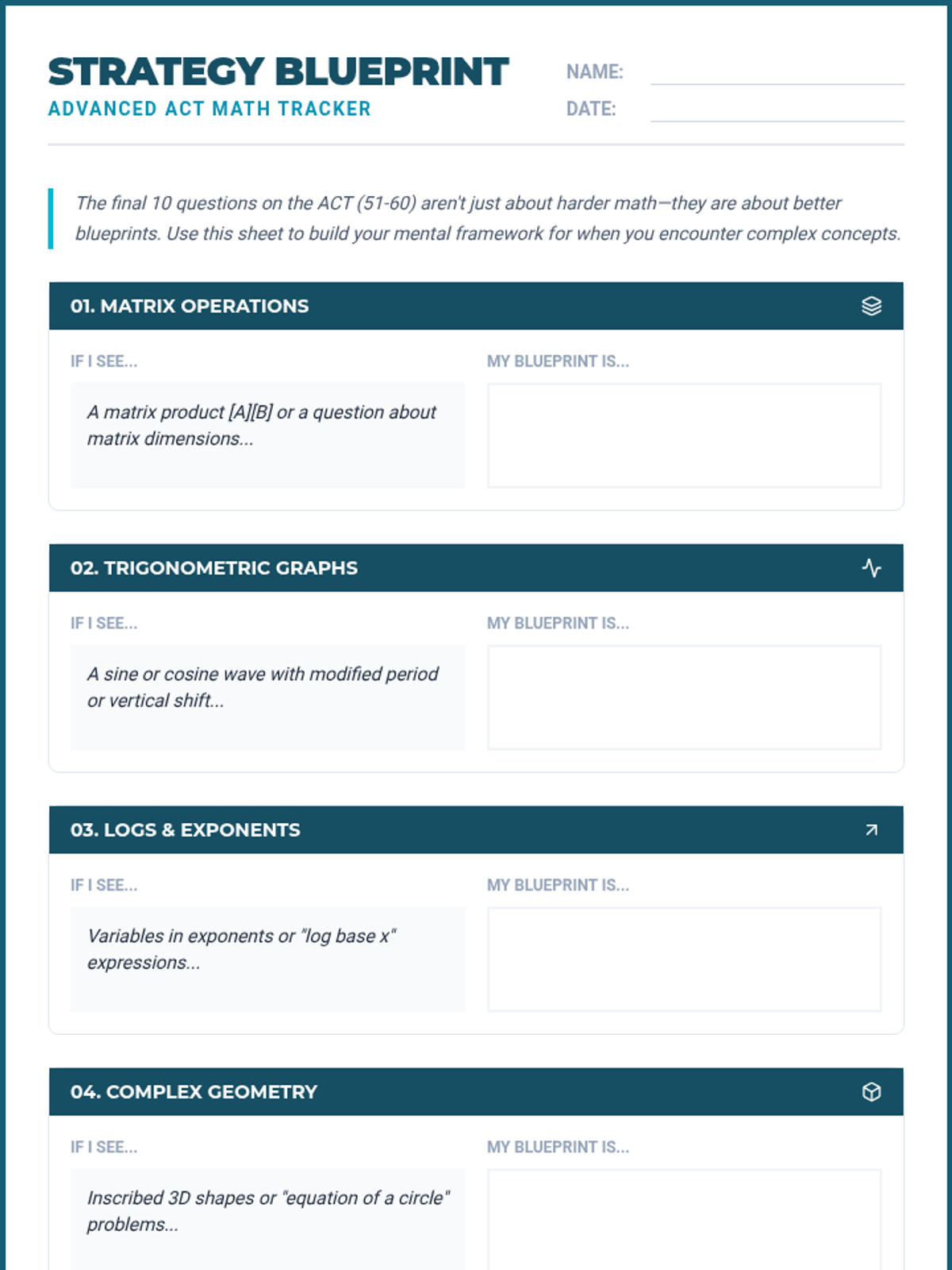
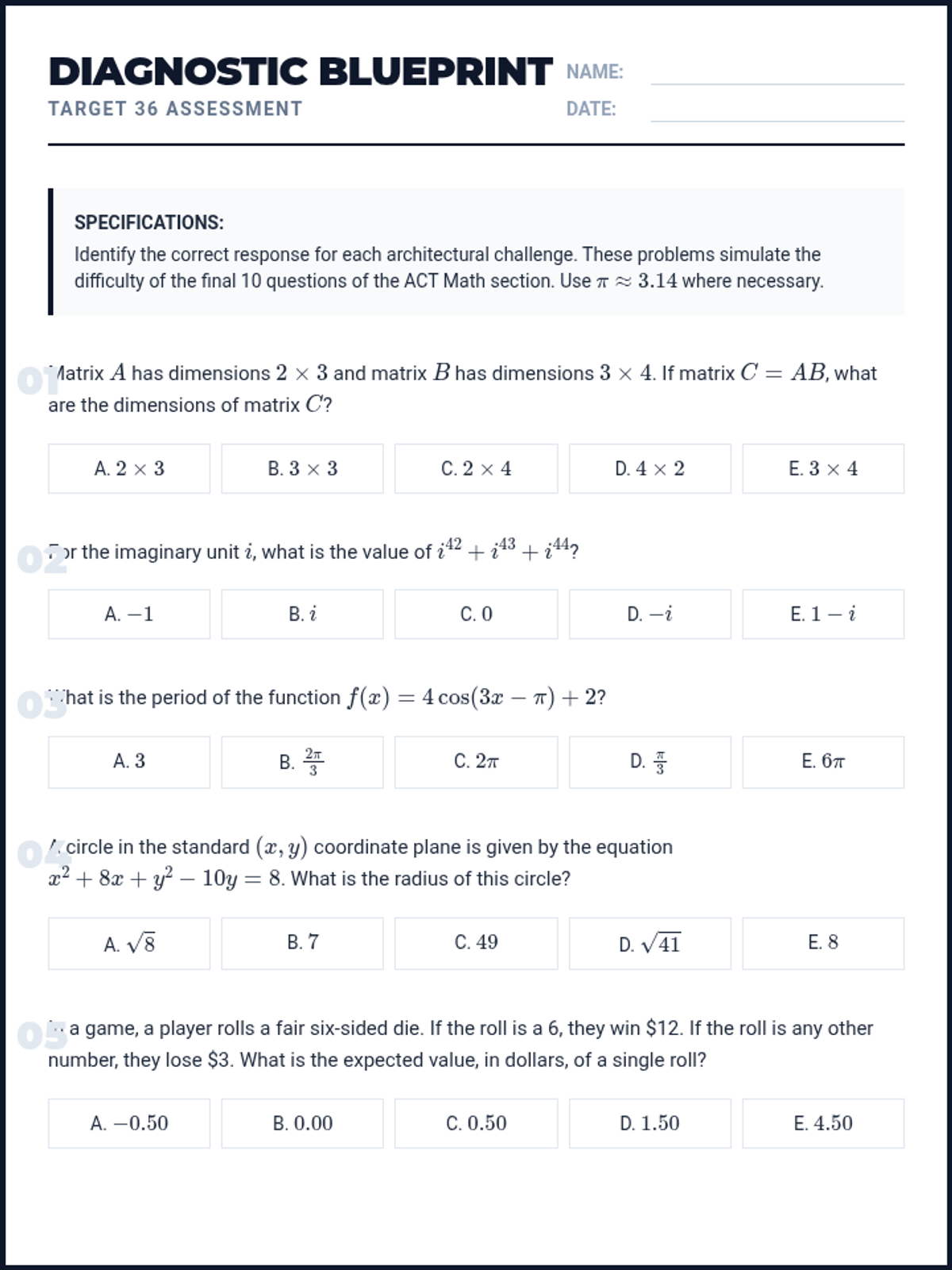
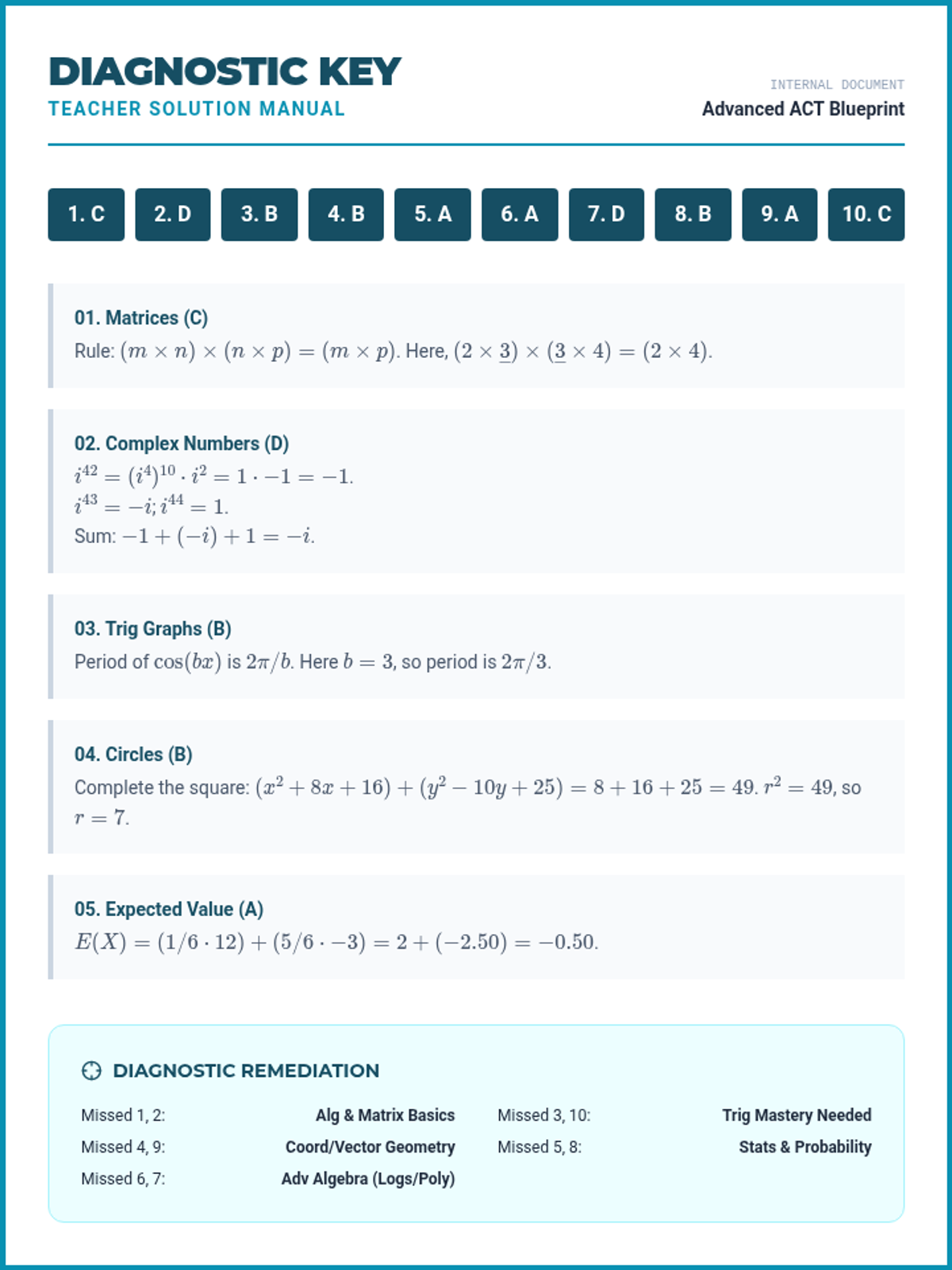
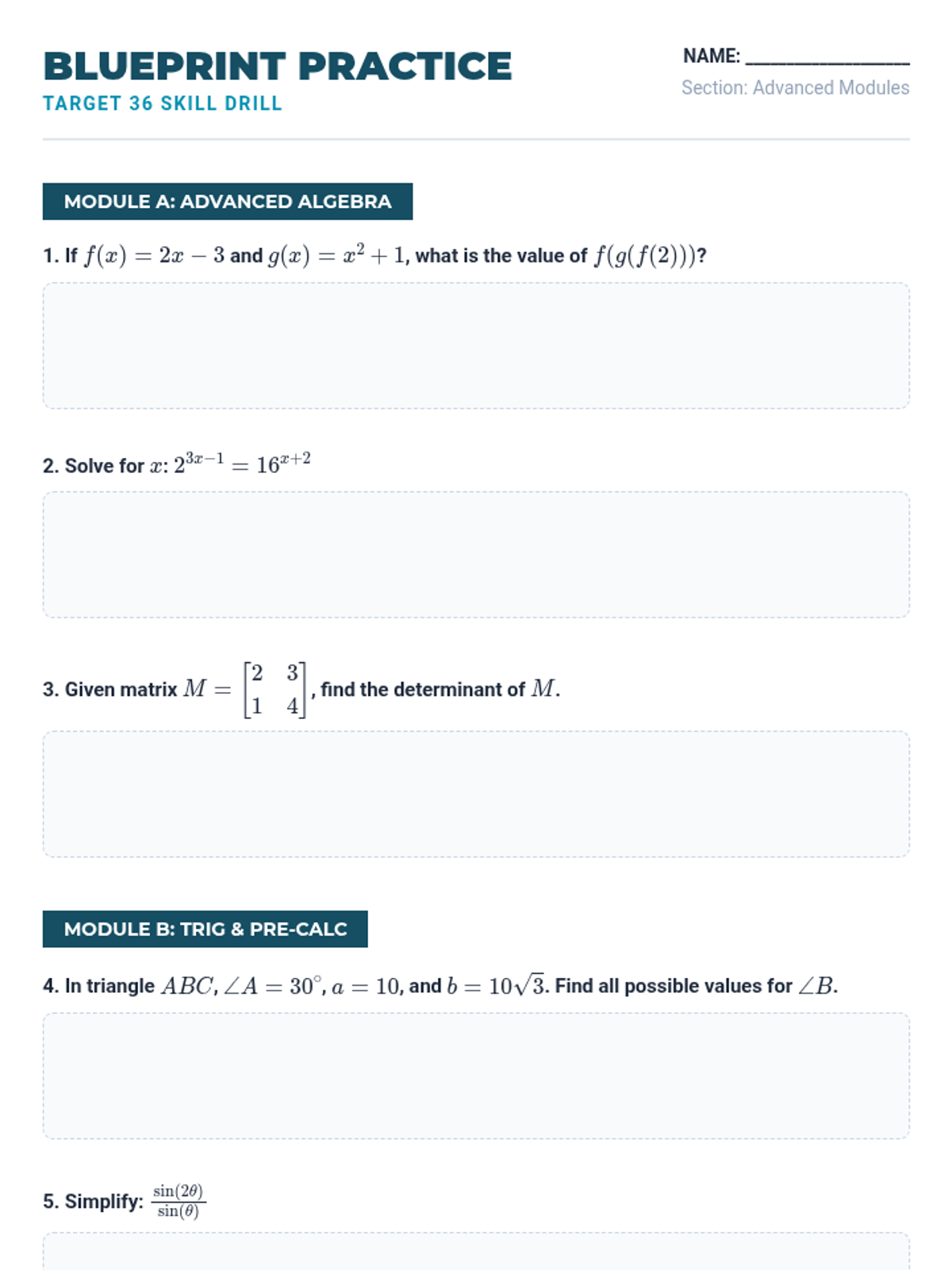
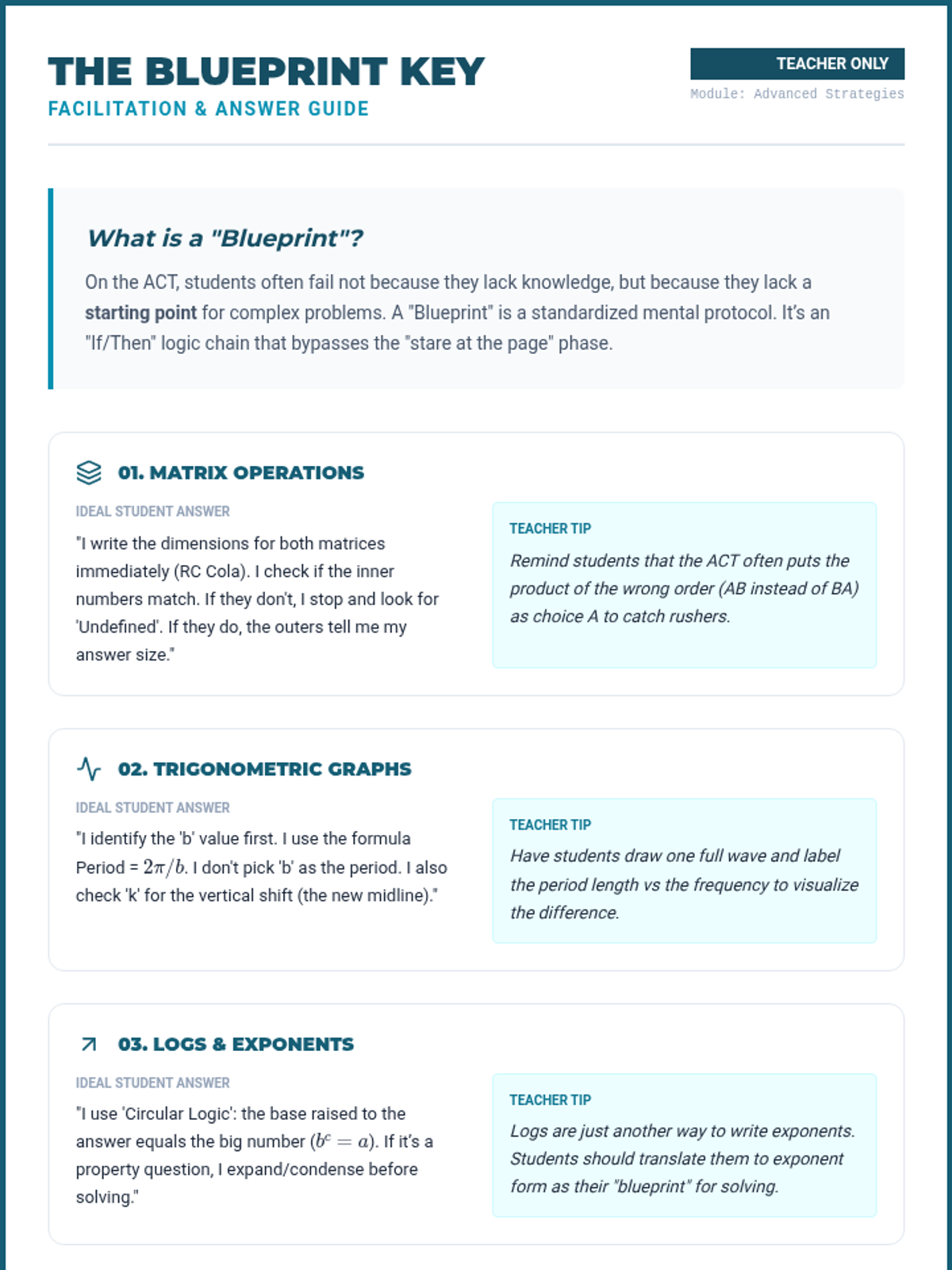
A comprehensive lesson focused on high-level ACT Math topics including matrices, complex functions, trigonometry, and advanced statistics. The lesson emphasizes identifying common 'traps' and applying architectural-style problem-solving strategies.
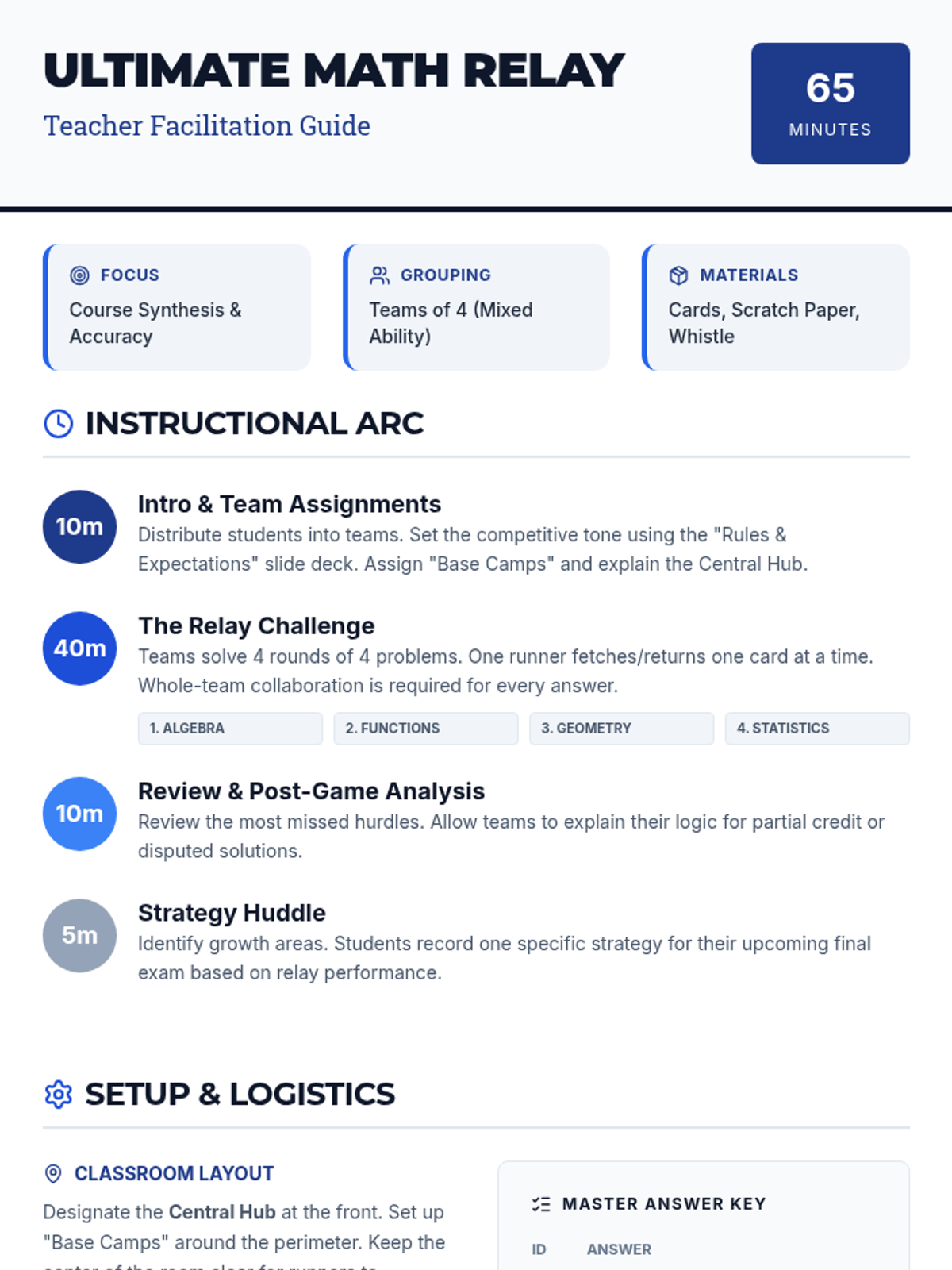
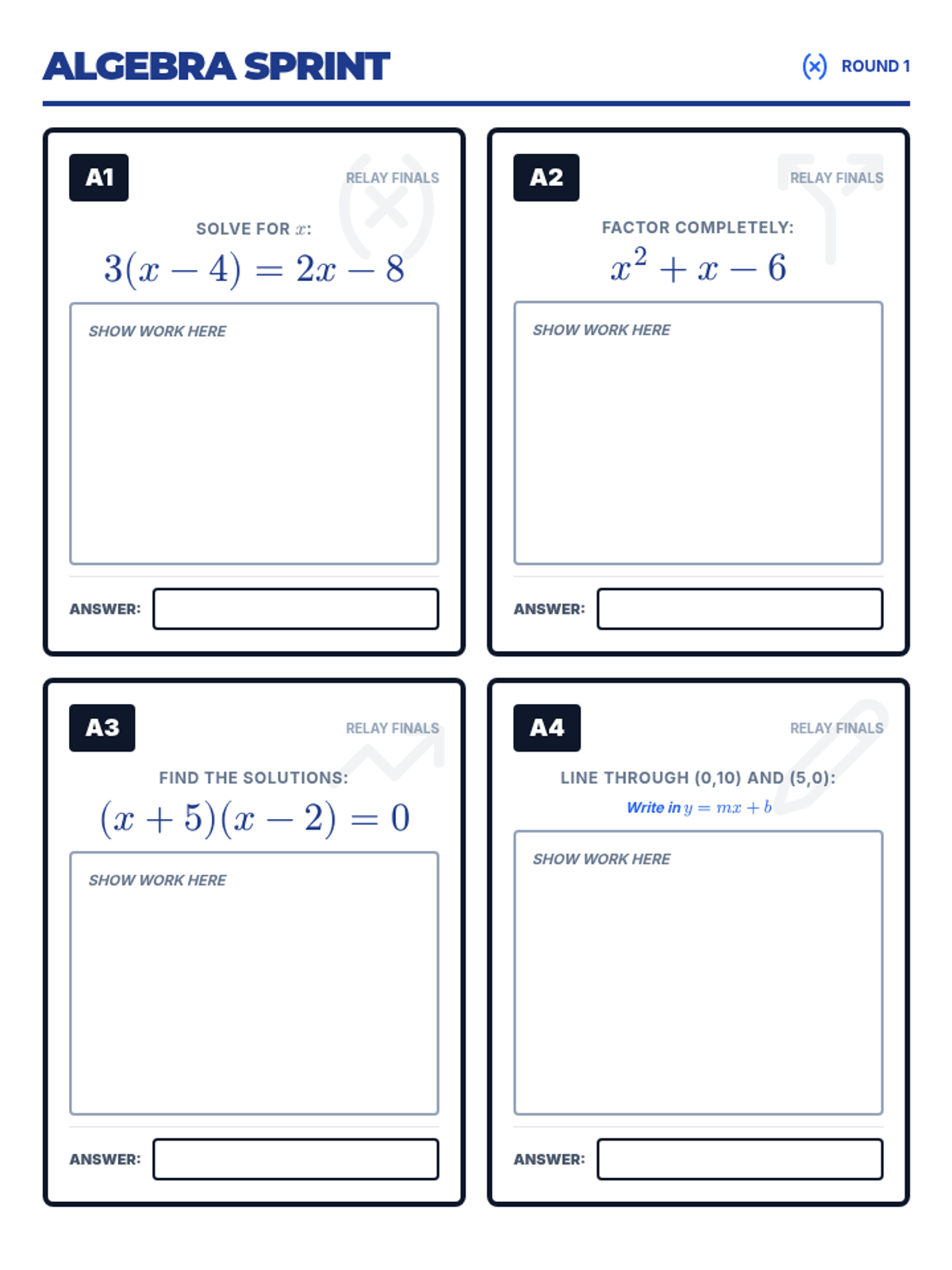
A high-energy, comprehensive review lesson for 9th-grade math students to synthesize their learning through a competitive team relay challenge covering all major domains.
A comprehensive lesson covering geometric transformations (translations, reflections, rotations, and dilations) and the fundamentals of geometric proofs, including logical reasoning and triangle congruence.
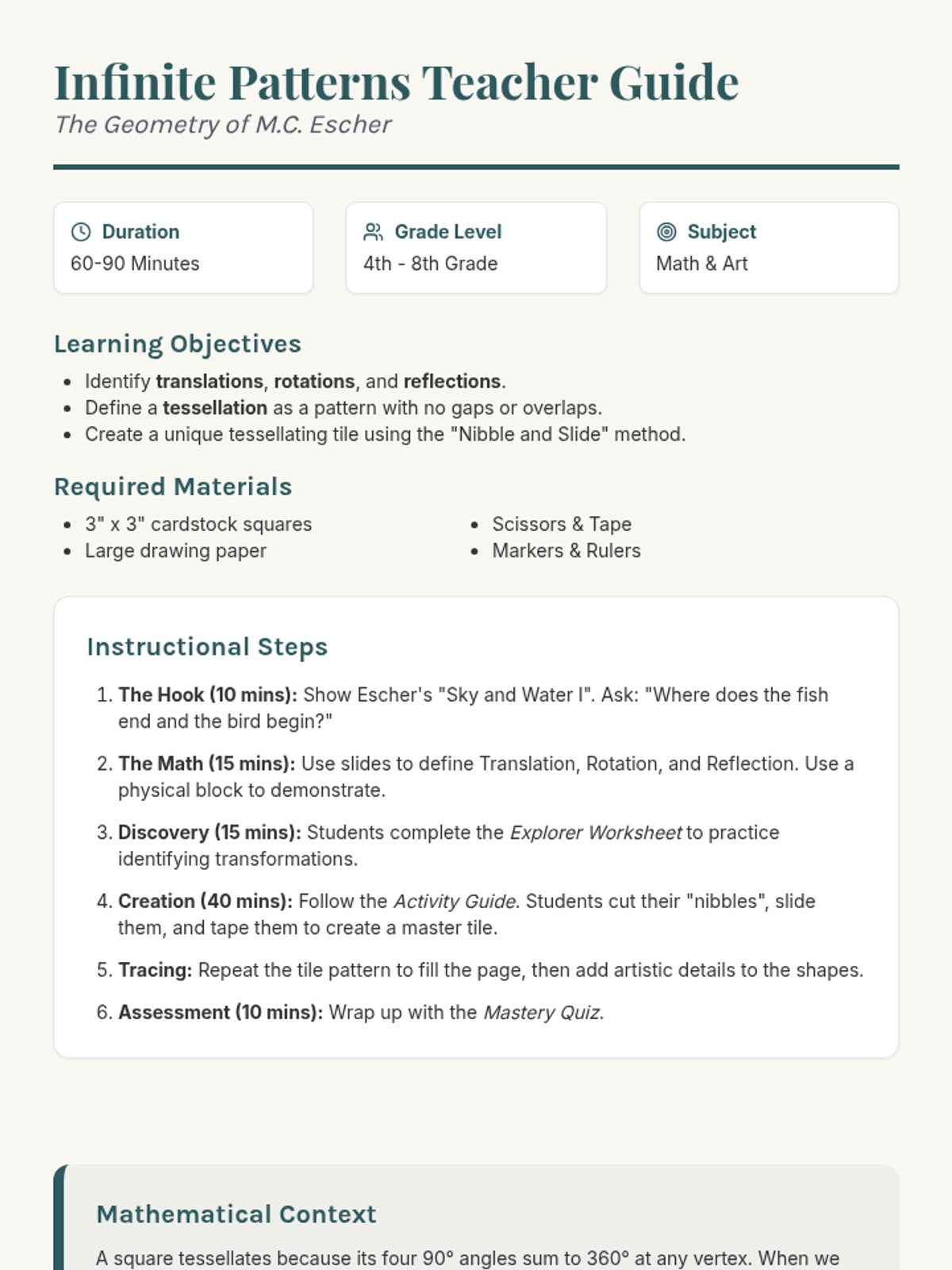
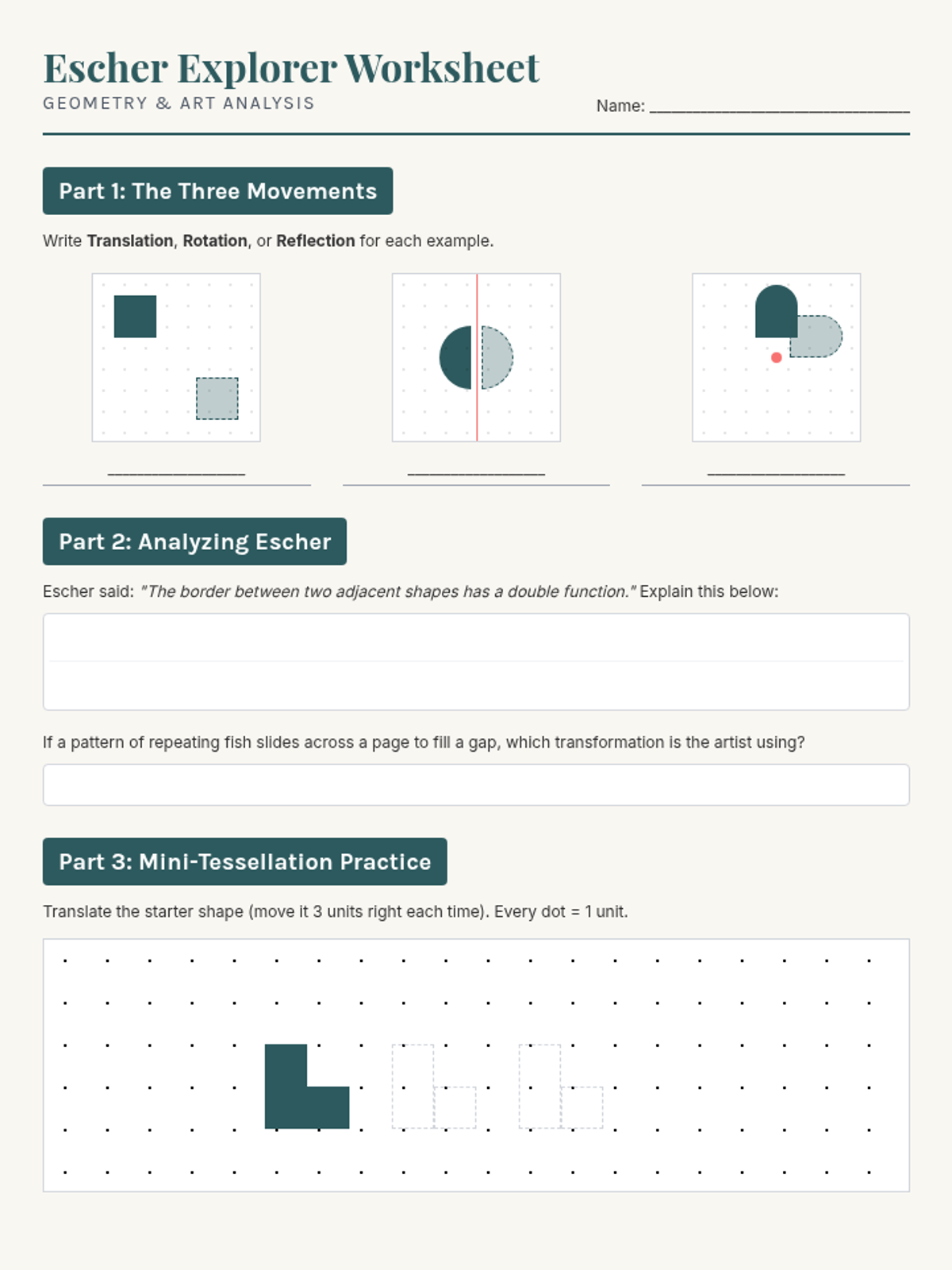
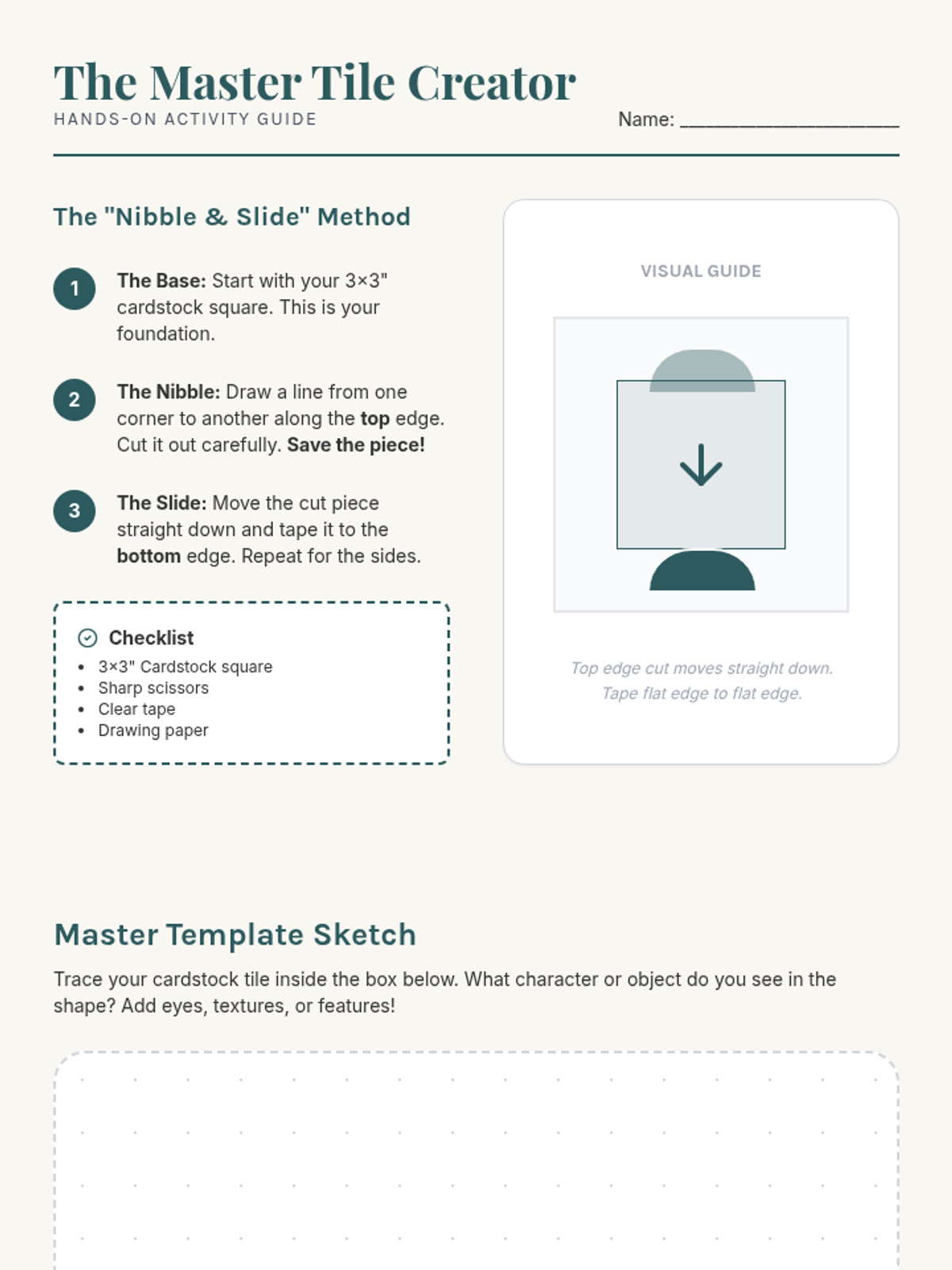
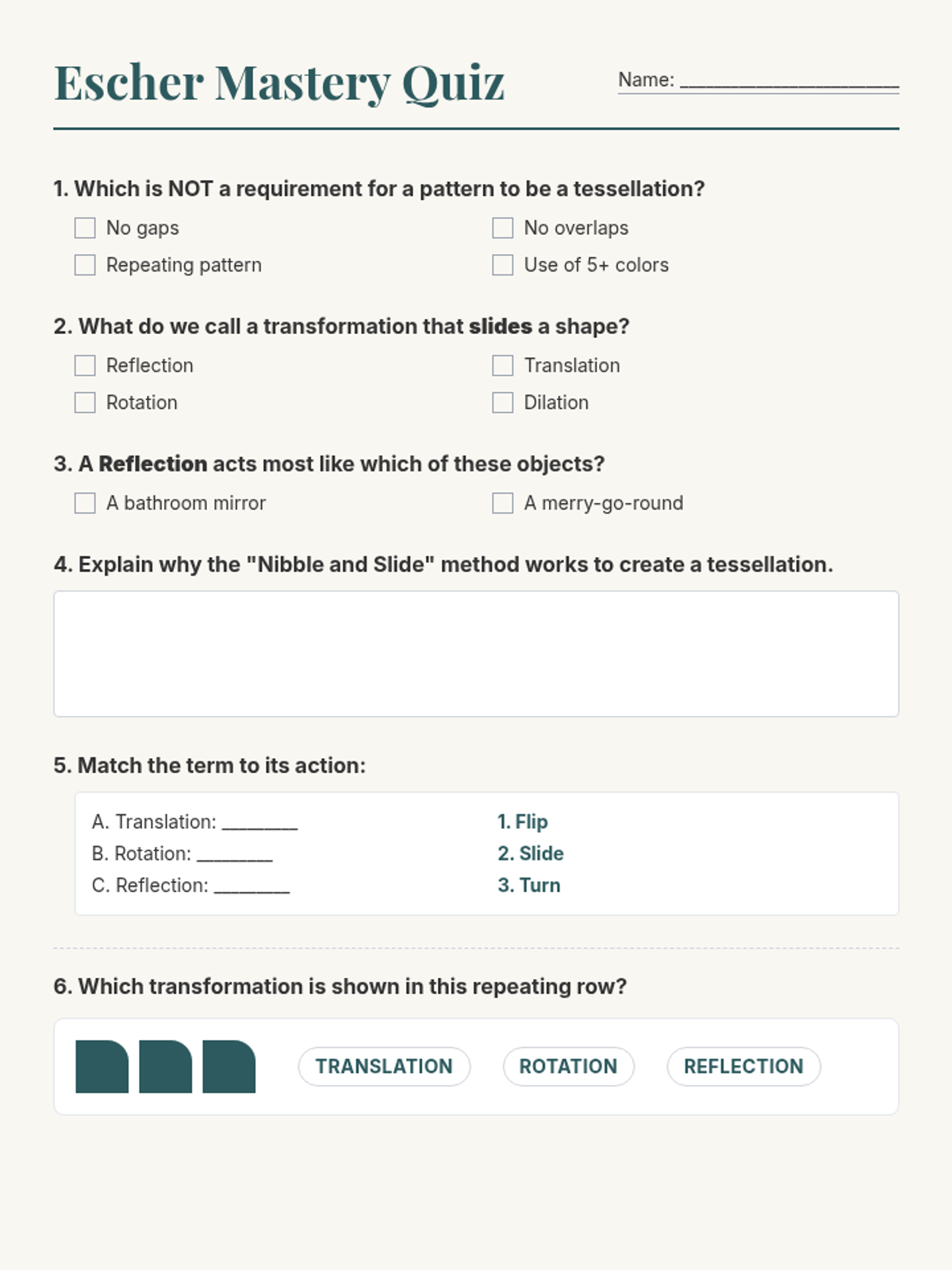
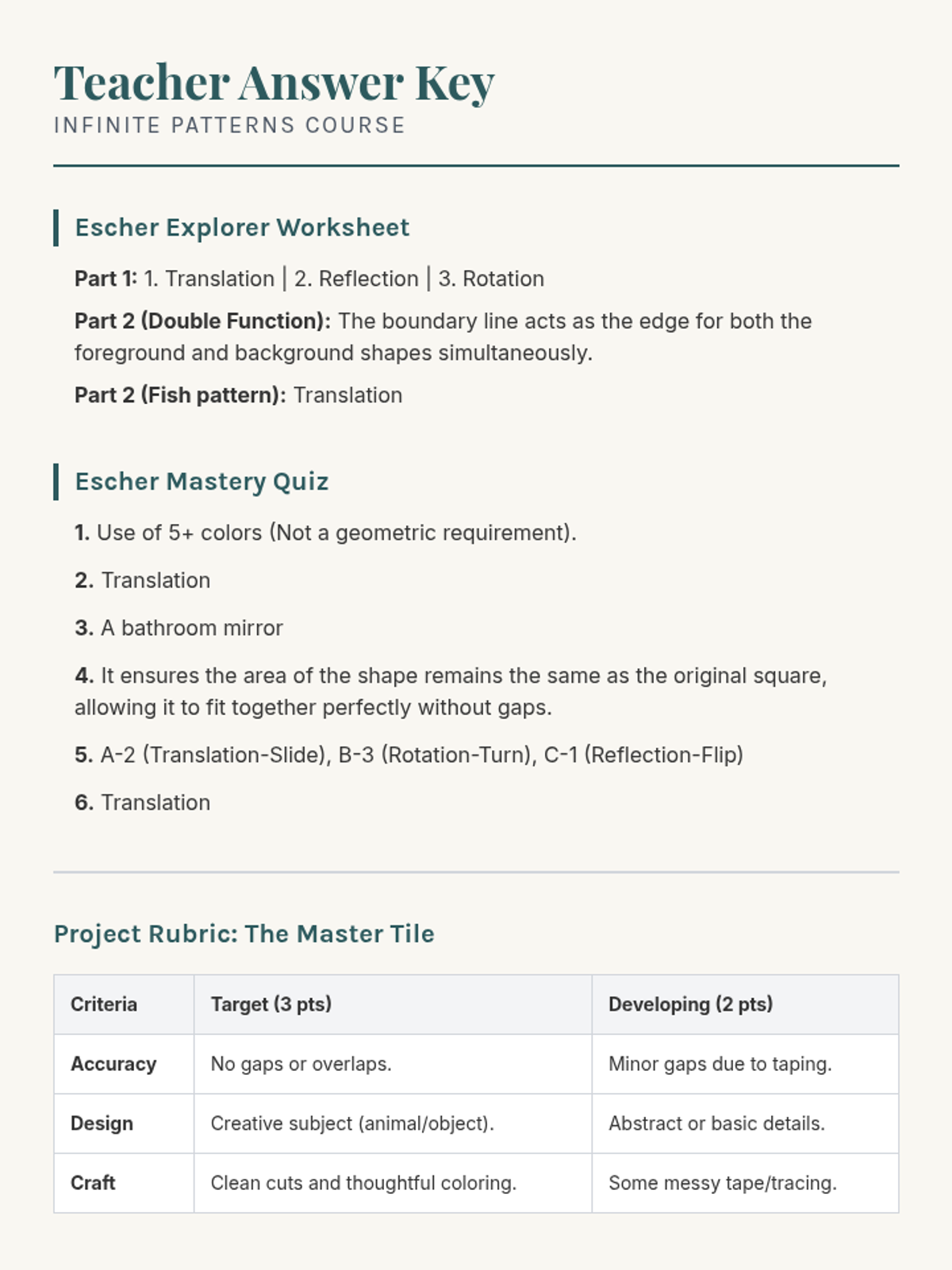
A hands-on interdisciplinary lesson blending geometry and art. Students explore M.C. Escher's work to understand and apply translations, rotations, and reflections through the creation of original tessellating patterns.
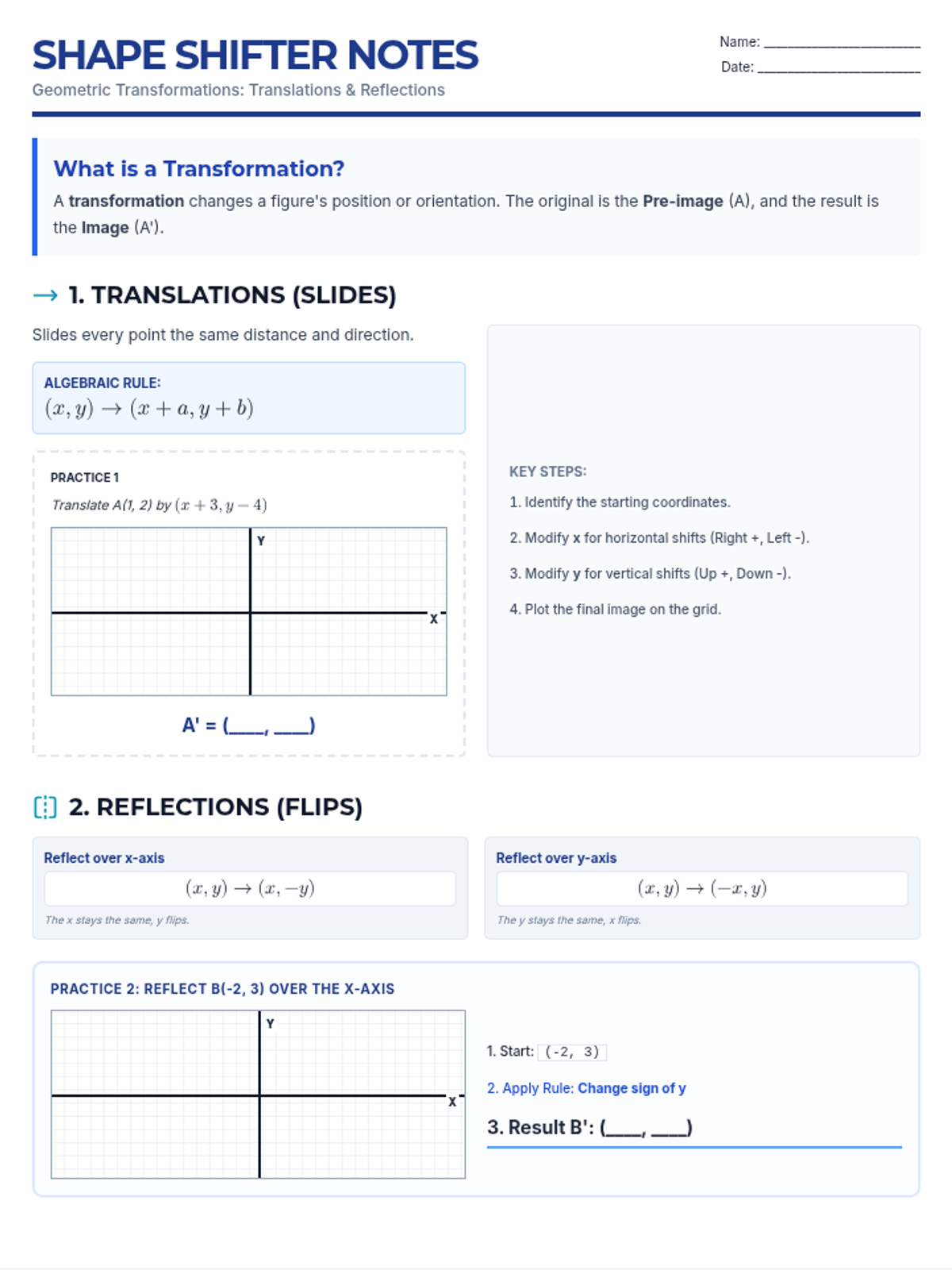
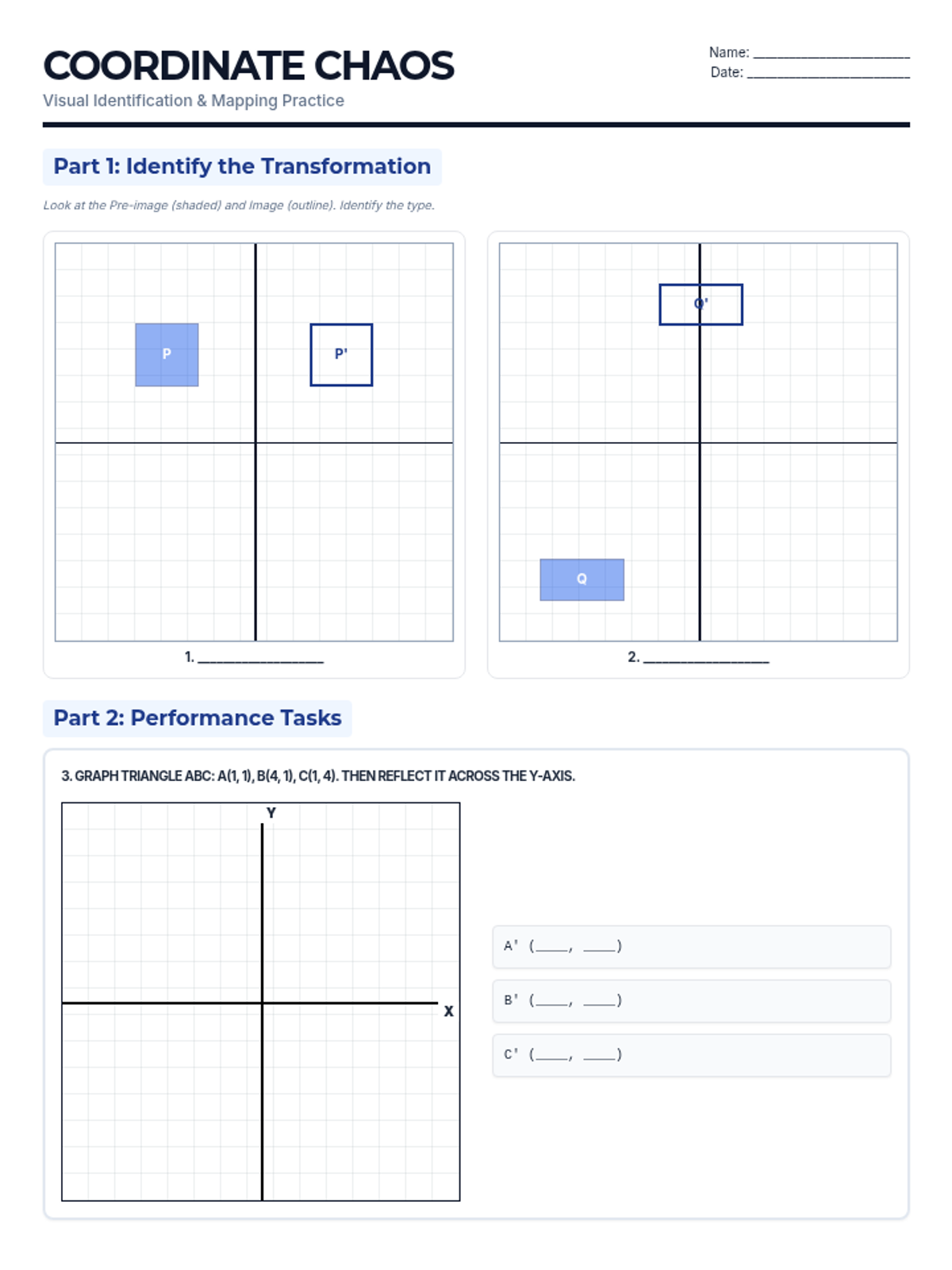
A comprehensive lesson on geometric transformations including translations, reflections, and rotations through guided notes, coordinate plane practice, and assessment.
A comprehensive review lesson on geometric transformations including translations, reflections, rotations, dilations, and compositions, designed for mastery assessment preparation.
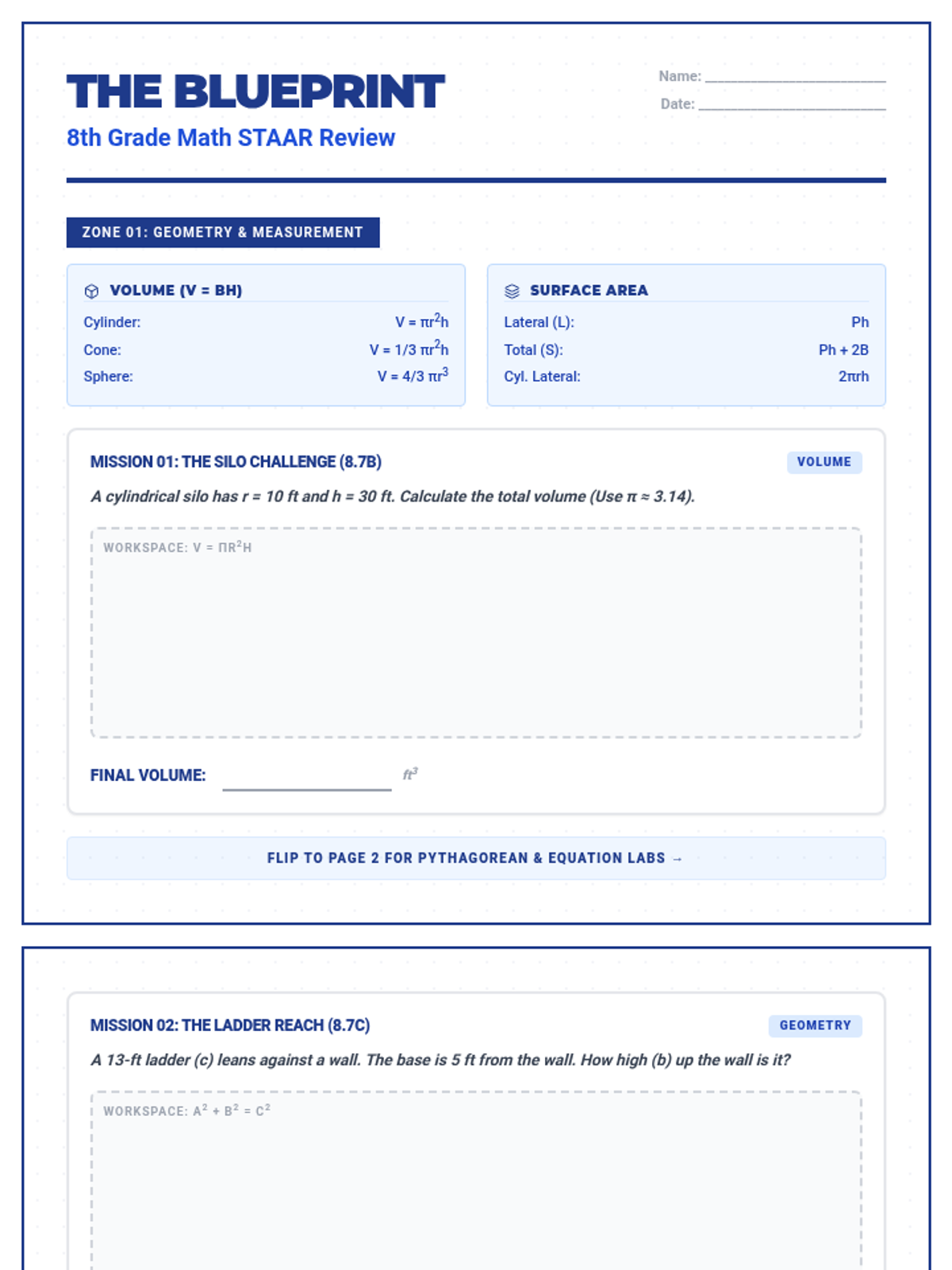
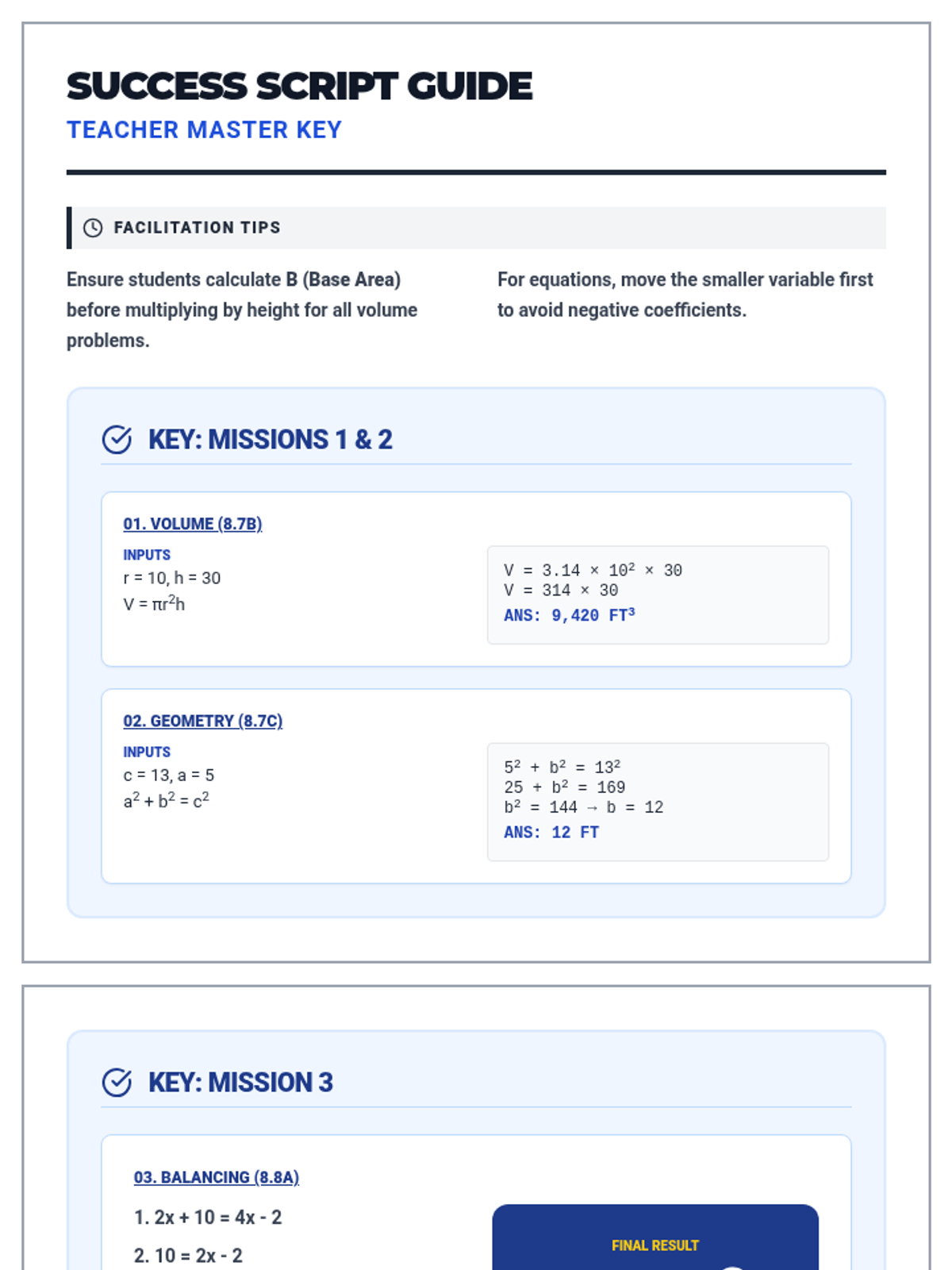
A comprehensive 8th-grade TEKS review covering Geometry, Measurement, Equations, and Inequalities. Includes visual instruction, student practice, and teacher guidance for STAAR-aligned mastery.
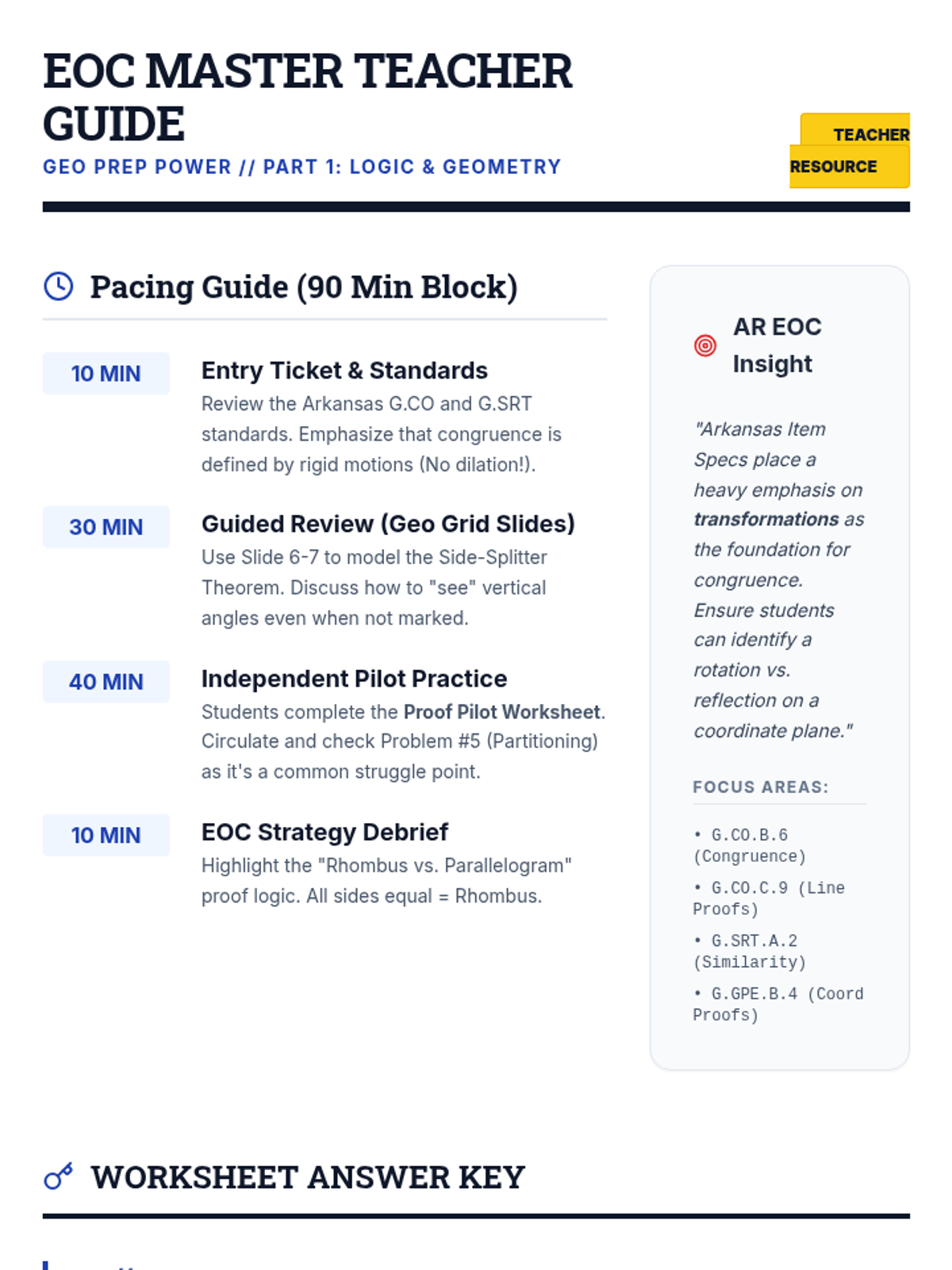
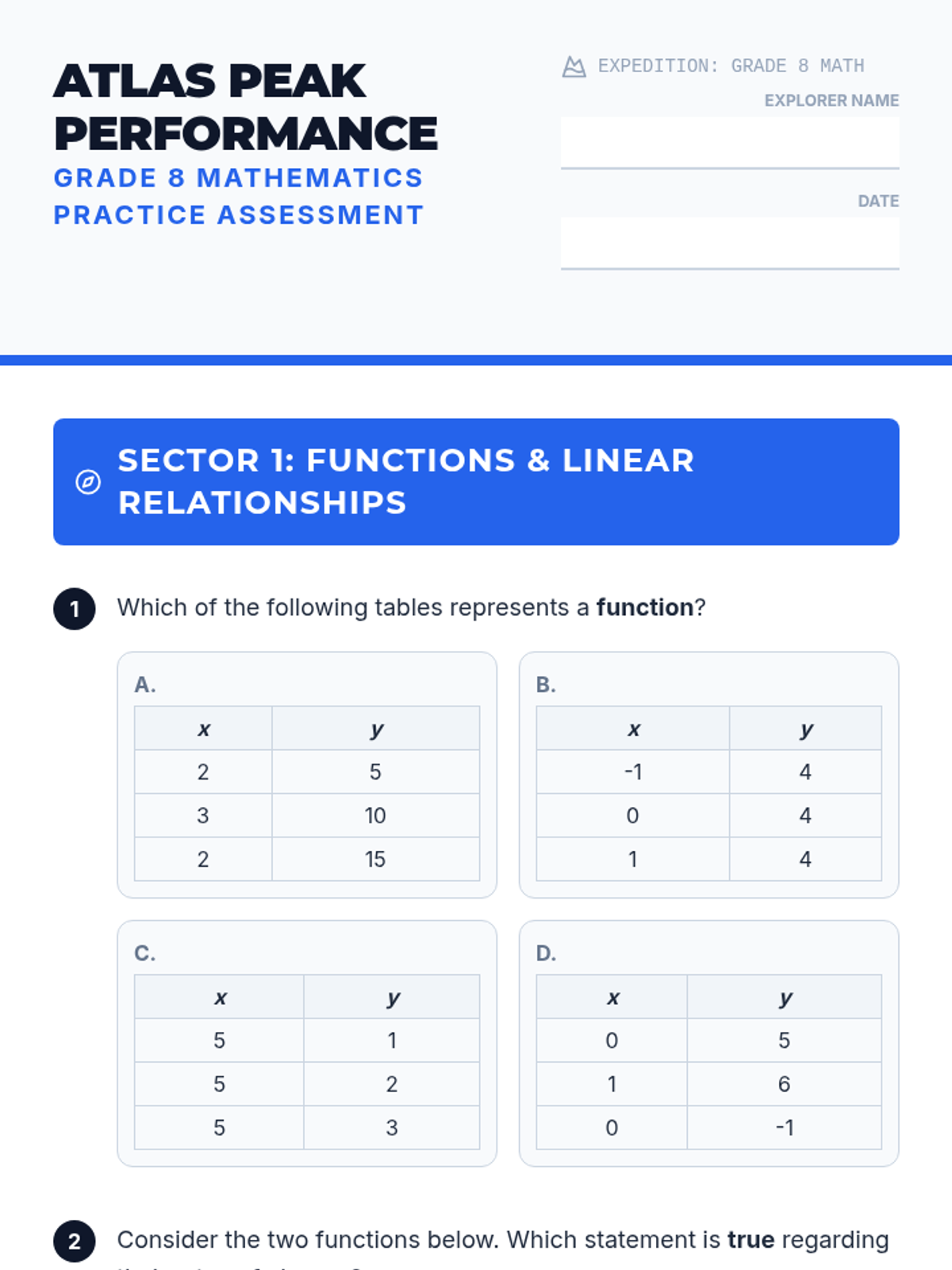
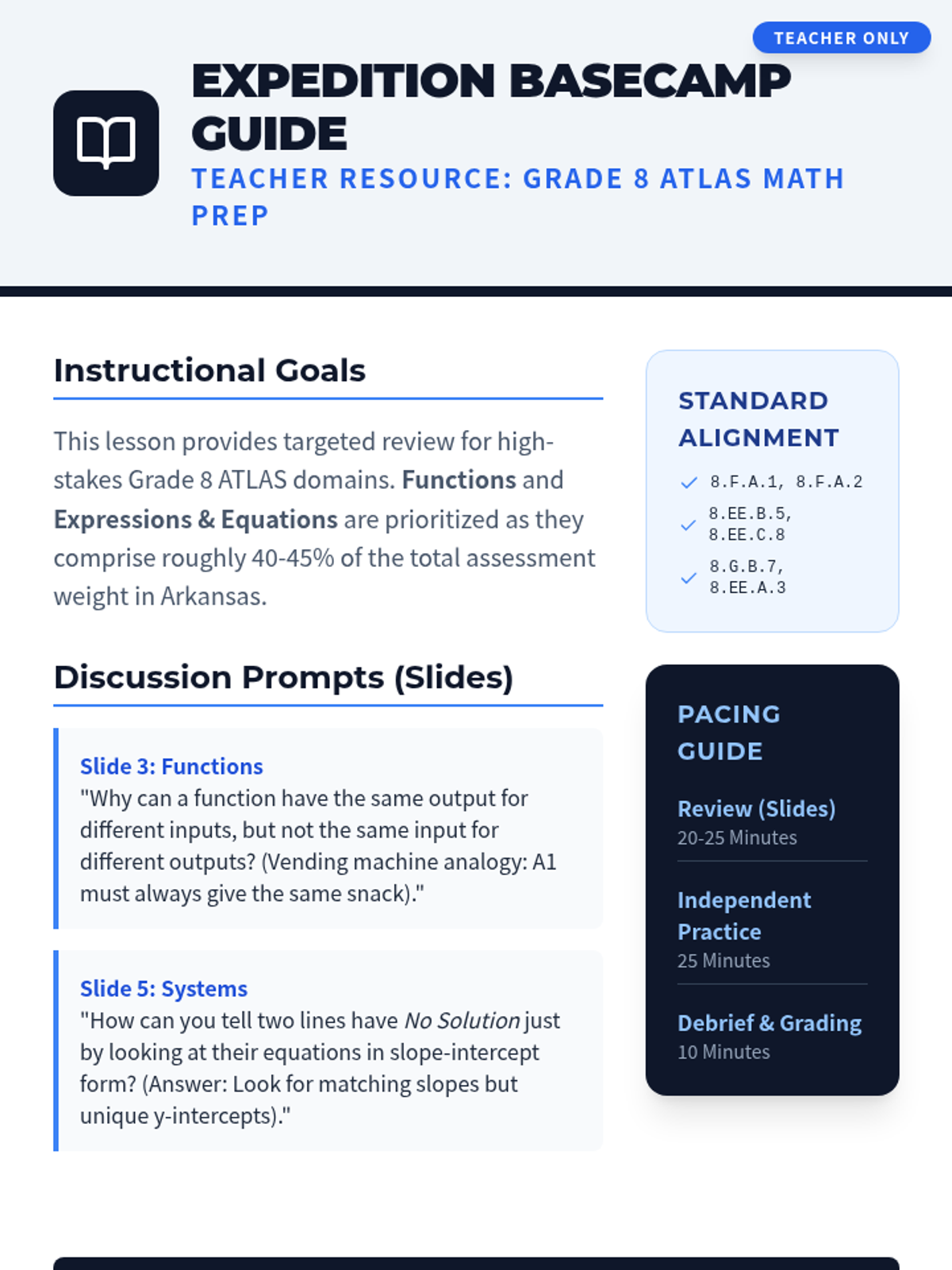
A comprehensive test prep lesson for the Grade 8 Arkansas ATLAS assessment, focusing on high-stakes topics like functions, linear equations, systems, geometry, and scientific notation. Includes a visual presentation, a practice test with ATLAS-style items, and a teacher guide.
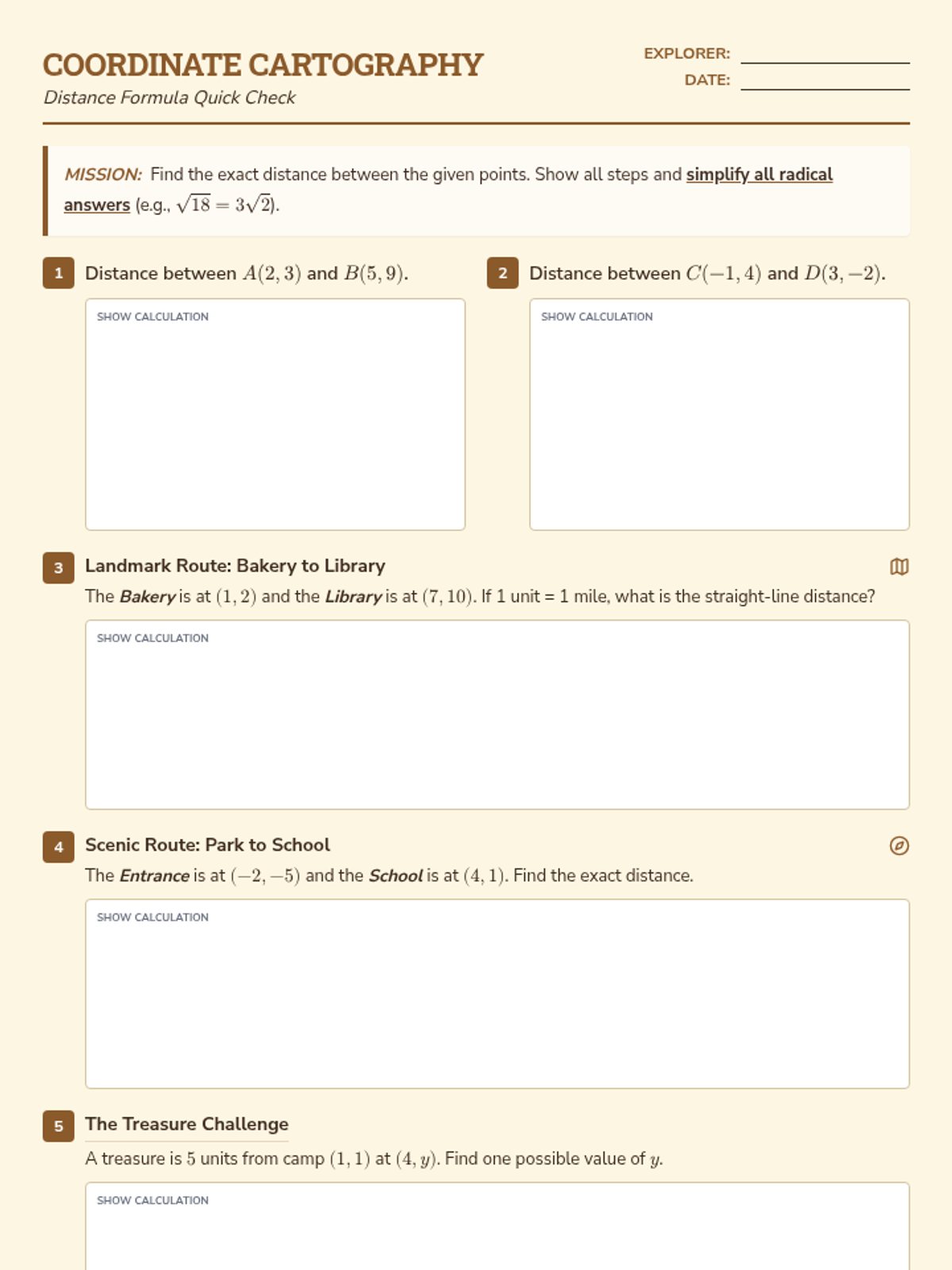
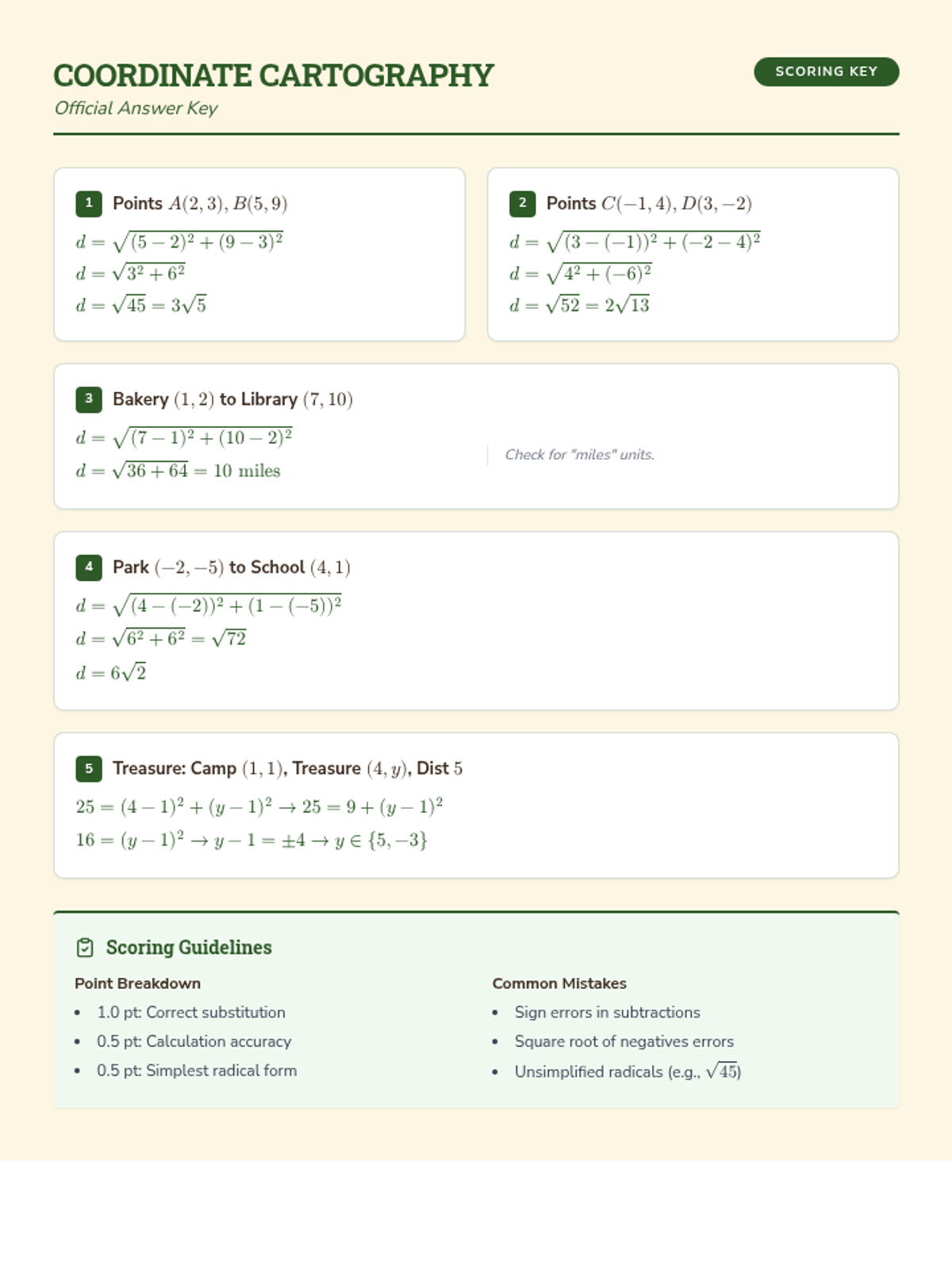
A focused lesson on applying the distance formula to coordinate geometry and real-world map scenarios, featuring radical simplification and spatial reasoning.
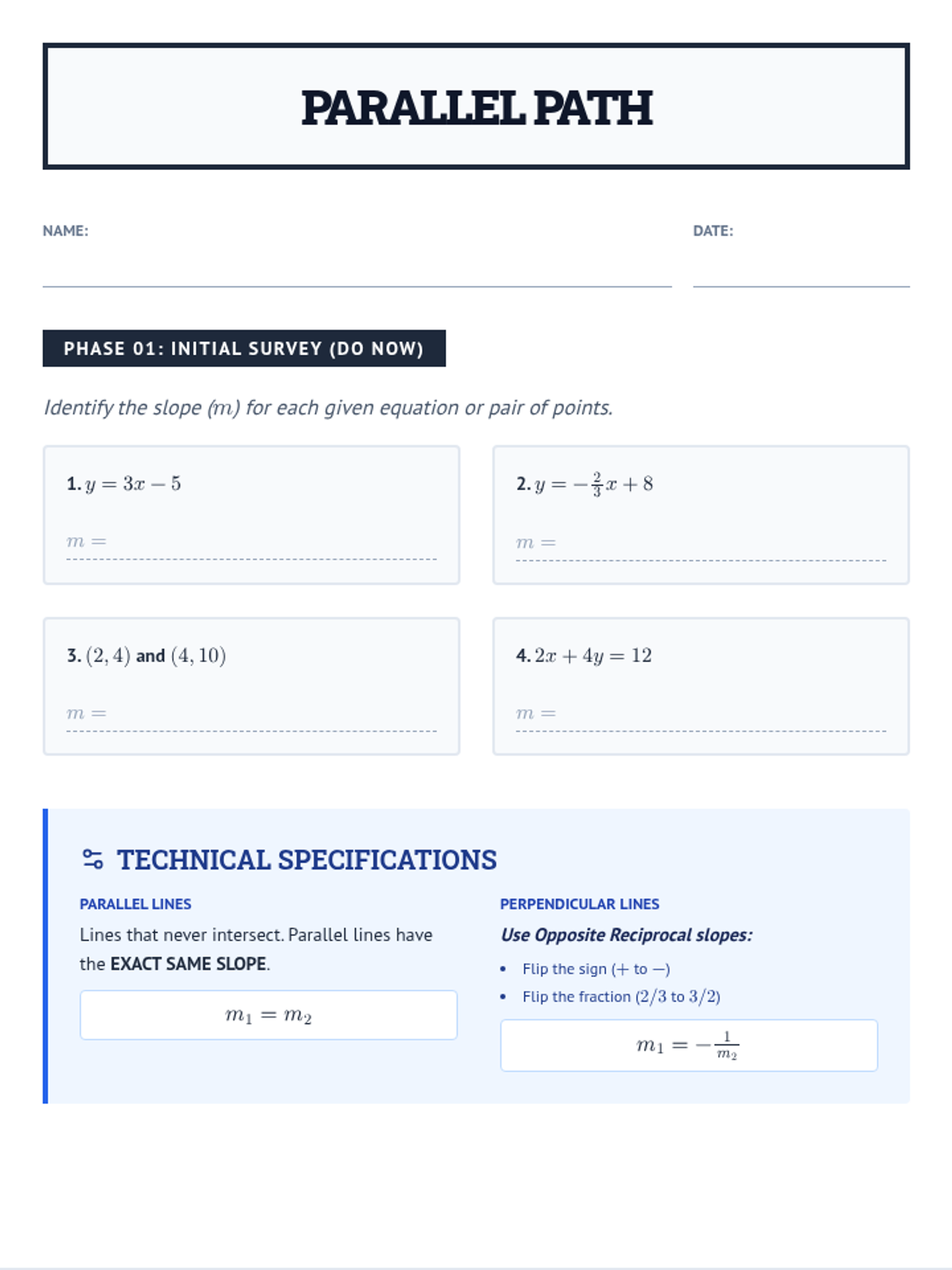
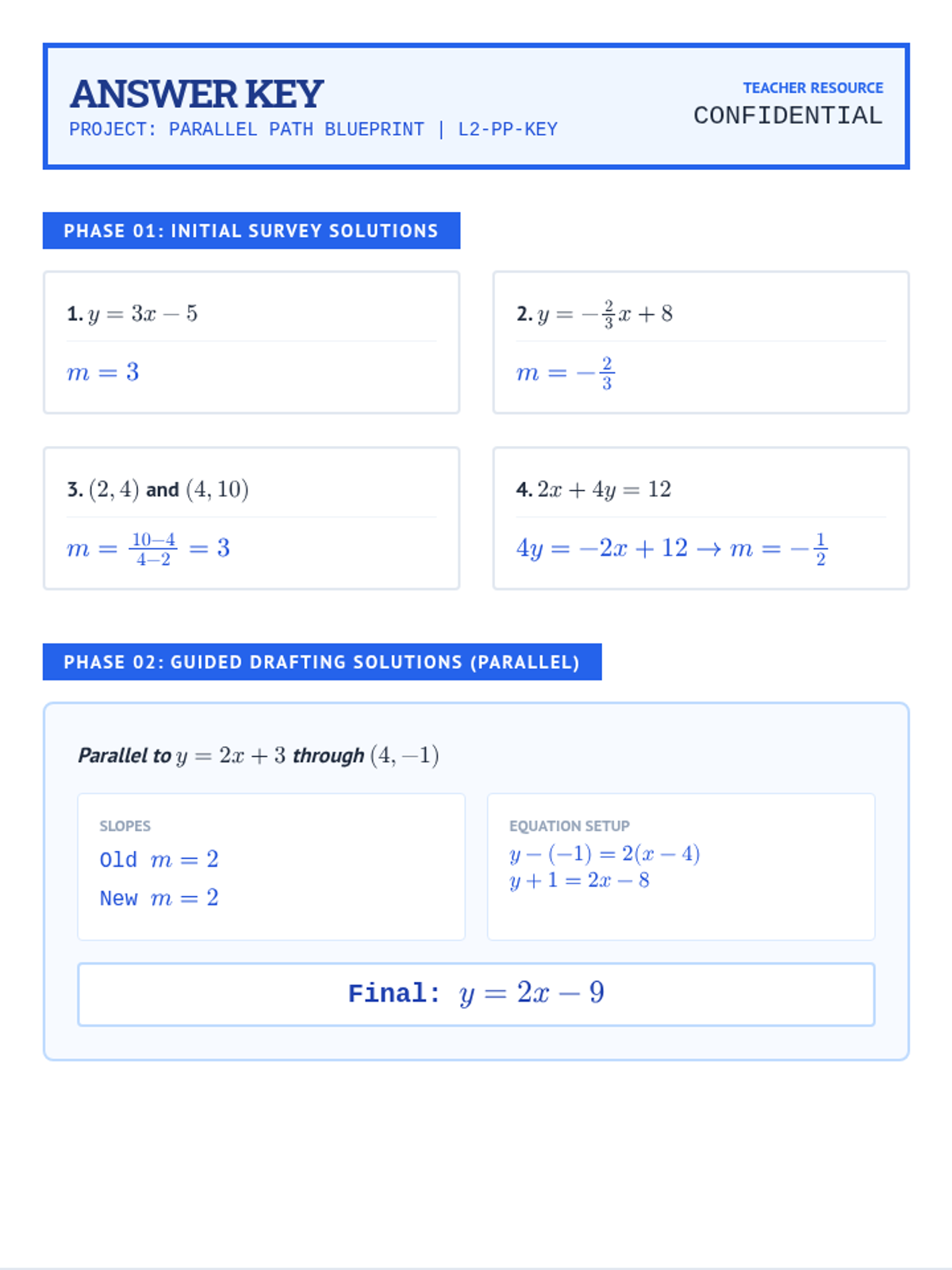
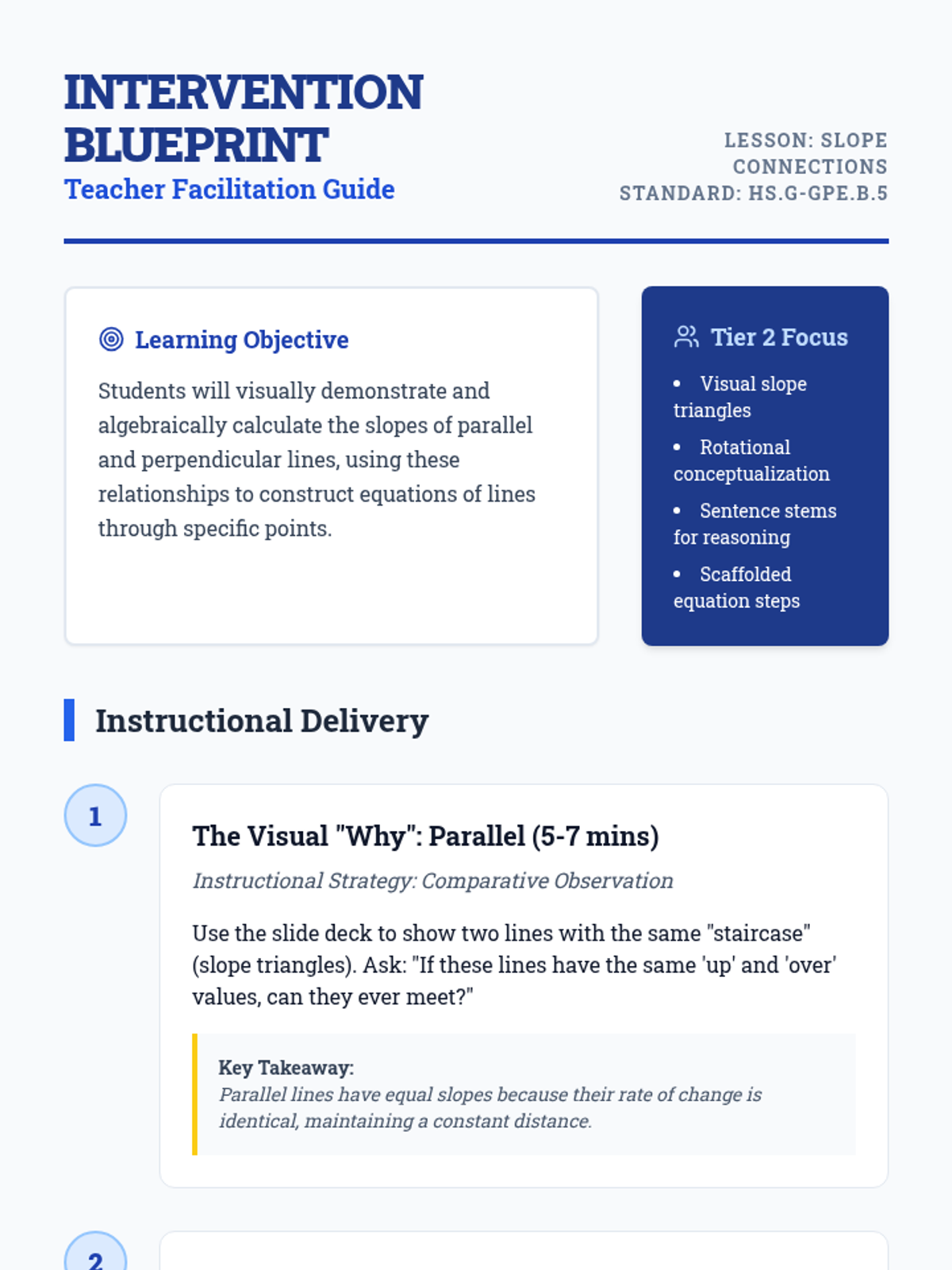
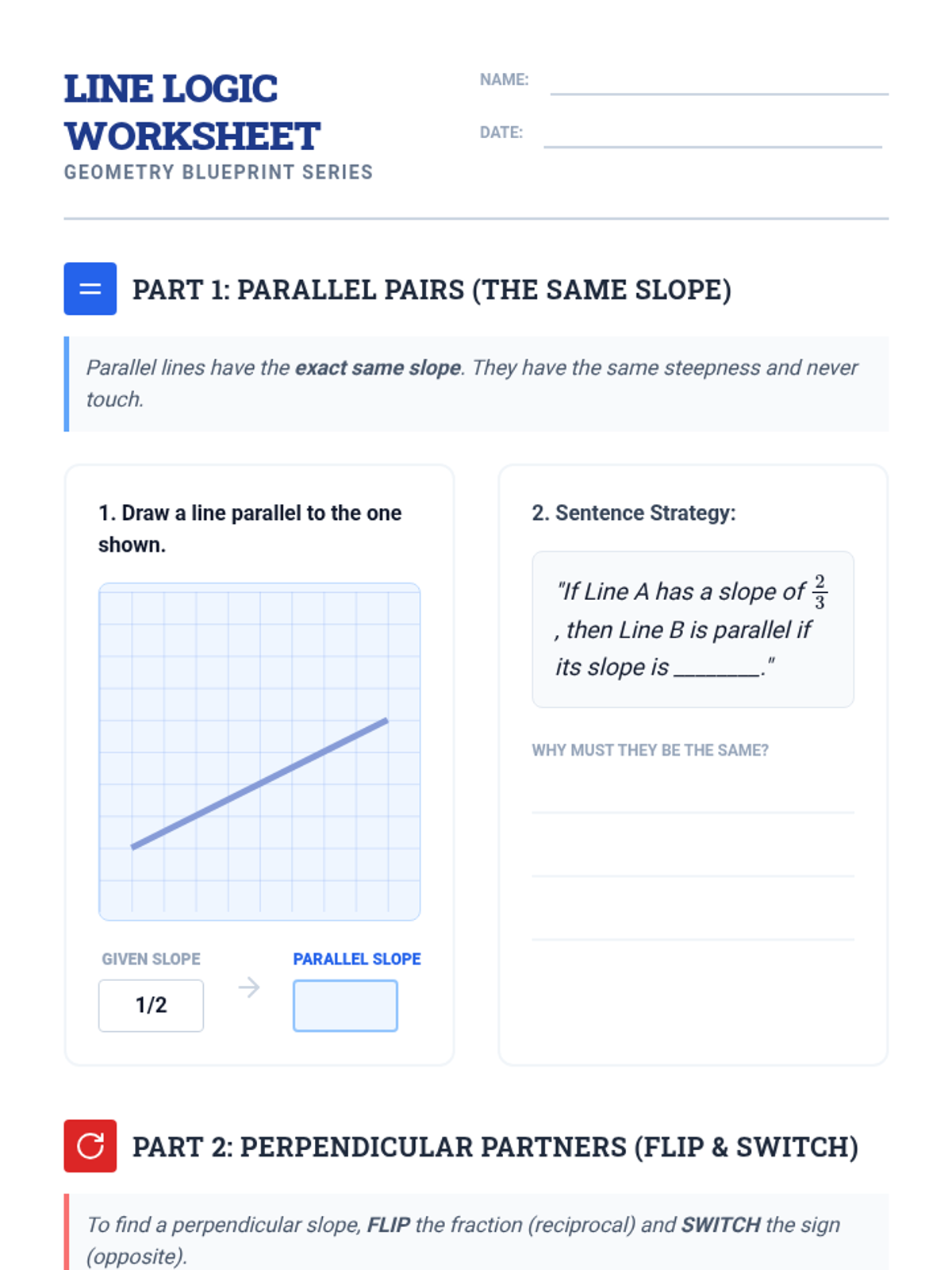
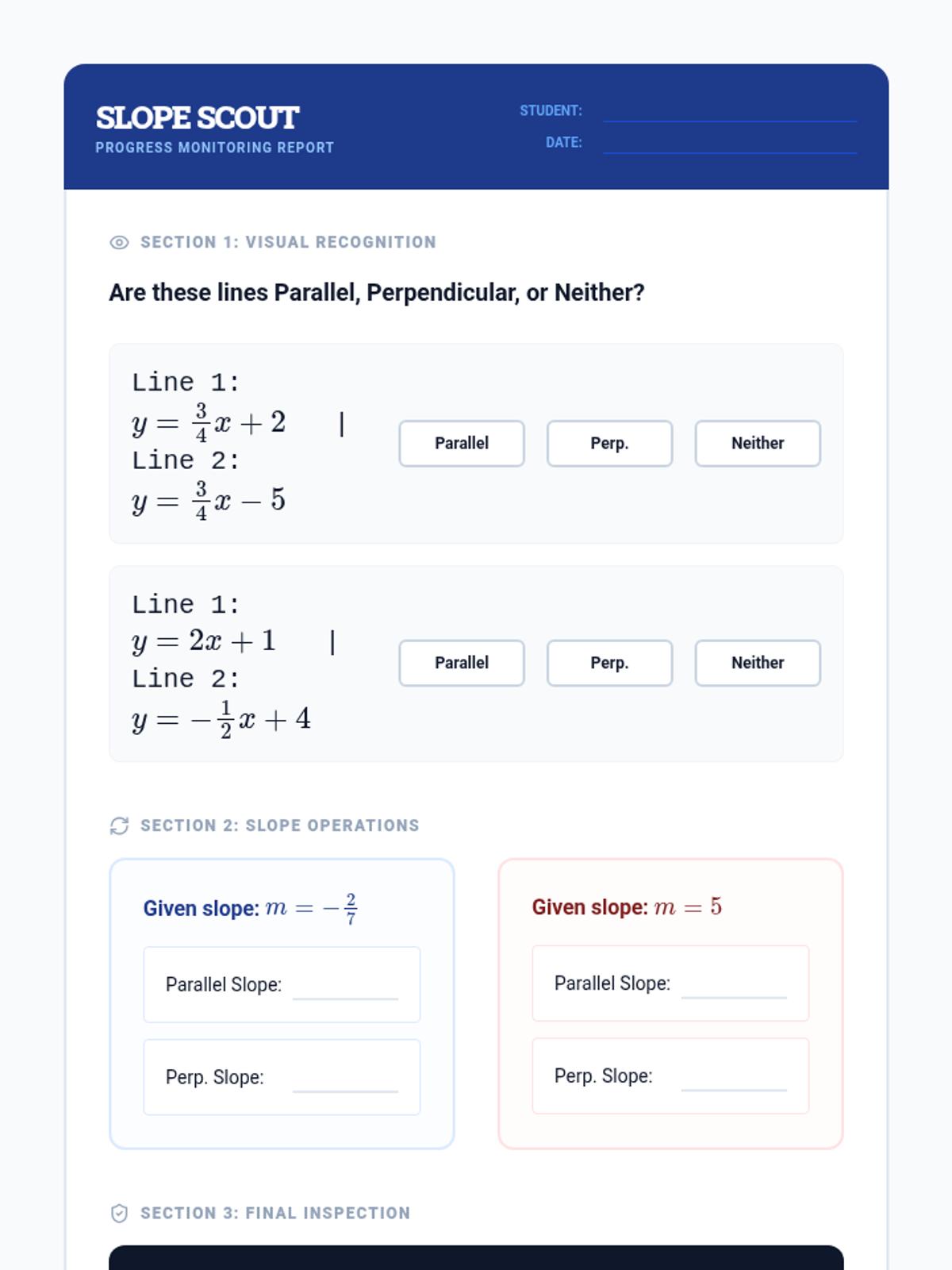
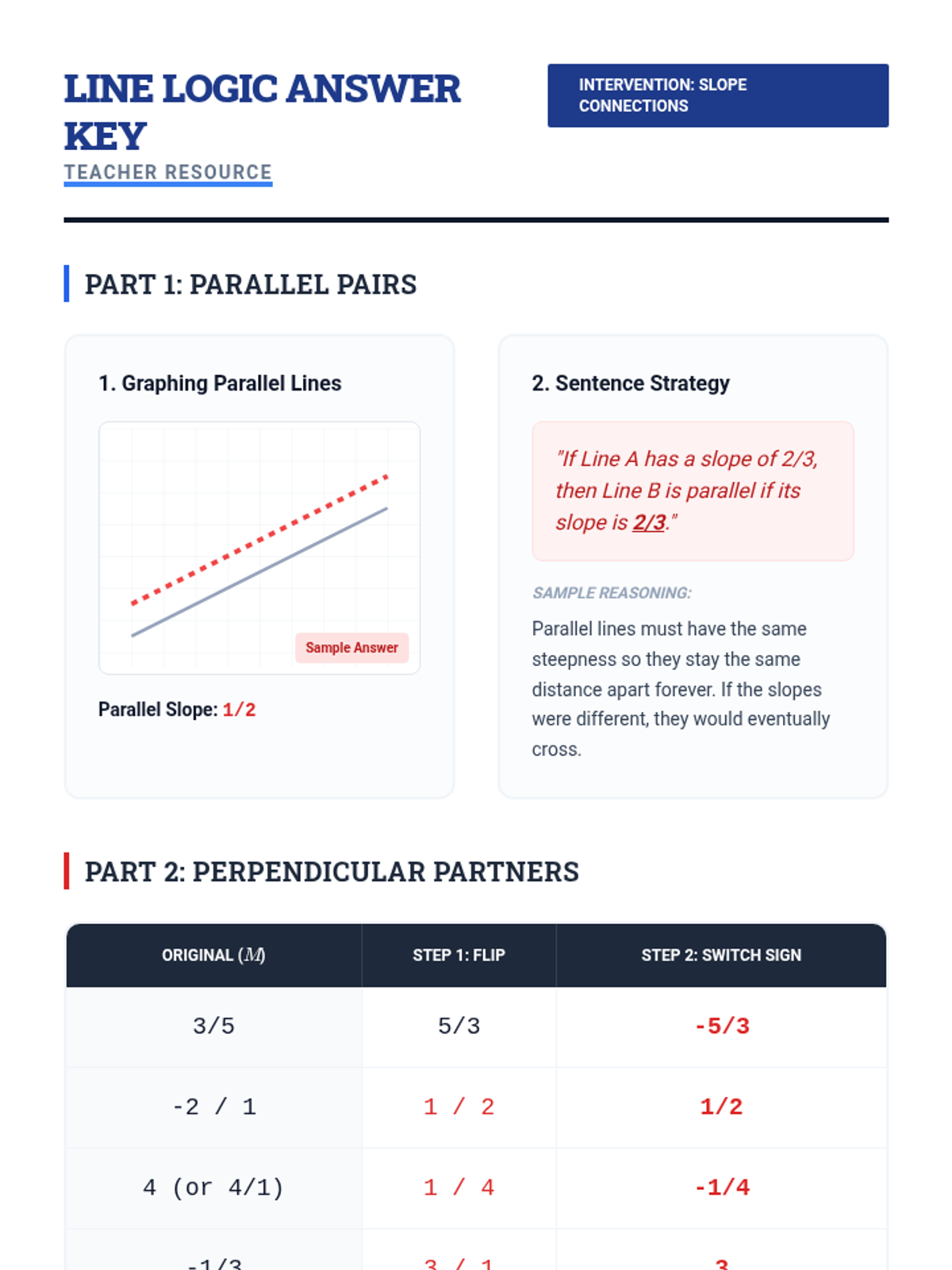
A lesson focused on the geometric and algebraic relationships of parallel and perpendicular lines, teaching students how to identify slopes and write new equations using a technical blueprint aesthetic.
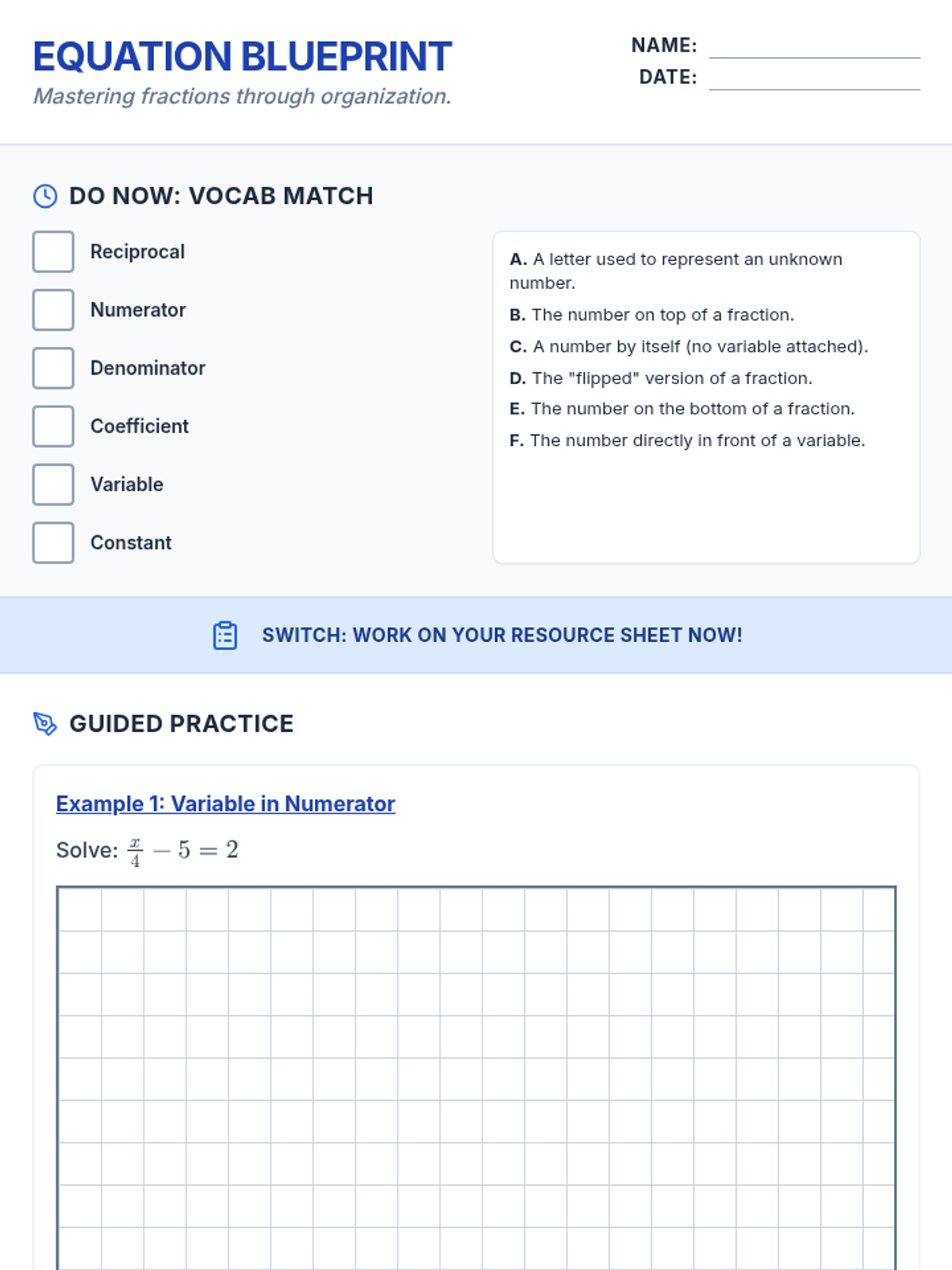
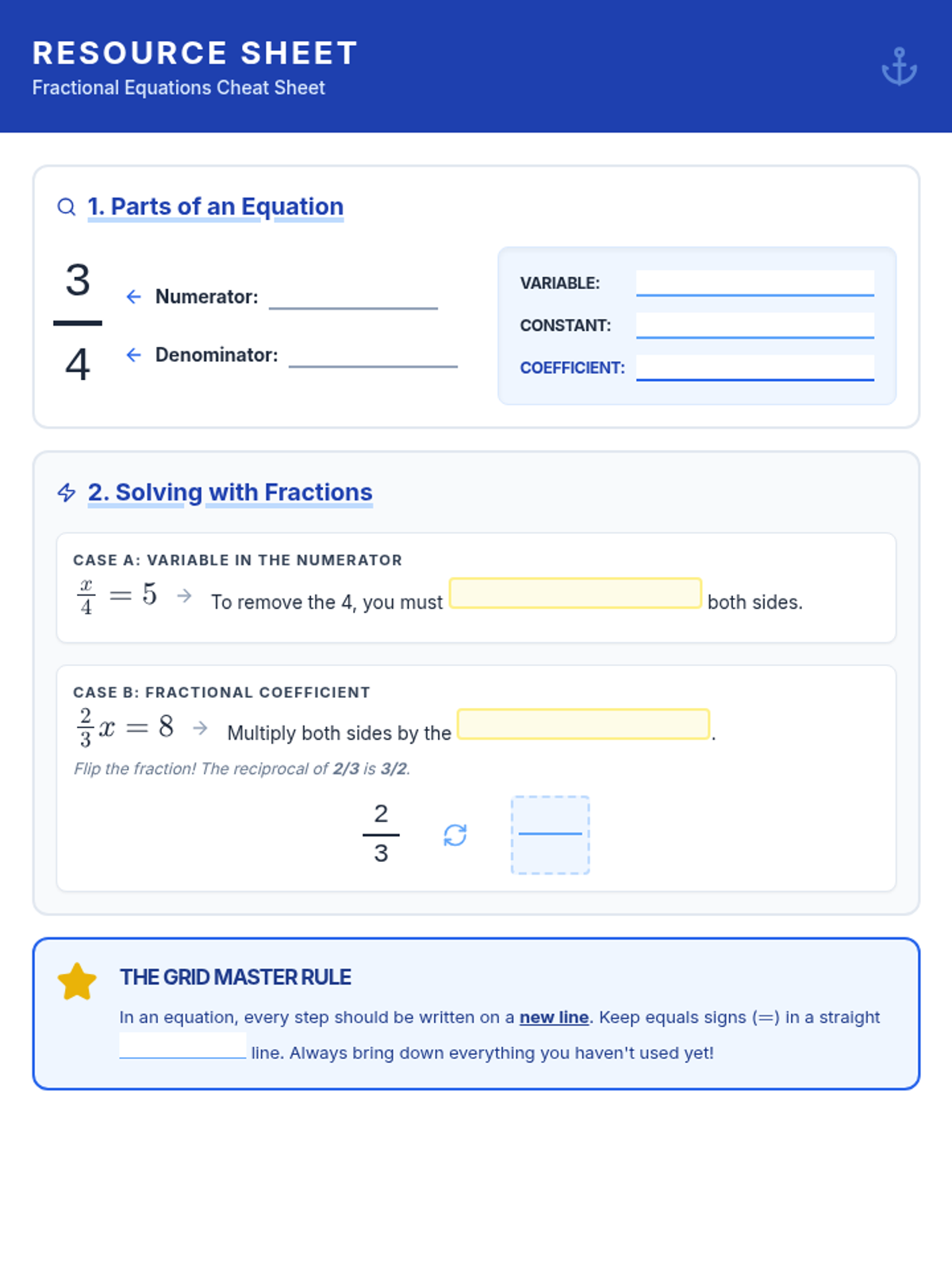
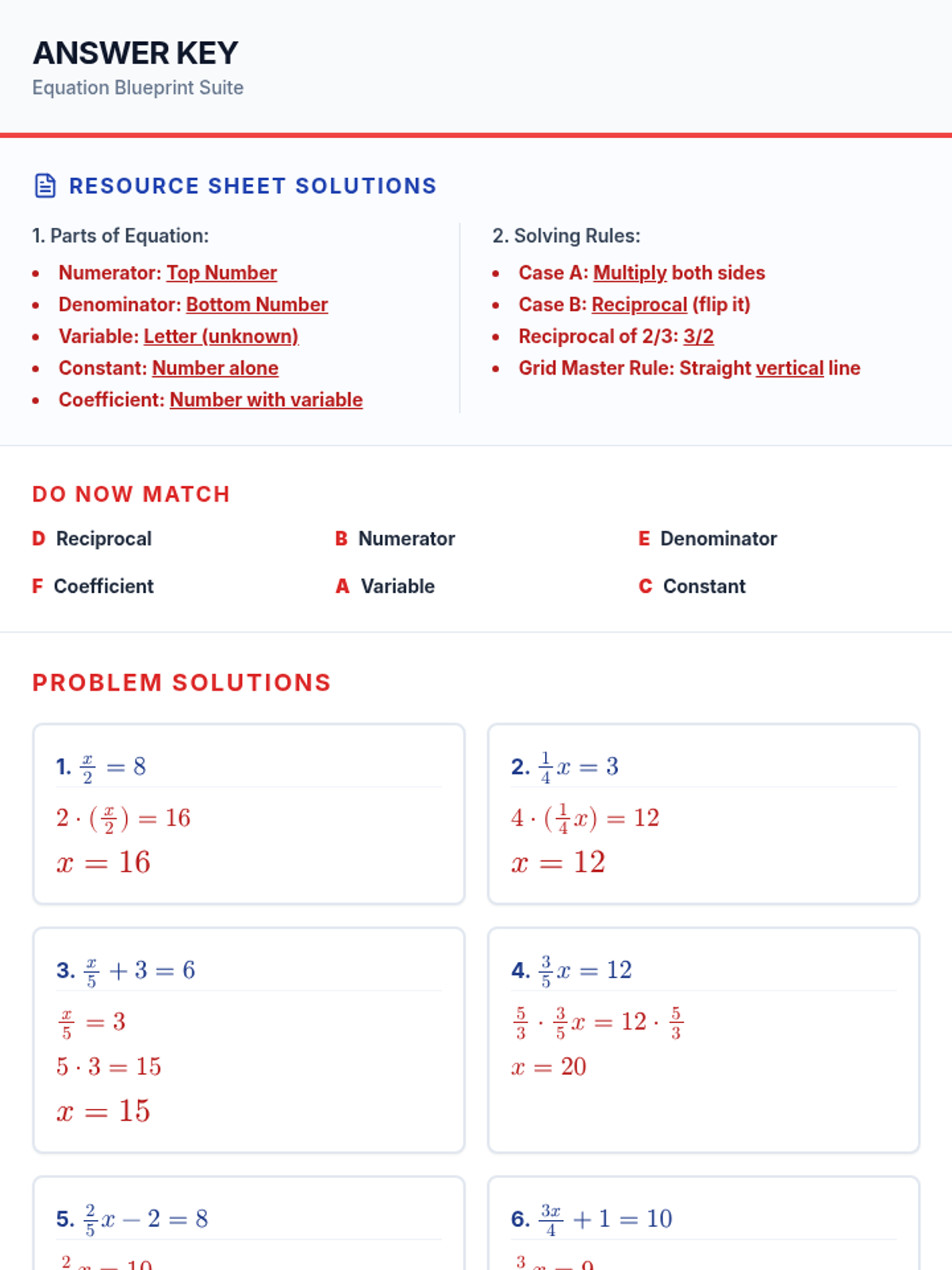
A math foundations lesson for 9th and 10th grade students focusing on solving equations with fractions through organized, line-by-line computation on grid-style layouts.
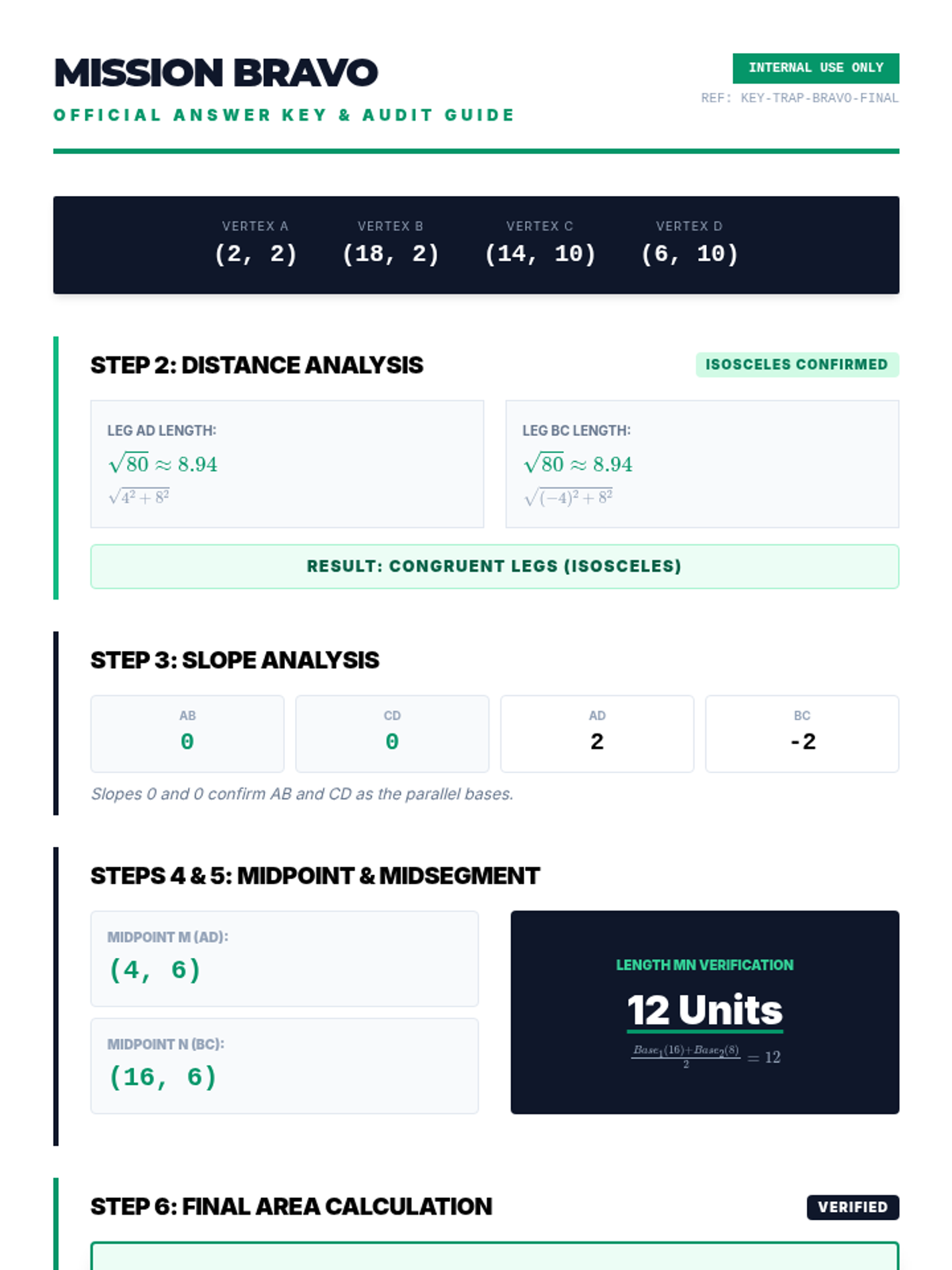
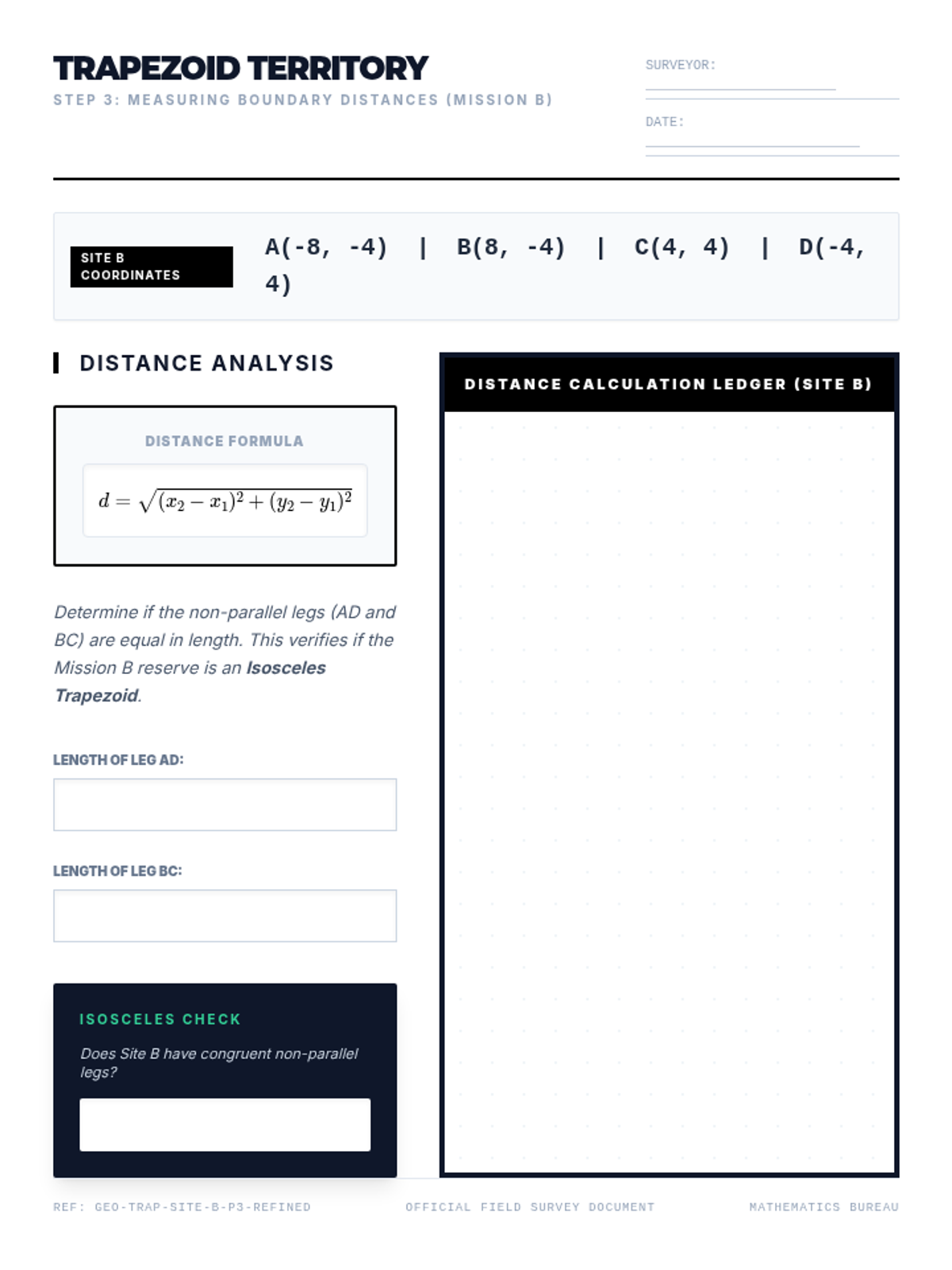
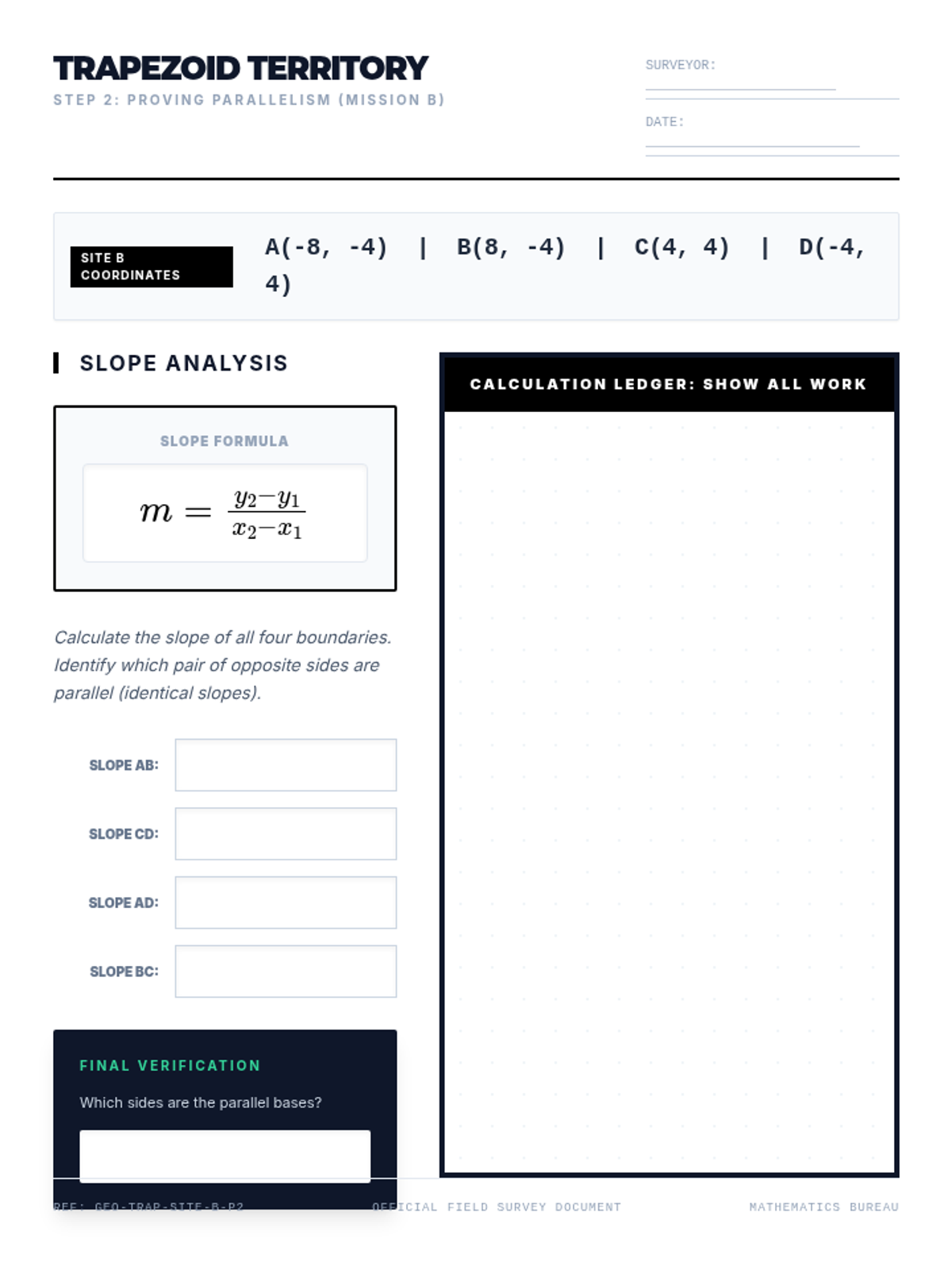
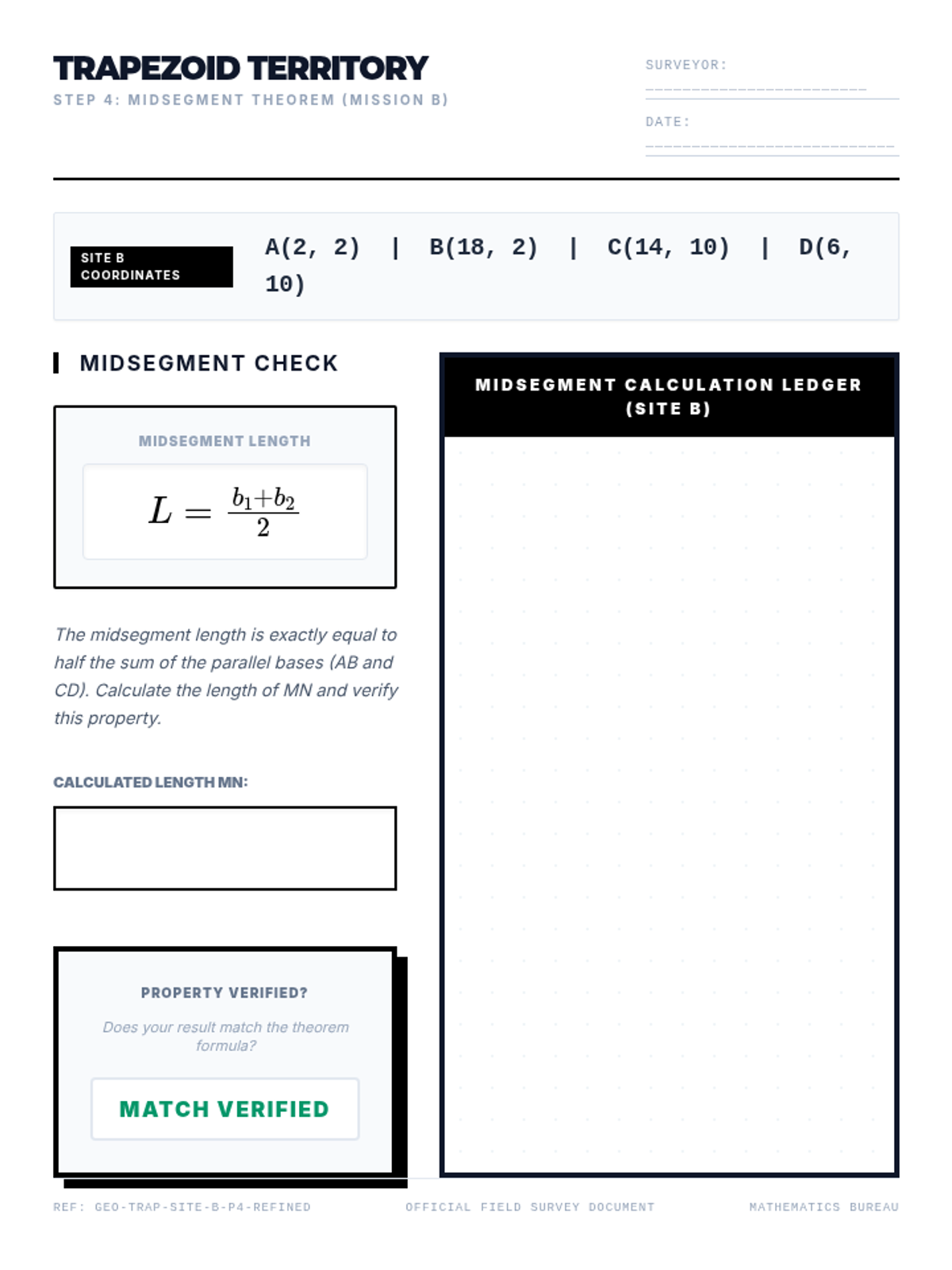
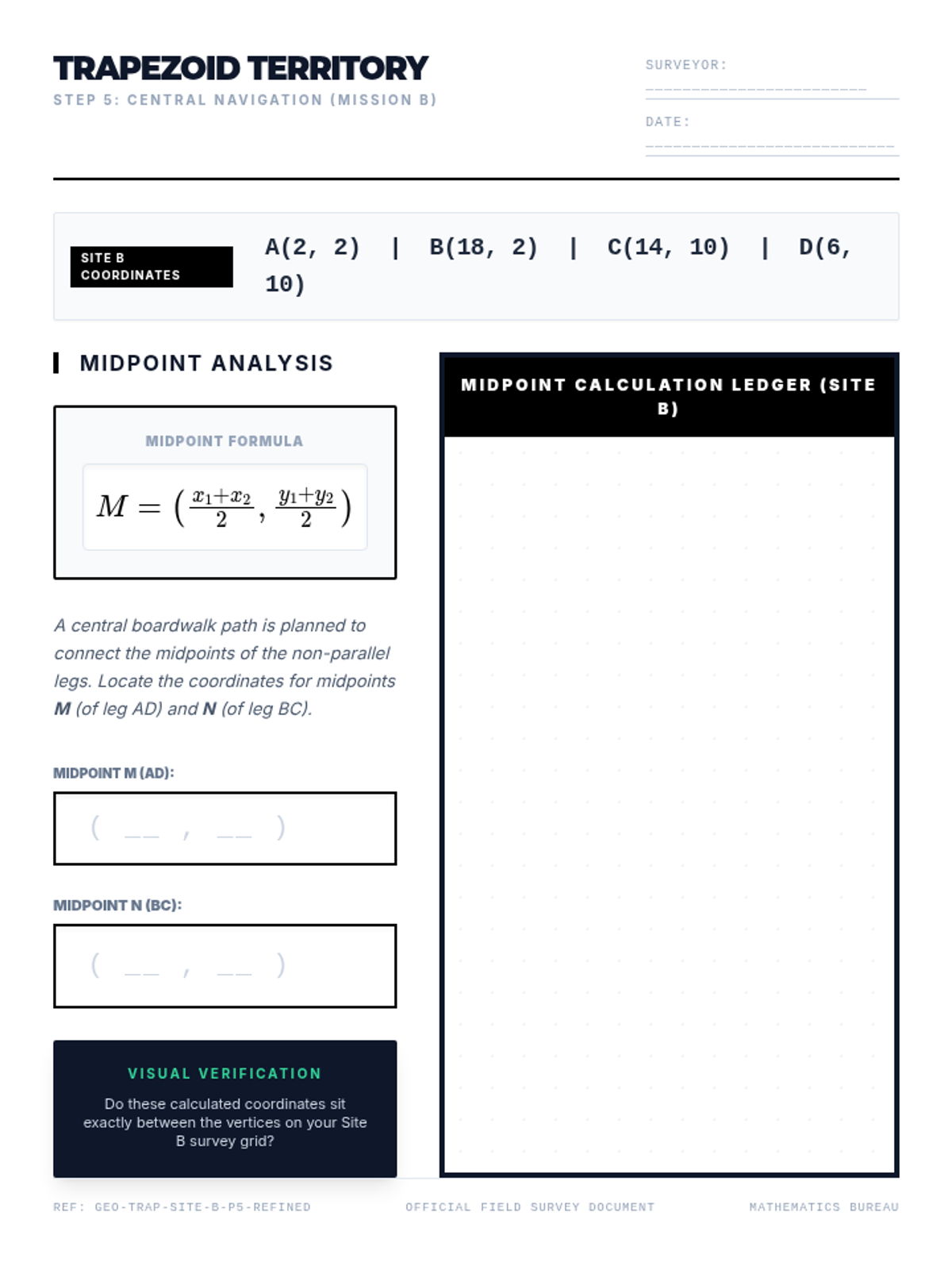
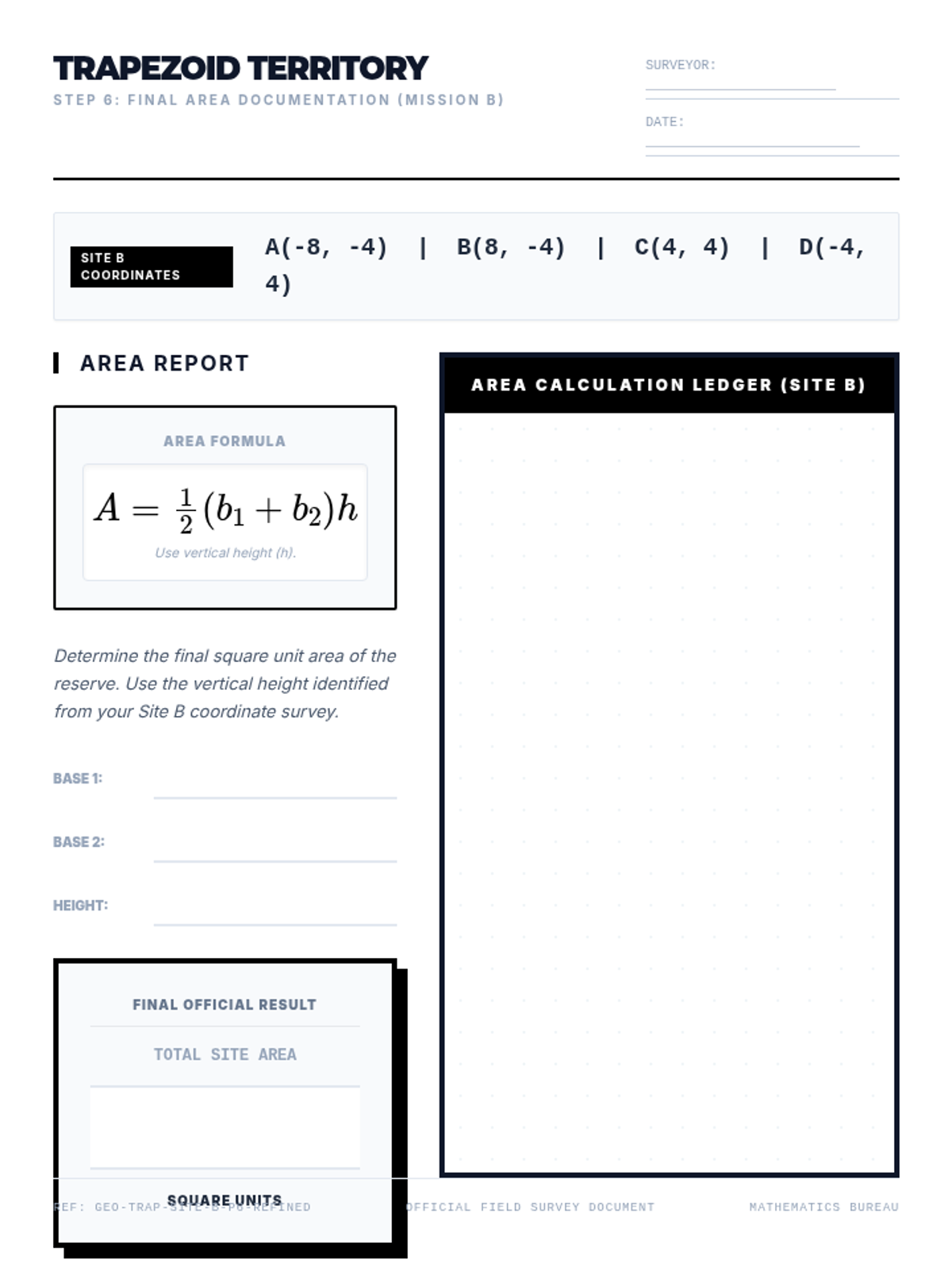
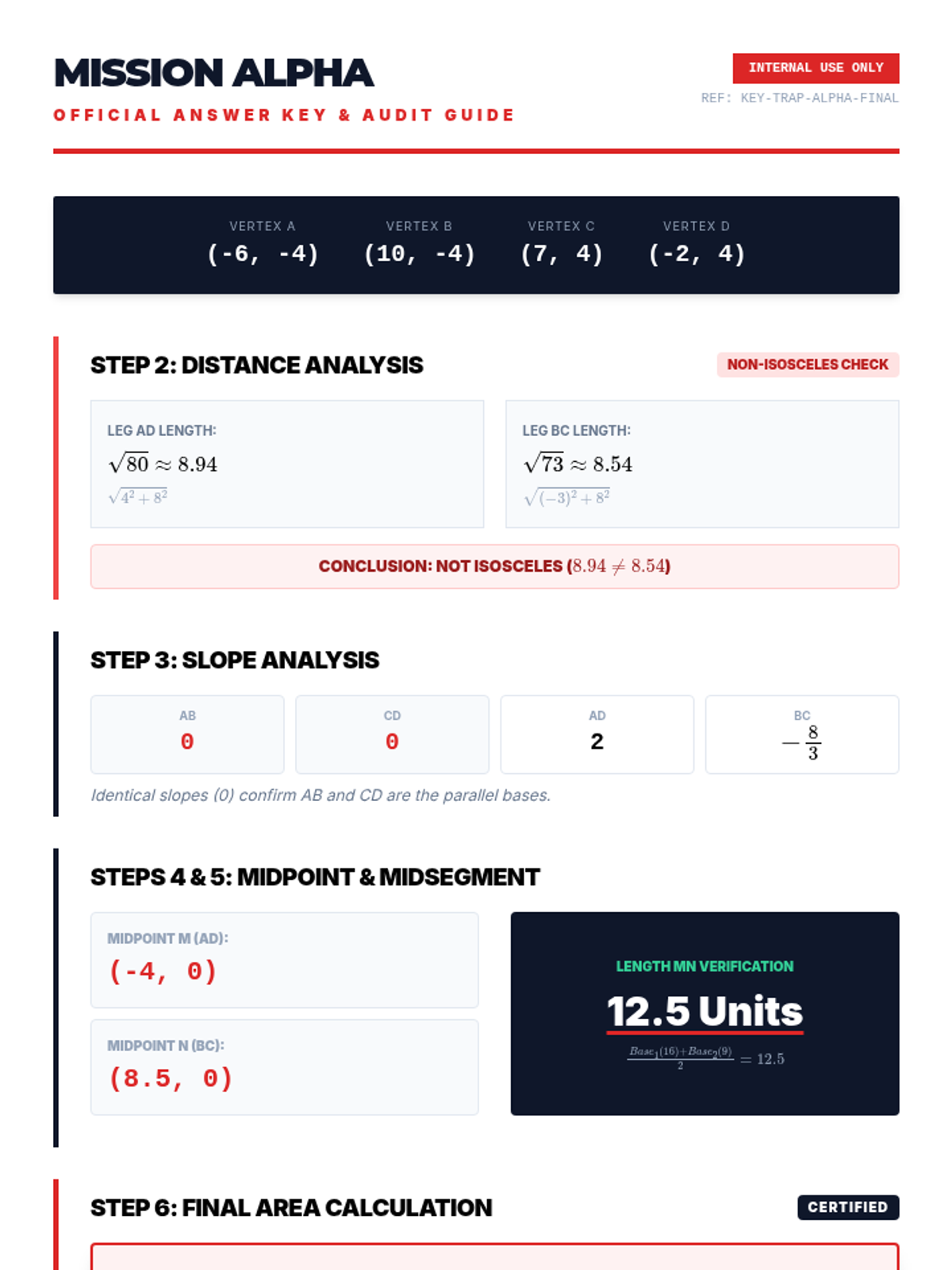
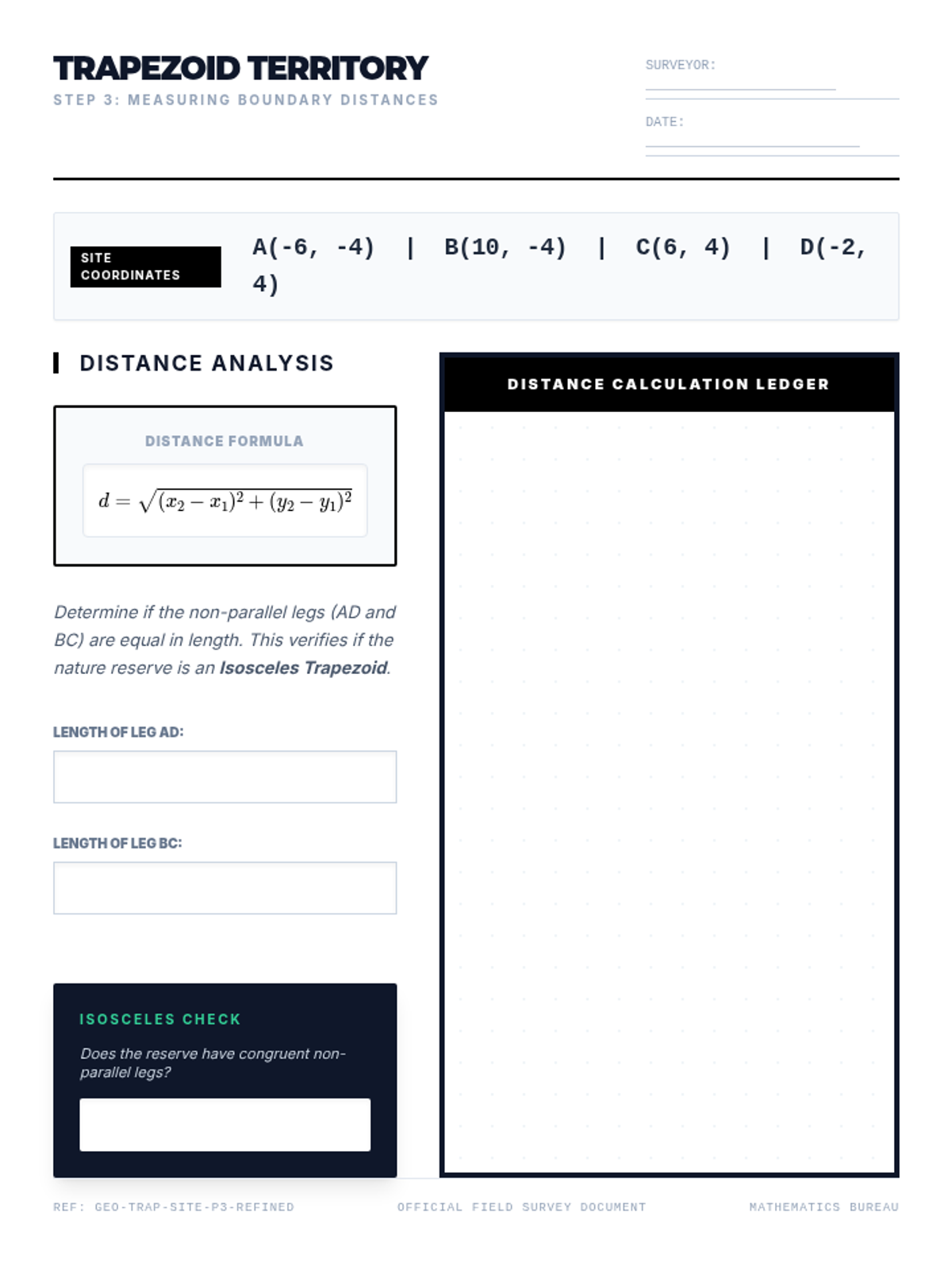
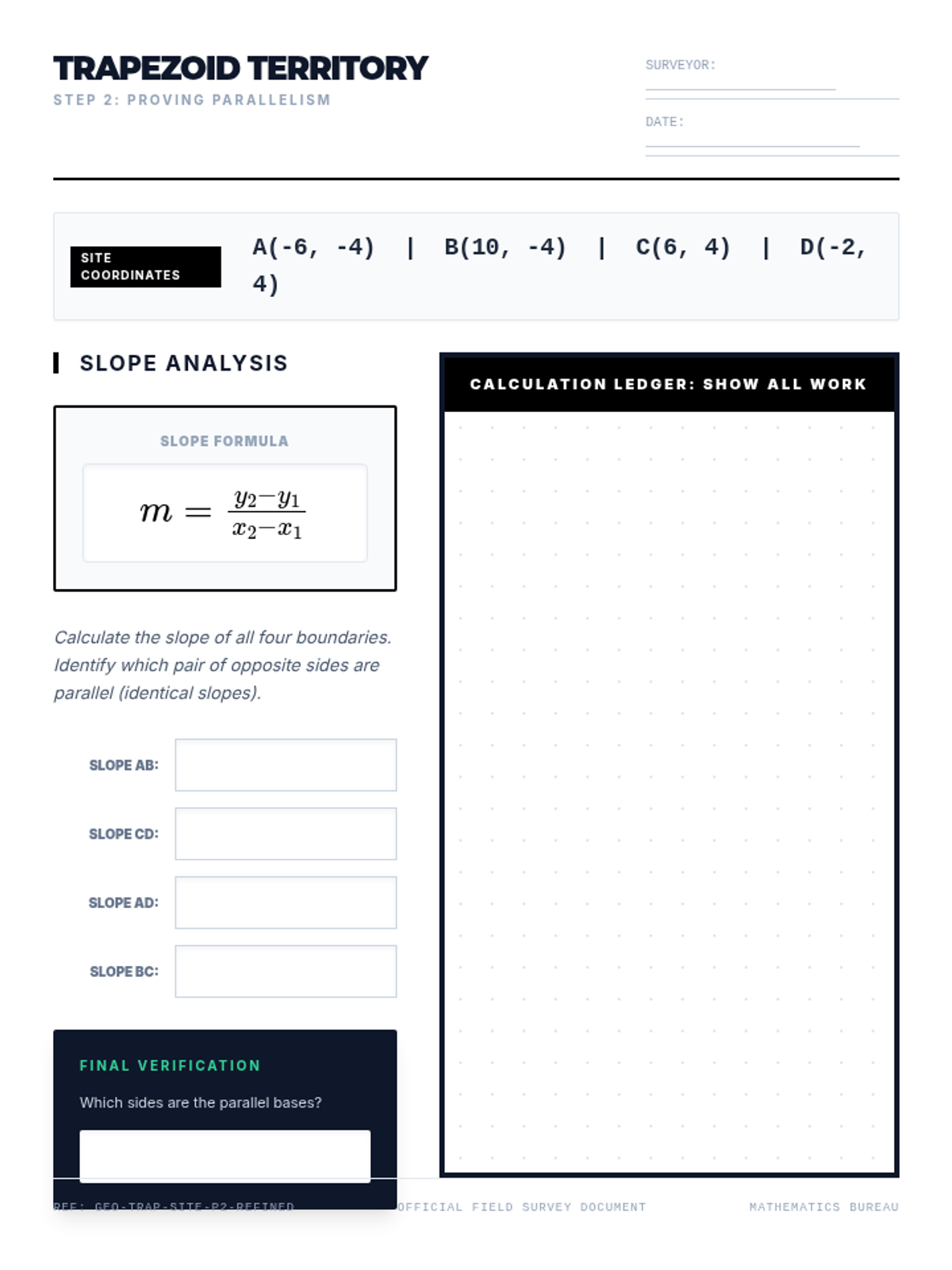
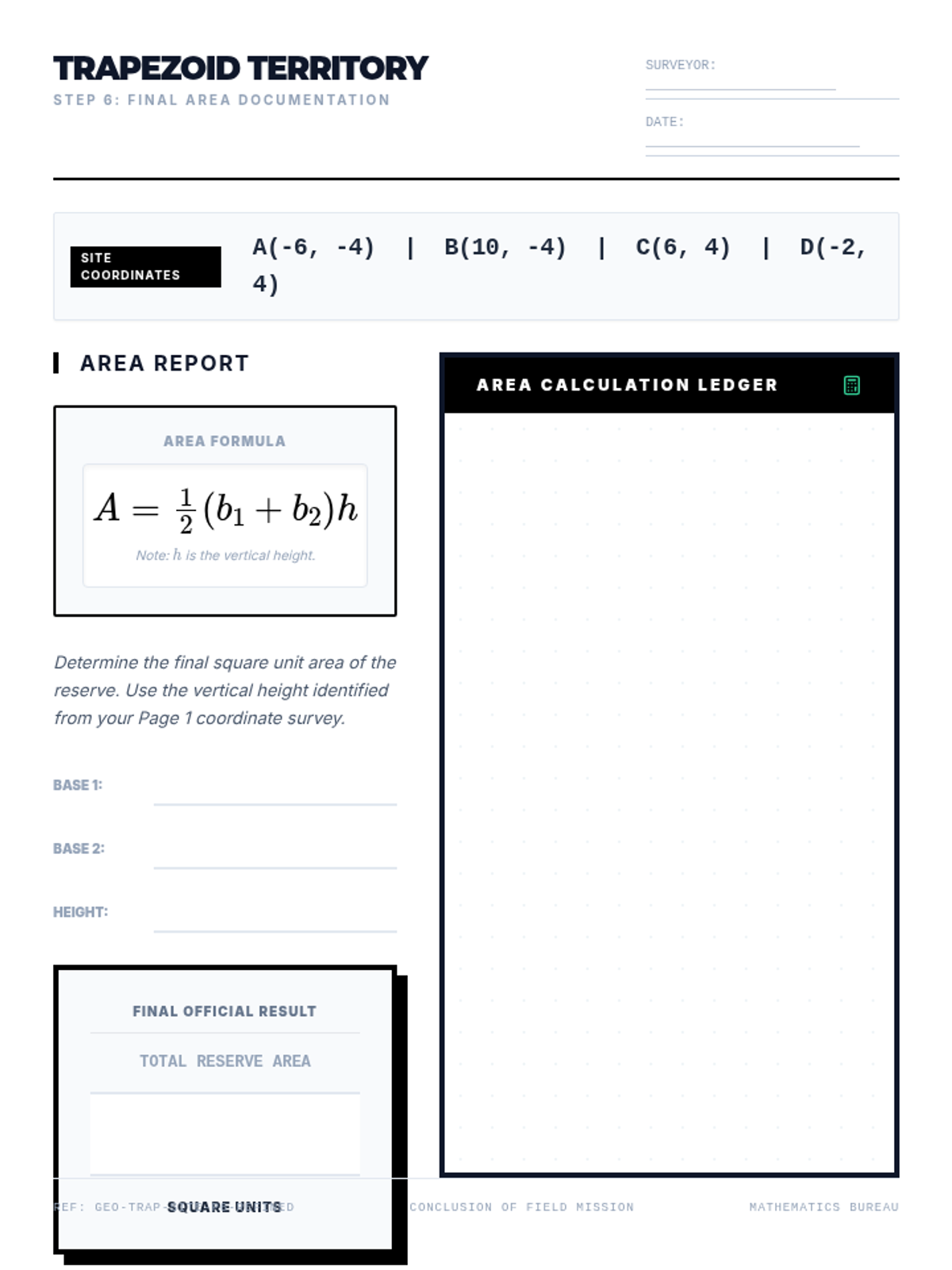
An alternate version of the Trapezoid Territory mission featuring a larger plot of land and new coordinate data. Students continue to apply coordinate geometry formulas for survey verification.
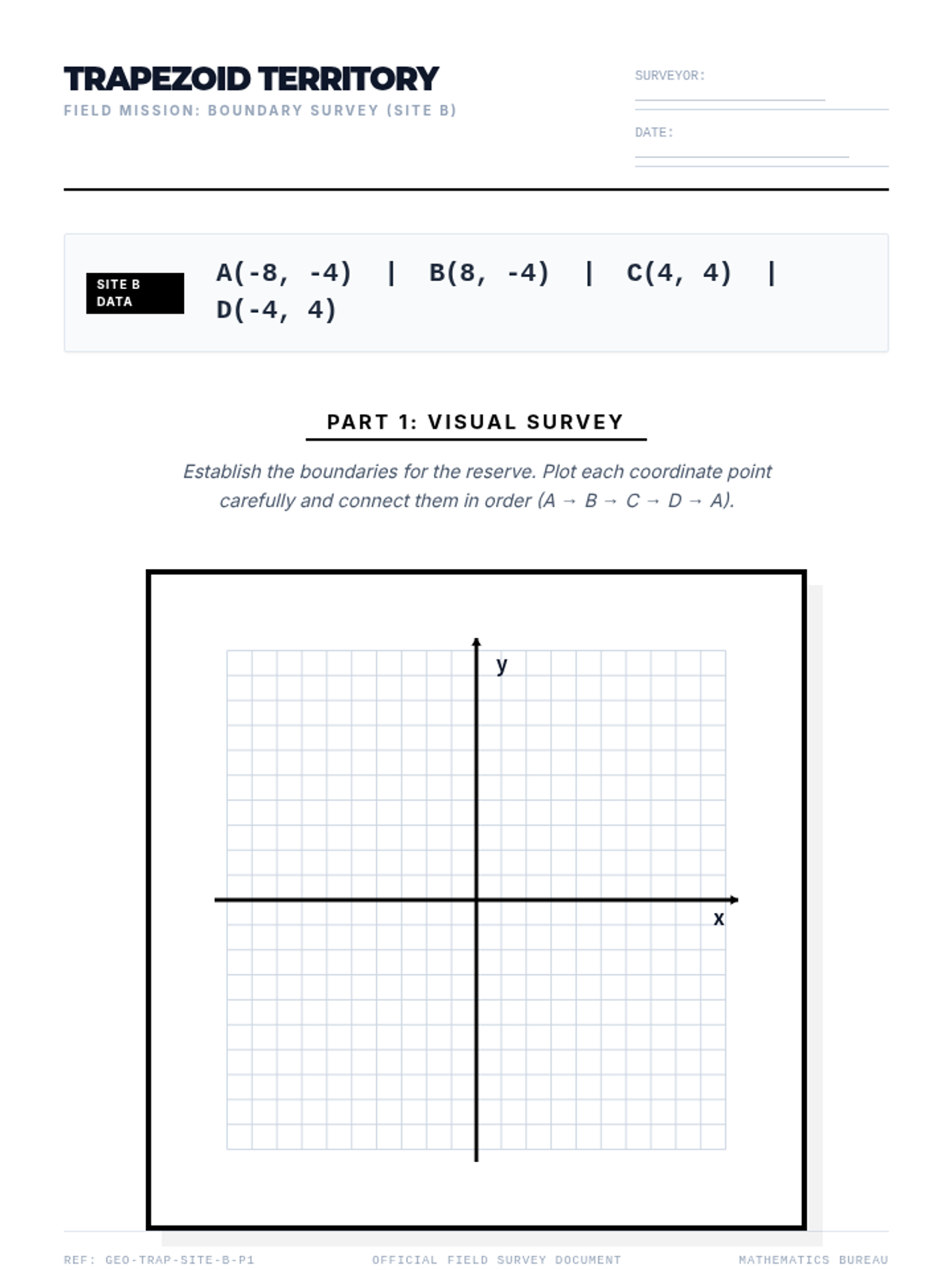
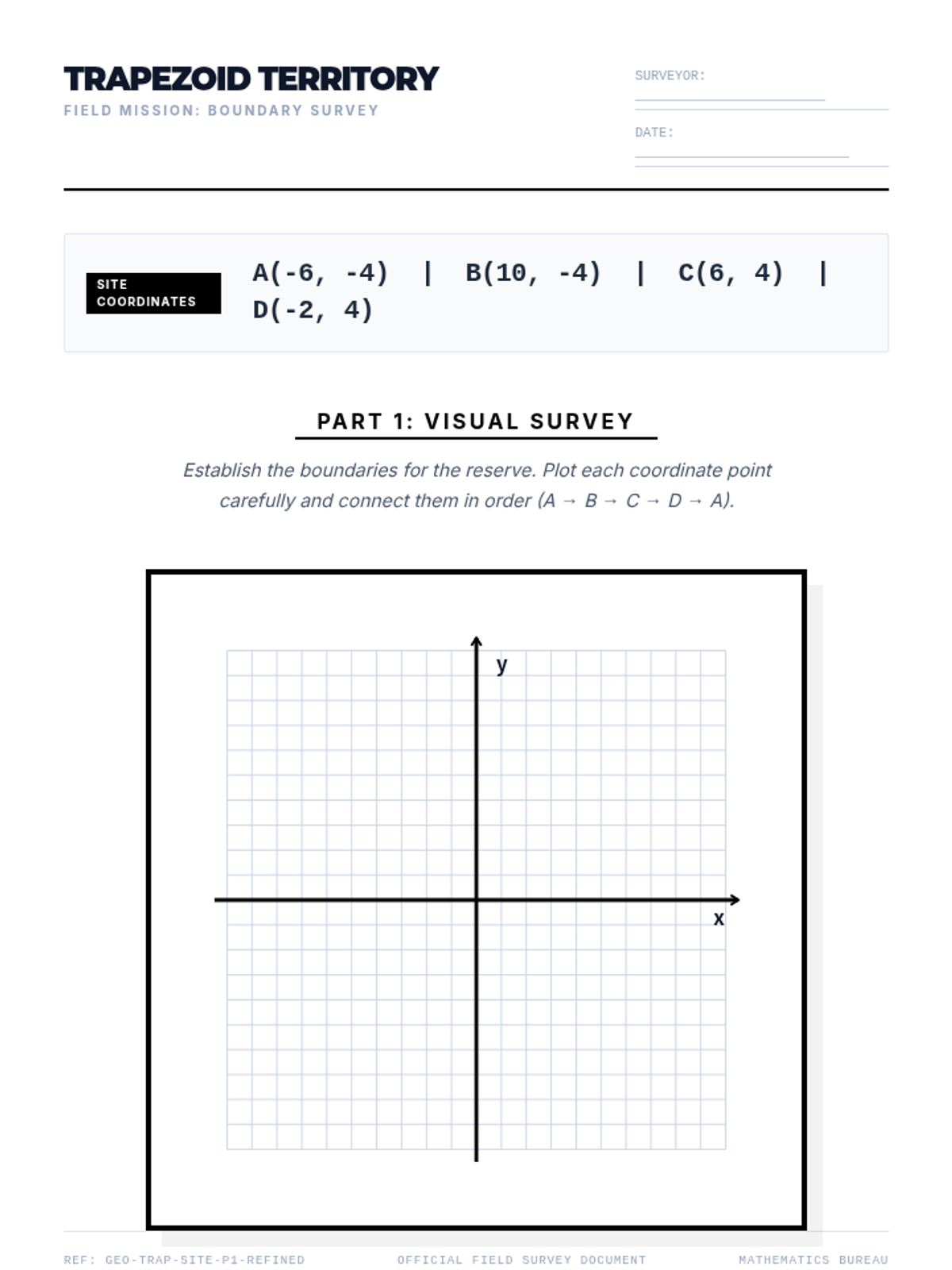
The opening mission for the Trapezoid Territory unit. Students plot the primary boundary coordinates on a 2D plane to visualize the land reserve.
A comprehensive assessment covering linear equations and systems of linear equations, featuring a 50-question multiple-choice exam categorized by difficulty and topic.
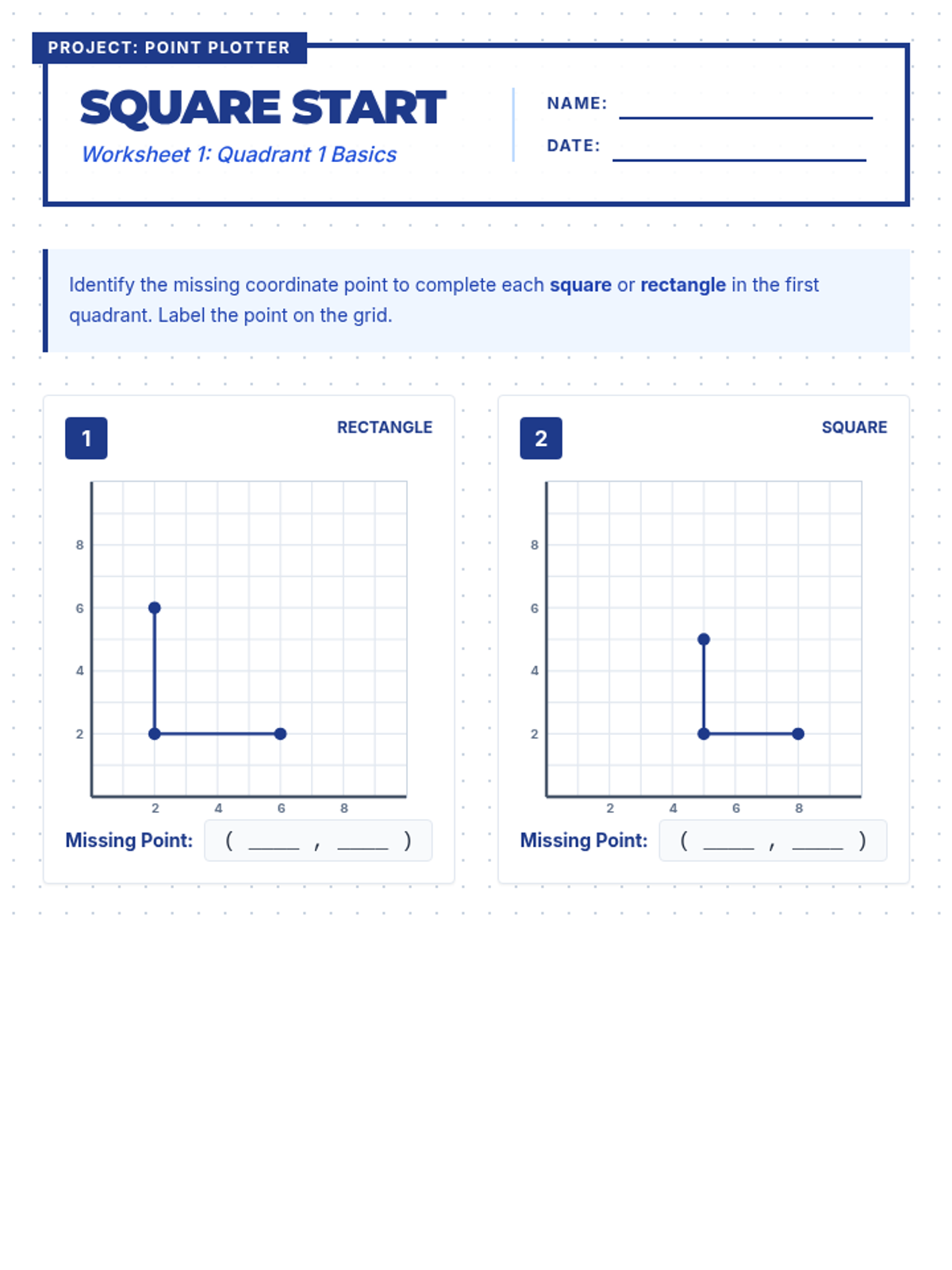
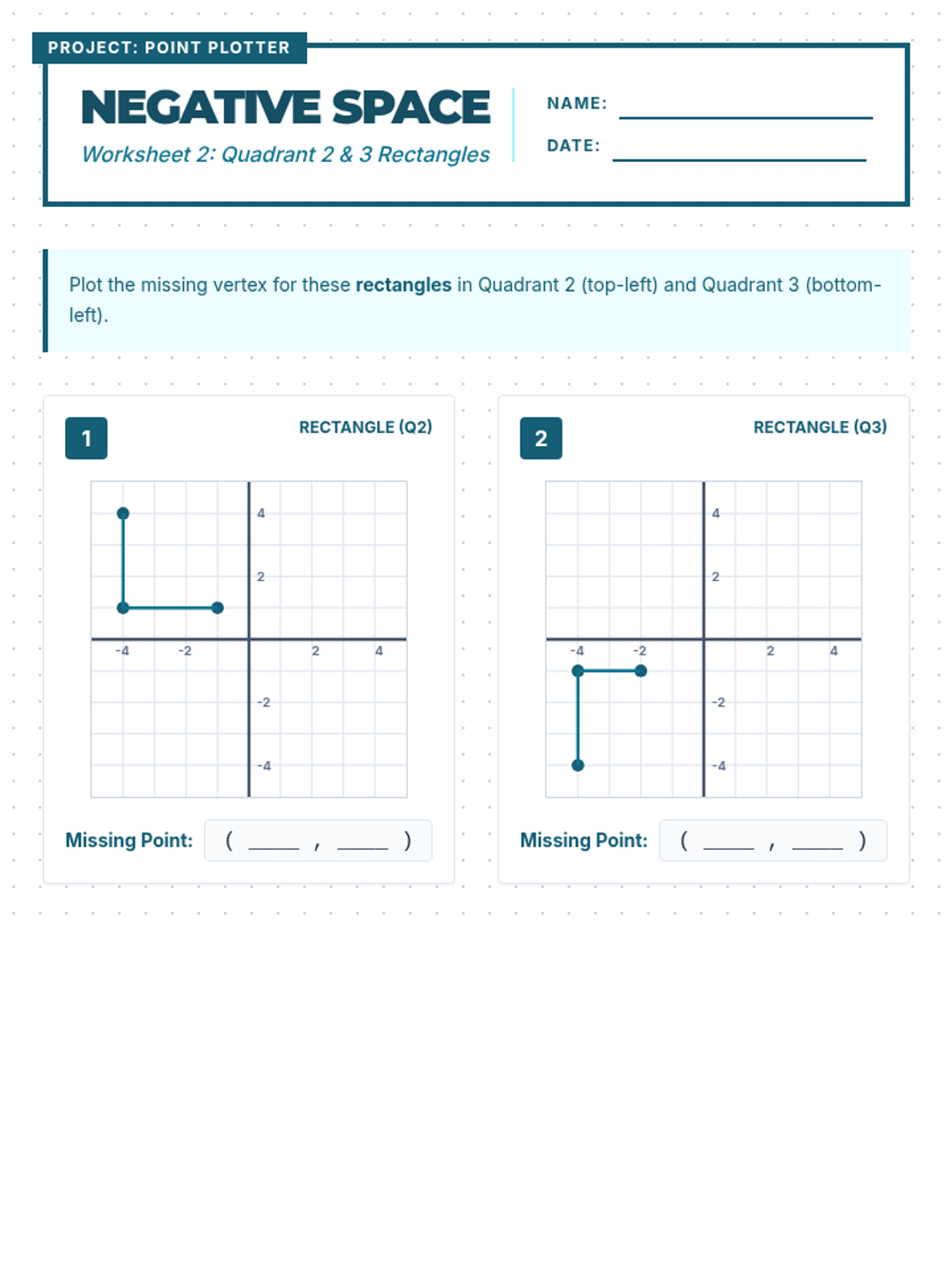
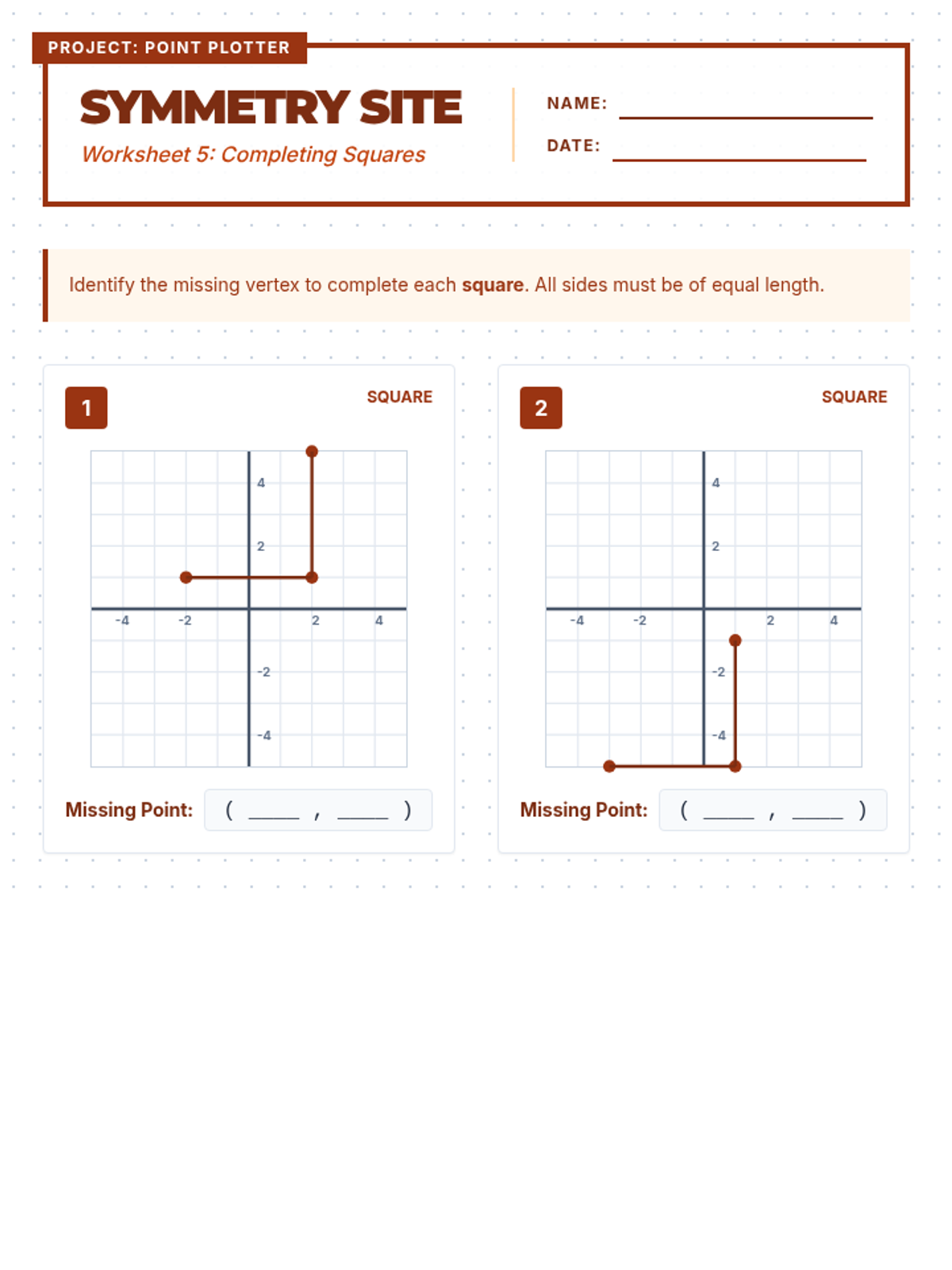
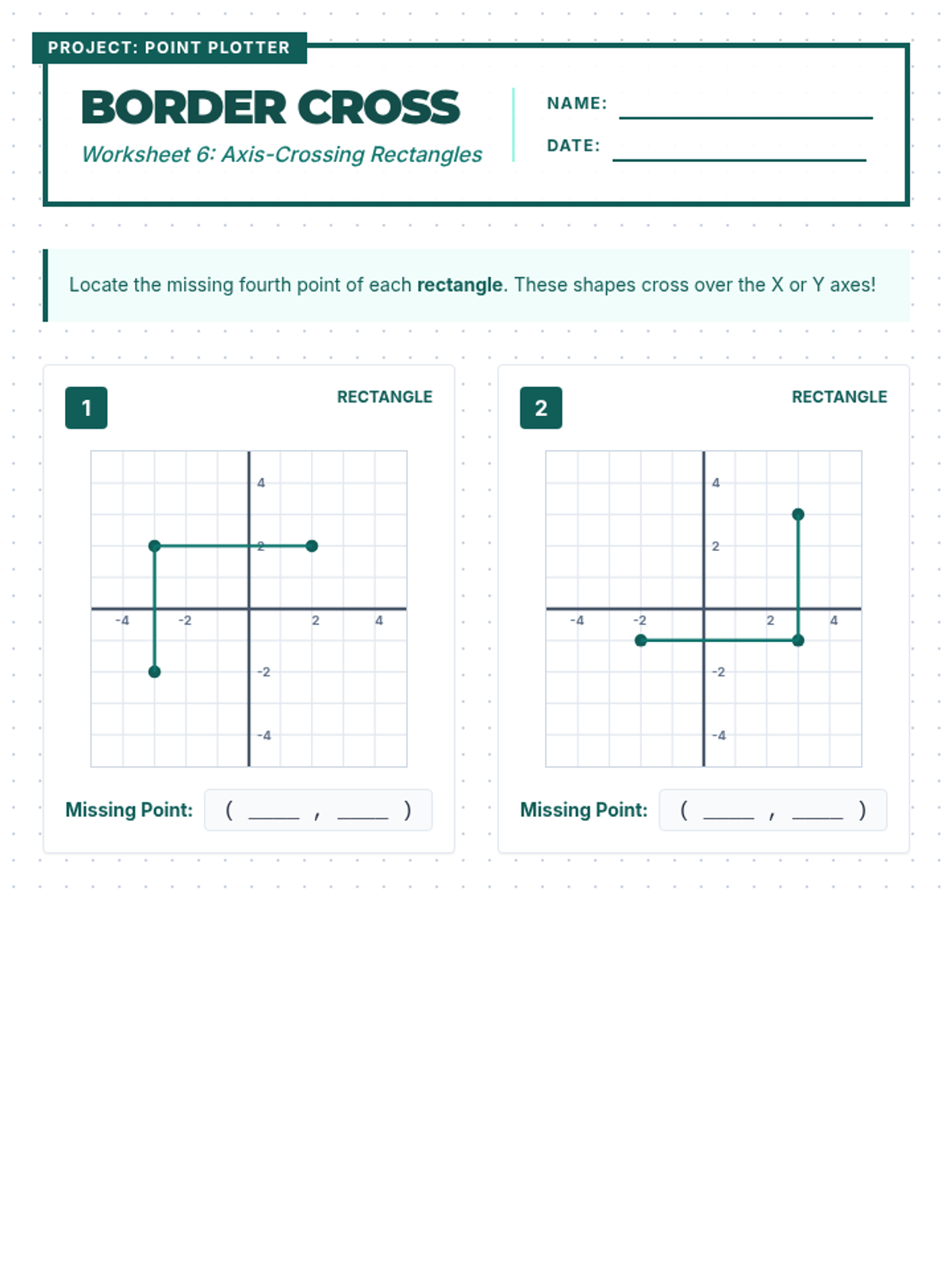
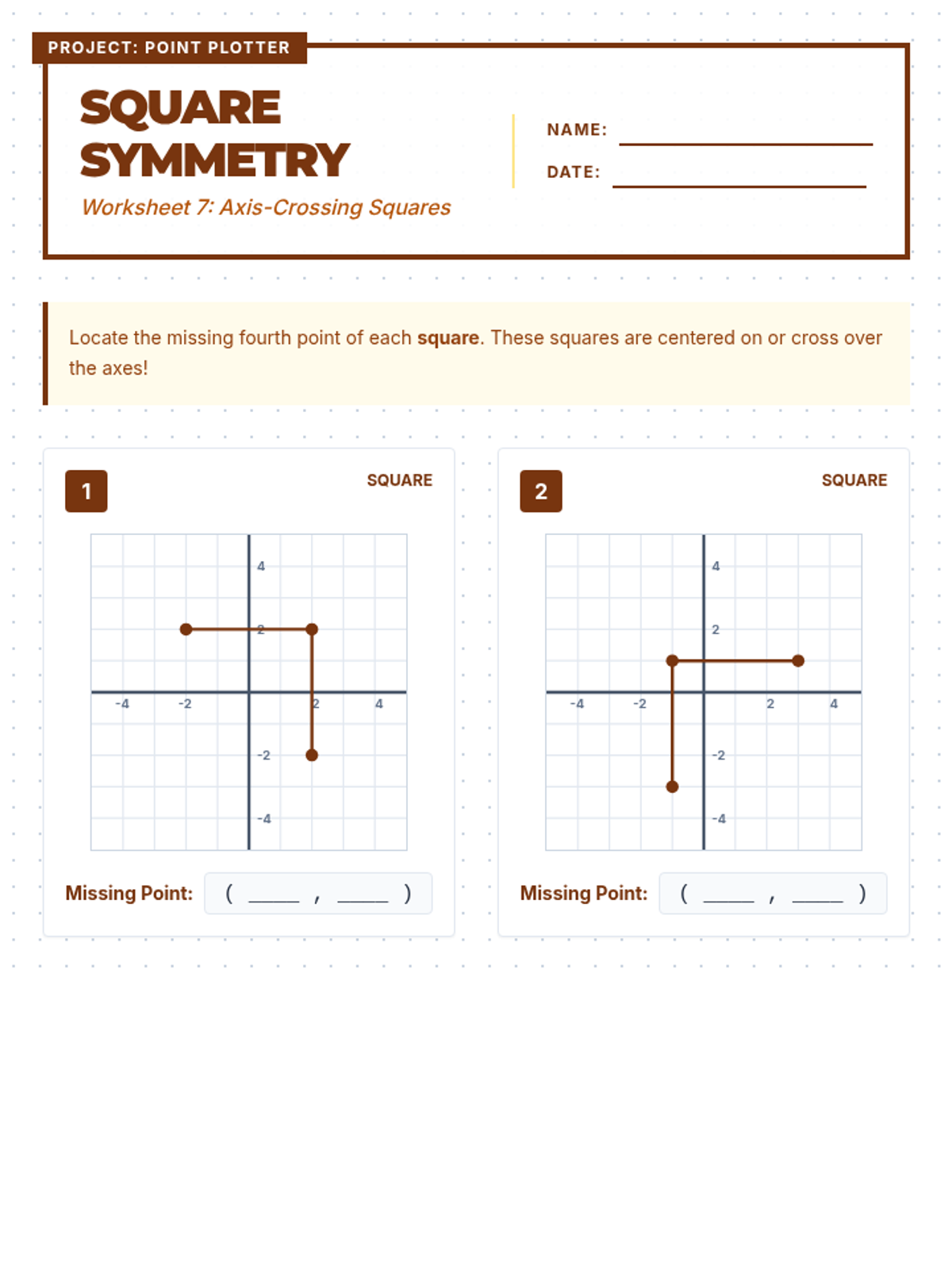
A series of 10 worksheets focused on identifying and plotting the missing vertex to complete rectangles and squares across all four quadrants of the coordinate plane.
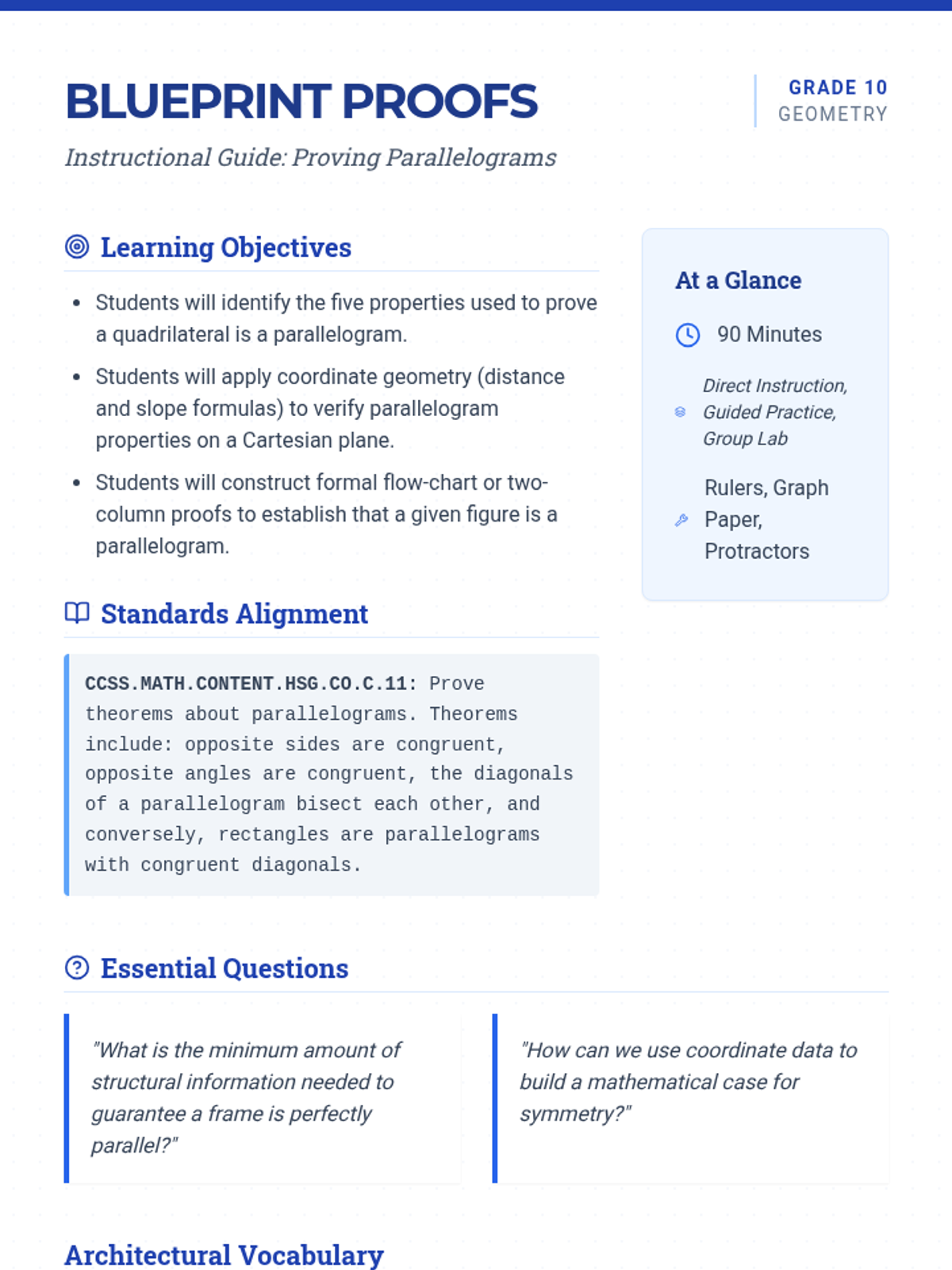
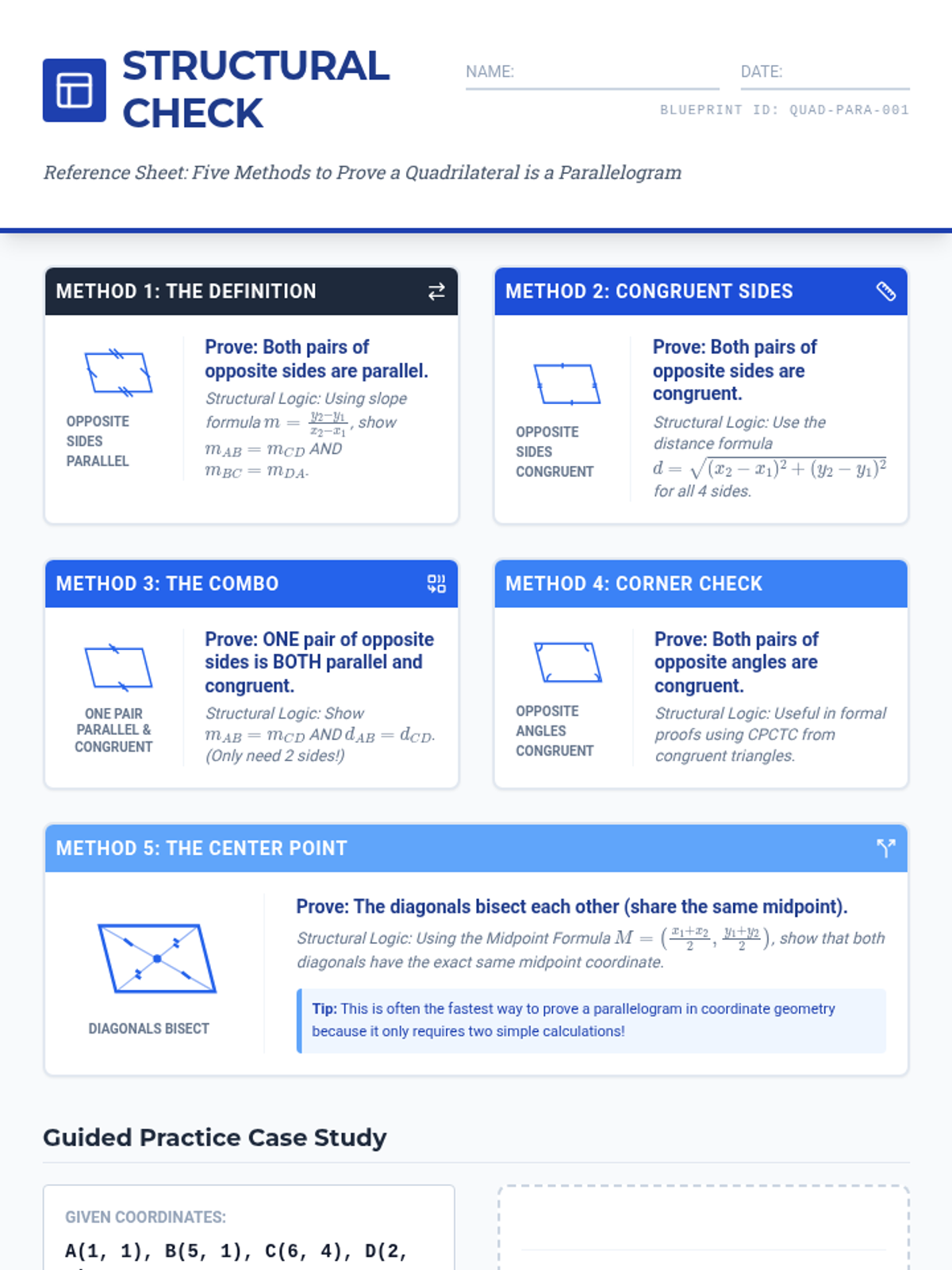
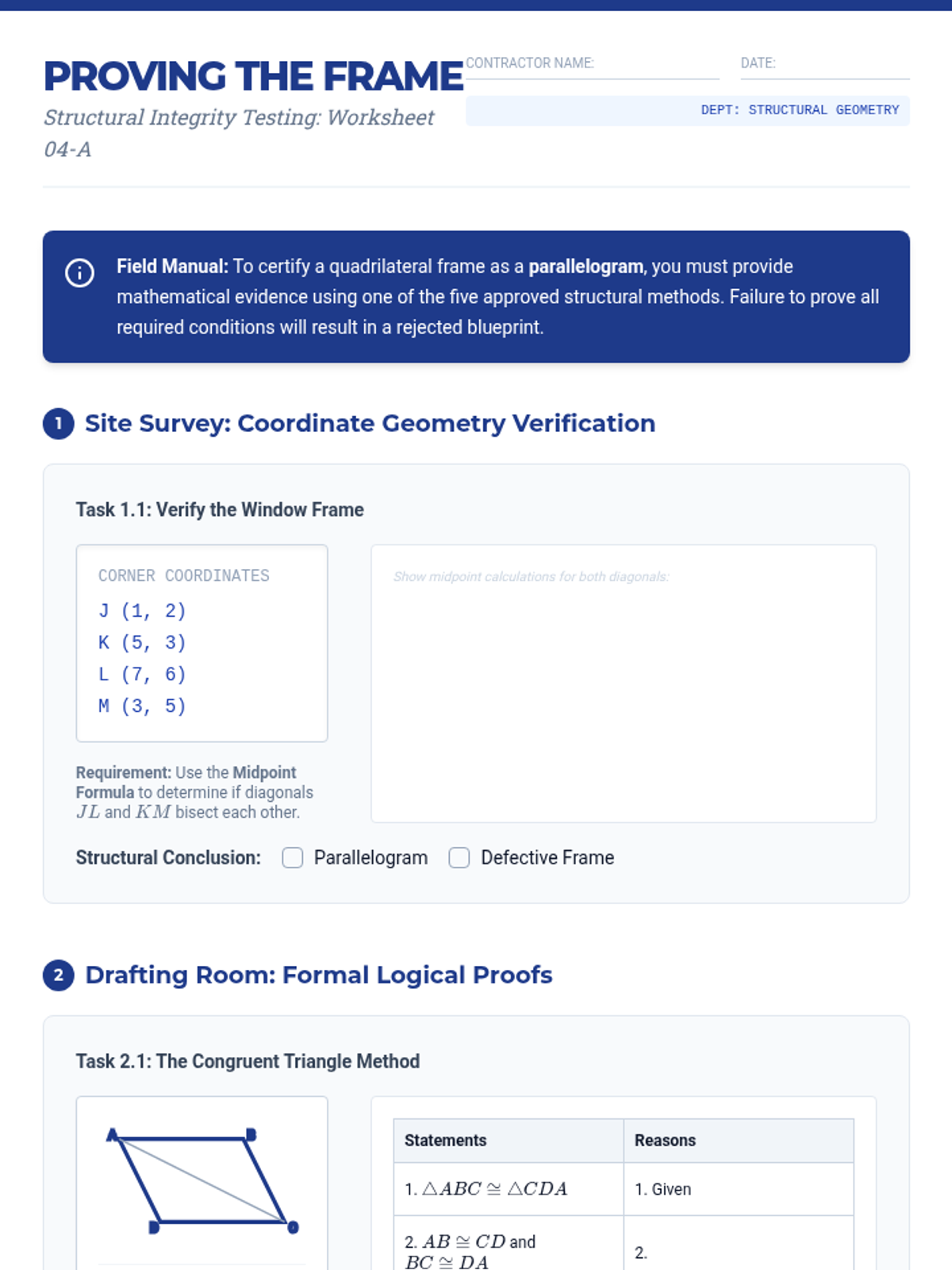
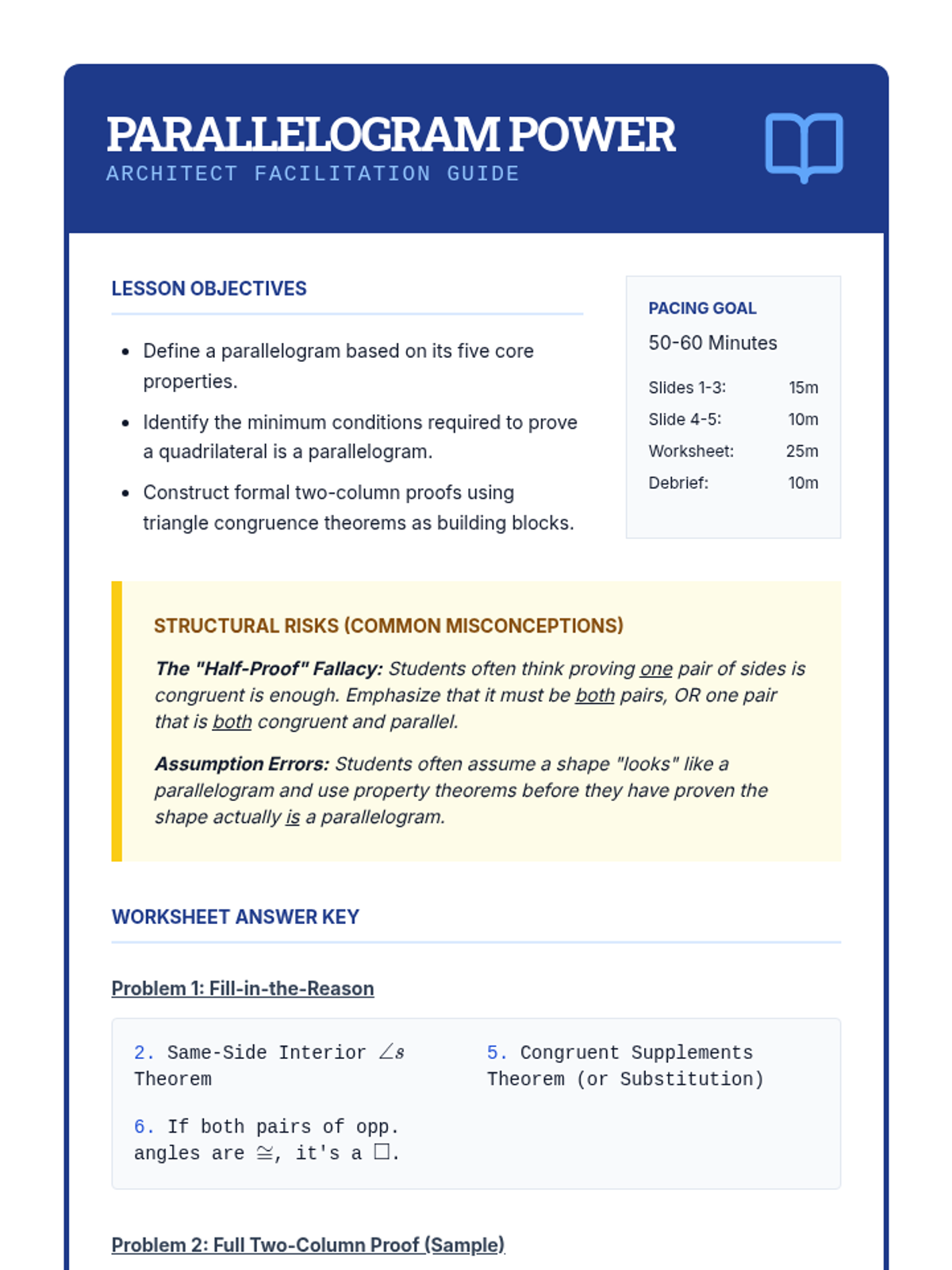
A comprehensive 10th-grade geometry lesson focusing on the five ways to prove a quadrilateral is a parallelogram, featuring coordinate geometry and formal proofs.
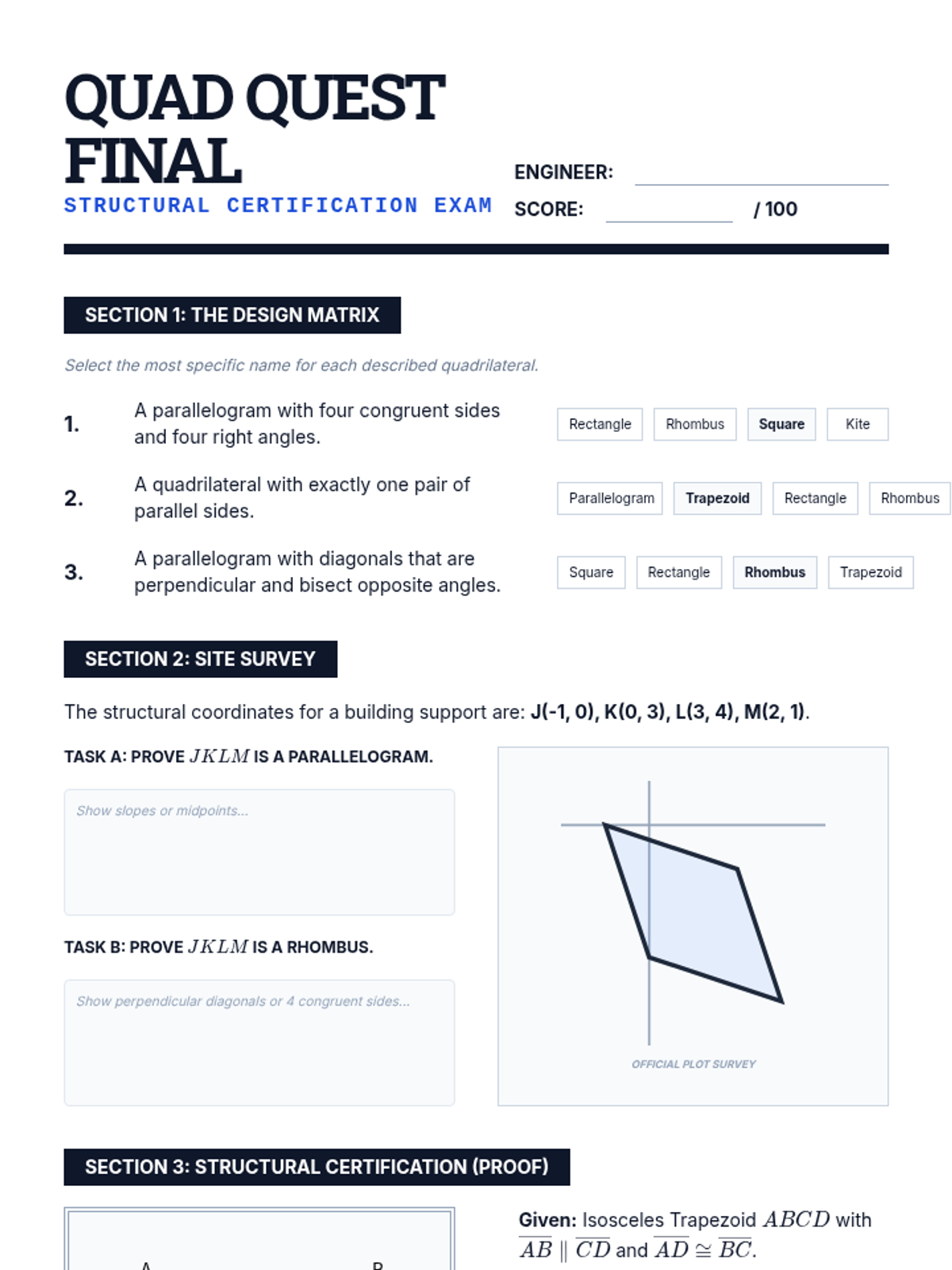
A culminating lesson featuring a mixed review of all quadrilateral proofs and a formal assessment of unit mastery.
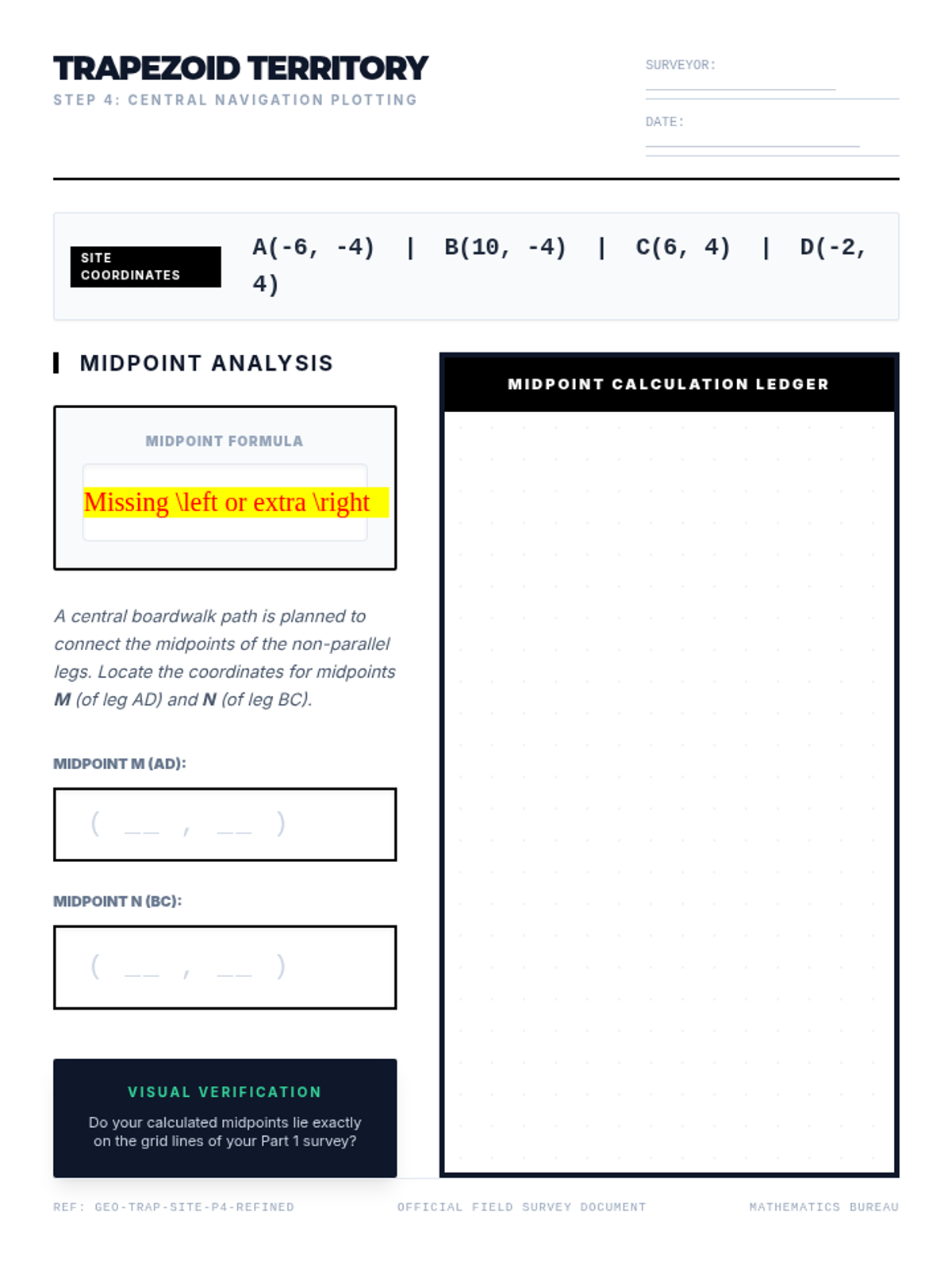
Applying the distance, midpoint, and slope formulas to prove quadrilateral classifications on the coordinate plane.
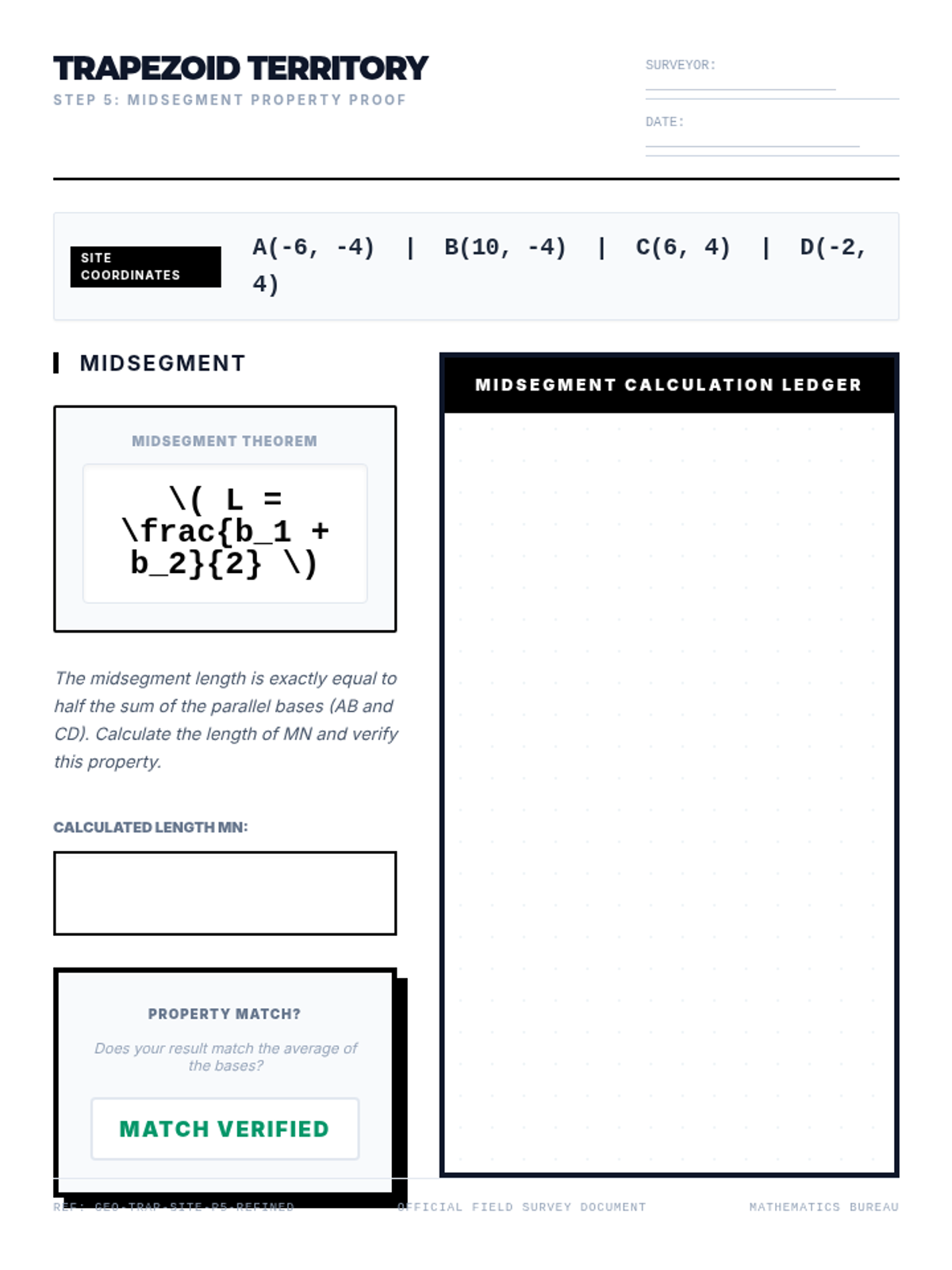
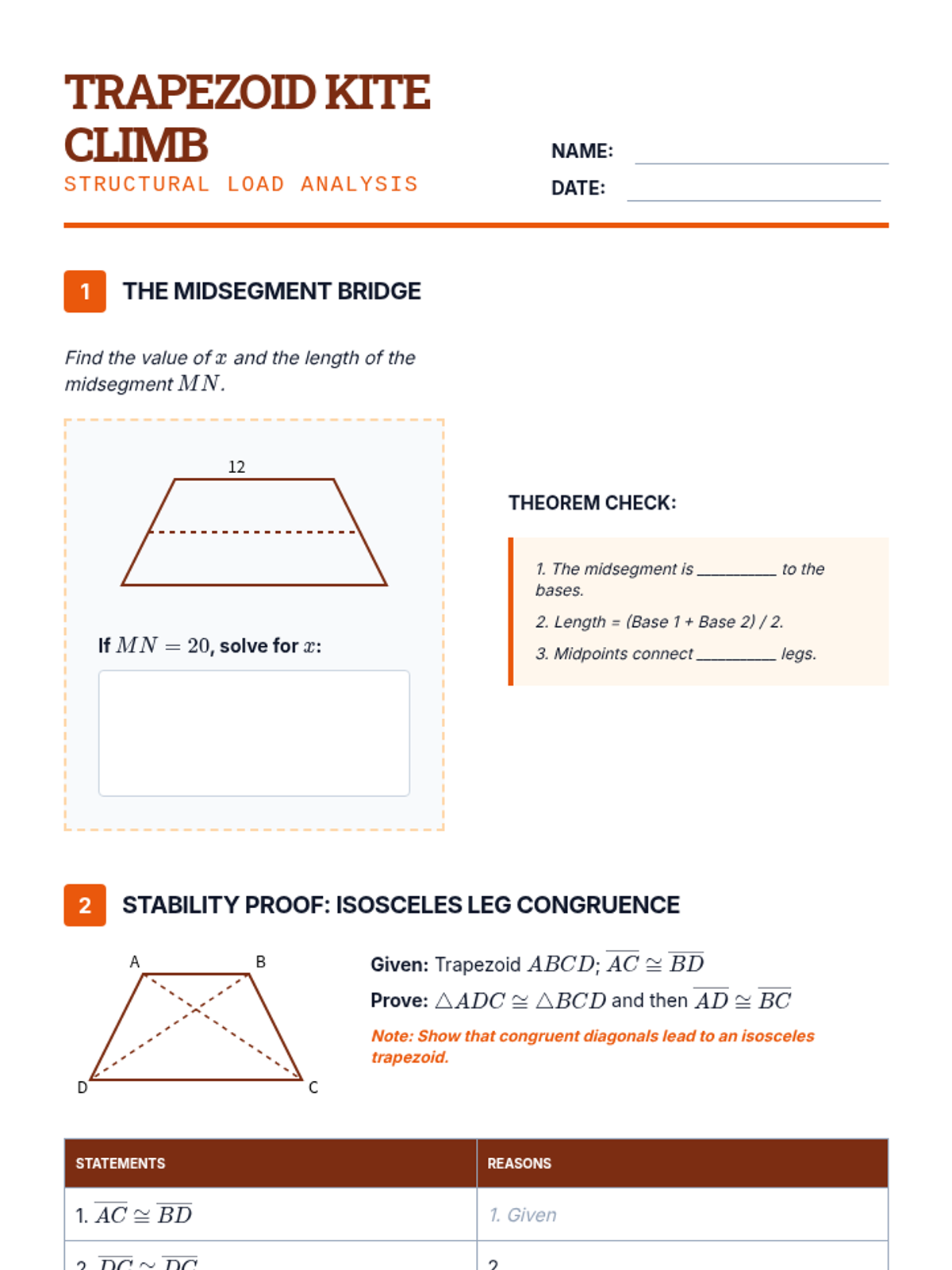
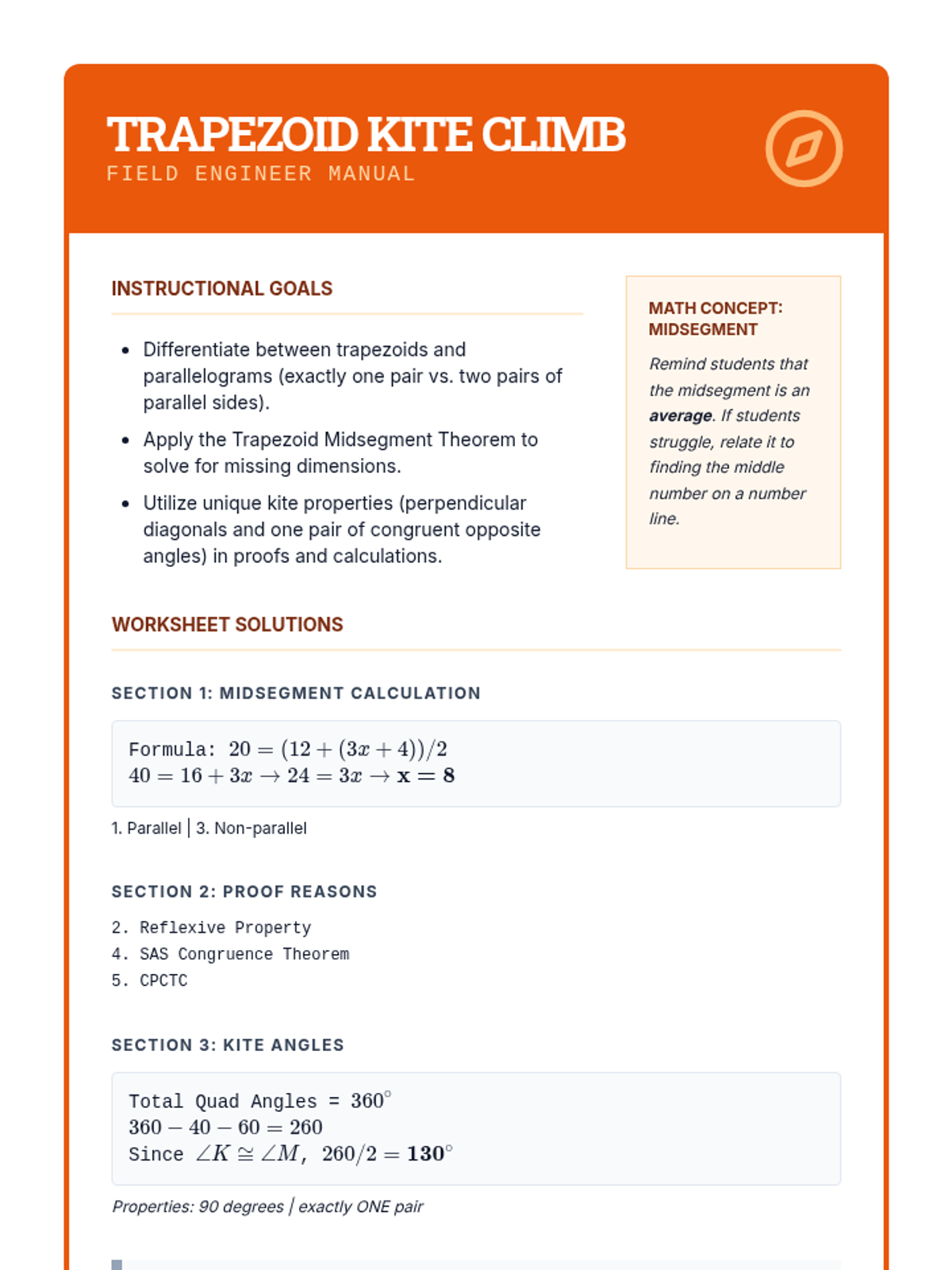
Investigating the properties of trapezoids, isosceles trapezoids, and kites, including proofs involving midsegments and diagonals.
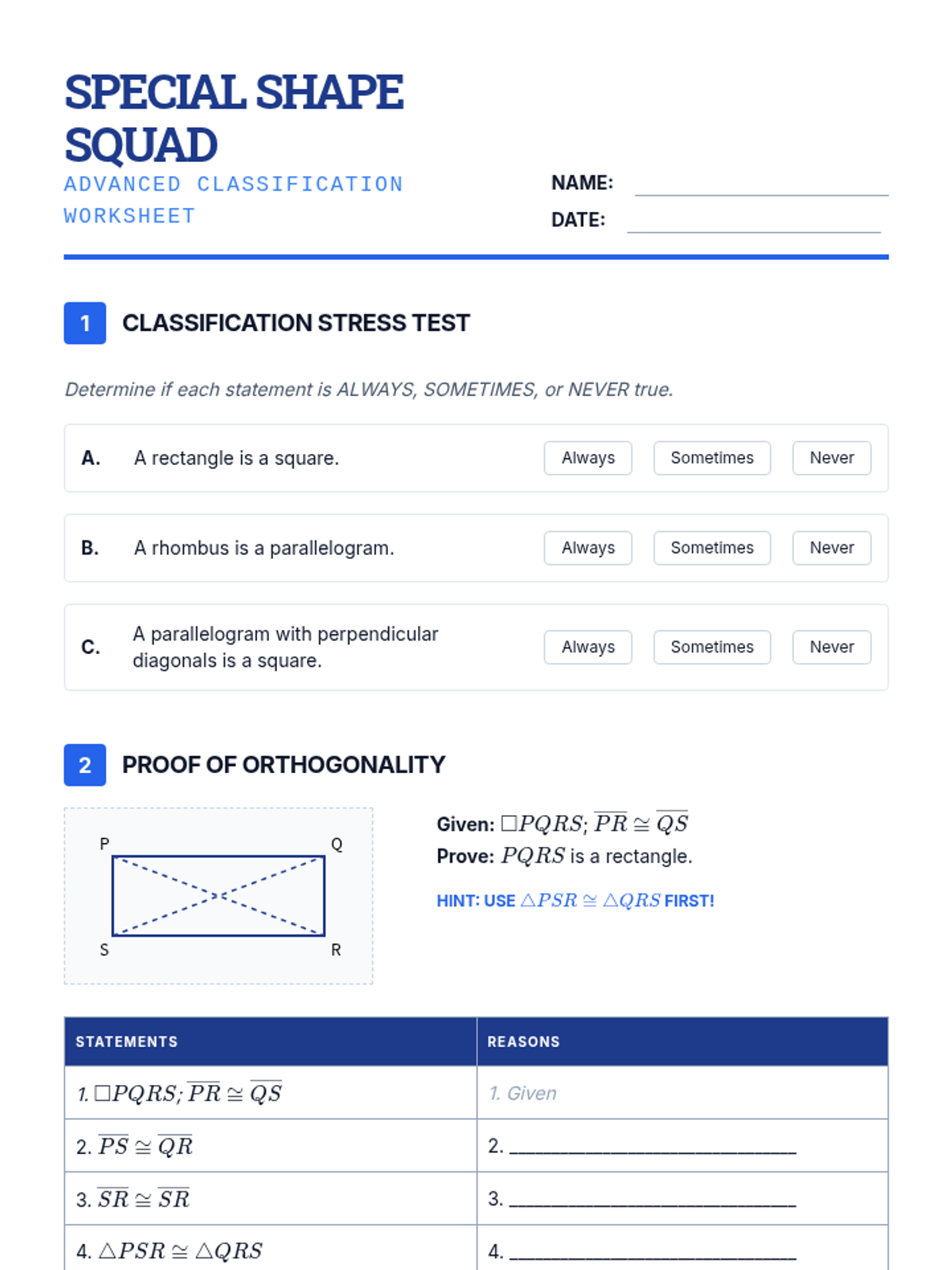
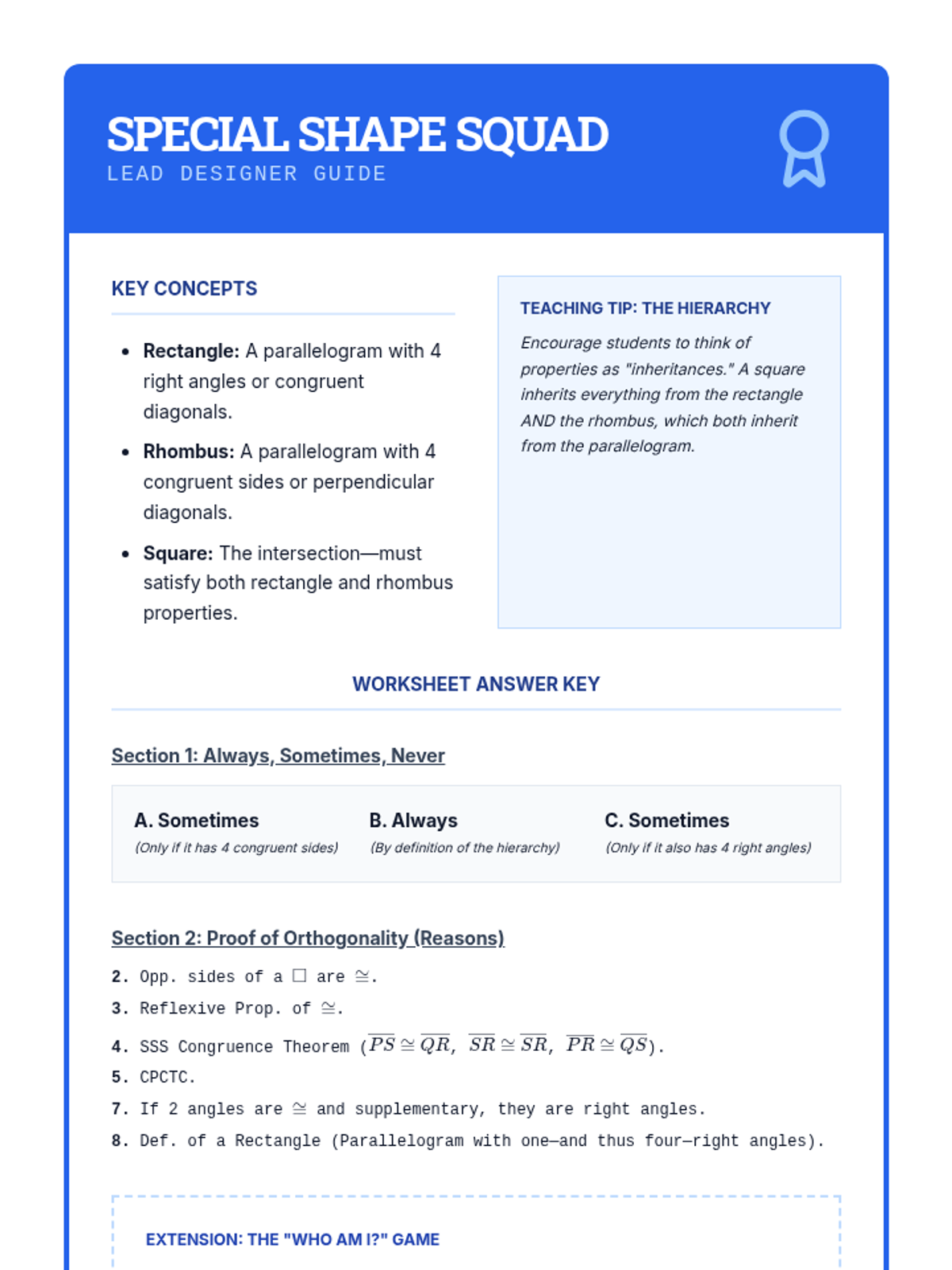
Exploration of rectangles, rhombi, and squares, focusing on their unique properties and using them in formal proofs.
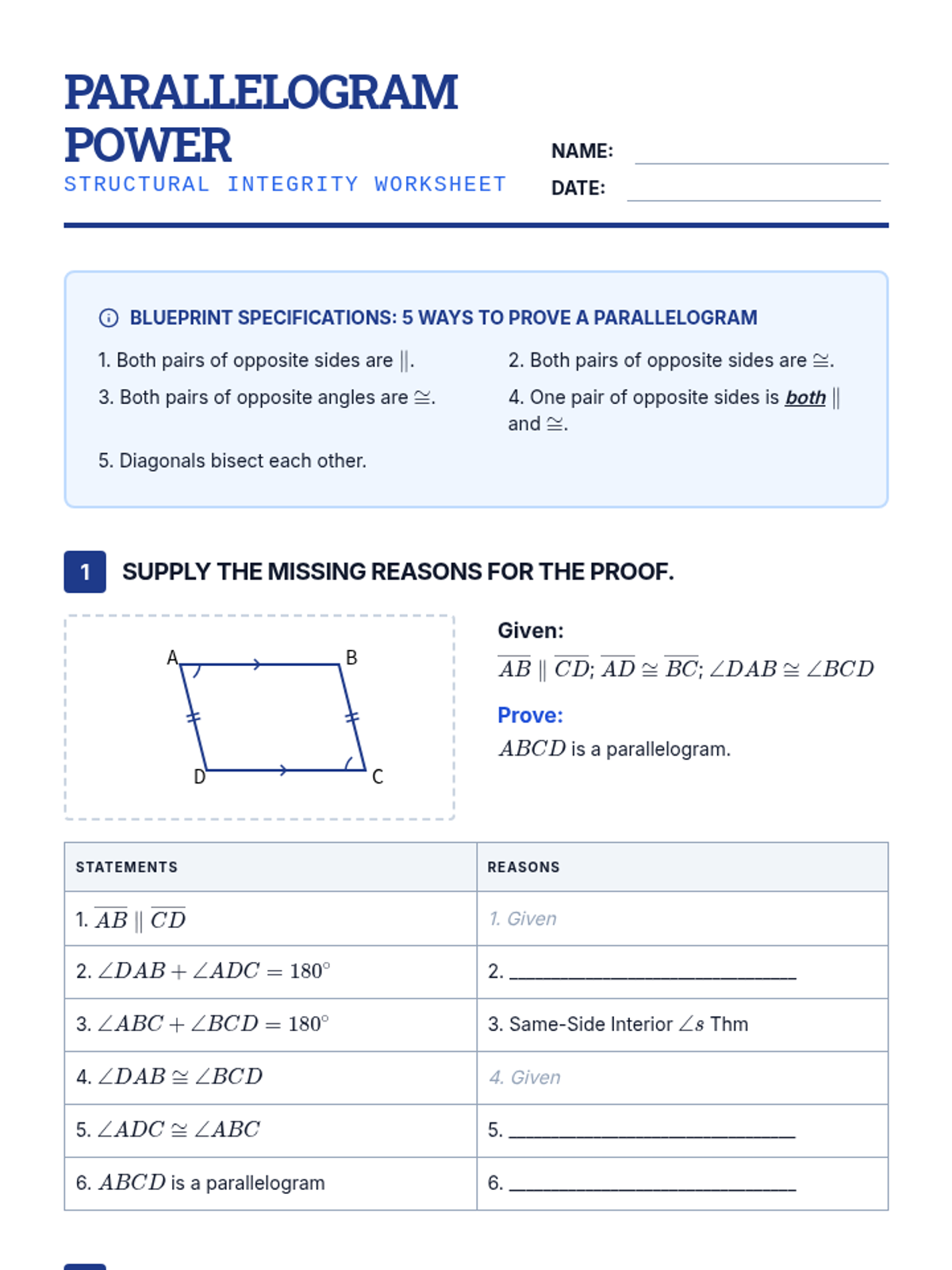
Introduction to the properties of parallelograms and the five ways to prove a quadrilateral is a parallelogram using two-column proofs.
A Tier 2 intervention lesson focused on the visual and algebraic relationship between the slopes of parallel and perpendicular lines, aligned with Colorado standard HS.G-GPE.B.5.
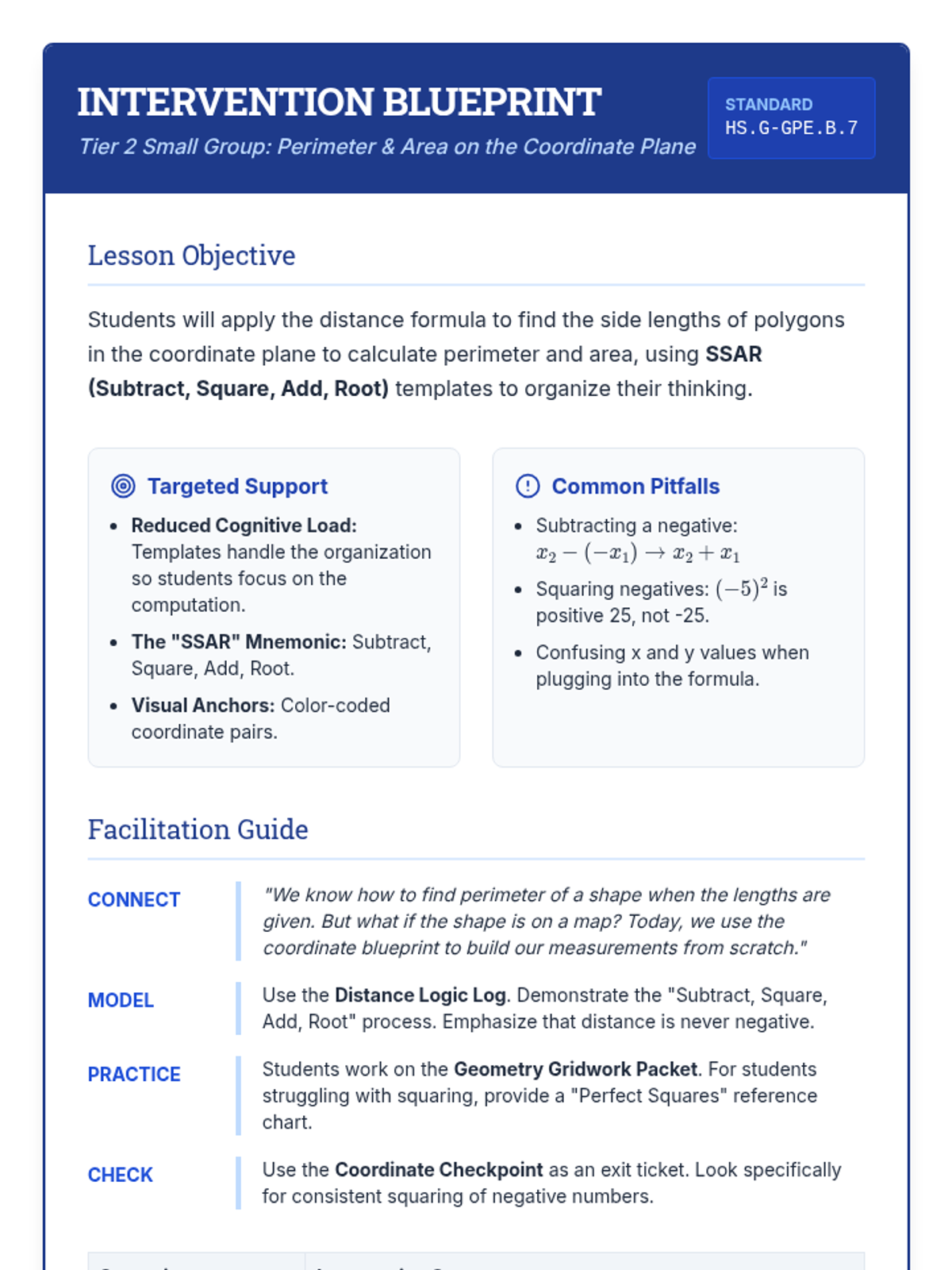
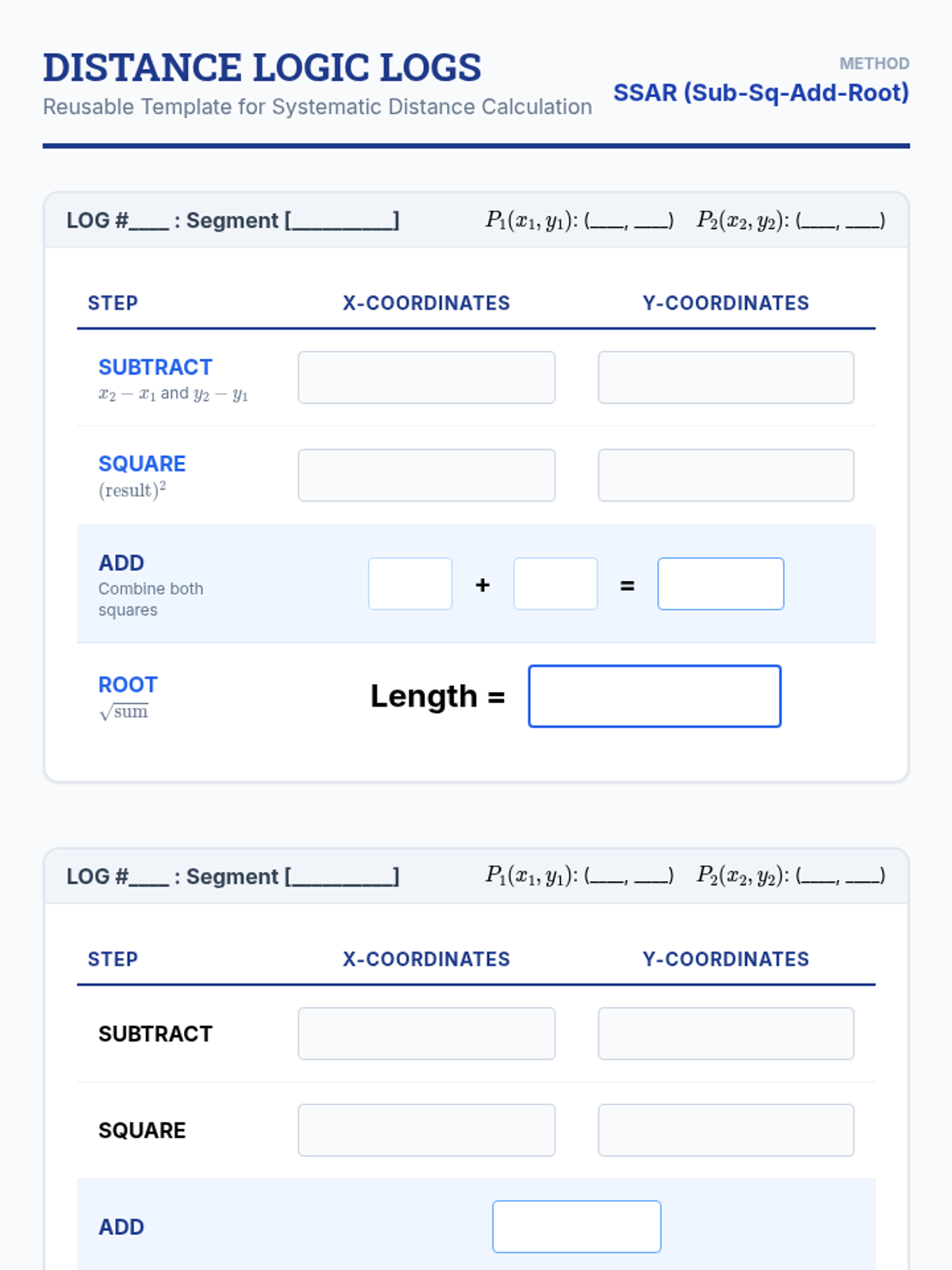
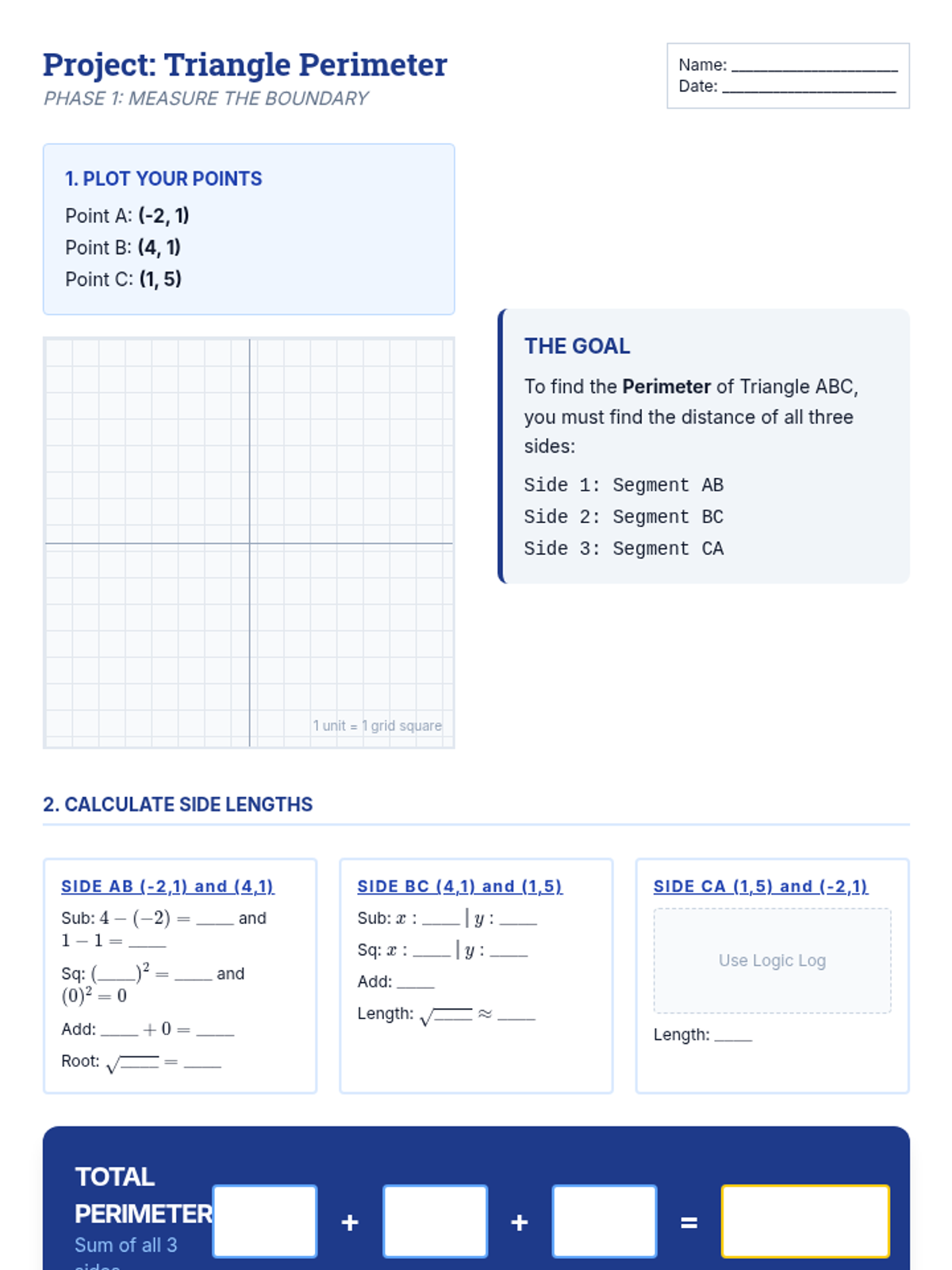
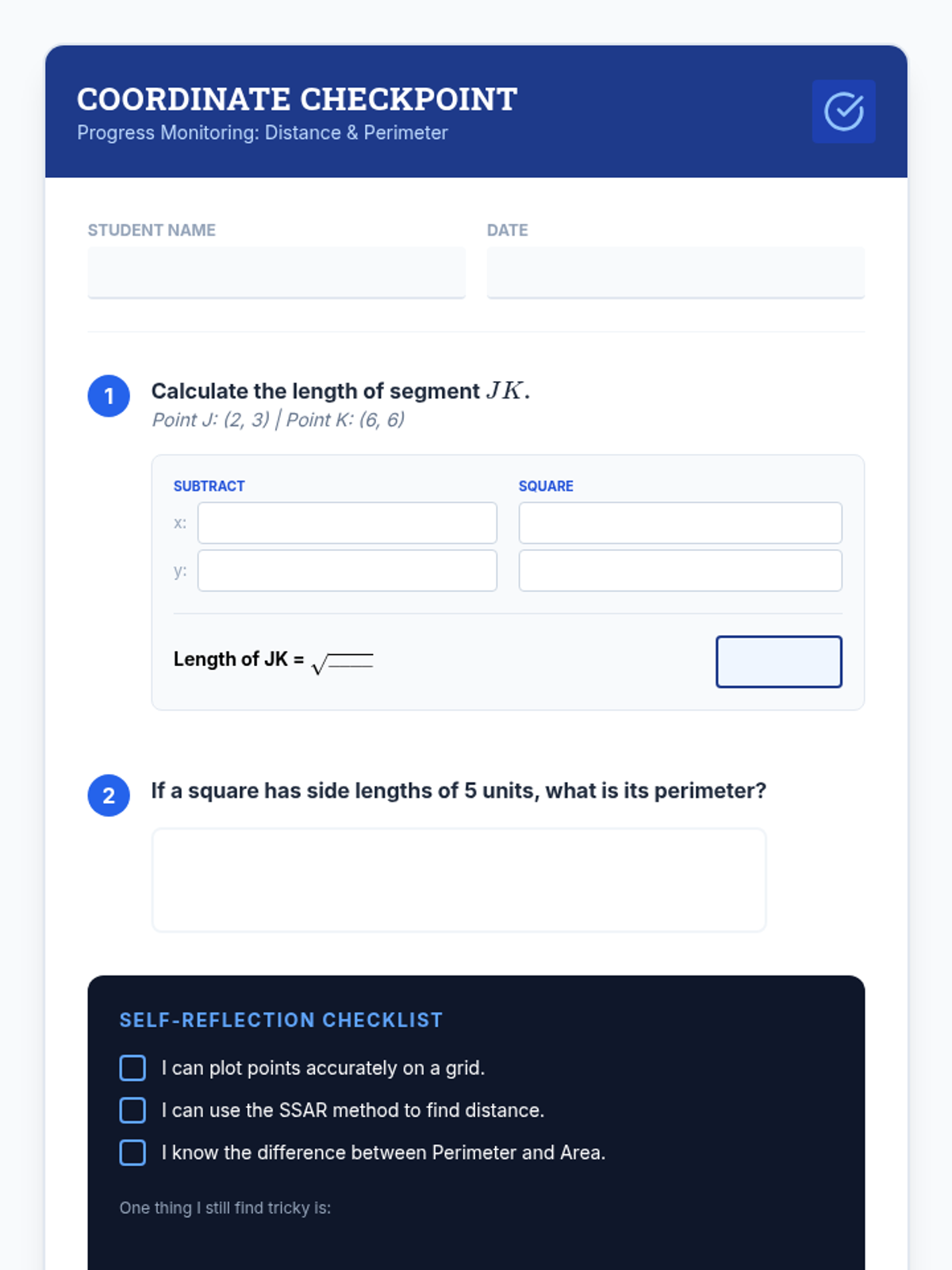
A specialized intervention lesson teaching students to systematically calculate the perimeter and area of polygons on a coordinate plane using step-by-step distance formula templates.
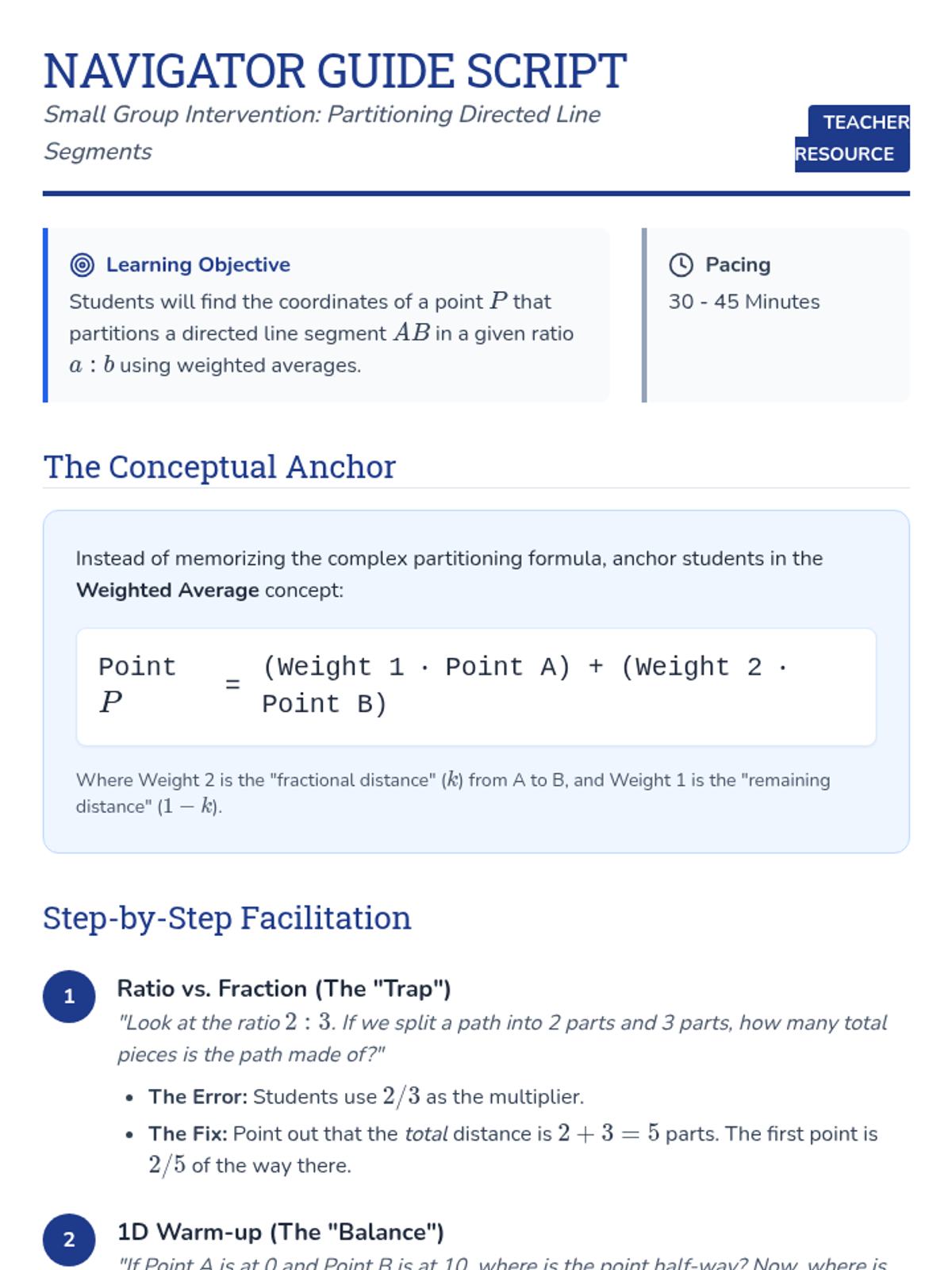
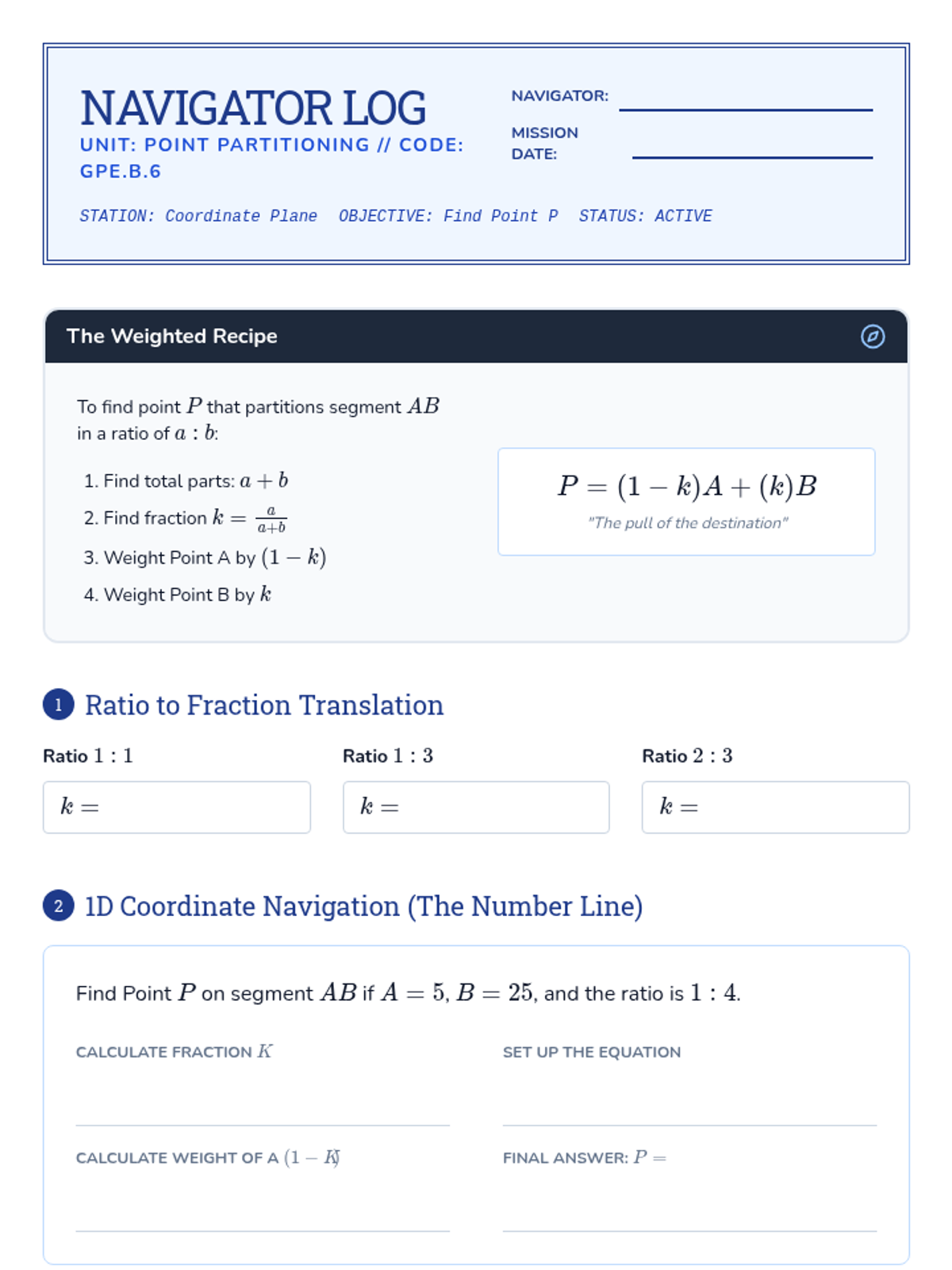
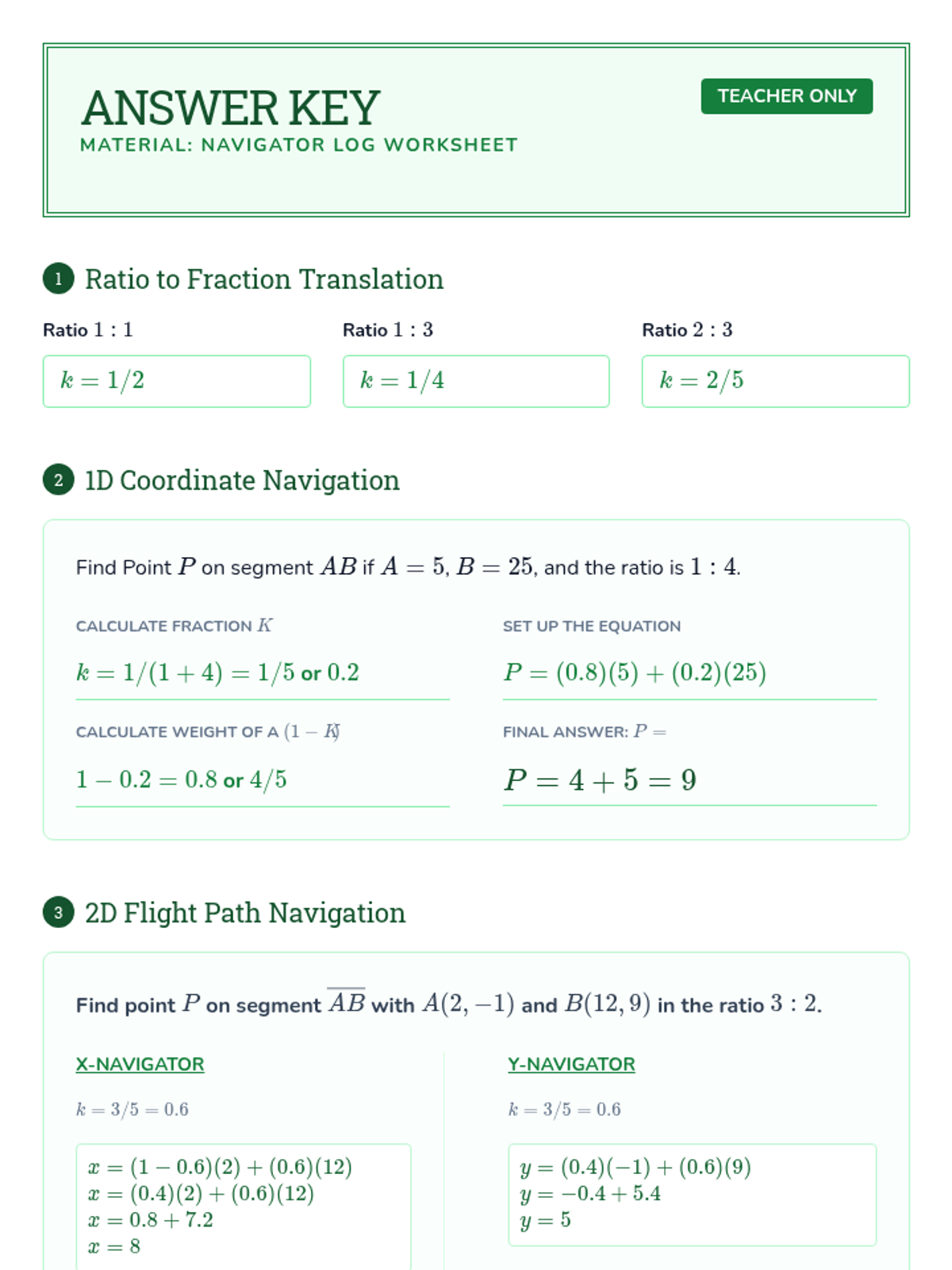
A targeted intervention lesson for high school geometry students on partitioning directed line segments using weighted averages and coordinate reasoning. This lesson uses a navigation-themed blueprint aesthetic to guide students through visual models and step-by-step calculations.
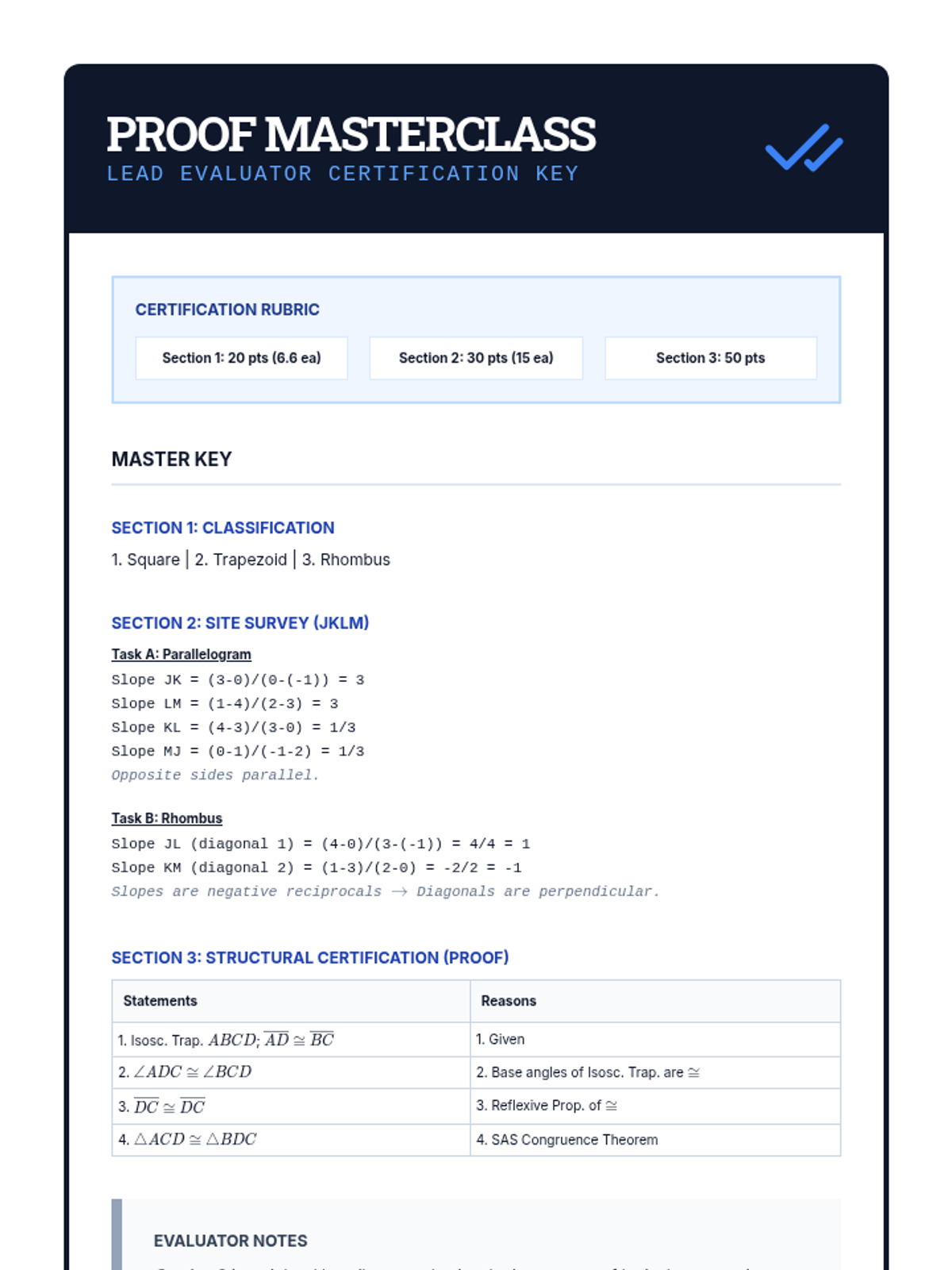
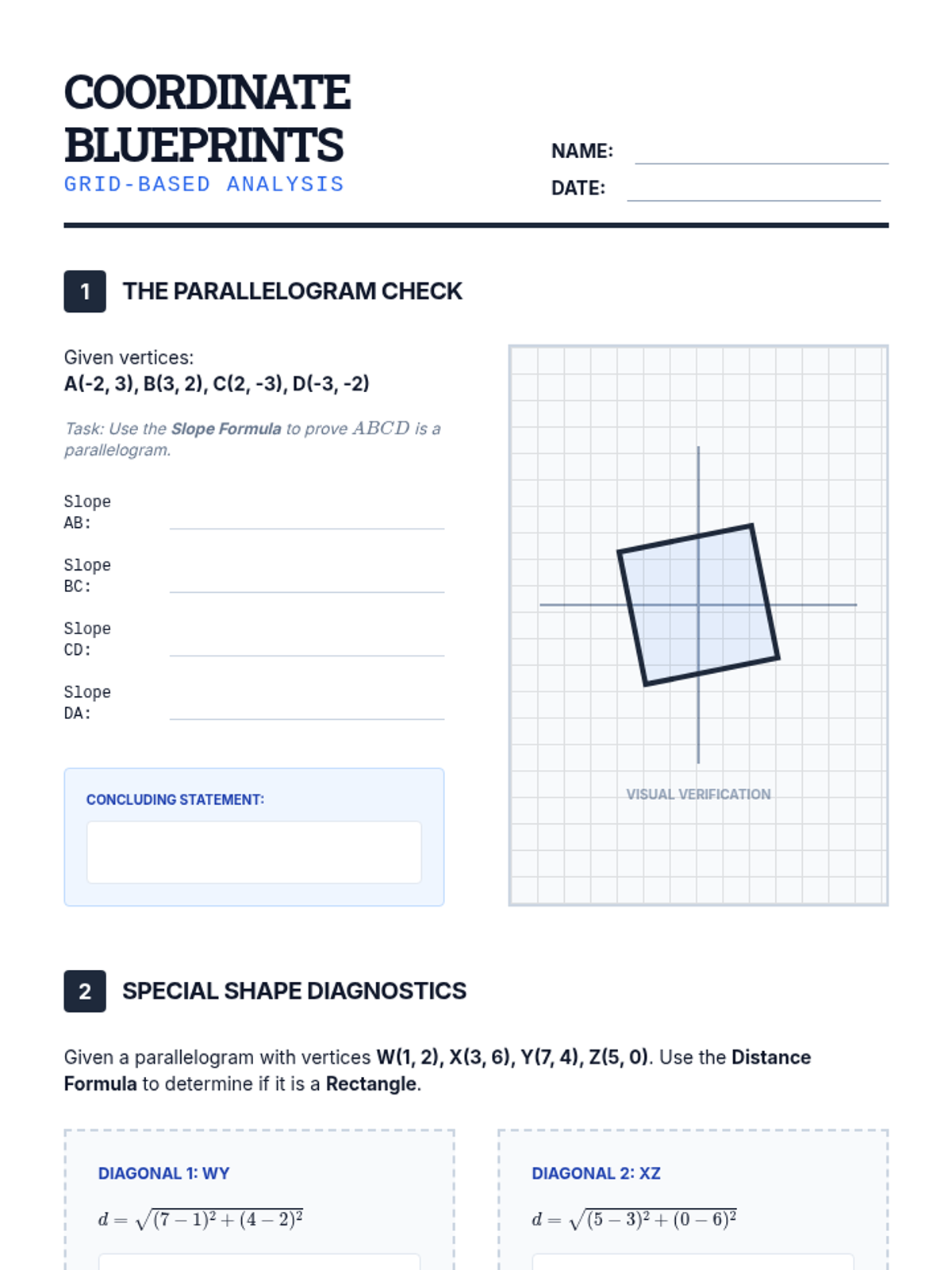
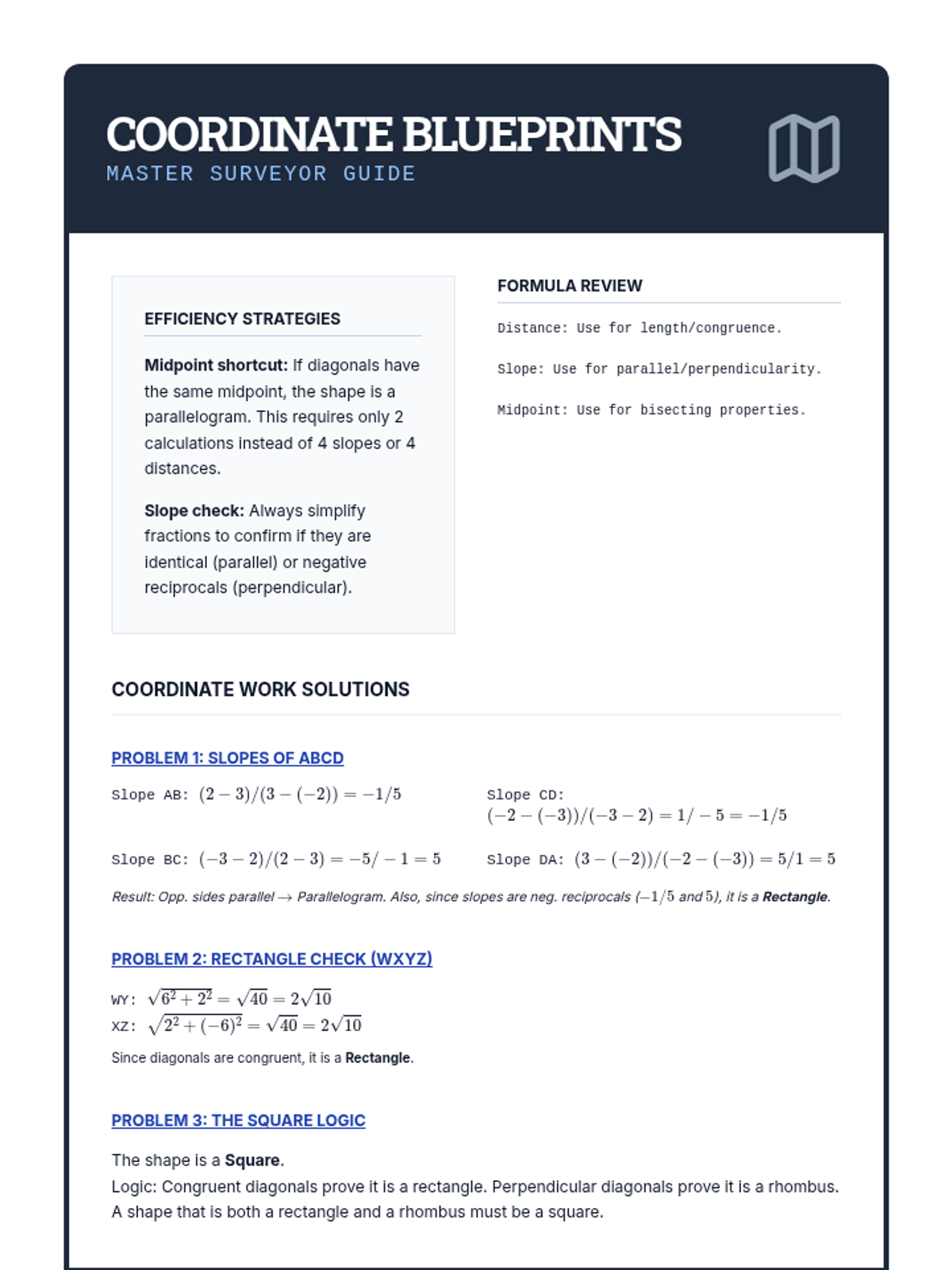
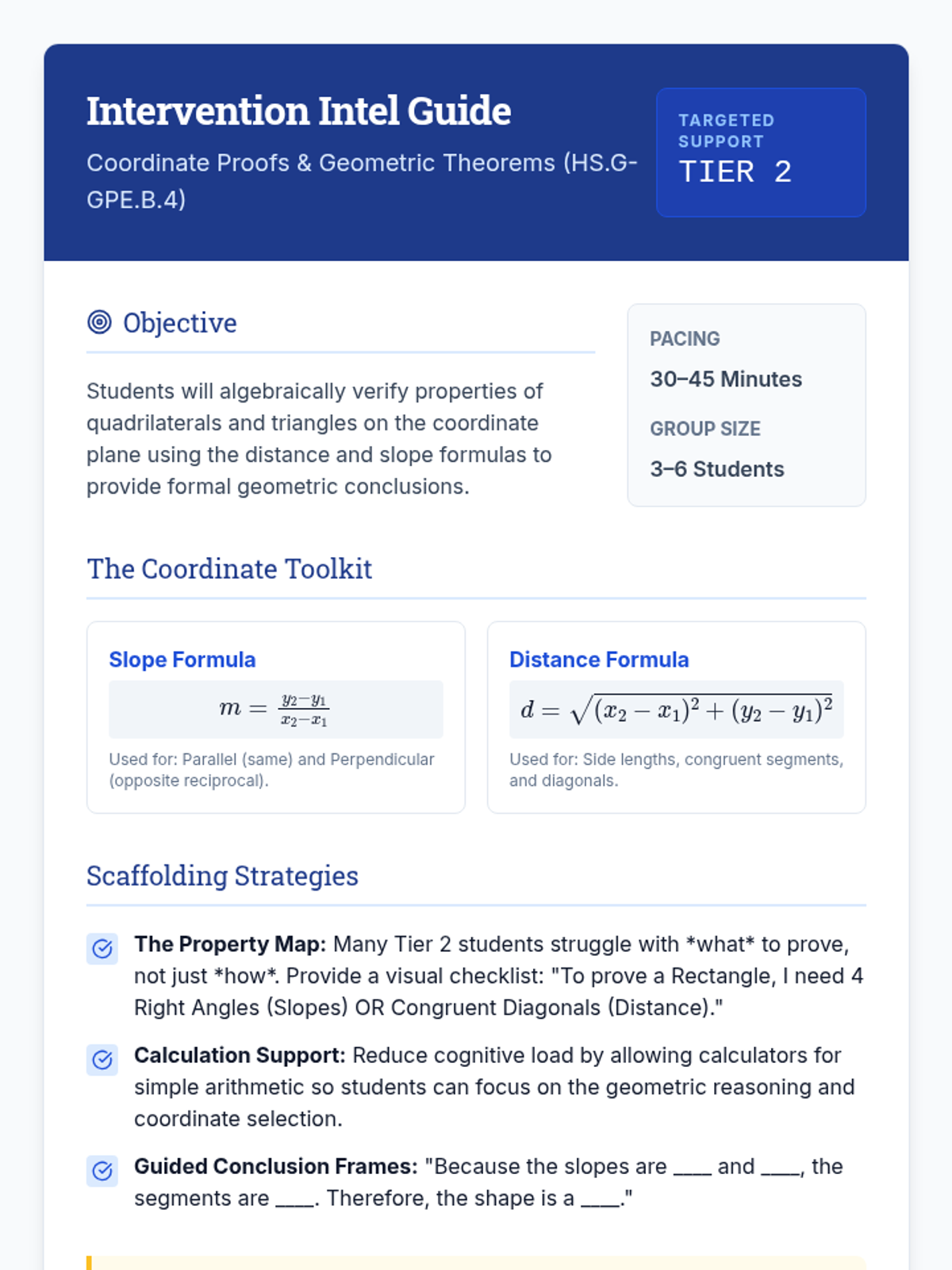
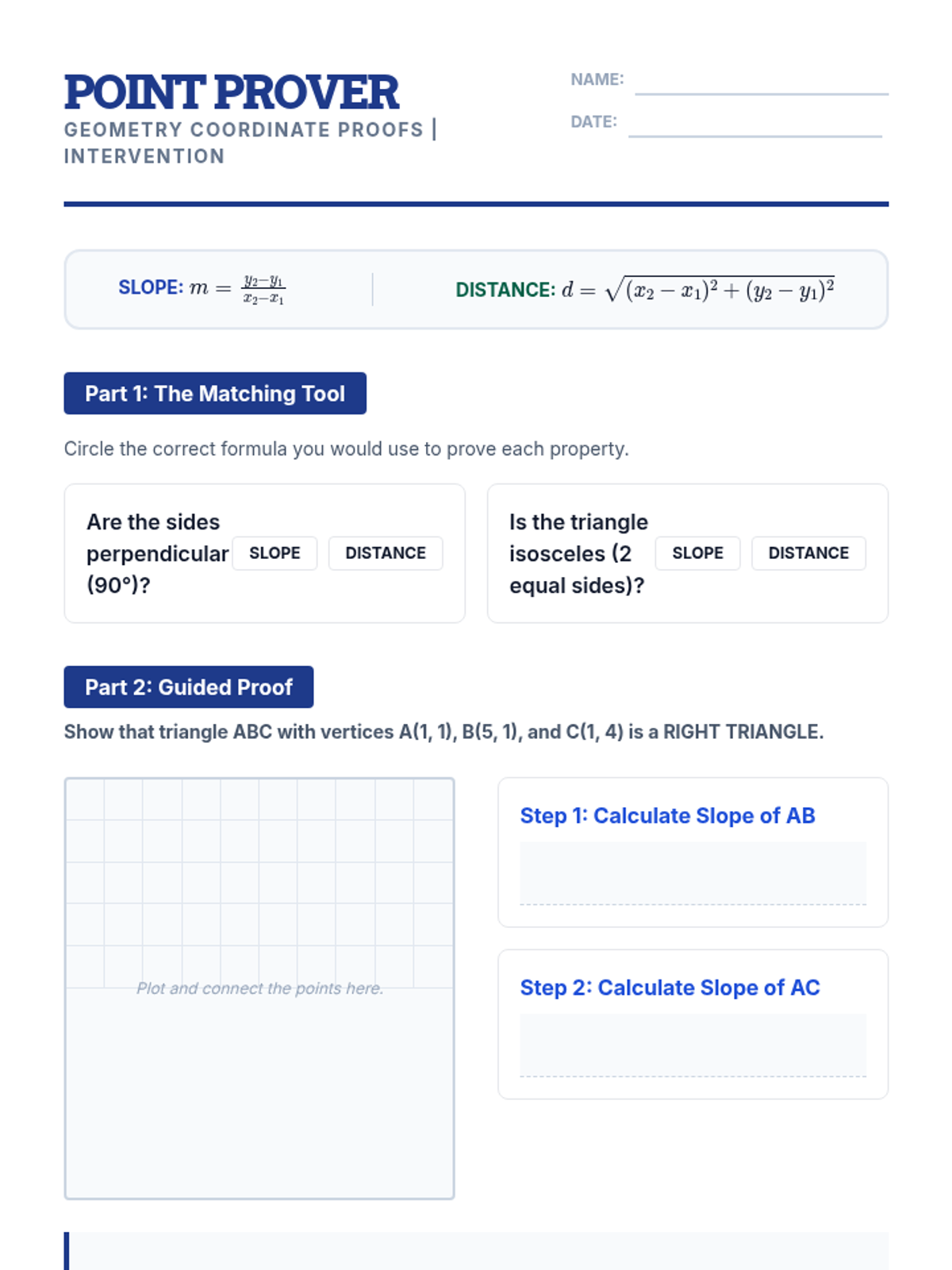
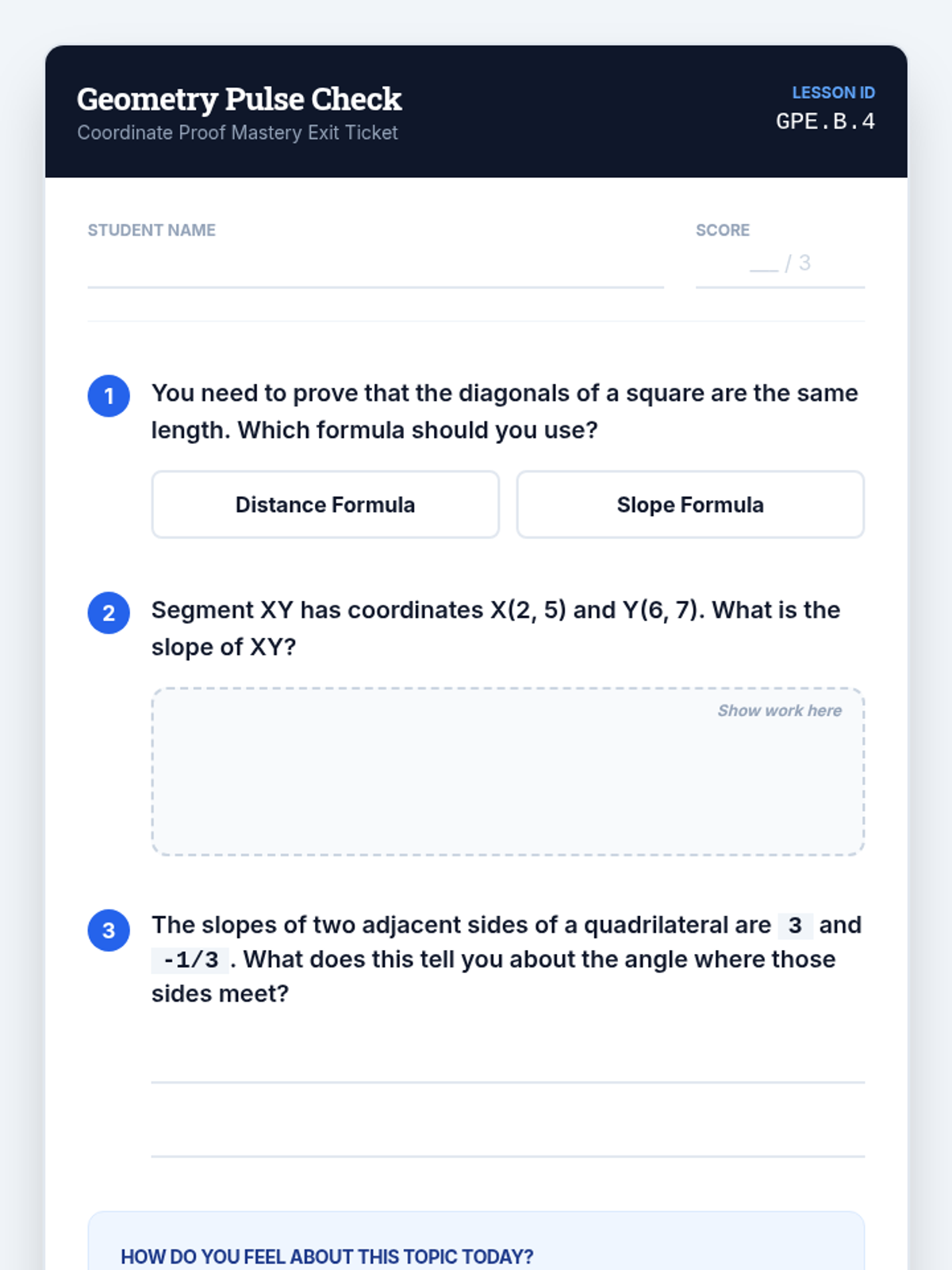
A targeted Tier 2 intervention lesson focusing on using the coordinate plane to prove geometric properties of shapes through algebra. Students will use slope and distance formulas to verify if figures are rectangles, parallelograms, or right triangles.
This lesson introduces students to the converse of the Pythagorean Theorem, empowering them to use mathematical evidence to determine if a triangle contains a perfect right angle.
A lesson introducing the Converse of the Pythagorean Theorem, focusing on using the formula to determine if a triangle is a right triangle through a 'Yes/No' proof process. Students will apply the theorem to various side lengths in a construction-themed context.
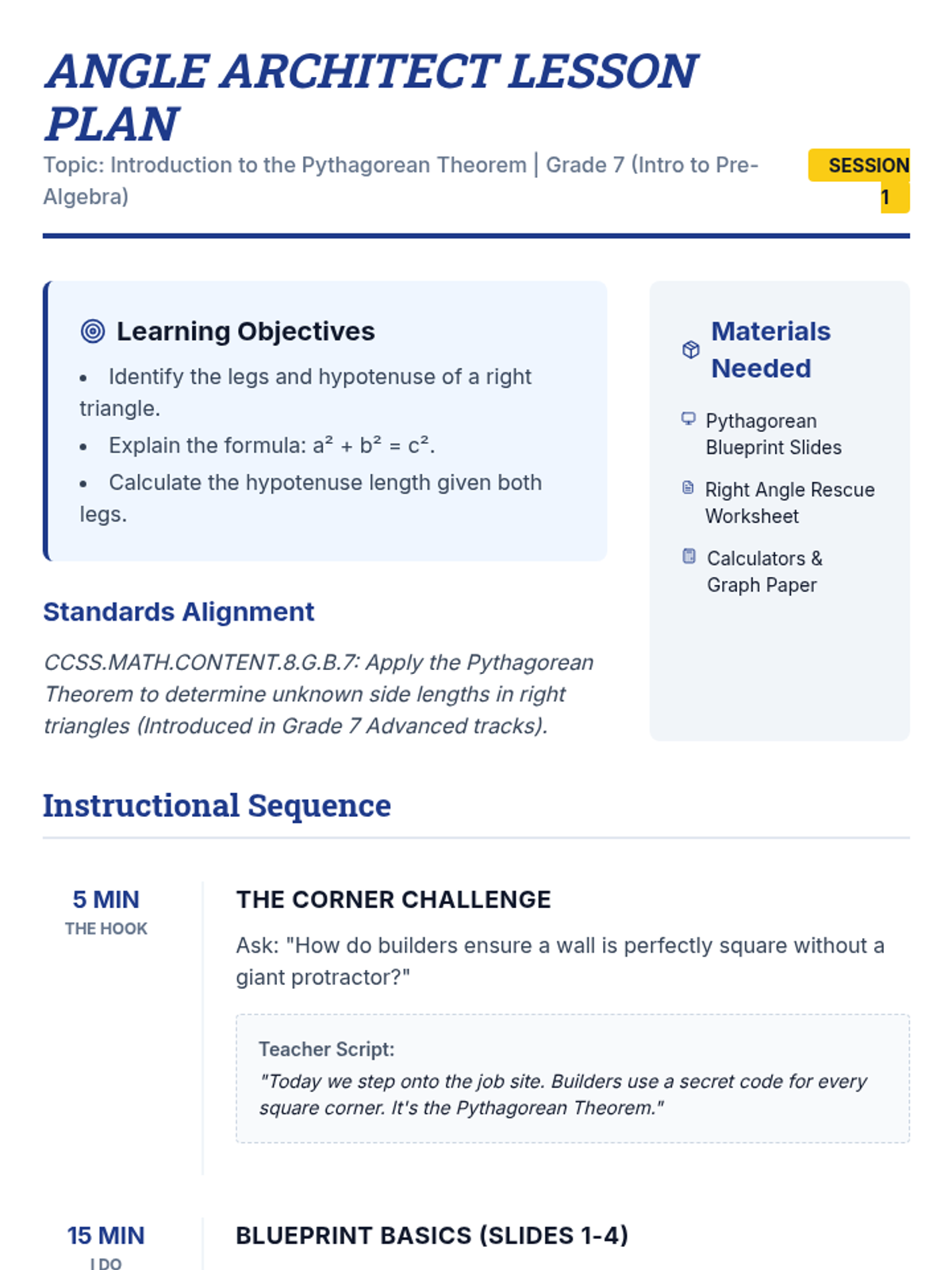
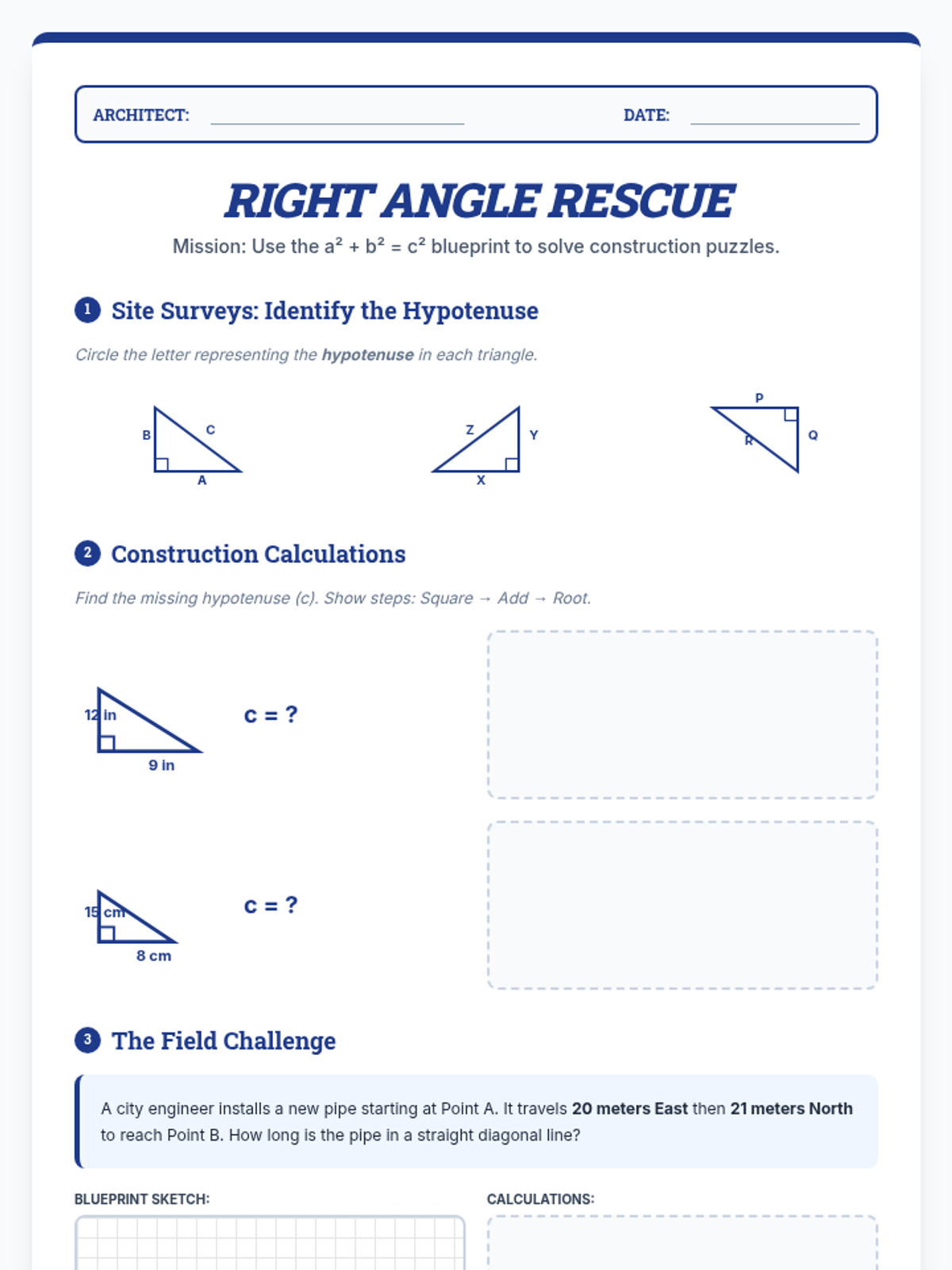
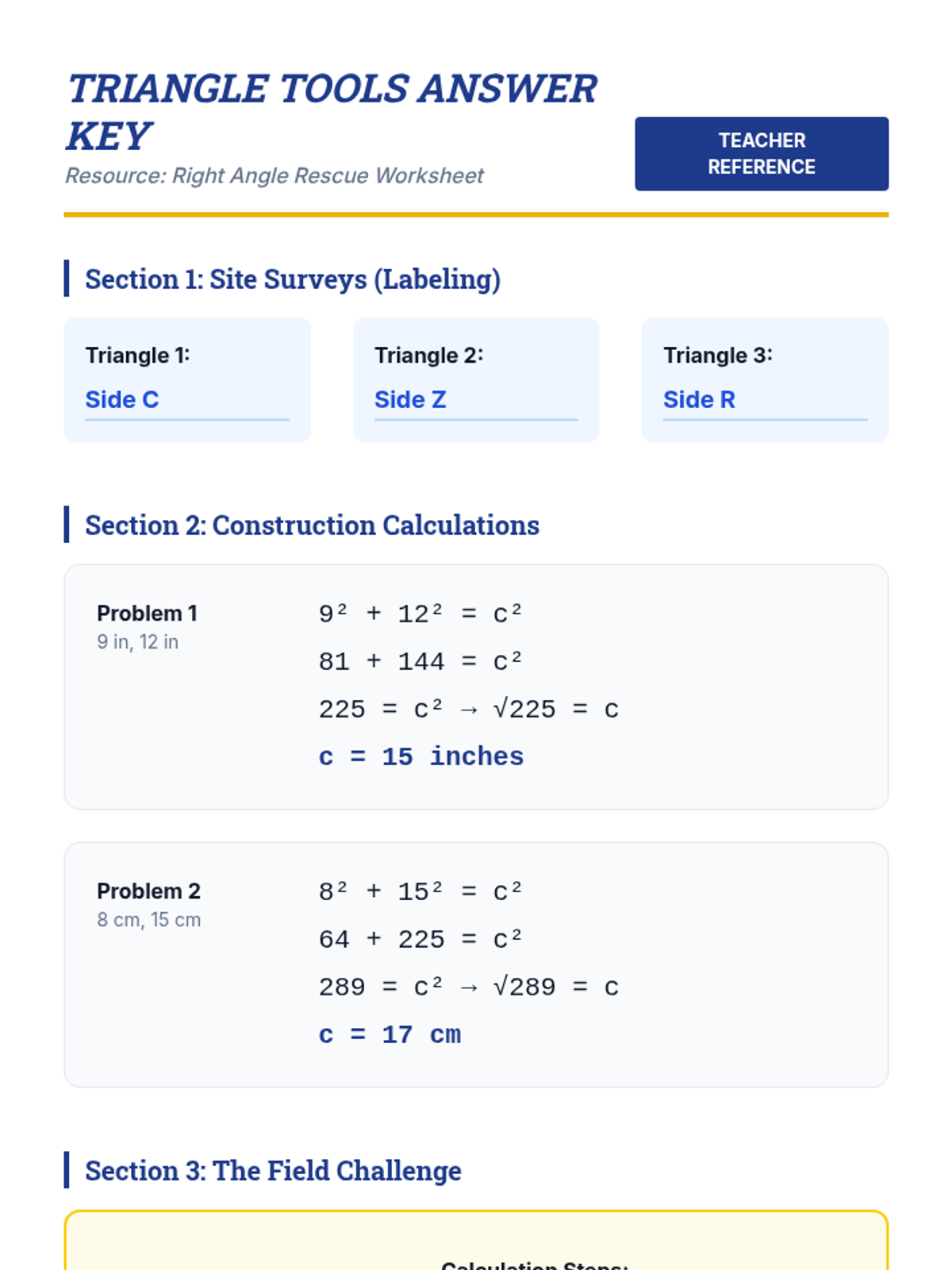
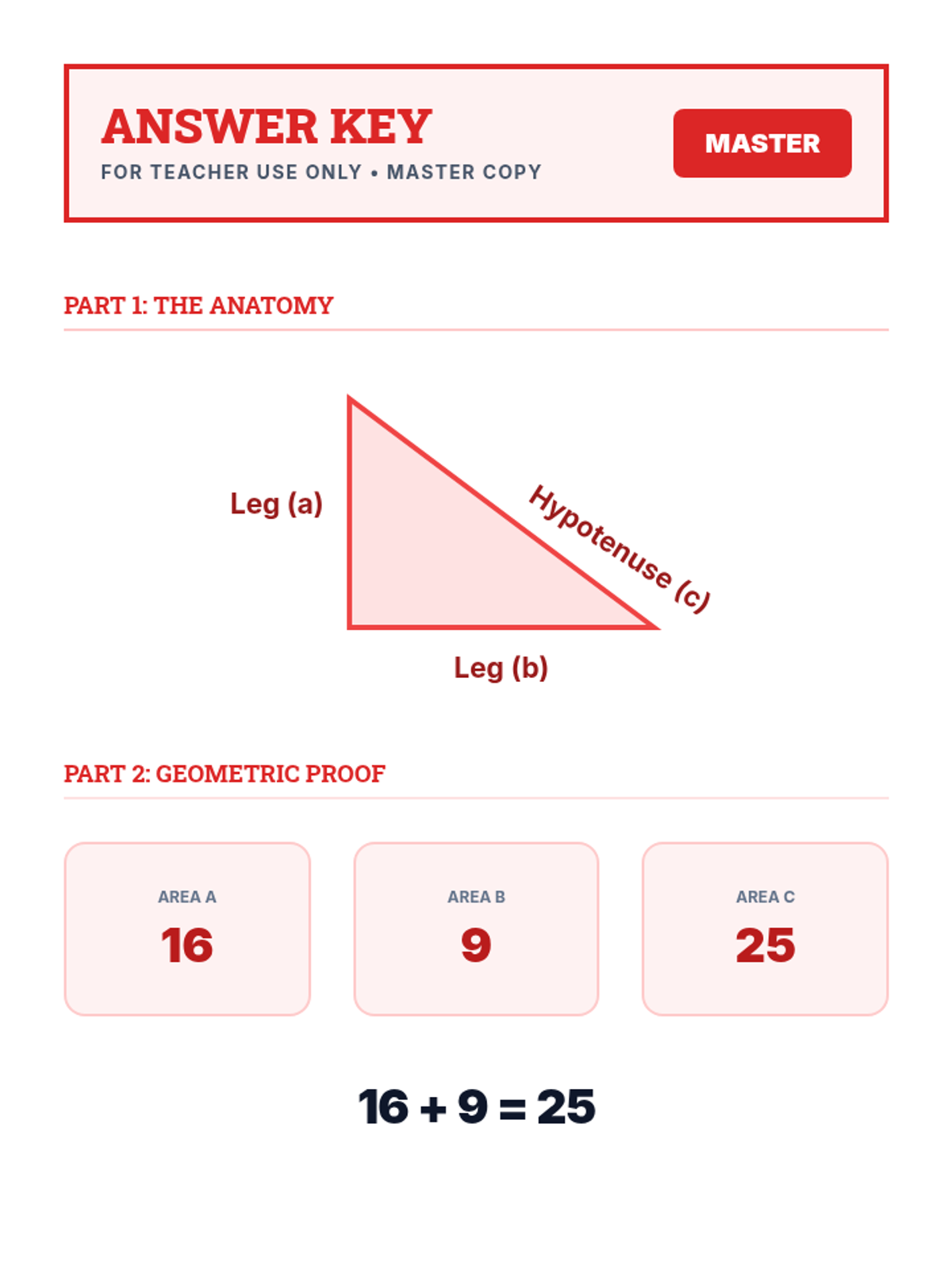
An introductory lesson on the Pythagorean Theorem, focusing on identifying right triangles, understanding the relationship between sides, and calculating the hypotenuse through a construction-themed lens.
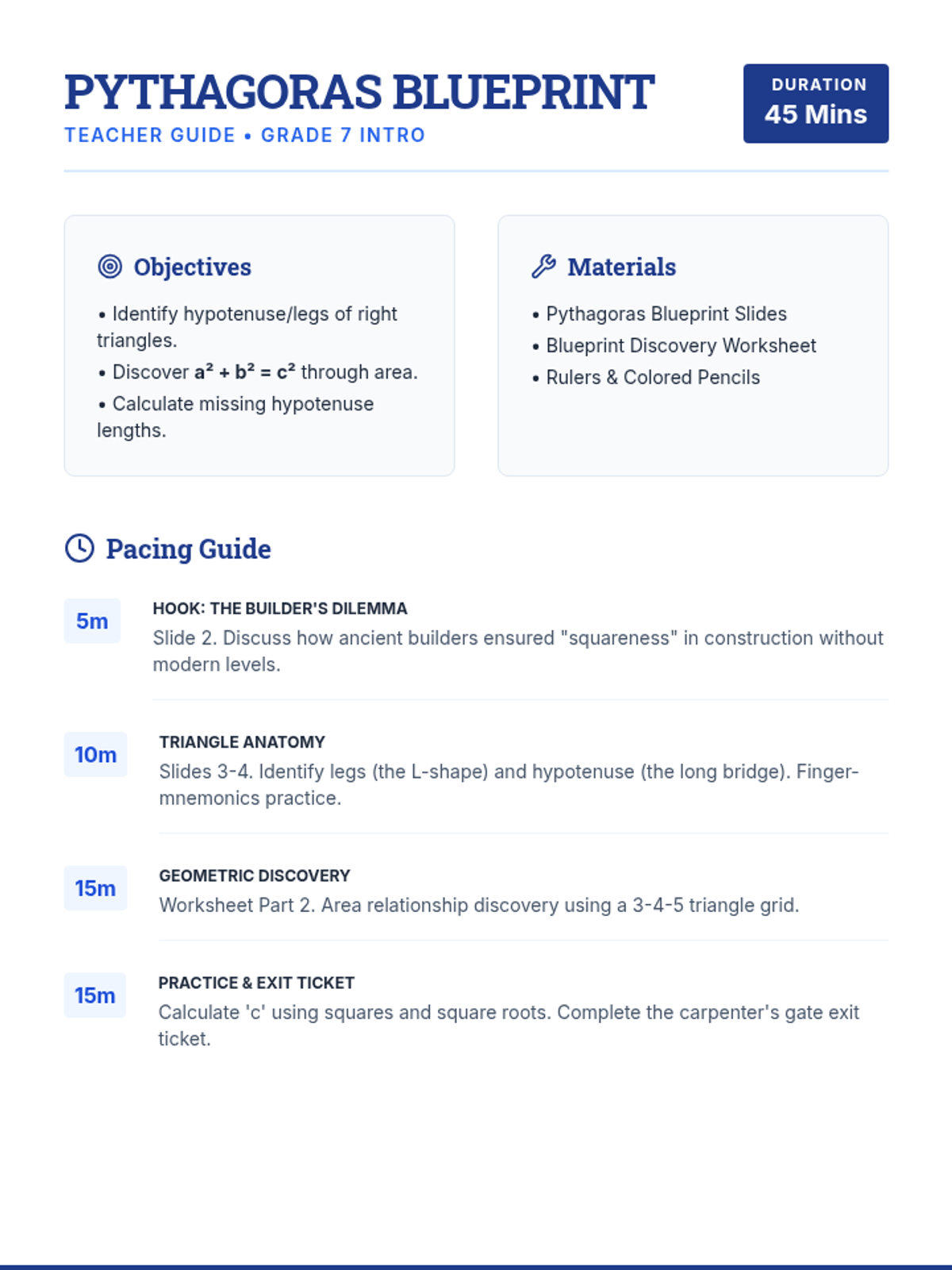
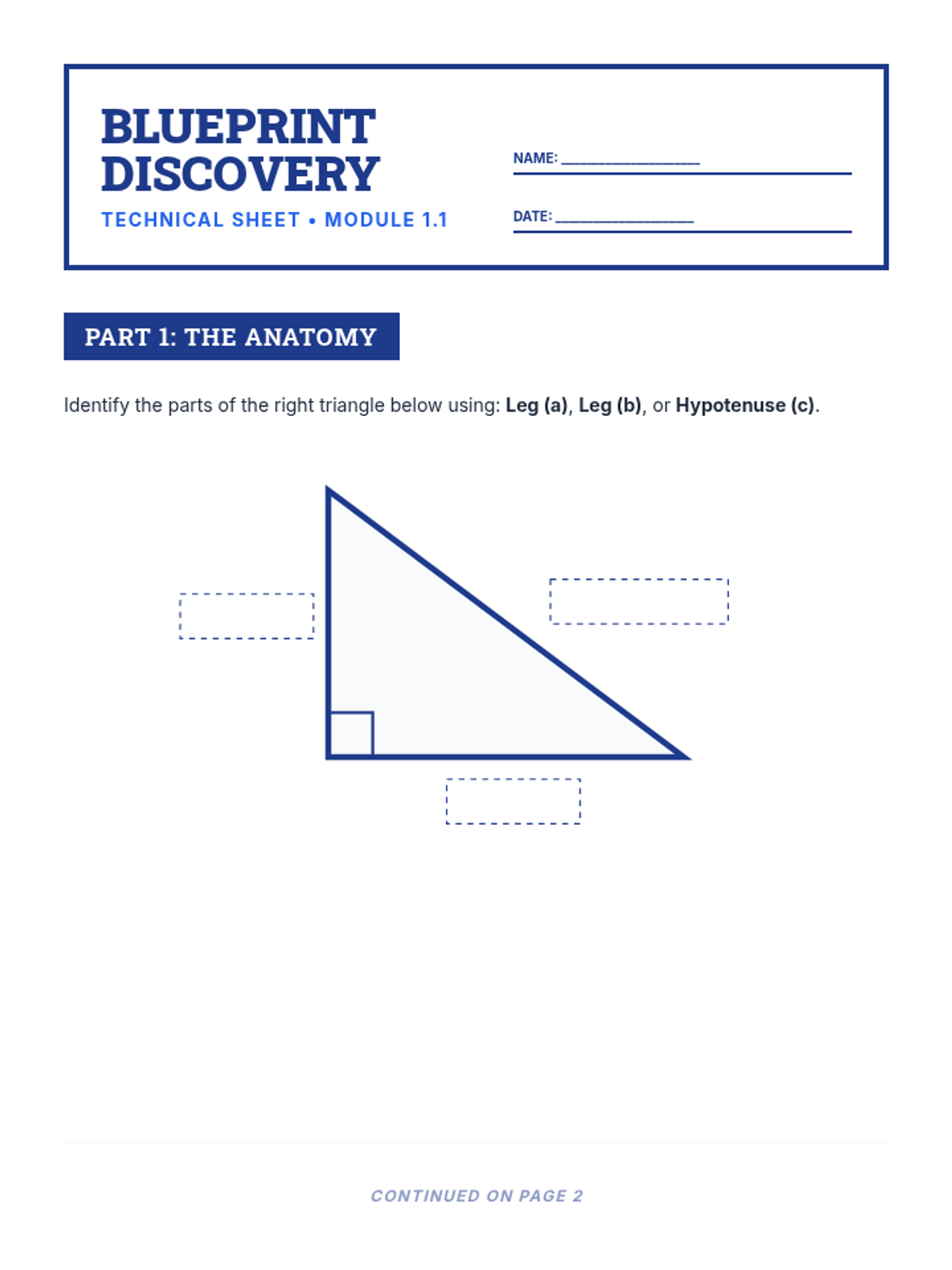
A 45-minute introductory lesson to the Pythagorean Theorem for 7th grade, focusing on identifying triangle parts and discovering the fundamental relationship between side lengths.
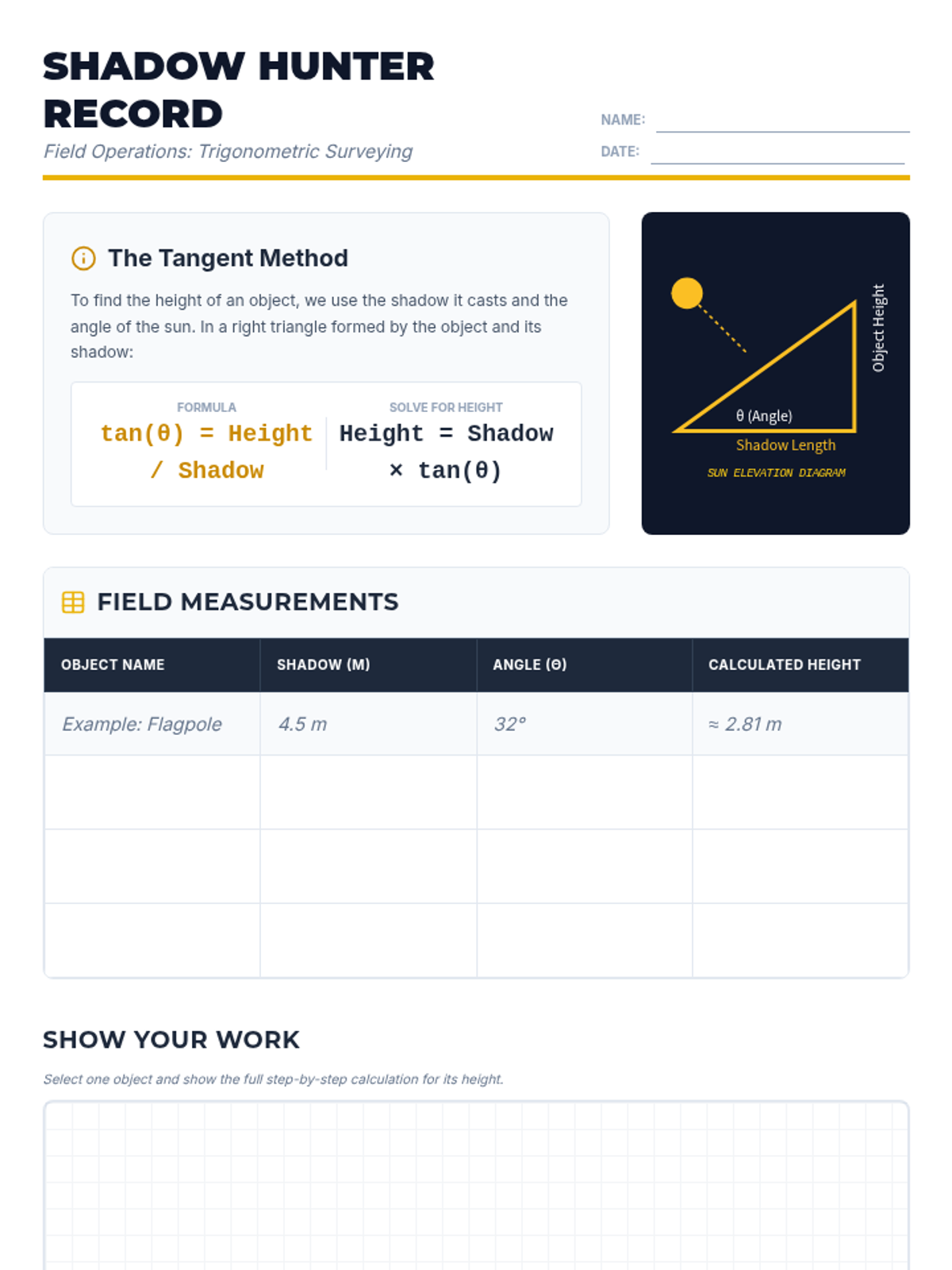
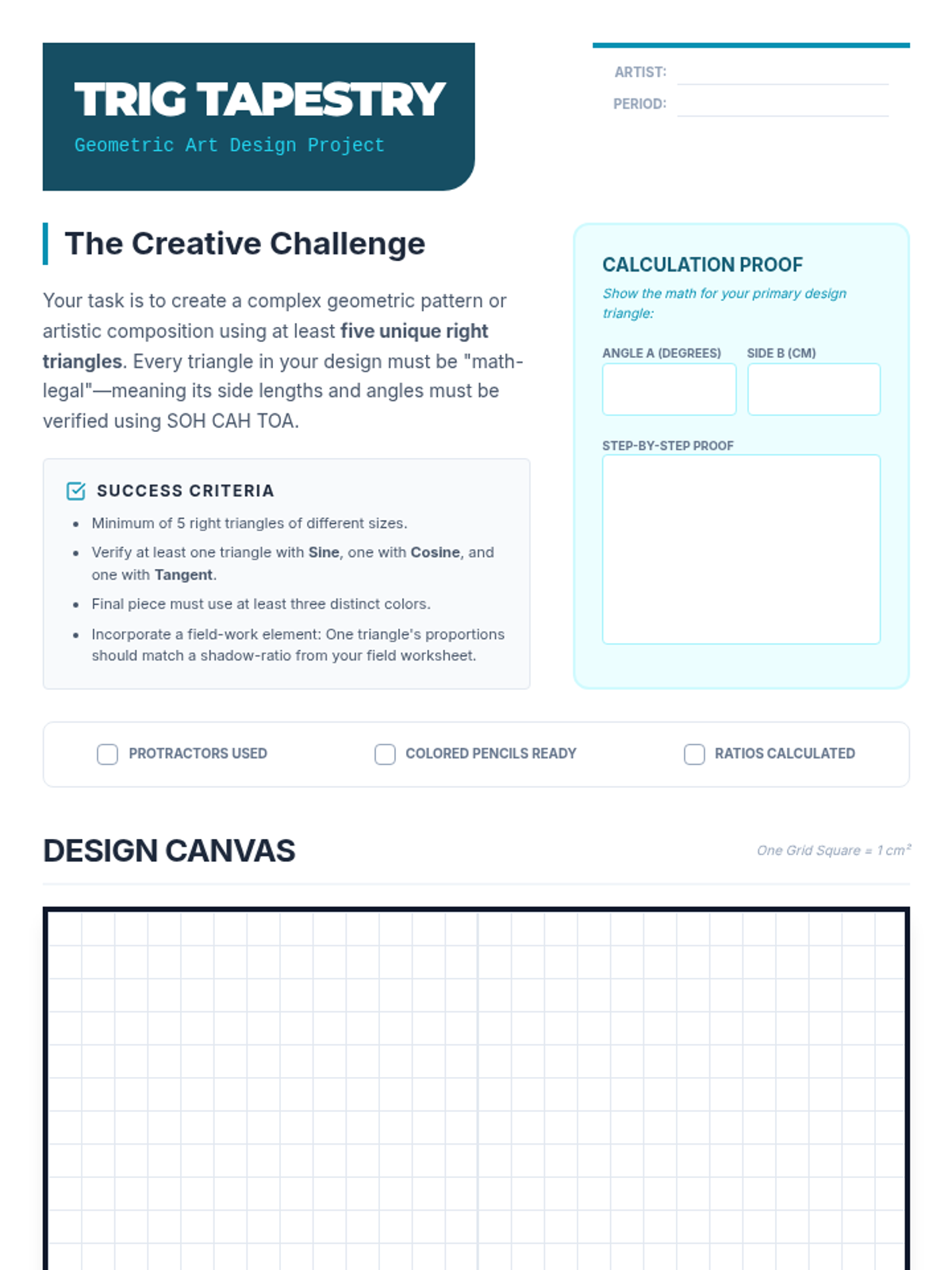
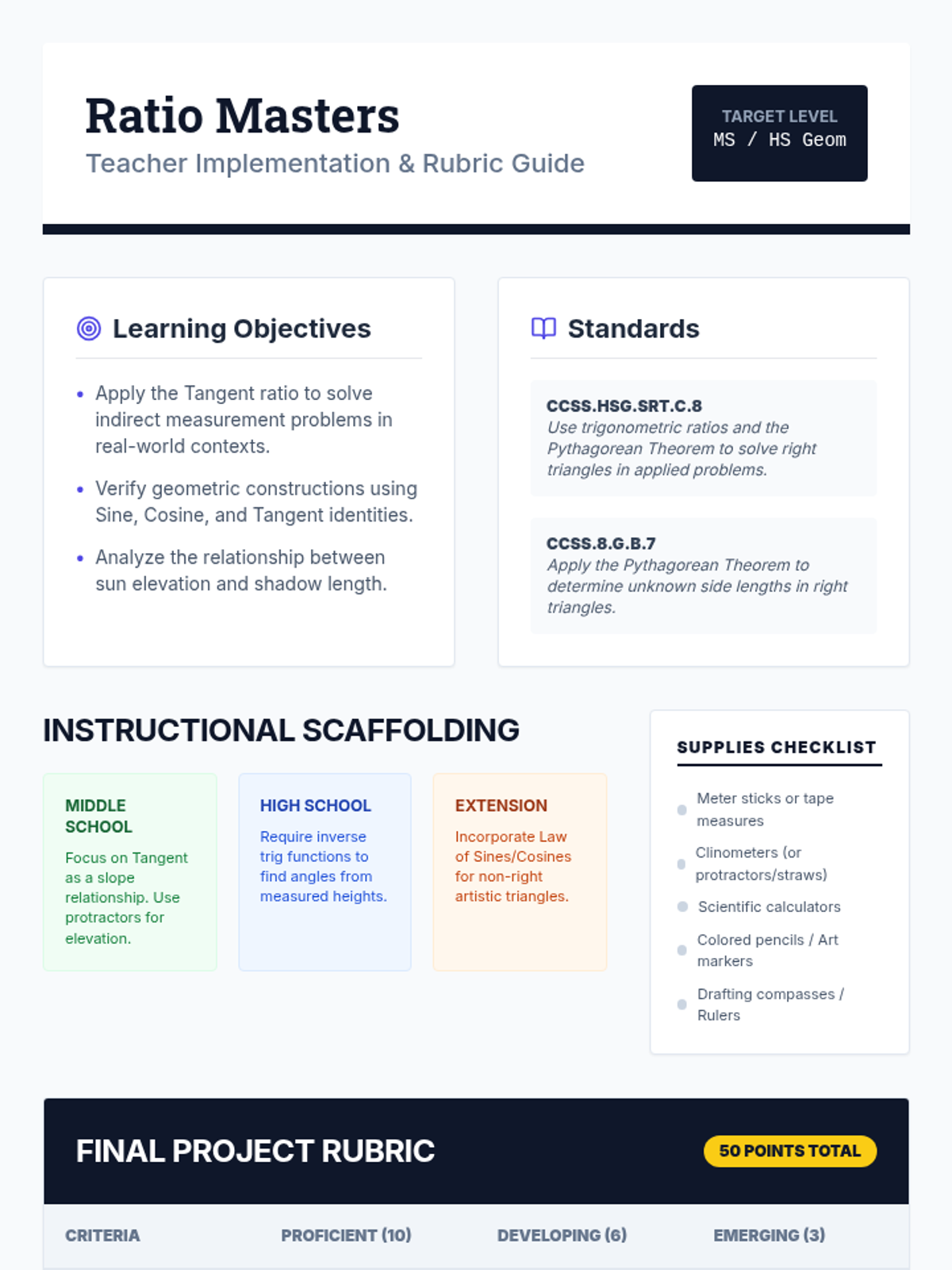
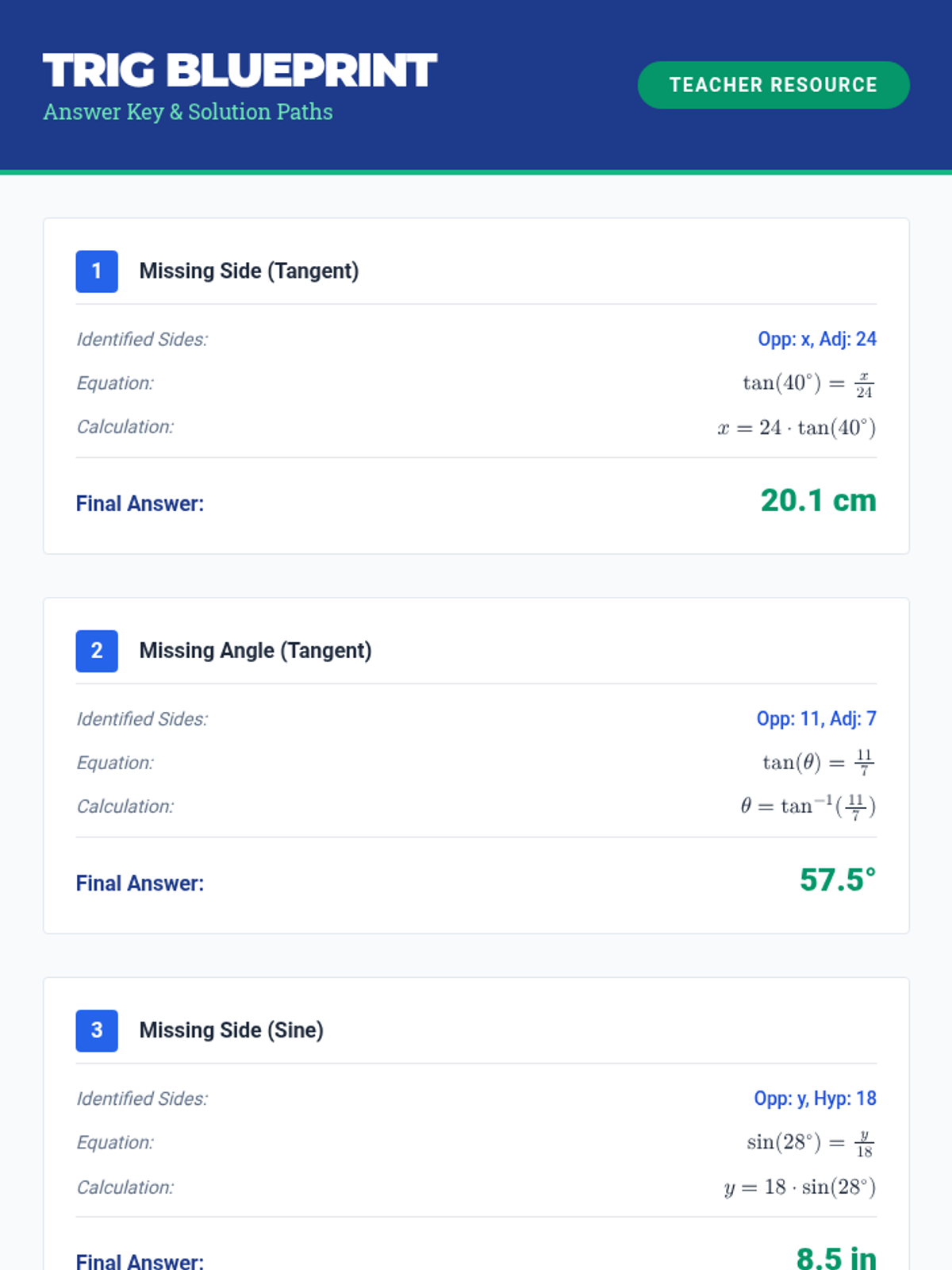
Students learn to apply Sine, Cosine, and Tangent to real-world measurements and abstract artistic design, culminating in a dual-phase project.
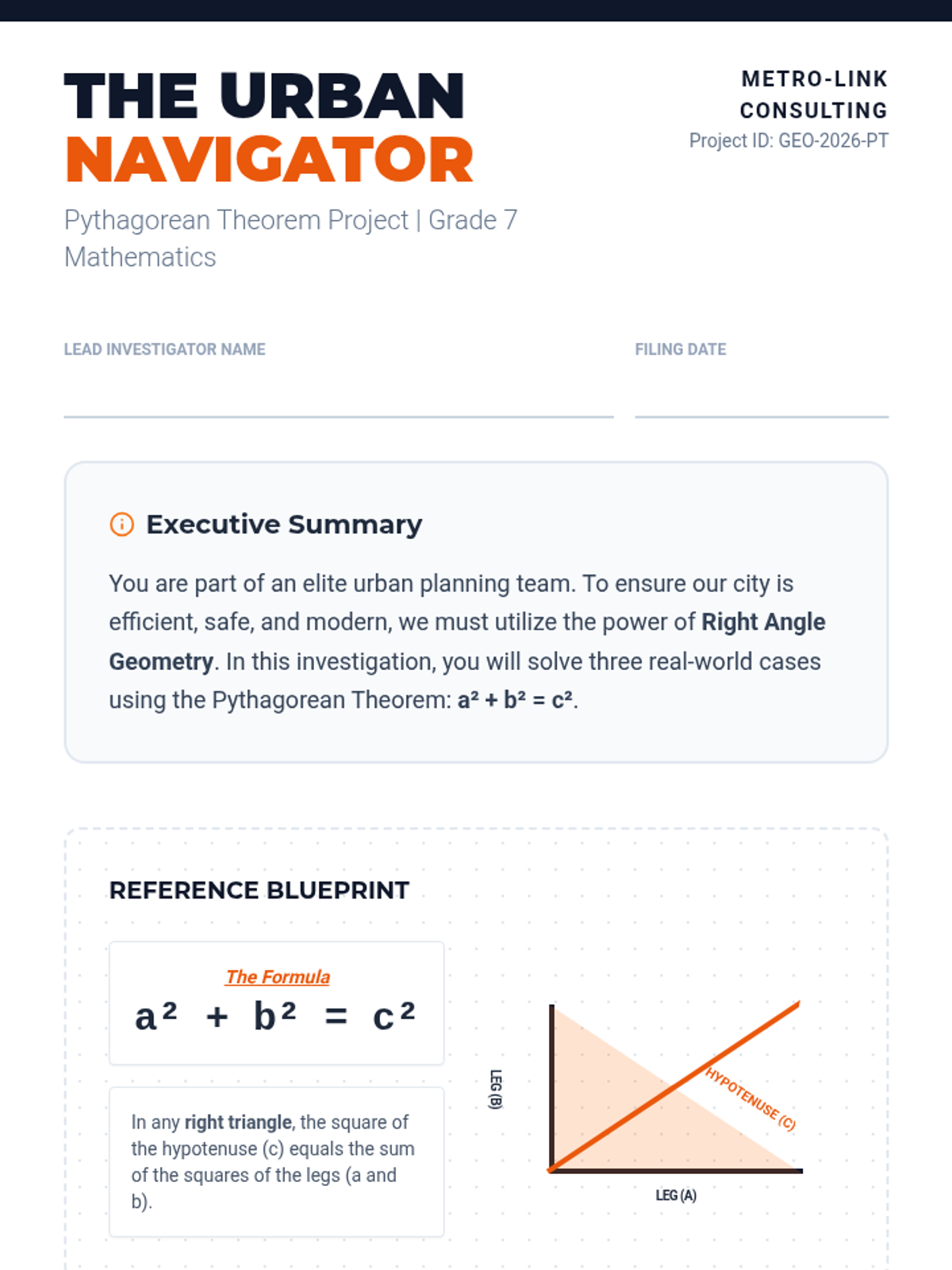
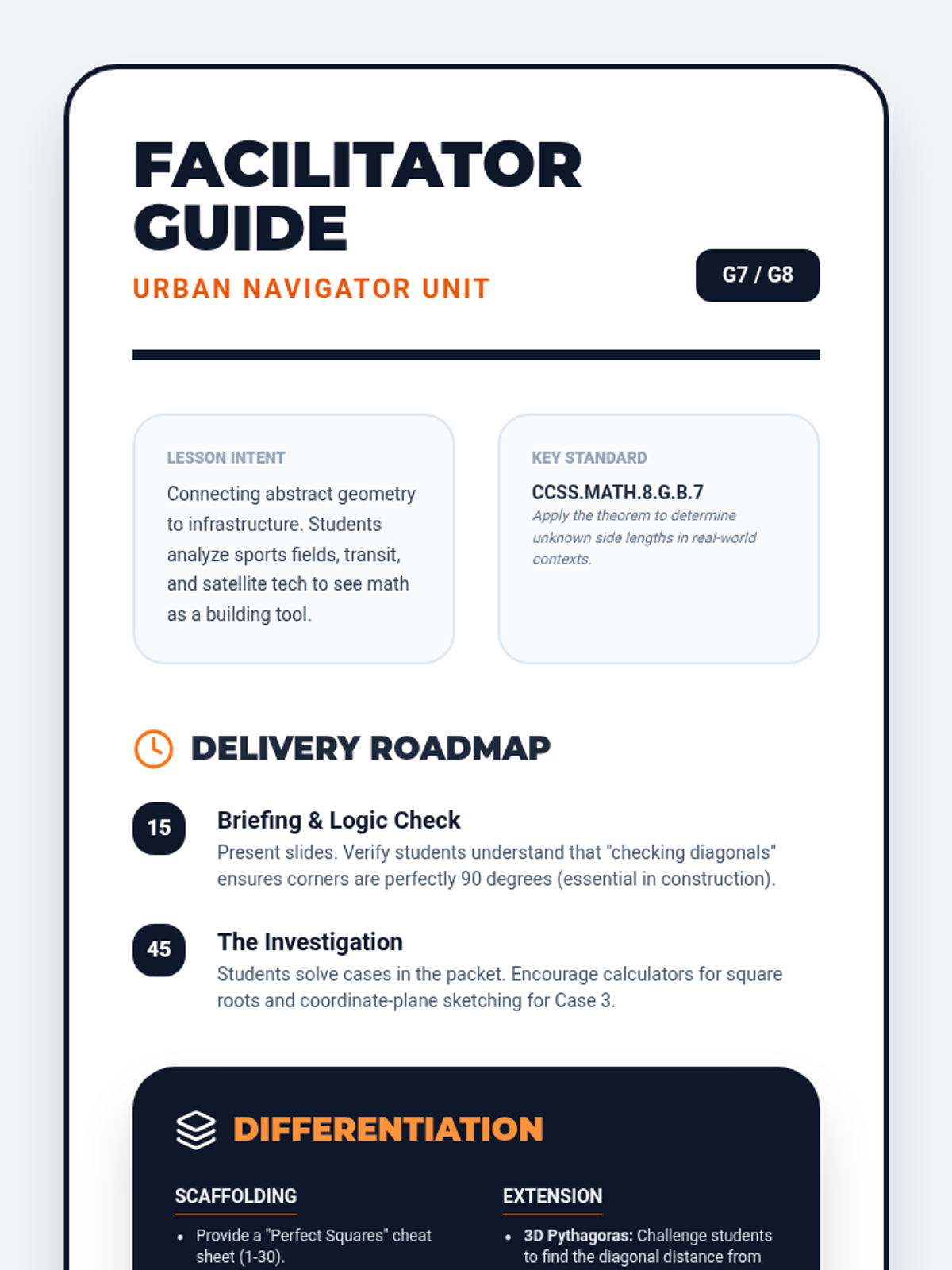
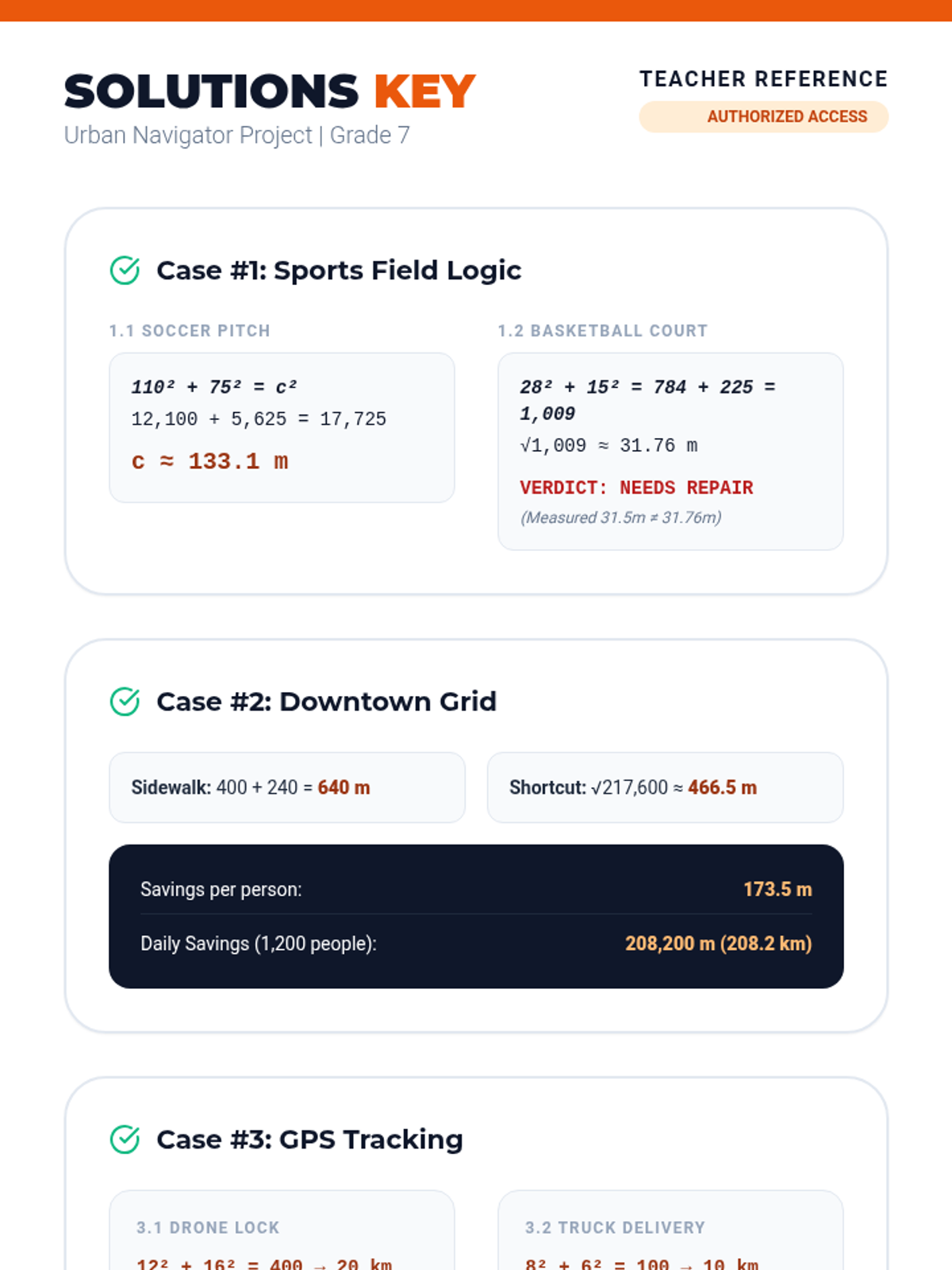
A real-world project-based learning unit where students apply the Pythagorean Theorem to urban planning, sports field design, and GPS navigation. Students act as urban developers and navigators to solve practical distance problems.
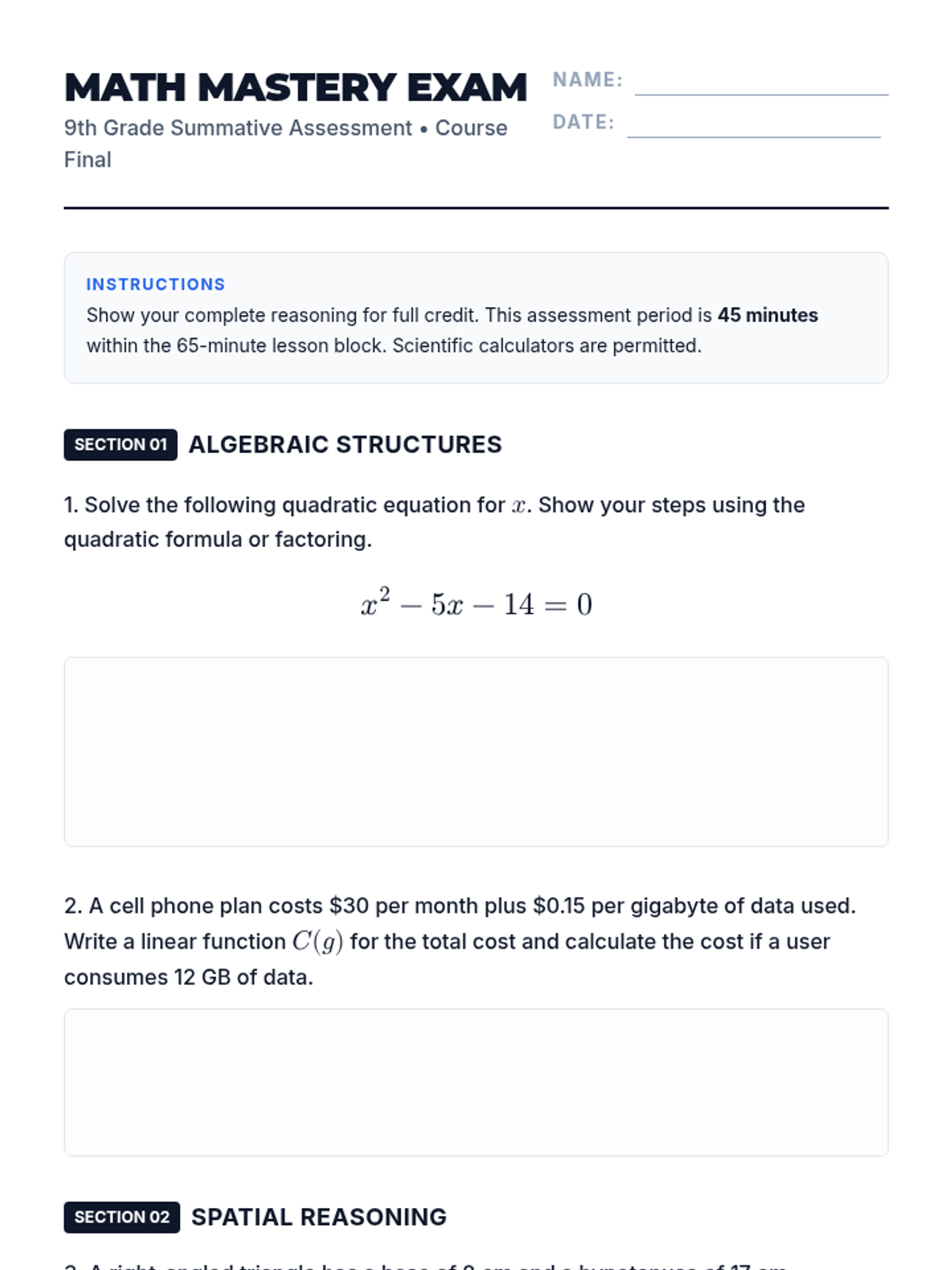
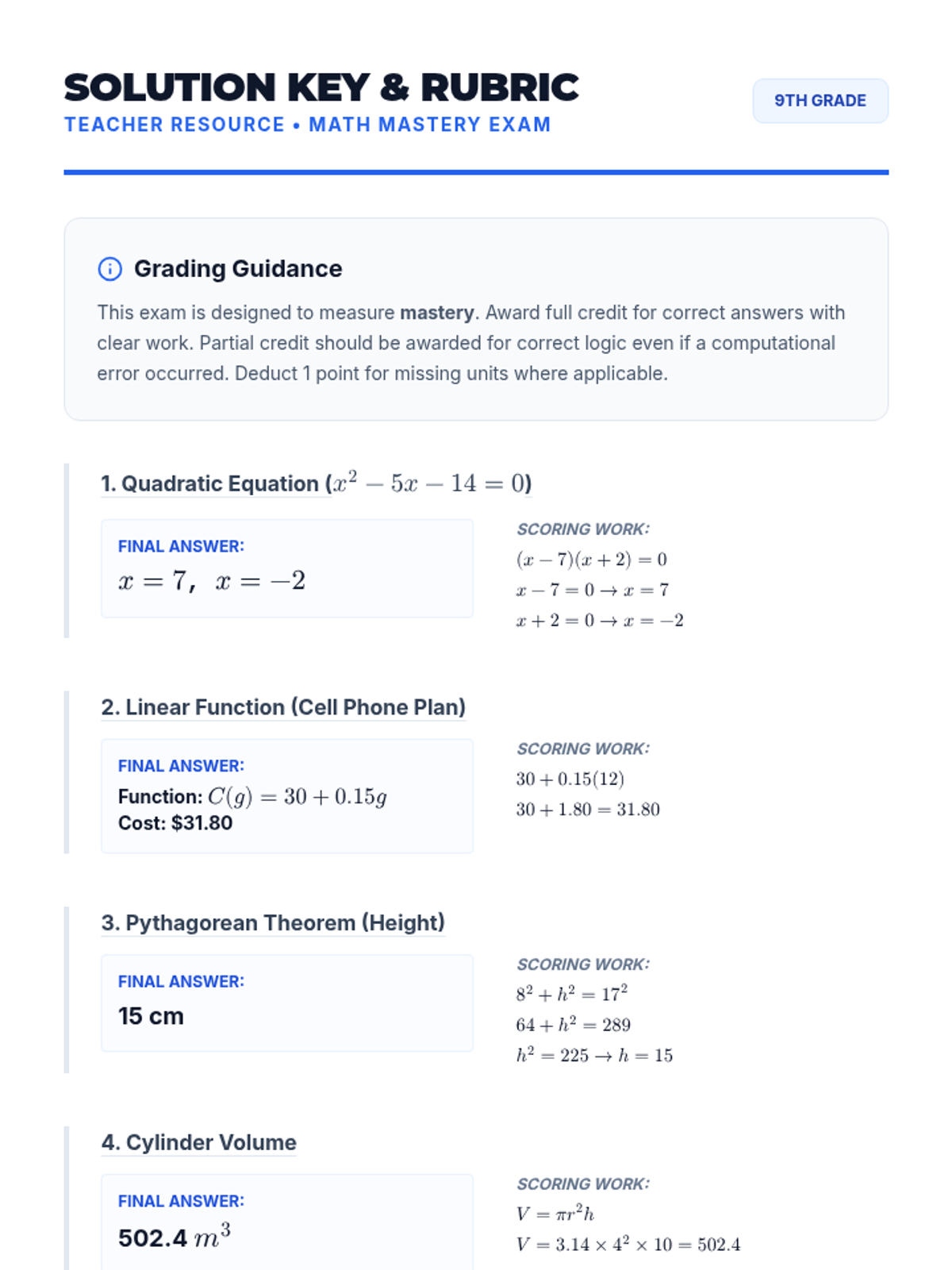
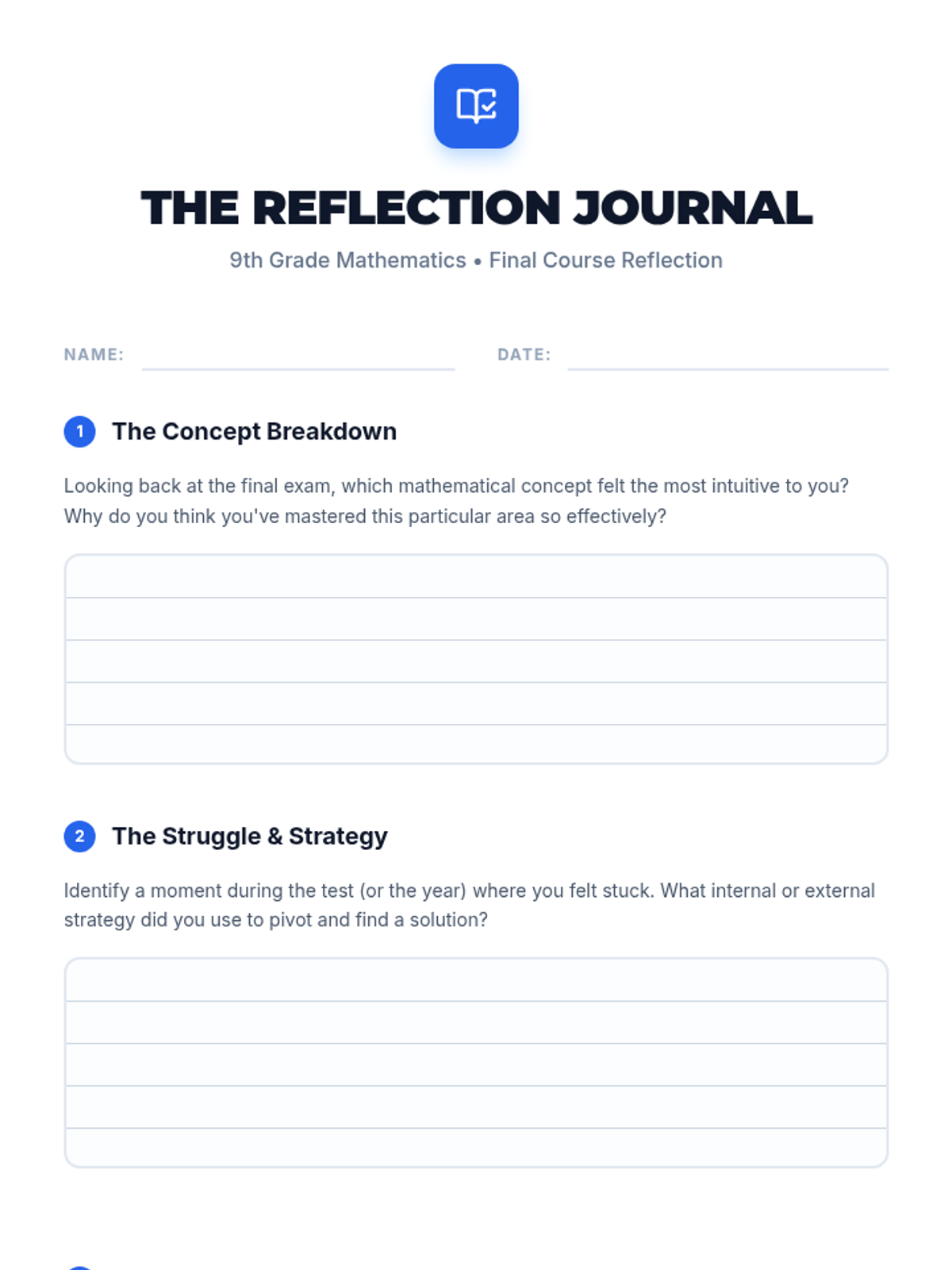
A comprehensive summative assessment lesson where 9th-grade students demonstrate their mathematical proficiency across algebra, geometry, and statistics before reflecting on their year-long growth.
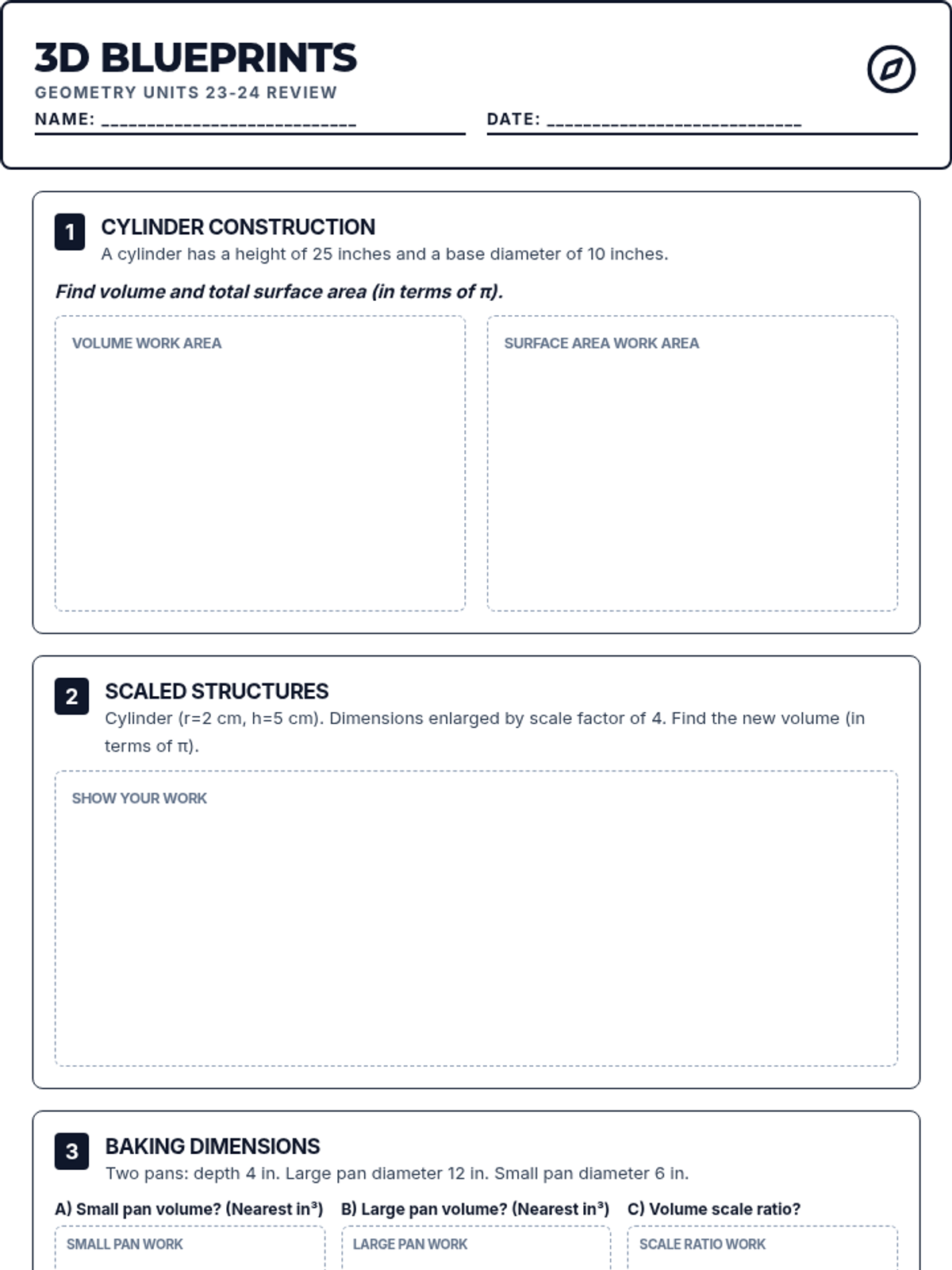
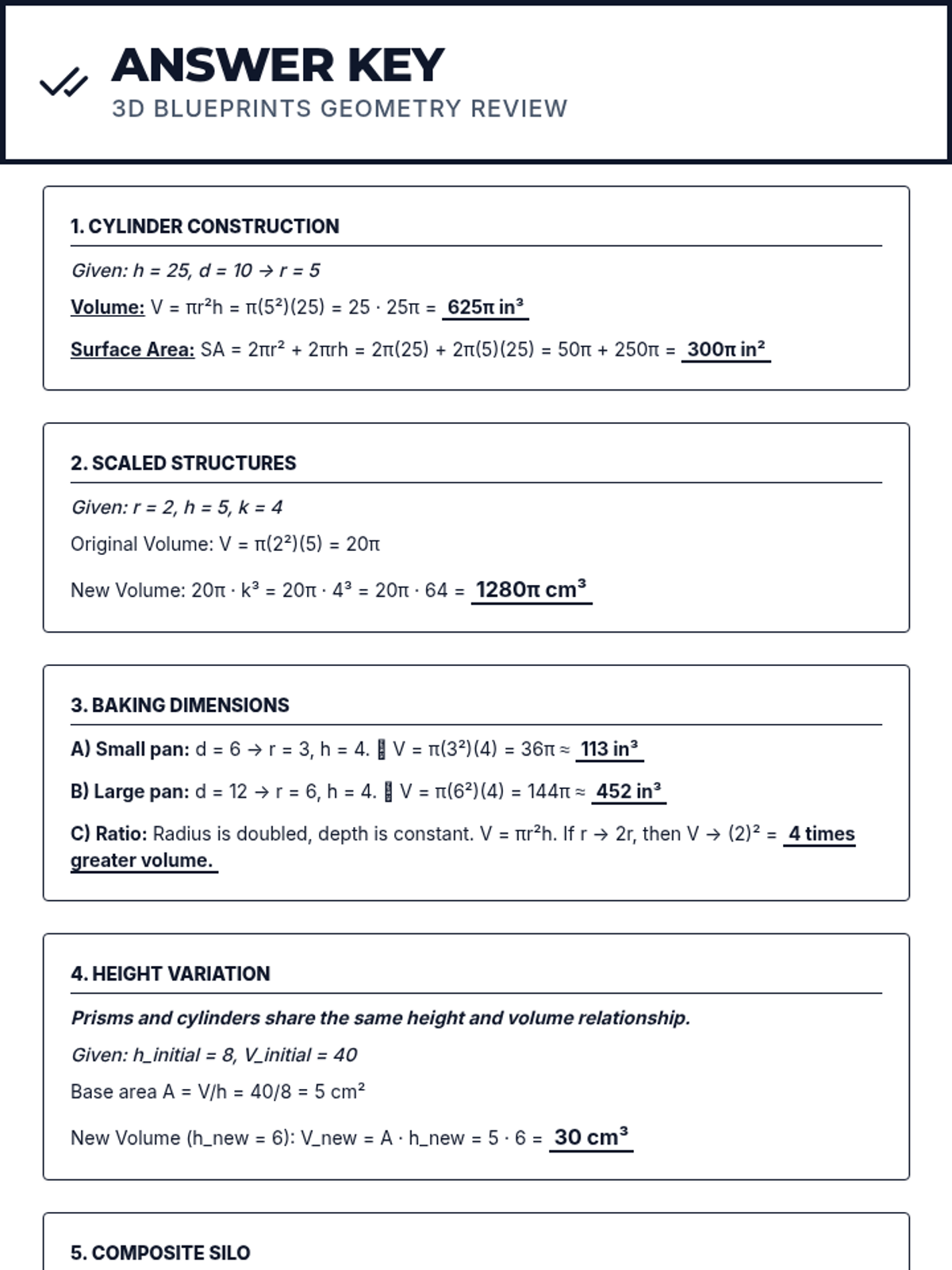
A focused review of volume and surface area concepts for cylinders, cones, and pyramids, featuring open-response practice problems that mirror district assessment standards.
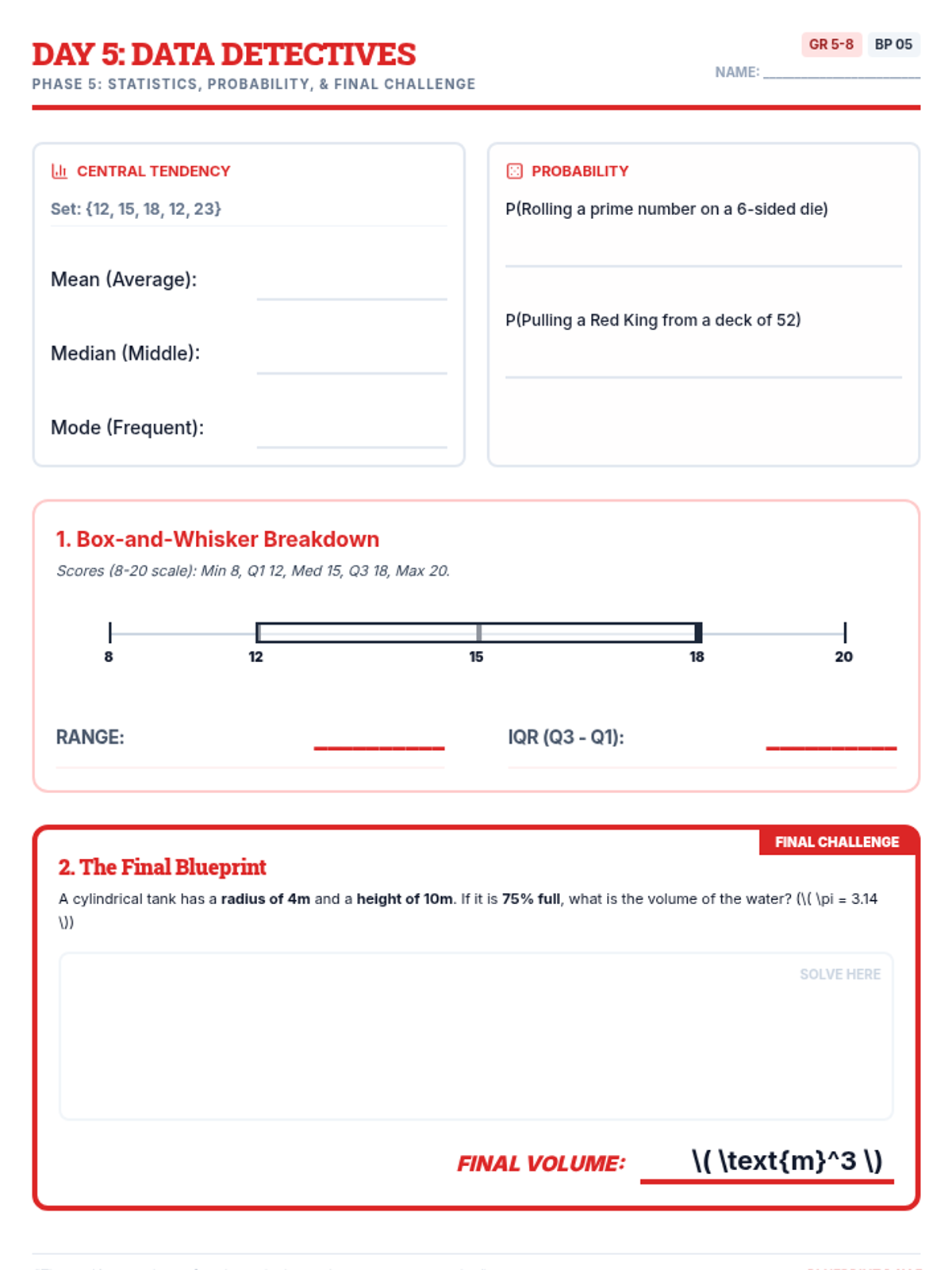
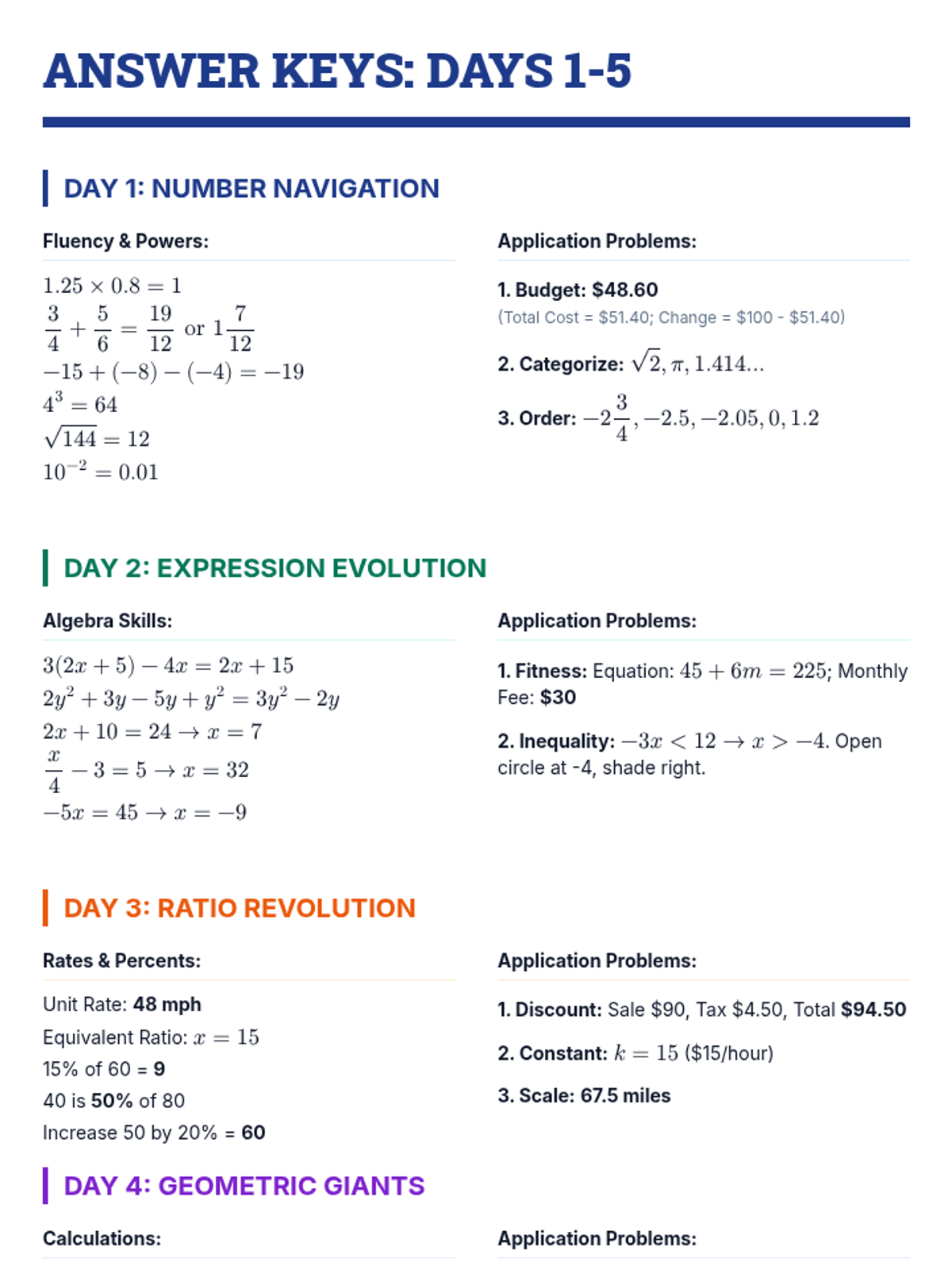
Day 5 concludes with statistics, probability, and a mixed challenge review of all concepts.
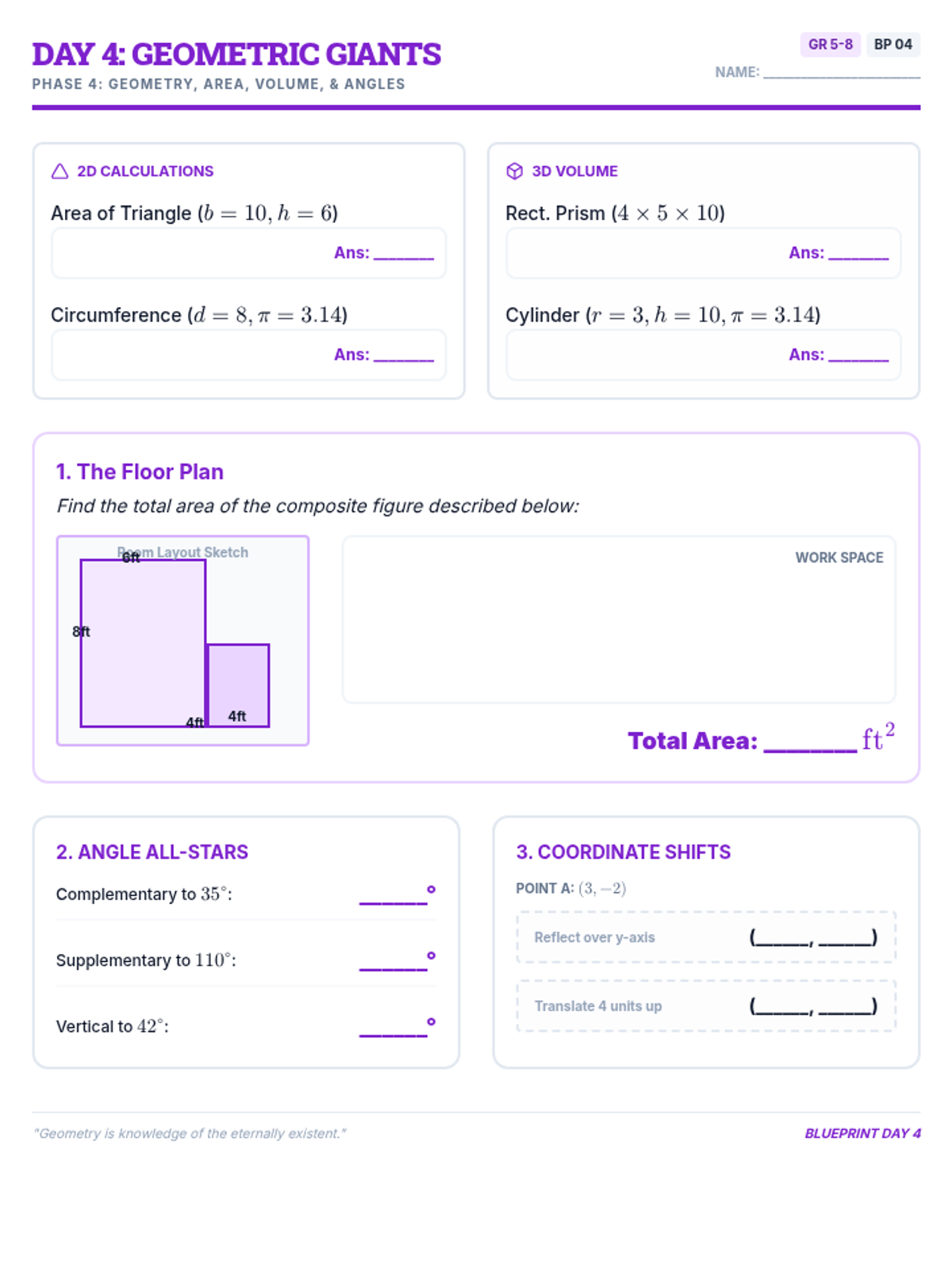
Day 4 explores geometry concepts including area, volume, and angle relationships.
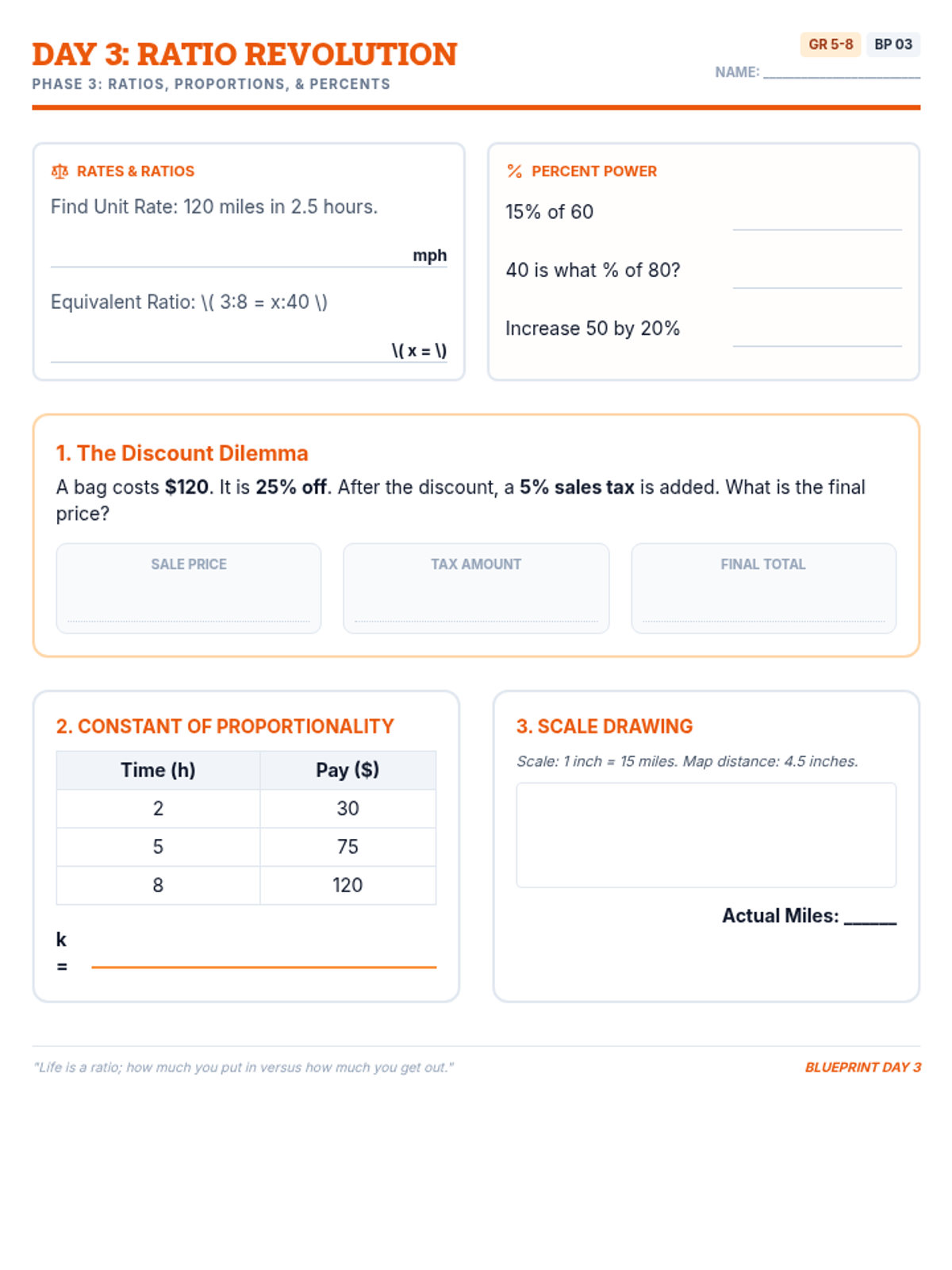
Day 3 focuses on ratios, proportions, and percentages in real-world contexts.
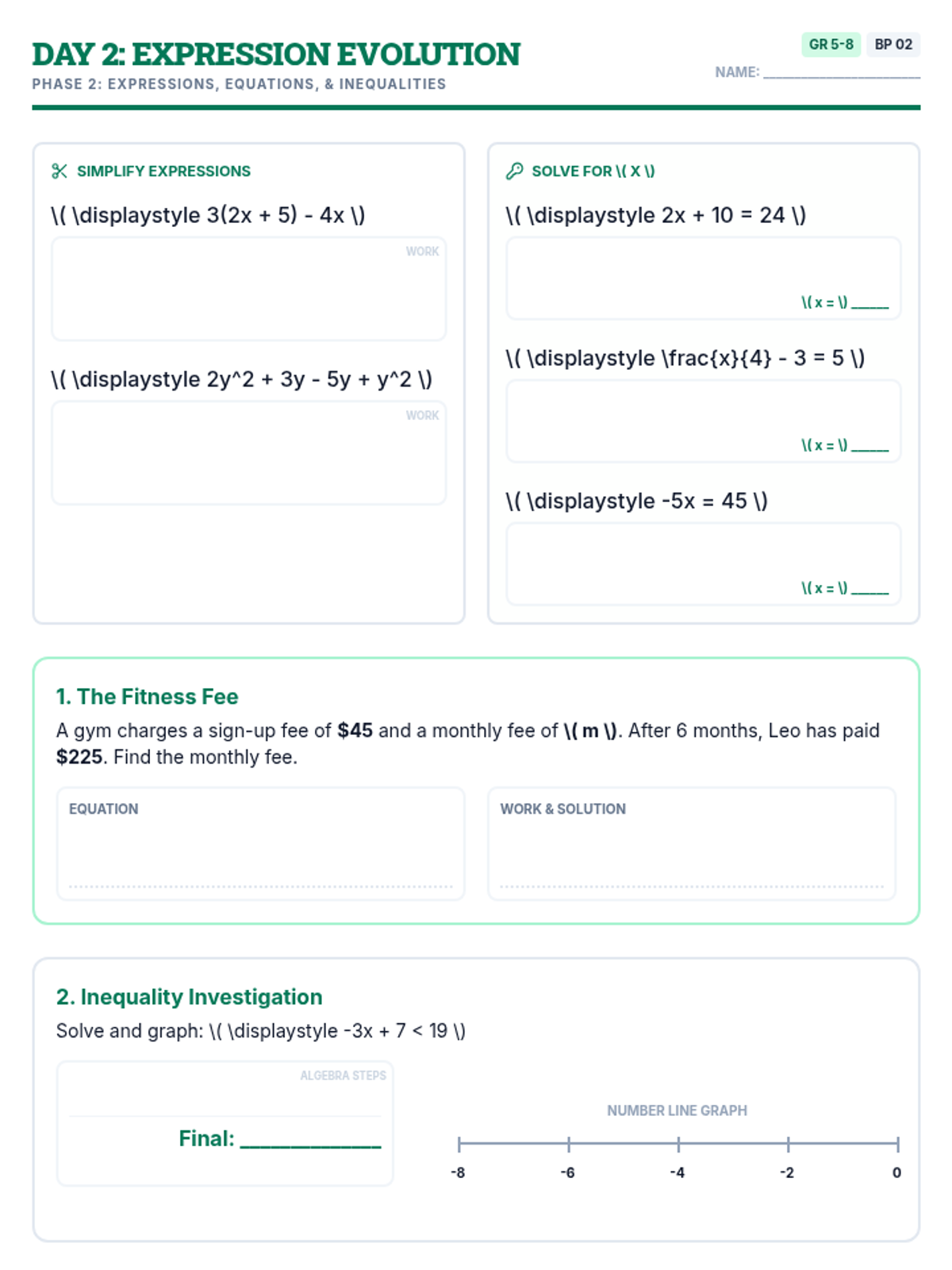
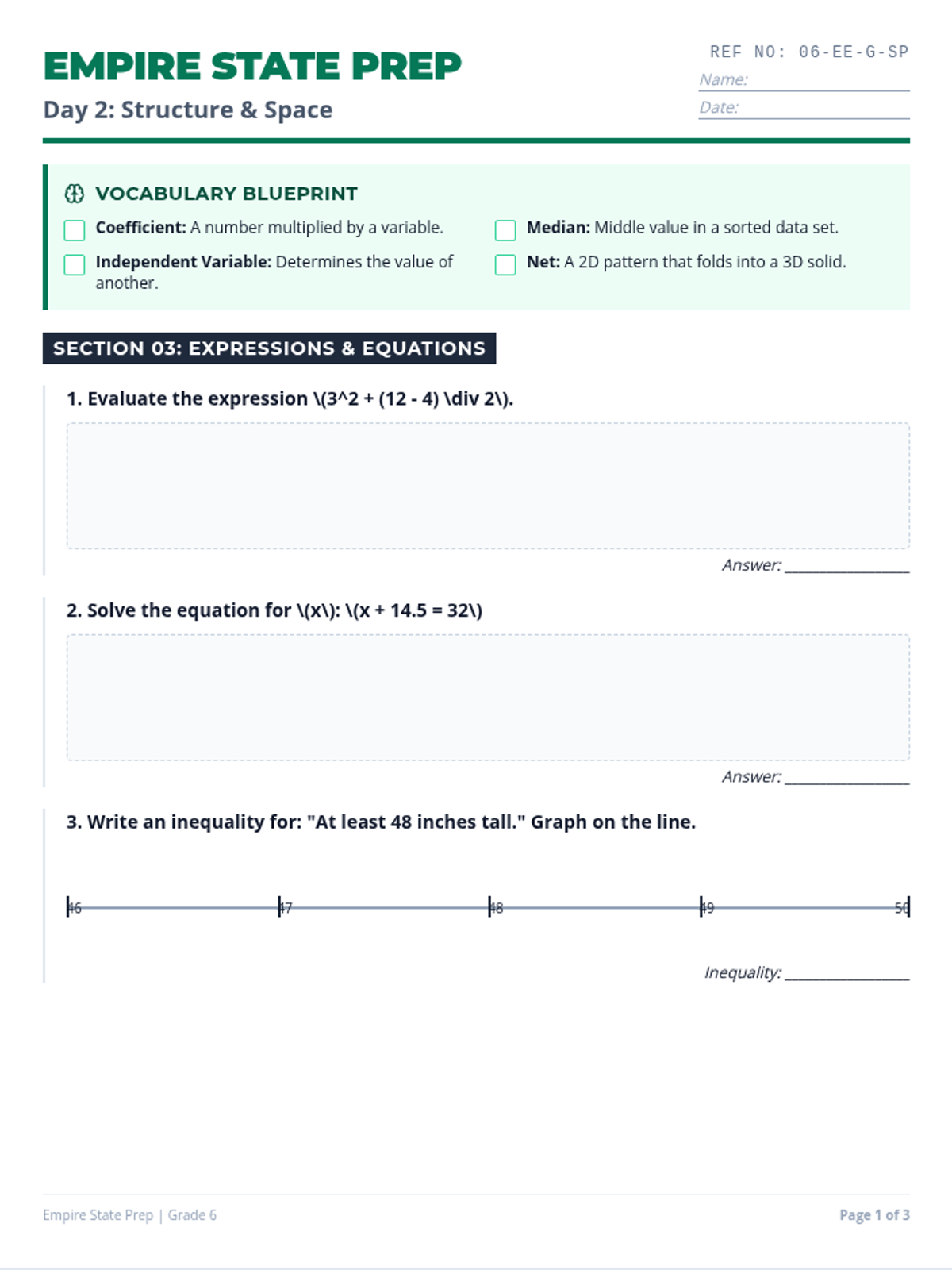
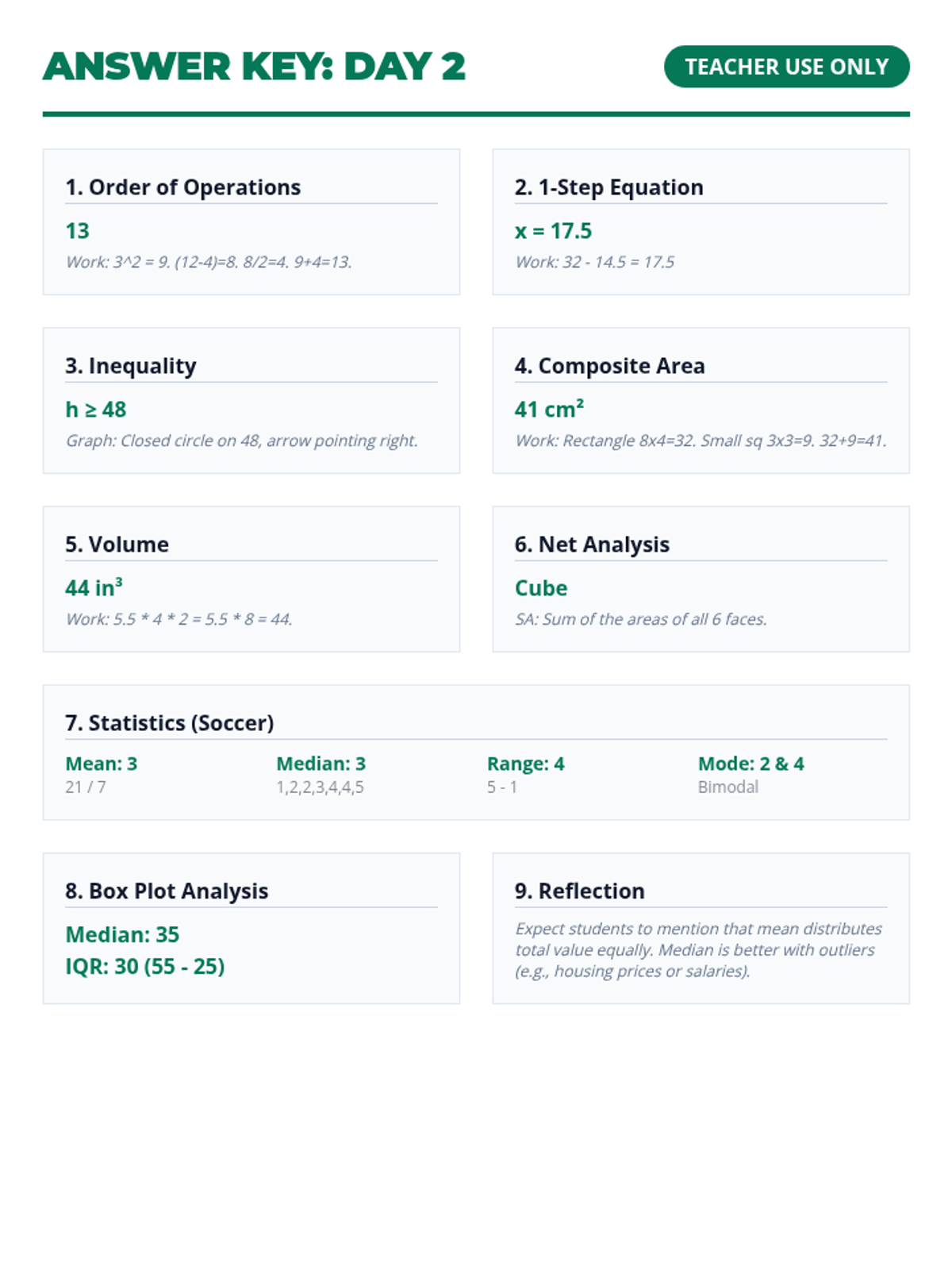
Day 2 covers expressions and equations, focusing on simplifying, solving, and translating word problems.
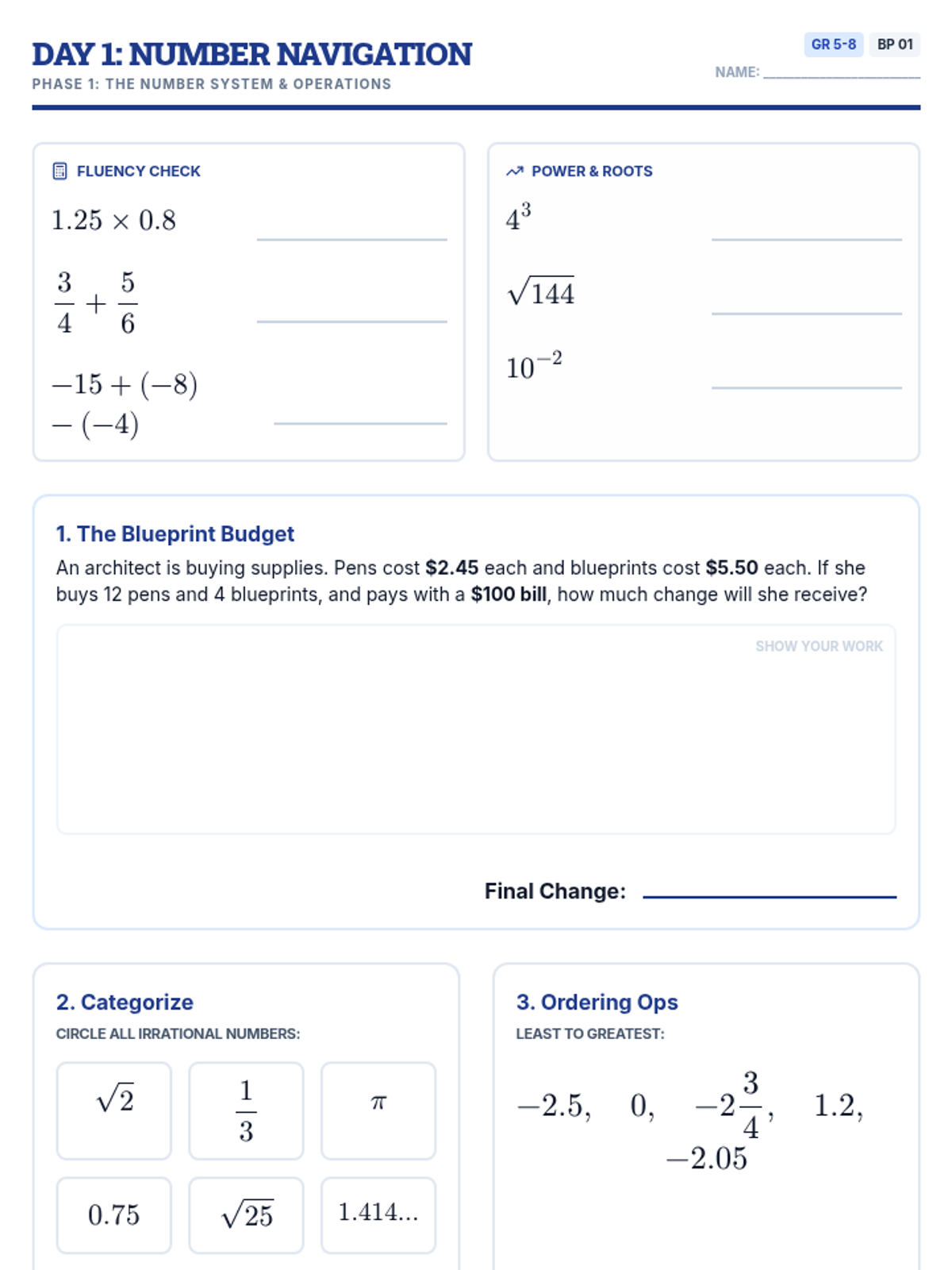
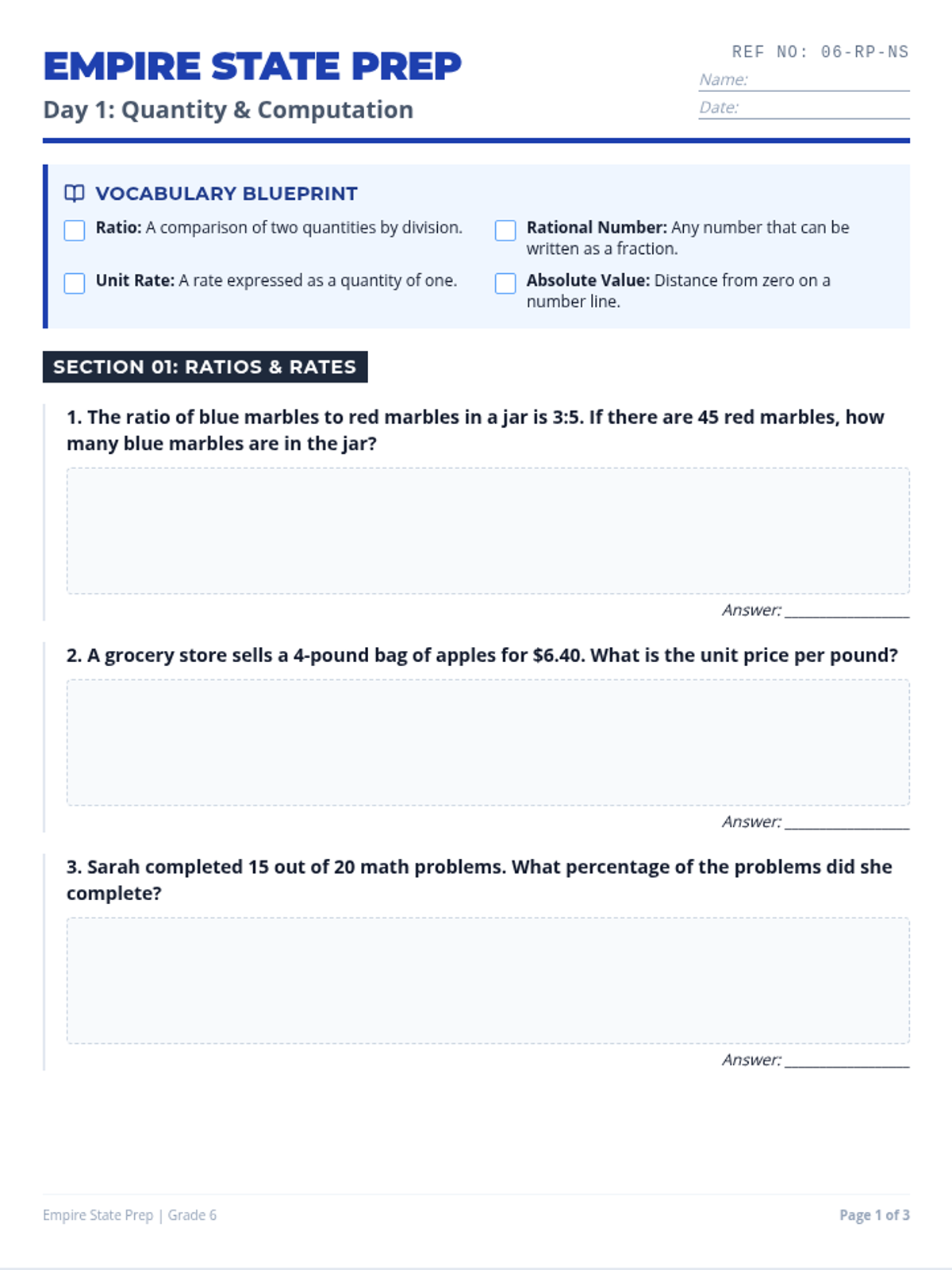
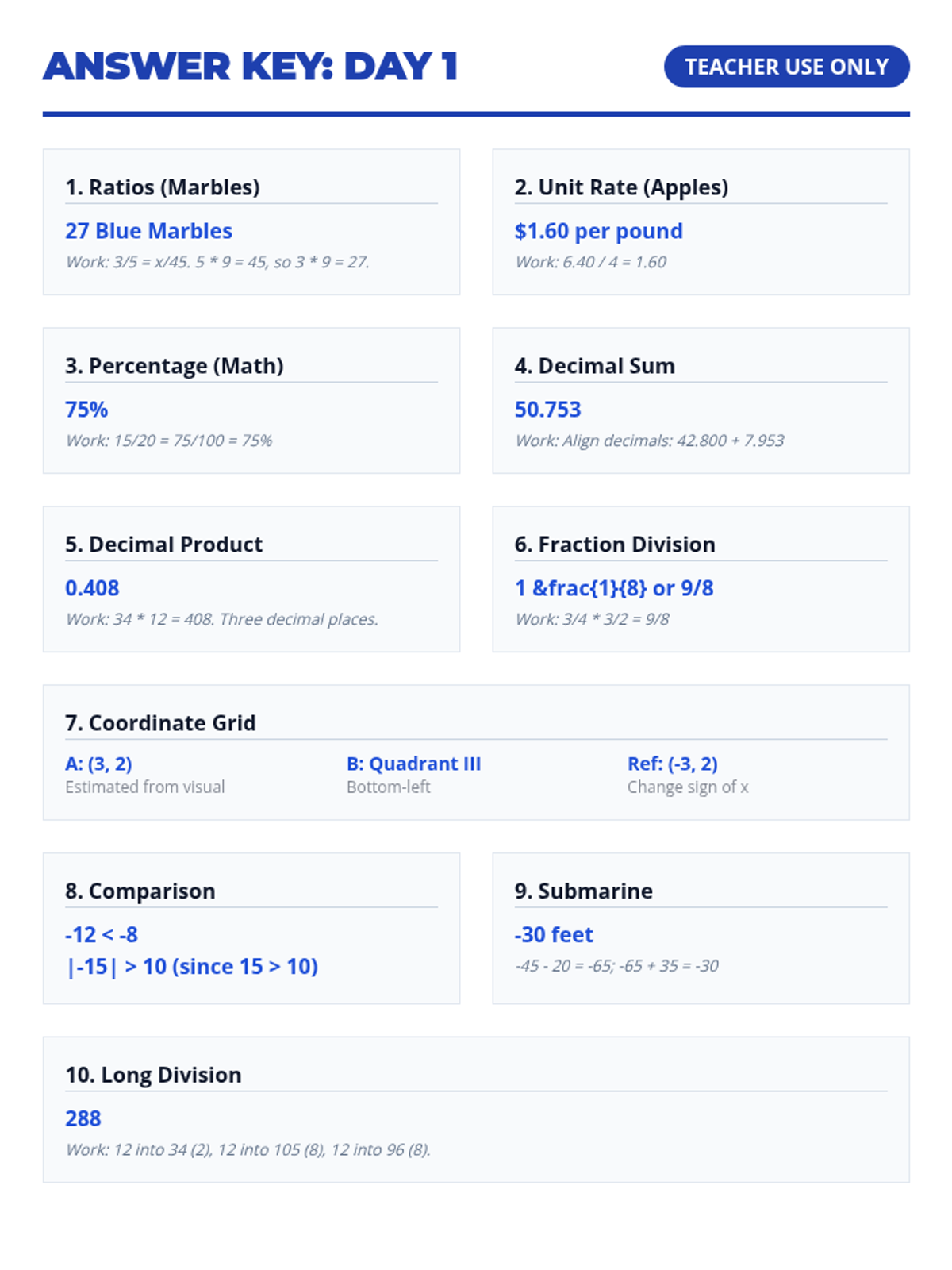
Day 1 focuses on number systems, including operations with fractions, decimals, and integers.
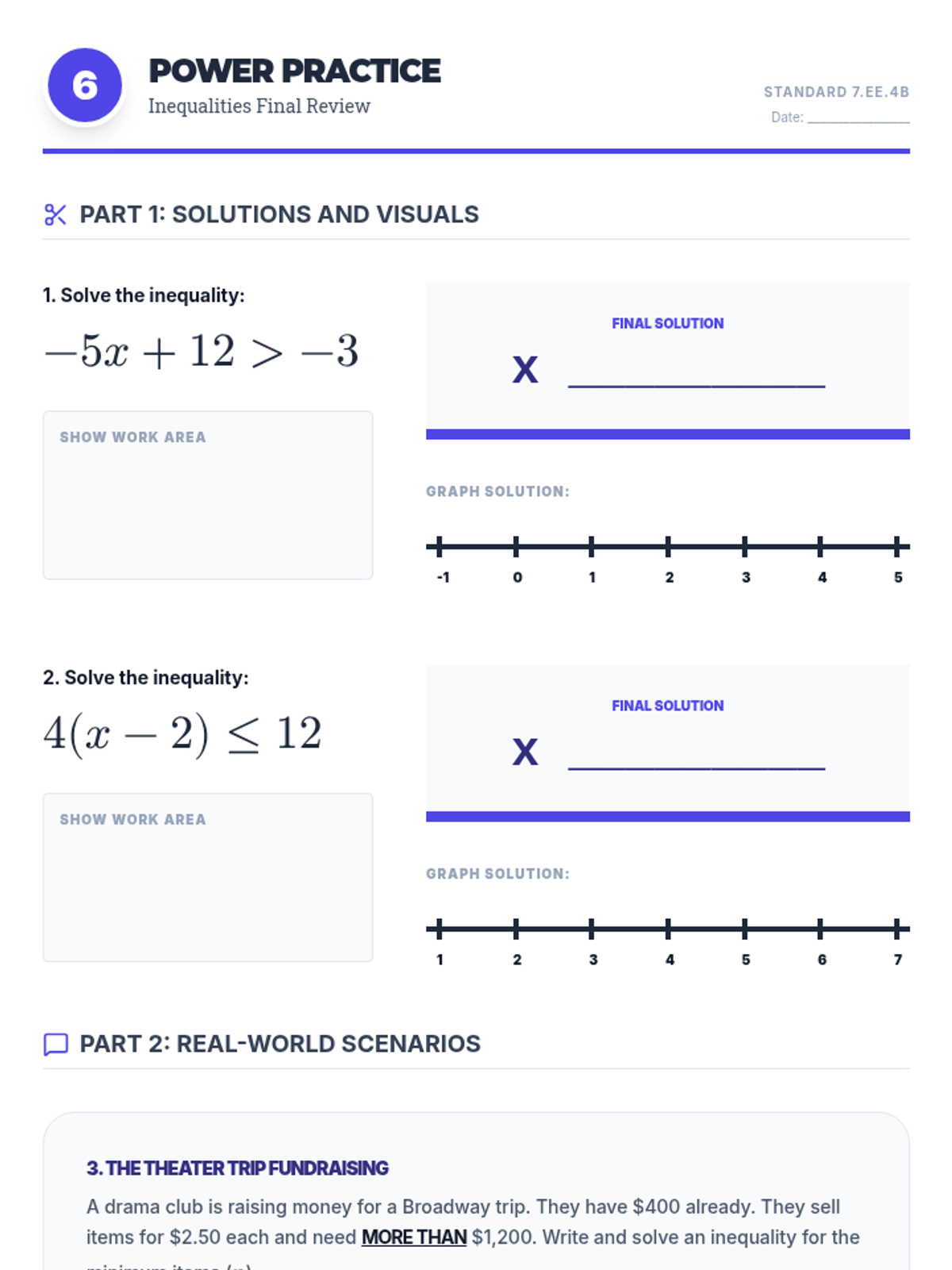
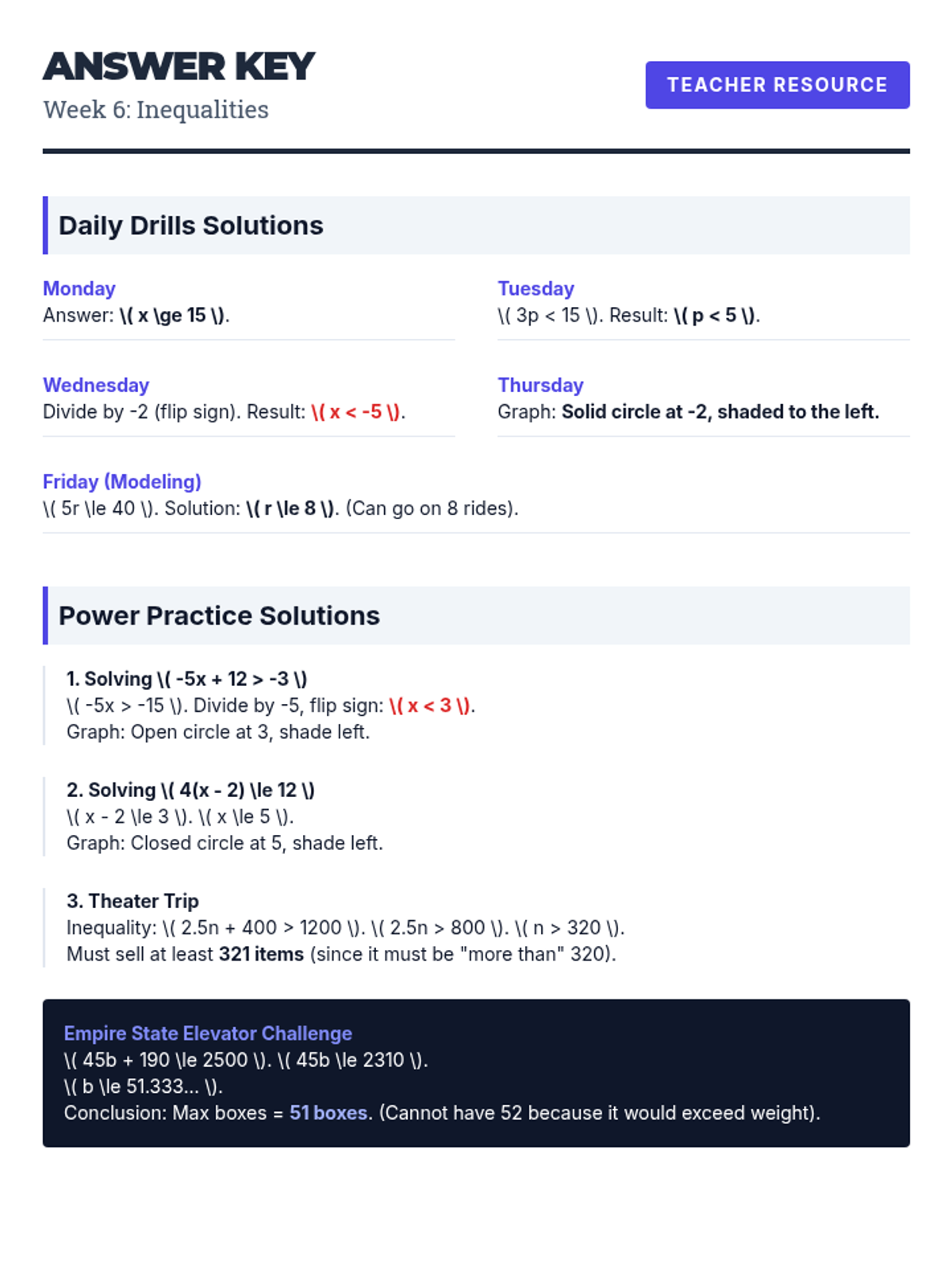
Focuses on Expressions and Equations, Geometry, and Statistics, including area, volume, data analysis, and algebraic thinking.
Focuses on Ratios and Proportions and The Number System, including operations with decimals/fractions and coordinate plane concepts.
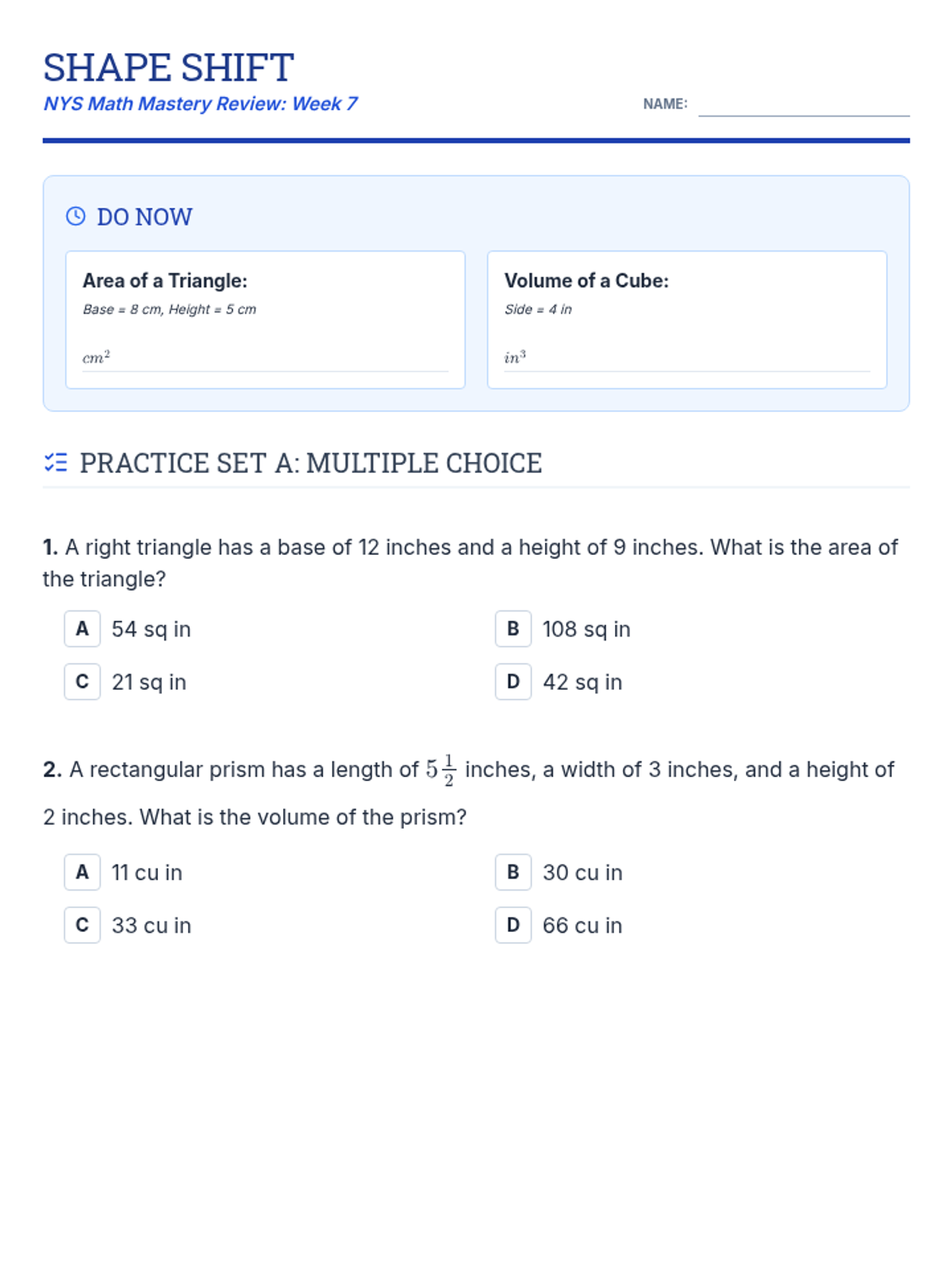
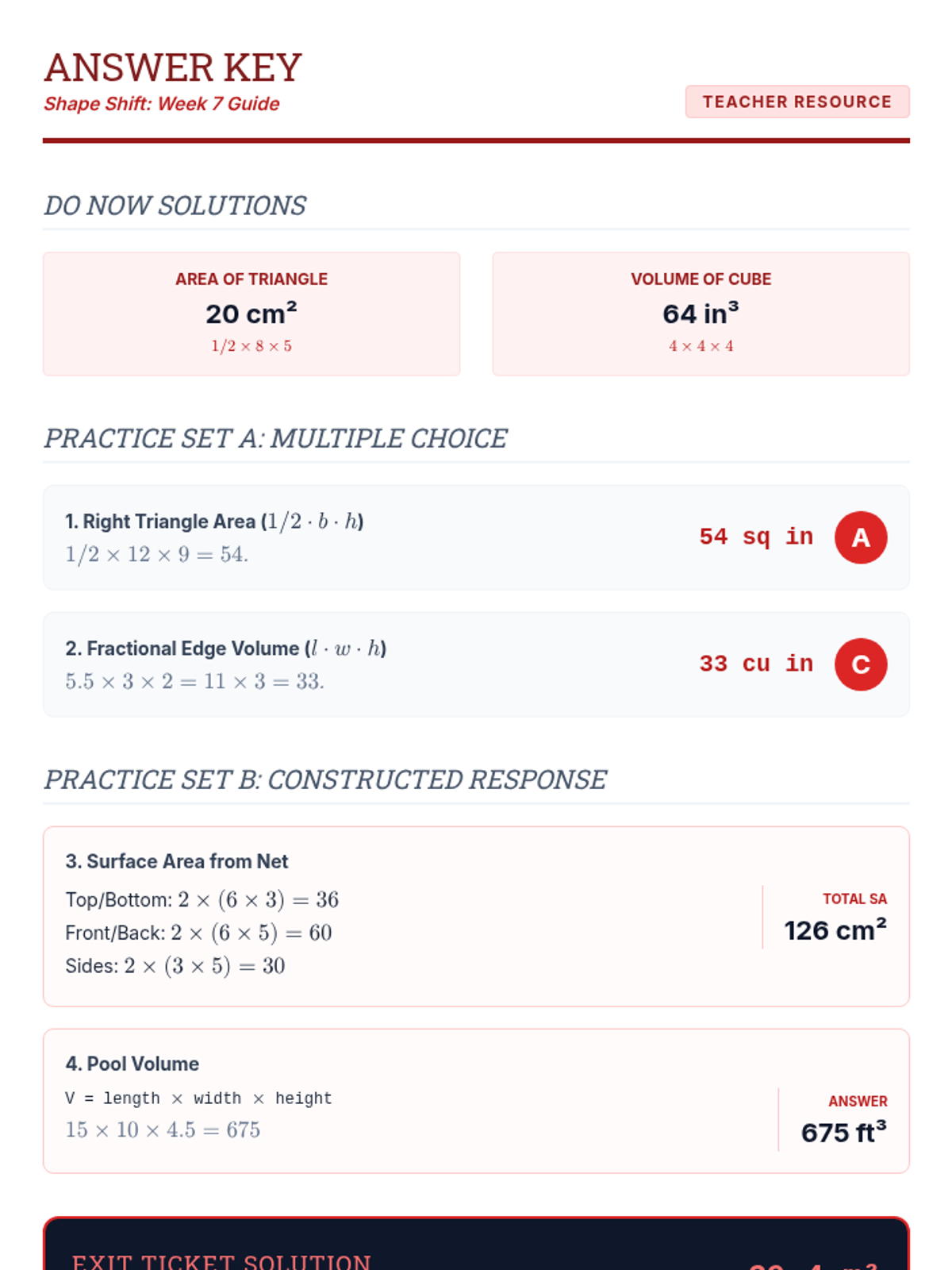
Calculating area of polygons, surface area of prisms using nets, and volume with fractional edge lengths.
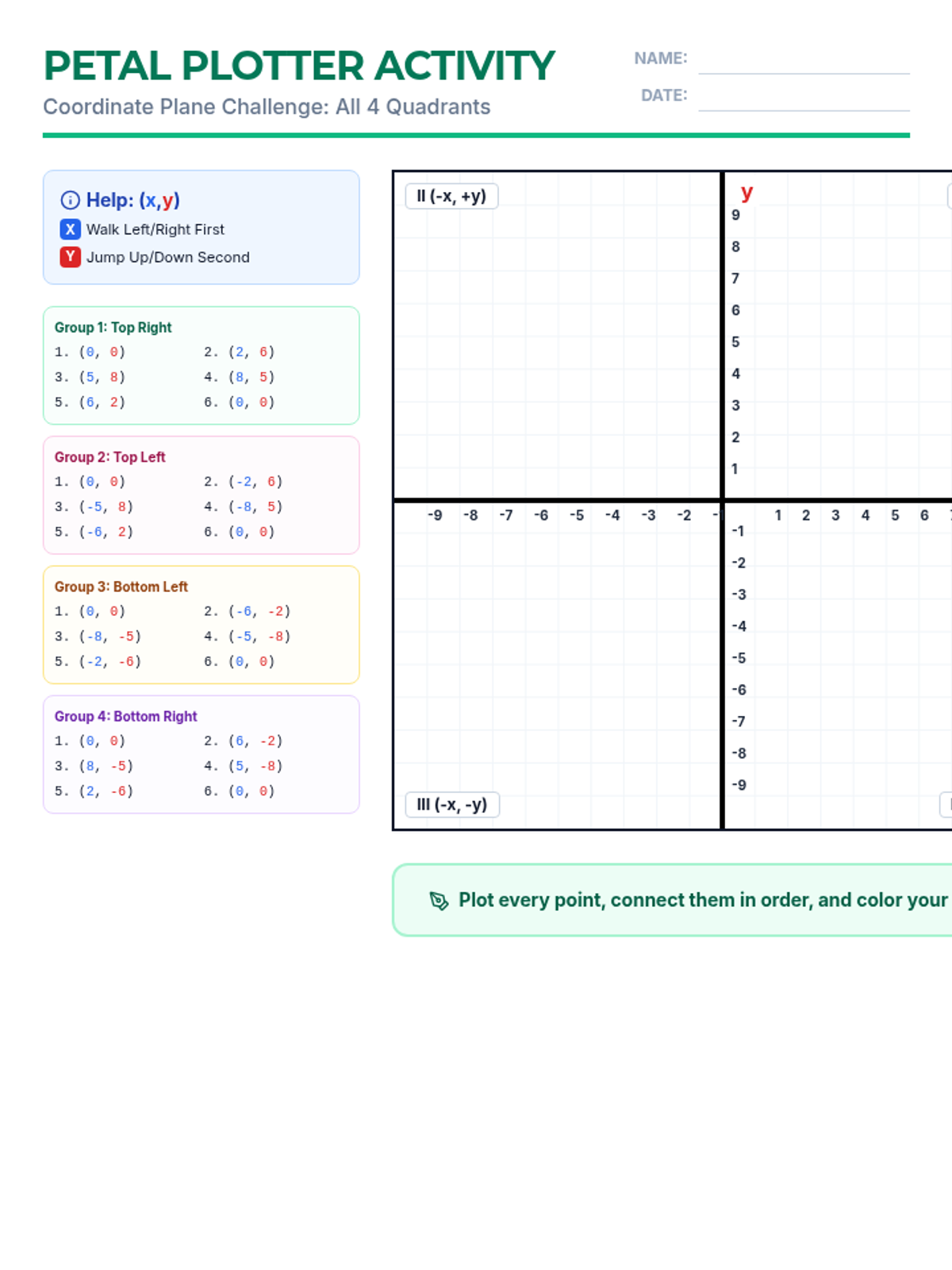
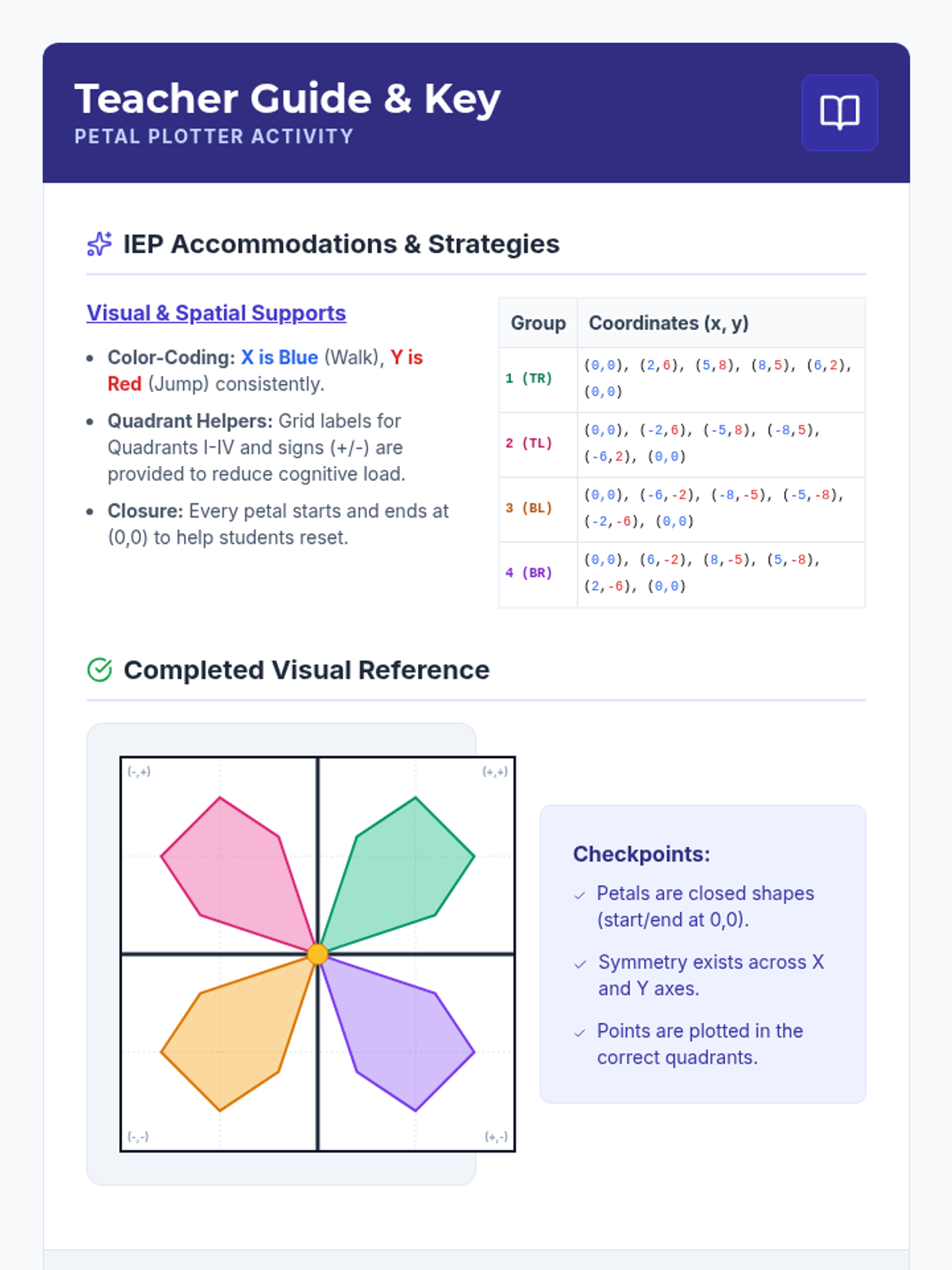
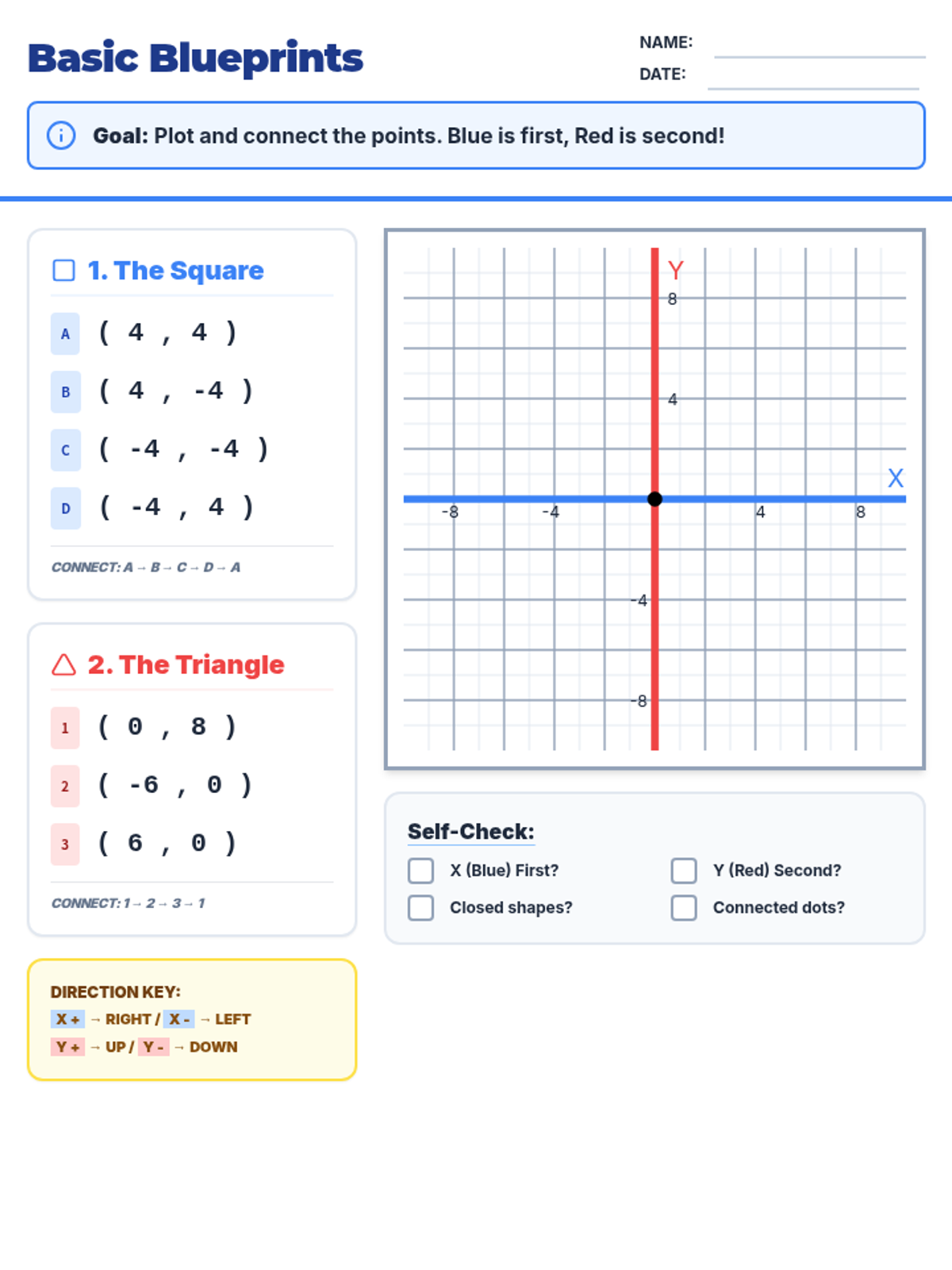
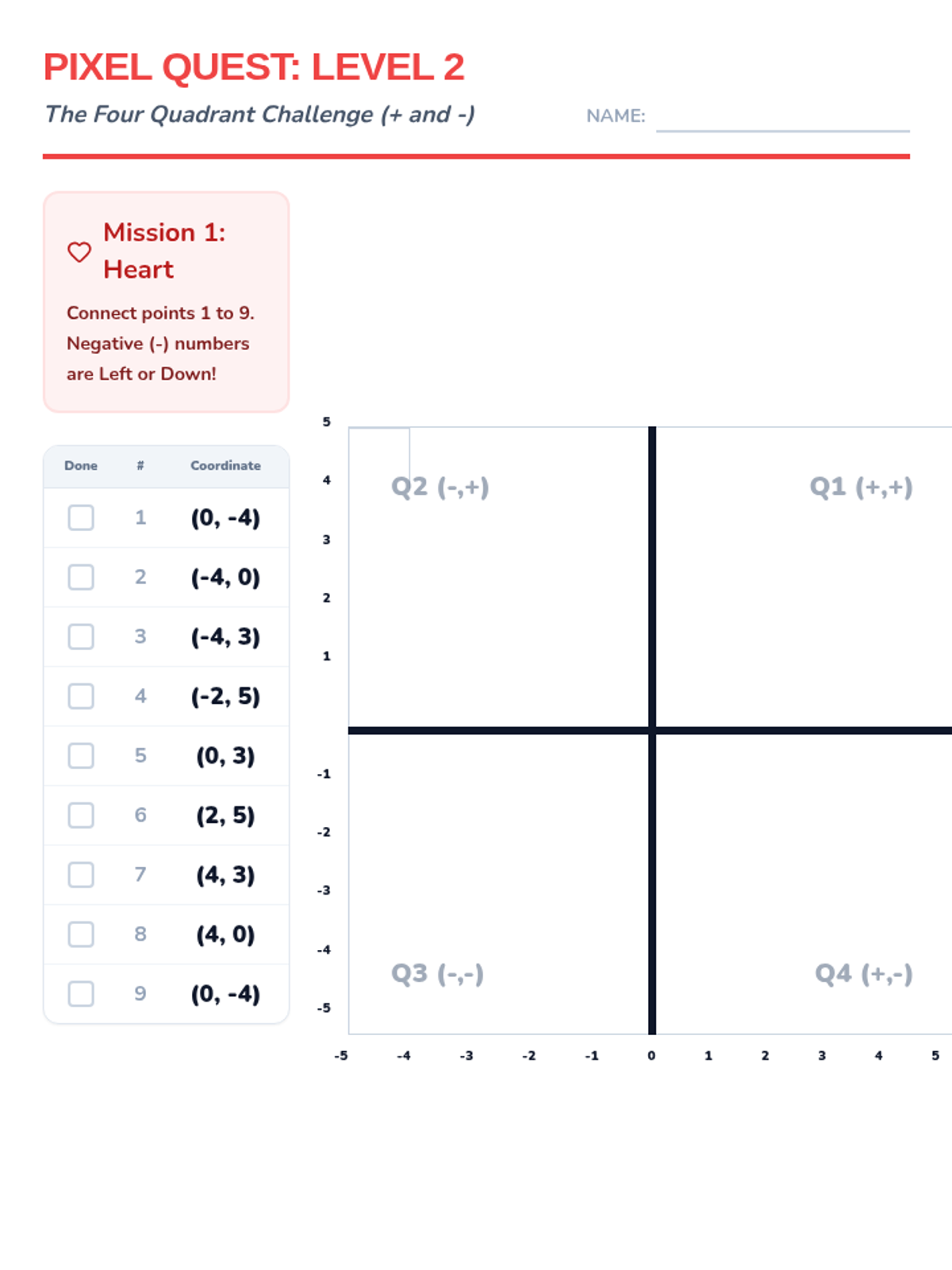
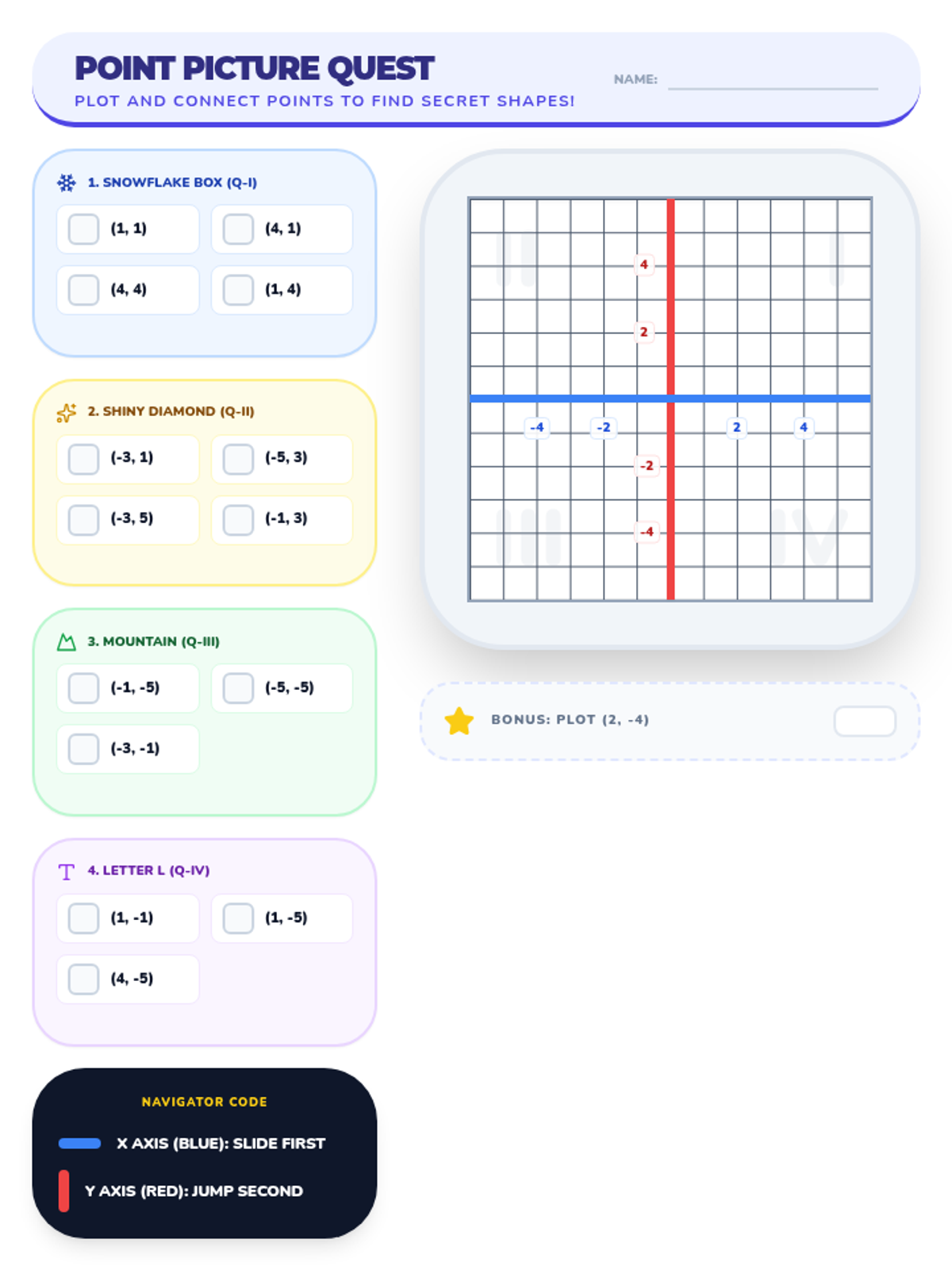
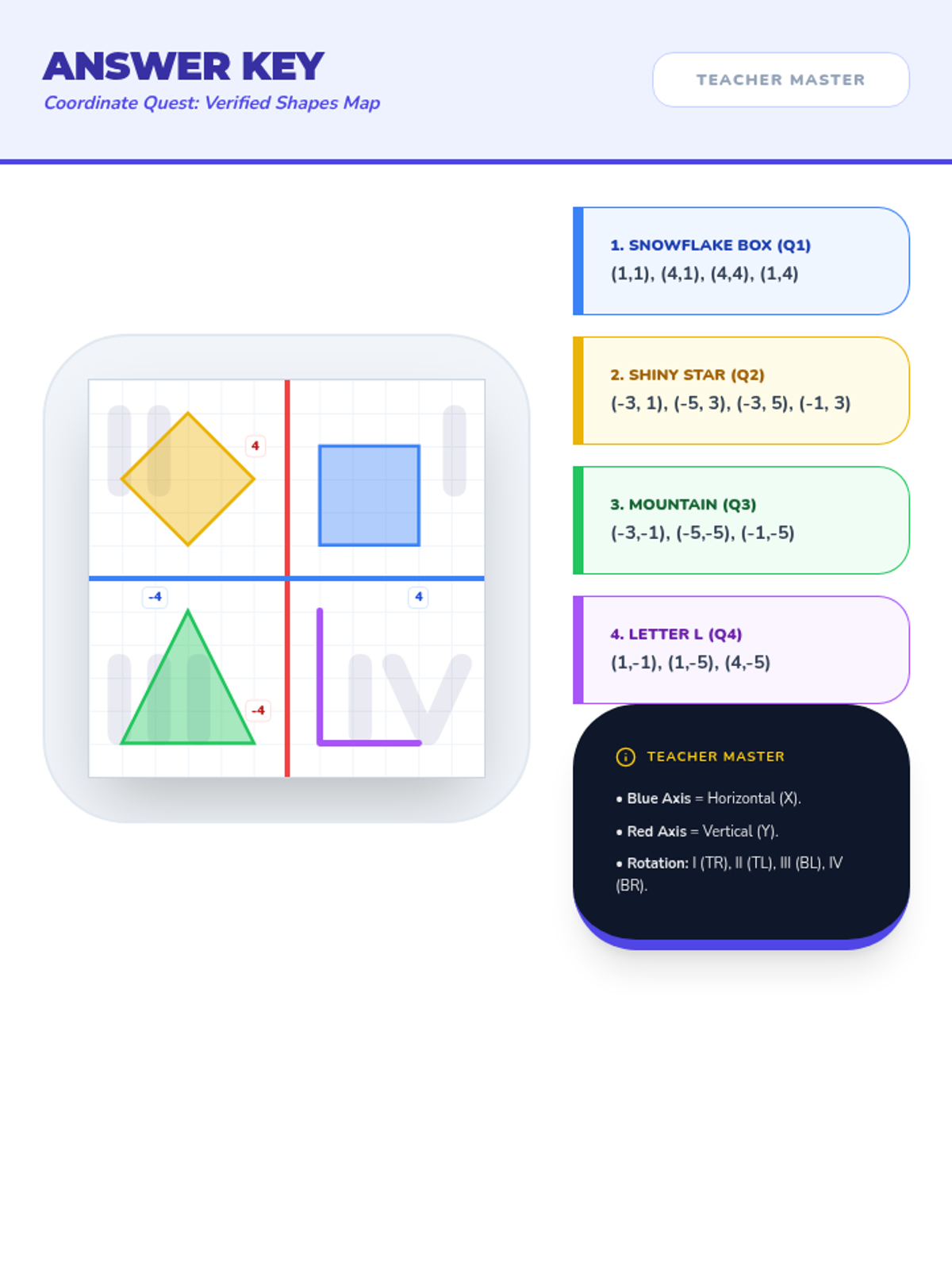
A modified coordinate plane lesson for IEP students focusing on plotting points in all four quadrants to create a seasonal flower image. Includes scaffolding such as color-coding and directional prompts.
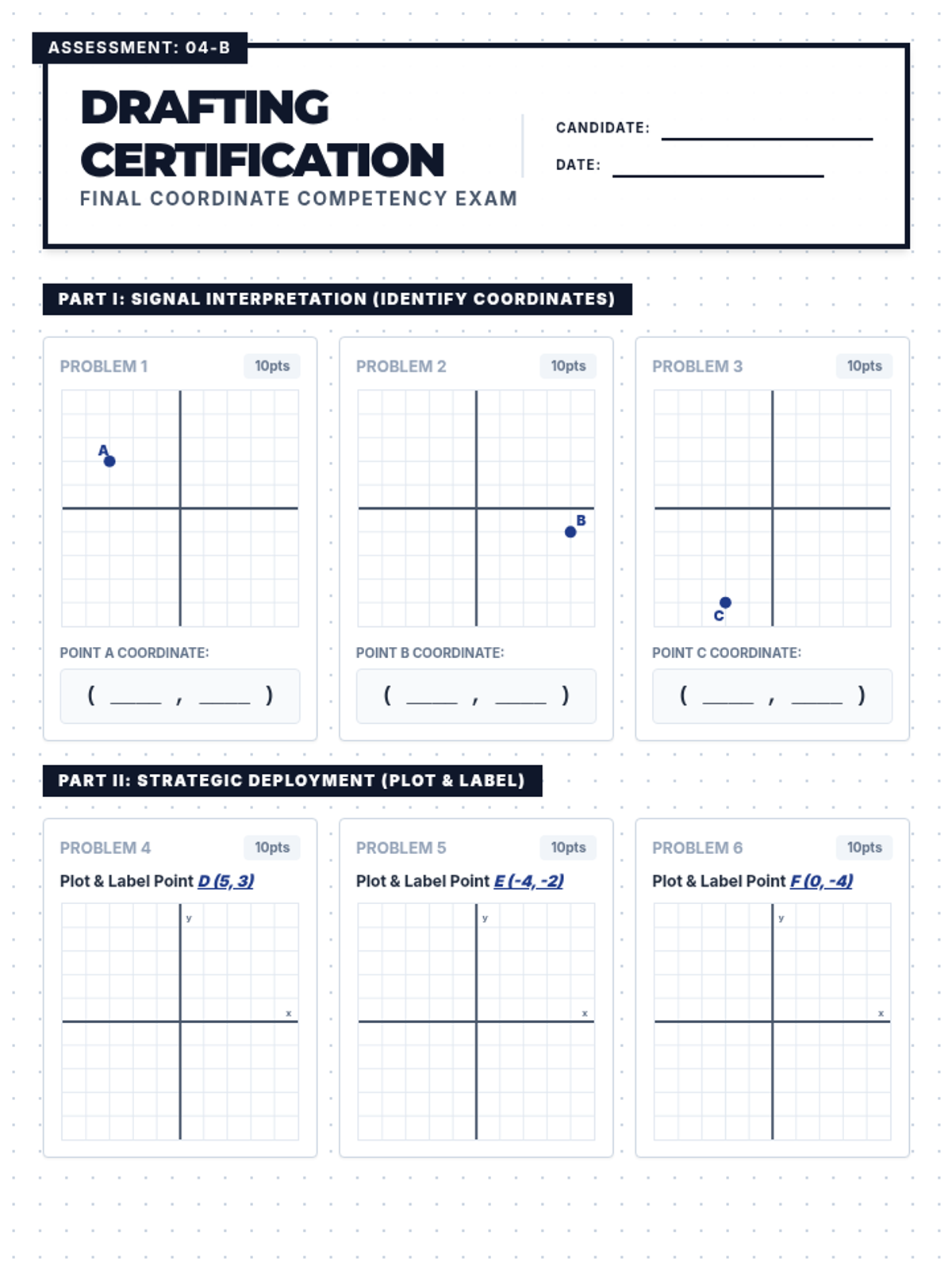
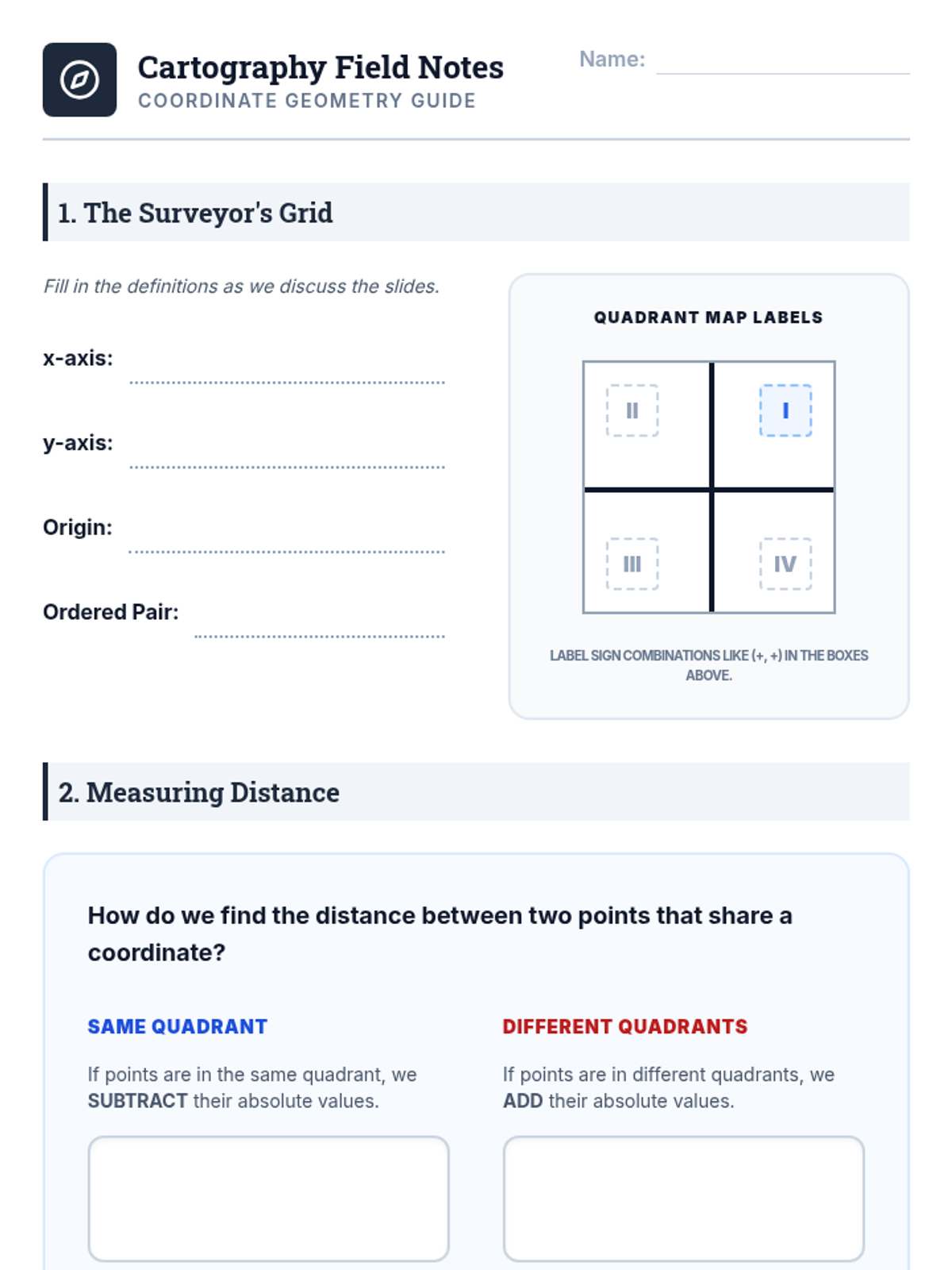
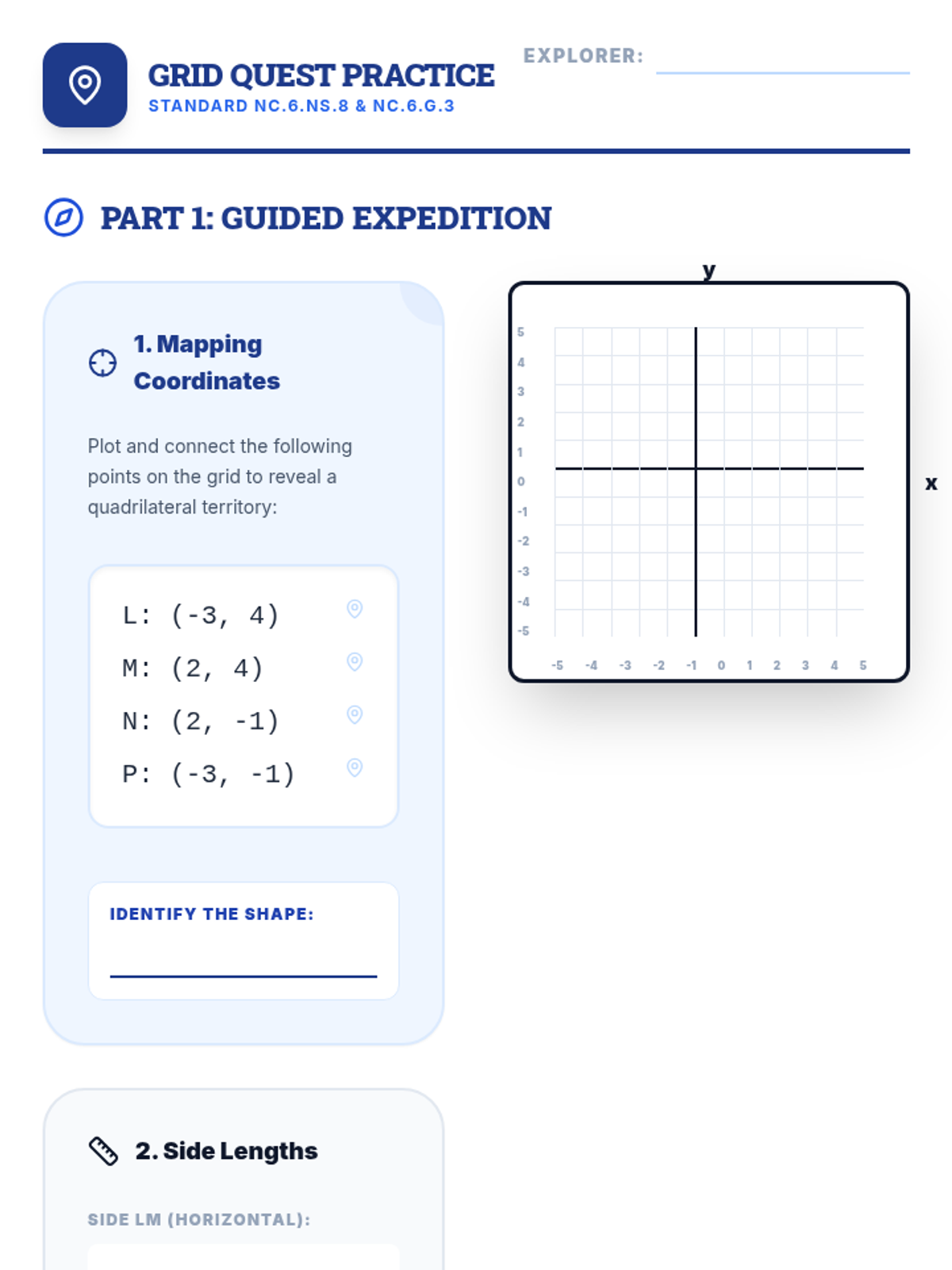
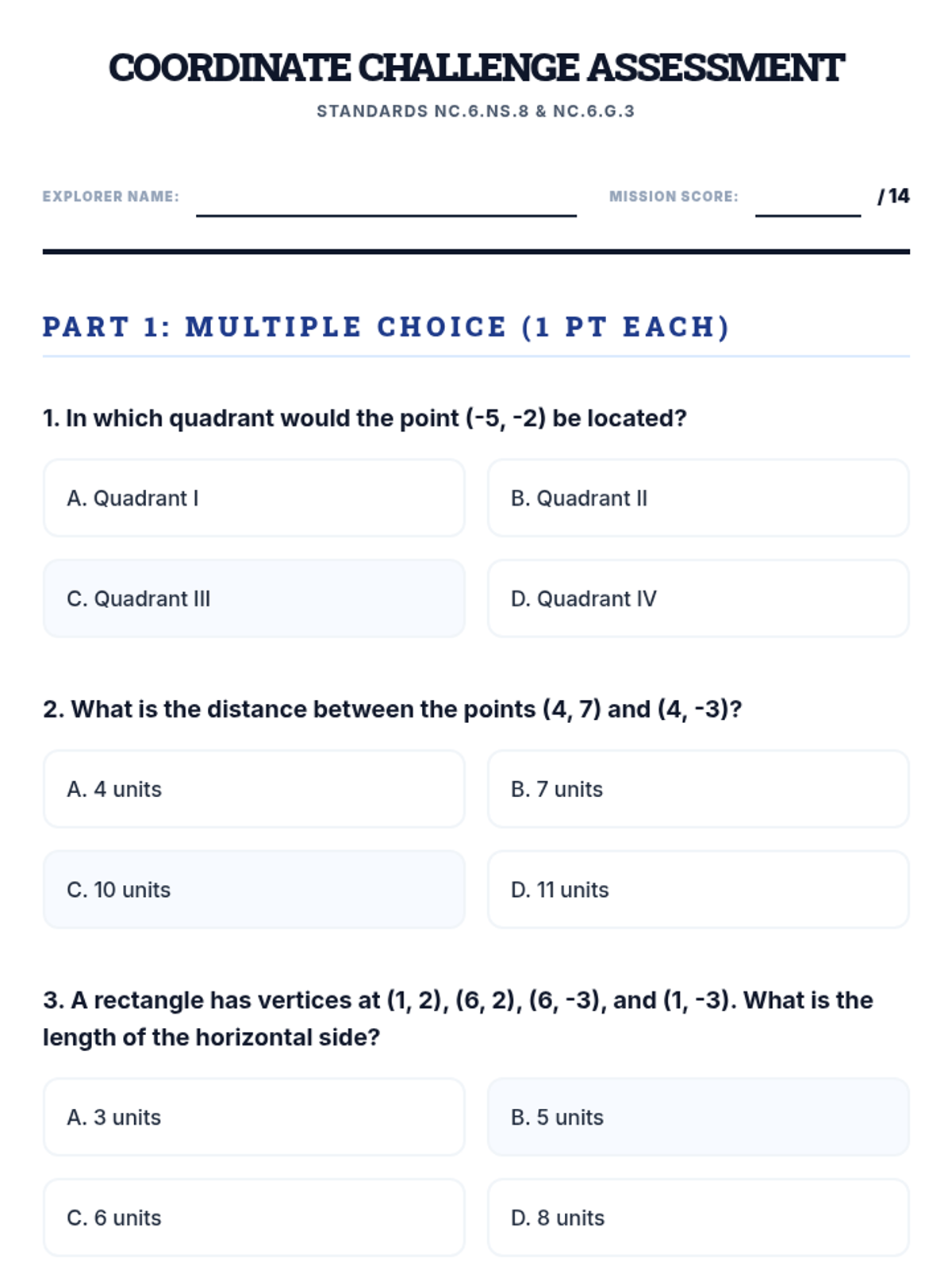
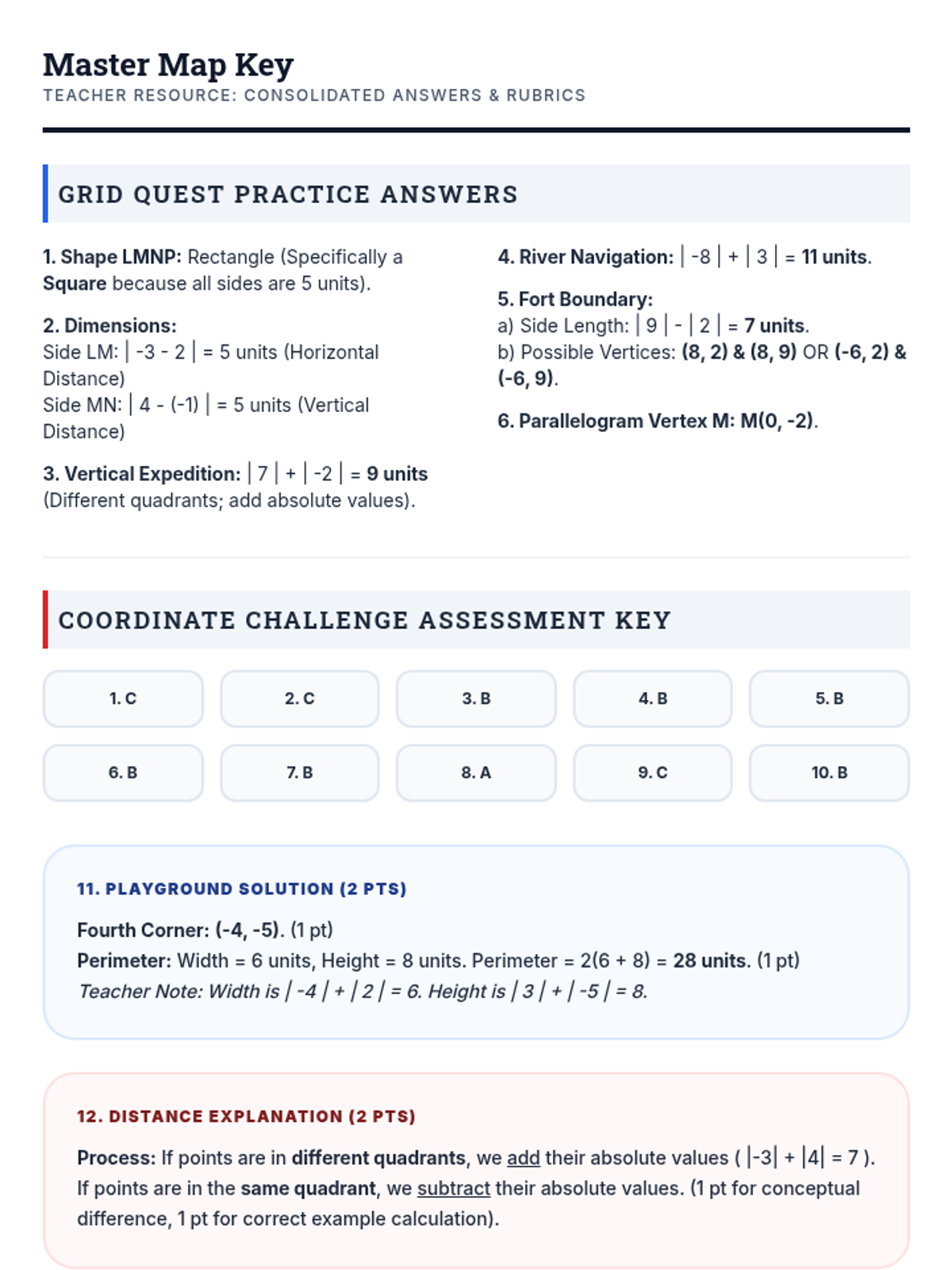
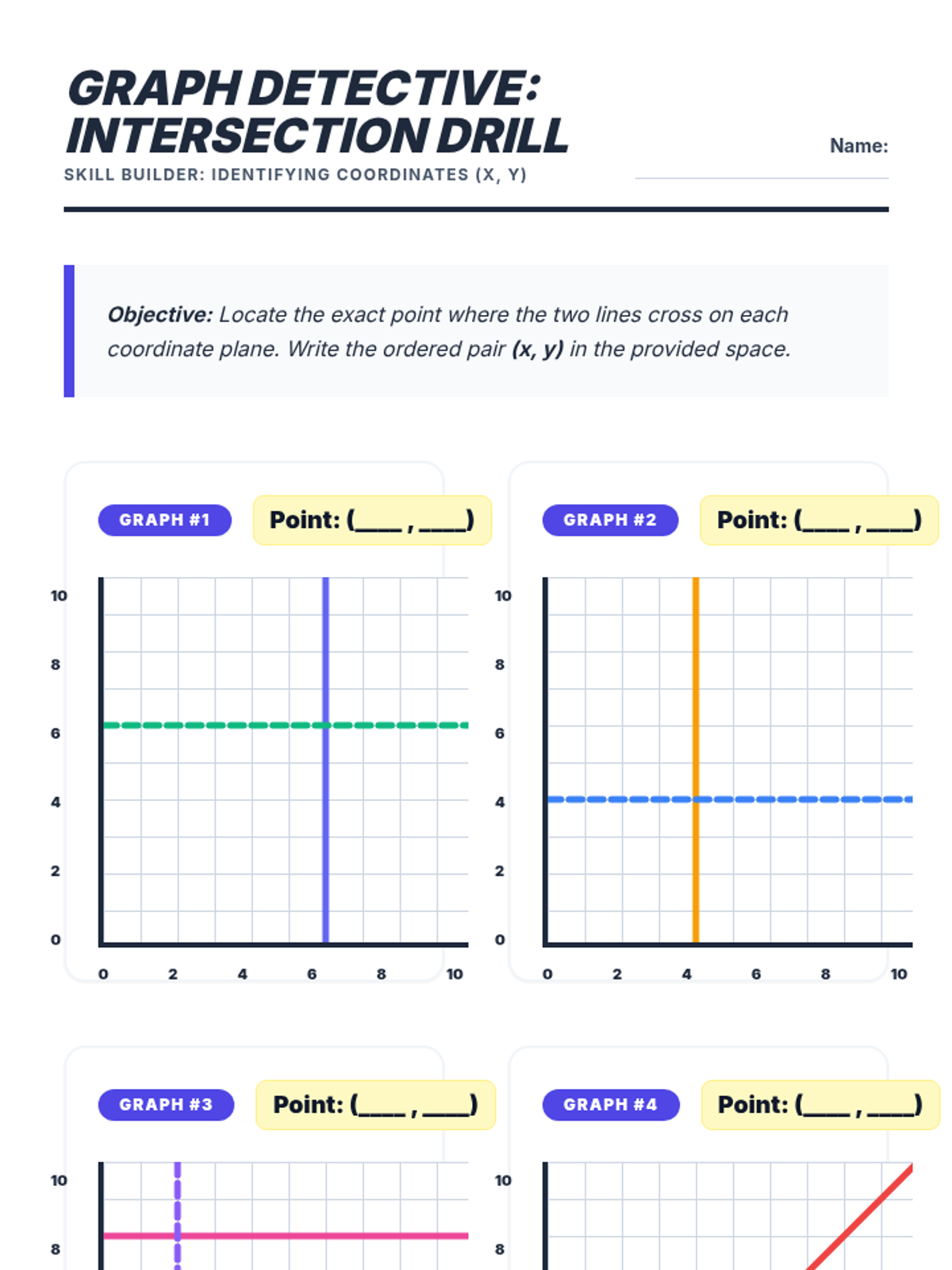
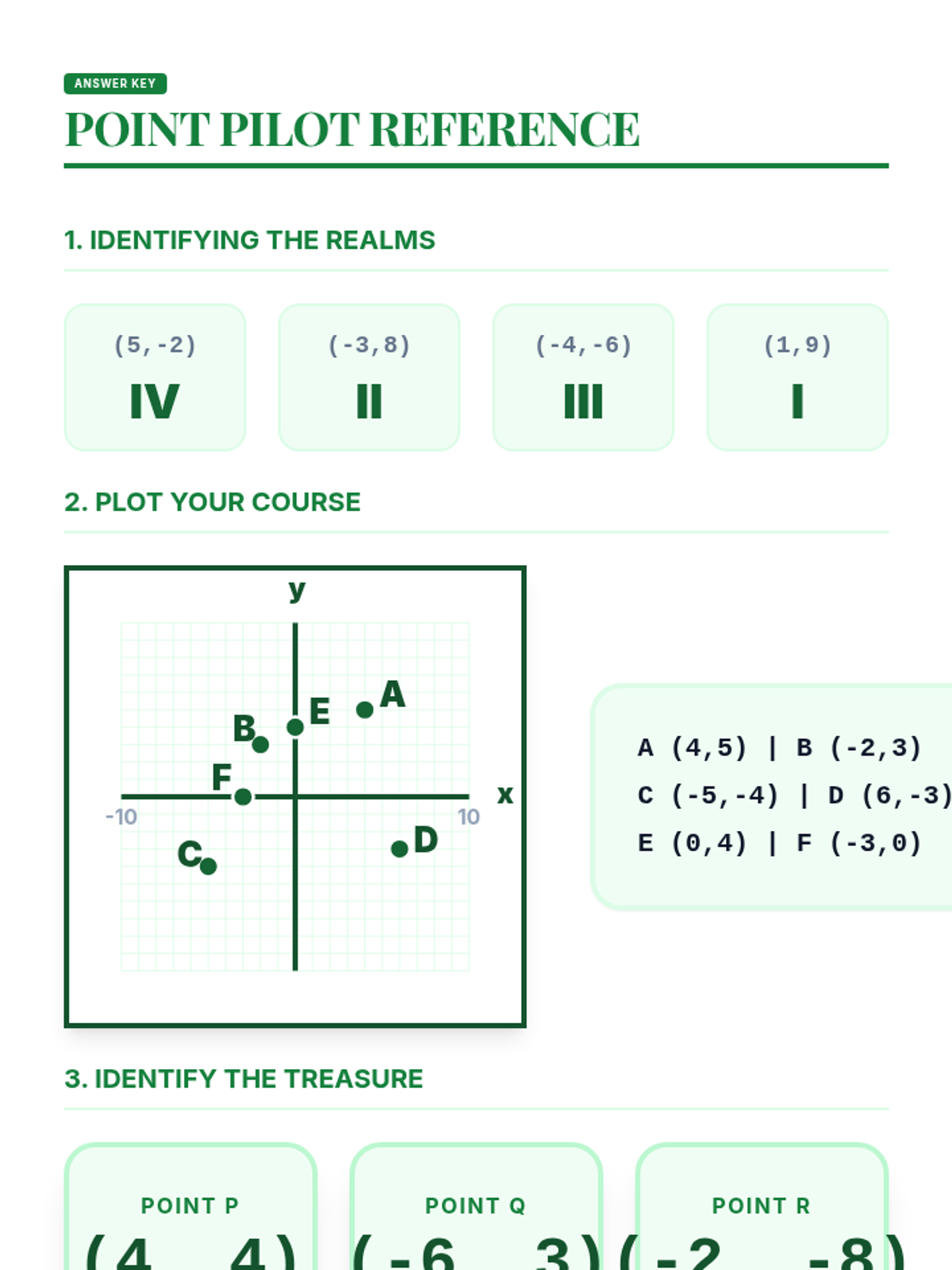
A comprehensive lesson on plotting points, identifying quadrilaterals, and calculating distances on the coordinate plane. Students use cartography-themed materials to master 6th-grade geometry and number system standards.
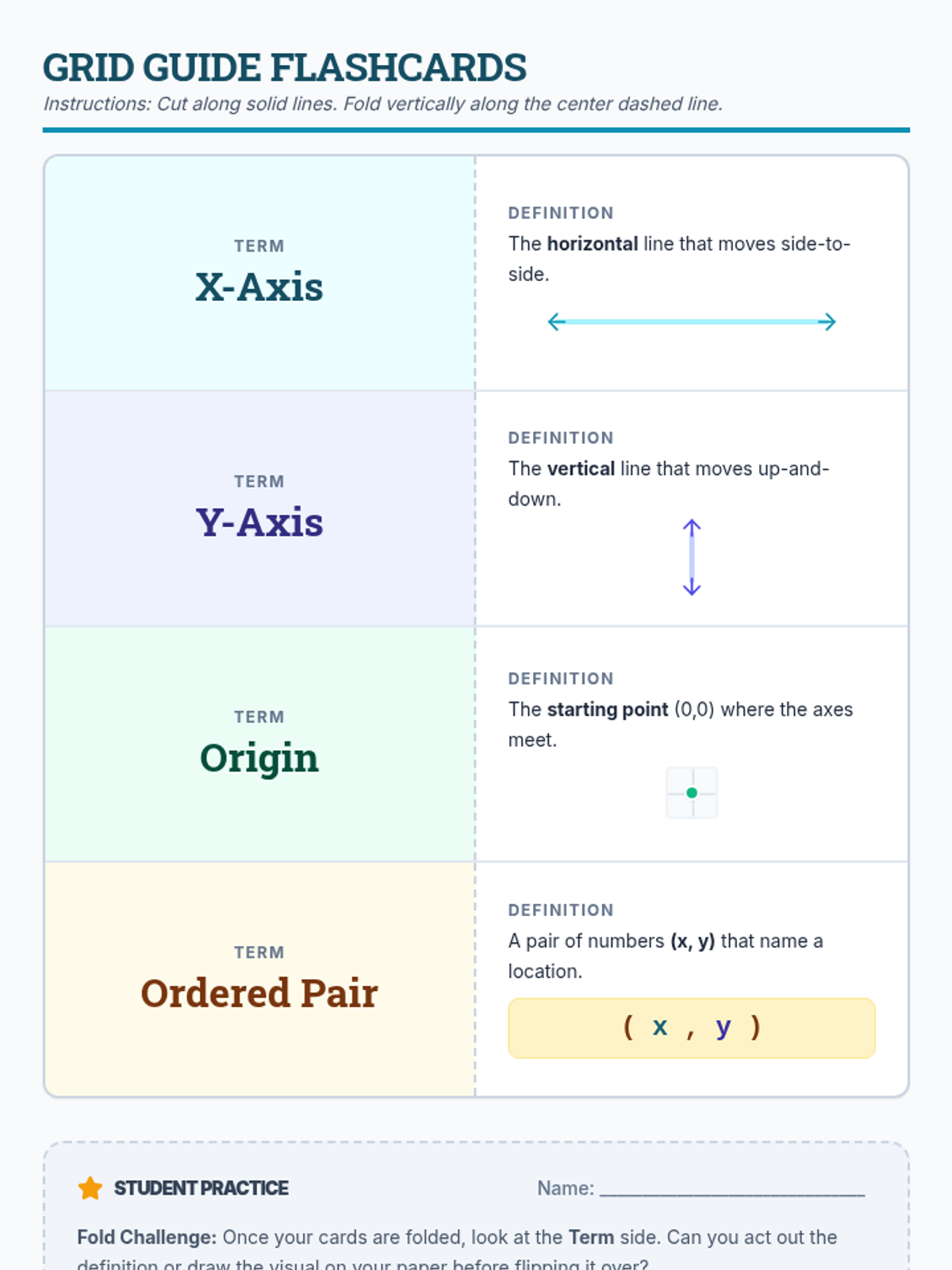
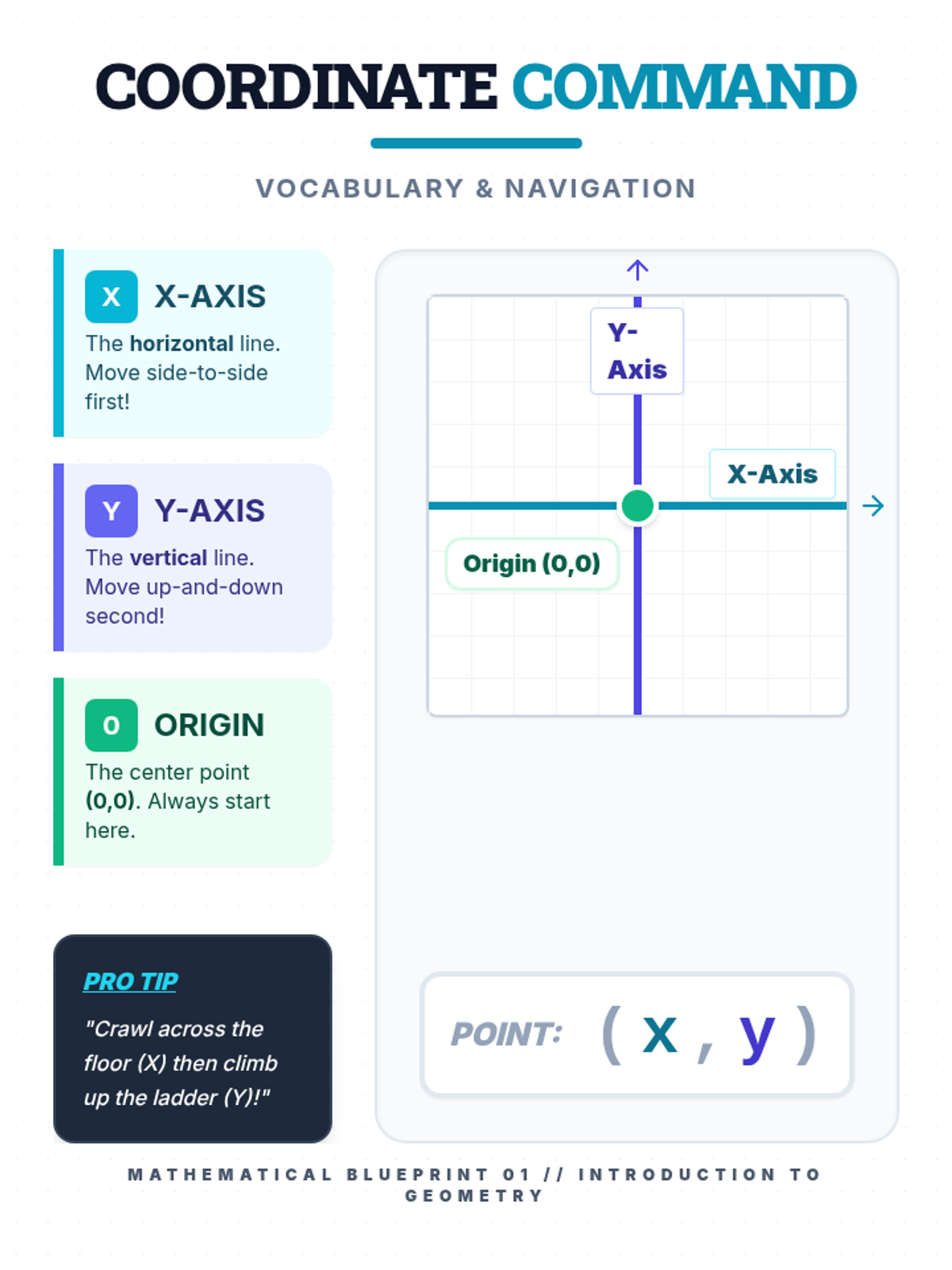
An introduction to the coordinate plane, focusing on identifying the x-axis, y-axis, and the origin to begin plotting ordered pairs.
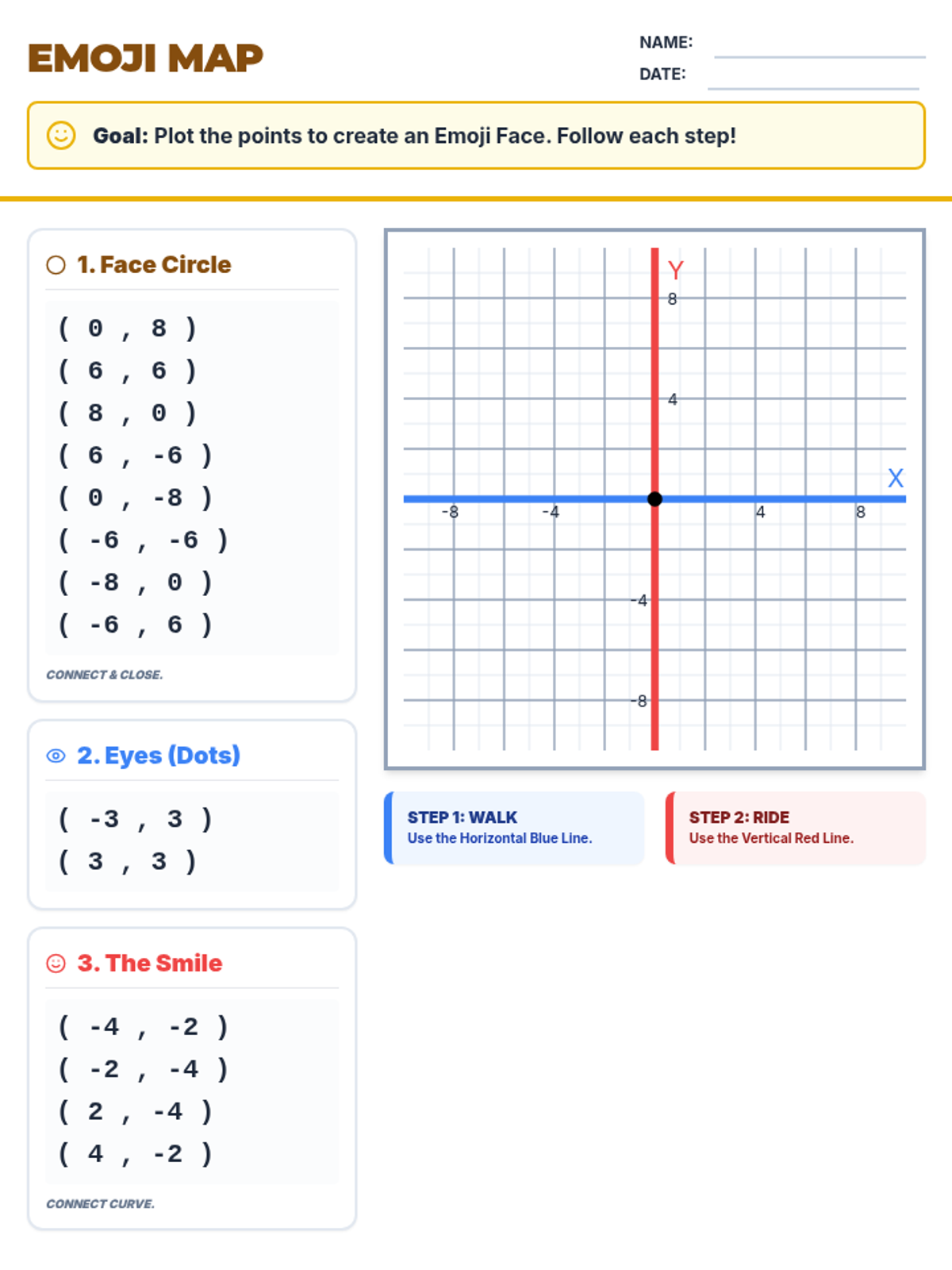
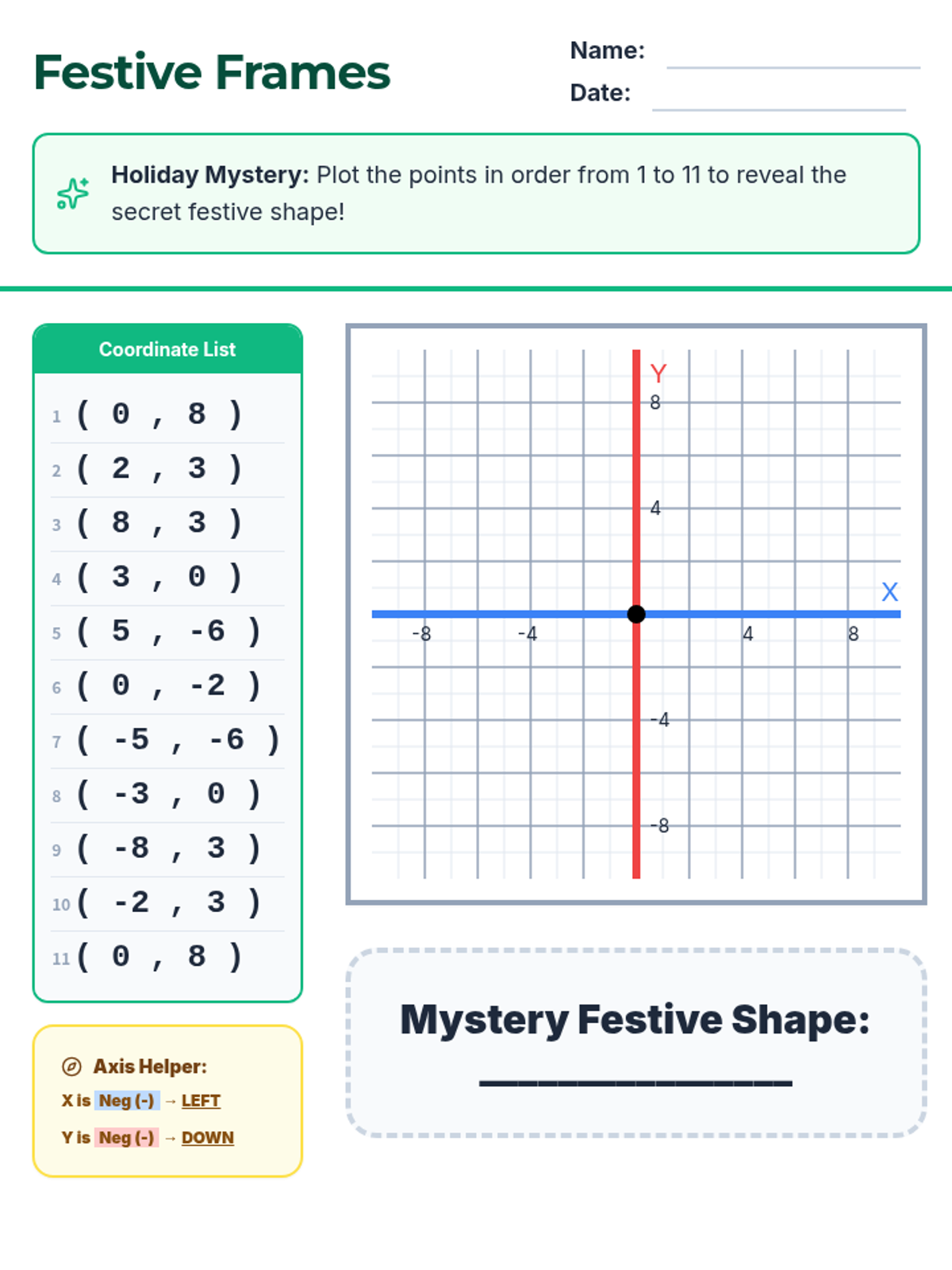
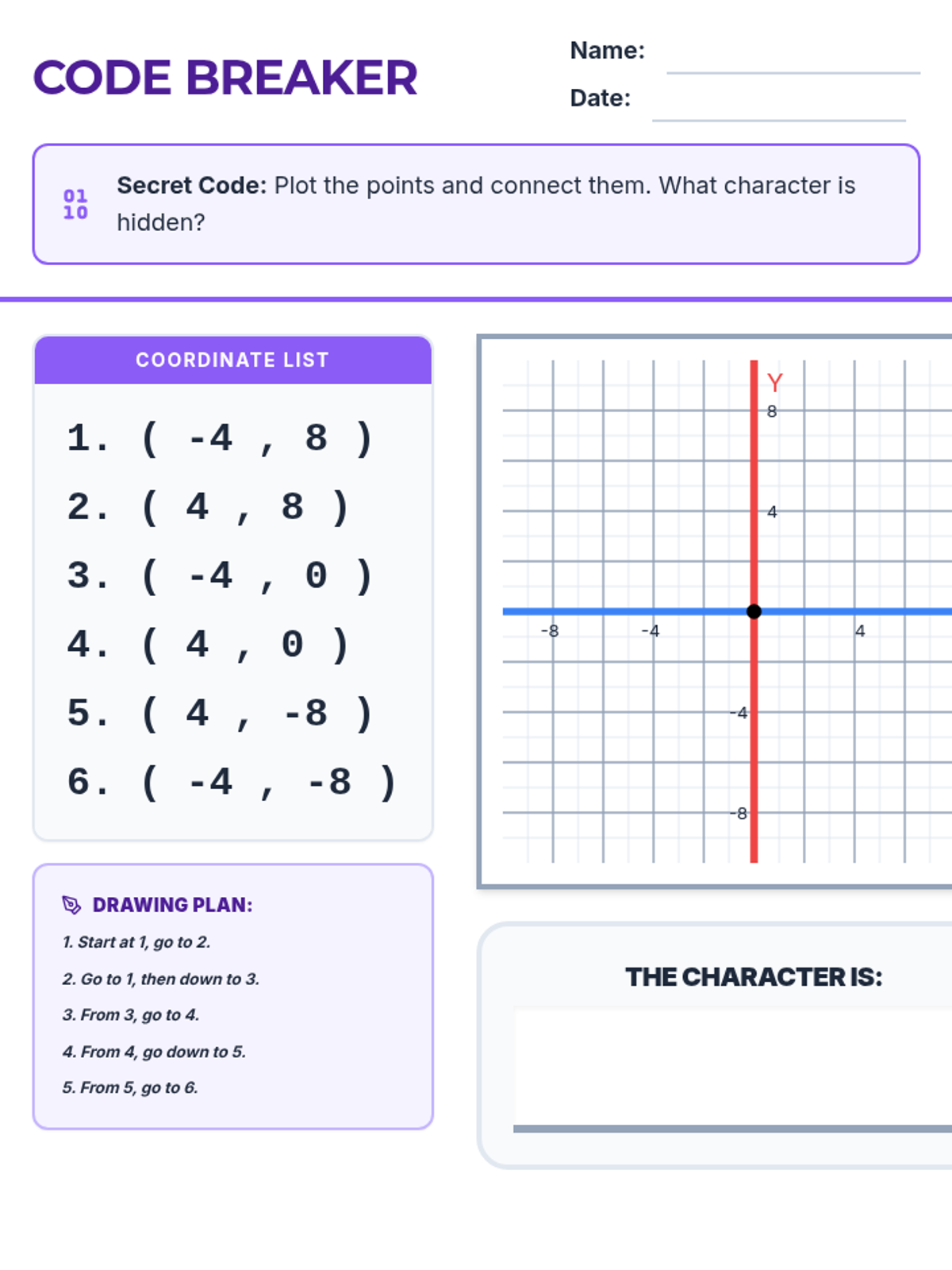
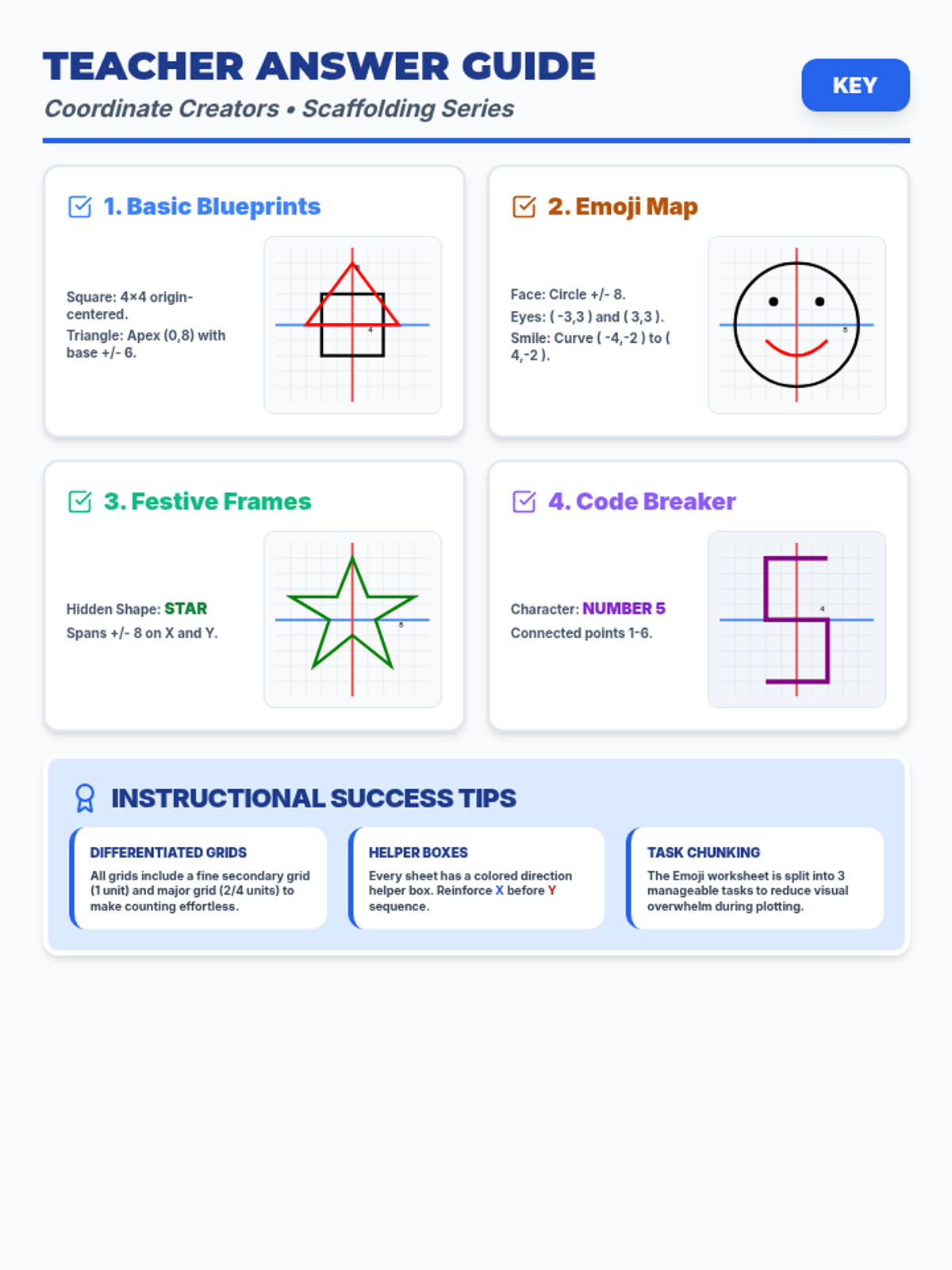
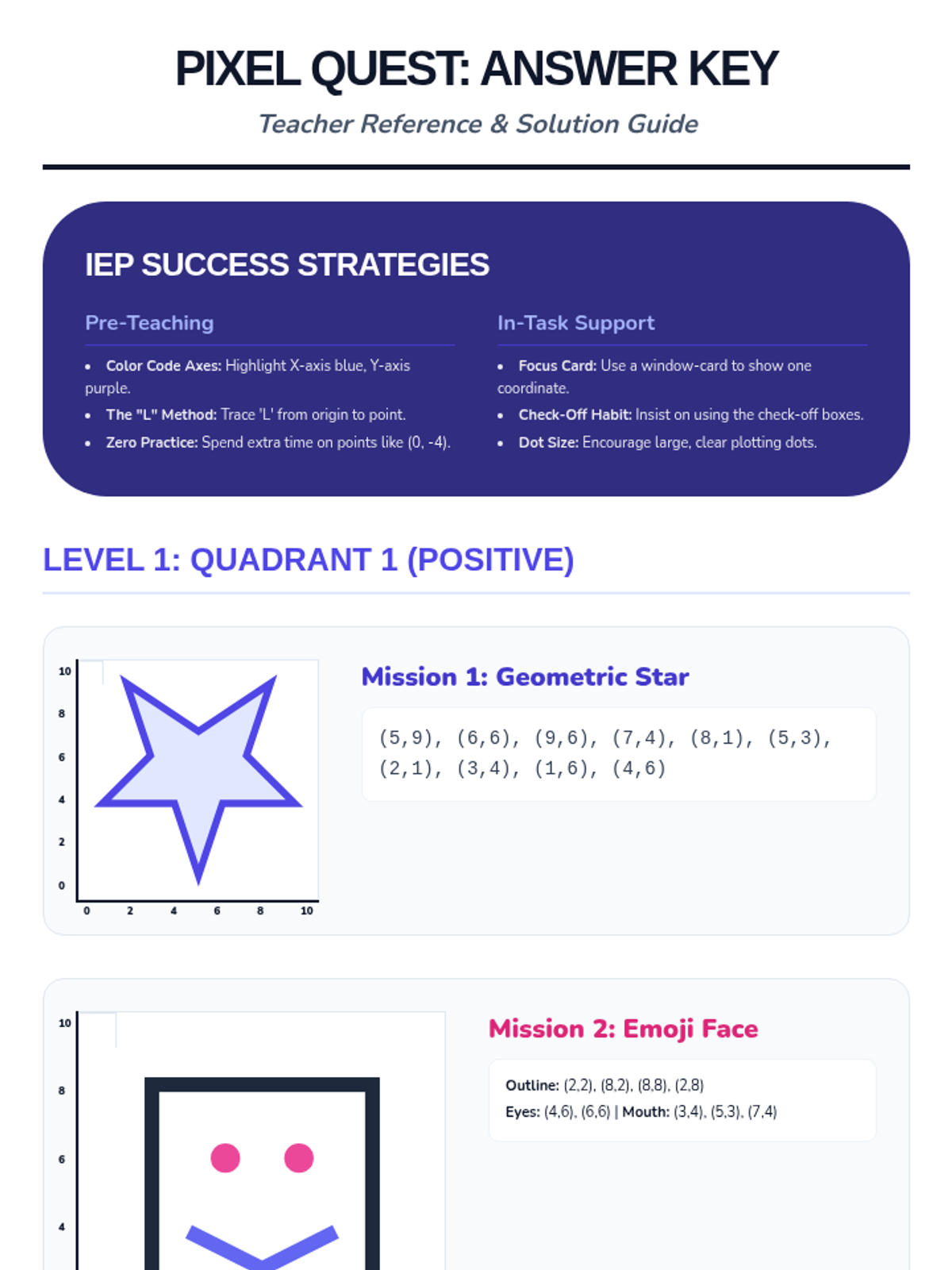
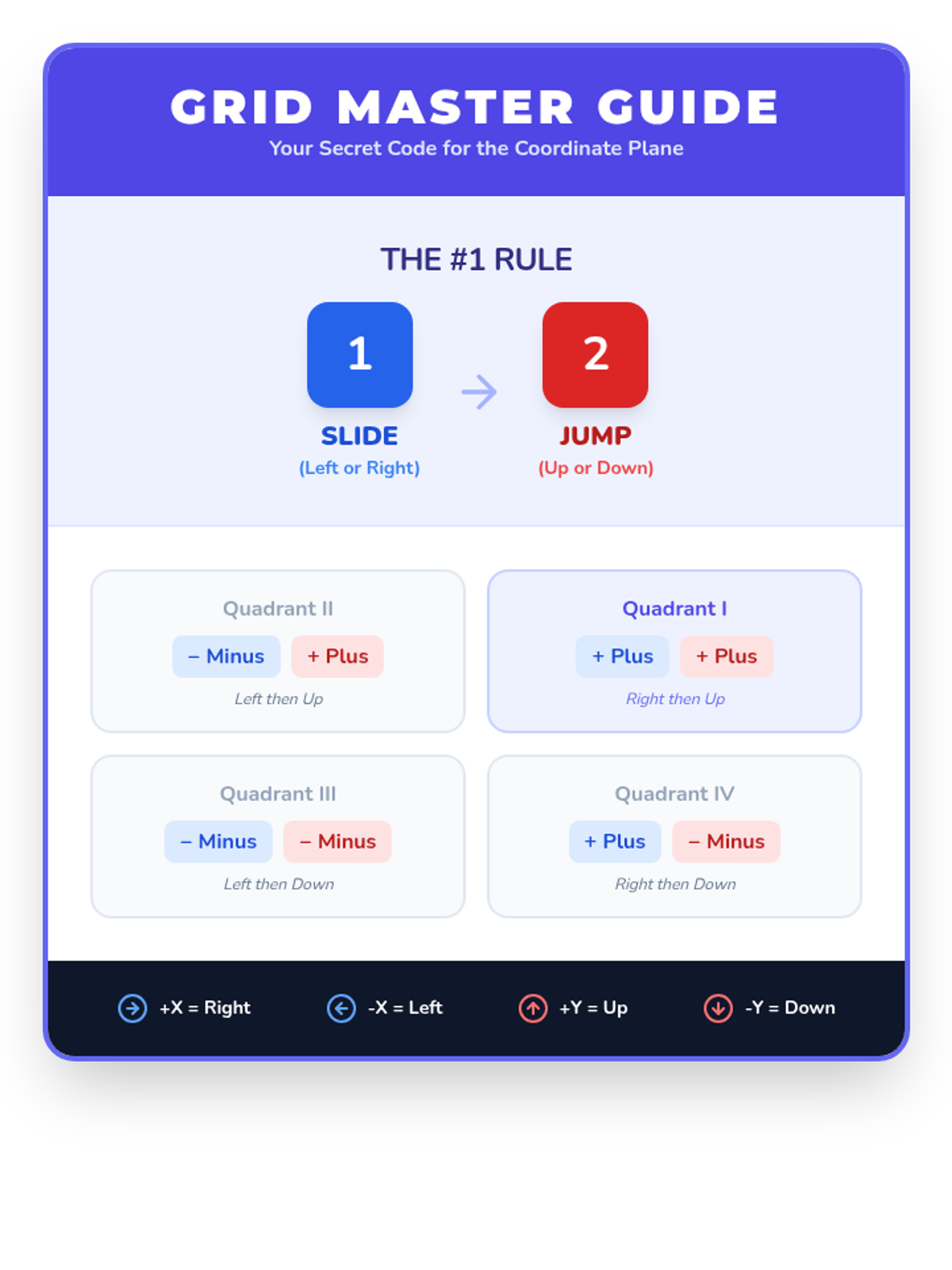
A beginner-friendly introduction to the four-quadrant coordinate plane, specifically designed with scaffolding and visual aids for students with diverse learning needs. Students will practice plotting points to reveal basic shapes, emojis, holiday symbols, and characters.
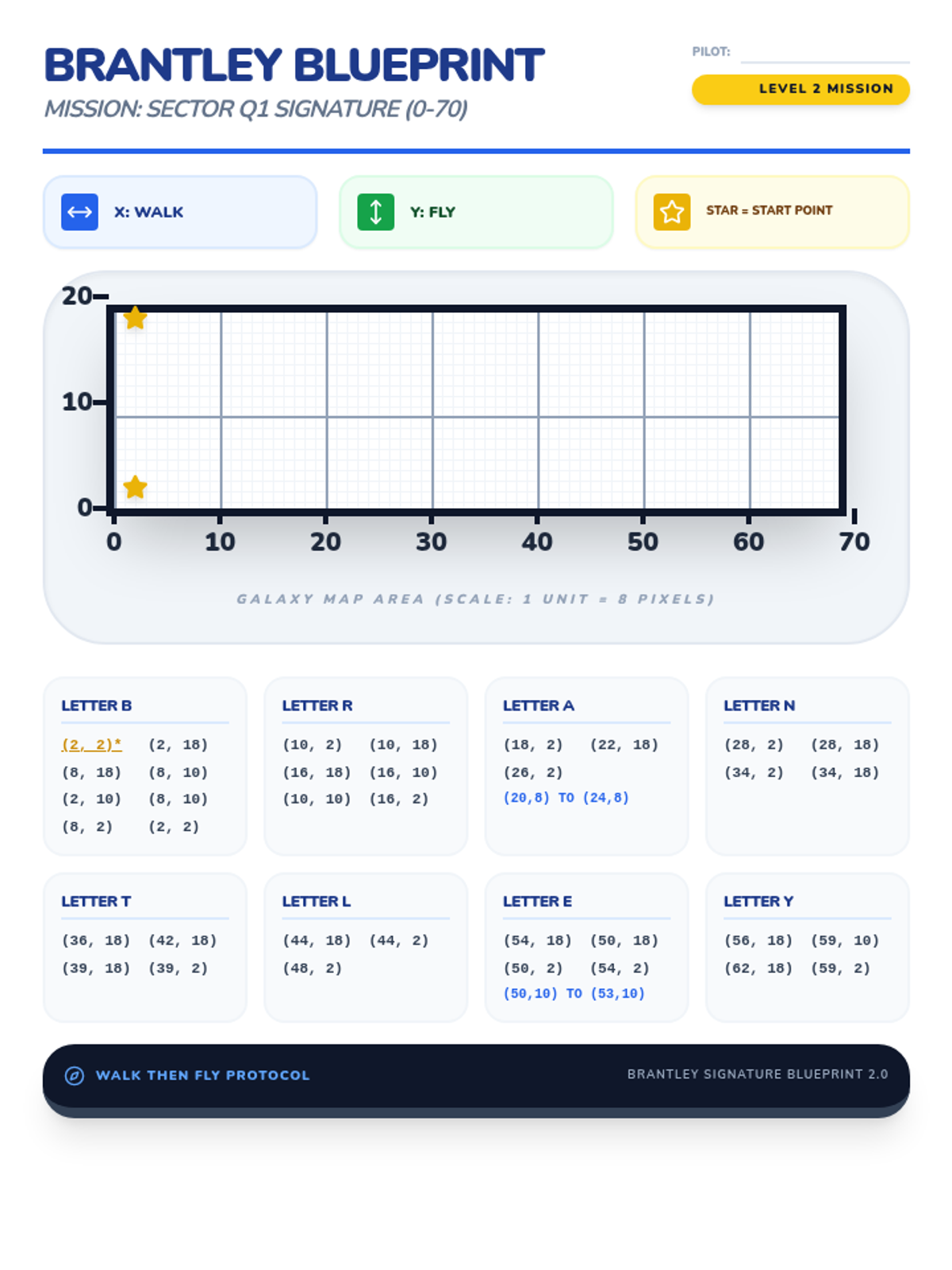
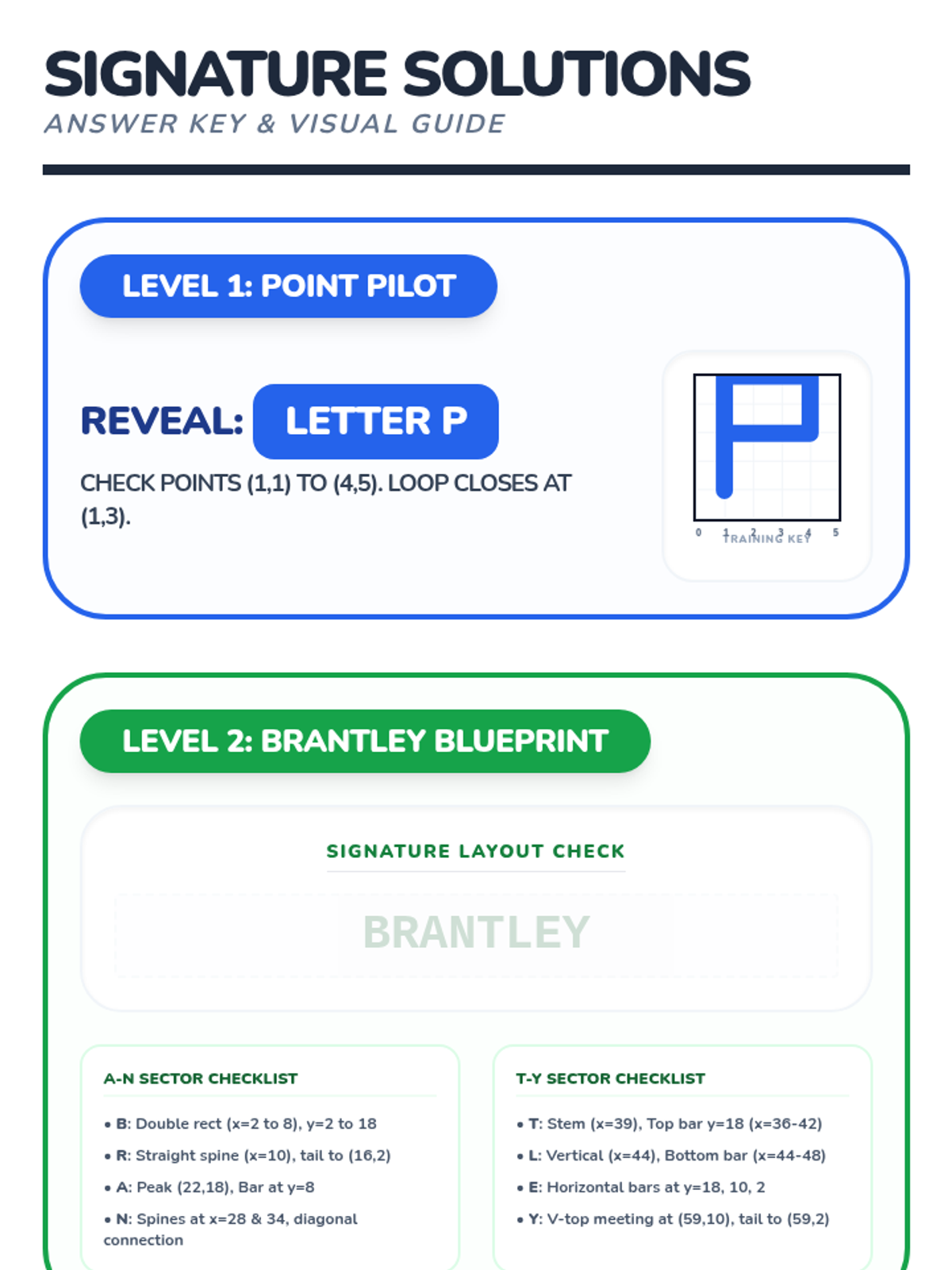
A simplified introduction to plotting points on a coordinate plane (Quadrant 1) to create the signature "Brantley". Designed specifically for IEP students with large grids and clear instructions.
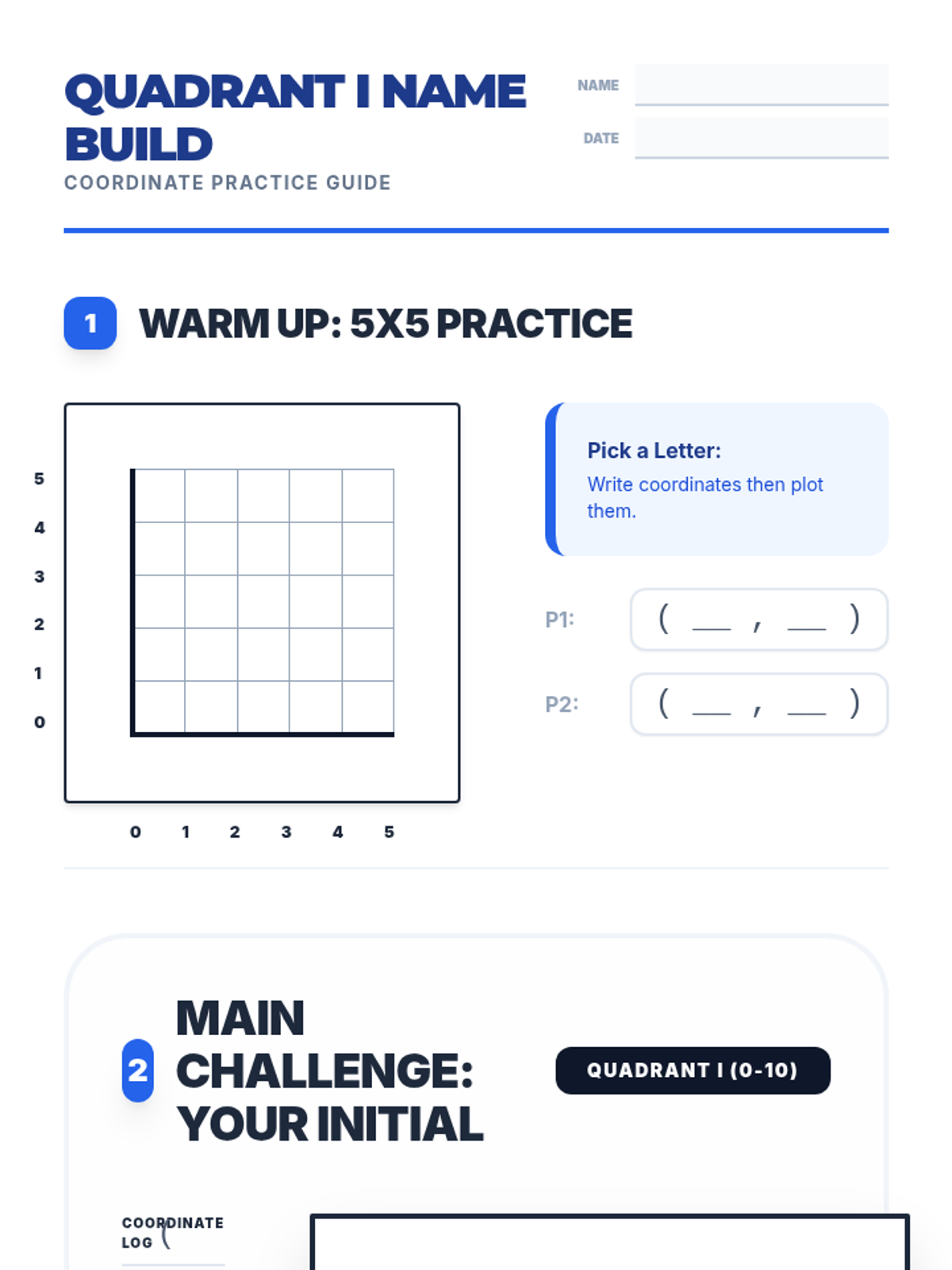
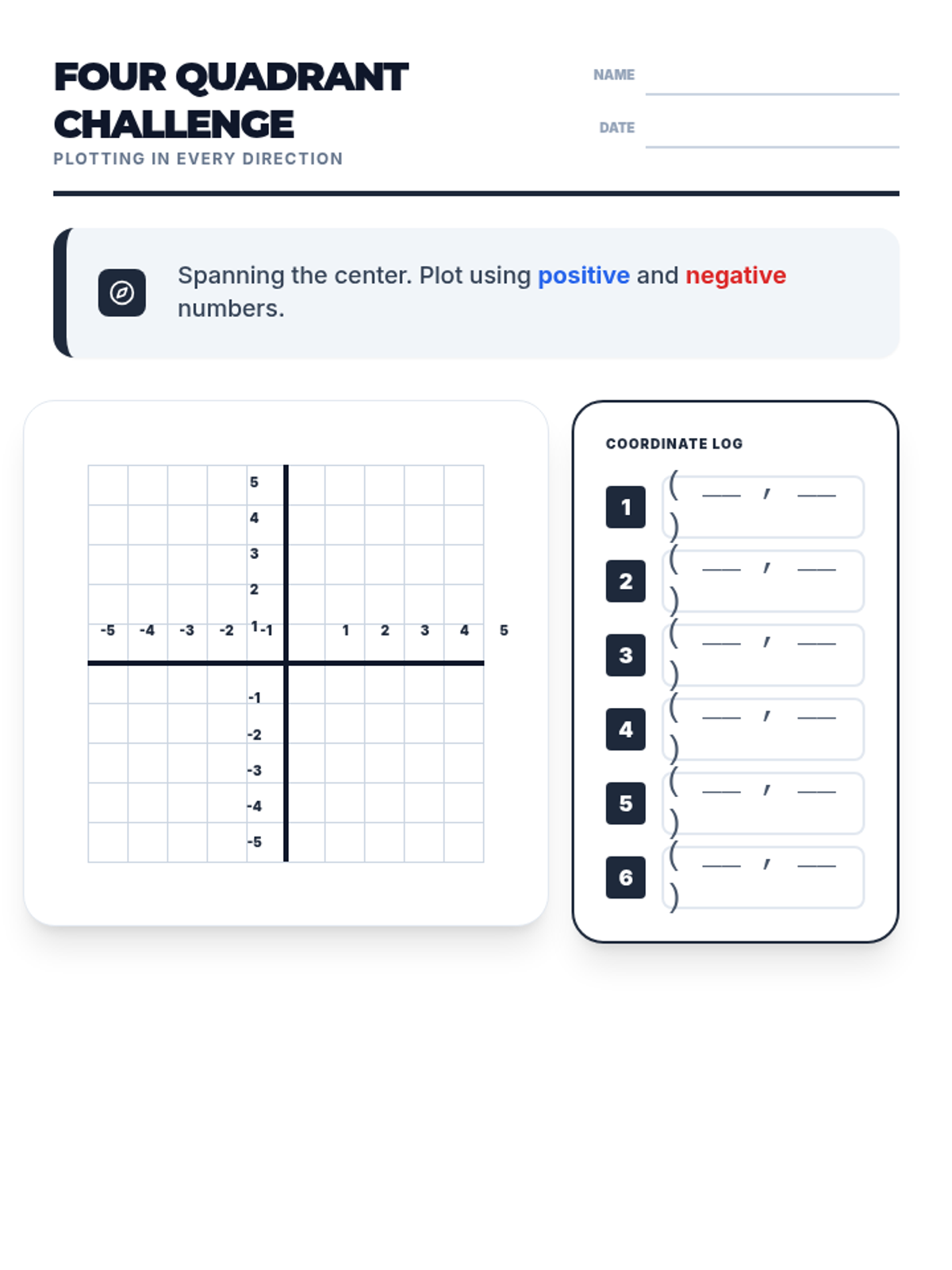
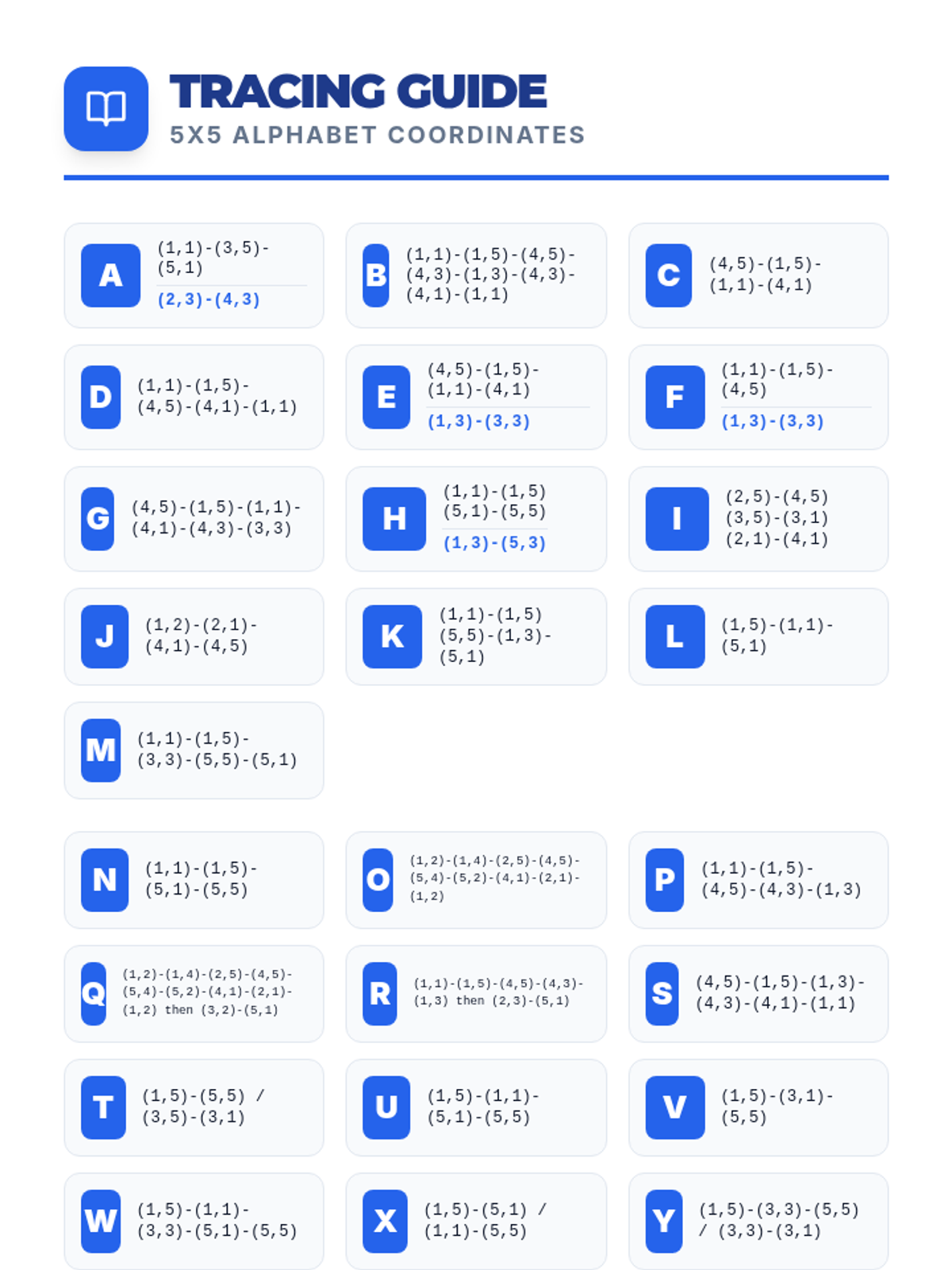
Students learn to plot coordinates to form letters and their own names. This lesson includes differentiated materials for Quadrant I, simplified 5x5 grids, and all four quadrants, with built-in tracing supports for IEP students.
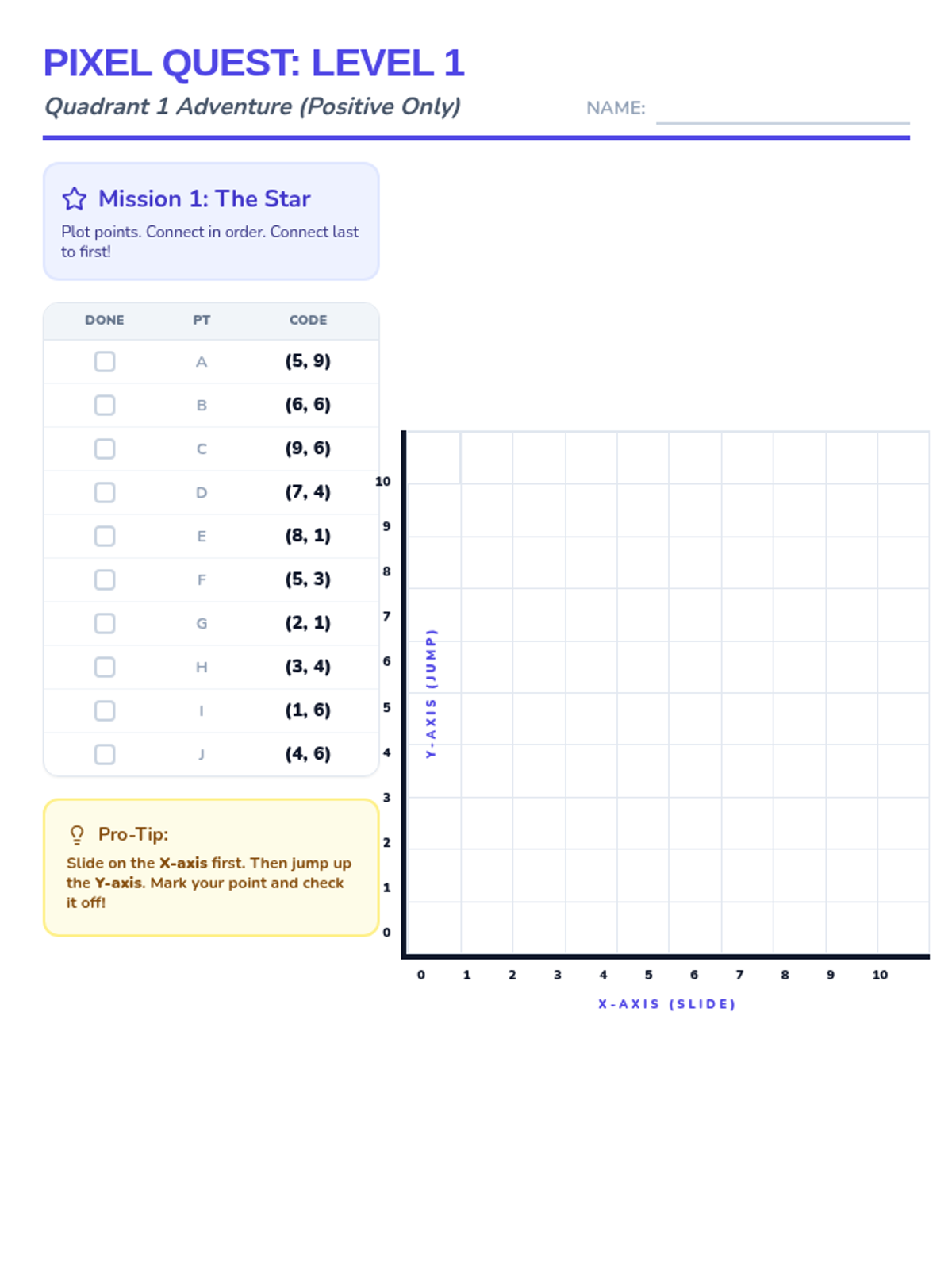
A step-by-step introduction to plotting points on a coordinate plane, specifically designed for IEP students with clear visuals and structured practice. Students move from the first quadrant to all four quadrants using engaging pixel-art style images.
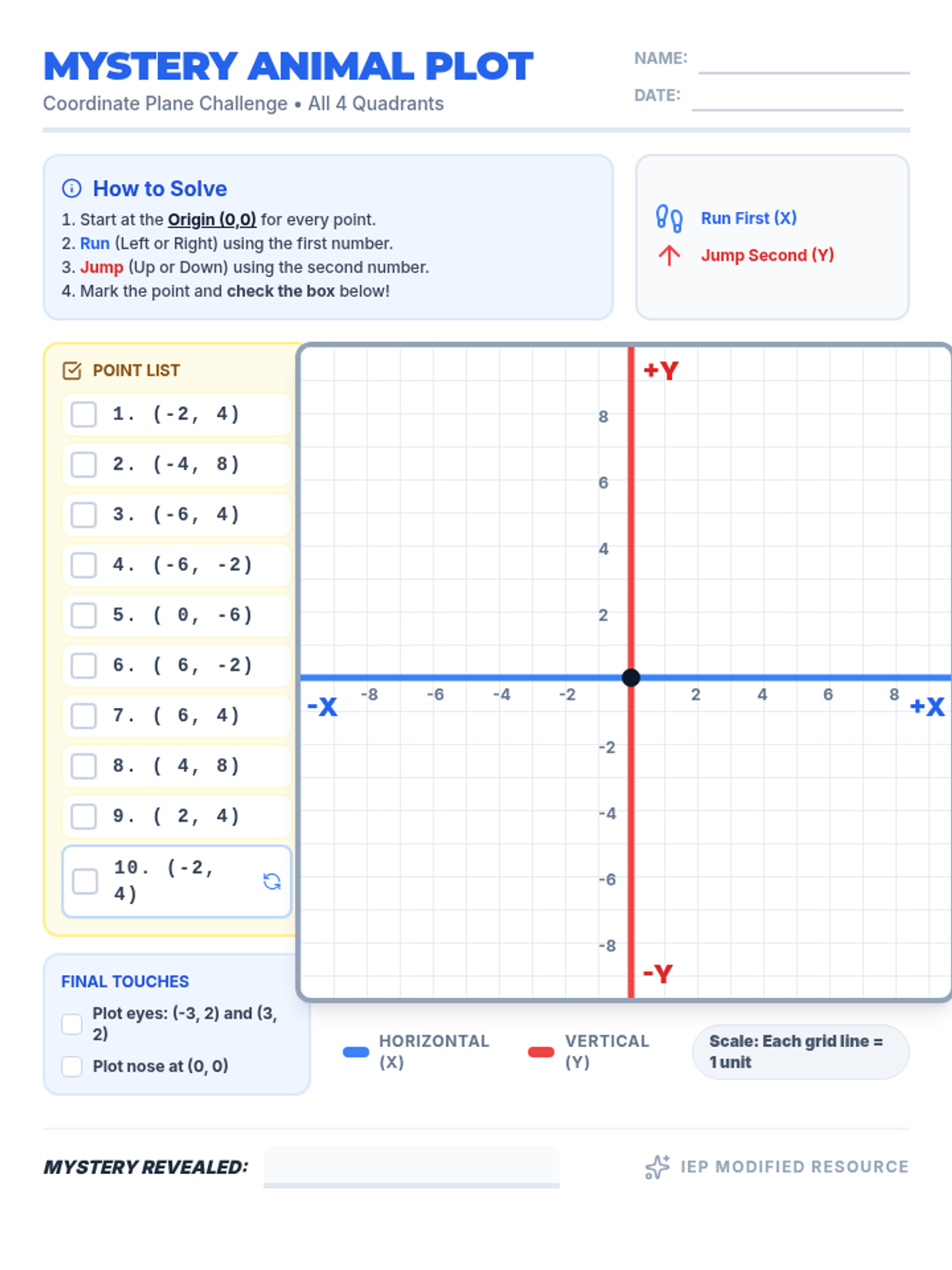
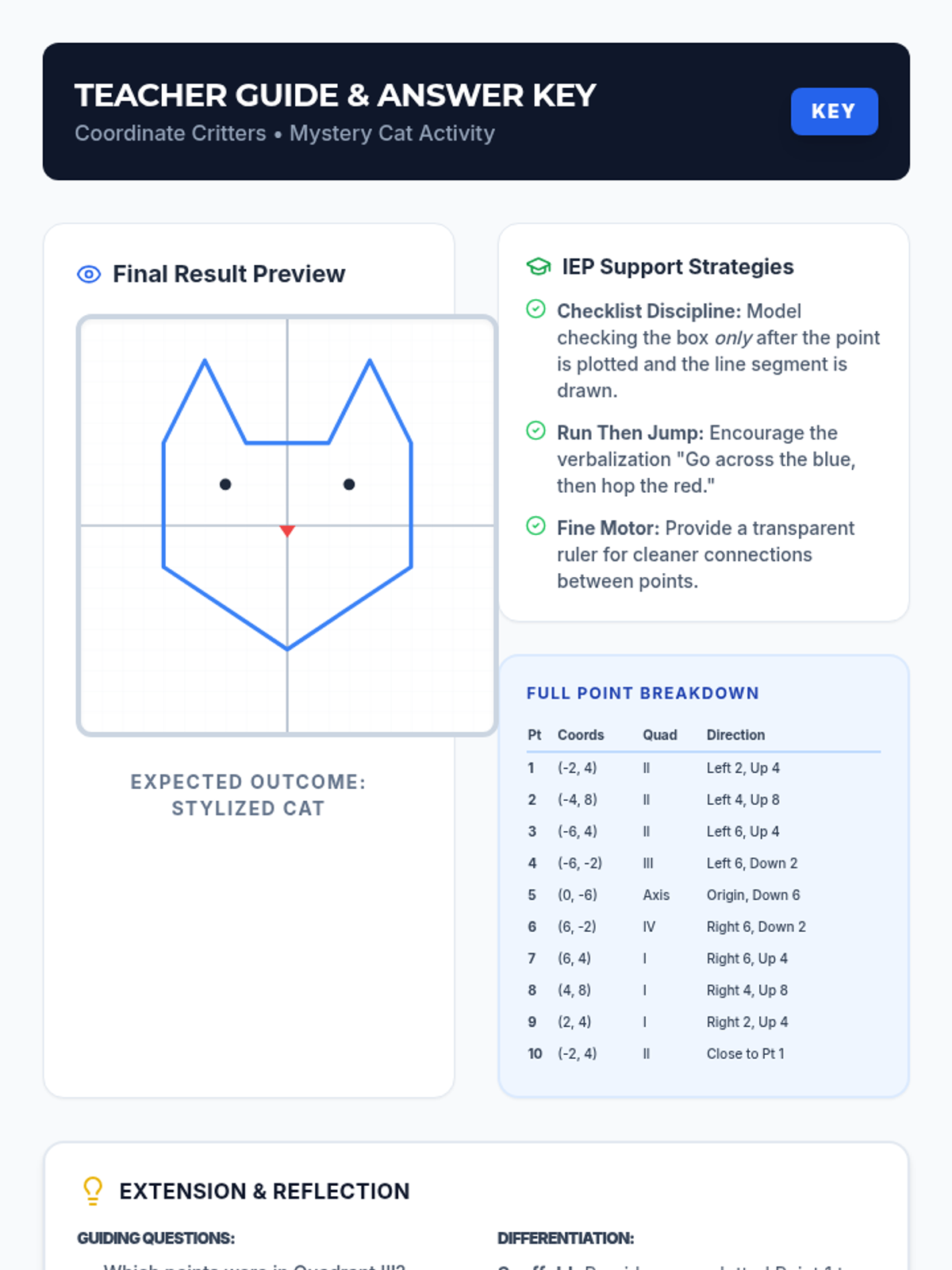
A modified lesson for IEP students to practice plotting points on a four-quadrant coordinate plane to reveal a mystery animal outline. includes visual supports, step-by-step checklists, and color-coded axes.
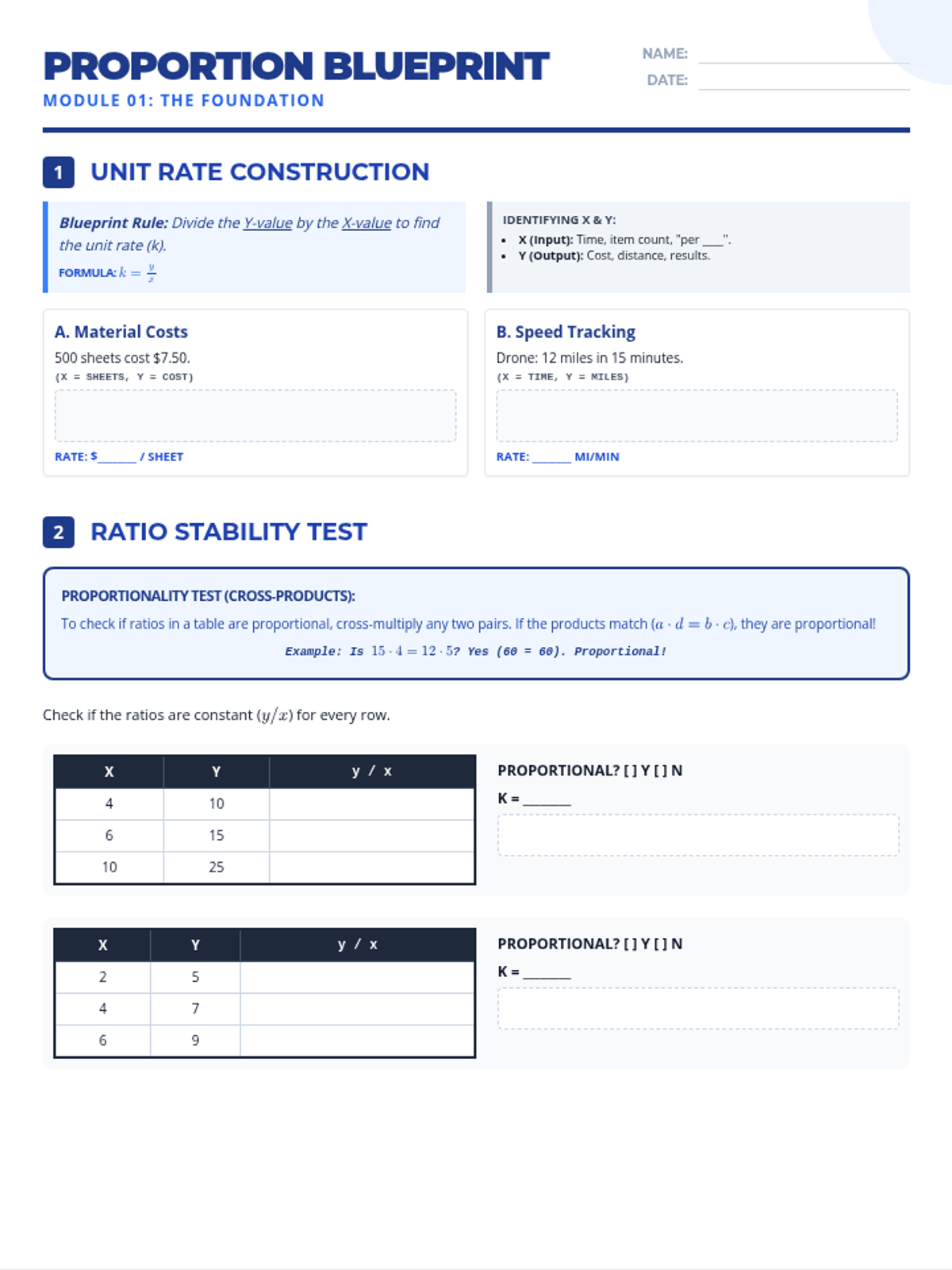
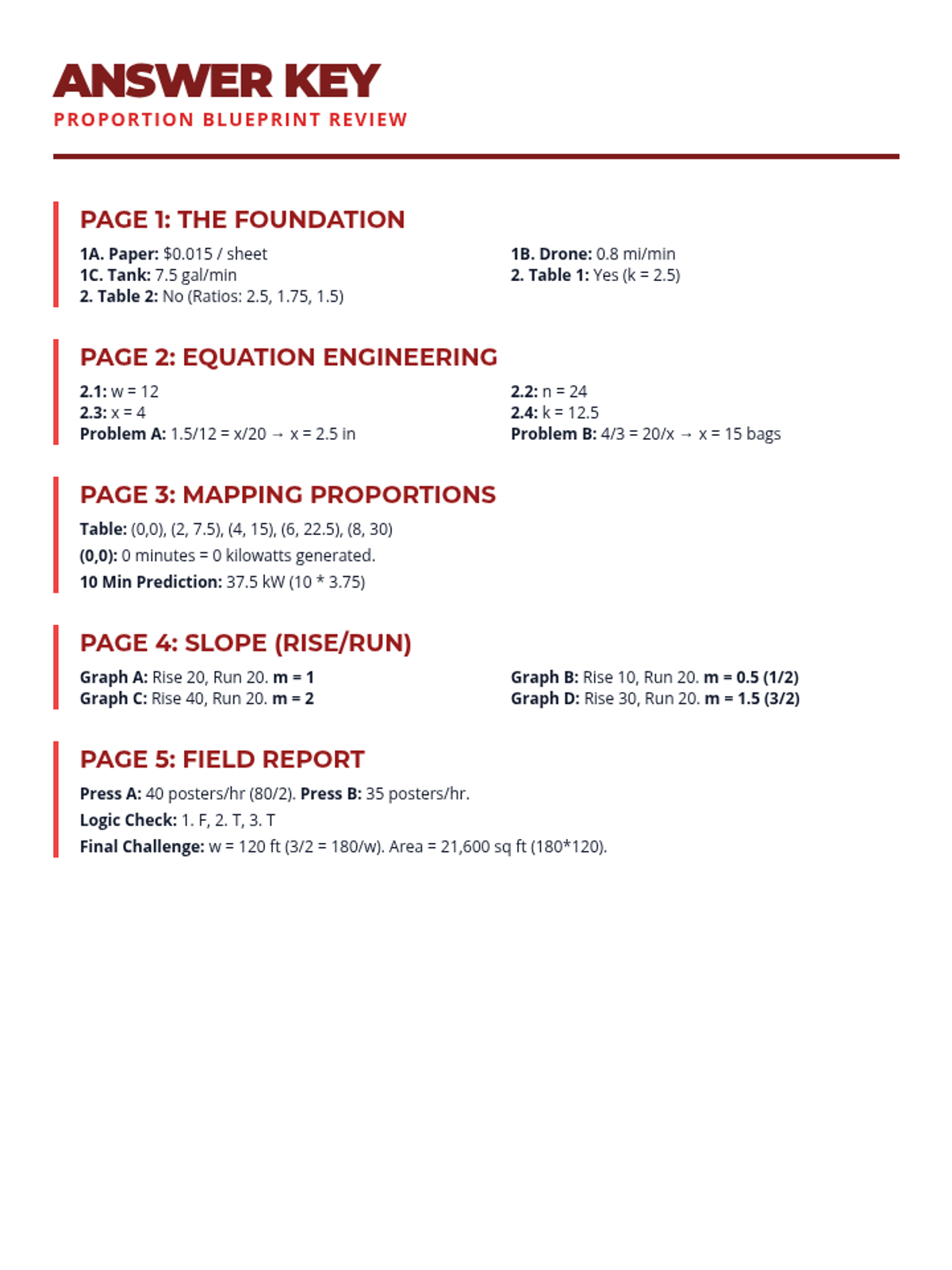
A comprehensive 5-page review packet covering 7th-grade proportional relationship standards through scaffolding and visual modeling. Students move from unit rates to solving complex word problems and interpreting graphs.
A scaffolded introduction to plotting coordinates in four quadrants, culminating in a creative picture-making activity designed for IEP accessibility.
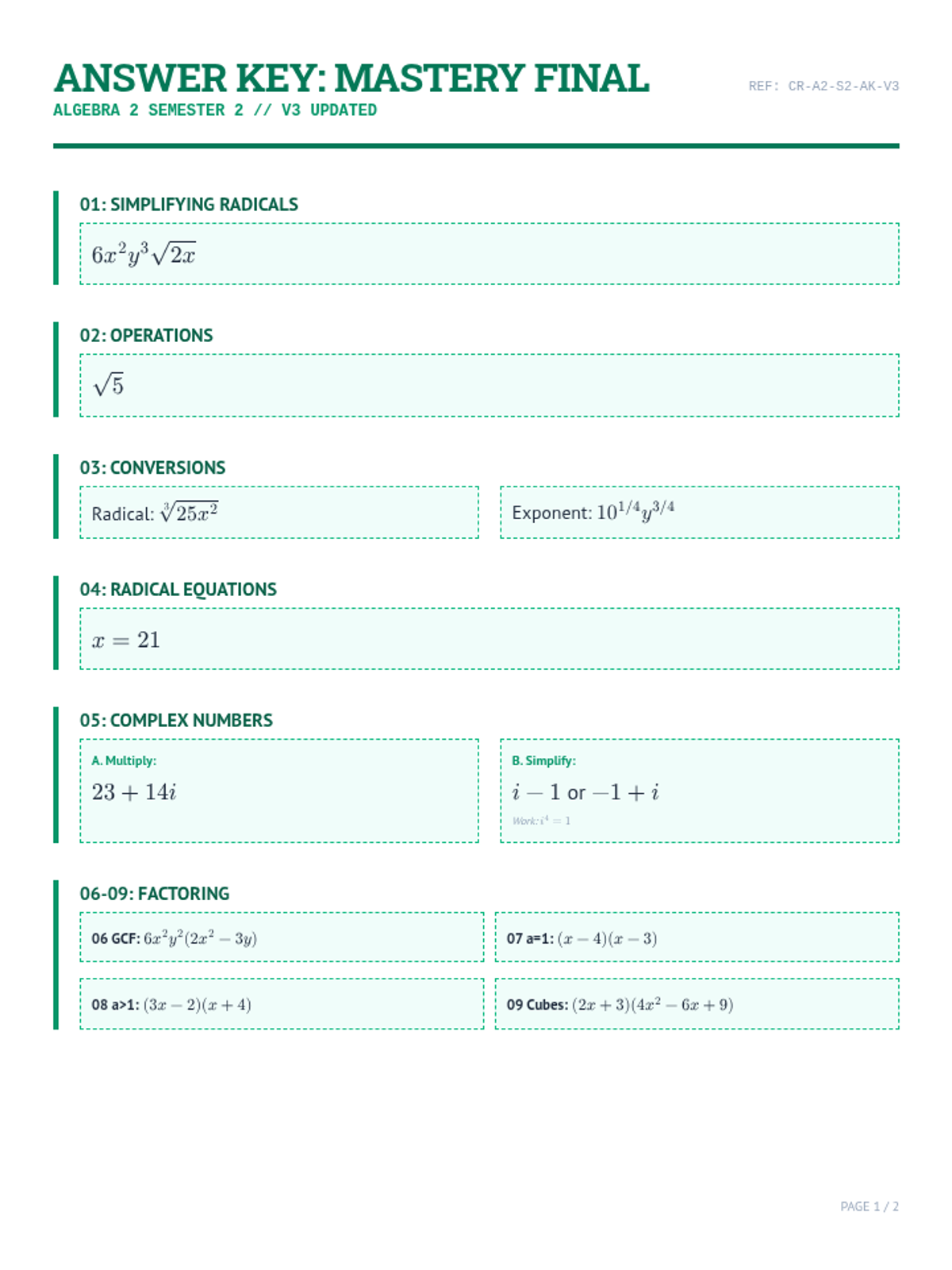
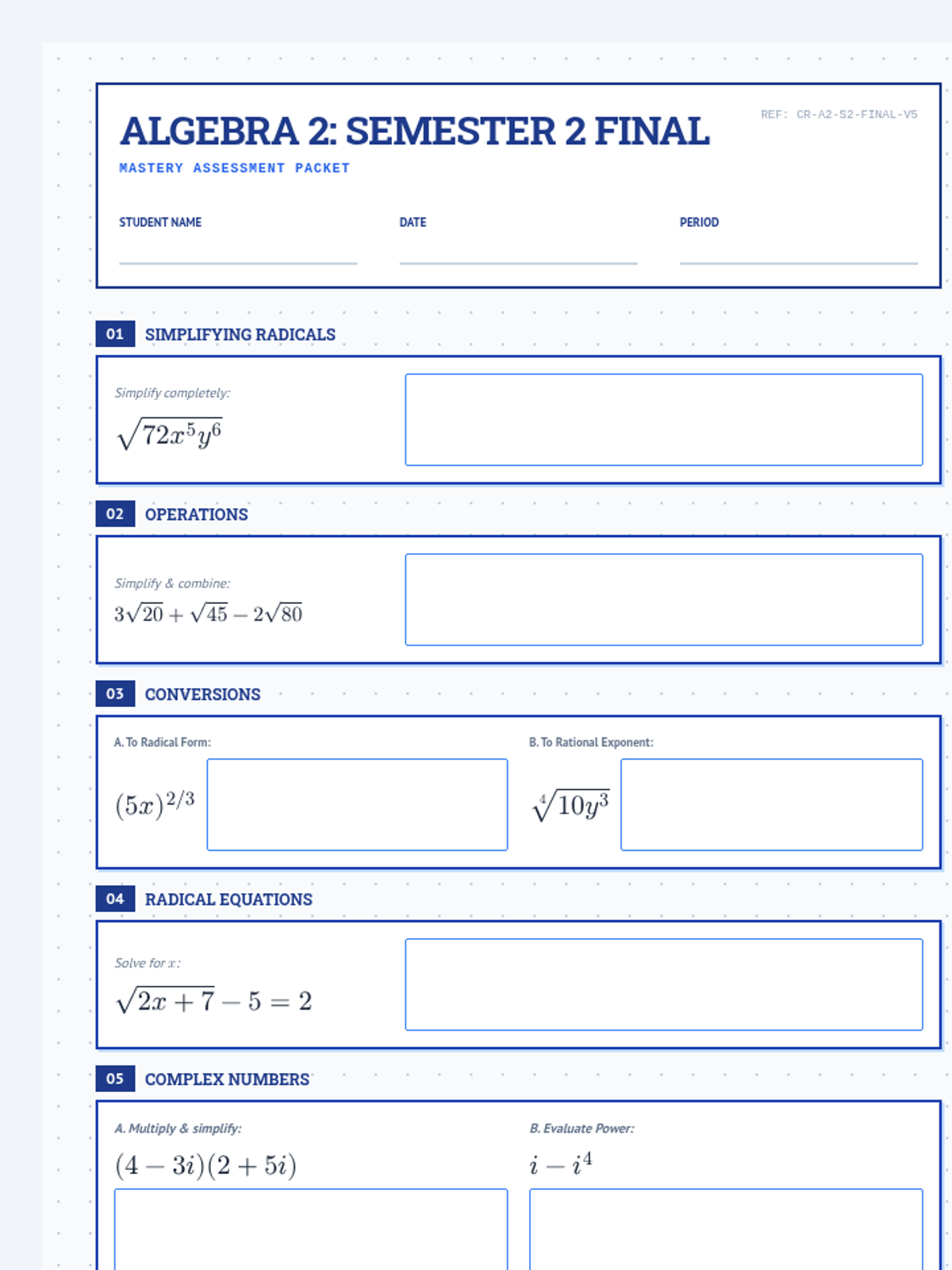
A comprehensive final exam for Semester 2 of Algebra 2 Credit Recovery, covering radicals, factoring, quadratics, and rational functions.
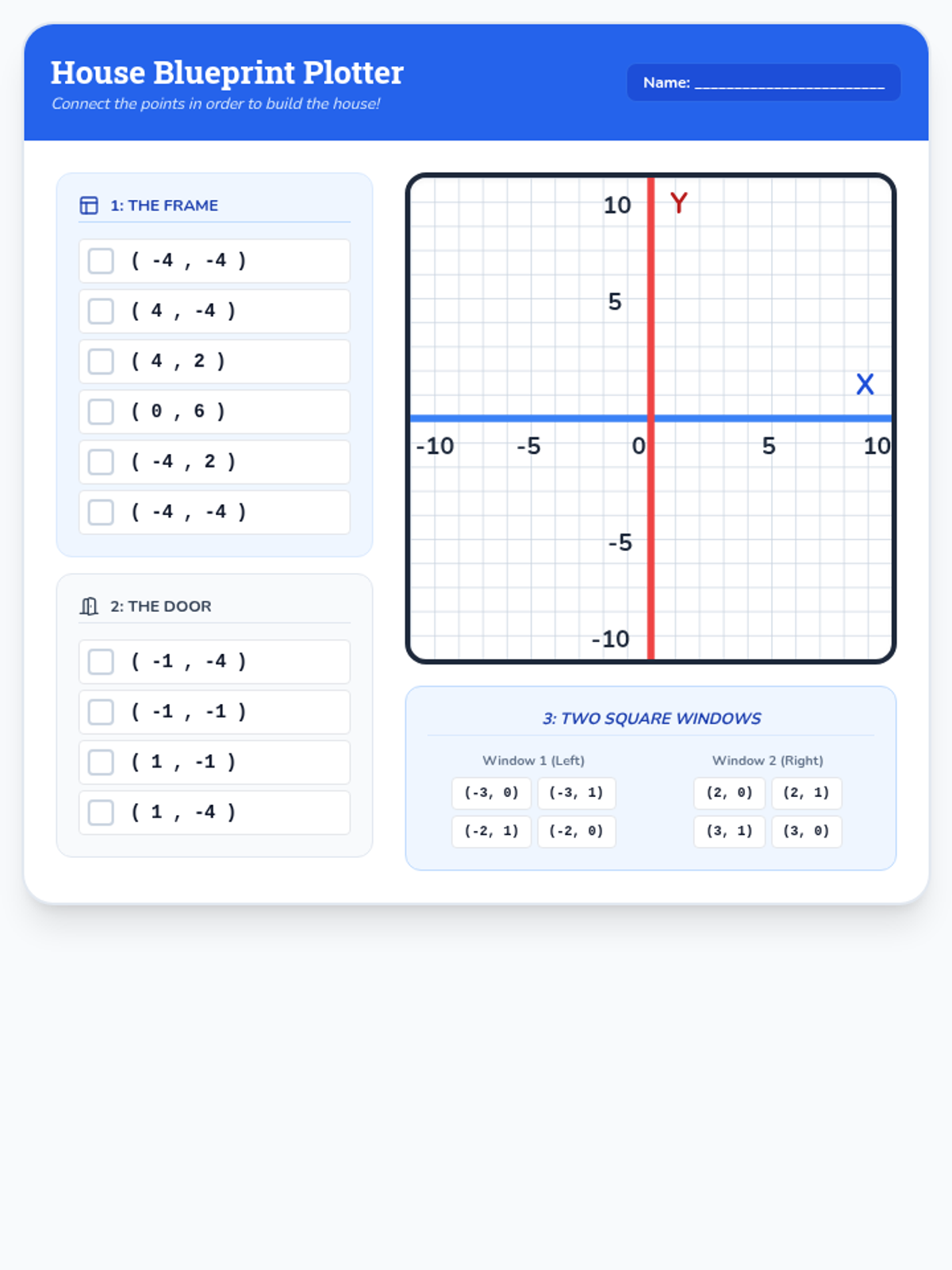
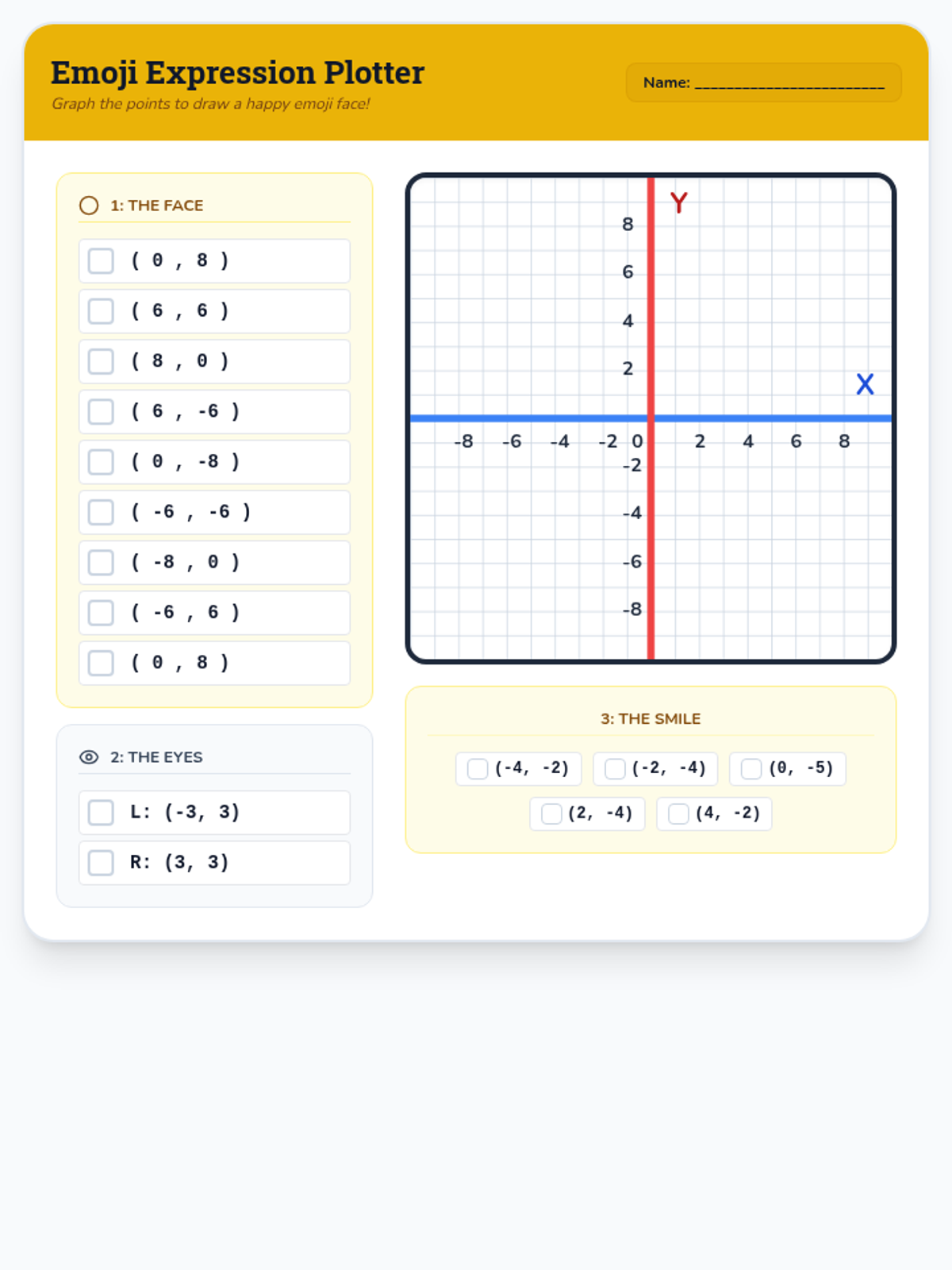
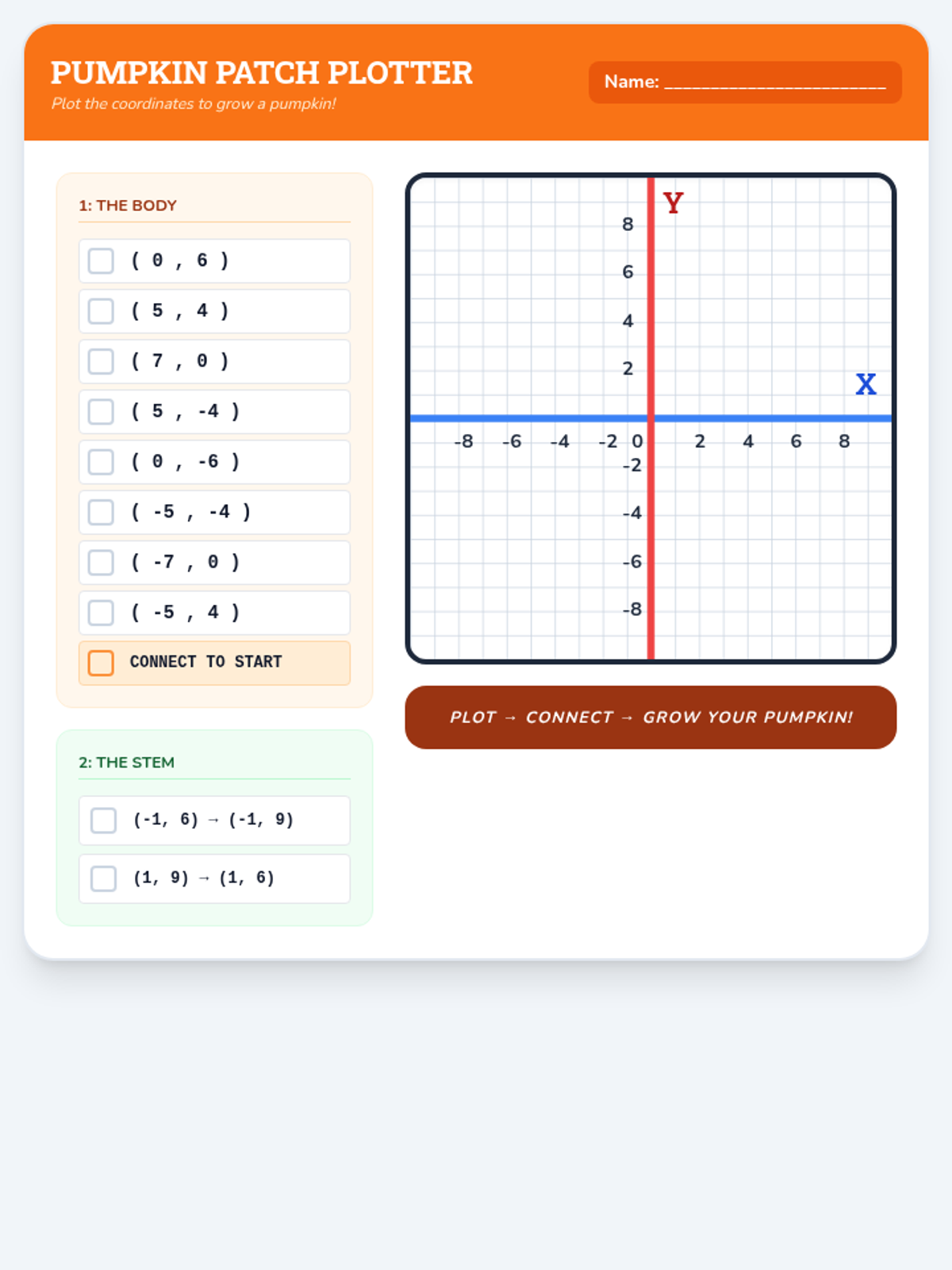
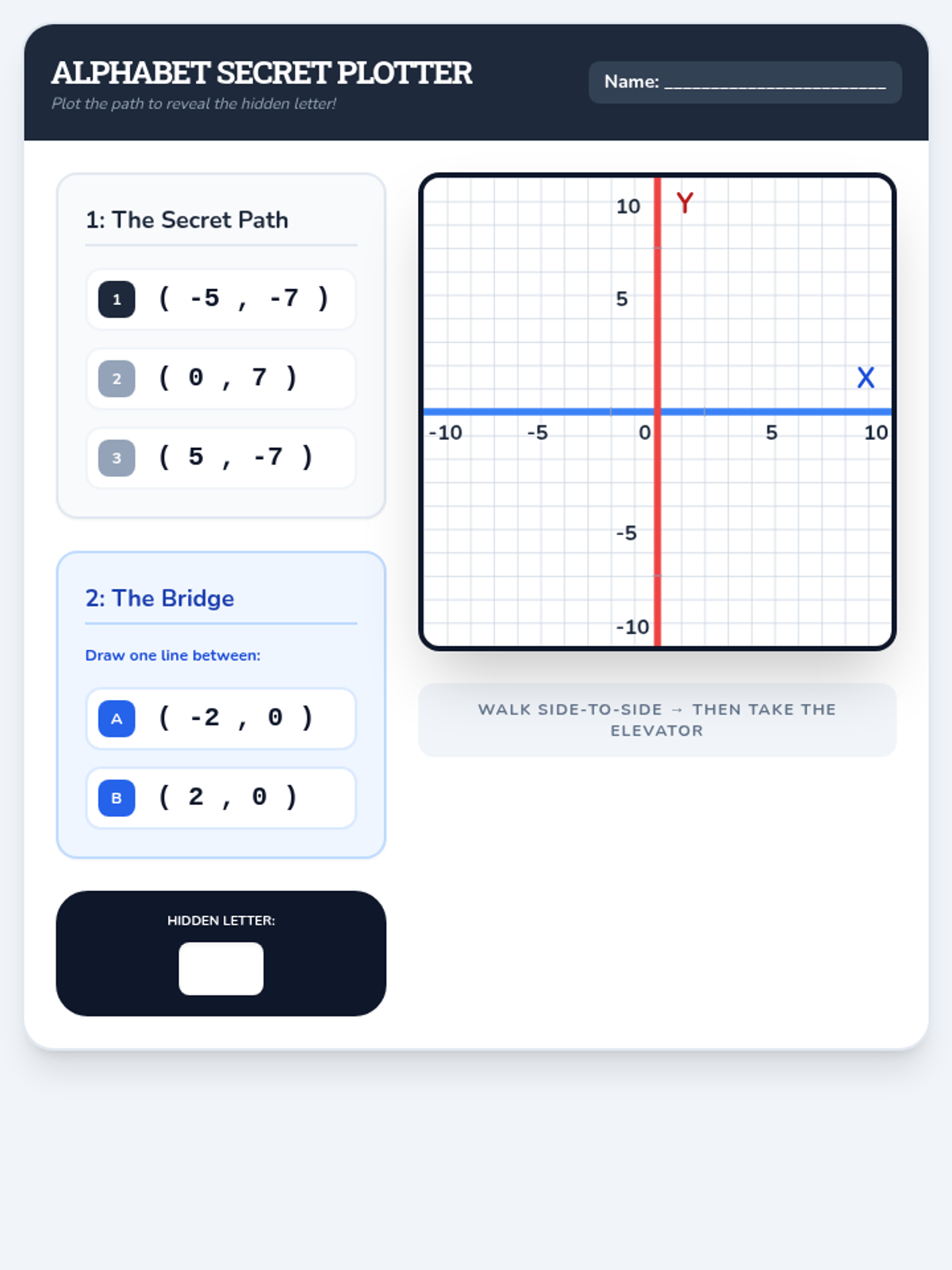
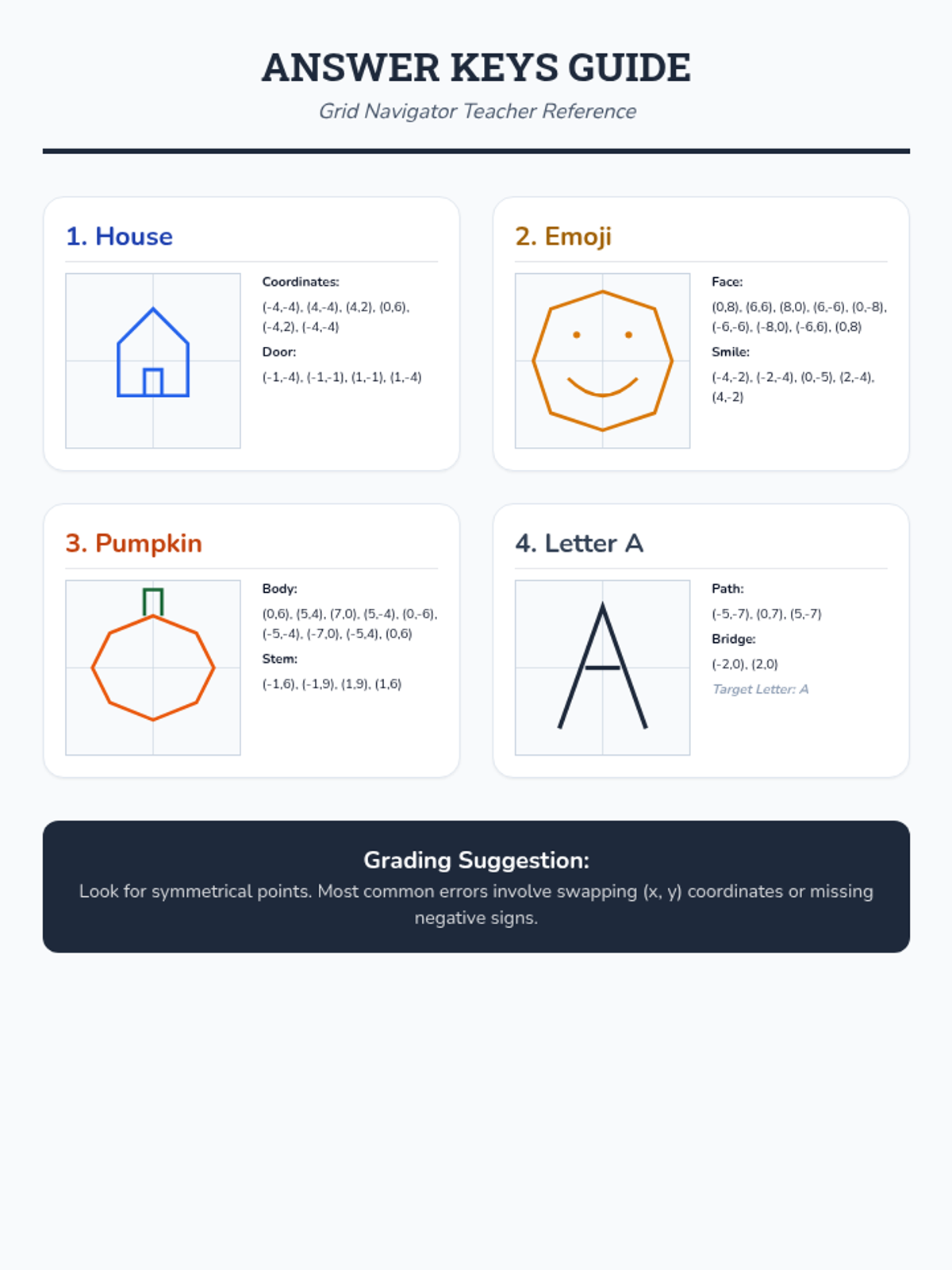
A foundational lesson on plotting points in all four quadrants, specifically designed with scaffolds for students with IEPs. Students will create four different images: a house, an emoji, a pumpkin, and a letter.
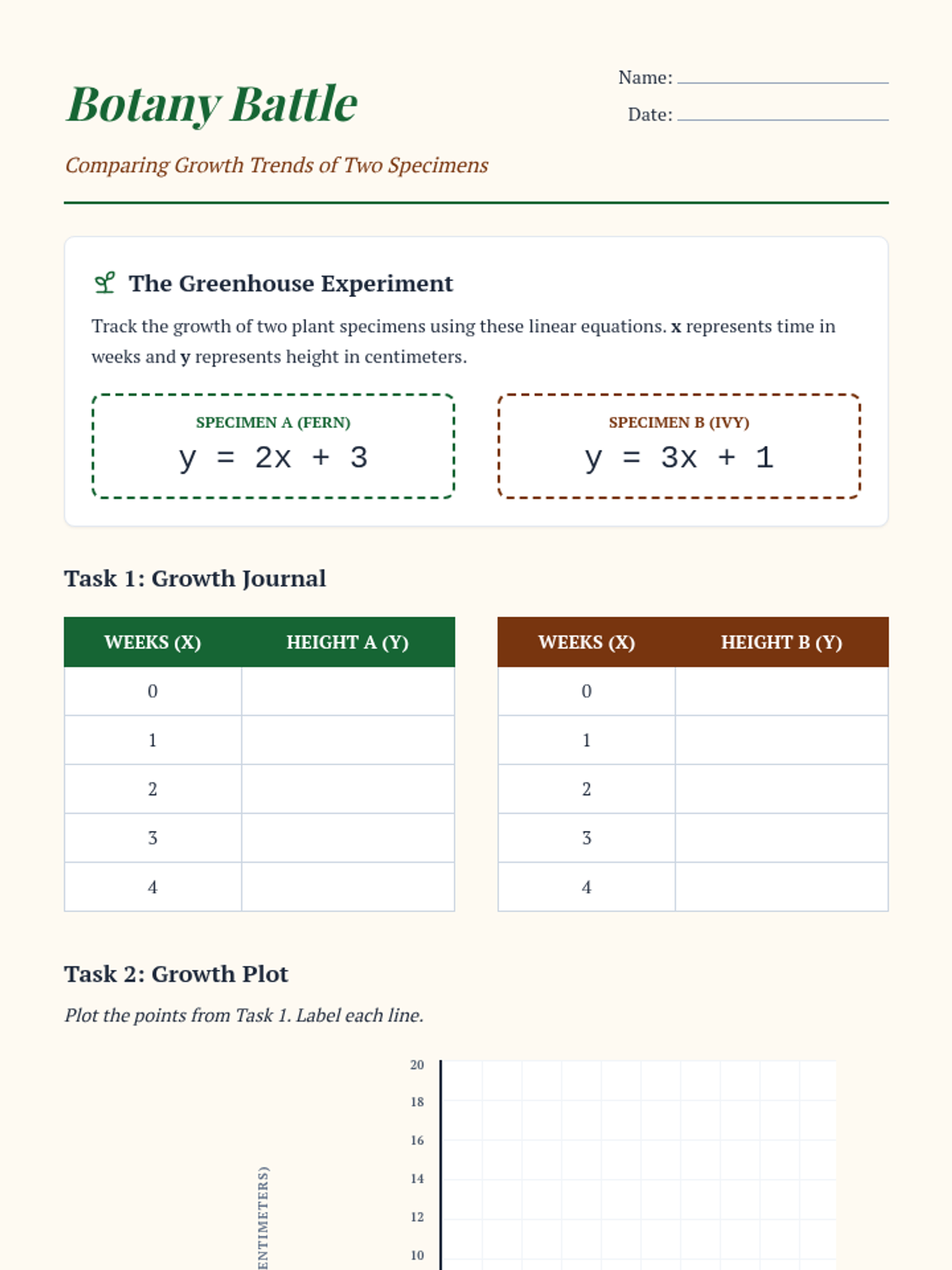
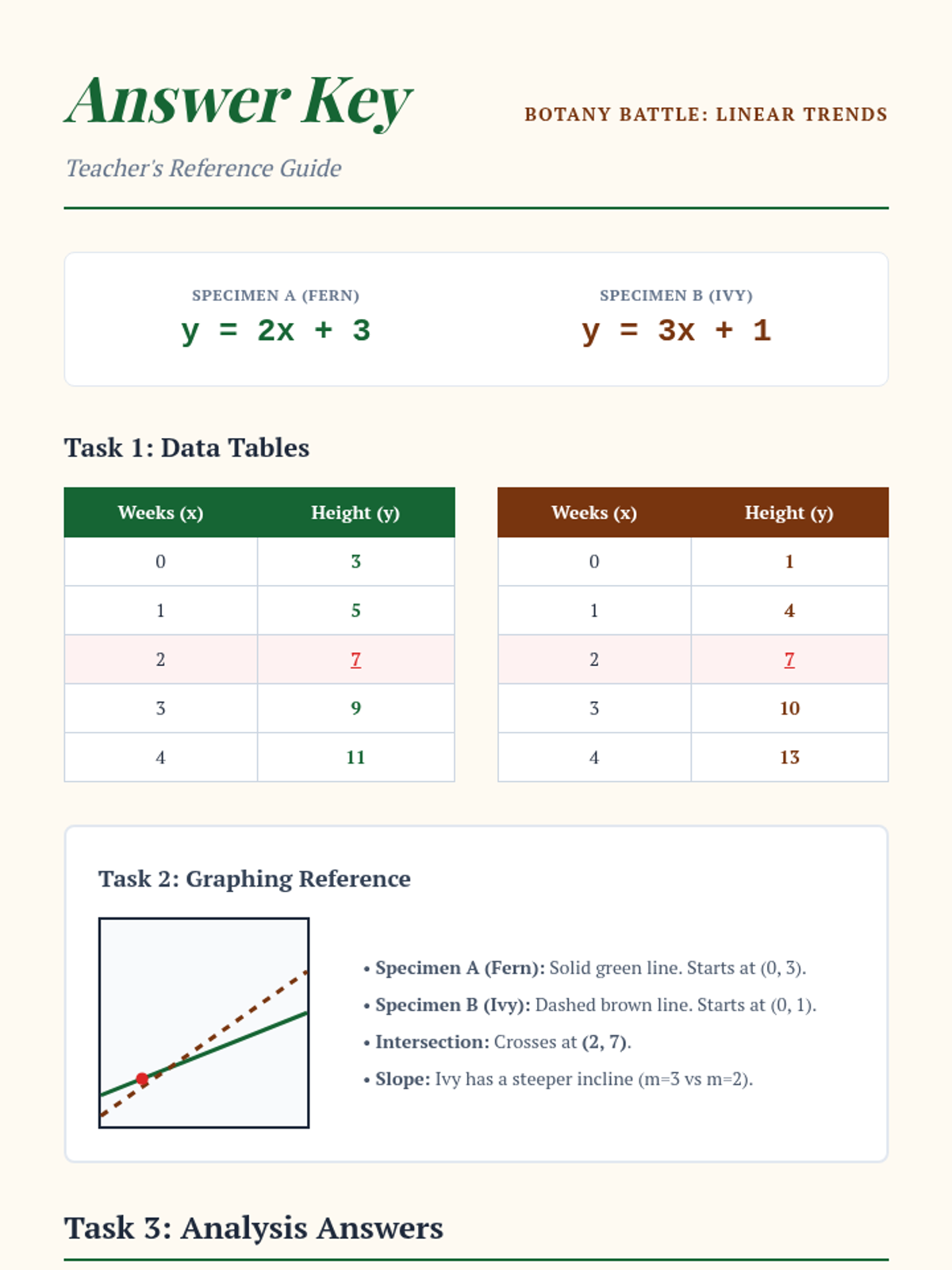
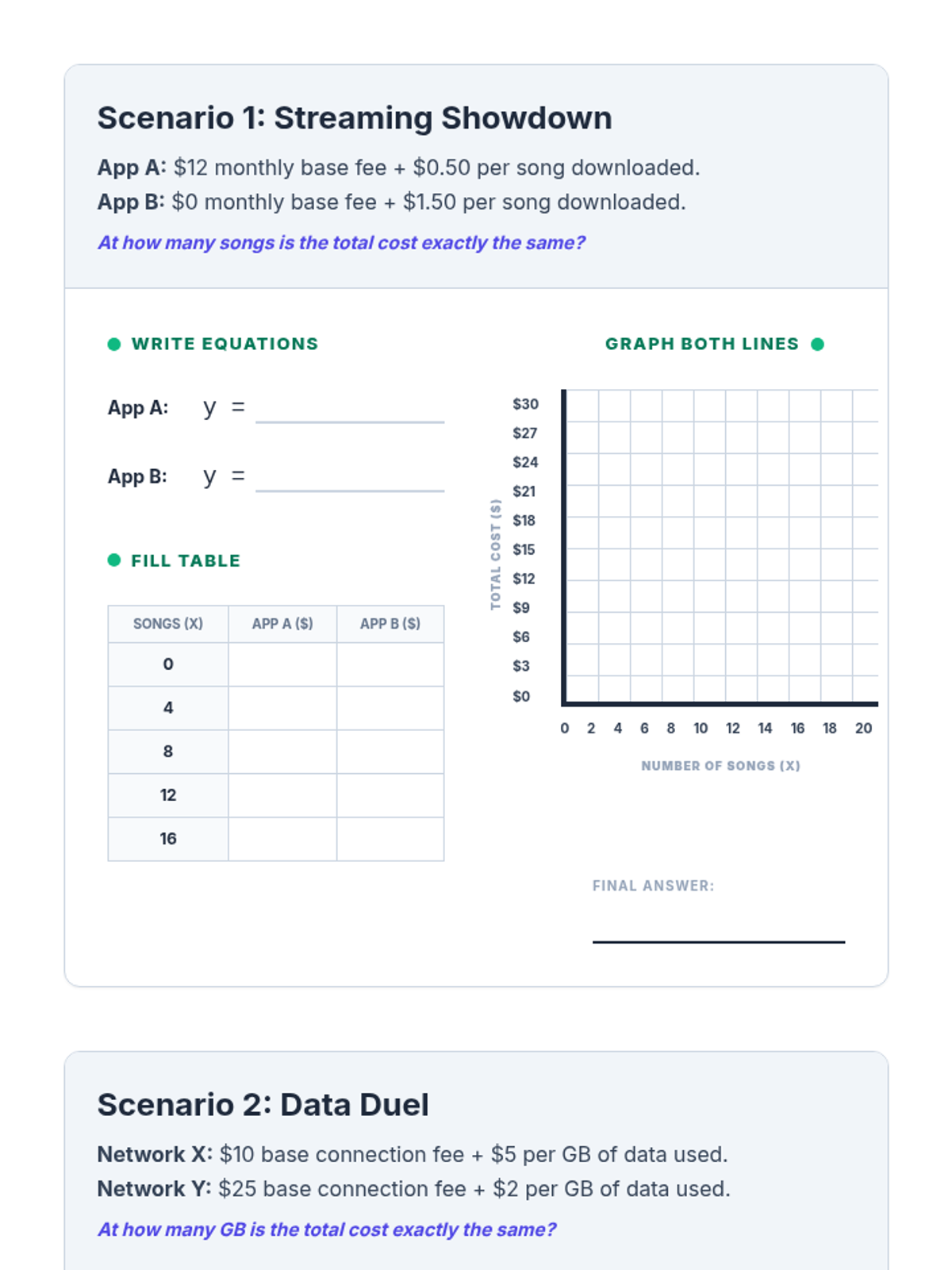
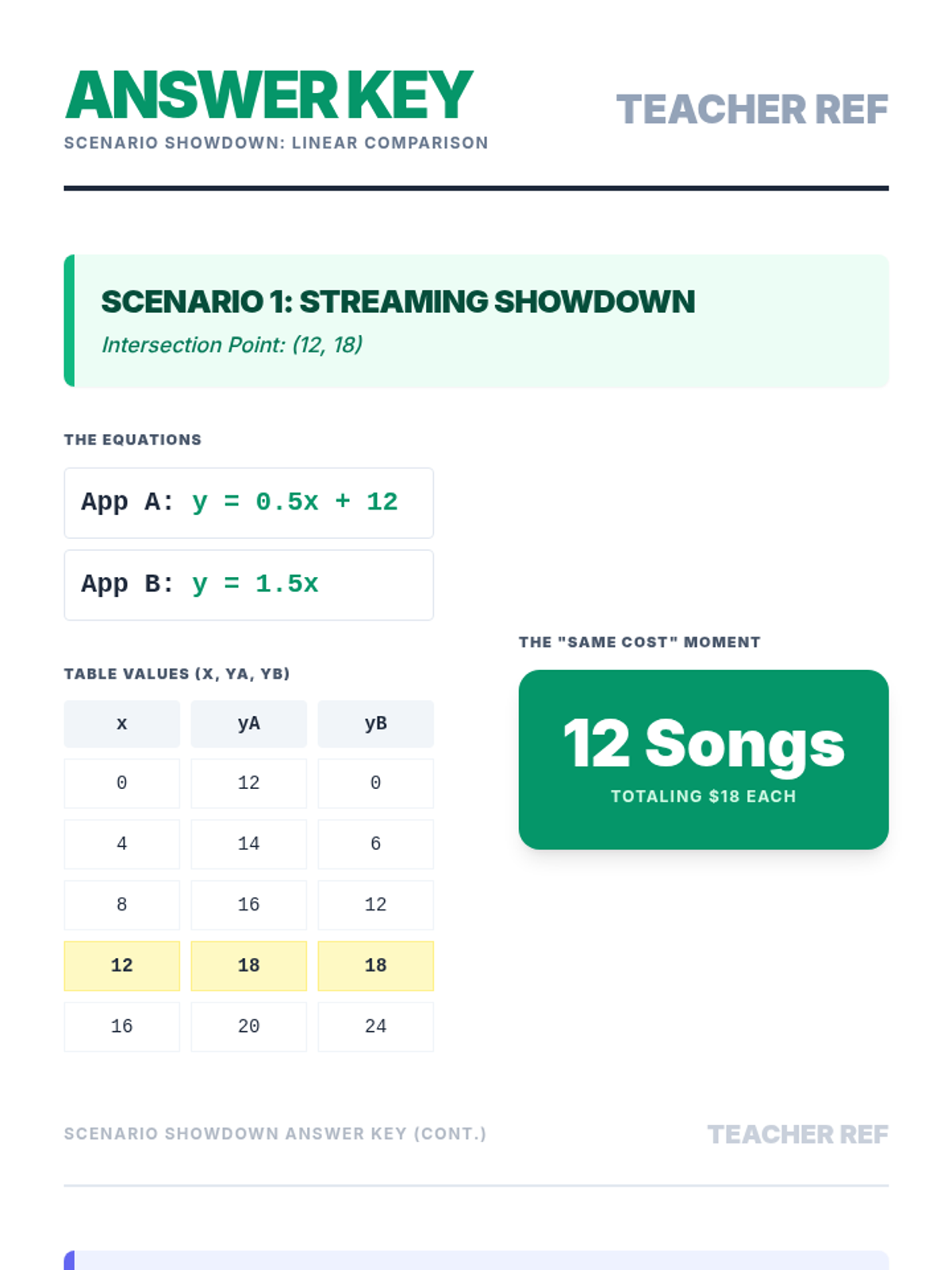
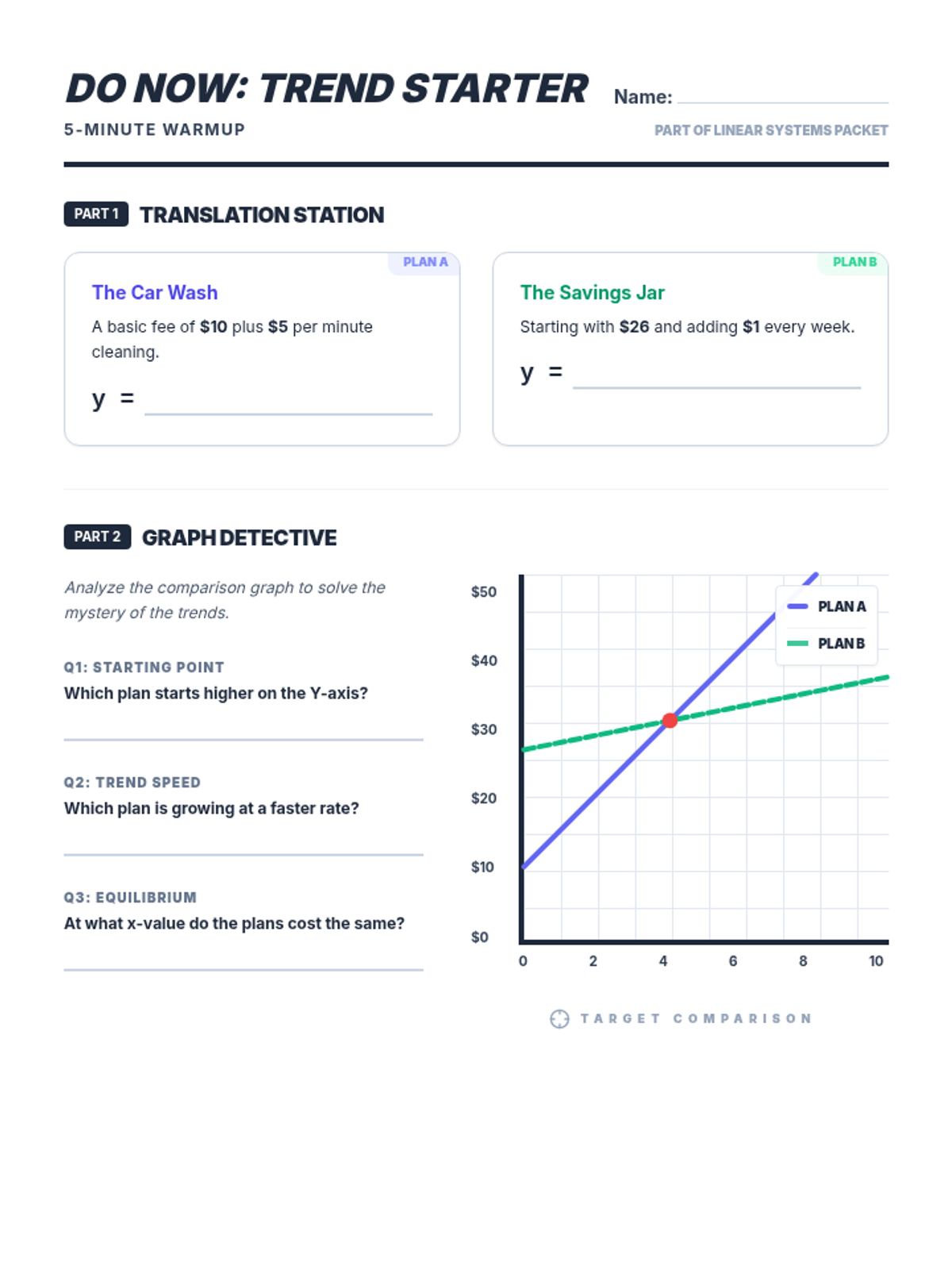
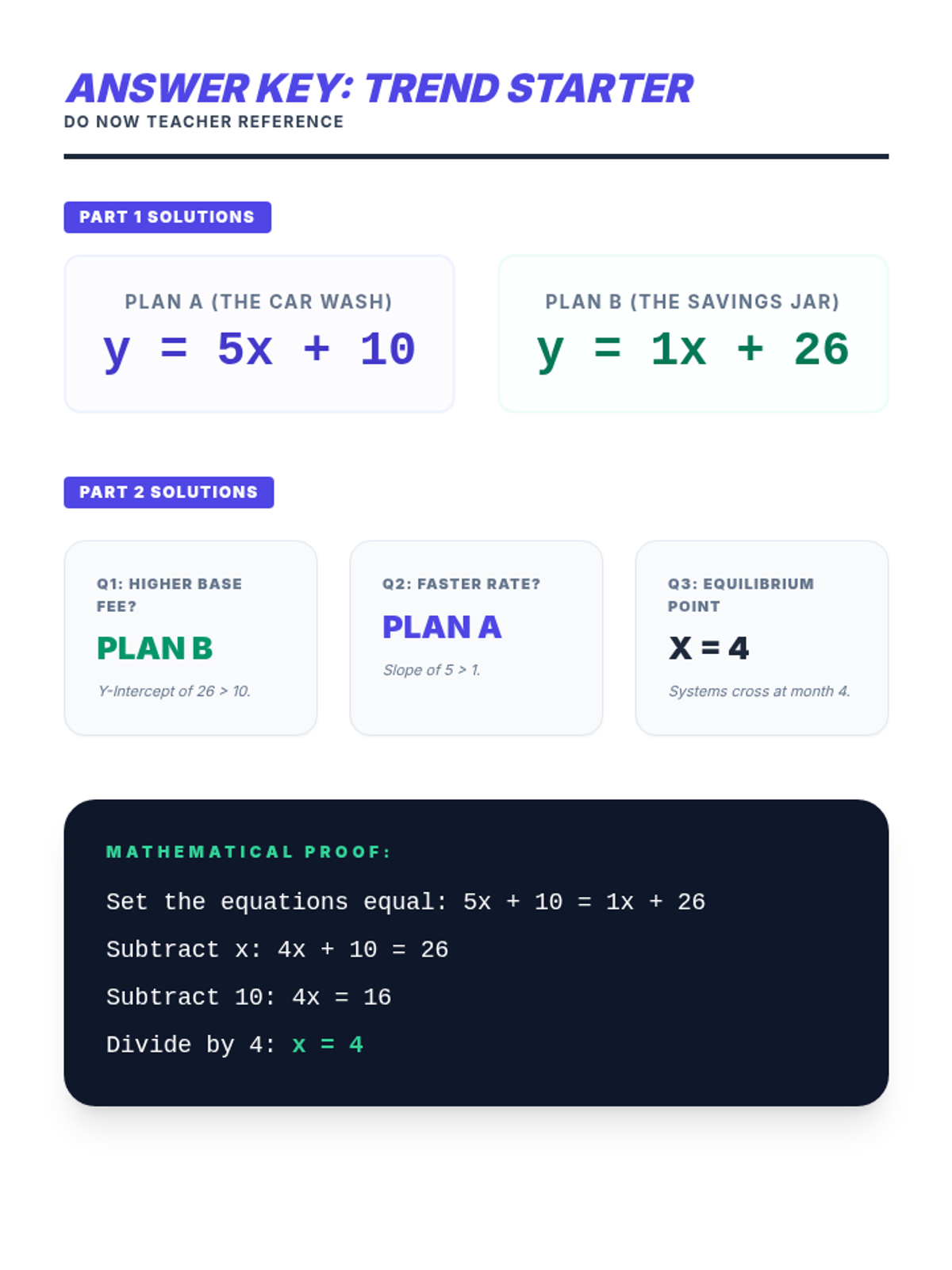
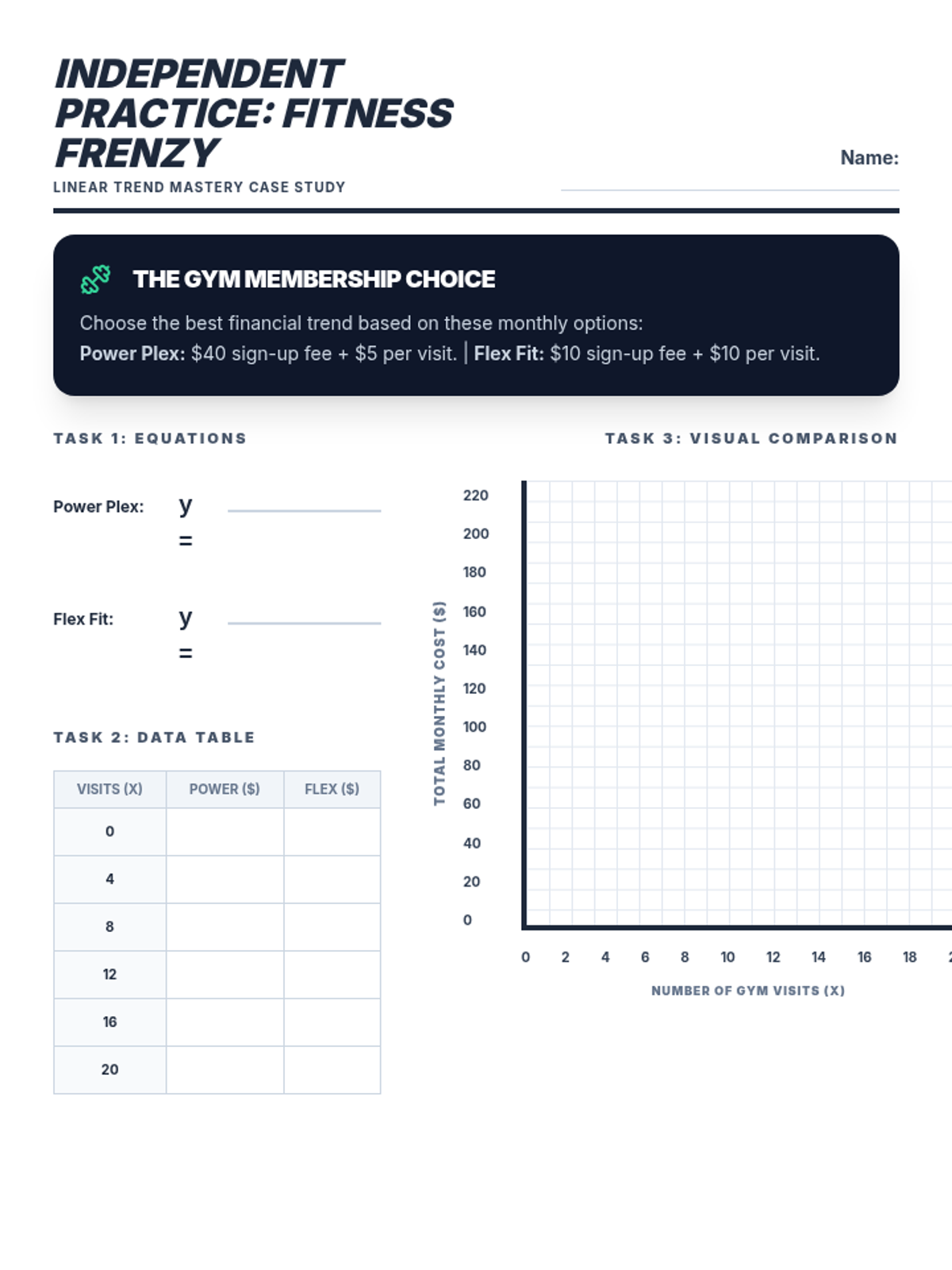
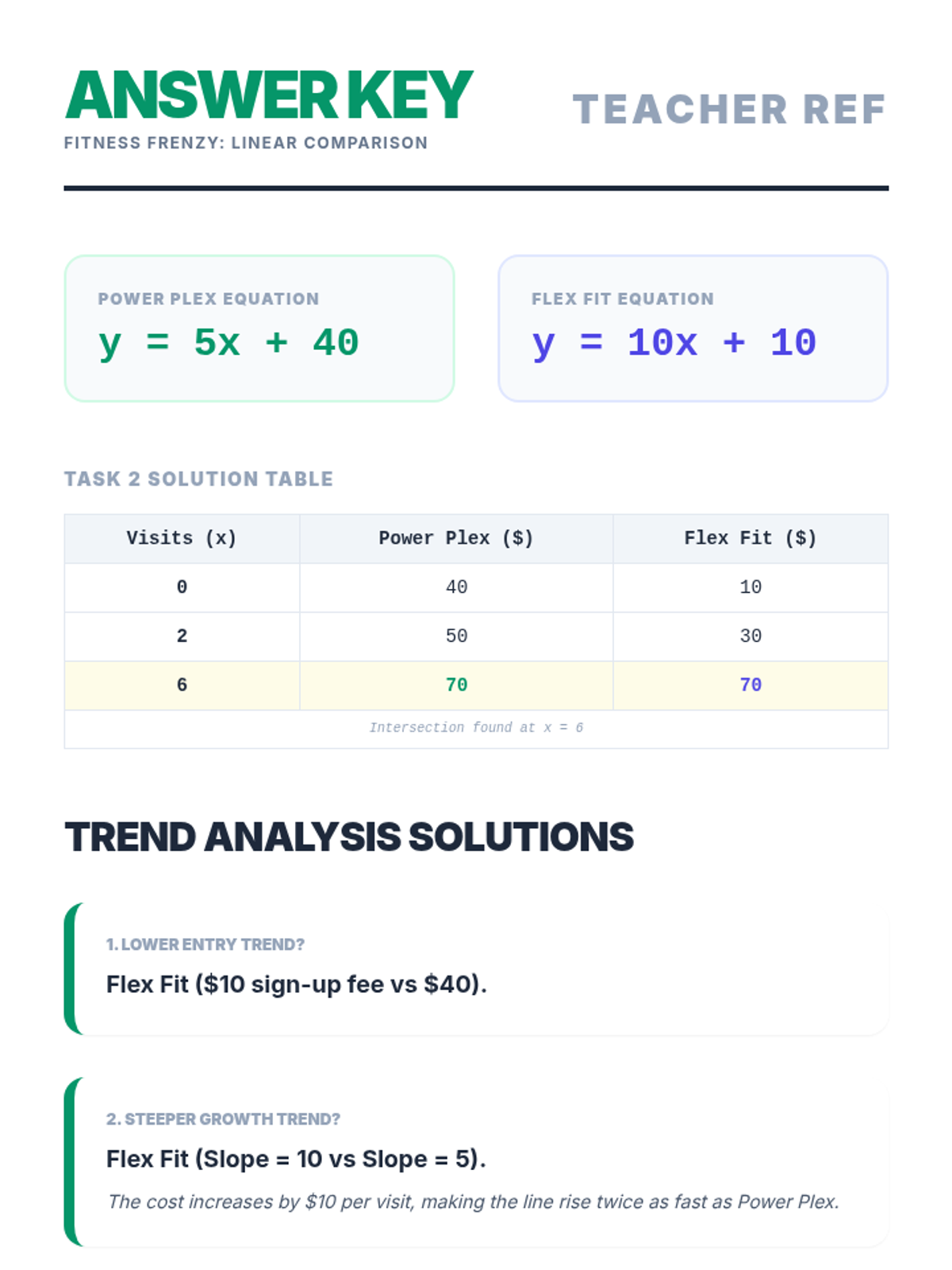
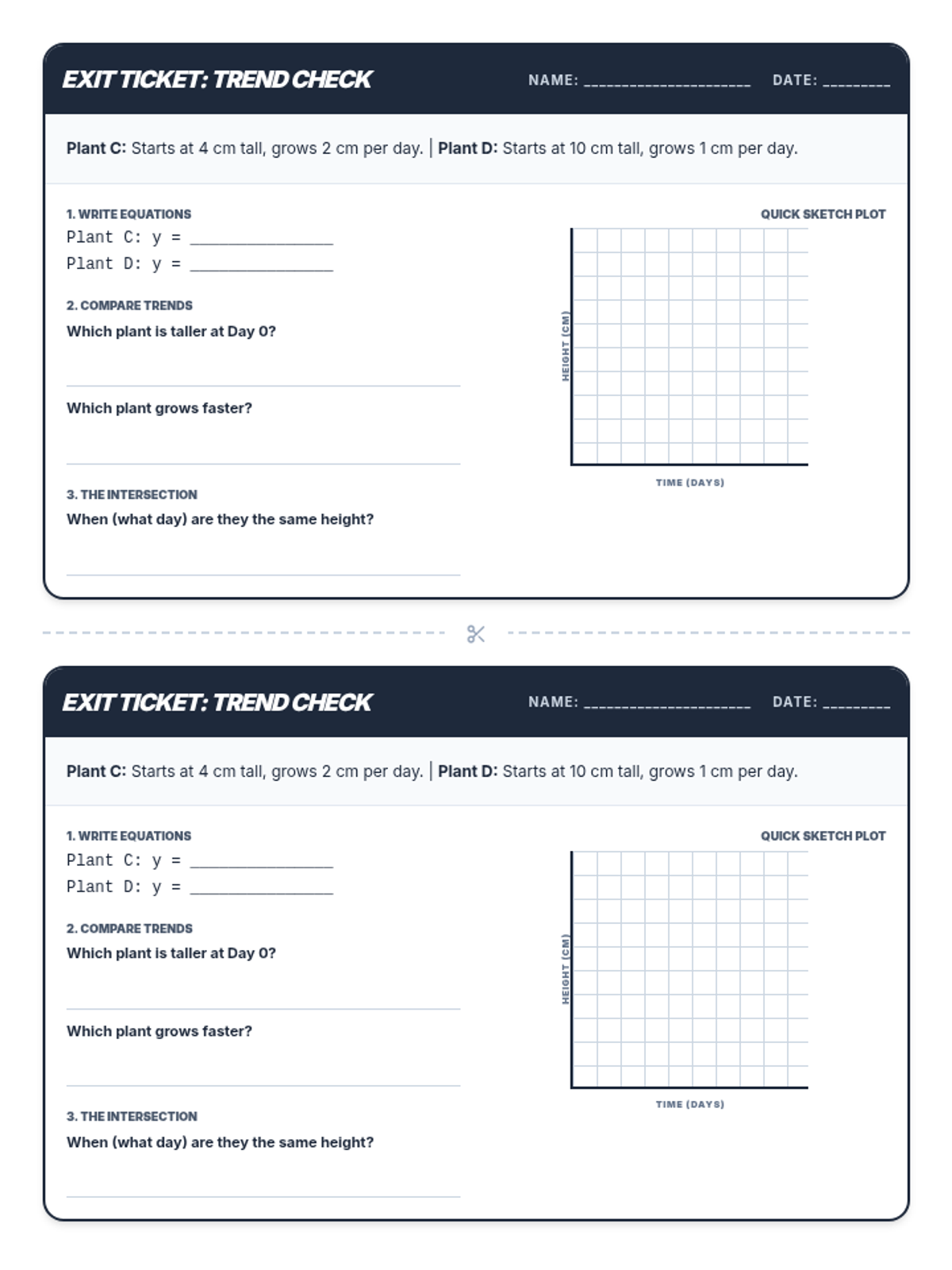
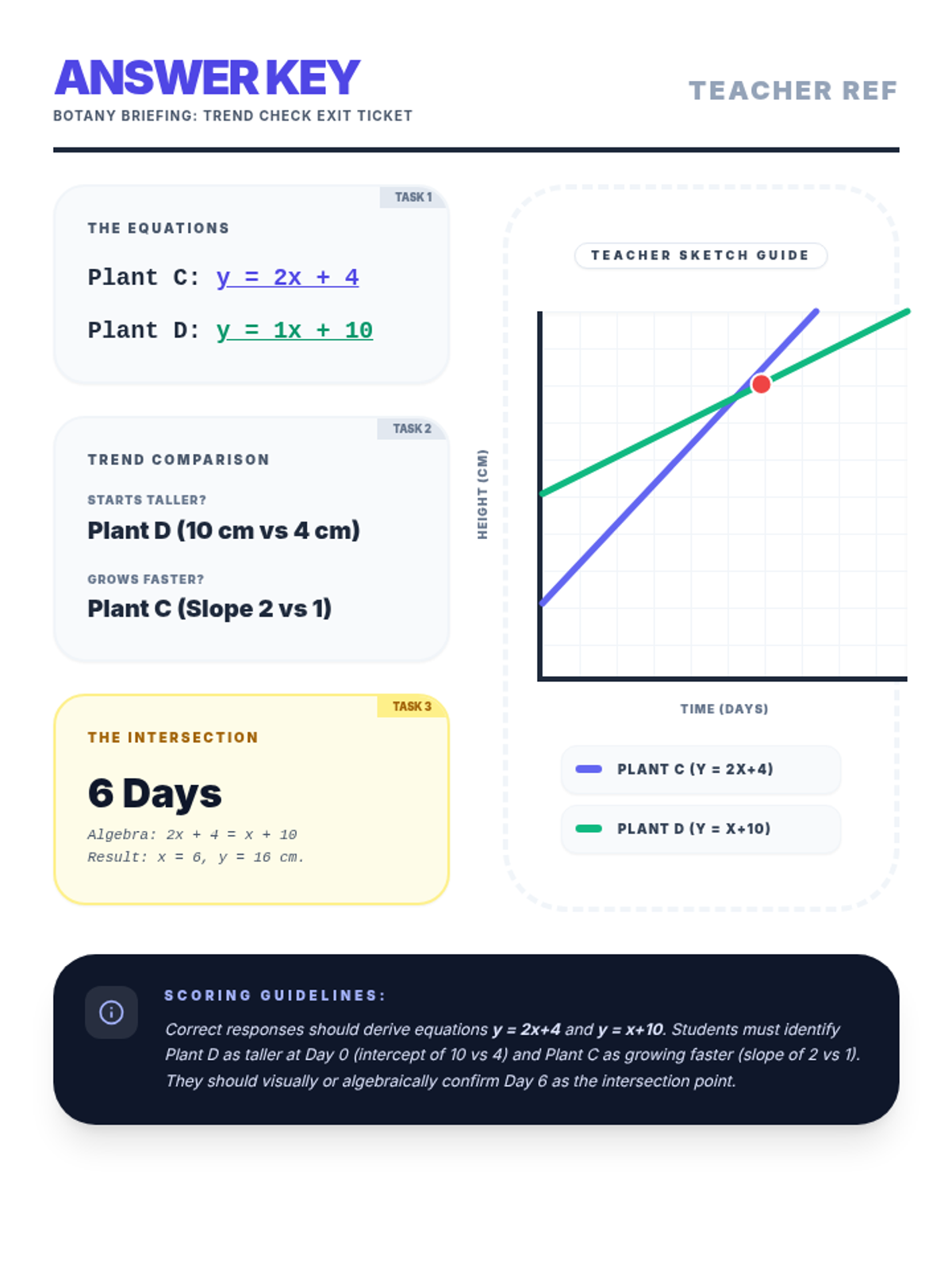
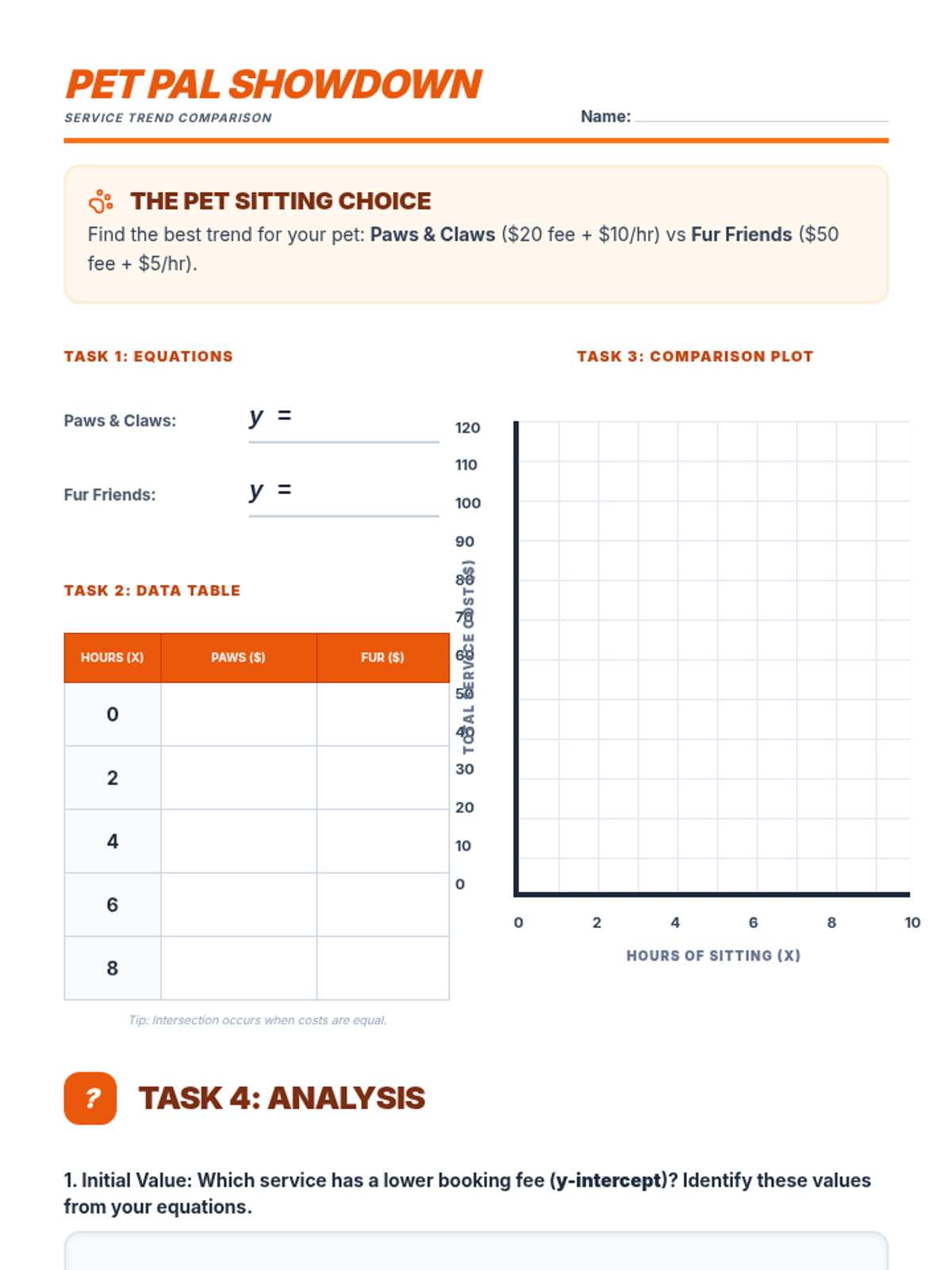
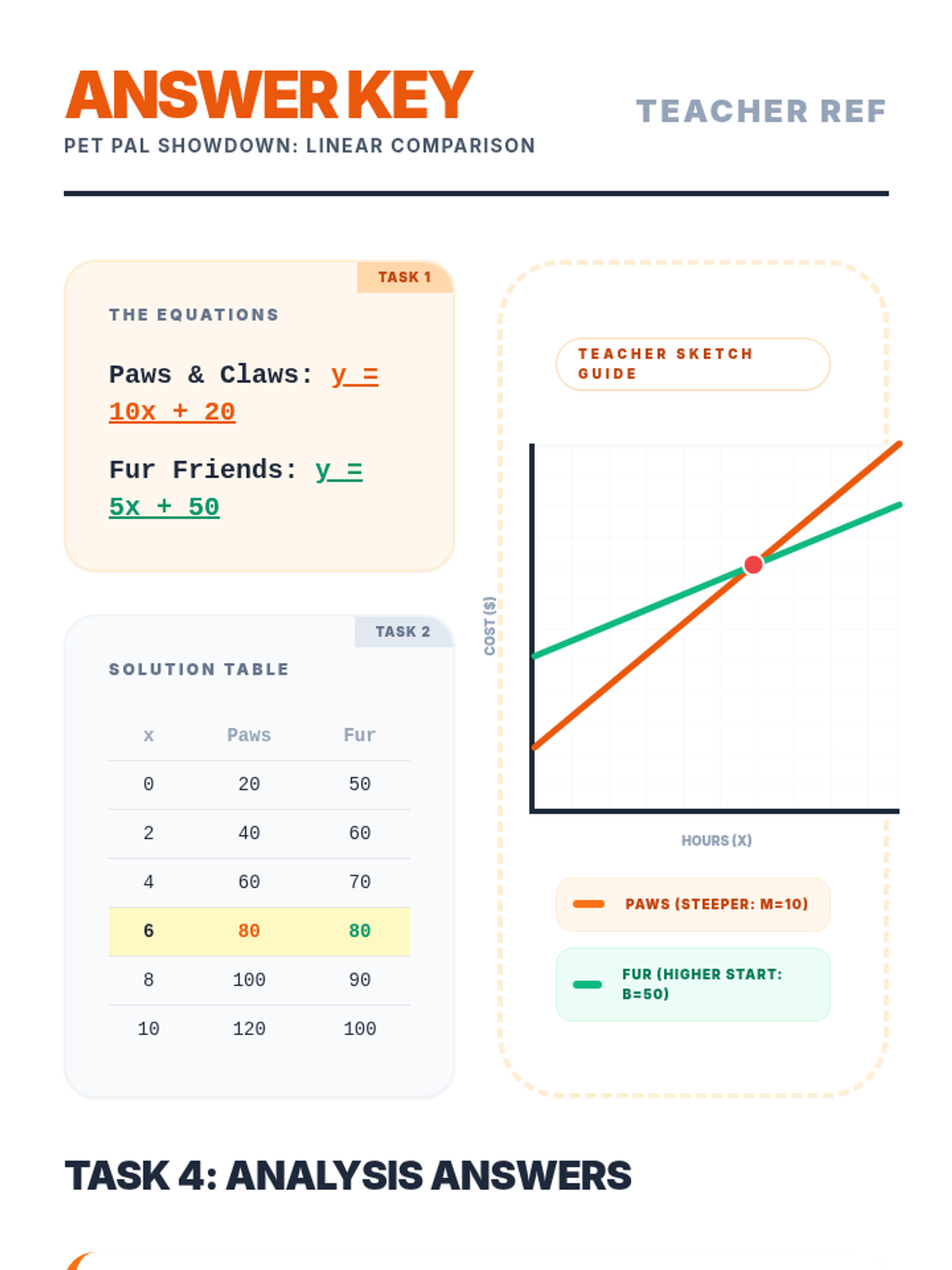
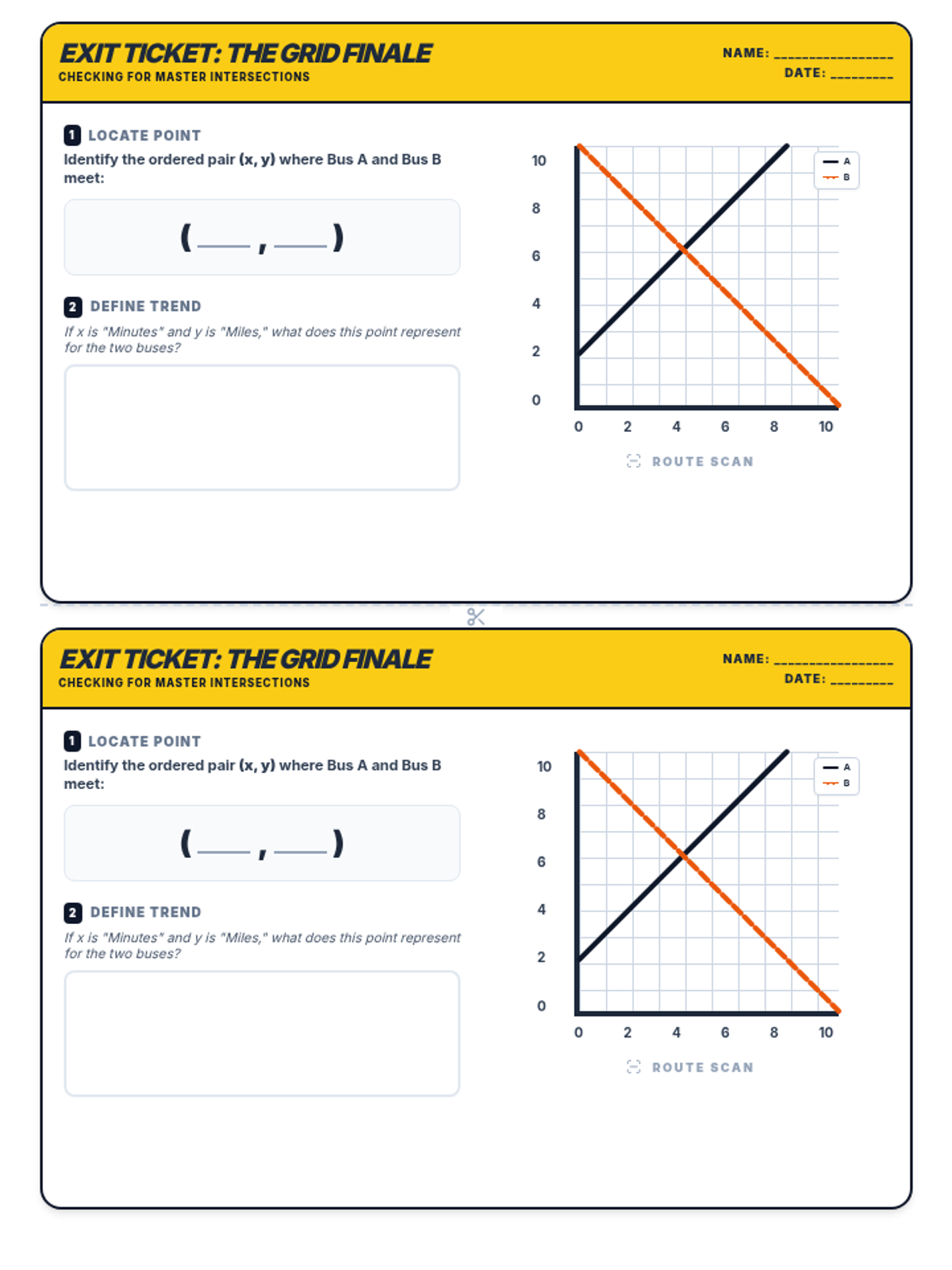
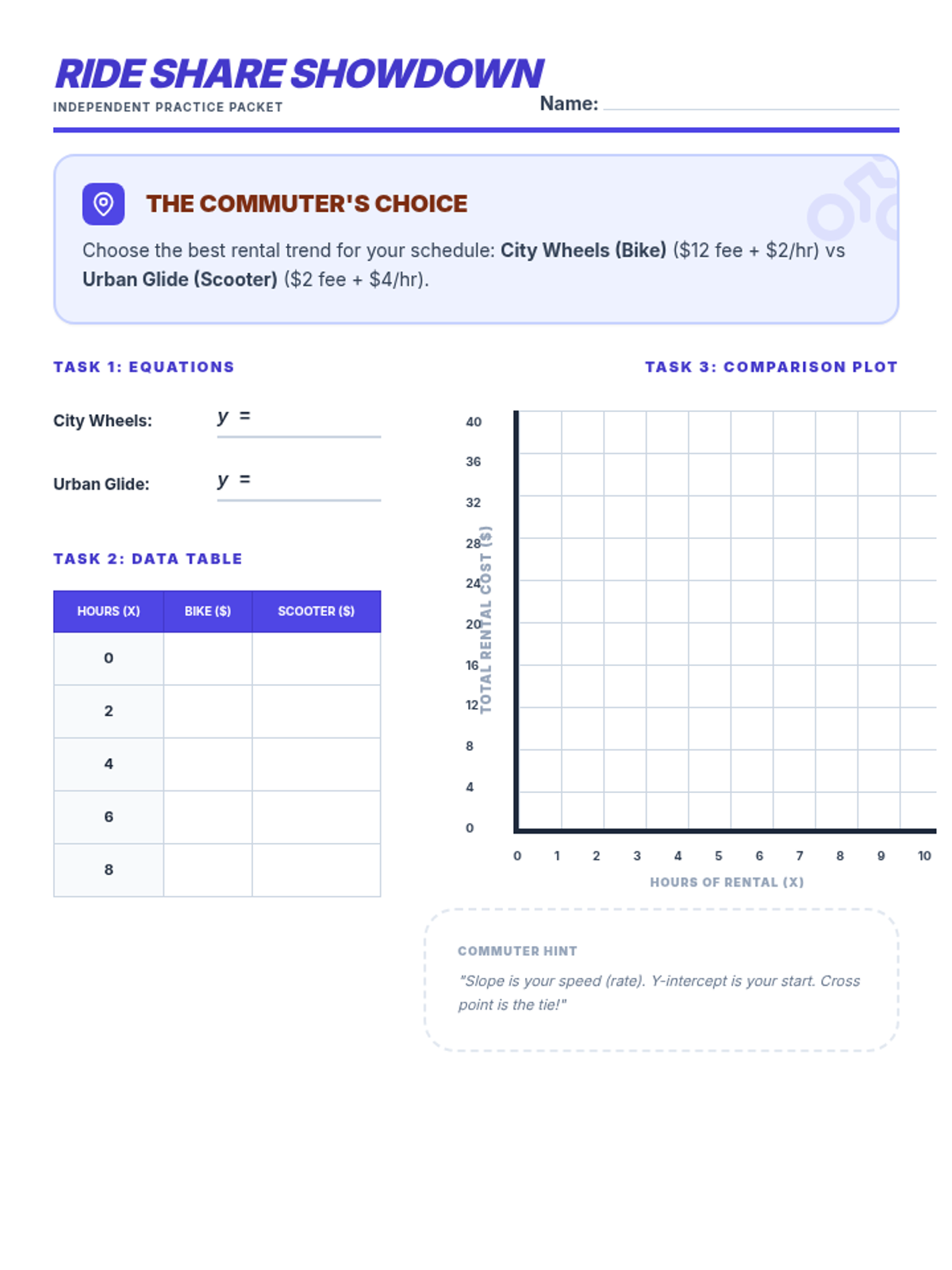
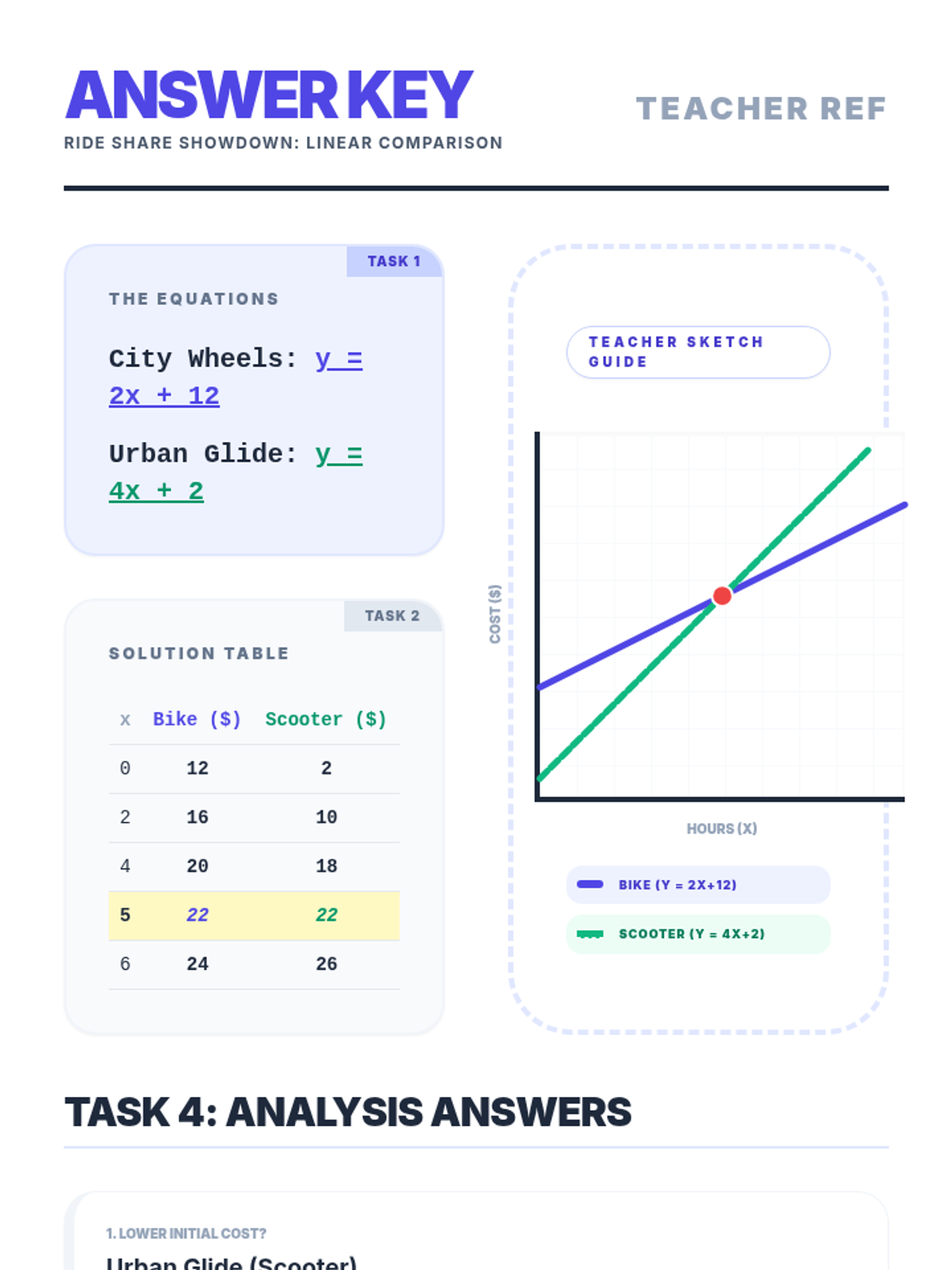
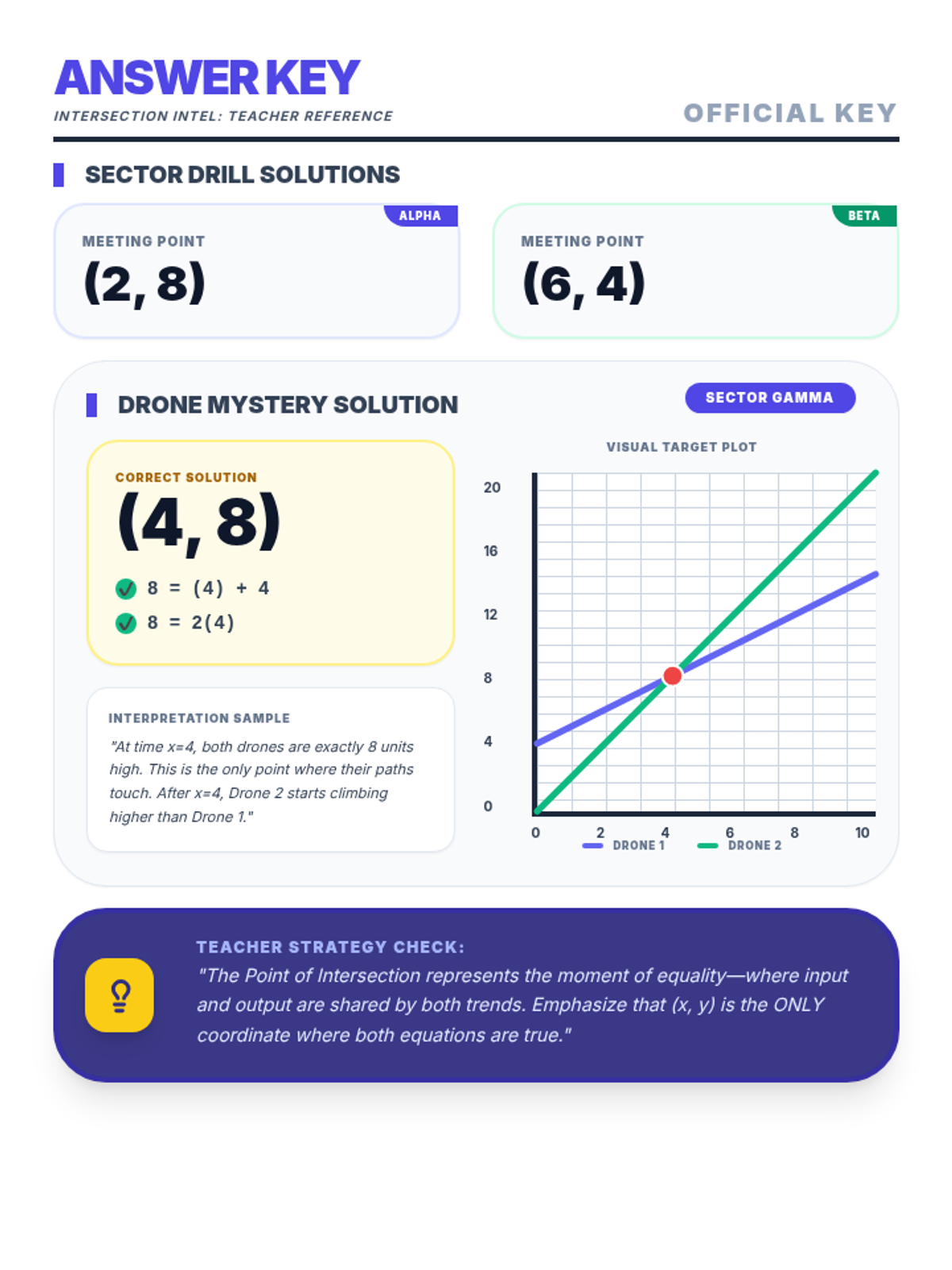
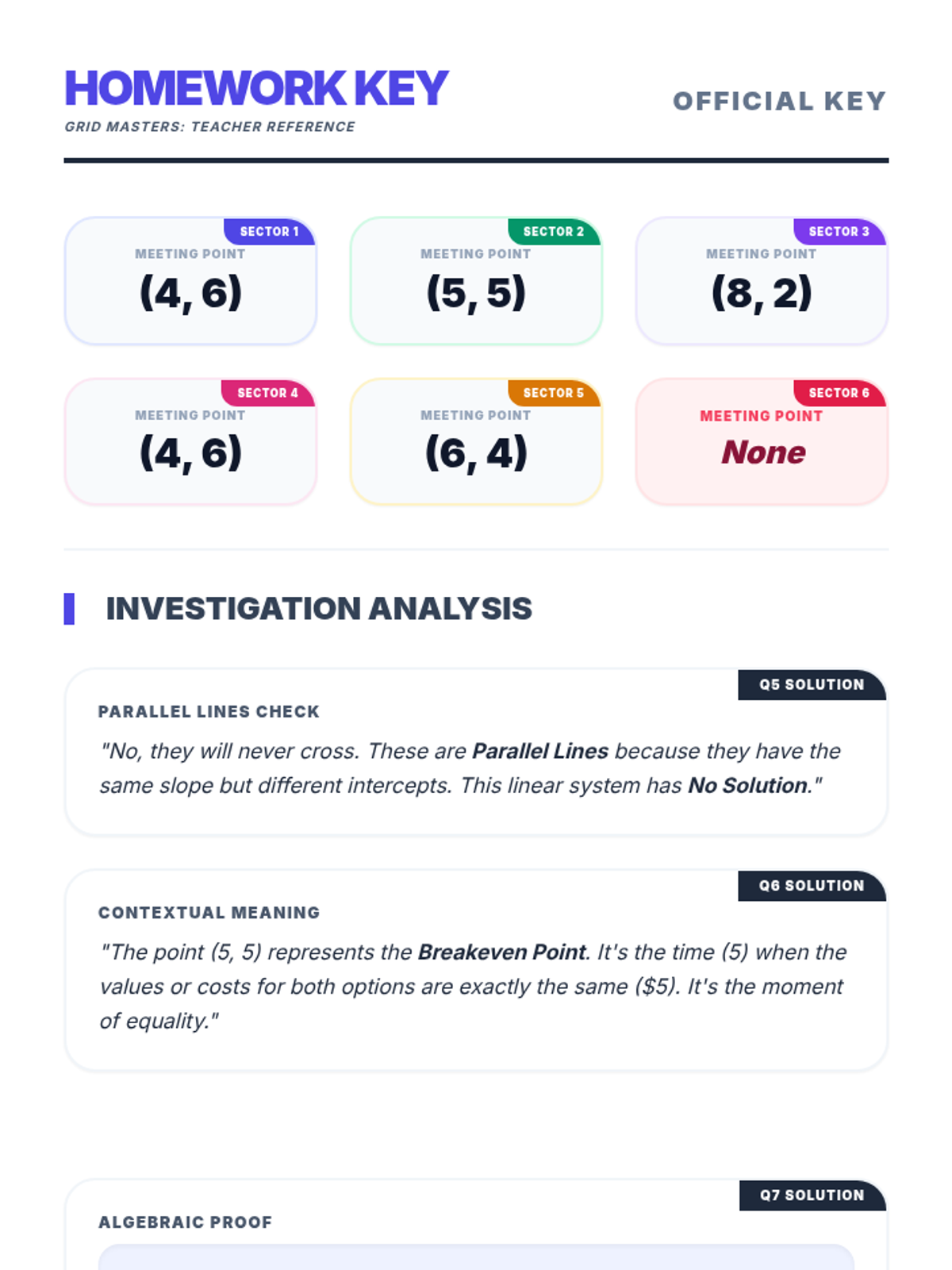
A lesson focused on graphing two linear equations on the same coordinate plane to compare growth trends over time. Students will identify starting points, rates of growth, and points of intersection.
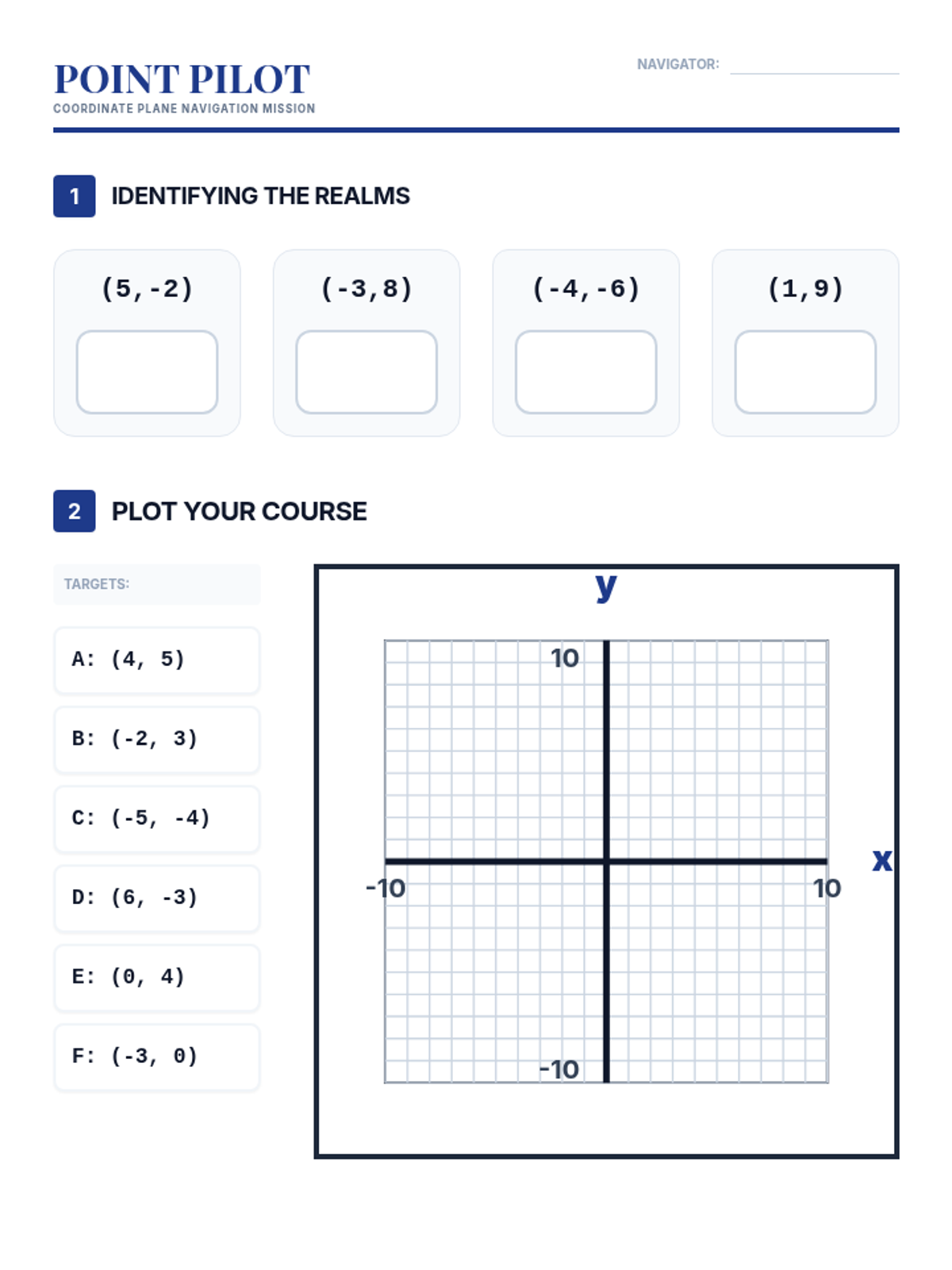
A comprehensive lesson on plotting and identifying points in all four quadrants of the coordinate plane, using a nautical navigation theme to make the abstract concept concrete.
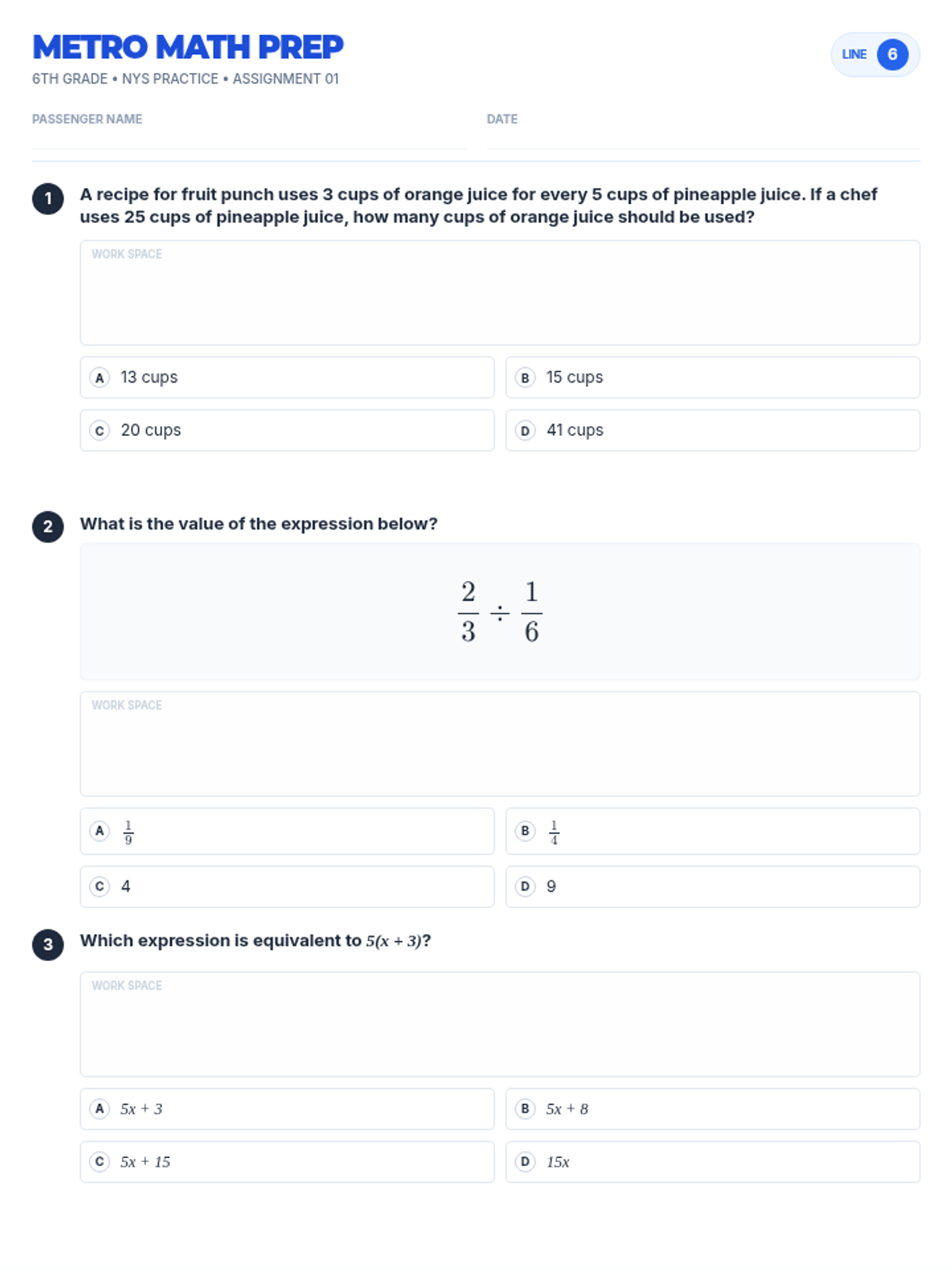
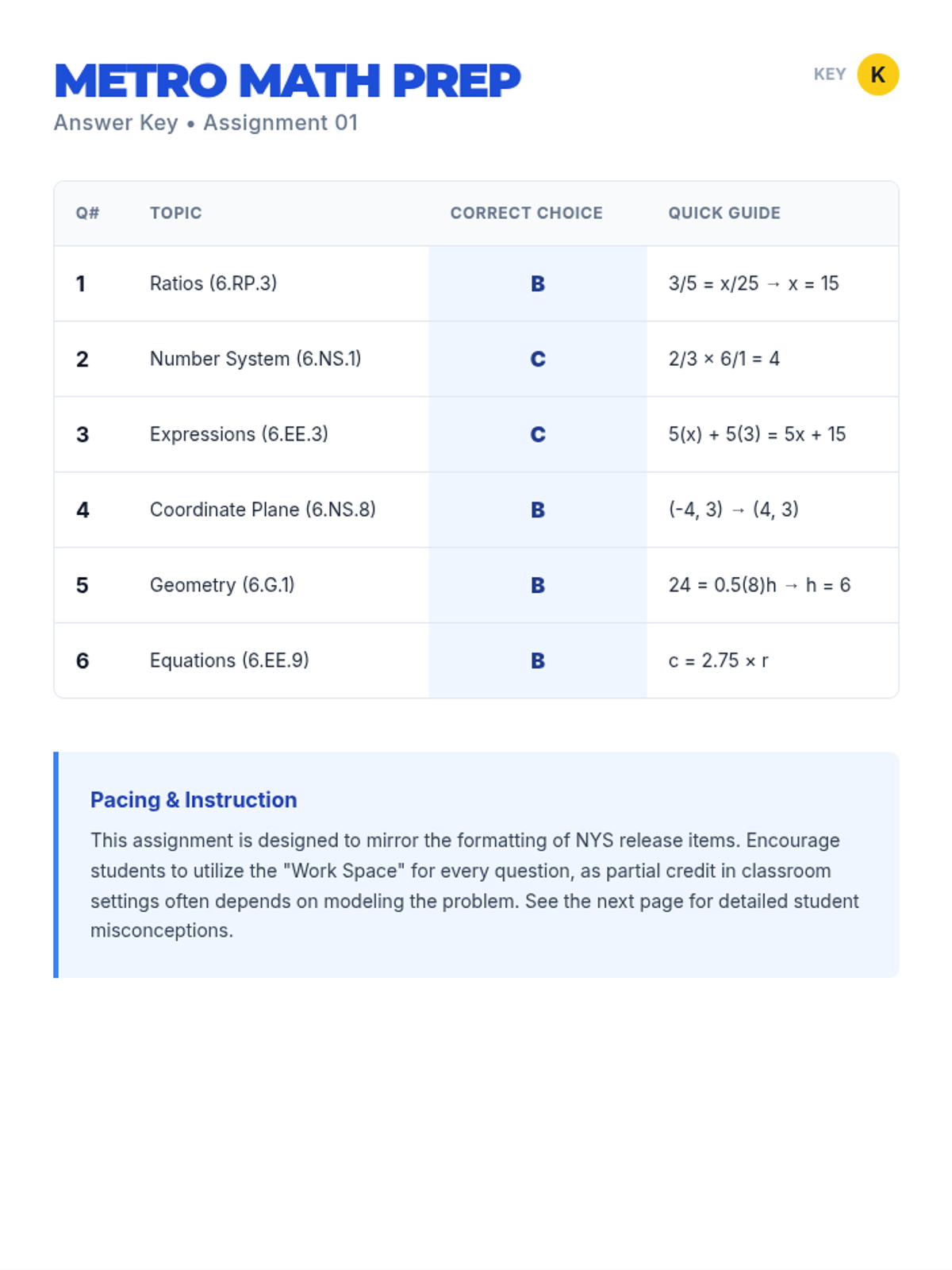
A targeted 6th-grade math review focused on New York State exam standards, excluding statistics. This lesson provides high-alignment practice problems in a multiple-choice format with ample space for student work.
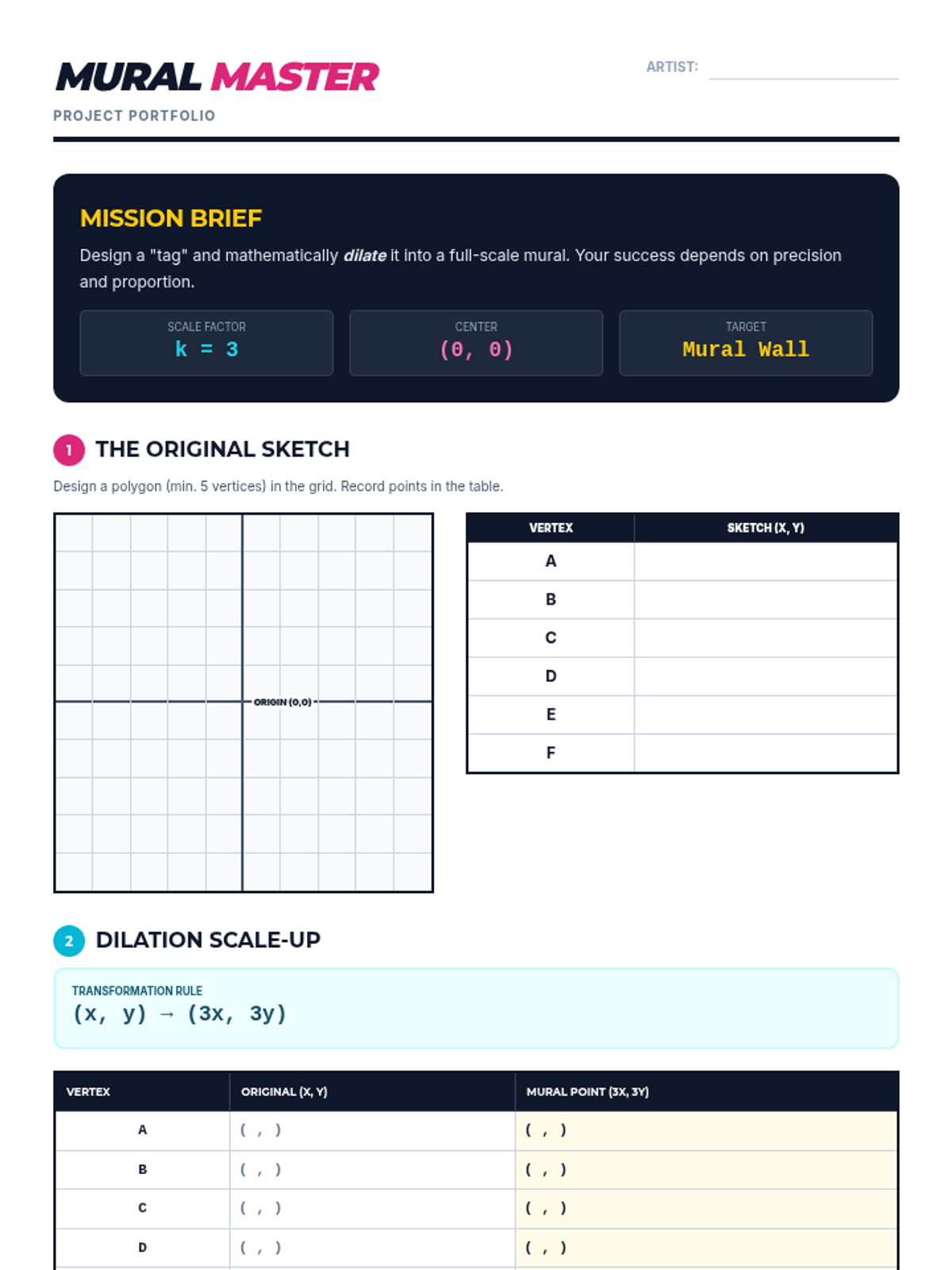
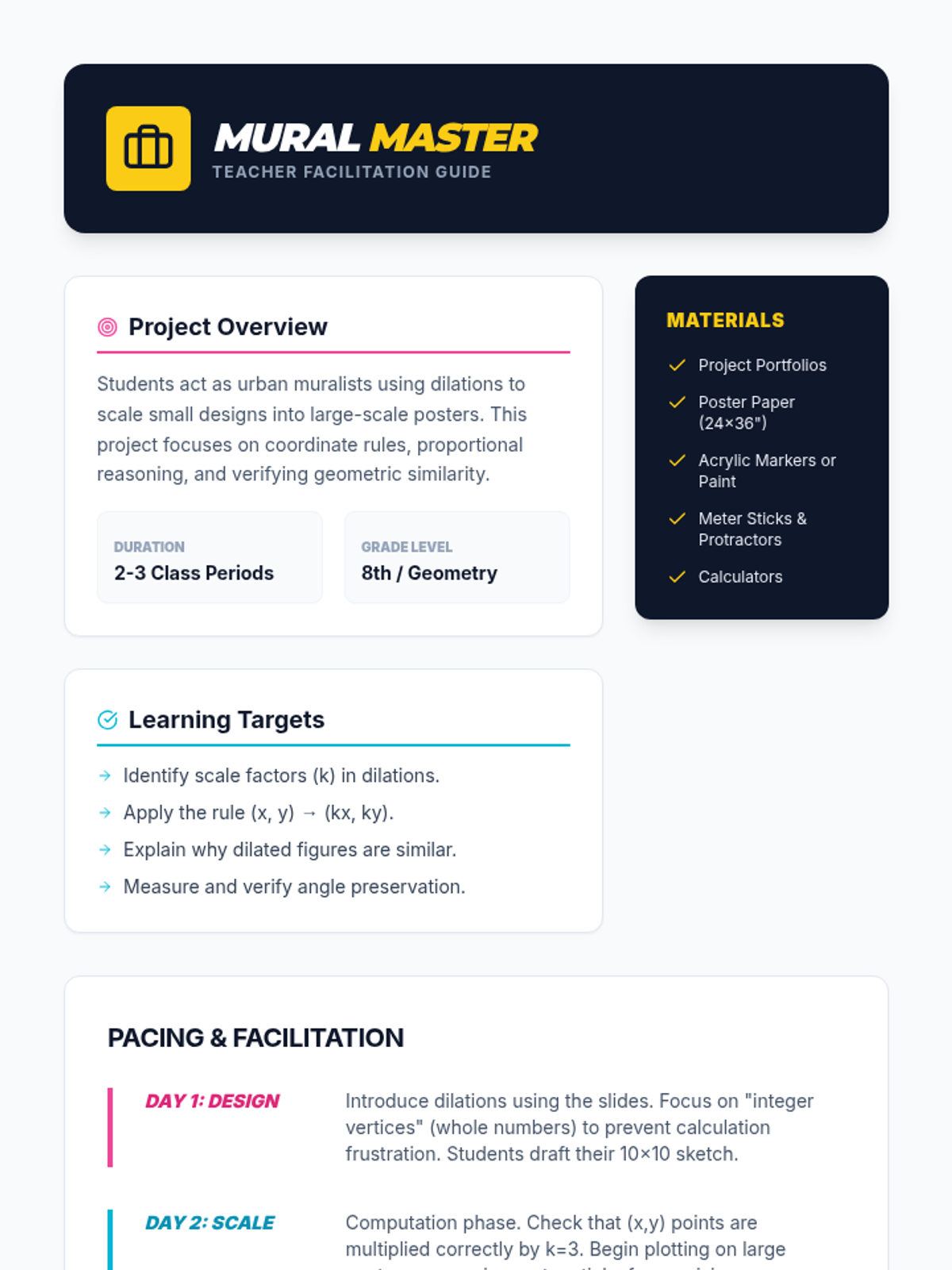
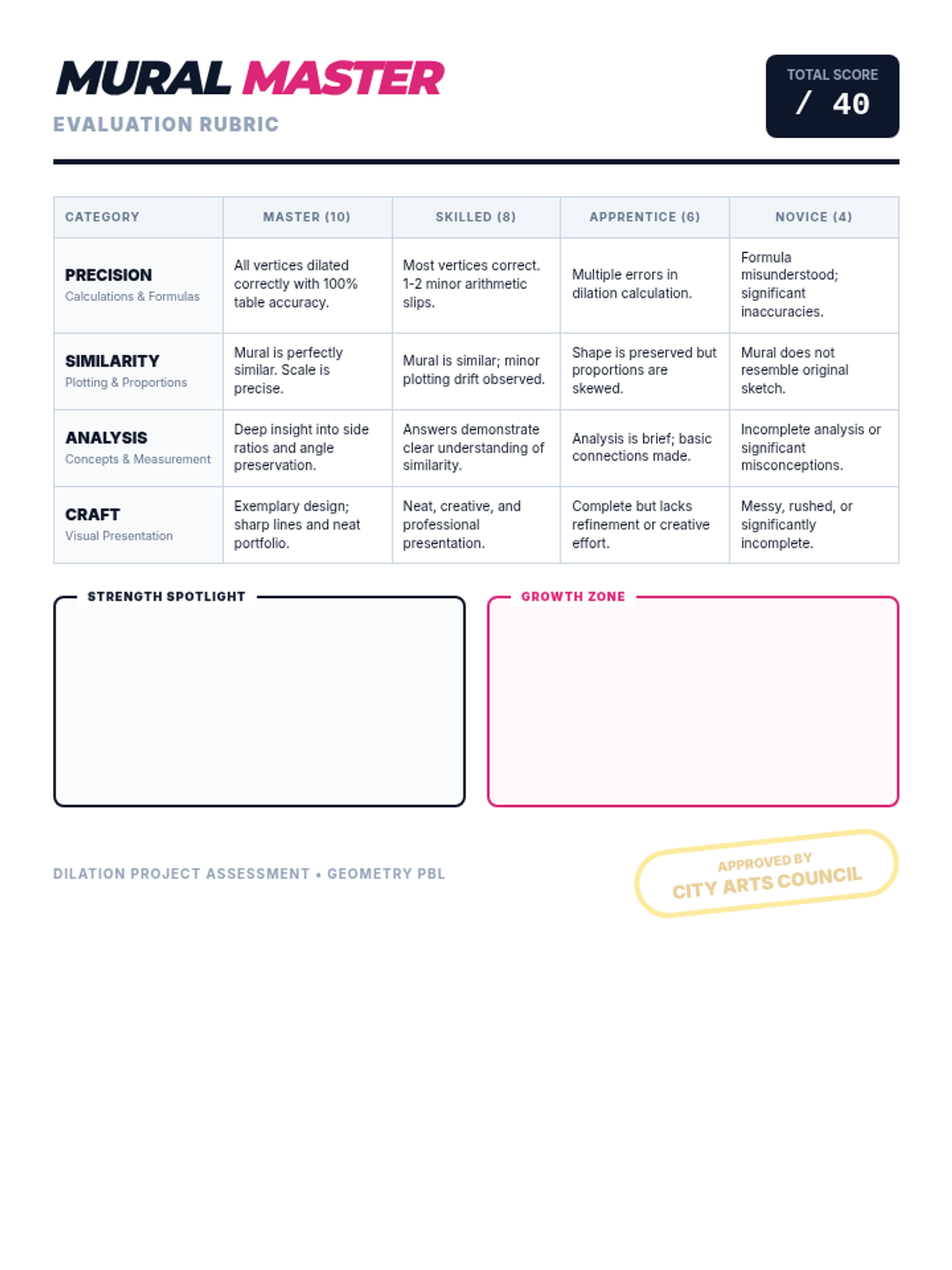
A Project-Based Learning unit where students act as muralists, using dilations and scale factors to transform small sketches into large-scale urban art. Students master coordinate transformations and geometric similarity through hands-on design.
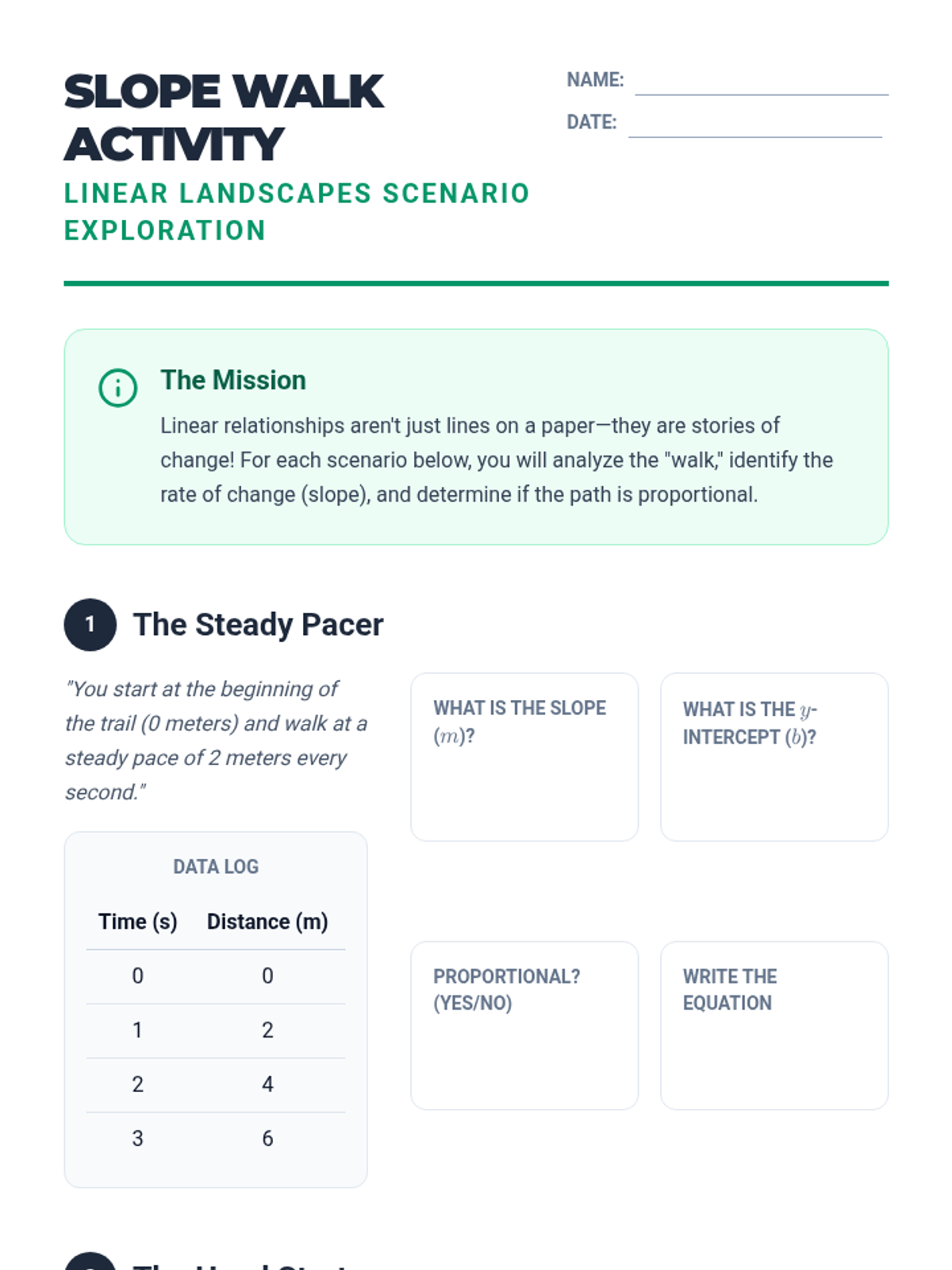
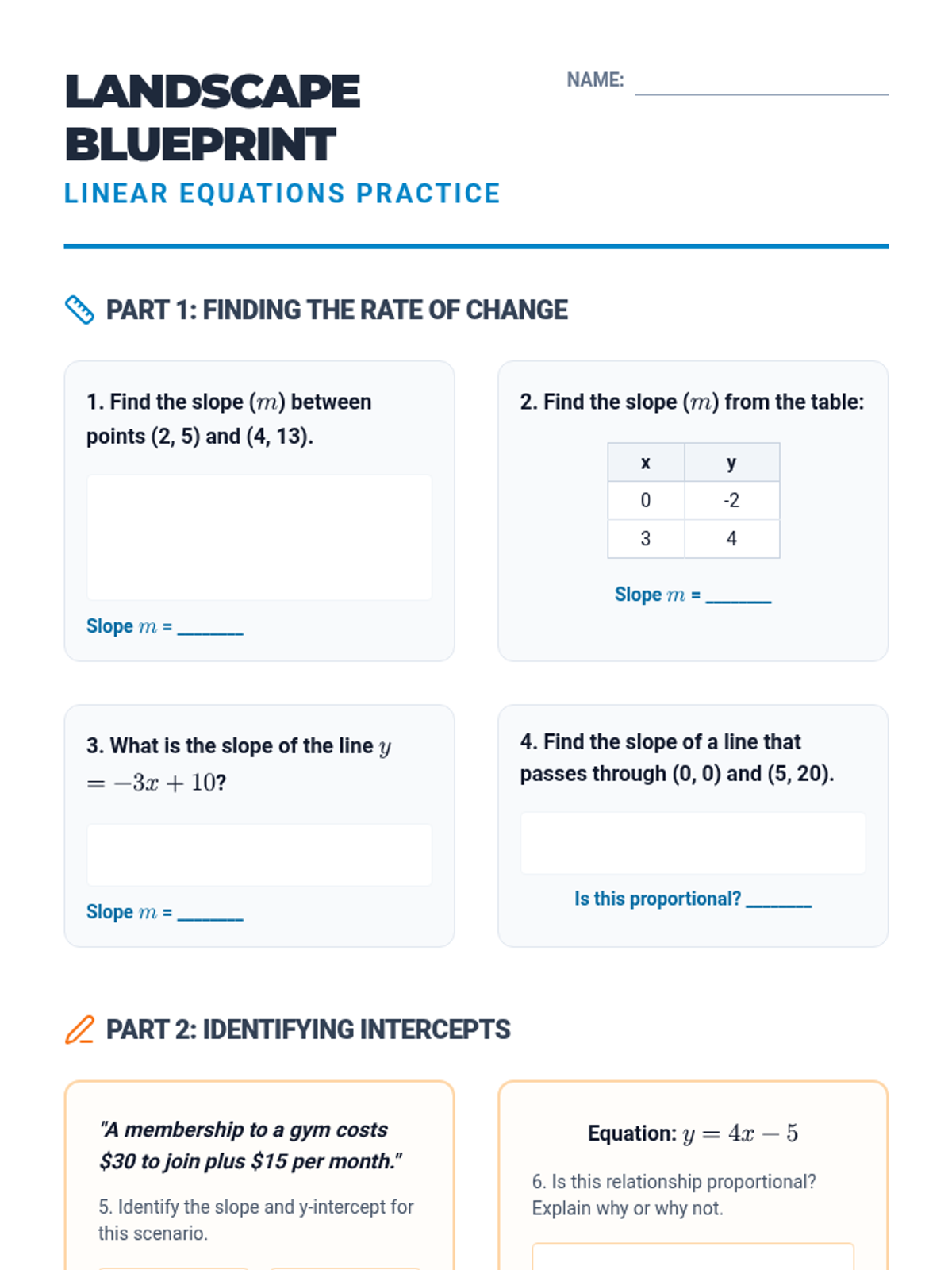
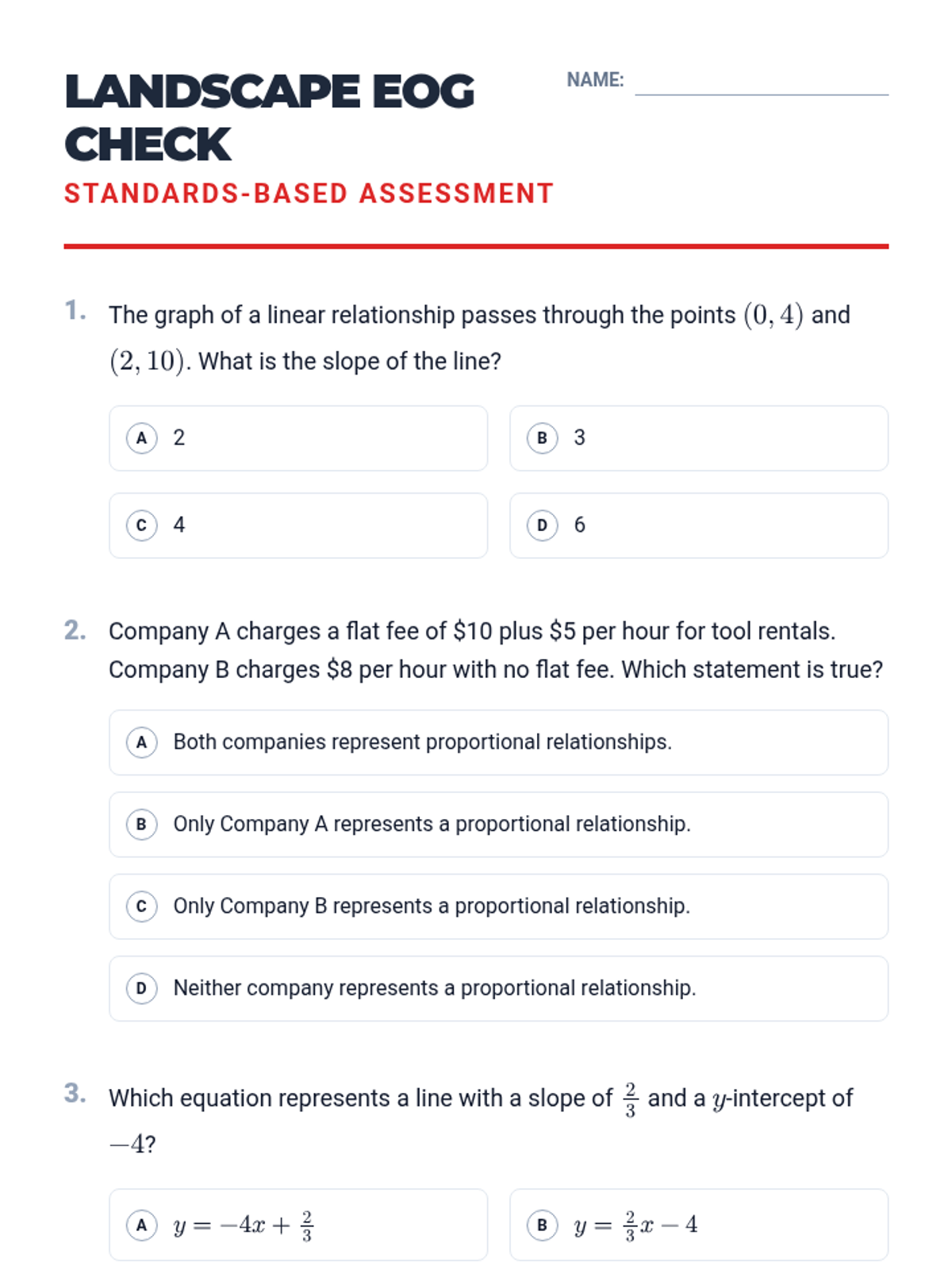
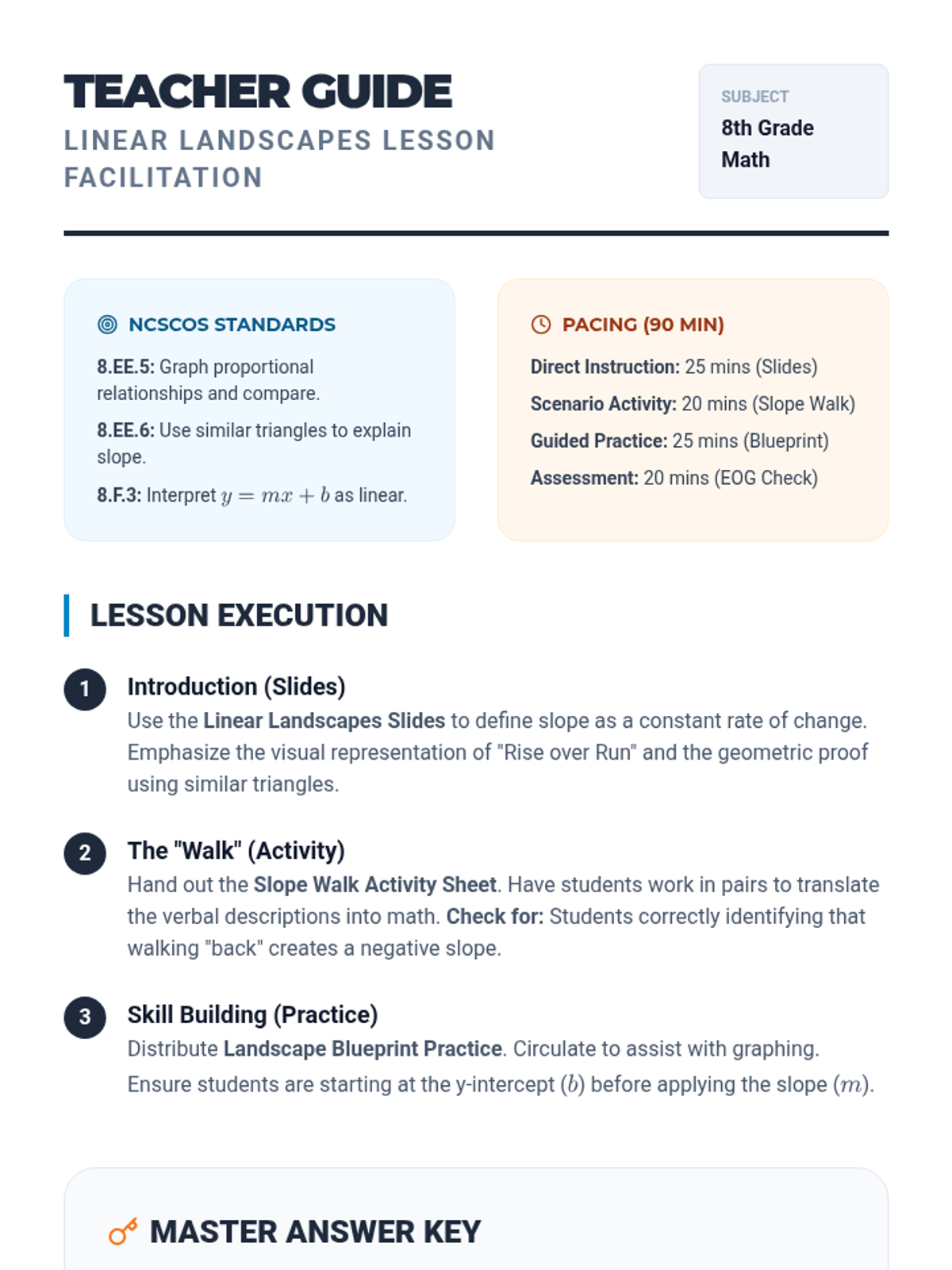
A comprehensive Grade 8 math lesson on linear relationships, covering slope, y-intercept, and graphing equations in slope-intercept form, aligned to NCSCOS standards.
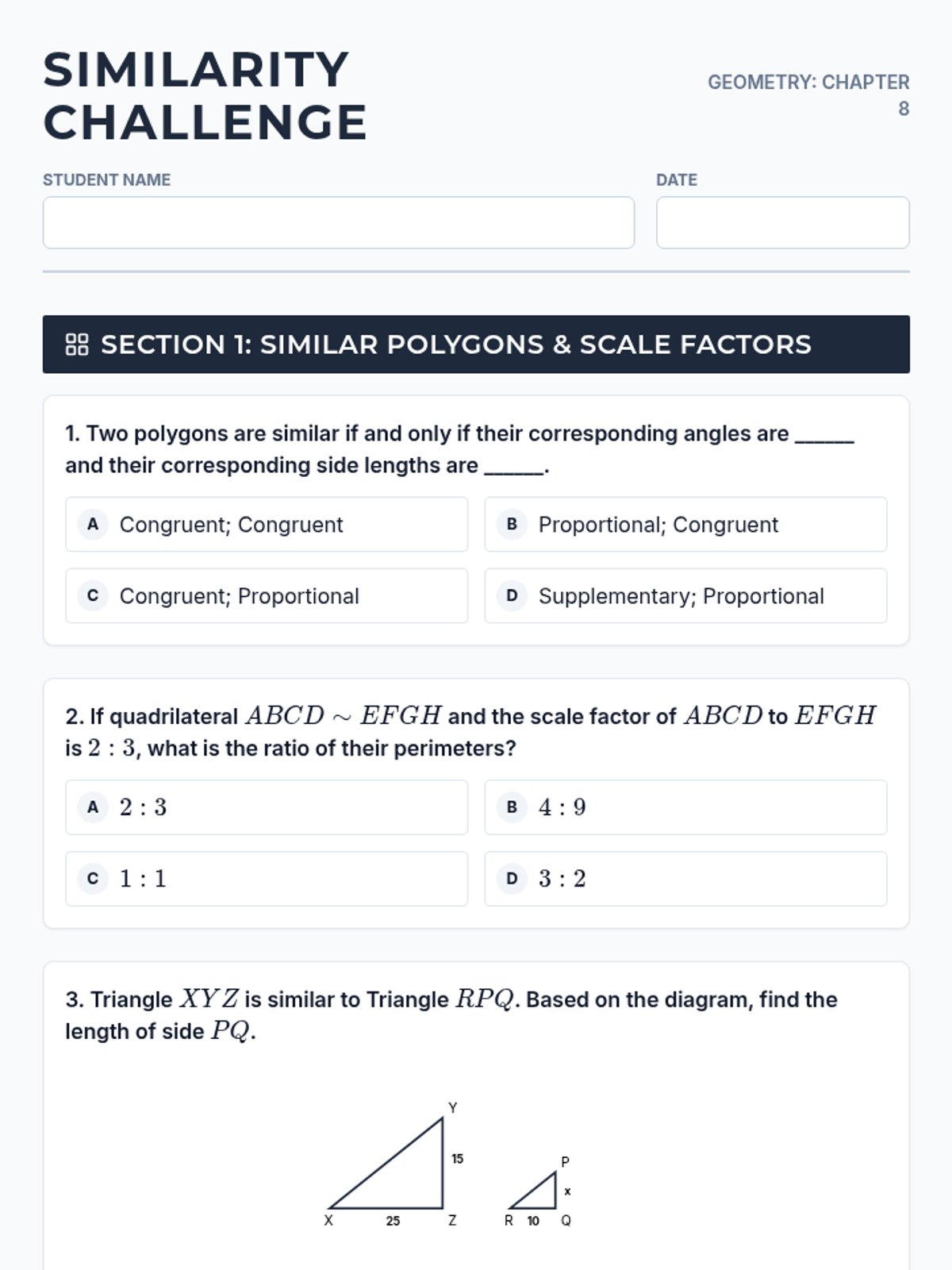
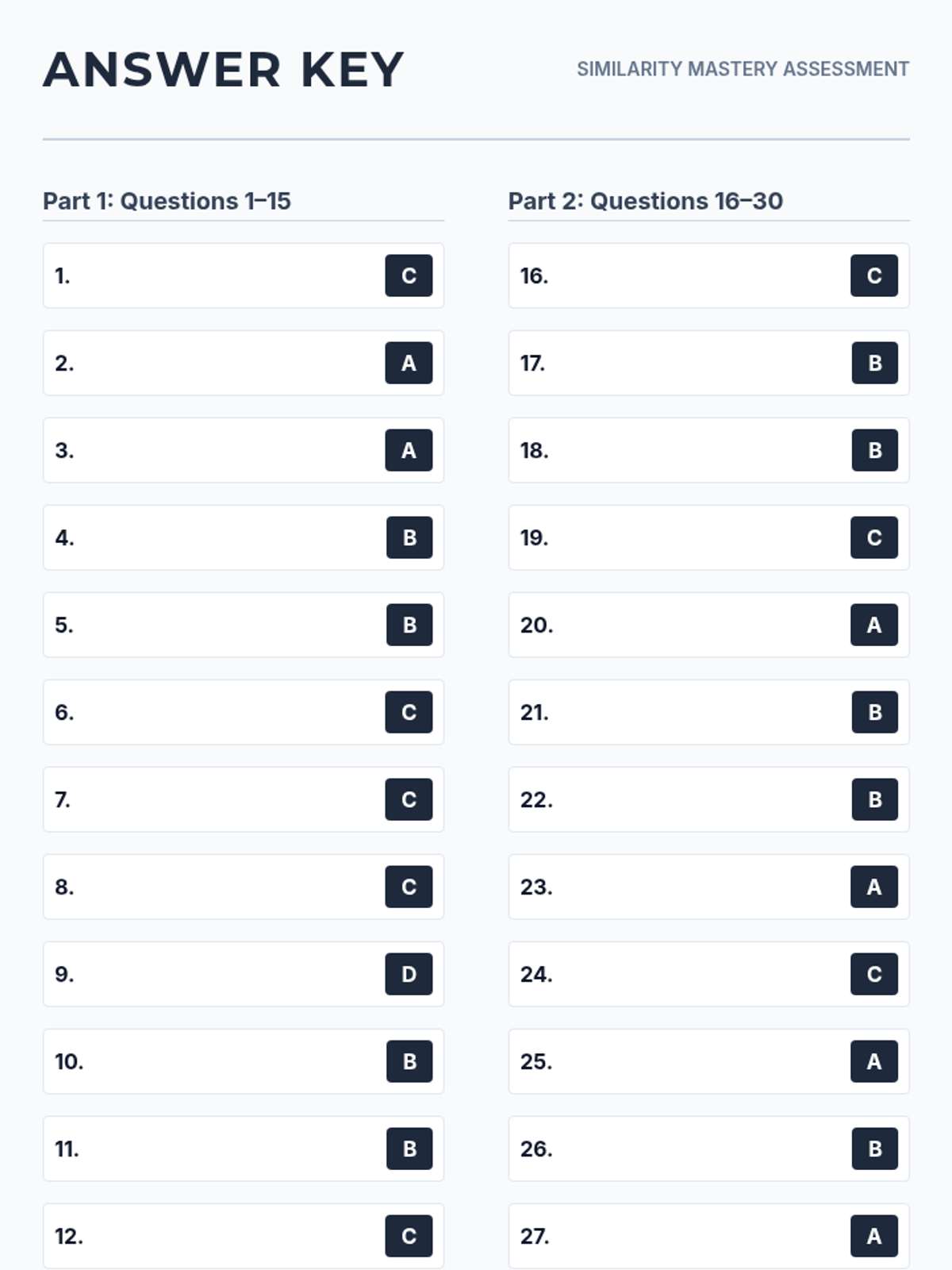
A comprehensive assessment covering polygons, quadrilaterals, and similarity based on chapters 7 and 8 content. Students will demonstrate mastery of geometric properties, proportionality theorems, and similarity proofs.
A comprehensive assessment and answer key covering similar polygons, triangle similarity theorems (AA, SSS, SAS), and proportionality theorems.
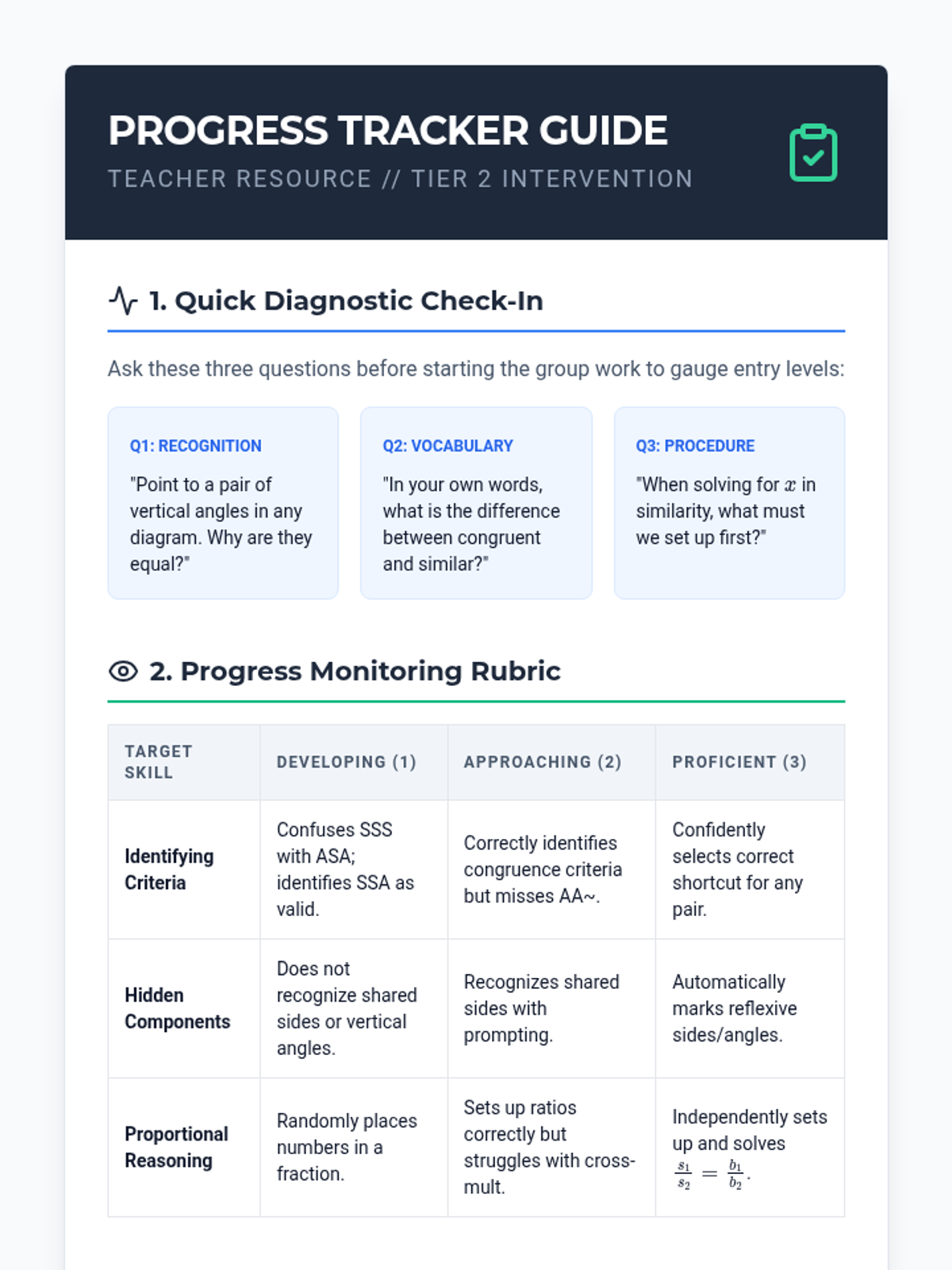
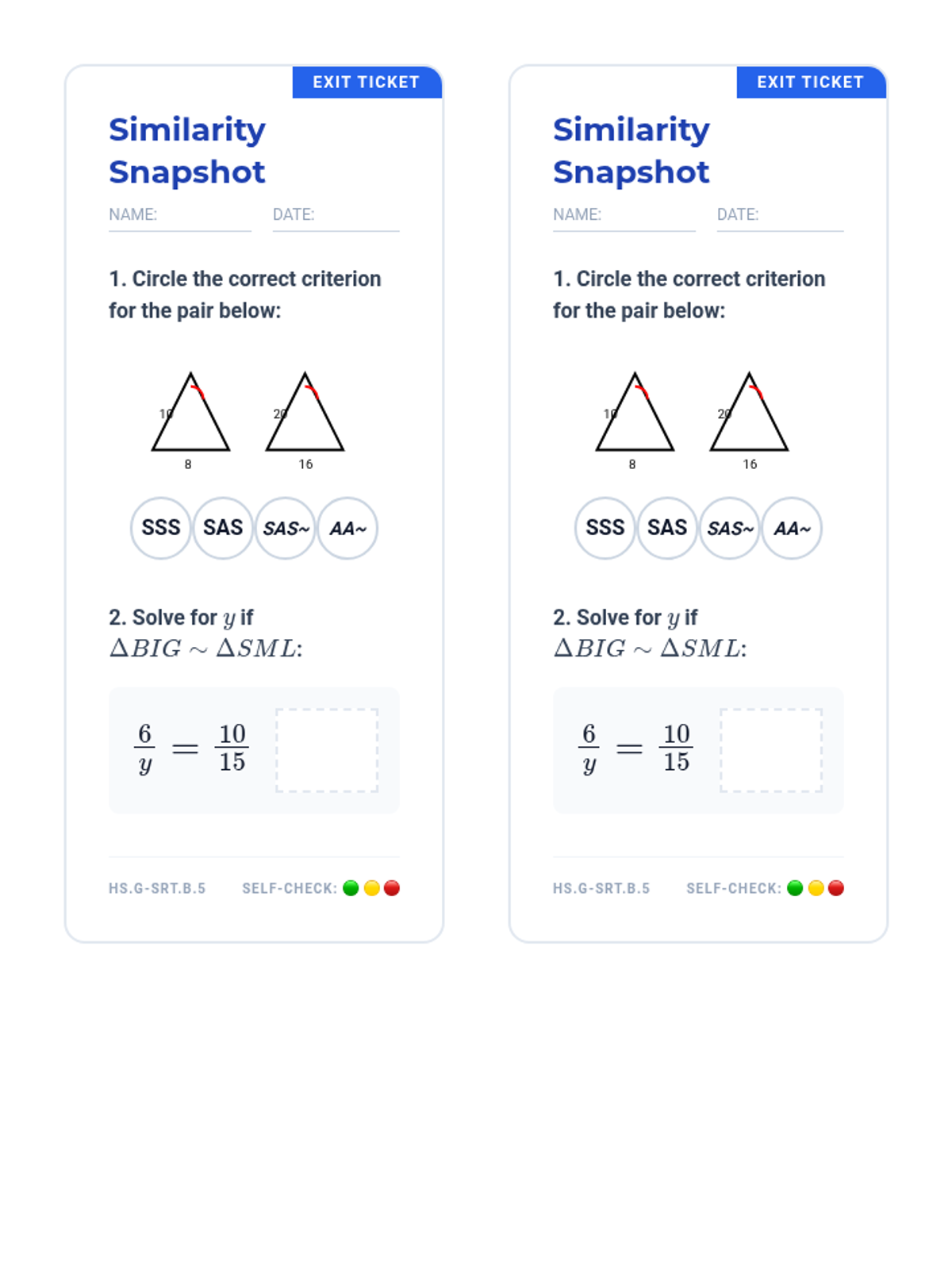
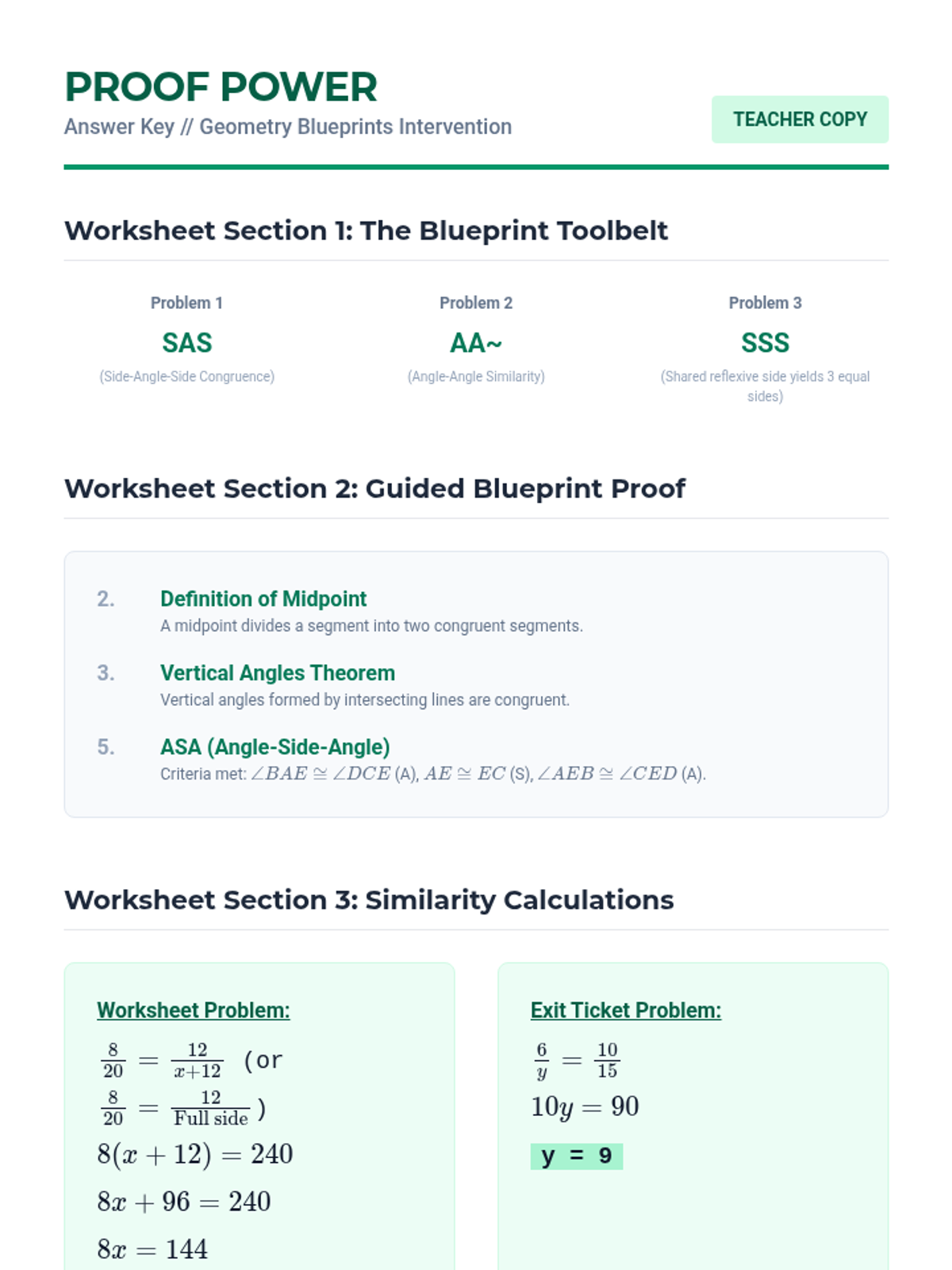
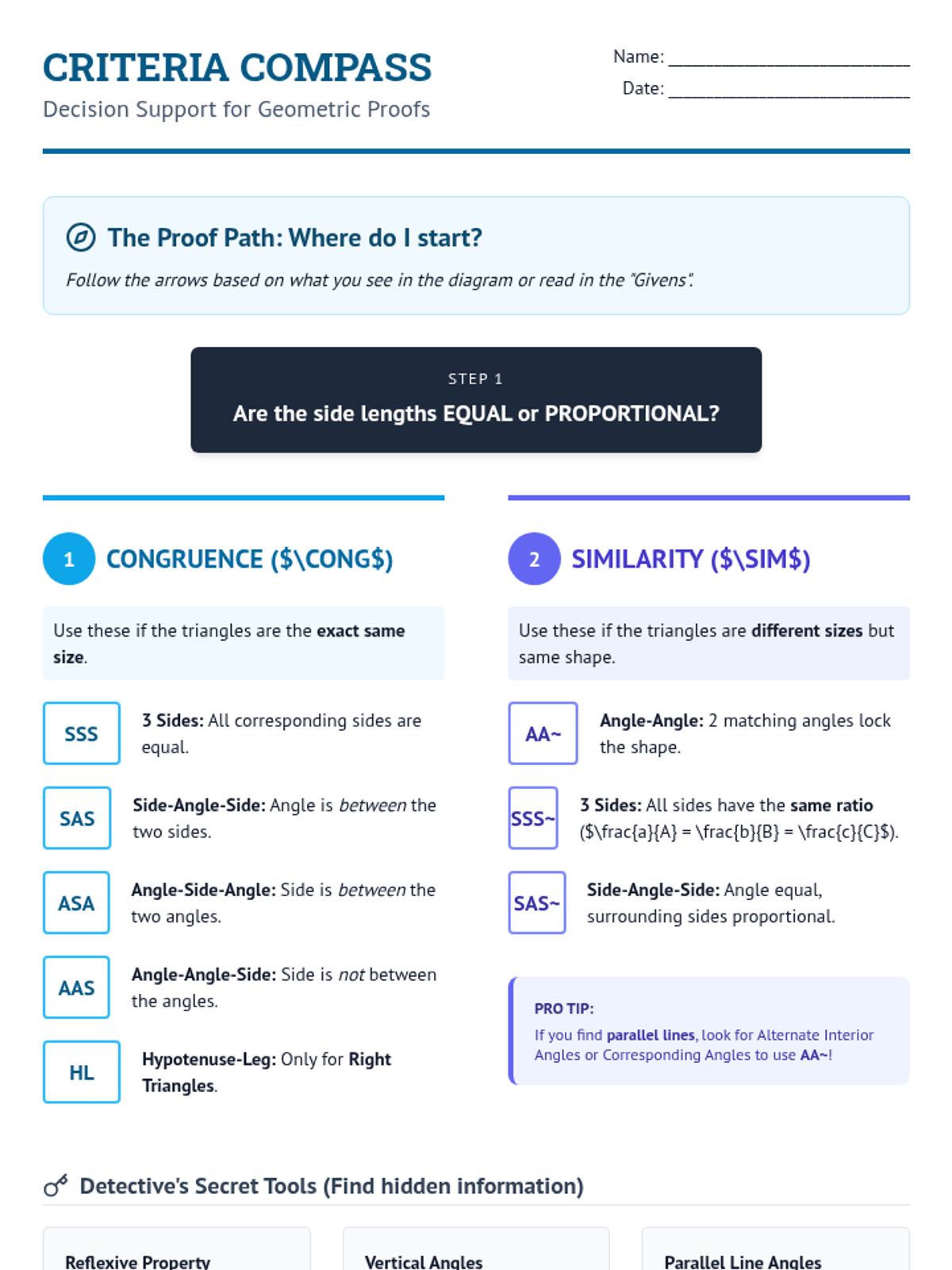
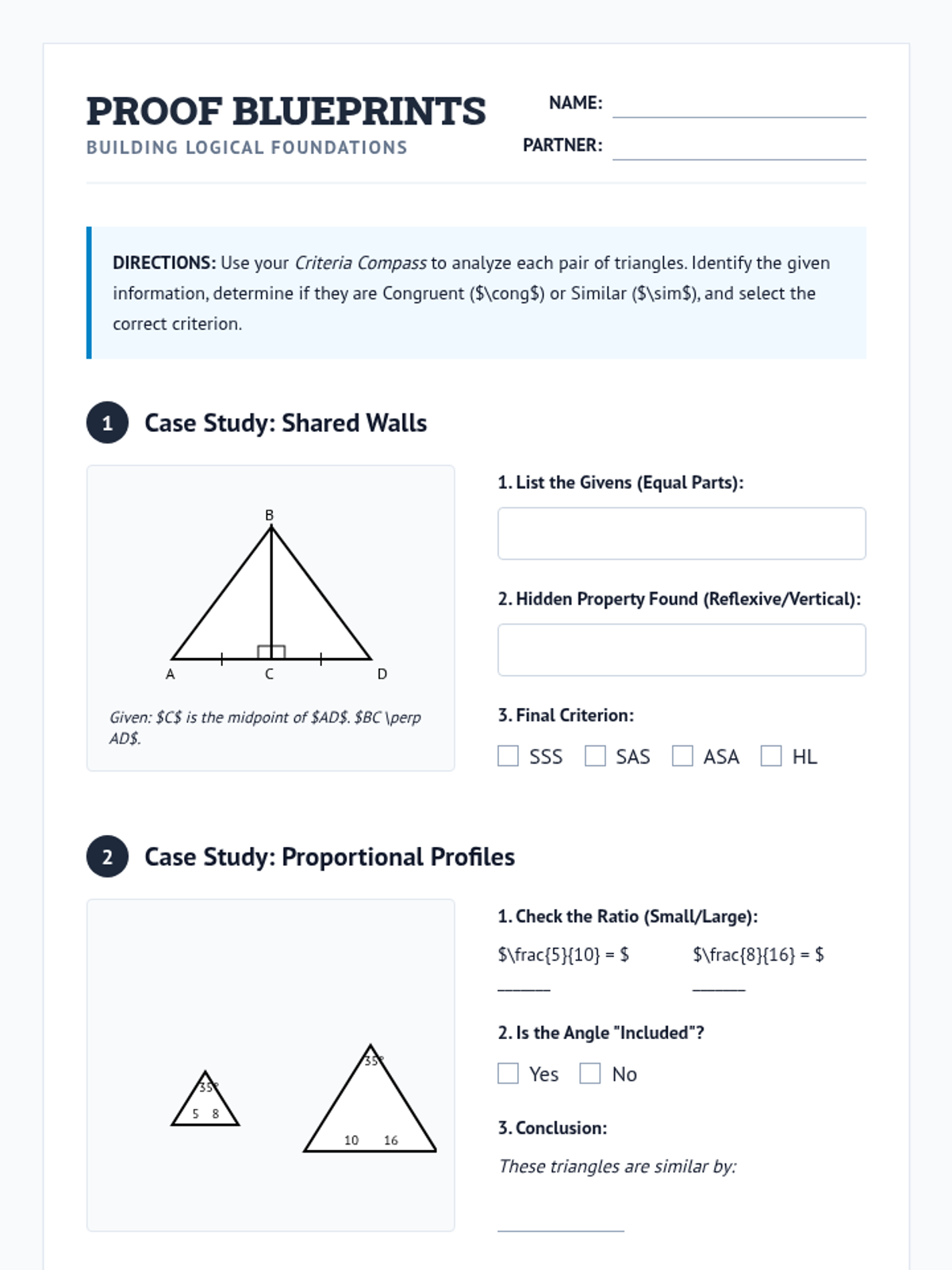
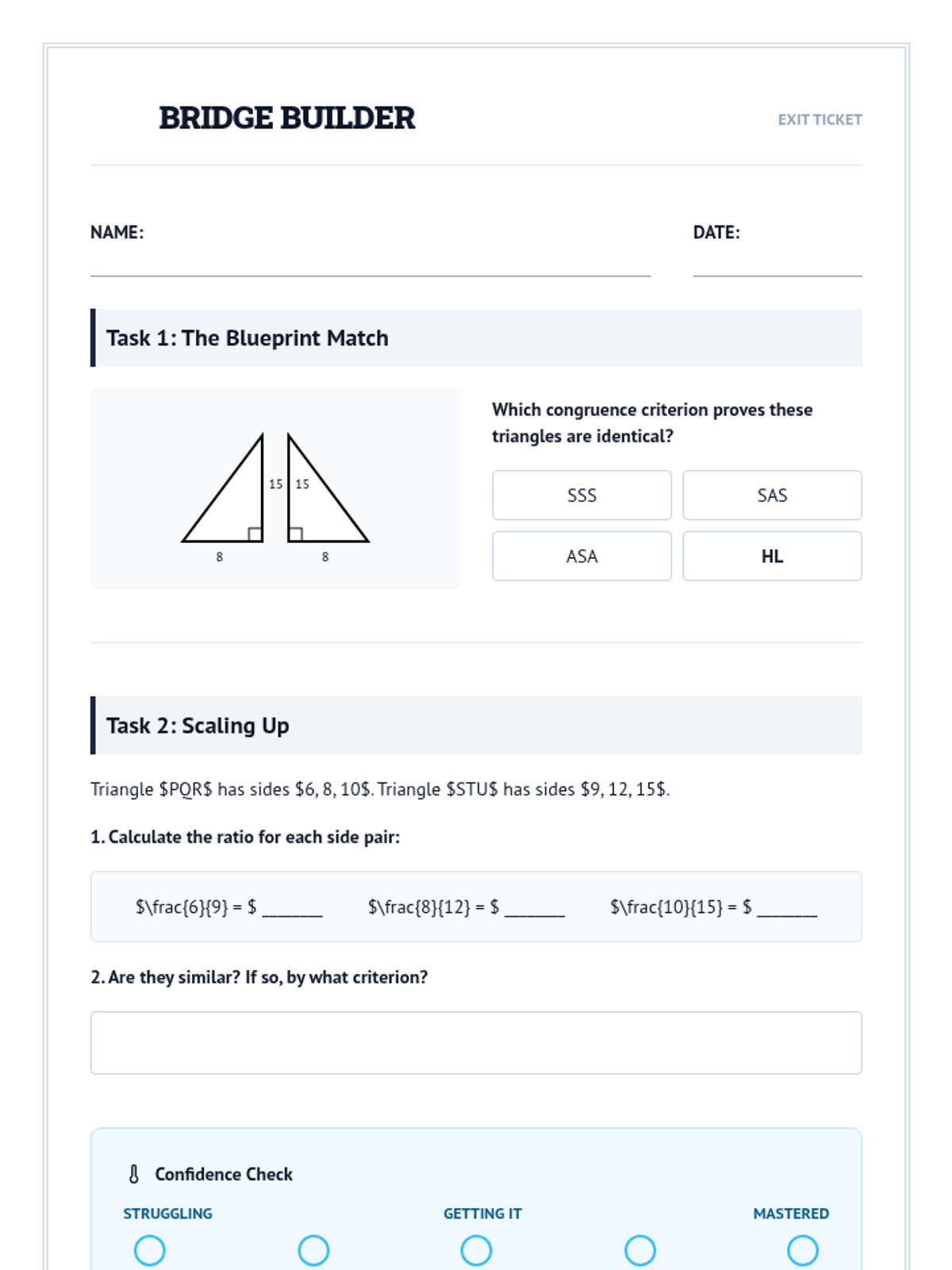
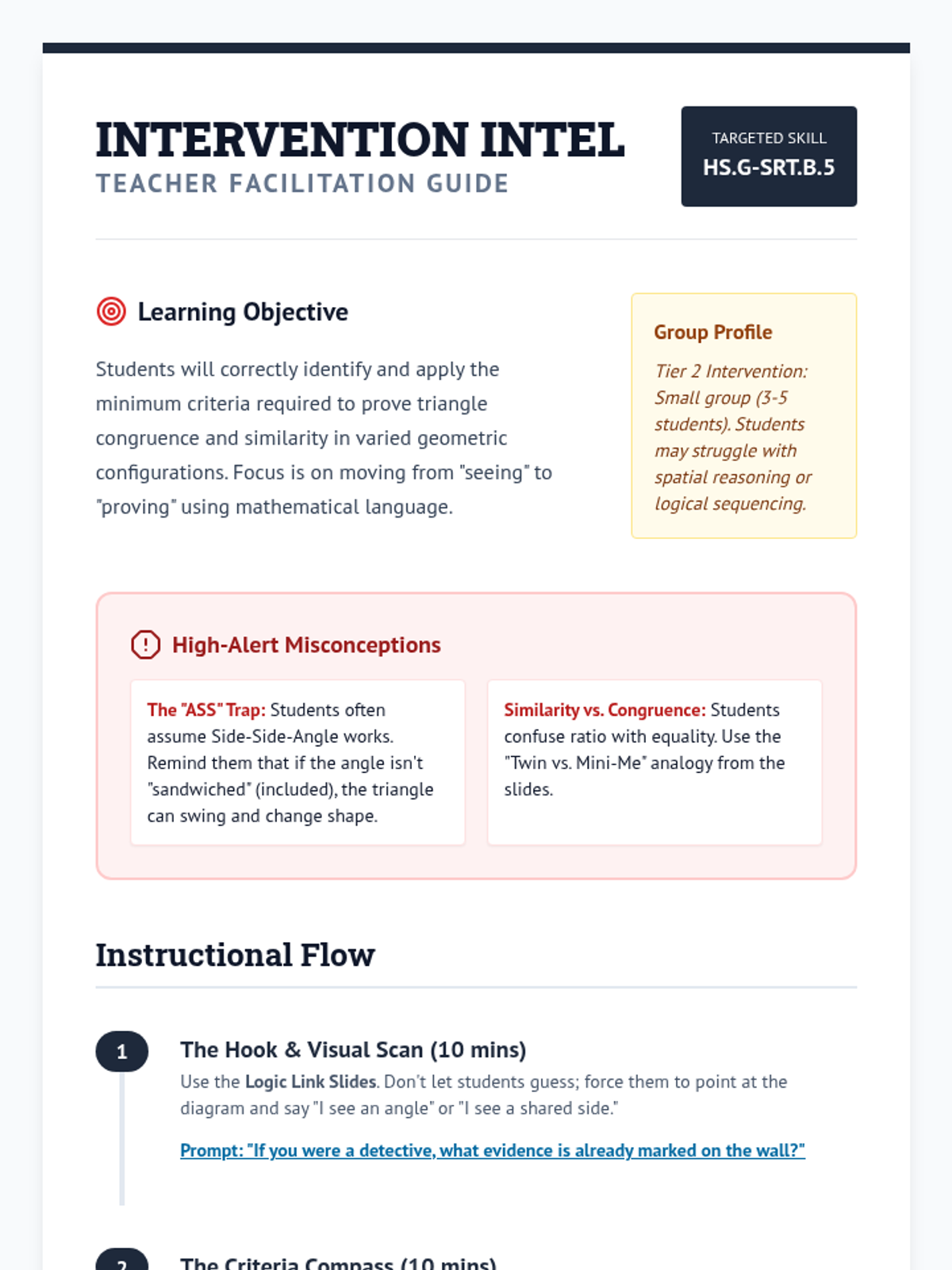
A Tier 2 intervention lesson focused on mastering congruence and similarity criteria through scaffolded proofs and real-world solving. Students will use SSS, SAS, ASA, AAS, HL, and similarity shortcuts to analyze geometric figures.
A Tier 2 intervention lesson focusing on selecting and applying the correct criteria for triangle congruence (SSS, SAS, ASA, AAS, HL) and similarity (AA, SSS, SAS).
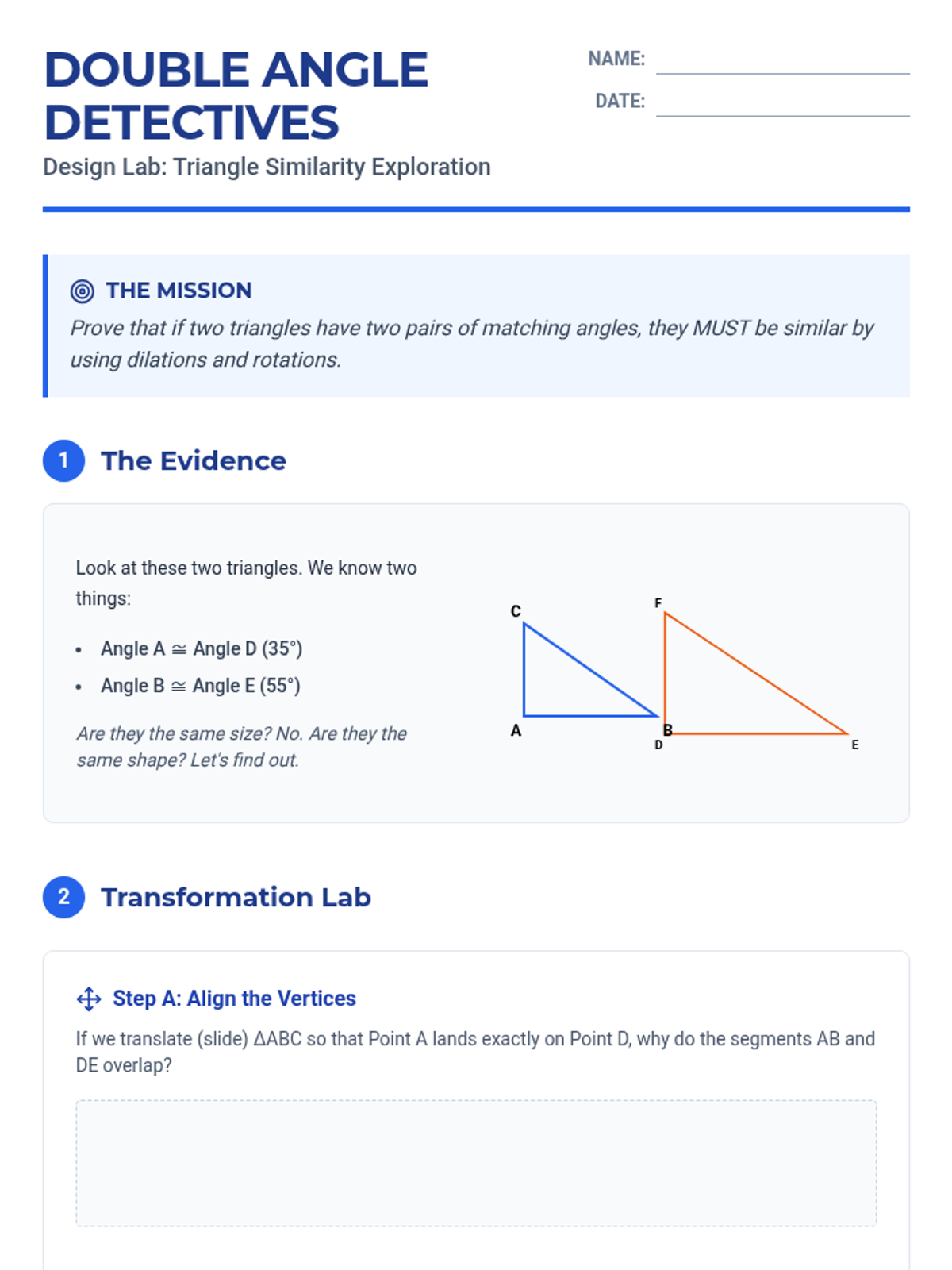
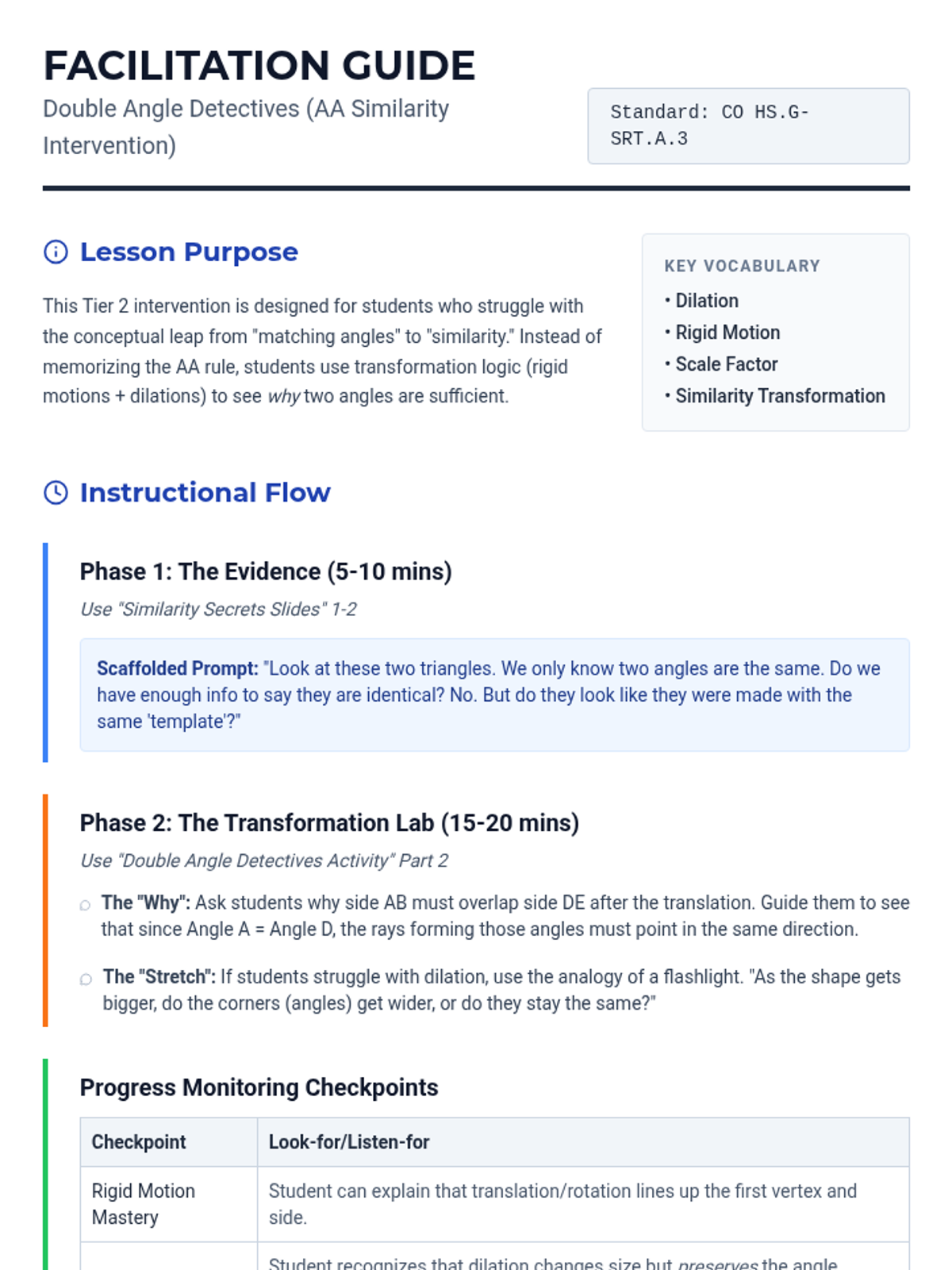
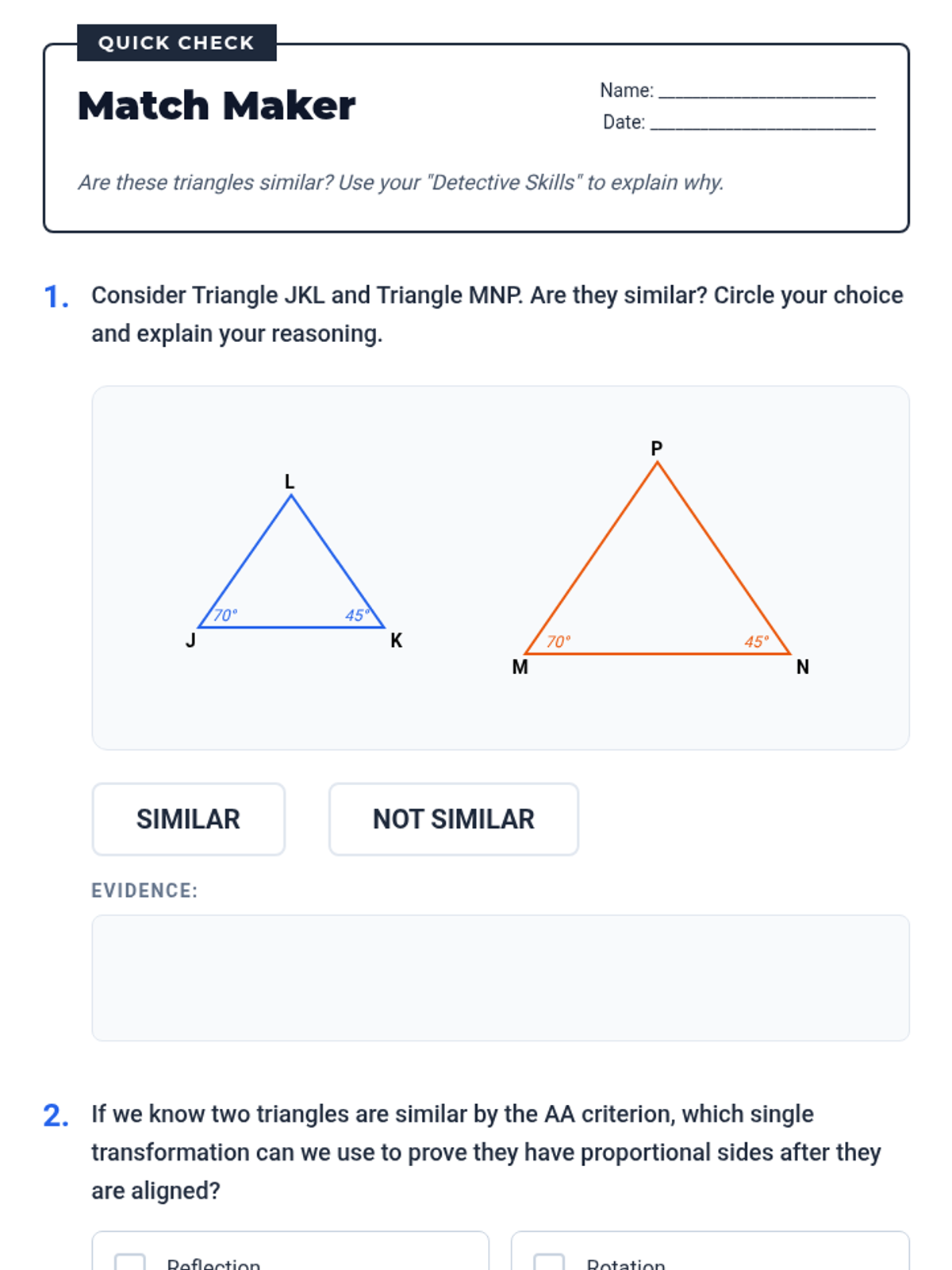
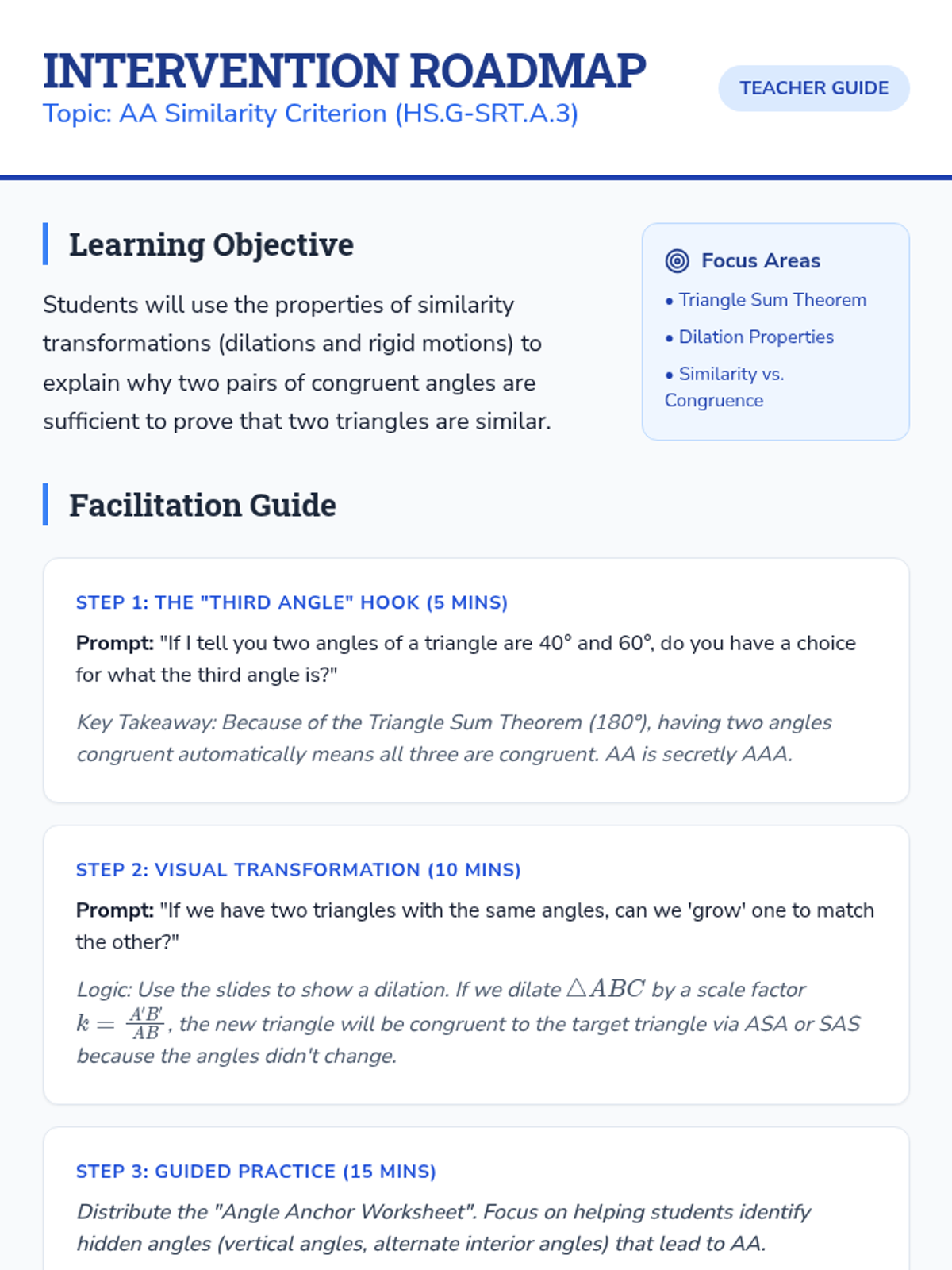
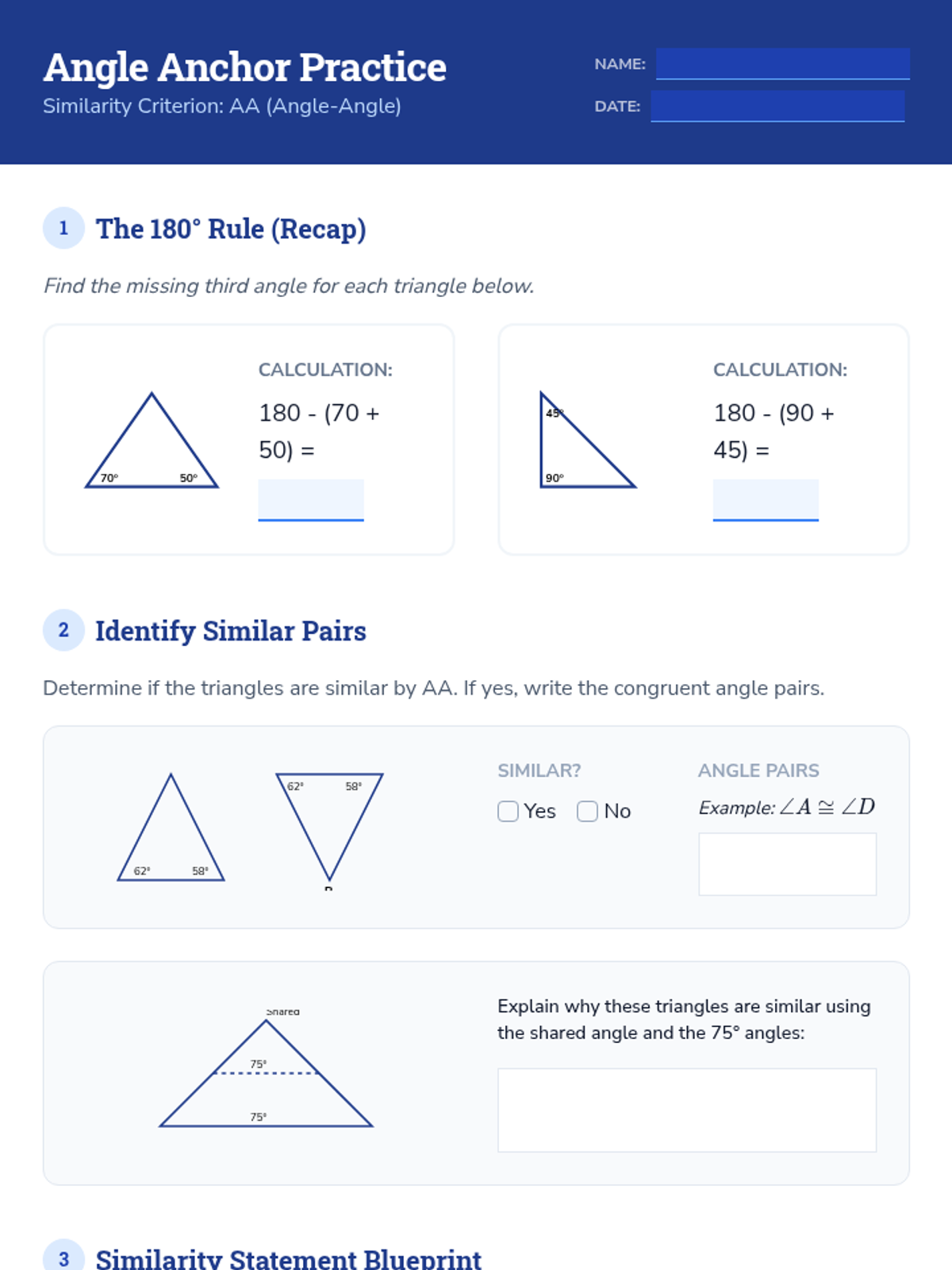
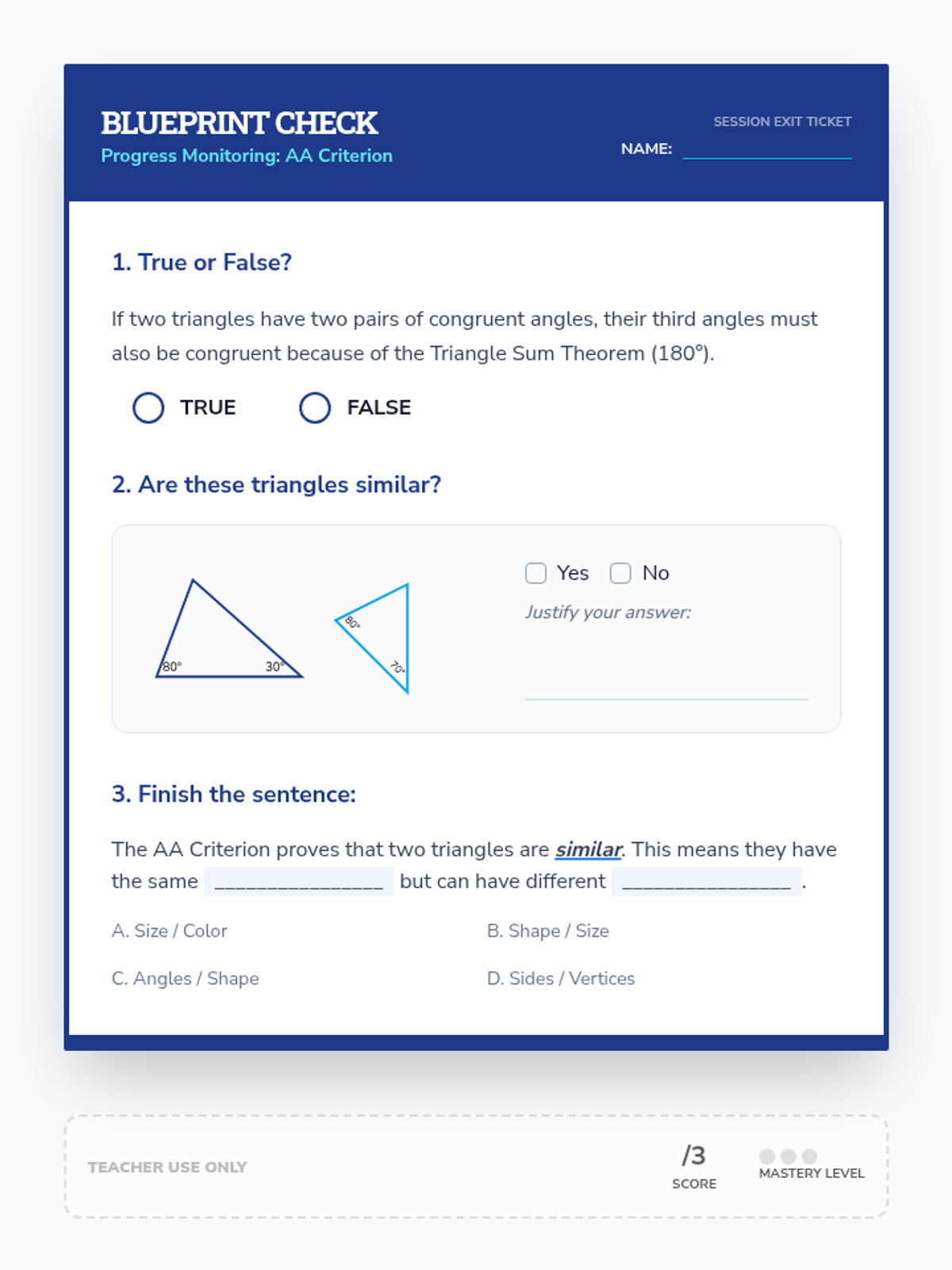
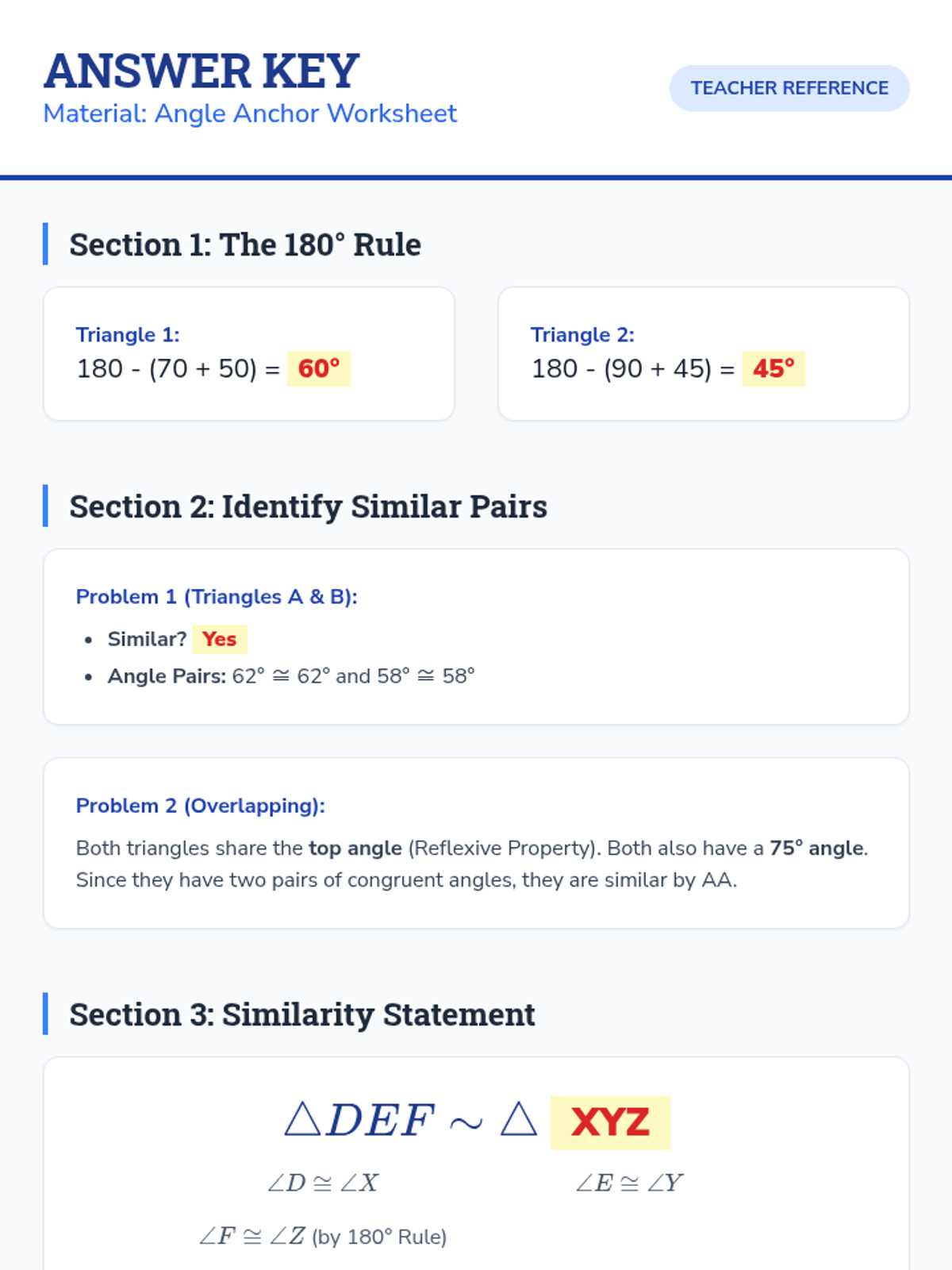
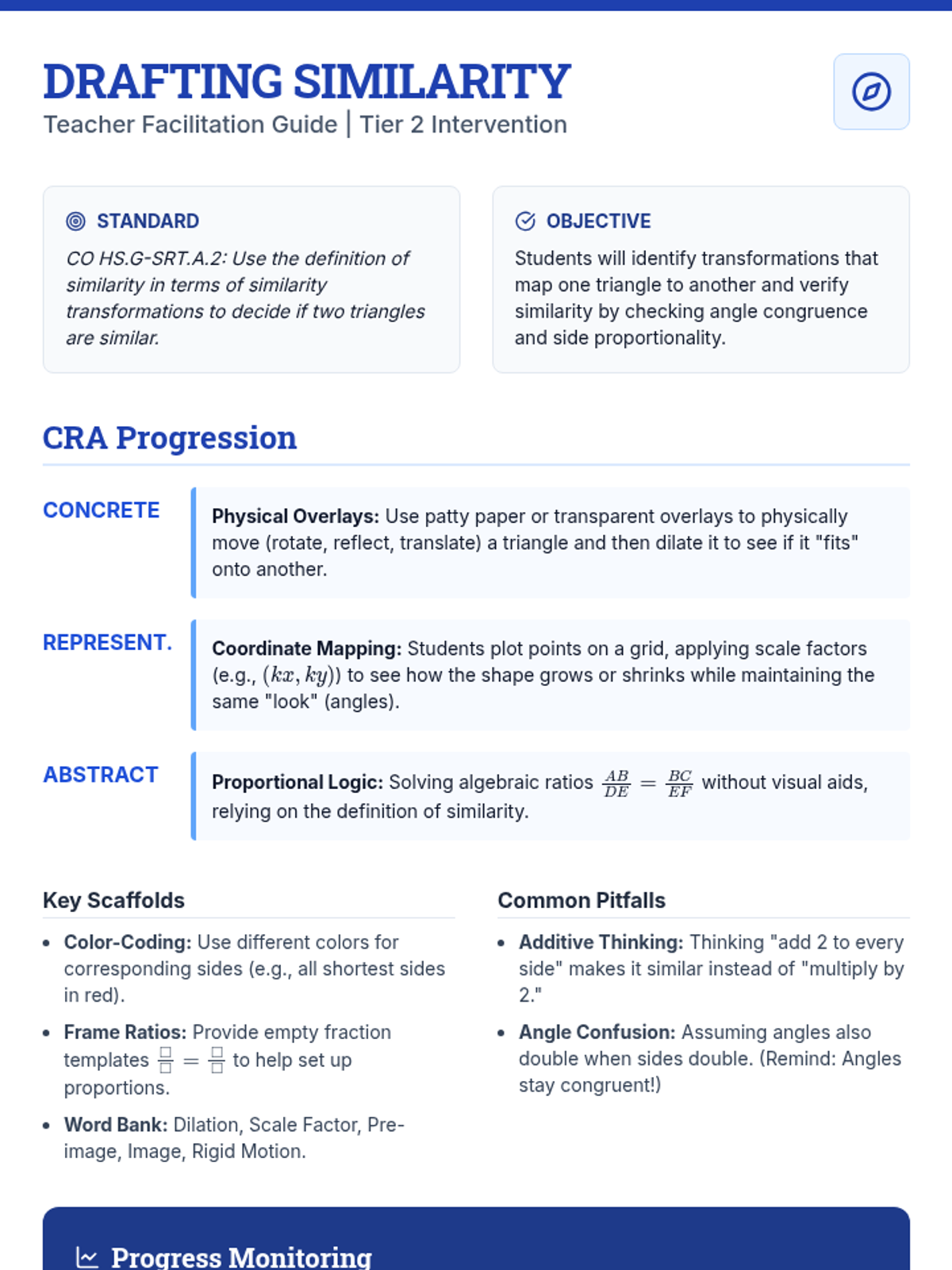
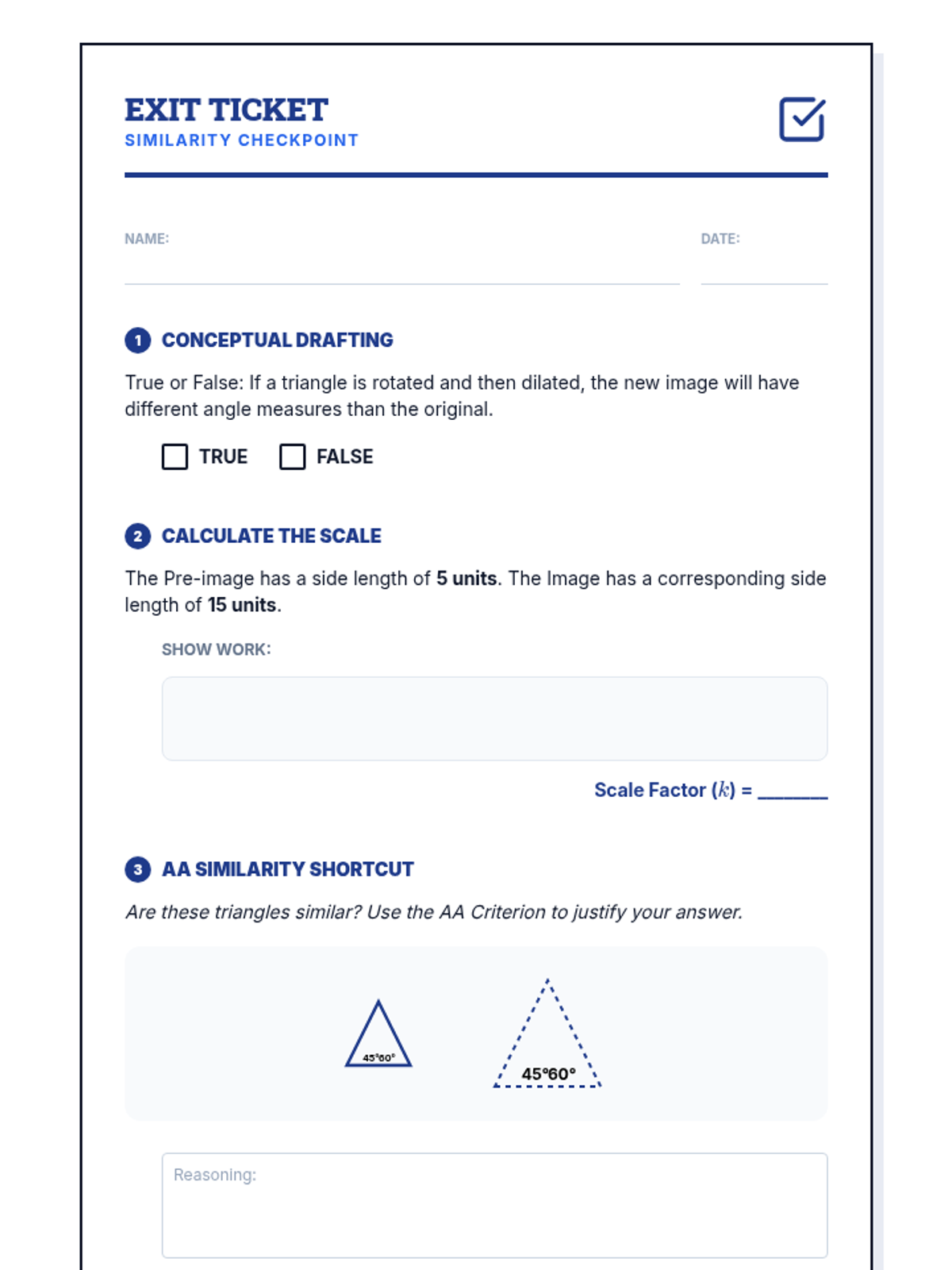
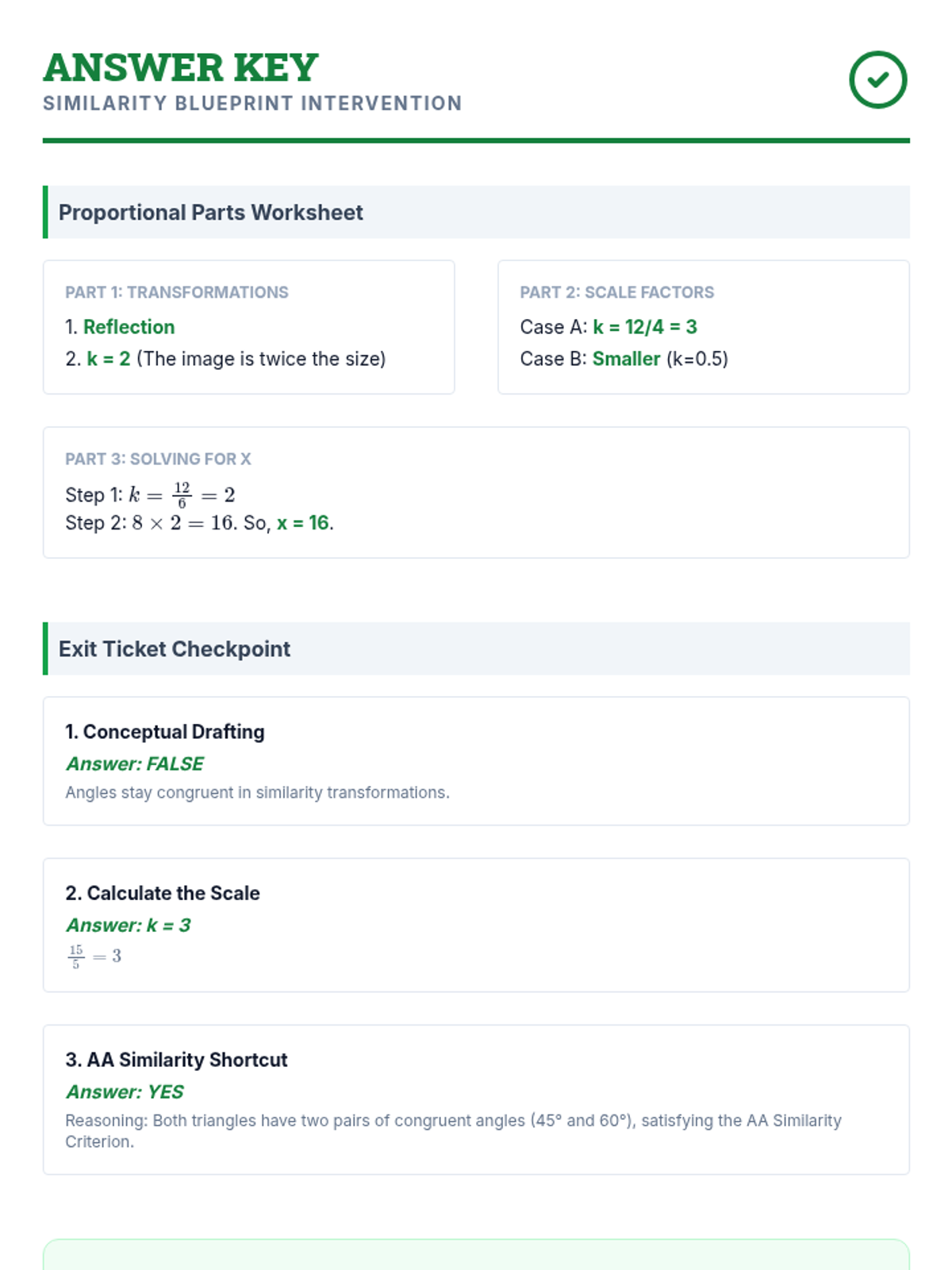
A targeted intervention lesson where students use transformations (dilations and rigid motions) to prove why two angles are sufficient to establish triangle similarity. Designed for Tier 2 small group support with scaffolded explorations.
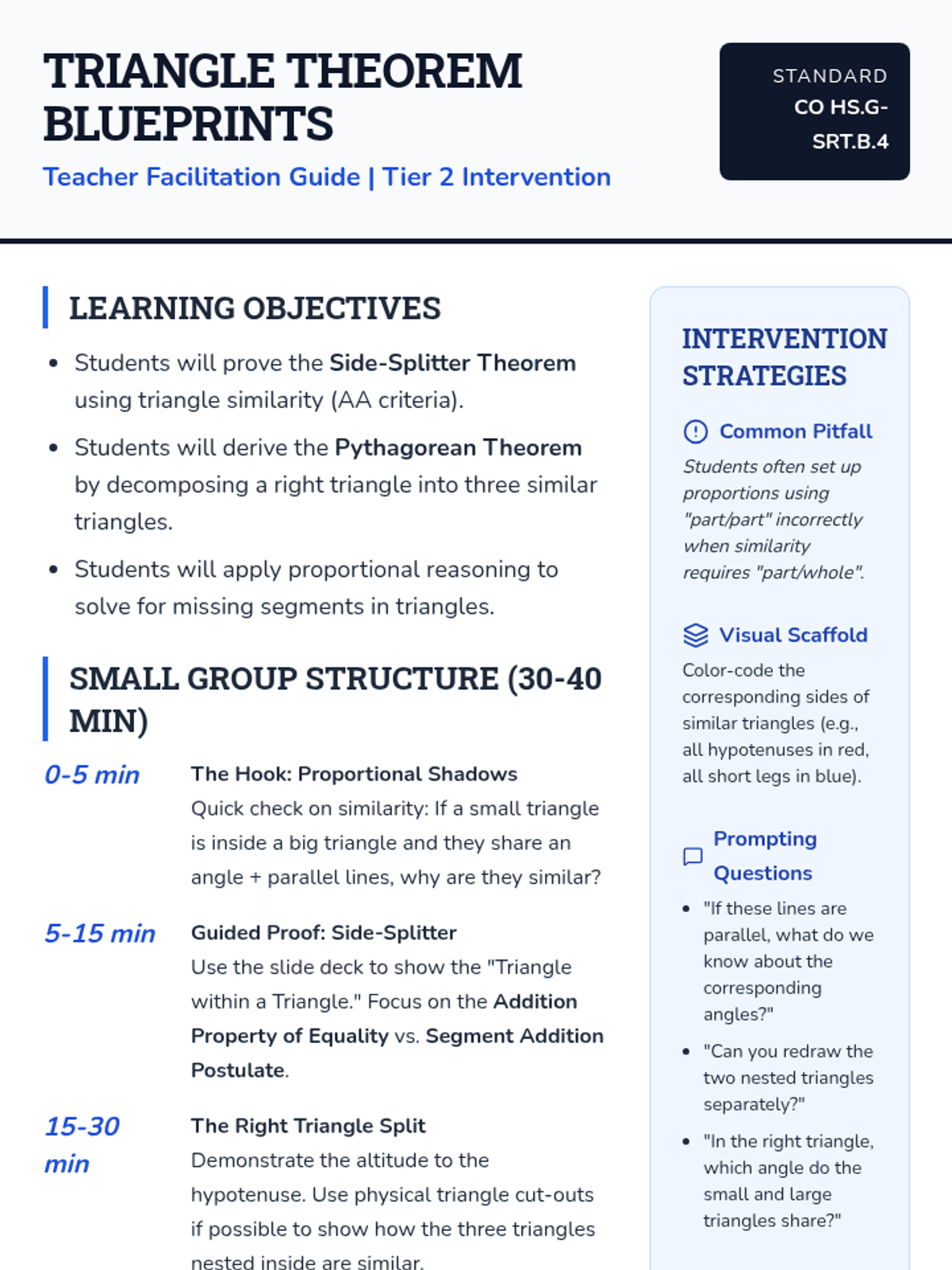
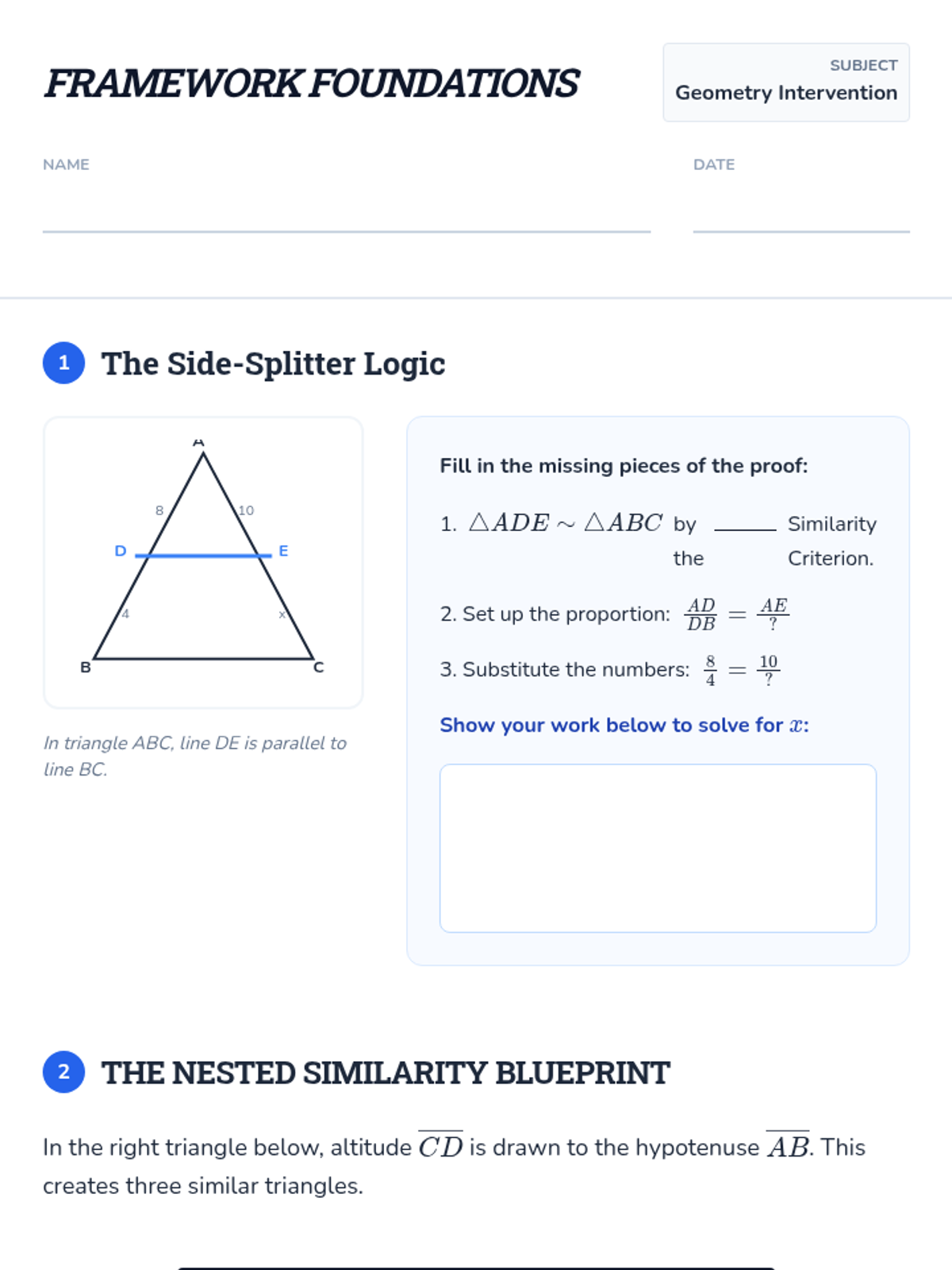
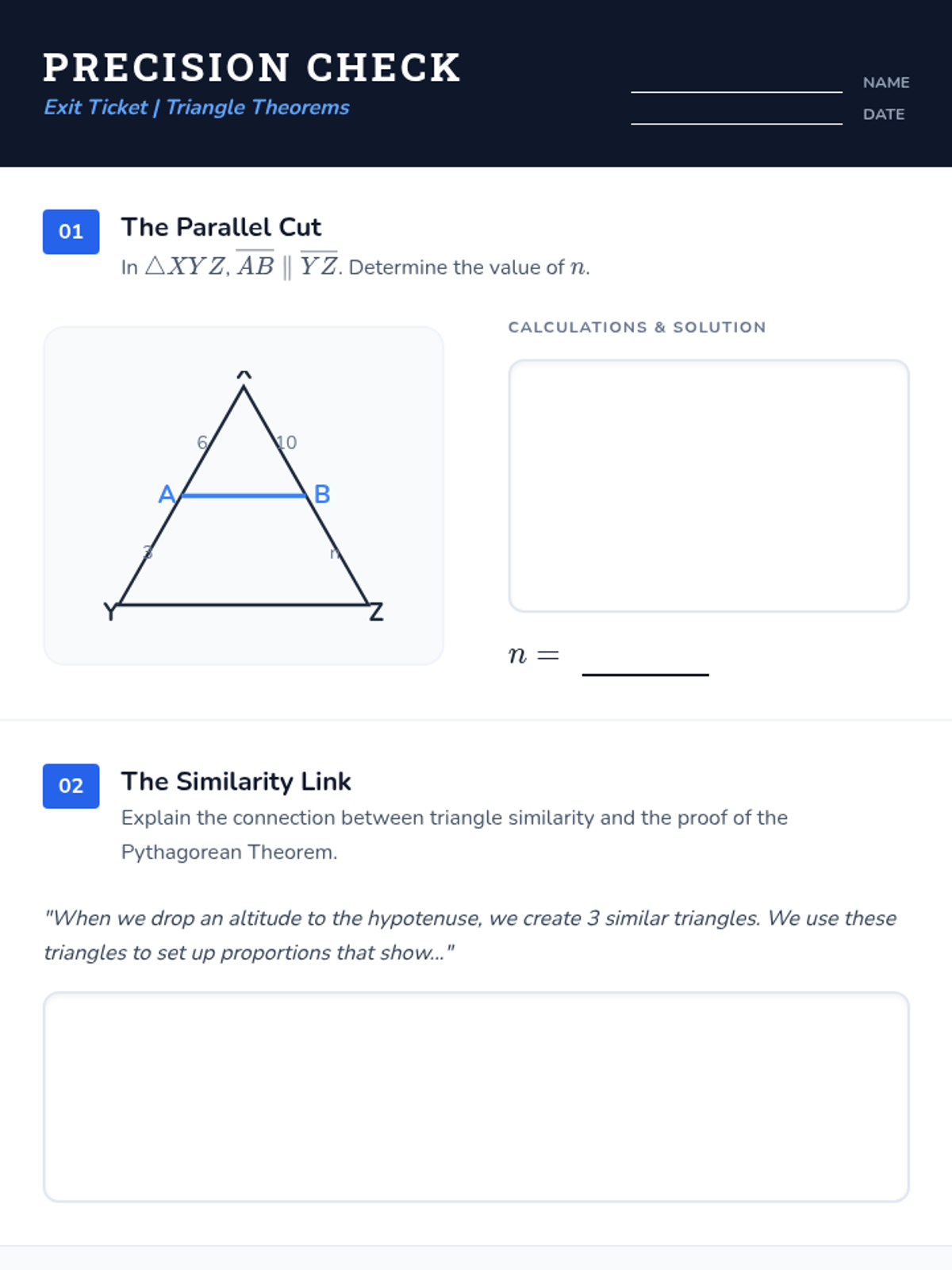
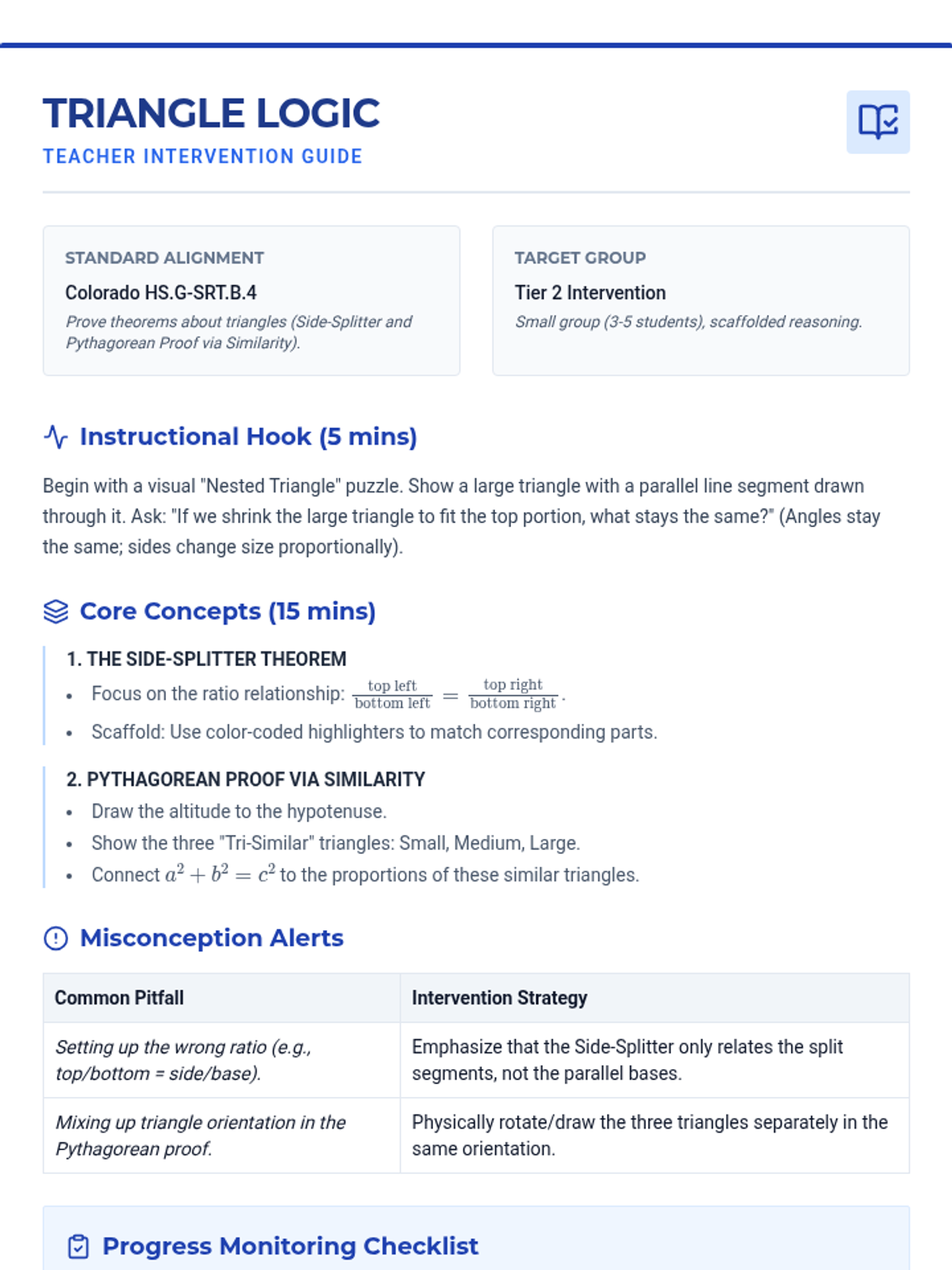
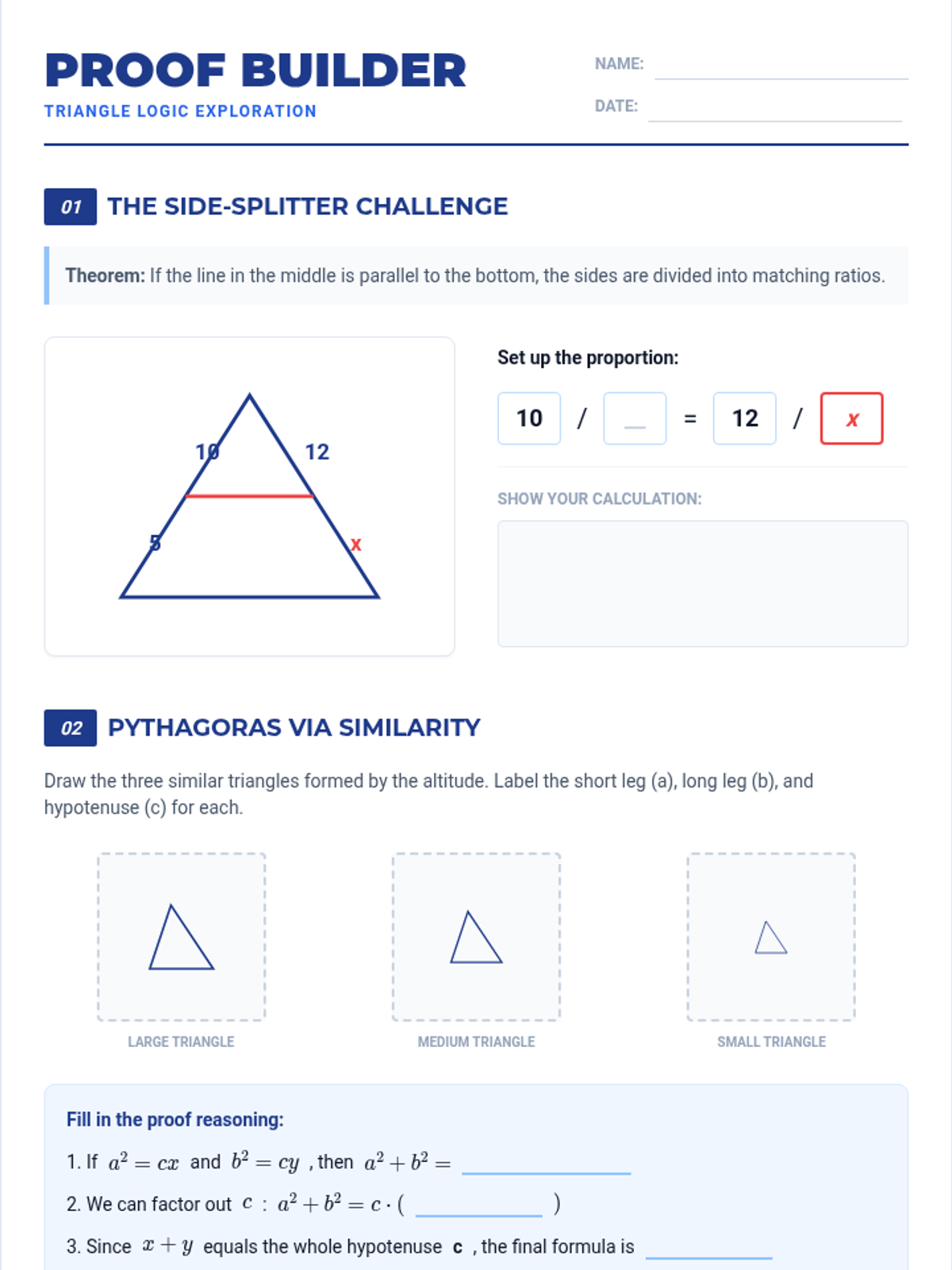
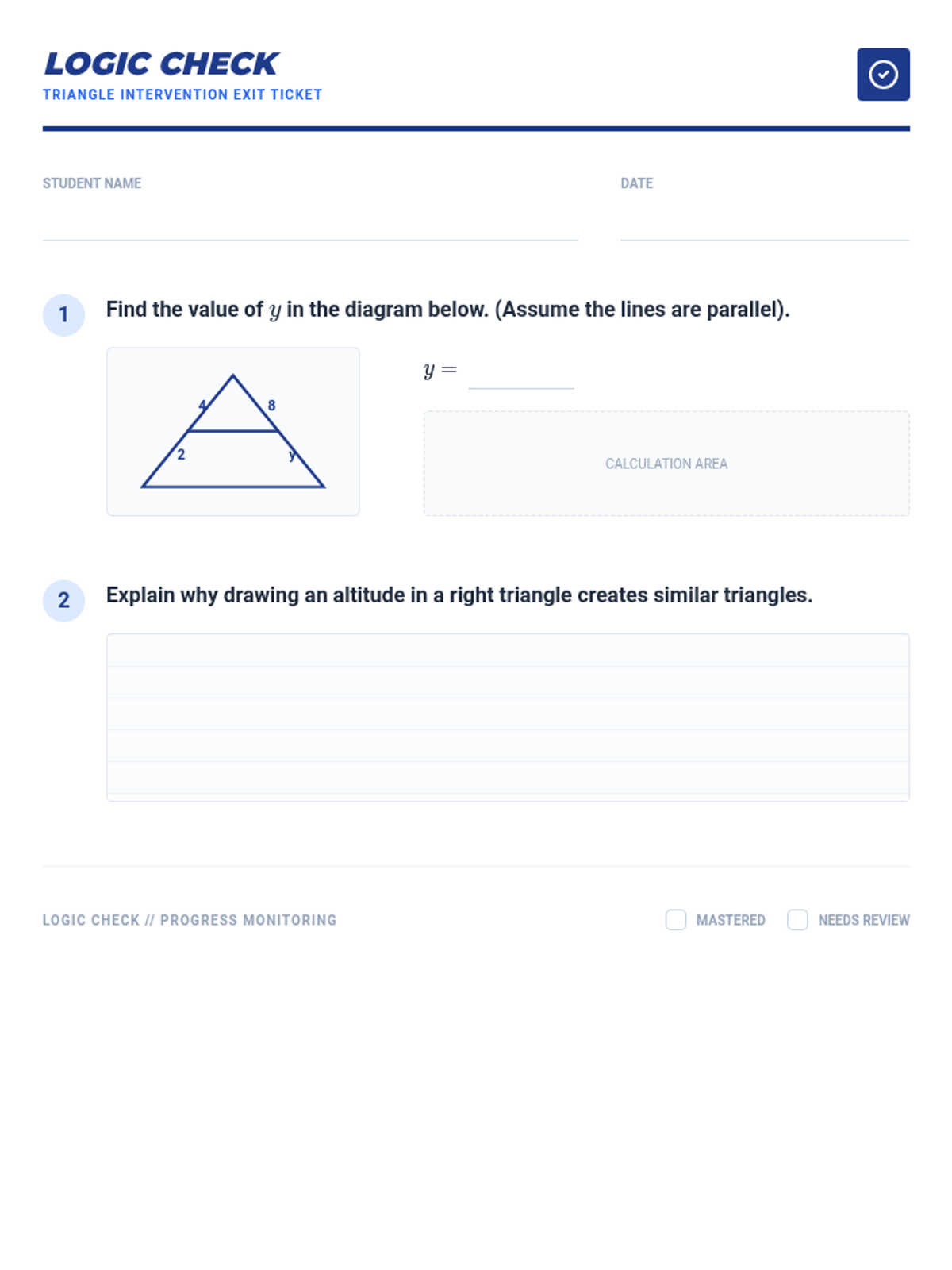
A targeted Tier 2 intervention lesson focusing on proving the Side-Splitter Theorem and the Pythagorean Theorem through triangle similarity. Designed for small group support with scaffolded proofs and visual aids.
A targeted Tier 2 intervention lesson focusing on visual proofs for the Side-Splitter Theorem and the similarity-based proof of the Pythagorean Theorem, designed for struggling high school learners.
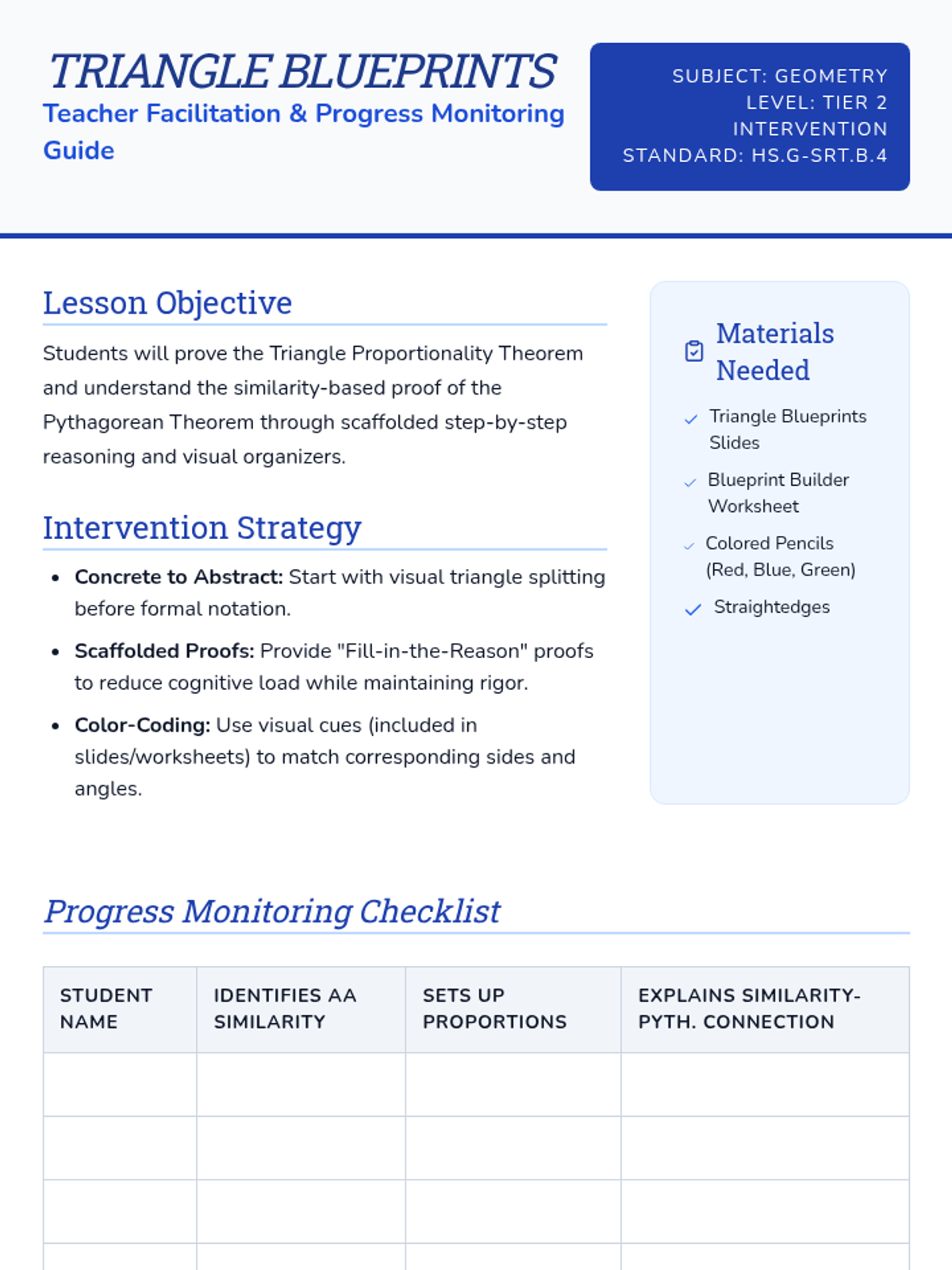
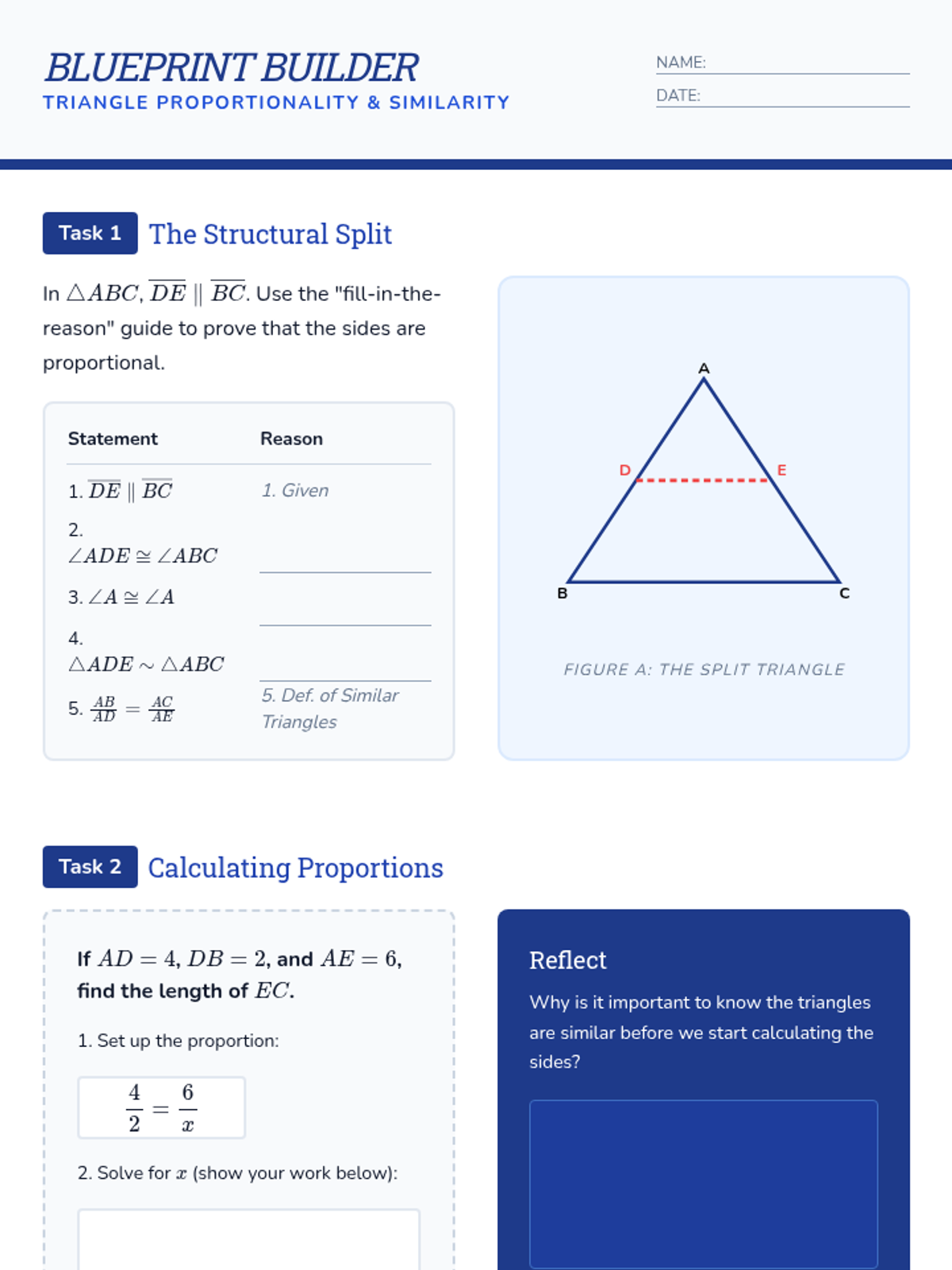
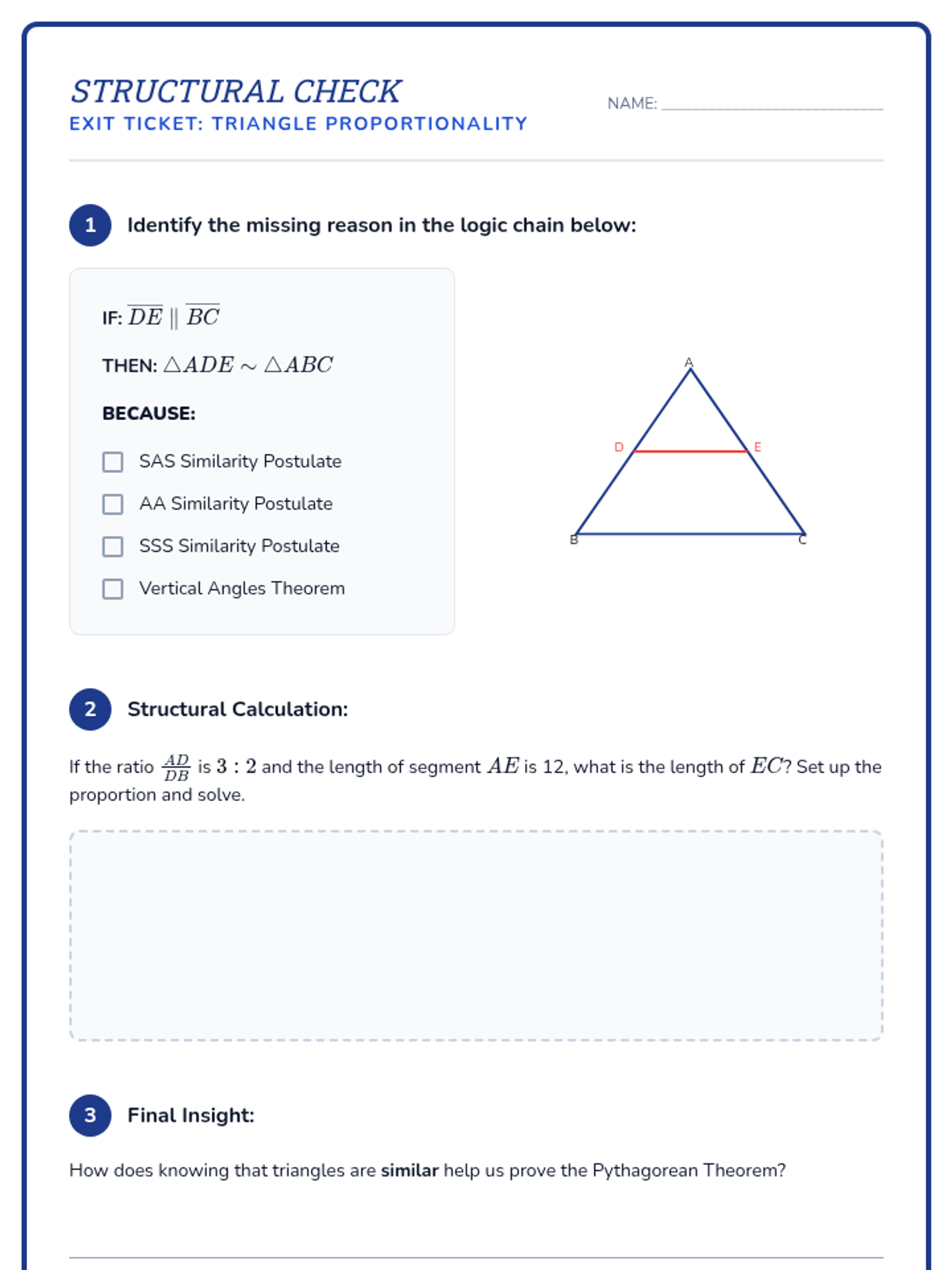
A Tier 2 intervention lesson focusing on the Triangle Proportionality Theorem and the similarity-based proof of the Pythagorean Theorem, designed for small group instruction with heavy scaffolding.
A targeted intervention lesson focused on the AA Similarity Criterion, using transformation-based reasoning and visual proofs to help Tier 2 learners understand why two angles are sufficient to prove triangle similarity.
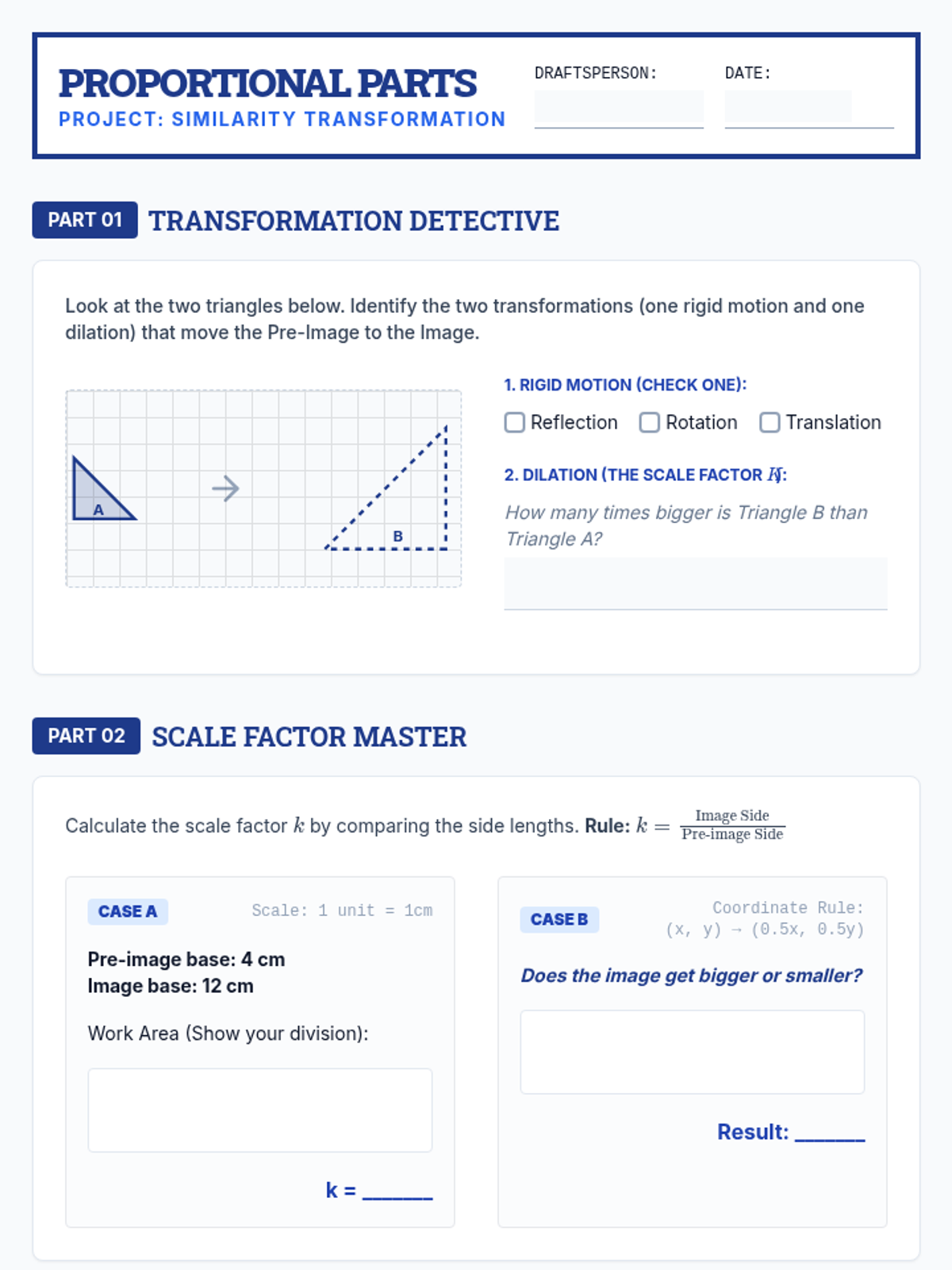
A targeted Tier 2 intervention lesson focusing on triangle similarity through the lens of transformations (dilations, rotations, reflections, and translations). Using a Concrete-Representational-Abstract (CRA) approach, students connect rigid motions and dilations to proportional sides and congruent angles.
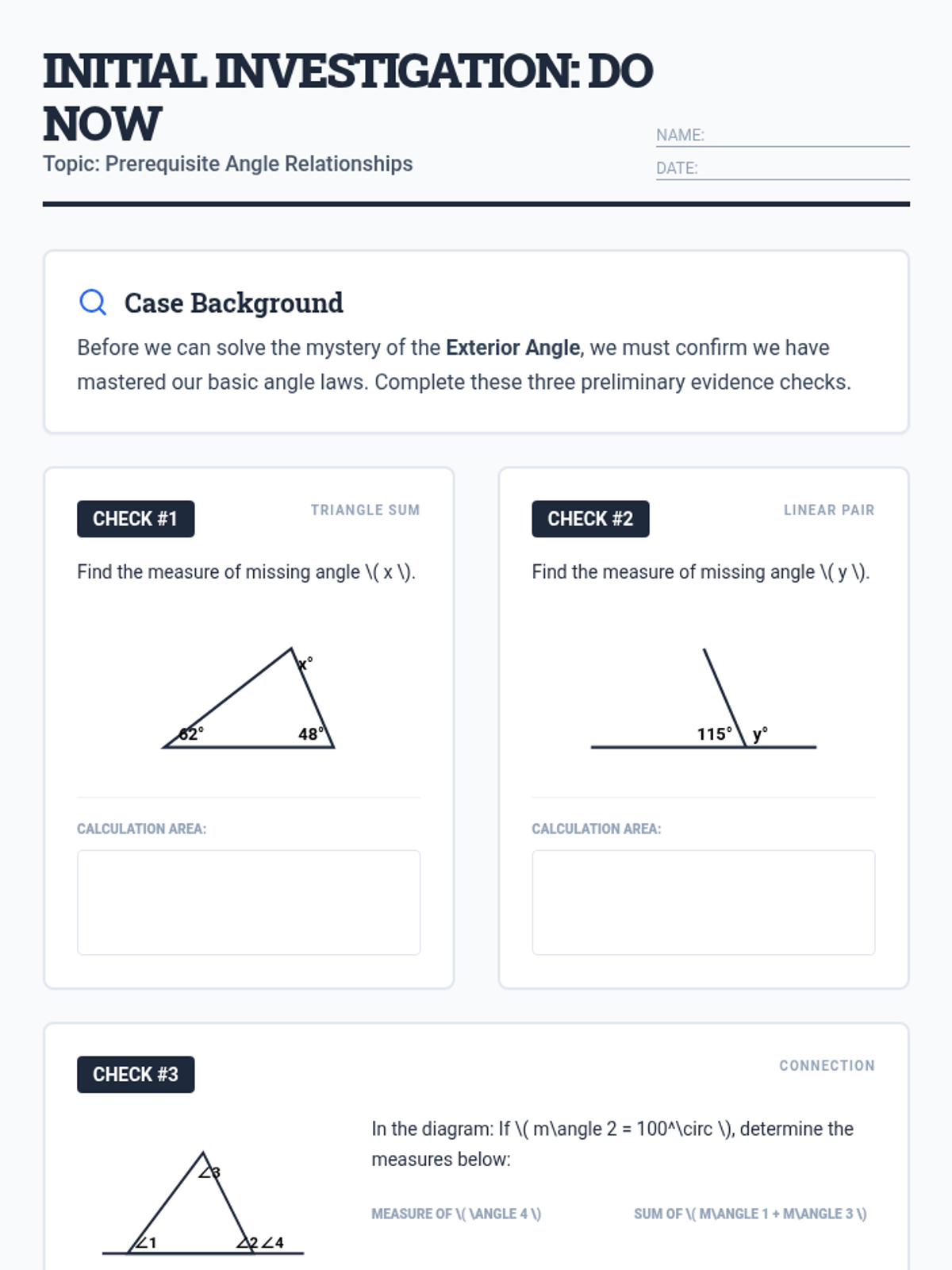
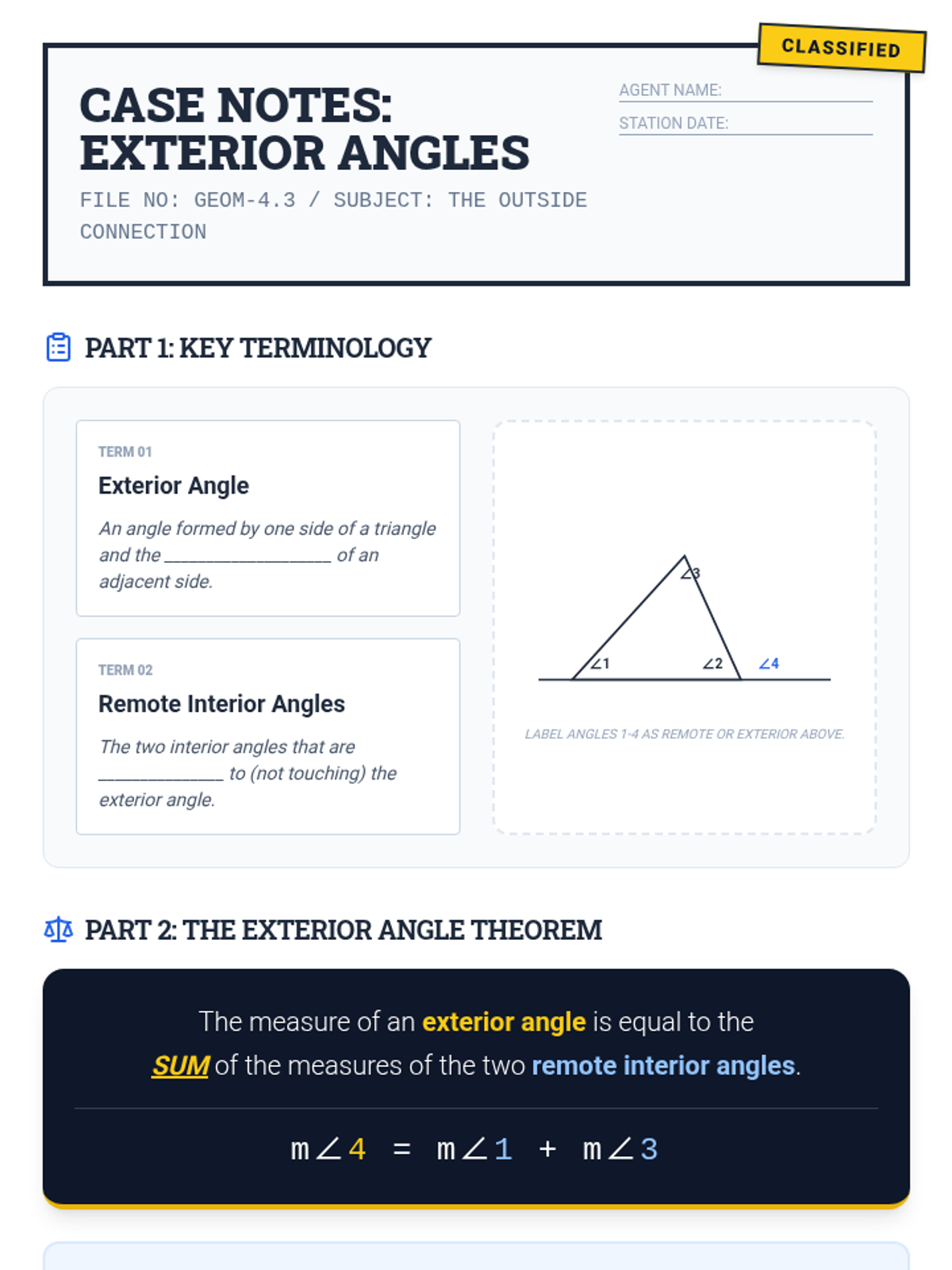
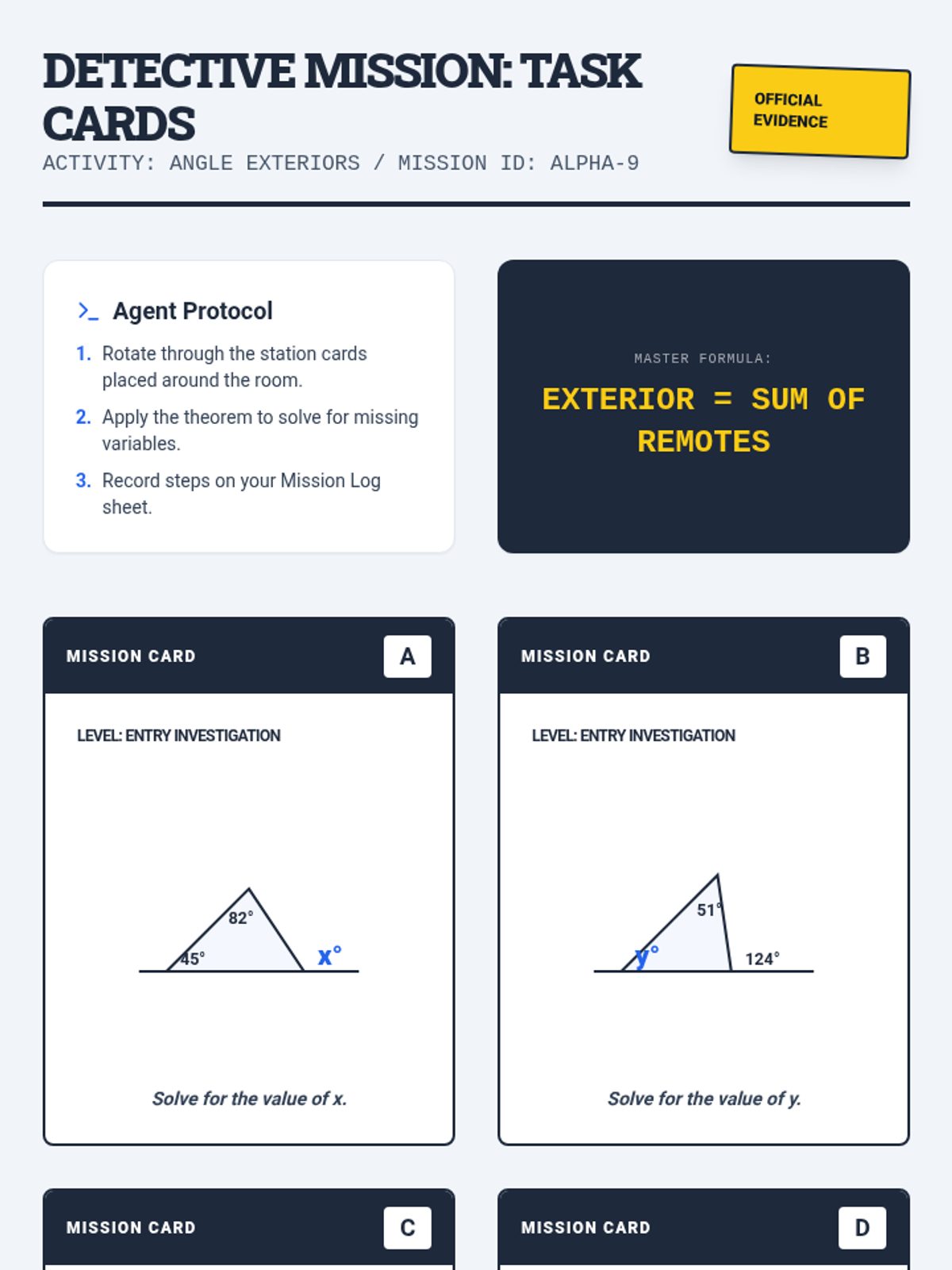
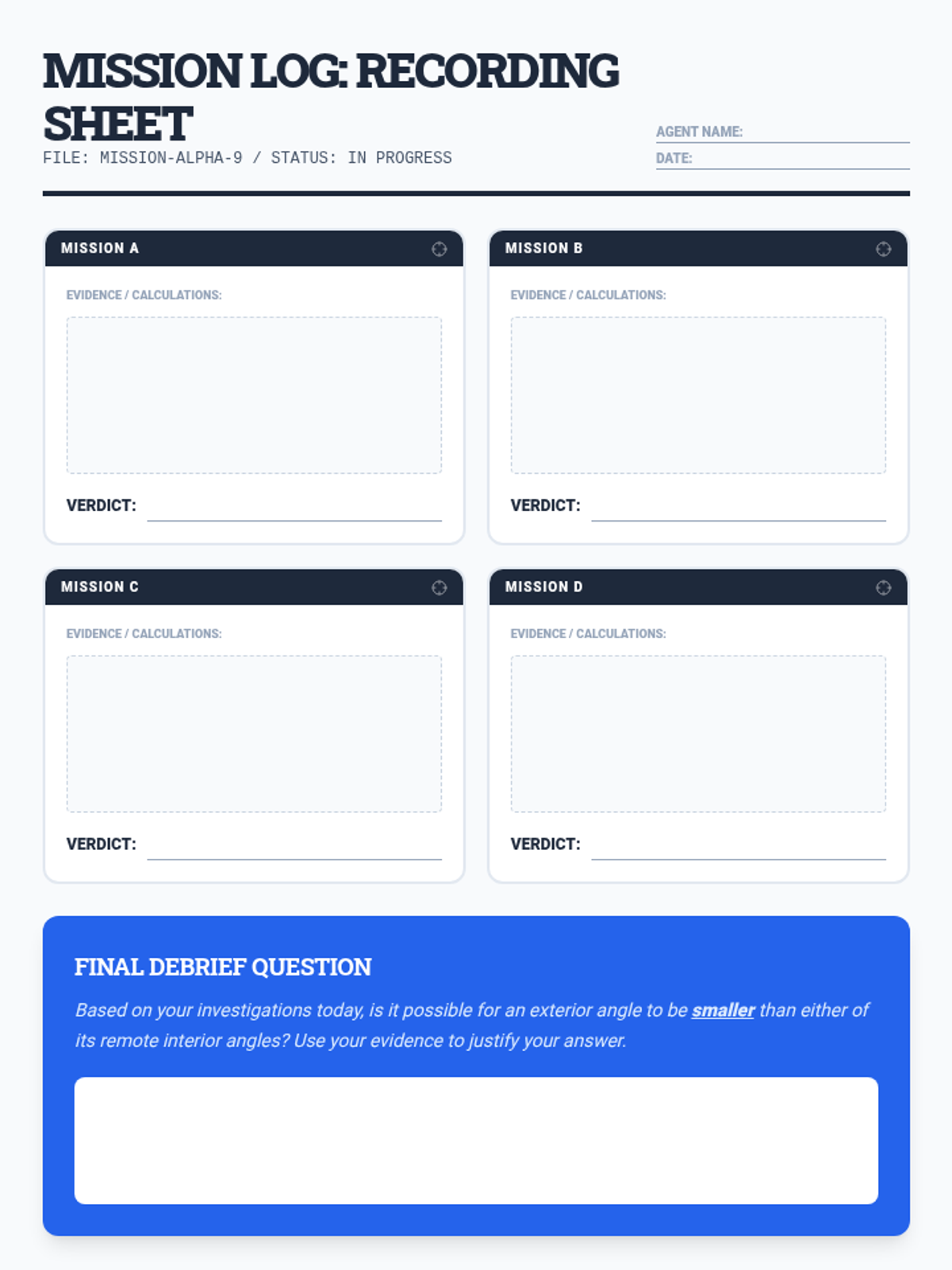
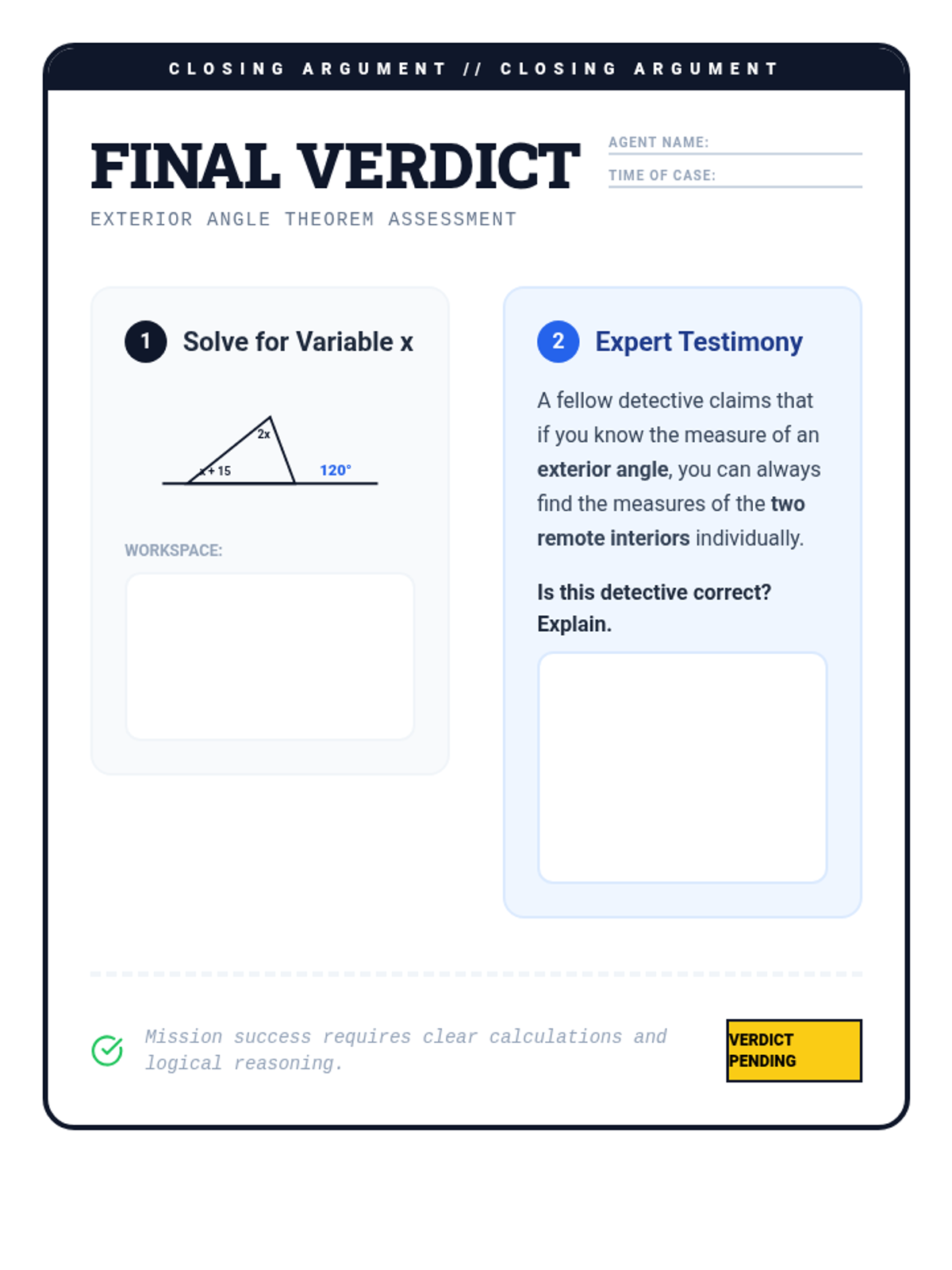
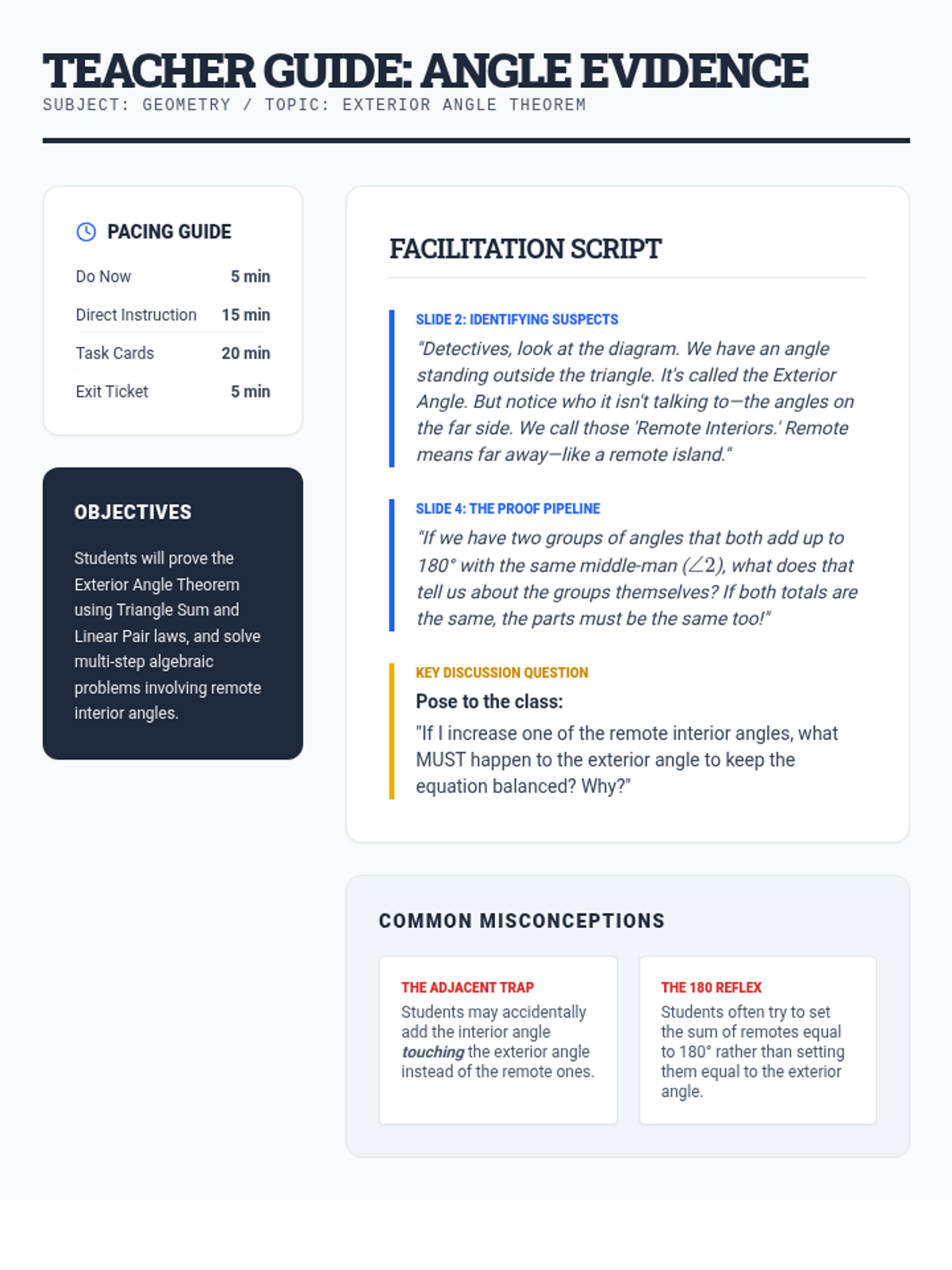
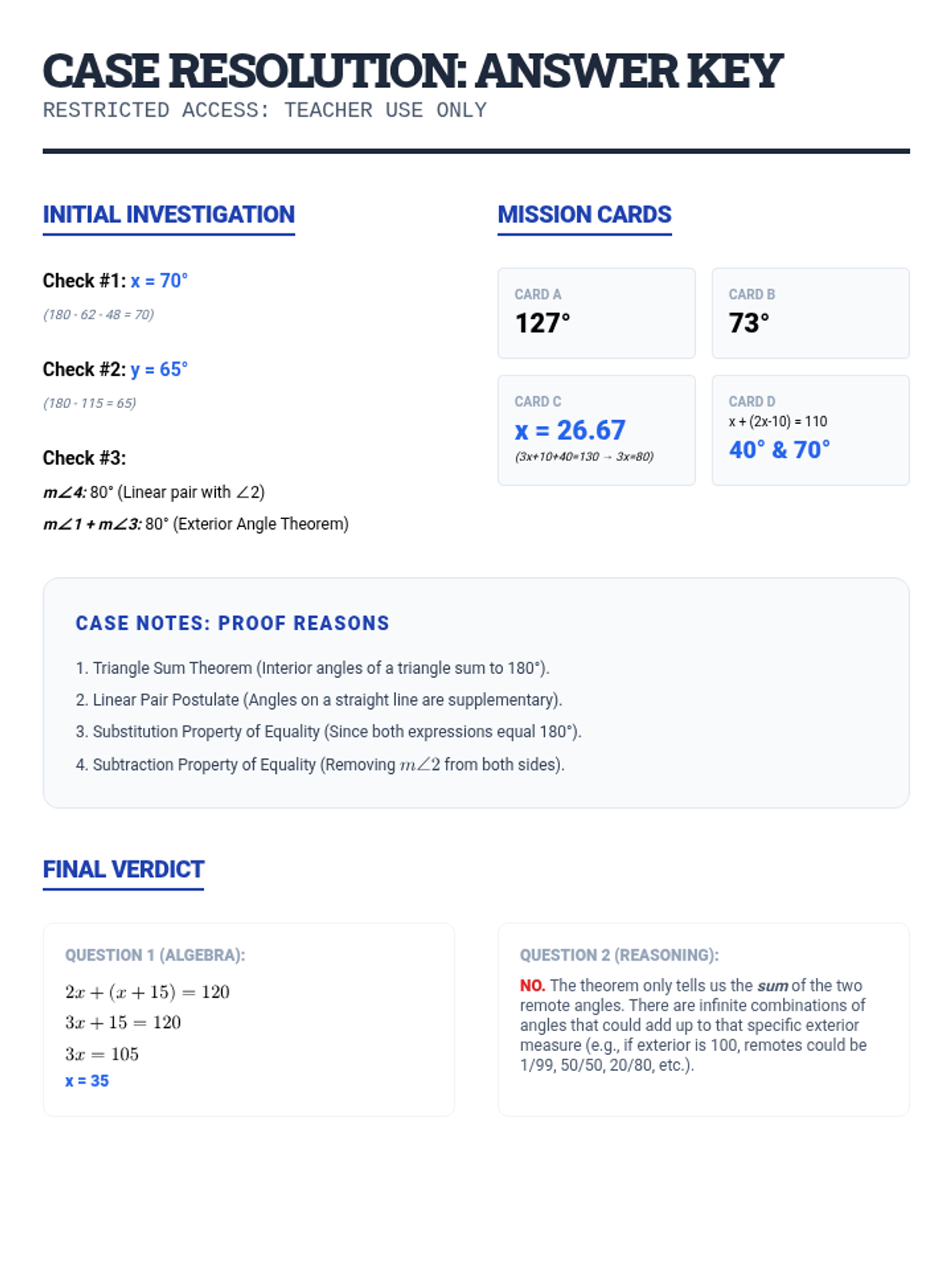
A comprehensive lesson package exploring the Exterior Angle Theorem through a 'detective case' lens. Students investigate the relationship between exterior and remote interior angles through proof and application.
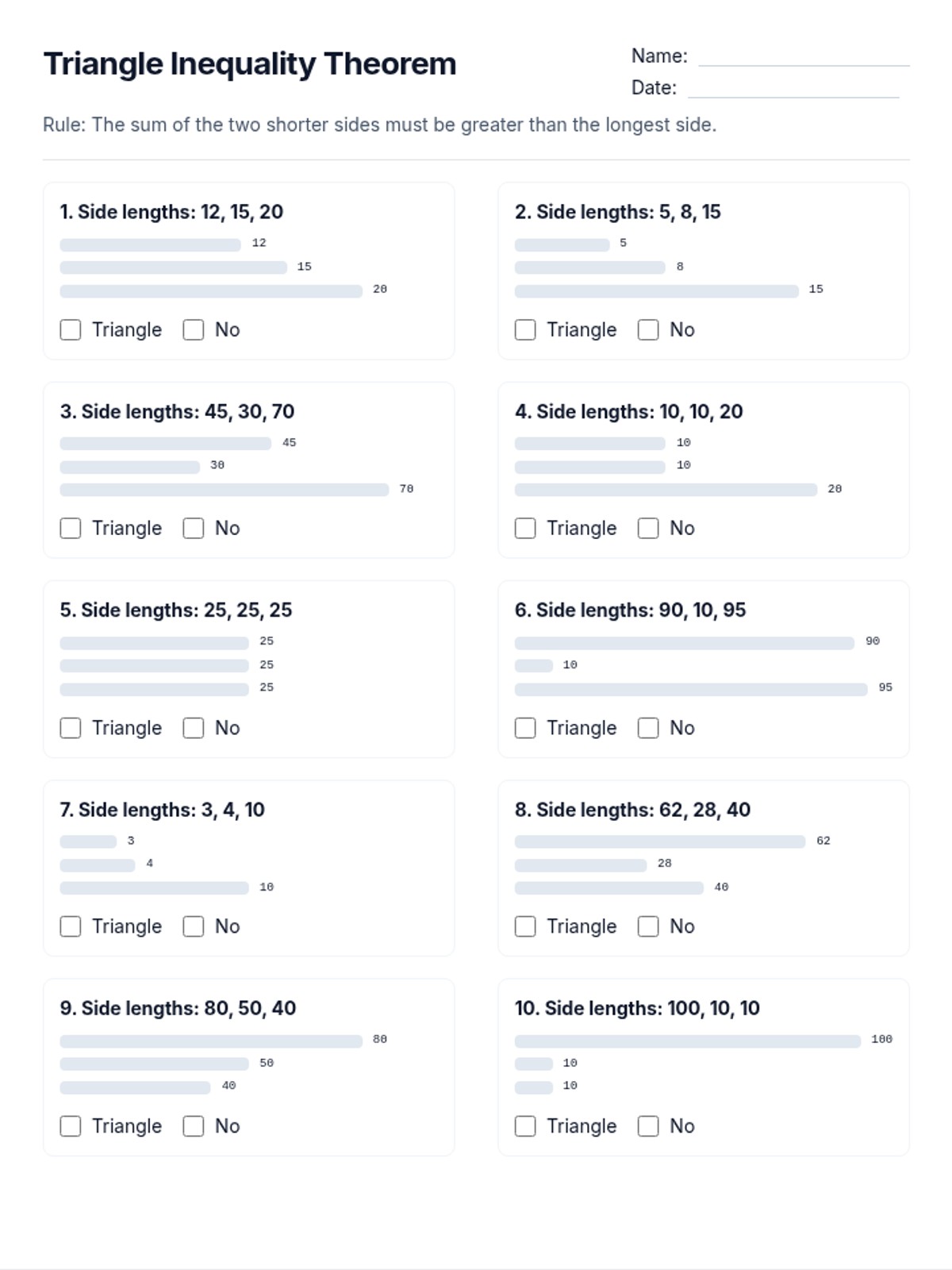
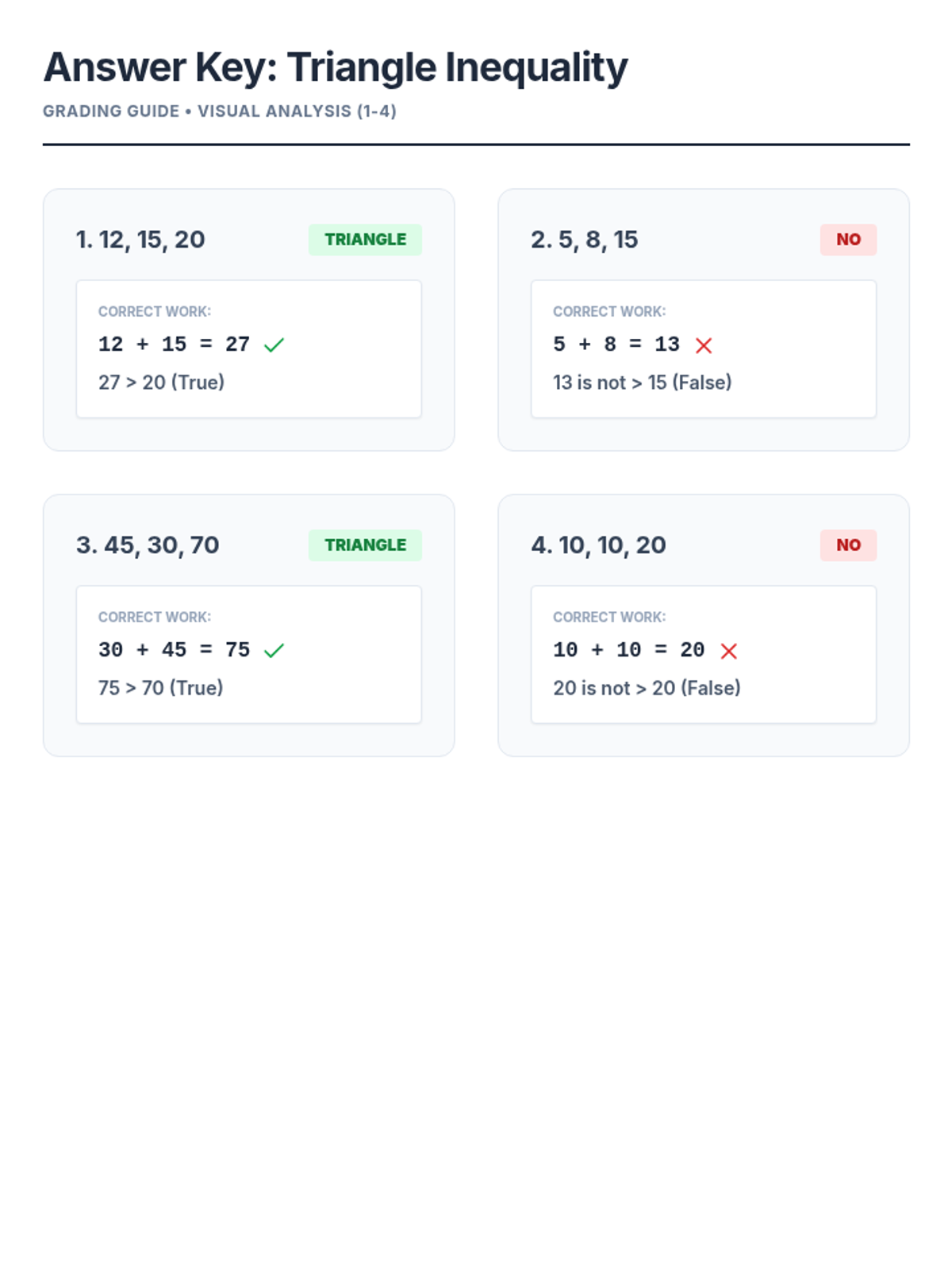
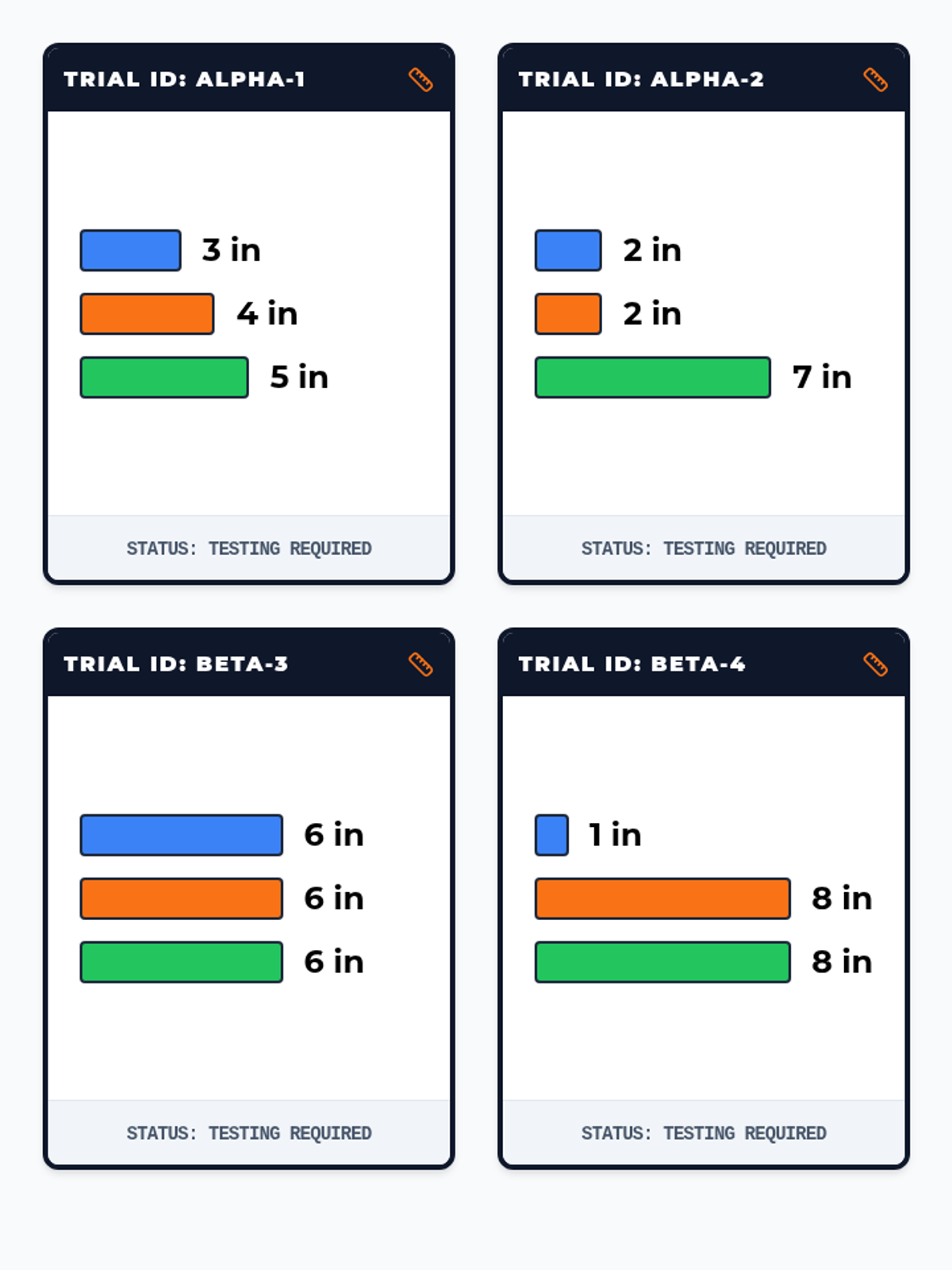
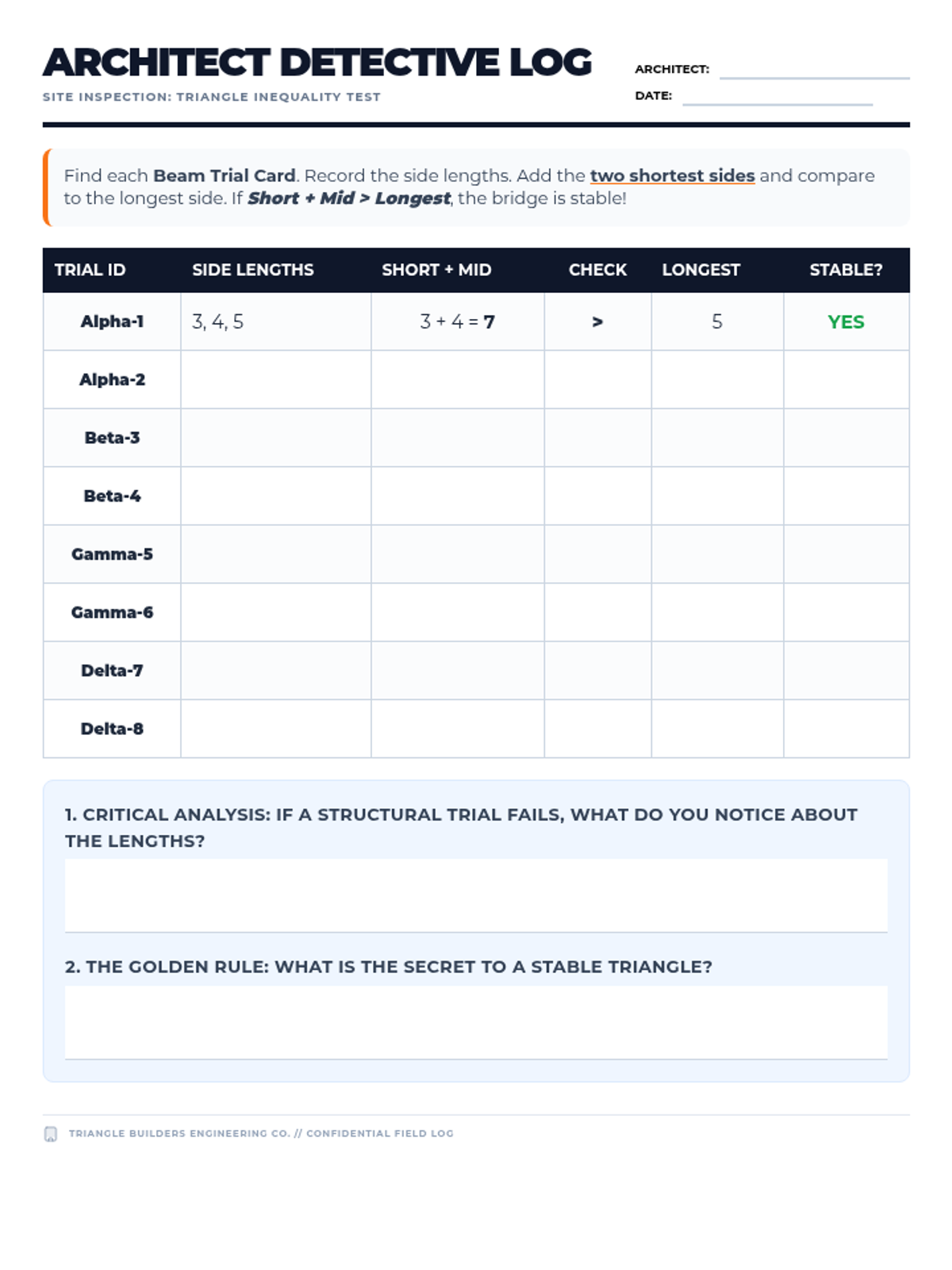
A lesson focusing on the Triangle Inequality Theorem, teaching students how to determine if three given side lengths can form a valid triangle.
A hands-on geometry lesson where students act as structural engineers to discover the Triangle Inequality Theorem through sorting and investigation.
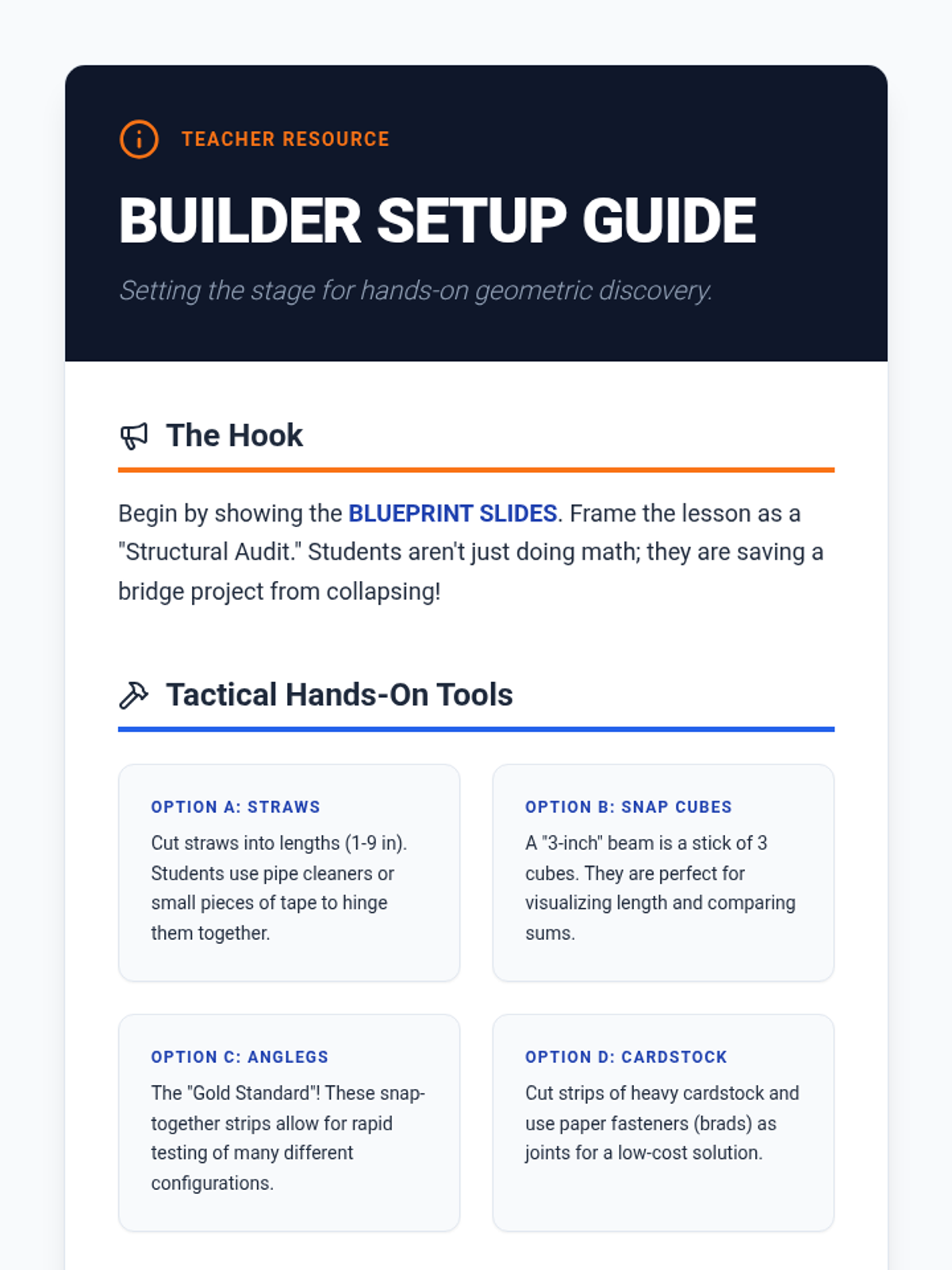
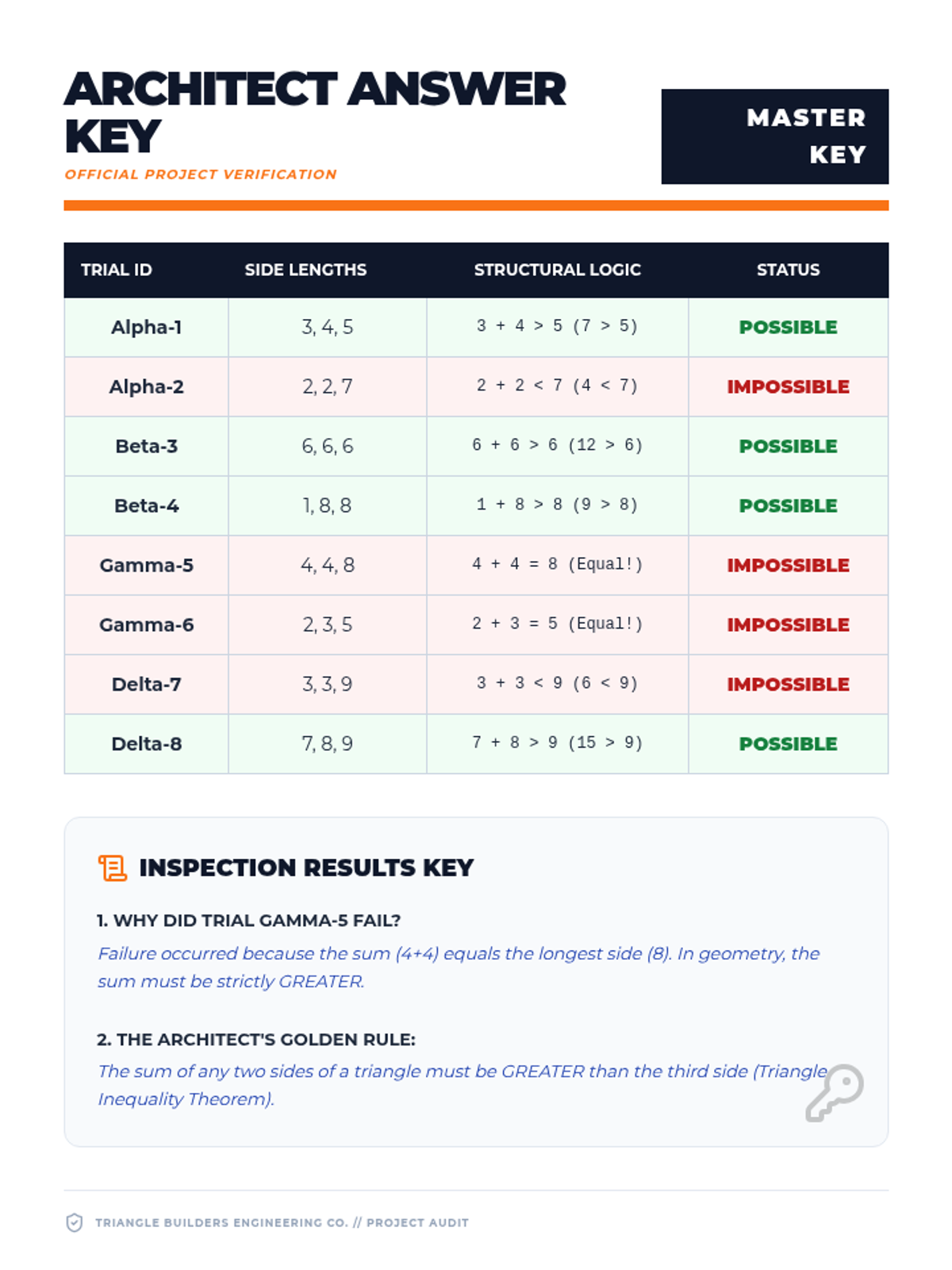
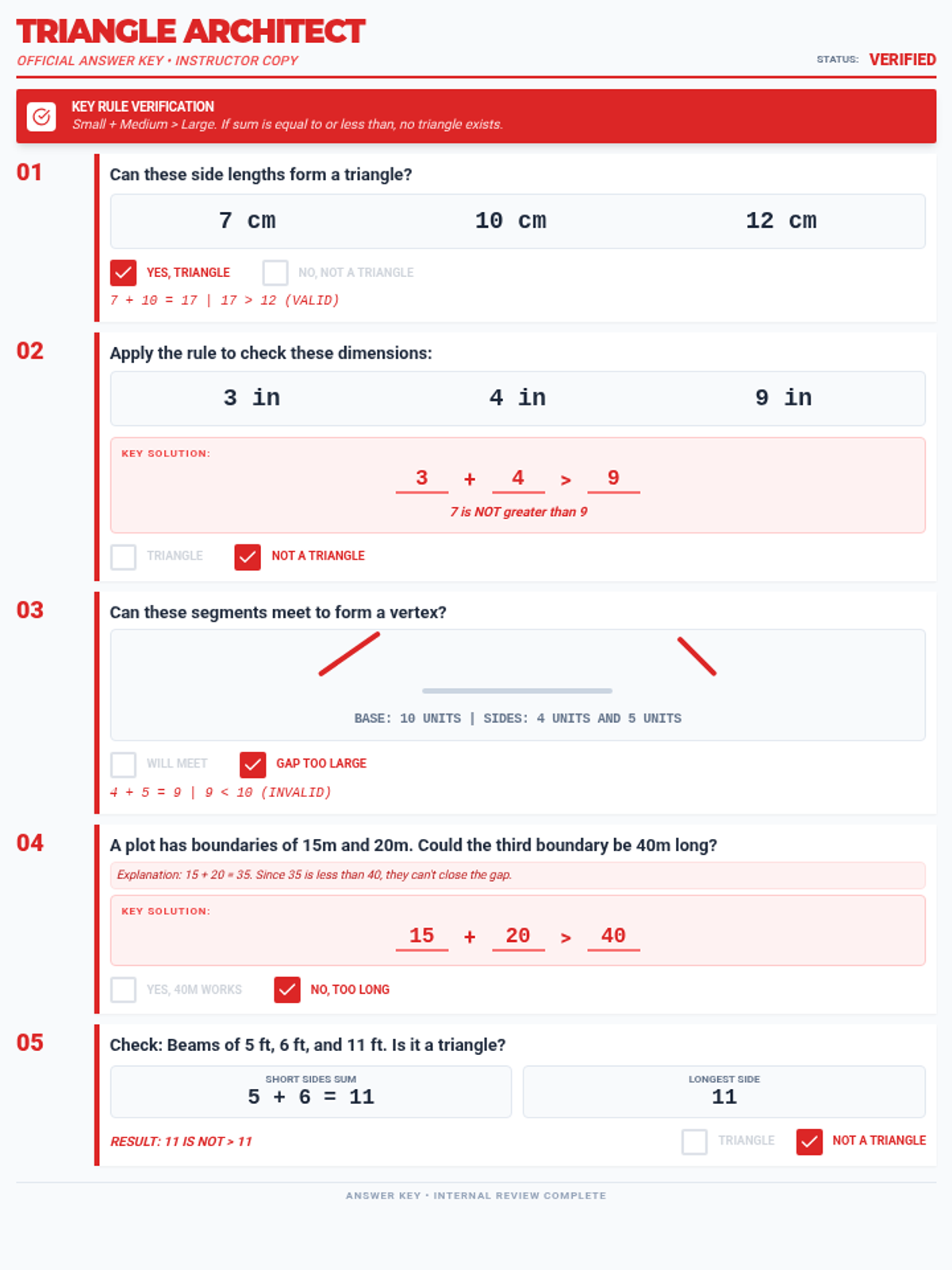
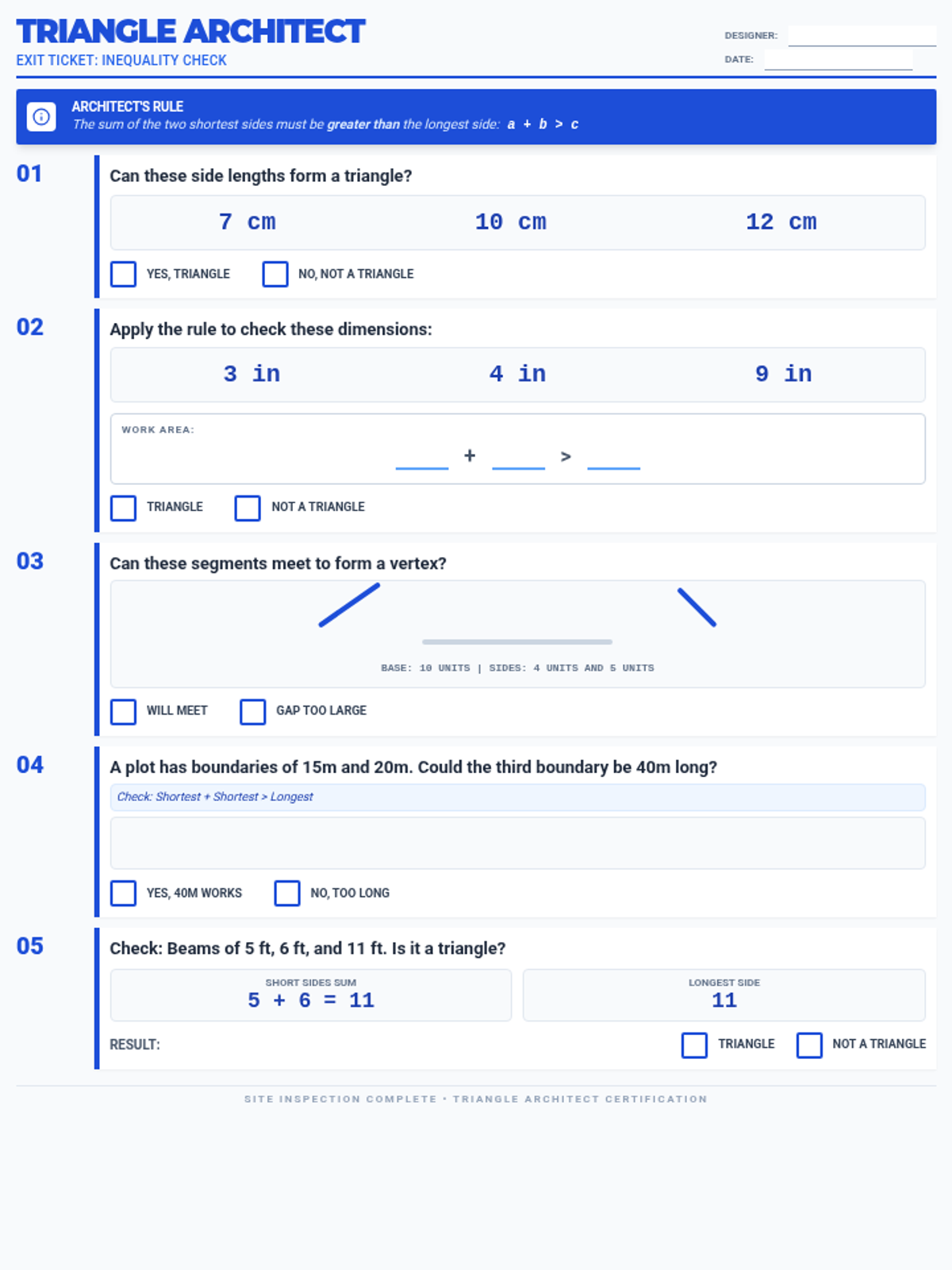
Students act as architects to verify the structural integrity of triangular designs using the Triangle Inequality Theorem. They perform numeric checks, analyze visual models, and solve word problems to determine if three side lengths can form a valid triangle.
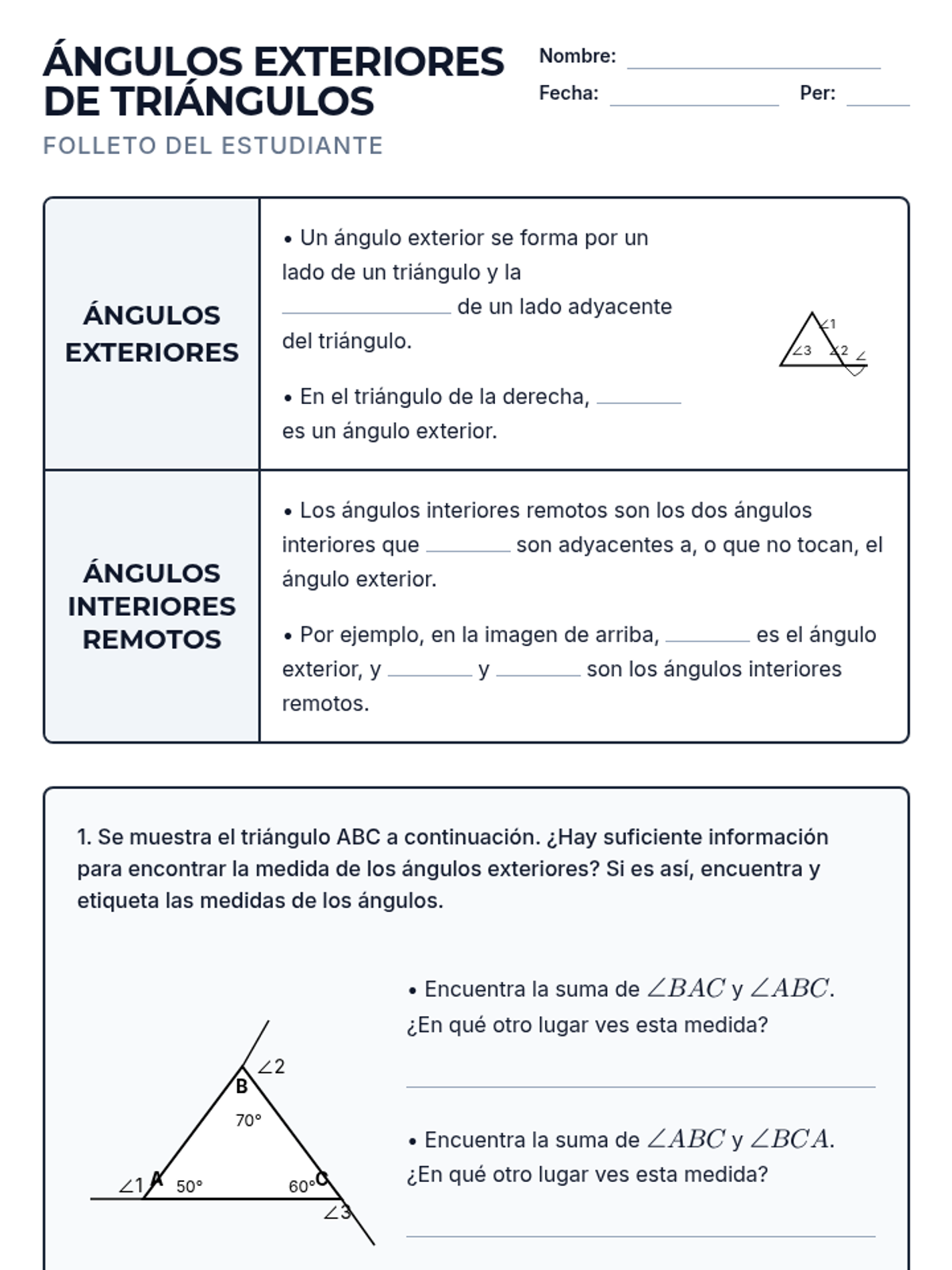
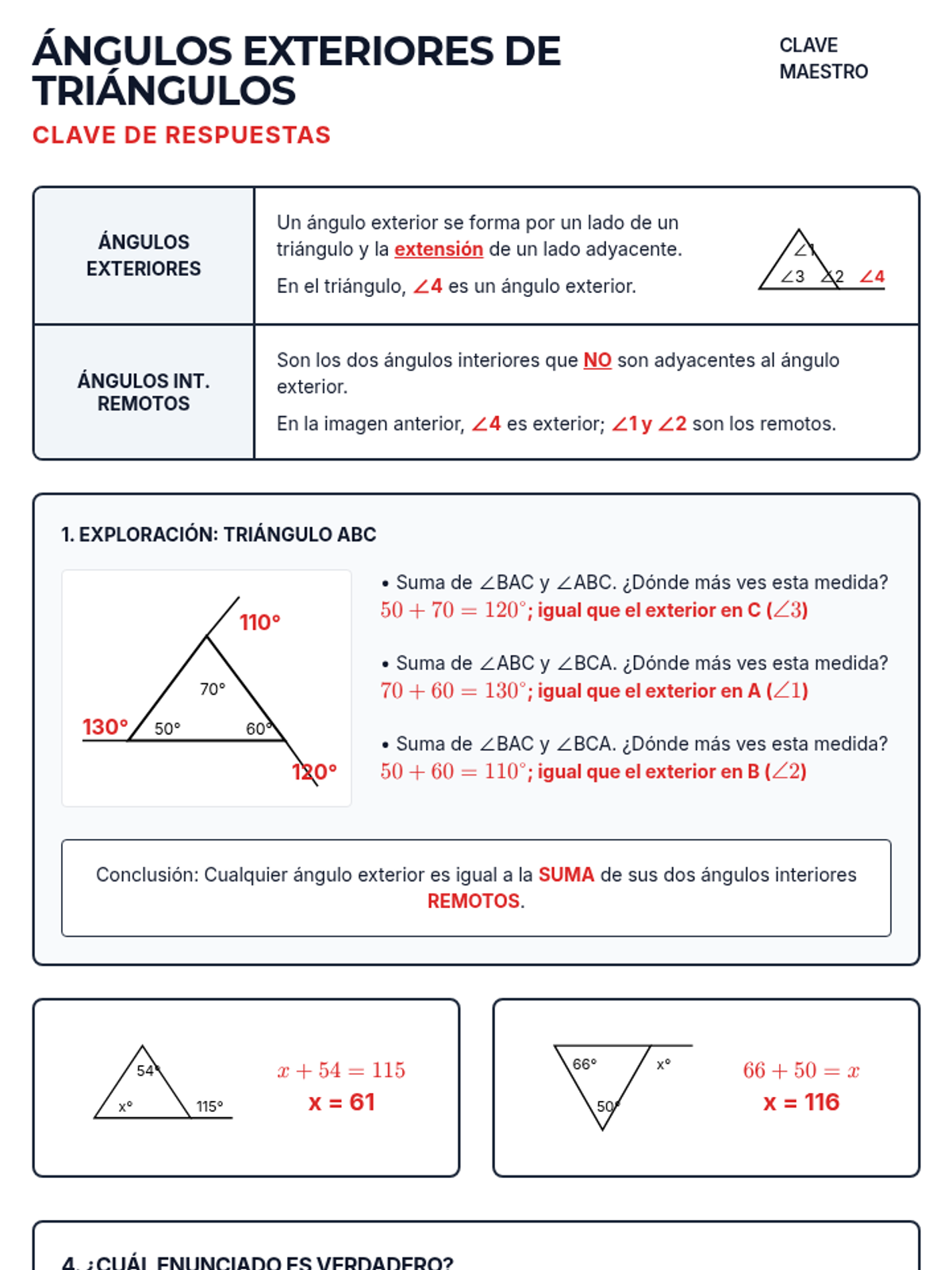
Este recurso ayuda a los estudiantes a comprender y aplicar el Teorema del Ángulo Exterior de los Triángulos. Incluye definiciones guiadas, una actividad de exploración y problemas de práctica con variables algebraicas.
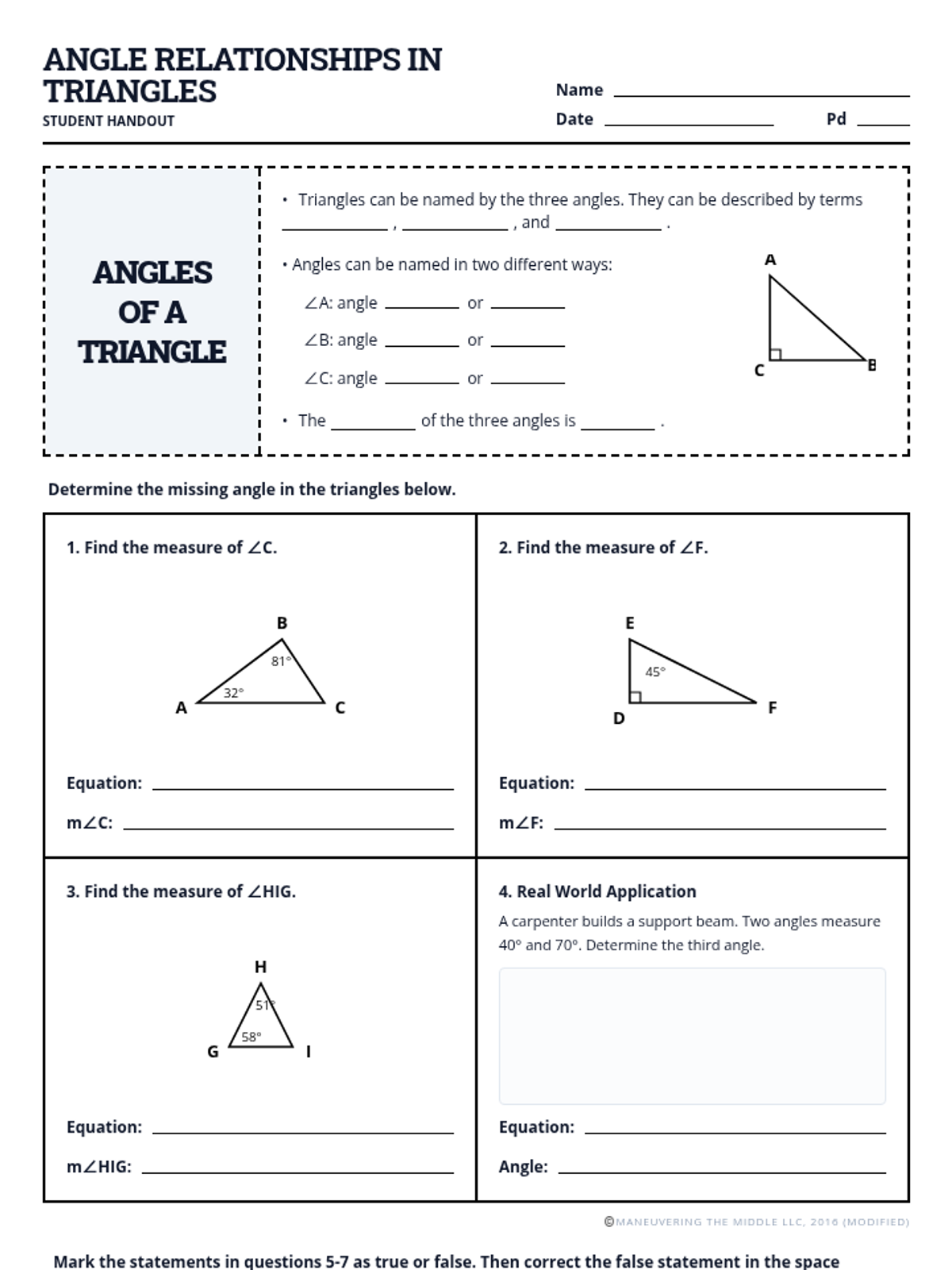
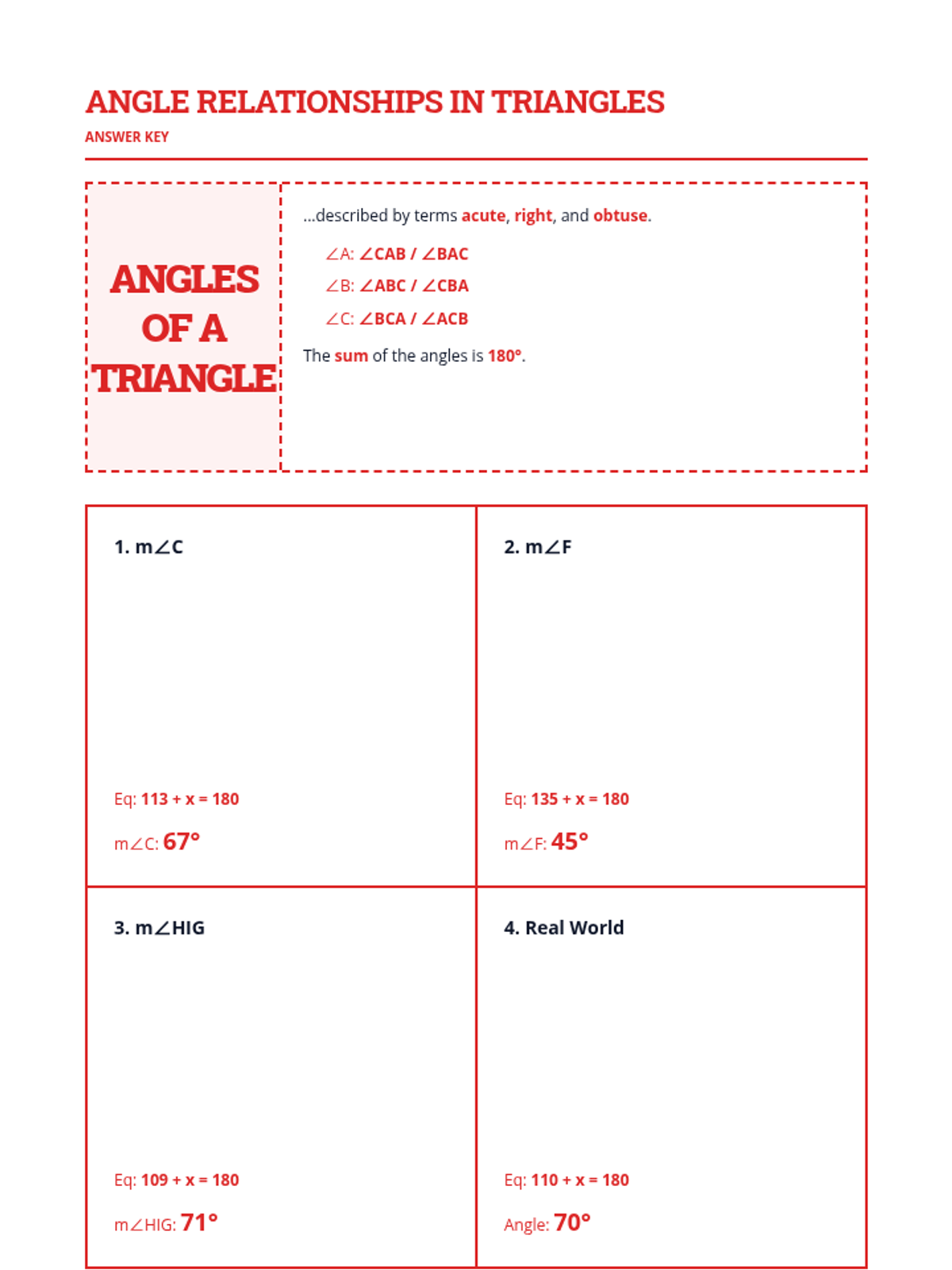
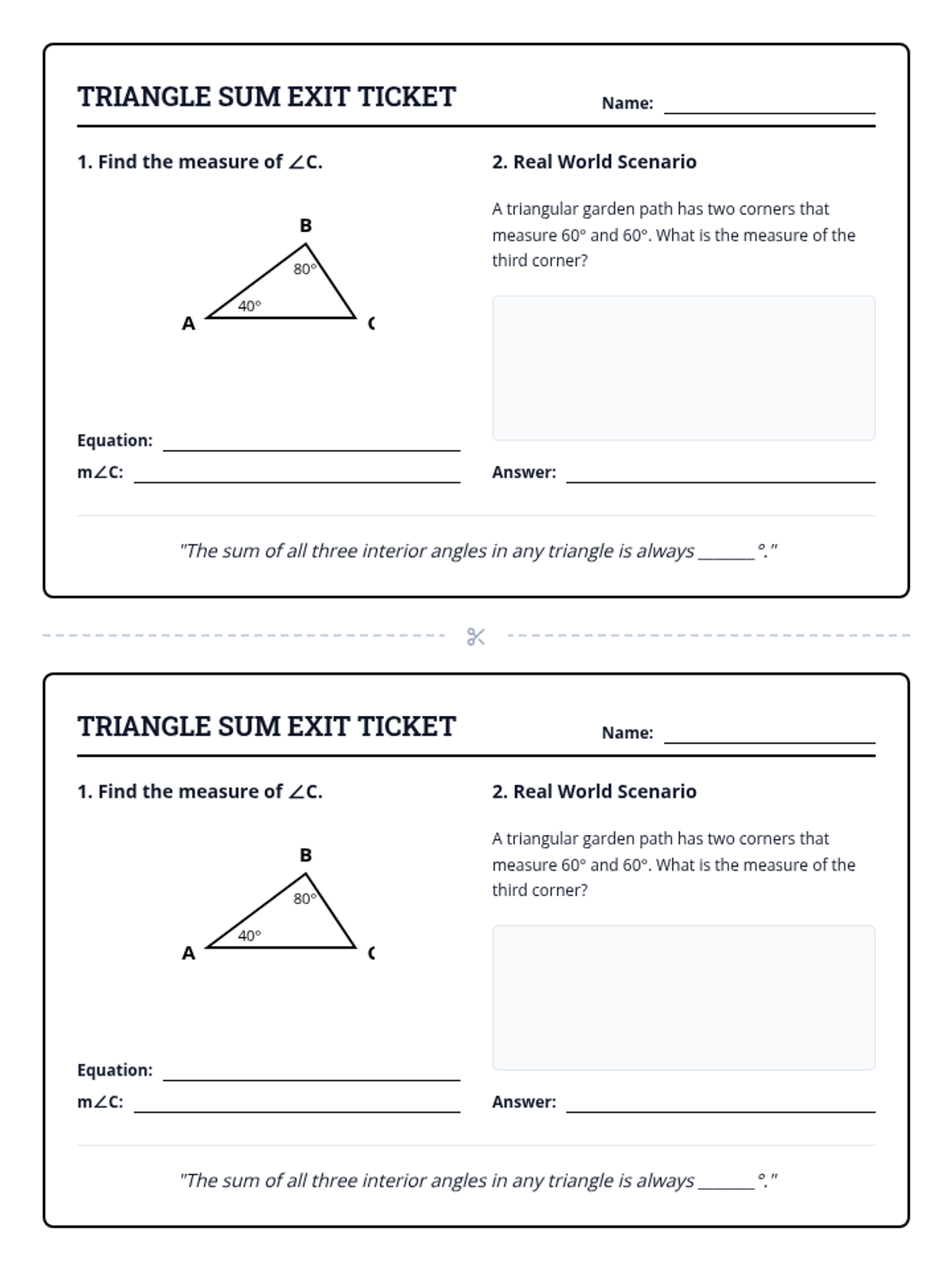
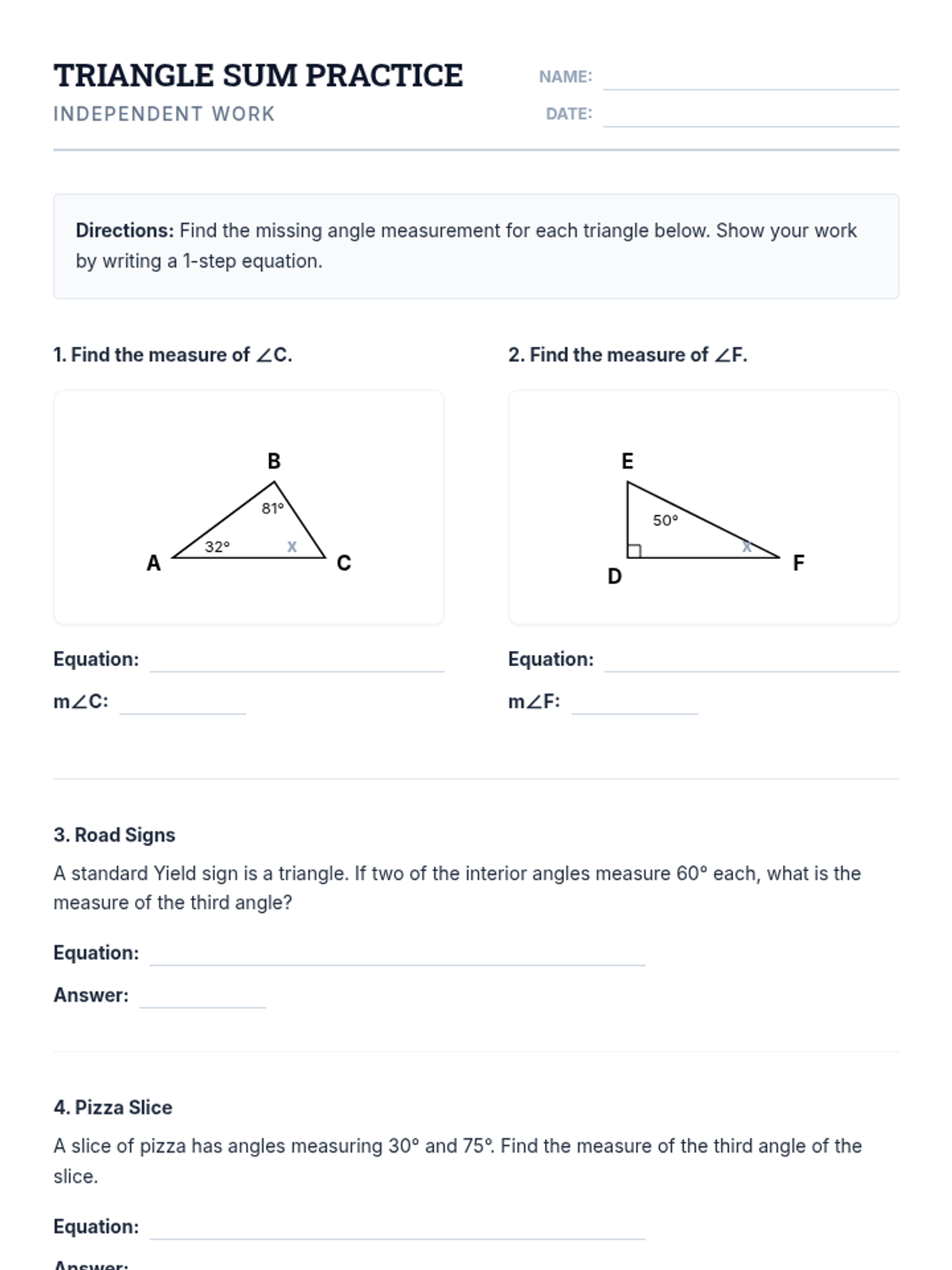
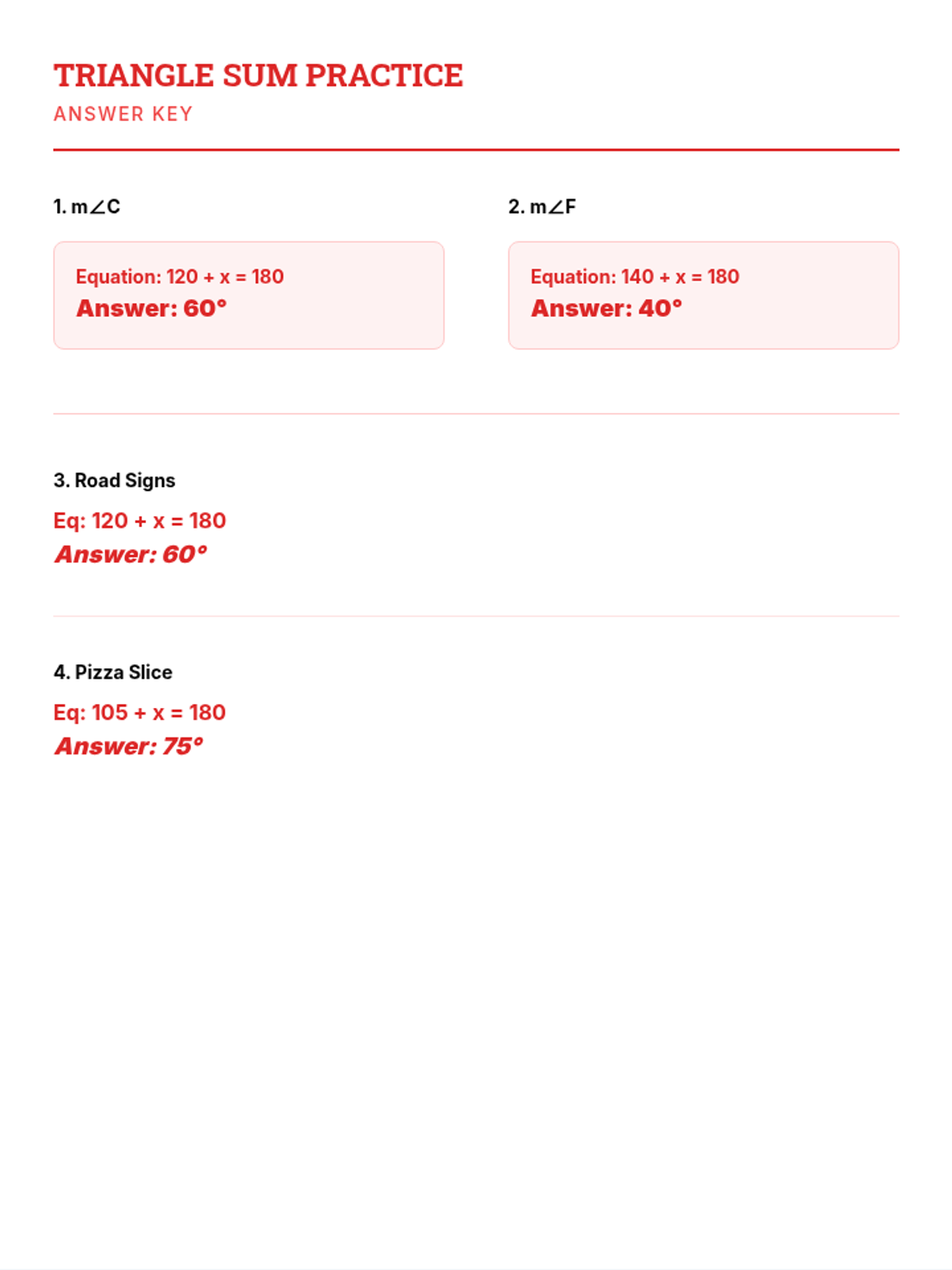
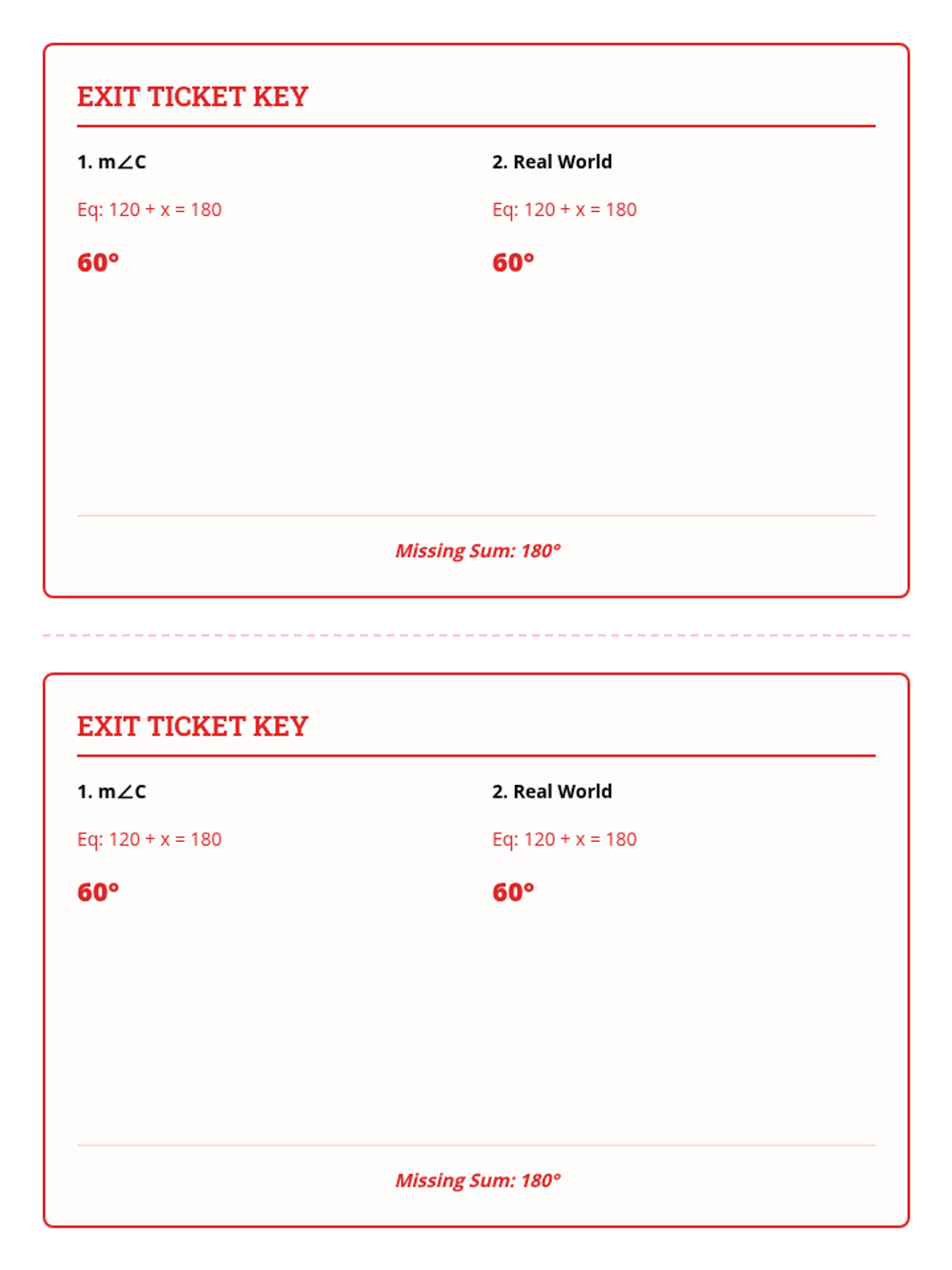
A simplified lesson on the Triangle Sum Rule, focusing on 3-letter angle naming and solving for missing angles using one-step equations with whole numbers.
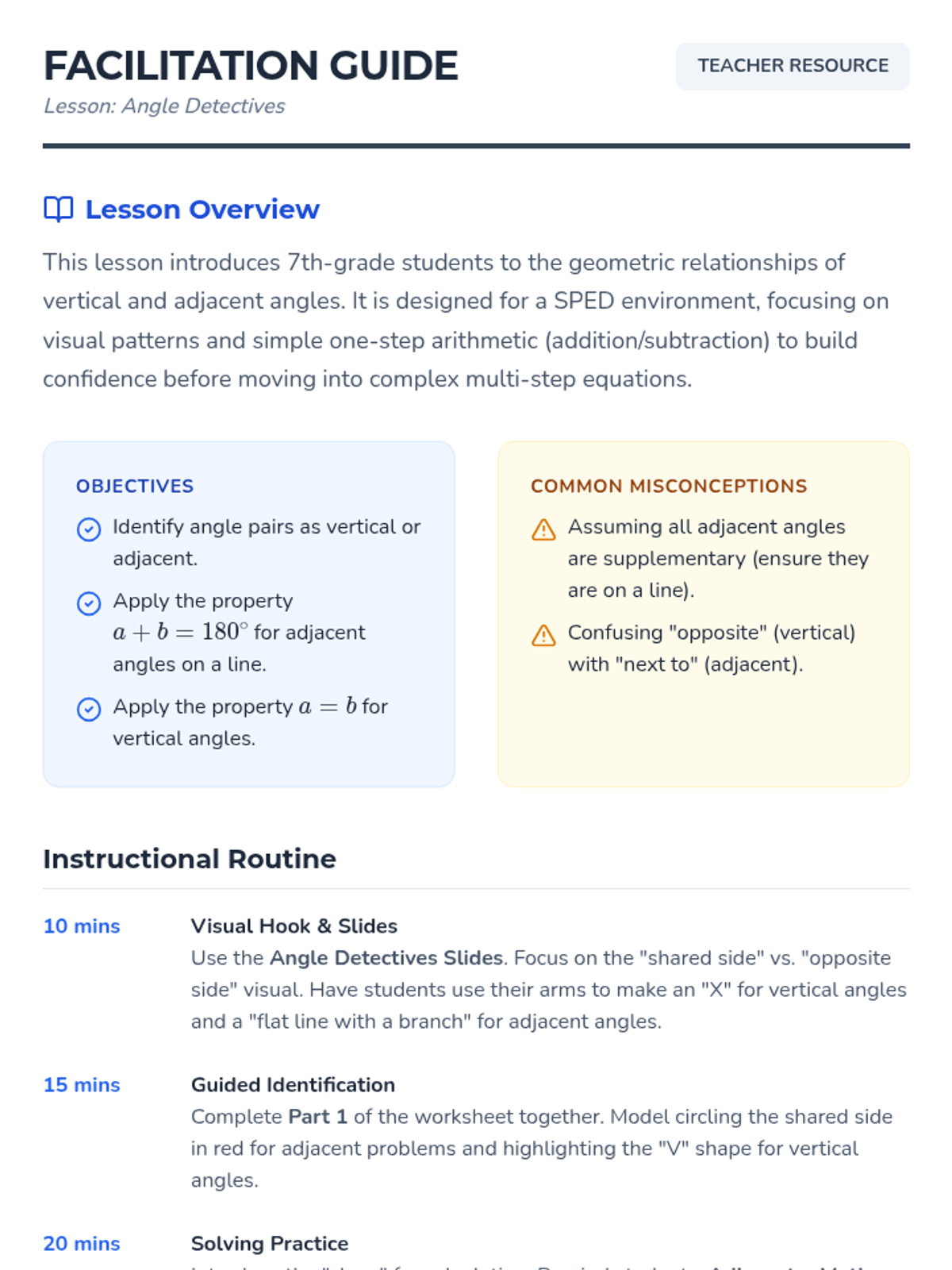
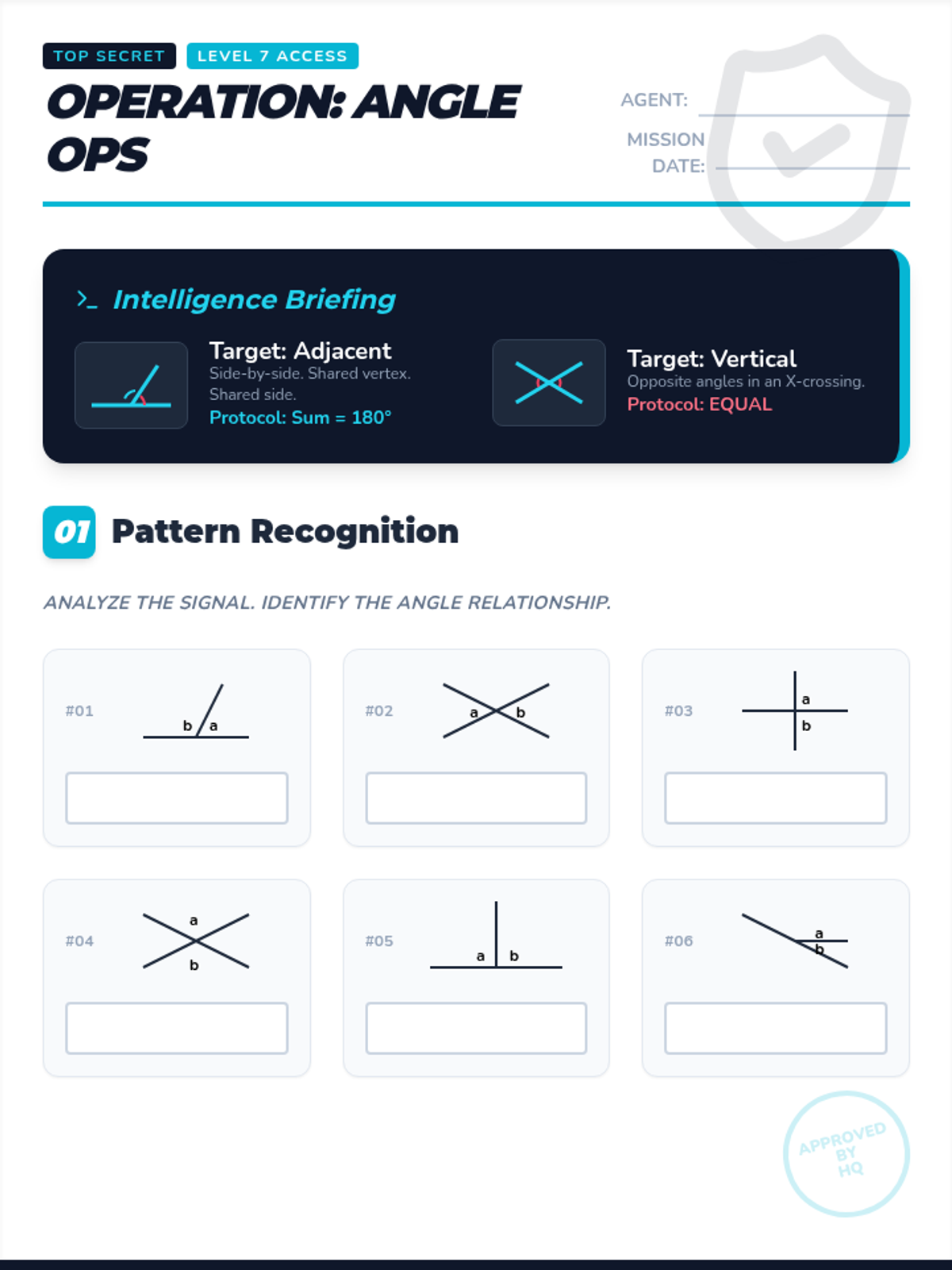
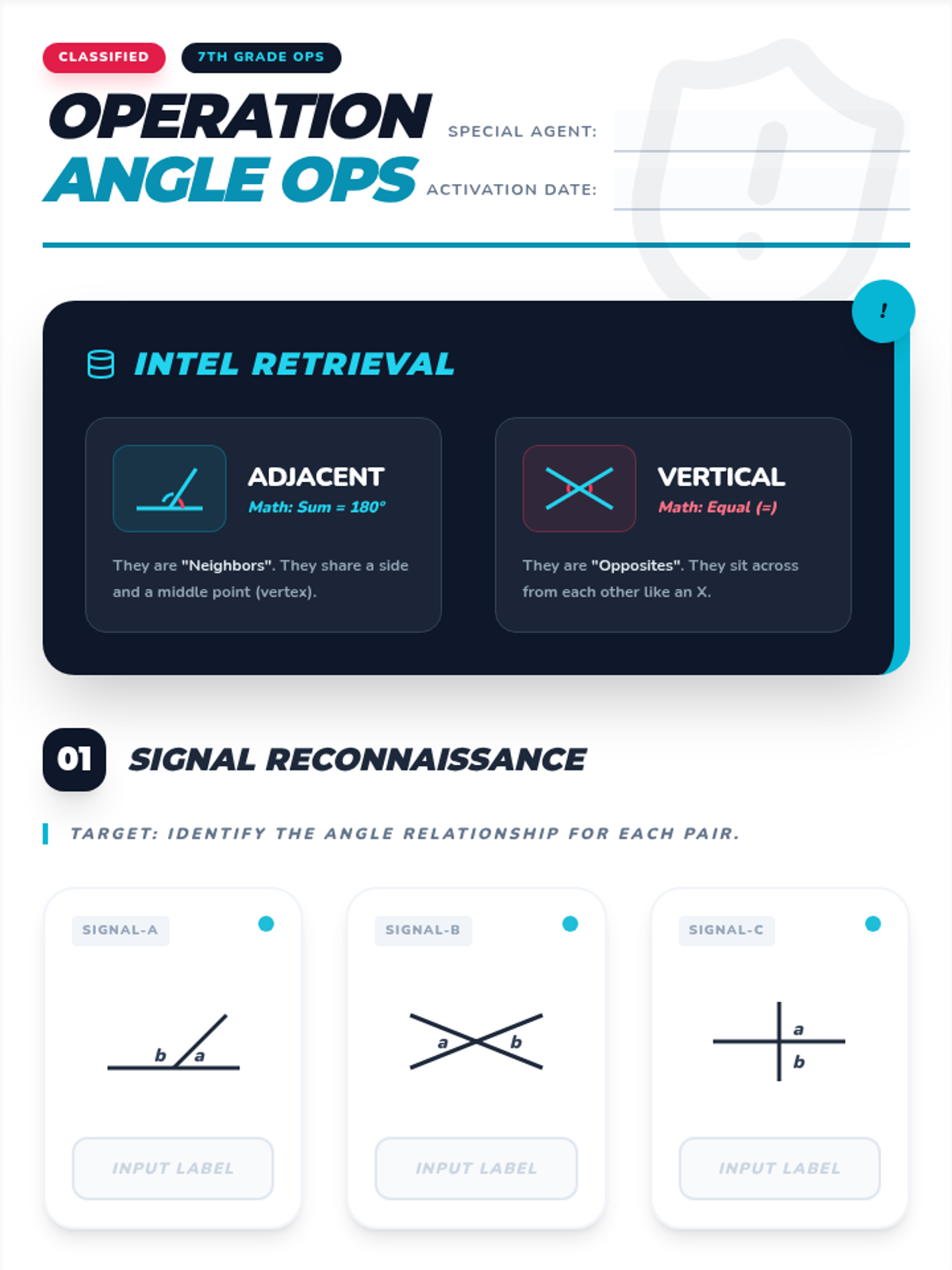
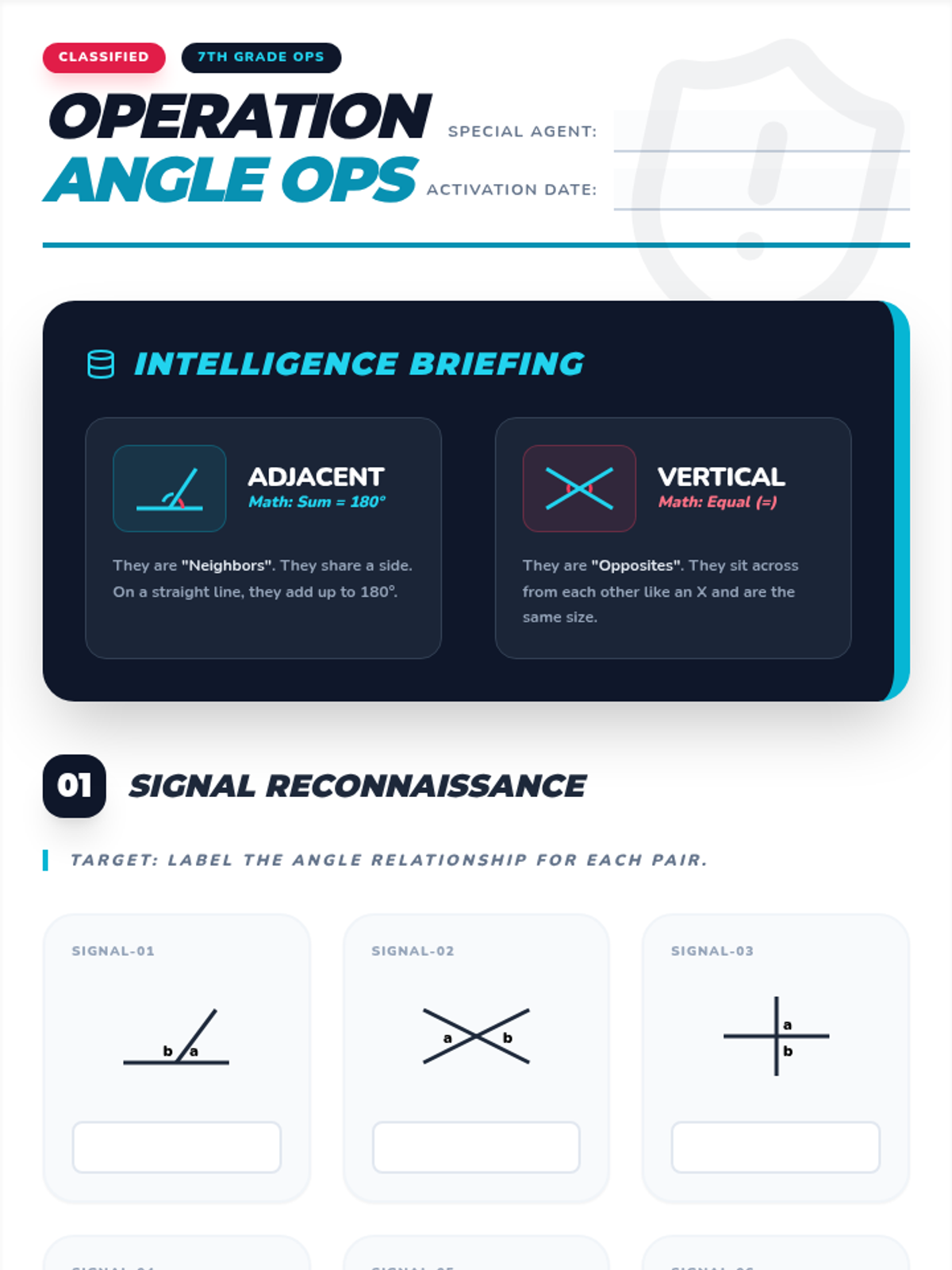
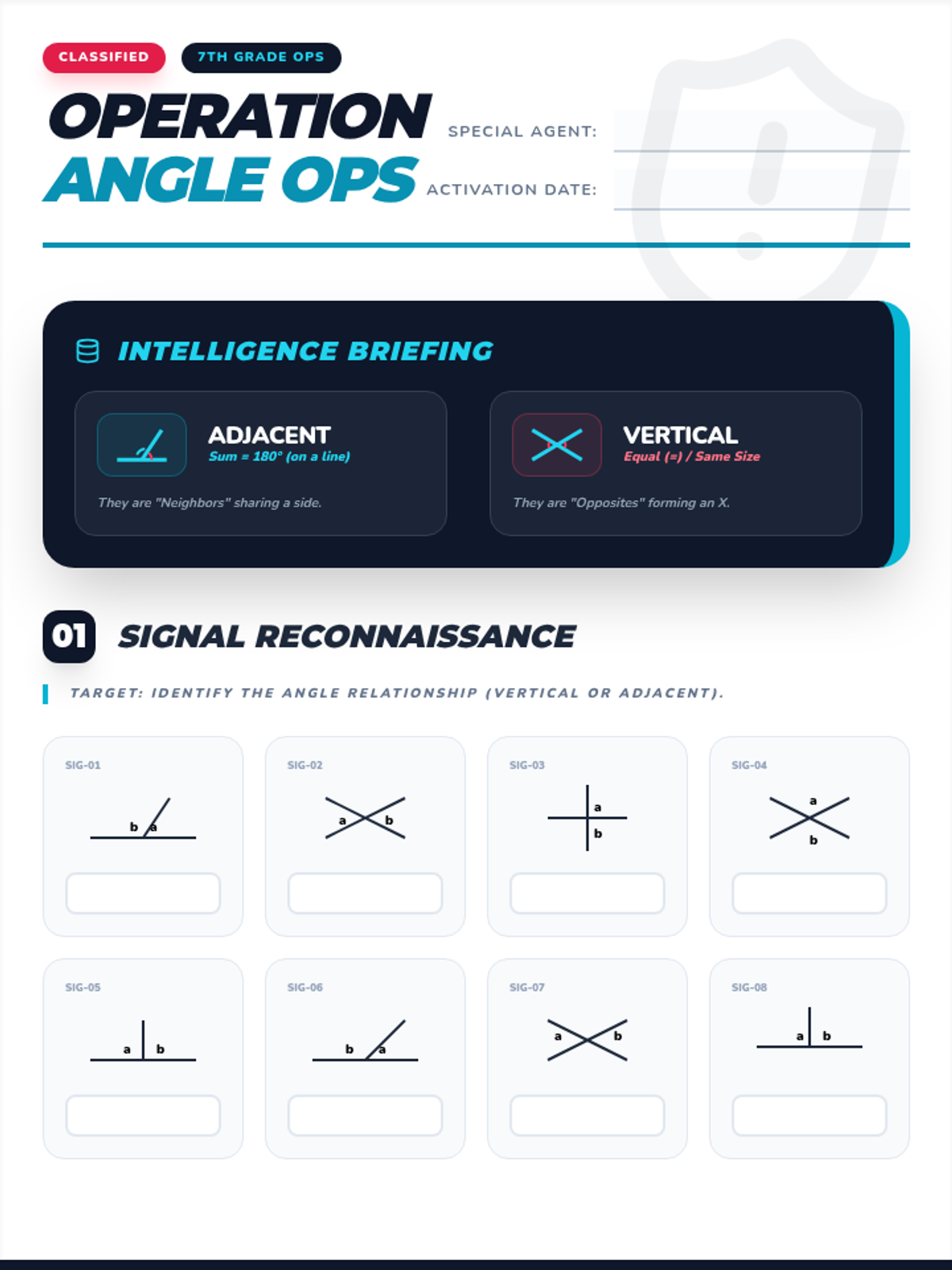
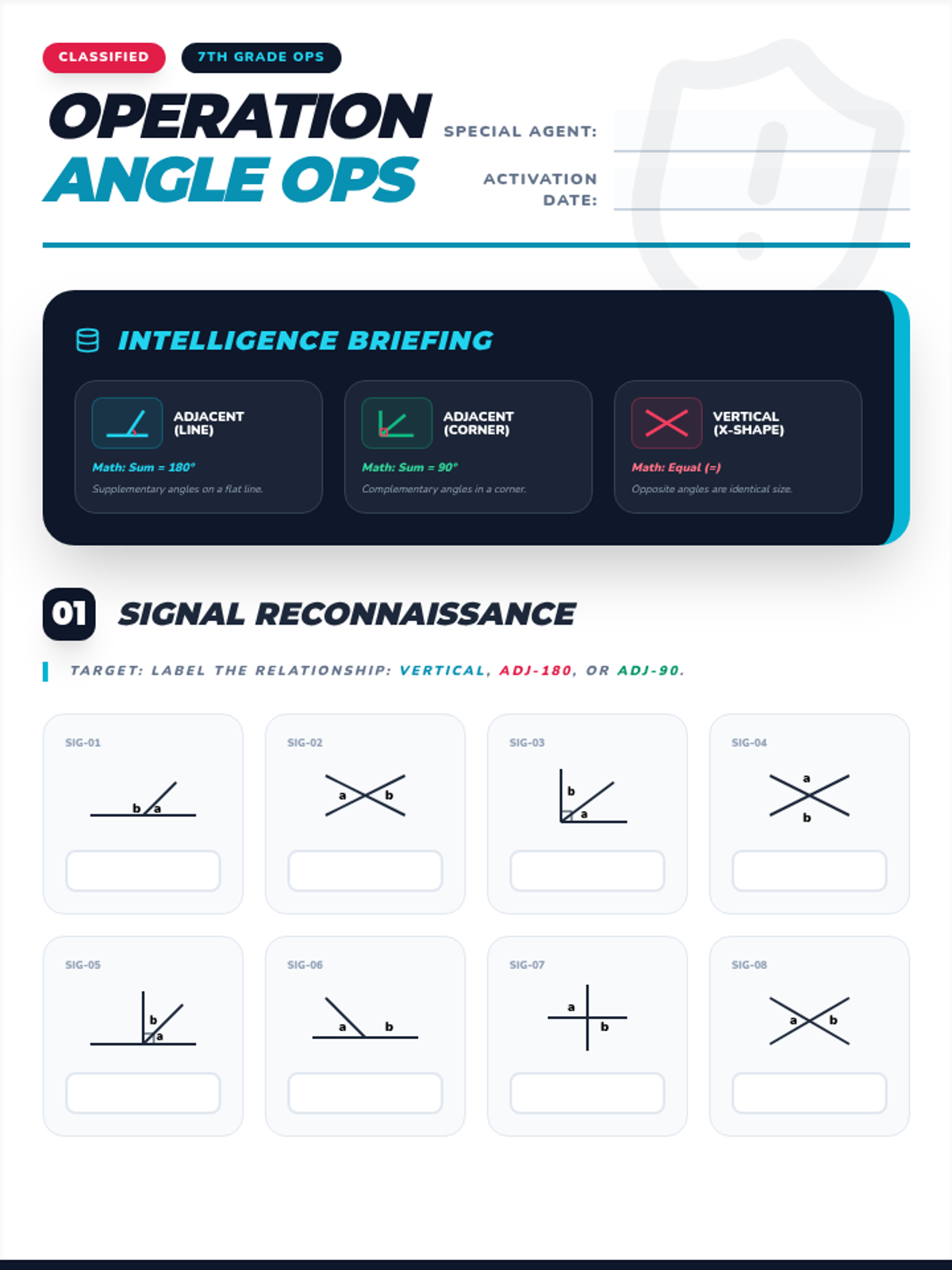
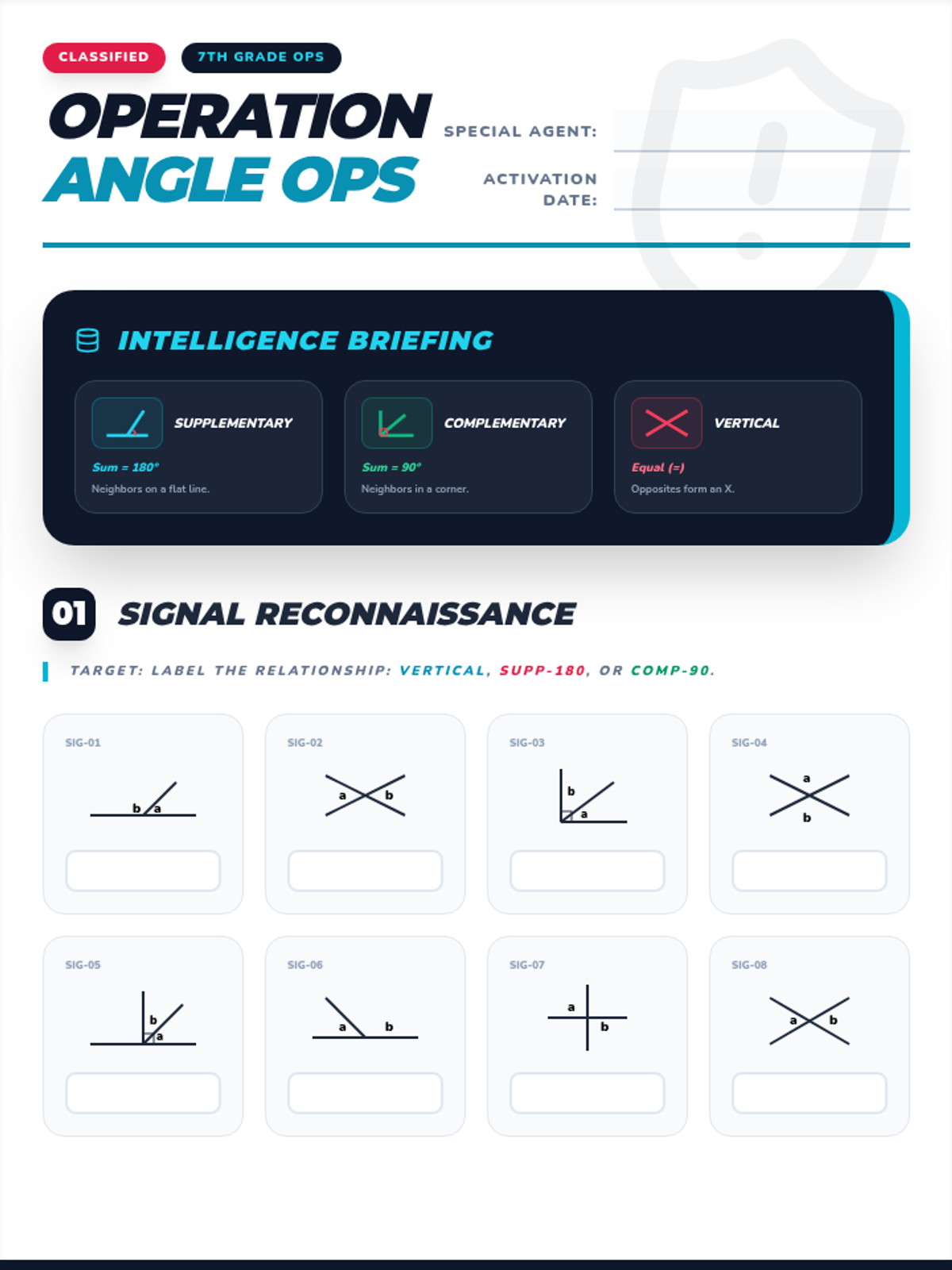
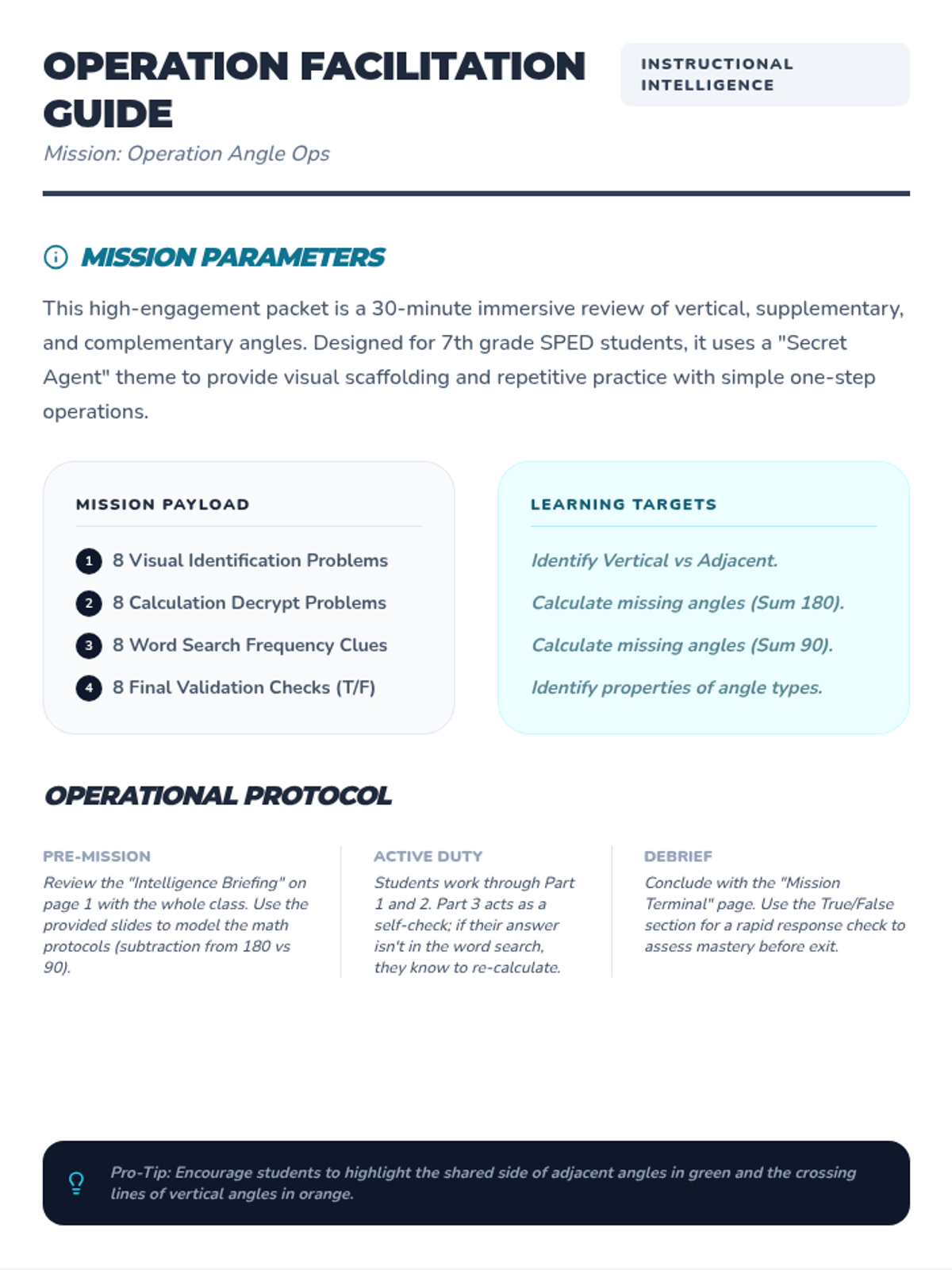
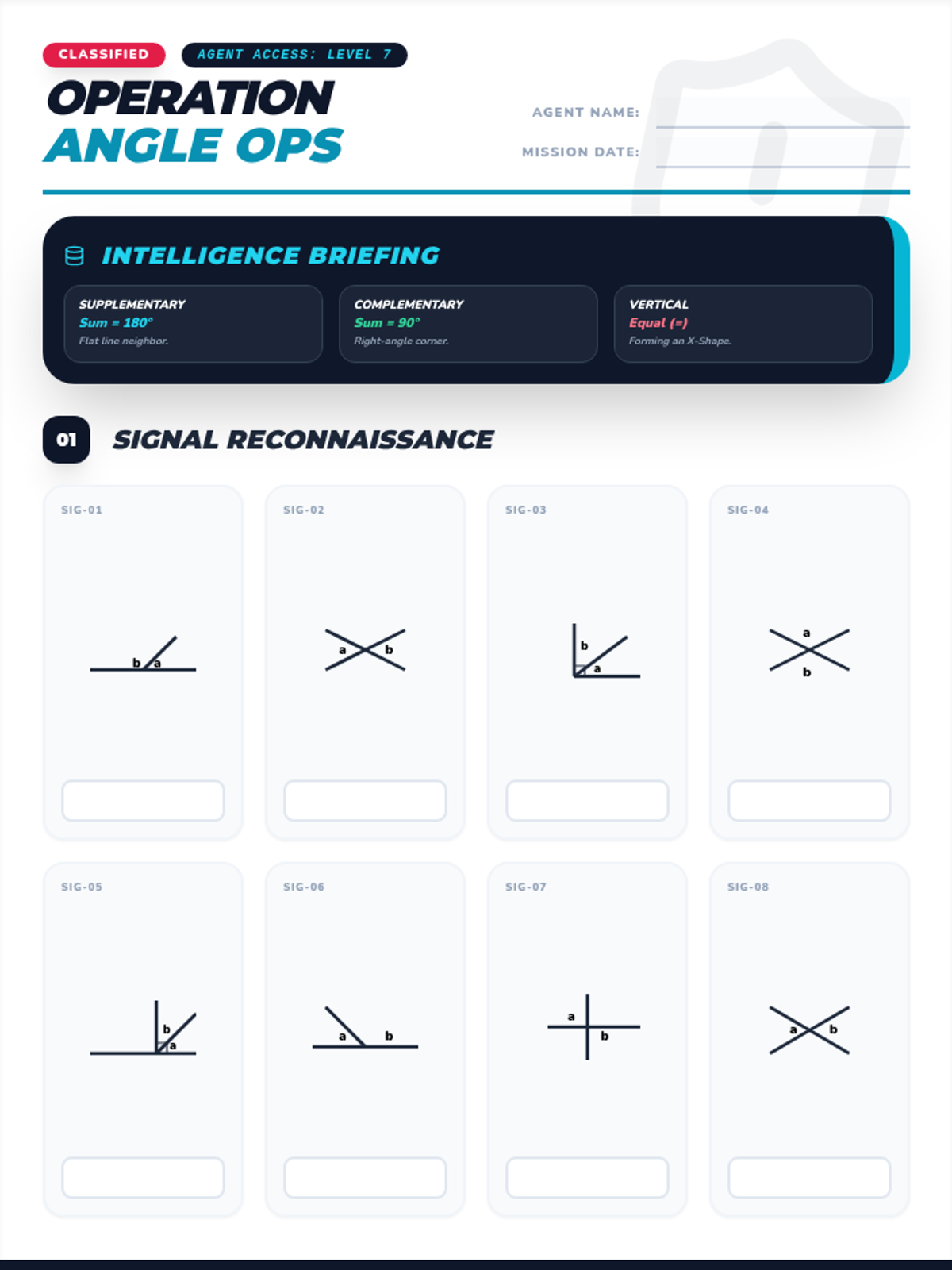
This lesson focuses on identifying and calculating measures for vertical and adjacent angles using simple one-step equations, designed specifically for learners who benefit from clear visual scaffolding.
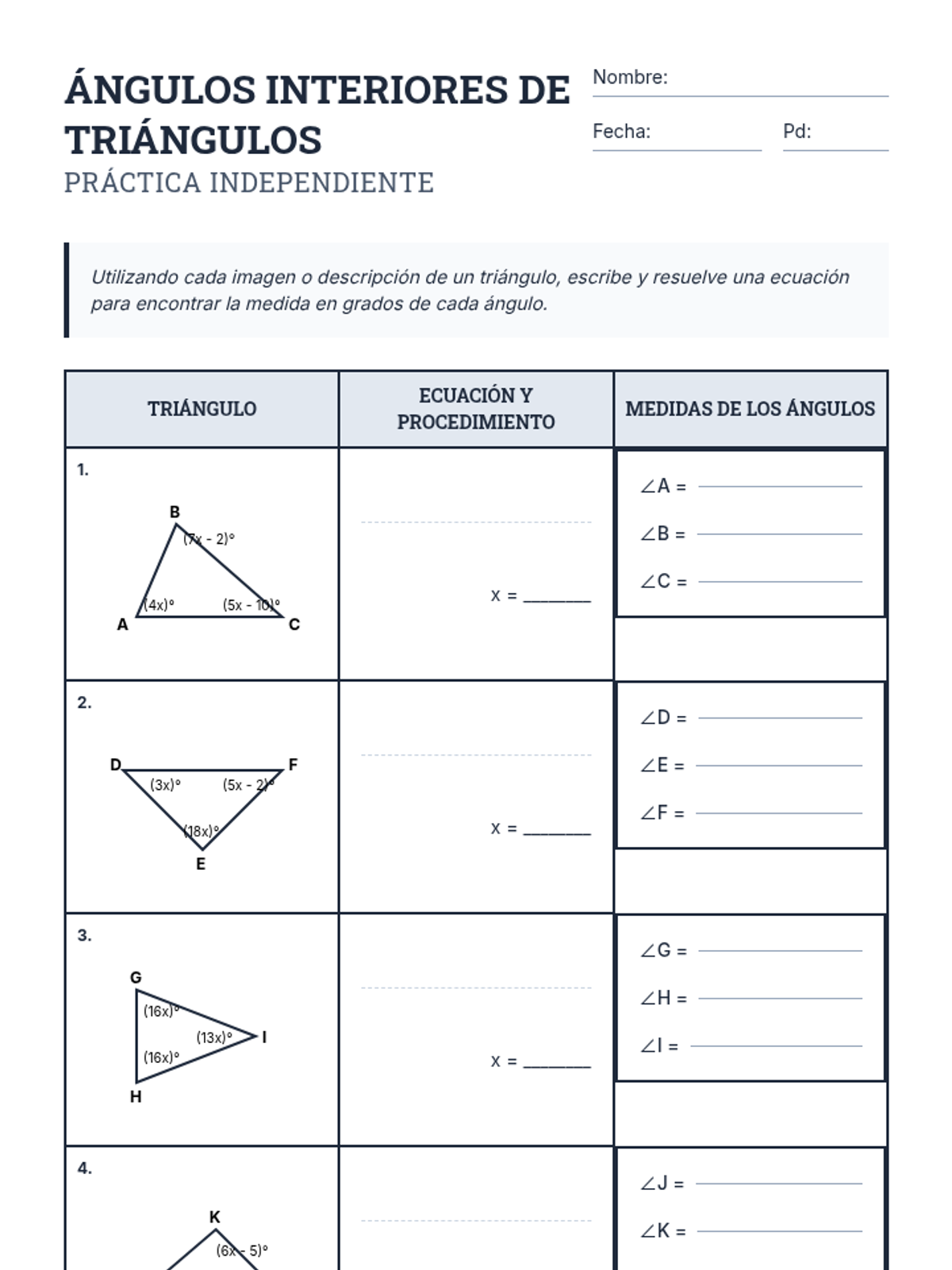
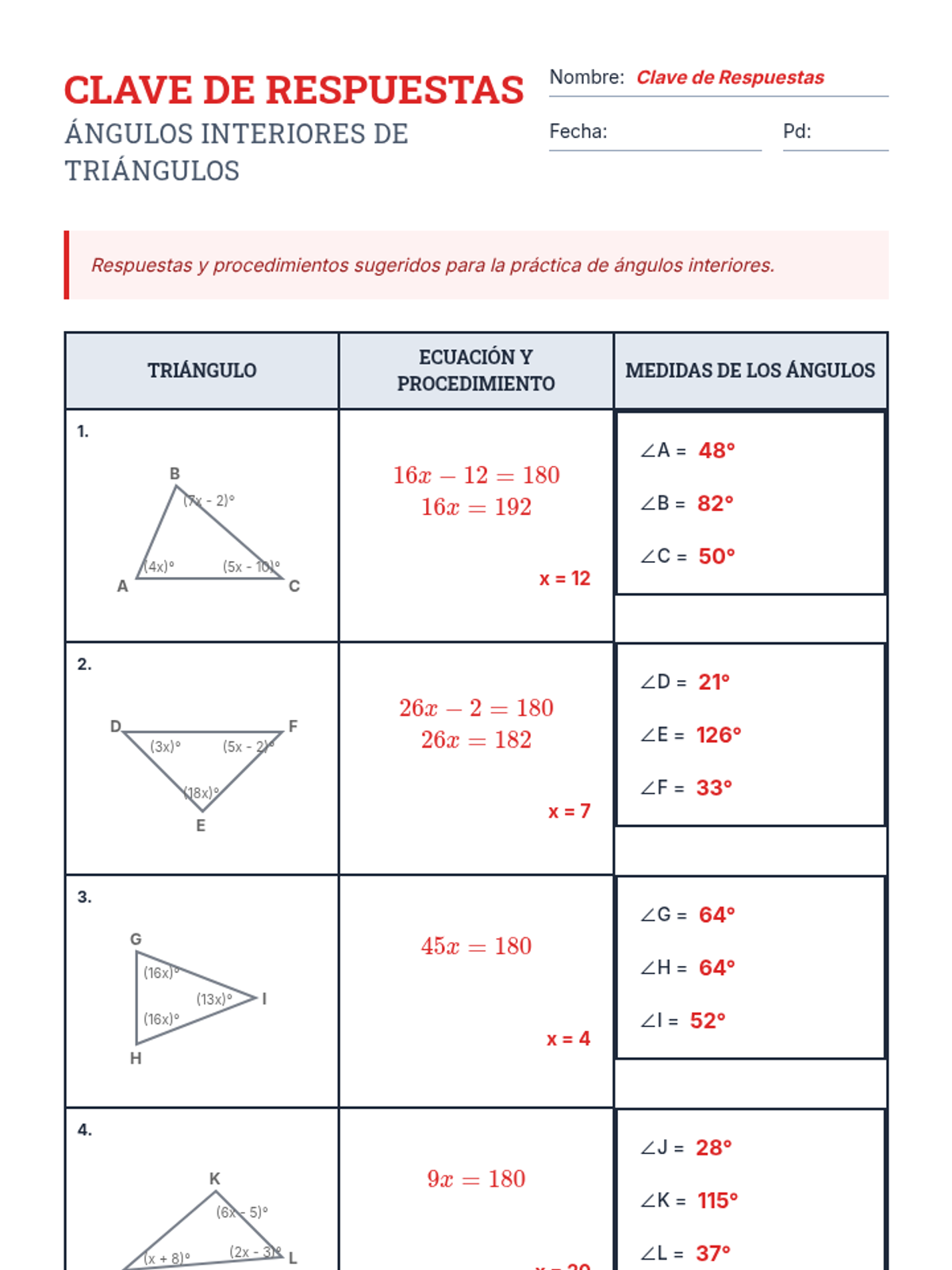
Una lección sobre el cálculo de ángulos interiores de triángulos mediante ecuaciones algebraicas. Incluye práctica independiente y su respectiva clave de respuestas.
A lesson exploring the geometry of bridge trusses, focusing on triangle classification and congruence theorems (SSS, SAS, ASA, AAS, HL).
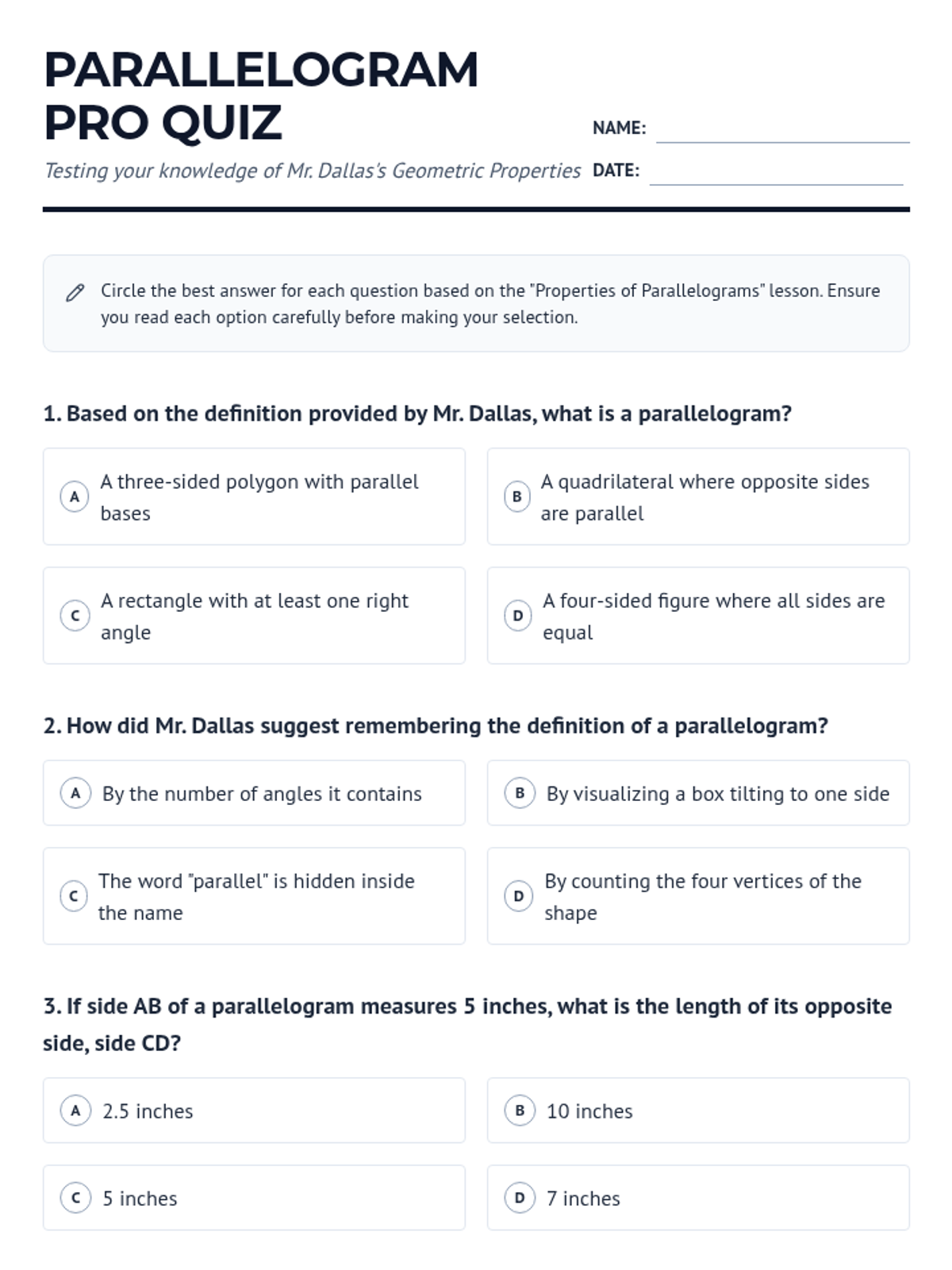
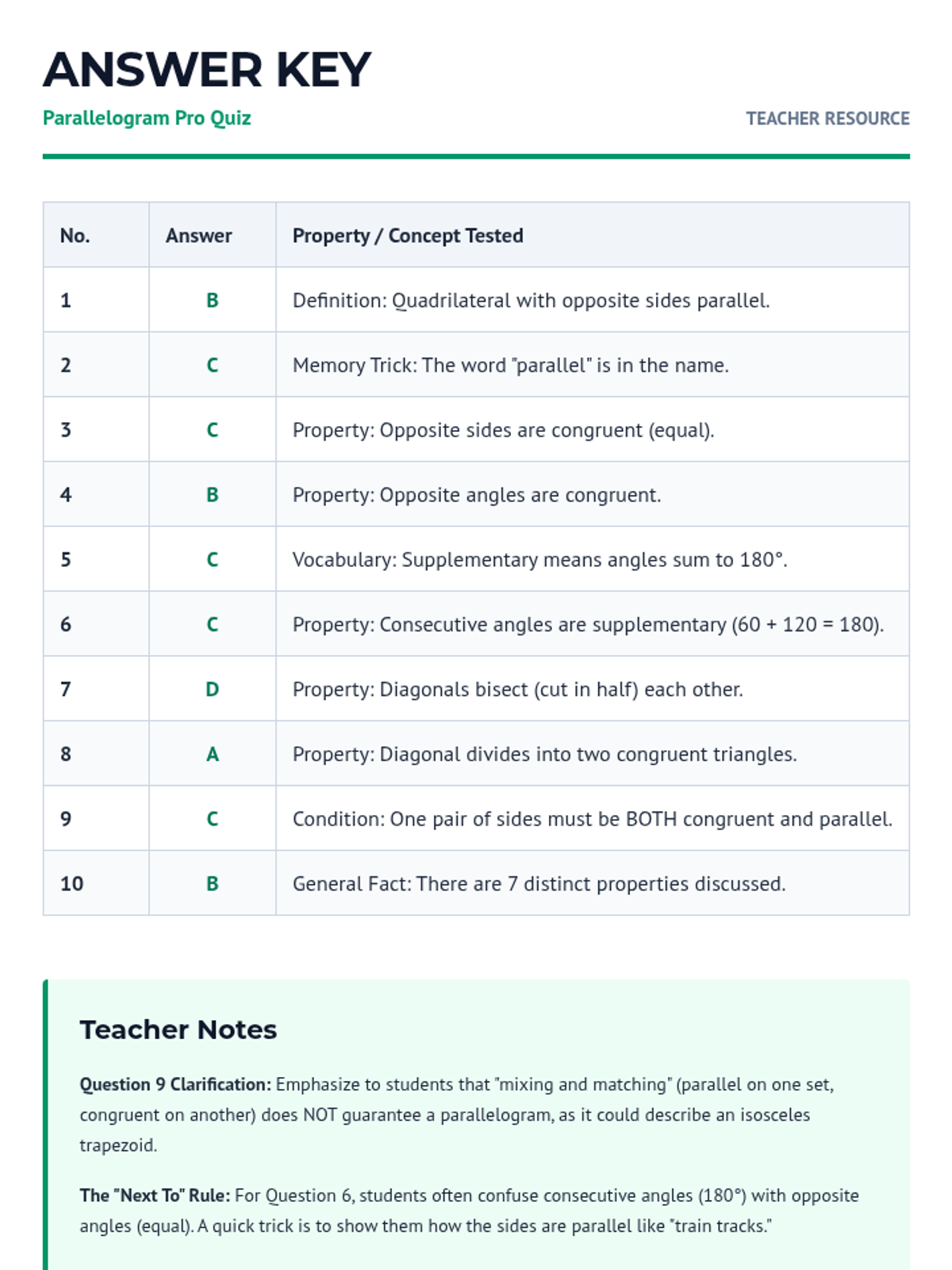
A comprehensive lesson covering the seven fundamental properties of parallelograms, based on the instructional video by Mr. Dallas. Students will learn definitions, congruence, supplementary angles, and diagonal relationships.
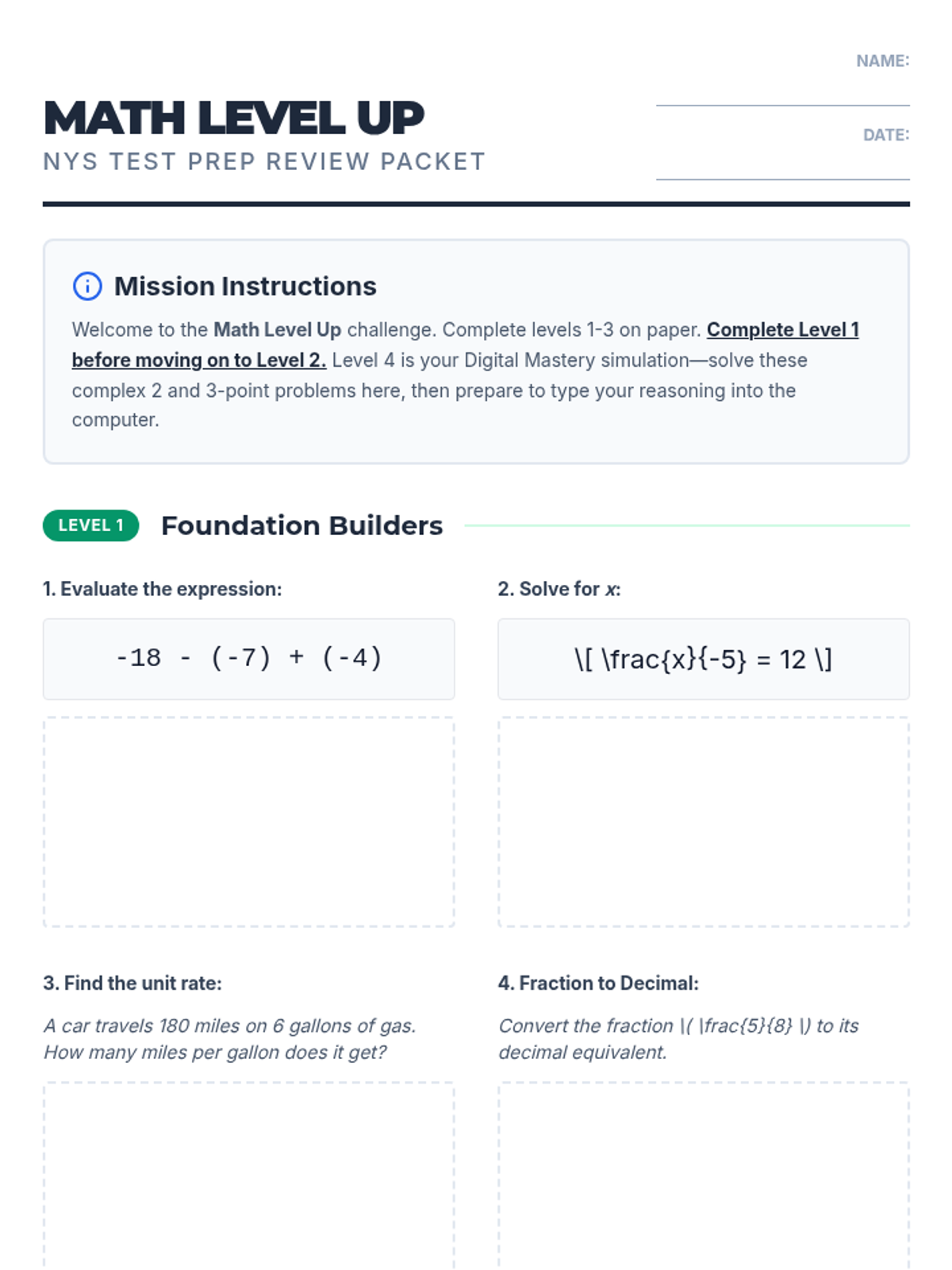
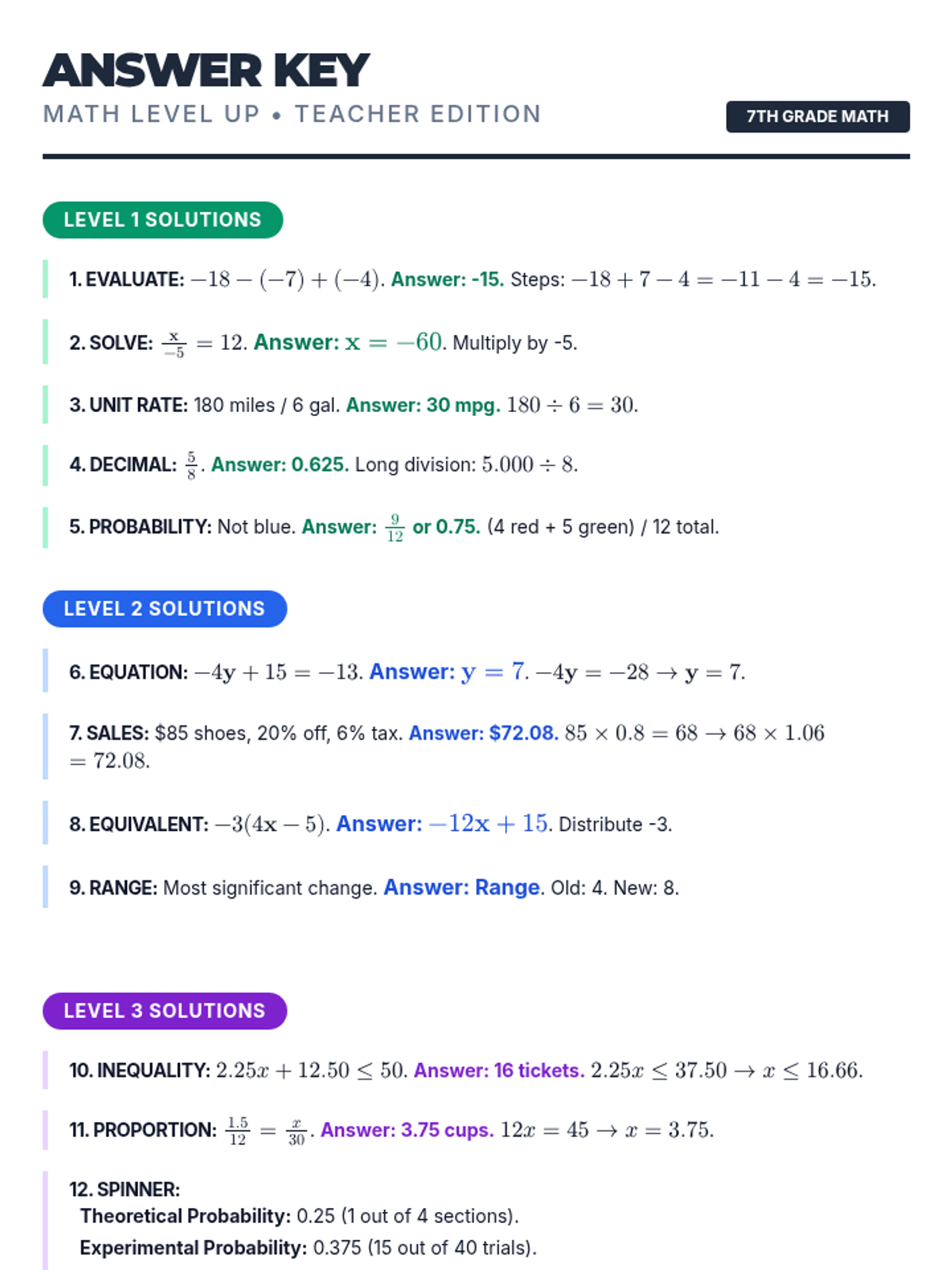
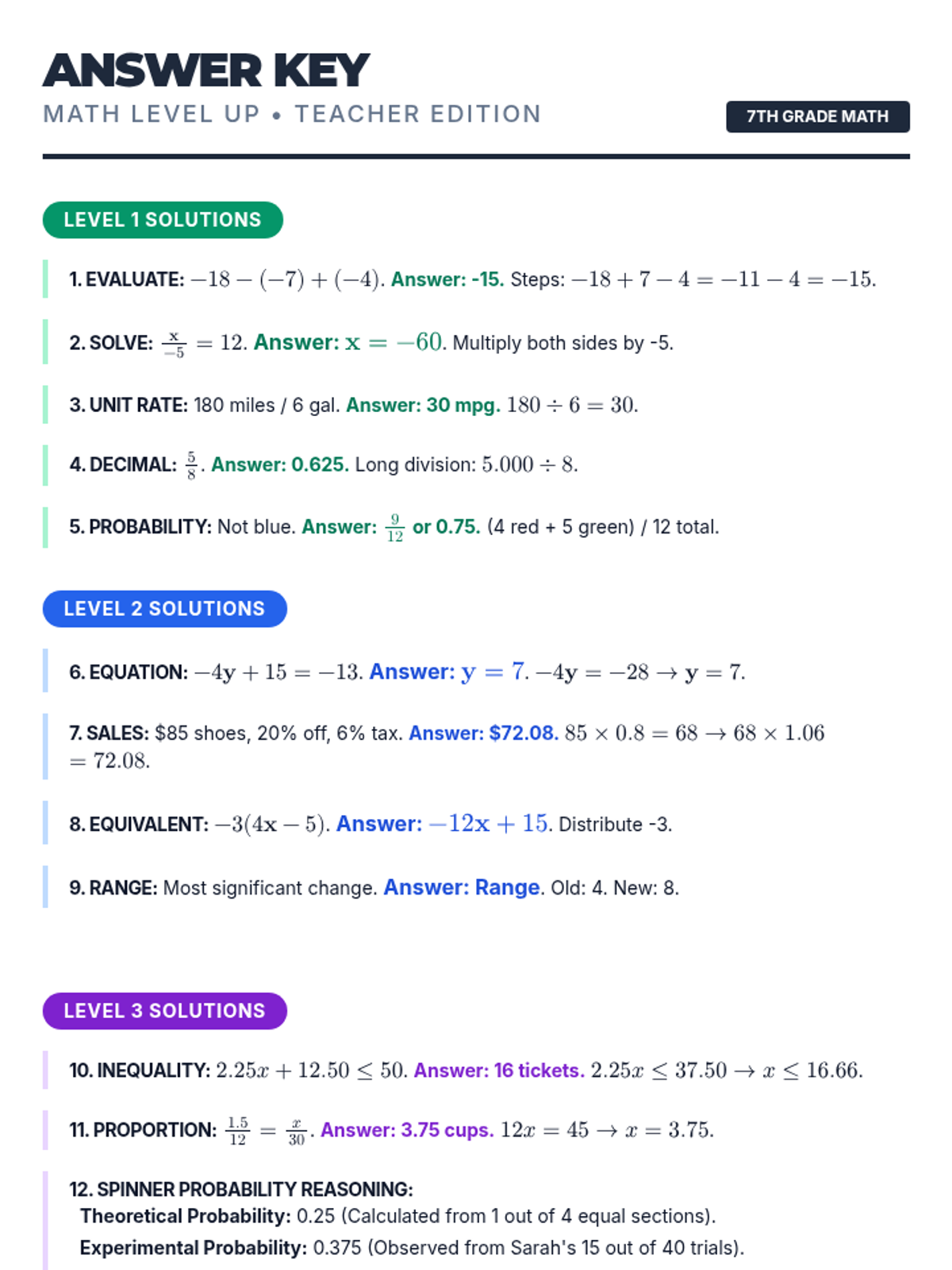
A comprehensive 7th-grade math review packet designed for NYS test prep, featuring tiered difficulty levels (Level 1-3) to build student confidence and mastery in key CCSS domains.
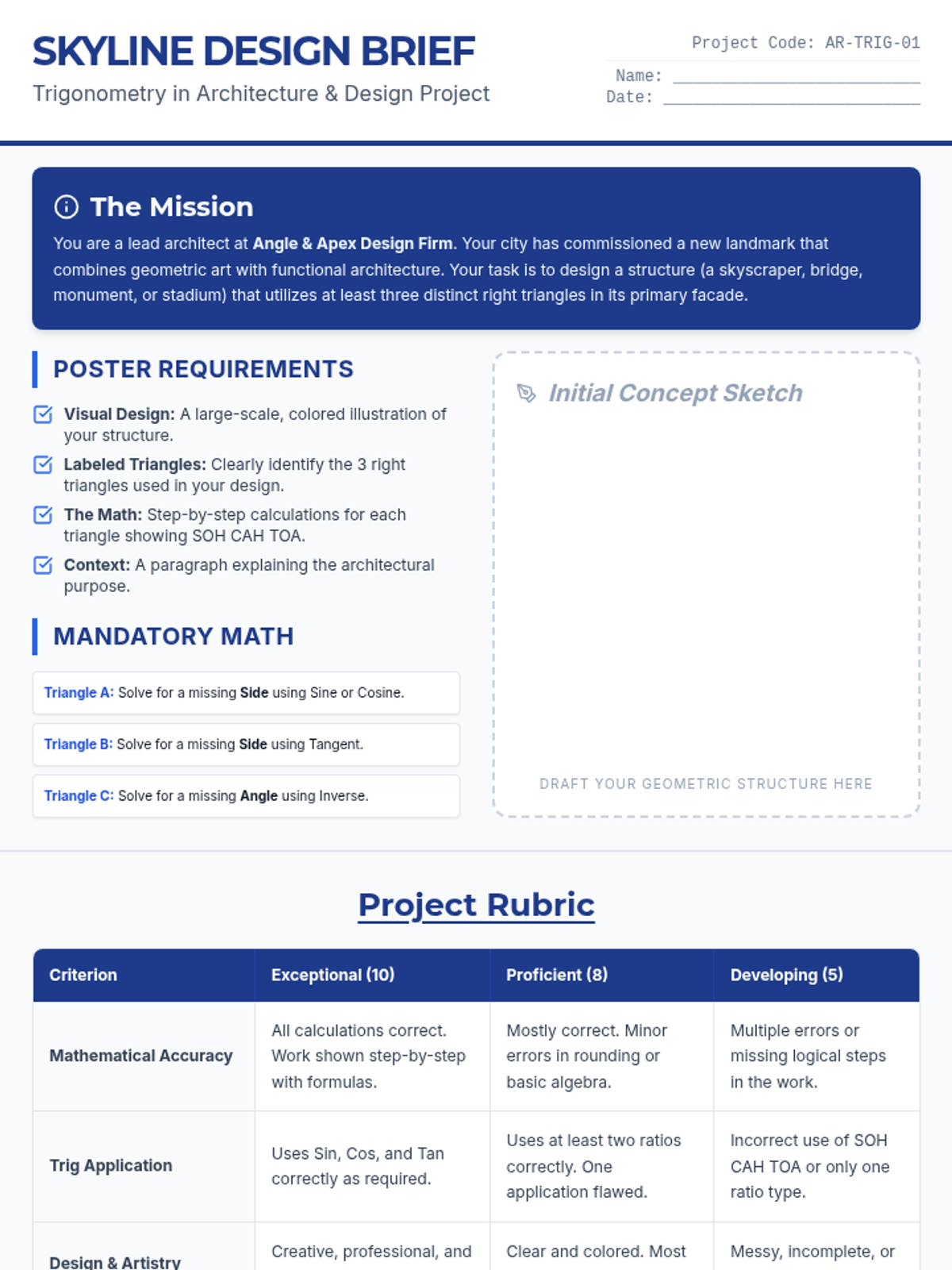
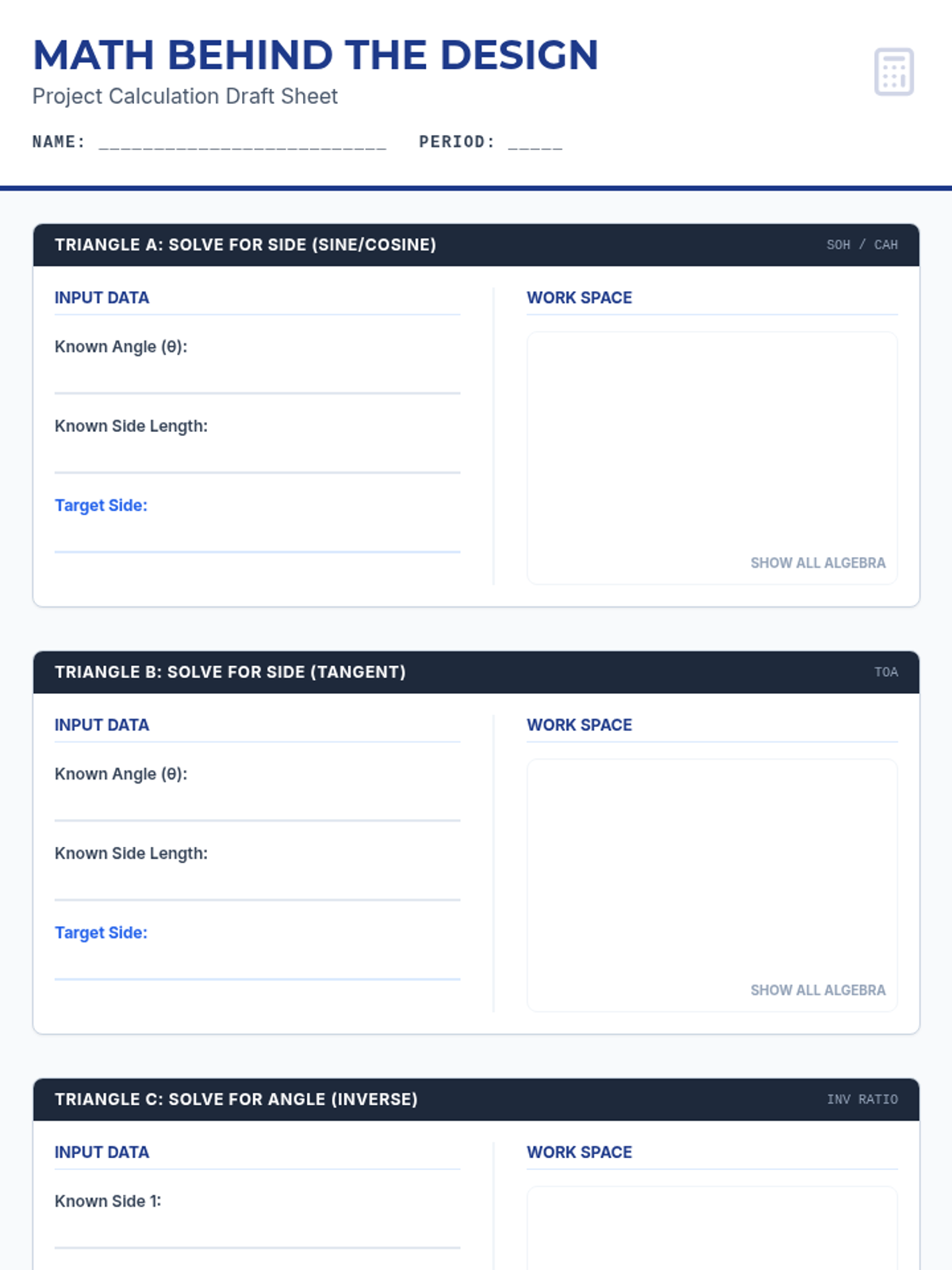
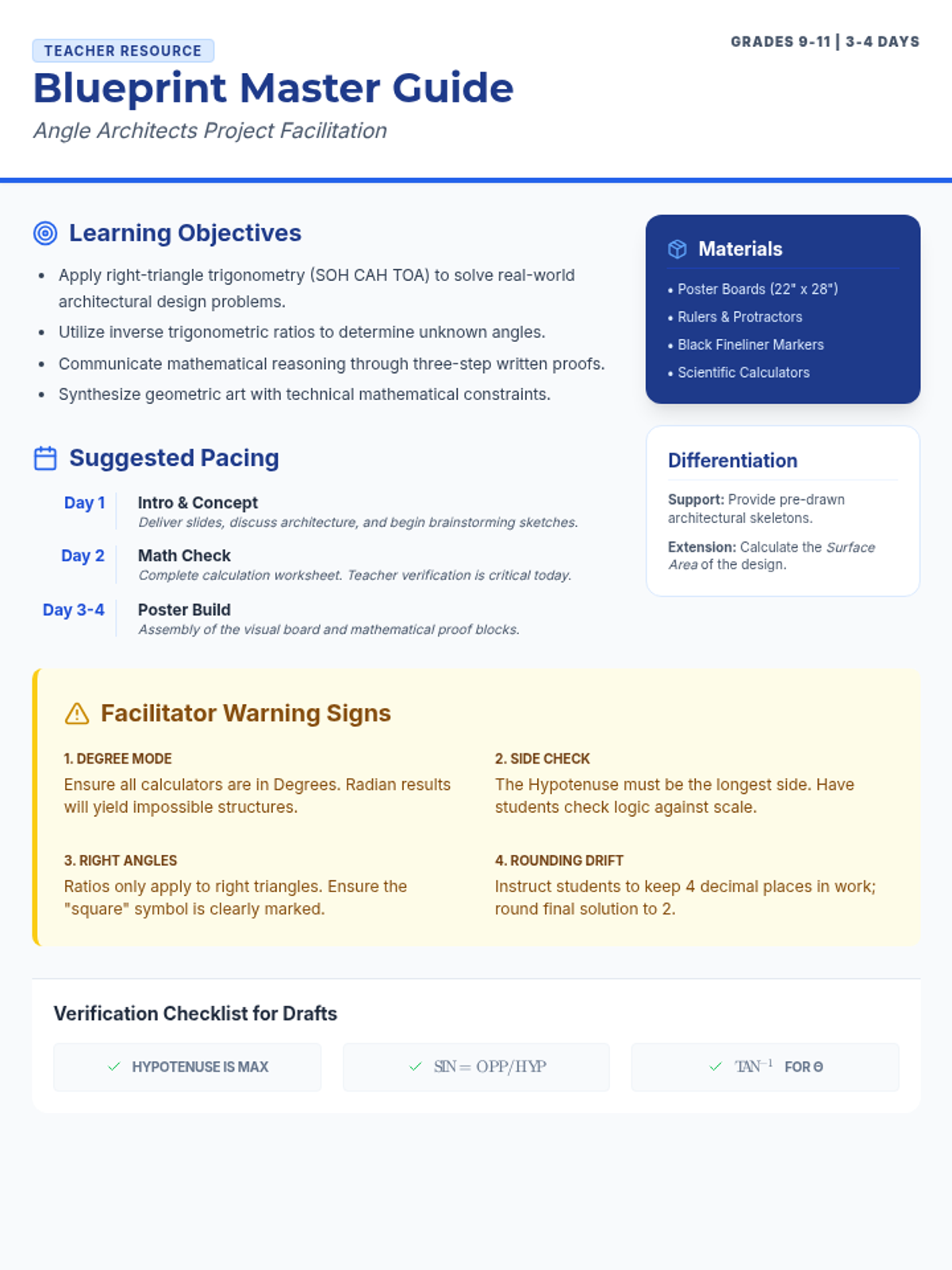
A hands-on project where students apply right triangle trigonometry to design a piece of modern architecture or geometric art, culminating in a detailed calculation poster.
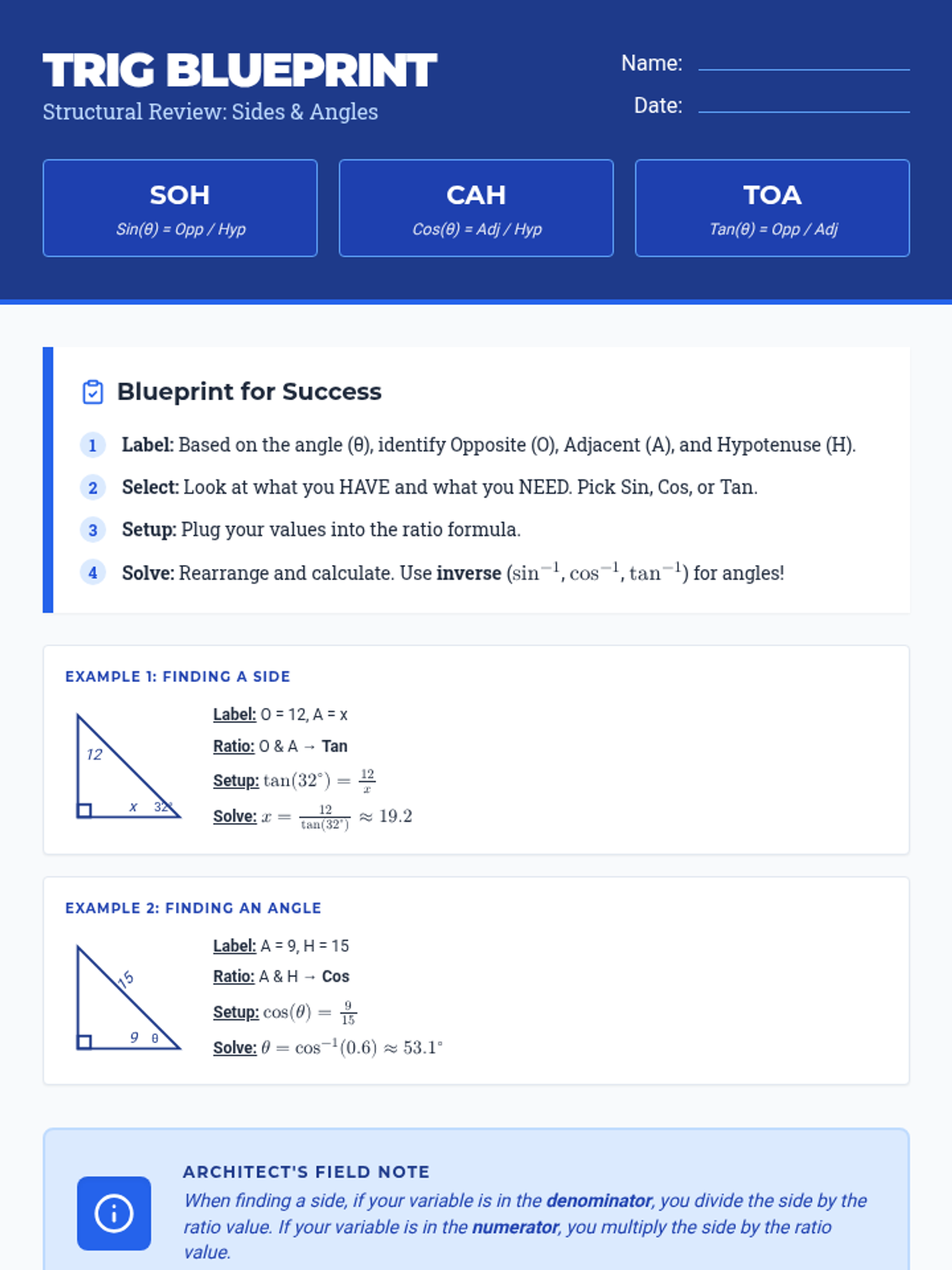
A comprehensive review of basic trigonometry (sine, cosine, tangent) for finding missing sides and angles, featuring a step-by-step checklist and worked examples.
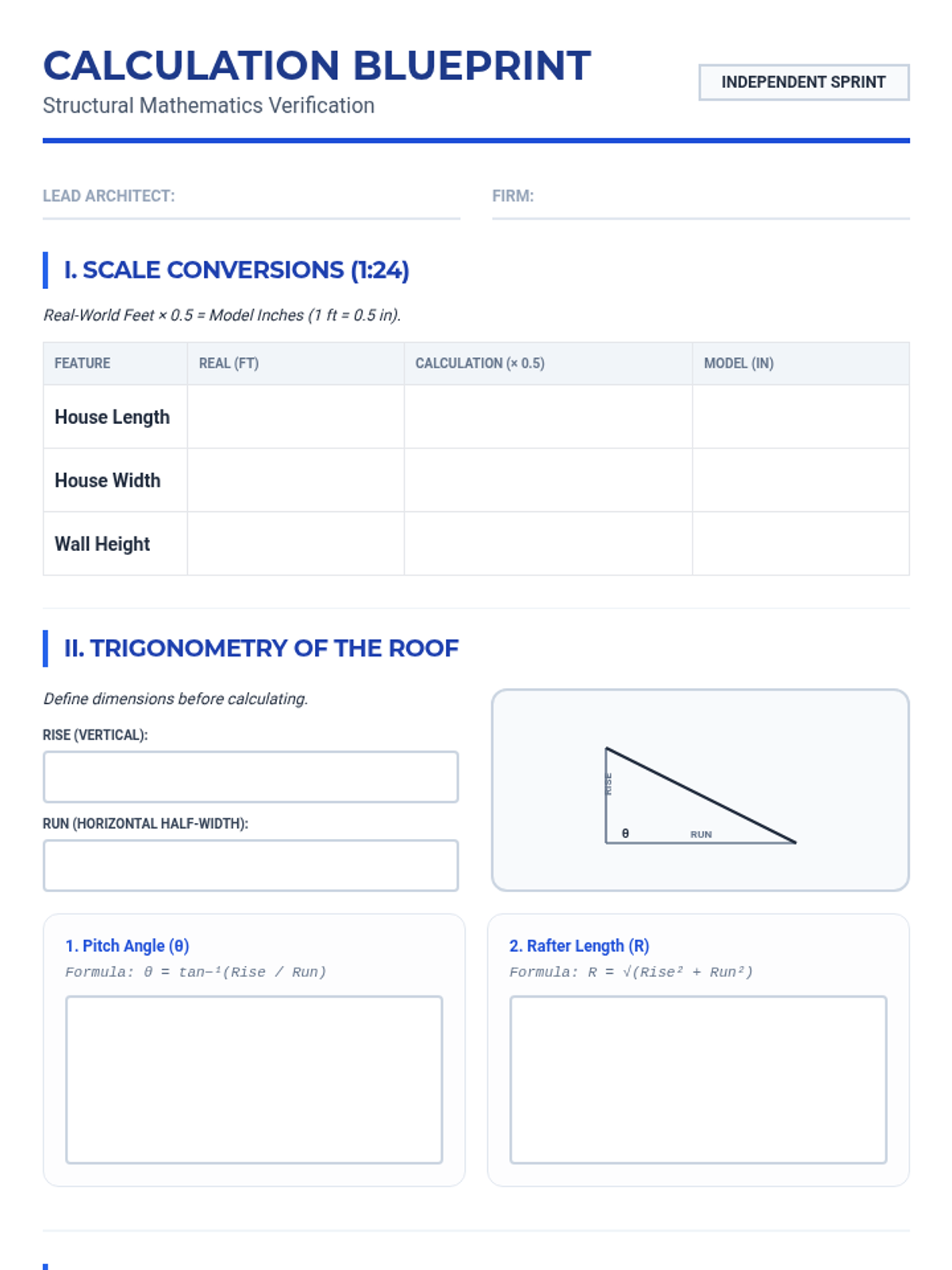
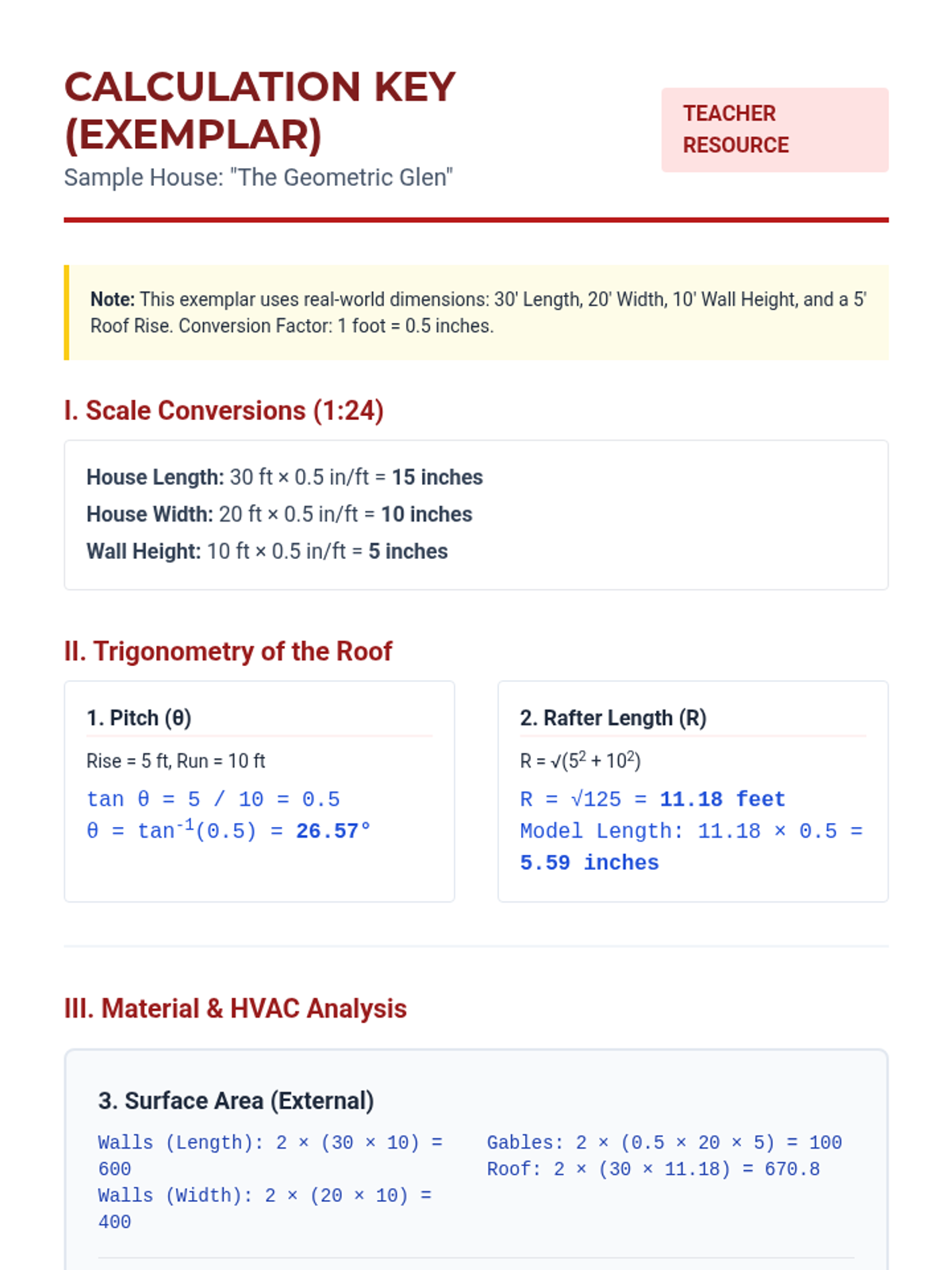
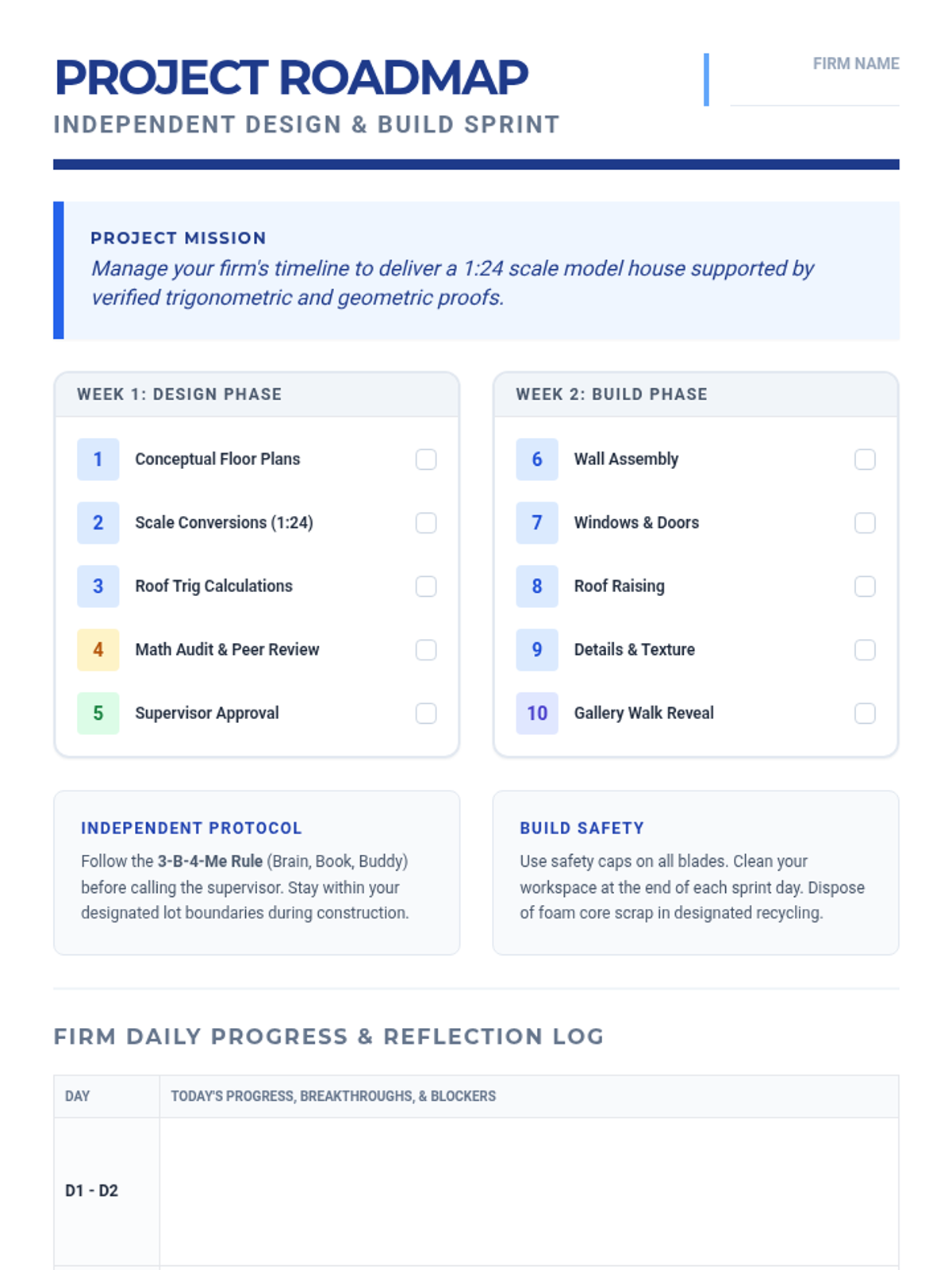
The core instructional and project-based unit where students transition from architectural theory to a physical model, focusing on the mathematical precision required for construction.
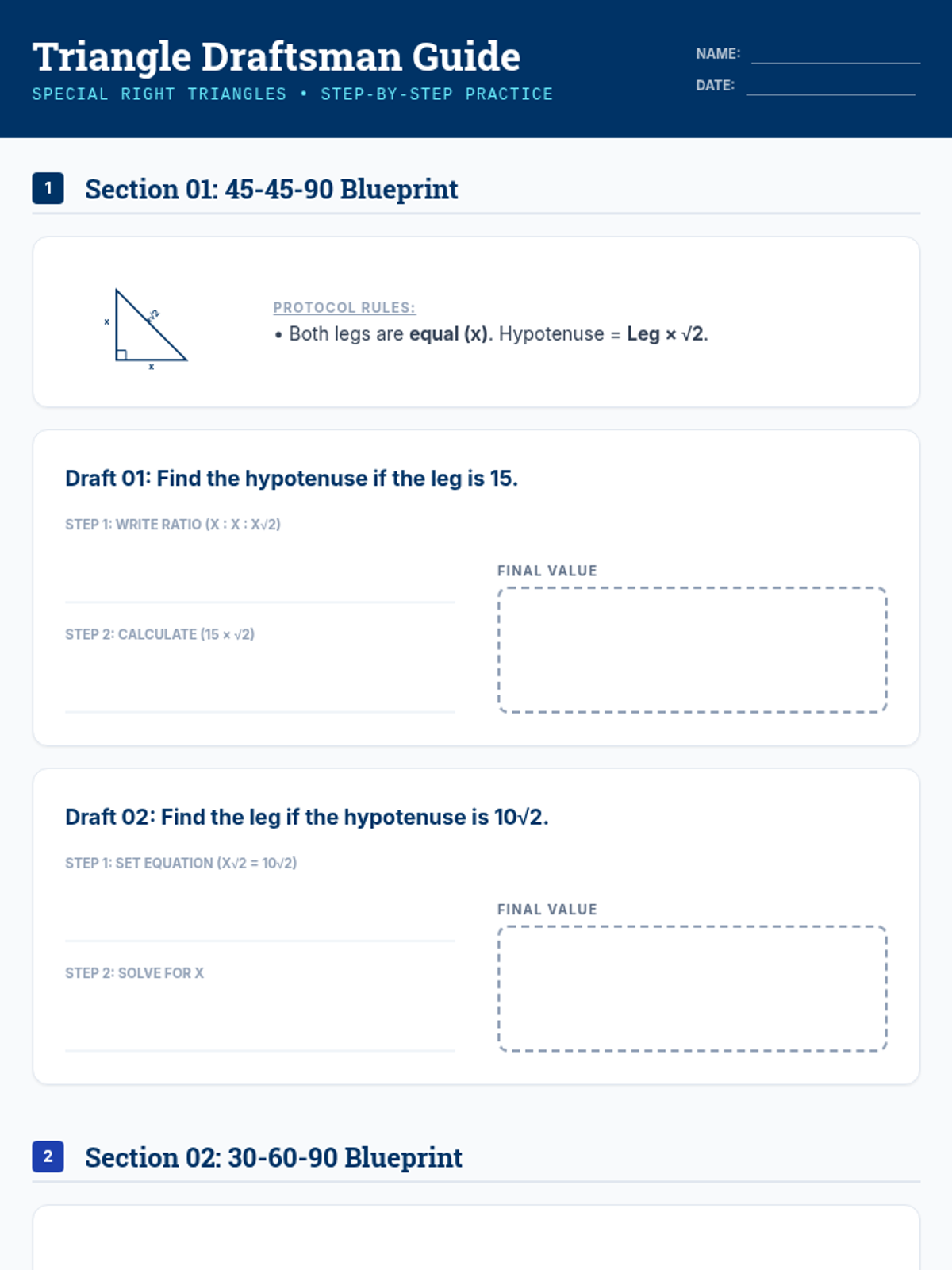
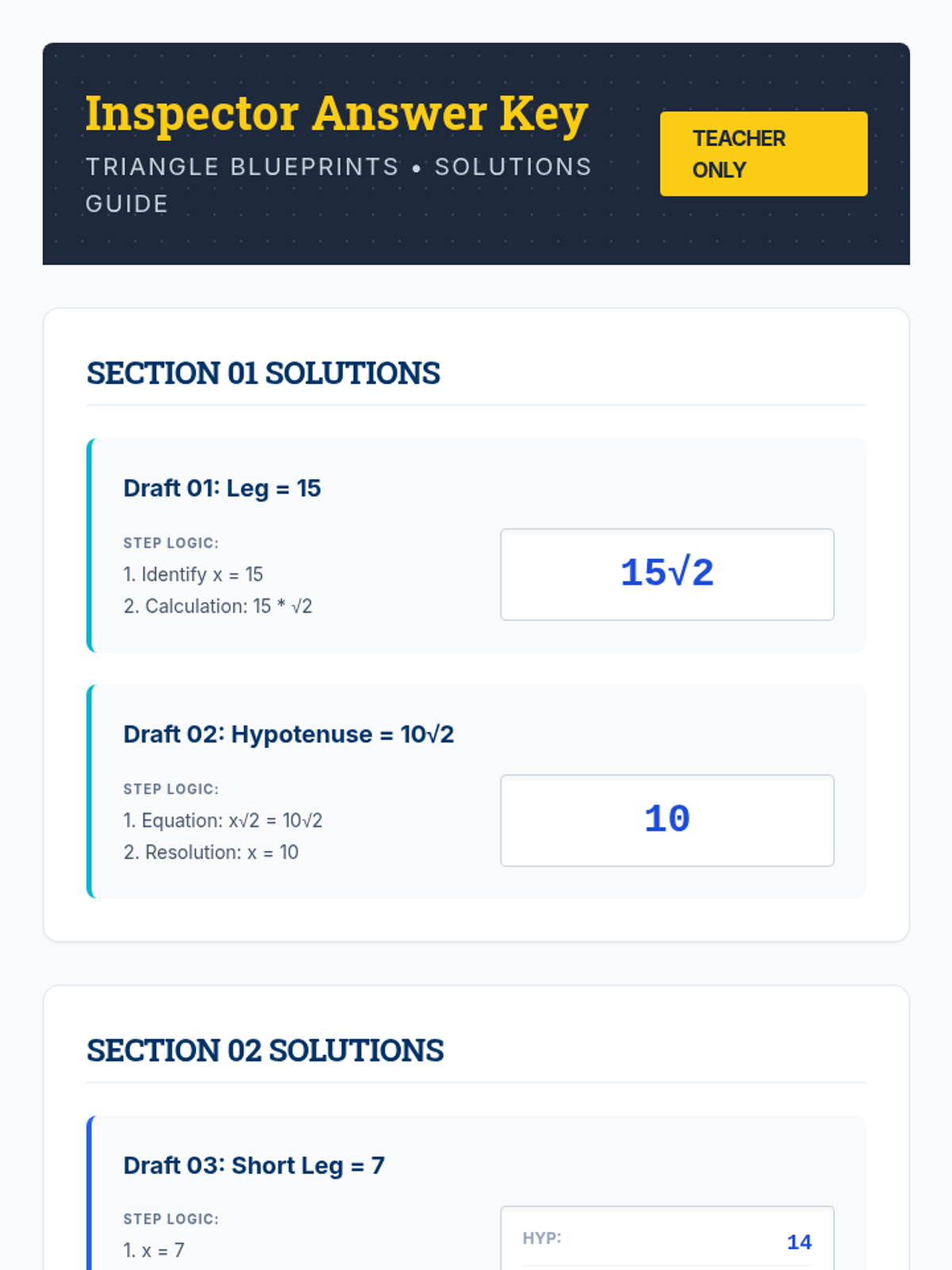
A comprehensive lesson introducing 45-45-90 and 30-60-90 triangles through the lens of architectural drafting and technical blueprints.
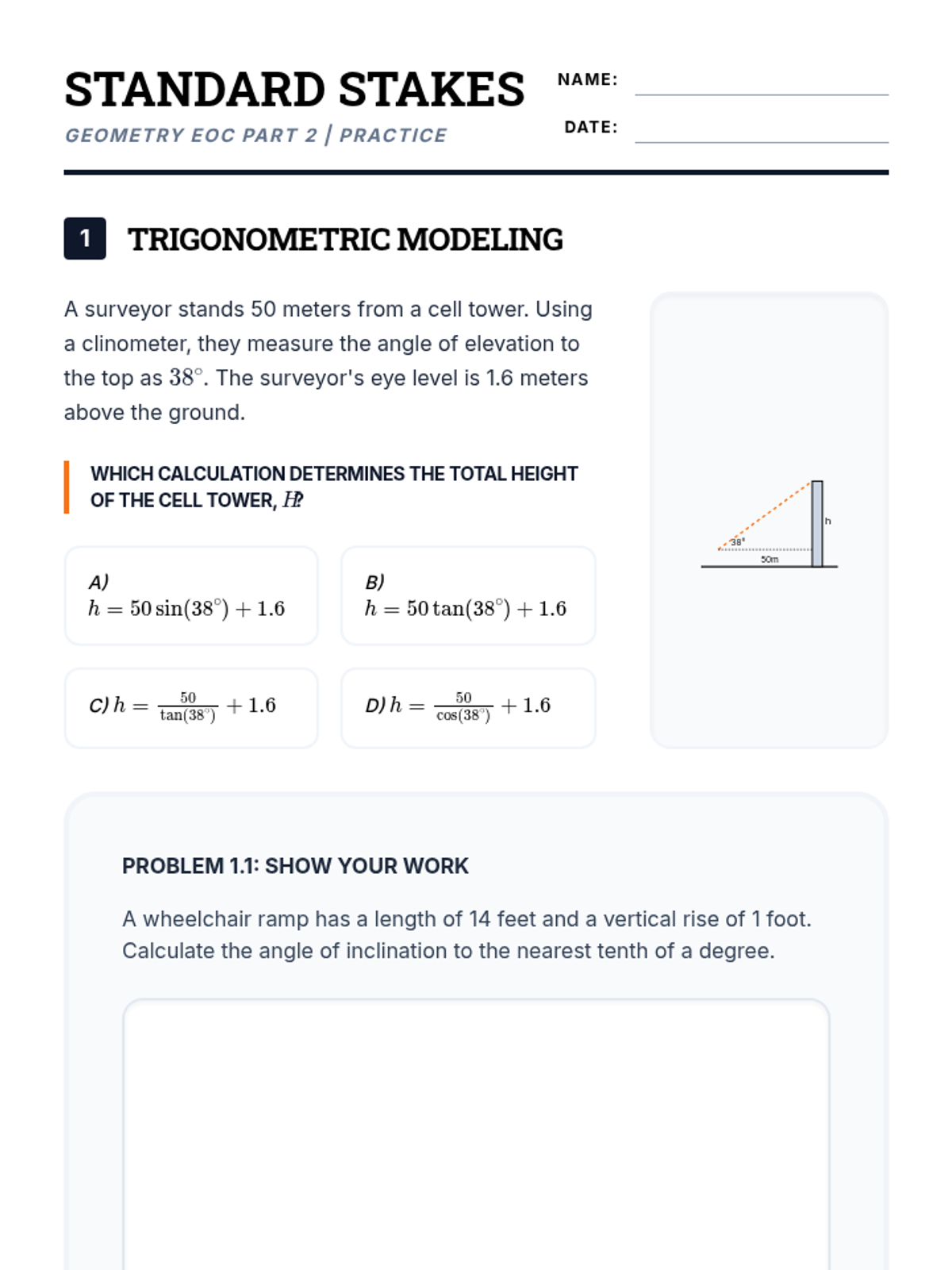
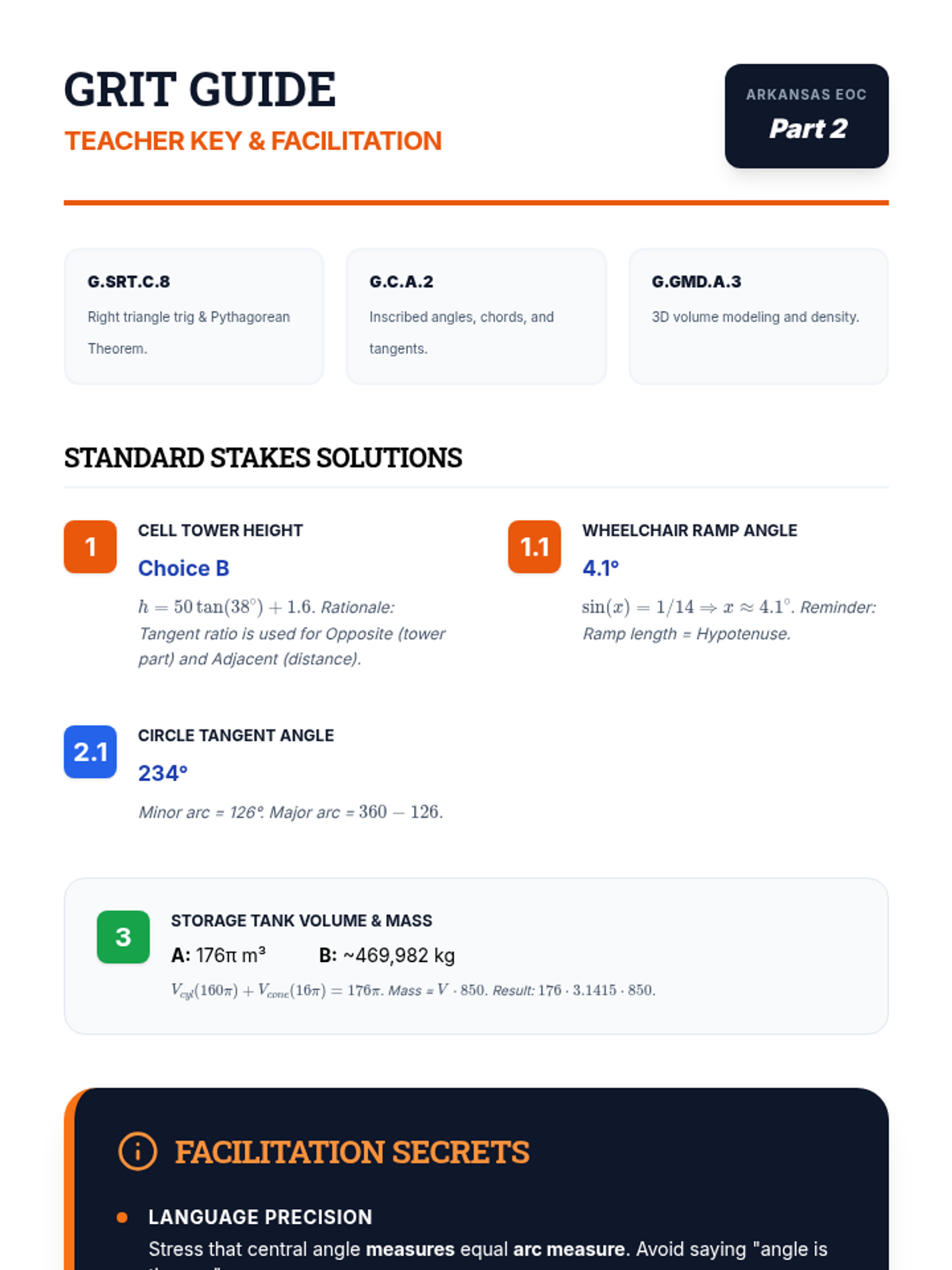
A high-intensity EOC prep lesson for Arkansas Geometry standards, focusing on trigonometry, circle properties, and 3D geometry through diagram-heavy practice.
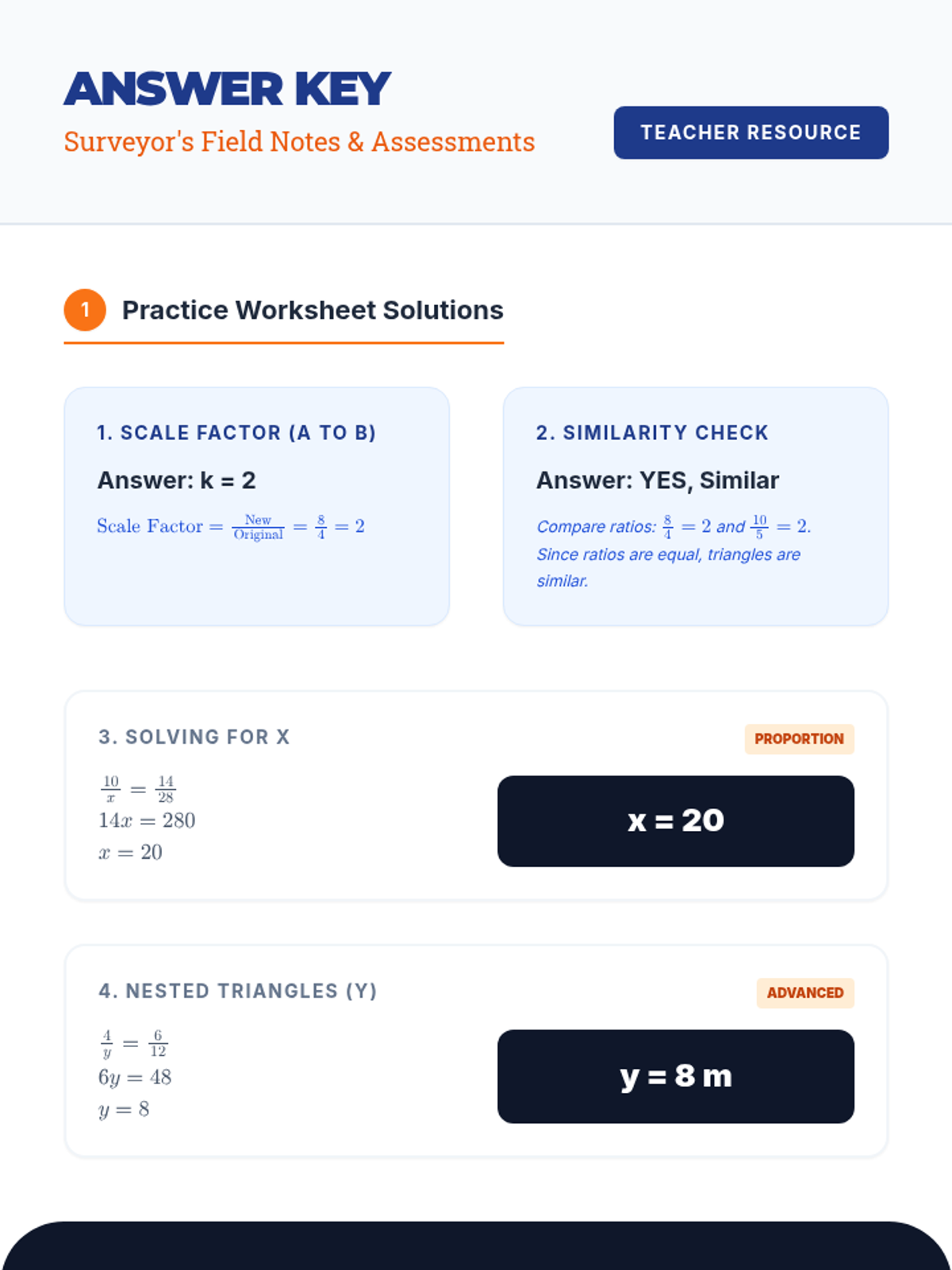
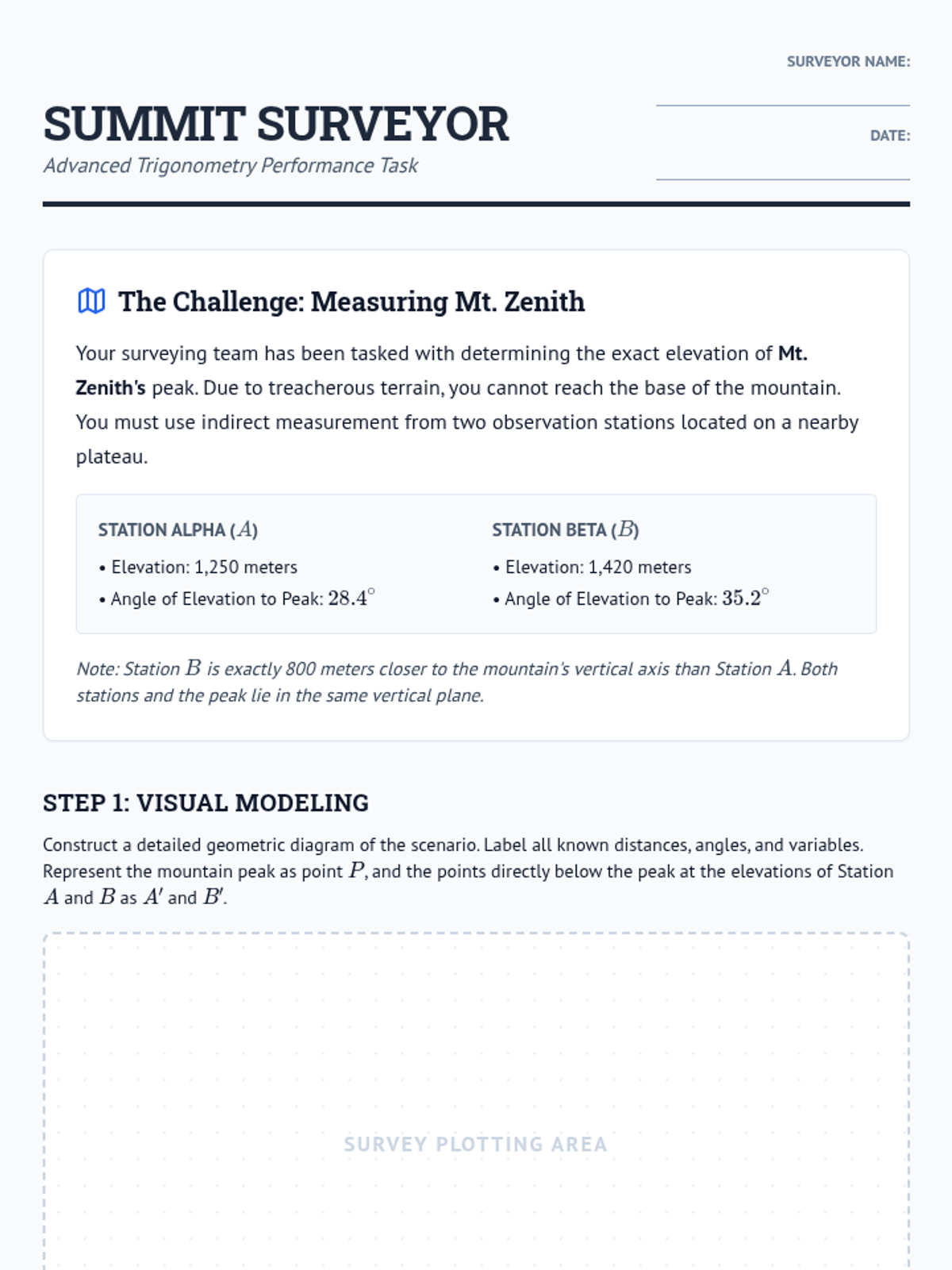
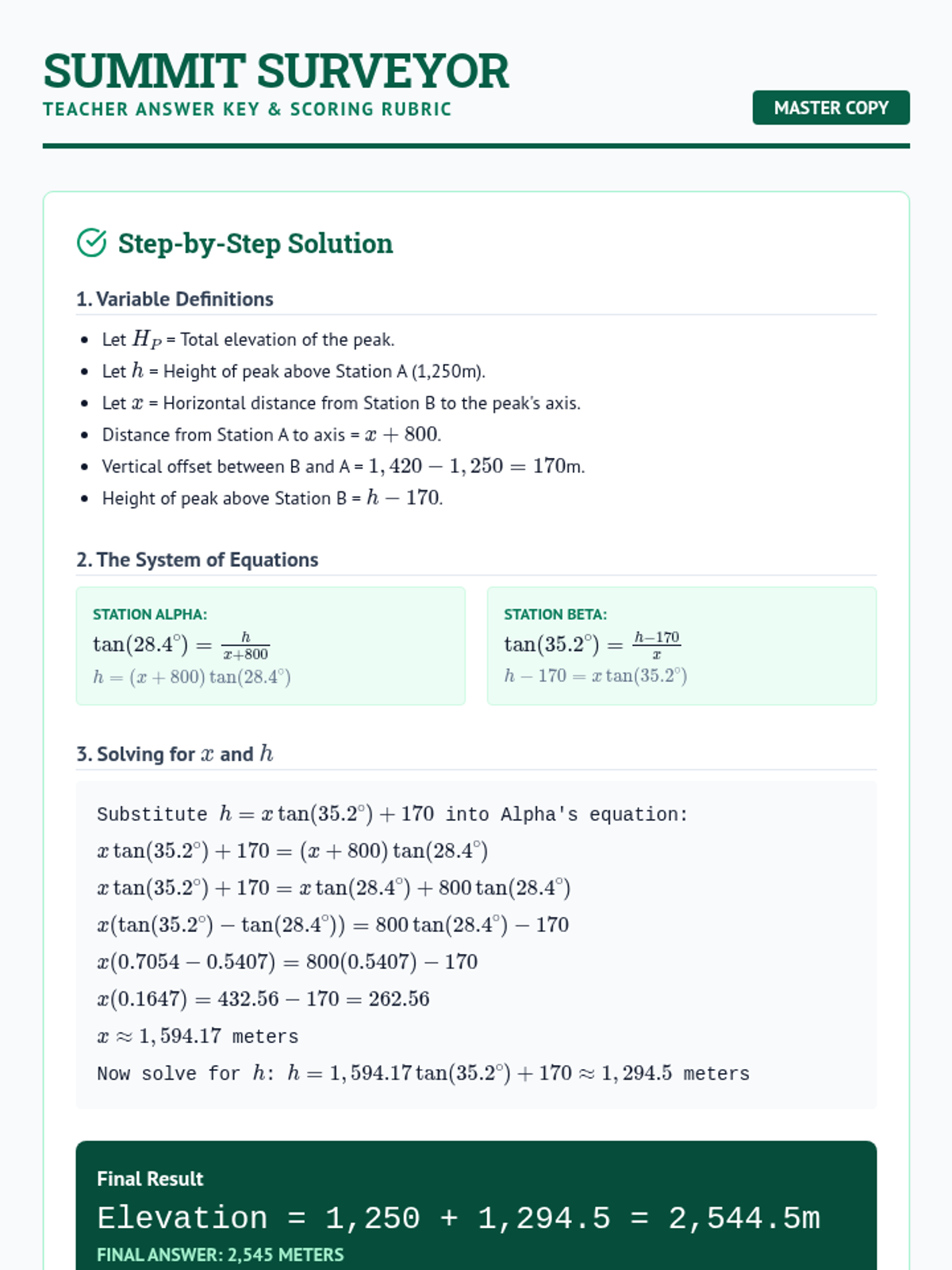
A high-level performance task involving nested right triangles and surveying applications to challenge advanced geometry students.
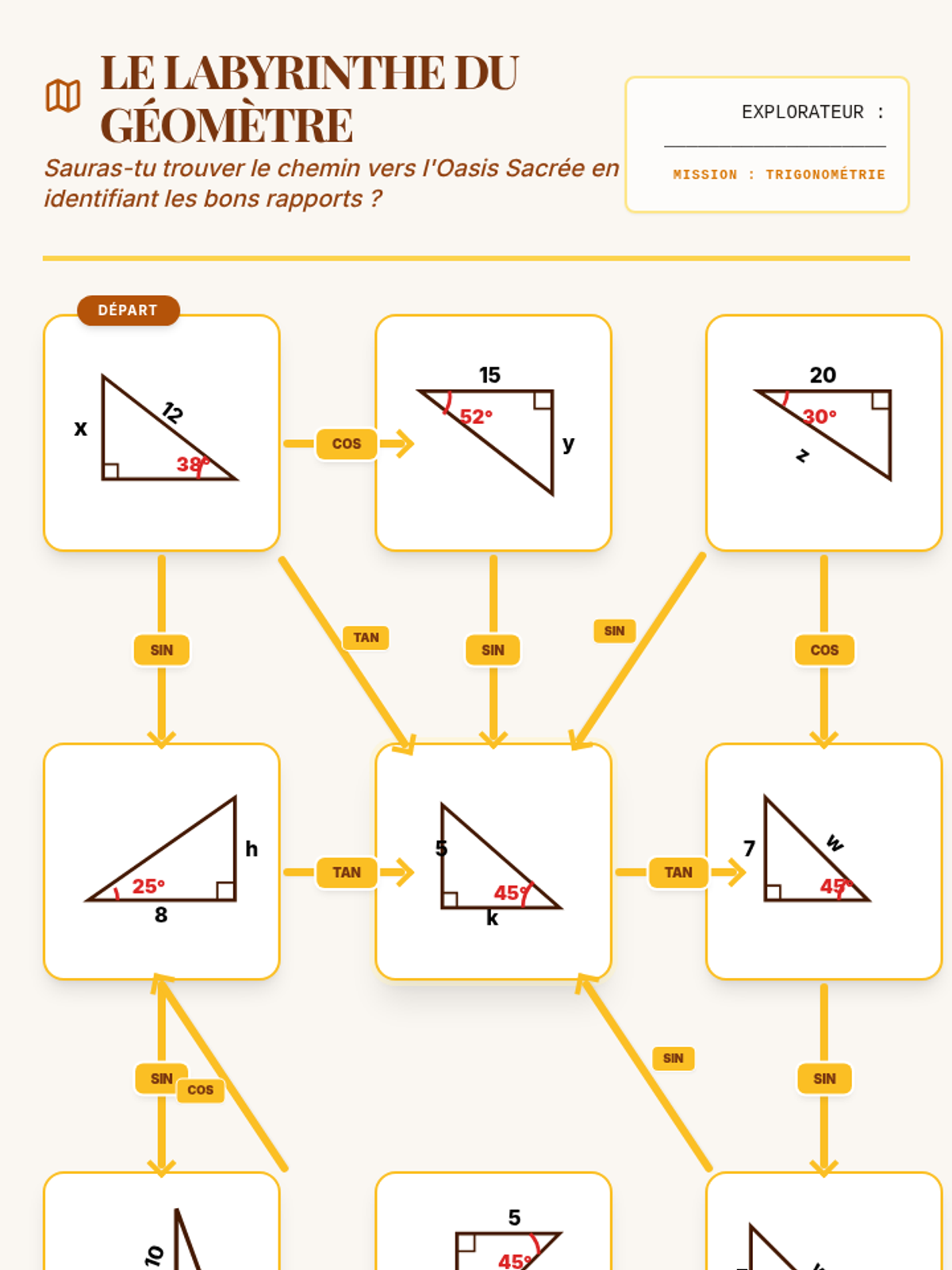
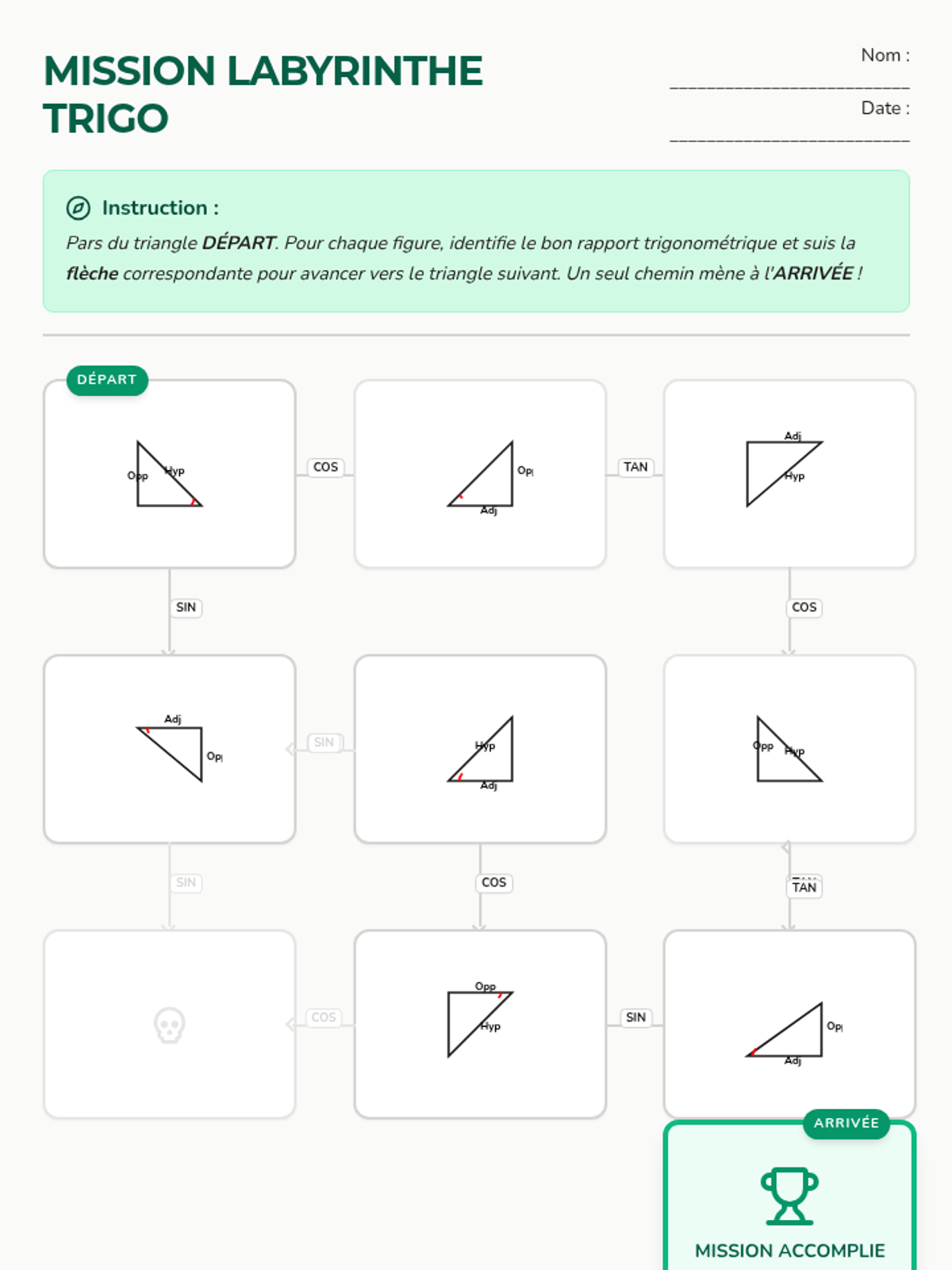
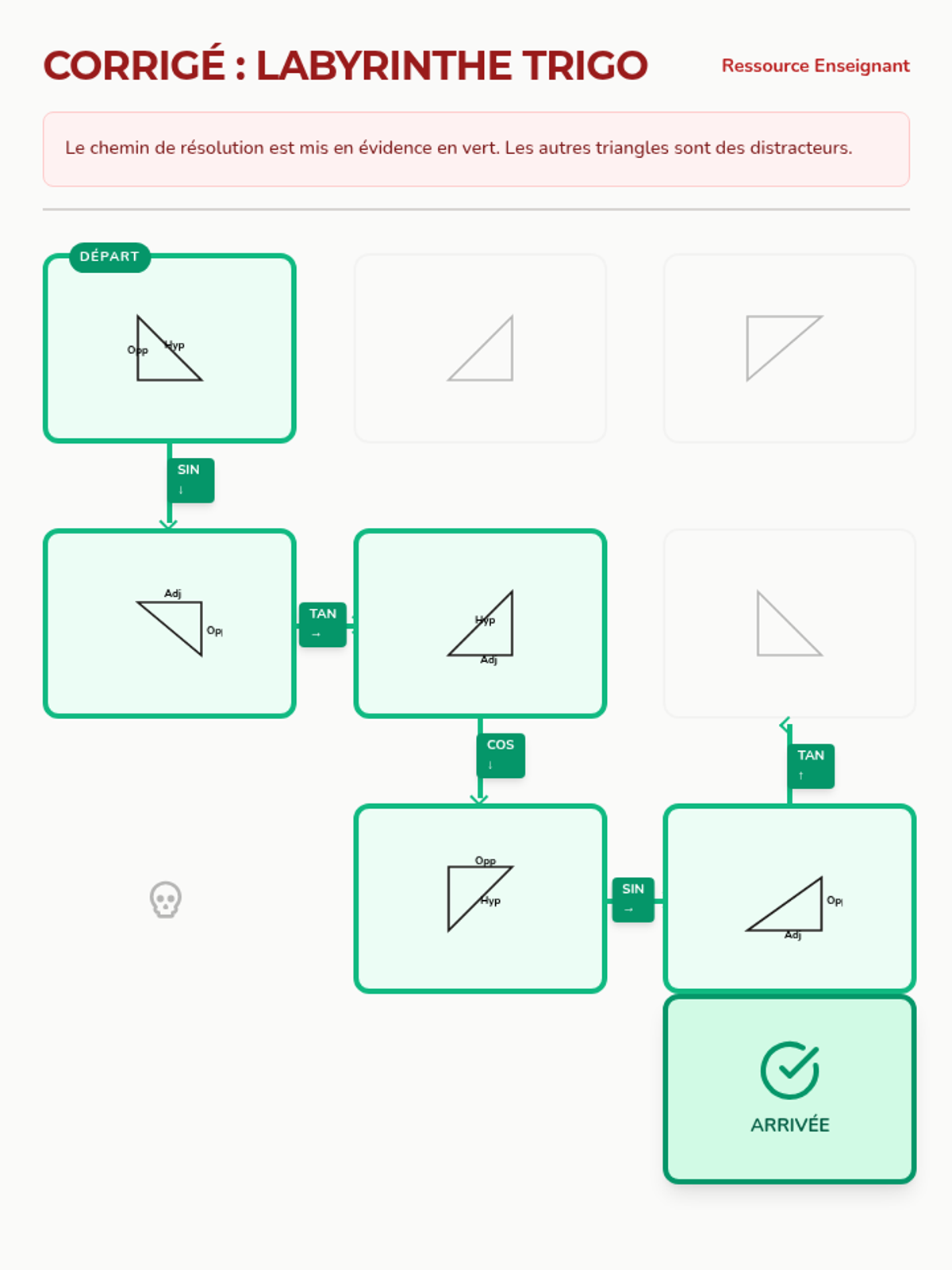
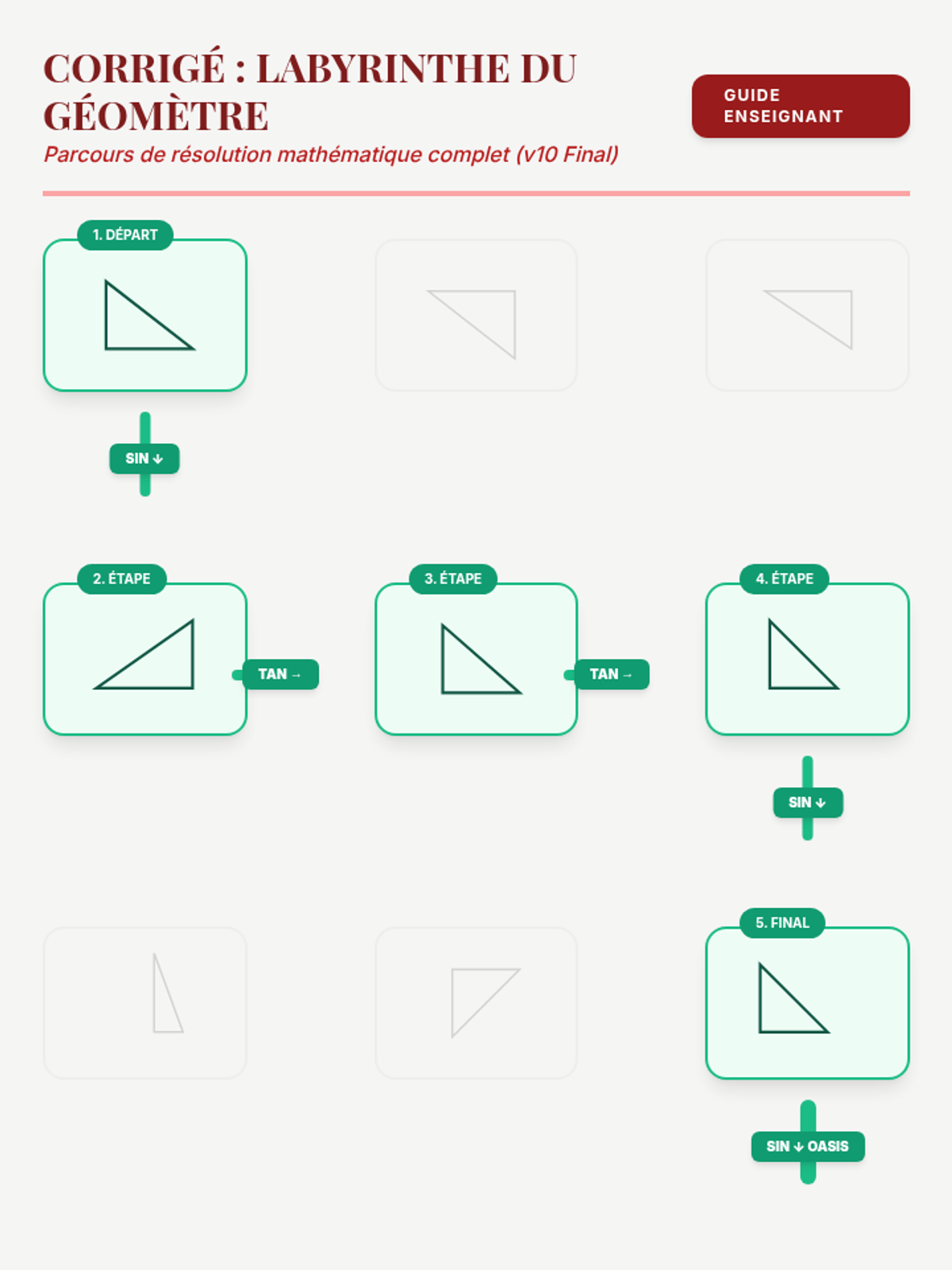
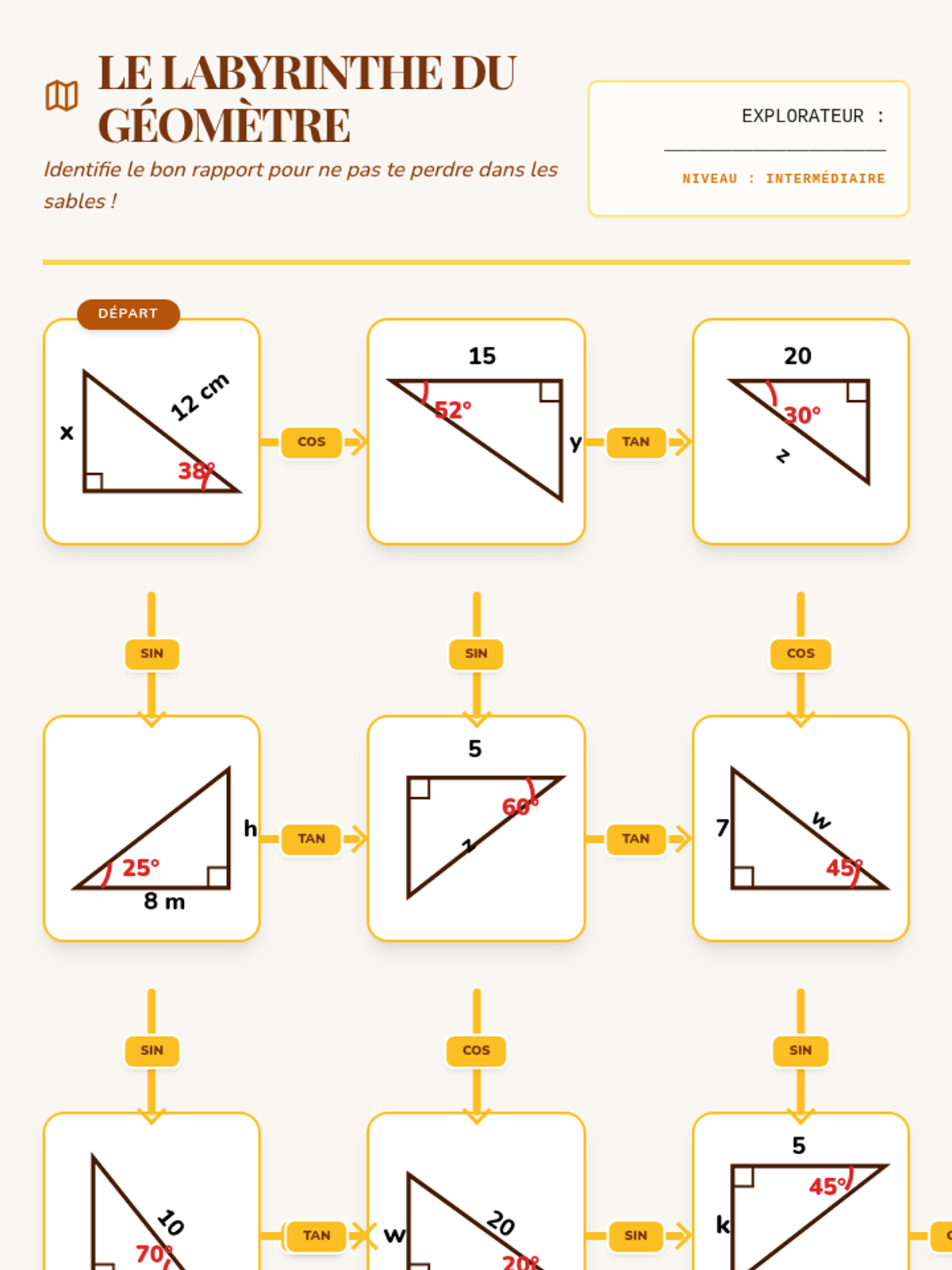
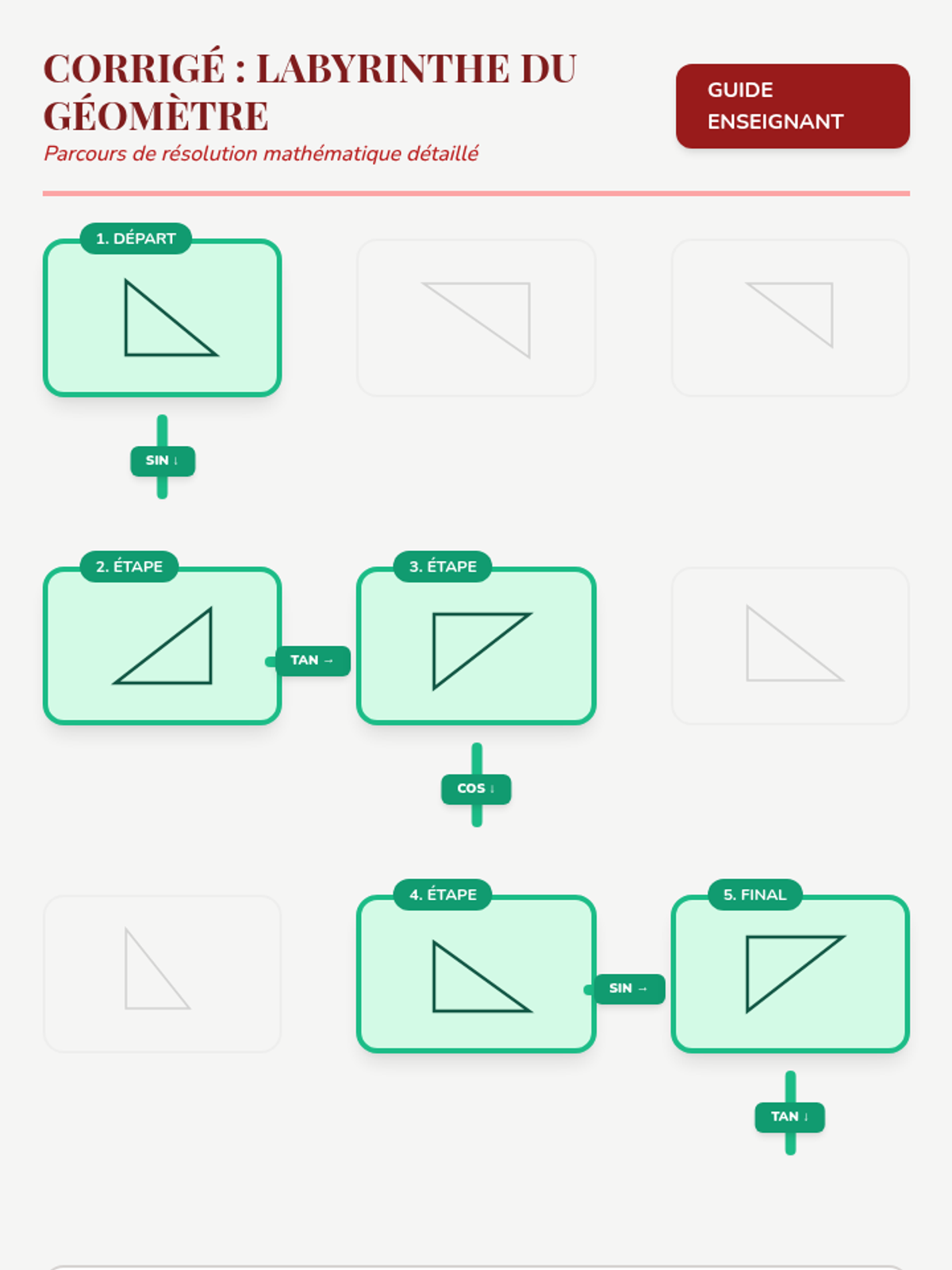
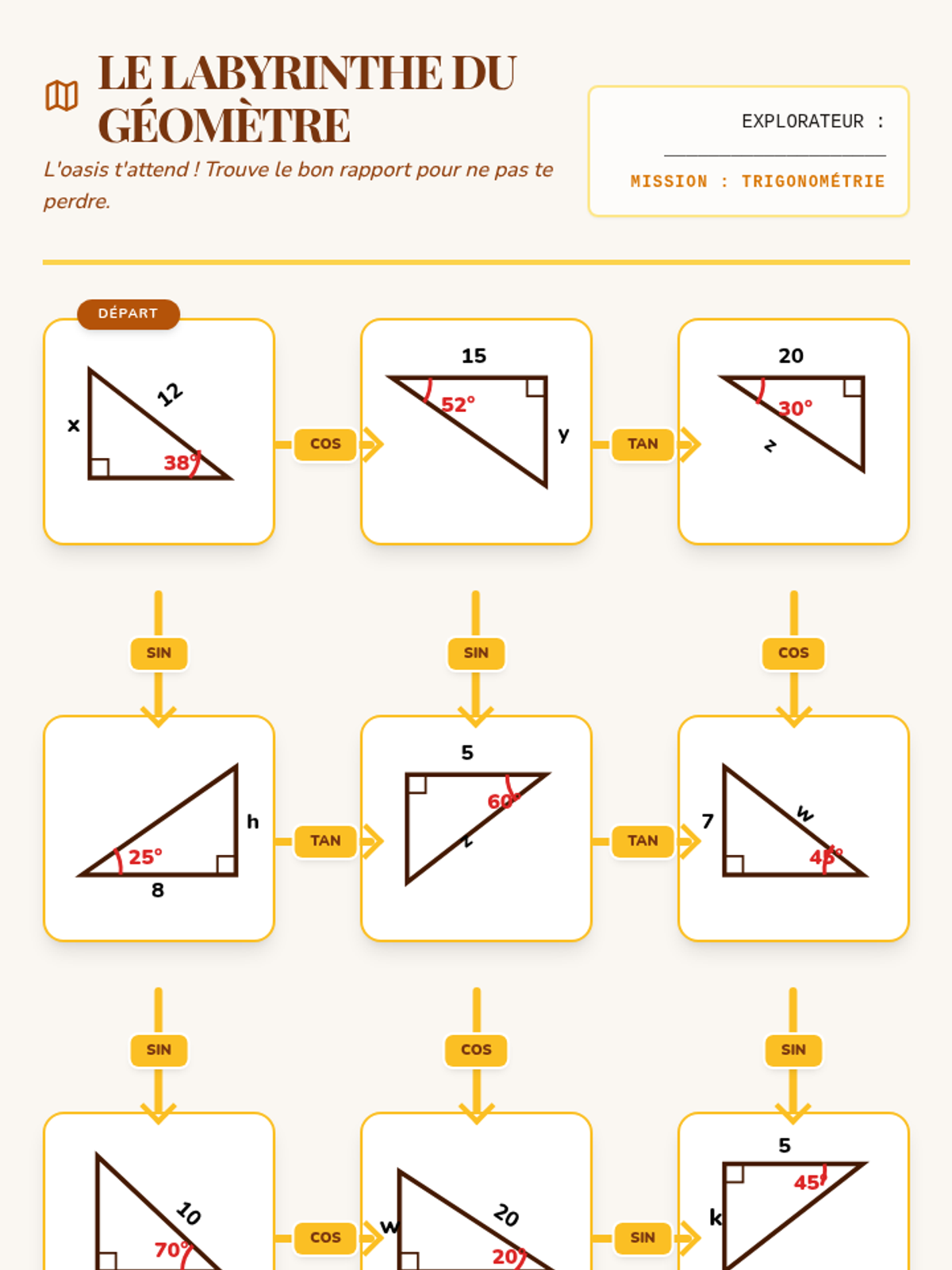
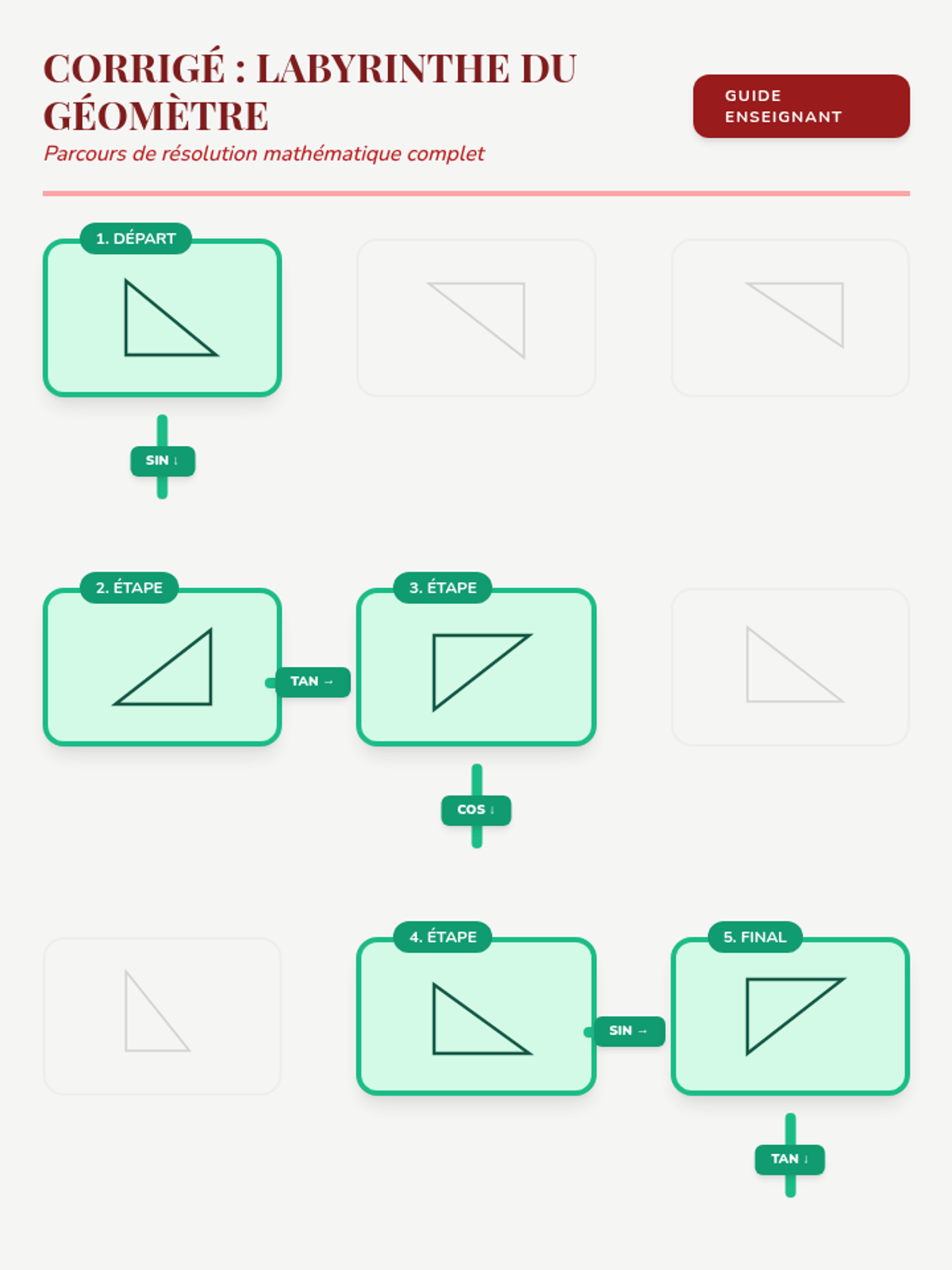
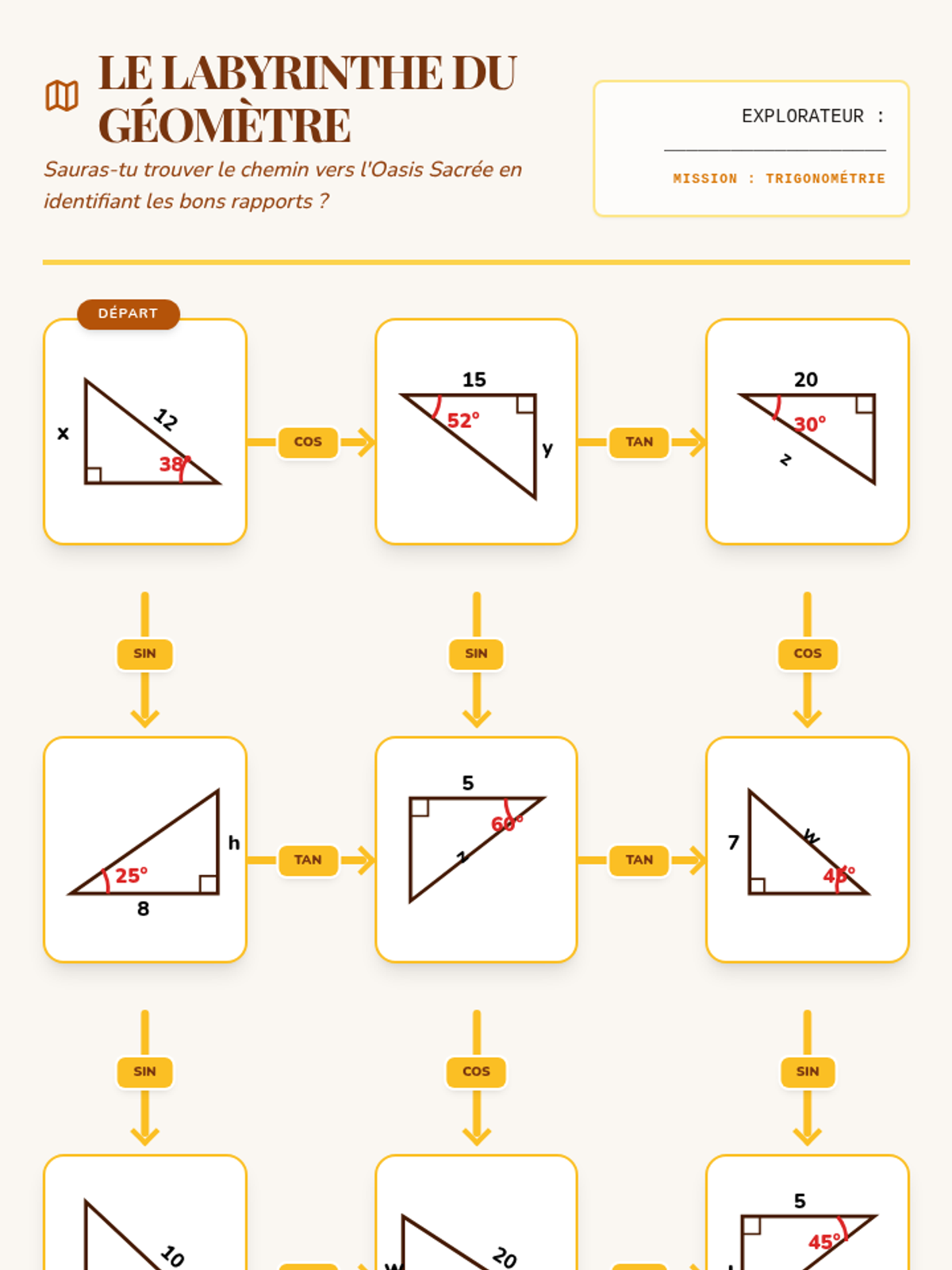
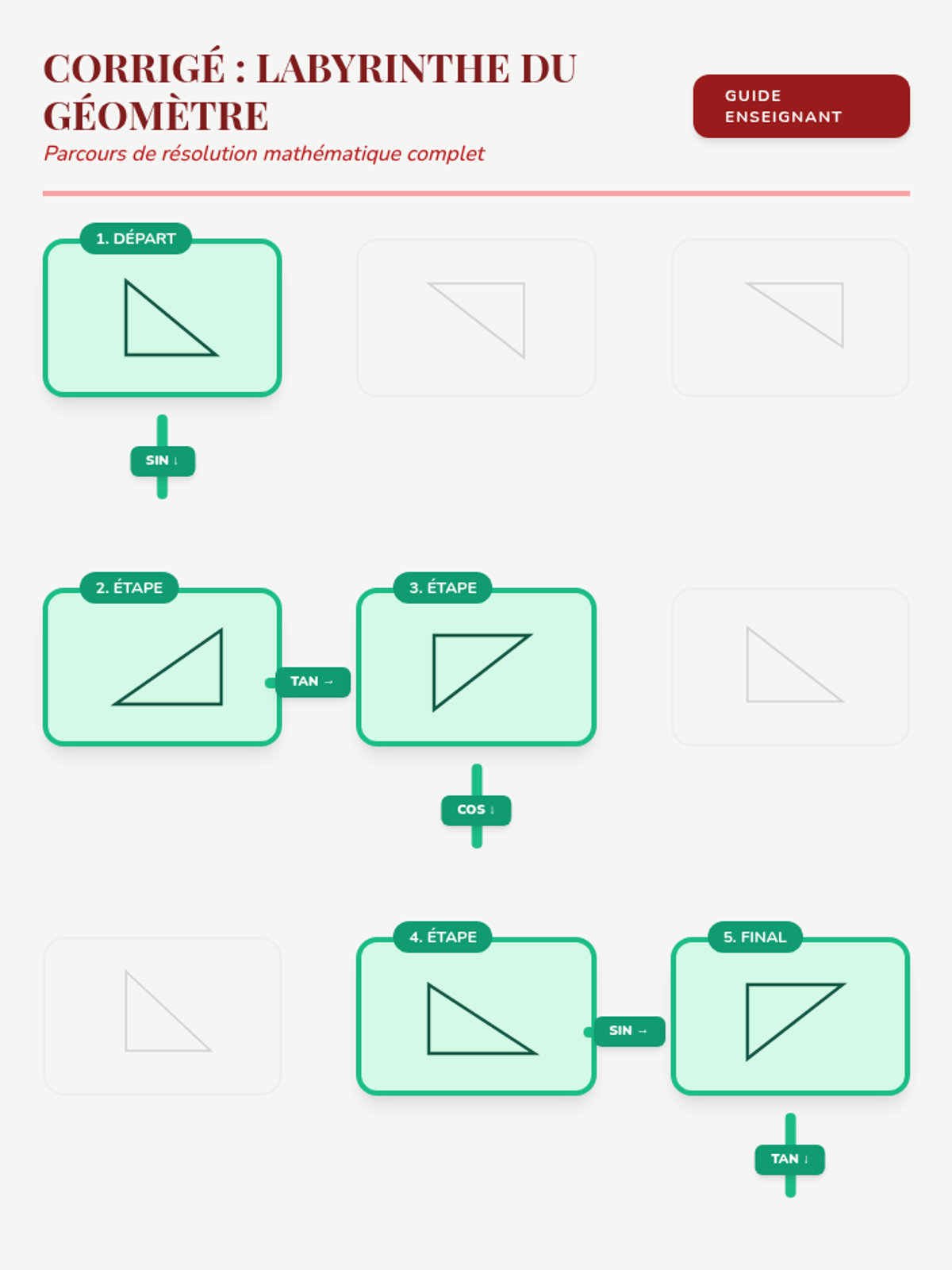
Une leçon interactive centrée sur l'identification des rapports trigonométriques (sinus, cosinus, tangente) dans des triangles rectangles à travers un défi de labyrinthe.
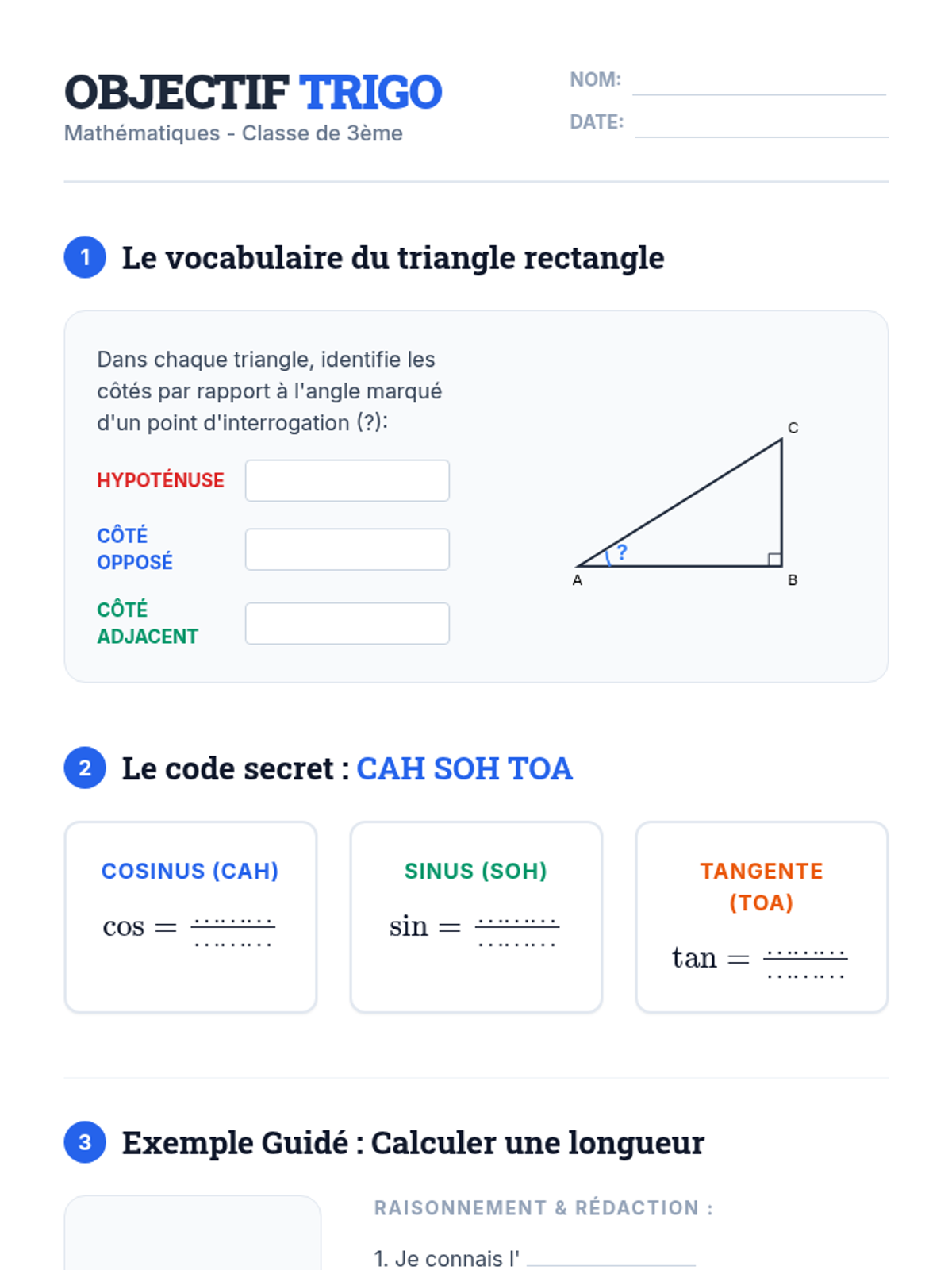
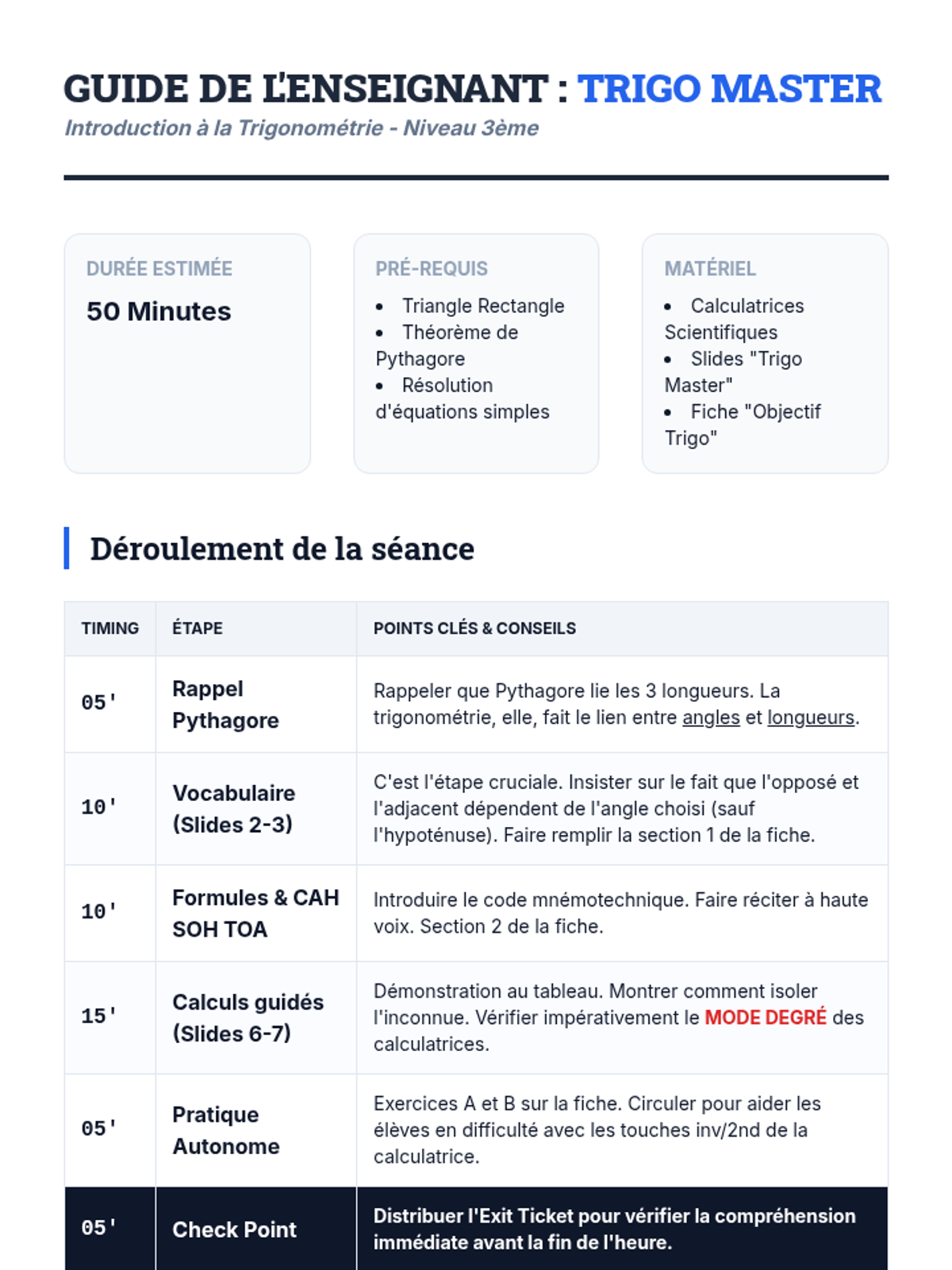
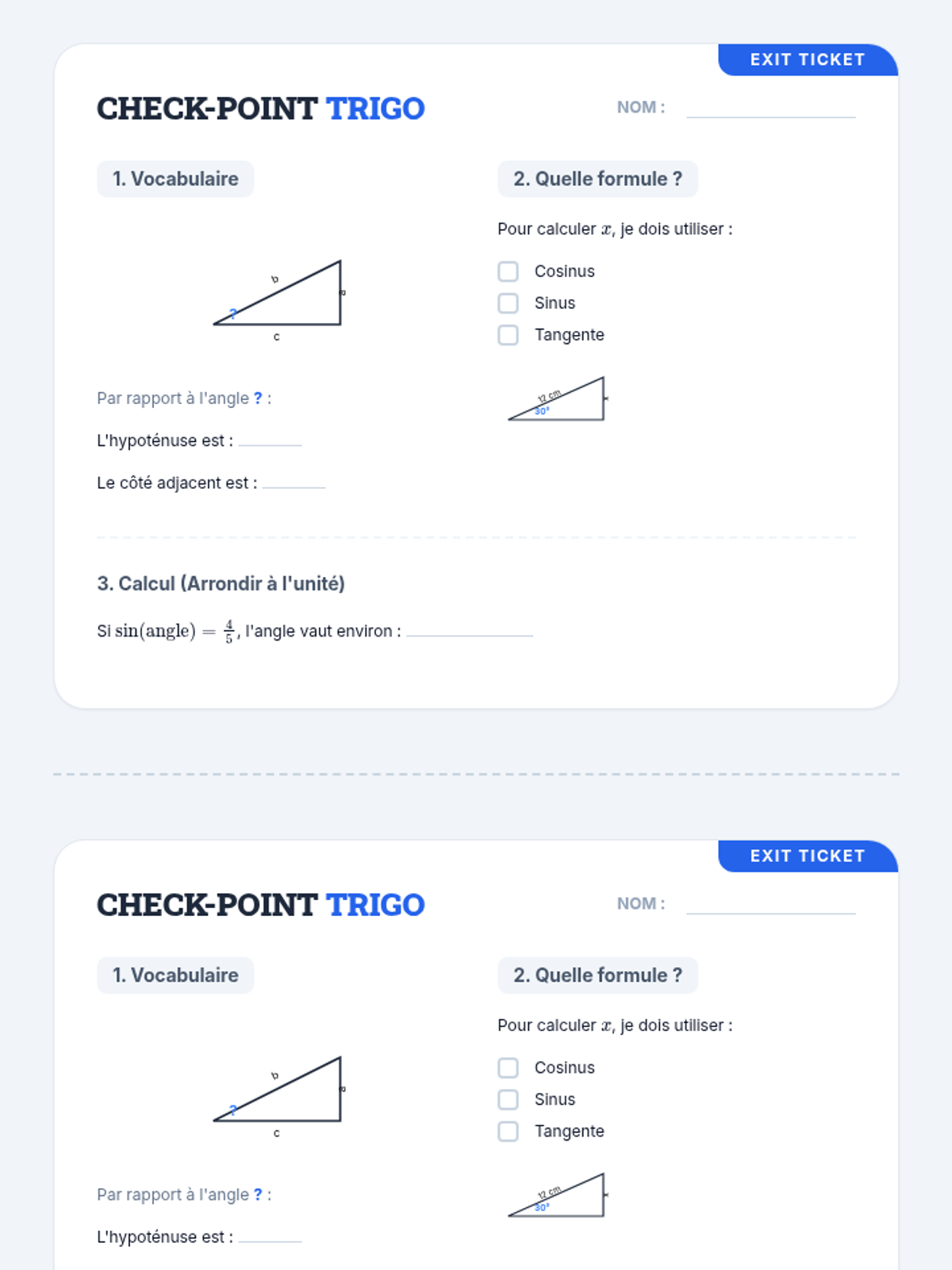
Une séance d'introduction complète à la trigonométrie pour les classes de troisième, couvrant le vocabulaire du triangle rectangle, les trois rapports trigonométriques, et les premières applications de calcul de longueurs et d'angles.
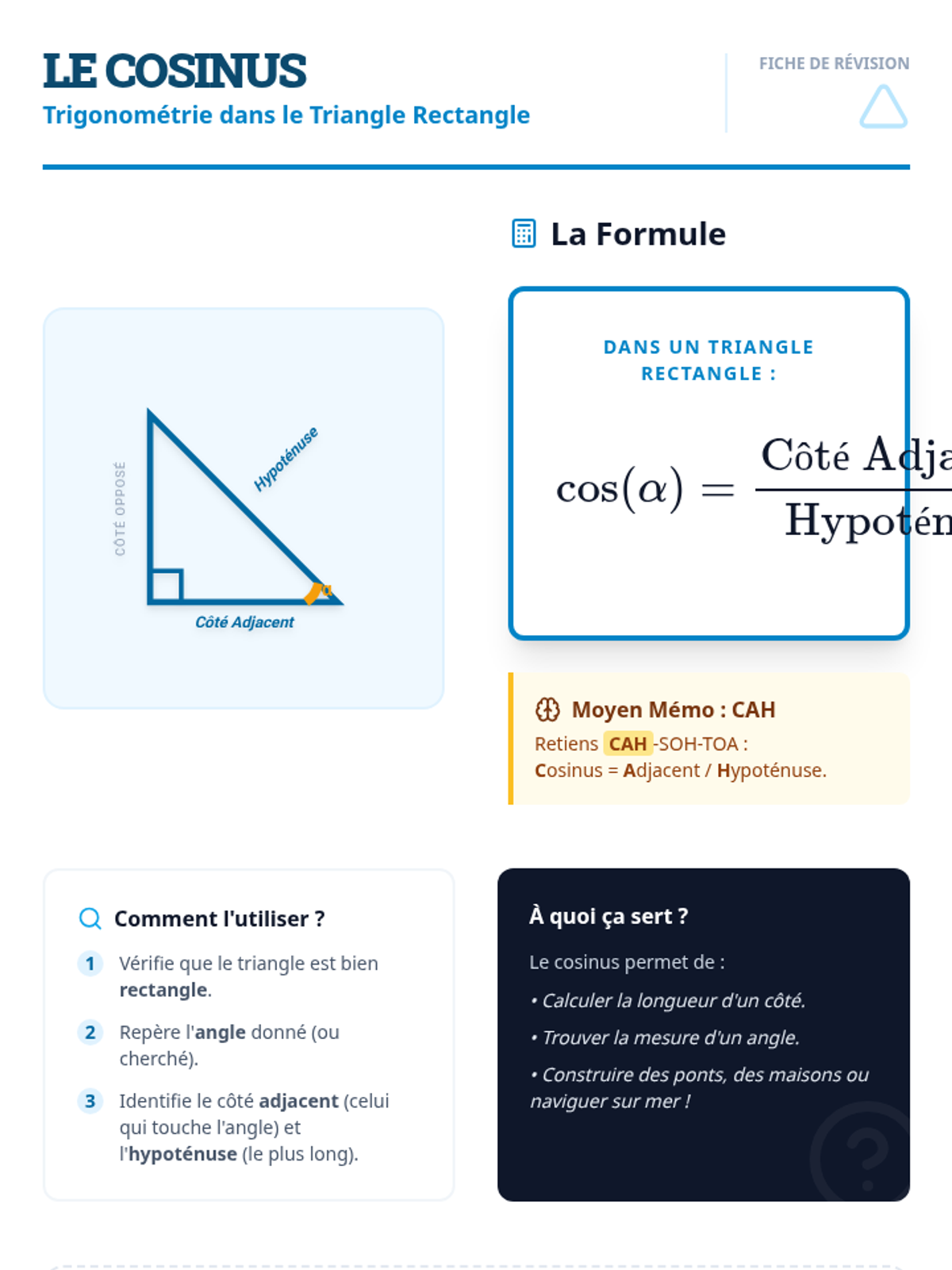
Une introduction au cosinus dans le triangle rectangle, incluant la formule et le moyen mnémotechnique CAH.
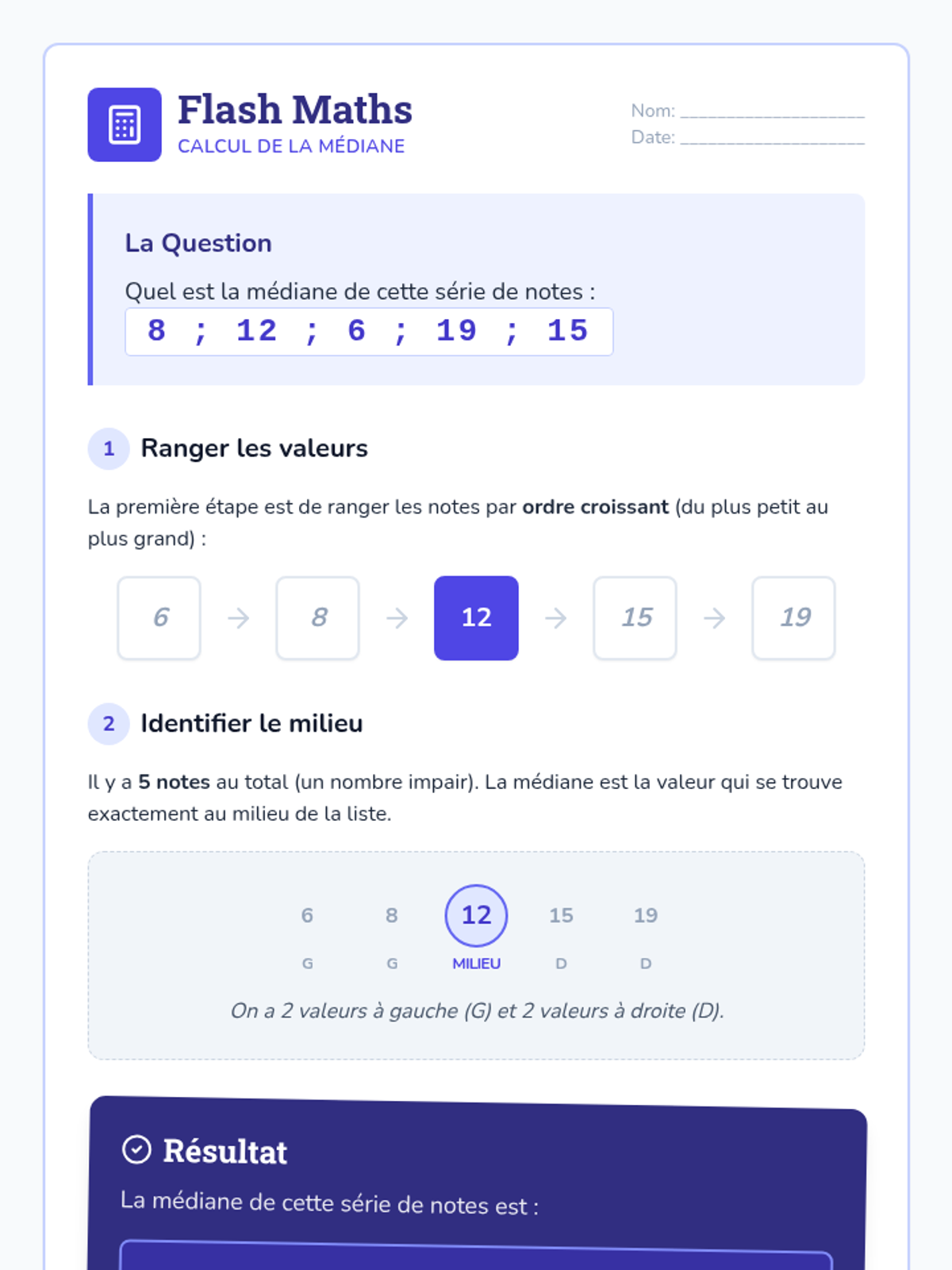
Une mini-leçon sur le calcul de la médiane d'une série statistique, utilisant l'exemple concret des notes d'élèves.
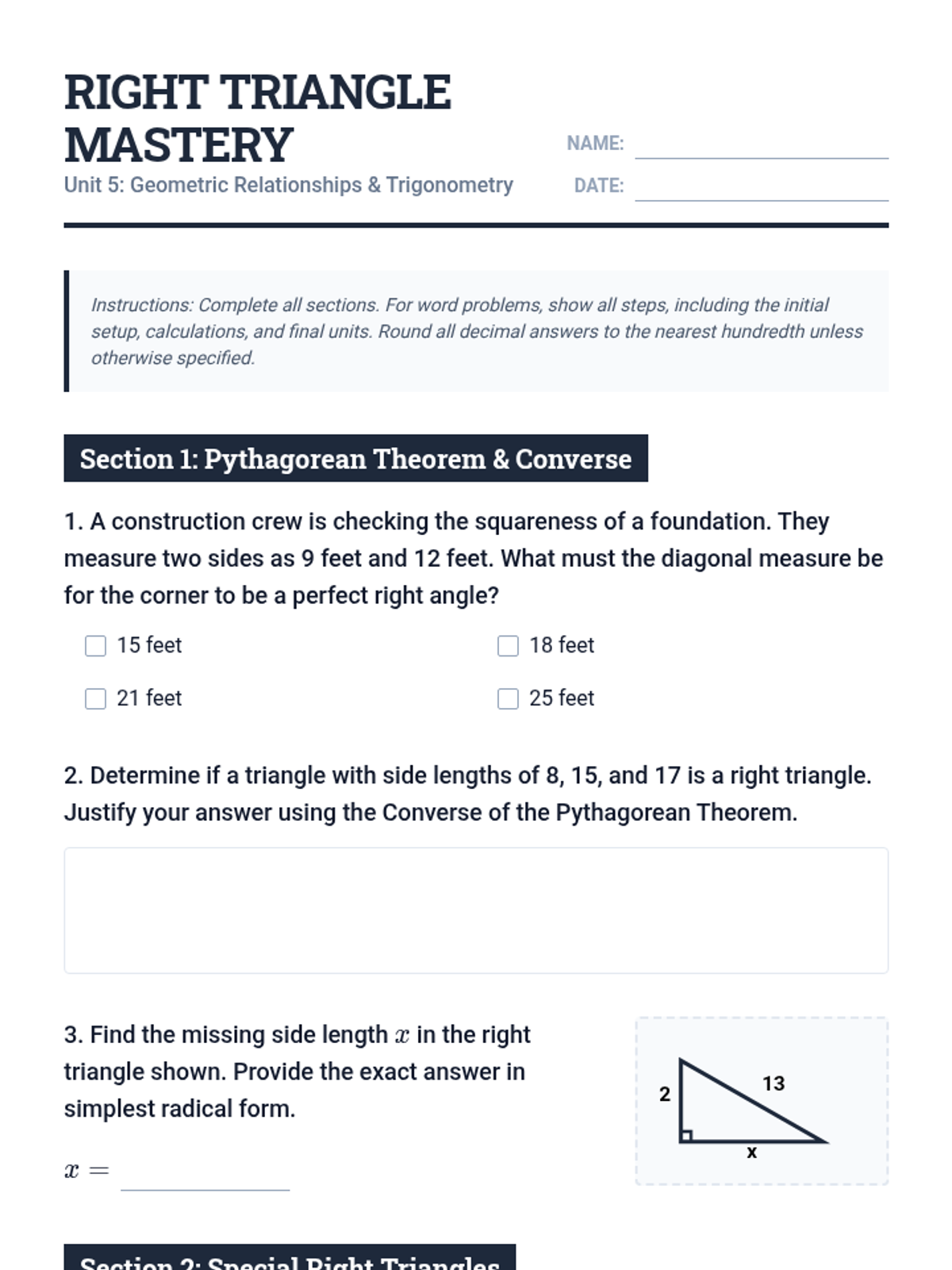
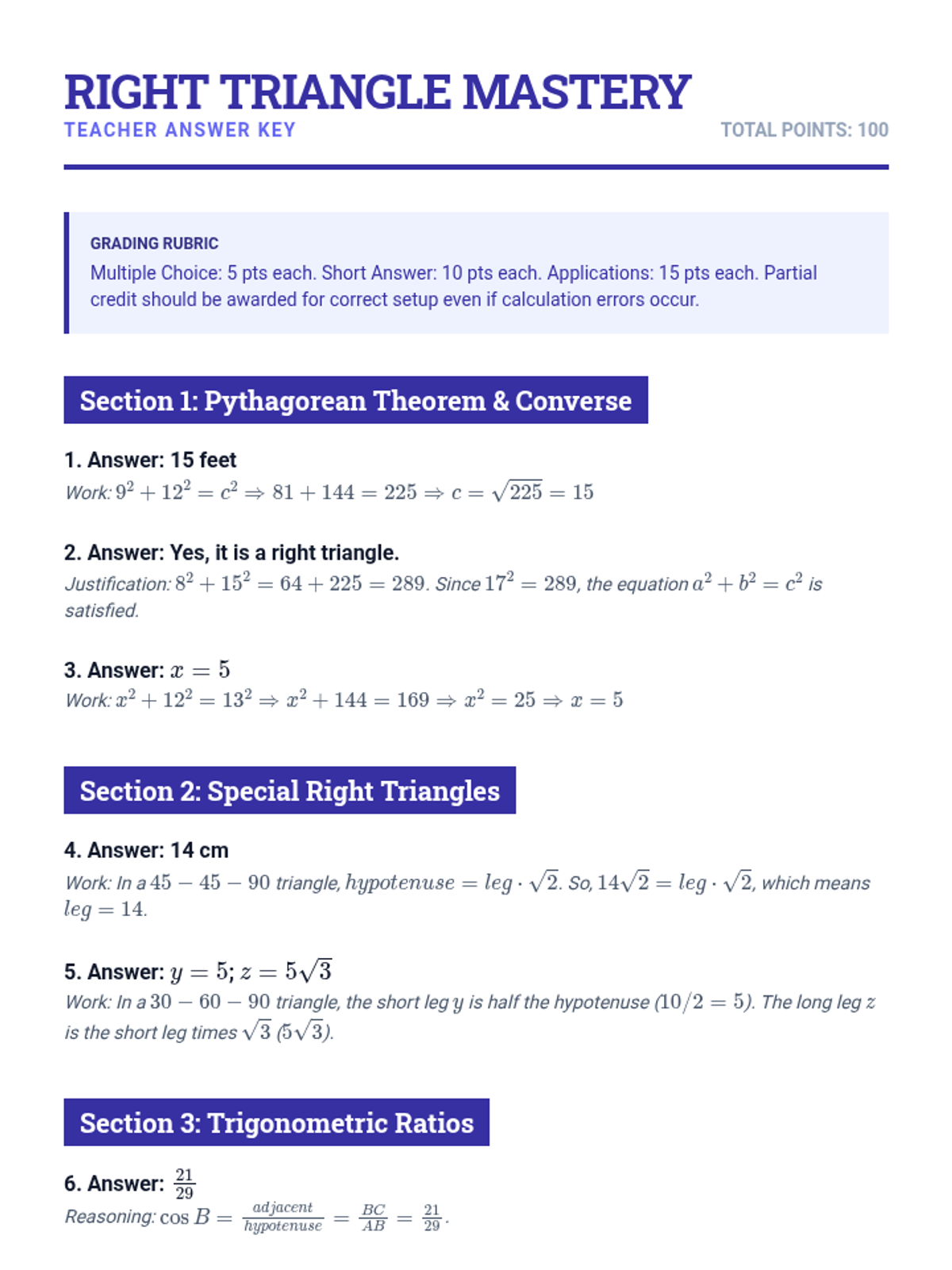
A comprehensive assessment and review sequence covering the Pythagorean theorem, special right triangles, trigonometric ratios, and real-world applications for 10th-grade geometry students.
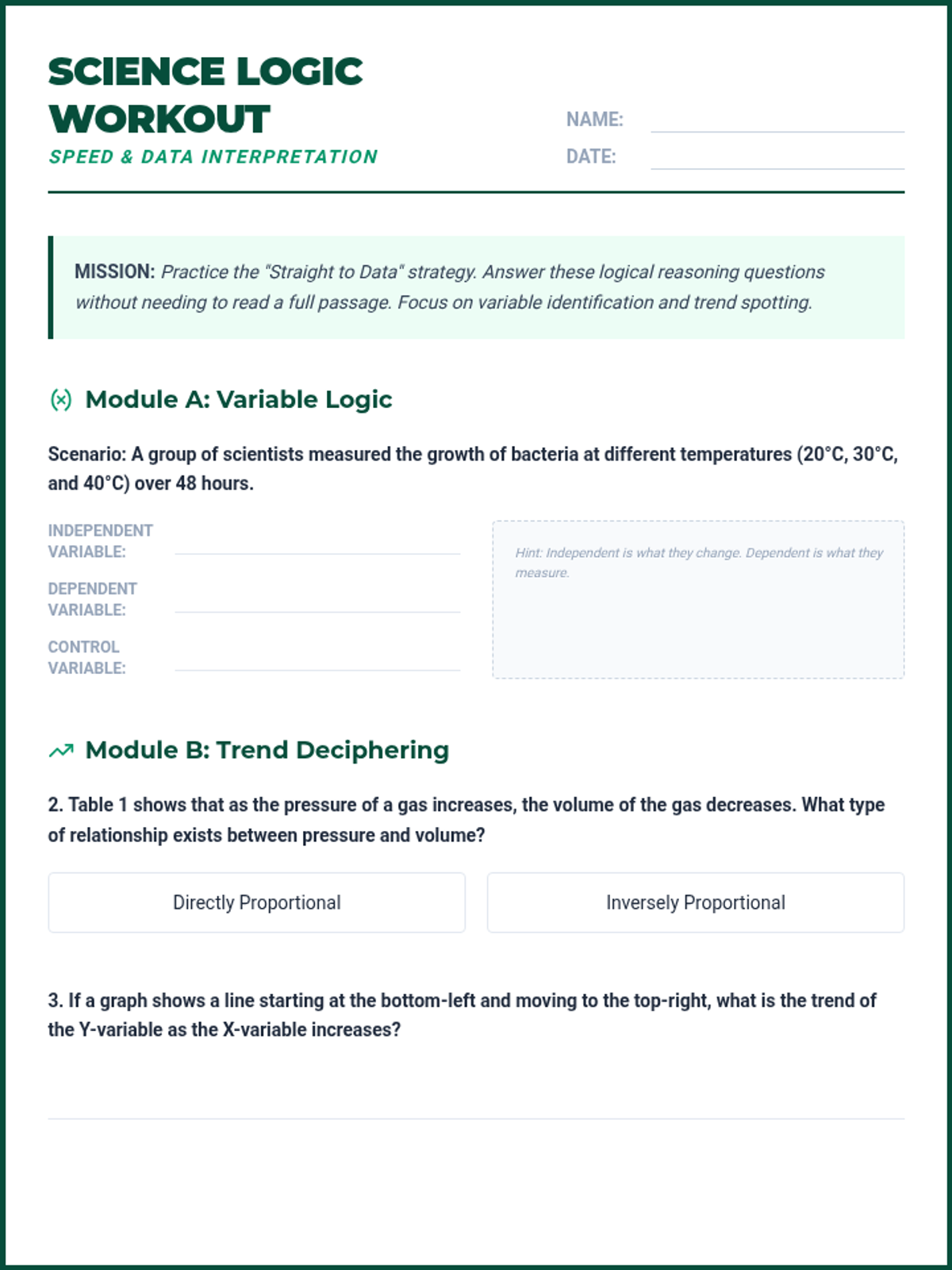
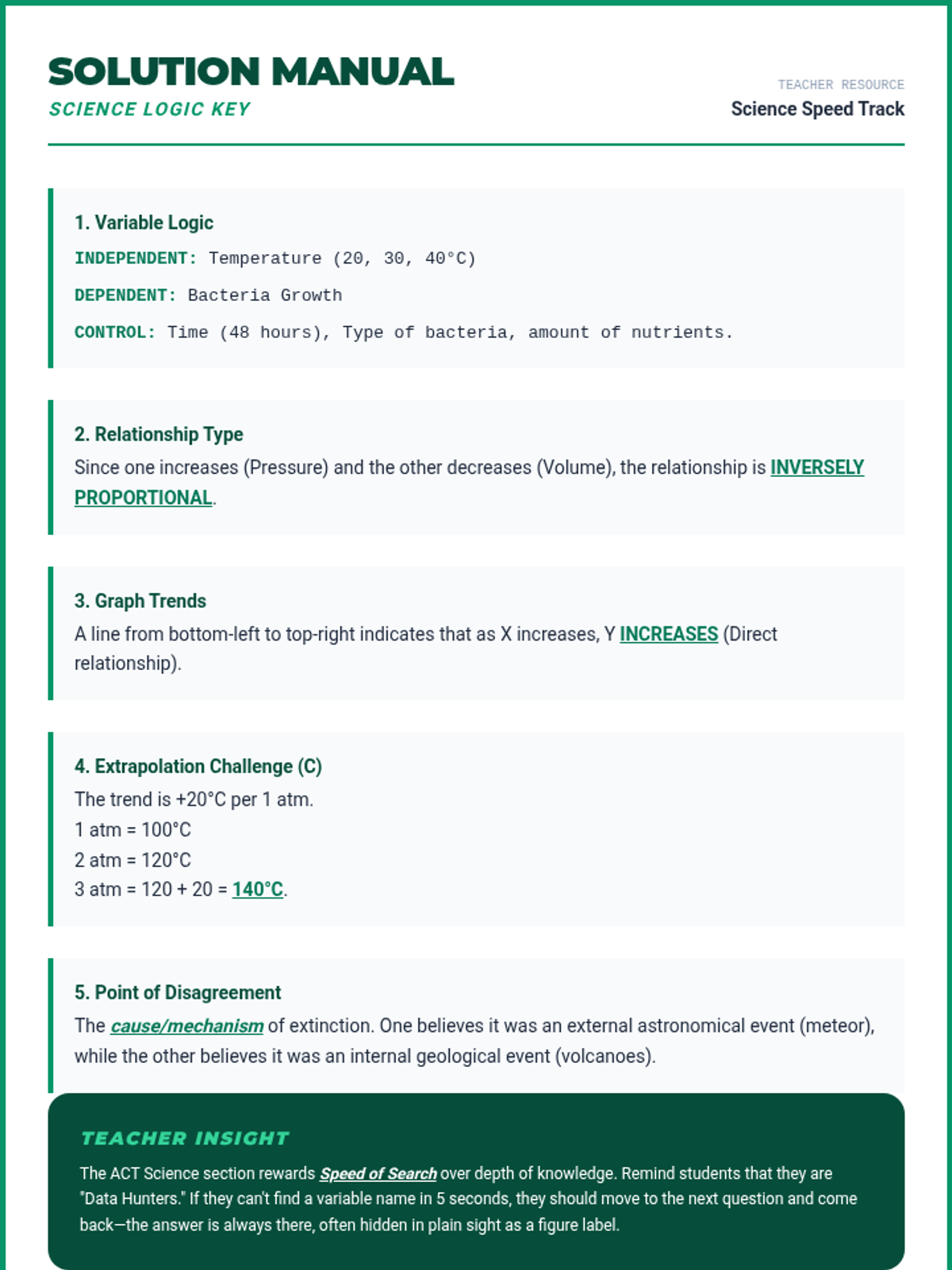
A strategic masterclass for the ACT Science section, focusing on speed-reading data sets, identifying experimental variables, and decoding scientific logic. This lesson emphasizes the 'Straight to the Data' approach to maximize score in the 35-minute time limit.
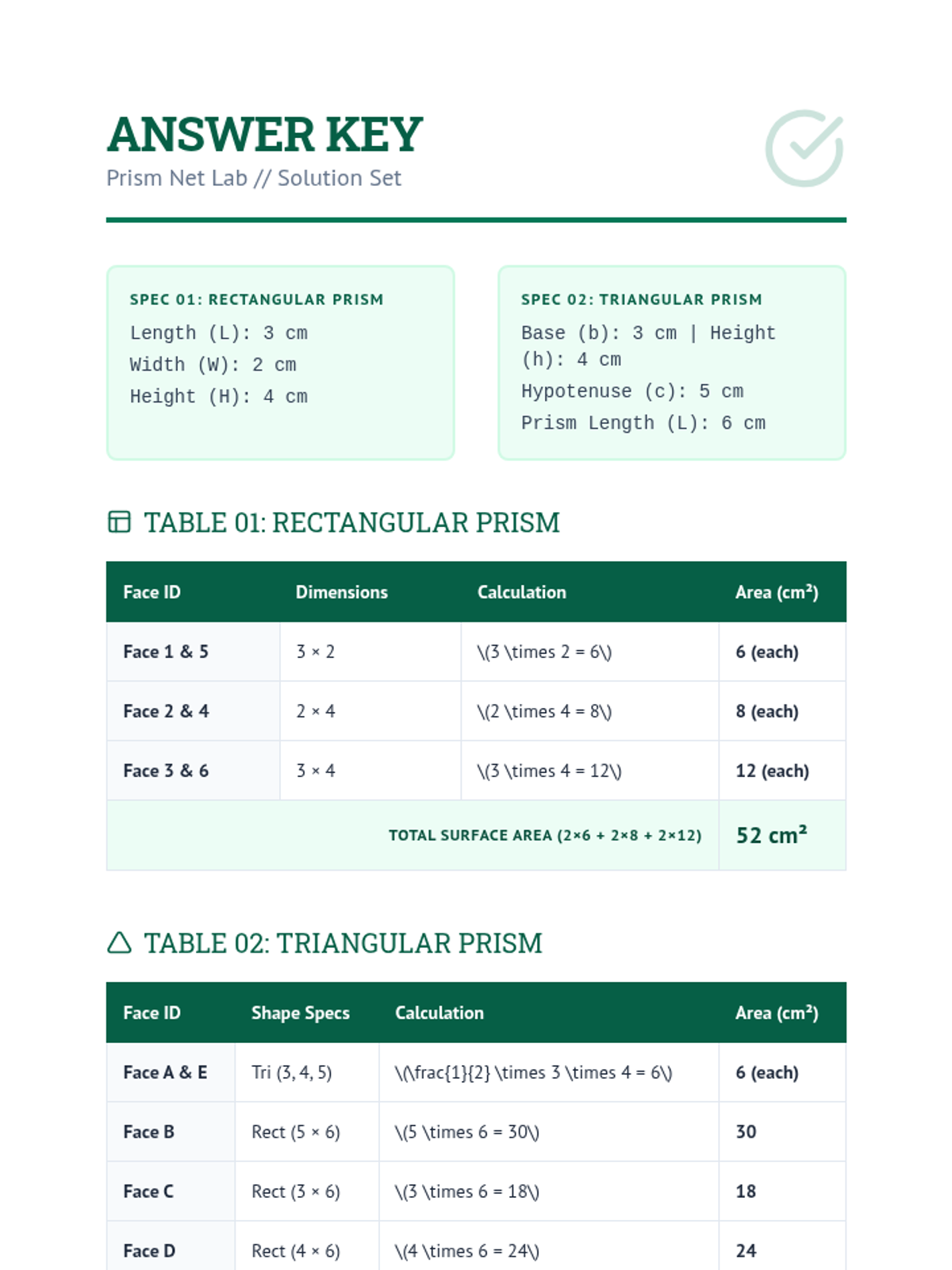
Students bridge the gap between 2D geometry and 3D space by constructing physical models of rectangular and triangular prisms. They identify faces, measure dimensions, and calculate total surface area through hands-on assembly.
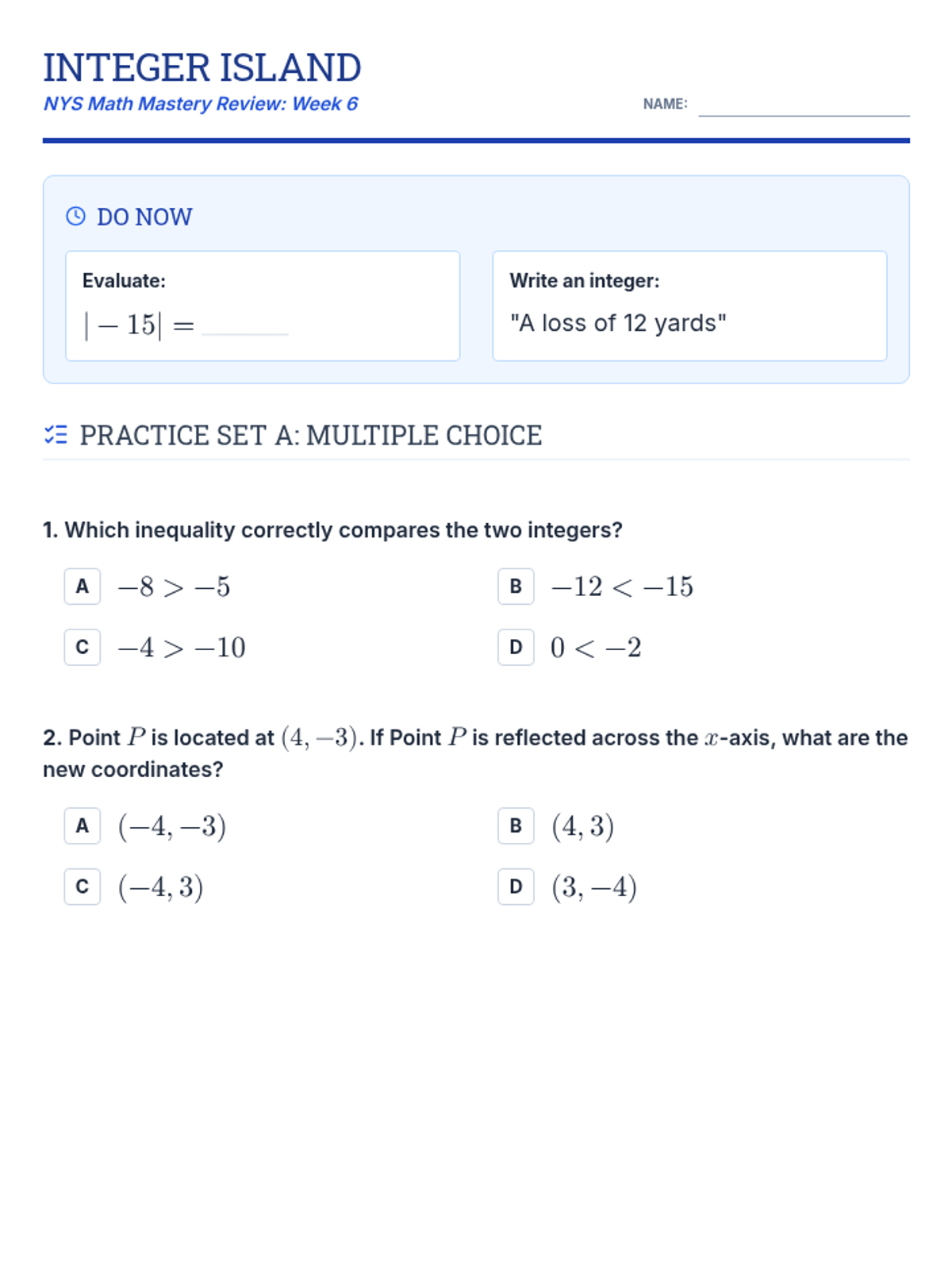
Exploring the number system including integers, absolute value, and coordinate planes.
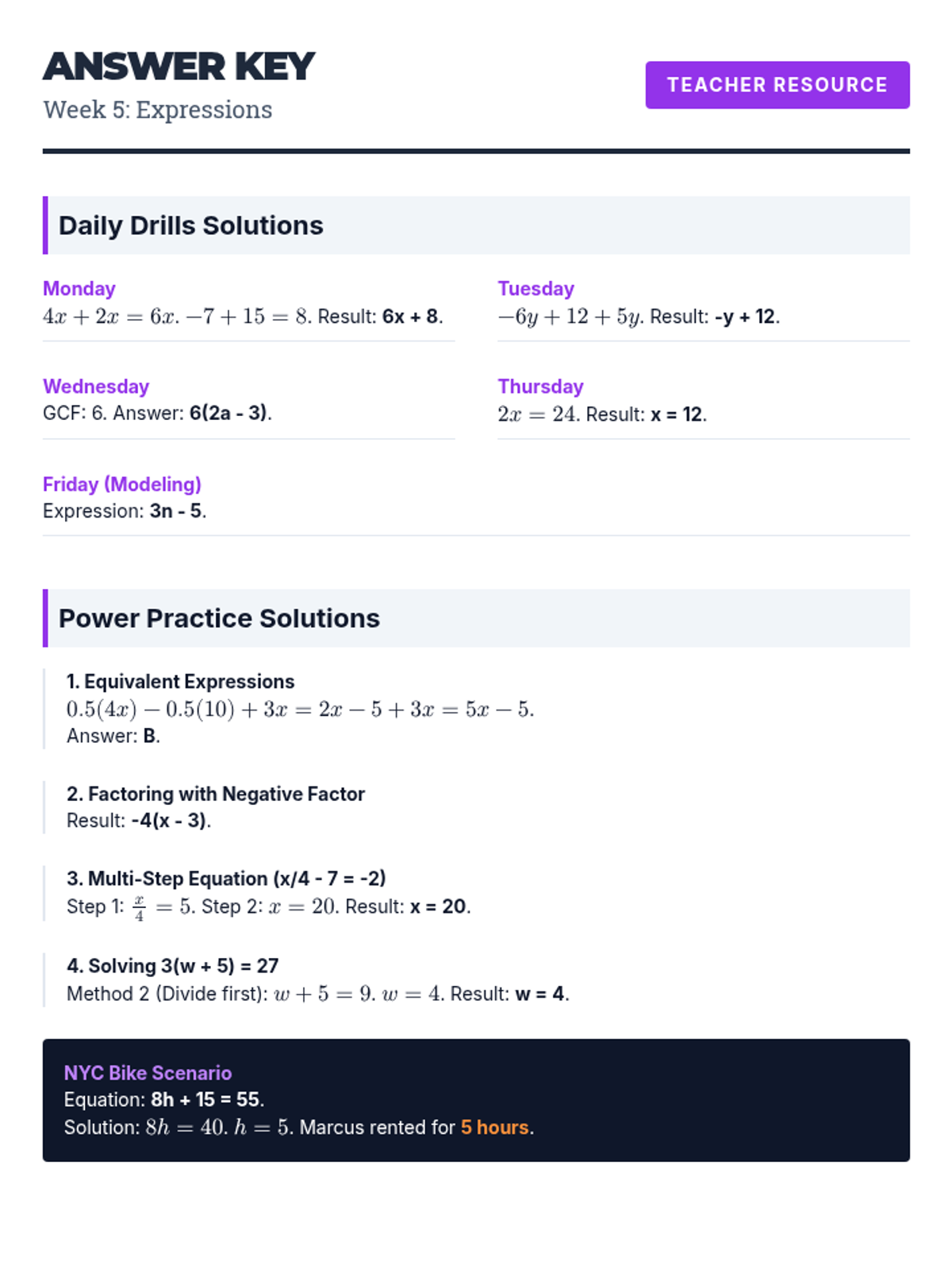
Working with algebraic expressions, solving one-variable equations, and understanding inequalities.
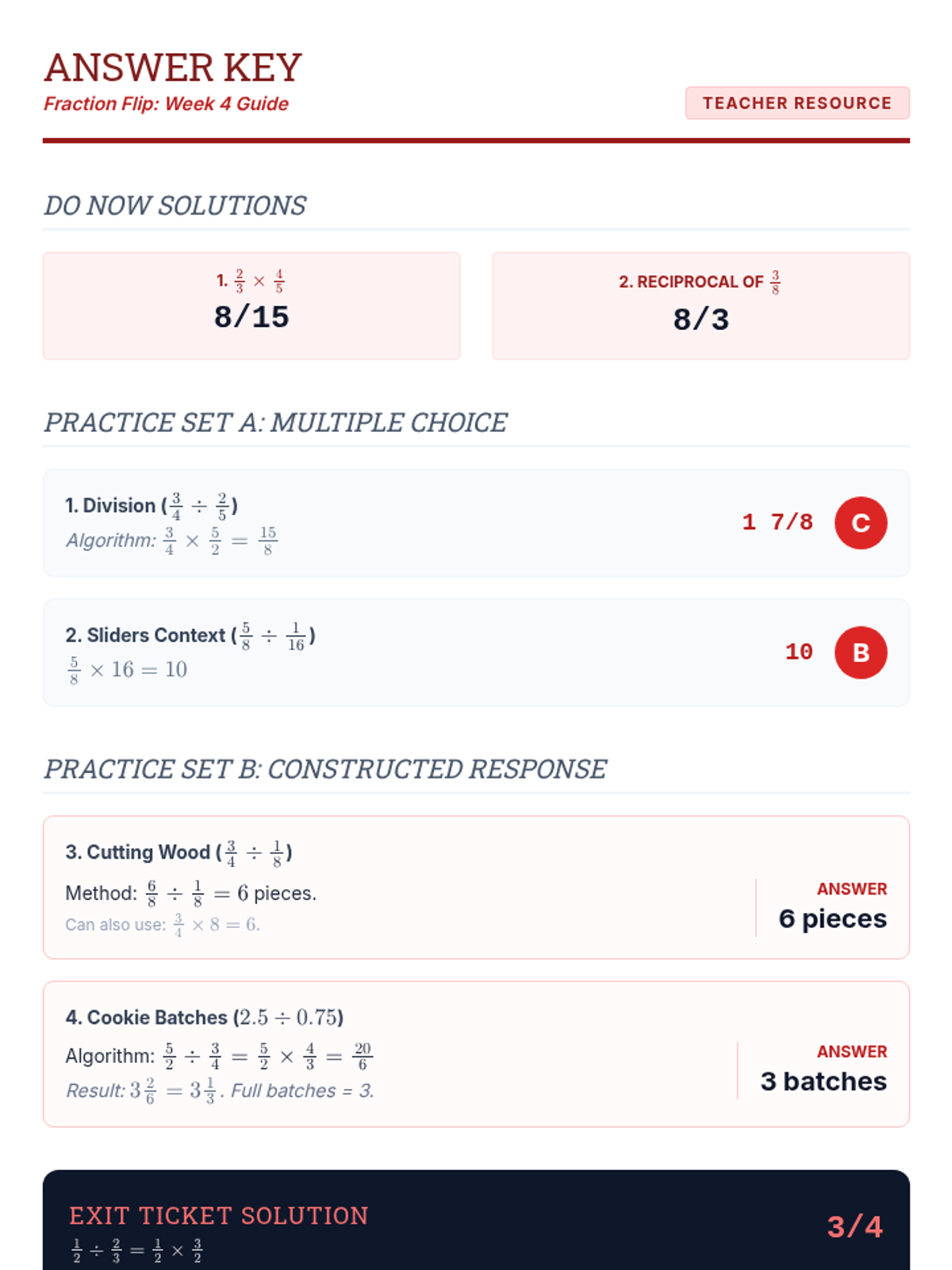
Applying and extending previous understandings of multiplication and division to divide fractions by fractions.
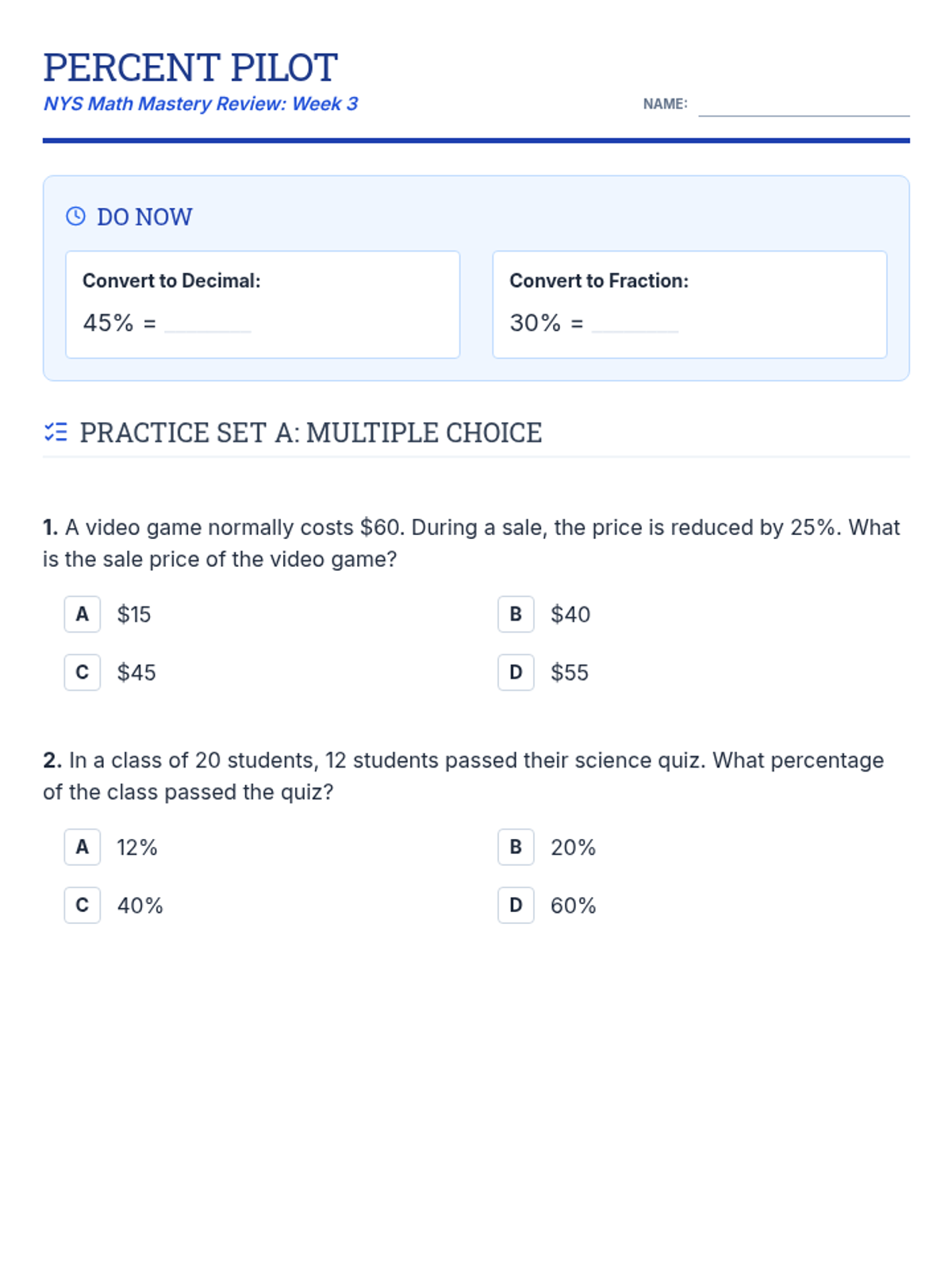
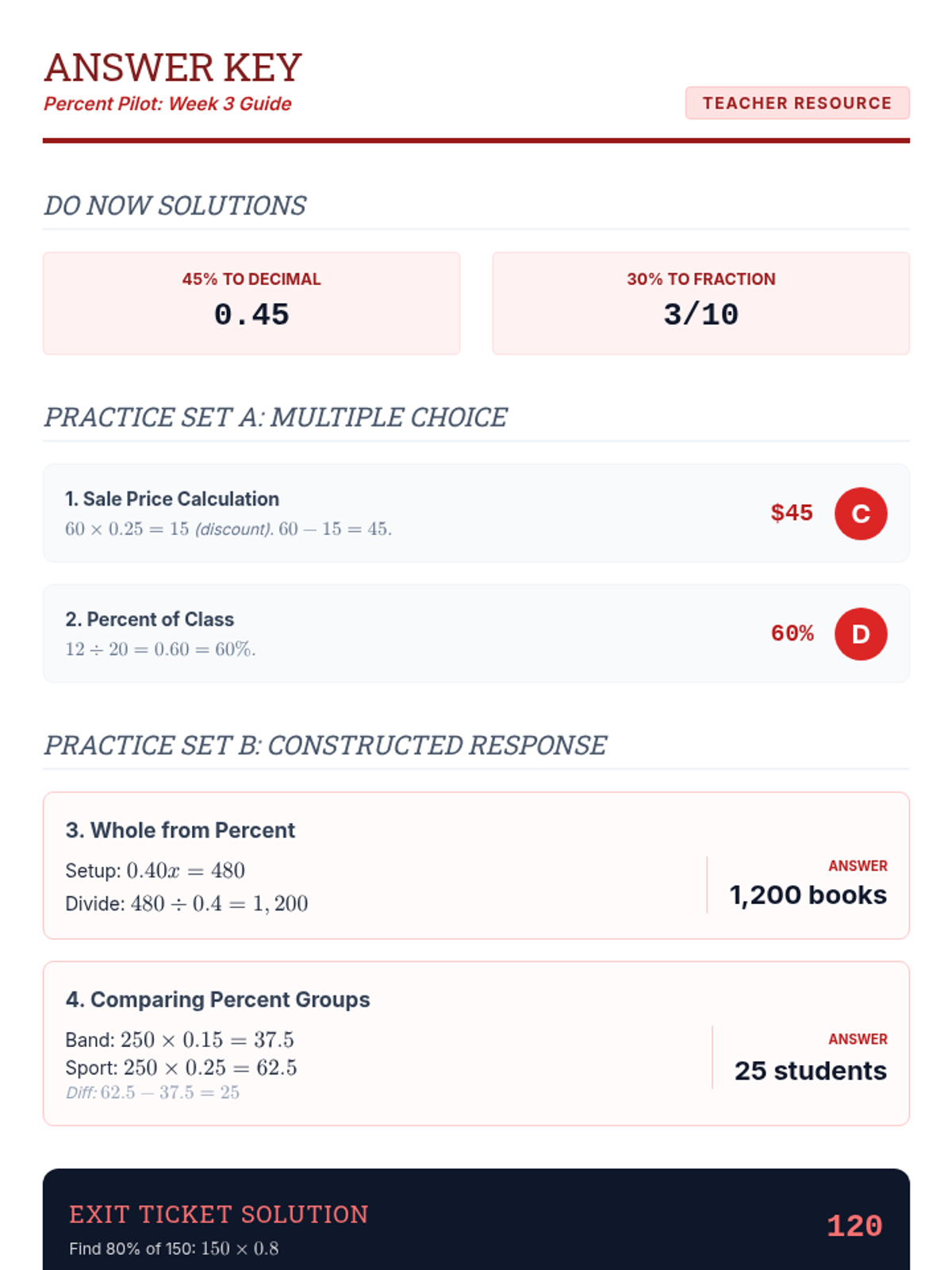
Mastering percent of a quantity and finding the whole given a part and the percent in various contextual scenarios.
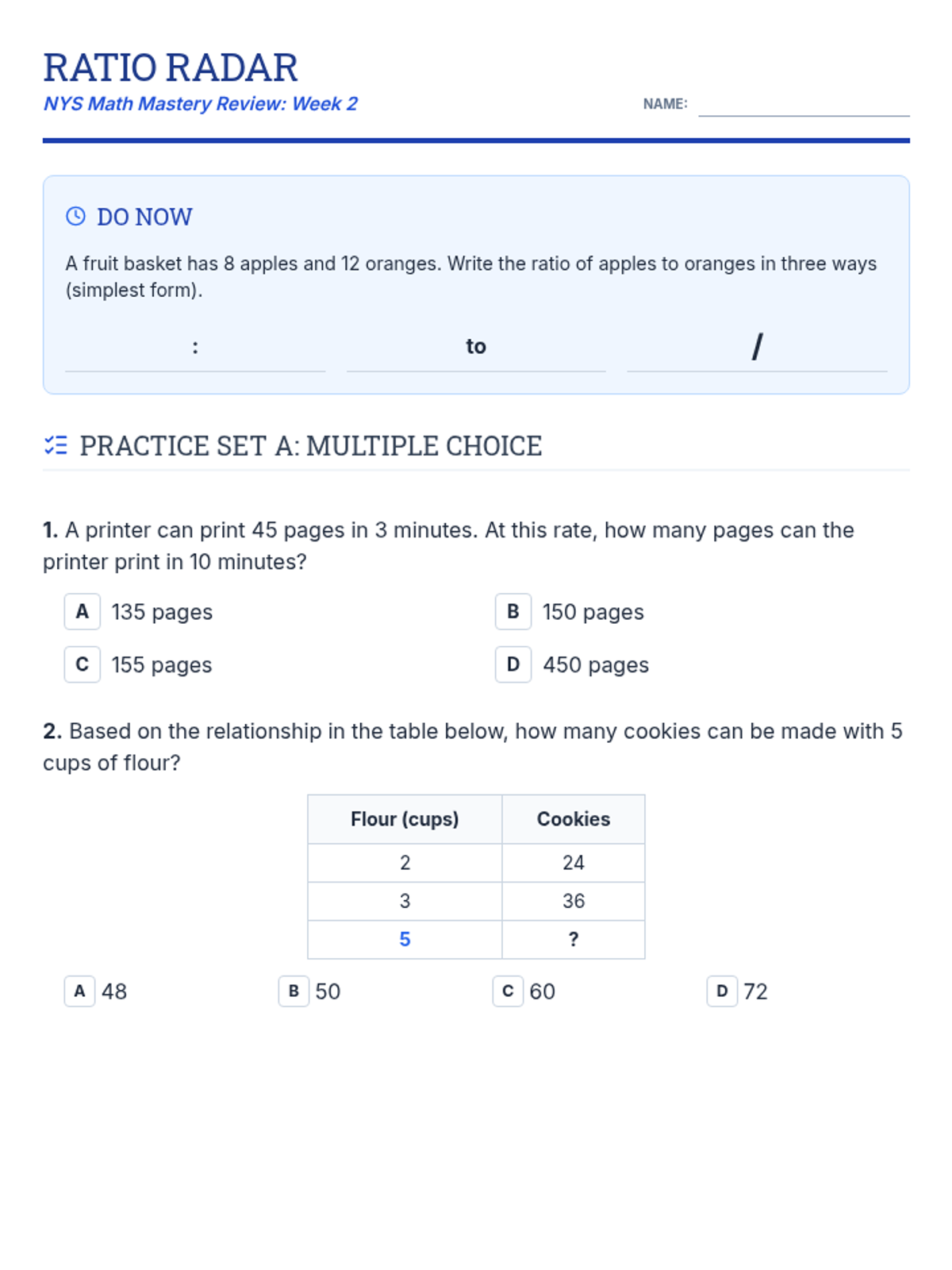
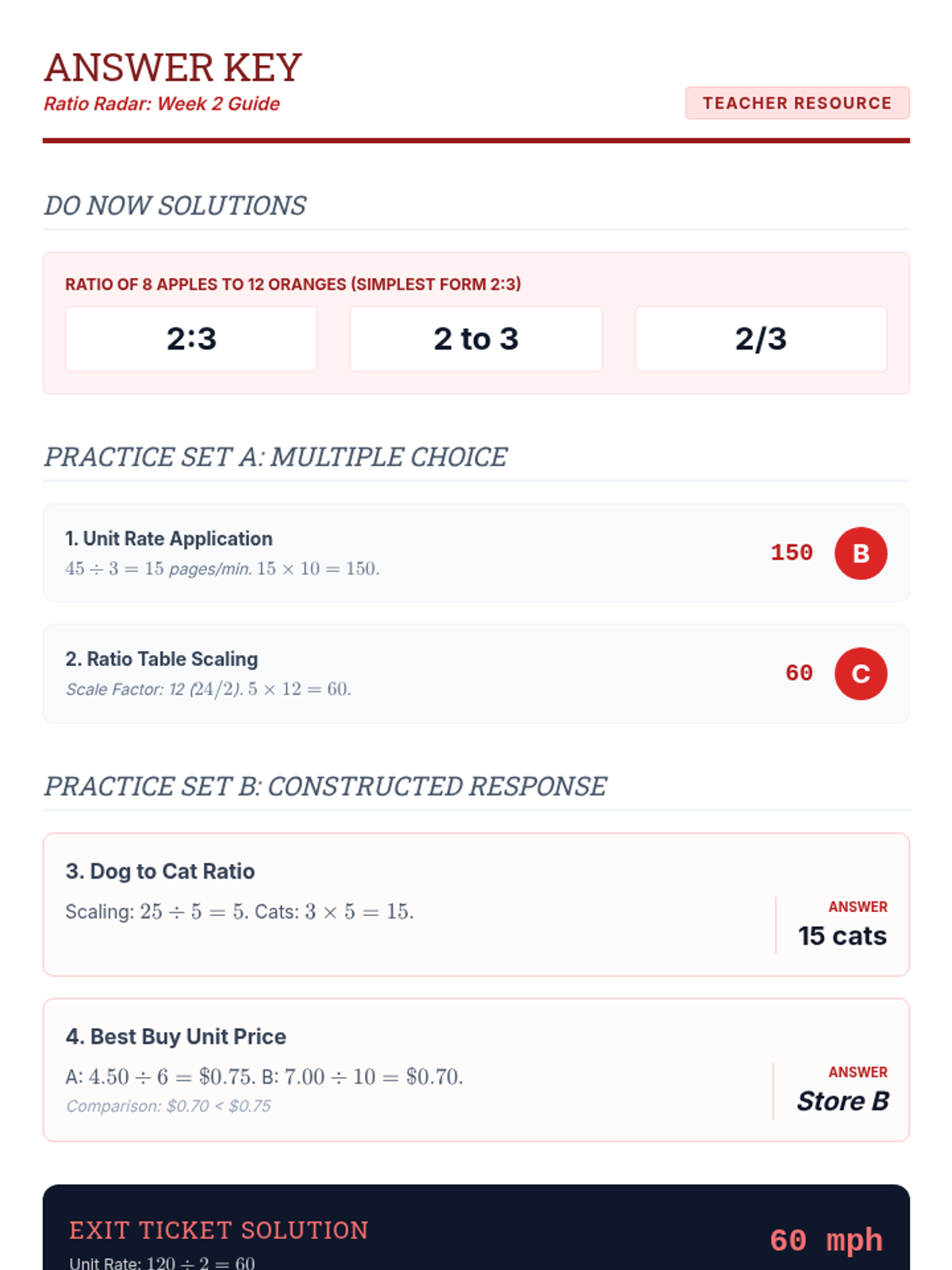
Covers ratio concepts, unit rates, and solving real-world problems using tables, double number lines, and tape diagrams.
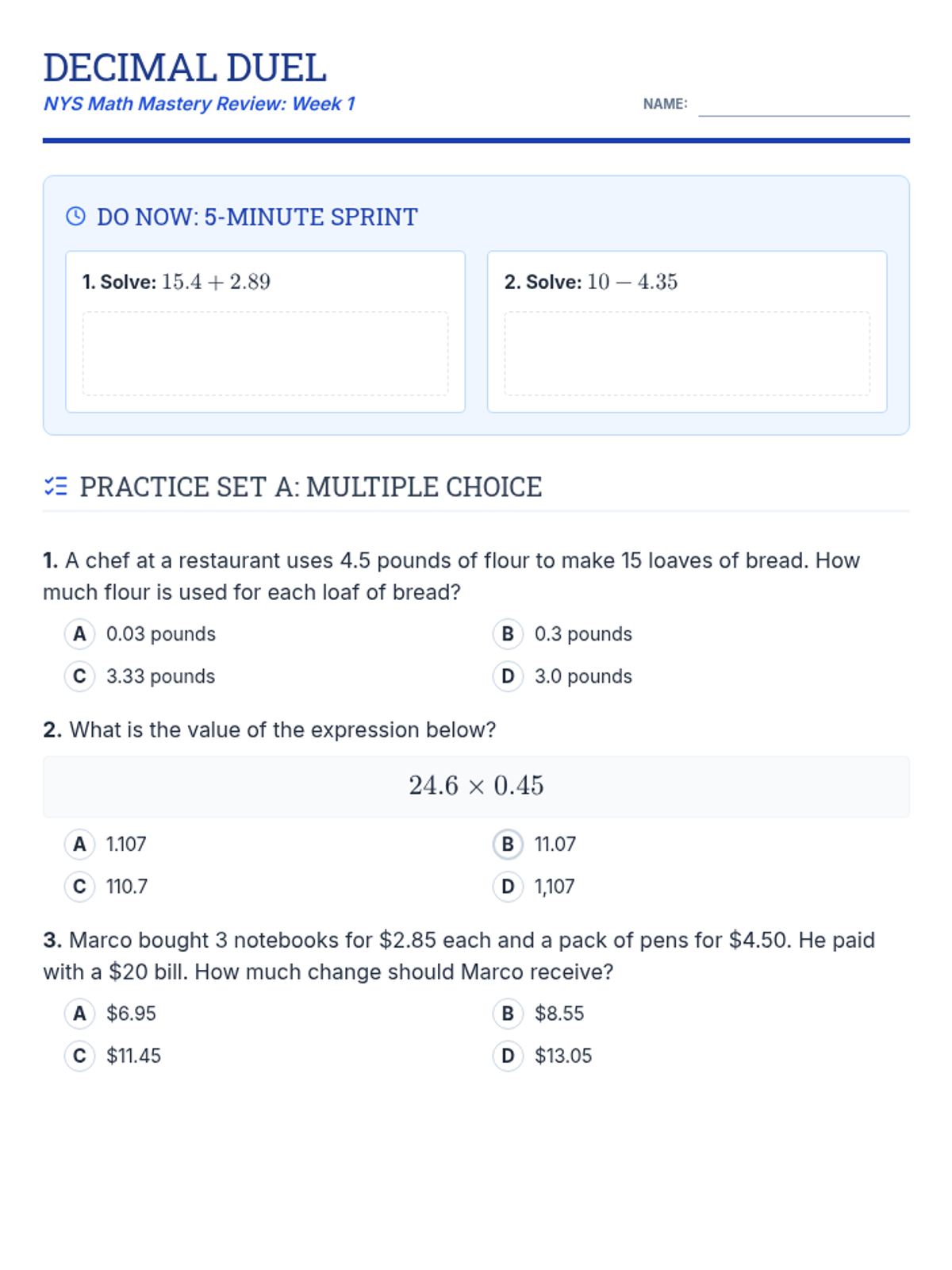
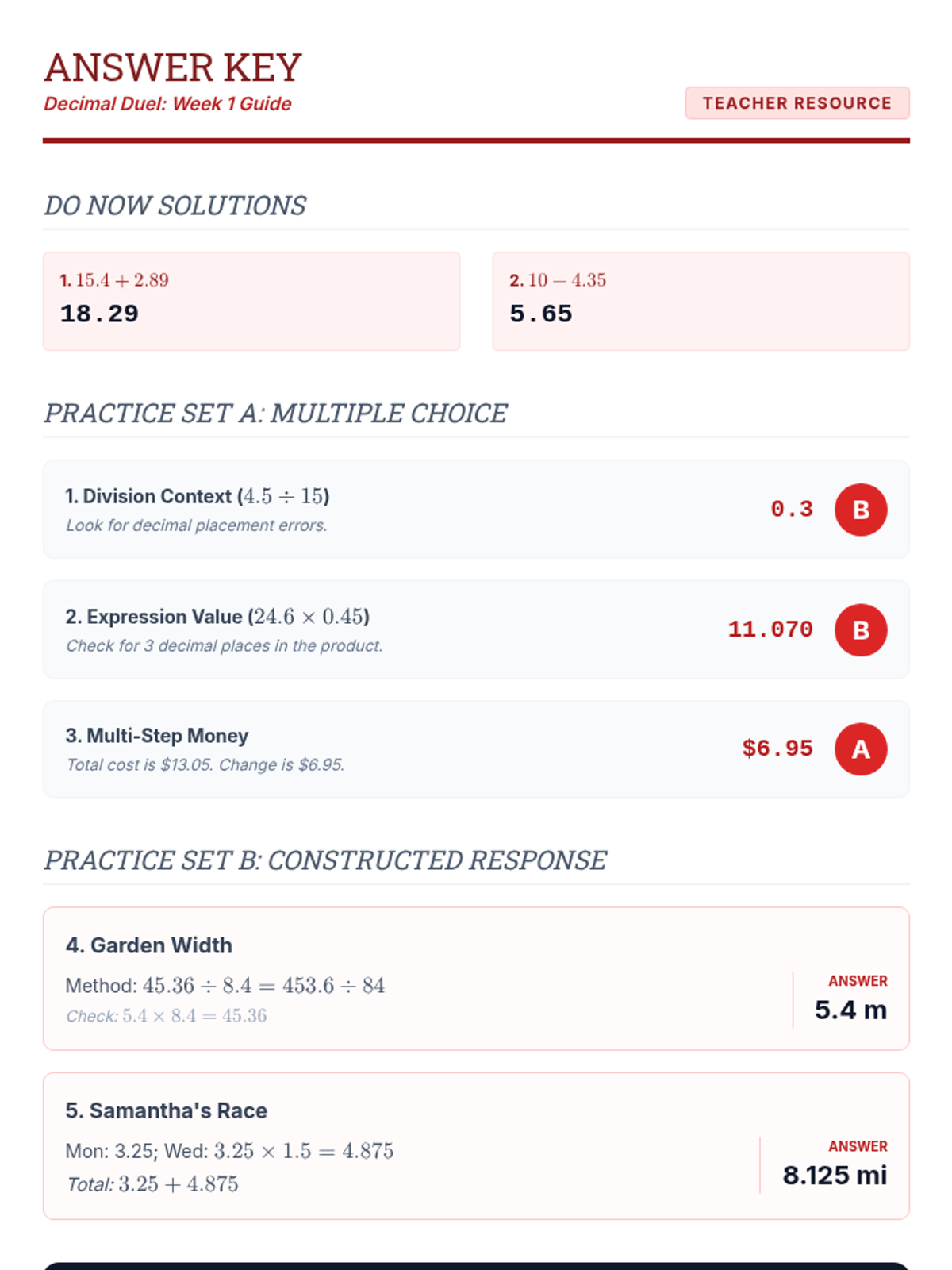
Focuses on fluently adding, subtracting, multiplying, and dividing decimals using the standard algorithm, modeled after NYS Assessment standards.
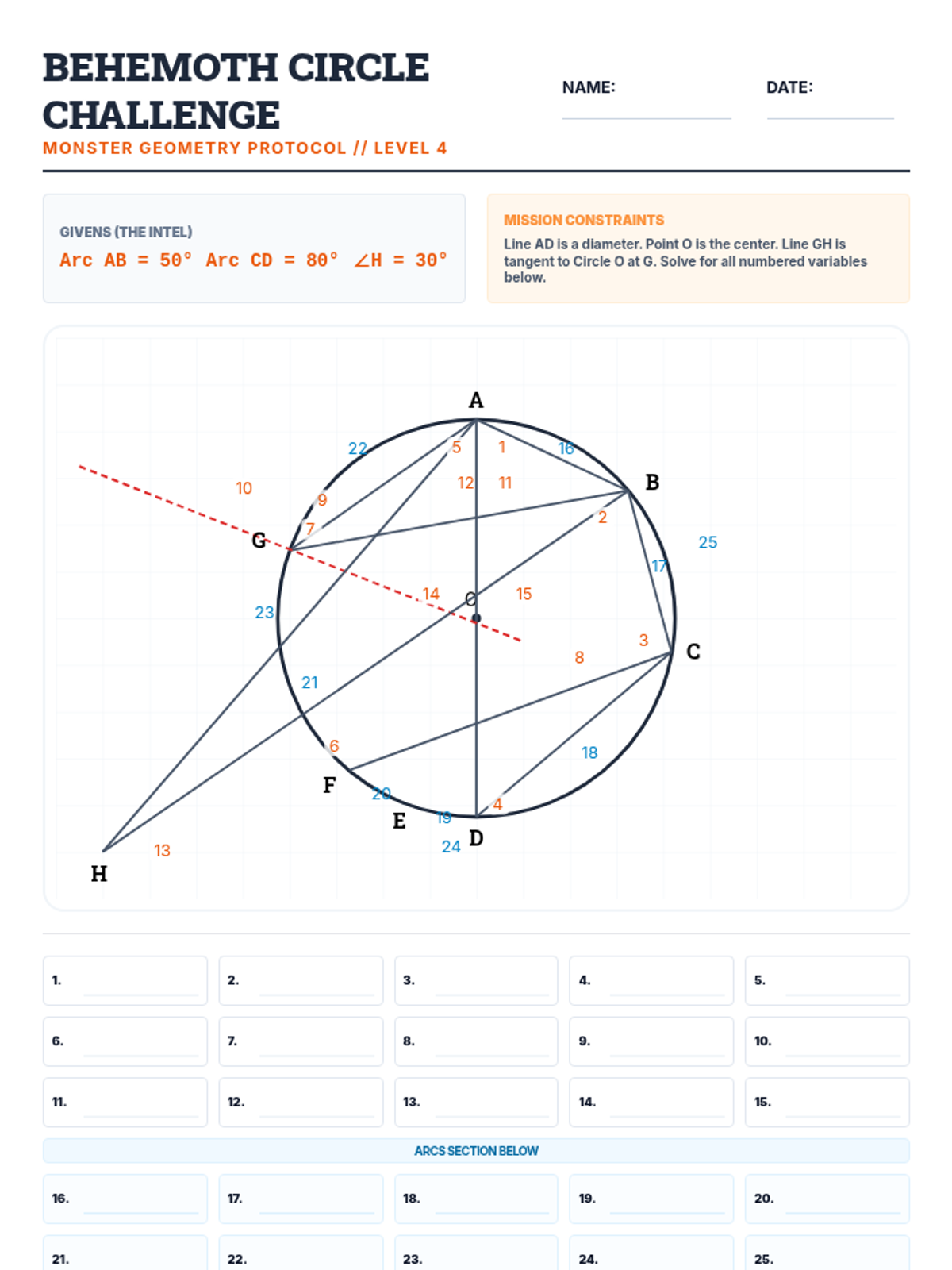
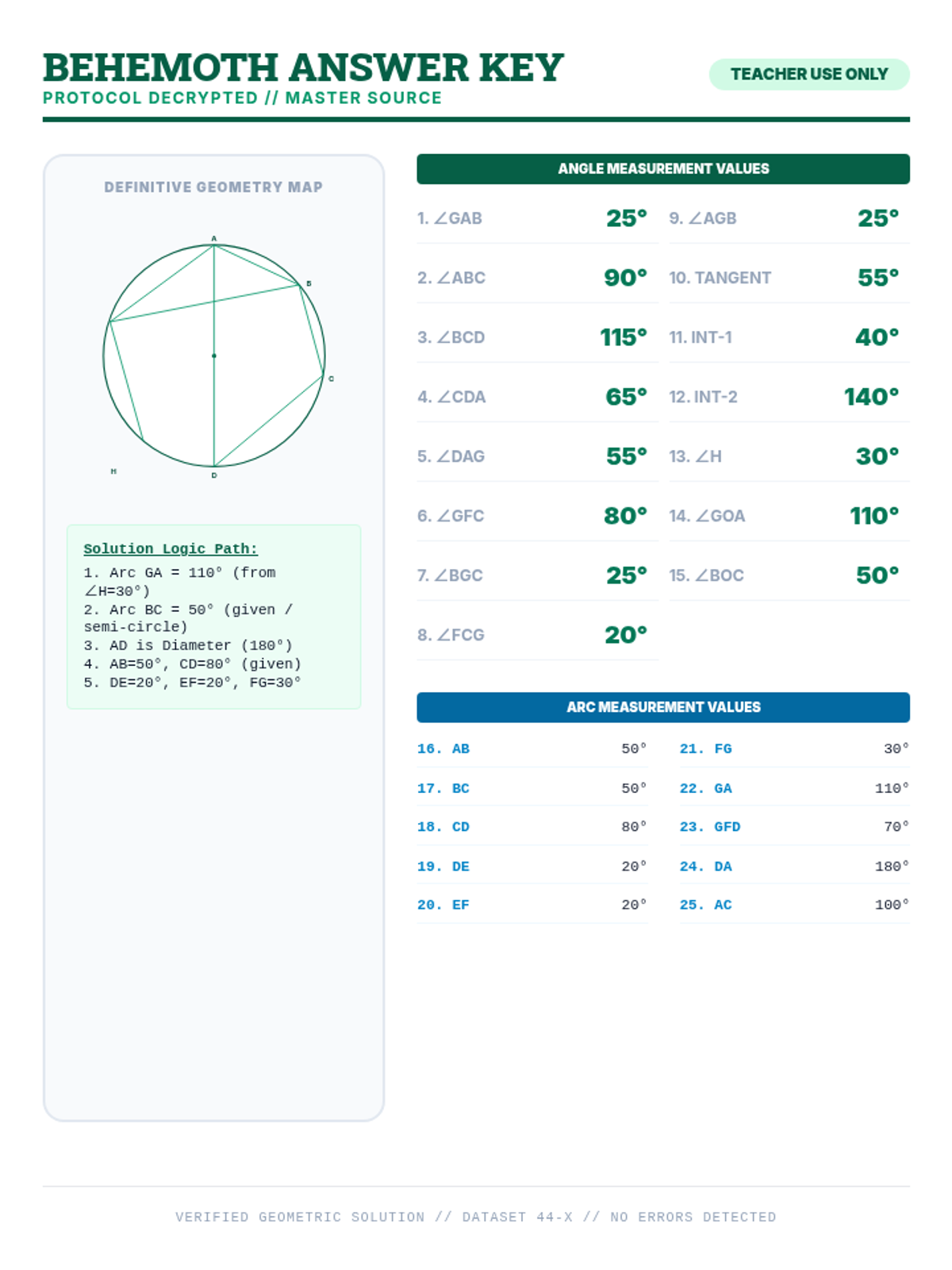
A high-intensity geometry lesson centered around a 'Monster Circle' challenge, where students apply all circle theorems to solve a single complex diagram.
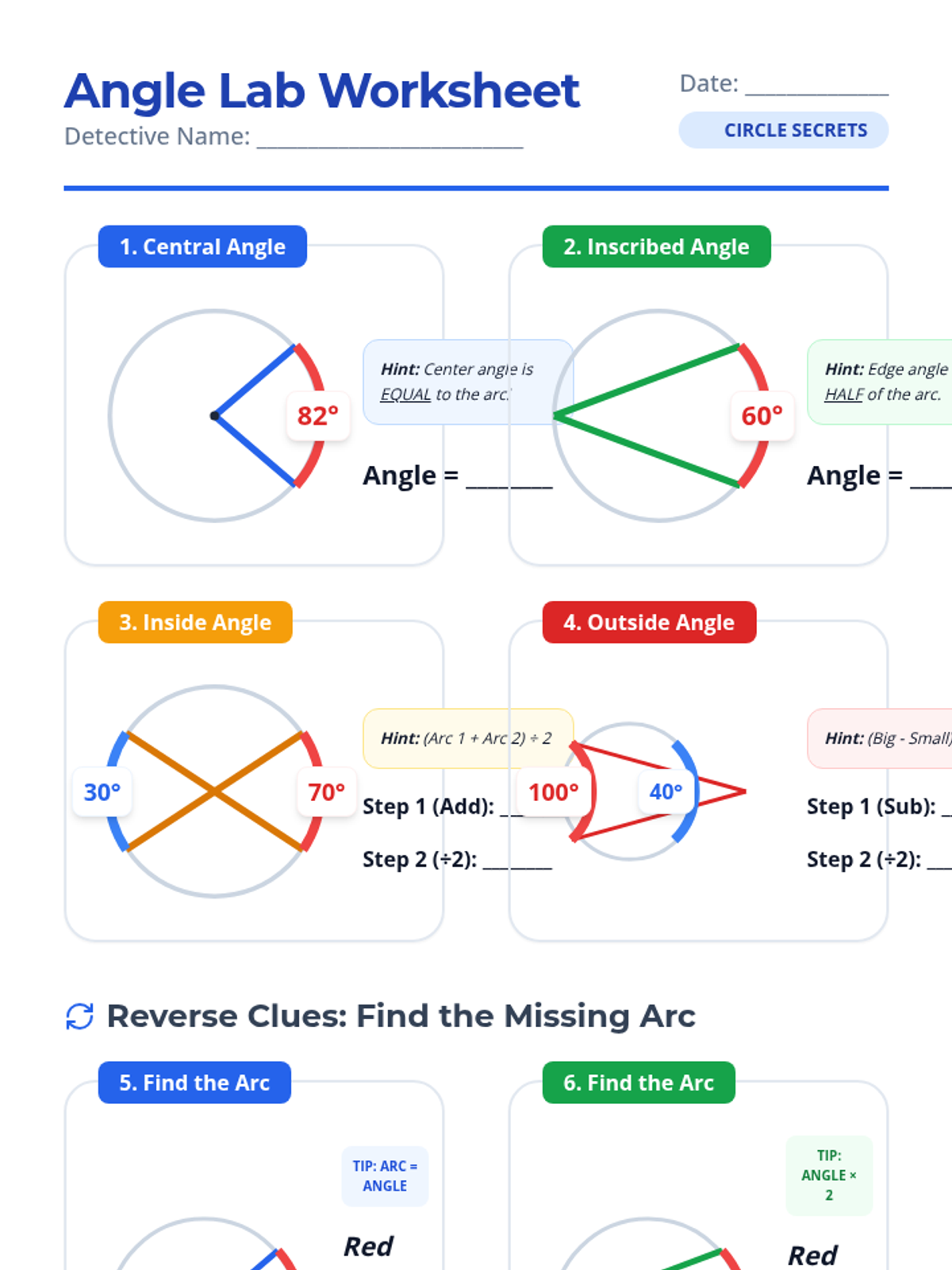
A guided exploration of circle angle relationships (central, inscribed, interior, and exterior) specifically designed with visual scaffolds and hints for students in a special education setting.
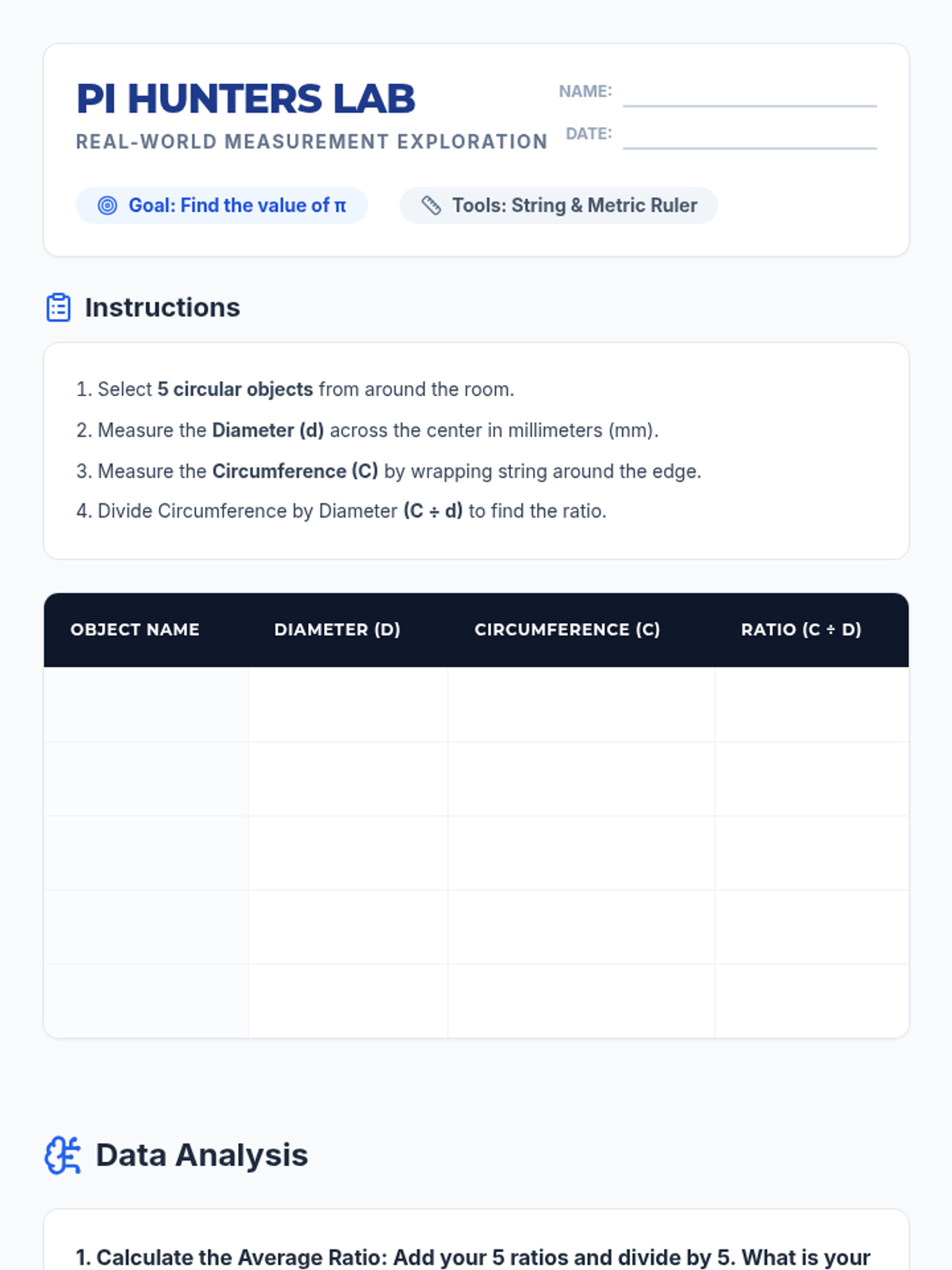
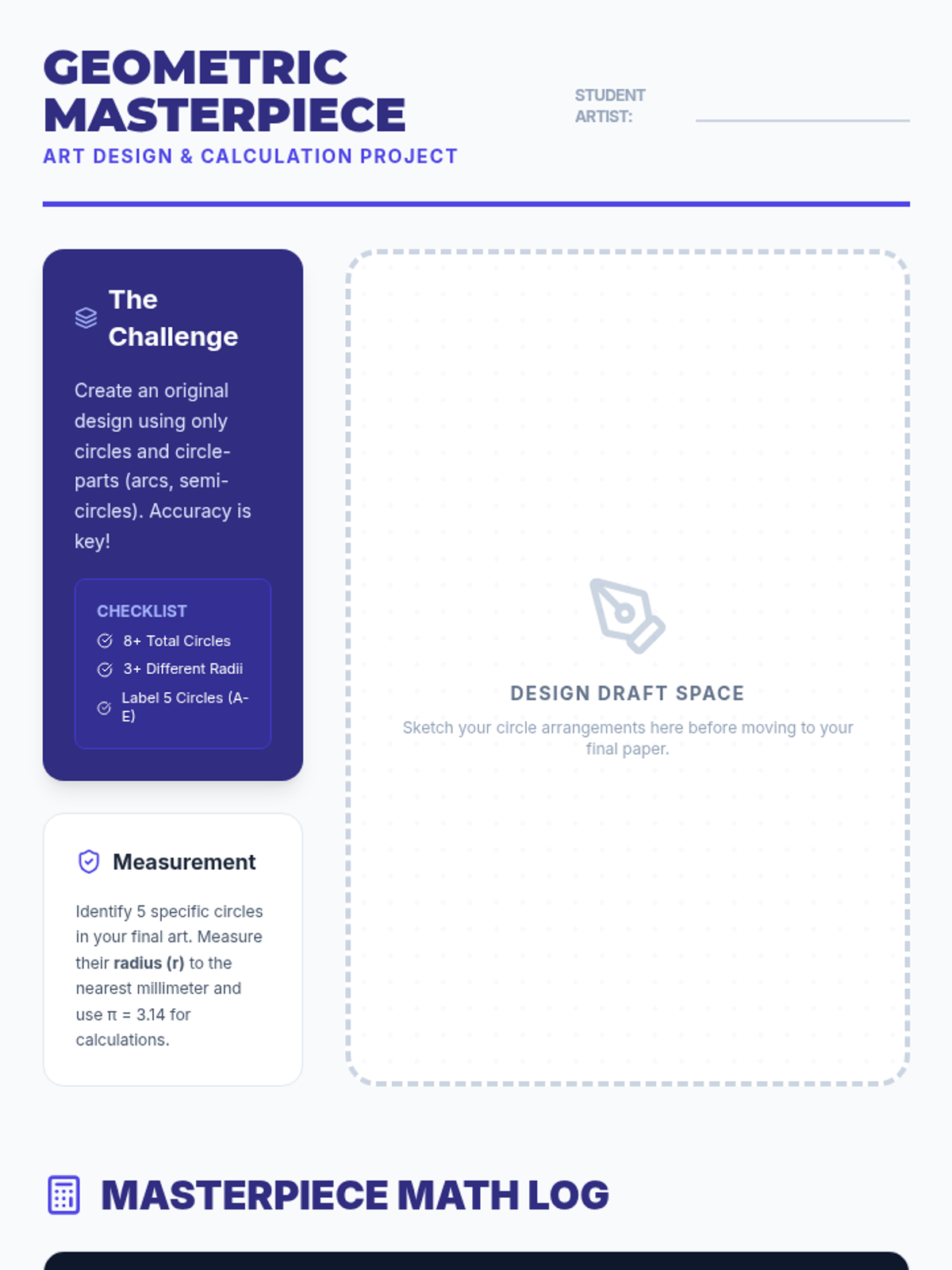
A hands-on geometry lesson where students explore the mathematical properties of circles through real-world measurement and creative geometric art design. Students discover the relationship between circumference and diameter while applying area formulas to their own masterpieces.
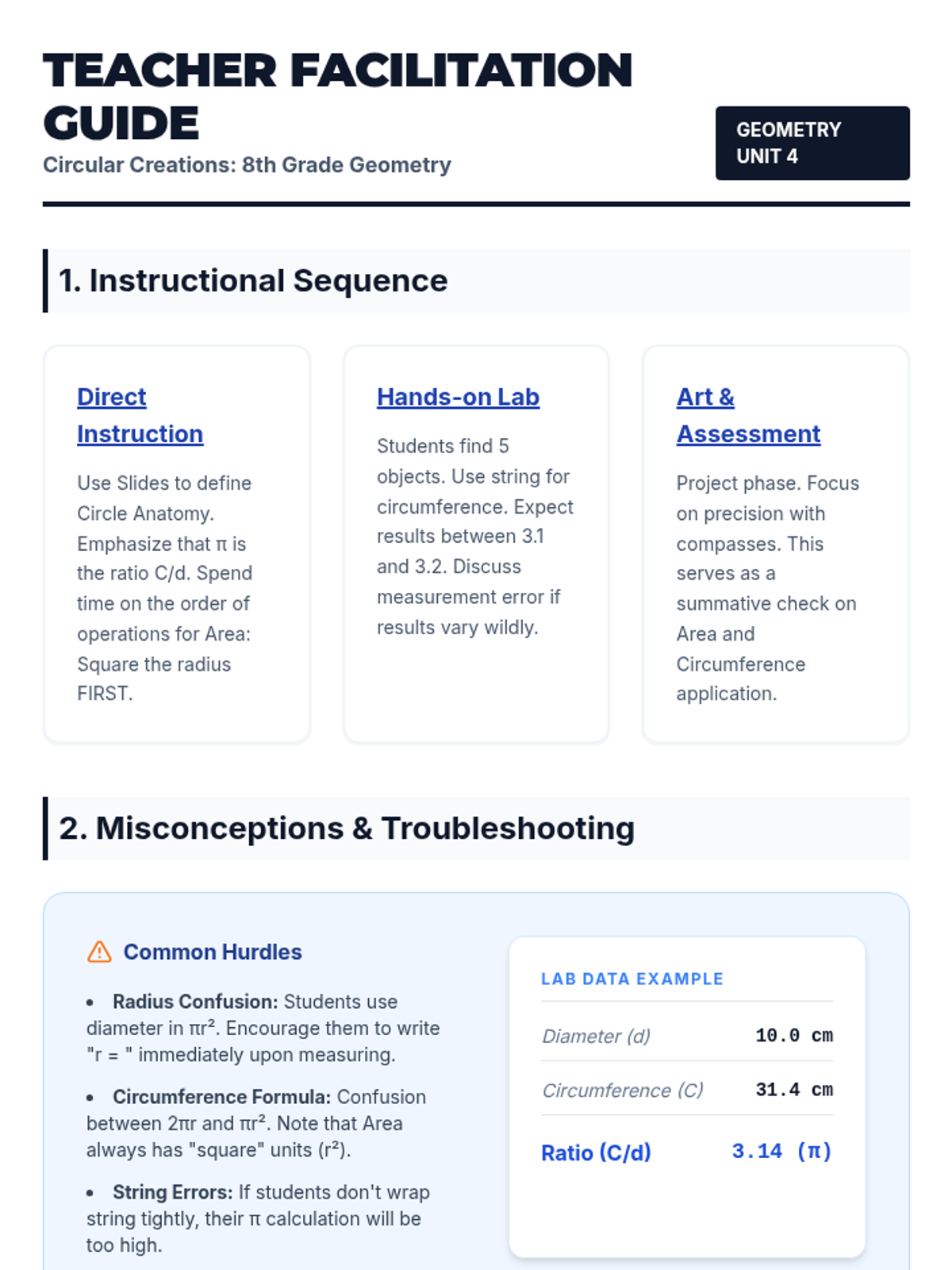
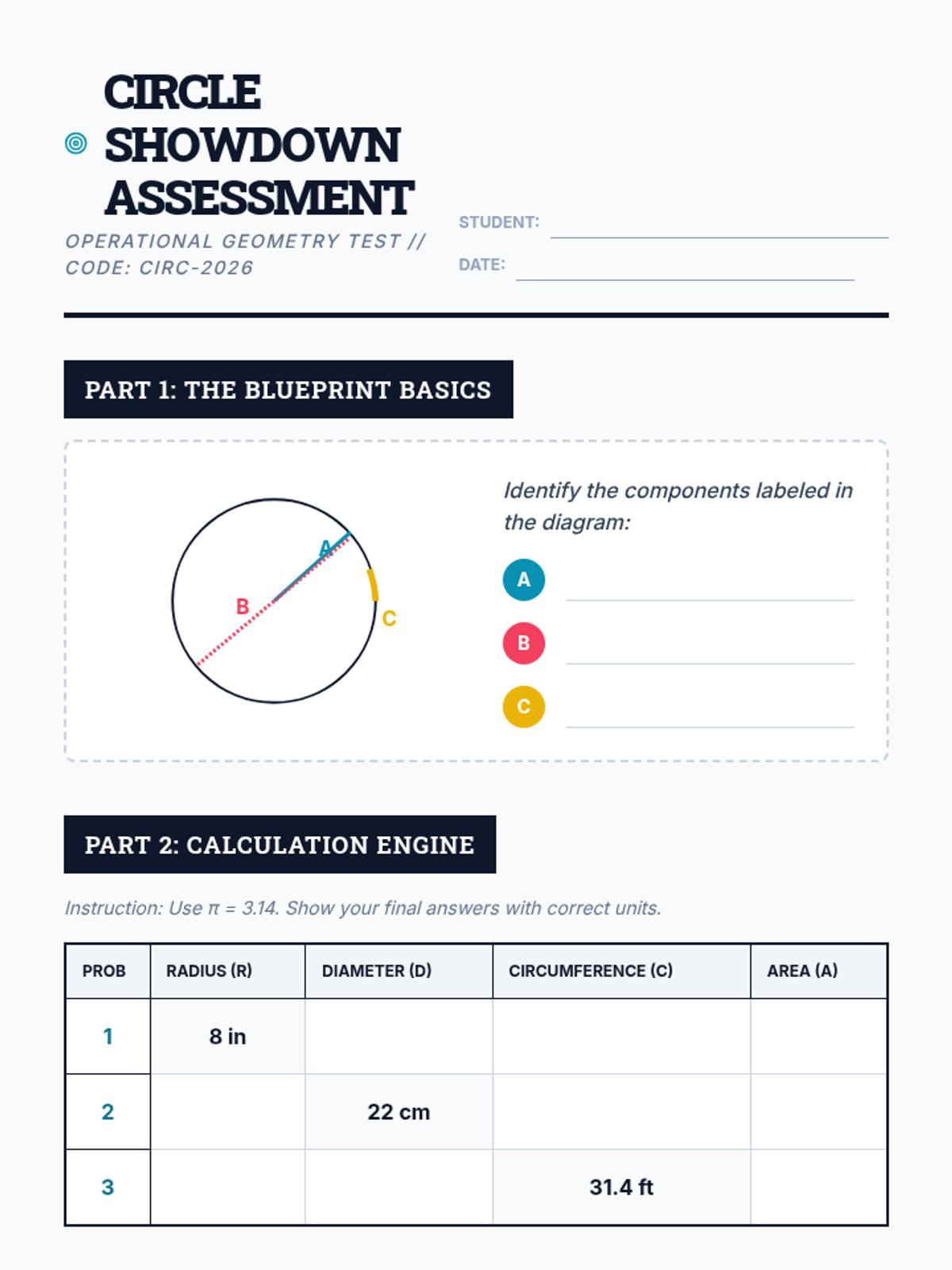
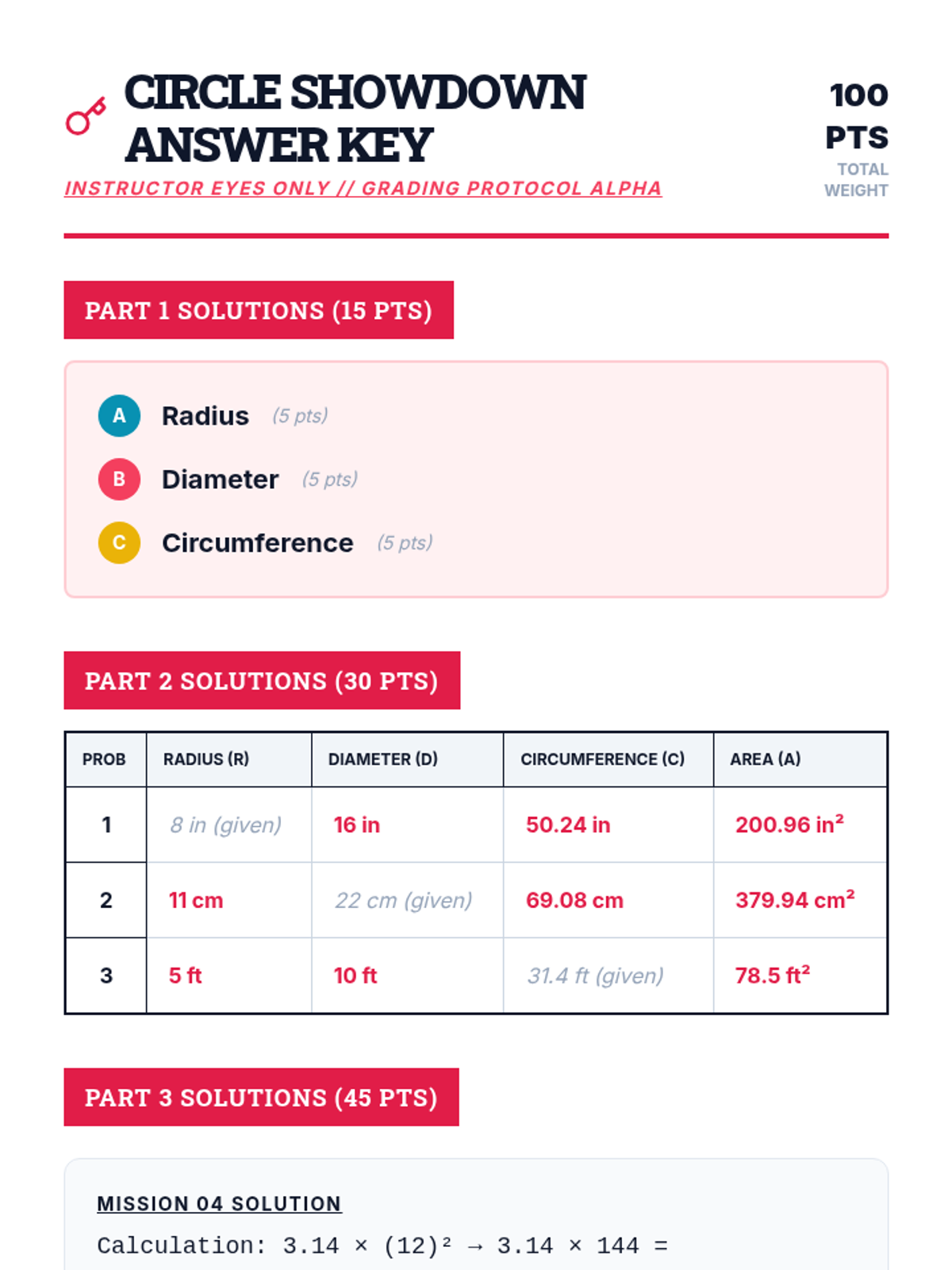
A comprehensive lesson on circles covering radius, diameter, circumference, and area through a visual slide deck and a summative assessment.
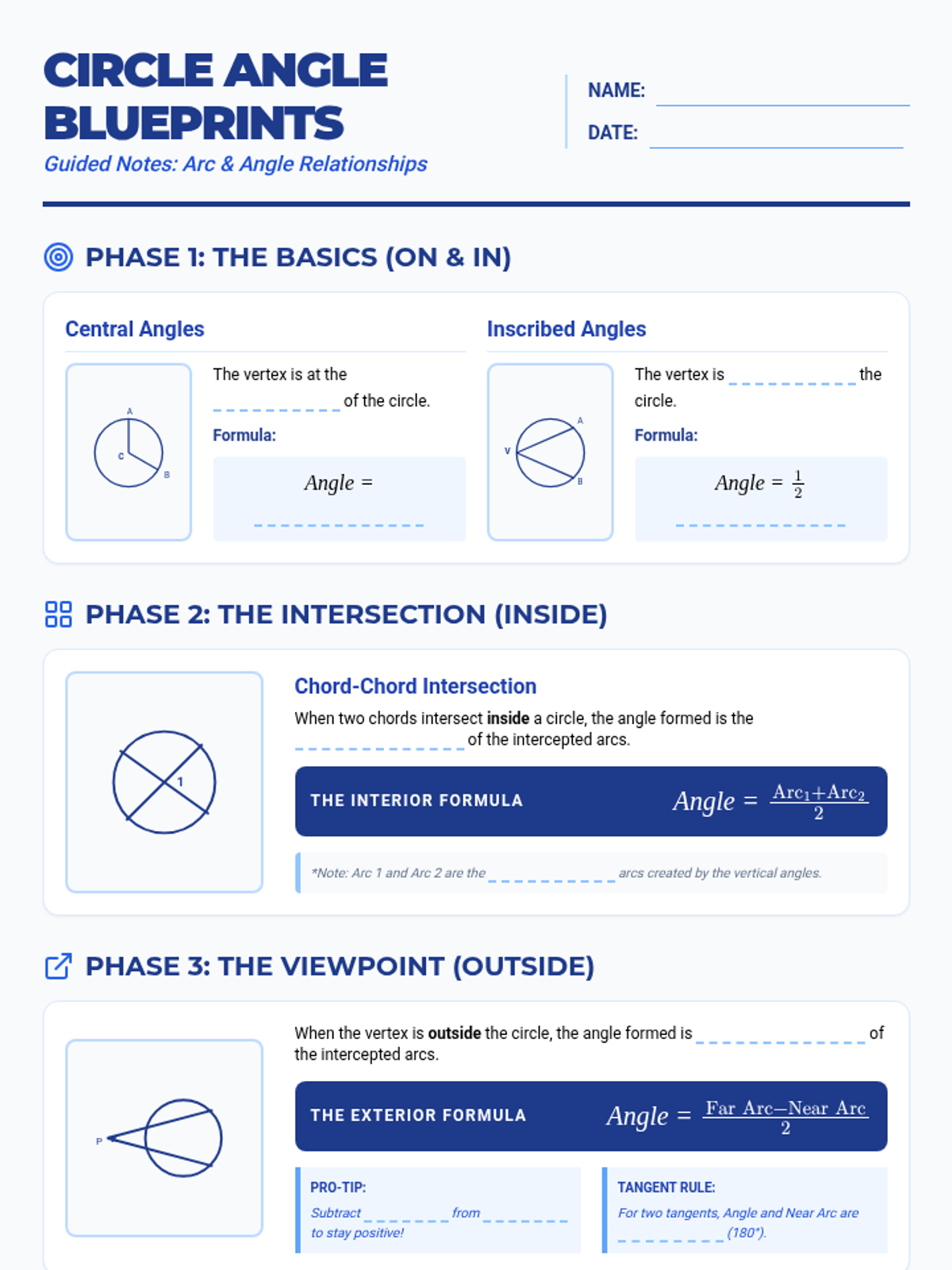
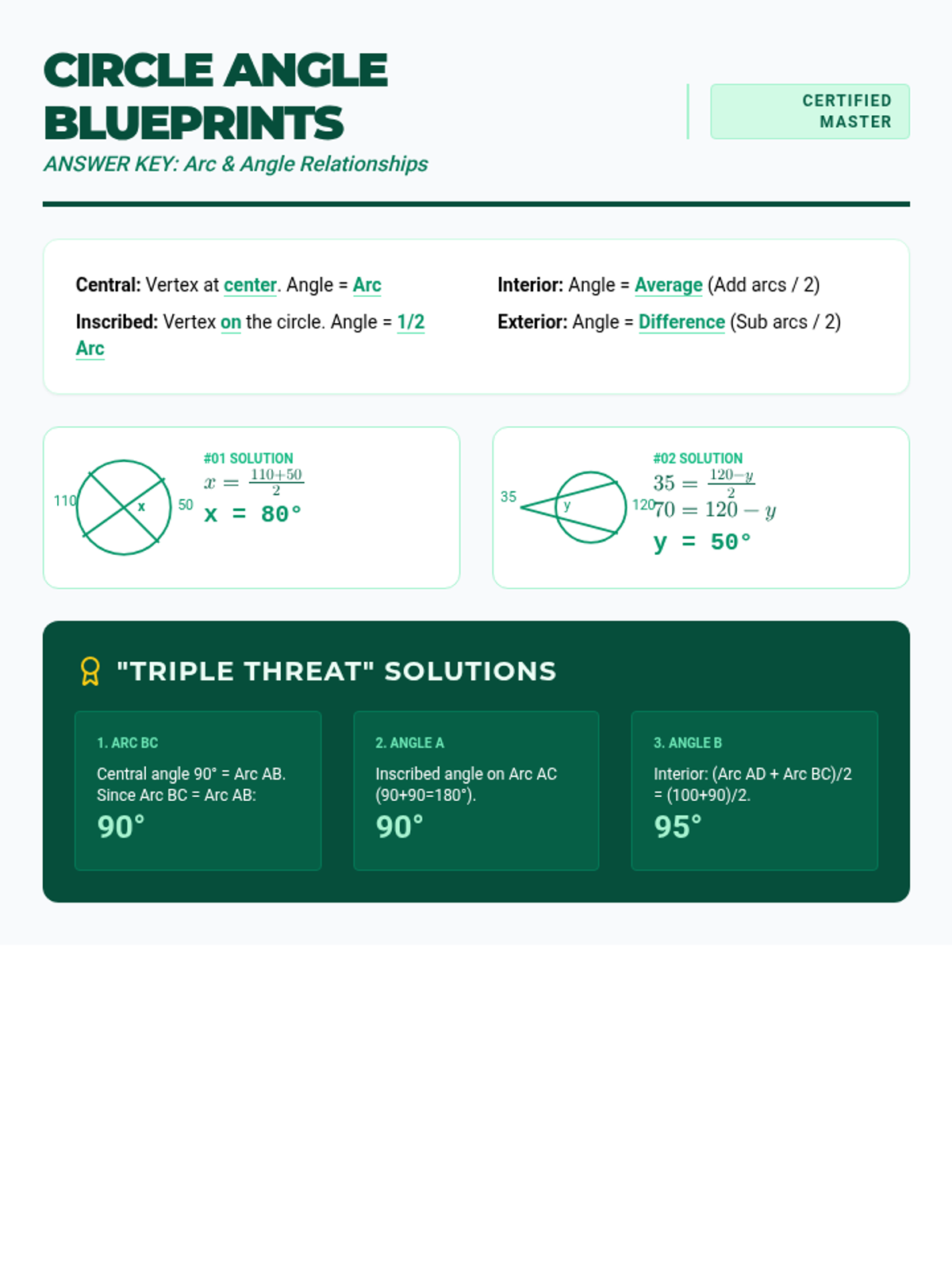
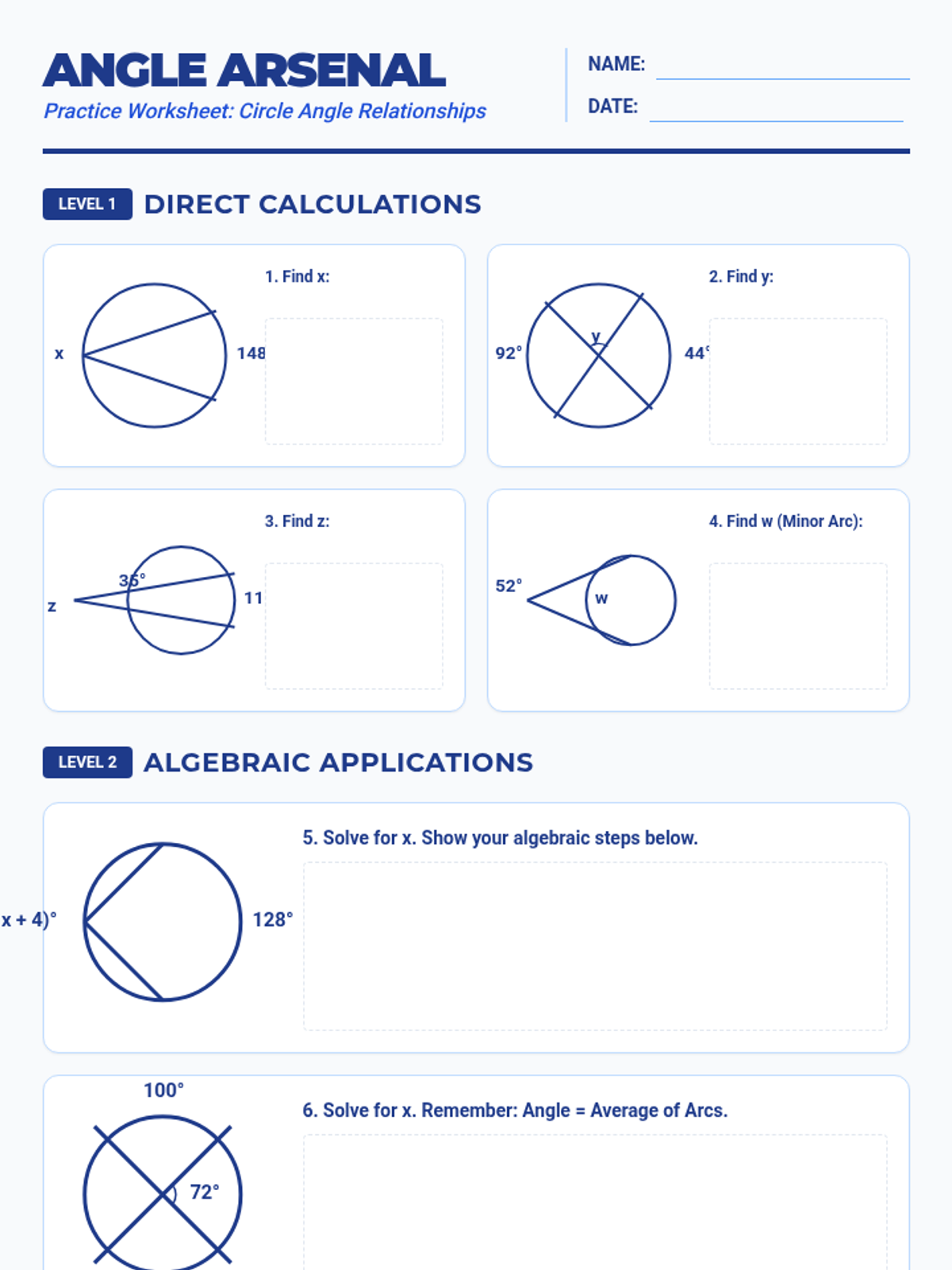
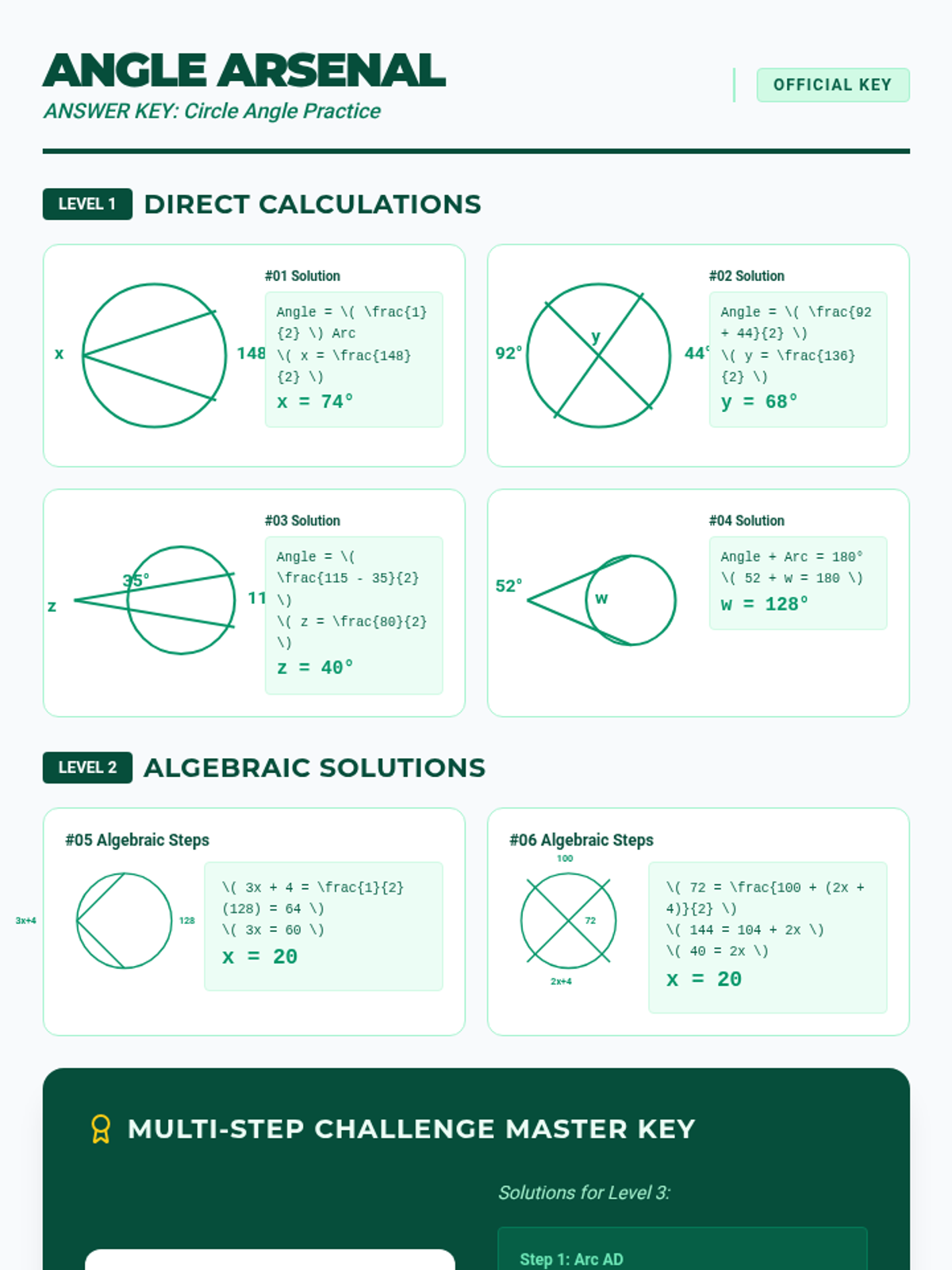
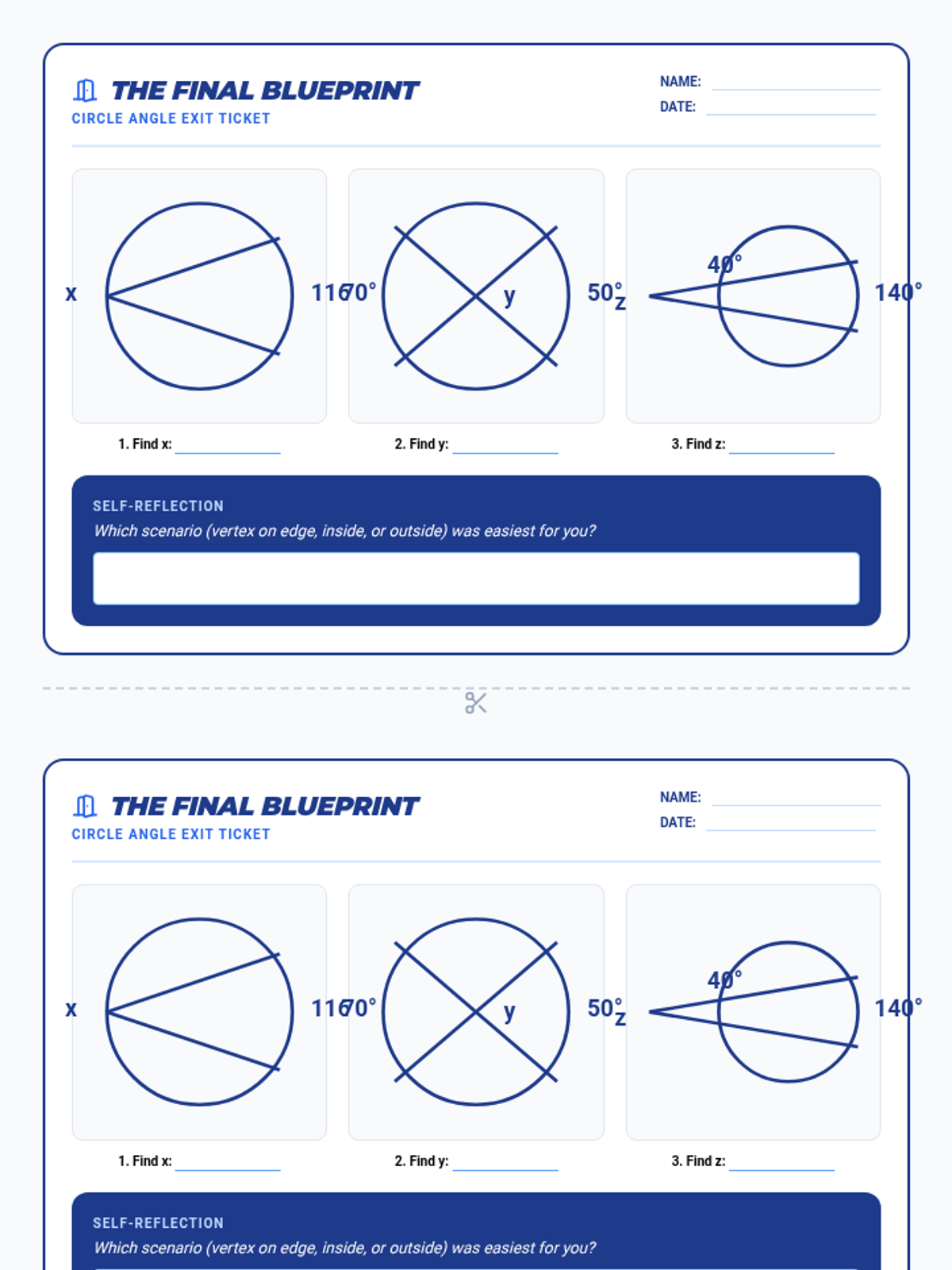
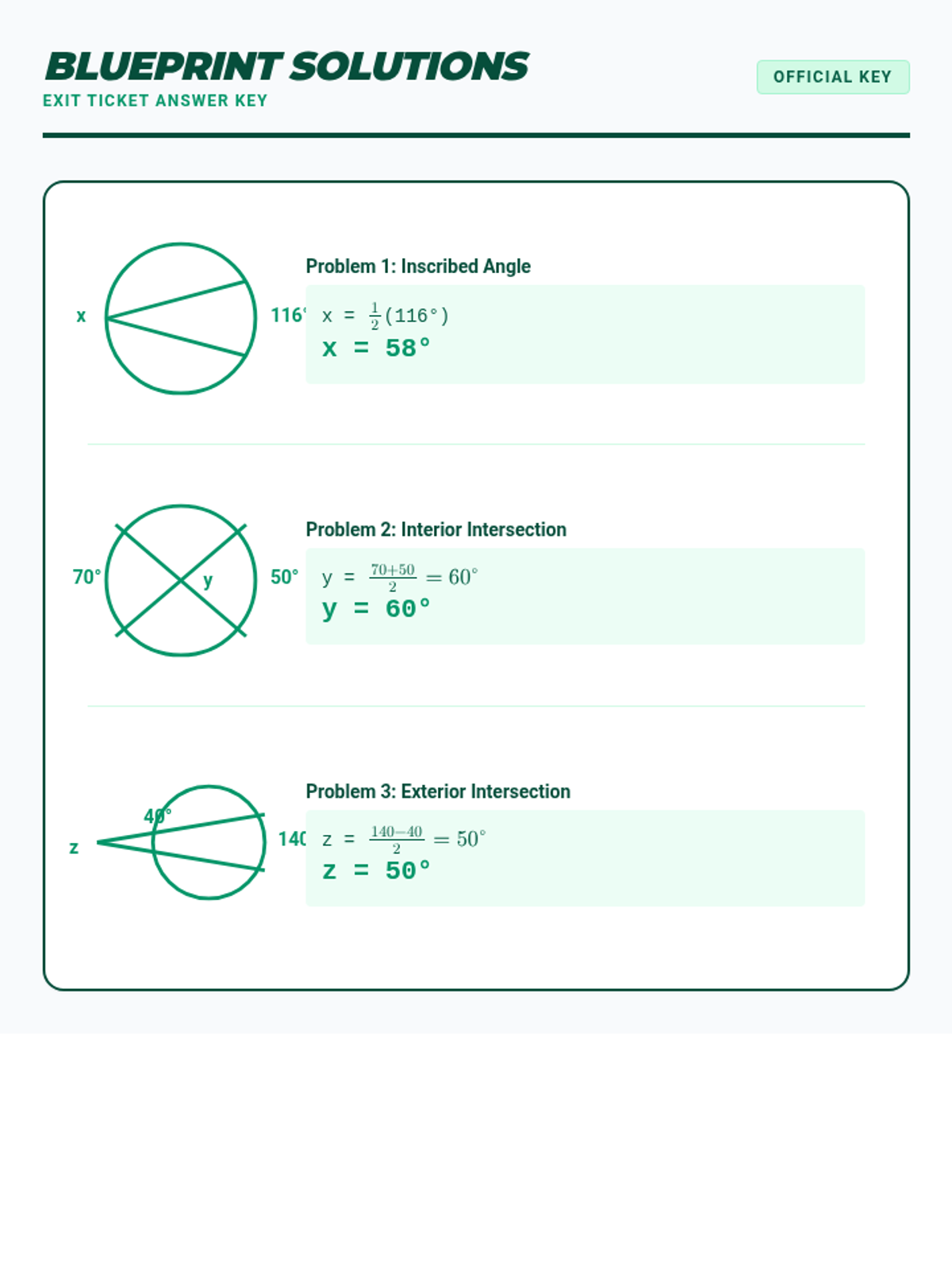
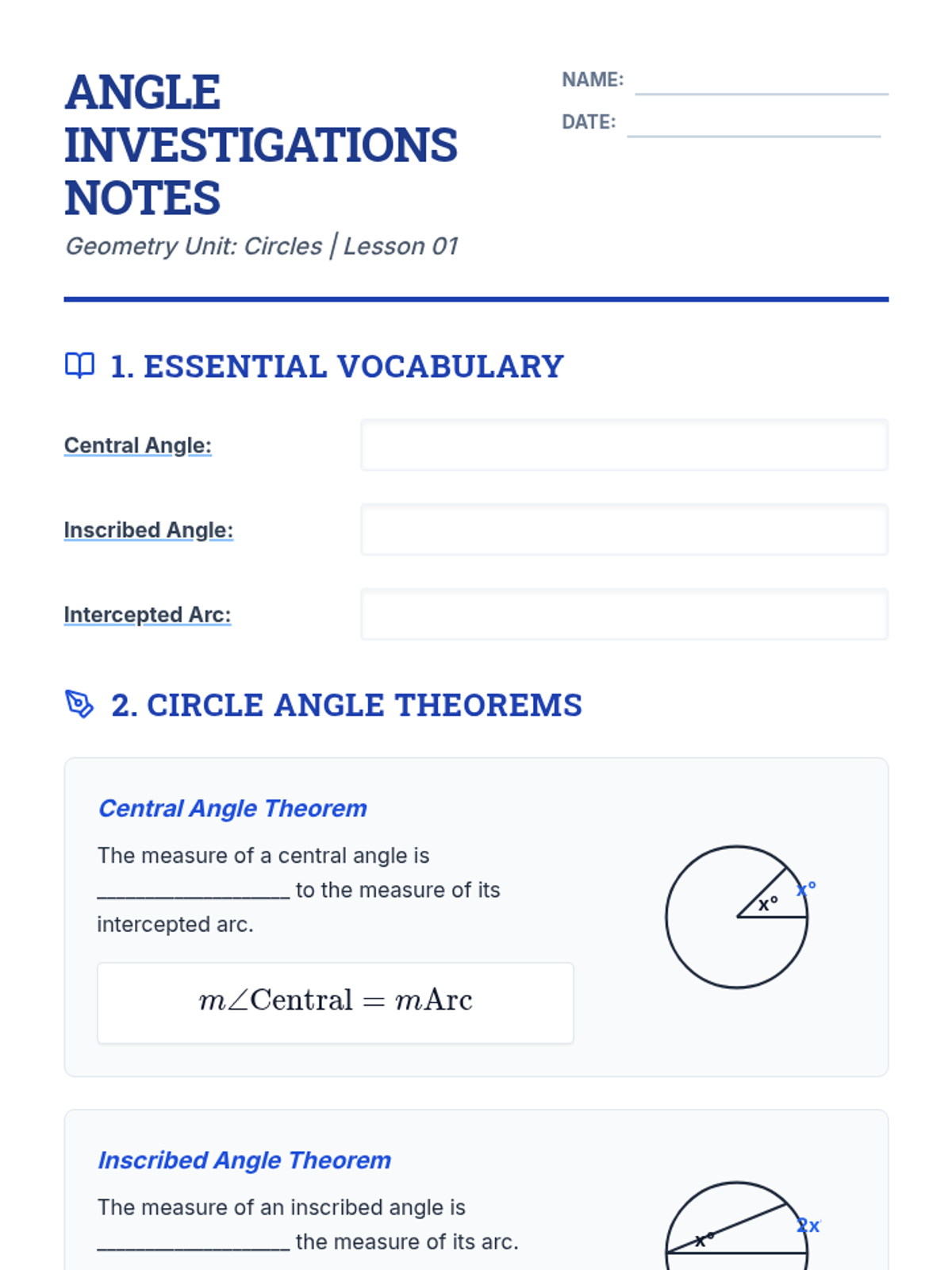
A comprehensive lesson on circle angle relationships, covering central, inscribed, interior, and exterior angles with guided notes and visual examples.
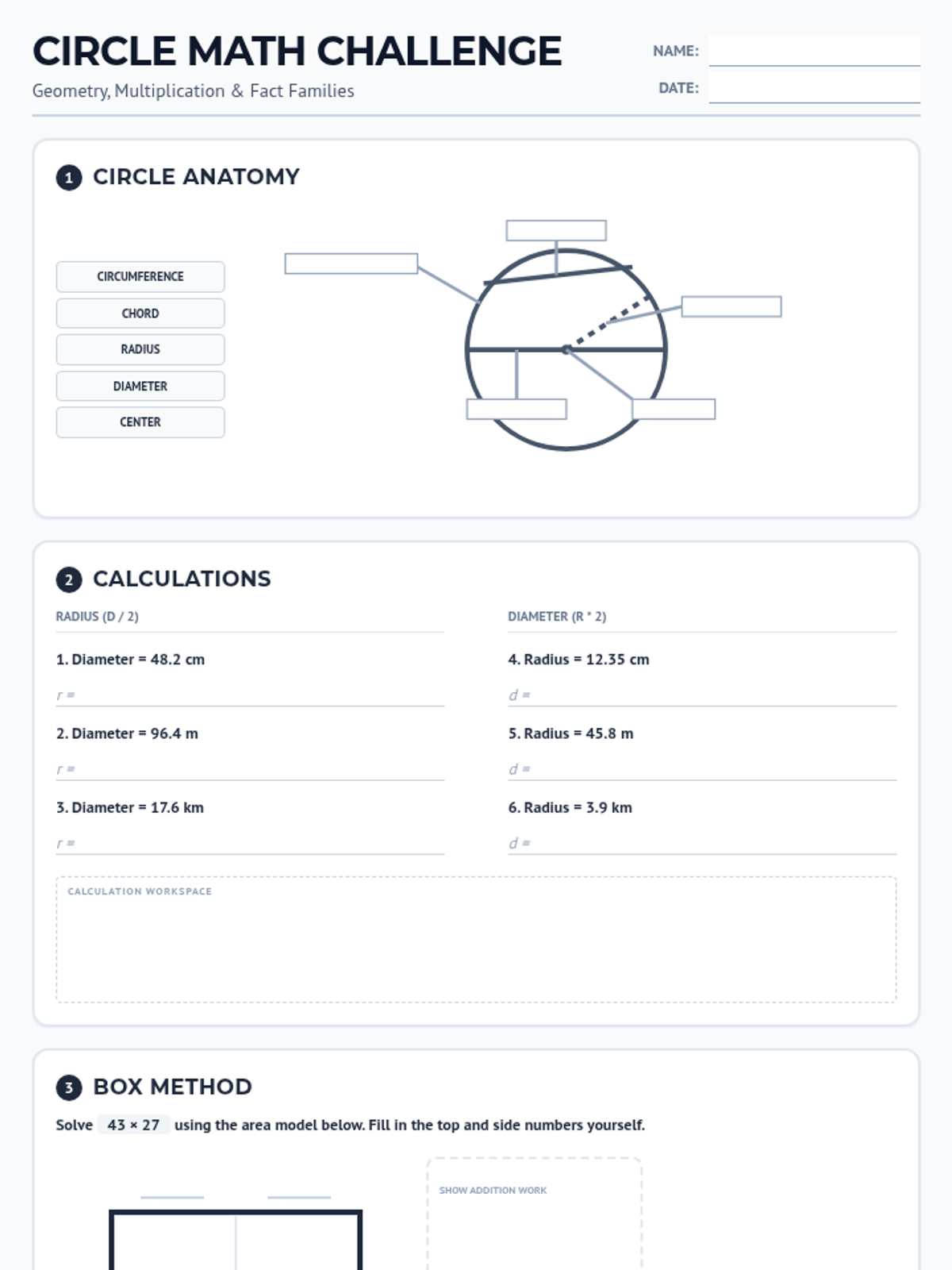
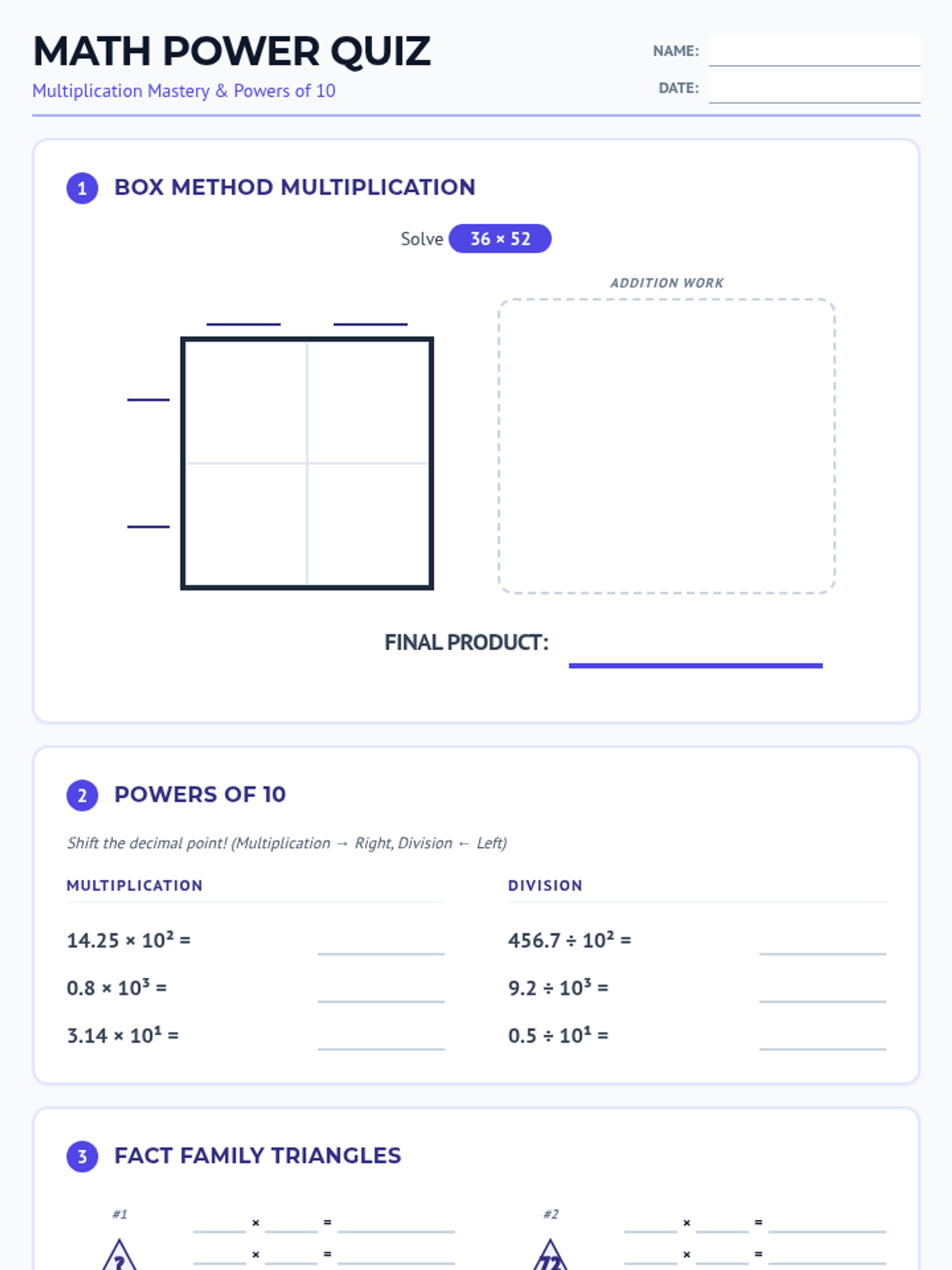
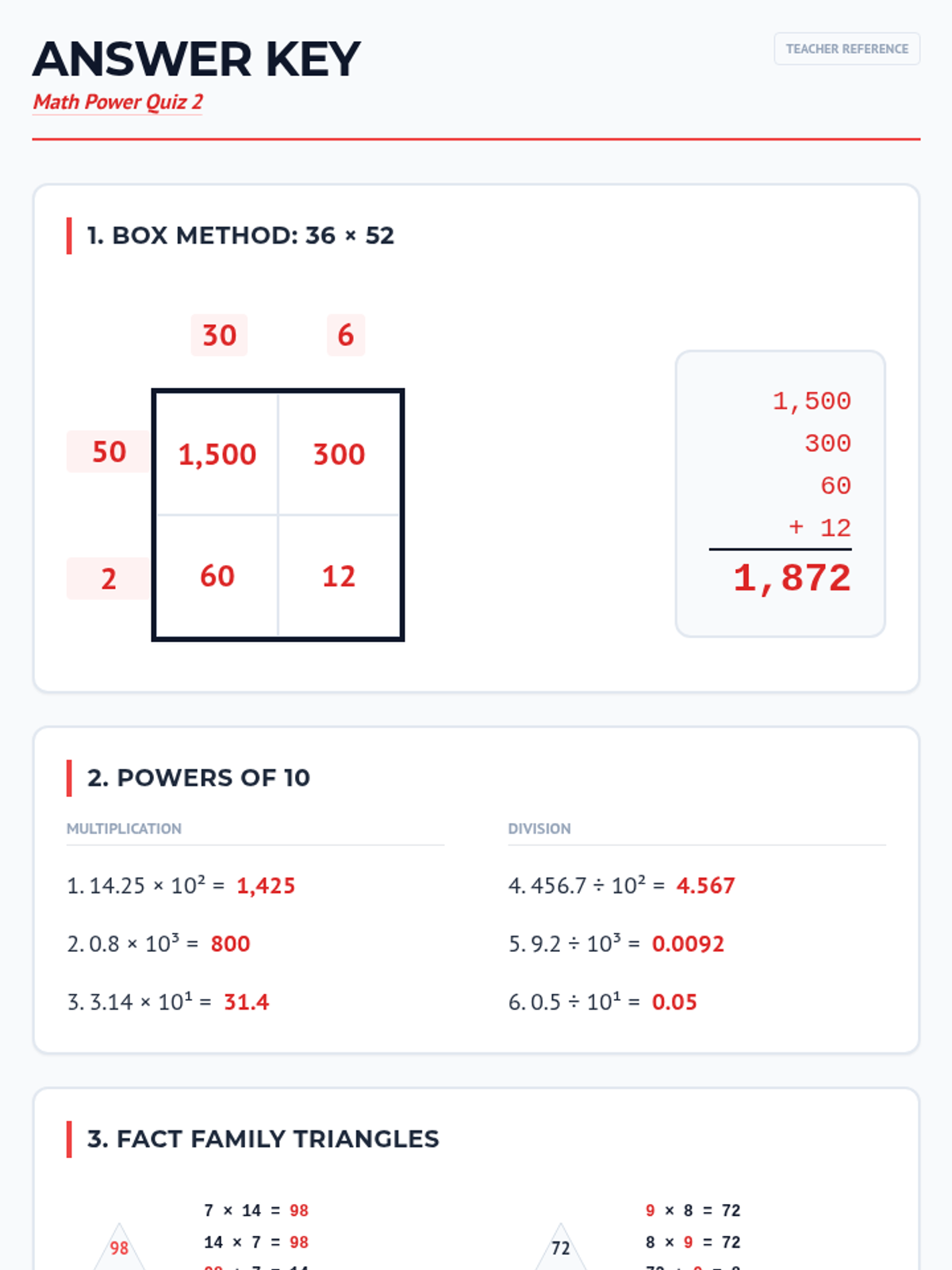
A comprehensive assessment covering circle geometry, area model multiplication, and multiplication/division fact families. Students will demonstrate their understanding of geometric parts, calculation skills, and algebraic relationships.
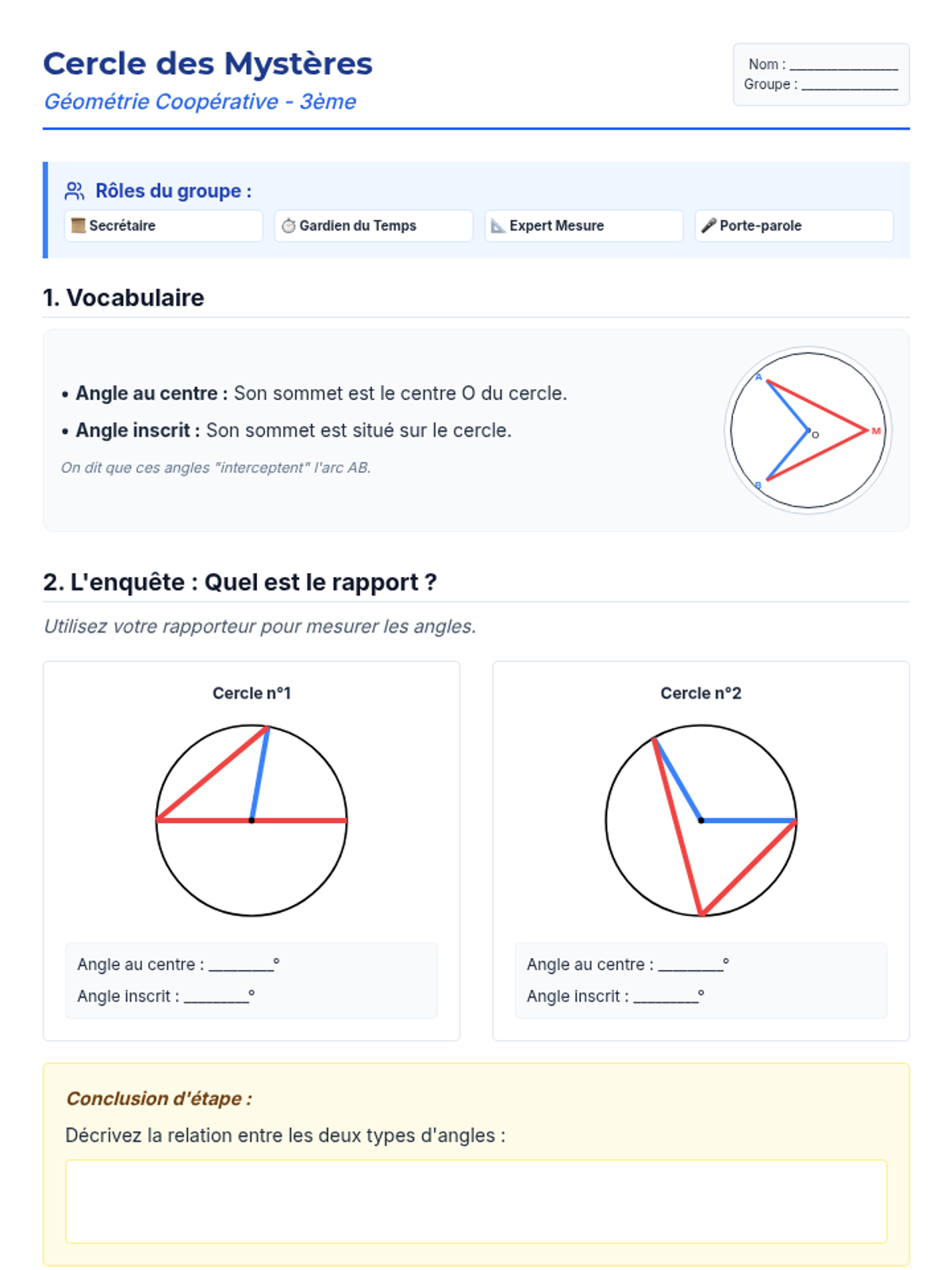
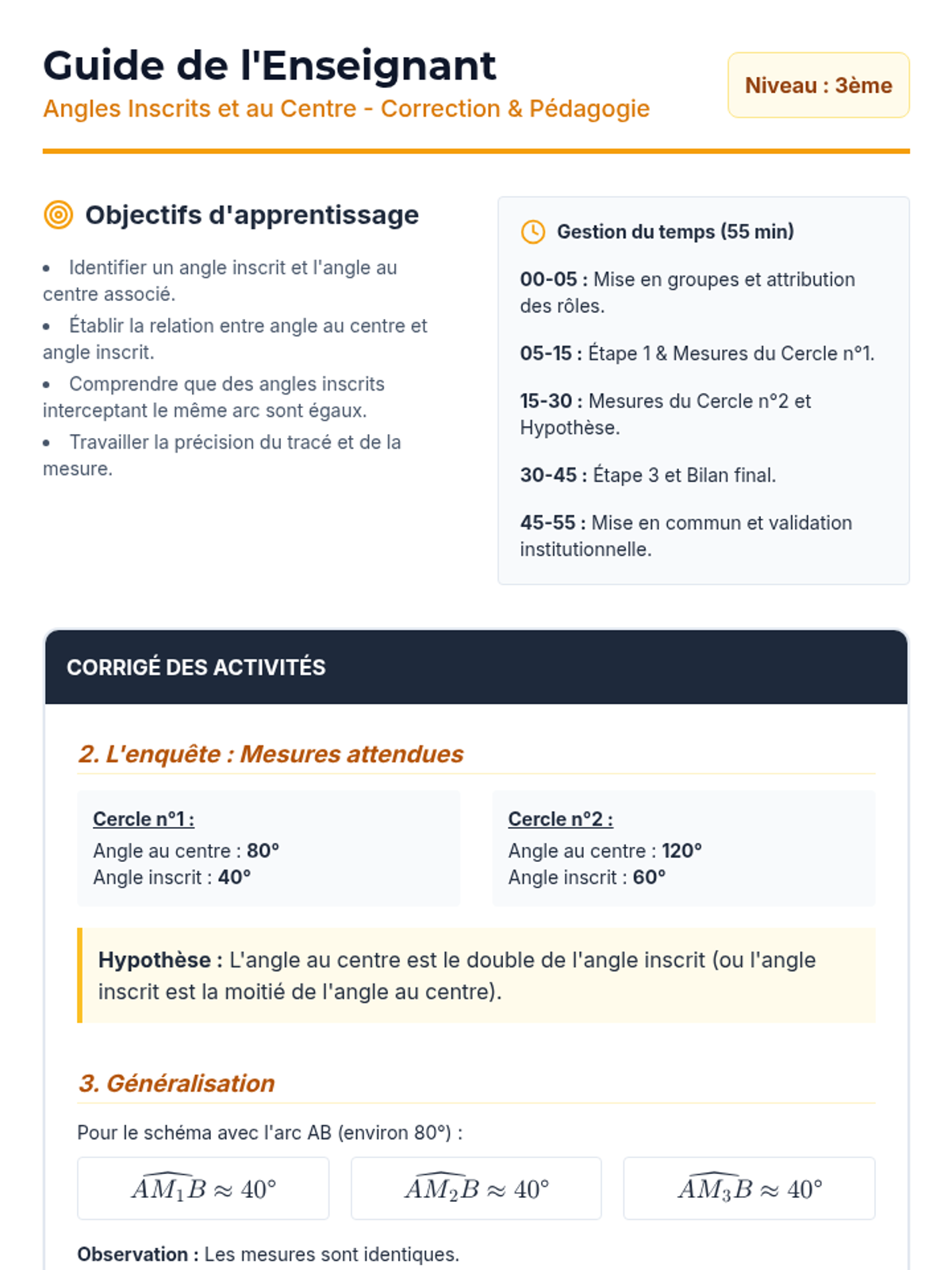
Une séance coopérative pour découvrir les propriétés des angles inscrits et au centre dans un cercle, conçue pour les élèves de 3ème.
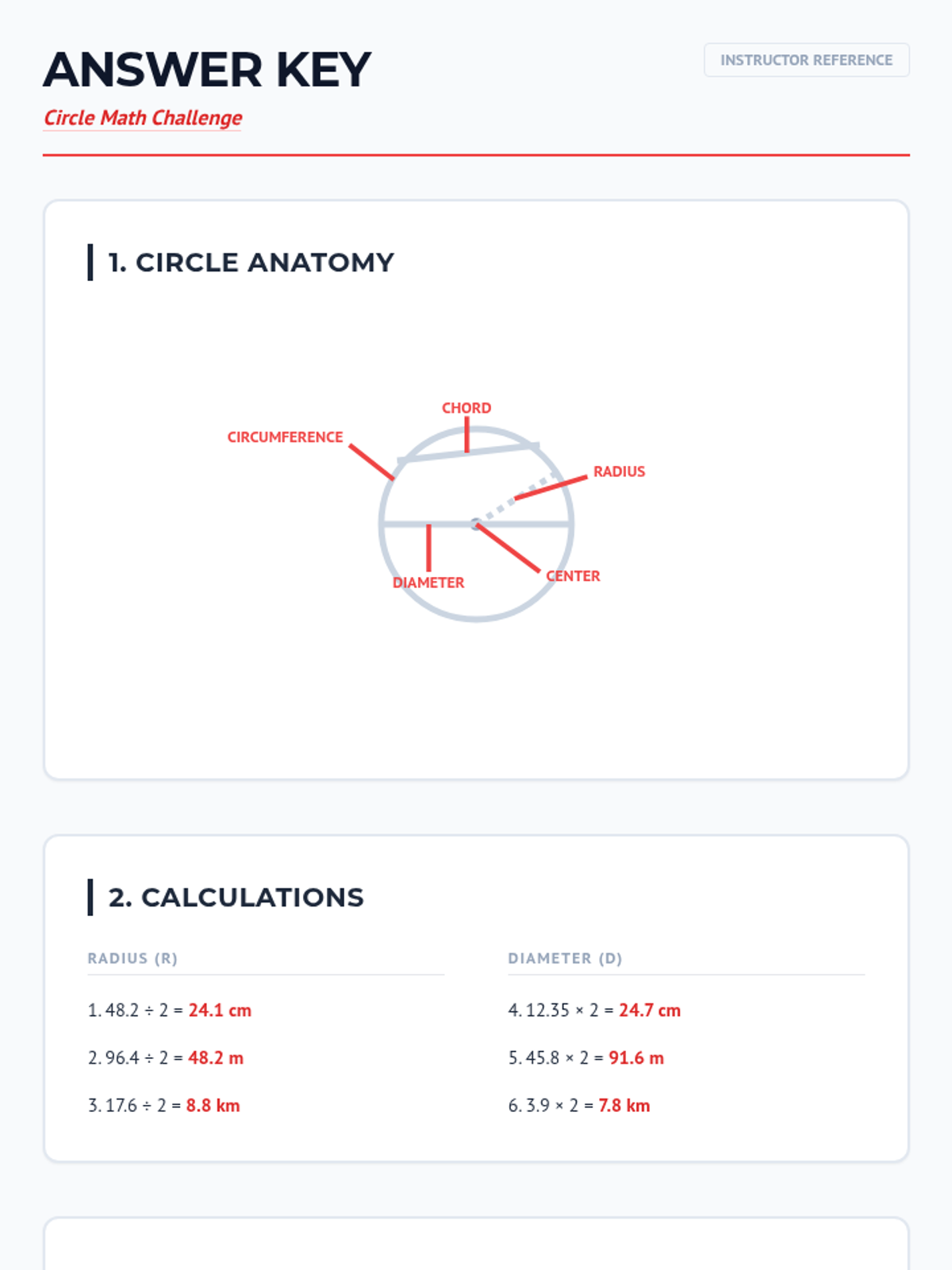
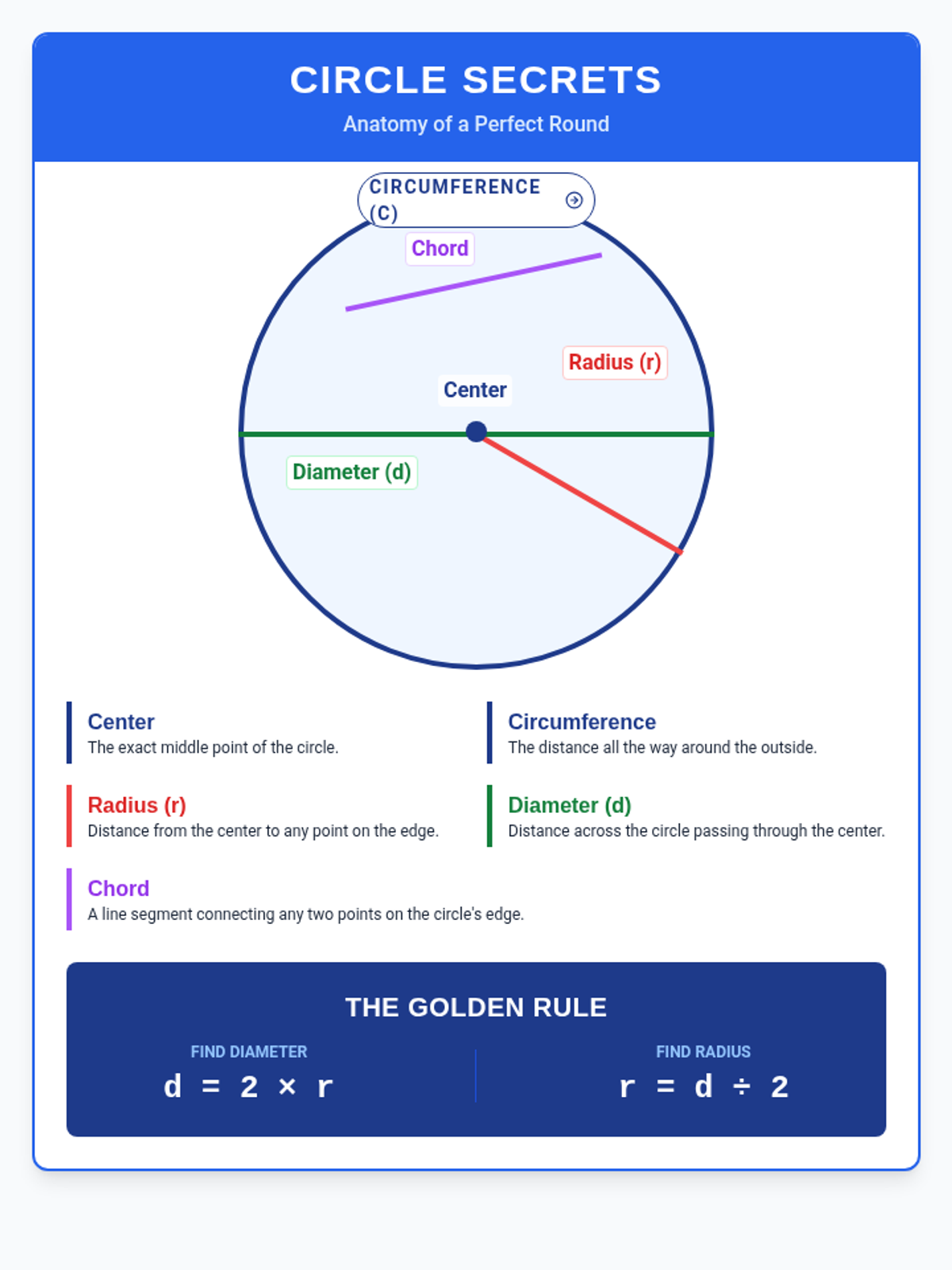
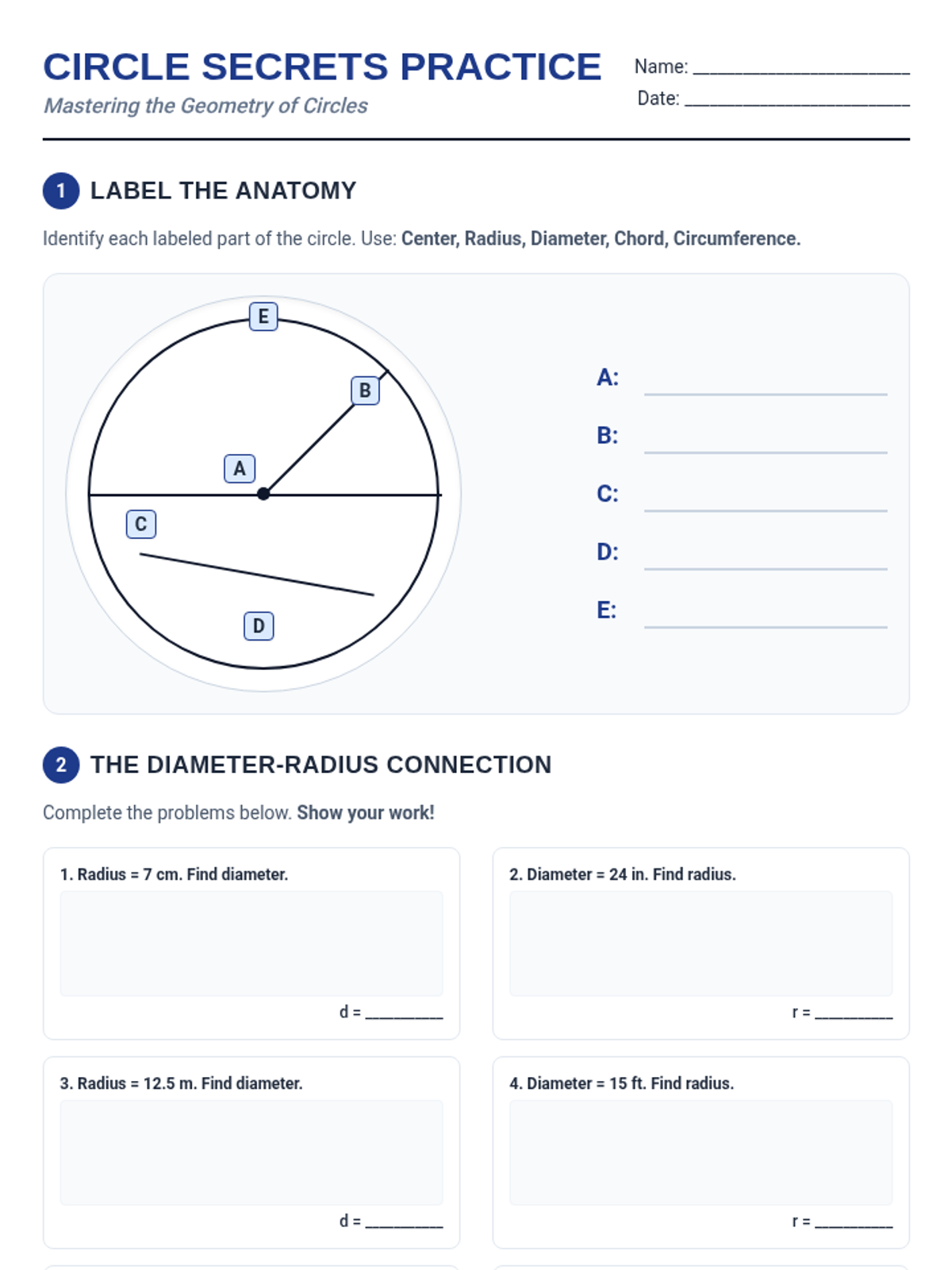
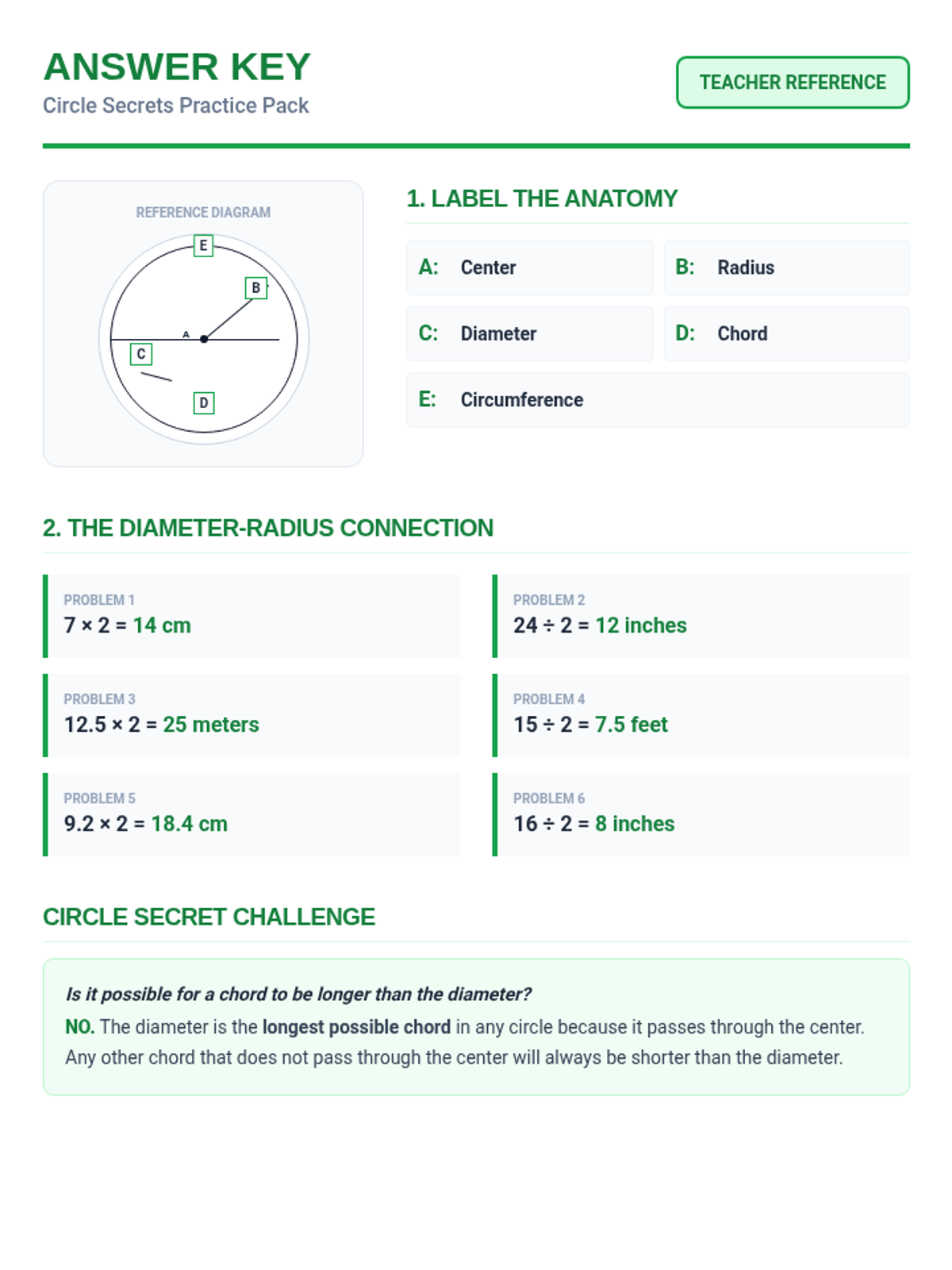
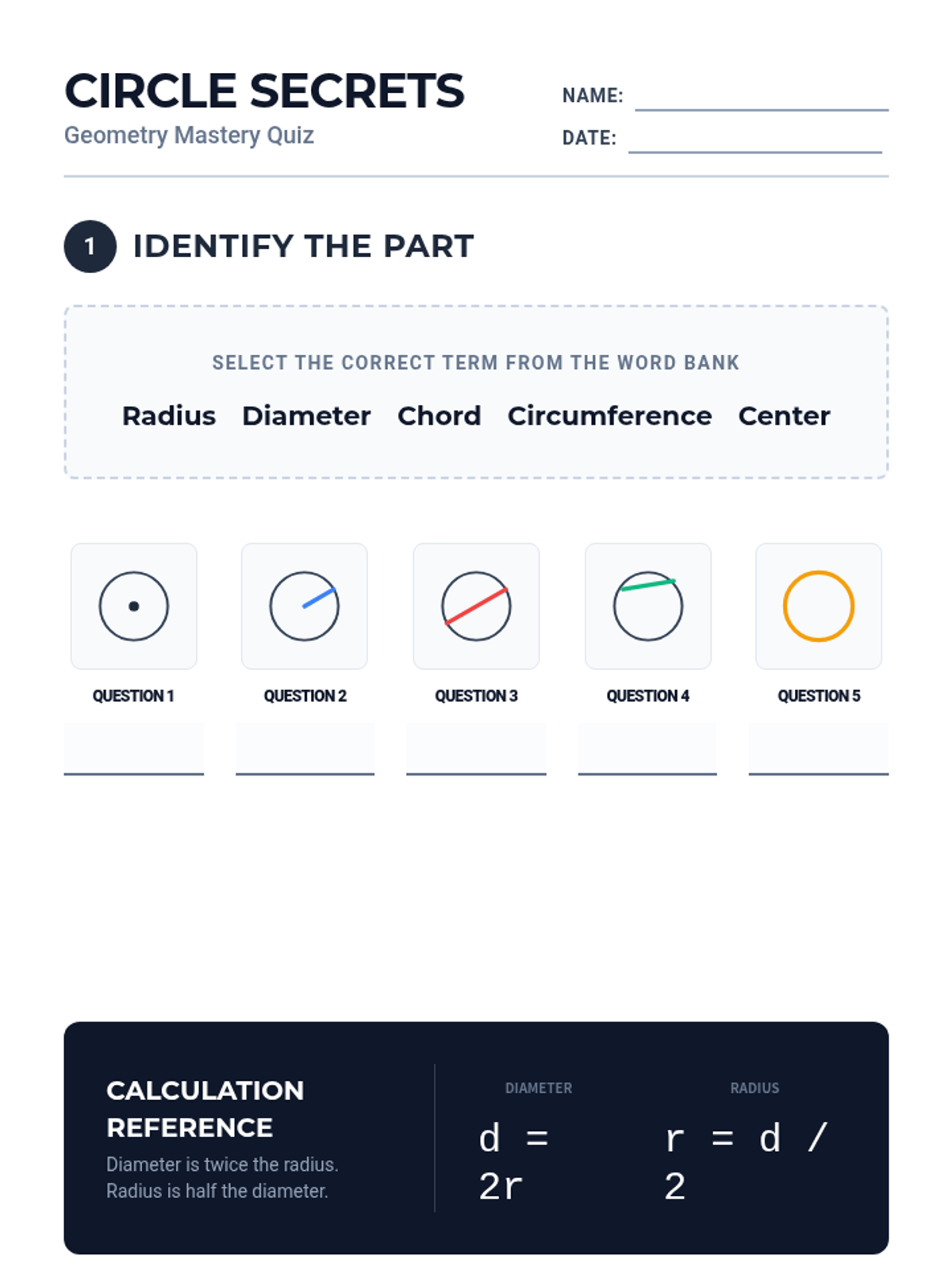
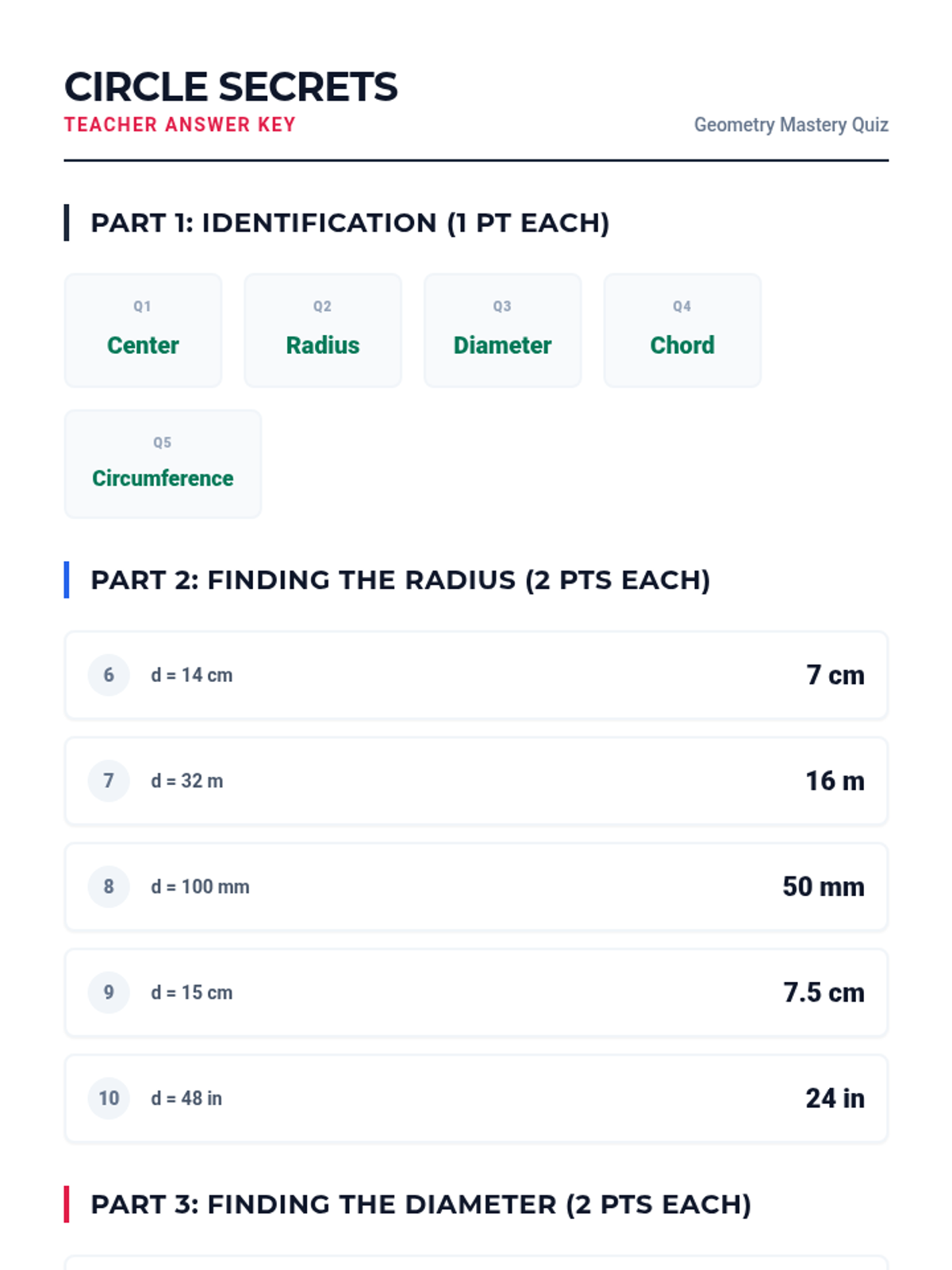
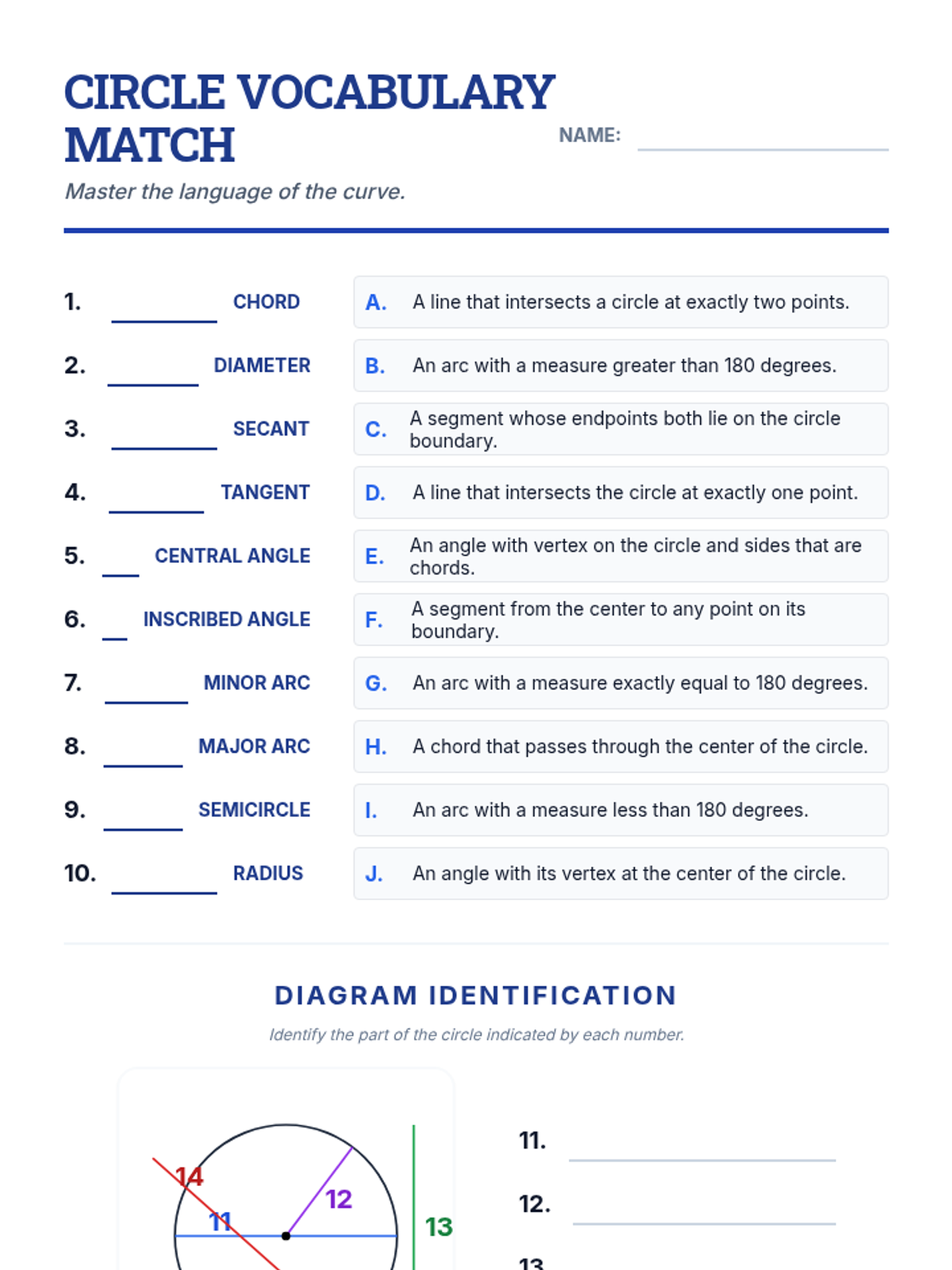
A 30-minute mini-lesson focusing on identifying the parts of a circle (radius, diameter, chord, center, and circumference) and calculating measurements between radius and diameter.
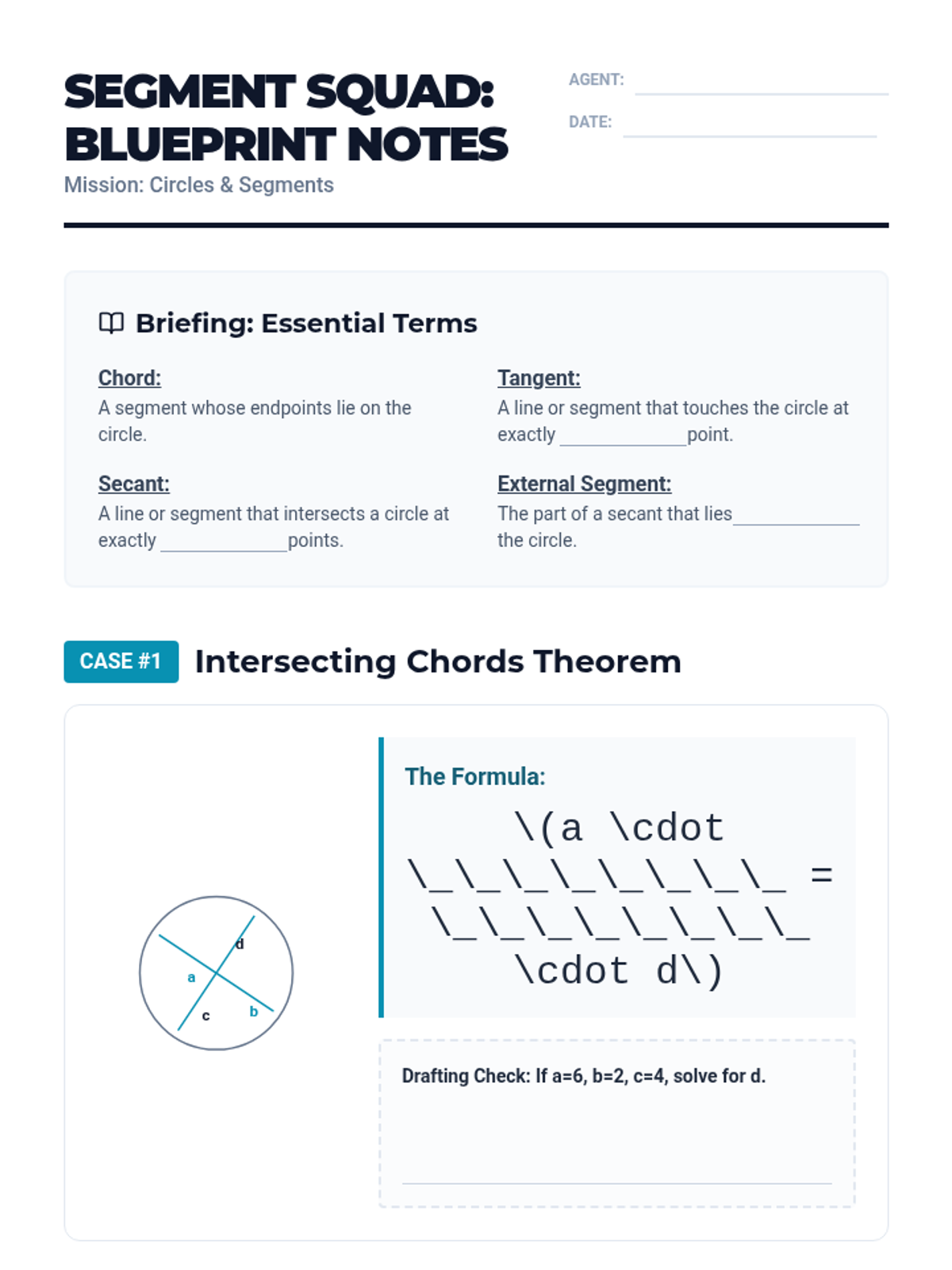
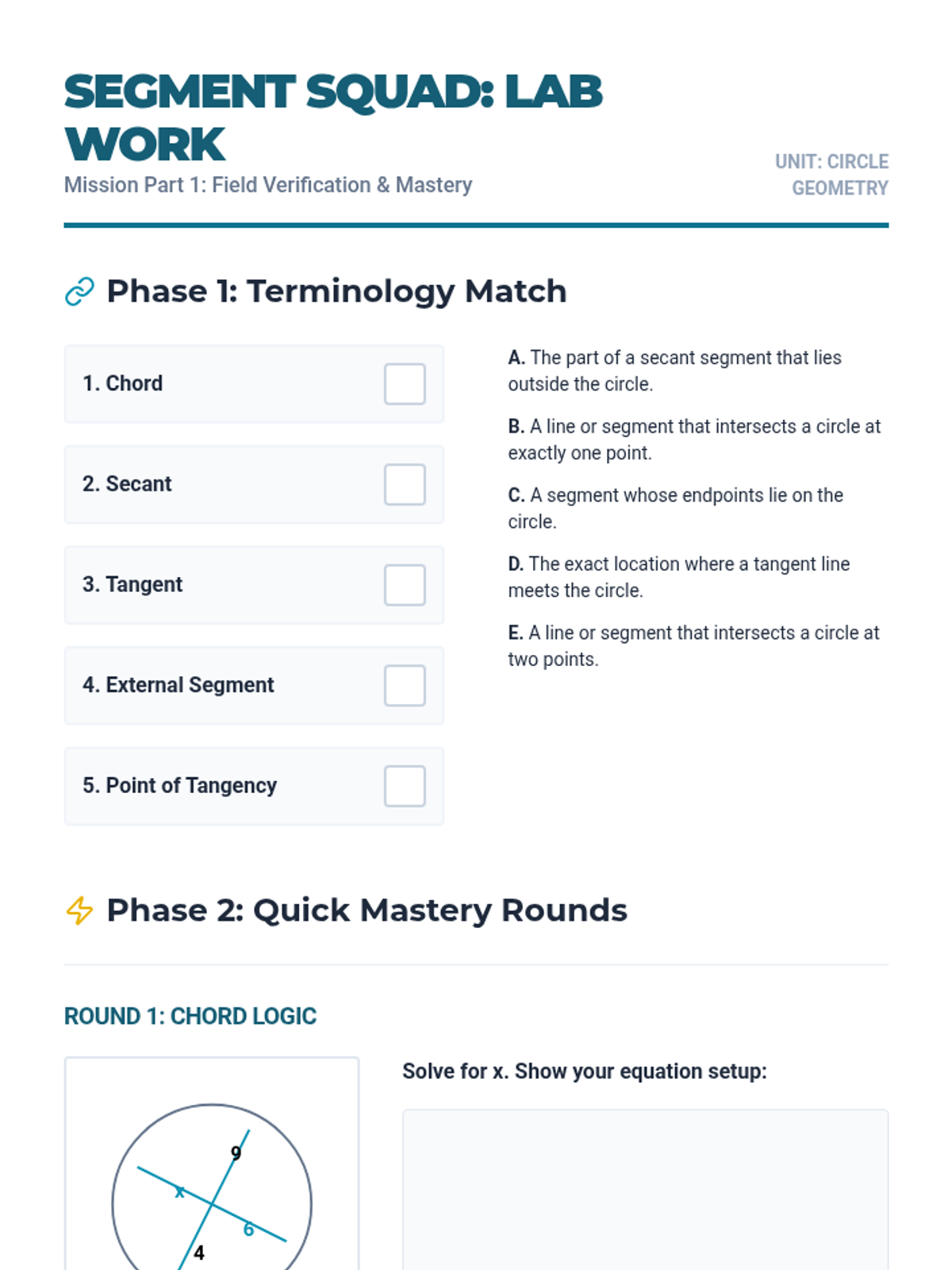
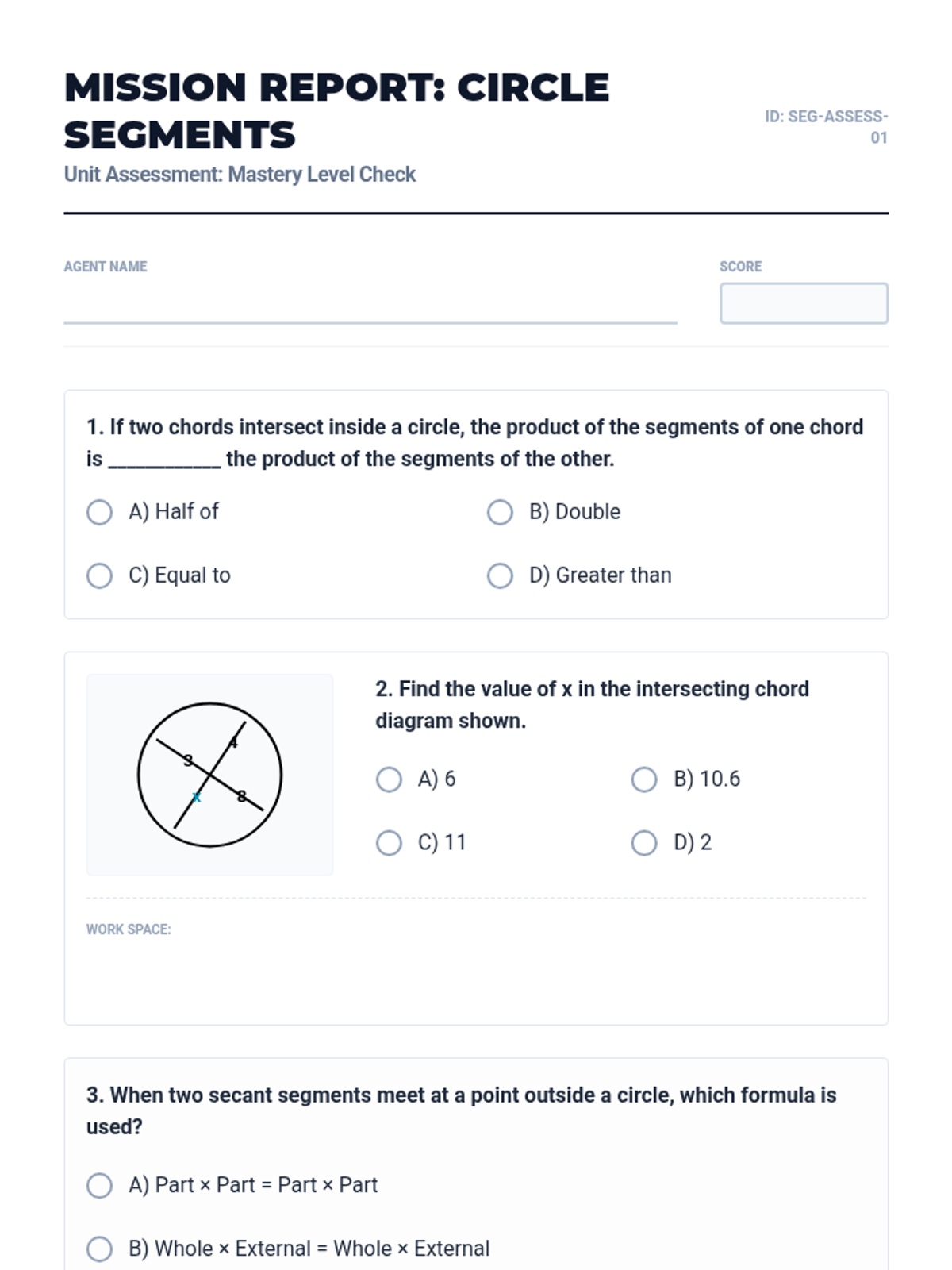
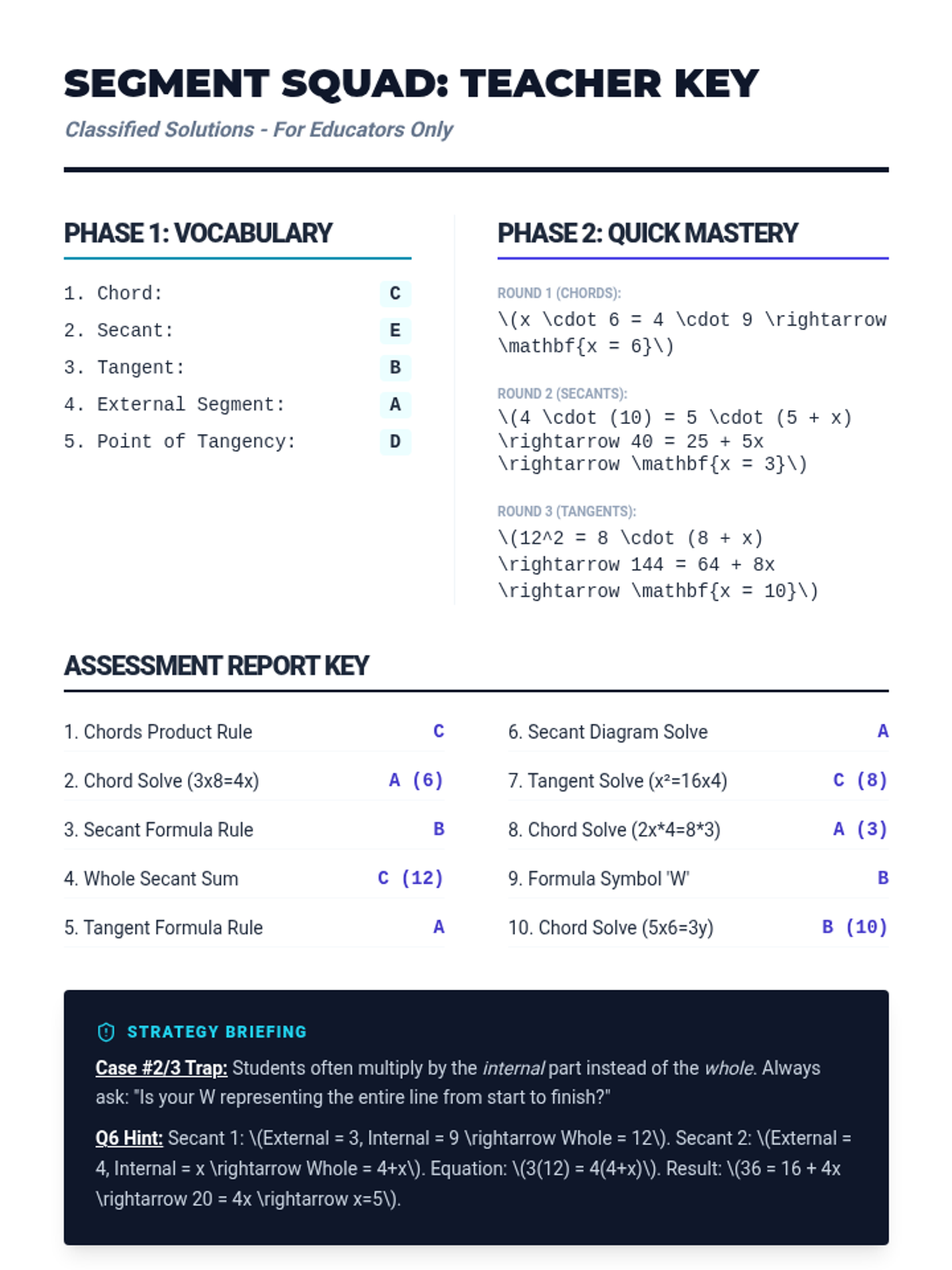
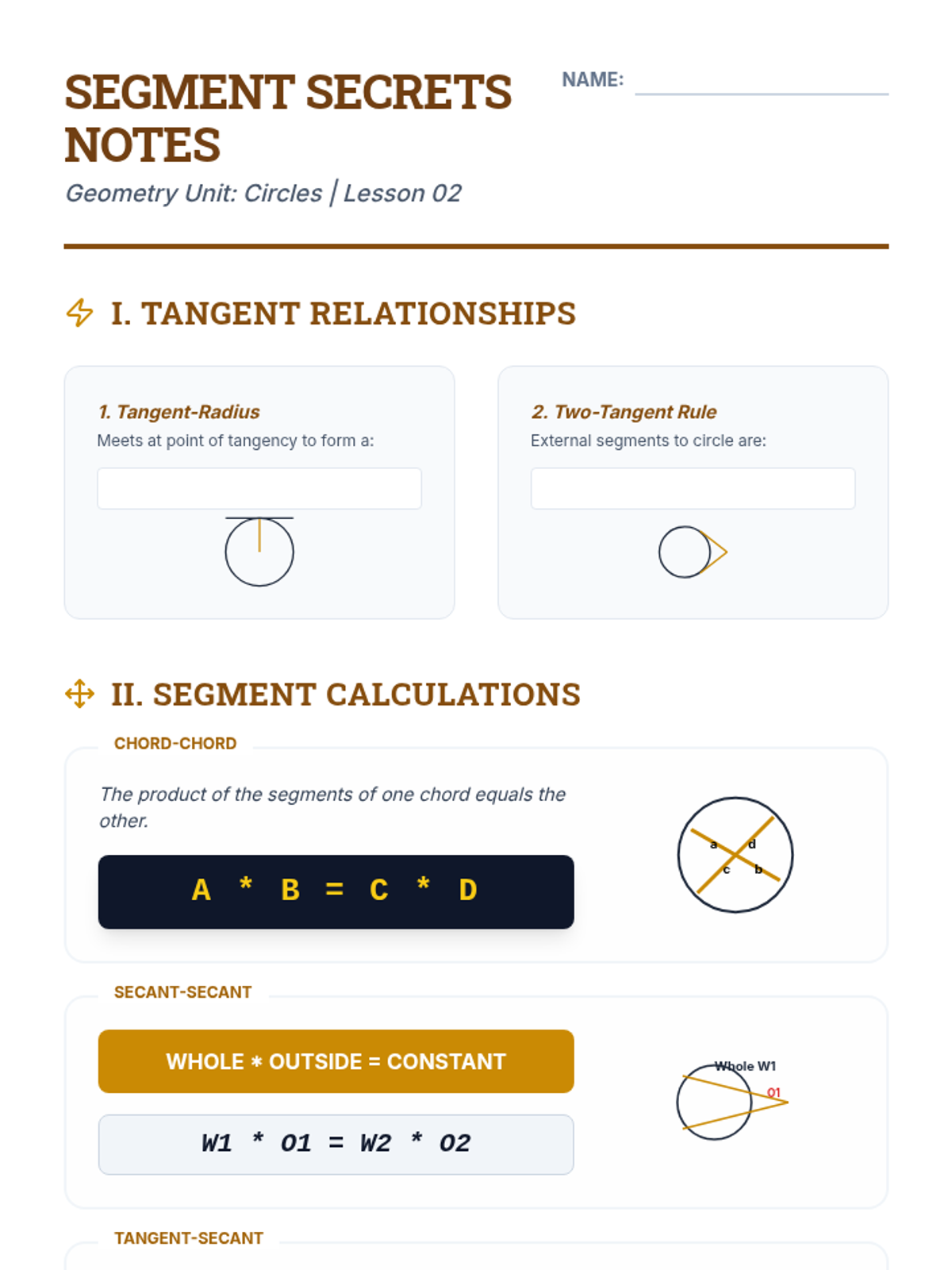
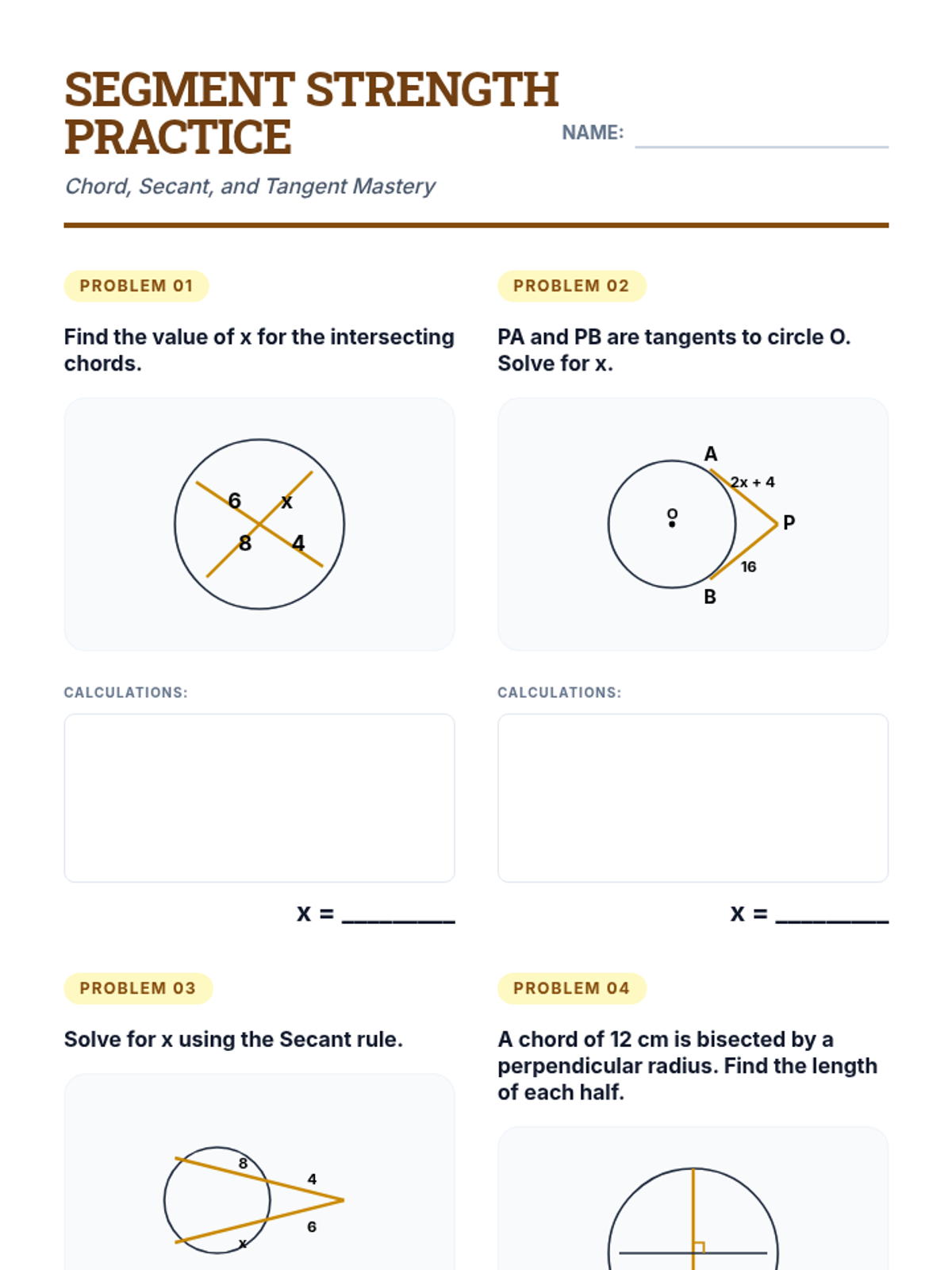
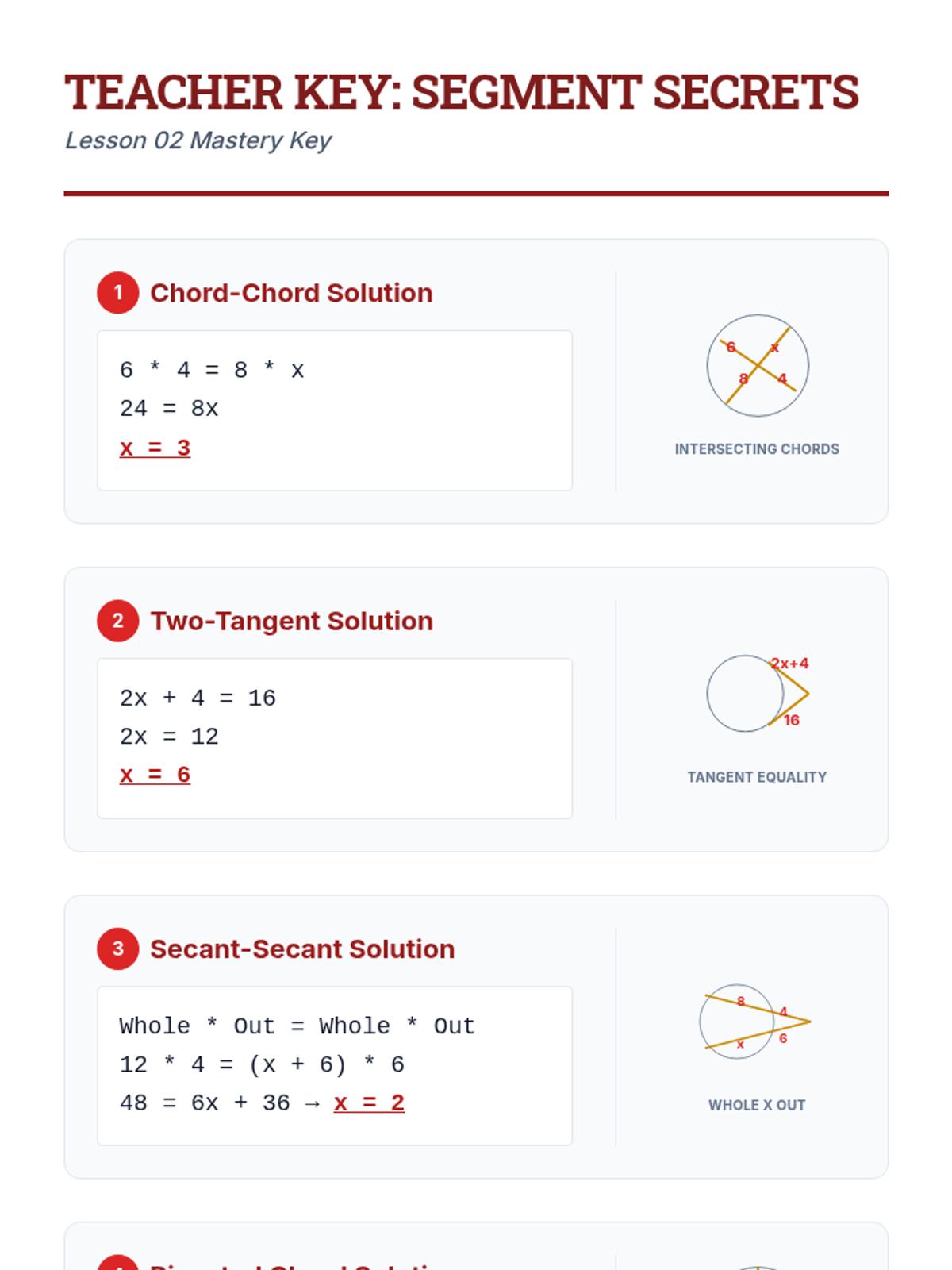
A comprehensive geometry lesson exploring the relationships between chords, secants, and tangents within circles through the 'Segment Squad' blueprint theme.
A comprehensive assessment on circle geometry, focusing on identifying key parts and calculating radius and diameter.
Deep dive into segment lengths within and outside circles, covering tangent-radius properties, the two-tangent theorem, and chord-secant length relationships.
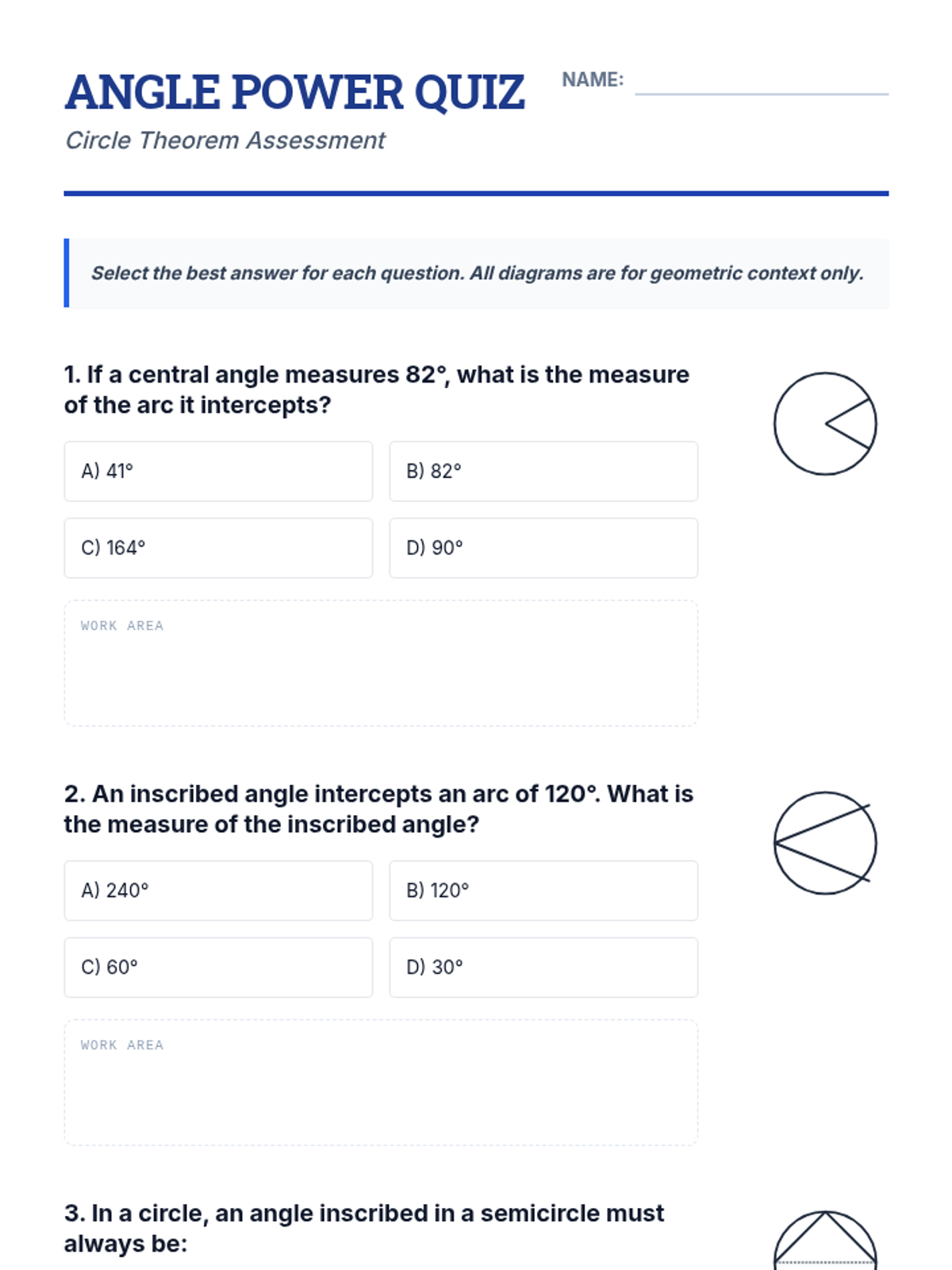
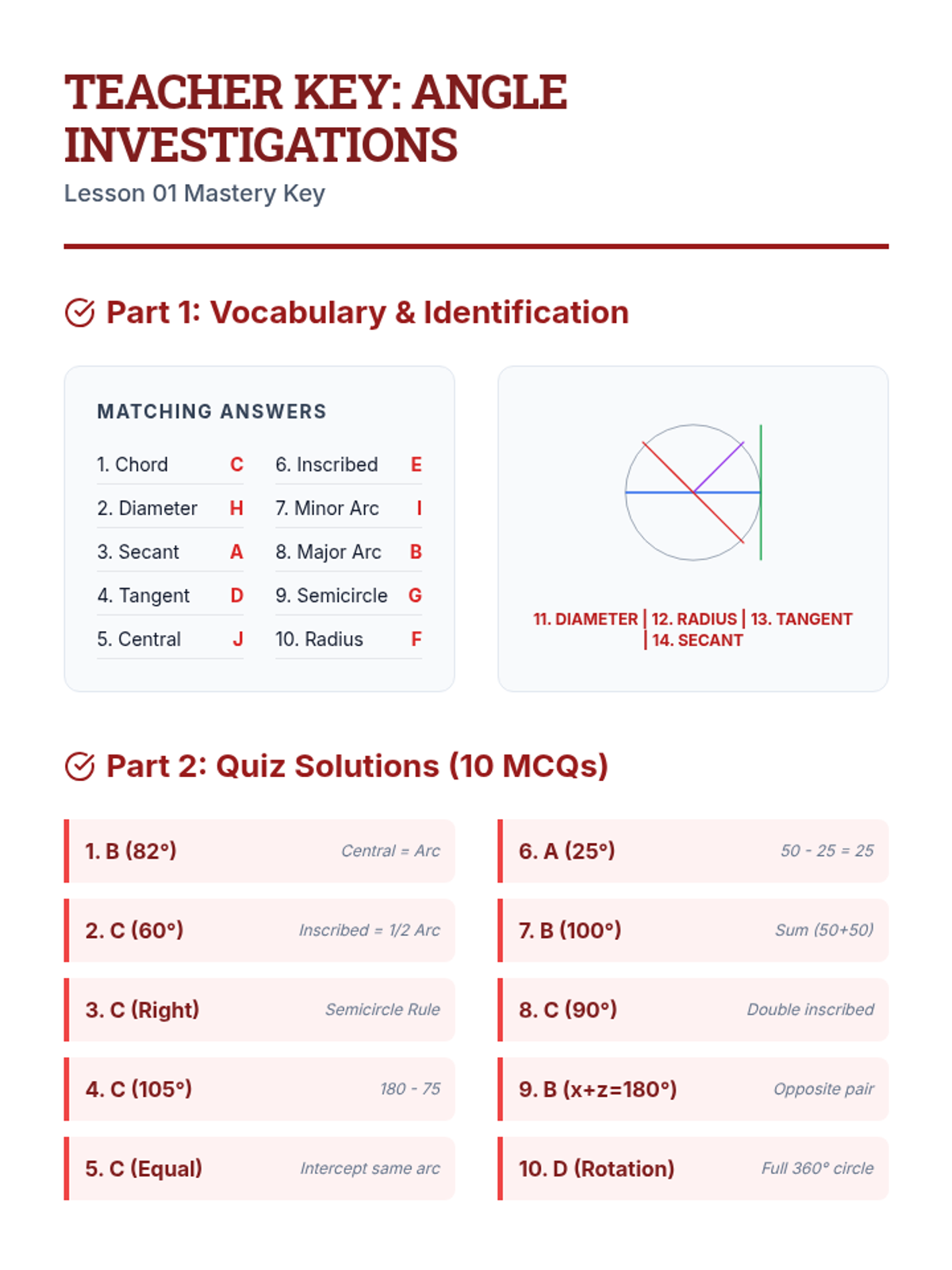
Exploration of angle relationships in circles, including central angles, inscribed angles, angles in semicircles, and cyclic quadrilaterals. includes a vocabulary focus and assessment.
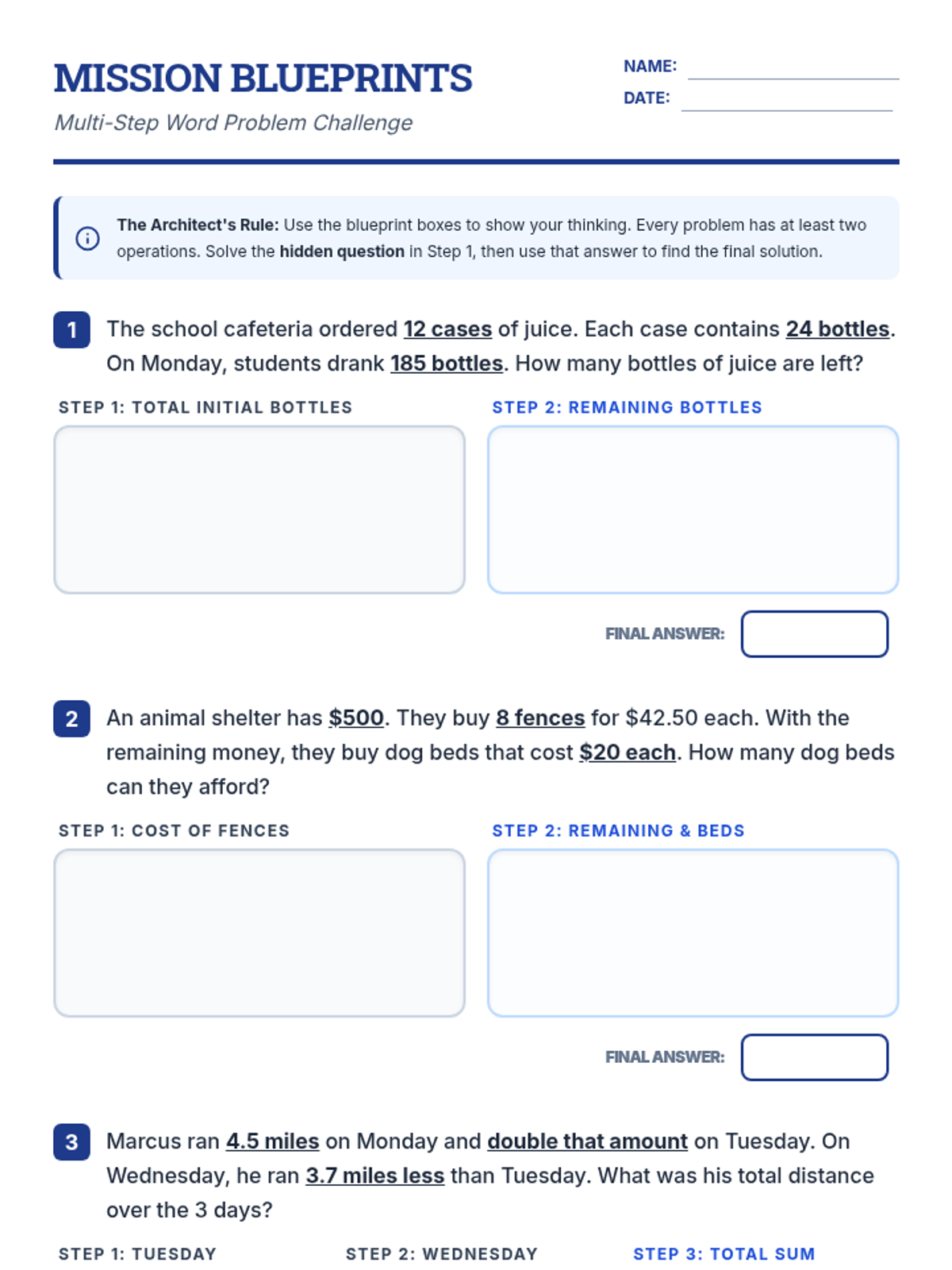
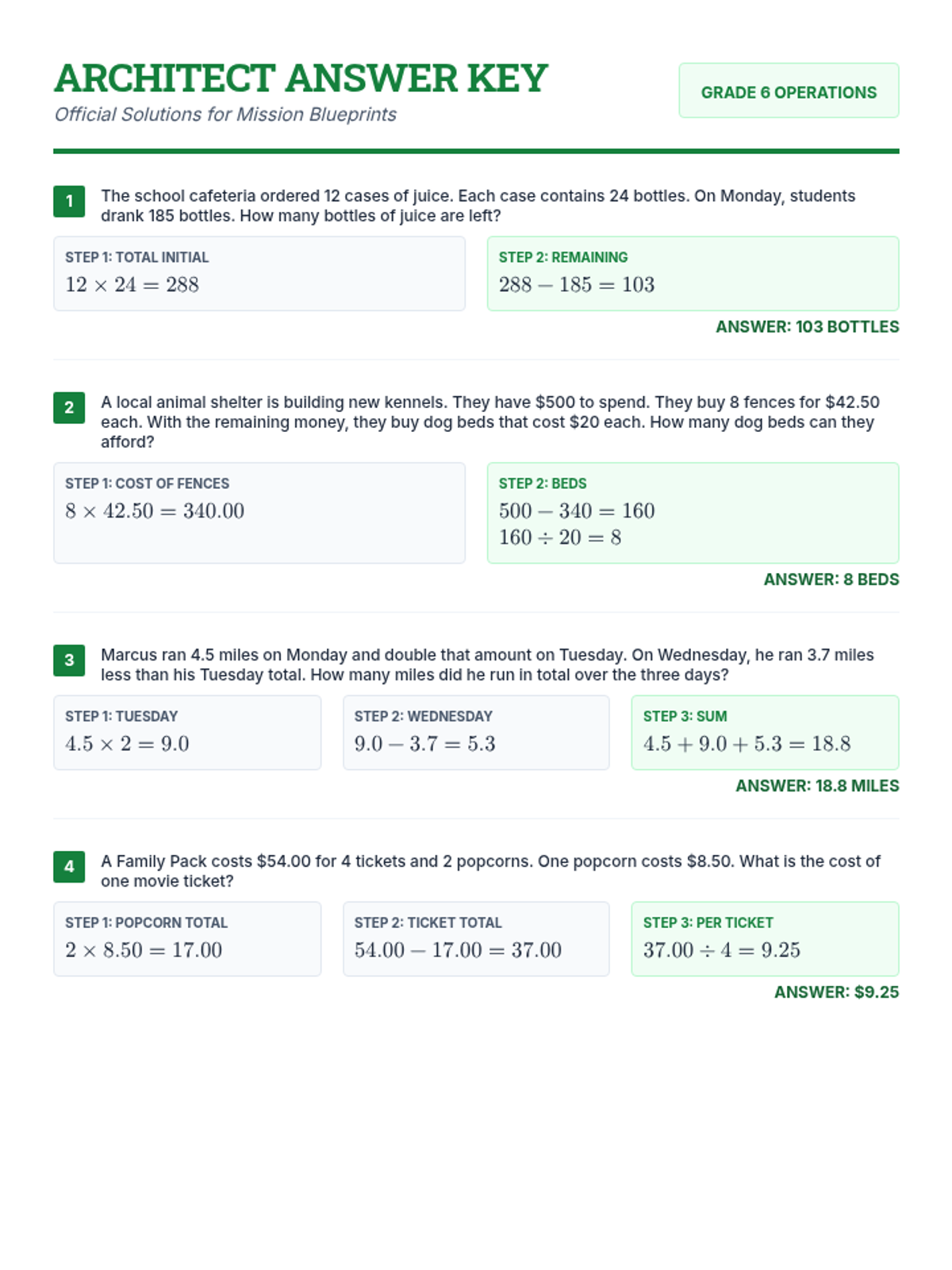
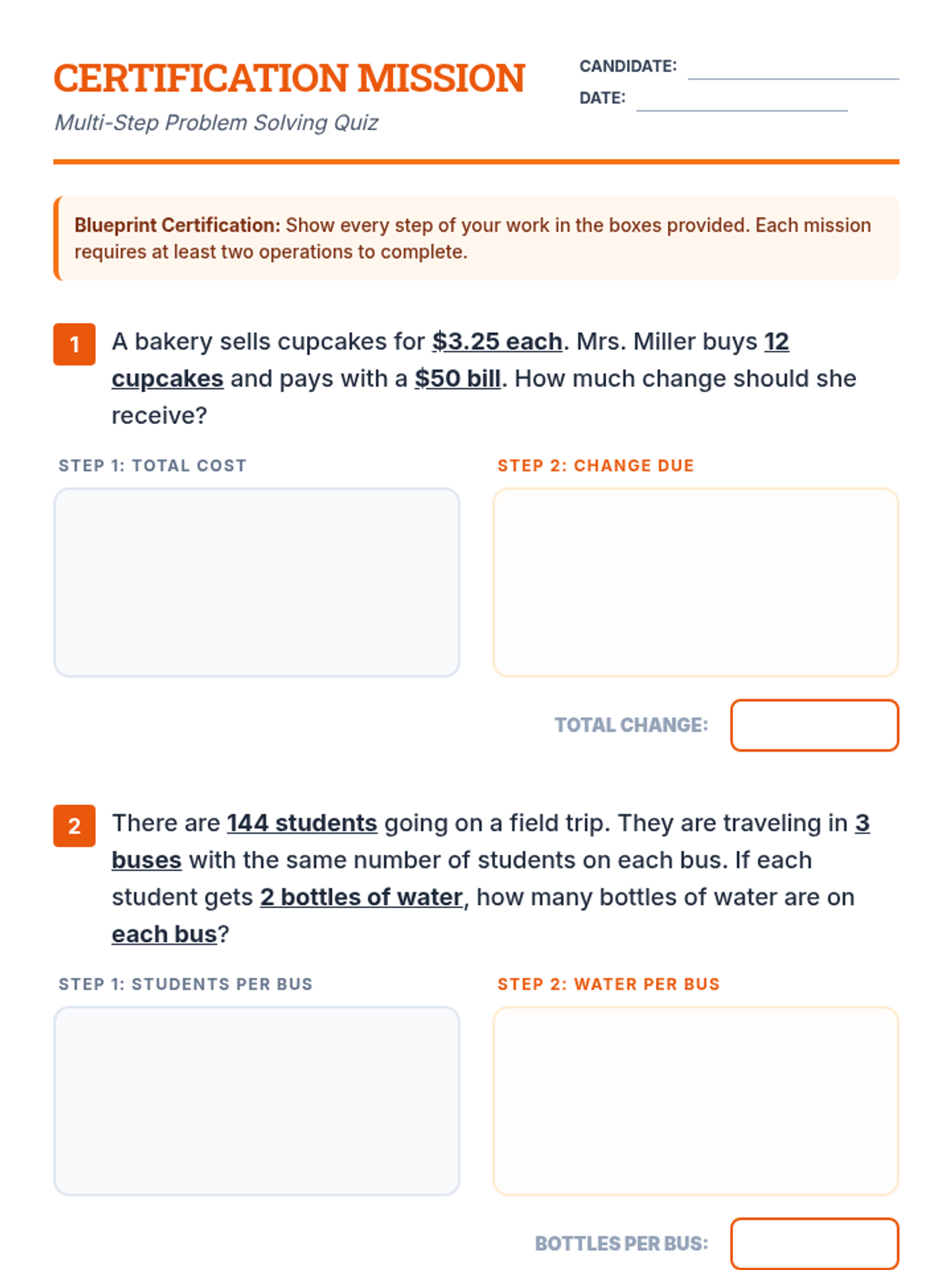
Students learn to use graphic organizer 'blueprints' to decompose multi-step word problems involving addition, subtraction, multiplication, and division into manageable steps.
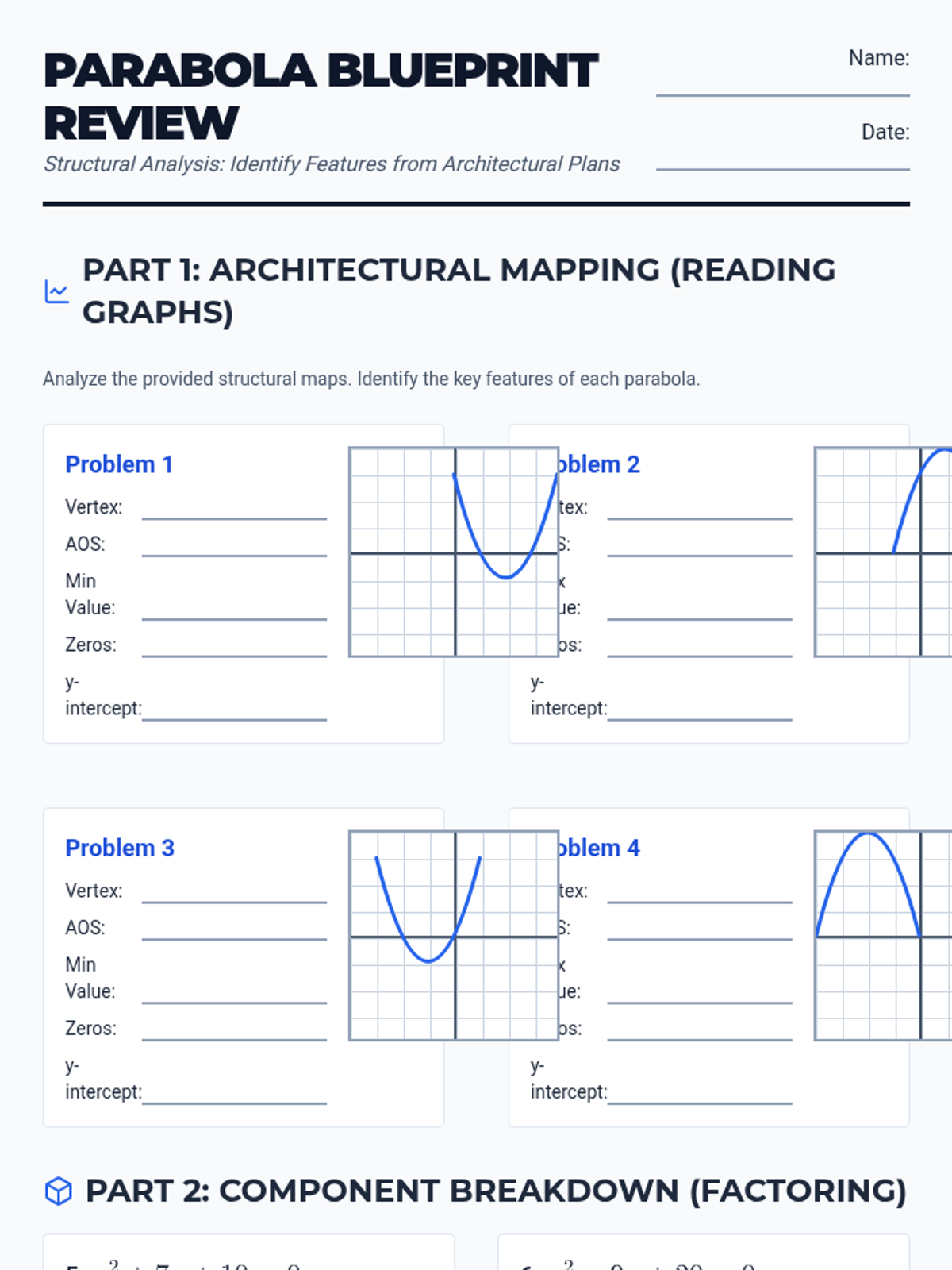
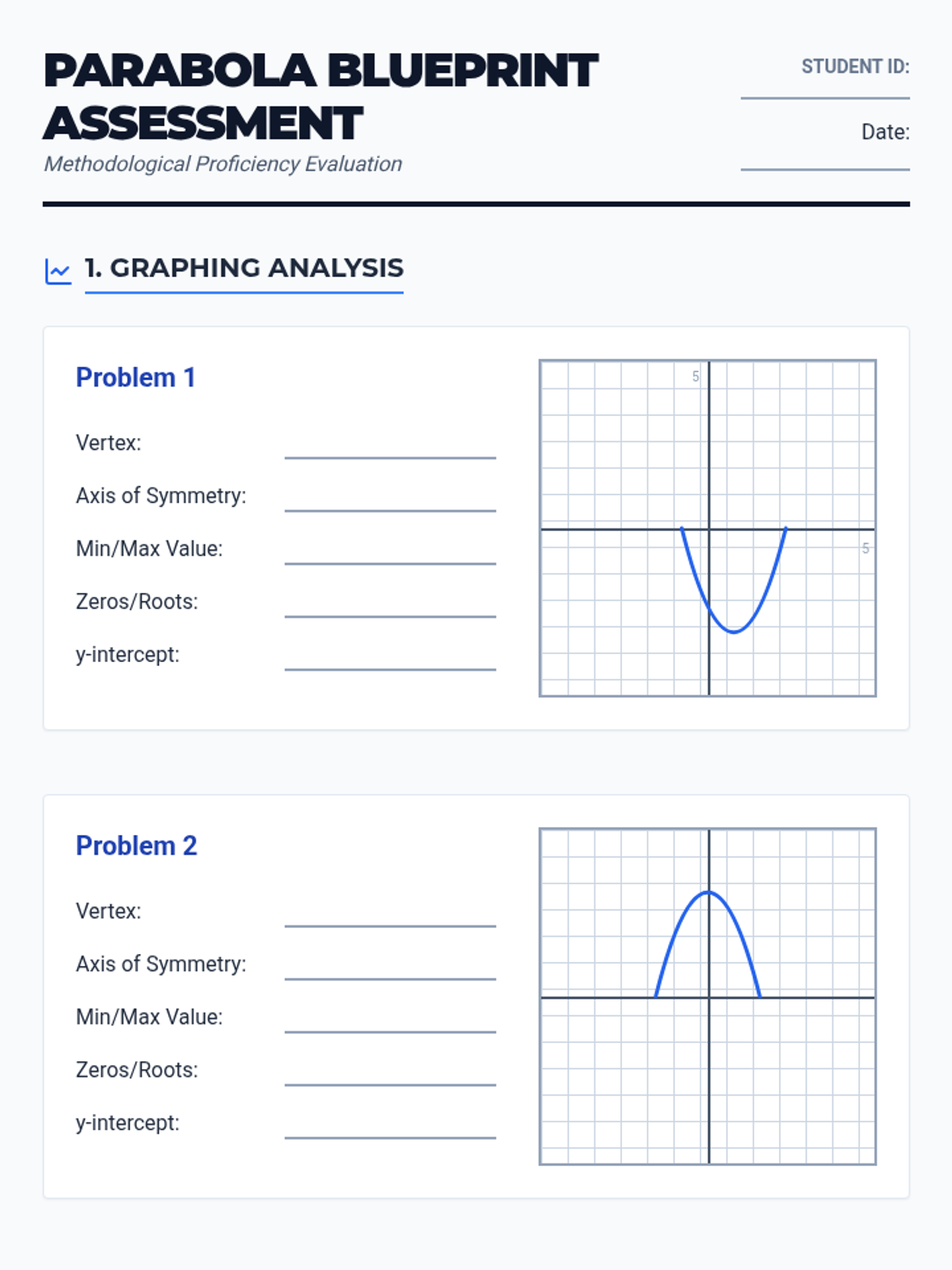
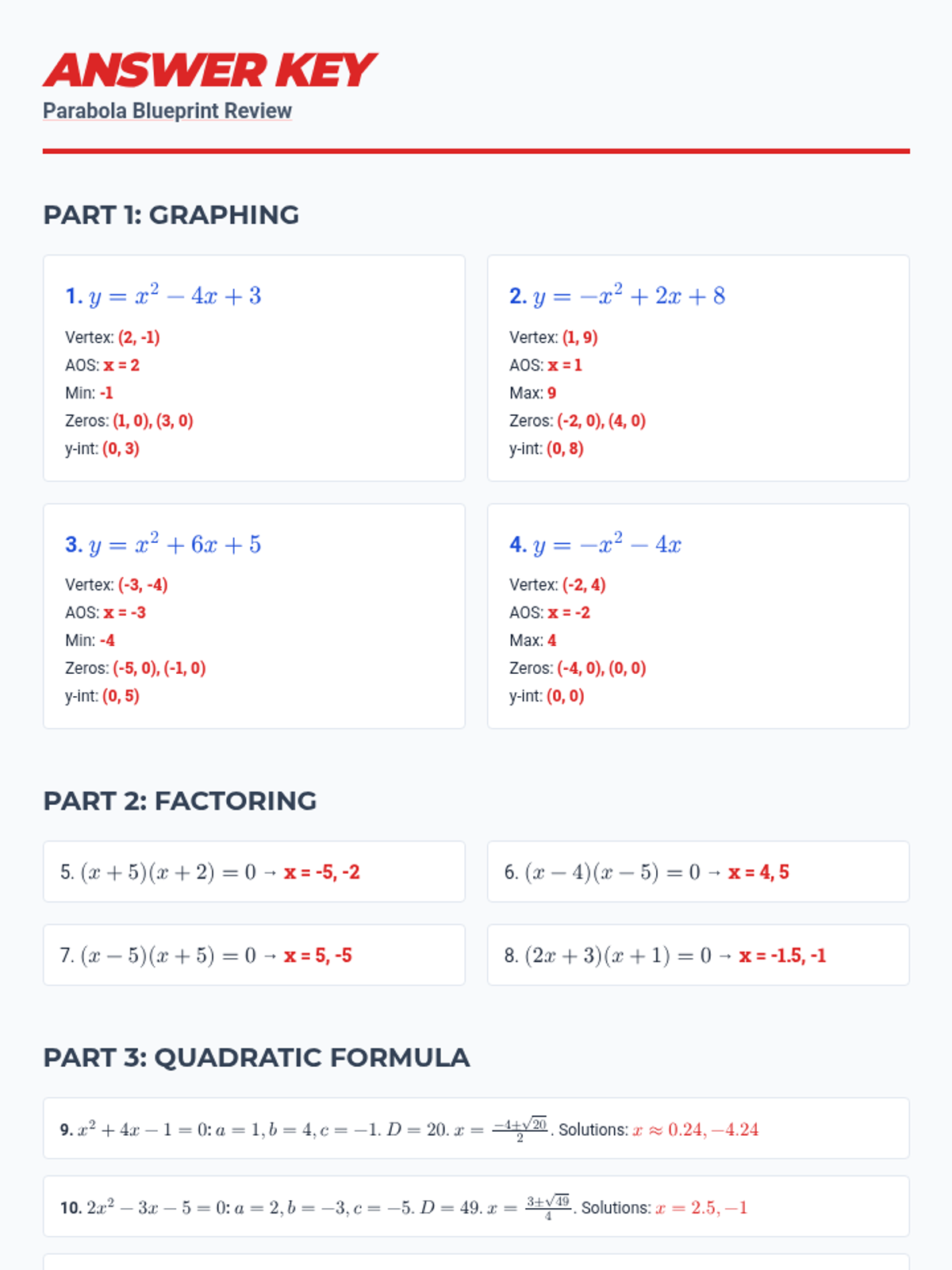
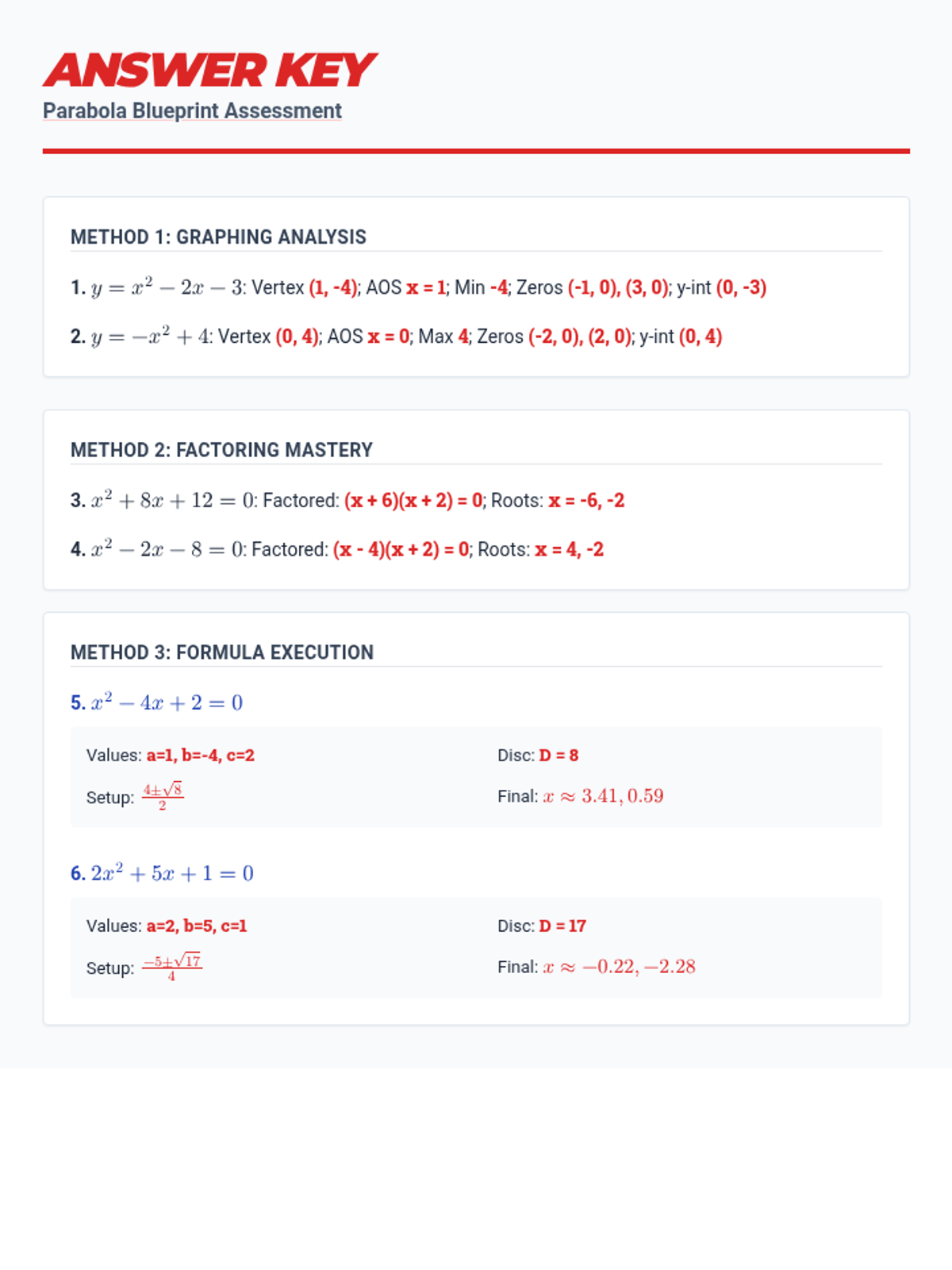
A comprehensive unit review and summative assessment covering three key methods for solving quadratic equations: graphing, factoring, and the quadratic formula. Students practice identifying key features of parabolas, algebraic manipulation for factoring, and the step-by-step application of the quadratic formula.
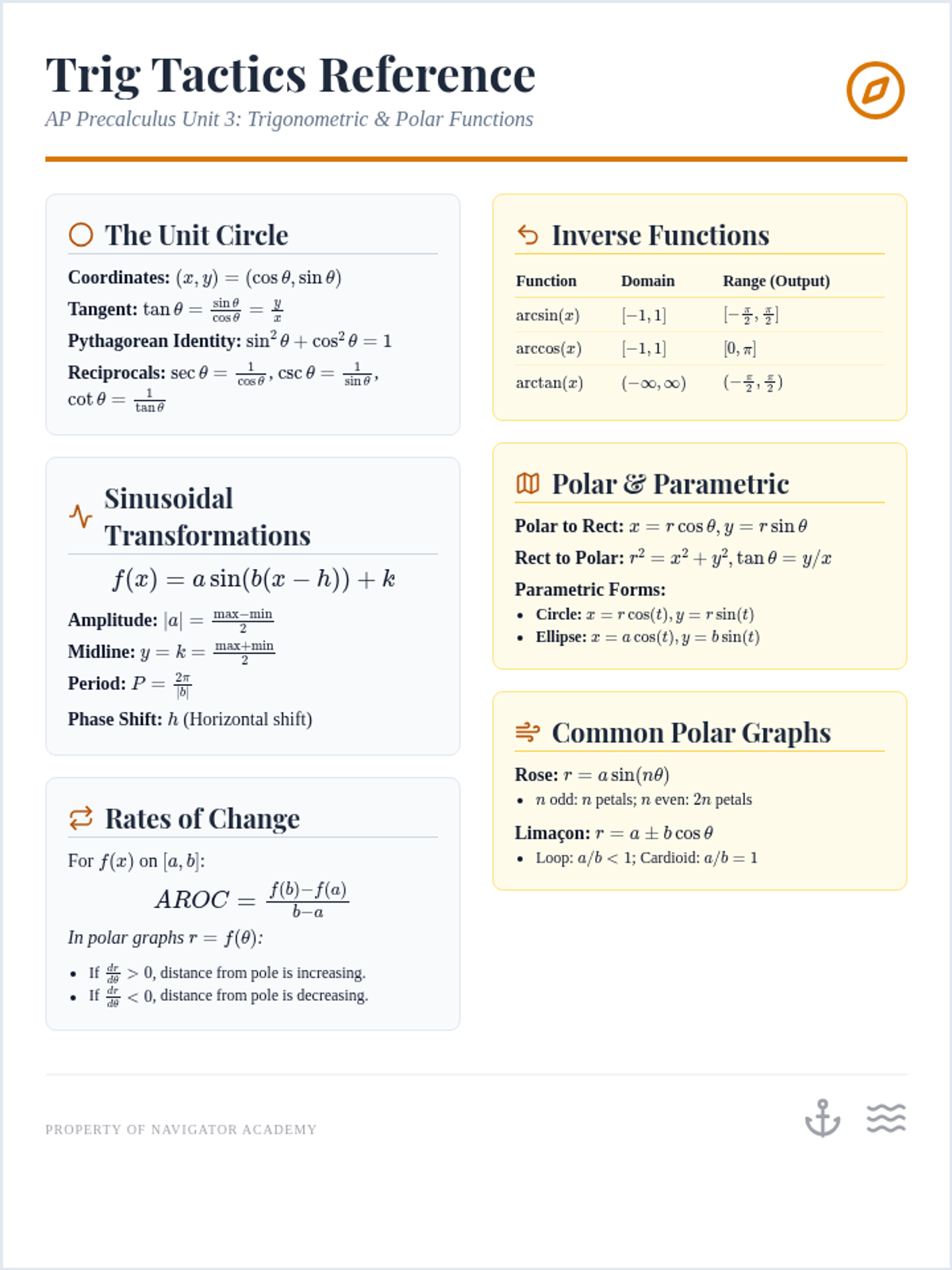
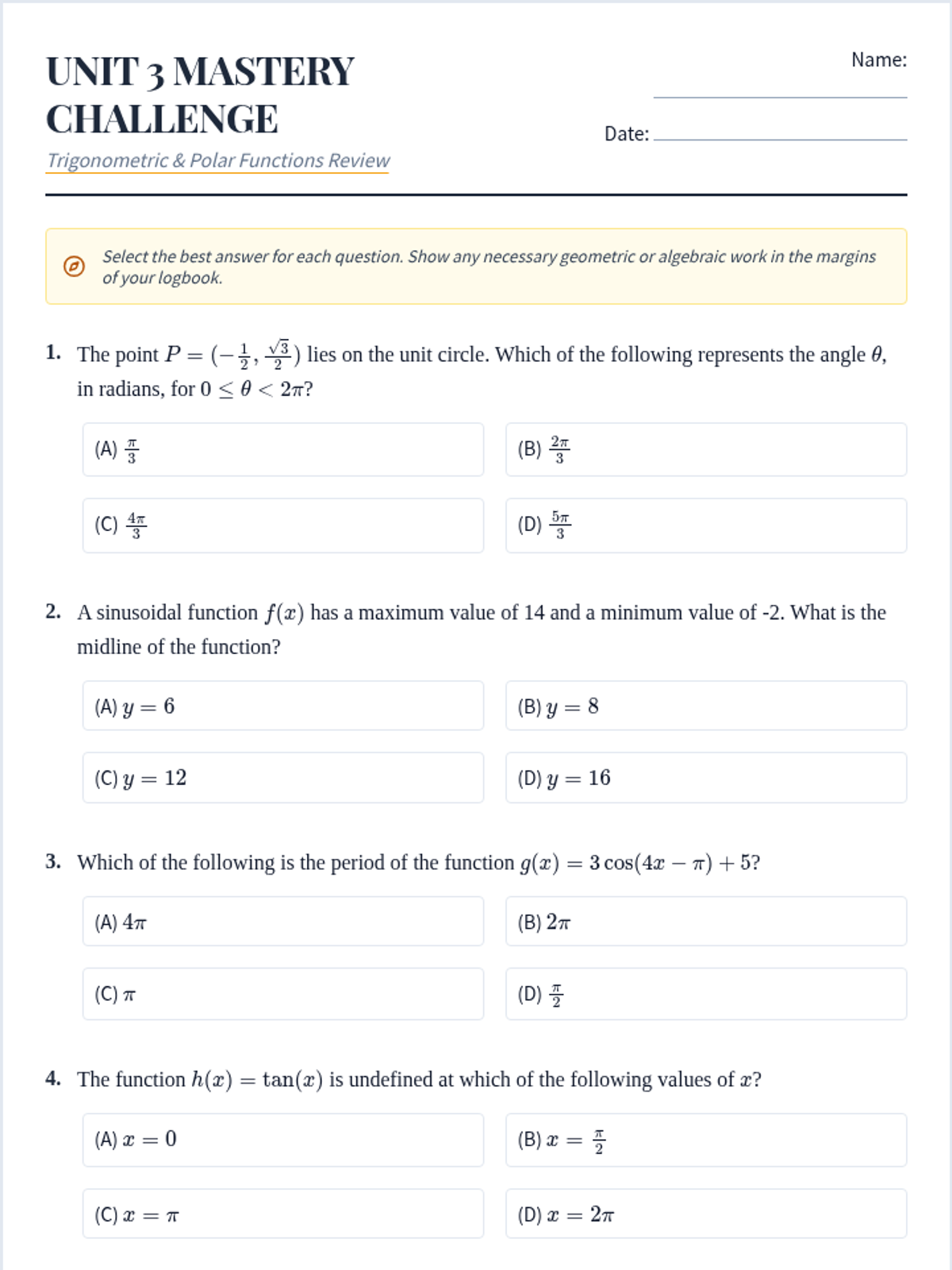
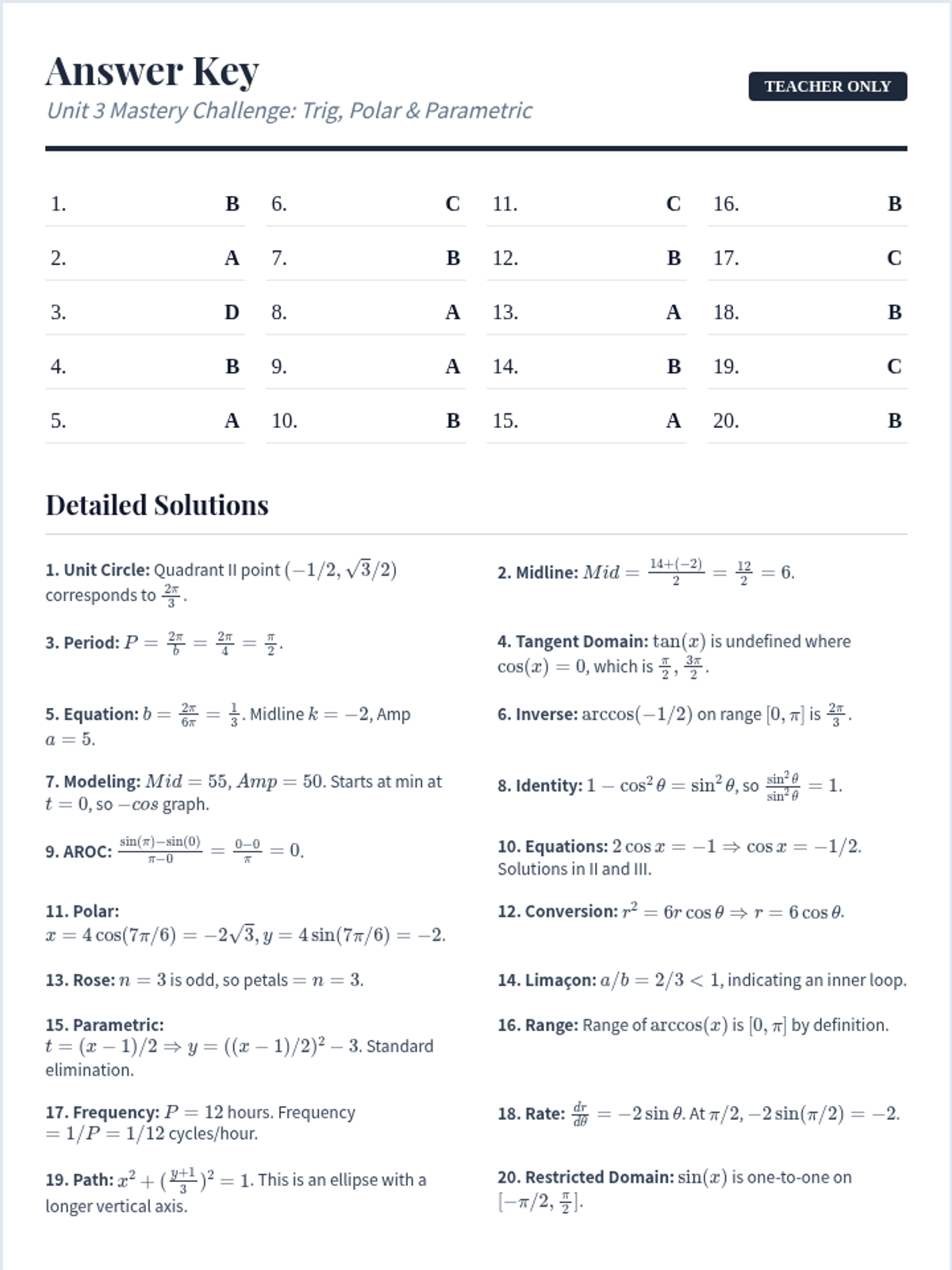
A comprehensive review for Unit 3 of AP Precalculus, focusing on trigonometric and polar functions through reference materials and practice assessments.
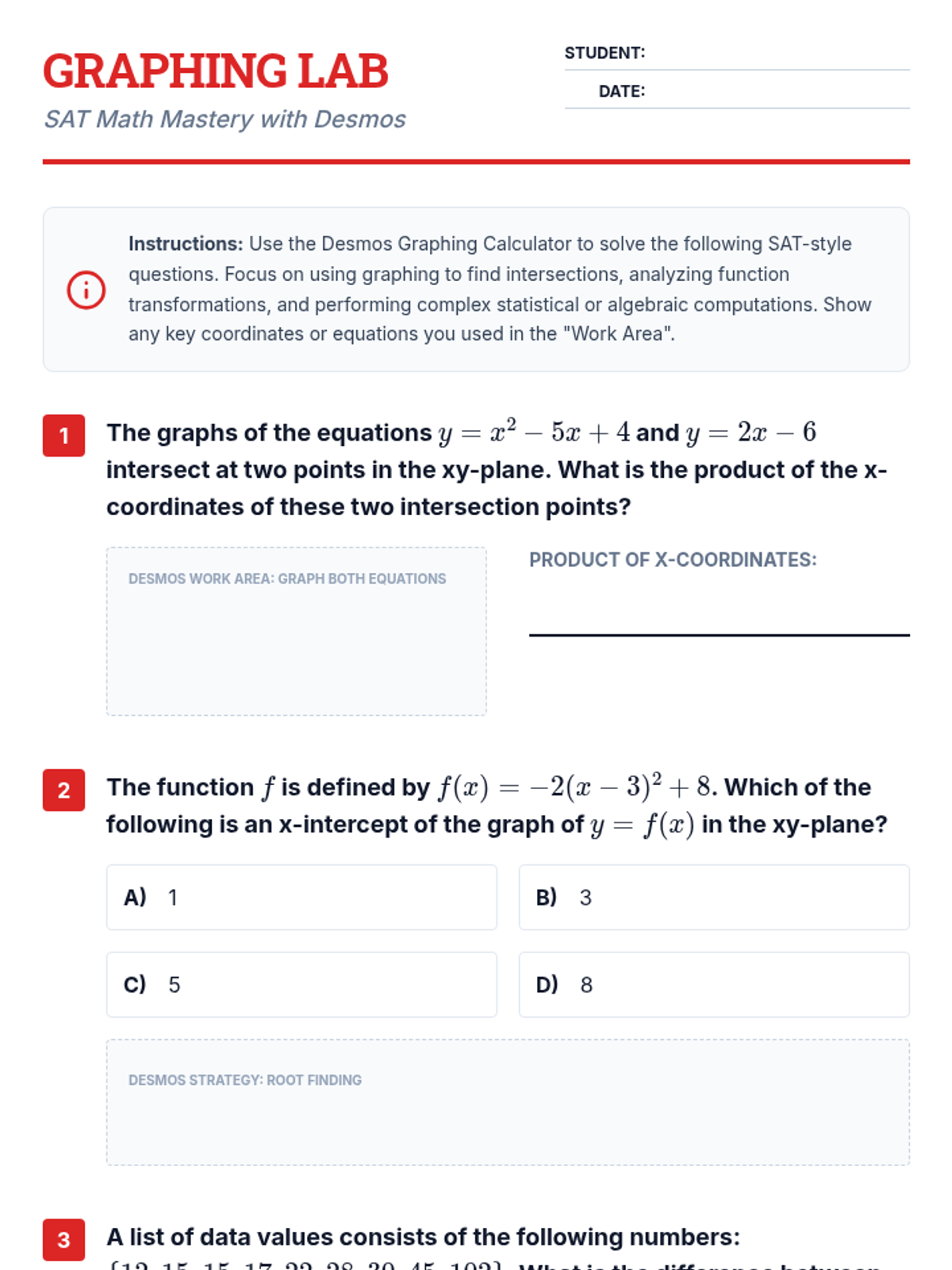
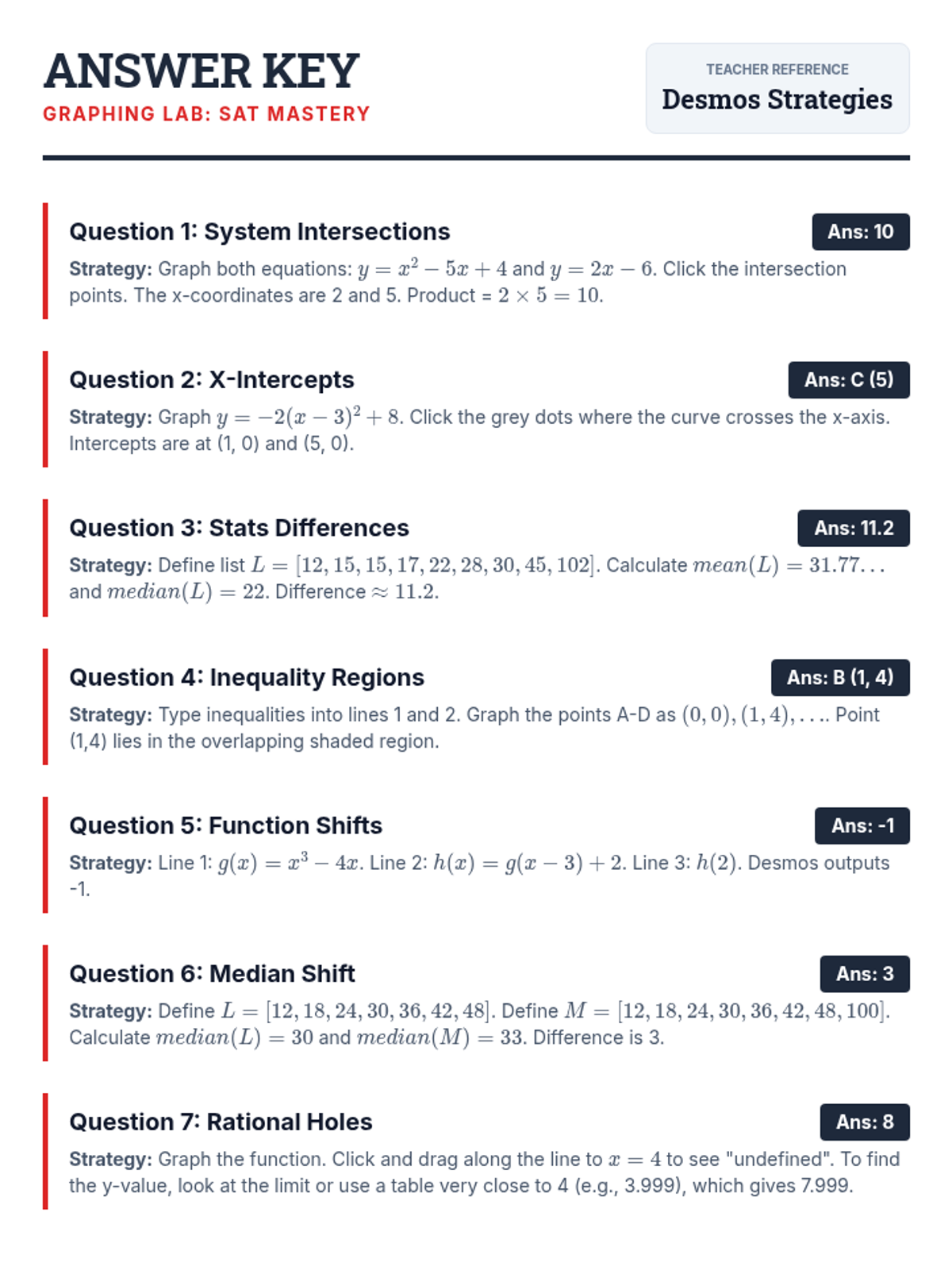
This lesson focuses on leveraging the Desmos graphing calculator to solve SAT Math problems efficiently across Heart of Algebra, Problem Solving and Data Analysis, and Passport to Advanced Math. Students will practice graphing systems, finding key features of nonlinear functions, and performing statistical calculations.
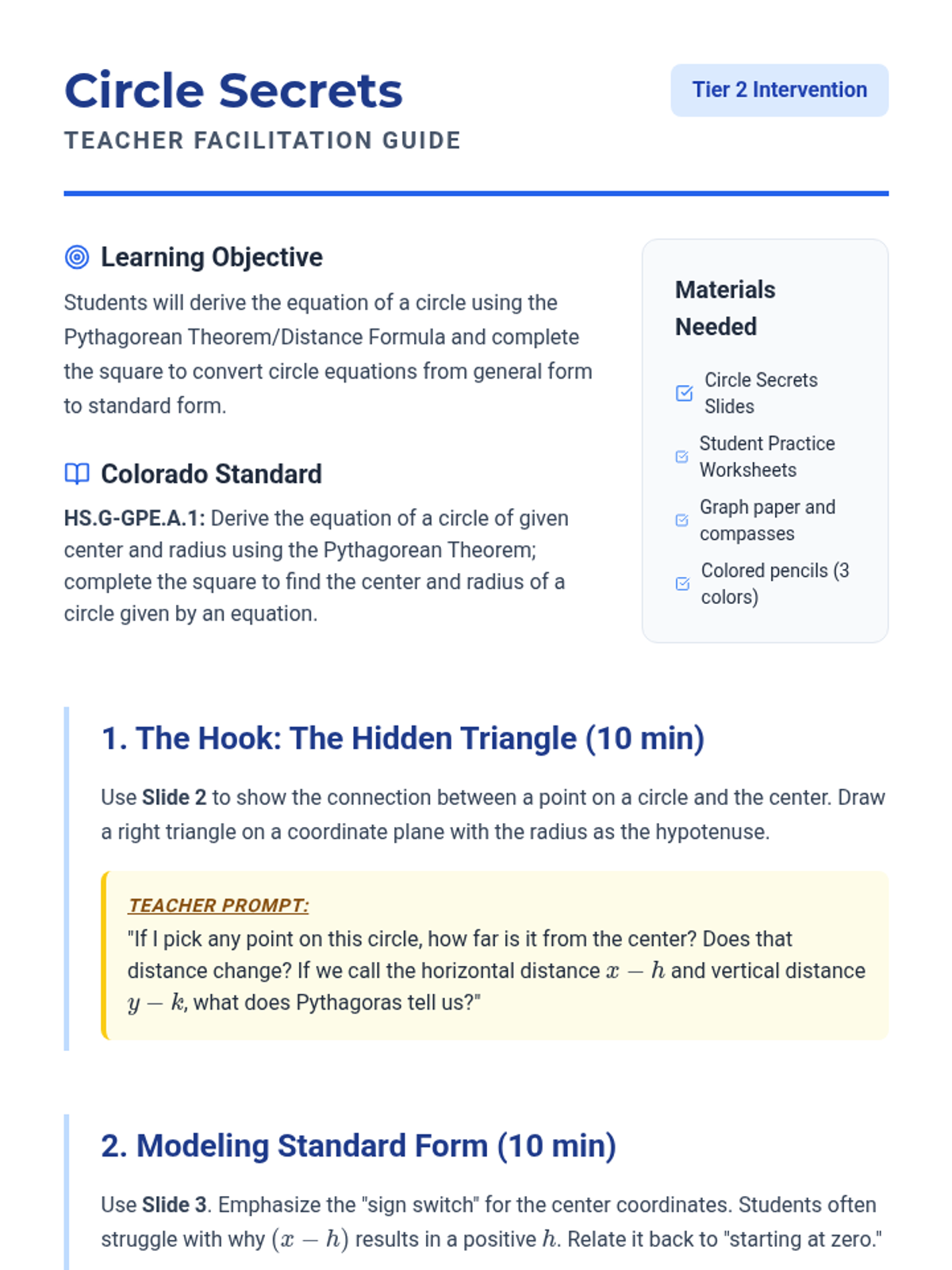
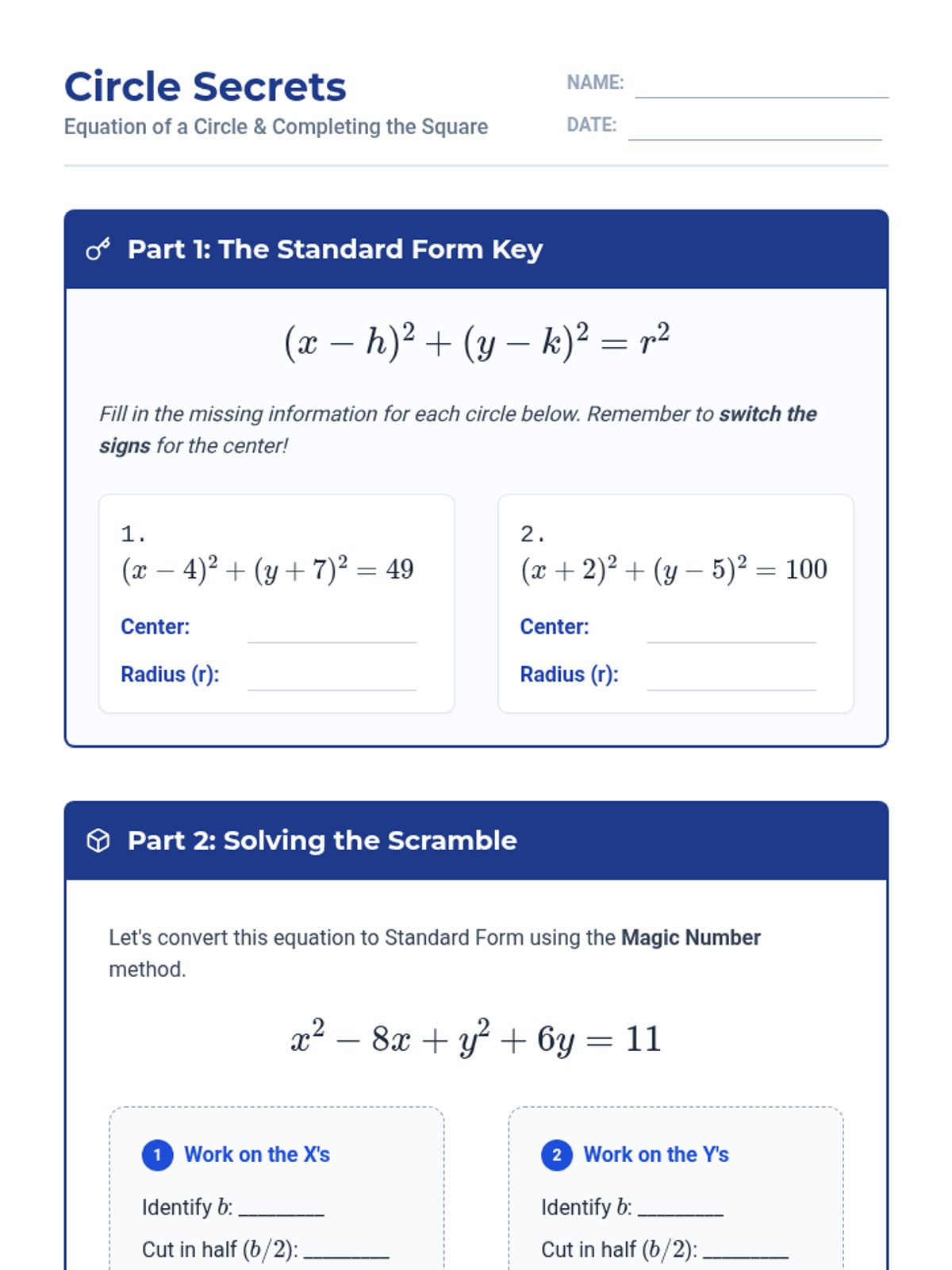
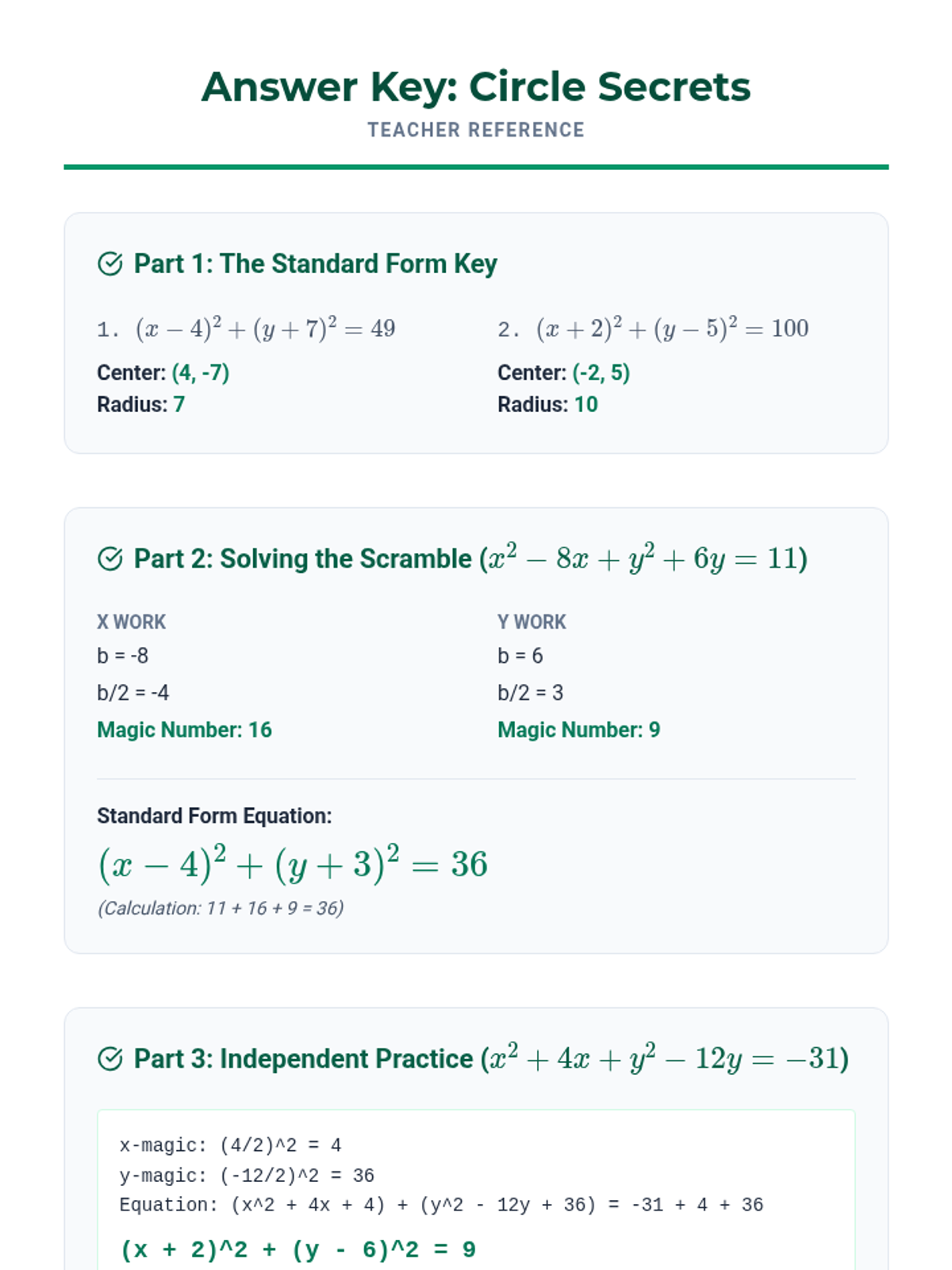
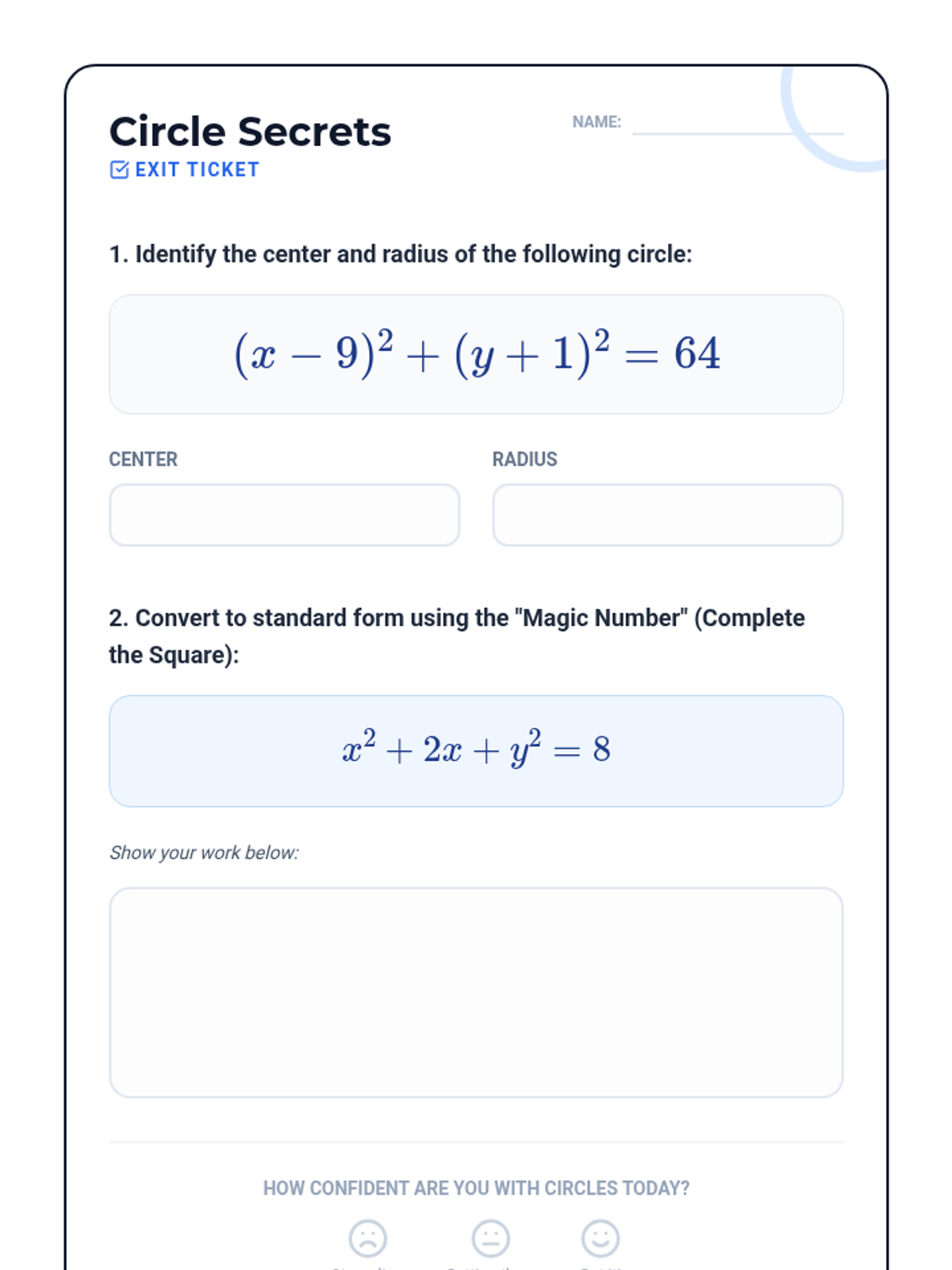
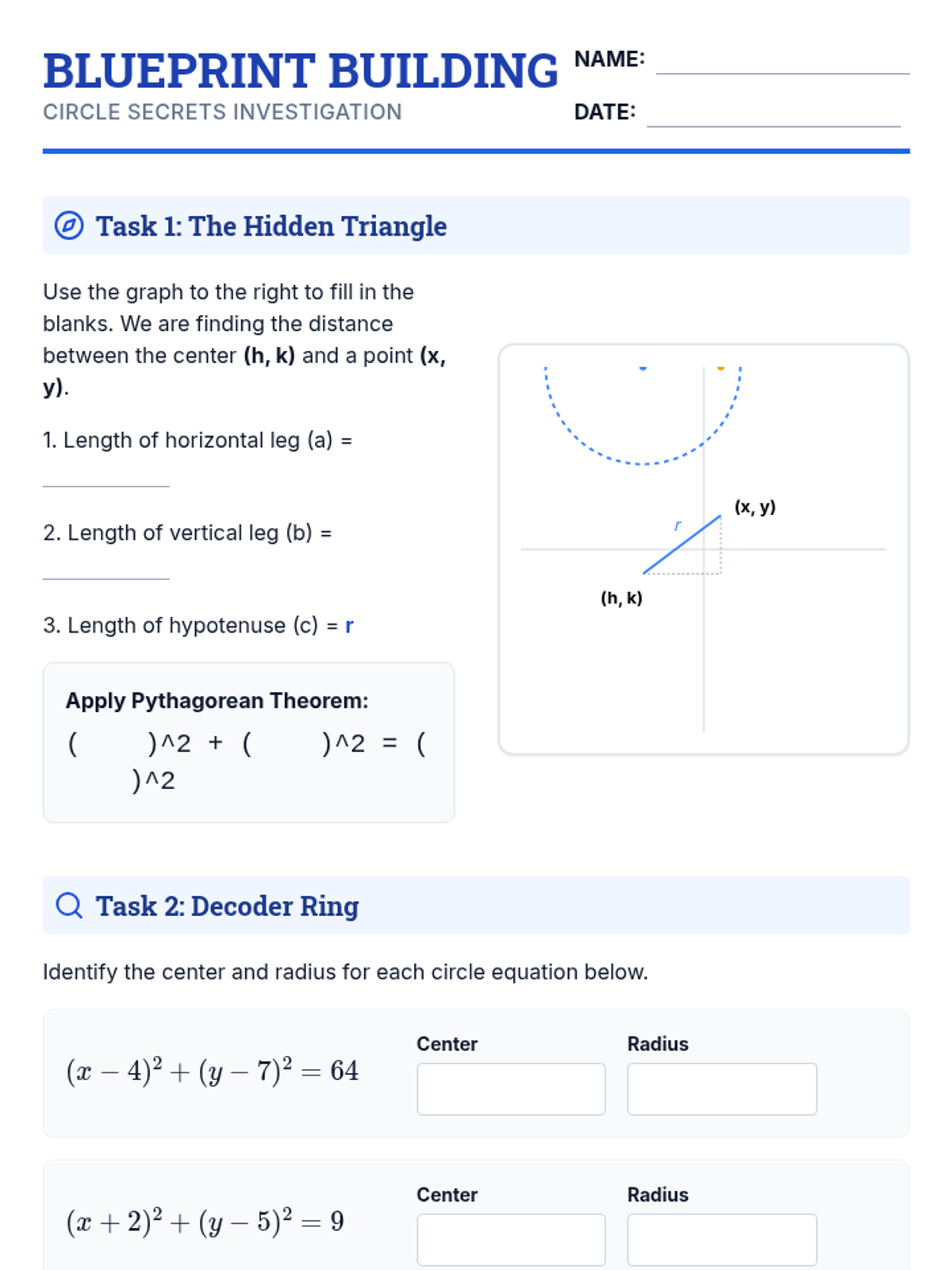
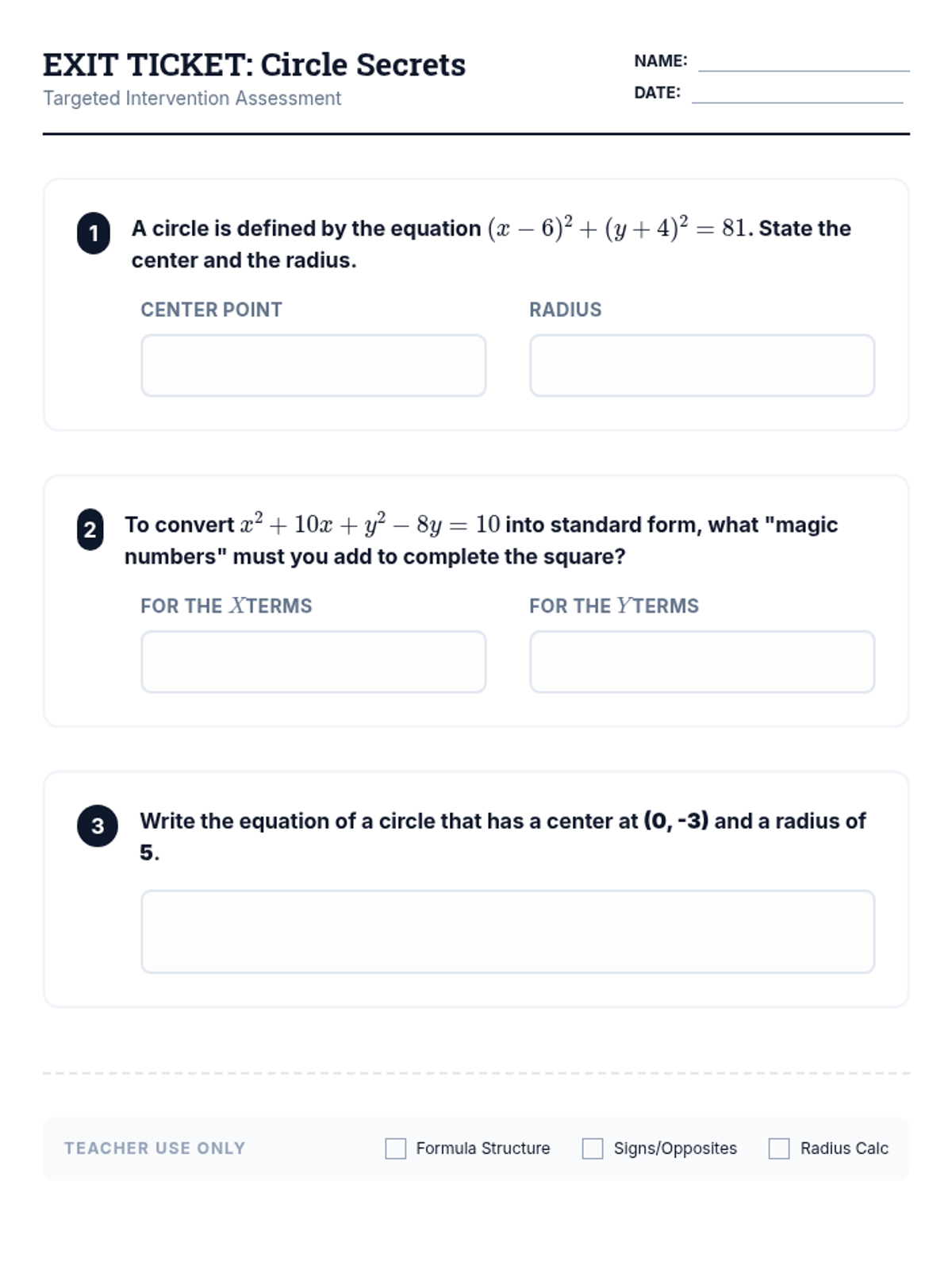
Students connect the Pythagorean Theorem to the distance formula and the equation of a circle, then master completing the square through guided algebraic scaffolds.
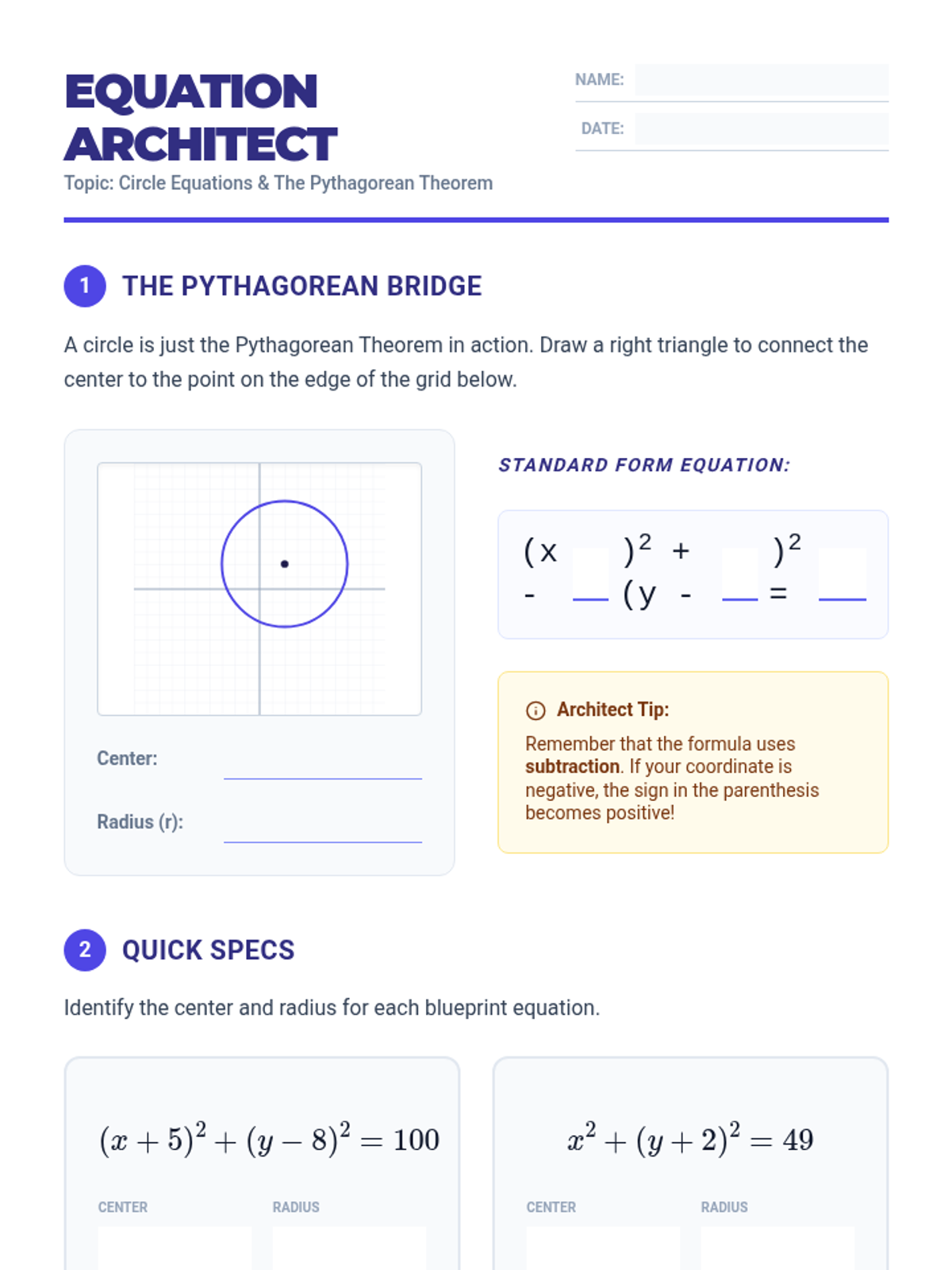
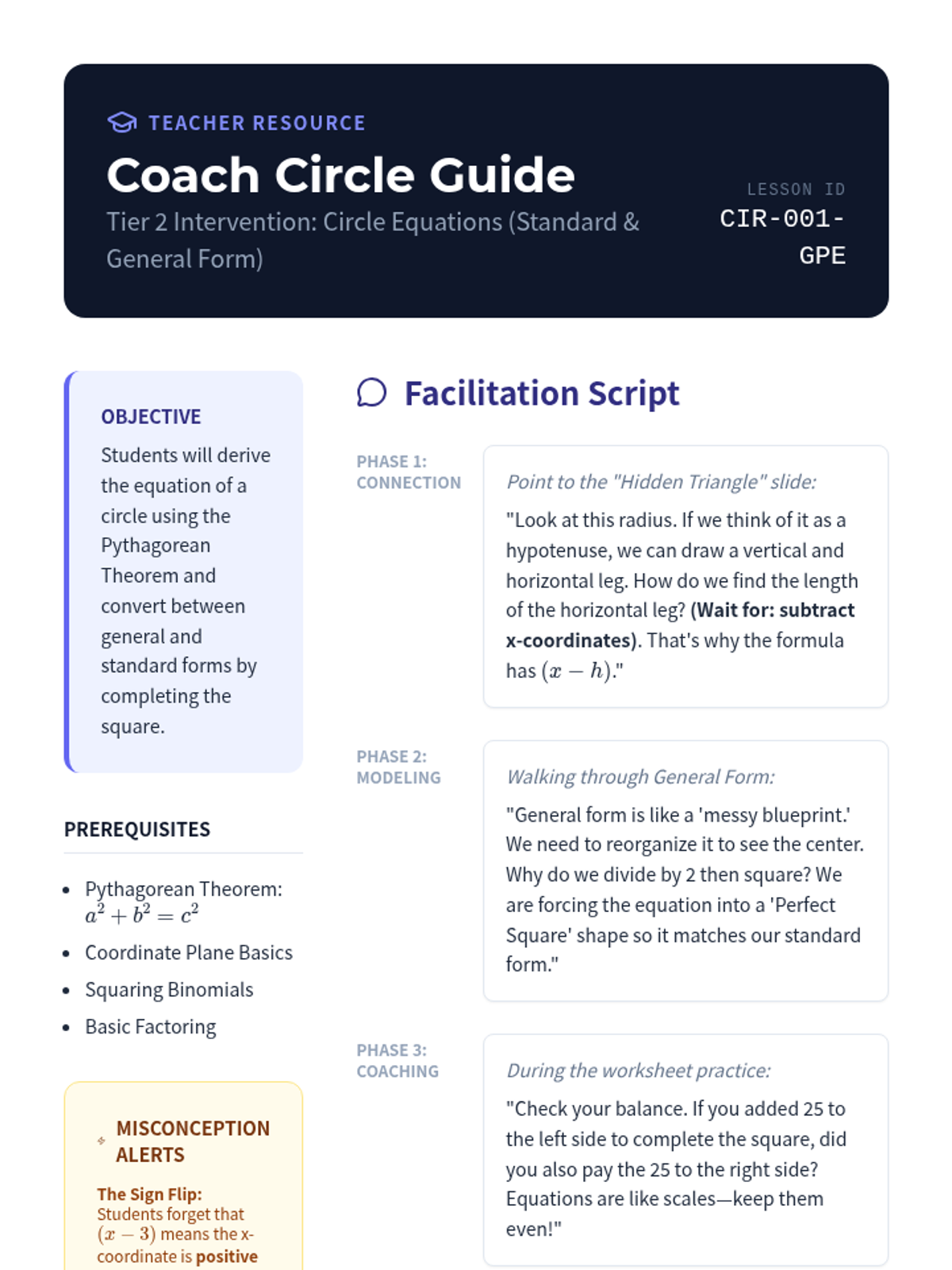
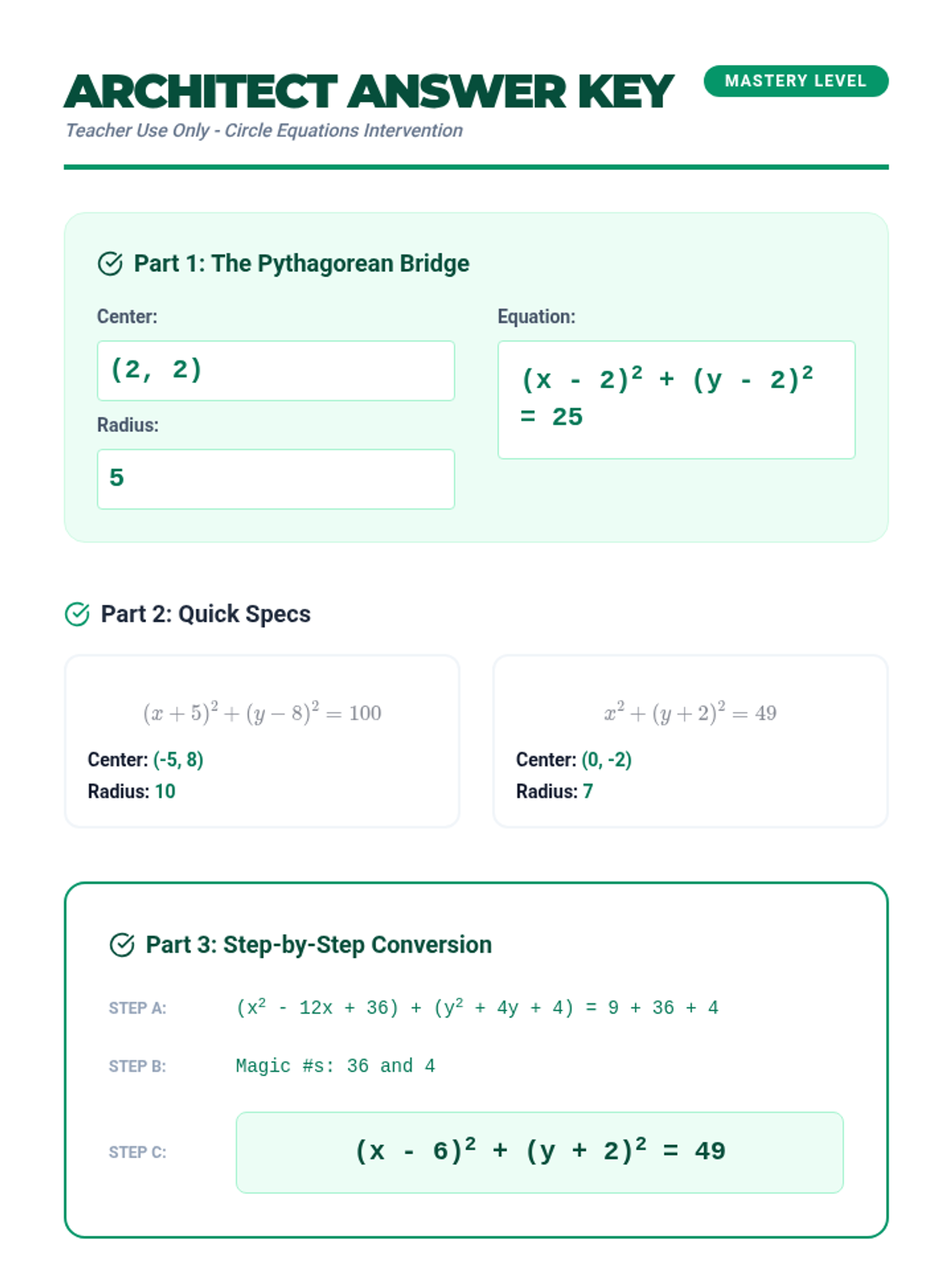
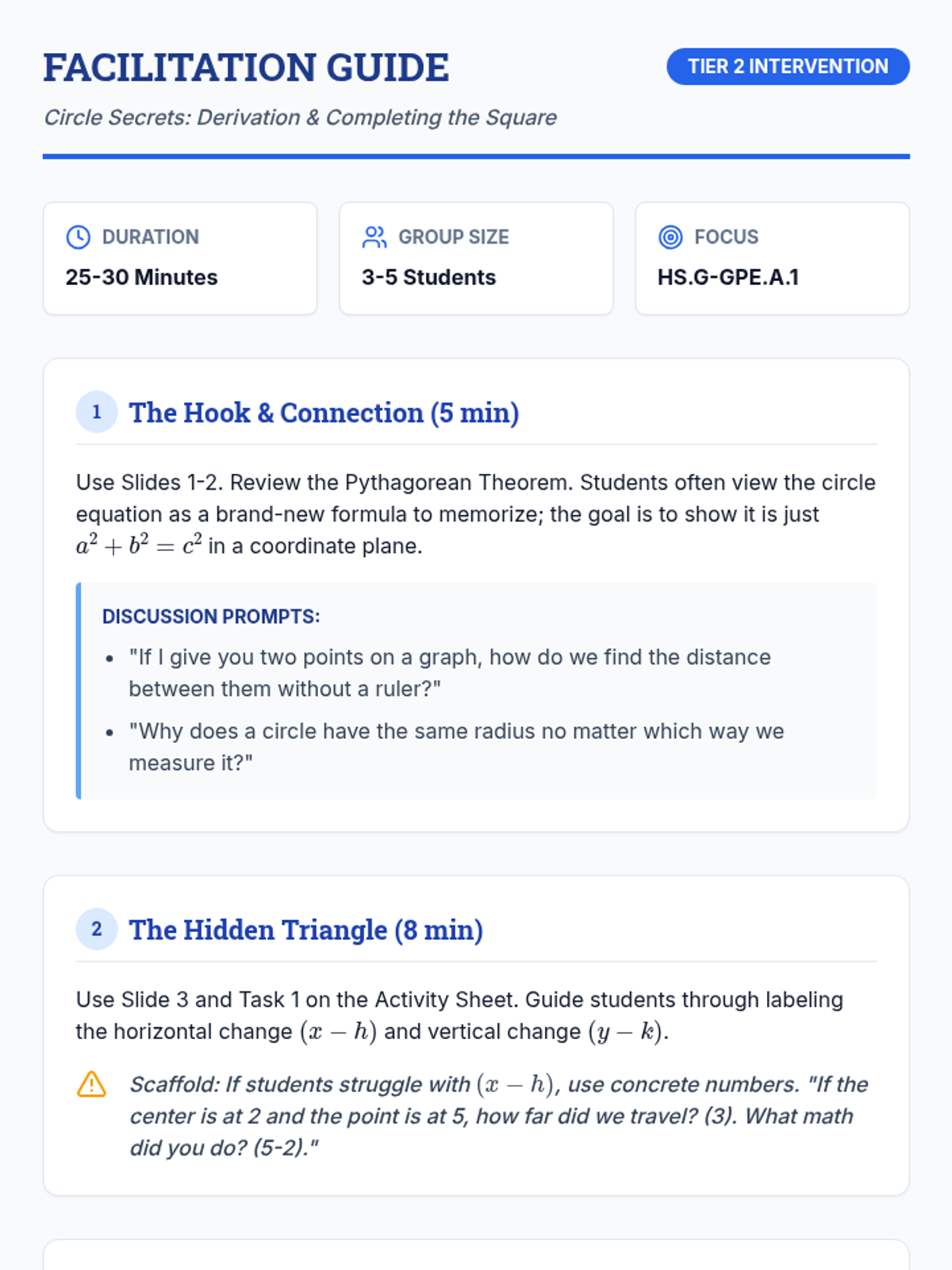
A targeted Tier 2 intervention lesson focusing on the conceptual link between the Pythagorean Theorem and circle equations, covering both standard and general forms.
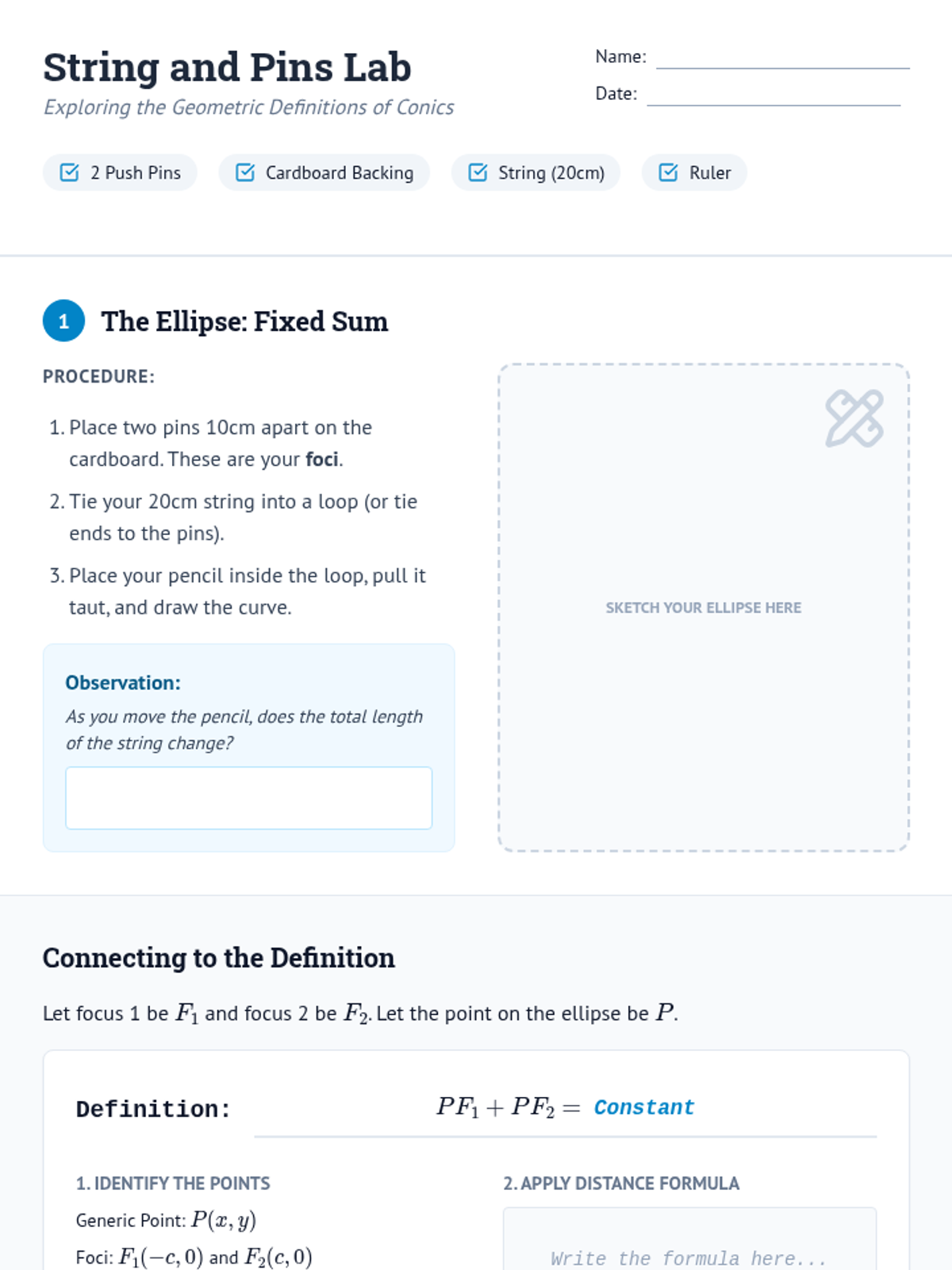
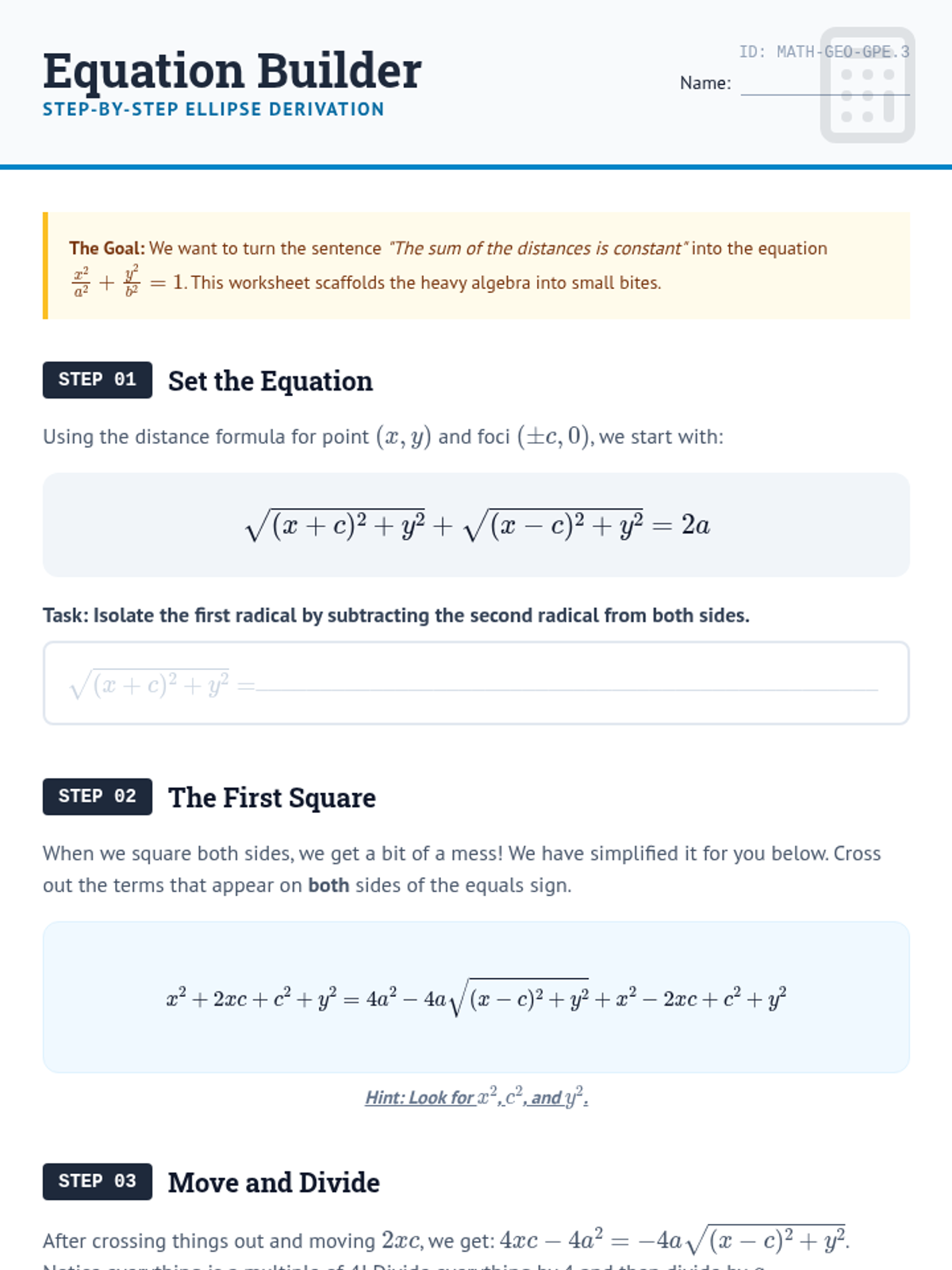
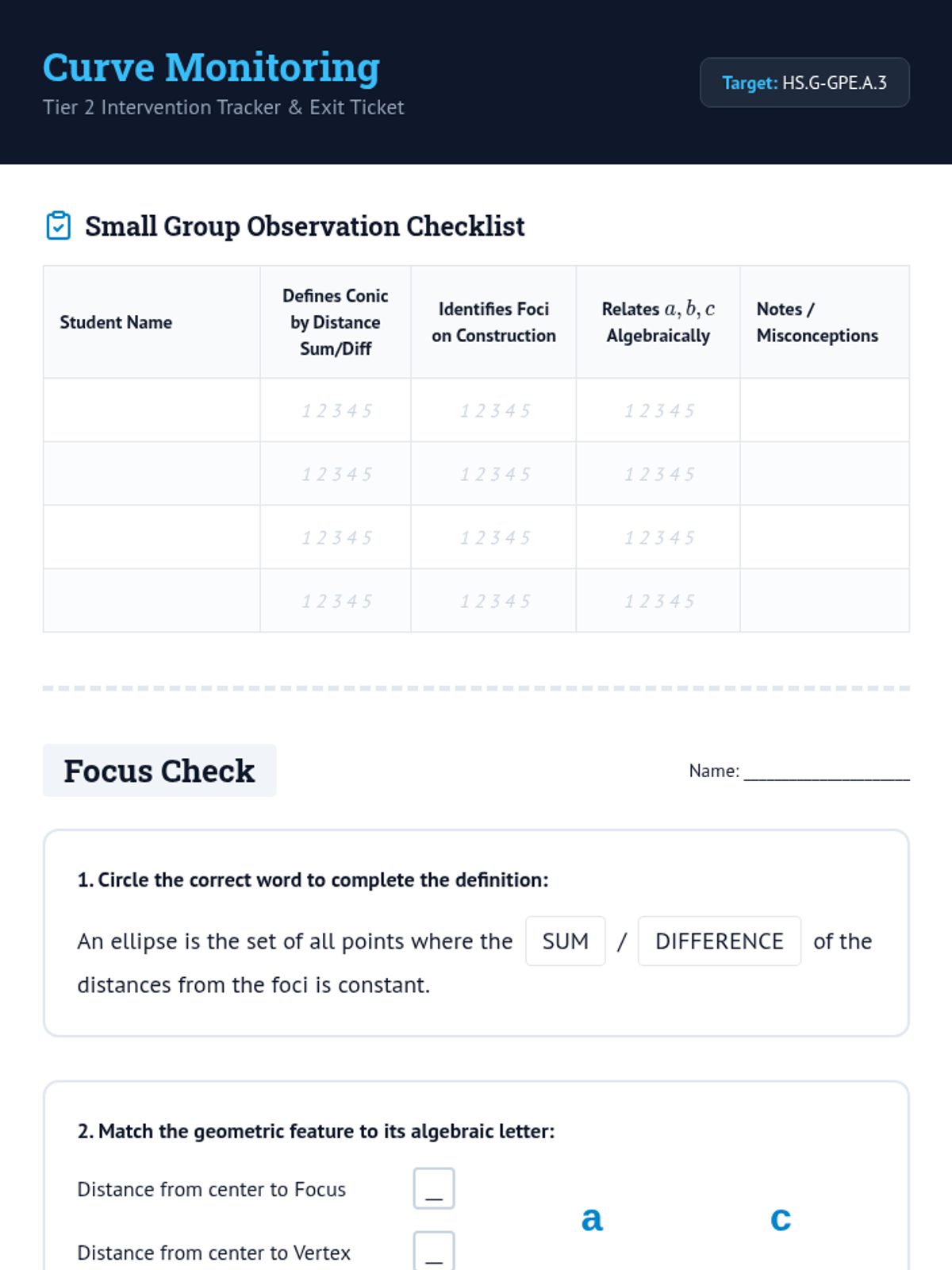
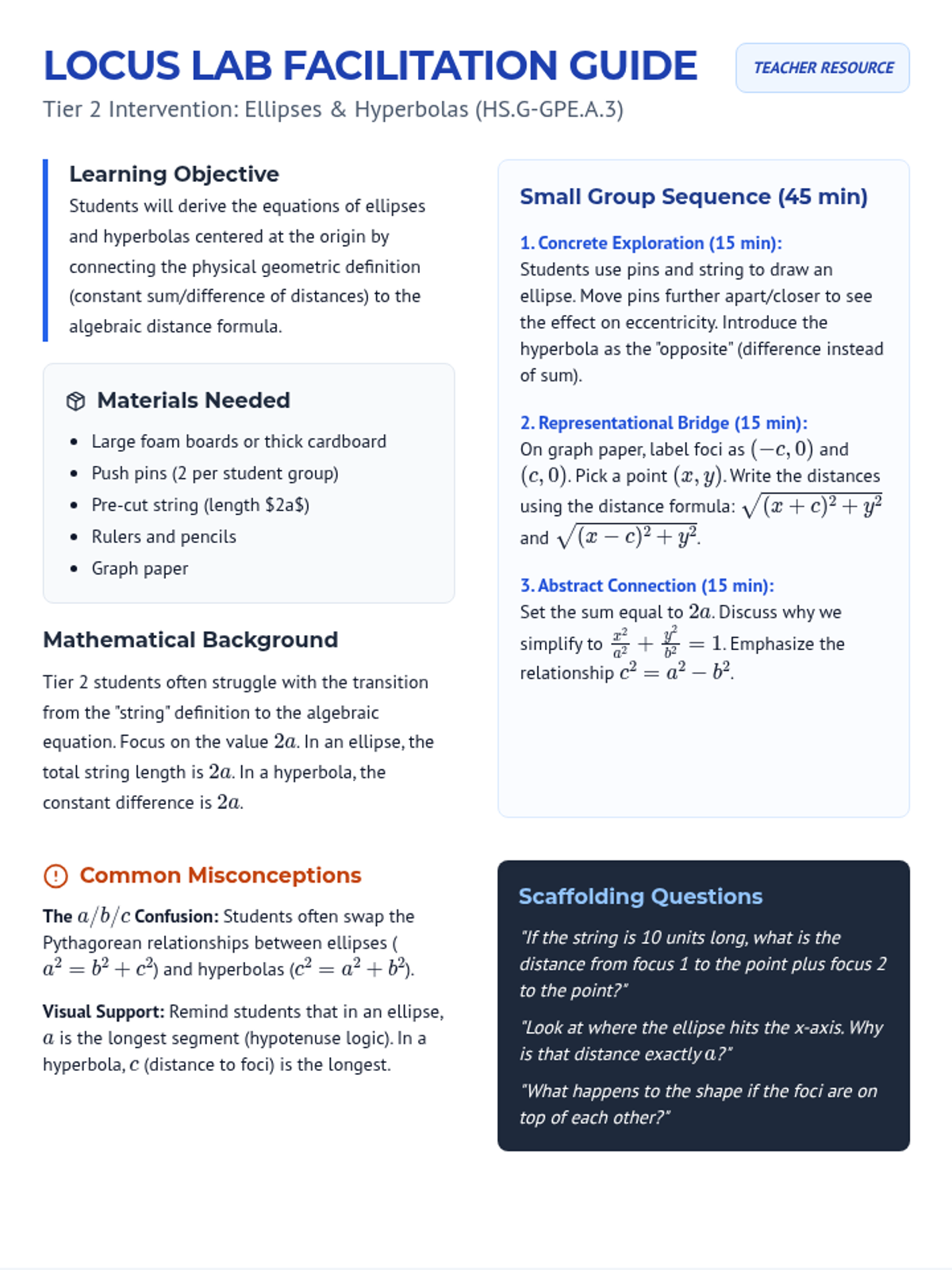
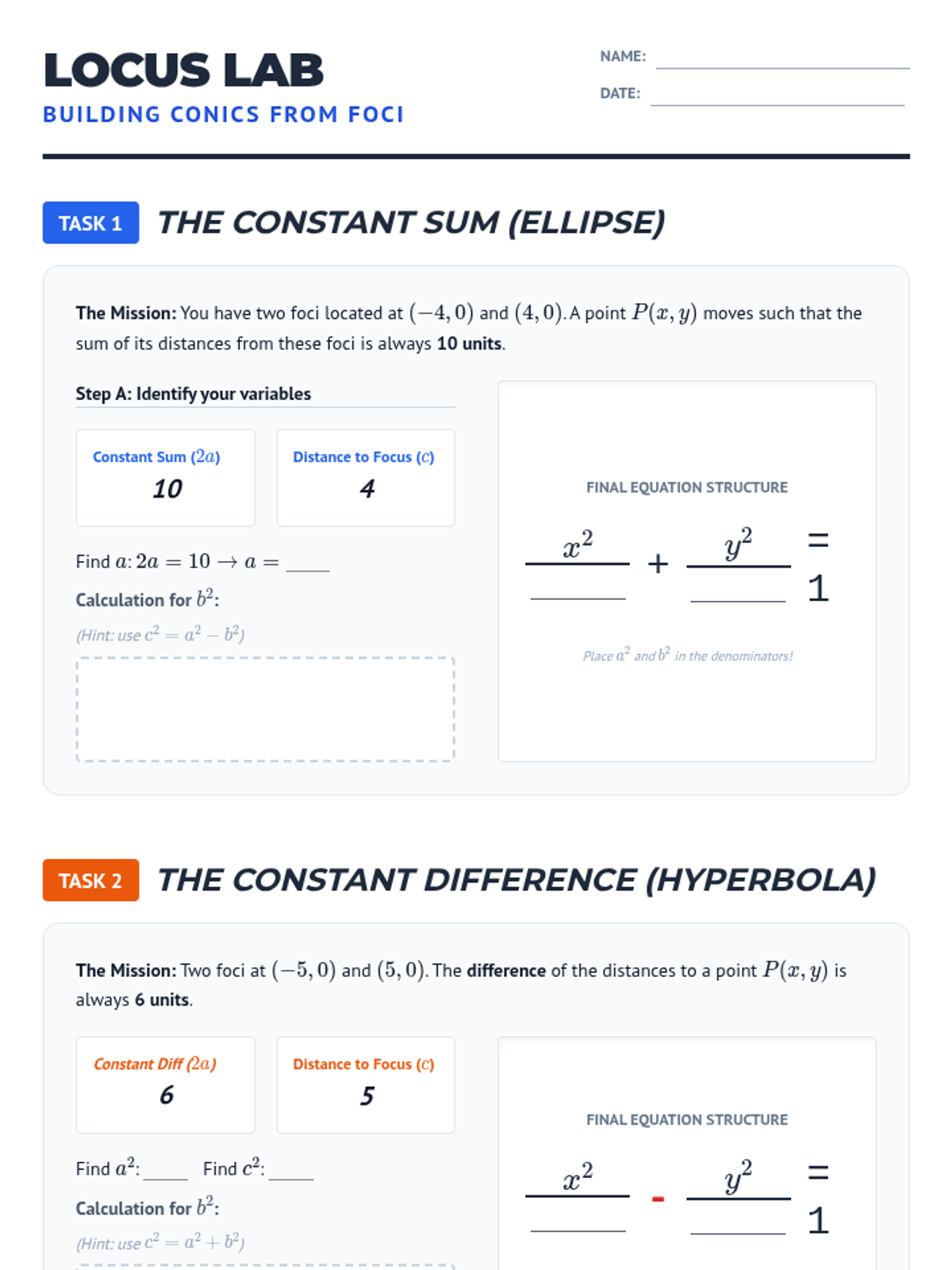
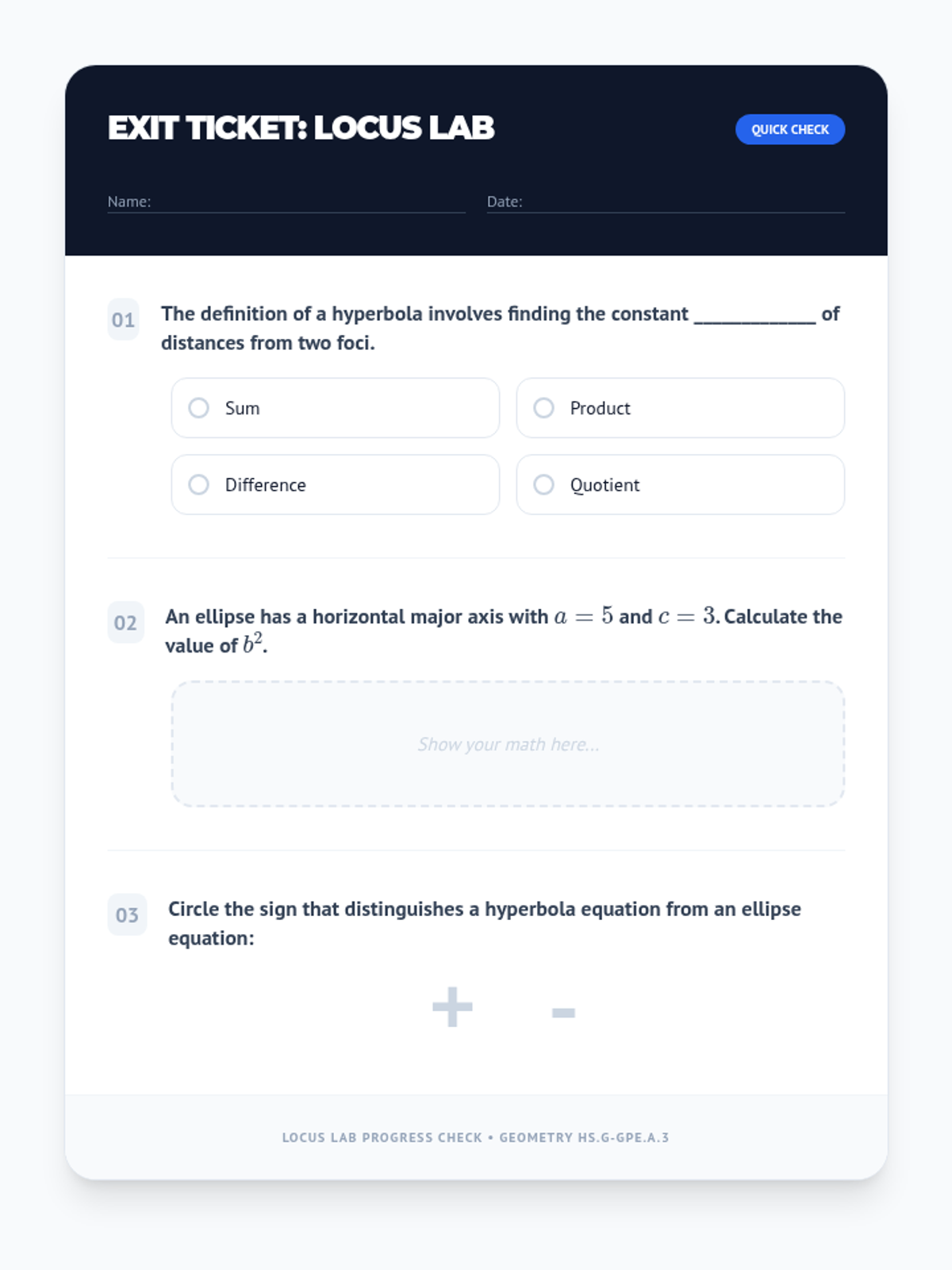
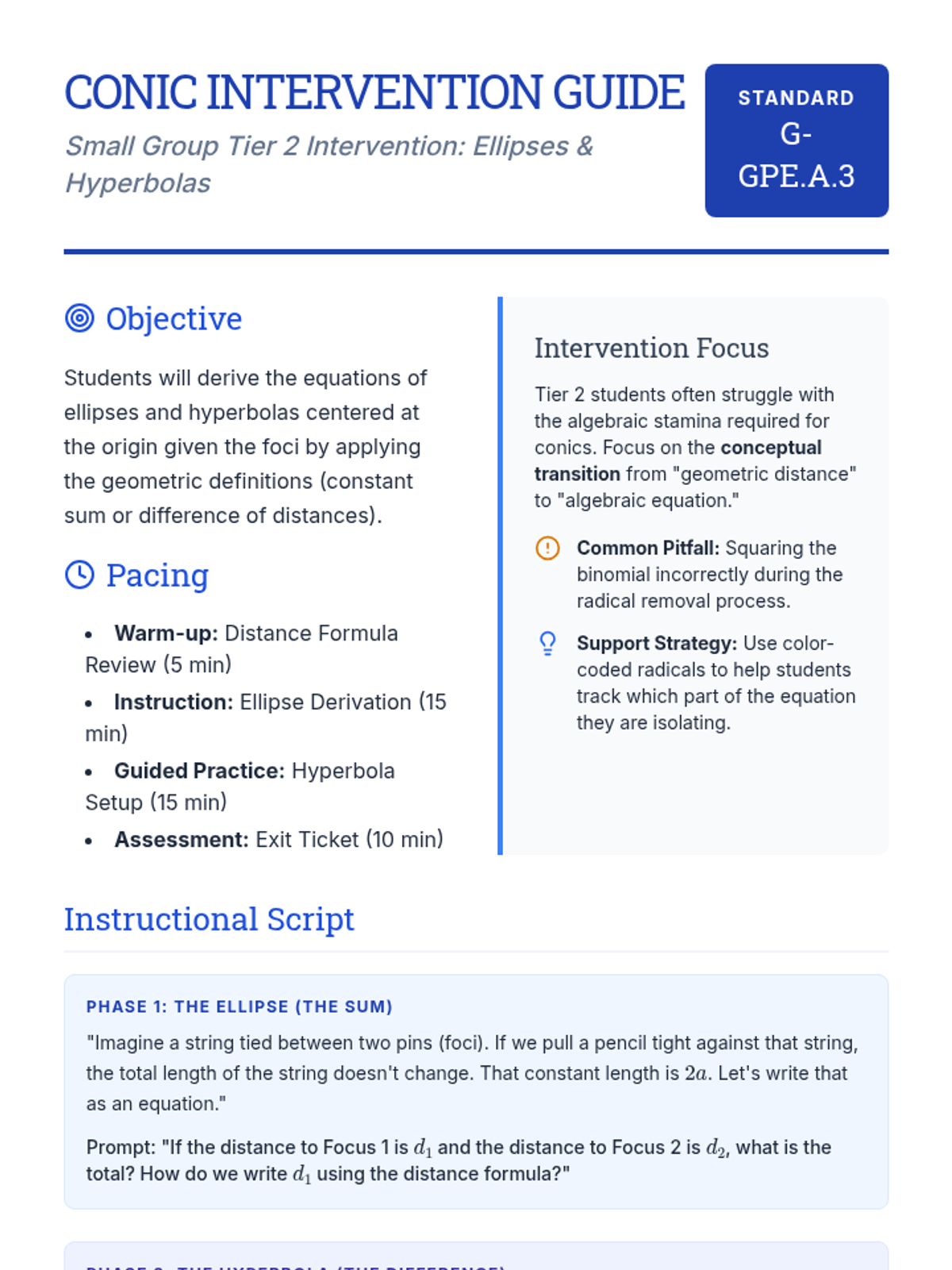
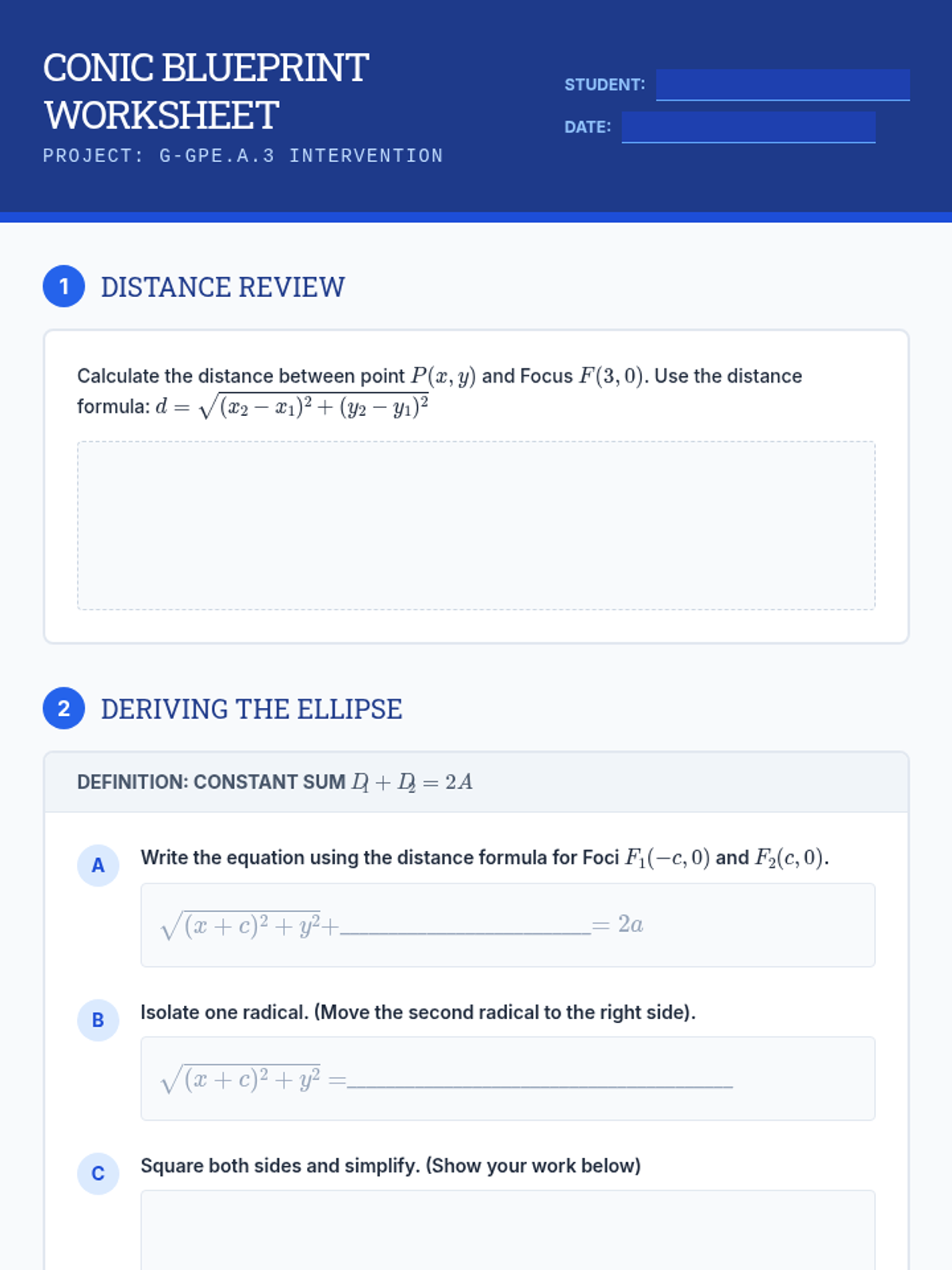
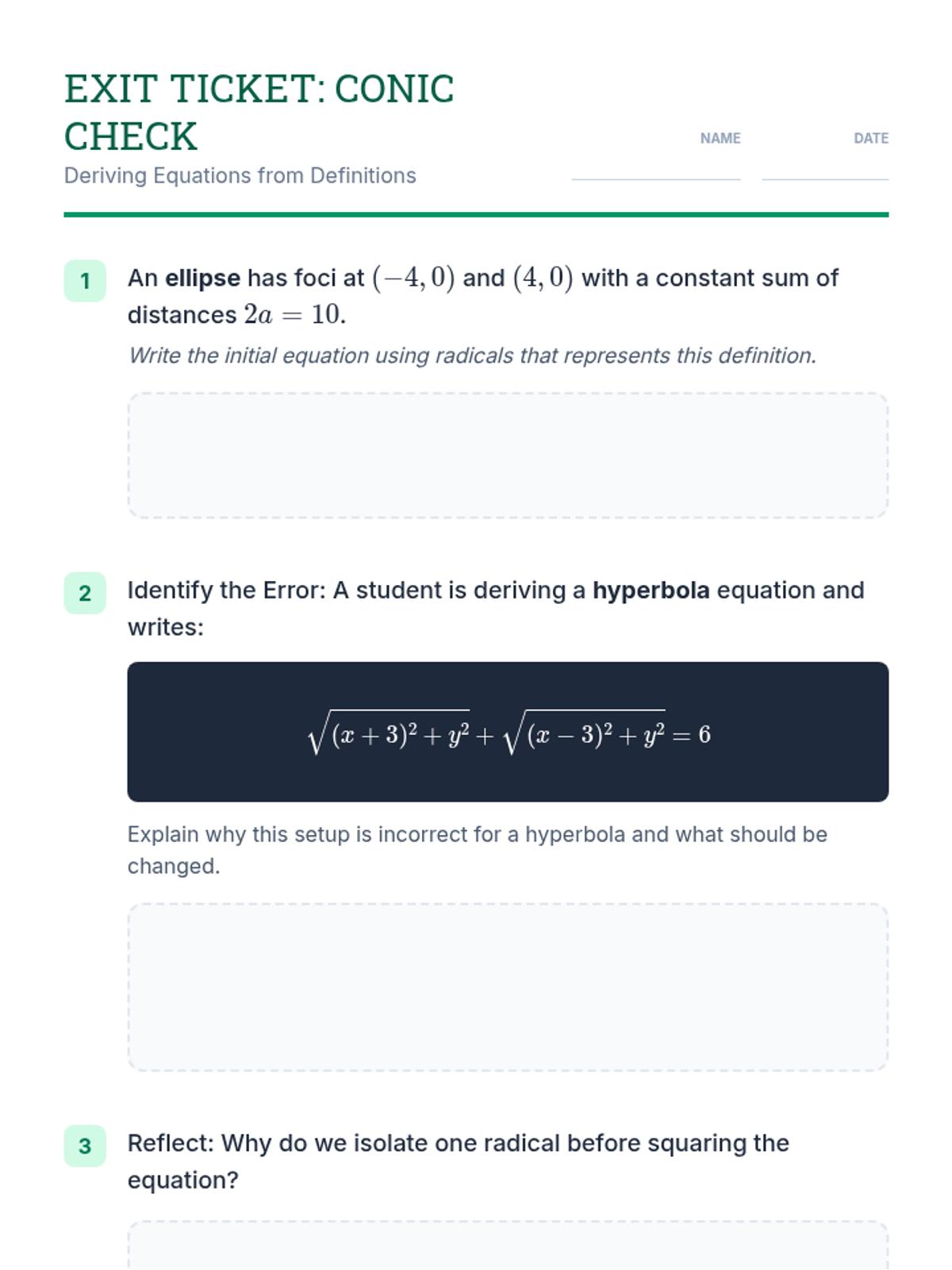
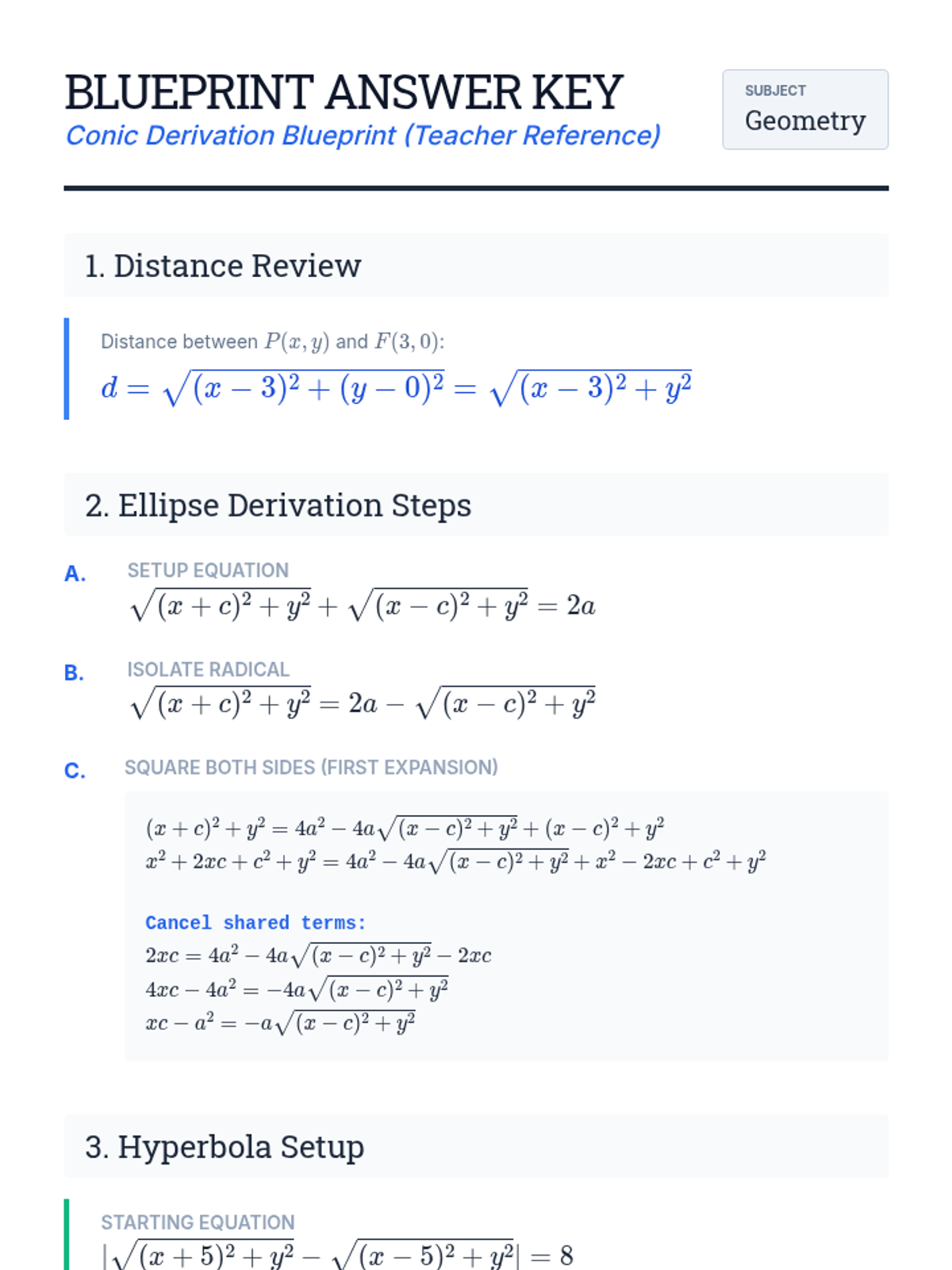
A Tier 2 intervention lesson focusing on the geometric definitions of ellipses and hyperbolas. Students use physical constructions to understand the relationship between foci and distance, leading to scaffolded equation derivation.
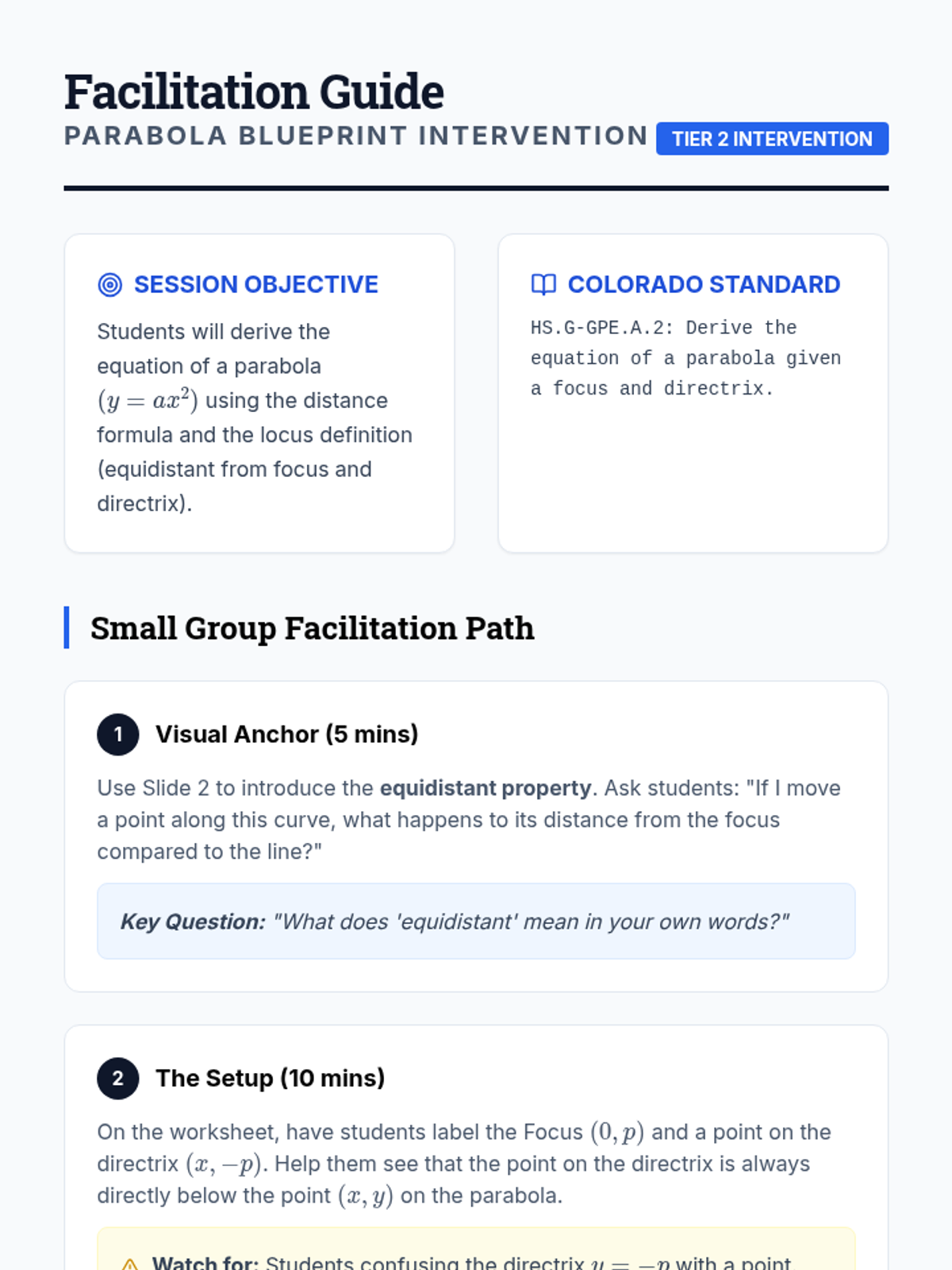
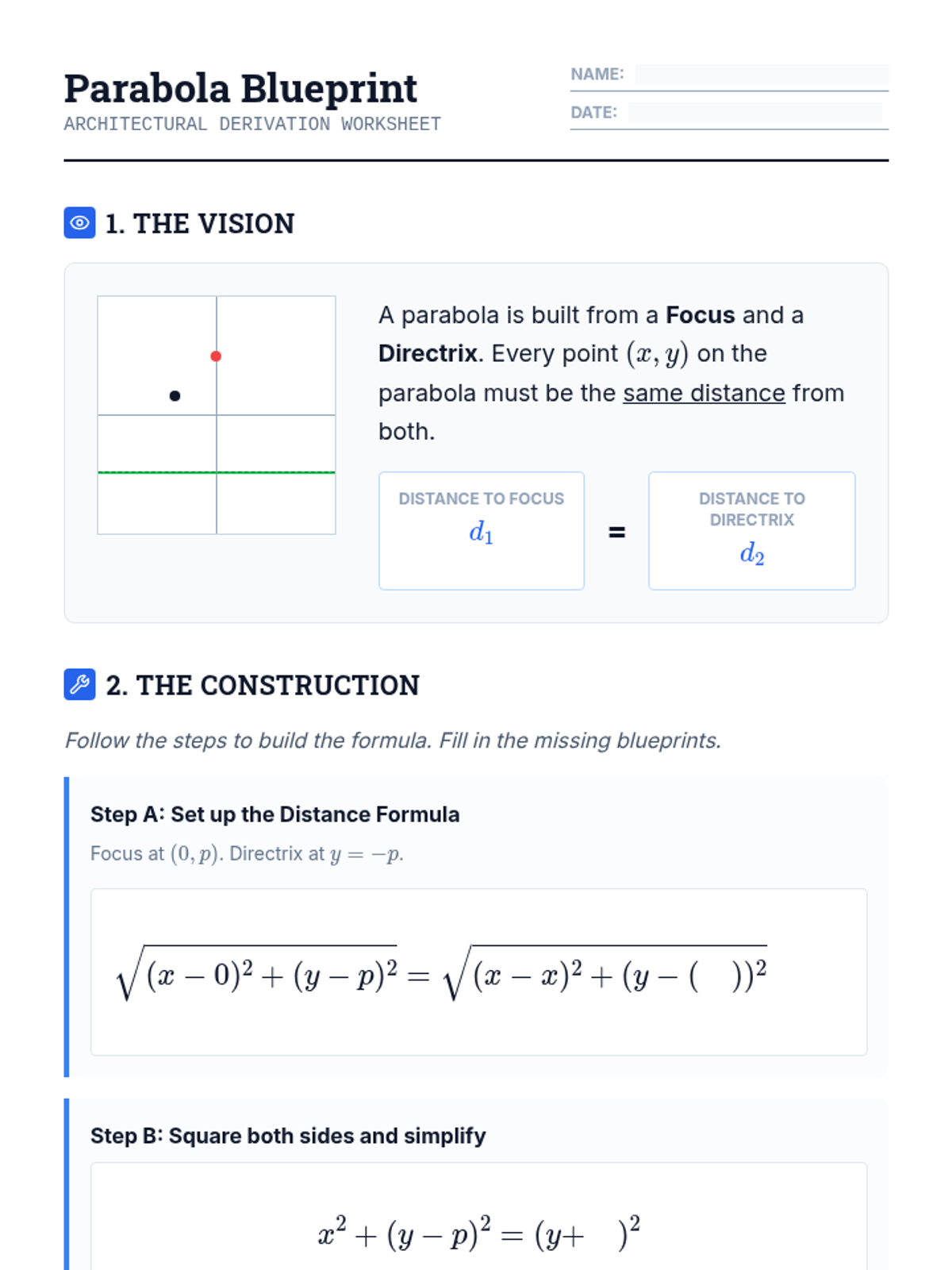
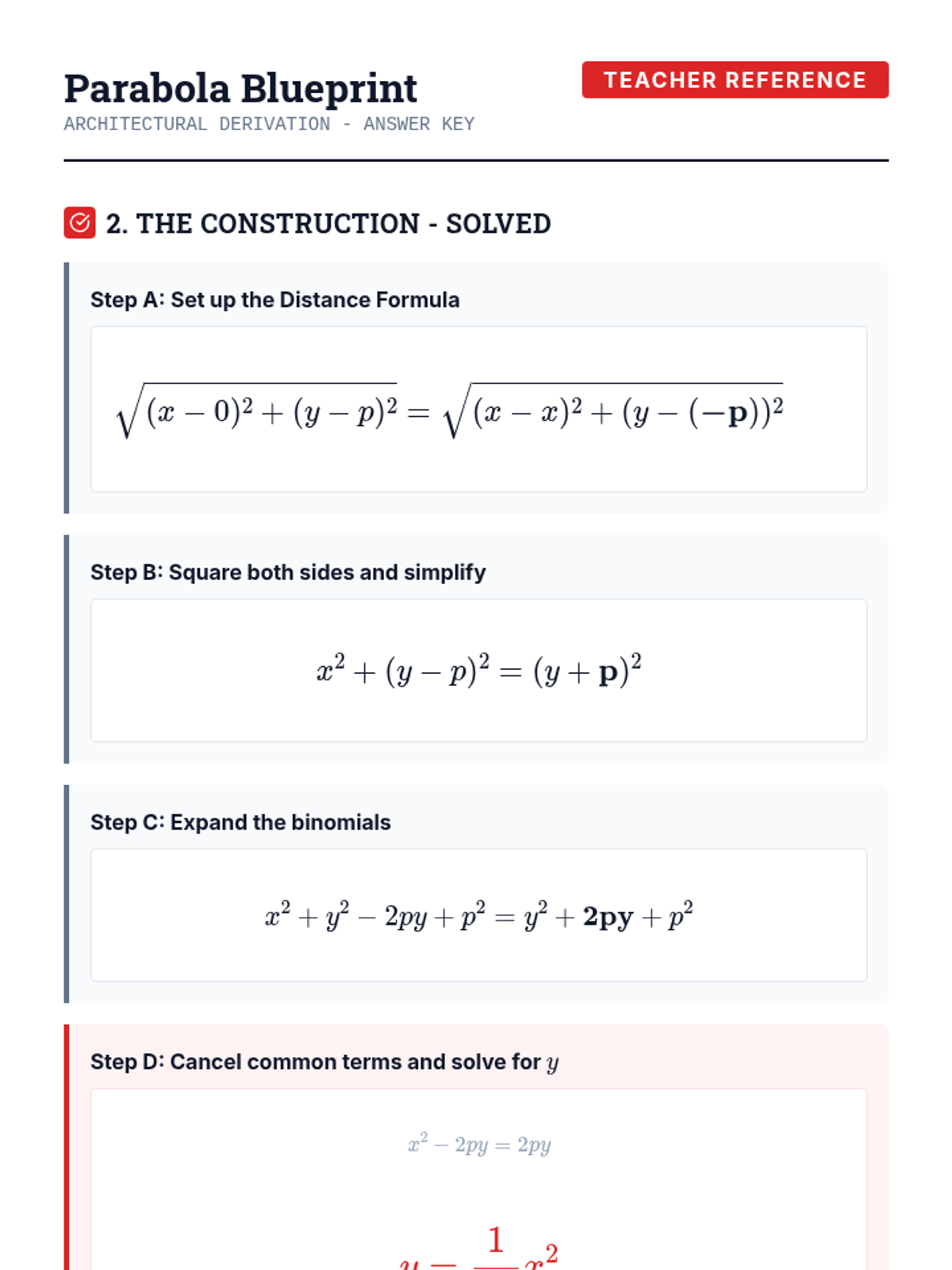
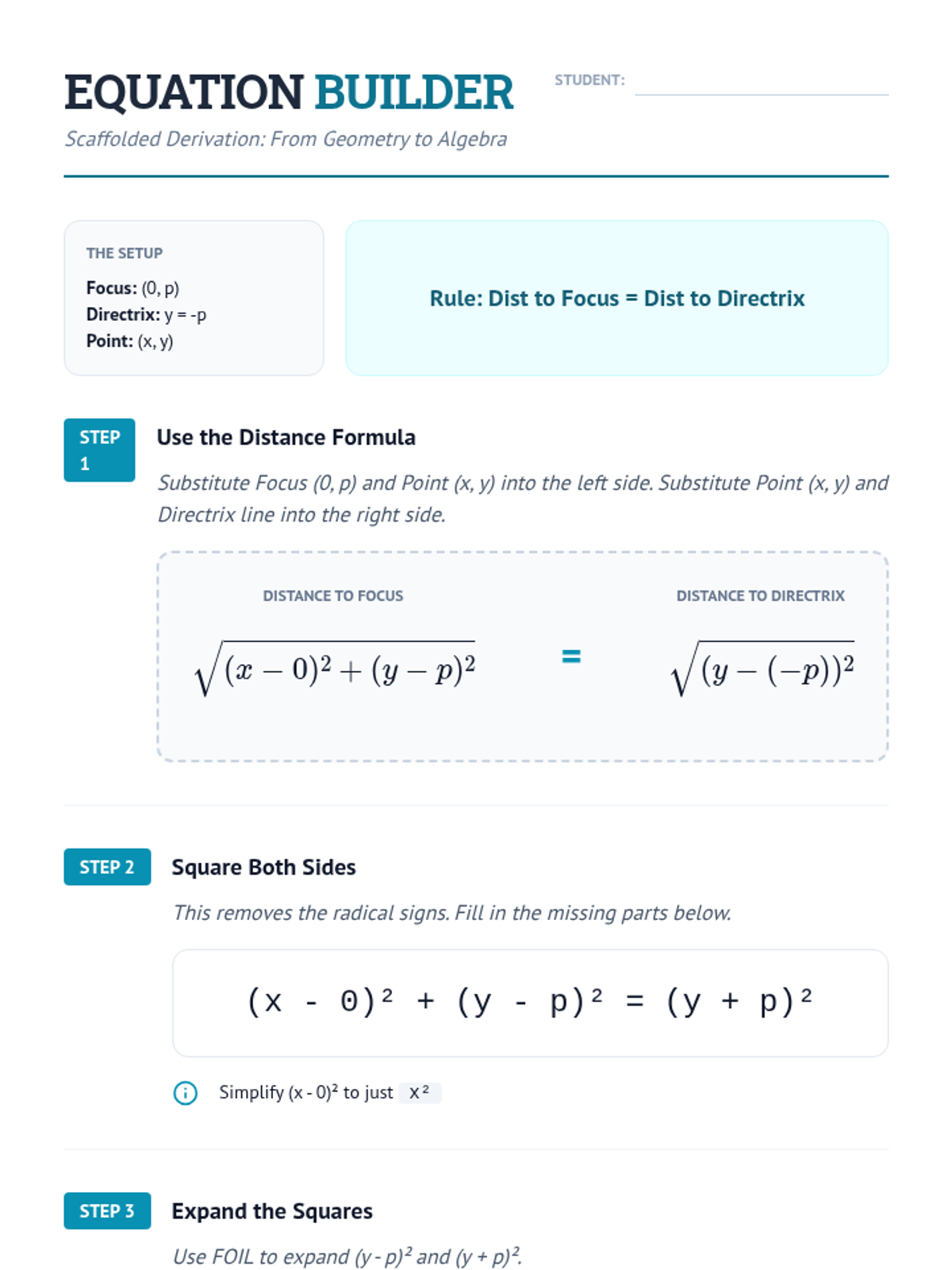
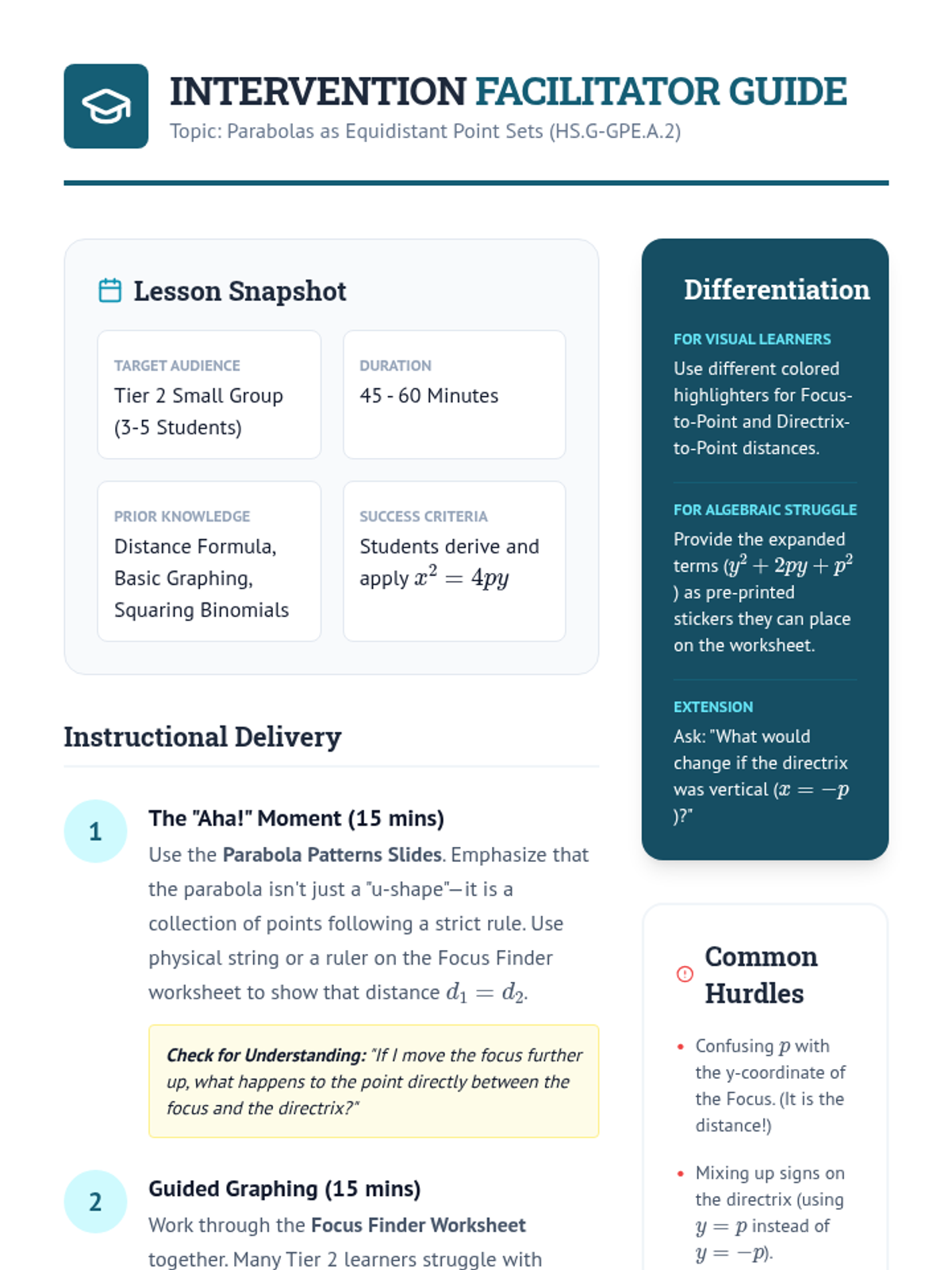
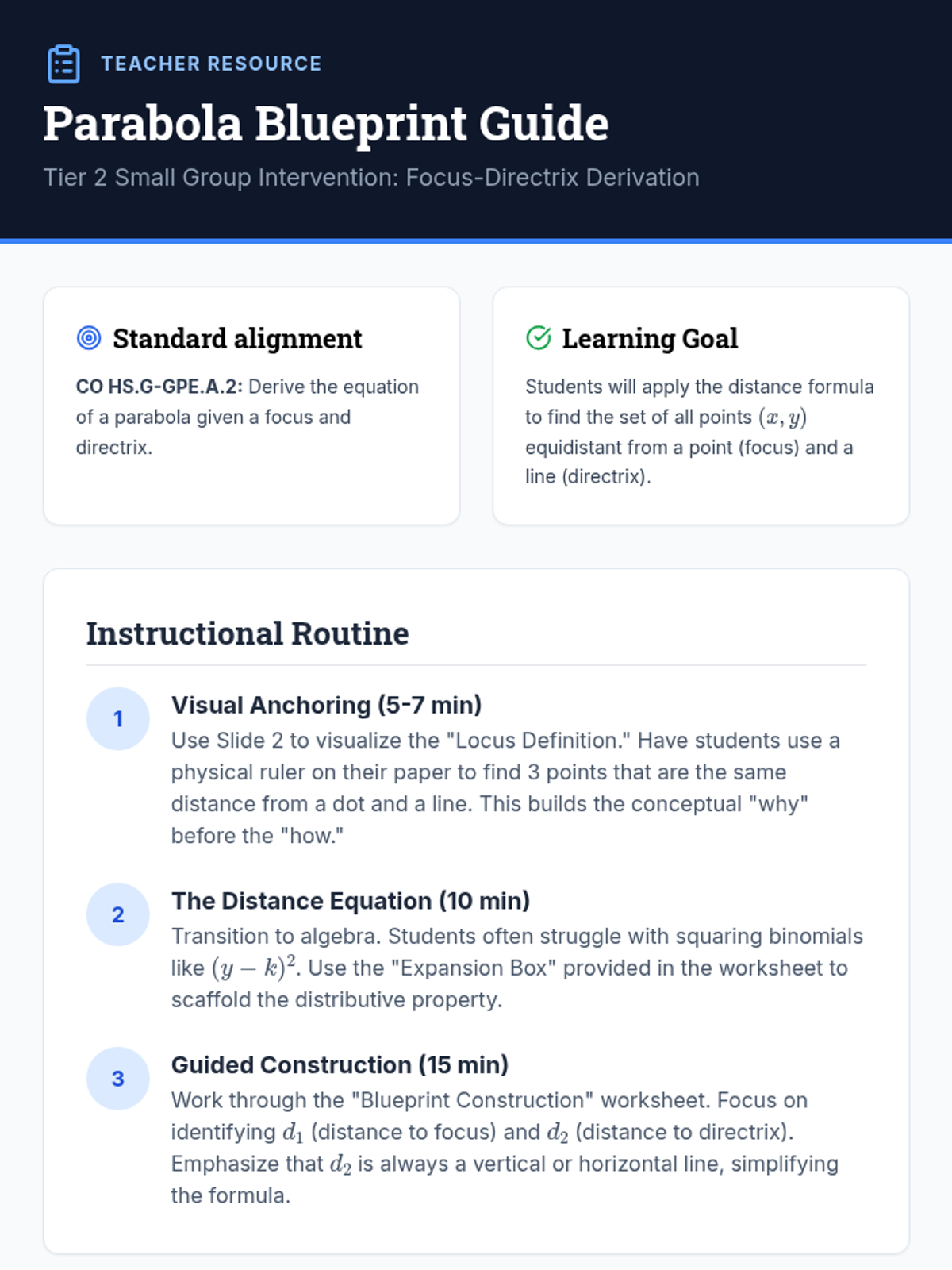
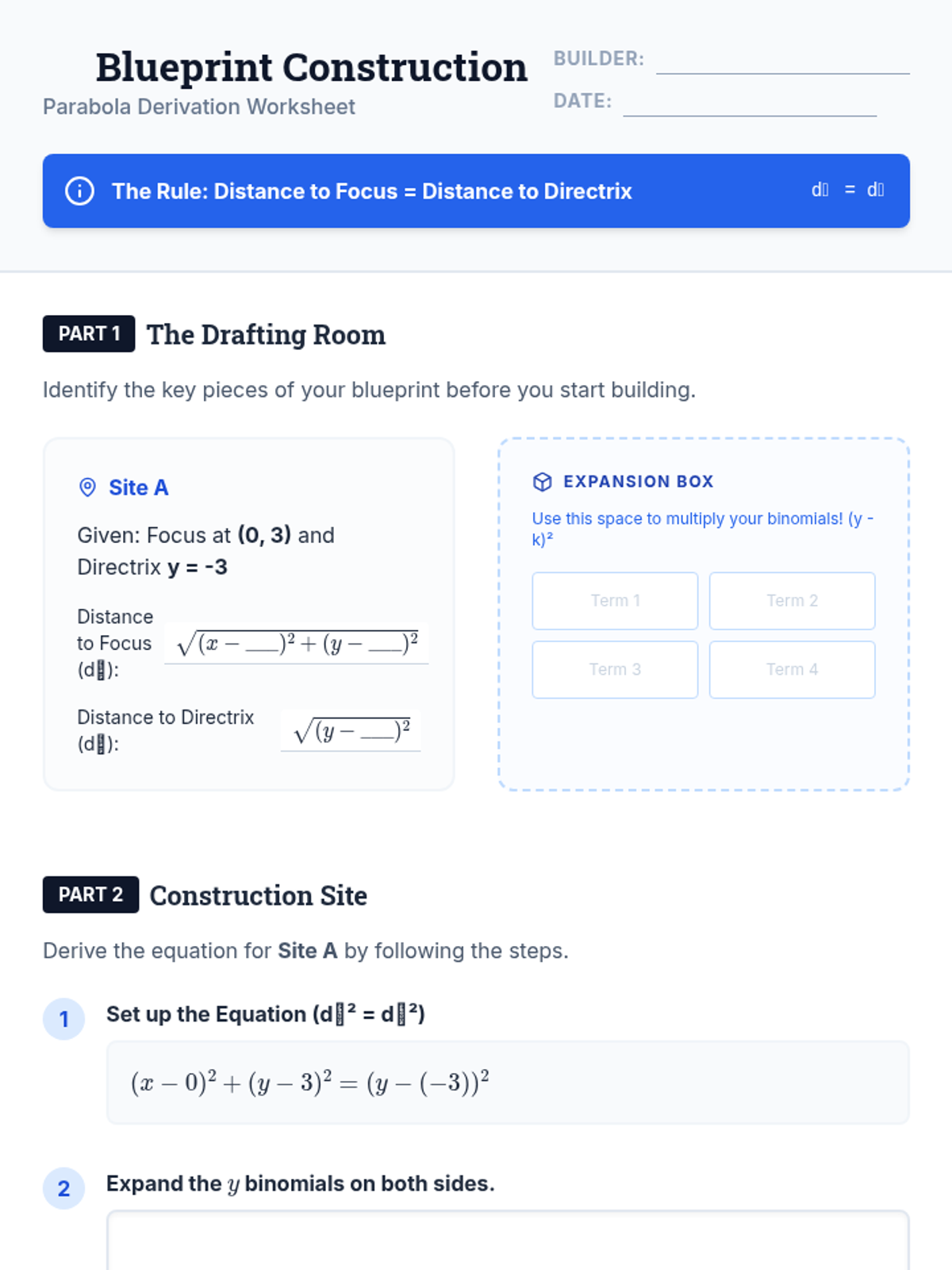
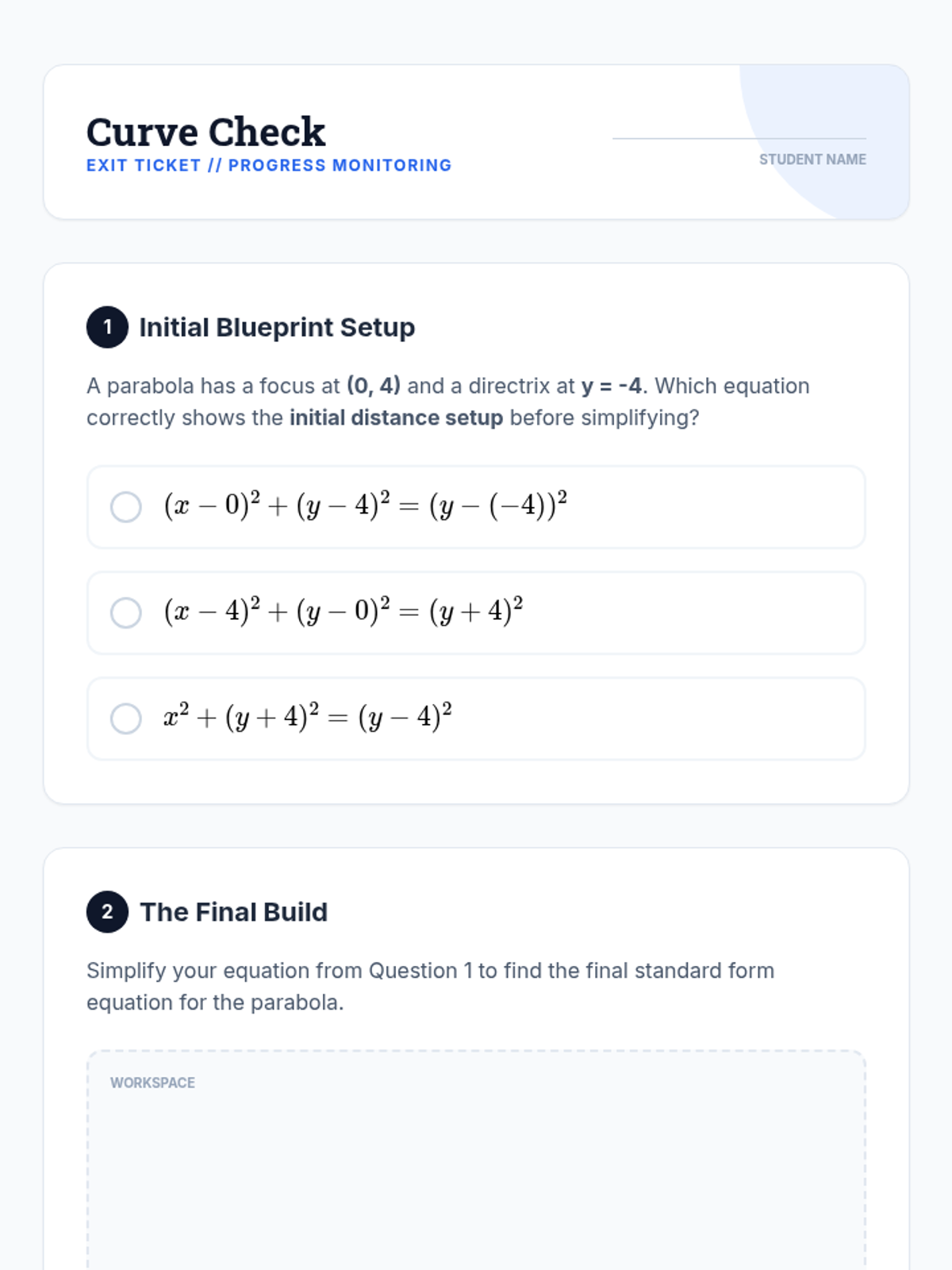
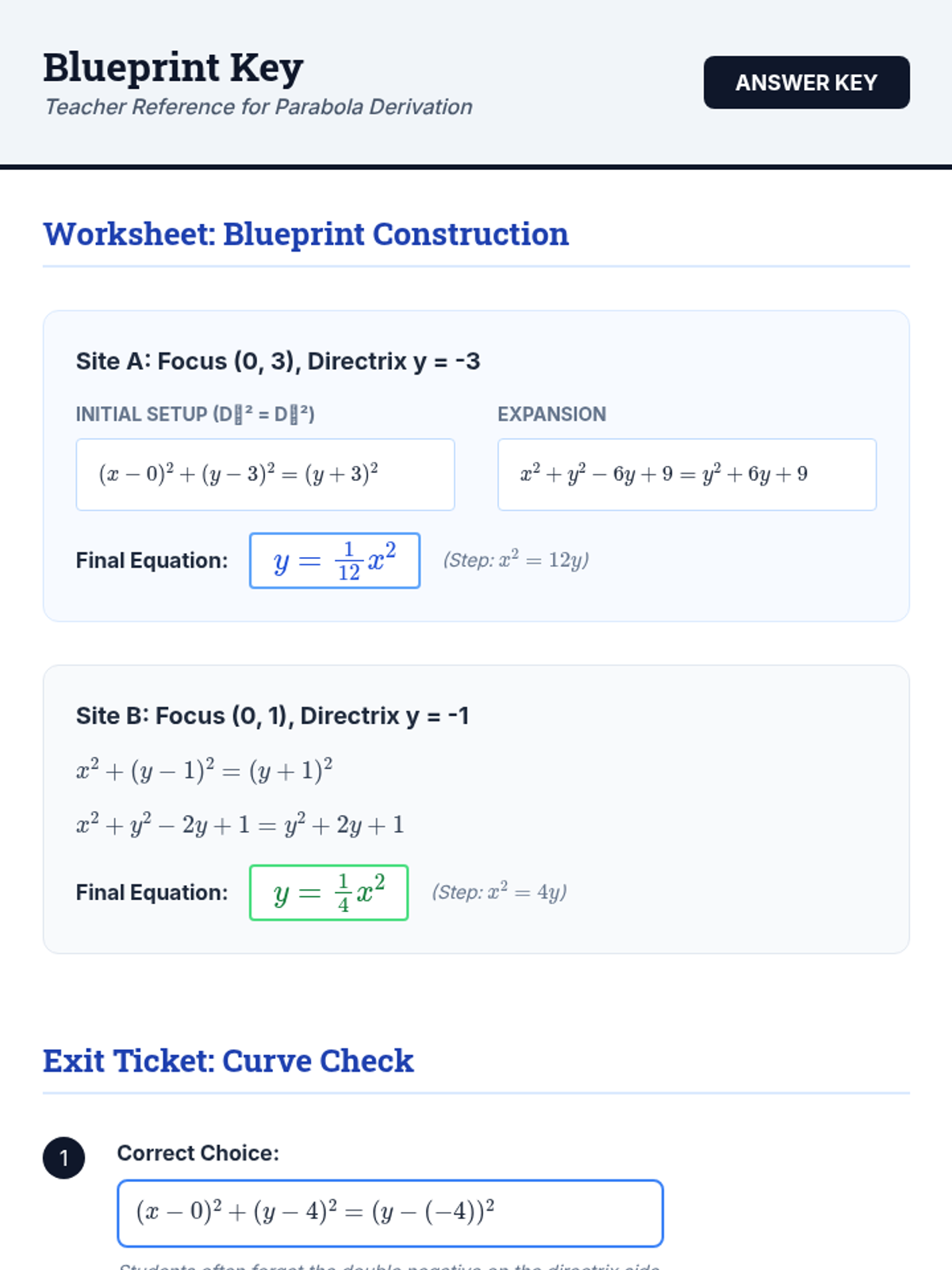
A targeted intervention lesson for high school students to derive the equation of a parabola using the distance formula, focusing on the locus definition of being equidistant from a focus and directrix.
A Tier 2 intervention lesson focusing on the derivation of the circle equation from the Pythagorean Theorem and the algebraic process of completing the square to identify the center and radius.
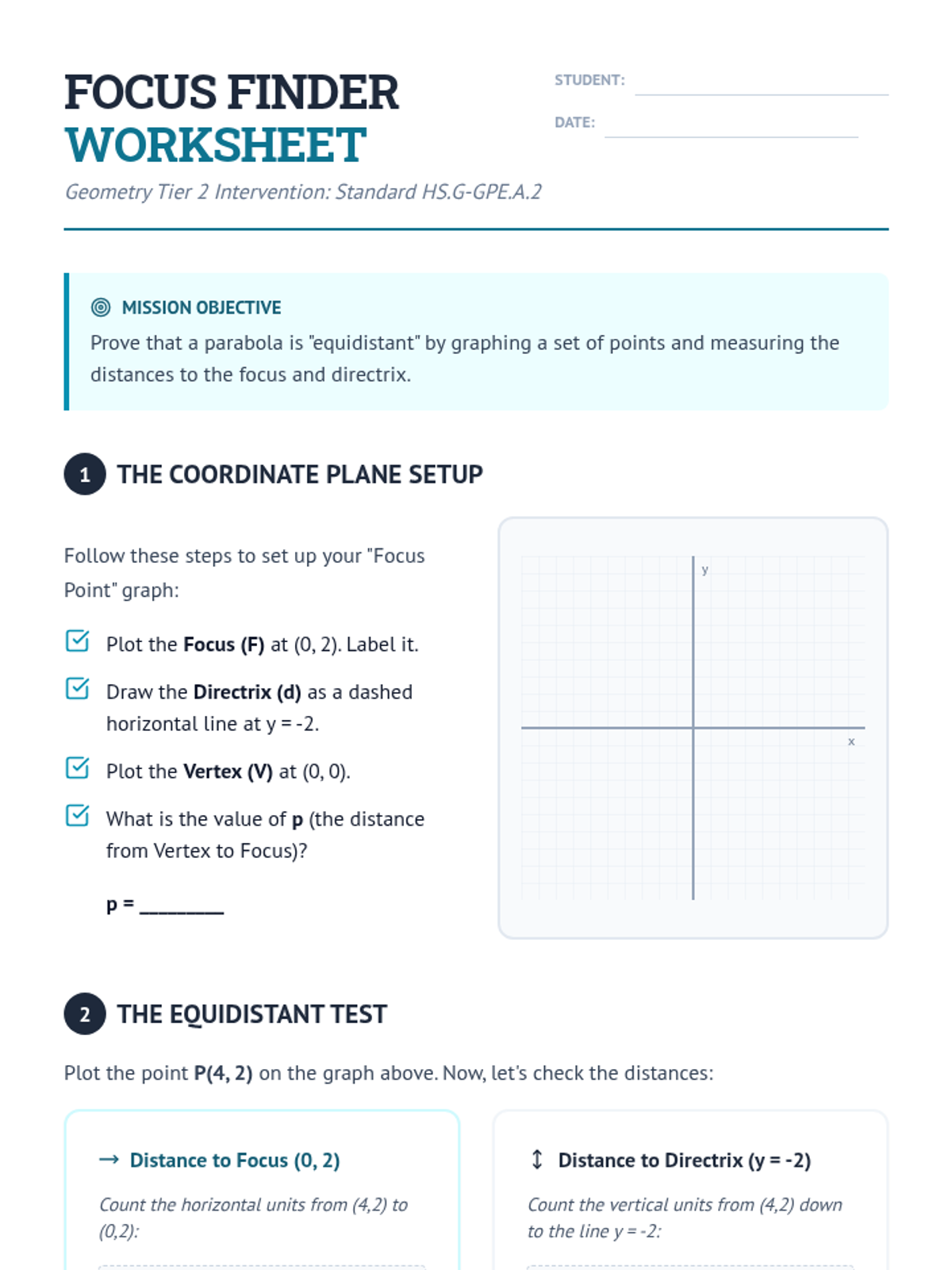
A Tier 2 intervention lesson focusing on the geometric definition of a parabola as the set of points equidistant from a focus and a directrix. Students will use graphing and scaffolded algebra to derive the standard form equation for a parabola with a vertex at the origin.
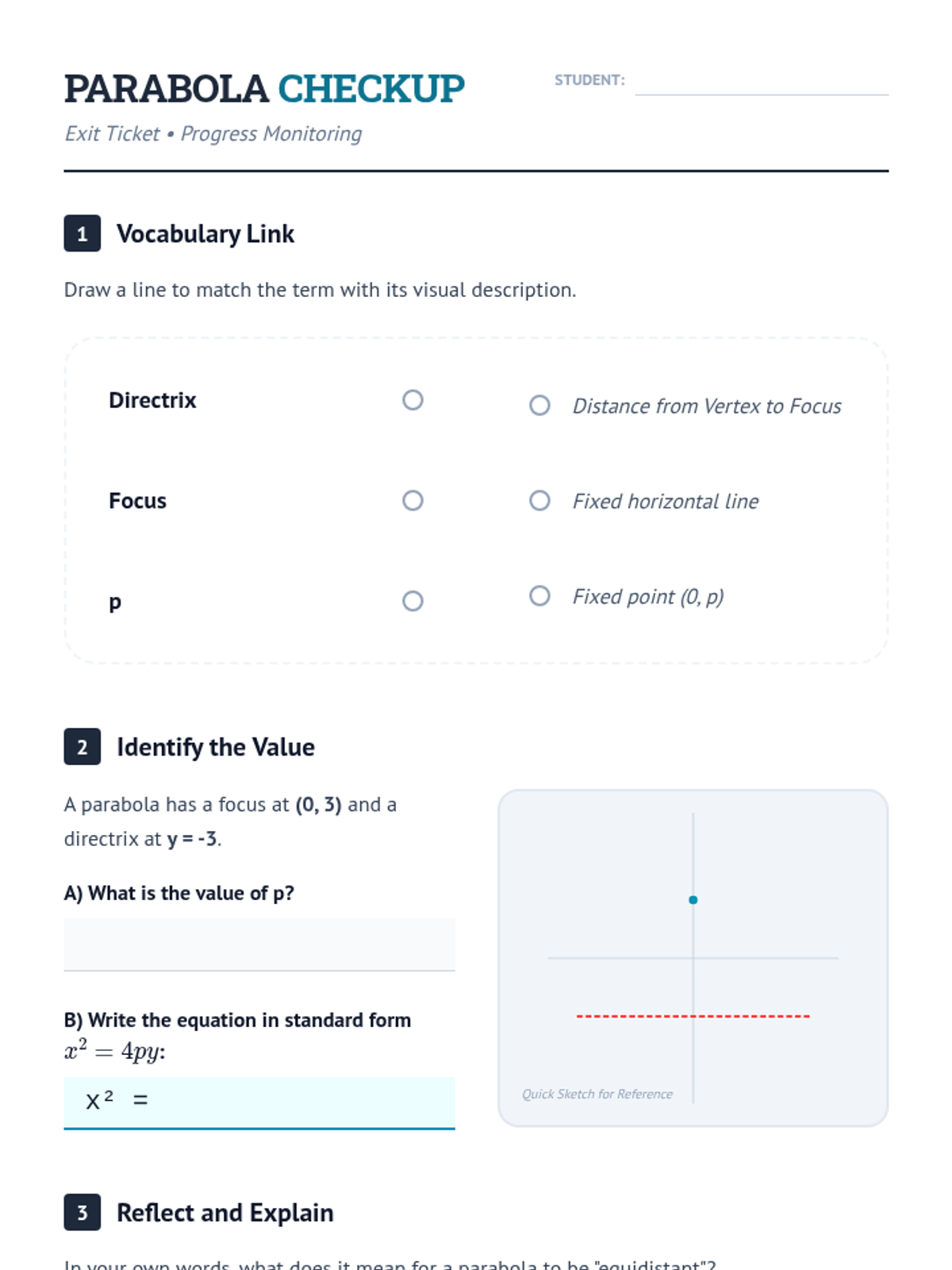
A targeted Tier 2 intervention lesson focusing on deriving parabola equations from focus and directrix using the distance formula. Includes visual scaffolding, algebraic support, and progress monitoring for high school geometry students.
A targeted Tier 2 intervention lesson focusing on the geometric definitions of ellipses and hyperbolas. Students connect hands-on 'string and pin' constructions to the algebraic derivation of equations using the constant sum and difference of distances from two foci.
A small-group intervention lesson focused on deriving ellipse and hyperbola equations from focal points using the constant sum/difference of distances.
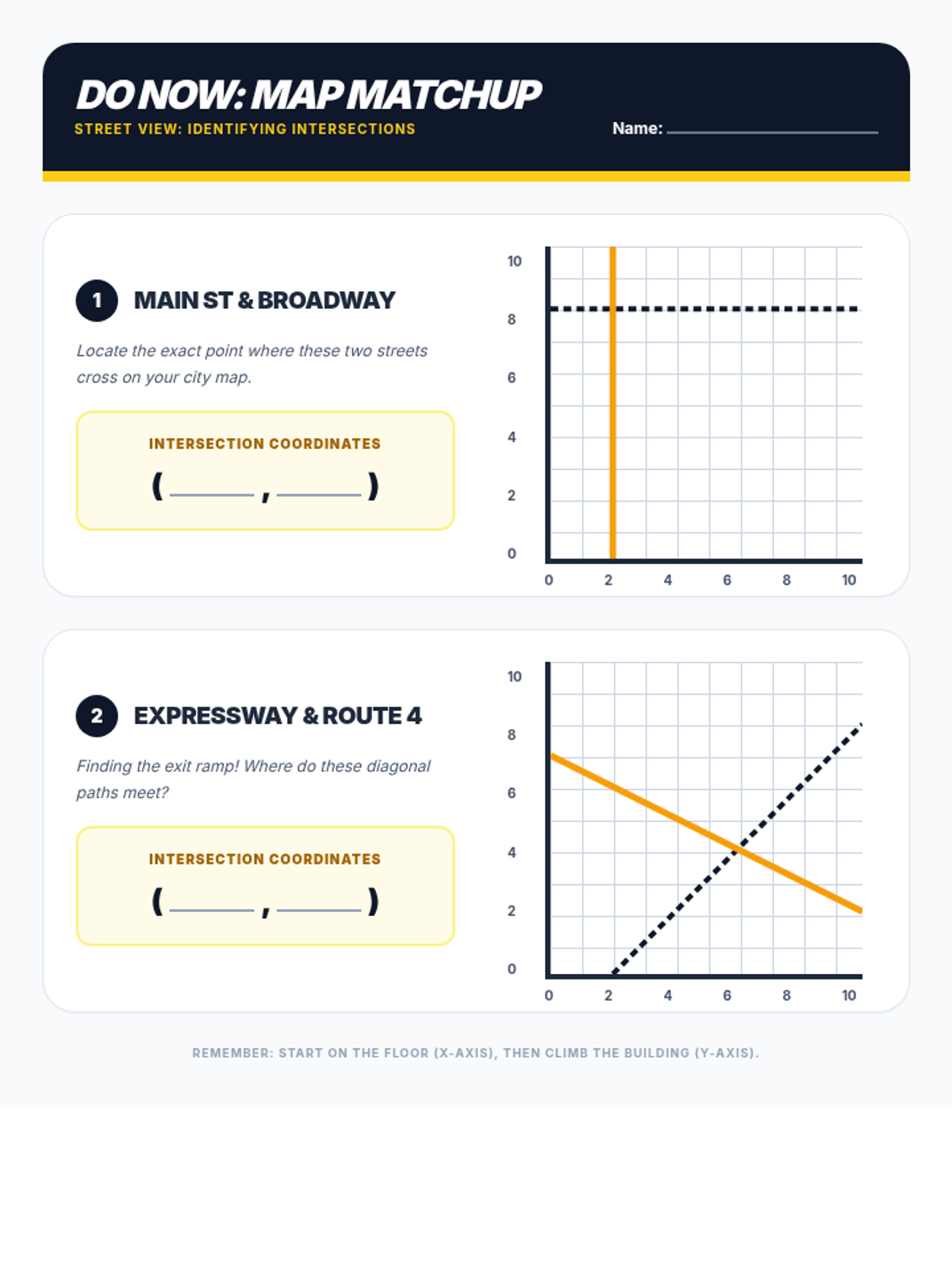
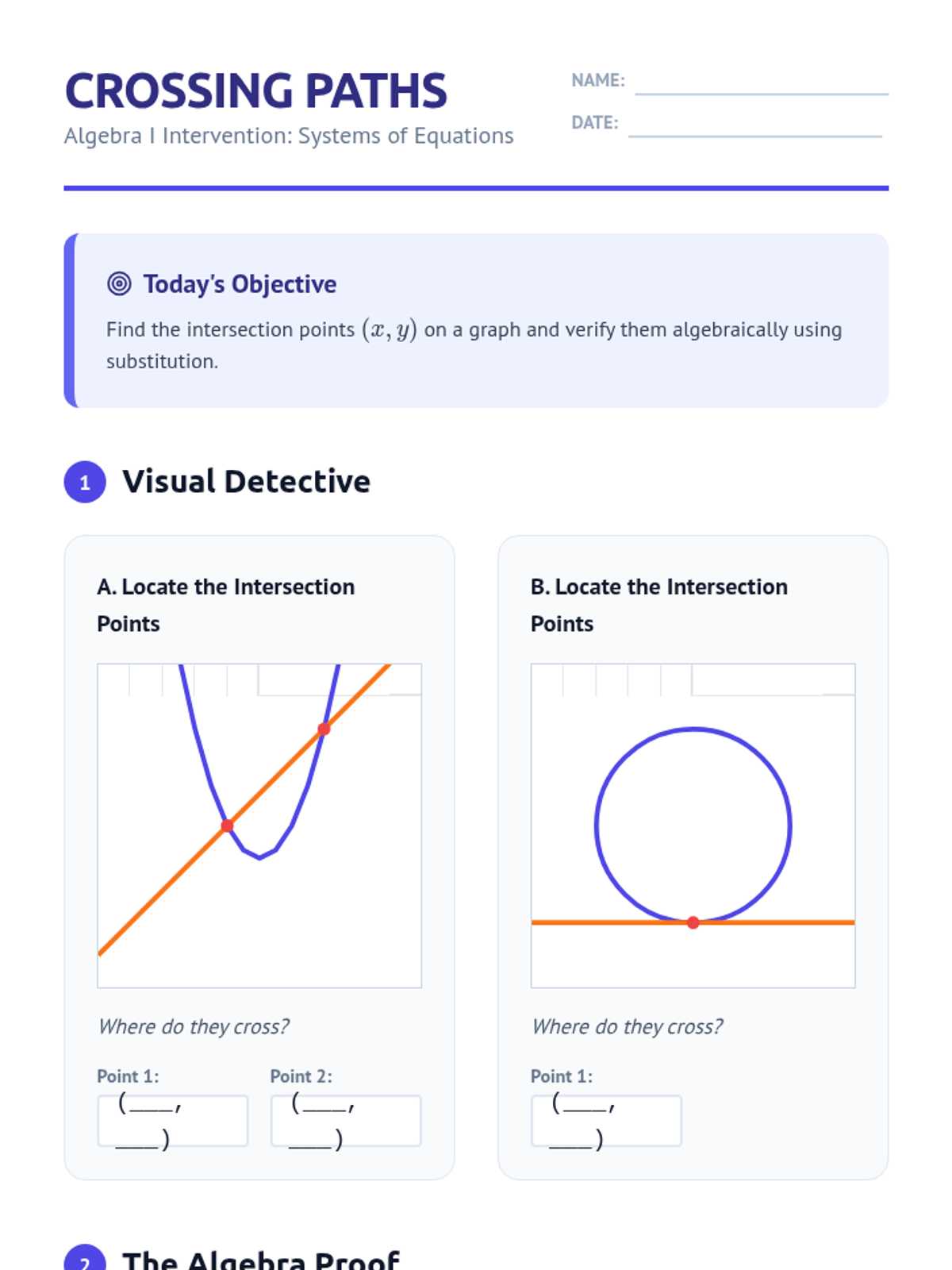
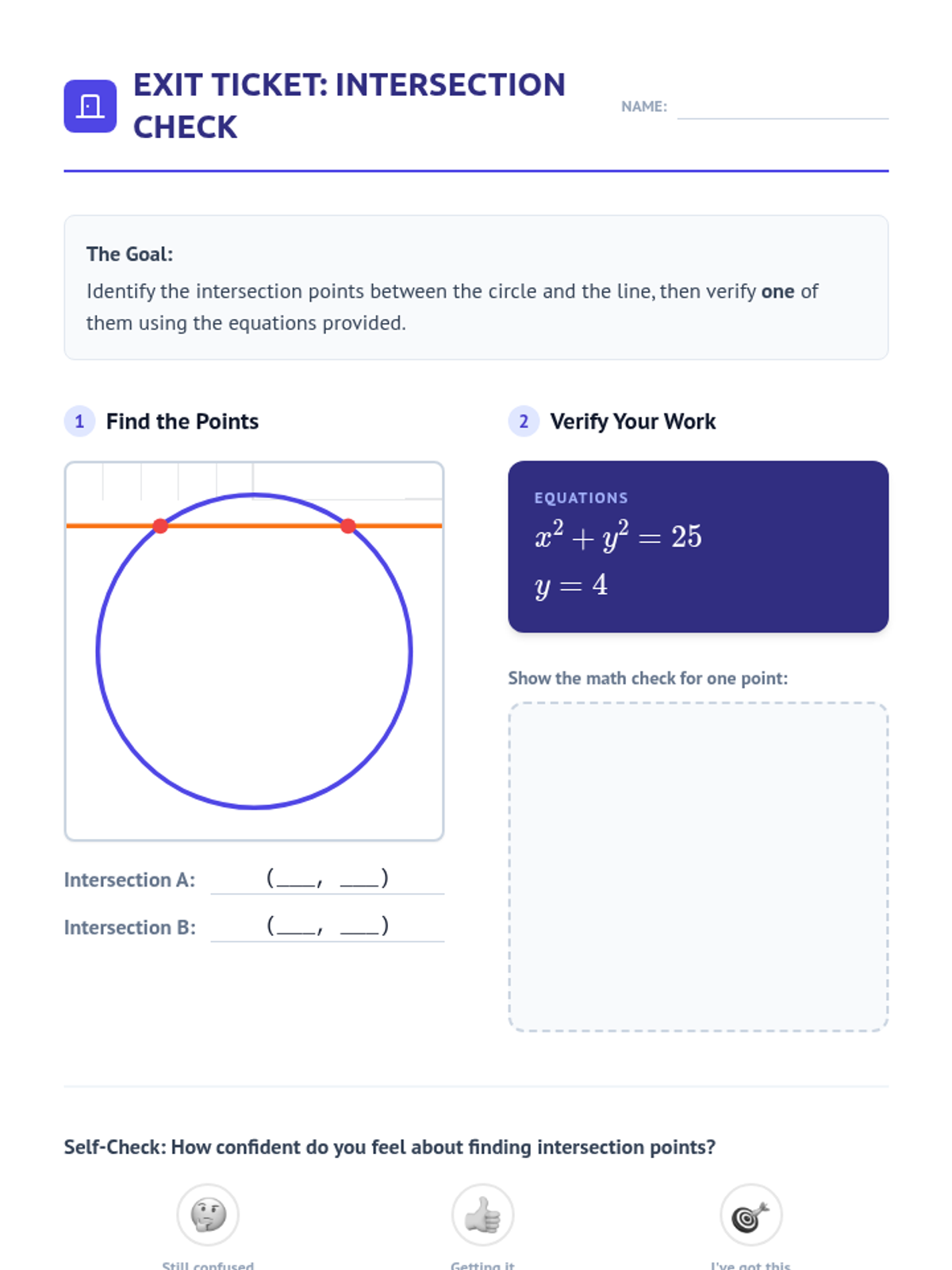
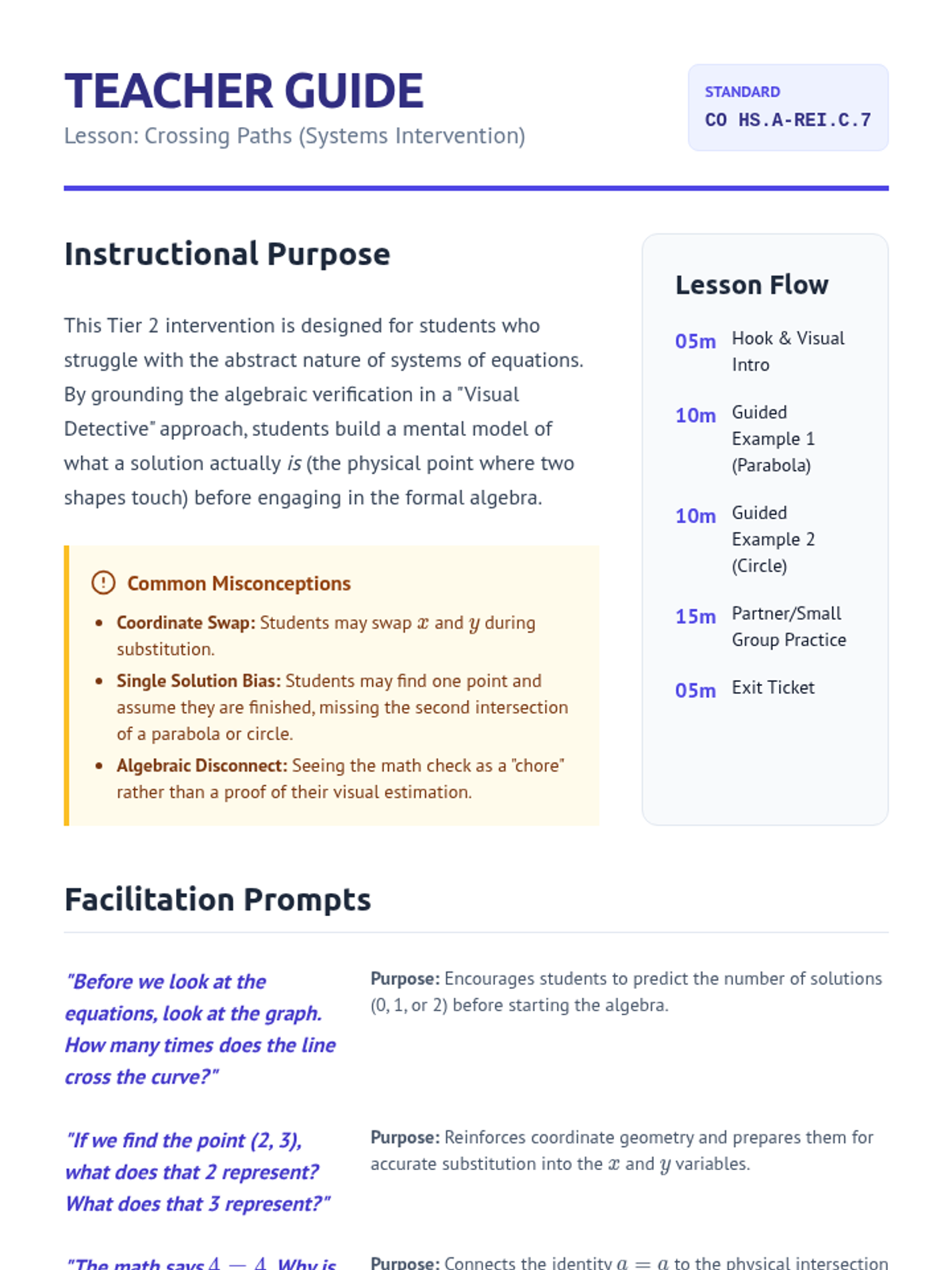
This lesson focuses on identifying where a line and a parabola or circle cross. Students practice visual estimation on a grid and follow up with algebraic verification using substitution, targeting common misconceptions in systems of nonlinear equations.
Day 2 focuses on common mistakes, computer-based testing tips, and tackling more complex mixed-standard problems.
Day 1 focuses on mindset, organized work habits, and the process of elimination strategy for multiple-choice questions.
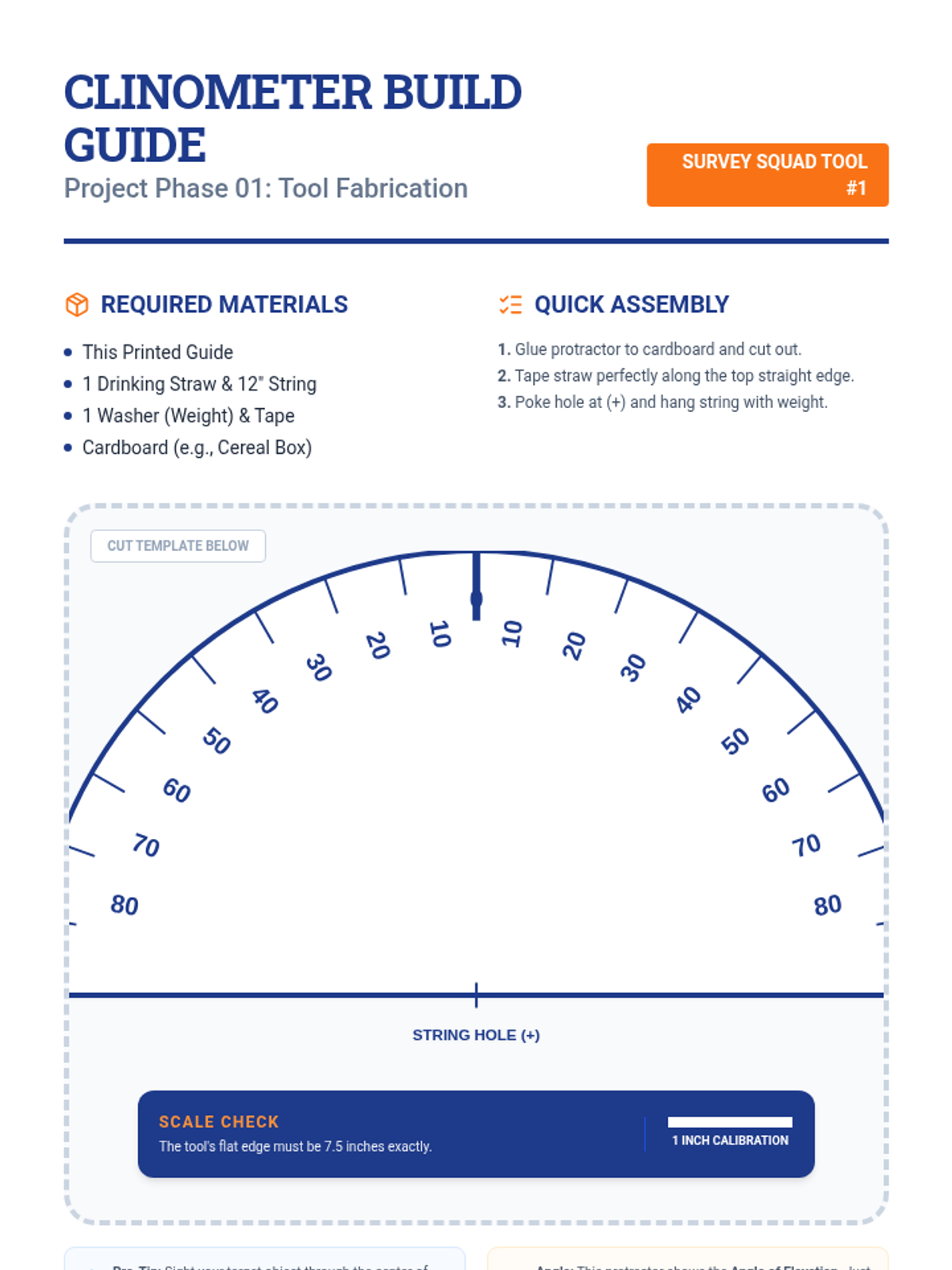
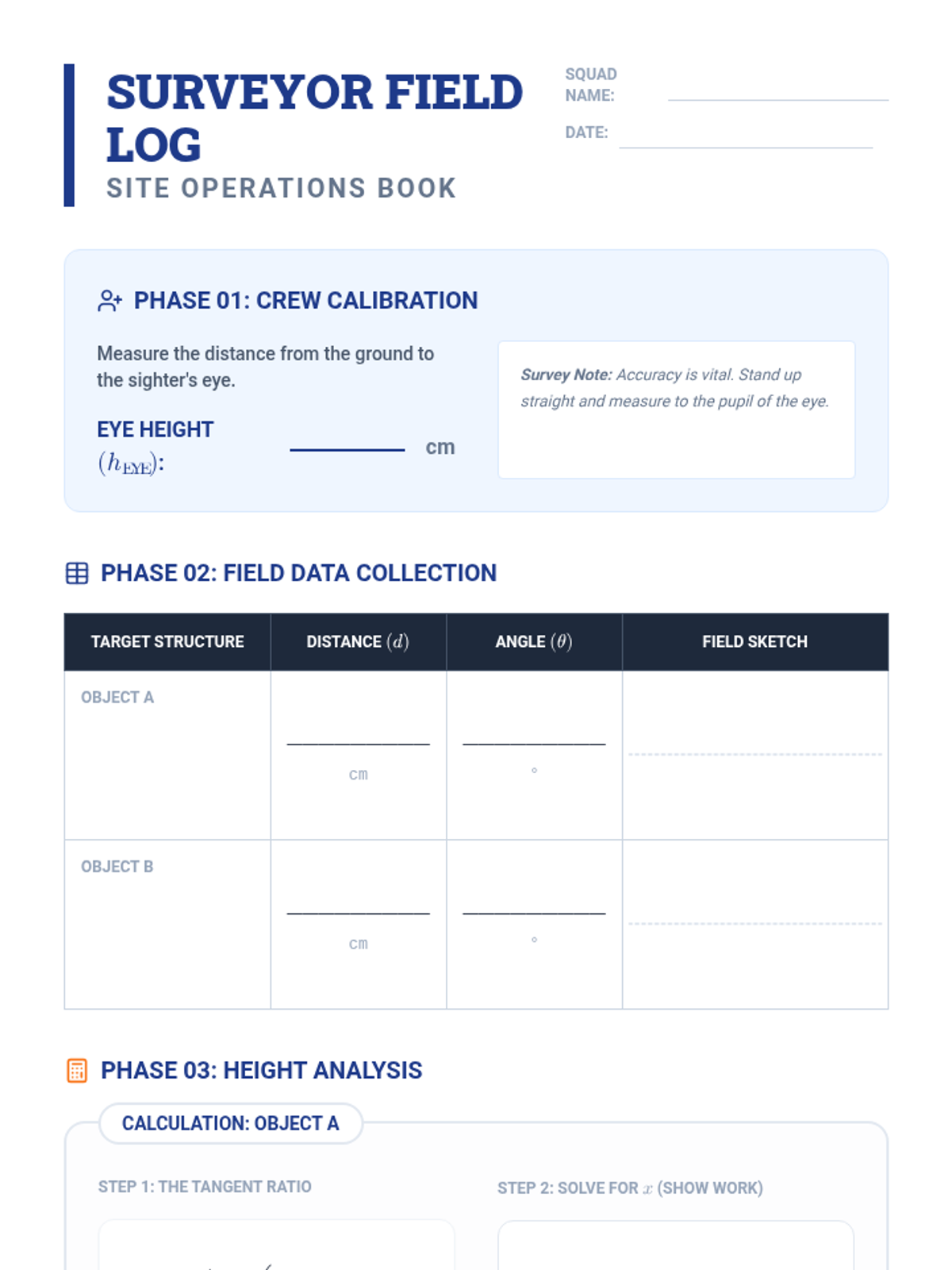
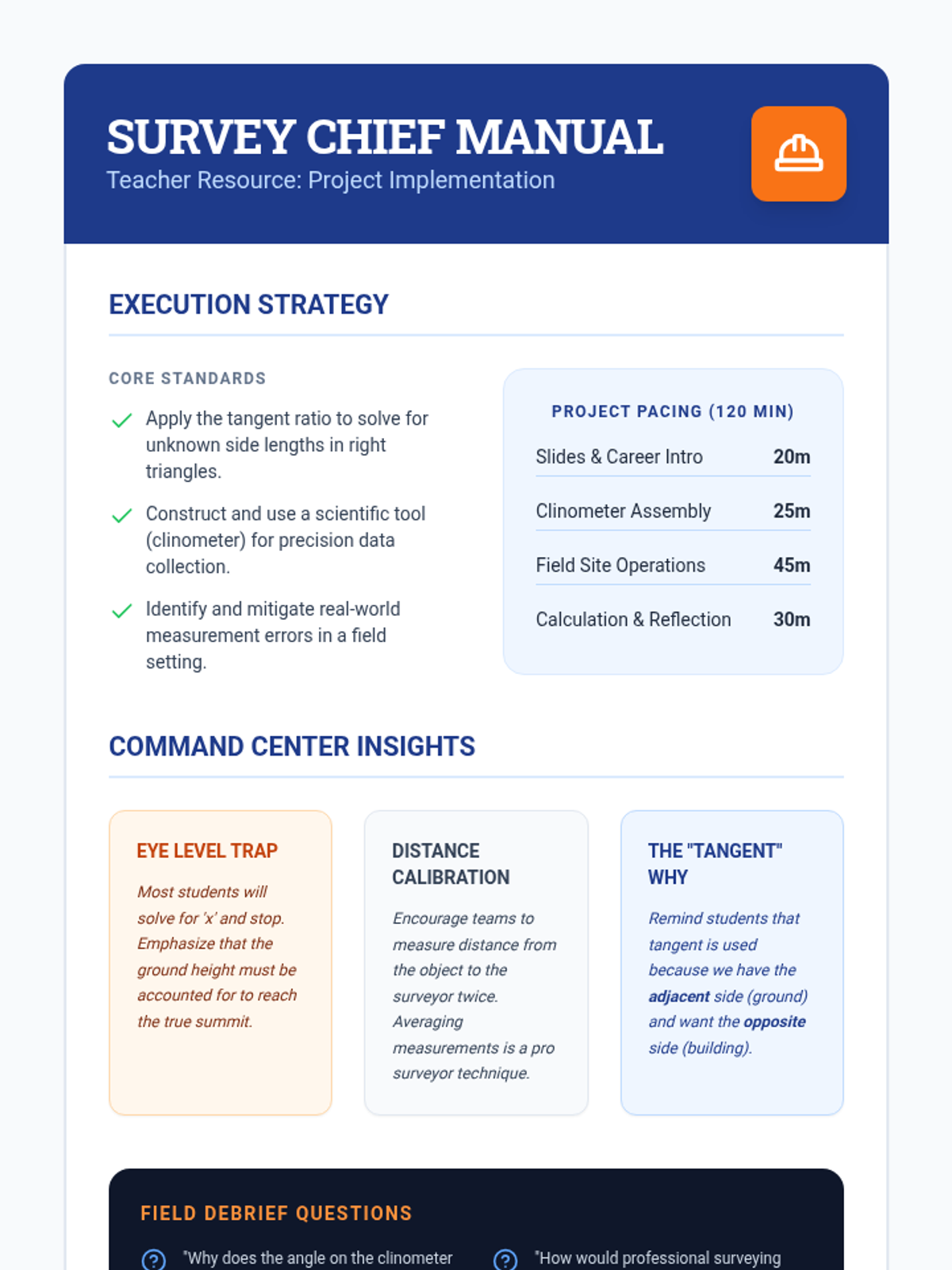
A hands-on project where students step into the role of professional surveyors to measure the height of tall objects around their school using DIY clinometers and trigonometric ratios.
Reviewing scale drawings, statistics, and probability to round out the comprehensive NYS Assessment preparation.
Solving and graphing linear inequalities and applying them to real-world NYS assessment scenarios.
Simplifying linear expressions and solving multi-step equations using properties of operations.
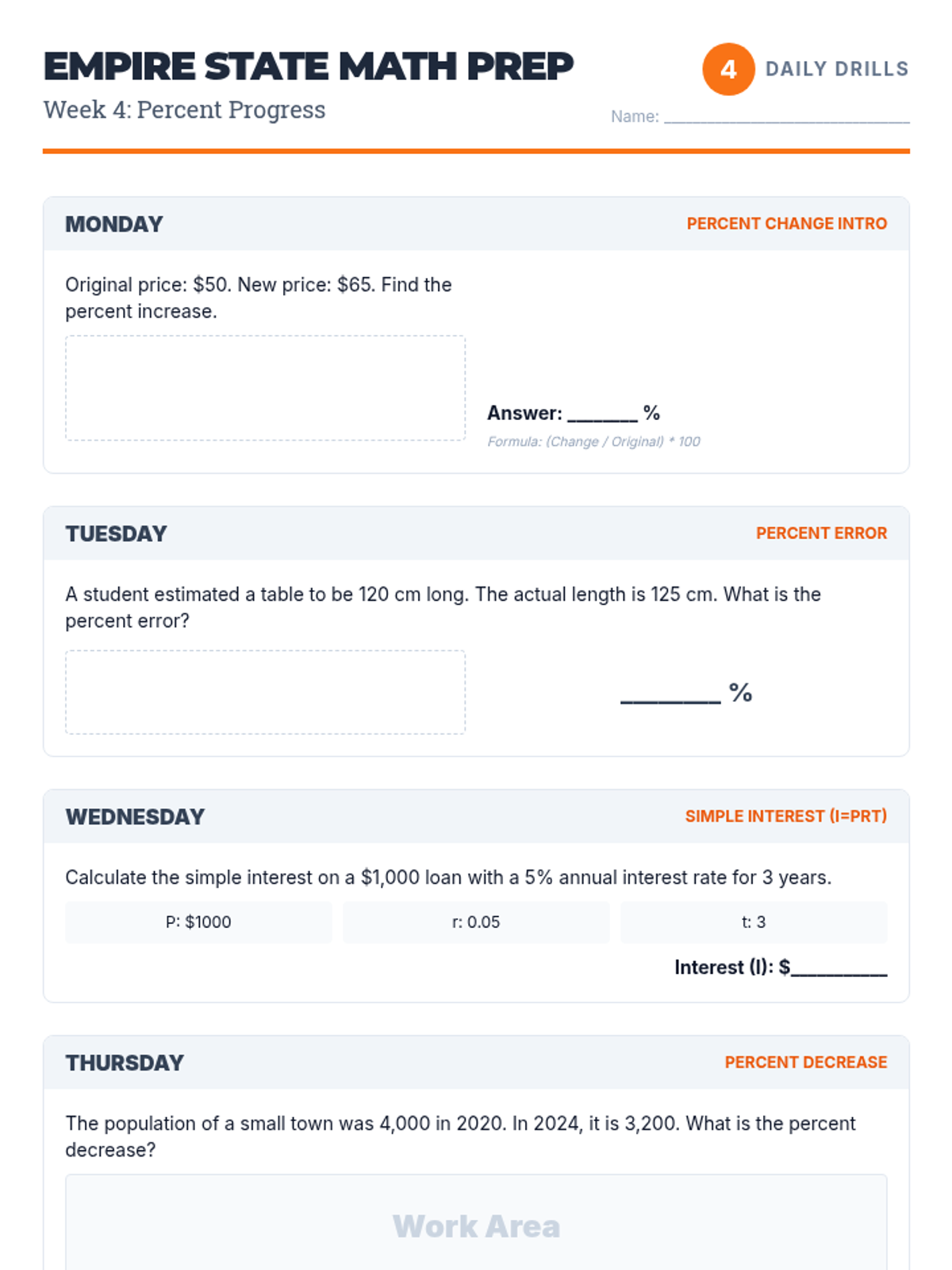
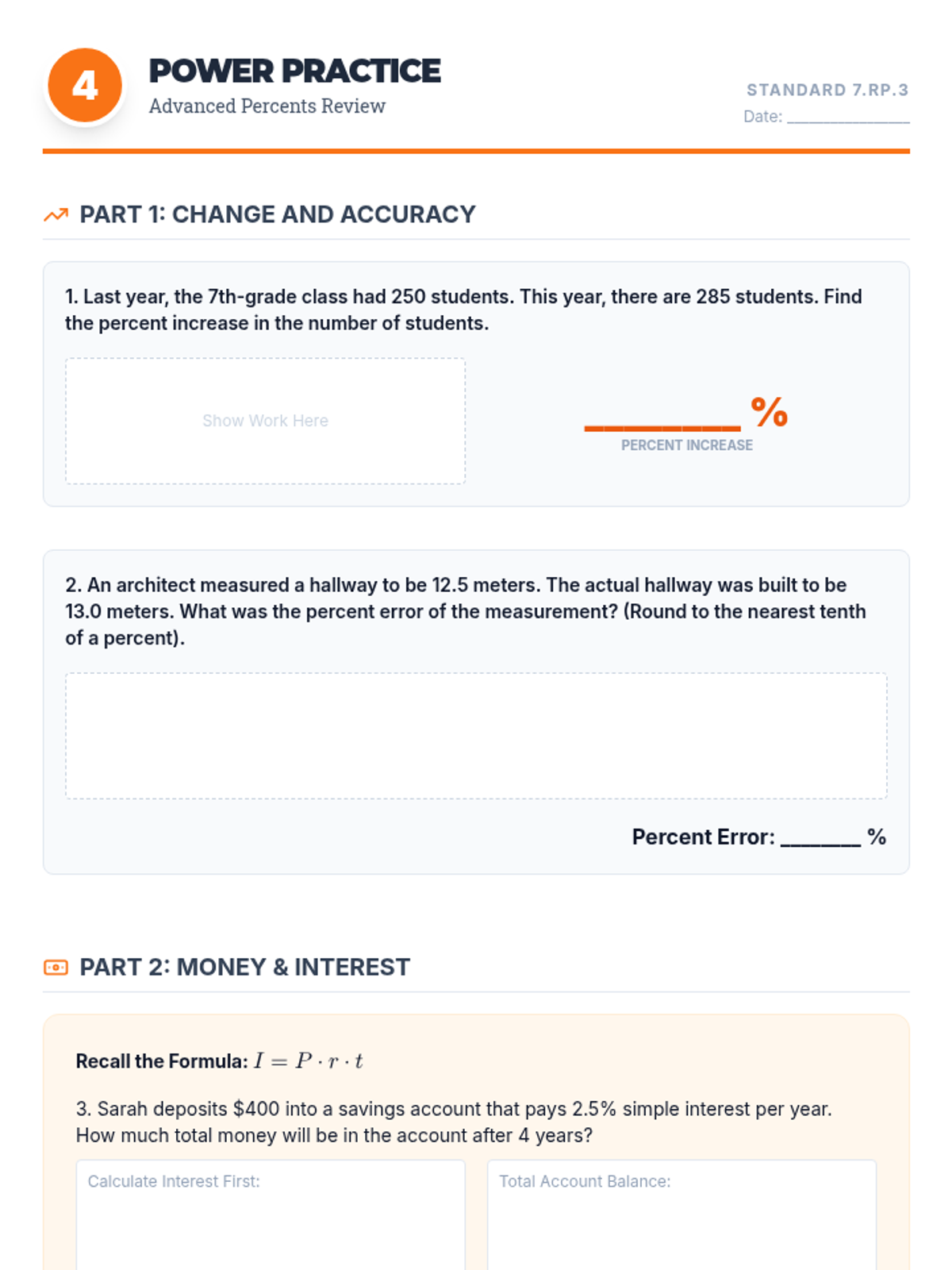
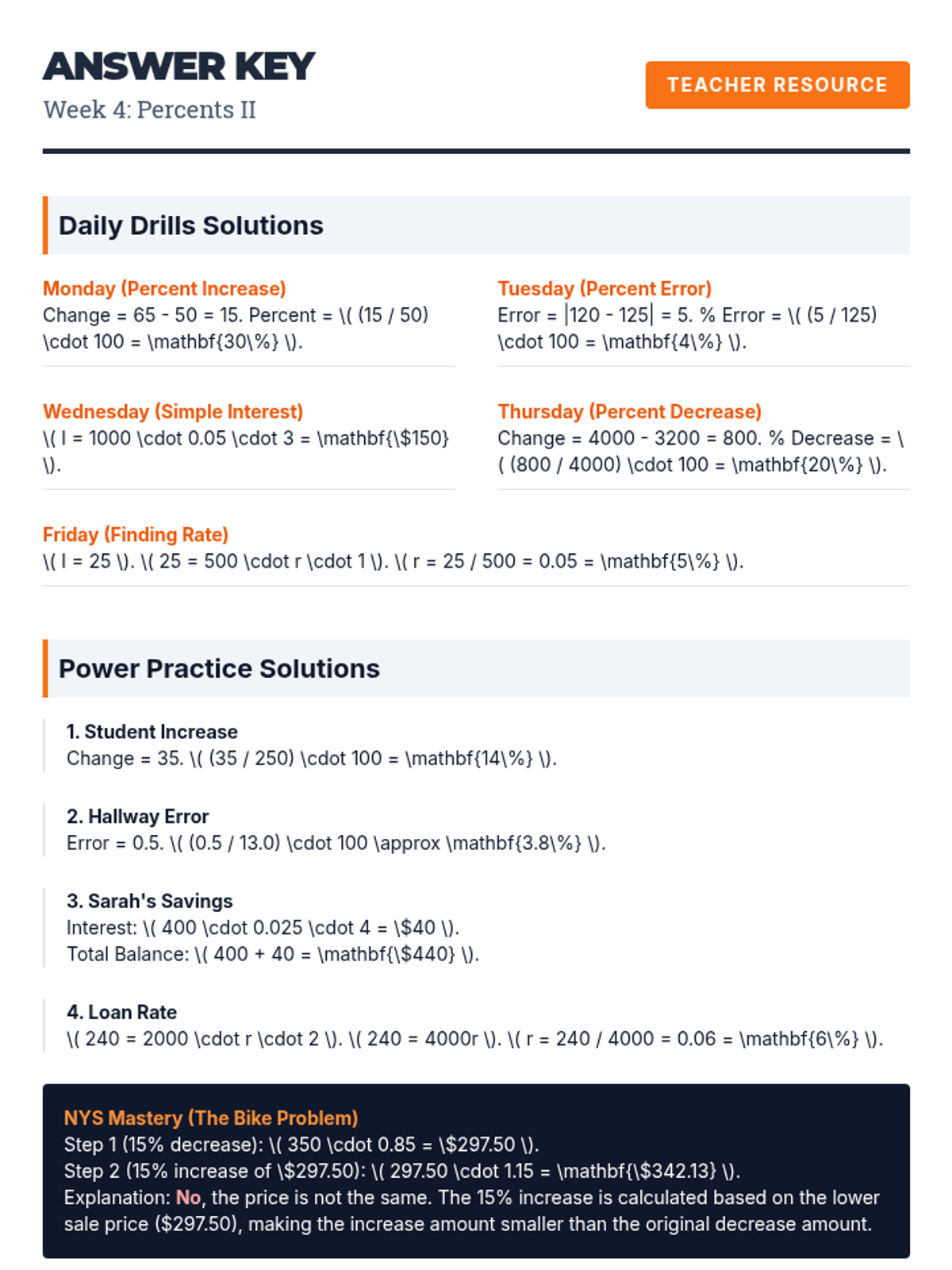
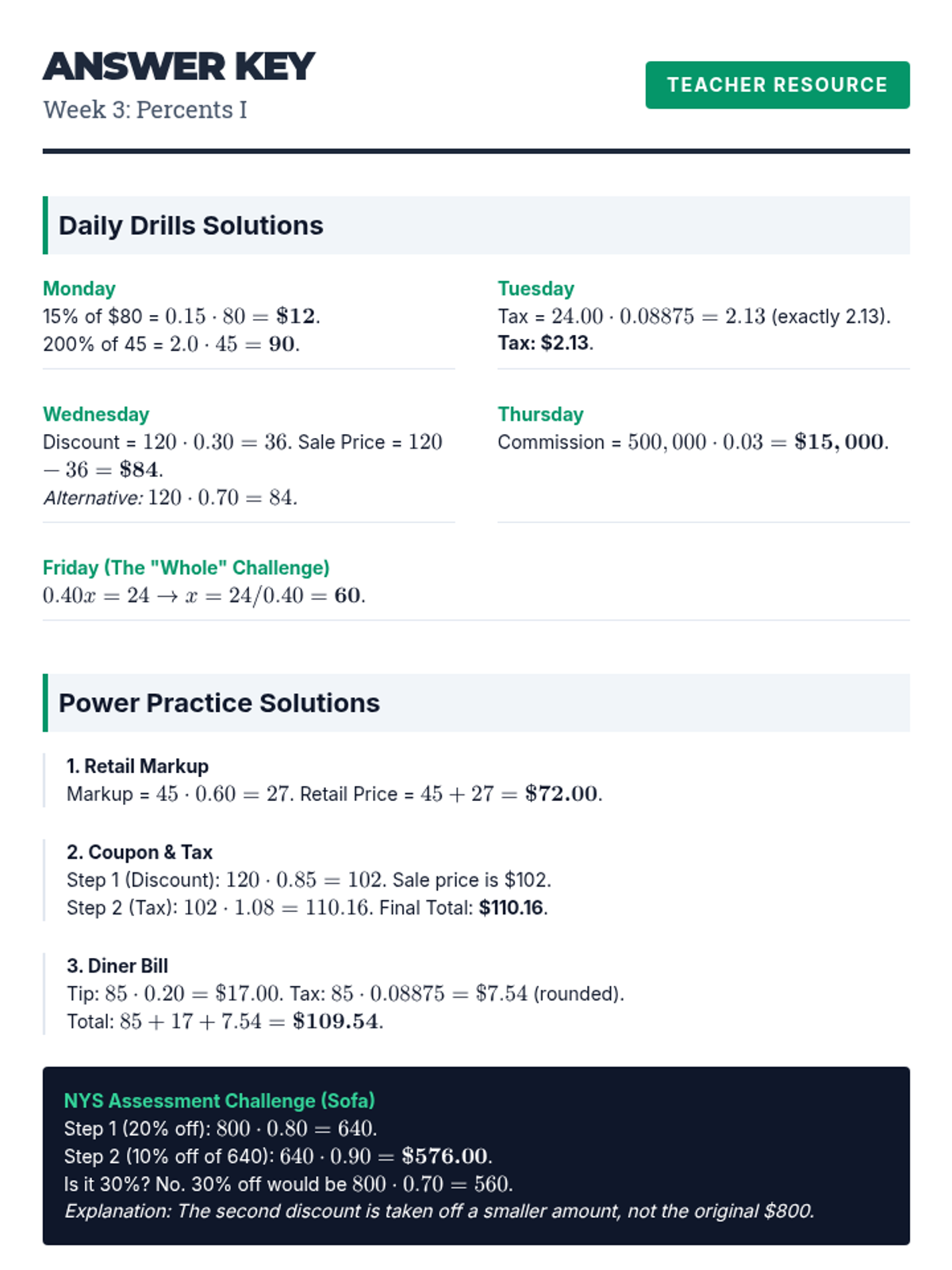
Advanced percent problems including simple interest, percent change (increase/decrease), and percent error.
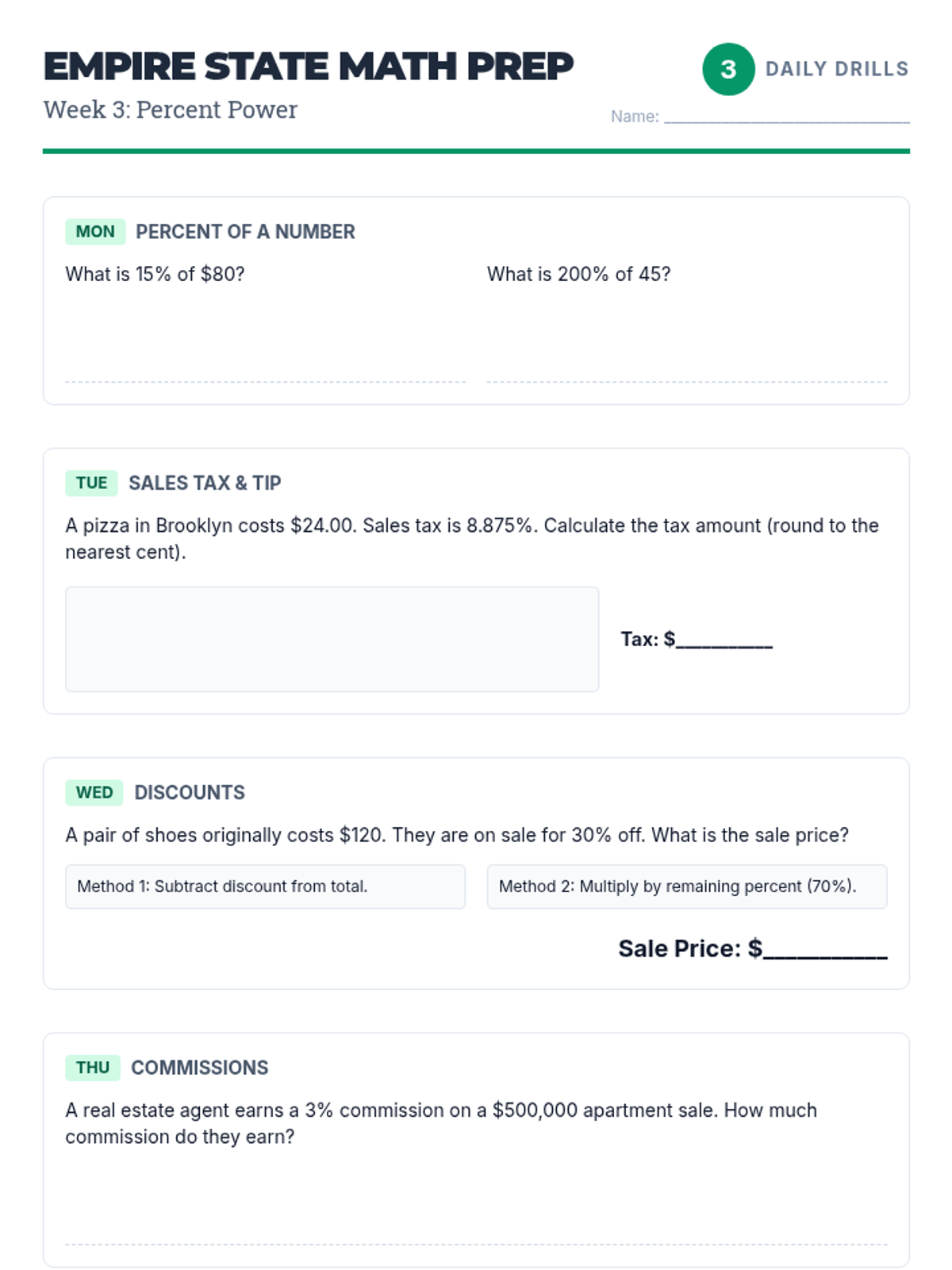
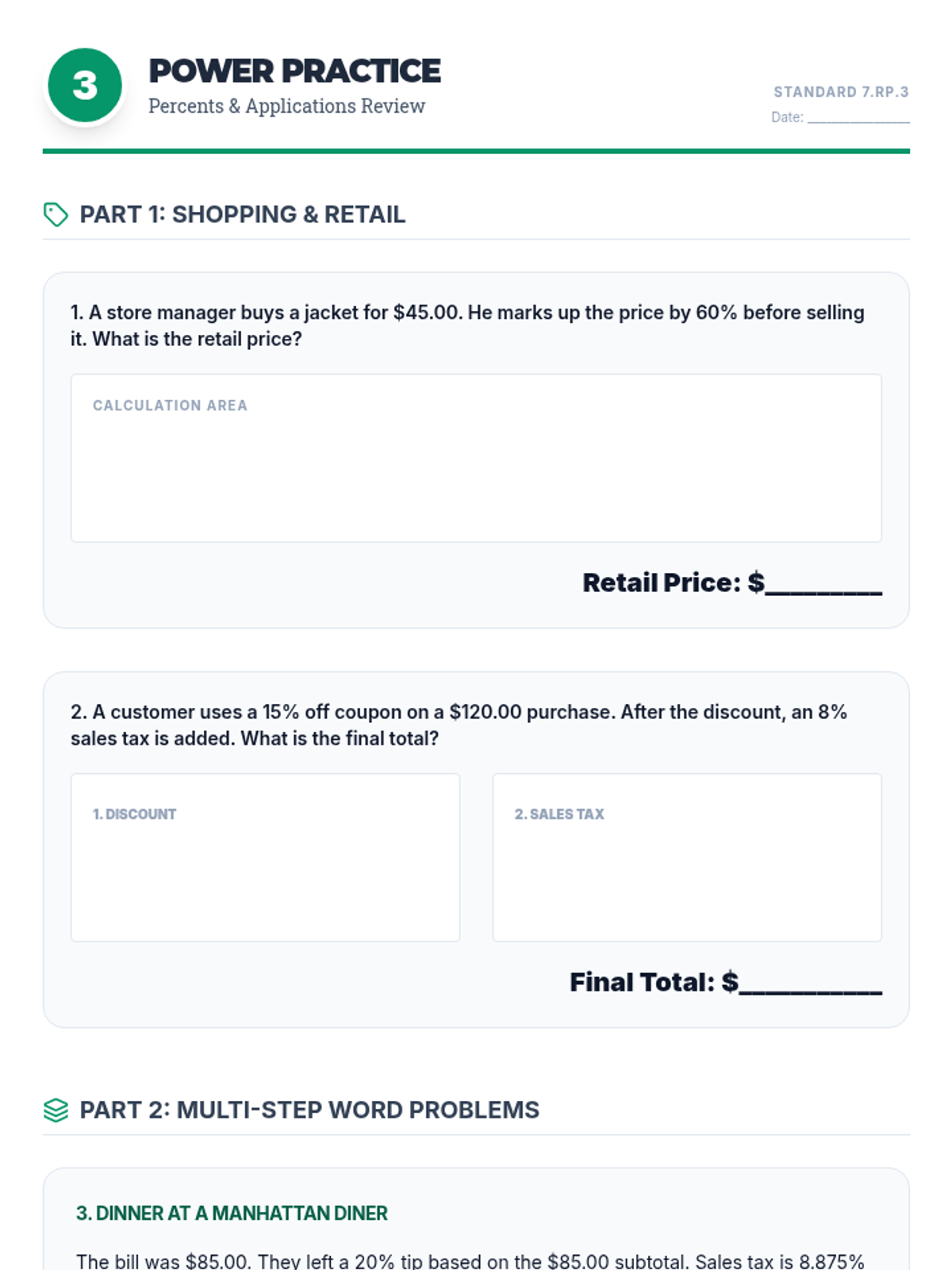
Practical applications of percents, including calculating tax, tip, commissions, discounts, and markups.
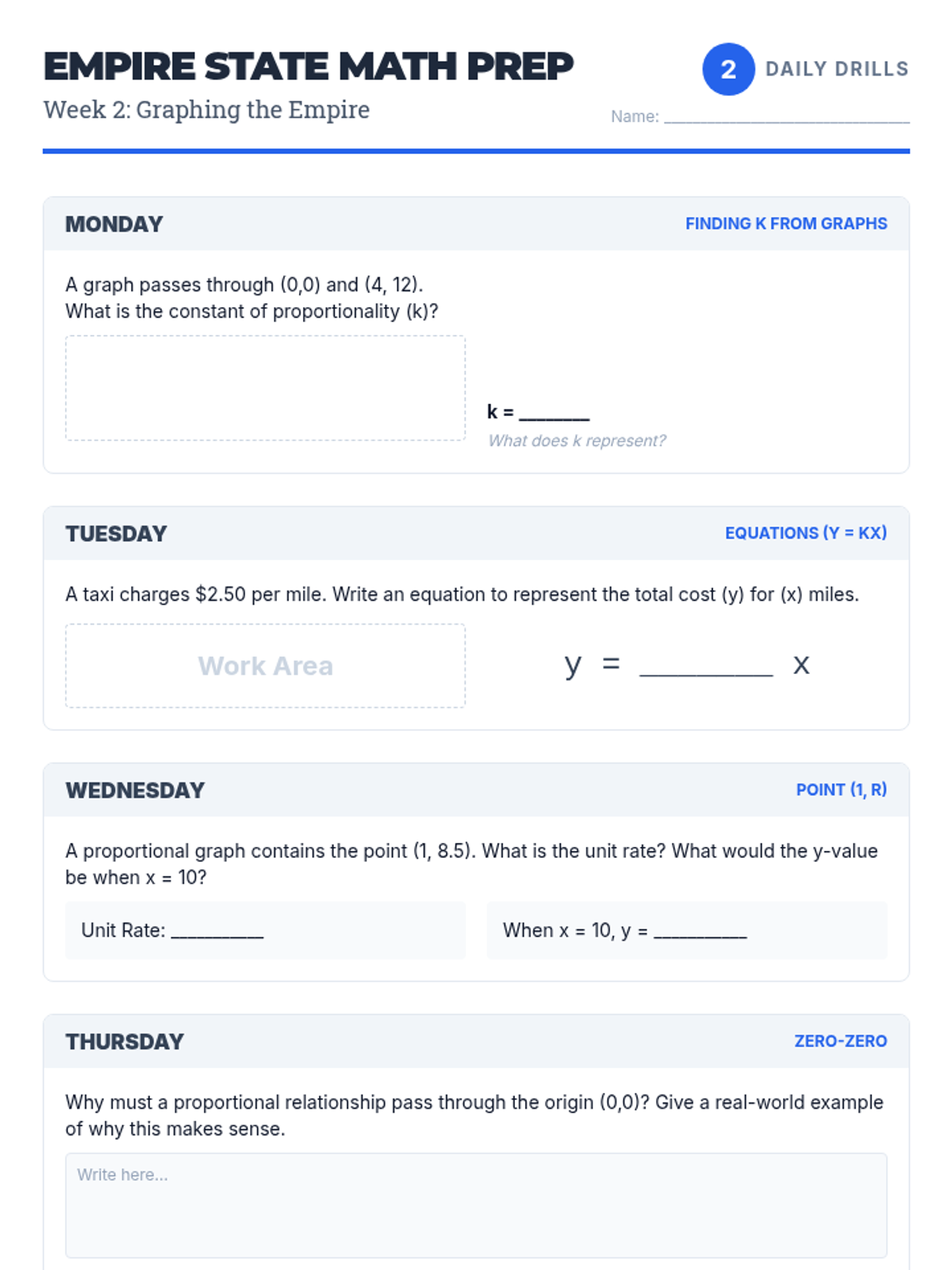
Analyzing graphs of proportional relationships, finding the constant of proportionality, and writing equations in the form y = kx.
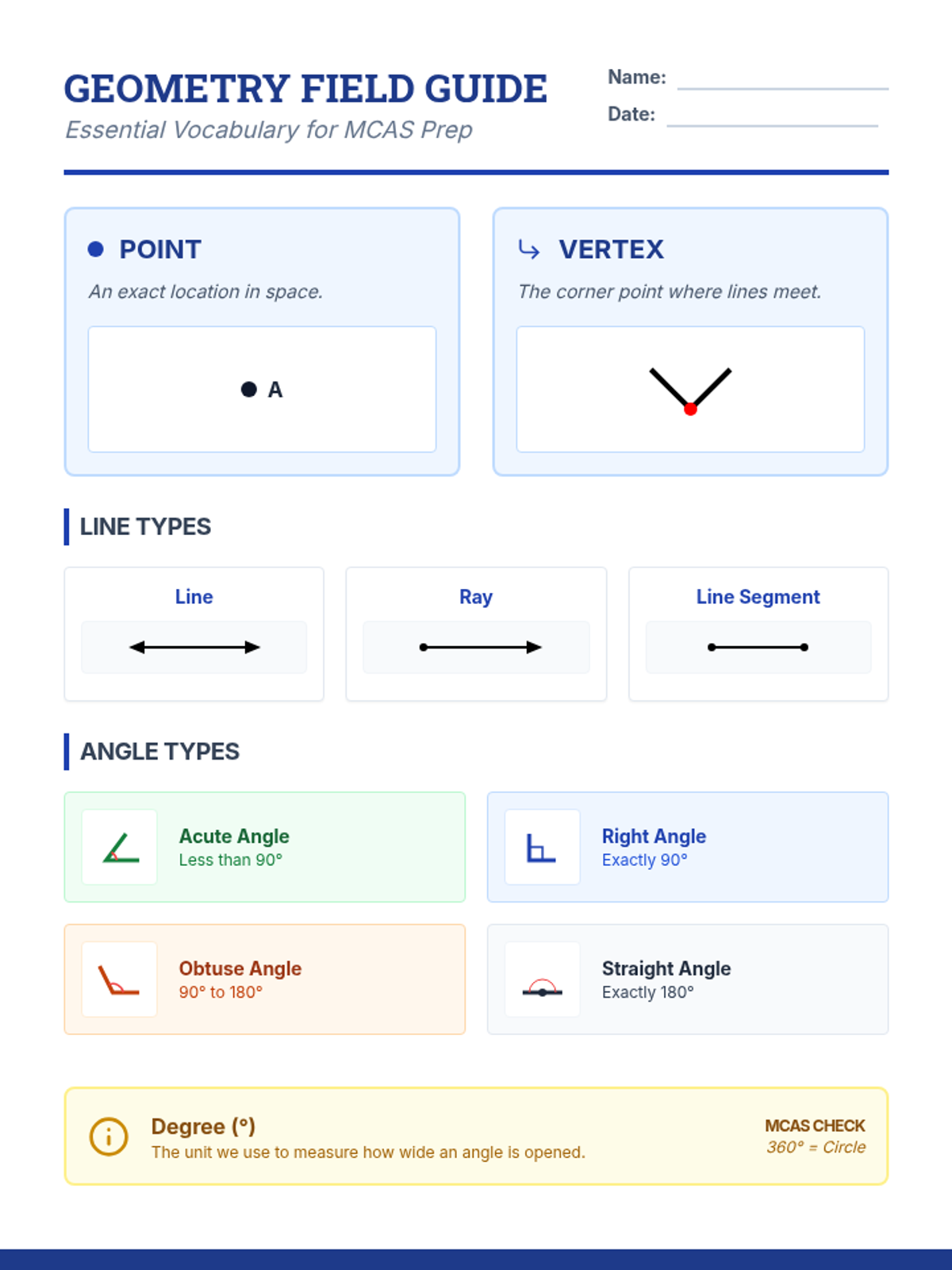
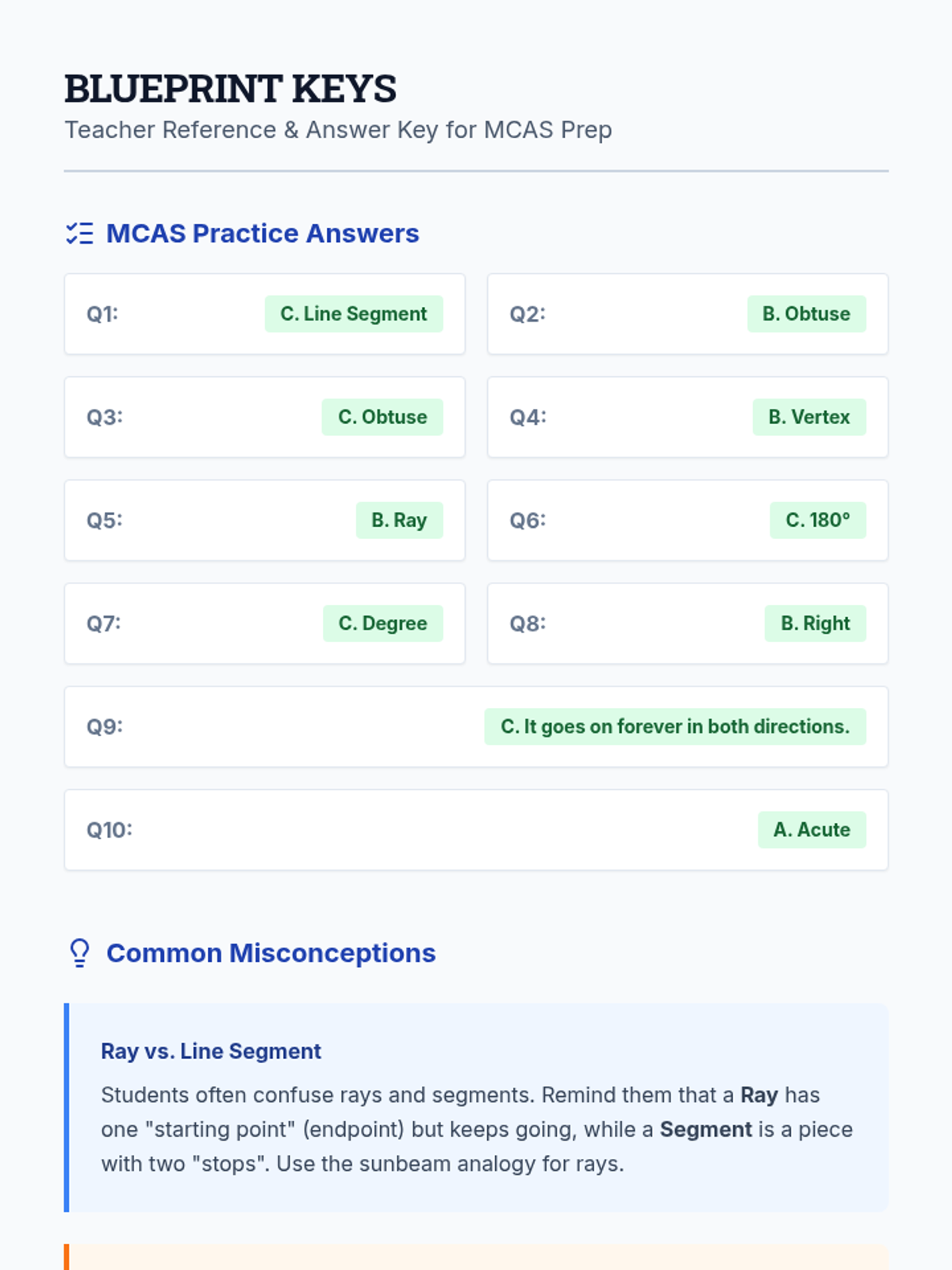
A comprehensive introduction to fundamental geometric terms and angle classifications, designed for Massachusetts MCAS preparation with high visual support.