Midsegment Maze Presentation
Midsegment Maze
High School Geometry: Triangle Properties
Warm-up: Construct
10 Minutes
1
Draw any large triangle on your worksheet using your ruler.
2
Measure each side and mark the midpoints of two sides.
3
Connect the midpoints to create a midsegment.
The Big Question:
How does the length of your midsegment compare to the side it doesn't touch (the base)?
Midsegment Base
Video Analysis
Problem 7 (8:40)
Embedded media
Watch For:
- The 1:2 ratio between lengths.
- How to solve for the Midsegment.
- How to solve for the Base.
The Theorem
Property 1: Length
A midsegment is half as long as the base.
\[ \text{Midsegment} = \frac{1}{2} \cdot \text{Base} \]
Property 2: Direction
A midsegment is parallel to the base.
Mid || Base
x 2x
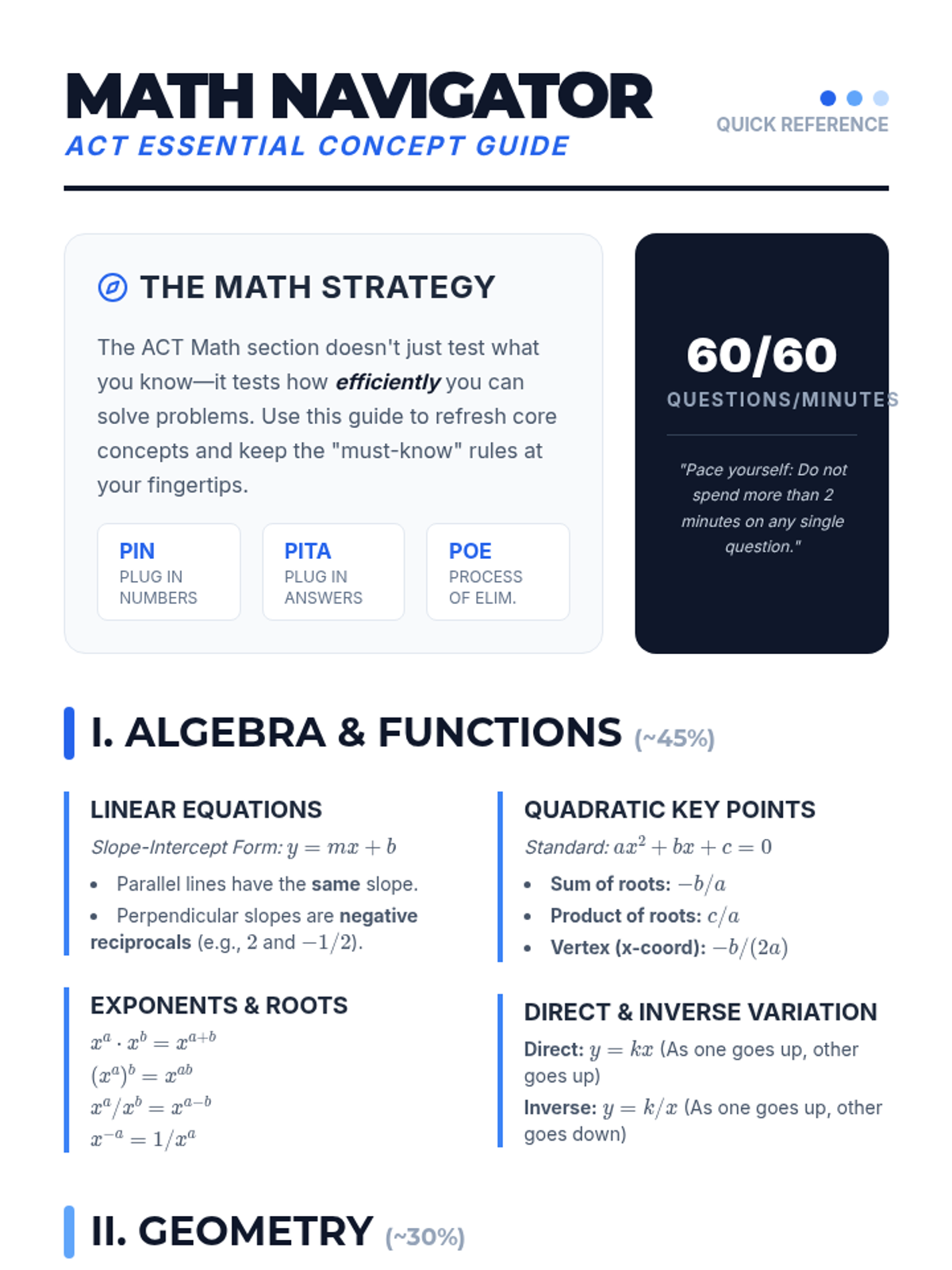
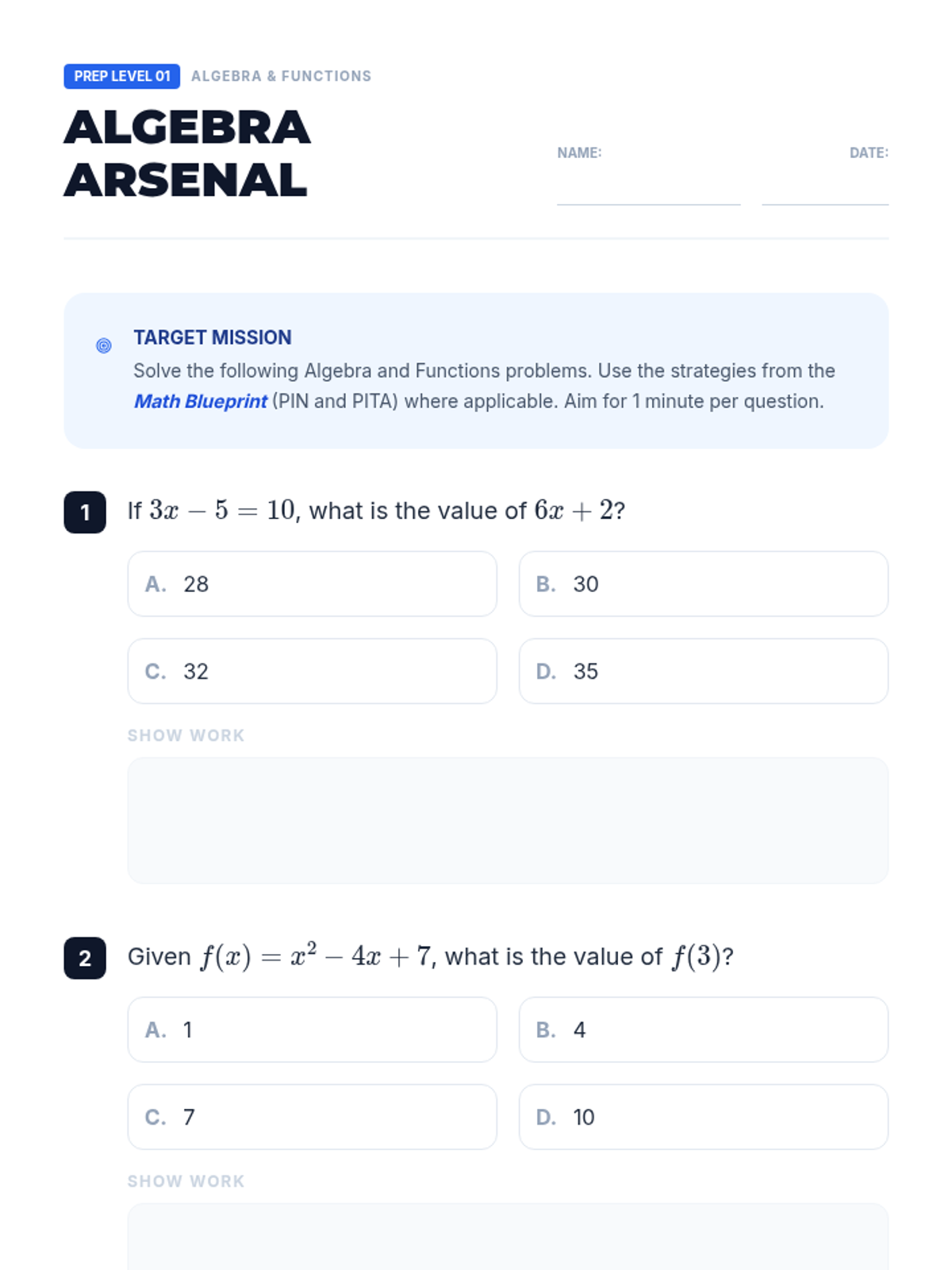
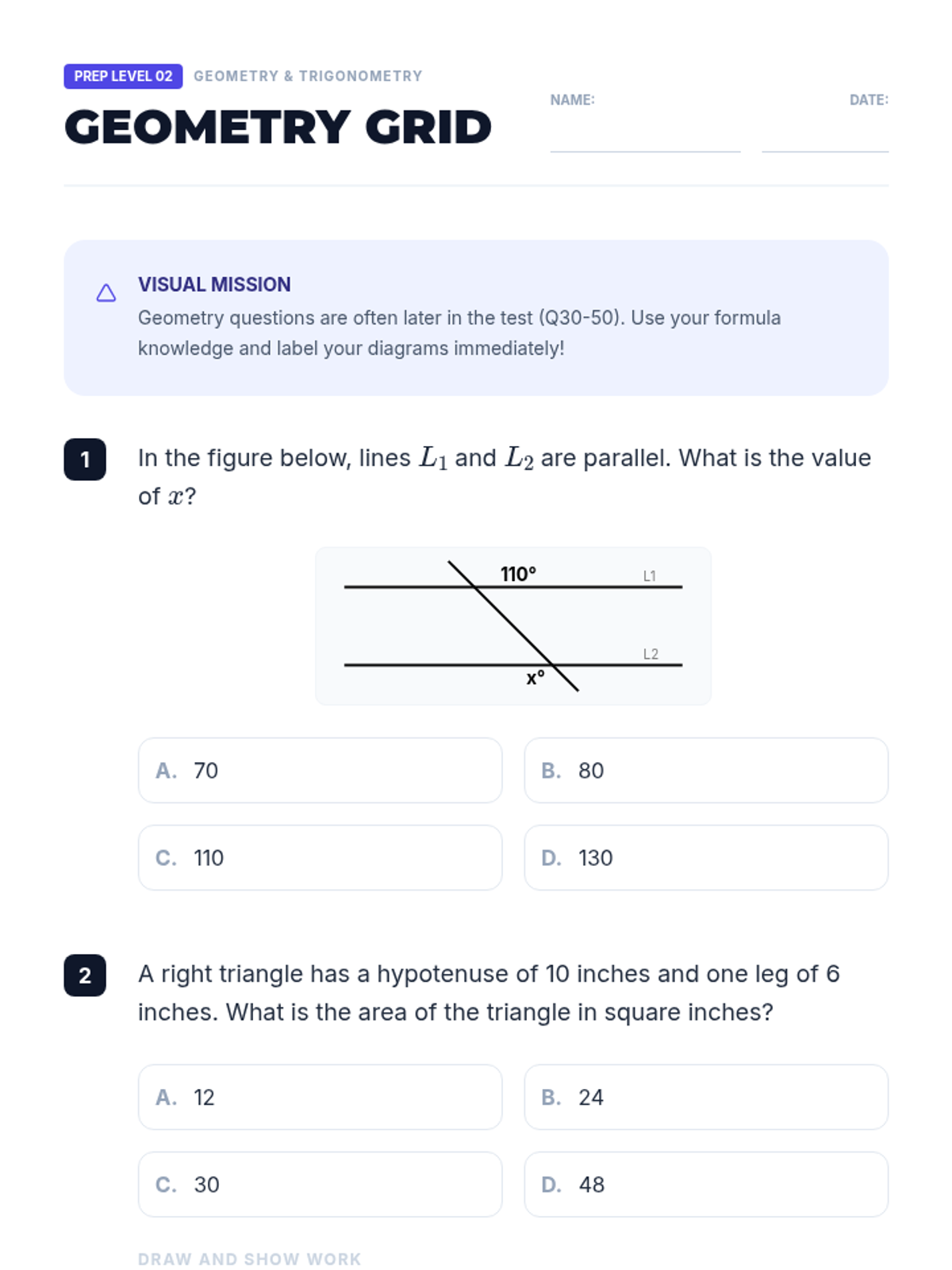
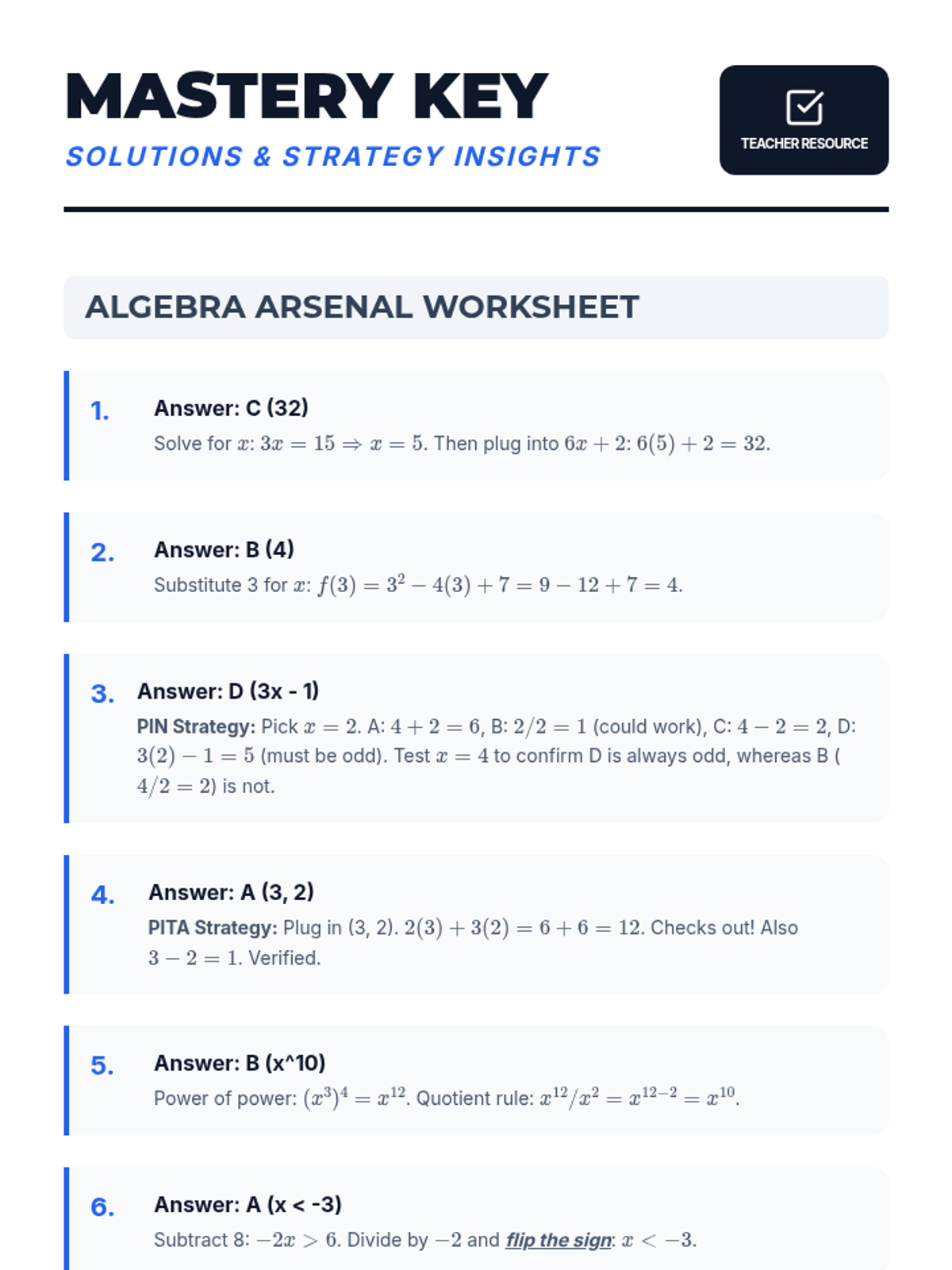
Activity: Midsegment Map
20 Minutes
How to Play:
- 1 Start at the "ENTRANCE" triangle on your worksheet.
- 2 Solve for the missing length (\(x\)) or base.
- 3 Follow the path matching your answer to the next triangle.
- 4 Reach the "EXIT" to escape the maze!
Watch Out!
Some paths are traps. If you don't see your answer, check your math!
Base \(\div 2\) = Midsegment
Midsegment \(\times 2\) = Base
Final Check
"The midsegment isn't just half the length... it's also perfectly aligned."
Transversal Power
Because they are parallel, what do we know about the corresponding angles?
Similarity
How does the small triangle (top) compare to the large triangle?
Great Work Today!
Midsegment Map Worksheet
Midsegment Maze
Geometry Lab: Properties of Triangles
Student:
Date:
1 Warm-up: The Construction Lab
Use your ruler to construct a large triangle in the workspace below. Measure each side carefully, find the midpoints of two sides, and connect them to create a midsegment.
Midsegment Length
Base Length
Ratio (Mid/Base)
2 Video Notes: Problem 7
Watch the video (8:40). Sketch the triangles from Problem 7 and show the calculations for \(x\) and \(y\).
Figure A (Solving for x)
Work/Calculation:
Figure B (Solving for y)
Work/Calculation:
Part 3: The Midsegment Map
Follow the math to escape! Start at the ENTRANCE. Solve each triangle to find the value of \(x\). Follow the path corresponding to your answer to reach the next challenge.
Entrance
7 x
Find x
3.5
Dead End
14
x 40
Find x
20
80
3x 36
Find x
6
12
Wrong Path
23 10x - 4
Find x
5
4.6
12 2x + 4
Find x
10
Exit
Calculations Workspace
Problem 1 & 2
Problem 3
Problem 4
Problem 5
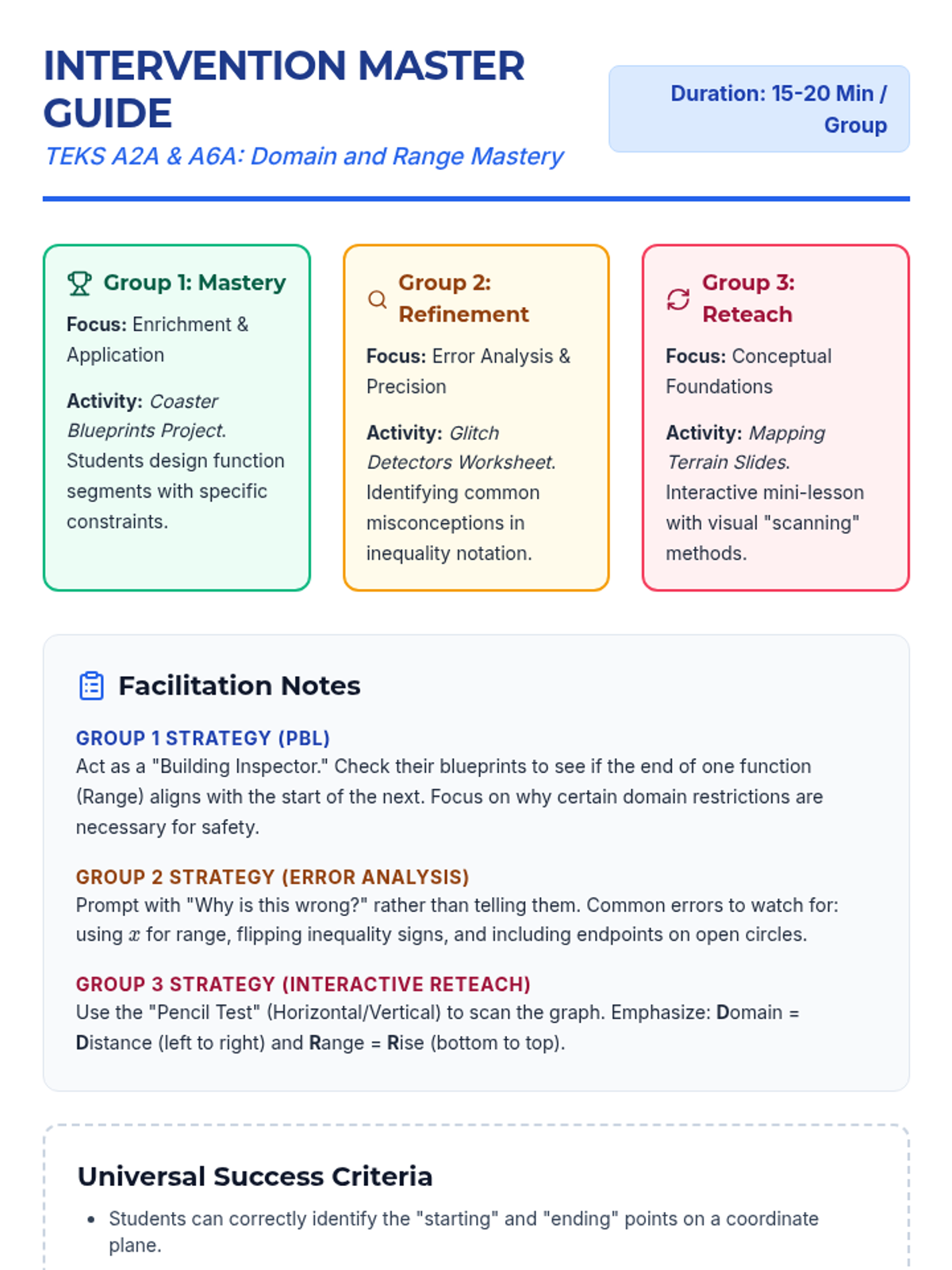
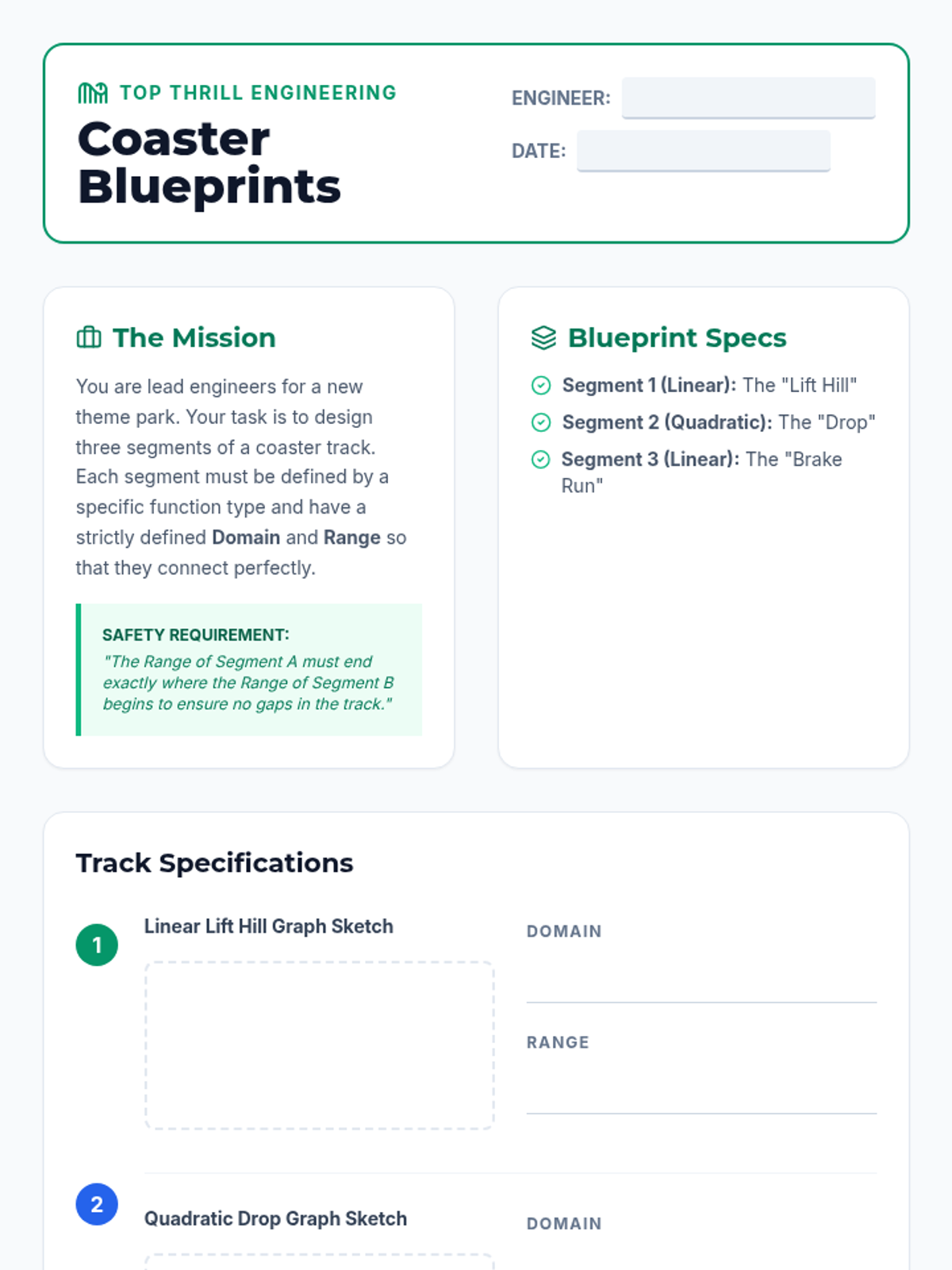
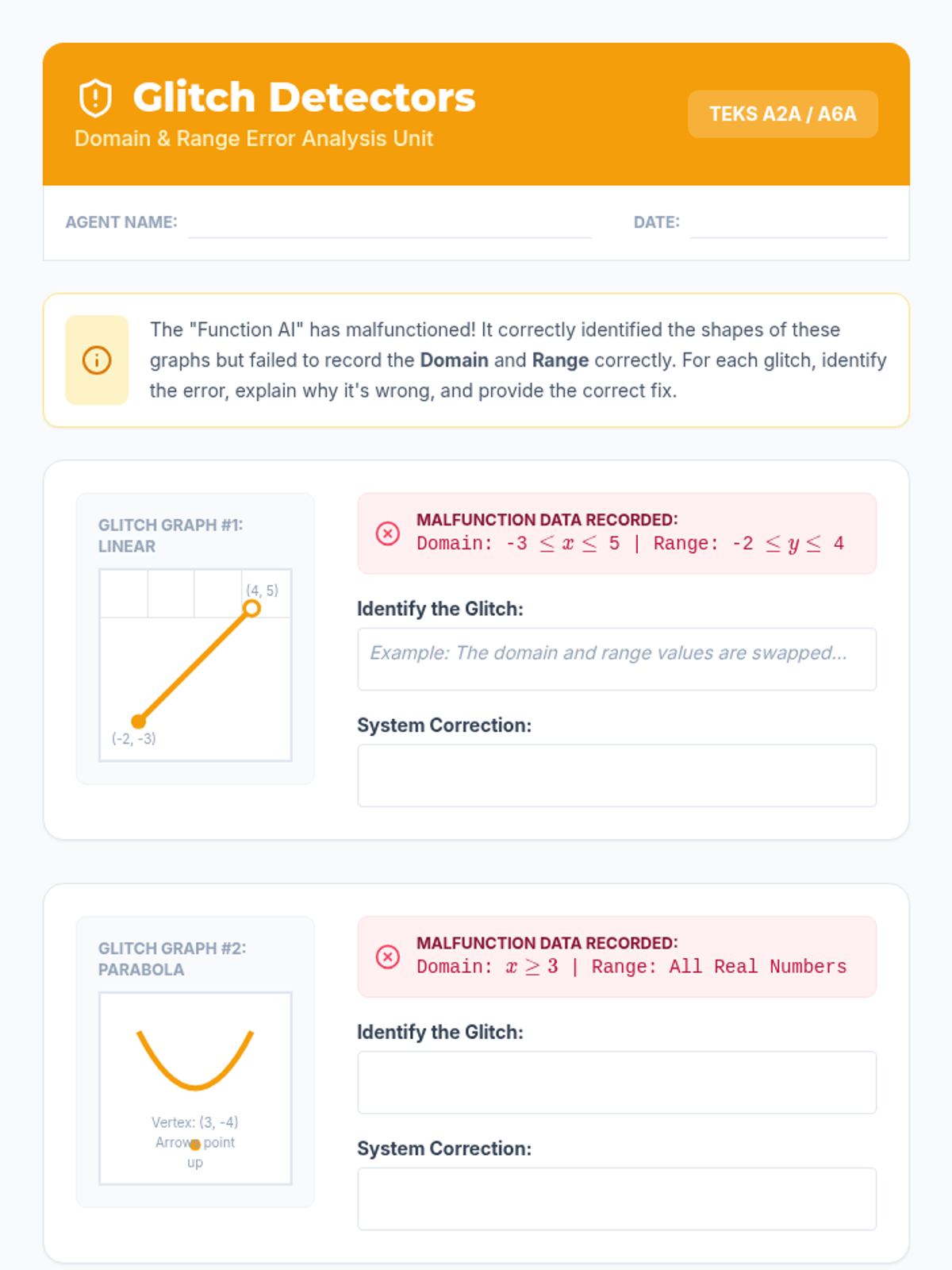
Midsegment Maze Teacher Guide
Teacher Facilitation Guide
Lesson: Midsegment Maze
Geometry
Learning Objective
Students will be able to apply the Triangle Midsegment Theorem to solve for missing lengths and identify the parallel relationship between a midsegment and its base.

Materials Needed
- Student Worksheet (1 per student)
- Rulers (Crucial for Warm-up)
- Presentation Slides
- YouTube Video Access
Lesson Timeline
10 MIN
Warm-up: Construction
Students construct a triangle and its midsegment. Encourage them to draw different types (obtuse, right, acute) to see that the theorem works for all triangles.
Check for Understanding: Ask students to divide their base measurement by 2. Does it match their midsegment length? (Allow for small margins of error in hand-drawing).
10 MIN
Video Investigation
Play Problem 7 (Starts at 8:40). Students should follow along on their worksheet notes section.
Discussion Prompt: At 9:20, pause the video. "If the midsegment is 15, how do we find the base?" Reverse the logic shown in the first example.
20 MIN
The Midsegment Map
Students solve the maze. Walk the room to identify students using the wrong operation (e.g., dividing when they should multiply).
5 MIN
Closure: Parallel Property
Briefly discuss Slide 6. Remind students that parallel lines create corresponding angles. This is a common bridge to more complex proofs.
Answer Key: Midsegment Map
Correct Path & Solutions
- 1 \(x = 7 \times 2 = \mathbf{14}\)
- 2 \(x = 40 \div 2 = \mathbf{20}\)
- 3 \(3x = 18 \rightarrow x = \mathbf{6}\)
- 4 \(10x - 4 = 46 \rightarrow 10x = 50 \rightarrow x = \mathbf{5}\)
- 5 \(2x + 4 = 24 \rightarrow 2x = 20 \rightarrow x = \mathbf{10}\)
Common Pitfalls
- Students might divide by 2 when they should multiply (e.g., getting 3.5 in the first problem).
- Students might set \(3x = 36\) instead of \(3x = 18\).
- In multi-step algebraic problems (Problems 4 & 5), students may forget to double the midsegment before setting up the equation.