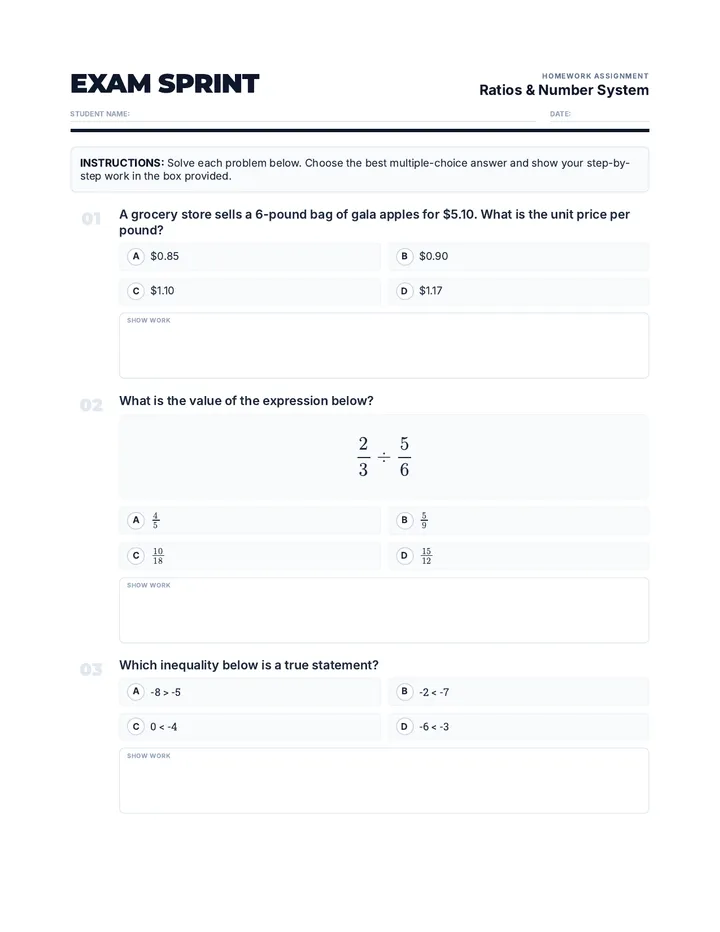
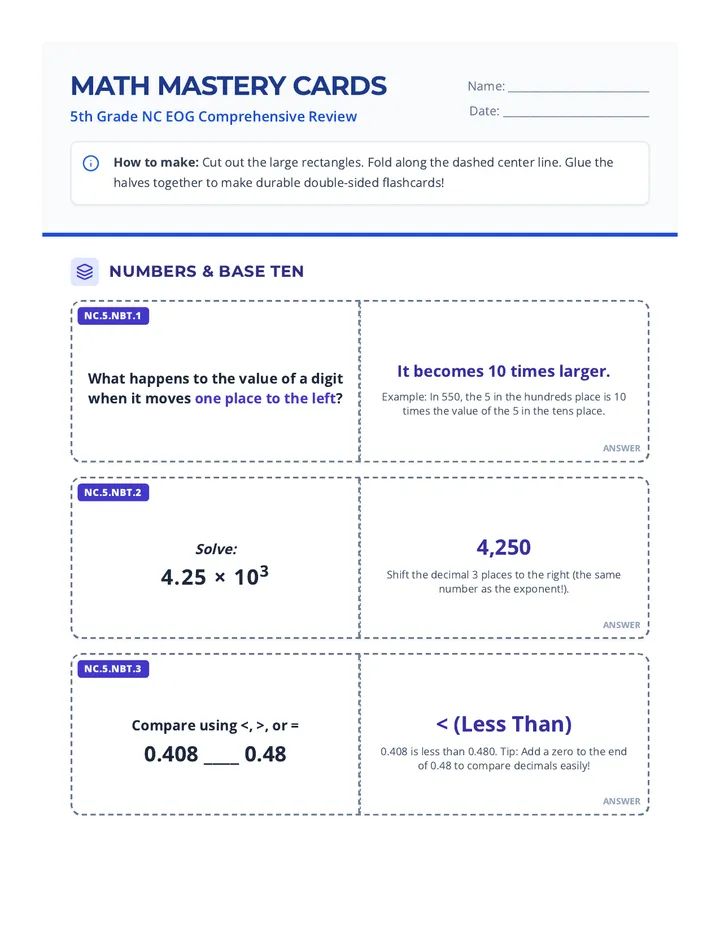
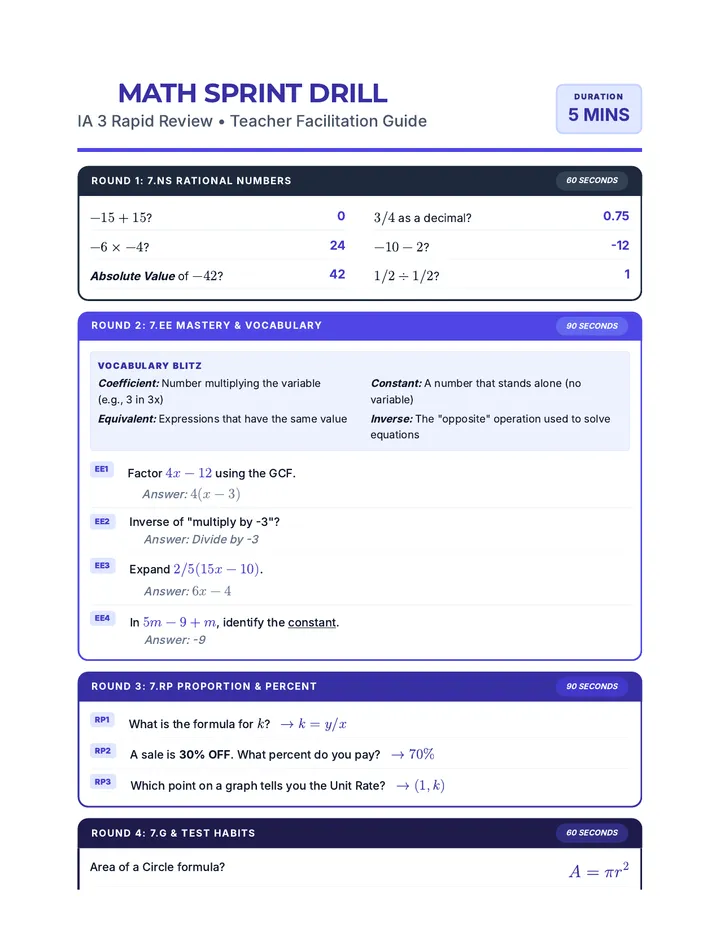
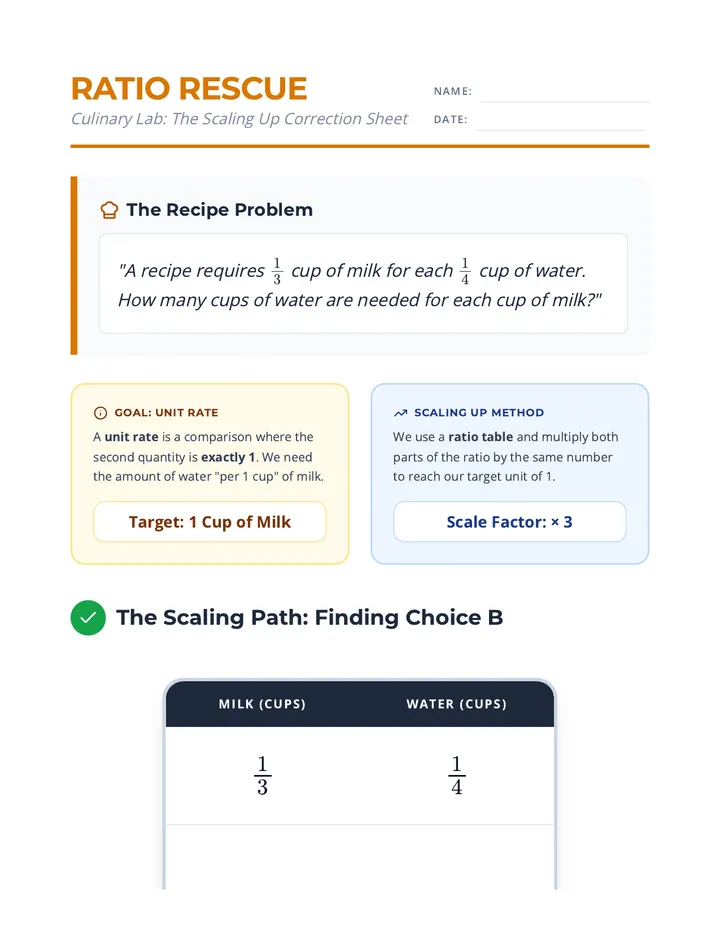
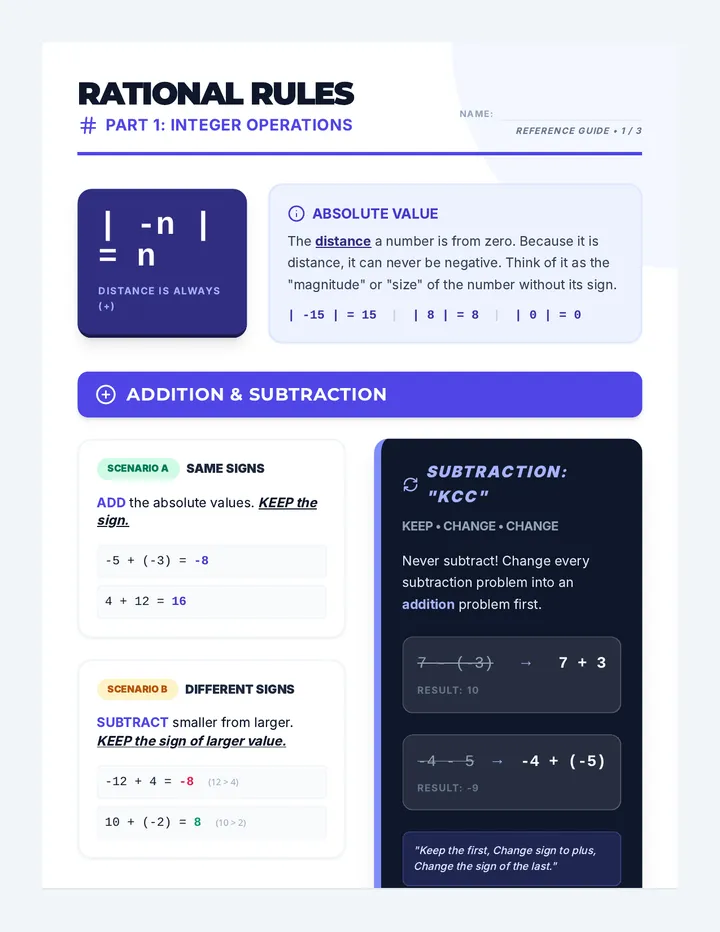
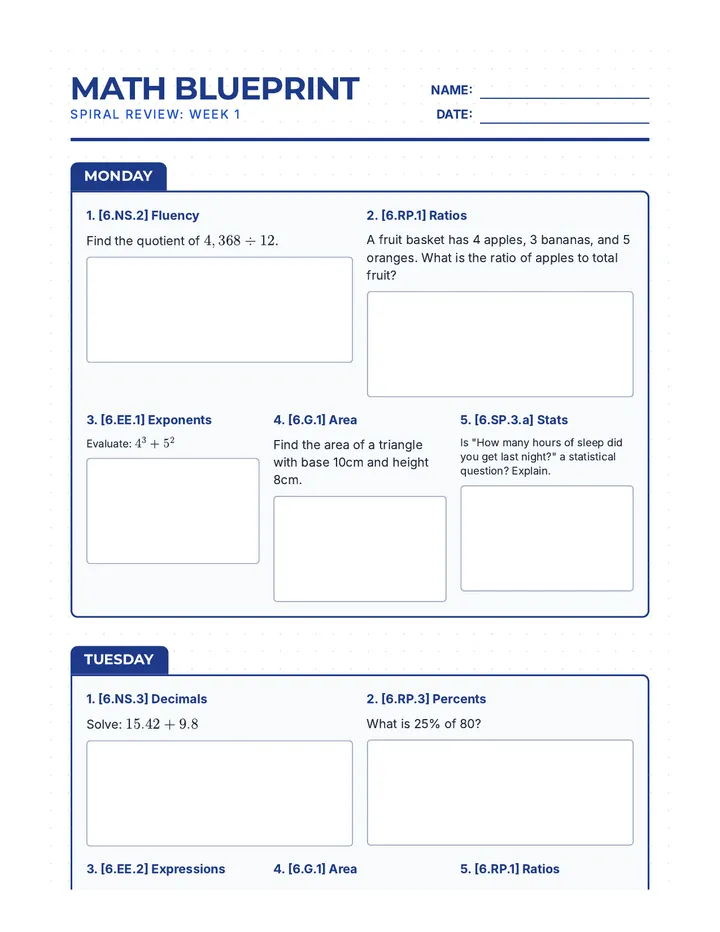
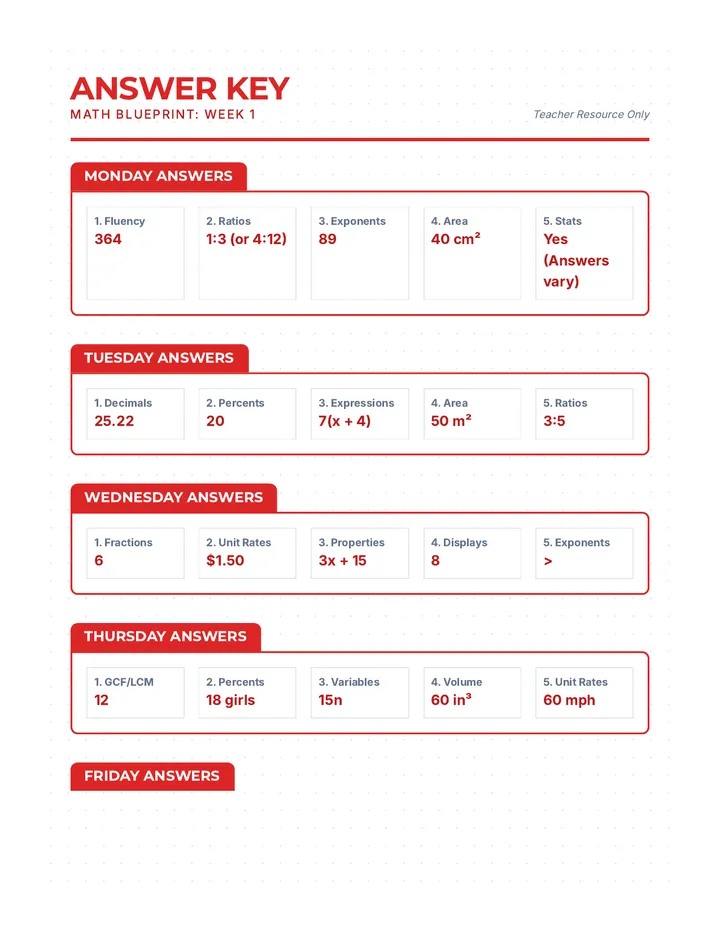
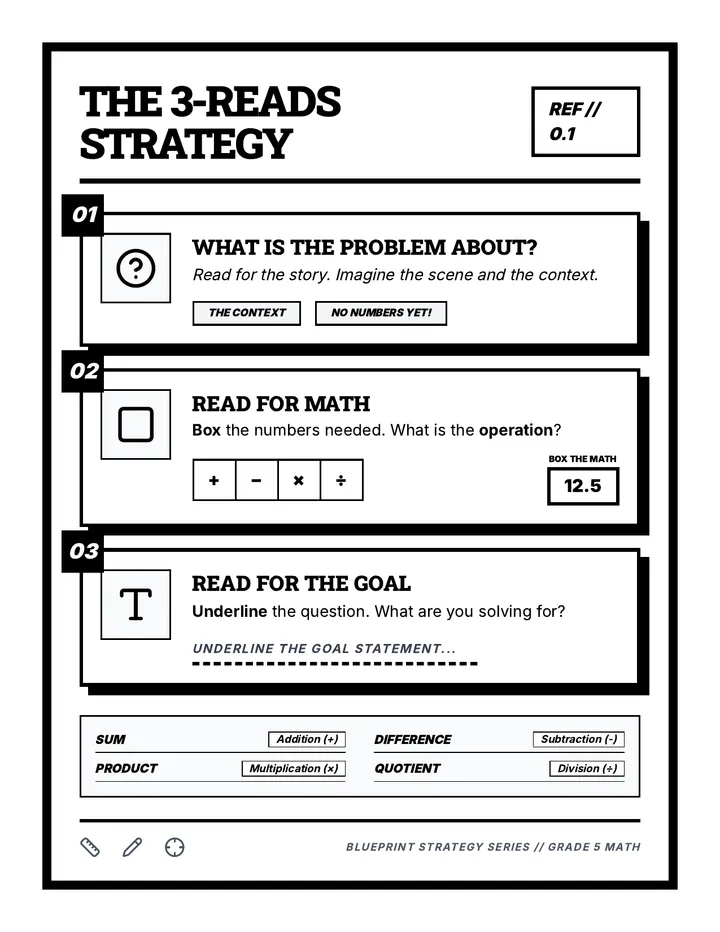
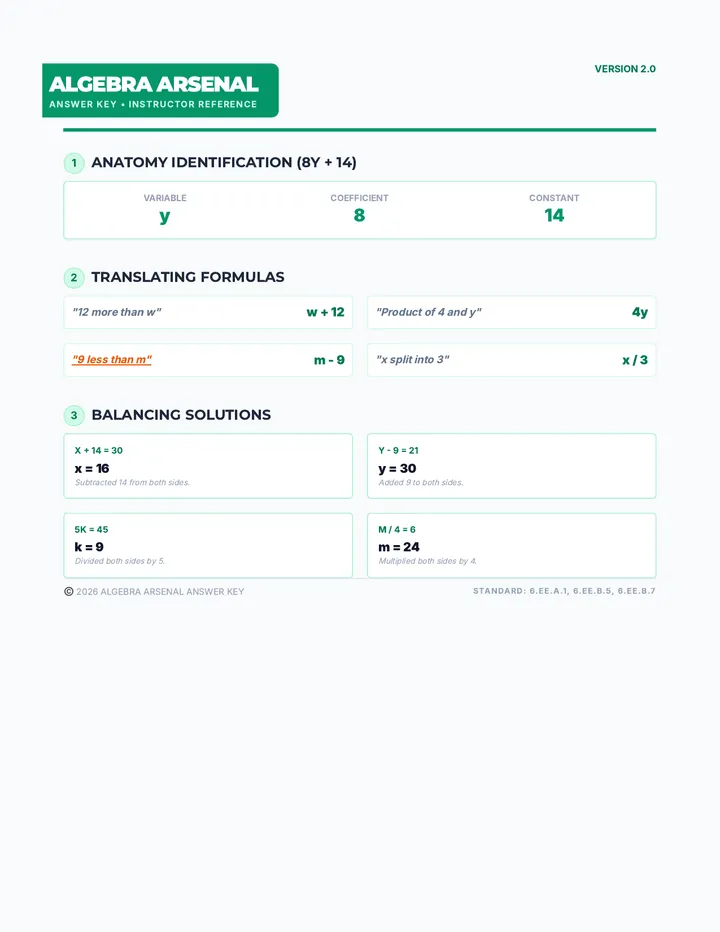
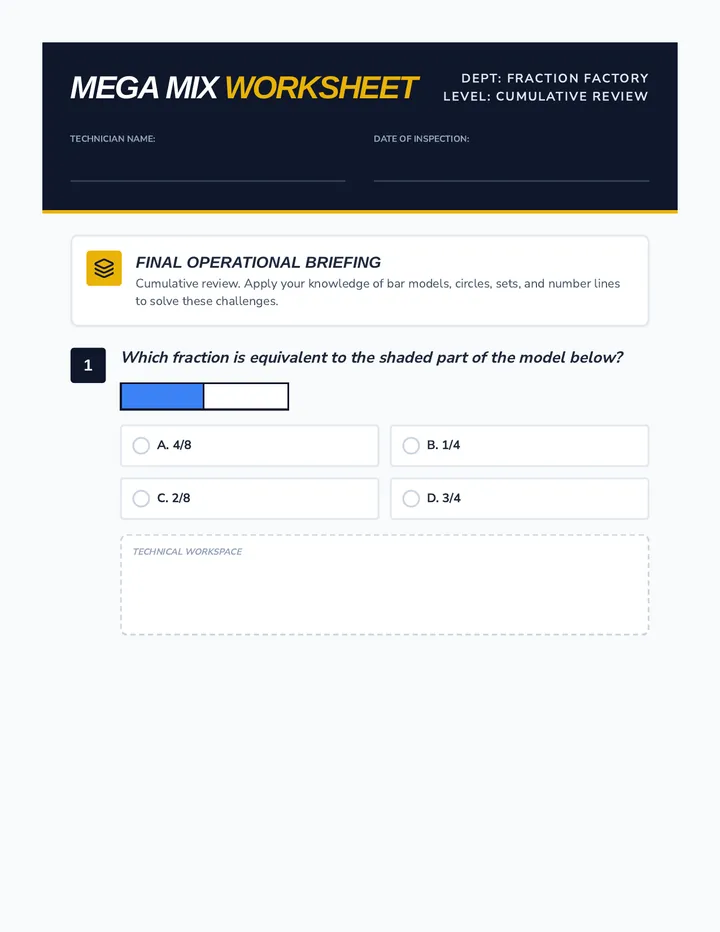
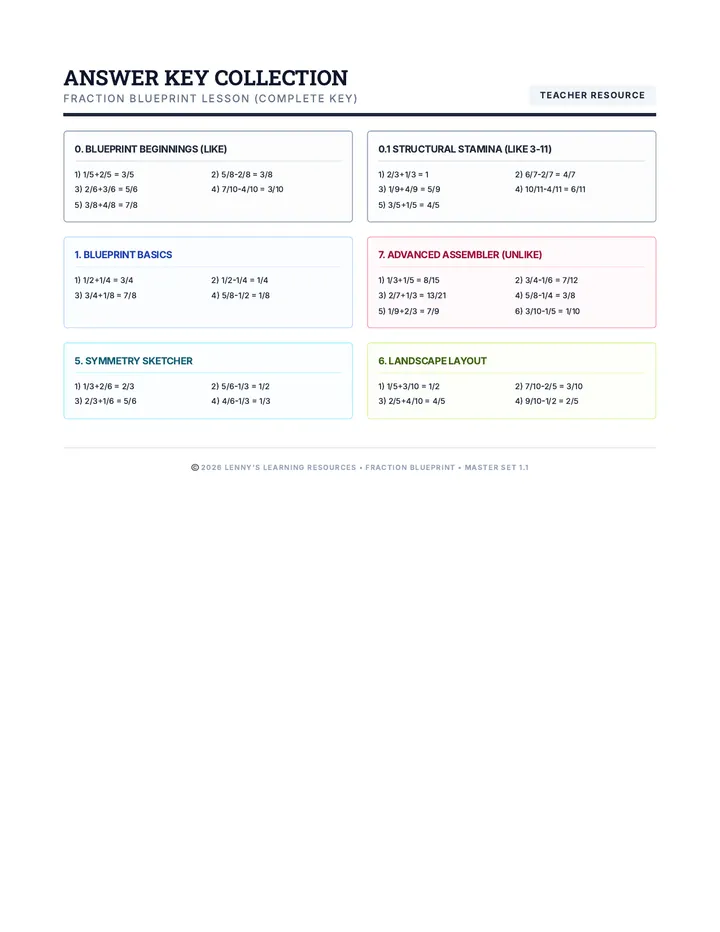
Foundational fraction equivalence, ordering, and operations across the rational number system. Addresses multi-digit computation, decimal conversions, and the distinction between rational and irrational numbers.
A 12-lesson intervention sequence focused on building flexible thinking with place value and fractions for 6th-grade students performing at 4th-6th grade levels. The sequence uses a 'Number Navigators' theme to explore decimal relationships, fractional equivalence, and the bridge between the two.
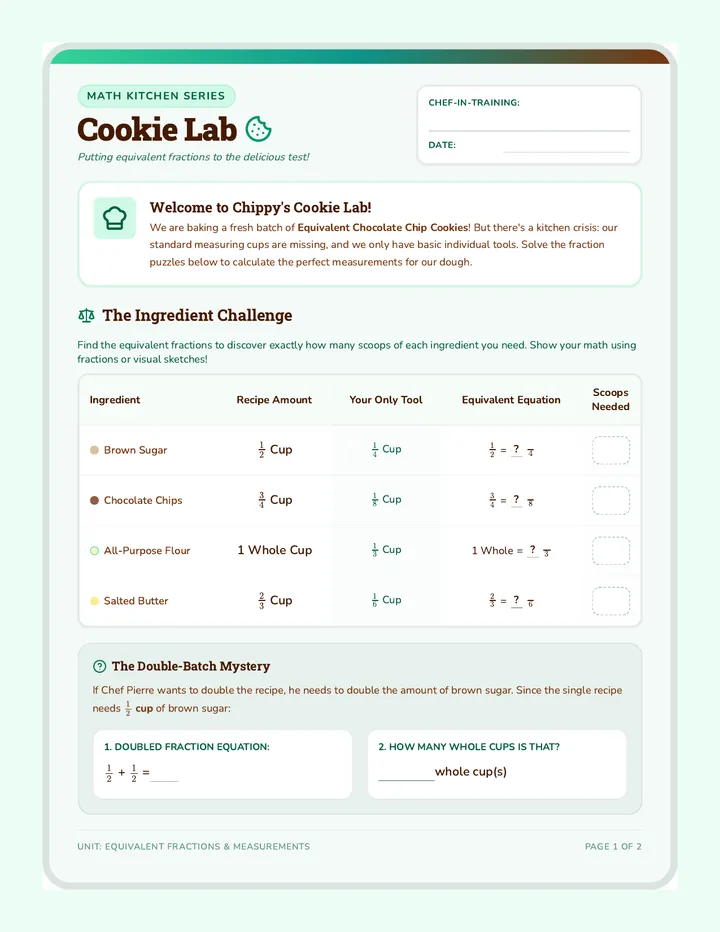
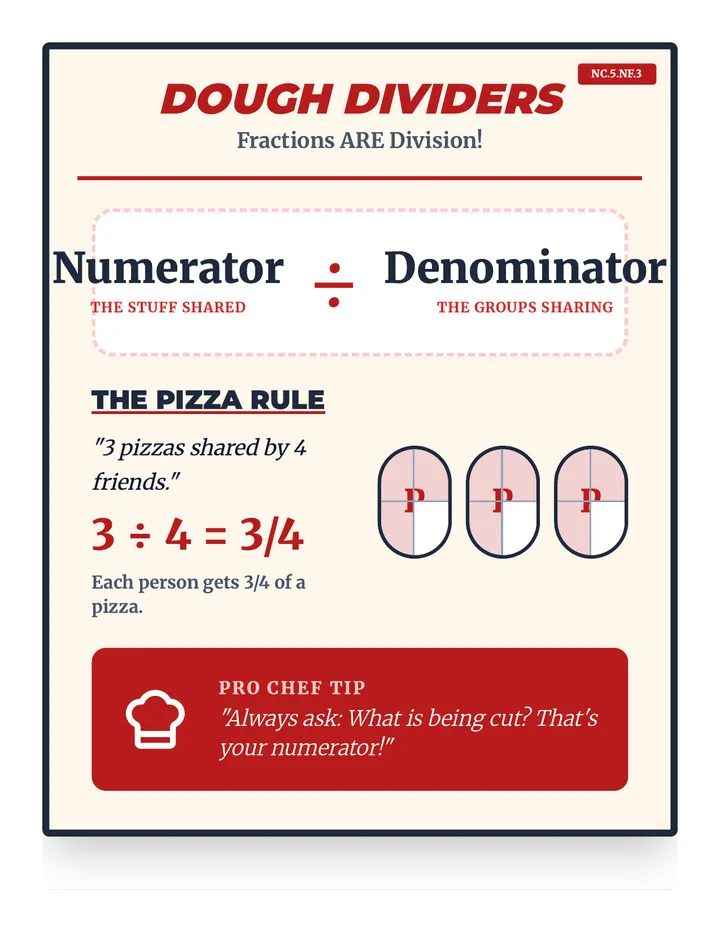
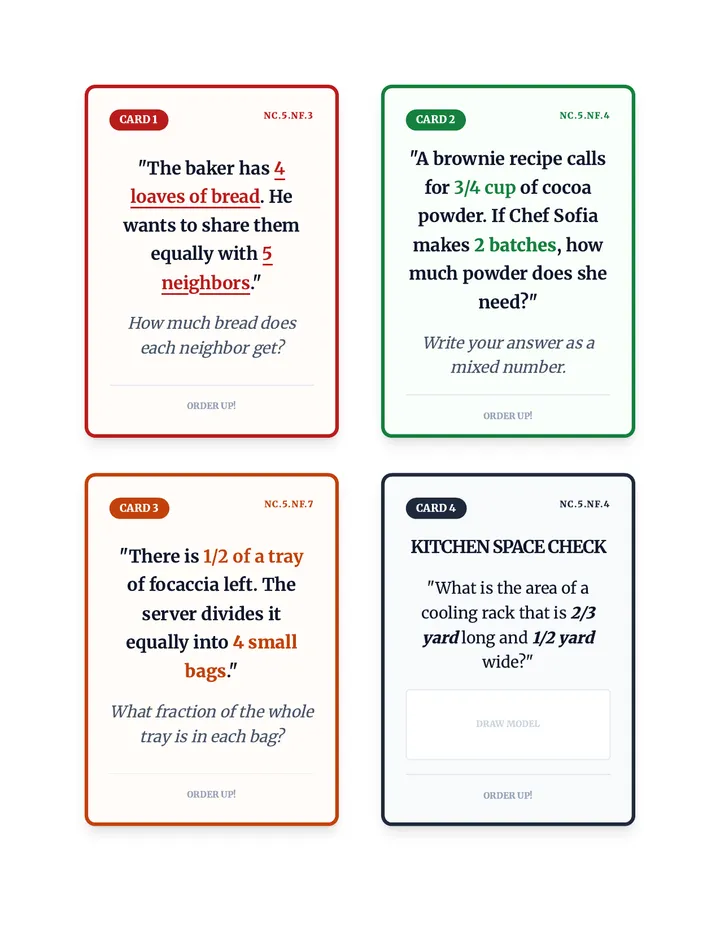
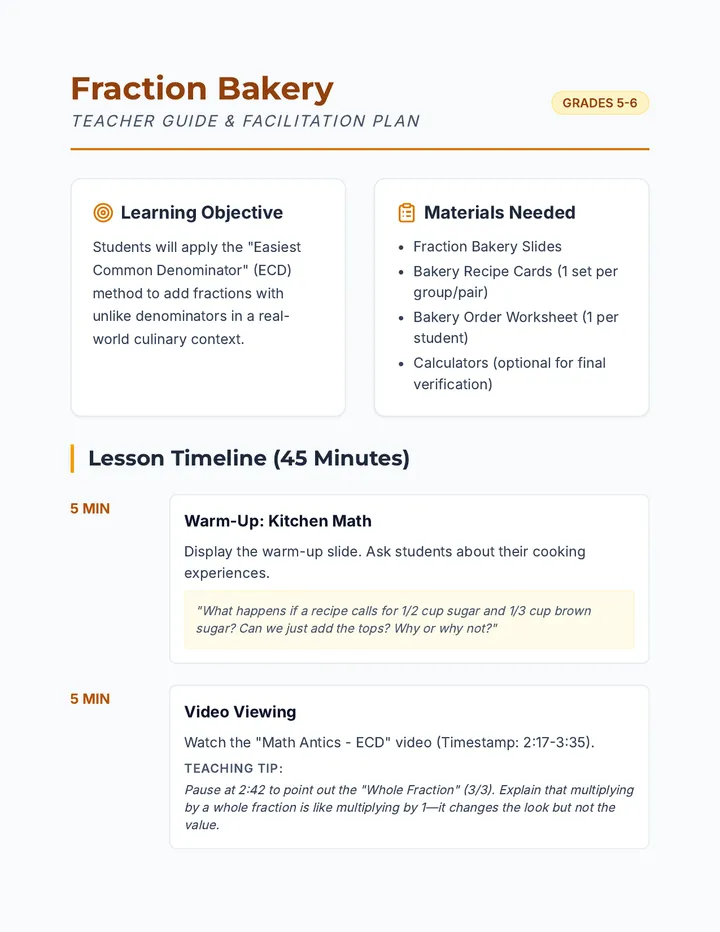
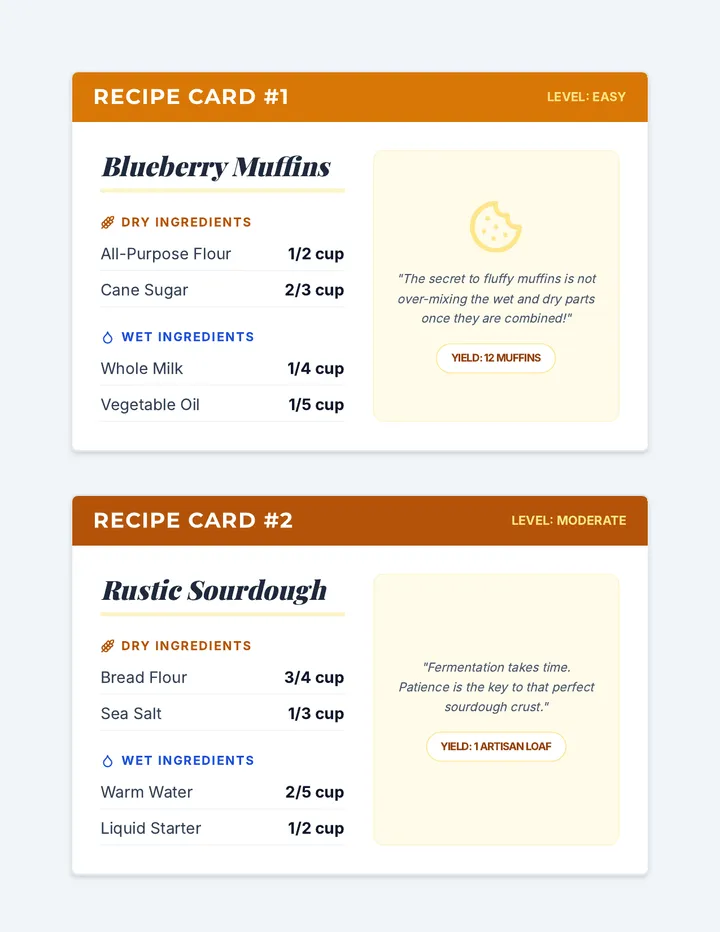
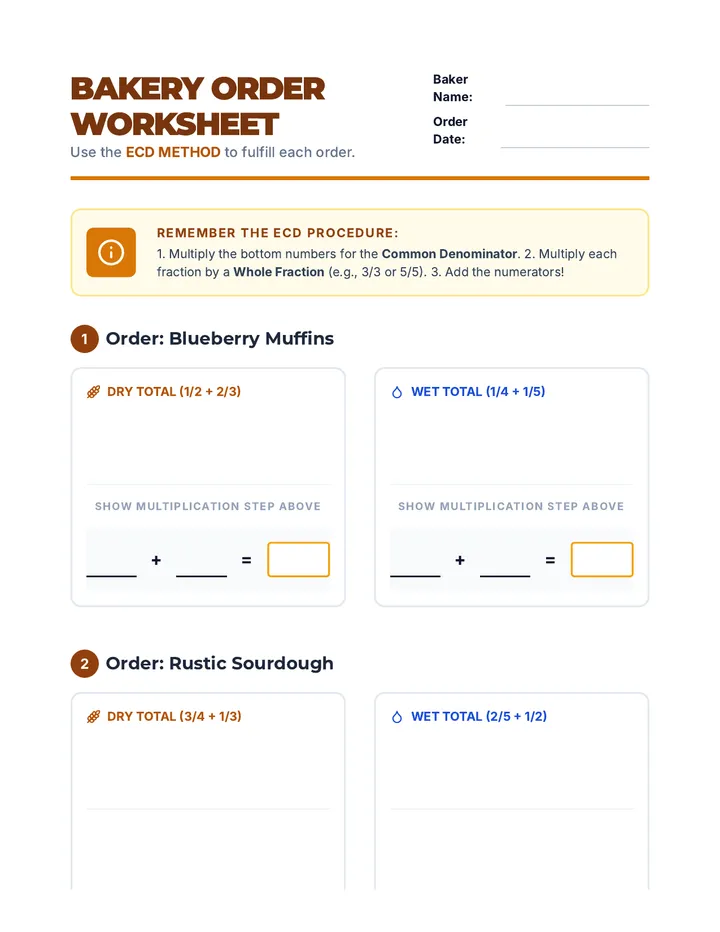
A set of resources for 4th-grade students to practice solving single-operation word problems involving adding, subtracting, and multiplying fractions by whole numbers, all within a charming bakery theme.
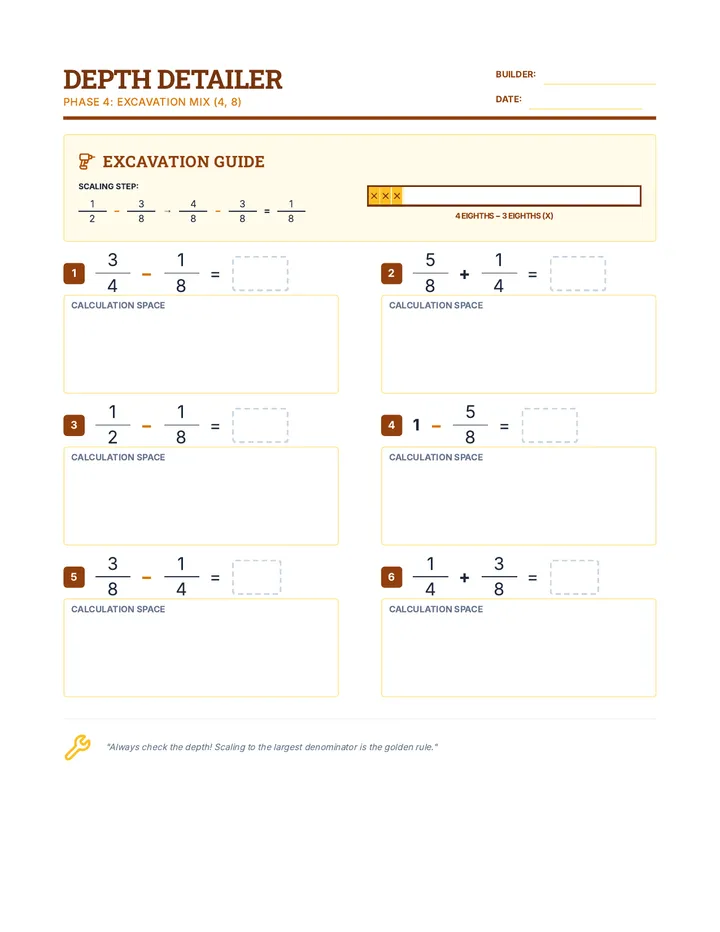
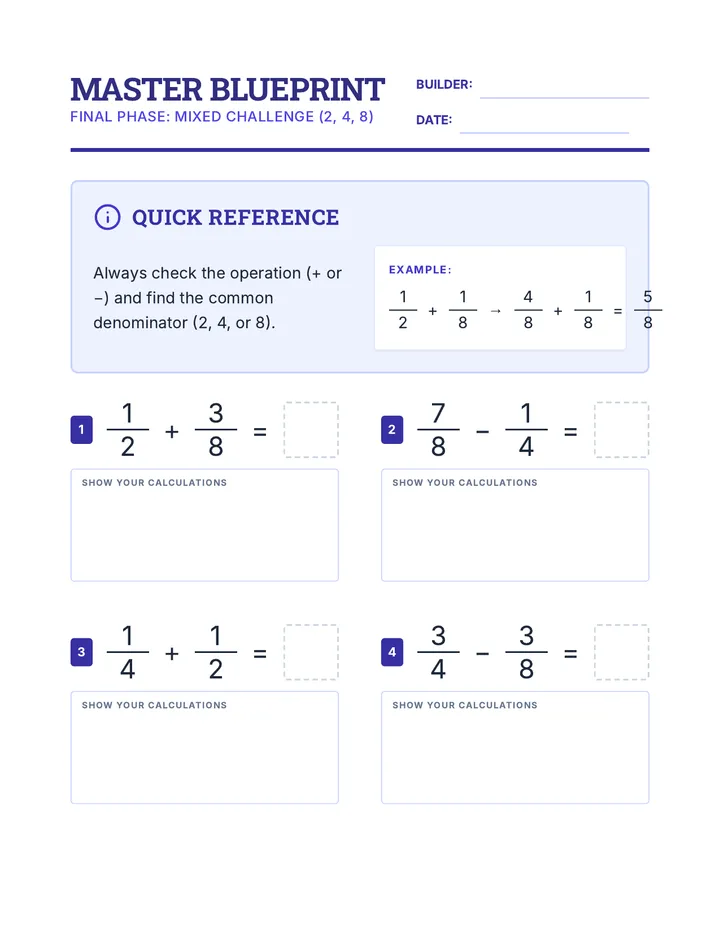
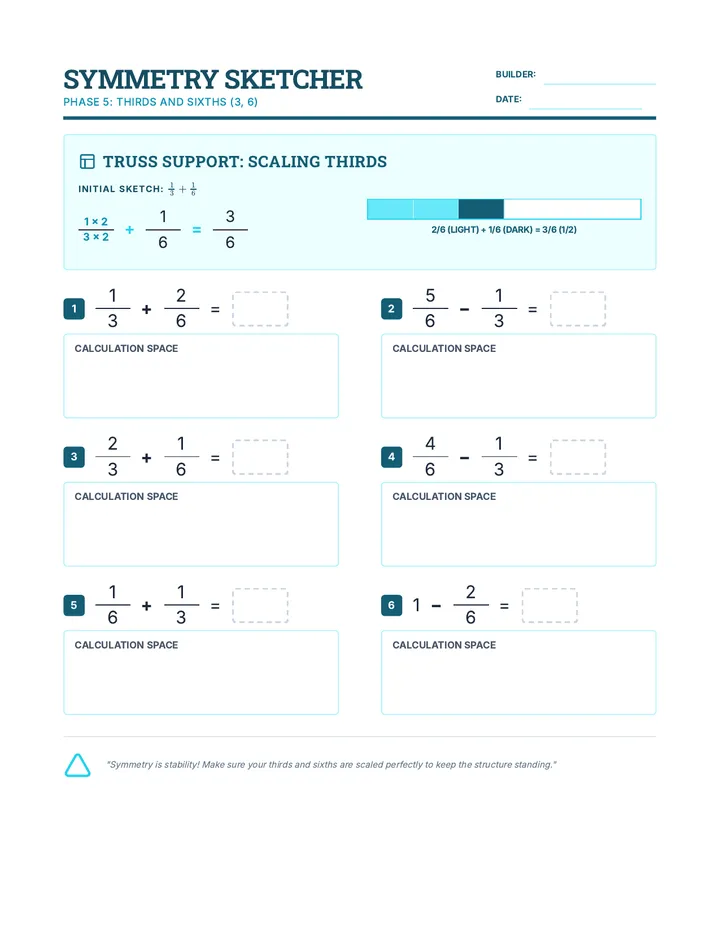
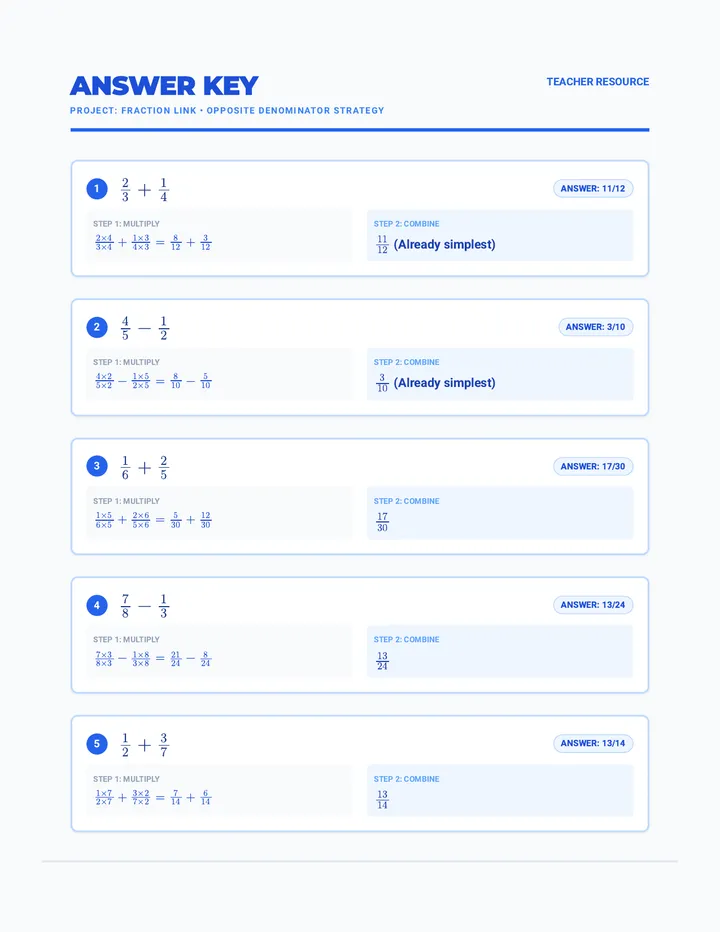
A series of lessons designed for remedial 5th/6th grade students to master fraction operations through visual modeling, manipulatives, and conceptual understanding.
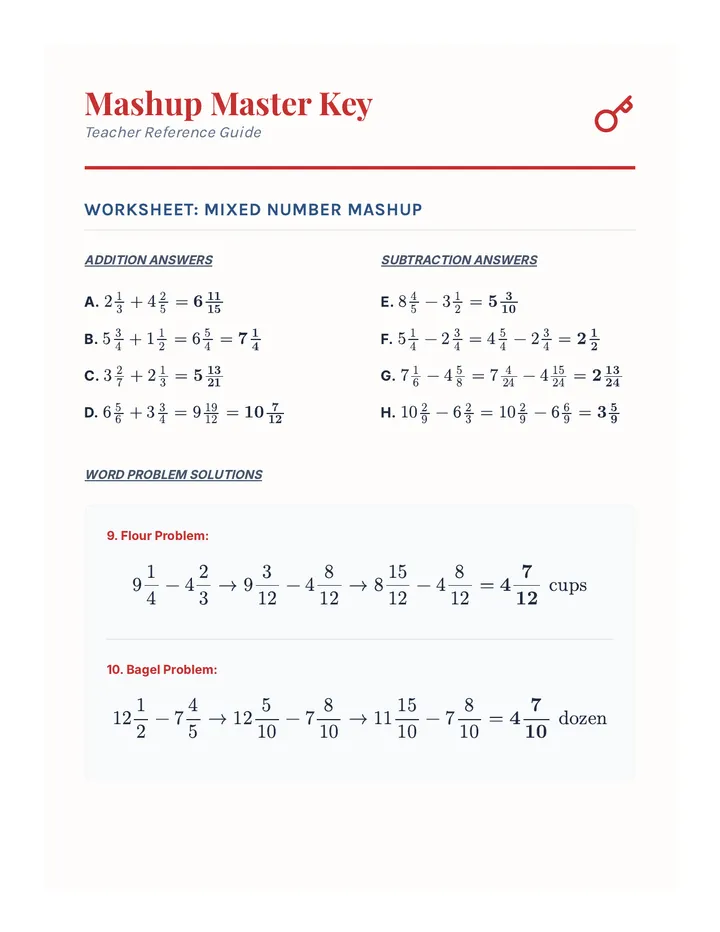
A comprehensive math lesson for 5th graders focused on adding mixed numbers with regrouping, themed around baking a 'Giant Cookie' for a bakery. Includes visual instruction via video, hands-on recipe calculation, and reflection.
A collaborative mathematics lesson focusing on adding mixed numbers with regrouping. Students work in teams to master the regrouping algorithm through a relay-style activity after analyzing instructional video content.
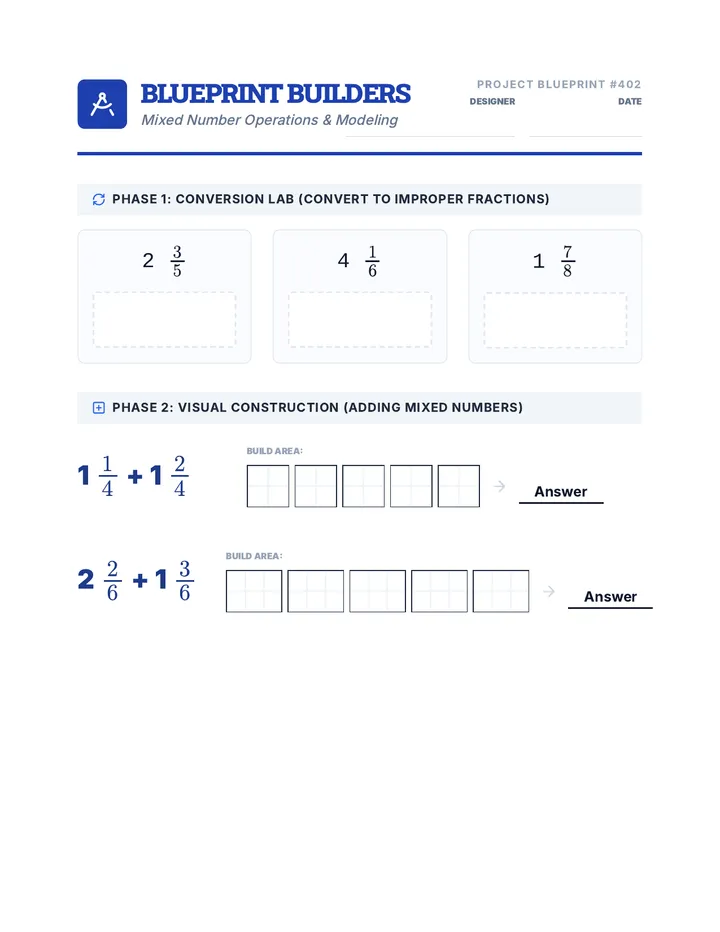
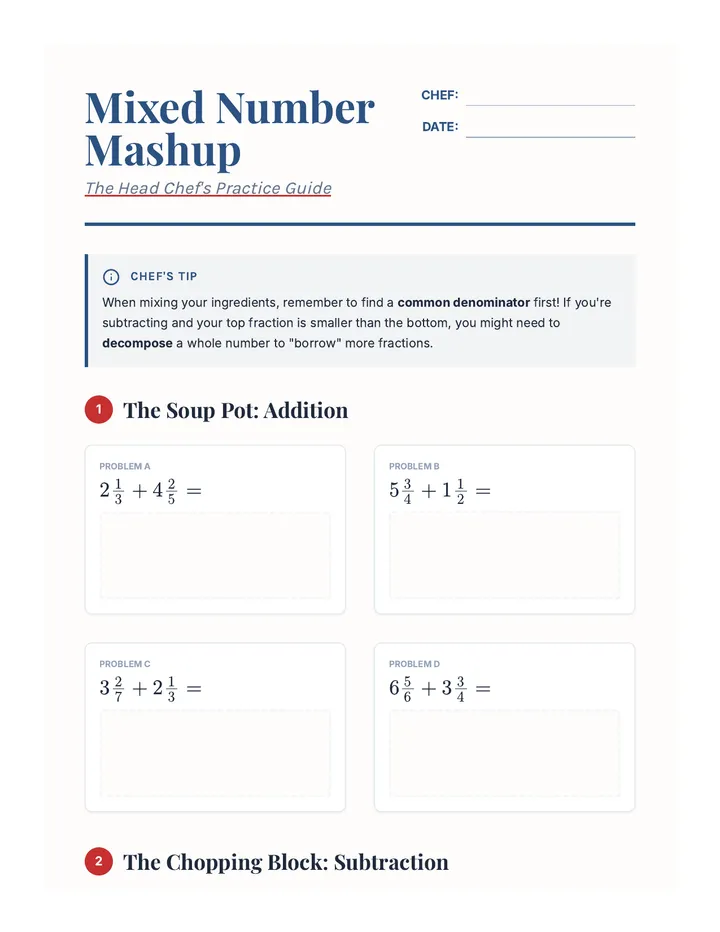
A comprehensive sequence focused on mastering mixed number operations through visual modeling, hands-on manipulatives, and algorithmic fluency.
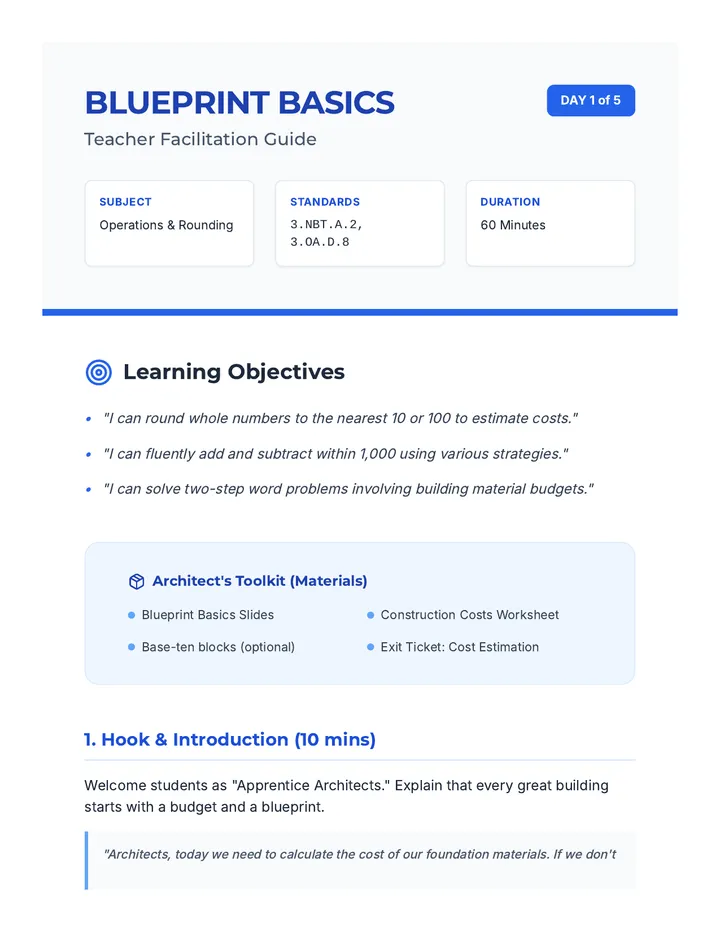
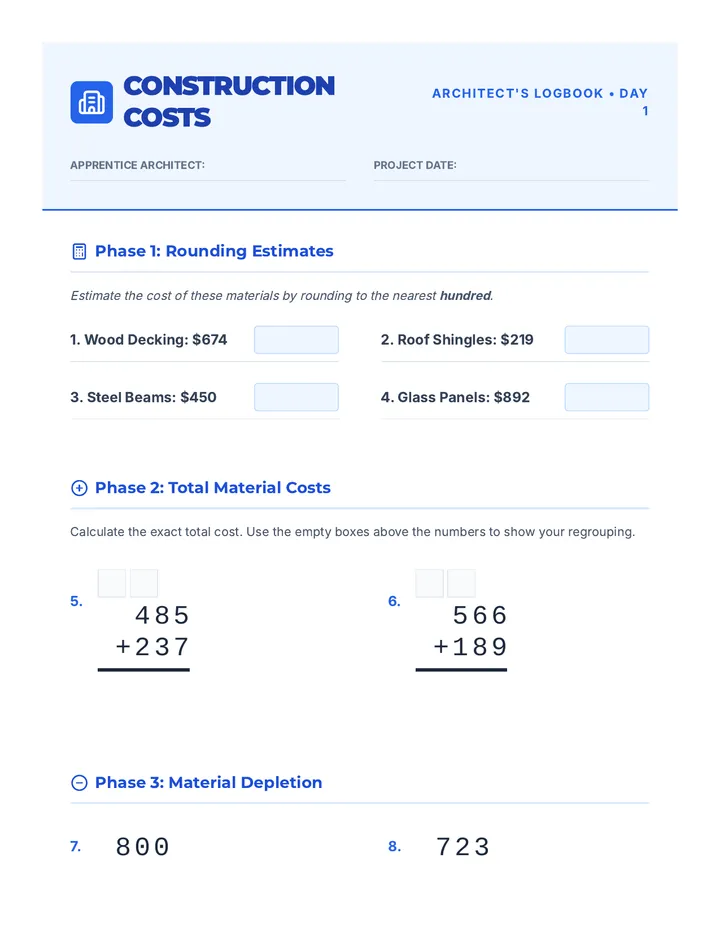
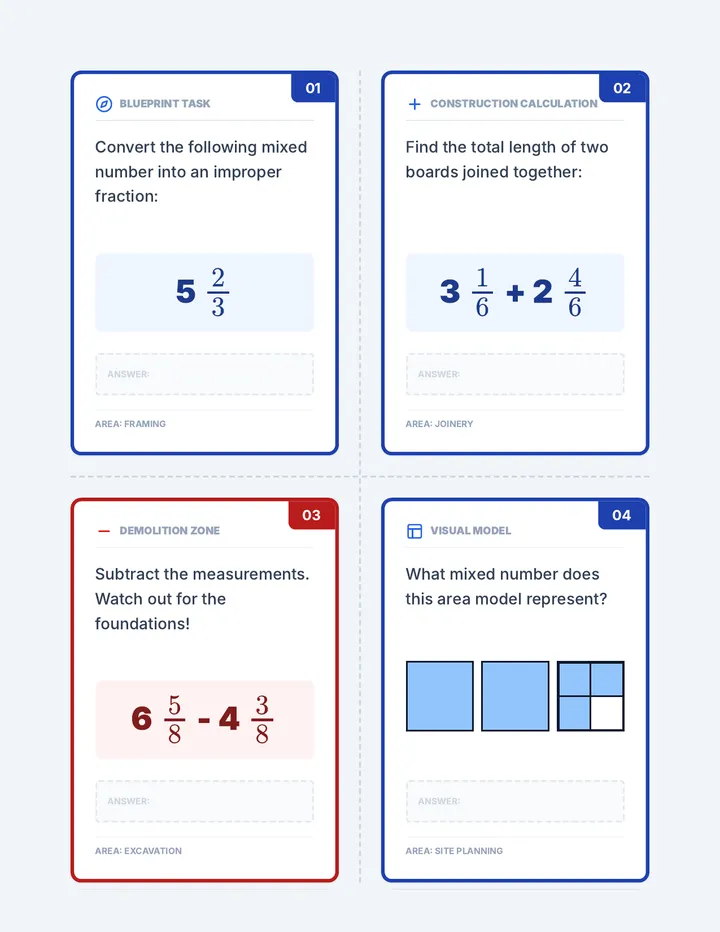
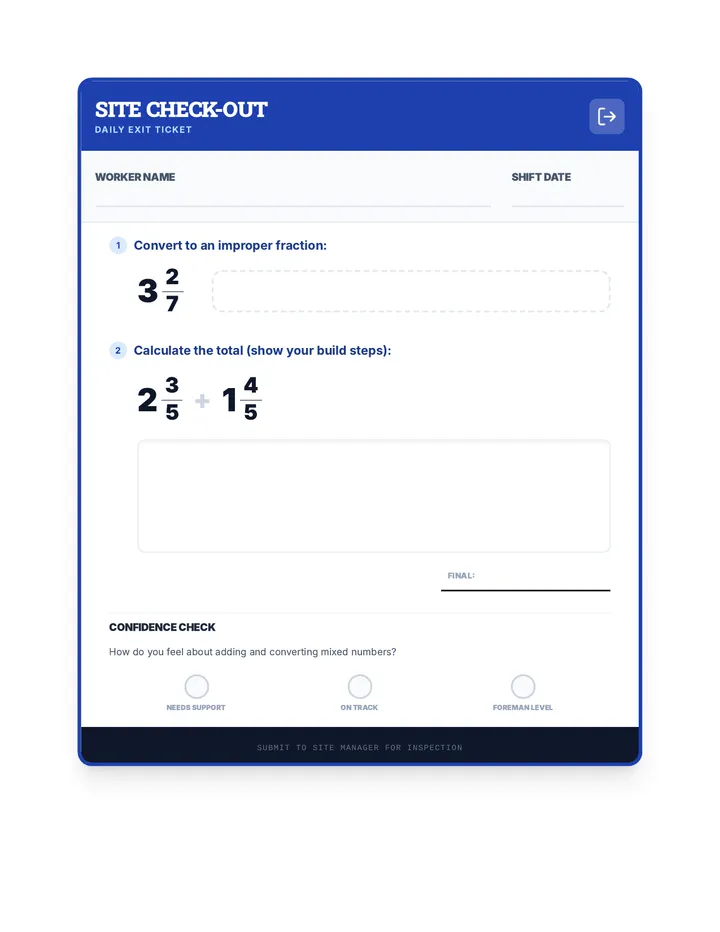
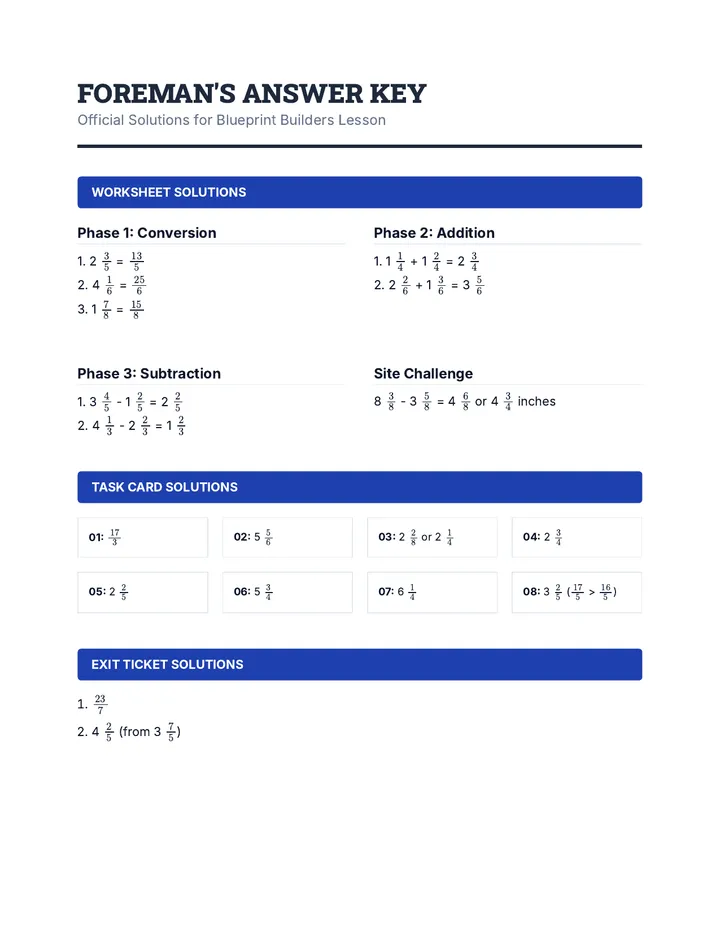
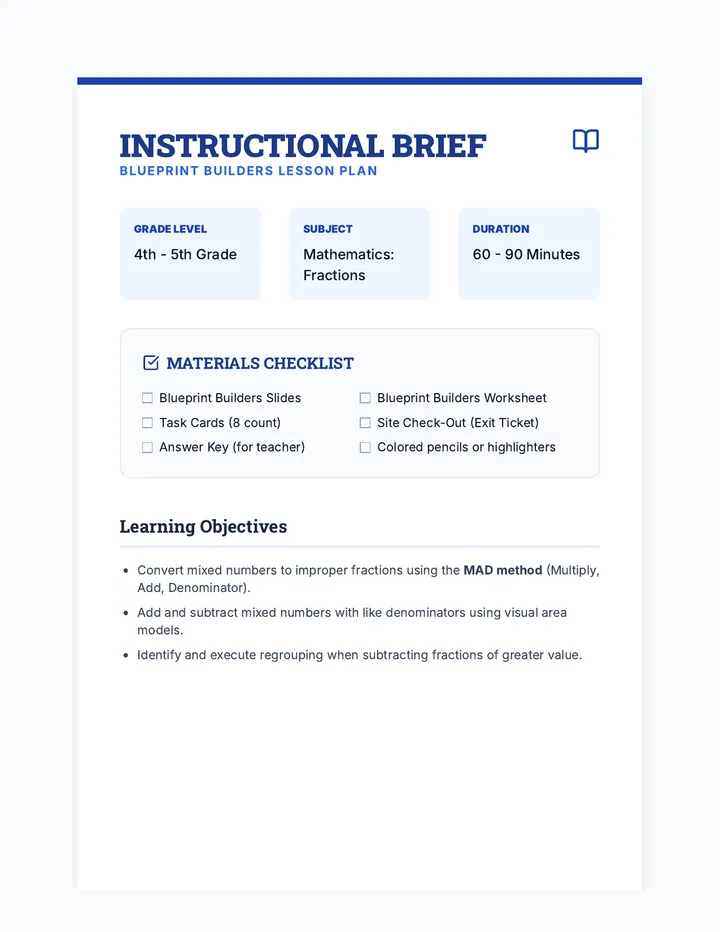
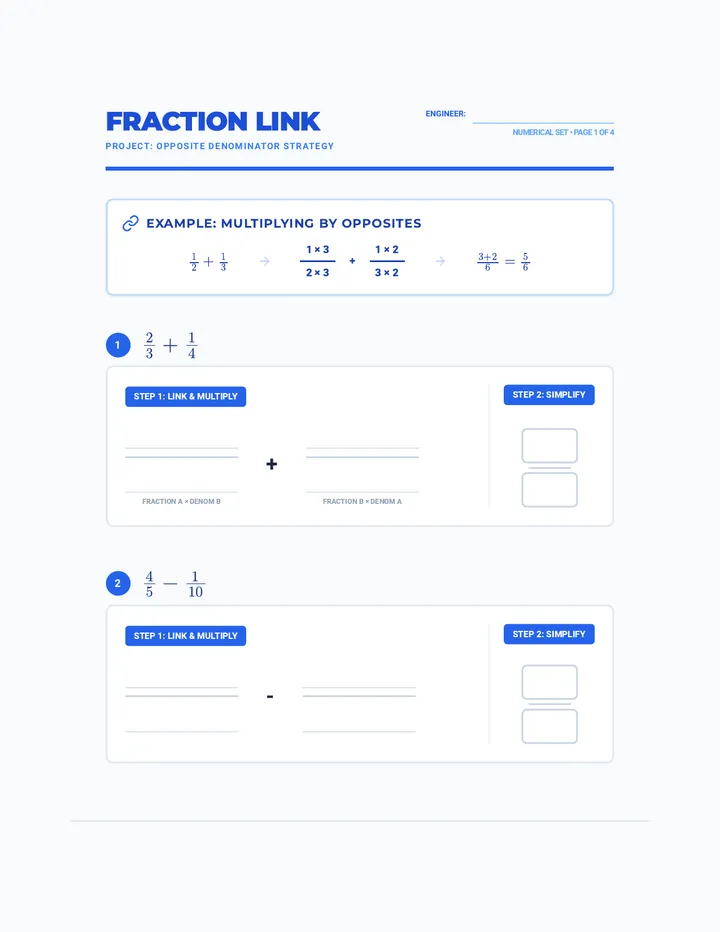
A lesson sequence focused on applying mixed number subtraction to real-world scenarios through collaborative problem-solving and blueprint-themed activities.
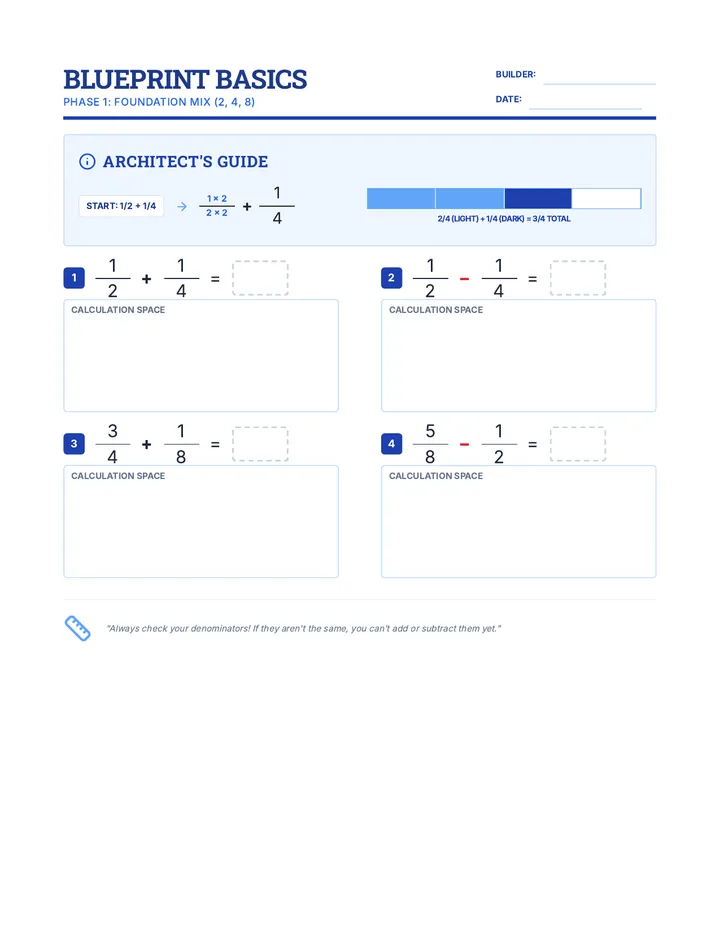
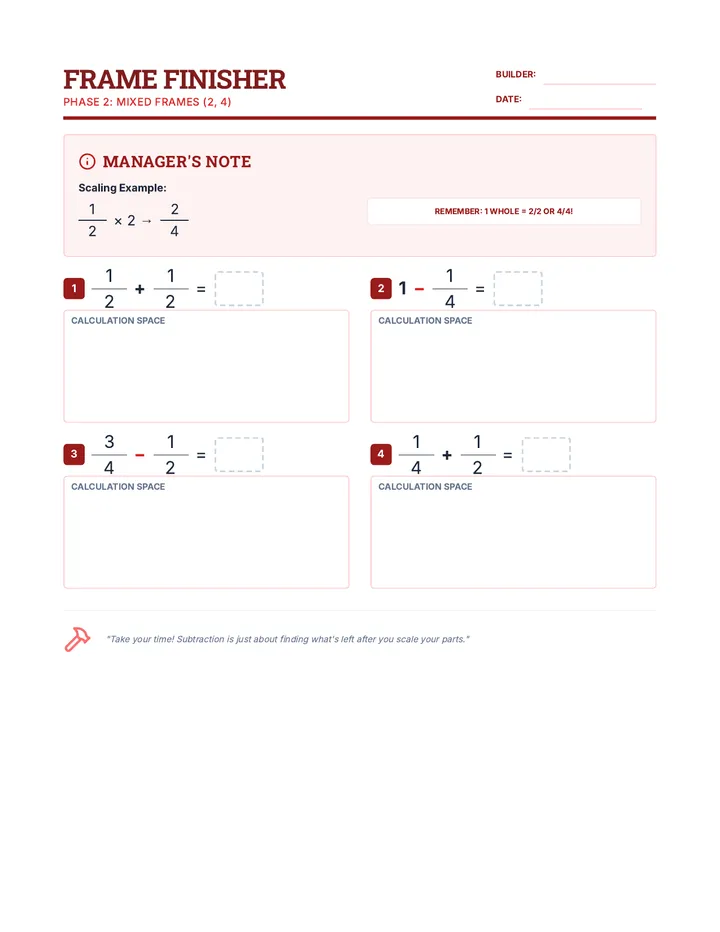
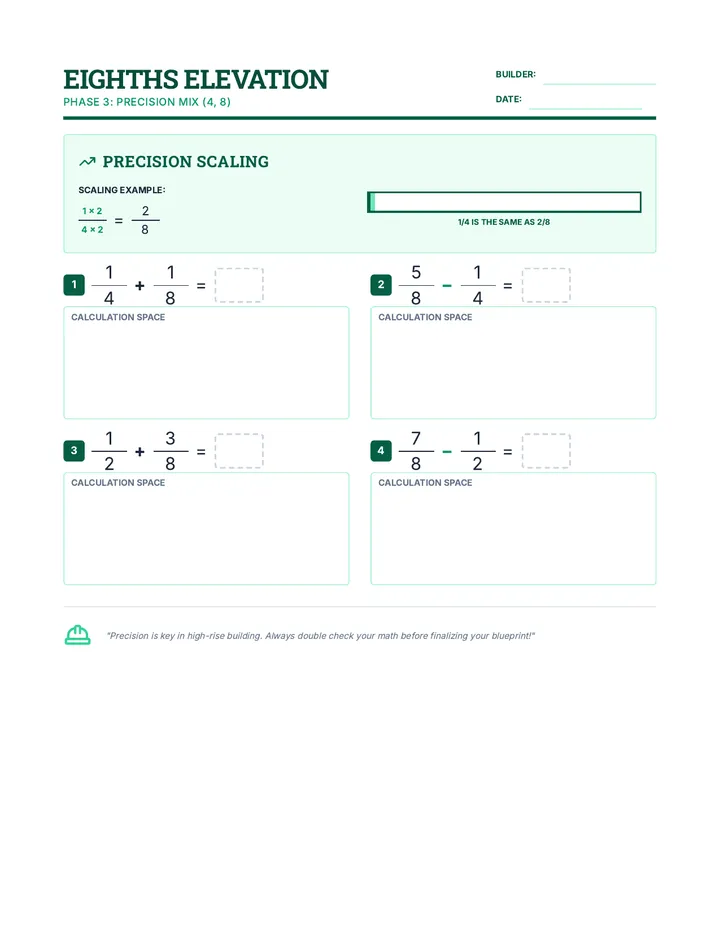
A hands-on sequence designed for students needing academic support to master fraction equivalence and operations through concrete modeling. Students use physical manipulatives like towers, blocks, and overlays to bridge the gap between abstract symbols and conceptual understanding.
A specialized math sequence for 11th-grade students focusing on practical fraction operations and ratios through the lens of construction and design. Students move from basic measurement precision to complex scaling tasks using physical manipulatives like tape measures and Cuisenaire rods.
A specialized math sequence for 9th-grade academic support, focusing on fraction mastery through concrete manipulatives and visual models. It follows the CRA framework to bridge gaps in foundational understanding for high school success.
A math sequence for 12th-grade students in special education, focusing on practical fraction mastery through measurement, construction, and home maintenance scenarios. Students use manipulatives like fraction tiles and rulers to build conceptual understanding and operational fluency.
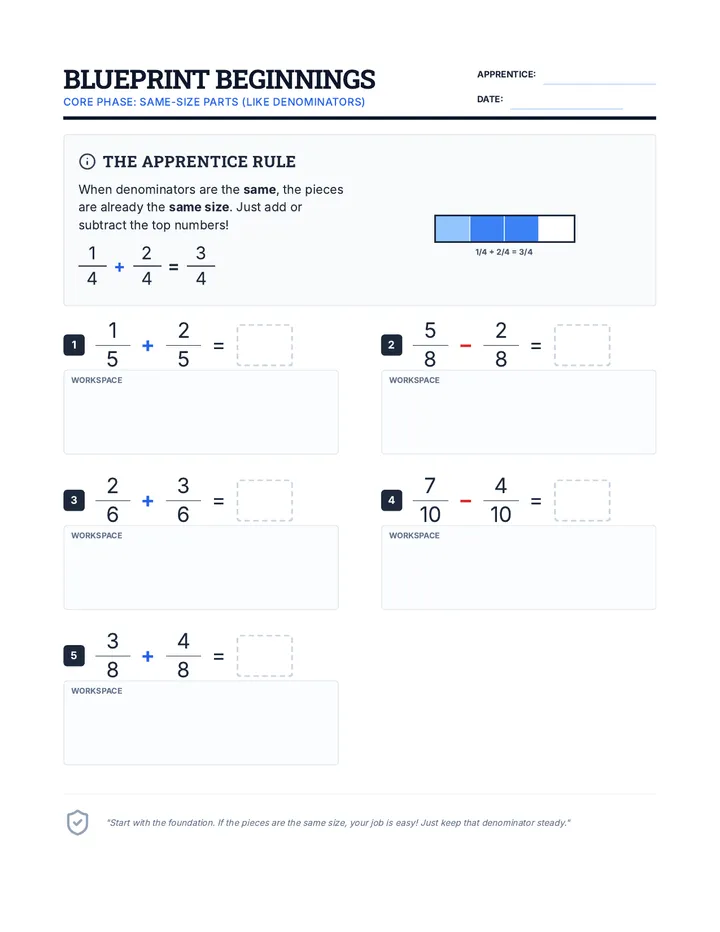
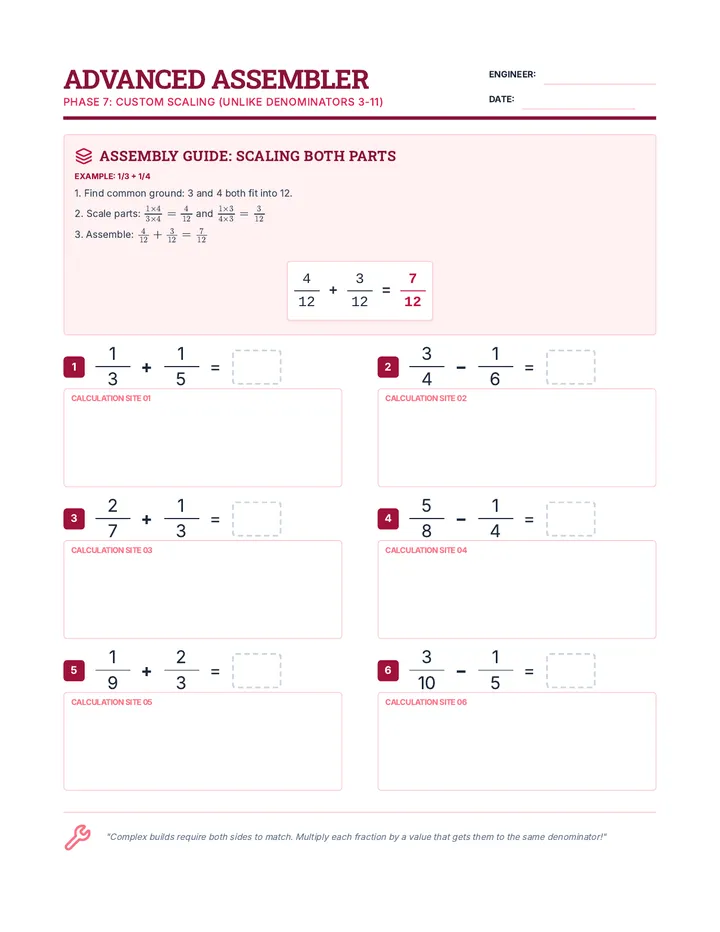
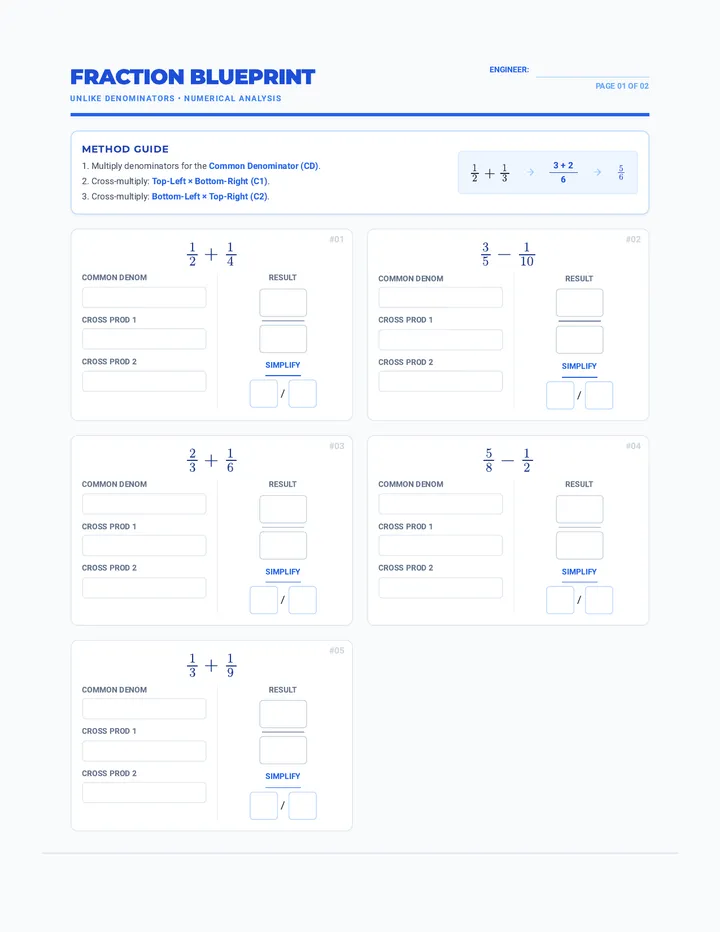
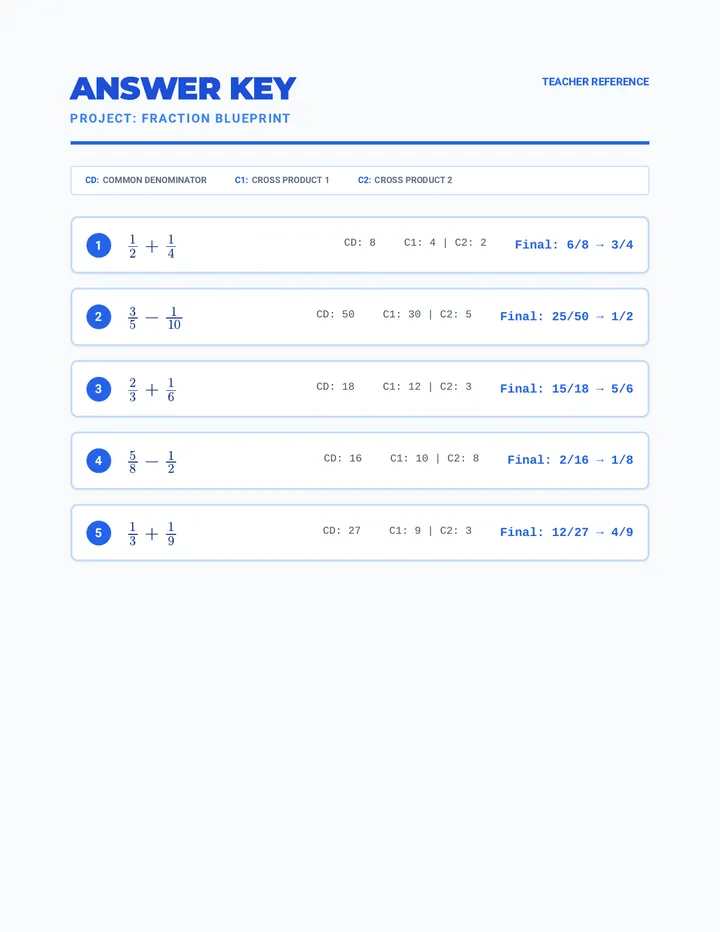
A 5-lesson sequence designed to help 5th-grade students master fraction operations through concrete manipulatives. Students move from physical towers to abstract algorithms, building a deep conceptual understanding of why common denominators are essential for addition and subtraction.
A specialized math support sequence for 8th-grade students, focusing on the conceptual understanding of fractions, decimals, and operations through the use of physical and virtual manipulatives. This sequence uses a 'Blueprint & Construction' theme to make abstract rational number concepts concrete and applicable to real-world design.
This sequence addresses the conceptual hurdles of fraction operations by utilizing number lines as a concrete visual anchor. Students move from placing fractions on a line to visually estimating and calculating sums and differences using movement and length to represent value.
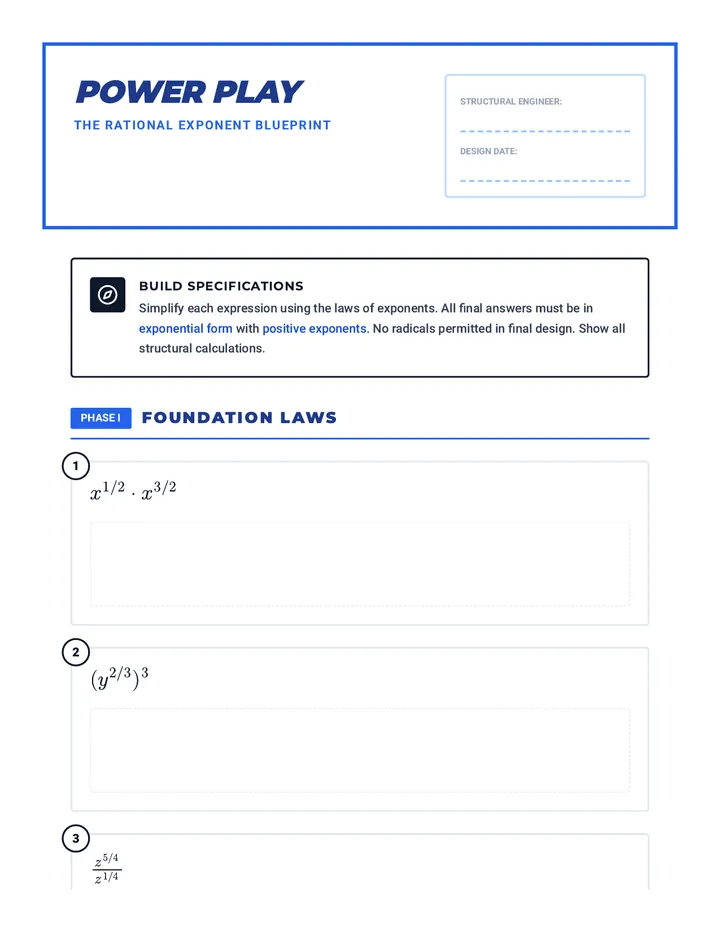
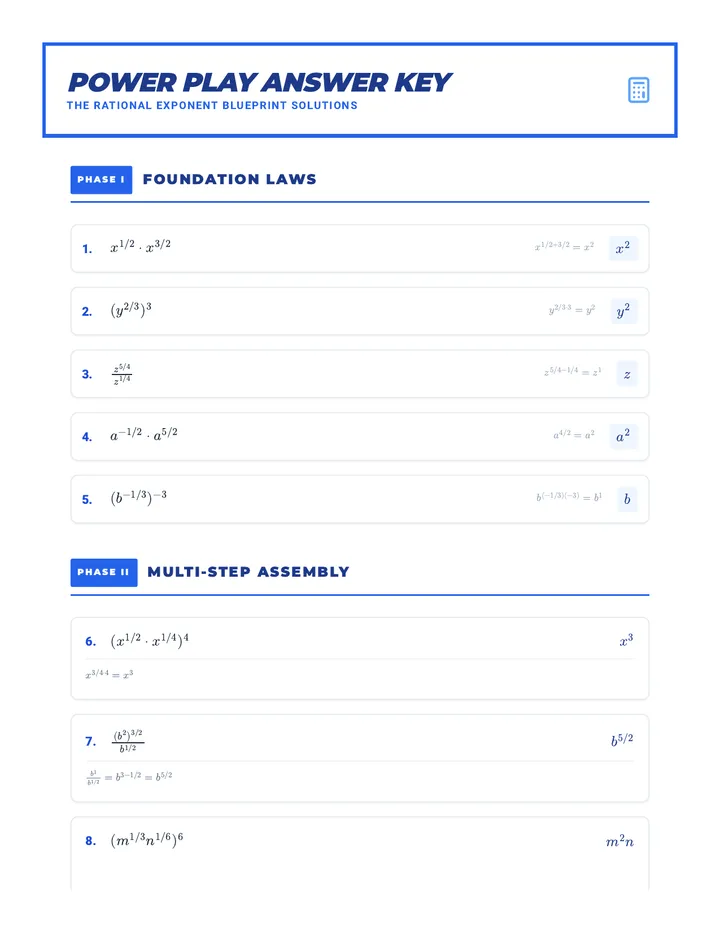
A gamified unit for 9th Grade Algebra focusing on the mastery of rational exponents. Students engage in relays, tournaments, and 'boss battles' to build speed, accuracy, and confidence in simplifying complex exponential expressions.
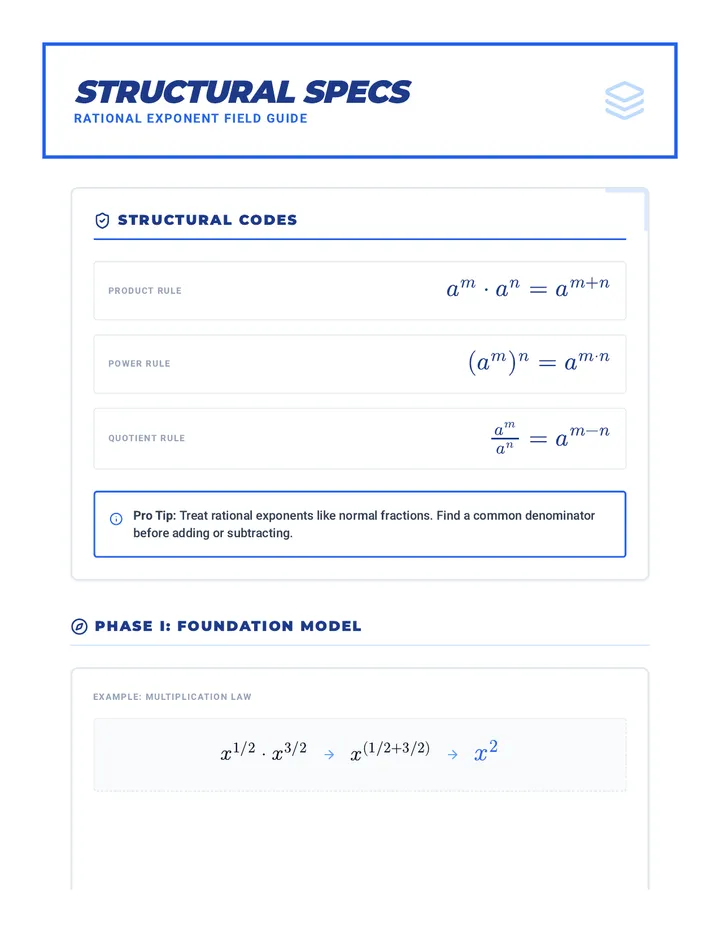
A comprehensive workshop-style sequence for 9th-grade algebra students focusing on procedural fluency with rational exponent operations. Students apply the Product of Powers, Quotient of Powers, and Power of a Power properties to fractional exponents through skill-building exercises and complex simplification challenges.
A high-school level algebra sequence focusing on the procedural mastery of rational exponents. Students learn to apply exponent laws to fractional powers, handle negative exponents, and convert between radical and exponential forms through a series of workshops and skill-building activities.
A comprehensive 5-lesson unit on rational expressions, covering domain restrictions, simplification, arithmetic operations, and solving equations with a focus on extraneous solutions.
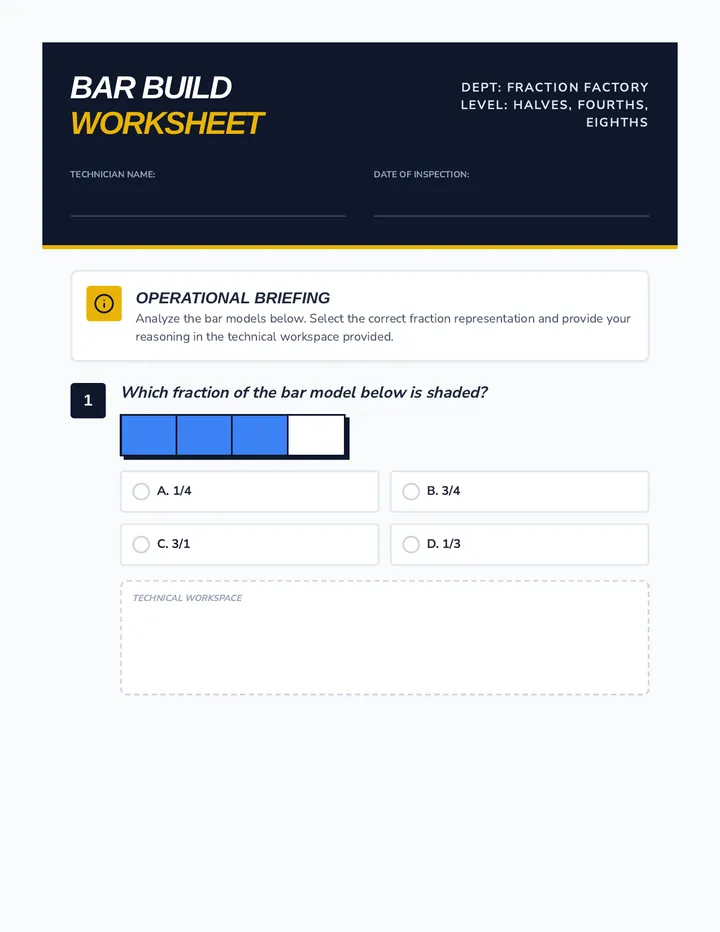
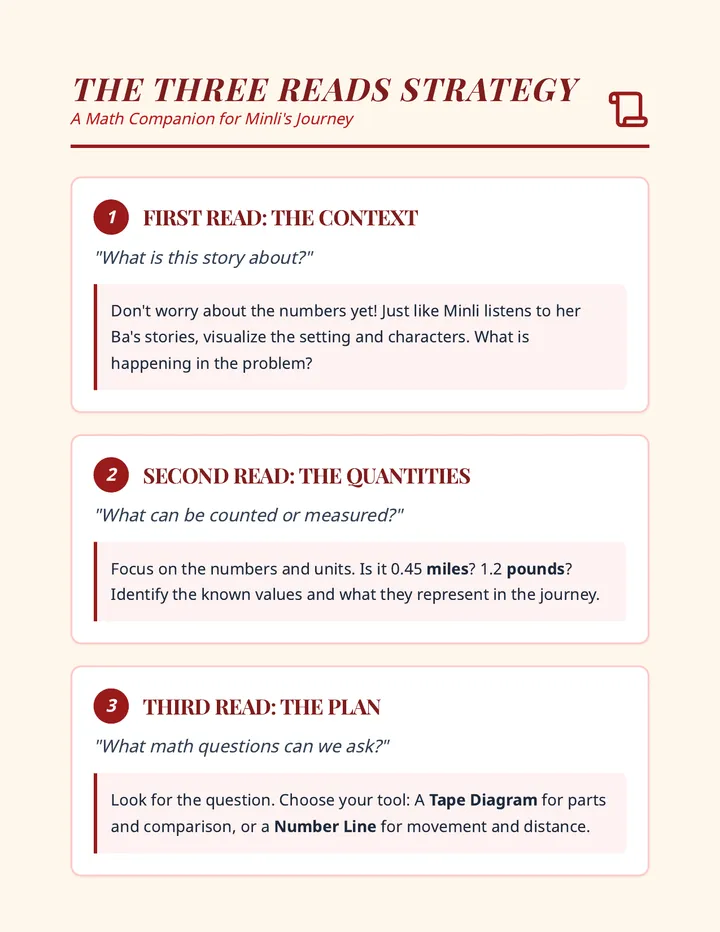
A sequence focused on using bar models to visualize and solve complex math problems, specifically designed for students needing academic support in executive functioning and working memory. Students progress from concrete block representations to abstract multi-step problem decomposition.
This sequence guides 7th-grade students from visual probability models (tree diagrams, area models) to the abstract Multiplication Rule for independent and dependent events. Students will discover the rule through inquiry, apply it to increasingly complex multi-stage scenarios, and master the distinction between replacement and non-replacement contexts.
A 12-session tier 2 intervention sequence designed to build conceptual mastery of fraction division. Grounded in All Learners Network (ALN) principles, students progress from visual measurement models to the common denominator strategy and eventually the standard algorithm through deep reasoning and high-leverage concepts.
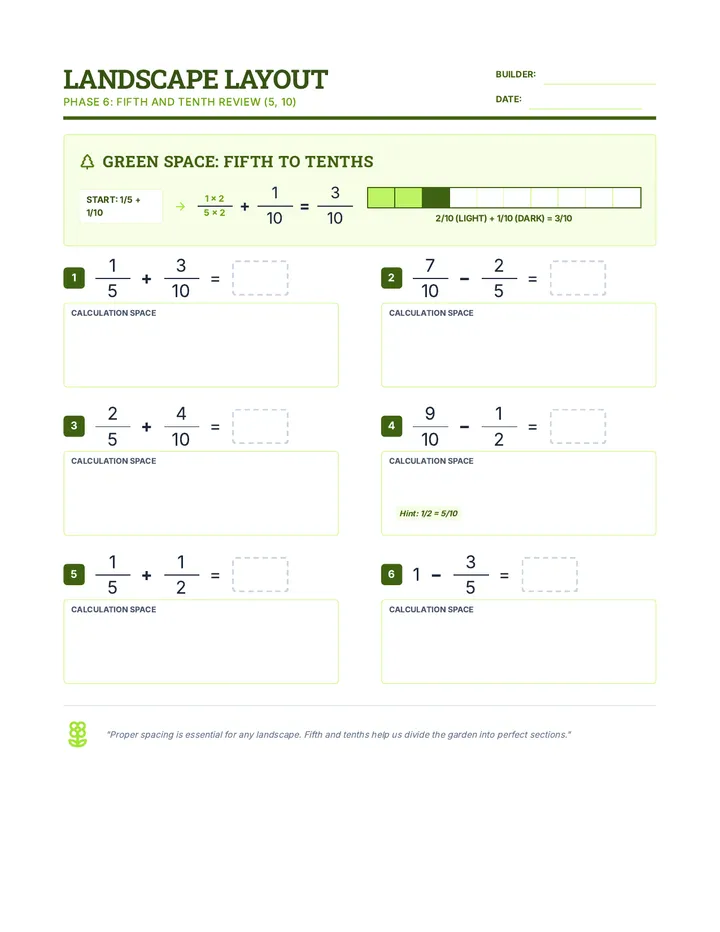
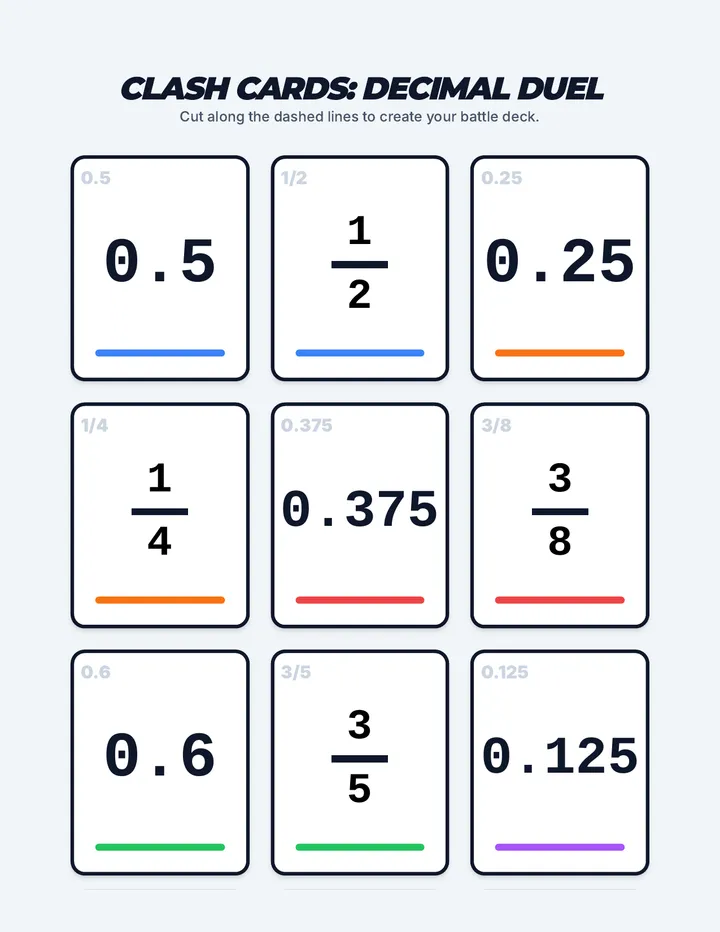
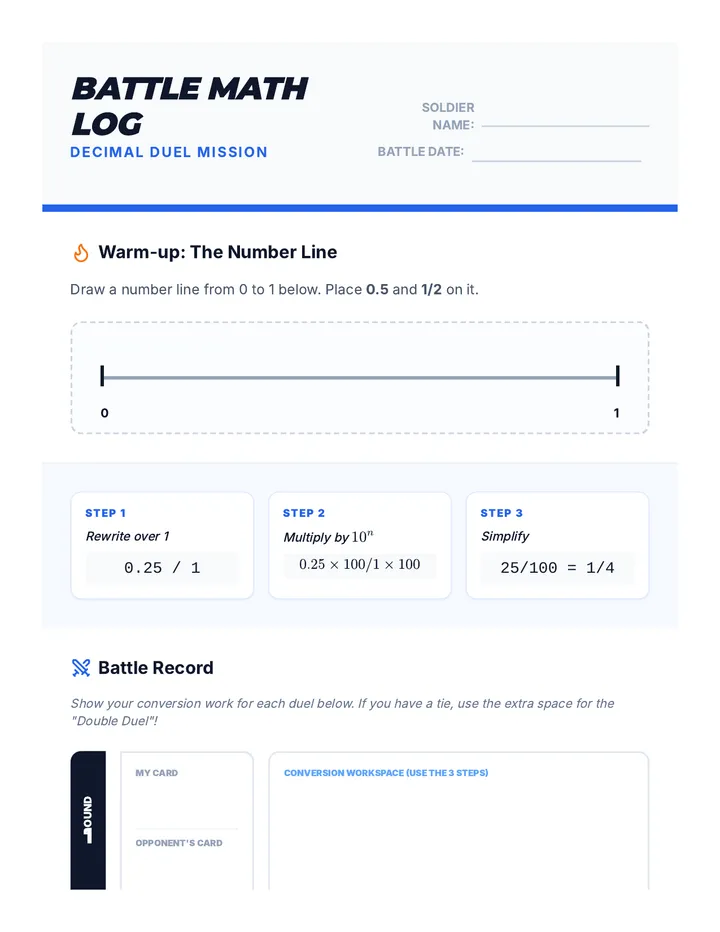
A 5-lesson Tier 2 intervention series designed for 6th-grade small group instruction, focusing on the conceptual understanding and procedural fluency of comparing, ordering, and converting fractions, decimals, and percentages.
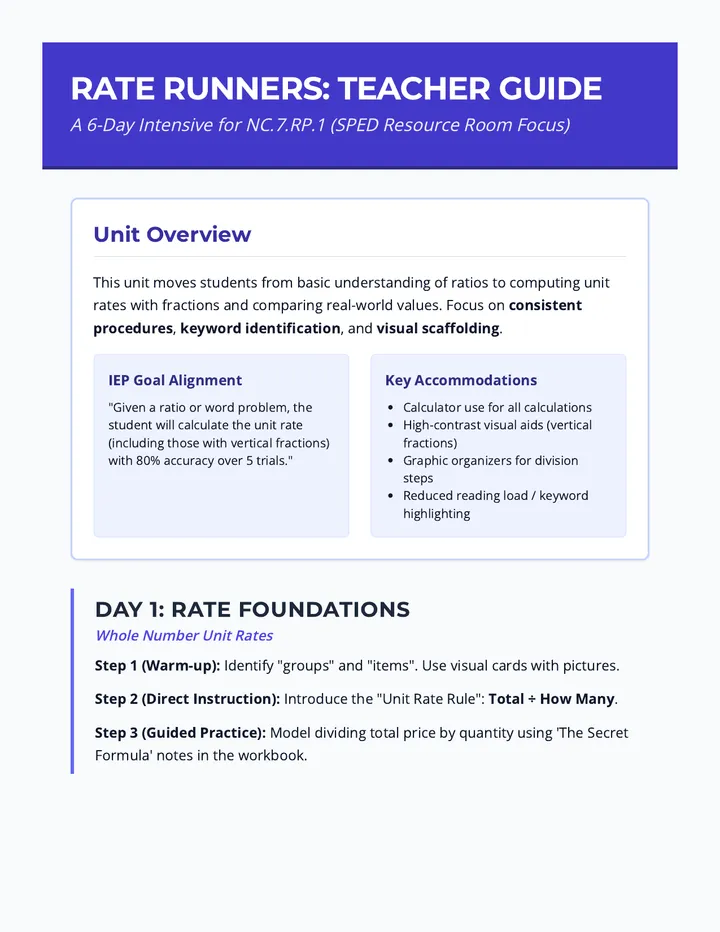
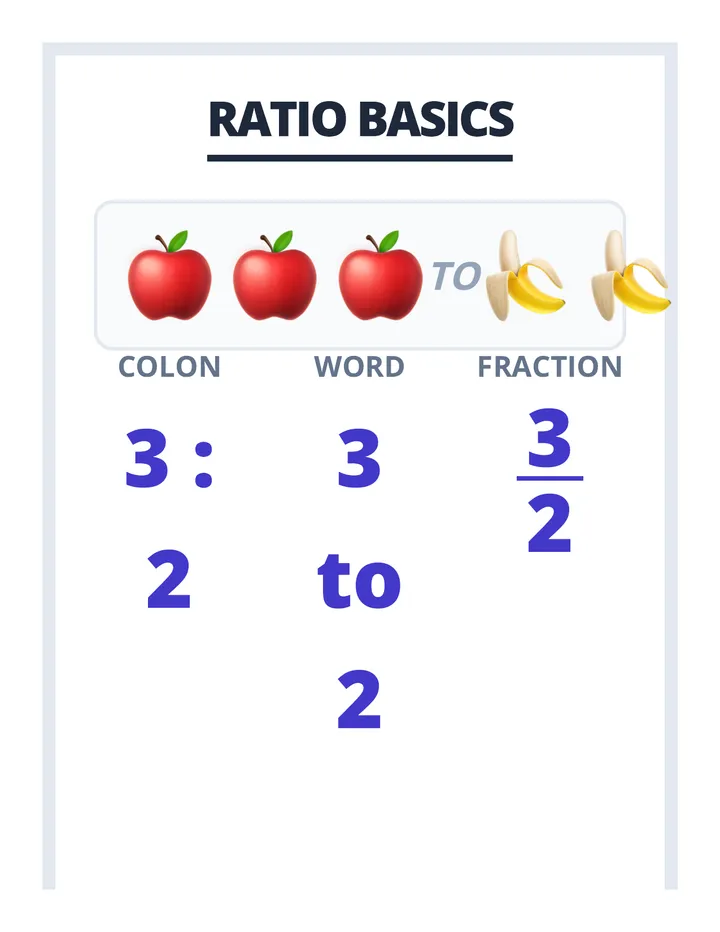
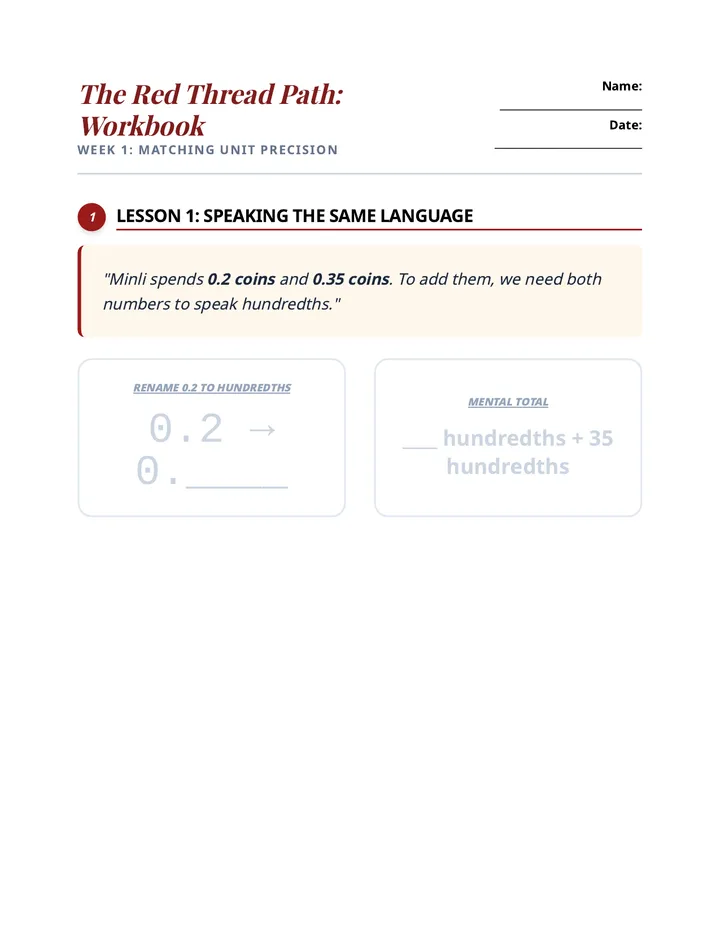
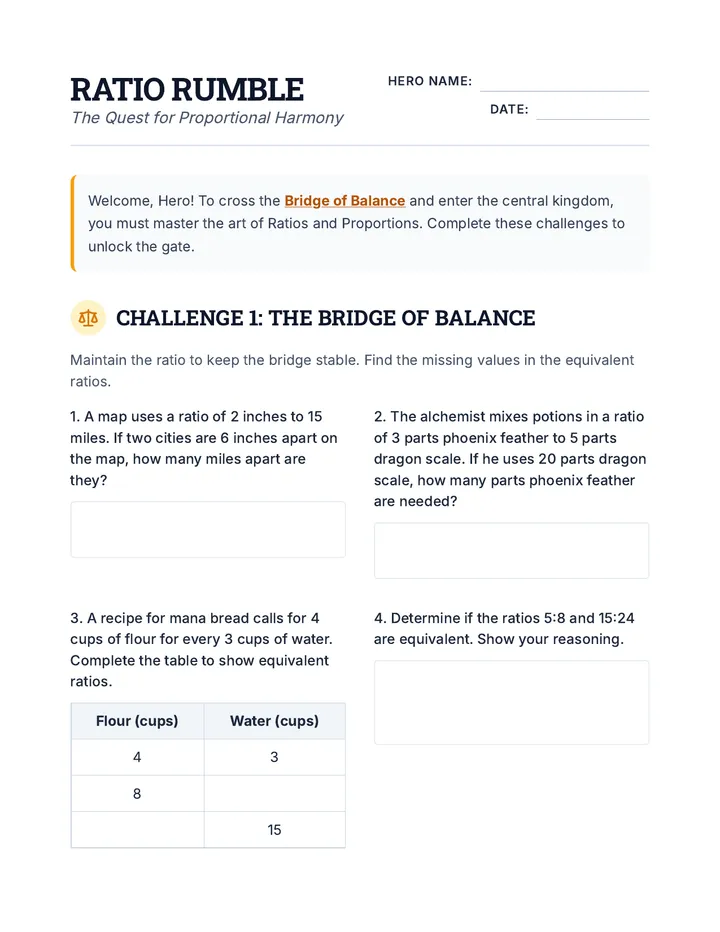
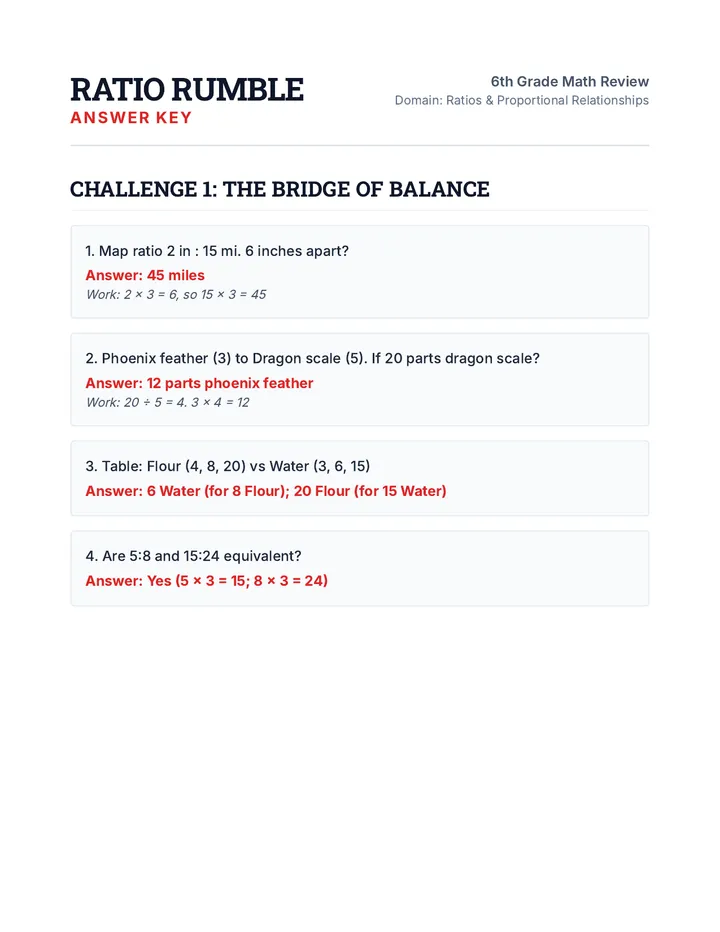
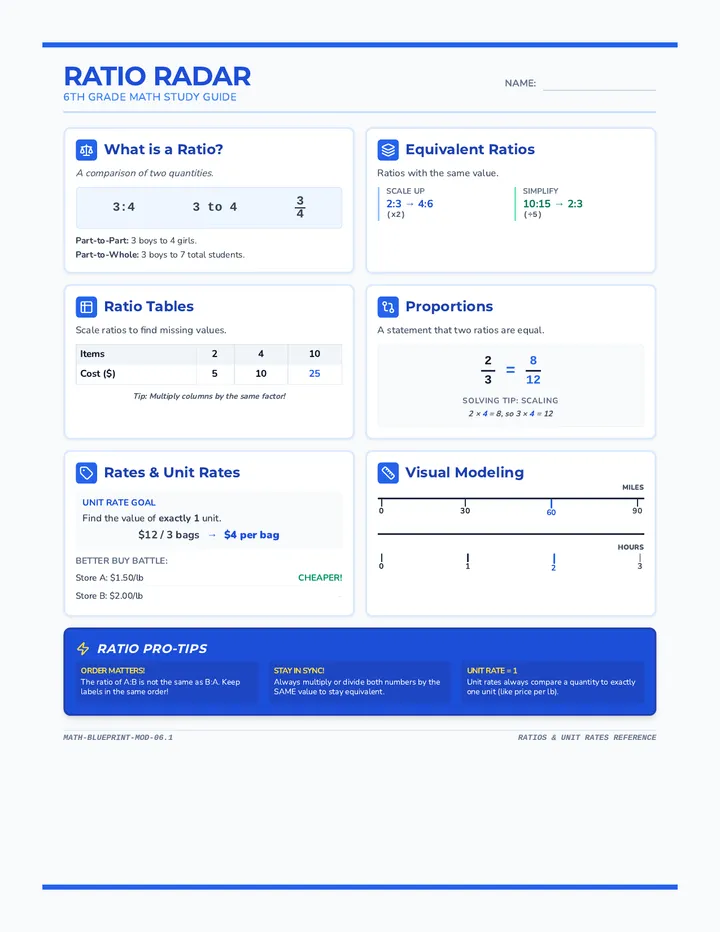
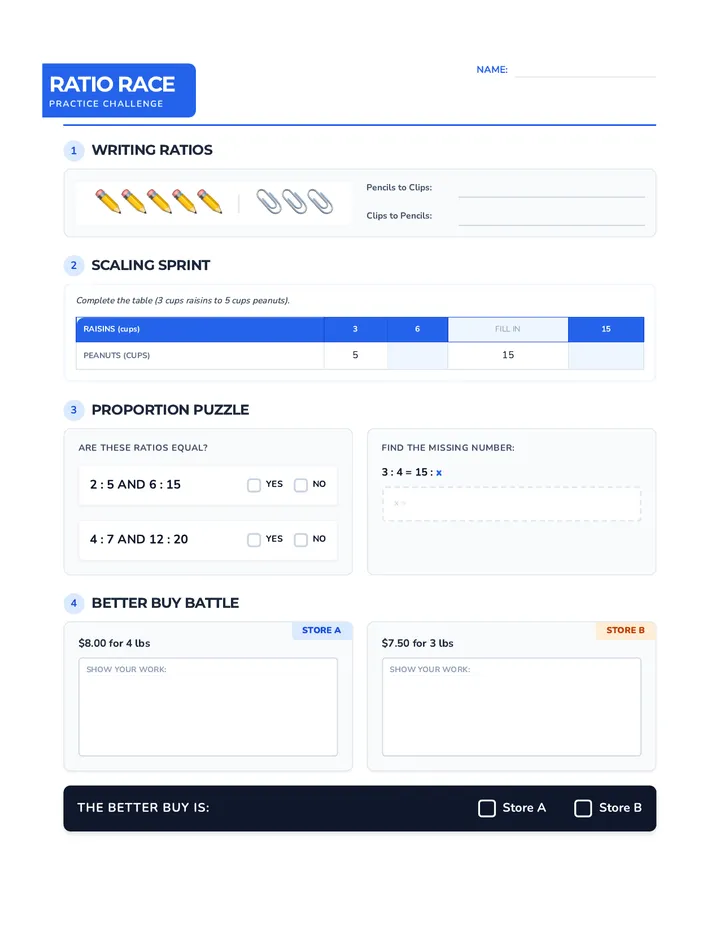
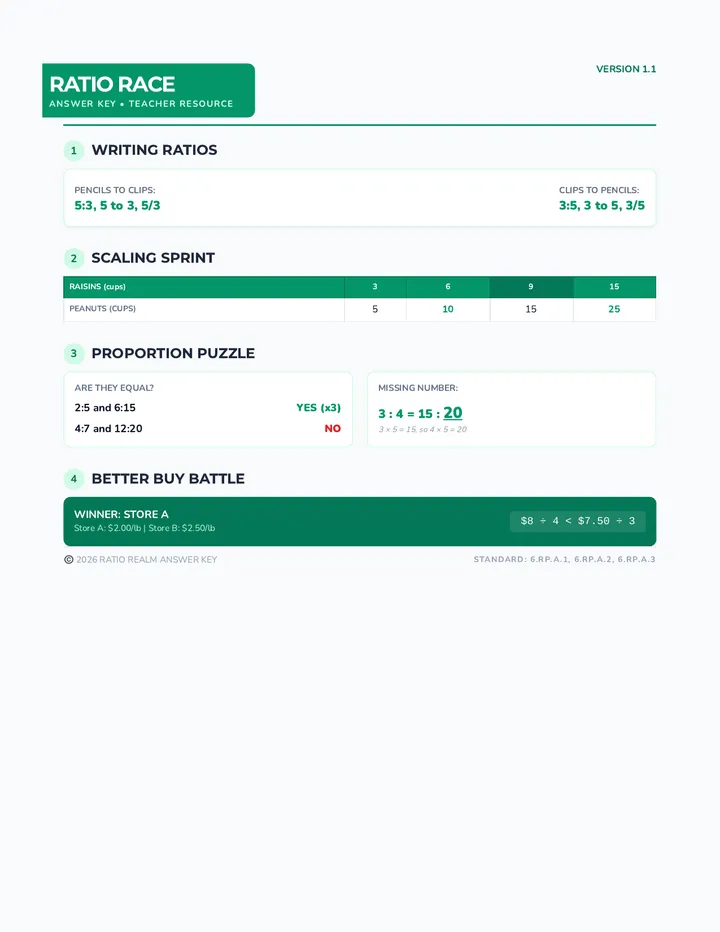
A math unit focused on understanding and applying ratios and proportions through visual methods, mental math strategies, and algorithmic problem-solving.
A series of Algebra I support lessons designed to address fundamental misconceptions in linear functions through interactive, theme-based activities.
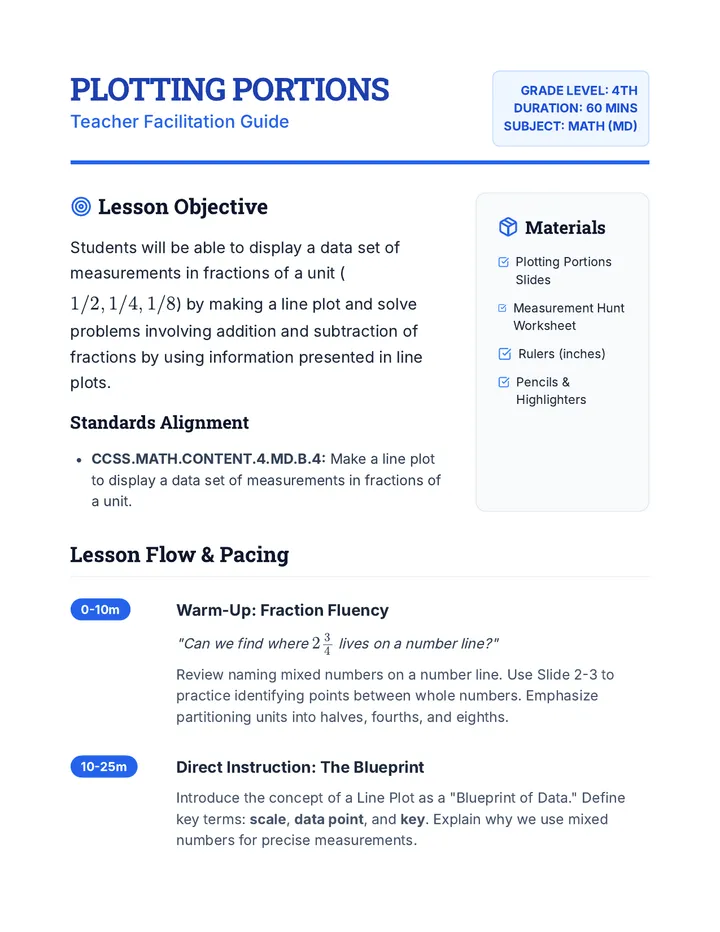
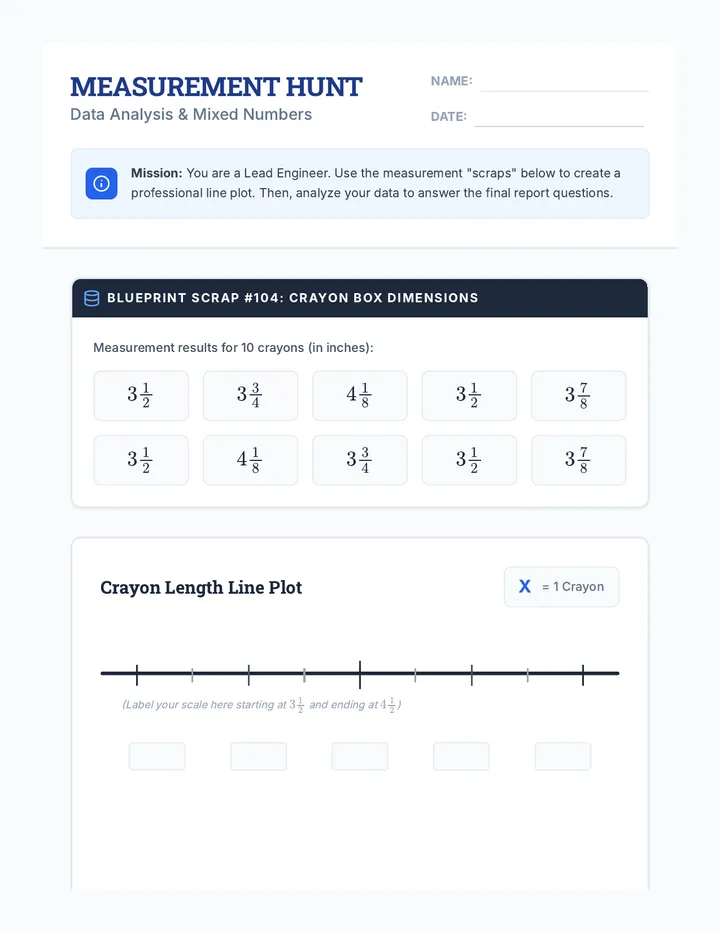
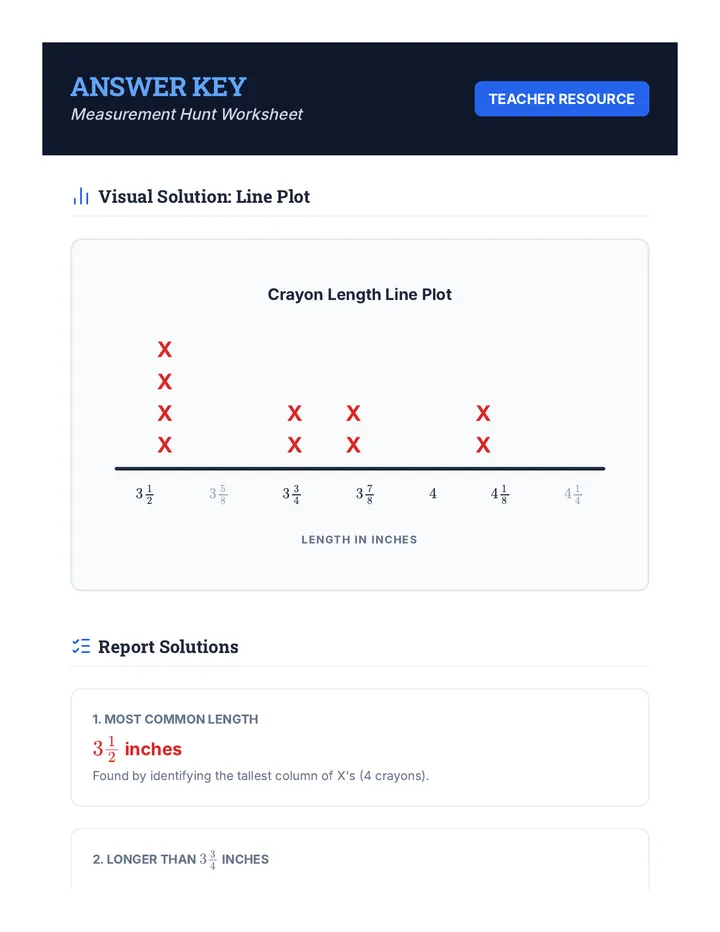
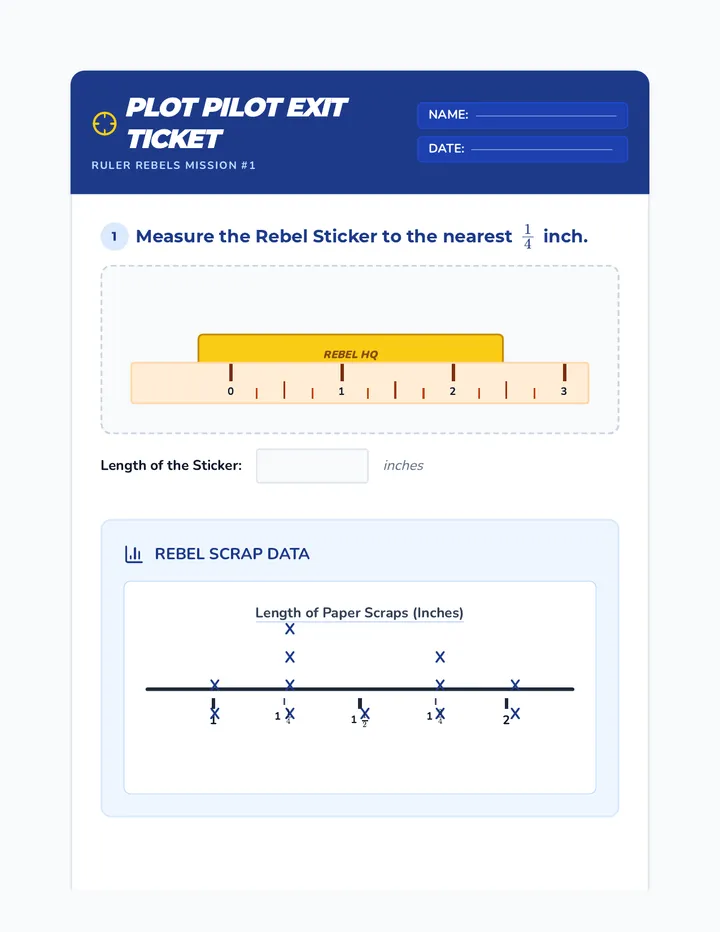
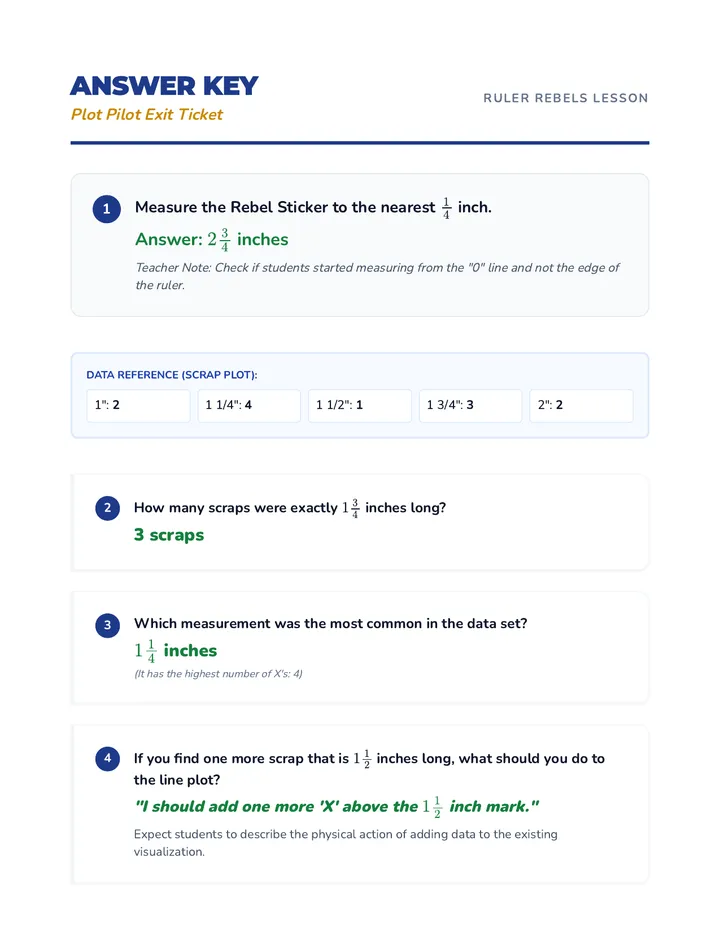
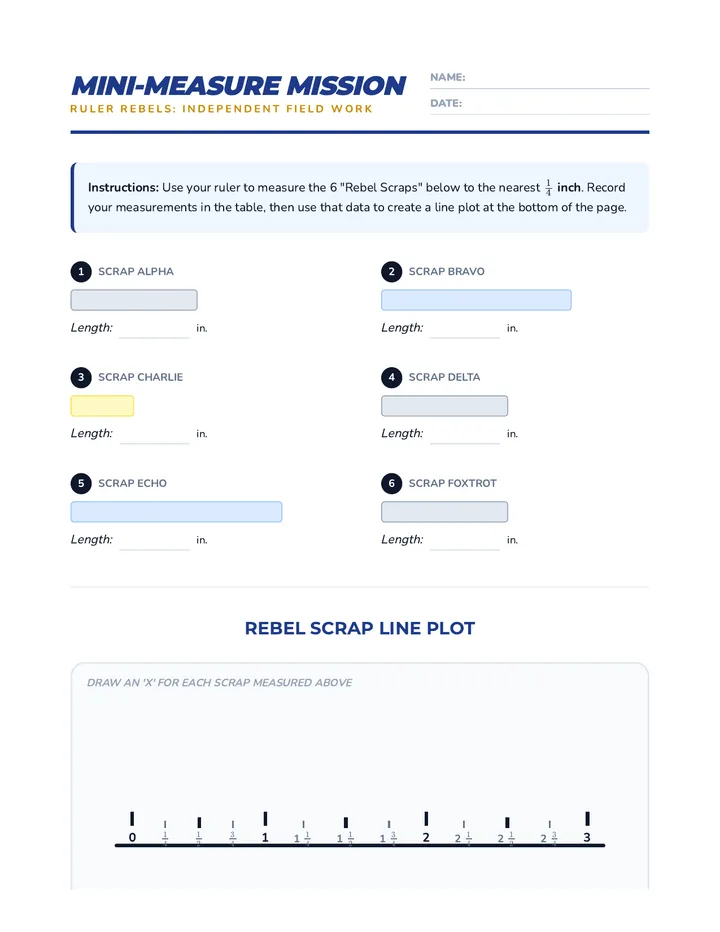
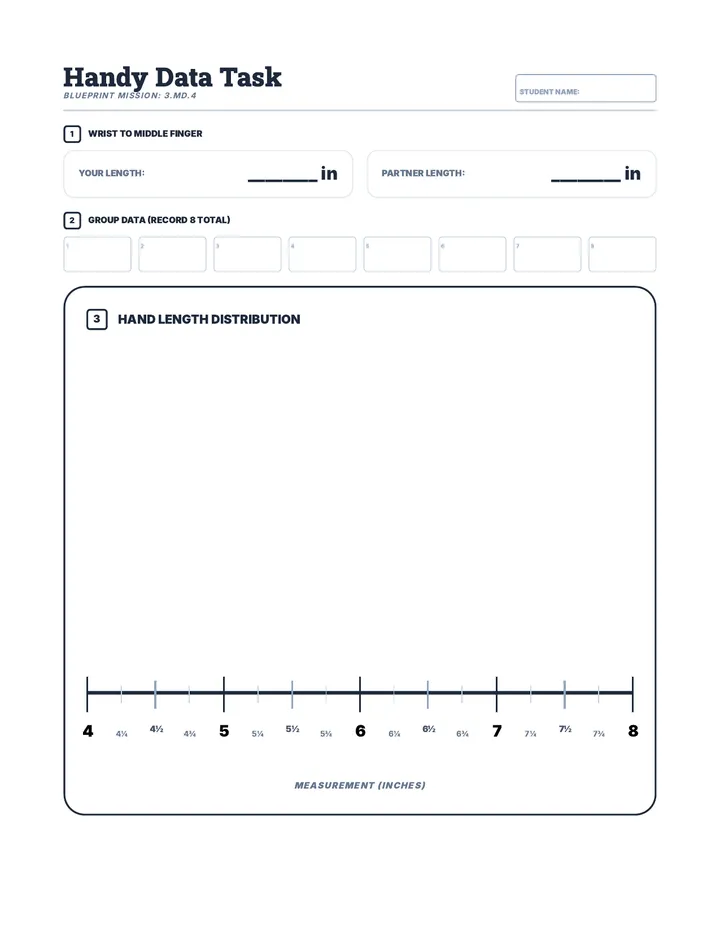
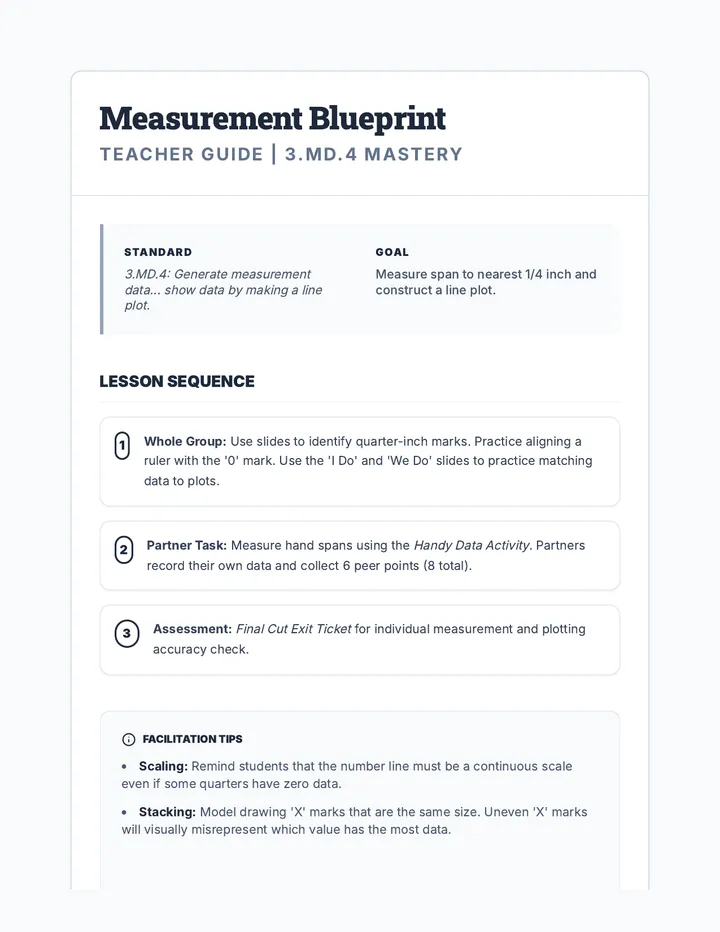
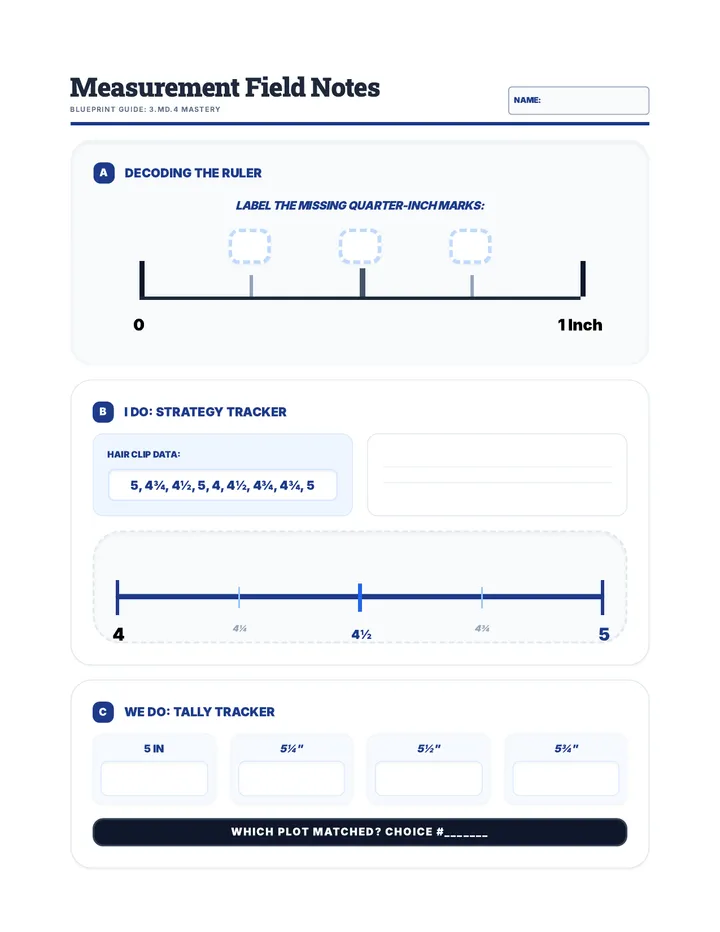
A sequence focused on data representation and analysis using fractions, where students collect real-world data and use line plots to interpret their findings.
A middle school mathematics unit focused on proportional reasoning, ratio analysis, and multi-representation of numerical relationships.
This sequence guides 9th-grade students through the transition from physical math manipulatives to virtual tools. It builds digital literacy and mathematical visualization skills, preparing students for abstract thinking and computer-based assessments.
A specialized sequence for 6th-grade academic support focused on visual and concrete understanding of fraction division. Students use fraction towers and pattern blocks to move from the concept of 'how many fit' to the standard algorithm, with a heavy emphasis on interpreting remainders.
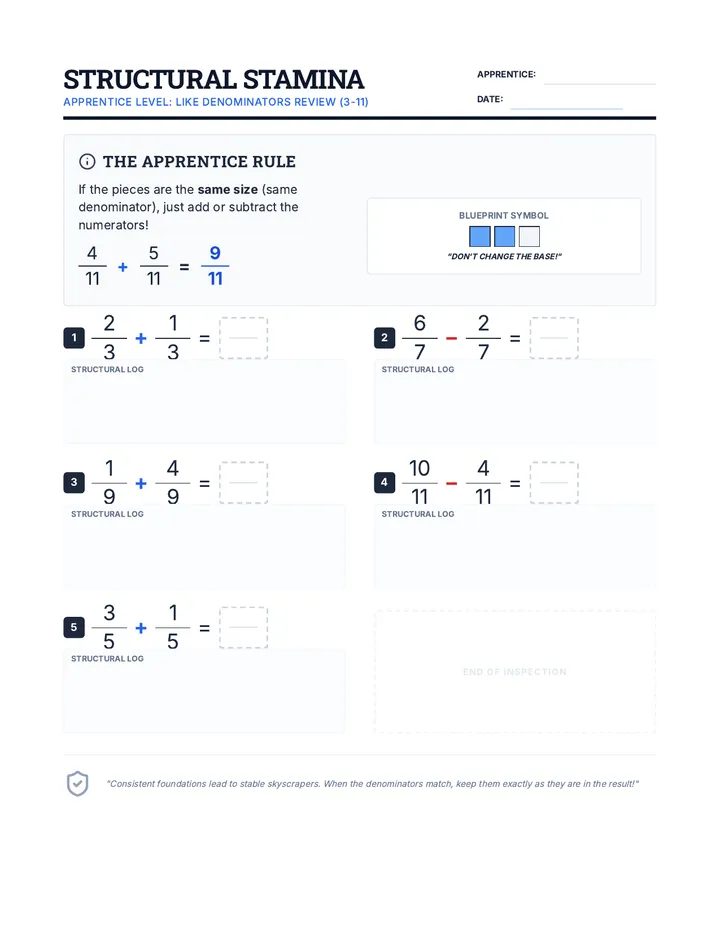
A 5-lesson series for 3rd-grade students focusing on hands-on fraction understanding using manipulatives like playdough, fraction tiles, and number lines. Students move from physical partitioning to abstract numerical representations and equivalence.
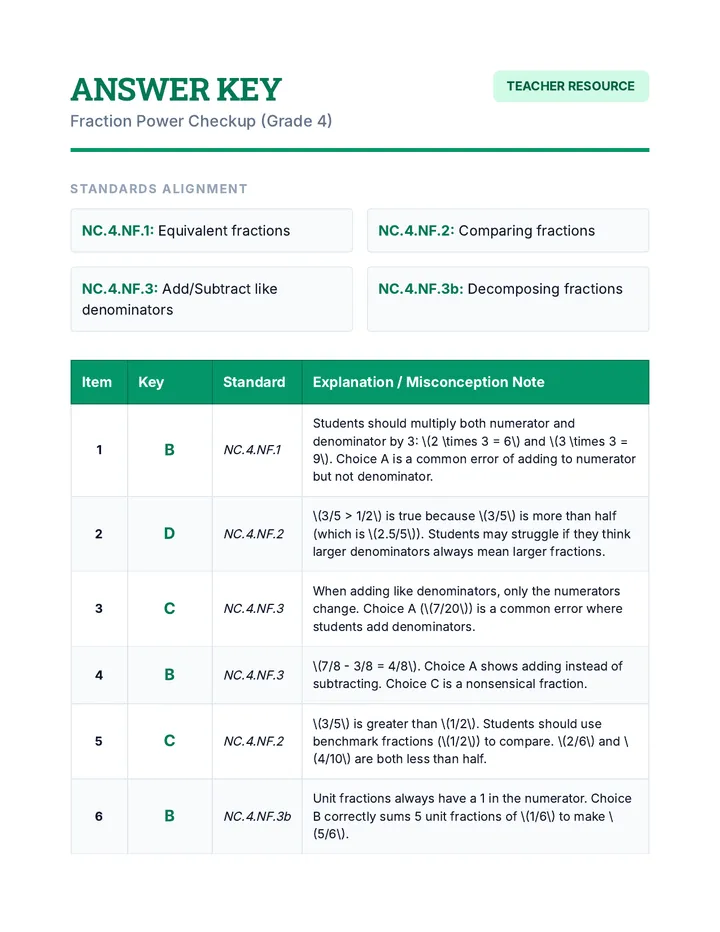
A 5-lesson sequence for 4th-grade students (Special Education support) focused on using manipulatives like fraction strips and tiles to understand equivalence and comparison. The sequence moves from concrete exploration of denominators to abstract placement on a number line, culminating in a student-created reference guide.
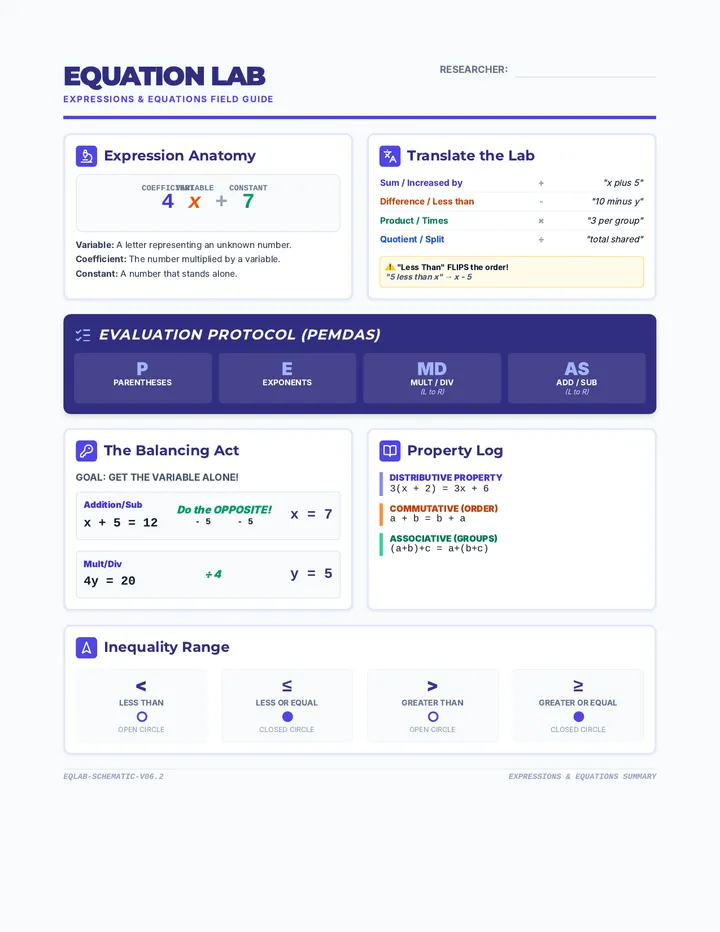
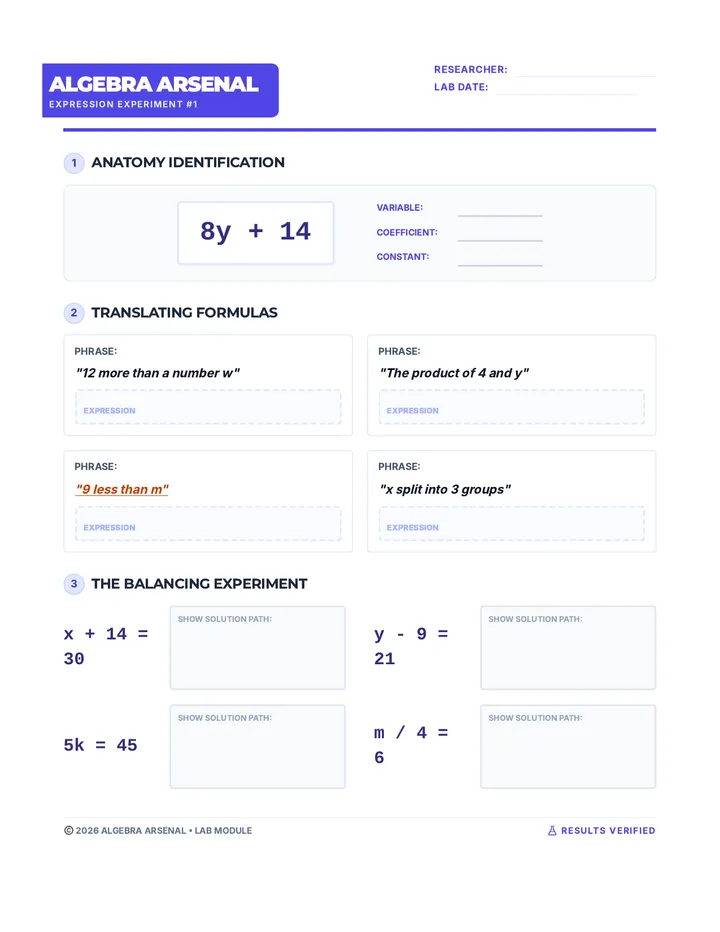
A sequence for 11th-grade students that uses bar diagrams (tape diagrams) to scaffold high school algebra. Students transition from concrete visuals to abstract systems of equations, ratios, and complex word problems, providing a visual roadmap for algebraic reasoning.
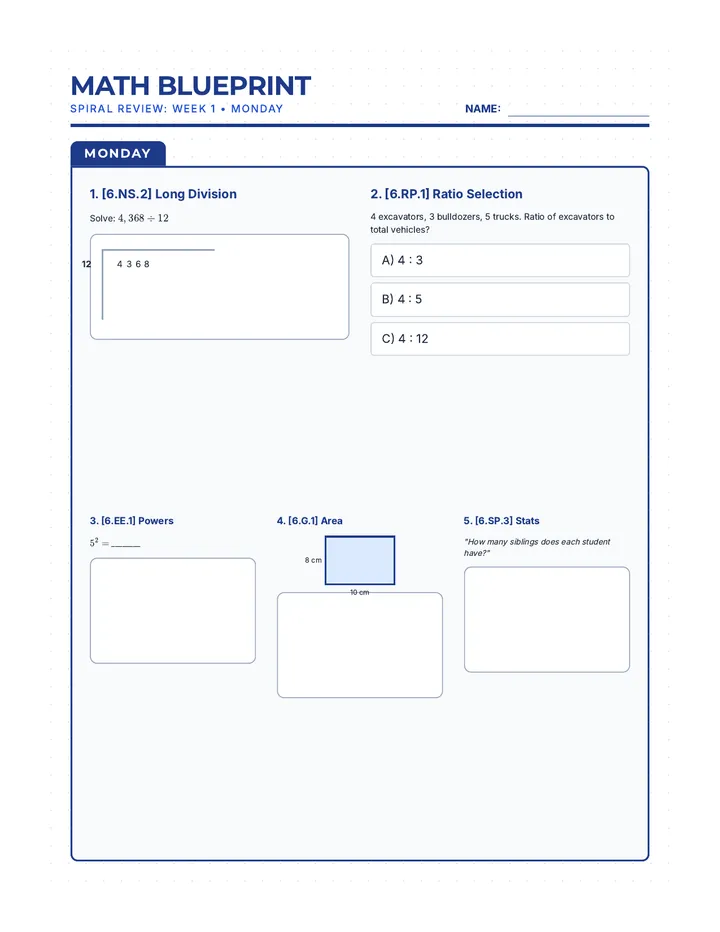
A comprehensive math intervention sequence for 6th-grade students, focusing on four key domains: Numbers & Operations, Algebraic Thinking, Measurement & Data, and Geometry. This sequence uses high-leverage strategies from the All Learners Network (ALN) and aligns with i-Ready prerequisite modules to bridge conceptual gaps.
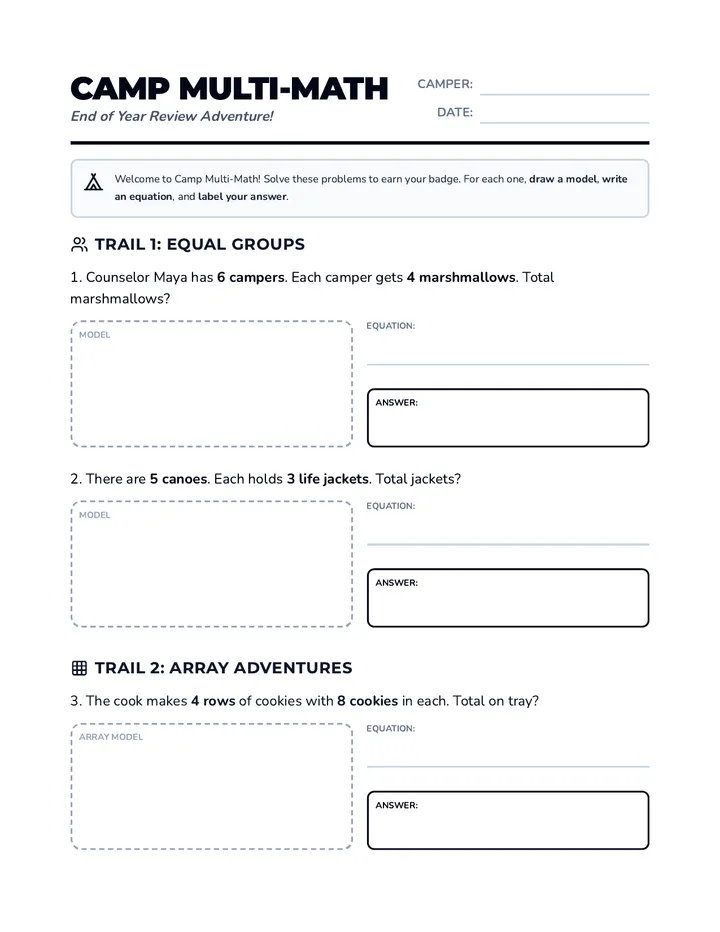
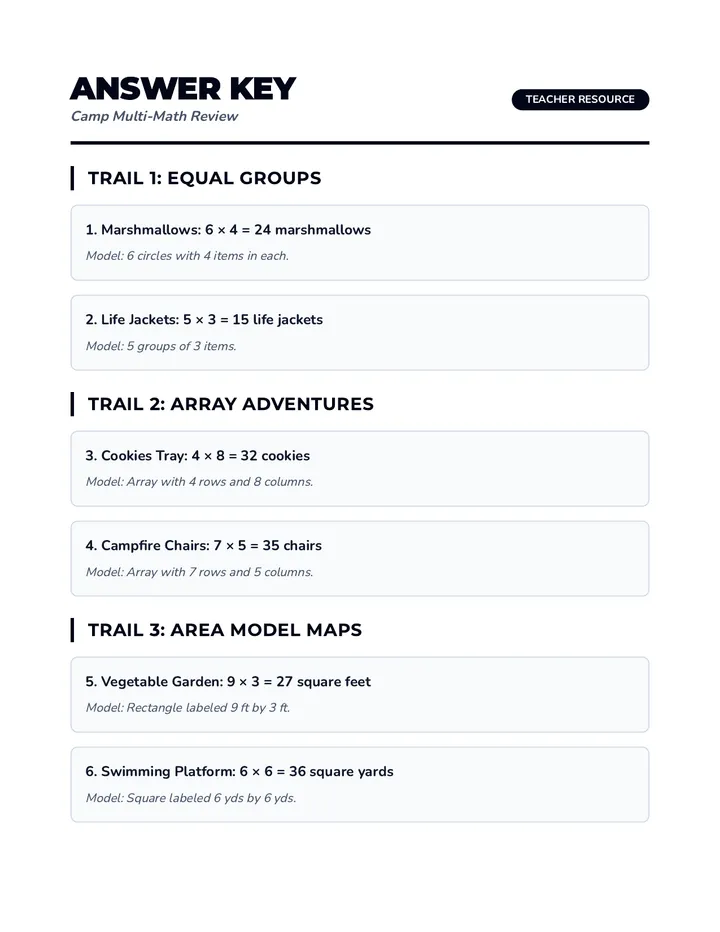
A 5-lesson sequence for 4th Grade students focused on transitioning from physical manipulatives to visual sketches using the Concrete-Representational-Abstract (CRA) framework. Students master arrays, area models for multiplication and fractions, and division sketches, culminating in a student-created visual strategy guide.
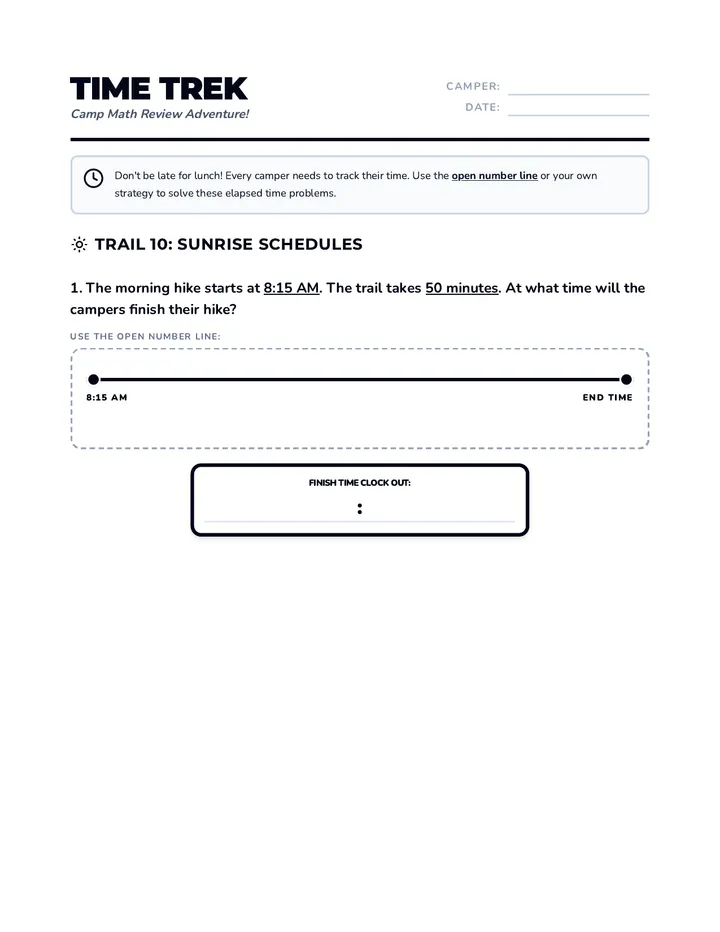
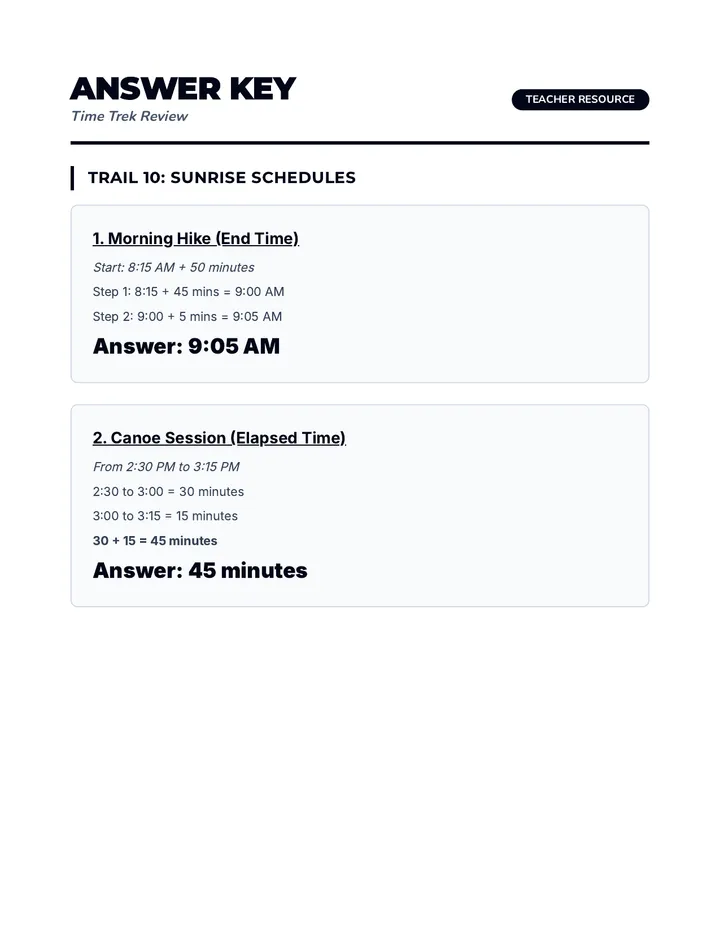
A specialized sequence for 3rd-grade students focusing on using number lines as visual cognitive scaffolds. Students progress from physical movement on a floor-sized line to using 'open' number lines for addition, subtraction, elapsed time, and fractions, providing a consistent strategy for solving complex problems.
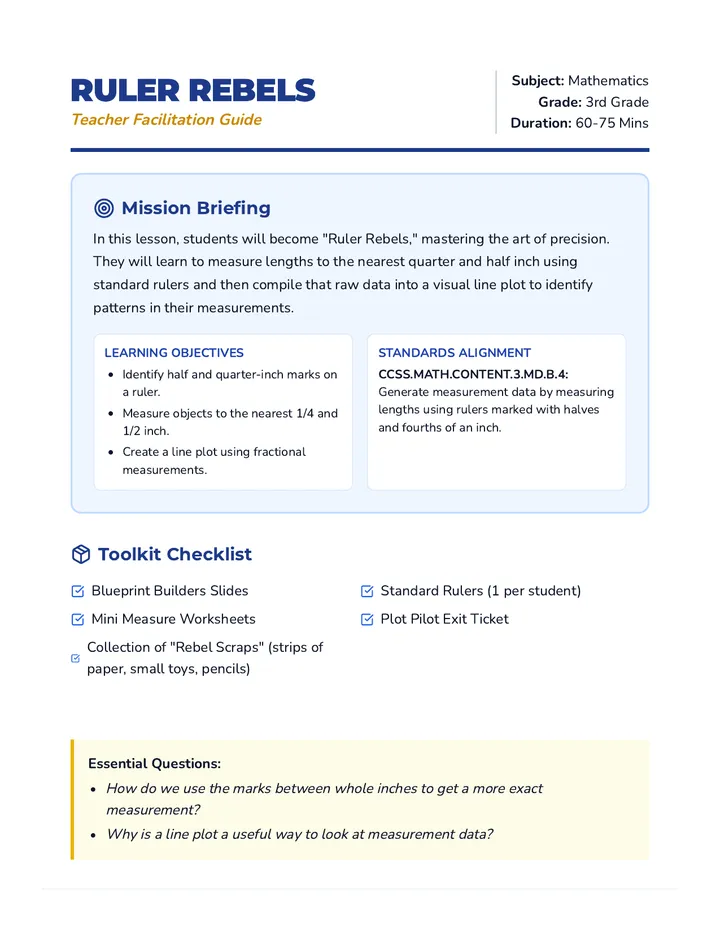
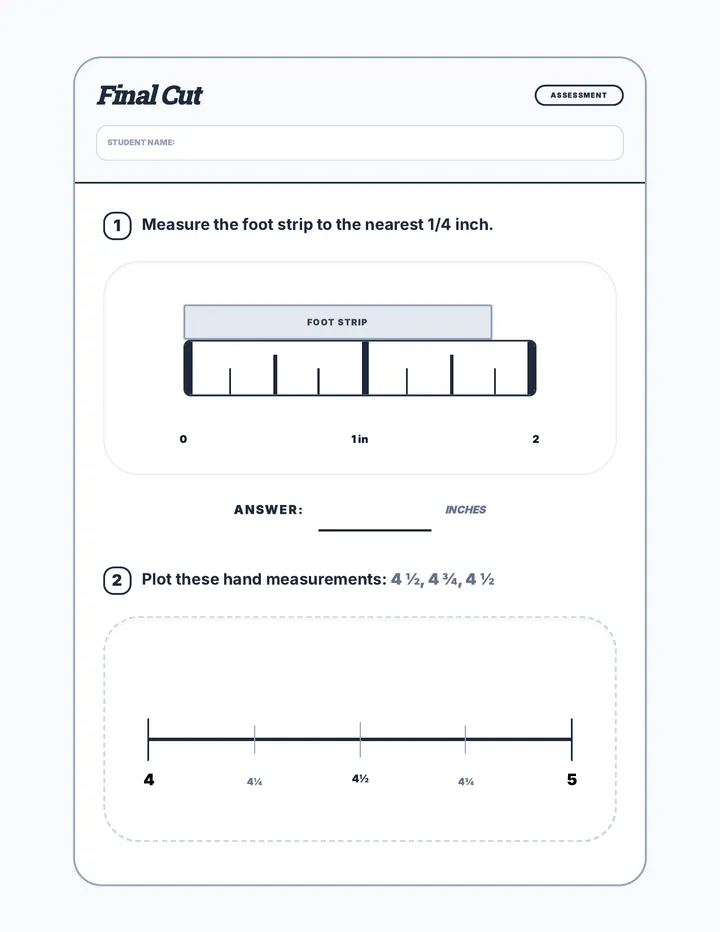
A comprehensive 3rd-grade sequence introducing students to the fundamental skills of linear measurement using both U.S. Customary and Metric systems, moving from non-standard units to fractional precision.
A project-based sequence exploring infinite geometric series through Zeno's paradox, algebraic proofs of convergence, and fractal geometry. Students investigate how infinite additions can result in finite sums and apply these concepts to real-world paradoxes and self-similar shapes.
A 5-lesson unit for 3rd-grade students focused on comparing and ordering simple fractions through visual models, logical reasoning, and interactive games. Students move from basic same-denominator comparisons to using benchmark fractions and ordering sets of fractions.
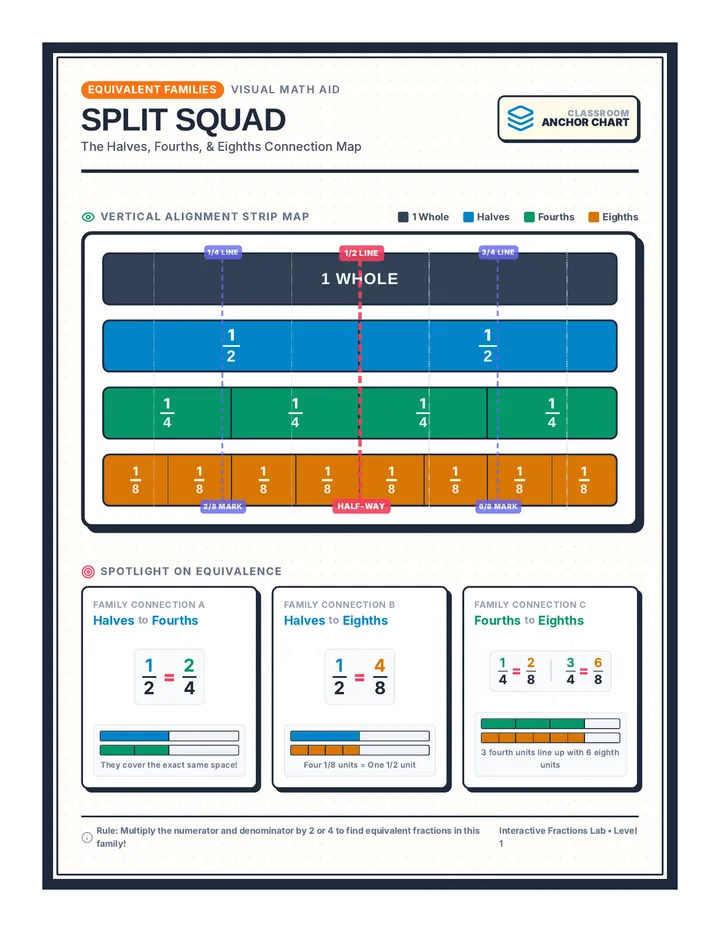
A 3rd-grade sequence exploring equivalent fractions through paper folding, number lines, area models, and project-based learning. Students move from concrete visualizations to conceptual understanding of how different numbers represent the same quantity.
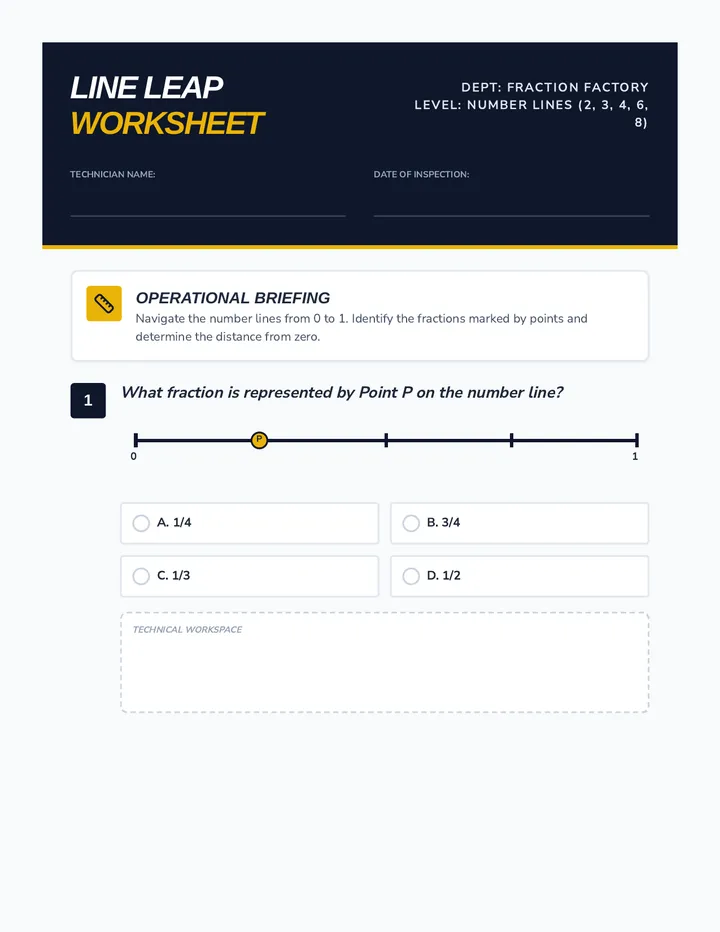
A comprehensive journey from area models to linear representations of fractions. Students explore the interval between whole numbers, partition number lines into equal segments, and locate fractions as distances from zero, extending their understanding to values greater than one.
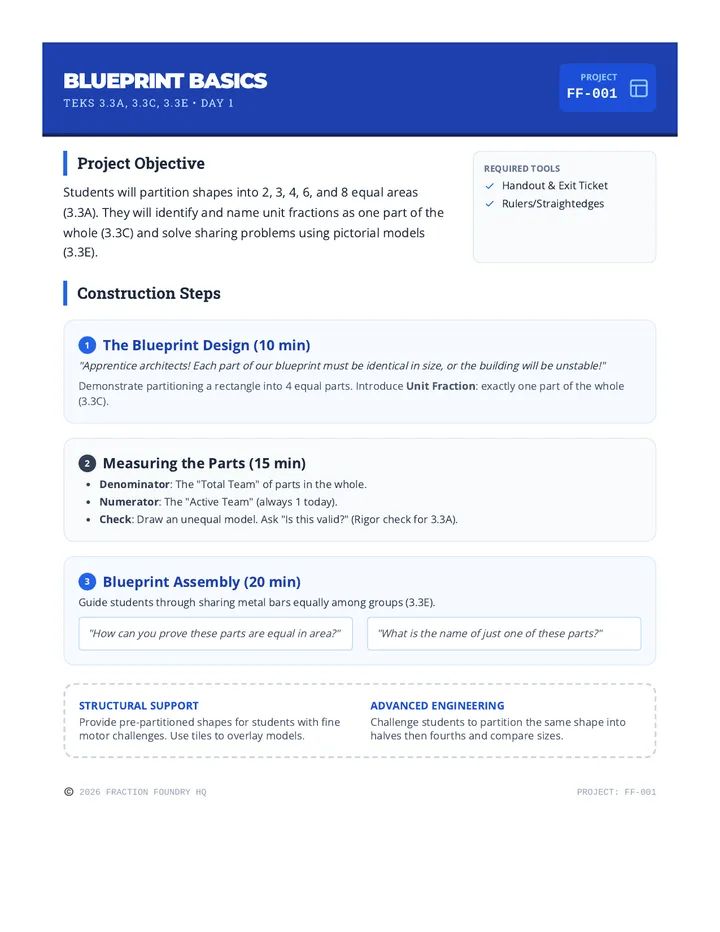
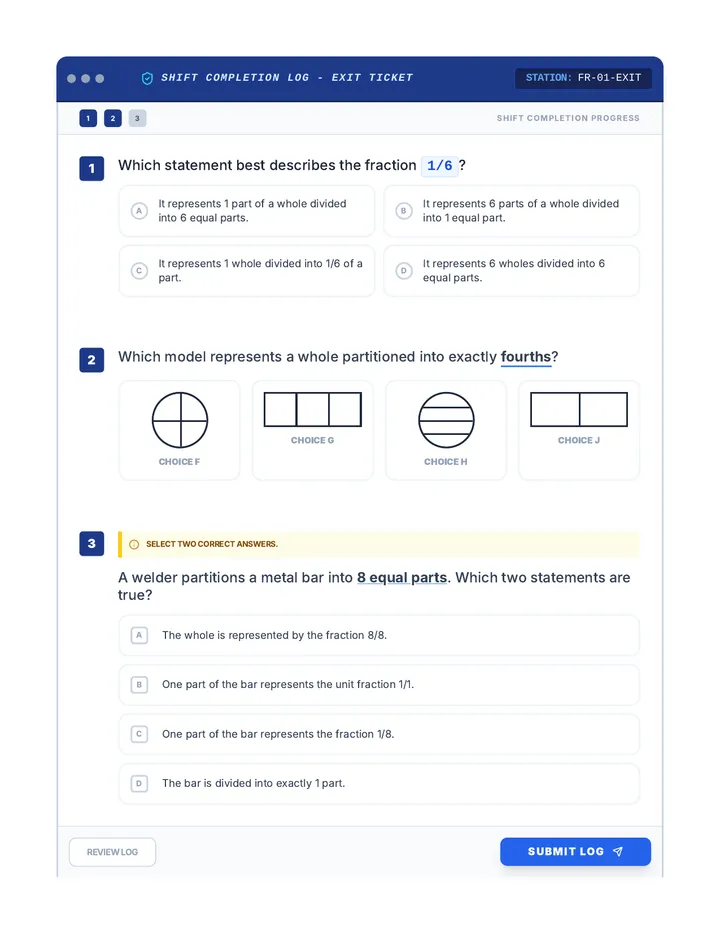
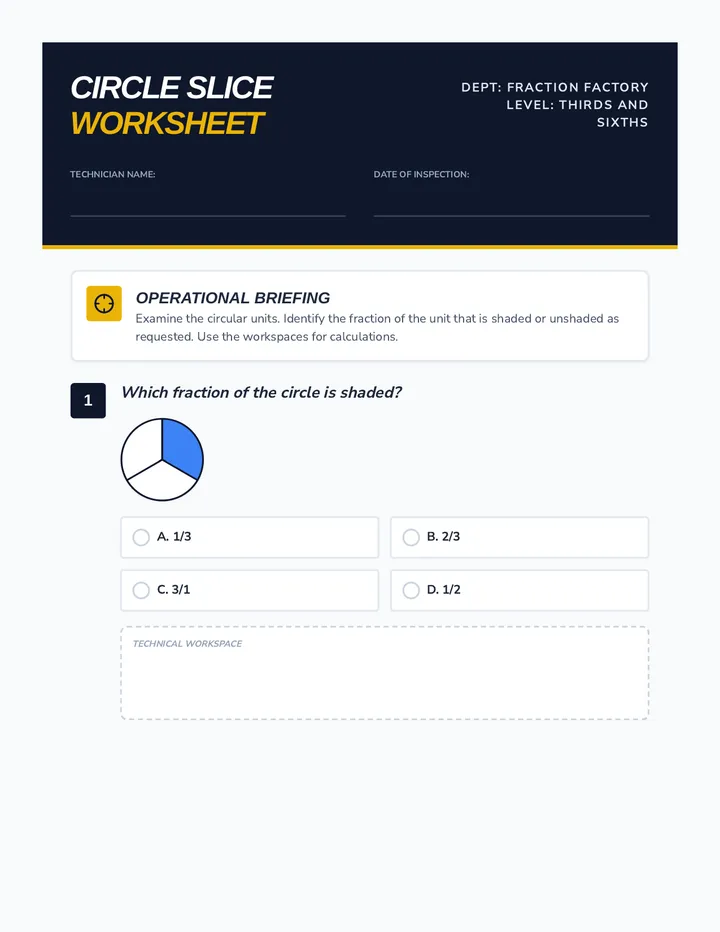
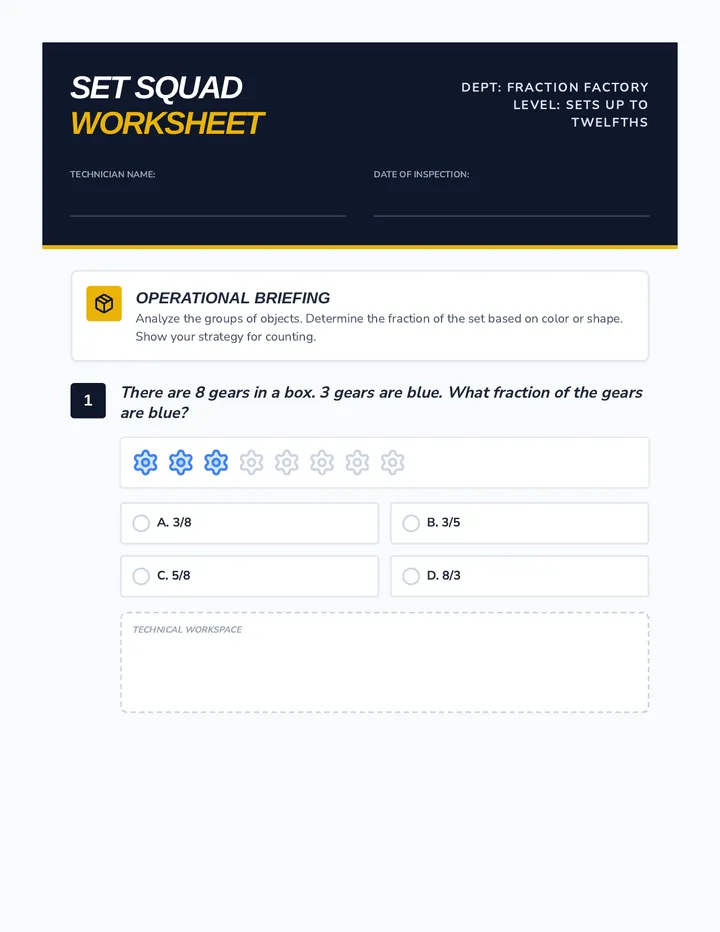
This sequence introduces 3rd-grade students to fractions as numbers. It covers partitioning shapes into equal shares, identifying numerators and denominators, composing non-unit fractions from unit fractions, and comparing fractions of a whole versus fractions of a set.
A comprehensive sequence for 9th-grade students transitioning from arithmetic division to algebraic rational expressions using complex fractions. Students explore structural identity, two primary simplification methods, and the introduction of variables.
A lesson sequence focusing on compound probability, specifically analyzing events where order matters versus where it doesn't, using marble jar scenarios and tree diagrams.
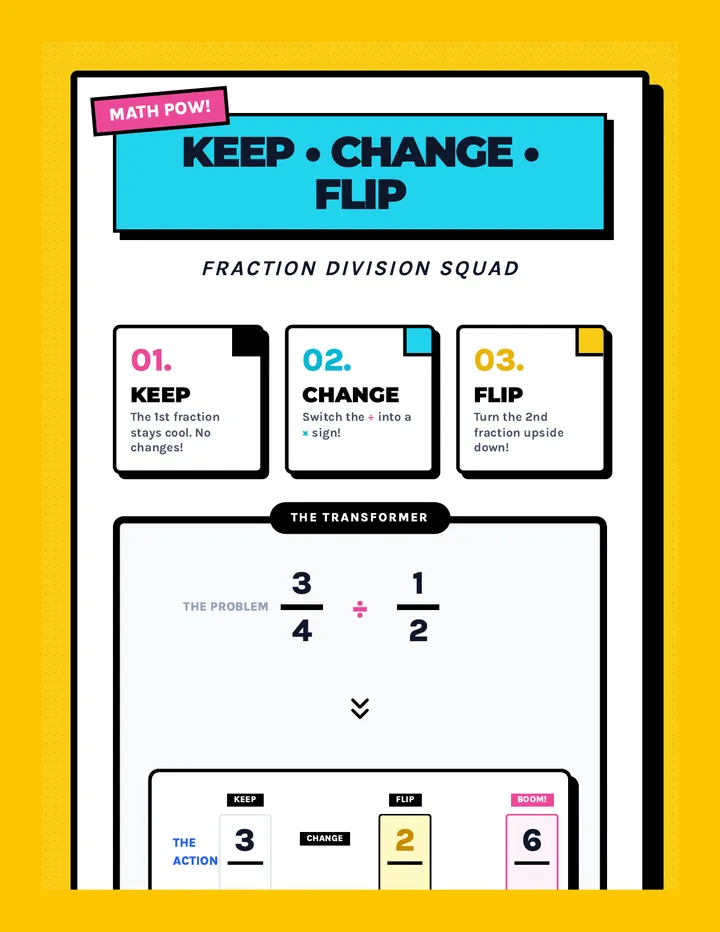
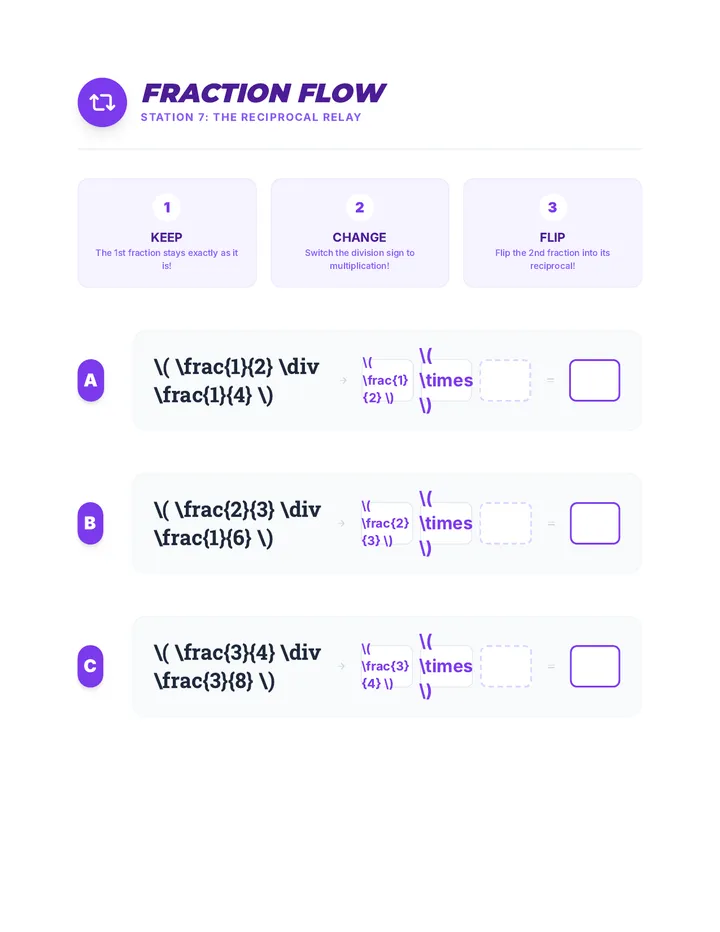
A focused unit on fraction operations, moving from basic multiplication to division using reciprocals and algorithmic shortcuts.
A comprehensive 9th-grade algebra unit exploring the patterns, formulas, and real-world applications of arithmetic and geometric sequences. Students progress from recursive logic to explicit modeling.
A series of lessons focused on mastering algebraic and numerical fractions through visual strategies and structural simplification.
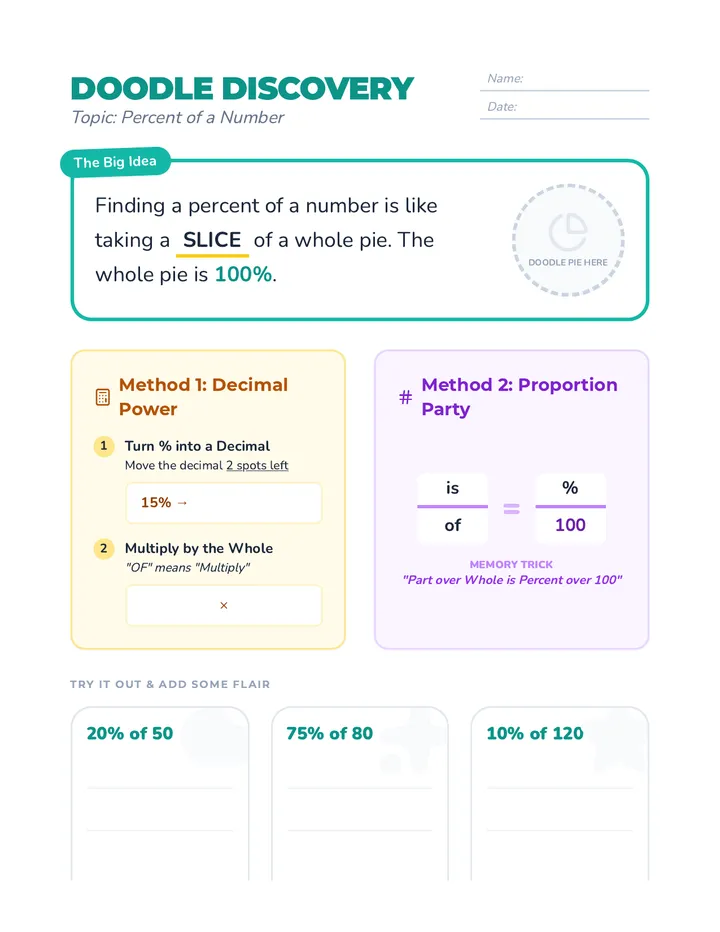
A 6th-grade math sequence exploring different strategies for calculating percentages of numbers, specifically comparing fractional and decimal methods.
A lesson sequence focused on 5th-grade fraction multiplication, connecting visual area models to procedural formulas through interactive shading and video analysis.
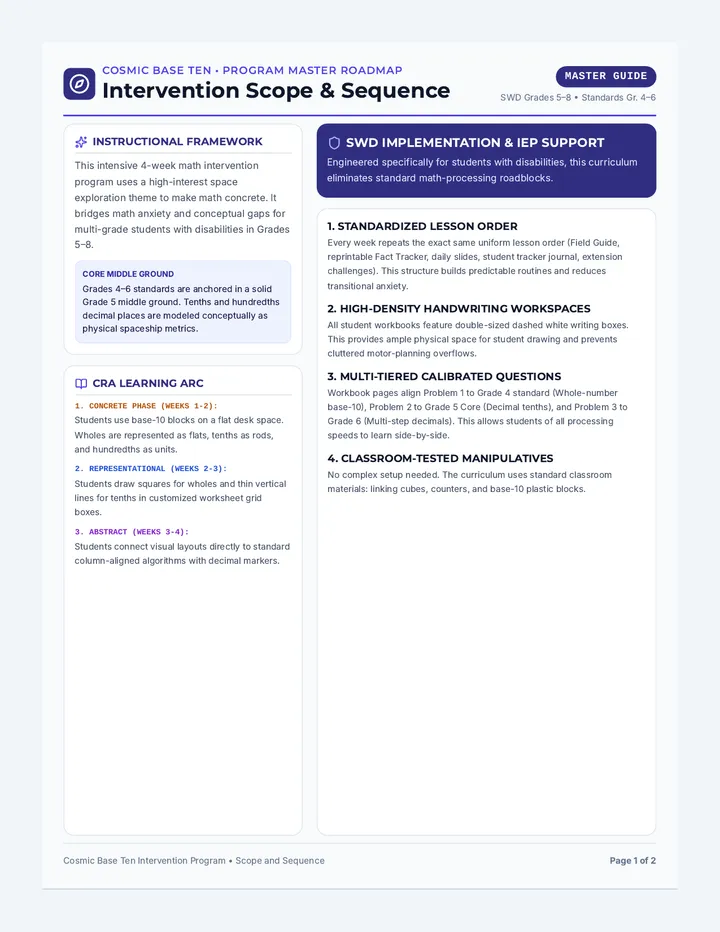
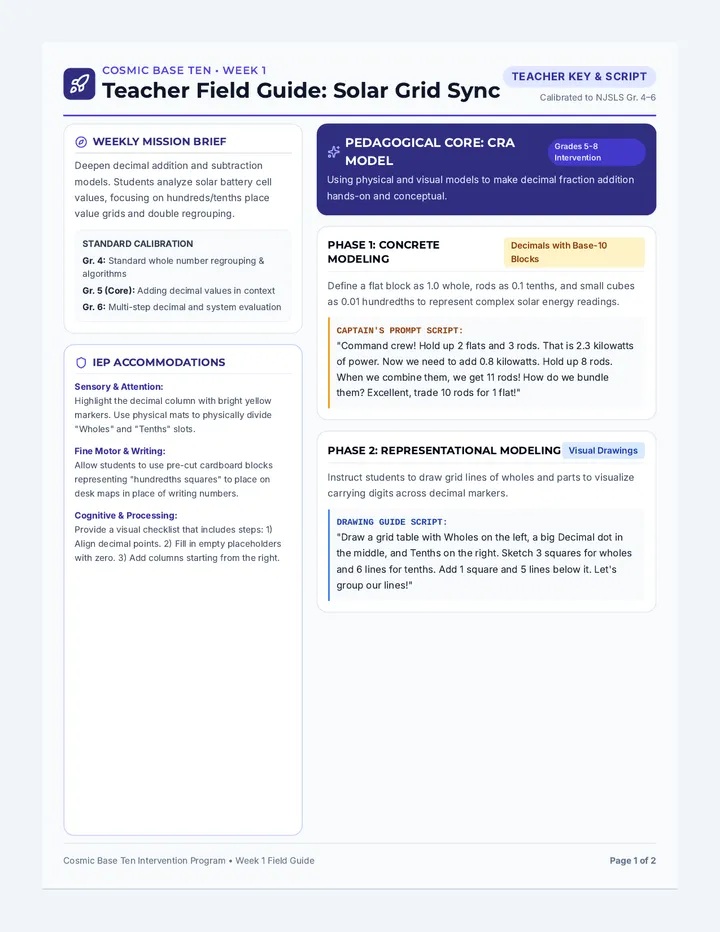
A 5-lesson sequence for 9th-grade students that uses base-ten blocks as financial manipulatives to master decimal place value, operations, and budgeting. Students redefine the values of physical blocks to simulate currency and transition from concrete modeling to abstract spreadsheet calculations.
This sequence guides 6th-grade students through the conceptual and procedural aspects of calculating the volume of rectangular prisms. Starting with unit cubes and moving through fractional edge lengths and composite figures, students develop a deep understanding of 3D space measurement.
An advanced look at rational exponents through the lens of mathematical proof, equivalence, and error analysis for 10th grade students. Students act as mathematical investigators to justify transformations and identify logical fallacies.
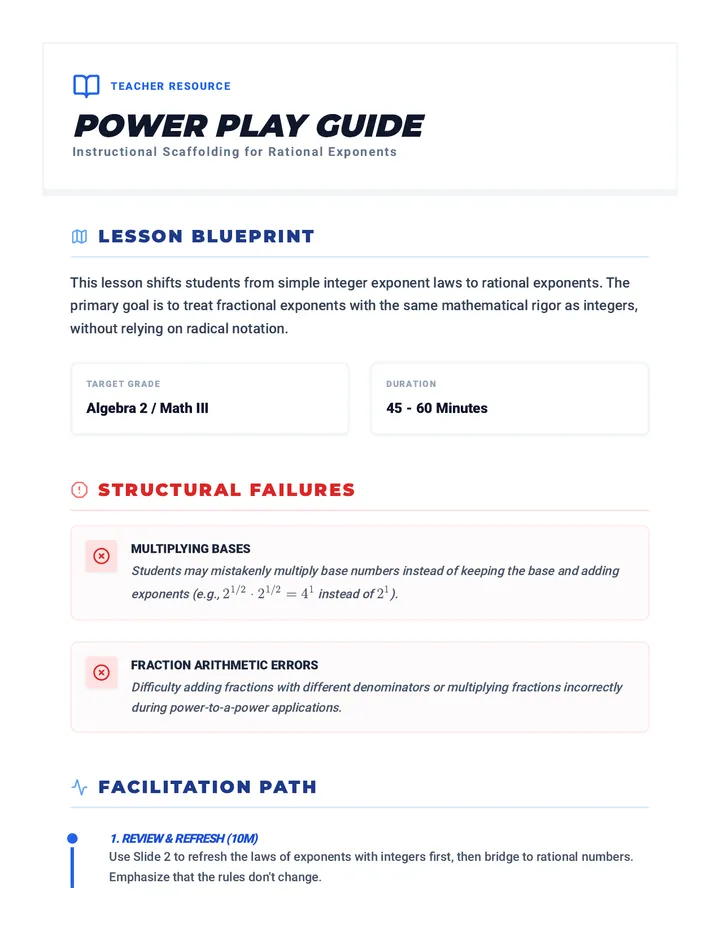
A gamified approach to mastering rational exponents through competition, collaboration, and high-stakes simulations. Students move from basic radical conversions to complex multi-variable simplification in a fast-paced 'Power Play' environment.
An advanced, rigorous exploration of rational exponents and radical manipulation for 12th-grade students. This sequence focuses on the technical facility required for calculus, including factoring fractional exponents, handling nested radicals, rationalizing higher-order roots, and solving equations reducible to quadratic forms.
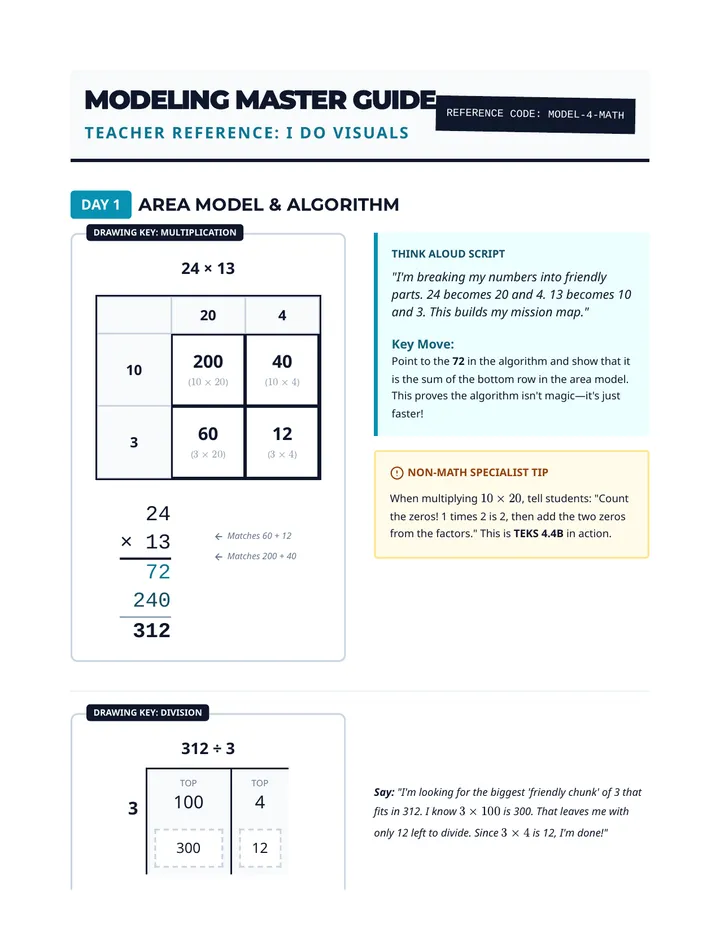
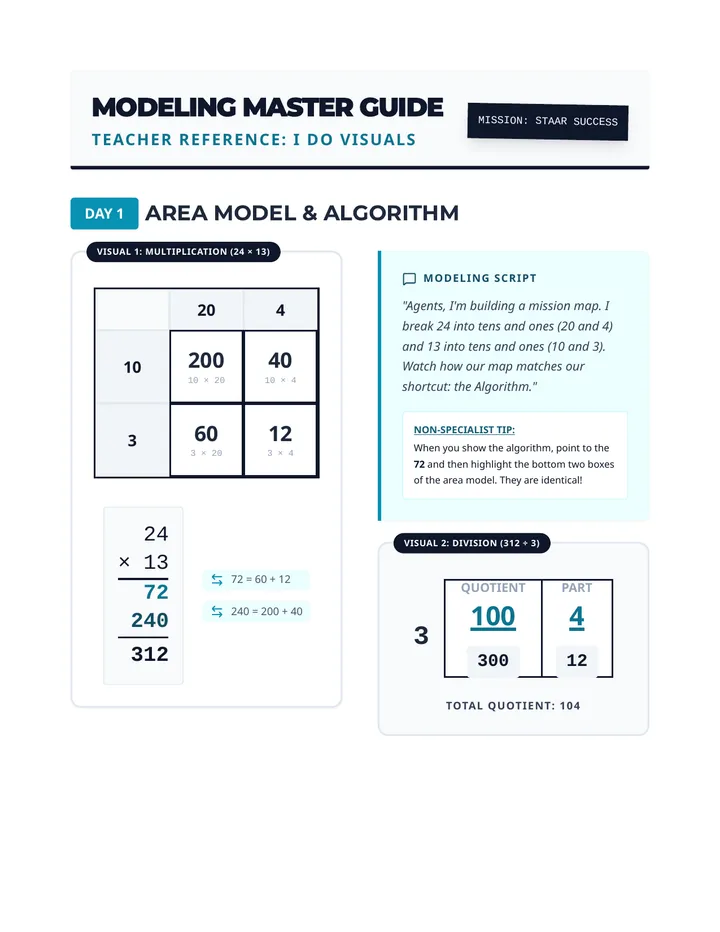
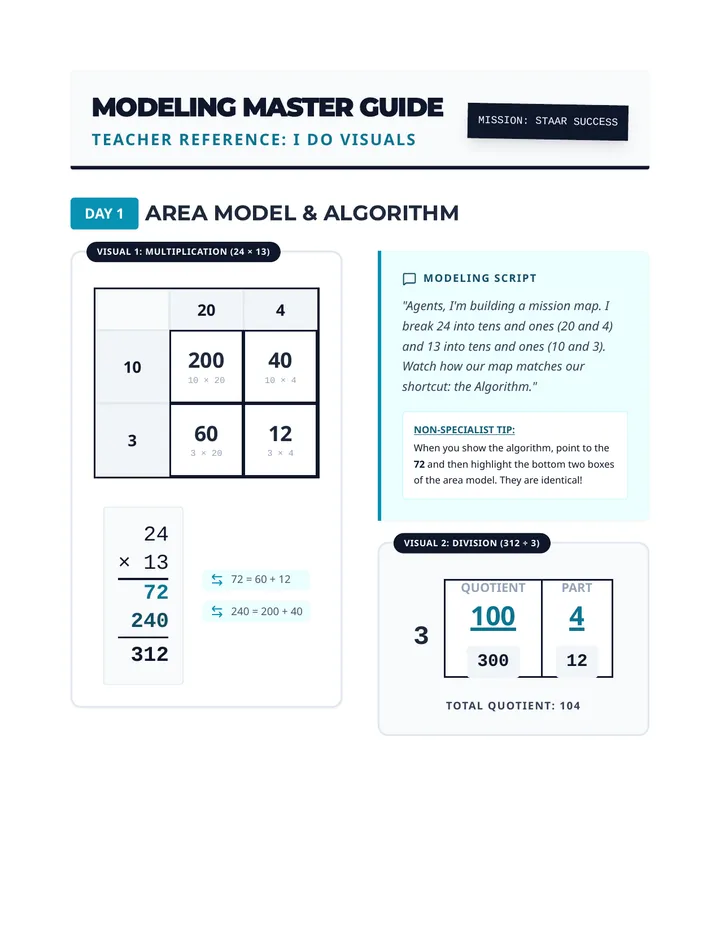
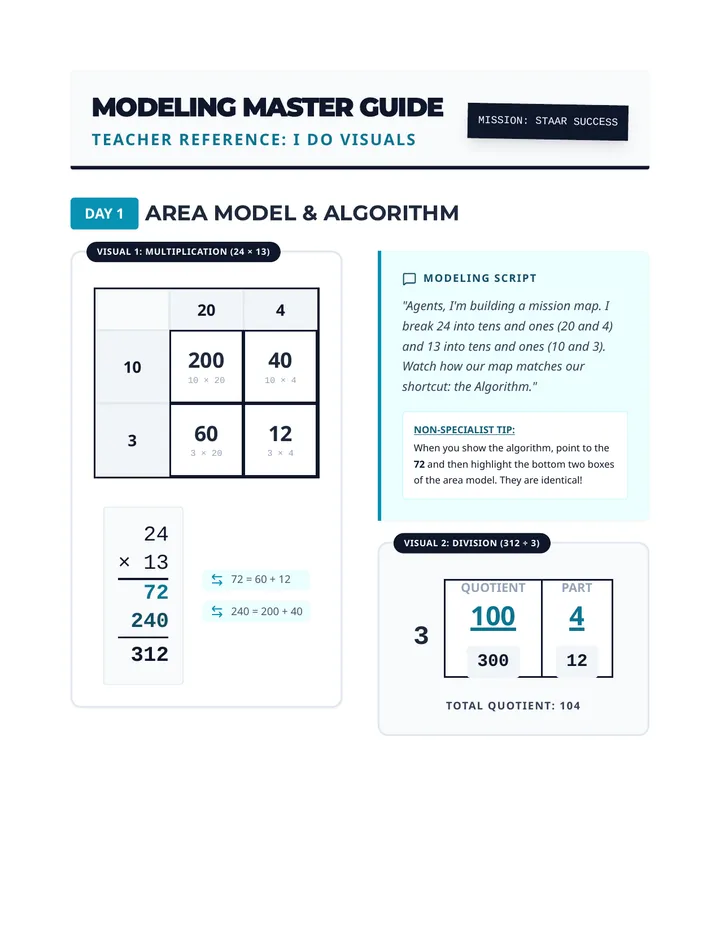
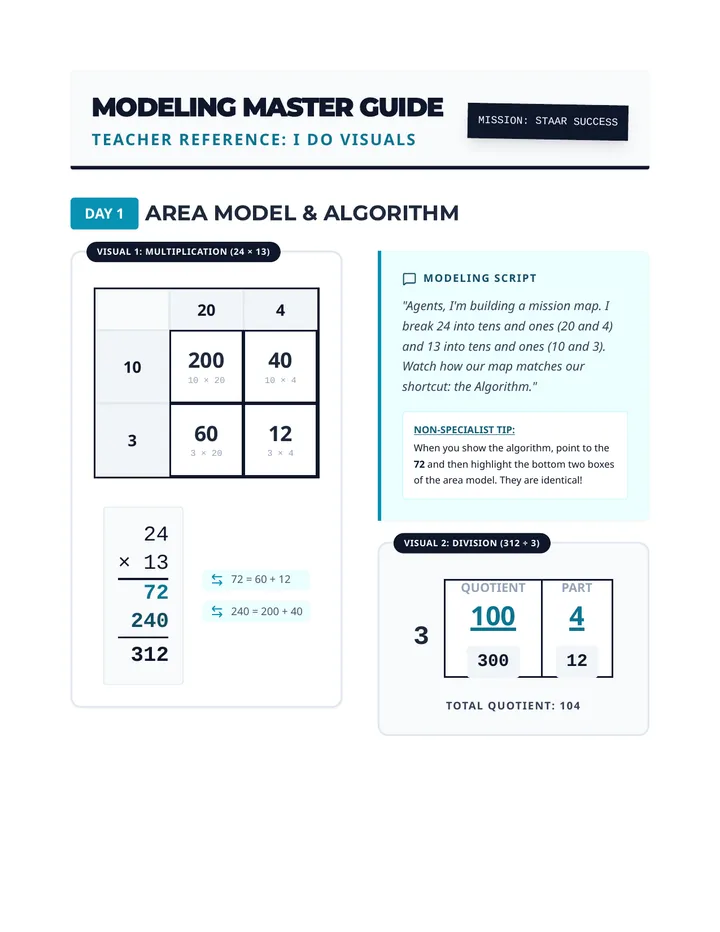
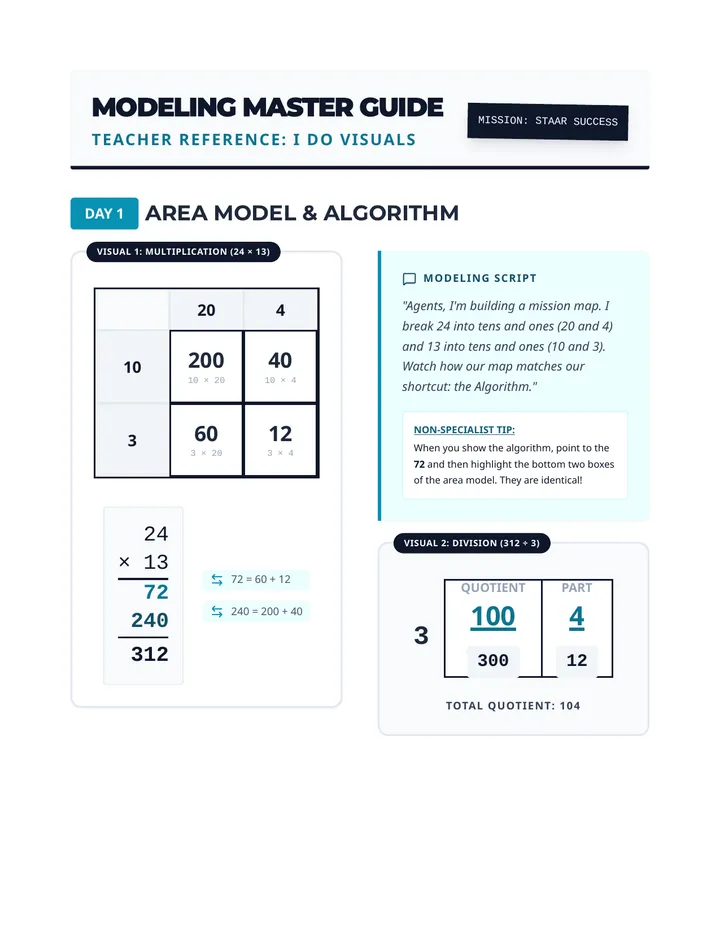
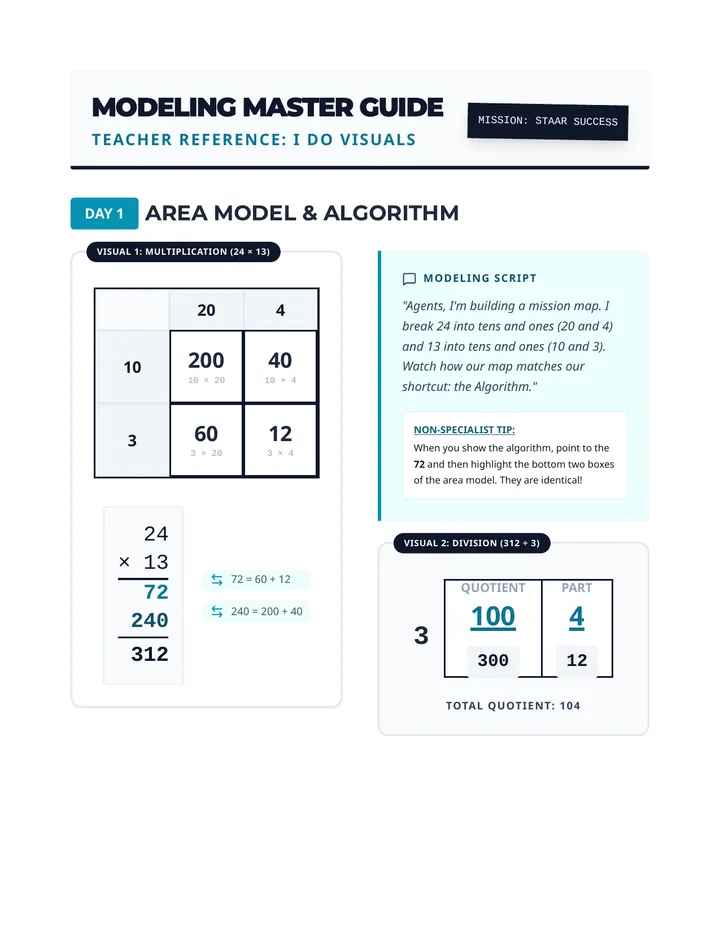
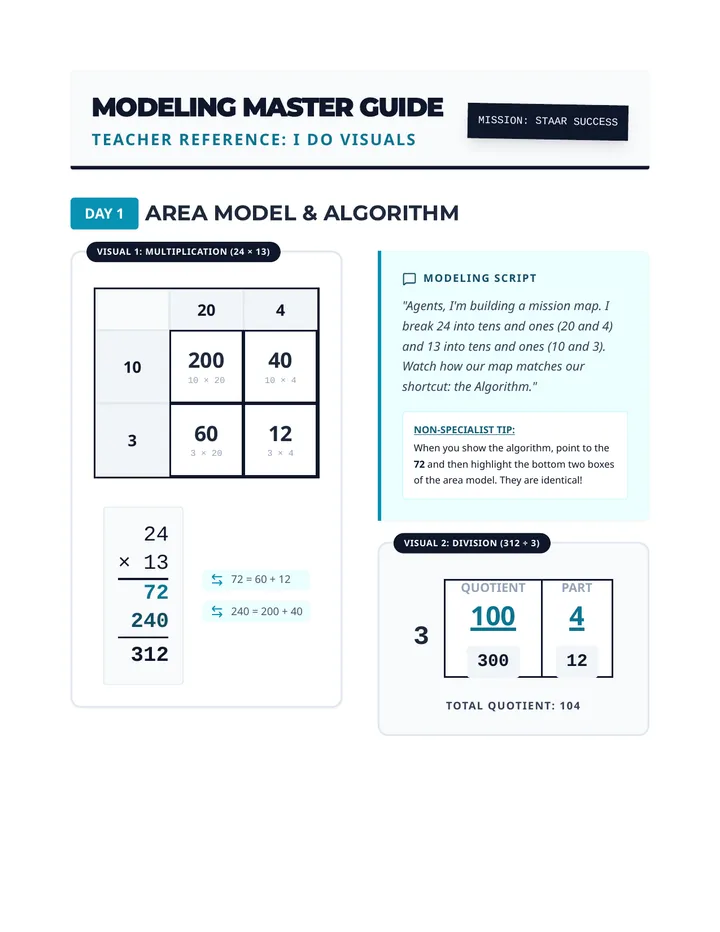
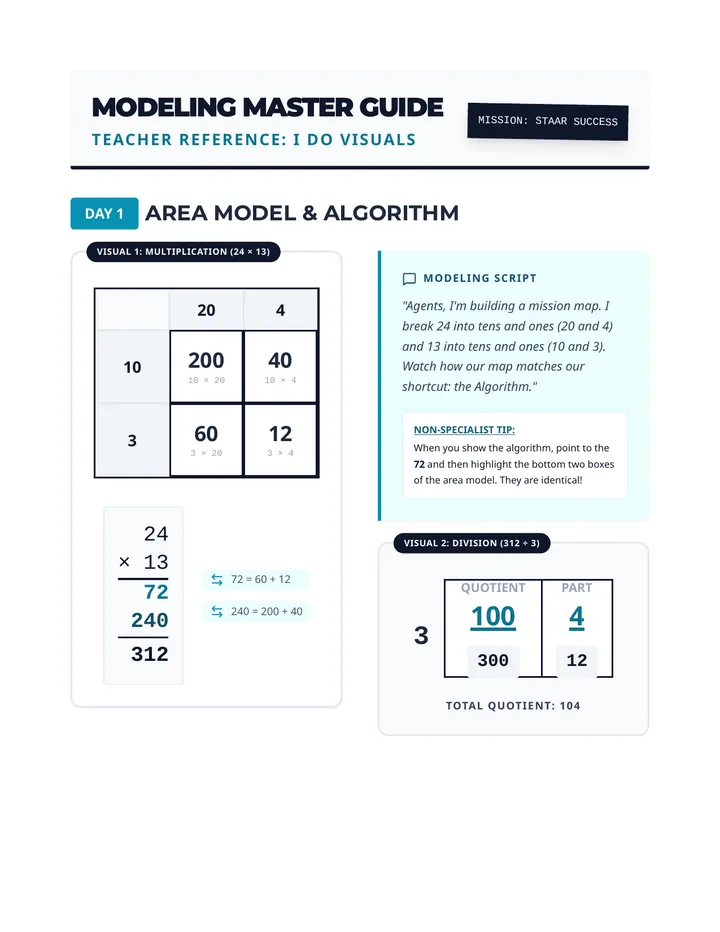
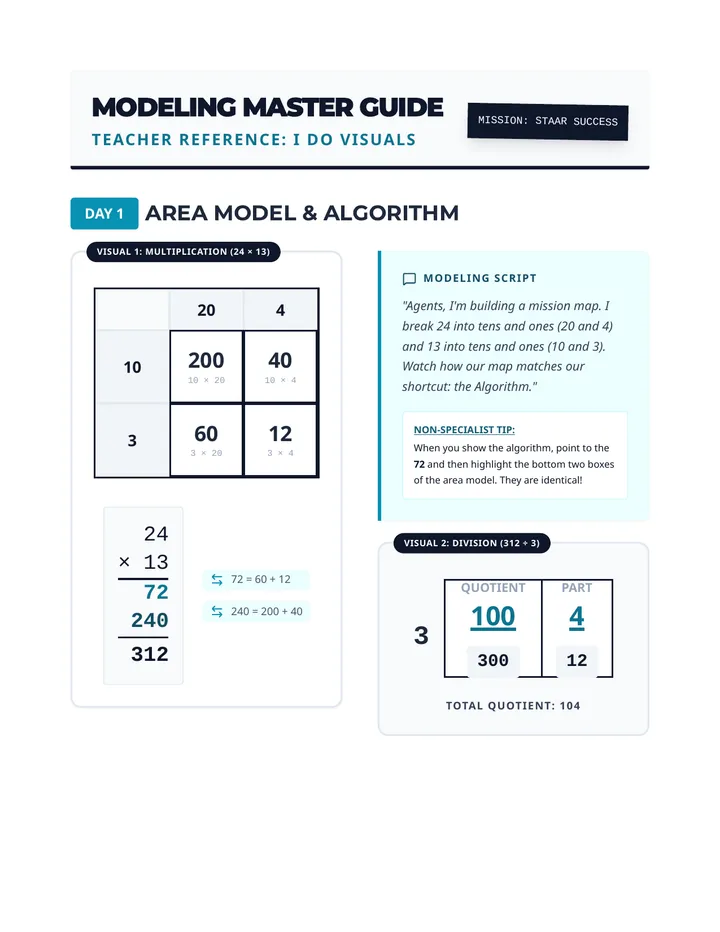
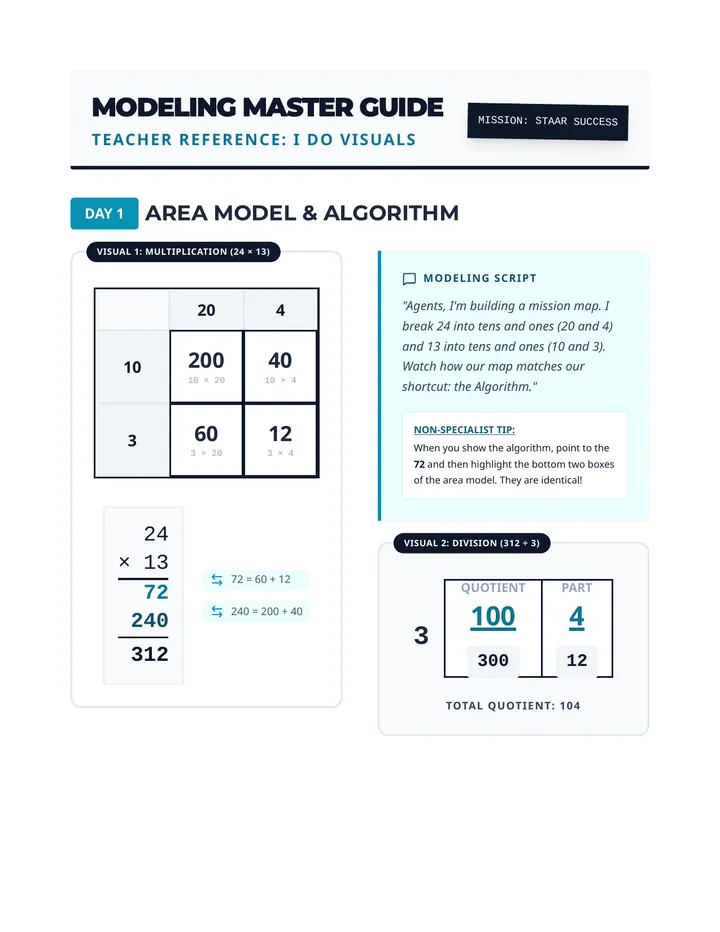
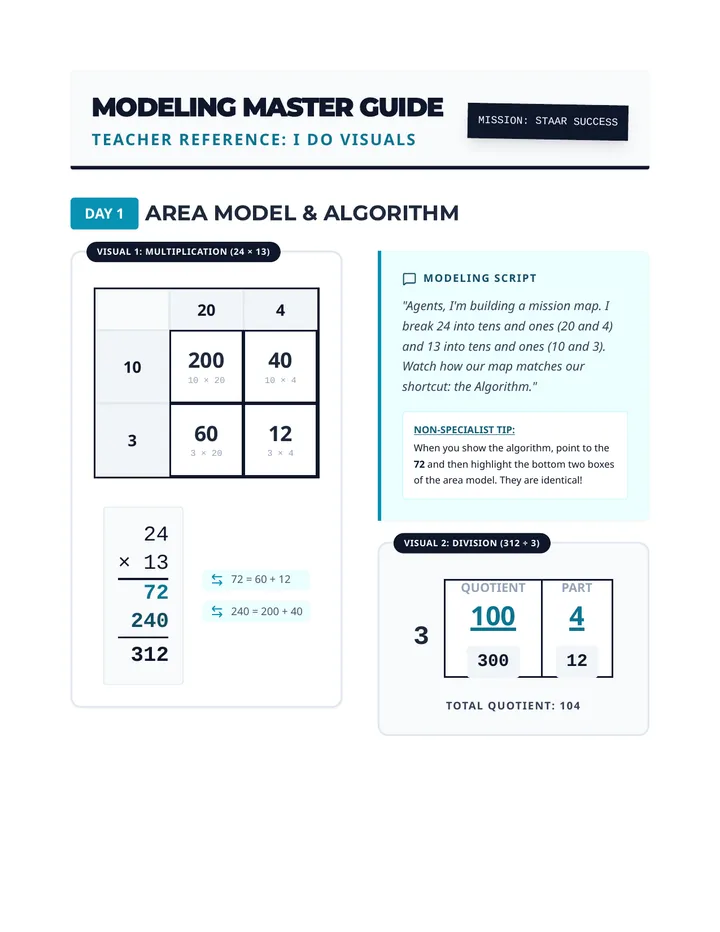
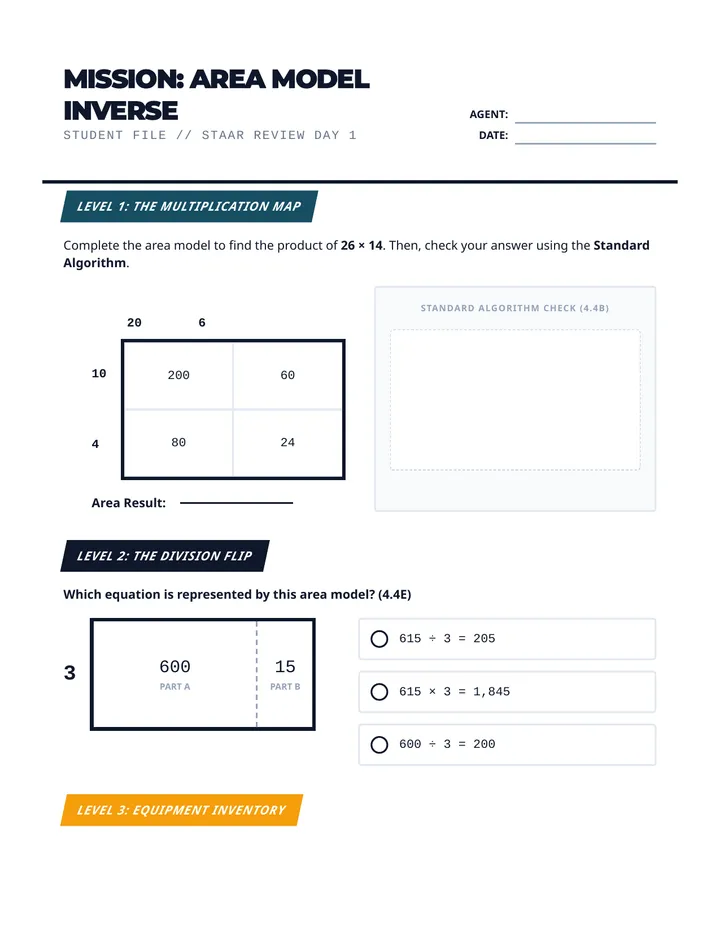
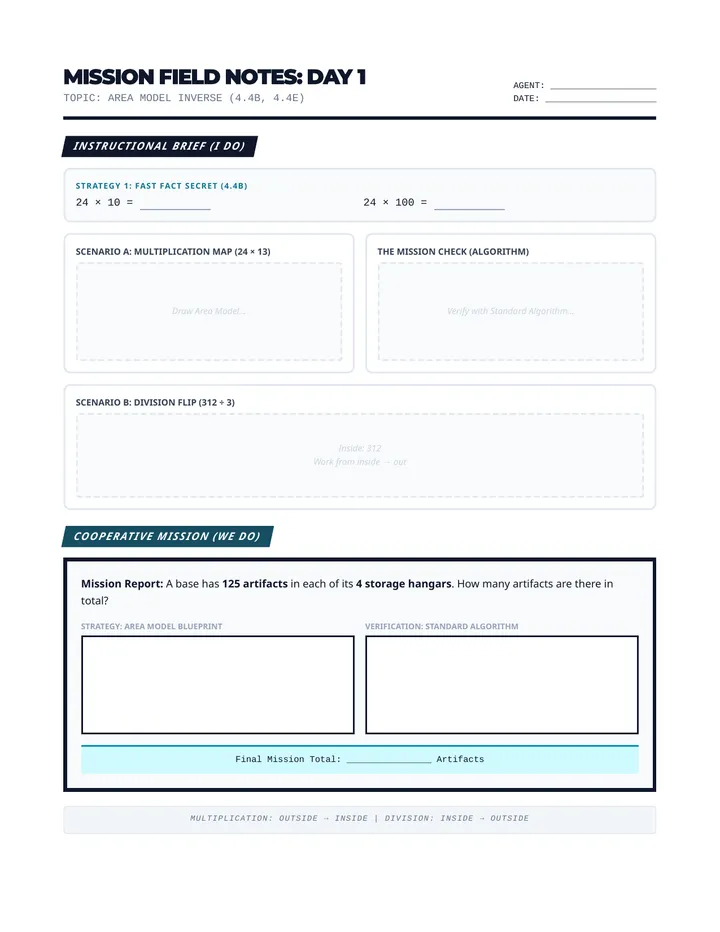
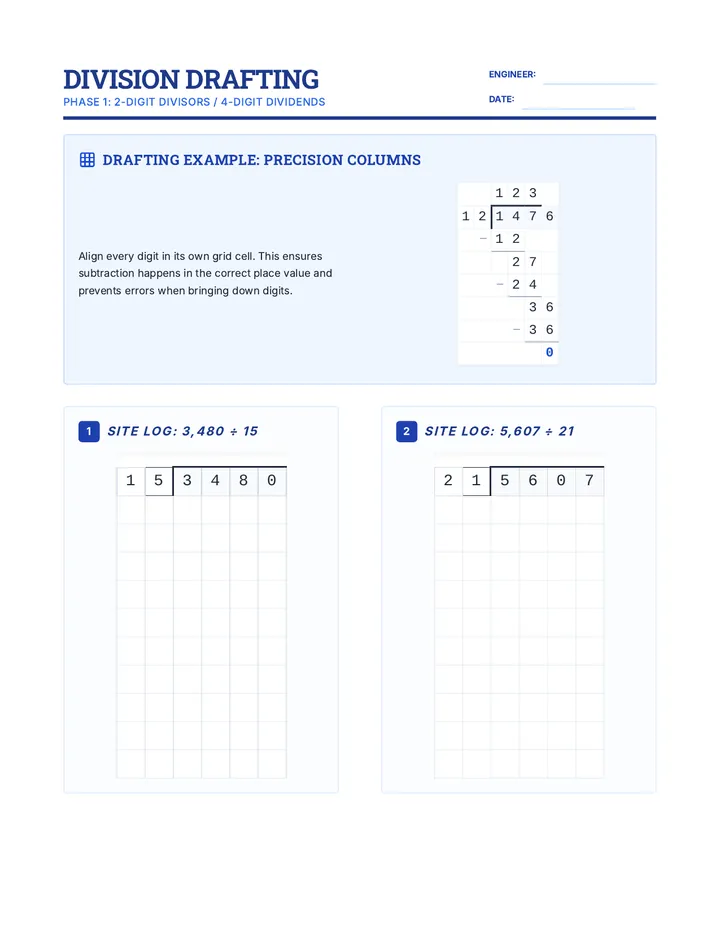
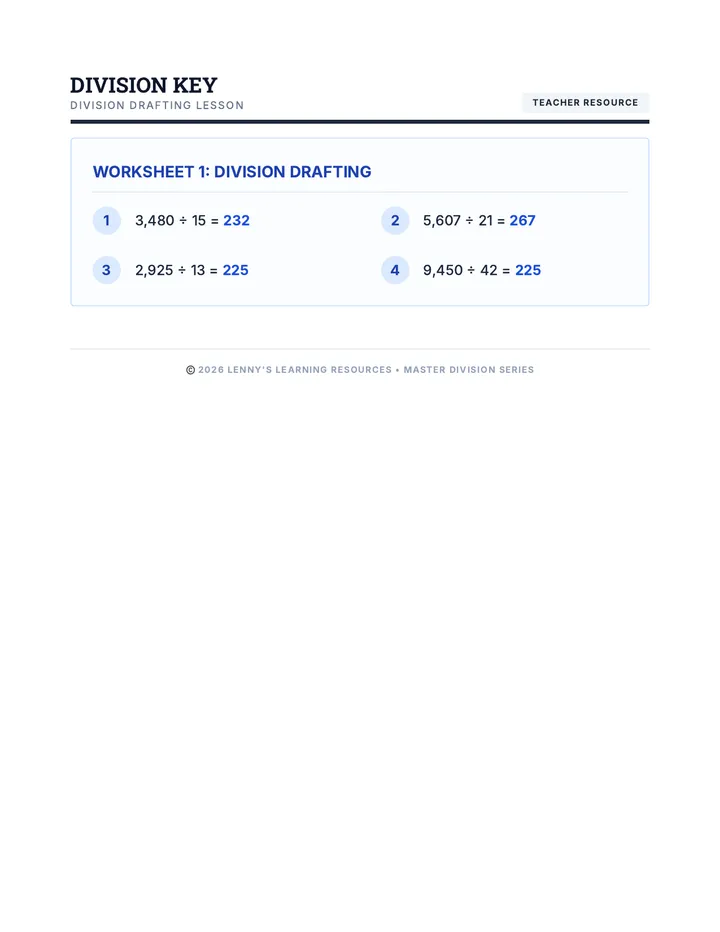
A 12-lesson Tier 2 intervention sequence for 6th-grade students struggling with multi-digit division. This sequence uses the Illustrative Mathematics approach (area models and partial quotients) and aligns with the All Learners Network's High Leverage Concepts to build deep conceptual understanding of the relationship between multiplication and division.
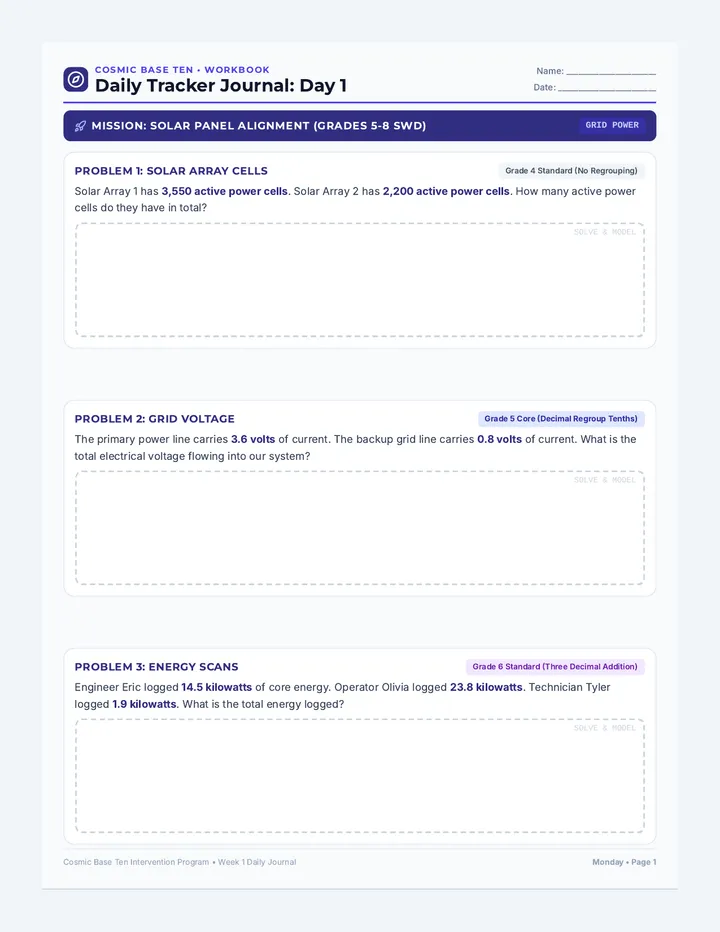
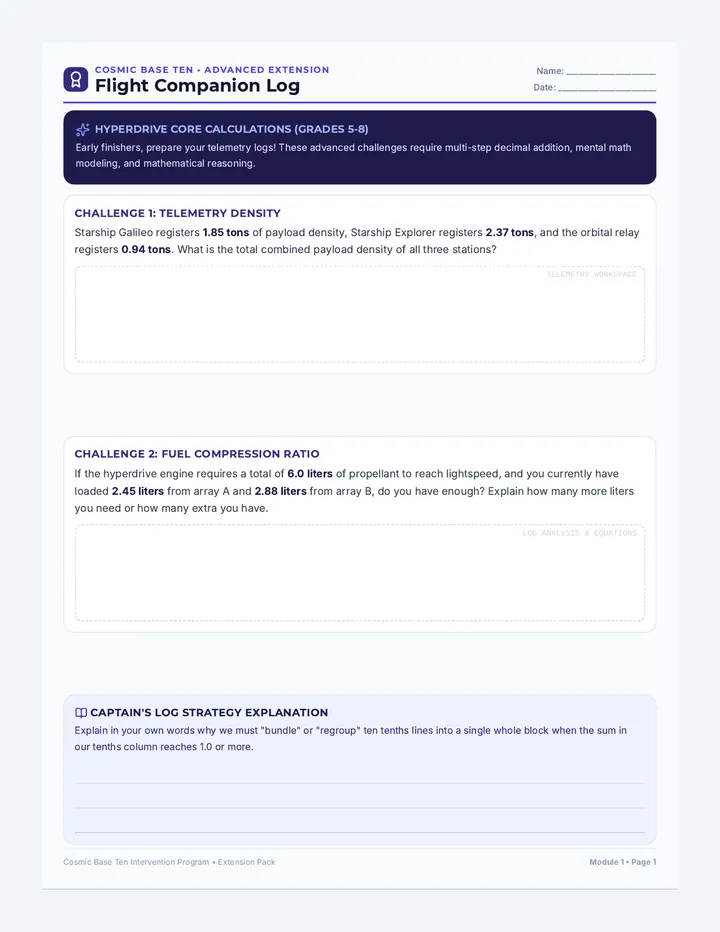
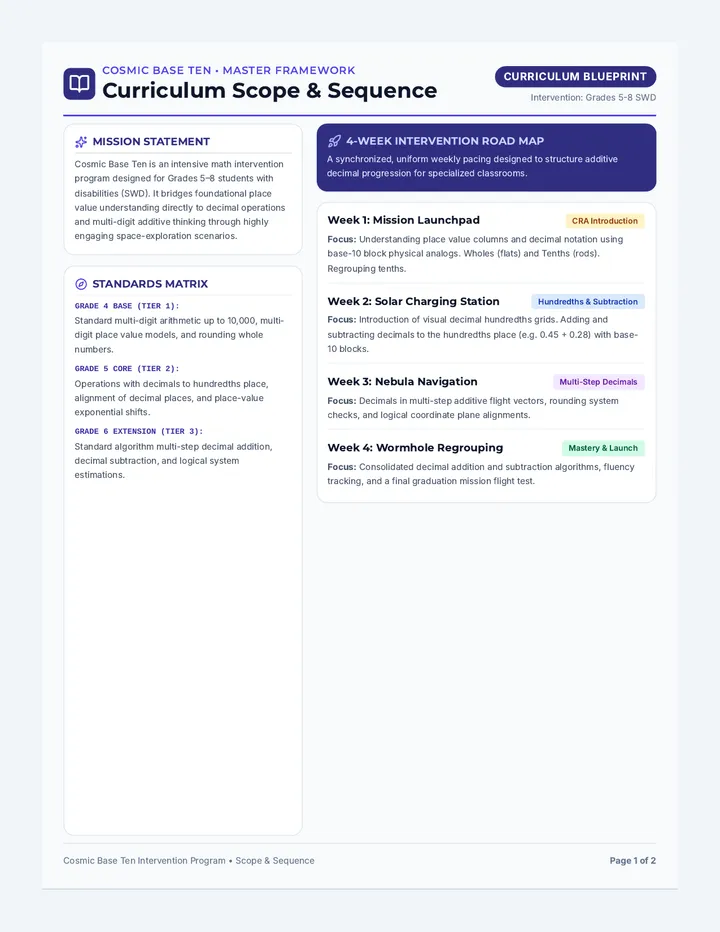
A 12-lesson Tier 2 intervention sequence for 6th-grade students focused on computational fluency with decimals and the system of rational numbers. The sequence follows the All Learner Network High Leverage Concepts, moving from multi-digit decimal operations to complex coordinate plane navigation.
A 6-lesson intervention sequence for 6th-grade students focusing on multi-digit decimal operations and rational number concepts on the number line and coordinate plane. Designed for small-group instruction using High Leverage Concepts.
A 10-week spiral multiplication curriculum for 5th grade, focusing on building conceptual understanding through models and moving toward procedural fluency with whole numbers and decimals. Each week introduces new concepts while revisiting previous ones to ensure long-term retention.
A comprehensive math unit focusing on applying percentage calculations, sales tax, and multi-step budgeting to real-world scenarios. students act as event planners to manage a fixed budget while accounting for specific tax rates.
A math unit focused on mastering decimal operations through problem-solving, visual modeling, and critical thinking.
A math sequence focused on mastering decimal operations through real-world financial literacy and budgeting scenarios. Students learn to line up decimals, use placeholder zeros, and regroup through hands-on cafe simulations.
A unit focused on applying percentages to real-world financial contexts, including discounts, markups, and interest.
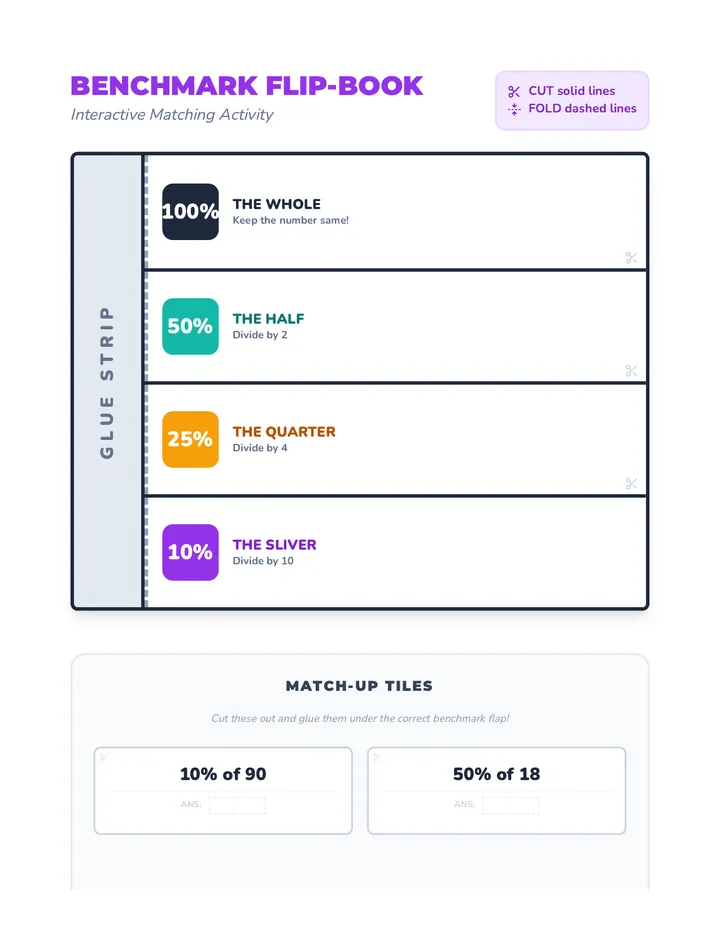
A 6th-grade math sequence focused on building mental math fluency with percentages. Students learn to decompose percentages into friendly numbers (10%, 5%, 1%) to estimate discounts and calculate real-world values like tips and sales prices.
A lesson sequence focusing on financial literacy and the practical application of percentage decrease through real-world shopping scenarios and discount calculations.
A 7th-grade math sequence focused on applying algebraic equations to real-world consumer scenarios, specifically involving discounts, sale prices, and original prices.
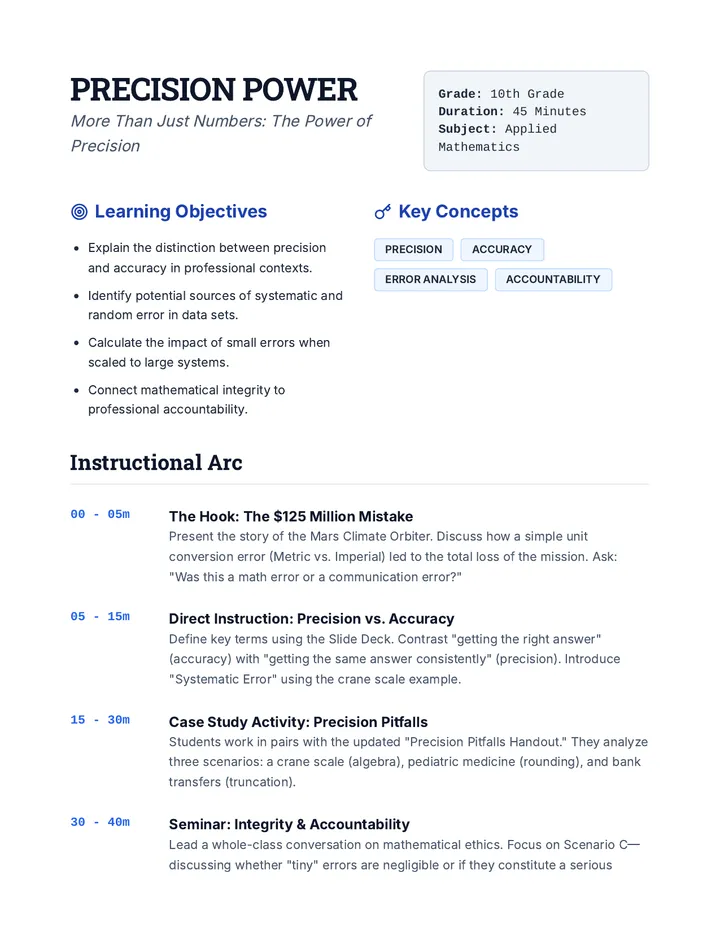
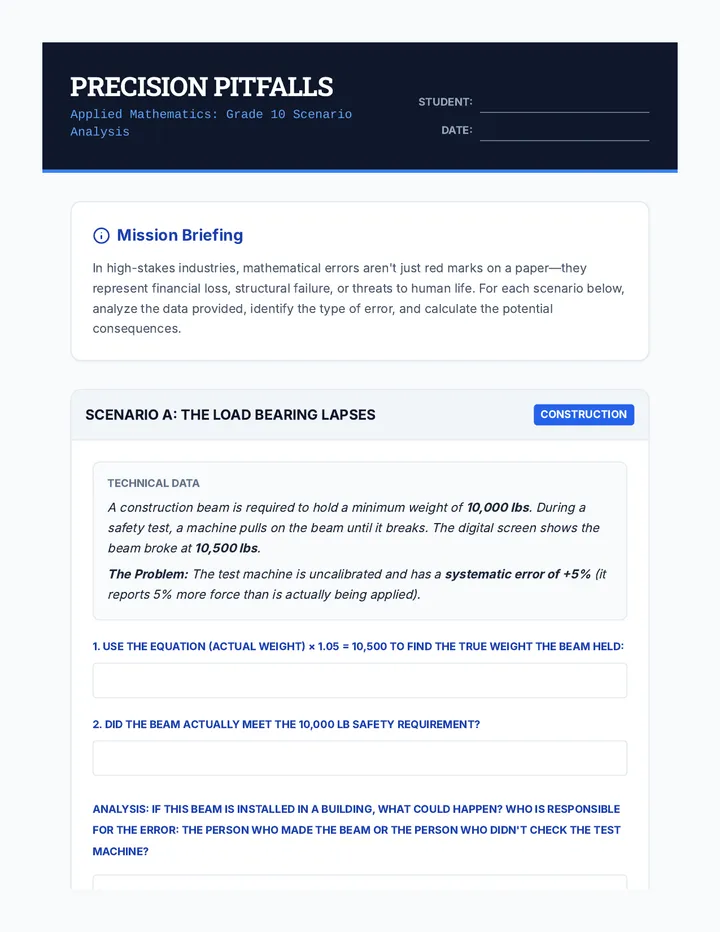
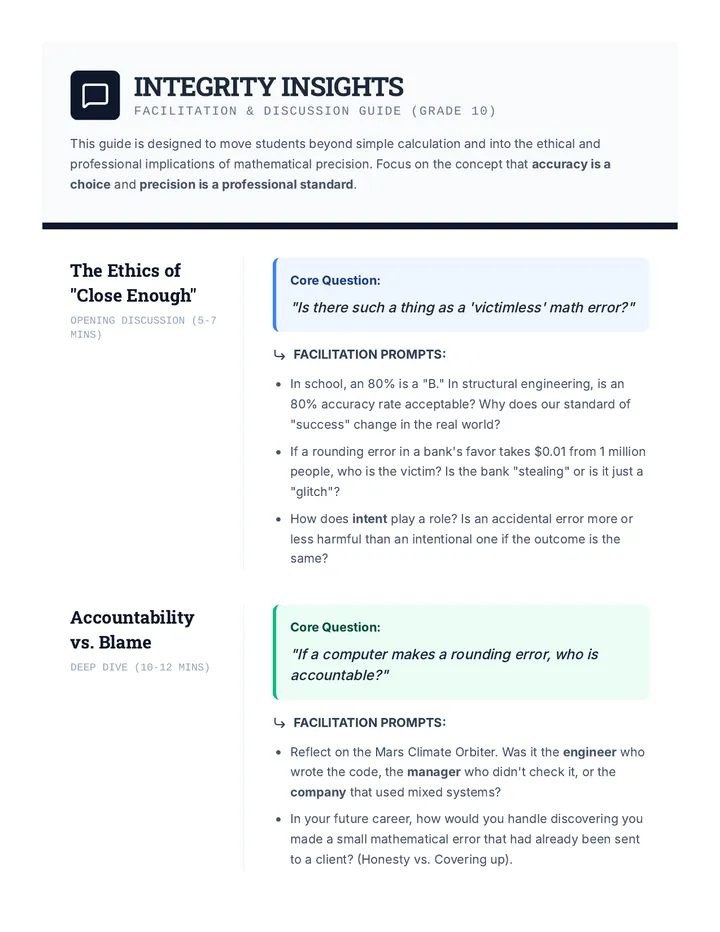
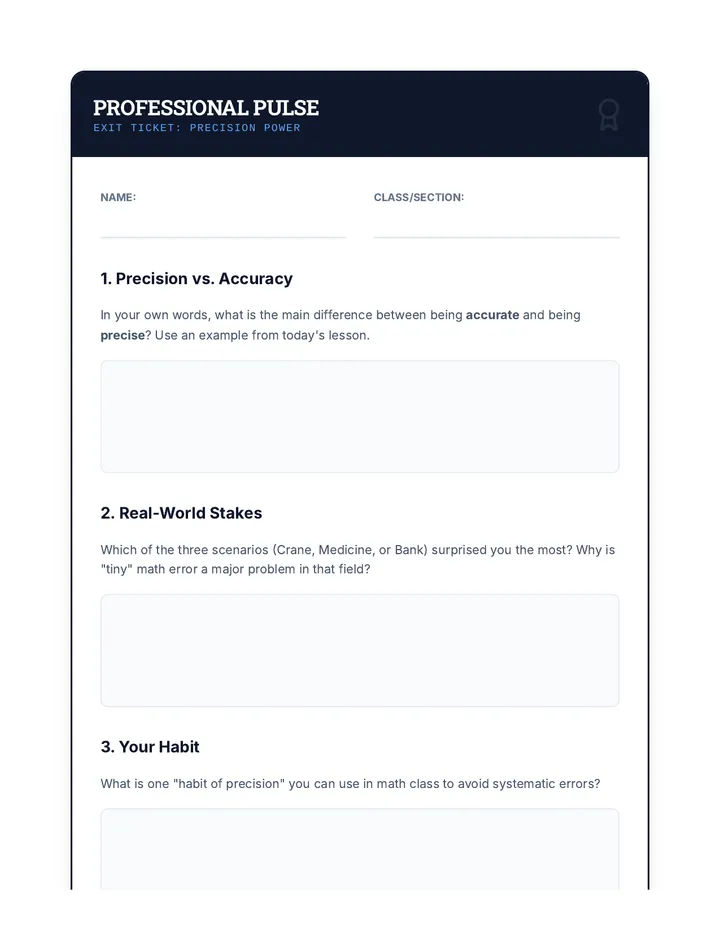
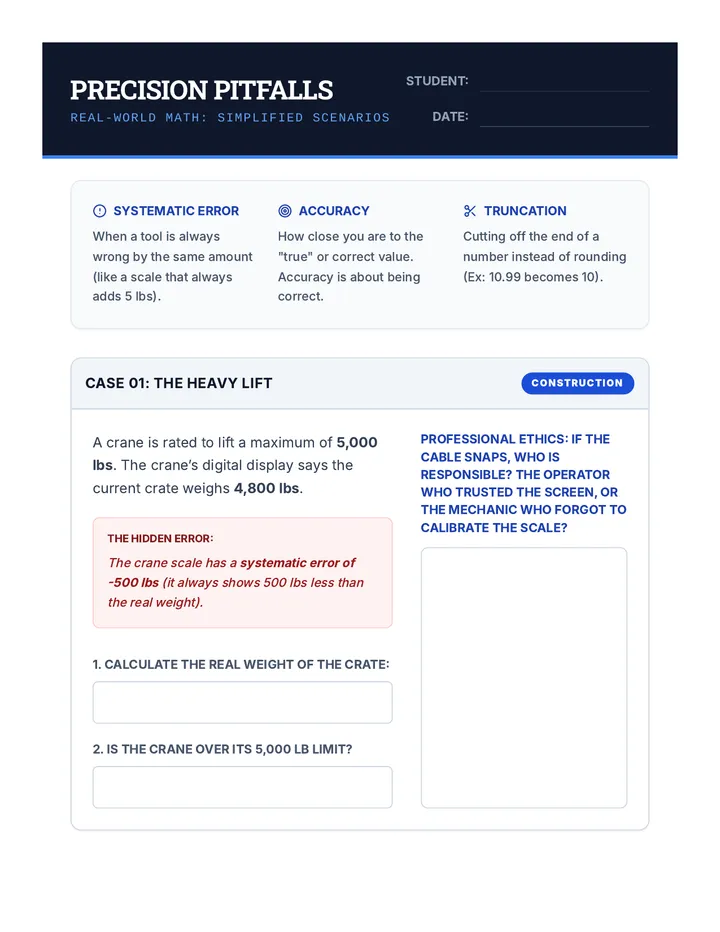
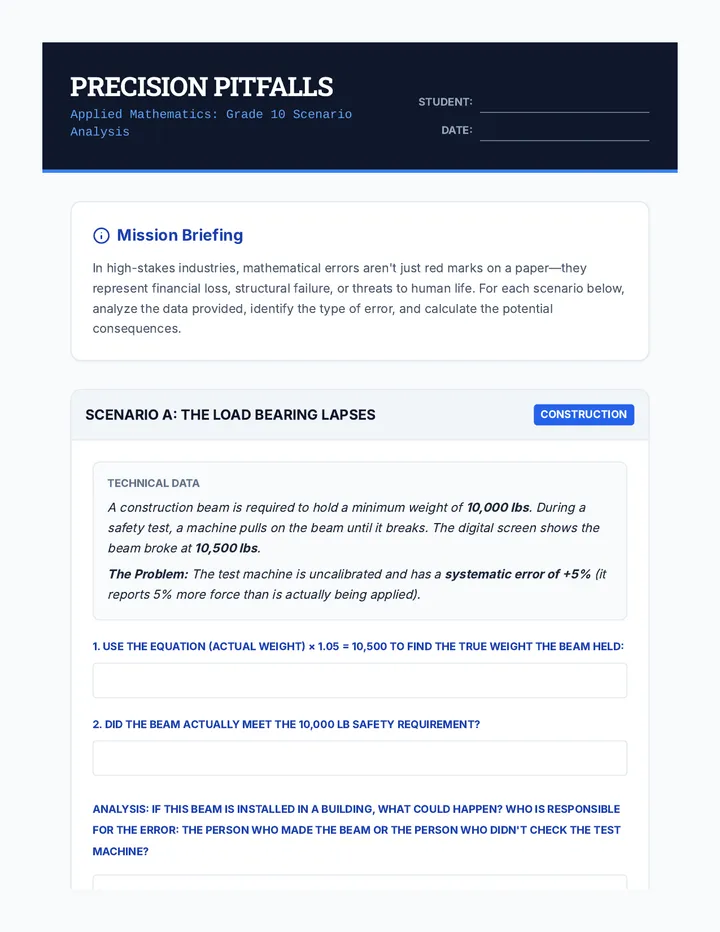
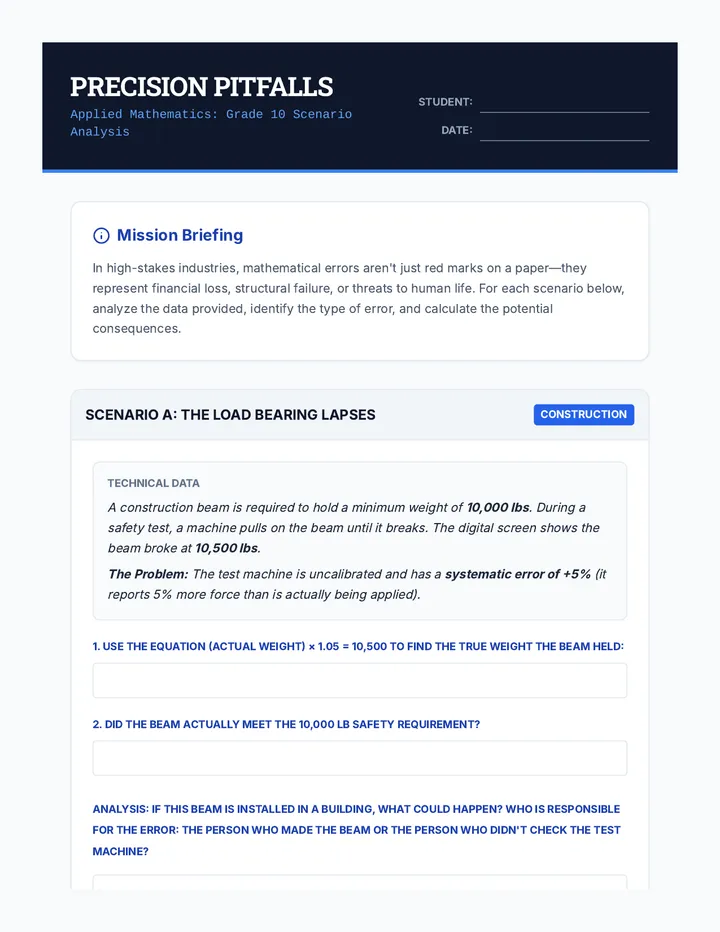
A sequence focused on the practical application of percent error in real-world scenarios, emphasizing accuracy and relative scale.
A sequence focused on converting decimals to fractions and simplifying them, using a 'Decimal Lab' theme where students act as scientists fusing numbers.
A comprehensive math sequence for 10th-grade academic support focused on using base-ten manipulatives to master decimal operations through a financial lens. Students progress from foundational place value to complex budgeting simulations, bridging concrete understanding with abstract calculations.
This sequence uses the Concrete-Representational-Abstract (CRA) framework to teach decimal place value through the lens of financial literacy. Students move from manipulating physical currency to drawing models and finally using standard algorithms to manage budgets.
This sequence uses the Concrete-Representational-Abstract (CRA) framework to teach decimal operations through the lens of financial literacy. Students move from physical base-ten blocks representing currency to visual grid models and finally to standard algorithms for real-world budgeting.
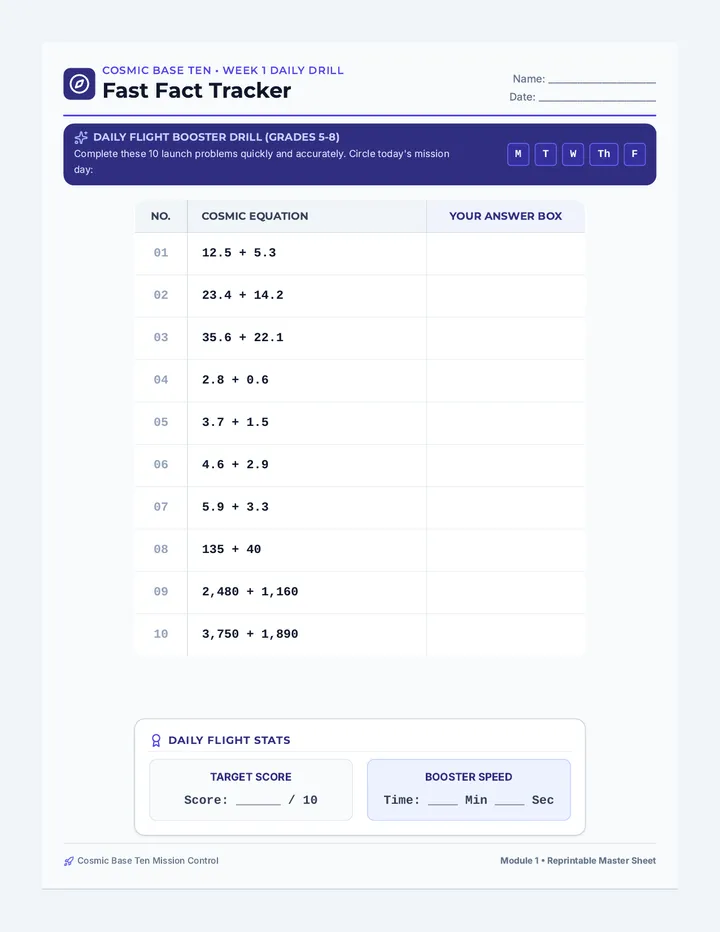
A 5-lesson sequence for 5th-grade students focused on using base-ten blocks to master decimal place value, addition, and subtraction. Students transition from concrete manipulation to representational drawings and finally to the standard algorithm.
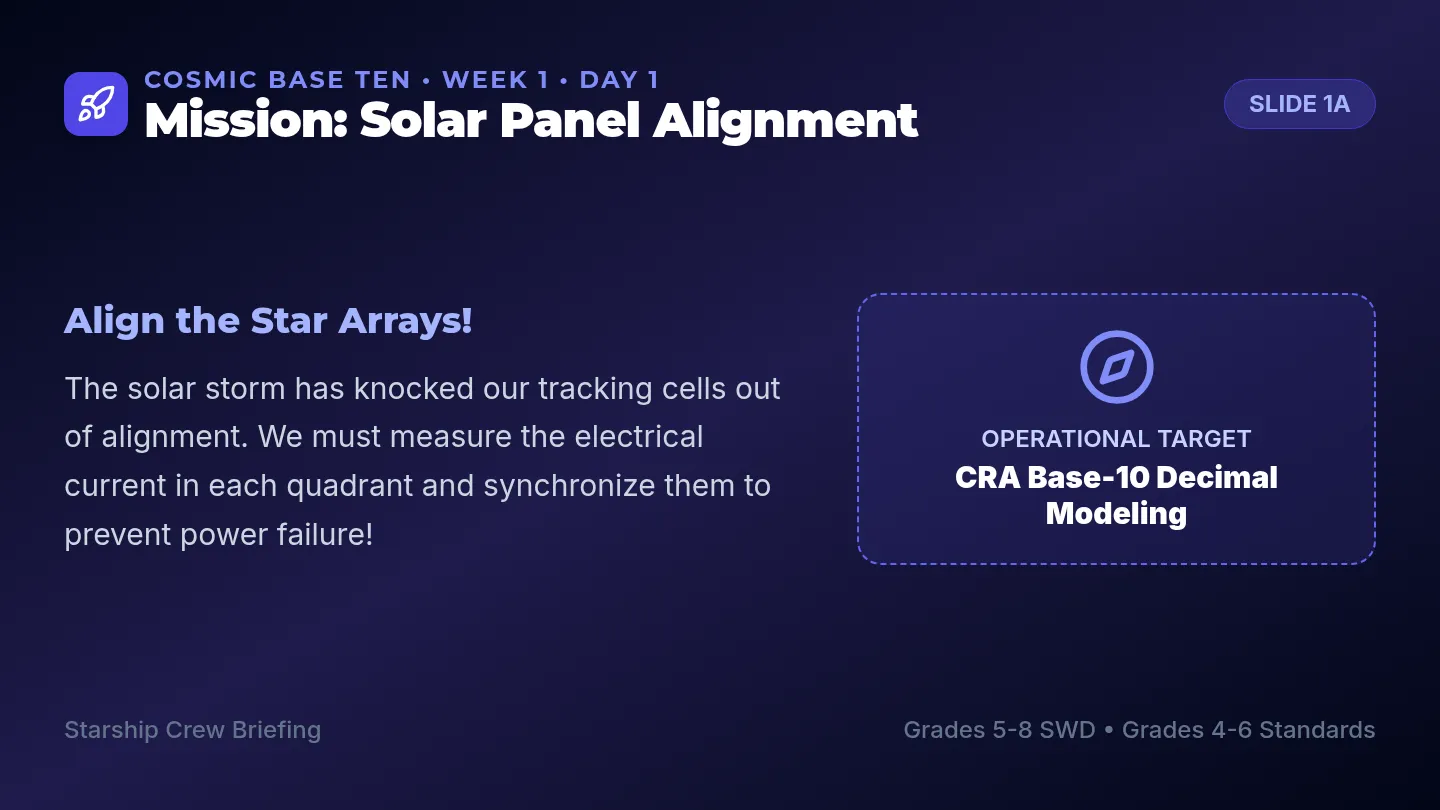
A 5-lesson sequence for 7th-grade students focusing on using base-ten blocks as manipulatives to master decimal place value, addition, and subtraction. The unit redefines the whole (flat block = 1) to build conceptual understanding of tenths and hundredths.
This 8th-grade sequence focuses on fundamental math fluency using manipulatives. Students redefine base-10 blocks for decimals, engage in regrouping simulations, visualize division, and perform error analysis to solidify their understanding of place value and operations.
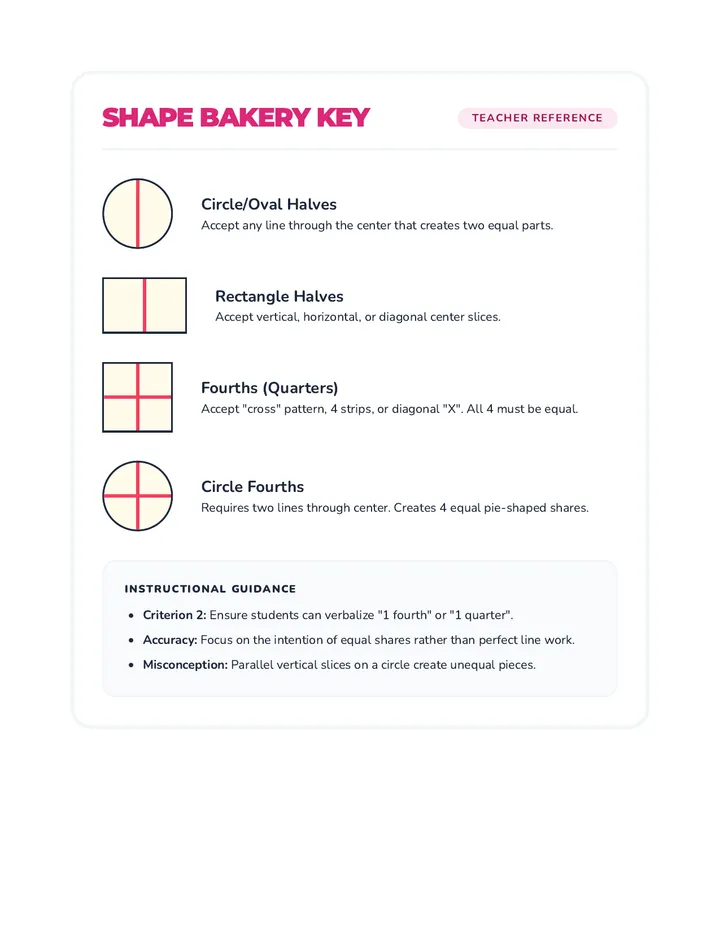
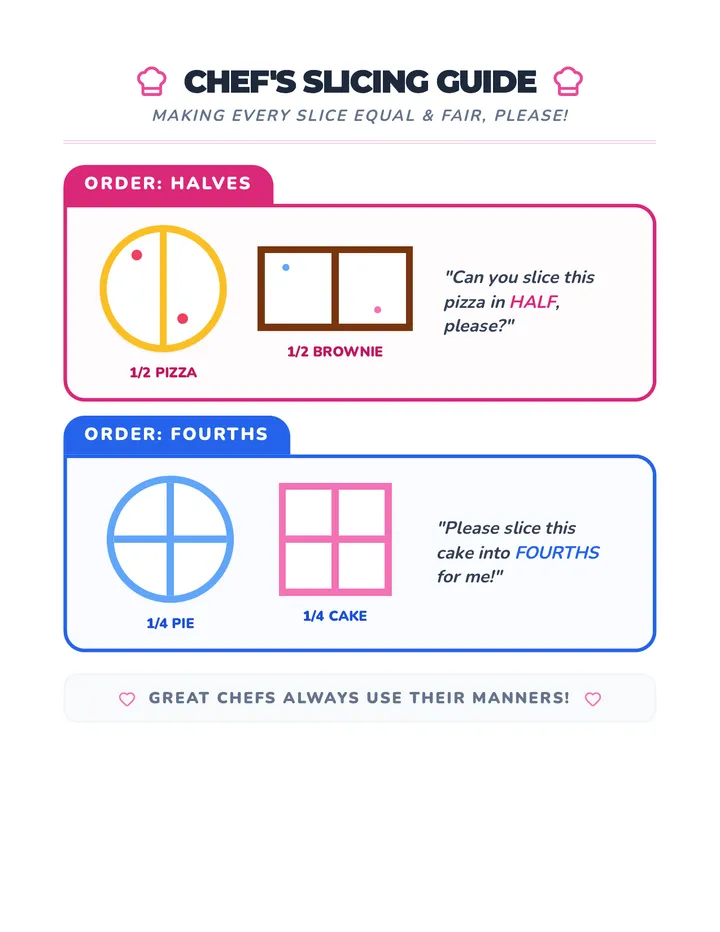
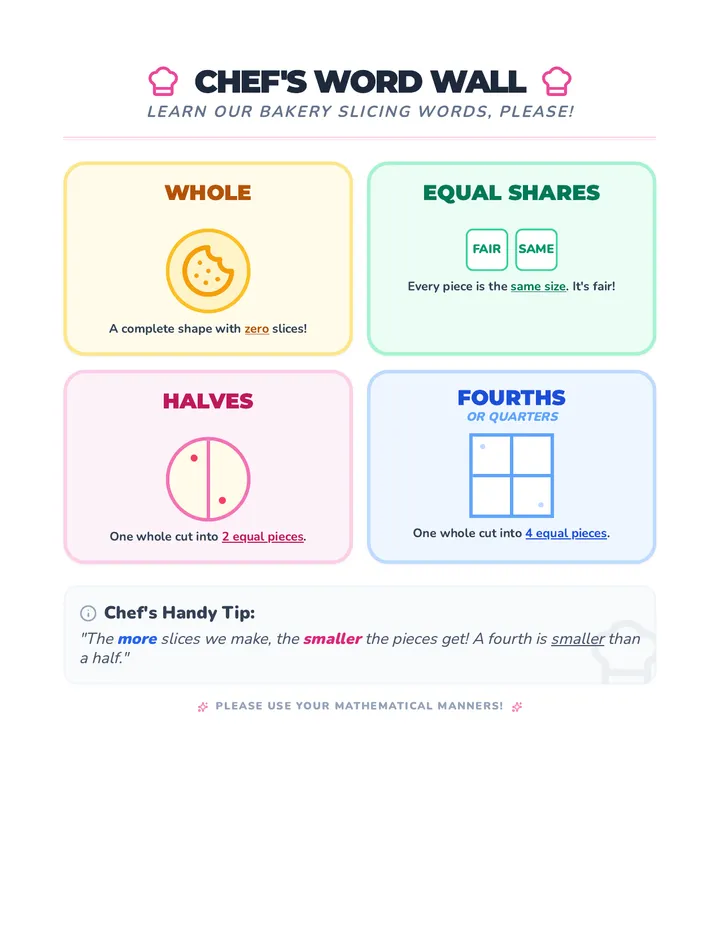
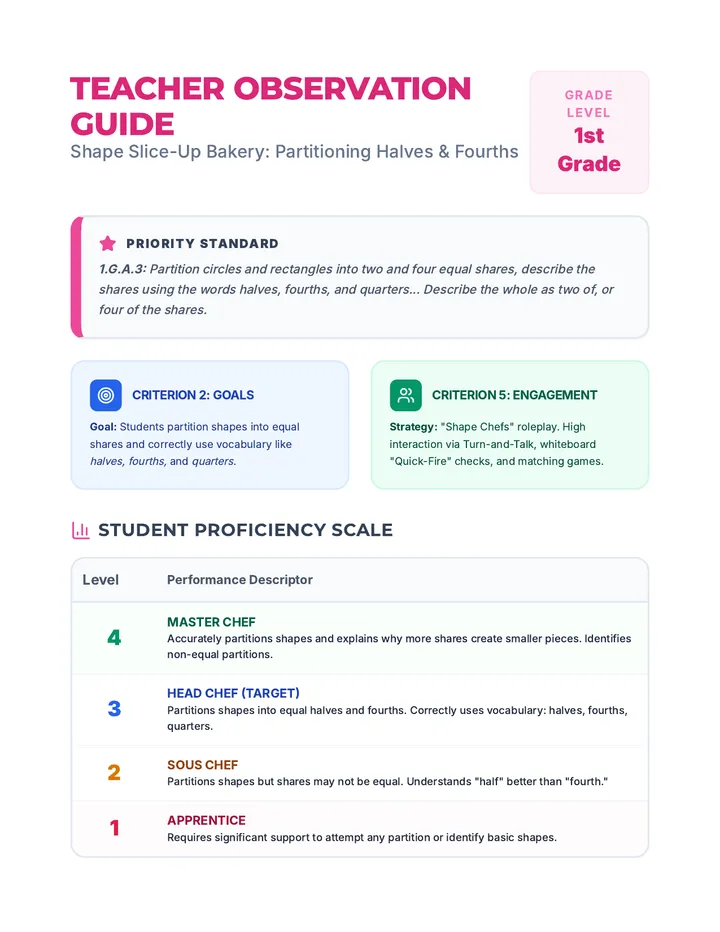
This sequence introduces 1st-grade students to spatial reasoning through the composition and decomposition of geometric figures. Students explore how shapes can be combined and divided using pattern blocks, tangrams, and paper-folding activities, building a foundation for understanding area and fractions.
A high-level algebra sequence for 11th graders that explores the utility and structure of rational exponents versus radical notation. Students critique mathematical syntax, justify logical steps, and preview calculus-level applications.
A 5th-grade workshop sequence focusing on the mechanics and precision of graphing, from basic anatomy to complex scaling and data conversion. Students develop the skills to represent data accurately and interpret scales with precision.
A comprehensive unit for 7th graders on compound event probability, moving from visual mapping (tree diagrams, tables) to theoretical calculations and strategy selection.
A sequence of two lessons focusing on social-emotional learning and introductory math concepts. Students learn about fair sharing through fractions and the positive impact of kindness on their community.
A 7th-grade math lesson focused on the distinction between exact values in terms of Pi and decimal approximations using circumference calculations from the 'Circumference Song'.
A 7th-grade unit exploring the divide between rational and irrational numbers. Students use long division patterns, geometric square models, and number line approximation to master the real number system.
This high school mathematics sequence guides students from the decimal representation of rational and irrational numbers through the formal logic of proof by contradiction, culminating in the classic proof of the irrationality of the square root of 2 and the exploration of closure properties in the real number system.
This sequence explores irrational numbers through the lens of numerical analysis and computer science. Students learn to approximate roots using Newton's Method, transition from manual calculation to algorithmic thinking, and analyze how computers handle infinite decimals.
A high-school level sequence focused on developing advanced number sense and mental estimation skills for irrational numbers without the use of calculators. Students progress from basic radical simplification to complex ordering and linear interpolation, preparing for college-level calculus and standardized tests.
This inquiry-based sequence explores transcendental numbers like Pi and Euler's number (e) to connect irrationality with real-world phenomena and geometry. Students investigate historical methods of approximation and modern infinite series.
A rigorous undergraduate sequence exploring the theoretical construction of the real number system, focusing on the discovery, proof, and classification of irrational numbers from historical crises to Cantor's cardinality.
This sequence guides 12th-grade students through the rigorous definition, proof, and classification of irrational numbers, moving from the real number system to transcendental concepts and operations.
An exploration of how irrational numbers are approximated in science, engineering, and computer science using algorithms like the Bisection Method and Newton's Method.
A 10th-grade mathematics unit exploring the geometric origins and logical proofs of irrational numbers. Students move from physical constructions of radicals using the Spiral of Theodorus to formal algebraic proofs by contradiction.
A high school math sequence focused on the computational methods used to approximate irrational numbers, from manual bisection to ancient iterative algorithms. Students explore the concept of precision, algorithmic efficiency, and the transition from exact radical forms to decimal approximations.
An 8th-grade geometry sequence focusing on the algebraic manipulation of volume formulas for cylinders, cones, and spheres. Students progress from simple calculations to solving for missing dimensions (height and radius) using inverse operations, square roots, and cube roots.
A collegiate-level exploration of irrational numbers, bridging the gap between basic algebra and real analysis. Students investigate proofs of irrationality, decimal expansions, approximation algorithms, and the topological properties of the real number line.
An advanced exploration of irrational numbers for 12th-grade students, covering historical proofs, classification of algebraic and transcendental numbers, iterative approximation algorithms, and real-world precision requirements.
This sequence bridges the conceptual gap between basic arithmetic definitions and rigorous algebraic understanding of the real number system. Students move from decimal expansion to formal proofs by contradiction, geometric construction, and iterative approximation algorithms.
A high-school level exploration of irrational numbers, covering geometric origins, formal proofs by contradiction, decimal classification, and high-precision estimation techniques. Students move from historical context to rigorous algebraic reasoning and numerical analysis.
A comprehensive 9th-grade math unit that guides students through the discovery, classification, and approximation of irrational numbers. Students move from the geometric discovery of non-fractional lengths to mastering mental estimation and ordering of real numbers on a number line.
This sequence guides 8th-grade students from the basics of perfect squares to the complex task of approximating and ordering irrational numbers on the real number line. Students will use geometric models, decimal expansion analysis, and systematic bounding techniques to master the real number system.
A rigorous undergraduate-level sequence exploring the existence of irrational numbers, algebraic proofs of incommensurability, and iterative algorithms for numerical approximation and error analysis.
A comprehensive sequence for 12th-grade students focusing on the bridge between number theory and practical precision. Students explore the nature of irrational numbers, geometric proofs, mental estimation strategies, and the real-world impact of rounding in engineering.
A sequence focused on conceptualizing fraction division through visual area models, progressing from whole numbers to fraction-by-fraction division for 6th-grade students needing academic support.
A 9th-grade math sequence focused on critical thinking and error analysis in fraction division. Students move beyond algorithms to understand the logic of reciprocals, the efficiency of different number systems, and the structural language of word problems.
A project-based unit for 9th-grade students that contextualizes fraction division in construction, culinary arts, and manufacturing careers. Students learn to apply division to unit rates, recipe scaling, material yields, and dimensional analysis.
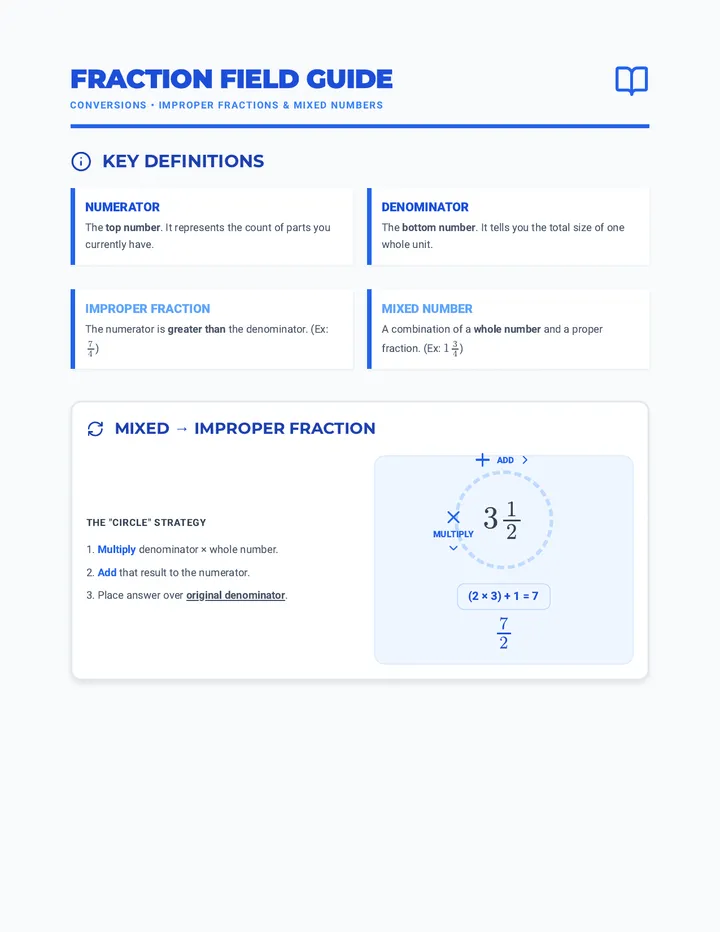
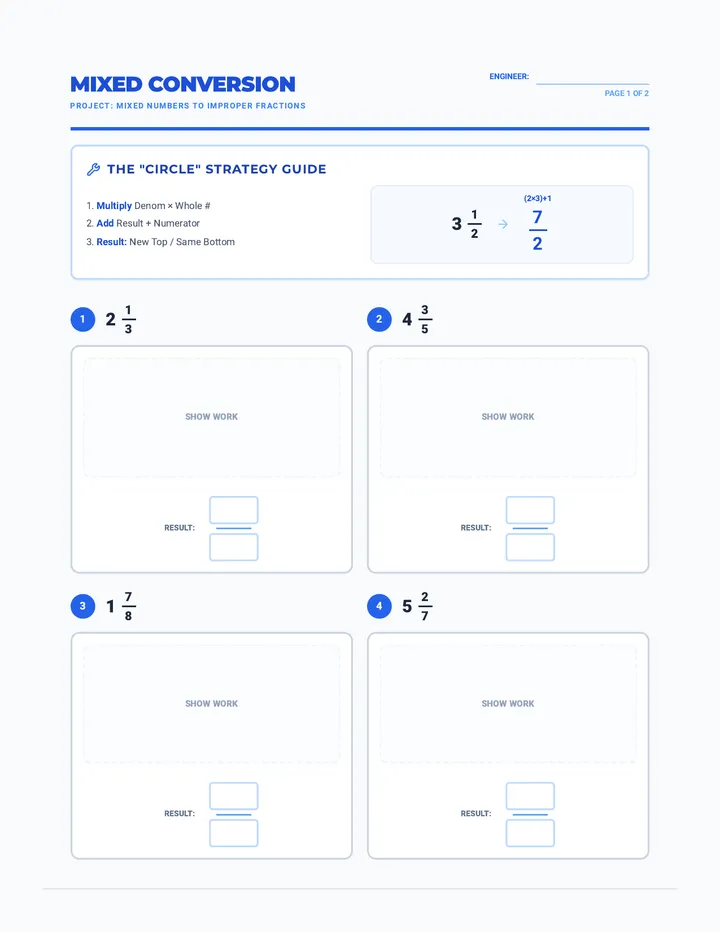
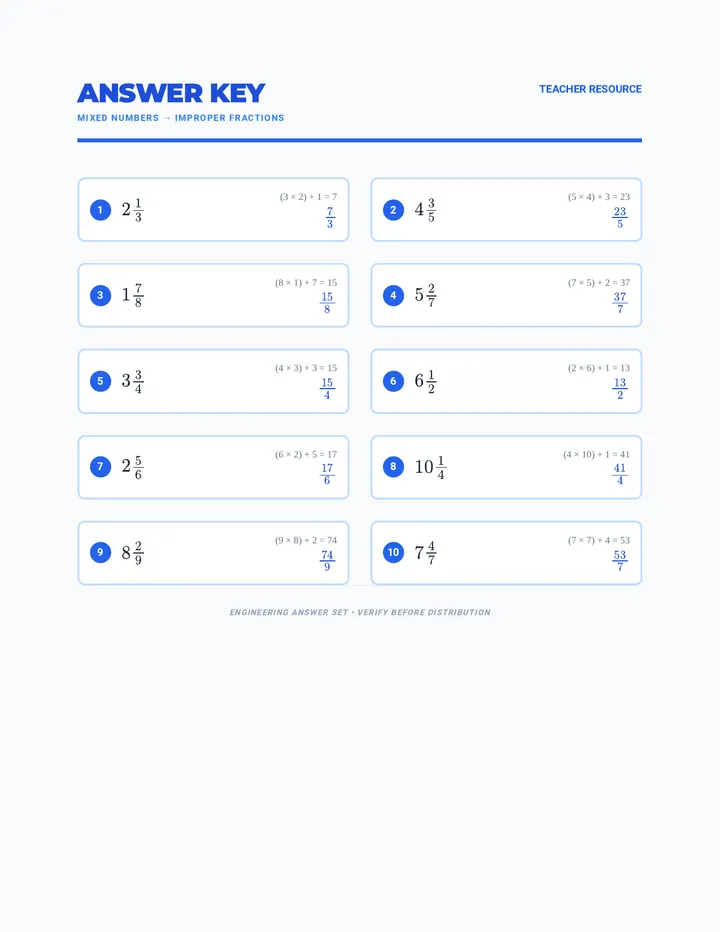
A 9th-grade workshop-style sequence focused on procedural fluency with mixed numbers and negative rational numbers. Students progress from basic conversion and estimation to complex order of operations and signed fraction division, preparing them for algebraic success.
A 5-lesson sequence for 9th-grade students focused on building a deep conceptual understanding of fraction division through visual models, semantic analysis, and logical derivation of the standard algorithm.
This sequence immerses 5th-grade students in real-world scenarios requiring fraction division. Students learn to distinguish between multiplication and division contexts, translate stories into equations, and solve complex multi-step problems using visual modeling and linguistic clues.
This sequence guides 5th-grade students from visual models to the standard algorithm for dividing fractions. Students discover the relationship between division and multiplication through reciprocals, build fluency with the algorithm, and apply their knowledge to solve complex problems and analyze common errors.
A project-based math sequence where students apply mixed number division to design a Tiny House, focusing on conversion, algorithms, and real-world interpretation of remainders.
This sequence builds a strong conceptual foundation for fraction division by using visual models (tape diagrams, number lines, area models) before introducing algorithms. Students explore dividing whole numbers by unit fractions and vice versa, mastering the 'how many groups' vs 'sharing' interpretations of division.
Students act as supply chain managers for an international relief organization, using decimal and fraction arithmetic to manage budgets, logistics, and resource distribution in real-world scenarios.
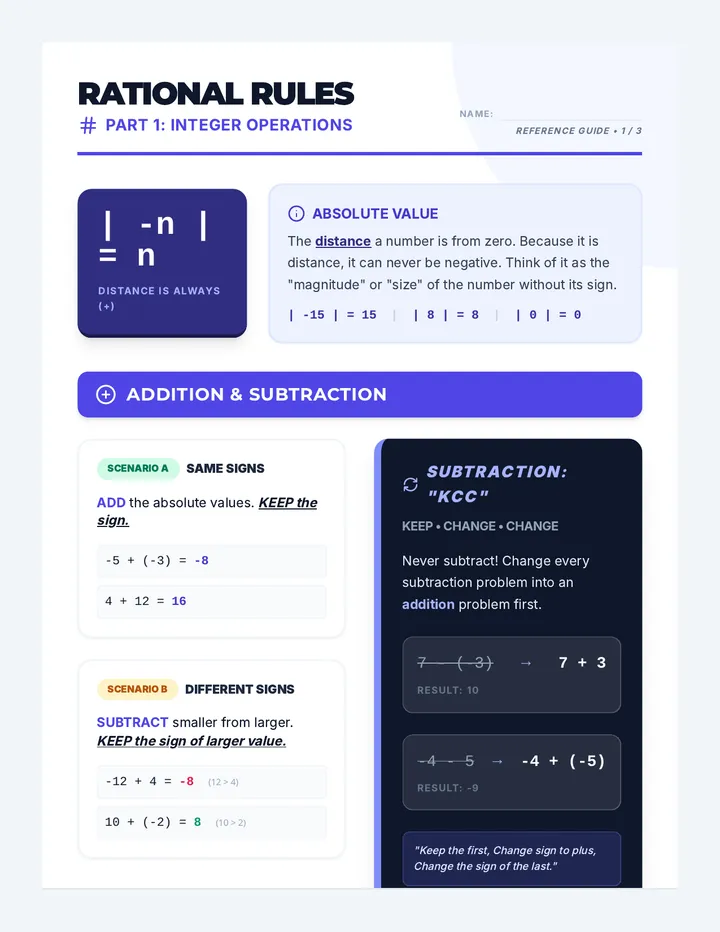
A comprehensive 9th-grade unit on mastering arithmetic operations with signed rational numbers (fractions and decimals). The sequence moves from visual number line models to abstract algorithms and complex order of operations, emphasizing the 'why' behind sign rules.
A comprehensive 7th-grade unit that builds a deep conceptual understanding of fraction division, moving from visual modeling to the standard algorithm and real-world application. Students investigate reciprocals, handle mixed numbers, and solve complex multi-step problems.

This sequence guides students from conceptual modeling of fraction division to applying the standard algorithm with mixed numbers in complex geometric and real-world contexts. Students will explore the 'why' behind the reciprocal before mastering the 'how' and applying it to find missing dimensions and unit rates.
A unit focused on mastering the number system, starting with integer basics and moving toward complex operations and coordinate planes.
This sequence explores the practical application of rational exponents and power functions in biology, physics, and finance. Students will progress from evaluating existing models like Kleiber's Law and Kepler's Third Law to constructing their own mathematical models from empirical data.
A comprehensive unit on arithmetic and geometric sequences and series, focusing on identifying patterns, deriving summation formulas, and applying these concepts to financial modeling and real-world growth.
A comprehensive unit for undergraduate algebra students exploring non-linear equations, specifically rational and radical forms, with a focus on domain constraints, extraneous solutions, and real-world modeling in economics and physics.
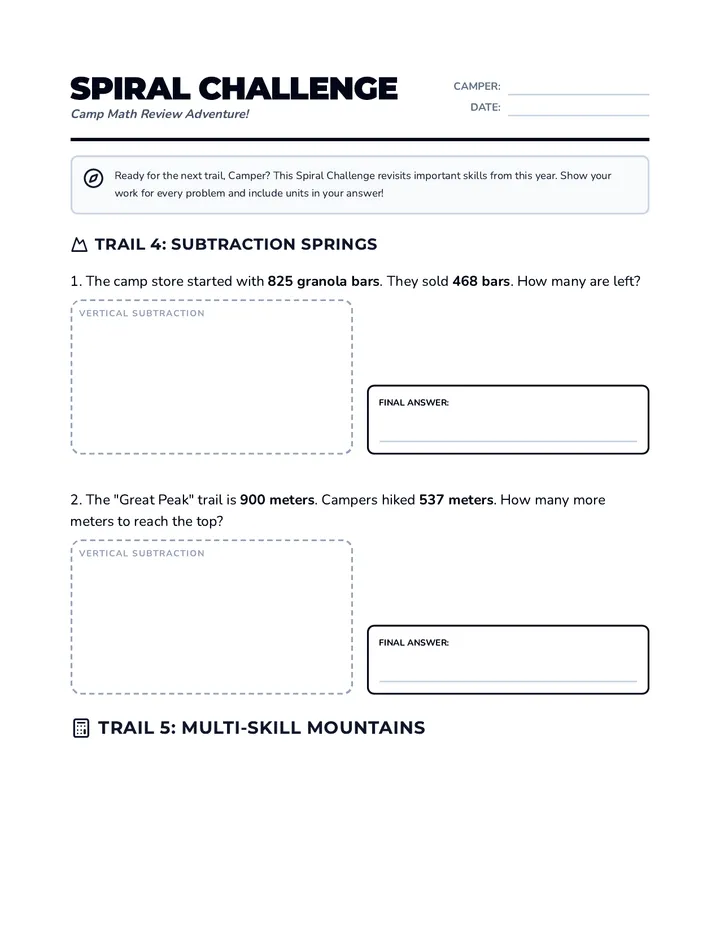
A targeted intervention series designed to help 1st and 2nd grade students master two-digit subtraction by focusing on verbalization, place value decomposition, and mental math strategies.
This mastery-based sequence integrates all four operations into multi-step problem-solving scenarios. Students learn to decipher word problems, use bar models for visualization, and fluidly switch between operational rules through a professional 'Operations Agency' theme.