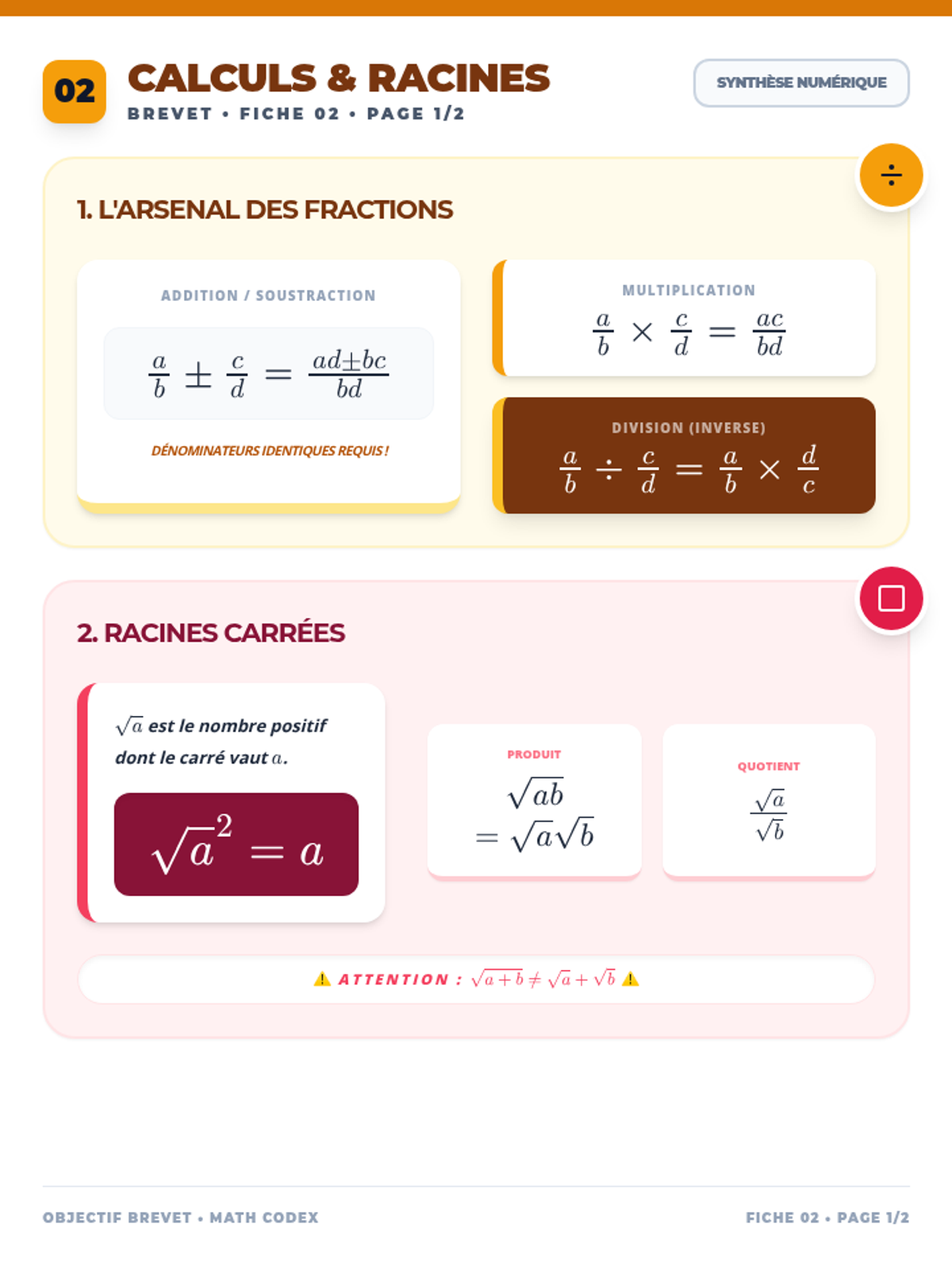
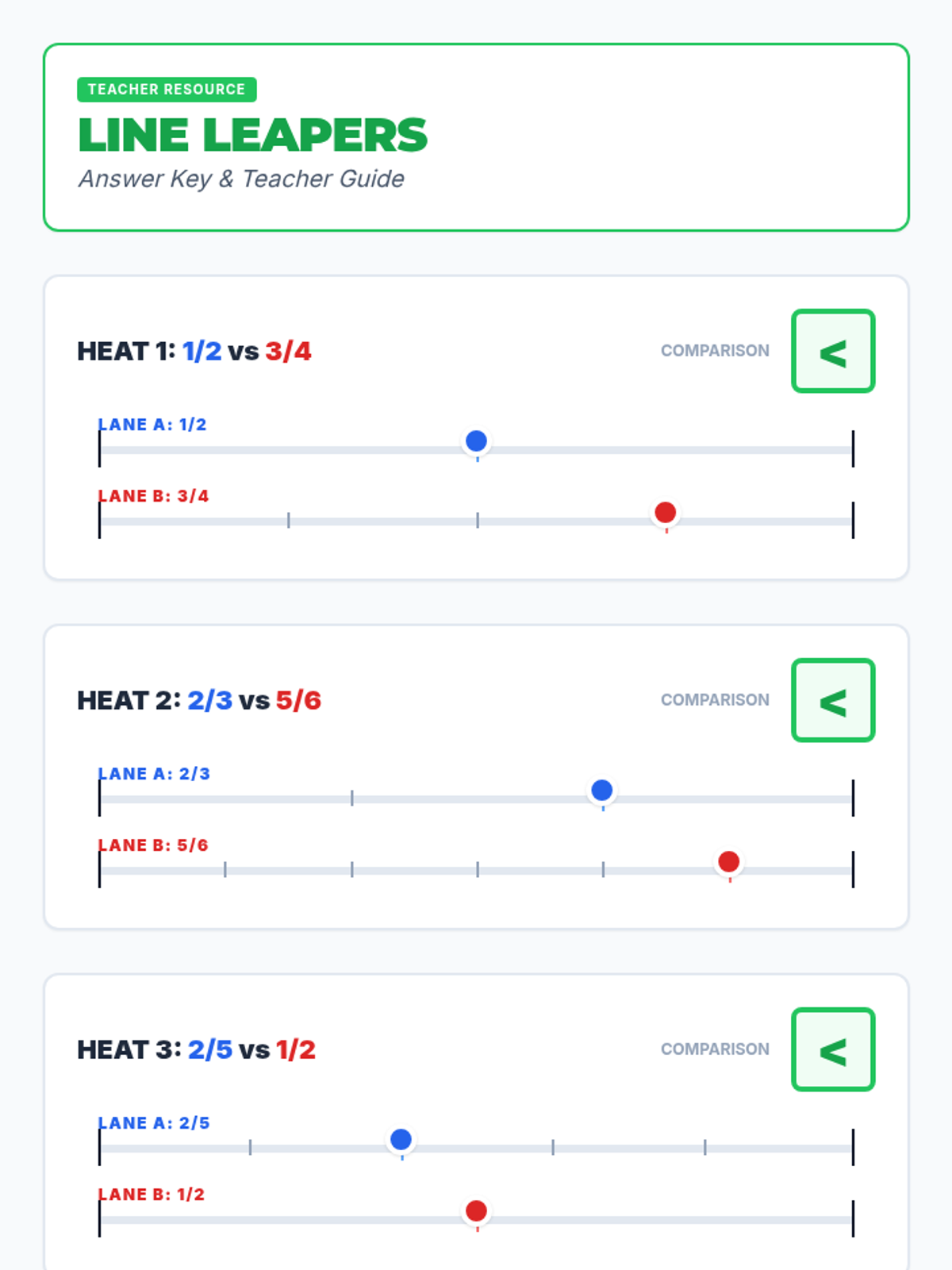
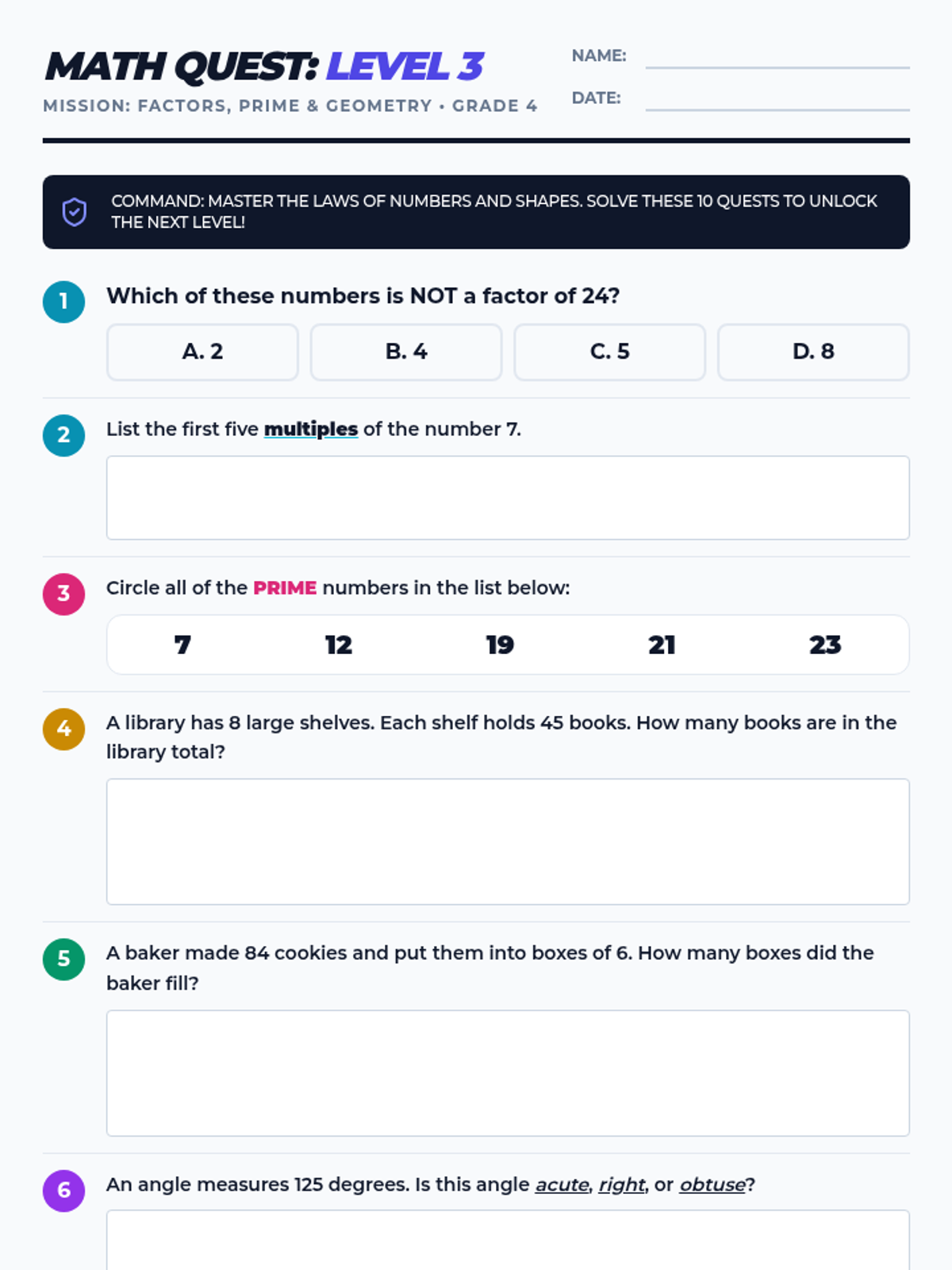
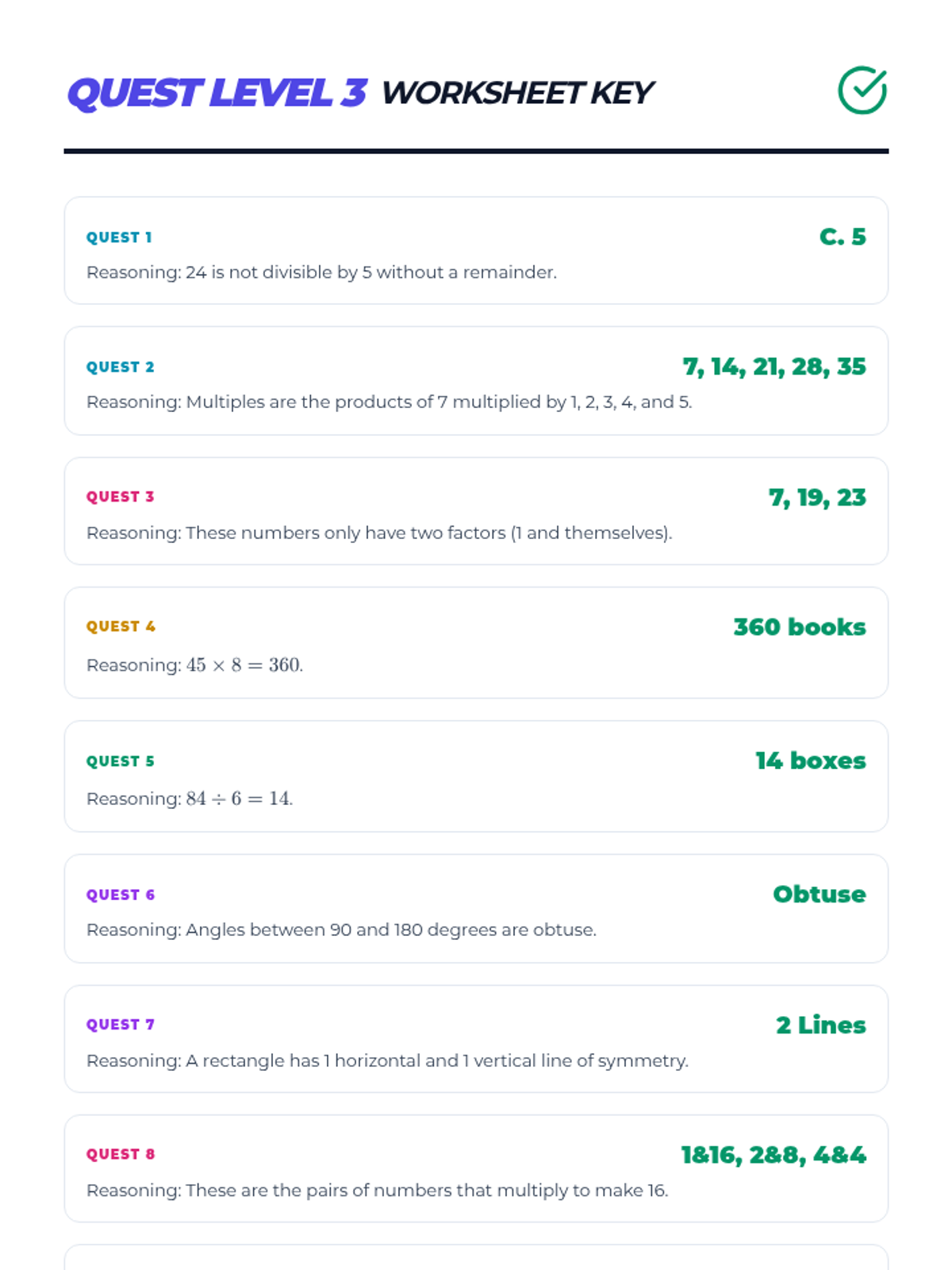
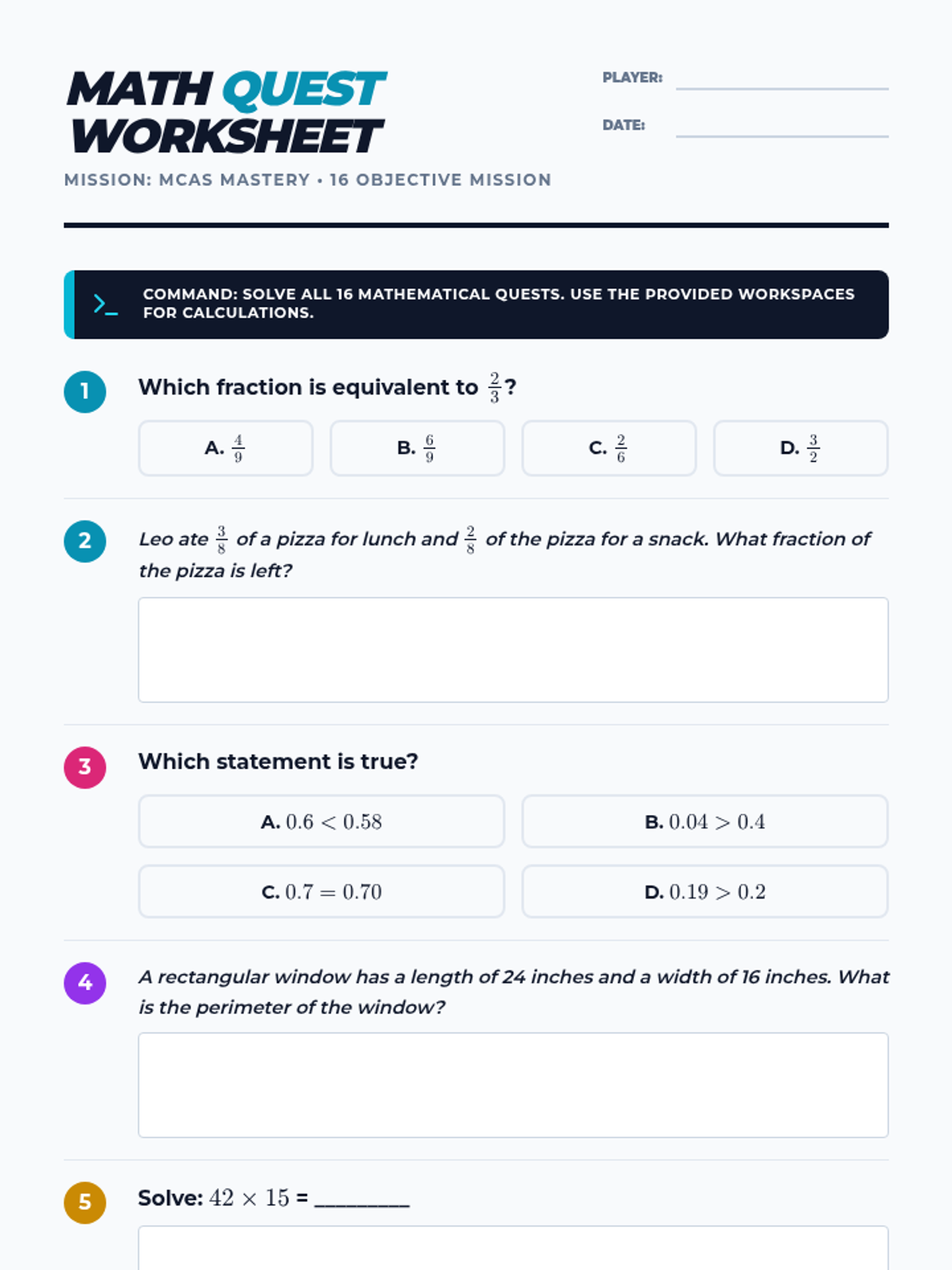
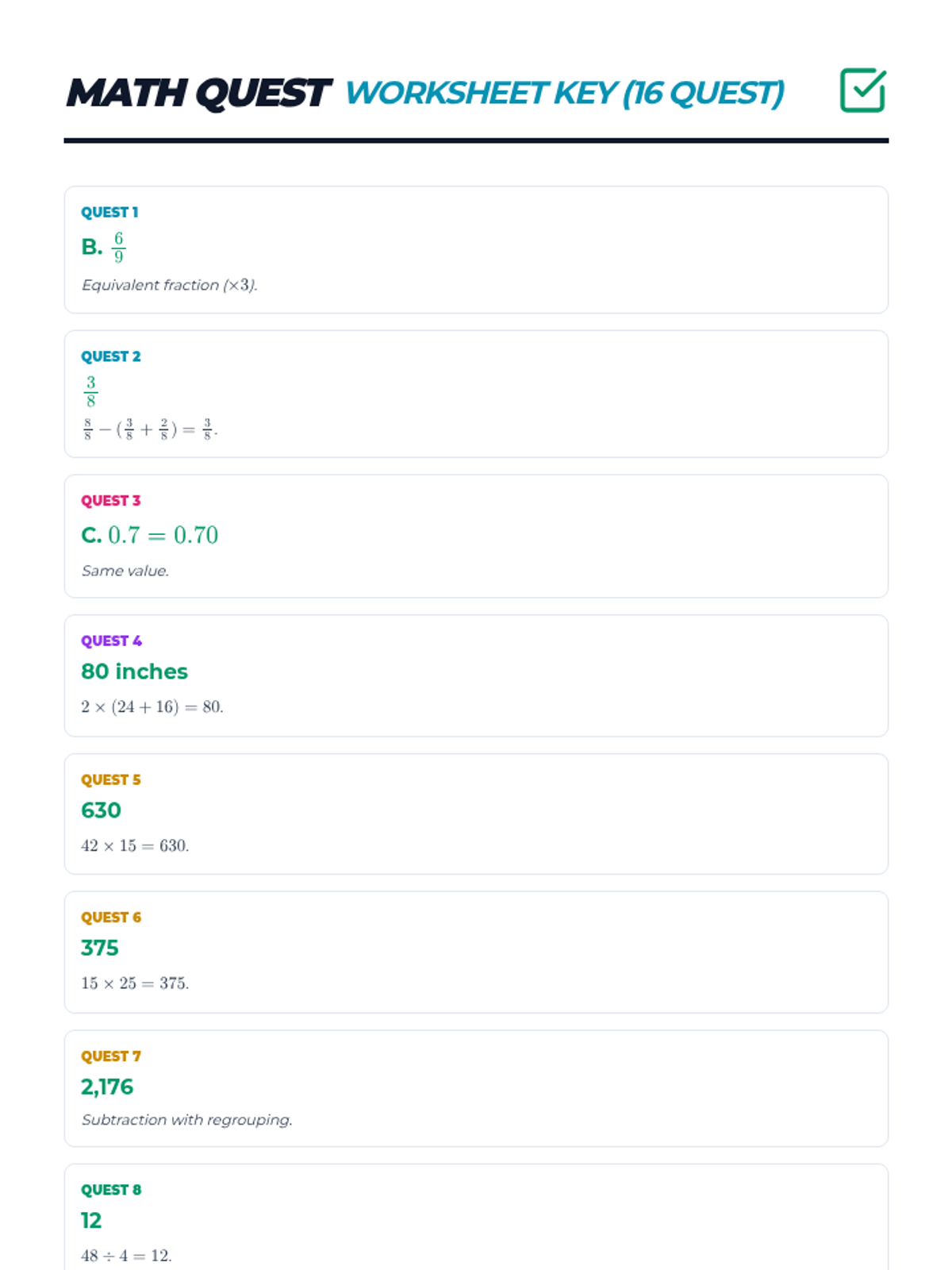
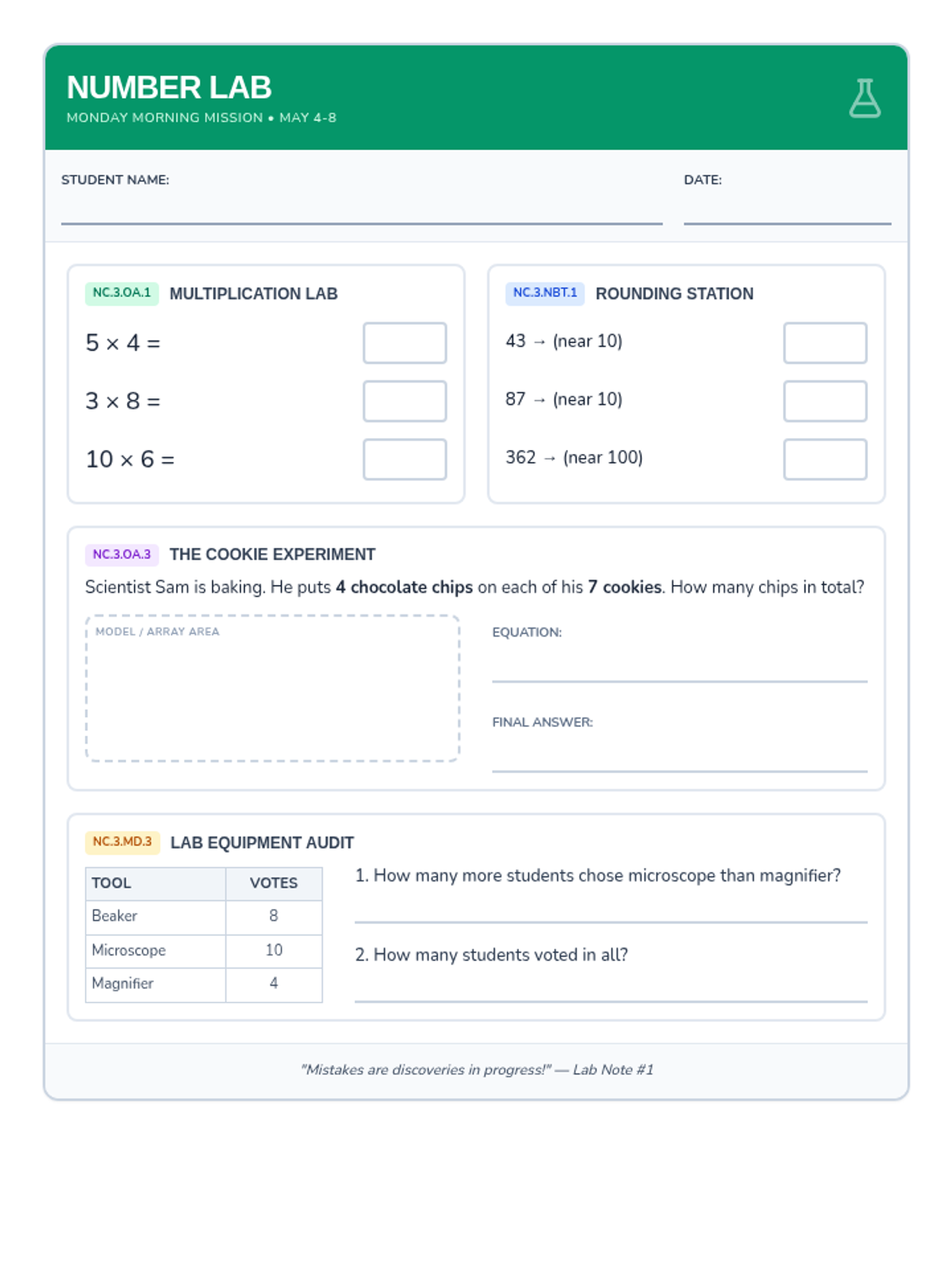
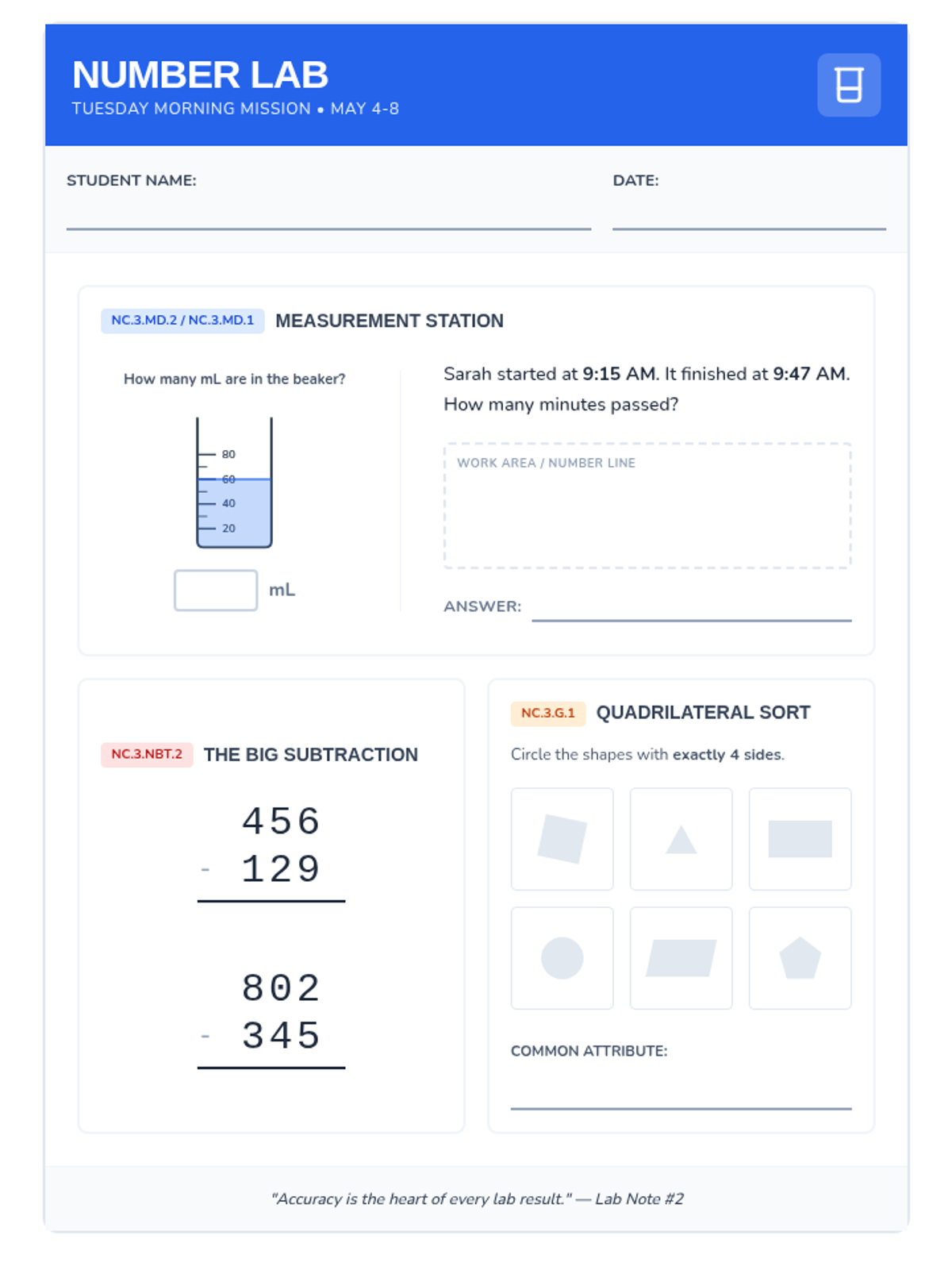
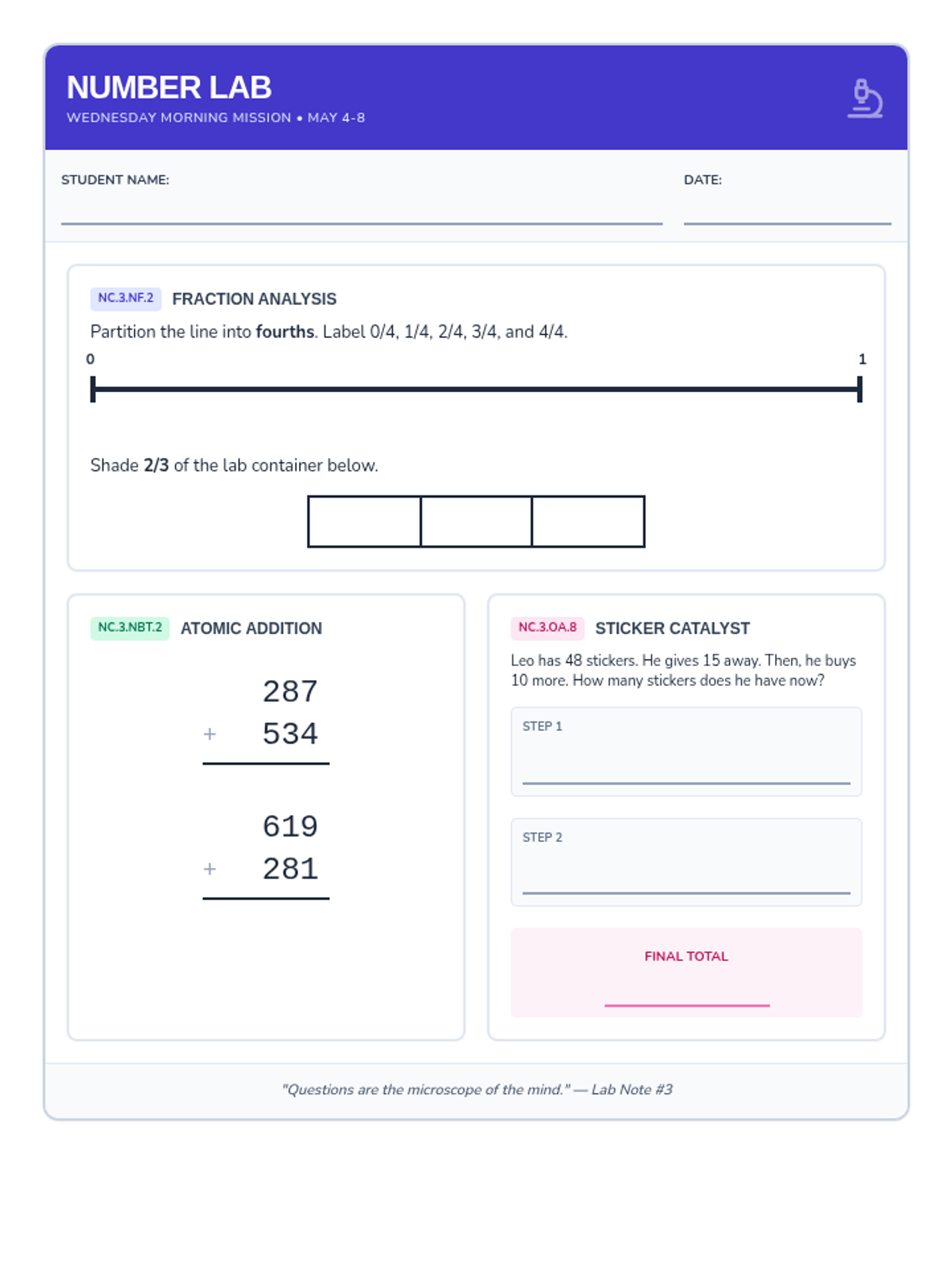
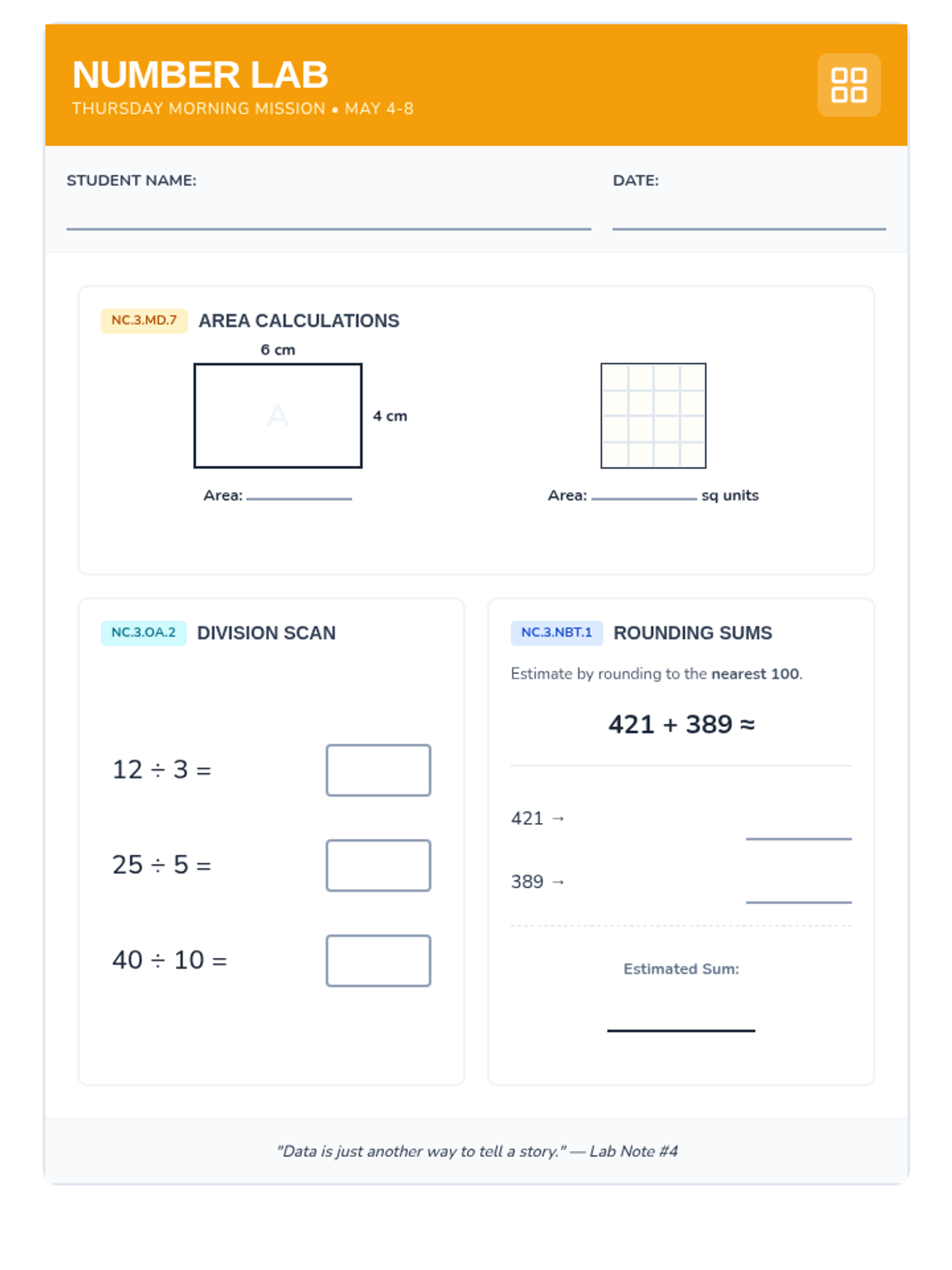
Foundational fraction equivalence, ordering, and operations across the rational number system. Addresses multi-digit computation, decimal conversions, and the distinction between rational and irrational numbers.
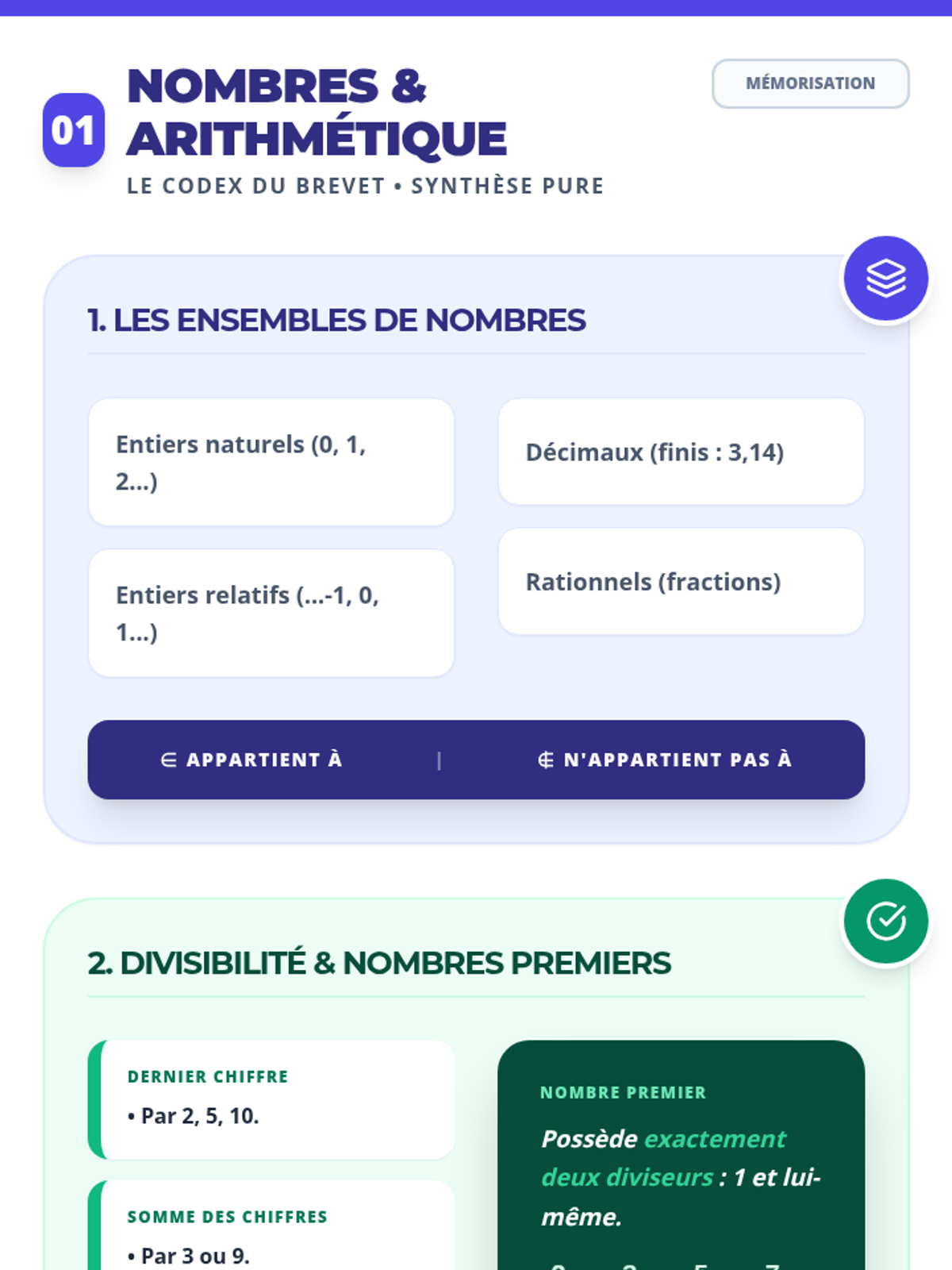
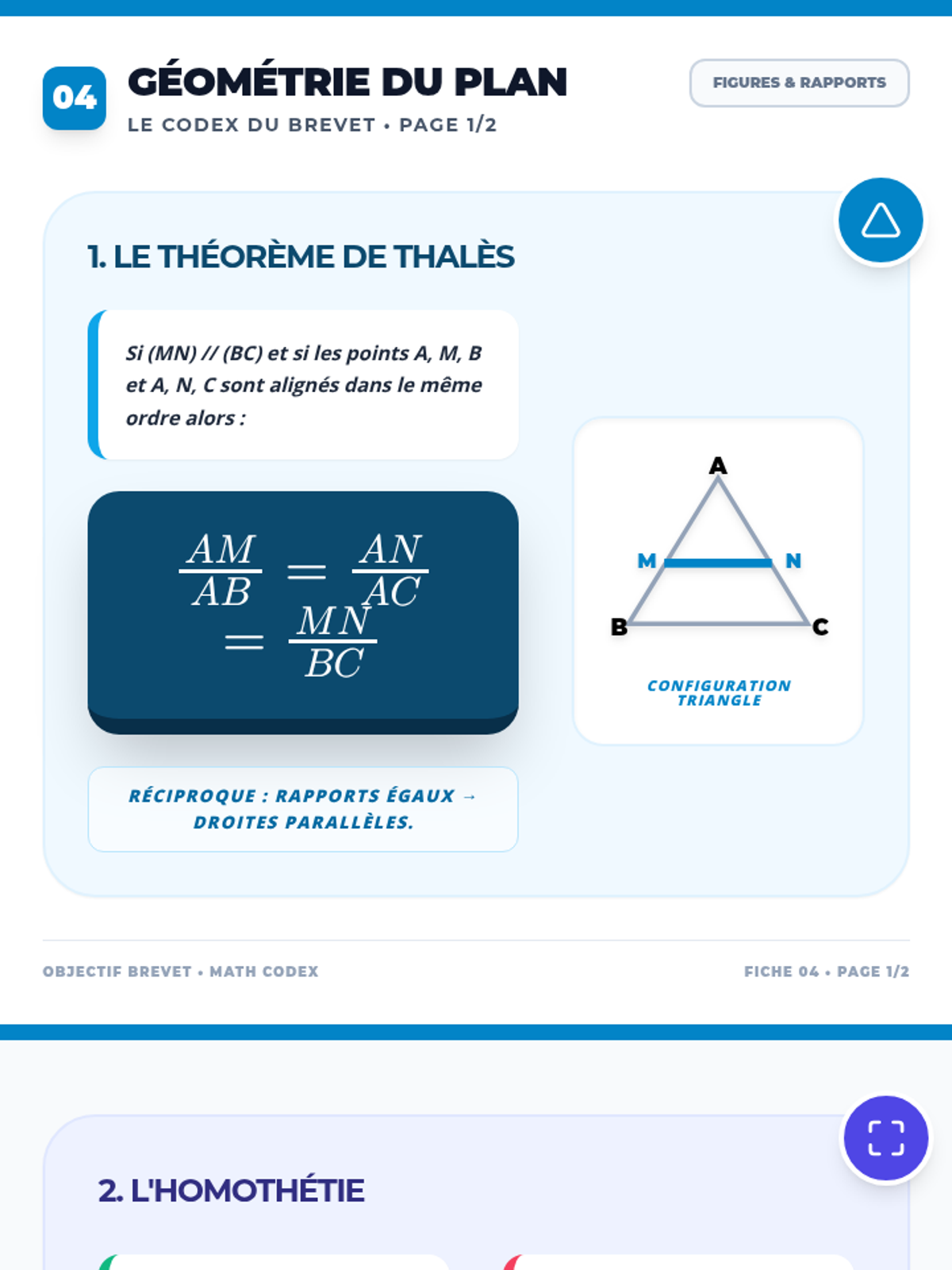
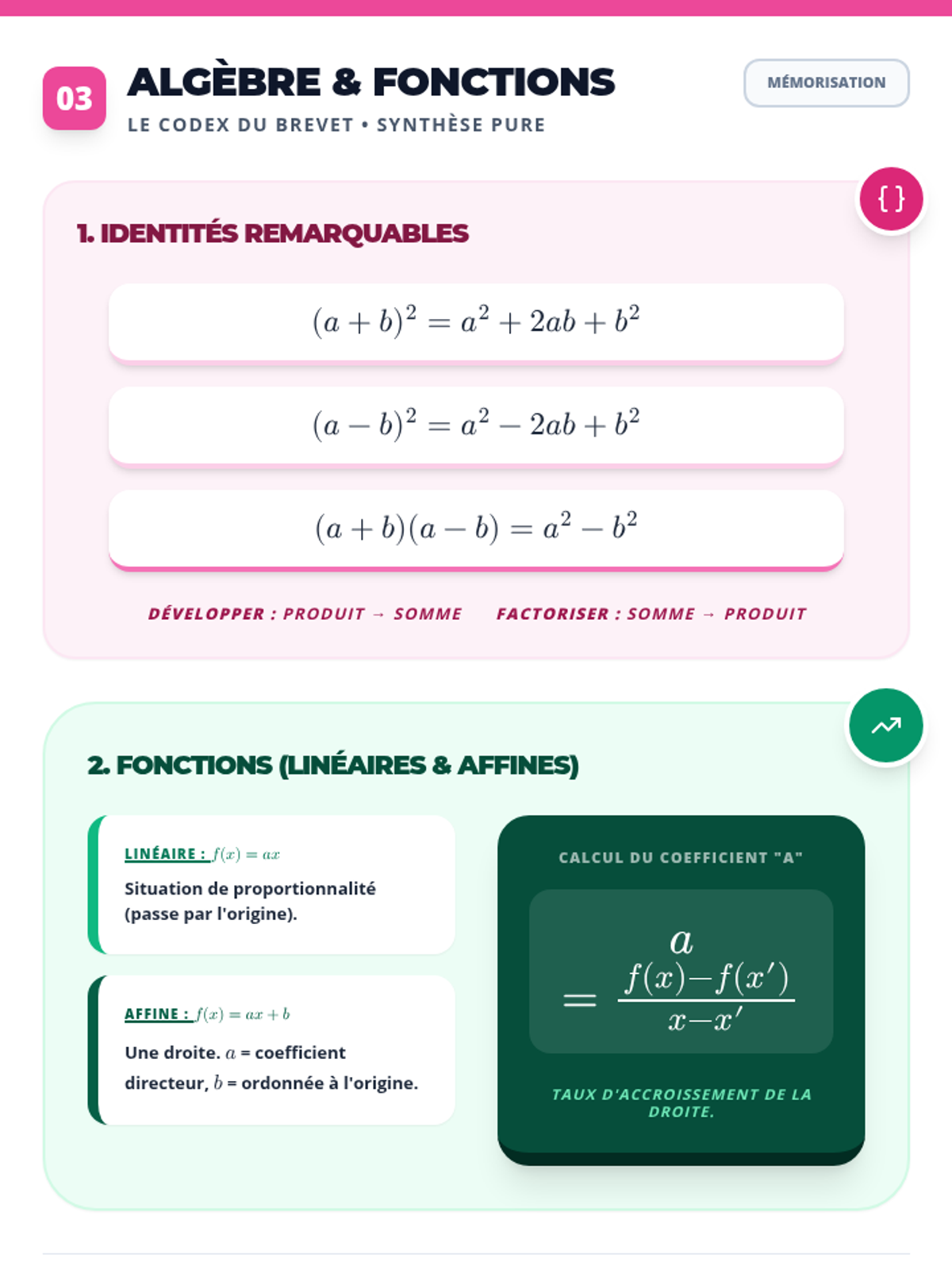
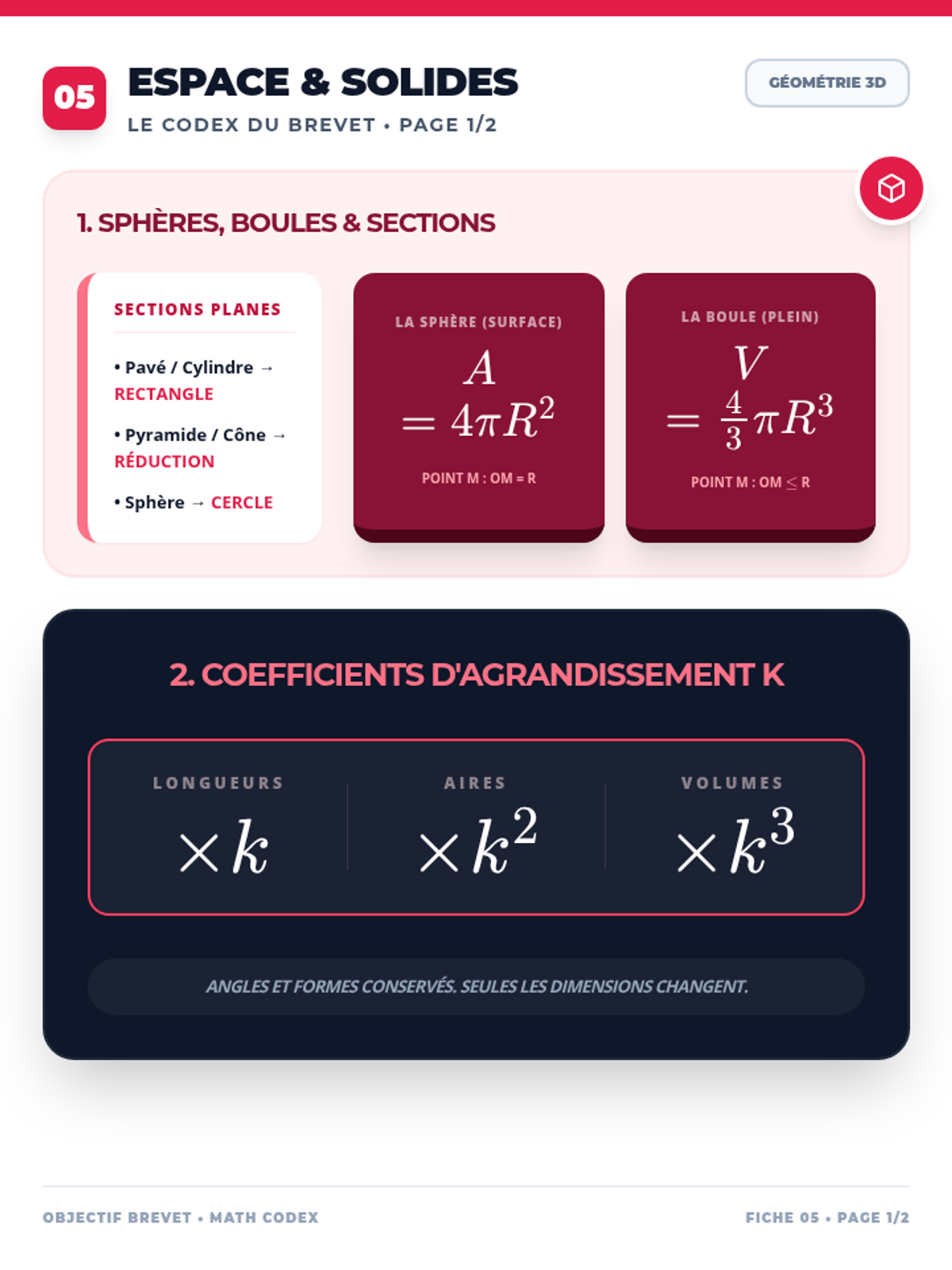
Une collection complète de fiches de révision et un diaporama dynamique pour maîtriser le programme de mathématiques de 3ème. Couvre l'arithmétique, l'algèbre, la géométrie et la trigonométrie avec des visuels clairs et modernes.
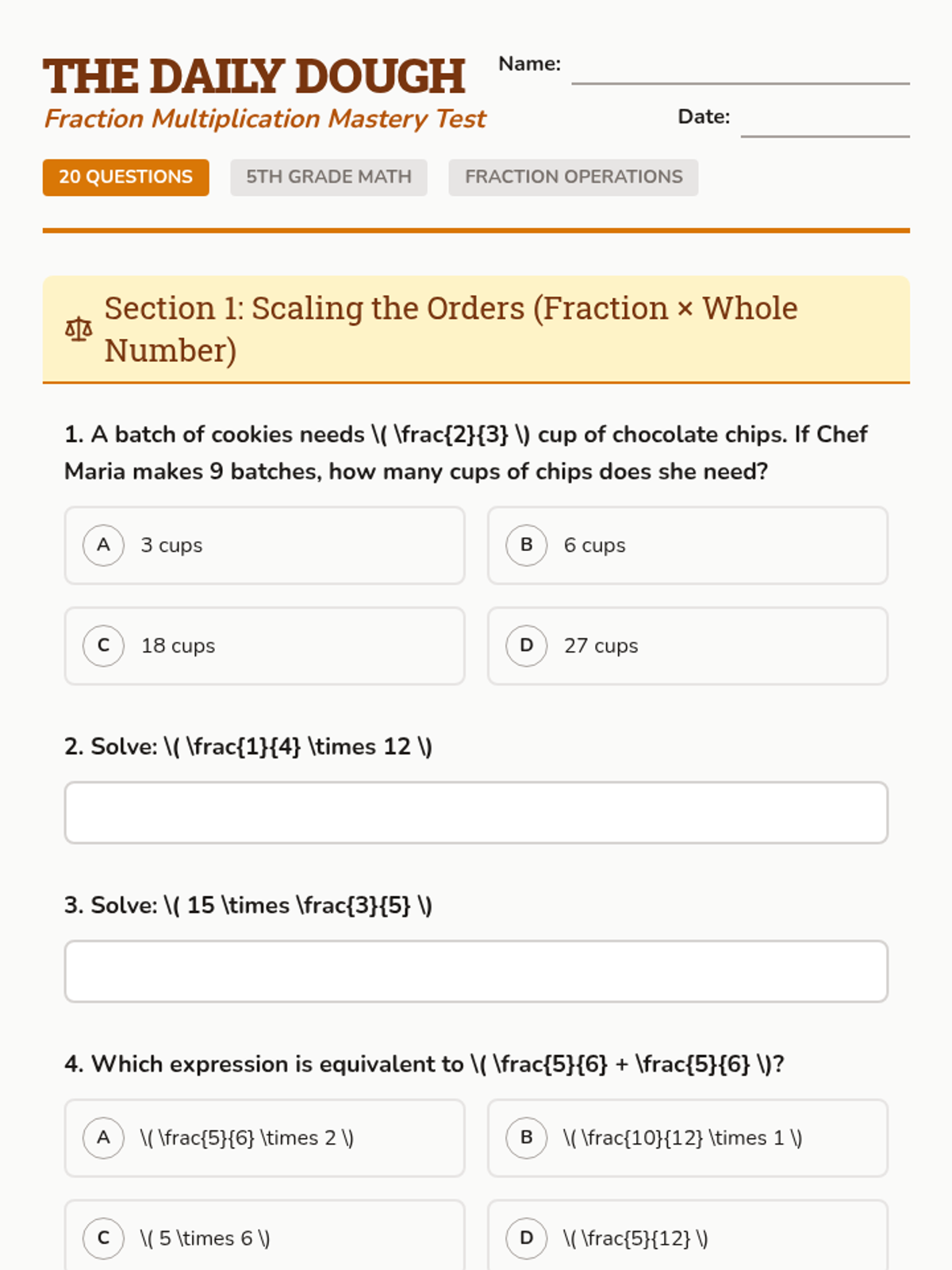
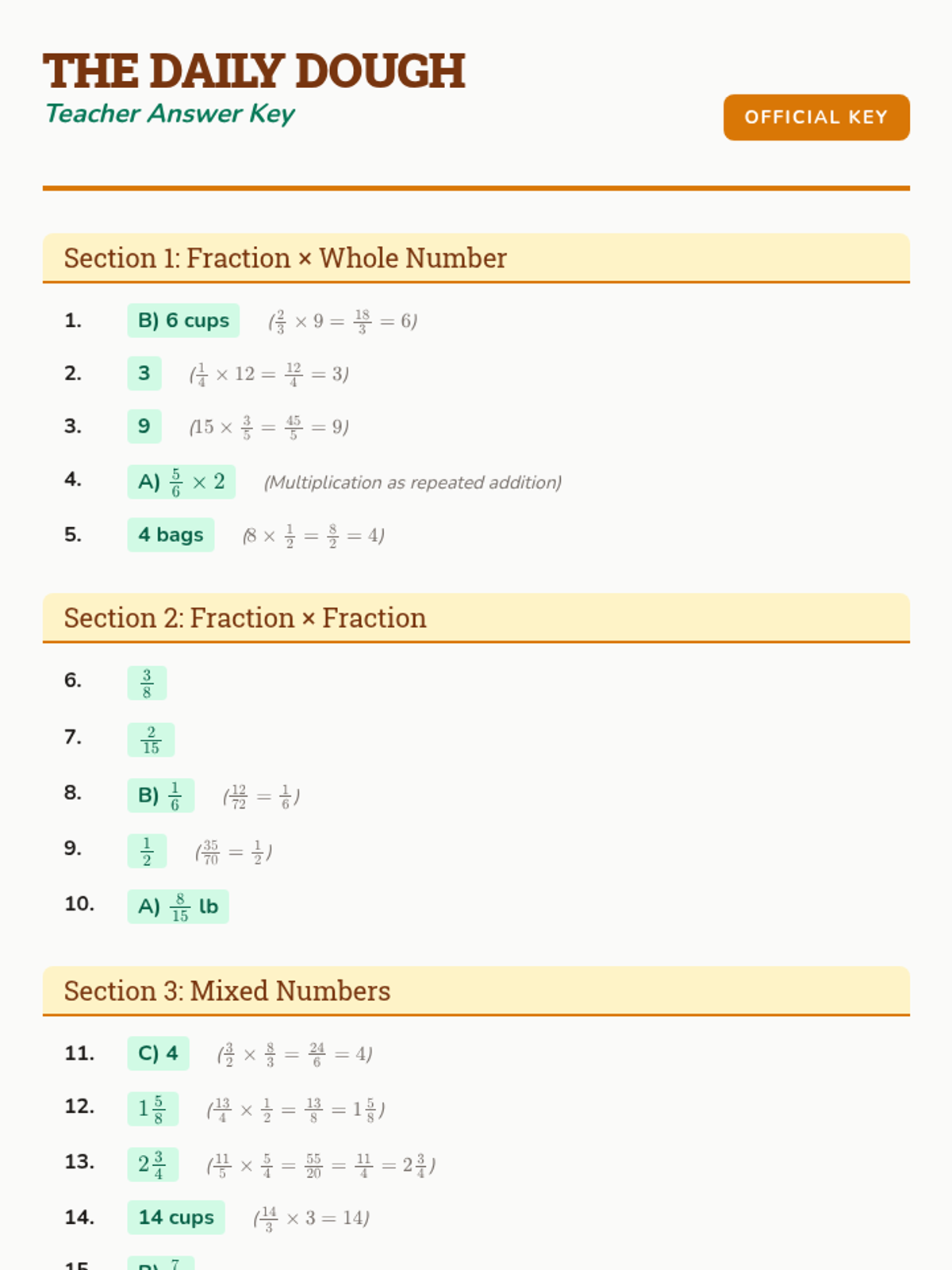
A comprehensive lesson on multiplying fractions, including fraction-by-whole-number, fraction-by-fraction, and mixed number multiplication, culminating in a bakery-themed mastery assessment.
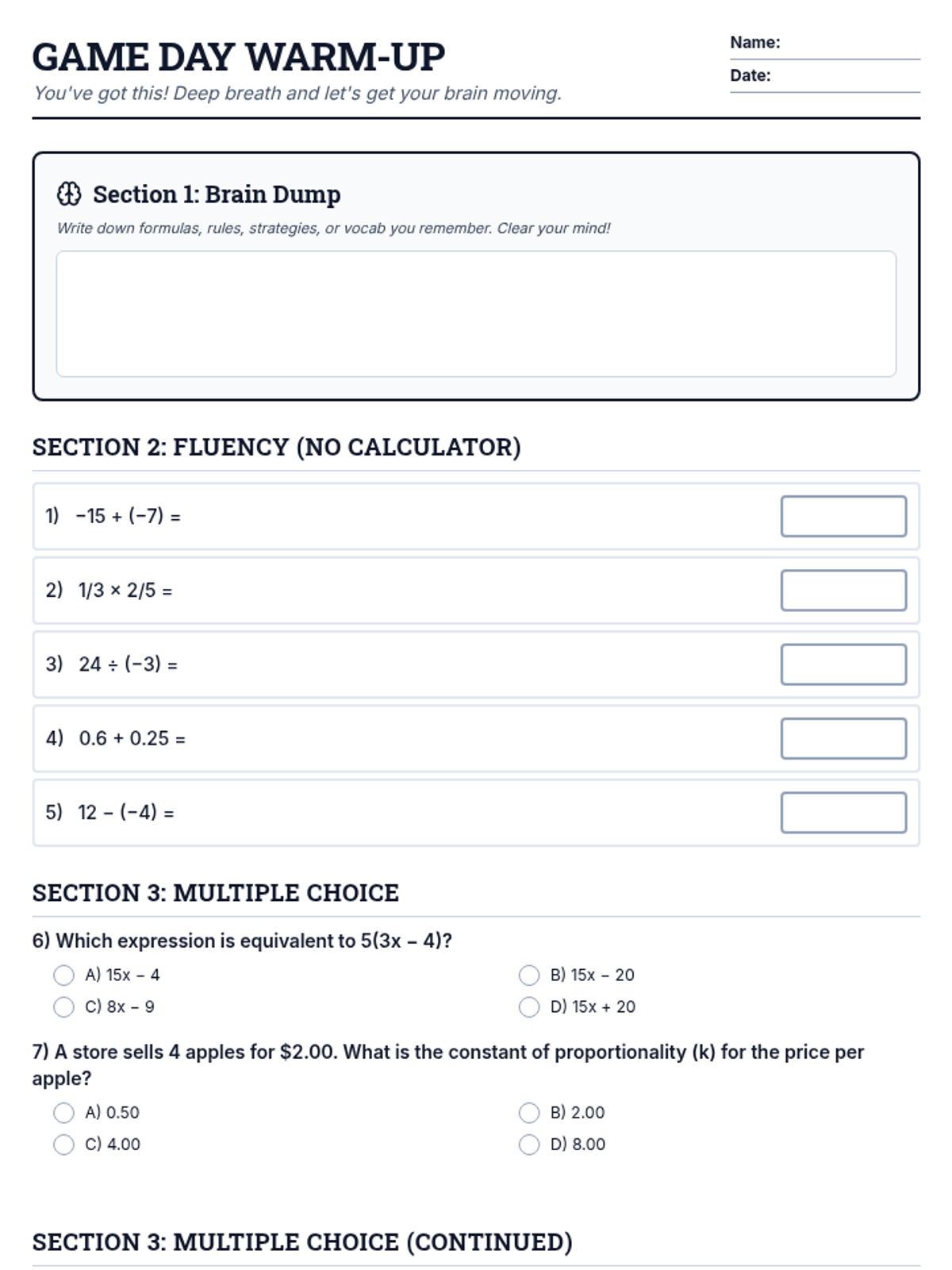
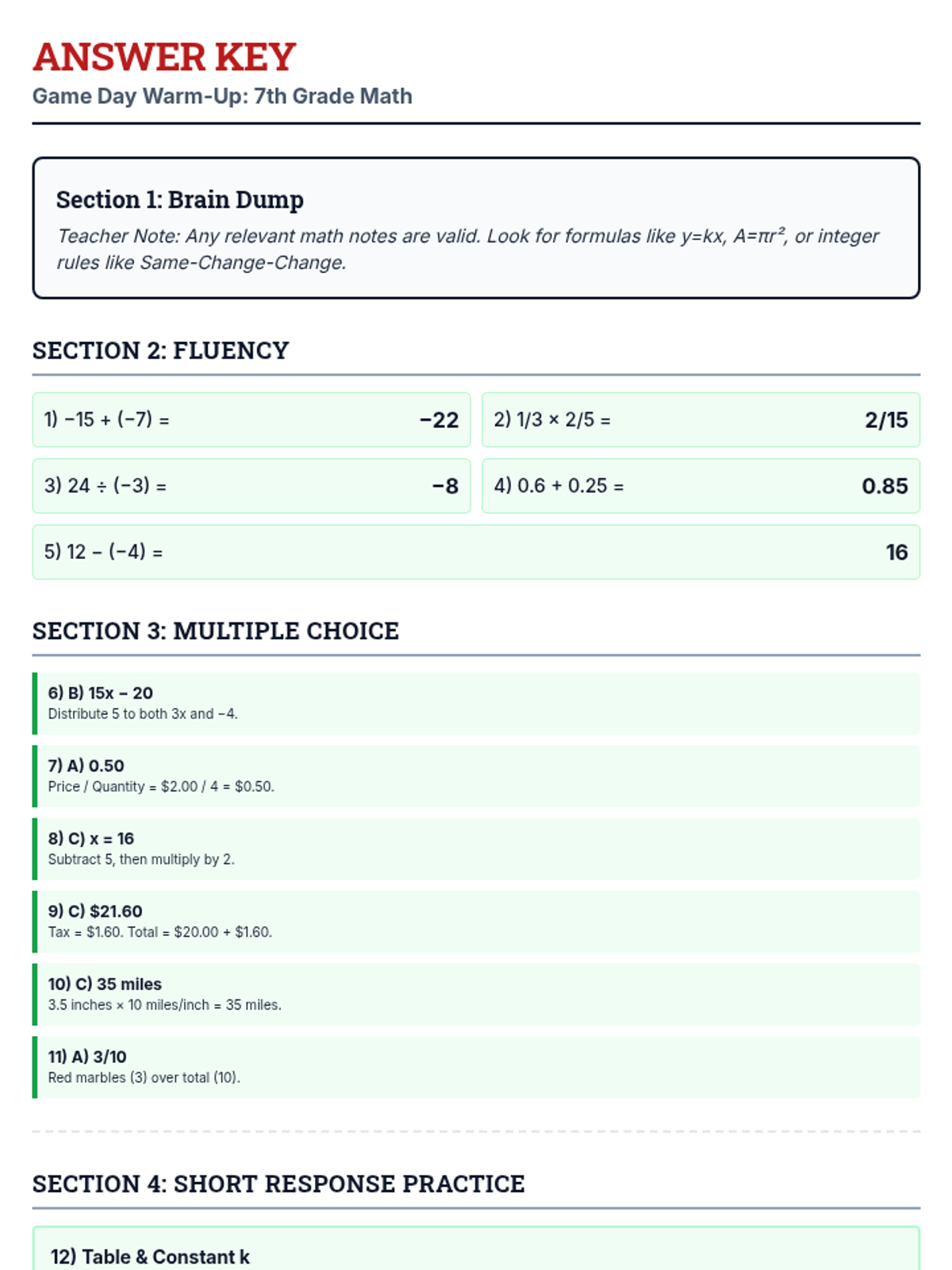
A low-pressure, confidence-building morning work packet designed for 7th-grade students on the day of their state math exam to help them warm up their thinking.
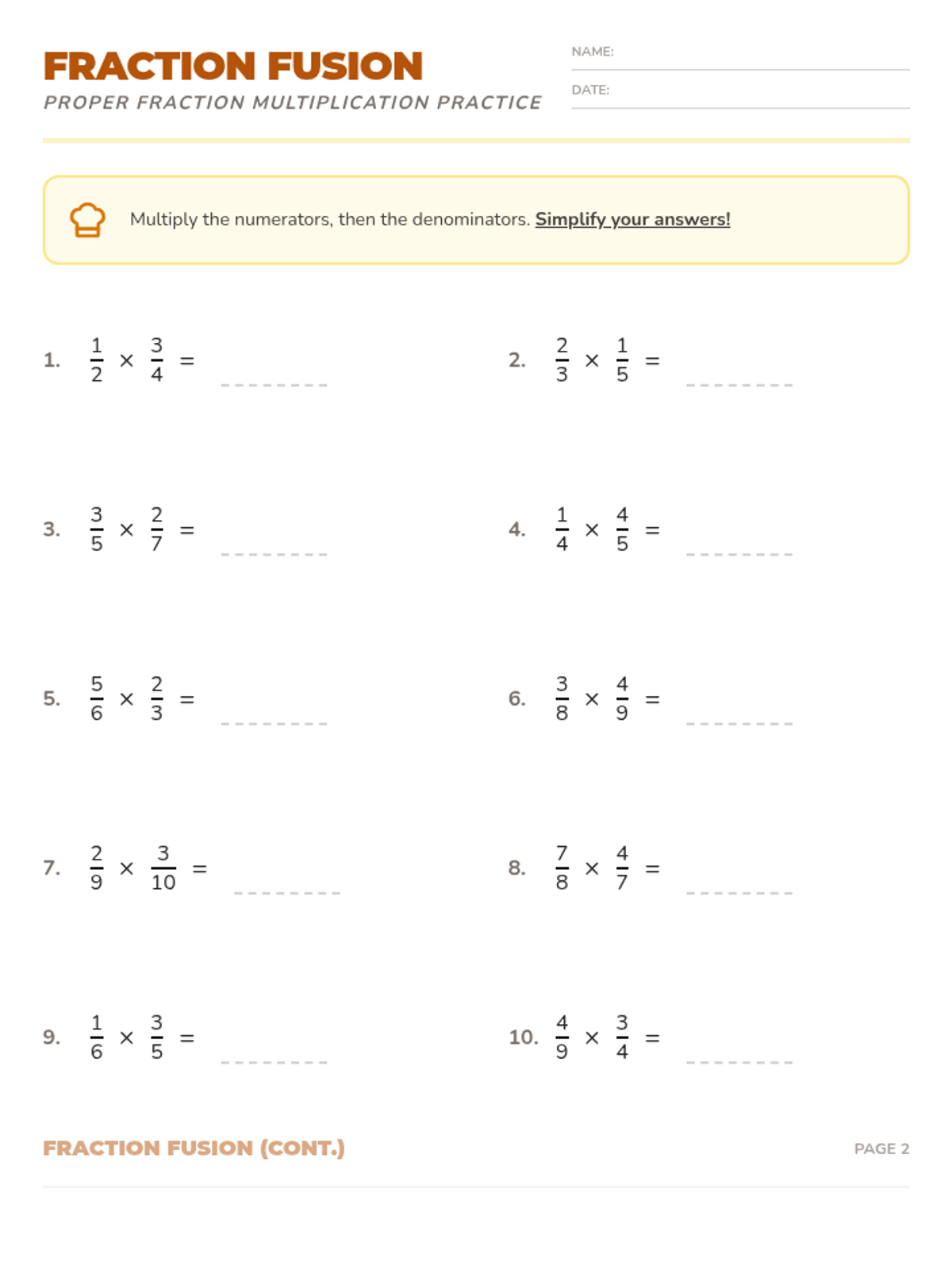
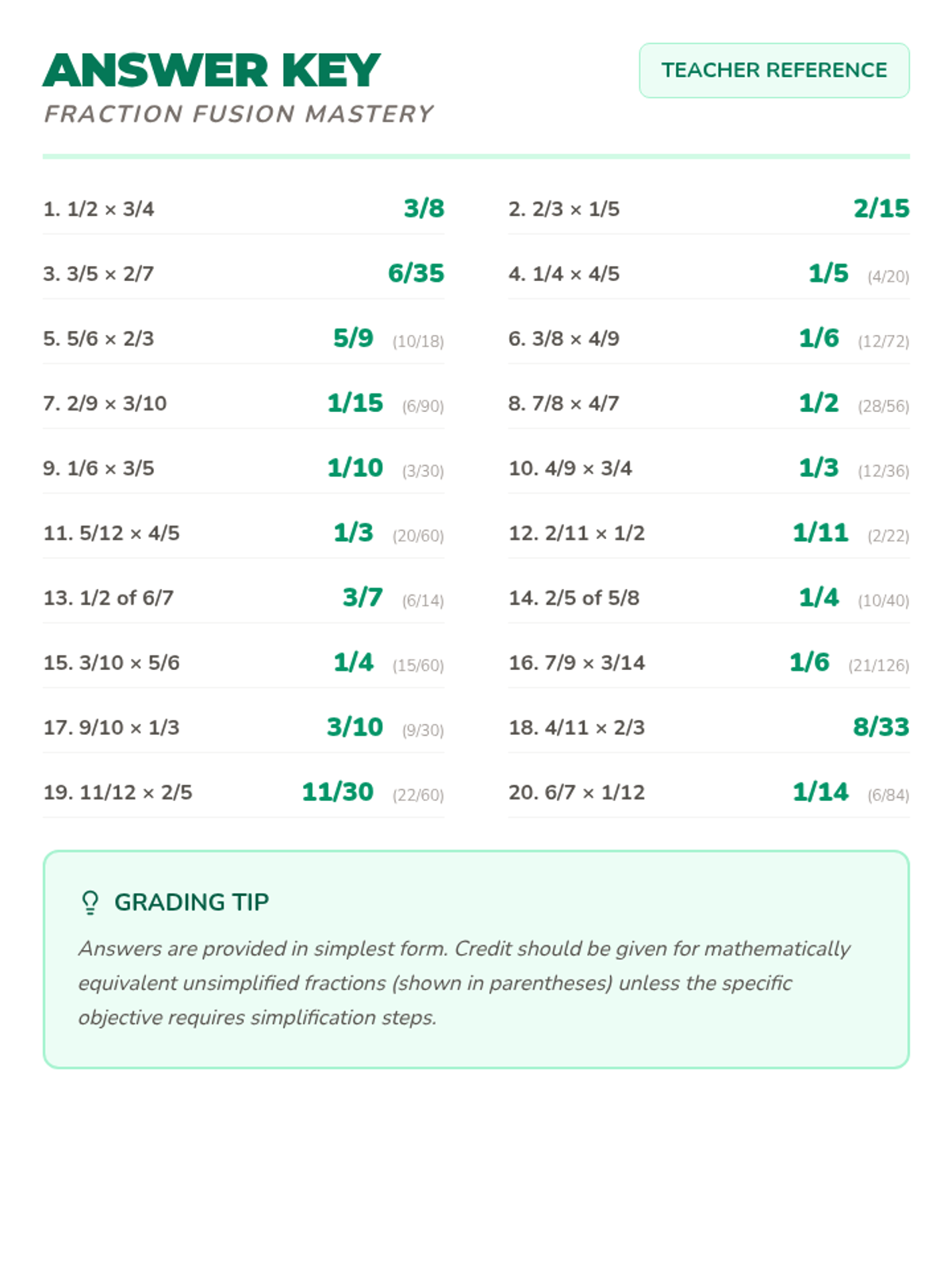
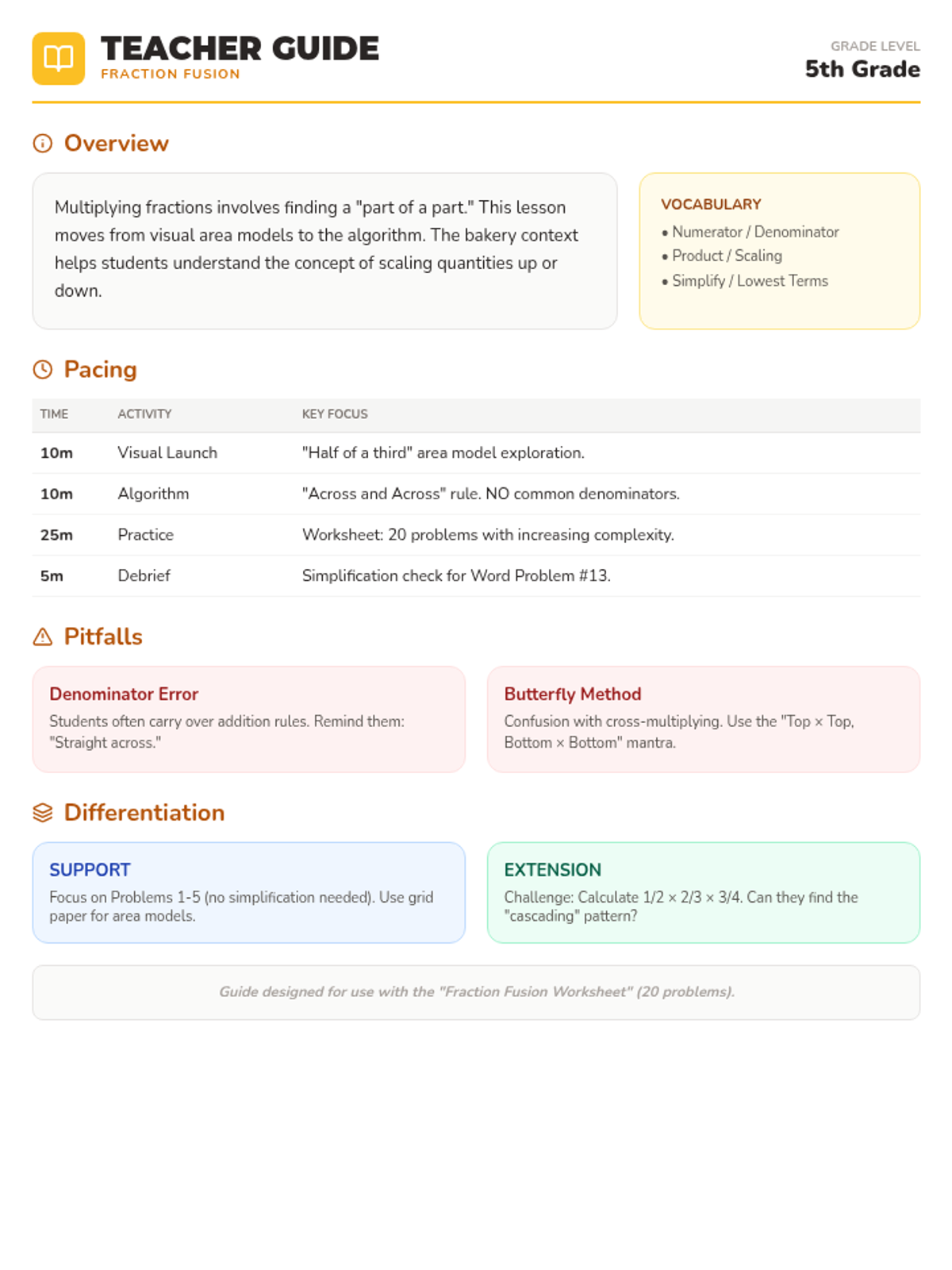
Students will learn to multiply proper fractions by understanding the area model and applying the standard algorithm. This lesson includes visual explanations, 20 practice problems, and teacher facilitation notes themed around a bakery.
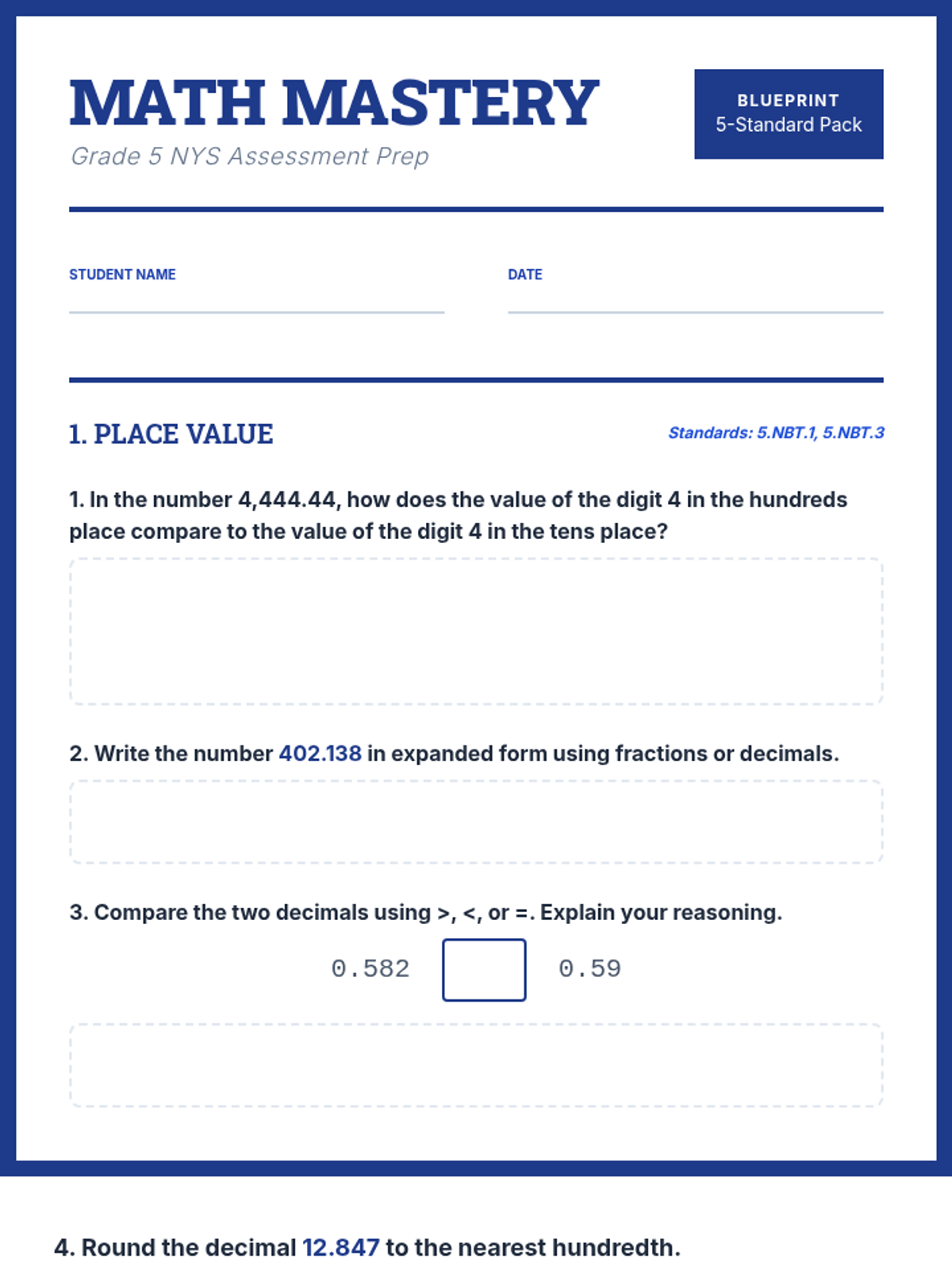
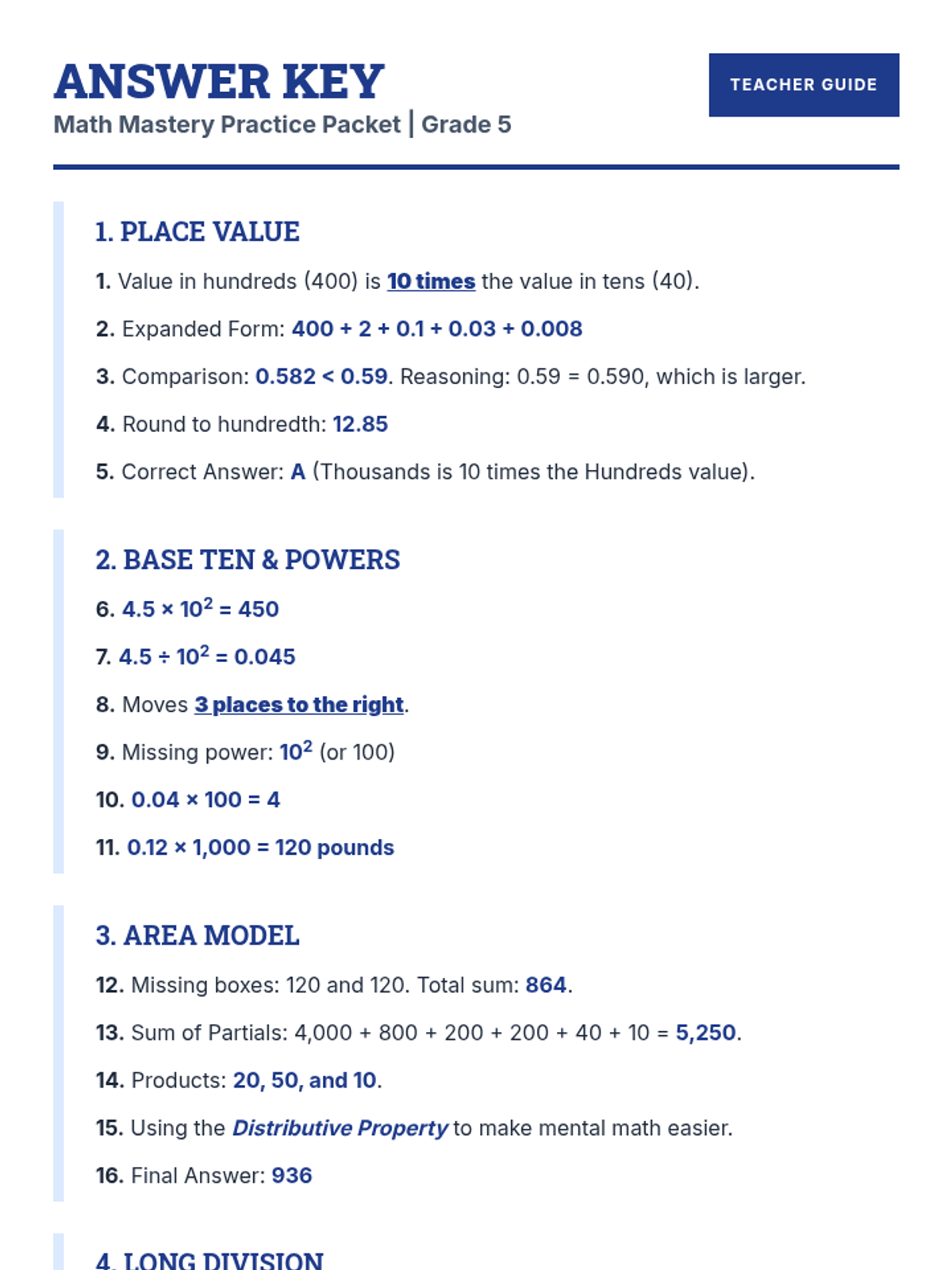
A comprehensive practice packet and answer key designed for 5th-grade students preparing for NYS math assessments, covering Place Value, Base 10, Area Model, Word Problems, and Long Division.
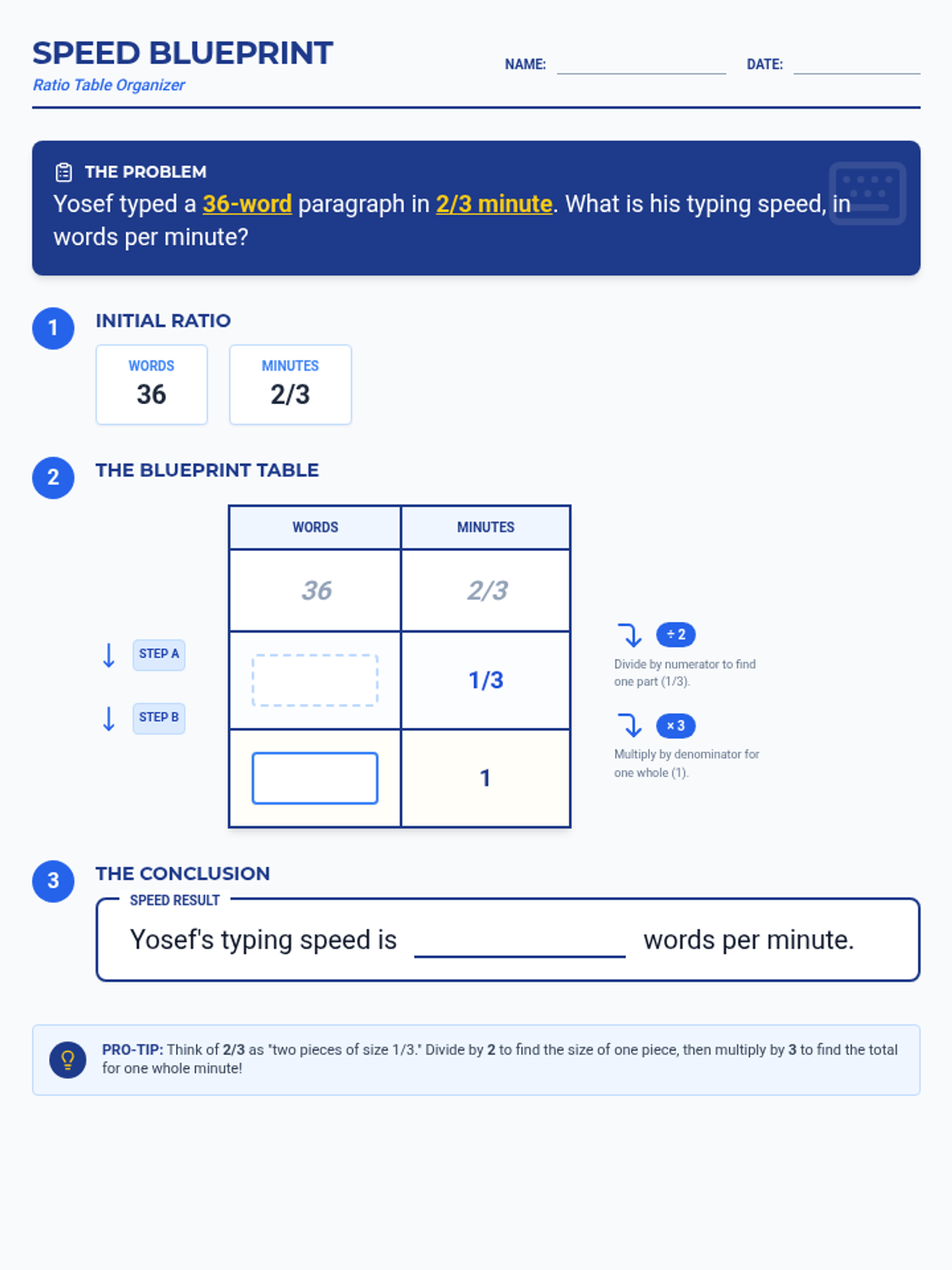
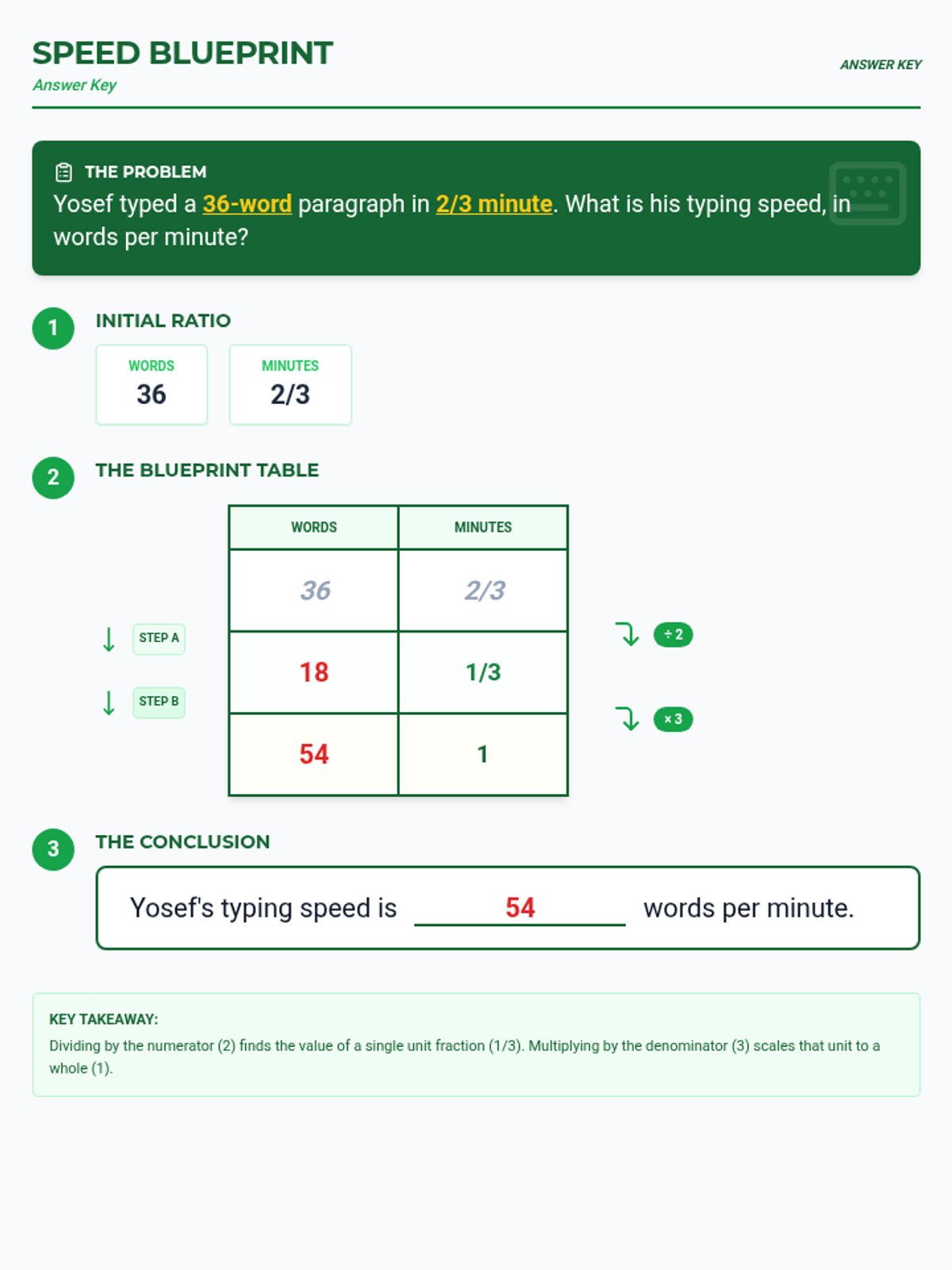
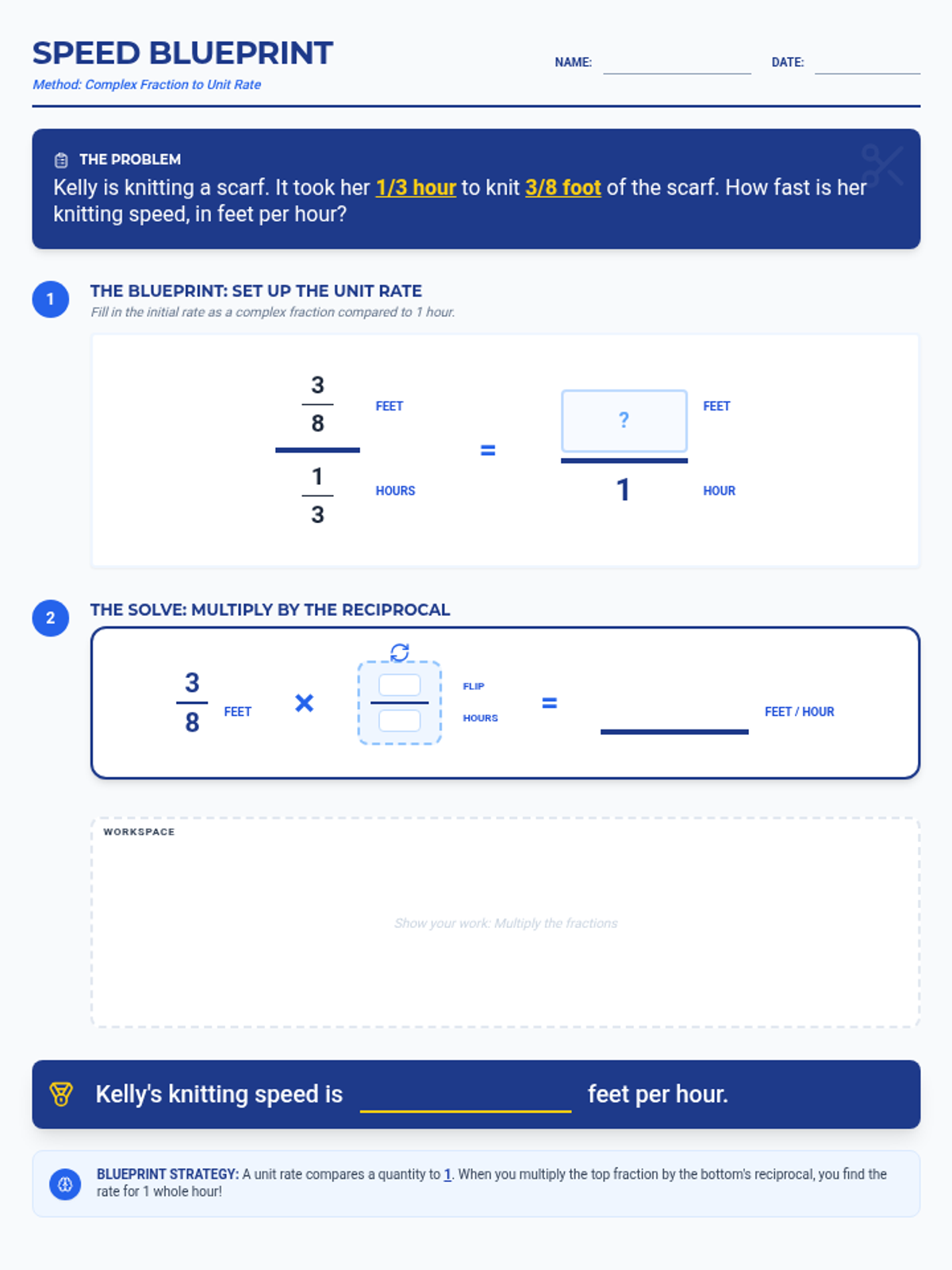
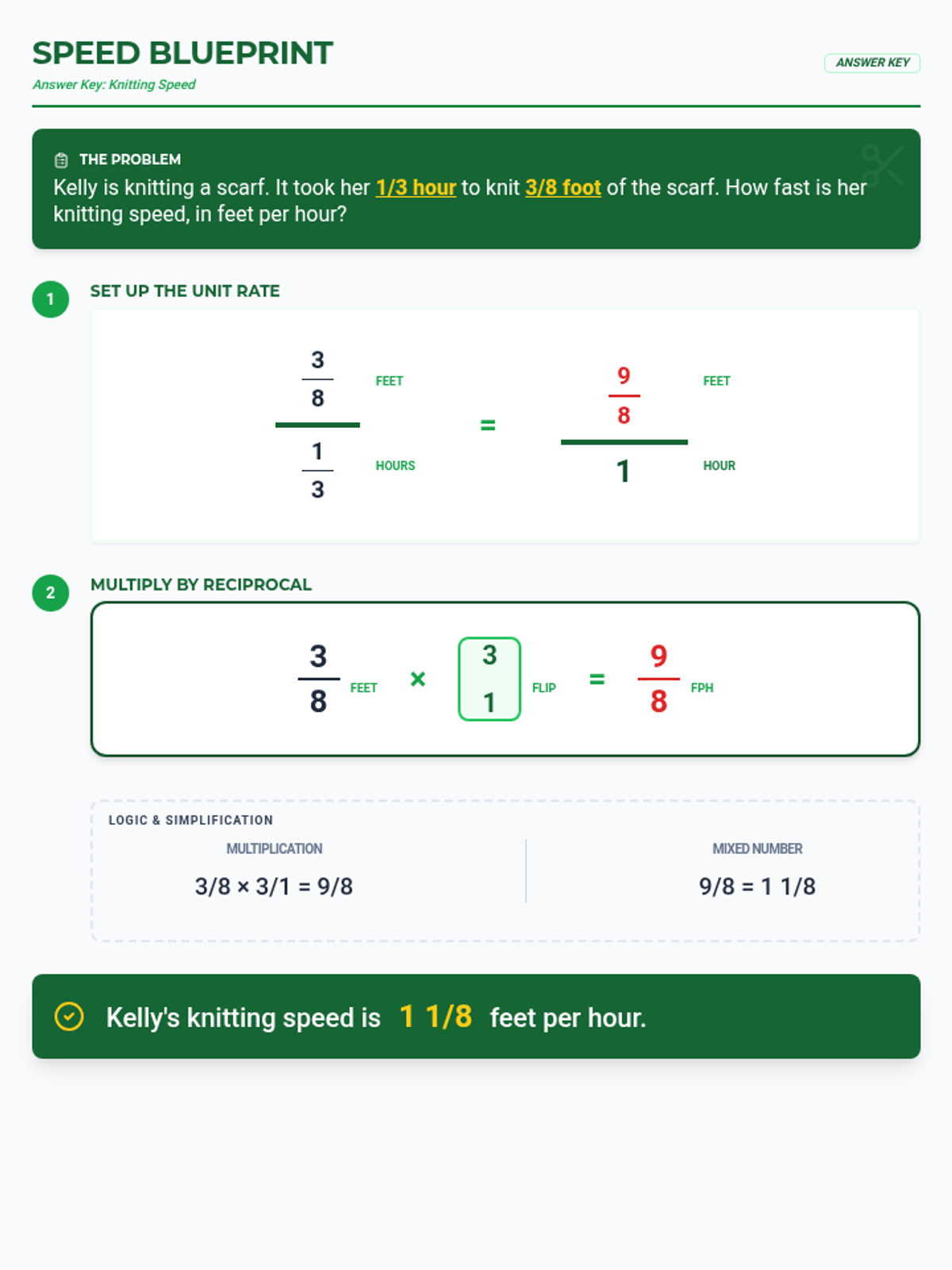
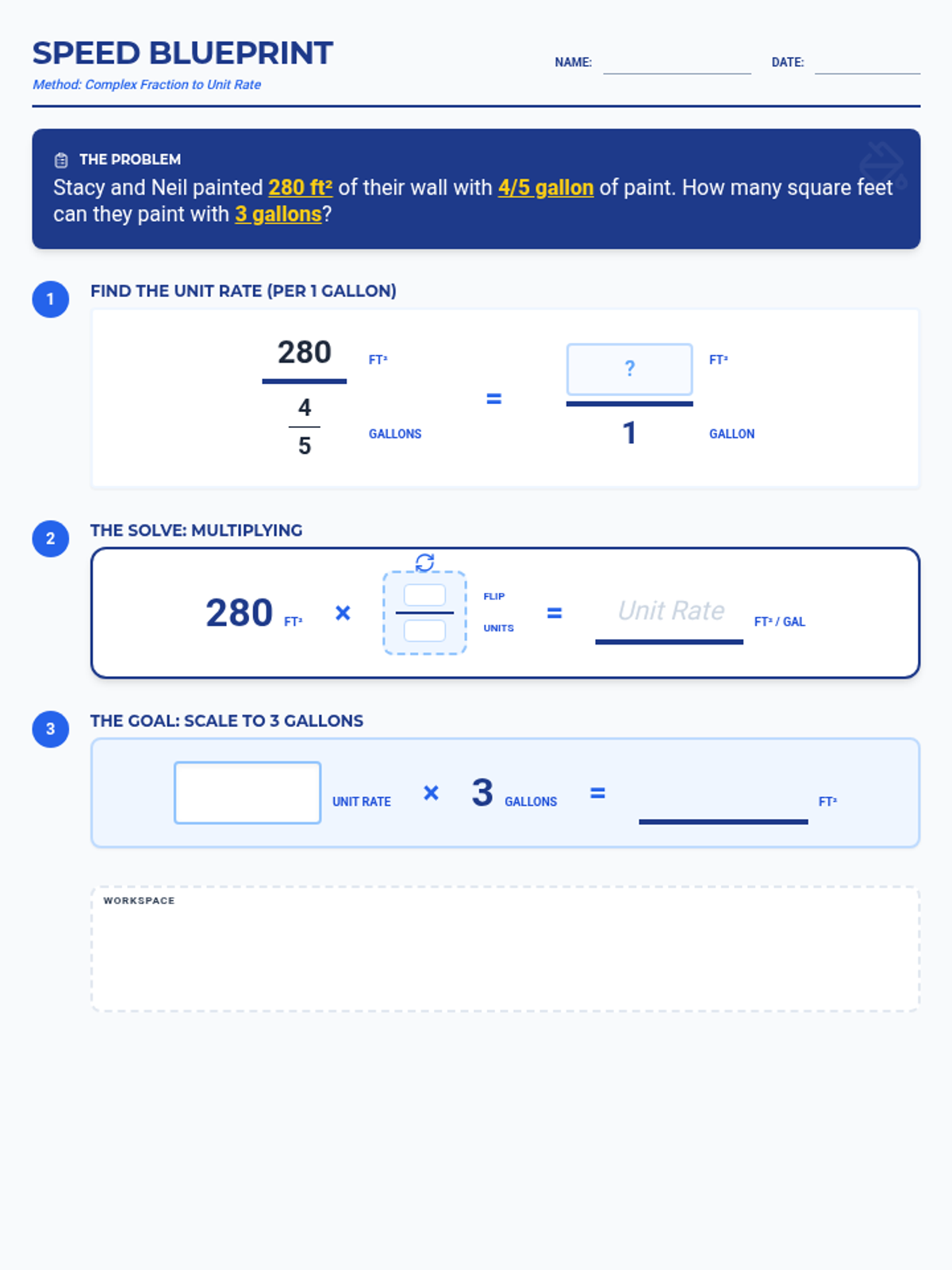
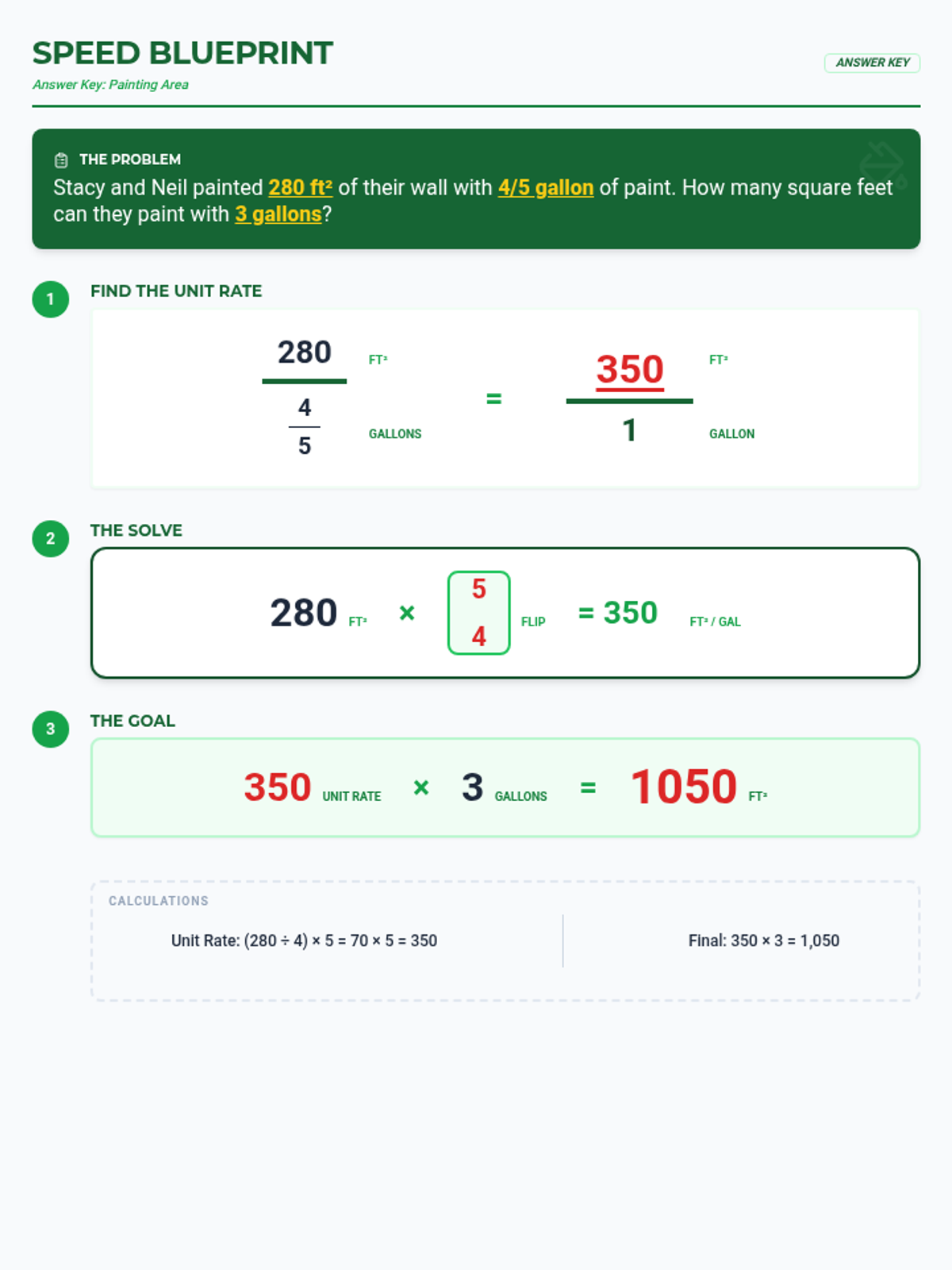
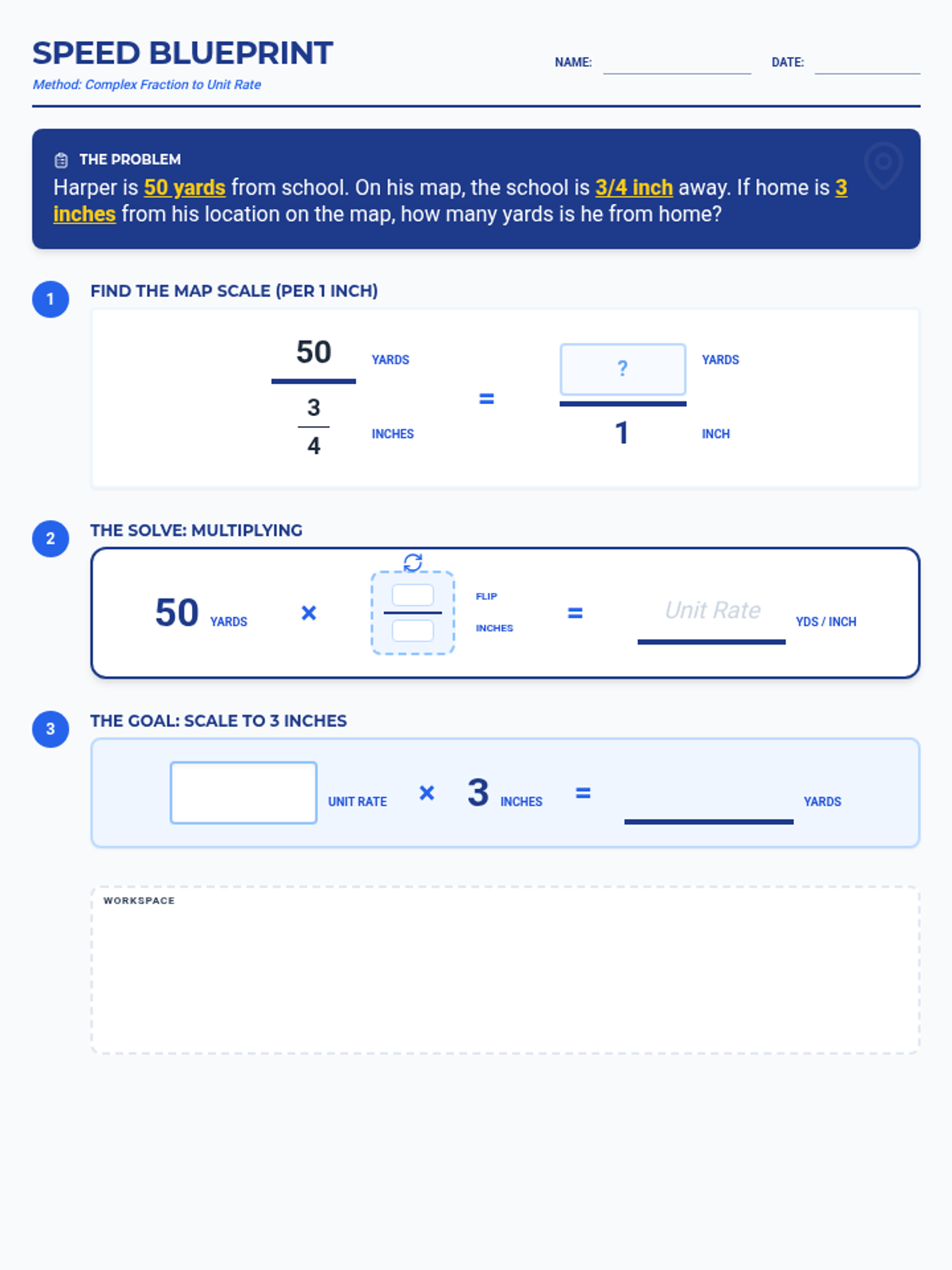
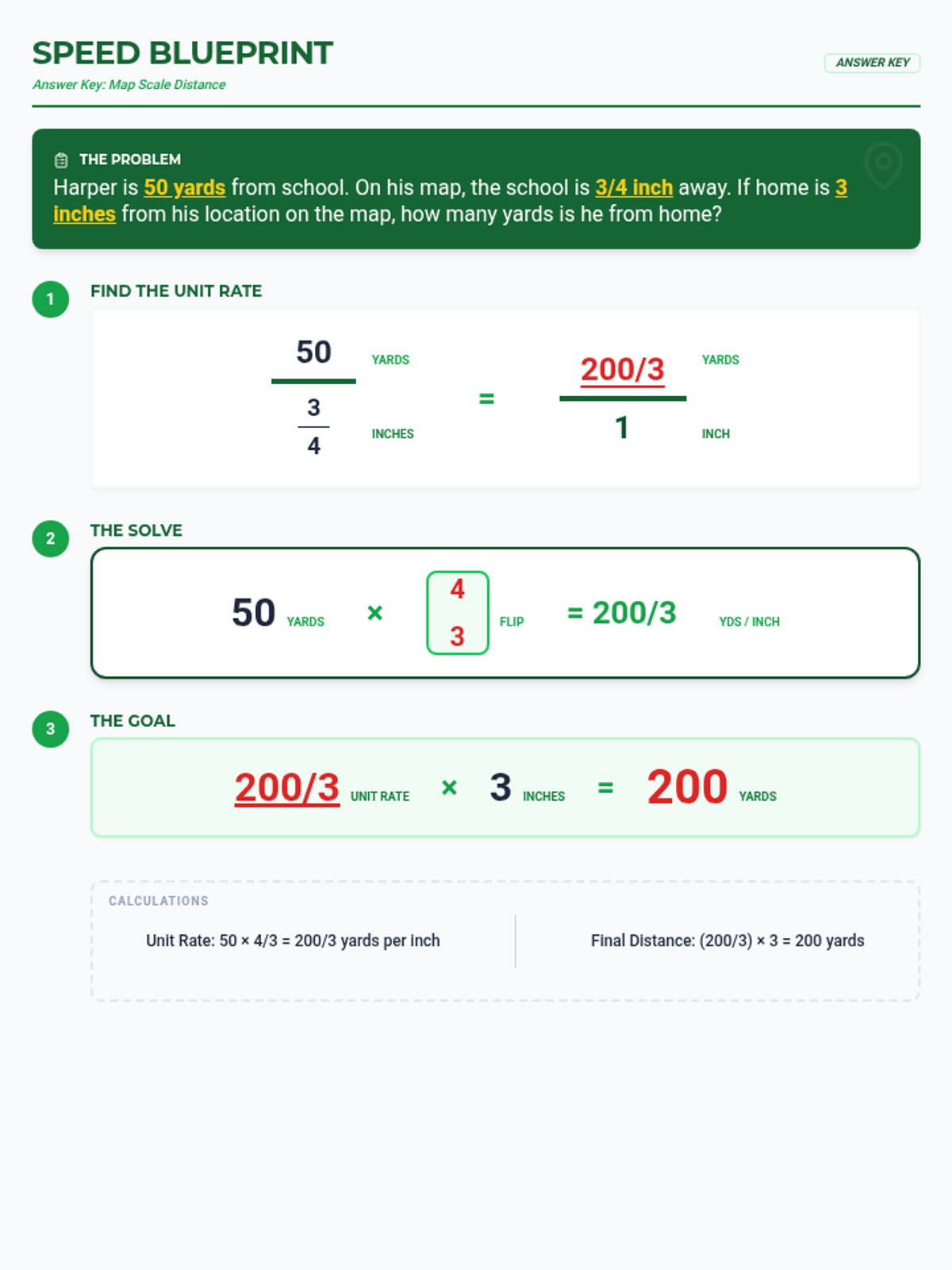
A focused lesson on calculating unit rates by multiplying by the reciprocal, specifically designed to help students master the "keep-change-flip" strategy for fractional rates.
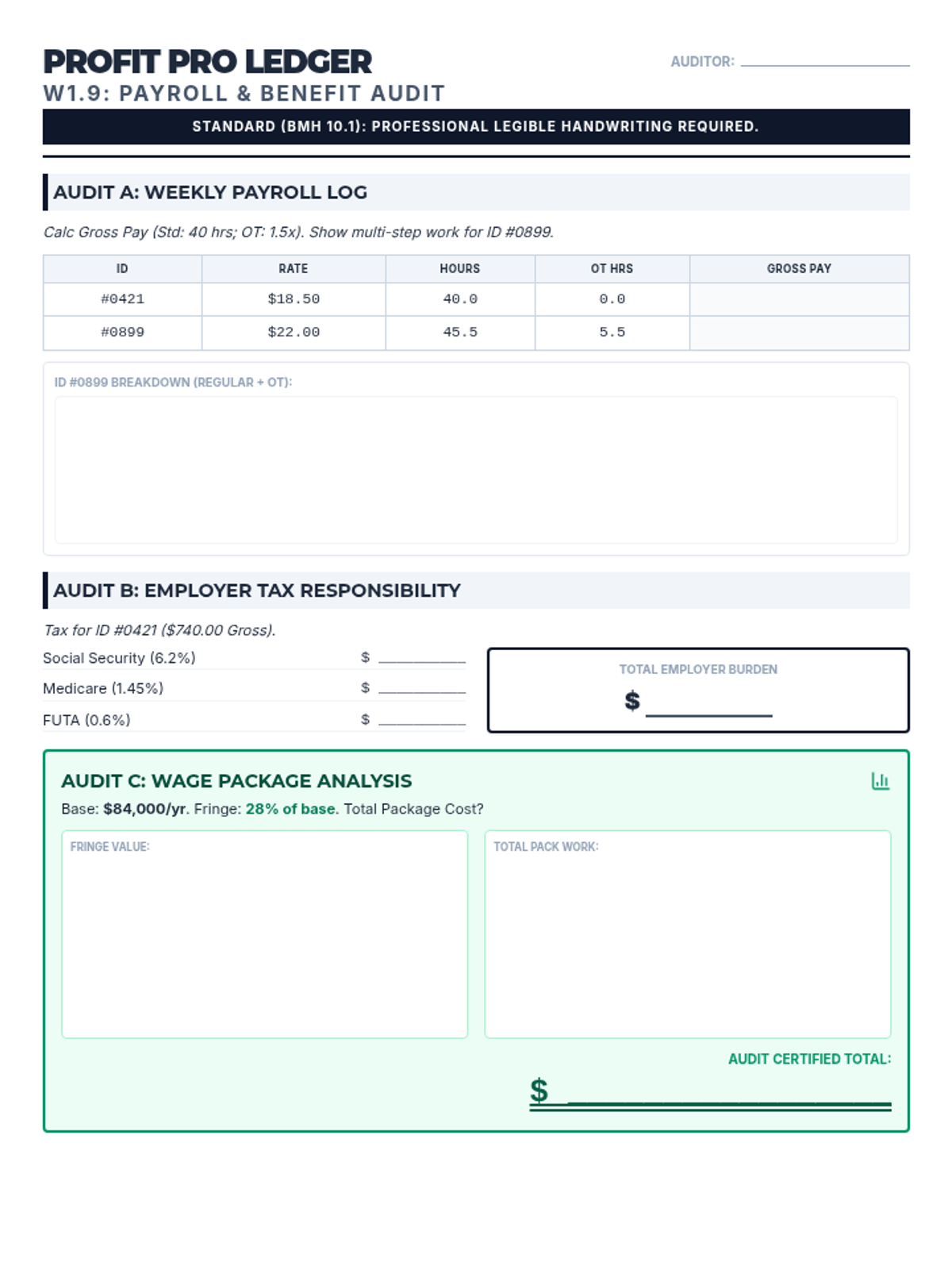
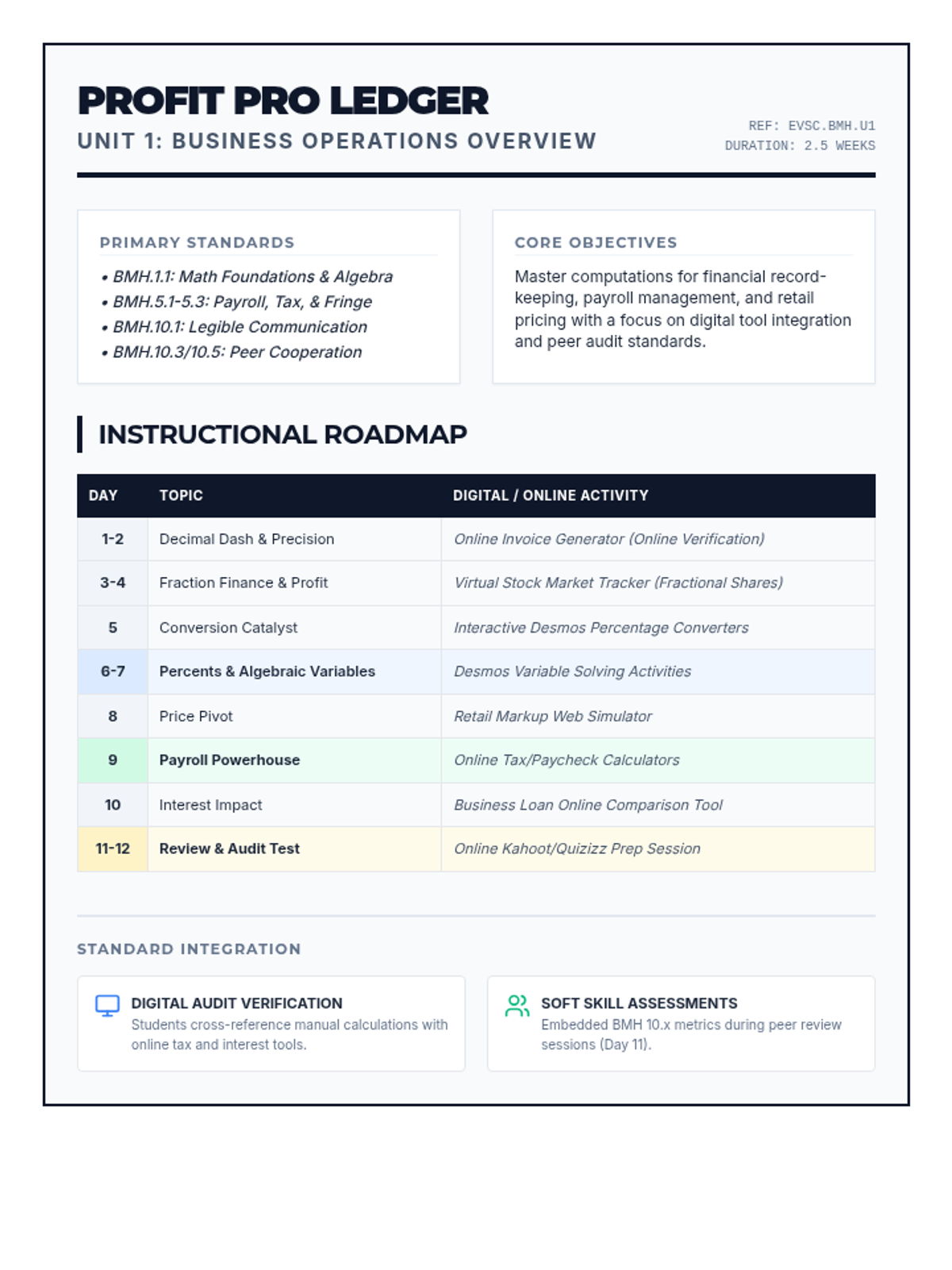
Calculate employee payroll, employer taxes, and fringe benefits while analyzing the total wage package impact.
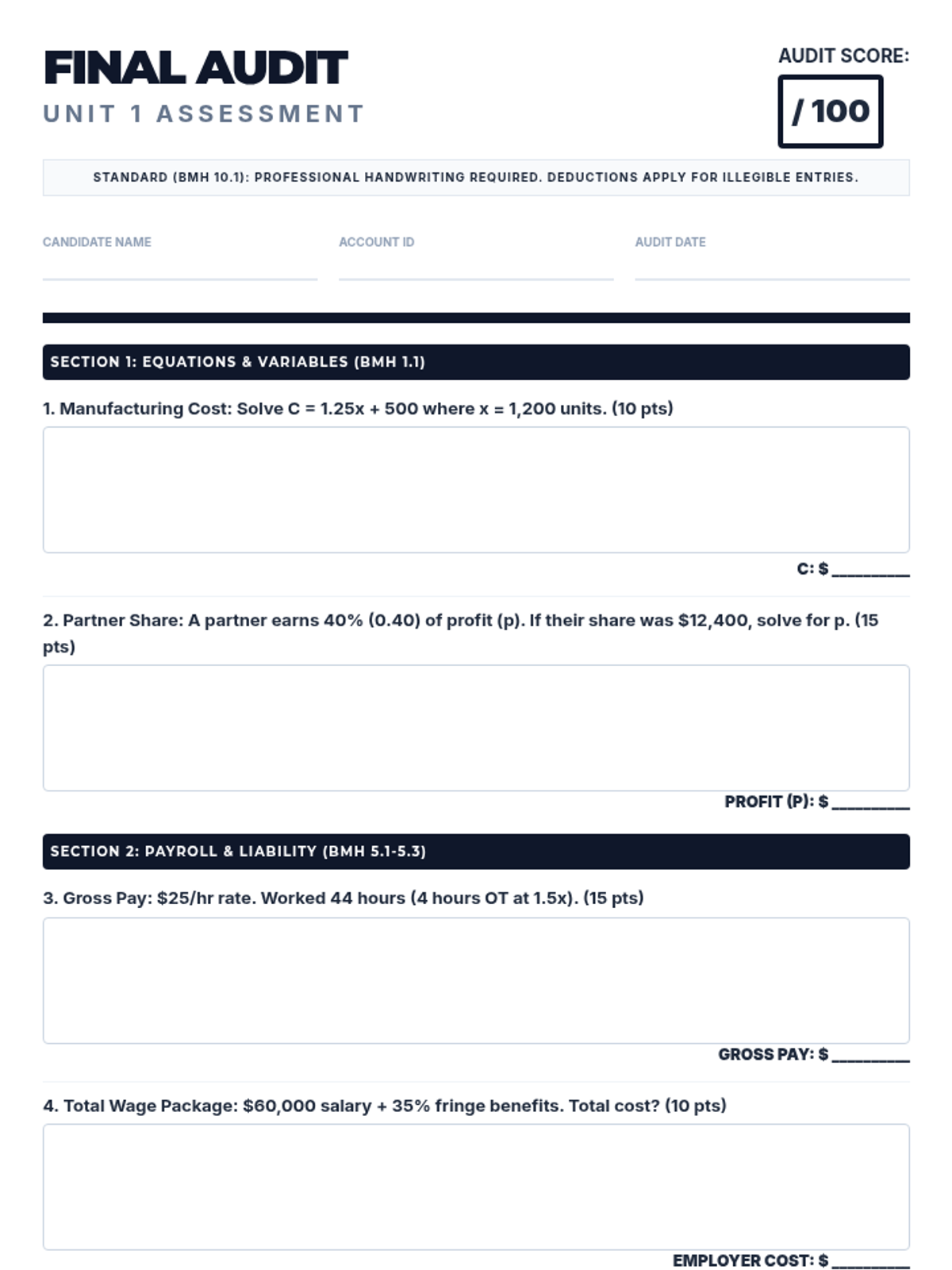
A summative assessment covering decimal, fraction, and percentage operations in business contexts.
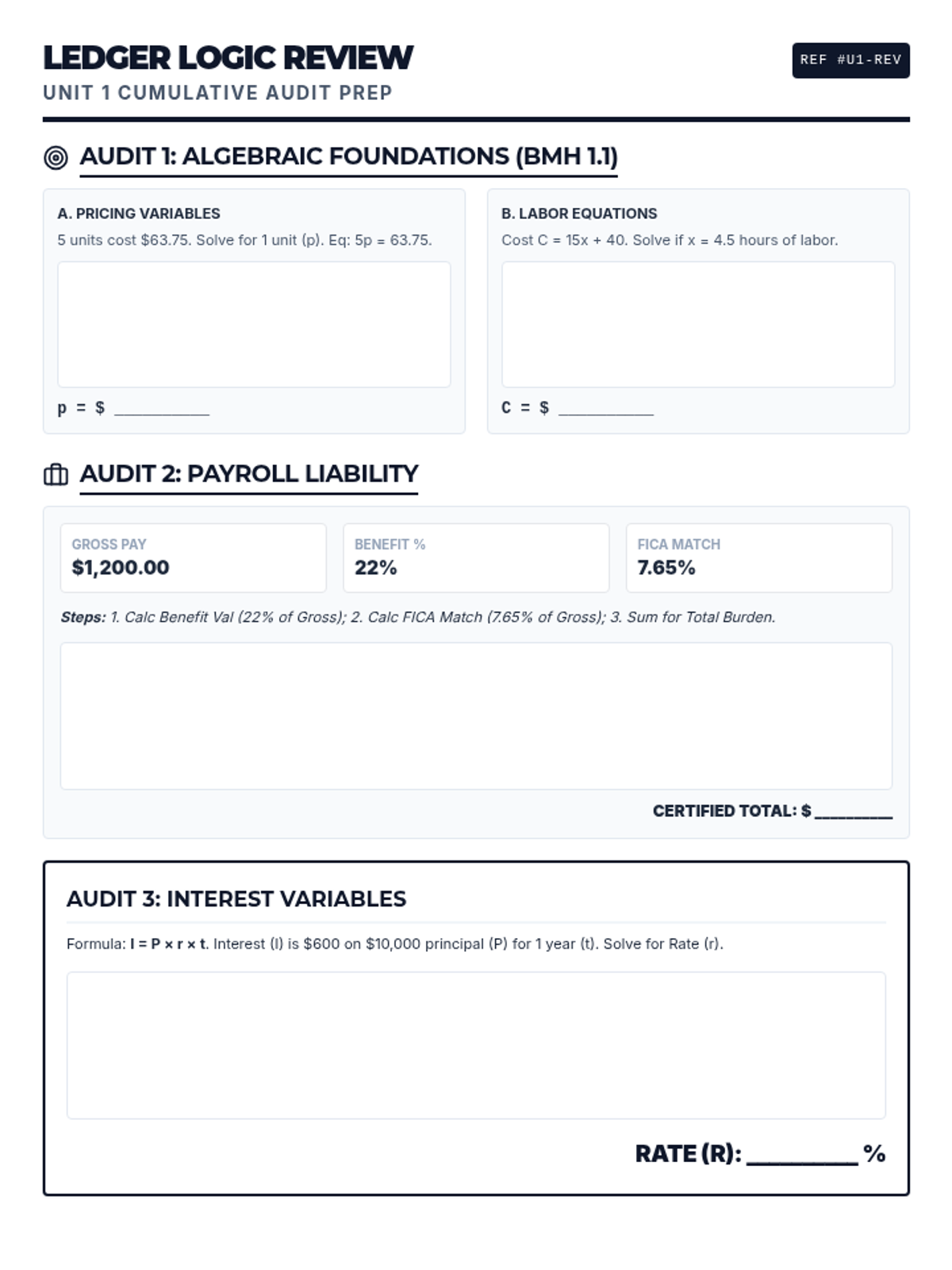
A comprehensive review of all unit operations and business applications in preparation for the assessment.
Mastering the fluid movement between fractions, decimals, and percentages for financial reporting.
Applying fraction addition and subtraction to inventory management and partial unit production.
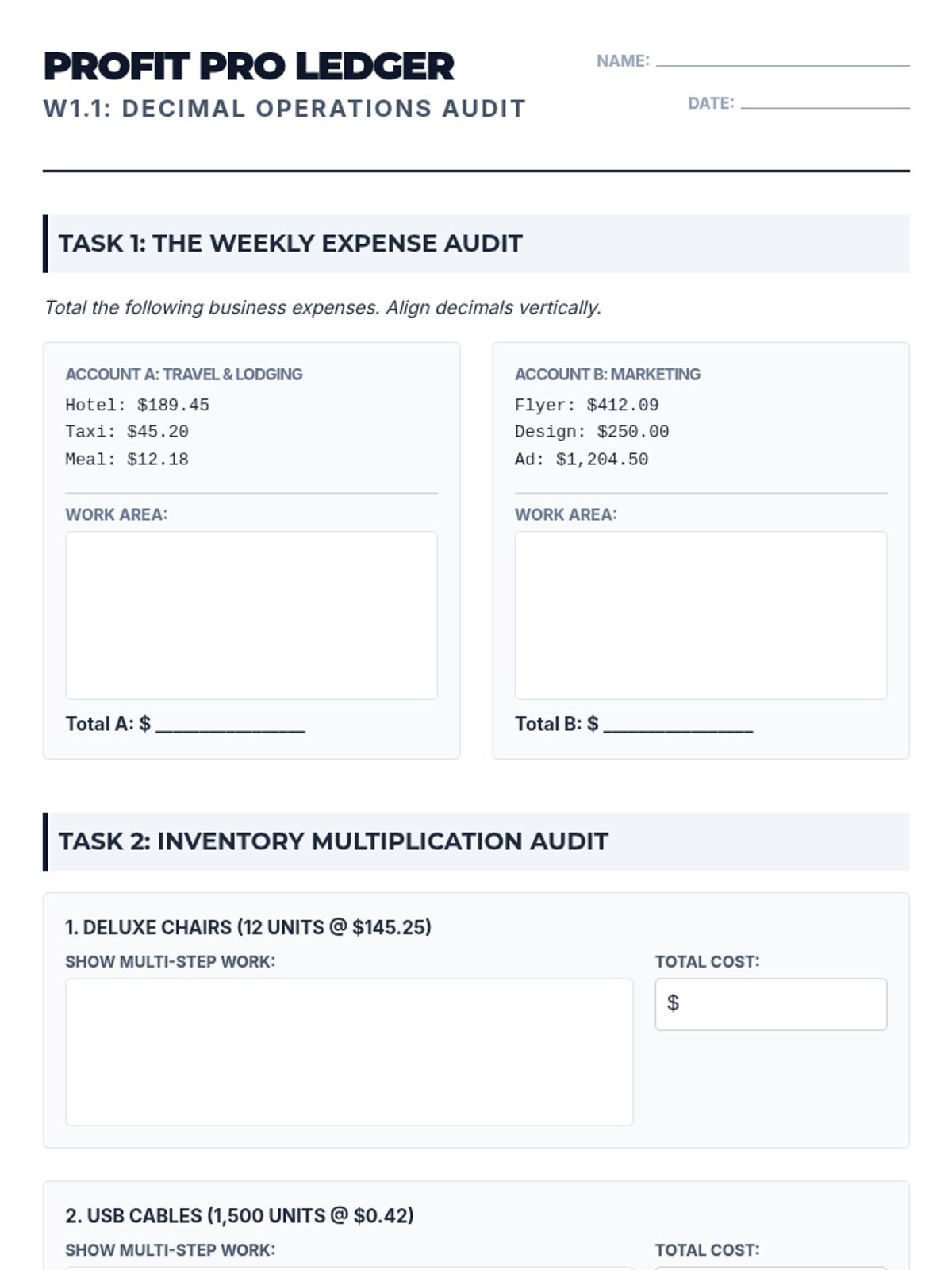
Students master addition, subtraction, and multiplication of decimals within business scenarios like expense reports and invoice totaling.
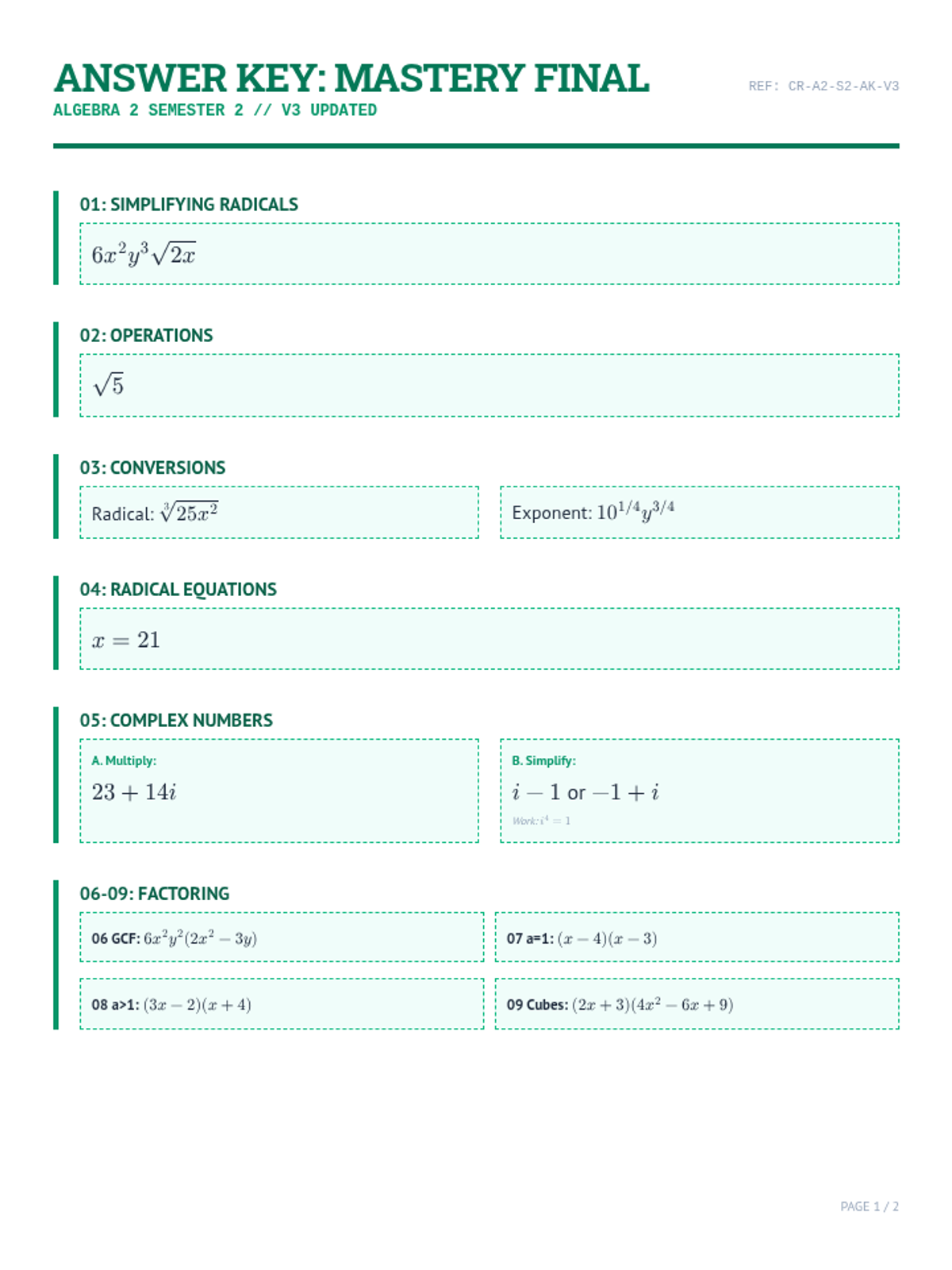
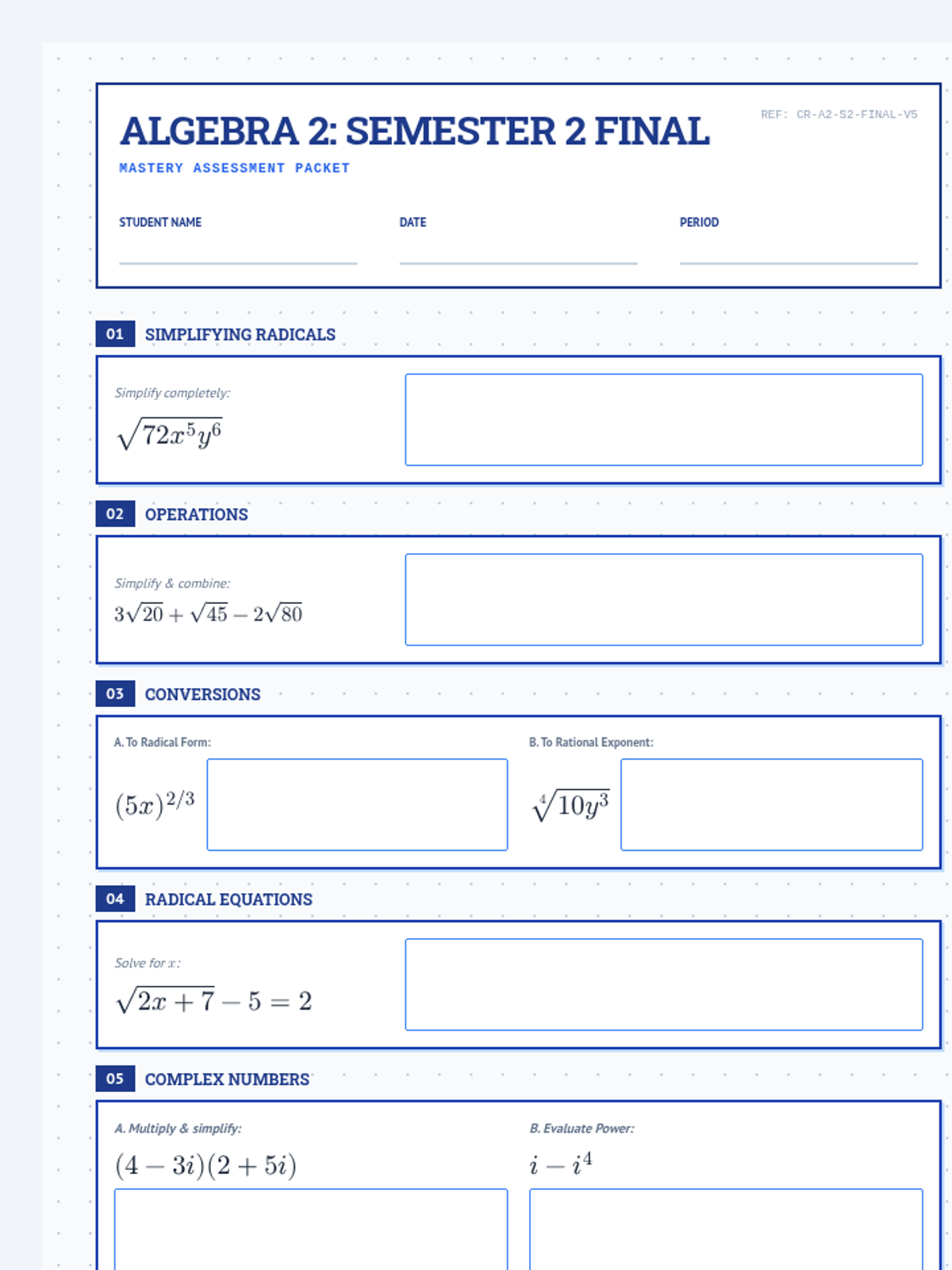
A comprehensive final exam for Semester 2 of Algebra 2 Credit Recovery, covering radicals, factoring, quadratics, and rational functions.
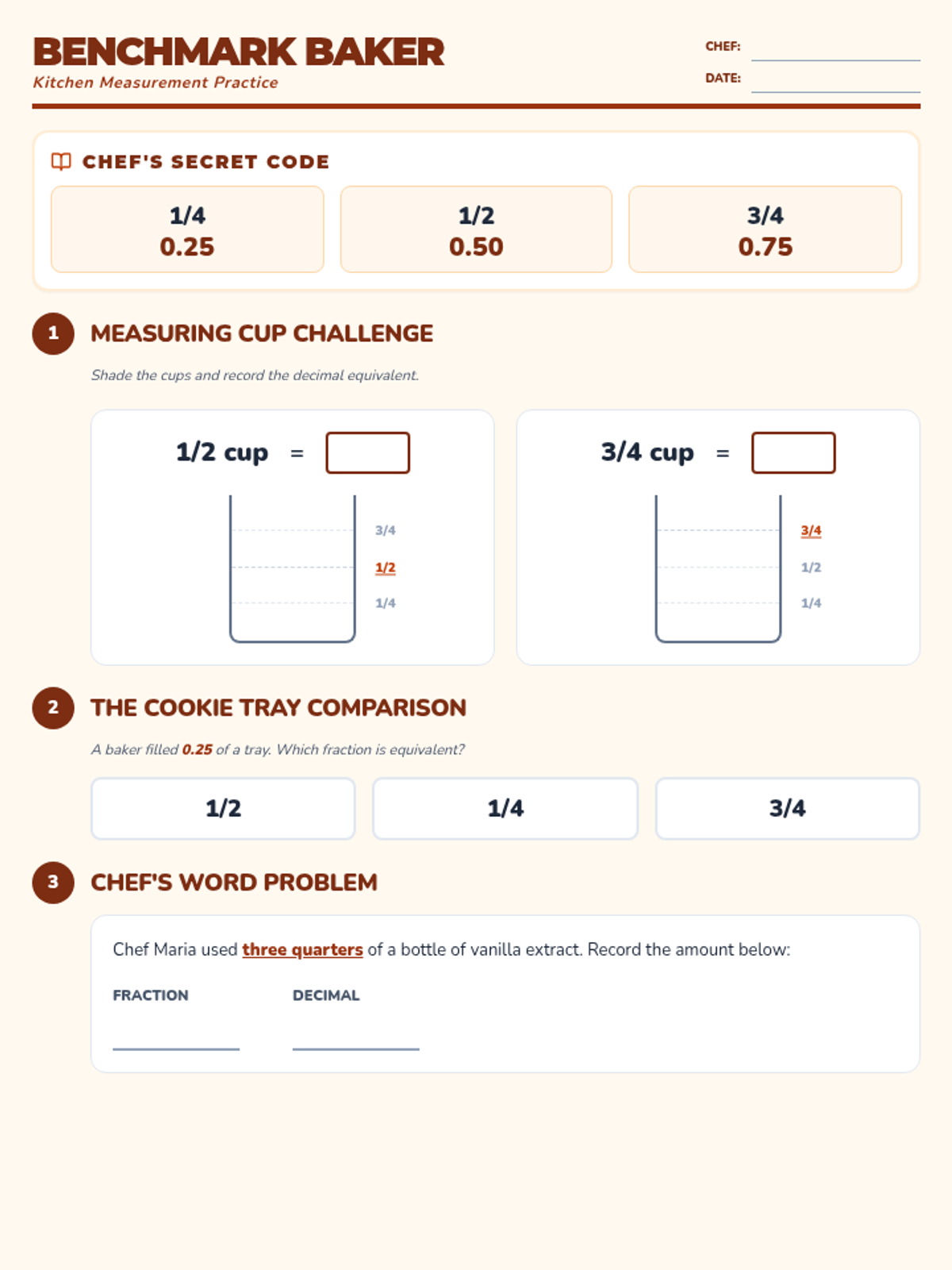
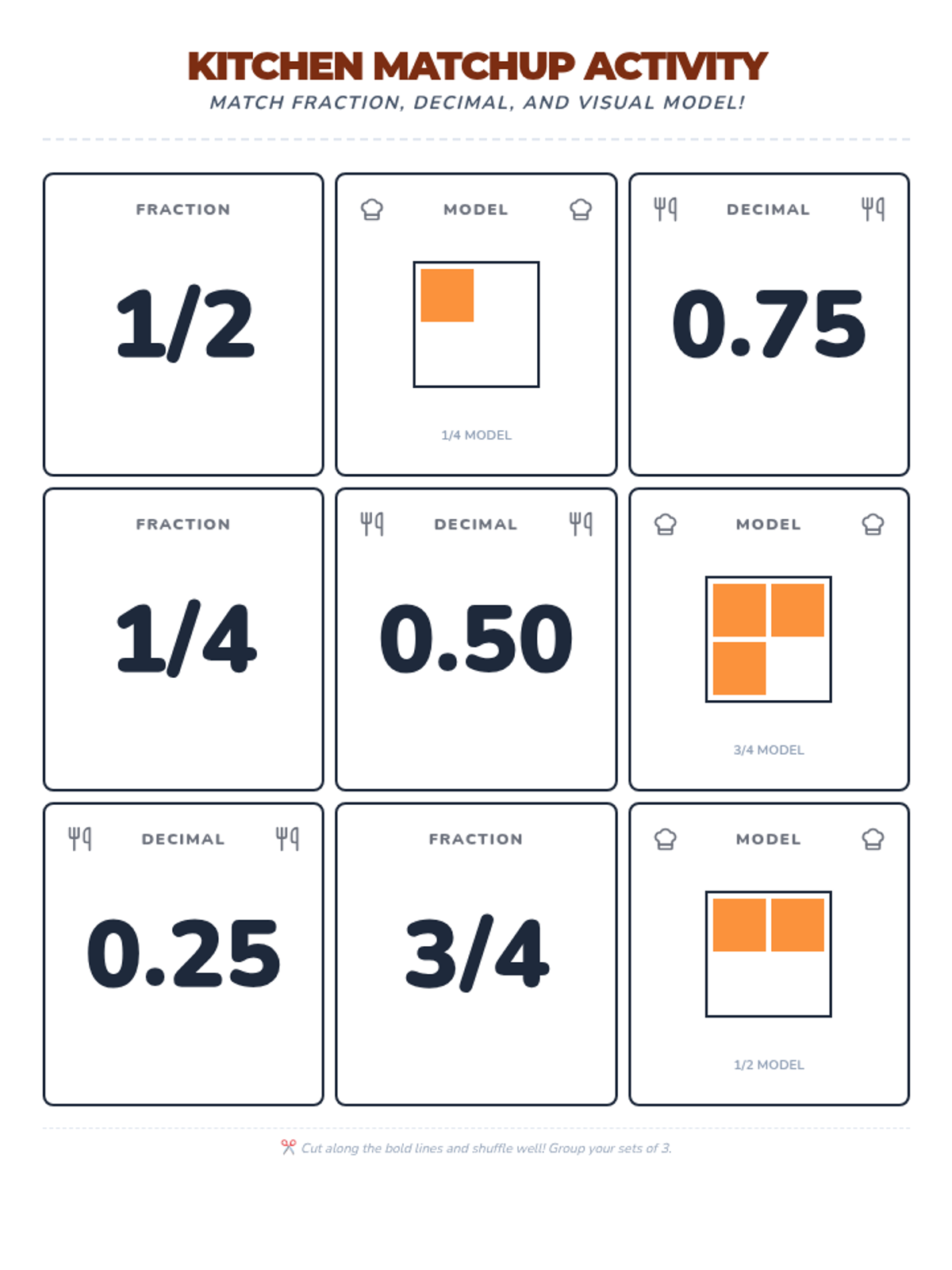
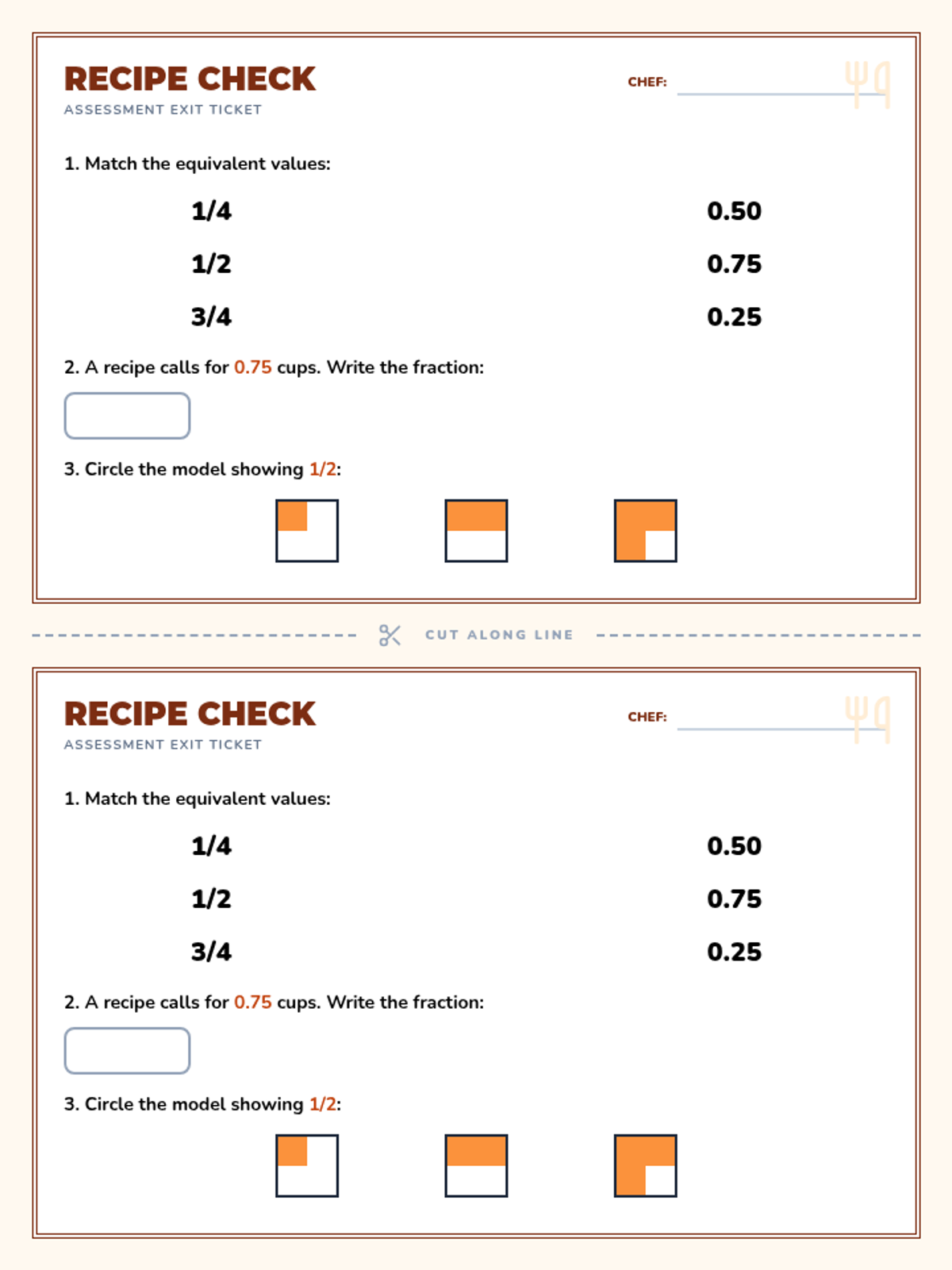
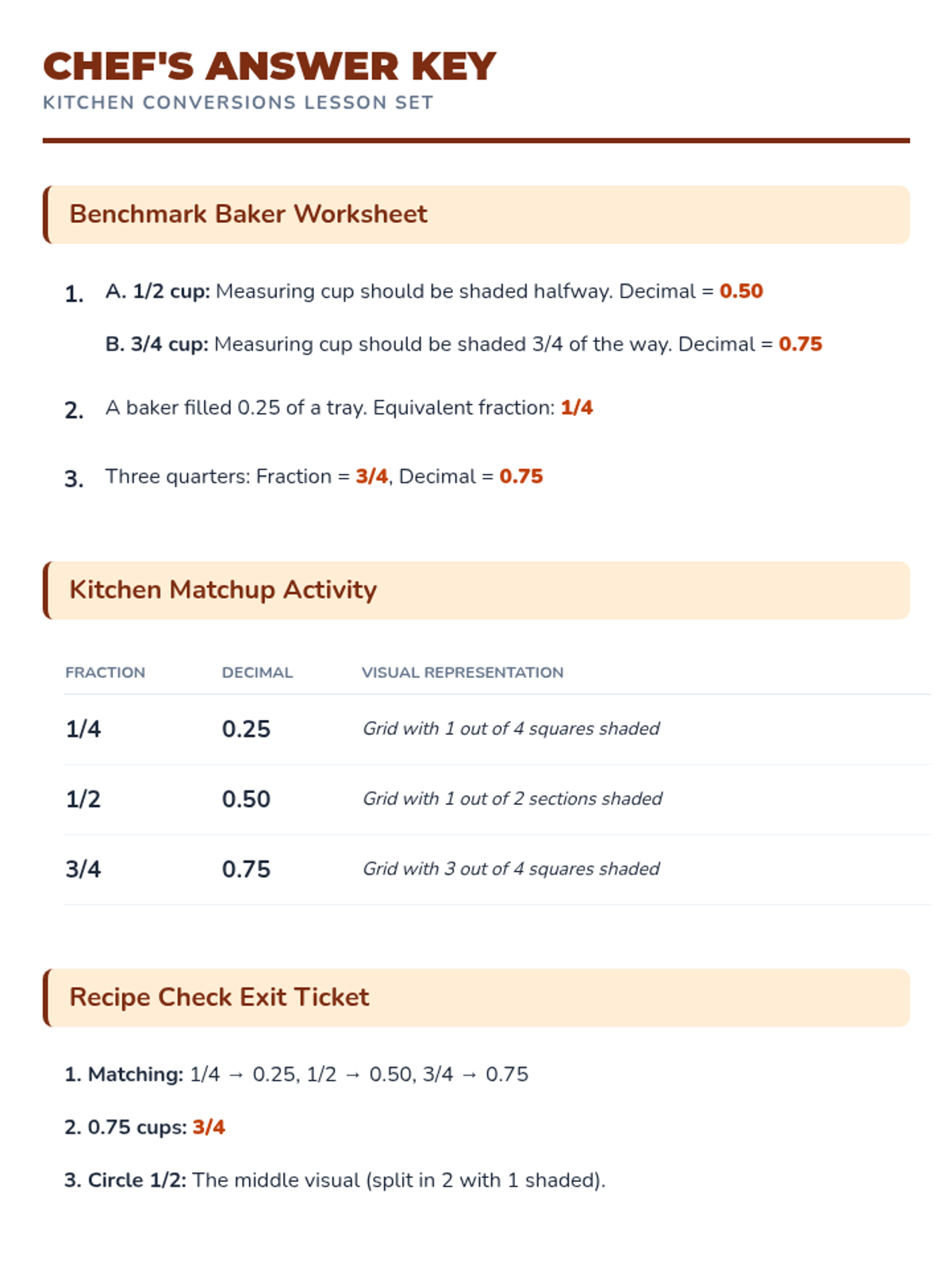
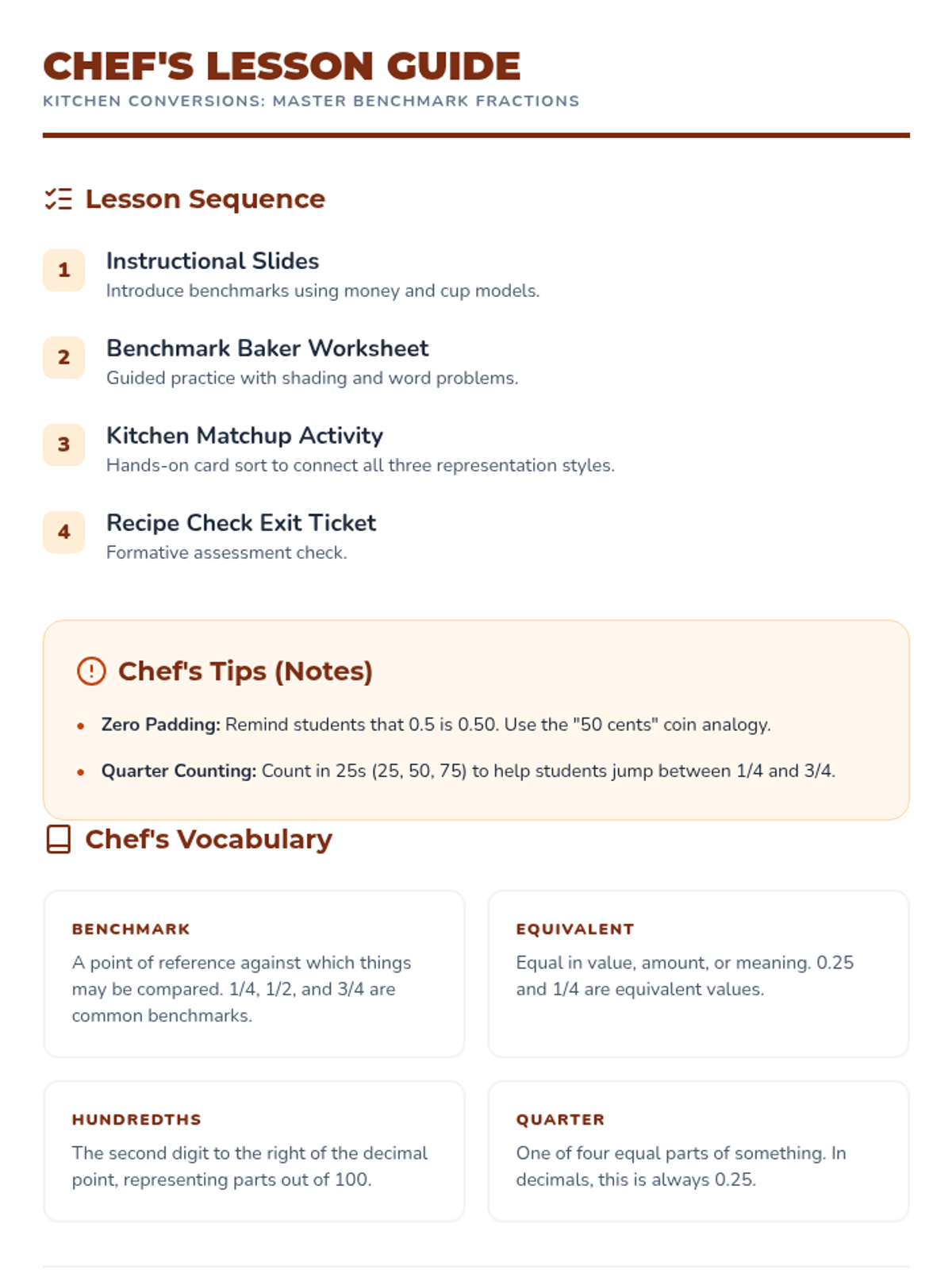
A lesson exploring the relationship between common benchmark fractions and their decimal equivalents through the lens of kitchen measurements and baking. Students will master 1/4, 1/2, and 3/4 conversions through visual models and hands-on matching.
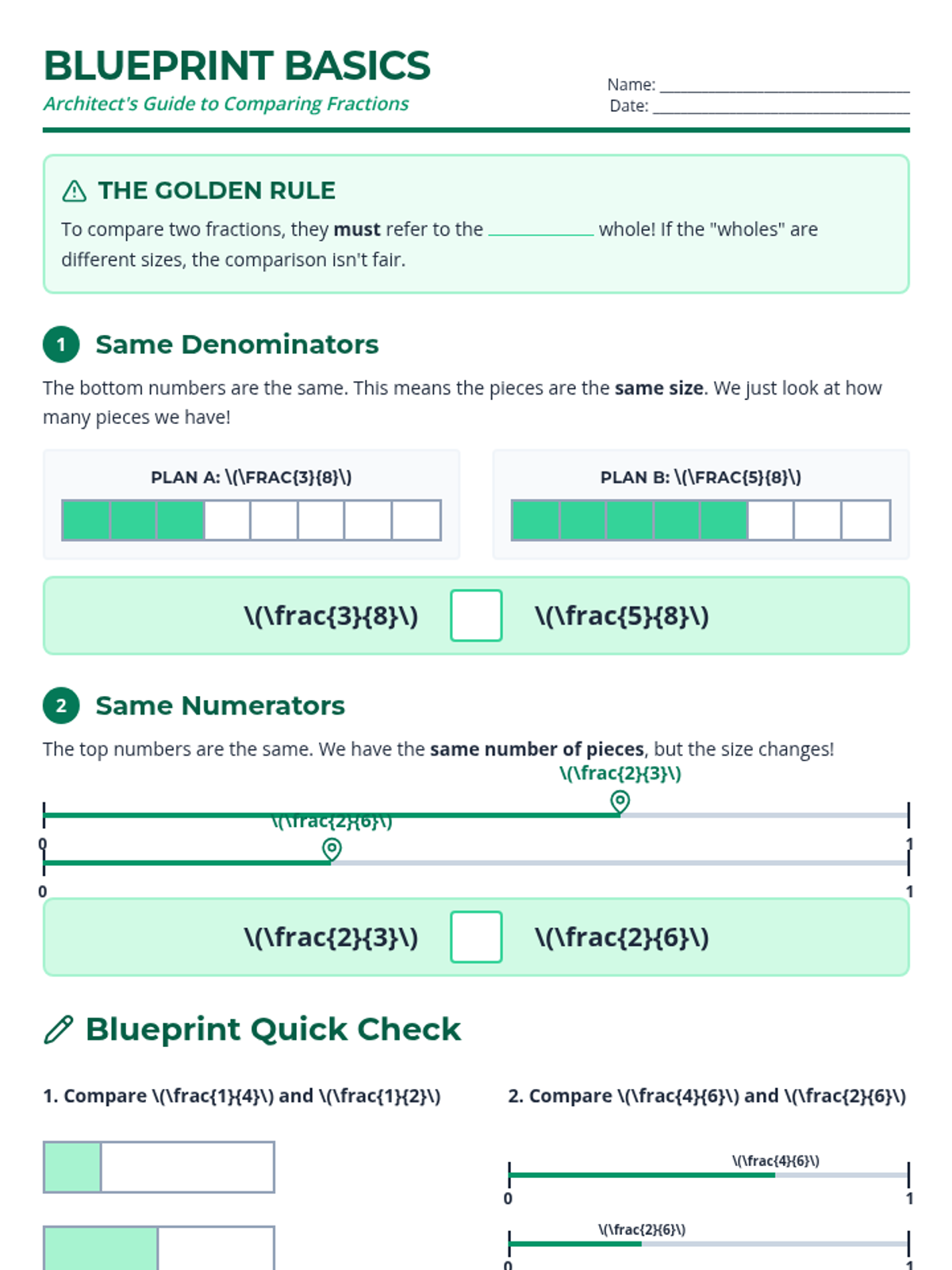
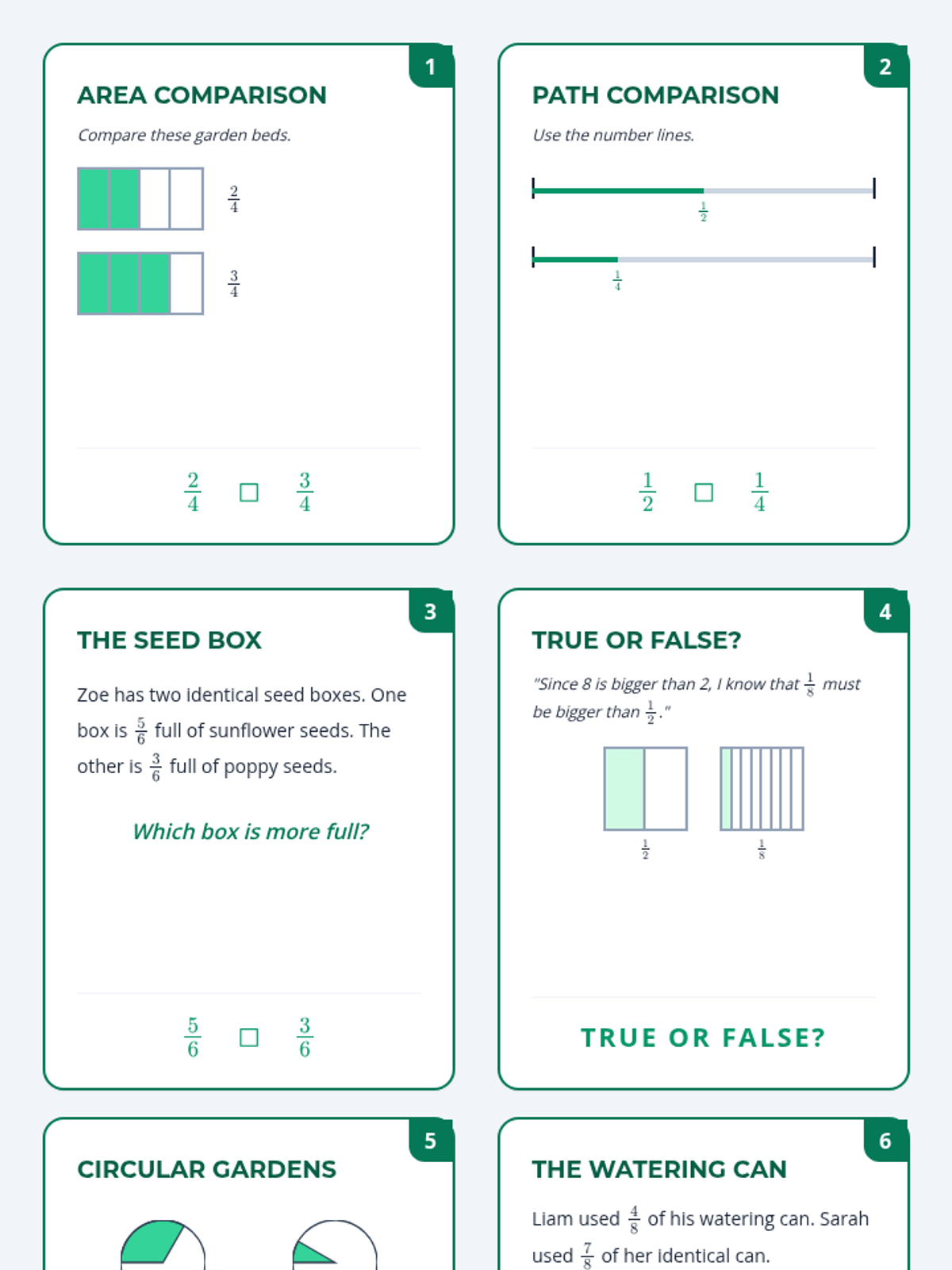
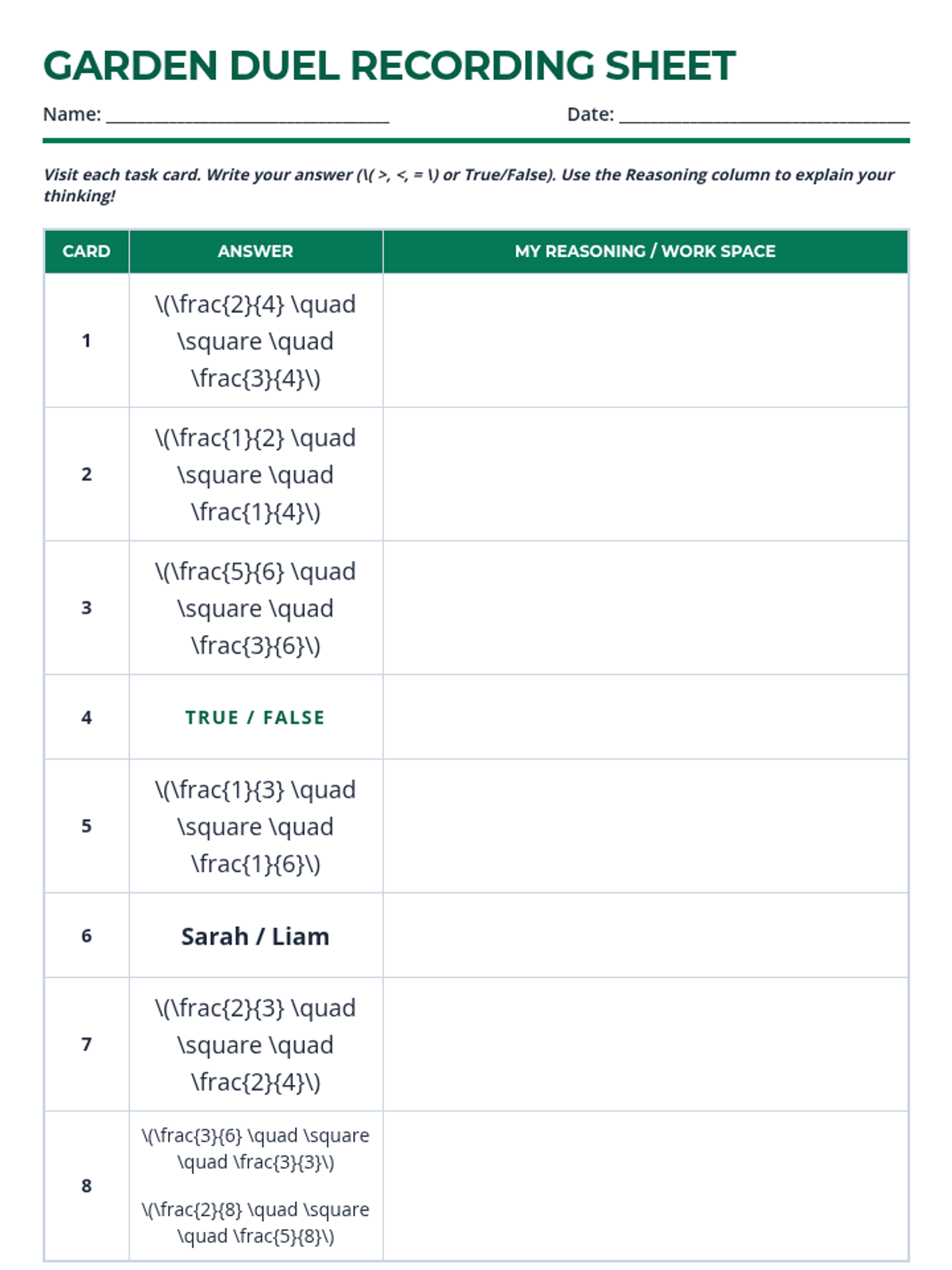
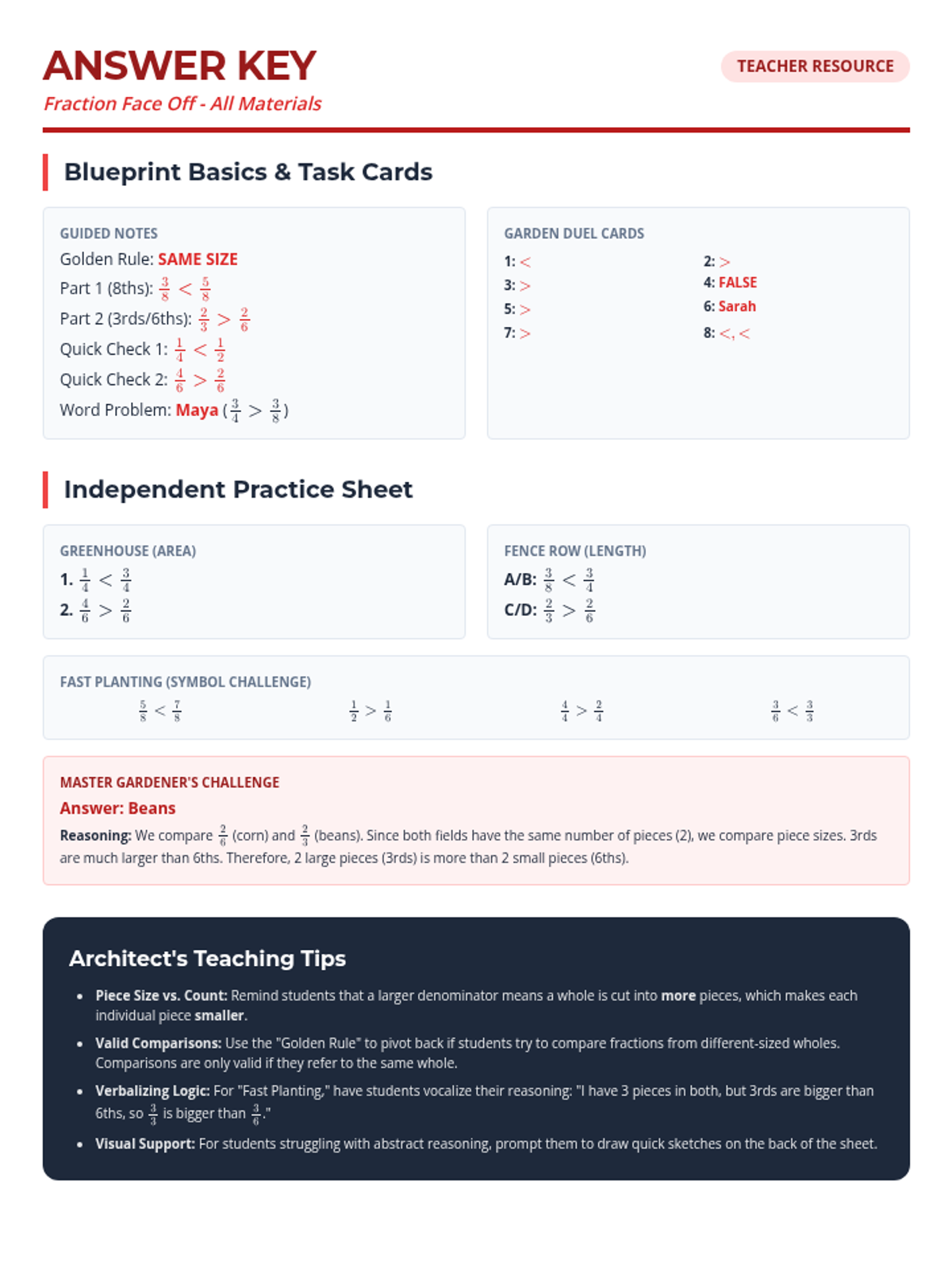
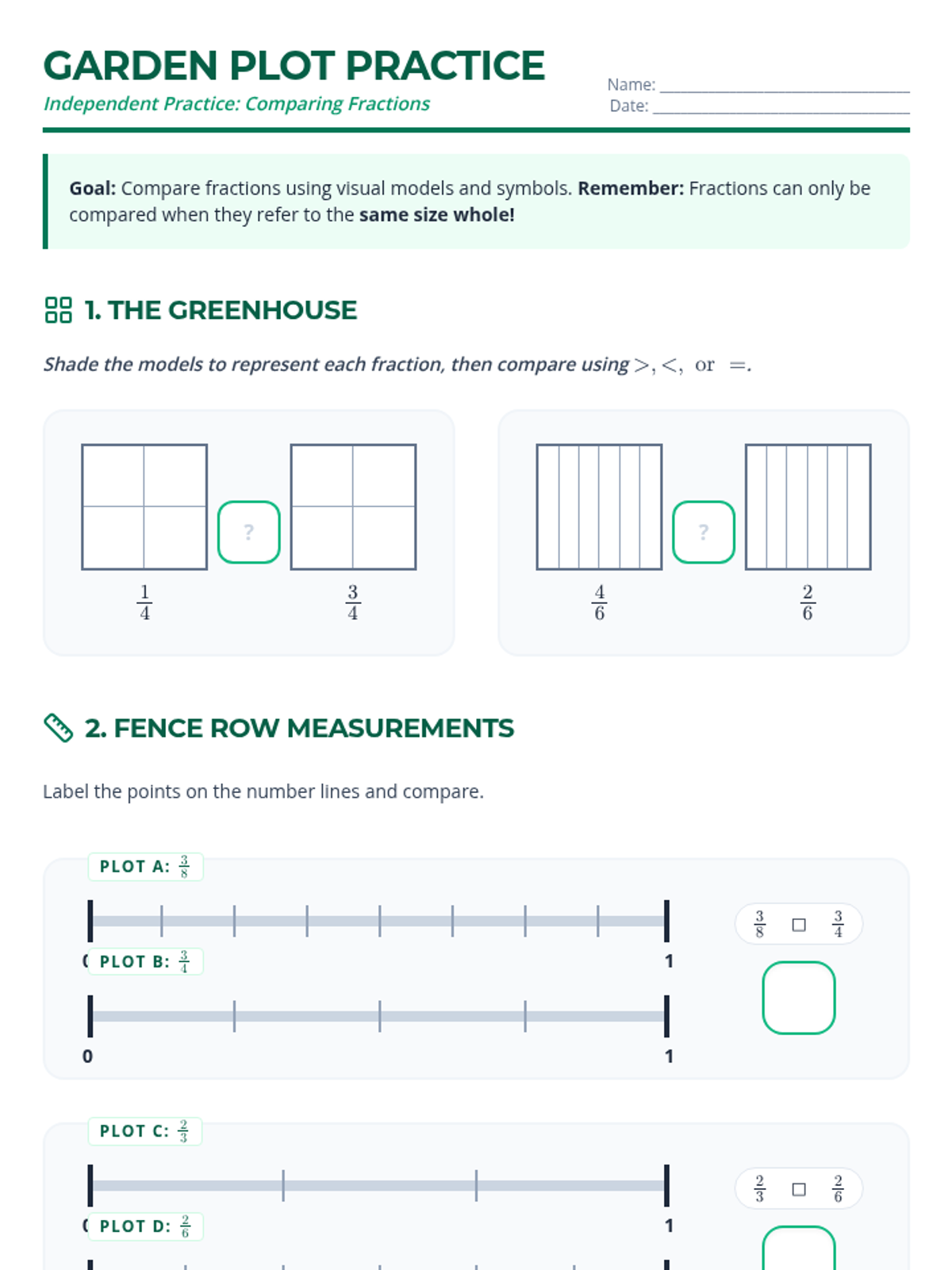
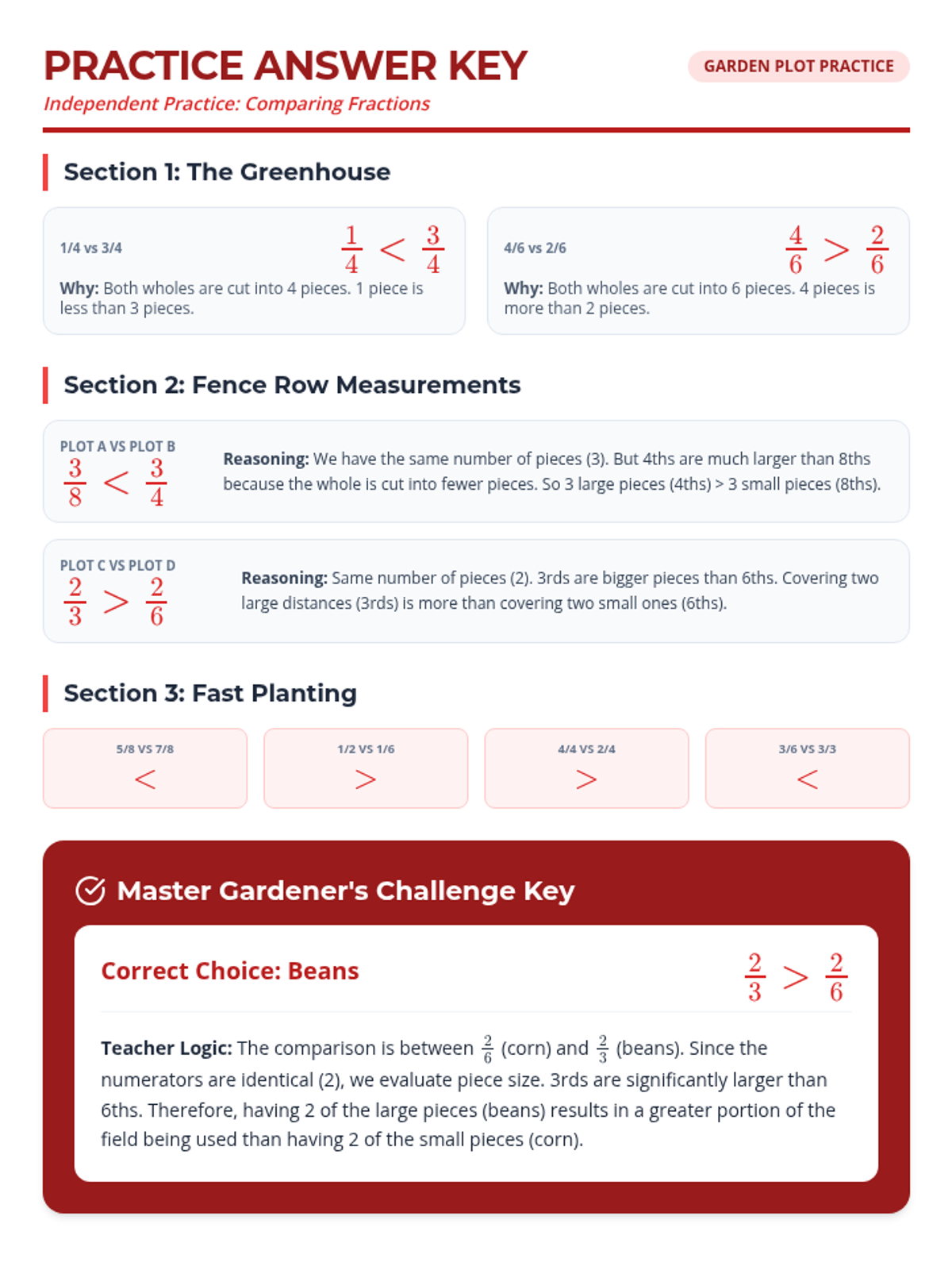
A comprehensive lesson on comparing fractions with like numerators or denominators using visual models and symbols, specifically for 3rd grade standards.
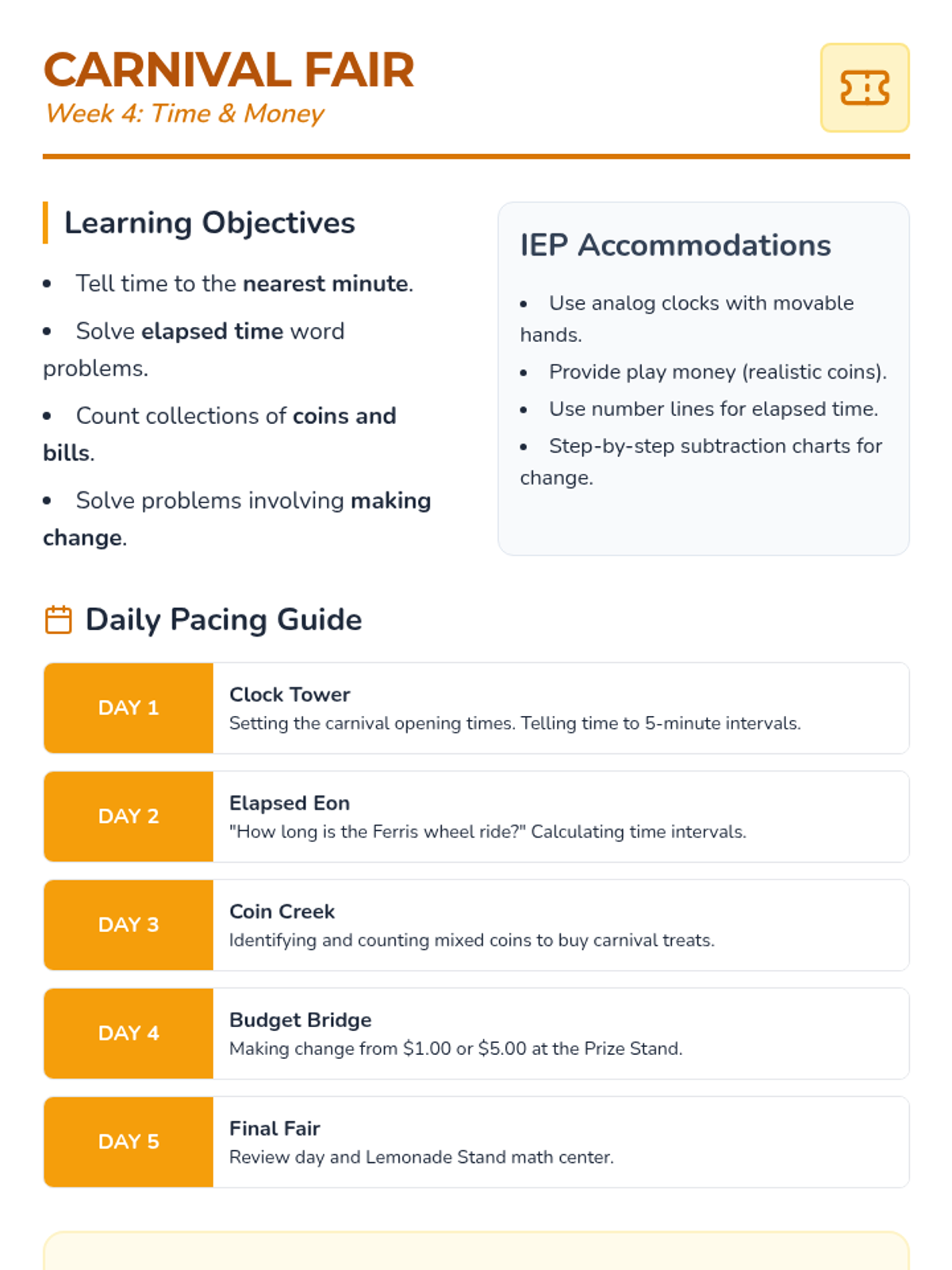
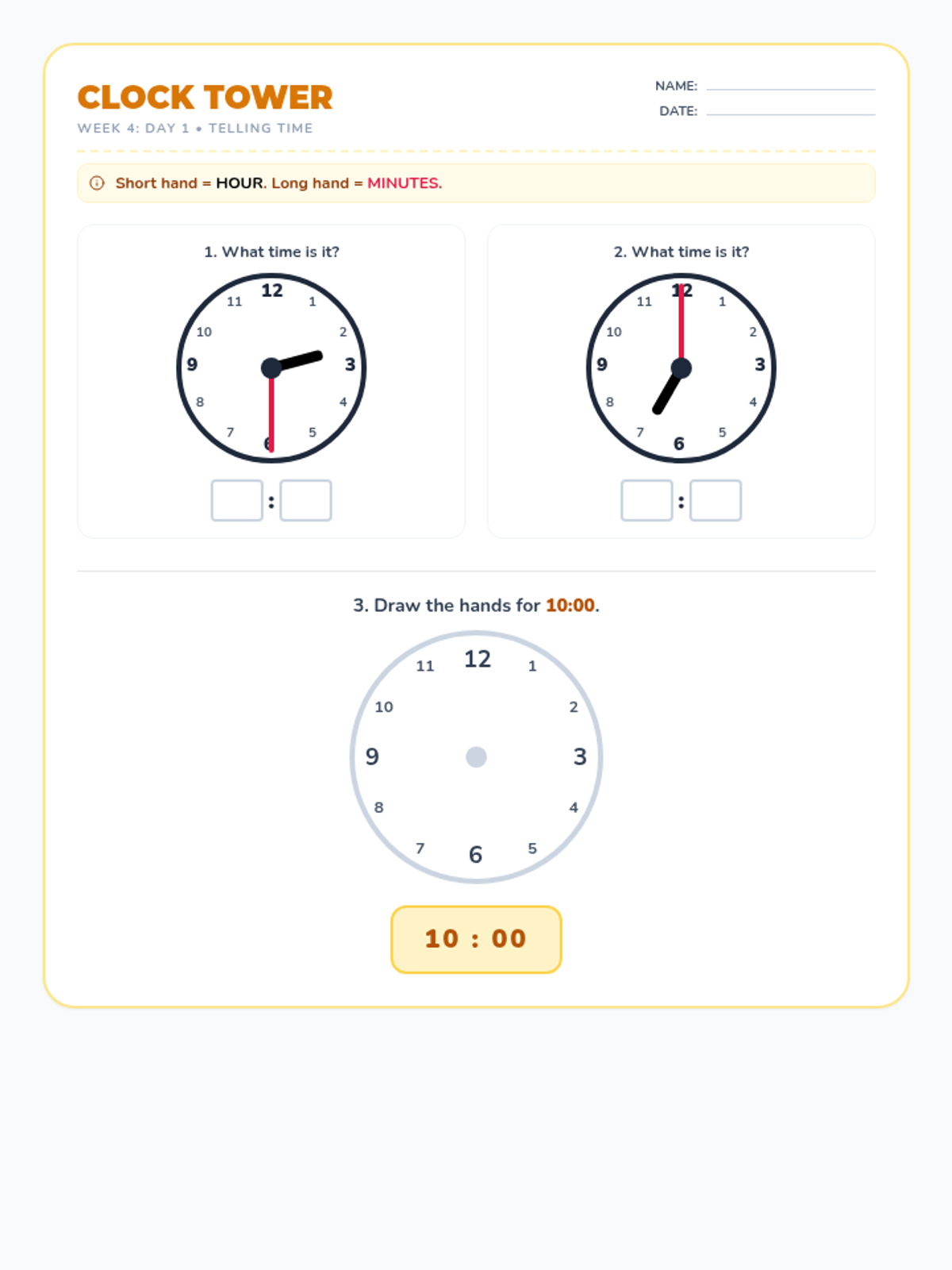
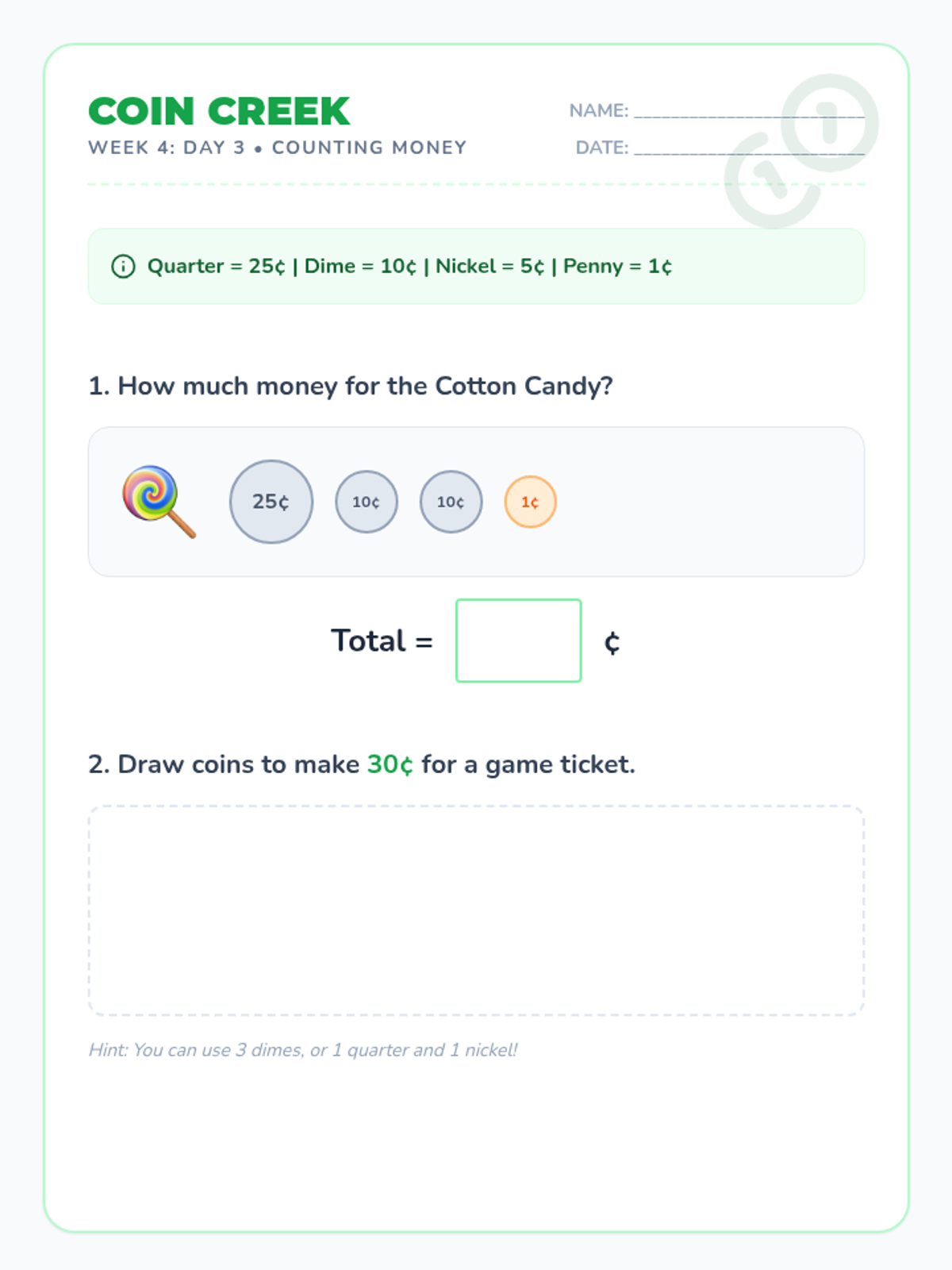
Week 4 focuses on telling time and counting money in a Carnival setting, teaching elapsed time, coin identification, and basic budgeting.
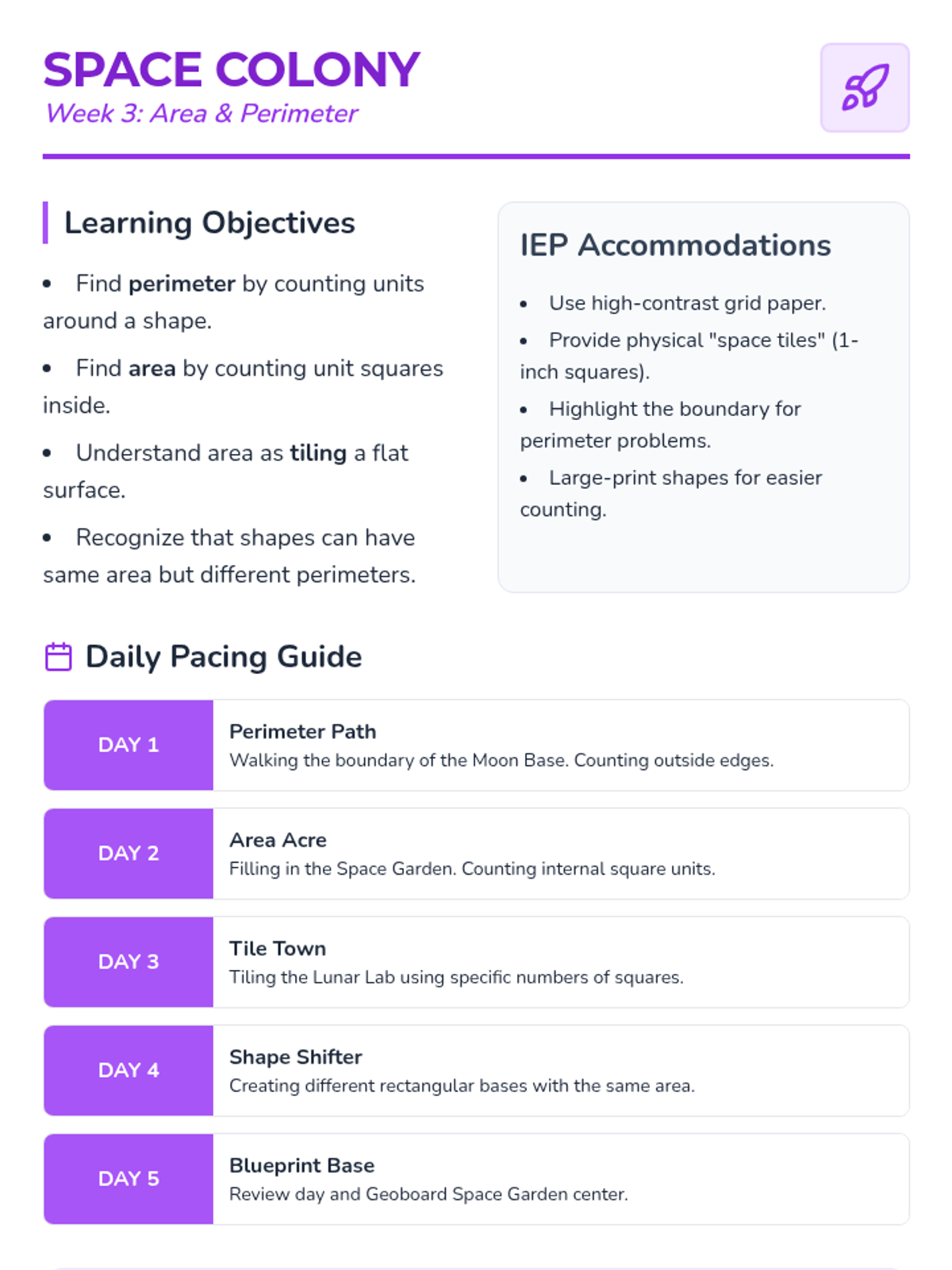
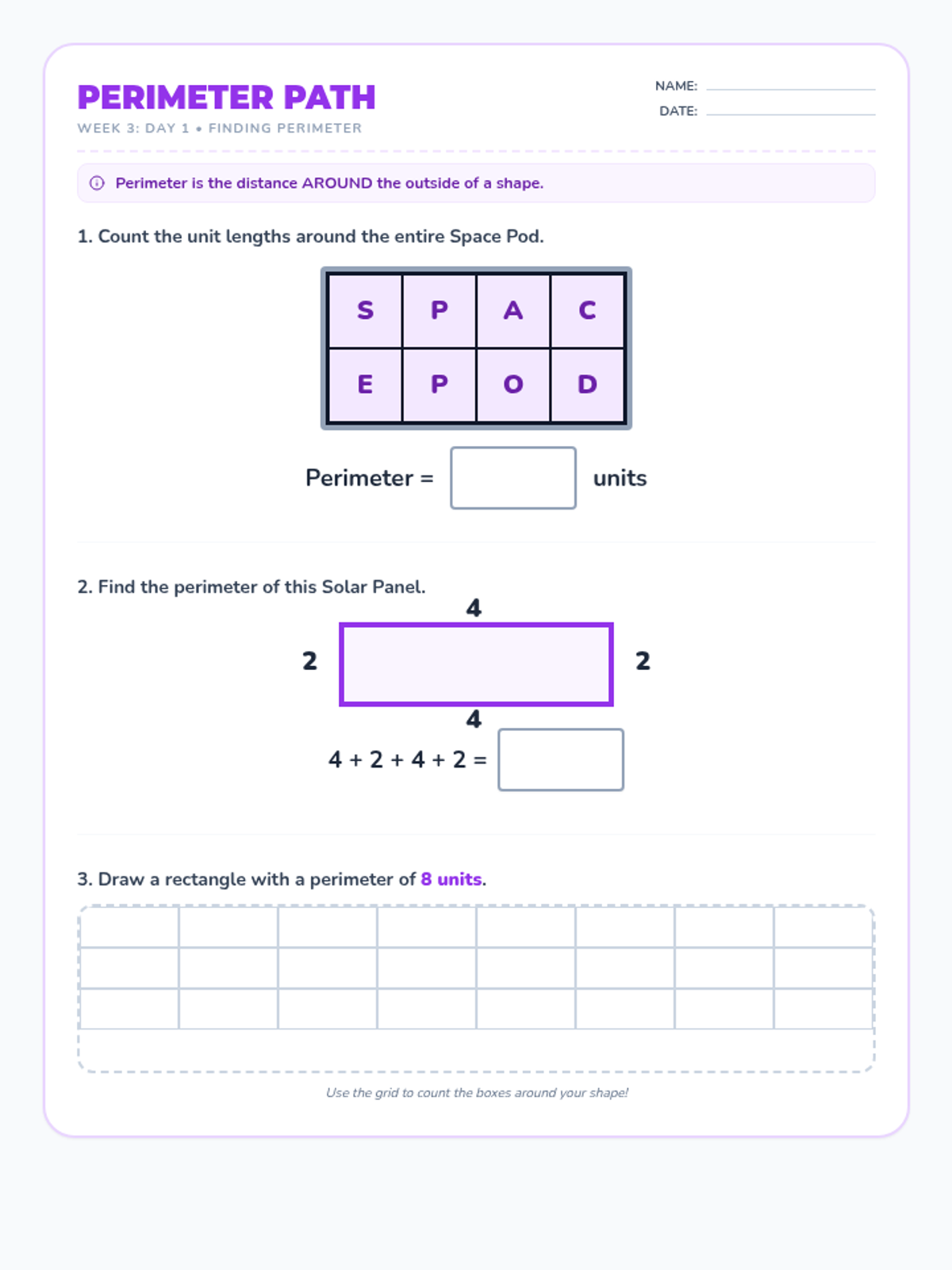
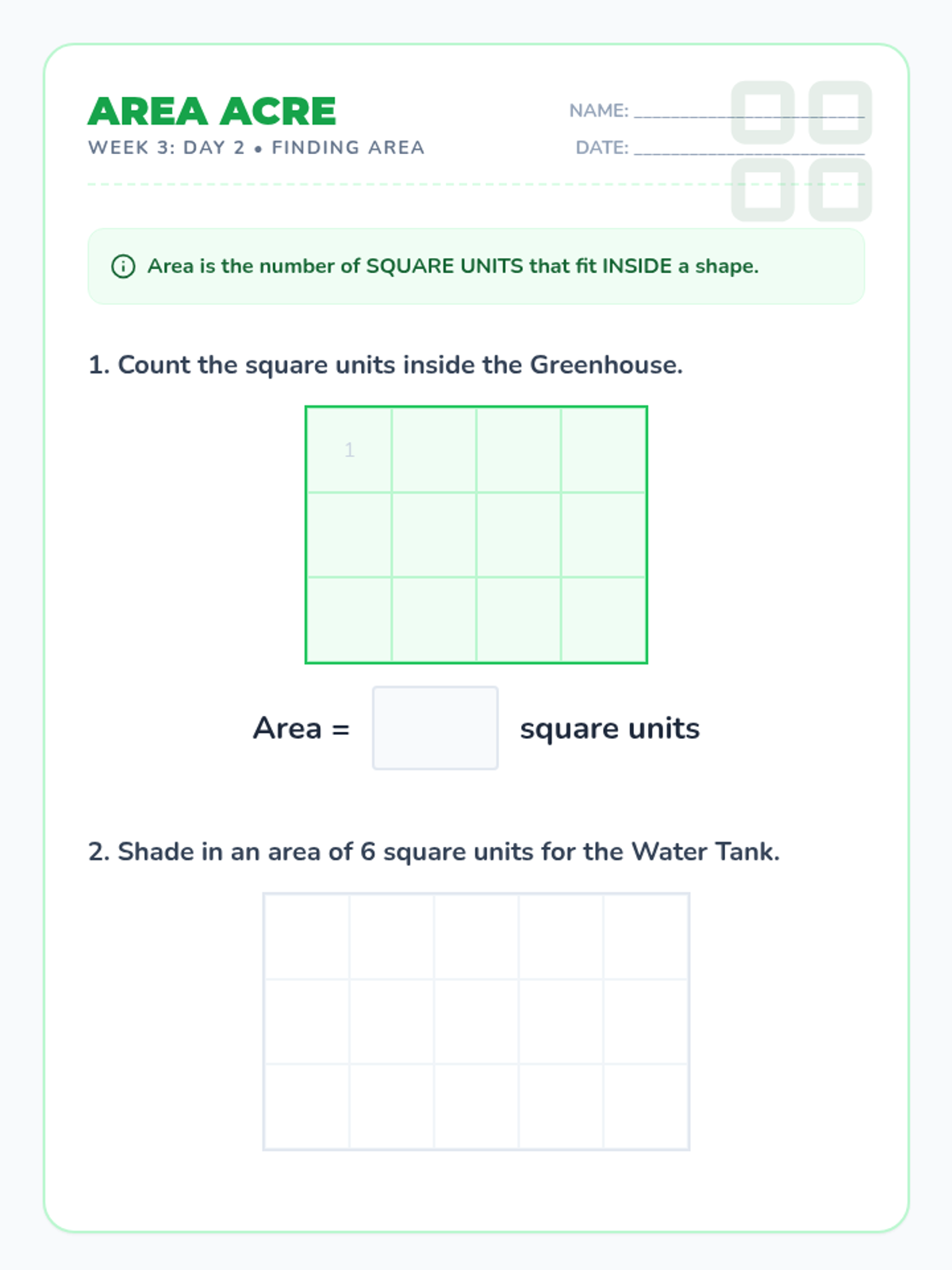
Week 3 covers area and perimeter while building a Space Colony, using grid paper, tiling, and simple addition to find boundaries and space.
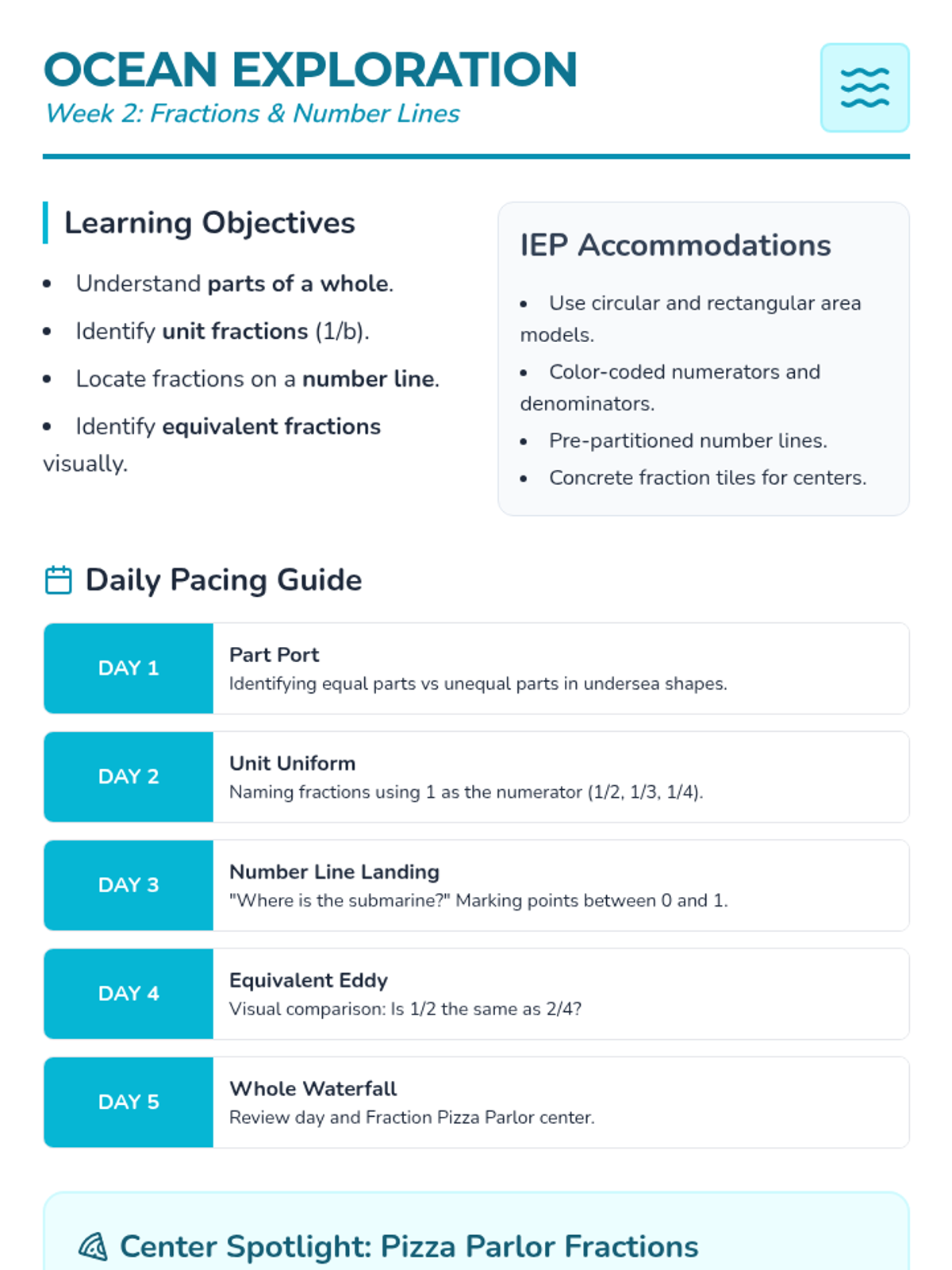
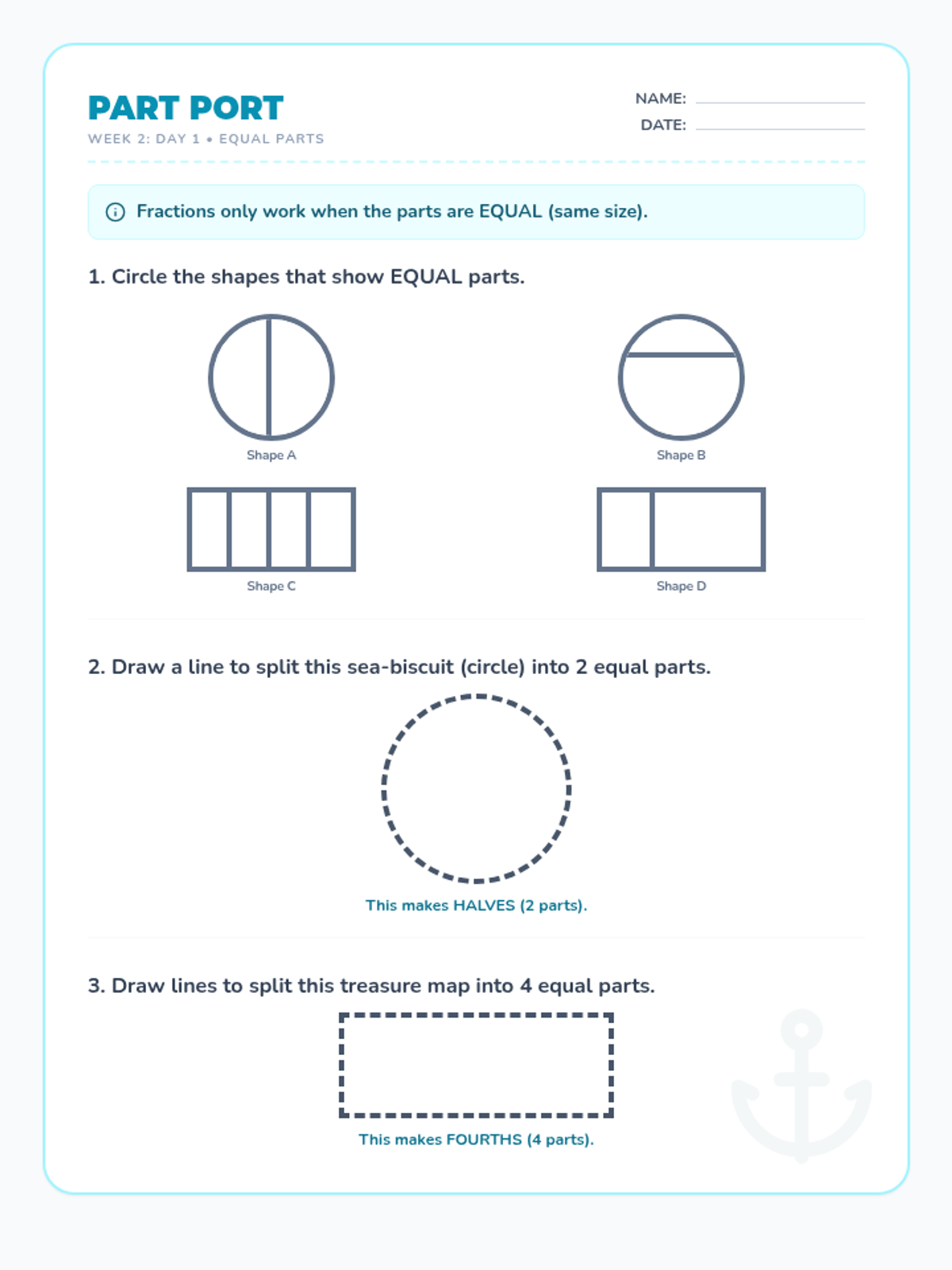
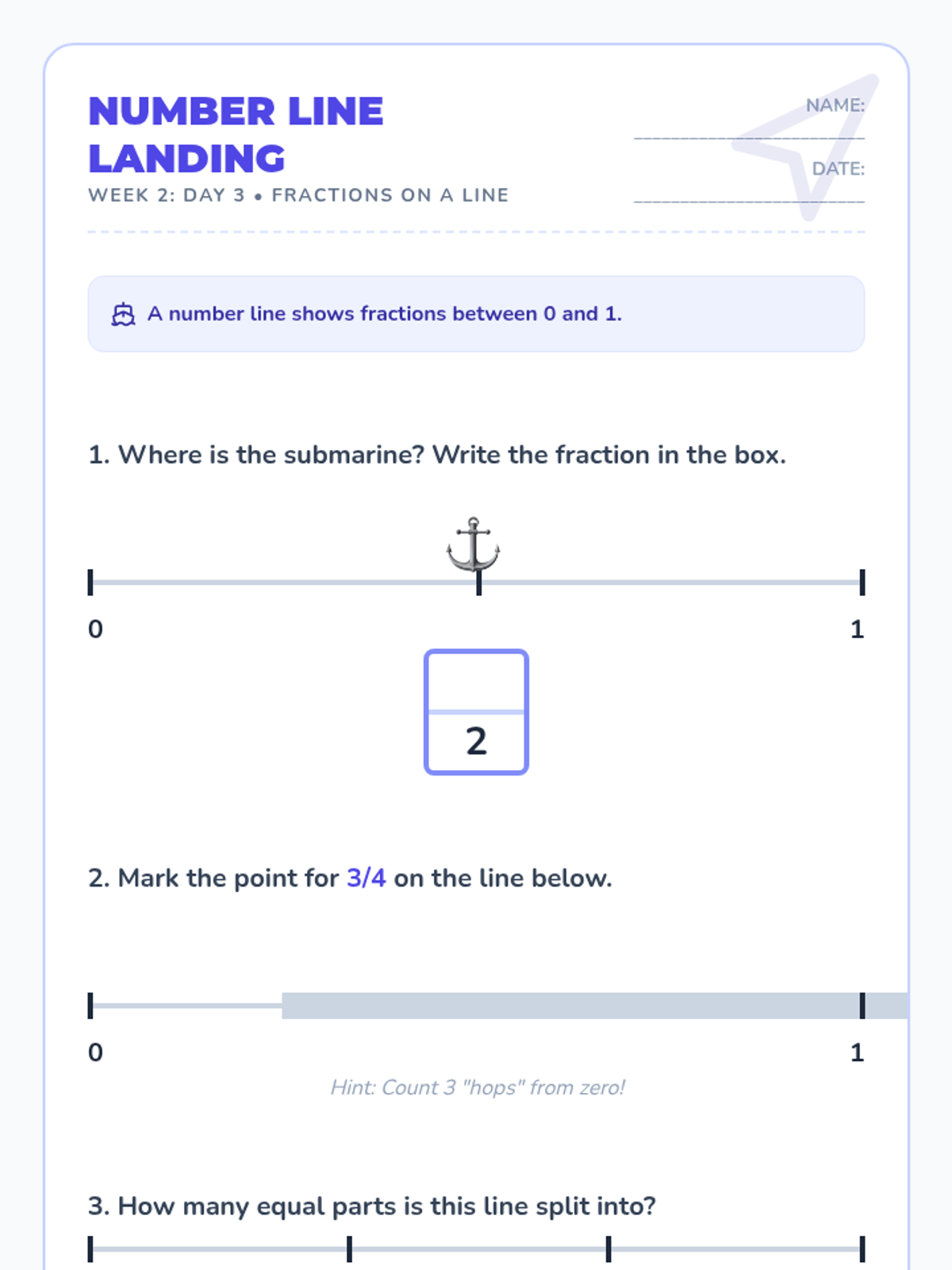
Week 2 explores fractions and number lines with an Ocean Exploration theme, focusing on parts of a whole, unit fractions, and locating numbers on a line.
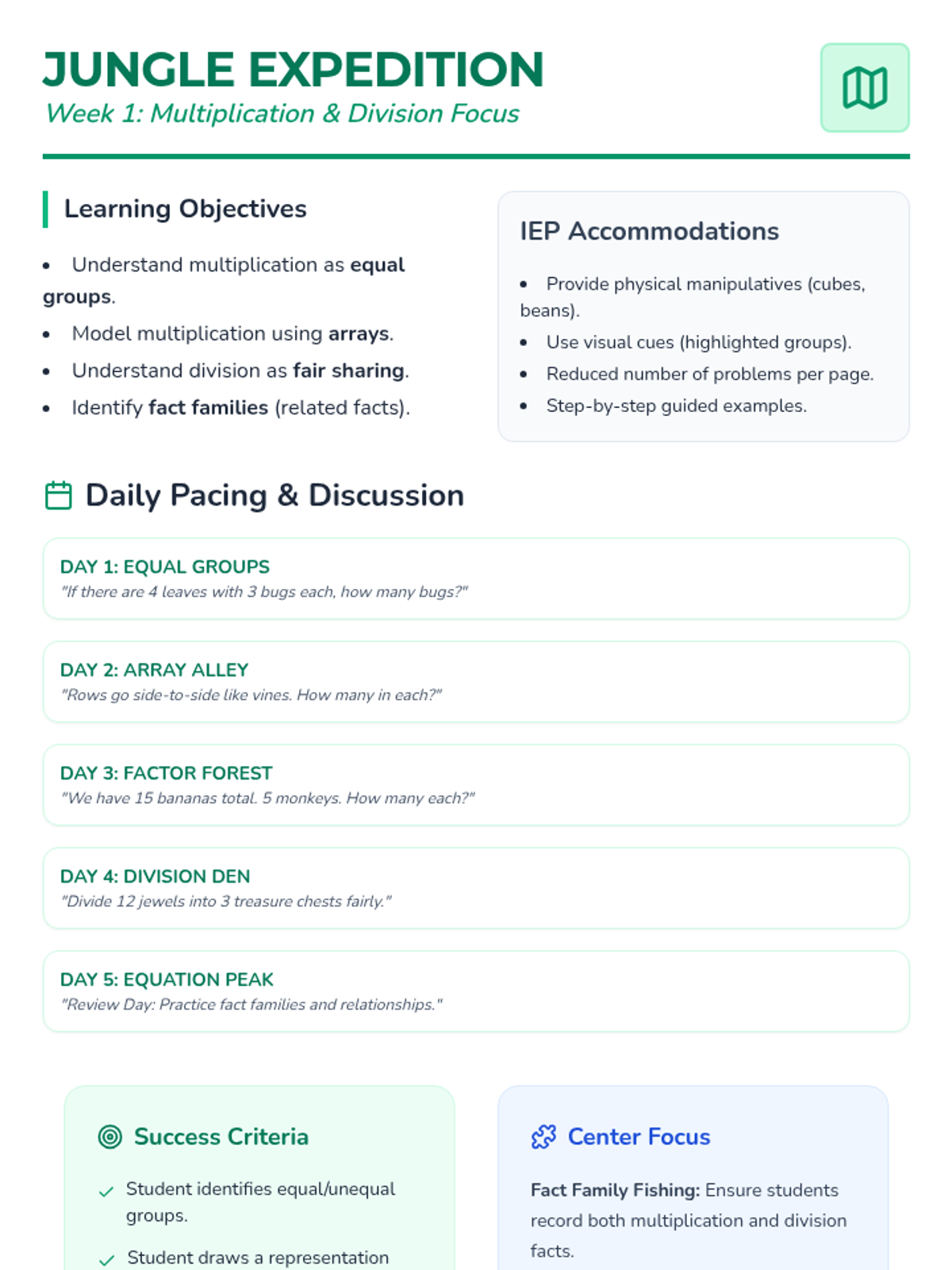
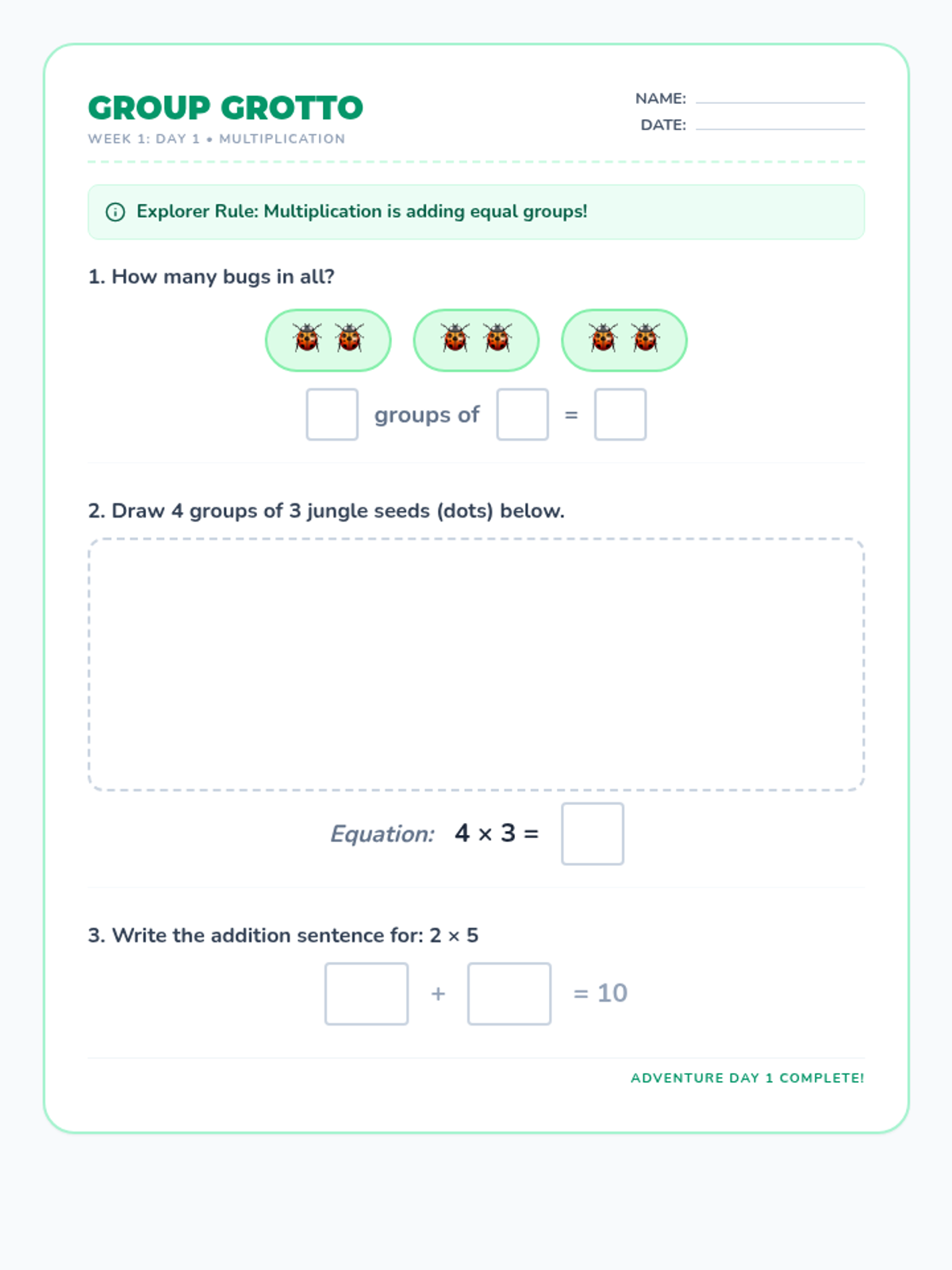
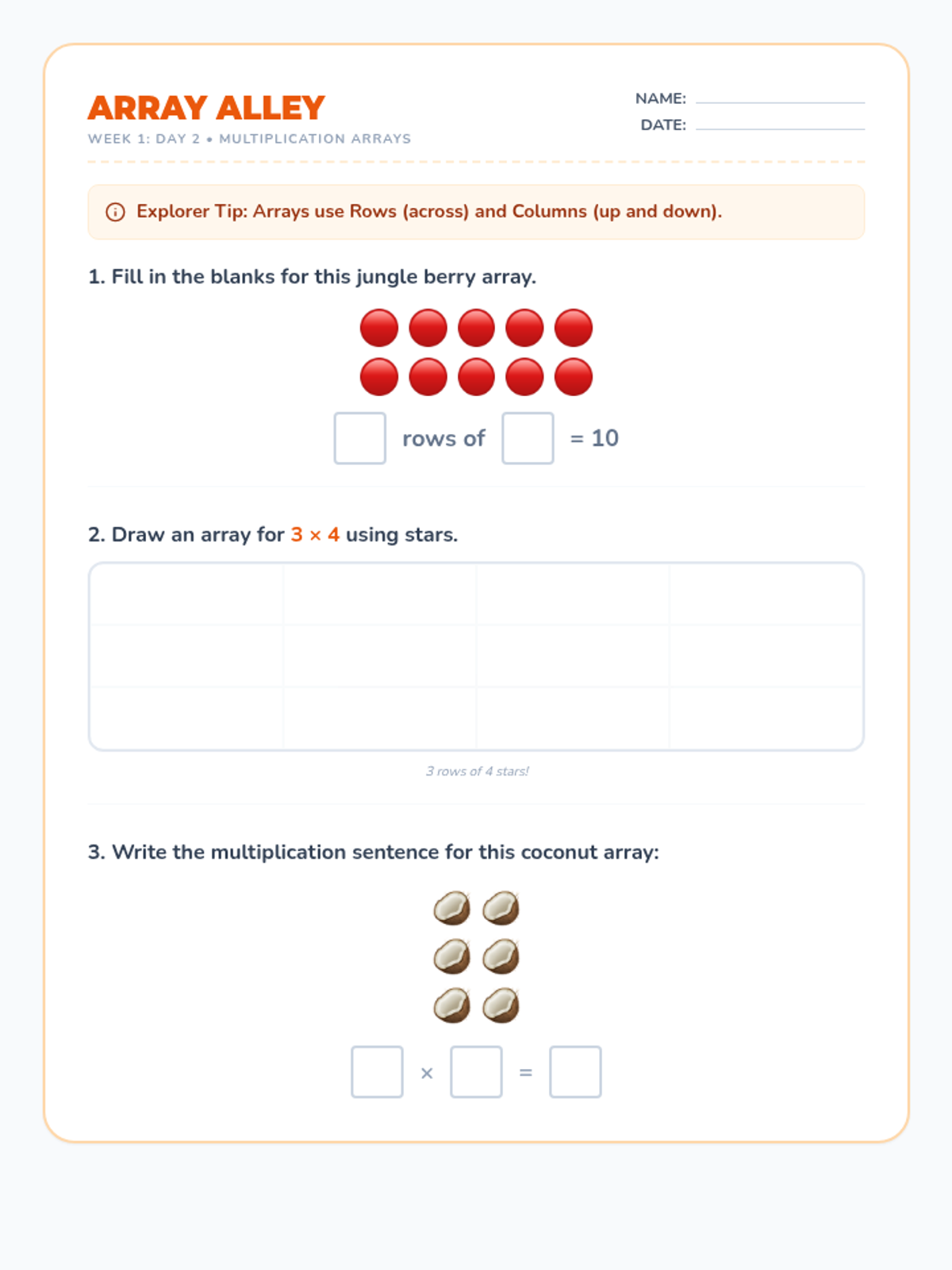
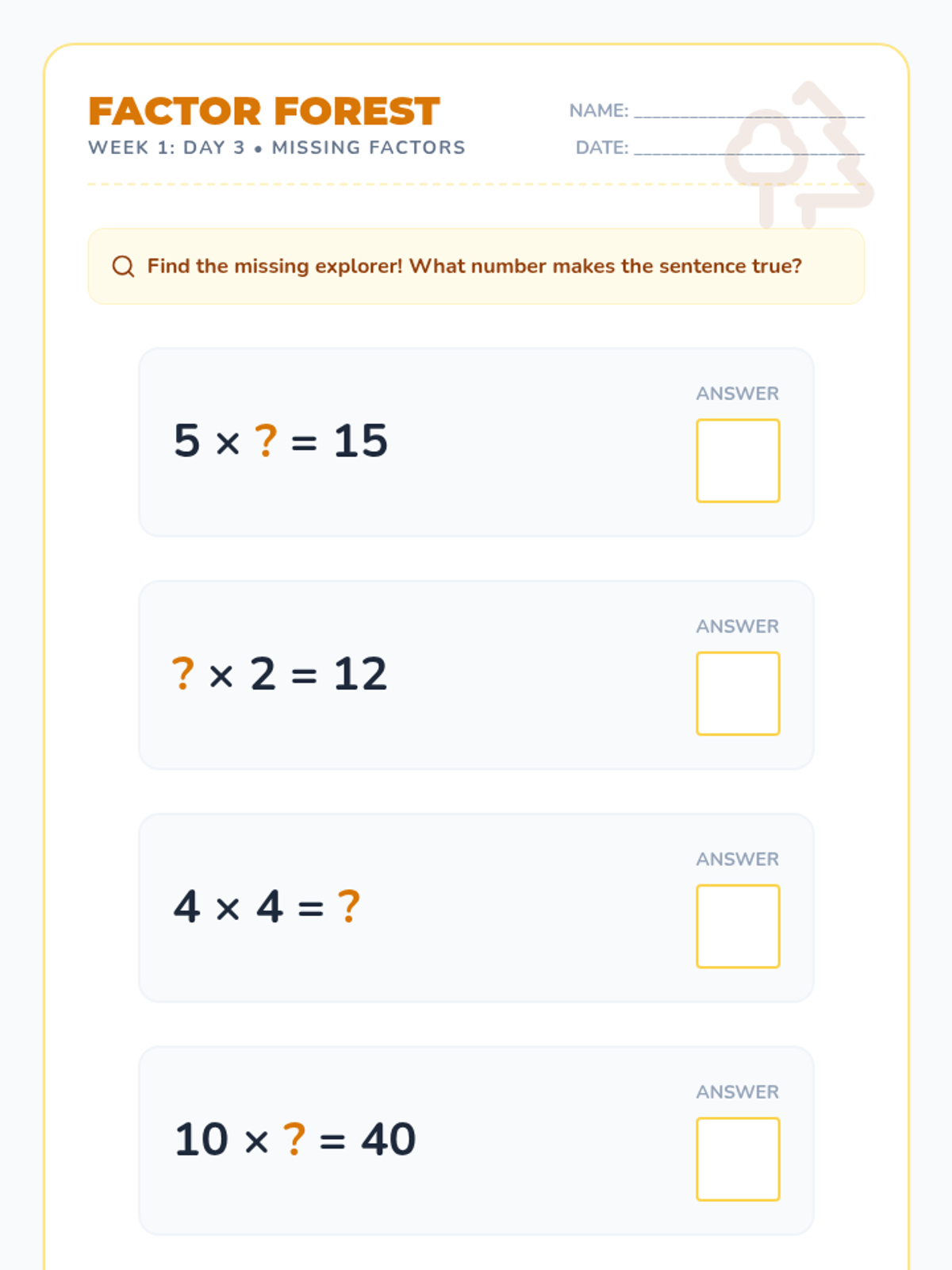
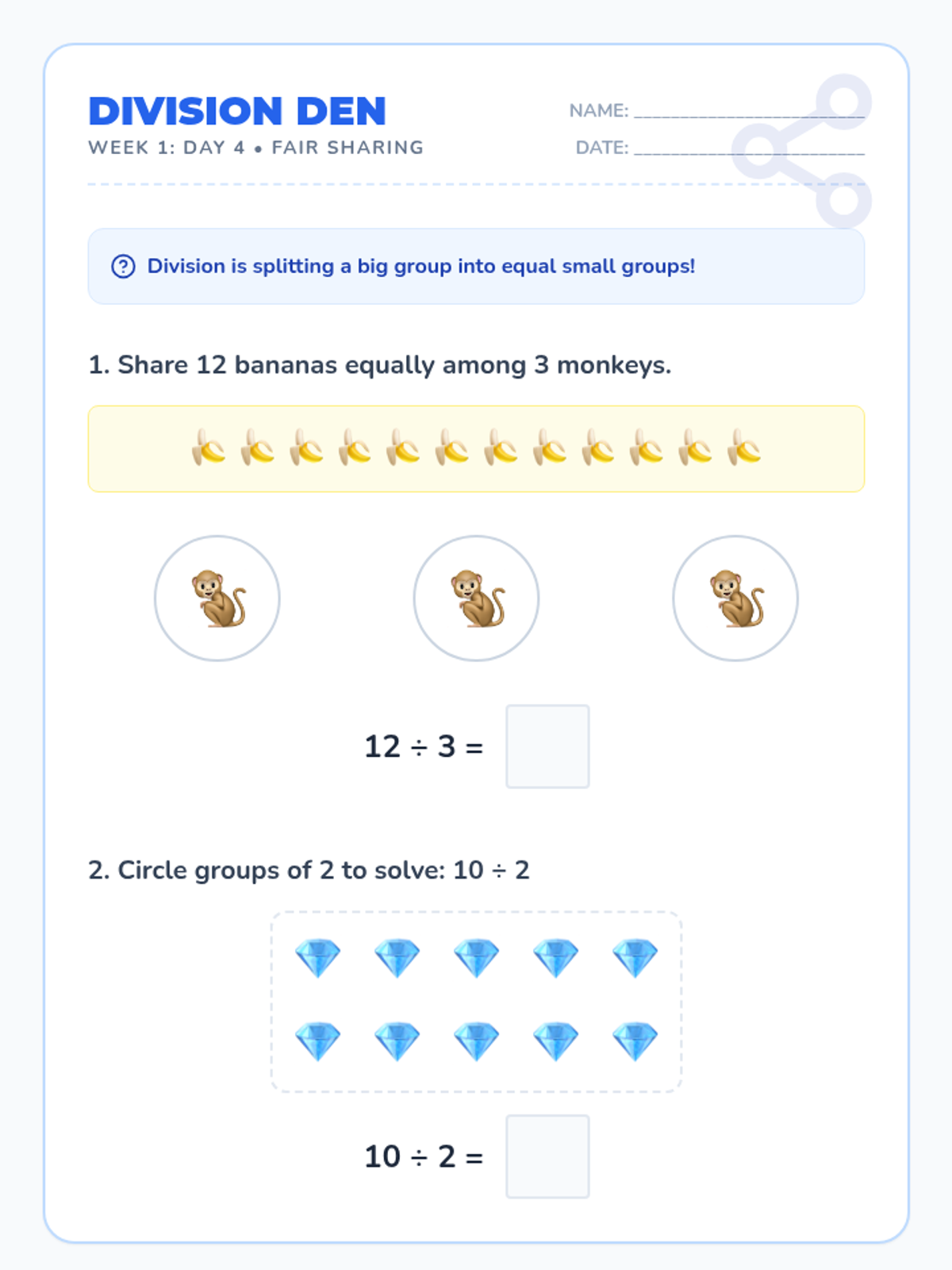
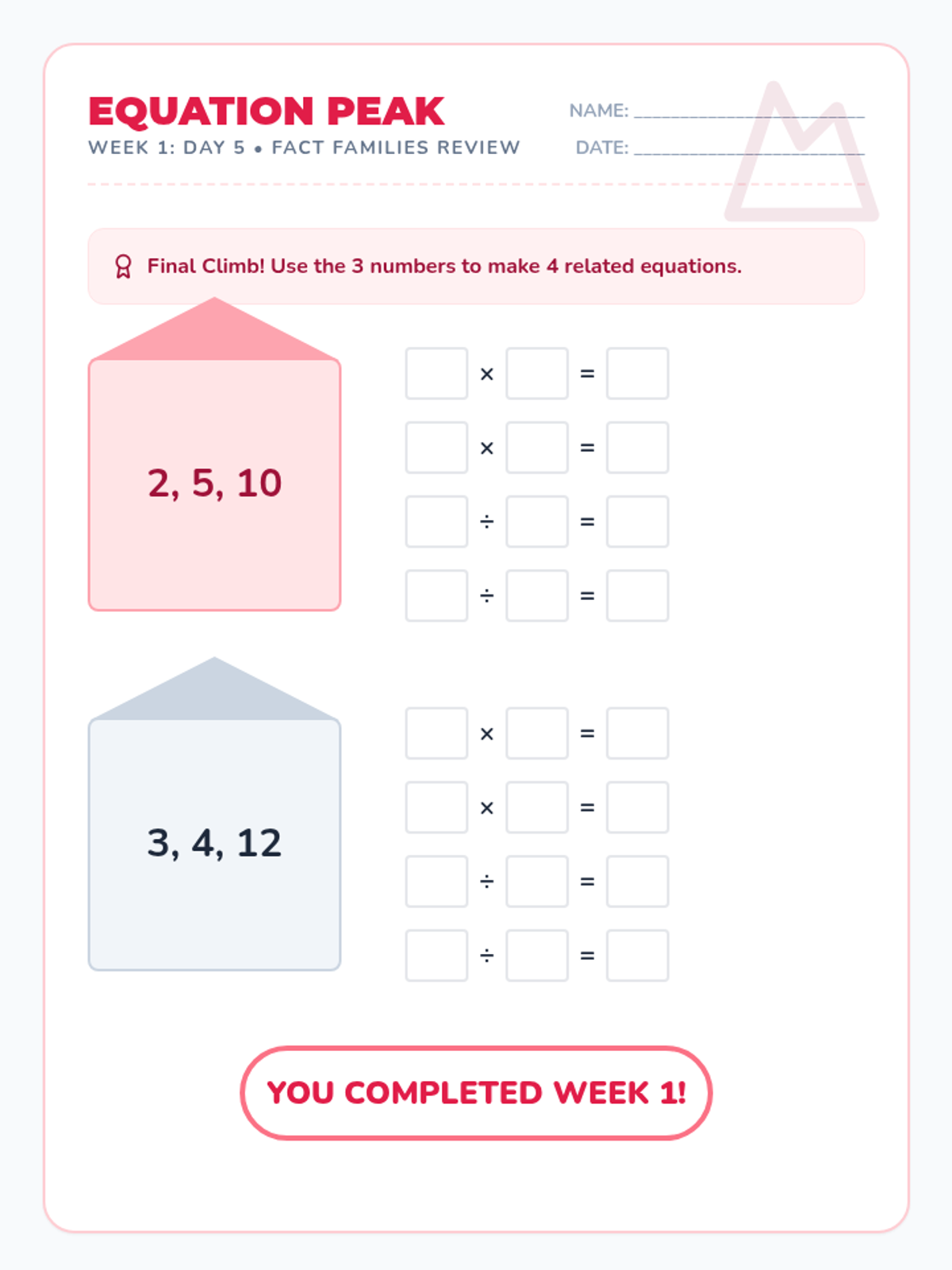
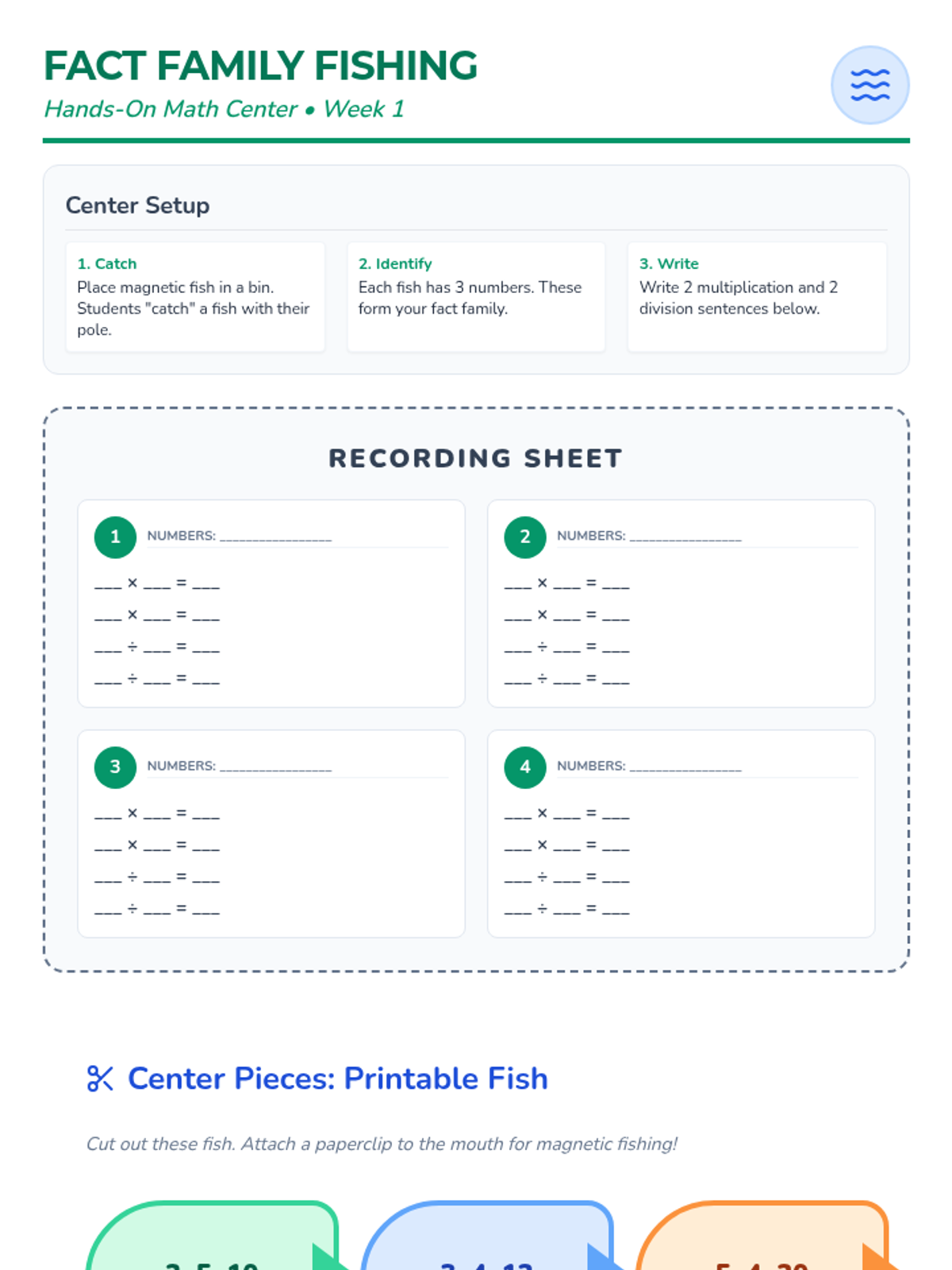
Week 1 focuses on multiplication and division through the lens of a Jungle Expedition, emphasizing equal groups, arrays, and basic fact fluency.
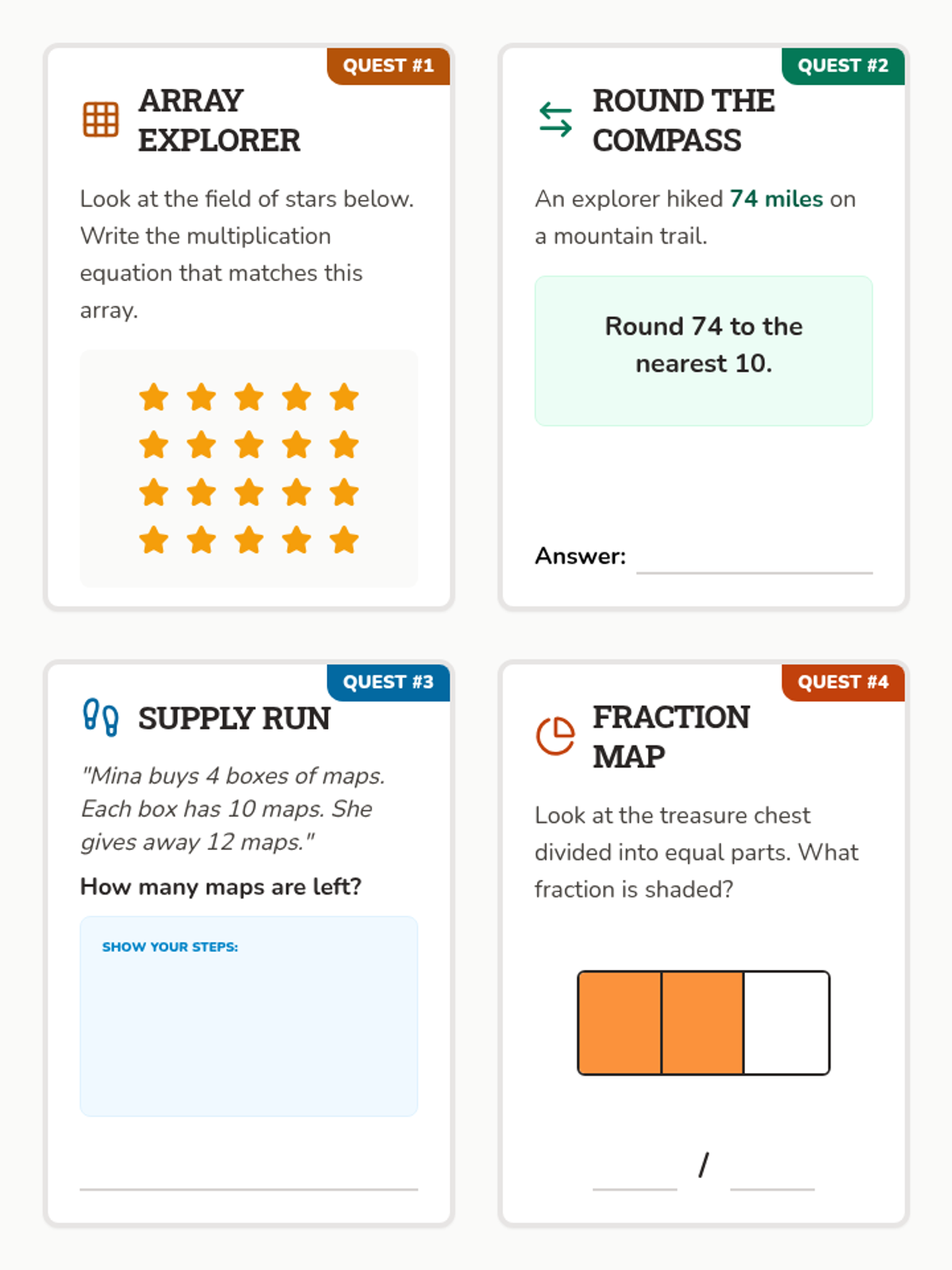
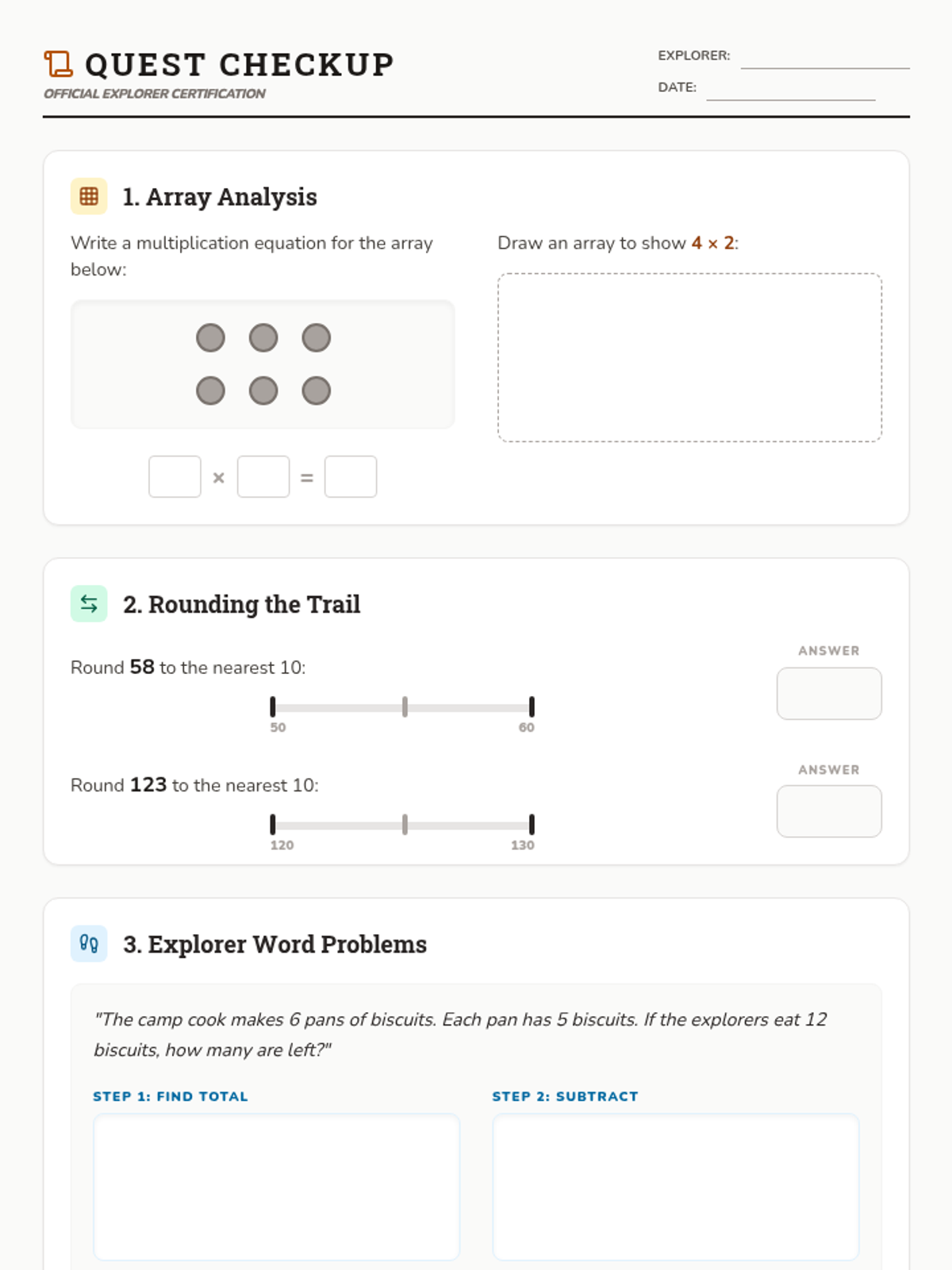
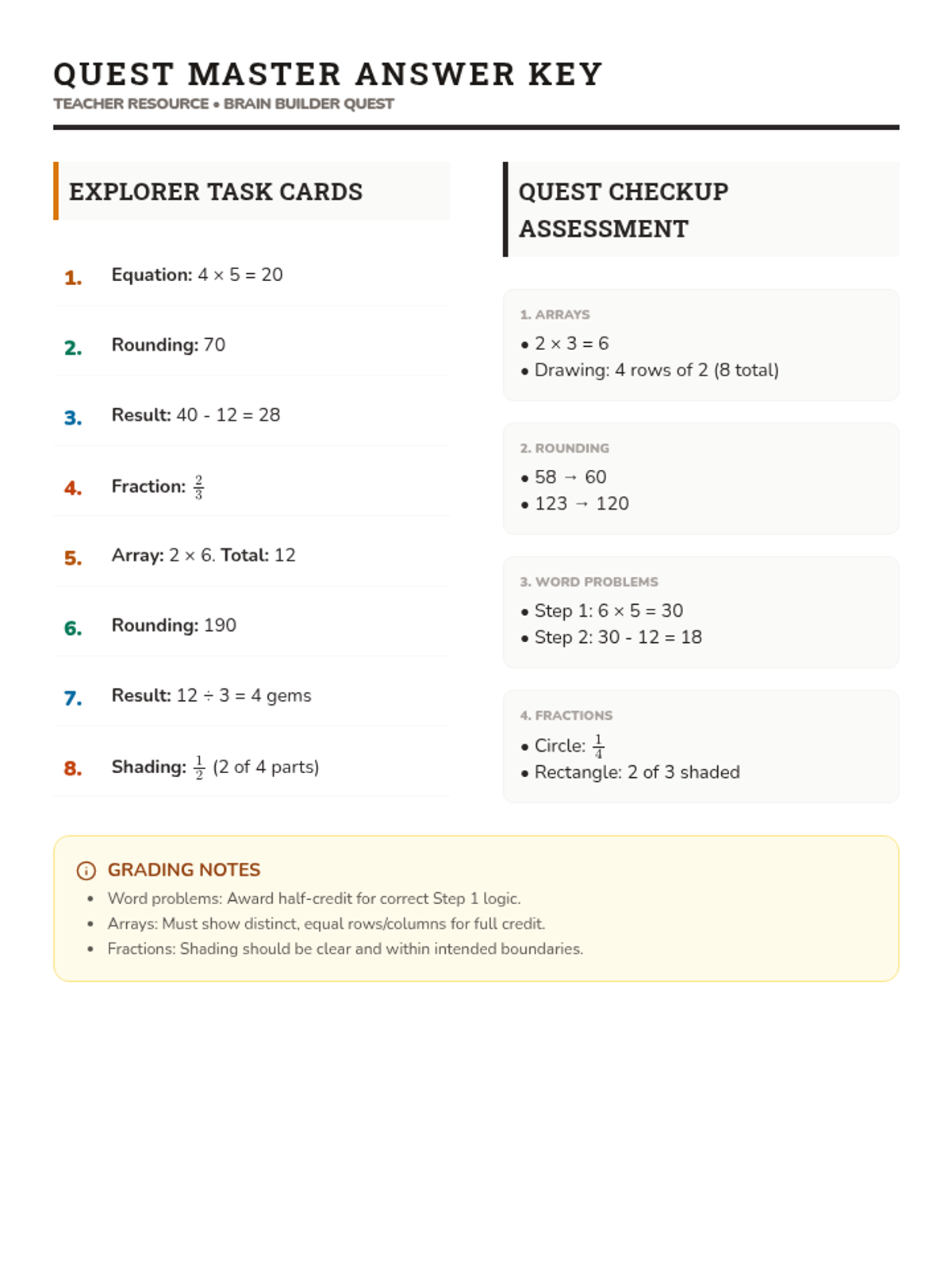
A comprehensive math review covering multiplication arrays, rounding to the nearest 10, multi-step word problems, and fraction identification through an explorer-themed adventure.
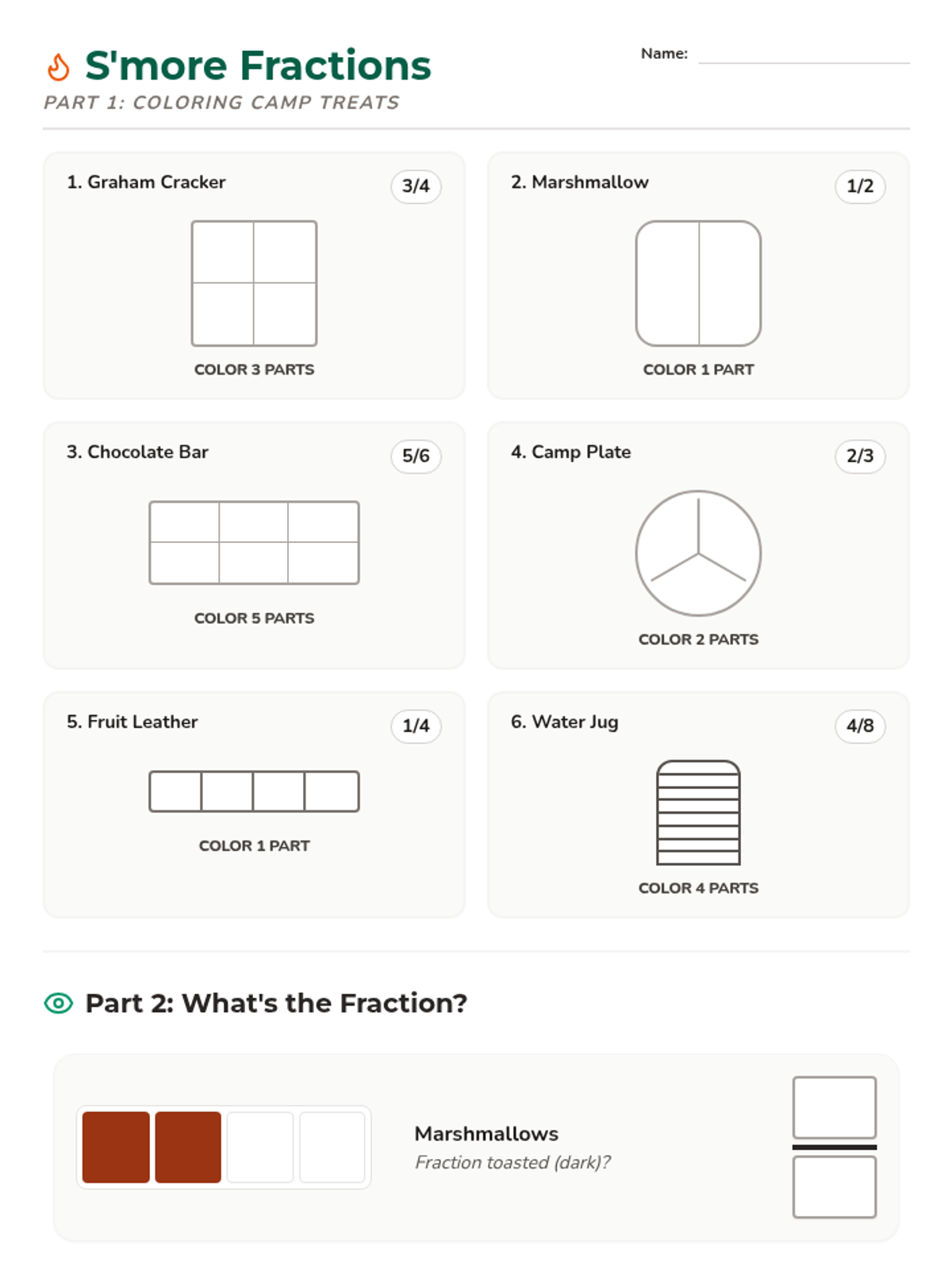
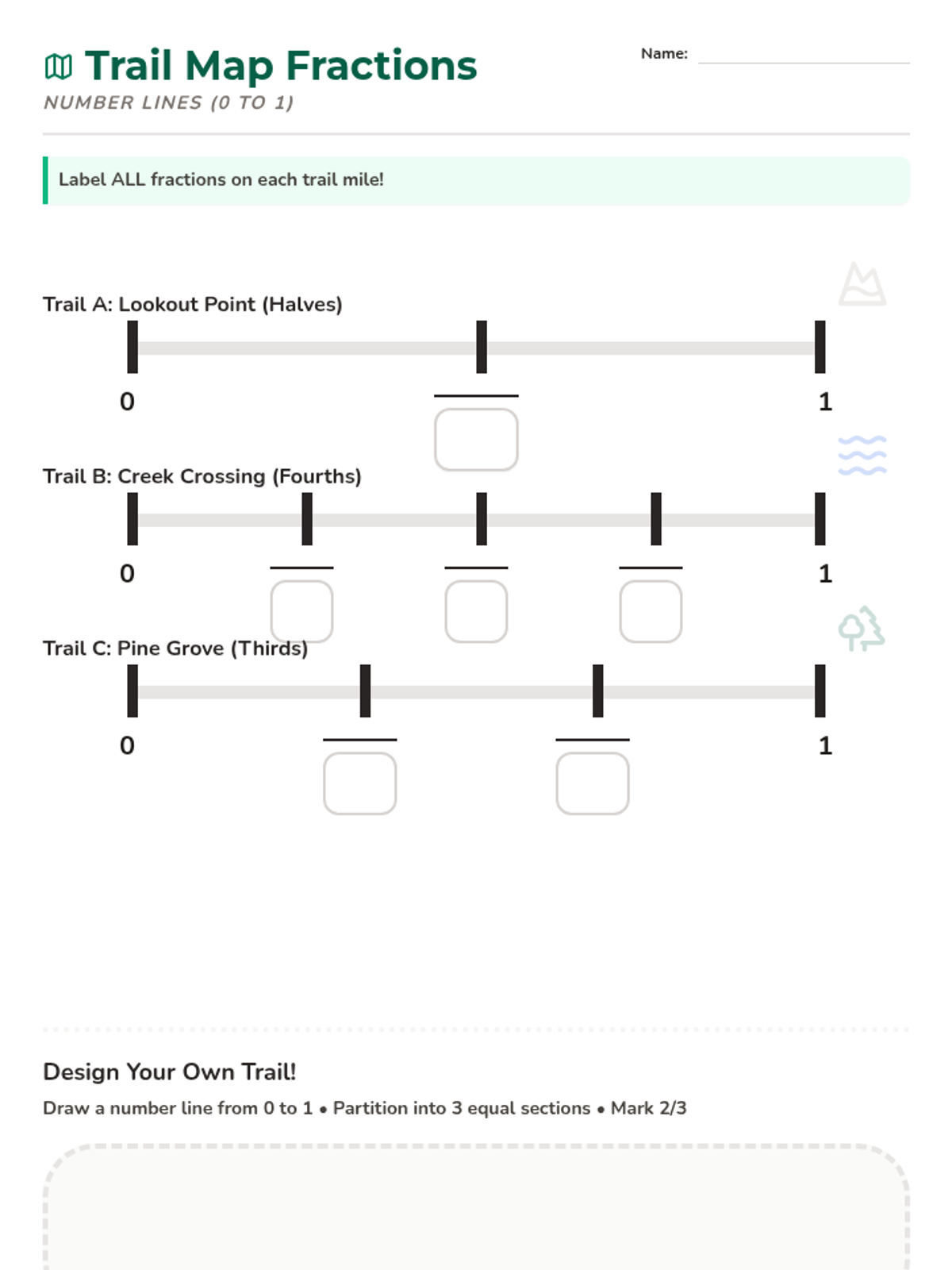
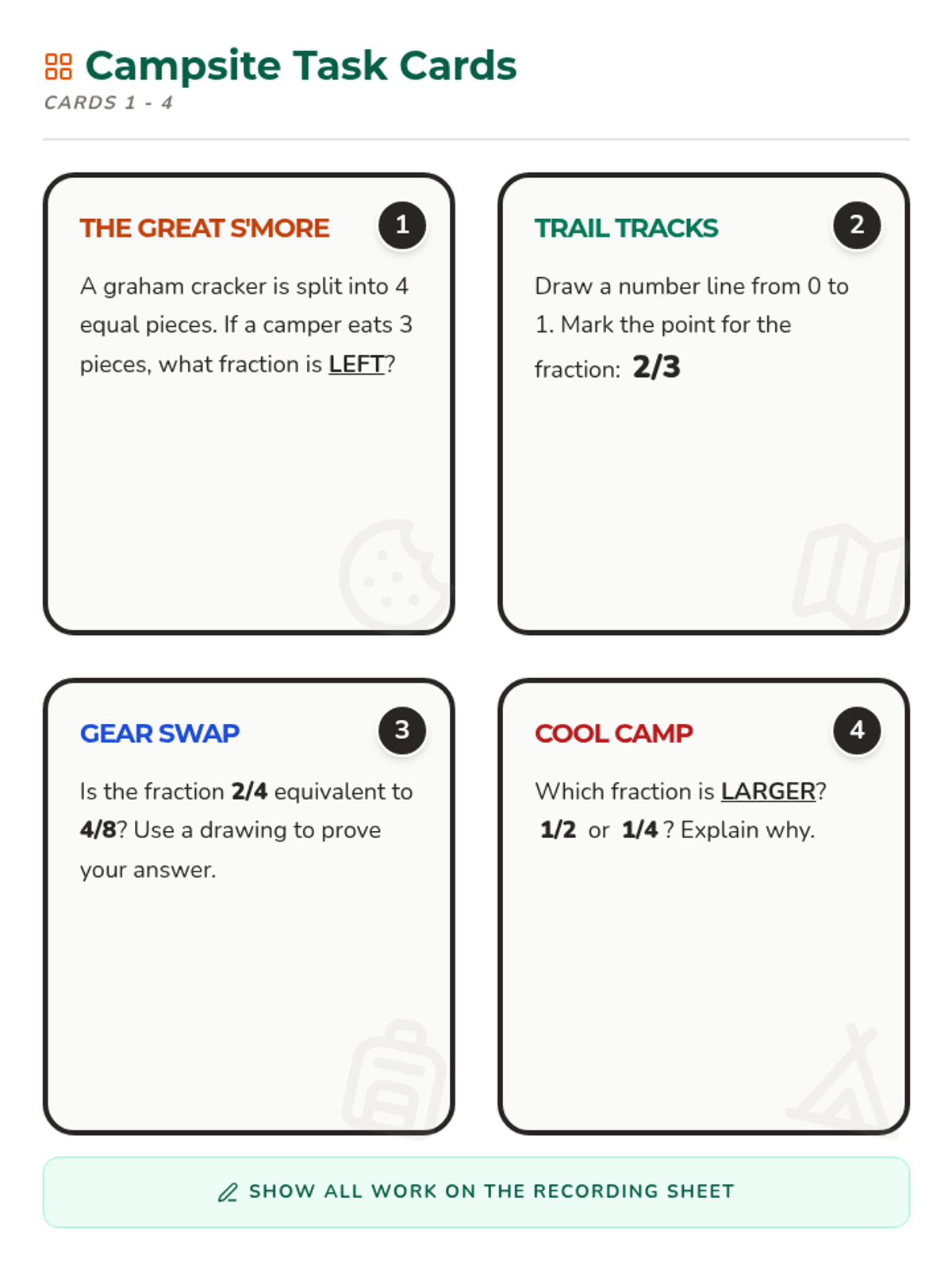
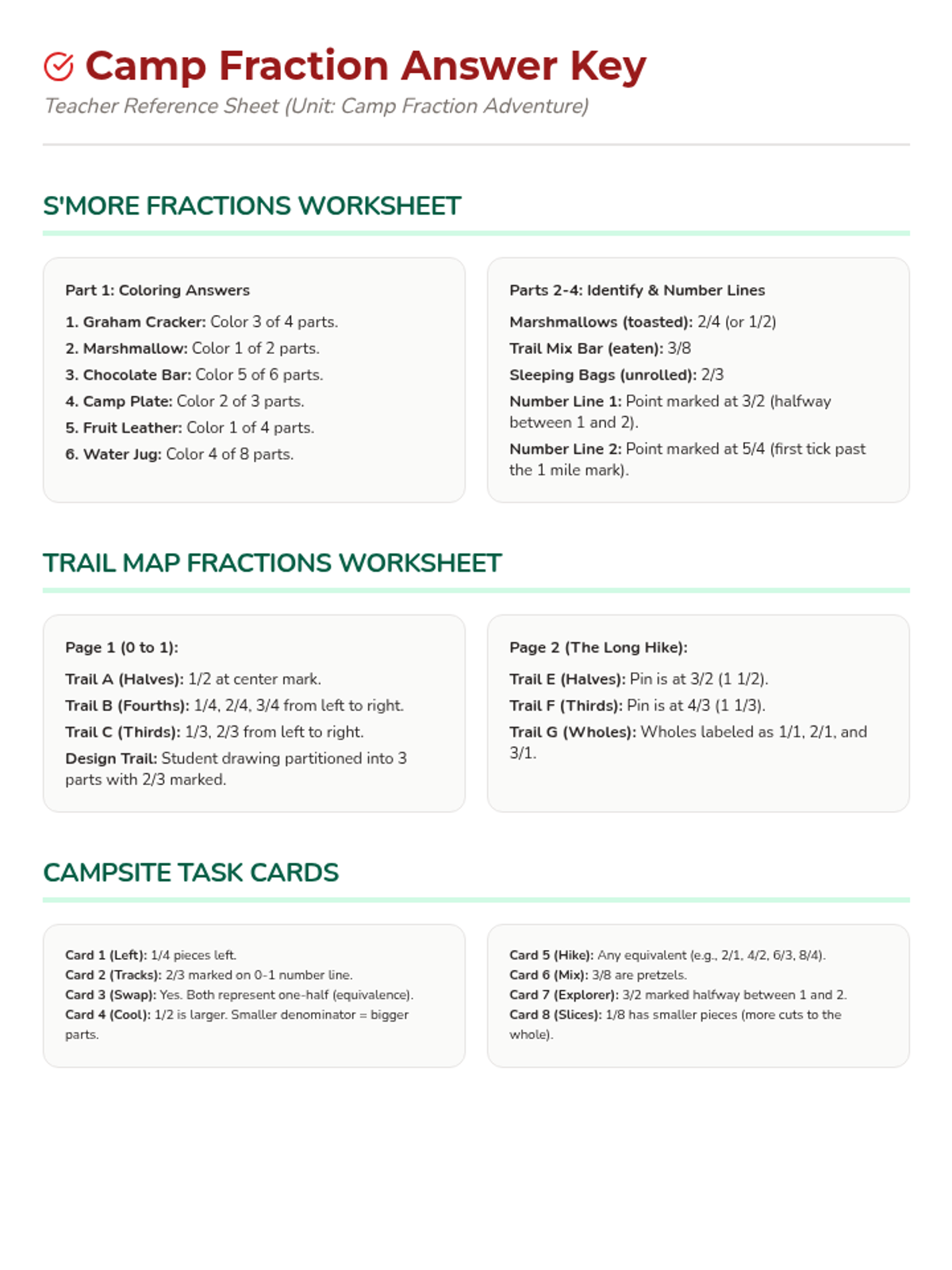
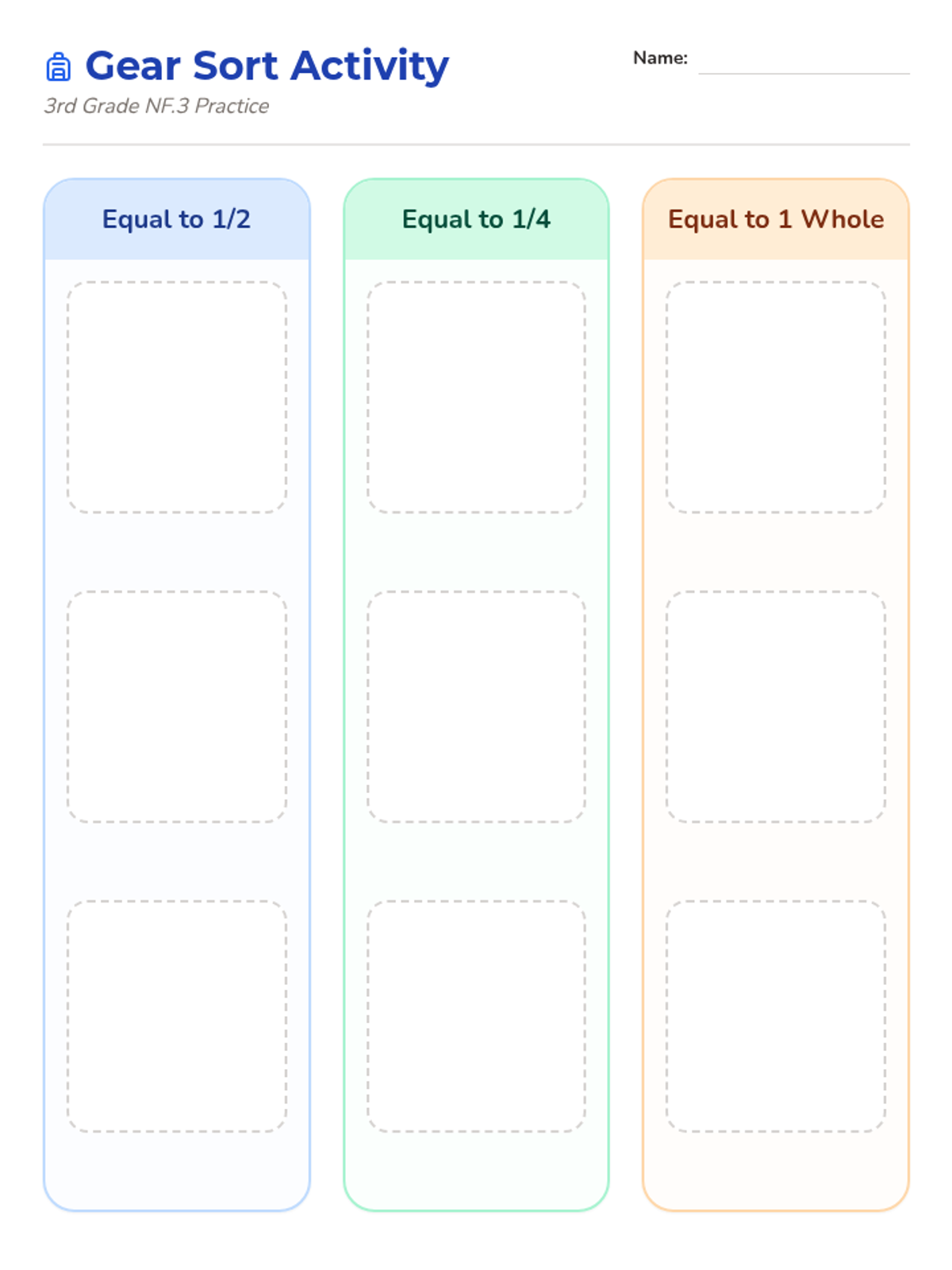
A comprehensive 3rd-grade fraction unit themed around camping adventures, covering fraction basics, number lines, and equivalence. Students explore fractions through s'mores, hiking trails, and camping gear.
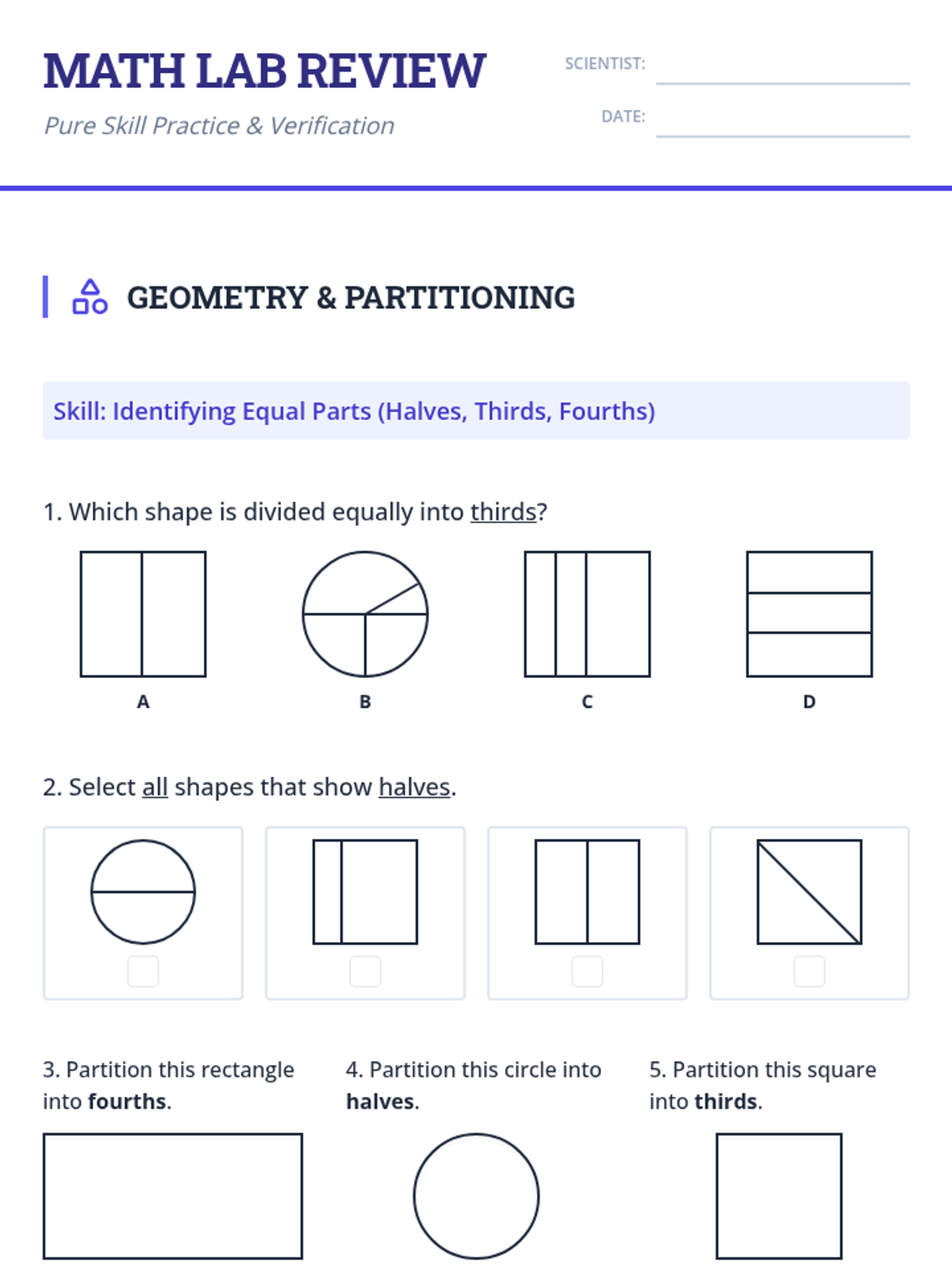
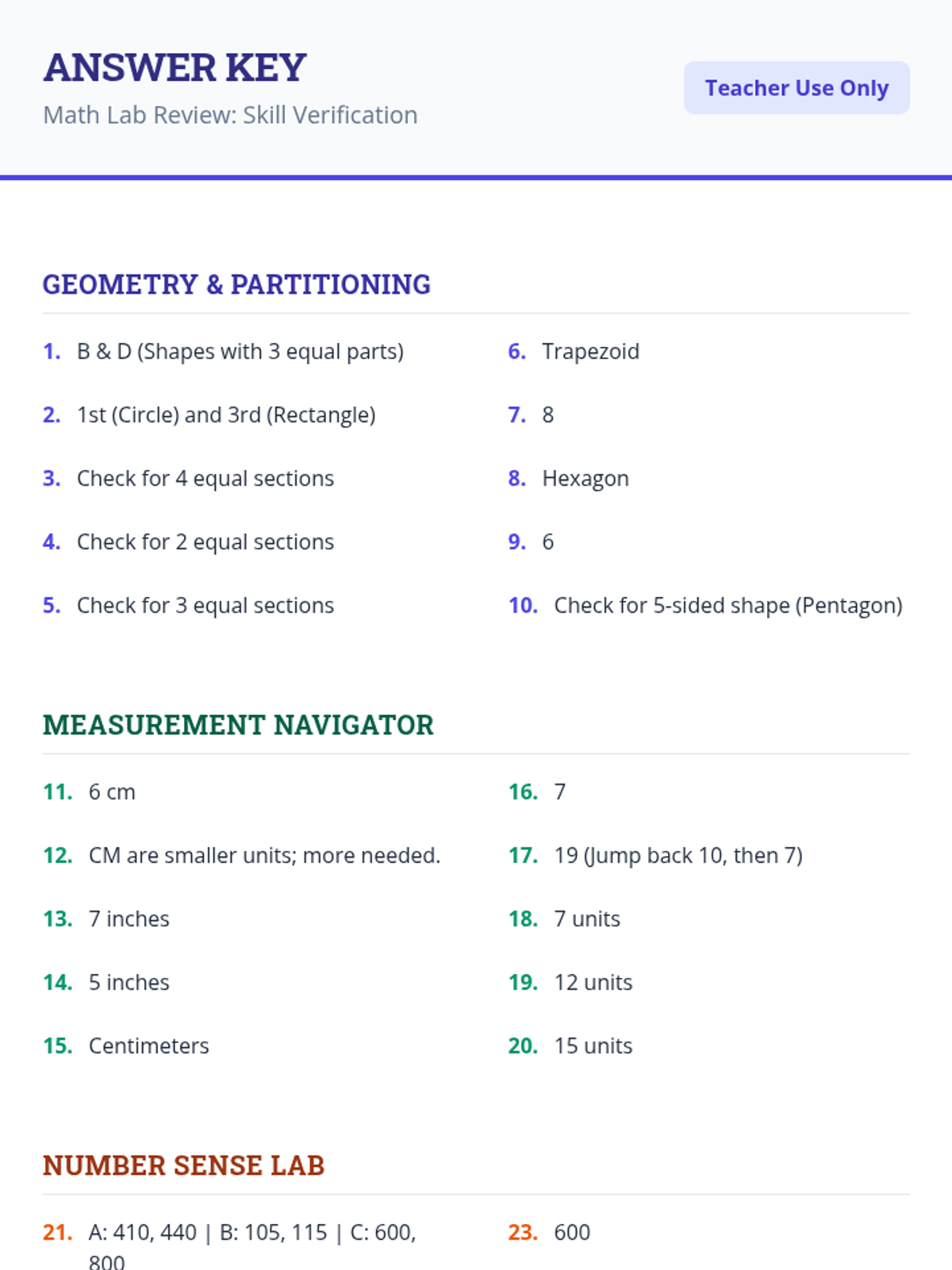
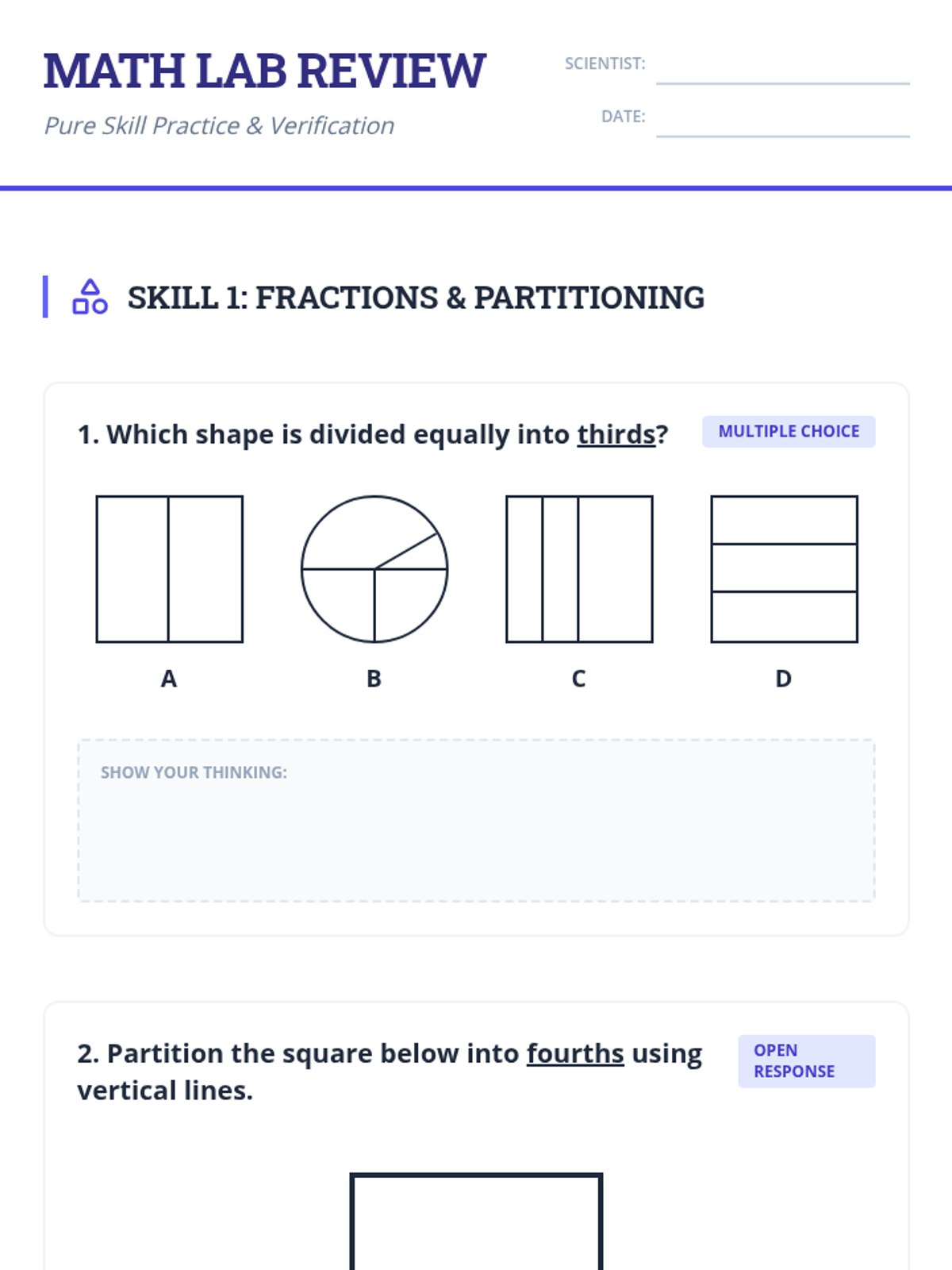
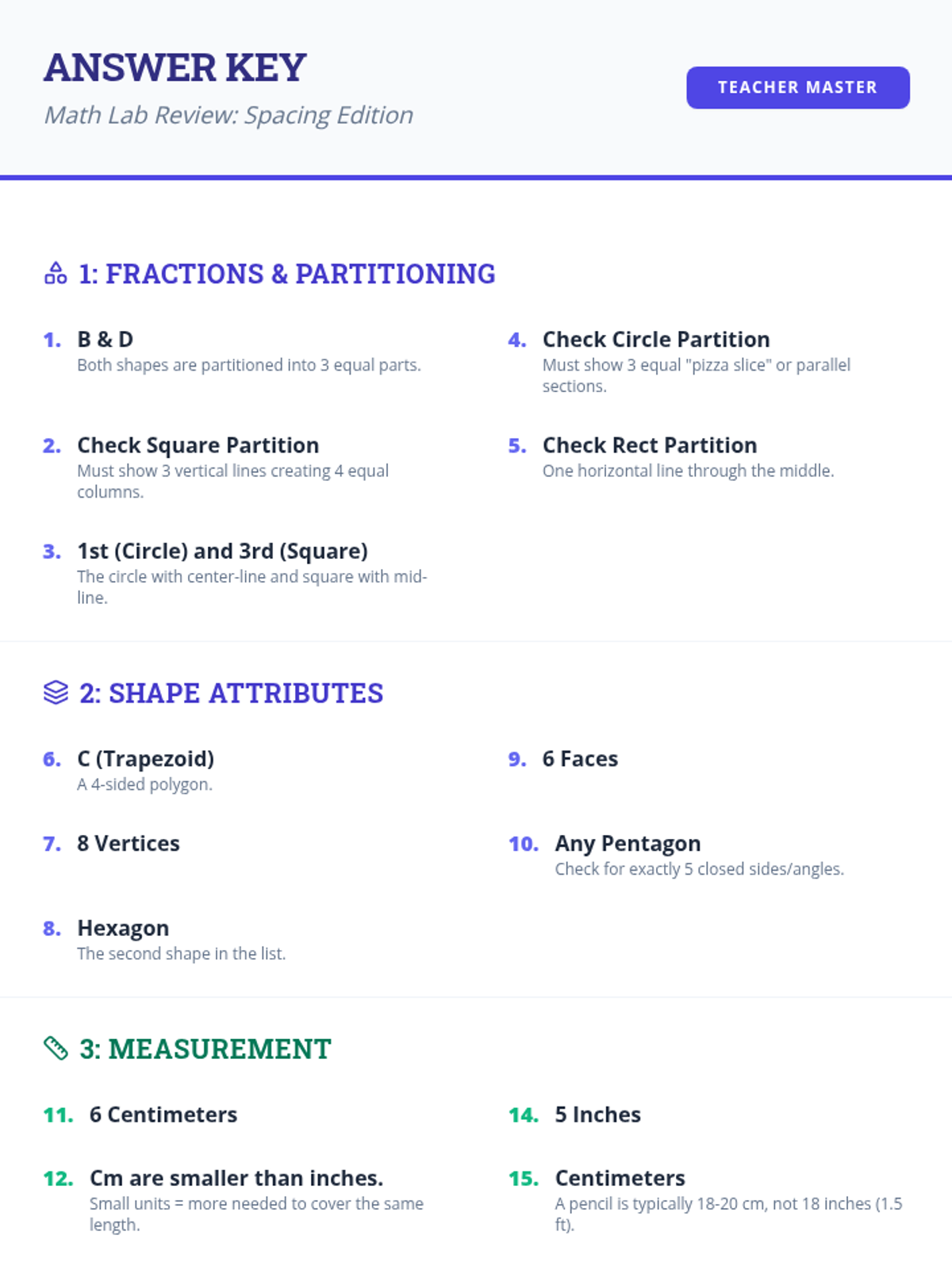
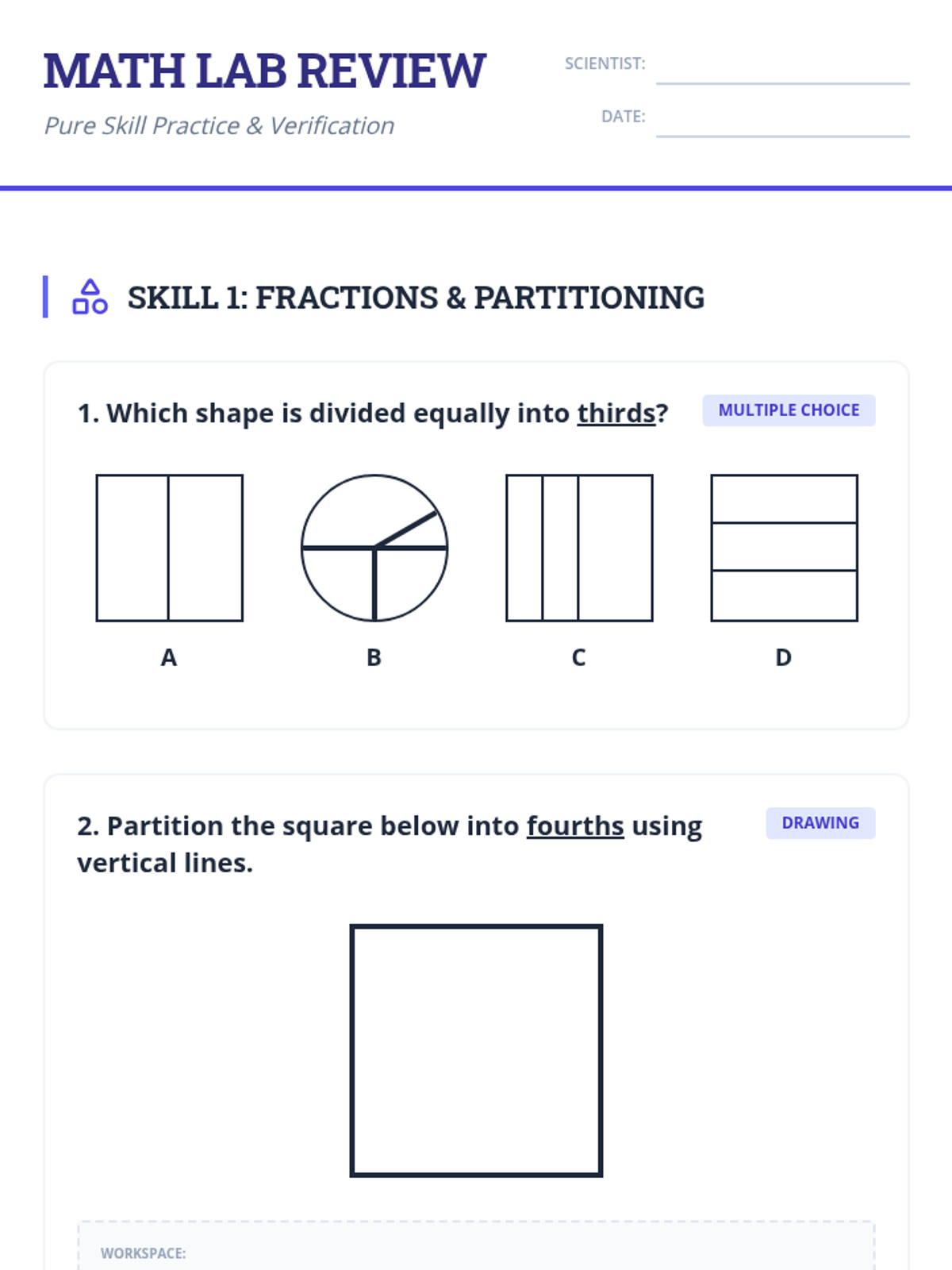
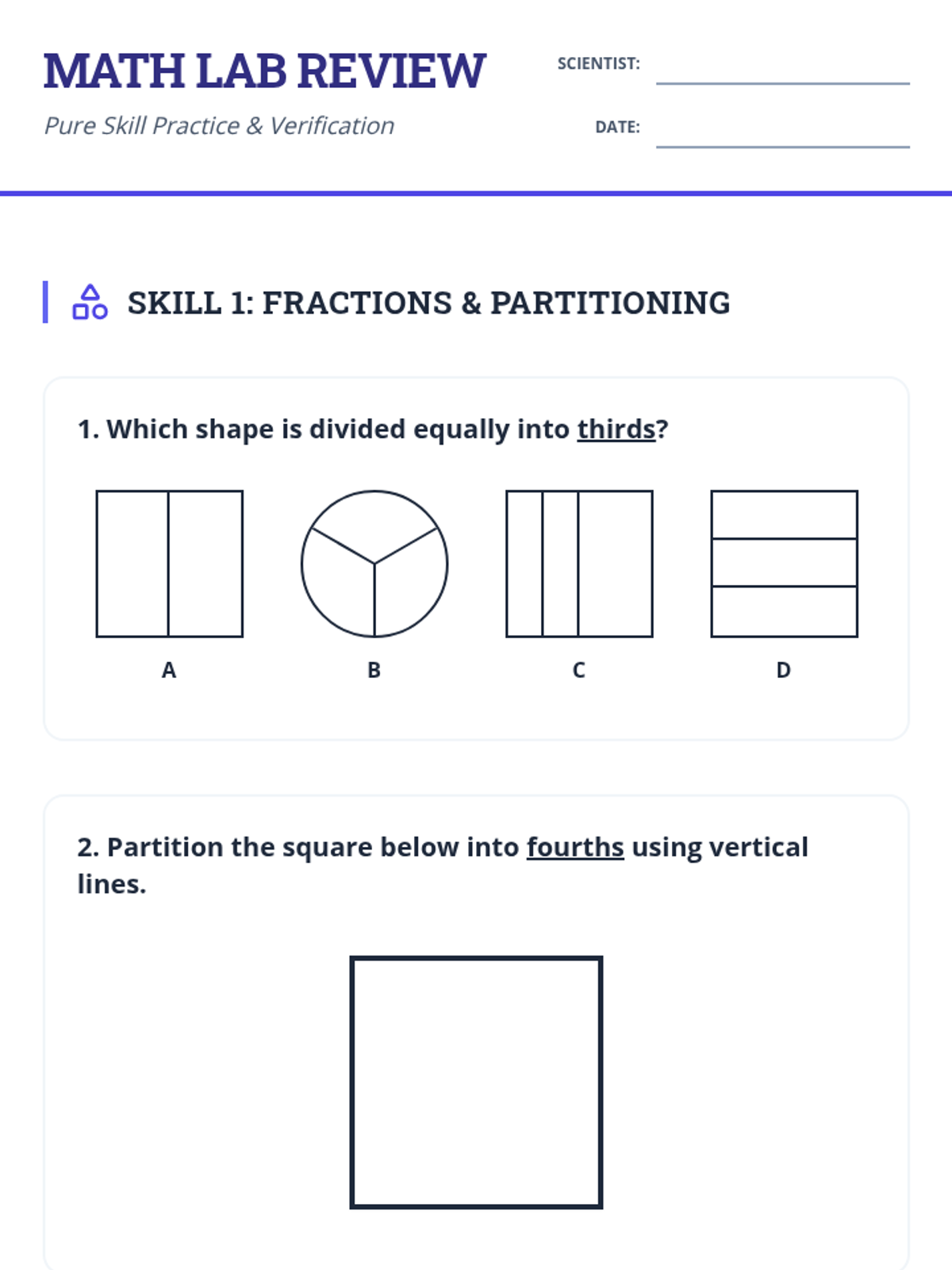
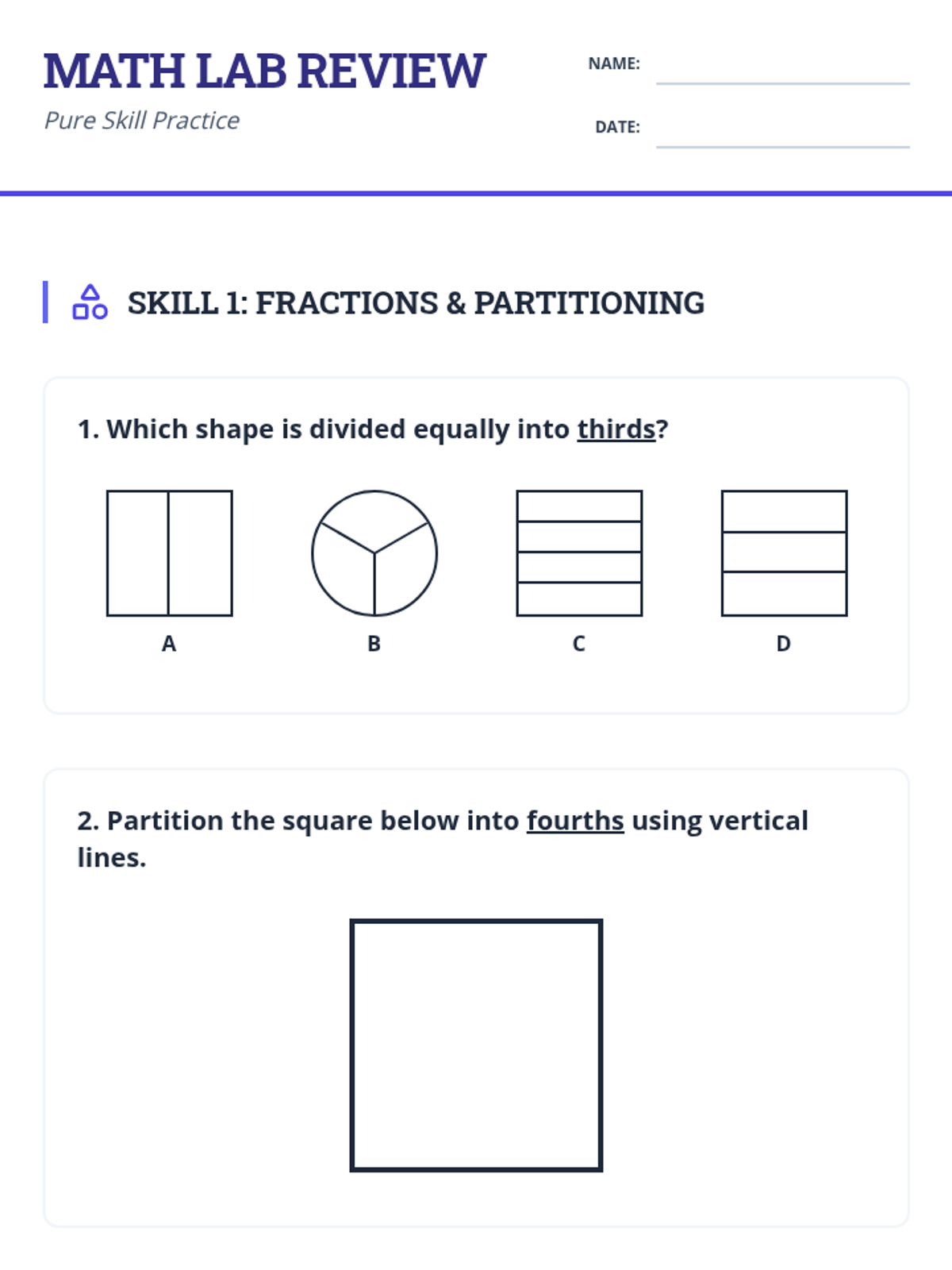
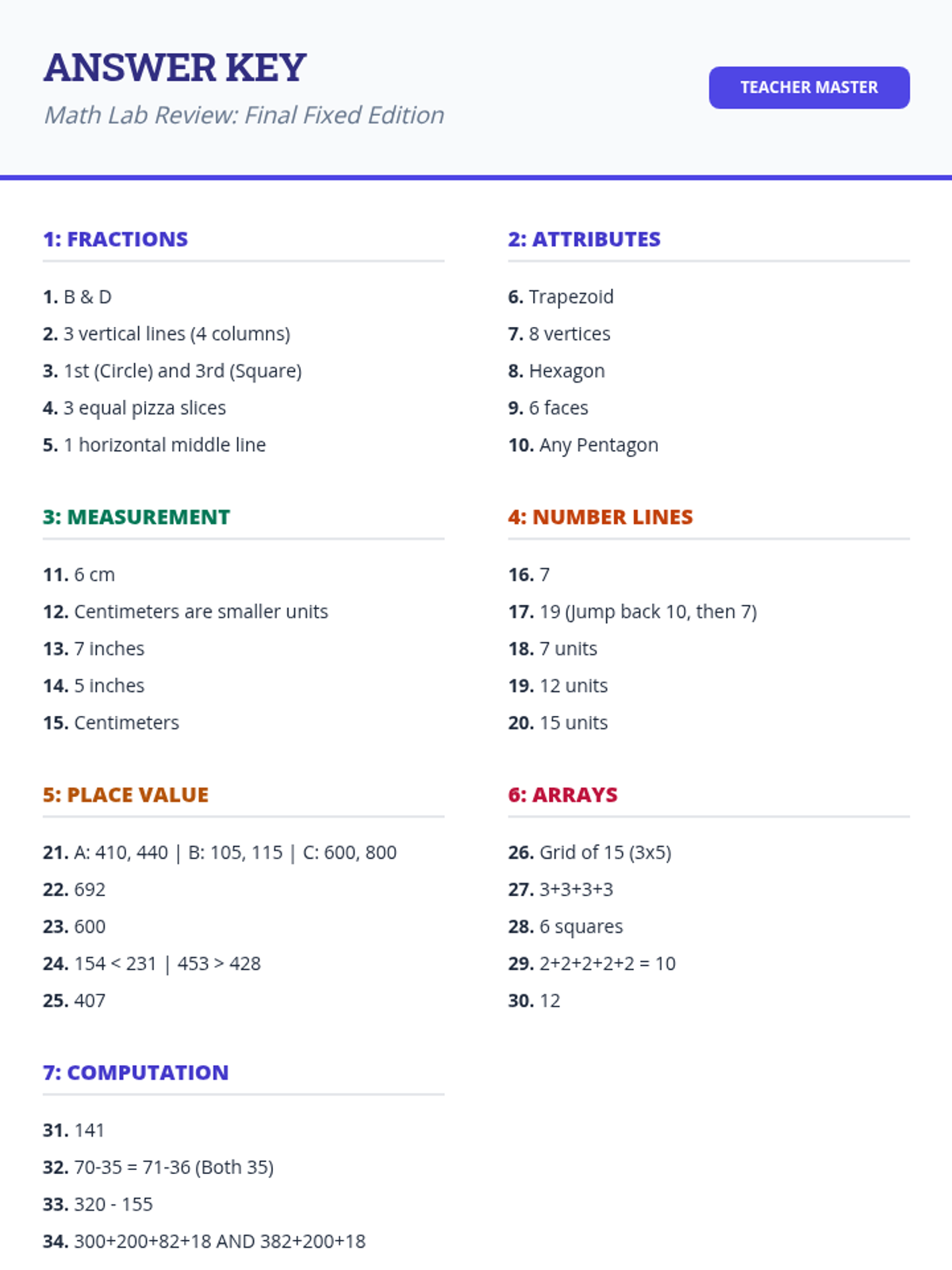
A comprehensive review packet covering Grade 2 math standards including geometry, measurement, place value, and computation, stripped of word problem context for pure skill practice.
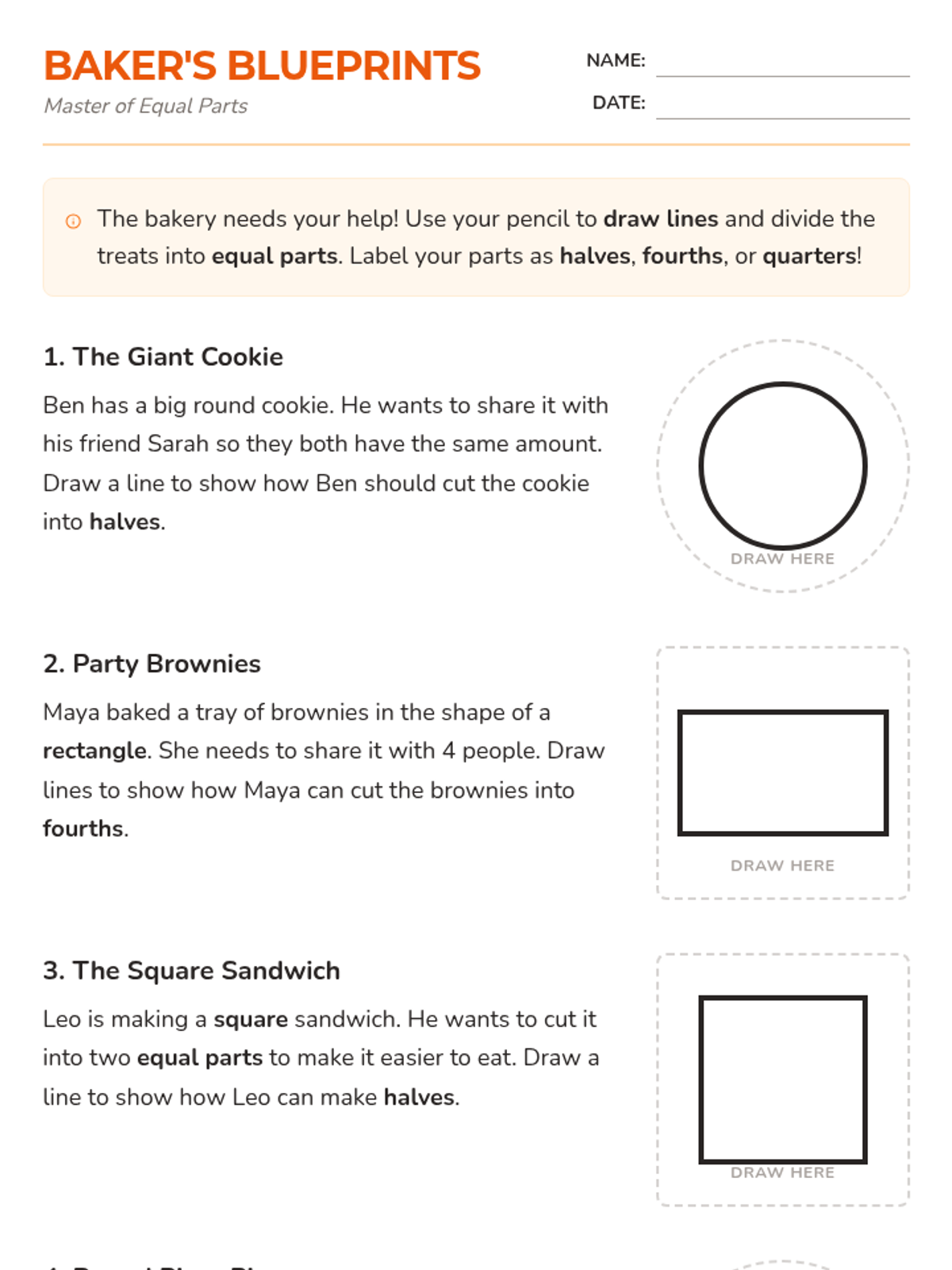
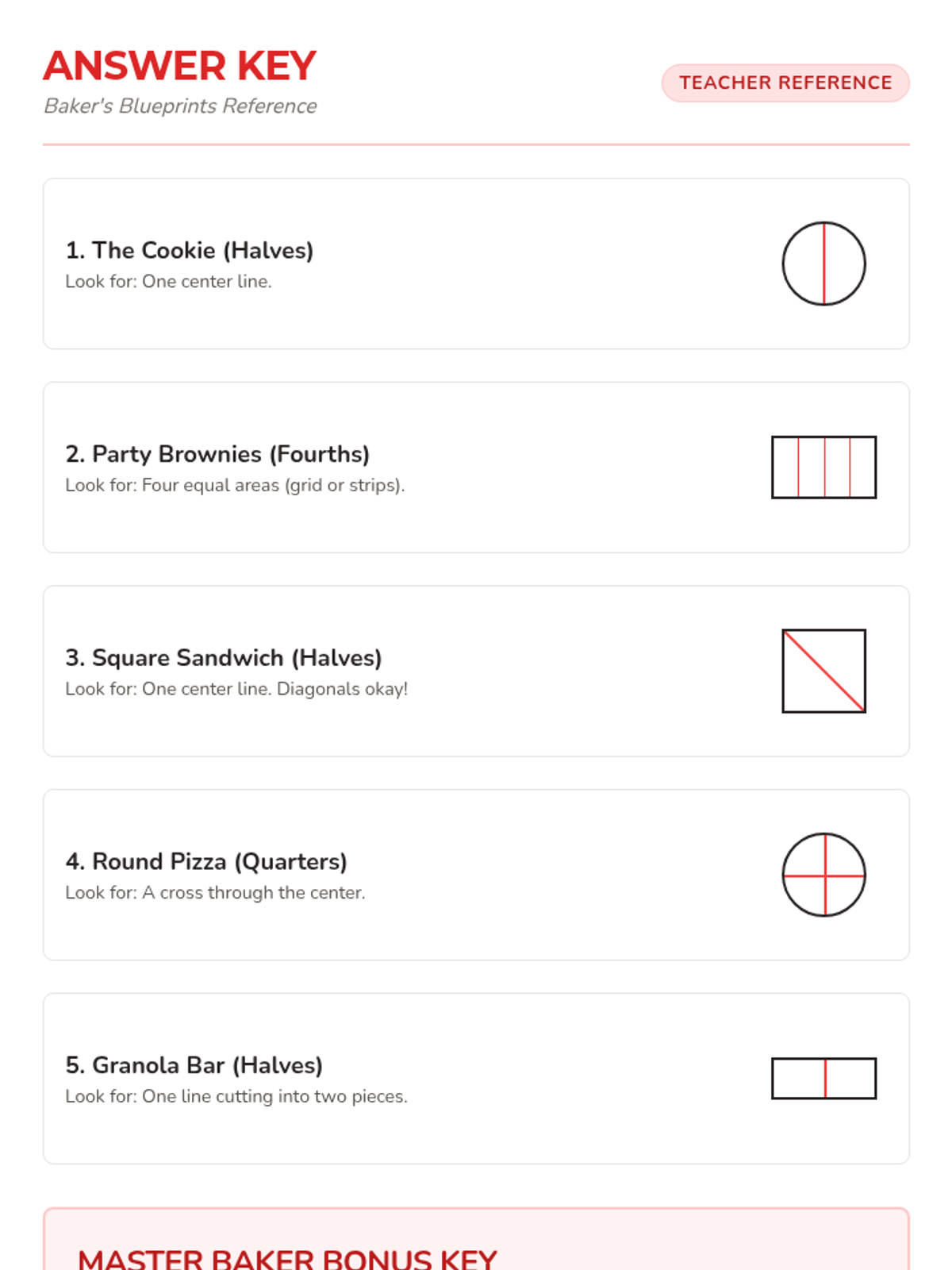
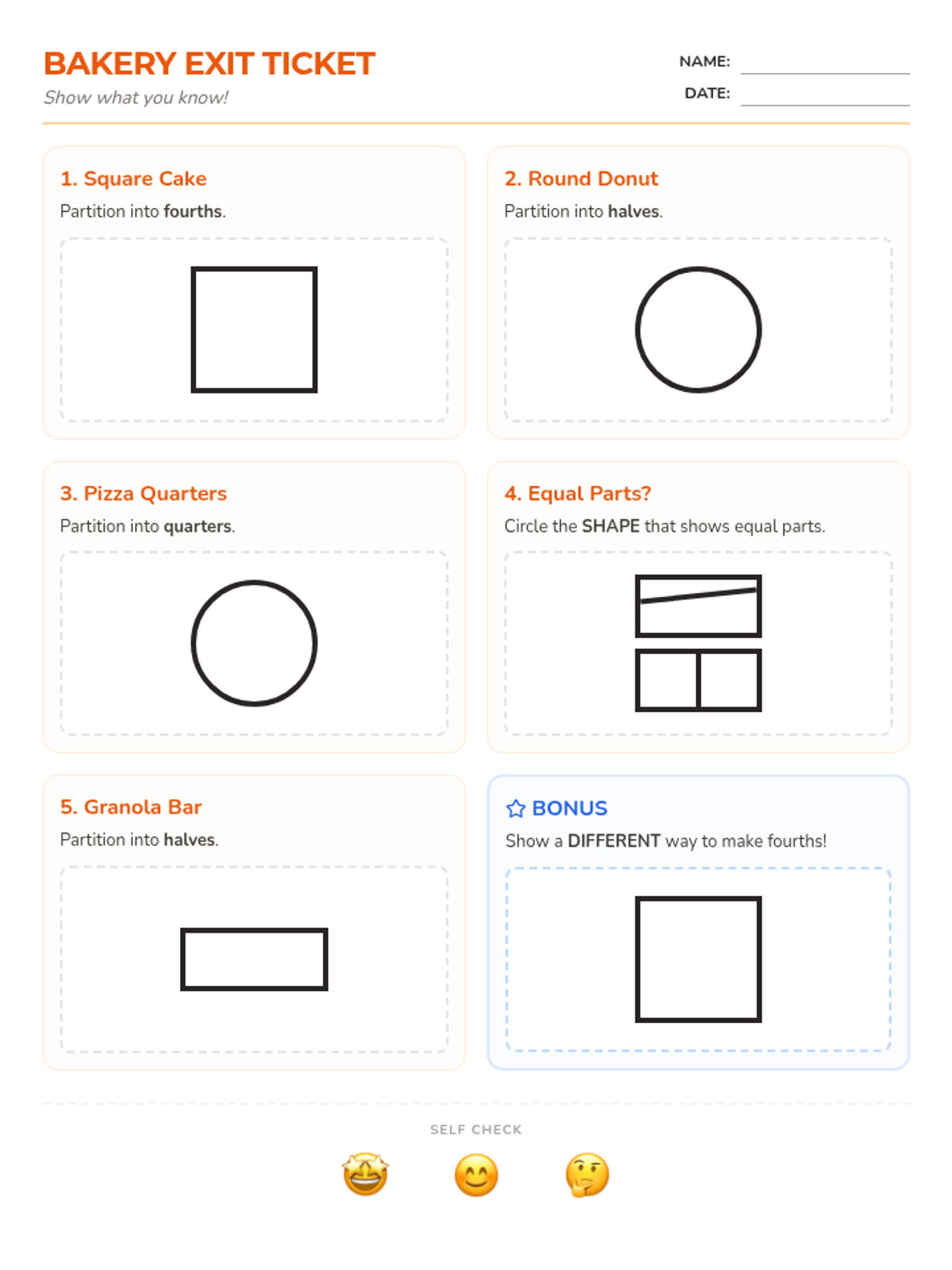
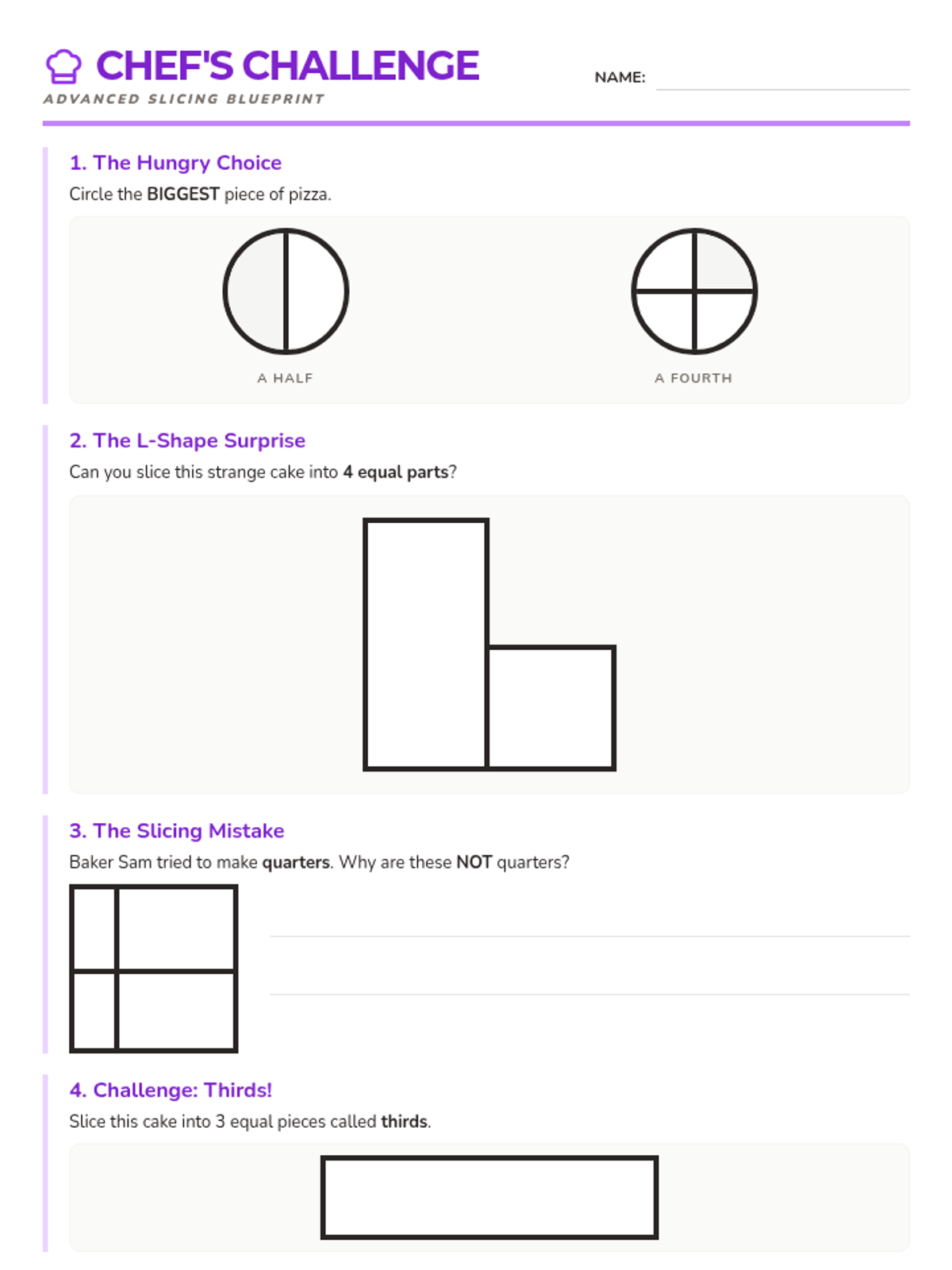
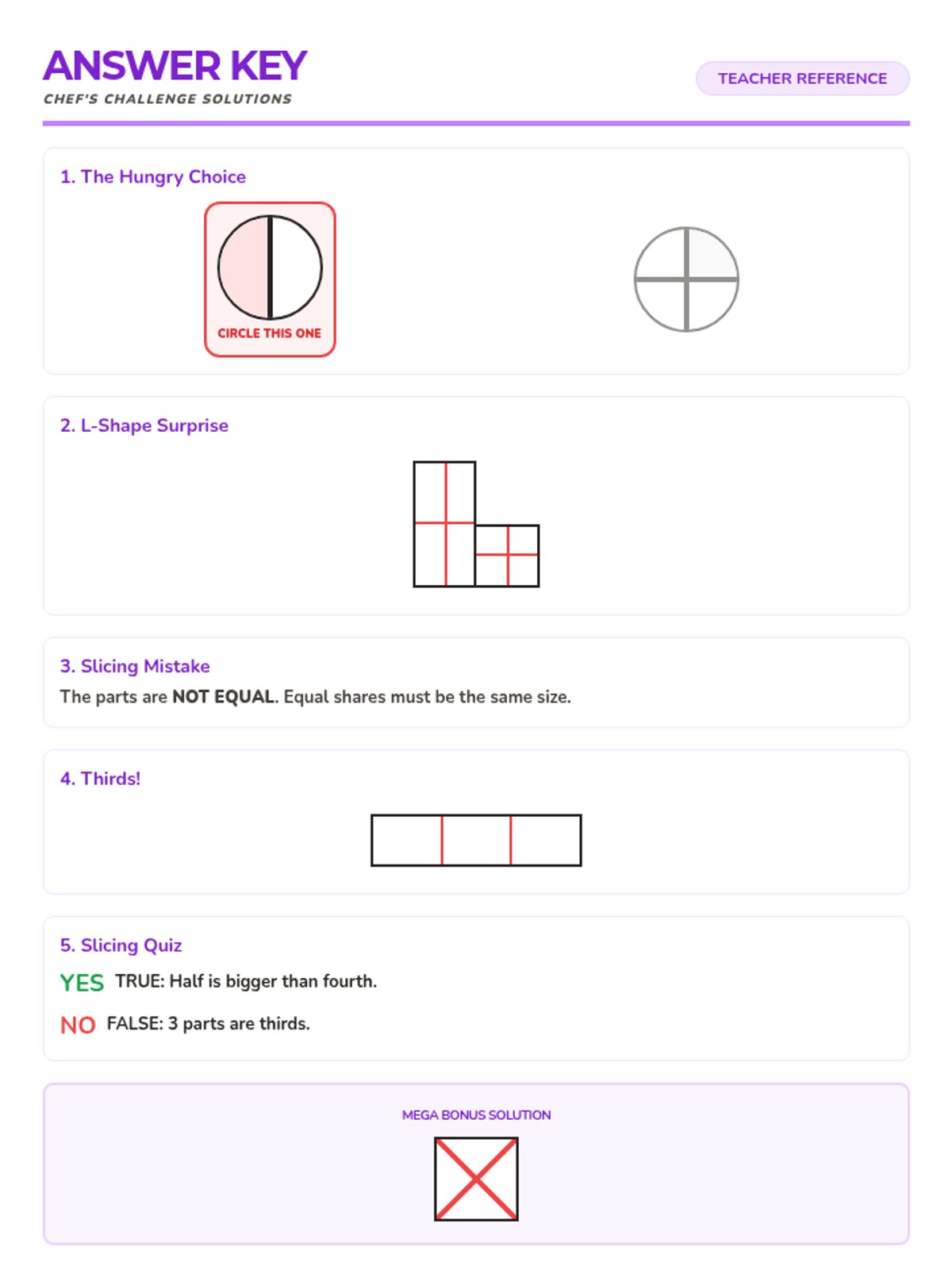
A first-grade math lesson focused on partitioning circles, squares, and rectangles into equal shares (halves and fourths) through real-world word problems.
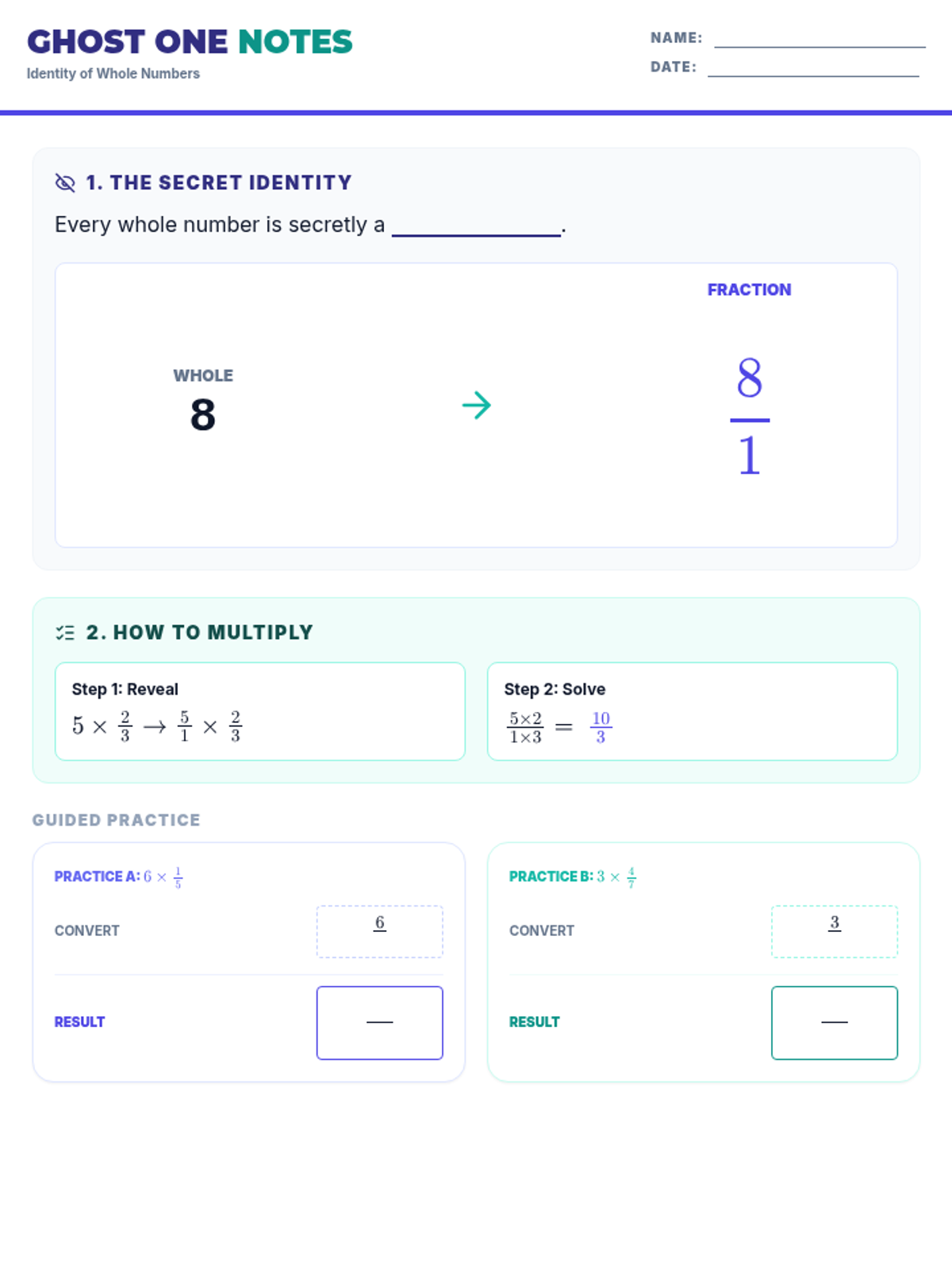
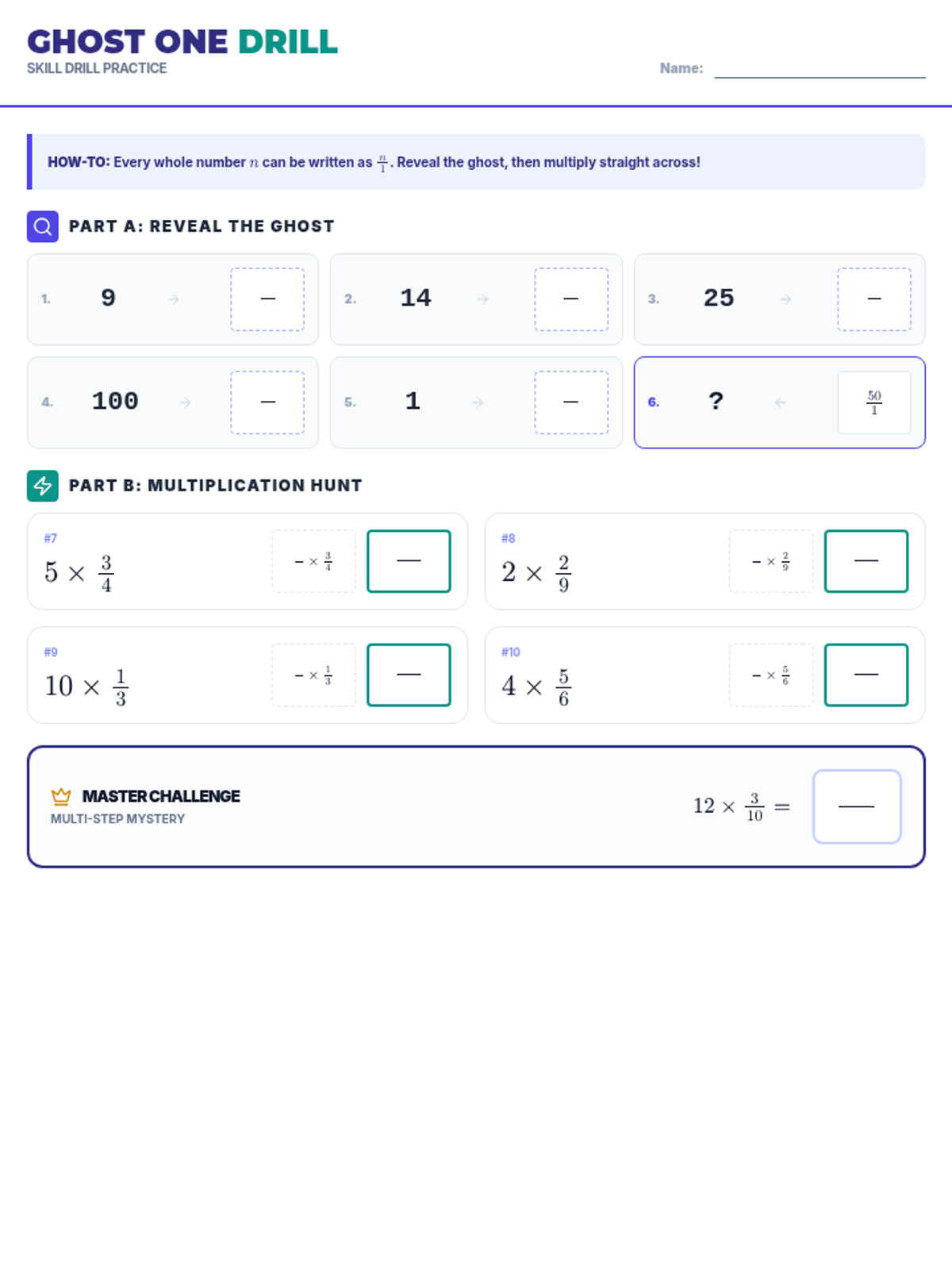
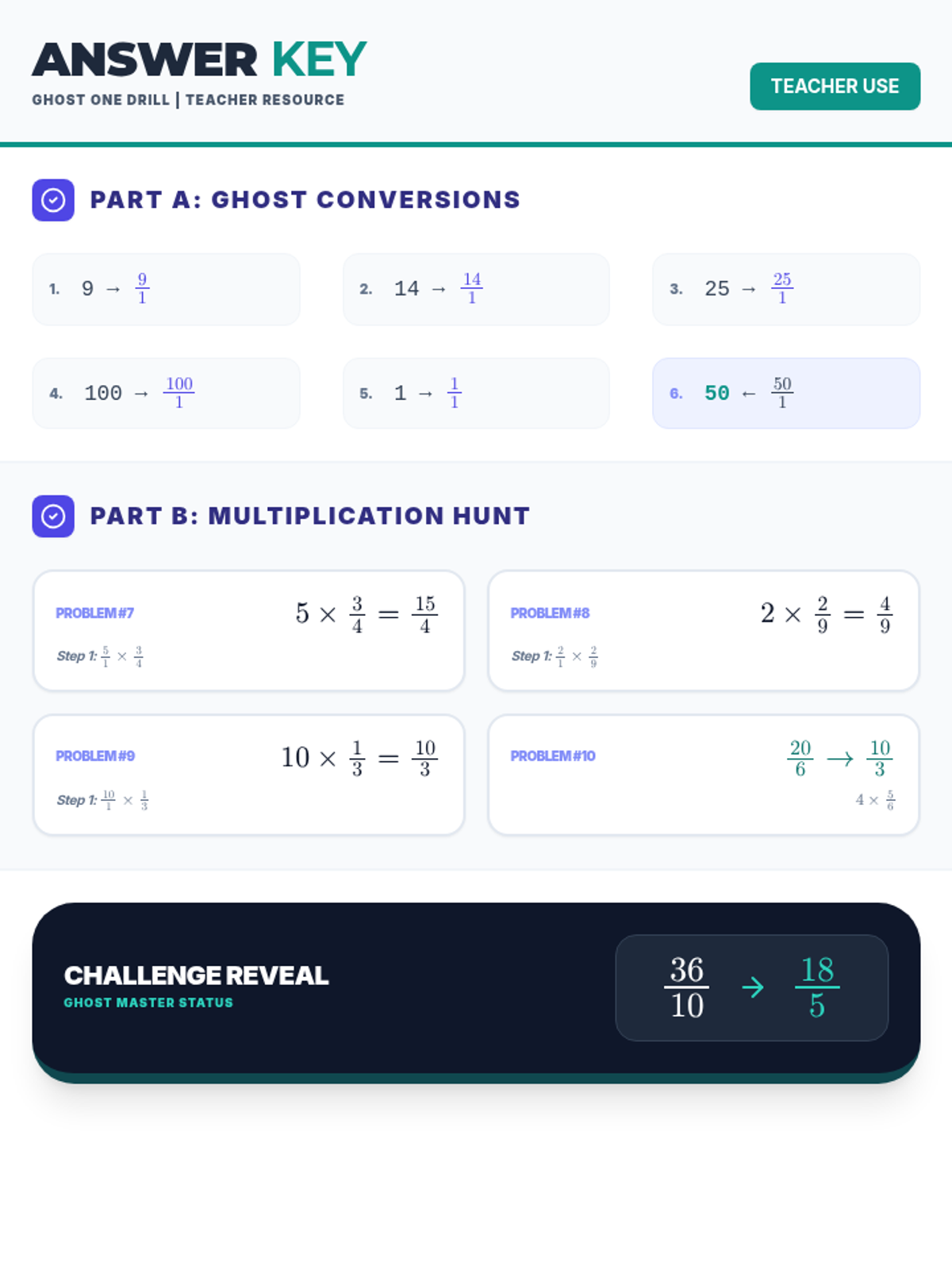
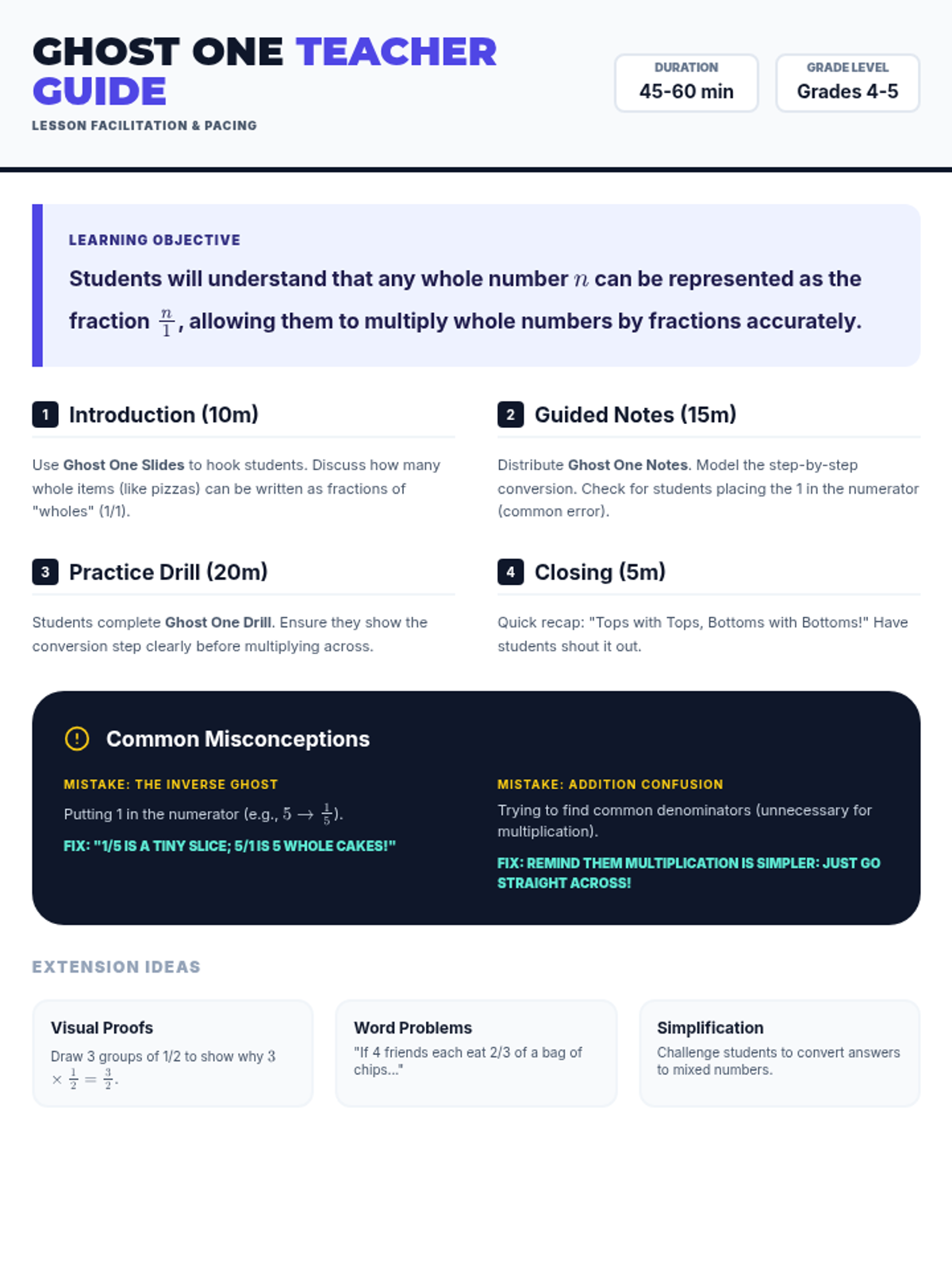
This lesson introduces students to the concept of the 'invisible one' in whole numbers, teaching them how to convert whole numbers into fractions and use this skill to multiply whole numbers by fractions.
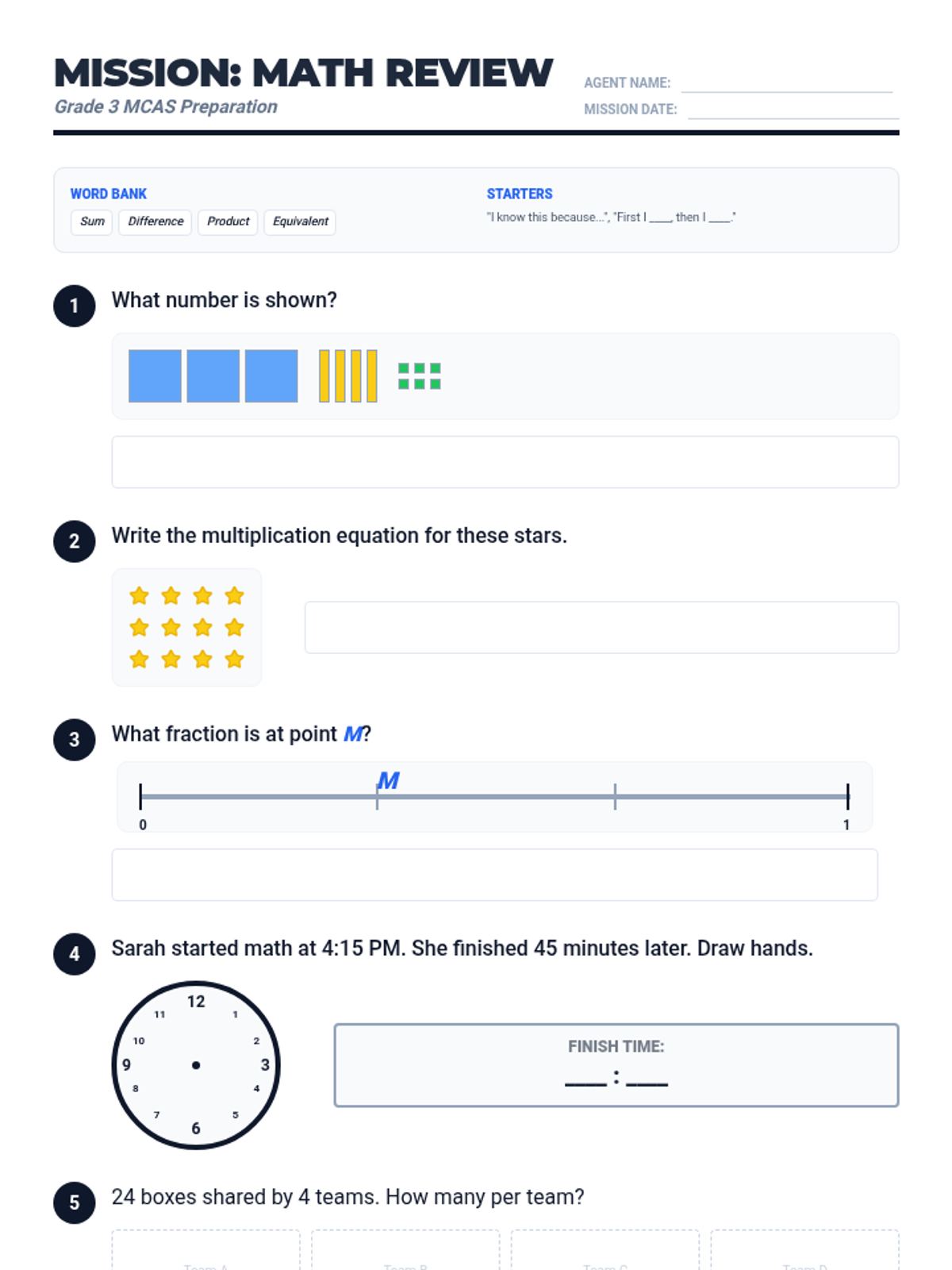
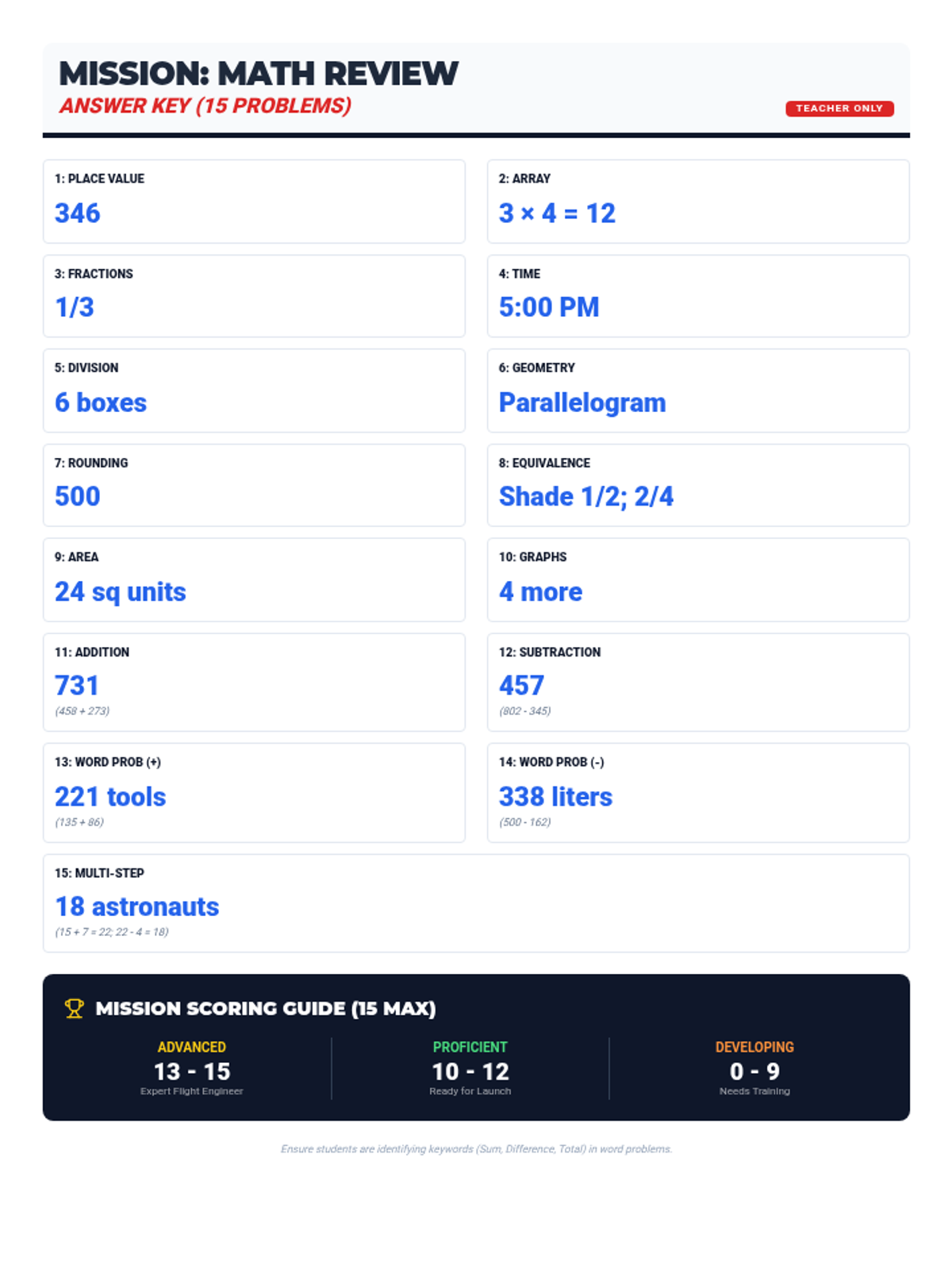
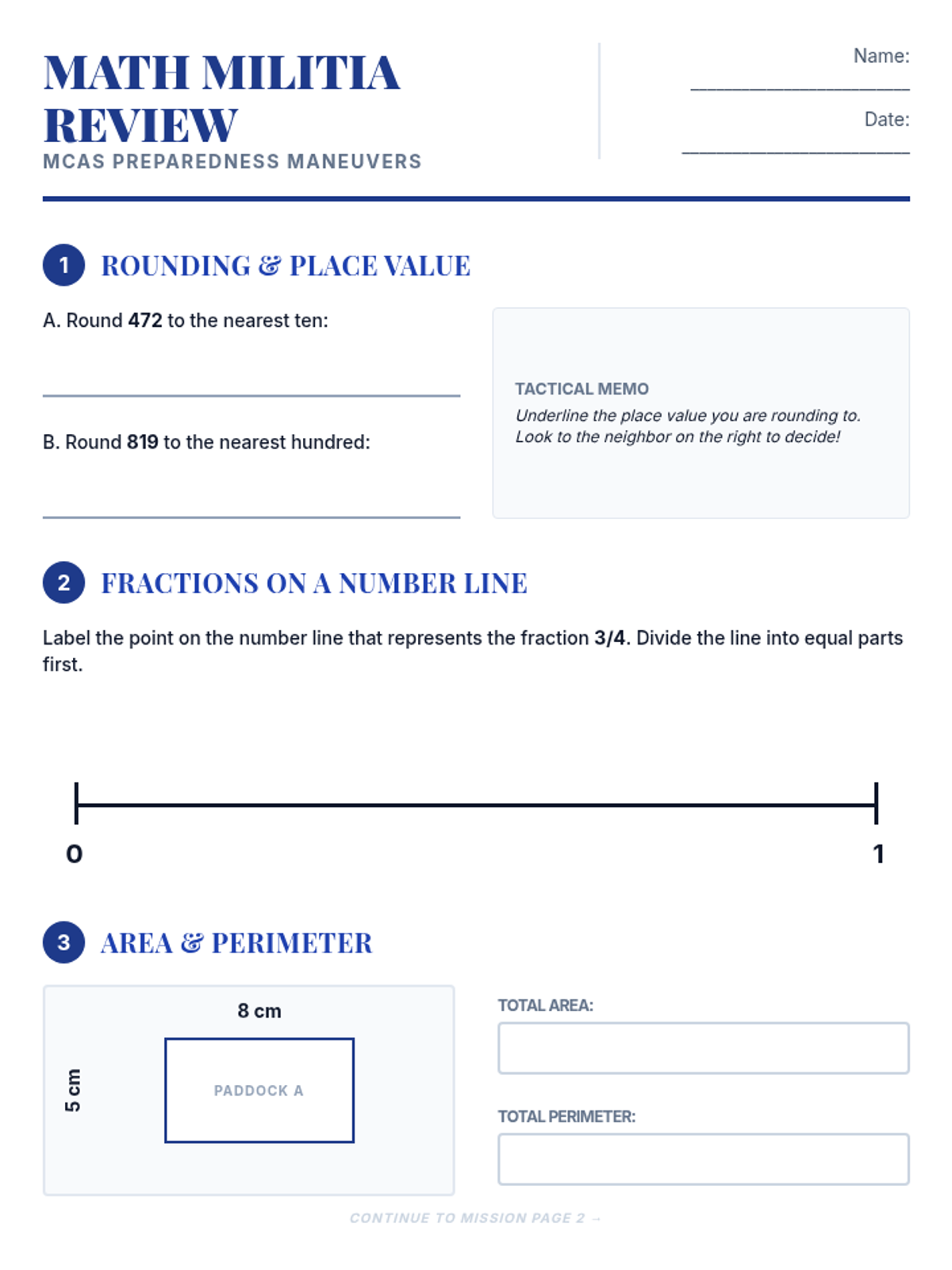
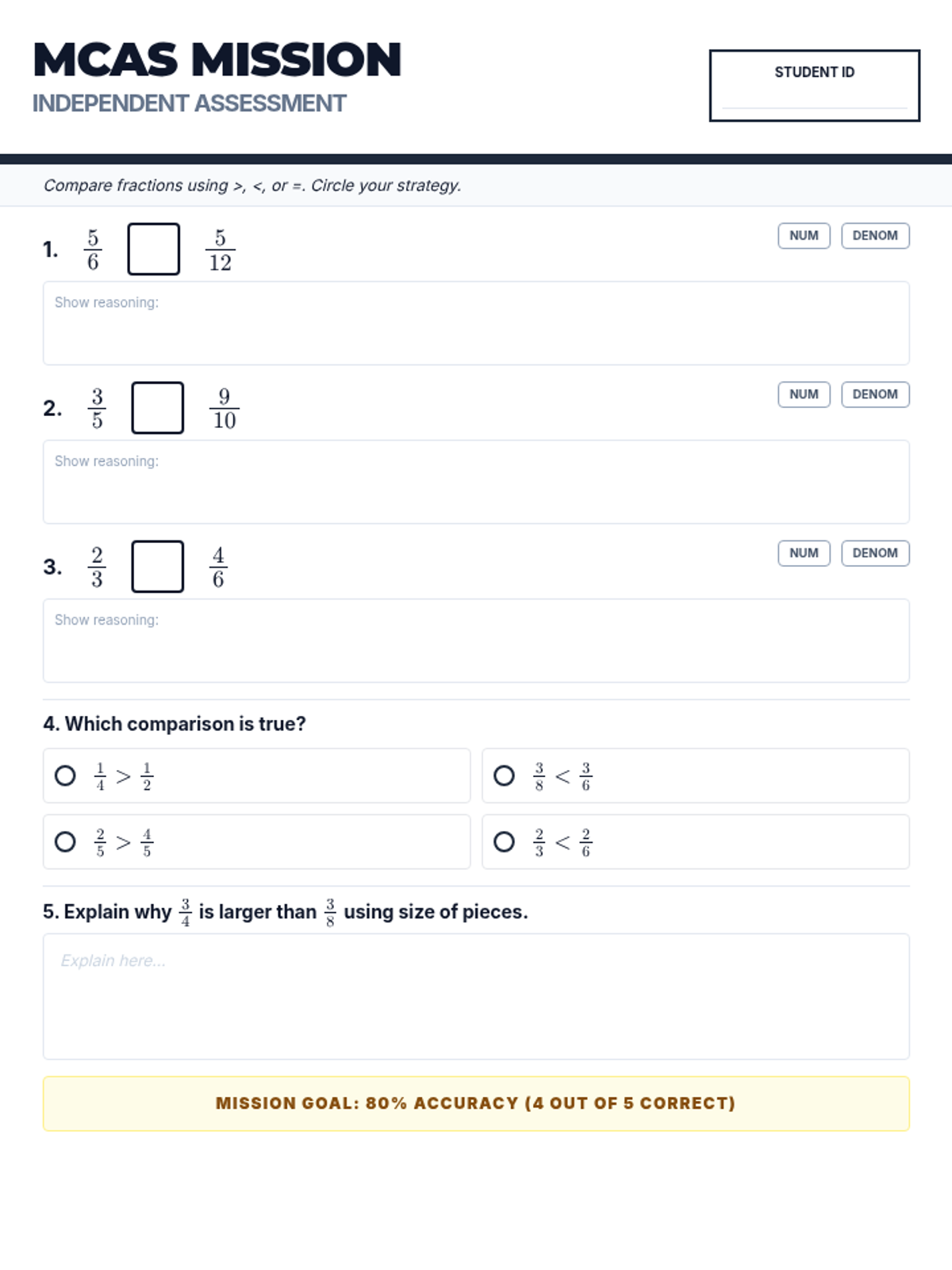
A comprehensive review session covering all 3rd-grade math domains to prepare students for the MCAS. This lesson provides visual aids like base-ten blocks, number lines, and arrays to support problem-solving strategies.
A lesson focused on comparing fractions with different denominators using number lines as a visual model. Students will learn to partition number lines and identify which fraction represents a greater distance from zero.
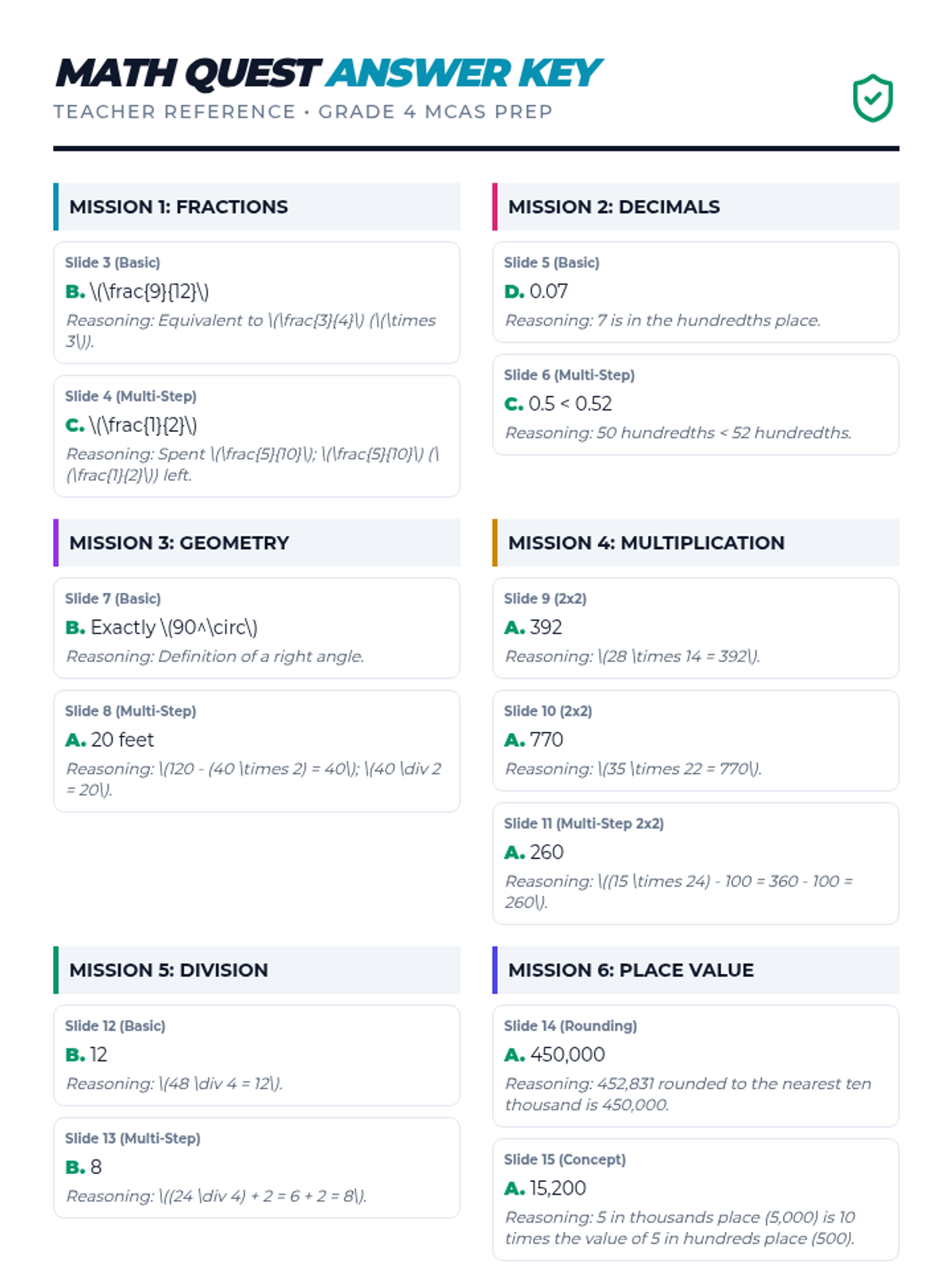
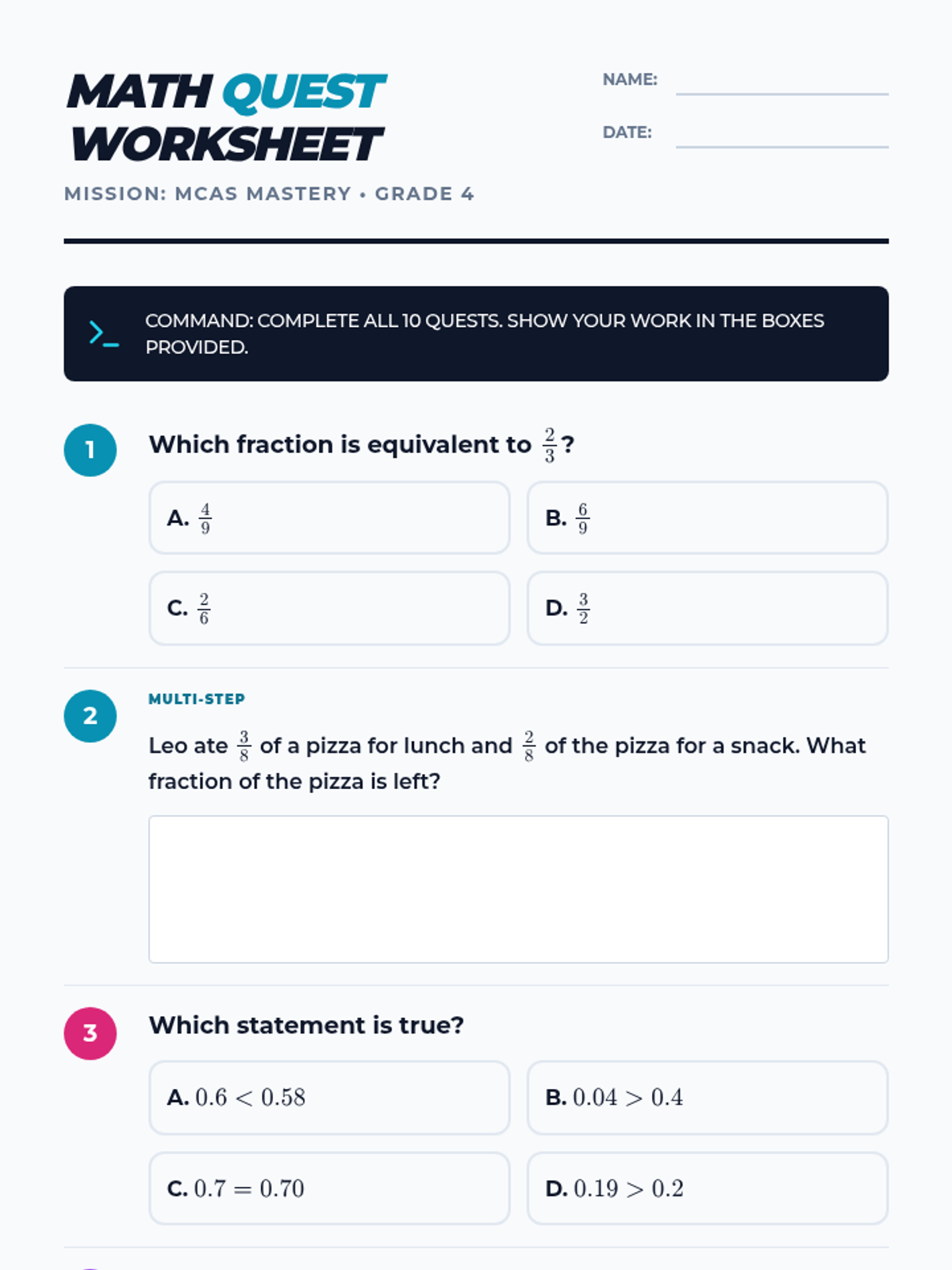
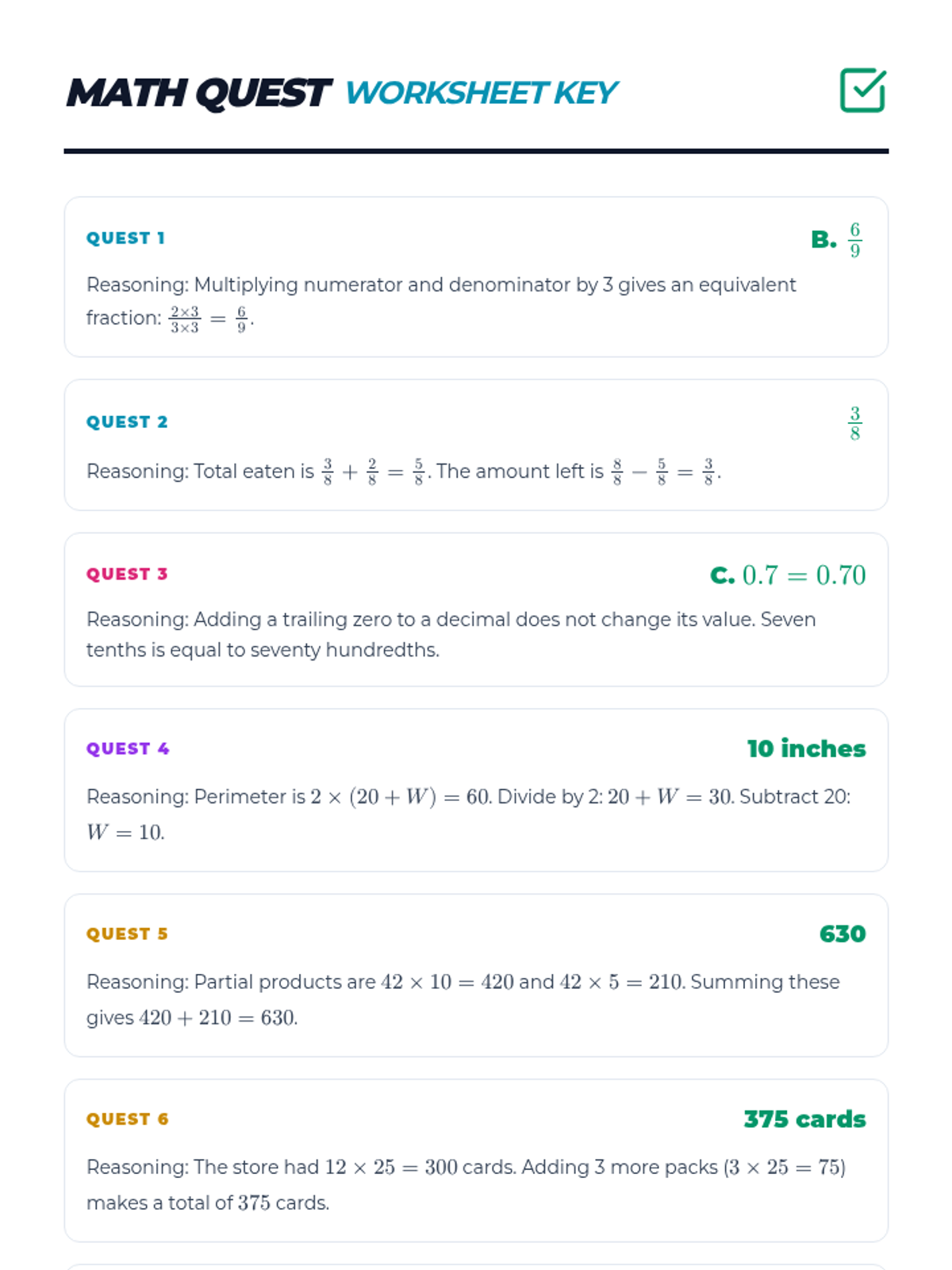
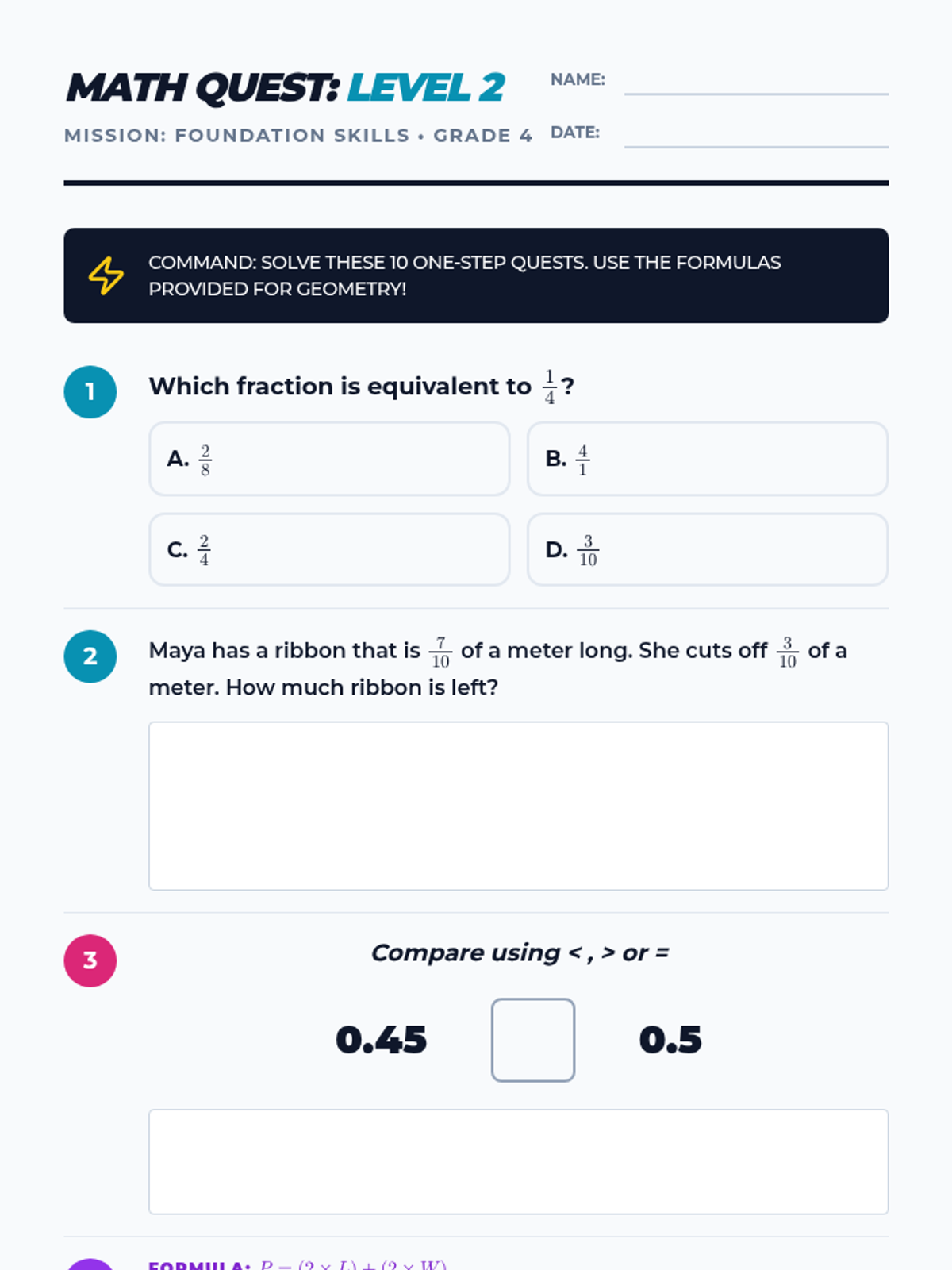
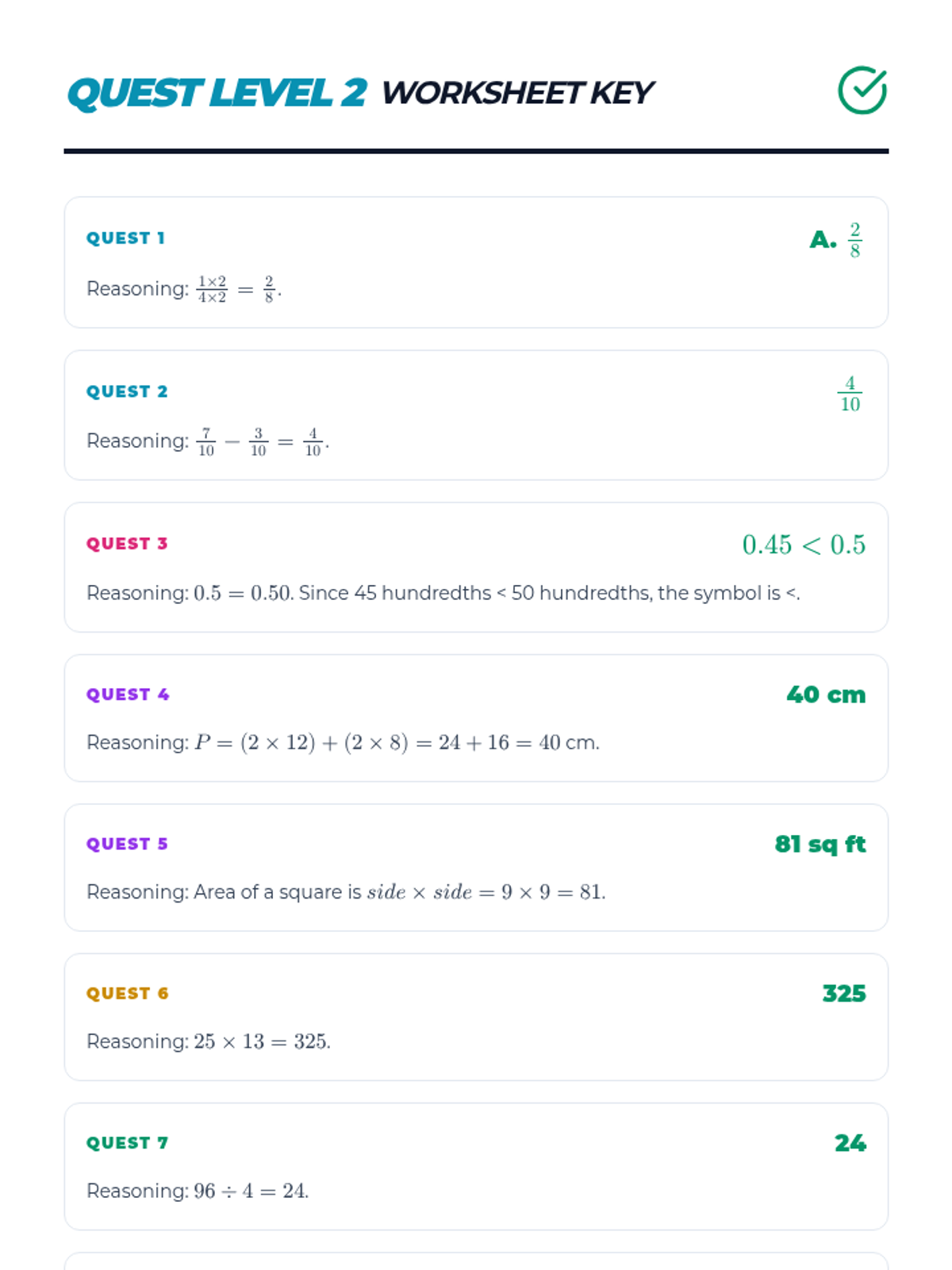
A comprehensive review of 4th Grade Math standards focused on fractions, decimals, geometry, and operations through the lens of MCAS-style questions. Students solve 12 "quests" ranging from basic recall to complex multi-step problems.
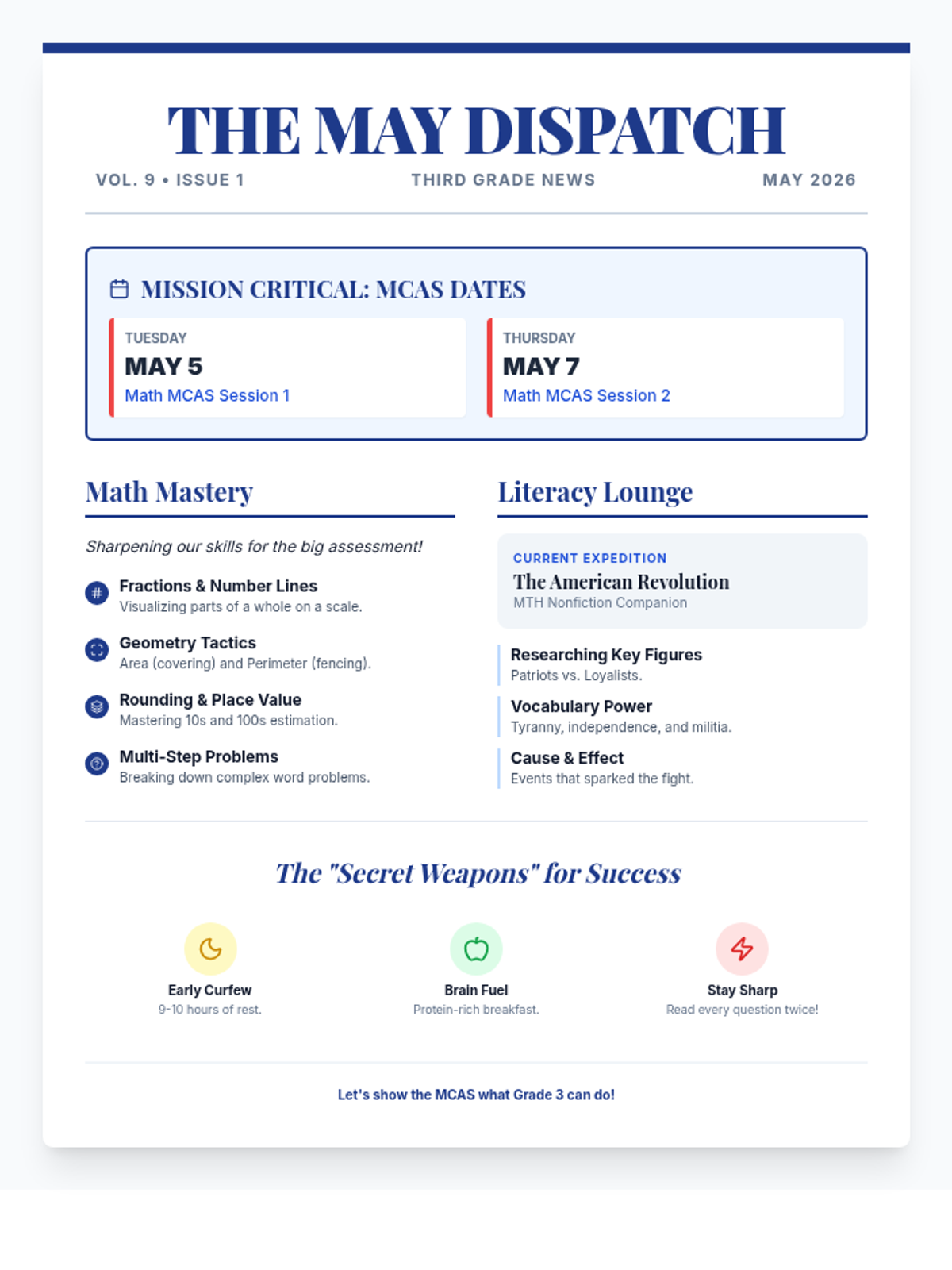
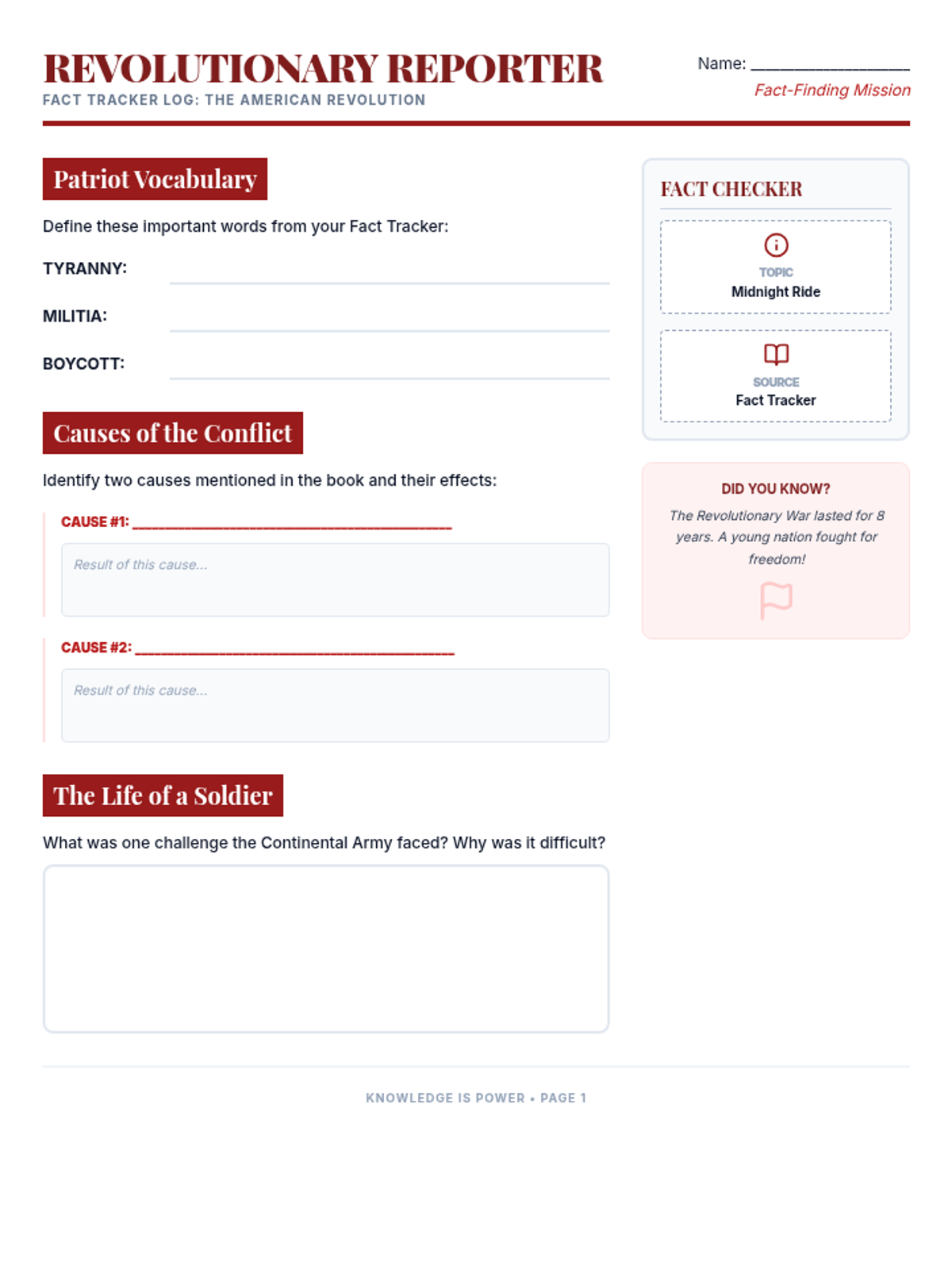
A comprehensive May preparation pack for Grade 3 students, focusing on Math MCAS readiness and ELA research skills using the Magic Tree House nonfiction companion on the American Revolution.
A lesson focused on measuring lengths in inches using fractions (halves and fourths) and representing that data on line plots.
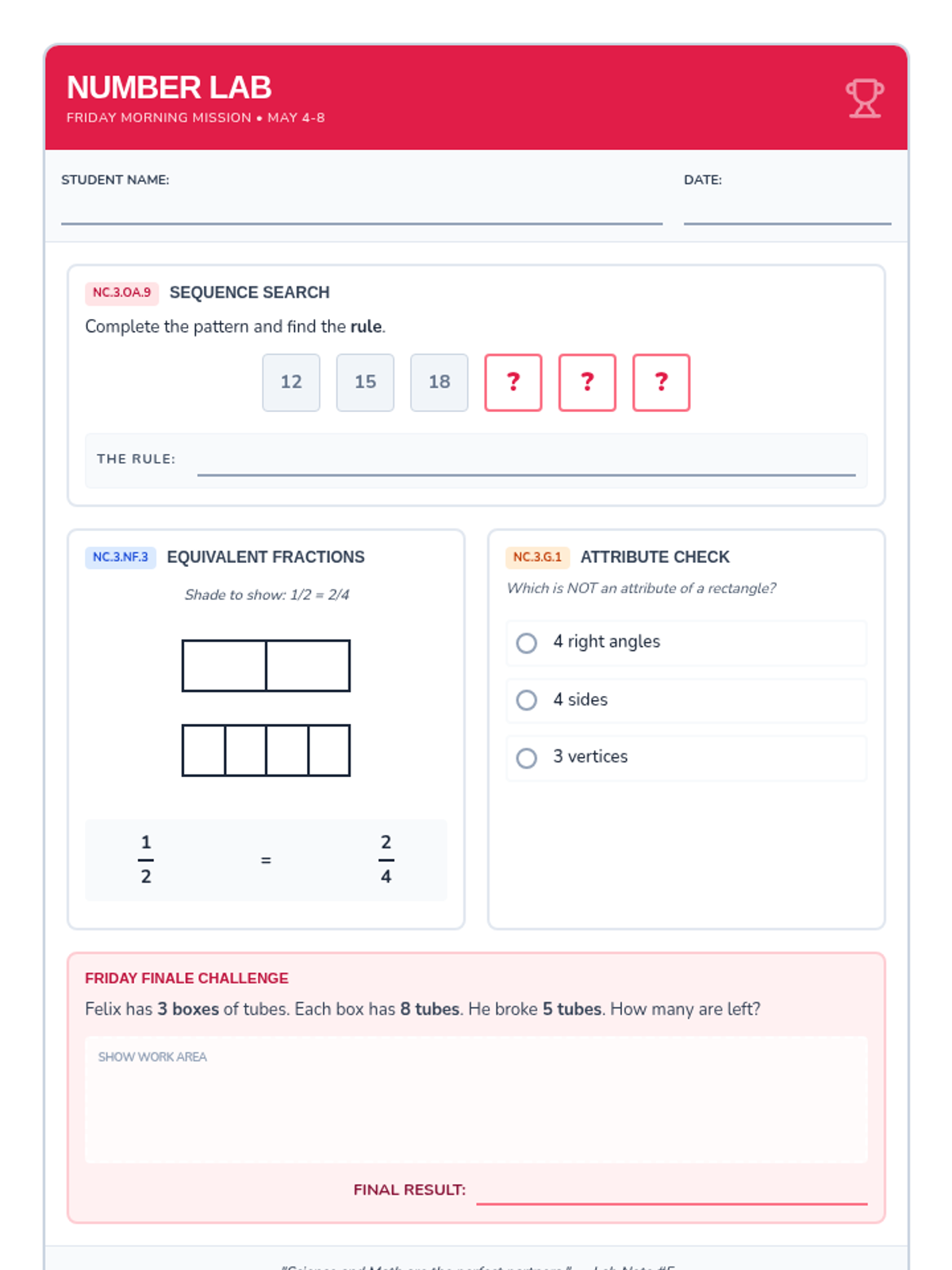
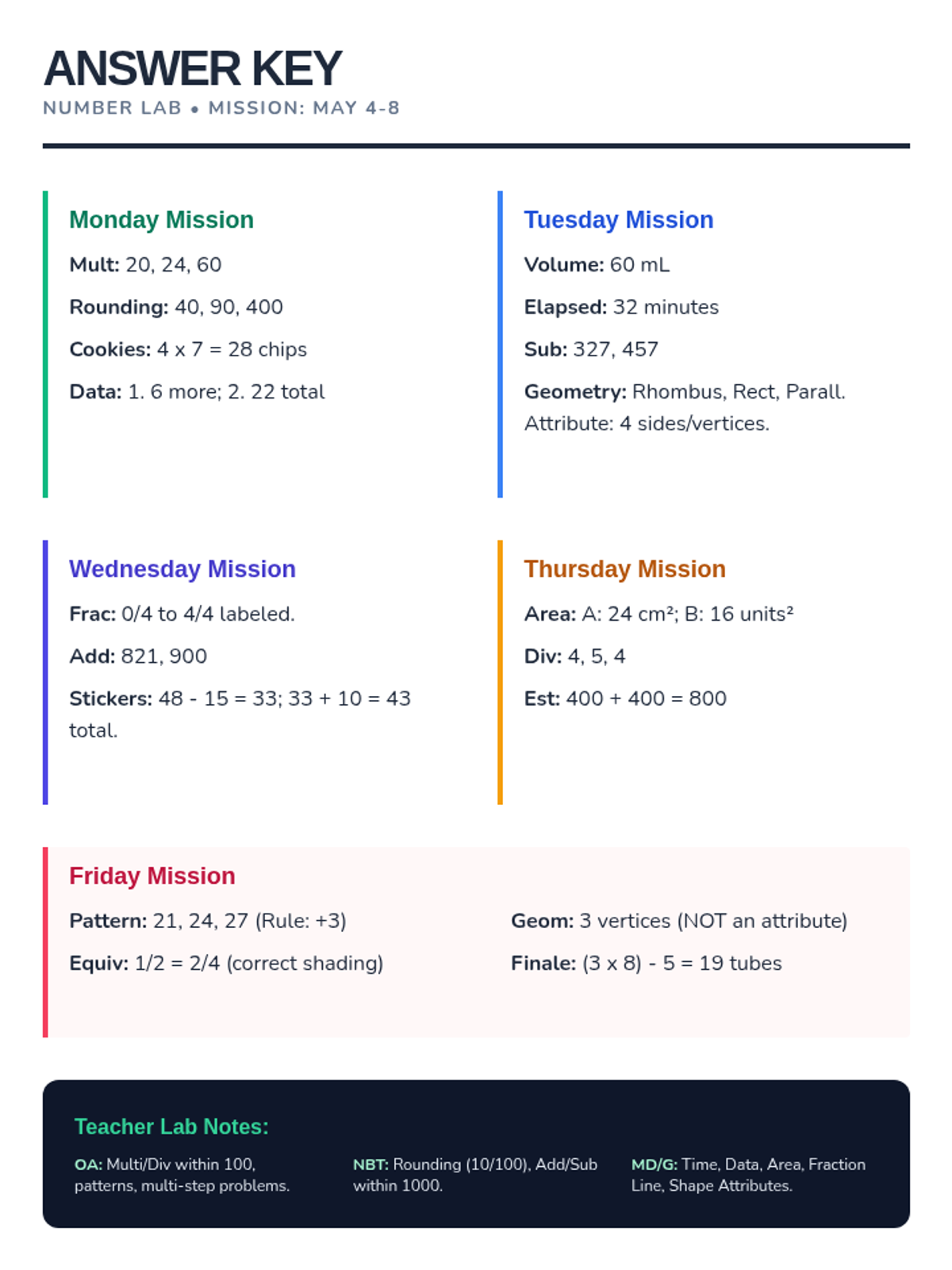
The first week of mixed spiral review covering rounding, multiplication within 100, elapsed time, fractions on number lines, and area.
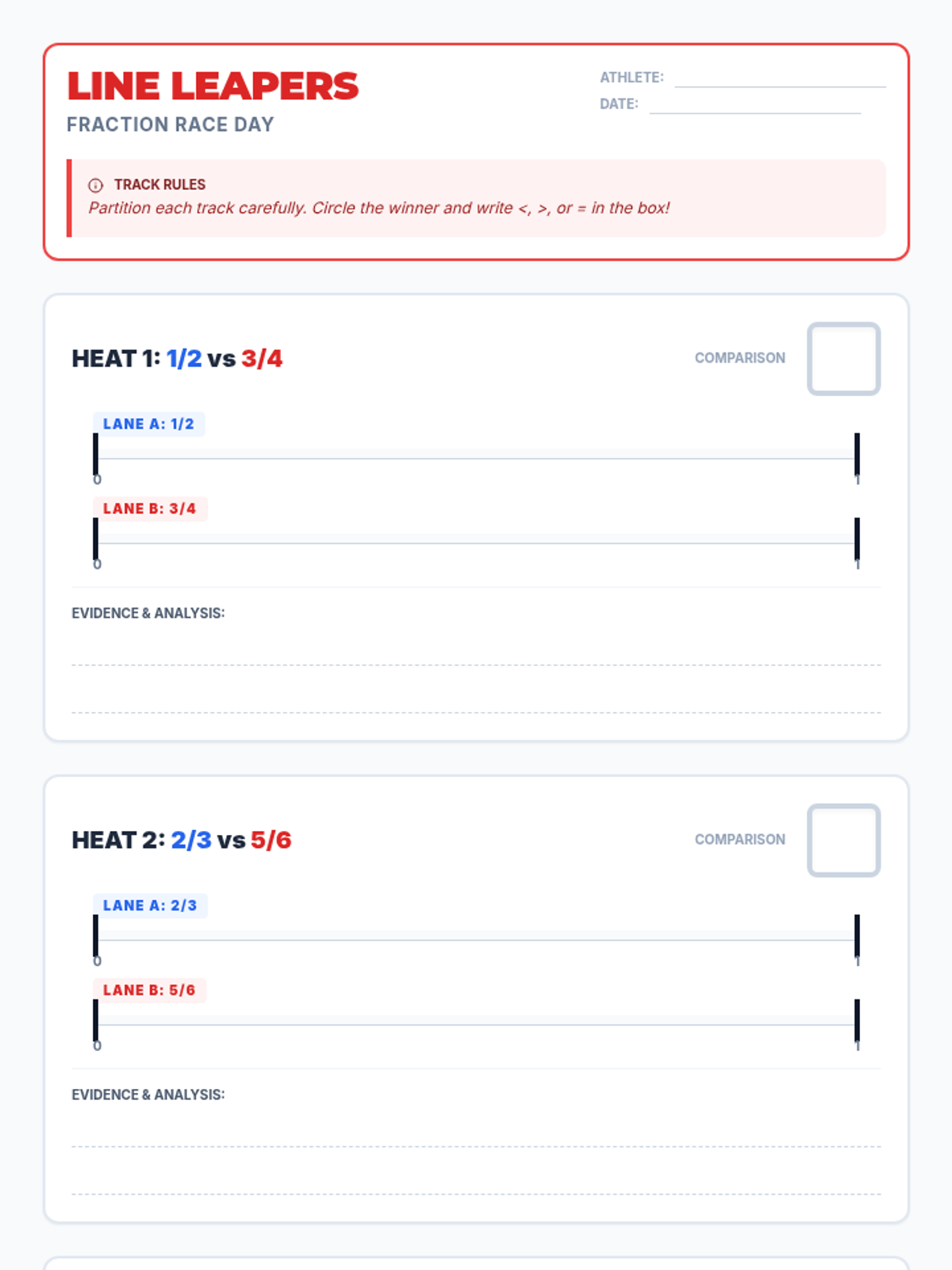
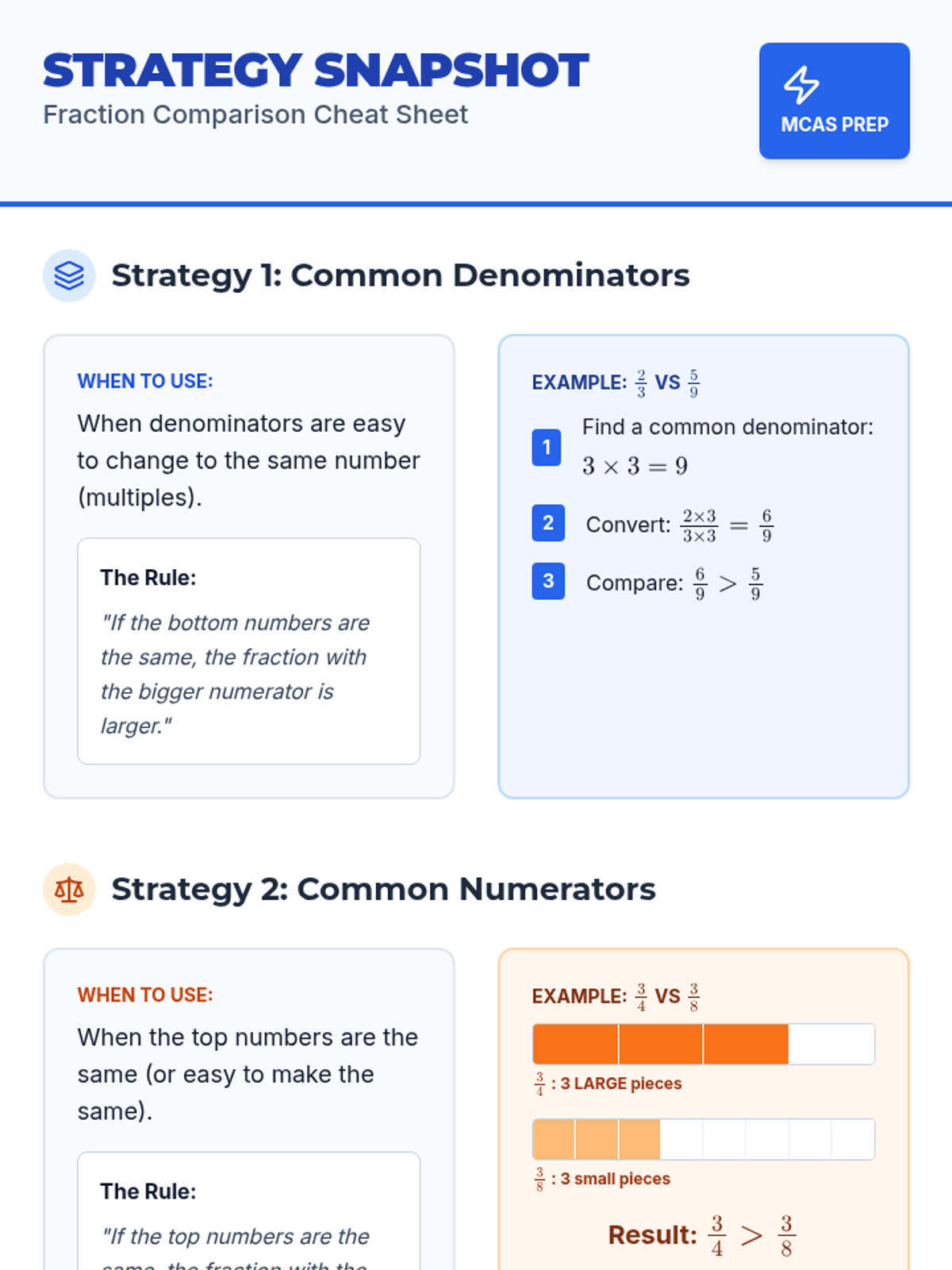
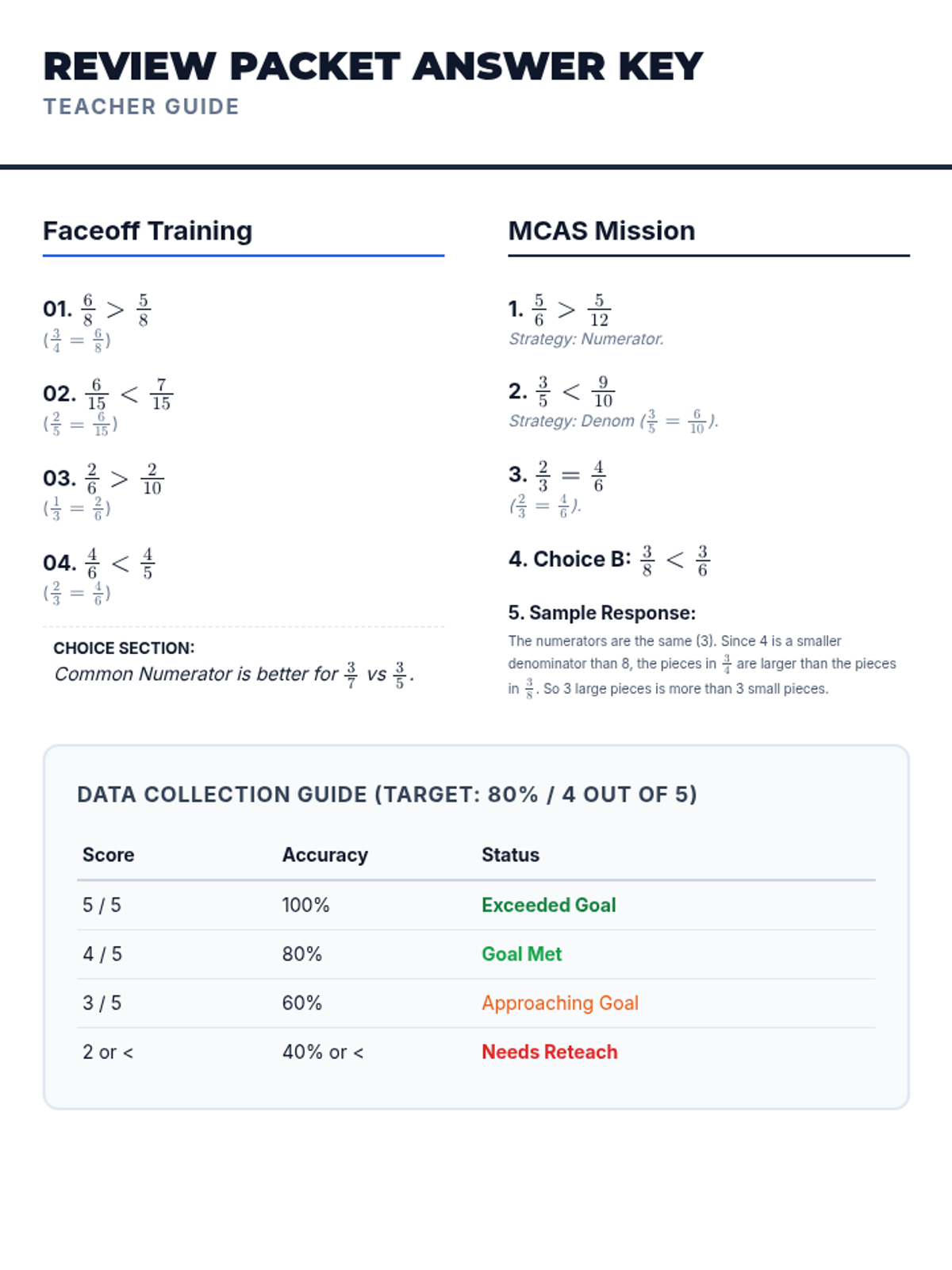
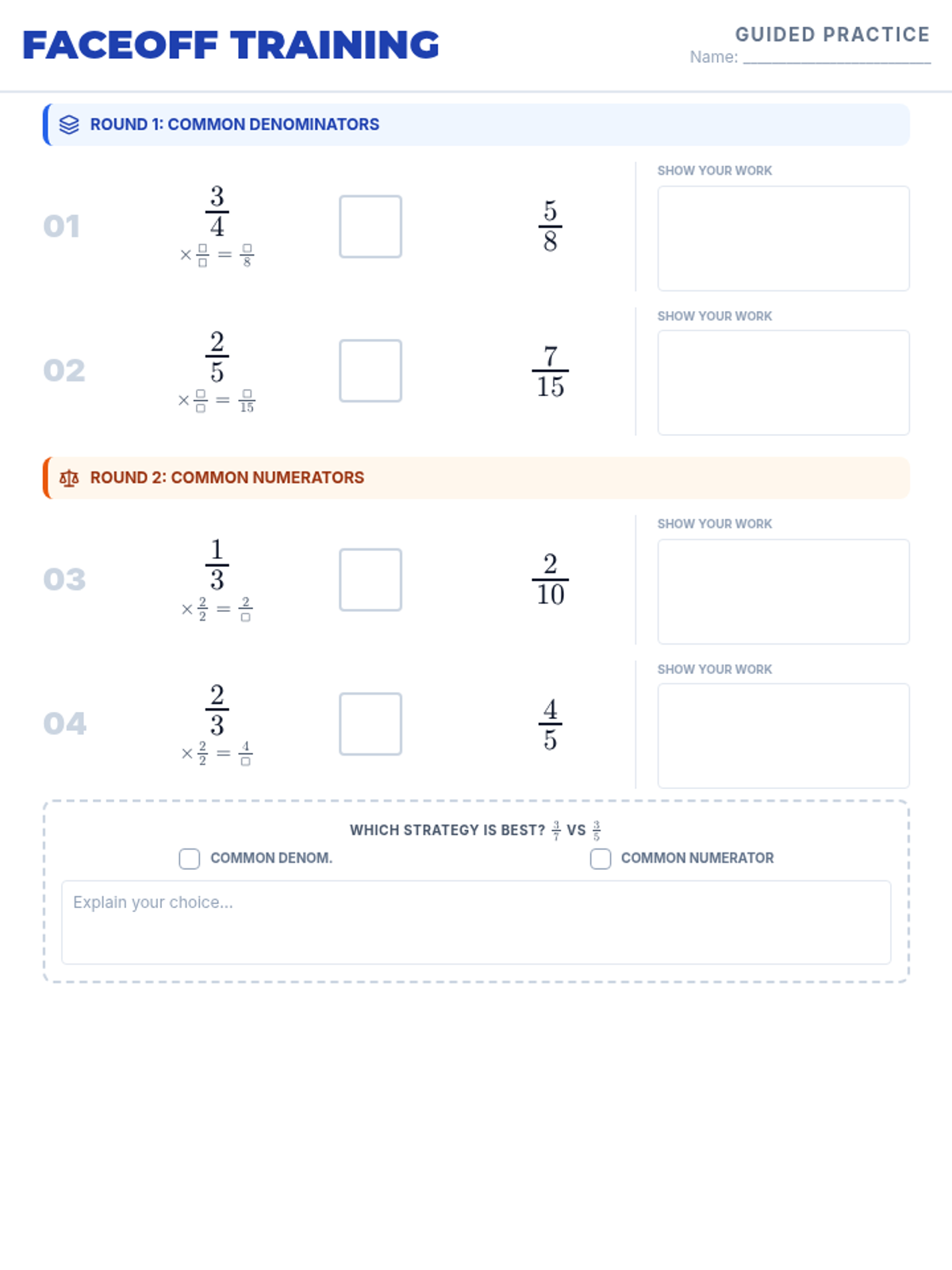
A high-intensity review lesson focused on comparing fractions using common numerators and common denominators, designed for rapid MCAS preparation.
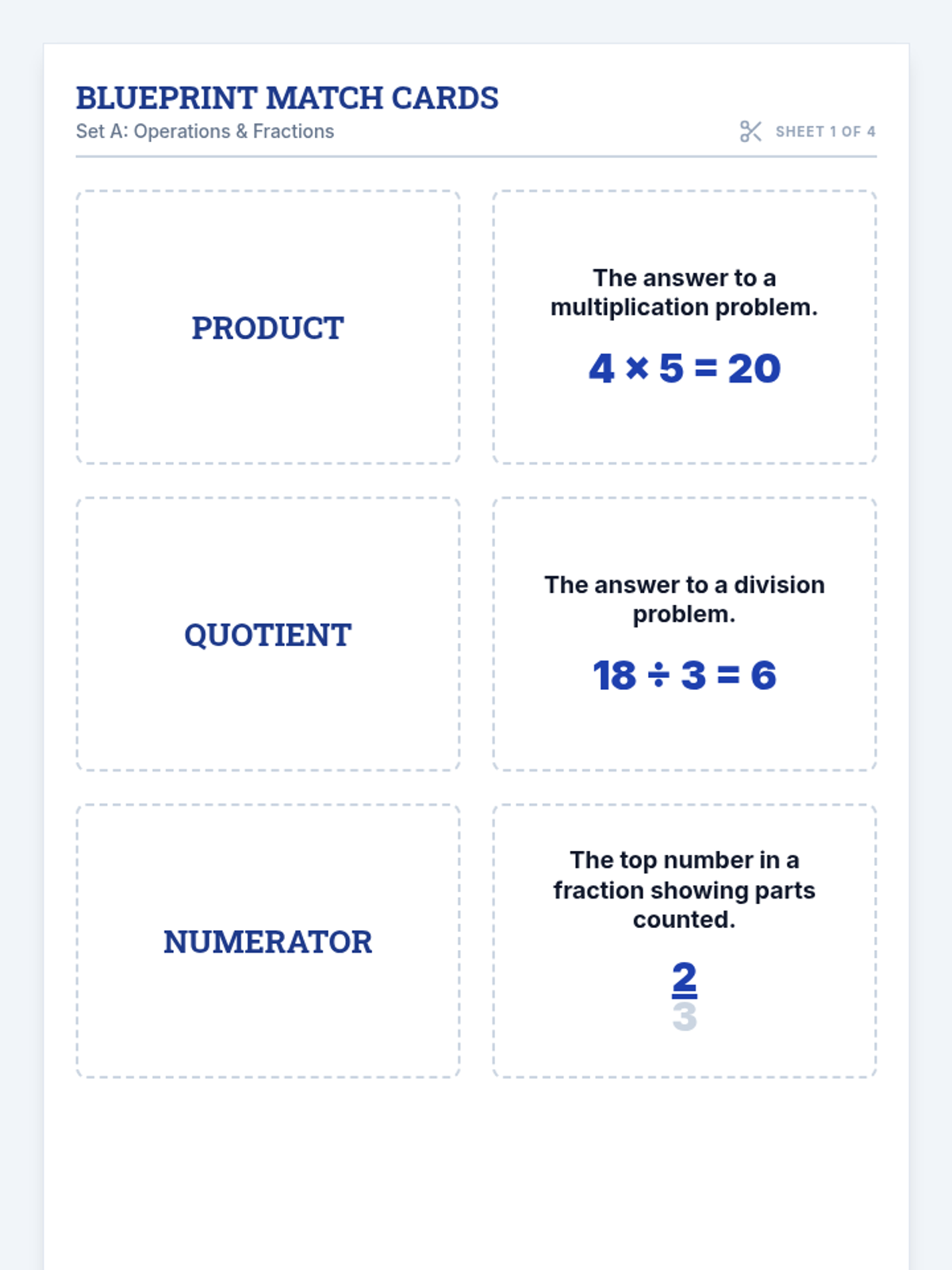
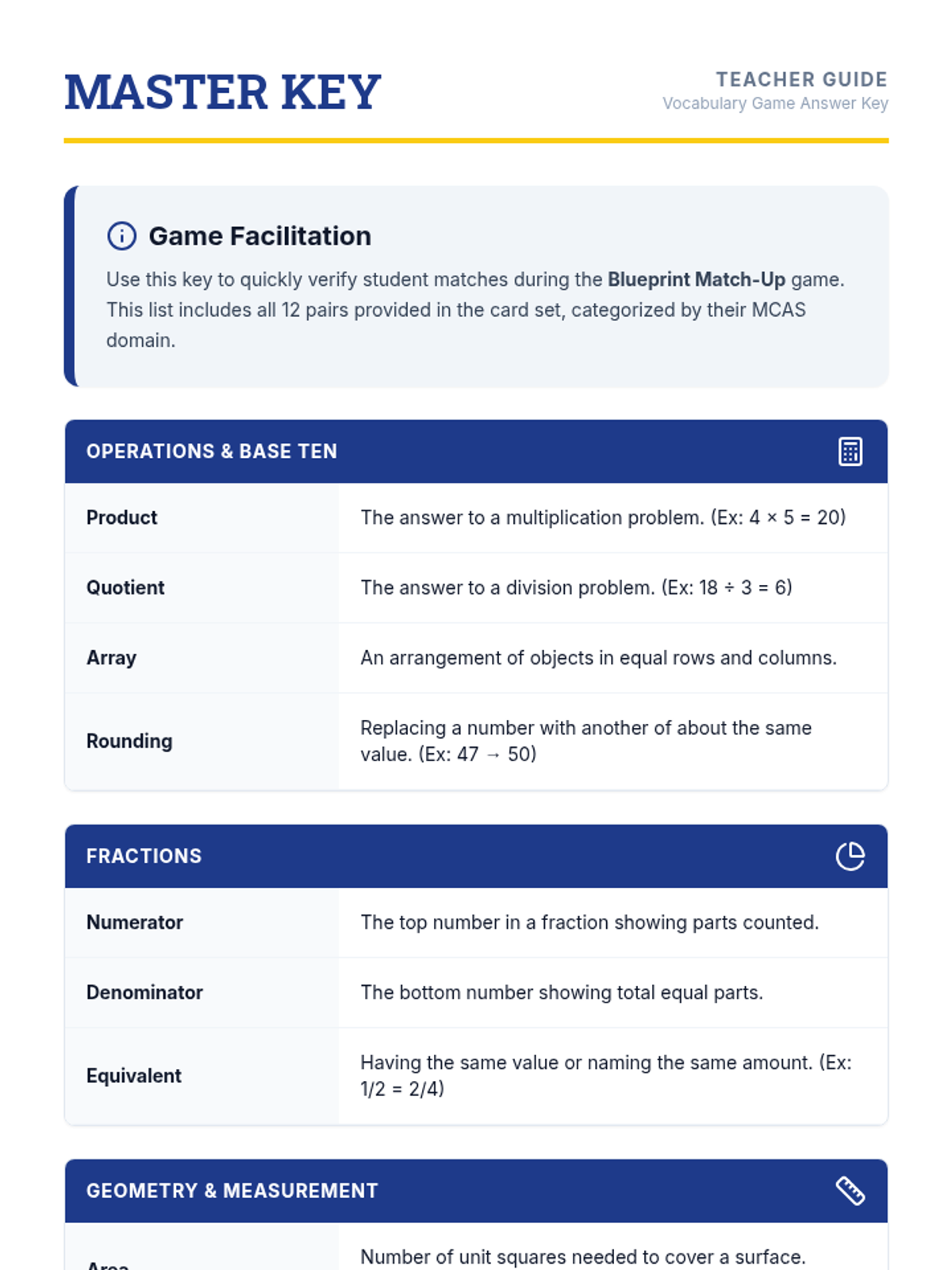
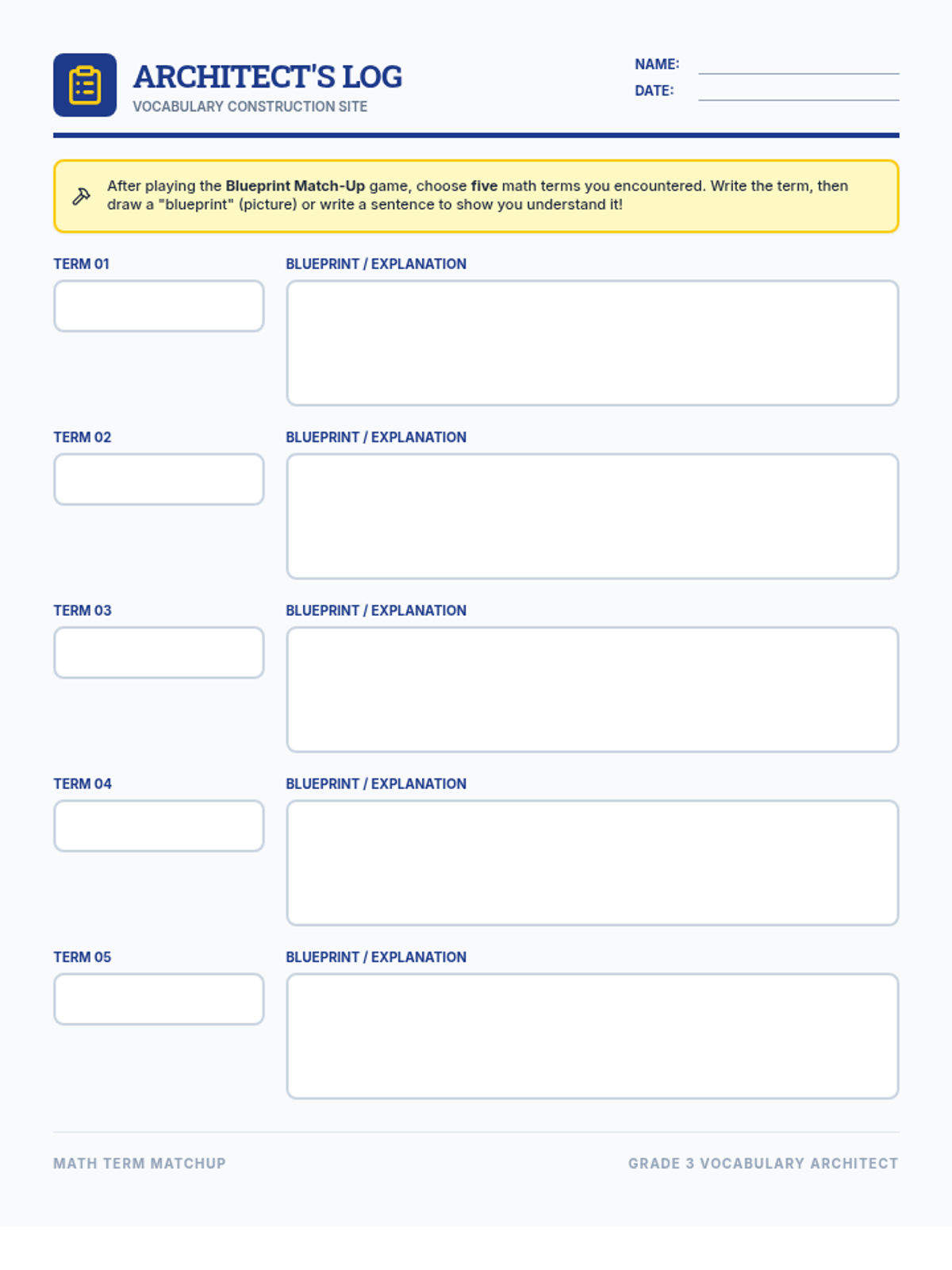
A comprehensive review of 3rd grade math vocabulary across all domains (Algebraic Thinking, Base Ten, Fractions, Measurement, and Geometry) using a blueprint-themed matching game.
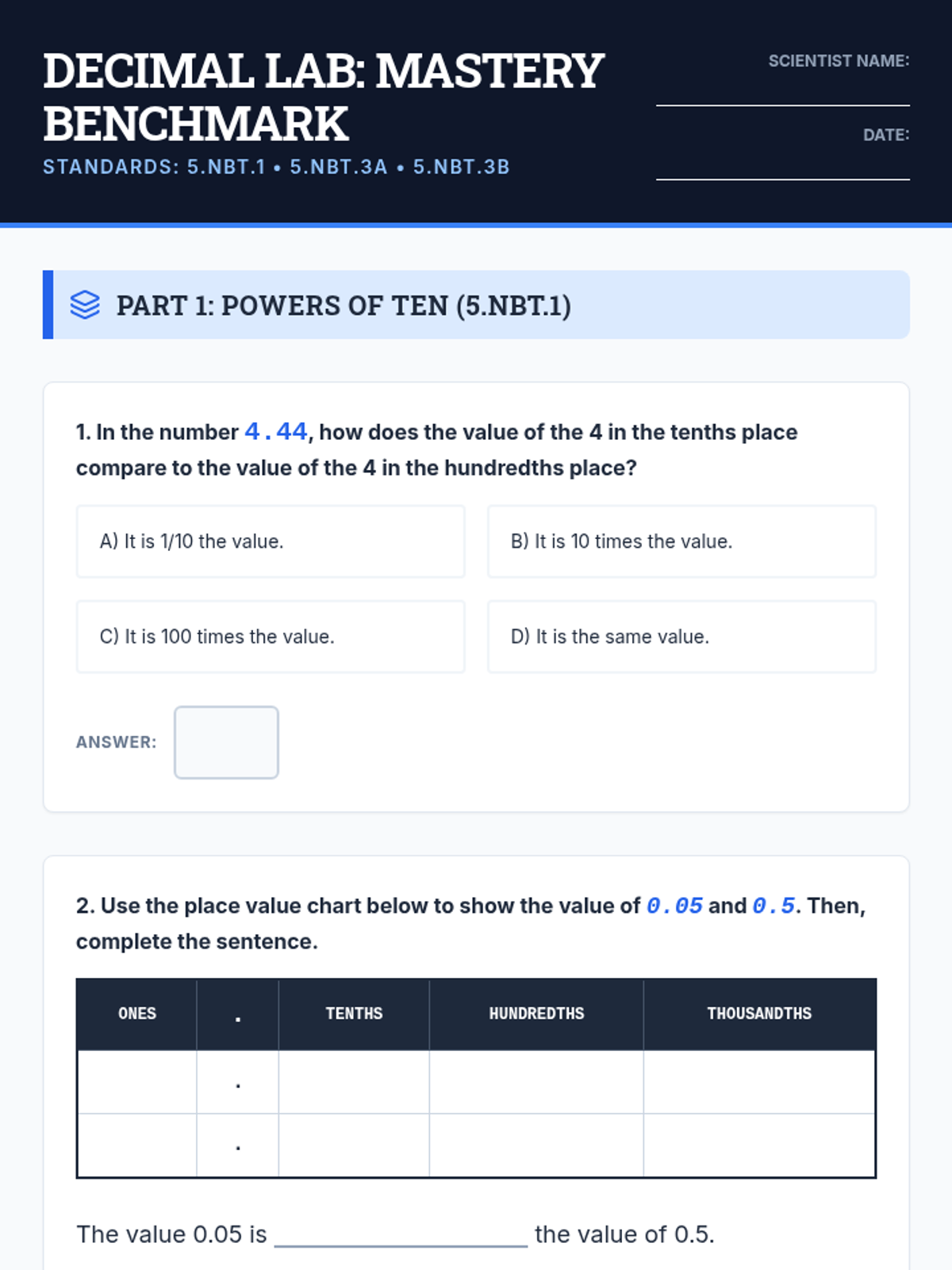
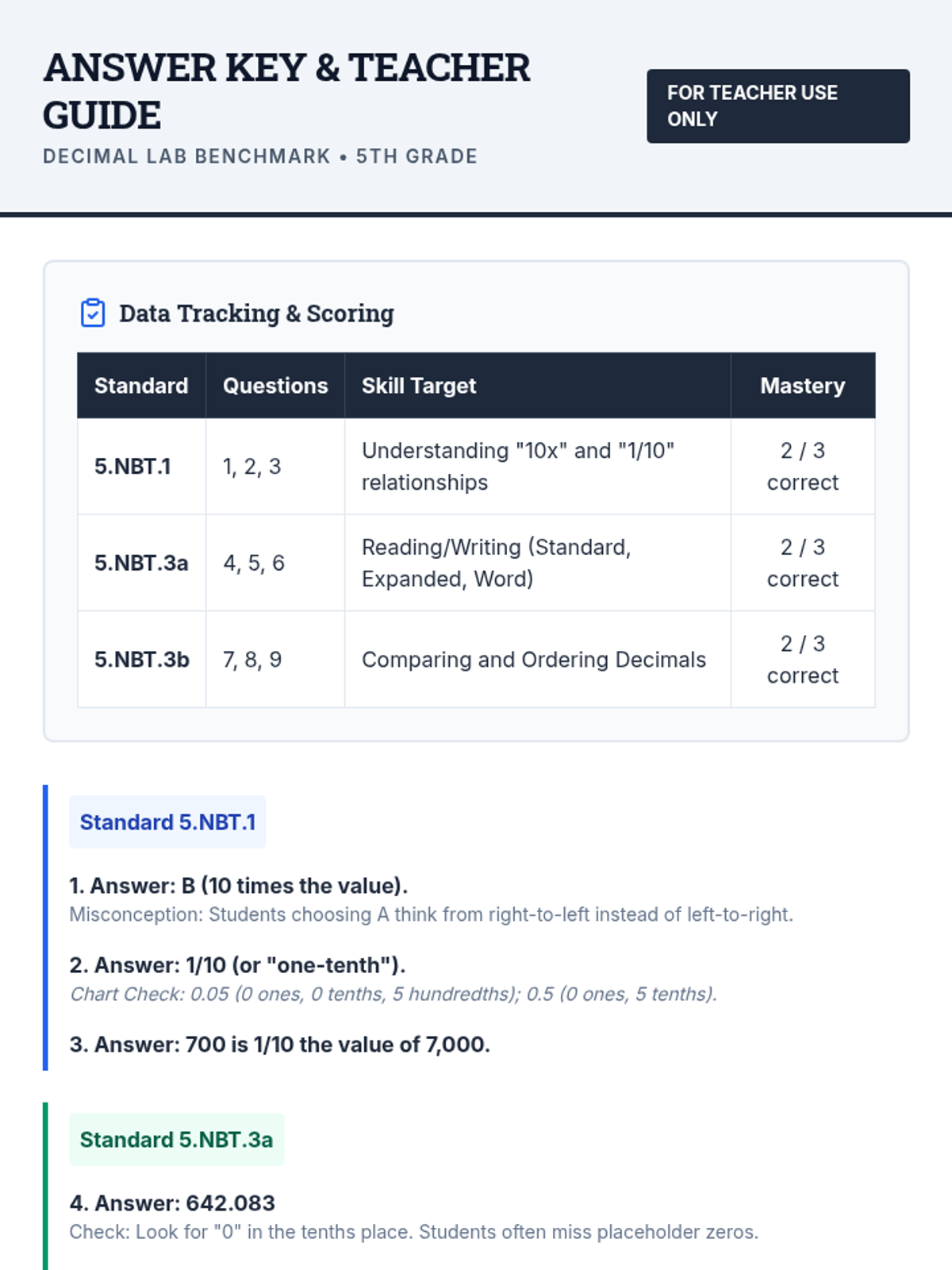
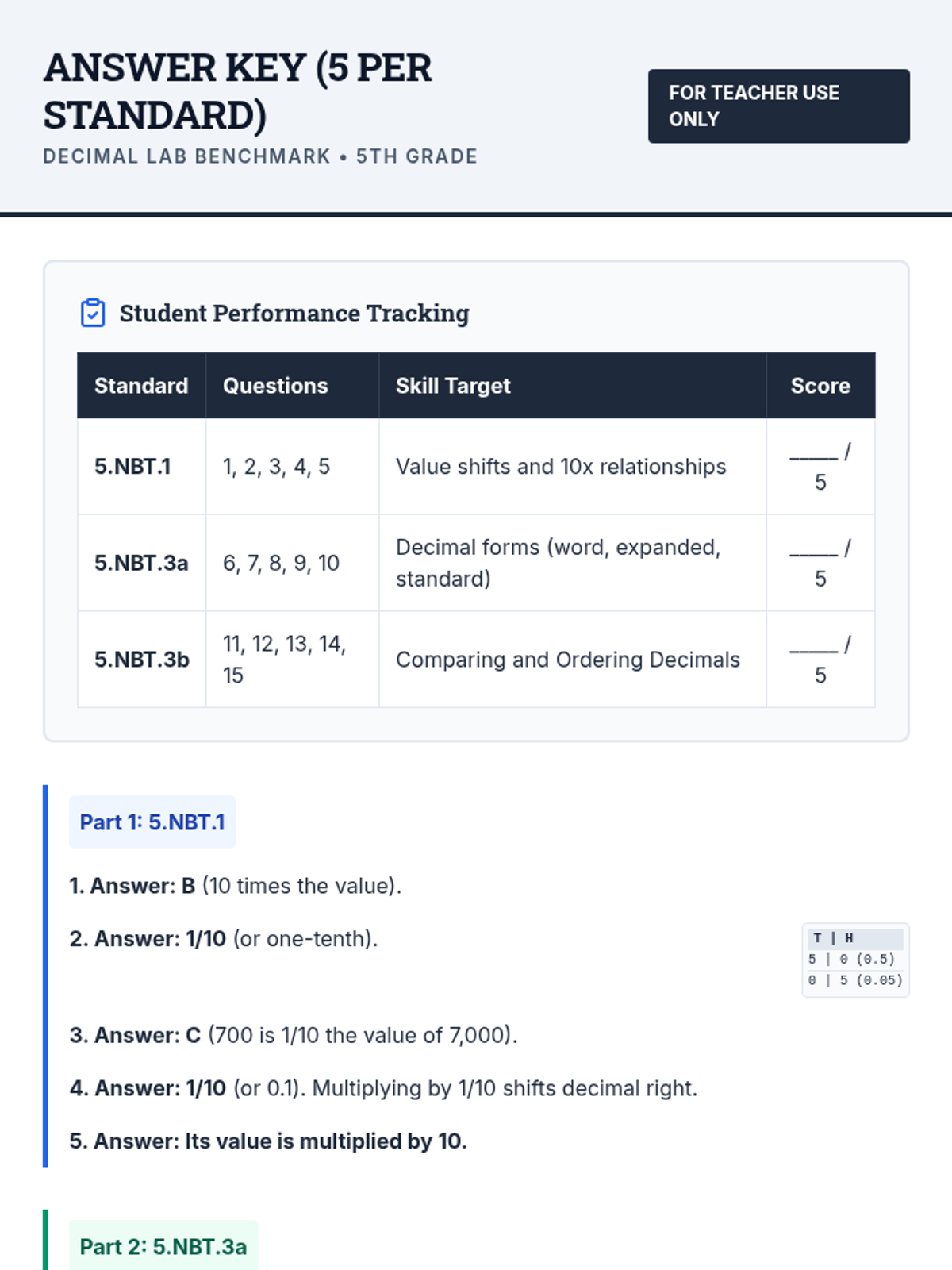
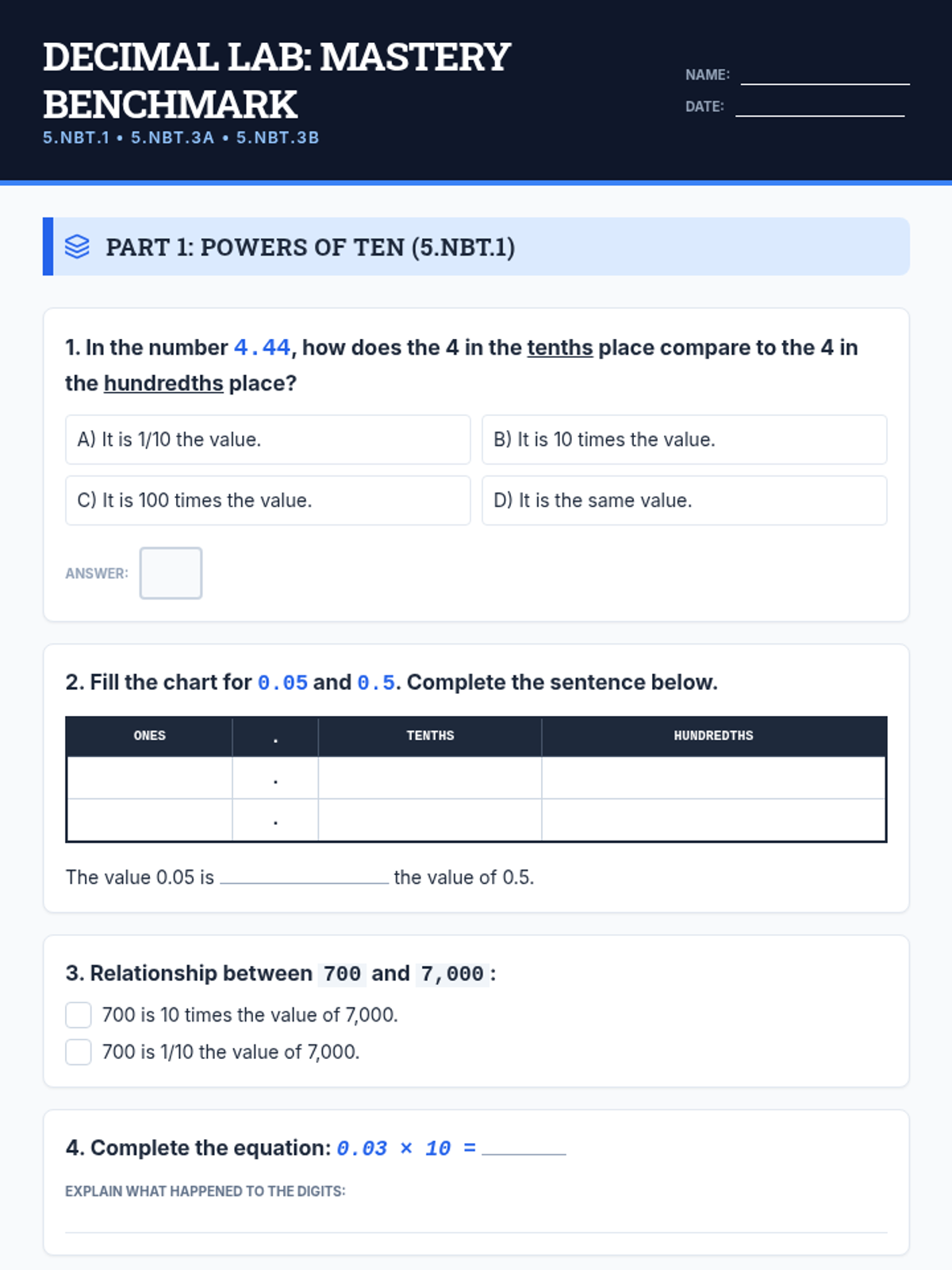
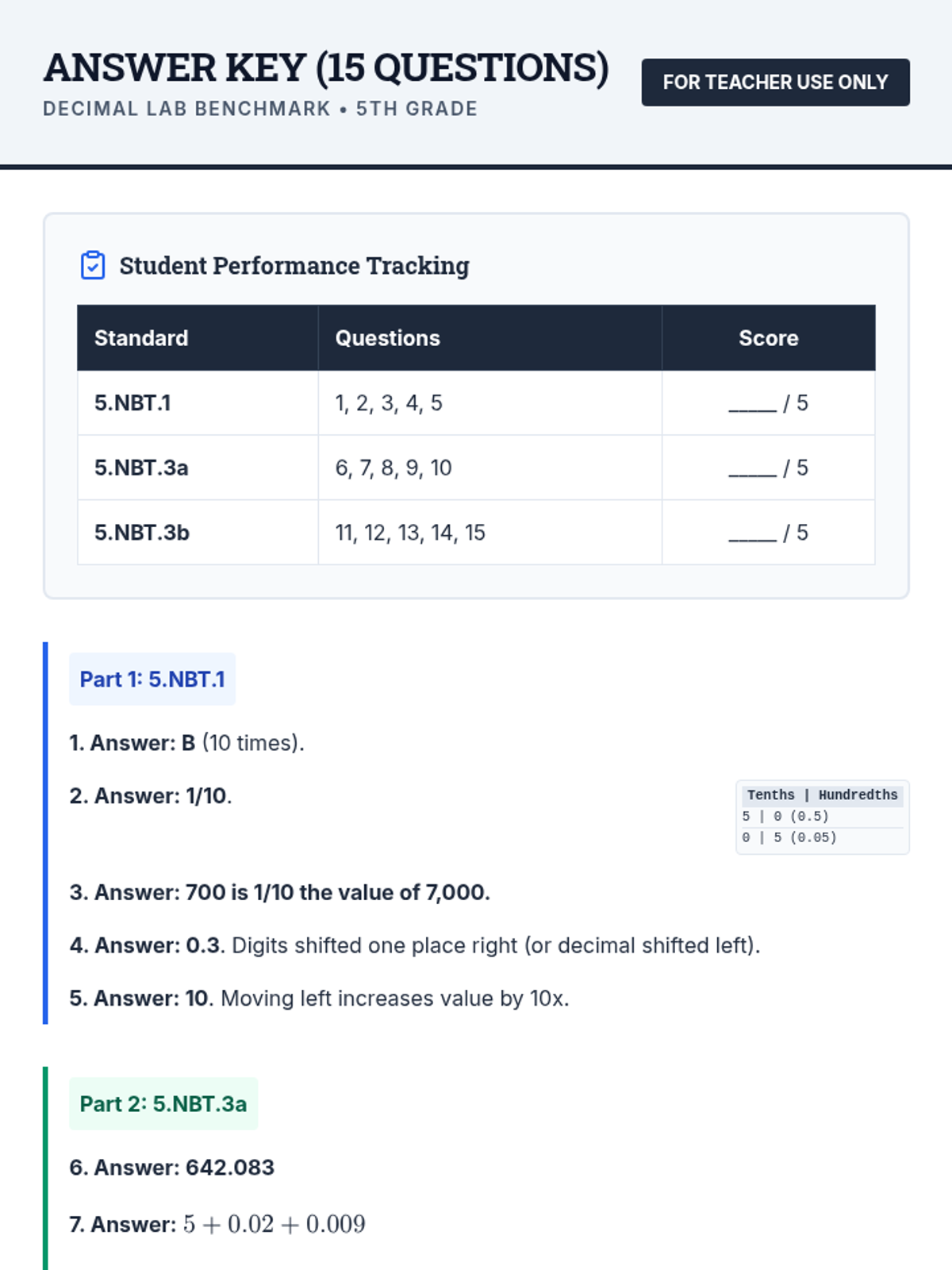
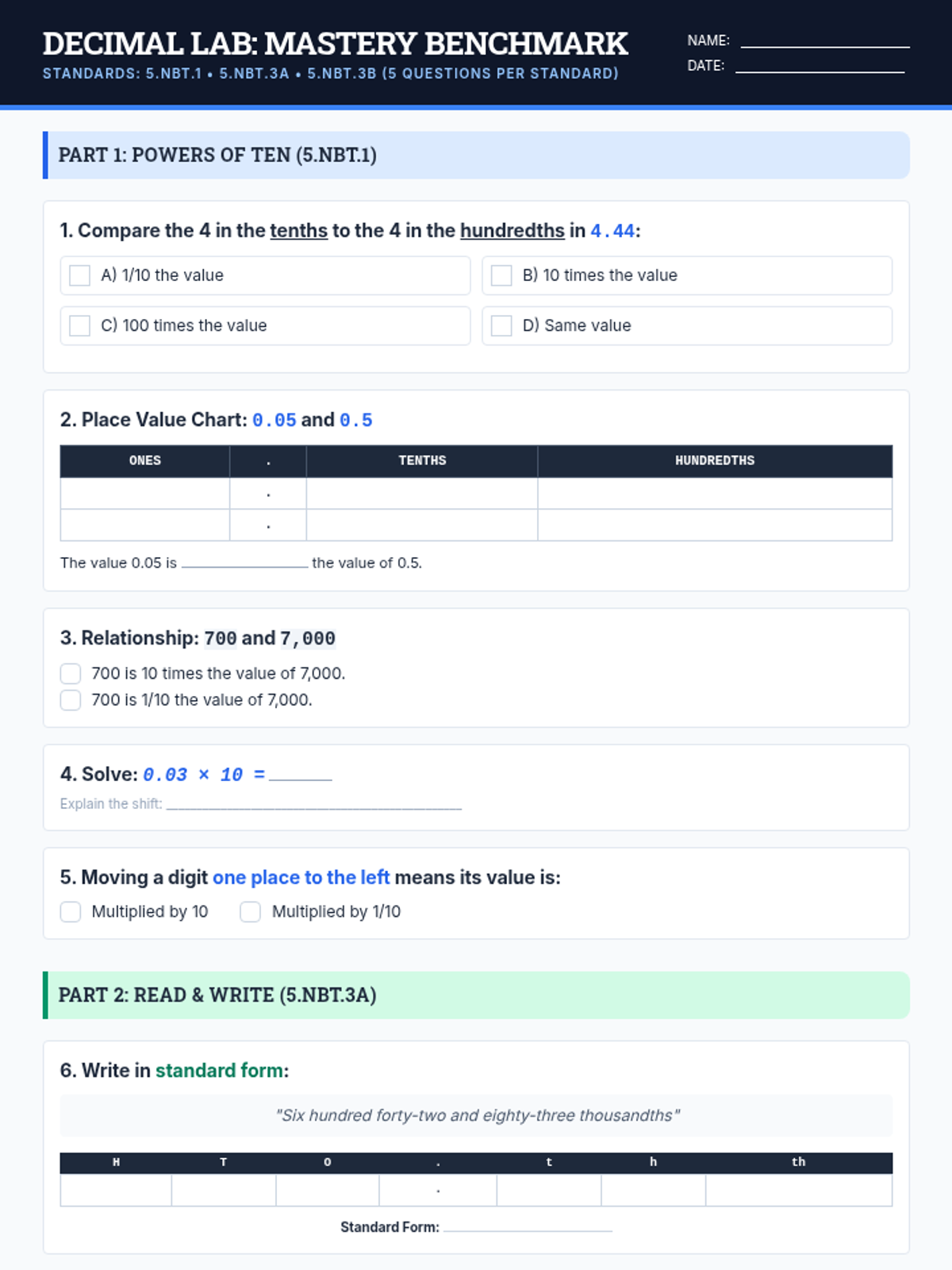
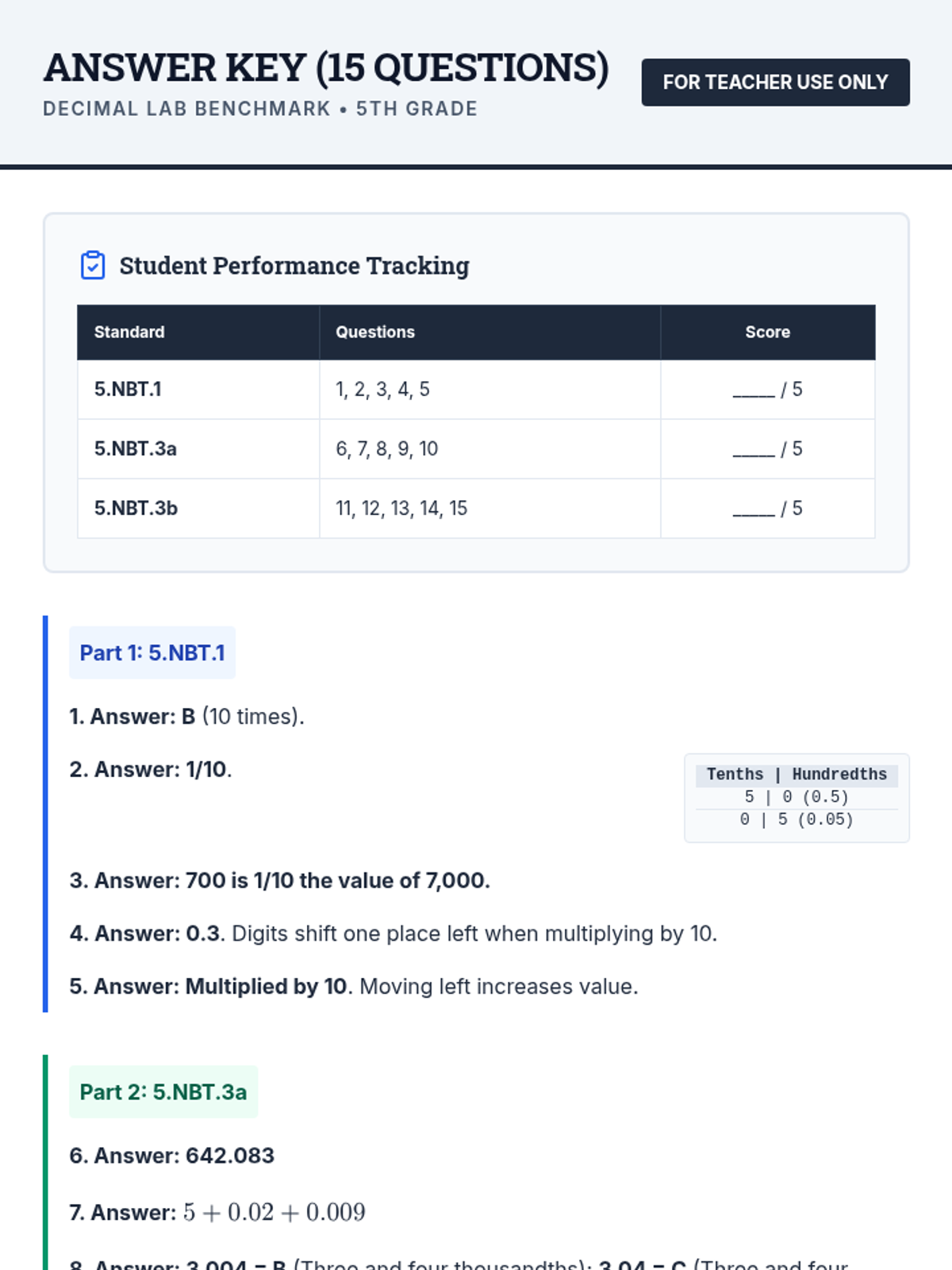
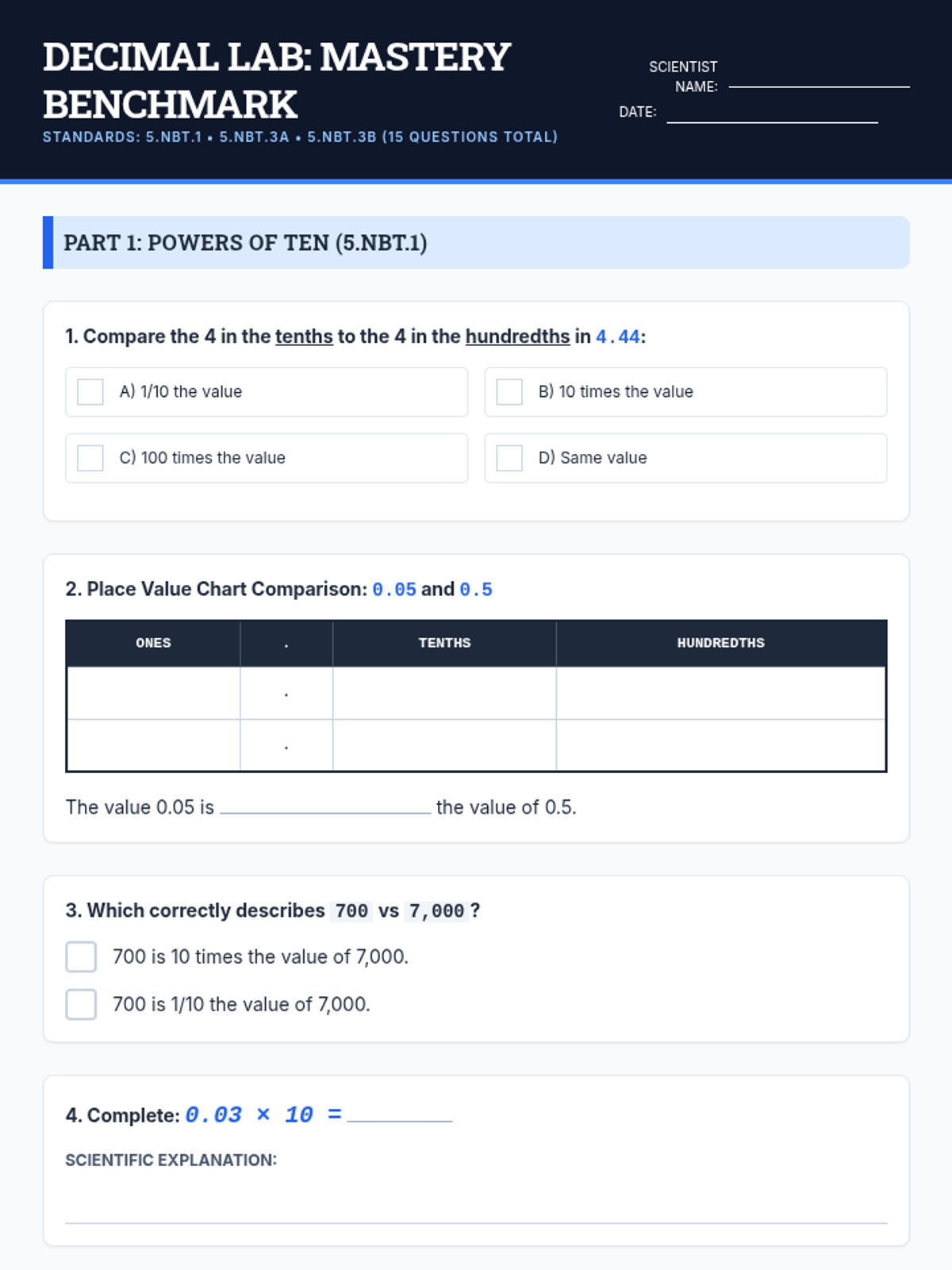
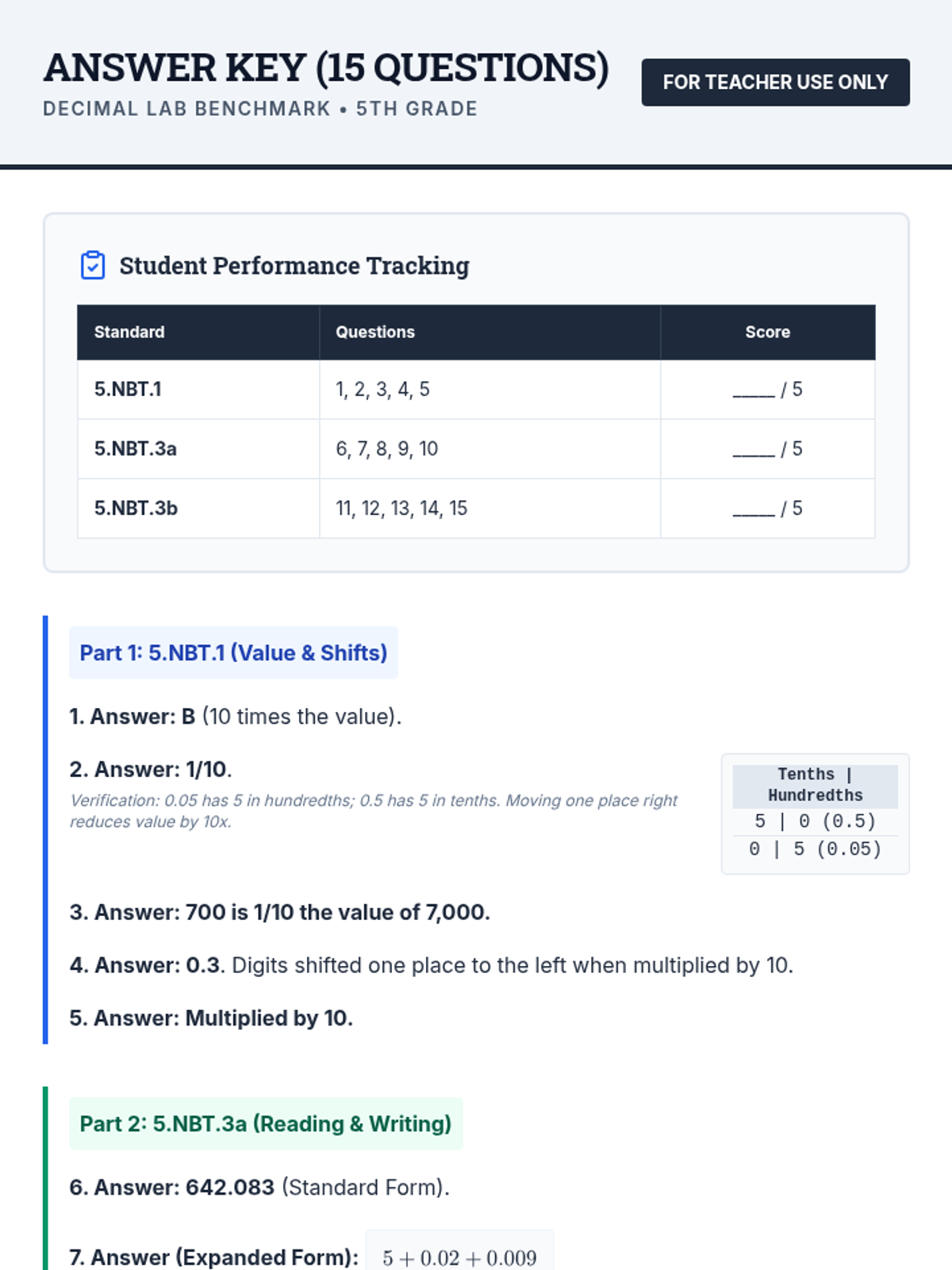
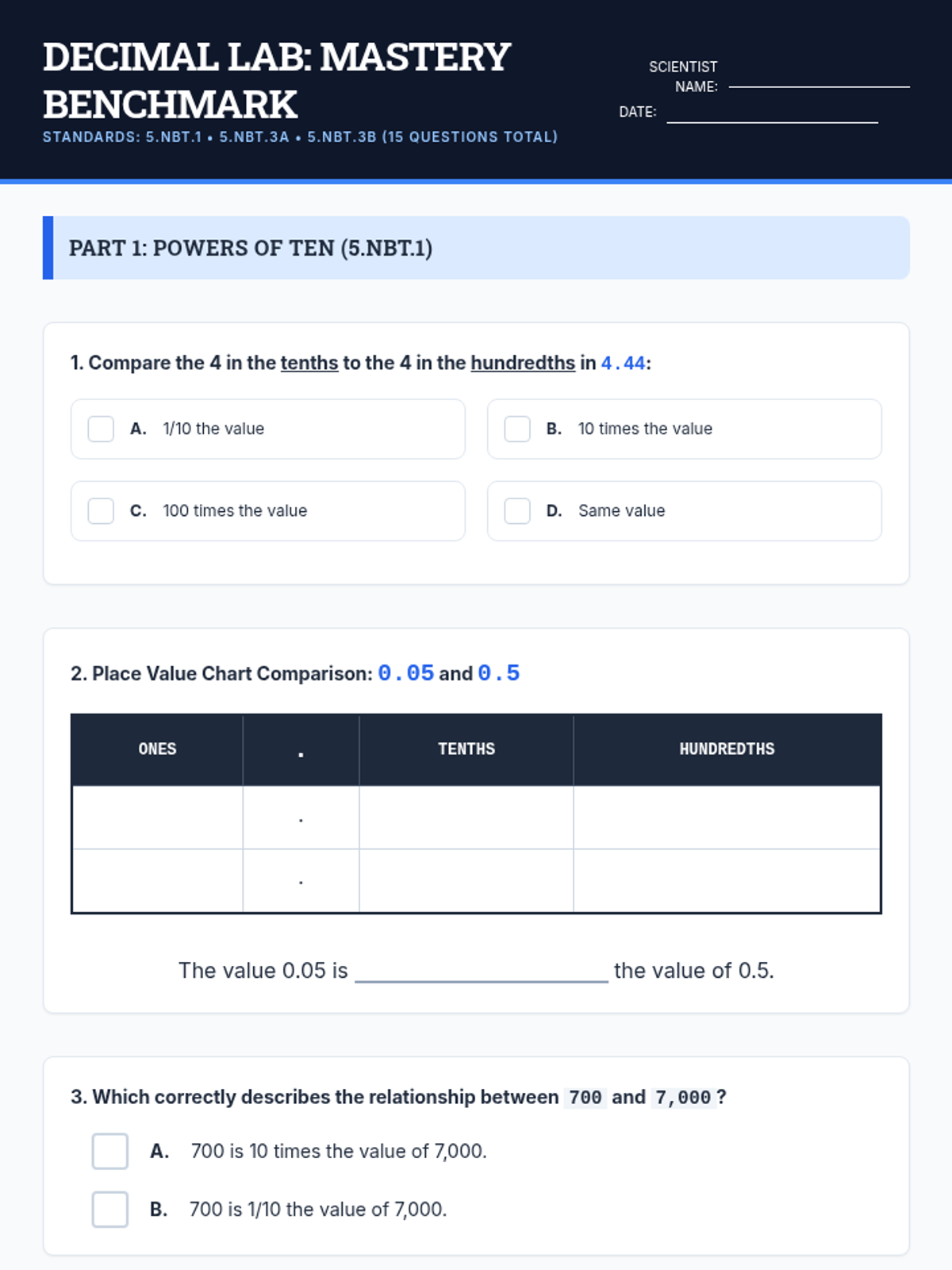
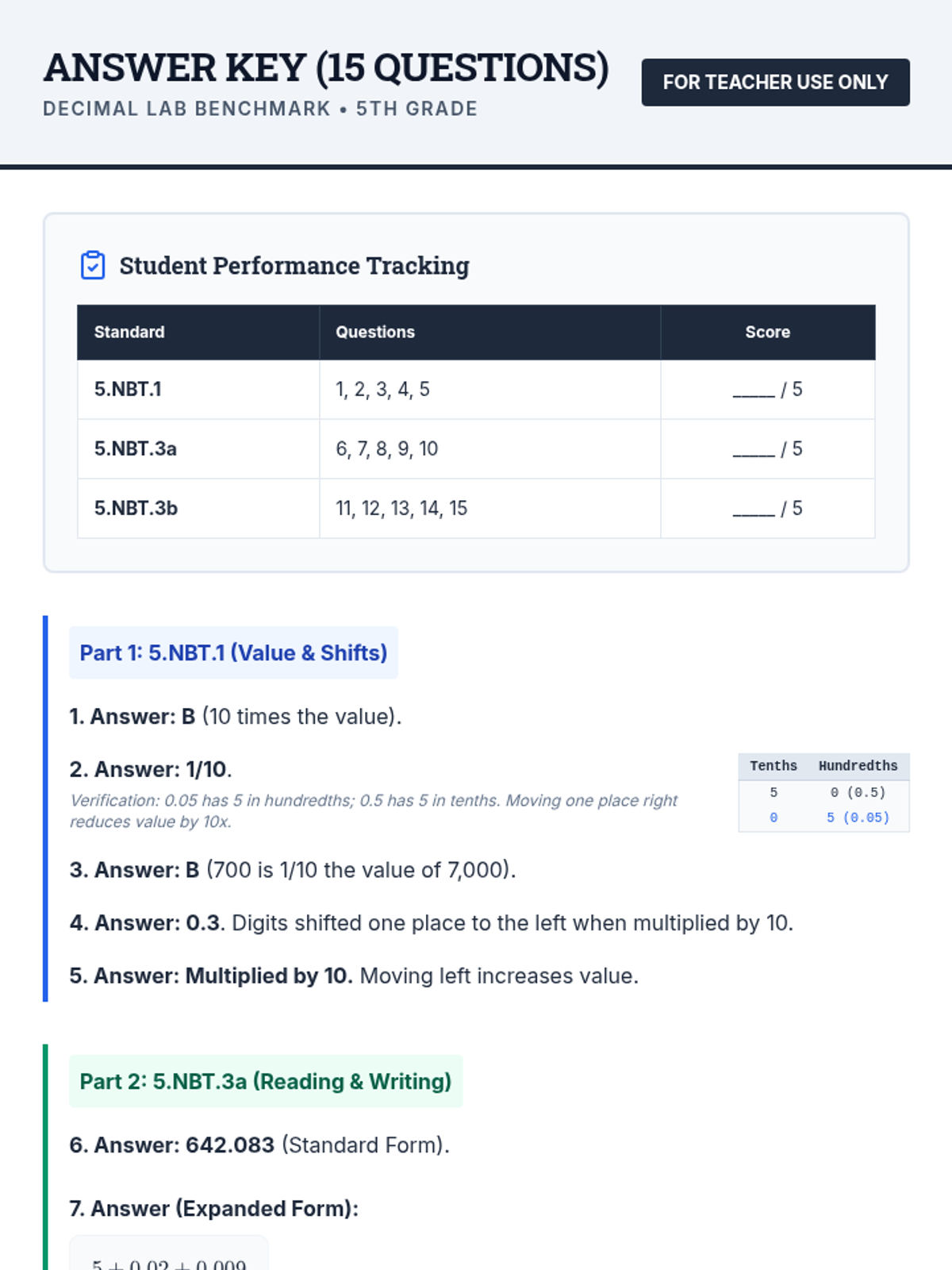
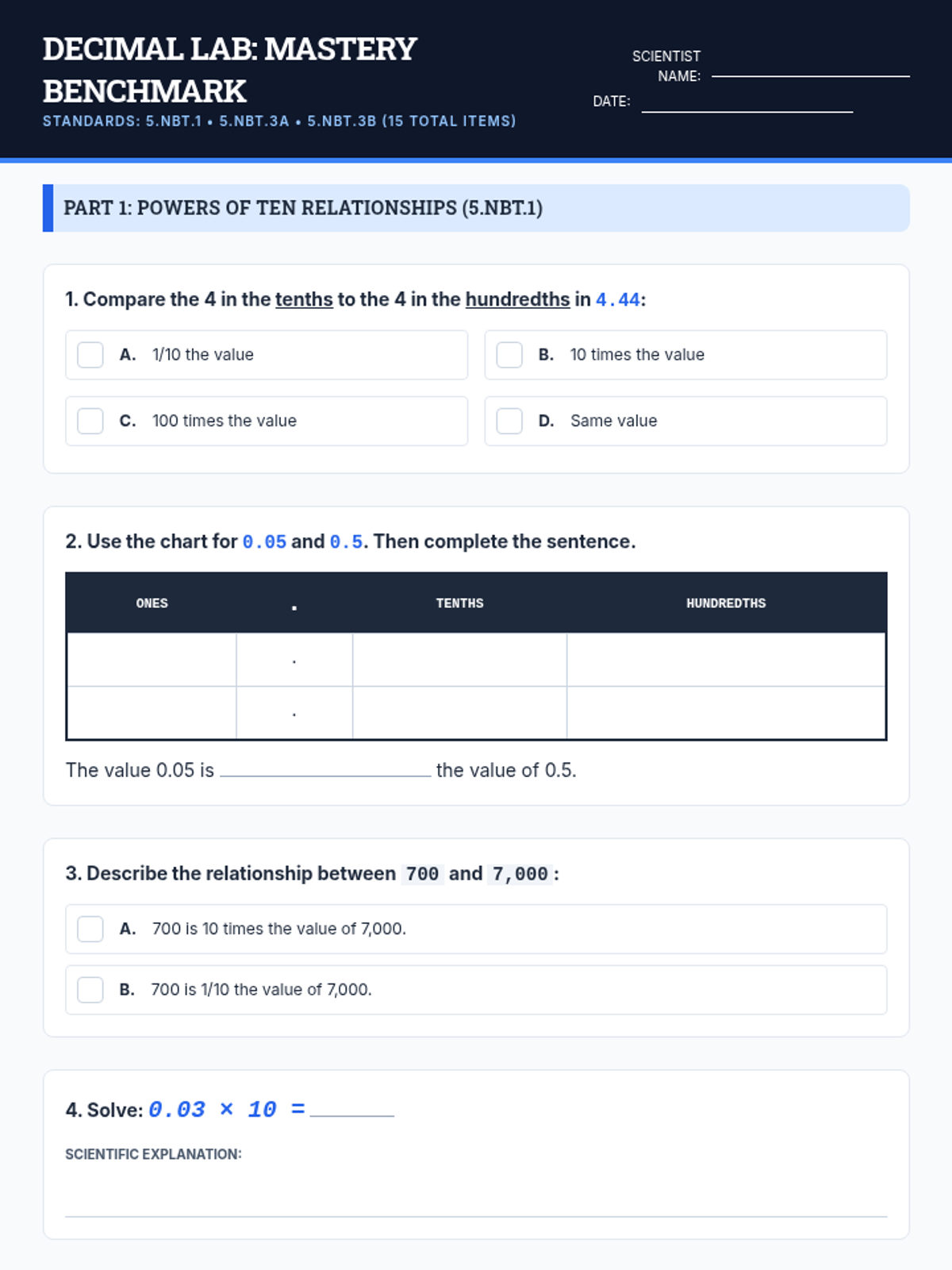
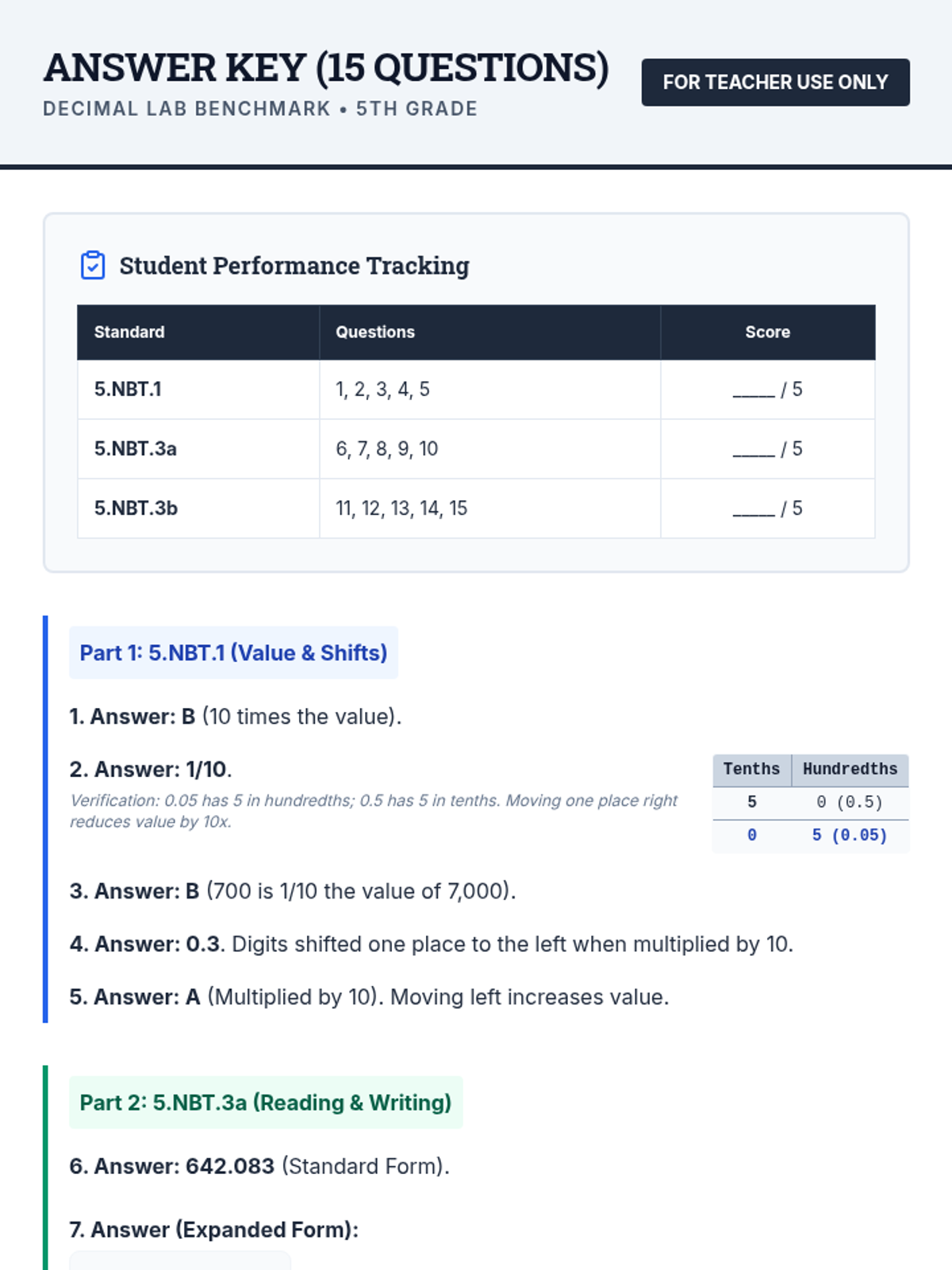
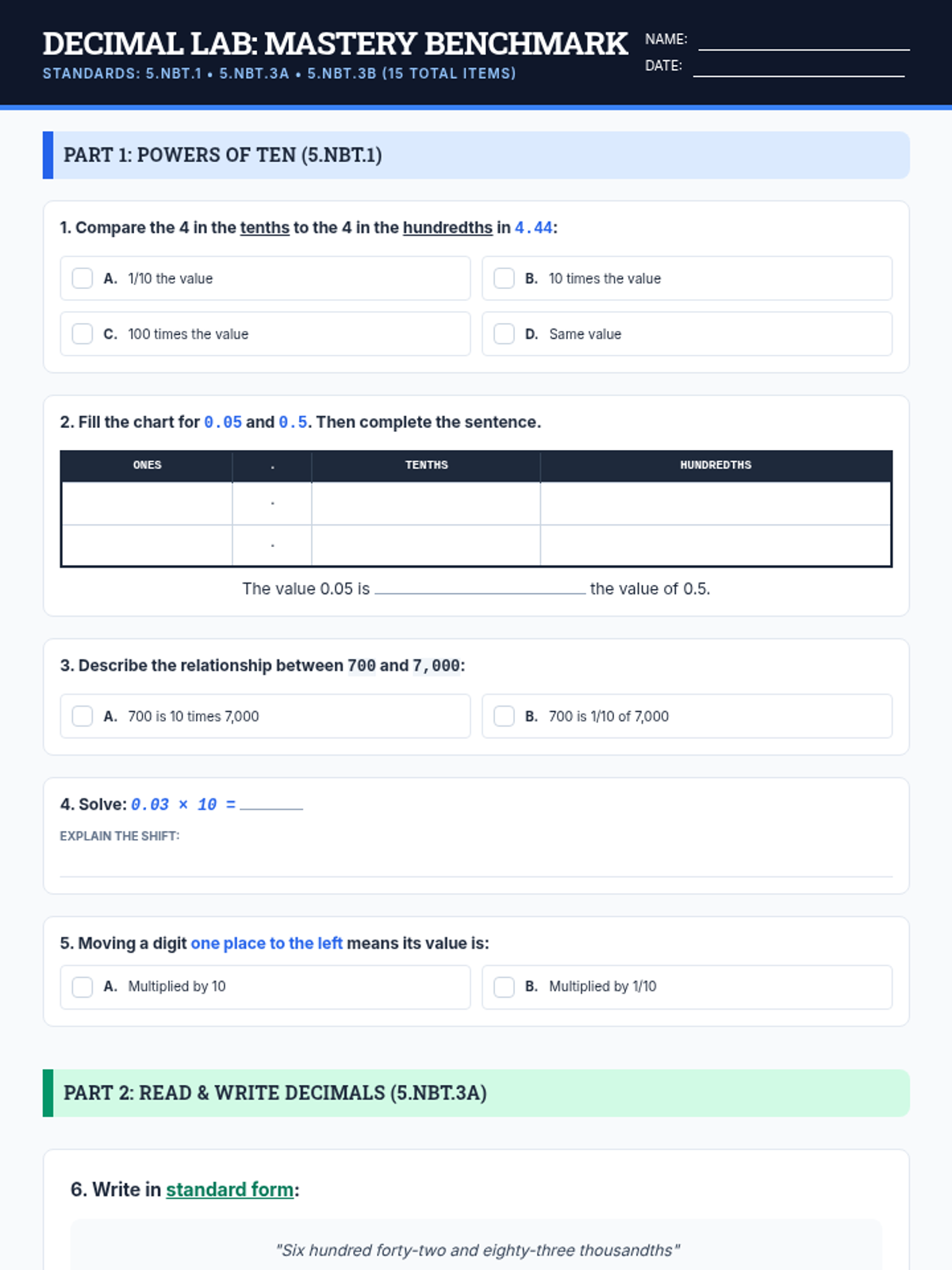
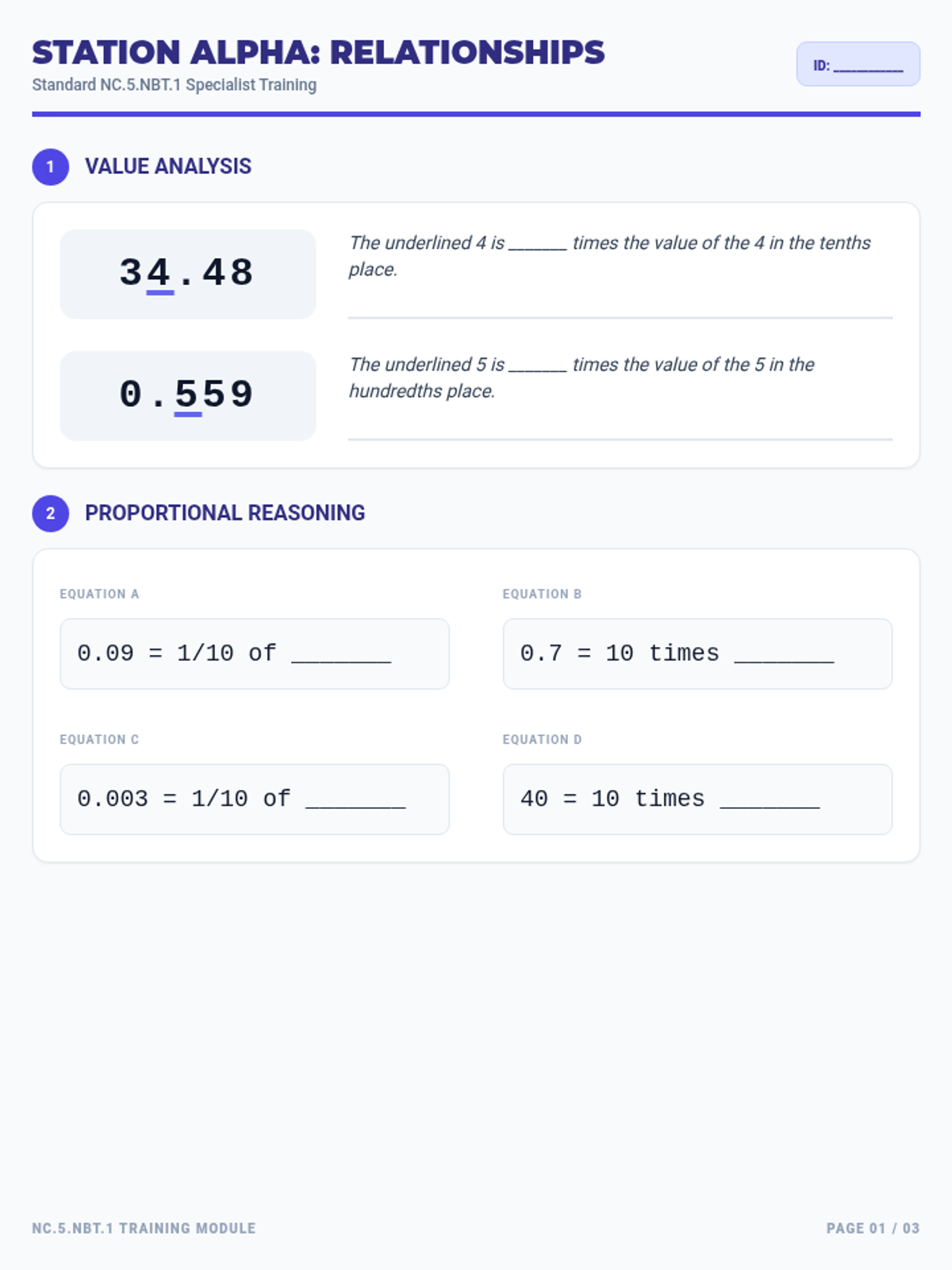
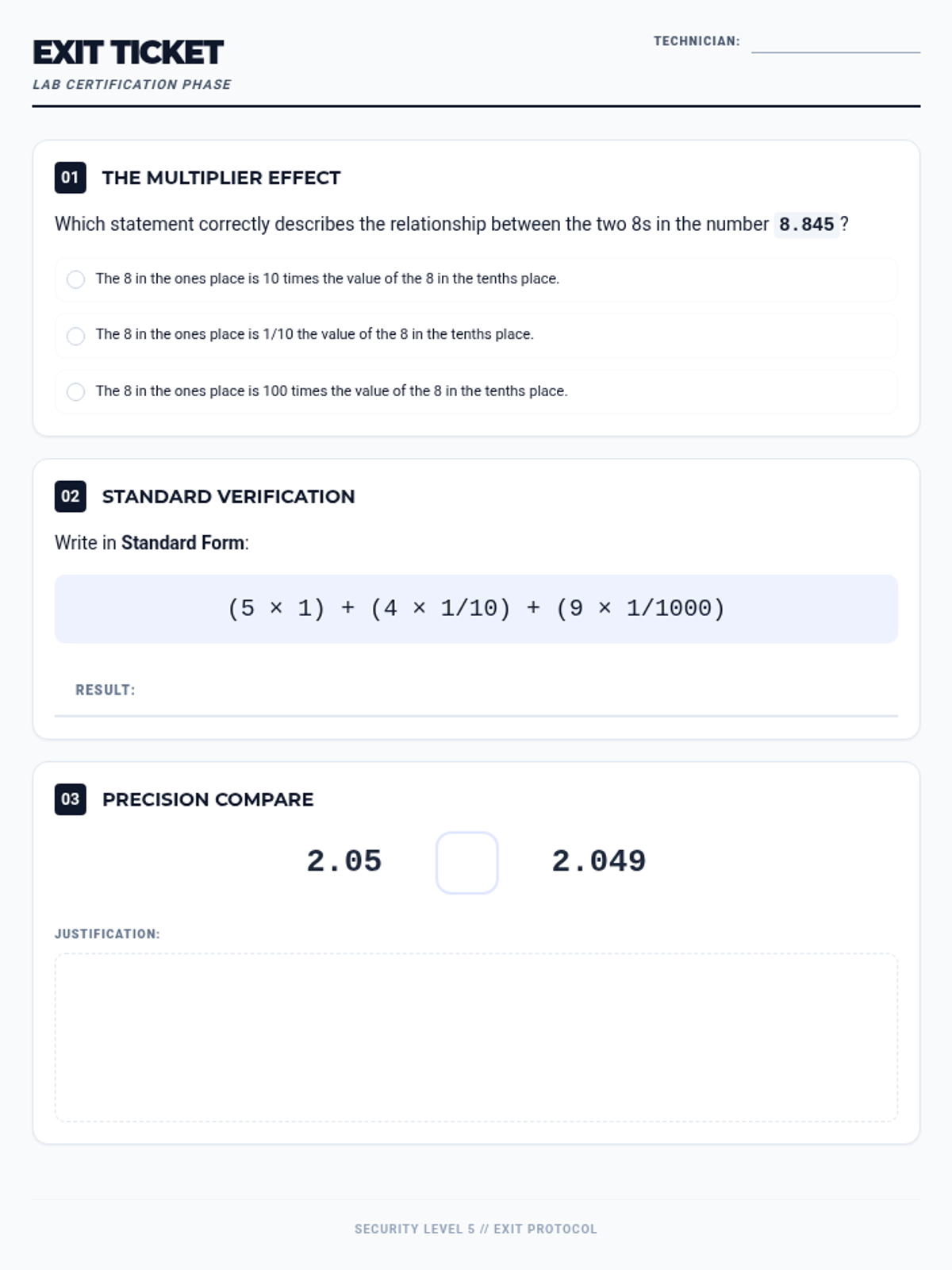
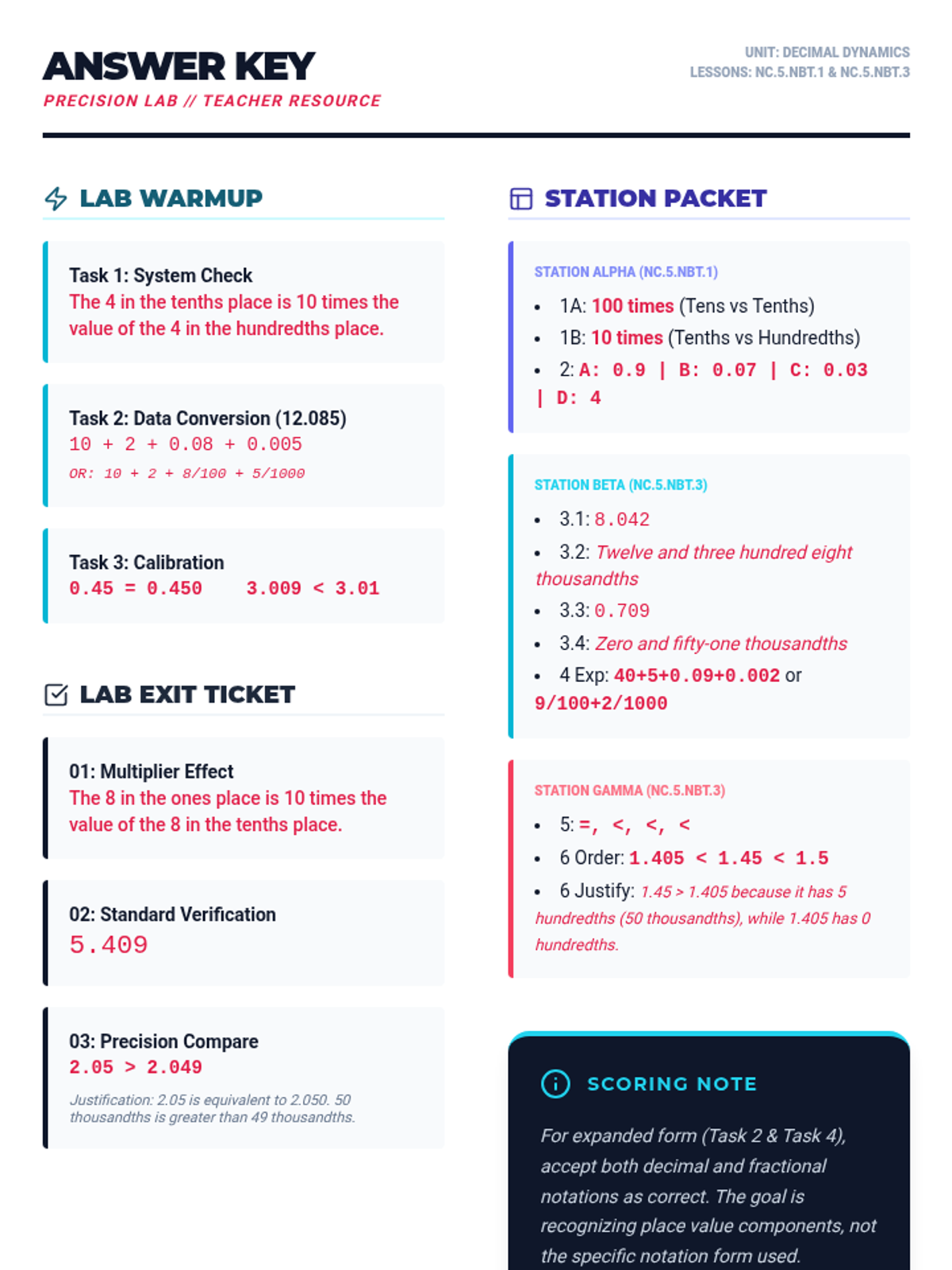
A comprehensive assessment focused on 5th-grade place value and decimal standards (5.NBT.1, 5.NBT.3a, 5.NBT.3b), designed to help teachers pinpoint exactly where students are struggling with multi-digit number relationships and decimal notation.
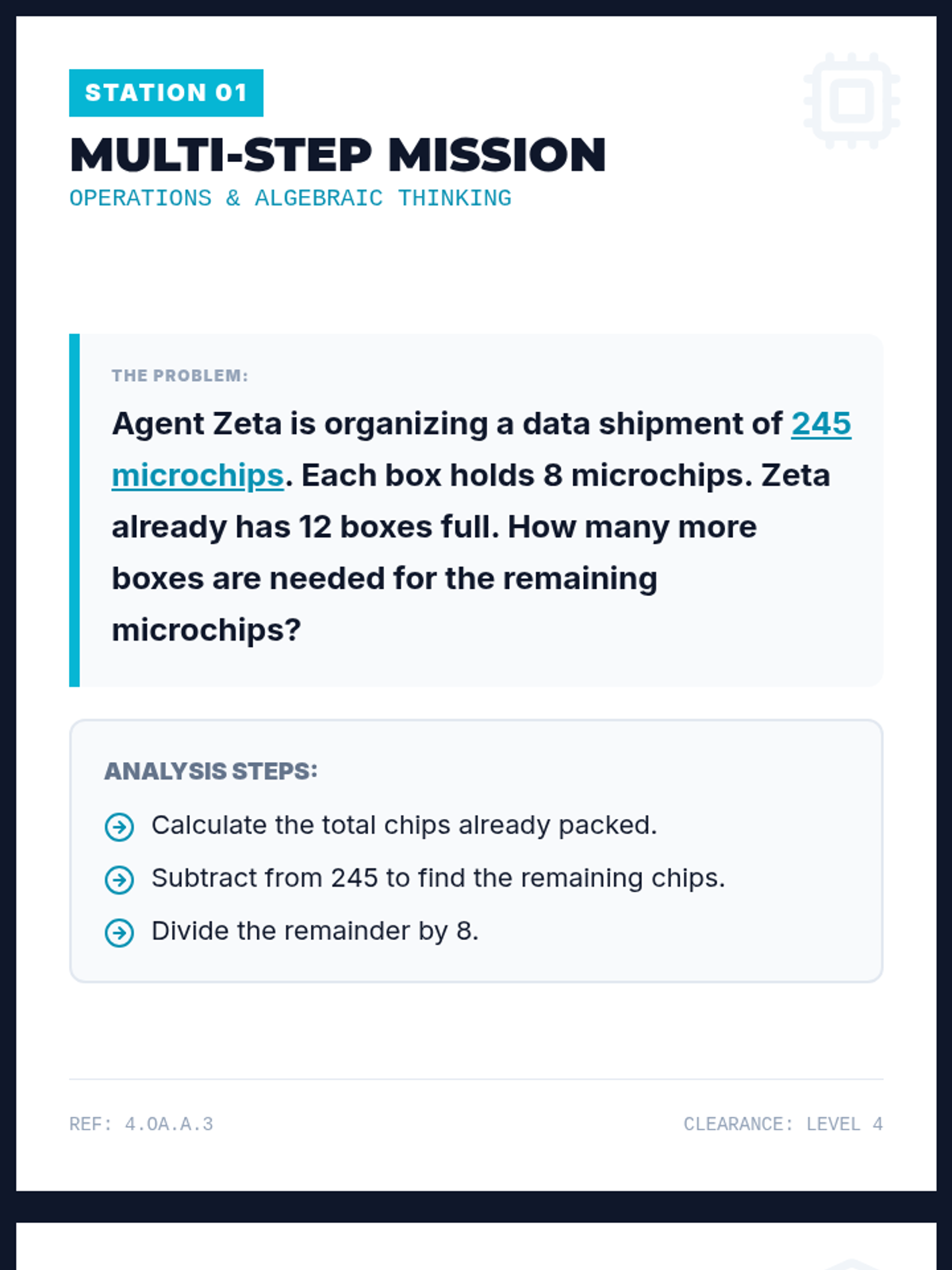
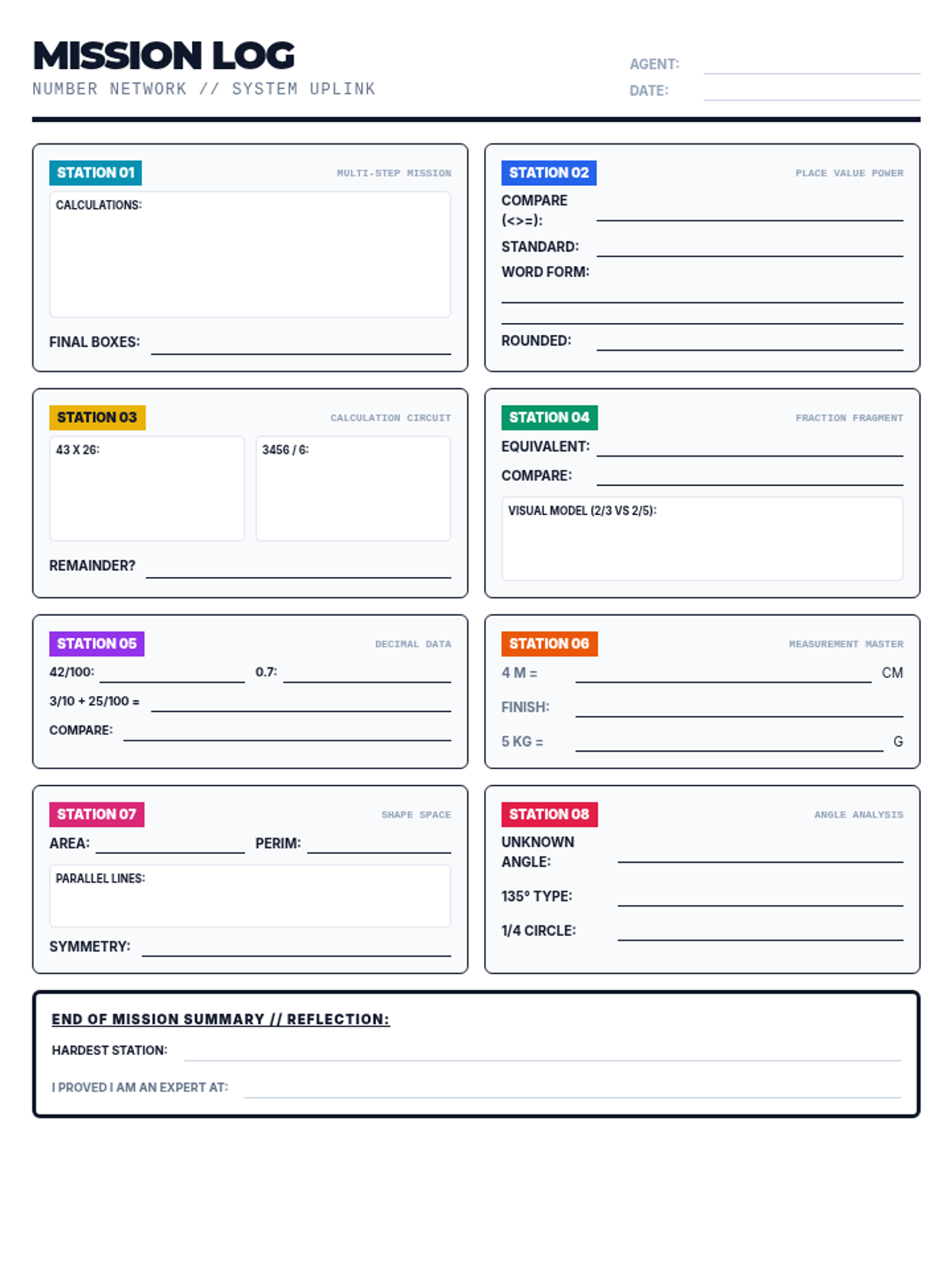
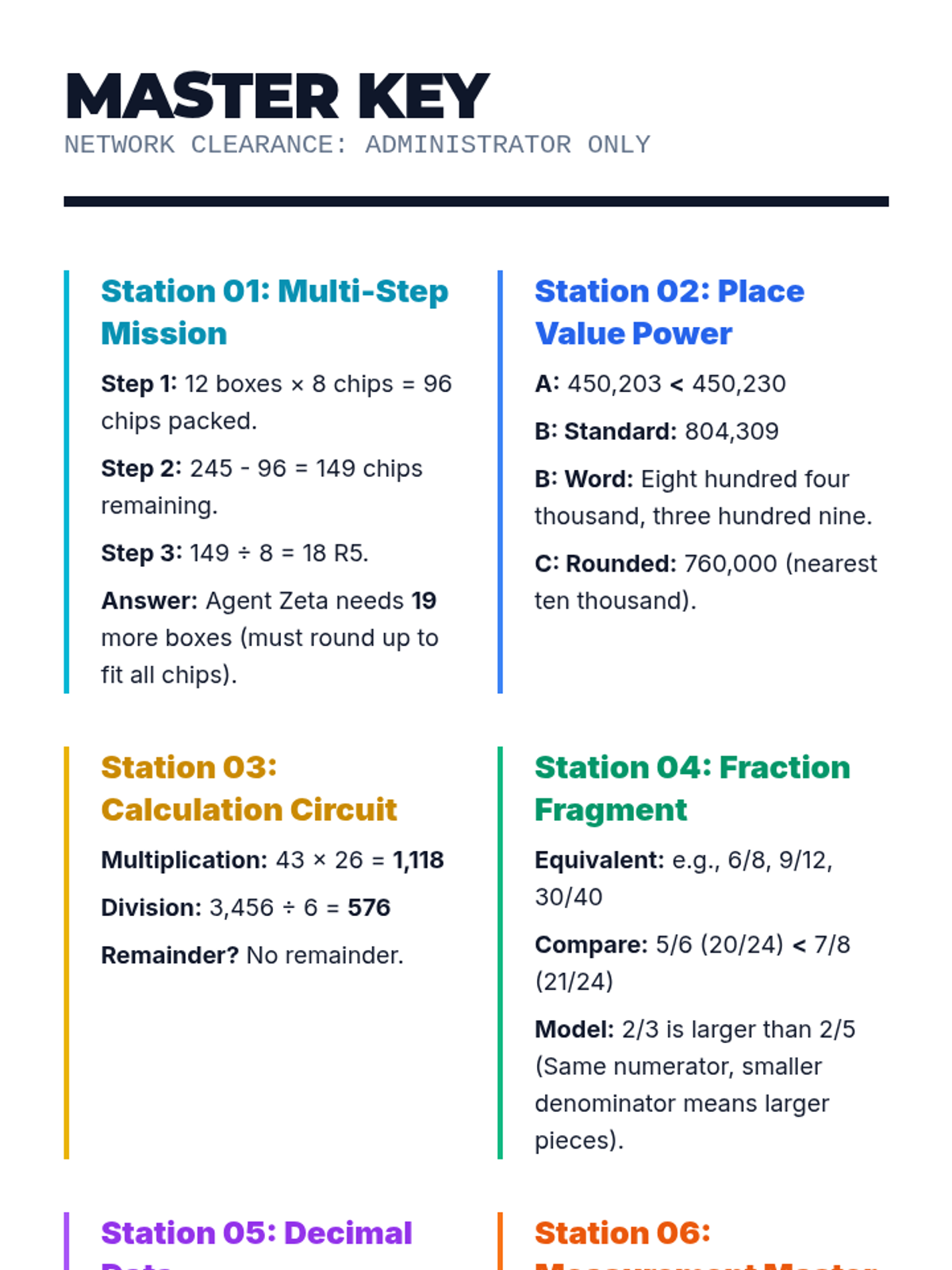
A comprehensive 4th-grade math spiral review designed as an interactive gallery walk. Students rotate through 8 high-energy stations covering all major domains to prepare for end-of-grade testing.
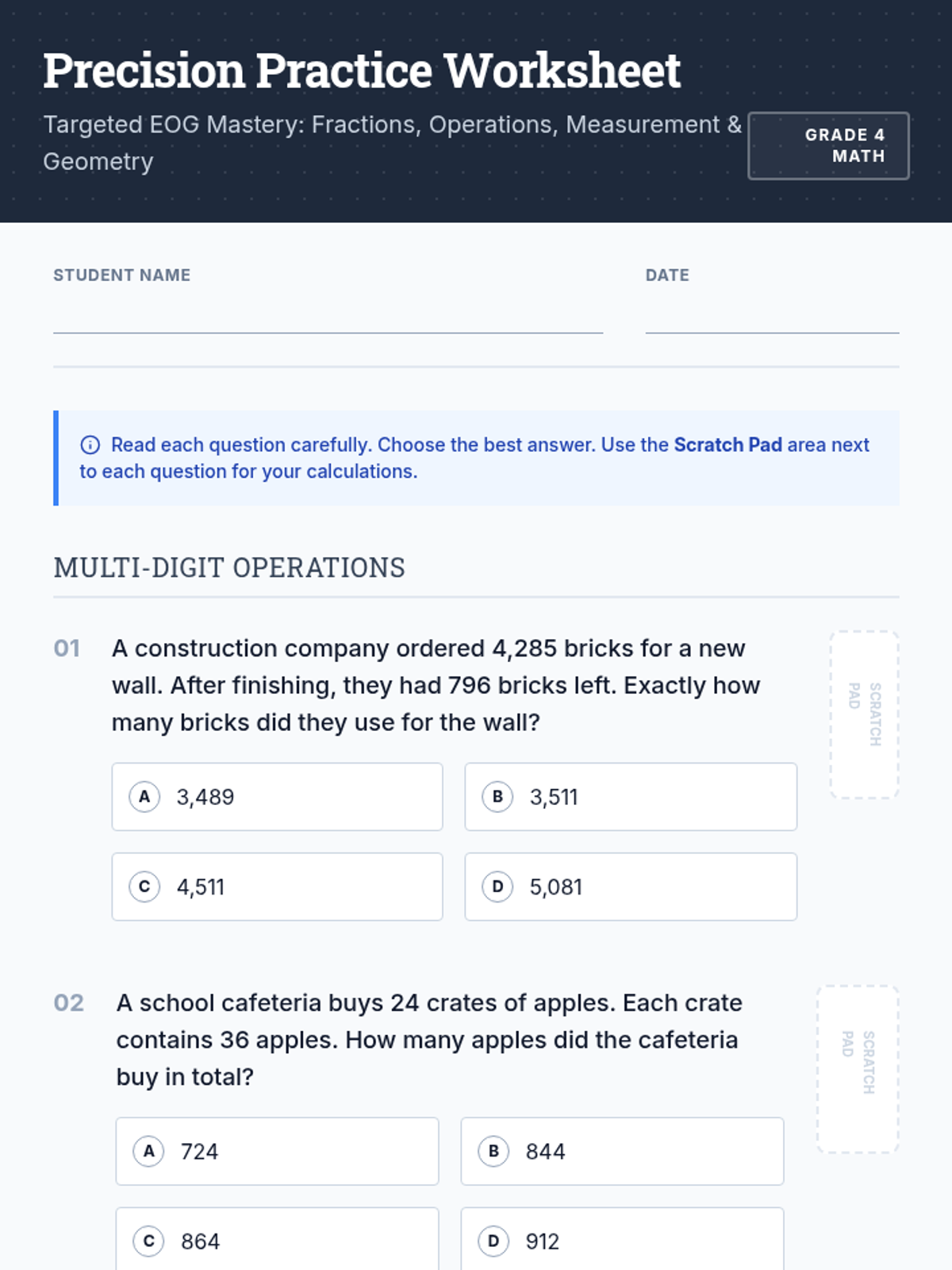
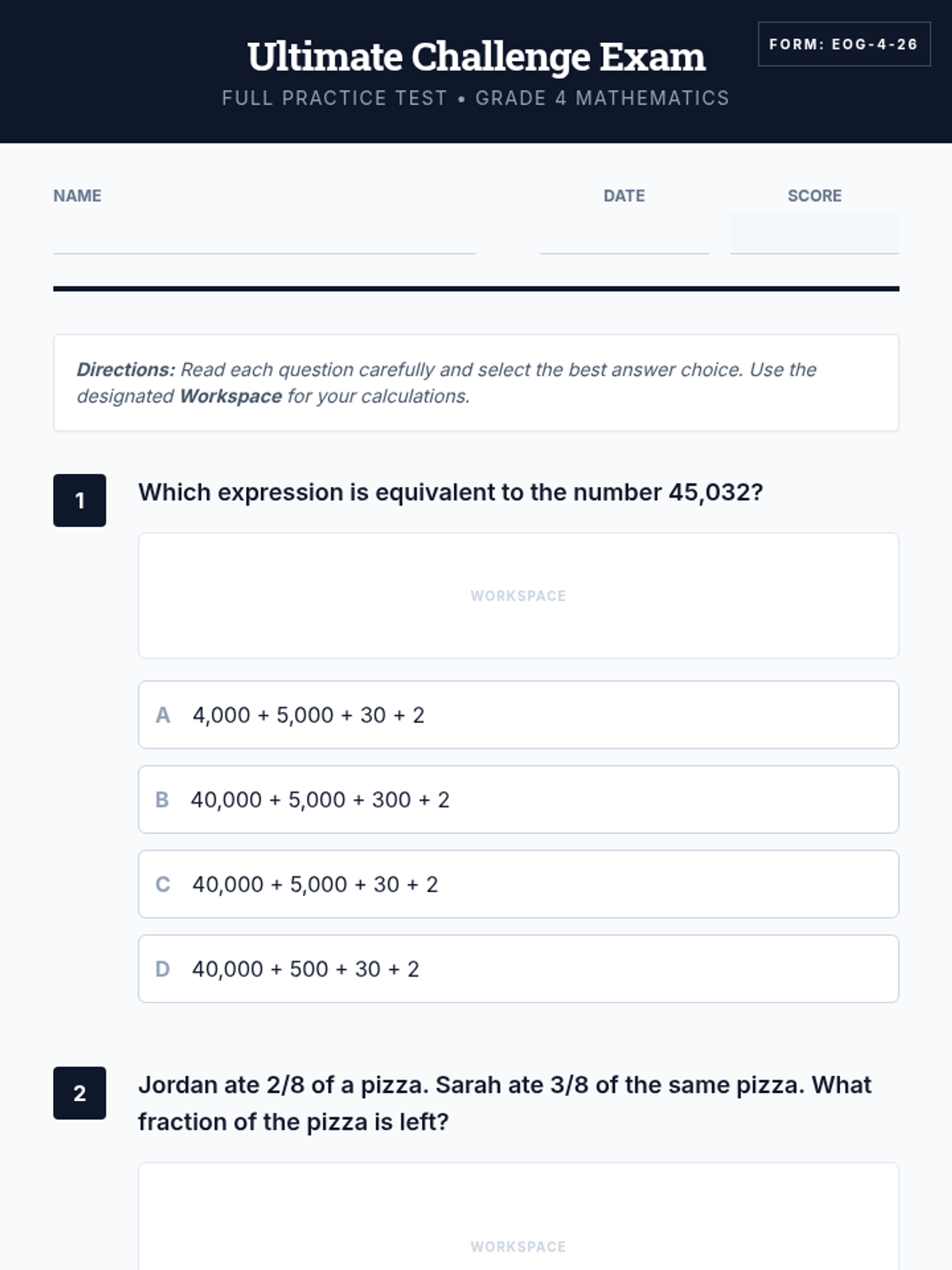
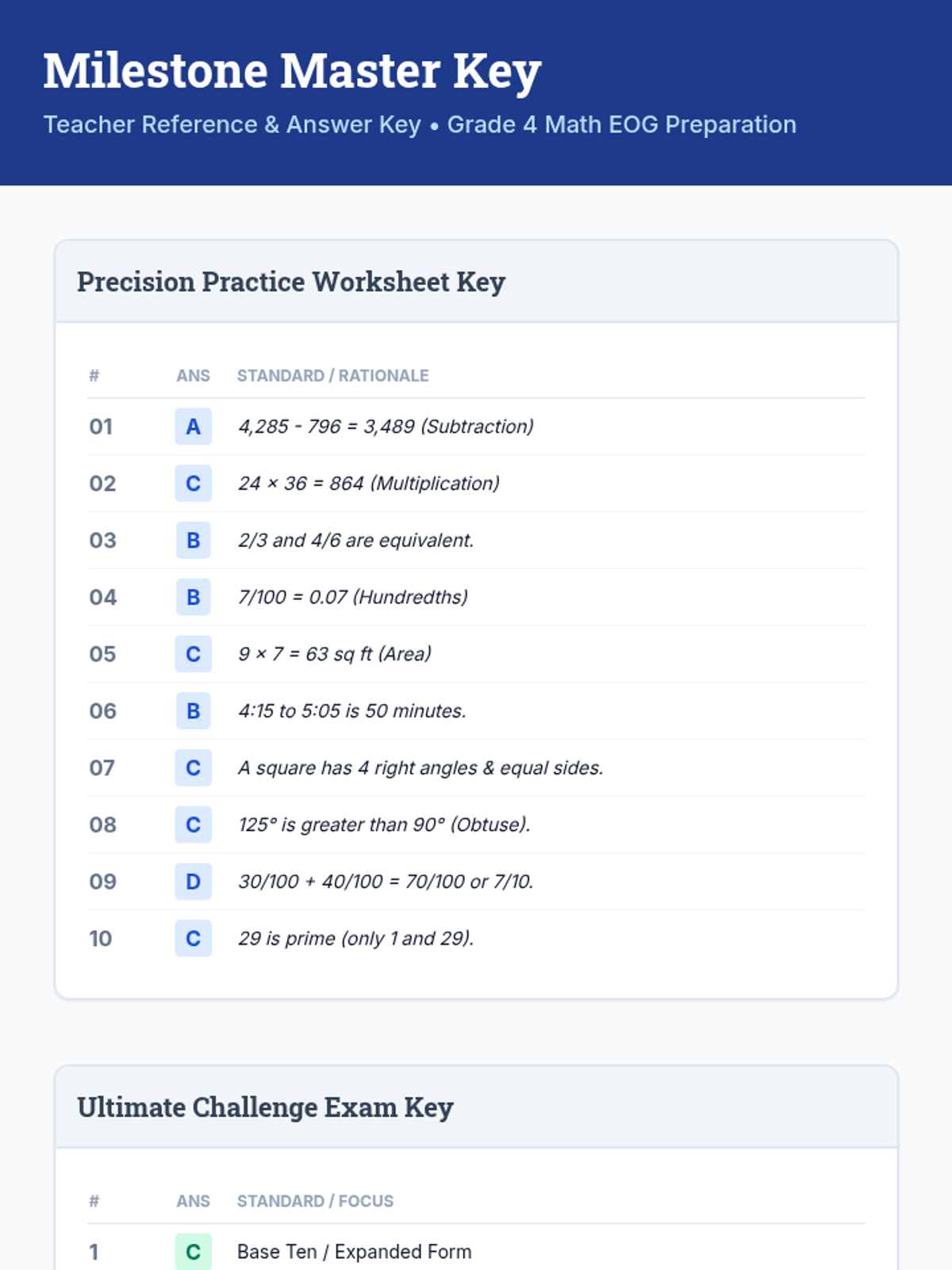
A comprehensive practice suite for 4th Grade Math EOG preparation, focusing on fractions, decimals, multi-digit operations, measurement, data, and geometry. This lesson includes targeted worksheets and a full-length practice exam designed to mimic the rigor of state assessments.
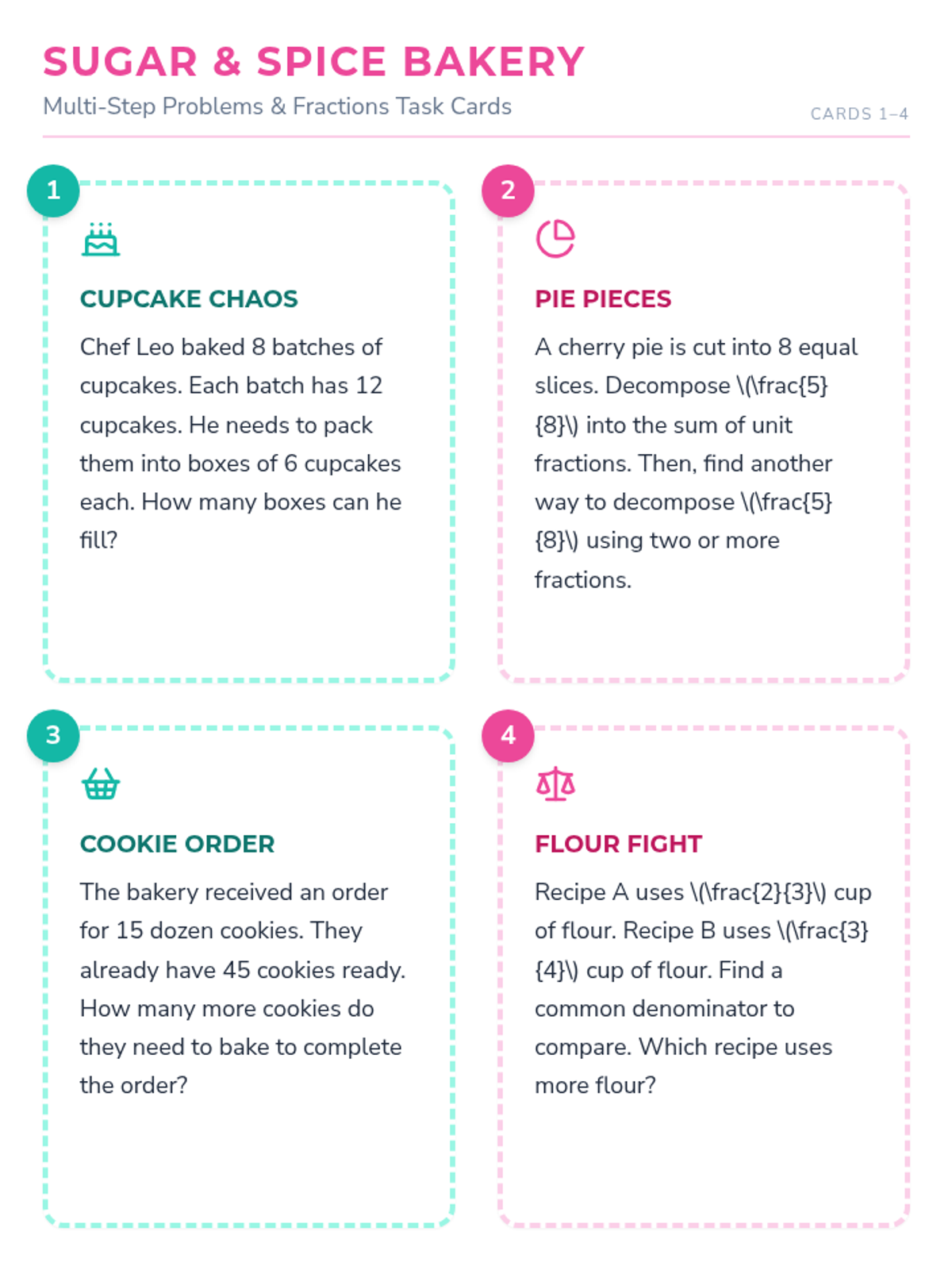
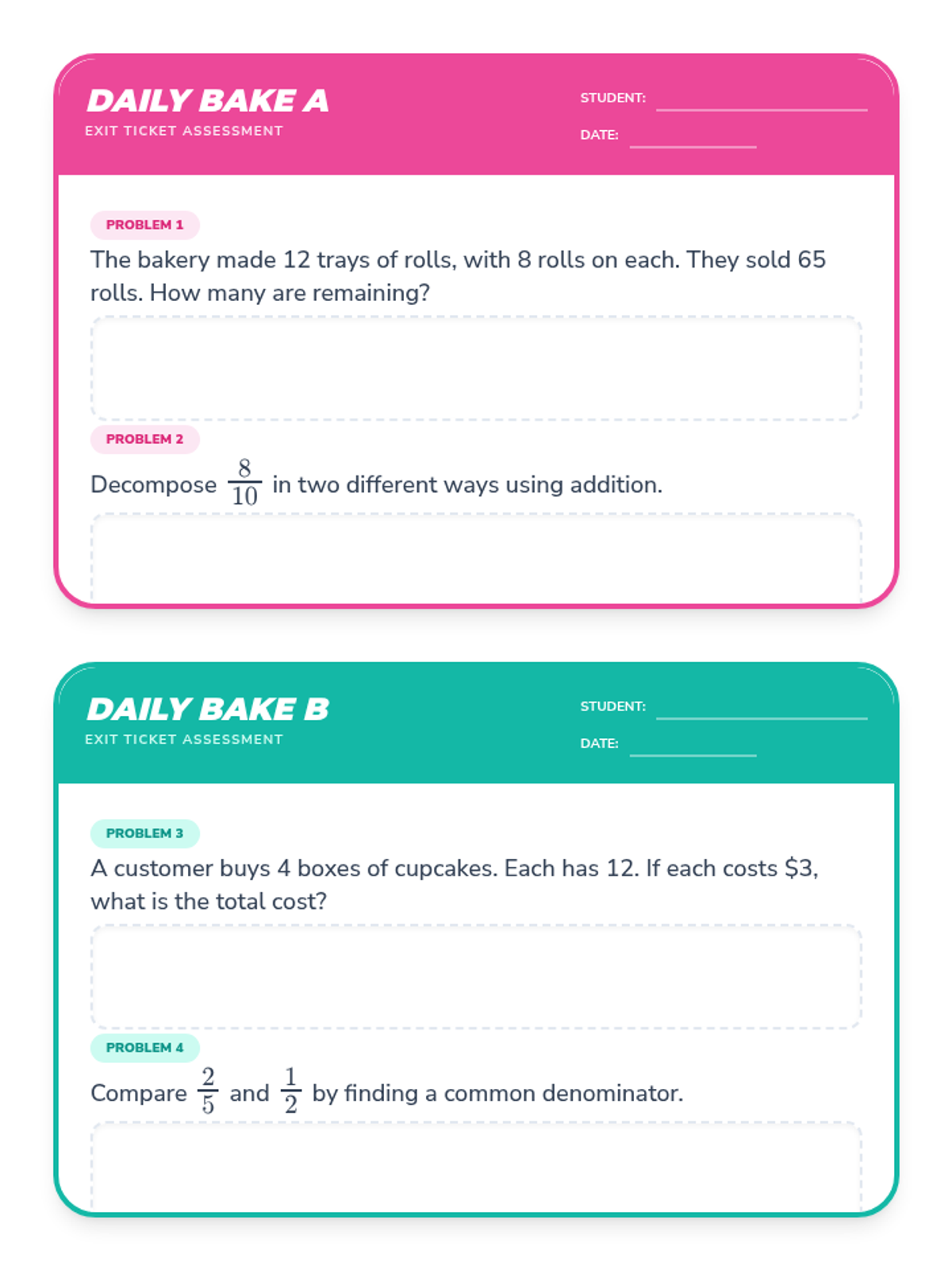
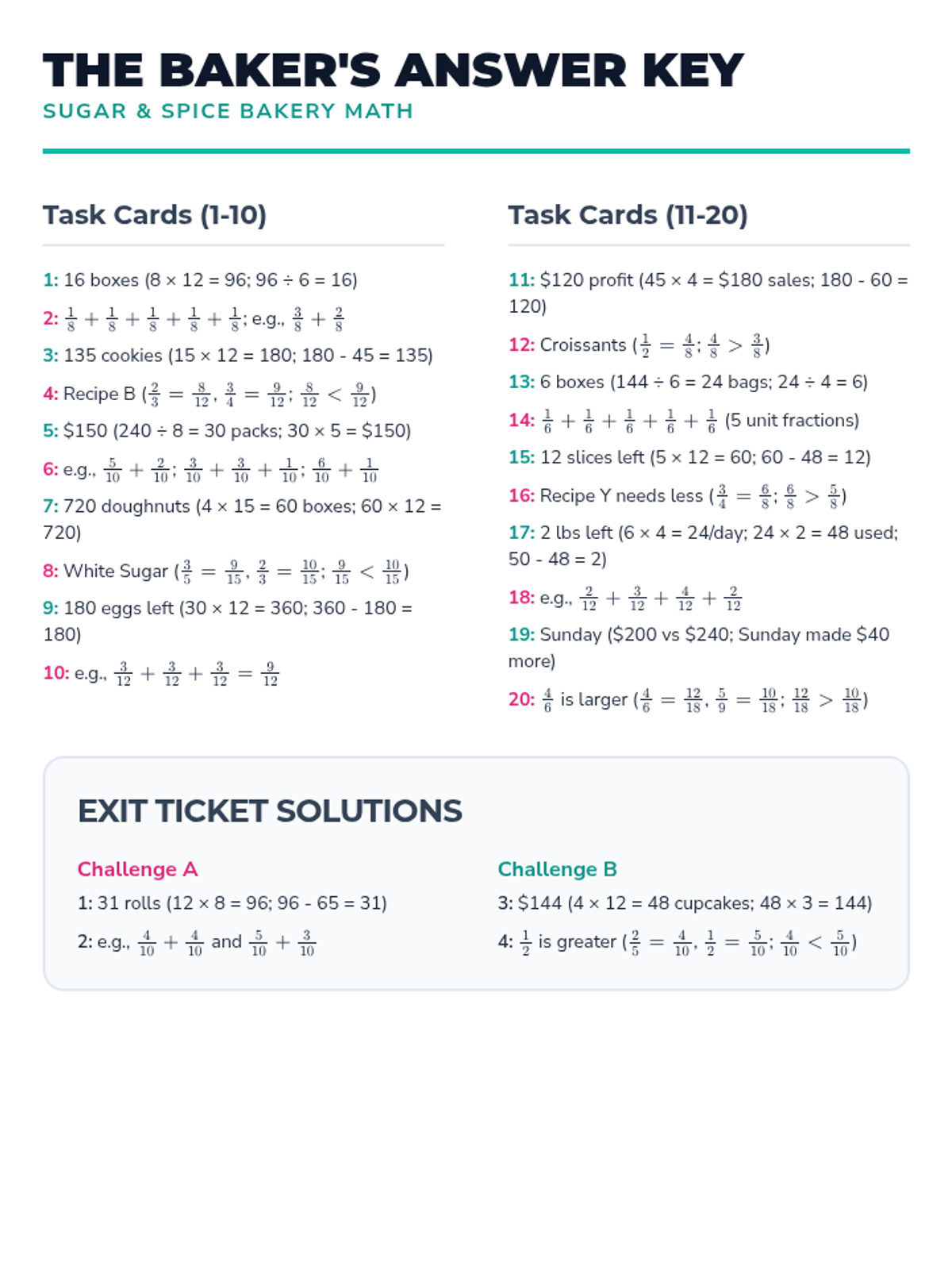
A math lesson focused on solving multi-step word problems involving multiplication and division, alongside fraction skills like decomposing and finding common denominators, all set in a busy bakery.
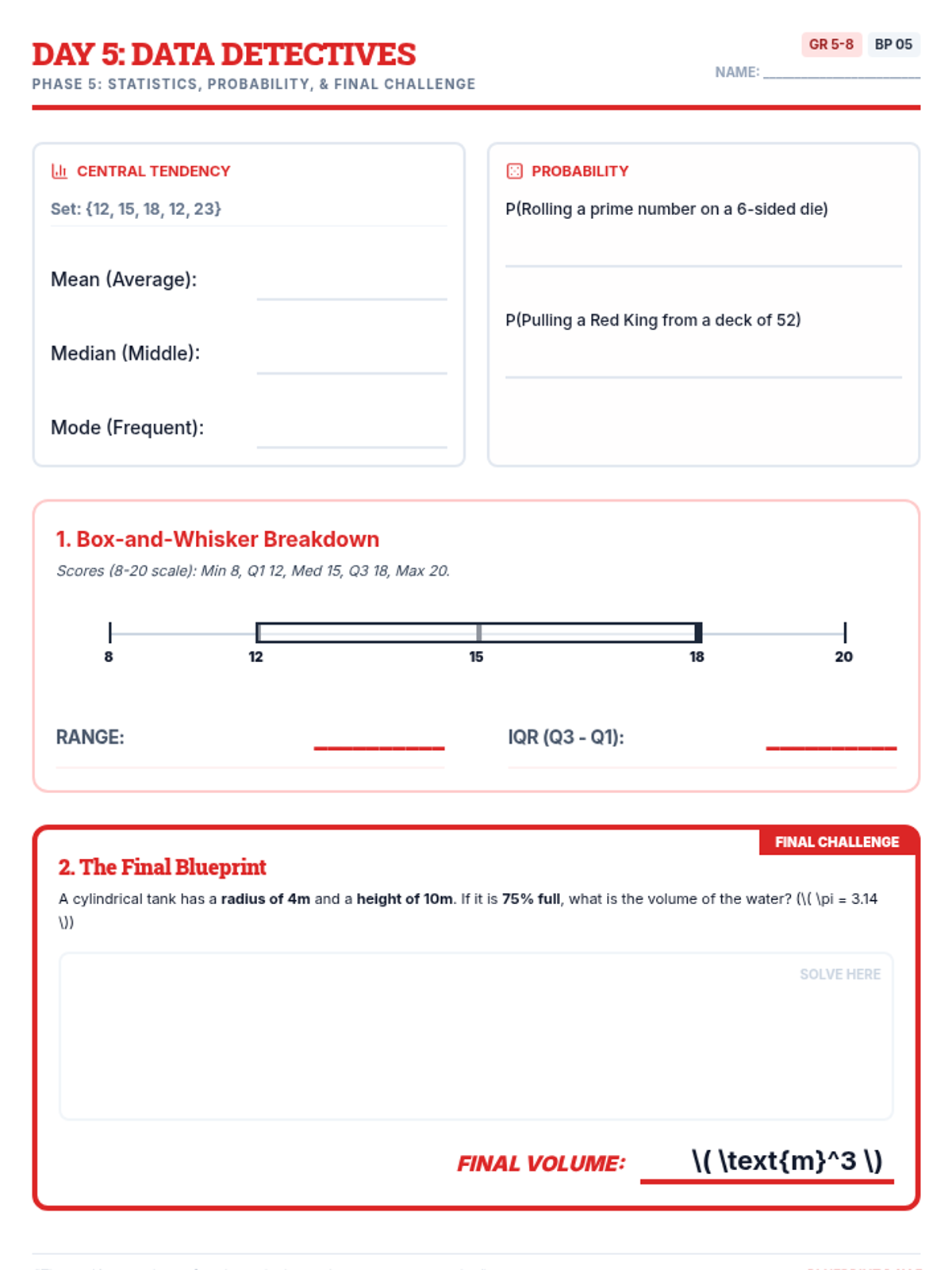
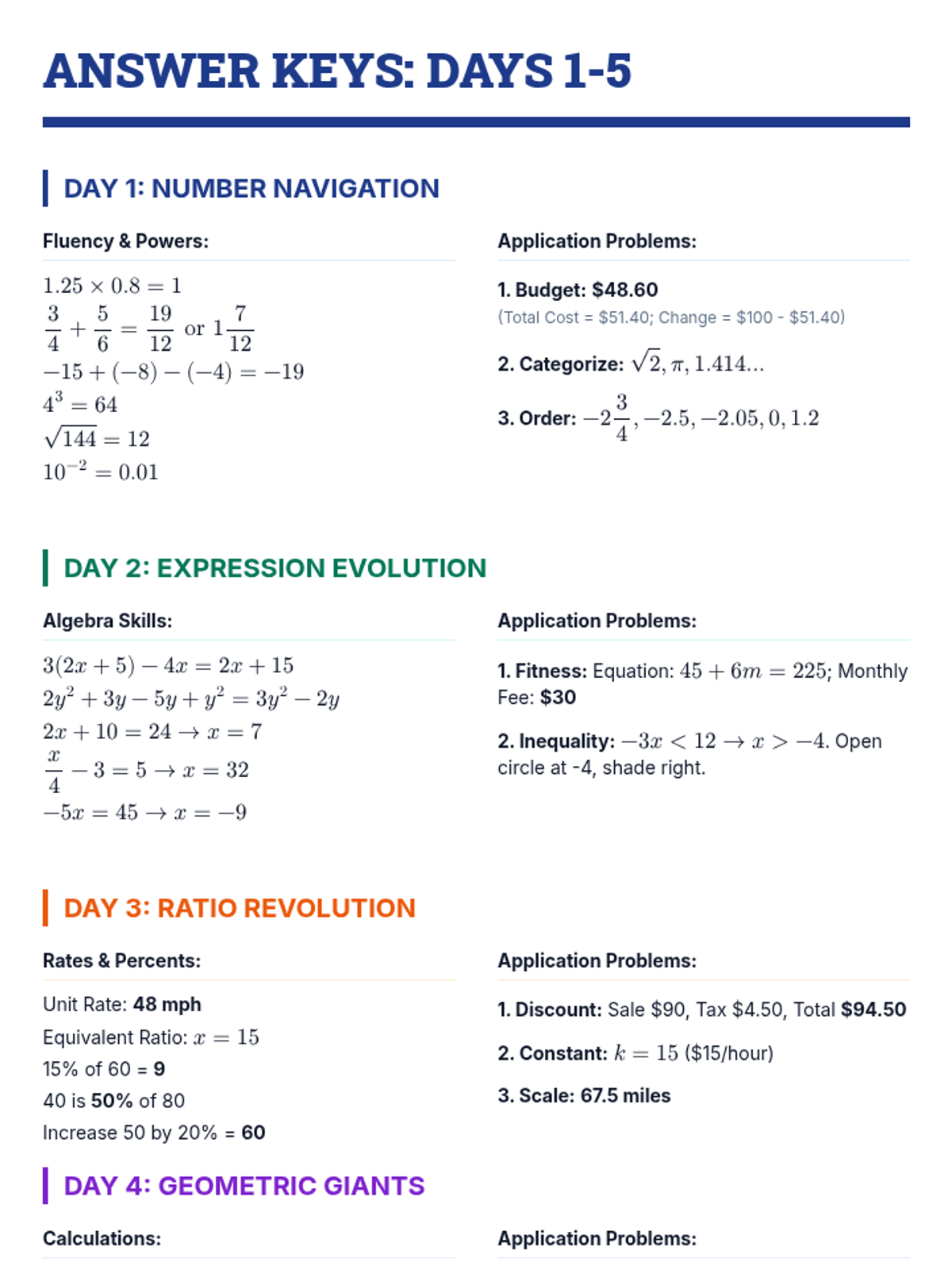
Day 5 concludes with statistics, probability, and a mixed challenge review of all concepts.
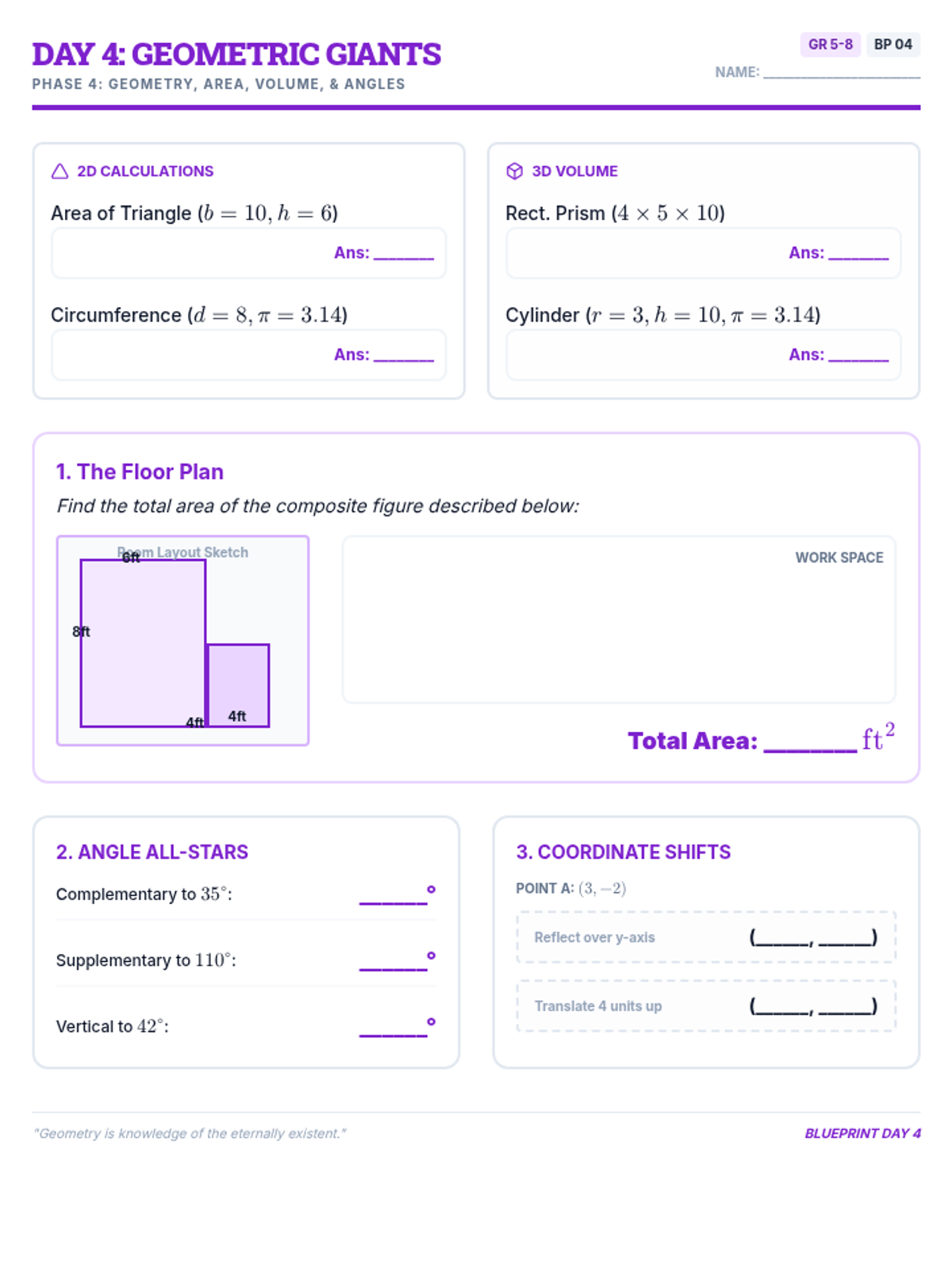
Day 4 explores geometry concepts including area, volume, and angle relationships.
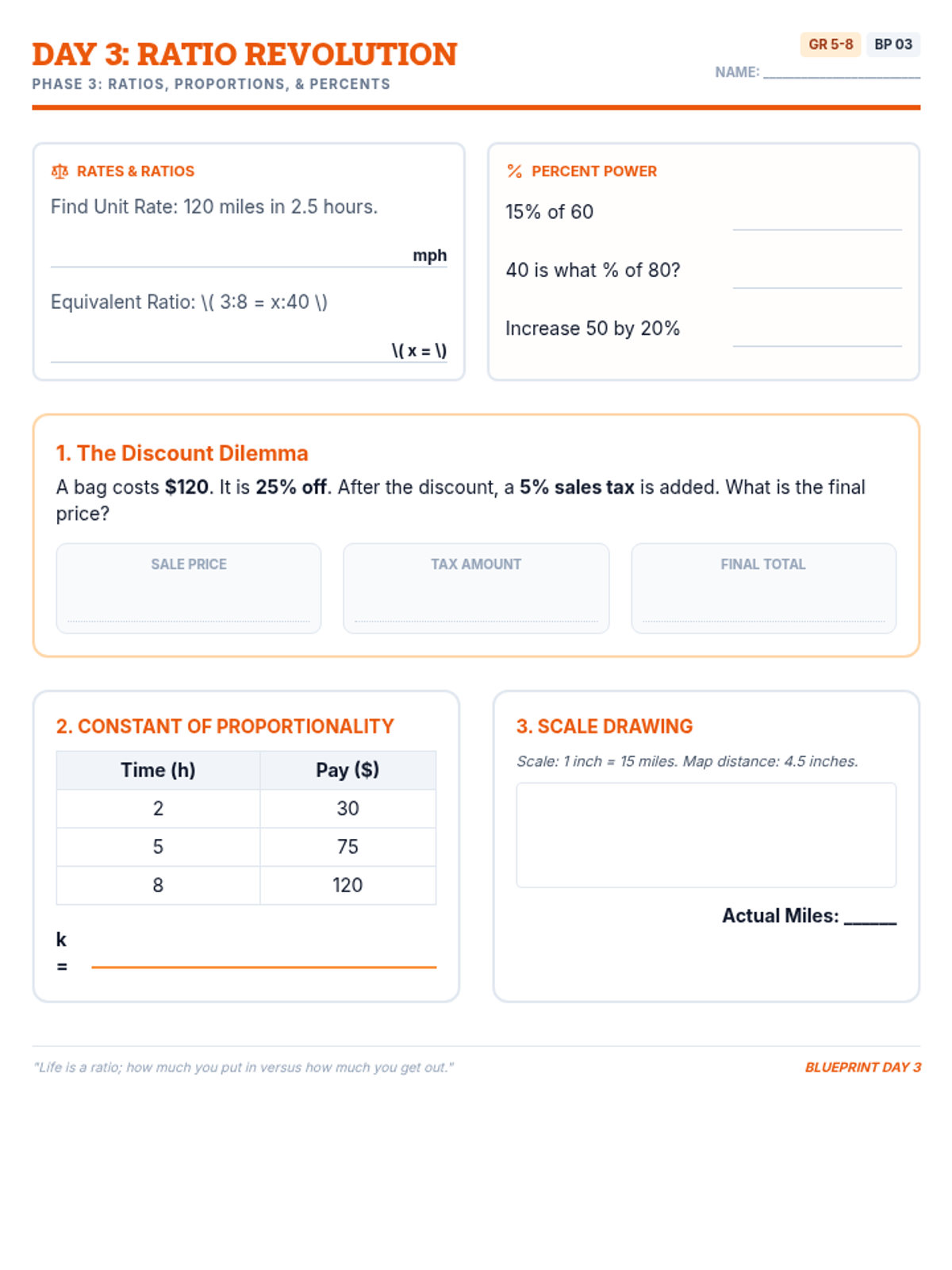
Day 3 focuses on ratios, proportions, and percentages in real-world contexts.
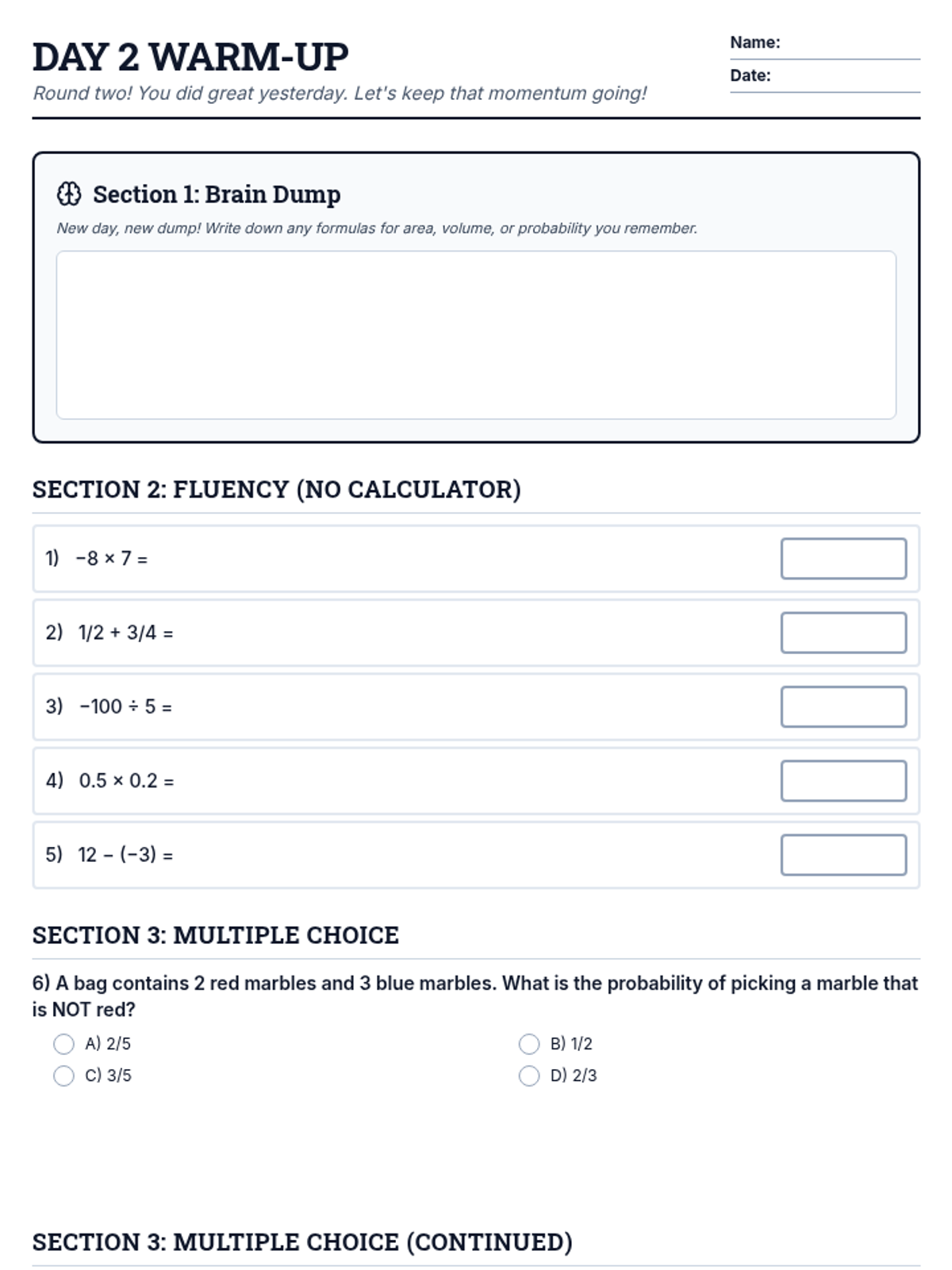
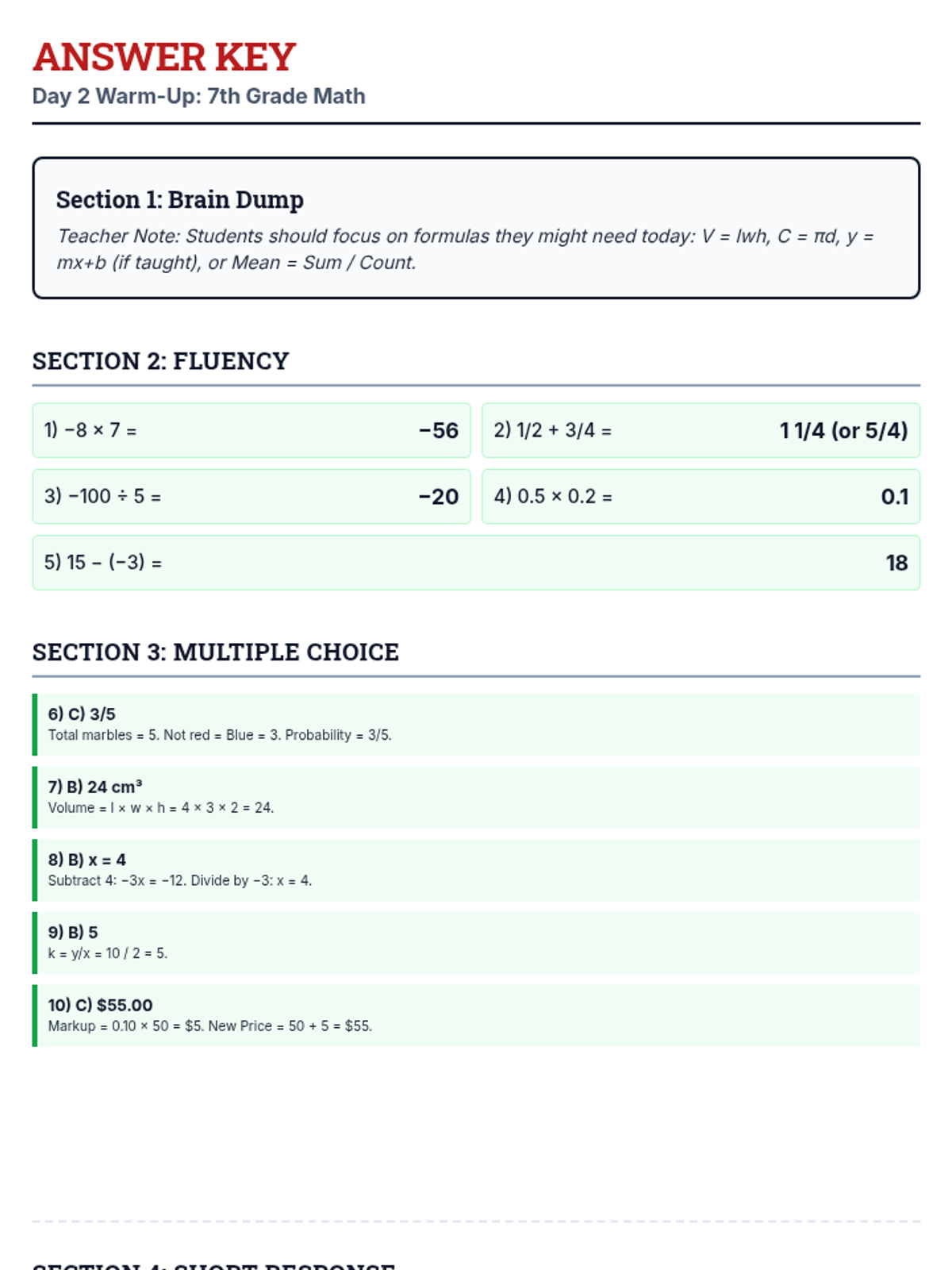
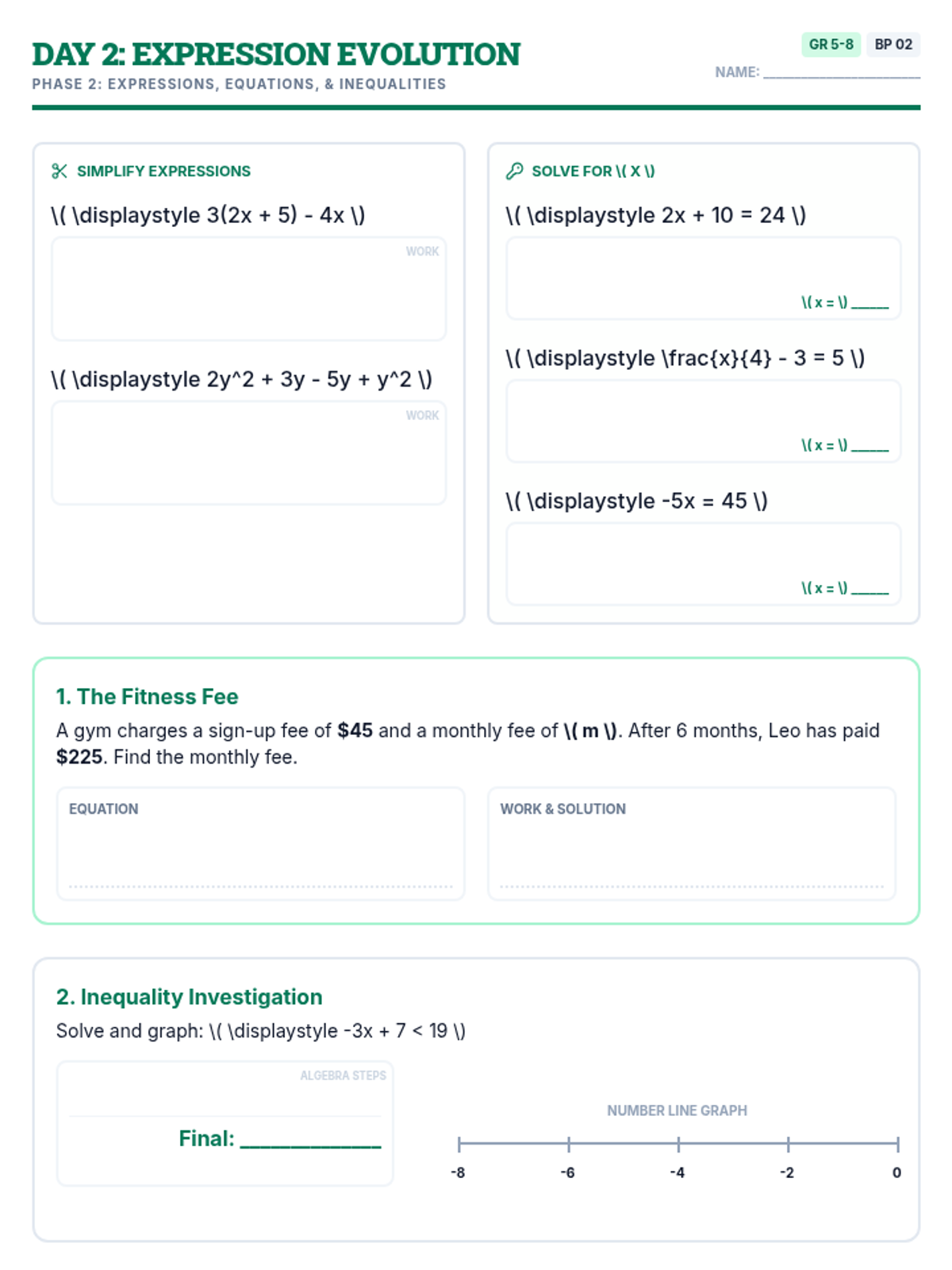
Day 2 covers expressions and equations, focusing on simplifying, solving, and translating word problems.
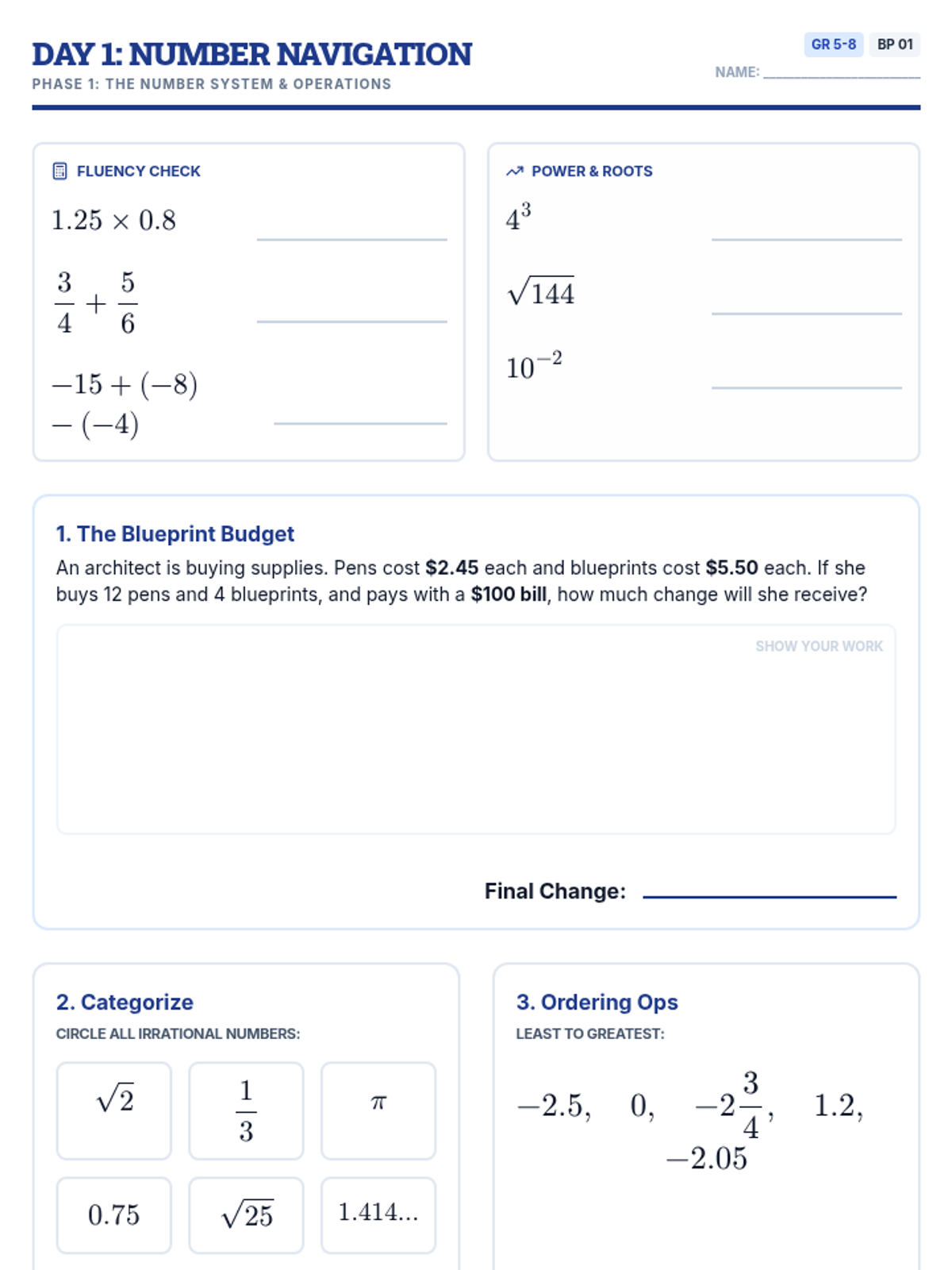
Day 1 focuses on number systems, including operations with fractions, decimals, and integers.
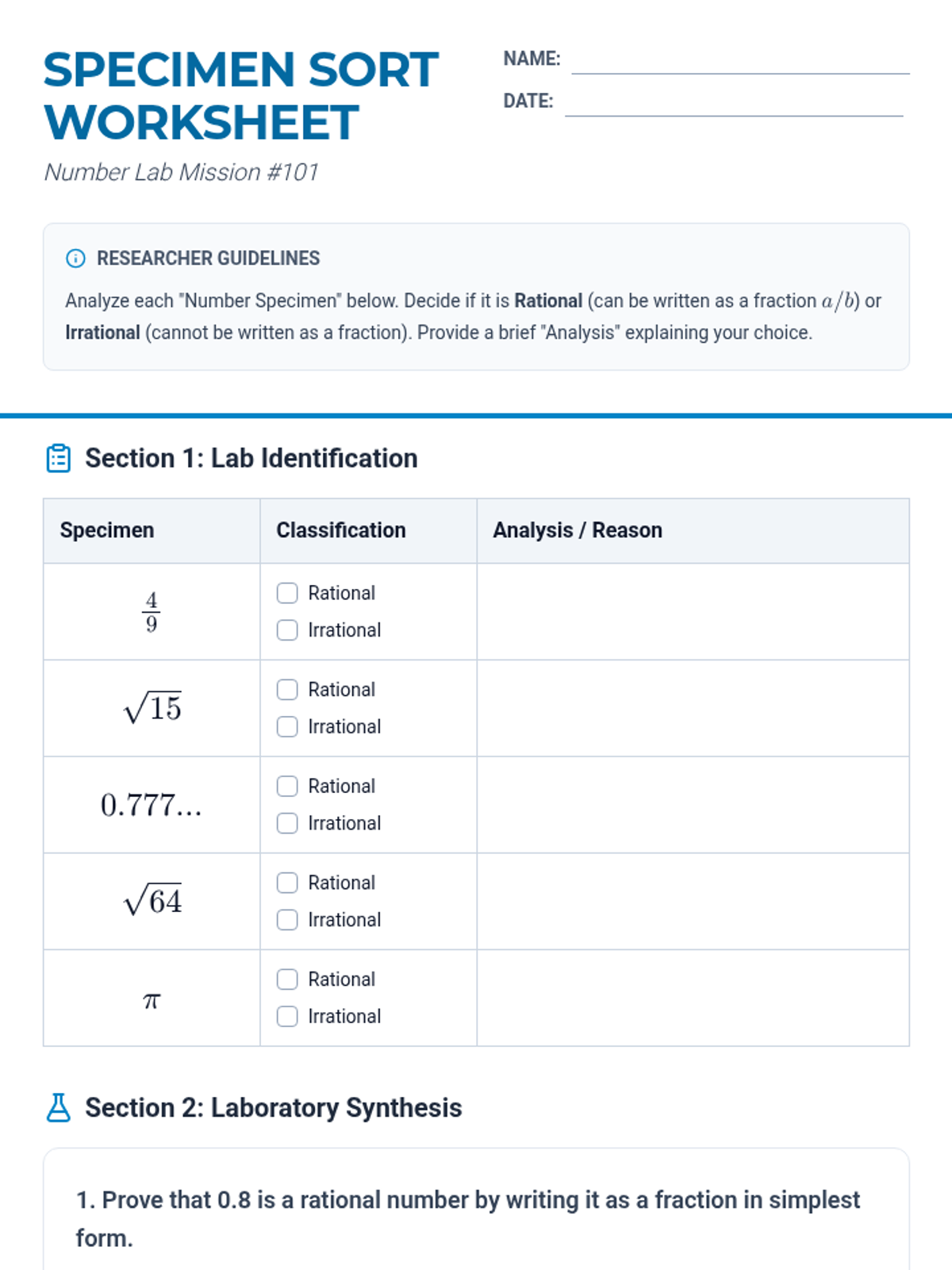
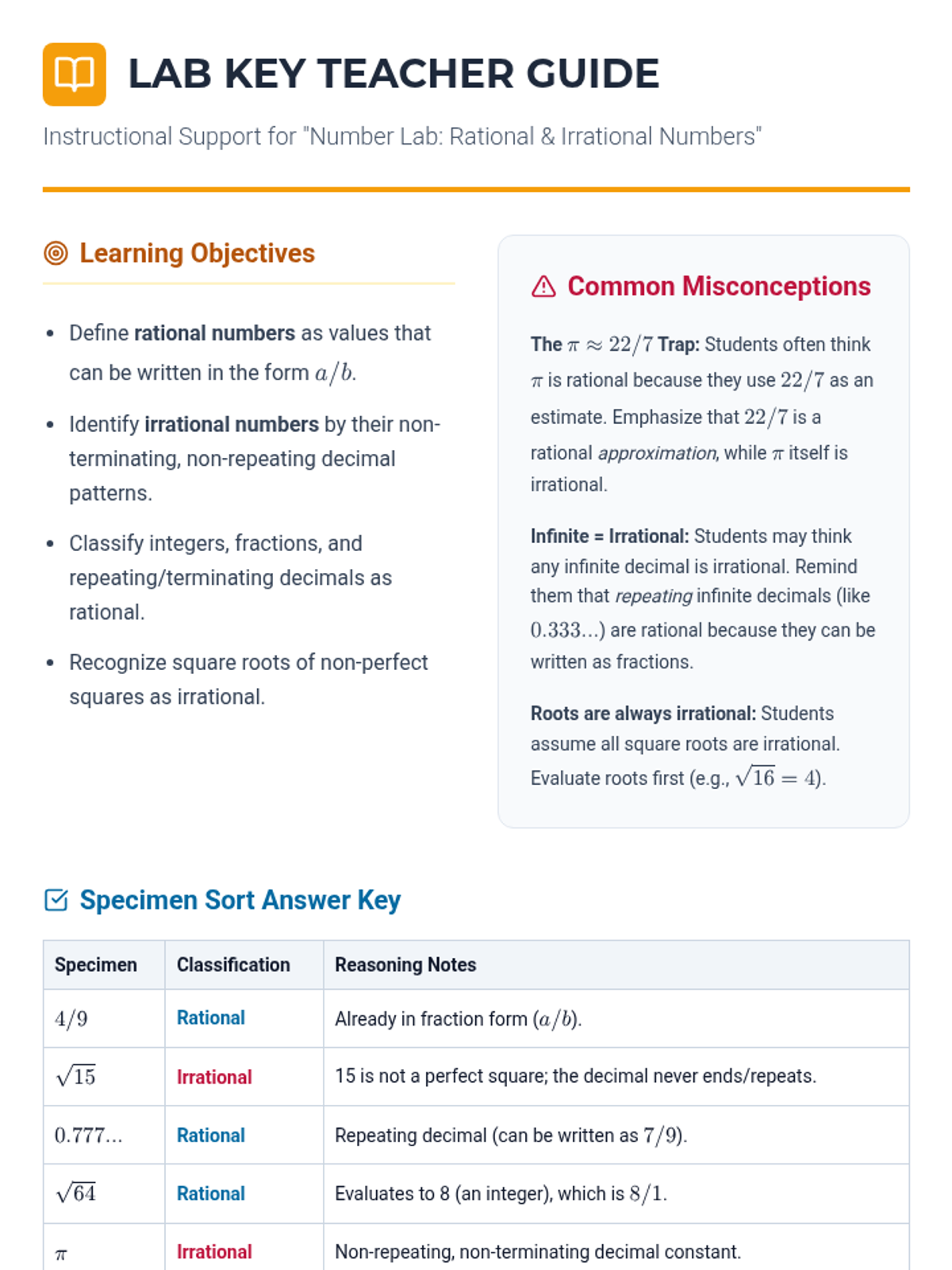
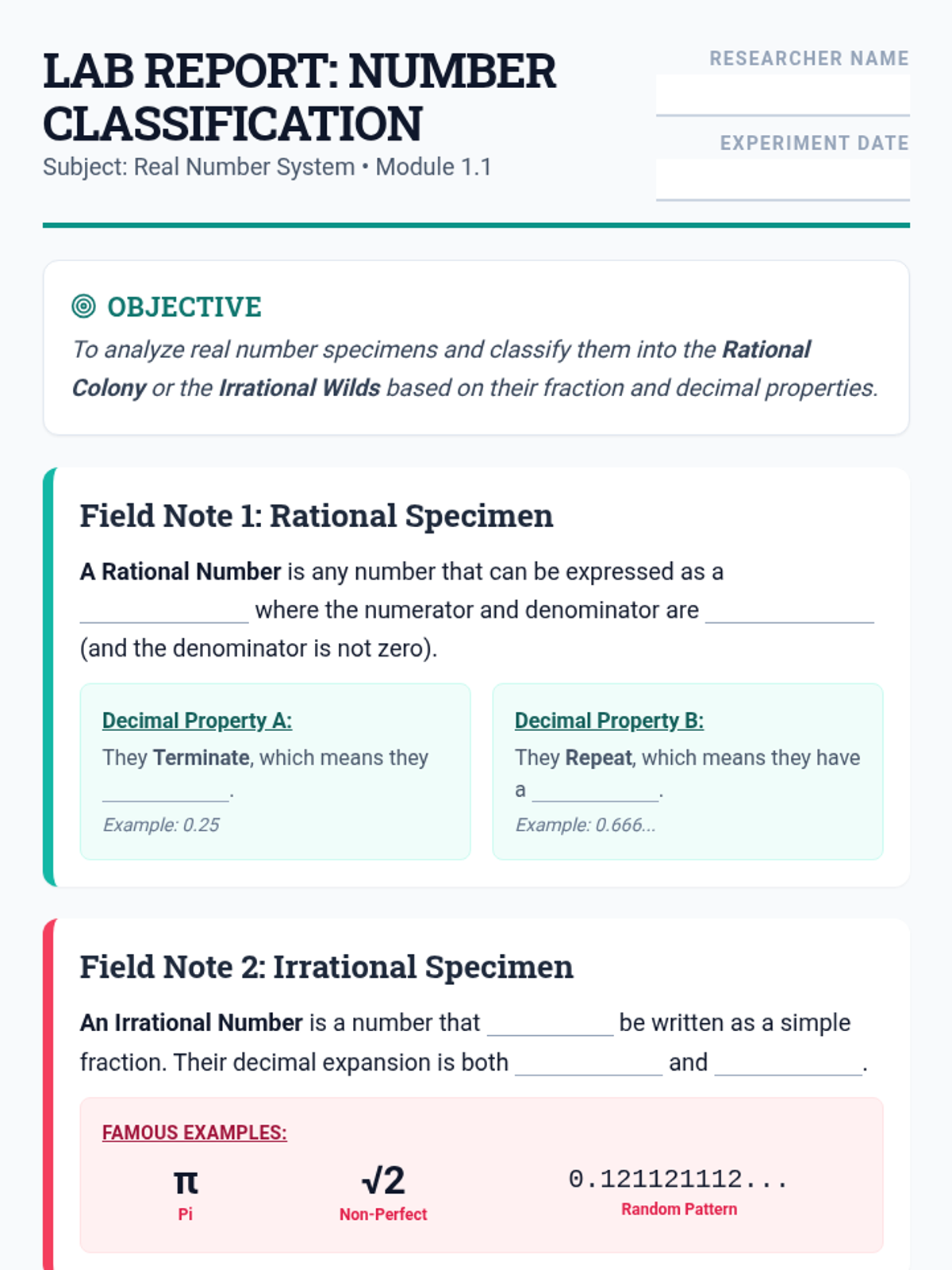
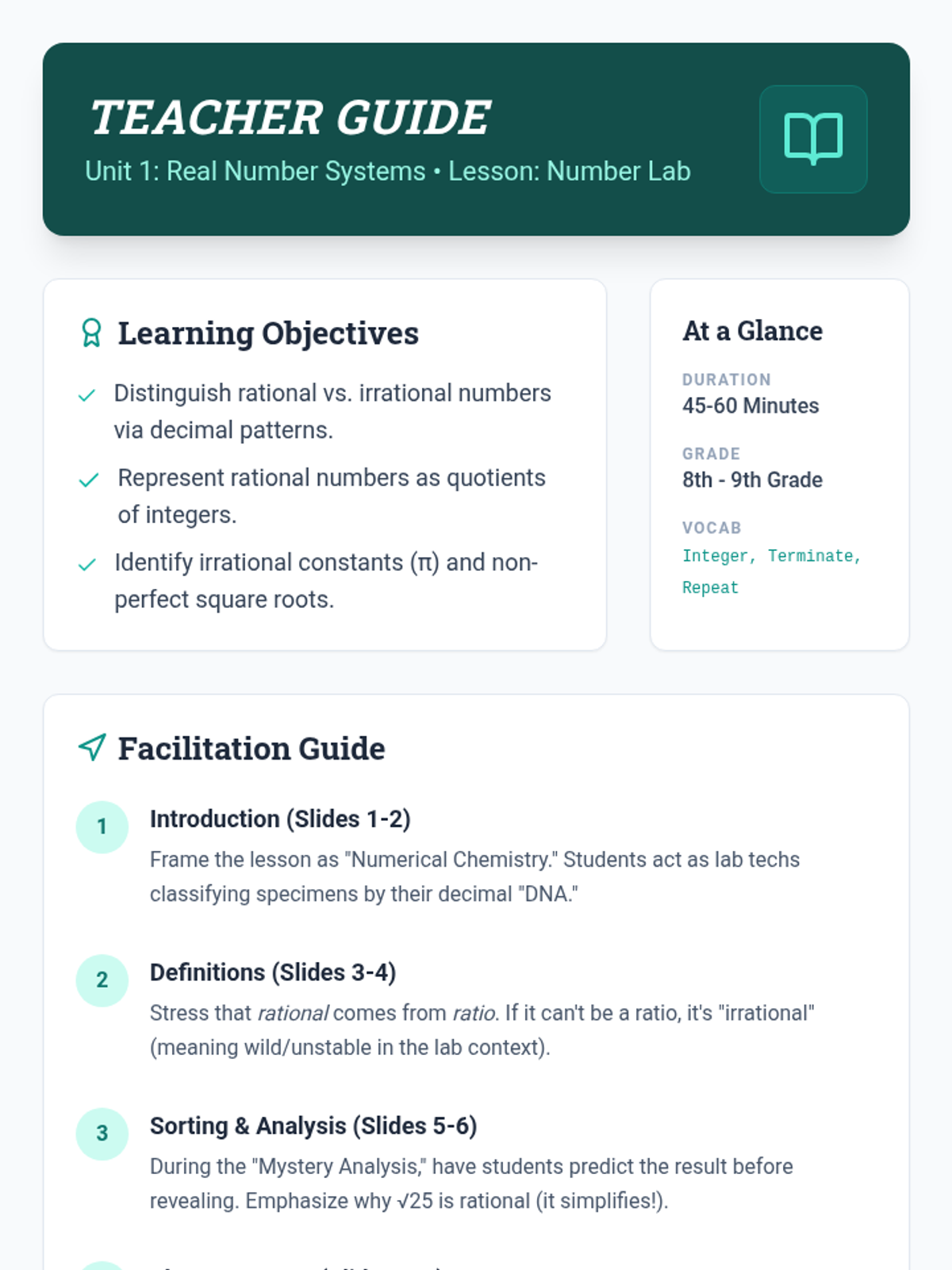
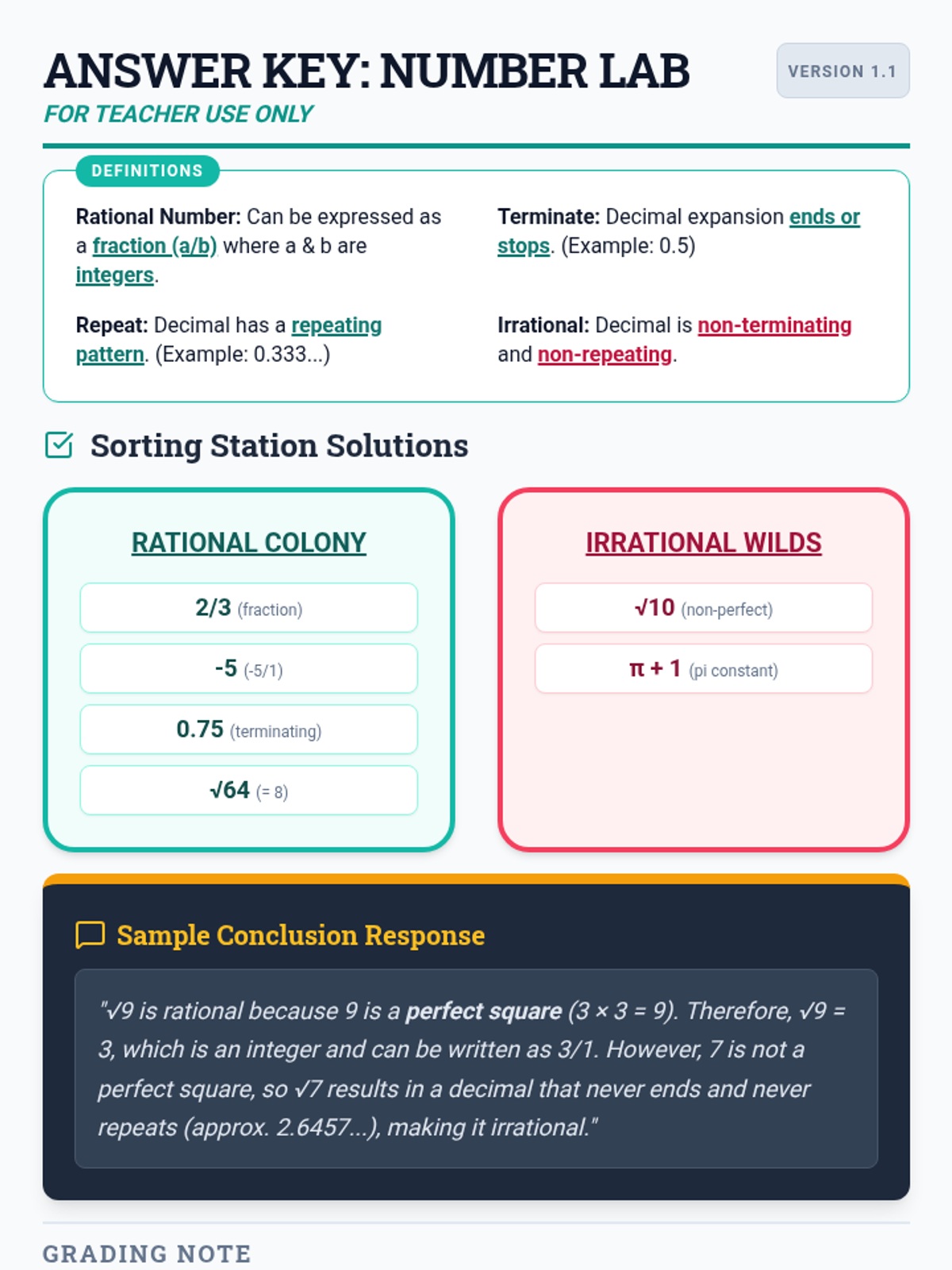
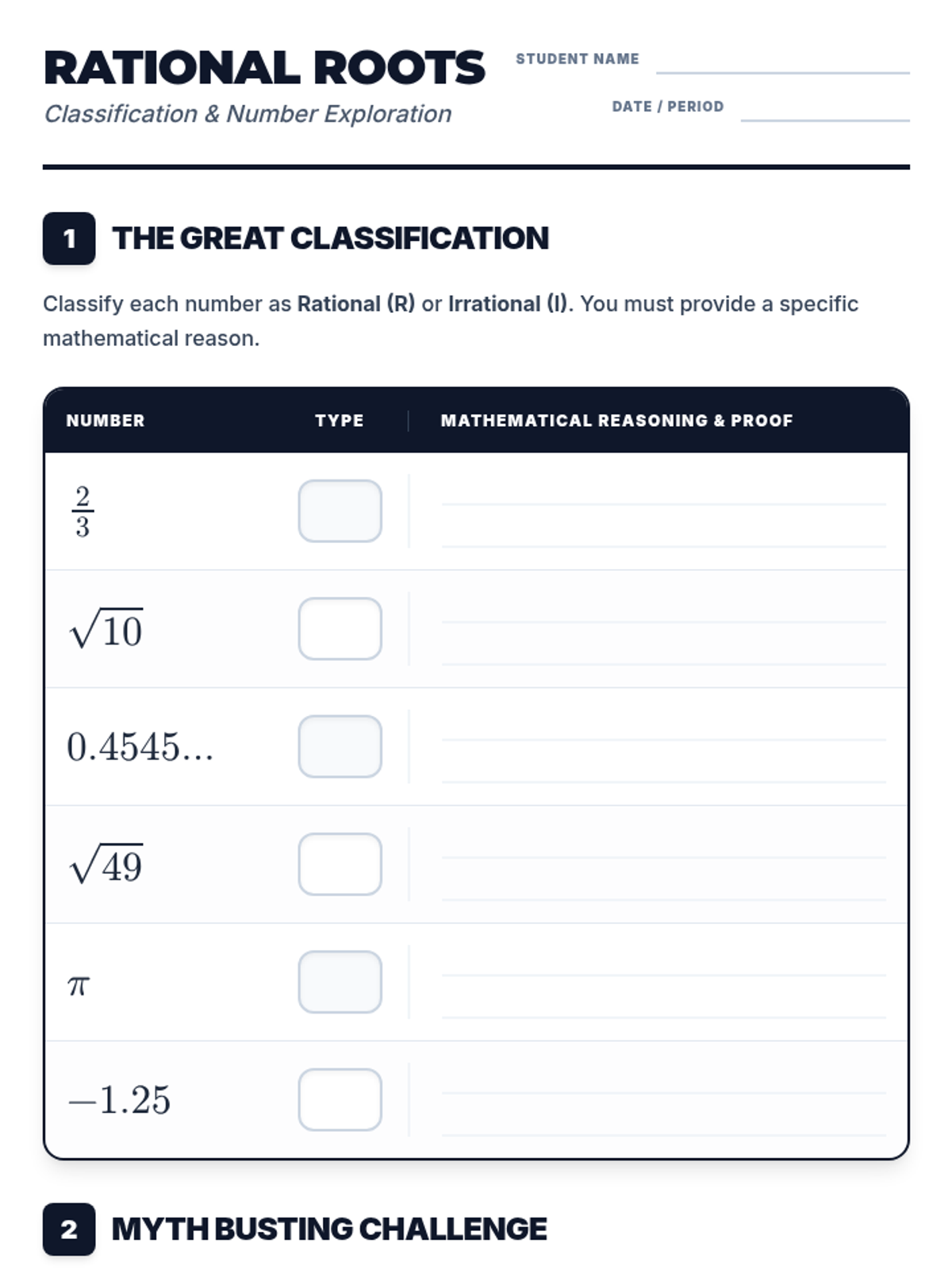
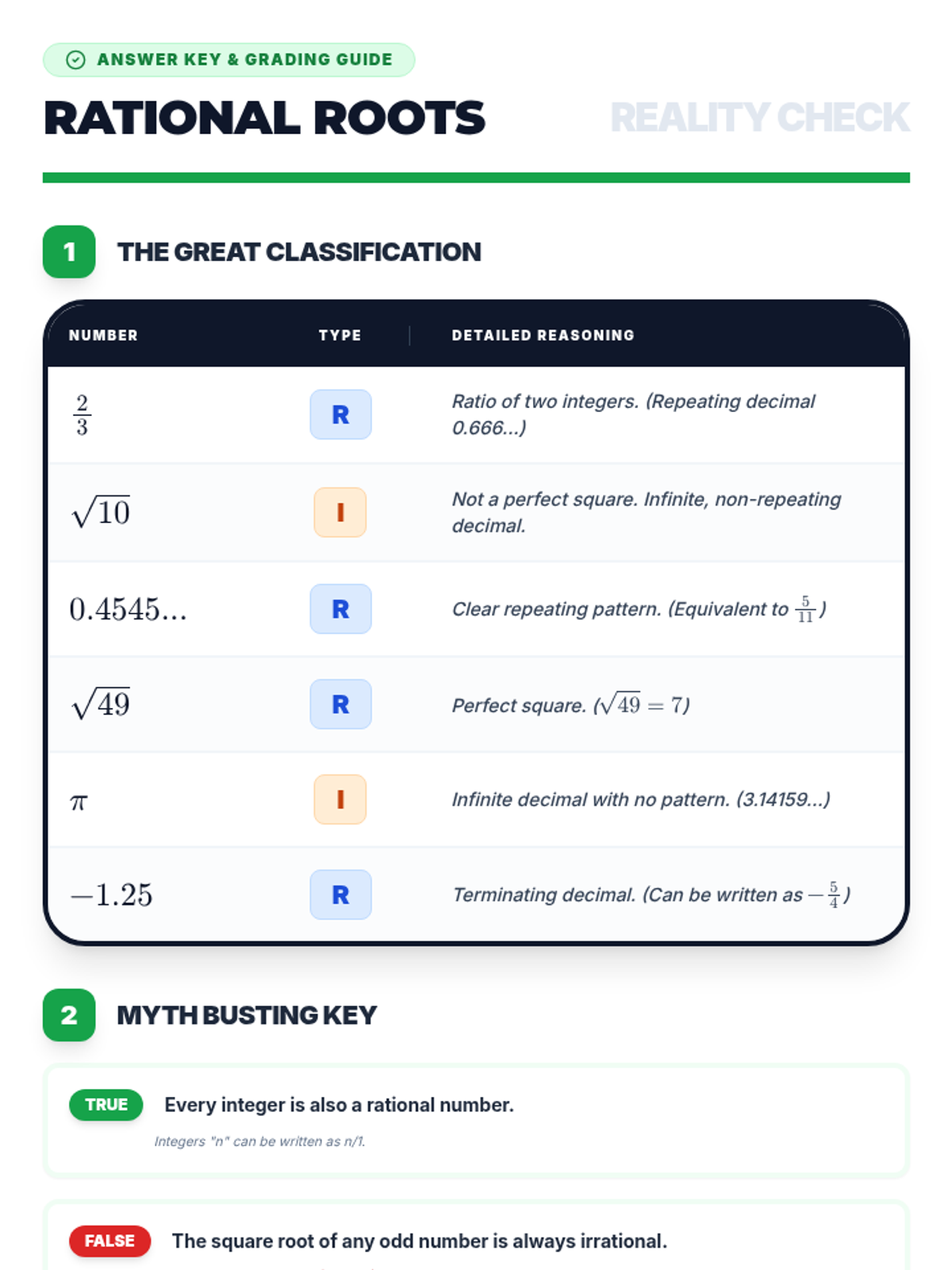
An introductory lesson on identifying and classifying rational and irrational numbers, framed as a scientific investigation into different 'number specimens'.
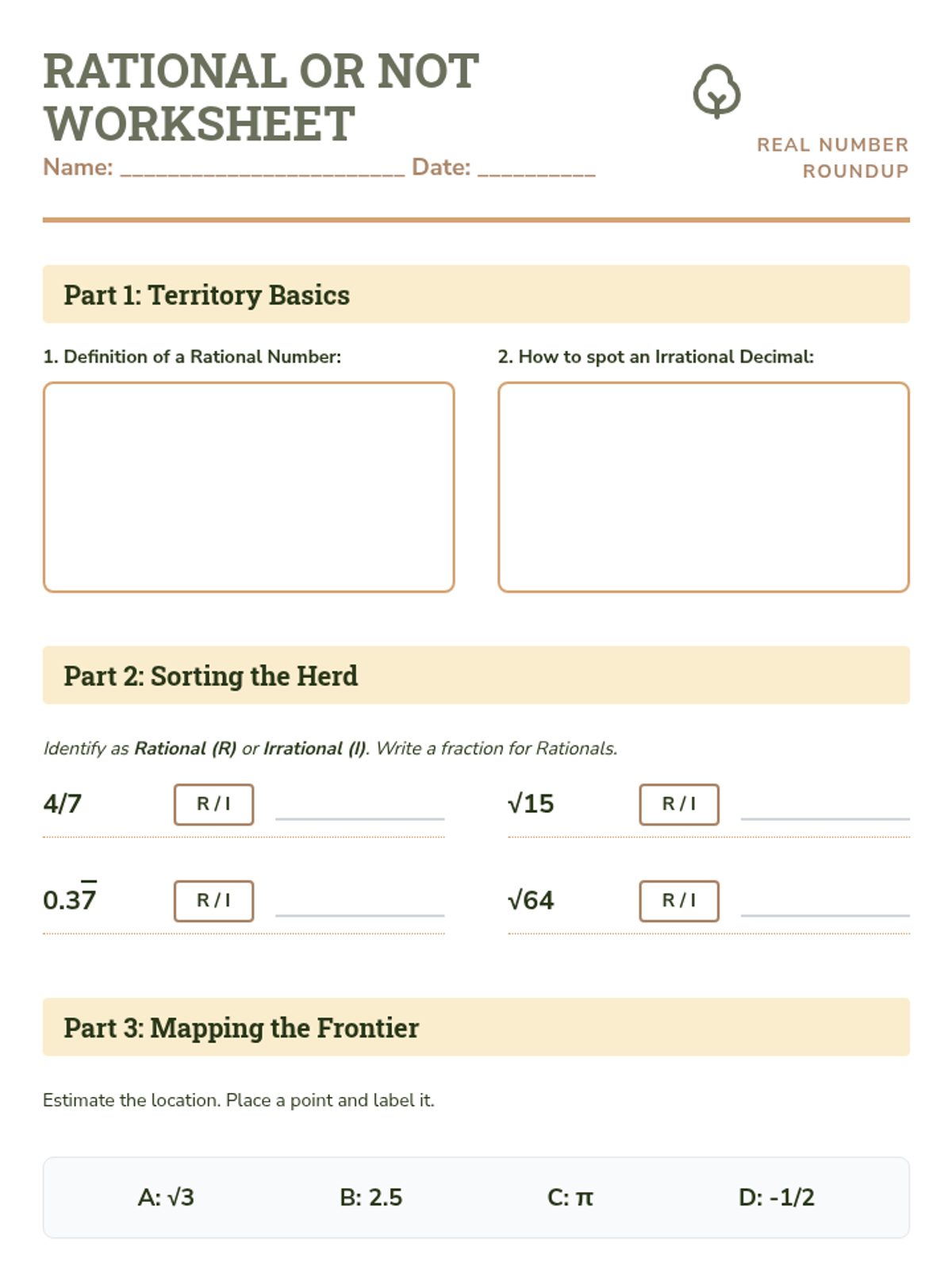
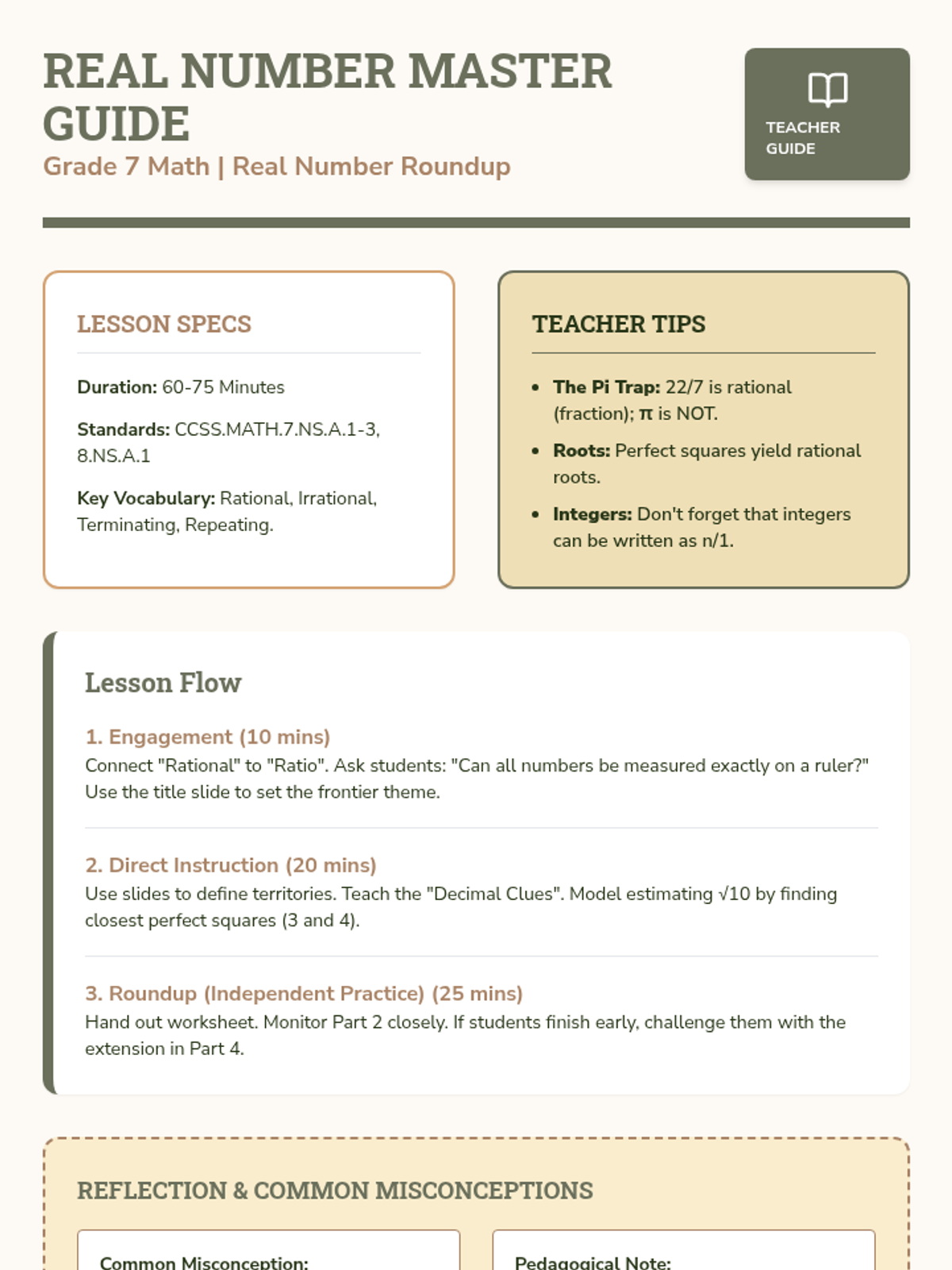
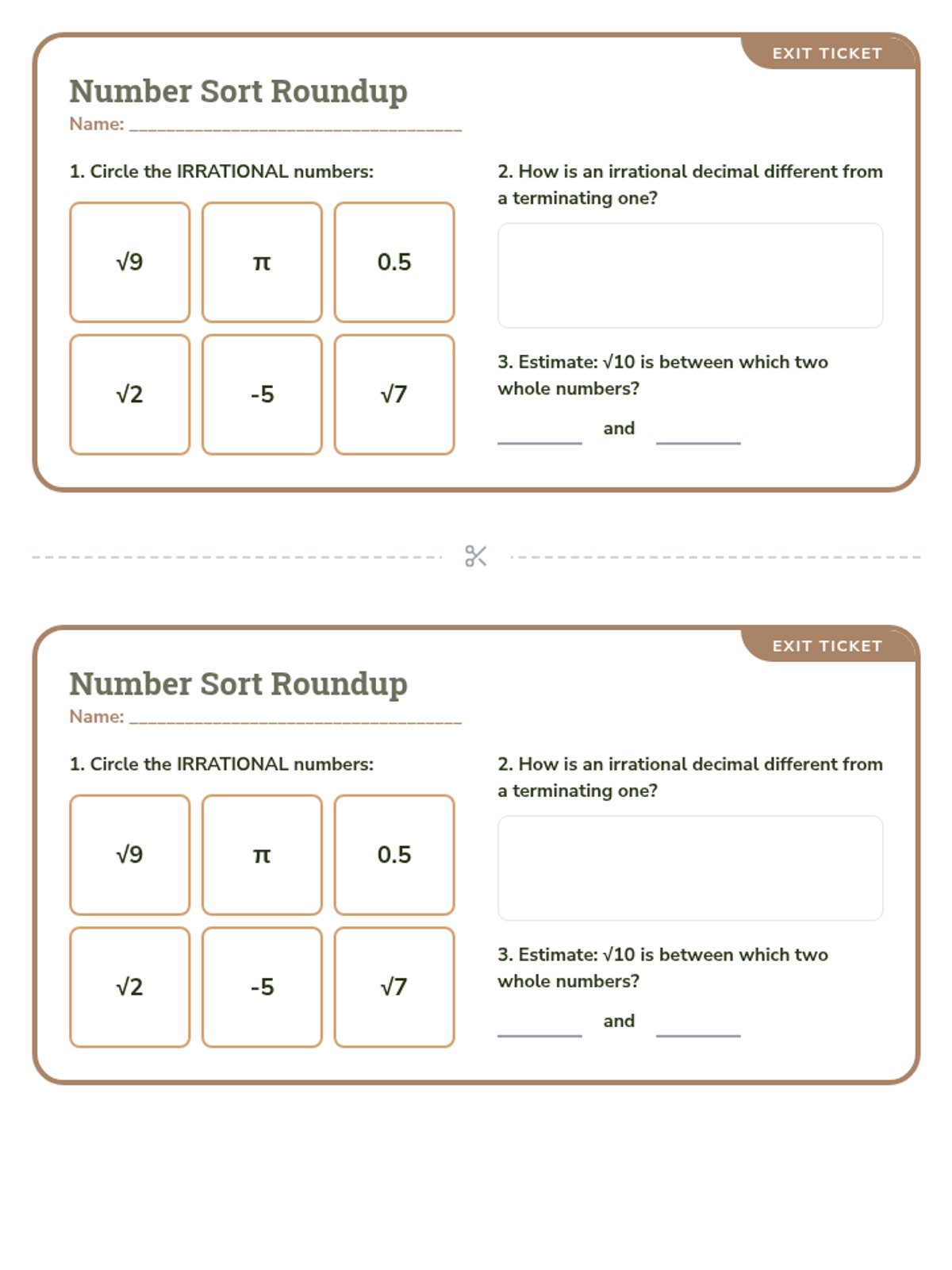
A comprehensive introduction to the Real Number System, focusing on distinguishing between rational and irrational numbers through the lens of a Western frontier theme. Students will learn to categorize numbers, understand decimal expansions, and locate values on a number line.
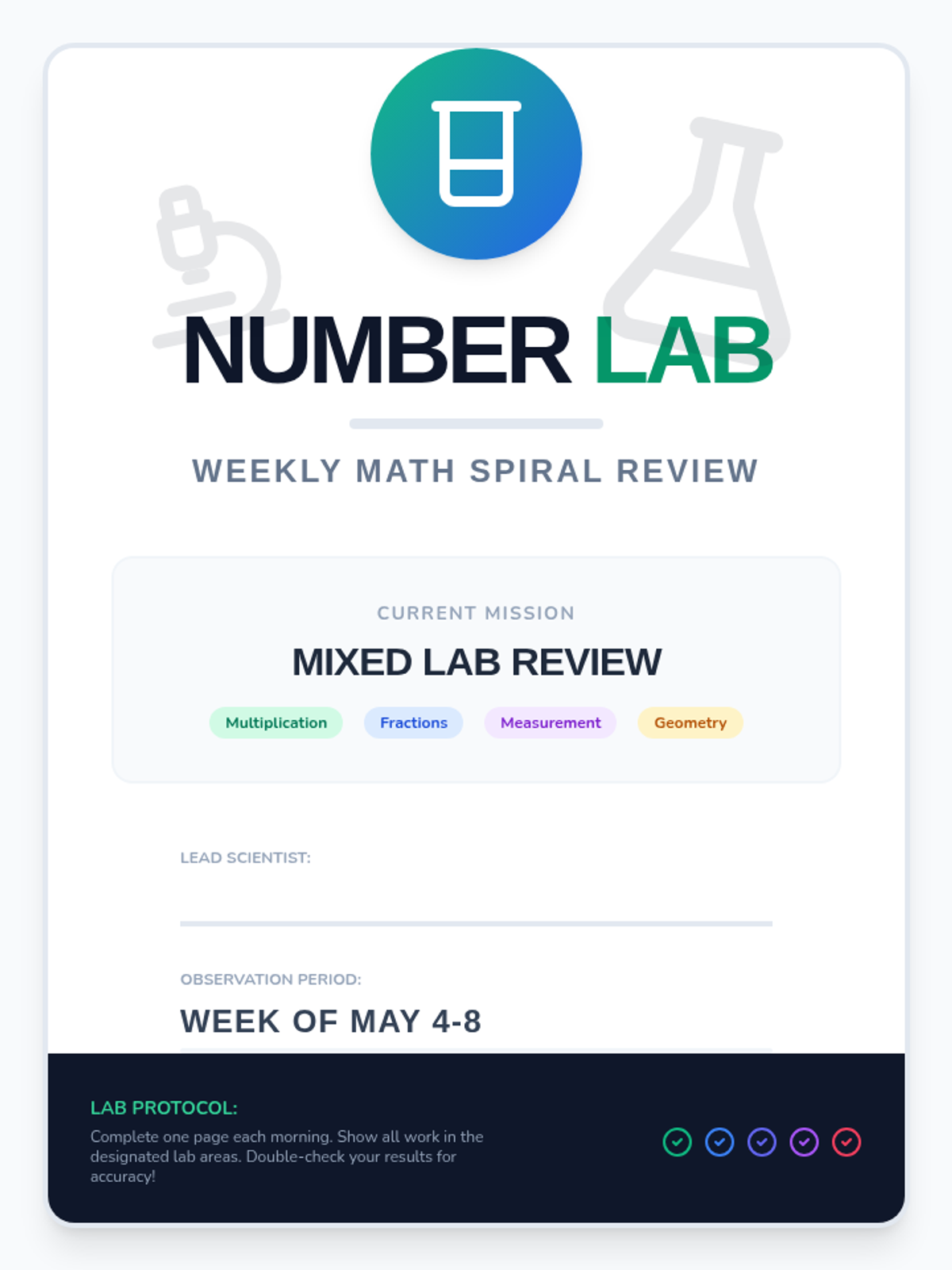
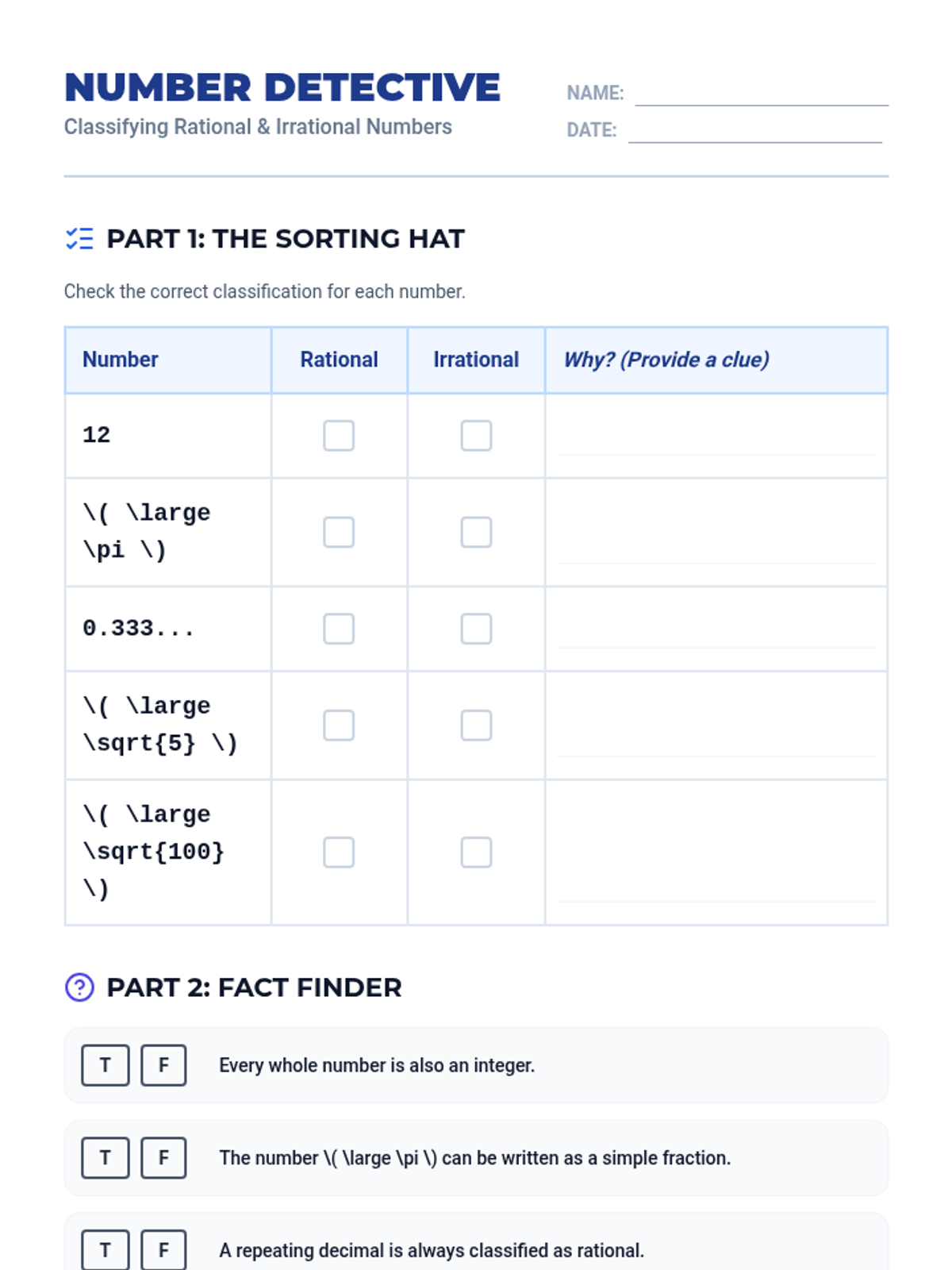
A comprehensive lesson exploring the differences between rational and irrational numbers through a scientific 'Number Lab' lens, featuring interactive classification activities and guided note-taking.
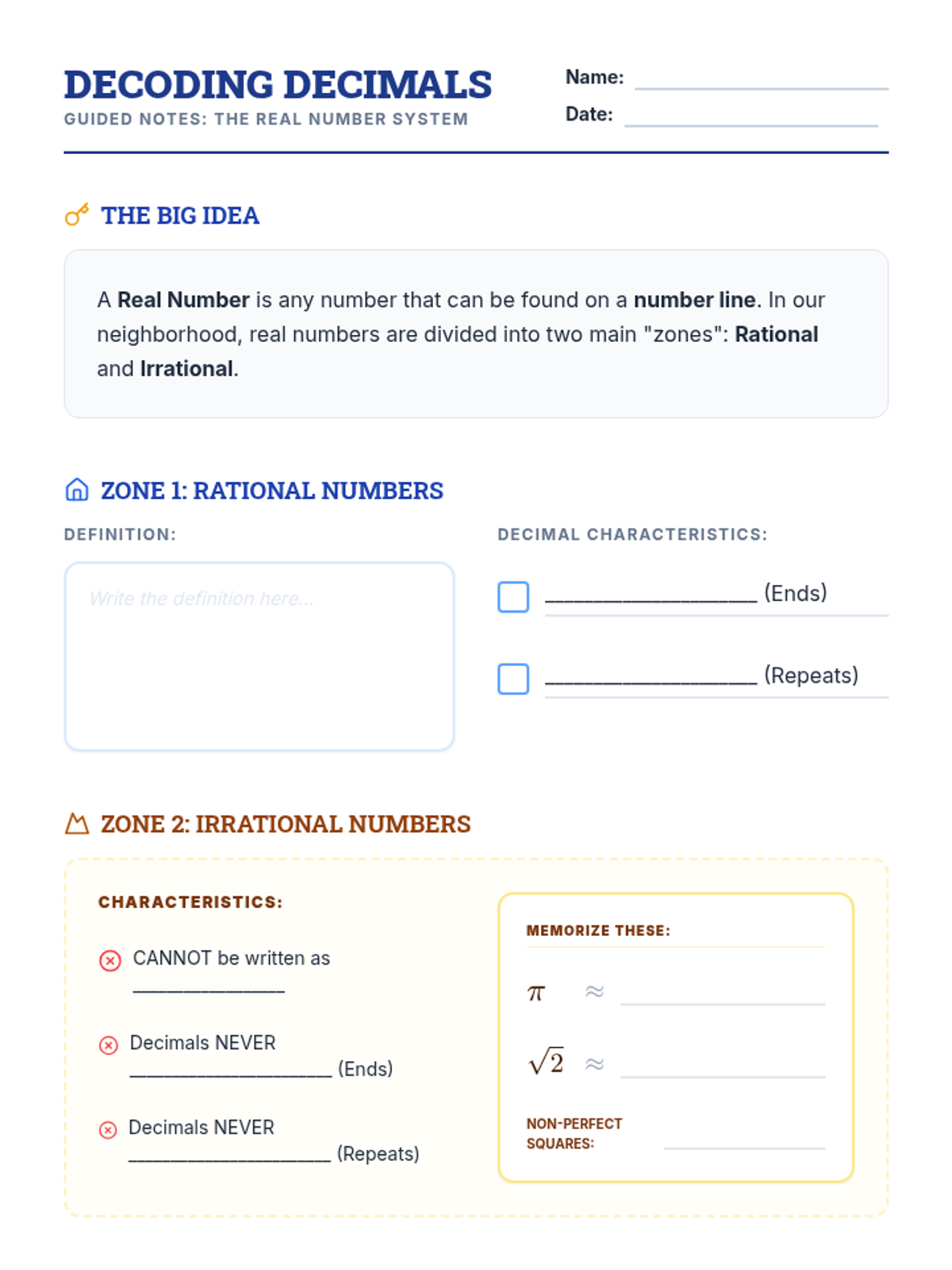
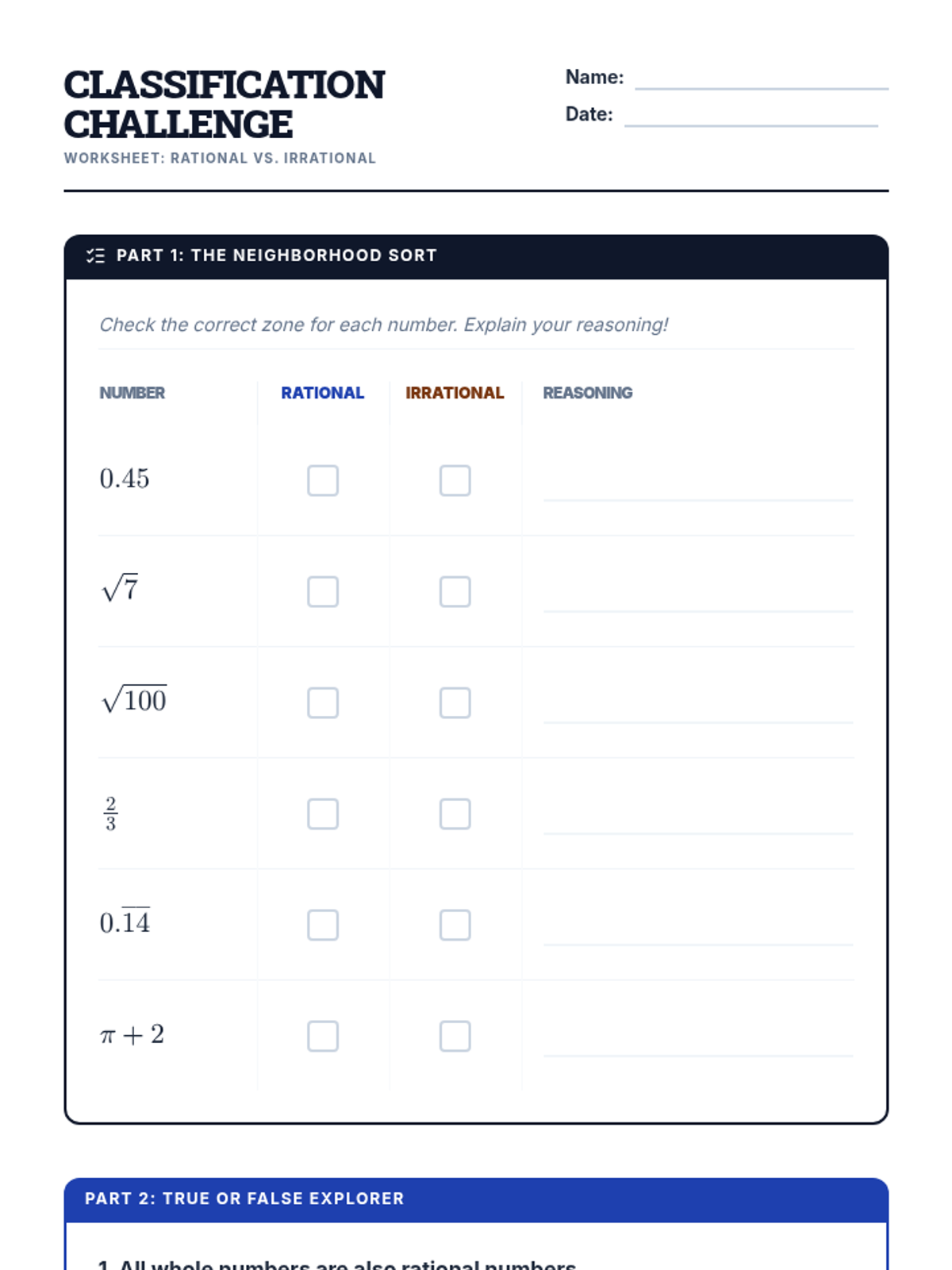
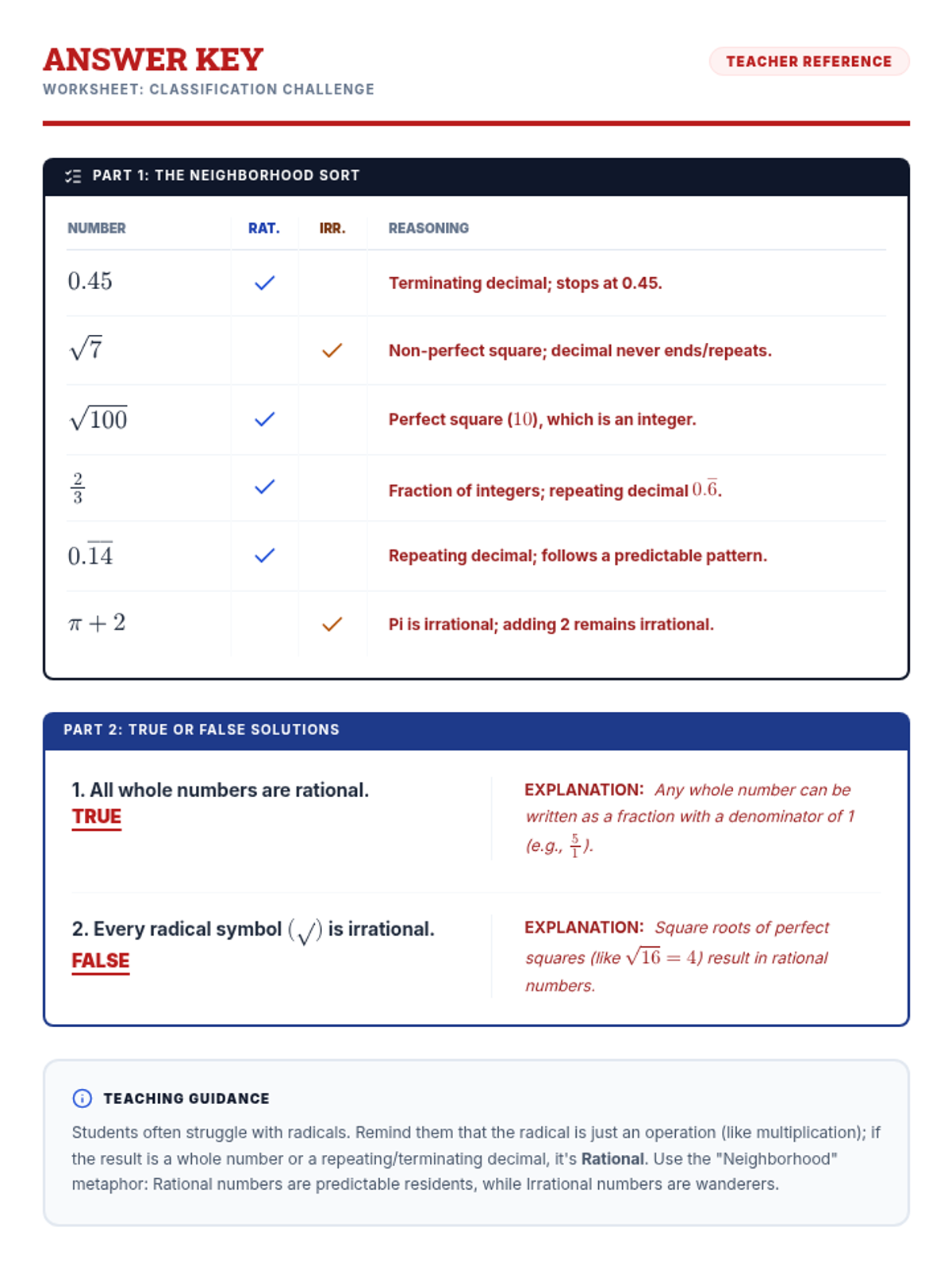
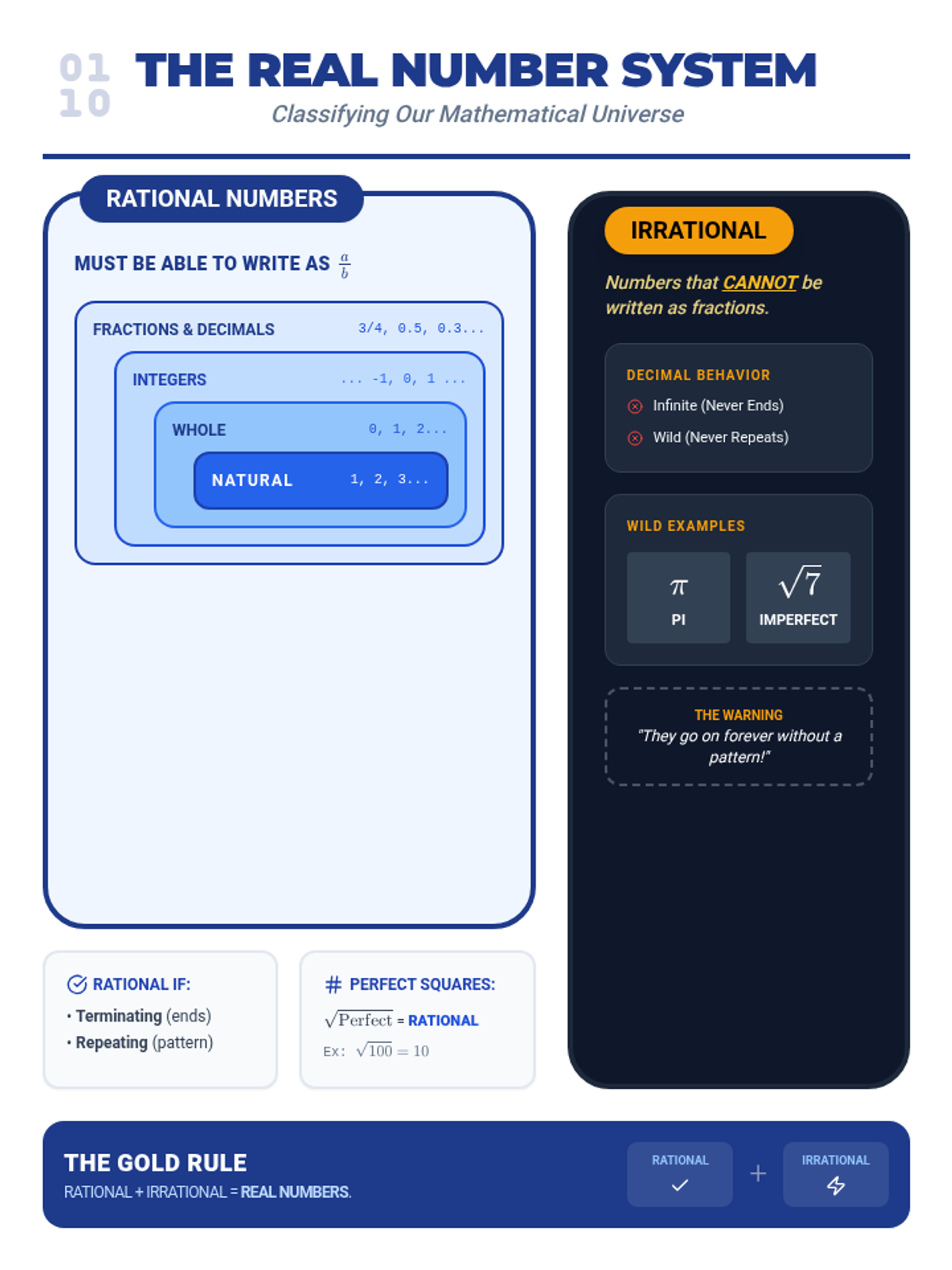
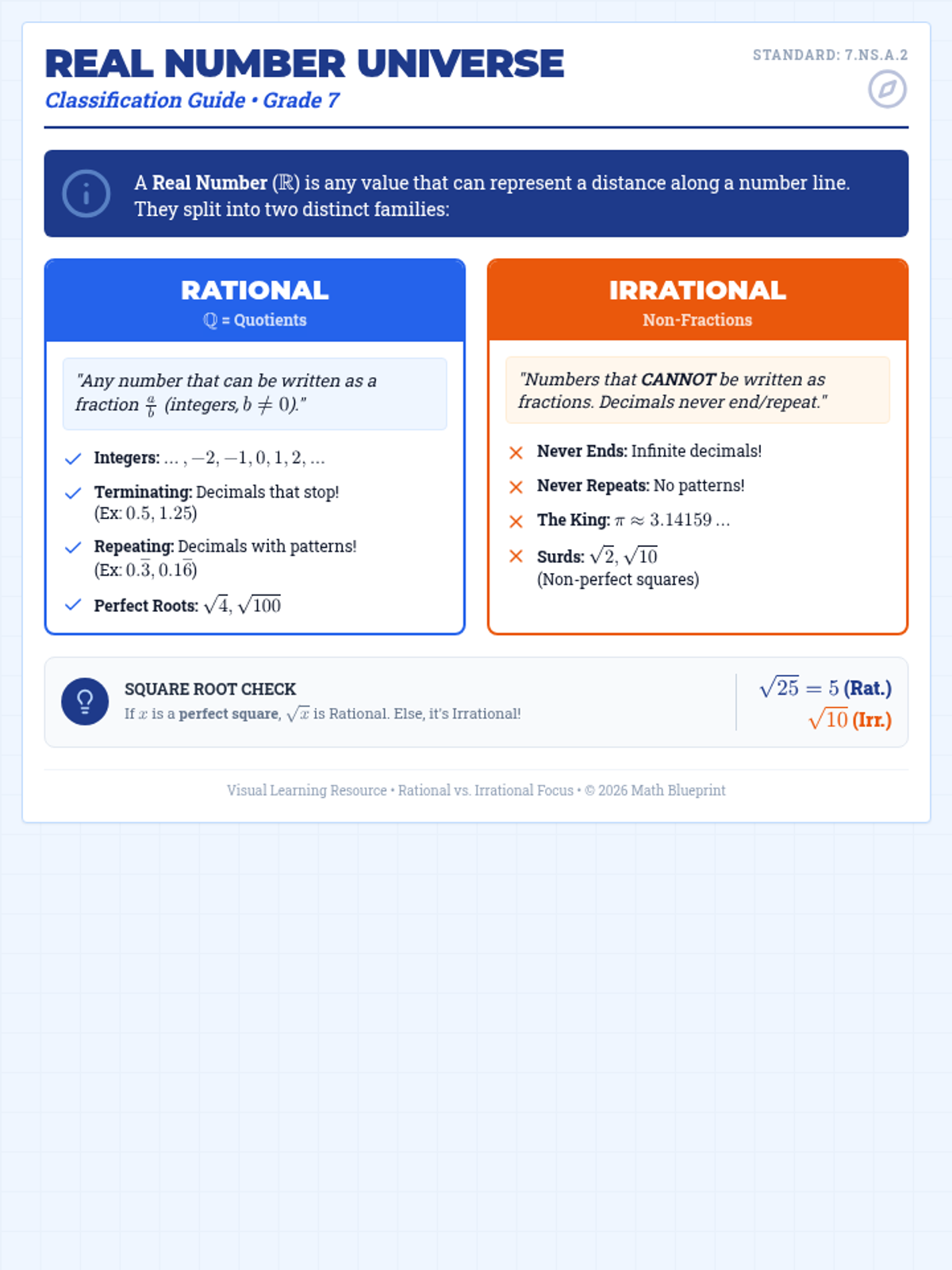
A foundational lesson on classifying real numbers into rational and irrational categories using definitions, visual models, and practice scenarios.
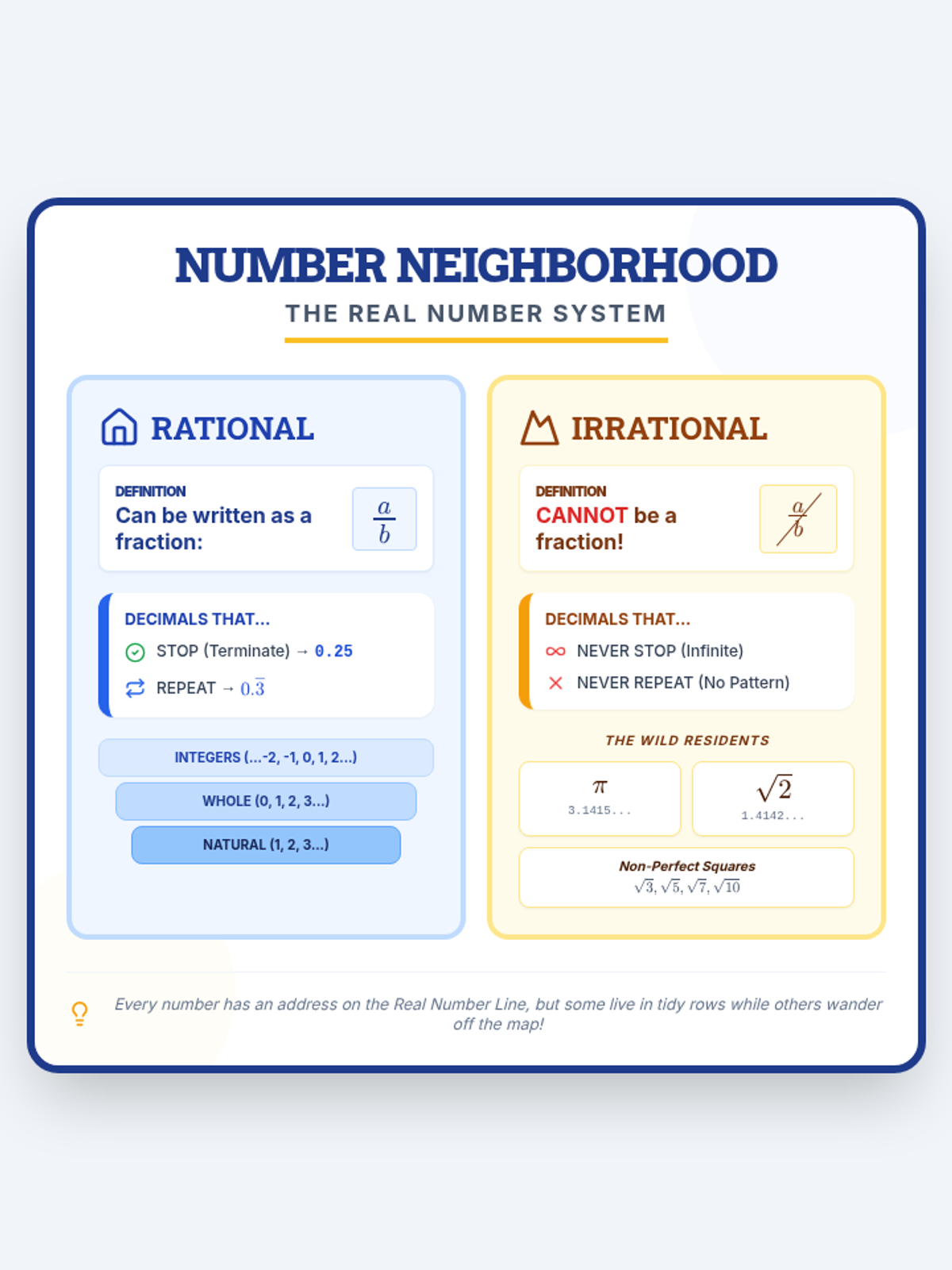
A foundational exploration of the real number system, focusing on the distinct characteristics of rational and irrational numbers through the metaphor of a structured 'Number Neighborhood'.
A foundational lesson on the Real Number System, focusing on classifying rational and irrational numbers through visual hierarchies and real-world examples.
A lesson focusing on the classification of real numbers, specifically distinguishing between rational and irrational numbers through visual mapping and examples.
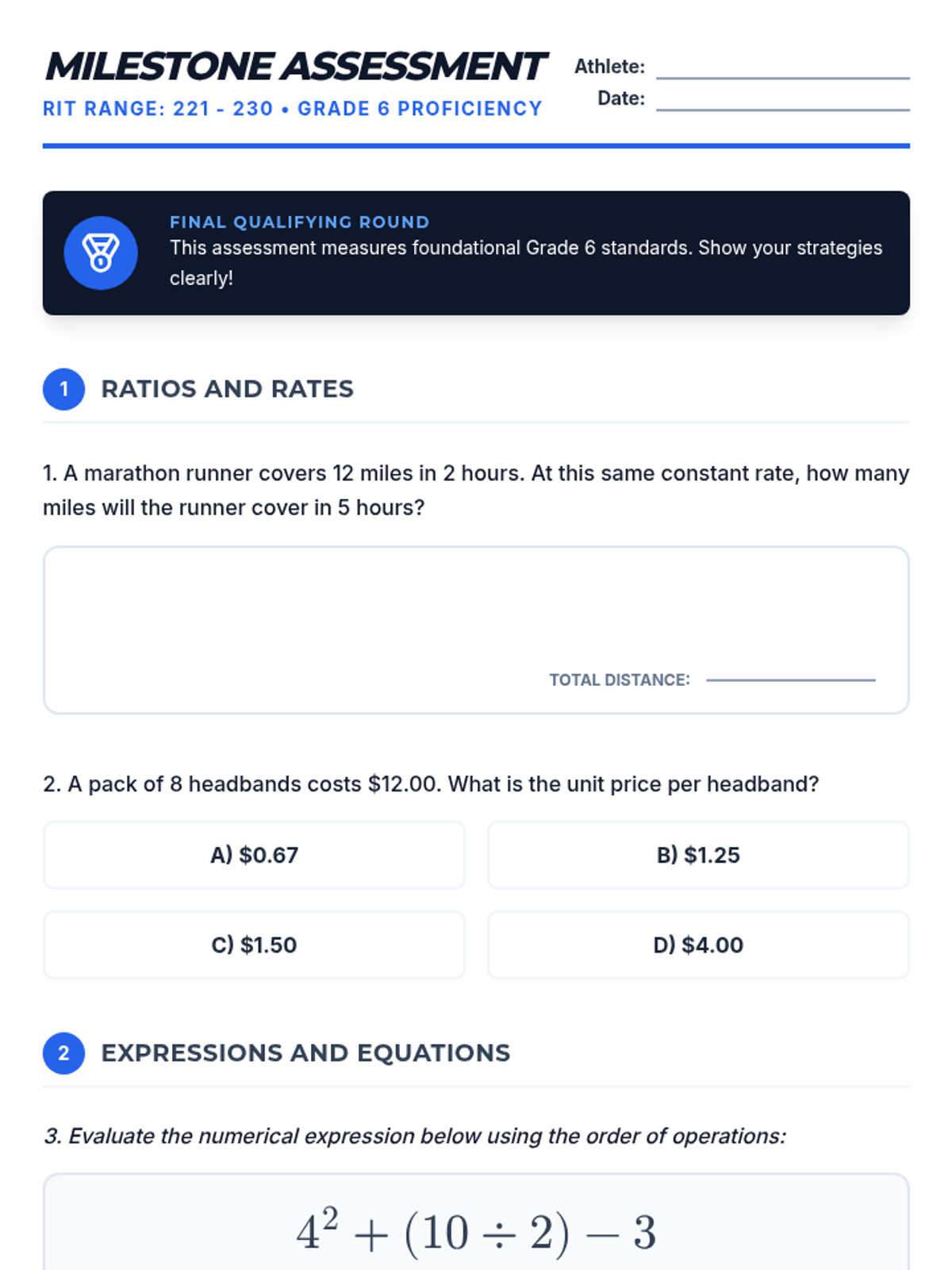
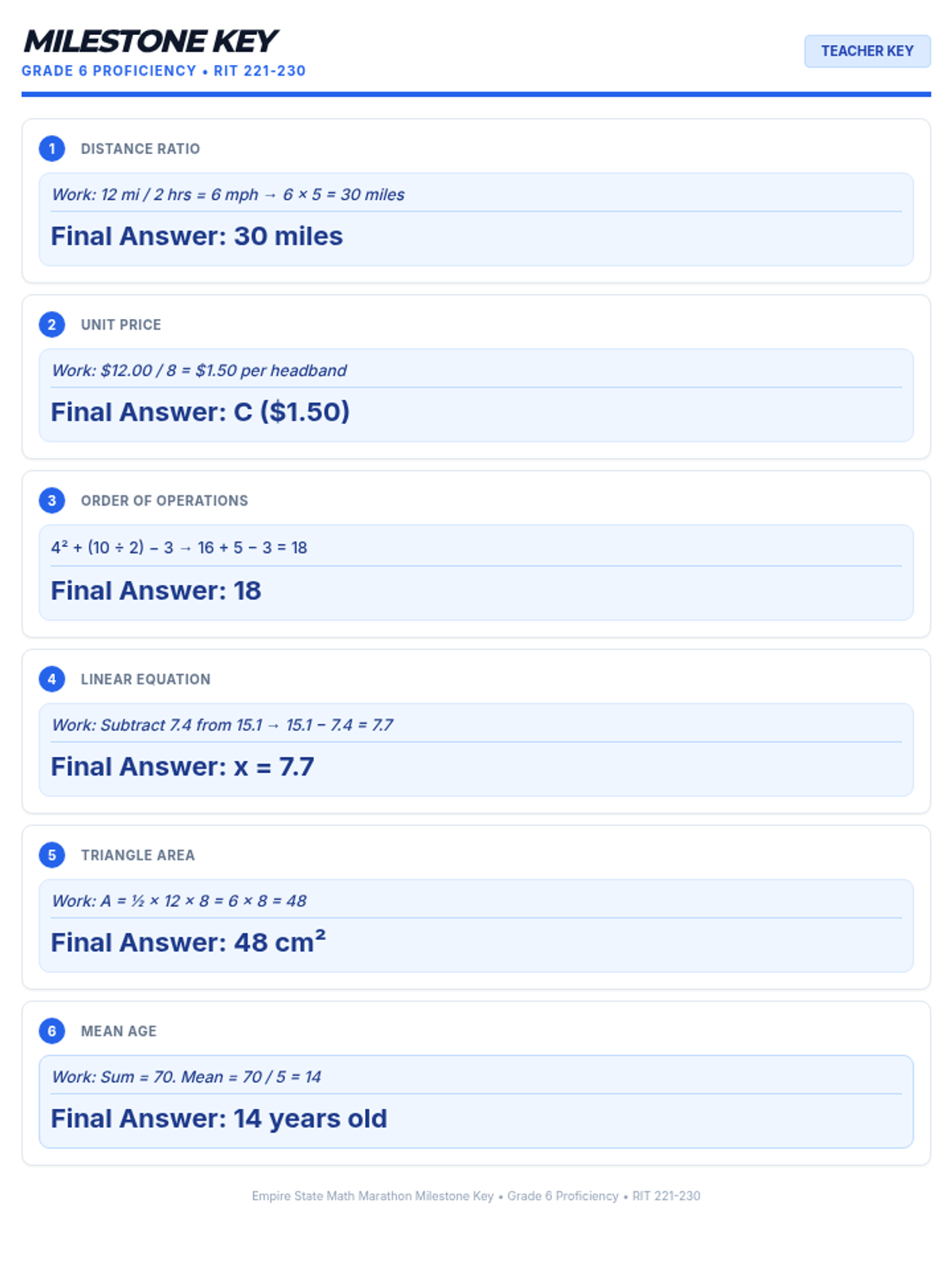
A cumulative milestone assessment designed for students at Grade 6 proficiency (RIT 221-230). This assessment checks foundational understanding of ratios, expressions, and geometry needed for 8th-grade success.
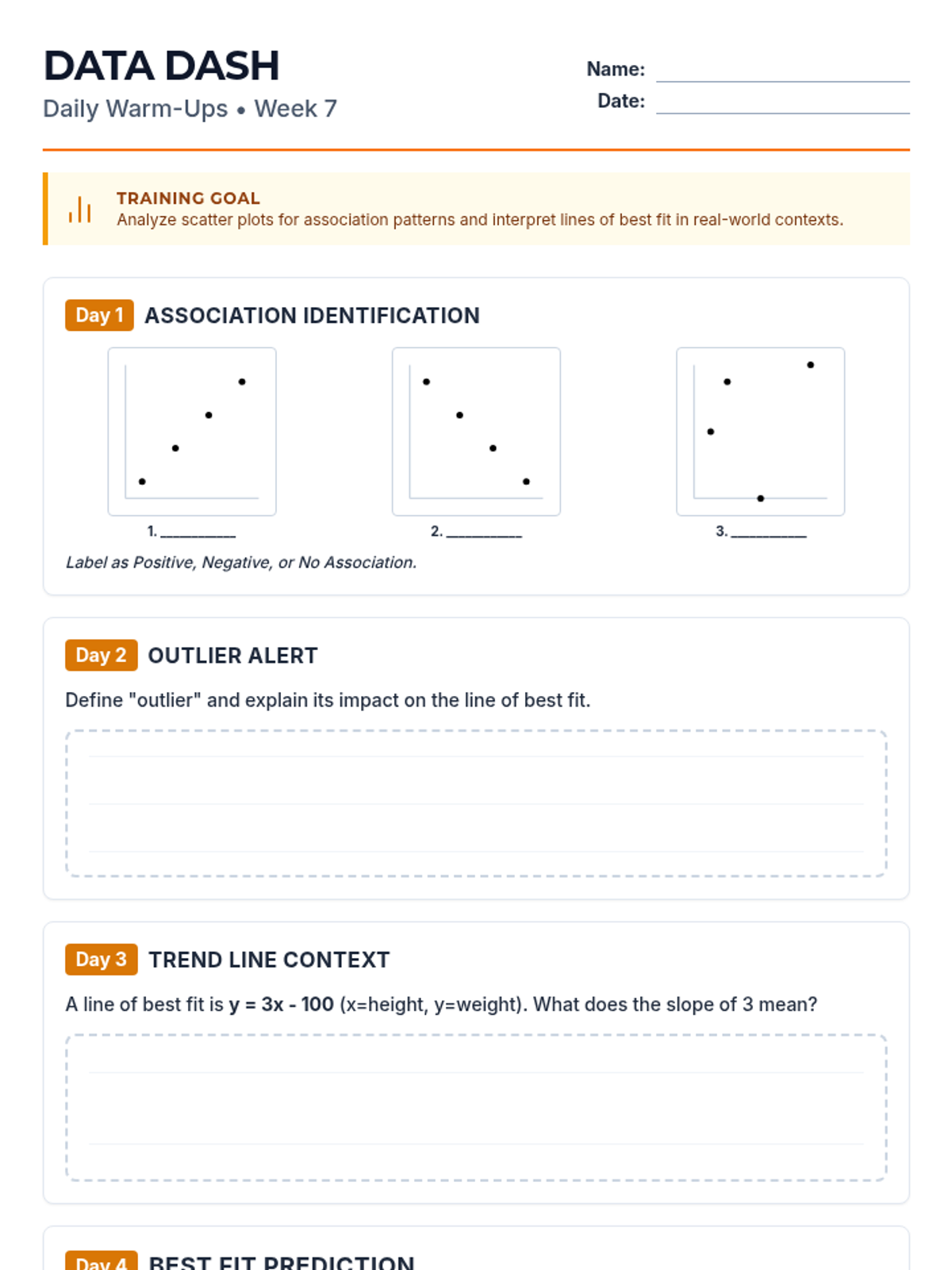
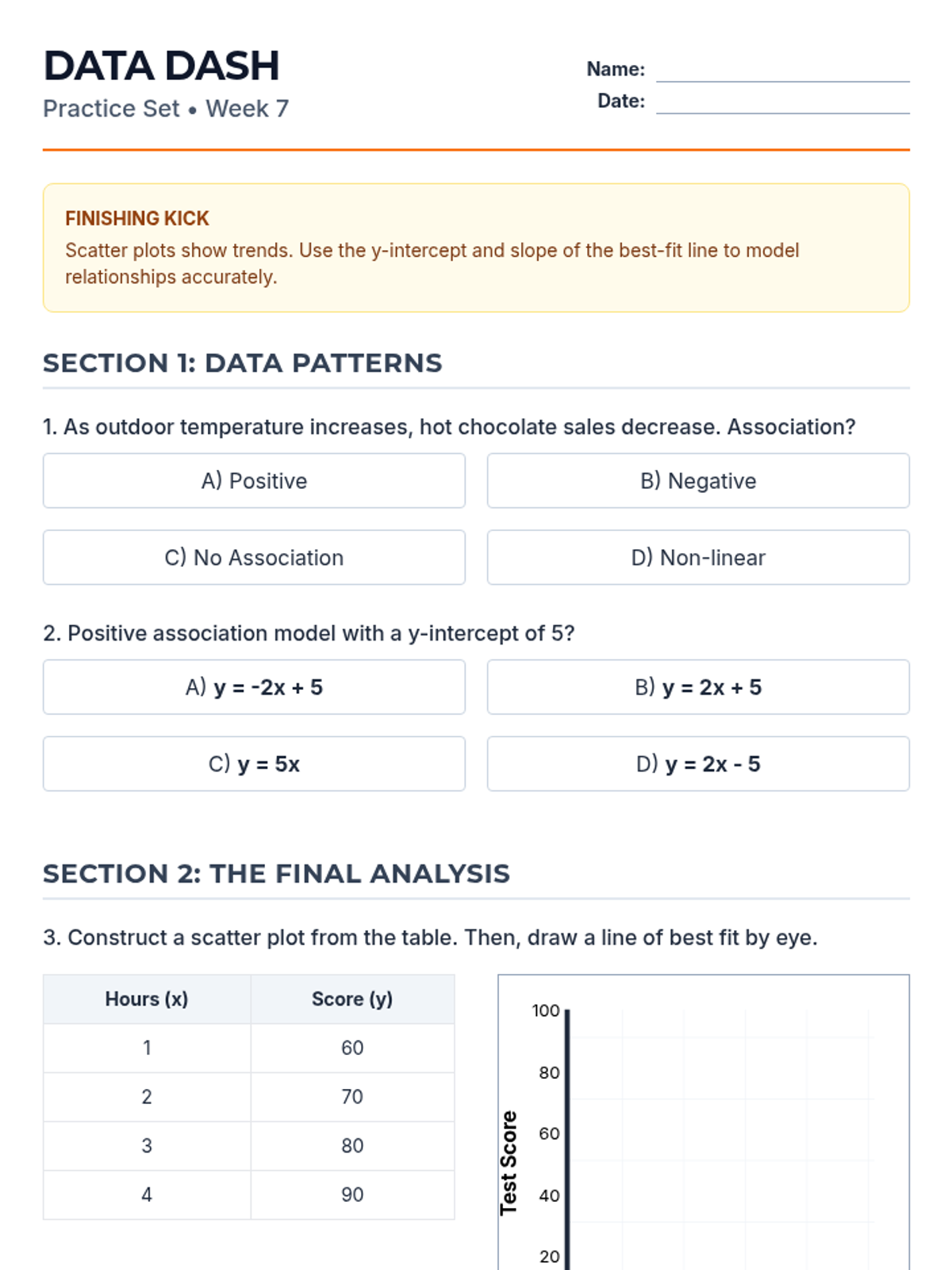
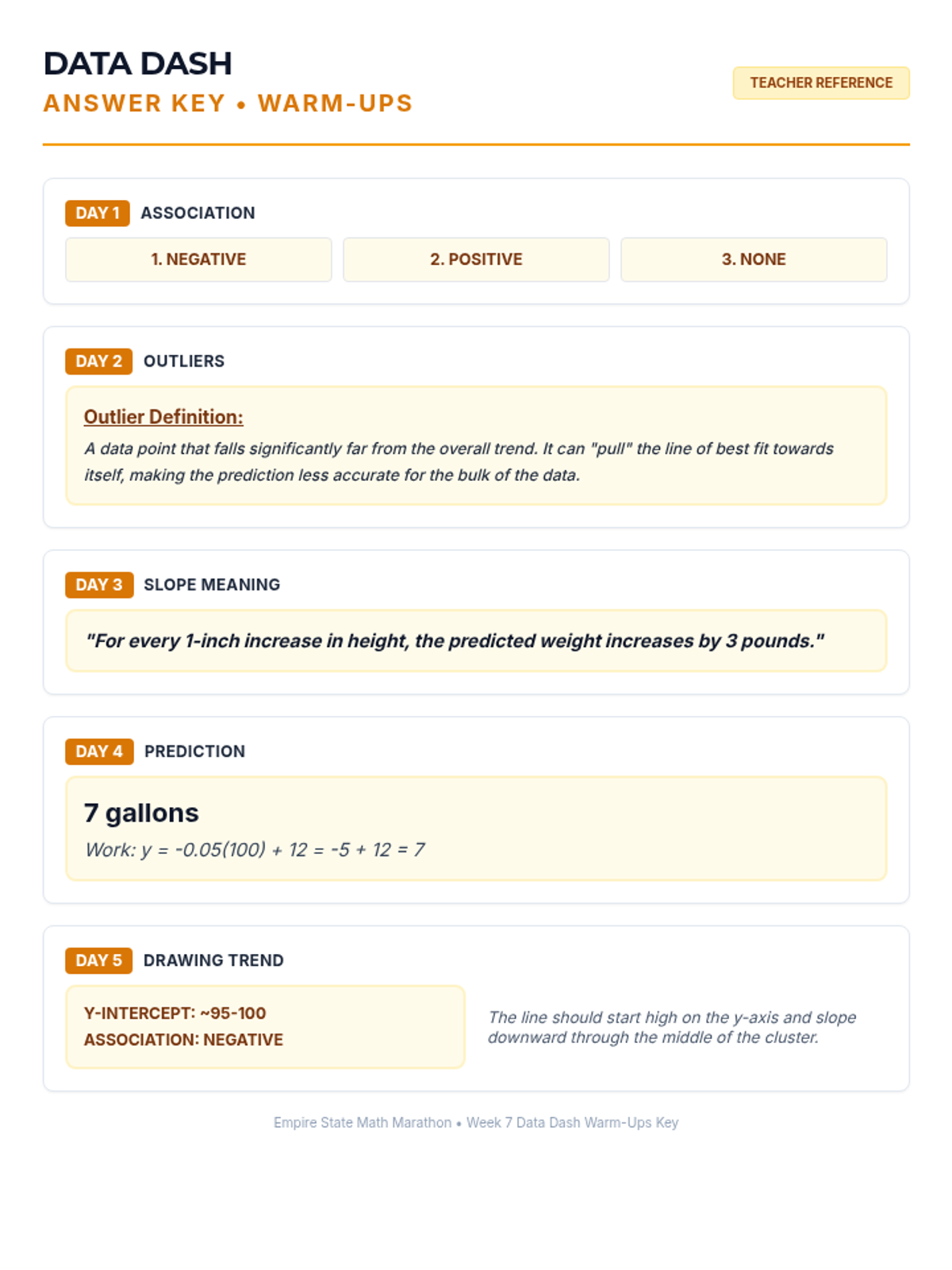
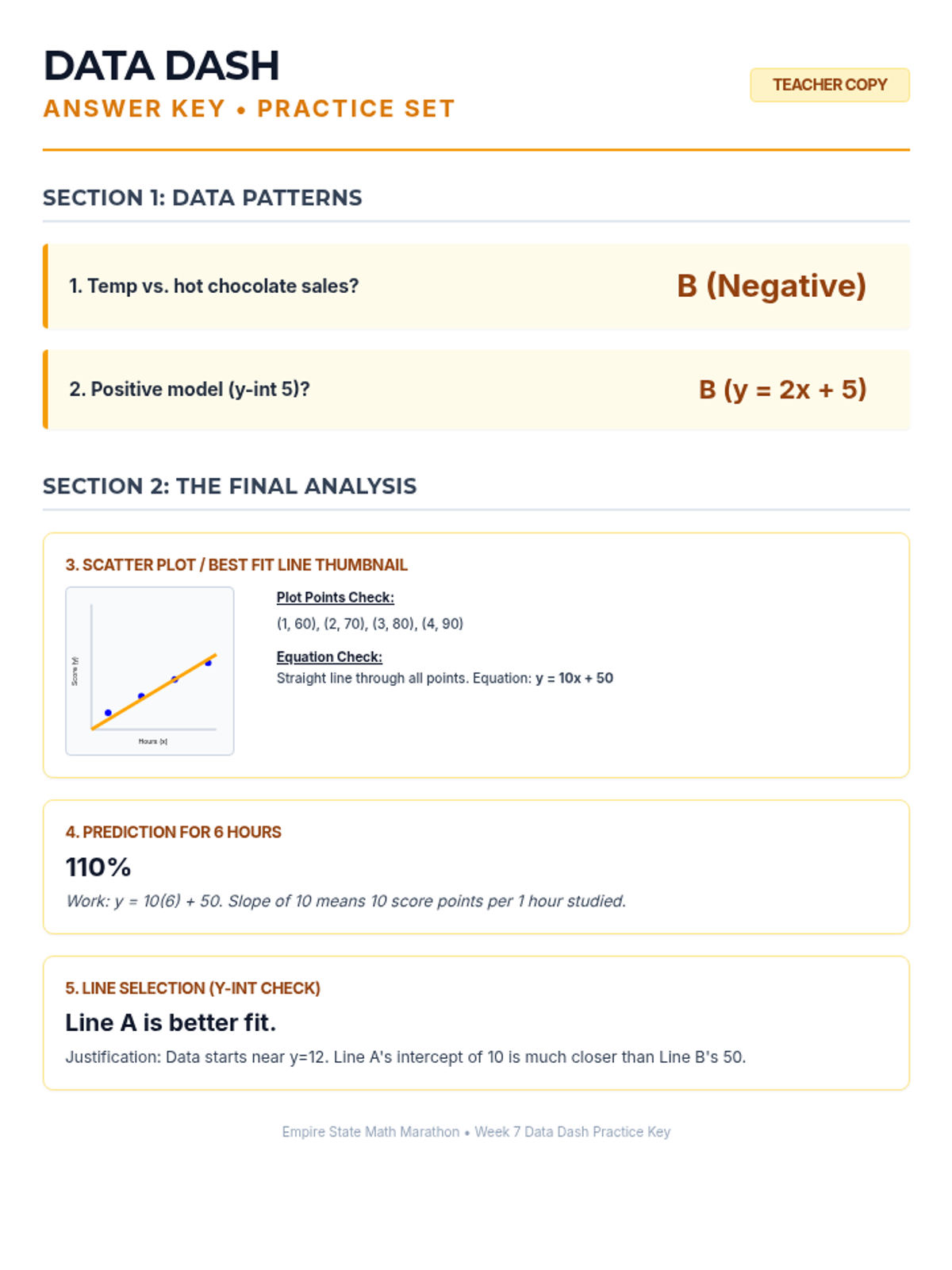
Week 7 analyzes bivariate data through scatter plots, interpreting lines of best fit, and using linear models to make predictions.
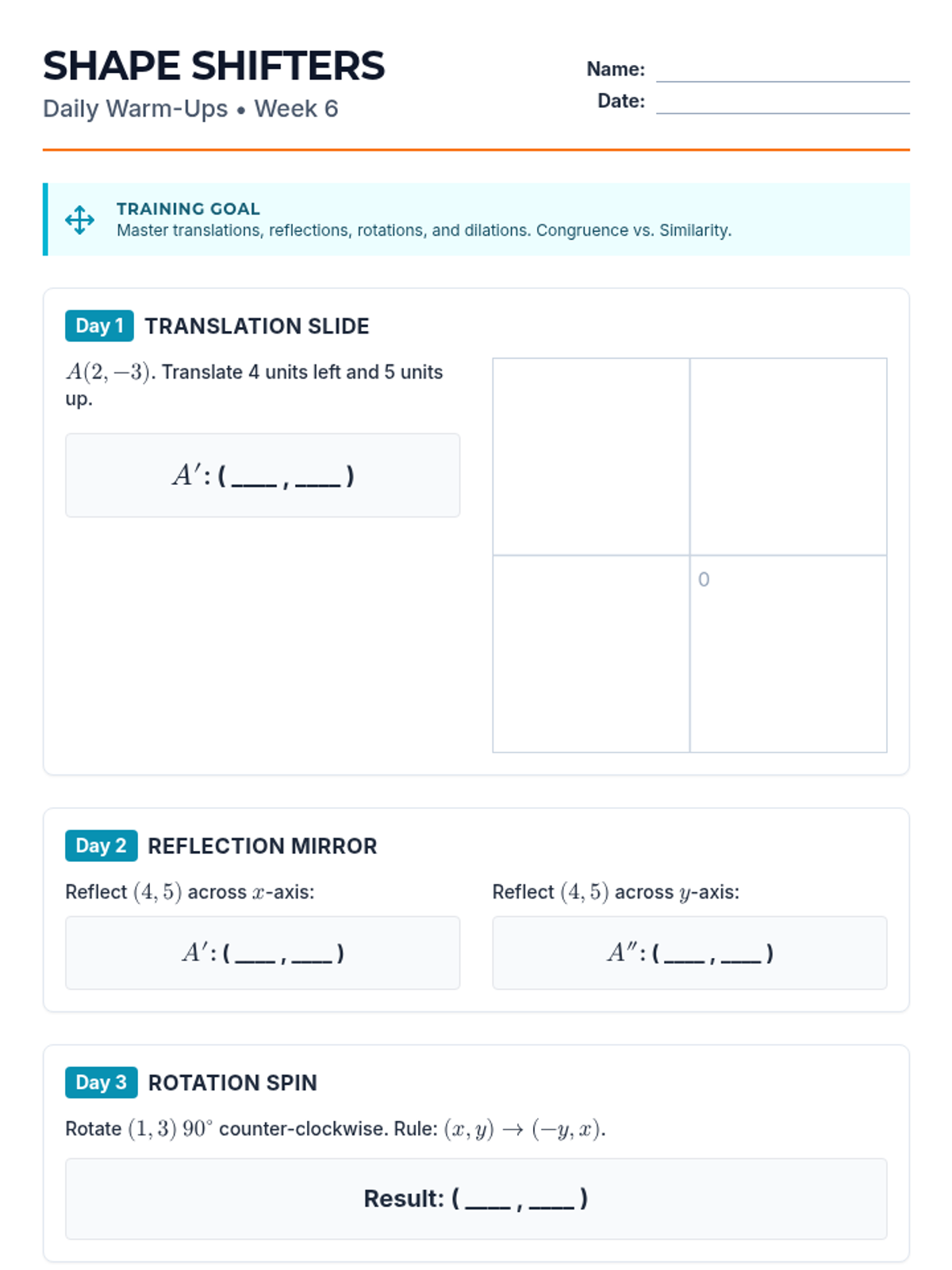
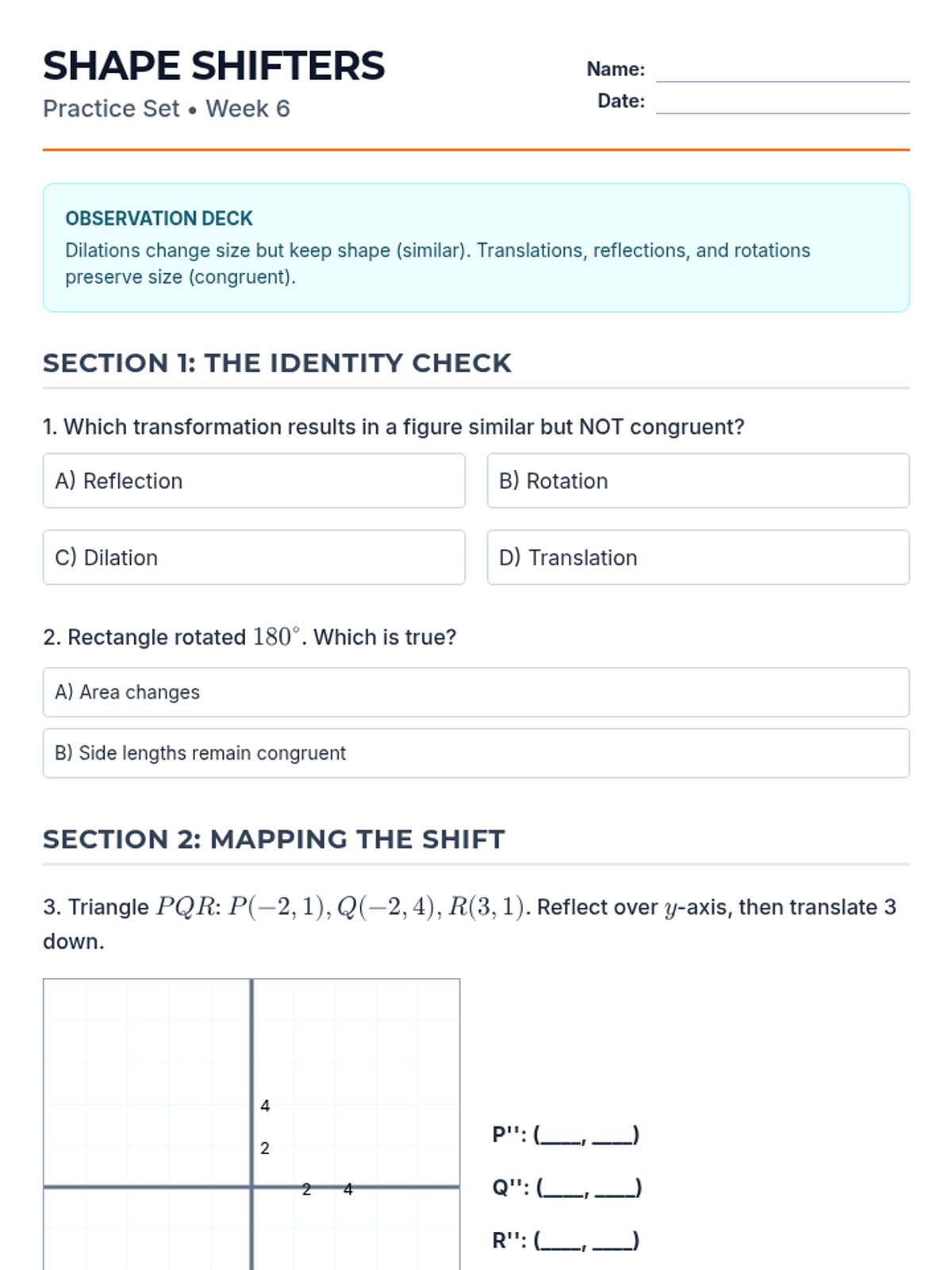
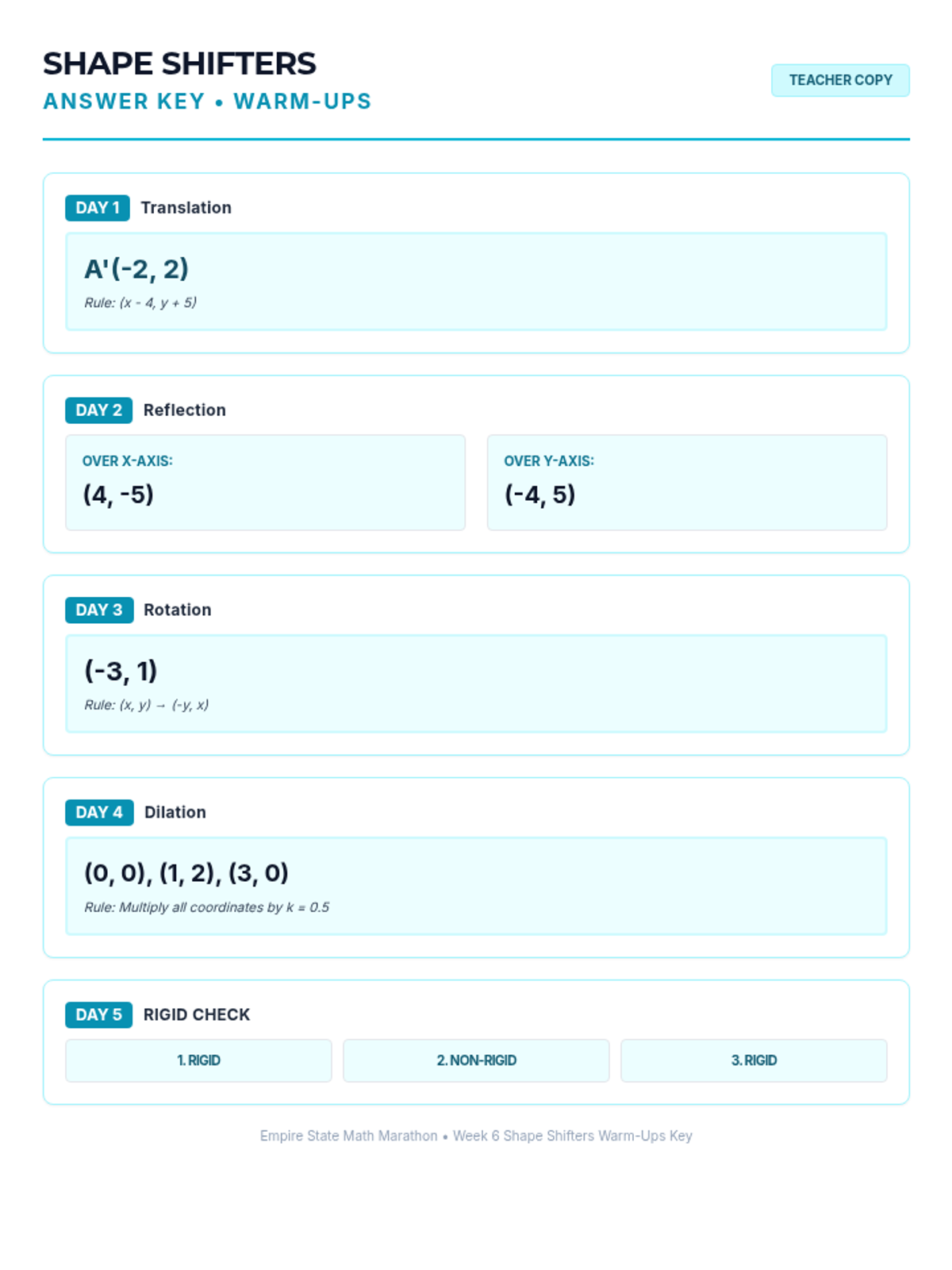
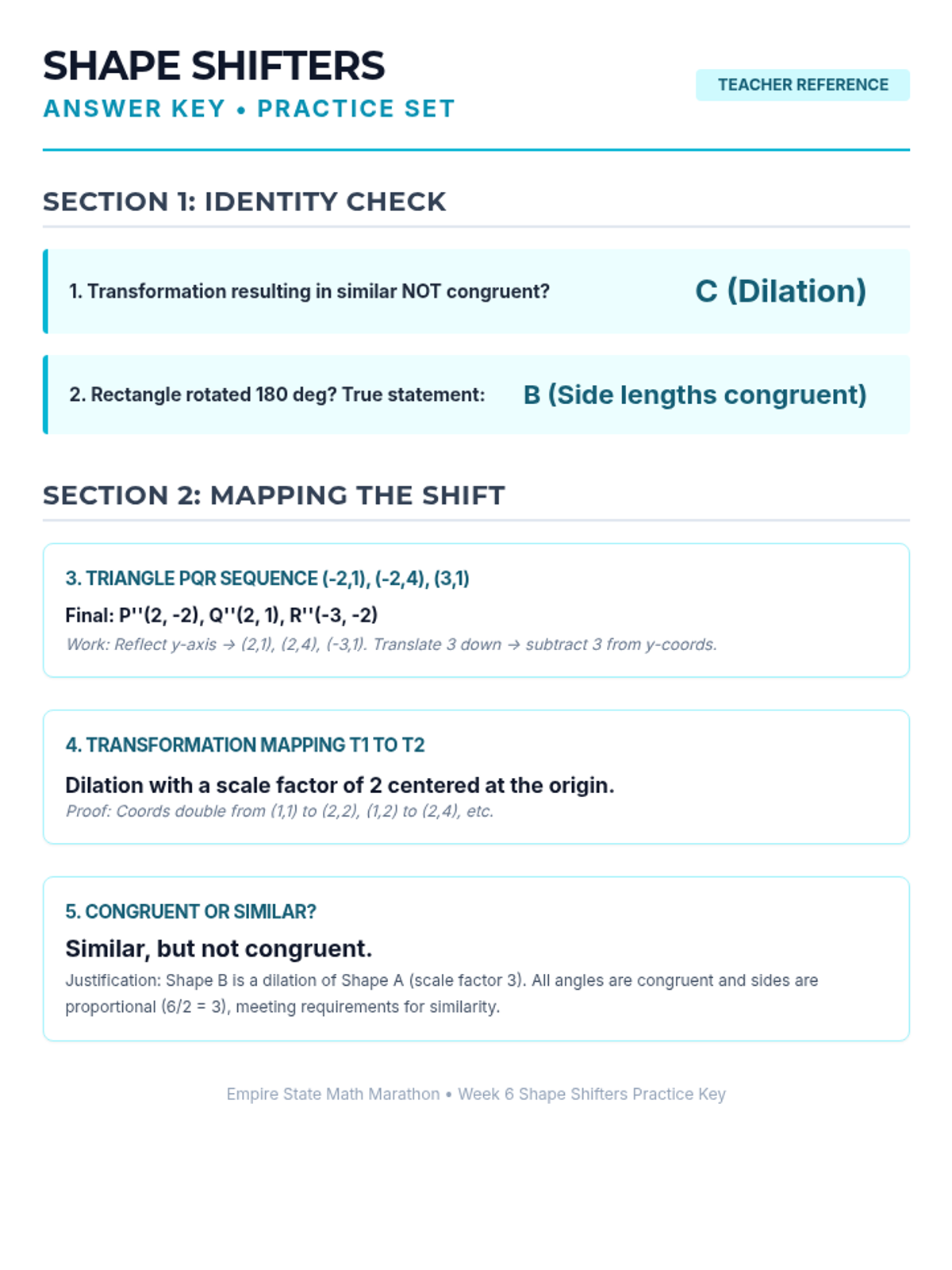
Week 6 focuses on rigid transformations (translations, reflections, rotations) and similarity transformations (dilations).
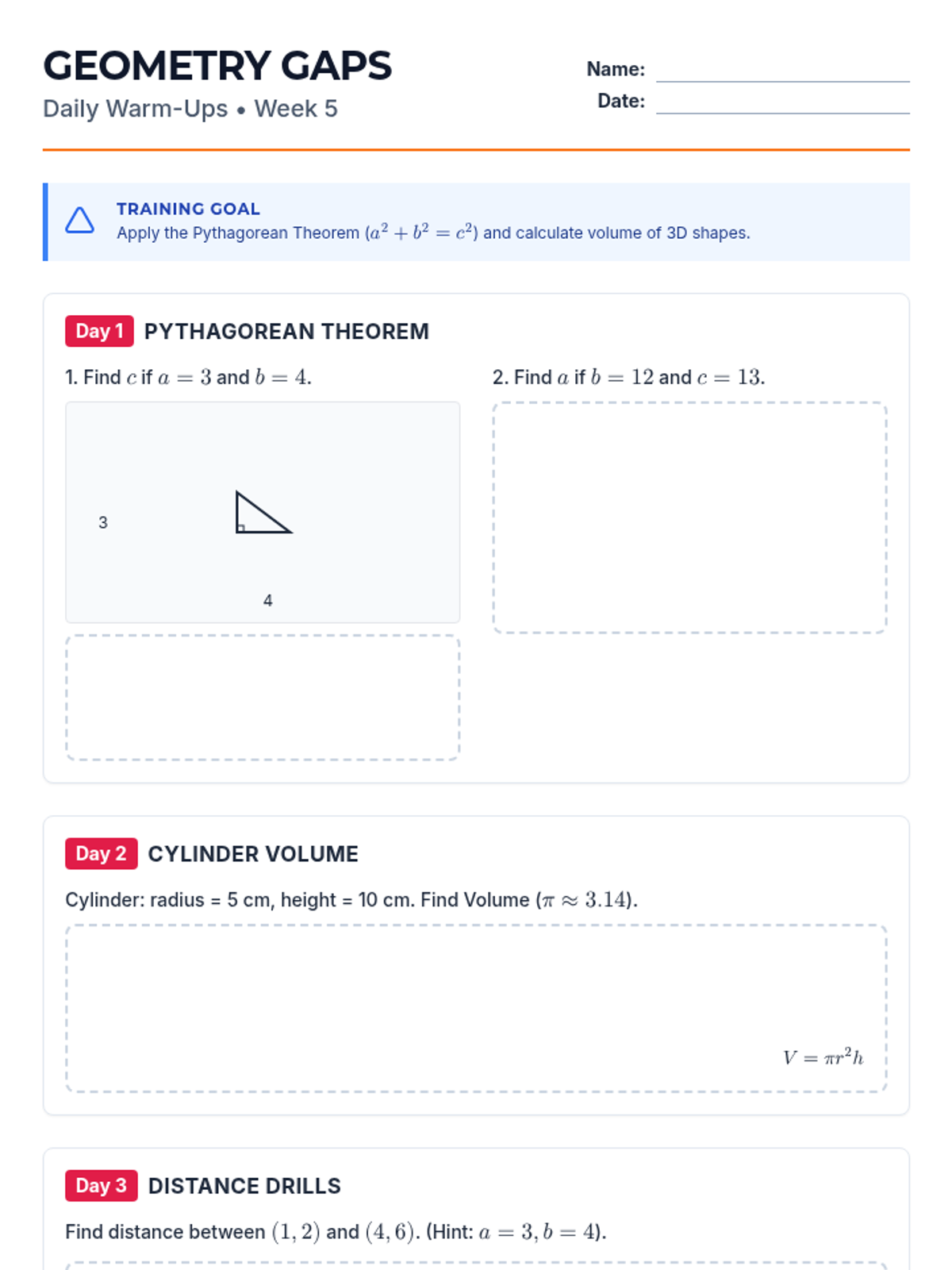
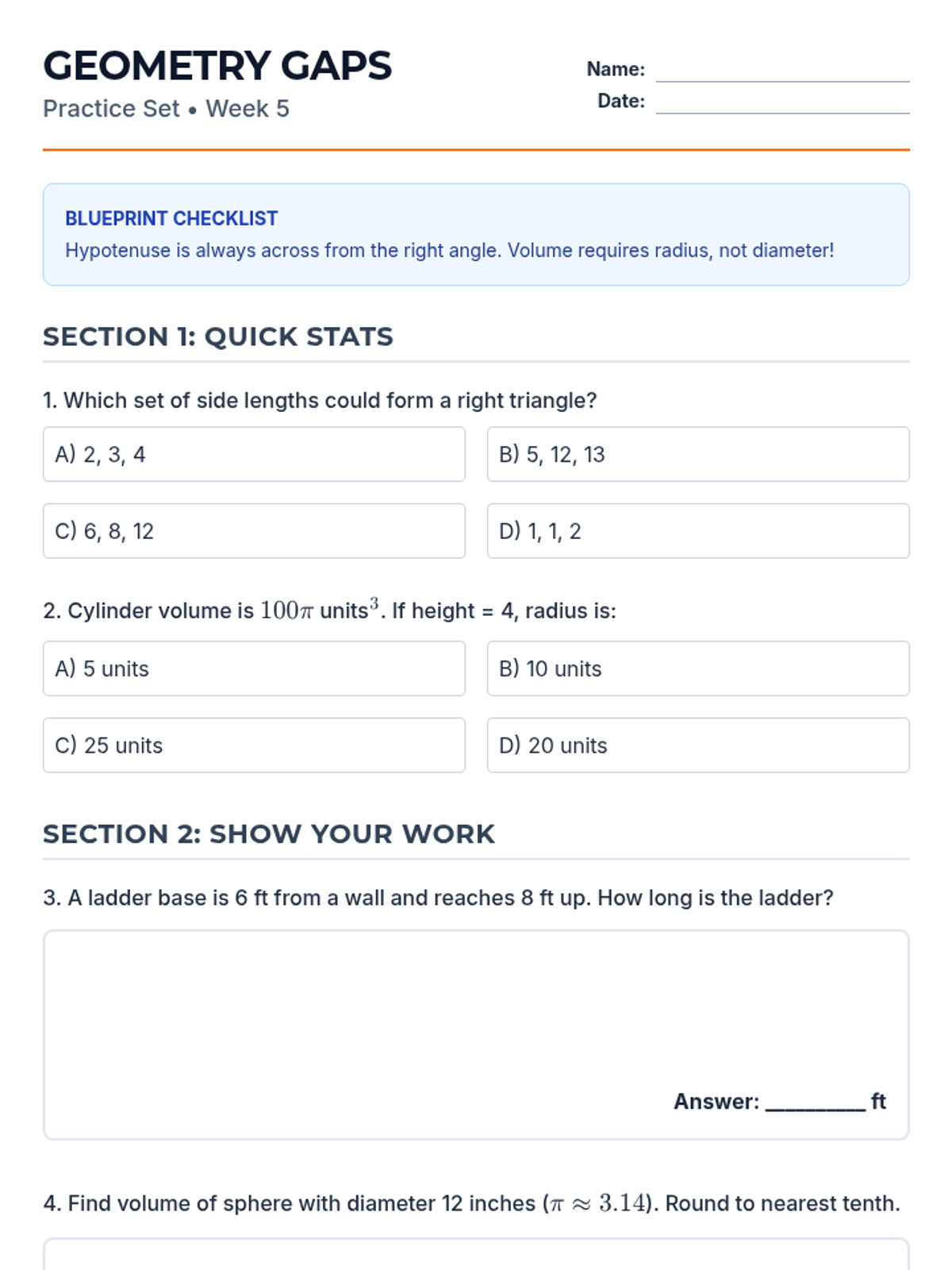
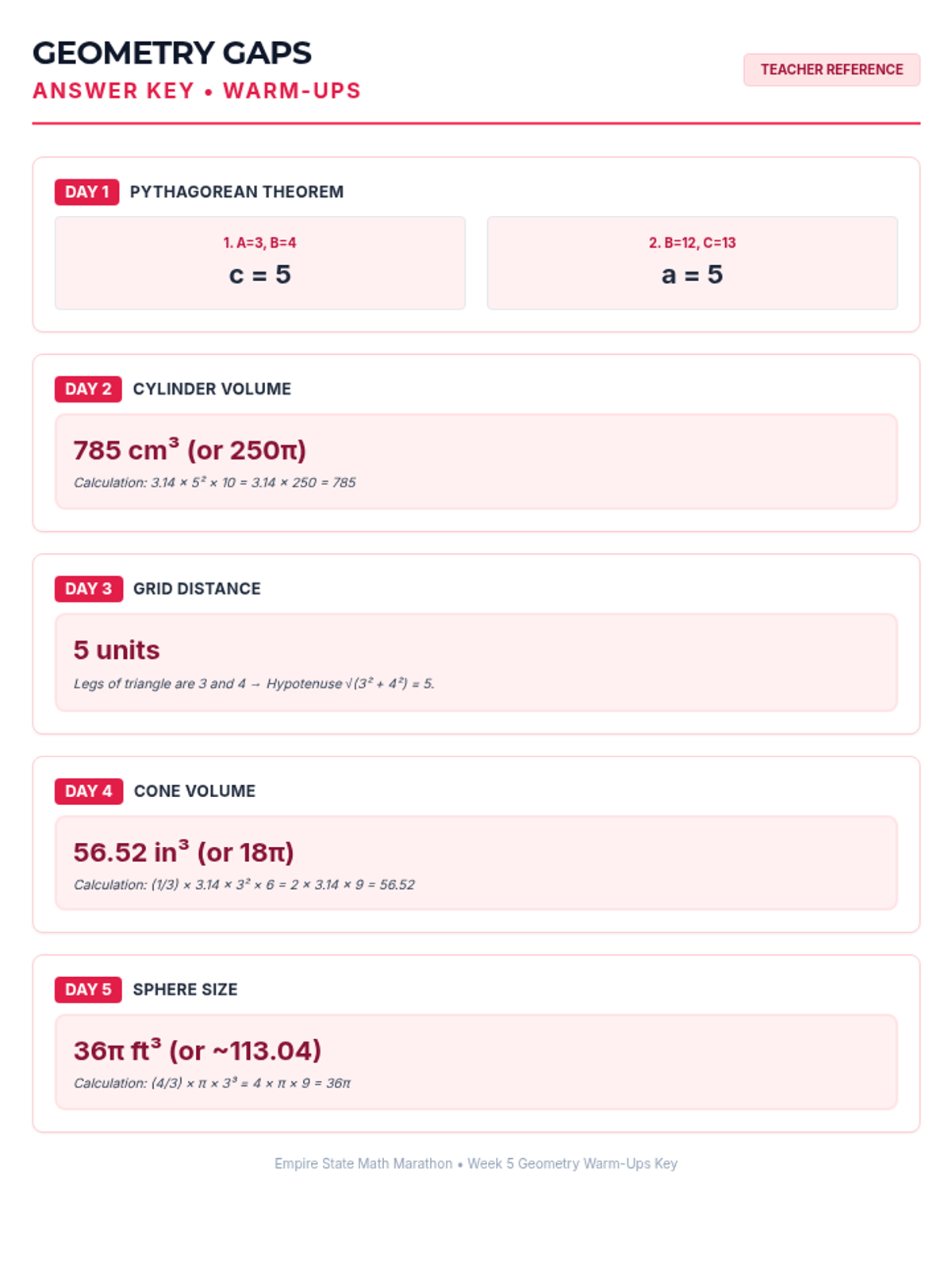
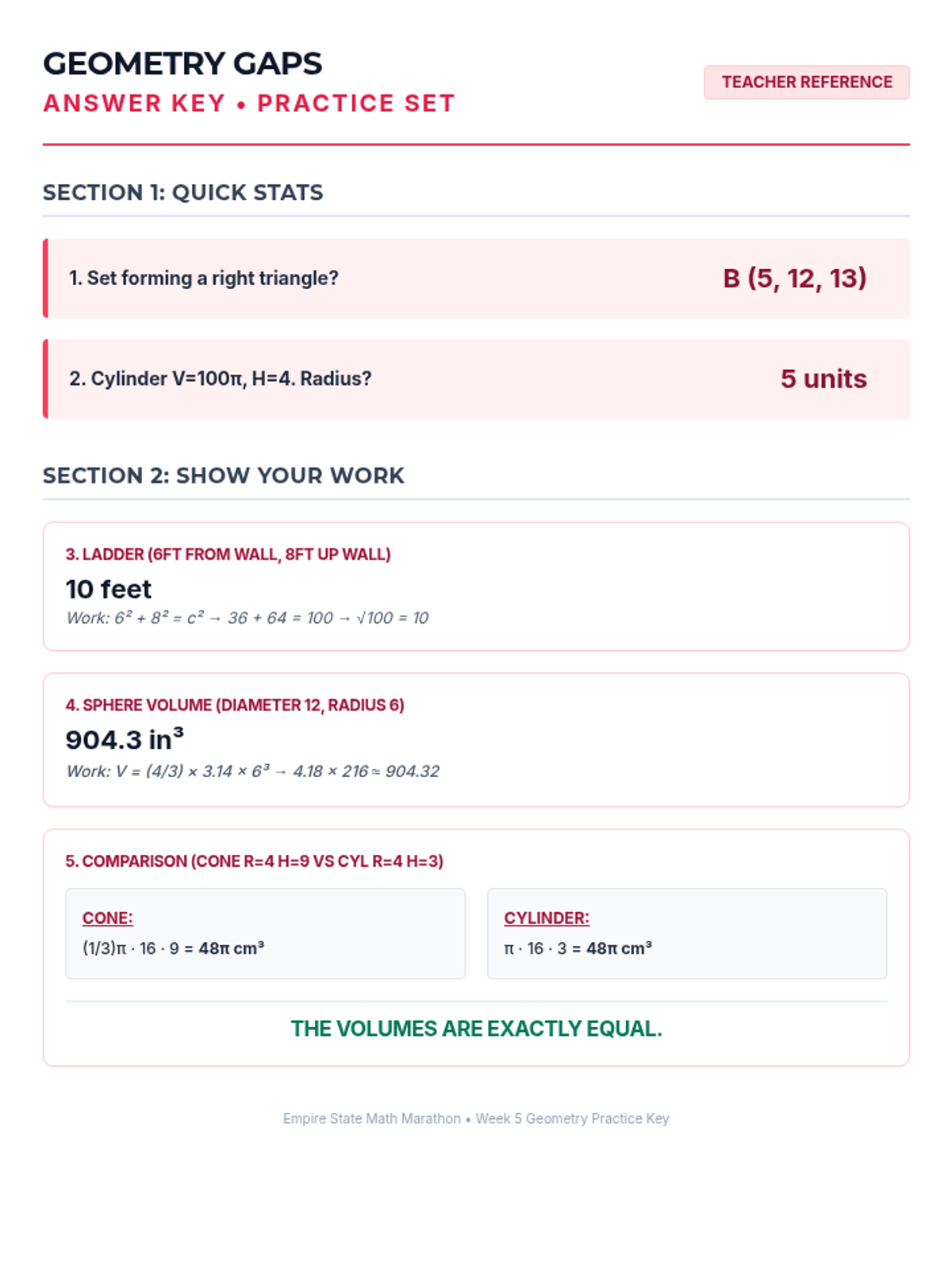
Week 5 reviews the Pythagorean Theorem and volume formulas for cylinders, cones, and spheres.
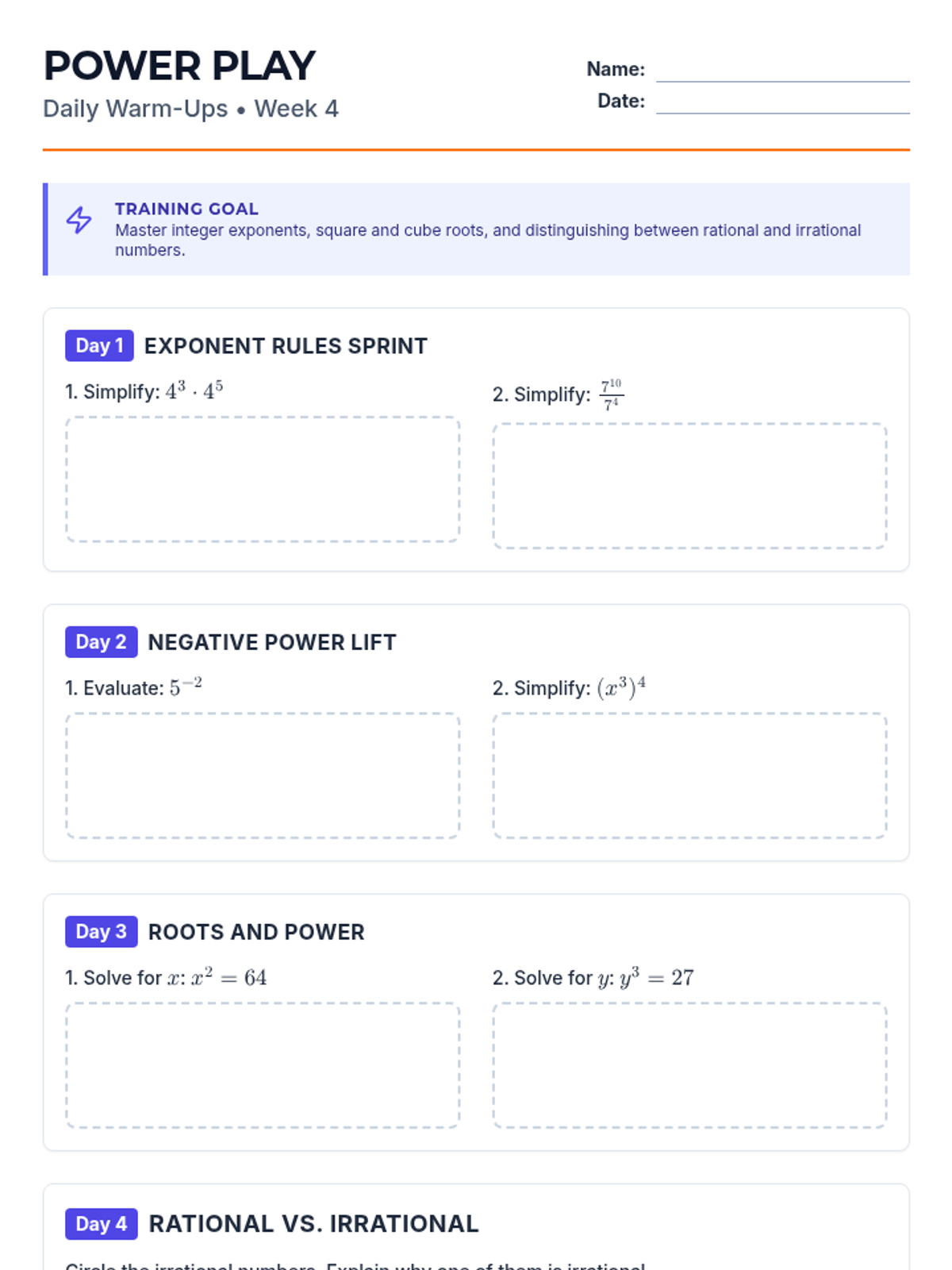
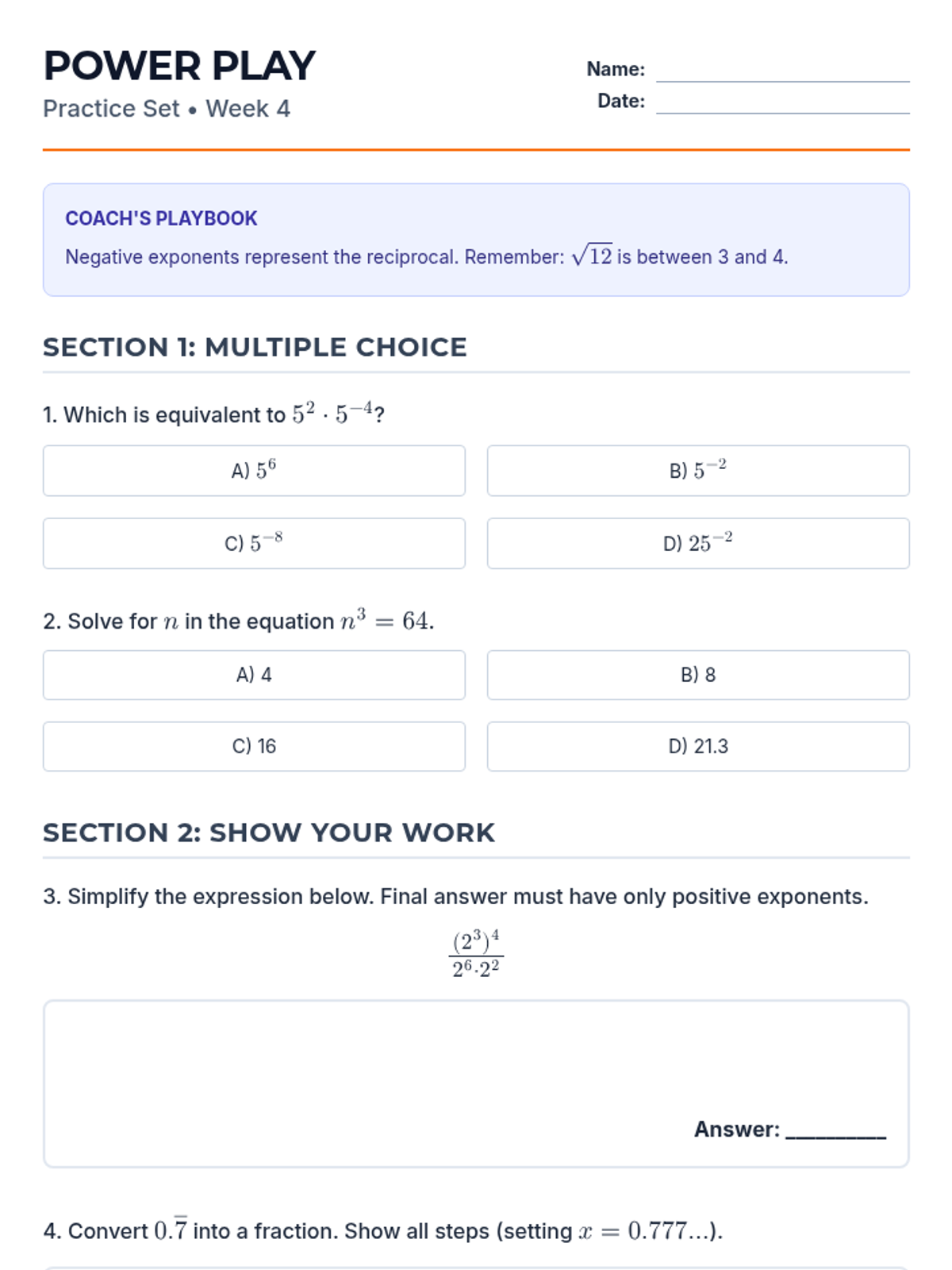
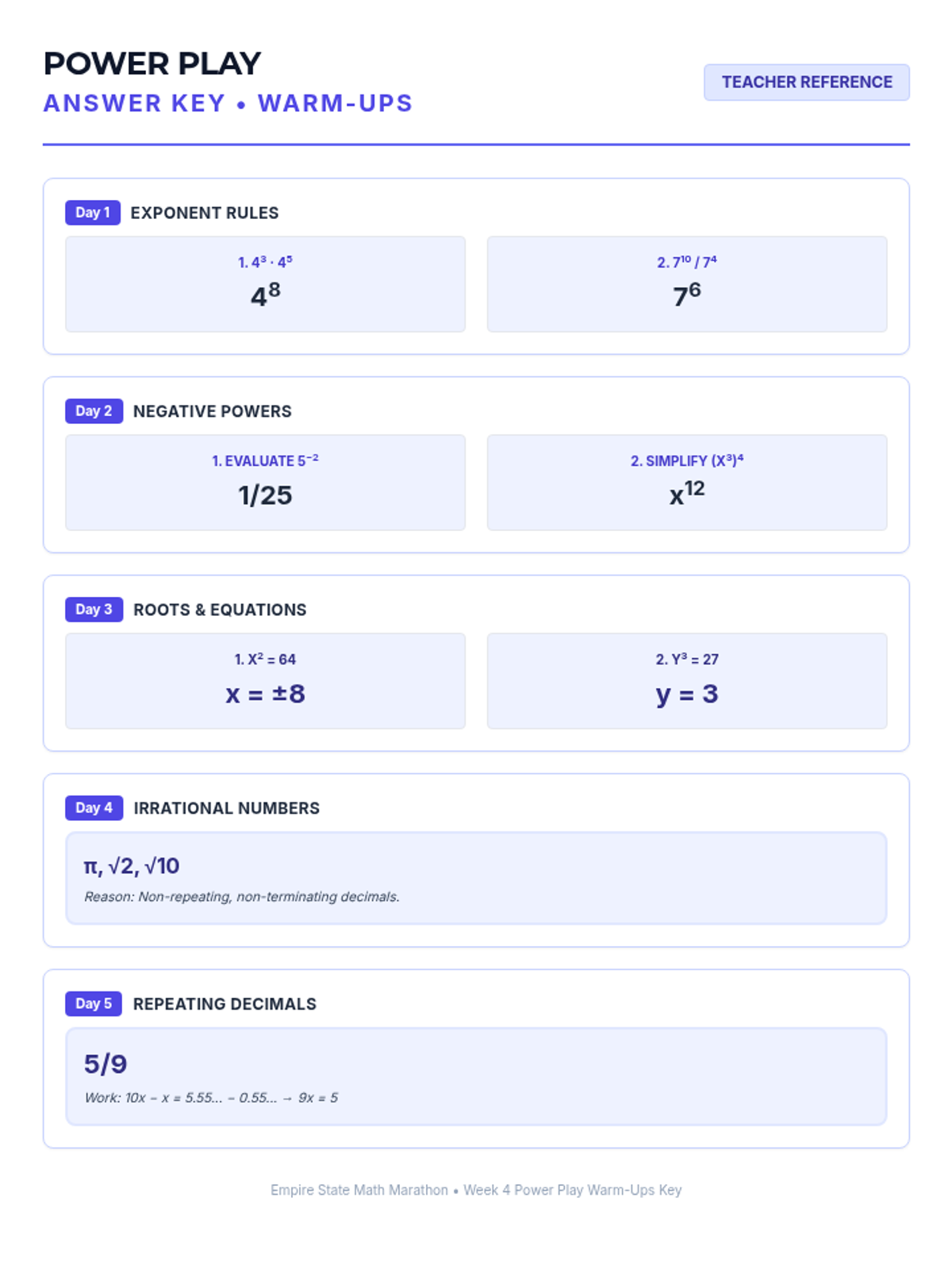
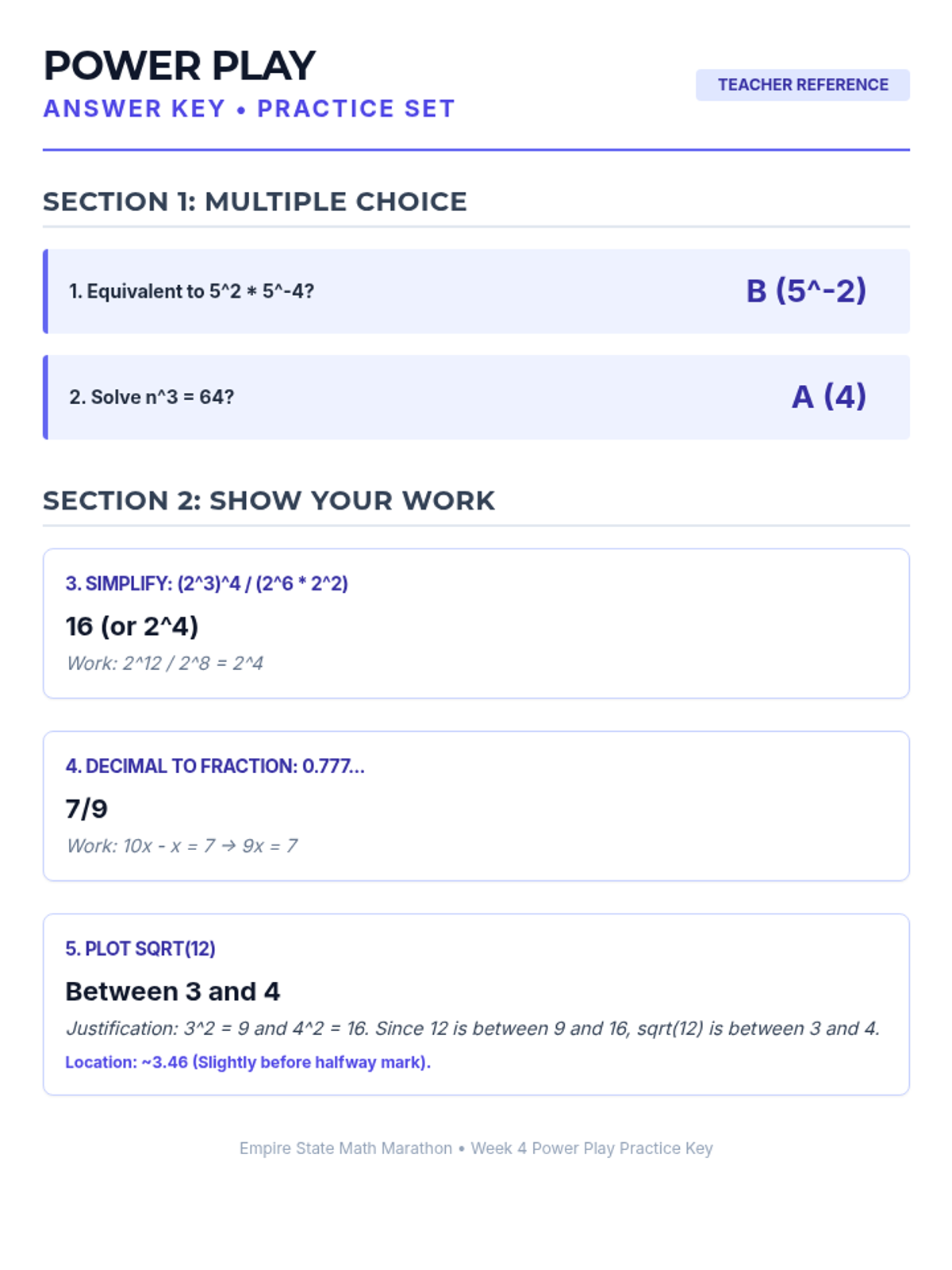
Week 4 explores integer exponent rules, perfect squares and cubes, and distinguishing between rational and irrational numbers.
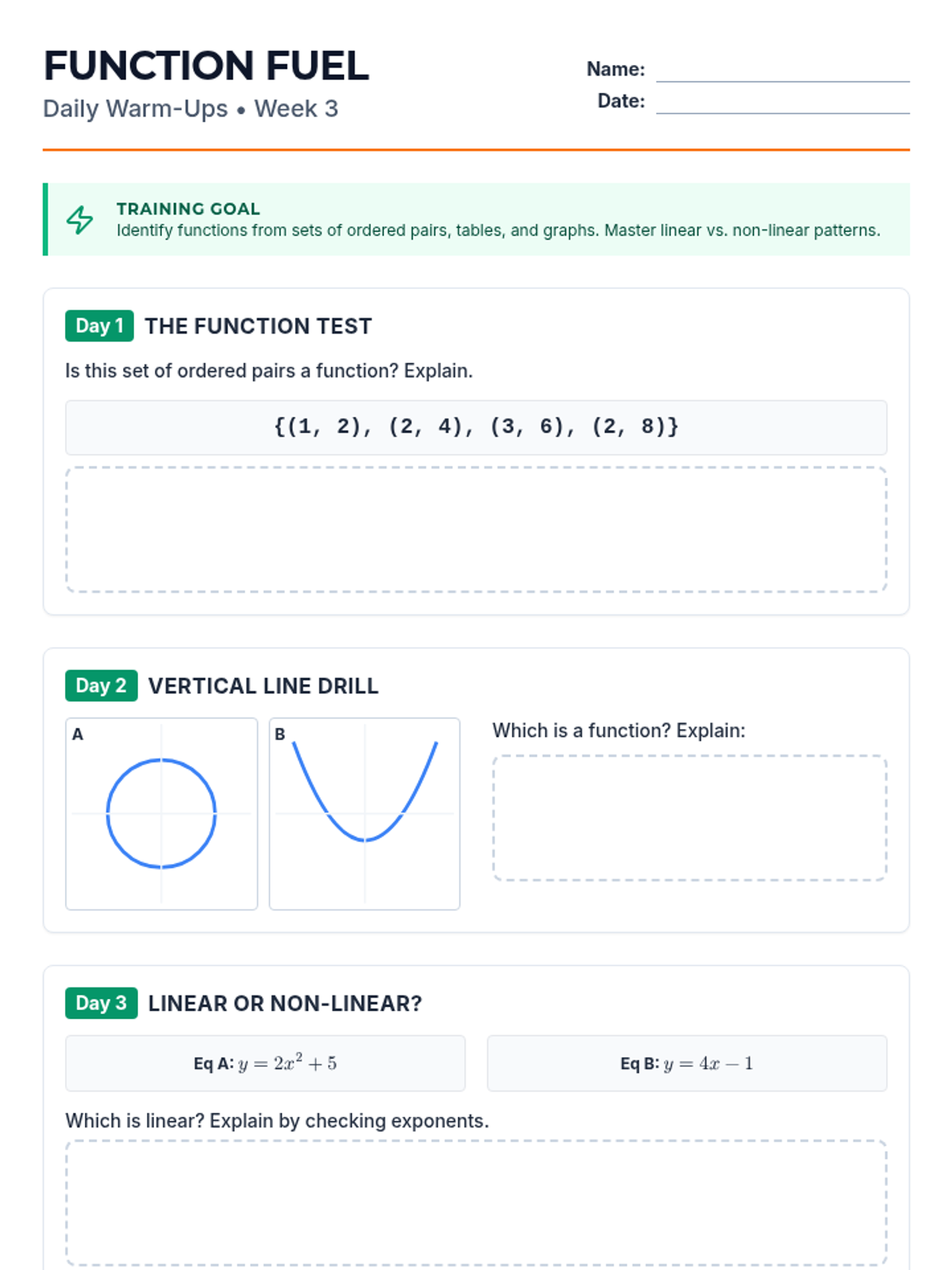
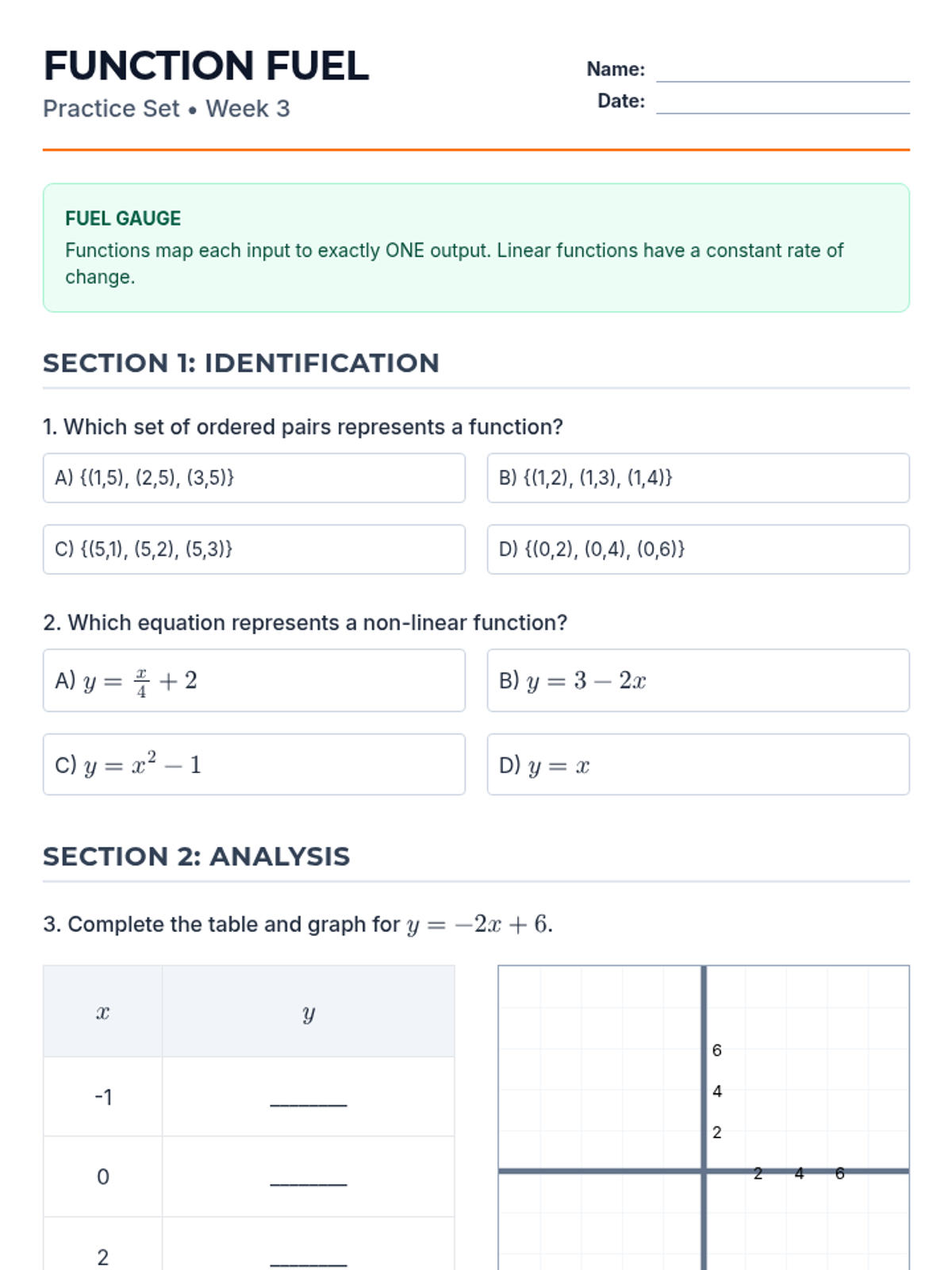
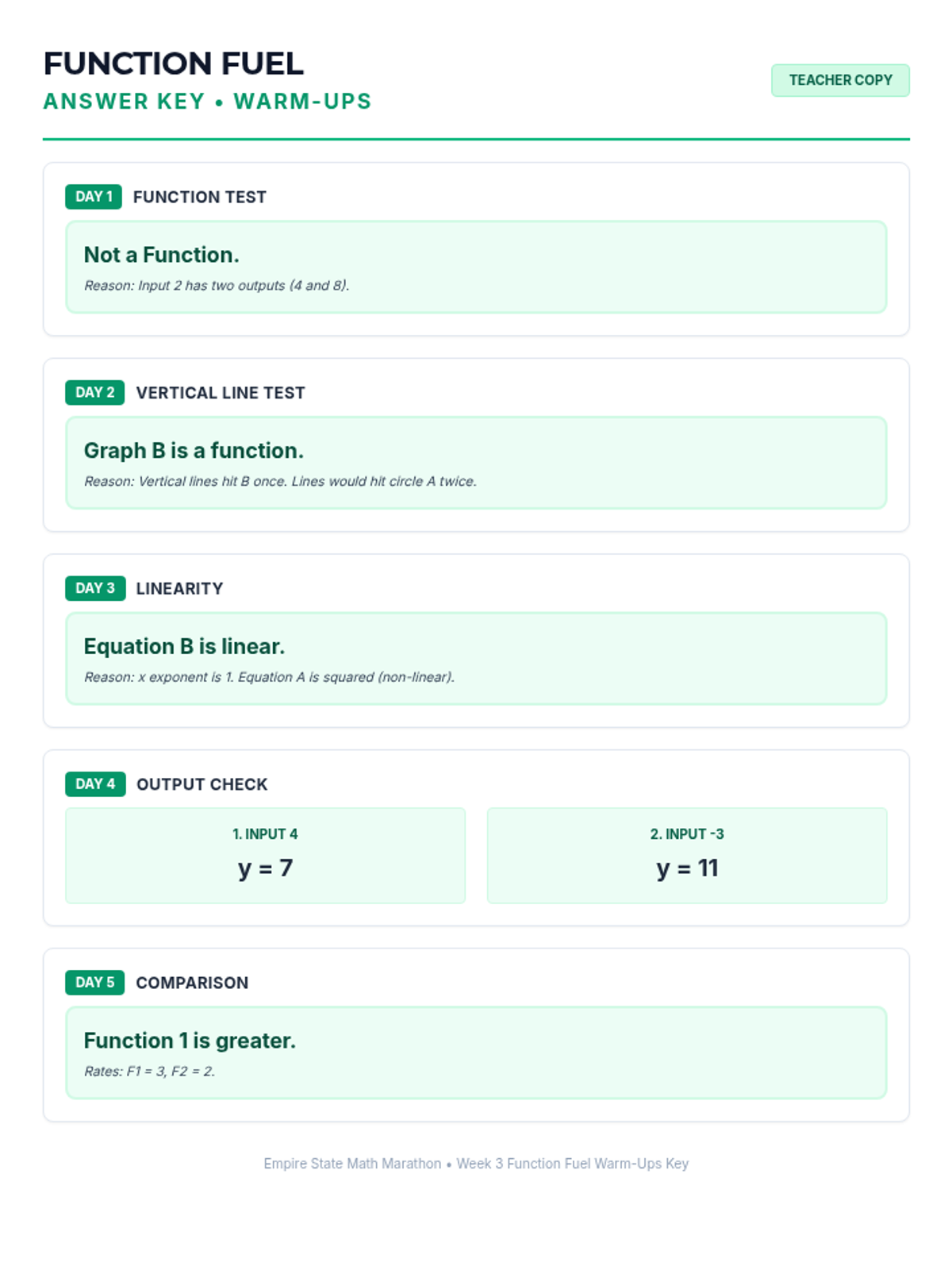
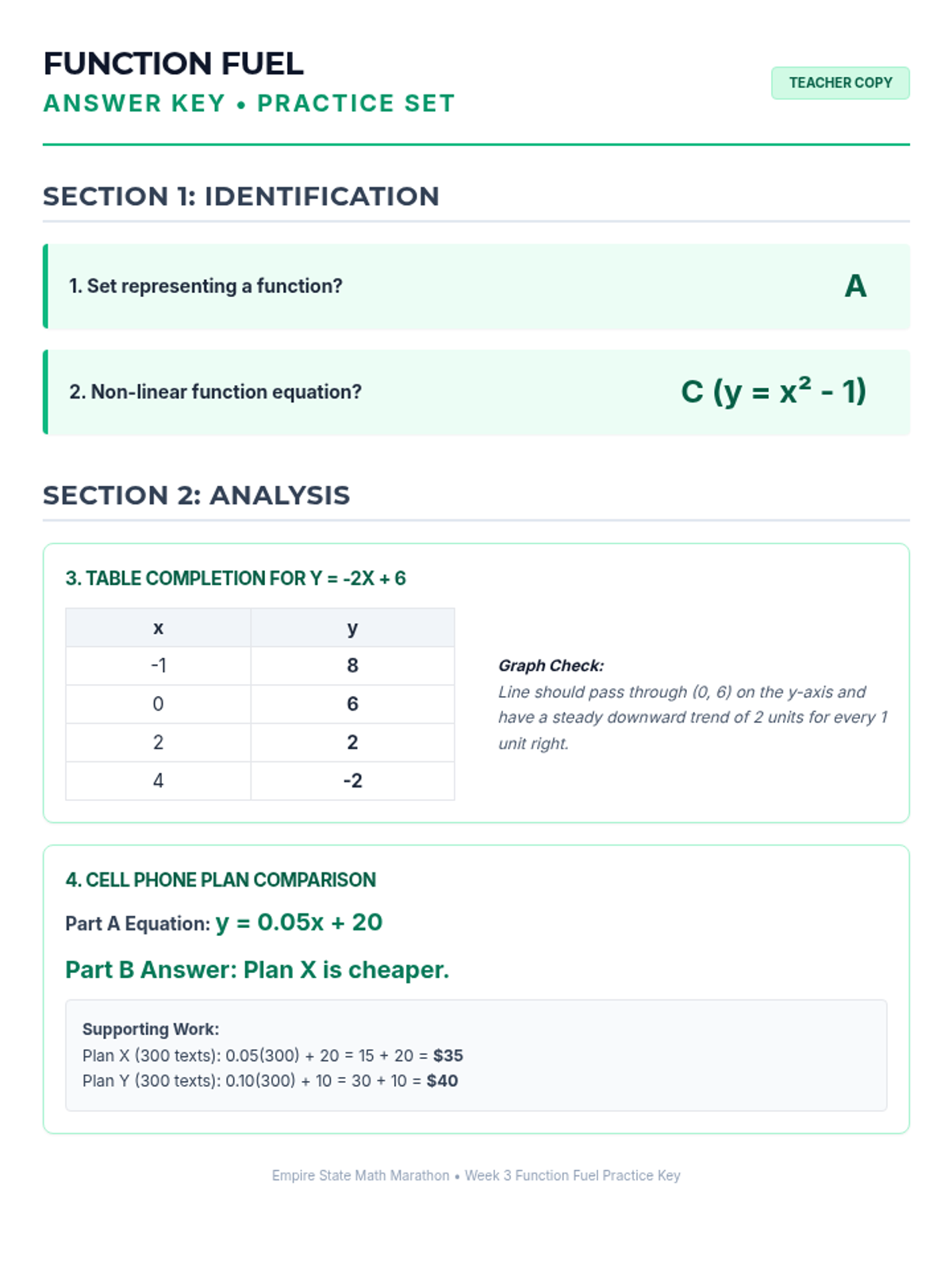
Week 3 defines, evaluates, and compares functions represented in different ways (tables, graphs, equations).
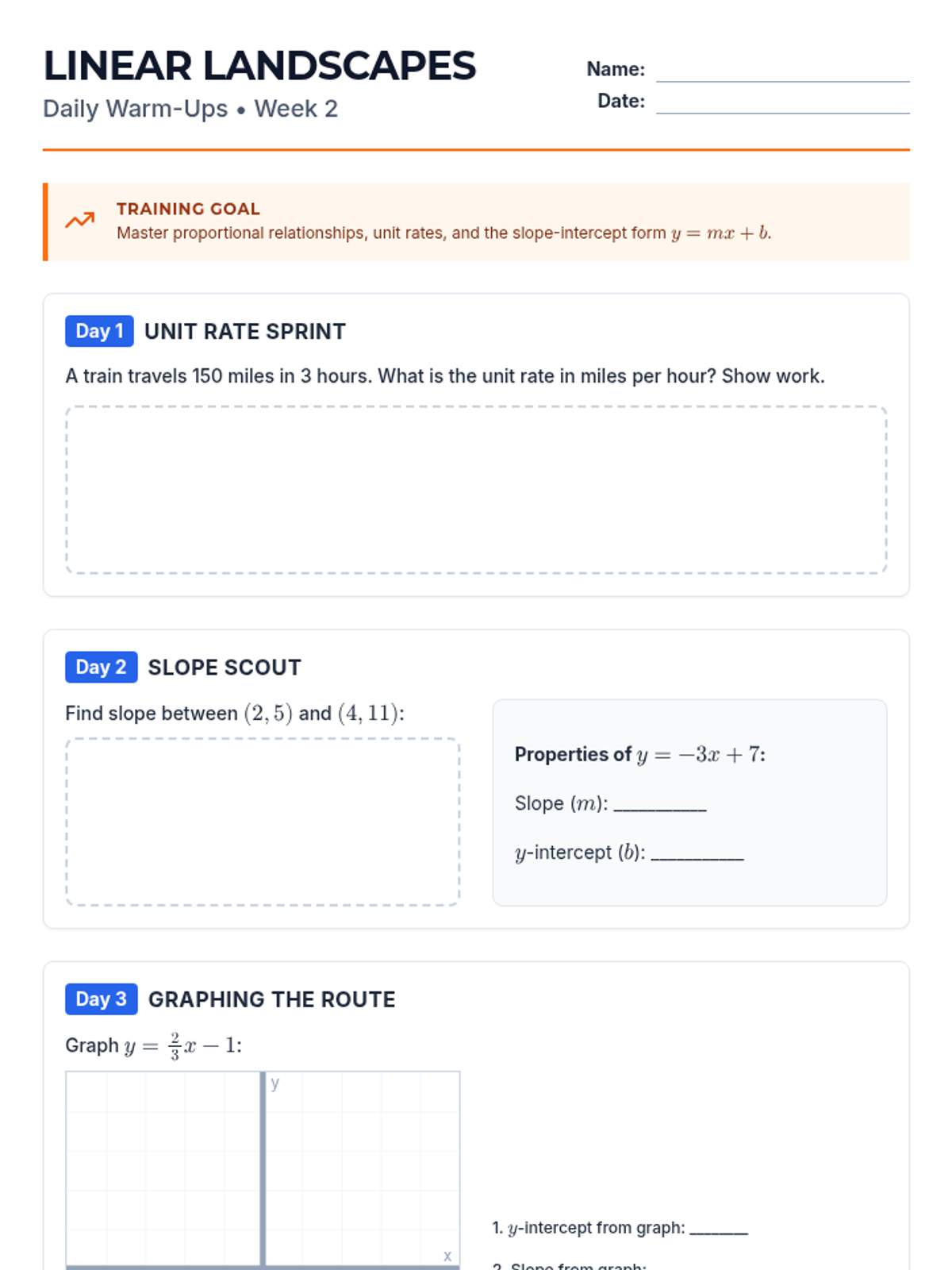
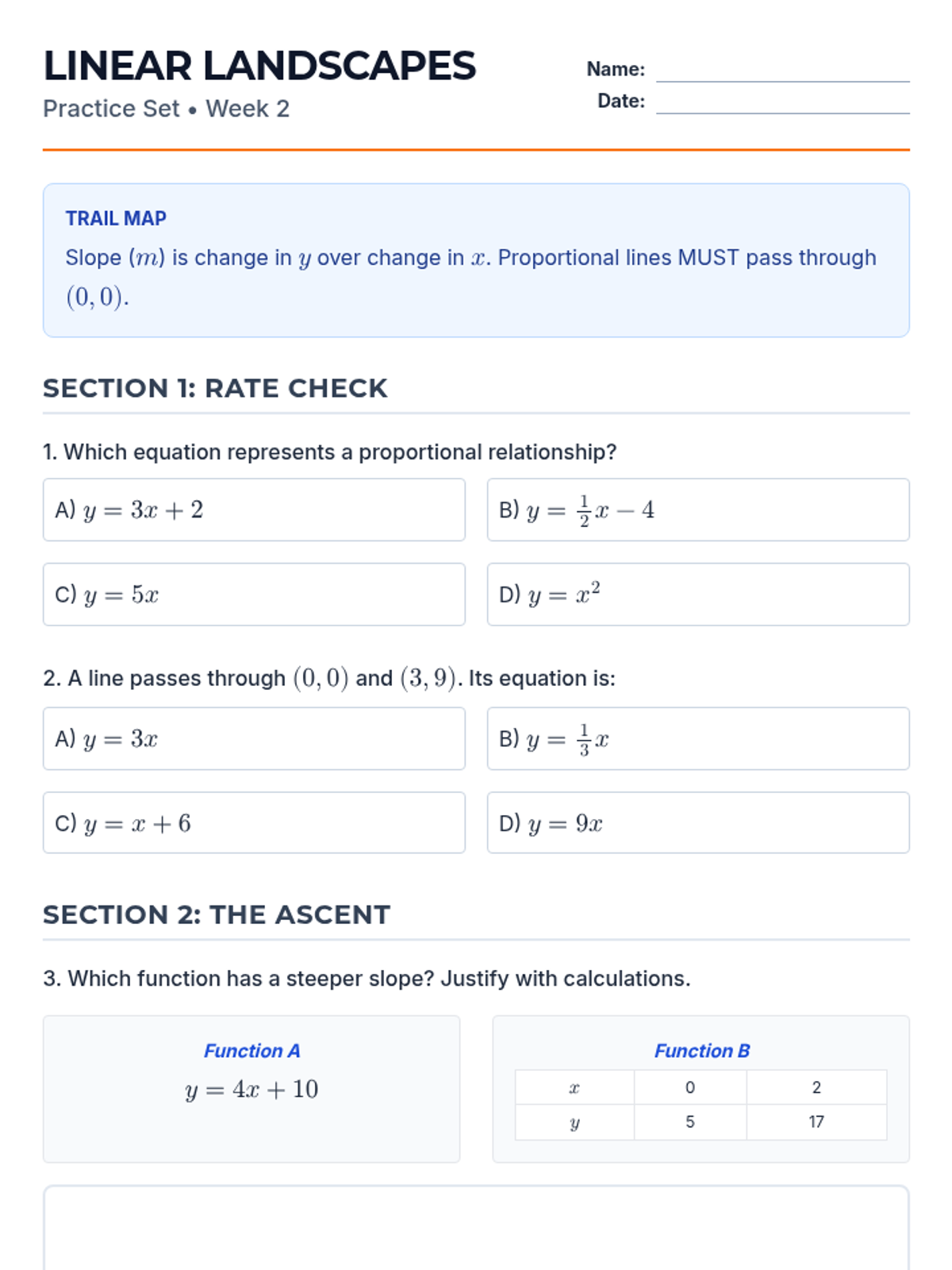
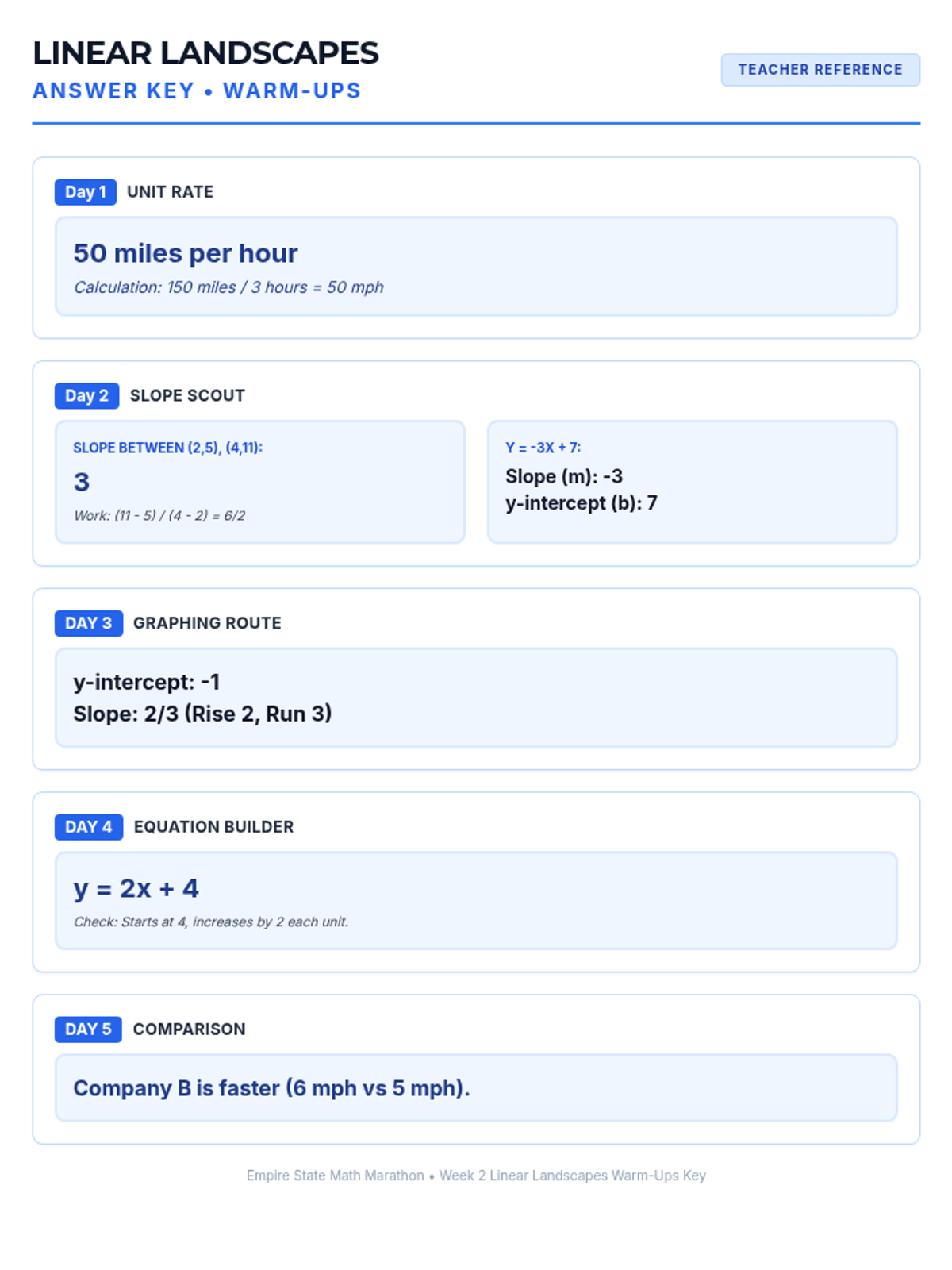
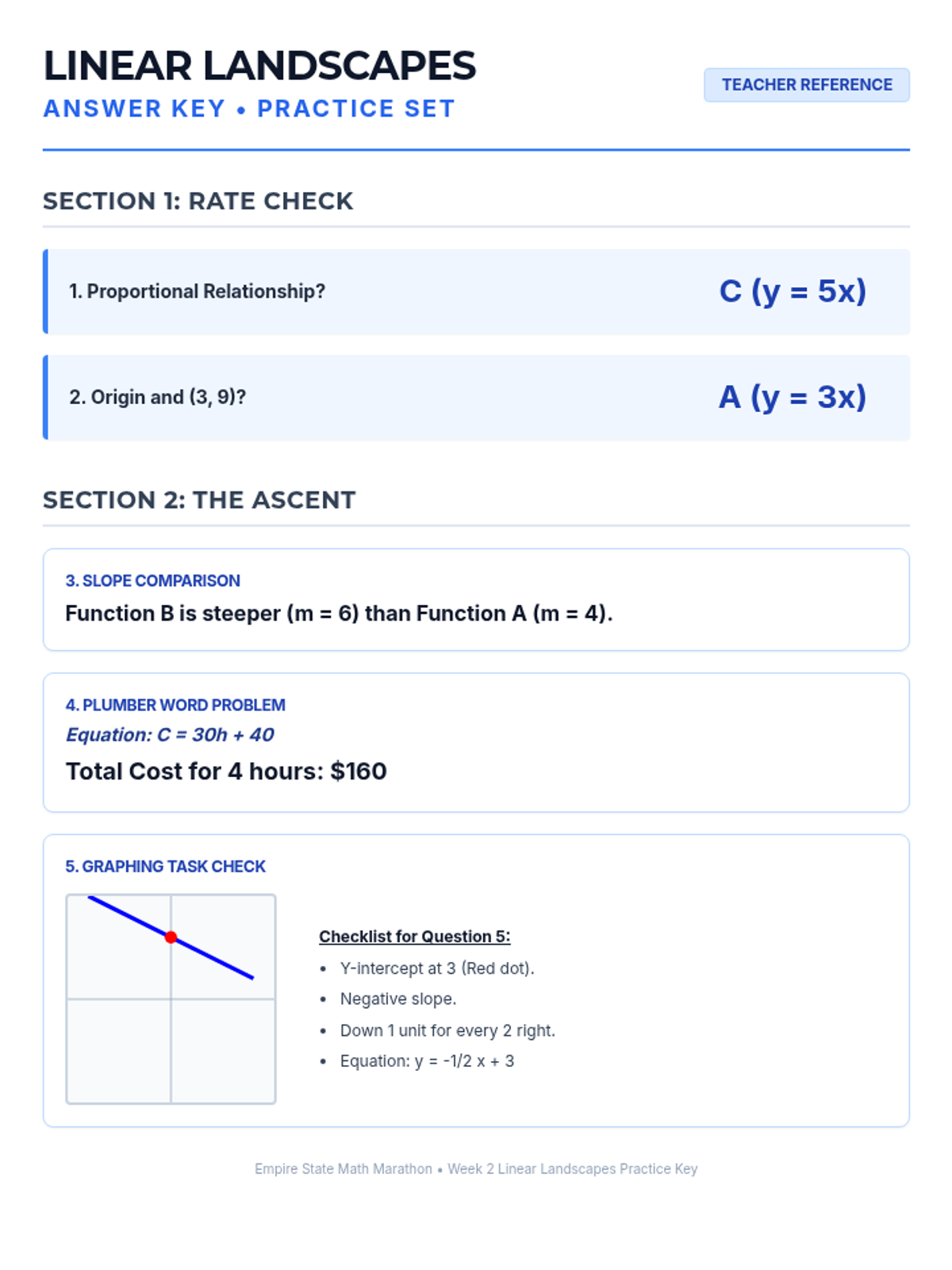
Week 2 covers proportional relationships, unit rates, and the slope-intercept form of linear equations.
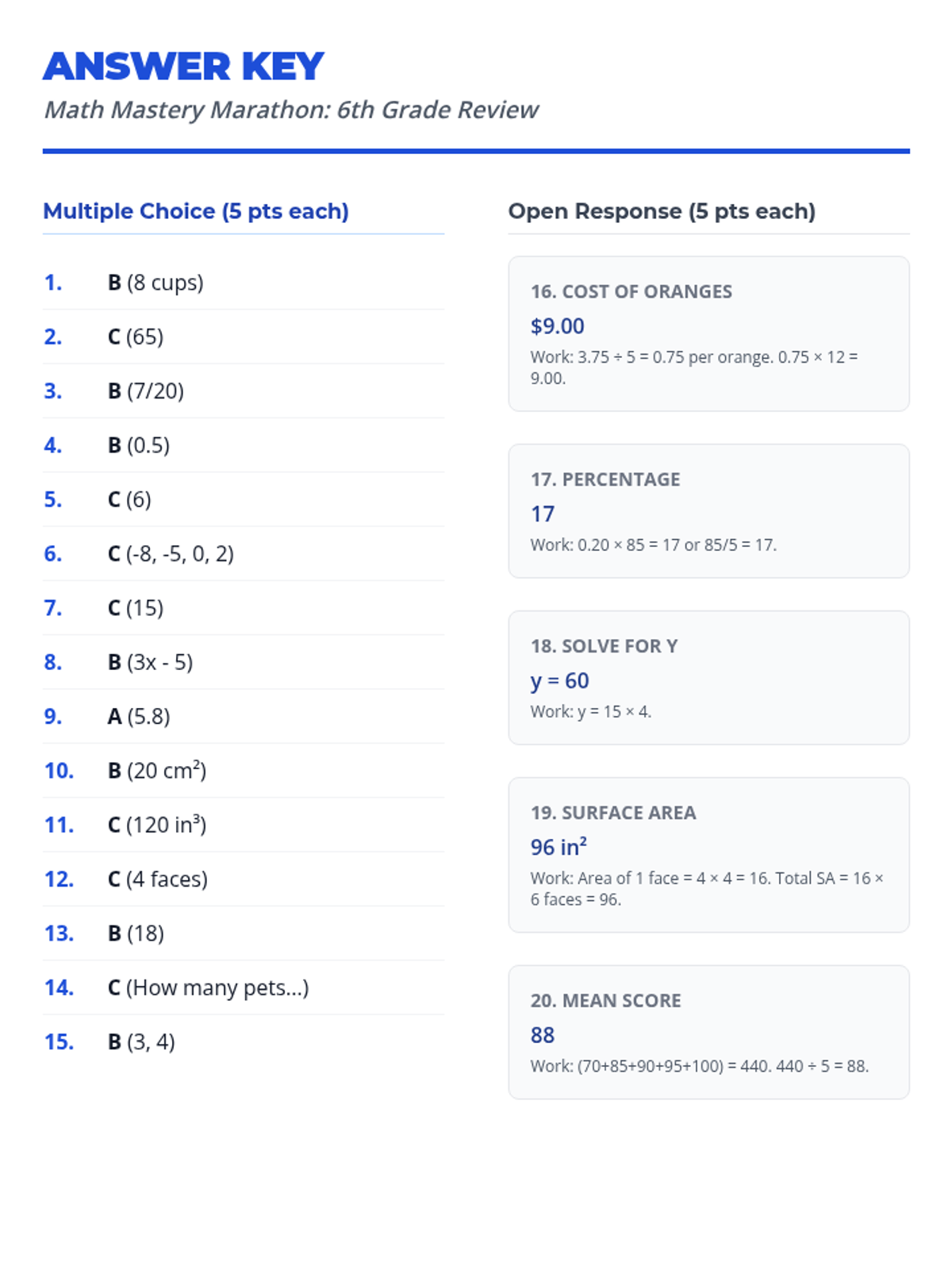
A comprehensive 6th-grade math cumulative review packet covering ratios, number systems, expressions, equations, geometry, and statistics.
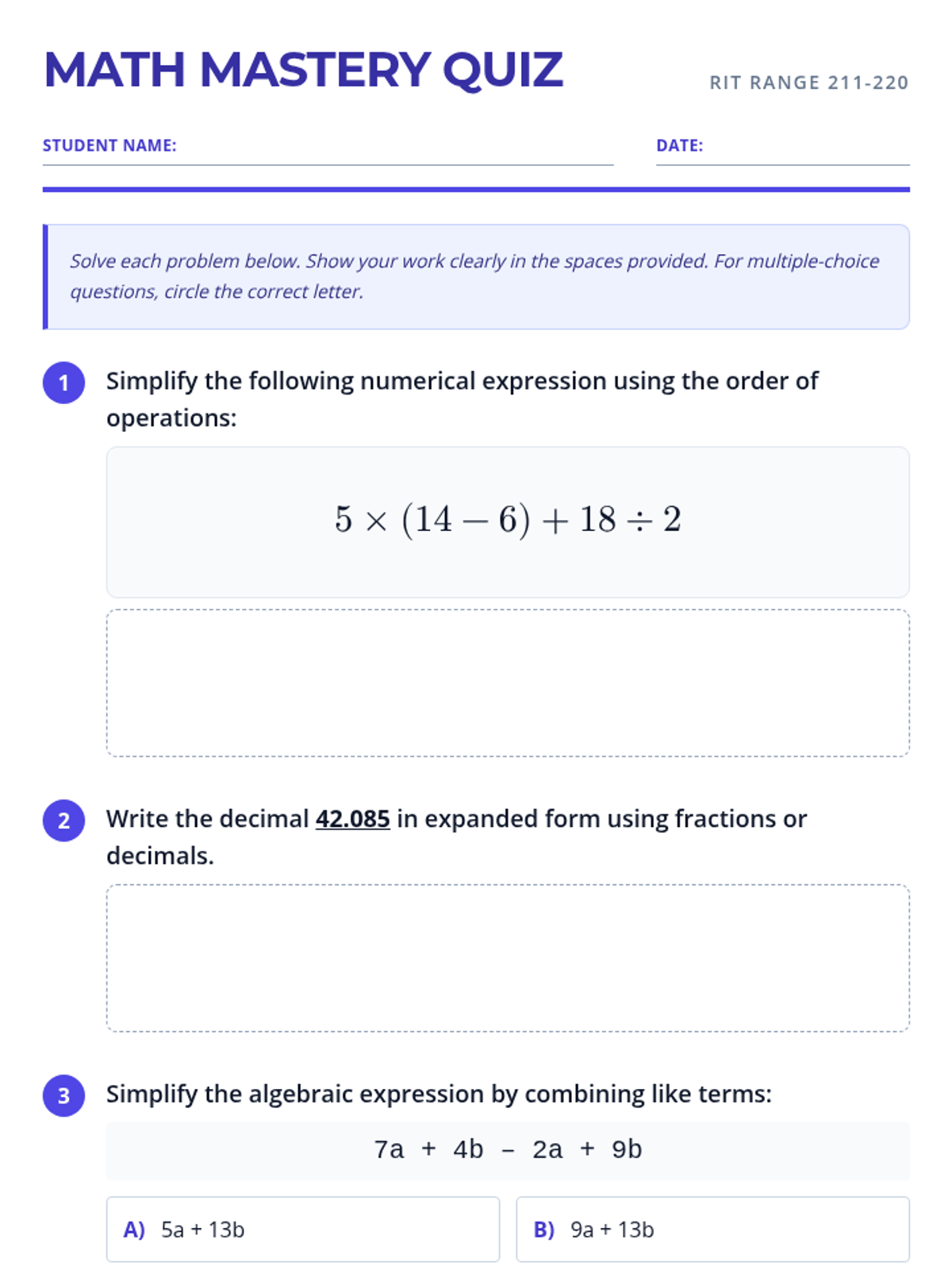
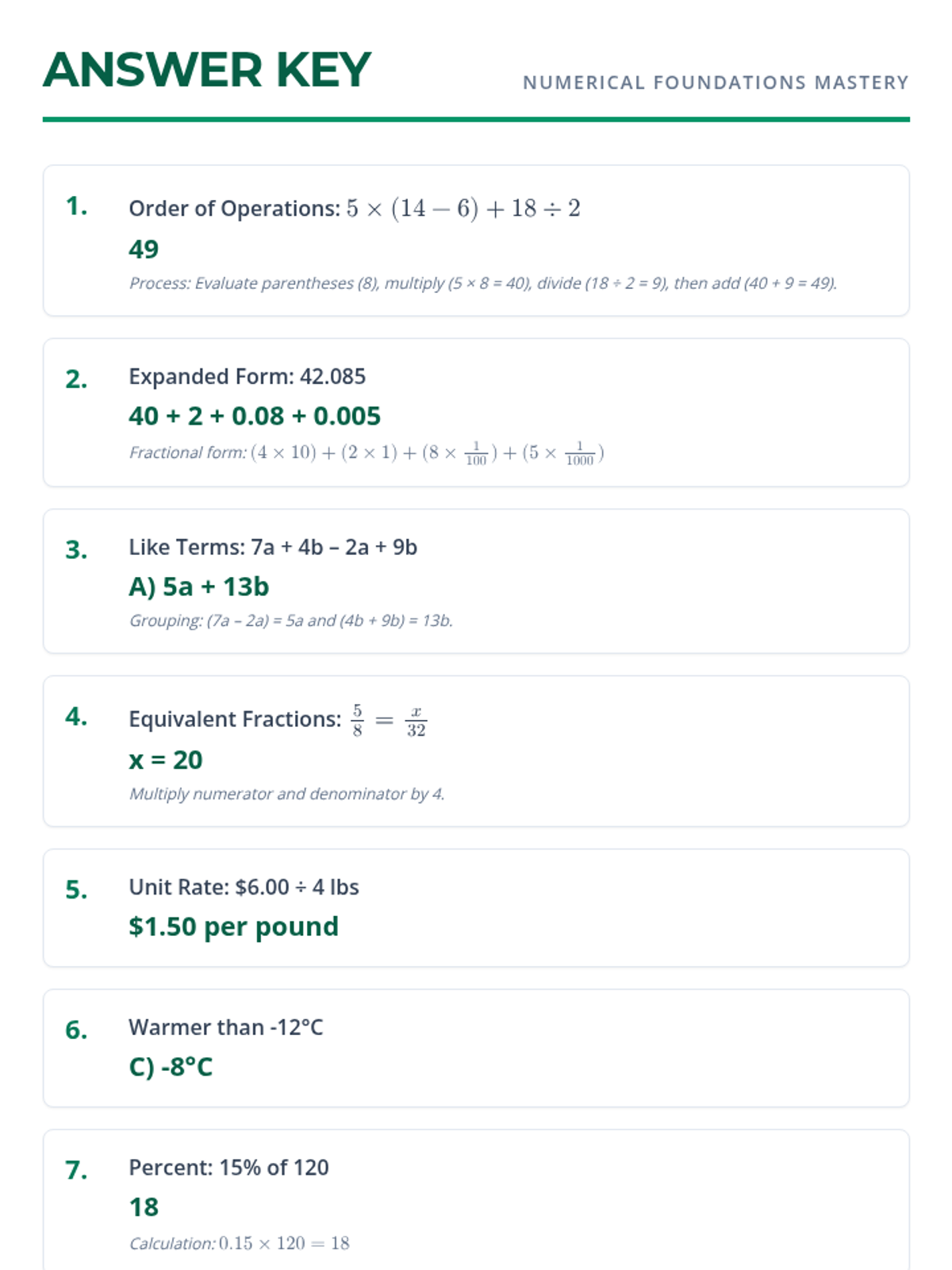
A comprehensive math assessment covering middle-grade concepts including algebraic expressions, numerical operations, fractions, decimals, and geometry. This lesson focuses on evaluating student proficiency across RIT 211-220 criteria through a structured quiz and detailed answer key.
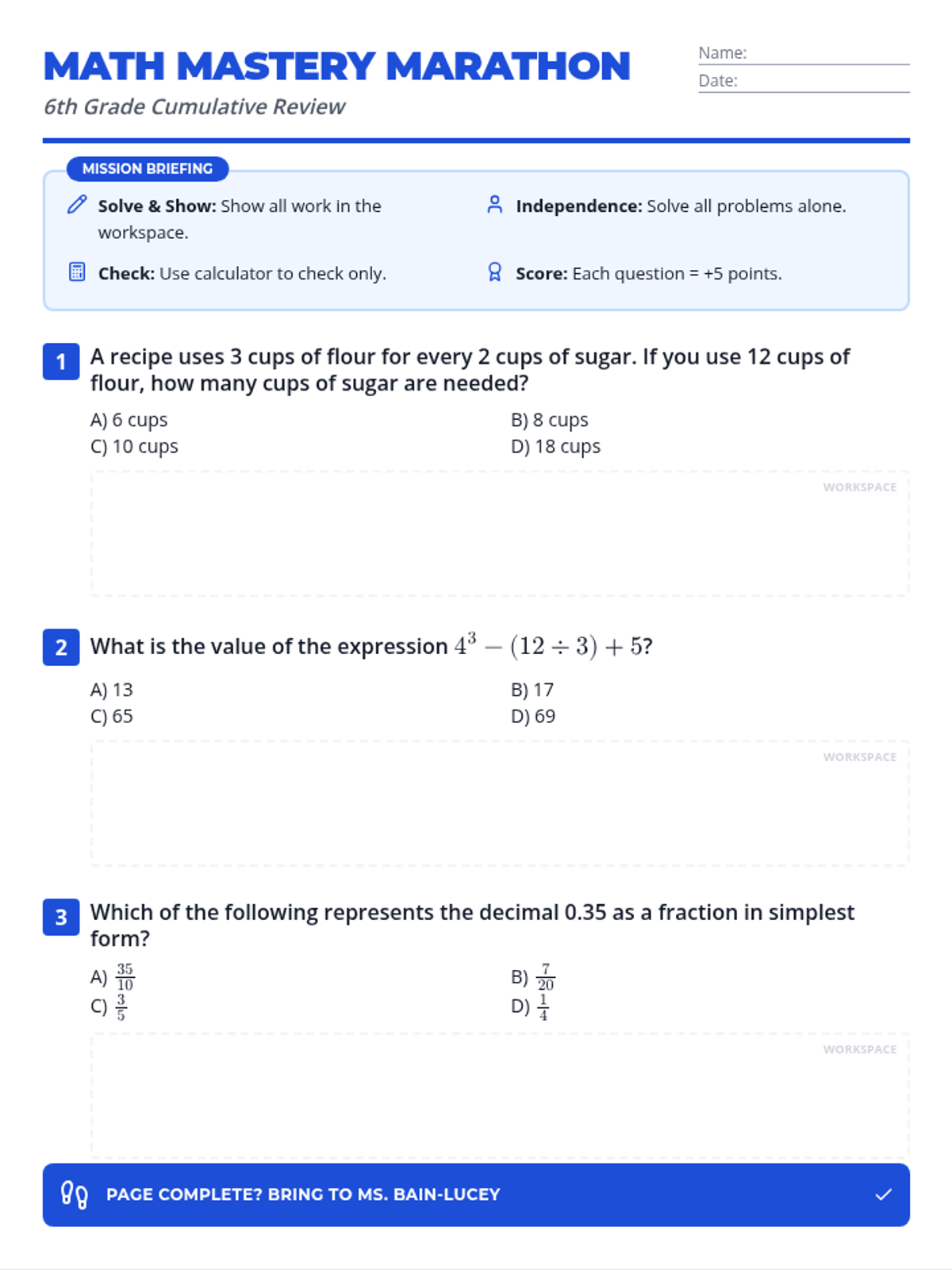
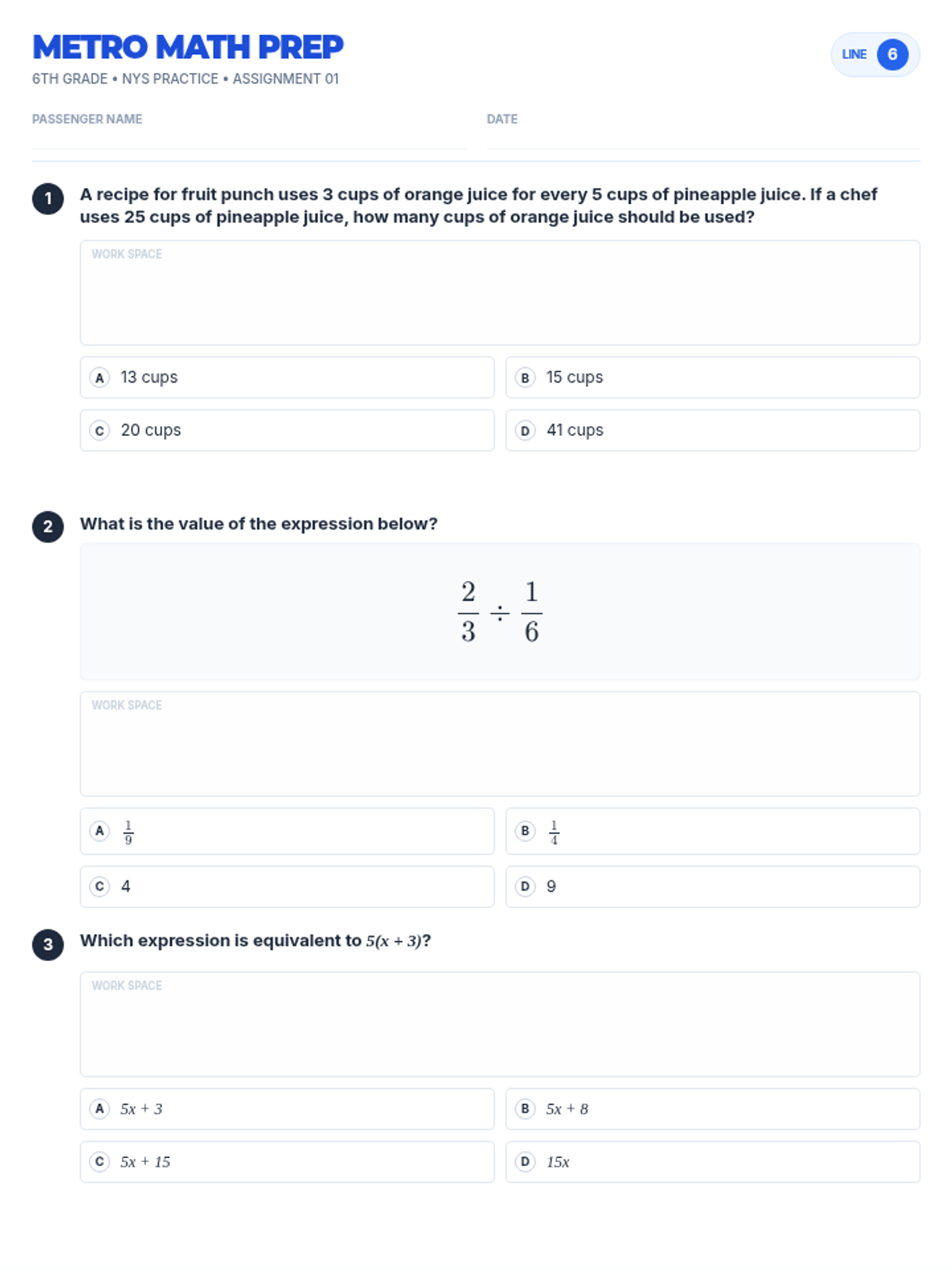
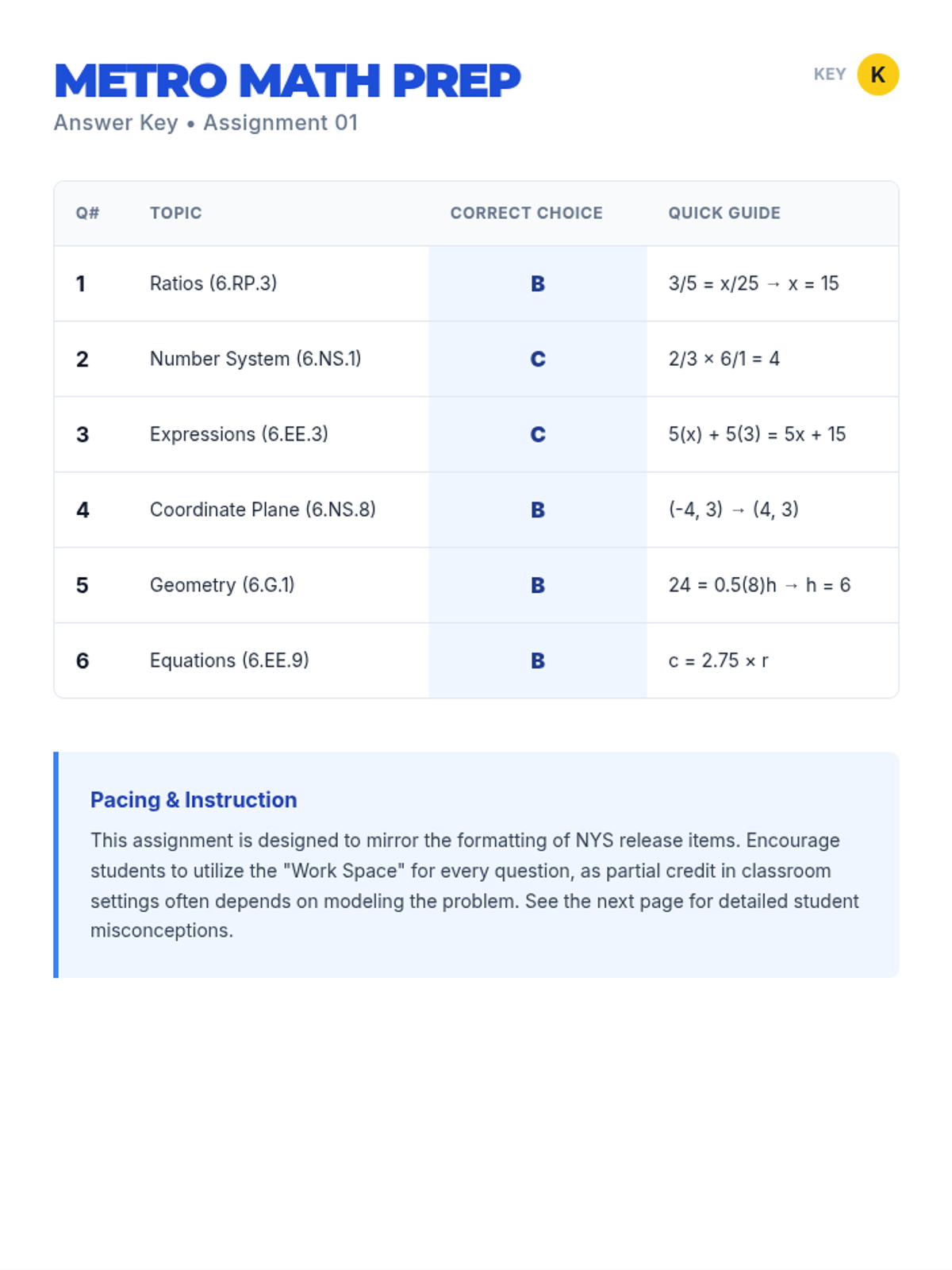
A targeted 6th-grade math review focused on New York State exam standards, excluding statistics. This lesson provides high-alignment practice problems in a multiple-choice format with ample space for student work.
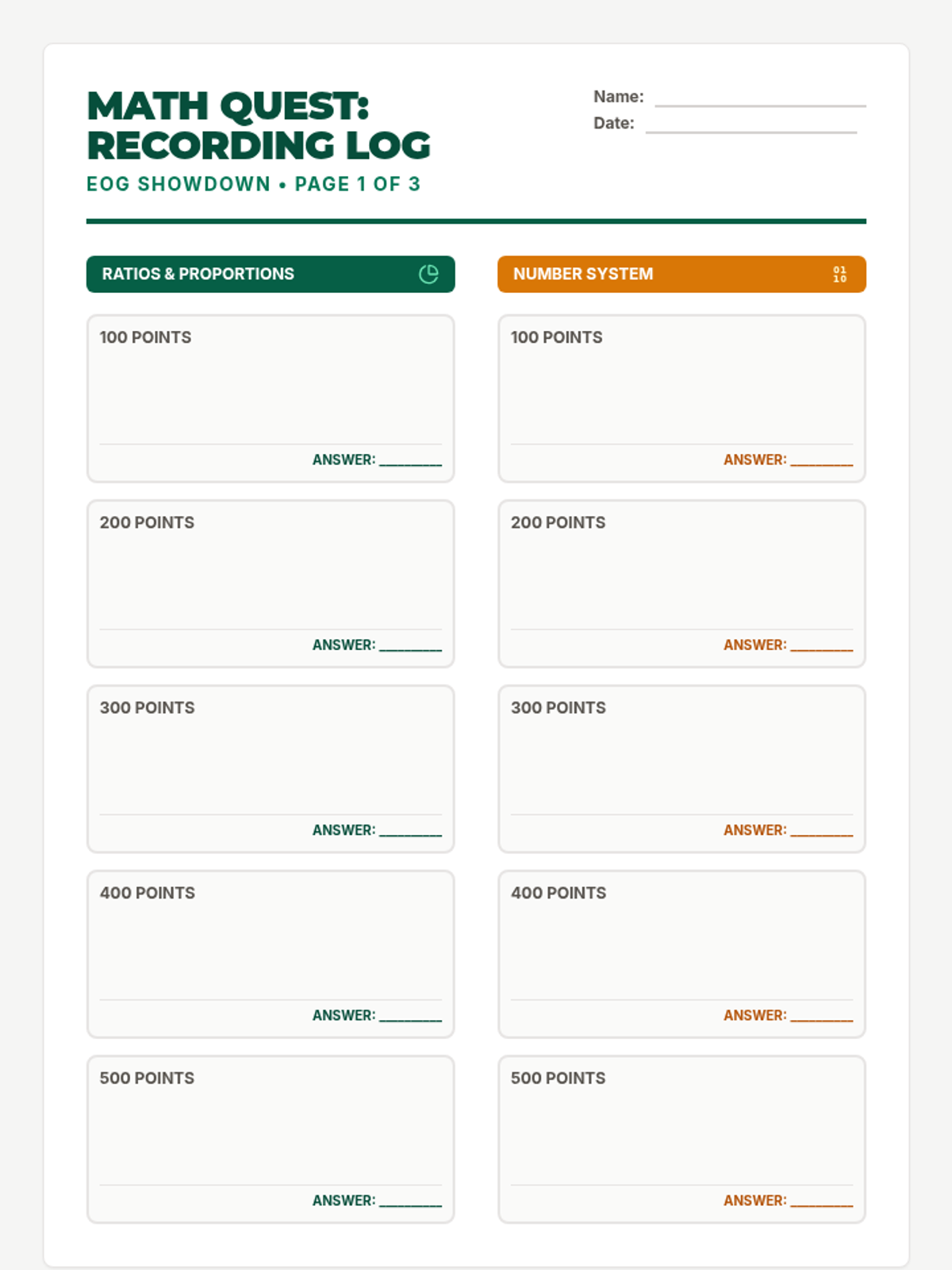
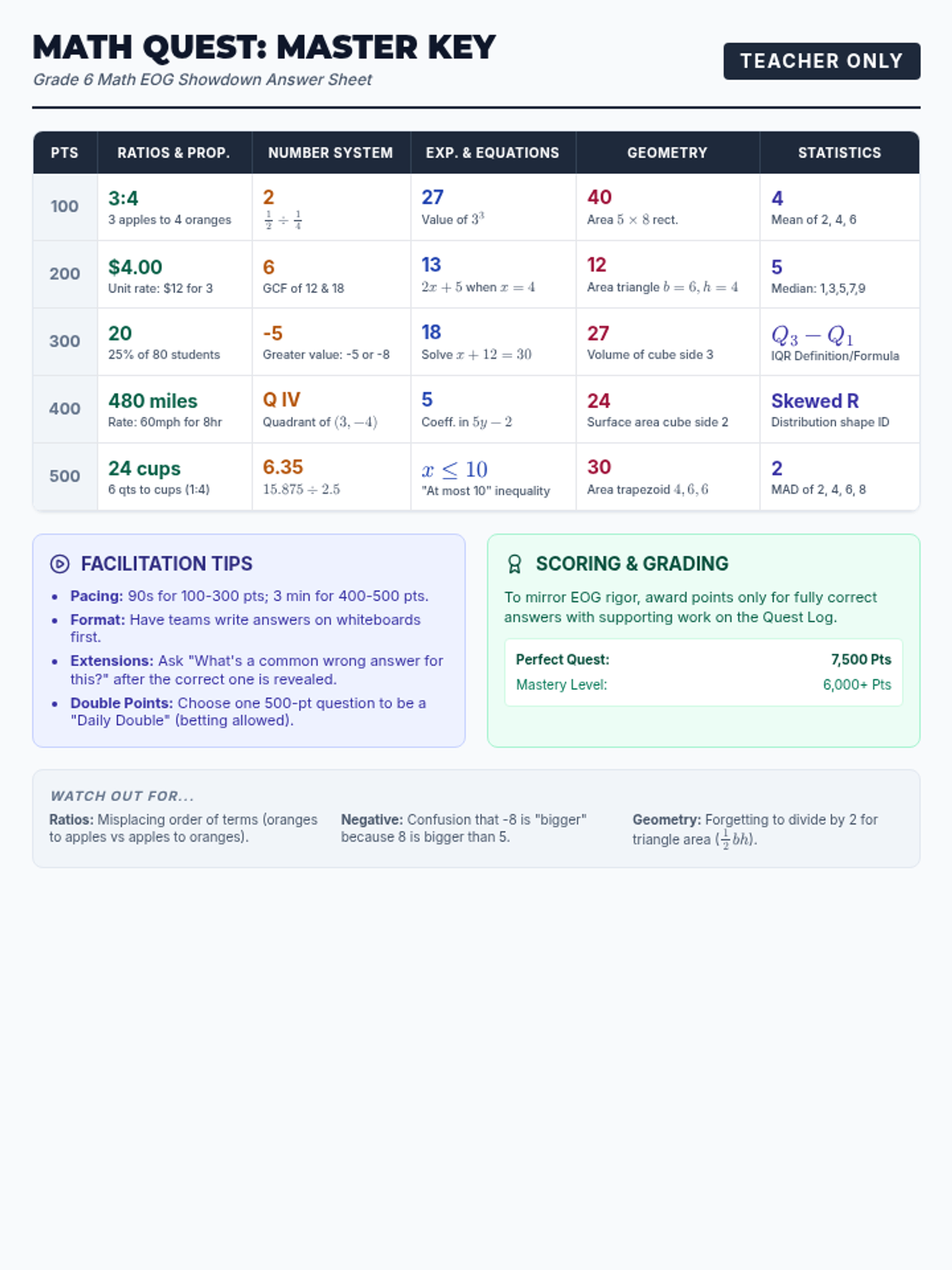
A high-energy review session using a Jeopardy-style game format to cover Ratios, The Number System, Expressions & Equations, Geometry, and Statistics. Students work individually or in teams to solve rigorous EOG-aligned problems.
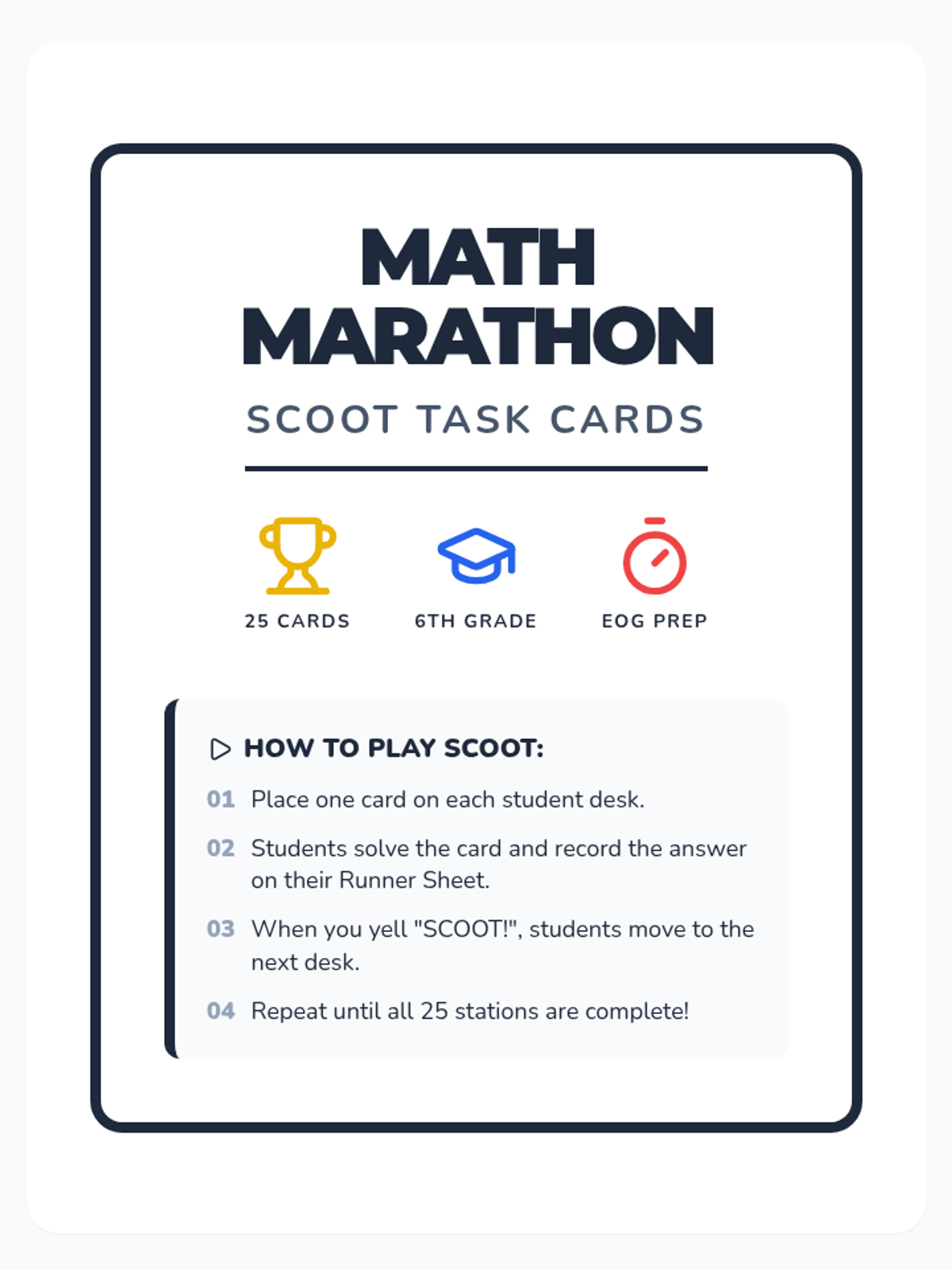
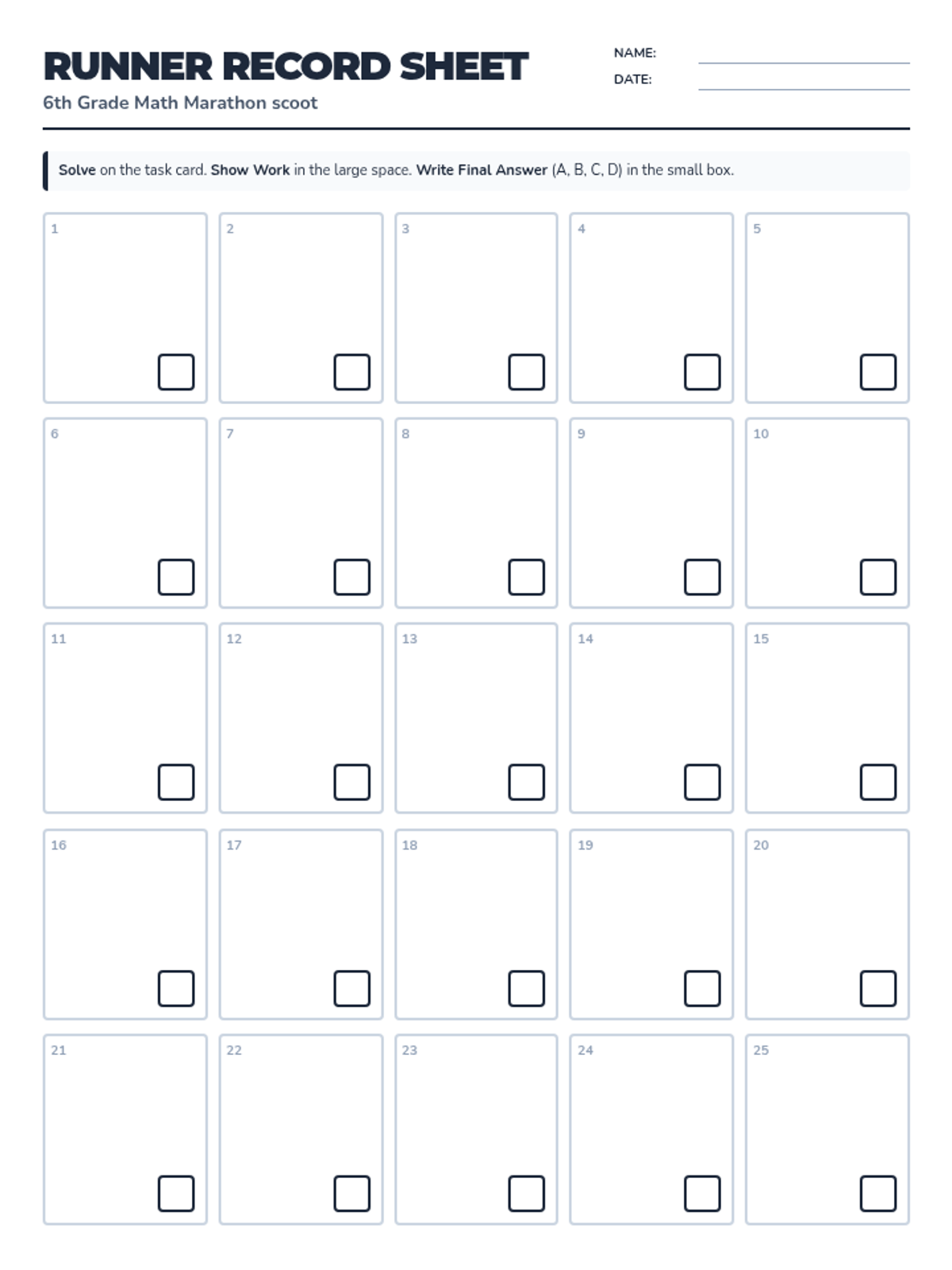
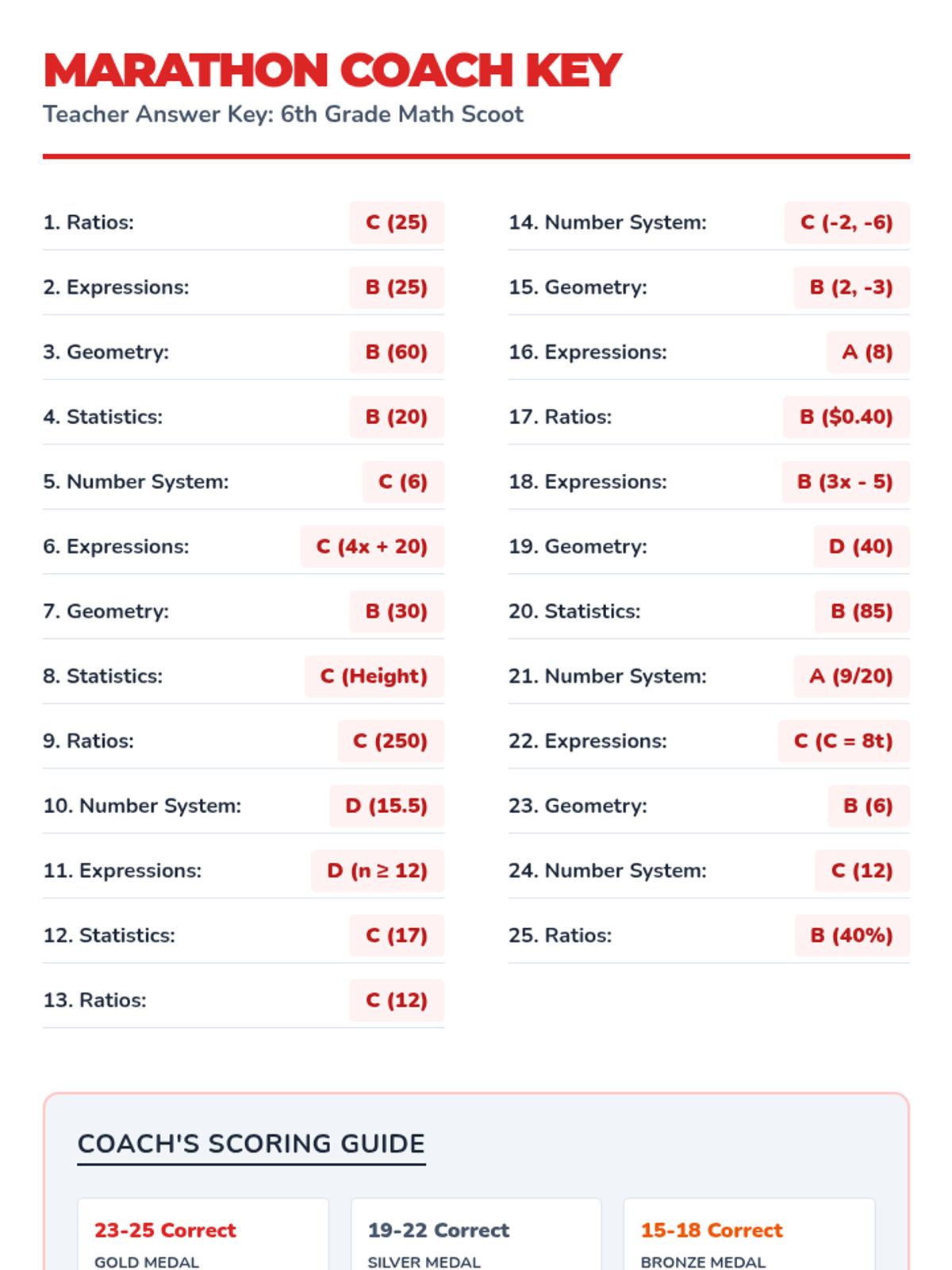
A comprehensive test prep activity using the Scoot game format, covering all 6th-grade math domains to prepare students for End of Grade (EOG) testing.
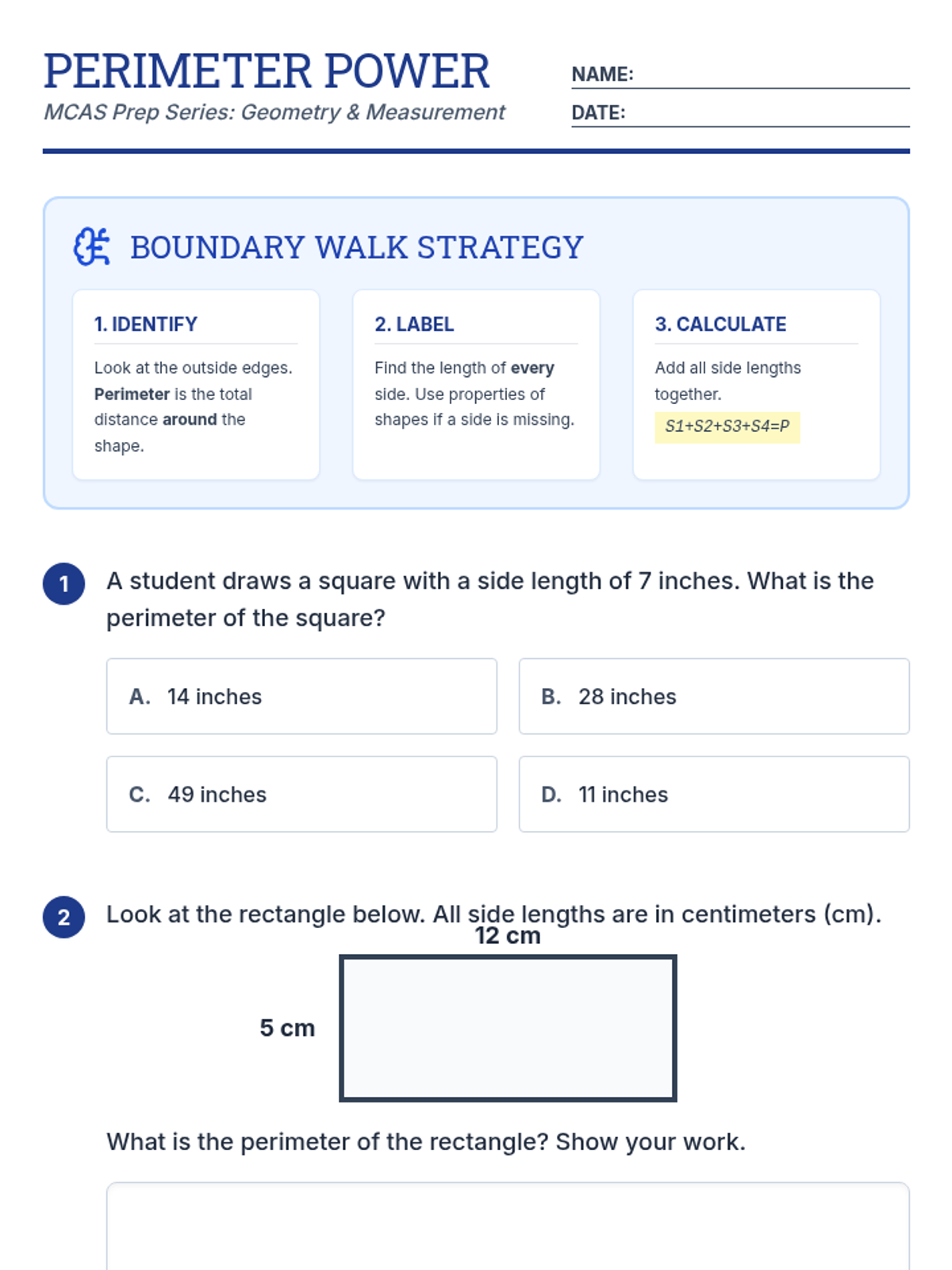
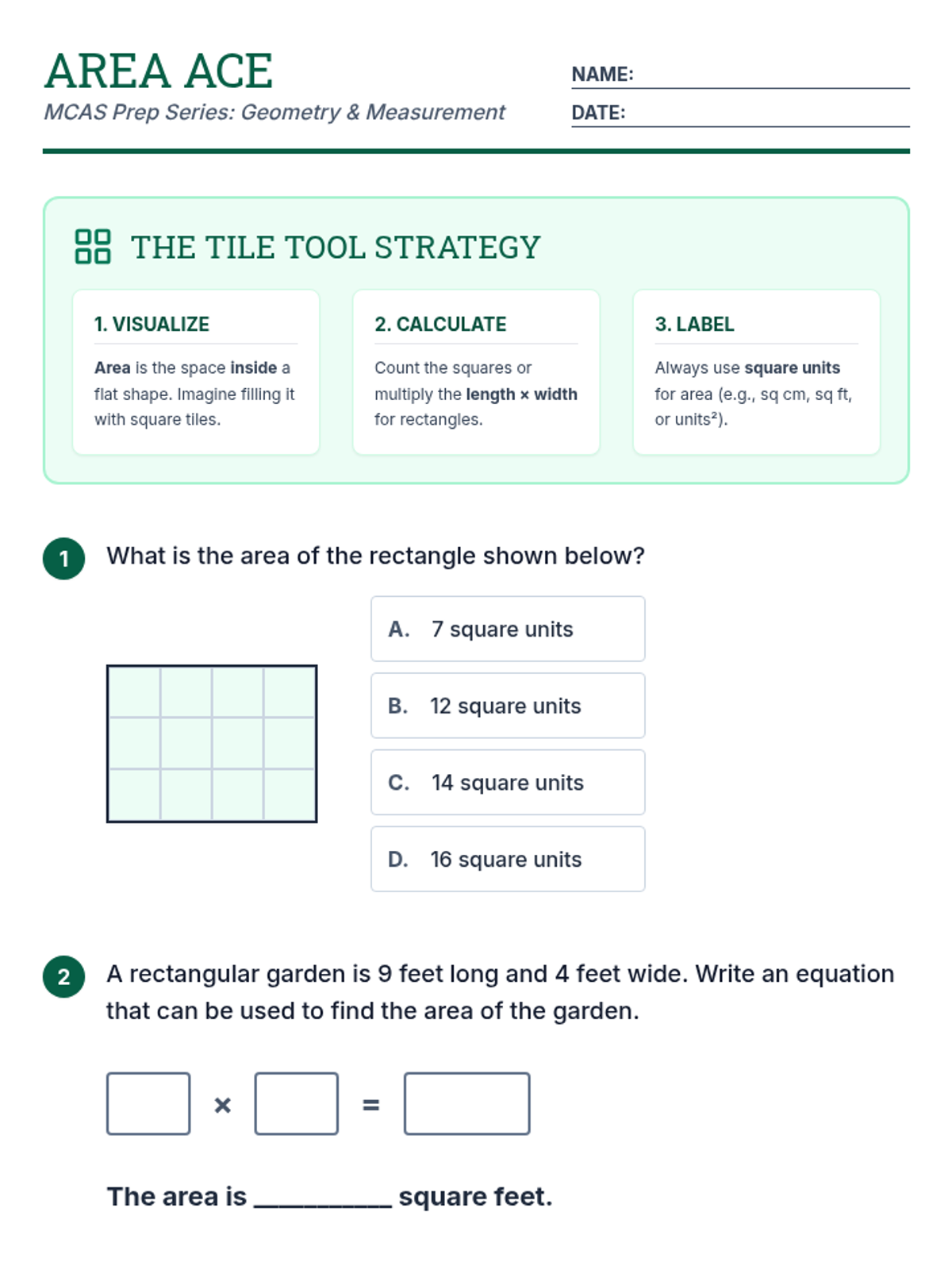
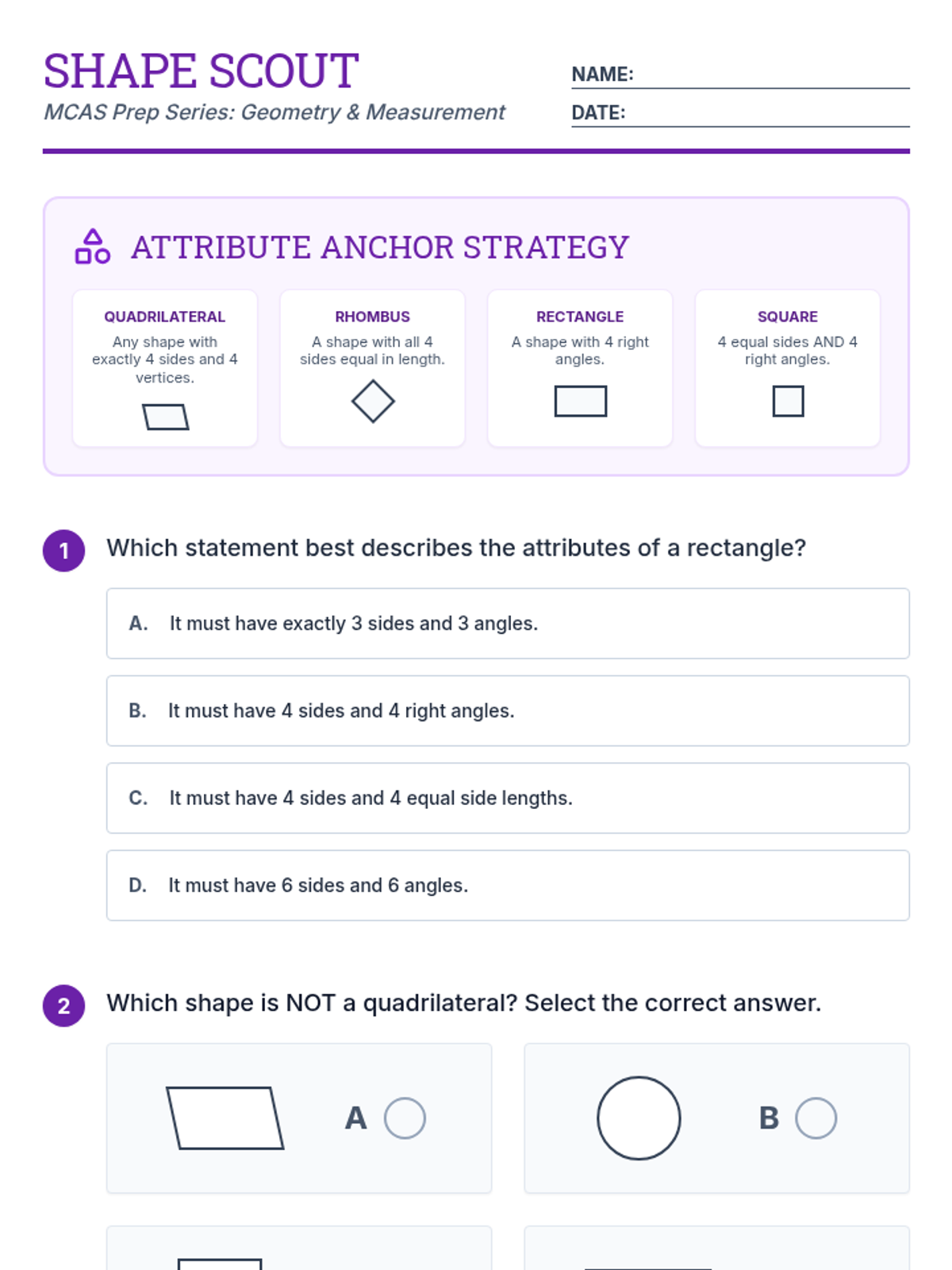
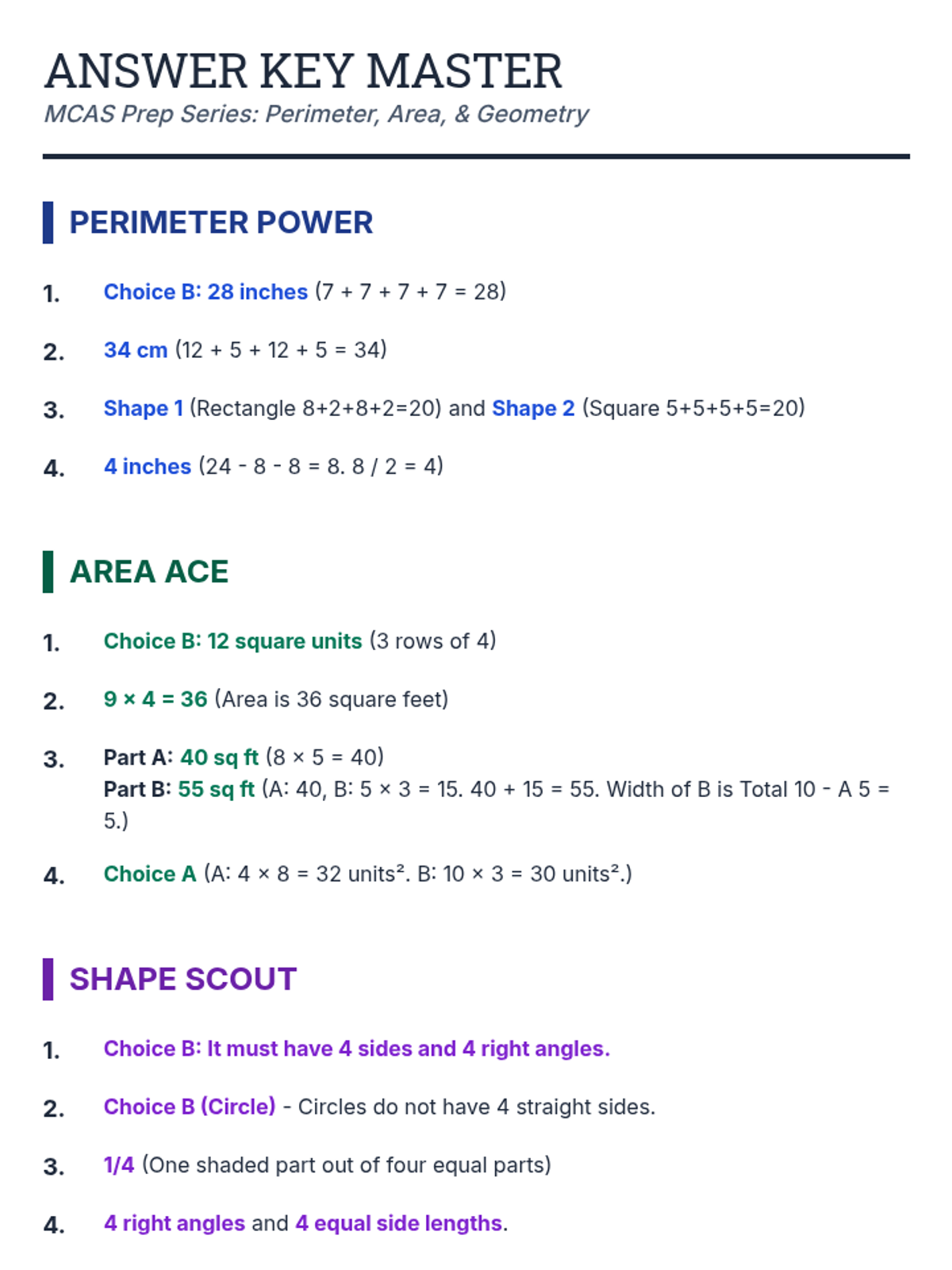
A comprehensive review unit focusing on Grade 3 MCAS standards for Area, Perimeter, and Geometry. This lesson includes practice worksheets with built-in strategy organizers to help students master common test-prep challenges.
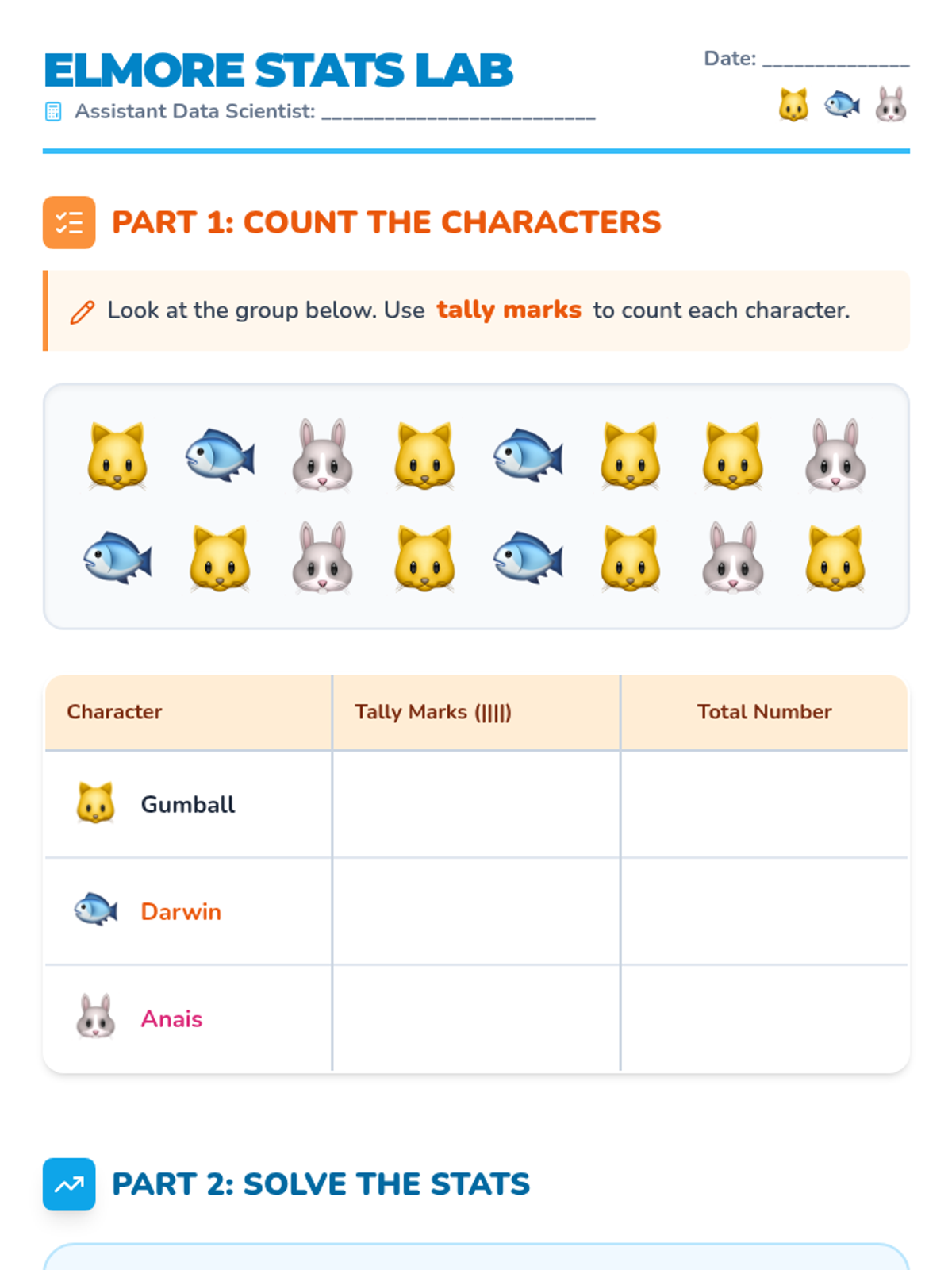
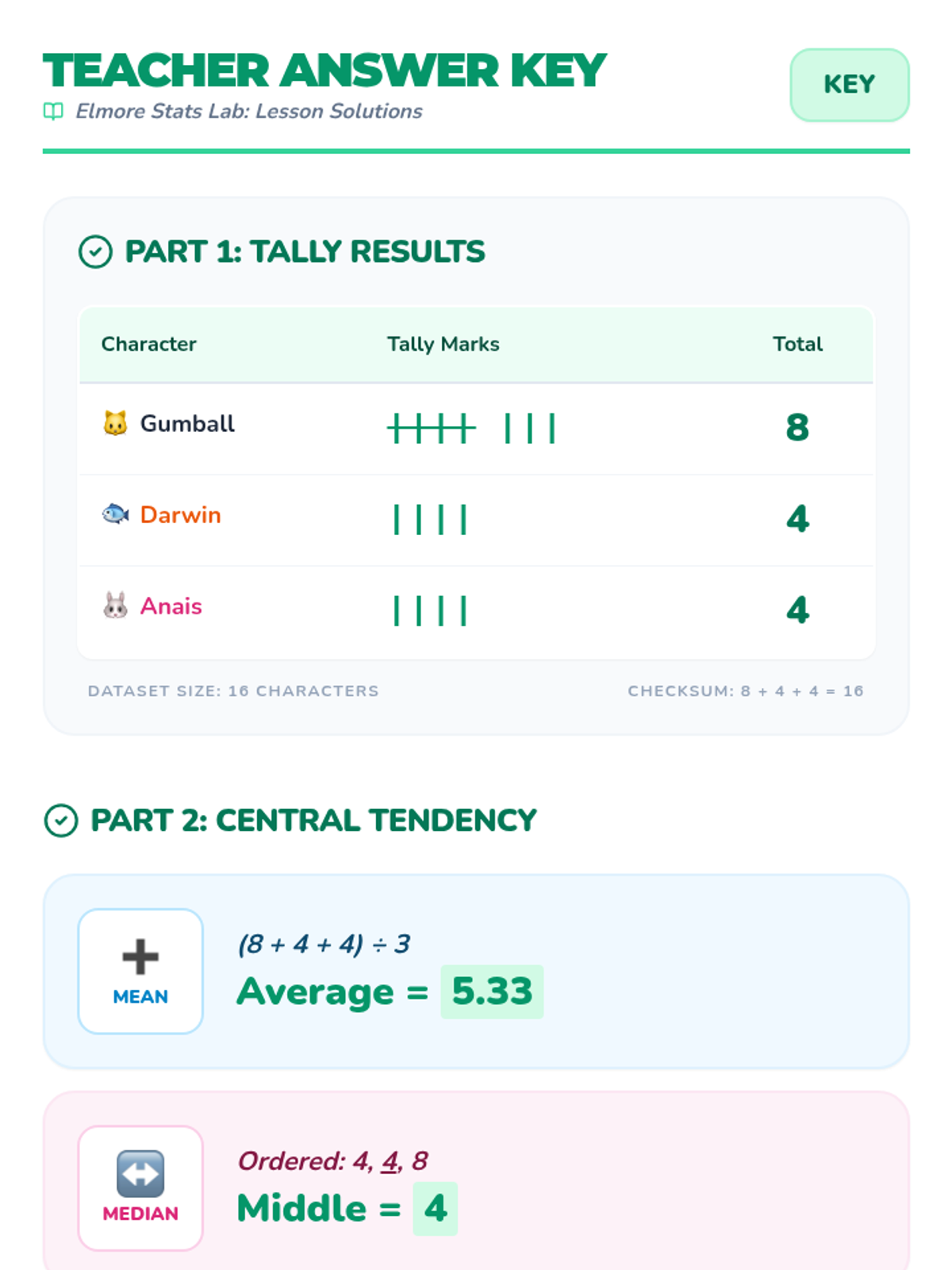
A high-interest statistics lesson themed around the world of Elmore, featuring data collection, central tendency, and probability with visual supports for diverse learners.
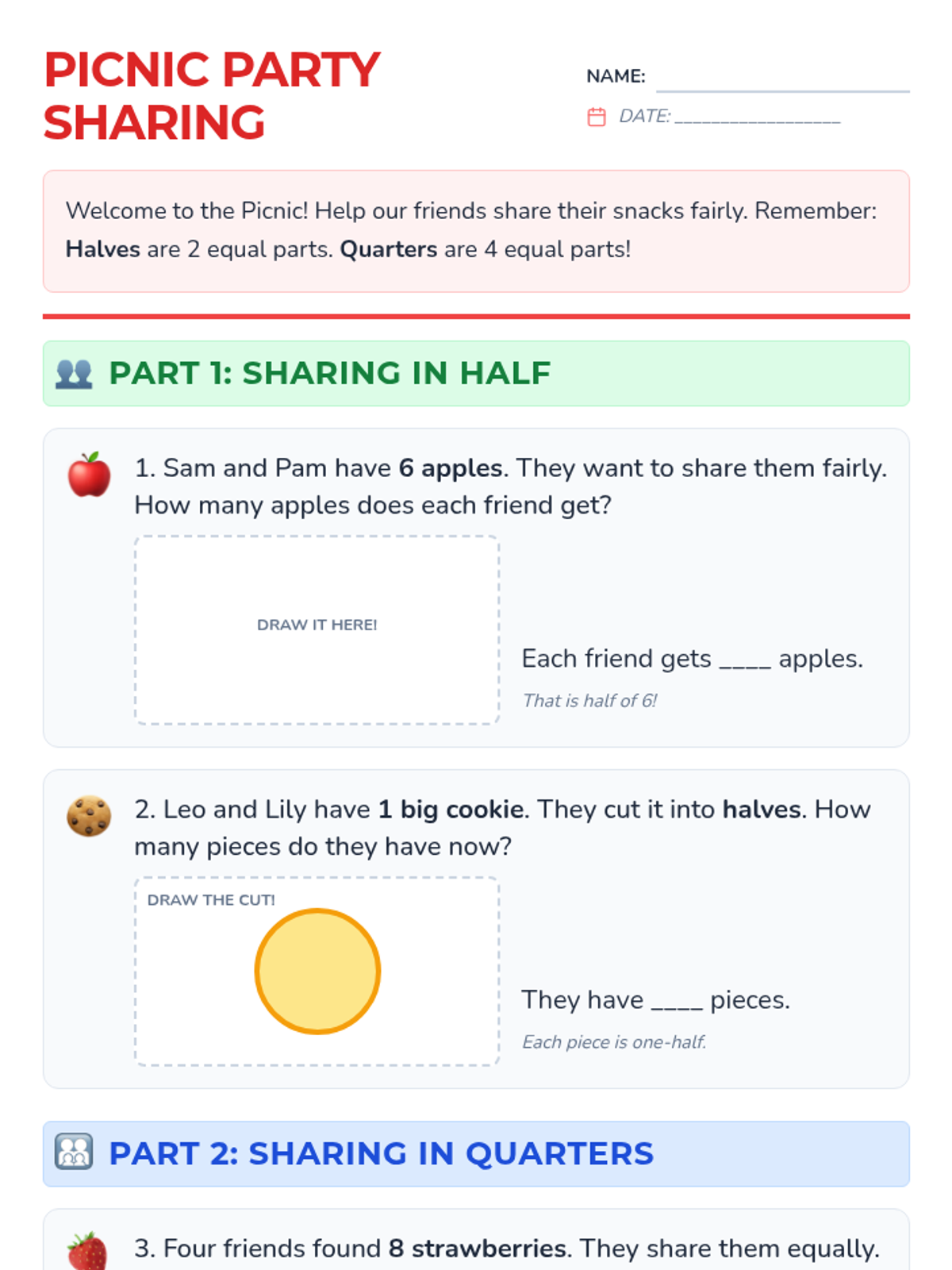
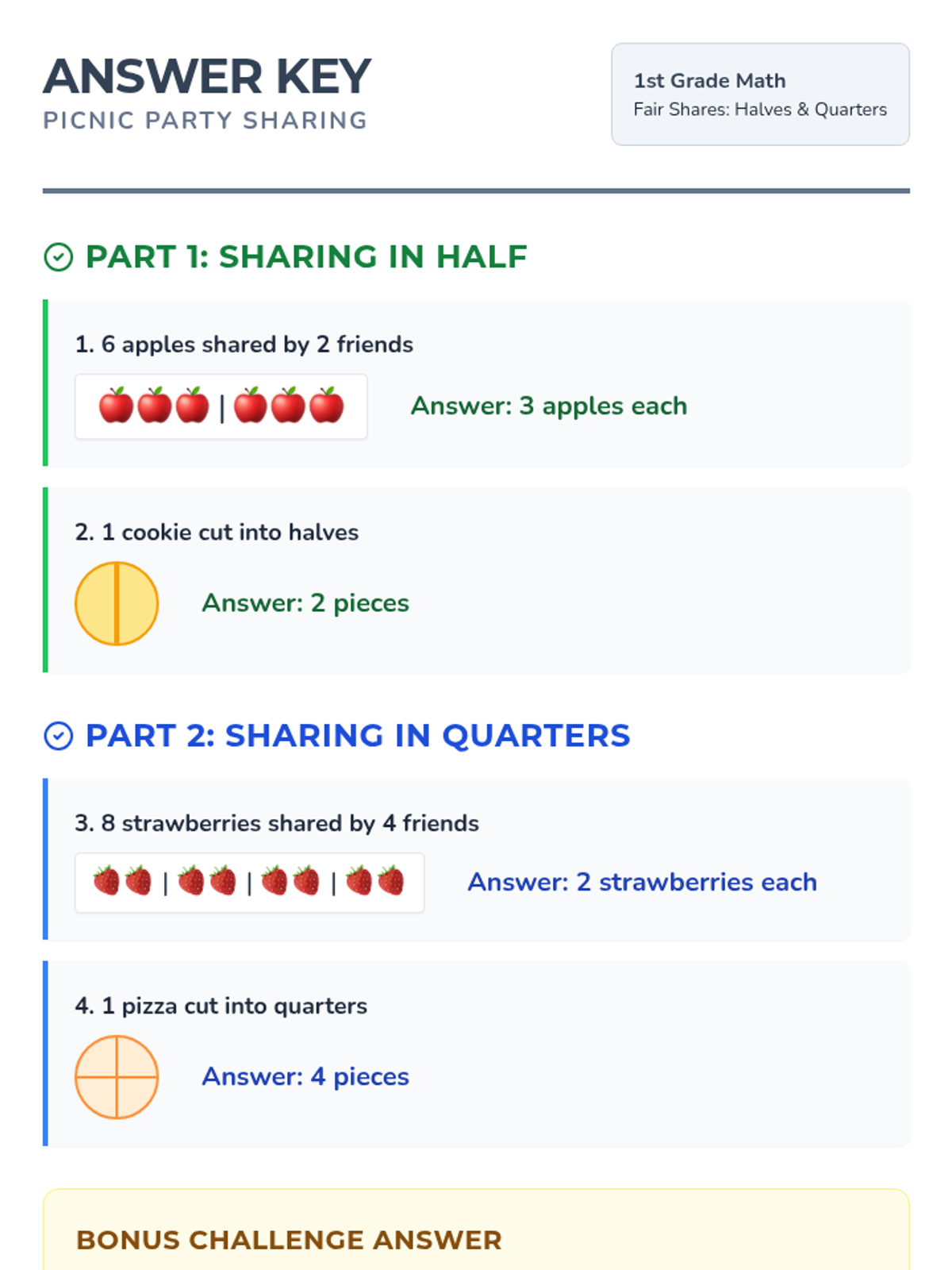
A hands-on introduction to fair sharing for first graders, focusing on dividing sets and items into halves and quarters.
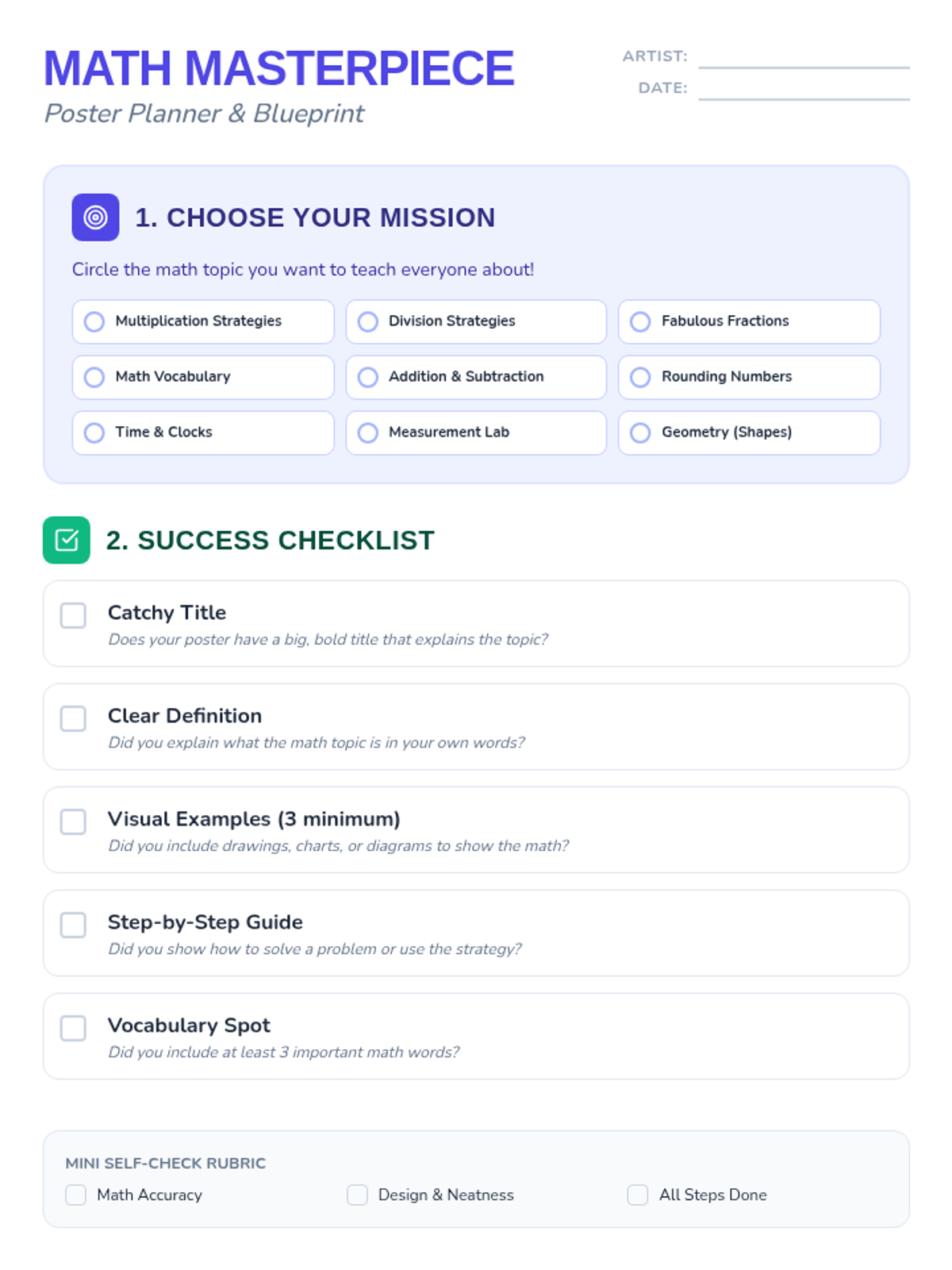
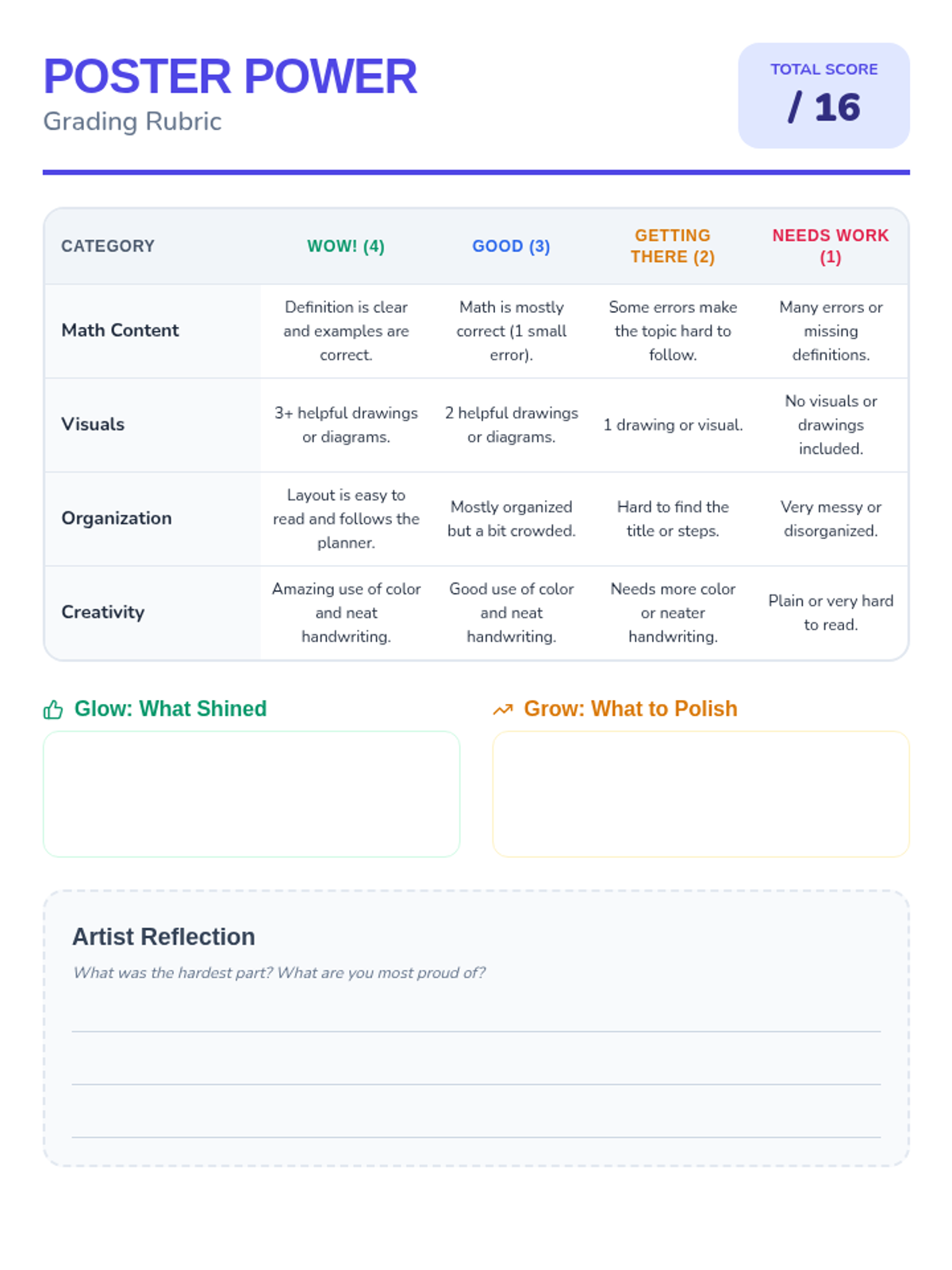
A creative project where students design and create a math poster to showcase their understanding of key 3rd-grade concepts like multiplication, fractions, and geometry.
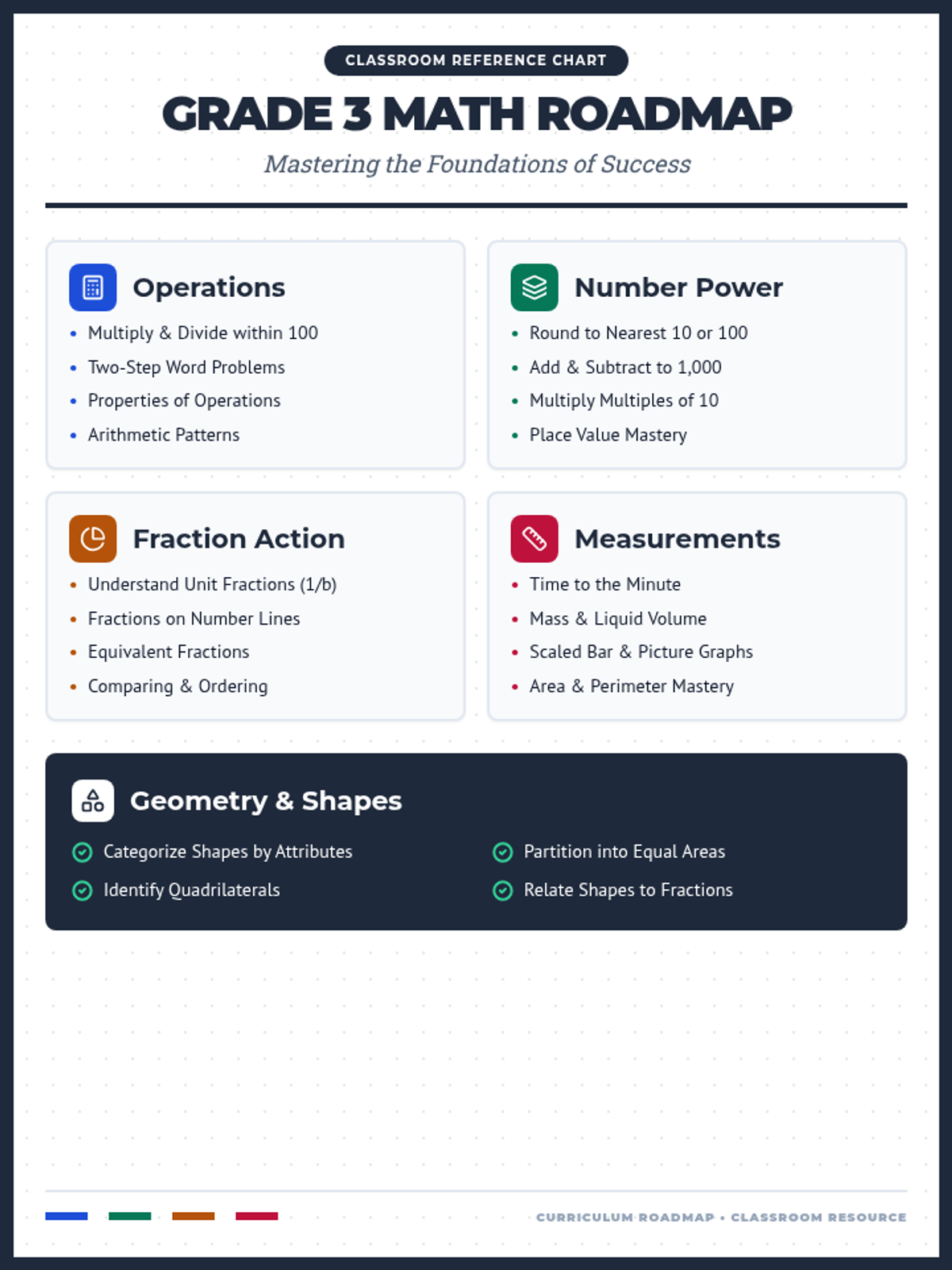
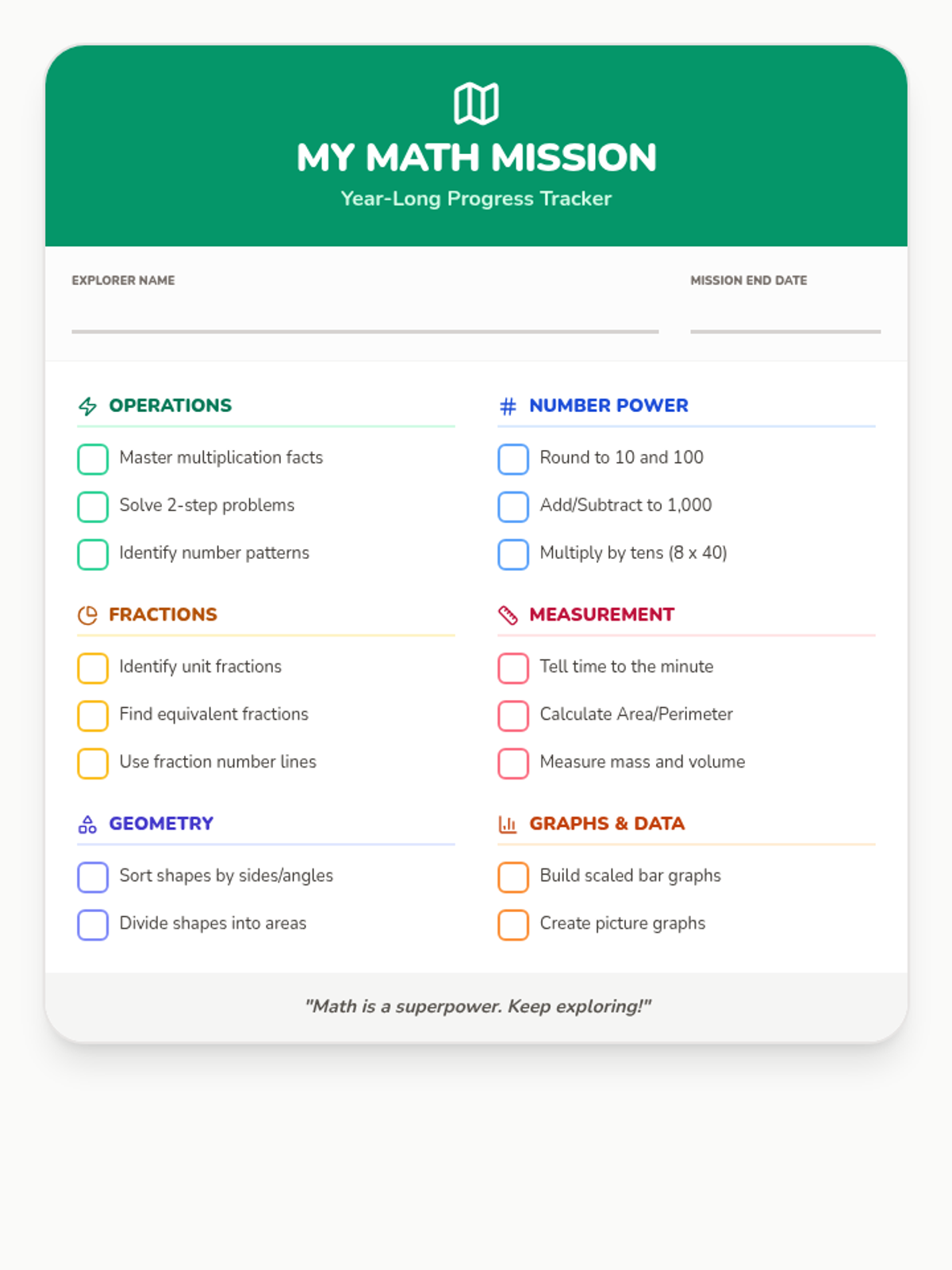
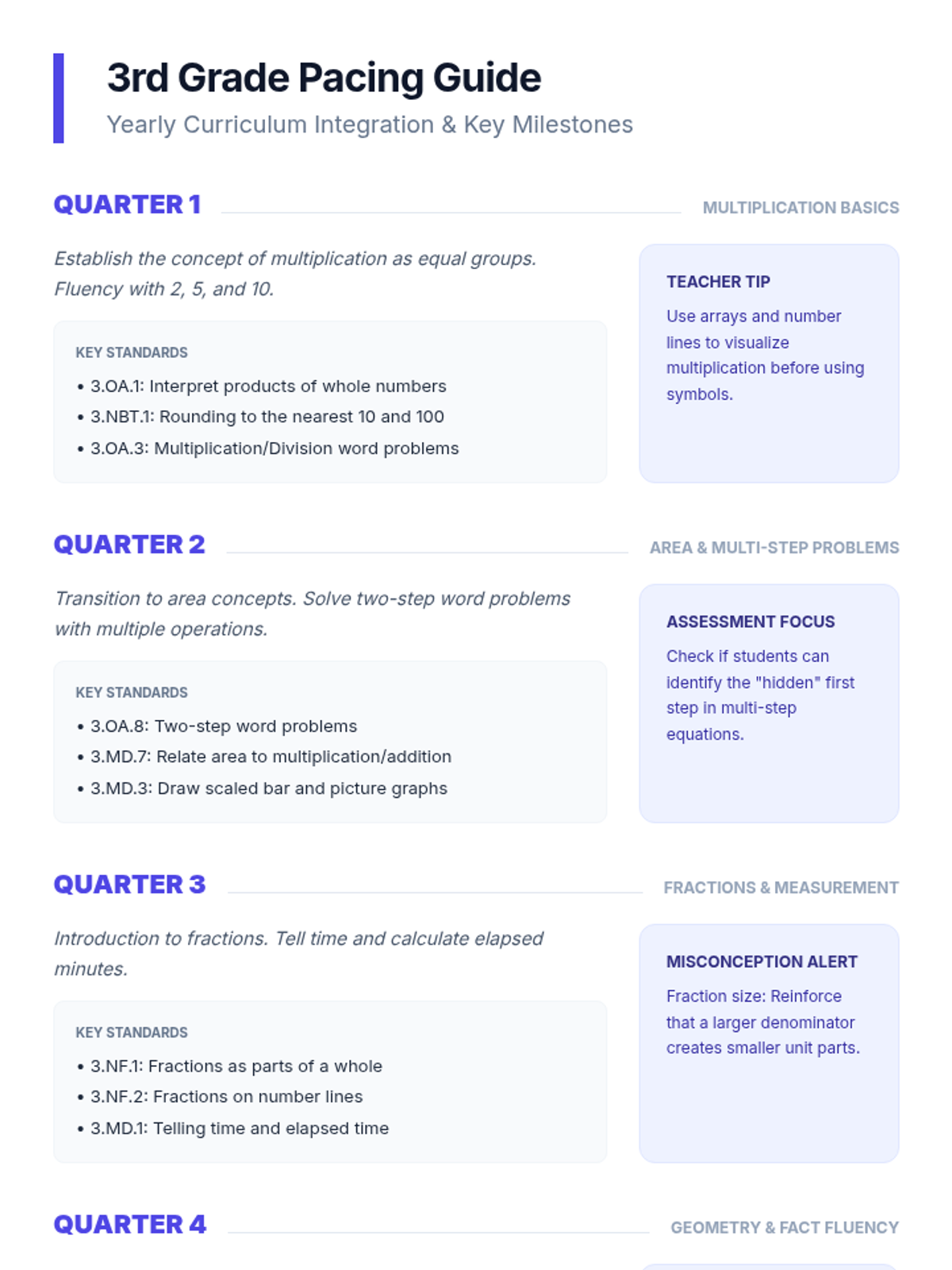
A comprehensive set of visual aids and planning documents for the Grade 3 mathematics curriculum, designed to provide students and teachers with a clear roadmap for the year ahead.
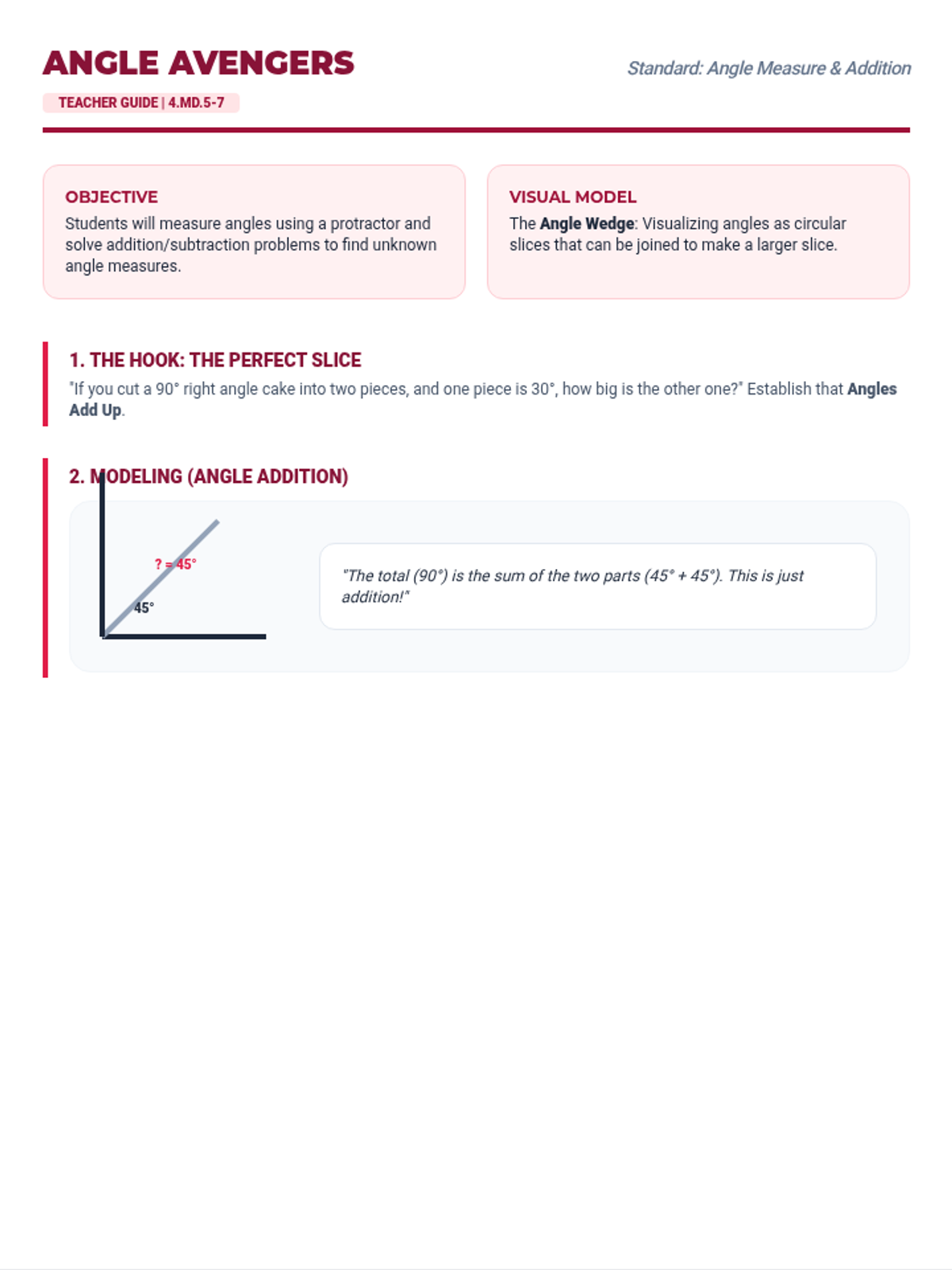
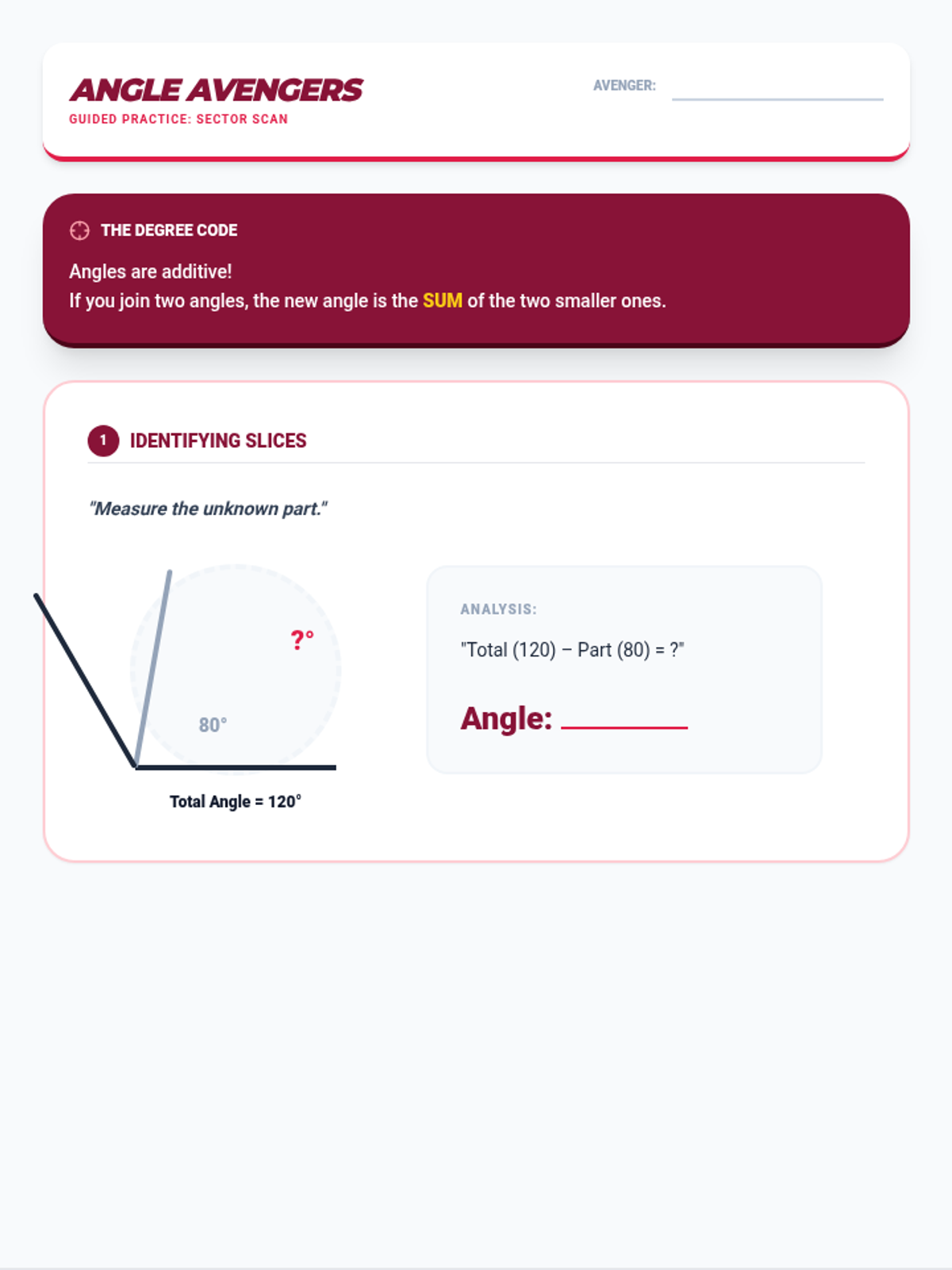
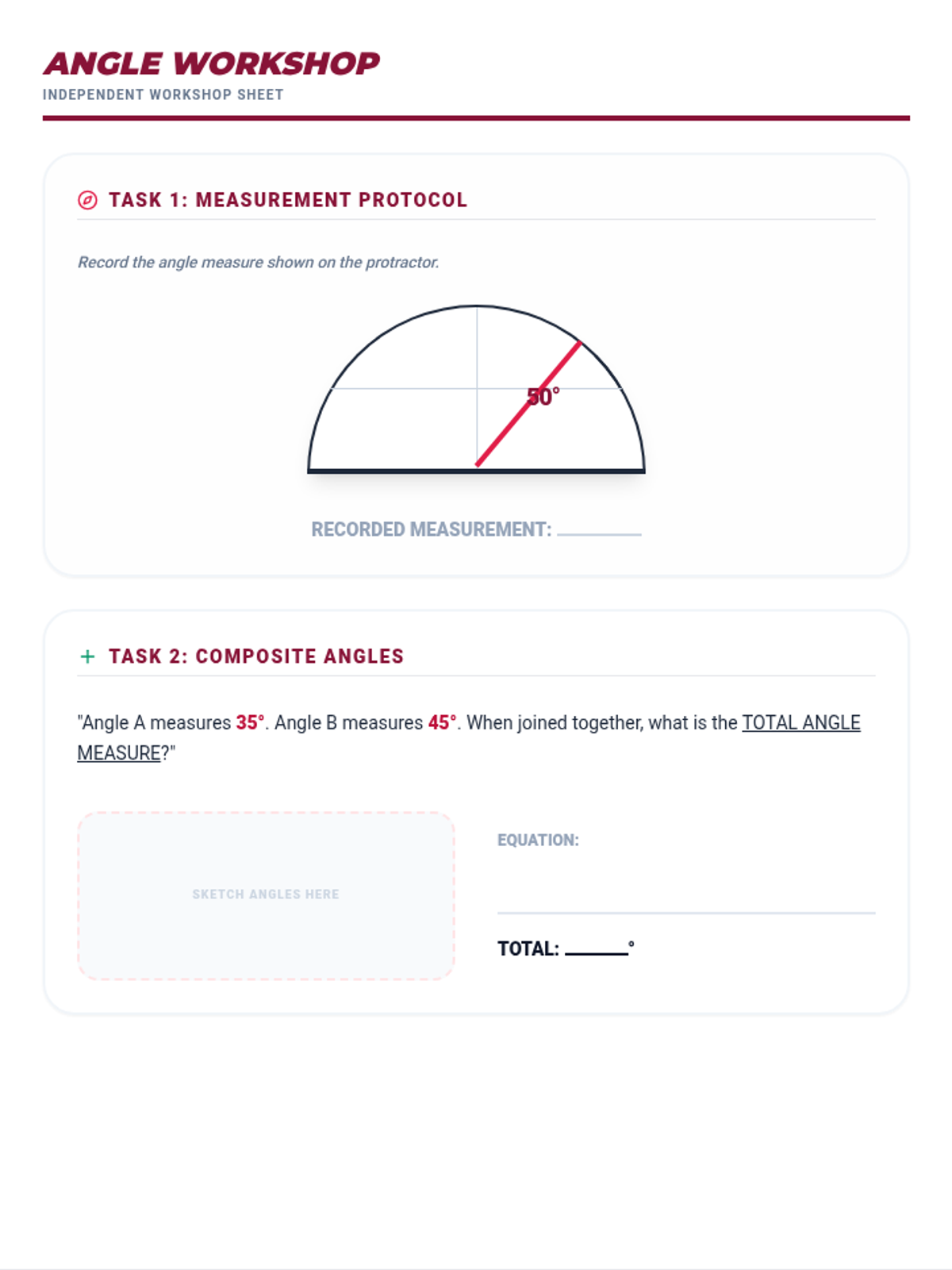
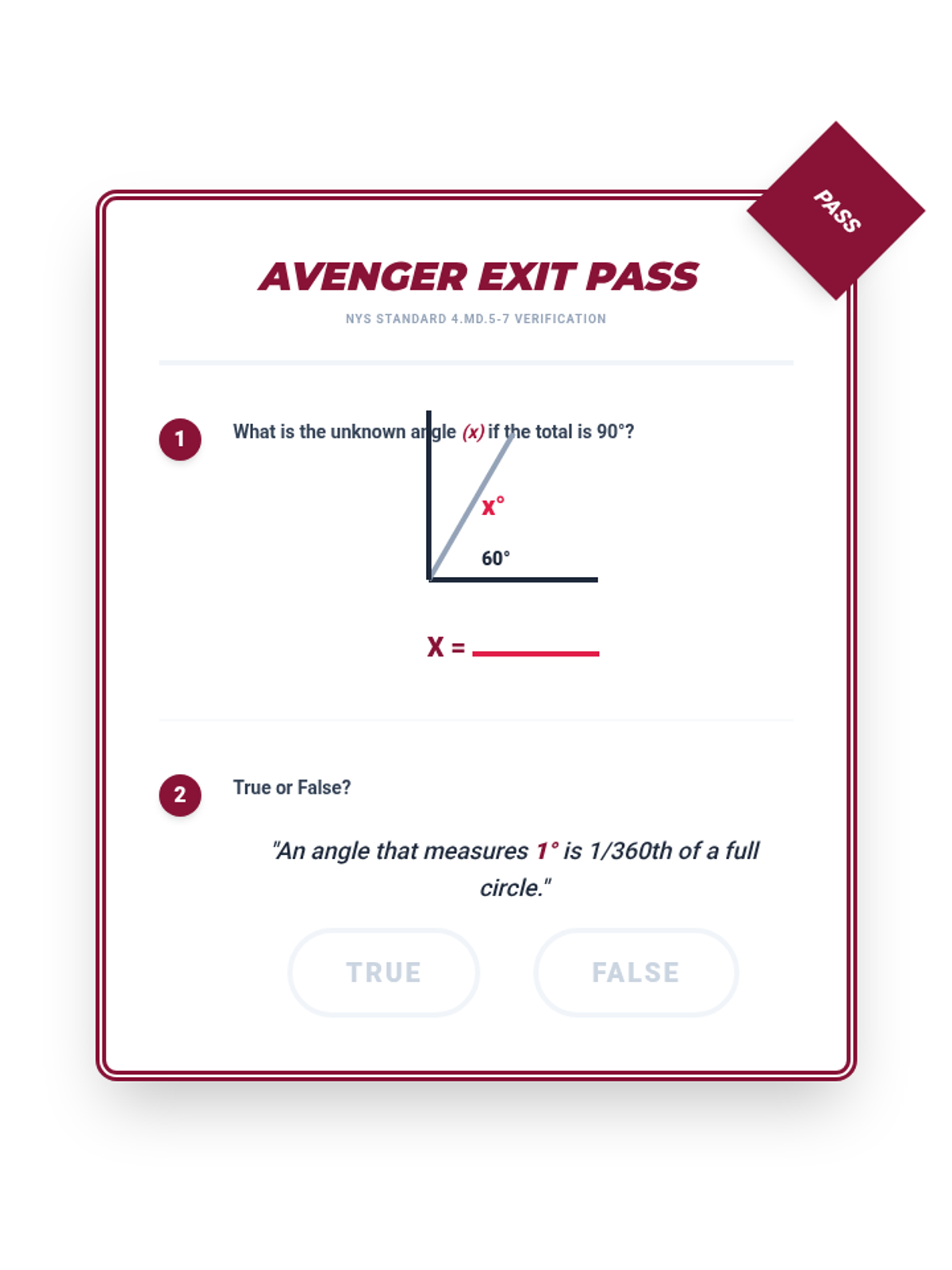
Tier 2 reteach for standards 4.MD.5, 4.MD.6, & 4.MD.7: Angle measurement with protractors and additive angle properties.
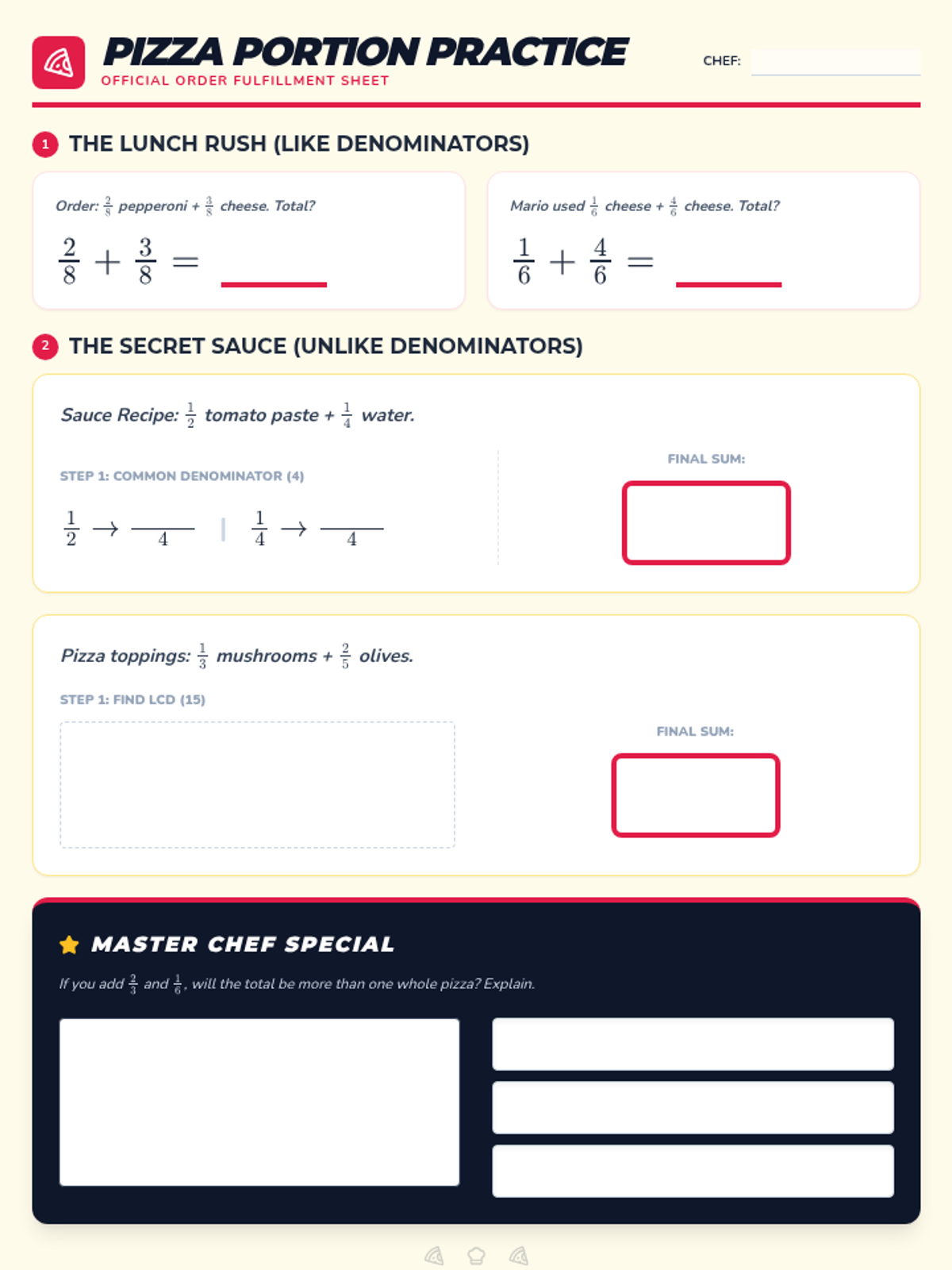
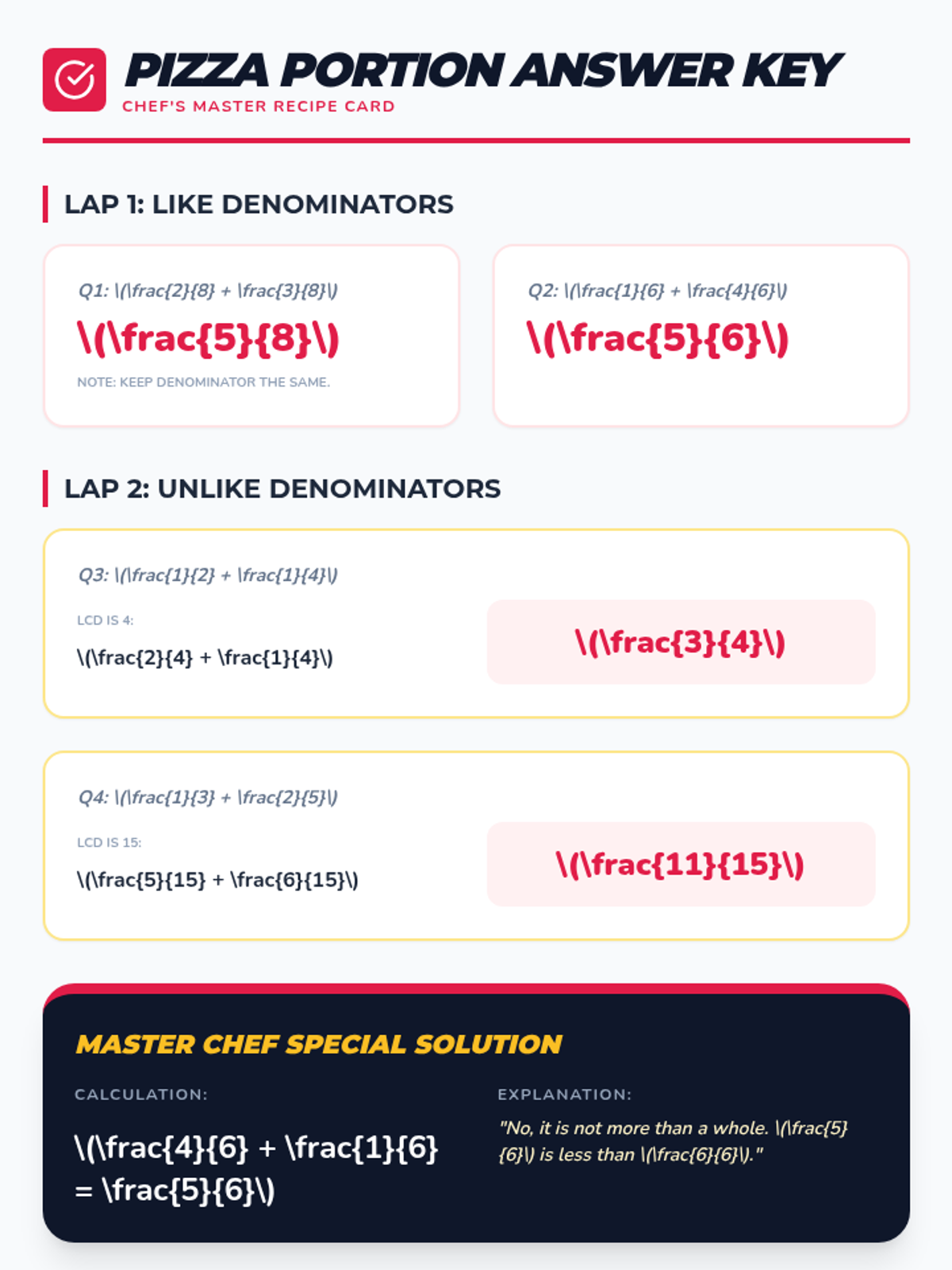
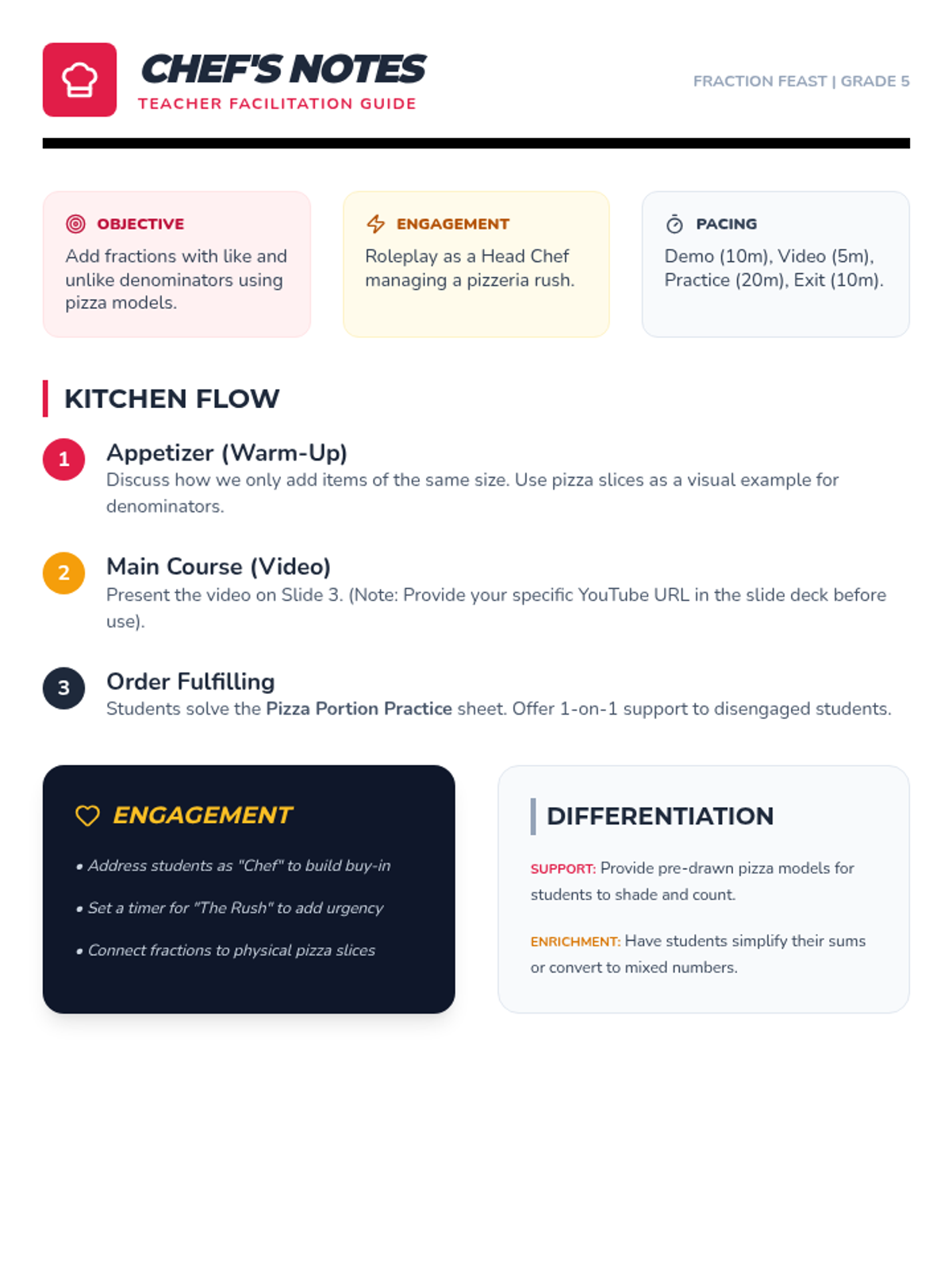
An engaging, hands-on lesson for 5th graders on adding fractions with like and unlike denominators. Uses a pizzeria theme to make abstract concepts concrete and relatable for students who struggle with engagement.
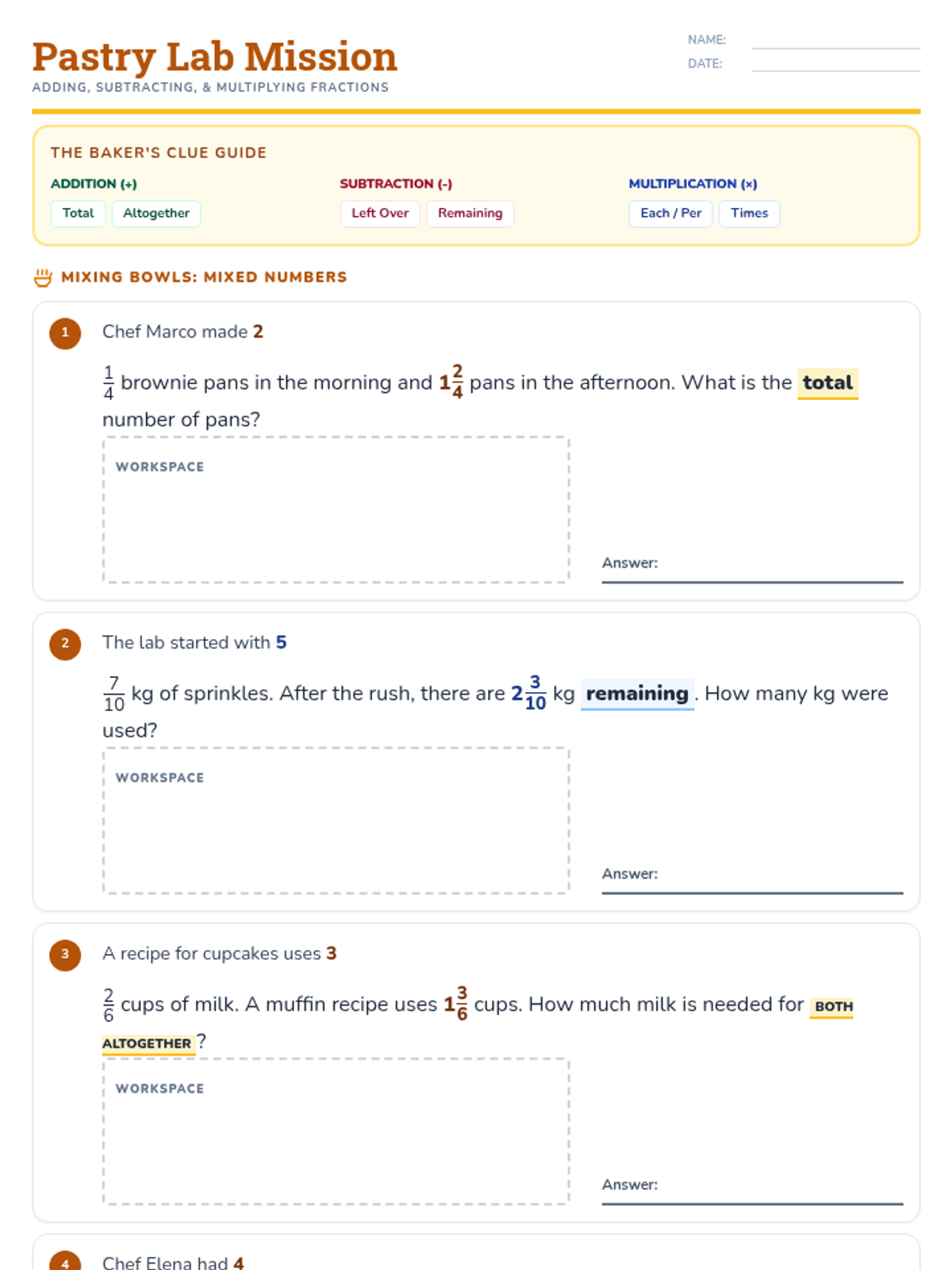
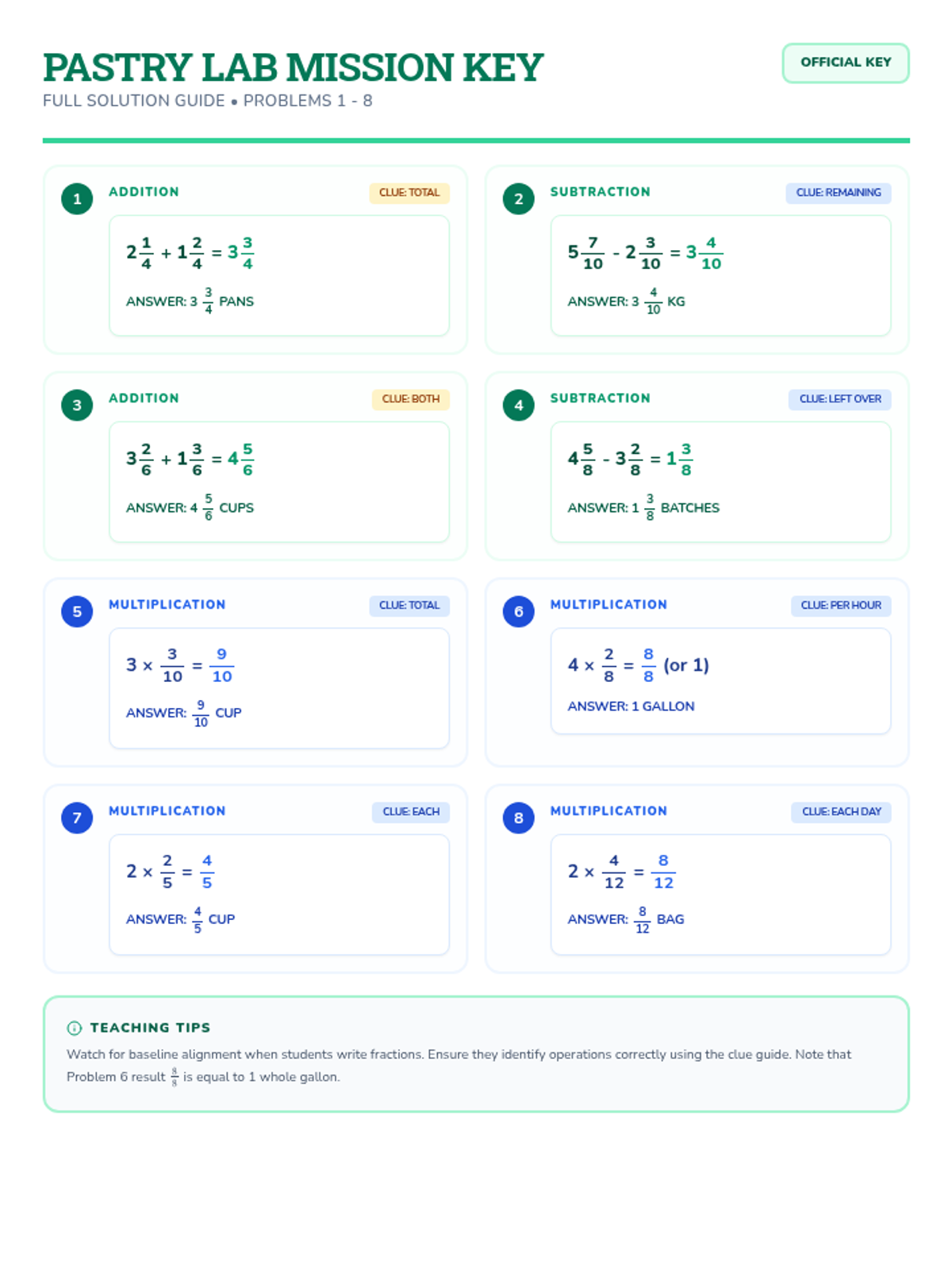
A lesson on adding and subtracting mixed numbers with like denominators (no regrouping), featuring a Pastry Lab theme to help students visualize fractions through baking recipes.
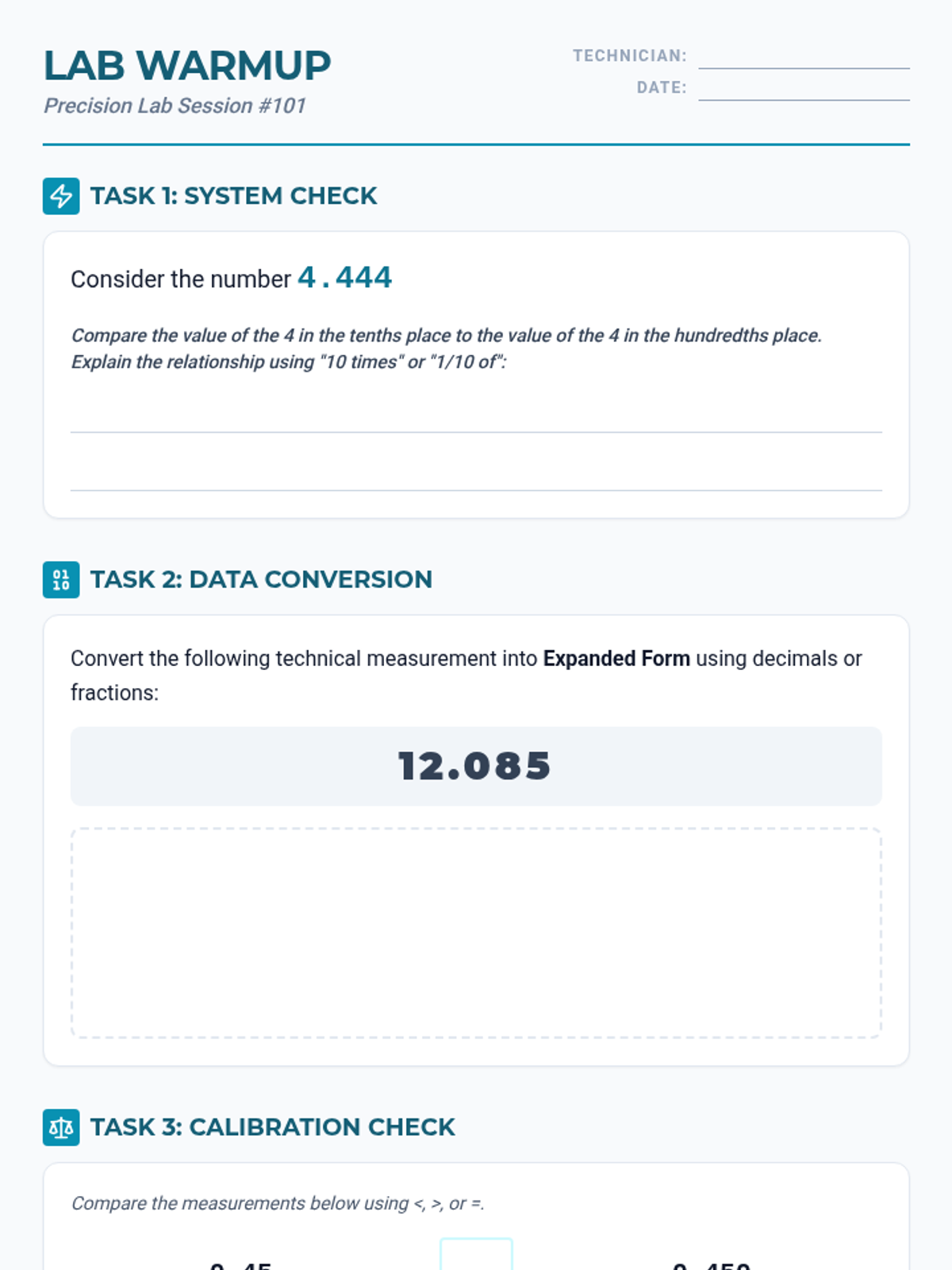
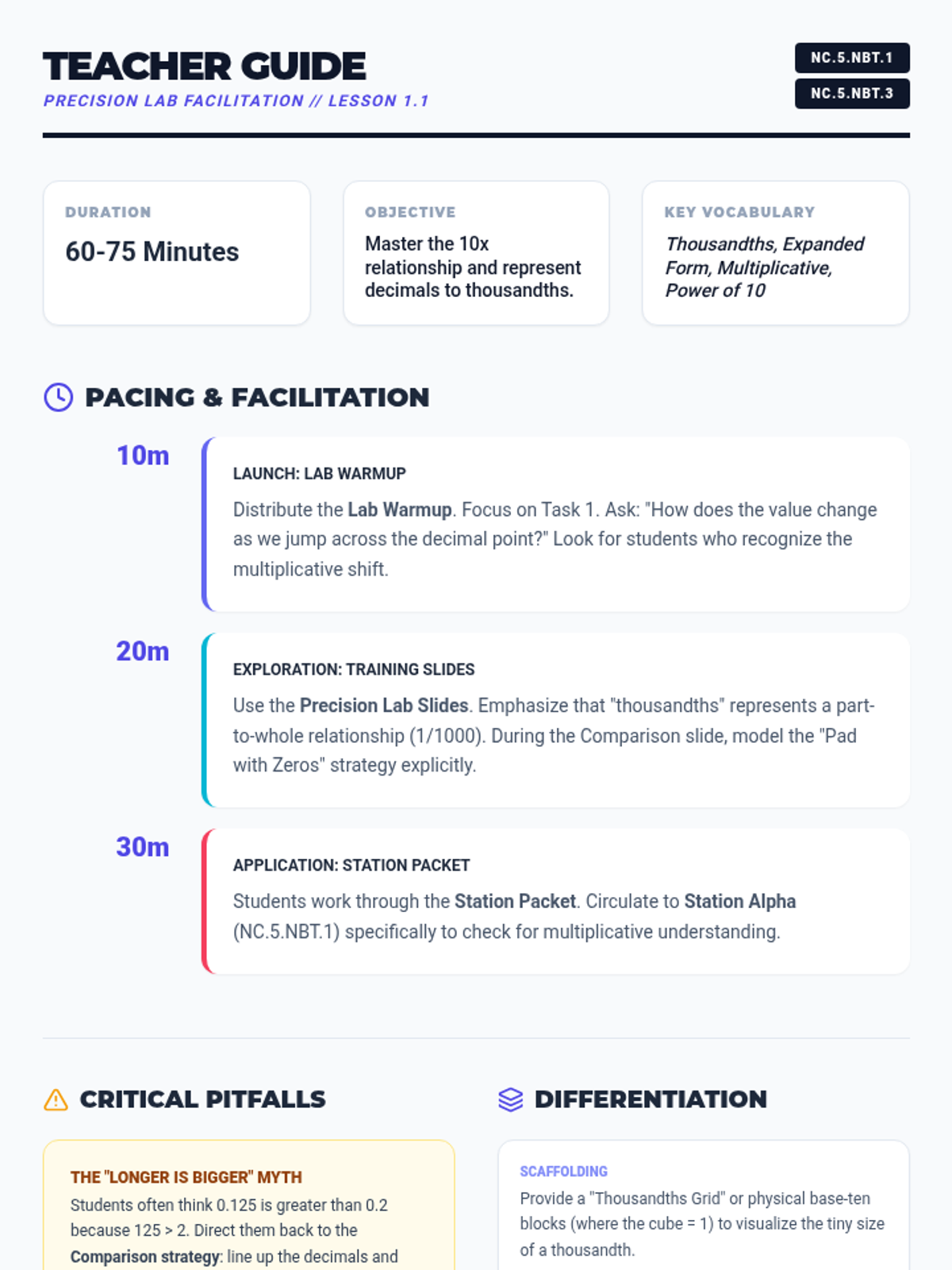
An introductory lesson focused on the multiplicative relationship between place values and the formal representation of decimals through various forms and comparisons.
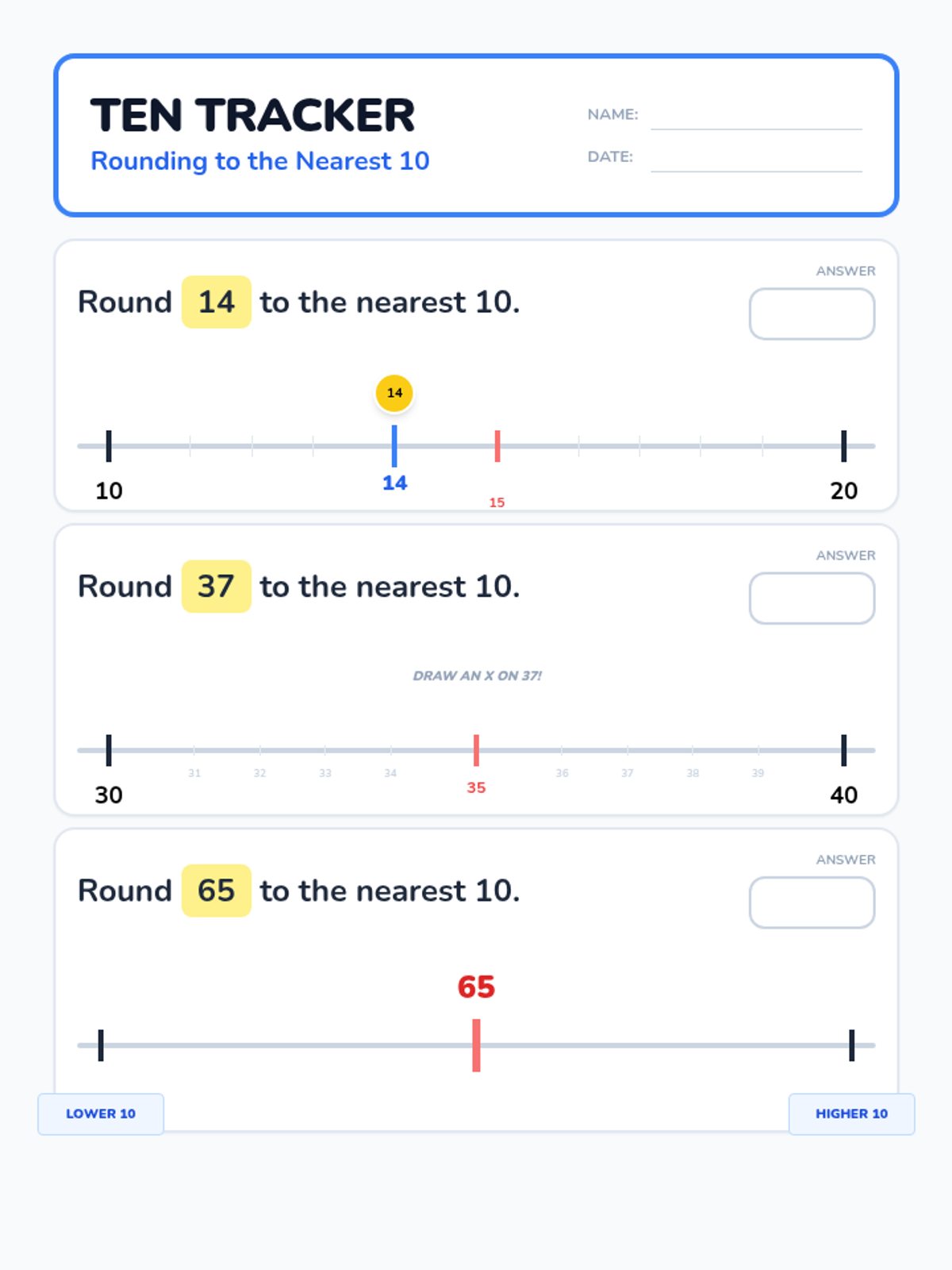
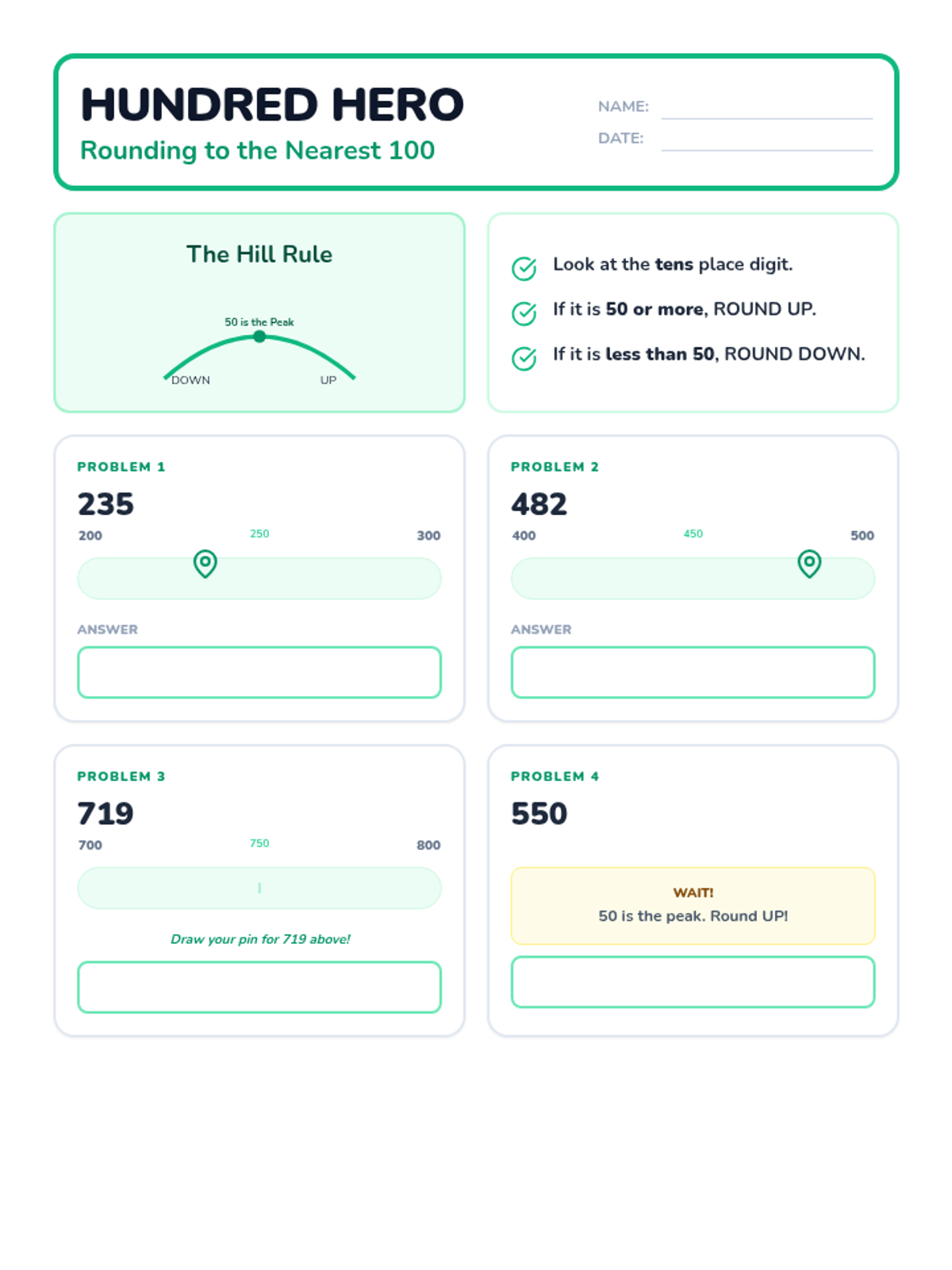
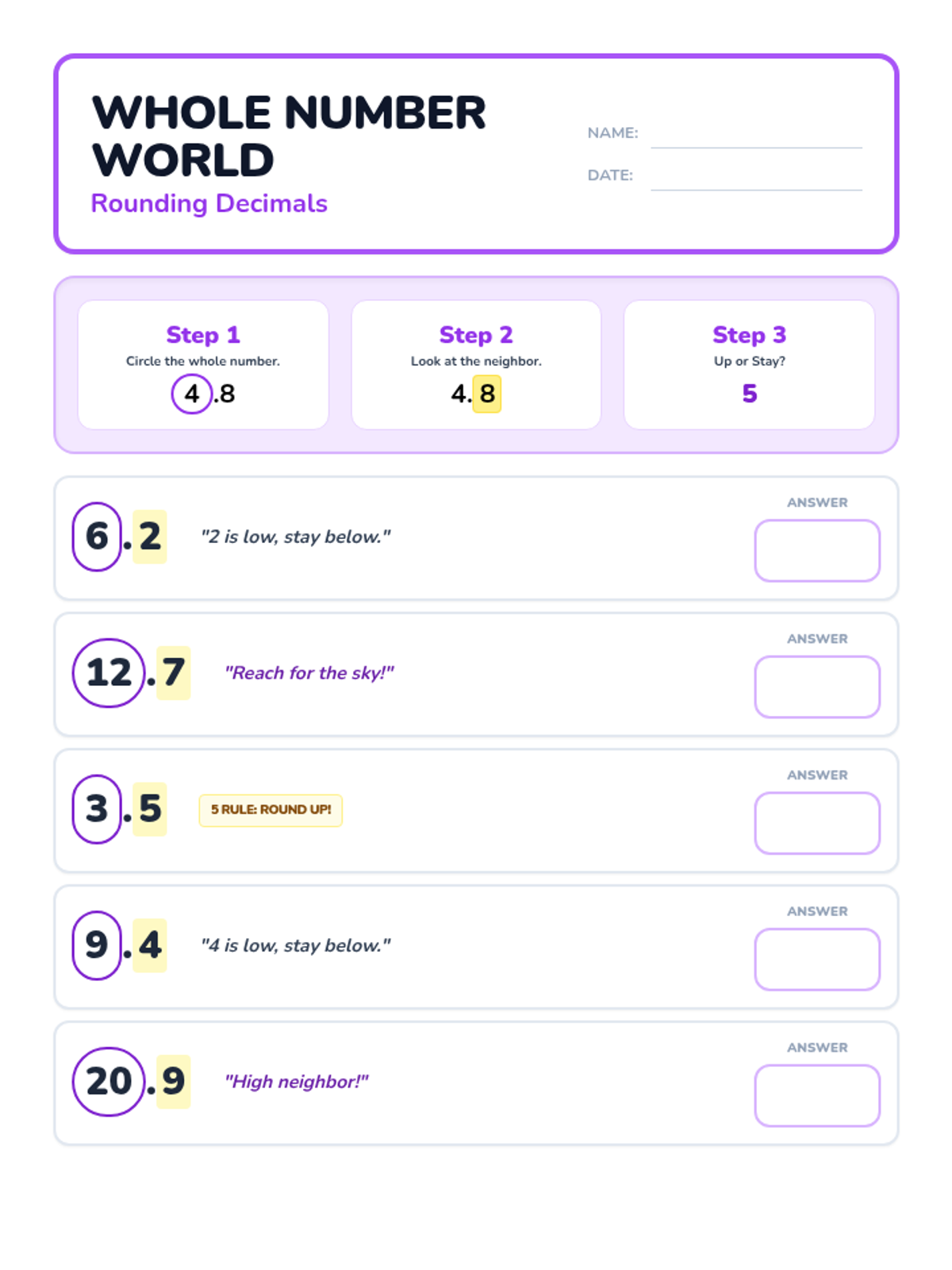
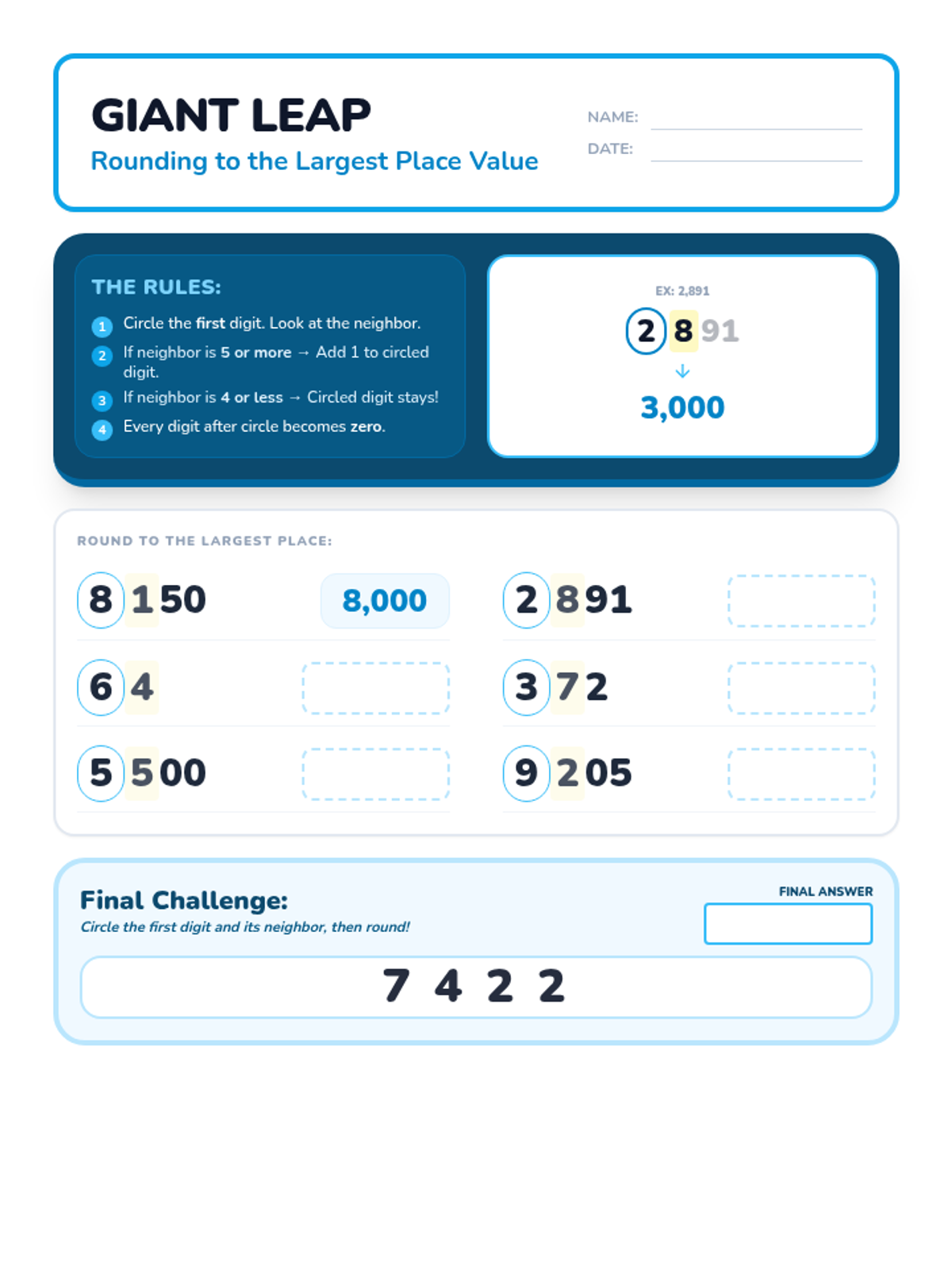
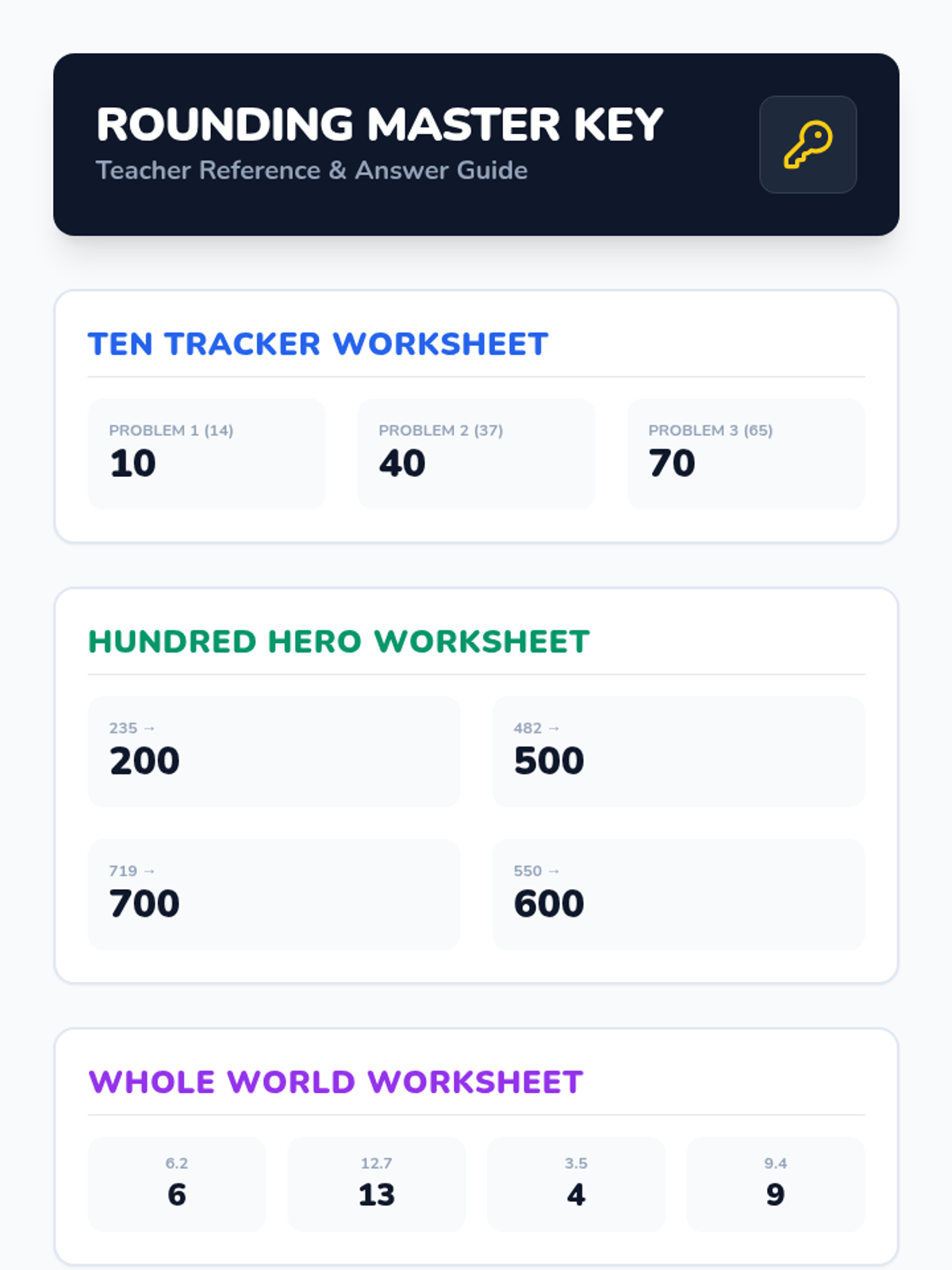
A comprehensive lesson on rounding numbers, specially designed for students with IEPs. Covers rounding to the nearest 10, 100, whole number, and largest place value using visual aids and scaffolded practice.
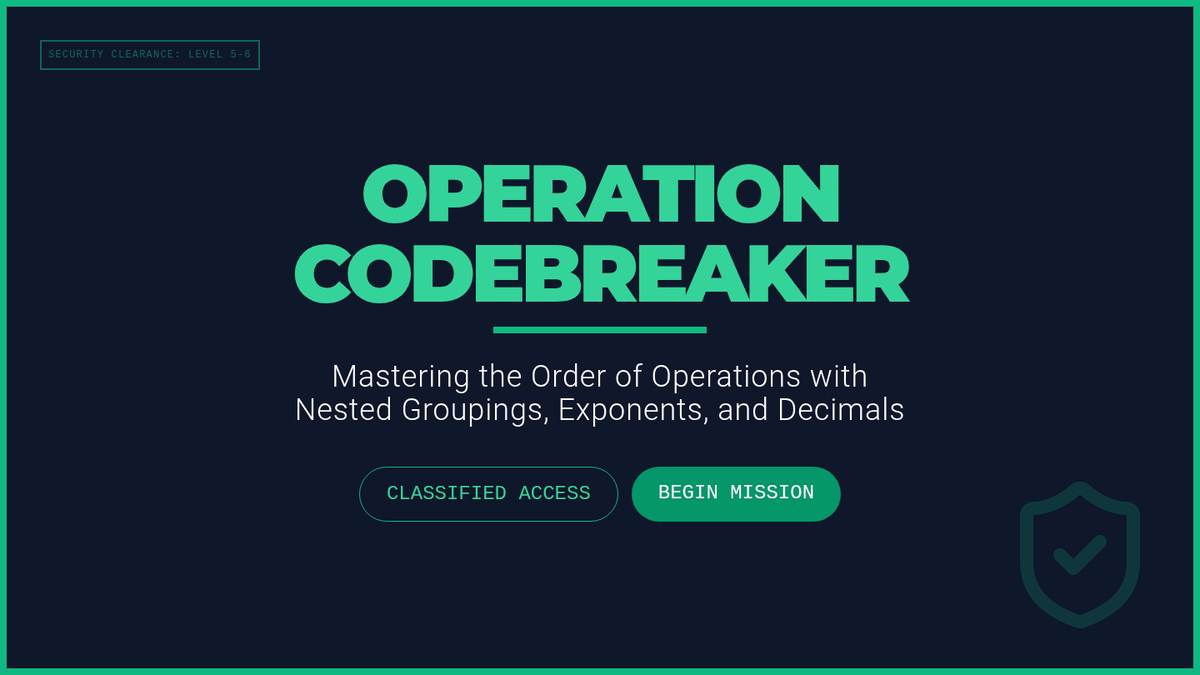
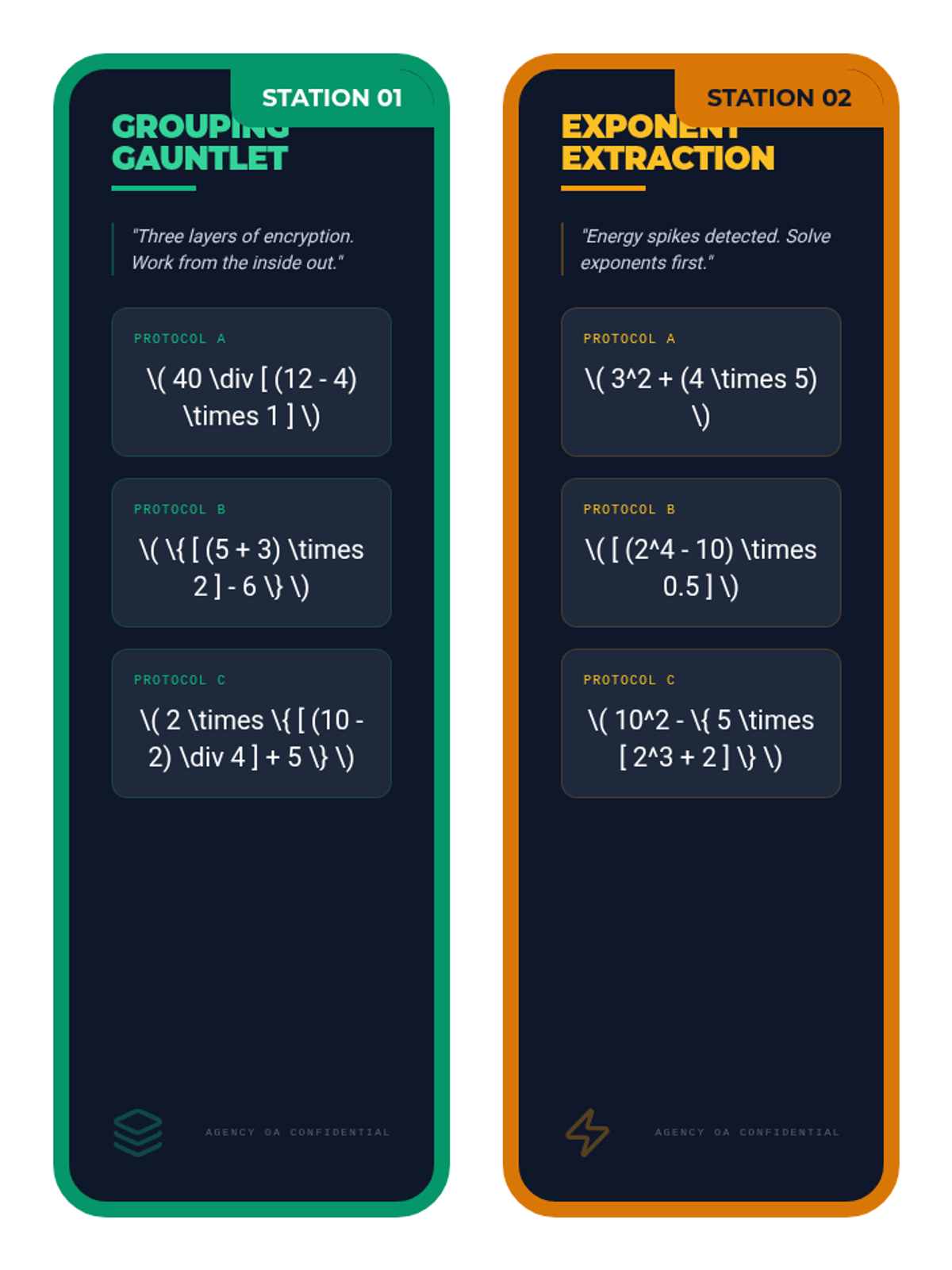
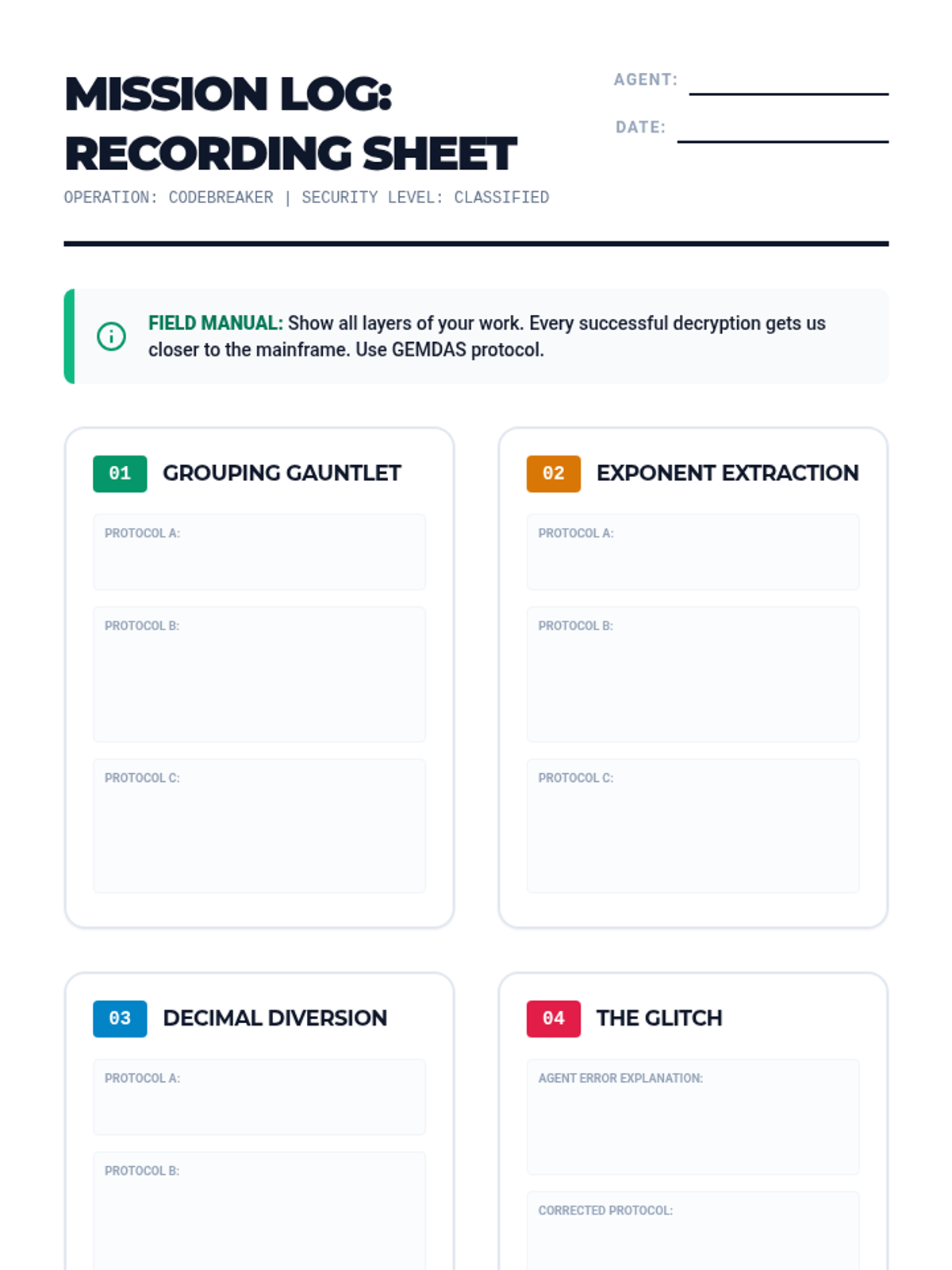
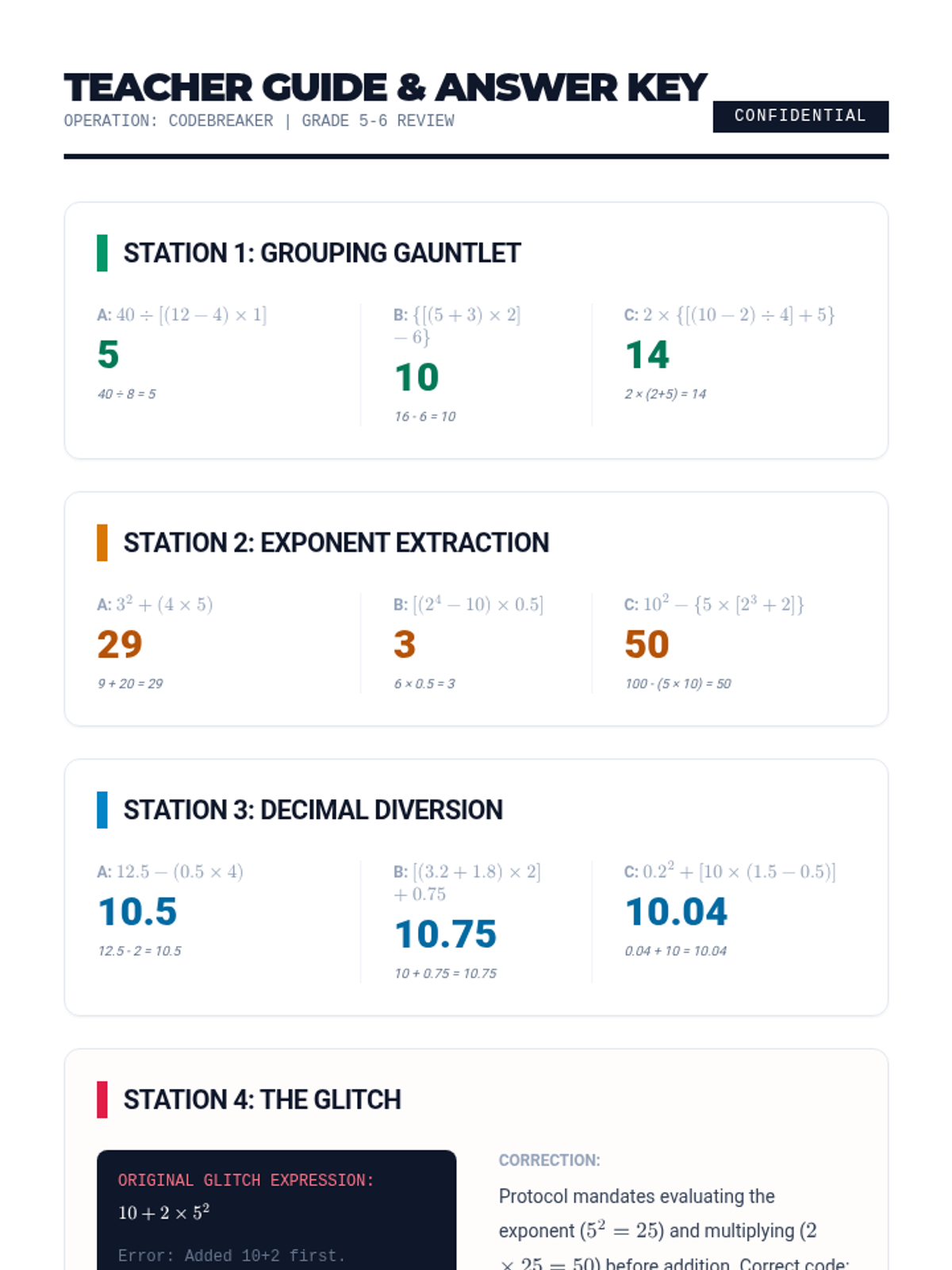
A high-energy, spy-themed review of the order of operations featuring nested groupings (parentheses, brackets, braces), exponents, and decimal operations. Students take on the role of codebreakers to solve complex numerical missions.
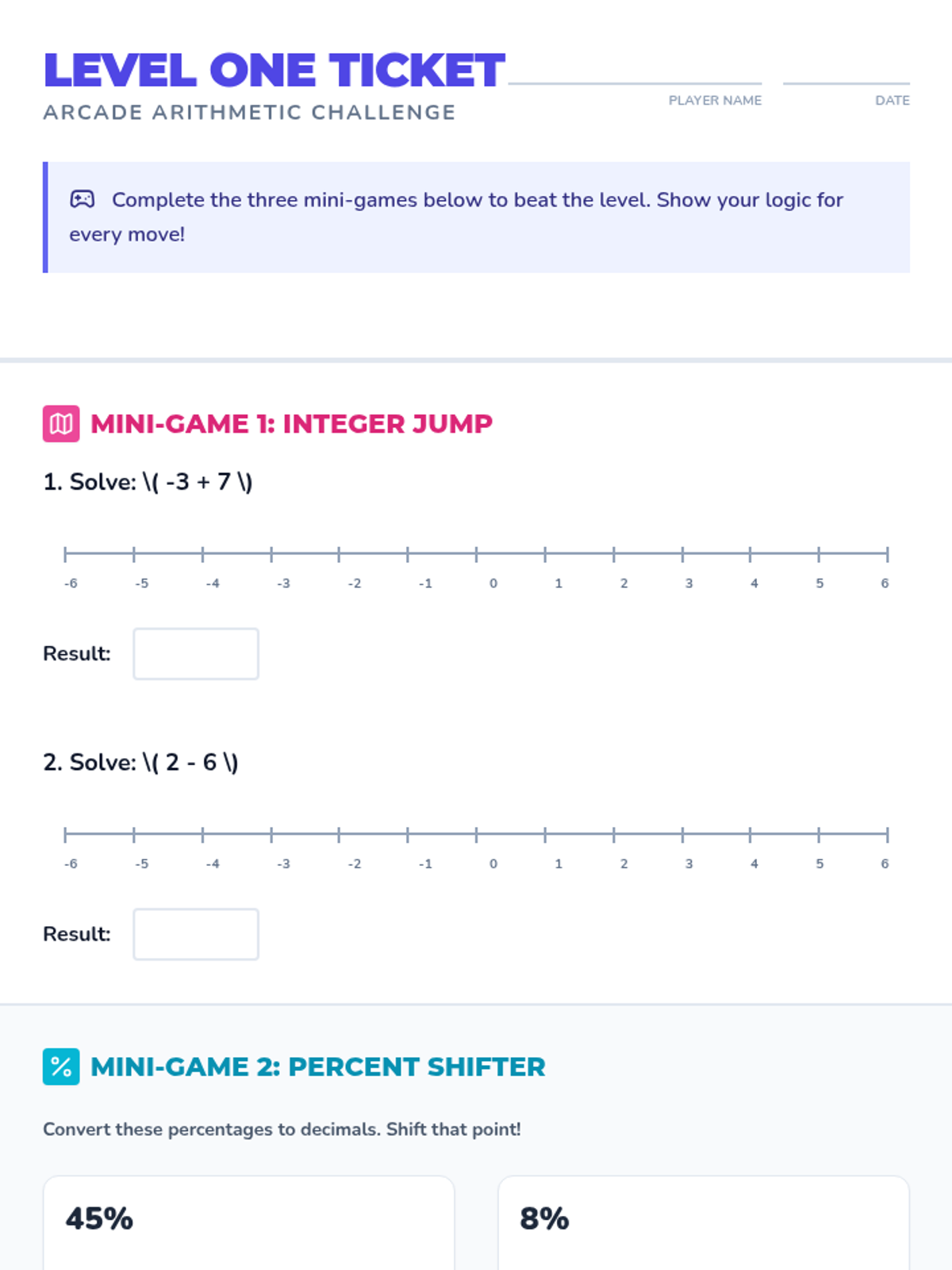
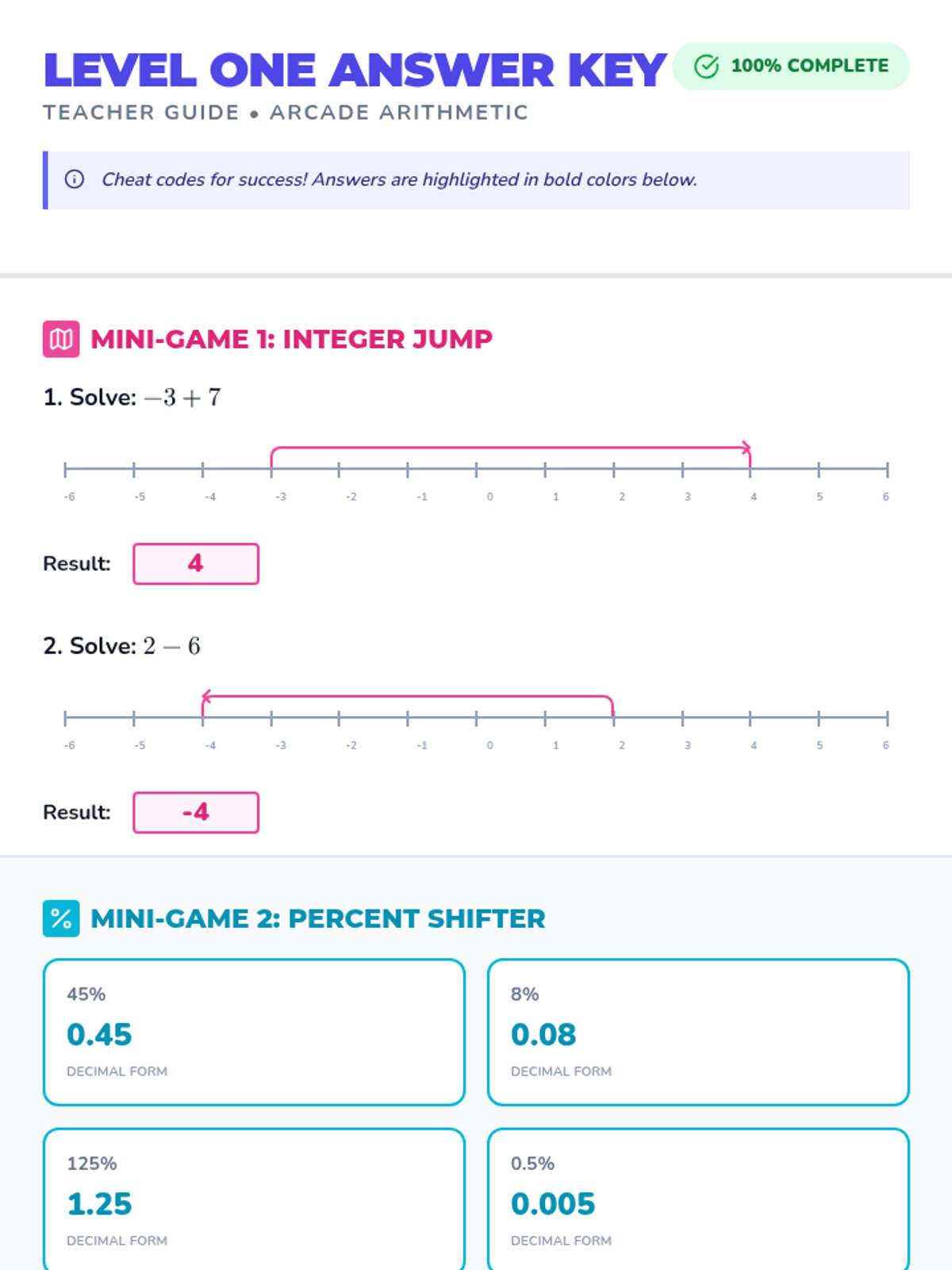
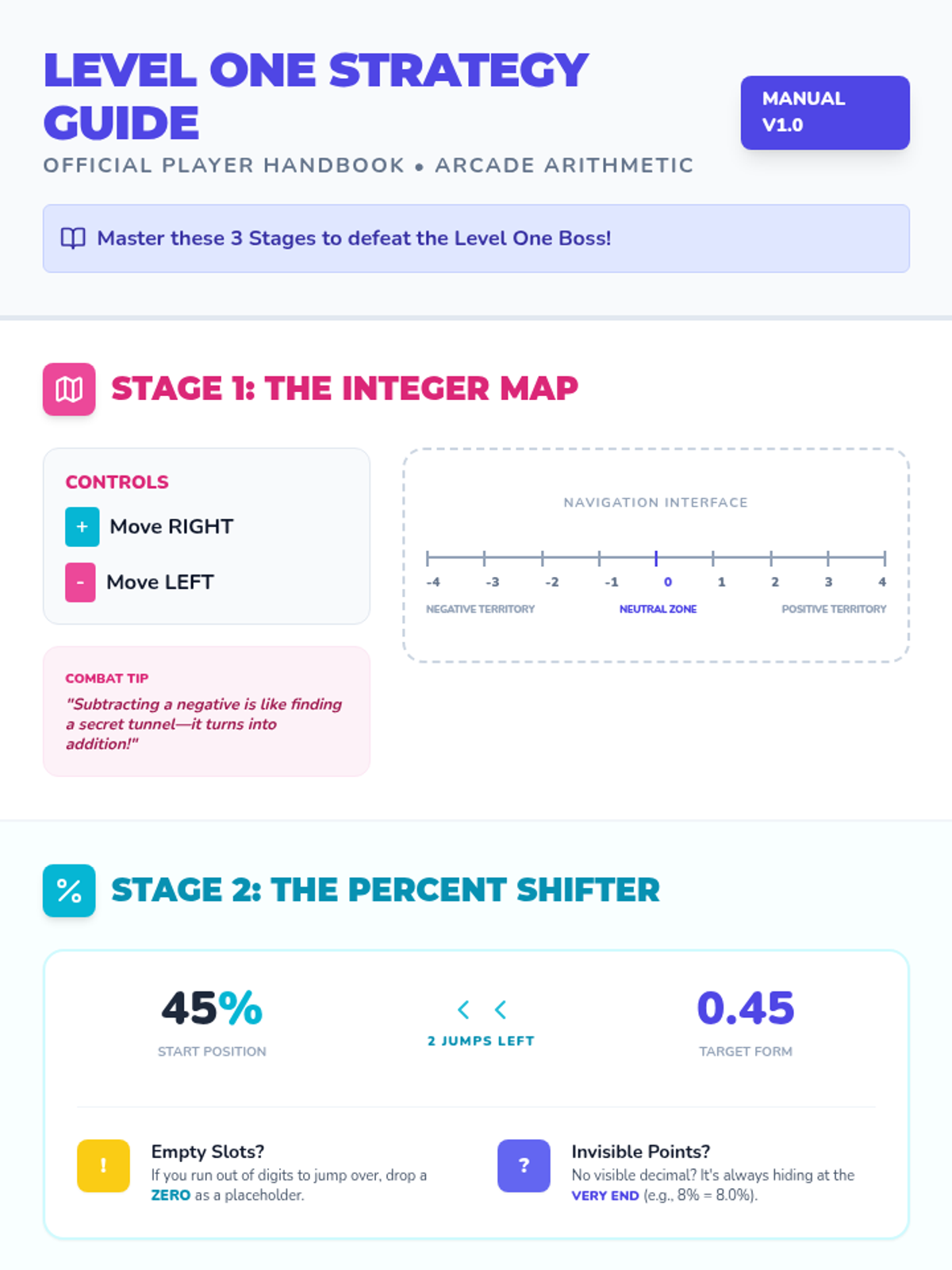
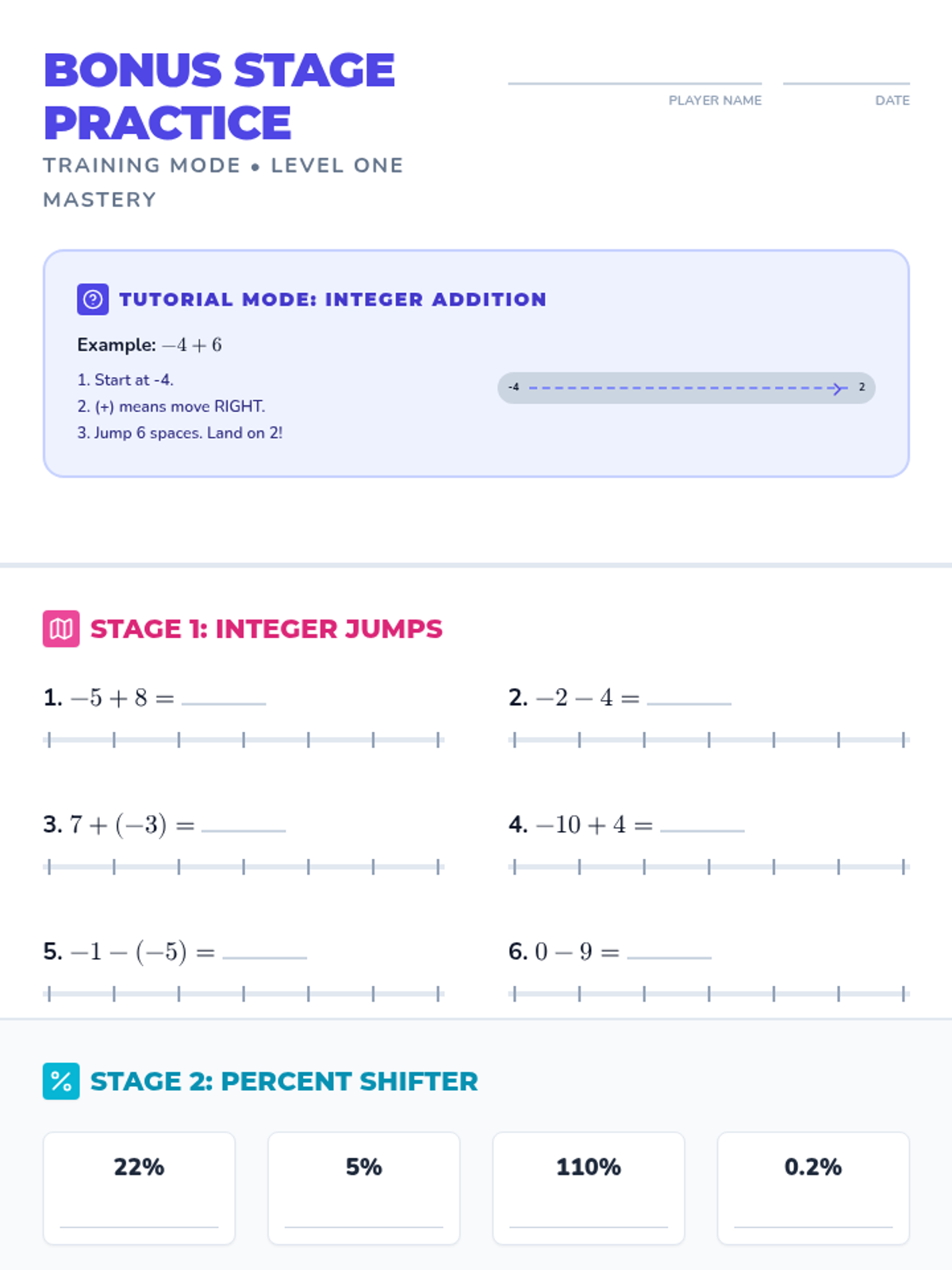
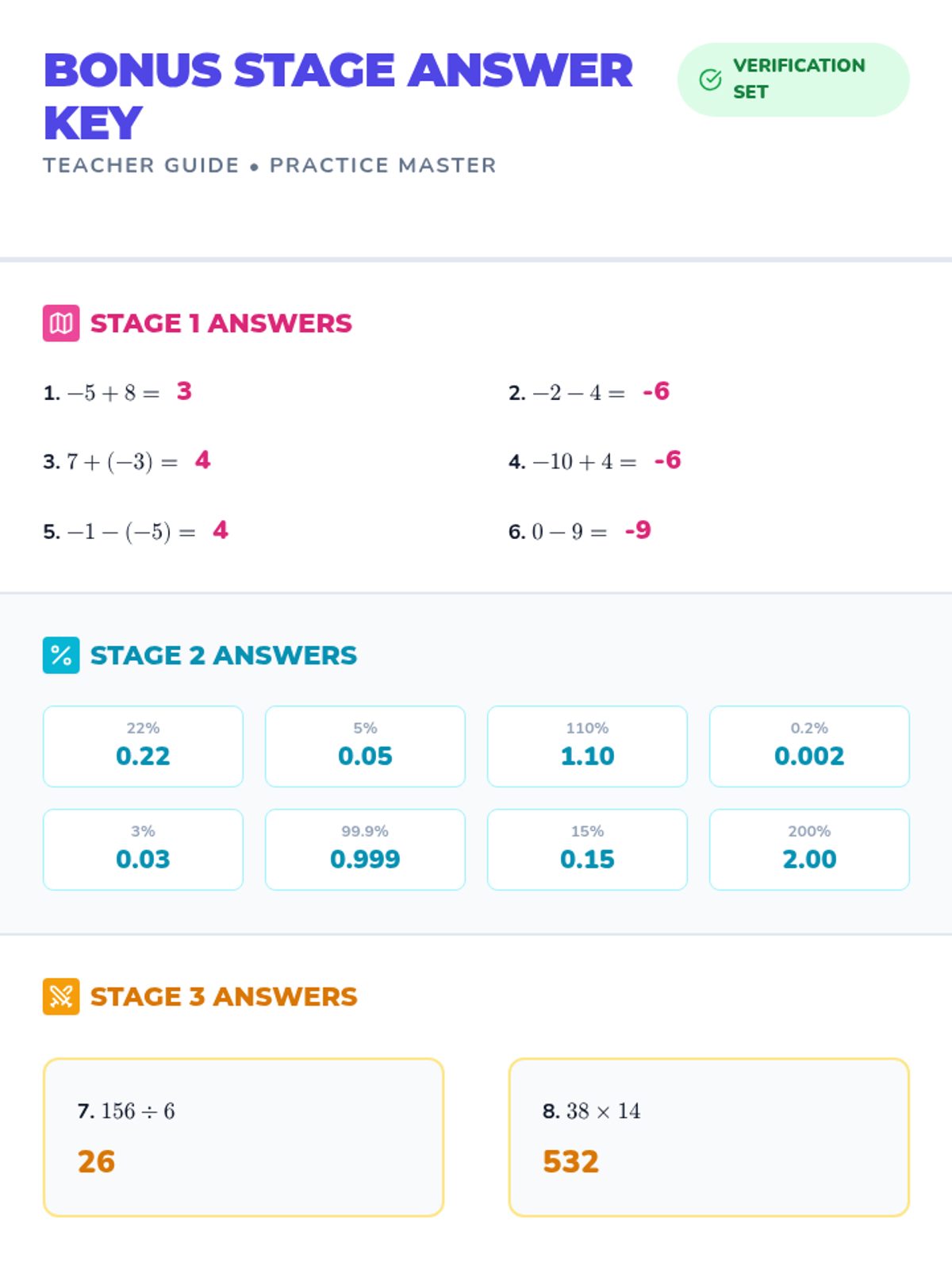
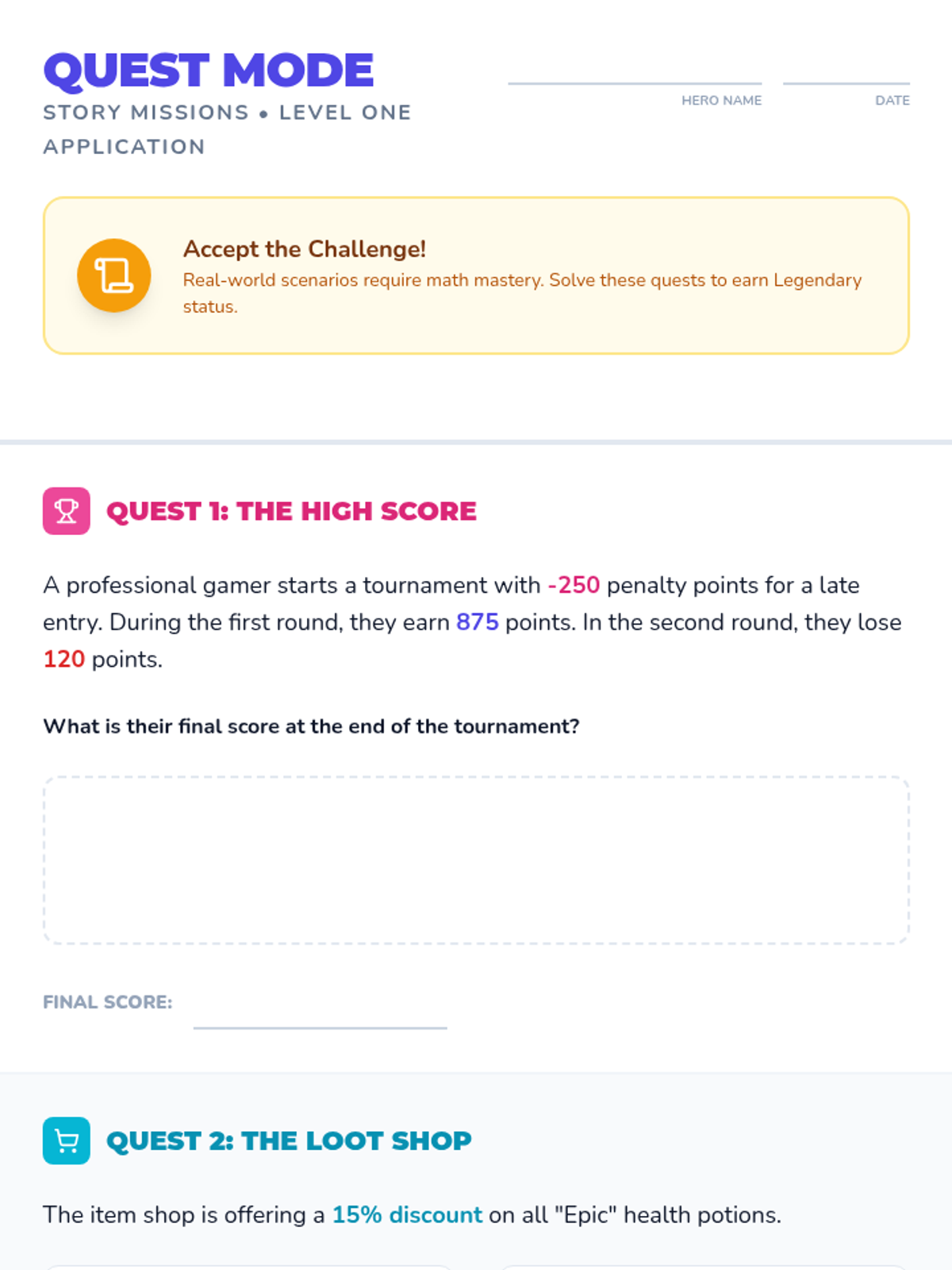
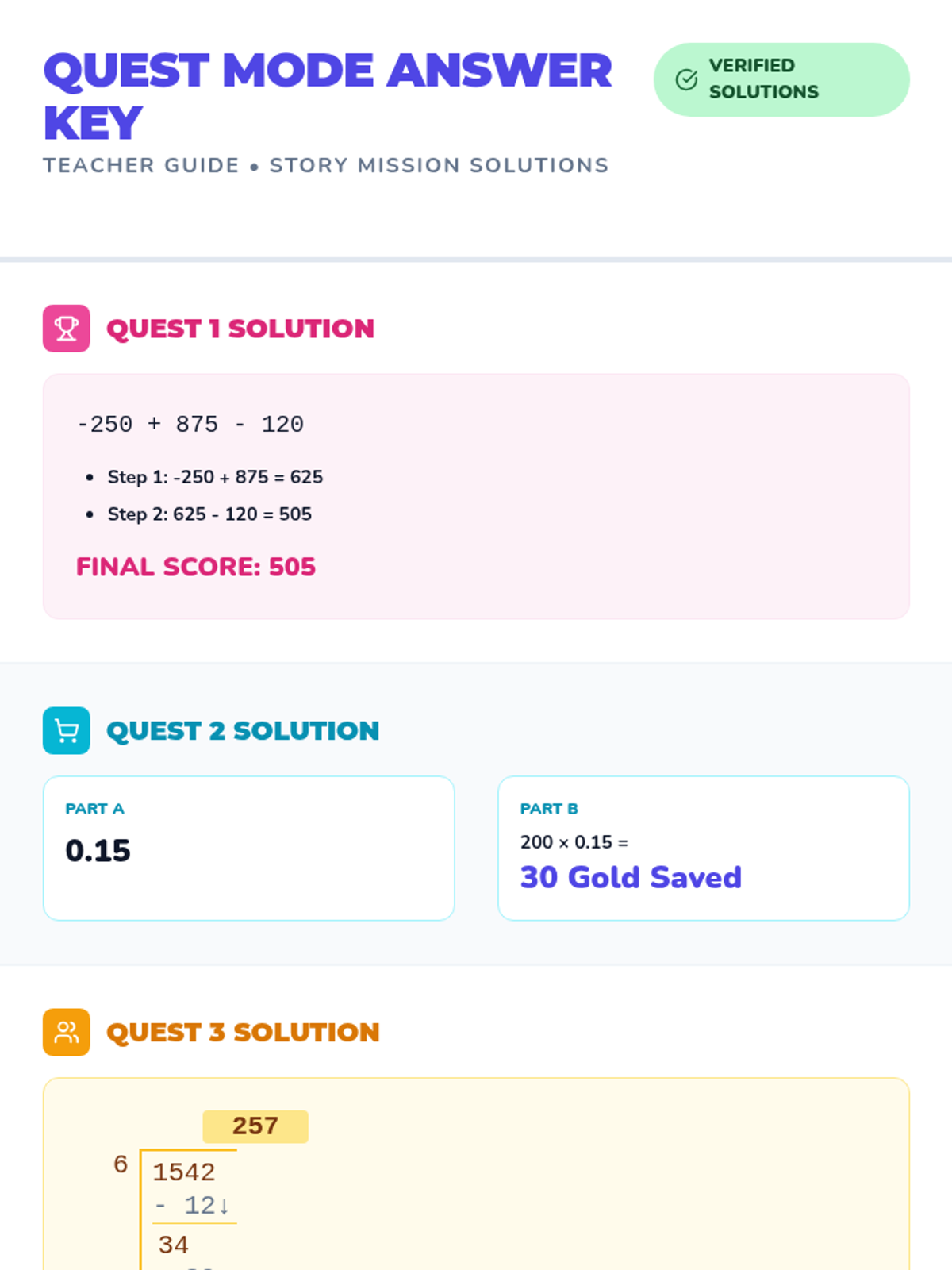
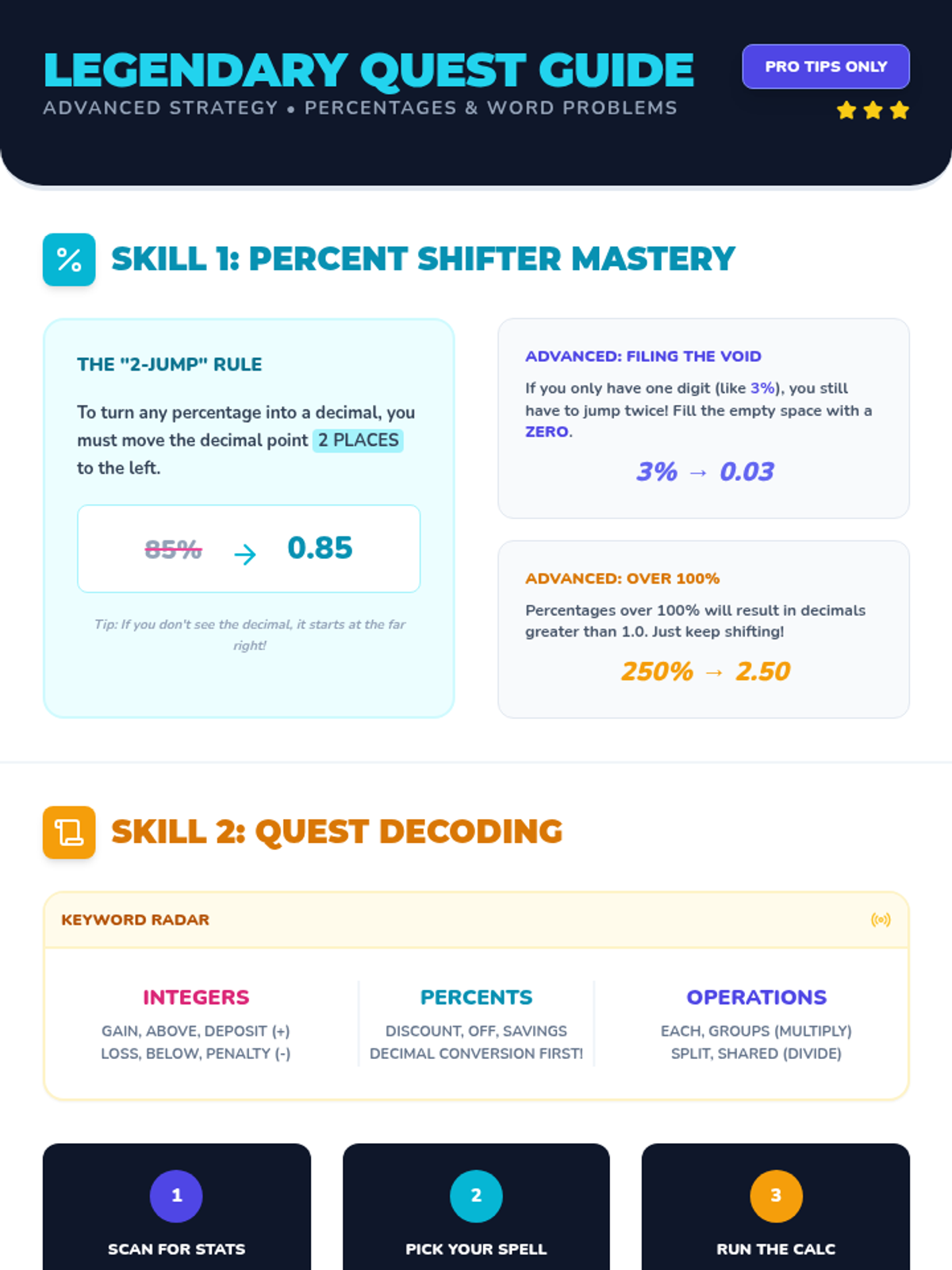
A fast-paced review of foundational math skills, including integer operations with number lines, percentage-to-decimal conversions, and multi-operation fluency. Students 'level up' their skills through arcade-themed challenges.
Day 2 focuses on common mistakes, computer-based testing tips, and tackling more complex mixed-standard problems.
Day 1 focuses on mindset, organized work habits, and the process of elimination strategy for multiple-choice questions.
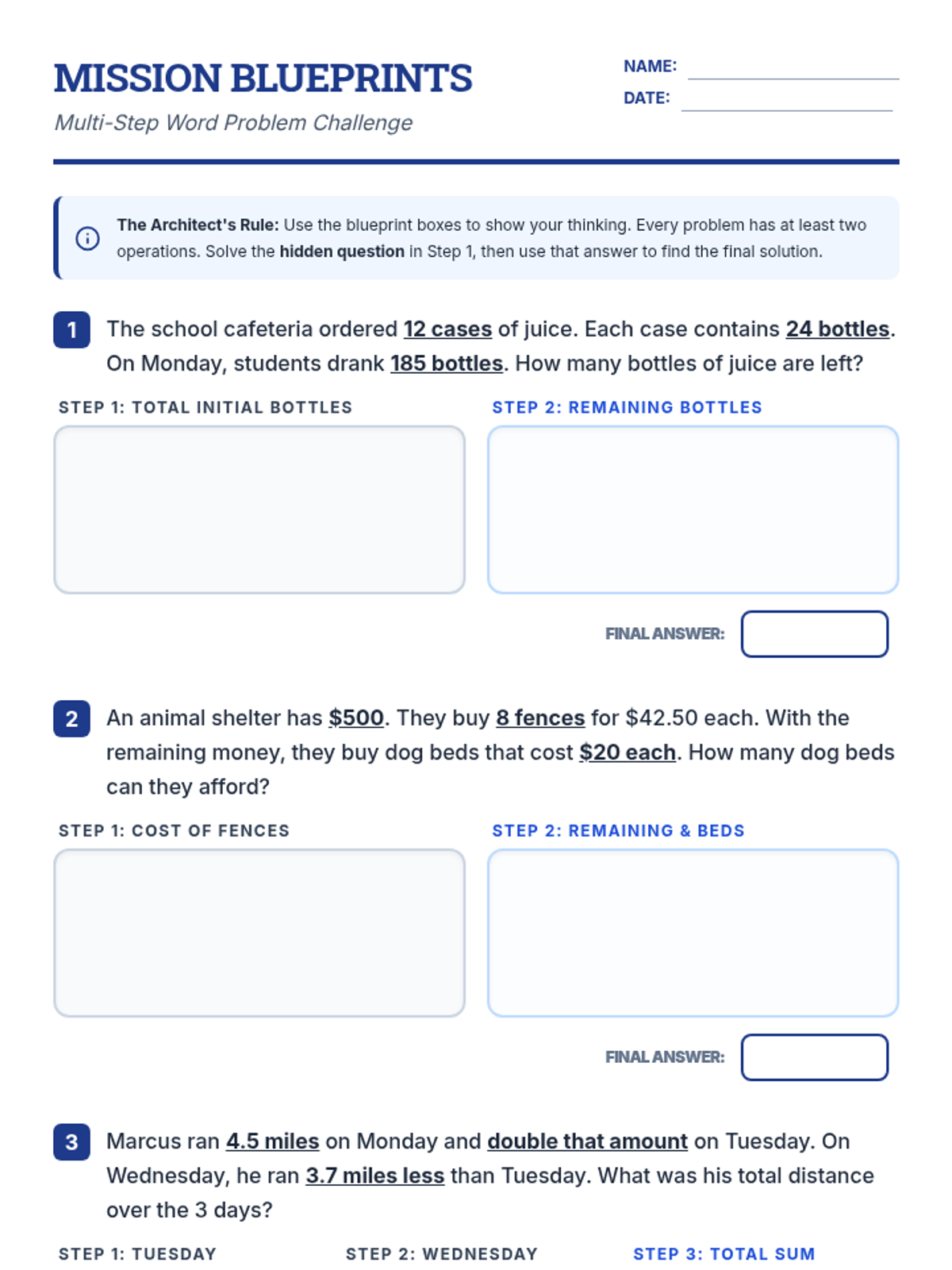
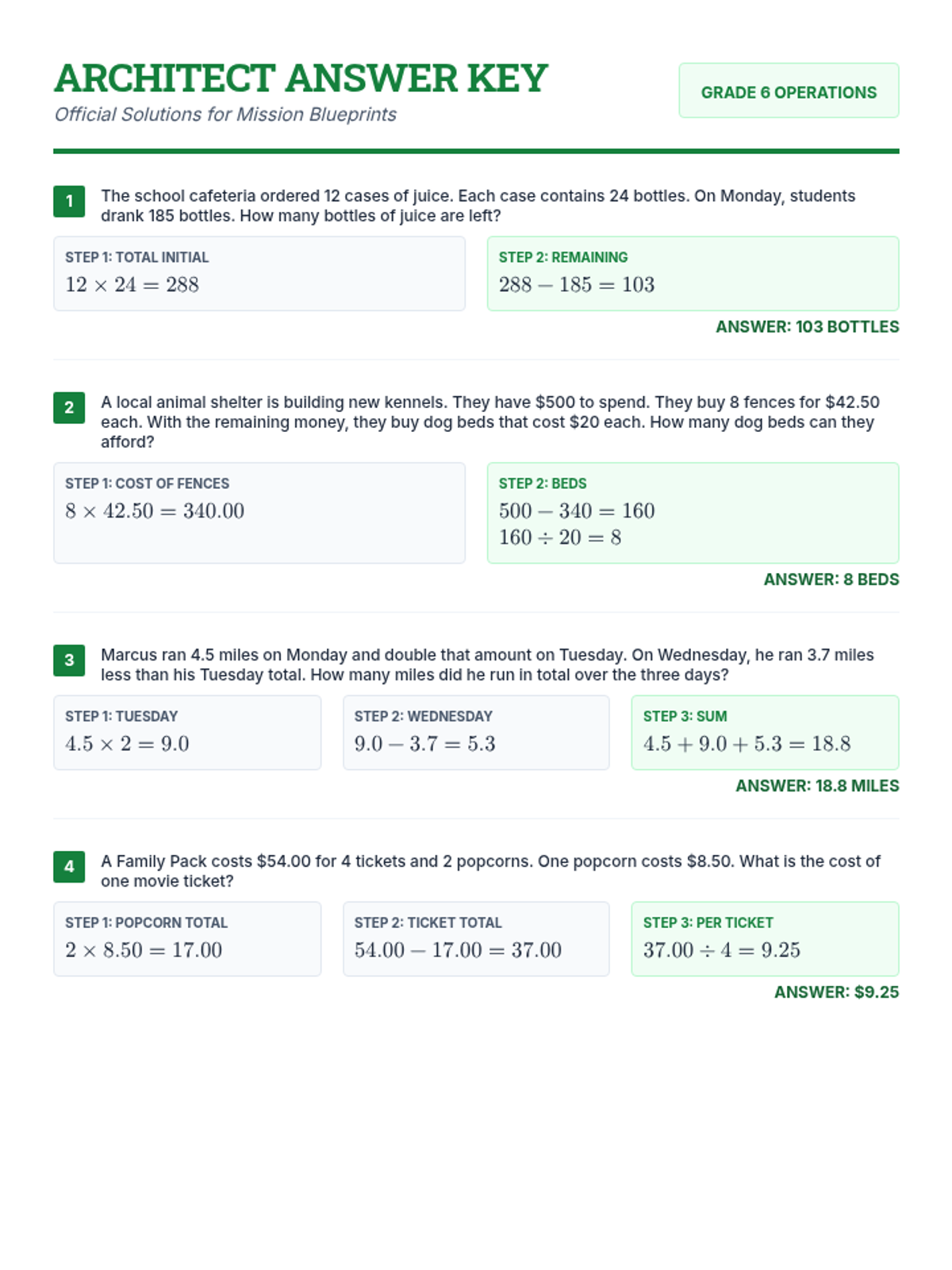
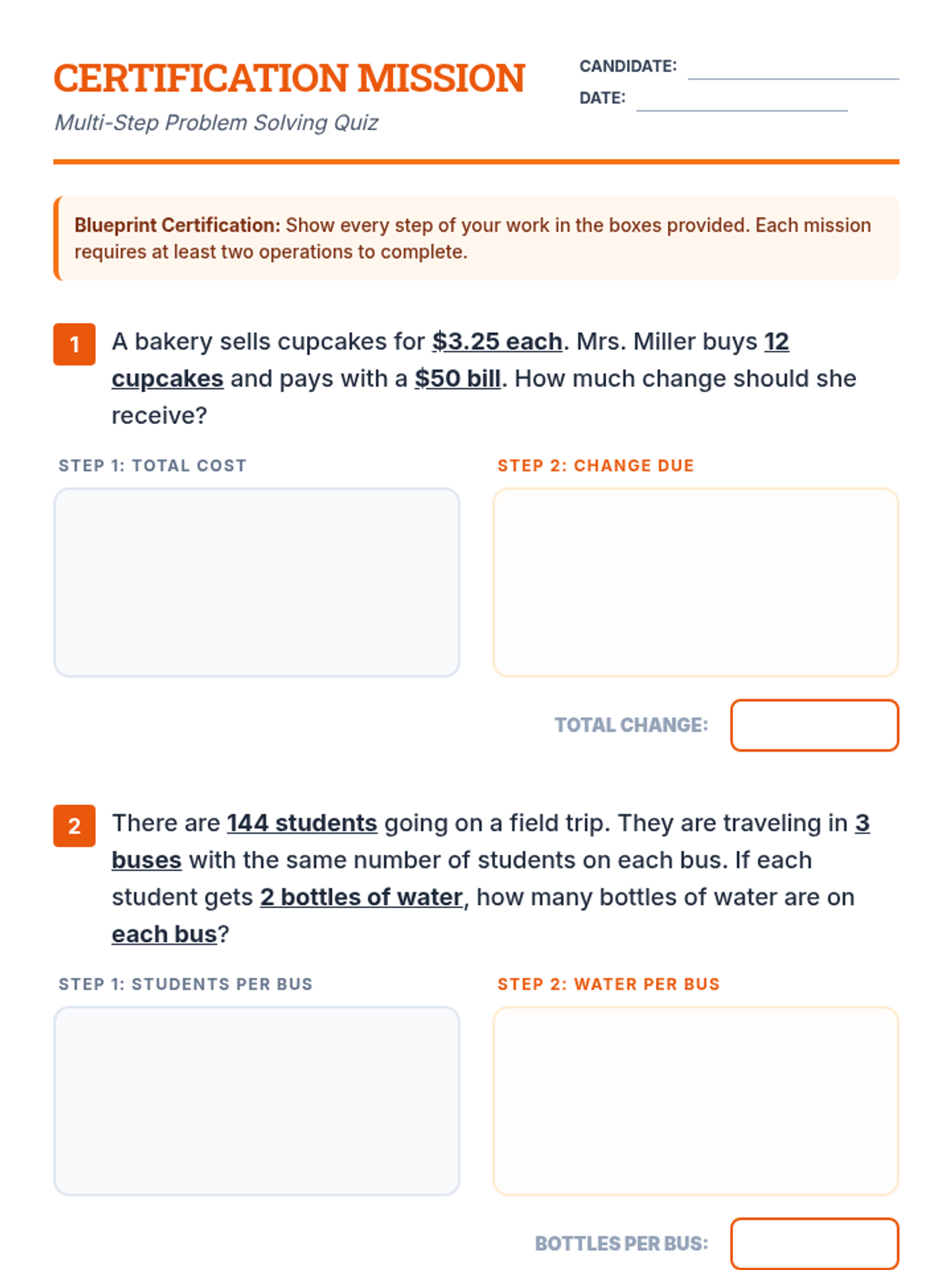
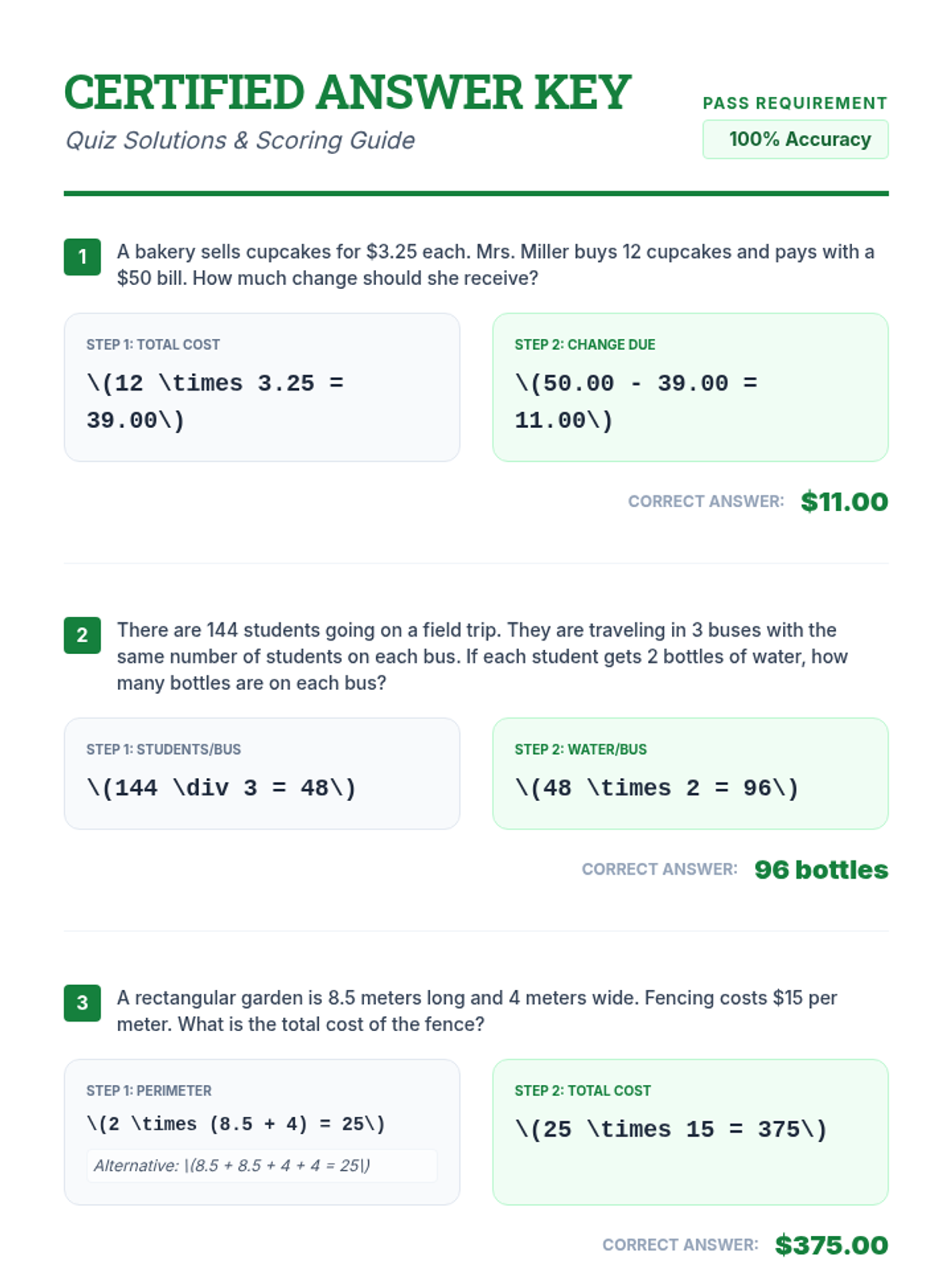
Students learn to use graphic organizer 'blueprints' to decompose multi-step word problems involving addition, subtraction, multiplication, and division into manageable steps.
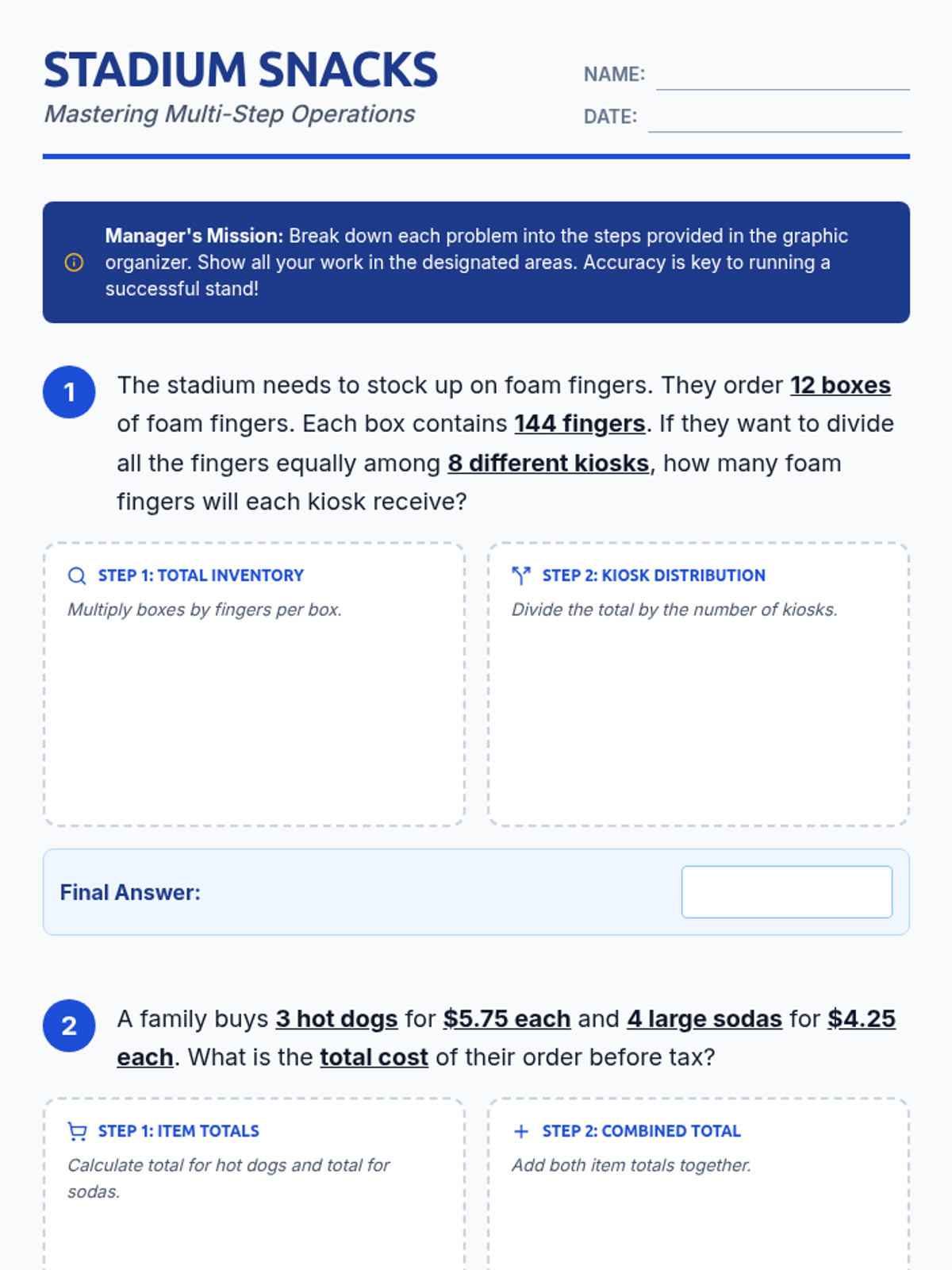
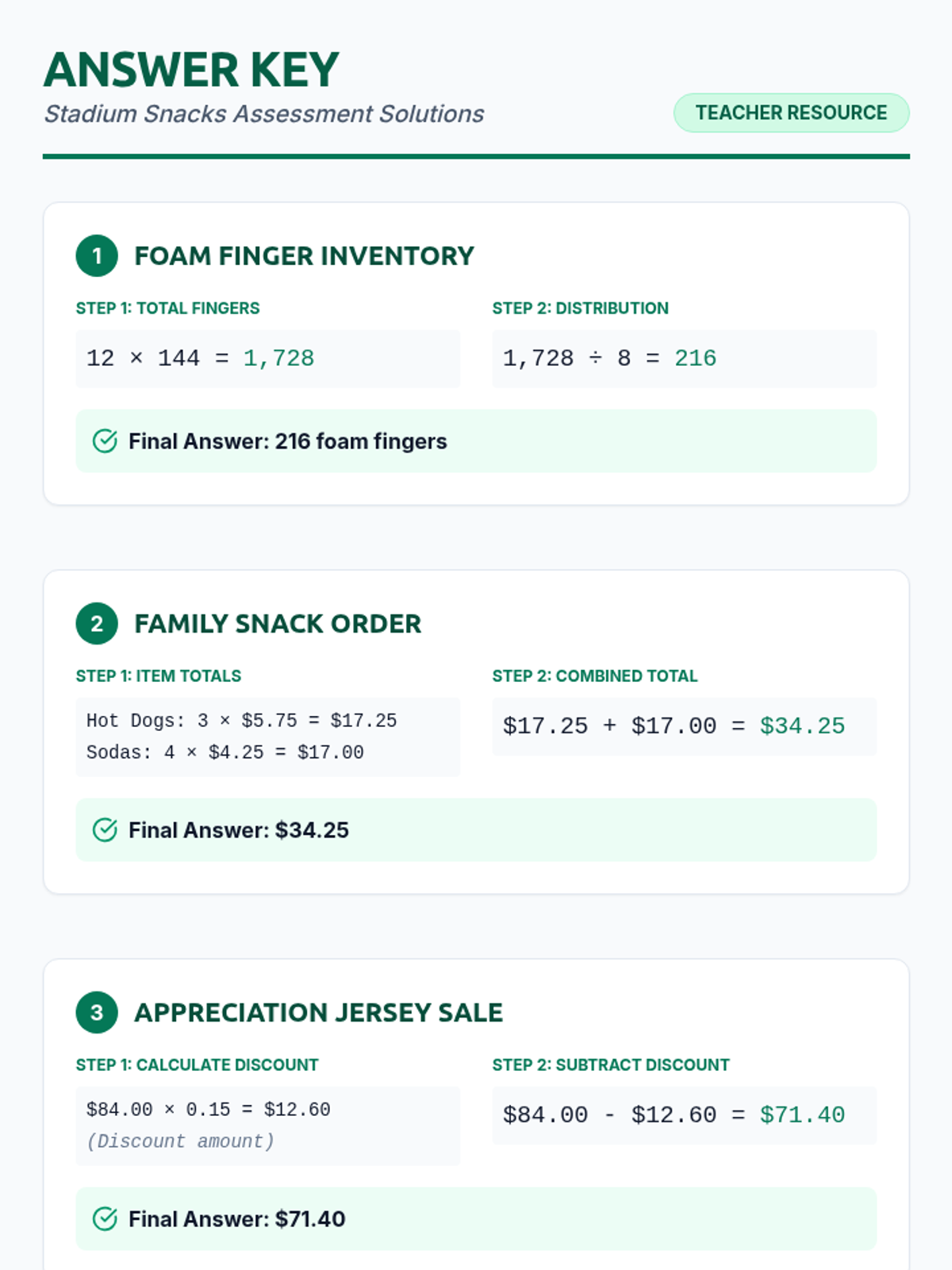
A multi-step math assessment focused on decimals, percentages, and whole number operations within a stadium concession stand theme. Students use graphic organizers to break down complex problems into manageable steps.
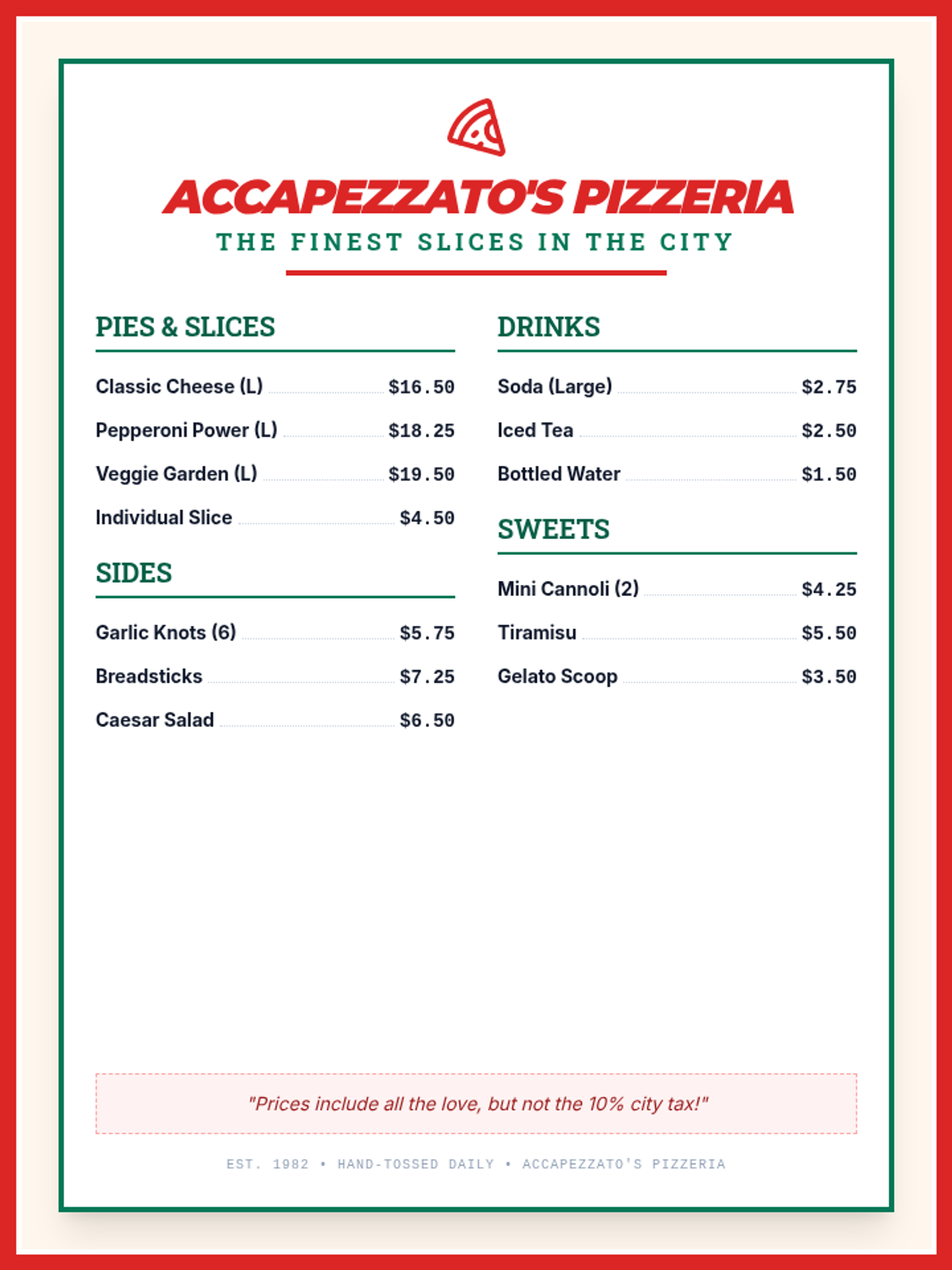
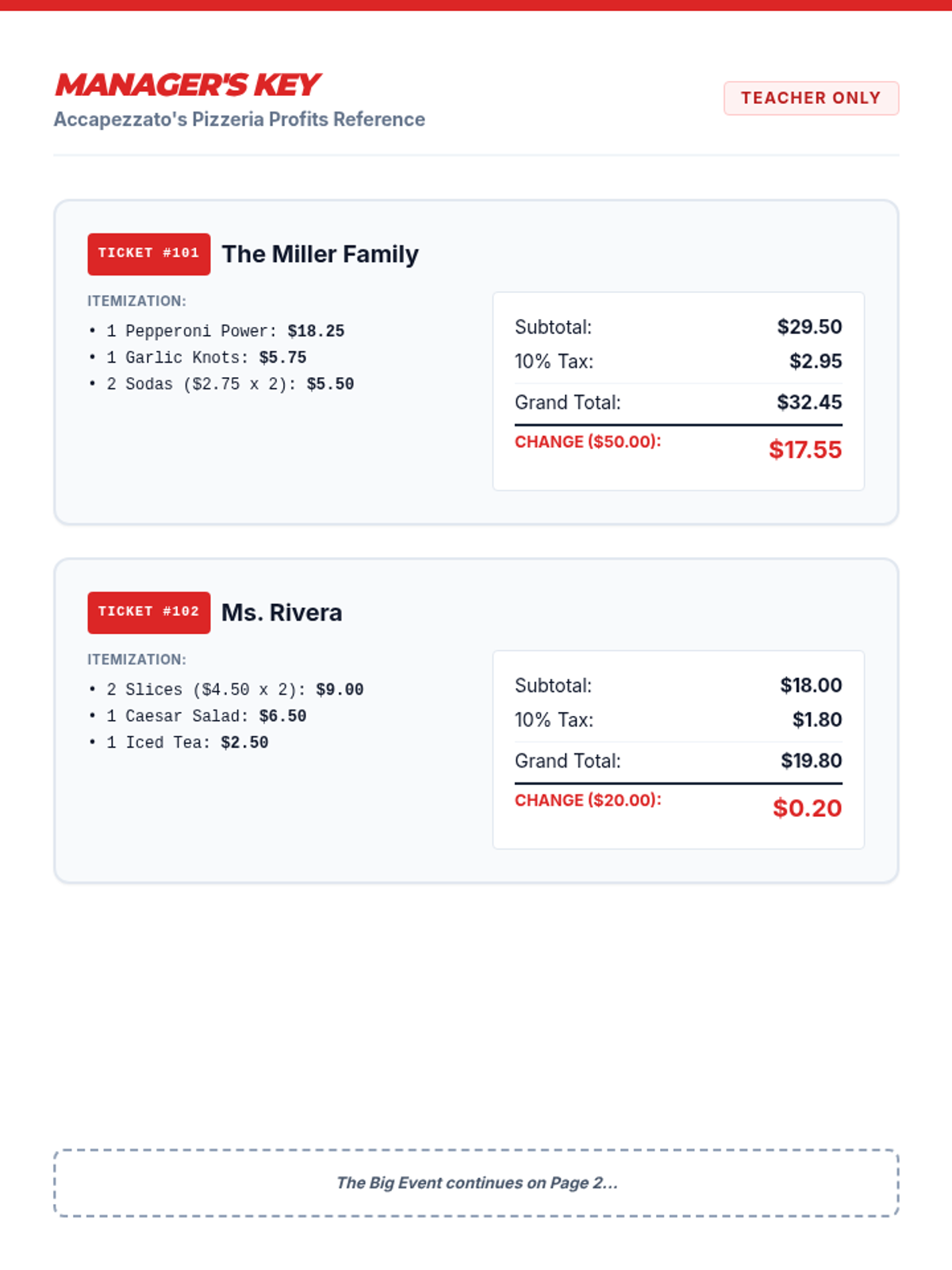
A 45-minute independent math project where 5th graders manage a pizza parlor, calculating costs, 10% sales tax, and making change for hungry customers.
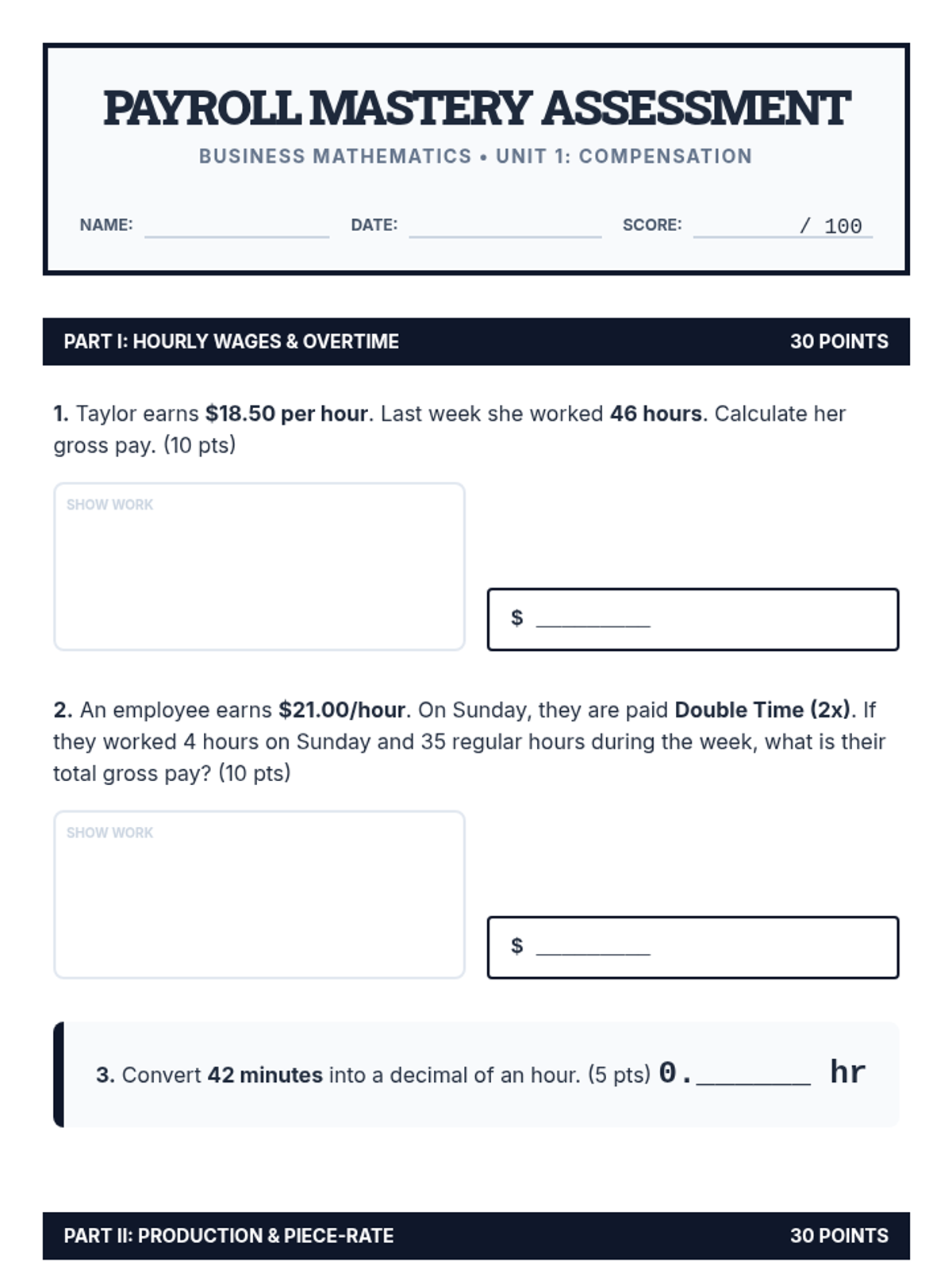
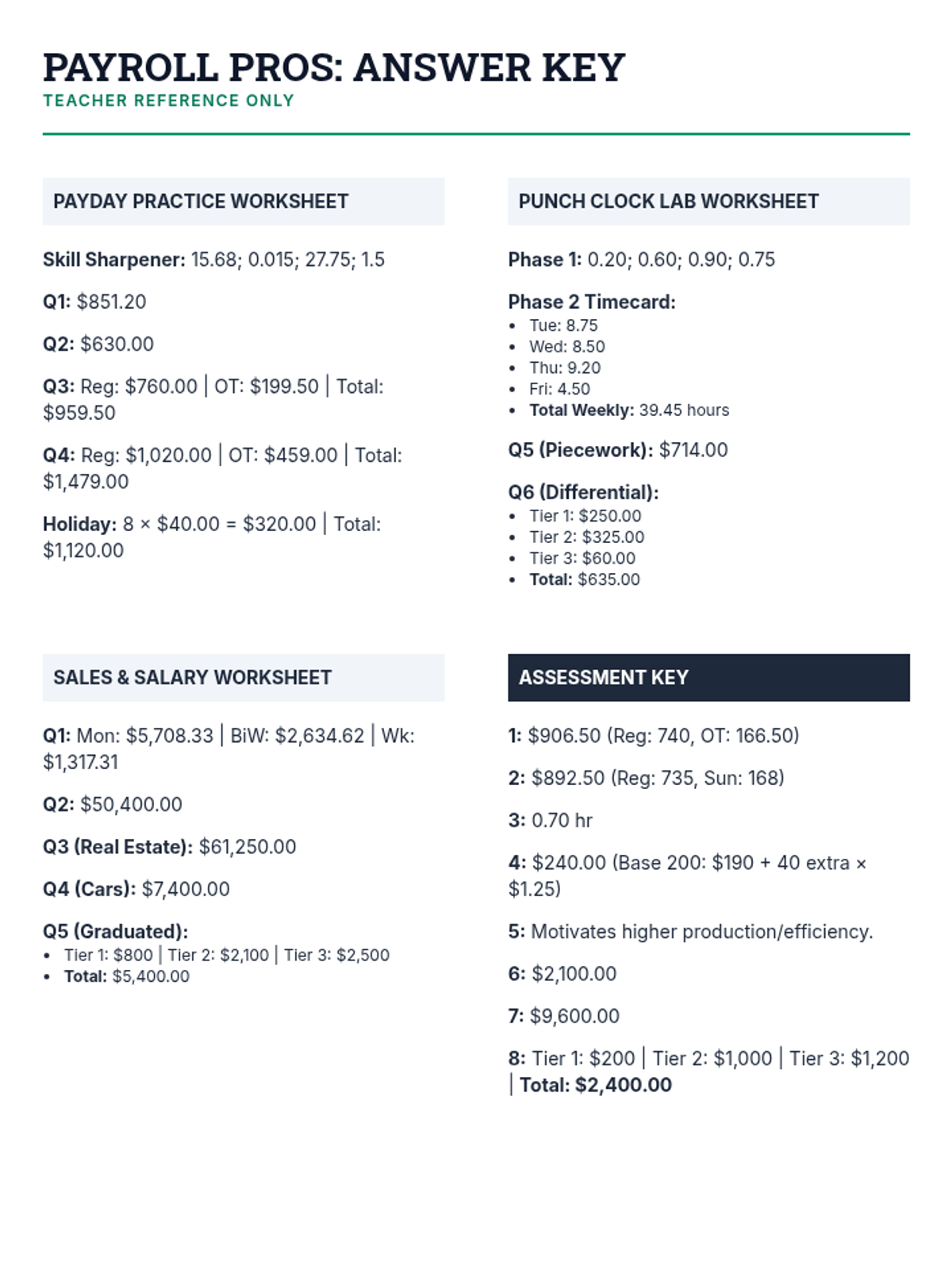
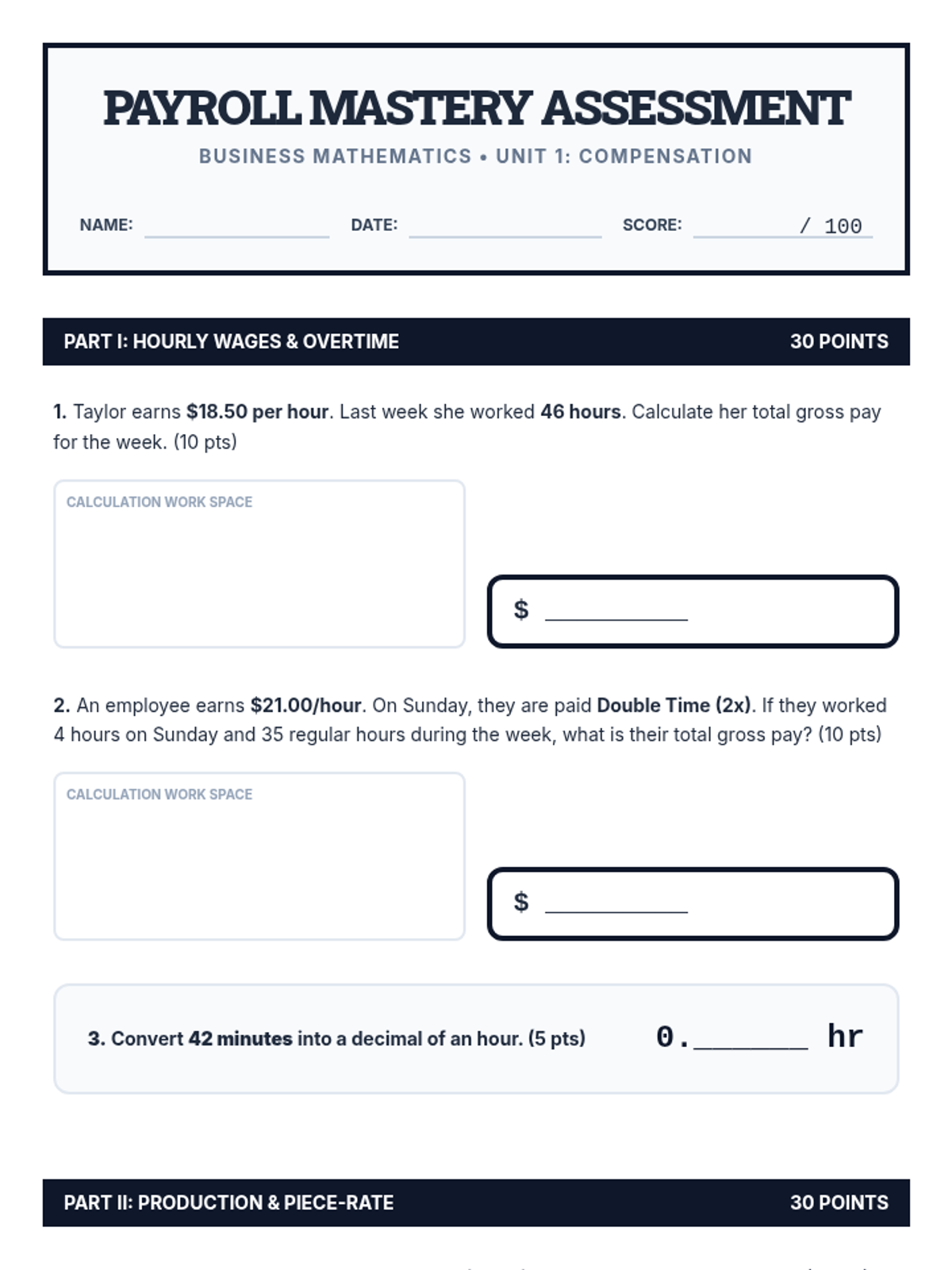
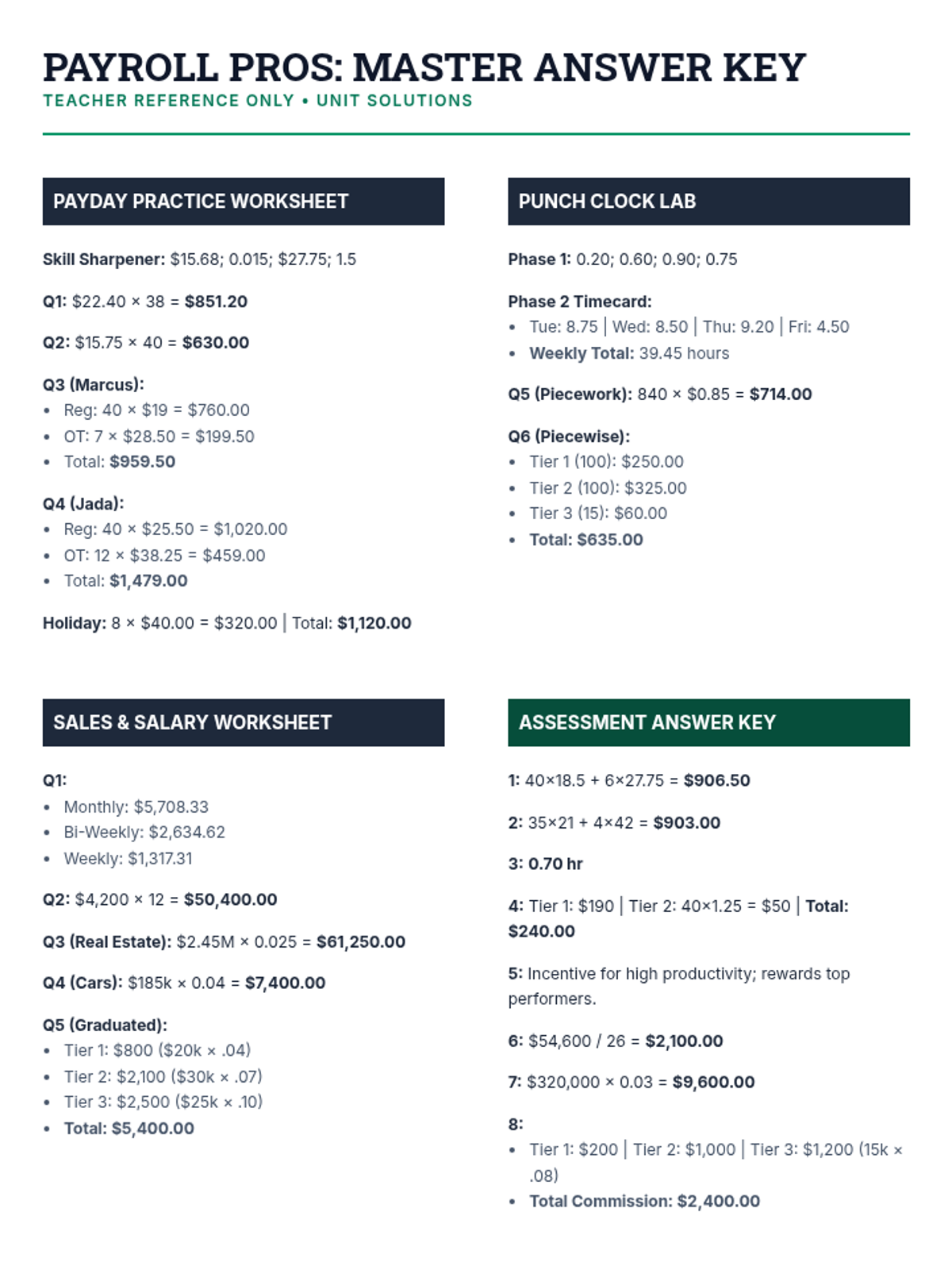
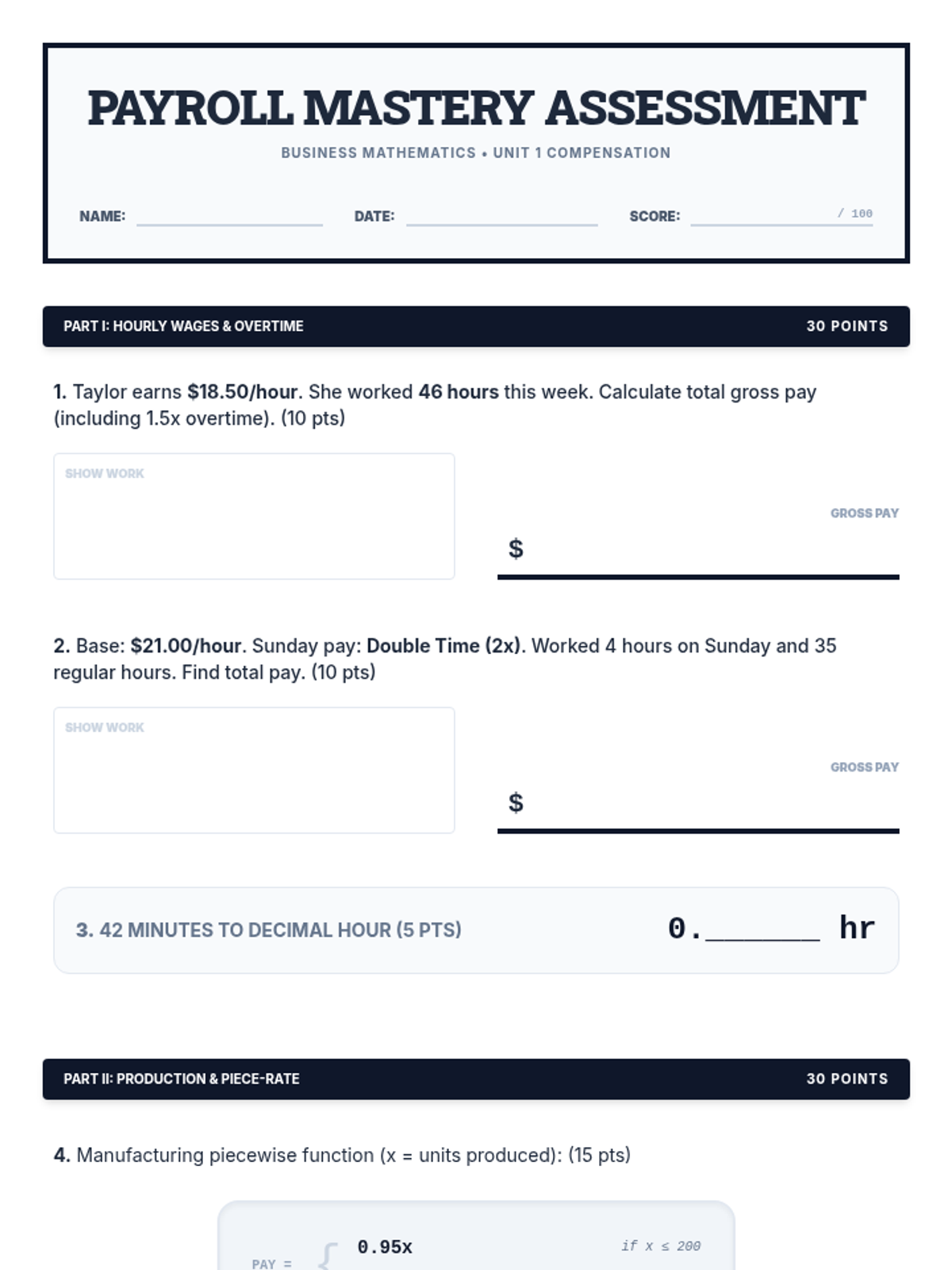
A cumulative review and final assessment covering all pay structures and business math skills taught in the unit.
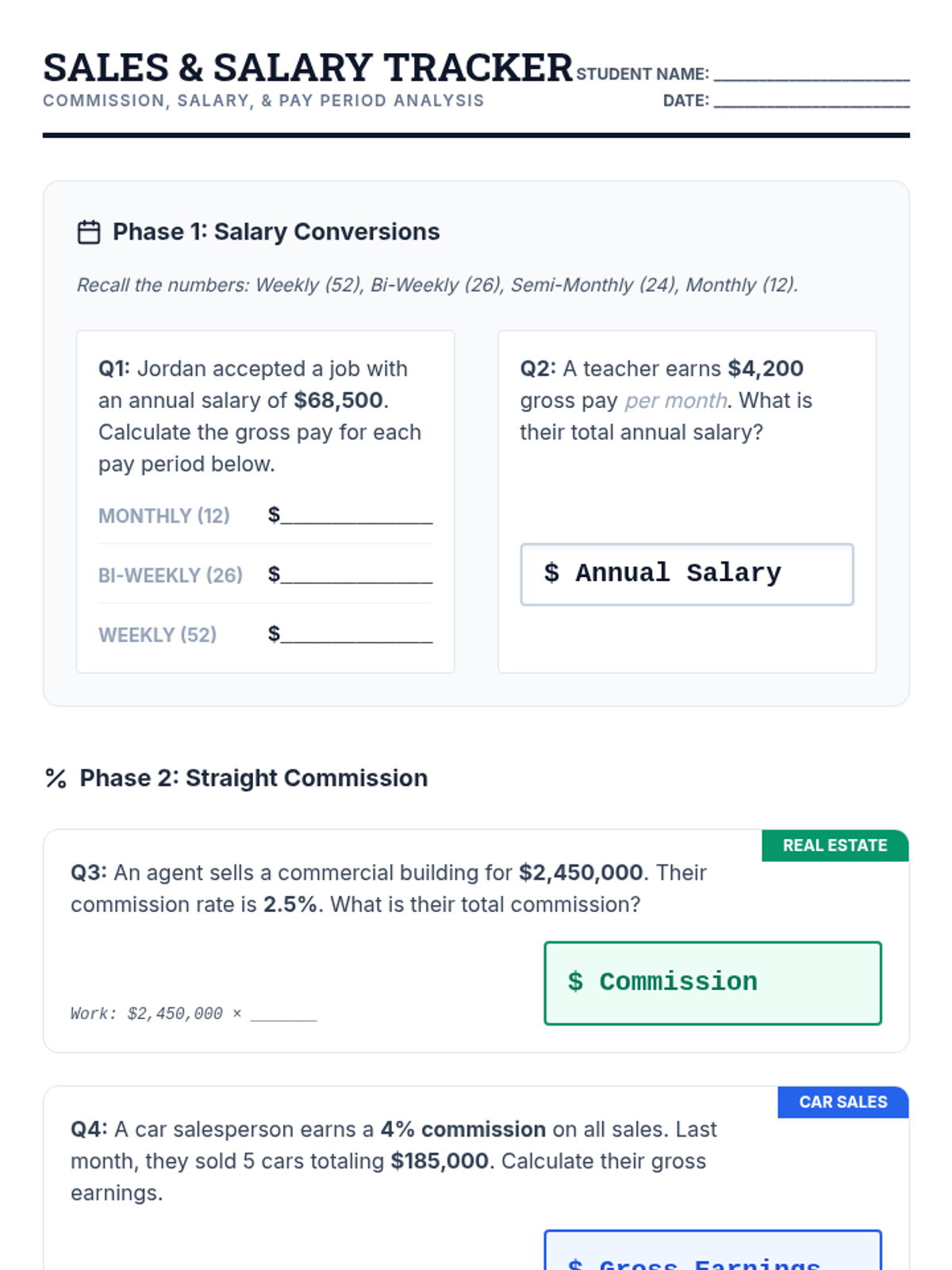
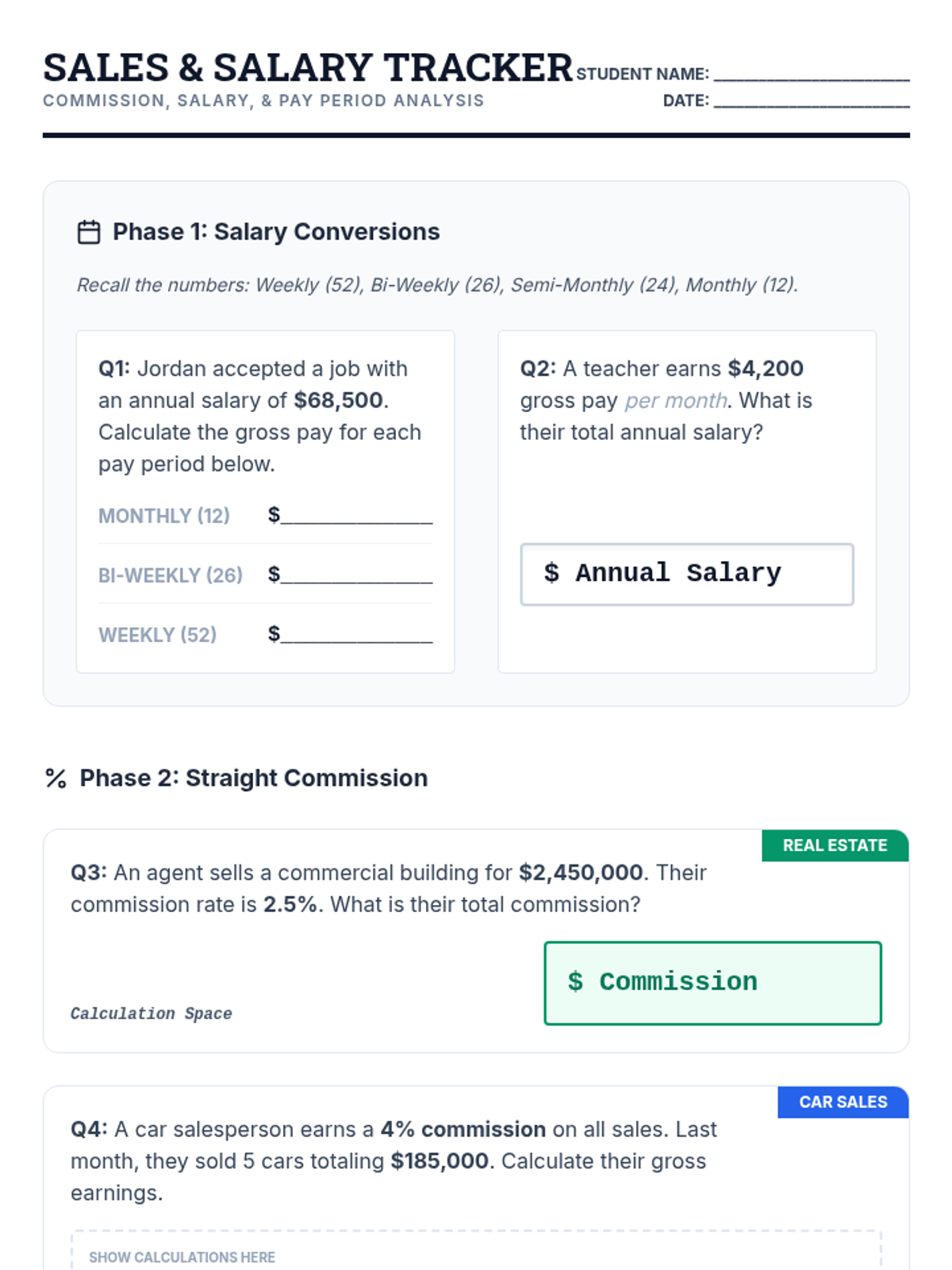
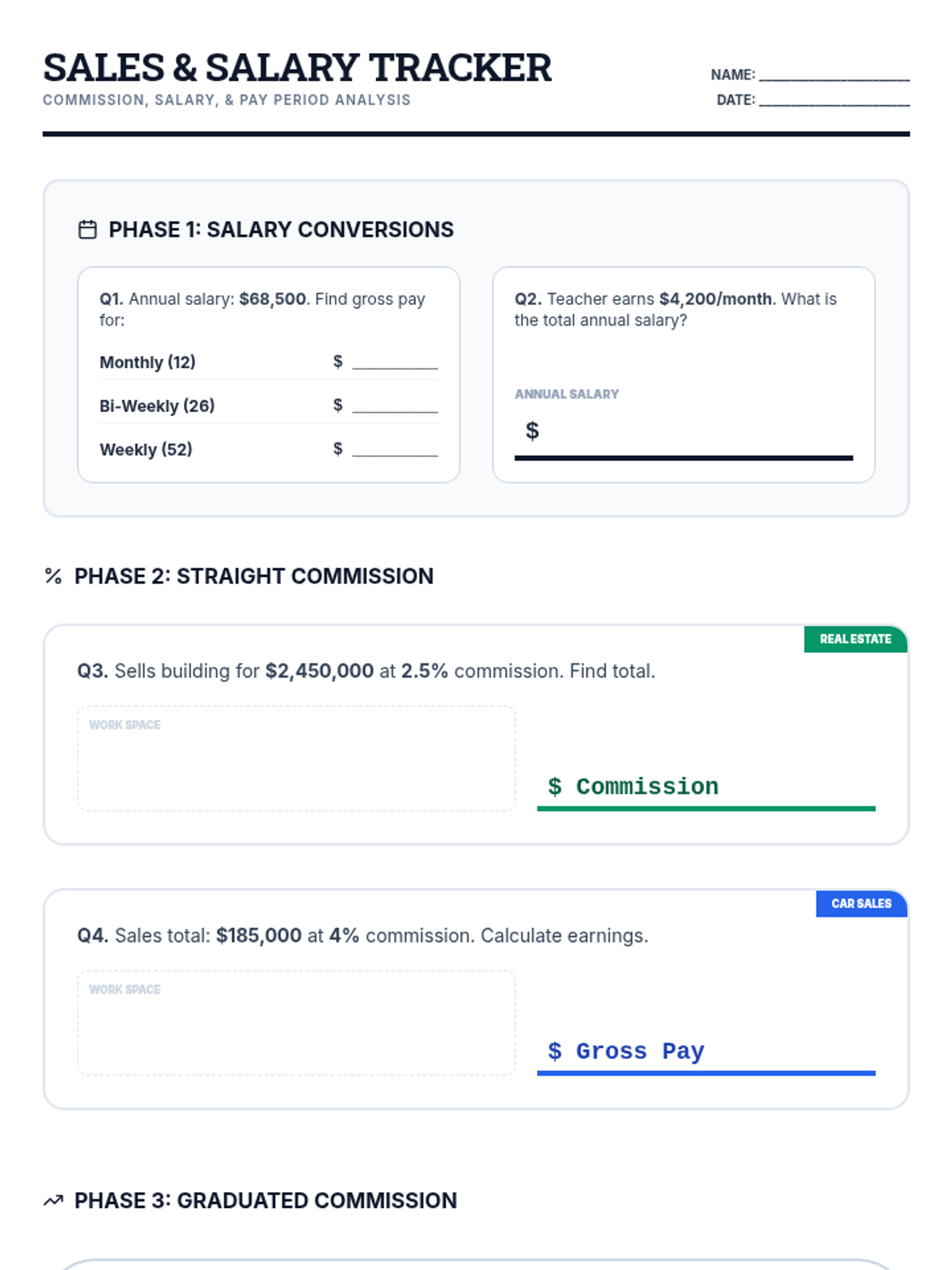
Covers commission-based earnings and salary structures, including a review of fractions as they relate to pay periods and partial earnings.
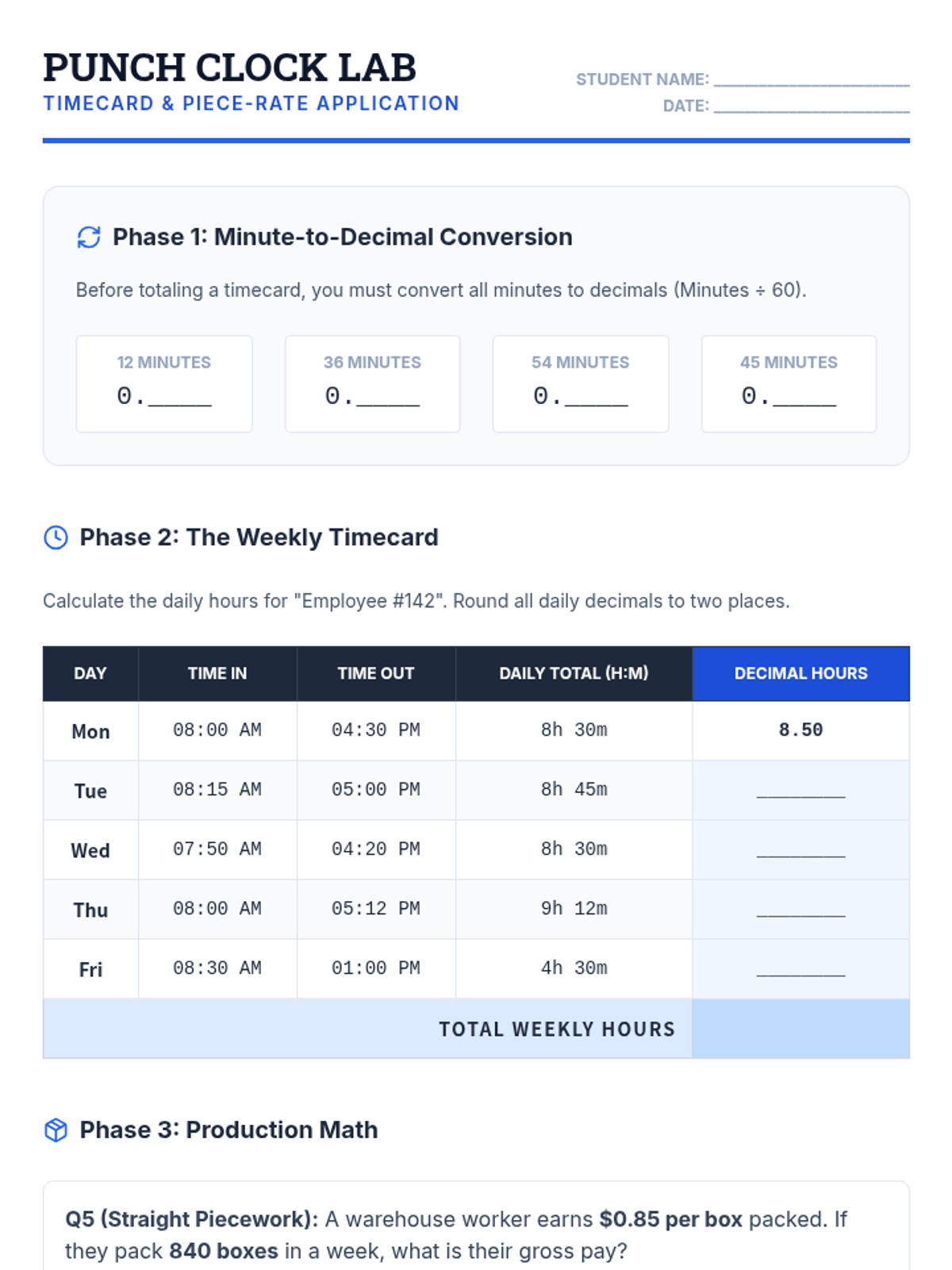
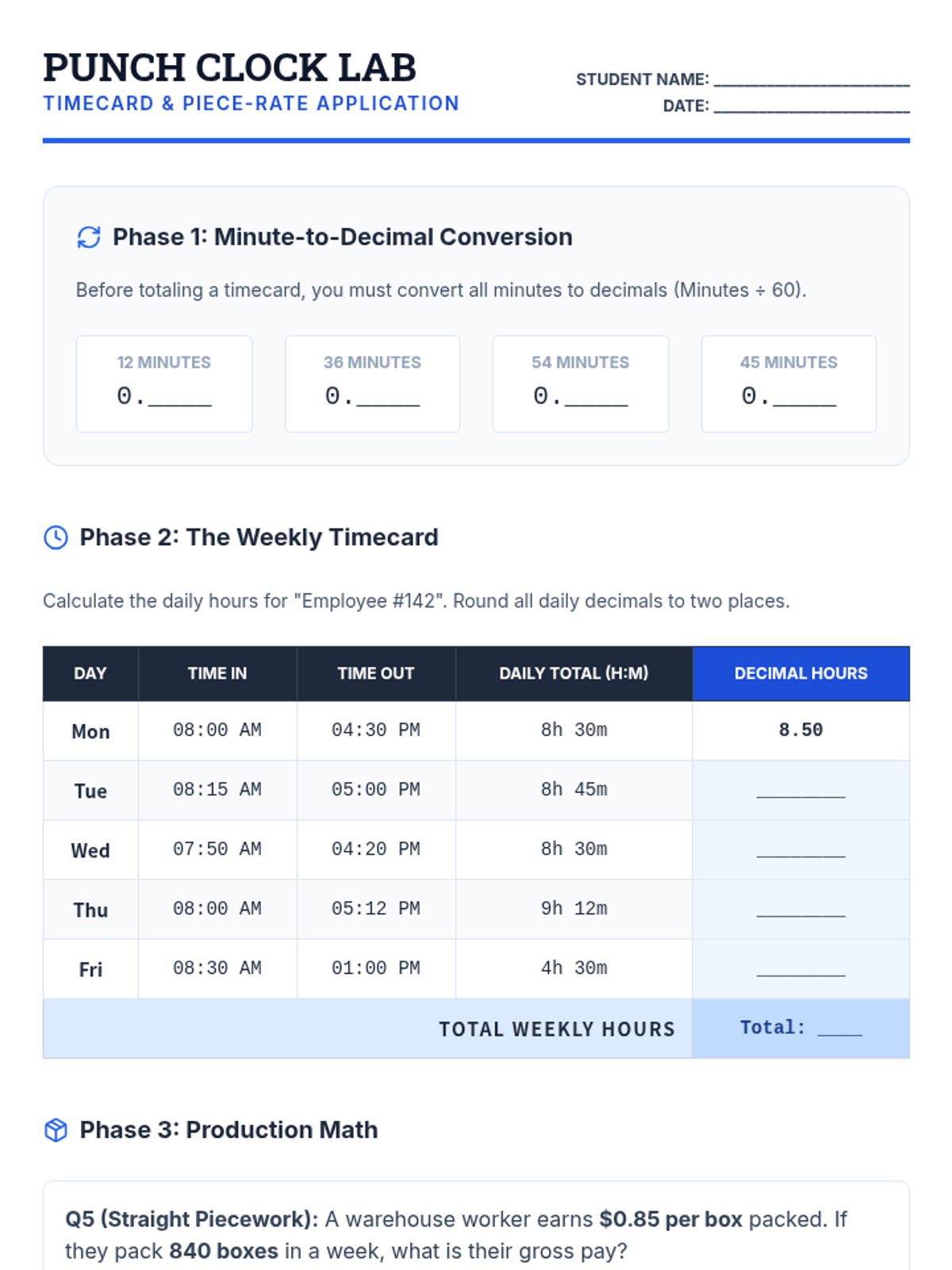
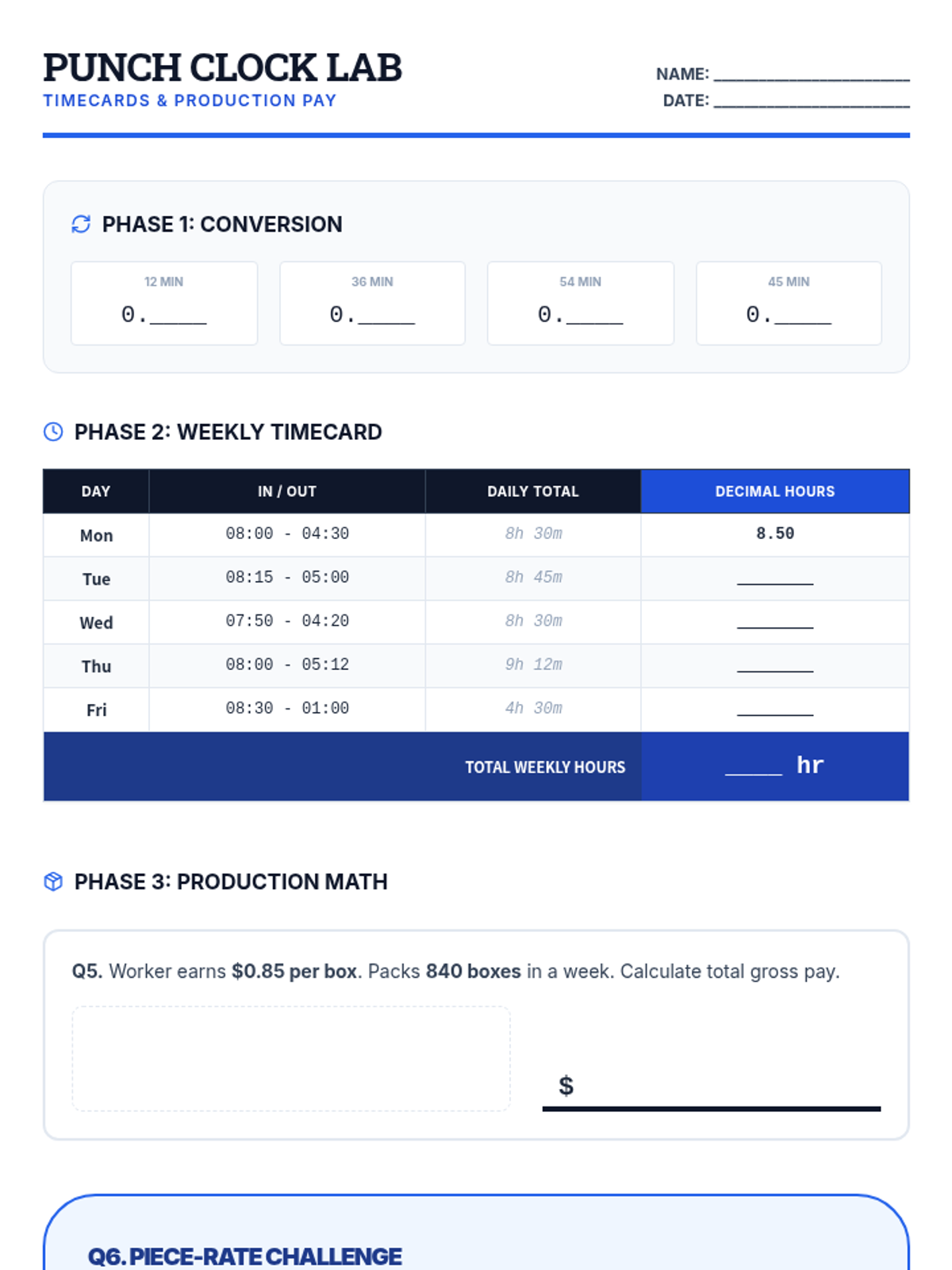
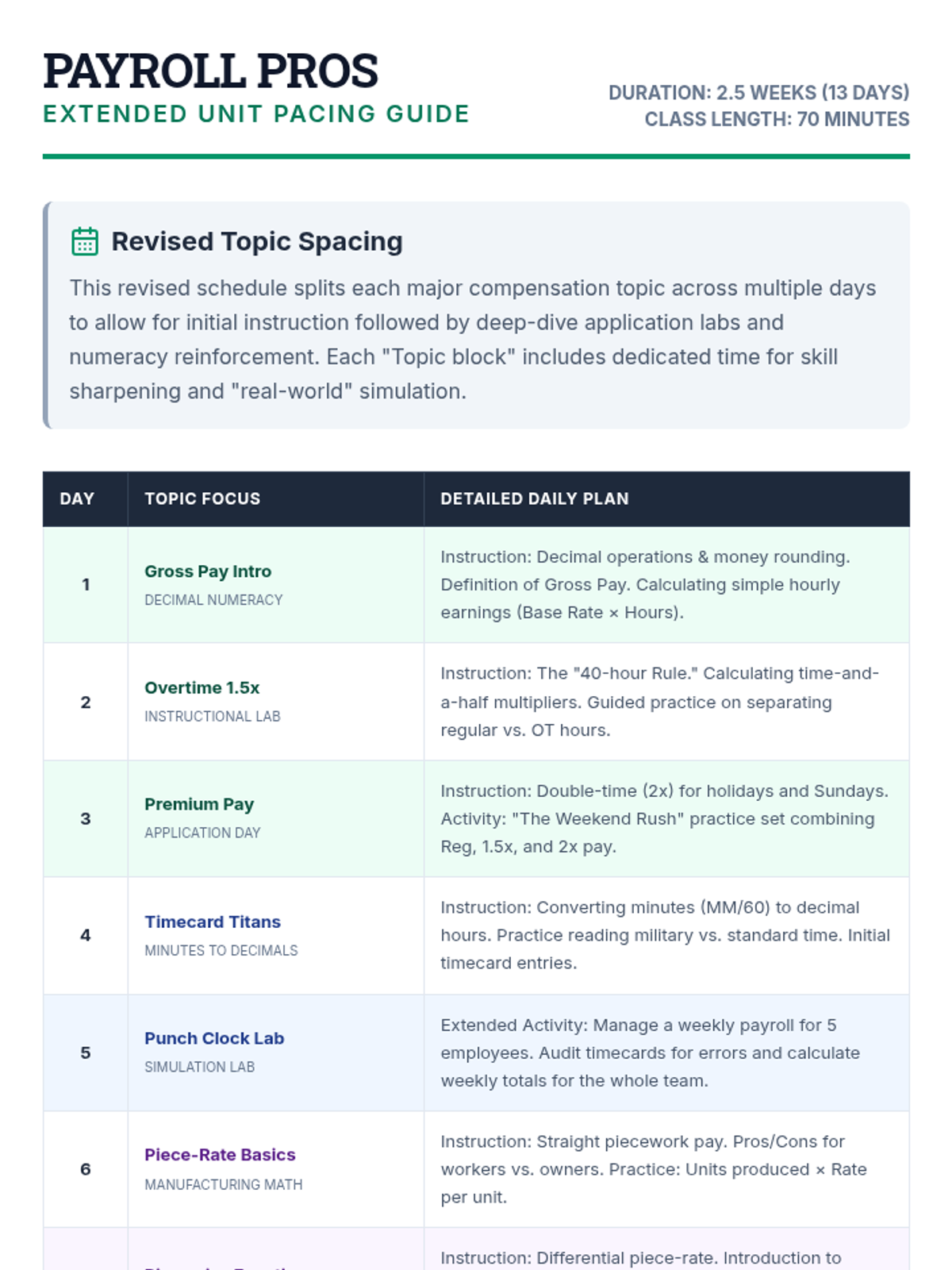
Focuses on tracking work hours through timecards and understanding production-based pay through piecework and piecewise functions.
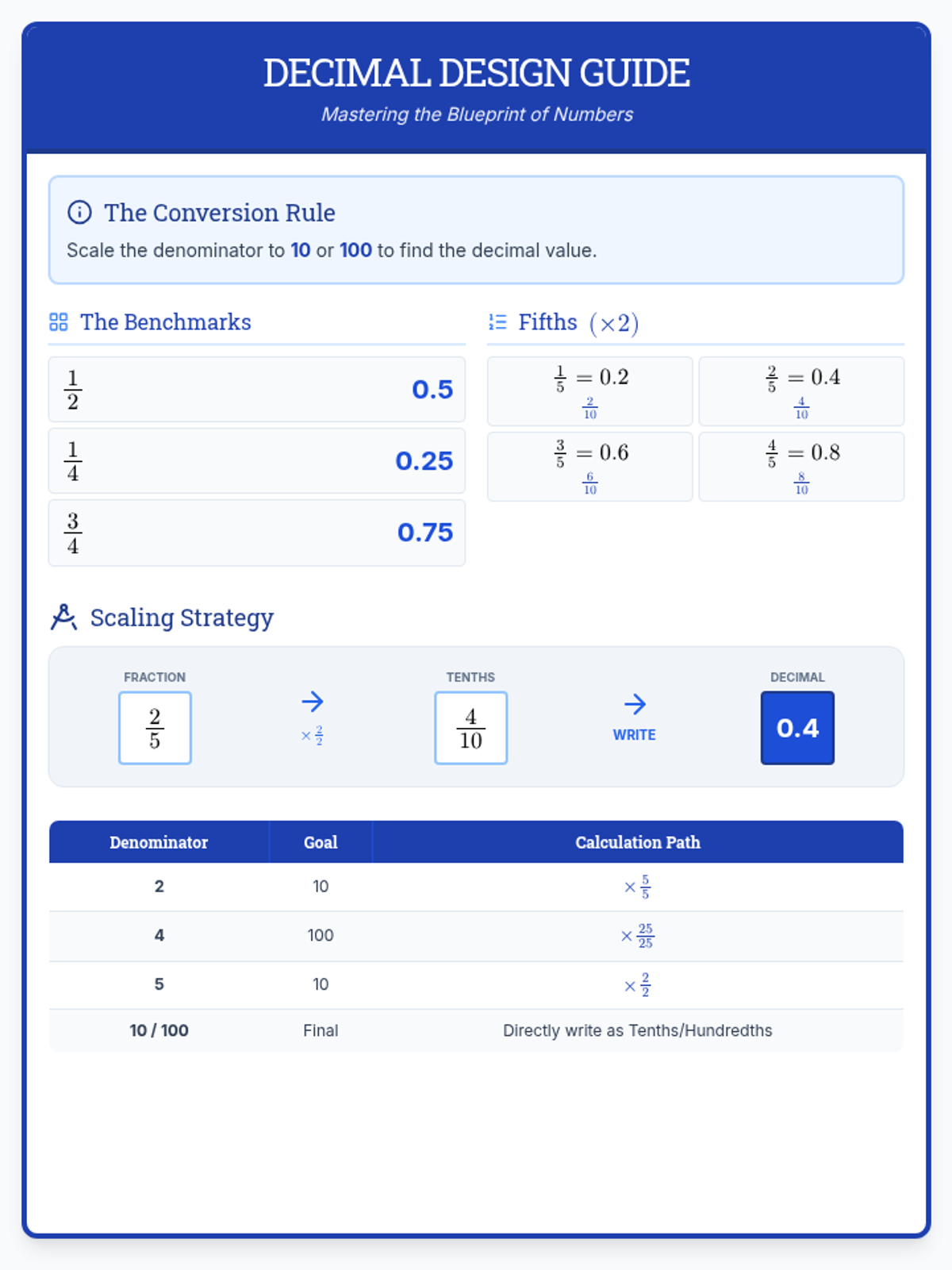
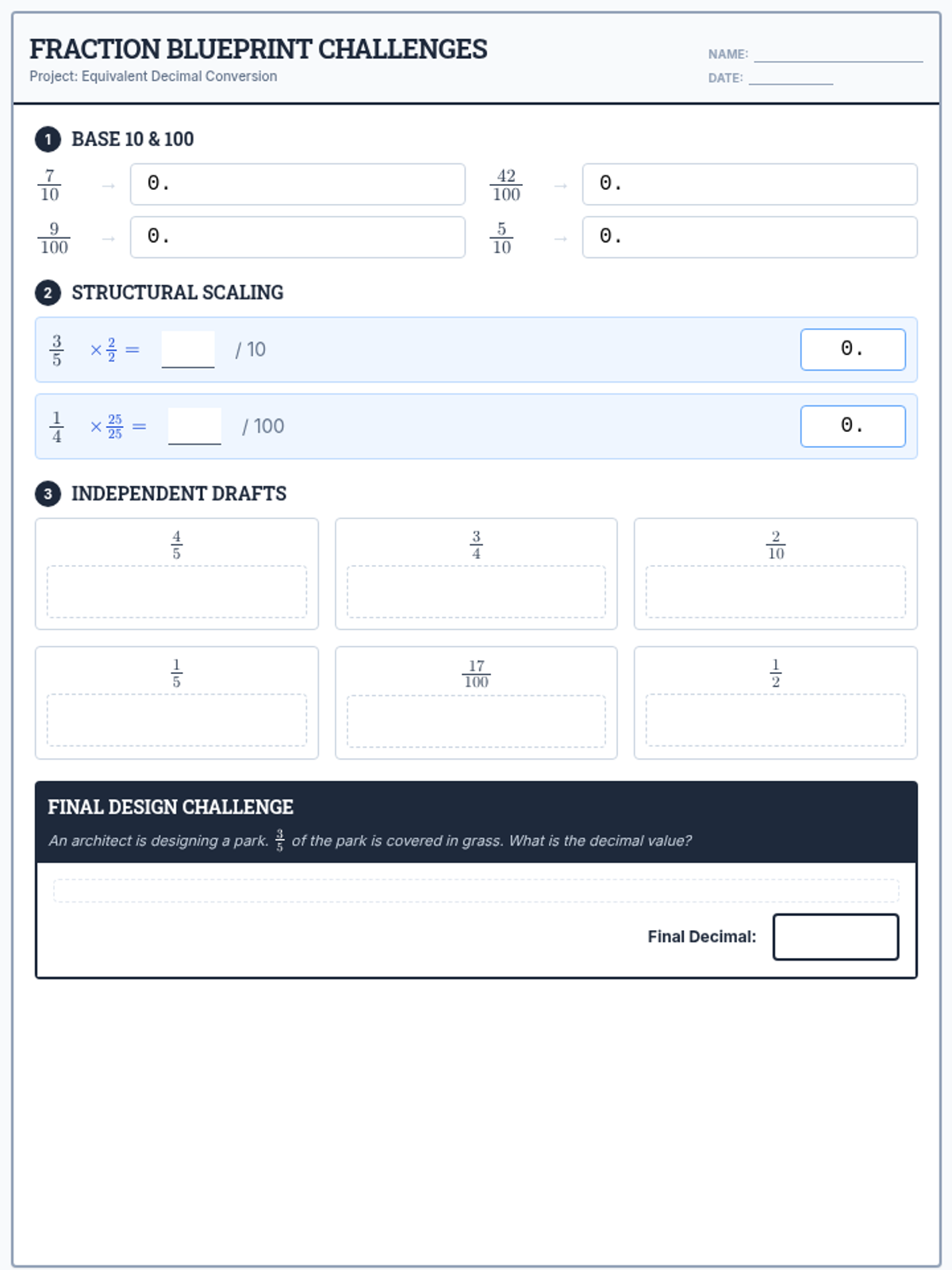
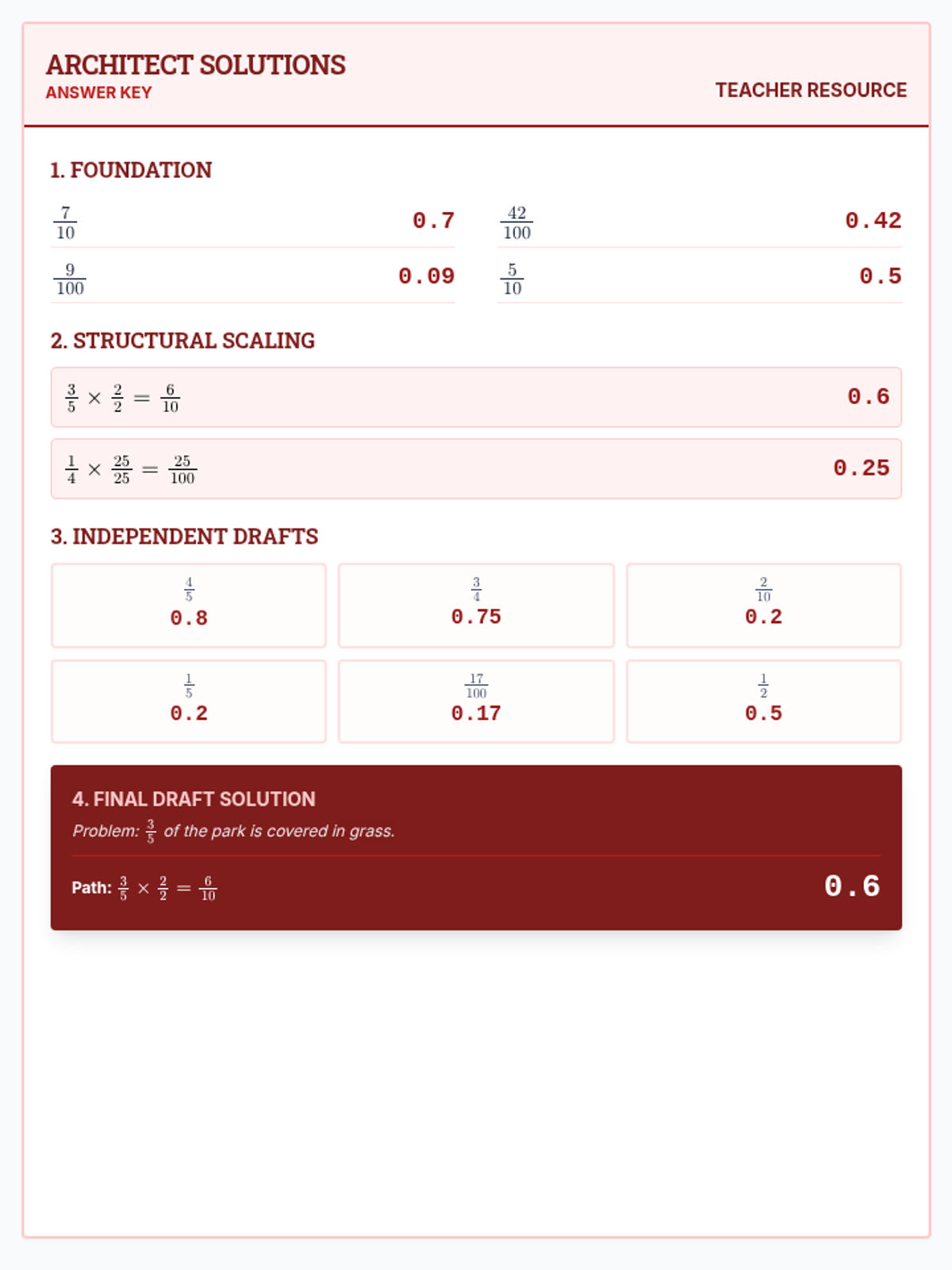
A focused lesson on converting common fractions with denominators of 2, 4, 5, 10, and 100 into their decimal equivalents through visual models and scaling strategies.
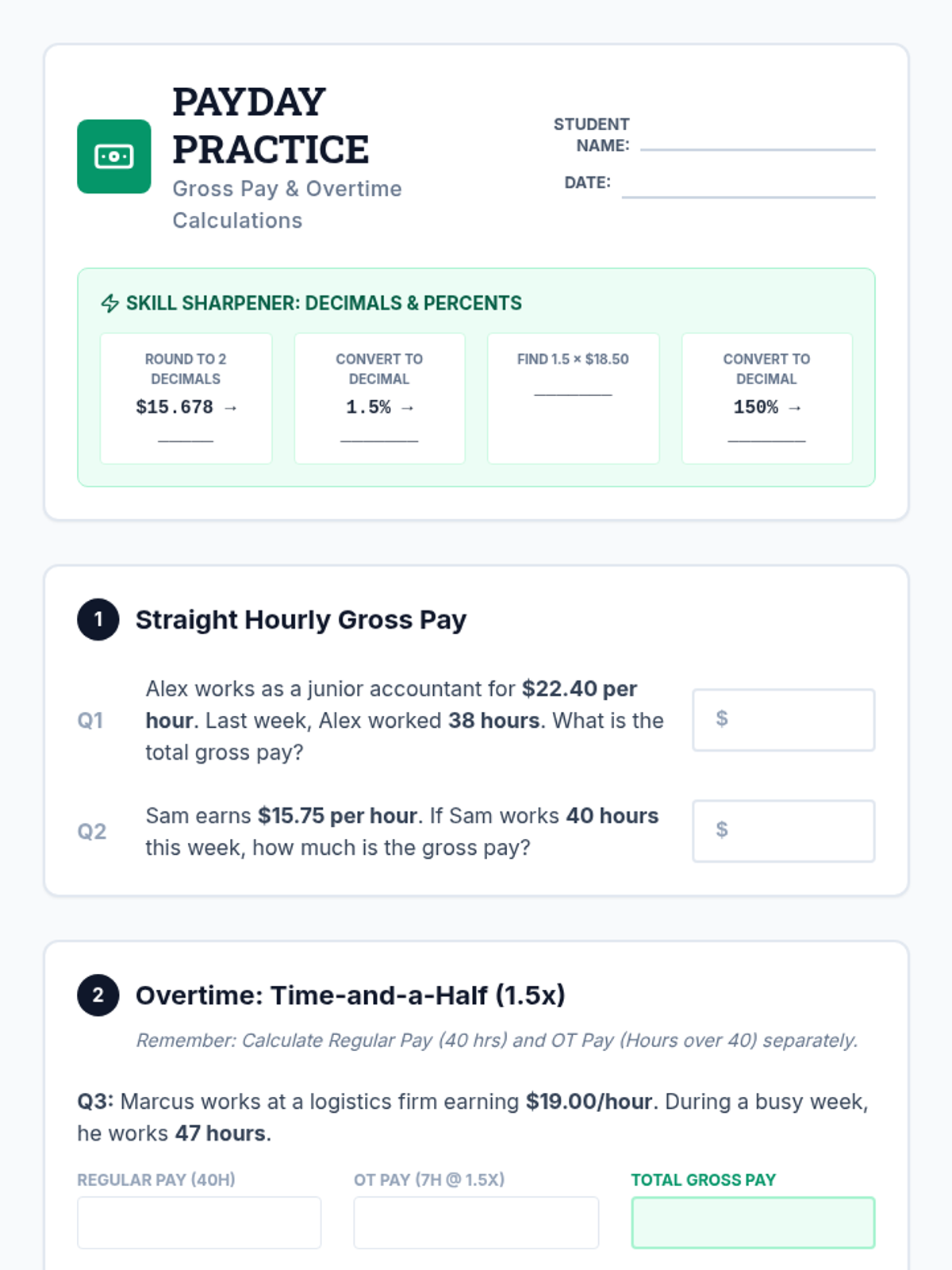
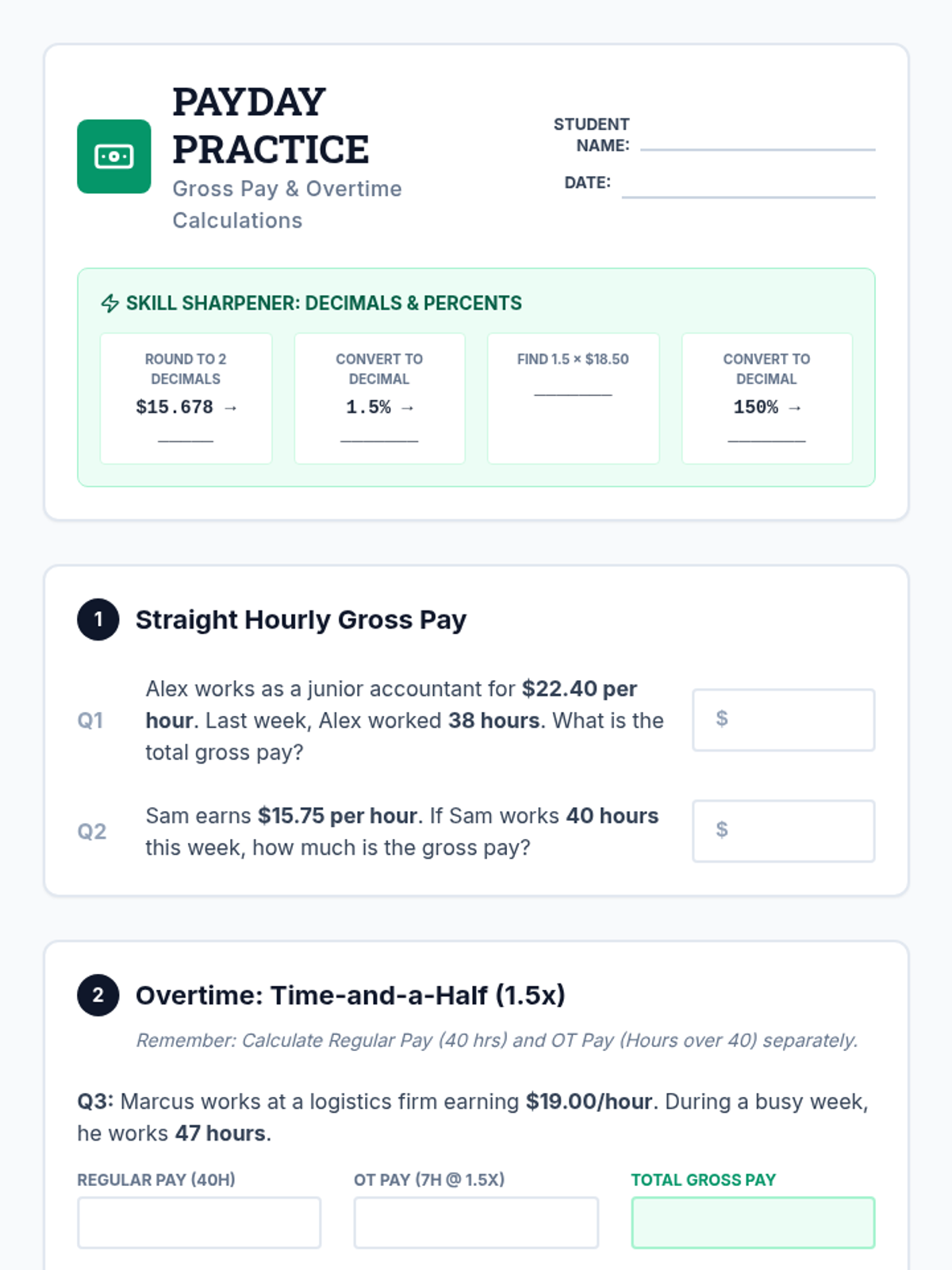
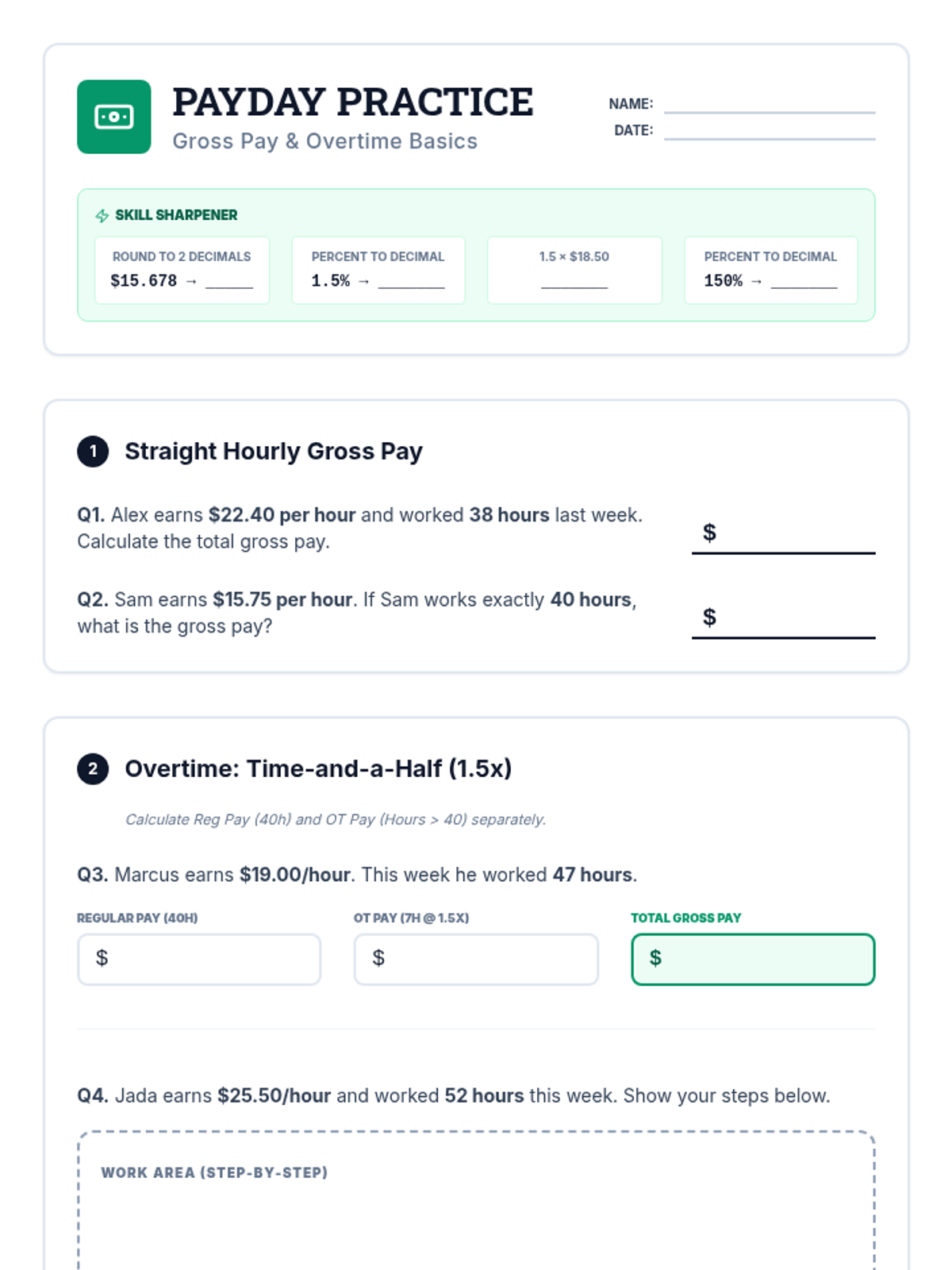
Introduction to gross pay, hourly wages, and overtime calculations, including a review of decimals and percentages for business applications.